EP2793932B1 - Ctp-based insulin analogs for treatment of diabetes - Google Patents
Ctp-based insulin analogs for treatment of diabetes Download PDFInfo
- Publication number
- EP2793932B1 EP2793932B1 EP12859172.4A EP12859172A EP2793932B1 EP 2793932 B1 EP2793932 B1 EP 2793932B1 EP 12859172 A EP12859172 A EP 12859172A EP 2793932 B1 EP2793932 B1 EP 2793932B1
- Authority
- EP
- European Patent Office
- Prior art keywords
- chain
- acid
- seq
- group
- insulin
- Prior art date
- Legal status (The legal status is an assumption and is not a legal conclusion. Google has not performed a legal analysis and makes no representation as to the accuracy of the status listed.)
- Not-in-force
Links
- NOESYZHRGYRDHS-UHFFFAOYSA-N insulin Chemical class N1C(=O)C(NC(=O)C(CCC(N)=O)NC(=O)C(CCC(O)=O)NC(=O)C(C(C)C)NC(=O)C(NC(=O)CN)C(C)CC)CSSCC(C(NC(CO)C(=O)NC(CC(C)C)C(=O)NC(CC=2C=CC(O)=CC=2)C(=O)NC(CCC(N)=O)C(=O)NC(CC(C)C)C(=O)NC(CCC(O)=O)C(=O)NC(CC(N)=O)C(=O)NC(CC=2C=CC(O)=CC=2)C(=O)NC(CSSCC(NC(=O)C(C(C)C)NC(=O)C(CC(C)C)NC(=O)C(CC=2C=CC(O)=CC=2)NC(=O)C(CC(C)C)NC(=O)C(C)NC(=O)C(CCC(O)=O)NC(=O)C(C(C)C)NC(=O)C(CC(C)C)NC(=O)C(CC=2NC=NC=2)NC(=O)C(CO)NC(=O)CNC2=O)C(=O)NCC(=O)NC(CCC(O)=O)C(=O)NC(CCCNC(N)=N)C(=O)NCC(=O)NC(CC=3C=CC=CC=3)C(=O)NC(CC=3C=CC=CC=3)C(=O)NC(CC=3C=CC(O)=CC=3)C(=O)NC(C(C)O)C(=O)N3C(CCC3)C(=O)NC(CCCCN)C(=O)NC(C)C(O)=O)C(=O)NC(CC(N)=O)C(O)=O)=O)NC(=O)C(C(C)CC)NC(=O)C(CO)NC(=O)C(C(C)O)NC(=O)C1CSSCC2NC(=O)C(CC(C)C)NC(=O)C(NC(=O)C(CCC(N)=O)NC(=O)C(CC(N)=O)NC(=O)C(NC(=O)C(N)CC=1C=CC=CC=1)C(C)C)CC1=CN=CN1 NOESYZHRGYRDHS-UHFFFAOYSA-N 0.000 title claims description 569
- 238000011282 treatment Methods 0.000 title description 5
- 206010012601 diabetes mellitus Diseases 0.000 title description 4
- 235000001014 amino acid Nutrition 0.000 claims description 277
- 108090000765 processed proteins & peptides Proteins 0.000 claims description 264
- 229940024606 amino acid Drugs 0.000 claims description 240
- 150000001413 amino acids Chemical class 0.000 claims description 213
- 108090001061 Insulin Proteins 0.000 claims description 193
- 102000004877 Insulin Human genes 0.000 claims description 191
- 239000004026 insulin derivative Substances 0.000 claims description 182
- 229940125396 insulin Drugs 0.000 claims description 152
- 125000003275 alpha amino acid group Chemical group 0.000 claims description 139
- 125000005647 linker group Chemical group 0.000 claims description 117
- WHUUTDBJXJRKMK-UHFFFAOYSA-N Glutamic acid Natural products OC(=O)C(N)CCC(O)=O WHUUTDBJXJRKMK-UHFFFAOYSA-N 0.000 claims description 99
- 229960002989 glutamic acid Drugs 0.000 claims description 98
- 239000004220 glutamic acid Substances 0.000 claims description 98
- 235000013922 glutamic acid Nutrition 0.000 claims description 89
- WHUUTDBJXJRKMK-VKHMYHEASA-N L-glutamic acid Chemical group OC(=O)[C@@H](N)CCC(O)=O WHUUTDBJXJRKMK-VKHMYHEASA-N 0.000 claims description 87
- KDXKERNSBIXSRK-UHFFFAOYSA-N Lysine Natural products NCCCCC(N)C(O)=O KDXKERNSBIXSRK-UHFFFAOYSA-N 0.000 claims description 85
- 235000004279 alanine Nutrition 0.000 claims description 85
- 229960003767 alanine Drugs 0.000 claims description 82
- QNAYBMKLOCPYGJ-REOHCLBHSA-N L-alanine Chemical compound C[C@H](N)C(O)=O QNAYBMKLOCPYGJ-REOHCLBHSA-N 0.000 claims description 81
- KDXKERNSBIXSRK-YFKPBYRVSA-N L-lysine Chemical compound NCCCC[C@H](N)C(O)=O KDXKERNSBIXSRK-YFKPBYRVSA-N 0.000 claims description 81
- CKLJMWTZIZZHCS-REOHCLBHSA-N L-aspartic acid Chemical group OC(=O)[C@@H](N)CC(O)=O CKLJMWTZIZZHCS-REOHCLBHSA-N 0.000 claims description 80
- 235000003704 aspartic acid Nutrition 0.000 claims description 73
- 229960005261 aspartic acid Drugs 0.000 claims description 73
- OQFSQFPPLPISGP-UHFFFAOYSA-N beta-carboxyaspartic acid Chemical group OC(=O)C(N)C(C(O)=O)C(O)=O OQFSQFPPLPISGP-UHFFFAOYSA-N 0.000 claims description 73
- 239000004472 Lysine Substances 0.000 claims description 67
- 229960002743 glutamine Drugs 0.000 claims description 66
- 235000018977 lysine Nutrition 0.000 claims description 66
- 239000004475 Arginine Substances 0.000 claims description 64
- 229960003121 arginine Drugs 0.000 claims description 64
- 229960003646 lysine Drugs 0.000 claims description 64
- ODKSFYDXXFIFQN-UHFFFAOYSA-N arginine Natural products OC(=O)C(N)CCCNC(N)=N ODKSFYDXXFIFQN-UHFFFAOYSA-N 0.000 claims description 63
- 235000009697 arginine Nutrition 0.000 claims description 63
- DHMQDGOQFOQNFH-UHFFFAOYSA-N Glycine Chemical compound NCC(O)=O DHMQDGOQFOQNFH-UHFFFAOYSA-N 0.000 claims description 62
- ODKSFYDXXFIFQN-BYPYZUCNSA-P L-argininium(2+) Chemical compound NC(=[NH2+])NCCC[C@H]([NH3+])C(O)=O ODKSFYDXXFIFQN-BYPYZUCNSA-P 0.000 claims description 60
- 125000002924 primary amino group Chemical group [H]N([H])* 0.000 claims description 57
- 239000002202 Polyethylene glycol Substances 0.000 claims description 56
- 229920001223 polyethylene glycol Polymers 0.000 claims description 56
- AHLPHDHHMVZTML-BYPYZUCNSA-N L-Ornithine Chemical compound NCCC[C@H](N)C(O)=O AHLPHDHHMVZTML-BYPYZUCNSA-N 0.000 claims description 53
- AYFVYJQAPQTCCC-GBXIJSLDSA-N L-threonine Chemical compound C[C@@H](O)[C@H](N)C(O)=O AYFVYJQAPQTCCC-GBXIJSLDSA-N 0.000 claims description 53
- AHLPHDHHMVZTML-UHFFFAOYSA-N Orn-delta-NH2 Natural products NCCCC(N)C(O)=O AHLPHDHHMVZTML-UHFFFAOYSA-N 0.000 claims description 53
- UTJLXEIPEHZYQJ-UHFFFAOYSA-N Ornithine Natural products OC(=O)C(C)CCCN UTJLXEIPEHZYQJ-UHFFFAOYSA-N 0.000 claims description 53
- 229960003104 ornithine Drugs 0.000 claims description 53
- HNDVDQJCIGZPNO-YFKPBYRVSA-N L-histidine Chemical compound OC(=O)[C@@H](N)CC1=CN=CN1 HNDVDQJCIGZPNO-YFKPBYRVSA-N 0.000 claims description 52
- HNDVDQJCIGZPNO-UHFFFAOYSA-N histidine Natural products OC(=O)C(N)CC1=CN=CN1 HNDVDQJCIGZPNO-UHFFFAOYSA-N 0.000 claims description 52
- 235000014304 histidine Nutrition 0.000 claims description 52
- 229960002885 histidine Drugs 0.000 claims description 52
- 239000004473 Threonine Substances 0.000 claims description 51
- 229960002898 threonine Drugs 0.000 claims description 51
- ZDXPYRJPNDTMRX-VKHMYHEASA-N L-glutamine Chemical compound OC(=O)[C@@H](N)CCC(N)=O ZDXPYRJPNDTMRX-VKHMYHEASA-N 0.000 claims description 50
- AYFVYJQAPQTCCC-UHFFFAOYSA-N Threonine Natural products CC(O)C(N)C(O)=O AYFVYJQAPQTCCC-UHFFFAOYSA-N 0.000 claims description 50
- 210000004899 c-terminal region Anatomy 0.000 claims description 50
- ZDXPYRJPNDTMRX-UHFFFAOYSA-N glutamine Natural products OC(=O)C(N)CCC(N)=O ZDXPYRJPNDTMRX-UHFFFAOYSA-N 0.000 claims description 50
- 235000004554 glutamine Nutrition 0.000 claims description 50
- 235000008521 threonine Nutrition 0.000 claims description 50
- MTCFGRXMJLQNBG-REOHCLBHSA-N (2S)-2-Amino-3-hydroxypropansäure Chemical compound OC[C@H](N)C(O)=O MTCFGRXMJLQNBG-REOHCLBHSA-N 0.000 claims description 46
- DCXYFEDJOCDNAF-REOHCLBHSA-N L-asparagine Chemical compound OC(=O)[C@@H](N)CC(N)=O DCXYFEDJOCDNAF-REOHCLBHSA-N 0.000 claims description 45
- 108090000623 proteins and genes Proteins 0.000 claims description 44
- 238000006467 substitution reaction Methods 0.000 claims description 44
- OUYCCCASQSFEME-QMMMGPOBSA-N L-tyrosine Chemical compound OC(=O)[C@@H](N)CC1=CC=C(O)C=C1 OUYCCCASQSFEME-QMMMGPOBSA-N 0.000 claims description 43
- 108010016626 Dipeptides Proteins 0.000 claims description 41
- 235000004400 serine Nutrition 0.000 claims description 41
- 229960001153 serine Drugs 0.000 claims description 41
- OUYCCCASQSFEME-UHFFFAOYSA-N tyrosine Natural products OC(=O)C(N)CC1=CC=C(O)C=C1 OUYCCCASQSFEME-UHFFFAOYSA-N 0.000 claims description 41
- 229960004441 tyrosine Drugs 0.000 claims description 41
- 235000002374 tyrosine Nutrition 0.000 claims description 41
- MTCFGRXMJLQNBG-UHFFFAOYSA-N Serine Natural products OCC(N)C(O)=O MTCFGRXMJLQNBG-UHFFFAOYSA-N 0.000 claims description 40
- DCXYFEDJOCDNAF-UHFFFAOYSA-N Asparagine Natural products OC(=O)C(N)CC(N)=O DCXYFEDJOCDNAF-UHFFFAOYSA-N 0.000 claims description 39
- 235000009582 asparagine Nutrition 0.000 claims description 39
- 229960001230 asparagine Drugs 0.000 claims description 39
- 210000004027 cell Anatomy 0.000 claims description 39
- 102000004169 proteins and genes Human genes 0.000 claims description 33
- 125000003178 carboxy group Chemical group [H]OC(*)=O 0.000 claims description 32
- XVOYSCVBGLVSOL-UHFFFAOYSA-N cysteic acid Chemical compound OC(=O)C(N)CS(O)(=O)=O XVOYSCVBGLVSOL-UHFFFAOYSA-N 0.000 claims description 32
- 235000018102 proteins Nutrition 0.000 claims description 32
- 239000000556 agonist Substances 0.000 claims description 28
- 238000000034 method Methods 0.000 claims description 28
- 239000004471 Glycine Substances 0.000 claims description 27
- 229960002449 glycine Drugs 0.000 claims description 27
- COLNVLDHVKWLRT-QMMMGPOBSA-N L-phenylalanine Chemical compound OC(=O)[C@@H](N)CC1=CC=CC=C1 COLNVLDHVKWLRT-QMMMGPOBSA-N 0.000 claims description 26
- CMUHFUGDYMFHEI-QMMMGPOBSA-N 4-amino-L-phenylalanine Chemical compound OC(=O)[C@@H](N)CC1=CC=C(N)C=C1 CMUHFUGDYMFHEI-QMMMGPOBSA-N 0.000 claims description 21
- 125000002252 acyl group Chemical group 0.000 claims description 20
- 229960005190 phenylalanine Drugs 0.000 claims description 20
- 150000001412 amines Chemical group 0.000 claims description 19
- COLNVLDHVKWLRT-UHFFFAOYSA-N phenylalanine Natural products OC(=O)C(N)CC1=CC=CC=C1 COLNVLDHVKWLRT-UHFFFAOYSA-N 0.000 claims description 19
- 235000008729 phenylalanine Nutrition 0.000 claims description 19
- ROHFNLRQFUQHCH-YFKPBYRVSA-N L-leucine Chemical compound CC(C)C[C@H](N)C(O)=O ROHFNLRQFUQHCH-YFKPBYRVSA-N 0.000 claims description 17
- VBOQYPQEPHKASR-VKHMYHEASA-N L-homocysteic acid Chemical compound OC(=O)[C@@H](N)CCS(O)(=O)=O VBOQYPQEPHKASR-VKHMYHEASA-N 0.000 claims description 16
- ROHFNLRQFUQHCH-UHFFFAOYSA-N Leucine Natural products CC(C)CC(N)C(O)=O ROHFNLRQFUQHCH-UHFFFAOYSA-N 0.000 claims description 16
- GEYBMYRBIABFTA-UHFFFAOYSA-N O-methyltyrosine Chemical compound COC1=CC=C(CC(N)C(O)=O)C=C1 GEYBMYRBIABFTA-UHFFFAOYSA-N 0.000 claims description 16
- 125000000217 alkyl group Chemical group 0.000 claims description 16
- 235000005772 leucine Nutrition 0.000 claims description 16
- 229960003136 leucine Drugs 0.000 claims description 16
- FFEARJCKVFRZRR-BYPYZUCNSA-N L-methionine Chemical compound CSCC[C@H](N)C(O)=O FFEARJCKVFRZRR-BYPYZUCNSA-N 0.000 claims description 15
- 229930182817 methionine Natural products 0.000 claims description 15
- 235000006109 methionine Nutrition 0.000 claims description 15
- 229960004452 methionine Drugs 0.000 claims description 15
- AGPKZVBTJJNPAG-WHFBIAKZSA-N L-isoleucine Chemical compound CC[C@H](C)[C@H](N)C(O)=O AGPKZVBTJJNPAG-WHFBIAKZSA-N 0.000 claims description 13
- QCKMEYKASJTMKI-ILCMOUOISA-N 2-aminoacetic acid;(2s)-2-aminopentanedioic acid;(2s)-pyrrolidine-2-carboxylic acid Chemical compound NCC(O)=O.OC(=O)[C@@H]1CCCN1.OC(=O)[C@@H](N)CCC(O)=O QCKMEYKASJTMKI-ILCMOUOISA-N 0.000 claims description 11
- 125000003917 carbamoyl group Chemical group [H]N([H])C(*)=O 0.000 claims description 11
- AGPKZVBTJJNPAG-UHFFFAOYSA-N isoleucine Natural products CCC(C)C(N)C(O)=O AGPKZVBTJJNPAG-UHFFFAOYSA-N 0.000 claims description 11
- 235000014705 isoleucine Nutrition 0.000 claims description 11
- 229960000310 isoleucine Drugs 0.000 claims description 11
- 150000002148 esters Chemical class 0.000 claims description 9
- 125000000291 glutamic acid group Chemical group N[C@@H](CCC(O)=O)C(=O)* 0.000 claims description 8
- 125000003827 glycol group Chemical group 0.000 claims description 8
- 150000007523 nucleic acids Chemical group 0.000 claims description 8
- 239000008194 pharmaceutical composition Substances 0.000 claims description 8
- KZSNJWFQEVHDMF-UHFFFAOYSA-N Valine Natural products CC(C)C(N)C(O)=O KZSNJWFQEVHDMF-UHFFFAOYSA-N 0.000 claims description 7
- 150000001408 amides Chemical class 0.000 claims description 7
- QIVBCDIJIAJPQS-VIFPVBQESA-N L-tryptophane Chemical compound C1=CC=C2C(C[C@H](N)C(O)=O)=CNC2=C1 QIVBCDIJIAJPQS-VIFPVBQESA-N 0.000 claims description 6
- QIVBCDIJIAJPQS-UHFFFAOYSA-N Tryptophan Natural products C1=CC=C2C(CC(N)C(O)=O)=CNC2=C1 QIVBCDIJIAJPQS-UHFFFAOYSA-N 0.000 claims description 6
- 229960004799 tryptophan Drugs 0.000 claims description 6
- KZSNJWFQEVHDMF-BYPYZUCNSA-N L-valine Chemical compound CC(C)[C@H](N)C(O)=O KZSNJWFQEVHDMF-BYPYZUCNSA-N 0.000 claims description 5
- 238000012258 culturing Methods 0.000 claims description 5
- 125000000404 glutamine group Chemical group N[C@@H](CCC(N)=O)C(=O)* 0.000 claims description 5
- 235000014393 valine Nutrition 0.000 claims description 5
- 229960004295 valine Drugs 0.000 claims description 5
- 239000004474 valine Substances 0.000 claims description 5
- RTZKZFJDLAIYFH-UHFFFAOYSA-N Diethyl ether Chemical compound CCOCC RTZKZFJDLAIYFH-UHFFFAOYSA-N 0.000 claims description 4
- 239000003937 drug carrier Substances 0.000 claims description 4
- 150000003568 thioethers Chemical class 0.000 claims description 4
- 108091028043 Nucleic acid sequence Proteins 0.000 claims description 3
- 102000004506 Blood Proteins Human genes 0.000 claims description 2
- 108010017384 Blood Proteins Proteins 0.000 claims description 2
- 125000001429 N-terminal alpha-amino-acid group Chemical group 0.000 claims description 2
- 150000003973 alkyl amines Chemical class 0.000 claims 1
- 150000007970 thio esters Chemical class 0.000 claims 1
- 108090000723 Insulin-Like Growth Factor I Proteins 0.000 description 74
- 230000013595 glycosylation Effects 0.000 description 66
- 238000006206 glycosylation reaction Methods 0.000 description 60
- 125000006850 spacer group Chemical group 0.000 description 52
- 102000013275 Somatomedins Human genes 0.000 description 51
- 230000000694 effects Effects 0.000 description 47
- -1 CTP modified insulin analogs Chemical class 0.000 description 40
- 102000004196 processed proteins & peptides Human genes 0.000 description 38
- 108010075254 C-Peptide Proteins 0.000 description 35
- 102100037852 Insulin-like growth factor I Human genes 0.000 description 33
- 108010001127 Insulin Receptor Proteins 0.000 description 32
- 102000003746 Insulin Receptor Human genes 0.000 description 31
- 125000002887 hydroxy group Chemical group [H]O* 0.000 description 28
- 229940002612 prodrug Drugs 0.000 description 27
- 239000000651 prodrug Substances 0.000 description 27
- 150000001335 aliphatic alkanes Chemical class 0.000 description 24
- 150000003573 thiols Chemical class 0.000 description 24
- 230000010933 acylation Effects 0.000 description 23
- 238000005917 acylation reaction Methods 0.000 description 23
- 102000005962 receptors Human genes 0.000 description 22
- 108020003175 receptors Proteins 0.000 description 22
- VOUAQYXWVJDEQY-QENPJCQMSA-N 33017-11-7 Chemical compound OC(=O)CC[C@H](N)C(=O)N[C@@H](C)C(=O)N[C@@H](CCC(O)=O)C(=O)N[C@@H](CC(O)=O)C(=O)N[C@@H](CC(C)C)C(=O)N[C@@H](CCC(N)=O)C(=O)N[C@@H](C(C)C)C(=O)NCC(=O)N[C@@H](CCC(N)=O)C(=O)N[C@@H](C(C)C)C(=O)N[C@@H](CCC(O)=O)C(=O)N[C@@H](CC(C)C)C(=O)NCC(=O)NCC(=O)NCC(=O)N1CCC[C@H]1C(=O)NCC(=O)N[C@@H](C)C(=O)NCC(=O)N[C@@H](CO)C(=O)N[C@@H](CC(C)C)C(=O)N[C@@H](CCC(N)=O)C(=O)N1[C@H](C(=O)N[C@@H](CC(C)C)C(=O)N[C@@H](C)C(=O)N[C@@H](CC(C)C)C(=O)N[C@@H](CCC(O)=O)C(=O)NCC(=O)N[C@@H](CO)C(=O)N[C@@H](CC(C)C)C(=O)N[C@@H](CCC(N)=O)C(O)=O)CCC1 VOUAQYXWVJDEQY-QENPJCQMSA-N 0.000 description 21
- 150000001875 compounds Chemical class 0.000 description 20
- 238000000338 in vitro Methods 0.000 description 20
- 230000004048 modification Effects 0.000 description 20
- 238000012986 modification Methods 0.000 description 20
- 230000027455 binding Effects 0.000 description 19
- 230000001588 bifunctional effect Effects 0.000 description 16
- 235000014113 dietary fatty acids Nutrition 0.000 description 16
- 229930195729 fatty acid Natural products 0.000 description 16
- 239000000194 fatty acid Substances 0.000 description 16
- 241000699670 Mus sp. Species 0.000 description 15
- 229920001184 polypeptide Polymers 0.000 description 15
- UGOZVNFCFYTPAZ-IOXYNQHNSA-N levemir Chemical compound CCCCCCCCCCCCCC(=O)NCCCC[C@@H](C(O)=O)NC(=O)[C@@H]1CCCN1C(=O)[C@H]([C@@H](C)O)NC(=O)[C@@H](NC(=O)[C@H](CC=1C=CC=CC=1)NC(=O)[C@H](CC=1C=CC=CC=1)NC(=O)CNC(=O)[C@H](CCCNC(N)=N)NC(=O)[C@H](CCC(O)=O)NC(=O)CNC(=O)[C@H]1NC(=O)[C@H](C(C)C)NC(=O)[C@H](CC(C)C)NC(=O)[C@H](CC=2C=CC(O)=CC=2)NC(=O)[C@H](CC(C)C)NC(=O)[C@H](C)NC(=O)[C@H](CCC(O)=O)NC(=O)[C@H](C(C)C)NC(=O)[C@H](CC(C)C)NC(=O)[C@H](CC=2N=CNC=2)NC(=O)[C@H](CO)NC(=O)CNC(=O)[C@@H](NC(=O)[C@H](CC(C)C)NC(=O)[C@H](CC=2N=CNC=2)NC(=O)[C@H](CCC(N)=O)NC(=O)[C@H](CC(N)=O)NC(=O)[C@@H](NC(=O)[C@@H](N)CC=2C=CC=CC=2)C(C)C)CSSC[C@@H]2NC(=O)[C@@H](NC(=O)[C@H](CCC(N)=O)NC(=O)[C@H](CCC(O)=O)NC(=O)[C@@H](NC(=O)[C@@H](NC(=O)CN)[C@@H](C)CC)C(C)C)CSSC[C@H](NC(=O)[C@H]([C@@H](C)CC)NC(=O)[C@H](CO)NC(=O)[C@H]([C@@H](C)O)NC2=O)C(=O)N[C@@H](CO)C(=O)N[C@@H](CC(C)C)C(=O)N[C@@H](CC=2C=CC(O)=CC=2)C(=O)N[C@@H](CCC(N)=O)C(=O)N[C@@H](CC(C)C)C(=O)N[C@@H](CCC(O)=O)C(=O)N[C@@H](CC(N)=O)C(=O)N[C@@H](CC=2C=CC(O)=CC=2)C(=O)N[C@@H](CSSC1)C(=O)N[C@@H](CC(N)=O)C(O)=O)CC1=CC=C(O)C=C1 UGOZVNFCFYTPAZ-IOXYNQHNSA-N 0.000 description 14
- FWMNVWWHGCHHJJ-SKKKGAJSSA-N 4-amino-1-[(2r)-6-amino-2-[[(2r)-2-[[(2r)-2-[[(2r)-2-amino-3-phenylpropanoyl]amino]-3-phenylpropanoyl]amino]-4-methylpentanoyl]amino]hexanoyl]piperidine-4-carboxylic acid Chemical group C([C@H](C(=O)N[C@H](CC(C)C)C(=O)N[C@H](CCCCN)C(=O)N1CCC(N)(CC1)C(O)=O)NC(=O)[C@H](N)CC=1C=CC=CC=1)C1=CC=CC=C1 FWMNVWWHGCHHJJ-SKKKGAJSSA-N 0.000 description 13
- WQZGKKKJIJFFOK-GASJEMHNSA-N Glucose Natural products OC[C@H]1OC(O)[C@H](O)[C@@H](O)[C@@H]1O WQZGKKKJIJFFOK-GASJEMHNSA-N 0.000 description 13
- 108091027305 Heteroduplex Proteins 0.000 description 13
- 101000599951 Homo sapiens Insulin-like growth factor I Proteins 0.000 description 13
- 230000004989 O-glycosylation Effects 0.000 description 13
- WQZGKKKJIJFFOK-VFUOTHLCSA-N beta-D-glucose Chemical compound OC[C@H]1O[C@@H](O)[C@H](O)[C@@H](O)[C@@H]1O WQZGKKKJIJFFOK-VFUOTHLCSA-N 0.000 description 13
- 239000008103 glucose Substances 0.000 description 13
- OBMZMSLWNNWEJA-XNCRXQDQSA-N C1=CC=2C(C[C@@H]3NC(=O)[C@@H](NC(=O)[C@H](NC(=O)N(CC#CCN(CCCC[C@H](NC(=O)[C@@H](CC4=CC=CC=C4)NC3=O)C(=O)N)CC=C)NC(=O)[C@@H](N)C)CC3=CNC4=C3C=CC=C4)C)=CNC=2C=C1 Chemical compound C1=CC=2C(C[C@@H]3NC(=O)[C@@H](NC(=O)[C@H](NC(=O)N(CC#CCN(CCCC[C@H](NC(=O)[C@@H](CC4=CC=CC=C4)NC3=O)C(=O)N)CC=C)NC(=O)[C@@H](N)C)CC3=CNC4=C3C=CC=C4)C)=CNC=2C=C1 OBMZMSLWNNWEJA-XNCRXQDQSA-N 0.000 description 12
- 101710176384 Peptide 1 Proteins 0.000 description 12
- 230000029936 alkylation Effects 0.000 description 12
- 238000005804 alkylation reaction Methods 0.000 description 12
- 150000004665 fatty acids Chemical class 0.000 description 12
- 230000001965 increasing effect Effects 0.000 description 12
- 230000000052 comparative effect Effects 0.000 description 11
- 238000012217 deletion Methods 0.000 description 11
- 230000037430 deletion Effects 0.000 description 11
- 229960003948 insulin detemir Drugs 0.000 description 11
- 150000003839 salts Chemical class 0.000 description 11
- XUJNEKJLAYXESH-REOHCLBHSA-N L-Cysteine Chemical compound SC[C@H](N)C(O)=O XUJNEKJLAYXESH-REOHCLBHSA-N 0.000 description 10
- 230000004988 N-glycosylation Effects 0.000 description 10
- 239000002253 acid Substances 0.000 description 10
- 230000009471 action Effects 0.000 description 10
- 150000007942 carboxylates Chemical group 0.000 description 10
- 239000000539 dimer Substances 0.000 description 10
- PBGKTOXHQIOBKM-FHFVDXKLSA-N insulin (human) Chemical compound C([C@@H](C(=O)N[C@@H](CC(C)C)C(=O)N[C@H]1CSSC[C@H]2C(=O)N[C@H](C(=O)N[C@@H](CO)C(=O)N[C@H](C(=O)N[C@H](C(N[C@@H](CO)C(=O)N[C@@H](CC(C)C)C(=O)N[C@@H](CC=3C=CC(O)=CC=3)C(=O)N[C@@H](CCC(N)=O)C(=O)N[C@@H](CC(C)C)C(=O)N[C@@H](CCC(O)=O)C(=O)N[C@@H](CC(N)=O)C(=O)N[C@@H](CC=3C=CC(O)=CC=3)C(=O)N[C@@H](CSSC[C@H](NC(=O)[C@H](C(C)C)NC(=O)[C@H](CC(C)C)NC(=O)[C@H](CC=3C=CC(O)=CC=3)NC(=O)[C@H](CC(C)C)NC(=O)[C@H](C)NC(=O)[C@H](CCC(O)=O)NC(=O)[C@H](C(C)C)NC(=O)[C@H](CC(C)C)NC(=O)[C@H](CC=3NC=NC=3)NC(=O)[C@H](CO)NC(=O)CNC1=O)C(=O)NCC(=O)N[C@@H](CCC(O)=O)C(=O)N[C@@H](CCCNC(N)=N)C(=O)NCC(=O)N[C@@H](CC=1C=CC=CC=1)C(=O)N[C@@H](CC=1C=CC=CC=1)C(=O)N[C@@H](CC=1C=CC(O)=CC=1)C(=O)N[C@@H]([C@@H](C)O)C(=O)N1[C@@H](CCC1)C(=O)N[C@@H](CCCCN)C(=O)N[C@@H]([C@@H](C)O)C(O)=O)C(=O)N[C@@H](CC(N)=O)C(O)=O)=O)CSSC[C@@H](C(N2)=O)NC(=O)[C@H](CCC(N)=O)NC(=O)[C@H](CCC(O)=O)NC(=O)[C@H](C(C)C)NC(=O)[C@@H](NC(=O)CN)[C@@H](C)CC)[C@@H](C)CC)[C@@H](C)O)NC(=O)[C@H](CCC(N)=O)NC(=O)[C@H](CC(N)=O)NC(=O)[C@@H](NC(=O)[C@@H](N)CC=1C=CC=CC=1)C(C)C)C1=CN=CN1 PBGKTOXHQIOBKM-FHFVDXKLSA-N 0.000 description 10
- 239000000203 mixture Substances 0.000 description 10
- 238000012360 testing method Methods 0.000 description 10
- 241000282414 Homo sapiens Species 0.000 description 9
- 108010076181 Proinsulin Proteins 0.000 description 9
- 125000000539 amino acid group Chemical group 0.000 description 9
- 125000000837 carbohydrate group Chemical group 0.000 description 9
- 235000000346 sugar Nutrition 0.000 description 9
- 125000003396 thiol group Chemical group [H]S* 0.000 description 9
- 102000048143 Insulin-Like Growth Factor II Human genes 0.000 description 8
- 108090001117 Insulin-Like Growth Factor II Proteins 0.000 description 8
- 238000007792 addition Methods 0.000 description 8
- 125000003295 alanine group Chemical group N[C@@H](C)C(=O)* 0.000 description 8
- 125000003118 aryl group Chemical group 0.000 description 8
- 210000004369 blood Anatomy 0.000 description 8
- 239000008280 blood Substances 0.000 description 8
- HVYWMOMLDIMFJA-DPAQBDIFSA-N cholesterol Chemical compound C1C=C2C[C@@H](O)CC[C@]2(C)[C@@H]2[C@@H]1[C@@H]1CC[C@H]([C@H](C)CCCC(C)C)[C@@]1(C)CC2 HVYWMOMLDIMFJA-DPAQBDIFSA-N 0.000 description 8
- 230000002209 hydrophobic effect Effects 0.000 description 8
- 125000000896 monocarboxylic acid group Chemical group 0.000 description 8
- 239000002953 phosphate buffered saline Substances 0.000 description 8
- 230000026731 phosphorylation Effects 0.000 description 8
- 238000006366 phosphorylation reaction Methods 0.000 description 8
- 229920000642 polymer Polymers 0.000 description 8
- OKTJSMMVPCPJKN-UHFFFAOYSA-N Carbon Chemical compound [C] OKTJSMMVPCPJKN-UHFFFAOYSA-N 0.000 description 7
- 102000004190 Enzymes Human genes 0.000 description 7
- 108090000790 Enzymes Proteins 0.000 description 7
- 101000976075 Homo sapiens Insulin Proteins 0.000 description 7
- 240000004808 Saccharomyces cerevisiae Species 0.000 description 7
- 235000014680 Saccharomyces cerevisiae Nutrition 0.000 description 7
- 239000012634 fragment Substances 0.000 description 7
- 238000001727 in vivo Methods 0.000 description 7
- 238000003780 insertion Methods 0.000 description 7
- 230000037431 insertion Effects 0.000 description 7
- 230000003389 potentiating effect Effects 0.000 description 7
- FUOOLUPWFVMBKG-UHFFFAOYSA-N 2-Aminoisobutyric acid Chemical compound CC(C)(N)C(O)=O FUOOLUPWFVMBKG-UHFFFAOYSA-N 0.000 description 6
- SRBFZHDQGSBBOR-IOVATXLUSA-N D-xylopyranose Chemical compound O[C@@H]1COC(O)[C@H](O)[C@H]1O SRBFZHDQGSBBOR-IOVATXLUSA-N 0.000 description 6
- 125000003277 amino group Chemical group 0.000 description 6
- 229910052799 carbon Inorganic materials 0.000 description 6
- 238000007385 chemical modification Methods 0.000 description 6
- 235000013930 proline Nutrition 0.000 description 6
- 229920002307 Dextran Polymers 0.000 description 5
- LYCAIKOWRPUZTN-UHFFFAOYSA-N Ethylene glycol Chemical compound OCCO LYCAIKOWRPUZTN-UHFFFAOYSA-N 0.000 description 5
- 102000003886 Glycoproteins Human genes 0.000 description 5
- 108090000288 Glycoproteins Proteins 0.000 description 5
- FFFHZYDWPBMWHY-VKHMYHEASA-N L-homocysteine Chemical compound OC(=O)[C@@H](N)CCS FFFHZYDWPBMWHY-VKHMYHEASA-N 0.000 description 5
- CBQJSKKFNMDLON-JTQLQIEISA-N N-acetyl-L-phenylalanine Chemical compound CC(=O)N[C@H](C(O)=O)CC1=CC=CC=C1 CBQJSKKFNMDLON-JTQLQIEISA-N 0.000 description 5
- ONIBWKKTOPOVIA-UHFFFAOYSA-N Proline Natural products OC(=O)C1CCCN1 ONIBWKKTOPOVIA-UHFFFAOYSA-N 0.000 description 5
- 230000015572 biosynthetic process Effects 0.000 description 5
- 125000003147 glycosyl group Chemical group 0.000 description 5
- 102000035122 glycosylated proteins Human genes 0.000 description 5
- 108091005608 glycosylated proteins Proteins 0.000 description 5
- 239000000126 substance Substances 0.000 description 5
- XLYOFNOQVPJJNP-UHFFFAOYSA-N water Substances O XLYOFNOQVPJJNP-UHFFFAOYSA-N 0.000 description 5
- ALYNCZNDIQEVRV-UHFFFAOYSA-N 4-aminobenzoic acid Chemical compound NC1=CC=C(C(O)=O)C=C1 ALYNCZNDIQEVRV-UHFFFAOYSA-N 0.000 description 4
- 102000009027 Albumins Human genes 0.000 description 4
- 108010088751 Albumins Proteins 0.000 description 4
- WQZGKKKJIJFFOK-QTVWNMPRSA-N D-mannopyranose Chemical compound OC[C@H]1OC(O)[C@@H](O)[C@@H](O)[C@@H]1O WQZGKKKJIJFFOK-QTVWNMPRSA-N 0.000 description 4
- IAJILQKETJEXLJ-UHFFFAOYSA-N Galacturonsaeure Natural products O=CC(O)C(O)C(O)C(O)C(O)=O IAJILQKETJEXLJ-UHFFFAOYSA-N 0.000 description 4
- 241000282412 Homo Species 0.000 description 4
- ONIBWKKTOPOVIA-BYPYZUCNSA-N L-Proline Chemical compound OC(=O)[C@@H]1CCCN1 ONIBWKKTOPOVIA-BYPYZUCNSA-N 0.000 description 4
- LRQKBLKVPFOOQJ-YFKPBYRVSA-N L-norleucine Chemical compound CCCC[C@H]([NH3+])C([O-])=O LRQKBLKVPFOOQJ-YFKPBYRVSA-N 0.000 description 4
- 125000000174 L-prolyl group Chemical group [H]N1C([H])([H])C([H])([H])C([H])([H])[C@@]1([H])C(*)=O 0.000 description 4
- 241001465754 Metazoa Species 0.000 description 4
- OVRNDRQMDRJTHS-FMDGEEDCSA-N N-acetyl-beta-D-glucosamine Chemical compound CC(=O)N[C@H]1[C@H](O)O[C@H](CO)[C@@H](O)[C@@H]1O OVRNDRQMDRJTHS-FMDGEEDCSA-N 0.000 description 4
- WQZGKKKJIJFFOK-PHYPRBDBSA-N alpha-D-galactose Chemical compound OC[C@H]1O[C@H](O)[C@H](O)[C@@H](O)[C@H]1O WQZGKKKJIJFFOK-PHYPRBDBSA-N 0.000 description 4
- 230000004071 biological effect Effects 0.000 description 4
- 210000004978 chinese hamster ovary cell Anatomy 0.000 description 4
- 235000012000 cholesterol Nutrition 0.000 description 4
- 229920001577 copolymer Polymers 0.000 description 4
- 230000002255 enzymatic effect Effects 0.000 description 4
- 230000006870 function Effects 0.000 description 4
- 229930182830 galactose Natural products 0.000 description 4
- IPCSVZSSVZVIGE-UHFFFAOYSA-N hexadecanoic acid Chemical compound CCCCCCCCCCCCCCCC(O)=O IPCSVZSSVZVIGE-UHFFFAOYSA-N 0.000 description 4
- 210000005260 human cell Anatomy 0.000 description 4
- 229950006780 n-acetylglucosamine Drugs 0.000 description 4
- 239000000816 peptidomimetic Substances 0.000 description 4
- 125000005629 sialic acid group Chemical group 0.000 description 4
- 125000001424 substituent group Chemical group 0.000 description 4
- 238000004448 titration Methods 0.000 description 4
- 125000001493 tyrosinyl group Chemical group [H]OC1=C([H])C([H])=C(C([H])=C1[H])C([H])([H])C([H])(N([H])[H])C(*)=O 0.000 description 4
- HSINOMROUCMIEA-FGVHQWLLSA-N (2s,4r)-4-[(3r,5s,6r,7r,8s,9s,10s,13r,14s,17r)-6-ethyl-3,7-dihydroxy-10,13-dimethyl-2,3,4,5,6,7,8,9,11,12,14,15,16,17-tetradecahydro-1h-cyclopenta[a]phenanthren-17-yl]-2-methylpentanoic acid Chemical group C([C@@]12C)C[C@@H](O)C[C@H]1[C@@H](CC)[C@@H](O)[C@@H]1[C@@H]2CC[C@]2(C)[C@@H]([C@H](C)C[C@H](C)C(O)=O)CC[C@H]21 HSINOMROUCMIEA-FGVHQWLLSA-N 0.000 description 3
- UKAUYVFTDYCKQA-UHFFFAOYSA-N -2-Amino-4-hydroxybutanoic acid Natural products OC(=O)C(N)CCO UKAUYVFTDYCKQA-UHFFFAOYSA-N 0.000 description 3
- SLXKOJJOQWFEFD-UHFFFAOYSA-N 6-aminohexanoic acid Chemical compound NCCCCCC(O)=O SLXKOJJOQWFEFD-UHFFFAOYSA-N 0.000 description 3
- QTBSBXVTEAMEQO-UHFFFAOYSA-N Acetic acid Chemical compound CC(O)=O QTBSBXVTEAMEQO-UHFFFAOYSA-N 0.000 description 3
- SHZGCJCMOBCMKK-UHFFFAOYSA-N D-mannomethylose Natural products CC1OC(O)C(O)C(O)C1O SHZGCJCMOBCMKK-UHFFFAOYSA-N 0.000 description 3
- PNNNRSAQSRJVSB-SLPGGIOYSA-N Fucose Natural products C[C@H](O)[C@@H](O)[C@H](O)[C@H](O)C=O PNNNRSAQSRJVSB-SLPGGIOYSA-N 0.000 description 3
- 108010090613 Human Regular Insulin Proteins 0.000 description 3
- 102000013266 Human Regular Insulin Human genes 0.000 description 3
- 108091006905 Human Serum Albumin Proteins 0.000 description 3
- 102000008100 Human Serum Albumin Human genes 0.000 description 3
- PMMYEEVYMWASQN-DMTCNVIQSA-N Hydroxyproline Chemical compound O[C@H]1CN[C@H](C(O)=O)C1 PMMYEEVYMWASQN-DMTCNVIQSA-N 0.000 description 3
- 102000038455 IGF Type 1 Receptor Human genes 0.000 description 3
- 108010031794 IGF Type 1 Receptor Proteins 0.000 description 3
- 108010089308 Insulin Detemir Proteins 0.000 description 3
- ODKSFYDXXFIFQN-BYPYZUCNSA-N L-arginine Chemical compound OC(=O)[C@@H](N)CCCN=C(N)N ODKSFYDXXFIFQN-BYPYZUCNSA-N 0.000 description 3
- SHZGCJCMOBCMKK-DHVFOXMCSA-N L-fucopyranose Chemical compound C[C@@H]1OC(O)[C@@H](O)[C@H](O)[C@@H]1O SHZGCJCMOBCMKK-DHVFOXMCSA-N 0.000 description 3
- 125000000510 L-tryptophano group Chemical group [H]C1=C([H])C([H])=C2N([H])C([H])=C(C([H])([H])[C@@]([H])(C(O[H])=O)N([H])[*])C2=C1[H] 0.000 description 3
- OFOBLEOULBTSOW-UHFFFAOYSA-N Malonic acid Chemical compound OC(=O)CC(O)=O OFOBLEOULBTSOW-UHFFFAOYSA-N 0.000 description 3
- OVRNDRQMDRJTHS-UHFFFAOYSA-N N-acelyl-D-glucosamine Natural products CC(=O)NC1C(O)OC(CO)C(O)C1O OVRNDRQMDRJTHS-UHFFFAOYSA-N 0.000 description 3
- MBLBDJOUHNCFQT-LXGUWJNJSA-N N-acetylglucosamine Natural products CC(=O)N[C@@H](C=O)[C@@H](O)[C@H](O)[C@H](O)CO MBLBDJOUHNCFQT-LXGUWJNJSA-N 0.000 description 3
- MUBZPKHOEPUJKR-UHFFFAOYSA-N Oxalic acid Chemical compound OC(=O)C(O)=O MUBZPKHOEPUJKR-UHFFFAOYSA-N 0.000 description 3
- 239000004372 Polyvinyl alcohol Substances 0.000 description 3
- DNIAPMSPPWPWGF-UHFFFAOYSA-N Propylene glycol Chemical compound CC(O)CO DNIAPMSPPWPWGF-UHFFFAOYSA-N 0.000 description 3
- 108010029485 Protein Isoforms Proteins 0.000 description 3
- 102000001708 Protein Isoforms Human genes 0.000 description 3
- 206010067584 Type 1 diabetes mellitus Diseases 0.000 description 3
- 230000002378 acidificating effect Effects 0.000 description 3
- 150000001299 aldehydes Chemical class 0.000 description 3
- 125000000266 alpha-aminoacyl group Chemical group 0.000 description 3
- 125000003368 amide group Chemical group 0.000 description 3
- 238000013459 approach Methods 0.000 description 3
- PYMYPHUHKUWMLA-UHFFFAOYSA-N arabinose Natural products OCC(O)C(O)C(O)C=O PYMYPHUHKUWMLA-UHFFFAOYSA-N 0.000 description 3
- 125000004429 atom Chemical group 0.000 description 3
- SRBFZHDQGSBBOR-UHFFFAOYSA-N beta-D-Pyranose-Lyxose Natural products OC1COC(O)C(O)C1O SRBFZHDQGSBBOR-UHFFFAOYSA-N 0.000 description 3
- UCMIRNVEIXFBKS-UHFFFAOYSA-N beta-alanine Chemical compound NCCC(O)=O UCMIRNVEIXFBKS-UHFFFAOYSA-N 0.000 description 3
- 239000003613 bile acid Substances 0.000 description 3
- 150000001720 carbohydrates Chemical class 0.000 description 3
- 235000014633 carbohydrates Nutrition 0.000 description 3
- 125000004432 carbon atom Chemical group C* 0.000 description 3
- 150000001732 carboxylic acid derivatives Chemical group 0.000 description 3
- 230000001413 cellular effect Effects 0.000 description 3
- KRKNYBCHXYNGOX-UHFFFAOYSA-N citric acid Chemical compound OC(=O)CC(O)(C(O)=O)CC(O)=O KRKNYBCHXYNGOX-UHFFFAOYSA-N 0.000 description 3
- 238000003776 cleavage reaction Methods 0.000 description 3
- 230000008878 coupling Effects 0.000 description 3
- 238000010168 coupling process Methods 0.000 description 3
- 238000005859 coupling reaction Methods 0.000 description 3
- 239000003814 drug Substances 0.000 description 3
- 210000003527 eukaryotic cell Anatomy 0.000 description 3
- 125000001072 heteroaryl group Chemical group 0.000 description 3
- 229940103471 humulin Drugs 0.000 description 3
- 238000010348 incorporation Methods 0.000 description 3
- 238000005304 joining Methods 0.000 description 3
- 229940102988 levemir Drugs 0.000 description 3
- 125000003588 lysine group Chemical group [H]N([H])C([H])([H])C([H])([H])C([H])([H])C([H])([H])C([H])(N([H])[H])C(*)=O 0.000 description 3
- 210000004962 mammalian cell Anatomy 0.000 description 3
- 150000002482 oligosaccharides Polymers 0.000 description 3
- 230000004962 physiological condition Effects 0.000 description 3
- 108700002854 polyethylene glycol(B1)- insulin Proteins 0.000 description 3
- 229920002451 polyvinyl alcohol Polymers 0.000 description 3
- 229940068984 polyvinyl alcohol Drugs 0.000 description 3
- 235000019422 polyvinyl alcohol Nutrition 0.000 description 3
- 125000001500 prolyl group Chemical class [H]N1C([H])(C(=O)[*])C([H])([H])C([H])([H])C1([H])[H] 0.000 description 3
- 230000002829 reductive effect Effects 0.000 description 3
- 230000007017 scission Effects 0.000 description 3
- 238000003786 synthesis reaction Methods 0.000 description 3
- 238000002560 therapeutic procedure Methods 0.000 description 3
- 210000005253 yeast cell Anatomy 0.000 description 3
- UQWNNUPJBDWRHC-UWVGGRQHSA-N (3s,4s)-4-amino-5-cyclohexyl-3-hydroxypentanoic acid Chemical compound OC(=O)C[C@H](O)[C@@H](N)CC1CCCCC1 UQWNNUPJBDWRHC-UWVGGRQHSA-N 0.000 description 2
- SNPQRYOQWLOTFA-UHFFFAOYSA-N 2,2-dimethyl-1,3-thiazolidine Chemical compound CC1(C)NCCS1 SNPQRYOQWLOTFA-UHFFFAOYSA-N 0.000 description 2
- 125000003903 2-propenyl group Chemical group [H]C([*])([H])C([H])=C([H])[H] 0.000 description 2
- JAJQQUQHMLWDFB-UHFFFAOYSA-N 4-azaniumyl-3-hydroxy-5-phenylpentanoate Chemical compound OC(=O)CC(O)C(N)CC1=CC=CC=C1 JAJQQUQHMLWDFB-UHFFFAOYSA-N 0.000 description 2
- DFVFTMTWCUHJBL-UHFFFAOYSA-N 4-azaniumyl-3-hydroxy-6-methylheptanoate Chemical compound CC(C)CC(N)C(O)CC(O)=O DFVFTMTWCUHJBL-UHFFFAOYSA-N 0.000 description 2
- JJMDCOVWQOJGCB-UHFFFAOYSA-N 5-aminopentanoic acid Chemical compound [NH3+]CCCCC([O-])=O JJMDCOVWQOJGCB-UHFFFAOYSA-N 0.000 description 2
- ZCYVEMRRCGMTRW-UHFFFAOYSA-N 7553-56-2 Chemical compound [I] ZCYVEMRRCGMTRW-UHFFFAOYSA-N 0.000 description 2
- KDMSVYIHKLZKET-UHFFFAOYSA-N 8-hydroxyoctanoic acid Chemical compound OCCCCCCCC(O)=O KDMSVYIHKLZKET-UHFFFAOYSA-N 0.000 description 2
- 101800001415 Bri23 peptide Proteins 0.000 description 2
- 101800000655 C-terminal peptide Proteins 0.000 description 2
- 102400000107 C-terminal peptide Human genes 0.000 description 2
- 108010002156 Depsipeptides Proteins 0.000 description 2
- BWGNESOTFCXPMA-UHFFFAOYSA-N Dihydrogen disulfide Chemical compound SS BWGNESOTFCXPMA-UHFFFAOYSA-N 0.000 description 2
- IAYPIBMASNFSPL-UHFFFAOYSA-N Ethylene oxide Chemical compound C1CO1 IAYPIBMASNFSPL-UHFFFAOYSA-N 0.000 description 2
- VZCYOOQTPOCHFL-OWOJBTEDSA-N Fumaric acid Chemical compound OC(=O)\C=C\C(O)=O VZCYOOQTPOCHFL-OWOJBTEDSA-N 0.000 description 2
- AEMRFAOFKBGASW-UHFFFAOYSA-N Glycolic acid Chemical compound OCC(O)=O AEMRFAOFKBGASW-UHFFFAOYSA-N 0.000 description 2
- 102000003839 Human Proteins Human genes 0.000 description 2
- 108090000144 Human Proteins Proteins 0.000 description 2
- VEXZGXHMUGYJMC-UHFFFAOYSA-N Hydrochloric acid Chemical compound Cl VEXZGXHMUGYJMC-UHFFFAOYSA-N 0.000 description 2
- 208000013016 Hypoglycemia Diseases 0.000 description 2
- 101150088952 IGF1 gene Proteins 0.000 description 2
- 229940079288 Insulin receptor agonist Drugs 0.000 description 2
- 241000235058 Komagataella pastoris Species 0.000 description 2
- WTDRDQBEARUVNC-LURJTMIESA-N L-DOPA Chemical compound OC(=O)[C@@H](N)CC1=CC=C(O)C(O)=C1 WTDRDQBEARUVNC-LURJTMIESA-N 0.000 description 2
- 125000000393 L-methionino group Chemical group [H]OC(=O)[C@@]([H])(N([H])[*])C([H])([H])C(SC([H])([H])[H])([H])[H] 0.000 description 2
- SNDPXSYFESPGGJ-UHFFFAOYSA-N L-norVal-OH Natural products CCCC(N)C(O)=O SNDPXSYFESPGGJ-UHFFFAOYSA-N 0.000 description 2
- AFVFQIVMOAPDHO-UHFFFAOYSA-N Methanesulfonic acid Chemical compound CS(O)(=O)=O AFVFQIVMOAPDHO-UHFFFAOYSA-N 0.000 description 2
- 238000006845 Michael addition reaction Methods 0.000 description 2
- 101001055320 Myxine glutinosa Insulin-like growth factor Proteins 0.000 description 2
- OVRNDRQMDRJTHS-CBQIKETKSA-N N-Acetyl-D-Galactosamine Chemical compound CC(=O)N[C@H]1[C@@H](O)O[C@H](CO)[C@H](O)[C@@H]1O OVRNDRQMDRJTHS-CBQIKETKSA-N 0.000 description 2
- AUEJLPRZGVVDNU-UHFFFAOYSA-N N-L-tyrosyl-L-leucine Natural products CC(C)CC(C(O)=O)NC(=O)C(N)CC1=CC=C(O)C=C1 AUEJLPRZGVVDNU-UHFFFAOYSA-N 0.000 description 2
- MBLBDJOUHNCFQT-UHFFFAOYSA-N N-acetyl-D-galactosamine Natural products CC(=O)NC(C=O)C(O)C(O)C(O)CO MBLBDJOUHNCFQT-UHFFFAOYSA-N 0.000 description 2
- AKCRVYNORCOYQT-YFKPBYRVSA-N N-methyl-L-valine Chemical compound CN[C@@H](C(C)C)C(O)=O AKCRVYNORCOYQT-YFKPBYRVSA-N 0.000 description 2
- 108091005804 Peptidases Proteins 0.000 description 2
- 102000035195 Peptidases Human genes 0.000 description 2
- NBIIXXVUZAFLBC-UHFFFAOYSA-N Phosphoric acid Chemical compound OP(O)(O)=O NBIIXXVUZAFLBC-UHFFFAOYSA-N 0.000 description 2
- 229920000954 Polyglycolide Polymers 0.000 description 2
- NBBJYMSMWIIQGU-UHFFFAOYSA-N Propionic aldehyde Chemical compound CCC=O NBBJYMSMWIIQGU-UHFFFAOYSA-N 0.000 description 2
- 239000004365 Protease Substances 0.000 description 2
- LCTONWCANYUPML-UHFFFAOYSA-N Pyruvic acid Chemical compound CC(=O)C(O)=O LCTONWCANYUPML-UHFFFAOYSA-N 0.000 description 2
- QAOWNCQODCNURD-UHFFFAOYSA-N Sulfuric acid Chemical compound OS(O)(=O)=O QAOWNCQODCNURD-UHFFFAOYSA-N 0.000 description 2
- DTQVDTLACAAQTR-UHFFFAOYSA-N Trifluoroacetic acid Chemical compound OC(=O)C(F)(F)F DTQVDTLACAAQTR-UHFFFAOYSA-N 0.000 description 2
- 230000003213 activating effect Effects 0.000 description 2
- IAJILQKETJEXLJ-QTBDOELSSA-N aldehydo-D-glucuronic acid Chemical compound O=C[C@H](O)[C@@H](O)[C@H](O)[C@H](O)C(O)=O IAJILQKETJEXLJ-QTBDOELSSA-N 0.000 description 2
- 125000001931 aliphatic group Chemical group 0.000 description 2
- QWCKQJZIFLGMSD-UHFFFAOYSA-N alpha-aminobutyric acid Chemical compound CCC(N)C(O)=O QWCKQJZIFLGMSD-UHFFFAOYSA-N 0.000 description 2
- 239000007864 aqueous solution Substances 0.000 description 2
- WPYMKLBDIGXBTP-UHFFFAOYSA-N benzoic acid Chemical compound OC(=O)C1=CC=CC=C1 WPYMKLBDIGXBTP-UHFFFAOYSA-N 0.000 description 2
- 230000015556 catabolic process Effects 0.000 description 2
- 238000012512 characterization method Methods 0.000 description 2
- 238000006243 chemical reaction Methods 0.000 description 2
- 238000006731 degradation reaction Methods 0.000 description 2
- 230000003111 delayed effect Effects 0.000 description 2
- KXGVEGMKQFWNSR-UHFFFAOYSA-N deoxycholic acid Natural products C1CC2CC(O)CCC2(C)C2C1C1CCC(C(CCC(O)=O)C)C1(C)C(O)C2 KXGVEGMKQFWNSR-UHFFFAOYSA-N 0.000 description 2
- XBDQKXXYIPTUBI-UHFFFAOYSA-N dimethylselenoniopropionate Natural products CCC(O)=O XBDQKXXYIPTUBI-UHFFFAOYSA-N 0.000 description 2
- 208000037265 diseases, disorders, signs and symptoms Diseases 0.000 description 2
- 208000035475 disorder Diseases 0.000 description 2
- PMMYEEVYMWASQN-UHFFFAOYSA-N dl-hydroxyproline Natural products OC1C[NH2+]C(C([O-])=O)C1 PMMYEEVYMWASQN-UHFFFAOYSA-N 0.000 description 2
- 238000012377 drug delivery Methods 0.000 description 2
- 239000000839 emulsion Substances 0.000 description 2
- 125000002485 formyl group Chemical group [H]C(*)=O 0.000 description 2
- 238000013467 fragmentation Methods 0.000 description 2
- 238000006062 fragmentation reaction Methods 0.000 description 2
- 229940097043 glucuronic acid Drugs 0.000 description 2
- 229930182470 glycoside Natural products 0.000 description 2
- 150000002338 glycosides Chemical class 0.000 description 2
- 229940093915 gynecological organic acid Drugs 0.000 description 2
- 239000000710 homodimer Substances 0.000 description 2
- 229920001519 homopolymer Polymers 0.000 description 2
- 125000000717 hydrazino group Chemical group [H]N([*])N([H])[H] 0.000 description 2
- 229910052739 hydrogen Inorganic materials 0.000 description 2
- 239000001257 hydrogen Substances 0.000 description 2
- 125000004435 hydrogen atom Chemical group [H]* 0.000 description 2
- 229960002591 hydroxyproline Drugs 0.000 description 2
- IAJILQKETJEXLJ-LECHCGJUSA-N iduronic acid Chemical compound O=C[C@@H](O)[C@H](O)[C@@H](O)[C@H](O)C(O)=O IAJILQKETJEXLJ-LECHCGJUSA-N 0.000 description 2
- 150000007529 inorganic bases Chemical class 0.000 description 2
- 229910052740 iodine Inorganic materials 0.000 description 2
- 239000011630 iodine Substances 0.000 description 2
- 229960004502 levodopa Drugs 0.000 description 2
- 230000007246 mechanism Effects 0.000 description 2
- 150000007522 mineralic acids Chemical class 0.000 description 2
- SCIFESDRCALIIM-UHFFFAOYSA-N n-methylphenylalanine Chemical compound CNC(C(O)=O)CC1=CC=CC=C1 SCIFESDRCALIIM-UHFFFAOYSA-N 0.000 description 2
- 150000007524 organic acids Chemical class 0.000 description 2
- 235000005985 organic acids Nutrition 0.000 description 2
- 150000007530 organic bases Chemical class 0.000 description 2
- 230000006320 pegylation Effects 0.000 description 2
- 230000007030 peptide scission Effects 0.000 description 2
- 238000010647 peptide synthesis reaction Methods 0.000 description 2
- 239000004633 polyglycolic acid Substances 0.000 description 2
- 229920001451 polypropylene glycol Polymers 0.000 description 2
- 229920001282 polysaccharide Polymers 0.000 description 2
- 239000005017 polysaccharide Substances 0.000 description 2
- 150000004804 polysaccharides Chemical class 0.000 description 2
- 235000013855 polyvinylpyrrolidone Nutrition 0.000 description 2
- 229920000036 polyvinylpyrrolidone Polymers 0.000 description 2
- 239000001267 polyvinylpyrrolidone Substances 0.000 description 2
- 239000002243 precursor Substances 0.000 description 2
- 238000002360 preparation method Methods 0.000 description 2
- 150000003141 primary amines Chemical class 0.000 description 2
- 230000002035 prolonged effect Effects 0.000 description 2
- 238000005932 reductive alkylation reaction Methods 0.000 description 2
- 230000001105 regulatory effect Effects 0.000 description 2
- 238000009877 rendering Methods 0.000 description 2
- 230000000717 retained effect Effects 0.000 description 2
- YGSDEFSMJLZEOE-UHFFFAOYSA-N salicylic acid Chemical compound OC(=O)C1=CC=CC=C1O YGSDEFSMJLZEOE-UHFFFAOYSA-N 0.000 description 2
- FSYKKLYZXJSNPZ-UHFFFAOYSA-N sarcosine Chemical compound C[NH2+]CC([O-])=O FSYKKLYZXJSNPZ-UHFFFAOYSA-N 0.000 description 2
- 241000894007 species Species 0.000 description 2
- 208000024891 symptom Diseases 0.000 description 2
- HLZKNKRTKFSKGZ-UHFFFAOYSA-N tetradecan-1-ol Chemical compound CCCCCCCCCCCCCCO HLZKNKRTKFSKGZ-UHFFFAOYSA-N 0.000 description 2
- 230000001225 therapeutic effect Effects 0.000 description 2
- 231100001274 therapeutic index Toxicity 0.000 description 2
- JOXIMZWYDAKGHI-UHFFFAOYSA-N toluene-4-sulfonic acid Chemical compound CC1=CC=C(S(O)(=O)=O)C=C1 JOXIMZWYDAKGHI-UHFFFAOYSA-N 0.000 description 2
- FGMPLJWBKKVCDB-UHFFFAOYSA-N trans-L-hydroxy-proline Natural products ON1CCCC1C(O)=O FGMPLJWBKKVCDB-UHFFFAOYSA-N 0.000 description 2
- VZCYOOQTPOCHFL-UHFFFAOYSA-N trans-butenedioic acid Natural products OC(=O)C=CC(O)=O VZCYOOQTPOCHFL-UHFFFAOYSA-N 0.000 description 2
- 208000001072 type 2 diabetes mellitus Diseases 0.000 description 2
- QBYIENPQHBMVBV-HFEGYEGKSA-N (2R)-2-hydroxy-2-phenylacetic acid Chemical compound O[C@@H](C(O)=O)c1ccccc1.O[C@@H](C(O)=O)c1ccccc1 QBYIENPQHBMVBV-HFEGYEGKSA-N 0.000 description 1
- DNDVHMGBCGSRIY-ZCFIWIBFSA-N (2r)-2-amino-3-(1,3-benzothiazol-2-yl)propanoic acid Chemical compound C1=CC=C2SC(C[C@@H](N)C(O)=O)=NC2=C1 DNDVHMGBCGSRIY-ZCFIWIBFSA-N 0.000 description 1
- FDKWRPBBCBCIGA-REOHCLBHSA-N (2r)-2-azaniumyl-3-$l^{1}-selanylpropanoate Chemical compound [Se]C[C@H](N)C(O)=O FDKWRPBBCBCIGA-REOHCLBHSA-N 0.000 description 1
- QFQYGJMNIDGZSG-YFKPBYRVSA-N (2r)-3-(acetamidomethylsulfanyl)-2-azaniumylpropanoate Chemical compound CC(=O)NCSC[C@H]([NH3+])C([O-])=O QFQYGJMNIDGZSG-YFKPBYRVSA-N 0.000 description 1
- WBNIBXIBXCPMOW-JTQLQIEISA-N (2s)-2-(ethoxyamino)-3-(4-hydroxyphenyl)propanoic acid Chemical compound CCON[C@H](C(O)=O)CC1=CC=C(O)C=C1 WBNIBXIBXCPMOW-JTQLQIEISA-N 0.000 description 1
- FPDYKABXINADKS-LURJTMIESA-N (2s)-2-(methylazaniumyl)hexanoate Chemical compound CCCC[C@H](NC)C(O)=O FPDYKABXINADKS-LURJTMIESA-N 0.000 description 1
- XQBUAEBDRUXSPI-ZETCQYMHSA-N (2s)-2-(piperidin-1-ylamino)propanoic acid Chemical compound OC(=O)[C@H](C)NN1CCCCC1 XQBUAEBDRUXSPI-ZETCQYMHSA-N 0.000 description 1
- WTYDPHLGAWMABS-LURJTMIESA-N (2s)-2-(pyrrolidin-1-ylamino)propanoic acid Chemical compound OC(=O)[C@H](C)NN1CCCC1 WTYDPHLGAWMABS-LURJTMIESA-N 0.000 description 1
- KWIPUXXIFQQMKN-VIFPVBQESA-N (2s)-2-amino-3-(4-cyanophenyl)propanoic acid Chemical compound OC(=O)[C@@H](N)CC1=CC=C(C#N)C=C1 KWIPUXXIFQQMKN-VIFPVBQESA-N 0.000 description 1
- CBNRCFKJVUHIRM-LBPRGKRZSA-N (2s)-2-amino-3-[4-[bis(dimethylaminooxy)phosphoryloxy]phenyl]propanoic acid Chemical compound CN(C)OP(=O)(ON(C)C)OC1=CC=C(C[C@H](N)C(O)=O)C=C1 CBNRCFKJVUHIRM-LBPRGKRZSA-N 0.000 description 1
- CPYVQXAASIFAMD-KNIFDHDWSA-N (2s)-2-aminobutanedioic acid;(2s)-2,6-diaminohexanoic acid Chemical compound OC(=O)[C@@H](N)CC(O)=O.NCCCC[C@H](N)C(O)=O CPYVQXAASIFAMD-KNIFDHDWSA-N 0.000 description 1
- XGUXJMWPVJQIHI-YFKPBYRVSA-N (2s)-2-azaniumyl-3-cyclopropylpropanoate Chemical compound [O-]C(=O)[C@@H]([NH3+])CC1CC1 XGUXJMWPVJQIHI-YFKPBYRVSA-N 0.000 description 1
- SJTPYAOZAPSOLO-REOHCLBHSA-N (2s)-2-hydrazinyl-3-hydroxypropanoic acid Chemical compound NN[C@@H](CO)C(O)=O SJTPYAOZAPSOLO-REOHCLBHSA-N 0.000 description 1
- UTEYHKAJNNCEDX-VIFPVBQESA-N (2s)-3-(4-hydroxyphenyl)-2-(methoxyamino)propanoic acid Chemical compound CON[C@H](C(O)=O)CC1=CC=C(O)C=C1 UTEYHKAJNNCEDX-VIFPVBQESA-N 0.000 description 1
- XJODGRWDFZVTKW-LURJTMIESA-N (2s)-4-methyl-2-(methylamino)pentanoic acid Chemical compound CN[C@H](C(O)=O)CC(C)C XJODGRWDFZVTKW-LURJTMIESA-N 0.000 description 1
- KYBXNPIASYUWLN-WUCPZUCCSA-N (2s)-5-hydroxypyrrolidine-2-carboxylic acid Chemical compound OC1CC[C@@H](C(O)=O)N1 KYBXNPIASYUWLN-WUCPZUCCSA-N 0.000 description 1
- WCYLQLNJSDTVPN-BQBZGAKWSA-N (2s,3s)-2-amino-n-methoxy-n,3-dimethylpentanamide Chemical compound CC[C@H](C)[C@H](N)C(=O)N(C)OC WCYLQLNJSDTVPN-BQBZGAKWSA-N 0.000 description 1
- LJRDOKAZOAKLDU-UDXJMMFXSA-N (2s,3s,4r,5r,6r)-5-amino-2-(aminomethyl)-6-[(2r,3s,4r,5s)-5-[(1r,2r,3s,5r,6s)-3,5-diamino-2-[(2s,3r,4r,5s,6r)-3-amino-4,5-dihydroxy-6-(hydroxymethyl)oxan-2-yl]oxy-6-hydroxycyclohexyl]oxy-4-hydroxy-2-(hydroxymethyl)oxolan-3-yl]oxyoxane-3,4-diol;sulfuric ac Chemical compound OS(O)(=O)=O.N[C@@H]1[C@@H](O)[C@H](O)[C@H](CN)O[C@@H]1O[C@H]1[C@@H](O)[C@H](O[C@H]2[C@@H]([C@@H](N)C[C@@H](N)[C@@H]2O)O[C@@H]2[C@@H]([C@@H](O)[C@H](O)[C@@H](CO)O2)N)O[C@@H]1CO LJRDOKAZOAKLDU-UDXJMMFXSA-N 0.000 description 1
- BHQCQFFYRZLCQQ-UHFFFAOYSA-N (3alpha,5alpha,7alpha,12alpha)-3,7,12-trihydroxy-cholan-24-oic acid Natural products OC1CC2CC(O)CCC2(C)C2C1C1CCC(C(CCC(O)=O)C)C1(C)C(O)C2 BHQCQFFYRZLCQQ-UHFFFAOYSA-N 0.000 description 1
- RUDATBOHQWOJDD-UHFFFAOYSA-N (3beta,5beta,7alpha)-3,7-Dihydroxycholan-24-oic acid Natural products OC1CC2CC(O)CCC2(C)C2C1C1CCC(C(CCC(O)=O)C)C1(C)CC2 RUDATBOHQWOJDD-UHFFFAOYSA-N 0.000 description 1
- LDXFNKACRSEQND-ULUSZKPHSA-N (5R)-1-azabicyclo[3.1.0]hexane-5-carboxylic acid Chemical compound C1CC[C@@]2(C(=O)O)N1C2 LDXFNKACRSEQND-ULUSZKPHSA-N 0.000 description 1
- 125000006273 (C1-C3) alkyl group Chemical group 0.000 description 1
- 125000004169 (C1-C6) alkyl group Chemical group 0.000 description 1
- 125000006570 (C5-C6) heteroaryl group Chemical group 0.000 description 1
- IADUEWIQBXOCDZ-VKHMYHEASA-N (S)-azetidine-2-carboxylic acid Chemical compound OC(=O)[C@@H]1CCN1 IADUEWIQBXOCDZ-VKHMYHEASA-N 0.000 description 1
- BJEPYKJPYRNKOW-REOHCLBHSA-N (S)-malic acid Chemical compound OC(=O)[C@@H](O)CC(O)=O BJEPYKJPYRNKOW-REOHCLBHSA-N 0.000 description 1
- WBYWAXJHAXSJNI-VOTSOKGWSA-M .beta-Phenylacrylic acid Natural products [O-]C(=O)\C=C\C1=CC=CC=C1 WBYWAXJHAXSJNI-VOTSOKGWSA-M 0.000 description 1
- WNXJIVFYUVYPPR-UHFFFAOYSA-N 1,3-dioxolane Chemical compound C1COCO1 WNXJIVFYUVYPPR-UHFFFAOYSA-N 0.000 description 1
- QILCUDCYZVIAQH-UHFFFAOYSA-N 1-$l^{1}-oxidanyl-2,2,5,5-tetramethylpyrrole-3-carboxylic acid Chemical compound CC1(C)C=C(C(O)=O)C(C)(C)N1[O] QILCUDCYZVIAQH-UHFFFAOYSA-N 0.000 description 1
- FVTVMQPGKVHSEY-UHFFFAOYSA-N 1-AMINOCYCLOBUTANE CARBOXYLIC ACID Chemical compound OC(=O)C1(N)CCC1 FVTVMQPGKVHSEY-UHFFFAOYSA-N 0.000 description 1
- WOXWUZCRWJWTRT-UHFFFAOYSA-N 1-amino-1-cyclohexanecarboxylic acid Chemical compound OC(=O)C1(N)CCCCC1 WOXWUZCRWJWTRT-UHFFFAOYSA-N 0.000 description 1
- NILQLFBWTXNUOE-UHFFFAOYSA-N 1-aminocyclopentanecarboxylic acid Chemical compound OC(=O)C1(N)CCCC1 NILQLFBWTXNUOE-UHFFFAOYSA-N 0.000 description 1
- PAJPWUMXBYXFCZ-UHFFFAOYSA-N 1-aminocyclopropanecarboxylic acid Chemical compound OC(=O)C1(N)CC1 PAJPWUMXBYXFCZ-UHFFFAOYSA-N 0.000 description 1
- 125000004973 1-butenyl group Chemical group C(=CCC)* 0.000 description 1
- 125000004972 1-butynyl group Chemical group [H]C([H])([H])C([H])([H])C#C* 0.000 description 1
- 125000006017 1-propenyl group Chemical group 0.000 description 1
- 125000000530 1-propynyl group Chemical group [H]C([H])([H])C#C* 0.000 description 1
- YBYIRNPNPLQARY-UHFFFAOYSA-N 1H-indene Natural products C1=CC=C2CC=CC2=C1 YBYIRNPNPLQARY-UHFFFAOYSA-N 0.000 description 1
- BLCJBICVQSYOIF-UHFFFAOYSA-N 2,2-diaminobutanoic acid Chemical compound CCC(N)(N)C(O)=O BLCJBICVQSYOIF-UHFFFAOYSA-N 0.000 description 1
- OMGHIGVFLOPEHJ-UHFFFAOYSA-N 2,5-dihydro-1h-pyrrol-1-ium-2-carboxylate Chemical compound OC(=O)C1NCC=C1 OMGHIGVFLOPEHJ-UHFFFAOYSA-N 0.000 description 1
- GVNVAWHJIKLAGL-UHFFFAOYSA-N 2-(cyclohexen-1-yl)cyclohexan-1-one Chemical compound O=C1CCCCC1C1=CCCCC1 GVNVAWHJIKLAGL-UHFFFAOYSA-N 0.000 description 1
- PRSWALMQXKFZFA-UHFFFAOYSA-N 2-(piperidin-1-ylamino)acetic acid Chemical compound OC(=O)CNN1CCCCC1 PRSWALMQXKFZFA-UHFFFAOYSA-N 0.000 description 1
- TXHAHOVNFDVCCC-UHFFFAOYSA-N 2-(tert-butylazaniumyl)acetate Chemical compound CC(C)(C)NCC(O)=O TXHAHOVNFDVCCC-UHFFFAOYSA-N 0.000 description 1
- RUVRGYVESPRHSZ-UHFFFAOYSA-N 2-[2-(2-azaniumylethoxy)ethoxy]acetate Chemical compound NCCOCCOCC(O)=O RUVRGYVESPRHSZ-UHFFFAOYSA-N 0.000 description 1
- YXQOVXILWFIANY-UHFFFAOYSA-N 2-amino-2-cyclohexylpropanoic acid Chemical compound OC(=O)C(N)(C)C1CCCCC1 YXQOVXILWFIANY-UHFFFAOYSA-N 0.000 description 1
- GOJUJUVQIVIZAV-UHFFFAOYSA-N 2-amino-4,6-dichloropyrimidine-5-carbaldehyde Chemical group NC1=NC(Cl)=C(C=O)C(Cl)=N1 GOJUJUVQIVIZAV-UHFFFAOYSA-N 0.000 description 1
- ICBKJQDJWHBQAX-UHFFFAOYSA-N 2-aminooxane-4-carboxylic acid Chemical compound NC1CC(C(O)=O)CCO1 ICBKJQDJWHBQAX-UHFFFAOYSA-N 0.000 description 1
- VRFJLUHAQPBTLE-UHFFFAOYSA-N 2-aminopiperidine-1-carboxylic acid Chemical compound NC1CCCCN1C(O)=O VRFJLUHAQPBTLE-UHFFFAOYSA-N 0.000 description 1
- WTOFYLAWDLQMBZ-UHFFFAOYSA-N 2-azaniumyl-3-thiophen-2-ylpropanoate Chemical compound OC(=O)C(N)CC1=CC=CS1 WTOFYLAWDLQMBZ-UHFFFAOYSA-N 0.000 description 1
- 125000000069 2-butynyl group Chemical group [H]C([H])([H])C#CC([H])([H])* 0.000 description 1
- 125000001494 2-propynyl group Chemical group [H]C#CC([H])([H])* 0.000 description 1
- YHFKJGZDKILHTL-UHFFFAOYSA-N 3-(aminomethyl)-1h-pyrrole-2-carboxylic acid Chemical compound NCC=1C=CNC=1C(O)=O YHFKJGZDKILHTL-UHFFFAOYSA-N 0.000 description 1
- PECYZEOJVXMISF-UHFFFAOYSA-N 3-aminoalanine Chemical compound [NH3+]CC(N)C([O-])=O PECYZEOJVXMISF-UHFFFAOYSA-N 0.000 description 1
- BMYNFMYTOJXKLE-UHFFFAOYSA-N 3-azaniumyl-2-hydroxypropanoate Chemical compound NCC(O)C(O)=O BMYNFMYTOJXKLE-UHFFFAOYSA-N 0.000 description 1
- BXRLWGXPSRYJDZ-UHFFFAOYSA-N 3-cyanoalanine Chemical compound OC(=O)C(N)CC#N BXRLWGXPSRYJDZ-UHFFFAOYSA-N 0.000 description 1
- DKIDEFUBRARXTE-UHFFFAOYSA-N 3-mercaptopropanoic acid Chemical class OC(=O)CCS DKIDEFUBRARXTE-UHFFFAOYSA-N 0.000 description 1
- HQVPMTNBBFHLBR-UHFFFAOYSA-N 4-azanylbutanoic acid Chemical compound NCCCC(O)=O.NCCCC(O)=O HQVPMTNBBFHLBR-UHFFFAOYSA-N 0.000 description 1
- XWHHYOYVRVGJJY-QMMMGPOBSA-N 4-fluoro-L-phenylalanine Chemical compound OC(=O)[C@@H](N)CC1=CC=C(F)C=C1 XWHHYOYVRVGJJY-QMMMGPOBSA-N 0.000 description 1
- GTVVZTAFGPQSPC-UHFFFAOYSA-N 4-nitrophenylalanine Chemical compound OC(=O)C(N)CC1=CC=C([N+]([O-])=O)C=C1 GTVVZTAFGPQSPC-UHFFFAOYSA-N 0.000 description 1
- 229940117976 5-hydroxylysine Drugs 0.000 description 1
- 125000004938 5-pyridyl group Chemical group N1=CC=CC(=C1)* 0.000 description 1
- XDOLZJYETYVRKV-UHFFFAOYSA-N 7-Aminoheptanoic acid Chemical compound NCCCCCCC(O)=O XDOLZJYETYVRKV-UHFFFAOYSA-N 0.000 description 1
- UQXNEWQGGVUVQA-UHFFFAOYSA-N 8-aminooctanoic acid Chemical compound NCCCCCCCC(O)=O UQXNEWQGGVUVQA-UHFFFAOYSA-N 0.000 description 1
- FYEMIKRWWMYBFG-UHFFFAOYSA-N 8-sulfanyloctanoic acid Chemical compound OC(=O)CCCCCCCS FYEMIKRWWMYBFG-UHFFFAOYSA-N 0.000 description 1
- QGZKDVFQNNGYKY-UHFFFAOYSA-O Ammonium Chemical compound [NH4+] QGZKDVFQNNGYKY-UHFFFAOYSA-O 0.000 description 1
- XUUXCWCKKCZEAW-YFKPBYRVSA-N Arg-Gly Chemical compound OC(=O)CNC(=O)[C@@H](N)CCCN=C(N)N XUUXCWCKKCZEAW-YFKPBYRVSA-N 0.000 description 1
- 239000005711 Benzoic acid Substances 0.000 description 1
- WKBOTKDWSSQWDR-UHFFFAOYSA-N Bromine atom Chemical compound [Br] WKBOTKDWSSQWDR-UHFFFAOYSA-N 0.000 description 1
- 125000001433 C-terminal amino-acid group Chemical group 0.000 description 1
- 125000000041 C6-C10 aryl group Chemical group 0.000 description 1
- TXCIAUNLDRJGJZ-UHFFFAOYSA-N CMP-N-acetyl neuraminic acid Natural products O1C(C(O)C(O)CO)C(NC(=O)C)C(O)CC1(C(O)=O)OP(O)(=O)OCC1C(O)C(O)C(N2C(N=C(N)C=C2)=O)O1 TXCIAUNLDRJGJZ-UHFFFAOYSA-N 0.000 description 1
- OYPRJOBELJOOCE-UHFFFAOYSA-N Calcium Chemical compound [Ca] OYPRJOBELJOOCE-UHFFFAOYSA-N 0.000 description 1
- 241000282472 Canis lupus familiaris Species 0.000 description 1
- 229920002134 Carboxymethyl cellulose Polymers 0.000 description 1
- ZAMOUSCENKQFHK-UHFFFAOYSA-N Chlorine atom Chemical compound [Cl] ZAMOUSCENKQFHK-UHFFFAOYSA-N 0.000 description 1
- 239000004380 Cholic acid Substances 0.000 description 1
- 101150065749 Churc1 gene Proteins 0.000 description 1
- WBYWAXJHAXSJNI-SREVYHEPSA-N Cinnamic acid Chemical compound OC(=O)\C=C/C1=CC=CC=C1 WBYWAXJHAXSJNI-SREVYHEPSA-N 0.000 description 1
- CKLJMWTZIZZHCS-UHFFFAOYSA-N D-OH-Asp Natural products OC(=O)C(N)CC(O)=O CKLJMWTZIZZHCS-UHFFFAOYSA-N 0.000 description 1
- FDKWRPBBCBCIGA-UWTATZPHSA-N D-Selenocysteine Natural products [Se]C[C@@H](N)C(O)=O FDKWRPBBCBCIGA-UWTATZPHSA-N 0.000 description 1
- QNAYBMKLOCPYGJ-UHFFFAOYSA-N D-alpha-Ala Natural products CC([NH3+])C([O-])=O QNAYBMKLOCPYGJ-UHFFFAOYSA-N 0.000 description 1
- QWCKQJZIFLGMSD-GSVOUGTGSA-N D-alpha-aminobutyric acid Chemical compound CC[C@@H](N)C(O)=O QWCKQJZIFLGMSD-GSVOUGTGSA-N 0.000 description 1
- FBPFZTCFMRRESA-JGWLITMVSA-N D-glucitol Polymers OC[C@H](O)[C@@H](O)[C@H](O)[C@H](O)CO FBPFZTCFMRRESA-JGWLITMVSA-N 0.000 description 1
- FEWJPZIEWOKRBE-JCYAYHJZSA-N Dextrotartaric acid Chemical compound OC(=O)[C@H](O)[C@@H](O)C(O)=O FEWJPZIEWOKRBE-JCYAYHJZSA-N 0.000 description 1
- MYMOFIZGZYHOMD-UHFFFAOYSA-N Dioxygen Chemical group O=O MYMOFIZGZYHOMD-UHFFFAOYSA-N 0.000 description 1
- 241000283086 Equidae Species 0.000 description 1
- 241000588724 Escherichia coli Species 0.000 description 1
- 241000282326 Felis catus Species 0.000 description 1
- NIGWMJHCCYYCSF-UHFFFAOYSA-N Fenclonine Chemical compound OC(=O)C(N)CC1=CC=C(Cl)C=C1 NIGWMJHCCYYCSF-UHFFFAOYSA-N 0.000 description 1
- 229920001917 Ficoll Polymers 0.000 description 1
- PXGOKWXKJXAPGV-UHFFFAOYSA-N Fluorine Chemical compound FF PXGOKWXKJXAPGV-UHFFFAOYSA-N 0.000 description 1
- VHLZDSUANXBJHW-QWRGUYRKSA-N Gln-Phe Chemical compound NC(=O)CC[C@H](N)C(=O)N[C@H](C(O)=O)CC1=CC=CC=C1 VHLZDSUANXBJHW-QWRGUYRKSA-N 0.000 description 1
- 108010007979 Glycocholic Acid Proteins 0.000 description 1
- 102000005744 Glycoside Hydrolases Human genes 0.000 description 1
- 108010031186 Glycoside Hydrolases Proteins 0.000 description 1
- 108700023372 Glycosyltransferases Proteins 0.000 description 1
- HTTJABKRGRZYRN-UHFFFAOYSA-N Heparin Chemical compound OC1C(NC(=O)C)C(O)OC(COS(O)(=O)=O)C1OC1C(OS(O)(=O)=O)C(O)C(OC2C(C(OS(O)(=O)=O)C(OC3C(C(O)C(O)C(O3)C(O)=O)OS(O)(=O)=O)C(CO)O2)NS(O)(=O)=O)C(C(O)=O)O1 HTTJABKRGRZYRN-UHFFFAOYSA-N 0.000 description 1
- 101500025353 Homo sapiens Insulin A chain Proteins 0.000 description 1
- 102000004157 Hydrolases Human genes 0.000 description 1
- 108090000604 Hydrolases Proteins 0.000 description 1
- 229920000663 Hydroxyethyl cellulose Polymers 0.000 description 1
- 239000004354 Hydroxyethyl cellulose Substances 0.000 description 1
- 101150002416 Igf2 gene Proteins 0.000 description 1
- DGAQECJNVWCQMB-PUAWFVPOSA-M Ilexoside XXIX Chemical compound C[C@@H]1CC[C@@]2(CC[C@@]3(C(=CC[C@H]4[C@]3(CC[C@@H]5[C@@]4(CC[C@@H](C5(C)C)OS(=O)(=O)[O-])C)C)[C@@H]2[C@]1(C)O)C)C(=O)O[C@H]6[C@@H]([C@H]([C@@H]([C@H](O6)CO)O)O)O.[Na+] DGAQECJNVWCQMB-PUAWFVPOSA-M 0.000 description 1
- 102100039688 Insulin-like growth factor 1 receptor Human genes 0.000 description 1
- 101710184277 Insulin-like growth factor 1 receptor Proteins 0.000 description 1
- OYIFNHCXNCRBQI-BYPYZUCNSA-N L-2-aminoadipic acid Chemical compound OC(=O)[C@@H](N)CCCC(O)=O OYIFNHCXNCRBQI-BYPYZUCNSA-N 0.000 description 1
- SNDPXSYFESPGGJ-BYPYZUCNSA-N L-2-aminopentanoic acid Chemical compound CCC[C@H](N)C(O)=O SNDPXSYFESPGGJ-BYPYZUCNSA-N 0.000 description 1
- DEFJQIDDEAULHB-IMJSIDKUSA-N L-alanyl-L-alanine Chemical compound C[C@H](N)C(=O)N[C@@H](C)C(O)=O DEFJQIDDEAULHB-IMJSIDKUSA-N 0.000 description 1
- 125000000570 L-alpha-aspartyl group Chemical group [H]OC(=O)C([H])([H])[C@]([H])(N([H])[H])C(*)=O 0.000 description 1
- ZGUNAGUHMKGQNY-ZETCQYMHSA-N L-alpha-phenylglycine zwitterion Chemical compound OC(=O)[C@@H](N)C1=CC=CC=C1 ZGUNAGUHMKGQNY-ZETCQYMHSA-N 0.000 description 1
- RHGKLRLOHDJJDR-BYPYZUCNSA-N L-citrulline Chemical compound NC(=O)NCCC[C@H]([NH3+])C([O-])=O RHGKLRLOHDJJDR-BYPYZUCNSA-N 0.000 description 1
- UKAUYVFTDYCKQA-VKHMYHEASA-N L-homoserine Chemical compound OC(=O)[C@@H](N)CCO UKAUYVFTDYCKQA-VKHMYHEASA-N 0.000 description 1
- QEFRNWWLZKMPFJ-ZXPFJRLXSA-N L-methionine (R)-S-oxide Chemical compound C[S@@](=O)CC[C@H]([NH3+])C([O-])=O QEFRNWWLZKMPFJ-ZXPFJRLXSA-N 0.000 description 1
- QEFRNWWLZKMPFJ-YGVKFDHGSA-N L-methionine S-oxide Chemical compound CS(=O)CC[C@H](N)C(O)=O QEFRNWWLZKMPFJ-YGVKFDHGSA-N 0.000 description 1
- UCUNFLYVYCGDHP-BYPYZUCNSA-N L-methionine sulfone Chemical compound CS(=O)(=O)CC[C@H](N)C(O)=O UCUNFLYVYCGDHP-BYPYZUCNSA-N 0.000 description 1
- QEFRNWWLZKMPFJ-UHFFFAOYSA-N L-methionine sulphoxide Natural products CS(=O)CCC(N)C(O)=O QEFRNWWLZKMPFJ-UHFFFAOYSA-N 0.000 description 1
- DGYHPLMPMRKMPD-UHFFFAOYSA-N L-propargyl glycine Natural products OC(=O)C(N)CC#C DGYHPLMPMRKMPD-UHFFFAOYSA-N 0.000 description 1
- RQVLGLPAZTUBKX-VKHMYHEASA-N L-vinylglycine Chemical compound C=C[C@H](N)C(O)=O RQVLGLPAZTUBKX-VKHMYHEASA-N 0.000 description 1
- LCPYQJIKPJDLLB-UWVGGRQHSA-N Leu-Leu Chemical compound CC(C)C[C@H](N)C(=O)N[C@H](C(O)=O)CC(C)C LCPYQJIKPJDLLB-UWVGGRQHSA-N 0.000 description 1
- DUKURNFHYQXCJG-UHFFFAOYSA-N Lewis A pentasaccharide Natural products OC1C(O)C(O)C(C)OC1OC1C(OC2C(C(O)C(O)C(CO)O2)O)C(NC(C)=O)C(OC2C(C(OC3C(OC(O)C(O)C3O)CO)OC(CO)C2O)O)OC1CO DUKURNFHYQXCJG-UHFFFAOYSA-N 0.000 description 1
- WHXSMMKQMYFTQS-UHFFFAOYSA-N Lithium Chemical compound [Li] WHXSMMKQMYFTQS-UHFFFAOYSA-N 0.000 description 1
- SMEROWZSTRWXGI-UHFFFAOYSA-N Lithocholsaeure Natural products C1CC2CC(O)CCC2(C)C2C1C1CCC(C(CCC(O)=O)C)C1(C)CC2 SMEROWZSTRWXGI-UHFFFAOYSA-N 0.000 description 1
- 101500021084 Locusta migratoria 5 kDa peptide Proteins 0.000 description 1
- PEEHTFAAVSWFBL-UHFFFAOYSA-N Maleimide Chemical compound O=C1NC(=O)C=C1 PEEHTFAAVSWFBL-UHFFFAOYSA-N 0.000 description 1
- 241000699666 Mus <mouse, genus> Species 0.000 description 1
- OLYPWXRMOFUVGH-LURJTMIESA-N N(2)-methyl-L-lysine Chemical compound CN[C@H](C(O)=O)CCCCN OLYPWXRMOFUVGH-LURJTMIESA-N 0.000 description 1
- MXNRLFUSFKVQSK-QMMMGPOBSA-O N(6),N(6),N(6)-trimethyl-L-lysine Chemical compound C[N+](C)(C)CCCC[C@H]([NH3+])C([O-])=O MXNRLFUSFKVQSK-QMMMGPOBSA-O 0.000 description 1
- RYFOQDQDVYIEHN-ZETCQYMHSA-N N,N-Dimethyllysine Chemical compound CN(C)[C@H](C(O)=O)CCCCN RYFOQDQDVYIEHN-ZETCQYMHSA-N 0.000 description 1
- NQTADLQHYWFPDB-UHFFFAOYSA-N N-Hydroxysuccinimide Chemical compound ON1C(=O)CCC1=O NQTADLQHYWFPDB-UHFFFAOYSA-N 0.000 description 1
- KSPIYJQBLVDRRI-WDSKDSINSA-N N-methyl-L-isoleucine Chemical compound CC[C@H](C)[C@H](NC)C(O)=O KSPIYJQBLVDRRI-WDSKDSINSA-N 0.000 description 1
- RFDAIACWWDREDC-UHFFFAOYSA-N Na salt-Glycocholic acid Natural products OC1CC2CC(O)CCC2(C)C2C1C1CCC(C(CCC(=O)NCC(O)=O)C)C1(C)C(O)C2 RFDAIACWWDREDC-UHFFFAOYSA-N 0.000 description 1
- RHGKLRLOHDJJDR-UHFFFAOYSA-N Ndelta-carbamoyl-DL-ornithine Natural products OC(=O)C(N)CCCNC(N)=O RHGKLRLOHDJJDR-UHFFFAOYSA-N 0.000 description 1
- GRYLNZFGIOXLOG-UHFFFAOYSA-N Nitric acid Chemical compound O[N+]([O-])=O GRYLNZFGIOXLOG-UHFFFAOYSA-N 0.000 description 1
- CIQHWLTYGMYQQR-QMMMGPOBSA-N O(4')-sulfo-L-tyrosine Chemical compound OC(=O)[C@@H](N)CC1=CC=C(OS(O)(=O)=O)C=C1 CIQHWLTYGMYQQR-QMMMGPOBSA-N 0.000 description 1
- REYJJPSVUYRZGE-UHFFFAOYSA-N Octadecylamine Chemical compound CCCCCCCCCCCCCCCCCCN REYJJPSVUYRZGE-UHFFFAOYSA-N 0.000 description 1
- OGNKZWAQLJPNLL-STQMWFEESA-N Phe(4-NO2)-Gln Chemical compound NC(=O)CC[C@@H](C(O)=O)NC(=O)[C@@H](NC(=O)C)CC1=CC=C([N+]([O-])=O)C=C1 OGNKZWAQLJPNLL-STQMWFEESA-N 0.000 description 1
- ZLMJMSJWJFRBEC-UHFFFAOYSA-N Potassium Chemical compound [K] ZLMJMSJWJFRBEC-UHFFFAOYSA-N 0.000 description 1
- RWCOTTLHDJWHRS-YUMQZZPRSA-N Pro-Pro Chemical compound OC(=O)[C@@H]1CCCN1C(=O)[C@H]1NCCC1 RWCOTTLHDJWHRS-YUMQZZPRSA-N 0.000 description 1
- 102100038239 Protein Churchill Human genes 0.000 description 1
- IWYDHOAUDWTVEP-UHFFFAOYSA-N R-2-phenyl-2-hydroxyacetic acid Natural products OC(=O)C(O)C1=CC=CC=C1 IWYDHOAUDWTVEP-UHFFFAOYSA-N 0.000 description 1
- 108010077895 Sarcosine Proteins 0.000 description 1
- 102000003838 Sialyltransferases Human genes 0.000 description 1
- 108090000141 Sialyltransferases Proteins 0.000 description 1
- FBPFZTCFMRRESA-NQAPHZHOSA-N Sorbitol Polymers OCC(O)[C@H](O)[C@@H](O)[C@H](O)CO FBPFZTCFMRRESA-NQAPHZHOSA-N 0.000 description 1
- KDYFGRWQOYBRFD-UHFFFAOYSA-N Succinic acid Natural products OC(=O)CCC(O)=O KDYFGRWQOYBRFD-UHFFFAOYSA-N 0.000 description 1
- FEWJPZIEWOKRBE-UHFFFAOYSA-N Tartaric acid Natural products [H+].[H+].[O-]C(=O)C(O)C(O)C([O-])=O FEWJPZIEWOKRBE-UHFFFAOYSA-N 0.000 description 1
- WBWWGRHZICKQGZ-UHFFFAOYSA-N Taurocholic acid Natural products OC1CC2CC(O)CCC2(C)C2C1C1CCC(C(CCC(=O)NCCS(O)(=O)=O)C)C1(C)C(O)C2 WBWWGRHZICKQGZ-UHFFFAOYSA-N 0.000 description 1
- AUEJLPRZGVVDNU-STQMWFEESA-N Tyr-Leu Chemical compound CC(C)C[C@@H](C(O)=O)NC(=O)[C@@H](N)CC1=CC=C(O)C=C1 AUEJLPRZGVVDNU-STQMWFEESA-N 0.000 description 1
- 241000251539 Vertebrata <Metazoa> Species 0.000 description 1
- 150000007513 acids Chemical class 0.000 description 1
- 150000001263 acyl chlorides Chemical class 0.000 description 1
- 230000002411 adverse Effects 0.000 description 1
- 108010056243 alanylalanine Proteins 0.000 description 1
- 125000003342 alkenyl group Chemical group 0.000 description 1
- 230000002152 alkylating effect Effects 0.000 description 1
- 125000000304 alkynyl group Chemical group 0.000 description 1
- WNNNWFKQCKFSDK-UHFFFAOYSA-N allylglycine Chemical compound OC(=O)C(N)CC=C WNNNWFKQCKFSDK-UHFFFAOYSA-N 0.000 description 1
- 150000001370 alpha-amino acid derivatives Chemical class 0.000 description 1
- 235000008206 alpha-amino acids Nutrition 0.000 description 1
- BJEPYKJPYRNKOW-UHFFFAOYSA-N alpha-hydroxysuccinic acid Natural products OC(=O)C(O)CC(O)=O BJEPYKJPYRNKOW-UHFFFAOYSA-N 0.000 description 1
- 229910000147 aluminium phosphate Inorganic materials 0.000 description 1
- 229940124277 aminobutyric acid Drugs 0.000 description 1
- 229960002684 aminocaproic acid Drugs 0.000 description 1
- 150000008064 anhydrides Chemical class 0.000 description 1
- 210000004102 animal cell Anatomy 0.000 description 1
- 229920006187 aquazol Polymers 0.000 description 1
- 150000004982 aromatic amines Chemical class 0.000 description 1
- 125000000613 asparagine group Chemical group N[C@@H](CC(N)=O)C(=O)* 0.000 description 1
- RXQNHIDQIJXKTK-UHFFFAOYSA-N azane;pentanoic acid Chemical compound [NH4+].CCCCC([O-])=O RXQNHIDQIJXKTK-UHFFFAOYSA-N 0.000 description 1
- 238000002869 basic local alignment search tool Methods 0.000 description 1
- 230000008901 benefit Effects 0.000 description 1
- 235000010233 benzoic acid Nutrition 0.000 description 1
- SQVRNKJHWKZAKO-UHFFFAOYSA-N beta-N-Acetyl-D-neuraminic acid Natural products CC(=O)NC1C(O)CC(O)(C(O)=O)OC1C(O)C(O)CO SQVRNKJHWKZAKO-UHFFFAOYSA-N 0.000 description 1
- 229940000635 beta-alanine Drugs 0.000 description 1
- 150000001576 beta-amino acids Chemical class 0.000 description 1
- 230000000975 bioactive effect Effects 0.000 description 1
- 229920001222 biopolymer Polymers 0.000 description 1
- 230000036765 blood level Effects 0.000 description 1
- GDTBXPJZTBHREO-UHFFFAOYSA-N bromine Substances BrBr GDTBXPJZTBHREO-UHFFFAOYSA-N 0.000 description 1
- 229910052794 bromium Inorganic materials 0.000 description 1
- KDYFGRWQOYBRFD-NUQCWPJISA-N butanedioic acid Chemical compound O[14C](=O)CC[14C](O)=O KDYFGRWQOYBRFD-NUQCWPJISA-N 0.000 description 1
- 125000000484 butyl group Chemical group [H]C([*])([H])C([H])([H])C([H])([H])C([H])([H])[H] 0.000 description 1
- ZTQSAGDEMFDKMZ-UHFFFAOYSA-N butyric aldehyde Natural products CCCC=O ZTQSAGDEMFDKMZ-UHFFFAOYSA-N 0.000 description 1
- 239000011575 calcium Substances 0.000 description 1
- 229910052791 calcium Inorganic materials 0.000 description 1
- 239000001768 carboxy methyl cellulose Substances 0.000 description 1
- 235000010948 carboxy methyl cellulose Nutrition 0.000 description 1
- 239000008112 carboxymethyl-cellulose Substances 0.000 description 1
- 229920002678 cellulose Polymers 0.000 description 1
- 235000010980 cellulose Nutrition 0.000 description 1
- 125000003636 chemical group Chemical group 0.000 description 1
- 239000003795 chemical substances by application Substances 0.000 description 1
- RUDATBOHQWOJDD-BSWAIDMHSA-N chenodeoxycholic acid Chemical compound C([C@H]1C[C@H]2O)[C@H](O)CC[C@]1(C)[C@@H]1[C@@H]2[C@@H]2CC[C@H]([C@@H](CCC(O)=O)C)[C@@]2(C)CC1 RUDATBOHQWOJDD-BSWAIDMHSA-N 0.000 description 1
- 229960001091 chenodeoxycholic acid Drugs 0.000 description 1
- 239000000460 chlorine Substances 0.000 description 1
- 229910052801 chlorine Inorganic materials 0.000 description 1
- BHQCQFFYRZLCQQ-OELDTZBJSA-N cholic acid Chemical compound C([C@H]1C[C@H]2O)[C@H](O)CC[C@]1(C)[C@@H]1[C@@H]2[C@@H]2CC[C@H]([C@@H](CCC(O)=O)C)[C@@]2(C)[C@@H](O)C1 BHQCQFFYRZLCQQ-OELDTZBJSA-N 0.000 description 1
- 235000019416 cholic acid Nutrition 0.000 description 1
- 229960002471 cholic acid Drugs 0.000 description 1
- 235000013985 cinnamic acid Nutrition 0.000 description 1
- 229930016911 cinnamic acid Natural products 0.000 description 1
- 235000015165 citric acid Nutrition 0.000 description 1
- 235000013477 citrulline Nutrition 0.000 description 1
- 229960002173 citrulline Drugs 0.000 description 1
- 210000001072 colon Anatomy 0.000 description 1
- 230000000112 colonic effect Effects 0.000 description 1
- 238000004590 computer program Methods 0.000 description 1
- 238000009833 condensation Methods 0.000 description 1
- 230000005494 condensation Effects 0.000 description 1
- 230000021615 conjugation Effects 0.000 description 1
- 239000000356 contaminant Substances 0.000 description 1
- 235000018417 cysteine Nutrition 0.000 description 1
- XUJNEKJLAYXESH-UHFFFAOYSA-N cysteine Natural products SCC(N)C(O)=O XUJNEKJLAYXESH-UHFFFAOYSA-N 0.000 description 1
- 230000003247 decreasing effect Effects 0.000 description 1
- 230000007812 deficiency Effects 0.000 description 1
- YSMODUONRAFBET-UHFFFAOYSA-N delta-DL-hydroxylysine Natural products NCC(O)CCC(N)C(O)=O YSMODUONRAFBET-UHFFFAOYSA-N 0.000 description 1
- KXGVEGMKQFWNSR-LLQZFEROSA-N deoxycholic acid Chemical compound C([C@H]1CC2)[C@H](O)CC[C@]1(C)[C@@H]1[C@@H]2[C@@H]2CC[C@H]([C@@H](CCC(O)=O)C)[C@@]2(C)[C@@H](O)C1 KXGVEGMKQFWNSR-LLQZFEROSA-N 0.000 description 1
- 229960003964 deoxycholic acid Drugs 0.000 description 1
- 230000001419 dependent effect Effects 0.000 description 1
- 238000009795 derivation Methods 0.000 description 1
- 238000011161 development Methods 0.000 description 1
- 229950006137 dexfosfoserine Drugs 0.000 description 1
- 230000029087 digestion Effects 0.000 description 1
- 239000003085 diluting agent Substances 0.000 description 1
- LOKCTEFSRHRXRJ-UHFFFAOYSA-I dipotassium trisodium dihydrogen phosphate hydrogen phosphate dichloride Chemical compound P(=O)(O)(O)[O-].[K+].P(=O)(O)([O-])[O-].[Na+].[Na+].[Cl-].[K+].[Cl-].[Na+] LOKCTEFSRHRXRJ-UHFFFAOYSA-I 0.000 description 1
- 150000002019 disulfides Chemical class 0.000 description 1
- POULHZVOKOAJMA-UHFFFAOYSA-N dodecanoic acid Chemical compound CCCCCCCCCCCC(O)=O POULHZVOKOAJMA-UHFFFAOYSA-N 0.000 description 1
- 229940079593 drug Drugs 0.000 description 1
- 238000006911 enzymatic reaction Methods 0.000 description 1
- YSMODUONRAFBET-UHNVWZDZSA-N erythro-5-hydroxy-L-lysine Chemical compound NC[C@H](O)CC[C@H](N)C(O)=O YSMODUONRAFBET-UHNVWZDZSA-N 0.000 description 1
- 125000004185 ester group Chemical group 0.000 description 1
- CCIVGXIOQKPBKL-UHFFFAOYSA-M ethanesulfonate Chemical compound CCS([O-])(=O)=O CCIVGXIOQKPBKL-UHFFFAOYSA-M 0.000 description 1
- 125000001495 ethyl group Chemical group [H]C([H])([H])C([H])([H])* 0.000 description 1
- 230000001747 exhibiting effect Effects 0.000 description 1
- 239000013604 expression vector Substances 0.000 description 1
- 229910052731 fluorine Inorganic materials 0.000 description 1
- 239000011737 fluorine Substances 0.000 description 1
- 238000009472 formulation Methods 0.000 description 1
- 239000001530 fumaric acid Substances 0.000 description 1
- 235000011087 fumaric acid Nutrition 0.000 description 1
- 125000000524 functional group Chemical group 0.000 description 1
- BTCSSZJGUNDROE-UHFFFAOYSA-N gamma-aminobutyric acid Chemical compound NCCCC(O)=O BTCSSZJGUNDROE-UHFFFAOYSA-N 0.000 description 1
- 229940083124 ganglion-blocking antiadrenergic secondary and tertiary amines Drugs 0.000 description 1
- 150000002303 glucose derivatives Polymers 0.000 description 1
- 150000002304 glucoses Polymers 0.000 description 1
- 125000002791 glucosyl group Polymers C1([C@H](O)[C@@H](O)[C@H](O)[C@H](O1)CO)* 0.000 description 1
- 150000002314 glycerols Polymers 0.000 description 1
- RFDAIACWWDREDC-FRVQLJSFSA-N glycocholic acid Chemical compound C([C@H]1C[C@H]2O)[C@H](O)CC[C@]1(C)[C@@H]1[C@@H]2[C@@H]2CC[C@H]([C@@H](CCC(=O)NCC(O)=O)C)[C@@]2(C)[C@@H](O)C1 RFDAIACWWDREDC-FRVQLJSFSA-N 0.000 description 1
- 229940099347 glycocholic acid Drugs 0.000 description 1
- 102000045442 glycosyltransferase activity proteins Human genes 0.000 description 1
- 108700014210 glycosyltransferase activity proteins Proteins 0.000 description 1
- 125000005179 haloacetyl group Chemical group 0.000 description 1
- 125000001475 halogen functional group Chemical group 0.000 description 1
- 229920000669 heparin Polymers 0.000 description 1
- 229960002897 heparin Drugs 0.000 description 1
- 239000000833 heterodimer Substances 0.000 description 1
- ORTRWBYBJVGVQC-UHFFFAOYSA-N hexadecane-1-thiol Chemical compound CCCCCCCCCCCCCCCCS ORTRWBYBJVGVQC-UHFFFAOYSA-N 0.000 description 1
- 125000006038 hexenyl group Chemical group 0.000 description 1
- 125000004051 hexyl group Chemical group [H]C([H])([H])C([H])([H])C([H])([H])C([H])([H])C([H])([H])C([H])([H])* 0.000 description 1
- 238000004128 high performance liquid chromatography Methods 0.000 description 1
- 102000044162 human IGF1 Human genes 0.000 description 1
- WGCNASOHLSPBMP-UHFFFAOYSA-N hydroxyacetaldehyde Natural products OCC=O WGCNASOHLSPBMP-UHFFFAOYSA-N 0.000 description 1
- 125000002349 hydroxyamino group Chemical group [H]ON([H])[*] 0.000 description 1
- 235000019447 hydroxyethyl cellulose Nutrition 0.000 description 1
- 229920003063 hydroxymethyl cellulose Polymers 0.000 description 1
- 229940031574 hydroxymethyl cellulose Drugs 0.000 description 1
- 201000001421 hyperglycemia Diseases 0.000 description 1
- 230000002163 immunogen Effects 0.000 description 1
- 238000011534 incubation Methods 0.000 description 1
- 125000003392 indanyl group Chemical group C1(CCC2=CC=CC=C12)* 0.000 description 1
- 125000003454 indenyl group Chemical group C1(C=CC2=CC=CC=C12)* 0.000 description 1
- 239000004615 ingredient Substances 0.000 description 1
- 230000002608 insulinlike Effects 0.000 description 1
- 230000010354 integration Effects 0.000 description 1
- 238000007918 intramuscular administration Methods 0.000 description 1
- 238000001990 intravenous administration Methods 0.000 description 1
- 125000000959 isobutyl group Chemical group [H]C([H])([H])C([H])(C([H])([H])[H])C([H])([H])* 0.000 description 1
- 238000002955 isolation Methods 0.000 description 1
- SRJOCJYGOFTFLH-UHFFFAOYSA-N isonipecotic acid Chemical compound OC(=O)C1CCNCC1 SRJOCJYGOFTFLH-UHFFFAOYSA-N 0.000 description 1
- 125000001449 isopropyl group Chemical group [H]C([H])([H])C([H])(*)C([H])([H])[H] 0.000 description 1
- 125000001909 leucine group Chemical group [H]N(*)C(C(*)=O)C([H])([H])C(C([H])([H])[H])C([H])([H])[H] 0.000 description 1
- 108010091798 leucylleucine Proteins 0.000 description 1
- 150000002632 lipids Chemical class 0.000 description 1
- 238000004895 liquid chromatography mass spectrometry Methods 0.000 description 1
- 229910052744 lithium Inorganic materials 0.000 description 1
- SMEROWZSTRWXGI-HVATVPOCSA-N lithocholic acid Chemical compound C([C@H]1CC2)[C@H](O)CC[C@]1(C)[C@@H]1[C@@H]2[C@@H]2CC[C@H]([C@@H](CCC(O)=O)C)[C@@]2(C)CC1 SMEROWZSTRWXGI-HVATVPOCSA-N 0.000 description 1
- 244000144972 livestock Species 0.000 description 1
- 239000008176 lyophilized powder Substances 0.000 description 1
- 159000000003 magnesium salts Chemical class 0.000 description 1
- VZCYOOQTPOCHFL-UPHRSURJSA-N maleic acid Chemical compound OC(=O)\C=C/C(O)=O VZCYOOQTPOCHFL-UPHRSURJSA-N 0.000 description 1
- 239000011976 maleic acid Substances 0.000 description 1
- 125000005439 maleimidyl group Chemical group C1(C=CC(N1*)=O)=O 0.000 description 1
- 239000001630 malic acid Substances 0.000 description 1
- 235000011090 malic acid Nutrition 0.000 description 1
- 229960002510 mandelic acid Drugs 0.000 description 1
- 238000004519 manufacturing process Methods 0.000 description 1
- FQPSGWSUVKBHSU-UHFFFAOYSA-N methacrylamide Chemical compound CC(=C)C(N)=O FQPSGWSUVKBHSU-UHFFFAOYSA-N 0.000 description 1
- 229940098779 methanesulfonic acid Drugs 0.000 description 1
- 125000002496 methyl group Chemical group [H]C([H])([H])* 0.000 description 1
- WBYWAXJHAXSJNI-UHFFFAOYSA-N methyl p-hydroxycinnamate Natural products OC(=O)C=CC1=CC=CC=C1 WBYWAXJHAXSJNI-UHFFFAOYSA-N 0.000 description 1
- 244000005700 microbiome Species 0.000 description 1
- 125000002950 monocyclic group Chemical group 0.000 description 1
- KRKPYFLIYNGWTE-UHFFFAOYSA-N n,o-dimethylhydroxylamine Chemical compound CNOC KRKPYFLIYNGWTE-UHFFFAOYSA-N 0.000 description 1
- 125000004123 n-propyl group Chemical group [H]C([H])([H])C([H])([H])C([H])([H])* 0.000 description 1
- 125000001624 naphthyl group Chemical group 0.000 description 1
- 229920005615 natural polymer Polymers 0.000 description 1
- 239000013642 negative control Substances 0.000 description 1
- 229910017604 nitric acid Inorganic materials 0.000 description 1
- 125000000449 nitro group Chemical group [O-][N+](*)=O 0.000 description 1
- 229910052757 nitrogen Inorganic materials 0.000 description 1
- IJGRMHOSHXDMSA-UHFFFAOYSA-N nitrogen Substances N#N IJGRMHOSHXDMSA-UHFFFAOYSA-N 0.000 description 1
- QJGQUHMNIGDVPM-UHFFFAOYSA-N nitrogen group Chemical group [N] QJGQUHMNIGDVPM-UHFFFAOYSA-N 0.000 description 1
- 231100000252 nontoxic Toxicity 0.000 description 1
- 230000003000 nontoxic effect Effects 0.000 description 1
- 108020004707 nucleic acids Proteins 0.000 description 1
- 102000039446 nucleic acids Human genes 0.000 description 1
- 238000010534 nucleophilic substitution reaction Methods 0.000 description 1
- 239000002773 nucleotide Substances 0.000 description 1
- 235000006408 oxalic acid Nutrition 0.000 description 1
- 230000003647 oxidation Effects 0.000 description 1
- 238000007254 oxidation reaction Methods 0.000 description 1
- 229910052760 oxygen Inorganic materials 0.000 description 1
- 239000001301 oxygen Chemical group 0.000 description 1
- 125000001312 palmitoyl group Chemical group O=C([*])C([H])([H])C([H])([H])C([H])([H])C([H])([H])C([H])([H])C([H])([H])C([H])([H])C([H])([H])C([H])([H])C([H])([H])C([H])([H])C([H])([H])C([H])([H])C([H])([H])C([H])([H])[H] 0.000 description 1
- FJKROLUGYXJWQN-UHFFFAOYSA-N papa-hydroxy-benzoic acid Natural products OC(=O)C1=CC=C(O)C=C1 FJKROLUGYXJWQN-UHFFFAOYSA-N 0.000 description 1
- 230000037361 pathway Effects 0.000 description 1
- 229960001639 penicillamine Drugs 0.000 description 1
- 125000002255 pentenyl group Chemical group C(=CCCC)* 0.000 description 1
- 125000001147 pentyl group Chemical group C(CCCC)* 0.000 description 1
- 108010091748 peptide A Proteins 0.000 description 1
- 239000000813 peptide hormone Substances 0.000 description 1
- 102000014187 peptide receptors Human genes 0.000 description 1
- 108010011903 peptide receptors Proteins 0.000 description 1
- 239000000546 pharmaceutical excipient Substances 0.000 description 1
- 230000000144 pharmacologic effect Effects 0.000 description 1
- 125000001997 phenyl group Chemical group [H]C1=C([H])C([H])=C(*)C([H])=C1[H] 0.000 description 1
- DCWXELXMIBXGTH-QMMMGPOBSA-N phosphonotyrosine Chemical compound OC(=O)[C@@H](N)CC1=CC=C(OP(O)(O)=O)C=C1 DCWXELXMIBXGTH-QMMMGPOBSA-N 0.000 description 1
- 229920000191 poly(N-vinyl pyrrolidone) Polymers 0.000 description 1
- 229920000747 poly(lactic acid) Polymers 0.000 description 1
- 229920001583 poly(oxyethylated polyols) Polymers 0.000 description 1
- 229920002338 polyhydroxyethylmethacrylate Polymers 0.000 description 1
- 239000004626 polylactic acid Substances 0.000 description 1
- 239000002861 polymer material Substances 0.000 description 1
- 238000006116 polymerization reaction Methods 0.000 description 1
- 229920006324 polyoxymethylene Polymers 0.000 description 1
- 230000004481 post-translational protein modification Effects 0.000 description 1
- 239000011591 potassium Substances 0.000 description 1
- 229910052700 potassium Inorganic materials 0.000 description 1
- 230000002265 prevention Effects 0.000 description 1
- 230000008569 process Effects 0.000 description 1
- 238000012545 processing Methods 0.000 description 1
- 239000000047 product Substances 0.000 description 1
- 210000001236 prokaryotic cell Anatomy 0.000 description 1
- 108010077112 prolyl-proline Proteins 0.000 description 1
- 238000011321 prophylaxis Methods 0.000 description 1
- 235000019260 propionic acid Nutrition 0.000 description 1
- OSFBJERFMQCEQY-UHFFFAOYSA-N propylidene Chemical compound [CH]CC OSFBJERFMQCEQY-UHFFFAOYSA-N 0.000 description 1
- 230000002797 proteolythic effect Effects 0.000 description 1
- 238000000746 purification Methods 0.000 description 1
- 229940107700 pyruvic acid Drugs 0.000 description 1
- IUVKMZGDUIUOCP-BTNSXGMBSA-N quinbolone Chemical compound O([C@H]1CC[C@H]2[C@H]3[C@@H]([C@]4(C=CC(=O)C=C4CC3)C)CC[C@@]21C)C1=CCCC1 IUVKMZGDUIUOCP-BTNSXGMBSA-N 0.000 description 1
- 229920005604 random copolymer Polymers 0.000 description 1
- 238000010188 recombinant method Methods 0.000 description 1
- 230000009467 reduction Effects 0.000 description 1
- 238000006722 reduction reaction Methods 0.000 description 1
- OHRURASPPZQGQM-GCCNXGTGSA-N romidepsin Chemical compound O1C(=O)[C@H](C(C)C)NC(=O)C(=C/C)/NC(=O)[C@H]2CSSCC\C=C\[C@@H]1CC(=O)N[C@H](C(C)C)C(=O)N2 OHRURASPPZQGQM-GCCNXGTGSA-N 0.000 description 1
- 229960004889 salicylic acid Drugs 0.000 description 1
- 229940043230 sarcosine Drugs 0.000 description 1
- 125000002914 sec-butyl group Chemical group [H]C([H])([H])C([H])([H])C([H])(*)C([H])([H])[H] 0.000 description 1
- 150000003335 secondary amines Chemical class 0.000 description 1
- 235000016491 selenocysteine Nutrition 0.000 description 1
- 229940055619 selenocysteine Drugs 0.000 description 1
- ZKZBPNGNEQAJSX-UHFFFAOYSA-N selenocysteine Natural products [SeH]CC(N)C(O)=O ZKZBPNGNEQAJSX-UHFFFAOYSA-N 0.000 description 1
- 125000003607 serino group Chemical class [H]N([H])[C@]([H])(C(=O)[*])C(O[H])([H])[H] 0.000 description 1
- 210000002966 serum Anatomy 0.000 description 1
- SQVRNKJHWKZAKO-OQPLDHBCSA-N sialic acid Chemical compound CC(=O)N[C@@H]1[C@@H](O)C[C@@](O)(C(O)=O)OC1[C@H](O)[C@H](O)CO SQVRNKJHWKZAKO-OQPLDHBCSA-N 0.000 description 1
- 239000011734 sodium Substances 0.000 description 1
- 229910052708 sodium Inorganic materials 0.000 description 1
- 239000000243 solution Substances 0.000 description 1
- 230000009870 specific binding Effects 0.000 description 1
- 230000002269 spontaneous effect Effects 0.000 description 1
- 238000010561 standard procedure Methods 0.000 description 1
- 238000003860 storage Methods 0.000 description 1
- 238000007920 subcutaneous administration Methods 0.000 description 1
- 239000000758 substrate Substances 0.000 description 1
- 150000003457 sulfones Chemical class 0.000 description 1
- 125000000542 sulfonic acid group Chemical group 0.000 description 1
- 229910052717 sulfur Chemical group 0.000 description 1
- 125000004434 sulfur atom Chemical group 0.000 description 1
- 230000008685 targeting Effects 0.000 description 1
- 239000011975 tartaric acid Substances 0.000 description 1
- 235000002906 tartaric acid Nutrition 0.000 description 1
- WBWWGRHZICKQGZ-GIHLXUJPSA-N taurocholic acid Chemical compound C([C@@H]1C[C@H]2O)[C@@H](O)CC[C@]1(C)[C@@H]1[C@@H]2[C@@H]2CC[C@@H]([C@@H](CCC(=O)NCCS(O)(=O)=O)C)[C@@]2(C)[C@H](O)C1 WBWWGRHZICKQGZ-GIHLXUJPSA-N 0.000 description 1
- 125000000999 tert-butyl group Chemical group [H]C([H])([H])C(*)(C([H])([H])[H])C([H])([H])[H] 0.000 description 1
- NPDBDJFLKKQMCM-UHFFFAOYSA-N tert-butylglycine Chemical compound CC(C)(C)C(N)C(O)=O NPDBDJFLKKQMCM-UHFFFAOYSA-N 0.000 description 1
- 125000001712 tetrahydronaphthyl group Chemical group C1(CCCC2=CC=CC=C12)* 0.000 description 1
- 231100000331 toxic Toxicity 0.000 description 1
- 230000002588 toxic effect Effects 0.000 description 1
- 230000014616 translation Effects 0.000 description 1
- ITMCEJHCFYSIIV-UHFFFAOYSA-M triflate Chemical compound [O-]S(=O)(=O)C(F)(F)F ITMCEJHCFYSIIV-UHFFFAOYSA-M 0.000 description 1
- 108010078580 tyrosylleucine Proteins 0.000 description 1
- 239000003981 vehicle Substances 0.000 description 1
- 229920003169 water-soluble polymer Polymers 0.000 description 1
- 239000000080 wetting agent Substances 0.000 description 1
- ORQXBVXKBGUSBA-QMMMGPOBSA-N β-cyclohexyl-alanine Chemical compound OC(=O)[C@@H](N)CC1CCCCC1 ORQXBVXKBGUSBA-QMMMGPOBSA-N 0.000 description 1
Images


Classifications
-
- C—CHEMISTRY; METALLURGY
- C07—ORGANIC CHEMISTRY
- C07K—PEPTIDES
- C07K14/00—Peptides having more than 20 amino acids; Gastrins; Somatostatins; Melanotropins; Derivatives thereof
- C07K14/435—Peptides having more than 20 amino acids; Gastrins; Somatostatins; Melanotropins; Derivatives thereof from animals; from humans
- C07K14/575—Hormones
- C07K14/62—Insulins
-
- A—HUMAN NECESSITIES
- A61—MEDICAL OR VETERINARY SCIENCE; HYGIENE
- A61K—PREPARATIONS FOR MEDICAL, DENTAL OR TOILETRY PURPOSES
- A61K38/00—Medicinal preparations containing peptides
- A61K38/16—Peptides having more than 20 amino acids; Gastrins; Somatostatins; Melanotropins; Derivatives thereof
- A61K38/17—Peptides having more than 20 amino acids; Gastrins; Somatostatins; Melanotropins; Derivatives thereof from animals; from humans
- A61K38/22—Hormones
- A61K38/28—Insulins
-
- A—HUMAN NECESSITIES
- A61—MEDICAL OR VETERINARY SCIENCE; HYGIENE
- A61K—PREPARATIONS FOR MEDICAL, DENTAL OR TOILETRY PURPOSES
- A61K47/00—Medicinal preparations characterised by the non-active ingredients used, e.g. carriers or inert additives; Targeting or modifying agents chemically bound to the active ingredient
- A61K47/50—Medicinal preparations characterised by the non-active ingredients used, e.g. carriers or inert additives; Targeting or modifying agents chemically bound to the active ingredient the non-active ingredient being chemically bound to the active ingredient, e.g. polymer-drug conjugates
- A61K47/51—Medicinal preparations characterised by the non-active ingredients used, e.g. carriers or inert additives; Targeting or modifying agents chemically bound to the active ingredient the non-active ingredient being chemically bound to the active ingredient, e.g. polymer-drug conjugates the non-active ingredient being a modifying agent
- A61K47/56—Medicinal preparations characterised by the non-active ingredients used, e.g. carriers or inert additives; Targeting or modifying agents chemically bound to the active ingredient the non-active ingredient being chemically bound to the active ingredient, e.g. polymer-drug conjugates the non-active ingredient being a modifying agent the modifying agent being an organic macromolecular compound, e.g. an oligomeric, polymeric or dendrimeric molecule
- A61K47/59—Medicinal preparations characterised by the non-active ingredients used, e.g. carriers or inert additives; Targeting or modifying agents chemically bound to the active ingredient the non-active ingredient being chemically bound to the active ingredient, e.g. polymer-drug conjugates the non-active ingredient being a modifying agent the modifying agent being an organic macromolecular compound, e.g. an oligomeric, polymeric or dendrimeric molecule obtained otherwise than by reactions only involving carbon-to-carbon unsaturated bonds, e.g. polyureas or polyurethanes
- A61K47/60—Medicinal preparations characterised by the non-active ingredients used, e.g. carriers or inert additives; Targeting or modifying agents chemically bound to the active ingredient the non-active ingredient being chemically bound to the active ingredient, e.g. polymer-drug conjugates the non-active ingredient being a modifying agent the modifying agent being an organic macromolecular compound, e.g. an oligomeric, polymeric or dendrimeric molecule obtained otherwise than by reactions only involving carbon-to-carbon unsaturated bonds, e.g. polyureas or polyurethanes the organic macromolecular compound being a polyoxyalkylene oligomer, polymer or dendrimer, e.g. PEG, PPG, PEO or polyglycerol
-
- A—HUMAN NECESSITIES
- A61—MEDICAL OR VETERINARY SCIENCE; HYGIENE
- A61K—PREPARATIONS FOR MEDICAL, DENTAL OR TOILETRY PURPOSES
- A61K47/00—Medicinal preparations characterised by the non-active ingredients used, e.g. carriers or inert additives; Targeting or modifying agents chemically bound to the active ingredient
- A61K47/50—Medicinal preparations characterised by the non-active ingredients used, e.g. carriers or inert additives; Targeting or modifying agents chemically bound to the active ingredient the non-active ingredient being chemically bound to the active ingredient, e.g. polymer-drug conjugates
- A61K47/51—Medicinal preparations characterised by the non-active ingredients used, e.g. carriers or inert additives; Targeting or modifying agents chemically bound to the active ingredient the non-active ingredient being chemically bound to the active ingredient, e.g. polymer-drug conjugates the non-active ingredient being a modifying agent
- A61K47/62—Medicinal preparations characterised by the non-active ingredients used, e.g. carriers or inert additives; Targeting or modifying agents chemically bound to the active ingredient the non-active ingredient being chemically bound to the active ingredient, e.g. polymer-drug conjugates the non-active ingredient being a modifying agent the modifying agent being a protein, peptide or polyamino acid
- A61K47/64—Drug-peptide, drug-protein or drug-polyamino acid conjugates, i.e. the modifying agent being a peptide, protein or polyamino acid which is covalently bonded or complexed to a therapeutically active agent
-
- A—HUMAN NECESSITIES
- A61—MEDICAL OR VETERINARY SCIENCE; HYGIENE
- A61P—SPECIFIC THERAPEUTIC ACTIVITY OF CHEMICAL COMPOUNDS OR MEDICINAL PREPARATIONS
- A61P3/00—Drugs for disorders of the metabolism
- A61P3/08—Drugs for disorders of the metabolism for glucose homeostasis
- A61P3/10—Drugs for disorders of the metabolism for glucose homeostasis for hyperglycaemia, e.g. antidiabetics
-
- C—CHEMISTRY; METALLURGY
- C07—ORGANIC CHEMISTRY
- C07K—PEPTIDES
- C07K14/00—Peptides having more than 20 amino acids; Gastrins; Somatostatins; Melanotropins; Derivatives thereof
-
- A—HUMAN NECESSITIES
- A61—MEDICAL OR VETERINARY SCIENCE; HYGIENE
- A61K—PREPARATIONS FOR MEDICAL, DENTAL OR TOILETRY PURPOSES
- A61K38/00—Medicinal preparations containing peptides
-
- C—CHEMISTRY; METALLURGY
- C07—ORGANIC CHEMISTRY
- C07K—PEPTIDES
- C07K2319/00—Fusion polypeptide
- C07K2319/31—Fusion polypeptide fusions, other than Fc, for prolonged plasma life, e.g. albumin
-
- C—CHEMISTRY; METALLURGY
- C07—ORGANIC CHEMISTRY
- C07K—PEPTIDES
- C07K2319/00—Fusion polypeptide
- C07K2319/90—Fusion polypeptide containing a motif for post-translational modification
- C07K2319/91—Fusion polypeptide containing a motif for post-translational modification containing a motif for glycosylation
Definitions
- Insulin is a proven therapy for the treatment of juvenile-onset diabetes and later stage adult-onset diabetes.
- the peptide is bio synthesized as a larger linear precursor of low potency (approximately 2% to 9% of native insulin), named proinsulin.
- Proinsulin is proteolytically converted to insulin by the selective removal of a 35-residue connecting peptide (C peptide).
- C peptide 35-residue connecting peptide
- the resultant heteroduplex formed by disulfide links between the insulin "A chain” (SEQ ID NO: 1) and "B chain” (SEQ ID NO: 2) chain, representing a total of 51 amino acids, has high potency for the insulin receptor (nM range).
- Native insulin has approximately one hundredfold selective affinity for the insulin receptor relative to the related insulin-like growth factor 1 receptor, but demonstrates little selectively for the two different insulin receptor isoforms, named A & B.
- the insulin-like growth factors 1 and 2 are single chain liner peptide hormones that are highly homologous in their A and B chain sequences, sharing approximately fifty percent homology with native insulin.
- the IGF A and B chains are linked by a "C-peptide", wherein the C-peptides of the two IGFs differ in size and amino acid sequence, the first being twelve and the second being eight amino acids in length.
- Human IGF-1 is a 70 aa basic peptide having the protein sequence shown in SEQ ID NO: 3, and has a 43% homology with proinsulin ( Rinderknecht et al. (1978) J. Biol. Chem. 253:2769-2776 ).
- Human IGF-2 is a 67 amino acid basic peptide having the protein sequence shown in SEQ ID NO: 4. The IGFs demonstrate considerably less activity at the insulin B receptor isoform than the A-receptor isoform.
- IGF-1 based insulin peptides analogs (wherein the native Gln-Phe dipeptide of the B-chain is replaced by Tyr-Leu) that display high activity at the insulin receptor (see PCT/US2009/068713 , the disclosure of which is incorporated herein).
- IGF YL analog peptides are more readily synthesized than insulin and enable the development of coagonist analogs for insulin and IGF- 1 receptors, and selective insulin receptor specific analogs.
- these insulin analogs can also be formulated as single chain insulin agonists in accordance with the present disclosure.
- Insulin is a proven therapy for the treatment of juvenile-onset diabetes and later stage adult-onset diabetes, but one of relatively narrow therapeutic index.
- the ideal insulin therapy is an insulin formulation capable of providing once-a-day time action (qd).
- Nature uses glycosylation to inhibit renal clearance of a number of native proteins, and as disclosed herein insulin analogs are provided that can be glycosylated during biosynthesis.
- insulin analogs that have been modified to include a peptide sequence that is prone to O-linked hyperglycosylation when the protein is expressed in a eukaryotic cellular expression system.
- these insulin agonists analogs can be further modified to yield analogs having an improved therapeutic index (e.g., through the use of prodrug chemistry); an extended duration of action (e.g., by linkage of plasma proteins such as albumin, or other modifications, including pegylation and acylation); and preferred tissue targeting (e.g., through the use of chemical modification with cholesterol or vitamin-like substituents).
- the preparation of single chain insulin analogs using a peptide linker sequence including for example a peptide linker sequence that comprises glycosylation sites, also provides a novel structural location for where many of these chemical modifications can be successfully deployed. The primary use of such optimized insulin-agonists would be in the treatment of insulin-dependent diabetes.
- the present invention relates to a single chain insulin analog and to a pharmaceutical composition comprising said single chain insulin analog as defined in the set of claims.
- the present invention also relates to a eukaryotic host cell as defined in the set of claims.
- the present invention further relates to a method of producing a hyperglycosylated insulin analog as defined in the set of claims.
- insulin analogs are provided that have been modified to comprise a peptide sequence that is glycosylated by eukaryotic cell expression systems.
- the insulin analogs are modified to comprise a peptide sequence named C-terminal peptide (CTP: SSSSKAPPPSLPSPSRLPGPSDTPILPQR; SEQ ID NO: 64), which is prone to O-linked hyperglycosylation when the protein is expressed in a eukaryotic cellular expression system.
- CTP peptide can be covalently linked to the N-terminus and/or the carboxy terminus of the B-chain of a two chain insulin analog without undermining the inherent in vitro activity of the insulin analog.
- the CTP peptide can also be used to connect the B and A chains of insulin to form a single chain insulin analog while still maintaining high in vitro potency in a manner that the native proinsulin C-peptide can not.
- an insulin analog comprising an A chain and a B chain and a CTP peptide.
- the A chain comprises the sequence GIVEQCCTSICSLYQLENYCN (SEQ ID NO: 1) and the B chain comprises the sequence FVNQHLCGSHLVEALYLVCGERGFF (SEQ ID NO: 96). More particularly, the A and B chain are linked to one another via disulfide bonds and said CTP peptide is covalently bound to the amino and/or carboxy terminus of the B chain.
- the CTP peptide comprises the sequence SSSSX 50 APPPSLPSPSRLPGPSDTPILPQX 51 (SEQ ID NO: 66), wherein X 50 and X 51 are independently selected from arginine and lysine.
- a single chain insulin analog is prepared wherein the carboxy terminus of the B chain is linked to the amino terminus of the A chain via a CTP peptide, and in a further embodiment the single chain insulin analog optionally comprises a CTP peptide linked to the amino terminus of the B chain.
- an insulin analog is provided as a two-chain construct with the CTP peptide covalently linked to the C-terminus of the B-chain optionally with a second CTP linked to the amino terminus of the B chain.
- the sequence comprising the CTP peptides can be the same or different.
- In vitro and in vivo characterization reveals the CTP modified insulin analogs have high potency in the absence of glycosylation.
- modification of insulin analog by linking a CTP peptide provides a mechanism to extend insulin action that is based on glycosylation, a natural approach to longer duration proteins.
- a single chain insulin analog comprising an A chain, a B chain and a linking moiety
- the linking moiety comprises a peptide of at least 18 amino acids, (including for example peptides of 18 to 158, 29 to 87 or 29 to 58 amino acids) that covalently links the carboxy terminus of the B chain to the amino terminus of the A chain to form a contiguous amino acid chain, with the proviso that the linking moiety does not comprises an 18 amino acid sequence that is identical to an 18 amino acid sequence fragment of SEQ ID NO: 53 directly linked to the carboxy terminus of the B chain.
- the linking moiety comprises a 29 contiguous amino acid sequence, directly linked to the carboxy terminal amino acid of the B chain, wherein at least 58% of the amino acids comprising said 29 contiguous amino acid sequence are either serine or proline.
- the linking moiety comprises a 29 contiguous amino acid sequence, directly linked to the carboxy terminal amino acid of the B chain, wherein the 29 contiguous amino acid sequence has greater than 55, 60, 65, 75, 80, 85, 90, 92, or 95% sequence identity to SEQ ID NO: 64), with the proviso that the linking moiety does not comprises an 18 amino acid sequence that is identical to an 18 amino acid sequence fragment of SEQ ID NO: 53.
- the linking moiety comprises the sequence of SEQ ID NO: 66.
- the A chain comprises the sequence GIVEQCCTSICSLYQLENYCN (SEQ ID NO: 1) and the B chain comprises the sequence FVNQHLCGSHLVEALYLVCGERGFF (SEQ ID NO: 96).
- nucleic acid sequences encoding the insulin analogs disclosed herein are also encompassed by the present disclosure, as well as prokaryotic and eukaryotic cells comprising such nucleic acid sequences.
- eukaryotic host cells comprising nucleic acid sequences encoding the modified insulin analogs disclosed herein are used to produce hyperglycosylated insulin analogs.
- the insulin agonists disclosed herein may comprise the native insulin B and A chain sequences or any of the known analogs or derivatives thereof that exhibit insulin agonist activity when linked to one another in a heteroduplex.
- a chain and B chain peptides can be linked to one another by the CTP peptide, or a derivative peptide thereof, to form a single chain insulin agonist, or the CTP peptide can be linked to the amino or carboxy terminus of the A or B chain of a two chain insulin heteroduplex.
- the B chain comprises the sequence R 22 -X 25 LCGX 29 X 30 LVX 33 X 34 LX 36 LVCGX 41 X 42 GFX 45 (SEQ ID NO: 16), and the A chain comprises the sequence GIVX 4 X 5 CCX 8 X 9 X 10 CX 12 LX 14 X 15 LX 17 X 18 X 19 CX 21 -R 13 (SEQ ID NO: 18), wherein X 4 is glutamic acid or aspartic acid; X 5 is glutamine or glutamic acid X 8 is histidine or phenylalanine; X 9 is serine, arginine, lysine, ornithine or alanine; X 10 is isoleucine or serine; X 12 is serine or aspartic acid; X 14 is tyrosine, arginine, lysine, ornithine or alanine; X 15 is glutamine, glutamic acid, arginine,
- the solubility of the insulin agonist peptide is enhanced by the covalent linkage of a hydrophilic moiety to the peptide.
- the hydrophilic moiety is linked to either the N-terminal amino acid of the B chain or to the side chain of an amino acid located at the terminal end of the B chain (e.g. a lysine present at any of positions B26-30) or to the side chain of any amino acid comprising the linking moiety binding the B chain to the A chain in a single chain insulin analog.
- the hydrophilic moiety is albumin, including for example, albumins such as human serum albumin (HSA) and recombinant human albumin (rHA).
- the hydrophilic moiety is a polyethylene glycol (PEG) chain, having a molecular weight selected from the range of about 500 to about 40,000 Daltons.
- the polyethylene glycol chain has a molecular weight selected from the range of about 500 to about 5,000 Daltons.
- the polyethylene glycol chain has a molecular weight of about 10,000 to about 20,000 Daltons.
- Acylation or alkylation can increase the half-life of insulin analog peptides, and prodrug derivatives thereof, in circulation. Acylation or alkylation can advantageously delay the onset of action and/or extend the duration of action at the insulin receptors.
- the insulin analogs disclosed herein can be further modified by acylation or alkylation at the same amino acid position where a hydrophilic moiety is linked, or at a different amino acid position.
- compositions comprising the insulin analog, and a pharmaceutically acceptable carrier.
- a pharmaceutical composition comprising any of the insulin analogs disclosed herein, or derivative thereof, preferably at a purity level of at least 90%, 91%, 92%, 93%, 94%, 95%, 96%, 97%, 98% or 99%, and a pharmaceutically acceptable diluent, carrier or excipient.
- compositions may contain an insulin agonist peptide as disclosed herein at a concentration of at least 0.5 mg/ml, 1 mg/ml, 2 mg/ml, 3 mg/ml, 4 mg/ml, 5 mg/ml, 6 mg/ml, 7 mg/ml, 8 mg/ml, 9 mg/ml, 10 mg/ml, 11 mg/ml, 12 mg/ml, 13 mg/ml, 14 mg/ml, 15 mg/ml, 16 mg/ml, 17 mg/ml, 18 mg/ml, 19 mg/ml, 20 mg/ml, 21 mg/ml, 22 mg/ml, 23 mg/ml, 24 mg/ml, 25 mg/ml or higher.
- the pharmaceutical compositions comprise aqueous solutions that are sterilized and optionally stored within various package containers.
- the pharmaceutical compositions comprise a lyophilized powder.
- the pharmaceutical compositions can be further packaged as part of a kit that includes a disposable device for administering the composition to a patient.
- the containers or kits may be labeled for storage at ambient room temperature or at refrigerated temperature.
- a method of producing a hyperglycosylated insulin analog comprises providing a eukaryotic host cell (e.g., yeast, mouse or human), that comprises a gene encoding an insulin analog that comprises a CTP peptide, and culturing the cell under conditions that allow expression of the insulin analog gene.
- a eukaryotic host cell e.g., yeast, mouse or human
- the host cell expresses human glycosylation enzymes such that glycosylated proteins (glycoproteins) produced in the host cell exhibit protein glycosylation identical to that of human cells (see US Patent Application Publication Nos. 2004/0018590 and 2002/0137134 , the disclosures of which are incorporated herein by reference).
- an improved method of regulating blood glucose levels in insulin dependent patients comprises the steps of administering to a patient an insulin agonist peptide disclosed herein, or pharmaceutical salt or other derivative thereof, in an amount therapeutically effective for the control of diabetes.
- the present invention relates to a single chain insulin analog and to a pharmaceutical composition comprising said single chain insulin analog as defined in the set of claims.
- the present invention also relates to a eukaryotic host cell as defined in the set of claims.
- the present invention further relates to a method of producing a hyperglycosylated insulin analog as defined in the set of claims.
- prodrug is defined as any compound that undergoes chemical modification before exhibiting its pharmacological effects.
- amino acid encompasses any molecule containing both amino and carboxyl functional groups, wherein the amino and carboxylate groups are attached to the same carbon (the alpha carbon).
- the alpha carbon optionally may have one or two further organic substituents.
- designation of an amino acid without specifying its stereochemistry is intended to encompass either the L or D form of the amino acid, or a racemic mixture.
- the D form of the amino acid is specified by inclusion of a lower case d before the three letter code and superscript number (e.g., dLys -1 ), wherein the designation lacking the lower case d (e.g., Lys -1 ) is intended to specify the native L form of the amino acid.
- a lower case d before the three letter code and superscript number e.g., dLys -1
- the designation lacking the lower case d e.g., Lys -1
- the inclusion of the superscript number designates the position of the amino acid in the insulin analog sequence, wherein amino acids that are located within the insulin analog sequence are designated by positive superscript numbers numbered consecutively from the N-terminus.
- Additional amino acids linked to the insulin analog peptide either at the N-terminus or through a side chain are numbered starting with 0 and increasing in negative integer value as they are further removed from the insulin analog sequence.
- the position of an amino acid within a dipeptide prodrug linked to the N-terminus of an insulin analog is designated aa -1 -aa 0 -insulin analog, wherein aa 0 represents the carboxy terminal amino acid of the dipeptide and aa -1 designates the amino terminal amino acid of the dipeptide.
- hydroxyl acid refers to amino acids that have been modified to replace the alpha carbon amino group with a hydroxyl group.
- non-coded amino acid encompasses any amino acid that is not an L-isomer of any of the following 20 amino acids: Ala, Cys, Asp, Glu, Phe, Gly, His, Ile, Lys, Leu, Met, Asn, Pro, Gln, Arg, Ser, Thr, Val, Trp, Tyr.
- a “dipeptide” is a compound formed by linkage of an alpha amino acid or an alpha hydroxyl acid to another amino acid, through a peptide bond.
- chemical cleavage absent any further designation encompasses a non-enzymatic reaction that results in the breakage of a covalent chemical bond.
- bioactive polypeptide refers to polypeptides which are capable of exerting a biological effect in vitro and/or in vivo.
- a general reference to a peptide is intended to encompass peptides that have modified amino and carboxy termini.
- an amino acid sequence designating the standard amino acids is intended to encompass standard amino acids at the N- and C- terminus as well as a corresponding hydroxyl acid at the N-terminus and/or a corresponding C-terminal amino acid modified to comprise an amide group in place of the terminal carboxylic acid.
- an "acylated" amino acid is an amino acid comprising an acyl group which is non-native to a naturally-occurring amino acid, regardless by the means by which it is produced.
- exemplary methods of producing acylated amino acids and acylated peptides are known in the art and include acylating an amino acid before inclusion in the peptide or peptide synthesis followed by chemical acylation of the peptide.
- the acyl group causes the peptide to have one or more of (i) a prolonged half-life in circulation, (ii) a delayed onset of action, (iii) an extended duration of action, (iv) an improved resistance to proteases, and (v) increased potency at the IGF and/or insulin peptide receptors.
- an "alkylated” amino acid is an amino acid comprising an alkyl group which is non-native to a naturally-occurring amino acid, regardless of the means by which it is produced.
- exemplary methods of producing alkylated amino acids and alkylated peptides are known in the art and including alkylating an amino acid before inclusion in the peptide or peptide synthesis followed by chemical alkylation of the peptide.
- alkylation of peptides will achieve similar, if not the same, effects as acylation of the peptides, e.g., a prolonged half-life in circulation, a delayed onset of action, an extended duration of action, an improved resistance to proteases and increased potency at the IGF and/or insulin receptors.
- the term "pharmaceutically acceptable carrier” includes any of the standard pharmaceutical carriers, such as a phosphate buffered saline solution, water, emulsions such as an oil/water or water/oil emulsion, and various types of wetting agents.
- the term also encompasses any of the agents approved by a regulatory agency of the US Federal government or listed in the US Pharmacopeia for use in animals, including humans.
- pharmaceutically acceptable salt refers to salts of compounds that retain the biological activity of the parent compound, and which are not biologically or otherwise undesirable. Many of the compounds disclosed herein are capable of forming acid and/or base salts by virtue of the presence of amino and/or carboxyl groups or groups similar thereto.
- Pharmaceutically acceptable base addition salts can be prepared from inorganic and organic bases.
- Salts derived from inorganic bases include by way of example only, sodium, potassium, lithium, ammonium, calcium and magnesium salts.
- Salts derived from organic bases include, but are not limited to, salts of primary, secondary and tertiary amines.
- Salts derived from inorganic acids include hydrochloric acid, hydrobromic acid, sulfuric acid, nitric acid, phosphoric acid, and the like.
- Salts derived from organic acids include acetic acid, propionic acid, glycolic acid, pyruvic acid, oxalic acid, malic acid, malonic acid, succinic acid, maleic acid, fumaric acid, tartaric acid, citric acid, benzoic acid, cinnamic acid, mandelic acid, methanesulfonic acid, ethanesulfonic acid, p-toluene-sulfonic acid, salicylic acid, and the like.
- hydrophilic moiety refers to any compound that is readily water-soluble or readily absorbs water, and which are tolerated in vivo by mammalian species without toxic effects (i.e. are biocompatible).
- hydrophilic moieties include polyethylene glycol (PEG), polylactic acid, polyglycolic acid, a polylactic-polyglycolic acid copolymer, polyvinyl alcohol, polyvinylpyrrolidone, polymethoxazoline, polyethyloxazoline, polyhydroxyethyl methacrylate, polyhydroxypropyl methacrylamide, polymethacrylamide, polydimethylacrylamide, and derivatised celluloses such as hydroxymethylcellulose or hydroxyethylcellulose and co-polymers thereof, as well as natural polymers including, for example, albumin, heparin and dextran.
- treating includes prophylaxis of the specific disorder or condition, or alleviation of the symptoms associated with a specific disorder or condition and/or preventing or eliminating said symptoms.
- treating diabetes will refer in general to maintaining glucose blood levels near normal levels and may include increasing or decreasing blood glucose levels depending on a given situation.
- an "effective" amount or a “therapeutically effective amount” of an insulin analog refers to a nontoxic but sufficient amount of an insulin analog to provide the desired effect.
- one desired effect would be the prevention or treatment of hyperglycemia.
- the amount that is "effective” will vary from subject to subject, depending on the age and general condition of the individual, mode of administration, and the like. Thus, it is not always possible to specify an exact “effective amount.” However, an appropriate “effective” amount in any individual case may be determined by one of ordinary skill in the art using routine experimentation.
- parenteral means not through the alimentary canal but by some other route such as intranasal, inhalation, subcutaneous, intramuscular, intraspinal, or intravenous.
- references to a particular amino acid position by letter and number refer to the amino acid at that position of either the A chain (e.g. position A5) or the B chain (e.g. position B5) in the respective native human insulin A chain (SEQ ID NO: 1) or B chain (SEQ ID NO: 2), or the corresponding amino acid position in any analogs thereof.
- a reference herein to "position B28" absent any further elaboration would mean the corresponding position B27 of the B chain of an insulin analog in which the first amino acid of SEQ ID NO: 2 has been deleted.
- amino acids added to the N-terminus of the native B chain are numbered starting with B0, followed by numbers of increasing negative value (e.g., B-1, B-2...) as amino acids are added to the N-terminus.
- the term “native insulin peptide” is intended to designate the 51 amino acid heteroduplex comprising the A chain of SEQ ID NO: 1 and the B chain of SEQ ID NO: 2, as well as single-chain insulin analogs that comprise SEQ ID NOS: 1 and 2.
- insulin peptide as used herein, absent further descriptive language is intended to encompass the 51 amino acid heteroduplex comprising the A chain of SEQ ID NO: 1 and the B chain of SEQ ID NO: 2, as well as single-chain insulin analogs thereof (including for example those disclosed in published international application WO96/34882 and US Patent No. 6,630,348 ), including heteroduplexes and single-chain analogs that comprise modified analogs of the native A chain and/or B chain and derivatives thereof.
- Such modified analogs include modification of the amino acid at position A19, B16 or B25 to a 4-amino phenylalanine or one or more amino acid substitutions at positions selected from A5, A8, A9, A10, A12, A14, A15, A17, A18, A21, B1, B2, B3, B4, B5, B9, B10, B13, B14, B17, B20, B21, B22, B23, B26, B27, B28, B29 and B30 or deletions of any or all of positions B1-4 and B26-30.
- Insulin peptides as defined herein can also be analogs derived from a naturally occurring insulin by insertion or substitution of a non-peptide moiety, e.g.
- a retroinverso fragment or incorporation of non-peptide bonds such as an azapeptide bond (CO substituted by NH) or pseudo-peptide bond (e.g. NH substituted with CH2) or an ester bond (e.g., a depsipeptide, wherein one or more of the amide (-CONHR-) bonds are replaced by ester (COOR) bonds).
- non-peptide bonds such as an azapeptide bond (CO substituted by NH) or pseudo-peptide bond (e.g. NH substituted with CH2) or an ester bond (e.g., a depsipeptide, wherein one or more of the amide (-CONHR-) bonds are replaced by ester (COOR) bonds).
- A19 insulin analog is an insulin peptide that has a substitution of 4-amino phenylalanine or 4-methoxy phenylalanine for the native tyrosine residue at position 19 of the A chain of native insulin.
- an "IGF B16B17 analog peptide” is a generic term that comprising an A chain and B chain heteroduplex, as well as single-chain insulin analogs thereof, wherein the A chain comprises the peptide sequence of SEQ ID NO: 15 and the B chain comprises the sequence of SEQ ID NO: 17 as well as analogs of those sequences wherein the analog of the A chain and/or B chain comprise 1-3 further amino acid substitutions, with the proviso that the B chain does not comprise the sequence of SEQ ID NO: 2 and comprises a tyrosine at position B16 and a leucine at position B17.
- IGF YL analog is a peptide comprising an IGF A chain of SEQ ID NO: 15 and an IGF B chain of SEQ ID NO: 28.
- single-chain insulin analog encompasses a group of structurally-related proteins wherein insulin or IGF A and B chains, or analogs or derivatives thereof, are covalently linked to one another to form a linear polypeptide chain.
- the single-chain insulin analog comprises the covalent linkage of the carboxy terminus of the B chain to the amino terminus of the A chain via a linking moiety.
- insulin A chain absent further descriptive language is intended to encompass the 21 amino acid sequence of SEQ ID NO: 1 as well as functional analogs and derivatives thereof that when combined with an insulin B chain have activity at the insulin receptor.
- functional analogs and derivatives include the A chain of A19 insulin analogs as well as other analogs known to those skilled in the art, that comprise modification of the sequence of SEQ ID NO: 1 by one or more amino acid insertions, deletions or substitutions at positions selected from A4, A5, A8, A9, A10, A12, A14, A15, A17, A18, A21.
- insulin B chain absent further descriptive language is intended to encompass the 30 amino acid sequence of SEQ ID NO: 2, as well as modified functional analogs of the native B chain that when combined with an insulin A chain have activity at the insulin receptor.
- functional analogs and derivatives including modification of the amino acid at position B16 or B25 to a 4-amino phenylalanine or one or more amino acid insertions, deletions or substitutions at positions selected from B1, B2, B3, B4, B5, B9, B10, B13, B14, B17, B20, B21, B22, B23, B25, B26, B27, B28, B29 and B30 or deletions of any or all of positions B1-4 and B26-30.
- a "glycosylation site” designates any amino acid residue or region in a polypeptide which is subject to glycosylation, i.e., the attachment of a carbohydrate structure. Such sites are typically N-glycosylation sites (i.e., any amino acid residue or region in a polypeptide which allows the attachment of a carbohydrate structure through N-linkage) or O-glycosylation sites (i.e., any amino acid residue or region in a polypeptide which allows the attachment of a carbohydrate structure through O-linkage).
- non-native glycosylation site is a glycosylation site that is not present in the native peptide. Specifically, either the native sequence of the peptide has been modified to introduce a glycosylation site at a position where there was previous not such a site, or additional amino acid(s) are added to the native peptide wherein the added sequences together with the native sequence introduce a glycosylation site, or the added amino acid(s) comprise a glycosylation site.
- hyperglycosylated peptide refers to an amino acid sequence comprising two or more non-native glycosylation sites that have been glycosylated.
- the glycosylation sites of the hyperglycosylation peptide may include N-linked glycosylation sites, and/or O-linked glycosylation sites.
- a CTP peptide is an amino acid sequence comprising the sequence SSSSKAPPPSLPSPSRLPGPSDTPILPQR (SEQ ID NO: 64), a sequence comprising 18-28 amino acid fragment of SEQ ID NO: 64, or a sequence comprising an 18 to 29 amino acid sequence that shares at least 50% sequence identity with an 18 to 29 amino acid sequence of (SEQ ID NO: 64), with the proviso that the CTP peptide does not comprise an 18 amino acid sequence that is identical to an 18 amino acid sequence contained within the native proinsulin C-peptide (SEQ ID NO: 53).
- derivative is intended to encompass chemical modification to a compound (e.g., an amino acid), including chemical modification in vitro, e.g. by introducing a group in a side chain in one or more positions of a polypeptide, e.g. a nitro group in a tyrosine residue, or iodine in a tyrosine residue, or by conversion of a free carboxylic group to an ester group or to an amide group, or by converting an amino group to an amide by acylation, or by acylating a hydroxy group rendering an ester, or by alkylation of a primary amine rendering a secondary amine or linkage of a hydrophilic moiety to an amino acid side chain.
- Other derivatives are obtained by oxidation or reduction of the side-chains of the amino acid residues in the polypeptide.
- IGF A chain absent further descriptive language is intended to encompass the 21 amino acid sequence of native IGF 1 or IGF 2 (SEQ ID NOs: 5 and 7 respectively), as well as functional analogs thereof known to those skilled in the art, including modification of the sequence of SEQ ID NO: 5 and 7 by one or more amino acid substitutions at positions selected from A5, A8, A9, A10, A12, A14, A15, A17, A18, A21.
- IGF YL B chain is intended to encompass an amino acid sequence comprising SEQ ID NO: 17, including for example the sequence of SEQ ID NO: 6, as well as analogs of the IGF YL B chain and derivatives thereof, including modification of the amino acid at position B16 or B25 to a 4-amino phenylalanine or one or more amino acid substitutions at positions selected from B1, B2, B3, B4, B5, B9, B10, B13, B14, B17, B20, B21, B22, B23, B26, B27, B28, B29 and B30 or deletions of any or all of positions B1-4 and B26-30.
- identity as used herein relates to the similarity between two or more sequences. Identity is measured by dividing the number of identical residues by the total number of residues and multiplying the product by 100 to achieve a percentage. Thus, two copies of exactly the same sequence have 100% identity, whereas two sequences that have amino acid deletions, additions, or substitutions relative to one another have a lower degree of identity.
- BLAST Basic Local Alignment Search Tool, Altschul et al. (1993) J. Mol. Biol. 215:403-410 ) are available for determining sequence identity.
- the term "selectivity" of a molecule for a first receptor relative to a second receptor refers to the following ratio: EC 50 of the molecule at the second receptor divided by the ECso of the molecule at the first receptor. For example, a molecule that has an EC 50 of 1 nM at a first receptor and an EC 50 of 100 nM at a second receptor has 100-fold selectivity for the first receptor relative to the second receptor.
- an amino acid "modification” refers to a substitution of an amino acid, or the derivation of an amino acid by the addition and/or removal of chemical groups to/from the amino acid, and includes substitution with any of the 20 amino acids commonly found in human proteins, as well as atypical or non-naturally occurring amino acids.
- Commercial sources of atypical amino acids include Sigma-Aldrich (Milwaukee, WI), ChemPep Inc. (Miami, FL), and Genzyme Pharmaceuticals (Cambridge, MA).
- Atypical amino acids may be purchased from commercial suppliers, synthesized de novo, or chemically modified or derivatized from naturally occurring amino acids.
- substitution refers to the replacement of one amino acid residue by a different amino acid residue.
- polyethylene glycol chain refers to mixtures of condensation polymers of ethylene oxide and water, in a branched or straight chain, represented by the general formula H(OCH 2 CH 2 ) n OH, wherein n is at least 2.
- Polyethylene glycol chain or “PEG chain” is used in combination with a numeric suffix to indicate the approximate average molecular weight thereof. For example, PEG-5,000 refers to polyethylene glycol chain having a total molecular weight average of about 5,000 Daltons.
- pegylated refers to a compound that has been modified from its native state by linking a polyethylene glycol chain to the compound.
- a “pegylated polypeptide” is a polypeptide that has a PEG chain covalently bound to the polypeptide.
- Linker is a bond, molecule or group of molecules that binds two separate entities to one another. Linkers may provide for optimal spacing of the two entities or may further supply a labile linkage that allows the two entities to be separated from each other. Labile linkages include photocleavable groups, acid-labile moieties, base-labile moieties and enzyme-cleavable groups.
- an "IGF dimer” is a complex comprising two IGF YL analog peptides (each itself comprising an A chain and a B chain) covalently bound to one another via a linker.
- the term IGF dimer when used absent any qualifying language, encompasses both IGF homodimers and IGF heterodimers.
- An IGF homodimer comprises two identical subunits, whereas an IGF heterodimer comprises two subunits that differ, although the two subunits are substantially similar to one another.
- C 1 -C n alkyl wherein n can be from 1 through 6, as used herein, represents a branched or linear alkyl group having from one to the specified number of carbon atoms.
- Typical C 1 -C 6 alkyl groups include, but are not limited to, methyl, ethyl, n-propyl, iso-propyl, butyl, iso-Butyl, sec-butyl, tert-butyl, pentyl, hexyl and the like.
- C 2 -C n alkenyl wherein n can be from 2 through 6, as used herein, represents an olefinically unsaturated branched or linear group having from 2 to the specified number of carbon atoms and at least one double bond.
- C 2 -C n alkynyl wherein n can be from 2 to 6, refers to an unsaturated branched or linear group having from 2 to n carbon atoms and at least one triple bond. Examples of such groups include, but are not limited to, 1-propynyl, 2-propynyl, 1-butynyl, 2-butynyl, 1-pentynyl, and the like.
- aryl refers to a mono- or bicyclic carbocyclic ring system having one or two aromatic rings including phenyl, naphthyl, tetrahydronaphthyl, indanyl, indenyl, and the like.
- the size of the aryl ring and the presence of substituents or linking groups are indicated by designating the number of carbons present.
- (C 1 -C 3 alkyl)(C 6 -C 10 aryl) refers to a 5 to 10 membered aryl that is attached to a parent moiety via a one to three membered alkyl chain.
- heteroaryl refers to a mono- or bi- cyclic ring system containing one or two aromatic rings and containing at least one nitrogen, oxygen, or sulfur atom in an aromatic ring.
- the size of the heteroaryl ring and the presence of substituents or linking groups are indicated by designating the number of carbons present.
- (C 1 -C n alkyl)(C 5 -C 6 heteroaryl) refers to a 5 or 6 membered heteroaryl that is attached to a parent moiety via a one to "n" membered alkyl chain.
- halo refers to one or more members of the group consisting of fluorine, chlorine, bromine, and iodine.
- patient without further designation is intended to encompass any warm blooded vertebrate domesticated animal (including for example, livestock, horses, cats, dogs and other pets) and humans.
- isolated means having been removed from its natural environment.
- the analog is made through recombinant methods and the analog is isolated from the host cell.
- purified as used herein relates to the isolation of a molecule or compound in a form that is substantially free of contaminants normally associated with the molecule or compound in a native or natural environment and means having been increased in purity as a result of being separated from other components of the original composition.
- purified polypeptide is used herein to describe a polypeptide which has been separated from other compounds including nucleic acid molecules, lipids and carbohydrates.
- a “peptidomimetic” refers to a chemical compound having a structure that is different from the general structure of an existing peptide, but that functions in a manner similar to the existing peptide, e.g., by mimicking the biological activity of that peptide.
- Peptidomimetics typically comprise naturally-occurring amino acids and/or unnatural amino acids, but can also comprise modifications to the peptide backbone.
- a peptidomimetic may include a sequence of naturally-occurring amino acids with the insertion or substitution of a non-peptide moiety, e.g. a retroinverso fragment, or incorporation of non-peptide bonds such as an azapeptide bond (CO substituted by NH) or pseudo-peptide bond (e.g.
- the peptidomimetic may be devoid of any naturally-occurring amino acids.
- charged amino acid or “charged residue” refers to an amino acid that comprises a side chain that is negatively charged (i.e., deprotonated) or positively charged (i.e., protonated) in aqueous solution at physiological pH.
- negatively charged amino acids include aspartic acid, glutamic acid, cysteic acid, homocysteic acid, and homoglutamic acid
- positively charged amino acids include arginine, lysine and histidine.
- Charged amino acids include the charged amino acids among the 20 amino acids commonly found in human proteins, as well as atypical or non-naturally occurring amino acids.
- acidic amino acid refers to an amino acid that comprises a second acidic moiety (other than the alpha carboxylic acid of the amino acid), including for example, a side chain carboxylic acid or sulfonic acid group.
- Insulin analogs will be abbreviated as follows:
- the insulin A and B chains will be designated by a capital A for the A chain and a capital B for the B chain wherein a superscript 0 (e.g., A 0 or B 0 ) will designate the base sequence is an insulin sequence (A chain: SEQ ID NO: 1, B chain SEQ ID NO: 2) and a superscript 1 (e.g., A 1 or B 1 ) will designate the base sequence is an IGF-1 sequence (A chain: SEQ ID NO: 5, B chain SEQ ID NO: 62).
- insulin analogs are provided herein that have been modified to introduce one or more glycosylation sites.
- Glycosylation of peptide based pharmaceuticals can confer additional benefits to the base peptide including increased serum half-life; increased functional in vivo half-life; and reduced degradation.
- Introducing glycosylation sites into insulin analogs provides locations for attachment of a carbohydrate moiety on the insulin agonist, such that when the insulin agonist is produced in a eukaryotic cell capable of glycosylation, the insulin agonist is glycosylated.
- an insulin analog is provided wherein the peptide sequence has been modified, either by the addition and/or the substitution of amino acids to add new glycosylation sites not present in native insulin.
- the glycosylation site is introduced at the amino or carboxy terminus of the B chain, or in the case of a single chain analog the glycosylation site can be introduced to the linking peptide of the single chain analog.
- a single chain analog is provided wherein at least one glycosylation site is introduced to both the amino terminus of the B chain and to the linking moiety of the single chain analog.
- single chain insulin analogs can be prepared where the linking moiety joining the carboxy terminus of the B chain to the amino terminus of the A chain can be greater than 18 amino acids, provided the linking moiety doe not have the native proinsulin C peptide directly linked to the B chain carboxy terminus.
- single chain insulin analogs comprise an insulin A chain, an insulin B chain and a linking moiety, wherein the linking moiety comprises a peptide of at least 18 amino acids, including for example, 18 to 87, 29 to 87, or 29 to 58 amino acids, wherein the linking moiety covalently links the carboxy terminus of the B chain to the amino terminus of the A chain to form a contiguous amino acid chain.
- the linking moiety does not comprise the sequence of the native proinsulin C peptide (SEQ ID NO: 53), or a contiguous 18, 20, 25 or 30 amino acid fragment of SEQ ID NO: 53 directly linked to the carboxy terminus of the B chain.
- a single chain insulin analog is provided wherein the linking moiety comprises a sequence of at least 18 amino acids wherein the linking moiety comprises a contiguous 4, 8, 16, 18, 20, 25 or 30 amino acid fragment of the native proinsulin C peptide (SEQ ID NO: 53), with the proviso that the linking moiety also comprises a non-C 0 peptide of at least 8, 16, 18, 24 or 29 amino acids that is linked to the carboxy terminus of the B chain.
- non-C 0 peptide is any peptide that has less than 90% sequence identity with a sequence contained within the native proinsulin C peptide (SEQ ID NO: 53) and/or does not comprise a 15 amino acid sequence identical to a 15 amino acid sequence contained within SEQ ID NO 53.
- the non-C 0 peptide comprises one or more N-linked and/or O-linked glycosylation sites.
- the linking moiety comprises a peptide of 18 to 145, 18 to 87, 29 to 87, or 29 to 58 amino acids wherein said linking moiety lacks a contiguous sequence of at least 18 amino acids that has greater than 80% sequence identity with SEQ ID NO: 53.
- the linking moiety in some embodiments includes other polymer materials in addition to, or substituting for, amino acid residues, include for example polyethylene glycol.
- the linking moiety comprises a 29 contiguous amino acid sequence, directly linked to the carboxy terminal amino acid of the B chain, wherein said 29 contiguous amino acid sequence has greater than 60, 80 or 90% sequence identity to SEQ ID NO: 66), with the proviso that the sequence does not comprise a 15 amino acid sequence identical to a 15 amino acid sequence contained within SEQ ID NO 53.
- the linking moiety comprises a 29 contiguous amino acid sequence, directly linked to the carboxy terminal amino acid of the B chain, wherein at least 58% of the amino acids comprising the 29 contiguous amino acid sequence are selected from the group consisting of serine and proline.
- the linking moiety comprises a 29 contiguous amino acid sequence, directly linked to the carboxy terminal amino acid of the B chain, wherein said 29 contiguous amino acid sequence has greater than 70%, 80%, 90% sequence identity to SSSSX 50 APPPSLPSPSRLPGPSDTPILPQX 51 (SEQ ID NO: 66), wherein X 50 and X 51 are independently selected from arginine and lysine, with the proviso that the sequence does not comprise a 15 amino acid sequence identical to a 15 amino acid sequence contained within SEQ ID NO 53.
- the linking moiety comprises a 29 contiguous amino acid sequence, directly linked to the carboxy terminal amino acid of the B chain, wherein said 29 contiguous amino acid sequence is an analog of SEQ ID NO: 64, wherein said analog differs from SEQ ID NO: 64 only by 1, 2, 3, 4, 5 or 6 amino acid modification (wherein said modification are selected from amino acid substitutions, deletions or insertions), and in a further embodiment the amino acid modifications are conservative amino acid substitutions.
- the linking moiety comprises a 29 contiguous amino acid sequence, directly linked to the carboxy terminal amino acid of the B chain, wherein said 29 contiguous amino acid sequence is an analog of (SEQ ID NO: 64), wherein said analog differs from (SEQ ID NO: 64) only by 1, 2 or 3 amino acid substitutions.
- insulin analogs comprising glycosylation sites may undergo further processing, known as post-translational modification, wherein sugar (glycosyl) residues may be added enzymatically in a process known as glycosylation.
- the resulting proteins bearing covalently linked oligosaccharide side chains are known as glycosylated proteins or glycoproteins. Accordingly, a protein that bears a glycosylation site is not necessarily glycosylated.
- insulin agonists analogs are provided that have been modified to comprise a peptide sequence that is prone to hyperglycosylation when expressed in a eukaryotic expression system.
- Protein glycosylation depends on the amino acid sequence of the protein of interest, as well as the host cell in which the protein is expressed. Different organisms may produce different glycosylation enzymes (e.g., glycosyltransferases and glycosidases), and have different substrates (nucleotide sugars) available. Due to such factors, protein glycosylation pattern, and composition of glycosyl residues, may differ depending on the host system in which the particular protein is expressed. Glycosyl residues useful herein may include, but are not limited to, glucose, galactose, mannose, fucose, n-acetylglucosamine and sialic acid. In one embodiment the insulin analog comprises glycosyl residues such that the glycosylation pattern is human.
- a therapeutic protein produced in a microorganism host such as yeast
- glycosylated utilizing the yeast endogenous pathway may be reduced compared to that of the same protein expressed in a mammalian cell, such as a CHO cell line or HEK293 cells.
- a mammalian cell such as a CHO cell line or HEK293 cells.
- Such glycoproteins may also be immunogenic in humans and show reduced half-life in vivo after administration.
- Specific receptors in humans and other animals may recognize specific glycosyl residues and promote the rapid clearance of the protein from the bloodstream. Accordingly, a practitioner may prefer a therapeutic protein with a specific composition and pattern of glycosylation, for example glycosylation composition and pattern identical, or at least similar, to that produced in human cells or in the species-specific cells of the intended subject animal.
- glycosylated proteins different from that of a host cell may be achieved by genetically modifying the host cell to express heterologous glycosylation enzymes.
- yeast strains have been genetically modified to express non-naturally occurring glycosylation enzymes such that glycosylated proteins (glycoproteins) produced in these yeast strains exhibit protein glycosylation identical to that of animal cells, especially human cells (see US Patent Application Publication Nos. 2004/0018590 and 2002/0137134 ).
- Non-native and native glycosylation sequences are known to those skilled in the art and include N-linked glycosylation sites, and O-linked glycosylation sites.
- N-linked glycosylation sites are peptide sequences that serve as recognition sites for enzymatic attachment of a carbohydrate moiety to the side chain of an asparagine residue.
- the tripeptide O-linked glycosylation sequences include asparagine-X-serine and asparagine-X-threonine, where X is any amino acid except proline. Thus, the presence of either of these tripeptide sequences in a polypeptide creates a potential glycosylation site.
- O-linked glycosylation are peptide sequences that serve as recognition sites for enzymatic attachment of a carbohydrate moiety to the side chain of a hydroxyamino acid, most commonly serine or threonine, although 5-hydroxyproline or 5-hydroxylysine may also be used.
- the O-linked glycosylation sugar is N-aceylgalactosamine, galactose, or xylose.
- a number of O-linked glycosylation sites are known in the art and have been reported in the literature. See, e.g., Ten Hagen et al. (11029) J. Biol. Chem. 274(39):27867-74 ; Hanisch et al. (2001) Glycobiology 11:731-740 ; and Ten Hagen et al. (2003) Glycobiology 13:1R-16R .
- a method of producing a hyperglycosylated insulin analog comprises providing a eukaryotic host cell that comprises a gene encoding an insulin analog that has been modified to include a non-native glycosylation site (e.g., a CTP peptide sequence) and culturing the cell under conditions that allow expression of the insulin analog gene.
- the host cell expresses human glycosylation enzymes such that glycosylated proteins (glycoproteins) produced in the host cell exhibit protein glycosylation identical to that of human cells (see US Patent Application Publication Nos. 2004/0018590 and 2002/0137134 ).
- the eukaryotic host cell is selected from yeast (e.g., Pichia pastoris ) or mammalian (CHO or HEK293) cells.
- Another means of increasing the number of carbohydrate moieties on the insulin analog is by chemical or enzymatic coupling of glycosides to the insulin analog. These procedures are advantageous in that they do not require production of the insulin analog in a host cell that has glycosylation capabilities for N- or O-linked glycosylation.
- the sugar(s) may be attached to (a) arginine and histidine; (b) free carboxyl groups; (c) free sulfhydryl groups such as those of cysteine; (d) free hydroxyl groups such as those of serine, threonine, or hydroxyproline; (e) aromatic residues such as those of phenylalanine, tyrosine, or tryptophan; or (f) the amide group of glutamine.
- Methods for coupling glycosides to peptides are described in WO 87/05330 published 11 Sep. 1987 , and in Aplin and Wriston (1981) CRC Crit. Rev. Biochem., pp. 259-306 .
- an insulin analog wherein a glycosylation site has been introduced into the insulin peptide.
- One or more glycosylations sites can be added either by modifying the native insulin sequence by amino acid substitutions, deletions or additions.
- the insulin analog comprises a modification of one or more of the B25-B30 amino acids, or the addition of a peptide sequence to the N terminus or C-terminus of the A or B chain to introduce one or more non-native glycosylation sites into the insulin analog.
- an insulin analog either a two chain or single chain analog, is provided wherein a peptide comprising a glycosylation site has been linked to the carboxy terminus of the insulin B chain.
- a single chain insulin analog comprising a linking moiety that covalently joins the carboxy terminus of an insulin B chain to the amino terminus of an insulin A chain, wherein the linking moiety comprises an amino acid sequence of greater than 18 residues and comprises one or more glycosylation sites.
- an insulin analog is provided comprising two peptide sequences that each contain at least one glycosylation site (either the same or different).
- a first peptide sequence containing a glycosylation site is linked to the N terminus of the B chain and the second peptide sequence containing a glycosylation site is linked to the C-terminus of the A or B chain.
- the insulin analog is a single chain analog wherein the linking moiety joining the B and A chains comprises the second peptide sequence.
- hyperglycosylated insulin analogs comprise non-native N-linked and/or O-linked carbohydrate chain(s) selected from:
- Glycosylated insulin analogs as disclosed herein comprises at least one carbohydrate moiety covalently linked to a non-native glycosylation site and may include one or more carbohydrate moieties covalently linked to a native glycoyslation site.
- the hyperglycosylated insulin analog comprises O-linked glycosylation.
- the hyperglycosylated insulin analog comprises N-linked glycosylation.
- the hyperglycosylated insulin analog comprises both O-linked and N-linked glycosylation.
- a glycosylation site is introduced by the addition of amino acid sequences to the base insulin analog. More particularly, applicants have discovered that peptide sequence named C-terminal peptide (CTP: SSSSKAPPPSLPSPSRLPGPSDTPILPQR; SEQ ID NO: 64), which is prone to O-linked hyperglycosylation when the protein is expressed in a eukaryotic cellular expression system can be covalently linked to an insulin analog without undermining the inherent in vitro activity of the insulin analog.
- CTP SSSSKAPPPSLPSPSRLPGPSDTPILPQR
- a two chain insulin analog wherein the insulin B chain and A chain are linked by disulfide bonds, wherein the insulin analog has the general structure of (CTP peptide1) m -(insulin B-chain)-(CTP peptide2) n : (insulin A-chain) wherein m is an integer selected from 0 to 4, n is an integer selected from 0 to 4, and CTP peptide 1 and CTP peptide2 represent amino acids sequences comprising a CTP peptide wherein CTP peptide 1 and CTP peptide2 can be the same or different amino acid sequences.
- the CTP peptide can be any CTP peptide as disclosed herein and the insulin B chain and insulin A chain can be any sequence disclosed herein or any sequence known to function as an insulin receptor agonist. Accordingly, the CTP peptides can be linked to the amino and/or carboxy terminus of the B chain of a two chain insulin analog or to the amino terminus of the B chain and/or as the linking peptide in single chain analogs. The CTP peptide can also be linked to the amino or carboxy terminus of the A chain in a two chain insulin analog or to the carboxy terminus of the A chain in a single chain insulin analog.
- an insulin analog comprising A chain and a B chain and a CTP peptide, wherein the CTP peptide is a peptide having at least 60, 70, 80, 85, 90, or 95 % sequence identity with (SEQ ID NO: 64).
- the CTP peptide is a peptide comprising a 18 to 29 amino acid sequence that shares at least 80, 82, 84, 86, 88, 90, 92, 94, 96 or 98 % sequence identity with a 18 to 29 amino acid region of (SEQ ID NO: 64).
- the CTP peptide comprises an analog of (SEQ ID NO: 64), wherein said analog differs from (SEQ ID NO: 64) by 1, 1 to 2, 3 to 4, 4 to 6 or up to 8 amino acid modification wherein the modficiation is an amino acid substitution, deletion or insertion.
- the analog differs from (SEQ ID NO: 64) by 1, 1 to 2, 3 to 4, 4 to 6 or up to 8 amino acid substitutions wherein the amino acid substitutions are at one or more positions selected from 1-4, 7-15, 18, 20, 21, 24 and 27 of (SEQ ID NO: 64).
- the amino acid substitution are at one or more positions selected from 1, 2, 3, 4, 10, 13, 15, and 21 of (SEQ ID NO: 64).
- the amino acid substitution are at one or more positions selected from 7, 8, 9, 12, 14, 18, 20, 24 and 27 of (SEQ ID NO: 64).
- the CTP peptide comprises a 29 amino acid sequence that differs from SEQ ID NO: 66 by 1 to 2 amino acid substitutions.
- the CTP peptide comprises a fragment of SEQ ID NO: 64 wherein the fragment represents a 18 to 28 contiguous amino acid sequence identical to an amino acid sequence contained within SEQ ID NO: 64.
- the CTP peptide consists of SEQ ID NO: 66, SEQ ID NO: 64 or SEQ ID NO: 79.
- the CTP peptide comprises a peptide of the sequence SSSSX 50 APPPSLPSPSRLPGPSDTPILPQX 51 (SEQ ID NO: 66), wherein X 50 and X 51 are independently arginine or lysine, or a peptide that differs from SSSSX 50 APPPSLPSPSRLPGPSDTPILPQX 51 (SEQ ID NO: 66) by one or two amino acid modifications.
- the CTP peptide is a 29 amino acid sequence comprising a sequence selected from the group consisting of SSSSRAPPPSLPSPSRLPGPSDTPILPQK (SEQ ID NO: 79), SSSSKAPPPSLPSPSRLPGPSDTPILPQR (SEQ ID NO: 64) and SSSSRAPPPSLPSPSRLPGPSDTPILPQ (SEQ ID NO: 65).
- the CTP peptide comprises the sequence (SSSSX 50 APPPSLPSPSRLPGPSDTPILPQX 51 ) n (SEQ ID NO: 66), wherein n is an integer selected from the group consisting of 1, 2, 3 and 4, and in a further embodiment n is 1 or 2.
- a first CTP peptide is linked to the N-terminus of the B chain and a second CTP peptide is linked to the carboxy terminus of the B chain, wherein the first and second CTP peptides comprise sequences independently selected from the group consisting of SEQ ID NO: 79, SEQ ID NO: 64, SEQ ID NO: 66 and SEQ ID NO: 65.
- the CTP peptide can be used to connect the B and A chains of insulin to form a single chain insulin analog while still maintaining high in vitro potency in a manner that the native proinsulin C-peptide can not.
- a single chain insulin analog is prepared wherein the carboxy terminus of the B chain is linked to the amino terminus of the A chain via a CTP peptide.
- an insulin analog is provided as a two-chain construct with the CTP covalently linked to the C-terminus of the B-chain and/or the amino terminus of the B chain.
- In vitro and in vivo characterization reveals the CTP modified insulin analogs have high potency in the absence of glycosylation, thus providing a mechanism to extend insulin action that is based on glycosylation, a natural approach to longer duration proteins.
- two chain insulin analogs are provide wherein the A and B chain are linked to one another via disulfide bonds and the CTP peptide is covalently bound to the amino and/or carboxy terminus of the B chain.
- Proinsulin is a low potency precursor polypeptide that is proteolytically converted to insulin by the selective removal of a 35-residue connecting peptide (C peptide; SEQ ID NO: 53).
- C peptide 35-residue connecting peptide
- Single chain insulin analogs have been prepared wherein the carboxy terminus of the insulin B chain is linked to the amino terminus of the A chain via a peptide linker.
- the conventional wisdom is that the linking peptide joining the A and B chains must be no larger than 11 to 12 amino acids to maintain potency.
- peptides of lengths much greater than 18 amino acids can be used as linking peptides with minimal loss of potency at the insulin receptor.
- a single chain insulin agonist analog comprises the general structure B-LM-A wherein B represents an insulin B chain, A represents an insulin A chain, and LM represents a linking moiety linking the carboxy terminus of the B chain to the amino terminus of the A chain.
- the insulin A and B chains can be any known insulin sequence, including those disclosed herein, that when linked together as a heteroduplex form a functional insulin (i.e. capable of binding and activating an insulin receptor).
- a single chain insulin analog comprising an A chain, a B chain and a linking moiety, wherein the linking moiety comprises a peptide of 18 amino acids that covalently links the carboxy terminus of the B chain to the amino terminus of the A chain to form a contiguous amino acid chain, with the proviso that the linking moiety does not comprise the sequence of SEQ ID NO: 53, or any fragment thereof, directly linked to the carboxy terminus of the B chain.
- the native proinsulin C peptide appears to have a negative impact on the potency of insulin single chain analogs when the peptide is attached to the carboxy terminus of the B chain. Inserting a CTP peptide between the B chain and the native proinsulin C peptide produces a more potent single chain insulin analog relative to proinsulin itself (See Fig. 22 ).
- linking moiety comprises a peptide sequence of at least 18 amino acids that does not comprise the sequence of the native proinsulin C peptide (SEQ ID NO: 53), or a contiguous 18, 20, 25 or 30 amino acid fragment of SEQ ID NO: 53 directly linked to the carboxy terminus of the B chain.
- a single chain insulin analog comprises the sequence of the native proinsulin C peptide (SEQ ID NO: 53), or a contiguous 18, 20, 25 or 30 amino acid fragment of SEQ ID NO: 53 with the proviso that the linking moiety also comprises a non-C 0 peptide of at least 4, 8, 16, 20, 24 or 28 amino acids directly linked to the carboxy terminus of the B chain.
- SEQ ID NO: 53 native proinsulin C peptide
- the linking moiety also comprises a non-C 0 peptide of at least 4, 8, 16, 20, 24 or 28 amino acids directly linked to the carboxy terminus of the B chain.
- a non-C 0 peptide is any peptide that has less than 90% sequence identity with a sequence contained within the native proinsulin C peptide (SEQ ID NO: 53) and/or does not comprise a 15 amino acid sequence identical to a 15 amino acid sequence contained within SEQ ID NO 53.
- the non-C 0 peptide comprises one or more N-linked and/or O-linked glycosylation sites.
- the non-C 0 peptide comprises a CTP peptide, and in one further embodiment the non-C 0 peptide is CTP (SEQ ID NO: 64).
- a single chain insulin analog wherein the linking peptide comprises a first CTP peptide (e.g., a sequence comprising SEQ ID NO: 66) directly linked to the carboxy terminus of the B chain and a second peptide linking the first CTP peptide to the amino terminus of the A chain.
- the second peptide can be any amino acid sequence ranging from 1 to 58 amino acids, and in one embodiment the second peptide is approximately 1 to 29 amino acids in length.
- the second peptide comprises one or more N-linked and/or O-linked glycosylation sites.
- the second peptide comprises either a second CTP peptide or comprises the native C peptide of proinsulin, IGF-1 or IFG-2.
- a further sequence comprising a CTP peptide can be linked to the amino terminus of the B chain.
- a single chain insulin analog is provided wherein the linking moiety is a peptide of 18 to 174, 18 to 145, 18 to 116, 18 to 97, 29 to 145, 29 to 145, 29 to 116, 29 to 97, 29 to 58 amino acids residues, and in a further embodiment the linking moiety comprises a total of 29 to 58 amino acids.
- the linking moiety is a peptide of 18 to 174, 18 to 145, 18 to 116, 18 to 97, 29 to 145, 29 to 145, 29 to 116, 29 to 97, 29 to 58 amino acids residues, wherein the linking moiety comprises the sequence (SSSSX 50 APPPSLPSPSRLPGPSDTPILPQX 51 ) n (SEQ ID NO: 66) wherein n is 1, 2 or 3 and X 50 and X 51 are independently selected from arginine and lysine.
- the linking moiety in some embodiments includes other polymers (e.g., polyethylene glycol) in addition to, or substituting for, amino acid residues of the linking moiety.
- a single chain insulin analog having the general structure of (CTP peptide1) m -(insulin B-chain)-(CTP peptide2) n -(insulin A-chain) wherein m is an integer selected from 0 to 4, n is an integer selected from 1 to 4, and CTP peptide 1 and CTP peptide2 represent amino acids sequences comprising a CTP peptide wherein CTP peptide 1 and CTP peptide2 can be the same or difference amino acid sequences.
- the CTP peptide can be any CTP peptide as disclosed herein and the insulin B chain and insulin A chain can be any sequence disclosed herein or any sequence known to function as an insulin receptor agonist.
- the linking moiety comprises a 29 contiguous amino acid sequence, directly linked to the carboxy terminal amino acid of the B chain, wherein said 28 contiguous amino acid sequence has greater than 95% sequence identity to SEQ ID NO: 66.
- the CTP peptide comprises the sequence SSSSX 50 APPPSLPSPSRLPGPSDTPILPQX 52 (SEQ ID NO: 66), wherein X 50 and X 51 are independently selected from arginine and lysine.
- the CTP peptide comprises a sequence selected from the group consisting of SSSSRAPPPSLPSPSRLPGPSDTPILPQK (SEQ ID NO: 75), SSSSKAPPPSLPSPSRLPGPSDTPILPQR (SEQ ID NO: 64) or SSSSRAPPPSLPSPSRLPGPSDTPILPQ (SEQ ID NO: 65), and in a further embodiment the CTP peptide comprises the sequence SSSSRAPPPSLPSPSRLPGPSDTPILPQK (SEQ ID NO: 75).
- the linking moiety comprises a peptide having a length of at least 18 amino acids that shares a similar amino acid content.
- the linking moiety comprises a 29 contiguous amino acid sequence, directly linked to the carboxy terminal amino acid of the B chain, wherein at least 58% of the amino acids comprising said 29 contiguous amino acid sequence are selected from the group consisting of serine and proline.
- the linking moiety comprises at least one glycosylation site.
- the linking moiety comprises an analog of (SEQ ID NO: 66), wherein said analog differs from (SEQ ID NO: 66) by 1, 2, 3, 4, 5 or 6 amino acid substitutions.
- the linking peptide comprises a CTP peptide wherein amino acid substitutions are made at one or more positions selected from positions 1, 2, 3, 4, 10, 13, 15, and 21 of (SEQ ID NO: 66).
- an insulin analog comprising a CTP peptide having the sequence (SSSSX 50 APPPSLPSPSRLPGPSDTPILPQX 51 ) n (SEQ ID NO: 66), wherein n is an integer selected from the group consisting of 1, 2, 3 and 4 and X 50 and X 51 are independently selected from arginine and lysine.
- an insulin analog is provided as either a two chain or single chain analog wherein the sequence (SSSSX 50 APPPSLPSPSRLPGPSDTPILPQX 51 ) n (SEQ ID NO: 66), wherein n is independently selected from the group consisting of 1, 2, 3 and 4, and X 50 and X 51 are independently selected from arginine and lysine, is linked to both the amino and carboxy terminus of the B chain, with n being the same or different for the CTP peptide located at the amino and carboxy terminus of the B chain.
- a single chain insulin agonist analog comprises the general structure B-LM-A wherein B represents an insulin B chain, A represents an insulin A chain, and LM represents a peptide linking moiety of at least 18 amino acids linking the carboxy terminus of the B chain to the amino terminus of the A chain.
- the insulin A and B chains can be any known insulin sequence, including those disclosed herein, that when linked together as a heteroduplex form a functional insulin.
- the B chain comprises the sequence R 22 -X 25 LCGX 29 X 30 LVX 33 X 34 LYLVCGX 41 X 42 GFX 45 (SEQ ID NO: 17) and the A chain comprises the sequence GIVX 4 X 5 CCX 8 X 9 X 10 CX 12 LX 14 X 15 LX 17 X 18 X 19 CX 21 -R 13 (SEQ ID NO: 18) wherein X 4 is glutamic acid or aspartic acid; X 5 is glutamine or glutamic acid X 8 is histidine, threonine or phenylalanine; X 9 is serine, arginine, lysine, ornithine or alanine; X 10 is isoleucine or serine; X 12 is serine or aspartic acid X 14 is tyrosine, arginine, lysine, ornithine or alanine; X 15 is glutamine, glutamic acid, arginine,
- a single chain insulin analog comprising the general formula B chain-LM-A chain wherein the B chain comprises the sequence R 25 -HLCGSX 30 LVEALYLVCGERGFF (SEQ ID NO: 56), LM is a linking moiety comprising the sequence of SSSSX 50 APPPSLPSPSRLPGPSDTPILPQX 51 (SEQ ID NO 66) and the A chain comprises the sequence of GIVEQCCX 8 SICSLYQLENX 19 CX 21 -R 13 (SEQ ID NO: 26), wherein
- the single chain insulin analog comprises the sequence of GEEEEEKFVNQHLCGSHLVEALYLVCGERGFFSSSSRAPPPSLPSPSRLPGPSD TPILPQRGIVEQCCTSICSLYQLENYCN (DP30; SEQ ID NO: 83), GEEEEEKFVNQHLCGSHLVEALYLVCGERGFFSSSSRAPPPSLPSPSRLPGPSD TPILPQKGIVEQCCTSICSLYQLENYCN (DP31; SEQ ID NO: 84), GEEEEEKGPEHLCGSHLVEALYLVCGERGFFSSSSRAPPPSLPSPSRLPGPSDTP ILPQKGIVEQCCTSICSLYQLENYCN (DP33; SEQ ID NO: 85), FVNQHLCGSHLVEALYLVCGERGFFSSSSRAPPPSLPSPSRLPGPSDTPILPQRG IVEQCCTSICSLYQLENYCN (DP30; SEQ ID NO: 88), FVNQHLCGSHLVEALYLVCGERGFFSSSSRAPPPSLP
- the single chain insulin agonists as disclosed herein may comprise the native B and A chain sequences of human insulin (SEQ ID NOs: 1 and 2, respectively) or any of the known analogs or derivatives thereof that exhibit insulin agonist activity when linked to one another in a heteroduplex.
- Such analogs include, for example, proteins having an A-chain and a B-chain that differ from the A-chain and B-chain of human insulin by having one or more amino acid deletions, one or more amino acid substitutions, and/or one or more amino acid insertions that do not destroy the insulin activity of the insulin analog.
- insulin analog One type of insulin analog, "monomeric insulin analog,” is well known in the art. These are fast-acting analogs of human insulin, including, for example, insulin analogs wherein:
- Insulin analogs may also have replacements of the amidated amino acids with acidic forms.
- Asn may be replaced with Asp or Glu.
- Gln may be replaced with Asp or Glu.
- Asn(A18), Asn(A21), or Asp(B3), or any combination of those residues may be replaced by Asp or Glu.
- Gln(A15) or Gln(B4), or both, may be replaced by either Asp or Glu.
- single chain insulin agonists comprising a B chain and an A chain of human insulin, or analogs or derivative thereof, wherein the carboxy terminus of the B chain is linked to the amino terminus of the A chain via a linking moiety.
- the A chain is an amino acid sequence selected from the group consisting of GIVEQCCTSICSLYQLENYCN (SEQ ID NO: 1), GIVDECCFRSCDLRRLEMYCA (SEQ ID NO: 5) or GIVEECCFRSCDLALLETYCA (SEQ ID NO: 7) and the B chain comprises the sequence FVNQHLCGSHLVEALYLVCGERGFFYTPKT (SEQ ID NO: 2), GPETLCGAELVDALYLVCGDRGFYFNKPT (SEQ ID NO: 6) or AYRPSETLCGGELVDTLYLVCGDRGFYFSRPA (SEQ ID NO: 8), or a carboxy shortened sequence thereof having one to five amino acids corresponding to B26, B27, B28, B29 and
- amino acid substitutions are conservative amino acid substitutions. Suitable amino acid substitutions at these positions that do not adversely impact insulin's desired activities are known to those skilled in the art, as demonstrated, for example, in Mayer, et al., Insulin Structure and Function, Biopolymers. 2007;88(5):687-713 .
- the single chain insulin analog peptides may comprise an insulin A chain and an insulin B chain or analogs thereof, wherein the A chain comprises an amino acid sequence that shares at least 70% sequence identity (e.g., 70%, 75%, 80%, 85%, 90%, 95%) over the length of the native peptide, with at least one of GIVEQCCTSICSLYQLENYCN (SEQ ID NO: 1), GIVDECCFRSCDLRRLEMYCA (SEQ ID NO: 5) or GIVEECCFRSCDLALLETYCA (SEQ ID NO: 7) and the B chain comprises an amino acid sequence that shares at least 60% sequence identity (e.g., 60%, 65%, 70%, 75%, 80%, 85%, 90%, 95%) over the length of the native peptide, with at least one of the sequence FVNQHLCGSHLVEALYLVCGERGFFYTPKT (SEQ ID NO: 2), GPETLCGAELVDALYLVCGDRGFYFNKPT (SEQ ID NO: 6) or
- Additional amino acid sequences can be added to the amino terminus of the B chain or to the carboxy terminus of the A chain of the single chain insulin agonists as disclosed herein.
- a series of negatively charged amino acids can be added to the amino terminus of the B chain, including for example a peptide of 1 to 12, 1 to 10, 1 to 8 or 1 to 6 amino acids in length and comprising one or more negatively charged amino acids including for example glutamic acid and aspartic acid.
- the B chain amino terminal extension comprises 1 to 6 charged amino acids.
- the single chain insulin analog comprises a B chain amino terminal extension that comprises the sequence X 60 X 61 X 62 X 63 X 64 X 65 K (SEQ ID NO: 19), wherein X 60 is selected from the group consisting of glycine, glutamic acid and aspartic acid, and X 61 , X 62 , X 63 X 64 and X 65 are independently glutamic acid or aspartic acid.
- the B chain amino terminal extension comprises the sequence GX 61 X 62 X 63 X 64 X 65 K (SEQ ID NO: 20) or X 61 X 62 X 63 X 64 X 65 RK (SEQ ID NO: 21), wherein X 61 , X 62 , X 63 X 64 and X 65 are independently glutamic acid or aspartic acid.
- the B chain comprises the sequence GEEEEEKGPEHLCGAHLVDALYLVCGDX 42 GFY (SEQ ID NO: 22), wherein X 42 is selected from the group consisting of alanine lysine, ornithine and arginine.
- the single chain insulin analogs disclosed comprise a C-terminal amide or ester in place of a C-terminal carboxylate on the A chain.
- High potency single chain insulin analogs can also be prepared based on modified IGF I and IGF II sequences, as described in International application PCT/2009/068713. More particularly, analogs of IGF I and IGF II that comprise a substitution of a tyrosine leucine dipeptide for the native IGF amino acids at positions corresponding to B16 and B17 of native insulin have a tenfold increase in potency at the insulin receptor.
- the single chain insulin analogs disclosed herein may include an A chain of IGF I (SEQ ID NO: 5) or IGF II (SEQ ID NO: 7) and a modified B chain of IGF I (SEQ ID NO: 6) or IGF II (SEQ ID NO: 8) or the B chain of native insulin (SEQ ID NO: 2).
- the single chain insulin analogs disclosed herein may include a native insulin A chain, or analog thereof, and a modified B chain of IGF I (SEQ ID NO: 6) or IGF II (SEQ ID NO: 8), as well as analogs of said B chains.
- the single chain insulin analog comprises an IGF I (SEQ ID NO: 5) A chain, or analog or derivative thereof and a modified B chain of IGF I (SEQ ID NO: 6), IGF II (SEQ ID NO: 8) or native insulin (SEQ ID NO: 2), or analogs or derivatives thereof.
- Additional modifications to the single chain IGF or insulin A and B chains include, for example, modification of the amino acids at one or more of positions A19, B16 or B25 (relative to the native insulin A and B chains) to a 4-amino phenylalanine or one or more amino acid substitutions at positions selected from A5, A8, A9, A10, A14, A15, A17, A18, A21, B1, B2, B3, B4, B5, B9, B10, B13, B14, B20, B21, B22, B23, B26, B27, B28, B29 and B30 (relative to the native A and B chains of insulin) or deletions of any or all of positions B1-4 and B26-30.
- substitutions at positions selected from A5, A8, A9, A10, A14, A15, A17, A18, A21, B1, B2, B3, B4, B5, B9, B10, B13, B14, B20, B21, B22, B23, B26, B27, B28, B29 and B30 are conservative amino acid substitutions relative to the native insulin sequence.
- the B chain comprises the sequence R 22 -X 25 LCGX 29 X 30 LVX 33 X 34 LYLVCGX 41 X 42 GFX 45 (SEQ ID NO: 17), and the A chain comprises the sequence GIVX 4 X 5 CCX 8 X 9 X 10 CX 12 LX 14 X 15 LX 17 X 18 X 19 CX 21 -R 13 (SEQ ID NO: 18), wherein X 4 is glutamic acid or aspartic acid; X 5 is glutamine or glutamic acid X 8 is histidine, threonine or phenylalanine; X 9 is serine, arginine, lysine, ornithine or alanine; X 10 is isoleucine or serine; X 12 is serine or aspartic acid X 14 is tyrosine, arginine, lysine, ornithine or alanine; X 15 is glutamine, glutamic acid, arg
- X 8 , X 25 and X 30 are each histidine.
- the single chain insulin analog peptide comprises an analog of the A chain peptide sequence of SEQ ID NO: 15 and/or a B chain peptide sequence of SEQ ID NO: 16 wherein the analog of the A chain and B chain each comprise 1-3 further amino acid substitutions.
- a single chain insulin analog comprises the structure: IB-LM-IA, wherein IB comprises the sequence R 22 -X 25 LCGX 29 X 30 LVX 33 X 34 LYLVCGX 41 X 42 GFX 45 (SEQ ID NO: 17), LM is a linking moiety as disclosed herein and having at least 18 amino acids that covalently links IB to IA, and IA comprises the sequence GIVX 4 X 5 CCX 8 X 9 X 10 CX 12 LX 14 X 15 LX 17 X 18 X 19 CX 21 -R 13 (SEQ ID NO: 18), wherein X 4 is glutamic acid or aspartic acid; X 5 is glutamine or glutamic acid; X 8 is histidine or phenylalanine; X 9 and X 14 are independently selected from arginine, lysine, ornithine or alanine; X 10 is isoleucine or serine; X 12 is serine or aspart
- an insulin analog wherein the A chain of the insulin peptide comprises the sequence GIVEQCCX 8 SICSLYQLX 17 NX 19 CX 23 (SEQ ID NO: 23) and the B chain comprising the sequence X 24 LCGX 29 X 30 LVEALYLVCGERGFF (SEQ ID NO: 24) wherein X 8 is selected from the group consisting of threonine and histidine; X 17 is glutamic acid or glutamine; X 19 is tyrosine, 4-methoxy-phenylalanine or 4-amino phenylalanine; X 23 is asparagine or glycine; X 24 is selected from the group consisting of histidine and threonine; X 29 is selected from the group consisting of alanine, glycine and serine; X 30 is selected from the group consisting of histidine, aspartic acid, glutamic acid, homocysteic acid and cysteic acid.
- the B chain comprises the sequence X 22 VNQX 25 LCGX 29 X 30 LVEALYLVCGERGFFYT-Z 1 -B 1 (SEQ ID NO: 25) wherein X 22 is selected from the group consisting of phenylalanine and desaminophenylalanine; X 25 is selected from the group consisting of histidine and threonine; X 29 is selected from the group consisting of alanine, glycine and serine; X 30 is selected from the group consisting of histidine, aspartic acid, glutamic acid, homocysteic acid and cysteic acid; Z 1 is a dipeptide selected from the group consisting of aspartate-lysine, lysine-proline, and proline-lysine; and B 1 is selected from the group consisting of threonine, alanine or a threonine-arginine-arginine tripeptide.
- a single chain insulin analog comprises the structure: IB-LM-IA, wherein IB comprises the sequence X 25 LCGX 29 X 30 LVEALYLVCG ERGFF (SEQ ID NO: 24), LM is a linking moiety as disclosed herein that covalently links IB to IA, and IA comprises the sequence GIVEQCCX 8 SICSLYQLENX 19 CX 21 (SEQ ID NO: 26).
- the A chain comprises the sequence GIVEQCCX 8 SICSLYQLX 17 NX 19 CX 23 (SEQ ID NO: 23) or GIVDECCX 8 X 9 SCDLX 14 X 15 LX 17 X 18 X 19 CX 21 -R 13 (SEQ ID NO: 27), and the B chain comprises the sequence X 25 LCGX 29 X 30 LVX 33 X 34 LYLVCGDX 42 GFX 45 (SEQ ID NO: 28) wherein X 8 is histidine or phenylalanine; X 9 and X 14 are independently selected from arginine, lysine, ornithine or alanine; X 15 is arginine, lysine, ornithine or leucine; X 17 is glutamic acid or glutamine; X 18 is methionine, asparagine or threonine; X 19 is tyrosine, 4-methoxy-phenylalanine or 4-amino phen
- the A chain comprises the sequence GIVDECCHX 9 SCDLX 14 X 15 LX 17 X 18 X 19 CX 21 -R 13 (SEQ ID NO: 27), and the B chain comprises the sequence X 25 LCGX 29 X 30 LVX 33 X 34 LYLVCGDX 42 GFX 45 (SEQ ID NO: 28) wherein X 9 and X 14 are independently selected from arginine, lysine, ornithine or alanine; X 15 is arginine, lysine, ornithine or leucine; X 17 is glutamic acid, aspartic acid, asparagine, lysine, ornithine or glutamine; X 18 is methionine, asparagine or threonine; X 19 is tyrosine, 4-methoxy-phenylalanine or 4-amino phenylalanine; X 21 is alanine, glycine or asparagine;
- the A chain comprises the sequence GIVDECCHX 9 SCDLX 14 X 15 LX 17 MX 19 CX 21 -R 13 (SEQ ID NO: 29), and the B chain comprises the sequence X 25 LCGAX 30 LVDALYLVCGDX 42 GFX 45 (SEQ ID NO: 30) wherein X 9 , X 14 and X 15 are independently ornithine, lysine or arginine; X 17 is glutamic acid or glutamine; X 19 is tyrosine, 4-methoxy-phenylalanine or 4-amino phenylalanine; X 21 is alanine, glycine or asparagine; X 25 is selected from the group consisting of histidine and threonine; X 30 is selected from the group consisting of histidine, aspartic acid and glutamic acid; X 42 is selected from the group consisting of alanine, lysine, ornithine and arginine;
- the B chain is selected from the group consisting of HLCGAELVDALYLVCGDX 42 GFY (SEQ ID NO: 31), GPEHLCGAELVDALYLVCGDX 42 GFY (SEQ ID NO: 32), GPEHLCGAELVDALYLVCGDX 42 GFYFNPKT (SEQ ID NO: 33) and GPEHLCGAELVDALYLVCGDX 42 GFYFNKPT (SEQ ID NO: 34), wherein X 42 is selected from the group consisting of ornithine, lysine and arginine.
- the A chain comprises the sequence GIVDECCHX 9 SCDLX 14 X 15 LQMYCN-R 13 (SEQ ID NO: 36), wherein X 9 , X 14 and X 15 are independently ornithine, lysine or arginine.
- a single chain insulin analog comprising the general formula IB-LM-IA wherein IB is an amino acid sequence selected from the group consisting of HLCGAELVDALYLVCGDX 42 GFY (SEQ ID NO: 31), GPEHLCGAELVDALYLVCGDX 42 GFY (SEQ ID NO: 32), GPEHLCGAELVDALYLVCGDX 42 GFYFNPKT (SEQ ID NO: 33) and GPEHLCGAELVDALYLVCGDX 42 GFYFNKPT (SEQ ID NO: 34), LM is a linking moiety as disclosed herein.
- a single chain insulin analog comprises the structure: IB-LM-IA, wherein IB comprises the sequence X 25 LCGX 29 X 30 LVX 33 X 34 LYLVCGDX 42 GFX 45 (SEQ ID NO: 28), LM is a linking moiety as disclosed herein that covalently links IB to IA, and IA comprises the sequence GIVEQCCHSICSLYQLENX 19 CX 21 -R 13 (SEQ ID NO: 37) or GIVDECCX 8 X 9 SCDLX 14 X 15 LX 17 X 18 X 19 CX 21 -R 13 (SEQ ID NO: 38), wherein the C-terminal phenylalanine residue of SEQ ID NO: 58 is directly covalently bound to the linking moiety, LM, in the absence of any intervening amino acids.
- a single chain insulin analog comprises the sequence X 25 LCGX 29 X 30 LVX 33 X 34 LYLVCGDX 42 GFX 45 (SEQ ID NO: 28)-(SSSSX 50 APPPSLPSPSRLPGPSDTPILPQX 51 ) n (SEQ ID NO: 66)-GIVDECCX 8 X 9 SCDLX 14 X 15 LX 17 X 18 X 19 CX 21 -R 13 (SEQ ID NO: 27) or X 25 LCGX 29 X 30 LVX 33 X 34 LYLVCGDX 42 GFX 45 (Y 1 ) k (SEQ ID NO: 28)-(SSSSX 50 APPPSLPSPSRLPGPSDTPILPQX 51 ) n (SEQ ID NO: 66)-GIVEQCCHSICSLYQLENX 19 CX 21 -R 13 (SEQ ID NO: 37), wherein X 8 is histidine, threonine or phenyla
- a single chain insulin analog comprises the structure: IB-LM-IA, wherein IB comprises the sequence X 25 LCGX 29 X 30 LVX 33 X 34 LYLVCGDX 42 GFX 45 (SEQ ID NO: 28), LM is a linking moiety as disclosed herein and the A chain comprises the sequence GIVDECCHX 9 SCDLX 14 X 15 LQMYCN-R 13 (SEQ ID NO: 36), wherein X 9 , X 14 and X 15 are independently ornithine, lysine or arginine and R 13 is COOH or CONH 2 .
- the B chain is selected from the group consisting of FVNQHLCGSHLVEALYLVCGERGFF (SEQ ID NO: 104), HLCGAELVDALYLVCGDOGFY (SEQ ID NO: 39), GPEHLCGAELVDALYLVCGDOGFY (SEQ ID NO: 40), GPEHLCGAELVDALYLVCGDOGFYFNPKT (SEQ ID NO: 41) and GPEHLCGAELVDALYLVCGDOGFYFNKPT (SEQ ID NO: 42) and the A chain is GIVDECCHOSCDLOOLQMX 19 CN-R 13 (SEQ ID NO: 43) or SEQ ID NO: 1, wherein X 19 is tyrosine, 4-methoxy-phenylalanine or 4-amino phenylalanine.
- the single chain insulin further comprises a polyethylene glycol chain covalently linked to the side chain of an amino acid of the linking moiety and/or at a position selected from the group consisting of A9, A14 and A15 of the A chain or positions B0, B1, B10, B22, B28 or B29 of the B chain.
- the polyethylene glycol chain is covalently linked to the amino terminal amino acid of the B chain.
- the present disclosure is also directed to nucleic acid sequence encoding any of the insulin analogs disclosed herein as well as host cells comprising such nucleic acid sequences.
- Single chain insulin analogs disclosed herein can be expressed using standard techniques and expression vectors known to those skilled in the art.
- the insulin analogs disclosed herein can be expressed in prokaryotic (e.g., E coli ) or eukaryotic (yeast, mammalian cells) host cells.
- hyperglycosylated insulin analogs are synthesized using recombinant eukaryotic host cells comprising a nucleic acid sequence that encodes an insulin analog disclosed herein that comprises a CTP peptide.
- the eukaryotic host cell is a yeast cell, more typically a yeast cell (e.g., P. pastoris ) that has been modified to express human glycosylation genes.
- the host cell in one embodiment is a mammalian host cell (e.g., CHO cells), optionally modified to express human glycosylation genes.
- a method of producing a hyperglycosylated insulin analog comprises culturing a host cell comprising a CTP modified insulin analog encoding gene under conditions wherein the CTP modified insulin analog protein is produced. The expressed protein can then be recovered from the culture.
- the host cell expresses an insulin B chain of the general formula (CTP peptide1) m -(insulin B-chain)-(CTP peptide2) n wherein m is an integer selected from 0 to 4, n is an integer selected from 0 to 4, and CTP peptide1 and CTP peptide2 represent amino acids sequences comprising a CTP peptide wherein CTP peptide 1 and CTP peptide2 can be the same or difference amino acid sequences.
- the same cell may also express the insulin A chain wherein the B chain and A chain are recovered from the cell and reconstituted as a two chain insulin.
- the A chain can be expressed in a separate host cell that is either co-cultured with the first recombinant cell or cultured separately.
- a host cell comprising a gene that encodes a single chain insulin analog wherein the linking moiety that links the carboxy terminus of the insulin B chain to the amino terminus of the A chain comprises a CTP peptide.
- the gene encodes a single chain insulin analog comprising a CTP peptide linked to the N-terminus of the B chain.
- the gene encodes a single chain analog comprising a first CTP peptide linked to the N-terminus of the B chain and a linking moiety that comprises a second CTP peptide, wherein the first and second CTP peptide are the same or different.
- the CTP peptide comprises a sequence selected from SEQ ID NO: 66, SEQ ID NO: 64 or SEQ ID NO: 75.
- the host cell expresses a single chain insulin analog of the general formula (CTP peptide1) m -(insulin B-chain)-(CTP peptide2) n -(insulin A-chain) wherein m is an integer selected from 0 to 4, n is an integer selected from 1 to 4, and CTP peptide1 and CTP peptide2 represent amino acids sequences comprising a CTP peptide wherein CTP peptide 1 and CTP peptide2 can be the same or difference amino acid sequences.
- the method comprises the steps of culturing the host cells comprising the gene encoding a CTP insulin analog under conditions wherein said protein is produced and recovering the protein from the culture.
- the insulin analog is expressed as a single chain analog wherein the linking moiety comprises a unique peptide cleavage site at the junction of the linking moiety and the insulin A chain, and the method further comprising the step of cleaving the recovered protein to produce a two chain insulin analog.
- Any peptide cleavage enzyme can be used provided the recognition peptide is not located within the insulin B or A chain sequences.
- the linking moiety comprises the sequence SSSSRAPPPSLPSPSRLPGPSDTPILPQK (SEQ ID NO: 79) and the expressed single chain insulin analog is cleaved with Lys C to produce a two chain insulin analog.
- the host cell is a yeast cell that has been modified to only express human glycosylation enzymes.
- the host cell is a mammalian cell line including for example CHO cells.
- Covalently linkage of a hydrophilic moiety to the insulin analogs disclosed herein may further enhance the properties of the CTP containing insulin analogs to provide analogs having slower onset, extended duration and exhibit a basal profile of activity.
- the insulin analogs disclosed herein i.e., modified to contain a glycosylation site
- this hydrophilic moiety is covalently linked to a Lys, Cys, Orn, homocysteine, or acetyl-phenylalanine residue at any of these positions.
- the hydrophilic moiety is covalently linked to the side chain of an amino acid of the linking moiety.
- hydrophilic moieties include polyethylene glycol (PEG), for example, of a molecular weight of about 1,000 Daltons to about 40,000 Daltons, or about 20,000 Daltons to about 40,000 Daltons.
- Additional suitable hydrophilic moieties include, polypropylene glycol, polyoxyethylated polyols (e.g., POG), polyoxyethylated sorbitol, polyoxyethylated glucose, polyoxyethylated glycerol (POG), polyoxyalkylenes, polyethylene glycol propionaldehyde, copolymers of ethylene glycol/propylene glycol, monomethoxy-polyethylene glycol, mono-(Cl-C10) alkoxy- or aryloxy-polyethylene glycol, carboxymethylcellulose, polyacetals, polyvinyl alcohol (PVA), polyvinyl pyrrolidone, poly-1, 3-dioxolane, poly-1,3,6-trioxane, ethylene/maleic
- the hydrophilic moiety e.g., polyethylene glycol chain in accordance with some embodiments has a molecular weight selected from the range of about 500 to about 40,000 Daltons.
- the hydrophilic moiety, e.g. PEG has a molecular weight selected from the range of about 500 to about 5,000 Daltons, or about 1,000 to about 5,000 Daltons.
- the hydrophilic moiety, e.g., PEG has a molecular weight of about 10,000 to about 20,000 Daltons.
- the hydrophilic moiety, e.g., PEG has a molecular weight of about 20,000 to about 40,000 Daltons.
- PEG has a molecular weight of about 20,000 Daltons.
- a single chain insulin analog is provided wherein one or more amino acids of the analog are pegylated, and the combined molecular weight of the covalently linked PEG chains is about 20,000 Daltons.
- dextrans are used as the hydrophilic moiety.
- Dextrans are polysaccharide polymers of glucose subunits, predominantly linked by ⁇ 1-6 linkages. Dextran is available in many molecular weight ranges, e.g., about 1 kD to about 100 kD, or from about 5, 10, 15 or 20 kD to about 20, 30, 40, 50, 60, 70, 80 or 90 kD.
- Linear or branched polymers are contemplated.
- Resulting preparations of conjugates may be essentially monodisperse or polydisperse, and may have about 0.5, 0.7, 1, 1.2, 1.5 or 2 polymer moieties per peptide.
- the hydrophilic moiety is a polyethylene glycol (PEG) chain, optionally linked to the side chain of an amino acid at a position selected from the group consisting of A9, A14 and A15 of the A chain, at the amino terminal amino acid of the B chain, at positions B10, B22, B28 or B29 of the B chain or at any position of the linking moiety that links the A chain and B chain.
- the single chain insulin analog comprises a peptide linking moiety, wherein one of the amino acids of the linking moiety has a polyethylene chain covalently bound to its side chain.
- the single chain insulin analog comprises a peptide linking moiety, wherein an amino acid of the linking moiety is pegylated, and one or more amino acid at a position selected from the group consisting of A9, A14 and A15 of the A chain, at the amino terminal amino acid of the B chain and at positions B10, B22, B28 or B29 of the B chain is also pegylated.
- the total molecular weight of the covalently linked PEG chain(s) is about 20,000 Daltons.
- a single chain insulin analog is provided, wherein one of the amino acids of the linking moiety has a 20,000 Dalton polyethylene chain covalently bound to its side chain.
- a single chain insulin analog comprises a polyethylene chain covalently bound to one of the amino acids of the linking moiety and a second PEG chain linked to an amino terminal amino acids or at B29 of the B chain.
- each PEG chain has a molecular weight of about 10,000 Daltons.
- Hydrophilic moieties such as polyethylene glycol can be attached to the insulin analog under any suitable conditions used to react a protein with an activated polymer molecule. Any means known in the art can be used, including via acylation, reductive alkylation, Michael addition, thiol alkylation or other chemoselective conjugation/ligation methods through a reactive group on the PEG moiety (e.g., an aldehyde, amino, ester, thiol, ⁇ -haloacetyl, maleimido or hydrazino group) to a reactive group on the target compound (e.g., an aldehyde, amino, ester, thiol, ⁇ -haloacetyl, maleimido or hydrazino group).
- a reactive group on the PEG moiety e.g., an aldehyde, amino, ester, thiol, ⁇ -haloacetyl, maleimido or hydrazino group
- Activating groups which can be used to link the water soluble polymer to one or more proteins include without limitation sulfone, maleimide, sulfhydryl, thiol, triflate, tresylate, azidirine, oxirane and 5-pyridyl. If attached to the peptide by reductive alkylation, the polymer selected should have a single reactive aldehyde so that the degree of polymerization is controlled. See, for example, Kinstler et al., Adv. Drug. Delivery Rev. 54: 477-485 (2002 ); Roberts et al., Adv. Drug Delivery Rev. 54: 459-476 (2002 ); and Zalipsky et al., Adv. Drug Delivery Rev. 16: 157-182 (1995 ).
- an amino acid residue on the insulin analog having a thiol is modified with a hydrophilic moiety such as PEG.
- the thiol is modified with maleimide-activated PEG in a Michael addition reaction to result in a PEGylated peptide comprising the thioether linkage shown below:
- the thiol is modified with a haloacetyl-activated PEG in a nucleophilic substitution reaction to result in a PEGylated peptide comprising the thioether linkage shown below:
- the insulin analog is modified to comprise an acyl group.
- the acyl group can be covalently linked directly to an amino acid of the insulin analog, or indirectly to an amino acid of the insulin analog via a spacer, wherein the spacer is positioned between the amino acid of the insulin analog and the acyl group.
- the insulin analog may be acylated at the same amino acid position where a hydrophilic moiety is linked, or at a different amino acid position. For example, acylation may occur at any position including any of amino acid of the A or B chains as well as a position within the linking moiety, provided that the activity exhibited by the non-acylated insulin analog is retained upon acylation.
- Nonlimiting examples include acylation at positions A14 and A15 of the A chain, positions the amino terminal amino acid (B1 for insulin based B chains or B2 for IGF based B chains), B10, B22, B28 or B29 of the B chain or at any position of the linking moiety.
- the insulin analog (or derivative or conjugate thereof) is modified to comprise an acyl group by direct acylation of an amine, hydroxyl, or thiol of a side chain of an amino acid of the insulin analog.
- the insulin analog is directly acylated through the side chain amine, hydroxyl, or thiol of an amino acid.
- acylation is at position B28 or B29 (according to the amino acid numbering of the native insulin A and B chain sequences).
- an insulin analog can be provided that has been modified by one or more amino acid substitutions in the A or B chain sequence, including for example at positions A14, A15, B1/B2, B10, B22, B28 or B29 (according to the amino acid numbering of the native insulin A and B chain sequences) or at any position of the linking moiety with an amino acid comprising a side chain amine, hydroxyl, or thiol.
- the direct acylation of the insulin analog occurs through the side chain amine, hydroxyl, or thiol of the amino acid at position B28 or B29 (according to the amino acid numbering of the native insulin A and B chain sequences).
- the insulin analog comprises an amino acid of Formula I:
- the amino acid of Formula I is the amino acid wherein n is 4 (Lys) or n is 3 (Orn).
- the insulin analog comprises an amino acid of Formula II:
- the amino acid of Formula II is the amino acid wherein n is 1 (Ser).
- the insulin analog comprises a side chain thiol is an amino acid of Formula III:
- the amino acid of Formula III is the amino acid wherein n is 1 (Cys).
- the insulin analog comprises a disubstituted amino acid comprising the same structure of Formula I, Formula II, or Formula III, except that the hydrogen bonded to the alpha carbon of the amino acid of Formula I, Formula II, or Formula III is replaced with a second side chain.
- the acylated insulin analogs comprise a spacer between the peptide and the acyl group.
- the insulin analog is covalently bound to the spacer, which is covalently bound to the acyl group.
- the insulin analog is modified to comprise an acyl group by acylation of an amine, hydroxyl, or thiol of a spacer, which spacer is attached to a side chain of an amino acid at position B28 or B29 (according to the amino acid numbering of the A or B chain of native insulin), or at any position of the spacer moiety.
- the amino acid of the insulin analog to which the spacer is attached can be any amino acid comprising a moiety which permits linkage to the spacer.
- an amino acid comprising a side chain -NH 2 , -OH, or -COOH e.g., Lys, Orn, Ser, Asp, or Glu
- the spacer between the insulin analog and the acyl group is an amino acid comprising a side chain amine, hydroxyl, or thiol (or a dipeptide or tripeptide comprising an amino acid comprising a side chain amine, hydroxyl, or thiol).
- the spacer comprises a hydrophilic bifunctional spacer.
- the spacer comprises an amino poly(alkyloxy)carboxylate.
- the spacer can comprise, for example, NH 2 (CH 2 CH 2 O) n (CH 2 ) m COOH, wherein m is any integer from 1 to 6 and n is any integer from 2 to 12, such as, e.g., 8-amino-3,6-dioxaoctanoic acid, which is commercially available from Peptides International, Inc. (Louisville, KY).
- the hydrophilic bifunctional spacer comprises two or more reactive groups, e.g., an amine, a hydroxyl, a thiol, and a carboxyl group or any combinations thereof.
- the hydrophilic bifunctional spacer comprises a hydroxyl group and a carboxylate.
- the hydrophilic bifunctional spacer comprises an amine group and a carboxylate.
- the hydrophilic bifunctional spacer comprises a thiol group and a carboxylate.
- the spacer between peptide the insulin analog and the acyl group is a hydrophobic bifunctional spacer.
- Hydrophobic bifunctional spacers are known in the art. See, e.g., Bioconjugate Techniques, G. T. Hermanson (Academic Press, San Diego, CA, 1996 ).
- the hydrophobic bifunctional spacer comprises two or more reactive groups, e.g., an amine, a hydroxyl, a thiol, and a carboxyl group or any combinations thereof.
- the hydrophobic bifunctional spacer comprises a hydroxyl group and a carboxylate.
- the hydrophobic bifunctional spacer comprises an amine group and a carboxylate.
- the hydrophobic bifunctional spacer comprises a thiol group and a carboxylate.
- Suitable hydrophobic bifunctional spacers comprising a carboxylate and a hydroxyl group or a thiol group are known in the art and include, for example, 8-hydroxyoctanoic acid and 8-mercaptooctanoic acid.
- the bifunctional spacer can be a synthetic or naturally occurring amino acid comprising an amino acid backbone that is 3 to 10 atoms in length (e.g., 6-amino hexanoic acid, 5-aminovaleric acid, 7-aminoheptanoic acid, and 8-aminooctanoic acid).
- the spacer can be a dipeptide or tripeptide spacer having a peptide backbone that is 3 to 10 atoms (e.g., 6 to 10 atoms) in length.
- Each amino acid of the dipeptide or tripeptide spacer attached to the insulin analog can be independently selected from the group consisting of: naturally-occurring and/or non-naturally occurring amino acids, including, for example, any of the D or L isomers of the naturally-occurring amino acids (Ala, Cys, Asp, Glu, Phe, Gly, His, Ile, Lys, Leu, Met, Asn, Pro, Arg, Ser, Thr, Val, Trp, Tyr), or any D or L isomers of the non-naturally occurring amino acids selected from the group consisting of: ⁇ -alanine ( ⁇ -Ala), N- ⁇ -methyl-alanine (Me-Ala), aminobutyric acid (Abu), ⁇ -aminobutyric acid ( ⁇ -Abu), aminohexanoic acid ( ⁇ -Ahx), aminoisobutyric acid (Aib), aminomethylpyrrole carboxylic acid, aminopiperidinecarboxylic acid, aminoserine (Ams),
- the dipeptide spacer is selected from the group consisting of: Ala-Ala, ⁇ -Ala- ⁇ -Ala, Leu-Leu, Pro-Pro, ⁇ -aminobutyric acid- ⁇ -aminobutyric acid, and ⁇ -Glu- ⁇ -Glu.
- the peptide the insulin analog can be modified to comprise an acyl group by acylation of a long chain alkane.
- the long chain alkane comprises an amine, hydroxyl, or thiol group (e.g. octadecylamine, tetradecanol, and hexadecanethiol) which reacts with a carboxyl group, or activated form thereof, of the insulin analog.
- the carboxyl group, or activated form thereof, of the insulin analog can be part of a side chain of an amino acid (e.g., glutamic acid, aspartic acid) of the insulin analog or can be part of the peptide backbone.
- the insulin analog is modified to comprise an acyl group by acylation of the long chain alkane by a spacer which is attached to the insulin analog.
- the long chain alkane comprises an amine, hydroxyl, or thiol group which reacts with a carboxyl group, or activated form thereof, of the spacer.
- Suitable spacers comprising a carboxyl group, or activated form thereof, are described herein and include, for example, bifunctional spacers, e.g., amino acids, dipeptides, tripeptides, hydrophilic bifunctional spacers and hydrophobic bifunctional spacers.
- activated forms of a carboxyl groups may include, but are not limited to, acyl chlorides, anhydrides, and esters.
- the activated carboxyl group is an ester with a N-hydroxysuccinimide (NHS) leaving group.
- the long chain alkane in which a long chain alkane is acylated by the peptide the insulin analog or the spacer, the long chain alkane may be of any size and can comprise any length of carbon chain.
- the long chain alkane can be linear or branched.
- the long chain alkane is a C 4 to C 30 alkane.
- the long chain alkane can be any of a C 4 alkane, C 6 alkane, C 8 alkane, C 10 alkane, C 12 alkane, C 14 alkane, C 16 alkane, C 18 alkane, C 20 alkane, C 22 alkane, C 24 alkane, C 26 alkane, C 28 alkane, or a C 30 alkane.
- the long chain alkane comprises a C 8 to C 20 alkane, e.g., a C 14 alkane, C 16 alkane, or a C 18 alkane.
- an amine, hydroxyl, or thiol group of the insulin analog is acylated with a cholesterol acid.
- the peptide is linked to the cholesterol acid through an alkylated des-amino Cys spacer, i.e., an alkylated 3-mercaptopropionic acid spacer. Suitable methods of peptide acylation via amines, hydroxyls, and thiols are known in the art.
- the acyl group of the acylated peptide the insulin analog can be of any size, e.g., any length carbon chain, and can be linear or branched.
- the acyl group is a C 4 to C 30 fatty acid.
- the acyl group can be any of a C 4 fatty acid, C 6 fatty acid, C 8 fatty acid, C 10 fatty acid, C 12 fatty acid, C 14 fatty acid, C 16 fatty acid, C 18 fatty acid, C 20 fatty acid, C 22 fatty acid, C 24 fatty acid, C 26 fatty acid, C 28 fatty acid, or a C 30 fatty acid.
- the acyl group is a C 8 to C 20 fatty acid, e.g., a C 14 fatty acid or a C 16 fatty acid.
- the acyl group is a bile acid.
- the bile acid can be any suitable bile acid, including cholic acid, chenodeoxycholic acid, deoxycholic acid, lithocholic acid, taurocholic acid, glycocholic acid, and cholesterol acid.
- the acylated insulin analog described herein can be further modified to comprise a hydrophilic moiety.
- the hydrophilic moiety can comprise a polyethylene glycol (PEG) chain.
- PEG polyethylene glycol
- the incorporation of a hydrophilic moiety can be accomplished through any suitable means, such as any of the methods described herein.
- the acylated analog comprises an amino acid selected from the group consisting of a Cys, Lys, Orn, homo-Cys, or Ac-Phe, and the side chain of the amino acid is covalently bonded to a hydrophilic moiety (e.g., PEG).
- the acyl group is attached to position A14, A15, B0, B1, B10, B22, B28 or B29 (according to the amino acid numbering of the A and B chains of native insulin), optionally via a spacer comprising Cys, Lys, Orn, homo-Cys, or Ac-Phe.
- the acylated insulin analog comprises a spacer, wherein the spacer is both acylated and modified to comprise the hydrophilic moiety.
- suitable spacers include a spacer comprising one or more amino acids selected from the group consisting of Cys, Lys, Orn, homo-Cys, and Ac-Phe.
- the insulin analog modified to comprise a glycosylation site is further modified to comprise an alkyl group.
- the alkyl group can be covalently linked directly to an amino acid of the insulin analog, or indirectly to an amino acid of the insulin analog via a spacer, wherein the spacer is positioned between the amino acid of the insulin analog and the alkyl group.
- the alkyl group can be attached to the insulin analog via an ether, thioether, or amino linkage.
- the insulin analog may be alkylated at the same amino acid position where a hydrophilic moiety is linked, or at a different amino acid position.
- Alkylation can be carried out at any position within the insulin analog, including for example in the C-terminal region of the B chain or at a position in the linking moiety, provided that insulin activity is retained.
- the insulin analog is modified to comprise an alkyl group by direct alkylation of an amine, hydroxyl, or thiol of a side chain of an amino acid of the insulin analog.
- the insulin analog is directly alkylated through the side chain amine, hydroxyl, or thiol of an amino acid.
- the direct alkylation of the insulin analog occurs through the side chain amine, hydroxyl, or thiol of the amino acid at position A14, A15, B0, B1, B10, B22, B28 or B29 (according to the amino acid numbering of the A and B chain of native insulin).
- the amino acid of the insulin analog comprises an amino acid selected from Formula I, Formula II, and Formula III, and the alkyl group is linked through the amino, hydroxyl or thiol group contained in Formula I, Formula II, and Formula III, respectively.
- the amino acid of Formula I is the amino acid wherein n is 4 (Lys) or n is 3 (Orn).
- the amino acid of Formula II is the amino acid wherein n is 1 (Ser).
- the amino acid of Formula II is the amino acid wherein n is 1 (Cys).
- the amino acid of peptide the insulin analog comprising a side chain amine, hydroxyl, or thiol is a disubstituted amino acid comprising the same structure of Formula I, Formula II, or Formula III, except that the hydrogen bonded to the alpha carbon of the amino acid of Formula I, Formula II, or Formula III is replaced with a second side chain.
- the insulin analog comprises a spacer between the peptide and the alkyl group.
- the insulin analog is covalently bound to the spacer, which is covalently bound to the alkyl group.
- the insulin analog is modified to comprise an alkyl group by alkylation of an amine, hydroxyl, or thiol of a spacer, wherein the spacer is attached to a side chain of an amino acid at position A14, A15, B0, B1, B10, B22, B28 or B29 (according to the amino acid numbering of the A and B chains of native insulin).
- the amino acid of the insulin analog to which the spacer is attached can be any amino acid (e.g., a singly ⁇ -substituted amino acid or an ⁇ , ⁇ -disubstituted amino acid) comprising a moiety which permits linkage to the spacer.
- An amino acid of the insulin analog comprising a side chain -NH 2 , -OH, or -COOH (e.g., Lys, Orn, Ser, Asp, or Glu) is suitable.
- the spacer between the peptide the insulin analog and the alkyl group is an amino acid comprising a side chain amine, hydroxyl, or thiol or a dipeptide or tripeptide comprising an amino acid comprising a side chain amine, hydroxyl, or thiol.
- the spacer amino acid can be any amino acid.
- the spacer amino acid can be a hydrophobic amino acid, e.g., Gly, Ala, Val, Leu, Ile, Trp, Met, Phe, Tyr.
- the spacer amino acid can be an acidic residue, e.g., Asp and Glu.
- the spacer amino acid can be a hydrophobic amino acid, e.g., Gly, Ala, Val, Leu, Ile, Trp, Met, Phe, Tyr, 6-amino hexanoic acid, 5-aminovaleric acid, 7-aminoheptanoic acid, 8-aminooctanoic acid.
- the spacer amino acid can be an acidic residue, e.g., Asp and Glu, provided that the alkylation occurs on the alpha amine of the acidic residue.
- the spacer amino acid is an amino acid comprising a side chain amine, e.g., an amino acid of Formula I (e.g., Lys or Orn).
- an amino acid of Formula I e.g., Lys or Orn
- both the alpha amine and the side chain amine of the spacer amino acid it is possible for both the alpha amine and the side chain amine of the spacer amino acid to be alkylated, such that the peptide is dialkylated.
- Embodiments of the disclosure include such dialkylated molecules.
- the amino acid or one of the amino acids of the spacer can be an amino acid of Formula II.
- the amino acid is Ser.
- the amino acid or one of the amino acids of the spacer can be an amino acid of Formula III.
- the amino acid is Cys.
- the spacer comprises a hydrophilic bifunctional spacer.
- the spacer comprises an amino poly(alkyloxy)carboxylate.
- the spacer can comprise, for example, NH 2 (CH 2 CH 2 O) n (CH 2 ) m COOH, wherein m is any integer from 1 to 6 and n is any integer from 2 to 12, such as, e.g., 8-amino-3,6-dioxaoctanoic acid, which is commercially available from Peptides International, Inc. (Louisville, KY).
- the spacer between peptide the insulin analog and the alkyl group is a hydrophilic bifunctional spacer.
- the hydrophilic bifunctional spacer comprises two or more reactive groups, e.g., an amine, a hydroxyl, a thiol, and a carboxyl group or any combinations thereof.
- the hydrophilic bifunctional spacer comprises a hydroxyl group and a carboxylate.
- the hydrophilic bifunctional spacer comprises an amine group and a carboxylate.
- the hydrophilic bifunctional spacer comprises a thiol group and a carboxylate.
- the spacer between peptide the insulin analog and the alkyl group is a hydrophobic bifunctional spacer.
- the hydrophobic bifunctional spacer comprises two or more reactive groups, e.g., an amine, a hydroxyl, a thiol, and a carboxyl group or any combinations thereof.
- the hydrophobic bifunctional spacer comprises a hydroxyl group and a carboxylate.
- the hydrophobic bifunctional spacer comprises an amine group and a carboxylate.
- the hydrophobic bifunctional spacer comprises a thiol group and a carboxylate.
- Suitable hydrophobic bifunctional spacers comprising a carboxylate and a hydroxyl group or a thiol group are known in the art and include, for example, 8-hydroxyoctanoic acid and 8-mercaptooctanoic acid.
- the spacer e.g., amino acid, dipeptide, tripeptide, hydrophilic bifunctional spacer, or hydrophobic bifunctional spacer
- the spacer is 3 to 10 atoms (e.g., 6 to 10 atoms, (e.g., 6, 7, 8, 9, or 10 atoms)) in length.
- the spacer is about 3 to 10 atoms (e.g., 6 to 10 atoms) in length and the alkyl is a C 12 to C 18 alkyl group, e.g., C 14 alkyl group, C 16 alkyl group, such that the total length of the spacer and alkyl group is 14 to 28 atoms, e.g., about 14, 15, 16, 17, 18, 19, 20, 21, 22, 23, 24, 25, 26, 27, or 28 atoms. In some embodiments the length of the spacer and alkyl is 17 to 28 (e.g., 19 to 26, 19 to 21) atoms.
- the bifunctional spacer is a synthetic or non-naturally occurring amino acid comprising an amino acid backbone that is 3 to 10 atoms in length (e.g., 6-amino hexanoic acid, 5-aminovaleric acid, 7-aminoheptanoic acid, and 8-aminooctanoic acid).
- the spacer can be a dipeptide or tripeptide spacer having a peptide backbone that is 3 to 10 atoms (e.g., 6 to 10 atoms) in length.
- the dipeptide or tripeptide spacer attached to the insulin analog can be composed of naturally-occurring and/or non-naturally occurring amino acids, including, for example, any of the amino acids taught herein.
- the spacer comprises an overall negative charge, e.g., comprises one or two negatively charged amino acids.
- the dipeptide spacer is selected from the group consisting of: Ala-Ala, ⁇ -Ala- ⁇ -Ala, Leu-Leu, Pro-Pro, ⁇ -aminobutyric acid- ⁇ -aminobutyric acid, and ⁇ -Glu- ⁇ -Glu. In one embodiment the dipeptide spacer is ⁇ -Glu- ⁇ -Glu.
- Suitable methods of peptide alkylation via amines, hydroxyls, and thiols are known in the art.
- a Williamson ether synthesis can be used to form an ether linkage between the insulin peptide and the alkyl group.
- a nucleophilic substitution reaction of the peptide with an alkyl halide can result in any of an ether, thioether, or amino linkage.
- the alkyl group of the alkylated peptide the insulin analog can be of any size, e.g., any length carbon chain, and can be linear or branched. In some embodiments of the disclosure, the alkyl group is a C 4 to C 30 alkyl.
- the alkyl group can be any of a C 4 alkyl, C 6 alkyl, C 8 alkyl, C 10 alkyl, C 12 alkyl, C 14 alkyl, C 16 alkyl, C 18 alkyl, C 20 alkyl, C 22 alkyl, C 24 alkyl, C 26 alkyl, C 28 alkyl, or a C 30 alkyl.
- the alkyl group is a C 8 to C 20 alkyl, e.g., a C 14 alkyl or a C 16 alkyl.
- the alkyl group comprises a steroid moiety of a bile acid, e.g., cholic acid, chenodeoxycholic acid, deoxycholic acid, lithocholic acid, taurocholic acid, glycocholic acid, and cholesterol acid.
- a bile acid e.g., cholic acid, chenodeoxycholic acid, deoxycholic acid, lithocholic acid, taurocholic acid, glycocholic acid, and cholesterol acid.
- the insulin analog is modified to comprise an alkyl group by reacting a nucleophilic, long chain alkane with the insulin analog, wherein the insulin analog comprises a leaving group suitable for nucleophilic substitution.
- the nucleophilic group of the long chain alkane comprises an amine, hydroxyl, or thiol group (e.g. octadecylamine, tetradecanol, and hexadecanethiol).
- the leaving group of the insulin analog can be part of a side chain of an amino acid or can be part of the peptide backbone. Suitable leaving groups include, for example, N-hydroxysuccinimide, halogens, and sulfonate esters.
- the insulin analog is modified to comprise an alkyl group by reacting the nucleophilic, long chain alkane with a spacer, which is attached to the insulin analog, wherein the spacer comprises the leaving group.
- the long chain alkane comprises an amine, hydroxyl, or thiol group.
- the spacer comprising the leaving group can be any spacer discussed herein, e.g., amino acids, dipeptides, tripeptides, hydrophilic bifunctional spacers and hydrophobic bifunctional spacers further comprising a suitable leaving group.
- the long chain alkane When a long chain alkane is alkylated by the insulin analog or the spacer, the long chain alkane may be of any size and can comprise any length of carbon chain.
- the long chain alkane can be linear or branched.
- the long chain alkane is a C 4 to C 30 alkane.
- the long chain alkane can be any of a C 4 alkane, C 6 alkane, C 8 alkane, C 10 alkane, C 12 alkane, C 14 alkane, C 16 alkane, C 18 alkane, C 20 alkane, C 22 alkane, C 24 alkane, C 26 alkane, C 28 alkane, or a C 30 alkane.
- the long chain alkane comprises a C 8 to C 20 alkane, e.g., a C 14 alkane, C 16 alkane, or a C 18 alkane.
- alkylation can occur between the insulin analog and a cholesterol moiety.
- the hydroxyl group of cholesterol can displace a leaving group on the long chain alkane to form a cholesterol-insulin peptide product.
- the alkylated insulin analogs described herein can be further modified to comprise a hydrophilic moiety.
- the hydrophilic moiety can comprise a polyethylene glycol (PEG) chain.
- PEG polyethylene glycol
- the insulin analog can comprise an amino acid selected from Cys, Lys, Orn, homo-Cys, or Ac-Phe, wherein the side chain of the amino acid is covalently bonded to a hydrophilic moiety (e.g., PEG).
- a hydrophilic moiety e.g., PEG
- the alkyl group is attached to position A14, A15, B0, B1, B10, B22, B28 or B29 (according to the amino acid numbering of the A or B chain of native insulin), optionally via a spacer comprising Cys, Lys, Orn, homo-Cys, or Ac-Phe, and optionally further comprising a hydrophilic moiety linked to the side chain of another amino acid.
- the alkylated insulin analog can comprise a spacer, wherein the spacer is both alkylated and modified to comprise the hydrophilic moiety.
- suitable spacers include a spacer comprising one or more amino acids selected from the group consisting of Cys, Lys, Orn, homo-Cys, and Ac-Phe.
- the insulin analogs disclosed herein as being modified to comprise a glycosylation site are further amidated, carboxylated, phosphorylated, esterified, N-acylated, cyclized via, e.g., a disulfide bridge, or converted into a salt (e.g., an acid addition salt, a basic addition salt), and/or optionally dimerized, multimerized, or polymerized, or conjugated.
- a salt e.g., an acid addition salt, a basic addition salt
- optionally dimerized, multimerized, or polymerized, or conjugated e.g., an acid addition salt, a basic addition salt
- the present disclosure also encompasses conjugates in which the insulin analog is linked to a heterologous moiety.
- the conjugation between the insulin analog and the heterologous moiety can be through covalent bonding, non-covalent bonding (e.g.
- the covalent bonds are peptide bonds.
- the conjugation of the insulin analog to the heterologous moiety may be indirect or direct conjugation, the former of which may involve a linker or spacer. Suitable linkers and spacers are known in the art and include any of the linkers or spacers described.
- heterologous moiety is synonymous with the term “conjugate moiety” and refers to any molecule (chemical or biochemical, naturally-occurring or non-coded) which is different from the insulin analog to which it is attached.
- exemplary conjugate moieties that can be linked to the insulin analog include but are not limited to a heterologous peptide or polypeptide (including for example, a plasma protein), a targeting agent, an immunoglobulin or portion thereof (e.g., variable region, CDR, or Fc region), a diagnostic label such as a radioisotope, fluorophore or enzymatic label, a polymer including water soluble polymers, or other therapeutic or diagnostic agents.
- a conjugate comprising the insulin analog and a plasma protein, wherein the plasma protein is selected from the group consisting of albumin, transferin, fibrinogen and globulins.
- the plasma protein moiety of the conjugate is albumin or transferin.
- the heterologous moiety is albumin, including for example, albumins such as human serum albumin (HSA) and recombinant human albumin (rHA).
- the conjugate in some embodiments comprises the insulin analog and one or more of a polypeptide, a nucleic acid molecule, an antibody or fragment thereof, a polymer, a the insulin analoguantum dot, a small molecule, a toxin, a diagnostic agent, a carbohydrate, an amino acid.
- the heterologous moiety conjugated to the insulin analog is a polymer.
- the polymer is selected from the group consisting of: polyamides, polycarbonates, polyalkylenes and derivatives thereof including, polyalkylene glycols, polyalkylene oxides, polyalkylene terepthalates, polymers of acrylic and methacrylic esters, including poly(methyl methacrylate), poly(ethyl methacrylate), poly(butylmethacrylate), poly(isobutyl methacrylate), poly(hexylmethacrylate), poly(isodecyl methacrylate), poly(lauryl methacrylate), poly(phenyl methacrylate), poly(methyl acrylate), poly(isopropyl acrylate), poly(isobutyl acrylate), and poly(octadecyl acrylate), polyvinyl polymers including polyvinyl alcohols, polyvinyl ethers, polyvinyl esters,
- the polymer is a biodegradable polymer, including a synthetic biodegradable polymer (e.g., polymers of lactic acid and glycolic acid, polyanhydrides, poly(ortho)esters, polyurethanes, poly(butic acid), poly(valeric acid), and poly(lactide-cocaprolactone)), and a natural biodegradable polymer (e.g., alginate and other polysaccharides including dextran and cellulose, collagen, chemical derivatives thereof (substitutions, additions of chemical groups, for example, alkyl, alkylene, hydroxylations, oxidations, and other modifications routinely made by those skilled in the art), albumin and other hydrophilic proteins (e.g., zein and other prolamines and hydrophobic proteins)), as well as any copolymer or mixture thereof.
- these materials degrade either by enzymatic hydrolysis or exposure to water in vivo, by surface or bulk erosion.
- the polymer is a bioadhesive polymer, such as a bioerodible hydrogel described by H. S. Sawhney, C. P. Pathak and J. A. Hubbell in Macromolecules, 1993, 26, 581-587 , polyhyaluronic acids, casein, gelatin, glutin, polyanhydrides, polyacrylic acid, alginate, chitosan, poly(methyl methacrylates), poly(ethyl methacrylates), poly(butylmethacrylate), poly(isobutyl methacrylate), poly(hexylmethacrylate), poly(isodecyl methacrylate), poly(lauryl methacrylate), poly(phenyl methacrylate), poly(methyl acrylate), poly(isopropyl acrylate), poly(isobutyl acrylate), and poly(octadecyl acrylate).
- a bioadhesive polymer such as a bioerodible hydrogel described by H
- the polymer is a water-soluble polymer or a hydrophilic polymer.
- Hydrophilic polymers are further described herein under "Hydrophilic Heterologous Moieties.”
- Suitable water-soluble polymers are known in the art and include, for example, polyvinylpyrrolidone, hydroxypropyl cellulose (HPC; Klucel), hydroxypropyl methylcellulose (HPMC; Methocel), nitrocellulose, hydroxypropyl ethylcellulose, hydroxypropyl butylcellulose, hydroxypropyl pentylcellulose, methyl cellulose, ethylcellulose (Ethocel), hydroxyethyl cellulose, various alkyl celluloses and hydroxyalkyl celluloses, various cellulose ethers, cellulose acetate, carboxymethyl cellulose, sodium carboxymethyl cellulose, calcium carboxymethyl cellulose, vinyl acetate/crotonic acid copolymers, poly-hydroxyalkyl methacrylate, hydroxymethyl methacryl
- the polymer is a polyalkylene glycol, including, for example, polyethylene glycol (PEG).
- the heterologous moiety is a carbohydrate.
- the carbohydrate is a monosaccharide (e.g., glucose, galactose, fructose), a disaccharide (e.g., sucrose, lactose, maltose), an oligosaccharide (e.g., raffinose, stachyose), a polysaccharide (a starch, amylase, amylopectin, cellulose, chitin, callose, laminarin, xylan, mannan, fucoidan, galactomannan.
- a monosaccharide e.g., glucose, galactose, fructose
- a disaccharide e.g., sucrose, lactose, maltose
- an oligosaccharide e.g
- the heterologous moiety is a lipid.
- the lipid in some embodiments, is a fatty acid, eicosanoid, prostaglandin, leukotriene, thromboxane, N-acyl ethanolamine), glycerolipid (e.g., mono-, di-, tri-substituted glycerols), glycerophospholipid (e.g., phosphatidylcholine, phosphatidylinositol, phosphatidylethanolamine, phosphatidylserine), sphingolipid (e.g., sphingosine, ceramide), sterol lipid (e.g., steroid, cholesterol), prenol lipid, saccharolipid, or a polyketide, oil, wax, cholesterol, sterol, fat-soluble vitamin, monoglyceride, diglyceride, triglyceride, a phospholipid.
- glycerolipid
- the insulin analog is conjugated, e.g., fused to an immunoglobulin or portion thereof (e.g. variable region, CDR, or Fc region).
- immunoglobulins e.g. variable region, CDR, or Fc region.
- immunoglobulins include IgG, IgA, IgE, IgD or IgM.
- the Fc region is a C-terminal region of an Ig heavy chain, which is responsible for binding to Fc receptors that carry out activities such as recycling (which results in prolonged half-life), antibody dependent cell-mediated cytotoxicity (ADCC), and complement dependent cytotoxicity (CDC).
- the human IgG heavy chain Fc region stretches from Cys226 to the C-terminus of the heavy chain.
- the "hinge region” generally extends from Glu216 to Pro230 of human IgG1 (hinge regions of other IgG isotypes may be aligned with the IgG1 sequence by aligning the cysteines involved in cysteine bonding).
- the Fc region of an IgG includes two constant domains, CH2 and CH3.
- the CH2 domain of a human IgG Fc region usually extends from amino acids 231 to amino acid 341.
- the CH3 domain of a human IgG Fc region usually extends from amino acids 342 to 447.
- the Fc region may comprise one or more native or modified constant regions from an immunoglobulin heavy chain, other than CH1, for example, the CH2 and CH3 regions of IgG and IgA, or the CH3 and CH4 regions of IgE.
- Suitable conjugate moieties include portions of immunoglobulin sequence that include the FcRn binding site.
- FcRn a salvage receptor, is responsible for recycling immunoglobulins and returning them to circulation in blood.
- the region of the Fc portion of IgG that binds to the FcRn receptor has been described based on X-ray crystallography ( Burffle et al. 1994, Nature 372:379 ).
- the major contact area of the Fc with the FcRn is near the junction of the CH2 and CH3 domains.
- Fc-FcRn contacts are all within a single Ig heavy chain.
- the major contact sites include amino acid residues 248, 250-257, 272, 285, 288, 290-291, 308-311, and 314 of the CH2 domain and amino acid residues 385-387, 428, and 433-436 of the CH3 domain.
- FcyR are responsible for ADCC and CDC.
- positions within the Fc region that make a direct contact with FcyR are amino acids 234-239 (lower hinge region), amino acids 265-269 (B/C loop), amino acids 297-299 (C'/E loop), and amino acids 327-332 (F/G) loop ( Sondermann et al., Nature 406: 267-273, 2000 ).
- the lower hinge region of IgE has also been implicated in the FcRI binding ( Henry, et al., Biochemistry 36, 15568-15578, 1997 ).
- Residues involved in IgA receptor binding are described in Lewis et al., (J Immunol. 175:6694-701, 2005 ). Amino acid residues involved in IgE receptor binding are described in Sayers et al. (J Biol Chem. 279(34):35320-5, 2004 ). Amino acid modifications may be made to the Fc region of an immunoglobulin. Such variant Fc regions comprise at least one amino acid modification in the CH3 domain of the Fc region (residues 342-447) and/or at least one amino acid modification in the CH2 domain of the Fc region (residues 231-341).
- Mutations believed to impart an increased affinity for FcRn include T256A, T307A, E380A, and N434A ( Shields et al. 2001, J. Biol. Chem. 276:6591 ).
- Other mutations may reduce binding of the Fc region to FcyRI, FcyRIIA, FcyRIIB, and/or FcyRIIIA without significantly reducing affinity for FcRn.
- substitution of the Asn at position 297 of the Fc region with Ala or another amino acid removes a highly conserved N-glycosylation site and may result in reduced immunogenicity with concomitant prolonged half-life of the Fc region, as well as reduced binding to FcyRs ( Routledge et al.
- the insulin analog described herein is covalently bonded to a hydrophilic moiety.
- Hydrophilic moieties can be attached to the insulin analog under any suitable conditions used to react a protein with an activated polymer molecule. Any means known in the art can be used, including via acylation, reductive alkylation, Michael addition, thiol alkylation or other chemoselective conjugation/ligation methods through a reactive group on the hydrophilic moiety (e.g., an aldehyde, amino, ester, thiol, ⁇ -haloacetyl, maleimido or hydrazino group) to a reactive group on the target compound (e.g., an aldehyde, amino, ester, thiol, ⁇ -haloacetyl, maleimido or hydrazino group).
- a reactive group on the hydrophilic moiety e.g., an aldehyde, amino, ester, thiol, ⁇ -halo
- Activating groups which can be used to link the water soluble polymer to one or more proteins include without limitation sulfone, maleimide, sulfhydryl, thiol, triflate, tresylate, azidirine, oxirane, 5-pyridyl, and alpha-halogenated acyl group (e.g., alpha-iodo acetic acid, alpha-bromoacetic acid, alpha-chloroacetic acid).
- alpha-halogenated acyl group e.g., alpha-iodo acetic acid, alpha-bromoacetic acid, alpha-chloroacetic acid.
- the hydrophilic moiety e.g., polyethylene glycol chain
- the polyethylene glycol chain has a molecular weight selected from the range of about 500 to about 5,000 Daltons, or about 1,000 to about 5,000 Daltons.
- the hydrophilic moiety, e.g., polyethylene glycol chain has a molecular weight of about 10,000 to about 20,000 Daltons.
- the hydrophilic moiety e.g. polyethylene glycol chain
- Linear or branched hydrophilic polymers are contemplated.
- Resulting preparations of conjugates may be essentially monodisperse or polydisperse, and may have about 0.5, 0.7, 1, 1.2, 1.5 or 2 polymer moieties per peptide.
- the native amino acid of the peptide is substituted with an amino acid having a side chain suitable for crosslinking with hydrophilic moieties, to facilitate linkage of the hydrophilic moiety to the peptide.
- exemplary amino acids include Cys, Lys, Orn, homo-Cys, or acetyl phenylalanine (Ac-Phe).
- an amino acid modified to comprise a hydrophilic group is added to the peptide at the N-terminus or C-terminus.
- the peptide of the conjugate is conjugated to a hydrophilic moiety, e.g. PEG, via covalent linkage between a side chain of an amino acid of the peptide and the hydrophilic moiety.
- the conjugate comprises a insulin analog fused to an accessory peptide which is capable of forming an extended conformation similar to chemical PEG (e.g., a recombinant PEG (rPEG) molecule), such as those described in International Patent Application Publication No. WO2009/023270 and U.S. Patent Application Publication No. US2008/0286808 .
- the rPEG molecule is not polyethylene glycol.
- the rPEG molecule in some aspects is a polypeptide comprising one or more of glycine, serine, glutamic acid, aspartic acid, alanine, or proline.
- the rPEG is a homopolymer, e.g., poly-glycine, poly-serine, polyglutamic acid, poly-aspartic acid, poly-alanine, or poly-proline.
- the rPEG comprises two types of amino acids repeated, e.g., poly(Gly-Ser), poly(Gly-Glu), poly(Gly-Ala), poly(Gly-Asp), poly(Gly-Pro), poly(Ser-Glu), etc.
- the rPEG comprises three different types of amino acids, e.g., poly(Gly-Ser-Glu).
- the rPEG increases the half-life of the insulin analog.
- the rPEG comprises a net positive or net negative charge.
- the rPEG in some aspects lacks secondary structure.
- the rPEG is greater than or equal to 10 amino acids in length and in some embodiments is about 40 to about 50 amino acids in length.
- the accessory peptide in some aspects is fused to the N- or C- terminus of the peptide of the disclosure through a peptide bond or a proteinase cleavage site.
- the rPEG in some aspects comprises an affinity tag or is linked to a PEG that is greater than 5 kDa.
- the rPEG confers the conjugate of the disclosure with an increased hydrodynamic radius, serum half-life, protease resistance, or solubility and in some aspects confers the conjugate with decreased immunogenicity.
- the conjugate moieties can be linked to the insulin analog via direct covalent linkage by reacting targeted amino acid residues of the peptide with an organic derivatizing agent that is capable of reacting with selected side chains or the N- or C-terminal residues of these targeted amino acids.
- Reactive groups on the peptide or conjugate moiety include, e.g., an aldehyde, amino, ester, thiol, ⁇ -haloacetyl, maleimido or hydrazino group.
- Derivatizing agents include, for example, maleimidobenzoyl sulfosuccinimide ester (conjugation through cysteine residues), N-hydroxysuccinimide (through lysine residues), glutaraldehyde, succinic anhydride or other agents known in the art.
- the conjugate moieties can be linked to the peptide indirectly through intermediate carriers, such as polysaccharide or polypeptide carriers. Examples of polysaccharide carriers include aminodextran.
- suitable polypeptide carriers include polylysine, polyglutamic acid, polyaspartic acid, co-polymers thereof, and mixed polymers of these amino acids and others, e.g., serines, to confer desirable solubility properties on the resultant loaded carrier.
- the insulin analog may be part of a dimer, trimer or higher order multimer comprising at least two, three, or more peptides bound via a linker, wherein at least one or both peptides is a insulin analog.
- a single chain insulin analog is linked to either the A chain or the B chain of a second insulin polypeptide that is either a heteroduplex comprising the A and B chain or a second single chain insulin analog.
- the dimer may be a homodimer or heterodimer.
- the linker is selected from the group consisting of a bifunctional thiol crosslinker and a bi-functional amine crosslinker.
- the linker is PEG, e.g., a 5 kDa PEG, 20 kDa PEG.
- the linker is a disulfide bond.
- each monomer of the dimer may comprise a Cys residue (e.g., a terminal or internally positioned Cys) and the sulfur atom of each Cys residue participates in the formation of the disulfide bond.
- the monomers are connected via terminal amino acids (e.g., N-terminal or C-terminal), via internal amino acids, or via a terminal amino acid of at least one monomer and an internal amino acid of at least one other monomer. In specific aspects, the monomers are not connected via an N-terminal amino acid.
- the monomers of the multimer are attached together in a "tail-to-tail" orientation in which the C-terminal amino acids of each monomer are attached together.
- the dimer comprises two single chain insulin analogs wherein the two insulin analogs are linked to one another via the amino acid side chains of an amino acid present in the linking moiety of each single chain insulin analog.
- a conjugate moiety may be covalently linked to any of the single chain insulin analogs described herein, including a dimer, trimer or higher order multimer.
- a multimer that comprises an IGF YL B chain analog disclosed herein (including prodrug and depot derivatives thereof).
- the multimer e.g., a dimer
- the multimer may be a homodimer or heterodimer, comprising peptides selected from the group consisting of native insulin, native IGF-1, native IGF-II, an insulin analog peptide and IGF analog peptides.
- the linker is selected from the group consisting of a bifunctional thiol crosslinker and a bi-functional amine crosslinker.
- the linker is PEG, e.g., a 5 kDa PEG, 20 kDa PEG.
- the linker is a disulfide bond.
- the insulin analogs described herein can be modified into a depot form, such that the manner in which the insulin analog of the present disclosure is released into the body to which it is administered is controlled with respect to time and location within the body (see, for example, U.S. Patent No. 4,450,150 ).
- Depot forms of the insulin analogs of the present disclosures can be, for example, an implantable composition comprising the insulin analog of the present disclosure and a porous or non-porous material, such as a polymer, wherein the insulin analog of the present disclosures is encapsulated by or diffused throughout the material and/or degradation of the non-porous material.
- the depot is then implanted into the desired location within the body and the insulin analog of the present disclosures are released from the implant at a predetermined rate.
- a large depot polymer can be linked to a self cleaving dipeptide element that is covalently bound to the insulin analog as described herein.
- the depot polymer effectively sequesters the insulin analog at its site of administration until it is subsequently cleaved from the analog via a non-enzymatic reaction at a predetermined rate.
- Depot formulations of insulin analogs using a self cleaving dipeptide have been described in PCT/US2009/068713 .
- an insulin analog is provided comprising a dipeptide prodrug element wherein the dipeptide prodrug element is linked to a large polymer such as PEG or dextran.
- compositions can be prepared that comprise the analogs and are formulated to have a desired in vivo release profile.
- the pharmaceutical composition is an immediate release, controlled release, sustained release, extended release, delayed release, or bi-phasic release formulation.
- Methods of formulating peptides or conjugates for controlled release are known in the art. See, for example, J Pharm 374: 46-52 (2009 ) and International Patent Application Publication Nos. WO 2008/130158 , WO2004/033036 ; WO2000/032218 ; and WO 1999/040942 .
- the instant compositions may further comprise, for example, micelles or liposomes, or some other encapsulated form, or may be administered in an extended release form to provide a prolonged storage and/or delivery effect.
- the disclosed pharmaceutical formulations may be administered according to any regime including, for example, daily (1 time per day, 2 times per day, 3 times per day, 4 times per day, 5 times per day, 6 times per day), every two days, every three days, every four days, every five days, every six days, weekly, bi-weekly, every three weeks, monthly, or bi-monthly.
- the present disclosure also encompasses prodrug analogs of the insulin analog peptides disclosed herein.
- the prodrug formulations improve the therapeutic index of the underlying peptide and delay onset of action and enhance the half life of the insulin analog peptide.
- the disclosed prodrug chemistry can be chemically conjugated to active site amines to form amides that revert to the parent amine upon diketopiperazine formation and release of the prodrug element (see International patent application PCT/US2009/068713 ).
- This novel biologically friendly prodrug chemistry spontaneously degrades under physiological conditions (e.g. pH of about 7, at 37 °C in an aqueous environment) and is not reliant on enzymatic degradation.
- the duration of the prodrug analog is determined by the selection of the dipeptide prodrug sequence, and thus allows for flexibility in prodrug formulation.
- a prodrug having a non-enzymatic activation half time (t1/2) of between 1-100 hrs under physiological conditions.
- Physiological conditions as disclosed herein are intended to include a temperature of about 35 to 40 °C and a pH of about 7.0 to about 7.4 and more typically include a pH of 7.2 to 7.4 and a temperature of 36 to 38 °C in an aqueous environment.
- a dipeptide, capable of undergoing diketopiperazine formation under physiological conditions is covalently linked through an amide or ester linkage to the insulin analog (see International applications WO 2009/099763 and WO 2010/080607 ).
- the rate of cleavage, and thus activation of the prodrug depends on the structure and stereochemistry of the dipeptide pro-moiety and also on the strength of the nucleophile.
- the prodrugs disclosed herein will ultimately be chemically converted to structures that can be recognized by the insulin/IGF receptor, wherein the speed of this chemical conversion will determine the time of onset and duration of in vivo biological action.
- the prodrug chemistry disclosed in this application relies upon an intramolecular chemical reaction that is not dependent upon additional chemical additives, or enzymes. The speed of conversion is controlled by the chemical nature of the dipeptide substituent and its cleavage under physiological conditions.
- a prodrug derivative of a single chain insulin analog wherein the single chain insulin analog comprises a linking moiety of at least 18 amino acids, optionally comprising a glycoylation site, and/or optionally wherein one of the amino acids of the linking moiety is pegylated.
- the linking moiety comprises the sequence of SEQ ID NO: 66.
- one of the two amino acids of the dipeptide prodrug element can be pegylated.
- the single chain insulin prodrug derivative can be pegylated at a position selected from the group consisting of A9, A14 and A15 of the A chain, at the amino terminal amino acid of the B chain or at any of positions B10, B22, B28 or B29 of the B chain or at any position of the linking moiety.
- prodrugs wherein the insulin analog peptides have extended half lives of at least 1 hour, and more typically greater than 20 hours but less than 100 hours, and are converted to the active form at physiological conditions through a non-enzymatic reaction driven by inherent chemical instability.
- a non-enzymatic activation t1/2 time of the prodrug is between 1-100 hrs, and more typically between 12 and 72 hours, and in one embodiment the t1/2 is between 24-48 hrs as measured by incubating the prodrug in a phosphate buffer solution (e.g., PBS) at 37 °C and pH of 7.2.
- the half life of the prodrugs is about 1, 8, 12, 20, 24, 48 or 72 hours.
- the half life of the prodrugs is about 100 hours or greater including half lives of up to about 168, 336, 504, 672 or 720 hours, and are converted to the active form at physiological conditions through a non-enzymatic reaction driven by inherent chemical instability.
- activation of the prodrug occurs after cleavage of an amide bond linked dipeptide, and formation of a diketopiperazine or diketomorpholine, and the active insulin analog peptide.
- the dipeptide prodrug element is covalently bound to the insulin analog peptide via an amide linkage, and the dipeptide further comprises a depot polymer linked to dipeptide.
- a depot polymer linked to dipeptide In one embodiment two or more depot polymers are linked to a single dipeptide element.
- the depot polymer is linked to the side chain of one of the amino acids comprising the dipeptide prodrug element.
- the depot polymer is selected to be biocompatible and of sufficient size that the insulin analog, modified by covalent attachment of the dipeptide, remains sequestered at an injection site and/or incapable of interacting with its corresponding receptor upon administration to a patient. Subsequent cleavage of the dipeptide releases the insulin analog to interact with its intended target.
- the depot bearing dipeptide element can be linked to the insulin analog via an amide bond through any convenient amine group of the insulin analog, including an N-terminal amine or an amine bearing side chain of an internal natural or synthetic amino acid of the insulin analog.
- the depot bearing dipeptide element is linked to the amino group of a 4-amino phenylalanine present at position A19 of the analog.
- the depot polymer is selected from biocompatible polymers known to those skilled in the art.
- the depot polymers typically have a size selected from a range of about 20,000 to 120,000 Daltons. In one embodiment the depot polymer has a size selected from a range of about 40,000 to 100,000 or about 40,000 to 80,000 Daltons. In one embodiment the depot polymer has a size of about 40,000, 50,000, 60,000, 70,000 or 80,000 Daltons.
- Suitable depot polymers include but are not limited to dextrans, polylactides, polyglycolides, caprolactone-based polymers, poly(caprolactone), polyanhydrides, polyamines, polyesteramides, polyorthoesters, polydioxanones, polyacetals, polyketals, polycarbonates, polyphosphoesters, polyesters, polybutylene terephthalate, polyorthocarbonates, polyphosphazenes, succinates, poly(malic acid), poly(amino acids), polyvinylpyrrolidone, polyethylene glycol, polyhydroxycellulose, polysaccharides, chitin, chitosan, hyaluronic acid, and copolymers, terpolymers and mixtures thereof, and biodegradable polymers and their copolymers including caprolactone-based polymers, polycaprolactones and copolymers which include polybutylene terephthalate.
- the depot polymer is selected from the group consisting of polyethylene glycol, dextran, polylactic acid, polyglycolic acid and a copolymer of lactic acid and glycolic acid, and in one specific embodiment the depot polymer is polyethylene glycol. In one embodiment the depot polymer is polyethylene glycol and the combined molecular weight of depot polymer(s) linked to the dipeptide element is about 40,000 to 80,000 Daltons.
- dipeptides composed of natural or synthetic amino acids have been identified that facilitate intramolecular decomposition under physiological conditions to release the active insulin analog.
- the dipeptide can be linked (via an amide bond) to an amino group present on the insulin analog, or an amino group introduced into the insulin analog by modification of the peptide sequence.
- the dipeptide structure is selected to resist cleavage by peptidases present in mammalian sera. Accordingly, in one embodiment the rate of cleavage of the dipeptide prodrug element from the bioactive peptide is not substantially enhanced (e.g., greater than 2X) when the reaction is conducted using physiological conditions in the presence of serum proteases relative to conducting the reaction in the absence of the proteases.
- the cleavage half-life of the dipeptide prodrug element from the insulin analog is not more than two, three, four or five fold the cleavage half-life of the dipeptide prodrug element from the insulin analog in a solution comprising an insulin degrading protease.
- the solution comprising the insulin degrading protease is serum, more particularly mammalian serum, including human serum.
- the dipeptide prodrug element comprises the structure U-B, wherein U is an amino acid or a hydroxyl acid and B is an N-alkylated amino acid.
- the structure of U-B is selected, in one embodiment, wherein chemical cleavage of U-B from the insulin analog is at least about 90% complete within about 1 to about 720 hours in PBS under physiological conditions. In one embodiment the chemical cleavage half-life (t 1/2 ) of U-B from the insulin analog peptide is at least about 1 hour to about 1 week in PBS under physiological conditions.
- U, B, or the amino acid of the insulin analog to which U-B is linked is a non-coded amino acid.
- U and/or B is an amino acid in the D stereoisomer configuration.
- U is an amino acid in the D stereoisomer configuration and B is an amino acid in the L stereoisomer configuration.
- U is an amino acid in the L stereoisomer configuration and B is an amino acid in the D stereoisomer configuration.
- U is an amino acid in the D stereoisomer configuration and B is an amino acid in the D stereoisomer configuration.
- B is an N-alkylated amino acid but is not proline.
- N-alkylated group of amino acid B is a C 1 -C 18 alkyl, and in one embodiment the N-alkylated group is C 1 -C 6 alkyl.
- U is an amino acid having a disubstitution at the alpha carbon.
- one or more dipeptide elements are linked to insulin analog through an amide bond formed through one or more amino groups selected from the N-terminal amino group of the B chain, or the side chain amino group of an amino acid present in the insulin analog.
- the insulin analog comprises two dipeptide elements, wherein the dipeptide elements are optionally pegylated, alkylated, acylated or linked to a depot polymer.
- the dipeptide extension is covalently linked to a insulin analog through the side chain amine of a lysine residue that resides at or near the active site.
- the dipeptide extension is attached through a synthetic amino acid or a modified amino acid, wherein the synthetic amino acid or modified amino acid exhibits a functional group suitable for covalent attachment of the dipeptide extension (e.g., the aromatic amine of an amino-phenylalanine).
- a functional group suitable for covalent attachment of the dipeptide extension e.g., the aromatic amine of an amino-phenylalanine.
- one or more dipeptide elements are linked to the insulin analog at an amino group selected from the N-terminal amino group of the B chain, or the side chain amino group of an aromatic amine of a 4-amino-phenylalanine residue present at a position corresponding to position A19, B16 or B25 of native insulin.
- the dipeptide prodrug element is designed to spontaneously cleave its amide linkage to the insulin analog under physiological conditions and in the absence of enzymatic activity.
- the N-terminal amino acid of the dipeptide prodrug element comprises a C-alkylated amino acid (e.g. amino isobutyric acid).
- the C-terminal amino acid of the dipeptide prodrug element comprises an N-alkylated amino acid (e.g., proline or N-methyl glycine).
- the dipeptide comprises the sequence of an N-terminal C-alkylated amino acid followed by an N-alkylated amino acid.
- the dipeptide prodrug element is linked to the aromatic ring of an A19 4-aminophenylalanine of an insulin (p-NH 2 -F) A19 or IGF B16B17 insulin analog peptide via an amide bond, wherein the C-terminal amino acid of the dipeptide comprises an N-alkylated amino acid and the N-terminal amino acid of the dipeptide is any amino acid.
- the dipeptide prodrug moiety can also be attached to additional sites of an insulin (p-NH 2 -F) A19 or IGF B16B17 insulin analog peptide to prepare insulin (p-NH 2 -F) A19 or IGF B16B17 insulin analog prodrug derivatives.
- an IGF B16B17 insulin analog prodrug derivative comprising an IGF B16B17 B chain with a dipeptide prodrug element linked via an amide bond to the N-terminal amino group of the B chain, or the side chain amino group of an aromatic amine of a 4-amino-phenylalanine residue present at a position corresponding to A19, B16 or B25 of native insulin or present in the linking moiety.
- the IGF B16B17 insulin analog prodrug derivative may comprise a native insulin A chain or a native IGF-1 A chain or any analogs thereof disclosed herein.
- the dipeptide comprises an N-terminal C-alkylated amino acid followed by an N-alkylated amino acid.
- a single chain insulin analog prodrug derivative wherein the A chain and B chain comprising the analog comprises the sequence of SEQ ID NO: 1 and SEQ ID NO: 2, respectively, or may comprise an analog of SEQ ID NO: 1 and/or SEQ ID NO: 2 wherein the analogs include substitution of the amino acid at position A19, B16 or B25 with a 4-amino phenylalanine and/or one or more amino acid substitutions at positions corresponding to positions A5, A8, A9, A10, A14, A15, A17, A18, A19 and A21, B1, B2, B3, B4, B5, B9, B10, B13, B14, B20, B22, B23, B26, B27, B28, B29 and B30 of native insulin, or deletions of any or all of corresponding positions B1-4 and B26-30, relative to native insulin.
- the dipeptide is linked to an N-terminal amino group of the B chain of the insulin analog, wherein the C-terminal amino acid of the dipeptide comprises an N-alkylated amino acid and the N-terminal amino acid of the dipeptide is any amino acid, with the proviso that when the C-terminal amino acid of the dipeptide is proline, the N-terminal amino acid of the dipeptide comprises a C-alkylated amino acid.
- dipeptide prodrug element comprises the general structure of Formula X: wherein
- the prodrug element of Formula X is provided wherein R 1 is selected from the group consisting of H and C 1 -C 8 alkyl; and
- the dipeptide element comprises a compound having the general structure of Formula X: wherein
- dipeptide prodrug element comprises the general structure: wherein
- the dipeptide prodrug element has the structure of Formula X, wherein R 1 and R 8 are independently H or C 1 -C 8 alkyl; R 2 and R 4 are independently selected from the group consisting of H, C 1 -C 8 alkyl, C 2 -C 8 alkenyl, (C 1 -C 4 alkyl)OH, (C 1 -C 4 alkyl)SH, (C 2 -C 3 alkyl)SCH 3 , (C 1 -C 4 alkyl)CONH 2 , (C 1 -C 4 alkyl)COOH, (C 1 -C 4 alkyl)NH 2 , (C 1 -C 4 alkyl)NHC(NH 2 + ) NH 2 , (C 0 -C 4 alkyl)(C 3 -C 6 cycloalkyl), (C 0 -C 4 alkyl)(C 2 -C 5 heterocyclic), (C 0 -C 4 alkyl)(C 6 -C
- the dipeptide prodrug element has the structure of Formula X, wherein R 1 and R 2 are independently C 1 -C 18 alkyl or (C 0 -C 4 alkyl)(C 6 -C 10 aryl)R 7 ; or R 1 and R 2 are linked through -(CH 2 ) p , wherein p is 2-9; R 3 is C 1 -C 18 alkyl; R 4 and R 8 are each hydrogen; R 5 is NH 2 ; and R 7 is selected from the group consisting of hydrogen, C 1 -C 18 alkyl, C 2 -C 18 alkenyl, (C 0 -C 4 alkyl)CONH 2 , (C 0 -C 4 alkyl)COOH, (C 0 -C 4 alkyl)NH 2 , (C 0 -C 4 alkyl)OH, and halo.
- R 1 and R 2 are independently C 1 -C 18 alkyl or (C 0 -C 4 alkyl)(C
- the dipeptide prodrug element has the structure of Formula X, wherein R 1 and R 2 are independently selected from the group consisting of hydrogen, C 1 -C 18 alkyl, (C 1 -C 18 alkyl)OH, (C 1 -C 4 alkyl)NH 2 , and (C 0 -C 4 alkyl)(C 6 -C 10 aryl)R 7 , or R 1 and R 2 are linked through (CH 2 ) p , wherein p is 2-9; R 3 is C 1 -C 18 alkyl or R 3 and R 4 together with the atoms to which they are attached form a 4-12 heterocyclic ring; R 4 and R 8 are independently selected from the group consisting of hydrogen, C 1 -C 8 alkyl and (C 0 -C 4 alkyl)(C 6 -C 10 aryl)R 7 ; R 5 is NH 2 ; and R 7 is selected from the group consisting of H, C 1 -C 18 alkyl,
- the dipeptide prodrug element has the structure of Formula X, wherein R 1 and R 2 are independently selected from the group consisting of hydrogen, C 1 -C 8 alkyl and (C 1 -C 4 alkyl)NH 2 , or R 1 and R 2 are linked through (CH 2 ) p , wherein p is 2-9; R 3 is C 1 -C 8 alkyl or R 3 and R 4 together with the atoms to which they are attached form a 4-6 heterocyclic ring; R 4 is selected from the group consisting of hydrogen and C 1 -C 8 alkyl; R 8 is hydrogen; and R 5 is NH 2 , with the proviso that both R 1 and R 2 are not hydrogen.
- R 1 and R 2 are independently selected from the group consisting of hydrogen, C 1 -C 8 alkyl and (C 1 -C 4 alkyl)NH 2 , or R 1 and R 2 are linked through (CH 2 ) p , wherein p is 2-9; R 3 is C 1 -C
- the dipeptide prodrug element has the structure of Formula X, wherein R 1 and R 2 are independently selected from the group consisting of hydrogen, C 1 -C 8 alkyl and (C 1 -C 4 alkyl)NH 2 ; R 3 is C 1 -C 6 alkyl; R 4 and R 8 are each hydrogen; and R 5 is NH 2 , with the proviso that both R 1 and R 2 are not hydrogen.
- the dipeptide prodrug element has the structure of Formula X, wherein R 1 and R 2 are independently selected from the group consisting of hydrogen and C 1 -C 8 alkyl, (C 1 -C 4 alkyl)NH 2 , or R 1 and R 2 are linked through (CH 2 ) p , wherein p is 2-9; R 3 is C 1 -C 8 alkyl; R 4 is (C 0 -C 4 alkyl)(C 6 -C 10 aryl)R 7 ; R 5 is NH 2 ; R 7 is selected from the group consisting of hydrogen, C 1 -C 8 alkyl and (C 0 -C 4 alkyl)OH; and R 8 is hydrogen, with the proviso that both R 1 and R 2 are not hydrogen.
- R 1 and R 2 are independently selected from the group consisting of hydrogen and C 1 -C 8 alkyl, (C 1 -C 4 alkyl)NH 2 , or R 1 and R 2 are linked through (CH 2 ) p
- the dipeptide prodrug element has the structure of Formula X, wherein R 1 is selected from the group consisting of hydrogen, C 1 -C 8 alkyl and (C 0 -C 4 alkyl)(C 6 -C 10 aryl)R 7 ; R 2 is hydrogen; R 3 is C 1 -C 18 alkyl; R 4 and R 8 are each hydrogen; R 5 is NHR 6 or OH; R 6 is H, C 1 -C 8 alkyl, or R 6 and R 1 together with the atoms to which they are attached form a 4, 5 or 6 member heterocyclic ring; and R 7 is selected from the group consisting of hydrogen, C 1 -C 18 alkyl, C 2 -C 18 alkenyl, (C 0 -C 4 alkyl)CONH 2 , (C 0 -C 4 alkyl)COOH, (C 0 -C 4 alkyl)NH 2 , (C 0 -C 4 alkyl)OH, and halo, with R 1
- a single chain insulin analog comprising an A chain and a B chain wherein the carboxy terminus of the B chain is linked to the amino terminus of said A chain via a linking moiety comprising a CTP peptide.
- a single chain insulin analog is provided that comprises the structure: IB-LM-IA, wherein IB comprises the sequence R 22 -X 25 LCGX 29 X 30 LVX 33 X 34 LYLVCGX 41 X 42 GFX 45 (SEQ ID NO: 17), LM is a linking moiety comprising a peptide of SEQ ID NO: 66 or a contiguous 29 amino acid sequence having at least 58% of the amino acids being serine or proline, wherein the linking moiety covalently links IB to IA, and IA comprises the sequence GIVX 4 X 5 CCX 8 X 9 X 10 CX 12 LX 14 X 15 LX 17 X 18 X 19 CX 21 -R 13 (SEQ ID NO: 18), wherein the
- a single chain insulin analog comprises the structure: IB-LM-IA, wherein IB comprises the sequence J-R 23 -R 22 -X 25 LCGX 29 X 30 LVX 33 X 34 LX 36 LVCGX 41 X 42 GFX 45 (SEQ ID NO: 16) or a sequence that differs from SEQ ID NO: 16 by 1 to 3 amino acid modifications selected from positions 5, 6, 9, 10, 16, 18, 19 and 21 of SEQ ID NO: 16, LM is a linking moiety comprising a peptide of SEQ ID NO: 66 or a contiguous 29 amino acid sequence having at least 58% of the amino acids being serine or proline, wherein the linking moiety covalently links IB to IA, and IA comprises the sequence GIVX 4 X 5 CCX 8 X 9 X 10 CX 12 LX 14 X 15 LX 17 X 18 X 19 CX 21 -R 13 (SEQ ID NO: 18) or a sequence that differs from SEQ ID NO: 15
- J, R 10 , R 11 and R 12 is U-B.
- X 12 is OH and X 13 is H or OH and J and/or X is U-B.
- X 12 is OH and X 13 is OH, R 23 is a bond, J is H and X is U-B.
- X 8 , X 25 and X 30 are each histidine.
- the linking moiety comprises the sequence SSSSRAPPPSLPSPSRLPGPSDTPILPQK (SEQ ID NO: 79) or SSSSKAPPPSLPSPSRLPGPSDTPILPQR (SEQ ID NO: 64).
- the single chain insulin analog peptide comprises an A chain peptide sequence of SEQ ID NO: 15 and a B chain peptide sequence of SEQ ID NO: 16.
- R 23 is a bond or comprises an amino sequence X 60 X 61 X 62 X 63 X 64 X 65 K (SEQ ID NO: 19), wherein X 60 is selected from the group consisting of glycine, glutamic acid and aspartic acid, and X 61 , X 62 , X 63 X 64 and X 65 are independently glutamic acid or aspartic acid.
- U is a C-akylated amino acid or C-alkylated hydroxyl acid and B is an N-alkylated amino acid.
- a single chain insulin analog comprises the structure: IB-LM-IA, wherein IB comprises the sequence J-R 23 R 22 -X 25 LCGX 29 X 30 LVEALYLVCG ERGFF (SEQ ID NO: 24), LM is a linking moiety comprising a CTP peptide as disclosed herein and IA comprises the sequence GIVEQCCX 8 SICSLYQLX 17 NX 19 CX 23 (SEQ ID NO: 23) wherein X 8 is selected from the group consisting of threonine and histidine; X 17 is glutamic acid or glutamine; X 19 is an amino acid of the general structure: wherein X is selected from the group consisting of OH or NHR 10 , wherein R 10 is H or a dipeptide element comprising the general structure U-B, wherein U is an amino acid or a hydroxyl acid and B is an N-alkylated amino acid; X 23 is asparagine or glycine; X 25 is selected from
- the B chain comprises the sequence X 22 VNQX 25 LCGX 29 X 30 LVEALYLVCGERGFFYT-Z 1 -B 1 (SEQ ID NO: 25) wherein X 22 is selected from the group consisting of phenylalanine and desaminophenylalanine; X 25 is selected from the group consisting of histidine and threonine; X 29 is selected from the group consisting of alanine, glycine and serine; X 30 is selected from the group consisting of histidine, aspartic acid, glutamic acid, homocysteic acid and cysteic acid; Z 1 is a dipeptide selected from the group consisting of aspartate-lysine, lysine-proline, and proline-lysine; and B 1 is selected from the group consisting of threonine, alanine or a threonine-arginine-arginine tripeptide.
- a single chain insulin analog comprises the structure: IB-LM-IA, wherein IB comprises the sequence X 25 LCGX 29 X 30 LVEALYLVCG ERGFF (SEQ ID NO: 24), LM is a linking moiety as disclosed herein that covalently links IB to IA, and IA comprises the sequence GIVEQCCX 8 SICSLYQLENX 19 CX 21 (SEQ ID NO: 26), wherein the C-terminal phenylalanine residue of SEQ ID NO: 24 is directly covalently bound to the linking moiety, LM, in the absence of any intervening amino acids.
- a single chain insulin analog comprises the structure: IB-LM-IA, wherein IB comprises the sequence J-R 23 -R 22 -X 25 LCGX 29 X 30 LVX 33 X 34 LYLVCGDX 42 GFX 45 (SEQ ID NO: 28), LM is a linking moiety as disclosed herein and IA comprises the sequence GIVX 4 ECCX 8 X 9 SCDLX 14 X 15 LX 17 X 18 X 19 CX 21 -R 13 (SEQ ID NO: 15) wherein J is H or a dipeptide element comprising the general structure of U-B, wherein U is an amino acid or a hydroxyl acid and B is an N-alkylated amino acid linked through an amide bond; X 4 is aspartic acid or glutamic acid; X 8 is histidine or phenylalanine; X 9 and X 14 are independently selected from arginine, ornithine, lysine or alanine; X 15
- U and B of the dipeptide prodrug element U-B are selected to inhibit enzymatic cleavage of the U-B dipeptide from an insulin peptide by enzymes found in mammalian serum.
- U and/or B are selected such that the cleavage half-life of U-B from the insulin peptide, in PBS under physiological conditions, is not more than two fold the cleavage half-life of U-B from the insulin peptide in a solution comprising an insulin degrading protease (i.e., cleavage of U-B from the insulin prodrug does not occur at a rate more than 2x faster in the presence of the protease and physiological conditions relative to identical conditions in the absence of the enzyme).
- U, B, or the amino acid of the insulin peptide to which U-B is linked is a non-coded amino acid.
- U and/or B is an amino acid in the D stereoisomer configuration.
- U is an amino acid in the D stereoisomer configuration and B is an amino acid in the L stereoisomer configuration.
- U is an amino acid in the L stereoisomer configuration and B is an amino acid in the D stereoisomer configuration.
- U is an amino acid in the D stereoisomer configuration and B is an amino acid in the D stereoisomer configuration.
- U-B is a dipeptide comprising the structure of Formula X as defined herein.
- B is an N-alkylated amino acid but is not proline.
- a single chain insulin agonist polypeptide comprising a B chain and A chain of human insulin, or analogs or derivative thereof is provided, wherein the carboxy terminus of the B chain is linked to the amino terminus of the A chain via a linking moiety.
- the linking moiety comprises a polyethylene glycol of 6-16 monomer units, and a CTP peptide.
- the single chain insulin analog comprises the structure IB-LM-IA, wherein IB comprises the sequence J-R 23 R 22 -X 25 LCGX 29 X 30 LVX 33 X 34 LX 36 LVCGX 41 X 42 GFX 45 SEQ ID NO: 16); LM is a linking moiety comprising a CTP peptide as disclosed herein, and IA comprises the sequence GIVX 4 X 5 CCX 8 X 9 X 10 CX 12 LX 14 X 15 LX 17 X 18 X 19 CX 21 -R 13 (SEQ ID NO: 18) wherein J is H or a dipeptide comprising the general structure of U-B, wherein U is an amino acid or a hydroxyl acid and B is an N-alkylated amino acid linked through an amide bond; X 4 is glutamic acid or aspartic acid; X 5 is glutamine or glutamic acid X 8 is histidine, threonine or phenylalanine; X 9 is se
- a single chain insulin analog comprising the structure IB-LM-IA, wherein IB comprises the sequence R 23 R 22 -X 25 LCGX 29 X 30 LVX 33 X 34 LYLVCGX 41 X 42 GFX 45 (SEQ ID NO: 17); LM is a linking moiety comprising a CTP peptide as disclosed herein; and IA comprises the sequence GIVX 4 X 5 CCX 8 X 9 X 10 CX 12 LX 14 X 15 LX 17 X 18 X 19 CX 21 -R 13 (SEQ ID NO: 18) wherein X 4 is glutamic acid or aspartic acid; X 5 is glutamine or glutamic acid X 8 is histidine, threonine or phenylalanine; X 9 is serine, arginine, lysine, ornithine or alanine; X 10 is is isoleucine or serine; X 12 is serine or aspartic acid X 14 is
- n or k is 1. In one embodiment both n and k are 1.
- the carboxy terminus of the B chain comprises an additional amino acid extension selected from the group consisting of F, Y, FN, YT, FNK, YTP, FNPK (SEQ ID NO: 47), FNKP (SEQ ID NO: 45), YTPK (SEQ ID NO: 46), YTPKT (SEQ ID NO: 12), YTKPT (SEQ ID NO: 48), FNKPT (SEQ ID NO: 44) and FNPKT (SEQ ID NO: 49).
- R 23 is a bond and R 22 is selected from the group consisting of AYRPSE (SEQ ID NO: 11), PGPE (SEQ ID NO: 9), a tripeptide glycine-proline-glutamic acid, a dipeptide proline-glutamic acid, glutamine, glutamic acid and H.
- R 23 is H or an amino sequence of 4 to 7 amino acids wherein the N-terminal amino acid is selected from the group consisting of glycine, glutamic acid and aspartic acid, the C-terminal amino acid is a lysine and the other amino acids of the sequence are independently selected from the group consisting of glutamic acid and aspartic acid and R 22 is selected from the group consisting of AYRPSE (SEQ ID NO: 11), PGPE (SEQ ID NO: 9), a tripeptide glycine-proline-glutamic acid, a dipeptide proline-glutamic acid, glutamine, glutamic acid and H.
- AYRPSE SEQ ID NO: 11
- PGPE SEQ ID NO: 9
- U-B comprises the structure of Formula X: wherein
- a single chain insulin analog comprising the structure IB-LM-IA, wherein IB comprises the sequence J-R 23 -R 22 -X 25 LCGX 29 X 30 LVX 33 X 34 LYLVCGX 41 X 42 GFX 45 (SEQ ID NO: 17); LM comprises a linking moiety comprising a CTP peptide as disclosed herein; and IA comprises the sequence GIVX 4 X 5 CCX 8 X 9 X 10 CX 12 LX 14 X 15 LX 17 X 18 X 19 CX 21 -R 13 (SEQ ID NO: 18) wherein J is H or a dipeptide comprising the general structure of U-B, wherein U is an amino acid or a hydroxyl acid and B is an N-alkylated amino acid linked through an amide bond; X 4 is glutamic acid or aspartic acid; X 5 is glutamine or glutamic acid X 8 is histidine, threonine or phenylalanine;
- the carboxy terminus of the B chain comprises an additional amino acid extension selected from the group consisting of F, Y, FN, YT, FNK, YTP, FNPK (SEQ ID NO: 47), FNKP (SEQ ID NO: 45), YTPK (SEQ ID NO: 46), YTPKT (SEQ ID NO: 12), YTKPT (SEQ ID NO: 48), FNKPT (SEQ ID NO: 44) and FNPKT (SEQ ID NO: 49).
- R 23 is a bond or X 60 X 61 X 62 X 63 X 64 X 65 K (SEQ ID NO: 19), wherein X 60 is selected from the group consisting of glycine, glutamic acid and aspartic acid, and X 61 , X 62 , X 63 X 64 and X 65 are independently glutamic acid or aspartic acid; and R 13 is COOH or CONH 2 .
- the single chain insulin analog comprises the structure IB-LM-IA, wherein IB comprises sequence J-R 23 -R 22 -X 25 LCGX 29 X 30 LVX 33 X 34 LX 36 LVCGX 41 X 42 GFX 45 SEQ ID NO: 16); LM is a linking moiety comprising a CTP peptide as disclosed herein; and IA comprises the sequence GIVX 4 X 5 CCX 8 X 9 X 10 CX 12 LX 14 X 15 LX 17 X 18 X 19 CX 21 -R 13 (SEQ ID NO: 18).
- the carboxy terminus of the B chain has an amino acid terminal extension consisting of F, Y, FN, YT, FNK, YTP, FNPK (SEQ ID NO: 47), FNKP (SEQ ID NO: 45), YTPK (SEQ ID NO: 46), YTPKT (SEQ ID NO: 12), YTKPT (SEQ ID NO: 48), FNKPT (SEQ ID NO: 44) and FNPKT (SEQ ID NO: 49).
- R 23 is an N-terminal amine or X 60 X 61 X 62 X 63 X 64 X 65 K (SEQ ID NO: 19), wherein X 60 is selected from the group consisting of glycine, glutamic acid and aspartic acid, and X 61 , X 62 , X 63 X 64 and X 65 are independently glutamic acid or aspartic acid.
- the dipeptide element U-B comprises the structure of Formula X: wherein
- dipeptide element U-B comprises the structure: wherein
- a prodrug form of a single chain insulin analog comprises the structure IB-LM-IA, wherein IB comprises the sequence R 22 HLCGSX 30 LVEALYLVCG ERGFF (SEQ ID NO: 56) or X 22 VNQX 25 LCGX 29 X 30 LVEALYLVCGERGFFYT-Z 1 -B 1 (SEQ ID NO: 25); LM is a linking moiety comprising a CTP peptide as disclosed herein and IA comprises the sequence GIVEQCCX 8 SICSLYQLENX 19 CX 21 -R 13 (SEQ ID NO: 26) or GIVX 4 ECCX 8 X 9 SCDLX 14 X 15 LX 17 X 18 X 19 CX 21 -R 13 (SEQ ID NO: 15), wherein X 4 is glutamic acid or aspartic acid; X 8 is histidine, threonine or phenylalanine; X 9 is arginine, lysine, orn
- R 22 is selected from the group consisting of X 22 VNQ (SEQ ID NO: 50), a tripeptide valine-asparagine-glutamine, a dipeptide asparagine-glutamine, glutamine, and an N-terminal amine; and R 13 is COOH or CONH 2 .
- m 1 is 1.
- the single chain insulin analog comprises the structure IB-LM-IA, wherein IB comprises the sequence X 22 VNQX 25 LCGX 29 X 30 LVEALYLVCGERGFFYT-Z 1 -B 1 (SEQ ID NO: 25), LM is a linking moiety comprising a CTP peptide as disclosed herein and IA comprises the sequence GIVX 4 ECCX 8 X 9 SCDLX 14 X 15 LX 17 X 18 X 19 CX 21 -R 13 (SEQ ID NO: 15).
- the single chain insulin analog comprises a compound of the formula: IB-LM-IA, wherein IB represents an IGF YL B chain comprising the sequence GPETLCGAELVDALYLVCGDRGFYFNKPT (SEQ ID NO: 6) or GPETLCGAELVDALYLVCGDRGFYFNPKT (SEQ ID NO: 52), LM represents a linking moiety comprising SEQ ID NO: 66 and IA represents an IGF A chain comprising the sequence GIVDECCHRSCDLRRLEMX 19 CA-R 13 (SEQ ID NO: 61) or GIVDECCHOSCDLOOLQMX 19 CN-R 13 (SEQ ID NO: 43) or the native insulin sequence GIVEQCCTSICSLYQLENX 19 CN-R 13 (SEQ ID NO: 61) wherein X 8 is histidine or phenylalanine; X 19 is an amino acid of the general structure wherein X is selected from the group consisting of OH or NHR 10 , wherein
- the substituents of the dipeptide prodrug element, and its site of attachment to the insulin analog can be selected to provide the desired half life of a prodrug analog of the insulin analogs disclosed herein.
- a dipeptide prodrug element comprising the structure: is linked to the alpha amino group of the N-terminal amino acid of the insulin analog B chain, compounds having a t 1/2 of about 1 hour in PBS under physiological conditions are provided when
- prodrugs linked at the N-terminus and having a t 1/2 of, e.g., about 1 hour comprise a dipeptide prodrug element with the structure: wherein
- a insulin analog prodrug derivative wherein the dipeptide prodrug is linked to the alpha amino group of the N-terminal amino acid of the insulin analog B chain, and the prodrug has a t 1/2 between about 6 to about 24 hours in PBS under physiological conditions.
- a insulin analog prodrug derivative having a t 1/2 between about 6 to about 24 hours in PBS under physiological conditions wherein the prodrug element has the structure of Formula X and R 1 and R 2 are independently selected from the group consisting of hydrogen, C 1 -C 18 alkyl and aryl, or R 1 and R 2 are linked through -(CH 2 ) p -, wherein p is 2-9; R 3 is C 1 -C 18 alkyl or R 3 and R 4 together with the atoms to which they are attached form a 4-12 heterocyclic ring; R 4 and R 8 are independently selected from the group consisting of hydrogen, C 1 -C 8 alkyl and aryl; and R 5 is an amine, with the proviso that both R 1 and R 2 are not hydrogen and provided that one of R 4 or R 8 is hydrogen.
- a insulin analog prodrug derivative wherein the dipeptide prodrug is linked to the alpha amino group of the N-terminal amino acid of the insulin analog B chain, and the prodrug has a t 1/2 between about 72 to about 168 hours in PBS under physiological conditions.
- a insulin analog prodrug derivative having a t 1/2 between about 72 to about 168 hours in PBS under physiological conditions wherein the prodrug element has the structure of Formula X and R 1 is selected from the group consisting of hydrogen, C 1 -C 8 alkyl and aryl; R 2 is H; R 3 is C 1 -C 18 alkyl; R 4 and R 8 are each hydrogen; and R 5 is an amine or N-substituted amine or a hydroxyl; with the proviso that, if R 1 is alkyl or aryl, then R 1 and R 5 together with the atoms to which they are attached form a 4-11 heterocyclic ring.
- R 1 is selected from the group consisting of hydrogen, C 1 -C 8 alkyl and aryl
- R 2 is H
- R 3 is C 1 -C 18 alkyl
- R 4 and R 8 are each hydrogen
- R 5 is an amine or N-substituted amine or a hydroxyl
- prodrugs having the dipeptide prodrug element linked to the N-terminal alpha amino acid of the insulin analog B chain peptide and having a t 1/2 , e.g., between about 12 to about 72 hours, or in some embodiments between about 12 to about 48 hours, comprise a dipeptide prodrug element with the structure:
- prodrugs having the dipeptide prodrug element linked to the N-terminal amino acid of the insulin analog B chain peptide and having a t 1/2 , e.g., between about 12 to about 72 hours, or in some embodiments between about 12 to about 48 hours, comprise a dipeptide prodrug element with the structure:
- prodrugs having the dipeptide prodrug element linked to the N-terminal amino acid of the insulin analog B chain peptide and having a t 1/2 comprise a dipeptide prodrug element with the structure: wherein
- prodrugs having the dipeptide prodrug element linked to the N-terminal amino acid of the insulin analog B chain peptide and having a t 1/2 , e.g., between about 12 to about 72 hours, or in some embodiments between about 12 to about 48 hours, comprise a dipeptide prodrug element with the structure: wherein
- a prodrug having the dipeptide prodrug element linked to the N-terminal alpha amino acid of the insulin analog and having a t 1/2 , e.g., of about 72 to about 168 hours wherein the dipeptide prodrug element has the structure:
- the dipeptide prodrug element is linked to a side chain amine of an internal amino acid of the insulin analog.
- prodrugs having a t 1/2 , e.g., of about 1 hour have the structure: wherein
- prodrugs having a t 1/2 e.g., between about 6 to about 24 hours and having the dipeptide prodrug element linked to an internal amino acid side chain are provided wherein the prodrug comprises a dipeptide prodrug element with the structure:
- a prodrug having a t 1/2 e.g., of about 72 to about 168 hours and having the dipeptide prodrug element linked to a internal amino acid side chain of the insulin analog is provided wherein the dipeptide prodrug element has the structure:
- the dipeptide prodrug element is linked to a side chain amine of an internal amino acid of the insulin analog wherein the internal amino acid comprises the structure of Formula V wherein n is an integer selected from 1 to 4. In some embodiments n is 3 or 4 and in some embodiments the internal amino acid is lysine. In some embodiments the dipeptide prodrug element is linked to a primary amine on a side chain of an amino acid located at position 28, or 29 of the B-chain of the insulin analog.
- the substituents of the prodrug element can be selected to provide the desired time of activation.
- the half life of a prodrug analog of any of the insulin analogs disclosed herein comprising an amino acid of the structure of Formula IV:
- the dipeptide prodrug element is linked to the insulin analog via an amine present on an aryl group of an aromatic amino acid of the insulin analog, wherein the prodrug has a t 1/2 , e.g., of about 1 hour has a dipeptide structure of:
- a insulin analog prodrug derivative comprising the structure of Formula IV, wherein m 1 is an integer from 0 to 3 and having a t1/2 of about 6 to about 24 hours in PBS under physiological conditions.
- the insulin analog prodrug having a t1/2 of about 6 to about 24 hours in PBS under physiological conditions comprises the structure of formula IV wherein, R 1 is selected from the group consisting of hydrogen, C 1 -C 18 alkyl and aryl, or R 1 and R 2 are linked through -(CH 2 ) p -, wherein p is 2-9; R 3 is C 1 -C 18 alkyl or R 3 and R 4 together with the atoms to which they are attached form a 4-6 heterocyclic ring; R 4 and R 8 are independently selected from the group consisting of hydrogen, C 1 -C 18 alkyl and aryl; and R 5 is an amine or N-substituted amine.
- m 1 is 1.
- prodrugs having the dipeptide prodrug element linked via an aromatic amino acid and having a t 1/2 , e.g., of about 6 to about 24 hours are provided wherein the dipeptide comprises a structure of: wherein
- an insulin analog prodrug derivative comprising the structure of Formula IV, wherein m 1 is an integer from 0 to 3 and having a t1/2 of about 72 to about 168 hours in PBS under physiological conditions.
- the insulin analog prodrug derivative having a t1/2 of about 72 to about 168 hours in PBS under physiological conditions comprises the structure of formula IV wherein, R 1 and R 2 are independently selected from the group consisting of hydrogen, C 1 -C 8 alkyl and aryl; R 3 is C 1 -C 18 alkyl or R 3 and R 4 together with the atoms to which they are attached form a 4-6 heterocyclic ring; R 4 and R 8 are each hydrogen; and R 5 is selected from the group consisting of amine, N-substituted amine and hydroxyl.
- m 1 is 1.
- prodrugs having the dipeptide prodrug element linked via an aromatic amino acid and having a t 1/2 , e.g., of about 72 to about 168 hours are provided wherein the dipeptide comprises a structure of:
- the dipeptide of Formula X is further modified to comprise a large polymer that interferes with the insulin analog's ability to interact with the insulin or IGF-1 receptor. Subsequent cleavage of the dipeptide releases the insulin analog from the dipeptide complex wherein the released insulin analog is fully active.
- the dipeptide of Formula X is further modified to comprises a large polymer that interferes with the bound insulin analog's ability to interact with the insulin or IGF-1 receptor.
- the insulin analog comprises a dipeptide of the general structure of Formula X: wherein one of the amino acid side chains of the dipeptide of Formula X is pegylated or acylated.
- a insulin analog comprises the structure IB-LM-IA, wherein IB comprises sequence J-R 23 -R 22 -X 25 LCGX 29 X 30 LVX 33 X 34 LX 36 LVCGX 41 X 42 GFX 45 (SEQ ID NO: 16); LM is a linking moiety comprising a CTP peptide as described herein, including for example a linking peptide comprising the sequence of SEQ ID NO: 66; and IA comprises the sequence GIVX 4 X 5 CCX 8 X 9 X 10 CX 12 LX 14 X 15 LEX 18 X 19 CX 21 -R 13 (SEQ ID NO: 55), wherein J is H or a dipeptide element of formula X; X 4 is glutamic acid or aspartic acid; X 5 is glutamine or glutamic acid X 8 is histidine, threonine or phenylalanine; X 9 is serine, arginine, lysine, orn
- the insulin analogs and prodrug derivative thereof disclosed herein can be further modified to improve the peptide's solubility in aqueous solutions at physiological pH, while enhancing the effective duration of the peptide by preventing renal clearance of the peptide.
- Peptides are easily cleared because of their relatively small molecular size when compared to plasma proteins. Increasing the molecular weight of a peptide above 40 kDa exceeds the renal threshold and significantly extends duration in the plasma.
- the peptide prodrugs are further modified to comprise a covalently linked hydrophilic moiety.
- the hydrophilic moiety is a plasma protein, polyethylene glycol chain or the Fc portion of an immunoglobin. Therefore, in one embodiment the presently disclosed insulin analogs are further modified to comprise one or more hydrophilic groups covalently linked to the side chains of amino acids.
- the insulin prodrugs disclosed herein are further modified by linking a hydrophilic moiety to either the N-terminal amino acid of the B chain or to the side chain of a lysine amino acid (or other suitable amino acid) located at the carboxy terminus of the B chain, including for example, at position 28 of SEQ ID NO: 9.
- a single-chain insulin prodrug derivative is provided wherein one of the amino acids of the linking moiety is modified by linking a hydrophilic moiety to the side chain of the peptide linker.
- the modified amino acid is cysteine, lysine or acetyl phenylalanine.
- a prodrug derivative of the insulin analog wherein the dipeptide element of Formula X further comprises an polyethylene glycol, alkyl or acyl group.
- one or more polyethylene glycol chains are linked to the dipeptide of Formula X wherein the combined molecular weight of the polyethylene glycol chains ranges from about 20,000 to about 80,000 Daltons, or 40,000 to 80,000 Daltons or 40,000 to 60,000 Daltons.
- at least one polyethylene glycol chain having a molecular weight of about 40,000 Daltons is linked to the dipeptide of Formula X.
- the dipeptide of Formula X is acylated with an acyl group of sufficient size to bind serum albumin and thus inactivate the IGF B16B17 analog peptide upon administration.
- the acyl group can be linear or branched, and in one embodiment is a C16 to C30 fatty acid.
- the acyl group can be any of a C16 fatty acid, C18 fatty acid, C20 fatty acid, C22 fatty acid, C24 fatty acid, C26 fatty acid, C28 fatty acid, or a C30 fatty acid.
- the acyl group is a C16 to C20 fatty acid, e.g., a C18 fatty acid or a C20 fatty acid.
- the insulin analog peptides, and their prodrug analogs, disclosed herein are further modified by the addition of a modified amino acid to the carboxy or amino terminus of the A chain or the amino terminus of the B chain of the insulin analog peptide, wherein the added amino acid is modified to comprise a hydrophilic moiety linked to the amino acid.
- the amino acid added to the C-terminus is a modified cysteine, lysine or acetyl phenylalanine.
- the hydrophilic moiety is selected from the group consisting of a plasma protein, polyethylene glycol chain and an Fc portion of an immunoglobin.
- the hydrophilic group is a polyethylene glycol chain, and in one embodiment two or more polyethylene glycol chains are covalently attached to two or more amino acid side chains of the insulin analog.
- the hydrophilic moiety is covalently attached to an amino acid side chain of a insulin analog disclosed herein at a position corresponding to A10, B28, B29, the C-terminus of the A chain or the N-terminus of the B chain (positions relative to native insulin).
- the polyethylene glycol chains can be attached at the N-terminal amino acid of the B chain or to the side chain of a lysine amino acid located at the carboxy terminus of the B chain, or by the addition of a single amino acid at the C-terminus of the peptide wherein the added amino acid has a polyethylene glycol chain linked to its side chain.
- a prodrug derivative is provided wherein the polyethylene glycol chain or other hydrophilic moiety is linked to the side chain of one of the two amino acids comprising the dipeptide prodrug element.
- the dipeptide prodrug element comprises a lysine (in the D or L stereoisomer configuration) with a polyethylene glycol chain attached to the side chain amine of the lysine.
- the insulin analog peptides, or prodrug derivatives thereof, disclosed herein are further modified by amino acid substitutions, wherein the substituting amino acid comprises a side chain suitable for crosslinking with hydrophilic moieties, including for example, polyethylene glycol.
- a native amino acid at a position corresponding to A5, A8, A9, A10, A12, A14, A15, A17, A18, B1, B2, B3, B4, B5, B13, B14, B17, B21, B22, B26, B27, B28, B29 and B30 of native insulin is substituted with a lysine, cysteine or acetyl phenylalanine residue (or a lysine, cysteine or acetyl phenylalanine residue is added to the C-terminus) to allow for the covalent attachment of a polyethylene glycol chain.
- the insulin analog, or prodrug derivative thereof has a single cysteine substitution or a single cysteine residue added to the amino or carboxy terminus of the insulin analog, or an amino acid within the linking moiety or the dipeptide element of an insulin prodrug derivative is substituted with at least one cysteine residue, wherein the side chain of the cysteine residue is further modified with a thiol reactive reagent, including for example, maleimido, vinyl sulfone, 2-pyridylthio, haloalkyl, and haloacyl.
- thiol reactive reagents may contain carboxy, keto, hydroxyl, and ether groups as well as other hydrophilic moieties such as polyethylene glycol units.
- the insulin analog, or prodrug derivative thereof has a single lysine substitution or a single lysine residue added to the amino or carboxy terminus of the insulin analog, or an amino acid within the linking moiety or the dipeptide element of an insulin prodrug derivative is substituted with lysine, and the side chain of the substituting lysine residue is further modified using amine reactive reagents such as active esters (succinimido, anhydride, etc) of carboxylic acids or aldehydes of hydrophilic moieties such as polyethylene glycol.
- active esters succinimido, anhydride, etc
- a pharmaceutical composition comprising any of the novel insulin analogs disclosed herein, preferably at a purity level of at least 90%, 91%, 92%, 93%, 94%, 95%, 96%, 97%, 98% or 99%, and a pharmaceutically acceptable diluent, carrier or excipient.
- compositions may contain a insulin analog as disclosed herein at a concentration of at least 0.5 mg/ml, 1 mg/ml, 2 mg/ml, 3 mg/ml, 4 mg/ml, 5 mg/ml, 6 mg/ml, 7 mg/ml, 8 mg/ml, 9 mg/ml, 10 mg/ml, 11 mg/ml, 12 mg/ml, 13 mg/ml, 14 mg/ml, 15 mg/ml, 16 mg/ml, 17 mg/ml, 18 mg/ml, 19 mg/ml, 20 mg/ml, 21 mg/ml, 22 mg/ml, 23 mg/ml, 24 mg/ml, 25 mg/ml or higher.
- the pharmaceutical compositions comprise aqueous solutions that are sterilized and optionally stored contained within various package containers.
- the pharmaceutical compositions comprise a lyophilized powder.
- the pharmaceutical compositions can be further packaged as part of a kit that includes a disposable device for administering the composition to a patient.
- the containers or kits may be labeled for storage at ambient room temperature or at refrigerated temperature.
- a composition comprising a mixture of a first and second insulin analog prodrug derivative, wherein the first and second insulin analog prodrug derivatives differ from one another based on the structure of the prodrug element.
- the first insulin analog prodrug derivative may comprise a dipeptide prodrug element that has a half life substantially different from the dipeptide prodrug element of the second insulin analog prodrug derivative. Accordingly, selection of different combinations of substituents on the dipeptide element will allow for the preparation of compositions that comprise a mixture of insulin analog prodrug derivatives that are activated in a controlled manner over a desired time frame and at specific time intervals.
- the compositions can be formulated to release active insulin analog peptide at mealtimes followed by a subsequent activation insulin analog peptide during nighttime with suitable dosages being released based on time of activation.
- the pharmaceutical composition comprises a mixture of a insulin analog prodrug derivative disclosed herein and native insulin, or a known bioactive analog of insulin.
- the mixture in one embodiment can be in the form of a heteroduplex linking an insulin analog and a native insulin, or a known bioactive analog of insulin.
- the dimers may comprise a insulin analog peptide linked to another insulin analog or to a disulfide linked A chain to B chain insulin heteroduplex.
- the mixtures may comprise one or more of the insulin analogs, native insulin, or a known bioactive analog of insulin, in prodrug derivatives thereof or depot derivative thereof or other conjugate forms, and any combination thereof, as disclosed herein.
- the disclosed insulin analogs, and their corresponding prodrug derivatives are believed to be suitable for any use that has previously been described for insulin peptides. Accordingly, the insulin analogs, and their corresponding prodrug derivatives, described herein can be used to treat hyperglycemia, or treat other metabolic diseases that result from high blood glucose levels. Accordingly, the present disclosure encompasses pharmaceutical compositions comprising a insulin analog as disclosed herein, or a prodrug derivative thereof, and a pharmaceutically acceptable carrier for use in treating a patient suffering from high blood glucose levels.
- the patient to be treated using a insulin analog disclosed herein is a domesticated animal, and in another embodiment the patient to be treated is a human.
- One method of treating hyperglycemia in accordance with the present disclosure comprises the steps of administering the presently disclosed insulin analog, or depot or prodrug derivative thereof, to a patient using any standard route of administration, including parenterally, such as intravenously, intraperitoneally, subcutaneously or intramuscularly, intrathecally, transdermally, rectally, orally, nasally or by inhalation.
- parenterally such as intravenously, intraperitoneally, subcutaneously or intramuscularly, intrathecally, transdermally, rectally, orally, nasally or by inhalation.
- the composition is administered subcutaneously or intramuscularly.
- the composition is administered parenterally and the insulin analog, or prodrug derivative thereof, is prepackaged in a syringe.
- the insulin analog disclosed herein, and depot or prodrug derivative thereof may be administered alone or in combination with other anti-diabetic agents.
- Anti-diabetic agents known in the art or under investigation include native insulin, native glucagon and functional analogs thereof, sulfonylureas, such as tolbutamide (Orinase), acetohexamide (Dymelor), tolazamide (Tolinase), chlorpropamide (Diabinese), glipizide (Glucotrol), glyburide (Diabeta, Micronase, Glynase), glimepiride (Amaryl), or gliclazide (Diamicron); meglitinides, such as repaglinide (Prandin) or nateglinide (Starlix); biguanides such as metformin (Glucophage) or phenformin; thiazolidinediones such as rosiglitazone (Avandia), pioglit
- compositions comprising the insulin analogs disclosed herein, or depot or prodrug derivatives thereof, can be formulated and administered to patients using standard pharmaceutically acceptable carriers and routes of administration known to those skilled in the art. Accordingly, the present disclosure also encompasses pharmaceutical compositions comprising one or more of the insulin analogs disclosed herein (or prodrug derivative thereof), or a pharmaceutically acceptable salt thereof, in combination with a pharmaceutically acceptable carrier.
- the pharmaceutical composition comprises a 1mg/ml concentration of the insulin analog at a pH of about 4.0 to about 7.0 in a phosphate buffer system.
- the pharmaceutical compositions may comprise the insulin analog as the sole pharmaceutically active component, or the insulin analog peptide can be combined with one or more additional active agents.
- insulin analog peptides or prodrug derivatives thereof, include all pharmaceutically acceptable salts thereof.
- the kit is provided with a device for administering the insulin analog composition to a patient.
- the kit may further include a variety of containers, e.g., vials, tubes, bottles, and the like.
- the kits will also include instructions for use.
- the device of the kit is an aerosol dispensing device, wherein the composition is prepackaged within the aerosol device.
- the kit comprises a syringe and a needle, and in one embodiment the insulin analog composition is prepackaged within the syringe.
- the compounds as disclosed herein may be prepared by standard synthetic methods, recombinant DNA techniques, or any other methods of preparing peptides and fusion proteins. Although certain non-natural amino acids cannot be expressed by standard recombinant DNA techniques, techniques for their preparation are known in the art. Compounds as disclosed herein that encompass non-peptide portions may be synthesized by standard organic chemistry reactions, in addition to standard peptide chemistry reactions when applicable.
- Insulin A & B chains were synthesized on 4-methylbenzhyryl amine (MBHA) resin or 4-Hydroxymethyl-phenylacetamidomethyl (PAM) resin using Boc chemistry.
- the peptides were cleaved from the resin using HF/p-cresol 95:5 for 1 hour at 0°C. Following HF removal and ether precipitation, peptides were dissolved into 50% aqueous acetic acid and lyophilized. Alternatively, peptides were synthesized using Fmoc chemistry.
- the peptides were cleaved from the resin using Trifluoroacetic acid (TFA)/ Triisopropylsilane (TIS)/ H 2 O (95:2.5:2.5), for 2 hour at room temperature.
- TSA Trifluoroacetic acid
- TIS Triisopropylsilane
- H 2 O 95:2.5:2.5
- the peptide was precipitated through the addition of an excessive amount of diethyl ether and the pellet solubilized in aqueous acidic buffer.
- the quality of peptides were monitored by RP-HPLC and confirmed by Mass Spectrometry (ESI or MALDI).
- Insulin A chains were synthesized with a single free cysteine at amino acid 7 and all other cysteines protected as acetamidomethyl A-(SH) 7 (Acm) 6,11,20 .
- Insulin B chains were synthesized with a single free cysteine at position 7 and the other cysteine protected as acetamidomethyl B-(SH) 7 (Acm) 19 .
- the crude peptides were purified by conventional RP-HPLC.
- the synthesized A and B chains were linked to one another through their native disulfide bond linkage in accordance with the general procedure outlined in Fig. 1 .
- the respective B chain was activated to the Cys 7 -Npys analog through dissolution in DMF or DMSO and reacted with 2,2'-Dithiobis (5-nitropyridine) (Npys) at a 1:1 molar ratio, at room temperature.
- the activation was monitored by RP-HPLC and the product was confirmed by ESI-MS.
- the first B7-A7 disulfide bond was formed by dissolution of the respective A-(SH) 7 (Acm) 6,11,20 and B-(Npys) 7 (Acm) 19 at 1:1 molar ratio to a total peptide concentration of 10 mg/ml.
- the chain combination reaction was complete the mixture was diluted to a concentration of 50% aqueous acetic acid.
- the last two disulfide bonds were formed simultaneously through the addition of iodine.
- a 40 fold molar excess of iodine was added to the solution and the mixture was stirred at room temperature for an additional hour.
- the reaction was terminated by the addition of an aqueous ascorbic acid solution.
- the mixture was purified by RP-HPLC and the final compound was confirmed by MALDI-MS. As shown in Fig. 2 and the data in Table 1, the synthetic insulin prepared in accordance with this procedure compares well with purified insulin for insulin receptor binding.
- Insulin peptides comprising a modified amino acid can also be synthesized in vivo using a system that allows for incorporation of non-coded amino acids into proteins, including for example, the system taught in US Patent Nos. 7,045,337 and 7,083,970 .
- Table 1 Activity of synthesized insulin relative to native insulin Insulin Standard A7-B7 Insulin AVER. STDEV AVER. STDEV IC 50 (nM) 0.24 0.07 0.13 0.08 % of Insulin Activity 100 176.9
- Insulin or an insulin analog
- mPEG20k-Aldyhyde or an insulin analog
- NaBH 3 CN in a molar ratio of 1:2:30, were dissolved in acetic acid buffer at a pH of 4.1-4.4.
- the reaction solution was composed of 0.1 N NaCl, 0.2 N acetic acid and 0.1 N Na 2 CO 3 .
- the insulin peptide concentration was approximately 0.5 mg/ml.
- the reaction occurs over six hours at room temperature. The degree of reaction was monitored by RP-HPLC and the yield of the reaction was approximately 50%.
- the reaction mixture was diluted 2-5 fold with 0.1% TFA and applied to a preparative RP-HPLC column.
- HPLC condition C4 column; flow rate 10 ml/min; A buffer 10% ACN and 0.1% TFA in water; B buffer 0.1% TFA in ACN; A linear gradient B% from 0-40% (0-80 min); PEG-insulin or analogues was eluted at approximately 35% buffer B.
- the desired compounds were verified by MALDI-TOF, following chemical modification through sulftolysis or trypsin degradation.
- Insulin or an insulin analog
- mPEG20k-NHS were dissolved in 0.1 N Bicine buffer (pH 8.0) at a molar ratio of 1:1.
- the insulin peptide concentration was approximately 0.5 mg/ml.
- Reaction progress was monitored by HPLC. The yield of the reaction is approximately 90% after 2 hours at room temperature.
- the reaction mixture was diluted 2-5 fold and loaded to RP-HPLC.
- HPLC condition C4 column; flow rate 10 ml/min; A buffer 10% ACN and 0.1% TFA in water; B buffer 0.1% TFA in ACN; A linear gradient B% from 0-40% (0-80 min); PEG-insulin or analogues was collected at approximately 35% B..
- the desired compounds were verified by MALDI-TOF, following chemical modification through sulftolysis or trypsin degradation.
- Insulin (or an insulin analogue), mPEG20k-Hydrazide, and NaBH 3 CN in a molar ratio of 1:2:20 were dissolved in acetic acid buffer (pH of 4.1 to 4.4).
- the reaction solution was composed of 0.1 N NaCl, 0.2 N acetic acid and 0.1 N Na 2 CO 3 .
- Insulin or insulin analogue concentration was approximately 0.5 mg/ml. at room temperature for 24h.
- the reaction process was monitored by HPLC. The conversion of the reaction was approximately 50%. (calculated by HPLC)
- the reaction mixture was diluted 2-5 fold and loaded to RP-HPLC.
- HPLC condition C4 column; flow rate 10 ml/min; A buffer 10% ACN and 0.1% TFA in water; B buffer 0.1% TFA in ACN; A linear gradient B% from 0-40% (0-80 min); PEG-insulin, or the PEG-insulin analogue was collected at approximately 35%B.
- the desired compounds were verified by MALDI-TOF, following chemical modification through sulftolysis or trypsin degradation.
- each peptide for the insulin or IGF-1 receptor was measured in a competition binding assay utilizing scintillation proximity technology.
- Serial 3-fold dilutions of the peptides were made in Tris-Cl buffer (0.05 M Tris-HCl, pH 7.5, 0.15 M NaCl, 0.1% w/v bovine serum albumin) and mixed in 96 well plates (Corning Inc., Acton, MA) with 0.05 nM (3-[125I]-iodotyrosyl) A TyrA14 insulin or (3-[125I]-iodotyrosyl) IGF-1 (Amersham Biosciences, Piscataway, NJ).
- % Specific Binding (Bound-NSB / Total bound-NSB) x 100. IC50 values were determined by using Origin software (OriginLab, Northampton, MA).
- receptor transfected HEK293 cells were plated in 96 well tissue culture plates (Costar #3596, Cambridge, MA) and cultured in Dulbecco's modified Eagle medium (DMEM) supplemented with 100 IU/ml penicillin, 100 ⁇ g/ml streptomycin, 10 mM HEPES and 0.25% bovine growth serum (HyClone SH30541, Logan, UT) for 16-20 hrs at 37 °C, 5% CO 2 and 90% humidity. Serial dilutions of insulin or insulin analogs were prepared in DMEM supplemented with 0.5% bovine serum albumin (Roche Applied Science #100350, Indianapolis, IN) and added to the wells with adhered cells.
- DMEM Dulbecco's modified Eagle medium
- TMB single solution substrate (Invitrogen, #00-2023, Carlbad, CA) was added to each well. Color development was stopped 5 min later by adding 0.05 ml 1 N HCl. Absorbance at 450 nm was measured on Titertek Multiscan MCC340 (ThermoFisher, Pittsburgh, PA). Absorbance vs. peptide concentration dose response curves were plotted and EC 50 values were determined by using Origin software (OriginLab, Northampton, MA).
- HSRGTF-NH 2 A specific hexapeptide (HSRGTF-NH 2 ; SEQ ID NO: 57) was used as a model peptide upon which the rate of cleavage of dipeptide N-terminal extensions could be studied.
- the dipeptide-extended model peptides were prepared Boc-protected sarcosine and lysine were successively added to the model peptide-bound resin to produce peptide A (Lys-Sar-HSRGTF-NH 2 ; SEQ ID NO: 58).
- Peptide A was cleaved by HF and purified by preparative HPLC.
- Peptide A was dissolved at a concentration of 1 mg/ml in PBS buffer. The solution was incubated at 37°C. Samples were collected for analysis at 5h, 8h, 24h, 31h, and 47h. The dipeptide cleavage was quenched by lowering the pH with an equal volume of 0.1%TFA. The rate of cleavage was qualitatively monitored by LC- MS and quantitatively studied by HPLC. The retention time and relative peak area for the prodrug and the parent model peptide were quantified using Peak Simple Chromatography software.
- the mass spectra were obtained using a Sciex API-III electrospray quadrapole mass spectrometer with a standard ESI ion source. Ionization conditions that were used are as follows: ESI in the positive-ion mode; ion spray voltage, 3.9 kV; orifice potential, 60 V. The nebulizing and curtain gas used was nitrogen flow rate of 0.9 L/min. Mass spectra were recorded from 600-1800 Thompsons at 0.5 Th per step and 2 msec dwell time. The sample (about 1mg/mL) was dissolved in 50% aqueous acetonitrile with 1% acetic acid and introduced by an external syringe pump at the rate of 5 ⁇ L/min. Peptides solubilized in PBS were desalted using a ZipTip solid phase extraction tip containing 0.6 ⁇ L C4 resin, according to instructions provided by the manufacturer (Millipore Corporation, Billerica, MA) prior to analysis.
- HPLC analyses were performed using a Beckman System Gold Chromatography system equipped with a UV detector at 214 nm and a 150 mm x 4.6 mm C8 Vydac column. The flow rate was 1 ml/min. Solvent A contained 0.1% TFA in distilled water, and solvent B contained 0.1% TFA in 90% CH 3 CN. A linear gradient was employed (0% to 30%B in 10 minutes). The data were collected and analyzed using Peak Simple Chromatography software.
- the rate of cleavage was determined for the respective propeptides.
- the concentrations of the propeptides and the model parent peptide were determined by their respective peak areas.
- the first order dissociation rate constants of the prodrugs were determined by plotting the logarithm of the concentration of the prodrug at various time intervals. The slope of this plot provides the rate constant 'k'.
- the half life of the Lys-Sar extension to this model peptide HSRGTF-NH 2 (SEQ ID NO: 57) was determined to be 14.0h.
- the rate of cleavage was determined for the respective propeptides.
- the concentrations of the propeptides and the model parent peptide were determined by their respective peak areas.
- the first order dissociation rate constants of the prodrugs were determined by plotting the logarithm of the concentration of the prodrug at various time intervals. The slope of this plot provides the rate constant 'k'.
- the half life of the Lys-Sar extension to this model peptide dHdTdRGdTdF-NH 2 (SEQ ID NO: 59) was determined to be 18.6h.
- Position 19 of the A chain is known to be an important site for insulin activity. Modification at this site to allow the attachment of a prodrug element is therefore desirable.
- Specific analogs of insulin at A19 have been synthesized and characterized for their activity at the insulin receptors. Two highly active structural analogs have been identified at A19, wherein comparable structural changes at a second active site aromatic residue (B24) were not successful in identification of similarly full activity insulin analogs.
- Tables 4 and 5 illustrate the high structural conservation at position A19 for full activity at the insulin receptor (receptor binding determined using the assay described in Example 3).
- Table 4 demonstrates that only two insulin analogs with modifications at A19 have receptor binding activities similar to native insulin.
- Activity in test
- the column labeled "Activity (0.60 nM)” is the relative percent binding of the insulin analog relative to the historical average value obtained for insulin binding using this assay.
- two A19 insulin analogs (4-amino phenylalanine and 4-methoxy phenylalanine) demonstrate receptor binding approximately equivalent to native insulin.
- Fig. 3 represents a graph demonstrating the respective specific binding of native insulin and the A19 insulin analog to the insulin receptor.
- Table 5 presents data showing that the two A19 insulin analogs (4-amino and 4-methoxy) that demonstrate equivalent binding activities as native insulin also demonstrate equivalent activity at the insulin receptor (receptor activity determined using the assay described in Example 4).
- Table 4 Insulin Receptor Binding Activity of A19 Insulin Analogs Analogue Insulin Receptor % native ligand % native ligand IC 50 STDev Activity (in test) Activity (0.60 nM) 4-OH (native insulin) 0.64 0.15 100.0 100.0 4-COCH 3 31.9 9.47 0.6 1.9 4-NH 2 0.31 0.12 203.0 193.5 0.83 0.15 103.0 72.3 0.8 0.1 94.0 75.0 4-NO 2 215.7 108.01 0.3 1.3 3,4,5-3F 123.29 31.10 0.5 0.5 4-OCH 3 0.5 0.50 173.0 120.0 3-OCH 3 4.74 1.09 28.0 12.7 5.16 3.88 18.0 11.6 4-OH, 3,5-2Br 1807.17 849.72 0.0 0.0 4-OH, 3,5-2 NO 2 2346.2 338.93 0.0 0.0 Table 5: Insulin Receptor Phosphorylation Activity of A19 Insulin Analogs Analogue Insulin Receptor EC 50 STDev % native ligand Activity
- IGF Insulin like Growth Factor
- the IGF analog (IGF1 (Y B16 L B17 ) comprises the native IGF A chain (SEQ ID NO: 5) and the modified B chain (SEQ ID NO: 6), wherein the native glutamine and phenylalanine at positions 15 and 16 of the native IGF B-chain (SEQ ID NO: 3) have been replaced with tyrosine and leucine residues, respectively.
- the binding activities of IGF1 (Y B16 L B17 ) and native insulin demonstrate that each are highly potent agonists of the insulin receptor.
- Table 6 Insulin Standard IGF1(Y B16 L B17 ) AVER. STDEV AVER. STDEV IC 50 (nM) 1.32 0.19 0.51 0.18 % of Insulin Activity 100 262
- FIG. 6 provides the general synthetic scheme for preparing IGF1 A:B(Y B16 L B17 ) wherein the native tyrosine is replace with a 4-amino phenylalanine [IGF1 A:B(Y B16 L B17 )(p-NH 2 -F) A19 amide] as well as the preparation of its dipeptide extended analog [IGF1 A:B(Y B16 L B17 ) A19 -AiBAla amide], wherein a dipeptide comprising AiB and Ala are linked to the peptide through an amide linkage to the A19 4-amino phenylalanine.
- the IGF analog, IGF1 (Y B16 L B17 ) A(p-NH 2 -F) 19 specifically binds to the insulin receptor wherein the dipeptide extended analog of that analog fails to specifically bind the insulin receptor.
- the dipeptide extension lacks the proper structure to allow for spontaneous cleavage of the dipeptide (absence of an N-alkylated amino acid at the second position of the dipeptide) and therefore there is no restoration of insulin receptor binding.
- IGF A:B(Y B16 L B17 ) insulin analog peptides comprising a modified amino acid (such as 4-amino phenylalanine at position A19) can also be synthesized in vivo using a system that allows for incorporation of non-coded amino acids into proteins, including for example, the system taught in US Patent Nos. 7,045,337 and 7,083,970 .
- Table 7 Insulin Standard IGF1(Y B16 L B17 ) (p-NH 2 -F) A19 amide IGF1(Y B16 L B17 ) (AiBAla) A19 amide AVER. STDEV AVER. STDEV. AVER. STDEV IC 50 (nM) 0.24 0.07 1.08 .075 No Activity % of Insulin Activity 100 22
- a further prodrug analog of an IGF B16B17 analog peptide was prepared wherein the dipeptide prodrug element (alanine-proline) was linked via an amide bond to the amino terminus of the A chain (IGF1(Y B16 L B17 ) (AlaPro) A-1,0 ).
- the IGF1(Y B16 L B17 )(AlaPro) A-1,0 has reduced affinity for the insulin receptor.
- the dipeptide prodrug element lacks the proper structure to allow for spontaneous cleavage of the dipeptide prodrug element, and therefore the detected insulin receptor binding is not the result of cleavage of the prodrug element.
- B(Y16) refers to a substitution of a tyrosine residue at position 15 of the B chain of the native IGF-1 sequence (SEQ ID NO: 3).
- SEQ ID NO: 3 Data regarding the relative receptor binding of insulin and IGF analogs is provided in Table 9, and data regarding IGF analog stimulated phosphorylation (using the assay of Example 4) is provided in Table 10.
- IGF-1 AB E10Y16L17
- IGF-1 AB H5D10Y16L17
- IGF-1 AB H5D10Y16L17
- S O)DPI
- EC50 Date % Insulin EC50: STDev Date % IGF IGF-1 A (H8 A9 N21) B(H5D10Y16L17) DPI A-COOH 0.15 0.054 12/14/2007 840 0.43 0.44 1/23/2008 181.395 2.81 0.25 0.2 4/16/2008 1080
- IGF-1 A (H8 A9 N21) B(H5D10Y16L17A22) DPI A-COOH 0.35 0.064 12/14/2007 360 11.26 2.55 1/23/2008 7.7 32.54 0.44 0.17 4/16/2008 614
- IGF-1 A (H8 A9 N21) B(H5D10Y16L17A22) (S O) DPI A-COOH 0.72 0.098 12
- the AibAla analog does not cleave and thus is not a prodrug, but serves to show the modification can inactivate the insulin analog IGF1 A:B(Y B16 L B17 )(p-NH 2 -F) A19 amide.
- prodrug half lives were determined using only the IGF1 A chain in the absence of the B chain. The half lives of each propeptide was determined as described in Example 5.
- Table 12 Dipeptide half life on IGF1 dipeptide extended (p-NH 2 -F) A19 amide analogs Dipeptide Half Life (hr) AiB Pro 2.2 AiBOH Pro 165.0 AiB dPro 1.9 AiBOH Sar 2.3 dK(acetyl) Sar 16.3 K Sar 21.8 K(acetyl) N-methyl Ala 23.6 dK(acetyl) N-methyl Ala 35.3
- the data shows that by altering the substituents on the dipeptide prodrug element that the half life of prodrug can be varied from 2 hrs to >100 hrs.
- Additional prodrug analog peptides were prepared using an IGF1-A(pNH2-F) 19 base peptide and altering the amino acid composition of the dipeptide prodrug element linked through the 4-amino phenylalanine at position A19. Dipeptide half lives were measured for different constructs both in PBS and in 20% plasma/PBS (i.e. in the presence of serum enzymes. The results are provided in Table 13. The results indicate that three of the four peptides tested were not impacted by serum enzymes.
- Table 13 Dipeptide half life on IGF1-A(pNH2-F) 19 Half Life (hr) PBS 20% Plasma/PBS AiB Pro 2.2 2.1 AiB dPro 2.1 2.2 AiBOH Sar 2.3 dK N-isobutyl Gly 4.4 4.1 dK N-hexyl Gly 10.6 dK(acetyl) Sar 17.2 K Sar 21.8 5.9 K(acetyl) N-methyl Ala 23.6 dK(acetyl) N-methyl Ala 35.3 AiBOH Pro 165.0 K(acetyl) Azetidine-2-carboxylic acid Not cleavable dK(acetyl) Azetidine-2-carboxylic acid Not cleavable
- Prodrug formulations of IGF B16B17 Analog Peptides were prepared and their degradation over time was measured using the insulin receptor binding assay of Example 3. Peptides used in the assay were prepared as follows:
- Boc-chemistry was applied in the synthesis of designed peptide analogs.
- Selected dipeptide H 2 N-AA1-AA2-COOH was added to (pNH2-Phe) 19 on IGF1A (Ala) 6,7,11,20 .
- the IGF-1 A chain C-terminal tripeptide Boc(Fmoc-pNH-Phe)-Ala-Ala was synthesized on MBHA resin. After removal of Fmoc by the treatment with 20% piperidine/DMF at room temperature for 30 minutes, Fmoc-AA2 was coupled to the p-amino benzyl side chain at A19 by using a threefold excess of amino acid, PyBop, DIEA and catalytic amount of pyridine.
- AA1 being d-lysine
- acetylation on the ⁇ -amine was performed prior to Boc removal.
- Dipeptide-IGF-1 A chain analogs were purified by semi-preparative RP-HPLC and characterized by analytical RP-HPLC and MALDI mass spectrometry.
- a selected dipeptide H 2 N-AA1-AA2-COOH was added to (pNH 2 -Phe) 19 on IGF-1 A chain (Acm) 6,11,20 as described immediately above except PAM resin was used for the synthesis of IGF-1 A chain to yield a C terminal acid upon HF-cleavage.
- IGF-1 B chain (Y B16 L B17 )(Acm) 19 was synthesized on MBHA resin to yield a C terminal amide.
- the free thiol on Cys B7 was modified by Npys through reaction with DTNP at a 1:1 molar ratio in 100% DMSO.
- the IGF B16B17 analog peptide prodrugs were incubated in PBS, pH 7.4 at 37°C and at predetermined time intervals an aliquot was taken and further degradation was quenched with 0.1%TFA and the aliquot was subjected to analytical HPLC analysis. Peaks a and b, representing the prodrug and active forms of the IGF B16B17 analog peptide were identified with LC-MS and quantified by integration of peak area an HPLC.
- Figs 9A-9C show the output of an HPLC analysis of the degradation of the IGF B16B17 analog peptide prodrug: IGF1A(Ala) 6,7,11,20 (Aib-Pro-pNH-F) 19 . Aliquots were taken at 20 minutes ( Fig.
- Fig. 10A & 10B are graphs depicting the in vitro activity of the prodrug Aib,dPro-IGF1YL (dipeptide linked through the A19 4-aminoPhe).
- Fig 10A is a graph comparing relative insulin receptor binding of native insulin (measured at 1 hour at 4°C) and the A19 IGF prodrug derivative (Aib,dPro-IGF1YL) over time (0 hours, 2.5 hours and 10.6 hours) incubated in PBS.
- Fig 10B is a graph comparing relative insulin receptor binding of native insulin and the A19 IGF prodrug derivative (Aib,dPro-IGF1YL) over time (0 hours, 1.5 hours and 24.8 hours) incubated in 20% plasma/PBS at 37° C. As indicated by the data presented in the graph, increased activity is recovered form the A19 IGF prodrug derivative sample as the prodrug form is converted to the active IGF1YL peptide. The activity of the IGF B16B17 analog peptides was measured relative to insulin receptor binding, and since the underlying IGF B16B17 analog peptides have more activity than native insulin, activity of greater than 100% relative to insulin is possible.
- Fig. 11A & 11B are graphs depicting the in vitro activity of the prodrug dK,(N-isobutylG)-IGF1YL (dipeptide linked through the A19 4-aminoPhe).
- Fig 11A is a graph comparing relative insulin receptor binding of native insulin (measured at 1 hour at 4°C) and the A19 IGF prodrug derivative (IGF1YL: dK,(N-isobutylG) over time (0 hours, 5 hours and 52 hours) incubated in PBS.
- Fig 11B is a graph comparing relative insulin receptor binding of native insulin and the A19 IGF prodrug derivative (IGF1YL: dK,(N-isobutylG) over time (0 hours, 3.6 hours and 24.8 hours) incubated in 20% plasma/PBS at 37° C. As indicated by the data presented in the graph, increased activity is recovered form the A19 IGF prodrug derivative sample as the prodrug form is converted to the active IGF1YL peptide.
- IGF1YL dK,(N-isobutylG)
- Fig. 12A & 12B are graphs depicting the in vitro activity of the prodrug dK(e-acetyl),Sar)-IGF1YL (dipeptide linked through the A19 4-aminoPhe).
- Fig 12A is a graph comparing relative insulin receptor binding of native insulin (measured at 1 hour at 4°C) and the A19 IGF prodrug derivative (IGF1YL: dK(e-acetyl),Sar) over time (0 hours, 7.2 hours and 91.6 hours) incubated in PBS.
- Fig 12B is a graph comparing relative insulin receptor binding of native insulin and the A19 IGF prodrug derivative (IGF1YL: dK(e-acetyl),Sar) over time (0 hours, 9 hours and 95 hours) incubated in 20% plasma/PBS at 37° C. As indicated by the data presented in the graph, increased activity is recovered form the A19 IGF prodrug derivative sample as the prodrug form is converted to the active IGF1YL peptide.
- IGF1YL dK(e-acetyl),Sar
- An insulin-IGF-I minigene comprising a native insulin B and A chain linked via the IGF-I C chain (B0-C1-A0) was cloned into expression vector pGAPZ ⁇ A (purchased from Invitrogen) under GAP promoter (promoter of the glyceraldehyde-3-phosphate dehydrogenase (GAPDH)) for constitutive expression and purification of recombinant protein in yeast Pichia pastoris.
- GAP promoter promoter of the glyceraldehyde-3-phosphate dehydrogenase (GAPDH)
- GAP promoter promoter of the glyceraldehyde-3-phosphate dehydrogenase (GAPDH)
- GAP promoter promoter of the glyceraldehyde-3-phosphate dehydrogenase (GAPDH)
- GAP promoter promoter of the glyceraldehyde-3-phosphate dehydrogenase (GA
- a Kex2 cleavage site between the minigene and the leading ⁇ -mating factor sequence was used to cleave the leader sequence for secretion of the minigene with native amino termini.
- Single-site alanine mutations were introduced into C peptide at positions 1 (G1A), 2 (Y2A), 3 (G3A), 4 (S4A), 5 (S5A), 6 (S6A), 7 (R7A), 8 (R8A), 10 (P10A), 11 (Q11A), and 12 (T12A) of the B0C1A0 minigene.
- the minigenes including B0C1A0, eleven alanine mutants, and other select derivatives were transformed into yeast Pichia pastoris by electroporation. Positive transformants were selected on minimal methanol plates and a genomic preparation of each Pichia isolate was performed and integration of the constructs into the yeast genome was confirmed by PCR. An 833 base pair PCR product was visualized on an agarose DNA gel. The insulin analogs were produced by fermentation of a corresponding yeast line. The yeast cells were pelleted by centrifugation at 5 K for 20 minutes in 500 ml Beckman centrifuge tubes and the media was kept for subsequent protein purification.
- Lyophilized samples were re-suspended in 0.025M NH 3 HCO 3 pH 8 and purified on a Luna C18 column (10 ⁇ m particle size, 300A° pore size). Protein was eluted from the column using a linear gradient of 20-60% aqueous ACN. MALDI-MS positive fractions were pooled and transferred to a disposable scintillation vial for subsequent lyophilization. Lyophilized samples were then resuspended in 20% aqueous ACN containing 0.1% TFA, and purified on a Luna C18 column (10 ⁇ m particle size, 300A° pore size). The protein was eluted from the column using a linear gradient of 18-54% aqueous ACN with 0.1% TFA. Protein elution was monitored at an absorbance 280 nm. MALDI-TOF MS positive fractions were analyzed via a C8 analytical column to insure purity.
- Figure 15 illustrates the potency of the single-chain insulin analogs.
- the B0-C1-A0 analog demonstrated potency that was equally effective at both insulin receptor isoforms and the IGF-1 receptor.
- Mutation of the tyrosine at position 2 to alanine or the shortening of the C-peptide to eight amino acids through deletion of C9-12 provided a selective enhancement in the specificity of insulin action by significant reduction in the IGF-1 receptor activity.
- Table 14A Insulin Binding & Phosphorylation Analysis ( B 0 C 1 A 0 ) Peptide IR-A Binding IR-A Phosphorylation IC 50 , nM M n EC 50 , nM n Insulin 0.54 ⁇ 0.02 4 1.67 ⁇ 0.13 1 IGF-1 18.81 ⁇ 1.77 3 29.20 ⁇ 8.41 1 010 (B 0 C 1 A 0 ) 2.83 ⁇ 0.52 2 1.93 ⁇ 0.43 1 G1A 1.21 ⁇ 0.15 1 2.4 ⁇ 0.24 1 Y2A 1.95 ⁇ 0.28 3 1.86 ⁇ 0.42 1 G3A 1.41 ⁇ 0.05 2 2.13 ⁇ 0.02 1 S4A 0.84 ⁇ 0.47 2 0.76 ⁇ 0.35 1 S5A 0.93 ⁇ 0.44 1 2.23 ⁇ 1.27 1 S6A 1.15 ⁇ 0.24 1 2.33 ⁇ 1.65 2 R7A 6.04 ⁇ 0.82 1 5.21 ⁇ 4.14 1 R8A 0.63 ⁇ 0.09 1 2.03 ⁇ 0.0
- Figure 16 demonstrates that position 2 and 3 in the C-peptide are most sensitive to modification at the IGF-1 receptor with the insulin receptor proving to be relatively immune to modification.
- Figures 17 and 18 present the in vitro analysis of the single-chain insulin mutants as a ratio of binding affinity (IC50) and biochemical signaling through tyrosine phosphorylation (EC50). The two independent measurements demonstrate great consistency thereby validating this in vitro approach to structure-function analysis. All of the analogs maintained single unit nanomolar activity with certain specific analogs proving to be slightly enhanced in potency (low single unit nanomolar). The most insulin selective analogs were those that we missing the last four residues of the C-peptide, had an alanine mutation at position two of the C-peptide, or a combination of the two changes.
- DP20 gene was codon-optimized, synthesized and cloned into a LIC-SUMO vector.
- LIC-SUMO is modified from pET22b (Novagen), has a sumo sequence as an N-terminal fusion tag with a TEV protease cleavage site between the SUMO and target protein sequence.
- DP20 was expressed in OrigamiB(DE3) (Novagen). Cells were cultured in Luria Broth medium with 50ug/ml ampicillin, 25ug/ml kanamycin and 5ug/ml tetracycline. When the OD 600nm reached 0.8-1.0 at 37 °C the culture was transferred to 16 °C. IPTG was added to the culture at 0.2 mM concentration. The culture was continued overnight and cells were harvested with centrifugation at 5000 rpm for 15 minutes.
- Cell pellet was re-suspended in lysis buffer consisting of 50 mM sodium phosphate, 300 mM NaCl, 10 mM imidazole.
- the cells were lysed by sonication (1 second on, 2 second off, 180 cycles). The lysate was centrifuged at 15000 rpm for 30 minutes. Supernatant was applied to a Ni-NTA (Qiagen) column pre-equilibrated with lysis buffer. The column was washed with a buffer of 50 mM sodium phosphate, 300 mM NaCl, 40 mM imidazole.
- DP20 was eluted with elution buffer of 50 mM sodium phosphate, 300 mM NaCl, 500 mM imidazole.
- the DP20 eluted from the Ni-column was digested with TEV protease at 4 °C overnight.
- the sample was purified by chromatography on a silica-based C8 HPLC column (Phenomenex) after the pH was adjusted to 2-3.
- the sample was applied to the column and eluted with a gradient of 15%-25% acetonitrile in 0.15% TFA(aq). Identity of the desired protein was confirmed by analytical HPLC and mass spectrum analysis. Fractions containing DP20 were pooled and lyophilized.
- LIC-SUMO is modified from pET22b (Novagen), has a sumo sequence as an N-terminal fusion tag with a TEV protease cleavage site between the SUMO and target protein sequence.
- DP31 was expressed in OrigamiB(DE3) (Novagen). Cells were cultured in Luria Broth medium with 50 ug/ml ampicillin, 25 ug/ml kanamycin and 5 ug/ml tetracycline. When the OD 600nm reached 0.8-1.0 at 37 °C, the culture was transferred to 16 °C. IPTG was added to the culture at 0.2mM concentration. The culture was continued overnight and the cells were harvested with centrifugation at 5000 rpm for 15minutes.
- Fig. 17 The general scheme for synthesizing single chain analogs under denaturing conditions is shown in Fig. 17 .
- Cell pellet was re-suspended in lysis buffer consisting of 50 mM sodium phosphate, 300 mM NaCl, 10 mM imidazole, 8 M urea. Lysis was performed by sonication (1 second on, 2 second off, 180 cycles). The lysate was centrifuged at 15000rpm for 30 minutes. Supernatant was loaded to a Ni-NTA (Qiagen) column pre-equilibrated with lysis buffer. The column was washed with 50 mM sodium phosphate, 300 mM NaCl, 40 mM imidazole. DP31 was eluted with 50 mM sodium phosphate, 300 mM NaCl, and 500 mM imidazole.
- lysis buffer consisting of 50 mM sodium phosphate, 300 mM NaCl, 10 mM imidazole
- DP31 purified by Ni-column chromatography was digested with TEV protease at 4 °C overnight.
- the leader peptide can be cleaved using a tryptophan cleavage site (W), or Lys C cleavage at an inserted lysine residue when no lysines are present within the single chain insulin analog.
- the pH of the solution was adjusted to 10.5; glycine and cysteine were added to a concentration of 20 mM and 4 mM respectively.
- the protein was disulfide oxidized and folded over a period of 24-48 hours.
- the sample was purified by chromatography on a silica C8 HPLC column (Phenomenex) after the pH was adjusted to 2-3.
- DP-31 was eluted with 15%-25% acetonitrile in 0.15% TFA(aq). Protein Identity was confirmed by analytical HPLC and mass spectrum analysis. Fractions containing DP31 were pooled and lyophilized.
- Codon-optimized gene of DP31 will be synthesized and cloned into pPICZ ⁇ (Invitrogen).
- the construct will include a spacer peptide of EEAEAEAEPK placed between a Kex2 cleavage site and the DP31 gene.
- the plasmid pPICZ ⁇ -DP31 will be opened (linearized) with SacI and electroporated into P. Pastoris strain X-33 (Invitrogen).
- the transformed yeast clones will be selected on Zeocin plates which contained increasing concentration of Zeocin. The most viable clones (highest Zeocin concentration) will be selected and used to express the DP31 protein.
- the selected P. Pastoris cells will be inoculated in 100 ml YPD medium (1% yeast extract, 2% peptone, 2% dextrose) and shaken at 30°C and 220 rpm for 24 hours.
- the inoculate will then be placed in 2L BMGY medium (1% yeast extract, 2% peptone, 100 mM potassium phosphate pH6.0, 1.34% YNB, 4X10 -5 biotin, 1% glycerol) and shaken at 30°C and 220 rpm until OD 600nm reaches between 5-6.
- the cells will then be collected by centrifugation at 5000 rpm for 5 min at 4 °C, resuspended in 1L BMMY medium (1% yeast extract, 2% peptone, 100mM potassium phosphate pH6.0, 1.34% YNB, 4X10 -5 biotin, 0.5% methanol) to induce production of DP31.
- Methanol will be supplemented every 24h to a final concentration of 1.0% (V/V) throughout the induction phase (4-6 days).
- Culture medium will be clarified by centrifugation at 5000 rpm for 15 min, loaded to a XAD7HP column (Rohm and Haas). The column will be washed with 5% acetic acid containing 15% ethanol, followed by 5% acetic acid repeatedly to remove impurities. The DP31 will be eluted from the column with 45% ethanol with 5% acetic acid. The eluted protein will then be concentrated by evaporation and further purified by preparative HPLC using the same conditions as provided in Example 15.
- DP31 To express DP31 in CHO cells, a synthetic gene (see diagram below) will be synthesized and ligated to pcDNA3.1 containing NheI and NotI sites. hGH 8xHis- DP31
- Human growth hormone (hGH) fused to the N-terminal of DP31 can be easily detected by enzyme-linked immunoadsorbent assay (ELISA). It also enhances expression and directs secretion. Eight histidine residues and a TEV protease cleavage site will be placed between the hGH and DP31 to facilitate purification and proteolytic removal of the fusion partner.
- ELISA enzyme-linked immunoadsorbent assay
- CHO cells will be transfected with the pcDND3.1-hGH-DP31 plasmid using a Fugene6 transfection reagent (Roche).
- Stable cell lines will be screened in medium containing 200 ug/ml Zeocin.
- Stable cell lines will be amplified and adapted to serum-free medium (EX-cell 301 JRH Biosciences) and expanded to grow in 850-cm 2 roller bottles. One hundred milliliters of medium will be maintained in each roller bottle allowing production of 1 liter of conditioned medium every three days from ten roller bottles.
- the conditioned serum-free medium will be centrifuged and filtered to remove cell debris. Tris and NaCl will then be added to the medium to a concentration of 20 mM and 300 mM, respectively. The pH will then be adjusted to 8.0 and the media applied to a Ni-NTA column. The column will be washed with five bed-volumes of 20 mM Tris, 20 mM imidazole, 300 mM NaCl at pH 8. The extended DP31 fusion protein will be eluted with 20 mM Tris, 500 mM imidazole, 500 mM NaCl at pH 8. This fusion protein will be digested with TEV protease and further purified by preparative HPLC using the same conditions as disclosed in Example 15.
- Fig. 18A is a graph showing the ability of DP20 and DP22 relative to native insulin and IGF-1 to induce phosphorylation at the insulin subtype A receptor.
- the EC50 values (in nM) obtained for each compound in this experiment was: Insulin DP-20 DP-20Lys DP22 DP22Lys random IGF-1 0.52 ⁇ 0.16 0.80 ⁇ 0.20 0.34 ⁇ 0.07 0.97 ⁇ 0.17 0.39 ⁇ 0.06 2.24 ⁇ 1.44
- Fig. 18B is a graph showing the ability of DP19 and DP20 relative to native insulin and IGF-1 to induce phosphorylation at the insulin subtype B receptor.
- the EC50 values (in nM) obtained for each compound in this experiment was: Insulin DP-20 DP-20Lys DP22 DP22Lys random IGF-1 0.50 ⁇ 0.10 10.6 ⁇ 5.06 2.44 ⁇ 1.30 18.3 ⁇ 10.3 1.88 ⁇ 0.52 32.4 ⁇ 14.9
- Fig. 18C is a graph showing the ability of DP20 and DP22 relative to native insulin and IGF-1 to induce phosphorylation at the IGF-1 receptor.
- the EC50 values (in nM) for each compound for this experiment was: Insulin DP-20 DP-20Lys DP22 DP22Lys random IGF-1 22.2 ⁇ 8.21 316 ⁇ 152 8.23 ⁇ 3.84 83.1 ⁇ 11.9 14.8 ⁇ 5.07 0.45 ⁇ 0.05
- Figs. 19A-19C show the results of comparative insulin tolerance tests conducted on mice comparing the ability of human insulin relative to two CTP containing single chain insulin analogs. As shown by the data, both the D19 (having a CTP linked to the N-terminus of the B chain) and D20 (having a CTP as the linking moiety) are potent insulin receptor agonists.
- the CTP peptide has a high content of serine and proline residues.
- the serines of the CTP linking peptide were substituted with alanines and the ability of the analogs to induce phosphorylation by the insulin subtype A and B receptors was measured.
- single chin insulin analogs were prepared having the CTP peptide serve as the linking moiety between the B and A chains wherein the amino acid comprising the CTP peptide remain the same, but the sequence of the CTP peptide has been randomized (DP20RCTP).
- a further analog was prepared based on the DP20 structure, wherein the linking peptide comprises the native proinsulin C peptide. Figs.
- 20A & B are graphs showing the activities of the insulin analogs to induce phosphorylation by the insulin subtype B and A receptors, respectively.
- the IC 50 of each analog is provided in Tables 16A and 17B.
- Table 16A Phosphorylation at Insulin Receptor Subtype A Insulin DP-20 DP-20, C 0 DP20, S2A DP20 random IGF-1 0.15 3.12 84.32 11.84 8.08 145.6
- Table 16B Phosphorylation at Insulin Receptor Subtype B Insulin DP-20 DP-20, C 0 DP20, S2A DP20 ransom IGF-1 0.91 1.05 35.37 7.44 2.46 19.68
- a single chain analog comprised a CTP peptide as the linking peptide wherein the prolines have been replaced with alanine (DP20 P to A (SEQ ID NO: 70)) and its activity was compared to DP20 modified to either have the native proinsulin C peptide, the native IGF_1 C peptide or the CTP peptide cleaved at the carboxy terminus of the CTP peptide.
- the activity of these compounds at the insulin subtype A receptor is shown in Fig. 21 .
- a single chain analog comprising a CTP peptide linking moiety wherein the prolines of the CTP peptide have been substituted with alanine still has appreciable activity at the insulin receptor, equivalent to that of native IGF-1. Furthermore, when a single chain insulin analog comprising the CTP peptide as the linking moiety is cleaved at the junction between the CTP and the insulin A chain, the resulting two chain analog is at least as potent as native two chain insulin.
- single chain insulin analogs were constructed comprising a linking moiety that includes both a CTP peptide and the native proinsulin C peptide.
- the native C peptide was inserted either between the B chain and the CTP peptide (DP20 C 0 CTP (SEQ ID NO: 74)), or between the CTP peptide and the A chain (DP20 CTPC 0 (SEQ ID NO: 73)).
- An additional analog was prepared comprising two CTP peptides linked head to tail as the linking moiety (DP20 2CTP (SEQ ID NO: 75)).
- 22A and 22B are graphs demonstrating the in vitro phosphorylation activity of these single chain insulin analogs. As shown by the data all insulin analogs appear to have activity at the insulin receptor although DP20 CTPC 0 appears more potent than DP20 C 0 CTP. Furthermore, a single chain analog comprising two CTP peptides as the linking peptide also appears to be active as an insulin agonist.
- Fig. 23 is a graph demonstrating the in vitro phosphorylation activity at the insulin subtype A receptor of single chain insulin analogs relative to a two chain native insulin and an insulin analog having CTP as the linking peptide.
- Each of the single chain insulin analogs comprising a truncated native proinsulin C peptide demonstrated poor activity at the insulin subtype A receptor, while DP20 was nearly equivalent to native hormone.
- the DP25M peptide was constructed: GEEEEEKFVNQHLCGSHLVEALYLVCGERGFFYTDRTSSSSRAPPPSLPSPSRL PGPSDTPILPQRGIVEQCCTSICSLYQLENYCN (SEQ ID NO: 81).
- This compound was tested for activity at the insulin subtype A (IRA-DP25M) and subtype B (IRB-D25M), see Fig. 24 , and was found to be active but about 3 to 4 fold less active than the corresponding DP20 analog. Accordingly, a series of insulin derivatives of DP25 M were prepared wherein the carboxy terminal 5 amino acids have been removed from the B chain:
- Results are provided in Tables 17A and 17B.
- DP30 and DP31 are very potent insulin agonists approaching the potency of native insulin, yet having a higher selectivity for both insulin receptors over the IGF-1 receptor relative to DR3 and DR4 (Table 17A).
- DP30 and DP31 are very potent insulin agonists approaching the potency of native insulin, yet having a higher selectivity for both insulin receptors over the IGF-1 receptor relative to DR3 and DR4 (Table 17A).
- DP30 and DP31 to DP25 reveals that DP25 is not as potent as DP30 and DP31, indicating the last 5 amino acids of the insulin B chain are not desirable in single chain insulin agonists (see Table 17B).
- acylated insulins included MIU-41 (a two chain insulin analog having a C16 acylation via a gamma glutamic acid linker attached to a lysine residue located at position A14), MIU-36 (a two chain insulin analog having a C16 acylation linked to the N-terminus of the B chain) and MIU-37 (a two chain insulin analog having a C16 acylation via a gamma glutamic acid linker attached to a lysine residue located at position B22). All three acylated insulin analogs provided a more basal and sustained lowered glucose levels relative to native insulin, even after 8 hours (See Fig. 25A-25D ).
- Figs. 26A-26D show the results of comparative insulin tolerance tests conducted on mice comparing the ability of the commercially available acylated insulin analog (Detimer) to the acylated two chain insulin agonist MIU-55.
- MIU-55 [B1(H5,10,Y16,L17,C16rE-K22)25a : A1(N18,N21)] has the C-terminal 5 amino acids of the B chain deleted and is acylated with a C14 fatty acid (myristoylic acid) through a gamma Glu linker at the ⁇ -amino group of Lys B29.
- the results indicate that MIU-55 is about one third as potent as Detimer (See Fig. 26A and 26B ).
- Figs. 26C and 26D provide data on blood glucose AUC values after administration of the listed analogs.
- a comparison of Detimir and MIU-49 in insulin tolerance tests revealed similar results (see Figs. 27A-27D .
- MIU-49 [B1(C16-rE0,H5,Aib9,H10,E13-K17,Y16)25a : A1(N18,N21)] is a two chain insulin agonist having the C-terminal 5 amino acids of the B chain deleted and acylated with a C16 fatty acid at the through a gamma Glu linker at the ⁇ -amino group of Gly B2. Again, the data shows that MIU-49 is about one third as potent as Detimer (See Fig. 27A and 32B that MIU-49 while less potent than Detimir, exhibits a similar profile as Detimir.
- Comparative insulin tolerance tests were conducted on mice comparing the ability of the acylated insulin analog Detimir relative to the pegylated single chain insulin analog MIU-56: B 1 (H5,Y16,L17)25a-PEG8-K-PEG4-A 1 (N18,21).
- This single chain analog comprises a 20 kDa PEG linked to the side chain of the single lysine residue in the linking moiety (PEG8-K-PEG4) that joins the A chain and the B chain.
- the pegylated analog has a sustained duration of action for 24 hours and its onset is gradual enough to avoid sedation of animals at the dosage required for sustained action through 24 hours.
- Figs 28C and 28D show the blood glucose AUC 24 hrs in mice administered Detimir and MIU-56, respectively. Similar results were obtained for another pegylated single chain insulin analog MIU-57 (see Figs. 29A-29D ).
- MIU-57 is an insulin single chain analog (B 1 (H5,Y16,L17)25-C 1 -A 1 (N18,21) comprising a 20 kDa PEG linked to the side chain of the N-terminus of the B chain.
- 29A and 29B show the results of a comparative insulin dose titration of single chain insulin analogs pegylated at the linking moiety (MIU-56) or pegylated at the N-terminus of the B chain (MIU-57), respectively.
- Figs 29C and 29D show the blood glucose AUC 24 hrs in mice administered MIU-56 and MIU-57, respectively. The data shows these analogs remain potent and have an improved therapeutic index relative to native insulin.
- Results from comparative insulin dose titrations of MIU-56 and MIU-57 reveal that a similar profile is obtained in mice for dosages ranging from 20 nmol/kg through 80 nmol/kg (see Figs. 29E and 29F )
- a dimer (MIU 58) was prepared comprising two insulin single chain analogs (B 1 (H5,Y16,L17)25-C 1 -A 1 (N18,21) linked head to head via a 20 kDa PEG chain.
- Figs. 29G-29J represents the results obtained from a comparative insulin tolerance test for MIU-57 and MIU-58 using C57/Blk mice.
- Figs. 29G and 29H are graphs showing the results of insulin tolerance tests comparing MIU-57 and MIU-58.
- Figs 29I and 29J show the blood glucose AUC 24 hrs in mice administered MIU-57 and MIU-58, respectively.
- the dimer is less potent than the parent compound, but is still active.
- Figs. 30A and 30B provide data from a comparative insulin dose titration of two pegylated native insulin heterodimers.
- the analogs comprise two native insulin A and B chain sequences linked via the native disulfide linkages, and modified to have either a 20 kDa PEG linked at the N-terminus of the B chain or at position B29 (with the amino terminus of the A and B chain carbamylated).
- the data shows that while these compounds differ slightly in their in vitro activities (See Table 18), they behave similarly in vivo in mice. Both compounds remain potent and have an improved therapeutic index relative to non-pegylated native insulin (slow onset, sustained activity for 24 hours and relative flatness of the response).
- Insulin analogs were also constructed having two or more covalently linked polyethylene glycol chains and compared to a native insulin analog having a single 20 kDa PEG linked to its N-terminus. More particularly, the activities of a single chain insulin analog (B 1 (H5,Y16,L17)25-C 1 (K8)-A 1 (N18,21)) having two PEG chains (10K each) linked at the N-terminus and at amino acid 8 of the linking moiety (C8), a single chain insulin analog (B 1 (H5,Y16,L17,K22)25-C 1 (K8)-A 1 (N18,21)) having two PEG chains (10K each) linked at the N-terminus and at amino acid B22, and a single chain insulin analog (B 1 (H5,Y16,L17)25-C 1 (K8)-A 1 (K14, N18,21)) having two PEG chains (10K each) linked at the N-terminus and at amino acid A14 were compared.
- a single chain insulin analog B
- Figs. 31A-31D provide data from a comparative insulin dose titration of the three pegylated insulin analogs relative to the single pegylated native insulin derivative.
- the activity in vitro is dramatically reduced by at least 10x.
- the double pegylated insulin analogs are still effective (particularly for the analog pegylated at the linking moiety).
- insulin analogs can be prepared having two PEG chains of 10 kDa in length that will provide an improved therapeutic index relative to non-pegylated insulin analogs.
- pegylation at the linking moiety of single chain analogs appears to be a preferred site of pegylation.
- Diabetic mice (db/db mice) were administered pegylated insulin analogs to compare their efficacy to commercially available insulin analogs.
- insulin analogs Levemir and Humulin were compared to the pegylated insulin analogs MIU-59 (native insulin analog having a single 20 kDa PEG linked to its N-terminus) and MIU-66 (native insulin analog having a single 20 kDa PEG linked to its N-terminus and the amino terminus of the A and B chain carbamylated). Both MIU-59 and MIU-66 have improved activity relative to Levemir and Humulin (see Figs. 32A and 32B ).
- mice were administered either an insulin heterodimer analog [B 1 (Y16,L17,Y25)29a : A 1 (aF19-NH2)], or a prodrug derivative thereof.
- the prodrug derivative [B 1 (Y16,L17,Y25)29a : A 1 (aF19-dLys(Ac),NLeu)] comprises a 4-amino-phenylalnine substitution at position A19 wherein a dipeptide dLys(Ac),NLeu have been covalently linked at the 4-amino position of the A19 residue. This dipeptide will autocleave under physiological conditions with a half life of approximately 5 hours.
- DR3, DR4, DP30 and DP31 The phosphorylation activity of four single chain insulin analogs (DR3, DR4, DP30 and DP31) at the insulin subtype A and subtype B receptors was measured using receptor transfected HEK293 cells as described in Example 4.
- DR5 and DR4 represent single chain insulin analogs having the IGF-1 C-peptide as the linking moiety joining the B and A chains.
- DP30 and DP31 represent single chain insulin analogs having the IGF-1 C-peptide as the linking moiety joining a C-terminal truncated B chain (having the last five carboxy amino acids removed and an A chains. The complete sequence of these constructs is provided:
- DP31LysC represents the DP31 construct that has been cleaved at the lysine linking the CTP peptide to the N-terminus of the A chain, thus generating a two chain insulin analog with the CTP peptide remaining bound to the carboxy terminus of the B chain. After cleavage, the insulin activity increases slightly (approximately 2X), but the IGF activity increases almost 20 fold.
- DP25M is a single chain insulin analog comprising a CTP peptide as the linking moiety that is similar in structure to DP30 with the exception that a full length B chain is used in the construct.
- DP25M comprises the sequence: GEEEEEKFVNQHLCGSHLVEALYLVCGERGFF YTDRT SSSSRAPPPSLPSPSRL PGPSDTPILPQRGIVEQCCTSICSLYQLENYCN (SEQ ID NO: 100). This compound has lower activity at the insulin receptors.
- Tables 19 and 20 represents an assembly of several data points where insulin & the analogs were tested over time, not always side-by-side. Consequently, the averaging may be diminishing the ability to distinguish subtle differences in activity between each analog, but the data is reflective of the overall activities of each individual compound at the respective insulin and IGF receptors and the general relative activities of the compounds tested.
- HMEC #CC-2551, Cambrex East Rutherford, NJ human mammary epithelial cells
- MEGM Complete MEGM
- CC-3051, Cambrex, East Rutherford, NJ human mammary epithelial cells
- the cells were trypsinized by using TrypLE Express (Invitrogen Grand Island, NY), washed with Dubecco's Modified Eagle Medium (HyClone, Logan, UT), reconstituted in insulin-deficient MEGM Bullet Kit (#CC-3150, Cambrex East Rutherford, NJ) and seeded at 40% confluence in Cytostar-T scintillating microplates (#RPNQ0162, Perkin-Elmer, Waltham, MA).
- test analogs recombinant human insulin, (Eli Lilly & Co Indianapolis, IN) and synthetic human insulin-like growth factor I (IGF-1) were prepared from sterile stocks in the insulin-deficient MEGM and transferred to Cytostar-T plate with HMEC. The plate was incubated 4h at 37°C, 5% CO 2 and 90% humidity. The cells were pulsed with 0.1 mCi/well [ 14 C]-thymidine (#NEC568050UC, Perkin-Elmer, Waltham, MA) and incubated at 37°C in humidified atmosphere with 5% CO 2 for 48h.
- IGF-1 synthetic human insulin-like growth factor I
- the data presented in Table 21 represents the average measured potency at 24, 48, 72 and 96 hours after contact of the cells with the specific analog.
- IGF-1 is much more potent than insulin in stimulating proliferation (approximately a 30 fold difference).
- Lantus a long-acting basal insulin analogue marketed by Sanofi-Aventis, is a more potent mitogen than native insulin similar in potency to IGF-1.
- DP3 and DP4 are also potent mitogens, much more potent than native insulin. This is likely due the presence of the IGF-1 C peptide being used as the linking moiety joining the A and B chains. Note substitution of the C2 tyrosine to alanine reduces the mitogenic activity of DP4 relative to DP3. However, DP4 remains 10 fold more potent than native insulin.
- the proliferative activity of DP30, DP31 and DP25M is closer to that of native insulin and moreover these analogs exhibit even less proliferative activity than native insulin. Note cleavage of the single chain insulin analog DP31 produces a two chain analog exhibiting a proliferative activity high than IGF-1.
- native insulin shows equal potency at both the A and B receptors.
- DP31 is even less potent at the IGF-1 receptor than native insulin. Selectivity for the insulin receptors relative to the IFG-1 receptor appears to decrease as the CTP peptide is reduced in size (see DP49>DP48>DP47)
Landscapes
- Health & Medical Sciences (AREA)
- Life Sciences & Earth Sciences (AREA)
- Chemical & Material Sciences (AREA)
- Medicinal Chemistry (AREA)
- General Health & Medical Sciences (AREA)
- Bioinformatics & Cheminformatics (AREA)
- Engineering & Computer Science (AREA)
- Proteomics, Peptides & Aminoacids (AREA)
- Animal Behavior & Ethology (AREA)
- Pharmacology & Pharmacy (AREA)
- Veterinary Medicine (AREA)
- Public Health (AREA)
- Diabetes (AREA)
- Epidemiology (AREA)
- Organic Chemistry (AREA)
- Gastroenterology & Hepatology (AREA)
- Endocrinology (AREA)
- Molecular Biology (AREA)
- Zoology (AREA)
- Biochemistry (AREA)
- Biophysics (AREA)
- Genetics & Genomics (AREA)
- Immunology (AREA)
- Toxicology (AREA)
- Emergency Medicine (AREA)
- Hematology (AREA)
- Obesity (AREA)
- Chemical Kinetics & Catalysis (AREA)
- General Chemical & Material Sciences (AREA)
- Nuclear Medicine, Radiotherapy & Molecular Imaging (AREA)
- Peptides Or Proteins (AREA)
- Medicines That Contain Protein Lipid Enzymes And Other Medicines (AREA)
- Preparation Of Compounds By Using Micro-Organisms (AREA)
- Micro-Organisms Or Cultivation Processes Thereof (AREA)
Description
- Insulin is a proven therapy for the treatment of juvenile-onset diabetes and later stage adult-onset diabetes. The peptide is bio synthesized as a larger linear precursor of low potency (approximately 2% to 9% of native insulin), named proinsulin. Proinsulin is proteolytically converted to insulin by the selective removal of a 35-residue connecting peptide (C peptide). The resultant heteroduplex formed by disulfide links between the insulin "A chain" (SEQ ID NO: 1) and "B chain" (SEQ ID NO: 2) chain, representing a total of 51 amino acids, has high potency for the insulin receptor (nM range). Native insulin has approximately one hundredfold selective affinity for the insulin receptor relative to the related insulin-
like growth factor 1 receptor, but demonstrates little selectively for the two different insulin receptor isoforms, named A & B. - The insulin-
like growth factors - Applicants have previously identified IGF-1 based insulin peptides analogs, (wherein the native Gln-Phe dipeptide of the B-chain is replaced by Tyr-Leu) that display high activity at the insulin receptor (see
PCT/US2009/068713 , the disclosure of which is incorporated herein). Such analogs (referred to herein as IGF YL analog peptides) are more readily synthesized than insulin and enable the development of coagonist analogs for insulin and IGF- 1 receptors, and selective insulin receptor specific analogs. Furthermore, these insulin analogs can also be formulated as single chain insulin agonists in accordance with the present disclosure. - Insulin is a proven therapy for the treatment of juvenile-onset diabetes and later stage adult-onset diabetes, but one of relatively narrow therapeutic index. The ideal insulin therapy is an insulin formulation capable of providing once-a-day time action (qd). Nature uses glycosylation to inhibit renal clearance of a number of native proteins, and as disclosed herein insulin analogs are provided that can be glycosylated during biosynthesis. More particularly, one aspect of the present disclosure describes insulin analogs that have been modified to include a peptide sequence that is prone to O-linked hyperglycosylation when the protein is expressed in a eukaryotic cellular expression system.
- In addition, these insulin agonists analogs can be further modified to yield analogs having an improved therapeutic index (e.g., through the use of prodrug chemistry); an extended duration of action (e.g., by linkage of plasma proteins such as albumin, or other modifications, including pegylation and acylation); and preferred tissue targeting (e.g., through the use of chemical modification with cholesterol or vitamin-like substituents). The preparation of single chain insulin analogs using a peptide linker sequence, including for example a peptide linker sequence that comprises glycosylation sites, also provides a novel structural location for where many of these chemical modifications can be successfully deployed. The primary use of such optimized insulin-agonists would be in the treatment of insulin-dependent diabetes.
- The present invention relates to a single chain insulin analog and to a pharmaceutical composition comprising said single chain insulin analog as defined in the set of claims.
- The present invention also relates to a eukaryotic host cell as defined in the set of claims.
- The present invention further relates to a method of producing a hyperglycosylated insulin analog as defined in the set of claims.
- As disclosed herein insulin analogs are provided that have been modified to comprise a peptide sequence that is glycosylated by eukaryotic cell expression systems. In one embodiment the insulin analogs are modified to comprise a peptide sequence named C-terminal peptide (CTP: SSSSKAPPPSLPSPSRLPGPSDTPILPQR; SEQ ID NO: 64), which is prone to O-linked hyperglycosylation when the protein is expressed in a eukaryotic cellular expression system. The CTP peptide can be covalently linked to the N-terminus and/or the carboxy terminus of the B-chain of a two chain insulin analog without undermining the inherent in vitro activity of the insulin analog. Of even greater surprise is the fact that the CTP peptide can also be used to connect the B and A chains of insulin to form a single chain insulin analog while still maintaining high in vitro potency in a manner that the native proinsulin C-peptide can not.
- In accordance with one embodiment an insulin analog is provided comprising an A chain and a B chain and a CTP peptide. In one embodiment the A chain comprises the sequence GIVEQCCTSICSLYQLENYCN (SEQ ID NO: 1) and the B chain comprises the sequence FVNQHLCGSHLVEALYLVCGERGFF (SEQ ID NO: 96). More particularly, the A and B chain are linked to one another via disulfide bonds and said CTP peptide is covalently bound to the amino and/or carboxy terminus of the B chain. In one embodiment the CTP peptide comprises the sequence SSSSX50APPPSLPSPSRLPGPSDTPILPQX51 (SEQ ID NO: 66), wherein X50 and X51 are independently selected from arginine and lysine. In one embodiment a single chain insulin analog is prepared wherein the carboxy terminus of the B chain is linked to the amino terminus of the A chain via a CTP peptide, and in a further embodiment the single chain insulin analog optionally comprises a CTP peptide linked to the amino terminus of the B chain. In another embodiment an insulin analog is provided as a two-chain construct with the CTP peptide covalently linked to the C-terminus of the B-chain optionally with a second CTP linked to the amino terminus of the B chain. When two or more sequences comprising a CTP peptide are linked to an insulin analog disclosed herein, the sequence comprising the CTP peptides can be the same or different. In vitro and in vivo characterization reveals the CTP modified insulin analogs have high potency in the absence of glycosylation. Thus modification of insulin analog by linking a CTP peptide provides a mechanism to extend insulin action that is based on glycosylation, a natural approach to longer duration proteins.
- Even more surprising, applicants have found that when a single chain insulin analog is prepared using a peptide as the linking moiety to join the A and B chain, the exact sequence of the CTP peptide does not need to be maintained. Accordingly, in one embodiment a single chain insulin analog comprising an A chain, a B chain and a linking moiety is provided wherein the linking moiety comprises a peptide of at least 18 amino acids, (including for example peptides of 18 to 158, 29 to 87 or 29 to 58 amino acids) that covalently links the carboxy terminus of the B chain to the amino terminus of the A chain to form a contiguous amino acid chain, with the proviso that the linking moiety does not comprises an 18 amino acid sequence that is identical to an 18 amino acid sequence fragment of SEQ ID NO: 53 directly linked to the carboxy terminus of the B chain. In one embodiment the linking moiety comprises a 29 contiguous amino acid sequence, directly linked to the carboxy terminal amino acid of the B chain, wherein at least 58% of the amino acids comprising said 29 contiguous amino acid sequence are either serine or proline. In another embodiment the linking moiety comprises a 29 contiguous amino acid sequence, directly linked to the carboxy terminal amino acid of the B chain, wherein the 29 contiguous amino acid sequence has greater than 55, 60, 65, 75, 80, 85, 90, 92, or 95% sequence identity to SEQ ID NO: 64), with the proviso that the linking moiety does not comprises an 18 amino acid sequence that is identical to an 18 amino acid sequence fragment of SEQ ID NO: 53. In another embodiment the linking moiety comprises the sequence of SEQ ID NO: 66. In one embodiment the A chain comprises the sequence GIVEQCCTSICSLYQLENYCN (SEQ ID NO: 1) and the B chain comprises the sequence FVNQHLCGSHLVEALYLVCGERGFF (SEQ ID NO: 96).
- In a further embodiment nucleic acid sequences encoding the insulin analogs disclosed herein are also encompassed by the present disclosure, as well as prokaryotic and eukaryotic cells comprising such nucleic acid sequences. In accordance with one embodiment eukaryotic host cells comprising nucleic acid sequences encoding the modified insulin analogs disclosed herein are used to produce hyperglycosylated insulin analogs.
- The insulin agonists disclosed herein may comprise the native insulin B and A chain sequences or any of the known analogs or derivatives thereof that exhibit insulin agonist activity when linked to one another in a heteroduplex. As disclosed herein such A chain and B chain peptides can be linked to one another by the CTP peptide, or a derivative peptide thereof, to form a single chain insulin agonist, or the CTP peptide can be linked to the amino or carboxy terminus of the A or B chain of a two chain insulin heteroduplex. In accordance with one embodiment the B chain comprises the sequence R22-X25LCGX29X30LVX33X34LX36LVCGX41X42GFX45 (SEQ ID NO: 16), and the A chain comprises the sequence GIVX4X5CCX8X9X10CX12LX14X15LX17X18X19CX21-R13 (SEQ ID NO: 18), wherein
X4 is glutamic acid or aspartic acid;
X5 is glutamine or glutamic acid
X8 is histidine or phenylalanine;
X9 is serine, arginine, lysine, ornithine or alanine;
X10 is isoleucine or serine;
X12 is serine or aspartic acid;
X14 is tyrosine, arginine, lysine, ornithine or alanine;
X15 is glutamine, glutamic acid, arginine, alanine, lysine, ornithine or leucine;
X17 is glutamic acid, aspartic acid, asparagine, lysine, ornithine or glutamine;
X18 is methionine, asparagine, glutamine, aspartic acid, glutamic acid or threonine;
X19 is tyrosine, 4-methoxy-phenylalanine or 4-amino phenylalanine;
X21 is selected from the group consisting of alanine, glycine, serine, valine, threonine, isoleucine, leucine, glutamine, glutamic acid, asparagine, aspartic acid, histidine, tryptophan, tyrosine, and methionine;
X25 is histidine or threonine;
X29 is selected from the group consisting of alanine, glycine and serine;
X30 is selected from the group consisting of histidine, aspartic acid, glutamic acid, homocysteic acid and cysteic acid;
X33 is selected from the group consisting of aspartic acid and glutamic acid;
X34 is selected from the group consisting of alanine and threonine;
X36 is tyrosine;
X41 is selected from the group consisting of glutamic acid, aspartic acid or asparagine;
X42 is selected from the group consisting of alanine, ornithine, lysine and arginine;
X45 is tyrosine;
R22 is selected from the group consisting of AYRPSE (SEQ ID NO: 11), FVNQ (SEQ ID NO: 10), PGPE (SEQ ID NO: 9), a tripeptide glycine-proline-glutamic acid, a tripeptide valine-asparagine-glutamine, a dipeptide proline-glutamic acid, a dipeptide asparagine-glutamine, glutamine, glutamic acid and an N-terminal amine; and
R13 is COOH or CONH2. In one embodiment X8, X25 and X30 are each histidine. - Additional derivatives of the insulin agonists are encompassed by the present disclosure including modifications that improve the solubility of the underlying insulin agonist. In one embodiment the solubility of the insulin agonist peptide is enhanced by the covalent linkage of a hydrophilic moiety to the peptide. In one embodiment the hydrophilic moiety is linked to either the N-terminal amino acid of the B chain or to the side chain of an amino acid located at the terminal end of the B chain (e.g. a lysine present at any of positions B26-30) or to the side chain of any amino acid comprising the linking moiety binding the B chain to the A chain in a single chain insulin analog. In one embodiment the hydrophilic moiety is albumin, including for example, albumins such as human serum albumin (HSA) and recombinant human albumin (rHA). In one embodiment the hydrophilic moiety is a polyethylene glycol (PEG) chain, having a molecular weight selected from the range of about 500 to about 40,000 Daltons. In one embodiment the polyethylene glycol chain has a molecular weight selected from the range of about 500 to about 5,000 Daltons. In another embodiment the polyethylene glycol chain has a molecular weight of about 10,000 to about 20,000 Daltons.
- Acylation or alkylation can increase the half-life of insulin analog peptides, and prodrug derivatives thereof, in circulation. Acylation or alkylation can advantageously delay the onset of action and/or extend the duration of action at the insulin receptors. The insulin analogs disclosed herein can be further modified by acylation or alkylation at the same amino acid position where a hydrophilic moiety is linked, or at a different amino acid position.
- Also encompassed by the present disclosure are pharmaceutical compositions comprising the insulin analog, and a pharmaceutically acceptable carrier. In accordance with one embodiment a pharmaceutical composition is provided comprising any of the insulin analogs disclosed herein, or derivative thereof, preferably at a purity level of at least 90%, 91%, 92%, 93%, 94%, 95%, 96%, 97%, 98% or 99%, and a pharmaceutically acceptable diluent, carrier or excipient. Such compositions may contain an insulin agonist peptide as disclosed herein at a concentration of at least 0.5 mg/ml, 1 mg/ml, 2 mg/ml, 3 mg/ml, 4 mg/ml, 5 mg/ml, 6 mg/ml, 7 mg/ml, 8 mg/ml, 9 mg/ml, 10 mg/ml, 11 mg/ml, 12 mg/ml, 13 mg/ml, 14 mg/ml, 15 mg/ml, 16 mg/ml, 17 mg/ml, 18 mg/ml, 19 mg/ml, 20 mg/ml, 21 mg/ml, 22 mg/ml, 23 mg/ml, 24 mg/ml, 25 mg/ml or higher. In one embodiment the pharmaceutical compositions comprise aqueous solutions that are sterilized and optionally stored within various package containers. In other embodiments the pharmaceutical compositions comprise a lyophilized powder. The pharmaceutical compositions can be further packaged as part of a kit that includes a disposable device for administering the composition to a patient. The containers or kits may be labeled for storage at ambient room temperature or at refrigerated temperature.
- In accordance with one embodiment a method of producing a hyperglycosylated insulin analog is provided. In one embodiment the method comprises providing a eukaryotic host cell (e.g., yeast, mouse or human), that comprises a gene encoding an insulin analog that comprises a CTP peptide, and culturing the cell under conditions that allow expression of the insulin analog gene. In one embodiment the host cell expresses human glycosylation enzymes such that glycosylated proteins (glycoproteins) produced in the host cell exhibit protein glycosylation identical to that of human cells (see
US Patent Application Publication Nos. 2004/0018590 and2002/0137134 , the disclosures of which are incorporated herein by reference). - In accordance with one embodiment an improved method of regulating blood glucose levels in insulin dependent patients is provided. The method comprises the steps of administering to a patient an insulin agonist peptide disclosed herein, or pharmaceutical salt or other derivative thereof, in an amount therapeutically effective for the control of diabetes.
-
-
Fig. 1 . is a schematic overview of the two step synthetic strategy for preparing human insulin. Details of the procedure are provided in Example 1. -
Fig. 2 is a graph comparing insulin receptor specific binding of synthetic human insulin relative to purified native insulin. The synthetic insulin was produced by the approach detailed inFigure 1 where the A7-B7 bond is the first disulfide formed. As indicated by the data presented in the graph, the two molecules have similar binding activities. -
Fig. 3 is a graph comparing relative insulin receptor binding of native insulin and the A19 insulin analog (Insulin(p-NH2-F)19). As indicated by the data presented in the graph, the two molecules have similar binding activities. -
Fig. 4 is a graph comparing relative insulin receptor binding of native insulin and the IGF1(YB16LB17) analog. As indicated by the data presented in the graph, the two molecules have similar binding activities. -
Fig. 5 is an alignment of the human proinsulin (A chain, SEQ ID NO: 1; B chain, SEQ ID NO: 2 and the C chain, SEQ ID NO: 53) and insulin-like growth factors I and II (IGF I; SEQ ID NO: 3 and IGF II; SEQ ID NO: 4) amino acid sequences. The alignment demonstrates that these three peptides share a high level of sequence identity (* indicates a space with no corresponding amino acid and a dash (-) indicates the identical amino acid as present in insulin). -
Fig. 6 is a schematic drawing of the synthetic scheme used to prepare the IGFI(YB16LB17)(p-NH2-F)A19 prodrug derivatives. The specific derivative is p-NH2-F where the aromatic amine is acylated with the dipeptide Aib-Ala, which serves as a negative control since this dipeptide does not cleave under physiological conditions. -
Fig. 7 is a graph comparing relative insulin receptor binding of IGF1(YB16LB17)(p-NH2-F)A19 and the dipeptide extended form of IGF1(YB16LB17)(p-NH2-F)A19-AiBAla. The synthesis of this prodrug is shown inFig 6 where the dipeptide AiBAla is bound at position A19 (i.e. IGF1(YB16LB17)(AiBAla). The dipeptide does not readily cleave under physiological conditions and thus the activity is extremely low which demonstrates the ability of acylation at this site with dipeptide to silence bioactivity. This constitutes one of the two central ingredients of a prodrug, low activity in the prodrug form. -
Fig. 8A-8C provides the activity of a dimer prepared in accordance with the present disclosure.Fig 8A shows the structure of an IGF-1 single chain dimer that comprises two single chain IGFB16B17 analog peptides (IGF-1B chain[C0H5Y16L17O22P28R29]-A chain[O9,14,15N18,21]; SEQ ID NO: 54) linked together by a disulfide bond between the side chains of the amino terminus of the B chains. The native insulin disulfides (A6-A11, A7-B7, A20-B19) are not shown but are resident in the dimer form. The single chain form of the disulfide dimer can be converted to a two-chain form by selective proteolytic digestion of the two Arg-Gly (B29 A1) bonds as denoted by the arrows.Fig 8B is a graph demonstrating the relative insulin receptor binding of insulin, a single chain IGFB16B17 analog peptide dimer and a two chain IGFB16B17 analog peptide dimer.Fig 8C is a graph demonstrating the relative activity of insulin, and a two chain IGFB16B17 analog peptide dimer to induce insulin receptor phosphorylation. -
Fig 9A-9C shows the degradation of a prodrug form of an IGF A chain peptide: (Aib-Pro on (pNH2-F)19 of IGF1A(Ala)6,7,11,20amide. The dipeptide was incubated in PBS, pH 7.4 at 37°C for predetermined lengths of time. Aliquots were taken at 20 minutes (Fig. 9A ), 81 minutes (Fig 9B ) and 120 minutes (Fig. 9C ) after beginning the incubation, were quenched with 0.1%TFA and tested by analytical HPLC. Peak a (IGF1A(Ala)6,7,11,20(pNH2-F)1amide) and b (IGF1A(Ala)6,7,11,20(Aib-Pro-pNH-F)19amide) were identified with LC-MS and quantified by integration of peak area. The data indicate the spontaneous, non-enzymatic conversion of IGF1A(Ala)6,7,11,20(Aib-Pro-pNH-F)19amide to IGF1A(Ala)6,7,11,20(pNH2-F)1amide over time. -
Fig. 10A &10B are graphs depicting the in vitro activity of the prodrug Aib,dPro-IGF1YL (dipeptide linked through the A19 4-aminoPhe).Fig 10A is a graph comparing relative insulin receptor binding of native insulin (measured at 1 hour at 4°C) and the A19 IGF prodrug derivative (Aib,dPro-IGF1YL) over time (0 hours, 2.5 hours and 10.6 hours) incubated in PBS.Fig 10B is a graph comparing relative insulin receptor binding of native insulin and the A19 IGF prodrug derivative (Aib,dPro-IGF1YL) over time (0 hours, 1.5 hours and 24.8 hours) incubated in 20% plasma/PBS at 37° C. As indicated by the data presented in the graph, increased activity is recovered from the A19 IGF prodrug derivative sample as the prodrug form is converted to the active IGF1YL peptide. -
Fig. 11A &11B are graphs depicting the in vitro activity of the prodrug dK,(N-isobutylG)-IGF1YL (dipeptide linked through the A19 4-aminoPhe).Fig 11A is a graph comparing relative insulin receptor binding of native insulin and the A19 IGF prodrug derivative (IGF1YL: dK,(N-isobutylG) over time (0 hours, 5 hours and 52 hours) incubated in PBS.Fig 11B is a graph comparing relative insulin receptor binding of native insulin and the A19 IGF prodrug derivative (IGF1YL: dK,(N-isobutylG) over time (0 hours, 3.6 hours and 24.8 hours) incubated in 20% plasma/PBS at 37° C. As indicated by the data presented in the graph, increased activity is recovered from the A19 IGF prodrug derivative sample as the prodrug form is converted to the active IGF1YL peptide. -
Fig. 12A &12B are graphs depicting the in vitro activity of the prodrug dK(e-acetyl),Sar)-IGF1YL (dipeptide linked through the A19 4-aminoPhe).Fig 12A is a graph comparing relative insulin receptor binding of native insulin (measured at 1 hour at 4°C) and the A19 IGF prodrug derivative (IGF1YL: dK(e-acetyl),Sar) over time (0 hours, 7.2 hours and 91.6 hours) incubated in PBS.Fig 12B is a graph comparing relative insulin receptor binding of native insulin and the A19 IGF prodrug derivative (IGF1YL: dK(e-acetyl),Sar) over time (0 hours, 9 hours and 95 hours) incubated in 20% plasma/PBS at 37° C. As indicated by the data presented in the graph, increased activity is recovered from the A19 IGF prodrug derivative sample as the prodrug form is converted to the active IGF1YL peptide. -
Fig. 13 is a graph comparing relative insulin receptor binding of native insulin heteroduplex and the IGF-1 A and B chain heteroduplex and a single chain IGF-1 analog wherein the carboxy terminus of the B chain is directly linked to the N-terminus of the IGF-1 A chain. -
Fig. 14 is a graph comparing relative insulin receptor binding of native insulin heteroduplex, IGF-1, the IGF-1 delta heteroduplex and a single chain IGF-1 delta single chain analog wherein the carboxy terminus of the B chain is linked to the N-terminus of the IGF-1 A chain through a peptide linker consisting of the sequence GYGSSSOR (SEQ ID NO: 35), wherein the IGF-1 delta analog comprises the native IGF-1 sequence with the following amino acid substitutions: HA8, OA9, OA14, OA15, QA17, NA21, YB16, LB17, OB22. -
Fig. 15 is a bar graph depicting the relative in vitro binding activity of single chain insulin analogs at the IGF-1 receptor or the A or B subtype insulin receptors wherein the carboxy terminus of the native insulin B chain is linked to the amino terminus of the native insulin A chain via the IGF-1 C peptide or various derivative of the IGF-1 C peptide. In the B0C1A0 insulin analog nomenclature, the B0 and A0 designations refer to the insulin sequences of the A and B chain, while C1 designates the IGF-1 C peptide. As shown by the data a single chain insulin analog that links the B chain to the A chain via the IGF-1 C peptide is a potent insulin agonist. Furthermore, modifications of position 2 (e.g., substituting alanine for native tyrosine), or alternatively deleting the last four amino acids of the IGF-1 C linking peptide, generates a high potency, insulin selective single chain insulin analog. -
Fig. 16 is a bar graph depicting the relative in vitro binding activity of single chain insulin analogs of the formula B0C1A0 at the IGF-1 receptor or the A or B subtype insulin receptors wherein the native sequence of the linking IGF-1 C peptide has been modified by the indicated amino acid substitutions atposition -
Fig. 17 . is a schematic overview of the biosynthesis of single chain insulin analogs in E. coli and purification under denaturing conditions. Details of the procedure are provided in Example 15. -
Figs. 18A-18C are graphs demonstrating the activity of single chain insulin analogs DP20 (GEEEEEKGPEHLCGAHLVDALYLVCGDRGFYSSSSRAPPPSLPSPSRLPGPSD TPILPQKGIVDECCHRSCDLRRLENYCN; SEQ ID NO: 68) and DP19 (MGSSSSKAPPPSLPSPSRLPGPSDTPILPQGEEEEEKGPEHLCG AHLVDALYLVCGDRGFYGYGSSSRRAPQTGIVDECCHRSCDLRRLENYCN; SEQ ID NO: 67) at the insulin subtype A and B receptors and the IGF receptor.Figs.18A and18B are graphs demonstrating the in vitro phosphorylation activity of single chain insulin analogs at the insulin subtype A receptor (Fig. 18A ) and the insulin subtype B receptor (Fig. 18B ). The single chain insulin analogs tested comprise a CTP peptide as the linking peptide (DP20; ●), a CTP peptide (SEQ ID NO: 64) is used as the linking peptide, wherein the single chain analog is cleaved at the lysine of CTP to produce a two chain insulin (DP20 Lys C; ▲); a CTP peptide (SEQ ID NO: 64) located at the N-terminus and used as the linking peptide (DP22; ∇), wherein the single chain analog is cleaved at the lysine of CTP to produce a two chain insulin (DP20 Lys C; 0); relative to a two chain native insulin (■). The full length sequence of DP19 (CTP-GE5K-B chain-C1 peptide-A Chain) and DP20 (GE5K-B chain-CTP(K)-A Chain are provided as SEQ ID NO: 67 and SEQ ID NO: 68, respectively.Fig. 18C demonstrates the surprisingly low in vitro phosphorylation activity of the single chain analogs at the IGF receptor (lower than native insulin), wherein cleavage of the single chain analogs into two chain analogs substantially increases their activity at the IGF receptor. Thus the single chain analog (DP20) has a higher selectivity for the insulin receptor compared to the IGF receptor than the two chain version of DP20. -
Figs. 19A-19C are graphs demonstrating the comparative insulin dose titration in normal mice of DP19 (Fig. 19B ) and DP20 (Fig. 19C ) relative to native insulin (Fig. 19A ). The insulin and insulin analogs were administered either at 27 or 90 nmol/kg. -
Figs. 20A and20B are graphs demonstrating the in vitro phosphorylation activity of single chain insulin analogs comprising a CTP peptide as the linking peptide (DP20; ●); a CTP peptide as the linking peptide wherein the serines have been replaced with alanine (DP20 S2A (SEQ ID NO: 80); ∇); a CTP peptide as the linking peptide wherein the amino acid content remains the same but the sequence has been randomized (DP20R CTP; 0, wherein, the linking peptide is PPRPPQSASPPDLSPLSGTPSRPSLS; SEQ ID NO: 69); and the native proinsulin C peptide as the linking peptide (DP20 C0 (SEQ ID NO: 76); A), relative to a two chain native insulin (■) peptide and native IGF (○). Activity of each peptide was tested at both the insulin A subtype receptor and at the insulin B subtype receptor. As indicated by the data, single chain insulin analogs using the CTP peptide or the modified derivatives of that sequence produce potent insulin agonists relative to the native proinsulin or IGF peptides at both insulin receptor subtypes. -
Fig. 21 is a graph demonstrating the in vitro phosphorylation activity of single chain insulin analogs at the insulin subtype A receptor. The activity of single chain analogs comprising a CTP peptide as the linking peptide, wherein the prolines have been replaced with alanine (DP20 P to A (SEQ ID NO: 70); ●); the native proinsulin C peptide is used as the linking peptide (DP20 C0 (SEQ ID NO: 71); ▲); the native IGF-1 C peptide is used as the linking peptide (i.e., 010: (SEQ ID NO: 72); 0); a CTP peptide (SEQ ID NO: 64) is used as the linking peptide, wherein the single chain analog is cleaved at the lysine of CTP to produce a two chain insulin (DP20 Lys C; ○); relative to a two chain native insulin (■) and native IGF (∇). As indicated by the data single chain insulin analogs using the CTP peptide wherein the proline residues have been replaced with alanine retain activity as insulin agonists relative to the native proinsulin peptides at the insulin receptor. Cleavage of the DP20 single chain analog with Lys C produces a two chain insulin bearing a CTP peptide on the B chain carboxy terminus that has potency similar to native insulin. -
Figs. 22A and22B are graphs demonstrating the in vitro phosphorylation activity of single chain insulin analogs comprising a CTP peptide as the linking peptide.Fig. 22A is a graph comparing the activity of single chain analogs comprising a CTP peptide linked to the native proinsulin C peptide as the linking peptide (DP20 CTPC0 (SEQ ID NO: 73); ●); a native proinsulin C peptide linked to a CTP peptide the as the linking peptide (DP20 C0CTP (SEQ ID NO: 74); ∇) relative to a two chain native insulin (■) peptide and native IGF (○).Fig. 22B is a graph comparing single chain analogs comprising a native proinsulin C peptide linked to a CTP peptide the as the linking peptide (DP20 C0CTP (SEQ ID NO: 74); ●); two end to end linked CTP peptides the as the linking peptide (DP20 2CTP (SEQ ID NO: 75); ∇) relative to a two chain native insulin (■) peptide and native IGF (○). -
Fig. 23 is a graph demonstrating the in vitro phosphorylation activity at the insulin subtype A receptor of single chain insulin analogs comprising a truncated native proinsulin C peptide as the linking peptide. The activity of single chain insulin analogs comprising the native proinsulin C peptide having either the first 6 amino acids removed (DP20 C0 (desC1-6) (SEQ ID NO: 76); ●), amino acids 15-21 removed (DP20 C0 (desC15-21) (SEQ ID NO: 77); A), or amino acids 27-33 removed (DP20 C0 (desC27-33) (SEQ ID NO: 78); ∇) relative to a two chain native insulin (■) peptide and an insulin analog having CTP as the linking peptide (0) is shown (DP20). -
Fig. 24 is a graph demonstrating the in vitro phosphorylation activity at the insulin subtype A and B receptors (IRA and IRB) comparing the activity of an derivative of DP20 (DP25M; modified to be more insulin like) to insulin and DP20. -
Figs. 25A-25D are graphs showing the results of comparative insulin tolerance tests conducted on mice comparing the ability of human insulin to reduce and sustain low blood glucose concentration relative to three different acylated insulin analogs. The compounds were tested at two different concentrations (27 nmol/kg and 90nmol/kg). The acylated insulins included MIU-41, MIU-36 and MIU-37. MIU-41 [B1(H5,H10,Y16,L17)25a : A1(H8,rEC16-K14,N18,N21)], is a two chain insulin analog having a C16 acylation via a gamma glutamic acid linker attached to a lysine residue located at position A14. MIU-36 [B1(C16-K0,H5,H10,Y16,L17)25a : A1(N18,N21)], is a two chain insulin analog having a C16 acylation linked to the N-terminus of the B chain). MIU-37 [B1(H5,H10,Y16,L17,C16rE-K22)25a : A1(N18,N21)], is a two chain insulin analog having a C16 acylation via a gamma glutamic acid linker attached to a lysine residue located at position B22. -
Figs. 26A-26D show the results of comparative insulin tolerance tests conducted on mice comparing the activity of the commercially available acylated insulin analog (Detemir) relative to the acylated two chain insulin analog MIU-55. MIU-55 [B1(H5,10,Y16,L17,C16rE-K22)25a : A1(N18,N21)] has the C-terminal 5 amino acids of the B chain deleted and terminates as a B chain amide. It is acylated with a C16 fatty acid through a gamma Glu linker at the ε-amino group of Lys B22. The results indicate that MIU-55 is about one third as potent as Detemir (seeFig. 26A and 26B ). The data also indicate that the acylated forms of insulin are longer acting than the non-acylated forms and that MIU-55 while less potent than Detemir, exhibits a similar profile as Detemir.Figs. 26C and 26D provide data on blood glucose AUC values after administration of the listed analogs. -
Figs. 27A-27D show the results of comparative insulin tolerance tests conducted on mice comparing the activity of the commercially available acylated insulin analog (Detemir) relative to the acylated two chain insulin analog MIU-49. MIU-49 [B1(C16-rE,H5,Aib9,H10,E13-K17,Y16)25a : A1(N18,N21)] is a two chain insulin agonist having the C-terminal 5 amino acids of the B chain deleted and acylated with a C16 fatty acid through a gamma Glu linker at the α-amino group of Gly B2). The results indicate that MIU-49 is about one third as potent as Detemir (seeFig. 27A and27B ). The data also indicate that the acylated forms of insulin are longer acting than the non-acylated forms and that MIU-49 while less potent than Detemir, exhibits a similar profile as Detemir.Figs. 27C and27D provide data on blood glucose AUC values after administration of the listed analogs. -
Figs. 28A-28D represents the results obtained from a comparative insulin tolerance test for Detemir and MIU-56 using C57/Blk mice. MIU-56 is an insulin single chain analog B1(H5,Y16,L17)25a-PEG8-K-PEG4-A1(N18,21) comprising a 20 kDa PEG linked to the side chain of the single lysine residue in the linking moiety ( PEG8-K-PEG4) that joins the A chain and the B chain.Figs. 28A and 28B are graphs showing the results of insulin tolerance tests comparing the ability of the acylated insulin analog Detemir relative to the pegylated single chain insulin analog MIU-56 to reduce and maintain low blood glucose levels.Figs 28C and 28D show the blood glucose AUC24 hrs in mice administered Detemir and MIU-56, respectively. -
Figs. 29A-29F represents the results obtained from a comparative insulin tolerance test for MIU-56 and MIU-57 using C57/Blk mice. MIU-57 is an insulin single chain analog (B1(H5,Y16,L17)25-C1-A1(N18,21) comprising a 20 kDa PEG linked to the N-terminus of the B chain.Figs. 29A and 29B are graphs showing the results of insulin tolerance tests comparing MIU-56 and MIU-57.Figs 29C and 29D show the blood glucose AUC24 hrs in mice administered MIU-56 and MIU-57, respectively. Results from comparative insulin dose titrations of MIU-56 and MIU-57 reveal that a similar profile is obtained in mice for dosages ranging from 20 nmol/kg through 80 nmol/kg (seeFigs. 29E and 29F ). A dimer (MIU 58) was prepared comprising two insulin single chain analogs (B1(H5,Y16,L17)25-C1-A1(N18,21) linked head to head via a 20 kDa PEG chain.Figs. 29G-29J represents the results obtained from a comparative insulin tolerance test for MIU-57 and MIU-58 using C57/Blk mice.Figs. 29G and 29H are graphs showing the results of insulin tolerance tests comparing MIU-57 and MIU-58.Figs 29I and 29J show the blood glucose AUC24 hrs in mice administered MIU-57 and MIU-58, respectively. -
Figs. 30A & 30B provide data from a comparative insulin dose titration of two pegylated insulin derivatives. The insulin derivatives differ based on the placement of a 20 kDa PEG which is linked to the N-terminus (Fig. 30A ) of MIU-59, or to the side chain of amino acid B29, of an insulin analog MIU-60, wherein the A1 and B1 amino acids have been carbamylated (Fig. 30B ). -
Figs. 31A-31D provide data from a comparative insulin dose titration of the three single chain insulin analogs MIU-67, MIU-68 and MIU-69, each comprising two PEG chains of 10 kDa each relative to the single pegylated (20K PEG) native insulin derivative (MIU-59). More particularly, the activities of single chain insulin analogs MIU-67 (B1(H5,Y16,L17)25-C1(K8)-A1(N18,21)) having two PEG chains (10K each) one linked at the N-terminus and the other atamino acid 8 of the linking moiety (position C8), MIU-68 (B1(H5,Y16,L17,K22)25-C1(K8)-A1(N18,21)) having two PEG chains (10K each) one linked at the N-terminus and the other at amino acid B22 and MIU-69 (B1(H5,Y16,L17)25-C1(K8)-A1(K14, N18,21)) having two PEG chains (10K each) one linked at the N-terminus and the other at amino acid A14 were compared. Each compound was administered at two dosages (20 and 80 nmol/kg). -
Figs. 32A & 32B Diabetic mice (db/db mice) were administered pegylated insulin analogs to compare their relative activity in relation to commercially available insulin analogs. The x-axis indicates the concentration of the administered compound (i.e., vehicle control, 30 or 90 nmol/kg or 60 nmol/kg for Humulin and 30, 90 and 240 for Levemir). In particular, insulin analogs Levemir and Humulin were compared to the pegylated insulin analogs MIU-59 (native insulin analog having a single 20 kDa PEG linked to its N-terminus) and MIU-66 (native insulin analog having a single 20 kDa PEG linked to its N-terminus and the amino terminus of the A and B chain carbamylated. Both MIU-59 and MIU-66 have improved activity relative to Levemir and Humulin (seeFigs. 32A at 12 hrs and 32B at 24 hours). -
Fig. 33 is a graph showing the results of a comparative insulin tolerance test conducted in normal mice for a prodrug two chain insulin analog acylated at the dipeptide prodrug element (MIU-29: [B1(Y16,L17,Y25)29a : A1(aF19-dLys(Ac),NLeu)] relative to it parent insulin analog (MIU-27: [B1(Y16,L17,Y25)29a : A1(aF19-)]. The prodrug derivative MIU-29 comprises a 4-amino-phenylalanine substitution at position A19 wherein a dipeptide dLys(Ac),NLeu has been covalently linked at the 4-amino position of the A19 residue and the side chain of the lysine of the dipeptide element has been acylated with a C14 fatty acid. This dipeptide will autocleave under physiological conditions with a half life of approximately 5 hours. After incubating MIU-29 for 24 hours ex vivo, the resultant compound (designated "MIU-29c") was administered to mice and its ability to lower blood glucose was compared to parent compound. As shown inFig. 33 the two compounds performed almost identically. - The present invention relates to a single chain insulin analog and to a pharmaceutical composition comprising said single chain insulin analog as defined in the set of claims.
- The present invention also relates to a eukaryotic host cell as defined in the set of claims.
- The present invention further relates to a method of producing a hyperglycosylated insulin analog as defined in the set of claims.
- In describing and claiming the invention, the following terminology will be used in accordance with the definitions set forth below.
- The term "about" as used herein means greater or lesser than the value or range of values stated by 10 percent, but is not intended to designate any value or range of values to only this broader definition. Each value or range of values preceded by the term "about" is also intended to encompass the embodiment of the stated absolute value or range of values.
- As used herein, the term "prodrug" is defined as any compound that undergoes chemical modification before exhibiting its pharmacological effects.
- As used herein the term "amino acid" encompasses any molecule containing both amino and carboxyl functional groups, wherein the amino and carboxylate groups are attached to the same carbon (the alpha carbon). The alpha carbon optionally may have one or two further organic substituents. For the purposes of the present disclosure designation of an amino acid without specifying its stereochemistry is intended to encompass either the L or D form of the amino acid, or a racemic mixture. However, in the instance where an amino acid is designated by its three letter code and includes a superscript number, the D form of the amino acid is specified by inclusion of a lower case d before the three letter code and superscript number (e.g., dLys-1), wherein the designation lacking the lower case d (e.g., Lys-1) is intended to specify the native L form of the amino acid. In this nomenclature, the inclusion of the superscript number designates the position of the amino acid in the insulin analog sequence, wherein amino acids that are located within the insulin analog sequence are designated by positive superscript numbers numbered consecutively from the N-terminus. Additional amino acids linked to the insulin analog peptide either at the N-terminus or through a side chain are numbered starting with 0 and increasing in negative integer value as they are further removed from the insulin analog sequence. For example, the position of an amino acid within a dipeptide prodrug linked to the N-terminus of an insulin analog is designated aa-1-aa0-insulin analog, wherein aa0 represents the carboxy terminal amino acid of the dipeptide and aa-1 designates the amino terminal amino acid of the dipeptide.
- As used herein the term "hydroxyl acid" refers to amino acids that have been modified to replace the alpha carbon amino group with a hydroxyl group.
- As used herein the term "non-coded amino acid" encompasses any amino acid that is not an L-isomer of any of the following 20 amino acids: Ala, Cys, Asp, Glu, Phe, Gly, His, Ile, Lys, Leu, Met, Asn, Pro, Gln, Arg, Ser, Thr, Val, Trp, Tyr.
- A "dipeptide" is a compound formed by linkage of an alpha amino acid or an alpha hydroxyl acid to another amino acid, through a peptide bond.
- As used herein the term "chemical cleavage" absent any further designation encompasses a non-enzymatic reaction that results in the breakage of a covalent chemical bond.
- A "bioactive polypeptide" refers to polypeptides which are capable of exerting a biological effect in vitro and/or in vivo.
- As used herein a general reference to a peptide is intended to encompass peptides that have modified amino and carboxy termini. For example, an amino acid sequence designating the standard amino acids is intended to encompass standard amino acids at the N- and C- terminus as well as a corresponding hydroxyl acid at the N-terminus and/or a corresponding C-terminal amino acid modified to comprise an amide group in place of the terminal carboxylic acid.
- As used herein an "acylated" amino acid is an amino acid comprising an acyl group which is non-native to a naturally-occurring amino acid, regardless by the means by which it is produced. Exemplary methods of producing acylated amino acids and acylated peptides are known in the art and include acylating an amino acid before inclusion in the peptide or peptide synthesis followed by chemical acylation of the peptide. In some embodiments, the acyl group causes the peptide to have one or more of (i) a prolonged half-life in circulation, (ii) a delayed onset of action, (iii) an extended duration of action, (iv) an improved resistance to proteases, and (v) increased potency at the IGF and/or insulin peptide receptors.
- As used herein, an "alkylated" amino acid is an amino acid comprising an alkyl group which is non-native to a naturally-occurring amino acid, regardless of the means by which it is produced. Exemplary methods of producing alkylated amino acids and alkylated peptides are known in the art and including alkylating an amino acid before inclusion in the peptide or peptide synthesis followed by chemical alkylation of the peptide. Without being held to any particular theory, it is believed that alkylation of peptides will achieve similar, if not the same, effects as acylation of the peptides, e.g., a prolonged half-life in circulation, a delayed onset of action, an extended duration of action, an improved resistance to proteases and increased potency at the IGF and/or insulin receptors.
- As used herein, the term "pharmaceutically acceptable carrier" includes any of the standard pharmaceutical carriers, such as a phosphate buffered saline solution, water, emulsions such as an oil/water or water/oil emulsion, and various types of wetting agents. The term also encompasses any of the agents approved by a regulatory agency of the US Federal government or listed in the US Pharmacopeia for use in animals, including humans.
- As used herein the term "pharmaceutically acceptable salt" refers to salts of compounds that retain the biological activity of the parent compound, and which are not biologically or otherwise undesirable. Many of the compounds disclosed herein are capable of forming acid and/or base salts by virtue of the presence of amino and/or carboxyl groups or groups similar thereto.
- Pharmaceutically acceptable base addition salts can be prepared from inorganic and organic bases. Salts derived from inorganic bases, include by way of example only, sodium, potassium, lithium, ammonium, calcium and magnesium salts. Salts derived from organic bases include, but are not limited to, salts of primary, secondary and tertiary amines.
- Pharmaceutically acceptable acid addition salts may be prepared from inorganic and organic acids. Salts derived from inorganic acids include hydrochloric acid, hydrobromic acid, sulfuric acid, nitric acid, phosphoric acid, and the like. Salts derived from organic acids include acetic acid, propionic acid, glycolic acid, pyruvic acid, oxalic acid, malic acid, malonic acid, succinic acid, maleic acid, fumaric acid, tartaric acid, citric acid, benzoic acid, cinnamic acid, mandelic acid, methanesulfonic acid, ethanesulfonic acid, p-toluene-sulfonic acid, salicylic acid, and the like.
- As used herein, the term "hydrophilic moiety" refers to any compound that is readily water-soluble or readily absorbs water, and which are tolerated in vivo by mammalian species without toxic effects (i.e. are biocompatible). Examples of hydrophilic moieties include polyethylene glycol (PEG), polylactic acid, polyglycolic acid, a polylactic-polyglycolic acid copolymer, polyvinyl alcohol, polyvinylpyrrolidone, polymethoxazoline, polyethyloxazoline, polyhydroxyethyl methacrylate, polyhydroxypropyl methacrylamide, polymethacrylamide, polydimethylacrylamide, and derivatised celluloses such as hydroxymethylcellulose or hydroxyethylcellulose and co-polymers thereof, as well as natural polymers including, for example, albumin, heparin and dextran.
- As used herein, the term "treating" includes prophylaxis of the specific disorder or condition, or alleviation of the symptoms associated with a specific disorder or condition and/or preventing or eliminating said symptoms. For example, as used herein the term "treating diabetes" will refer in general to maintaining glucose blood levels near normal levels and may include increasing or decreasing blood glucose levels depending on a given situation.
- As used herein an "effective" amount or a "therapeutically effective amount" of an insulin analog refers to a nontoxic but sufficient amount of an insulin analog to provide the desired effect. For example one desired effect would be the prevention or treatment of hyperglycemia. The amount that is "effective" will vary from subject to subject, depending on the age and general condition of the individual, mode of administration, and the like. Thus, it is not always possible to specify an exact "effective amount." However, an appropriate "effective" amount in any individual case may be determined by one of ordinary skill in the art using routine experimentation.
- The term, "parenteral" means not through the alimentary canal but by some other route such as intranasal, inhalation, subcutaneous, intramuscular, intraspinal, or intravenous.
- Throughout the application, all references to a particular amino acid position by letter and number (e.g. position A5) refer to the amino acid at that position of either the A chain (e.g. position A5) or the B chain (e.g. position B5) in the respective native human insulin A chain (SEQ ID NO: 1) or B chain (SEQ ID NO: 2), or the corresponding amino acid position in any analogs thereof. For example, a reference herein to "position B28" absent any further elaboration would mean the corresponding position B27 of the B chain of an insulin analog in which the first amino acid of SEQ ID NO: 2 has been deleted. Similarly, amino acids added to the N-terminus of the native B chain are numbered starting with B0, followed by numbers of increasing negative value (e.g., B-1, B-2...) as amino acids are added to the N-terminus.
- As used herein the term "native insulin peptide" is intended to designate the 51 amino acid heteroduplex comprising the A chain of SEQ ID NO: 1 and the B chain of SEQ ID NO: 2, as well as single-chain insulin analogs that comprise SEQ ID NOS: 1 and 2. The term "insulin peptide" as used herein, absent further descriptive language is intended to encompass the 51 amino acid heteroduplex comprising the A chain of SEQ ID NO: 1 and the B chain of SEQ ID NO: 2, as well as single-chain insulin analogs thereof (including for example those disclosed in published international application
WO96/34882 US Patent No. 6,630,348 ), including heteroduplexes and single-chain analogs that comprise modified analogs of the native A chain and/or B chain and derivatives thereof. Such modified analogs include modification of the amino acid at position A19, B16 or B25 to a 4-amino phenylalanine or one or more amino acid substitutions at positions selected from A5, A8, A9, A10, A12, A14, A15, A17, A18, A21, B1, B2, B3, B4, B5, B9, B10, B13, B14, B17, B20, B21, B22, B23, B26, B27, B28, B29 and B30 or deletions of any or all of positions B1-4 and B26-30. Insulin peptides as defined herein can also be analogs derived from a naturally occurring insulin by insertion or substitution of a non-peptide moiety, e.g. a retroinverso fragment, or incorporation of non-peptide bonds such as an azapeptide bond (CO substituted by NH) or pseudo-peptide bond (e.g. NH substituted with CH2) or an ester bond (e.g., a depsipeptide, wherein one or more of the amide (-CONHR-) bonds are replaced by ester (COOR) bonds). - An "A19 insulin analog" is an insulin peptide that has a substitution of 4-amino phenylalanine or 4-methoxy phenylalanine for the native tyrosine residue at
position 19 of the A chain of native insulin. - As used herein an "IGFB16B17 analog peptide" is a generic term that comprising an A chain and B chain heteroduplex, as well as single-chain insulin analogs thereof, wherein the A chain comprises the peptide sequence of SEQ ID NO: 15 and the B chain comprises the sequence of SEQ ID NO: 17 as well as analogs of those sequences wherein the analog of the A chain and/or B chain comprise 1-3 further amino acid substitutions, with the proviso that the B chain does not comprise the sequence of SEQ ID NO: 2 and comprises a tyrosine at position B16 and a leucine at position B17.
- An "IGF YL analog" is a peptide comprising an IGF A chain of SEQ ID NO: 15 and an IGF B chain of SEQ ID NO: 28.
- As used herein, the term "single-chain insulin analog" encompasses a group of structurally-related proteins wherein insulin or IGF A and B chains, or analogs or derivatives thereof, are covalently linked to one another to form a linear polypeptide chain. As disclosed herein the single-chain insulin analog comprises the covalent linkage of the carboxy terminus of the B chain to the amino terminus of the A chain via a linking moiety.
- As used herein the term "insulin A chain", absent further descriptive language is intended to encompass the 21 amino acid sequence of SEQ ID NO: 1 as well as functional analogs and derivatives thereof that when combined with an insulin B chain have activity at the insulin receptor. For example, functional analogs and derivatives include the A chain of A19 insulin analogs as well as other analogs known to those skilled in the art, that comprise modification of the sequence of SEQ ID NO: 1 by one or more amino acid insertions, deletions or substitutions at positions selected from A4, A5, A8, A9, A10, A12, A14, A15, A17, A18, A21.
- As used herein the term "insulin B chain", absent further descriptive language is intended to encompass the 30 amino acid sequence of SEQ ID NO: 2, as well as modified functional analogs of the native B chain that when combined with an insulin A chain have activity at the insulin receptor. For example, functional analogs and derivatives, including modification of the amino acid at position B16 or B25 to a 4-amino phenylalanine or one or more amino acid insertions, deletions or substitutions at positions selected from B1, B2, B3, B4, B5, B9, B10, B13, B14, B17, B20, B21, B22, B23, B25, B26, B27, B28, B29 and B30 or deletions of any or all of positions B1-4 and B26-30.
- A "glycosylation site" designates any amino acid residue or region in a polypeptide which is subject to glycosylation, i.e., the attachment of a carbohydrate structure. Such sites are typically N-glycosylation sites (i.e., any amino acid residue or region in a polypeptide which allows the attachment of a carbohydrate structure through N-linkage) or O-glycosylation sites (i.e., any amino acid residue or region in a polypeptide which allows the attachment of a carbohydrate structure through O-linkage).
- As used herein a "non-native glycosylation site" is a glycosylation site that is not present in the native peptide. Specifically, either the native sequence of the peptide has been modified to introduce a glycosylation site at a position where there was previous not such a site, or additional amino acid(s) are added to the native peptide wherein the added sequences together with the native sequence introduce a glycosylation site, or the added amino acid(s) comprise a glycosylation site.
- As used herein the term "hyperglycosylated peptide" refers to an amino acid sequence comprising two or more non-native glycosylation sites that have been glycosylated. The glycosylation sites of the hyperglycosylation peptide may include N-linked glycosylation sites, and/or O-linked glycosylation sites.
- As used herein a CTP peptide is an amino acid sequence comprising the sequence SSSSKAPPPSLPSPSRLPGPSDTPILPQR (SEQ ID NO: 64), a sequence comprising 18-28 amino acid fragment of SEQ ID NO: 64, or a sequence comprising an 18 to 29 amino acid sequence that shares at least 50% sequence identity with an 18 to 29 amino acid sequence of (SEQ ID NO: 64), with the proviso that the CTP peptide does not comprise an 18 amino acid sequence that is identical to an 18 amino acid sequence contained within the native proinsulin C-peptide (SEQ ID NO: 53).
- As used herein the term "derivative" is intended to encompass chemical modification to a compound (e.g., an amino acid), including chemical modification in vitro, e.g. by introducing a group in a side chain in one or more positions of a polypeptide, e.g. a nitro group in a tyrosine residue, or iodine in a tyrosine residue, or by conversion of a free carboxylic group to an ester group or to an amide group, or by converting an amino group to an amide by acylation, or by acylating a hydroxy group rendering an ester, or by alkylation of a primary amine rendering a secondary amine or linkage of a hydrophilic moiety to an amino acid side chain. Other derivatives are obtained by oxidation or reduction of the side-chains of the amino acid residues in the polypeptide.
- As used herein the term IGF A chain, absent further descriptive language is intended to encompass the 21 amino acid sequence of
native IGF 1 or IGF 2 (SEQ ID NOs: 5 and 7 respectively), as well as functional analogs thereof known to those skilled in the art, including modification of the sequence of SEQ ID NO: 5 and 7 by one or more amino acid substitutions at positions selected from A5, A8, A9, A10, A12, A14, A15, A17, A18, A21. - As used herein the term "IGF YL B chain", absent further descriptive language is intended to encompass an amino acid sequence comprising SEQ ID NO: 17, including for example the sequence of SEQ ID NO: 6, as well as analogs of the IGF YL B chain and derivatives thereof, including modification of the amino acid at position B16 or B25 to a 4-amino phenylalanine or one or more amino acid substitutions at positions selected from B1, B2, B3, B4, B5, B9, B10, B13, B14, B17, B20, B21, B22, B23, B26, B27, B28, B29 and B30 or deletions of any or all of positions B1-4 and B26-30.
- The term "identity" as used herein relates to the similarity between two or more sequences. Identity is measured by dividing the number of identical residues by the total number of residues and multiplying the product by 100 to achieve a percentage. Thus, two copies of exactly the same sequence have 100% identity, whereas two sequences that have amino acid deletions, additions, or substitutions relative to one another have a lower degree of identity. Those skilled in the art will recognize that several computer programs, such as those that employ algorithms such as BLAST (Basic Local Alignment Search Tool, Altschul et al. (1993) J. Mol. Biol. 215:403-410) are available for determining sequence identity.
- As used herein, the term "selectivity" of a molecule for a first receptor relative to a second receptor refers to the following ratio: EC50 of the molecule at the second receptor divided by the ECso of the molecule at the first receptor. For example, a molecule that has an EC50 of 1 nM at a first receptor and an EC50 of 100 nM at a second receptor has 100-fold selectivity for the first receptor relative to the second receptor.
- As used herein an amino acid "modification" refers to a substitution of an amino acid, or the derivation of an amino acid by the addition and/or removal of chemical groups to/from the amino acid, and includes substitution with any of the 20 amino acids commonly found in human proteins, as well as atypical or non-naturally occurring amino acids. Commercial sources of atypical amino acids include Sigma-Aldrich (Milwaukee, WI), ChemPep Inc. (Miami, FL), and Genzyme Pharmaceuticals (Cambridge, MA). Atypical amino acids may be purchased from commercial suppliers, synthesized de novo, or chemically modified or derivatized from naturally occurring amino acids.
- As used herein an amino acid "substitution" refers to the replacement of one amino acid residue by a different amino acid residue.
- As used herein, the term "conservative amino acid substitution" is defined herein as exchanges within one of the following five groups:
- I. Small aliphatic, nonpolar or slightly polar residues:
Ala, Ser, Thr, Pro, Gly; - II. Polar, negatively charged residues and their amides:
Asp, Asn, Glu, Gln, cysteic acid and homocysteic acid; - III. Polar, positively charged residues:
His, Arg, Lys; Ornithine (Orn) - IV. Large, aliphatic, nonpolar residues:
Met, Leu, Ile, Val, Cys, Norleucine (Nle), homocysteine - V. Large, aromatic residues:
Phe, Tyr, Trp, acetyl phenylalanine - As used herein the general term "polyethylene glycol chain" or "PEG chain", refers to mixtures of condensation polymers of ethylene oxide and water, in a branched or straight chain, represented by the general formula H(OCH2CH2)nOH, wherein n is at least 2. "Polyethylene glycol chain" or "PEG chain" is used in combination with a numeric suffix to indicate the approximate average molecular weight thereof. For example, PEG-5,000 refers to polyethylene glycol chain having a total molecular weight average of about 5,000 Daltons.
- As used herein the term "pegylated" and like terms refers to a compound that has been modified from its native state by linking a polyethylene glycol chain to the compound. A "pegylated polypeptide" is a polypeptide that has a PEG chain covalently bound to the polypeptide.
- As used herein a "linker" is a bond, molecule or group of molecules that binds two separate entities to one another. Linkers may provide for optimal spacing of the two entities or may further supply a labile linkage that allows the two entities to be separated from each other. Labile linkages include photocleavable groups, acid-labile moieties, base-labile moieties and enzyme-cleavable groups.
- As used herein an "IGF dimer" is a complex comprising two IGF YL analog peptides (each itself comprising an A chain and a B chain) covalently bound to one another via a linker. The term IGF dimer, when used absent any qualifying language, encompasses both IGF homodimers and IGF heterodimers. An IGF homodimer comprises two identical subunits, whereas an IGF heterodimer comprises two subunits that differ, although the two subunits are substantially similar to one another.
- The term "C1-Cn alkyl" wherein n can be from 1 through 6, as used herein, represents a branched or linear alkyl group having from one to the specified number of carbon atoms. Typical C1-C6 alkyl groups include, but are not limited to, methyl, ethyl, n-propyl, iso-propyl, butyl, iso-Butyl, sec-butyl, tert-butyl, pentyl, hexyl and the like.
- The terms "C2-Cn alkenyl" wherein n can be from 2 through 6, as used herein, represents an olefinically unsaturated branched or linear group having from 2 to the specified number of carbon atoms and at least one double bond. Examples of such groups include, but are not limited to, 1-propenyl, 2-propenyl (-CH2-CH=CH2), 1,3-butadienyl, (-CH=CHCH=CH2), 1-butenyl (-CH=CHCH2CH3), hexenyl, pentenyl, and the like.
- The term "C2-Cn alkynyl" wherein n can be from 2 to 6, refers to an unsaturated branched or linear group having from 2 to n carbon atoms and at least one triple bond. Examples of such groups include, but are not limited to, 1-propynyl, 2-propynyl, 1-butynyl, 2-butynyl, 1-pentynyl, and the like.
- As used herein the term "aryl" refers to a mono- or bicyclic carbocyclic ring system having one or two aromatic rings including phenyl, naphthyl, tetrahydronaphthyl, indanyl, indenyl, and the like. The size of the aryl ring and the presence of substituents or linking groups are indicated by designating the number of carbons present. For example, the term "(C1-C3 alkyl)(C6-C10 aryl)" refers to a 5 to 10 membered aryl that is attached to a parent moiety via a one to three membered alkyl chain.
- The term "heteroaryl" as used herein refers to a mono- or bi- cyclic ring system containing one or two aromatic rings and containing at least one nitrogen, oxygen, or sulfur atom in an aromatic ring. The size of the heteroaryl ring and the presence of substituents or linking groups are indicated by designating the number of carbons present. For example, the term "(C1-Cn alkyl)(C5-C6 heteroaryl)" refers to a 5 or 6 membered heteroaryl that is attached to a parent moiety via a one to "n" membered alkyl chain.
- As used herein, the term "halo" refers to one or more members of the group consisting of fluorine, chlorine, bromine, and iodine.
- As used herein the term "patient" without further designation is intended to encompass any warm blooded vertebrate domesticated animal (including for example, livestock, horses, cats, dogs and other pets) and humans.
- The term "isolated" as used herein means having been removed from its natural environment. In some embodiments, the analog is made through recombinant methods and the analog is isolated from the host cell.
- The term "purified," as used herein relates to the isolation of a molecule or compound in a form that is substantially free of contaminants normally associated with the molecule or compound in a native or natural environment and means having been increased in purity as a result of being separated from other components of the original composition. The term "purified polypeptide" is used herein to describe a polypeptide which has been separated from other compounds including nucleic acid molecules, lipids and carbohydrates.
- A "peptidomimetic" refers to a chemical compound having a structure that is different from the general structure of an existing peptide, but that functions in a manner similar to the existing peptide, e.g., by mimicking the biological activity of that peptide. Peptidomimetics typically comprise naturally-occurring amino acids and/or unnatural amino acids, but can also comprise modifications to the peptide backbone. For example a peptidomimetic may include a sequence of naturally-occurring amino acids with the insertion or substitution of a non-peptide moiety, e.g. a retroinverso fragment, or incorporation of non-peptide bonds such as an azapeptide bond (CO substituted by NH) or pseudo-peptide bond (e.g. NH substituted with CH2), or an ester bond (e.g., depsipeptides, wherein one or more of the amide (-CONHR-) bonds are replaced by ester (COOR) bonds). Alternatively the peptidomimetic may be devoid of any naturally-occurring amino acids.
- As used herein the term "charged amino acid" or "charged residue" refers to an amino acid that comprises a side chain that is negatively charged (i.e., deprotonated) or positively charged (i.e., protonated) in aqueous solution at physiological pH. For example, negatively charged amino acids include aspartic acid, glutamic acid, cysteic acid, homocysteic acid, and homoglutamic acid, whereas positively charged amino acids include arginine, lysine and histidine. Charged amino acids include the charged amino acids among the 20 amino acids commonly found in human proteins, as well as atypical or non-naturally occurring amino acids.
- As used herein the term "acidic amino acid" refers to an amino acid that comprises a second acidic moiety (other than the alpha carboxylic acid of the amino acid), including for example, a side chain carboxylic acid or sulfonic acid group.
- Insulin analogs will be abbreviated as follows:
The insulin A and B chains will be designated by a capital A for the A chain and a capital B for the B chain wherein a superscript 0 (e.g., A0 or B0) will designate the base sequence is an insulin sequence (A chain: SEQ ID NO: 1, B chain SEQ ID NO: 2) and a superscript 1 (e.g., A1 or B1) will designate the base sequence is an IGF-1 sequence (A chain: SEQ ID NO: 5, B chain SEQ ID NO: 62). Modifications that deviate from the native insulin and IGF sequence are indicated in parenthesis following the designation of the A or B chain (e.g., [B1(H5,H10,Y16,L17) : A1(H8,N18,N21)]) with the single letter amino acid abbreviation indicating the substitution and the number indicating the position of the substitution in the respective A or B chain, using native insulin numbering. A colon between the A and B chain indicates a two chain insulin whereas a dash will indicate a covalent bond and thus a single chain analog. In single chain analogs a linking moiety will be included between the A and B chains and the designation C1 refers to the native IGF 1 C peptide, SEQ ID NO: 13. - In accordance with one embodiment insulin analogs are provided herein that have been modified to introduce one or more glycosylation sites. Glycosylation of peptide based pharmaceuticals can confer additional benefits to the base peptide including increased serum half-life; increased functional in vivo half-life; and reduced degradation. Introducing glycosylation sites into insulin analogs provides locations for attachment of a carbohydrate moiety on the insulin agonist, such that when the insulin agonist is produced in a eukaryotic cell capable of glycosylation, the insulin agonist is glycosylated. In one embodiment an insulin analog is provided wherein the peptide sequence has been modified, either by the addition and/or the substitution of amino acids to add new glycosylation sites not present in native insulin. In one embodiment the glycosylation site is introduced at the amino or carboxy terminus of the B chain, or in the case of a single chain analog the glycosylation site can be introduced to the linking peptide of the single chain analog. In a further embodiment, a single chain analog is provided wherein at least one glycosylation site is introduced to both the amino terminus of the B chain and to the linking moiety of the single chain analog.
- Applicants have discovered that high potency single chain insulin analogs can be prepared where the linking moiety joining the carboxy terminus of the B chain to the amino terminus of the A chain can be greater than 18 amino acids, provided the linking moiety doe not have the native proinsulin C peptide directly linked to the B chain carboxy terminus. In accordance with this discovery single chain insulin analogs are provided that comprise an insulin A chain, an insulin B chain and a linking moiety, wherein the linking moiety comprises a peptide of at least 18 amino acids, including for example, 18 to 87, 29 to 87, or 29 to 58 amino acids, wherein the linking moiety covalently links the carboxy terminus of the B chain to the amino terminus of the A chain to form a contiguous amino acid chain. More particularly the linking moiety does not comprise the sequence of the native proinsulin C peptide (SEQ ID NO: 53), or a contiguous 18, 20, 25 or 30 amino acid fragment of SEQ ID NO: 53 directly linked to the carboxy terminus of the B chain. In one embodiment a single chain insulin analog is provided wherein the linking moiety comprises a sequence of at least 18 amino acids wherein the linking moiety comprises a contiguous 4, 8, 16, 18, 20, 25 or 30 amino acid fragment of the native proinsulin C peptide (SEQ ID NO: 53), with the proviso that the linking moiety also comprises a non-C0 peptide of at least 8, 16, 18, 24 or 29 amino acids that is linked to the carboxy terminus of the B chain. As used herein a non-C0 peptide is any peptide that has less than 90% sequence identity with a sequence contained within the native proinsulin C peptide (SEQ ID NO: 53) and/or does not comprise a 15 amino acid sequence identical to a 15 amino acid sequence contained within SEQ ID NO 53. In one embodiment the non-C0 peptide comprises one or more N-linked and/or O-linked glycosylation sites.
- In one embodiment the linking moiety comprises a peptide of 18 to 145, 18 to 87, 29 to 87, or 29 to 58 amino acids wherein said linking moiety lacks a contiguous sequence of at least 18 amino acids that has greater than 80% sequence identity with SEQ ID NO: 53. The linking moiety in some embodiments includes other polymer materials in addition to, or substituting for, amino acid residues, include for example polyethylene glycol.
- In one embodiment the linking moiety comprises a 29 contiguous amino acid sequence, directly linked to the carboxy terminal amino acid of the B chain, wherein said 29 contiguous amino acid sequence has greater than 60, 80 or 90% sequence identity to SEQ ID NO: 66), with the proviso that the sequence does not comprise a 15 amino acid sequence identical to a 15 amino acid sequence contained within SEQ ID NO 53. In another embodiment the linking moiety comprises a 29 contiguous amino acid sequence, directly linked to the carboxy terminal amino acid of the B chain, wherein at least 58% of the amino acids comprising the 29 contiguous amino acid sequence are selected from the group consisting of serine and proline.
- In another embodiment the linking moiety comprises a 29 contiguous amino acid sequence, directly linked to the carboxy terminal amino acid of the B chain, wherein said 29 contiguous amino acid sequence has greater than 70%, 80%, 90% sequence identity to SSSSX50APPPSLPSPSRLPGPSDTPILPQX51 (SEQ ID NO: 66), wherein X50 and X51 are independently selected from arginine and lysine, with the proviso that the sequence does not comprise a 15 amino acid sequence identical to a 15 amino acid sequence contained within SEQ ID NO 53. In another embodiment the linking moiety comprises a 29 contiguous amino acid sequence, directly linked to the carboxy terminal amino acid of the B chain, wherein said 29 contiguous amino acid sequence is an analog of SEQ ID NO: 64, wherein said analog differs from SEQ ID NO: 64 only by 1, 2, 3, 4, 5 or 6 amino acid modification (wherein said modification are selected from amino acid substitutions, deletions or insertions), and in a further embodiment the amino acid modifications are conservative amino acid substitutions. In another embodiment the linking moiety comprises a 29 contiguous amino acid sequence, directly linked to the carboxy terminal amino acid of the B chain, wherein said 29 contiguous amino acid sequence is an analog of (SEQ ID NO: 64), wherein said analog differs from (SEQ ID NO: 64) only by 1, 2 or 3 amino acid substitutions.
- During nascent in vivo protein production insulin analogs comprising glycosylation sites may undergo further processing, known as post-translational modification, wherein sugar (glycosyl) residues may be added enzymatically in a process known as glycosylation. The resulting proteins bearing covalently linked oligosaccharide side chains are known as glycosylated proteins or glycoproteins. Accordingly, a protein that bears a glycosylation site is not necessarily glycosylated. In accordance with one embodiment insulin agonists analogs are provided that have been modified to comprise a peptide sequence that is prone to hyperglycosylation when expressed in a eukaryotic expression system.
- Protein glycosylation depends on the amino acid sequence of the protein of interest, as well as the host cell in which the protein is expressed. Different organisms may produce different glycosylation enzymes (e.g., glycosyltransferases and glycosidases), and have different substrates (nucleotide sugars) available. Due to such factors, protein glycosylation pattern, and composition of glycosyl residues, may differ depending on the host system in which the particular protein is expressed. Glycosyl residues useful herein may include, but are not limited to, glucose, galactose, mannose, fucose, n-acetylglucosamine and sialic acid. In one embodiment the insulin analog comprises glycosyl residues such that the glycosylation pattern is human.
- It is known to those skilled in the art that differing protein glycosylation may result in differing protein characteristics. For instance, the efficacy of a therapeutic protein produced in a microorganism host, such as yeast, and glycosylated utilizing the yeast endogenous pathway may be reduced compared to that of the same protein expressed in a mammalian cell, such as a CHO cell line or HEK293 cells. Such glycoproteins may also be immunogenic in humans and show reduced half-life in vivo after administration. Specific receptors in humans and other animals may recognize specific glycosyl residues and promote the rapid clearance of the protein from the bloodstream. Accordingly, a practitioner may prefer a therapeutic protein with a specific composition and pattern of glycosylation, for example glycosylation composition and pattern identical, or at least similar, to that produced in human cells or in the species-specific cells of the intended subject animal.
- Expressing glycosylated proteins different from that of a host cell may be achieved by genetically modifying the host cell to express heterologous glycosylation enzymes. For example, yeast strains have been genetically modified to express non-naturally occurring glycosylation enzymes such that glycosylated proteins (glycoproteins) produced in these yeast strains exhibit protein glycosylation identical to that of animal cells, especially human cells (see
US Patent Application Publication Nos. 2004/0018590 and2002/0137134 ). - Non-native and native glycosylation sequences are known to those skilled in the art and include N-linked glycosylation sites, and O-linked glycosylation sites. N-linked glycosylation sites are peptide sequences that serve as recognition sites for enzymatic attachment of a carbohydrate moiety to the side chain of an asparagine residue. The tripeptide O-linked glycosylation sequences include asparagine-X-serine and asparagine-X-threonine, where X is any amino acid except proline. Thus, the presence of either of these tripeptide sequences in a polypeptide creates a potential glycosylation site. O-linked glycosylation are peptide sequences that serve as recognition sites for enzymatic attachment of a carbohydrate moiety to the side chain of a hydroxyamino acid, most commonly serine or threonine, although 5-hydroxyproline or 5-hydroxylysine may also be used. In one embodiment the O-linked glycosylation sugar is N-aceylgalactosamine, galactose, or xylose. A number of O-linked glycosylation sites are known in the art and have been reported in the literature. See, e.g., Ten Hagen et al. (11029) J. Biol. Chem. 274(39):27867-74; Hanisch et al. (2001) Glycobiology 11:731-740; and Ten Hagen et al. (2003) Glycobiology 13:1R-16R.
- In accordance with one embodiment a method of producing a hyperglycosylated insulin analog is provided. The method comprises providing a eukaryotic host cell that comprises a gene encoding an insulin analog that has been modified to include a non-native glycosylation site (e.g., a CTP peptide sequence) and culturing the cell under conditions that allow expression of the insulin analog gene. In one embodiment the host cell expresses human glycosylation enzymes such that glycosylated proteins (glycoproteins) produced in the host cell exhibit protein glycosylation identical to that of human cells (see
US Patent Application Publication Nos. 2004/0018590 and2002/0137134 ). In accordance with one embodiment the eukaryotic host cell is selected from yeast (e.g., Pichia pastoris) or mammalian (CHO or HEK293) cells. - Another means of increasing the number of carbohydrate moieties on the insulin analog is by chemical or enzymatic coupling of glycosides to the insulin analog. These procedures are advantageous in that they do not require production of the insulin analog in a host cell that has glycosylation capabilities for N- or O-linked glycosylation. Depending on the coupling mode used, the sugar(s) may be attached to (a) arginine and histidine; (b) free carboxyl groups; (c) free sulfhydryl groups such as those of cysteine; (d) free hydroxyl groups such as those of serine, threonine, or hydroxyproline; (e) aromatic residues such as those of phenylalanine, tyrosine, or tryptophan; or (f) the amide group of glutamine. Methods for coupling glycosides to peptides are described in
WO 87/05330 published 11 Sep. 1987 - In accordance with one embodiment an insulin analog is provided wherein a glycosylation site has been introduced into the insulin peptide. One or more glycosylations sites can be added either by modifying the native insulin sequence by amino acid substitutions, deletions or additions. In one embodiment the insulin analog comprises a modification of one or more of the B25-B30 amino acids, or the addition of a peptide sequence to the N terminus or C-terminus of the A or B chain to introduce one or more non-native glycosylation sites into the insulin analog. In one embodiment an insulin analog, either a two chain or single chain analog, is provided wherein a peptide comprising a glycosylation site has been linked to the carboxy terminus of the insulin B chain. In one embodiment a single chain insulin analog is provided comprising a linking moiety that covalently joins the carboxy terminus of an insulin B chain to the amino terminus of an insulin A chain, wherein the linking moiety comprises an amino acid sequence of greater than 18 residues and comprises one or more glycosylation sites. In a further embodiment an insulin analog is provided comprising two peptide sequences that each contain at least one glycosylation site (either the same or different). In one embodiment, a first peptide sequence containing a glycosylation site is linked to the N terminus of the B chain and the second peptide sequence containing a glycosylation site is linked to the C-terminus of the A or B chain. In one embodiment the insulin analog is a single chain analog wherein the linking moiety joining the B and A chains comprises the second peptide sequence.
- The structure and number of oligosaccharide units attached to a particular glycosylation site in a hyperglycosylated insulin analog can be variable. These may be, for instance, N-acetyl glucosamine, N-acetyl galactosamine, mannose, galactose, glucose, fucose, xylose, glucuronic acid, iduronic acid and/or sialic acids. In one embodiment, hyperglycosylated insulin analogs comprise non-native N-linked and/or O-linked carbohydrate chain(s) selected from:
- a) a mammalian type sugar chain, preferably of the type expressed by CHO cells;
- b) a sugar chain comprising a complex N-carbohydrate chain (e.g., a triantenary or biantenary structure), including for example carbohydrates containing high mannose and acetylglucosamine molecules and high terminal sialic acid residues;
- c) a sugar chain comprising an O-carbohydrate chain optionally with a terminal sialic acid residue;
- d) a sugar chain sialylated by alpha-2,6-sialyltransferase or alpha-2,3-sialyltransferase; and/or
- e) a sialylated sugar chain displaying between 3 to 30 or 7 to 23 sialyl-N-acetylgalactosamine. In one embodiment, the hyperglycosylated insulin analog is produced by a mammalian glycosylation mutant that stably expresses
alpha - Glycosylated insulin analogs as disclosed herein comprises at least one carbohydrate moiety covalently linked to a non-native glycosylation site and may include one or more carbohydrate moieties covalently linked to a native glycoyslation site. In some embodiments, the hyperglycosylated insulin analog comprises O-linked glycosylation. In other embodiments, the hyperglycosylated insulin analog comprises N-linked glycosylation. In other embodiments, the hyperglycosylated insulin analog comprises both O-linked and N-linked glycosylation.
- In one embodiment a glycosylation site is introduced by the addition of amino acid sequences to the base insulin analog. More particularly, applicants have discovered that peptide sequence named C-terminal peptide (CTP: SSSSKAPPPSLPSPSRLPGPSDTPILPQR; SEQ ID NO: 64), which is prone to O-linked hyperglycosylation when the protein is expressed in a eukaryotic cellular expression system can be covalently linked to an insulin analog without undermining the inherent in vitro activity of the insulin analog.
- In accordance with one embodiment a two chain insulin analog is provided wherein the insulin B chain and A chain are linked by disulfide bonds, wherein the insulin analog has the general structure of
(CTP peptide1)m-(insulin B-chain)-(CTP peptide2)n : (insulin A-chain)
wherein m is an integer selected from 0 to 4, n is an integer selected from 0 to 4, andCTP peptide 1 and CTP peptide2 represent amino acids sequences comprising a CTP peptide whereinCTP peptide 1 and CTP peptide2 can be the same or different amino acid sequences. The CTP peptide can be any CTP peptide as disclosed herein and the insulin B chain and insulin A chain can be any sequence disclosed herein or any sequence known to function as an insulin receptor agonist. Accordingly, the CTP peptides can be linked to the amino and/or carboxy terminus of the B chain of a two chain insulin analog or to the amino terminus of the B chain and/or as the linking peptide in single chain analogs. The CTP peptide can also be linked to the amino or carboxy terminus of the A chain in a two chain insulin analog or to the carboxy terminus of the A chain in a single chain insulin analog. - In accordance with one embodiment an insulin analog is provided comprising A chain and a B chain and a CTP peptide, wherein the CTP peptide is a peptide having at least 60, 70, 80, 85, 90, or 95 % sequence identity with (SEQ ID NO: 64). In one embodiment the CTP peptide is a peptide comprising a 18 to 29 amino acid sequence that shares at least 80, 82, 84, 86, 88, 90, 92, 94, 96 or 98 % sequence identity with a 18 to 29 amino acid region of (SEQ ID NO: 64). In one embodiment the CTP peptide comprises an analog of (SEQ ID NO: 64), wherein said analog differs from (SEQ ID NO: 64) by 1, 1 to 2, 3 to 4, 4 to 6 or up to 8 amino acid modification wherein the modficiation is an amino acid substitution, deletion or insertion. In one embodiment the analog differs from (SEQ ID NO: 64) by 1, 1 to 2, 3 to 4, 4 to 6 or up to 8 amino acid substitutions wherein the amino acid substitutions are at one or more positions selected from 1-4, 7-15, 18, 20, 21, 24 and 27 of (SEQ ID NO: 64). In one embodiment the amino acid substitution are at one or more positions selected from 1, 2, 3, 4, 10, 13, 15, and 21 of (SEQ ID NO: 64). In one embodiment the amino acid substitution are at one or more positions selected from 7, 8, 9, 12, 14, 18, 20, 24 and 27 of (SEQ ID NO: 64). In one embodiment the CTP peptide comprises a 29 amino acid sequence that differs from SEQ ID NO: 66 by 1 to 2 amino acid substitutions. In a further embodiment the CTP peptide comprises a fragment of SEQ ID NO: 64 wherein the fragment represents a 18 to 28 contiguous amino acid sequence identical to an amino acid sequence contained within SEQ ID NO: 64. In one embodiment the CTP peptide consists of SEQ ID NO: 66, SEQ ID NO: 64 or SEQ ID NO: 79.
- In accordance with one embodiment the CTP peptide comprises a peptide of the sequence SSSSX50APPPSLPSPSRLPGPSDTPILPQX51 (SEQ ID NO: 66), wherein X50 and X51 are independently arginine or lysine, or a peptide that differs from SSSSX50APPPSLPSPSRLPGPSDTPILPQX51 (SEQ ID NO: 66) by one or two amino acid modifications. In one embodiment the CTP peptide is a 29 amino acid sequence comprising a sequence selected from the group consisting of SSSSRAPPPSLPSPSRLPGPSDTPILPQK (SEQ ID NO: 79), SSSSKAPPPSLPSPSRLPGPSDTPILPQR (SEQ ID NO: 64) and SSSSRAPPPSLPSPSRLPGPSDTPILPQ (SEQ ID NO: 65). In one embodiment the CTP peptide comprises the sequence (SSSSX50APPPSLPSPSRLPGPSDTPILPQX51)n (SEQ ID NO: 66), wherein n is an integer selected from the group consisting of 1, 2, 3 and 4, and in a further embodiment n is 1 or 2. In a further embodiment a first CTP peptide is linked to the N-terminus of the B chain and a second CTP peptide is linked to the carboxy terminus of the B chain, wherein the first and second CTP peptides comprise sequences independently selected from the group consisting of SEQ ID NO: 79, SEQ ID NO: 64, SEQ ID NO: 66 and SEQ ID NO: 65.
- Surprisingly, applicants have discovered that the CTP peptide can be used to connect the B and A chains of insulin to form a single chain insulin analog while still maintaining high in vitro potency in a manner that the native proinsulin C-peptide can not. In one embodiment a single chain insulin analog is prepared wherein the carboxy terminus of the B chain is linked to the amino terminus of the A chain via a CTP peptide. In another embodiment an insulin analog is provided as a two-chain construct with the CTP covalently linked to the C-terminus of the B-chain and/or the amino terminus of the B chain. In vitro and in vivo characterization reveals the CTP modified insulin analogs have high potency in the absence of glycosylation, thus providing a mechanism to extend insulin action that is based on glycosylation, a natural approach to longer duration proteins.
- In accordance with one embodiment two chain insulin analogs are provide wherein the A and B chain are linked to one another via disulfide bonds and the CTP peptide is covalently bound to the amino and/or carboxy terminus of the B chain.
- Proinsulin is a low potency precursor polypeptide that is proteolytically converted to insulin by the selective removal of a 35-residue connecting peptide (C peptide; SEQ ID NO: 53). Single chain insulin analogs have been prepared wherein the carboxy terminus of the insulin B chain is linked to the amino terminus of the A chain via a peptide linker. The conventional wisdom is that the linking peptide joining the A and B chains must be no larger than 11 to 12 amino acids to maintain potency. Surprisingly, applicants have discovered that so long as the native proinsulin C peptide is not directly linked to the B chain carboxy terminus, peptides of lengths much greater than 18 amino acids can be used as linking peptides with minimal loss of potency at the insulin receptor.
- In one embodiment a single chain insulin agonist analog is provided that comprises the general structure B-LM-A wherein B represents an insulin B chain, A represents an insulin A chain, and LM represents a linking moiety linking the carboxy terminus of the B chain to the amino terminus of the A chain. The insulin A and B chains can be any known insulin sequence, including those disclosed herein, that when linked together as a heteroduplex form a functional insulin (i.e. capable of binding and activating an insulin receptor).
- In one embodiment a single chain insulin analog is provided comprising an A chain, a B chain and a linking moiety, wherein the linking moiety comprises a peptide of 18 amino acids that covalently links the carboxy terminus of the B chain to the amino terminus of the A chain to form a contiguous amino acid chain, with the proviso that the linking moiety does not comprise the sequence of SEQ ID NO: 53, or any fragment thereof, directly linked to the carboxy terminus of the B chain. Applicants have found that the native proinsulin C peptide appears to have a negative impact on the potency of insulin single chain analogs when the peptide is attached to the carboxy terminus of the B chain. Inserting a CTP peptide between the B chain and the native proinsulin C peptide produces a more potent single chain insulin analog relative to proinsulin itself (See
Fig. 22 ). - Accordingly, single chain insulin analogs can be prepared having surprisingly long linking peptides while retaining the potency of the underlying insulin analog. More particularly, in one embodiment the linking moiety comprises a peptide sequence of at least 18 amino acids that does not comprise the sequence of the native proinsulin C peptide (SEQ ID NO: 53), or a contiguous 18, 20, 25 or 30 amino acid fragment of SEQ ID NO: 53 directly linked to the carboxy terminus of the B chain. In one embodiment a single chain insulin analog is provided that comprises the sequence of the native proinsulin C peptide (SEQ ID NO: 53), or a contiguous 18, 20, 25 or 30 amino acid fragment of SEQ ID NO: 53 with the proviso that the linking moiety also comprises a non-C0 peptide of at least 4, 8, 16, 20, 24 or 28 amino acids directly linked to the carboxy terminus of the B chain. In this context reference to an insulin analog comprising a non-C0 peptide being "directly linked" is intended to mean that the carboxy terminal amino acid of the B chain is covalently linked to the amino terminal amino acid of the non-C0 peptide. As used herein a non-C0 peptide is any peptide that has less than 90% sequence identity with a sequence contained within the native proinsulin C peptide (SEQ ID NO: 53) and/or does not comprise a 15 amino acid sequence identical to a 15 amino acid sequence contained within SEQ ID NO 53. In one embodiment the non-C0 peptide comprises one or more N-linked and/or O-linked glycosylation sites. In one embodiment the non-C0 peptide comprises a CTP peptide, and in one further embodiment the non-C0 peptide is CTP (SEQ ID NO: 64). In one embodiment a single chain insulin analog is provided wherein the linking peptide comprises a first CTP peptide (e.g., a sequence comprising SEQ ID NO: 66) directly linked to the carboxy terminus of the B chain and a second peptide linking the first CTP peptide to the amino terminus of the A chain. The second peptide can be any amino acid sequence ranging from 1 to 58 amino acids, and in one embodiment the second peptide is approximately 1 to 29 amino acids in length. In one embodiment the second peptide comprises one or more N-linked and/or O-linked glycosylation sites. In another embodiment the second peptide comprises either a second CTP peptide or comprises the native C peptide of proinsulin, IGF-1 or IFG-2. In any of these embodiments a further sequence comprising a CTP peptide can be linked to the amino terminus of the B chain.
- In one embodiment a single chain insulin analog is provided wherein the linking moiety is a peptide of 18 to 174, 18 to 145, 18 to 116, 18 to 97, 29 to 145, 29 to 145, 29 to 116, 29 to 97, 29 to 58 amino acids residues, and in a further embodiment the linking moiety comprises a total of 29 to 58 amino acids. In one embodiment the linking moiety is a peptide of 18 to 174, 18 to 145, 18 to 116, 18 to 97, 29 to 145, 29 to 145, 29 to 116, 29 to 97, 29 to 58 amino acids residues, wherein the linking moiety comprises the sequence (SSSSX50APPPSLPSPSRLPGPSDTPILPQX51)n (SEQ ID NO: 66) wherein n is 1, 2 or 3 and X50 and X51 are independently selected from arginine and lysine. The linking moiety in some embodiments includes other polymers (e.g., polyethylene glycol) in addition to, or substituting for, amino acid residues of the linking moiety.
- In accordance with one embodiment a single chain insulin analog is provided having the general structure of
(CTP peptide1)m-(insulin B-chain)-(CTP peptide2)n-(insulin A-chain)
wherein m is an integer selected from 0 to 4, n is an integer selected from 1 to 4, andCTP peptide 1 and CTP peptide2 represent amino acids sequences comprising a CTP peptide whereinCTP peptide 1 and CTP peptide2 can be the same or difference amino acid sequences. The CTP peptide can be any CTP peptide as disclosed herein and the insulin B chain and insulin A chain can be any sequence disclosed herein or any sequence known to function as an insulin receptor agonist. In one embodiment the linking moiety comprises a 29 contiguous amino acid sequence, directly linked to the carboxy terminal amino acid of the B chain, wherein said 28 contiguous amino acid sequence has greater than 95% sequence identity to SEQ ID NO: 66. In one embodiment the CTP peptide comprises the sequence SSSSX50APPPSLPSPSRLPGPSDTPILPQX52 (SEQ ID NO: 66), wherein X50 and X51 are independently selected from arginine and lysine. In another embodiment the CTP peptide comprises a sequence selected from the group consisting of SSSSRAPPPSLPSPSRLPGPSDTPILPQK (SEQ ID NO: 75), SSSSKAPPPSLPSPSRLPGPSDTPILPQR (SEQ ID NO: 64) or SSSSRAPPPSLPSPSRLPGPSDTPILPQ (SEQ ID NO: 65), and in a further embodiment the CTP peptide comprises the sequence SSSSRAPPPSLPSPSRLPGPSDTPILPQK (SEQ ID NO: 75). - Alternatively, applicants have discovered that the primary sequence of the CTP peptide does not appear to be critical (see data presented in
Fig. 20 ). Accordingly, in one embodiment the linking moiety comprises a peptide having a length of at least 18 amino acids that shares a similar amino acid content. For example, in one embodiment the linking moiety comprises a 29 contiguous amino acid sequence, directly linked to the carboxy terminal amino acid of the B chain, wherein at least 58% of the amino acids comprising said 29 contiguous amino acid sequence are selected from the group consisting of serine and proline. In a further embodiment the linking moiety comprises at least one glycosylation site. In one embodiment the linking moiety comprises an analog of (SEQ ID NO: 66), wherein said analog differs from (SEQ ID NO: 66) by 1, 2, 3, 4, 5 or 6 amino acid substitutions. In one embodiment the linking peptide comprises a CTP peptide wherein amino acid substitutions are made at one or more positions selected frompositions - Applicants have also found that multiple copies of the CTP peptide can be used as the linking peptide in single chain analogs and/or linked to the amino terminus of the B chain in single chain or two chain insulin analogs. The multiple copies of the CTP peptide can be identical or can differ in sequence and can be arranged in a head to tail or head to head orientation. In accordance with one embodiment an insulin analog is provided comprising a CTP peptide having the sequence (SSSSX50APPPSLPSPSRLPGPSDTPILPQX51)n (SEQ ID NO: 66), wherein n is an integer selected from the group consisting of 1, 2, 3 and 4 and X50 and X51 are independently selected from arginine and lysine. In one embodiment an insulin analog is provided as either a two chain or single chain analog wherein the sequence (SSSSX50APPPSLPSPSRLPGPSDTPILPQX51)n (SEQ ID NO: 66), wherein n is independently selected from the group consisting of 1, 2, 3 and 4, and X50 and X51 are independently selected from arginine and lysine, is linked to both the amino and carboxy terminus of the B chain, with n being the same or different for the CTP peptide located at the amino and carboxy terminus of the B chain.
- In one embodiment a single chain insulin agonist analog is provided that comprises the general structure B-LM-A wherein B represents an insulin B chain, A represents an insulin A chain, and LM represents a peptide linking moiety of at least 18 amino acids linking the carboxy terminus of the B chain to the amino terminus of the A chain. The insulin A and B chains can be any known insulin sequence, including those disclosed herein, that when linked together as a heteroduplex form a functional insulin. In one embodiment the B chain comprises the sequence R22-X25LCGX29X30LVX33X34LYLVCGX41X42GFX45 (SEQ ID NO: 17) and the A chain comprises the sequence GIVX4X5CCX8X9X10CX12LX14X15LX17X18X19CX21-R13 (SEQ ID NO: 18) wherein
X4 is glutamic acid or aspartic acid;
X5 is glutamine or glutamic acid
X8 is histidine, threonine or phenylalanine;
X9 is serine, arginine, lysine, ornithine or alanine;
X10 is isoleucine or serine;
X12 is serine or aspartic acid
X14 is tyrosine, arginine, lysine, ornithine or alanine;
X15 is glutamine, glutamic acid, arginine, alanine, lysine, ornithine or leucine;
X17 is glutamine, glutamic acid, arginine, aspartic acid, ornithine or lysine;
X18 is methionine, asparagine, glutamine, aspartic acid, glutamic acid or threonine;
X19 is tyrosine, 4-methoxy-phenylalanine or 4-amino phenylalanine;
X21 is selected from the group consisting of alanine, glycine, serine, valine, threonine, isoleucine, leucine, glutamine, glutamic acid, asparagine, aspartic acid, histidine, tryptophan, tyrosine, and methionine;
X25 is histidine or threonine;
X29 is selected from the group consisting of alanine, glycine and serine;
X30 is selected from the group consisting of histidine, aspartic acid, glutamic acid, homocysteic acid and cysteic acid;
X33 is selected from the group consisting of aspartic acid, glutamine and glutamic acid;
X34 is selected from the group consisting of alanine and threonine;
X41 is selected from the group consisting of glutamic acid, aspartic acid or asparagine;
X42 is selected from the group consisting of alanine, lysine, ornithine and arginine;
X45 is tyrosine or phenylalanine;
R22 is selected from the group consisting of AYRPSE (SEQ ID NO: 11), FVNQ (SEQ ID NO: 10), PGPE (SEQ ID NO: 9), a tripeptide glycine-proline-glutamic acid, a tripeptide valine-asparagine-glutamine, a dipeptide proline-glutamic acid, a dipeptide asparagine-glutamine, glutamine, glutamic acid and a bond; and
R13 is COOH or CONH2. In one embodiment the B chain further comprises an amino terminal extension comprising 1 to 6 charged amino acids. - In one embodiment a single chain insulin analog is provided comprising the general formula B chain-LM-A chain wherein the B chain comprises the sequence R25-HLCGSX30LVEALYLVCGERGFF (SEQ ID NO: 56), LM is a linking moiety comprising the sequence of SSSSX50APPPSLPSPSRLPGPSDTPILPQX51 (SEQ ID NO 66) and the A chain comprises the sequence of GIVEQCCX8SICSLYQLENX19CX21-R13 (SEQ ID NO: 26), wherein
- X30 is selected from the group consisting of histidine, aspartic acid, glutamic acid, homocysteic acid and cysteic acid;
- X8 is histidine, threonine or phenylalanine;
- X19 is tyrosine, 4-methoxy-phenylalanine or 4-amino phenylalanine;
- X21 is alanine, glycine or asparagine;
- X22 is selected from the group consisting of phenylalanine and desamino-phenylalanine;
- X50 and X51 are independently selected from arginine and lysine; and
- R25 is selected from the group consisting of X22VNQ (SEQ ID NO: 50), a tripeptide valine-asparagine-glutamine, a dipeptide asparagine-glutamine, glutamine, AYRPSE (SEQ ID NO: 11), PGPE (SEQ ID NO: 9), a tripeptide glycine-proline-glutamic acid, a dipeptide proline-glutamic acid, glutamic acid. In one embodiment X8 and X30 are each histidine, X21 is asparagine and R25 is selected from the group consisting of X22 VNQ (SEQ ID NO: 50), and a tripeptide glycine-proline-glutamic acid. In a further embodiment the single chain insulin analog also comprises a CTP peptide linked to the N-terminus of the B chain. In one embodiment the linking moiety consists of the peptide (SSSSKAPPPSLPSPSRLPGPSDTPILPQR)n, wherein n is 1 or 2. In one embodiment a single chain insulin agonist is provided comprising the general formula B chain-LM-A chain wherein the B chain comprises the sequence FVNQHLCGSHLVEALYLVCGERGFF (SEQ ID NO: 104) or an amino acid differing from SEQ ID NO: 104 by 1 to three amino acids selected independently from positions B1, B2, B3, B4, B5, B9, B10, B13, B14, B17, B20, B21, B22, and B23, the A chain comprises the sequence GIVEQCCTSICSLYQLENYCN (SEQ ID NO: 1) or an amino acid differing from SEQ ID NO: 1 by 1 to three amino acids selected independently from positions, A5, A8, A9, A10, A12, A14, A15, A17, A18, A21, and the linking moiety (LM) comprises the sequence (SSSSX50APPPSLPSPSRLPGPSDTPILPQX51)n (SEQ ID NO: 66), wherein
- In one embodiment the single chain insulin analog comprises the sequence of GEEEEEKFVNQHLCGSHLVEALYLVCGERGFFSSSSRAPPPSLPSPSRLPGPSD TPILPQRGIVEQCCTSICSLYQLENYCN (DP30; SEQ ID NO: 83), GEEEEEKFVNQHLCGSHLVEALYLVCGERGFFSSSSRAPPPSLPSPSRLPGPSD TPILPQKGIVEQCCTSICSLYQLENYCN (DP31; SEQ ID NO: 84), GEEEEEKGPEHLCGSHLVEALYLVCGERGFFSSSSRAPPPSLPSPSRLPGPSDTP ILPQKGIVEQCCTSICSLYQLENYCN (DP33; SEQ ID NO: 85), FVNQHLCGSHLVEALYLVCGERGFFSSSSRAPPPSLPSPSRLPGPSDTPILPQRG IVEQCCTSICSLYQLENYCN (DP30; SEQ ID NO: 88), FVNQHLCGSHLVEALYLVCGERGFFSSSSRAPPPSLPSPSRLPGPSDTPILPQKG IVEQCCTSICSLYQLENYCN (DP31; SEQ ID NO: 89) or GPEHLCGSHLVEALYLVCGERGFFSSSSRAPPPSLPSPSRLPGPSDTPILPQKGI VEQCCTSICSLYQLENYCN (DP33; SEQ ID NO: 90). In one embodiment a dimer of the single chain insulin analog is provided, including for example homodimer s or heterodimers comprising SEQ ID NO: 88 and SEQ ID NO: 90.
- The single chain insulin agonists as disclosed herein may comprise the native B and A chain sequences of human insulin (SEQ ID NOs: 1 and 2, respectively) or any of the known analogs or derivatives thereof that exhibit insulin agonist activity when linked to one another in a heteroduplex. Such analogs include, for example, proteins having an A-chain and a B-chain that differ from the A-chain and B-chain of human insulin by having one or more amino acid deletions, one or more amino acid substitutions, and/or one or more amino acid insertions that do not destroy the insulin activity of the insulin analog.
- One type of insulin analog, "monomeric insulin analog," is well known in the art. These are fast-acting analogs of human insulin, including, for example, insulin analogs wherein:
- (a) the amino acyl residue at position B28 is substituted with Asp, Lys, Leu, Val, or Ala, and the amino acyl residue at position B29 is Lys or Pro;
- (b) the amino acyl residues at any of positions B27, B28, B29, and B30 are deleted or substituted with a nonnative amino acid. In one embodiment an insulin analog is provided comprising an Asp substituted at position B28 or a Lys substituted at
position 28 and a proline substituted at position B29. Additional monomeric insulin analogs are disclosed inChance, et al., U.S. Pat. No. 5,514,646 ;Chance, et al., U.S. patent application Ser. No. 08/255,297 ; Brems, et al., Protein Engineering, 5:527-533 (1992); Brange, et al., EPO Publication No.214,826 (published Mar. 18, 1987 - Insulin analogs may also have replacements of the amidated amino acids with acidic forms. For example, Asn may be replaced with Asp or Glu. Likewise, Gln may be replaced with Asp or Glu. In particular, Asn(A18), Asn(A21), or Asp(B3), or any combination of those residues, may be replaced by Asp or Glu. Also, Gln(A15) or Gln(B4), or both, may be replaced by either Asp or Glu.
- As disclosed herein single chain insulin agonists are provided comprising a B chain and an A chain of human insulin, or analogs or derivative thereof, wherein the carboxy terminus of the B chain is linked to the amino terminus of the A chain via a linking moiety. In one embodiment the A chain is an amino acid sequence selected from the group consisting of GIVEQCCTSICSLYQLENYCN (SEQ ID NO: 1), GIVDECCFRSCDLRRLEMYCA (SEQ ID NO: 5) or GIVEECCFRSCDLALLETYCA (SEQ ID NO: 7) and the B chain comprises the sequence FVNQHLCGSHLVEALYLVCGERGFFYTPKT (SEQ ID NO: 2), GPETLCGAELVDALYLVCGDRGFYFNKPT (SEQ ID NO: 6) or AYRPSETLCGGELVDTLYLVCGDRGFYFSRPA (SEQ ID NO: 8), or a carboxy shortened sequence thereof having one to five amino acids corresponding to B26, B27, B28, B29 and B30 deleted, and analogs of those sequences wherein each sequence is modified to comprise one to five amino acid substitutions at positions corresponding to native insulin positions (see peptide alignment shown in
Fig. 5 ) selected from A5, A8, A9, A10, A14, A15, A17, A18, A21, B1, B2, B3, B4, B5, B9, B10, B13, B14, B20, B22, B23, B26, B27, B28, B29 and B30. In one embodiment the amino acid substitutions are conservative amino acid substitutions. Suitable amino acid substitutions at these positions that do not adversely impact insulin's desired activities are known to those skilled in the art, as demonstrated, for example, in Mayer, et al., Insulin Structure and Function, Biopolymers. 2007;88(5):687-713. - In accordance with one embodiment the single chain insulin analog peptides may comprise an insulin A chain and an insulin B chain or analogs thereof, wherein the A chain comprises an amino acid sequence that shares at least 70% sequence identity (e.g., 70%, 75%, 80%, 85%, 90%, 95%) over the length of the native peptide, with at least one of GIVEQCCTSICSLYQLENYCN (SEQ ID NO: 1), GIVDECCFRSCDLRRLEMYCA (SEQ ID NO: 5) or GIVEECCFRSCDLALLETYCA (SEQ ID NO: 7) and the B chain comprises an amino acid sequence that shares at least 60% sequence identity (e.g., 60%, 65%, 70%, 75%, 80%, 85%, 90%, 95%) over the length of the native peptide, with at least one of the sequence FVNQHLCGSHLVEALYLVCGERGFFYTPKT (SEQ ID NO: 2), GPETLCGAELVDALYLVCGDRGFYFNKPT (SEQ ID NO: 6) or AYRPSETLCGGELVDTLYLVCGDRGFYFSRPA (SEQ ID NO: 8) or a carboxy shortened sequence thereof having one to four amino acids corresponding to B27, B28, B29 and B30 deleted.
- Additional amino acid sequences can be added to the amino terminus of the B chain or to the carboxy terminus of the A chain of the single chain insulin agonists as disclosed herein. For example, a series of negatively charged amino acids can be added to the amino terminus of the B chain, including for example a peptide of 1 to 12, 1 to 10, 1 to 8 or 1 to 6 amino acids in length and comprising one or more negatively charged amino acids including for example glutamic acid and aspartic acid. In one embodiment the B chain amino terminal extension comprises 1 to 6 charged amino acids. In one embodiment the single chain insulin analog comprises a B chain amino terminal extension that comprises the sequence X60X61X62X63X64X65K (SEQ ID NO: 19), wherein X60 is selected from the group consisting of glycine, glutamic acid and aspartic acid, and X61, X62, X63 X64 and X65 are independently glutamic acid or aspartic acid. In one embodiment the B chain amino terminal extension comprises the sequence GX61X62X63X64X65K (SEQ ID NO: 20) or X61X62X63X64X65RK (SEQ ID NO: 21), wherein X61, X62, X63 X64 and X65 are independently glutamic acid or aspartic acid. In one embodiment the B chain comprises the sequence GEEEEEKGPEHLCGAHLVDALYLVCGDX42GFY (SEQ ID NO: 22), wherein X42 is selected from the group consisting of alanine lysine, ornithine and arginine. In accordance with one embodiment the single chain insulin analogs disclosed comprise a C-terminal amide or ester in place of a C-terminal carboxylate on the A chain.
- High potency single chain insulin analogs can also be prepared based on modified IGF I and IGF II sequences, as described in International application PCT/2009/068713. More particularly, analogs of IGF I and IGF II that comprise a substitution of a tyrosine leucine dipeptide for the native IGF amino acids at positions corresponding to B16 and B17 of native insulin have a tenfold increase in potency at the insulin receptor. Accordingly, the single chain insulin analogs disclosed herein may include an A chain of IGF I (SEQ ID NO: 5) or IGF II (SEQ ID NO: 7) and a modified B chain of IGF I (SEQ ID NO: 6) or IGF II (SEQ ID NO: 8) or the B chain of native insulin (SEQ ID NO: 2). In addition, the single chain insulin analogs disclosed herein may include a native insulin A chain, or analog thereof, and a modified B chain of IGF I (SEQ ID NO: 6) or IGF II (SEQ ID NO: 8), as well as analogs of said B chains. In one embodiment the single chain insulin analog comprises an IGF I (SEQ ID NO: 5) A chain, or analog or derivative thereof and a modified B chain of IGF I (SEQ ID NO: 6), IGF II (SEQ ID NO: 8) or native insulin (SEQ ID NO: 2), or analogs or derivatives thereof.
- Additional modifications to the single chain IGF or insulin A and B chains include, for example, modification of the amino acids at one or more of positions A19, B16 or B25 (relative to the native insulin A and B chains) to a 4-amino phenylalanine or one or more amino acid substitutions at positions selected from A5, A8, A9, A10, A14, A15, A17, A18, A21, B1, B2, B3, B4, B5, B9, B10, B13, B14, B20, B21, B22, B23, B26, B27, B28, B29 and B30 (relative to the native A and B chains of insulin) or deletions of any or all of positions B1-4 and B26-30. In one embodiment the substitutions at positions selected from A5, A8, A9, A10, A14, A15, A17, A18, A21, B1, B2, B3, B4, B5, B9, B10, B13, B14, B20, B21, B22, B23, B26, B27, B28, B29 and B30 are conservative amino acid substitutions relative to the native insulin sequence.
- In accordance with one embodiment the B chain comprises the sequence R22-X25LCGX29X30LVX33X34LYLVCGX41X42GFX45 (SEQ ID NO: 17), and the A chain comprises the sequence GIVX4X5CCX8X9X10CX12LX14X15LX17X18X19CX21-R13 (SEQ ID NO: 18), wherein
X4 is glutamic acid or aspartic acid;
X5 is glutamine or glutamic acid
X8 is histidine, threonine or phenylalanine;
X9 is serine, arginine, lysine, ornithine or alanine;
X10 is isoleucine or serine;
X12 is serine or aspartic acid
X14 is tyrosine, arginine, lysine, ornithine or alanine;
X15 is glutamine, glutamic acid, arginine, alanine, lysine, ornithine or leucine;
X17 is glutamic acid, aspartic acid, asparagine, lysine, ornithine or glutamine;
X18 is methionine, asparagine, glutamine, aspartic acid, glutamic acid or threonine;
X19 is tyrosine, 4-methoxy-phenylalanine or 4-amino phenylalanine;
X21 is selected from the group consisting of alanine, glycine, serine, valine, threonine, isoleucine, leucine, glutamine, glutamic acid, asparagine, aspartic acid, histidine, tryptophan, tyrosine, and methionine;
X25 is histidine or threonine;
X29 is selected from the group consisting of alanine, glycine and serine;
X30 is selected from the group consisting of histidine, aspartic acid, glutamic acid, homocysteic acid and cysteic acid;
X33 is selected from the group consisting of aspartic acid, glutamine and glutamic acid;
X34 is selected from the group consisting of alanine and threonine;
X41 is selected from the group consisting of glutamic acid, aspartic acid or asparagine;
X42 is selected from the group consisting of alanine, lysine, ornithine and arginine;
X45 is tyrosine or phenylalanine;
R22 is selected from the group consisting of AYRPSE (SEQ ID NO: 11), FVNQ (SEQ ID NO: 10), PGPE (SEQ ID NO: 9), a tripeptide glycine-proline-glutamic acid, a tripeptide valine-asparagine-glutamine, a dipeptide proline-glutamic acid, a dipeptide asparagine-glutamine, glutamine, glutamic acid and an N-terminal amine; and
R13 is COOH or CONH2. In one embodiment X8, X25 and X30 are each histidine. In a further embodiment the single chain insulin analog peptide comprises an analog of the A chain peptide sequence of SEQ ID NO: 15 and/or a B chain peptide sequence of SEQ ID NO: 16 wherein the analog of the A chain and B chain each comprise 1-3 further amino acid substitutions. - In one embodiment a single chain insulin analog is provided that comprises the structure: IB-LM-IA, wherein IB comprises the sequence R22-X25LCGX29X30LVX33X34LYLVCGX41X42GFX45 (SEQ ID NO: 17), LM is a linking moiety as disclosed herein and having at least 18 amino acids that covalently links IB to IA, and IA comprises the sequence GIVX4X5CCX8X9X10CX12LX14X15LX17X18X19CX21-R13 (SEQ ID NO: 18), wherein
X4 is glutamic acid or aspartic acid;
X5 is glutamine or glutamic acid;
X8 is histidine or phenylalanine;
X9 and X14 are independently selected from arginine, lysine, ornithine or alanine;
X10 is isoleucine or serine;
X12 is serine or aspartic acid;
X14 is tyrosine, arginine, lysine, ornithine or alanine;
X15 is arginine, lysine, ornithine or leucine;
X17 is glutamic acid or glutamine;
X18 is methionine, asparagine or threonine;
X19 is tyrosine, 4-methoxy-phenylalanine or 4-amino phenylalanine;
X21 is alanine, glycine or asparagine;
X25 is selected from the group consisting of histidine and threonine;
X29 is selected from the group consisting of alanine, glycine and serine;
X30 is selected from the group consisting of histidine, aspartic acid, glutamic acid, homocysteic acid and cysteic acid;
X33 is selected from the group consisting of aspartic acid and glutamic acid;
X34 is selected from the group consisting of alanine and threonine;
X41 is selected from the group consisting of glutamic acid, aspartic acid or asparagine;
X42 is selected from the group consisting of alanine, lysine, ornithine and arginine;
R22 is selected from the group consisting of AYRPSE (SEQ ID NO: 11), FVNQ (SEQ ID NO: 10), PGPE (SEQ ID NO: 9), a tripeptide glycine-proline-glutamic acid, a tripeptide valine-asparagine-glutamine, a dipeptide proline-glutamic acid, a dipeptide asparagine-glutamine, glutamine, glutamic acid and an N-terminal amine; and
R13 is COOH or CONH2, further wherein the amino acid at the designation X45 is directly bound to the linking moiety, LM (i.e., the designation IB-LM-IA as used herein is intended to represent that the B chain carboxyl terminus and the amino terminus of the A chain are directly linked to the linking moiety LM without any further intervening amino acids). The linking moiety can be any of the structures described herein. - In accordance with one embodiment an insulin analog is provided wherein the A chain of the insulin peptide comprises the sequence GIVEQCCX8SICSLYQLX17NX19CX23 (SEQ ID NO: 23) and the B chain comprising the sequence X24LCGX29X30LVEALYLVCGERGFF (SEQ ID NO: 24) wherein
X8 is selected from the group consisting of threonine and histidine;
X17 is glutamic acid or glutamine;
X19 is tyrosine, 4-methoxy-phenylalanine or 4-amino phenylalanine;
X23 is asparagine or glycine;
X24 is selected from the group consisting of histidine and threonine;
X29 is selected from the group consisting of alanine, glycine and serine;
X30 is selected from the group consisting of histidine, aspartic acid, glutamic acid, homocysteic acid and cysteic acid. In a further embodiment the B chain comprises the sequence X22VNQX25LCGX29X30LVEALYLVCGERGFFYT-Z1-B1 (SEQ ID NO: 25) wherein
X22 is selected from the group consisting of phenylalanine and desaminophenylalanine;
X25 is selected from the group consisting of histidine and threonine;
X29 is selected from the group consisting of alanine, glycine and serine;
X30 is selected from the group consisting of histidine, aspartic acid, glutamic acid, homocysteic acid and cysteic acid;
Z1 is a dipeptide selected from the group consisting of aspartate-lysine, lysine-proline, and proline-lysine; and
B1 is selected from the group consisting of threonine, alanine or a threonine-arginine-arginine tripeptide. - In accordance with one embodiment a single chain insulin analog is provided that comprises the structure: IB-LM-IA, wherein IB comprises the sequence X25LCGX29X30LVEALYLVCG ERGFF (SEQ ID NO: 24), LM is a linking moiety as disclosed herein that covalently links IB to IA, and IA comprises the sequence GIVEQCCX8SICSLYQLENX19CX21 (SEQ ID NO: 26). In accordance with one embodiment the A chain comprises the sequence GIVEQCCX8SICSLYQLX17NX19CX23 (SEQ ID NO: 23) or GIVDECCX8X9SCDLX14X15LX17X18X19CX21-R13 (SEQ ID NO: 27), and the B chain comprises the sequence X25LCGX29X30LVX33X34LYLVCGDX42GFX45 (SEQ ID NO: 28) wherein
X8 is histidine or phenylalanine;
X9 and X14 are independently selected from arginine, lysine, ornithine or alanine;
X15 is arginine, lysine, ornithine or leucine;
X17 is glutamic acid or glutamine;
X18 is methionine, asparagine or threonine;
X19 is tyrosine, 4-methoxy-phenylalanine or 4-amino phenylalanine;
X21 is alanine, glycine or asparagine;
X23 is asparagine or glycine;
X25 is selected from the group consisting of histidine and threonine;
X29 is selected from the group consisting of alanine, glycine and serine;
X30 is selected from the group consisting of histidine, aspartic acid, glutamic acid, homocysteic acid and cysteic acid;
X33 is selected from the group consisting of aspartic acid and glutamic acid;
X34 is selected from the group consisting of alanine and threonine;
X42 is selected from the group consisting of alanine, lysine, ornithine and arginine;
X45 is tyrosine; and
R13 is COOH or CONH2. In one embodiment at least one of n and k is 1. - In a further embodiment the A chain comprises the sequence GIVDECCHX9SCDLX14X15LX17X18X19CX21-R13 (SEQ ID NO: 27), and the B chain comprises the sequence X25LCGX29X30LVX33X34LYLVCGDX42GFX45 (SEQ ID NO: 28) wherein
X9 and X14 are independently selected from arginine, lysine, ornithine or alanine;
X15 is arginine, lysine, ornithine or leucine;
X17 is glutamic acid, aspartic acid, asparagine, lysine, ornithine or glutamine;
X18 is methionine, asparagine or threonine;
X19 is tyrosine, 4-methoxy-phenylalanine or 4-amino phenylalanine;
X21 is alanine, glycine or asparagine;
X23 is asparagine or glycine;
X25 is selected from the group consisting of histidine and threonine;
X29 is selected from the group consisting of alanine, glycine and serine;
X30 is selected from the group consisting of histidine, aspartic acid, glutamic acid, homocysteic acid and cysteic acid;
X33 is selected from the group consisting of aspartic acid and glutamic acid;
X34 is selected from the group consisting of alanine and threonine;
X42 is selected from the group consisting of alanine, lysine, ornithine and arginine;
X45 is tyrosine or phenylalanine and
R13 is COOH or CONH2. In a further embodiment the A chain comprises the sequence GIVDECCHX9SCDLX14X15LX17MX19CX21-R13 (SEQ ID NO: 29), and the B chain comprises the sequence X25LCGAX30LVDALYLVCGDX42GFX45 (SEQ ID NO: 30) wherein
X9, X14 and X15 are independently ornithine, lysine or arginine;
X17 is glutamic acid or glutamine;
X19 is tyrosine, 4-methoxy-phenylalanine or 4-amino phenylalanine;
X21 is alanine, glycine or asparagine;
X25 is selected from the group consisting of histidine and threonine;
X30 is selected from the group consisting of histidine, aspartic acid and glutamic acid;
X42 is selected from the group consisting of alanine, lysine, ornithine and arginine;
X45 is tyrosine or phenylalanine and
R13 is COOH or CONH2. In one embodiment the B chain is selected from the group consisting of HLCGAELVDALYLVCGDX42GFY (SEQ ID NO: 31), GPEHLCGAELVDALYLVCGDX42GFY (SEQ ID NO: 32), GPEHLCGAELVDALYLVCGDX42GFYFNPKT (SEQ ID NO: 33) and GPEHLCGAELVDALYLVCGDX42GFYFNKPT (SEQ ID NO: 34), wherein X42 is selected from the group consisting of ornithine, lysine and arginine. In a further embodiment the A chain comprises the sequence GIVDECCHX9SCDLX14X15LQMYCN-R13 (SEQ ID NO: 36), wherein X9, X14 and X15 are independently ornithine, lysine or arginine. - In one embodiment a single chain insulin analog is provided comprising the general formula IB-LM-IA wherein IB is an amino acid sequence selected from the group consisting of HLCGAELVDALYLVCGDX42GFY (SEQ ID NO: 31), GPEHLCGAELVDALYLVCGDX42GFY (SEQ ID NO: 32), GPEHLCGAELVDALYLVCGDX42GFYFNPKT (SEQ ID NO: 33) and GPEHLCGAELVDALYLVCGDX42GFYFNKPT (SEQ ID NO: 34), LM is a linking moiety as disclosed herein.
- In accordance with one embodiment a single chain insulin analog is provided that comprises the structure: IB-LM-IA, wherein IB comprises the sequence X25LCGX29X30LVX33X34LYLVCGDX42GFX45 (SEQ ID NO: 28), LM is a linking moiety as disclosed herein that covalently links IB to IA, and IA comprises the sequence GIVEQCCHSICSLYQLENX19CX21-R13 (SEQ ID NO: 37) or GIVDECCX8X9SCDLX14X15LX17X18X19CX21-R13 (SEQ ID NO: 38), wherein the C-terminal phenylalanine residue of SEQ ID NO: 58 is directly covalently bound to the linking moiety, LM, in the absence of any intervening amino acids. In accordance with one embodiment a single chain insulin analog is provided that comprises the sequence X25LCGX29X30LVX33X34LYLVCGDX42GFX45 (SEQ ID NO: 28)-(SSSSX50APPPSLPSPSRLPGPSDTPILPQX51)n (SEQ ID NO: 66)-GIVDECCX8X9SCDLX14X15LX17X18 X19CX21-R13 (SEQ ID NO: 27) or X25LCGX29X30LVX33X34LYLVCGDX42GFX45(Y1)k (SEQ ID NO: 28)-(SSSSX50APPPSLPSPSRLPGPSDTPILPQX51)n (SEQ ID NO: 66)-GIVEQCCHSICSLYQLENX19CX21-R13 (SEQ ID NO: 37), wherein
X8 is histidine, threonine or phenylalanine;
X9 is serine, arginine, lysine, ornithine or alanine;
X14 is tyrosine, arginine, lysine, ornithine or alanine;
X15 is glutamine, glutamic acid, arginine, alanine, lysine, ornithine or leucine;
X17 is glutamic acid, aspartic acid, asparagine, lysine, ornithine or glutamine;
X18 is methionine, asparagine, glutamine, aspartic acid, glutamic acid or threonine;
X19 is tyrosine, 4-methoxy phenylalanine or 4-amino-phenylalanine;
X21 is alanine, glycine or asparagine;
X25 is histidine or threonine;
X29 is selected from the group consisting of alanine, glycine and serine;
X30 is selected from the group consisting of histidine, aspartic acid, glutamic acid, homocysteic acid and cysteic acid;
X33 is selected from the group consisting of aspartic acid, glutamine and glutamic acid;
X34 is selected from the group consisting of alanine and threonine;
X42 is selected from the group consisting of alanine, lysine, ornithine and arginine;
X45 is tyrosine or phenylalanine; and
X50 and X51 are independently arginine or lysine and n is 1 or 2. - In accordance with one embodiment a single chain insulin analog is provided that comprises the structure: IB-LM-IA, wherein IB comprises the sequence X25LCGX29X30LVX33X34LYLVCGDX42GFX45 (SEQ ID NO: 28), LM is a linking moiety as disclosed herein and the A chain comprises the sequence GIVDECCHX9SCDLX14X15LQMYCN-R13 (SEQ ID NO: 36), wherein X9, X14 and X15 are independently ornithine, lysine or arginine and R13 is COOH or CONH2.
- In one embodiment the B chain is selected from the group consisting of FVNQHLCGSHLVEALYLVCGERGFF (SEQ ID NO: 104), HLCGAELVDALYLVCGDOGFY (SEQ ID NO: 39), GPEHLCGAELVDALYLVCGDOGFY (SEQ ID NO: 40), GPEHLCGAELVDALYLVCGDOGFYFNPKT (SEQ ID NO: 41) and GPEHLCGAELVDALYLVCGDOGFYFNKPT (SEQ ID NO: 42) and the A chain is GIVDECCHOSCDLOOLQMX19CN-R13 (SEQ ID NO: 43) or SEQ ID NO: 1, wherein X19 is tyrosine, 4-methoxy-phenylalanine or 4-amino phenylalanine.
- In one embodiment the single chain insulin further comprises a polyethylene glycol chain covalently linked to the side chain of an amino acid of the linking moiety and/or at a position selected from the group consisting of A9, A14 and A15 of the A chain or positions B0, B1, B10, B22, B28 or B29 of the B chain. In one embodiment the polyethylene glycol chain is covalently linked to the amino terminal amino acid of the B chain.
- The present disclosure is also directed to nucleic acid sequence encoding any of the insulin analogs disclosed herein as well as host cells comprising such nucleic acid sequences. Single chain insulin analogs disclosed herein can be expressed using standard techniques and expression vectors known to those skilled in the art. The insulin analogs disclosed herein can be expressed in prokaryotic (e.g., E coli) or eukaryotic (yeast, mammalian cells) host cells. In accordance with one embodiment hyperglycosylated insulin analogs are synthesized using recombinant eukaryotic host cells comprising a nucleic acid sequence that encodes an insulin analog disclosed herein that comprises a CTP peptide. In one embodiment the eukaryotic host cell is a yeast cell, more typically a yeast cell (e.g., P. pastoris) that has been modified to express human glycosylation genes. Alternatively, the host cell in one embodiment is a mammalian host cell (e.g., CHO cells), optionally modified to express human glycosylation genes.
- In accordance with one embodiment a method of producing a hyperglycosylated insulin analog is provided, wherein the method comprises culturing a host cell comprising a CTP modified insulin analog encoding gene under conditions wherein the CTP modified insulin analog protein is produced. The expressed protein can then be recovered from the culture. In one embodiment the host cell expresses an insulin B chain of the general formula (CTP peptide1)m-(insulin B-chain)-(CTP peptide2)n wherein m is an integer selected from 0 to 4, n is an integer selected from 0 to 4, and CTP peptide1 and CTP peptide2 represent amino acids sequences comprising a CTP peptide wherein
CTP peptide 1 and CTP peptide2 can be the same or difference amino acid sequences. The same cell may also express the insulin A chain wherein the B chain and A chain are recovered from the cell and reconstituted as a two chain insulin. Alternatively, the A chain can be expressed in a separate host cell that is either co-cultured with the first recombinant cell or cultured separately. - In one embodiment a host cell is provided comprising a gene that encodes a single chain insulin analog wherein the linking moiety that links the carboxy terminus of the insulin B chain to the amino terminus of the A chain comprises a CTP peptide. In an alternative embodiment the gene encodes a single chain insulin analog comprising a CTP peptide linked to the N-terminus of the B chain. In one embodiment the gene encodes a single chain analog comprising a first CTP peptide linked to the N-terminus of the B chain and a linking moiety that comprises a second CTP peptide, wherein the first and second CTP peptide are the same or different. In one embodiment the CTP peptide comprises a sequence selected from SEQ ID NO: 66, SEQ ID NO: 64 or SEQ ID NO: 75.
- In one embodiment the host cell expresses a single chain insulin analog of the general formula (CTP peptide1)m-(insulin B-chain)-(CTP peptide2)n-(insulin A-chain) wherein m is an integer selected from 0 to 4, n is an integer selected from 1 to 4, and CTP peptide1 and CTP peptide2 represent amino acids sequences comprising a CTP peptide wherein
CTP peptide 1 and CTP peptide2 can be the same or difference amino acid sequences. The method comprises the steps of culturing the host cells comprising the gene encoding a CTP insulin analog under conditions wherein said protein is produced and recovering the protein from the culture. - In one embodiment the insulin analog is expressed as a single chain analog wherein the linking moiety comprises a unique peptide cleavage site at the junction of the linking moiety and the insulin A chain, and the method further comprising the step of cleaving the recovered protein to produce a two chain insulin analog. Any peptide cleavage enzyme can be used provided the recognition peptide is not located within the insulin B or A chain sequences. In one embodiment the linking moiety comprises the sequence SSSSRAPPPSLPSPSRLPGPSDTPILPQK (SEQ ID NO: 79) and the expressed single chain insulin analog is cleaved with Lys C to produce a two chain insulin analog. In one embodiment the host cell is a yeast cell that has been modified to only express human glycosylation enzymes. In an alternative embodiment the host cell is a mammalian cell line including for example CHO cells.
- Covalently linkage of a hydrophilic moiety to the insulin analogs disclosed herein may further enhance the properties of the CTP containing insulin analogs to provide analogs having slower onset, extended duration and exhibit a basal profile of activity. In one embodiment, the insulin analogs disclosed herein (i.e., modified to contain a glycosylation site) are further modified to comprise a hydrophilic moiety covalently linked to the side chain of an amino acid at a position selected from the group consisting of A9, A14 and A15 of the A chain or positions B0, B1, B10, B22, B28 or B29 of the B chain or at any position of the linking moiety that links the A chain and B chain. In exemplary embodiments, this hydrophilic moiety is covalently linked to a Lys, Cys, Orn, homocysteine, or acetyl-phenylalanine residue at any of these positions. In one embodiment the hydrophilic moiety is covalently linked to the side chain of an amino acid of the linking moiety.
- Exemplary hydrophilic moieties include polyethylene glycol (PEG), for example, of a molecular weight of about 1,000 Daltons to about 40,000 Daltons, or about 20,000 Daltons to about 40,000 Daltons. Additional suitable hydrophilic moieties include, polypropylene glycol, polyoxyethylated polyols (e.g., POG), polyoxyethylated sorbitol, polyoxyethylated glucose, polyoxyethylated glycerol (POG), polyoxyalkylenes, polyethylene glycol propionaldehyde, copolymers of ethylene glycol/propylene glycol, monomethoxy-polyethylene glycol, mono-(Cl-C10) alkoxy- or aryloxy-polyethylene glycol, carboxymethylcellulose, polyacetals, polyvinyl alcohol (PVA), polyvinyl pyrrolidone, poly-1, 3-dioxolane, poly-1,3,6-trioxane, ethylene/maleic anhydride copolymer, poly (beta-amino acids) (either homopolymers or random copolymers), poly(n-vinyl pyrrolidone)polyethylene glycol, propropylene glycol homopolymers (PPG) and other polyakylene oxides, polypropylene oxide/ethylene oxide copolymers, colonic acids or other polysaccharide polymers, Ficoll or dextran and mixtures thereof.
- The hydrophilic moiety, e.g., polyethylene glycol chain in accordance with some embodiments has a molecular weight selected from the range of about 500 to about 40,000 Daltons. In one embodiment the hydrophilic moiety, e.g. PEG, has a molecular weight selected from the range of about 500 to about 5,000 Daltons, or about 1,000 to about 5,000 Daltons. In another embodiment the hydrophilic moiety, e.g., PEG, has a molecular weight of about 10,000 to about 20,000 Daltons. In yet other exemplary embodiment the hydrophilic moiety, e.g., PEG, has a molecular weight of about 20,000 to about 40,000 Daltons. In one embodiment the hydrophilic moiety, e.g. PEG, has a molecular weight of about 20,000 Daltons. In one embodiment a single chain insulin analog is provided wherein one or more amino acids of the analog are pegylated, and the combined molecular weight of the covalently linked PEG chains is about 20,000 Daltons.
- In one embodiment dextrans are used as the hydrophilic moiety. Dextrans are polysaccharide polymers of glucose subunits, predominantly linked by α1-6 linkages. Dextran is available in many molecular weight ranges, e.g., about 1 kD to about 100 kD, or from about 5, 10, 15 or 20 kD to about 20, 30, 40, 50, 60, 70, 80 or 90 kD.
- Linear or branched polymers are contemplated. Resulting preparations of conjugates may be essentially monodisperse or polydisperse, and may have about 0.5, 0.7, 1, 1.2, 1.5 or 2 polymer moieties per peptide.
- In one embodiment the hydrophilic moiety is a polyethylene glycol (PEG) chain, optionally linked to the side chain of an amino acid at a position selected from the group consisting of A9, A14 and A15 of the A chain, at the amino terminal amino acid of the B chain, at positions B10, B22, B28 or B29 of the B chain or at any position of the linking moiety that links the A chain and B chain. In one embodiment the single chain insulin analog comprises a peptide linking moiety, wherein one of the amino acids of the linking moiety has a polyethylene chain covalently bound to its side chain. In one embodiment the single chain insulin analog comprises a peptide linking moiety, wherein an amino acid of the linking moiety is pegylated, and one or more amino acid at a position selected from the group consisting of A9, A14 and A15 of the A chain, at the amino terminal amino acid of the B chain and at positions B10, B22, B28 or B29 of the B chain is also pegylated. In one embodiment the total molecular weight of the covalently linked PEG chain(s) is about 20,000 Daltons.
- In one embodiment a single chain insulin analog is provided, wherein one of the amino acids of the linking moiety has a 20,000 Dalton polyethylene chain covalently bound to its side chain. In another embodiment a single chain insulin analog comprises a polyethylene chain covalently bound to one of the amino acids of the linking moiety and a second PEG chain linked to an amino terminal amino acids or at B29 of the B chain. In one embodiment when two PEG chains are linked to the single chain insulin analog, each PEG chain has a molecular weight of about 10,000 Daltons.
- Hydrophilic moieties such as polyethylene glycol can be attached to the insulin analog under any suitable conditions used to react a protein with an activated polymer molecule. Any means known in the art can be used, including via acylation, reductive alkylation, Michael addition, thiol alkylation or other chemoselective conjugation/ligation methods through a reactive group on the PEG moiety (e.g., an aldehyde, amino, ester, thiol, α-haloacetyl, maleimido or hydrazino group) to a reactive group on the target compound (e.g., an aldehyde, amino, ester, thiol, α-haloacetyl, maleimido or hydrazino group). Activating groups which can be used to link the water soluble polymer to one or more proteins include without limitation sulfone, maleimide, sulfhydryl, thiol, triflate, tresylate, azidirine, oxirane and 5-pyridyl. If attached to the peptide by reductive alkylation, the polymer selected should have a single reactive aldehyde so that the degree of polymerization is controlled. See, for example, Kinstler et al., Adv. Drug. Delivery Rev. 54: 477-485 (2002); Roberts et al., Adv. Drug Delivery Rev. 54: 459-476 (2002); and Zalipsky et al., Adv. Drug Delivery Rev. 16: 157-182 (1995).
- In a specific aspect of the disclosure, an amino acid residue on the insulin analog having a thiol is modified with a hydrophilic moiety such as PEG. In some embodiments, the thiol is modified with maleimide-activated PEG in a Michael addition reaction to result in a PEGylated peptide comprising the thioether linkage shown below:
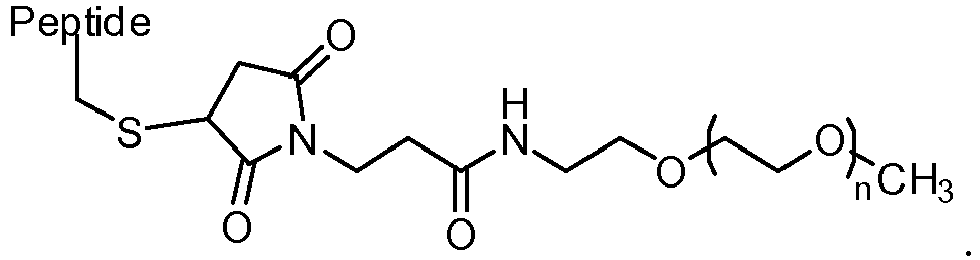

- In some embodiments, the insulin analog is modified to comprise an acyl group. The acyl group can be covalently linked directly to an amino acid of the insulin analog, or indirectly to an amino acid of the insulin analog via a spacer, wherein the spacer is positioned between the amino acid of the insulin analog and the acyl group. The insulin analog may be acylated at the same amino acid position where a hydrophilic moiety is linked, or at a different amino acid position. For example, acylation may occur at any position including any of amino acid of the A or B chains as well as a position within the linking moiety, provided that the activity exhibited by the non-acylated insulin analog is retained upon acylation. Nonlimiting examples include acylation at positions A14 and A15 of the A chain, positions the amino terminal amino acid (B1 for insulin based B chains or B2 for IGF based B chains), B10, B22, B28 or B29 of the B chain or at any position of the linking moiety.
- In one specific aspect of the disclosure, the insulin analog (or derivative or conjugate thereof) is modified to comprise an acyl group by direct acylation of an amine, hydroxyl, or thiol of a side chain of an amino acid of the insulin analog. In some embodiments, the insulin analog is directly acylated through the side chain amine, hydroxyl, or thiol of an amino acid. In some embodiments, acylation is at position B28 or B29 (according to the amino acid numbering of the native insulin A and B chain sequences). In this regard, an insulin analog can be provided that has been modified by one or more amino acid substitutions in the A or B chain sequence, including for example at positions A14, A15, B1/B2, B10, B22, B28 or B29 (according to the amino acid numbering of the native insulin A and B chain sequences) or at any position of the linking moiety with an amino acid comprising a side chain amine, hydroxyl, or thiol. In some specific embodiments of the disclosure, the direct acylation of the insulin analog occurs through the side chain amine, hydroxyl, or thiol of the amino acid at position B28 or B29 (according to the amino acid numbering of the native insulin A and B chain sequences).
- In one embodiment, the insulin analog comprises an amino acid of Formula I:
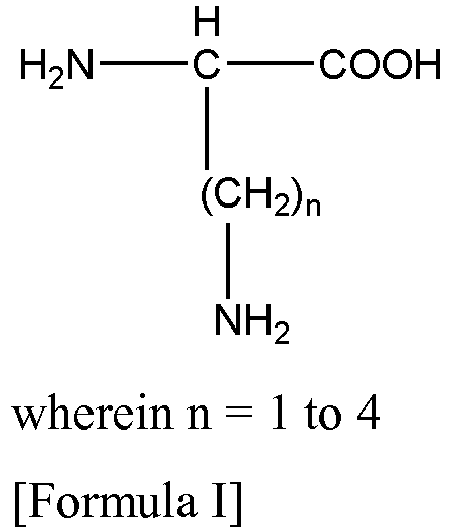
- In another embodiment, the insulin analog comprises an amino acid of Formula II:

- In yet another embodiment, the insulin analog comprises a side chain thiol is an amino acid of Formula III:

- In yet another embodiment, the insulin analog comprises a disubstituted amino acid comprising the same structure of Formula I, Formula II, or Formula III, except that the hydrogen bonded to the alpha carbon of the amino acid of Formula I, Formula II, or Formula III is replaced with a second side chain.
- In accordance with one embodiment, the acylated insulin analogs comprise a spacer between the peptide and the acyl group. In some embodiments, the insulin analog is covalently bound to the spacer, which is covalently bound to the acyl group. In some exemplary embodiments, the insulin analog is modified to comprise an acyl group by acylation of an amine, hydroxyl, or thiol of a spacer, which spacer is attached to a side chain of an amino acid at position B28 or B29 (according to the amino acid numbering of the A or B chain of native insulin), or at any position of the spacer moiety. The amino acid of the insulin analog to which the spacer is attached can be any amino acid comprising a moiety which permits linkage to the spacer. For example, an amino acid comprising a side chain -NH2, -OH, or -COOH (e.g., Lys, Orn, Ser, Asp, or Glu) is suitable.
- In some embodiments, the spacer between the insulin analog and the acyl group is an amino acid comprising a side chain amine, hydroxyl, or thiol (or a dipeptide or tripeptide comprising an amino acid comprising a side chain amine, hydroxyl, or thiol). In some embodiments, the spacer comprises a hydrophilic bifunctional spacer. In a specific embodiment, the spacer comprises an amino poly(alkyloxy)carboxylate. In this regard, the spacer can comprise, for example, NH2(CH2CH2O)n(CH2)mCOOH, wherein m is any integer from 1 to 6 and n is any integer from 2 to 12, such as, e.g., 8-amino-3,6-dioxaoctanoic acid, which is commercially available from Peptides International, Inc. (Louisville, KY). In one embodiment, the hydrophilic bifunctional spacer comprises two or more reactive groups, e.g., an amine, a hydroxyl, a thiol, and a carboxyl group or any combinations thereof. In certain embodiments, the hydrophilic bifunctional spacer comprises a hydroxyl group and a carboxylate. In other embodiments, the hydrophilic bifunctional spacer comprises an amine group and a carboxylate. In other embodiments, the hydrophilic bifunctional spacer comprises a thiol group and a carboxylate.
- In some embodiments, the spacer between peptide the insulin analog and the acyl group is a hydrophobic bifunctional spacer. Hydrophobic bifunctional spacers are known in the art. See, e.g., Bioconjugate Techniques, G. T. Hermanson (Academic Press, San Diego, CA, 1996). In certain embodiments, the hydrophobic bifunctional spacer comprises two or more reactive groups, e.g., an amine, a hydroxyl, a thiol, and a carboxyl group or any combinations thereof. In certain embodiments, the hydrophobic bifunctional spacer comprises a hydroxyl group and a carboxylate. In other embodiments, the hydrophobic bifunctional spacer comprises an amine group and a carboxylate. In other embodiments, the hydrophobic bifunctional spacer comprises a thiol group and a carboxylate. Suitable hydrophobic bifunctional spacers comprising a carboxylate and a hydroxyl group or a thiol group are known in the art and include, for example, 8-hydroxyoctanoic acid and 8-mercaptooctanoic acid.
- In accordance with certain embodiments the bifunctional spacer can be a synthetic or naturally occurring amino acid comprising an amino acid backbone that is 3 to 10 atoms in length (e.g., 6-amino hexanoic acid, 5-aminovaleric acid, 7-aminoheptanoic acid, and 8-aminooctanoic acid). Alternatively, the spacer can be a dipeptide or tripeptide spacer having a peptide backbone that is 3 to 10 atoms (e.g., 6 to 10 atoms) in length. Each amino acid of the dipeptide or tripeptide spacer attached to the insulin analog can be independently selected from the group consisting of: naturally-occurring and/or non-naturally occurring amino acids, including, for example, any of the D or L isomers of the naturally-occurring amino acids (Ala, Cys, Asp, Glu, Phe, Gly, His, Ile, Lys, Leu, Met, Asn, Pro, Arg, Ser, Thr, Val, Trp, Tyr), or any D or L isomers of the non-naturally occurring amino acids selected from the group consisting of: β-alanine (β -Ala), N-α-methyl-alanine (Me-Ala), aminobutyric acid (Abu), α-aminobutyric acid (γ-Abu), aminohexanoic acid (ε-Ahx), aminoisobutyric acid (Aib), aminomethylpyrrole carboxylic acid, aminopiperidinecarboxylic acid, aminoserine (Ams), aminotetrahydropyran-4-carboxylic acid, arginine N-methoxy-N-methyl amide, β-aspartic acid (β-Asp), azetidine carboxylic acid, 3-(2-benzothiazolyl)alanine, α-tert-butylglycine, 2-amino-5-ureido-n-valeric acid (citrulline, Cit), β-Cyclohexylalanine (Cha), acetamidomethyl-cysteine, diaminobutanoic acid (Dab), diaminopropionic acid (Dpr), dihydroxyphenylalanine (DOPA), dimethylthiazolidine (DMTA), γ-Glutamic acid (γ-Glu), homoserine (Hse), hydroxyproline (Hyp), isoleucine N-methoxy-N-methyl amide, methyl-isoleucine (Melle), isonipecotic acid (Isn), methyl-leucine (MeLeu), methyl-lysine, dimethyl-lysine, trimethyl-lysine, methanoproline, methionine-sulfoxide (Met(O)), methionine-sulfone (Met(O2)), norleucine (Nle), methyl-norleucine (Me-Nle), norvaline (Nva), ornithine (Orn), para-aminobenzoic acid (PABA), penicillamine (Pen), methylphenylalanine (MePhe), 4-Chlorophenylalanine (Phe(4-Cl)), 4-fluorophenylalanine (Phe(4-F)), 4-nitrophenylalanine (Phe(4-NO2)), 4-cyanophenylalanine ((Phe(4-CN)), phenylglycine (Phg), piperidinylalanine, piperidinylglycine, 3,4-dehydroproline, pyrrolidinylalanine, sarcosine (Sar), selenocysteine (Sec), U-Benzyl-phosphoserine, 4-amino-3-hydroxy-6-methylheptanoic acid (Sta), 4-amino-5-cyclohexyl-3-hydroxypentanoic acid (ACHPA), 4-amino-3-hydroxy-5-phenylpentanoic acid (AHPPA), 1,2,3,4,-tetrahydroisoquinoline-3-carboxylic acid (Tic), tetrahydropyranglycine, thienylalanine (Thi), U-Benzyl-phosphotyrosine, O-Phosphotyrosine, methoxytyrosine, ethoxytyrosine, O-(bis-dimethylamino-phosphono)-tyrosine, tyrosine sulfate tetrabutylamine, methyl-valine (MeVal), 1-amino-1-cyclohexane carboxylic acid (Acx), aminovaleric acid, beta-cyclopropyl-alanine (Cpa), propargylglycine (Prg), allylglycine (Alg), 2-amino-2-cyclohexyl-propanoic acid (2-Cha), tertbutylglycine (Tbg), vinylglycine (Vg), 1-amino-1-cyclopropane carboxylic acid (Acp), 1-amino-1-cyclopentane carboxylic acid (Acpe), alkylated 3-mercaptopropionic acid, 1-amino-1-cyclobutane carboxylic acid (Acb). In some embodiments the dipeptide spacer is selected from the group consisting of: Ala-Ala, β-Ala-β-Ala, Leu-Leu, Pro-Pro, γ-aminobutyric acid-γ-aminobutyric acid, and γ-Glu-γ-Glu.
- The peptide the insulin analog can be modified to comprise an acyl group by acylation of a long chain alkane. In specific aspects, the long chain alkane comprises an amine, hydroxyl, or thiol group (e.g. octadecylamine, tetradecanol, and hexadecanethiol) which reacts with a carboxyl group, or activated form thereof, of the insulin analog. The carboxyl group, or activated form thereof, of the insulin analog can be part of a side chain of an amino acid (e.g., glutamic acid, aspartic acid) of the insulin analog or can be part of the peptide backbone.
- In certain embodiments, the insulin analog is modified to comprise an acyl group by acylation of the long chain alkane by a spacer which is attached to the insulin analog. In specific aspects, the long chain alkane comprises an amine, hydroxyl, or thiol group which reacts with a carboxyl group, or activated form thereof, of the spacer. Suitable spacers comprising a carboxyl group, or activated form thereof, are described herein and include, for example, bifunctional spacers, e.g., amino acids, dipeptides, tripeptides, hydrophilic bifunctional spacers and hydrophobic bifunctional spacers. As used herein, the term "activated form of a carboxyl group" refers to a carboxyl group with the general formula R(C=O)X, wherein X is a leaving group and R is the insulin analog or the spacer. For example, activated forms of a carboxyl groups may include, but are not limited to, acyl chlorides, anhydrides, and esters. In some embodiments, the activated carboxyl group is an ester with a N-hydroxysuccinimide (NHS) leaving group.
- With regard to these aspects of the disclosure, in which a long chain alkane is acylated by the peptide the insulin analog or the spacer, the long chain alkane may be of any size and can comprise any length of carbon chain. The long chain alkane can be linear or branched. In certain aspects, the long chain alkane is a C4 to C30 alkane. For example, the long chain alkane can be any of a C4 alkane, C6 alkane, C8 alkane, C10 alkane, C12 alkane, C14 alkane, C16 alkane, C18 alkane, C20 alkane, C22 alkane, C24 alkane, C26 alkane, C28 alkane, or a C30 alkane. In some embodiments, the long chain alkane comprises a C8 to C20 alkane, e.g., a C14 alkane, C16 alkane, or a C18 alkane.
- In some embodiments, an amine, hydroxyl, or thiol group of the insulin analog is acylated with a cholesterol acid. In a specific embodiment, the peptide is linked to the cholesterol acid through an alkylated des-amino Cys spacer, i.e., an alkylated 3-mercaptopropionic acid spacer. Suitable methods of peptide acylation via amines, hydroxyls, and thiols are known in the art. See, for example, Miller, Biochem Biophys Res Commun 218: 377-382 (1996); Shimohigashi and Stammer, Int J Pept Protein Res 19: 54-62 (1982); and Previero et al., Biochim Biophys Acta 263: 7-13 (1972) (for methods of acylating through a hydroxyl); and San and Silvius, J Pept Res 66: 169-180 (2005) (for methods of acylating through a thiol); Bioconjugate Chem. "Chemical Modifications of Proteins: History and Applications" pages 1, 2-12 (1990); Hashimoto et al., Pharmacuetical Res. "Synthesis of Palmitoyl Derivatives of Insulin and their Biological Activity" Vol. 6, No: 2 pp.171-176 (1989).
- The acyl group of the acylated peptide the insulin analog can be of any size, e.g., any length carbon chain, and can be linear or branched. In some specific embodiments of the disclosure, the acyl group is a C4 to C30 fatty acid. For example, the acyl group can be any of a C4 fatty acid, C6 fatty acid, C8 fatty acid, C10 fatty acid, C12 fatty acid, C14 fatty acid, C16 fatty acid, C18 fatty acid, C20 fatty acid, C22 fatty acid, C24 fatty acid, C26 fatty acid, C28 fatty acid, or a C30 fatty acid. In some embodiments, the acyl group is a C8 to C20 fatty acid, e.g., a C14 fatty acid or a C16 fatty acid.
- In an alternative embodiment, the acyl group is a bile acid. The bile acid can be any suitable bile acid, including cholic acid, chenodeoxycholic acid, deoxycholic acid, lithocholic acid, taurocholic acid, glycocholic acid, and cholesterol acid.
- The acylated insulin analog described herein can be further modified to comprise a hydrophilic moiety. In some specific embodiments the hydrophilic moiety can comprise a polyethylene glycol (PEG) chain. The incorporation of a hydrophilic moiety can be accomplished through any suitable means, such as any of the methods described herein. In some embodiments the acylated analog comprises an amino acid selected from the group consisting of a Cys, Lys, Orn, homo-Cys, or Ac-Phe, and the side chain of the amino acid is covalently bonded to a hydrophilic moiety (e.g., PEG). In one embodiment, the acyl group is attached to position A14, A15, B0, B1, B10, B22, B28 or B29 (according to the amino acid numbering of the A and B chains of native insulin), optionally via a spacer comprising Cys, Lys, Orn, homo-Cys, or Ac-Phe.
- Alternatively, the acylated insulin analog comprises a spacer, wherein the spacer is both acylated and modified to comprise the hydrophilic moiety. Nonlimiting examples of suitable spacers include a spacer comprising one or more amino acids selected from the group consisting of Cys, Lys, Orn, homo-Cys, and Ac-Phe.
- In some embodiments, the insulin analog modified to comprise a glycosylation site is further modified to comprise an alkyl group. The alkyl group can be covalently linked directly to an amino acid of the insulin analog, or indirectly to an amino acid of the insulin analog via a spacer, wherein the spacer is positioned between the amino acid of the insulin analog and the alkyl group. The alkyl group can be attached to the insulin analog via an ether, thioether, or amino linkage. For example, the insulin analog may be alkylated at the same amino acid position where a hydrophilic moiety is linked, or at a different amino acid position.
- Alkylation can be carried out at any position within the insulin analog, including for example in the C-terminal region of the B chain or at a position in the linking moiety, provided that insulin activity is retained. In a specific aspect of the disclosure, the insulin analog is modified to comprise an alkyl group by direct alkylation of an amine, hydroxyl, or thiol of a side chain of an amino acid of the insulin analog. In some embodiments, the insulin analog is directly alkylated through the side chain amine, hydroxyl, or thiol of an amino acid. In some specific embodiments of the disclosure, the direct alkylation of the insulin analog occurs through the side chain amine, hydroxyl, or thiol of the amino acid at position A14, A15, B0, B1, B10, B22, B28 or B29 (according to the amino acid numbering of the A and B chain of native insulin).
- In some embodiments, the amino acid of the insulin analog comprises an amino acid selected from Formula I, Formula II, and Formula III, and the alkyl group is linked through the amino, hydroxyl or thiol group contained in Formula I, Formula II, and Formula III, respectively. In some exemplary embodiments, the amino acid of Formula I, is the amino acid wherein n is 4 (Lys) or n is 3 (Orn). In some exemplary embodiments, the amino acid of Formula II is the amino acid wherein n is 1 (Ser). In some exemplary embodiments, the amino acid of Formula II is the amino acid wherein n is 1 (Cys). In yet other embodiments, the amino acid of peptide the insulin analog comprising a side chain amine, hydroxyl, or thiol is a disubstituted amino acid comprising the same structure of Formula I, Formula II, or Formula III, except that the hydrogen bonded to the alpha carbon of the amino acid of Formula I, Formula II, or Formula III is replaced with a second side chain.
- In some embodiments of the disclosure, the insulin analog comprises a spacer between the peptide and the alkyl group. In some embodiments, the insulin analog is covalently bound to the spacer, which is covalently bound to the alkyl group. In some exemplary embodiments, the insulin analog is modified to comprise an alkyl group by alkylation of an amine, hydroxyl, or thiol of a spacer, wherein the spacer is attached to a side chain of an amino acid at position A14, A15, B0, B1, B10, B22, B28 or B29 (according to the amino acid numbering of the A and B chains of native insulin). The amino acid of the insulin analog to which the spacer is attached can be any amino acid (e.g., a singly α-substituted amino acid or an α,α-disubstituted amino acid) comprising a moiety which permits linkage to the spacer. An amino acid of the insulin analog comprising a side chain -NH2, -OH, or -COOH (e.g., Lys, Orn, Ser, Asp, or Glu) is suitable. In some embodiments, the spacer between the peptide the insulin analog and the alkyl group is an amino acid comprising a side chain amine, hydroxyl, or thiol or a dipeptide or tripeptide comprising an amino acid comprising a side chain amine, hydroxyl, or thiol.
- In the instance in which the alpha amine is alkylated, the spacer amino acid can be any amino acid. For example, the spacer amino acid can be a hydrophobic amino acid, e.g., Gly, Ala, Val, Leu, Ile, Trp, Met, Phe, Tyr. Alternatively, the spacer amino acid can be an acidic residue, e.g., Asp and Glu. In exemplary embodiments, the spacer amino acid can be a hydrophobic amino acid, e.g., Gly, Ala, Val, Leu, Ile, Trp, Met, Phe, Tyr, 6-amino hexanoic acid, 5-aminovaleric acid, 7-aminoheptanoic acid, 8-aminooctanoic acid. Alternatively, the spacer amino acid can be an acidic residue, e.g., Asp and Glu, provided that the alkylation occurs on the alpha amine of the acidic residue. In the instance in which the side chain amine of the spacer amino acid is alkylated, the spacer amino acid is an amino acid comprising a side chain amine, e.g., an amino acid of Formula I (e.g., Lys or Orn). In this instance, it is possible for both the alpha amine and the side chain amine of the spacer amino acid to be alkylated, such that the peptide is dialkylated. Embodiments of the disclosure include such dialkylated molecules.
- When alkylation occurs through a hydroxyl group of the amino acid of the spacer, the amino acid or one of the amino acids of the spacer can be an amino acid of Formula II. In a specific exemplary embodiment, the amino acid is Ser. When alkylation occurs through a thiol group of the amino acid of the spacer, the amino acid or one of the amino acids of the spacer can be an amino acid of Formula III. In a specific exemplary embodiment, the amino acid is Cys.
- In some embodiments, the spacer comprises a hydrophilic bifunctional spacer. In a specific embodiment, the spacer comprises an amino poly(alkyloxy)carboxylate. In this regard, the spacer can comprise, for example, NH2(CH2CH2O)n(CH2)mCOOH, wherein m is any integer from 1 to 6 and n is any integer from 2 to 12, such as, e.g., 8-amino-3,6-dioxaoctanoic acid, which is commercially available from Peptides International, Inc. (Louisville, KY). In some embodiments, the spacer between peptide the insulin analog and the alkyl group is a hydrophilic bifunctional spacer. In certain embodiments, the hydrophilic bifunctional spacer comprises two or more reactive groups, e.g., an amine, a hydroxyl, a thiol, and a carboxyl group or any combinations thereof. In certain embodiments, the hydrophilic bifunctional spacer comprises a hydroxyl group and a carboxylate. In other embodiments, the hydrophilic bifunctional spacer comprises an amine group and a carboxylate. In other embodiments, the hydrophilic bifunctional spacer comprises a thiol group and a carboxylate.
- In some embodiments, the spacer between peptide the insulin analog and the alkyl group is a hydrophobic bifunctional spacer. In certain embodiments, the hydrophobic bifunctional spacer comprises two or more reactive groups, e.g., an amine, a hydroxyl, a thiol, and a carboxyl group or any combinations thereof. In certain embodiments, the hydrophobic bifunctional spacer comprises a hydroxyl group and a carboxylate. In other embodiments, the hydrophobic bifunctional spacer comprises an amine group and a carboxylate. In other embodiments, the hydrophobic bifunctional spacer comprises a thiol group and a carboxylate. Suitable hydrophobic bifunctional spacers comprising a carboxylate and a hydroxyl group or a thiol group are known in the art and include, for example, 8-hydroxyoctanoic acid and 8-mercaptooctanoic acid.
- The spacer (e.g., amino acid, dipeptide, tripeptide, hydrophilic bifunctional spacer, or hydrophobic bifunctional spacer) is 3 to 10 atoms (e.g., 6 to 10 atoms, (e.g., 6, 7, 8, 9, or 10 atoms)) in length. In more specific embodiments, the spacer is about 3 to 10 atoms (e.g., 6 to 10 atoms) in length and the alkyl is a C12 to C18 alkyl group, e.g., C14 alkyl group, C16 alkyl group, such that the total length of the spacer and alkyl group is 14 to 28 atoms, e.g., about 14, 15, 16, 17, 18, 19, 20, 21, 22, 23, 24, 25, 26, 27, or 28 atoms. In some embodiments the length of the spacer and alkyl is 17 to 28 (e.g., 19 to 26, 19 to 21) atoms.
- In accordance with one embodiment the bifunctional spacer is a synthetic or non-naturally occurring amino acid comprising an amino acid backbone that is 3 to 10 atoms in length (e.g., 6-amino hexanoic acid, 5-aminovaleric acid, 7-aminoheptanoic acid, and 8-aminooctanoic acid). Alternatively, the spacer can be a dipeptide or tripeptide spacer having a peptide backbone that is 3 to 10 atoms (e.g., 6 to 10 atoms) in length. The dipeptide or tripeptide spacer attached to the insulin analog can be composed of naturally-occurring and/or non-naturally occurring amino acids, including, for example, any of the amino acids taught herein. In some embodiments the spacer comprises an overall negative charge, e.g., comprises one or two negatively charged amino acids. In some embodiments the dipeptide spacer is selected from the group consisting of: Ala-Ala, β-Ala-β-Ala, Leu-Leu, Pro-Pro, γ-aminobutyric acid-γ-aminobutyric acid, and γ-Glu-γ-Glu. In one embodiment the dipeptide spacer is γ-Glu-γ-Glu.
- Suitable methods of peptide alkylation via amines, hydroxyls, and thiols are known in the art. For example, a Williamson ether synthesis can be used to form an ether linkage between the insulin peptide and the alkyl group. Also, a nucleophilic substitution reaction of the peptide with an alkyl halide can result in any of an ether, thioether, or amino linkage. The alkyl group of the alkylated peptide the insulin analog can be of any size, e.g., any length carbon chain, and can be linear or branched. In some embodiments of the disclosure, the alkyl group is a C4 to C30 alkyl. For example, the alkyl group can be any of a C4 alkyl, C6 alkyl, C8 alkyl, C10 alkyl, C12 alkyl, C14 alkyl, C16 alkyl, C18 alkyl, C20 alkyl, C22 alkyl, C24 alkyl, C26 alkyl, C28 alkyl, or a C30 alkyl. In some embodiments, the alkyl group is a C8 to C20 alkyl, e.g., a C14 alkyl or a C16 alkyl.
- In some specific embodiments, the alkyl group comprises a steroid moiety of a bile acid, e.g., cholic acid, chenodeoxycholic acid, deoxycholic acid, lithocholic acid, taurocholic acid, glycocholic acid, and cholesterol acid.
- In some embodiments the insulin analog is modified to comprise an alkyl group by reacting a nucleophilic, long chain alkane with the insulin analog, wherein the insulin analog comprises a leaving group suitable for nucleophilic substitution. In specific aspects, the nucleophilic group of the long chain alkane comprises an amine, hydroxyl, or thiol group (e.g. octadecylamine, tetradecanol, and hexadecanethiol). The leaving group of the insulin analog can be part of a side chain of an amino acid or can be part of the peptide backbone. Suitable leaving groups include, for example, N-hydroxysuccinimide, halogens, and sulfonate esters.
- In certain embodiments, the insulin analog is modified to comprise an alkyl group by reacting the nucleophilic, long chain alkane with a spacer, which is attached to the insulin analog, wherein the spacer comprises the leaving group. In specific aspects, the long chain alkane comprises an amine, hydroxyl, or thiol group. In certain embodiments, the spacer comprising the leaving group can be any spacer discussed herein, e.g., amino acids, dipeptides, tripeptides, hydrophilic bifunctional spacers and hydrophobic bifunctional spacers further comprising a suitable leaving group.
- When a long chain alkane is alkylated by the insulin analog or the spacer, the long chain alkane may be of any size and can comprise any length of carbon chain. The long chain alkane can be linear or branched. In certain aspects, the long chain alkane is a C4 to C30 alkane. For example, the long chain alkane can be any of a C4 alkane, C6 alkane, C8 alkane, C10 alkane, C12 alkane, C14 alkane, C16 alkane, C18 alkane, C20 alkane, C22 alkane, C24 alkane, C26 alkane, C28 alkane, or a C30 alkane. In some embodiments the long chain alkane comprises a C8 to C20 alkane, e.g., a C14 alkane, C16 alkane, or a C18 alkane.
- Also, in some embodiments alkylation can occur between the insulin analog and a cholesterol moiety. For example, the hydroxyl group of cholesterol can displace a leaving group on the long chain alkane to form a cholesterol-insulin peptide product. The alkylated insulin analogs described herein can be further modified to comprise a hydrophilic moiety. In some specific embodiments the hydrophilic moiety can comprise a polyethylene glycol (PEG) chain. The incorporation of a hydrophilic moiety can be accomplished through any suitable means, such as any of the methods described herein. In some embodiments the insulin analog can comprise an amino acid selected from Cys, Lys, Orn, homo-Cys, or Ac-Phe, wherein the side chain of the amino acid is covalently bonded to a hydrophilic moiety (e.g., PEG). In some embodiments the alkyl group is attached to position A14, A15, B0, B1, B10, B22, B28 or B29 (according to the amino acid numbering of the A or B chain of native insulin), optionally via a spacer comprising Cys, Lys, Orn, homo-Cys, or Ac-Phe, and optionally further comprising a hydrophilic moiety linked to the side chain of another amino acid. Alternatively, the alkylated insulin analog can comprise a spacer, wherein the spacer is both alkylated and modified to comprise the hydrophilic moiety. Nonlimiting examples of suitable spacers include a spacer comprising one or more amino acids selected from the group consisting of Cys, Lys, Orn, homo-Cys, and Ac-Phe.
- In some embodiments, the insulin analogs disclosed herein as being modified to comprise a glycosylation site are further amidated, carboxylated, phosphorylated, esterified, N-acylated, cyclized via, e.g., a disulfide bridge, or converted into a salt (e.g., an acid addition salt, a basic addition salt), and/or optionally dimerized, multimerized, or polymerized, or conjugated. The present disclosure also encompasses conjugates in which the insulin analog is linked to a heterologous moiety. The conjugation between the insulin analog and the heterologous moiety can be through covalent bonding, non-covalent bonding (e.g. electrostatic interactions, hydrogen bonds, van der Waals interactions, salt bridges, hydrophobic interactions, and the like), or both types of bonding. A variety of non-covalent coupling systems may be used, including biotin-avidin, ligand/receptor, enzyme/substrate, nucleic acid/nucleic acid binding protein, lipid/lipid binding protein, cellular adhesion molecule partners; or any binding partners or fragments thereof which have affinity for each other. In some aspects, the covalent bonds are peptide bonds. The conjugation of the insulin analog to the heterologous moiety may be indirect or direct conjugation, the former of which may involve a linker or spacer. Suitable linkers and spacers are known in the art and include any of the linkers or spacers described.
- As used herein, the term "heterologous moiety" is synonymous with the term "conjugate moiety" and refers to any molecule (chemical or biochemical, naturally-occurring or non-coded) which is different from the insulin analog to which it is attached. Exemplary conjugate moieties that can be linked to the insulin analog include but are not limited to a heterologous peptide or polypeptide (including for example, a plasma protein), a targeting agent, an immunoglobulin or portion thereof (e.g., variable region, CDR, or Fc region), a diagnostic label such as a radioisotope, fluorophore or enzymatic label, a polymer including water soluble polymers, or other therapeutic or diagnostic agents. In some embodiments a conjugate is provided comprising the insulin analog and a plasma protein, wherein the plasma protein is selected from the group consisting of albumin, transferin, fibrinogen and globulins. In some embodiments the plasma protein moiety of the conjugate is albumin or transferin. In one embodiment the heterologous moiety is albumin, including for example, albumins such as human serum albumin (HSA) and recombinant human albumin (rHA). The conjugate in some embodiments comprises the insulin analog and one or more of a polypeptide, a nucleic acid molecule, an antibody or fragment thereof, a polymer, a the insulin analoguantum dot, a small molecule, a toxin, a diagnostic agent, a carbohydrate, an amino acid.
- In some embodiments, the heterologous moiety conjugated to the insulin analog is a polymer. In some embodiments, the polymer is selected from the group consisting of: polyamides, polycarbonates, polyalkylenes and derivatives thereof including, polyalkylene glycols, polyalkylene oxides, polyalkylene terepthalates, polymers of acrylic and methacrylic esters, including poly(methyl methacrylate), poly(ethyl methacrylate), poly(butylmethacrylate), poly(isobutyl methacrylate), poly(hexylmethacrylate), poly(isodecyl methacrylate), poly(lauryl methacrylate), poly(phenyl methacrylate), poly(methyl acrylate), poly(isopropyl acrylate), poly(isobutyl acrylate), and poly(octadecyl acrylate), polyvinyl polymers including polyvinyl alcohols, polyvinyl ethers, polyvinyl esters, polyvinyl halides, poly(vinyl acetate), and polyvinylpyrrolidone, polyglycolides, polysiloxanes, polyurethanes and co-polymers thereof, celluloses including alkyl cellulose, hydroxyalkyl celluloses, cellulose ethers, cellulose esters, nitro celluloses, methyl cellulose, ethyl cellulose, hydroxypropyl cellulose, hydroxy-propyl methyl cellulose, hydroxybutyl methyl cellulose, cellulose acetate, cellulose propionate, cellulose acetate butyrate, cellulose acetate phthalate, carboxylethyl cellulose, cellulose triacetate, and cellulose sulphate sodium salt, polypropylene, polyethylenes including poly(ethylene glycol), poly(ethylene oxide), and poly(ethylene terephthalate), and polystyrene.
- In some aspects, the polymer is a biodegradable polymer, including a synthetic biodegradable polymer (e.g., polymers of lactic acid and glycolic acid, polyanhydrides, poly(ortho)esters, polyurethanes, poly(butic acid), poly(valeric acid), and poly(lactide-cocaprolactone)), and a natural biodegradable polymer (e.g., alginate and other polysaccharides including dextran and cellulose, collagen, chemical derivatives thereof (substitutions, additions of chemical groups, for example, alkyl, alkylene, hydroxylations, oxidations, and other modifications routinely made by those skilled in the art), albumin and other hydrophilic proteins (e.g., zein and other prolamines and hydrophobic proteins)), as well as any copolymer or mixture thereof. In general, these materials degrade either by enzymatic hydrolysis or exposure to water in vivo, by surface or bulk erosion.
- In some aspects, the polymer is a bioadhesive polymer, such as a bioerodible hydrogel described by H. S. Sawhney, C. P. Pathak and J. A. Hubbell in Macromolecules, 1993, 26, 581-587, polyhyaluronic acids, casein, gelatin, glutin, polyanhydrides, polyacrylic acid, alginate, chitosan, poly(methyl methacrylates), poly(ethyl methacrylates), poly(butylmethacrylate), poly(isobutyl methacrylate), poly(hexylmethacrylate), poly(isodecyl methacrylate), poly(lauryl methacrylate), poly(phenyl methacrylate), poly(methyl acrylate), poly(isopropyl acrylate), poly(isobutyl acrylate), and poly(octadecyl acrylate).
- In some embodiments, the polymer is a water-soluble polymer or a hydrophilic polymer. Hydrophilic polymers are further described herein under "Hydrophilic Heterologous Moieties." Suitable water-soluble polymers are known in the art and include, for example, polyvinylpyrrolidone, hydroxypropyl cellulose (HPC; Klucel), hydroxypropyl methylcellulose (HPMC; Methocel), nitrocellulose, hydroxypropyl ethylcellulose, hydroxypropyl butylcellulose, hydroxypropyl pentylcellulose, methyl cellulose, ethylcellulose (Ethocel), hydroxyethyl cellulose, various alkyl celluloses and hydroxyalkyl celluloses, various cellulose ethers, cellulose acetate, carboxymethyl cellulose, sodium carboxymethyl cellulose, calcium carboxymethyl cellulose, vinyl acetate/crotonic acid copolymers, poly-hydroxyalkyl methacrylate, hydroxymethyl methacrylate, methacrylic acid copolymers, polymethacrylic acid, polymethylmethacrylate, maleic anhydride/methyl vinyl ether copolymers, poly vinyl alcohol, sodium and calcium polyacrylic acid, polyacrylic acid, acidic carboxy polymers, carboxypolymethylene, carboxyvinyl polymers, polyoxyethylene polyoxypropylene copolymer, polymethylvinylether co-maleic anhydride, carboxymethylamide, potassium methacrylate divinylbenzene co-polymer, polyoxyethyleneglycols, polyethylene glycol, and derivatives, salts, and combinations thereof.
- In one embodiment, the polymer is a polyalkylene glycol, including, for example, polyethylene glycol (PEG). In some embodiments, the heterologous moiety is a carbohydrate. In some embodiments, the carbohydrate is a monosaccharide (e.g., glucose, galactose, fructose), a disaccharide (e.g., sucrose, lactose, maltose), an oligosaccharide (e.g., raffinose, stachyose), a polysaccharide (a starch, amylase, amylopectin, cellulose, chitin, callose, laminarin, xylan, mannan, fucoidan, galactomannan.
- In some embodiments, the heterologous moiety is a lipid. The lipid, in some embodiments, is a fatty acid, eicosanoid, prostaglandin, leukotriene, thromboxane, N-acyl ethanolamine), glycerolipid (e.g., mono-, di-, tri-substituted glycerols), glycerophospholipid (e.g., phosphatidylcholine, phosphatidylinositol, phosphatidylethanolamine, phosphatidylserine), sphingolipid (e.g., sphingosine, ceramide), sterol lipid (e.g., steroid, cholesterol), prenol lipid, saccharolipid, or a polyketide, oil, wax, cholesterol, sterol, fat-soluble vitamin, monoglyceride, diglyceride, triglyceride, a phospholipid.
- As noted above, in some embodiments the insulin analog is conjugated, e.g., fused to an immunoglobulin or portion thereof (e.g. variable region, CDR, or Fc region). Known types of immunoglobulins (Ig) include IgG, IgA, IgE, IgD or IgM. The Fc region is a C-terminal region of an Ig heavy chain, which is responsible for binding to Fc receptors that carry out activities such as recycling (which results in prolonged half-life), antibody dependent cell-mediated cytotoxicity (ADCC), and complement dependent cytotoxicity (CDC).
- For example, according to some definitions the human IgG heavy chain Fc region stretches from Cys226 to the C-terminus of the heavy chain. The "hinge region" generally extends from Glu216 to Pro230 of human IgG1 (hinge regions of other IgG isotypes may be aligned with the IgG1 sequence by aligning the cysteines involved in cysteine bonding). The Fc region of an IgG includes two constant domains, CH2 and CH3. The CH2 domain of a human IgG Fc region usually extends from amino acids 231 to amino acid 341. The CH3 domain of a human IgG Fc region usually extends from amino acids 342 to 447. References made to amino acid numbering of immunoglobulins or immunoglobulin fragments, or regions, are all based on Kabat et al. 1991, Sequences of Proteins of Immunological Interest, U.S. Department of Public Health, Bethesda, Md. In a related embodiment, the Fc region may comprise one or more native or modified constant regions from an immunoglobulin heavy chain, other than CH1, for example, the CH2 and CH3 regions of IgG and IgA, or the CH3 and CH4 regions of IgE.
- Suitable conjugate moieties include portions of immunoglobulin sequence that include the FcRn binding site. FcRn, a salvage receptor, is responsible for recycling immunoglobulins and returning them to circulation in blood. The region of the Fc portion of IgG that binds to the FcRn receptor has been described based on X-ray crystallography (Burmeister et al. 1994, Nature 372:379). The major contact area of the Fc with the FcRn is near the junction of the CH2 and CH3 domains. Fc-FcRn contacts are all within a single Ig heavy chain. The major contact sites include amino acid residues 248, 250-257, 272, 285, 288, 290-291, 308-311, and 314 of the CH2 domain and amino acid residues 385-387, 428, and 433-436 of the CH3 domain.
- Some conjugate moieties may or may not include FcyR binding site(s). FcyR are responsible for ADCC and CDC. Examples of positions within the Fc region that make a direct contact with FcyR are amino acids 234-239 (lower hinge region), amino acids 265-269 (B/C loop), amino acids 297-299 (C'/E loop), and amino acids 327-332 (F/G) loop (Sondermann et al., Nature 406: 267-273, 2000). The lower hinge region of IgE has also been implicated in the FcRI binding (Henry, et al., ). Residues involved in IgA receptor binding are described in Lewis et al., (J Immunol. 175:6694-701, 2005). Amino acid residues involved in IgE receptor binding are described in Sayers et al. (J Biol Chem. 279(34):35320-5, 2004). Amino acid modifications may be made to the Fc region of an immunoglobulin. Such variant Fc regions comprise at least one amino acid modification in the CH3 domain of the Fc region (residues 342-447) and/or at least one amino acid modification in the CH2 domain of the Fc region (residues 231-341). Mutations believed to impart an increased affinity for FcRn include T256A, T307A, E380A, and N434A (Shields et al. 2001, J. Biol. Chem. 276:6591). Other mutations may reduce binding of the Fc region to FcyRI, FcyRIIA, FcyRIIB, and/or FcyRIIIA without significantly reducing affinity for FcRn. For example, substitution of the Asn at position 297 of the Fc region with Ala or another amino acid removes a highly conserved N-glycosylation site and may result in reduced immunogenicity with concomitant prolonged half-life of the Fc region, as well as reduced binding to FcyRs (Routledge et al. 1995, Transplantation 60:847; Friend et al. 1999, Transplantation 68:1632; Shields et al. 1995, J. Biol. Chem. 276:6591). Amino acid modifications at positions 233-236 of IgG1 have been made that reduce binding to FcyRs (Ward and Ghetie 1995, Therapeutic Immunology 2:77 and Armour et al. 1999, Eur. J. Immunol. 29:2613). Some exemplary amino acid substitutions are described in
US Patents 7,355,008 and7,381,408 . - In some embodiments, the insulin analog described herein is covalently bonded to a hydrophilic moiety. Hydrophilic moieties can be attached to the insulin analog under any suitable conditions used to react a protein with an activated polymer molecule. Any means known in the art can be used, including via acylation, reductive alkylation, Michael addition, thiol alkylation or other chemoselective conjugation/ligation methods through a reactive group on the hydrophilic moiety (e.g., an aldehyde, amino, ester, thiol, α-haloacetyl, maleimido or hydrazino group) to a reactive group on the target compound (e.g., an aldehyde, amino, ester, thiol, α-haloacetyl, maleimido or hydrazino group). Activating groups which can be used to link the water soluble polymer to one or more proteins include without limitation sulfone, maleimide, sulfhydryl, thiol, triflate, tresylate, azidirine, oxirane, 5-pyridyl, and alpha-halogenated acyl group (e.g., alpha-iodo acetic acid, alpha-bromoacetic acid, alpha-chloroacetic acid). If attached to the peptide by reductive alkylation, the polymer selected should have a single reactive aldehyde so that the degree of polymerization is controlled. See, for example, Kinstler et al., Adv. Drug. Delivery Rev. 54: 477-485 (2002); Roberts et al., Adv. Drug Delivery Rev. 54: 459-476 (2002); and Zalipsky et al., Adv. Drug Delivery Rev. 16: 157-182 (1995). The hydrophilic moiety, e.g., polyethylene glycol chain, in accordance with some embodiments has a molecular weight selected from the range of about 500 to about 40,000 Daltons. In some embodiments the polyethylene glycol chain has a molecular weight selected from the range of about 500 to about 5,000 Daltons, or about 1,000 to about 5,000 Daltons. In another embodiment the hydrophilic moiety, e.g., polyethylene glycol chain, has a molecular weight of about 10,000 to about 20,000 Daltons. In yet other exemplary embodiments the hydrophilic moiety, e.g. polyethylene glycol chain, has a molecular weight of about 20,000 to about 40,000 Daltons. Linear or branched hydrophilic polymers are contemplated. Resulting preparations of conjugates may be essentially monodisperse or polydisperse, and may have about 0.5, 0.7, 1, 1.2, 1.5 or 2 polymer moieties per peptide.
- In some embodiments, the native amino acid of the peptide is substituted with an amino acid having a side chain suitable for crosslinking with hydrophilic moieties, to facilitate linkage of the hydrophilic moiety to the peptide. Exemplary amino acids include Cys, Lys, Orn, homo-Cys, or acetyl phenylalanine (Ac-Phe). In other embodiments, an amino acid modified to comprise a hydrophilic group is added to the peptide at the N-terminus or C-terminus. In some embodiments, the peptide of the conjugate is conjugated to a hydrophilic moiety, e.g. PEG, via covalent linkage between a side chain of an amino acid of the peptide and the hydrophilic moiety.
- In some embodiments, the conjugate comprises a insulin analog fused to an accessory peptide which is capable of forming an extended conformation similar to chemical PEG (e.g., a recombinant PEG (rPEG) molecule), such as those described in International Patent Application Publication No.
WO2009/023270 and U.S. Patent Application Publication No.US2008/0286808 . The rPEG molecule is not polyethylene glycol. The rPEG molecule in some aspects is a polypeptide comprising one or more of glycine, serine, glutamic acid, aspartic acid, alanine, or proline. In some aspects, the rPEG is a homopolymer, e.g., poly-glycine, poly-serine, polyglutamic acid, poly-aspartic acid, poly-alanine, or poly-proline. In other embodiments, the rPEG comprises two types of amino acids repeated, e.g., poly(Gly-Ser), poly(Gly-Glu), poly(Gly-Ala), poly(Gly-Asp), poly(Gly-Pro), poly(Ser-Glu), etc. In some aspects, the rPEG comprises three different types of amino acids, e.g., poly(Gly-Ser-Glu). In specific aspects, the rPEG increases the half-life of the insulin analog. In some aspects, the rPEG comprises a net positive or net negative charge. The rPEG in some aspects lacks secondary structure. In some embodiments, the rPEG is greater than or equal to 10 amino acids in length and in some embodiments is about 40 to about 50 amino acids in length. The accessory peptide in some aspects is fused to the N- or C- terminus of the peptide of the disclosure through a peptide bond or a proteinase cleavage site. The rPEG in some aspects comprises an affinity tag or is linked to a PEG that is greater than 5 kDa. In some embodiments, the rPEG confers the conjugate of the disclosure with an increased hydrodynamic radius, serum half-life, protease resistance, or solubility and in some aspects confers the conjugate with decreased immunogenicity. - The conjugate moieties can be linked to the insulin analog via direct covalent linkage by reacting targeted amino acid residues of the peptide with an organic derivatizing agent that is capable of reacting with selected side chains or the N- or C-terminal residues of these targeted amino acids. Reactive groups on the peptide or conjugate moiety include, e.g., an aldehyde, amino, ester, thiol, α-haloacetyl, maleimido or hydrazino group. Derivatizing agents include, for example, maleimidobenzoyl sulfosuccinimide ester (conjugation through cysteine residues), N-hydroxysuccinimide (through lysine residues), glutaraldehyde, succinic anhydride or other agents known in the art. Alternatively, the conjugate moieties can be linked to the peptide indirectly through intermediate carriers, such as polysaccharide or polypeptide carriers. Examples of polysaccharide carriers include aminodextran. Examples of suitable polypeptide carriers include polylysine, polyglutamic acid, polyaspartic acid, co-polymers thereof, and mixed polymers of these amino acids and others, e.g., serines, to confer desirable solubility properties on the resultant loaded carrier.
- The insulin analog may be part of a dimer, trimer or higher order multimer comprising at least two, three, or more peptides bound via a linker, wherein at least one or both peptides is a insulin analog. In one embodiment a single chain insulin analog is linked to either the A chain or the B chain of a second insulin polypeptide that is either a heteroduplex comprising the A and B chain or a second single chain insulin analog. The dimer may be a homodimer or heterodimer. In some embodiments, the linker is selected from the group consisting of a bifunctional thiol crosslinker and a bi-functional amine crosslinker. In certain embodiments, the linker is PEG, e.g., a 5 kDa PEG, 20 kDa PEG. In some embodiments, the linker is a disulfide bond. For example, each monomer of the dimer may comprise a Cys residue (e.g., a terminal or internally positioned Cys) and the sulfur atom of each Cys residue participates in the formation of the disulfide bond. In some aspects of the disclosure, the monomers are connected via terminal amino acids (e.g., N-terminal or C-terminal), via internal amino acids, or via a terminal amino acid of at least one monomer and an internal amino acid of at least one other monomer. In specific aspects, the monomers are not connected via an N-terminal amino acid. In some aspects, the monomers of the multimer are attached together in a "tail-to-tail" orientation in which the C-terminal amino acids of each monomer are attached together. In one embodiment the dimer comprises two single chain insulin analogs wherein the two insulin analogs are linked to one another via the amino acid side chains of an amino acid present in the linking moiety of each single chain insulin analog. A conjugate moiety may be covalently linked to any of the single chain insulin analogs described herein, including a dimer, trimer or higher order multimer.
- In accordance with one embodiment a multimer is provided that comprises an IGF YL B chain analog disclosed herein (including prodrug and depot derivatives thereof). The multimer (e.g., a dimer) may be a homodimer or heterodimer, comprising peptides selected from the group consisting of native insulin, native IGF-1, native IGF-II, an insulin analog peptide and IGF analog peptides. In some embodiments, the linker is selected from the group consisting of a bifunctional thiol crosslinker and a bi-functional amine crosslinker. In certain embodiments, the linker is PEG, e.g., a 5 kDa PEG, 20 kDa PEG. In some embodiments, the linker is a disulfide bond.
- Alternatively, the insulin analogs described herein can be modified into a depot form, such that the manner in which the insulin analog of the present disclosure is released into the body to which it is administered is controlled with respect to time and location within the body (see, for example,
U.S. Patent No. 4,450,150 ). Depot forms of the insulin analogs of the present disclosures can be, for example, an implantable composition comprising the insulin analog of the present disclosure and a porous or non-porous material, such as a polymer, wherein the insulin analog of the present disclosures is encapsulated by or diffused throughout the material and/or degradation of the non-porous material. The depot is then implanted into the desired location within the body and the insulin analog of the present disclosures are released from the implant at a predetermined rate. - Alternatively, a large depot polymer can be linked to a self cleaving dipeptide element that is covalently bound to the insulin analog as described herein. In this embodiment, the depot polymer effectively sequesters the insulin analog at its site of administration until it is subsequently cleaved from the analog via a non-enzymatic reaction at a predetermined rate. Depot formulations of insulin analogs using a self cleaving dipeptide have been described in
PCT/US2009/068713 . In one embodiment an insulin analog is provided comprising a dipeptide prodrug element wherein the dipeptide prodrug element is linked to a large polymer such as PEG or dextran. - Pharmaceutical compositions can be prepared that comprise the analogs and are formulated to have a desired in vivo release profile. In some aspects, the pharmaceutical composition is an immediate release, controlled release, sustained release, extended release, delayed release, or bi-phasic release formulation. Methods of formulating peptides or conjugates for controlled release are known in the art. See, for example, J Pharm 374: 46-52 (2009) and International Patent Application Publication Nos.
WO 2008/130158 ,WO2004/033036 ;WO2000/032218 ; andWO 1999/040942 . The instant compositions may further comprise, for example, micelles or liposomes, or some other encapsulated form, or may be administered in an extended release form to provide a prolonged storage and/or delivery effect. The disclosed pharmaceutical formulations may be administered according to any regime including, for example, daily (1 time per day, 2 times per day, 3 times per day, 4 times per day, 5 times per day, 6 times per day), every two days, every three days, every four days, every five days, every six days, weekly, bi-weekly, every three weeks, monthly, or bi-monthly. - The present disclosure also encompasses prodrug analogs of the insulin analog peptides disclosed herein. Advantageously, the prodrug formulations improve the therapeutic index of the underlying peptide and delay onset of action and enhance the half life of the insulin analog peptide. The disclosed prodrug chemistry can be chemically conjugated to active site amines to form amides that revert to the parent amine upon diketopiperazine formation and release of the prodrug element (see International patent application
PCT/US2009/068713 ). This novel biologically friendly prodrug chemistry spontaneously degrades under physiological conditions (e.g. pH of about 7, at 37 °C in an aqueous environment) and is not reliant on enzymatic degradation. The duration of the prodrug analog is determined by the selection of the dipeptide prodrug sequence, and thus allows for flexibility in prodrug formulation. - In one embodiment a prodrug is provided having a non-enzymatic activation half time (t1/2) of between 1-100 hrs under physiological conditions. Physiological conditions as disclosed herein are intended to include a temperature of about 35 to 40 °C and a pH of about 7.0 to about 7.4 and more typically include a pH of 7.2 to 7.4 and a temperature of 36 to 38 °C in an aqueous environment. In one embodiment a dipeptide, capable of undergoing diketopiperazine formation under physiological conditions, is covalently linked through an amide or ester linkage to the insulin analog (see International applications
WO 2009/099763 andWO 2010/080607 ). - Advantageously, the rate of cleavage, and thus activation of the prodrug, depends on the structure and stereochemistry of the dipeptide pro-moiety and also on the strength of the nucleophile. The prodrugs disclosed herein will ultimately be chemically converted to structures that can be recognized by the insulin/IGF receptor, wherein the speed of this chemical conversion will determine the time of onset and duration of in vivo biological action. The prodrug chemistry disclosed in this application relies upon an intramolecular chemical reaction that is not dependent upon additional chemical additives, or enzymes. The speed of conversion is controlled by the chemical nature of the dipeptide substituent and its cleavage under physiological conditions. Since physiological pH and temperature are tightly regulated within a highly defined range, the speed of conversion from prodrug to drug will exhibit high intra and interpatient reproducibility. In one embodiment a prodrug derivative of a single chain insulin analog is provided wherein the single chain insulin analog comprises a linking moiety of at least 18 amino acids, optionally comprising a glycoylation site, and/or optionally wherein one of the amino acids of the linking moiety is pegylated. In one embodiment the linking moiety comprises the sequence of SEQ ID NO: 66. Alternatively, or in addition to the pegylation of the amino acid of the linking moiety, one of the two amino acids of the dipeptide prodrug element can be pegylated. Alternatively, or in any combination with the above mentioned pegylated sites, the single chain insulin prodrug derivative can be pegylated at a position selected from the group consisting of A9, A14 and A15 of the A chain, at the amino terminal amino acid of the B chain or at any of positions B10, B22, B28 or B29 of the B chain or at any position of the linking moiety.
- As disclosed herein prodrugs are provided wherein the insulin analog peptides have extended half lives of at least 1 hour, and more typically greater than 20 hours but less than 100 hours, and are converted to the active form at physiological conditions through a non-enzymatic reaction driven by inherent chemical instability. In one embodiment the a non-enzymatic activation t1/2 time of the prodrug is between 1-100 hrs, and more typically between 12 and 72 hours, and in one embodiment the t1/2 is between 24-48 hrs as measured by incubating the prodrug in a phosphate buffer solution (e.g., PBS) at 37 °C and pH of 7.2. In one embodiment the half life of the prodrugs is about 1, 8, 12, 20, 24, 48 or 72 hours. In one embodiment the half life of the prodrugs is about 100 hours or greater including half lives of up to about 168, 336, 504, 672 or 720 hours, and are converted to the active form at physiological conditions through a non-enzymatic reaction driven by inherent chemical instability. The half lives of the various prodrugs are calculated by using the formula t1/2 = .693/k, where 'k' is the first order rate constant for the degradation of the prodrug. In one embodiment, activation of the prodrug occurs after cleavage of an amide bond linked dipeptide, and formation of a diketopiperazine or diketomorpholine, and the active insulin analog peptide.
- In another embodiment, the dipeptide prodrug element is covalently bound to the insulin analog peptide via an amide linkage, and the dipeptide further comprises a depot polymer linked to dipeptide. In one embodiment two or more depot polymers are linked to a single dipeptide element. In one embodiment the depot polymer is linked to the side chain of one of the amino acids comprising the dipeptide prodrug element. The depot polymer is selected to be biocompatible and of sufficient size that the insulin analog, modified by covalent attachment of the dipeptide, remains sequestered at an injection site and/or incapable of interacting with its corresponding receptor upon administration to a patient. Subsequent cleavage of the dipeptide releases the insulin analog to interact with its intended target. The depot bearing dipeptide element can be linked to the insulin analog via an amide bond through any convenient amine group of the insulin analog, including an N-terminal amine or an amine bearing side chain of an internal natural or synthetic amino acid of the insulin analog. In one embodiment the depot bearing dipeptide element is linked to the amino group of a 4-amino phenylalanine present at position A19 of the analog.
- In accordance with one embodiment the depot polymer is selected from biocompatible polymers known to those skilled in the art. The depot polymers typically have a size selected from a range of about 20,000 to 120,000 Daltons. In one embodiment the depot polymer has a size selected from a range of about 40,000 to 100,000 or about 40,000 to 80,000 Daltons. In one embodiment the depot polymer has a size of about 40,000, 50,000, 60,000, 70,000 or 80,000 Daltons. Suitable depot polymers include but are not limited to dextrans, polylactides, polyglycolides, caprolactone-based polymers, poly(caprolactone), polyanhydrides, polyamines, polyesteramides, polyorthoesters, polydioxanones, polyacetals, polyketals, polycarbonates, polyphosphoesters, polyesters, polybutylene terephthalate, polyorthocarbonates, polyphosphazenes, succinates, poly(malic acid), poly(amino acids), polyvinylpyrrolidone, polyethylene glycol, polyhydroxycellulose, polysaccharides, chitin, chitosan, hyaluronic acid, and copolymers, terpolymers and mixtures thereof, and biodegradable polymers and their copolymers including caprolactone-based polymers, polycaprolactones and copolymers which include polybutylene terephthalate. In one embodiment the depot polymer is selected from the group consisting of polyethylene glycol, dextran, polylactic acid, polyglycolic acid and a copolymer of lactic acid and glycolic acid, and in one specific embodiment the depot polymer is polyethylene glycol. In one embodiment the depot polymer is polyethylene glycol and the combined molecular weight of depot polymer(s) linked to the dipeptide element is about 40,000 to 80,000 Daltons.
- Specific dipeptides composed of natural or synthetic amino acids have been identified that facilitate intramolecular decomposition under physiological conditions to release the active insulin analog. The dipeptide can be linked (via an amide bond) to an amino group present on the insulin analog, or an amino group introduced into the insulin analog by modification of the peptide sequence. In one embodiment the dipeptide structure is selected to resist cleavage by peptidases present in mammalian sera. Accordingly, in one embodiment the rate of cleavage of the dipeptide prodrug element from the bioactive peptide is not substantially enhanced (e.g., greater than 2X) when the reaction is conducted using physiological conditions in the presence of serum proteases relative to conducting the reaction in the absence of the proteases. Thus the cleavage half-life of the dipeptide prodrug element from the insulin analog (in PBS under physiological conditions) is not more than two, three, four or five fold the cleavage half-life of the dipeptide prodrug element from the insulin analog in a solution comprising an insulin degrading protease. In one embodiment the solution comprising the insulin degrading protease is serum, more particularly mammalian serum, including human serum.
- In accordance with one embodiment the dipeptide prodrug element comprises the structure U-B, wherein U is an amino acid or a hydroxyl acid and B is an N-alkylated amino acid. The structure of U-B is selected, in one embodiment, wherein chemical cleavage of U-B from the insulin analog is at least about 90% complete within about 1 to about 720 hours in PBS under physiological conditions. In one embodiment the chemical cleavage half-life (t1/2) of U-B from the insulin analog peptide is at least about 1 hour to about 1 week in PBS under physiological conditions. In one embodiment U, B, or the amino acid of the insulin analog to which U-B is linked is a non-coded amino acid. In some embodiments U and/or B is an amino acid in the D stereoisomer configuration. In some exemplary embodiments, U is an amino acid in the D stereoisomer configuration and B is an amino acid in the L stereoisomer configuration. In some exemplary embodiments, U is an amino acid in the L stereoisomer configuration and B is an amino acid in the D stereoisomer configuration. In some exemplary embodiments, U is an amino acid in the D stereoisomer configuration and B is an amino acid in the D stereoisomer configuration. In one embodiment B is an N-alkylated amino acid but is not proline. In one embodiment the N-alkylated group of amino acid B is a C1-C18 alkyl, and in one embodiment the N-alkylated group is C1-C6 alkyl. In one embodiment U is an amino acid having a disubstitution at the alpha carbon.
- In one embodiment one or more dipeptide elements are linked to insulin analog through an amide bond formed through one or more amino groups selected from the N-terminal amino group of the B chain, or the side chain amino group of an amino acid present in the insulin analog. In one embodiment the insulin analog comprises two dipeptide elements, wherein the dipeptide elements are optionally pegylated, alkylated, acylated or linked to a depot polymer. In accordance with one embodiment the dipeptide extension is covalently linked to a insulin analog through the side chain amine of a lysine residue that resides at or near the active site. In one embodiment the dipeptide extension is attached through a synthetic amino acid or a modified amino acid, wherein the synthetic amino acid or modified amino acid exhibits a functional group suitable for covalent attachment of the dipeptide extension (e.g., the aromatic amine of an amino-phenylalanine). In accordance with one embodiment one or more dipeptide elements are linked to the insulin analog at an amino group selected from the N-terminal amino group of the B chain, or the side chain amino group of an aromatic amine of a 4-amino-phenylalanine residue present at a position corresponding to position A19, B16 or B25 of native insulin.
- The dipeptide prodrug element is designed to spontaneously cleave its amide linkage to the insulin analog under physiological conditions and in the absence of enzymatic activity. In one embodiment the N-terminal amino acid of the dipeptide prodrug element comprises a C-alkylated amino acid (e.g. amino isobutyric acid). In one embodiment the C-terminal amino acid of the dipeptide prodrug element comprises an N-alkylated amino acid (e.g., proline or N-methyl glycine). In one embodiment the dipeptide comprises the sequence of an N-terminal C-alkylated amino acid followed by an N-alkylated amino acid.
- Applicants have discovered that the selective insertion of a 4-amino phenylalanine amino acid moiety for the native tyrosine at
position 19 of the A chain can be accommodated without loss in potency of the insulin peptide (seeFig. 3 ). Subsequent chemical amidation of this active site amino group with the dipeptide prodrug element disclosed herein dramatically lessens insulin receptor binding activity and thus provides a suitable prodrug of insulin (seeFig. 7-12 , data provided for the IGF1Y16L17 (p-NH2-F)A19 analog which has been demonstrated to have comparable activity as insulin (p-NH2-F)A19, seeFig. 4 ). Applicants have discovered that a similar modification can be made to the IGFB16B17 analog peptides to provide a suitable attachment site for prodrug chemistry. Accordingly, in one embodiment the dipeptide prodrug element is linked to the aromatic ring of an A19 4-aminophenylalanine of an insulin (p-NH2-F)A19 or IGFB16B17 insulin analog peptide via an amide bond, wherein the C-terminal amino acid of the dipeptide comprises an N-alkylated amino acid and the N-terminal amino acid of the dipeptide is any amino acid. - The dipeptide prodrug moiety can also be attached to additional sites of an insulin (p-NH2-F)A19 or IGFB16B17 insulin analog peptide to prepare insulin (p-NH2-F)A19 or IGFB16B17 insulin analog prodrug derivatives. In accordance with one embodiment an IGFB16B17 insulin analog prodrug derivative is provided comprising an IGFB16B17 B chain with a dipeptide prodrug element linked via an amide bond to the N-terminal amino group of the B chain, or the side chain amino group of an aromatic amine of a 4-amino-phenylalanine residue present at a position corresponding to A19, B16 or B25 of native insulin or present in the linking moiety. The IGFB16B17 insulin analog prodrug derivative may comprise a native insulin A chain or a native IGF-1 A chain or any analogs thereof disclosed herein. In one embodiment the dipeptide comprises an N-terminal C-alkylated amino acid followed by an N-alkylated amino acid. In accordance with one embodiment a single chain insulin analog prodrug derivative is provided wherein the A chain and B chain comprising the analog comprises the sequence of SEQ ID NO: 1 and SEQ ID NO: 2, respectively, or may comprise an analog of SEQ ID NO: 1 and/or SEQ ID NO: 2 wherein the analogs include substitution of the amino acid at position A19, B16 or B25 with a 4-amino phenylalanine and/or one or more amino acid substitutions at positions corresponding to positions A5, A8, A9, A10, A14, A15, A17, A18, A19 and A21, B1, B2, B3, B4, B5, B9, B10, B13, B14, B20, B22, B23, B26, B27, B28, B29 and B30 of native insulin, or deletions of any or all of corresponding positions B1-4 and B26-30, relative to native insulin. In one embodiment the dipeptide is linked to an N-terminal amino group of the B chain of the insulin analog, wherein the C-terminal amino acid of the dipeptide comprises an N-alkylated amino acid and the N-terminal amino acid of the dipeptide is any amino acid, with the proviso that when the C-terminal amino acid of the dipeptide is proline, the N-terminal amino acid of the dipeptide comprises a C-alkylated amino acid.
- In one embodiment the dipeptide prodrug element comprises the general structure of Formula X:
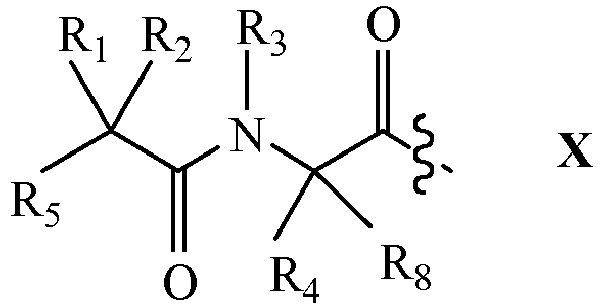
- R1, R2, R4 and R8 are independently selected from the group consisting of H, C1-C18 alkyl, C2-C18 alkenyl, (C1-C18 alkyl)OH, (C1-C18 alkyl)SH, (C2-C3 alkyl)SCH3, (C1-C4 alkyl)CONH2, (C1-C4 alkyl)COOH, (C1-C4 alkyl)NH2, (C1-C4 alkyl)NHC(NH2 +)NH2, (C0-C4 alkyl)(C3-C6 cycloalkyl), (C0-C4 alkyl)(C2-C5 heterocyclic), (C0-C4 alkyl)(C6-C10 aryl)R7, (C1-C4 alkyl)(C3-C9 heteroaryl), and C1-C12 alkyl(W)C1-C12 alkyl, wherein W is a heteroatom selected from the group consisting of N, S and O, or R1 and R2 together with the atoms to which they are attached form a C3-C12 cycloalkyl or aryl; or R4 and R8 together with the atoms to which they are attached form a C3-C6 cycloalkyl;
- R3 is selected from the group consisting of C1-C18 alkyl, (C1-C18 alkyl)OH, (C1-C18 alkyl)NH2, (C1-C18 alkyl)SH, (C0-C4 alkyl)(C3-C6)cycloalkyl, (C0-C4 alkyl)(C2-C5 heterocyclic), (C0-C4 alkyl)(C6-C10 aryl)R7, and (C1-C4 alkyl)(C3-C9 heteroaryl) or R4 and R3 together with the atoms to which they are attached form a 4, 5 or 6 member heterocyclic ring;
- R5 is NHR6 or OH;
- R6 is H, C1-C8 alkyl or R6 and R2 together with the atoms to which they are attached form a 4, 5 or 6 member heterocyclic ring; and
- R7 is selected from the group consisting of H and OH. In one embodiment when the prodrug element is linked to the N-terminal amine of the insulin analog and R4 and R3 together with the atoms to which they are attached form a 4, 5 or 6 member heterocyclic ring, then at least one of R1 and R2 are other than H. In one embodiment an amino acid side chain of the dipeptide element is acylated with an acyl group of sufficient size to bind serum albumin. The acyl group can be linear or branched, and in one embodiment is a C16 to C30 fatty acid. For example, the acyl group can be any of a C16 fatty acid, C18 fatty acid, C20 fatty acid, C22 fatty acid, C24 fatty acid, C26 fatty acid, C28 fatty acid, or a C30 fatty acid. In some embodiments, the acyl group is a C16 to C20 fatty acid, e.g., a C18 fatty acid or a C20 fatty acid.
- In one embodiment the prodrug element of Formula X is provided wherein R1 is selected from the group consisting of H and C1-C8 alkyl; and
- R2, R5 and R4 are independently selected from the group consisting of H, C1-C8 alkyl, C2-C8 alkenyl, (C1-C4 alkyl)OH, (C1-C4 alkyl)SH, (C2-C3 alkyl)SCH3, (C1-C4 alkyl)CONH2, (C1-C4 alkyl)COOH, (C1-C4 alkyl)NH2, (C1-C4 alkyl)NHC(NH2 +) NH2, (C0-C4 alkyl)(C3-C6 cycloalkyl), (C0-C4 alkyl)(C6-C10 aryl)R7, and CH2(C5-C9 heteroaryl), or R1 and R2 together with the atoms to which they are attached form a C3-C8 cycloalkyl ring;
- R3 is selected from the group consisting of C1-C8 alkyl, (C1-C4 alkyl)OH, (C1-C4 alkyl)SH, (C1-C4 alkyl)NH2, (C3-C6)cycloalkyl or R4 and R3 together with the atoms to which they are attached form a 5 or 6 member heterocyclic ring;
- R5 is NHR6 or OH;
- R6 is H, or R6 and R2 together with the atoms to which they are attached form a 5 or 6 member heterocyclic ring; and
- R7 is selected from the group consisting of H and OH and R8 is H. In one embodiment R3 is C1-C8 alkyl and R4 is selected from the group consisting of H, C1-C6 alkyl, CH2OH, (C0-C4 alkyl)(C6-C10 aryl)R7, and CH2(C5-C9 heteroaryl) or R4 and R3 together with the atoms to which they are attached form a 5 or 6 member heterocyclic ring. In a further embodiment R5 is NHR6 and R8 is H.
- In accordance with one embodiment the dipeptide element comprises a compound having the general structure of Formula X:
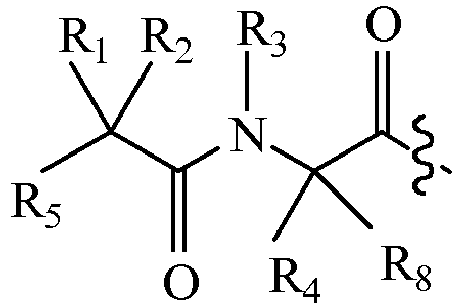
- R1, R2, R4 and R8 are independently selected from the group consisting of H, C1-C18 alkyl, C2-C18 alkenyl, (C1-C18 alkyl)OH, (C1-C18 alkyl)SH, (C2-C3 alkyl)SCH3, (C1-C4 alkyl)CONH2, (C1-C4 alkyl)COOH, (C1-C4 alkyl)NH2, (C1-C4 alkyl)NHC(NH2 +)NH2, (C0-C4 alkyl)(C3-C6 cycloalkyl), (C0-C4 alkyl)(C2-C5 heterocyclic), (C0-C4 alkyl)(C6-C10 aryl)R7, (C1-C4 alkyl)(C3-C9 heteroaryl), and C1-C12 alkyl(W1)C1-C12 alkyl, wherein W1 is a heteroatom selected from the group consisting of N, S and O, or R1 and R2 together with the atoms to which they are attached form a C3-C12 cycloalkyl; or R4 and R8 together with the atoms to which they are attached form a C3-C6 cycloalkyl;
- R3 is selected from the group consisting of C1-C18 alkyl, (C1-C18 alkyl)OH, (C1-C18 alkyl)NH2, (C1-C18 alkyl)SH, (C0-C4 alkyl)(C3-C6)cycloalkyl, (C0-C4 alkyl)(C2-C5 heterocyclic), (C0-C4 alkyl)(C6-C10 aryl)R7, and (C1-C4 alkyl)(C3-C9 heteroaryl) or R4 and R3 together with the atoms to which they are attached form a 4, 5 or 6 member heterocyclic ring;
- R5 is NHR6 or OH;
- R6 is H, C1-C8 alkyl or R6 and R1 together with the atoms to which they are attached form a 4, 5 or 6 member heterocyclic ring; and
- R7 is selected from the group consisting of H, OH, C1-C18 alkyl, C2-C18 alkenyl, (C0-C4 alkyl)CONH2, (C0-C4 alkyl)COOH, (C0-C4 alkyl)NH2, (C0-C4 alkyl)OH, and halo.
- In another embodiment the dipeptide prodrug element comprises the general structure:

- R1 and R8 are independently H or C1-C8 alkyl;
- R2 and R4 are independently selected from the group consisting of H, C1-C8 alkyl, C2-C8 alkenyl, (C1-C4 alkyl)OH, (C1-C4 alkyl)SH, (C2-C3 alkyl)SCH3, (C1-C4 alkyl)CONH2, (C1-C4 alkyl)COOH, (C1-C4 alkyl)NH2, (C1-C4 alkyl)NHC(NH2 +) NH2, (C0-C4 alkyl)(C3-C6 cycloalkyl), (C0-C4 alkyl)(C2-C5 heterocyclic), (C0-C4 alkyl)(C6-C10 aryl)R7, and CH2(C3-C9 heteroaryl), or R1 and R2 together with the atoms to which they are attached form a C3-C12 cycloalkyl;
- R3 is selected from the group consisting of C1-C8 alkyl, (C1-C4 alkyl)OH, (C1-C4 alkyl)NH2, (C1-C4 alkyl)SH, (C3-C6)cycloalkyl or R4 and R3 together with the atoms to which they are attached form a 5 or 6 member heterocyclic ring;
- R5 is NHR6 or OH;
- R6 is H, C1-C8 alkyl, or R6 and R2 together with the atoms to which they are attached form a 5 or 6 member heterocyclic ring; and
- R7 is selected from the group consisting of H, OH, C1-C18 alkyl, C2-C18 alkenyl, (C0-C4 alkyl)CONH2, (C0-C4 alkyl)COOH, (C0-C4 alkyl)NH2, (C0-C4 alkyl)OH and halo, provided that when R4 and R3 together with the atoms to which they are attached form a 5 or 6 member heterocyclic ring, both R1 and R2 are not H. In one embodiment R7 is H or OH. In one embodiment either the first amino acid and/or the second amino acid of the dipeptide prodrug element is an amino acid in the D stereoisomer configuration.
- In a further embodiment the prodrug element of Formula X is provided wherein
- R1 is selected from the group consisting of H and C1-C8 alkyl; and
- R2 and R4 are independently selected from the group consisting of H, C1-C8 alkyl, C2-C8 alkenyl, (C1-C4 alkyl)OH, (C1-C4 alkyl)SH, (C2-C3 alkyl)SCH3, (C1-C4 alkyl)CONH2, (C1-C4 alkyl)COOH, (C1-C4 alkyl)NH2, (C1-C4 alkyl)NHC(NH2 +) NH2, (C0-C4 alkyl)(C3-C6 cycloalkyl), (C0-C4 alkyl)(C6-C10 aryl)R7, and CH2(C5-C9 heteroaryl), or R1 and R2 together with the atoms to which they are attached form a C3-C8 cycloalkyl ring;
- R3 is selected from the group consisting of C1-C8 alkyl, (C1-C4 alkyl)OH, (C1-C4 alkyl)SH, (C1-C4 alkyl)NH2, (C3-C6)cycloalkyl or R4 and R3 together with the atoms to which they are attached form a 5 or 6 member heterocyclic ring;
- R5 is NHR6 or OH;
- R6 is H, or R6 and R2 together with the atoms to which they are attached form a 5 or 6 member heterocyclic ring;
- R7 is selected from the group consisting of hydrogen, C1-C18 alkyl, C2-C18 alkenyl, (C0-C4 alkyl)CONH2, (C0-C4 alkyl)COOH, (C0-C4 alkyl)NH2, (C0-C4 alkyl)OH and halo, and R8 is H, provided that when the dipeptide element is linked to an N terminal amine and R4 and R3 together with the atoms to which they are attached form a 5 or 6 member heterocyclic ring, both R1 and R2 are not H. In one embodiment either the first amino acid and/or the second amino acid of the dipeptide prodrug element is an amino acid in the D stereoisomer configuration.
- In other embodiments the dipeptide prodrug element has the structure of Formula X, wherein
R1 and R8 are independently H or C1-C8 alkyl;
R2 and R4 are independently selected from the group consisting of H, C1-C8 alkyl, C2-C8 alkenyl, (C1-C4 alkyl)OH, (C1-C4 alkyl)SH, (C2-C3 alkyl)SCH3, (C1-C4 alkyl)CONH2, (C1-C4 alkyl)COOH, (C1-C4 alkyl)NH2, (C1-C4 alkyl)NHC(NH2 +) NH2, (C0-C4 alkyl)(C3-C6 cycloalkyl), (C0-C4 alkyl)(C2-C5 heterocyclic), (C0-C4 alkyl)(C6-C10 aryl)R7, and CH2(C3-C9 heteroaryl), or R1 and R2 together with the atoms to which they are attached form a C3-C12 cycloalkyl;
R3 is C1-C18 alkyl;
R5 is NHR6;
R6 is H or C1-C8 alkyl; and
R7 is selected from the group consisting of hydrogen, C1-C18 alkyl, C2-C18 alkenyl, (C0-C4 alkyl)CONH2, (C0-C4 alkyl)COOH, (C0-C4 alkyl)NH2, (C0-C4 alkyl)OH, and halo.
In a further embodiment the dipeptide prodrug element has the structure of Formula X, wherein
R1 and R2 are independently C1-C18 alkyl or (C0-C4 alkyl)(C6-C10 aryl)R7; or R1 and R2 are linked through -(CH2)p, wherein p is 2-9;
R3 is C1-C18 alkyl;
R4 and R8 are each hydrogen;
R5 is NH2; and
R7 is selected from the group consisting of hydrogen, C1-C18 alkyl, C2-C18 alkenyl, (C0-C4 alkyl)CONH2, (C0-C4 alkyl)COOH, (C0-C4 alkyl)NH2, (C0-C4 alkyl)OH, and halo. - In a further embodiment the dipeptide prodrug element has the structure of Formula X, wherein
R1 and R2 are independently selected from the group consisting of hydrogen, C1-C18 alkyl, (C1-C18 alkyl)OH, (C1-C4 alkyl)NH2, and (C0-C4 alkyl)(C6-C10 aryl)R7, or R1 and R2 are linked through (CH2)p, wherein p is 2-9;
R3 is C1-C18 alkyl or R3 and R4 together with the atoms to which they are attached form a 4-12 heterocyclic ring;
R4 and R8 are independently selected from the group consisting of hydrogen, C1-C8 alkyl and (C0-C4 alkyl)(C6-C10 aryl)R7;
R5 is NH2; and
R7 is selected from the group consisting of H, C1-C18 alkyl, C2-C18 alkenyl, (C0-C4 alkyl)CONH2, (C0-C4 alkyl)COOH, (C0-C4 alkyl)NH2, (C0-C4 alkyl)OH, and halo, with the proviso that both R1 and R2 are not hydrogen and provided that at least one of R4 or R8 is hydrogen. - In another embodiment the dipeptide prodrug element has the structure of Formula X, wherein
R1 and R2 are independently selected from the group consisting of hydrogen, C1-C8 alkyl and (C1-C4 alkyl)NH2, or R1 and R2 are linked through (CH2)p, wherein p is 2-9;
R3 is C1-C8 alkyl or R3 and R4 together with the atoms to which they are attached form a 4-6 heterocyclic ring;
R4 is selected from the group consisting of hydrogen and C1-C8 alkyl;
R8 is hydrogen; and
R5 is NH2, with the proviso that both R1 and R2 are not hydrogen. - In a further embodiment the dipeptide prodrug element has the structure of Formula X, wherein
R1 and R2 are independently selected from the group consisting of hydrogen, C1-C8 alkyl and (C1-C4 alkyl)NH2;
R3 is C1-C6 alkyl;
R4 and R8 are each hydrogen; and
R5 is NH2, with the proviso that both R1 and R2 are not hydrogen. - In another embodiment the dipeptide prodrug element has the structure of Formula X, wherein
R1 and R2 are independently selected from the group consisting of hydrogen and C1-C8 alkyl, (C1-C4 alkyl)NH2, or R1 and R2 are linked through (CH2)p, wherein p is 2-9;
R3 is C1-C8 alkyl;
R4 is (C0-C4 alkyl)(C6-C10 aryl)R7;
R5 is NH2;
R7 is selected from the group consisting of hydrogen, C1-C8 alkyl and (C0-C4 alkyl)OH; and
R8 is hydrogen, with the proviso that both R1 and R2 are not hydrogen. - In another embodiment the dipeptide prodrug element has the structure of Formula X, wherein
R1 is selected from the group consisting of hydrogen, C1-C8 alkyl and (C0-C4 alkyl)(C6-C10 aryl)R7;
R2 is hydrogen;
R3 is C1-C18 alkyl;
R4 and R8 are each hydrogen;
R5 is NHR6 or OH;
R6 is H, C1-C8 alkyl, or R6 and R1 together with the atoms to which they are attached form a 4, 5 or 6 member heterocyclic ring; and
R7 is selected from the group consisting of hydrogen, C1-C18 alkyl, C2-C18 alkenyl, (C0-C4 alkyl)CONH2, (C0-C4 alkyl)COOH, (C0-C4 alkyl)NH2, (C0-C4 alkyl)OH, and halo, with the proviso that, if R1 is alkyl or (C0-C4 alkyl)(C6-C10 aryl)R7, then R1 and R6 together with the atoms to which they are attached form a 4-11 heterocyclic ring. - In one embodiment a single chain insulin analog is provided comprising an A chain and a B chain wherein the carboxy terminus of the B chain is linked to the amino terminus of said A chain via a linking moiety comprising a CTP peptide. In one embodiment a single chain insulin analog is provided that comprises the structure: IB-LM-IA, wherein IB comprises the sequence R22-X25LCGX29X30LVX33X34LYLVCGX41X42GFX45 (SEQ ID NO: 17), LM is a linking moiety comprising a peptide of SEQ ID NO: 66 or a contiguous 29 amino acid sequence having at least 58% of the amino acids being serine or proline, wherein the linking moiety covalently links IB to IA, and IA comprises the sequence GIVX4X5CCX8X9X10CX12LX14X15LX17X18X19CX21-R13 (SEQ ID NO: 18), wherein the amino acid at the designation X45 is phenylalanine or tyrosine that is directly bound to the linking moiety, LM. In one embodiment a single chain insulin analog is provided that comprises the structure: IB-LM-IA, wherein IB comprises the sequence J-R23-R22-X25LCGX29X30LVX33X34LX36LVCGX41X42GFX45 (SEQ ID NO: 16) or a sequence that differs from SEQ ID NO: 16 by 1 to 3 amino acid modifications selected from
positions positions
J is H or a dipeptide element comprising the general structure of U-B, wherein U is an amino acid or a hydroxyl acid and B is an N-alkylated amino acid linked through an amide bond;
X4 is glutamic acid or aspartic acid;
X5 is glutamine or glutamic acid
X8 is histidine, threonine or phenylalanine;
X9 is serine, arginine, ornithine, lysine or alanine;
X10 is isoleucine or serine;
X12 is serine or aspartic acid
X14 is tyrosine, arginine, ornithine, lysine or alanine;
X15 is glutamine, glutamic acid, arginine, alanine, ornithine, lysine or leucine;
X17 is glutamic acid or glutamine;
X18 is methionine, asparagine, glutamine, aspartic acid, glutamic acid or threonine;
X19 is an amino acid of the general structure: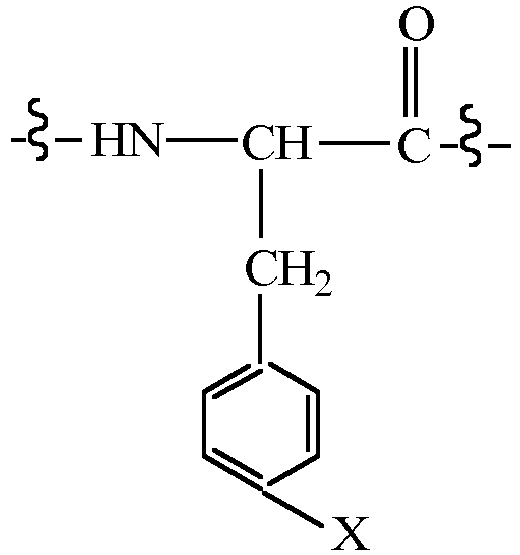
X21 is selected from the group consisting of alanine, glycine, serine, valine, threonine, isoleucine, leucine, glutamine, glutamic acid, asparagine, aspartic acid, histidine, tryptophan, tyrosine, and methionine;
X25 is histidine or threonine;
X29 is selected from the group consisting of alanine, glycine and serine;
X30 is selected from the group consisting of histidine, aspartic acid, glutamic acid, homocysteic acid and cysteic acid;
X33 is selected from the group consisting of aspartic acid, glutamine and glutamic acid;
X34 is selected from the group consisting of alanine and threonine;
X36 is an amino acid of the general structure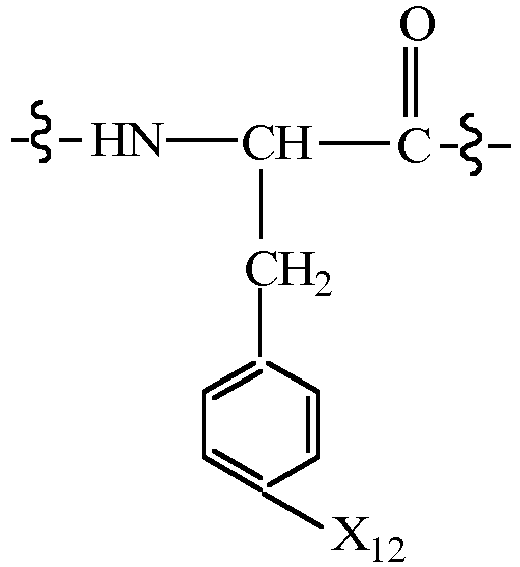
X41 is selected from the group consisting of glutamic acid, aspartic acid or asparagine;
X42 is selected from the group consisting of alanine, ornithine, lysine and arginine;
X45 is an amino acid of the general structure
R22 is selected from the group consisting of AYRPSE (SEQ ID NO: 11), FVNQ (SEQ ID NO: 10), PGPE (SEQ ID NO: 9), a tripeptide glycine-proline-glutamic acid, a tripeptide valine-asparagine-glutamine, a dipeptide proline-glutamic acid, a dipeptide asparagine-glutamine, glutamine, glutamic acid and an N-terminal amine;
R23 is a bond or an amino sequence comprising 1 to 6 charged amino acids; and
R13 is COOH or CONH2. In one embodiment, only one of J, R10, R11 and R12 is U-B. In one embodiment X12 is OH and X13 is H or OH and J and/or X is U-B. In one embodiment X12 is OH and X13 is OH, R23 is a bond, J is H and X is U-B. In a further embodiment X8, X25 and X30 are each histidine. In one embodiment the linking moiety comprises the sequence SSSSRAPPPSLPSPSRLPGPSDTPILPQK (SEQ ID NO: 79) or SSSSKAPPPSLPSPSRLPGPSDTPILPQR (SEQ ID NO: 64). In another embodiment the single chain insulin analog peptide comprises an A chain peptide sequence of SEQ ID NO: 15 and a B chain peptide sequence of SEQ ID NO: 16. In one embodiment R23 is a bond or comprises an amino sequence X60X61X62X63X64X65K (SEQ ID NO: 19), wherein X60 is selected from the group consisting of glycine, glutamic acid and aspartic acid, and X61, X62, X63 X64 and X65 are independently glutamic acid or aspartic acid. In one embodiment U is a C-akylated amino acid or C-alkylated hydroxyl acid and B is an N-alkylated amino acid. - In one embodiment a single chain insulin analog is provided that comprises the structure: IB-LM-IA, wherein IB comprises the sequence J-R23R22-X25LCGX29X30LVEALYLVCG ERGFF (SEQ ID NO: 24), LM is a linking moiety comprising a CTP peptide as disclosed herein and IA comprises the sequence GIVEQCCX8SICSLYQLX17NX19CX23 (SEQ ID NO: 23) wherein
X8 is selected from the group consisting of threonine and histidine;
X17 is glutamic acid or glutamine;
X19 is an amino acid of the general structure:
X23 is asparagine or glycine;
X25 is selected from the group consisting of histidine and threonine;
X29 is selected from the group consisting of alanine, glycine and serine;
X30 is selected from the group consisting of histidine, aspartic acid, glutamic acid, homocysteic acid and cysteic acid;
R22 is selected from the group consisting of FVNQ (SEQ ID NO: 10), a tripeptide valine-asparagine-glutamine, a dipeptide asparagine-glutamine, glutamine, glutamic acid and an N-terminal amine; and
R23 is a bond or an amino sequence comprising 1 to 6 charged amino acids. . In a further embodiment the B chain comprises the sequence X22VNQX25LCGX29X30LVEALYLVCGERGFFYT-Z1-B1 (SEQ ID NO: 25) wherein
X22 is selected from the group consisting of phenylalanine and desaminophenylalanine;
X25 is selected from the group consisting of histidine and threonine;
X29 is selected from the group consisting of alanine, glycine and serine;
X30 is selected from the group consisting of histidine, aspartic acid, glutamic acid, homocysteic acid and cysteic acid;
Z1 is a dipeptide selected from the group consisting of aspartate-lysine, lysine-proline, and proline-lysine; and
B1 is selected from the group consisting of threonine, alanine or a threonine-arginine-arginine tripeptide. - In accordance with one embodiment a single chain insulin analog is provided that comprises the structure: IB-LM-IA, wherein IB comprises the sequence X25LCGX29X30LVEALYLVCG ERGFF (SEQ ID NO: 24), LM is a linking moiety as disclosed herein that covalently links IB to IA, and IA comprises the sequence GIVEQCCX8SICSLYQLENX19CX21 (SEQ ID NO: 26), wherein the C-terminal phenylalanine residue of SEQ ID NO: 24 is directly covalently bound to the linking moiety, LM, in the absence of any intervening amino acids.
- In one embodiment a single chain insulin analog is provided that comprises the structure: IB-LM-IA, wherein IB comprises the sequence J-R23-R22-X25LCGX29X30LVX33X34LYLVCGDX42GFX45 (SEQ ID NO: 28), LM is a linking moiety as disclosed herein and IA comprises the sequence GIVX4ECCX8X9SCDLX14X15LX17X18X19CX21-R13 (SEQ ID NO: 15) wherein
J is H or a dipeptide element comprising the general structure of U-B, wherein U is an amino acid or a hydroxyl acid and B is an N-alkylated amino acid linked through an amide bond;
X4 is aspartic acid or glutamic acid;
X8 is histidine or phenylalanine;
X9 and X14 are independently selected from arginine, ornithine, lysine or alanine;
X15 is arginine, lysine, ornithine or leucine;
X17 is glutamic acid or glutamine;
X18 is methionine, asparagine or threonine;
X19 is an amino acid of the general structure: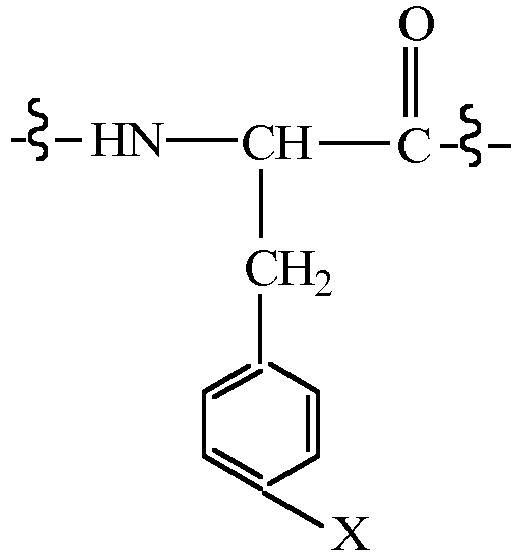
X21 is alanine, glycine or asparagine;
R22 is selected from the group consisting of a covalent bond, AYRPSE (SEQ ID NO: 11), a glycine-proline-glutamic acid tripeptide, a proline-glutamic acid dipeptide and glutamic acid;
R23 is a bond or an amino sequence comprising 1 to 6 charged amino acids;
X25 is selected from the group consisting of histidine and threonine;
X29 is selected from the group consisting of alanine, glycine and serine;
X30 is selected from the group consisting of histidine, aspartic acid, glutamic acid, homocysteic acid and cysteic acid;
X33 is selected from the group consisting of aspartic acid and glutamic acid;
X34 is selected from the group consisting of alanine and threonine;
X42 is selected from the group consisting of alanine, lysine ornithine and arginine;
X45 is an amino acid of the general structure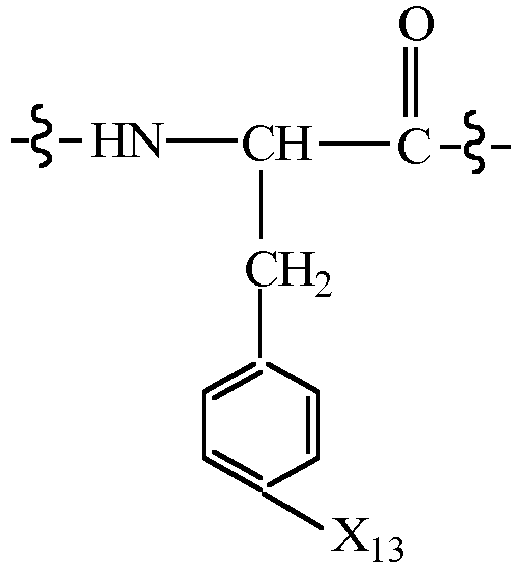
and
R13 is COOH or CONH2, with the proviso that one and only one of J, X, and X13, comprises U-B. In one embodiment J is H, and X13 is OH, and X is NH-U-B. - In one embodiment U and B of the dipeptide prodrug element U-B are selected to inhibit enzymatic cleavage of the U-B dipeptide from an insulin peptide by enzymes found in mammalian serum. In one embodiment U and/or B are selected such that the cleavage half-life of U-B from the insulin peptide, in PBS under physiological conditions, is not more than two fold the cleavage half-life of U-B from the insulin peptide in a solution comprising an insulin degrading protease (i.e., cleavage of U-B from the insulin prodrug does not occur at a rate more than 2x faster in the presence of the protease and physiological conditions relative to identical conditions in the absence of the enzyme). In one embodiment U, B, or the amino acid of the insulin peptide to which U-B is linked is a non-coded amino acid. In one embodiment U and/or B is an amino acid in the D stereoisomer configuration. In some exemplary embodiments, U is an amino acid in the D stereoisomer configuration and B is an amino acid in the L stereoisomer configuration. In some exemplary embodiments, U is an amino acid in the L stereoisomer configuration and B is an amino acid in the D stereoisomer configuration. In some exemplary embodiments, U is an amino acid in the D stereoisomer configuration and B is an amino acid in the D stereoisomer configuration. In one embodiment U-B is a dipeptide comprising the structure of Formula X as defined herein. In one embodiment B is an N-alkylated amino acid but is not proline.
- In accordance with one embodiment a single chain insulin agonist polypeptide comprising a B chain and A chain of human insulin, or analogs or derivative thereof is provided, wherein the carboxy terminus of the B chain is linked to the amino terminus of the A chain via a linking moiety. In one embodiment the linking moiety comprises a polyethylene glycol of 6-16 monomer units, and a CTP peptide.
- In one embodiment the single chain insulin analog comprises the structure IB-LM-IA, wherein IB comprises the sequence
J-R23R22-X25LCGX29X30LVX33X34LX36LVCGX41X42GFX45 SEQ ID NO: 16);
LM is a linking moiety comprising a CTP peptide as disclosed herein, and
IA comprises the sequence GIVX4X5CCX8X9X10CX12LX14X15LX17X18X19CX21-R13 (SEQ ID NO: 18) wherein
J is H or a dipeptide comprising the general structure of U-B, wherein U is an amino acid or a hydroxyl acid and B is an N-alkylated amino acid linked through an amide bond;
X4 is glutamic acid or aspartic acid;
X5 is glutamine or glutamic acid
X8 is histidine, threonine or phenylalanine;
X9 is serine, arginine, lysine, ornithine or alanine;
X10 is isoleucine or serine;
X12 is serine or aspartic acid
X14 is tyrosine, arginine, lysine, ornithine or alanine;
X15 is glutamine, glutamic acid, arginine, alanine, lysine, ornithine or leucine;
X17 is glutamic acid or glutamine;
X18 is methionine, asparagine, glutamine, aspartic acid, glutamic acid or threonine;
X19 is an amino acid of the general structure:
X21 is selected from the group consisting of alanine, glycine, serine, valine, threonine, isoleucine, leucine, glutamine, glutamic acid, asparagine, aspartic acid, histidine, tryptophan, tyrosine, and methionine;
X25 is histidine or threonine;
X29 is selected from the group consisting of alanine, glycine and serine;
X30 is selected from the group consisting of histidine, aspartic acid, glutamic acid, homocysteic acid and cysteic acid;
X33 is selected from the group consisting of aspartic acid, glutamine and glutamic acid;
X34 is selected from the group consisting of alanine and threonine;
X36 is an amino acid of the general structure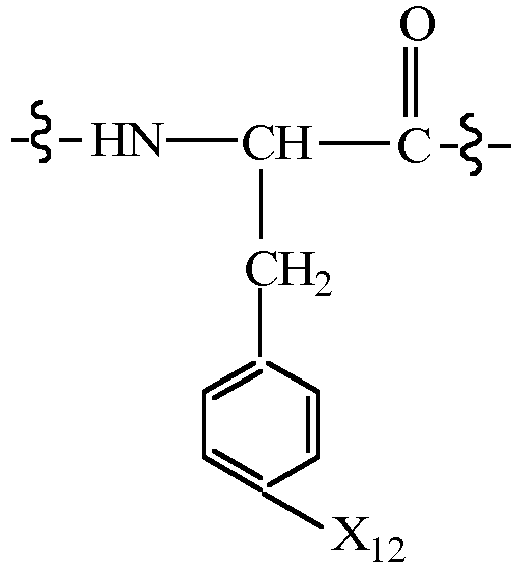
X41 is selected from the group consisting of glutamic acid, aspartic acid or asparagine;
X42 is selected from the group consisting of alanine, lysine, ornithine and arginine;
X45 is an amino acid of the general structure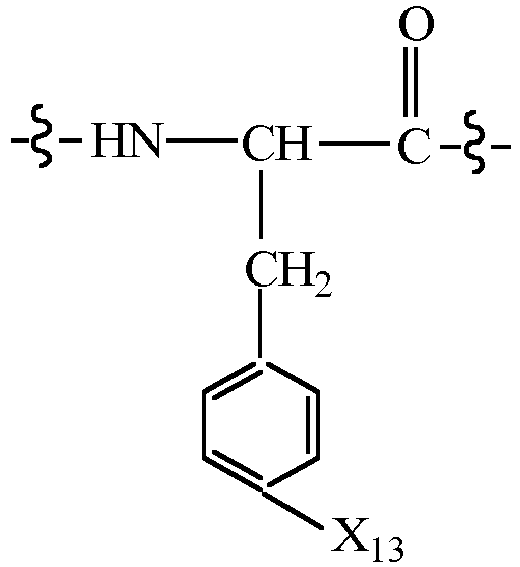
R22 is selected from the group consisting of AYRPSE (SEQ ID NO: 11), FVNQ (SEQ ID NO: 10), PGPE (SEQ ID NO: 9), a tripeptide glycine-proline-glutamic acid, a tripeptide valine-asparagine-glutamine, a dipeptide proline-glutamic acid, a dipeptide asparagine-glutamine, glutamine, glutamic acid and a bond;
R23 is a bond or an amino sequence comprising 1 to 6 charged amino acids; and
R13 is COOH or CONH2., with the proviso that U, B, or the amino acid of the single chain insulin agonist to which U-B is linked is a non-coded amino acid. - In one embodiment a single chain insulin analog is provided comprising the structure IB-LM-IA, wherein IB comprises the sequence
R23R22-X25LCGX29X30LVX33X34LYLVCGX41X42GFX45 (SEQ ID NO: 17);
LM is a linking moiety comprising a CTP peptide as disclosed herein; and
IA comprises the sequence GIVX4X5CCX8X9X10CX12LX14X15LX17X18X19CX21-R13 (SEQ ID NO: 18) wherein
X4 is glutamic acid or aspartic acid;
X5 is glutamine or glutamic acid
X8 is histidine, threonine or phenylalanine;
X9 is serine, arginine, lysine, ornithine or alanine;
X10 is isoleucine or serine;
X12 is serine or aspartic acid
X14 is tyrosine, arginine, lysine, ornithine or alanine;
X15 is glutamine, glutamic acid, arginine, alanine, lysine, ornithine or leucine;
X17 is glutamic acid or glutamine;
X18 is methionine, asparagine, glutamine, aspartic acid, glutamic acid or threonine;
X19 is an amino acid of the general structure: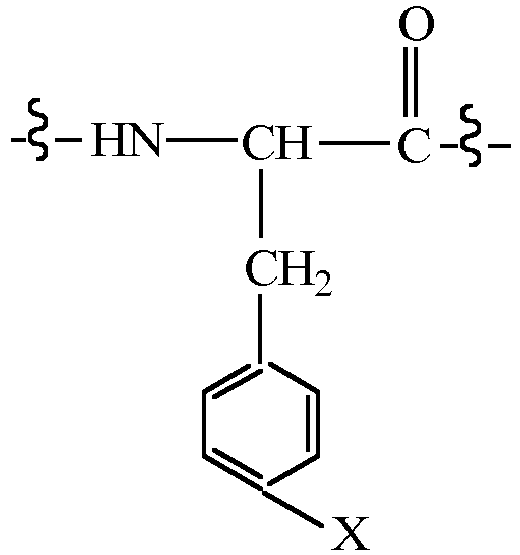
X21 is selected from the group consisting of alanine, glycine, serine, valine, threonine, isoleucine, leucine, glutamine, glutamic acid, asparagine, aspartic acid, histidine, tryptophan, tyrosine, and methionine;
X25 is histidine or threonine;
X29 is selected from the group consisting of alanine, glycine and serine;
X30 is selected from the group consisting of histidine, aspartic acid, glutamic acid, homocysteic acid and cysteic acid;
X33 is selected from the group consisting of aspartic acid, glutamine and glutamic acid;
X34 is selected from the group consisting of alanine and threonine;
X45 is tyrosine or phenylalanine;
R22 is selected from the group consisting of AYRPSE (SEQ ID NO: 11), FVNQ (SEQ ID NO: 10), PGPE (SEQ ID NO: 9), a tripeptide glycine-proline-glutamic acid, a tripeptide valine-asparagine-glutamine, a dipeptide proline-glutamic acid, a dipeptide asparagine-glutamine, glutamine, glutamic acid and a bond;
R23 is a H or an amino sequence comprising 1 to 6 charged amino acids; and
R13 is COOH or CONH2. In one embodiment at least one of n or k is 1. In one embodiment both n and k are 1. In a further embodiment the carboxy terminus of the B chain comprises an additional amino acid extension selected from the group consisting of F, Y, FN, YT, FNK, YTP, FNPK (SEQ ID NO: 47), FNKP (SEQ ID NO: 45), YTPK (SEQ ID NO: 46), YTPKT (SEQ ID NO: 12), YTKPT (SEQ ID NO: 48), FNKPT (SEQ ID NO: 44) and FNPKT (SEQ ID NO: 49). In one embodiment R23 is a bond and R22 is selected from the group consisting of AYRPSE (SEQ ID NO: 11), PGPE (SEQ ID NO: 9), a tripeptide glycine-proline-glutamic acid, a dipeptide proline-glutamic acid, glutamine, glutamic acid and H. - In one embodiment R23 is H or an amino sequence of 4 to 7 amino acids wherein the N-terminal amino acid is selected from the group consisting of glycine, glutamic acid and aspartic acid, the C-terminal amino acid is a lysine and the other amino acids of the sequence are independently selected from the group consisting of glutamic acid and aspartic acid and R22 is selected from the group consisting of AYRPSE (SEQ ID NO: 11), PGPE (SEQ ID NO: 9), a tripeptide glycine-proline-glutamic acid, a dipeptide proline-glutamic acid, glutamine, glutamic acid and H.
- In one embodiment U-B comprises the structure of Formula X:
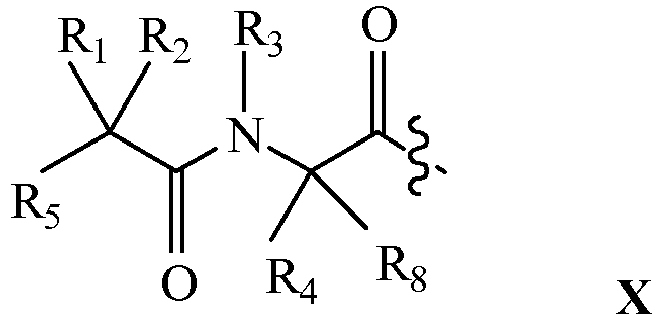
- R1, R2, R4 and R8 are independently selected from the group consisting of H, C1-C18 alkyl, C2-C18 alkenyl, (C1-C18 alkyl)OH, (C1-C18 alkyl)SH, (C2-C3 alkyl)SCH3, (C1-C4 alkyl)CONH2, (C1-C4 alkyl)COOH, (C1-C4 alkyl)NH2, (C1-C4 alkyl)NHC(NH2 +)NH2, (C0-C4 alkyl)(C3-C6 cycloalkyl), (C0-C4 alkyl)(C2-C5 heterocyclic), (C0-C4 alkyl)(C6-C10 aryl)R7, (C1-C4 alkyl)(C3-C9 heteroaryl), and C1-C12 alkyl(W1)C1-C12 alkyl, wherein W1 is a heteroatom selected from the group consisting of N, S and O, or
- R1 and R2 together with the atoms to which they are attached form a C3-C12 cycloalkyl or aryl; or
- R4 and R8 together with the atoms to which they are attached form a C3-C6 cycloalkyl;
- R3 is selected from the group consisting of C1-C18 alkyl, (C1-C18 alkyl)OH, (C1-C18 alkyl)NH2, (C1-C18 alkyl)SH, (C0-C4 alkyl)(C3-C6)cycloalkyl, (C0-C4 alkyl)(C2-C5 heterocyclic), (C0-C4 alkyl)(C6-C10 aryl)R7, and (C1-C4 alkyl)(C3-C9 heteroaryl) or R4 and R3 together with the atoms to which they are attached form a 4, 5 or 6 member heterocyclic ring;
- R5 is NHR6 or OH;
- R6 is H, C1-C8 alkyl or R6 and R1 together with the atoms to which they are attached form a 4, 5 or 6 member heterocyclic ring; and
- R7 is selected from the group consisting of H, OH, C1-C18 alkyl, C2-C18 alkenyl, (C0-C4 alkyl)CONH2, (C0-C4 alkyl)COOH, (C0-C4 alkyl)NH2, (C0-C4 alkyl)OH, and halo. In one embodiment either R1 or R2 is other than H.
- In another embodiment a single chain insulin analog is provided comprising the structure IB-LM-IA, wherein IB comprises the sequence
J-R23-R22-X25LCGX29X30LVX33X34LYLVCGX41X42GFX45 (SEQ ID NO: 17);
LM comprises a linking moiety comprising a CTP peptide as disclosed herein; and
IA comprises the sequence GIVX4X5CCX8X9X10CX12LX14X15LX17X18X19CX21-R13 (SEQ ID NO: 18) wherein
J is H or a dipeptide comprising the general structure of U-B, wherein U is an amino acid or a hydroxyl acid and B is an N-alkylated amino acid linked through an amide bond;
X4 is glutamic acid or aspartic acid;
X5 is glutamine or glutamic acid
X8 is histidine, threonine or phenylalanine;
X9 is serine, arginine, lysine, ornithine or alanine;
X10 is isoleucine or serine;
X12 is serine or aspartic acid
X14 is tyrosine, arginine, lysine, ornithine or alanine;
X15 is glutamine, glutamic acid, arginine, alanine, lysine, ornithine or leucine;
X17 is glutamic acid or glutamine;
X18 is methionine, asparagine, glutamine, aspartic acid, glutamic acid or threonine;
X19 is an amino acid of the general structure: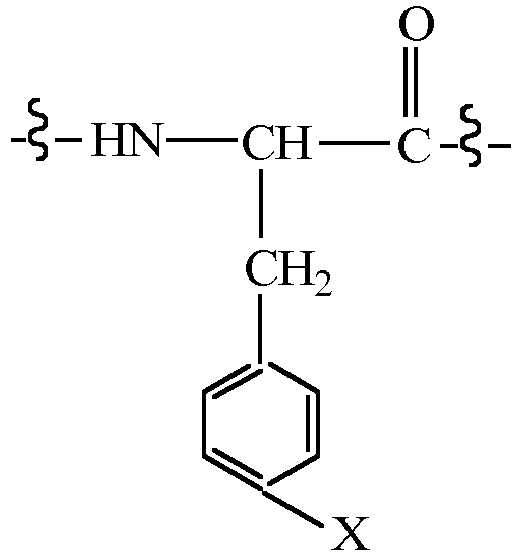
X21 is selected from the group consisting of alanine, glycine, serine, valine, threonine, isoleucine, leucine, glutamine, glutamic acid, asparagine, aspartic acid, histidine, tryptophan, tyrosine, and methionine;
X25 is histidine or threonine;
X29 is selected from the group consisting of alanine, glycine and serine;
X30 is selected from the group consisting of histidine, aspartic acid, glutamic acid, homocysteic acid and cysteic acid;
X33 is selected from the group consisting of aspartic acid, glutamine and glutamic acid;
X34 is selected from the group consisting of alanine and threonine;
X41 is selected from the group consisting of glutamic acid, aspartic acid or asparagine;
X42 is selected from the group consisting of alanine, lysine, ornithine and arginine;
X45 is an amino acid of the general structure
R22 is selected from the group consisting of AYRPSE (SEQ ID NO: 11), FVNQ (SEQ ID NO: 10), PGPE (SEQ ID NO: 9), a tripeptide glycine-proline-glutamic acid, a tripeptide valine-asparagine-glutamine, a dipeptide proline-glutamic acid, a dipeptide asparagine-glutamine, glutamine, glutamic acid and a bond;
R23 is a bond or an amino sequence comprising 1 to 6 charged amino acids; and
R13 is COOH or CONH2. In a further embodiment the carboxy terminus of the B chain comprises an additional amino acid extension selected from the group consisting of F, Y, FN, YT, FNK, YTP, FNPK (SEQ ID NO: 47), FNKP (SEQ ID NO: 45), YTPK (SEQ ID NO: 46), YTPKT (SEQ ID NO: 12), YTKPT (SEQ ID NO: 48), FNKPT (SEQ ID NO: 44) and FNPKT (SEQ ID NO: 49). - In one embodiment R23 is a bond or X60X61X62X63X64X65K (SEQ ID NO: 19),
wherein X60 is selected from the group consisting of glycine, glutamic acid and aspartic acid, and X61, X62, X63 X64 and X65 are independently glutamic acid or aspartic acid; and
R13 is COOH or CONH2. - In one embodiment the single chain insulin analog comprises the structure IB-LM-IA, wherein IB comprises sequence
J-R23-R22-X25LCGX29X30LVX33X34LX36LVCGX41X42GFX45 SEQ ID NO: 16);
LM is a linking moiety comprising a CTP peptide as disclosed herein; and
IA comprises the sequence GIVX4X5CCX8X9X10CX12LX14X15LX17X18X19CX21-R13 (SEQ ID NO: 18). In one embodiment the carboxy terminus of the B chain has an amino acid terminal extension consisting of F, Y, FN, YT, FNK, YTP, FNPK (SEQ ID NO: 47), FNKP (SEQ ID NO: 45), YTPK (SEQ ID NO: 46), YTPKT (SEQ ID NO: 12), YTKPT (SEQ ID NO: 48), FNKPT (SEQ ID NO: 44) and FNPKT (SEQ ID NO: 49). - In one embodiment R23 is an N-terminal amine or X60X61X62X63X64X65K (SEQ ID NO: 19), wherein X60 is selected from the group consisting of glycine, glutamic acid and aspartic acid, and X61, X62, X63 X64 and X65 are independently glutamic acid or aspartic acid.. In accordance with one embodiment the dipeptide element U-B comprises the structure of Formula X:

- (a) R1, R2, R4 and R8 are independently selected from the group consisting of H, C1-C18 alkyl, C2-C18 alkenyl, (C1-C18 alkyl)OH, (C1-C18 alkyl)SH, (C2-C3 alkyl)SCH3, (C1-C4 alkyl)CONH2, (C1-C4 alkyl)COOH, (C1-C4 alkyl)NH2, (C1-C4 alkyl)NHC(NH2 +)NH2, (C0-C4 alkyl)(C3-C6 cycloalkyl), (C0-C4 alkyl)(C2-C5 heterocyclic), (C0-C4 alkyl)(C6-C10 aryl)R7, (C1-C4 alkyl)(C3-C9 heteroaryl), and C1-C12 alkyl(W1)C1-C12 alkyl, wherein W1 is a heteroatom selected from the group consisting of N, S and O, or
- (ii) R1 and R2 together with the atoms to which they are attached form a C3-C12 cycloalkyl or aryl; or
- (iii) R4 and R8 together with the atoms to which they are attached form a C3-C6 cycloalkyl;
- (b) R3 is selected from the group consisting of C1-C18 alkyl, (C1-C18 alkyl)OH, (C1-C18 alkyl)NH2, (C1-C18 alkyl)SH, (C0-C4 alkyl)(C3-C6)cycloalkyl, (C0-C4 alkyl)(C2-C5 heterocyclic), (C0-C4 alkyl)(C6-C10 aryl)R7, and (C1-C4 alkyl)(C3-C9 heteroaryl) or R4 and R3 together with the atoms to which they are attached form a 4, 5 or 6 member heterocyclic ring;
- (c) R5 is NHR6 or OH;
- (d) R6 is H, C1-C8 alkyl or R6 and R2 together with the atoms to which they are attached form a 4, 5 or 6 member heterocyclic ring; and
- (e) R7 is selected from the group consisting of H and OH. In one embodiment either R1 or R2 is other than H.
- In accordance with one embodiment the dipeptide element U-B comprises the structure:
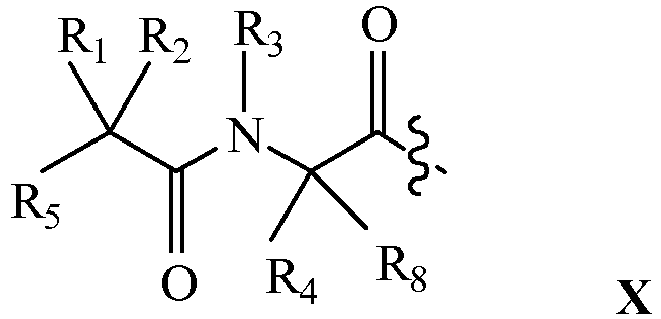
- R1, R2, R4 and R8 are independently selected from the group consisting of H, C1-C18 alkyl, C2-C18 alkenyl, (C1-C18 alkyl)OH, (C1-C18 alkyl)SH, (C2-C3 alkyl)SCH3, (C1-C4 alkyl)CONH2, (C1-C4 alkyl)COOH, (C1-C4 alkyl)NH2, (C1-C4 alkyl)NHC(NH2 +)NH2, (C0-C4 alkyl)(C3-C6 cycloalkyl), (C0-C4 alkyl)(C2-C5 heterocyclic), (C0-C4 alkyl)(C6-C10 aryl)R7, (C1-C4 alkyl)(C3-C9 heteroaryl), and C1-C12 alkyl(W1)C1-C12 alkyl, wherein W1 is a heteroatom selected from the group consisting of N, S and O, or R1 and R2 together with the atoms to which they are attached form a C3-C12 cycloalkyl; or R4 and R8 together with the atoms to which they are attached form a C3-C6 cycloalkyl;
- R3 is selected from the group consisting of C1-C18 alkyl, (C1-C18 alkyl)OH, (C1-C18 alkyl)NH2, (C1-C18 alkyl)SH, (C0-C4 alkyl)(C3-C6)cycloalkyl, (C0-C4 alkyl)(C2-C5 heterocyclic), (C0-C4 alkyl)(C6-C10 aryl)R7, and (C1-C4 alkyl)(C3-C9 heteroaryl) or R4 and R3 together with the atoms to which they are attached form a 4, 5 or 6 member heterocyclic ring;
- R5 is NHR6 or OH;
- R6 is H, C1-C8 alkyl or R6 and R1 together with the atoms to which they are attached form a 4, 5 or 6 member heterocyclic ring; and
- R7 is selected from the group consisting of hydrogen, C1-C18 alkyl, C2-C18 alkenyl, (C0-C4 alkyl)CONH2, (C0-C4 alkyl)COOH, (C0-C4 alkyl)NH2, (C0-C4 alkyl)OH, and halo. In one embodiment either R1 or R2 is other than H.
- In one specific embodiment the dipeptide element comprises the structure of Formula X wherein
- R1 and R2 are independently C1-C18 alkyl or aryl;
- R3 is C1-C18 alkyl or R3 and R4 together with the atoms to which they are attached form a 4-12 heterocyclic ring;
- R4 and R8 are independently selected from the group consisting of hydrogen, C1-C18 alkyl and aryl; and
- R5 is an amine or a hydroxyl.
- In another specific embodiment the dipeptide element comprises the structure of Formula X wherein
- R1 is selected from the group consisting of hydrogen, C1-C18 alkyl and aryl, or R1 and R2 are linked through -(CH2)p-, wherein p is 2-9;
- R3 is C1-C18 alkyl or R3 and R4 together with the atoms to which they are attached form a 4-6 heterocyclic ring;
- R4 and R8 are independently selected from the group consisting of hydrogen, C1-C18 alkyl and aryl; and
- R5 is an amine or N-substituted amine.
- In another specific embodiment the dipeptide element comprises the structure of Formula X wherein
- R1 and R2 are independently selected from the group consisting of hydrogen, C1-C8 alkyl and aryl;
- R3 is C1-C18 alkyl or R3 and R4 together with the atoms to which they are attached form a 4-6 heterocyclic ring;
- R4 and R8 are each hydrogen; and
- R5 is selected from the group consisting of amine, N-substituted amine and hydroxyl.
- In accordance with one embodiment a prodrug form of a single chain insulin analog comprises the structure IB-LM-IA, wherein IB comprises the sequence R22HLCGSX30LVEALYLVCG ERGFF (SEQ ID NO: 56) or X22VNQX25LCGX29X30LVEALYLVCGERGFFYT-Z1-B1 (SEQ ID NO: 25);
LM is a linking moiety comprising a CTP peptide as disclosed herein and IA comprises the sequence GIVEQCCX8SICSLYQLENX19CX21-R13 (SEQ ID NO: 26) or GIVX4ECCX8X9SCDLX14X15LX17X18X19CX21-R13 (SEQ ID NO: 15), wherein
X4 is glutamic acid or aspartic acid;
X8 is histidine, threonine or phenylalanine;
X9 is arginine, lysine, ornithine or alanine;
X14 is arginine, lysine, ornithine or alanine;
X15 is glutamine, glutamic acid, arginine, alanine, lysine, ornithine or leucine;
X17 is glutamic acid or glutamine;
X18 is methionine, asparagine, glutamine, aspartic acid, glutamic acid or threonine;
X19 is an amino acid of the general structure
- m1 is an integer ranging from 1 to 3;
- R1, R2, R4 and R8 are independently selected from the group consisting of H, C1-C18 alkyl, C2-C18 alkenyl, (C1-C18 alkyl)OH, (C1-C18 alkyl)SH, (C2-C3 alkyl)SCH3, (C1-C4 alkyl)CONH2, (C1-C4 alkyl)COOH, (C1-C4 alkyl)NH2, (C1-C4 alkyl)NHC(NH2 +)NH2, (C0-C4 alkyl)(C3-C6 cycloalkyl), (C0-C4 alkyl)(C2-C5 heterocyclic), (C0-C4 alkyl)(C6-C10 aryl)R7, (C1-C4 alkyl)(C3-C9 heteroaryl), and C1-C12 alkyl(W1)C1-C12 alkyl, wherein W1 is a heteroatom selected from the group consisting of N, S and O, or R1 and R2 together with the atoms to which they are attached form a C3-C12 cycloalkyl; or R4 and R8 together with the atoms to which they are attached form a C3-C6 cycloalkyl;
- R3 is selected from the group consisting of C1-C18 alkyl, (C1-C18 alkyl)OH, (C1-C18 alkyl)NH2, (C1-C18 alkyl)SH, (C0-C4 alkyl)(C3-C6)cycloalkyl, (C0-C4 alkyl)(C2-C5 heterocyclic), (C0-C4 alkyl)(C6-C10 aryl)R7, and (C1-C4 alkyl)(C3-C9 heteroaryl) or R4 and R3 together with the atoms to which they are attached form a 4, 5 or 6 member heterocyclic ring;
- R5 is NHR6 or OH;
- R6 is H, C1-C8 alkyl or R6 and R1 together with the atoms to which they are attached form a 4, 5 or 6 member heterocyclic ring; and
- R7 is selected from the group consisting of hydrogen, C1-C18 alkyl, C2-C18 alkenyl, (C0-C4 alkyl)CONH2, (C0-C4 alkyl)COOH, (C0-C4 alkyl)NH2, (C0-C4 alkyl)OH, and halo;
- R22 is selected from the group consisting of X22VNQ (SEQ ID NO: 50), a tripeptide valine-asparagine-glutamine, a dipeptide asparagine-glutamine, glutamine, and an N-terminal amine; and
R13 is COOH or CONH2. In one embodiment m1 is 1. In accordance with one embodiment the single chain insulin analog comprises the structure IB-LM-IA, wherein IB comprises the sequence X22VNQX25LCGX29X30LVEALYLVCGERGFFYT-Z1-B1 (SEQ ID NO: 25), LM is a linking moiety comprising a CTP peptide as disclosed herein and IA comprises the sequence GIVX4ECCX8X9SCDLX14X15LX17X18X19CX21-R13 (SEQ ID NO: 15). - In one embodiment the single chain insulin analog comprises a compound of the formula: IB-LM-IA, wherein IB represents an IGF YL B chain comprising the sequence GPETLCGAELVDALYLVCGDRGFYFNKPT (SEQ ID NO: 6) or GPETLCGAELVDALYLVCGDRGFYFNPKT (SEQ ID NO: 52), LM represents a linking moiety comprising SEQ ID NO: 66 and IA represents an IGF A chain comprising the sequence GIVDECCHRSCDLRRLEMX19CA-R13 (SEQ ID NO: 61) or GIVDECCHOSCDLOOLQMX19CN-R13 (SEQ ID NO: 43) or the native insulin sequence GIVEQCCTSICSLYQLENX19CN-R13 (SEQ ID NO: 61) wherein
X8 is histidine or phenylalanine;
X19 is an amino acid of the general structure
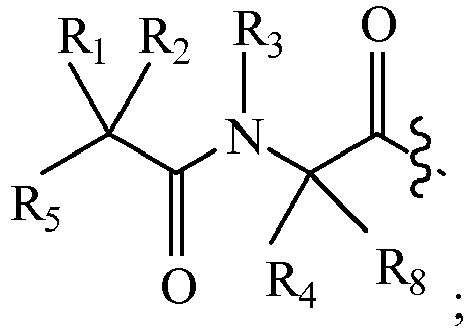
- R1 is selected from the group consisting of H and C1-C8 alkyl;
- R2 and R4 are independently selected from the group consisting of H, C1-C8 alkyl, C2-C8 alkenyl, (C1-C4 alkyl)OH, (C1-C4 alkyl)SH, (C2-C3 alkyl)SCH3, (C1-C4 alkyl)CONH2, (C1-C4 alkyl)COOH, (C1-C4 alkyl)NH2, (C1-C4 alkyl)NHC(NH2 +) NH2, (C0-C4 alkyl)(C3-C6 cycloalkyl), (C0-C4 alkyl)(C6-C10 aryl)R7, and CH2(C5-C9 heteroaryl), or R1 and R2 together with the atoms to which they are attached form a C3-C6 cycloalkyl;
- R3 is selected from the group consisting of C1-C8 alkyl, (C1-C4 alkyl)OH, (C1-C4 alkyl)NH2, (C1-C4 alkyl)SH, and (C3-C6)cycloalkyl or R4 and R3 together with the atoms to which they are attached form a 5 or 6 member heterocyclic ring;
- R5 is NHR6 or OH;
- R6 is H, or R6 and R2 together with the atoms to which they are attached form a 5 or 6 member heterocyclic ring;
- R7 is selected from the group consisting of H and OH; and
- R5 is H; and
- The substituents of the dipeptide prodrug element, and its site of attachment to the insulin analog, can be selected to provide the desired half life of a prodrug analog of the insulin analogs disclosed herein. For example, when a dipeptide prodrug element comprising the structure:
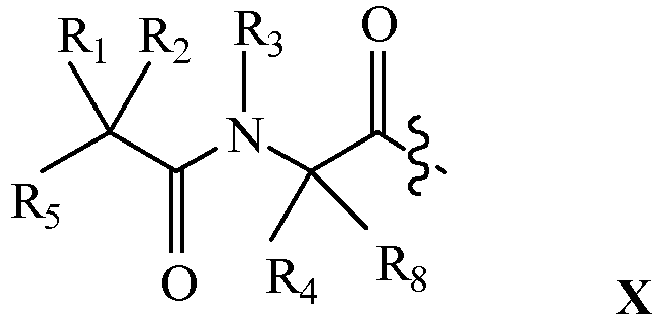
- R1 and R2 are independently C1-C18 alkyl or aryl; or R1 and R2 are linked through -(CH2)p-, wherein p is 2-9;
- R3 is C1-C18 alkyl;
- R4 and R8 are each hydrogen; and
- R5 is an amine.
- In other embodiments, prodrugs linked at the N-terminus and having a t1/2 of, e.g., about 1 hour comprise a dipeptide prodrug element with the structure:

- R1 and R2 are independently C1-C18 alkyl or (C0-C4 alkyl)(C6-C10 aryl)R7; or R1 and R2 are linked through -(CH2)p, wherein p is 2-9;
- R3 is C1-C18 alkyl;
- R4 and R8 are each hydrogen;
- R5 is NH2;
- R7 is selected from the group consisting of hydrogen, C1-C18 alkyl, C2-C18 alkenyl, (C0-C4 alkyl)CONH2, (C0-C4 alkyl)COOH, (C0-C4 alkyl)NH2, (C0-C4 alkyl)OH, and halo; and R8 is H..
- Alternatively, in one embodiment a insulin analog prodrug derivative is provided wherein the dipeptide prodrug is linked to the alpha amino group of the N-terminal amino acid of the insulin analog B chain, and the prodrug has a t1/2 between about 6 to about 24 hours in PBS under physiological conditions. In one embodiment a insulin analog prodrug derivative having a t1/2 between about 6 to about 24 hours in PBS under physiological conditions is provided wherein the prodrug element has the structure of Formula X and
R1 and R2 are independently selected from the group consisting of hydrogen, C1-C18 alkyl and aryl, or R1 and R2 are linked through -(CH2)p-, wherein p is 2-9;
R3 is C1-C18 alkyl or R3 and R4 together with the atoms to which they are attached form a 4-12 heterocyclic ring;
R4 and R8 are independently selected from the group consisting of hydrogen, C1-C8 alkyl and aryl; and
R5 is an amine, with the proviso that both R1 and R2 are not hydrogen and provided that one of R4 or R8 is hydrogen. - In a further embodiment a insulin analog prodrug derivative is provided wherein the dipeptide prodrug is linked to the alpha amino group of the N-terminal amino acid of the insulin analog B chain, and the prodrug has a t1/2 between about 72 to about 168 hours in PBS under physiological conditions. In one embodiment a insulin analog prodrug derivative having a t1/2 between about 72 to about 168 hours in PBS under physiological conditions is provided wherein the prodrug element has the structure of Formula X and
R1 is selected from the group consisting of hydrogen, C1-C8 alkyl and aryl;
R2 is H;
R3 is C1-C18 alkyl;
R4 and R8 are each hydrogen; and
R5 is an amine or N-substituted amine or a hydroxyl;
with the proviso that, if R1 is alkyl or aryl, then R1 and R5 together with the atoms to which they are attached form a 4-11 heterocyclic ring. - In some embodiments, prodrugs having the dipeptide prodrug element linked to the N-terminal alpha amino acid of the insulin analog B chain peptide and having a t1/2, e.g., between about 12 to about 72 hours, or in some embodiments between about 12 to about 48 hours, comprise a dipeptide prodrug element with the structure:

- wherein R1 and R2 are independently selected from the group consisting of hydrogen, C1-C18 alkyl, (C1-C18 alkyl)OH, (C1-C4 alkyl)NH2, and (C0-C4 alkyl)(C6-C10 aryl)R7, or R1 and R2 are linked through (CH2)p, wherein p is 2-9;
- R3 is C1-C18 alkyl or R3 and R4 together with the atoms to which they are attached form a 4-12 heterocyclic ring;
- R4 and R8 are independently selected from the group consisting of hydrogen, C1-C8 alkyl and (C0-C4 alkyl)(C6-C10 aryl)R7;
- R5 is NH2; and
- R7 is selected from the group consisting of H, C1-C18 alkyl, C2-C18 alkenyl, (C0-C4 alkyl)CONH2, (C0-C4 alkyl)COOH, (C0-C4 alkyl)NH2, (C0-C4 alkyl)OH, and halo;
- with the proviso that both R1 and R2 are not hydrogen and provided that at least one of R4 or R8 is hydrogen.
- In some embodiments, prodrugs having the dipeptide prodrug element linked to the N-terminal amino acid of the insulin analog B chain peptide and having a t1/2, e.g., between about 12 to about 72 hours, or in some embodiments between about 12 to about 48 hours, comprise a dipeptide prodrug element with the structure:
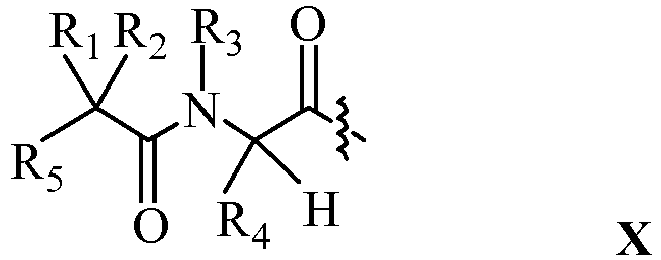
- wherein R1 and R2 are independently selected from the group consisting of hydrogen, C1-C8 alkyl and (C1-C4 alkyl)NH2, or R1 and R2 are linked through (CH2)p, wherein p is 2-9;
- R3 is C1-C8 alkyl or R3 and R4 together with the atoms to which they are attached form a 4-6 heterocyclic ring;
- R4 is selected from the group consisting of hydrogen and C1-C8 alkyl; and
- R5 is NH2;
- with the proviso that both R1 and R2 are not hydrogen.
- In other embodiments, prodrugs having the dipeptide prodrug element linked to the N-terminal amino acid of the insulin analog B chain peptide and having a t1/2, e.g., between about 12 to about 72 hours, or in some embodiments between about 12 to about 48 hours, comprise a dipeptide prodrug element with the structure:

- R1 and R2 are independently selected from the group consisting of hydrogen, C1-C8 alkyl and (C1-C4 alkyl)NH2;
- R3 is C1-C6 alkyl;
- R4 is hydrogen; and
- R5 is NH2;
- with the proviso that both R1 and R2 are not hydrogen.
- In some embodiments, prodrugs having the dipeptide prodrug element linked to the N-terminal amino acid of the insulin analog B chain peptide and having a t1/2, e.g., between about 12 to about 72 hours, or in some embodiments between about 12 to about 48 hours, comprise a dipeptide prodrug element with the structure:

- R1 and R2 are independently selected from the group consisting of hydrogen and C1-C8 alkyl, (C1-C4 alkyl)NH2, or R1 and R2 are linked through (CH2)p, wherein p is 2-9;
- R3 is C1-C8 alkyl;
- R4 is (C0-C4 alkyl)(C6-C10 aryl)R7;
- R5 is NH2; and
- R7 is selected from the group consisting of hydrogen, C1-C8 alkyl and (C0-C4 alkyl)OH;
- with the proviso that both R1 and R2 are not hydrogen.
- In addition a prodrug having the dipeptide prodrug element linked to the N-terminal alpha amino acid of the insulin analog and having a t1/2, e.g., of about 72 to about 168 hours is provided wherein the dipeptide prodrug element has the structure:

- wherein R1 is selected from the group consisting of hydrogen, C1-C8 alkyl and (C0-C4 alkyl)(C6-C10 aryl)R7;
- R3 is C1-C18 alkyl;
- R4 and R8 are each hydrogen;
- R5 is NHR6 or OH;
- R6 is H, C1-C8 alkyl, or R6 and R1 together with the atoms to which they are attached form a 4, 5 or 6 member heterocyclic ring; and
- R7 is selected from the group consisting of hydrogen, C1-C18 alkyl, C2-C18 alkenyl, (C0-C4 alkyl)CONH2, (C0-C4 alkyl)COOH, (C0-C4 alkyl)NH2, (C0-C4 alkyl)OH, and halo;
- with the proviso that, if R1 is alkyl or (C0-C4 alkyl)(C6-C10 aryl)R7, then R1 and R5 together with the atoms to which they are attached form a 4-11 heterocyclic ring.
- In some embodiments the dipeptide prodrug element is linked to a side chain amine of an internal amino acid of the insulin analog. In this embodiment prodrugs having a t1/2, e.g., of about 1 hour have the structure:

- R1 and R2 are independently C1-C8 alkyl or (C0-C4 alkyl)(C6-C10 aryl)R7; or R1 and R2 are linked through -(CH2)p-, wherein p is 2-9;
- R3 is C1-C18 alkyl;
- R4 and R8 are each hydrogen;
- R5 is NH2; and
- R7 is selected from the group consisting of hydrogen, C1-C18 alkyl, C2-C18 alkenyl, (C0-C4 alkyl)CONH2, (C0-C4 alkyl)COOH, (C0-C4 alkyl)NH2, (C0-C4 alkyl)OH, and halo.
- Furthermore, prodrugs having a t1/2, e.g., between about 6 to about 24 hours and having the dipeptide prodrug element linked to an internal amino acid side chain are provided wherein the prodrug comprises a dipeptide prodrug element with the structure:

- wherein R1 and R2 are independently selected from the group consisting of hydrogen, C1-C8 alkyl, and (C0-C4 alkyl)(C6-C10 aryl)R7, or R1 and R2 are linked through - (CH2)p-, wherein p is 2-9;
- R3 is C1-C18 alkyl or R3 and R4 together with the atoms to which they are attached form a 4-12 heterocyclic ring;
- R4 and R8 are independently hydrogen, C1-C18 alkyl or (C0-C4 alkyl)(C6-C10 aryl)R7;
- R5 is NHR6;
- R6 is H or C1-C8 alkyl, or R6 and R2 together with the atoms to which they are attached form a 4, 5 or 6 member heterocyclic ring; and
- R7 is selected from the group consisting of hydrogen, C1-C18 alkyl, C2-C18 alkenyl, (C0-C4 alkyl)CONH2, (C0-C4 alkyl)COOH, (C0-C4 alkyl)NH2, (C0-C4 alkyl)OH, and halo;
- with the proviso that both R1 and R2 are not hydrogen and provided that at least one of R4 or R8 is hydrogen.
- In addition a prodrug having a t1/2, e.g., of about 72 to about 168 hours and having the dipeptide prodrug element linked to a internal amino acid side chain of the insulin analog is provided wherein the dipeptide prodrug element has the structure:

- wherein R1 is selected from the group consisting of hydrogen, C1-C18 alkyl and (C0-C4 alkyl)(C6-C10 aryl)R7;
- R3 is C1-C18 alkyl;
- R4 and R8 are each hydrogen;
- R5 is NHR6 or OH;
- R6 is H or C1-C8 alkyl, or R6 and R1 together with the atoms to which they are attached form a 4, 5 or 6 member heterocyclic ring; and
R7 is selected from the group consisting of hydrogen, C1-C18 alkyl, C2-C18 alkenyl, (C0-C4 alkyl)CONH2, (C0-C4 alkyl)COOH, (C0-C4 alkyl)NH2, (C0-C4 alkyl)OH, and halo; with the proviso that, if R1 and R2 are both independently an alkyl or (C0-C4 alkyl)(C6-C10 aryl)R7, either R1 or R2 is linked through (CH2)p to R5, wherein p is 2-9. - In some embodiments the dipeptide prodrug element is linked to a side chain amine of an internal amino acid of the insulin analog wherein the internal amino acid comprises the structure of Formula V
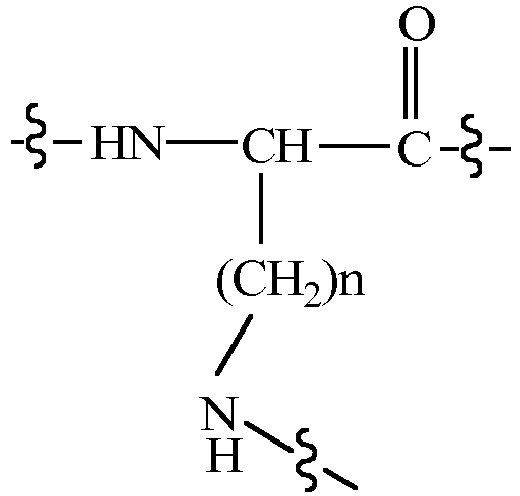
n is an integer selected from 1 to 4. In some embodiments n is 3 or 4 and in some embodiments the internal amino acid is lysine. In some embodiments the dipeptide prodrug element is linked to a primary amine on a side chain of an amino acid located atposition - In embodiments where the dipeptide prodrug element of formula X is linked to an amino substituent of an aryl group of an aromatic amino acid, prodrug, the substituents of the prodrug element can be selected to provide the desired time of activation. For example, the half life of a prodrug analog of any of the insulin analogs disclosed herein comprising an amino acid of the structure of Formula IV:
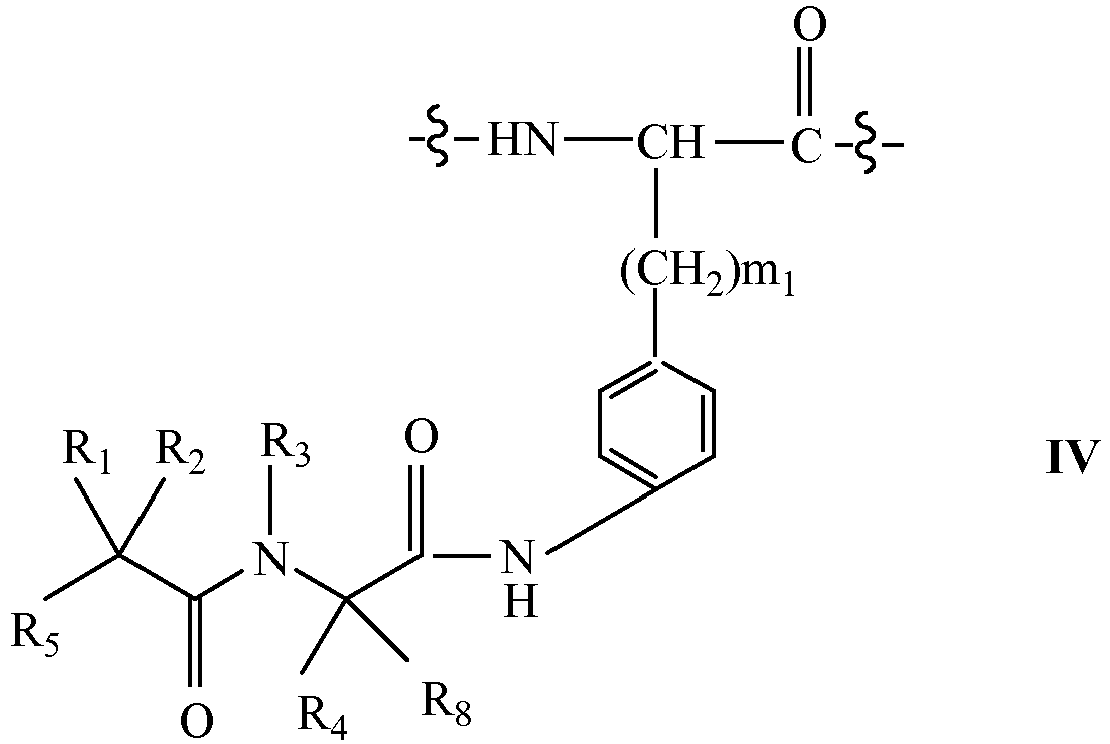
- wherein m1 is an integer from 0 to 3, can be selected by altering the substituents of R1, R2, R3, R4, R5, and R8. In one embodiment the amino acid of formula V is present at an amino acid corresponding to position A19, B16 or B25 of native insulin, and in one specific example the amino acid of formula V is located at position A19 of the insulin analog, and m1 is 1. In one embodiment a insulin analog prodrug derivative comprising the structure of Formula IV and having a t1/2 of about 1 hour in PBS under physiological conditions is provided. In one embodiment the insulin analog prodrug derivative having a t1/2 of about 1 hour in PBS under physiological conditions comprises the structure of formula IV wherein,
- R1 and R2 are independently C1-C18 alkyl or aryl;
- R3 is C1-C18 alkyl or R3 and R4 together with the atoms to which they are attached form a 4-12 heterocyclic ring;
- R4 and R8 are independently selected from the group consisting of hydrogen, C1-C18 alkyl and aryl; and
- R5 is an amine or a hydroxyl. In one embodiment m1 is 1.
- In one embodiment, the dipeptide prodrug element is linked to the insulin analog via an amine present on an aryl group of an aromatic amino acid of the insulin analog, wherein the prodrug has a t1/2, e.g., of about 1 hour has a dipeptide structure of:
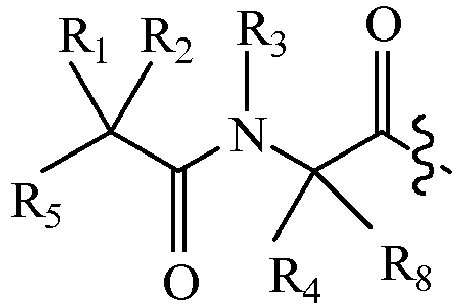
- wherein R1 and R2 are independently C1-C18 alkyl or (C0-C4 alkyl)(C6-C10 aryl)R7;
- R3 is C1-C18 alkyl or R3 and R4 together with the atoms to which they are attached form a 4-12 heterocyclic ring;
- R4 and R8 are independently selected from the group consisting of hydrogen, C1-C18 alkyl and (C0-C4 alkyl)(C6-C10 aryl)R7;
- R5 is NH2 or OH; and
- R7 is selected from the group consisting of hydrogen, C1-C18 alkyl, C2-C18 alkenyl, (C0-C4 alkyl)CONH2, (C0-C4 alkyl)COOH, (C0-C4 alkyl)NH2, (C0-C4 alkyl)OH, and halo.
- In another embodiment a insulin analog prodrug derivative comprising the structure of Formula IV, wherein m1 is an integer from 0 to 3 and having a t1/2 of about 6 to about 24 hours in PBS under physiological conditions, is provided. In one embodiment where the insulin analog prodrug having a t1/2 of about 6 to about 24 hours in PBS under physiological conditions comprises the structure of formula IV wherein,
R1 is selected from the group consisting of hydrogen, C1-C18 alkyl and aryl, or R1 and R2 are linked through -(CH2)p-, wherein p is 2-9;
R3 is C1-C18 alkyl or R3 and R4 together with the atoms to which they are attached form a 4-6 heterocyclic ring;
R4 and R8 are independently selected from the group consisting of hydrogen, C1-C18 alkyl and aryl; and
R5 is an amine or N-substituted amine. In one embodiment m1 is 1. - In one embodiment, prodrugs having the dipeptide prodrug element linked via an aromatic amino acid and having a t1/2, e.g., of about 6 to about 24 hours are provided wherein the dipeptide comprises a structure of:

- R1 is selected from the group consisting of hydrogen, C1-C18 alkyl, (C1-C18 alkyl)OH, (C1-C4 alkyl)NH2, and (C0-C4 alkyl)(C6-C10 aryl)R7;
- R3 is C1-C18 alkyl or R3 and R4 together with the atoms to which they are attached form a 4-6 heterocyclic ring;
- R4 and R8 are independently selected from the group consisting of hydrogen, C1-C18 alkyl and (C0-C4 alkyl)(C6-C10 aryl)R7;
- R5 is NHR6;
- R6 is H, C1-C8 alkyl, or R6 and R1 together with the atoms to which they are attached form a 4, 5 or 6 member heterocyclic ring; and
- R7 is selected from the group consisting of hydrogen, C1-C18 alkyl, C2-C18 alkenyl, (C0-C4 alkyl)CONH2, (C0-C4 alkyl)COOH, (C0-C4 alkyl)NH2, (C0-C4 alkyl)OH, and halo.
- In another embodiment an insulin analog prodrug derivative comprising the structure of Formula IV, wherein m1 is an integer from 0 to 3 and having a t1/2 of about 72 to about 168 hours in PBS under physiological conditions, is provided. In one embodiment where the insulin analog prodrug derivative having a t1/2 of about 72 to about 168 hours in PBS under physiological conditions comprises the structure of formula IV wherein,
R1 and R2 are independently selected from the group consisting of hydrogen, C1-C8 alkyl and aryl;
R3 is C1-C18 alkyl or R3 and R4 together with the atoms to which they are attached form a 4-6 heterocyclic ring;
R4 and R8 are each hydrogen; and
R5 is selected from the group consisting of amine, N-substituted amine and hydroxyl. In one embodiment m1 is 1. - In one embodiment, prodrugs having the dipeptide prodrug element linked via an aromatic amino acid and having a t1/2, e.g., of about 72 to about 168 hours are provided wherein the dipeptide comprises a structure of:
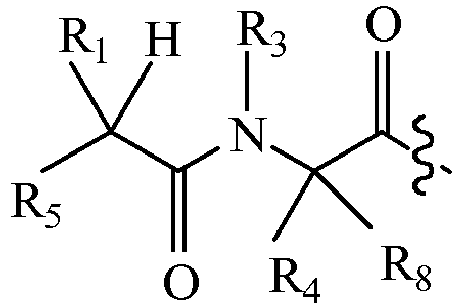
- wherein R1 and R2 are independently selected from the group consisting of hydrogen, C1-C8 alkyl, (C1-C4 alkyl)COOH, and (C0-C4 alkyl)(C6-C10 aryl)R7, or R1 and R5 together with the atoms to which they are attached form a 4-11 heterocyclic ring;
- R3 is C1-C18 alkyl or R3 and R4 together with the atoms to which they are attached form a 4-6 heterocyclic ring;
- R4 is hydrogen or forms a 4-6 heterocyclic ring with R3;
- R8 is hydrogen;
- R5 is NHR6 or OH;
- R6 is H or C1-C8 alkyl, or R6 and R1 together with the atoms to which they are attached form a 4, 5 or 6 member heterocyclic ring; and
- R7 is selected from the group consisting of hydrogen, C1-C18 alkyl, C2-C18 alkenyl, (C0-C4 alkyl)CONH2, (C0-C4 alkyl)COOH, (C0-C4 alkyl)NH2, (C0-C4 alkyl)OH, and halo.
- In accordance with one embodiment the dipeptide of Formula X is further modified to comprise a large polymer that interferes with the insulin analog's ability to interact with the insulin or IGF-1 receptor. Subsequent cleavage of the dipeptide releases the insulin analog from the dipeptide complex wherein the released insulin analog is fully active. In accordance with one embodiment the dipeptide of Formula X is further modified to comprises a large polymer that interferes with the bound insulin analog's ability to interact with the insulin or IGF-1 receptor. In accordance with one embodiment the insulin analog comprises a dipeptide of the general structure of Formula X:
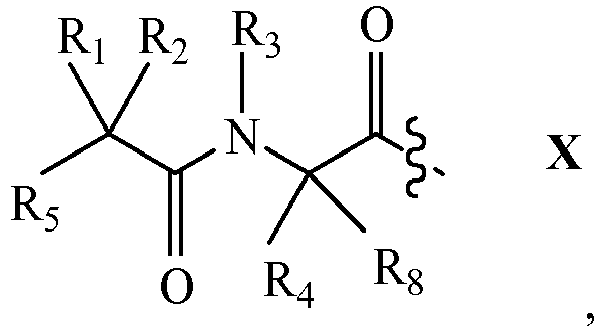
- In one embodiment a insulin analog is provided that comprises the structure IB-LM-IA, wherein IB comprises sequence
J-R23-R22-X25LCGX29X30LVX33X34LX36LVCGX41X42GFX45 (SEQ ID NO: 16);
LM is a linking moiety comprising a CTP peptide as described herein, including for example a linking peptide comprising the sequence of SEQ ID NO: 66; and
IA comprises the sequence GIVX4X5CCX8X9X10CX12LX14X15LEX18X19CX21 -R13 (SEQ ID NO: 55), wherein
J is H or a dipeptide element of formula X;
X4 is glutamic acid or aspartic acid;
X5 is glutamine or glutamic acid
X8 is histidine, threonine or phenylalanine;
X9 is serine, arginine, lysine, ornithine or alanine;
X10 is isoleucine or serine;
X12 is serine or aspartic acid
X14 is tyrosine, arginine, lysine, ornithine or alanine;
X15 is glutamine, glutamic acid, arginine, alanine, lysine, ornithine or leucine;
X18 is methionine, asparagine, glutamine, aspartic acid, glutamic acid or threonine;
X19 is an amino acid of the general structure: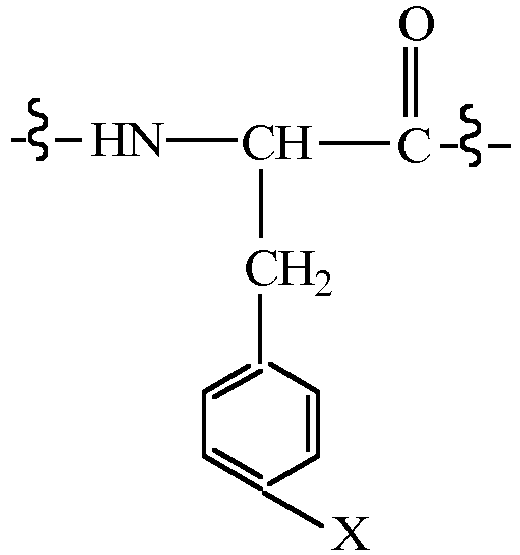
X21 is selected from the group consisting of alanine, glycine, serine, valine, threonine, isoleucine, leucine, glutamine, glutamic acid, asparagine, aspartic acid, histidine, tryptophan, tyrosine, and methionine;
X25 is histidine or threonine;
X29 is selected from the group consisting of alanine, glycine and serine;
X30 is selected from the group consisting of histidine, aspartic acid, glutamic acid, homocysteic acid and cysteic acid;
X33 is selected from the group consisting of aspartic acid, glutamine and glutamic acid;
X34 is selected from the group consisting of alanine and threonine;
X41 is selected from the group consisting of glutamic acid, aspartic acid or asparagine;
X42 is selected from the group consisting of alanine, lysine, ornithine and arginine;
X45 is an amino acid of the general structure
R22 is selected from the group consisting of AYRPSE (SEQ ID NO: 11), FVNQ (SEQ ID NO: 10), PGPE (SEQ ID NO: 9), a tripeptide glycine-proline-glutamic acid, a tripeptide valine-asparagine-glutamine, a dipeptide proline-glutamic acid, a dipeptide asparagine-glutamine, glutamine, glutamic acid and an N-terminal amine;
R23 is a bond or X60X61X62X63X64X65K (SEQ ID NO: 19), wherein X60 is selected from the group consisting of glycine, glutamic acid and aspartic acid, and X61, X62, X63 X64 and X65 are independently glutamic acid or aspartic acid; and
R13 is COOH or CONH, further wherein the dipeptide of Formula X is acylated or pegylated. In one embodiment J comprises an acylated or pegylated dipeptide of Formula X. - The insulin analogs and prodrug derivative thereof disclosed herein can be further modified to improve the peptide's solubility in aqueous solutions at physiological pH, while enhancing the effective duration of the peptide by preventing renal clearance of the peptide. Peptides are easily cleared because of their relatively small molecular size when compared to plasma proteins. Increasing the molecular weight of a peptide above 40 kDa exceeds the renal threshold and significantly extends duration in the plasma. Accordingly, in one embodiment the peptide prodrugs are further modified to comprise a covalently linked hydrophilic moiety.
- In one embodiment the hydrophilic moiety is a plasma protein, polyethylene glycol chain or the Fc portion of an immunoglobin. Therefore, in one embodiment the presently disclosed insulin analogs are further modified to comprise one or more hydrophilic groups covalently linked to the side chains of amino acids.
- In accordance with one embodiment the insulin prodrugs disclosed herein are further modified by linking a hydrophilic moiety to either the N-terminal amino acid of the B chain or to the side chain of a lysine amino acid (or other suitable amino acid) located at the carboxy terminus of the B chain, including for example, at
position 28 of SEQ ID NO: 9. In one embodiment a single-chain insulin prodrug derivative is provided wherein one of the amino acids of the linking moiety is modified by linking a hydrophilic moiety to the side chain of the peptide linker. In one embodiment the modified amino acid is cysteine, lysine or acetyl phenylalanine. - In accordance with one embodiment a prodrug derivative of the insulin analog is provided wherein the dipeptide element of Formula X further comprises an polyethylene glycol, alkyl or acyl group. In one embodiment one or more polyethylene glycol chains are linked to the dipeptide of Formula X wherein the combined molecular weight of the polyethylene glycol chains ranges from about 20,000 to about 80,000 Daltons, or 40,000 to 80,000 Daltons or 40,000 to 60,000 Daltons. In one embodiment at least one polyethylene glycol chain having a molecular weight of about 40,000 Daltons is linked to the dipeptide of Formula X. In another embodiment the dipeptide of Formula X is acylated with an acyl group of sufficient size to bind serum albumin and thus inactivate the IGFB16B17 analog peptide upon administration. The acyl group can be linear or branched, and in one embodiment is a C16 to C30 fatty acid. For example, the acyl group can be any of a C16 fatty acid, C18 fatty acid, C20 fatty acid, C22 fatty acid, C24 fatty acid, C26 fatty acid, C28 fatty acid, or a C30 fatty acid. In some embodiments, the acyl group is a C16 to C20 fatty acid, e.g., a C18 fatty acid or a C20 fatty acid.
- In another embodiment the insulin analog peptides, and their prodrug analogs, disclosed herein are further modified by the addition of a modified amino acid to the carboxy or amino terminus of the A chain or the amino terminus of the B chain of the insulin analog peptide, wherein the added amino acid is modified to comprise a hydrophilic moiety linked to the amino acid. In one embodiment the amino acid added to the C-terminus is a modified cysteine, lysine or acetyl phenylalanine. In one embodiment the hydrophilic moiety is selected from the group consisting of a plasma protein, polyethylene glycol chain and an Fc portion of an immunoglobin.
- In one embodiment the hydrophilic group is a polyethylene glycol chain, and in one embodiment two or more polyethylene glycol chains are covalently attached to two or more amino acid side chains of the insulin analog. In accordance with one embodiment the hydrophilic moiety is covalently attached to an amino acid side chain of a insulin analog disclosed herein at a position corresponding to A10, B28, B29, the C-terminus of the A chain or the N-terminus of the B chain (positions relative to native insulin). For insulin analogs and their prodrug derivatives having multiple polyethylene glycol chains, the polyethylene glycol chains can be attached at the N-terminal amino acid of the B chain or to the side chain of a lysine amino acid located at the carboxy terminus of the B chain, or by the addition of a single amino acid at the C-terminus of the peptide wherein the added amino acid has a polyethylene glycol chain linked to its side chain. In accordance with one embodiment a prodrug derivative is provided wherein the polyethylene glycol chain or other hydrophilic moiety is linked to the side chain of one of the two amino acids comprising the dipeptide prodrug element. In one embodiment the dipeptide prodrug element comprises a lysine (in the D or L stereoisomer configuration) with a polyethylene glycol chain attached to the side chain amine of the lysine.
- In accordance with one embodiment, the insulin analog peptides, or prodrug derivatives thereof, disclosed herein are further modified by amino acid substitutions, wherein the substituting amino acid comprises a side chain suitable for crosslinking with hydrophilic moieties, including for example, polyethylene glycol. For example, in one embodiment a native amino acid at a position corresponding to A5, A8, A9, A10, A12, A14, A15, A17, A18, B1, B2, B3, B4, B5, B13, B14, B17, B21, B22, B26, B27, B28, B29 and B30 of native insulin is substituted with a lysine, cysteine or acetyl phenylalanine residue (or a lysine, cysteine or acetyl phenylalanine residue is added to the C-terminus) to allow for the covalent attachment of a polyethylene glycol chain.
- In one embodiment the insulin analog, or prodrug derivative thereof, has a single cysteine substitution or a single cysteine residue added to the amino or carboxy terminus of the insulin analog, or an amino acid within the linking moiety or the dipeptide element of an insulin prodrug derivative is substituted with at least one cysteine residue, wherein the side chain of the cysteine residue is further modified with a thiol reactive reagent, including for example, maleimido, vinyl sulfone, 2-pyridylthio, haloalkyl, and haloacyl. These thiol reactive reagents may contain carboxy, keto, hydroxyl, and ether groups as well as other hydrophilic moieties such as polyethylene glycol units. In an alternative embodiment, the insulin analog, or prodrug derivative thereof, has a single lysine substitution or a single lysine residue added to the amino or carboxy terminus of the insulin analog, or an amino acid within the linking moiety or the dipeptide element of an insulin prodrug derivative is substituted with lysine, and the side chain of the substituting lysine residue is further modified using amine reactive reagents such as active esters (succinimido, anhydride, etc) of carboxylic acids or aldehydes of hydrophilic moieties such as polyethylene glycol.
- In accordance with one embodiment a pharmaceutical composition is provided comprising any of the novel insulin analogs disclosed herein, preferably at a purity level of at least 90%, 91%, 92%, 93%, 94%, 95%, 96%, 97%, 98% or 99%, and a pharmaceutically acceptable diluent, carrier or excipient. Such compositions may contain a insulin analog as disclosed herein at a concentration of at least 0.5 mg/ml, 1 mg/ml, 2 mg/ml, 3 mg/ml, 4 mg/ml, 5 mg/ml, 6 mg/ml, 7 mg/ml, 8 mg/ml, 9 mg/ml, 10 mg/ml, 11 mg/ml, 12 mg/ml, 13 mg/ml, 14 mg/ml, 15 mg/ml, 16 mg/ml, 17 mg/ml, 18 mg/ml, 19 mg/ml, 20 mg/ml, 21 mg/ml, 22 mg/ml, 23 mg/ml, 24 mg/ml, 25 mg/ml or higher. In one embodiment the pharmaceutical compositions comprise aqueous solutions that are sterilized and optionally stored contained within various package containers. In other embodiments the pharmaceutical compositions comprise a lyophilized powder. The pharmaceutical compositions can be further packaged as part of a kit that includes a disposable device for administering the composition to a patient. The containers or kits may be labeled for storage at ambient room temperature or at refrigerated temperature.
- In one embodiment, a composition is provided comprising a mixture of a first and second insulin analog prodrug derivative, wherein the first and second insulin analog prodrug derivatives differ from one another based on the structure of the prodrug element. More particularly, the first insulin analog prodrug derivative may comprise a dipeptide prodrug element that has a half life substantially different from the dipeptide prodrug element of the second insulin analog prodrug derivative. Accordingly, selection of different combinations of substituents on the dipeptide element will allow for the preparation of compositions that comprise a mixture of insulin analog prodrug derivatives that are activated in a controlled manner over a desired time frame and at specific time intervals. For example, the compositions can be formulated to release active insulin analog peptide at mealtimes followed by a subsequent activation insulin analog peptide during nighttime with suitable dosages being released based on time of activation.
- In another embodiment the pharmaceutical composition comprises a mixture of a insulin analog prodrug derivative disclosed herein and native insulin, or a known bioactive analog of insulin. The mixture in one embodiment can be in the form of a heteroduplex linking an insulin analog and a native insulin, or a known bioactive analog of insulin. The dimers may comprise a insulin analog peptide linked to another insulin analog or to a disulfide linked A chain to B chain insulin heteroduplex. The mixtures may comprise one or more of the insulin analogs, native insulin, or a known bioactive analog of insulin, in prodrug derivatives thereof or depot derivative thereof or other conjugate forms, and any combination thereof, as disclosed herein.
- The disclosed insulin analogs, and their corresponding prodrug derivatives, are believed to be suitable for any use that has previously been described for insulin peptides. Accordingly, the insulin analogs, and their corresponding prodrug derivatives, described herein can be used to treat hyperglycemia, or treat other metabolic diseases that result from high blood glucose levels. Accordingly, the present disclosure encompasses pharmaceutical compositions comprising a insulin analog as disclosed herein, or a prodrug derivative thereof, and a pharmaceutically acceptable carrier for use in treating a patient suffering from high blood glucose levels. In accordance with one embodiment the patient to be treated using a insulin analog disclosed herein is a domesticated animal, and in another embodiment the patient to be treated is a human.
- One method of treating hyperglycemia in accordance with the present disclosure comprises the steps of administering the presently disclosed insulin analog, or depot or prodrug derivative thereof, to a patient using any standard route of administration, including parenterally, such as intravenously, intraperitoneally, subcutaneously or intramuscularly, intrathecally, transdermally, rectally, orally, nasally or by inhalation. In one embodiment the composition is administered subcutaneously or intramuscularly. In one embodiment, the composition is administered parenterally and the insulin analog, or prodrug derivative thereof, is prepackaged in a syringe.
- The insulin analog disclosed herein, and depot or prodrug derivative thereof, may be administered alone or in combination with other anti-diabetic agents. Anti-diabetic agents known in the art or under investigation include native insulin, native glucagon and functional analogs thereof, sulfonylureas, such as tolbutamide (Orinase), acetohexamide (Dymelor), tolazamide (Tolinase), chlorpropamide (Diabinese), glipizide (Glucotrol), glyburide (Diabeta, Micronase, Glynase), glimepiride (Amaryl), or gliclazide (Diamicron); meglitinides, such as repaglinide (Prandin) or nateglinide (Starlix); biguanides such as metformin (Glucophage) or phenformin; thiazolidinediones such as rosiglitazone (Avandia), pioglitazone (Actos), or troglitazone (Rezulin), or other PPARγ inhibitors; alpha glucosidase inhibitors that inhibit carbohydrate digestion, such as miglitol (Glyset), acarbose (Precose/Glucobay); exenatide (Byetta) or pramlintide; Dipeptidyl peptidase-4 (DPP-4) inhibitors such as vildagliptin or sitagliptin; SGLT (sodium-dependent glucose transporter 1) inhibitors; or FBPase (
fructose 1,6-bisphosphatase) inhibitors. - Pharmaceutical compositions comprising the insulin analogs disclosed herein, or depot or prodrug derivatives thereof, can be formulated and administered to patients using standard pharmaceutically acceptable carriers and routes of administration known to those skilled in the art. Accordingly, the present disclosure also encompasses pharmaceutical compositions comprising one or more of the insulin analogs disclosed herein (or prodrug derivative thereof), or a pharmaceutically acceptable salt thereof, in combination with a pharmaceutically acceptable carrier. In one embodiment the pharmaceutical composition comprises a 1mg/ml concentration of the insulin analog at a pH of about 4.0 to about 7.0 in a phosphate buffer system. The pharmaceutical compositions may comprise the insulin analog as the sole pharmaceutically active component, or the insulin analog peptide can be combined with one or more additional active agents.
- All therapeutic methods, pharmaceutical compositions, kits and other similar embodiments described herein contemplate that insulin analog peptides, or prodrug derivatives thereof, include all pharmaceutically acceptable salts thereof.
- In one embodiment the kit is provided with a device for administering the insulin analog composition to a patient. The kit may further include a variety of containers, e.g., vials, tubes, bottles, and the like. Preferably, the kits will also include instructions for use. In accordance with one embodiment the device of the kit is an aerosol dispensing device, wherein the composition is prepackaged within the aerosol device. In another embodiment the kit comprises a syringe and a needle, and in one embodiment the insulin analog composition is prepackaged within the syringe.
- The compounds as disclosed herein may be prepared by standard synthetic methods, recombinant DNA techniques, or any other methods of preparing peptides and fusion proteins. Although certain non-natural amino acids cannot be expressed by standard recombinant DNA techniques, techniques for their preparation are known in the art. Compounds as disclosed herein that encompass non-peptide portions may be synthesized by standard organic chemistry reactions, in addition to standard peptide chemistry reactions when applicable.
- In accordance with the present disclosure the following exemplary embodiments are provided:
- 1. A single chain insulin analog comprising an A chain, a B chain and a linking moiety, wherein said linking moiety comprises a peptide of 18 amino acids that covalently links the carboxy terminus of the B chain to the amino terminus of the A chain to form a contiguous amino acid chain, with the proviso that the linking moiety does not comprise an 18 amino acid sequence that is identical to an 18 amino acid sequence of SEQ ID NO: 53 directly linked to the carboxy terminus of the B chain.
- 2. The single chain insulin analog of
embodiment 1 wherein said linking moiety comprises a total of 18 to 158 amino acids residues. - 3. The single chain insulin analog of
embodiment 1 wherein said linking moiety comprises a total of 28 to 56 amino acids. - 4. The single chain insulin analog of
embodiment
X50 and X51 are independently selected from arginine and lysine. - 5. The single chain insulin analog of
embodiment - 6. The single chain insulin analog of
embodiment - 7. The single chain insulin analog of
embodiment - 8. The single chain insulin analog of
embodiment 7 wherein said linking moiety comprises an N-linked glycosylation site. - 9. The single chain insulin analog of
embodiment - 10. The insulin analog of any of embodiments 6-8 wherein said linking moiety is glycosylated.
- 11. The single chain insulin analog of
embodiment - 12. The single chain insulin analog of
embodiment 4 wherein said linking moiety comprises (SEQ ID NO: 66). - 13. The single chain insulin analog of any of embodiments 1-12 wherein the sequence SSSSX50APPPSLPSPSRLPGPSDTPILPQX51 (SEQ ID NO: 66), SSSSX50APPPSLPSPSRLPGPSDTPILPQ (SEQ ID NO; 92) or MGSSSSX50APPPSLPSPSRLPGPSDTPILPQ (SEQ ID NO; 93) is linked to the amino terminus of the B chain, optionally with an intervening sequence consisting of 1 to 5 acidic amino acids followed by an arginine or lysine.
- 14. The single chain insulin analog of any of embodiments 1-13 wherein said linking moiety comprises the sequence SSSSRAPPPSLPSPSRLPGPSDTPILPQK (SEQ ID NO: 79) or SSSSKAPPPSLPSPSRLPGPSDTPILPQR (SEQ ID NO: 64).
- 15. The single chain insulin analog of any of embodiments 1-14 wherein said A chain comprises the sequence GIVX4X5CCX8X9X10CX12LX14X15LX17X18X19CX21-R13 (SEQ ID NO: 18); and
said B chain comprises the sequence R22-X25LCGX29X30LVX33X34LYLVCGX41X42GFX45 (SEQ ID NO: 17) wherein X4 is glutamic acid or aspartic acid; X5 is glutamine or glutamic acid; X8 is histidine, threonine or phenylalanine; X9 is serine, arginine, lysine, ornithine or alanine; X10 is isoleucine or serine; X12 is serine or aspartic acid; X14 is tyrosine, arginine, lysine, ornithine or alanine; X15 is glutamine, glutamic acid, arginine, alanine, lysine, ornithine or leucine; X17 is glutamine, glutamic acid, arginine, aspartic acid, ornithine or lysine; X18 is methionine, asparagine, glutamine, aspartic acid, glutamic acid or threonine; X19 is tyrosine, 4-methoxy-phenylalanine or 4-amino phenylalanine; X21 is selected from the group consisting of alanine, glycine, serine, valine, threonine, isoleucine, leucine, glutamine, glutamic acid, asparagine, aspartic acid, histidine, tryptophan, tyrosine, and methionine; X25 is histidine or threonine; X29 is selected from the group consisting of alanine, glycine and serine; X30 is selected from the group consisting of histidine, aspartic acid, glutamic acid, homocysteic acid and cysteic acid; X33 is selected from the group consisting of aspartic acid, glutamine and glutamic acid; X34 is selected from the group consisting of alanine and threonine; X41 is selected from the group consisting of glutamic acid, aspartic acid or asparagine; X42 is selected from the group consisting of alanine, lysine, ornithine and arginine; X45 is tyrosine or phenylalanine; R22 is selected from the group consisting of AYRPSE (SEQ ID NO: 11), FVNQ (SEQ ID NO: 10), PGPE (SEQ ID NO: 9), a tripeptide glycine-proline-glutamic acid, a tripeptide valine-asparagine-glutamine, a dipeptide proline-glutamic acid, a dipeptide asparagine-glutamine, glutamine, glutamic acid and a bond; and R13 is COOH or CONH2. - 16. The single chain insulin analog of embodiment 15 wherein
said A chain comprises the sequence GIVX4X5CCX8X9X10CX12LX14X15LEX18X19CX21-R13 (SEQ ID NO: 55);
said B chain comprises the sequence X25LCGX29X30LVX33X34LYLVCGX41X42GFX45 (SEQ ID NO: 17); further
wherein X4 is glutamic acid or aspartic acid; X5 is glutamic acid or glutamine; X8 is threonine, histidine or phenylalanine; X9 is serine, arginine, ornithine or alanine; X10 is serine or isoleucine; X12 is serine or aspartic acid; X14 is arginine, tyrosine, ornithine or alanine; X15 is glutamine, arginine, alanine, ornithine or leucine; X18 is methionine, asparagine or threonine; X19 is tyrosine, 4-methoxy-phenylalanine or 4-amino phenylalanine; X21 is alanine, glycine or asparagine; X25 is histidine or threonine; X29 is alanine, glycine or serine; X30 is histidine, aspartic acid, glutamic acid, homocysteic acid or cysteic acid; X33 is aspartic acid or glutamic acid; X34 is alanine or threonine; X41 is aspartic acid or glutamic acid; X42 is alanine, ornithine or arginine; X45 is tyrosine or phenylalanine; and R13 is COOH or CONH2. - 17. The single chain insulin analog of any of embodiments 15-16 wherein the B chain further comprises an amino terminal extension comprising 1 to 6 charged amino acids.
- 18. The single chain insulin analog of any of embodiments 1-17 wherein the B chain comprises the sequence R22-HLCGSX30LVEALYLVCGERGFF (SEQ ID NO: 56) or R24-X25LCGX29X30LVX33X34LYLVCGX41X42GFX45 (SEQ ID NO: 17) and the A chain comprises the sequence GIVEQCCX8SICSLYQLENX19CX21-R13 (SEQ ID NO: 26) or GIVX4ECCX8X9SCDLX14X15LX17X18X19CX21-R13 (SEQ ID NO: 15)
wherein X4 is glutamic acid or aspartic acid; X8 is histidine, threonine or phenylalanine; X9 is arginine, lysine, ornithine or alanine; X14 is arginine, lysine, ornithine or alanine; X15 is glutamine, glutamic acid, arginine, alanine, lysine, ornithine or leucine; X17 is glutamine or glutamic acid; X18 is methionine, asparagine, glutamine, aspartic acid, glutamic acid or threonine; X19 is tyrosine, 4-methoxy-phenylalanine or 4-amino phenylalanine; X21 is selected from the group consisting of alanine, glycine, serine, valine, threonine, isoleucine, leucine, glutamine, glutamic acid, asparagine, aspartic acid, histidine, tryptophan, tyrosine, and methionine; X22 is selected from the group consisting of phenylalanine and desamino-phenylalanine; X23 is asparagine or glycine; X25 is histidine or threonine; X29 is selected from the group consisting of alanine and glycine; X30 is selected from the group consisting of histidine, aspartic acid, glutamic acid, homocysteic acid and cysteic acid; X33 is selected from the group consisting of aspartic acid, glutamine and glutamic acid; X34 is selected from the group consisting of alanine and threonine; X41 is selected from the group consisting of glutamic acid, aspartic acid or asparagine; X42 is selected from the group consisting of alanine, lysine, ornithine and arginine; X45 is tyrosine or phenylalanine; R22 is selected from the group consisting of X22VNQ (SEQ ID NO: 50), a tripeptide valine-asparagine-glutamine, a dipeptide asparagine-glutamine, glutamine, and a bond; R24 is selected from the group consisting of AYRPSE (SEQ ID NO: 11), PGPE (SEQ ID NO: 9), a tripeptide glycine-proline-glutamic acid, a dipeptide proline-glutamic acid, glutamine, glutamic acid and a bond; and R13 is COOH or CONH2. - 19. The single chain insulin agonist of embodiment 18 wherein X8, X25 and X30 are each histidine.
- 20. The single chain insulin agonist of any of embodiments 15-19 wherein
- X4 is aspartic acid;
- X9 is arginine, lysine, ornithine or alanine,
- X21 is alanine, glycine or asparagine;
- X29 is alanine;
- X33 is aspartic acid;
- X34 is alanine;
- X41 is aspartic acid; and
- R22 is a glycine-proline-glutamic acid tripeptide.
- 21. The single chain insulin analog of any of embodiments 1-20 further comprising a hydrophilic moiety linked to said analog.
- 22 The single chain insulin analog of
embodiment 21 wherein the hydrophilic moiety is a plasma protein, polyethylene glycol chain or the Fc portion of an immunoglobin. - 23. The single chain insulin analog of
embodiment 21 wherein the hydrophilic moiety is a polyethylene glycol linked to the N-terminal amino acid of the B chain or to an amino acid side chain of the linking moiety. - 24. The single chain insulin agonist of any of the embodiments 1-23, wherein an amino acid side chain of said single chain insulin agonist is covalently attached to an acyl group or an alkyl group via an alkyl amine, amide, ether, ester, thioether, or thioester linkage.
- 25. An insulin analog comprising an A chain, a B chain and a CTP peptide, wherein
said A chain comprises the sequence GIVX4X5CCX8X9X10CX12LX14X15LEX18X19CX21-R13 (SEQ ID NO: 55);
said B chain comprises the sequence X25LCGX29X30LVX33X34LYLVCGX41X42GFX45 (SEQ ID NO: 17); and
said CTP peptide comprises the sequence (SSSSX50APPPSLPSPSRLPGPSDTPILPQX51), (SEQ ID NO: 66) or MGSSSSX50APPPSLPSPSRLPGPSDTPILPQEEEEEX51 (SEQ ID NO; 93), wherein said A and B chain are linked to one another via disulfide bonds and said CTP peptide is covalently bound to the amino or carboxy terminus of the B chain, further wherein n is an integer selected from 1 to 3; X4 is glutamic acid or aspartic acid; X5 is glutamic acid or glutamine; X8 is threonine, histidine or phenylalanine; X9 is serine, arginine, ornithine or alanine; X10 is serine or isoleucine; X12 is serine or aspartic acid; X14 is arginine, tyrosine, ornithine or alanine; X15 is glutamine, arginine, alanine, ornithine or leucine; X18 is methionine, asparagine or threonine; X19 is tyrosine, 4-methoxy-phenylalanine or 4-amino phenylalanine; X21 is alanine, glycine or asparagine; X25 is histidine or threonine; X29 is alanine, glycine or serine; X30 is histidine, aspartic acid, glutamic acid, homocysteic acid or cysteic acid; X33 is aspartic acid or glutamic acid; X34 is alanine or threonine; X41 is aspartic acid or glutamic acid; X42 is alanine, ornithine or arginine; X45 is tyrosine or phenylalanine; X50 and X51 are independently selected from arginine and lysine; and R13 is COOH or CONH2. - 26. The insulin analog of
embodiment 25 wherein said CTP peptide is covalently bound to the amino terminus of the B chain to provide an N-terminal CTP peptide. - 27. The insulin analog of
embodiment 25 wherein said CTP peptide is covalently bound to the carboxyl terminus of the B chain to provide a C-terminal CTP peptide. - 28. The insulin analog of
embodiment - 29. The insulin analog of
embodiment - 30. The insulin analog of
embodiment 29 wherein n is 1 and the linker CTP peptide comprises the sequence SSSSRAPPPSLPSPSRLPGPSDTPILPQK (SEQ ID NO: 79). - 31. The insulin analog of any of embodiments 25-30 wherein the B chain comprises the sequence SSSSX50APPPSLPSPSRLPGPSDTPILPQX51 SEQID NO: 66) linked to carboxy terminus of the B chain and the sequence MGSSSSX50APPPSLPSPSRLPGPSDTPILPQEEEEEX51 (SEQ ID NO; 93) linked to the amino terminus of the B chain.
- 32. The insulin analog of any of embodiments 25-31 wherein the CTP peptide is glycosylated.
- 33. The insulin analog of any of embodiments 25-32 wherein the B chain comprises the sequence R22-HLCGSX30LVEALYLVCGERGFF (SEQ ID NO: 56) or R24-X25LCGX29X30LVX33X34LYLVCGX41X42GFX45 (SEQ ID NO: 17) and the A chain comprises the sequence GIVEQCCX8SICSLYQLENX19CX21-R13 (SEQ ID NO: 26) or GIVX4ECCX8X9SCDLX14X15LX17X18X19CX21-R13 (SEQ ID NO: 15)
wherein X4 is glutamic acid or aspartic acid; X8 is histidine, threonine or phenylalanine; X9 is arginine, lysine, ornithine or alanine; X14 is arginine, lysine, ornithine or alanine; X15 is glutamine, glutamic acid, arginine, alanine, lysine, ornithine or leucine; X17 is glutamine or glutamic acid; X18 is methionine, asparagine, glutamine, aspartic acid, glutamic acid or threonine; X19 is tyrosine, 4-methoxy-phenylalanine or 4-amino phenylalanine; X21 is selected from the group consisting of alanine, glycine, serine, valine, threonine, isoleucine, leucine, glutamine, glutamic acid, asparagine, aspartic acid, histidine, tryptophan, tyrosine, and methionine; X22 is selected from the group consisting of phenylalanine and desamino-phenylalanine; X23 is asparagine or glycine; X25 is histidine or threonine; X29 is selected from the group consisting of alanine and glycine; X30 is selected from the group consisting of histidine, aspartic acid, glutamic acid, homocysteic acid and cysteic acid; X33 is selected from the group consisting of aspartic acid, glutamine and glutamic acid; X34 is selected from the group consisting of alanine and threonine; X41 is selected from the group consisting of glutamic acid, aspartic acid or asparagine; X42 is selected from the group consisting of alanine, lysine, ornithine and arginine; X45 is tyrosine or phenylalanine; R22 is selected from the group consisting of X22 VNQ (SEQ ID NO: 50), a tripeptide valine-asparagine-glutamine, a dipeptide asparagine-glutamine, glutamine, and a bond; R24 is selected from the group consisting of AYRPSE (SEQ ID NO: 11), PGPE (SEQ ID NO: 9), a tripeptide glycine-proline-glutamic acid, a dipeptide proline-glutamic acid, glutamine, glutamic acid and a bond; and R13 is COOH or CONH2. - 34. The insulin analog of embodiment 33 wherein Xs, X25 and X30 are each histidine.
- 35. The insulin analog of embodiment 33 or 34 wherein X4 is aspartic acid; X9 is arginine, lysine, ornithine or alanine; X21 is alanine, glycine or asparagine; X29 is alanine; X33 is aspartic acid; X34 is alanine; X41 is aspartic acid; and R22 is a glycine-proline-glutamic acid tripeptide.
- 36. The insulin analog of any of embodiments 25-35 wherein the B chain comprises the sequence R25-HLCGSX30LVEALYLVCGERGFF (SEQ ID NO: 56), the CTP peptide comprises the sequence of
SEQ ID NO 66 and the A chain comprises the sequence of GIVEQCCX8SICSLYQLENX19CX21-R13 (SEQ ID NO: 26),
wherein X30 is selected from the group consisting of histidine, aspartic acid, glutamic acid, homocysteic acid and cysteic acid; X8 is histidine, threonine or phenylalanine; X19 is tyrosine, 4-methoxy-phenylalanine or 4-amino phenylalanine; X21 is alanine, glycine or asparagine; X22 is selected from the group consisting of phenylalanine and desamino-phenylalanine; and R25 is selected from the group consisting of X22VNQ (SEQ ID NO: 50), a tripeptide valine-asparagine-glutamine, a dipeptide asparagine-glutamine, glutamine, AYRPSE (SEQ ID NO: 11), PGPE (SEQ ID NO: 9), a tripeptide glycine-proline-glutamic acid, a dipeptide proline-glutamic acid, glutamic acid. - 37. The insulin analog of
embodiment 36 further comprising a CTP peptide linked to the N-terminus of the B chain. - 38. The insulin analog of any of embodiments 25-37 further comprising a hydrophilic moiety linked to said analog.
- 39. The insulin analog of
embodiment 38 wherein the hydrophilic moiety is a polyethylene glycol linked to the N-terminal amino acid of the B chain or an amino acid side chain of the linking moiety. - 40. The insulin agonist of any of embodiments 25-39, wherein an amino acid side chain of said insulin agonist is covalently attached to an acyl group or an alkyl group via an alkyl amine, amide, ether, ester, thioether, or thioester linkage.
- 41. A nucleic acid sequence encoding the insulin analog of any of embodiments 1-37.
- 42. A eukaryotic host cell comprising a nucleic acid sequence that encodes the insulin analog of
embodiment 41. - 43. The host cell of
embodiment 42 wherein the cell is a mammalian host cell. - 44. The host cell of
embodiment 42 wherein the cell is a Pichia or CHO cell. - 45. A method of producing a hyperglycosylated insulin analog, said method comprising culturing a cells of
embodiment 42 under conditions wherein said protein is produced; and recovering said protein from the culture. - 46. The method of embodiment 45, wherein the insulin analog is expressed as a single chain analog, said method further comprising the step of cleaving the recovered protein to produce a two chain insulin analog.
- 47. The method of any of embodiment 1-46 wherein the linking moiety comprises the sequence SSSSRAPPPSLPSPSRLPGPSDTPILPQK (SEQ ID NO: 79).
- 48. A derivative of the insulin analog of any of embodiments 1-47 further comprising the structure U-B, wherein U is an amino acid or a hydroxy acid; B is an N-alkylated amino acid linked to said single chain insulin analog through an amide bond between a carboxyl moiety of B and an amine of the single chain insulin analog, wherein U, B, or the amino acid of the single chain insulin analog to which U-B is linked is a non-coded amino acid, further wherein the chemical cleavage half-life (t1/2) of U-B from the single chain insulin analog is at least about 1 hour to about 1 week in PBS under physiological conditions.
- 49. The derivative of
embodiment 48 wherein said insulin analog comprises an A chain sequence of GIVX4X5CCX8X9X10CX12LX14X15LX17X18X19CX21-R13 (SEQ ID NO: 18) wherein X4 is glutamic acid or aspartic acid; X5 is glutamine or glutamic acid; X8 is histidine, threonine or phenylalanine; X9 is serine, arginine, lysine, ornithine or alanine; X10 is isoleucine or serine; X12 is serine or aspartic acid; X14 is tyrosine, arginine, lysine, ornithine or alanine; X15 is glutamine, glutamic acid, arginine, alanine, lysine, ornithine or leucine; X17 is glutamine, glutamic acid, arginine, aspartic acid, ornithine or lysine; X18 is methionine, asparagine, glutamine, aspartic acid, glutamic acid or threonine; X19 is 4-amino phenylalanine; X21 is selected from the group consisting of alanine, glycine, serine, valine, threonine, isoleucine, leucine, glutamine, glutamic acid, asparagine, aspartic acid, histidine, tryptophan, tyrosine, and methionine; further wherein U-B is linked to single chain insulin agonist through an amide bond between a carboxyl moiety of B and the para amine of 4-amino phenylalanine at position A19. - 50. The derivative of
embodiment - 51. The derivative of any of embodiments 47-49, wherein the first amino acid and/or the second amino acid of the structure U-B is an amino acid in the D stereoisomer configuration.
- 52 The derivative of
embodiment 49, wherein U-B comprises the structure of Formula X:
- R1, R2, R4 and R8 are independently selected from the group consisting of H, C1-C18 alkyl, C2-C18 alkenyl, (C1-C18 alkyl)OH, (C1-C18 alkyl)SH, (C2-C3 alkyl)SCH3, (C1-C4 alkyl)CONH2, (C1-C4 alkyl)COOH, (C1-C4 alkyl)NH2, (C1-C4 alkyl)NHC(NH2 +)NH2, (C0-C4 alkyl)(C3-C6 cycloalkyl), (C0-C4 alkyl)(C2-C5 heterocyclic), (C0-C4 alkyl)(C6-C10 aryl)R7, (C1-C4 alkyl)(C3-C9 heteroaryl), and C1-C12 alkyl(W1)C1-C12 alkyl, wherein W1 is a heteroatom selected from the group consisting of N, S and O, or
- R1 and R2 together with the atoms to which they are attached form a C3-C12 cycloalkyl or aryl; or
- R4 and R8 together with the atoms to which they are attached form a C3-C6 cycloalkyl;
- R3 is selected from the group consisting of C1-C18 alkyl, (C1-C18 alkyl)OH, (C1-C18 alkyl)NH2, (C1-C18 alkyl)SH, (C0-C4 alkyl)(C3-C6)cycloalkyl, (C0-C4 alkyl)(C2-C5 heterocyclic), (C0-C4 alkyl)(C6-C10 aryl)R7, and (C1-C4 alkyl)(C3-C9 heteroaryl) or R4 and R3 together with the atoms to which they are attached form a 4, 5 or 6 member heterocyclic ring;
- R5 is NHR6 or OH;
- R6 is H, C1-C8 alkyl or R6 and R1 together with the atoms to which they are attached form a 4, 5 or 6 member heterocyclic ring; and
- R7 is selected from the group consisting of H, OH, C1-C18 alkyl, C2-C18 alkenyl, (C0-C4 alkyl)CONH2, (C0-C4 alkyl)COOH, (C0-C4 alkyl)NH2, (C0-C4 alkyl)OH, and halo.
- R1, R2, R4 and R8 are independently selected from the group consisting of H, C1-C18 alkyl, C2-C18 alkenyl, (C1-C18 alkyl)OH, (C1-C18 alkyl)SH, (C2-C3 alkyl)SCH3, (C1-C4 alkyl)CONH2, (C1-C4 alkyl)COOH, (C1-C4 alkyl)NH2, (C1-C4 alkyl)NHC(NH2 +)NH2, (C0-C4 alkyl)(C3-C6 cycloalkyl), (C0-C4 alkyl)(C2-C5 heterocyclic), (C0-C4 alkyl)(C6-C10 aryl)R7, (C1-C4 alkyl)(C3-C9 heteroaryl), and C1-C12 alkyl(W1)C1-C12 alkyl, wherein W1 is a heteroatom selected from the group consisting of N, S and O, or
- 53. The derivative of
embodiment 52 wherein- R1 and R2 are independently C1-C18 alkyl or aryl;
- R3 is C1-C18 alkyl or R3 and R4 together with the atoms to which they are attached form a 4-12 heterocyclic ring;
- R4 and R8 are independently selected from the group consisting of hydrogen, C1-C18 alkyl and aryl; and
- R5 is an amine or a hydroxyl.
- 54. The derivative of
embodiment 52, wherein- R1 is selected from the group consisting of hydrogen, C1-C18 alkyl and aryl, or R1 and R2 are linked through -(CH2)p-, wherein p is 2-9;
- R3 is C1-C18 alkyl or R3 and R4 together with the atoms to which they are attached form a 4-6 heterocyclic ring;
- R4 and R8 are independently selected from the group consisting of hydrogen, C1-C18 alkyl and aryl; and
- R5 is an amine or N-substituted amine.
- 55. The derivative of
embodiment 52, wherein- R1 and R2 are independently selected from the group consisting of hydrogen, C1-C8 alkyl and aryl;
- R3 is C1-C18 alkyl or R3 and R4 together with the atoms to which they are attached form a 4-6 heterocyclic ring;
- R4 and R8 are each hydrogen; and
- R5 is selected from the group consisting of amine, N-substituted amine and hydroxyl.
- 56. The derivative of any of embodiments 48-55 further comprising a hydrophilic moiety linked to an amino acid of the structure U-B or the linking moiety.
- 57. The derivative of
embodiment 56 wherein the hydrophilic moiety is polyethylene glycol or albumin. - 58. A single chain insulin analog comprise the structure IB-LM-IA, wherein
IB comprises the sequence J-R23R22-X25LCGX29X30LVX33X34LX36LVCGX41X42GFX45 (SEQ ID NO: 16);
LM is a linking moiety comprising an 18 amino acid sequence that covalently links the carboxy terminus of the B chain to the amino terminus of the A chain to form a contiguous amino acid chain, with the proviso that the linking moiety does not comprise an 18 amino acid sequence that is identical to an 18 amino acid sequence of SEQ ID NO: 53 directly linked to the carboxy terminus of the B chain; and
IA comprises the sequence GIVX4X5CCX8X9X10CX12LX14X15LEX18X19CX21-R13 (SEQ ID NO: 55) further wherein
J is H or a dipeptide comprising the general structure of U-B, wherein U is an amino acid or a hydroxyl acid and B is an N-alkylated amino acid linked through an amide bond; X4 is glutamic acid or aspartic acid; X5 is glutamine or glutamic acid; X8 is histidine, threonine or phenylalanine; X9 is serine, arginine, lysine, ornithine or alanine; X10 is isoleucine or serine; X12 is serine or aspartic acid; X14 is tyrosine, arginine, lysine, ornithine or alanine; X15 is glutamine, glutamic acid, arginine, alanine, lysine, ornithine or leucine; X18 is methionine, asparagine, glutamine, aspartic acid, glutamic acid or threonine; X19 is an amino acid of the general structure:


- wherein X13 is selected from the group consisting of H, OH and NHR12, wherein R12 is H or dipeptide element comprising the general structure U-B; R22 is selected from the group consisting of AYRPSE (SEQ ID NO: 11), FVNQ (SEQ ID NO: 10), PGPE (SEQ ID NO: 9), a tripeptide glycine-proline-glutamic acid, a tripeptide valine-asparagine-glutamine, a dipeptide proline-glutamic acid, a dipeptide asparagine-glutamine, glutamine, glutamic acid and a bond;
- R23 is a bond or an amino sequence comprising 1 to 6 charged amino acids; and R13 is COOH or CONH2, with the proviso that U, B, or the amino acid of the single chain insulin agonist to which U-B is linked is a non-coded amino acid.
- 59. The single chain analog of
embodiment 58 wherein
X19 is an amino acid of the general structure: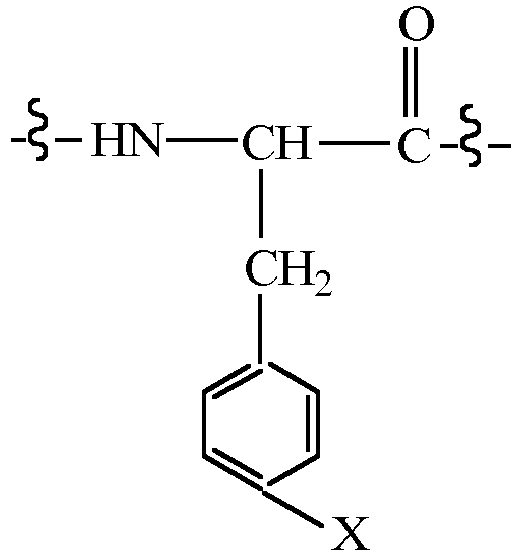
- 60. The single chain insulin analog of
embodiment - 61. The single chain insulin analog of
embodiment - 62. The single chain insulin analog of
embodiment
X50 and X51 are independently arginine or lysine. - 63. The single chain insulin analog of
embodiment 59 wherein said linking moiety comprises SSSSRAPPPSLPSPSRLPGPSDTPILPQK (SEQ ID NO: 64). - 64. The single chain insulin of any of embodiments 59-63, wherein X4 is aspartic acid; X5 is glutamic acid; X8 is histidine or phenylalanine; X9 is arginine, lysine or ornithine; X10 is serine; X12 is aspartic acid; X14 and X15 are independently arginine, lysine or ornithine; X17 is glutamine, glutamic acid, arginine, aspartic acid, ornithine or lysine; X18 is methionine; and X21 is alanine or asparagine.
- 65. The single chain insulin analog of any of
embodiments 59 to 64 wherein
U-B comprises the structure of Formula X:
- R1, R2, R4 and R8 are independently selected from the group consisting of H, C1-C18 alkyl, C2-C18 alkenyl, (C1-C18 alkyl)OH, (C1-C18 alkyl)SH, (C2-C3 alkyl)SCH3, (C1-C4 alkyl)CONH2, (C1-C4 alkyl)COOH, (C1-C4 alkyl)NH2, (C1-C4 alkyl)NHC(NH2 +)NH2, (C0-C4 alkyl)(C3-C6 cycloalkyl), (C0-C4 alkyl)(C2-C5 heterocyclic), (C0-C4 alkyl)(C6-C10 aryl)R7, (C1-C4 alkyl)(C3-C9 heteroaryl), and C1-C12 alkyl(W1)C1-C12 alkyl, wherein W1 is a heteroatom selected from the group consisting of N, S and O, or R1 and R2 together with the atoms to which they are attached form a C3-C12 cycloalkyl or aryl; or R4 and R8 together with the atoms to which they are attached form a C3-C6 cycloalkyl;
- R3 is selected from the group consisting of C1-C18 alkyl, (C1-C18 alkyl)OH, (C1-C18 alkyl)NH2, (C1-C18 alkyl)SH, (C0-C4 alkyl)(C3-C6)cycloalkyl, (C0-C4 alkyl)(C2-C5 heterocyclic), (C0-C4 alkyl)(C6-C10 aryl)R7, and (C1-C4 alkyl)(C3-C9 heteroaryl) or R4 and R3 together with the atoms to which they are attached form a 4, 5 or 6 member heterocyclic ring;
- R5 is NHR6 or OH;
- R6 is H, C1-C8 alkyl or R6 and R1 together with the atoms to which they are attached form a 4, 5 or 6 member heterocyclic ring; and
- R7 is selected from the group consisting of H, OH, C1-C18 alkyl, C2-C18 alkenyl, (C0-C4 alkyl)CONH2, (C0-C4 alkyl)COOH, (C0-C4 alkyl)NH2, (C0-C4 alkyl)OH, and halo, with the proviso that when R4 and R3 together with the atoms to which they are attached form a 4, 5 or 6 member heterocyclic ring, both R1 and R2 are other than H.
- 66. The single chain insulin analog of any of embodiments 59-65, further comprising a hydrophilic moiety linked to an amino acid of the structure U-B or the linking moiety.
- 67. The single chain insulin analog of
embodiment 66, wherein the hydrophilic moiety is polyethylene glycol or albumin. - 68. The single chain insulin analog of any of embodiments 59-67 wherein IA comprises the sequence GIVEQCCTSICSLYQLENX19CX21-R13 (SEQ ID NO: 95), GIVEQCCHSICSLYQLENX19CX21-R13 (SEQ ID NO: 37) or GIVDECCHRSCDLRRLEMX19CX21-R13 (SEQ ID NO: 51) and IB comprises the sequence FVNQHLCGSHLVEALYLVCGERGFFYTDRT (SEQ ID NO: 94) FVNQHLCGSHLVEALYLVCGERGFFYTPKT (SEQ ID NO: 2), GPETLCGAELVDALYLVCGDRGFYFNKPT (SEQ ID NO: 6) or GPETLCGAELVDALYLVCGDRGFYFNPKT (SEQ ID NO: 52); and Xaa at
position 21 is alanine, glycine or asparagine. - 69. The single chain insulin analog of
embodiment 68 wherein the linking moiety comprises the sequence (SSSSX50APPPSLPSPSRLPGPSDTPILPQX51)n(SEQ ID NO: 66), wherein n is an integer selected from the group consisting of 1, 2 or 3; and X50 and X51 are independently arginine or lysine. - 70. The single chain insulin agonist of any of embodiments 59-69 wherein said analog is acylated at one or more positions selected from A14, A15, B0, B1, B10, B22, B28, B29, at the side chain of an amino acid side chain of the linking moiety, or the side chain of an amino acid of the dipeptide U-B.
- 71. The single chain insulin agonist of any of embodiments 59-69 wherein said analog is pegylated at one or more positions selected from A14, A15, B0, B1, B10, B22, B28, B29, at the side chain of an amino acid side chain of the linking moiety, or the side chain of an amino acid of the dipeptide U-B.
- 72. A dimer or multimer comprising a single chain insulin agonist of any of embodiments 1-71.
- 73 A pharmaceutical composition comprising a single chain insulin agonist, or prodrug derivative thereof, of any of embodiments 1-72 and a pharmaceutically acceptable carrier.
- 74. A method of treating diabetes, said method comprising administering an effective amount of a pharmaceutical composition of
embodiment 73. - 75. The use of a compound any of embodiments 1-72, in the manufacture of a medicament for the treatment of hyperglycemia.
- 76. The use of a compound of any of embodiments 1-72 to treat diabetes.
- Insulin A & B chains were synthesized on 4-methylbenzhyryl amine (MBHA) resin or 4-Hydroxymethyl-phenylacetamidomethyl (PAM) resin using Boc chemistry. The peptides were cleaved from the resin using HF/p-cresol 95:5 for 1 hour at 0°C. Following HF removal and ether precipitation, peptides were dissolved into 50% aqueous acetic acid and lyophilized. Alternatively, peptides were synthesized using Fmoc chemistry. The peptides were cleaved from the resin using Trifluoroacetic acid (TFA)/ Triisopropylsilane (TIS)/ H2O (95:2.5:2.5), for 2 hour at room temperature. The peptide was precipitated through the addition of an excessive amount of diethyl ether and the pellet solubilized in aqueous acidic buffer. The quality of peptides were monitored by RP-HPLC and confirmed by Mass Spectrometry (ESI or MALDI).
- Insulin A chains were synthesized with a single free cysteine at
amino acid 7 and all other cysteines protected as acetamidomethyl A-(SH)7(Acm)6,11,20. Insulin B chains were synthesized with a single free cysteine atposition 7 and the other cysteine protected as acetamidomethyl B-(SH)7(Acm)19. The crude peptides were purified by conventional RP-HPLC. - The synthesized A and B chains were linked to one another through their native disulfide bond linkage in accordance with the general procedure outlined in
Fig. 1 . The respective B chain was activated to the Cys7-Npys analog through dissolution in DMF or DMSO and reacted with 2,2'-Dithiobis (5-nitropyridine) (Npys) at a 1:1 molar ratio, at room temperature. The activation was monitored by RP-HPLC and the product was confirmed by ESI-MS. - The first B7-A7 disulfide bond was formed by dissolution of the respective A-(SH)7(Acm)6,11,20 and B-(Npys)7(Acm)19 at 1:1 molar ratio to a total peptide concentration of 10 mg/ml. When the chain combination reaction was complete the mixture was diluted to a concentration of 50% aqueous acetic acid. The last two disulfide bonds were formed simultaneously through the addition of iodine. A 40 fold molar excess of iodine was added to the solution and the mixture was stirred at room temperature for an additional hour. The reaction was terminated by the addition of an aqueous ascorbic acid solution. The mixture was purified by RP-HPLC and the final compound was confirmed by MALDI-MS. As shown in
Fig. 2 and the data in Table 1, the synthetic insulin prepared in accordance with this procedure compares well with purified insulin for insulin receptor binding. - Insulin peptides comprising a modified amino acid (such as 4-amino phenylalanine at position A19) can also be synthesized in vivo using a system that allows for incorporation of non-coded amino acids into proteins, including for example, the system taught in
US Patent Nos. 7,045,337 and7,083,970 .Table 1: Activity of synthesized insulin relative to native insulin Insulin Standard A7-B7 Insulin AVER. STDEV AVER. STDEV IC50(nM) 0.24 0.07 0.13 0.08 % of Insulin Activity 100 176.9 - Insulin (or an insulin analog), mPEG20k-Aldyhyde, and NaBH3CN, in a molar ratio of 1:2:30, were dissolved in acetic acid buffer at a pH of 4.1-4.4. The reaction solution was composed of 0.1 N NaCl, 0.2 N acetic acid and 0.1 N Na2CO3. The insulin peptide concentration was approximately 0.5 mg/ml. The reaction occurs over six hours at room temperature. The degree of reaction was monitored by RP-HPLC and the yield of the reaction was approximately 50%.
- The reaction mixture was diluted 2-5 fold with 0.1% TFA and applied to a preparative RP-HPLC column. HPLC condition: C4 column; flow
rate 10 ml/min; Abuffer 10% ACN and 0.1% TFA in water; B buffer 0.1% TFA in ACN; A linear gradient B% from 0-40% (0-80 min); PEG-insulin or analogues was eluted at approximately 35% buffer B. The desired compounds were verified by MALDI-TOF, following chemical modification through sulftolysis or trypsin degradation. - Insulin (or an insulin analog) along with mPEG20k-NHS were dissolved in 0.1 N Bicine buffer (pH 8.0) at a molar ratio of 1:1. The insulin peptide concentration was approximately 0.5 mg/ml. Reaction progress was monitored by HPLC. The yield of the reaction is approximately 90% after 2 hours at room temperature.
- The reaction mixture was diluted 2-5 fold and loaded to RP-HPLC. HPLC condition: C4 column; flow
rate 10 ml/min; Abuffer 10% ACN and 0.1% TFA in water; B buffer 0.1% TFA in ACN; A linear gradient B% from 0-40% (0-80 min); PEG-insulin or analogues was collected at approximately 35% B.. The desired compounds were verified by MALDI-TOF, following chemical modification through sulftolysis or trypsin degradation. - Insulin (or an insulin analogue), mPEG20k-Hydrazide, and NaBH3CN in a molar ratio of 1:2:20 were dissolved in acetic acid buffer (pH of 4.1 to 4.4). The reaction solution was composed of 0.1 N NaCl, 0.2 N acetic acid and 0.1 N Na2CO3. Insulin or insulin analogue concentration was approximately 0.5 mg/ml. at room temperature for 24h. The reaction process was monitored by HPLC. The conversion of the reaction was approximately 50%. (calculated by HPLC)
- The reaction mixture was diluted 2-5 fold and loaded to RP-HPLC. HPLC condition: C4 column; flow
rate 10 ml/min; Abuffer 10% ACN and 0.1% TFA in water; B buffer 0.1% TFA in ACN; A linear gradient B% from 0-40% (0-80 min); PEG-insulin, or the PEG-insulin analogue was collected at approximately 35%B.. The desired compounds were verified by MALDI-TOF, following chemical modification through sulftolysis or trypsin degradation. - The affinity of each peptide for the insulin or IGF-1 receptor was measured in a competition binding assay utilizing scintillation proximity technology. Serial 3-fold dilutions of the peptides were made in Tris-Cl buffer (0.05 M Tris-HCl, pH 7.5, 0.15 M NaCl, 0.1% w/v bovine serum albumin) and mixed in 96 well plates (Corning Inc., Acton, MA) with 0.05 nM (3-[125I]-iodotyrosyl) A TyrA14 insulin or (3-[125I]-iodotyrosyl) IGF-1 (Amersham Biosciences, Piscataway, NJ). An aliquot of 1-6 micrograms of plasma membrane fragments prepared from cells over-expressing the human insulin or IGF-1 receptors were present in each well and 0.25 mg/well polyethylene imine-treated wheat germ agglutinin type A scintillation proximity assay beads (Amersham Biosciences, Piscataway, NJ) were added. After five minutes of shaking at 800 rpm the plate was incubated for 12h at room temperature and radioactivity was measured with MicroBeta1450 liquid scintillation counter (Perkin-Elmer, Wellesley, MA). Non-specifically bound (NSB) radioactivity was measured in the wells with a four-fold concentration excess of "cold" native ligand than the highest concentration in test samples. Total bound radioactivity was detected in the wells with no competitor. Percent specific binding was calculated as following: % Specific Binding = (Bound-NSB / Total bound-NSB) x 100. IC50 values were determined by using Origin software (OriginLab, Northampton, MA).
- To measure receptor phosphorylation by insulin or insulin analogs, receptor transfected HEK293 cells were plated in 96 well tissue culture plates (Costar #3596, Cambridge, MA) and cultured in Dulbecco's modified Eagle medium (DMEM) supplemented with 100 IU/ml penicillin, 100 µg/ml streptomycin, 10 mM HEPES and 0.25% bovine growth serum (HyClone SH30541, Logan, UT) for 16-20 hrs at 37 °C, 5% CO2 and 90% humidity. Serial dilutions of insulin or insulin analogs were prepared in DMEM supplemented with 0.5% bovine serum albumin (Roche Applied Science #100350, Indianapolis, IN) and added to the wells with adhered cells. After 15 min incubation at 37 °C in humidified atmosphere with 5% CO2 the cells were fixed with 5% paraformaldehyde for 20 min at room temperature, washed twice with phosphate buffered saline pH 7.4 and blocked with 2% bovine serum albumin in PBS for 1 hr. The plate was then washed three times and filled with horseradish peroxidase-conjugated antibody against phosphotyrosine (Upstate biotechnology #16-105, Temecula, CA) reconstituted in PBS with 2% bovine serum albumin per manufacturer's recommendation. After 3 hrs incubation at room temperature the plate was washed 4 times and 0.1 ml of TMB single solution substrate (Invitrogen, #00-2023, Carlbad, CA) was added to each well. Color development was stopped 5 min later by adding 0.05 ml 1 N HCl. Absorbance at 450 nm was measured on Titertek Multiscan MCC340 (ThermoFisher, Pittsburgh, PA). Absorbance vs. peptide concentration dose response curves were plotted and EC50 values were determined by using Origin software (OriginLab, Northampton, MA).
- A specific hexapeptide (HSRGTF-NH2; SEQ ID NO: 57) was used as a model peptide upon which the rate of cleavage of dipeptide N-terminal extensions could be studied. The dipeptide-extended model peptides were prepared Boc-protected sarcosine and lysine were successively added to the model peptide-bound resin to produce peptide A (Lys-Sar-HSRGTF-NH2; SEQ ID NO: 58). Peptide A was cleaved by HF and purified by preparative HPLC.
- Purification was performed using HPLC analysis on a silica based 1 x 25 cm Vydac C18 (5 µ particle size, 300 A° pore size) column. The instruments used were:
Waters Associates model 600 pump, Injector model 717, and UV detector model 486. A wavelength of 230 nm was used for all samples. Solvent A contained 10% CH3CN /0.1% TFA in distilled water, and solvent B contained 0.1% TFA in CH3CN. A linear gradient was employed (0 to 100% B in 2 hours). The flow rate was 10 ml/min and the fraction size was 4 ml. From ∼150 mgs of crude peptide, 30 mgs of the pure peptide was obtained. - Peptide A was dissolved at a concentration of 1 mg/ml in PBS buffer. The solution was incubated at 37°C. Samples were collected for analysis at 5h, 8h, 24h, 31h, and 47h. The dipeptide cleavage was quenched by lowering the pH with an equal volume of 0.1%TFA. The rate of cleavage was qualitatively monitored by LC- MS and quantitatively studied by HPLC. The retention time and relative peak area for the prodrug and the parent model peptide were quantified using Peak Simple Chromatography software.
- The mass spectra were obtained using a Sciex API-III electrospray quadrapole mass spectrometer with a standard ESI ion source. Ionization conditions that were used are as follows: ESI in the positive-ion mode; ion spray voltage, 3.9 kV; orifice potential, 60 V. The nebulizing and curtain gas used was nitrogen flow rate of 0.9 L/min. Mass spectra were recorded from 600-1800 Thompsons at 0.5 Th per step and 2 msec dwell time. The sample (about 1mg/mL) was dissolved in 50% aqueous acetonitrile with 1% acetic acid and introduced by an external syringe pump at the rate of 5 µL/min. Peptides solubilized in PBS were desalted using a ZipTip solid phase extraction tip containing 0.6 µL C4 resin, according to instructions provided by the manufacturer (Millipore Corporation, Billerica, MA) prior to analysis.
- The HPLC analyses were performed using a Beckman System Gold Chromatography system equipped with a UV detector at 214 nm and a 150 mm x 4.6 mm C8 Vydac column. The flow rate was 1 ml/min. Solvent A contained 0.1% TFA in distilled water, and solvent B contained 0.1% TFA in 90% CH3CN. A linear gradient was employed (0% to 30%B in 10 minutes). The data were collected and analyzed using Peak Simple Chromatography software.
- The rate of cleavage was determined for the respective propeptides. The concentrations of the propeptides and the model parent peptide were determined by their respective peak areas. The first order dissociation rate constants of the prodrugs were determined by plotting the logarithm of the concentration of the prodrug at various time intervals. The slope of this plot provides the rate constant 'k'. The half lives for cleavage of the various prodrugs were calculated by using the formula t1/2 = .693/k. The half life of the Lys-Sar extension to this model peptide HSRGTF-NH2 (SEQ ID NO: 57) was determined to be 14.0h.
- An additional model hexapeptide (dHdTdRGdTdF-NH2 SEQ ID NO: 59) was used to determine the rate of dipeptide cleavage in plasma. The d-isomer of each amino acid was used to prevent enzymatic cleavage of the model peptide, with the exception of the prodrug extension. This model d-isomer hexapeptide was synthesized in an analogous fashion to the 1-isomer. The sarcosine and lysine were successively added to the N-terminus as reported previously for peptide A to prepare peptide B (dLys-dSar-dHdTdRGdTdF-NH2 SEQ ID NO: 60)
- The rate of cleavage was determined for the respective propeptides. The concentrations of the propeptides and the model parent peptide were determined by their respective peak areas. The first order dissociation rate constants of the prodrugs were determined by plotting the logarithm of the concentration of the prodrug at various time intervals. The slope of this plot provides the rate constant 'k'. The half life of the Lys-Sar extension to this model peptide dHdTdRGdTdF-NH2 (SEQ ID NO: 59) was determined to be 18.6h.
- The rate of cleavage for additional dipeptides linked to the model hexapeptide (HSRGTF-NH2; SEQ ID NO: 57) were determined using the procedures described in Example 5. The results generated in these experiments are presented in Tables 2 and 3.
Table 2: Cleavage of the Dipeptide U-B that are linked to the side chain of an N-terminal para-amino-Phe from the Model Hexapeptide (HSRGTF-NH2; SEQ ID NO: 57) in PBS 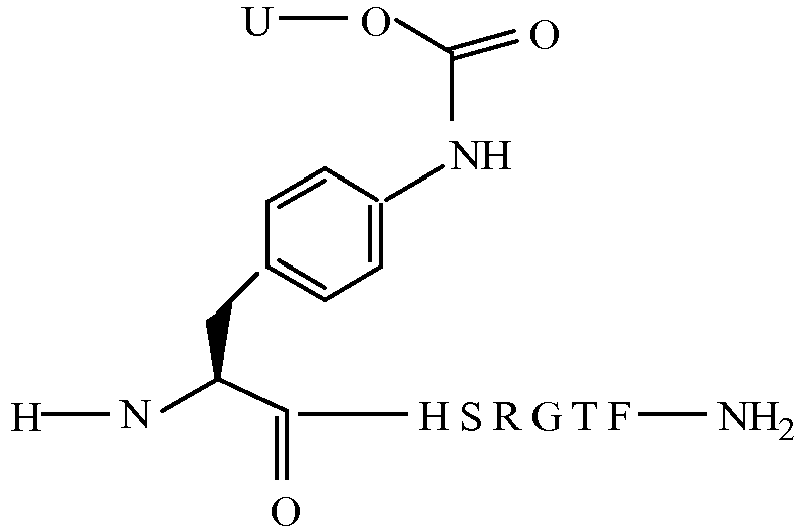
Compounds U (amino acid) O (amino acid) t½ 1 F P 58h 2 Hydroxyl- F P 327h 3 d-F P 20h 4 d-F d-P 39h 5 G P 72h 6 Hydroxyl-G P 603h 7 L P 62h 8 tert-L P 200h 9 S P 34h 10 P P 97h 11 K P 33h 12 dK P 11h 13 E P 85h 14 Sar P ≈1000h 15 Aib P 69min 16 Hydroxyl-Aib P 33h 17 cyclohexane P 6min 18 G G No cleavage 19 Hydroxyl-G G No cleavage 20 S N-Methyl-Gly 4.3h 21 K N-Methyl-Gly 5.2 h 22 Aib N-Methyl-Gly 7.1min 23 Hydroxyl-Aib N-Methyl-Gly 1.0h Table 3: Cleavage of the Dipeptides U-B linked to histidine (or histidine analog) at position 1 (X) from the Model Hexapeptide (XSRGTF-NH2; SEQ ID NO: 61) in PBS NH2-U-B-XSRGTF-NH2 (SEQ ID NO: 61) Comd. U (amino acid) O (amino acid) X (amino acid) t½ 1 F P H No cleavage 2 Hydroxyl-F P H No cleavage 3 G P H No cleavage 4 Hydroxyl-G P H No cleavage 5 A P H No cleavage 6 C P H No cleavage 7 S P H No cleavage 8 P P H No cleavage 9 K P H No cleavage 10 E P H No cleavage 11 Dehydro V P H No cleavage 12 P d-P H No cleavage 13 d-P P H No cleavage 14 Aib P H 32h 15 Aib d-P H 20h 16 Aib P d-H 16h 17 Cyclohexyl- P H 5h 18 Cyclopropyl- P H 10h 19 N-Me-Aib P H >500h 20 α, α-diethyl-Gly P H 46h 21 Hydroxyl-Aib P H 61 22 Aib P A 58 23 Aib P N-Methyl-His 30h 24 Aib N-Methyl-Gly H 49min 25 Aib N-Hexyl-Gly H 10min 26 Aib Azetidine-2-carboxylic acid H >500h 27 G N-Methyl-Gly H 104h 28 Hydroxyl-G N-Methyl-Gly H 149h 29 G N-Hexyl-Gly H 70h 30 dK N-Methyl-Gly H 27h 31 dK N-Methyl-Ala H 14h 32 dK N-Methyl-Phe H 57h 33 K N-Methyl-Gly H 14h 34 F N-Methyl-Gly H 29h 35 S N-Methyl-Gly H 17h 36 P N-Methyl-Gly H 181h -
Position 19 of the A chain is known to be an important site for insulin activity. Modification at this site to allow the attachment of a prodrug element is therefore desirable. Specific analogs of insulin at A19 have been synthesized and characterized for their activity at the insulin receptors. Two highly active structural analogs have been identified at A19, wherein comparable structural changes at a second active site aromatic residue (B24) were not successful in identification of similarly full activity insulin analogs. - Tables 4 and 5 illustrate the high structural conservation at position A19 for full activity at the insulin receptor (receptor binding determined using the assay described in Example 3). Table 4 demonstrates that only two insulin analogs with modifications at A19 have receptor binding activities similar to native insulin. For the 4-amino insulin analog, data from three separate experiments is provided. The column labeled "Activity (in test)" compares the percent binding of the insulin analog relative to native insulin for two separate experiments conducted simultaneously. The column labeled "Activity (0.60 nM)" is the relative percent binding of the insulin analog relative to the historical average value obtained for insulin binding using this assay. Under either analysis, two A19 insulin analogs (4-amino phenylalanine and 4-methoxy phenylalanine) demonstrate receptor binding approximately equivalent to native insulin.
Fig. 3 represents a graph demonstrating the respective specific binding of native insulin and the A19 insulin analog to the insulin receptor. Table 5 presents data showing that the two A19 insulin analogs (4-amino and 4-methoxy) that demonstrate equivalent binding activities as native insulin also demonstrate equivalent activity at the insulin receptor (receptor activity determined using the assay described in Example 4).Table 4: Insulin Receptor Binding Activity of A19 Insulin Analogs Analogue Insulin Receptor % native ligand % native ligand IC50 STDev Activity (in test) Activity (0.60 nM) 4-OH (native insulin) 0.64 0.15 100.0 100.0 4-COCH3 31.9 9.47 0.6 1.9 4-NH2 0.31 0.12 203.0 193.5 0.83 0.15 103.0 72.3 0.8 0.1 94.0 75.0 4-NO2 215.7 108.01 0.3 1.3 3,4,5-3F 123.29 31.10 0.5 0.5 4-OCH3 0.5 0.50 173.0 120.0 3-OCH3 4.74 1.09 28.0 12.7 5.16 3.88 18.0 11.6 4-OH, 3,5-2Br 1807.17 849.72 0.0 0.0 4-OH, 3,5-2 NO2 2346.2 338.93 0.0 0.0 Table 5: Insulin Receptor Phosphorylation Activity of A19 Insulin Analogs Analogue Insulin Receptor EC50 STDev % native ligand Activity (in test) 4-OH (native insulin) 1.22 0.4 100.0 4-NH2 0.31 0.14 393.5 4-OCH3 0.94 0.34 129.8 - Applicants have discovered an IGF analog that demonstrates similar activity at the insulin receptor as native insulin. More particularly, the IGF analog (IGF1 (YB16LB17) comprises the native IGF A chain (SEQ ID NO: 5) and the modified B chain (SEQ ID NO: 6), wherein the native glutamine and phenylalanine at positions 15 and 16 of the native IGF B-chain (SEQ ID NO: 3) have been replaced with tyrosine and leucine residues, respectively. As shown in
Fig. 4 and Table 6 below the binding activities of IGF1 (YB16LB17) and native insulin demonstrate that each are highly potent agonists of the insulin receptor.Table 6 Insulin Standard IGF1(YB16LB17) AVER. STDEV AVER. STDEV IC50(nM) 1.32 0.19 0.51 0.18 % of Insulin Activity 100 262 - Based on the activity of the A19 insulin analog (see Example 5), a similar modification was made to the IGF1 A:B(YB16LB17) analog and its ability to bind and stimulate insulin receptor activity was investigated.
Fig. 6 provides the general synthetic scheme for preparing IGF1 A:B(YB16LB17) wherein the native tyrosine is replace with a 4-amino phenylalanine [IGF1 A:B(YB16LB17)(p-NH2-F)A19amide] as well as the preparation of its dipeptide extended analog [IGF1 A:B(YB16LB17)A19-AiBAla amide], wherein a dipeptide comprising AiB and Ala are linked to the peptide through an amide linkage to the A19 4-amino phenylalanine. As shown inFig. 7 and Table 7, the IGF analog, IGF1 (YB16LB17) A(p-NH2-F)19 specifically binds to the insulin receptor wherein the dipeptide extended analog of that analog fails to specifically bind the insulin receptor. Note the dipeptide extension lacks the proper structure to allow for spontaneous cleavage of the dipeptide (absence of an N-alkylated amino acid at the second position of the dipeptide) and therefore there is no restoration of insulin receptor binding. - IGF A:B(YB16LB17) insulin analog peptides comprising a modified amino acid (such as 4-amino phenylalanine at position A19) can also be synthesized in vivo using a system that allows for incorporation of non-coded amino acids into proteins, including for example, the system taught in
US Patent Nos. 7,045,337 and7,083,970 .Table 7 Insulin Standard IGF1(YB16LB17) (p-NH2-F)A19amide IGF1(YB16LB17) (AiBAla)A19amide AVER. STDEV AVER. STDEV. AVER. STDEV IC50(nM) 0.24 0.07 1.08 .075 No Activity % of Insulin Activity 100 22 - A further prodrug analog of an IGFB16B17 analog peptide was prepared wherein the dipeptide prodrug element (alanine-proline) was linked via an amide bond to the amino terminus of the A chain (IGF1(YB16LB17) (AlaPro)A-1,0). As shown in Table 8, the IGF1(YB16LB17)(AlaPro)A-1,0 has reduced affinity for the insulin receptor. Note, based on the data of Table 3, the dipeptide prodrug element lacks the proper structure to allow for spontaneous cleavage of the dipeptide prodrug element, and therefore the detected insulin receptor binding is not the result of cleavage of the prodrug element.
Table 8 Insulin Standard IGF1(YB16LB17)(AlaPro)A-1,0 AVER. STDEV AVER. STDEV. IC50(nM) 0.72 0.09 1.93 .96 % of Insulin Activity 100 37.12 - Further modifications of the IGF1 (YB16LB17) peptide sequence reveal additional IGF insulin analogs that vary in their potency at the insulin and IGF-1 receptor. Binding data is presented in Table 9 for each of these analogs (using the assay of Example 3), wherein the position of the modification is designated based on the corresponding position in the native insulin peptide (DPI = des B26-30). For example, a reference herein to "position B28" absent any further elaboration would mean the corresponding position B27 of the B chain of an insulin analog in which the first amino acid of SEQ ID NO: 2 has been deleted. Thus a generic reference to "B(Y16)" refers to a substitution of a tyrosine residue at position 15 of the B chain of the native IGF-1 sequence (SEQ ID NO: 3). Data regarding the relative receptor binding of insulin and IGF analogs is provided in Table 9, and data regarding IGF analog stimulated phosphorylation (using the assay of Example 4) is provided in Table 10.
Table 9 Receptor Binding Affinity of Insulin and IGF Analogues Analogue Insulin Receptor IGF-1 Receptor Ratio nM % insulin % native insulin % IGF-1 % native IGF-1 IC50: STDev Date (in test) ectivity (0.6 nM) IC50: Date STDev Date (in test) activity (0.55 nM) IGF-1 A:B 10.41 1.65 9/4/2007 5.8 5.8 IGF-1 A:B(E10Y16L17) 0.66 0.36 5/22/2007 58.7 90.9 7.85 1.98 6/4/2007 6.8 7.0 11.9 0.51 0.18 5/29/2007 98.8 117.6 12.19 2.17 9/18/2007 5.0 4.5 IGF-1 A:B(E10Y16L17)-E31E3 2B-COOH 1.22 0.30 3/20/2008 36.5 50.0 17.50 2.25 4/4/2007 3.0 3.1 14.3 IGF-1 A:B(D10Y16L17) DPI A-COOH 0.26 0.02 11/9/2007 301.0 231.0 6.79 1.50 4/4/2008 7.7 8.1 0.2 0.02 12/4/2007 380.1 300.0 0.42 0.06 6/5/2008 174.1 144.1 IGF-1 A:B (E10Y16L17) DPI 0.38 0.08 8/10/2007 51.1 157.9 22.89 5.26 9/18/2007 3.3 2.4 60.2 IGF-1 A:B (H5D10Y16L17) DPI 0.16 0.07 11/9/2007 479.0 4.66 0.77 4/4/2008 11.2 11.8 29.1 IGF-1 A:B (H5D10Y16L17) (S=O)DPI 0.25 0.04 11/9/2007 316.0 IGF-1 A (H8 A9 N21): B(H5D10Y16L17) DPI A-COOH 0.05 0.01 12/4/2007 1576.7 4.03 0.50 4/4/2008 12.9 13.6 80.6 0.09 0.02 12/14/2007 1667.0 IGF-1 A (H8 A9 N21) :B(H5D10Y16L17 A22) DPI A-COOH 0.12 0.02 12/14/2007 1171.4 22.83 3.53 4/4/2008 2.3 2.4 190.3 IC50: STDev Date (in test) activity (0.6 nM) IC50: STDev Date (in test) activity (0.55 nM) IGF-1 A (H8 A9 N21) :B(H5D10Y16L17A22) (S=O) DPI A-COOH 0.36 0.10 12/14/2007 400.7 IGF-1 A: IGF-1 B(1-8)-In (9-17)-IGF-1 B(18-30) 1.59 0.62 5/22/2007 19.1 37.7 131.30 58.05 6/4/2007 0.3 0.4 82.6 IGF-1 A: In (1-17)-IGF-1 B (18-30) 2.77 1.19 5/22/2007 14.0 21.7 62.50 30.28 6/4/2007 0.9 0.9 22.6 2.67 0.67 5/18/2007 11.3 22.5 2.48 1.35 5/29/2007 20.1 24.2 IGF-1 A: In B(1-5)-IGF-1 B(YL)(6-30) 0.31 0.19 8/10/2007 62.4 193.5 27.54 6.57 9/25/2007 3.6 2 88.8 IGF-2 native 13.33 1.85 9/25/2007 7.5 4.5 IGF-2 AB IGF-2 AB(YL) 6.81 3.81 10/10/2007 8.4 8.8 In A: IGF-1 B(YL) 82.62 31.75 9/4/2007 0.9 0.7 107.24 65.38 9/4/2007 0.7 0.6 In A- IGF-2 D: In B-IGF-2 C 0.53 0.11 9/4/2007 141.0 113.0 1.59 0.34 9/18/2007 47.6 34.6 0.37 0.05 10/13/2007 179.1 162.2 14.69 3.02 9/25/2007 6.8 3.7 39.7 **All C terminals are amides (DPI) unless specified otherwise Table 10: Total Phosphorylation by IGF-1 & IGF-2 Analogues Analogue Insulin Receptor IGF-1 Receptor Selective Ratio EC50: STDev Date % Insulin EC50: STDev Date % IGF Insulin 1.26 0.098 12/14/2007 114.88 46.66 1/23/2008 90.89 1.43 0.72 4/1/2008 86.02 29.35 5/20/2008 1.12 0.11 3/31/2008 1.53 0.13 4/11/2008 2.70 0.71 4/16/2008 1.22 0.40 5/20/2008 IGF-1 54.39 21.102 12/14/2007 2.3 0.87 0.16 1/23/2008 100 0.02 0.49 0.13 5/20/2008 0.97 0.48 7/23/2008 IGF-1 AB IGF-1 A: B(E10Y16L17) 2.57 0.59 3/31/2008 49.2 7.42 5.59 7/23/2008 13 IGF-1 A:B(E10 Y16L17)-E31E32 B-COOH 7.00 2.82 3/31/2008 18.1 8.52 4.34 4/16/2008 31.7 IGF-1 AB(D10Y16L17) DPI A-COOH 0.08 0.006 12/14/2007 1575 0.78 0.17 1/23/2008 111.538 9.75 4.38 2.98 4/16/2008 ?? IGF-1 AB (E10Y16L17) DPI IGF-1 AB (H5D10Y16L17) DPI 12.22 5.46 1/23/2008 7.1 IGF-1 AB (H5D10Y16L17) (S=O)DPI EC50: Date % Insulin EC50: STDev Date % IGF IGF-1 A (H8 A9 N21) B(H5D10Y16L17) DPI A-COOH 0.15 0.054 12/14/2007 840 0.43 0.44 1/23/2008 181.395 2.81 0.25 0.2 4/16/2008 1080 IGF-1 A (H8 A9 N21) B(H5D10Y16L17A22) DPI A-COOH 0.35 0.064 12/14/2007 360 11.26 2.55 1/23/2008 7.7 32.54 0.44 0.17 4/16/2008 614 IGF-1 A (H8 A9 N21) B(H5D10Y16L17A22) (S=O) DPI A-COOH 0.72 0.098 12/14/2007 *All C-terminals are amides unless specified otherwise. - The cleavage of an (pNH2-Phe) amide linked dipeptide AibPro from various IGF-1 peptides was measured to determine the impact of the peptide sequence or heteroduplex on the dipeptide cleavage. Results for the tested peptides is shown in Table 11 and the data reveals that the IGF1-A chain alone represents a good model for the study of prodrug half life for IGF1 B:A (YB16LB17) peptides.
Table 11 Parent Peptide Half Life (hr) IGF1A(Ala)6,11,20(pNH2-Phe)A19 2.2 IGF1A(Acm)6,11,20 (pNH2-Phe)A19 1.8 IGF1 B:A(S-S)A7,B7(Acm)A6,11,20,B19(pNH2-Phe)A19 1.8 IGF1 B:A(pNH2-Phe)A19 1.6 - Comparison of prodrug analogs of the IGF A-chain relative to the disulfide bound A chain and B chain construct (IGF1 A:B(YB16LB17)) revealed the two compounds had similar half lives for the prodrug form. The AibAla analog does not cleave and thus is not a prodrug, but serves to show the modification can inactivate the insulin analog IGF1 A:B(YB16LB17)(p-NH2-F)A19amide. Accordingly, the IGF1A chain alone was determined to be a good model for the study of pro-drug half life on IGF1 B:A (YB16LB17) analog peptides. The AibAla analog does not cleave and thus is not a prodrug, but serves to show the modification can inactivate the insulin analog IGF1 A:B(YB16LB17)(p-NH2-F)A19amide. For simplicity, prodrug half lives were determined using only the IGF1 A chain in the absence of the B chain. The half lives of each propeptide was determined as described in Example 5. The data is presented in Table 12:
Table 12: Dipeptide half life on IGF1 dipeptide extended (p-NH2-F)A19amide analogs Dipeptide Half Life (hr) AiB Pro 2.2 AiBOH Pro 165.0 AiB dPro 1.9 AiBOH Sar 2.3 dK(acetyl) Sar 16.3 K Sar 21.8 K(acetyl) N-methyl Ala 23.6 dK(acetyl) N-methyl Ala 35.3 - The data shows that by altering the substituents on the dipeptide prodrug element that the half life of prodrug can be varied from 2 hrs to >100 hrs.
- Additional prodrug analog peptides were prepared using an IGF1-A(pNH2-F)19 base peptide and altering the amino acid composition of the dipeptide prodrug element linked through the 4-amino phenylalanine at position A19. Dipeptide half lives were measured for different constructs both in PBS and in 20% plasma/PBS (i.e. in the presence of serum enzymes. The results are provided in Table 13. The results indicate that three of the four peptides tested were not impacted by serum enzymes.
Table 13: Dipeptide half life on IGF1-A(pNH2-F)19 Half Life (hr) PBS 20% Plasma/PBS AiB Pro 2.2 2.1 AiB dPro 2.1 2.2 AiBOH Sar 2.3 dK N-isobutyl Gly 4.4 4.1 dK N-hexyl Gly 10.6 dK(acetyl) Sar 17.2 K Sar 21.8 5.9 K(acetyl) N-methyl Ala 23.6 dK(acetyl) N-methyl Ala 35.3 AiBOH Pro 165.0 K(acetyl) Azetidine-2-carboxylic acid Not cleavable dK(acetyl) Azetidine-2-carboxylic acid Not cleavable - Prodrug formulations of IGFB16B17 Analog Peptides were prepared and their degradation over time was measured using the insulin receptor binding assay of Example 3. Peptides used in the assay were prepared as follows:
- If not specified, Boc-chemistry was applied in the synthesis of designed peptide analogs. Selected dipeptide H2N-AA1-AA2-COOH was added to (pNH2-Phe)19 on IGF1A (Ala)6,7,11,20. The IGF-1 A chain C-terminal tripeptide Boc(Fmoc-pNH-Phe)-Ala-Ala was synthesized on MBHA resin. After removal of Fmoc by the treatment with 20% piperidine/DMF at room temperature for 30 minutes, Fmoc-AA2 was coupled to the p-amino benzyl side chain at A19 by using a threefold excess of amino acid, PyBop, DIEA and catalytic amount of pyridine. The Boc-synthesis of the remaining IGF-1 A chain (Ala)6,7,11,20 sequence was completed using an Applied Biosystems 430A Peptide Synthesizer, yielding IGF-1 A chain (Boc)0(Ala)6,7,11,20(Fmoc-AA2-pNH-Phe)19-MBHA. After the Fmoc group was removed from the N-terminus of AA2, Boc-AA1 was then coupled to the amine using threefold excess of amino acid, DEPBT and DIEA. Removal of the two Boc groups remaining on the A chain by TFA was followed by HF cleavage, yielding IGF-1 A-chain (Ala)6,7,11,20(H2N-AA1-AA2-pNH-Phe)19amide. In the case of AA1 being d-lysine, acetylation on the ε-amine was performed prior to Boc removal. Dipeptide-IGF-1 A chain analogs were purified by semi-preparative RP-HPLC and characterized by analytical RP-HPLC and MALDI mass spectrometry.
- A selected dipeptide H2N-AA1-AA2-COOH was added to (pNH2-Phe)19 on IGF-1 A chain (Acm)6,11,20 as described immediately above except PAM resin was used for the synthesis of IGF-1 A chain to yield a C terminal acid upon HF-cleavage. IGF-1 B chain (YB16LB17)(Acm)19 was synthesized on MBHA resin to yield a C terminal amide. The free thiol on CysB7 was modified by Npys through reaction with DTNP at a 1:1 molar ratio in 100% DMSO. Purified dipeptide-IGF-1 A chain and IGF-1 B chain (YB16LB17) analogs were assembled using the "1+2" two step chain combination strategy illustrated in
Scheme 1. Intermediate and final purifications were performed on semi-preparative RP-HPLC and characterized by analytical RP-HPLC and MALDI mass spectrometry. - The IGFB16B17 analog peptide prodrugs were incubated in PBS, pH 7.4 at 37°C and at predetermined time intervals an aliquot was taken and further degradation was quenched with 0.1%TFA and the aliquot was subjected to analytical HPLC analysis. Peaks a and b, representing the prodrug and active forms of the IGFB16B17 analog peptide were identified with LC-MS and quantified by integration of peak area an HPLC.
Figs 9A-9C show the output of an HPLC analysis of the degradation of the IGFB16B17 analog peptide prodrug: IGF1A(Ala)6,7,11,20(Aib-Pro-pNH-F)19. Aliquots were taken at 20 minutes (Fig. 9A ), 81 minutes (Fig 9B ) and 120 minutes (Fig. 9C ) after beginning the incubation of the prodrug in PBS. The data indicate the spontaneous, non-enzymatic conversion of IGF1A(Ala)6,7,11,20(Aib-Pro-pNH-F)19amide to IGF1A(Ala)6,7,11,20(pNH2-F)1amide over time. - The degradation of the prodrug forms of IGFB16B17 analog peptides to their active form was also measured based on the compounds ability to bind to the insulin receptor as measured using the in vitro assay of Example 3.
Fig. 10A &10B are graphs depicting the in vitro activity of the prodrug Aib,dPro-IGF1YL (dipeptide linked through the A19 4-aminoPhe).Fig 10A is a graph comparing relative insulin receptor binding of native insulin (measured at 1 hour at 4°C) and the A19 IGF prodrug derivative (Aib,dPro-IGF1YL) over time (0 hours, 2.5 hours and 10.6 hours) incubated in PBS.Fig 10B is a graph comparing relative insulin receptor binding of native insulin and the A19 IGF prodrug derivative (Aib,dPro-IGF1YL) over time (0 hours, 1.5 hours and 24.8 hours) incubated in 20% plasma/PBS at 37° C. As indicated by the data presented in the graph, increased activity is recovered form the A19 IGF prodrug derivative sample as the prodrug form is converted to the active IGF1YL peptide. The activity of the IGFB16B17 analog peptides was measured relative to insulin receptor binding, and since the underlying IGFB16B17 analog peptides have more activity than native insulin, activity of greater than 100% relative to insulin is possible. -
Fig. 11A &11B are graphs depicting the in vitro activity of the prodrug dK,(N-isobutylG)-IGF1YL (dipeptide linked through the A19 4-aminoPhe).Fig 11A is a graph comparing relative insulin receptor binding of native insulin (measured at 1 hour at 4°C) and the A19 IGF prodrug derivative (IGF1YL: dK,(N-isobutylG) over time (0 hours, 5 hours and 52 hours) incubated in PBS.Fig 11B is a graph comparing relative insulin receptor binding of native insulin and the A19 IGF prodrug derivative (IGF1YL: dK,(N-isobutylG) over time (0 hours, 3.6 hours and 24.8 hours) incubated in 20% plasma/PBS at 37° C. As indicated by the data presented in the graph, increased activity is recovered form the A19 IGF prodrug derivative sample as the prodrug form is converted to the active IGF1YL peptide. -
Fig. 12A &12B are graphs depicting the in vitro activity of the prodrug dK(e-acetyl),Sar)-IGF1YL (dipeptide linked through the A19 4-aminoPhe).Fig 12A is a graph comparing relative insulin receptor binding of native insulin (measured at 1 hour at 4°C) and the A19 IGF prodrug derivative (IGF1YL: dK(e-acetyl),Sar) over time (0 hours, 7.2 hours and 91.6 hours) incubated in PBS.Fig 12B is a graph comparing relative insulin receptor binding of native insulin and the A19 IGF prodrug derivative (IGF1YL: dK(e-acetyl),Sar) over time (0 hours, 9 hours and 95 hours) incubated in 20% plasma/PBS at 37° C. As indicated by the data presented in the graph, increased activity is recovered form the A19 IGF prodrug derivative sample as the prodrug form is converted to the active IGF1YL peptide. - An insulin-IGF-I minigene comprising a native insulin B and A chain linked via the IGF-I C chain (B0-C1-A0) was cloned into expression vector pGAPZα A (purchased from Invitrogen) under GAP promoter (promoter of the glyceraldehyde-3-phosphate dehydrogenase (GAPDH)) for constitutive expression and purification of recombinant protein in yeast Pichia pastoris. The minigene was fused to an N-terminal peptide encoding Saccharomyces cerevisiae α-mating factor leader signal for secretion of the recombinant protein into the medium. A Kex2 cleavage site between the minigene and the leading α-mating factor sequence was used to cleave the leader sequence for secretion of the minigene with native amino termini. Single-site alanine mutations were introduced into C peptide at positions 1 (G1A), 2 (Y2A), 3 (G3A), 4 (S4A), 5 (S5A), 6 (S6A), 7 (R7A), 8 (R8A), 10 (P10A), 11 (Q11A), and 12 (T12A) of the B0C1A0 minigene.
- The minigenes including B0C1A0, eleven alanine mutants, and other select derivatives were transformed into yeast Pichia pastoris by electroporation. Positive transformants were selected on minimal methanol plates and a genomic preparation of each Pichia isolate was performed and integration of the constructs into the yeast genome was confirmed by PCR. An 833 base pair PCR product was visualized on an agarose DNA gel. The insulin analogs were produced by fermentation of a corresponding yeast line. The yeast cells were pelleted by centrifugation at 5 K for 20 minutes in 500 ml Beckman centrifuge tubes and the media was kept for subsequent protein purification.
- Growth media supernatants were filtered through 0.2 µm Millipore filter. Acetonitrile (ACN) was added to the supernatant to a final volume of 20%. The supernatant was purified over a Amberlite XAD7HP resin from Sigma, pre-equilibrated with 20% aqueous ACN. The resin was then rinsed twice with 30 ml of 20% aqueous ACN and contaminants were removed with 30% aqueous ACN containing 0.1% TFA. Partially purified insulin analogs were eluted from the column with 54% aqueous ACN containing 0.1% TFA and lyophilizied. Lyophilized samples were re-suspended in 0.025M NH3HCO3 pH 8 and purified on a Luna C18 column (10 µm particle size, 300A° pore size). Protein was eluted from the column using a linear gradient of 20-60% aqueous ACN. MALDI-MS positive fractions were pooled and transferred to a disposable scintillation vial for subsequent lyophilization. Lyophilized samples were then resuspended in 20% aqueous ACN containing 0.1% TFA, and purified on a Luna C18 column (10 µm particle size, 300A° pore size). The protein was eluted from the column using a linear gradient of 18-54% aqueous ACN with 0.1% TFA. Protein elution was monitored at an absorbance 280 nm. MALDI-TOF MS positive fractions were analyzed via a C8 analytical column to insure purity.
-
Figure 15 illustrates the potency of the single-chain insulin analogs. The B0-C1-A0 analog demonstrated potency that was equally effective at both insulin receptor isoforms and the IGF-1 receptor. Mutation of the tyrosine atposition 2 to alanine or the shortening of the C-peptide to eight amino acids through deletion of C9-12 provided a selective enhancement in the specificity of insulin action by significant reduction in the IGF-1 receptor activity. See also the data provided in Tables 14A and 14B:Table 14A Insulin Binding & Phosphorylation Analysis (B0C1A0 ) Peptide IR-A Binding IR-A Phosphorylation IC50, nM M n EC50, nM n Insulin 0.54±0.02 4 1.67±0.13 1 IGF-1 18.81±1.77 3 29.20±8.41 1 010 (B0C1A0) 2.83±0.52 2 1.93±0.43 1 G1A 1.21±0.15 1 2.4±0.24 1 Y2A 1.95±0.28 3 1.86±0.42 1 G3A 1.41±0.05 2 2.13±0.02 1 S4A 0.84±0.47 2 0.76±0.35 1 S5A 0.93±0.44 1 2.23±1.27 1 S6A 1.15±0.24 1 2.33±1.65 2 R7A 6.04±0.82 1 5.21±4.14 1 R8A 0.63±0.09 1 2.03±0.06 2 P10A 2.86±0.93 1 2.59±1.2 1 Q11A 1.79±0.47 1 2.58±0.83 1 T12A 1.2±0.18 1 2.83±1.31 1 Table 14B IGF-1 Binding & Phosphorylation Analysis (B0C1A0) Peptide IGF-IR Binding IGF-IR Phosphorylation IC50, nM n EC50, nM n Insulin 60.63±4.43 1 48.66±1.59 1 IGF-1 0.38±0.07 1 0.88±0.41 1 010 (B0C1A0) 4.49±1.04 1 1.29±2.28 1 G1A 42.36±16.24 1 1.4±0.62 1 Y2A 257.9±29.59 1 35.6±14.55 1 G3A 34.02±16.09 1 7.85±0.78 1 S4A 15.30±3.10 1 1,64±1.65 1 S5A 13.06±3.01 1 2.63±1.88 1 S6A 2.44±0.79 1 1.54±0.62 2 R7A 43.86±8.72 1 1.26±1.55 1 R8A 10.85±1.47 1 0.50±0.23 2 P10A 6.42±0.47 1 2.79±1.12 1 Q11A 4.23±0.43 1 0.41±0.69 1 T12A 9.15±0.83 1 1.44±1.36 1 -
Figure 16 demonstrates thatposition Figures 17 and18 present the in vitro analysis of the single-chain insulin mutants as a ratio of binding affinity (IC50) and biochemical signaling through tyrosine phosphorylation (EC50). The two independent measurements demonstrate great consistency thereby validating this in vitro approach to structure-function analysis. All of the analogs maintained single unit nanomolar activity with certain specific analogs proving to be slightly enhanced in potency (low single unit nanomolar). The most insulin selective analogs were those that we missing the last four residues of the C-peptide, had an alanine mutation at position two of the C-peptide, or a combination of the two changes. - The DP20 gene was codon-optimized, synthesized and cloned into a LIC-SUMO vector. LIC-SUMO is modified from pET22b (Novagen), has a sumo sequence as an N-terminal fusion tag with a TEV protease cleavage site between the SUMO and target protein sequence.
- DP20 was expressed in OrigamiB(DE3) (Novagen). Cells were cultured in Luria Broth medium with 50ug/ml ampicillin, 25ug/ml kanamycin and 5ug/ml tetracycline. When the OD600nm reached 0.8-1.0 at 37 °C the culture was transferred to 16 °C. IPTG was added to the culture at 0.2 mM concentration. The culture was continued overnight and cells were harvested with centrifugation at 5000 rpm for 15 minutes.
- Cell pellet was re-suspended in lysis buffer consisting of 50 mM sodium phosphate, 300 mM NaCl, 10 mM imidazole. The cells were lysed by sonication (1 second on, 2 second off, 180 cycles). The lysate was centrifuged at 15000 rpm for 30 minutes. Supernatant was applied to a Ni-NTA (Qiagen) column pre-equilibrated with lysis buffer. The column was washed with a buffer of 50 mM sodium phosphate, 300 mM NaCl, 40 mM imidazole. DP20 was eluted with elution buffer of 50 mM sodium phosphate, 300 mM NaCl, 500 mM imidazole.
- The DP20 eluted from the Ni-column was digested with TEV protease at 4 °C overnight. The sample was purified by chromatography on a silica-based C8 HPLC column (Phenomenex) after the pH was adjusted to 2-3. The sample was applied to the column and eluted with a gradient of 15%-25% acetonitrile in 0.15% TFA(aq). Identity of the desired protein was confirmed by analytical HPLC and mass spectrum analysis. Fractions containing DP20 were pooled and lyophilized.
- The gene for DP31 was codon-optimized, synthesized and cloned to LIC-SUMO vector. LIC-SUMO is modified from pET22b (Novagen), has a sumo sequence as an N-terminal fusion tag with a TEV protease cleavage site between the SUMO and target protein sequence.
- DP31 was expressed in OrigamiB(DE3) (Novagen). Cells were cultured in Luria Broth medium with 50 ug/ml ampicillin, 25 ug/ml kanamycin and 5 ug/ml tetracycline. When the OD600nm reached 0.8-1.0 at 37 °C, the culture was transferred to 16 °C. IPTG was added to the culture at 0.2mM concentration. The culture was continued overnight and the cells were harvested with centrifugation at 5000 rpm for 15minutes.
- The general scheme for synthesizing single chain analogs under denaturing conditions is shown in
Fig. 17 . Cell pellet was re-suspended in lysis buffer consisting of 50 mM sodium phosphate, 300 mM NaCl, 10 mM imidazole, 8 M urea. Lysis was performed by sonication (1 second on, 2 second off, 180 cycles). The lysate was centrifuged at 15000rpm for 30 minutes. Supernatant was loaded to a Ni-NTA (Qiagen) column pre-equilibrated with lysis buffer. The column was washed with 50 mM sodium phosphate, 300 mM NaCl, 40 mM imidazole. DP31 was eluted with 50 mM sodium phosphate, 300 mM NaCl, and 500 mM imidazole. - DP31 purified by Ni-column chromatography was digested with TEV protease at 4 °C overnight. Alternatively, the leader peptide can be cleaved using a tryptophan cleavage site (W), or Lys C cleavage at an inserted lysine residue when no lysines are present within the single chain insulin analog. The pH of the solution was adjusted to 10.5; glycine and cysteine were added to a concentration of 20 mM and 4 mM respectively. The protein was disulfide oxidized and folded over a period of 24-48 hours. The sample was purified by chromatography on a silica C8 HPLC column (Phenomenex) after the pH was adjusted to 2-3. DP-31 was eluted with 15%-25% acetonitrile in 0.15% TFA(aq). Protein Identity was confirmed by analytical HPLC and mass spectrum analysis. Fractions containing DP31 were pooled and lyophilized.
- Codon-optimized gene of DP31 will be synthesized and cloned into pPICZα (Invitrogen). The construct will include a spacer peptide of EEAEAEAEPK placed between a Kex2 cleavage site and the DP31 gene. The plasmid pPICZα-DP31 will be opened (linearized) with SacI and electroporated into P. Pastoris strain X-33 (Invitrogen). The transformed yeast clones will be selected on Zeocin plates which contained increasing concentration of Zeocin. The most viable clones (highest Zeocin concentration) will be selected and used to express the DP31 protein.
- The selected P. Pastoris cells will be inoculated in 100 ml YPD medium (1% yeast extract, 2% peptone, 2% dextrose) and shaken at 30°C and 220 rpm for 24 hours. The inoculate will then be placed in 2L BMGY medium (1% yeast extract, 2% peptone, 100 mM potassium phosphate pH6.0, 1.34% YNB, 4X10⁻⁵ biotin, 1% glycerol) and shaken at 30°C and 220 rpm until OD600nm reaches between 5-6. The cells will then be collected by centrifugation at 5000 rpm for 5 min at 4 °C, resuspended in 1L BMMY medium (1% yeast extract, 2% peptone, 100mM potassium phosphate pH6.0, 1.34% YNB, 4X10⁻⁵ biotin, 0.5% methanol) to induce production of DP31. Methanol will be supplemented every 24h to a final concentration of 1.0% (V/V) throughout the induction phase (4-6 days).
- Culture medium will be clarified by centrifugation at 5000 rpm for 15 min, loaded to a XAD7HP column (Rohm and Haas). The column will be washed with 5% acetic acid containing 15% ethanol, followed by 5% acetic acid repeatedly to remove impurities. The DP31 will be eluted from the column with 45% ethanol with 5% acetic acid. The eluted protein will then be concentrated by evaporation and further purified by preparative HPLC using the same conditions as provided in Example 15.
- To express DP31 in CHO cells, a synthetic gene (see diagram below) will be synthesized and ligated to pcDNA3.1 containing NheI and NotI sites.
hGH 8xHis- DP31 - Human growth hormone (hGH) fused to the N-terminal of DP31 can be easily detected by enzyme-linked immunoadsorbent assay (ELISA). It also enhances expression and directs secretion. Eight histidine residues and a TEV protease cleavage site will be placed between the hGH and DP31 to facilitate purification and proteolytic removal of the fusion partner.
- CHO cells will be transfected with the pcDND3.1-hGH-DP31 plasmid using a Fugene6 transfection reagent (Roche). Stable cell lines will be screened in medium containing 200 ug/ml Zeocin. Stable cell lines will be amplified and adapted to serum-free medium (EX-cell 301 JRH Biosciences) and expanded to grow in 850-cm2 roller bottles. One hundred milliliters of medium will be maintained in each roller bottle allowing production of 1 liter of conditioned medium every three days from ten roller bottles.
- The conditioned serum-free medium will be centrifuged and filtered to remove cell debris. Tris and NaCl will then be added to the medium to a concentration of 20 mM and 300 mM, respectively. The pH will then be adjusted to 8.0 and the media applied to a Ni-NTA column. The column will be washed with five bed-volumes of 20 mM Tris, 20 mM imidazole, 300 mM NaCl at
pH 8. The extended DP31 fusion protein will be eluted with 20 mM Tris, 500 mM imidazole, 500 mM NaCl atpH 8. This fusion protein will be digested with TEV protease and further purified by preparative HPLC using the same conditions as disclosed in Example 15. - The affinity of each peptide for the insulin or IGF-1 receptor was measured in a competition binding assay as described in Example 3 and the insulin subtype A and subtype B receptor phosphorylation activity of the insulin analogs was measured using, receptor transfected HEK293 cells as described in Example 4. Each of the compounds were also tested for their ability to induce proliferation of HMEC cells. The results are provided in Table 15. Compounds tested include:
- DP19: CTP-E5K-B chain-C peptide-A Chain (SEQ ID NO: 67);
- DP20: GE5K-B chain-CTP(K)-A Chain (SEQ ID NO: 68); and
- DP22: CTP-E5R-B chain-CTP(K)-A Chain (SEQ ID NO: 91).
-
Fig. 18A is a graph showing the ability of DP20 and DP22 relative to native insulin and IGF-1 to induce phosphorylation at the insulin subtype A receptor. The EC50 values (in nM) obtained for each compound in this experiment was:Insulin DP-20 DP-20Lys DP22 DP22Lys random IGF-1 0.52 ± 0.16 0.80 ± 0.20 0.34 ± 0.07 0.97 ± 0.17 0.39 ± 0.06 2.24 ± 1.44 -
Fig. 18B is a graph showing the ability of DP19 and DP20 relative to native insulin and IGF-1 to induce phosphorylation at the insulin subtype B receptor. The EC50 values (in nM) obtained for each compound in this experiment was:Insulin DP-20 DP-20Lys DP22 DP22Lys random IGF-1 0.50 ± 0.10 10.6 ± 5.06 2.44 ± 1.30 18.3 ± 10.3 1.88 ± 0.52 32.4 ± 14.9 -
Fig. 18C is a graph showing the ability of DP20 and DP22 relative to native insulin and IGF-1 to induce phosphorylation at the IGF-1 receptor. The EC50 values (in nM) for each compound for this experiment was:Insulin DP-20 DP-20Lys DP22 DP22Lys random IGF-1 22.2 ± 8.21 316 ± 152 8.23 ± 3.84 83.1 ± 11.9 14.8 ± 5.07 0.45 ± 0.05 -
Figs. 19A-19C show the results of comparative insulin tolerance tests conducted on mice comparing the ability of human insulin relative to two CTP containing single chain insulin analogs. As shown by the data, both the D19 (having a CTP linked to the N-terminus of the B chain) and D20 (having a CTP as the linking moiety) are potent insulin receptor agonists. - The CTP peptide has a high content of serine and proline residues. To determine if the serine residues function to give CTP its surprising activities, the serines of the CTP linking peptide were substituted with alanines and the ability of the analogs to induce phosphorylation by the insulin subtype A and B receptors was measured. In addition, single chin insulin analogs were prepared having the CTP peptide serve as the linking moiety between the B and A chains wherein the amino acid comprising the CTP peptide remain the same, but the sequence of the CTP peptide has been randomized (DP20RCTP). A further analog was prepared based on the DP20 structure, wherein the linking peptide comprises the native proinsulin C peptide.
Figs. 20A &B are graphs showing the activities of the insulin analogs to induce phosphorylation by the insulin subtype B and A receptors, respectively. The IC50 of each analog is provided in Tables 16A and 17B.Table 16A: Phosphorylation at Insulin Receptor Subtype A Insulin DP-20 DP-20, C0 DP20, S2A DP20 random IGF-1 0.15 3.12 84.32 11.84 8.08 145.6 Table 16B: Phosphorylation at Insulin Receptor Subtype B Insulin DP-20 DP-20, C0 DP20, S2A DP20 ransom IGF-1 0.91 1.05 35.37 7.44 2.46 19.68 - The data reveal that single chain insulin analogs comprising a CTP peptide as the linking moiety, even when the serines have been substituted with alanines or when the sequence has been randomized, still retain potency at both insulin receptors relative to the native proinsulin or IGF peptides at both insulin receptor subtypes relative to the native proinsulin or IGF peptides.
- To further investigate the CTP peptides functionality as an insulin single chain linking moiety, additional single chain analogs were prepared. A single chain analog comprised a CTP peptide as the linking peptide wherein the prolines have been replaced with alanine (DP20 P to A (SEQ ID NO: 70)) and its activity was compared to DP20 modified to either have the native proinsulin C peptide, the native IGF_1 C peptide or the CTP peptide cleaved at the carboxy terminus of the CTP peptide. The activity of these compounds at the insulin subtype A receptor is shown in
Fig. 21 . A single chain analog comprising a CTP peptide linking moiety wherein the prolines of the CTP peptide have been substituted with alanine still has appreciable activity at the insulin receptor, equivalent to that of native IGF-1. Furthermore, when a single chain insulin analog comprising the CTP peptide as the linking moiety is cleaved at the junction between the CTP and the insulin A chain, the resulting two chain analog is at least as potent as native two chain insulin. - To investigate whether the native proinsulin C peptide interferes with insulin's ability to activate the insulin receptor, single chain insulin analogs were constructed comprising a linking moiety that includes both a CTP peptide and the native proinsulin C peptide. The native C peptide was inserted either between the B chain and the CTP peptide (DP20 C0CTP (SEQ ID NO: 74)), or between the CTP peptide and the A chain (DP20 CTPC0 (SEQ ID NO: 73)). An additional analog was prepared comprising two CTP peptides linked head to tail as the linking moiety (DP20 2CTP (SEQ ID NO: 75)).
Figs. 22A and22B are graphs demonstrating the in vitro phosphorylation activity of these single chain insulin analogs. As shown by the data all insulin analogs appear to have activity at the insulin receptor although DP20 CTPC0 appears more potent than DP20 C0CTP. Furthermore, a single chain analog comprising two CTP peptides as the linking peptide also appears to be active as an insulin agonist. - To investigate whether removing a segment of the native proinsulin C peptide would allow that sequence to be used as a linking moiety in single chain analogs, a series of 6 amino acid deletions were made in the native proinsulin C peptide sequence. Six amino acids were removed to adjust the native proinsulin C peptide to the same size as the CTP peptide. Accordingly single chain analog were prepared using the native proinsulin C peptide as the linking moiety wherein either the first 6 amino acids were removed, DP20 C0 (desC1-6) (SEQ ID NO: 76), amino acids 15-21 were removed, DP20 C0 (desC15-21) (SEQ ID NO: 77), or amino acids 27-33 were removed, DP20 C0 (desC27-33) (SEQ ID NO: 78).
Fig. 23 is a graph demonstrating the in vitro phosphorylation activity at the insulin subtype A receptor of single chain insulin analogs relative to a two chain native insulin and an insulin analog having CTP as the linking peptide. Each of the single chain insulin analogs comprising a truncated native proinsulin C peptide demonstrated poor activity at the insulin subtype A receptor, while DP20 was nearly equivalent to native hormone. - To investigate the activity of native insulin sequences in a single chain insulin analog comprising a CTP peptide as the linking moiety, the DP25M peptide was constructed: GEEEEEKFVNQHLCGSHLVEALYLVCGERGFFYTDRTSSSSRAPPPSLPSPSRL PGPSDTPILPQRGIVEQCCTSICSLYQLENYCN (SEQ ID NO: 81). This compound was tested for activity at the insulin subtype A (IRA-DP25M) and subtype B (IRB-D25M), see
Fig. 24 , and was found to be active but about 3 to 4 fold less active than the corresponding DP20 analog. Accordingly, a series of insulin derivatives of DP25 M were prepared wherein the carboxy terminal 5 amino acids have been removed from the B chain: - DP30: GEEEEEK-SSSSRAPPPSLPSPSRLPGPSDTPILPQRGIVEQCCTSICSLYQLENYCN (SEQ IDNO: 83);
- DP31: GEEEEEKFVNQHLCGSHLVEALYLVCGERGFF-SSSSRAPPPSLPSPSRLPGPSDTPILPQKGIVEQCCTSICSLYQLENYCN (SEQ IDNO: 84); and
- DP32: GEEEEEKGPEHLCGSHLVEALYLVCGERGFF-SSSSRAPPPSLPSPSRLPGPSDTPILPQKGIVEQCCTSICSLYQLENYCN (SEQ IDNO: 85).
- The activity of these compounds was tested at the insulin subtype A and B receptors as well as the IGF-1 receptors and are compared to the activity of single chain analogs using the IGF-1 C peptide as the linking moiety:
- DR3:

- DR4

- Results are provided in Tables 17A and 17B. As the data shows DP30 and DP31 are very potent insulin agonists approaching the potency of native insulin, yet having a higher selectivity for both insulin receptors over the IGF-1 receptor relative to DR3 and DR4 (Table 17A). Furthermore comparison of DP30 and DP31 to DP25 reveals that DP25 is not as potent as DP30 and DP31, indicating the last 5 amino acids of the insulin B chain are not desirable in single chain insulin agonists (see Table 17B). when the single analog DP31 was cleaved between the CTP peptide and the A chain (DP31 LysC), the potency of the resulting two chain analog is increased slightly at the insulin receptor, but its activity at the IGF-1 receptor is substantially increased. Consistent with these results DR3 and DR4 were found to have more activity in stimulating cell growth of HMEC cells than DP30 and
DP 31. DP30 andDP 31 were found to have similar activity as native insulin in stimulating cell growth of HMEC cells.Table 17A Insulin Analogs DR Insulin STD N DR3 STD N DR4 STD N DP30 STD N DP31 STD N Average EC50 at IRA 0.81 0.45 6 0.55 0.19 4 0.79 0.23 3 1.41 0.89 3 0.83 0.41 4 Average EC50 at IRB 0.56 0.28 7 0.56 0.23 5 0.68 0.31 3 1.12 0.52 3 0.91 0.20 4 Average EC50 at IGF-1 R 55.8 9.7 2 2.24 0.42 3 20.3 16.35 3 ∼DP31 - - 194 87 3 Table 17B Insulin Analogs DR25, 30 & 31 Bioactivity in vitro phosphorylation (EC50nM) Insulin STD N DP25M STD N DP30 STD N DP31 STD N DP31 LysC STD N Average EC50 at IRA 0.81 0.45 6 4.11 1.3 2 1.41 .089 3 0.83 0.41 4 0.40 0.11 2 Average EC50 at IRB 0.56 0.28 7 5.49 1.5 2 1.12 0.52 3 0.91 0.20 4 0.45 0.28 2 Average EC50 at IGF-1 R 55.8 9.7 2 ---- ---- - ∼DP31 - - 194 87 3 10.06 - 1 - Comparative insulin tolerance tests were conducted on mice comparing the ability of human insulin relative to three different acylated insulin analogs to reduce and sustain low blood glucose concentration. The compounds were tested at two different concentrations (27 nmol/kg and 90nmol/kg). The acylated insulins included MIU-41 (a two chain insulin analog having a C16 acylation via a gamma glutamic acid linker attached to a lysine residue located at position A14), MIU-36 (a two chain insulin analog having a C16 acylation linked to the N-terminus of the B chain) and MIU-37 (a two chain insulin analog having a C16 acylation via a gamma glutamic acid linker attached to a lysine residue located at position B22). All three acylated insulin analogs provided a more basal and sustained lowered glucose levels relative to native insulin, even after 8 hours (See
Fig. 25A-25D ). -
Figs. 26A-26D show the results of comparative insulin tolerance tests conducted on mice comparing the ability of the commercially available acylated insulin analog (Detimer) to the acylated two chain insulin agonist MIU-55. MIU-55 [B1(H5,10,Y16,L17,C16rE-K22)25a : A1(N18,N21)] has the C-terminal 5 amino acids of the B chain deleted and is acylated with a C14 fatty acid (myristoylic acid) through a gamma Glu linker at the ε-amino group of Lys B29. The results indicate that MIU-55 is about one third as potent as Detimer (SeeFig. 26A and 26B ). The data indicate that the acylated forms of insulin are longer acting than the non-acylated forms and that MIU-55 while less potent than Detimir, exhibits a similar profile as Detimir.Figs. 26C and 26D provide data on blood glucose AUC values after administration of the listed analogs. A comparison of Detimir and MIU-49 in insulin tolerance tests revealed similar results (seeFigs. 27A-27D . MIU-49 [B1(C16-rE0,H5,Aib9,H10,E13-K17,Y16)25a : A1(N18,N21)] is a two chain insulin agonist having the C-terminal 5 amino acids of the B chain deleted and acylated with a C16 fatty acid at the through a gamma Glu linker at the α-amino group of Gly B2. Again, the data shows that MIU-49 is about one third as potent as Detimer (SeeFig. 27A and32B that MIU-49 while less potent than Detimir, exhibits a similar profile as Detimir. - Various pegylated insulin analogs were prepared and tested in vitro. Table 18 shows the percent activity of each analog relative to native insulin.
Table 18 Pegylated IGF-1 and Insulin Analogs % Insulin Activity MIU # Name IR-B IR-A IGF-1R MIU-35 B1(H5,H10,Y16,L17)25-C1-A1(H8,N18,N21) 17.4 61.4 3.2 MIU-56 C8-PEG20K 14.8 B1(H5,Y16,L17)25-PEG8-K-PEG4-A1(N18,N21) MIU-57 B1-PEG20K MIU-35 1.1 3.1 1.2 MIU-58 B1-PEG20K-B1-Dimer MIU-35 5.8 19.7 2.6 MIU-59 B1-PEG20K insulin 11.7 17.3 0.3 MIU-60 B29-PEG20K, B1,A1-NH2CO insulin 2.7 2.4 <<0.3 MIU-61 B1,B29,A1-tri-PEG5K insulin <0.1 0.2 <<<0.3 MIU-66 B1-PEG20K, A1-NH2CO insulin 2.9 3.0 <0.3 MIU-67 B0, C8-PEG10K di-PEGylatedMIU-35 0.1 0.2 <0.1 MIU-68 B0, B22-PEG10K di-PEGylated MIU-35 0.1 0.4 <0.1 MIU-69 B0, A14-PEG10K di-PEGylated MIU-35 0.5 1.0 <0.1 - Comparative insulin tolerance tests were conducted on mice comparing the ability of the acylated insulin analog Detimir relative to the pegylated single chain insulin analog MIU-56: B1(H5,Y16,L17)25a-PEG8-K-PEG4-A1(N18,21). This single chain analog comprises a 20 kDa PEG linked to the side chain of the single lysine residue in the linking moiety (PEG8-K-PEG4) that joins the A chain and the B chain. As shown in
Fig. 28A-28D , the pegylated analog has a sustained duration of action for 24 hours and its onset is gradual enough to avoid sedation of animals at the dosage required for sustained action through 24 hours.Figs 28C and 28D show the blood glucose AUC24 hrs in mice administered Detimir and MIU-56, respectively. Similar results were obtained for another pegylated single chain insulin analog MIU-57 (seeFigs. 29A-29D ). MIU-57 is an insulin single chain analog (B1(H5,Y16,L17)25-C1-A1(N18,21) comprising a 20 kDa PEG linked to the side chain of the N-terminus of the B chain.Figs. 29A and 29B show the results of a comparative insulin dose titration of single chain insulin analogs pegylated at the linking moiety (MIU-56) or pegylated at the N-terminus of the B chain (MIU-57), respectively.Figs 29C and 29D show the blood glucose AUC24 hrs in mice administered MIU-56 and MIU-57, respectively. The data shows these analogs remain potent and have an improved therapeutic index relative to native insulin. Results from comparative insulin dose titrations of MIU-56 and MIU-57 reveal that a similar profile is obtained in mice for dosages ranging from 20 nmol/kg through 80 nmol/kg (seeFigs. 29E and 29F ) - A dimer (MIU 58) was prepared comprising two insulin single chain analogs (B1(H5,Y16,L17)25-C1-A1(N18,21) linked head to head via a 20 kDa PEG chain.
Figs. 29G-29J represents the results obtained from a comparative insulin tolerance test for MIU-57 and MIU-58 using C57/Blk mice.Figs. 29G and 29H are graphs showing the results of insulin tolerance tests comparing MIU-57 and MIU-58.Figs 29I and 29J show the blood glucose AUC24 hrs in mice administered MIU-57 and MIU-58, respectively. The dimer is less potent than the parent compound, but is still active. -
Figs. 30A and 30B provide data from a comparative insulin dose titration of two pegylated native insulin heterodimers. The analogs comprise two native insulin A and B chain sequences linked via the native disulfide linkages, and modified to have either a 20 kDa PEG linked at the N-terminus of the B chain or at position B29 (with the amino terminus of the A and B chain carbamylated). The data shows that while these compounds differ slightly in their in vitro activities (See Table 18), they behave similarly in vivo in mice. Both compounds remain potent and have an improved therapeutic index relative to non-pegylated native insulin (slow onset, sustained activity for 24 hours and relative flatness of the response). - Insulin analogs were also constructed having two or more covalently linked polyethylene glycol chains and compared to a native insulin analog having a single 20 kDa PEG linked to its N-terminus. More particularly, the activities of a single chain insulin analog (B1(H5,Y16,L17)25-C1(K8)-A1(N18,21)) having two PEG chains (10K each) linked at the N-terminus and at
amino acid 8 of the linking moiety (C8), a single chain insulin analog (B1(H5,Y16,L17,K22)25-C1(K8)-A1(N18,21)) having two PEG chains (10K each) linked at the N-terminus and at amino acid B22, and a single chain insulin analog (B1(H5,Y16,L17)25-C1(K8)-A1(K14, N18,21)) having two PEG chains (10K each) linked at the N-terminus and at amino acid A14 were compared.Figs. 31A-31D provide data from a comparative insulin dose titration of the three pegylated insulin analogs relative to the single pegylated native insulin derivative. The activity in vitro is dramatically reduced by at least 10x. However, while the in vivo data shows that some potency is lost, the double pegylated insulin analogs are still effective (particularly for the analog pegylated at the linking moiety). Accordingly, insulin analogs can be prepared having two PEG chains of 10 kDa in length that will provide an improved therapeutic index relative to non-pegylated insulin analogs. In addition pegylation at the linking moiety of single chain analogs appears to be a preferred site of pegylation. - Diabetic mice (db/db mice) were administered pegylated insulin analogs to compare their efficacy to commercially available insulin analogs. In particular, insulin analogs Levemir and Humulin were compared to the pegylated insulin analogs MIU-59 (native insulin analog having a single 20 kDa PEG linked to its N-terminus) and MIU-66 (native insulin analog having a single 20 kDa PEG linked to its N-terminus and the amino terminus of the A and B chain carbamylated). Both MIU-59 and MIU-66 have improved activity relative to Levemir and Humulin (see
Figs. 32A and 32B ). - Normal mice were administered either an insulin heterodimer analog [B1(Y16,L17,Y25)29a : A1(aF19-NH2)], or a prodrug derivative thereof. The prodrug derivative [B1(Y16,L17,Y25)29a : A1(aF19-dLys(Ac),NLeu)] comprises a 4-amino-phenylalnine substitution at position A19 wherein a dipeptide dLys(Ac),NLeu have been covalently linked at the 4-amino position of the A19 residue. This dipeptide will autocleave under physiological conditions with a half life of approximately 5 hours. After incubating the prodrug derivative [B1(Y16,L17,Y25)29a : A1(aF19-dLys(Ac),NLeu)] for 24 hours ex vivo, the resultant compound was administered to mice and it ability to lower blood glucose was compared to parent compound. As shown in
Fig. 33 the two compounds performed almost identically. - Acylation of the insulin prodrug analogs was investigated to determine if retention times in vivo could be enhanced. The in vitro activity of MIU 42 [B1(Y16,L17,Y25)29a : A1(dLys(rE-C14),Sar-aF19)], having an acylated dipeptide prodrug element, increases with time incubated ex vivo in 30%ACN/PBS @ pH7.4 37°C (providing time for prodrug conversion) relative to the non-acylated prodrug. Comparative insulin potency tests conducted using the
MIU 42 prodrug (Fig. 34B) administered without a pre-incubation step show that the prodrug is not very potent relative to the non-prodrug parent compound (MIU-27; Fig. 34A). Accordingly, at least in mice the acylation does not produce the desired profile. This was also found to be true for an acylated insulin analog MIU-46 [B1(H5,10 Y16,L17,Y25, K29-C14)28a : A1(N18,21, aF19NH2)] having acylation at the B29 position. The compound did not exhibit sufficient in vivo potency or a basal profile when tested in vivo in mice (data not shown). - The phosphorylation activity of four single chain insulin analogs (DR3, DR4, DP30 and DP31) at the insulin subtype A and subtype B receptors was measured using receptor transfected HEK293 cells as described in Example 4. DR5 and DR4 represent single chain insulin analogs having the IGF-1 C-peptide as the linking moiety joining the B and A chains. DP30 and DP31 represent single chain insulin analogs having the IGF-1 C-peptide as the linking moiety joining a C-terminal truncated B chain (having the last five carboxy amino acids removed and an A chains. The complete sequence of these constructs is provided:
- DR3:

- DR4

- DP30

- DP31

- The phosphorylation activity of two additional single chain insulin analogs (DP25M and DP31LysC) relative to DP30 and DP31 at the insulin subtype A and subtype B receptors was measured using receptor transfected HEK293 cells. DP31LysC represents the DP31 construct that has been cleaved at the lysine linking the CTP peptide to the N-terminus of the A chain, thus generating a two chain insulin analog with the CTP peptide remaining bound to the carboxy terminus of the B chain. After cleavage, the insulin activity increases slightly (approximately 2X), but the IGF activity increases almost 20 fold.
- DP25M is a single chain insulin analog comprising a CTP peptide as the linking moiety that is similar in structure to DP30 with the exception that a full length B chain is used in the construct. Specifically, DP25M comprises the sequence: GEEEEEKFVNQHLCGSHLVEALYLVCGERGFFYTDRTSSSSRAPPPSLPSPSRL PGPSDTPILPQRGIVEQCCTSICSLYQLENYCN (SEQ ID NO: 100). This compound has lower activity at the insulin receptors.
- The data presented in Tables 19 and 20 represents an assembly of several data points where insulin & the analogs were tested over time, not always side-by-side. Consequently, the averaging may be diminishing the ability to distinguish subtle differences in activity between each analog, but the data is reflective of the overall activities of each individual compound at the respective insulin and IGF receptors and the general relative activities of the compounds tested.
Table 19 Insulin STD N DR3 STD N DR4 STD N DP30 STD N DP31 STD N Average EC50 at IRA 0.81 0.45 6 0.55 0.19 4 0.79 0.23 3 1.41 0.89 3 0.83 0.41 4 Average EC50 at IRB 0.56 0.28 7 0.56 0.23 5 0.68 0.31 3 1.12 0.52 3 0.91 0.20 4 Average EC50 at IGF-1 R 55.8 9.7 2 2.24 0.42 3 20.3 16.35 3 ∼DP31 - - 194 87 3 Table 20 Insulin STD N DP25M STD N DP30 STD N DP31 STD N DP31 LysC STD N Average EC50 at IRA 0.81 0.45 6 4.11 1.3 2 1.41 0.89 3 0.83 0.41 4 0.40 0.11 2 Average EC50 at IRB 0.56 0.28 7 5.49 1.5 2 1.12 0.52 3 0.91 0.20 4 0.45 0.28 2 Average EC50 at IGF-1 R 55.8 9.7 2 ---- ---- - ∼ DP31 - - 194 87 3 10.06 - 1 - To measure mitogenic potential of insulin analogs, human mammary epithelial cells (HMEC #CC-2551, Cambrex East Rutherford, NJ) were cultured in complete MEGM (#CC-3051, Cambrex, East Rutherford, NJ) to 90% confluence. The cells were trypsinized by using TrypLE Express (Invitrogen Grand Island, NY), washed with Dubecco's Modified Eagle Medium (HyClone, Logan, UT), reconstituted in insulin-deficient MEGM Bullet Kit (#CC-3150, Cambrex East Rutherford, NJ) and seeded at 40% confluence in Cytostar-T scintillating microplates (#RPNQ0162, Perkin-Elmer, Waltham, MA). Serial five-fold dilutions of test analogs, recombinant human insulin, (Eli Lilly & Co Indianapolis, IN) and synthetic human insulin-like growth factor I (IGF-1) were prepared from sterile stocks in the insulin-deficient MEGM and transferred to Cytostar-T plate with HMEC. The plate was incubated 4h at 37°C, 5% CO2 and 90% humidity. The cells were pulsed with 0.1 mCi/well [14C]-thymidine (#NEC568050UC, Perkin-Elmer, Waltham, MA) and incubated at 37°C in humidified atmosphere with 5% CO2 for 48h.
- At the end of incubation the signal from each well of the plate was read for 1 min on MicroBeta 1640 scintillation counter (Perkin-Elmer, Waltham, MA) and the incubation continued for another 72h with plate readings at 24h intervals. The results were plotted as counts per minute (CPM) versus concentration of peptide and EC50 values were determined by using Origin software (OriginLab, Northampton, MA).
- The data presented in Table 21 represents the average measured potency at 24, 48, 72 and 96 hours after contact of the cells with the specific analog. As expected IGF-1 is much more potent than insulin in stimulating proliferation (approximately a 30 fold difference). Lantus, a long-acting basal insulin analogue marketed by Sanofi-Aventis, is a more potent mitogen than native insulin similar in potency to IGF-1. DP3 and DP4 are also potent mitogens, much more potent than native insulin. This is likely due the presence of the IGF-1 C peptide being used as the linking moiety joining the A and B chains. Note substitution of the C2 tyrosine to alanine reduces the mitogenic activity of DP4 relative to DP3. However, DP4 remains 10 fold more potent than native insulin.
- The proliferative activity of DP30, DP31 and DP25M is closer to that of native insulin and moreover these analogs exhibit even less proliferative activity than native insulin. Note cleavage of the single chain insulin analog DP31 produces a two chain analog exhibiting a proliferative activity high than IGF-1.

- To investigate the structure activity relationship of the CTP peptide regarding activity at the insulin and IGF-1 receptors, single chain insulin analogs were prepared using fragments of the CTP peptide. Three constructs were prepared as follows:
- DP47:

- DP48:

- DP49:

- In this assay native insulin shows equal potency at both the A and B receptors. However, for DP31 the is a selectivity for the insulin subtype B receptor which is the preferred receptor for activation. Furthermore, DP31 is even less potent at the IGF-1 receptor than native insulin. Selectivity for the insulin receptors relative to the IFG-1 receptor appears to decrease as the CTP peptide is reduced in size (see DP49>DP48>DP47)
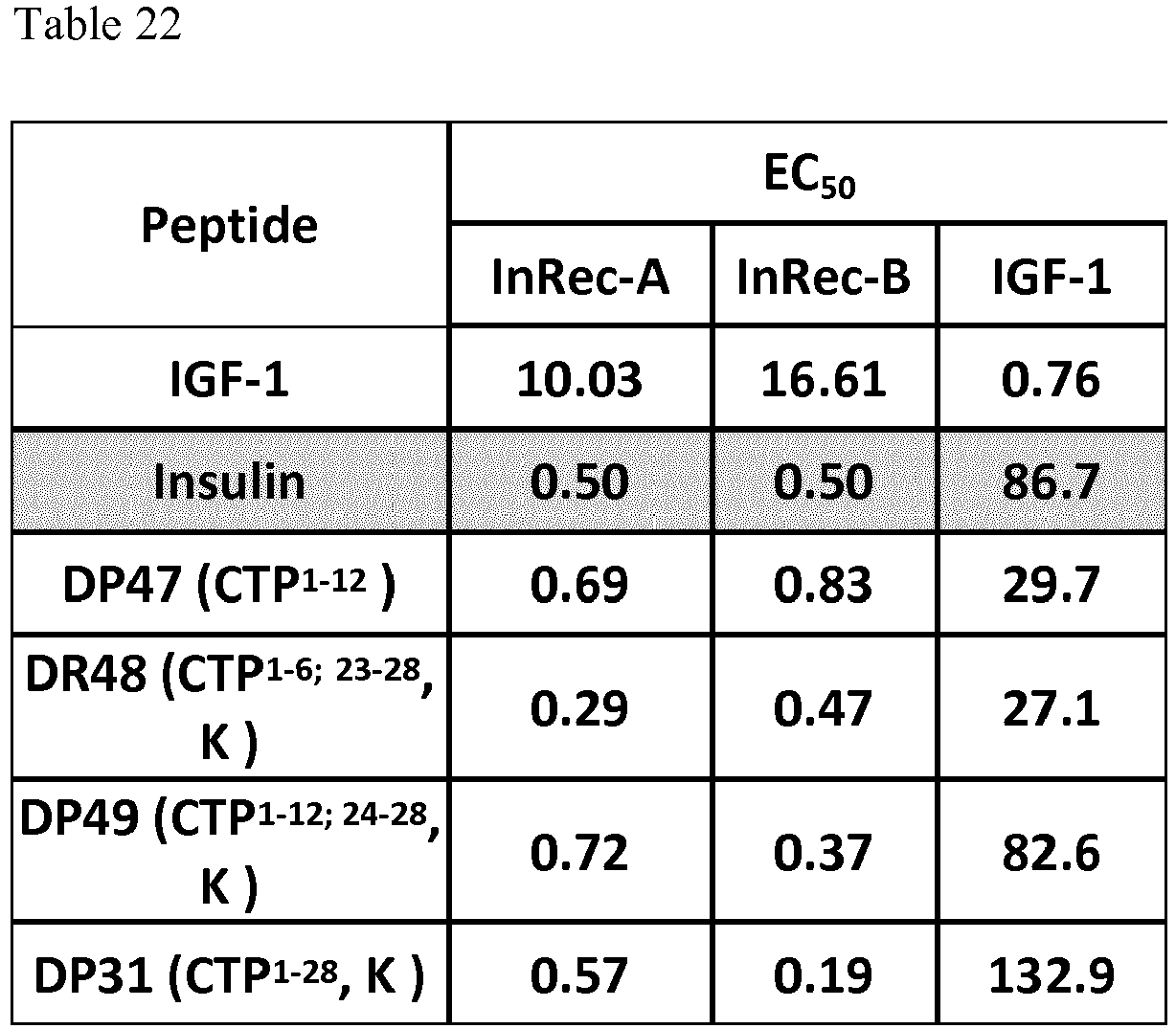
-
- <110> DiMarchi, Richard
Li, Pengyun - <120> CTP-BASED INSULIN ANALOGS FOR TREATMENT OF DIABETES
- <130> 32993-223503
- <150>
US 61/578,052
<151> 2011-12-20 - <160> 104
- <170> PatentIn version 3.5
- <210> 1
<211> 21
<212> PRT
<213> Homo sapiens - <400> 1

- <210> 2
<211> 30
<212> PRT
<213> Homo sapiens - <400> 2

- <210> 3
<211> 70
<212> PRT
<213> Homo sapiens - <400> 3
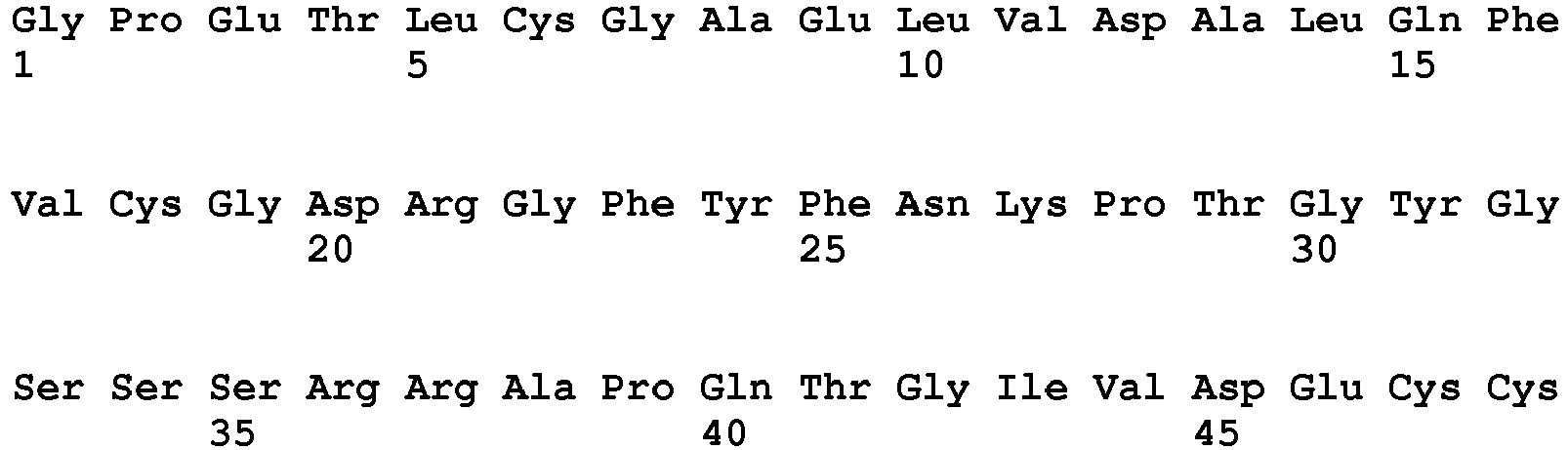

- <210> 4
<211> 67
<212> PRT
<213> Homo sapiens - <400> 4

- <210> 5
<211> 21
<212> PRT
<213> Homo sapiens - <400> 5

- <210> 6
<211> 29
<212> PRT
<213> Homo sapiens - <400> 6


- <210> 7
<211> 21
<212> PRT
<213> Homo sapiens - <400> 7

- <210> 8
<211> 32
<212> PRT
<213> Homo sapiens - <400> 8

- <210> 9
<211> 4
<212> PRT
<213> Artificial Sequence - <220>
<223> spacer sequence - <400> 9

- <210> 10
<211> 4
<212> PRT
<213> Artificial Sequence - <220>
<223> spacer sequence - <400> 10

- <210> 11
<211> 6
<212> PRT
<213> Artificial Sequence - <220>
<223> spacer sequence - <400> 11

- <210> 12
<211> 5
<212> PRT
<213> Artificial Sequence - <220>
<223> spacer sequence - <400> 12

- <210> 13
<211> 12
<212> PRT
<213> Homo sapiens - <400> 13

- <210> 14
<211> 8
<212> PRT
<213> Homo sapiens - <400> 14

- <210> 15
<211> 21
<212> PRT
<213> Artificial Sequence - <220>
<223> Analog of the insulin A chain - <220>
<221> MISC_FEATURE
<222> (4)..(4)
<223> Xaa atposition 4 is aspartic acid or glutamic acid - <220>
<221> MISC_FEATURE
<222> (8)..(8)
<223> Xaa atposition 8 is histidine, threonine or phenylalanine - <220>
<221> MISC_FEATURE
<222> (9)..(9)
<223> Xaa at position 9 is serine, arginine, ornithine, lysine or alanine - <220>
<221> MISC_FEATURE
<222> (14)..(14)
<223> Xaa at position 14 is tyrosine, arginine, ornathine, lysine or alanine - <220>
<221> MISC_FEATURE
<222> (15)..(15)
<223> Xaa at position 15 is glutamine, glutamic acid, arginine, ornithine, alanine, lysine or leucine - <220>
<221> MISC_FEATURE
<222> (17)..(17)
<223> Xaa at position 17 is glutamine or glutamic acid - <220>
<221> MISC_FEATURE
<222> (18)..(18)
<223> Xaa at position 18 is methionine, asparagine, glutamine, glutamic acid, aspartic acid or threonine - <220>
<221> MISC_FEATURE
<222> (19)..(19)
<223> Xaa at positionl9 is tyrosine, 4-methoxy phenylalanine or 4-amino-phenylalanine - <220>
<221> MISC_FEATURE
<222> (21)..(21)
<223> Xaa atposition 21 is alanine, glycine, serine, valine, threonine, isoleucine, leucine, glutamine, glutamic acid, asparagine, aspartic acid, histidine, tryptophan, tyrosine, or methionine - <400> 15

- <210> 16
<211> 21
<212> PRT
<213> Artificial Sequence - <220>
<223> Analog of the insulin B chain - <220>
<221> MISC_FEATURE
<222> (1)..(1)
<223> Xaa atposition 1 is histidine or threonine - <220>
<221> MISC_FEATURE
<222> (5)..(5)
<223> Xaa at position 5 is alanine, glycine or serine - <220>
<221> MISC_FEATURE
<222> (6)..(6)
<223> Xaa atposition 6 is histidine, aspartic acid, glutamic acid, homocysteic acid or cysteic acid - <220>
<221> MISC_FEATURE
<222> (9)..(9)
<223> Xaa at position 9 is aspartic acid, glutamine or glutamic acid - <220>
<221> MISC_FEATURE
<222> (10)..(10)
<223> Xaa atposition 10 is alanine or threonine - <220>
<221> MISC_FEATURE
<222> (12)..(12)
<223> Xaa atposition 12 is tyrosine or 4-amino-phenylalanine - <220>
<221> MISC_FEATURE
<222> (17)..(17)
<223> Xaa atposition 12 is glutamic acid, aspartic acid or asparagine - <220>
<221> MISC_FEATURE
<222> (18)..(18)
<223> Xaa at position 18 is alanine, ornithine, lysine or arginine - <220>
<221> MISC_FEATURE
<222> (21)..(21)
<223> Xaa atposition 21 is tyrosine, phenylalanine or 4-amino-phenylalanine - <400> 16

- <210> 17
<211> 21
<212> PRT
<213> Artificial Sequence - <220>
<223> Analog of the insulin B chain - <220>
<221> MISC_FEATURE
<222> (1)..(1)
<223> Xaa atposition 1 is histidine or threonine - <220>
<221> MISC_FEATURE
<222> (5)..(5)
<223> Xaa at position 5 is alanine, glycine or serine - <220>
<221> MISC_FEATURE
<222> (6)..(6)
<223> Xaa atposition 6 is histidine, aspartic acid, glutamic acid, homocysteic acid or cysteic acid - <220>
<221> MISC_FEATURE
<222> (9)..(9)
<223> Xaa at position 9 is aspartic acid, glutamine or glutamic acid - <220>
<221> MISC_FEATURE
<222> (10)..(10)
<223> Xaa atposition 10 is alanine or threonine - <220>
<221> MISC_FEATURE
<222> (17)..(17)
<223> Xaa atposition 12 is glutamic acid, aspartic acid or asparagine - <220>
<221> MISC_FEATURE
<222> (18)..(18)
<223> Xaa at position 18 is alanine, ornithine, lysine or arginine - <220>
<221> MISC_FEATURE
<222> (21)..(21)
<223> Xaa atposition 21 is tyrosine or 4-amino-phenylalanine - <400> 17

- <210> 18
<211> 21
<212> PRT
<213> Artificial Sequence - <220>
<223> Analog of the insulin A chain - <220>
<221> MISC_FEATURE
<222> (4)..(4)
<223> Xaa at position 5 is aspartic acid or glutamic acid - <220>
<221> MISC_FEATURE
<222> (5)..(5)
<223> Xaa at position 5 is glutamine or glutamic acid - <220>
<221> MISC_FEATURE
<222> (8)..(8)
<223> Xaa atposition 8 is histidine, threonine or phenylalanine - <220>
<221> MISC_FEATURE
<222> (9)..(9)
<223> Xaa at position 9 is serine, arginine, ornithine, lysine or alanine - <220>
<221> MISC_FEATURE
<222> (10)..(10)
<223> Xaa atposition 10 is isoleucine or serine - <220>
<221> MISC_FEATURE
<222> (12)..(12)
<223> Xaa atposition 12 is aspartic acid or serine - <220>
<221> MISC_FEATURE
<222> (14)..(14)
<223> Xaa at position 14 is tyrosine, arginine, ornathine, lysine or alanine - <220>
<221> MISC_FEATURE
<222> (15)..(15)
<223> Xaa at position 15 is glutamine, glutamic acid, arginine, ornithine, alanine, lysine or leucine - <220>
<221> MISC_FEATURE
<222> (17)..(17)
<223> Xaa at position 17 is glutamine or glutamic acid - <220>
<221> MISC_FEATURE
<222> (18)..(18)
<223> Xaa at position 18 is methionine, asparagine, glutamine, glutamic acid, aspartic acid or threonine - <220>
<221> MISC_FEATURE
<222> (19)..(19)
<223> Xaa at positionl9 is tyrosine, 4-methoxy phenylalanine or 4-amino-phenylalanine - <220>
<221> MISC_FEATURE
<222> (21)..(21)
<223> Xaa atposition 21 is alanine, glycine, serine, valine, threonine, isoleucine, leucine, glutamine, glutamic acid, asparagine, aspartic acid, histidine, tryptophan, tyrosine, or methionine - <400> 18

- <210> 19
<211> 7
<212> PRT
<213> Artificial Sequence - <220>
<223> linker peptide - <220>
<221> MISC_FEATURE
<222> (1)..(1)
<223> the Xaa atposition 1 is glycine, glutamic acid or aspartic acid - <220>
<221> MISC_FEATURE
<222> (2)..(6)
<223> the Xaas at positions 2-6 are independently glutamic acid or aspartic acid - <400> 19

- <210> 20
<211> 7
<212> PRT
<213> Artificial Sequence - <220>
<223> linker peptide - <220>
<221> MISC_FEATURE
<222> (2)..(6)
<223> the Xaas at positions 2-6 are independently glutamic acid or aspartic acid - <400> 20


- <210> 21
<211> 7
<212> PRT
<213> Artificial Sequence - <220>
<223> peptide linker - <220>
<221> MISC_FEATURE
<222> (1)..(5)
<223> the Xaas at positions 1-5 are independently glutamic acid or aspartic acid - <400> 21

- <210> 22
<211> 31
<212> PRT
<213> Artificial Sequence - <220>
<223> analog of IGF-1 B chain - <220>
<221> MISC_FEATURE
<222> (28)..(28)
<223> The Xaa atposition 28 is alanine lysine, ornithine or arginine - <400> 22

- <210> 23
<211> 21
<212> PRT
<213> Artificial Sequence - <220>
<223> Analog of the insulin A chain - <220>
<221> MISC_FEATURE
<222> (8)..(8)
<223> Xaa atposition 8 is histidine or threonine - <220>
<221> MISC_FEATURE
<222> (17)..(17)
<223> Xaa at position 17 is glutamine or glutamic acid - <220>
<221> MISC_FEATURE
<222> (19)..(19)
<223> Xaa at positionl9 is tyrosine, 4-methoxy phenylalanine or 4-amino-phenylalanine - <220>
<221> MISC_FEATURE
<222> (21)..(21)
<223> Xaa atposition 21 is asparagine or glycine - <400> 23

- <210> 24
<211> 21
<212> PRT
<213> Artificial Sequence - <220>
<223> Analog of the insulin B chain - <220>
<221> MISC_FEATURE
<222> (1)..(1)
<223> Xaa atposition 1 is histidine or threonine - <220>
<221> MISC_FEATURE
<222> (5)..(5)
<223> Xaa at position 5 is alanine, glycine or serine - <220>
<221> MISC_FEATURE
<222> (6)..(6)
<223> Xaa atposition 6 is histidine, aspartic acid, glutamic acid, homocysteic acid or cysteic acid - <400> 24

- <210> 25
<211> 27
<212> PRT
<213> Artificial Sequence - <220>
<223> Analog of the insulin B chain - <220>
<221> MISC_FEATURE
<222> (1)..(1)
<223> Xaa atposition 1 is phenylalanine and desamino-phenylalanine - <220>
<221> MISC_FEATURE
<222> (5)..(5)
<223> Xaa at position 5 is histidine and threonine - <220>
<221> MISC_FEATURE
<222> (9)..(9)
<223> Xaa at position 9 is alanine, glycine or serine - <220>
<221> MISC_FEATURE
<222> (10)..(10)
<223> Xaa atposition 10 is histidine, aspartic acid, glutamic acid, homocysteic acid or cysteic acid - <400> 25

- <210> 26
<211> 21
<212> PRT
<213> Artificial Sequence - <220>
<223> Analog of the insulin A chain - <220>
<221> MISC_FEATURE
<222> (8)..(8)
<223> Xaa atposition 8 is histidine or phenylalanine - <220>
<221> MISC_FEATURE
<222> (19)..(19)
<223> Xaa at positionl9 is tyrosine or 4-amino-phenylalanine - <220>
<221> MISC_FEATURE
<222> (21)..(21)
<223> Xaa atposition 21 is alanine, glycine or asparagine - <400> 26

- <210> 27
<211> 21
<212> PRT
<213> Artificial Sequence - <220>
<223> Analog of the insulin A chain - <220>
<221> MISC_FEATURE
<222> (8)..(8)
<223> Xaa atposition 8 is histidine or phenylalnine - <220>
<221> MISC_FEATURE
<222> (9)..(9)
<223> Xaa at position 9 is arginine, lysine, ornithine or alanine - <220>
<221> MISC_FEATURE
<222> (14)..(14)
<223> Xaa at position 14 is arginine, lysine, ornithine or alanine - <220>
<221> MISC_FEATURE
<222> (15)..(15)
<223> Xaa at position 15 is arginine, lysine, ornithine or leucine - <220>
<221> MISC_FEATURE
<222> (17)..(17)
<223> Xaa at position 17 is glutamine or glutamic acid - <220>
<221> MISC_FEATURE
<222> (18)..(18)
<223> Xaa at position 18 is methionine, asparagine or threonine - <220>
<221> MISC_FEATURE
<222> (19)..(19)
<223> Xaa at positionl9 is tyrosine, 4-methoxy phenylalanine or 4-amino-phenylalanine - <220>
<221> MISC_FEATURE
<222> (21)..(21)
<223> Xaa atposition 21 is alanine, glycine or asparagine - <400> 27


- <210> 28
<211> 21
<212> PRT
<213> Artificial Sequence - <220>
<223> Analog of the insulin B chain - <220>
<221> MISC_FEATURE
<222> (1)..(1)
<223> Xaa atposition 1 is histidine or threonine - <220>
<221> MISC_FEATURE
<222> (5)..(5)
<223> Xaa at position 5 is alanine, glycine or serine - <220>
<221> MISC_FEATURE
<222> (6)..(6)
<223> Xaa atposition 6 is histidine, aspartic acid, glutamic acid, homocysteic acid or cysteic acid - <220>
<221> MISC_FEATURE
<222> (9)..(9)
<223> Xaa at position 9 is aspartic acid or glutamic acid - <220>
<221> MISC_FEATURE
<222> (10)..(10)
<223> Xaa atposition 10 is alanine or threonine - <220>
<221> MISC_FEATURE
<222> (18)..(18)
<223> Xaa at position 18 is alanine, ornithine, lysine or arginine - <220>
<221> MISC_FEATURE
<222> (21)..(21)
<223> Xaa atposition 21 is tyrosine or phenylalanine - <400> 28

- <210> 29
<211> 21
<212> PRT
<213> Artificial Sequence - <220>
<223> Analog of the insulin A chain - <220>
<221> MISC_FEATURE
<222> (9)..(9)
<223> Xaa at position 9 is arginine, ornithine, or lysine - <220>
<221> MISC_FEATURE
<222> (14)..(14)
<223> Xaa at position 14 is arginine, ornithine, or lysine - <220>
<221> MISC_FEATURE
<222> (15)..(15)
<223> Xaa at position 15 is arginine, ornithine, or lysine - <220>
<221> MISC_FEATURE
<222> (17)..(17)
<223> Xaa at position 17 is glutamine or glutamic acid - <220>
<221> MISC_FEATURE
<222> (19)..(19)
<223> Xaa at position19 is tyrosine, 4-methoxy phenylalanine or 4-amino-phenylalanine - <220>
<221> MISC_FEATURE
<222> (21)..(21)
<223> Xaa atposition 21 is alanine, glycine or asparagine - <400> 29

- <210> 30
<211> 21
<212> PRT
<213> Artificial Sequence - <220>
<223> Analog of the insulin B chain - <220>
<221> MISC_FEATURE
<222> (1)..(1)
<223> Xaa atposition 1 is histidine or threonine - <220>
<221> MISC_FEATURE
<222> (6)..(6)
<223> Xaa atposition 6 is histidine, aspartic acid, or glutamic acid - <220>
<221> MISC_FEATURE
<222> (18)..(18)
<223> Xaa at position 18 is alanine, ornithine, lysine or arginine - <220>
<221> MISC_FEATURE
<222> (21)..(21)
<223> Xaa atposition 21 is tyrosine or phenylalanine - <400> 30

- <210> 31
<211> 21
<212> PRT
<213> Artificial Sequence - <220>
<223> Analog of IGF-1 B chain - <220>
<221> MISC_FEATURE
<222> (18)..(18)
<223> The Xaa at position 18 is ornithine, lysine or arginine - <400> 31

- <210> 32
<211> 24
<212> PRT
<213> Artificial Sequence - <220>
<223> Analog of IGF-1 B chain - <220>
<221> MISC_FEATURE
<222> (21)..(21)
<223> The Xaa atposition 21 is ornithine, lysine or arginine - <400> 32

- <210> 33
<211> 29
<212> PRT
<213> Artificial Sequence - <220>
<223> Analog of IGF-1 B chain - <220>
<221> MISC_FEATURE
<222> (21)..(21)
<223> The Xaa atposition 21 is ornithine, lysine or arginine - <400> 33

- <210> 34
<211> 29
<212> PRT
<213> Artificial Sequence - <220>
<223> Analog of IGF-1 B chain - <220>
<221> MISC_FEATURE
<222> (21)..(21)
<223> The Xaa atposition 21 is ornithine, lysine or arginine - <400> 34

- <210> 35
<211> 8
<212> PRT
<213> Homo sapiens - <220>
<221> MISC_FEATURE
<222> (7)..(7)
<223> Xaa atposition 7 is ornithine - <400> 35

- <210> 36
<211> 21
<212> PRT
<213> Artificial Sequence - <220>
<223> Analog of the insulin A chain - <220>
<221> MISC_FEATURE
<222> (9)..(9)
<223> Xaa at position 9 is arginine, ornithine, or lysine - <220>
<221> MISC_FEATURE
<222> (14)..(14)
<223> Xaa at position 14 is arginine, ornithine, or lysine - <220>
<221> MISC_FEATURE
<222> (15)..(15)
<223> Xaa at position 15 is arginine, ornithine, or lysine - <400> 36

- <210> 37
<211> 21
<212> PRT
<213> Artificial Sequence - <220>
<223> Analog of the insulin A chain - <220>
<221> MISC_FEATURE
<222> (19)..(19)
<223> Xaa at position19 is tyrosine, 4-methoxy phenylalanine or 4-amino-phenylalanine - <220>
<221> MISC_FEATURE
<222> (21)..(21)
<223> Xaa atposition 21 is alanine, glycine or asparagine - <400> 37

- <210> 38
<211> 21
<212> PRT
<213> Artificial Sequence - <220>
<223> Analog of the insulin A chain - <220>
<221> MISC_FEATURE
<222> (8)..(8)
<223> Xaa atposition 8 is histidine or phenylalnine - <220>
<221> MISC_FEATURE
<222> (9)..(9)
<223> Xaa at position 9 is arginine, lysine, ornithine or alanine - <220>
<221> MISC_FEATURE
<222> (14)..(14)
<223> Xaa at position 14 is arginine, lysine, ornithine or alanine - <220>
<221> MISC_FEATURE
<222> (15)..(15)
<223> Xaa at position 15 is arginine, lysine, ornithine or leucine - <220>
<221> MISC_FEATURE
<222> (17)..(17)
<223> Xaa at position 17 is glutamine or glutamic acid - <220>
<221> MISC_FEATURE
<222> (18)..(18)
<223> Xaa at position 18 is methionine, asparagine or threonine - <220>
<221> MISC_FEATURE
<222> (19)..(19)
<223> Xaa at position19 is tyrosine, 4-methoxy phenylalanine or 4-amino-phenylalanine - <220>
<221> MISC_FEATURE
<222> (21)..(21)
<223> Xaa atposition 21 is alanine, glycine or asparagine - <400> 38

- <210> 39
<211> 21
<212> PRT
<213> Homo sapiens - <220>
<221> MISC_FEATURE
<222> (18)..(18)
<223> The Xaa at position 18 is ornithine - <400> 39

- <210> 40
<211> 24
<212> PRT
<213> Homo sapiens - <220>
<221> MISC_FEATURE
<222> (21)..(21)
<223> The Xaa at position 21is ornithine - <400> 40

- <210> 41
<211> 29
<212> PRT
<213> Homo sapiens - <220>
<221> MISC_FEATURE
<222> (21)..(21)
<223> The Xaa at position 21is ornithine - <400> 41

- <210> 42
<211> 29
<212> PRT
<213> Homo sapiens - <220>
<221> misc_feature
<222> (21)..(21)
<223> Xaa can be any naturally occurring amino acid - <400> 42

- <210> 43
<211> 21
<212> PRT
<213> Homo sapiens - <220>
<221> MISC_FEATURE
<222> (9)..(9)
<223> The Xaa at position 9 is ornithine - <220>
<221> MISC_FEATURE
<222> (14)..(15)
<223> The Xaas at positions 14 and 15 are both ornithine - <220>
<221> MISC_FEATURE
<222> (19)..(19)
<223> The Xaa atposition 19 is tyrosine, 4-methoxy-phenylalanine or 4-amino phenylalanine - <400> 43

- <210> 44
<211> 5
<212> PRT
<213> Homo sapiens - <400> 44

- <210> 45
<211> 4
<212> PRT
<213> Homo sapiens - <400> 45

- <210> 46
<211> 4
<212> PRT
<213> Homo sapiens - <400> 46

- <210> 47
<211> 4
<212> PRT
<213> Artificial Sequence - <220>
<223> Analog of IGF-1 B chain sequence fragment - <400> 47

- <210> 48
<211> 5
<212> PRT
<213> Artificial Sequence - <220>
<223> Analog of insulin B chain sequence fragment - <400> 48

- <210> 49
<211> 5
<212> PRT
<213> Artificial Sequence - <220>
<223> Analog of IGF-1 B chain sequence fragment - <400> 49

- <210> 50
<211> 5
<212> PRT
<213> Artificial Sequence - <220>
<223> linker peptide - <220>
<221> MISC_FEATURE
<222> (1)..(1)
<223> The Xaa atposition 1 is phenylalanine or desamino-phenylalanine - <400> 50

- <210> 51
<211> 21
<212> PRT
<213> Homo sapiens - <220>
<221> MISC_FEATURE
<222> (19)..(19)
<223> The Xaa atposition 19 is tyrosine, 4-methoxy-phenylalanine or 4-amino phenylalanine - <220>
<221> MISC_FEATURE
<222> (21)..(21)
<223> The Xaa atposition 21 is alanine, glycine or asparagine - <400> 51

- <210> 52
<211> 29
<212> PRT
<213> Homo sapiens - <400> 52

- <210> 53
<211> 35
<212> PRT
<213> Homo sapiens - <400> 53
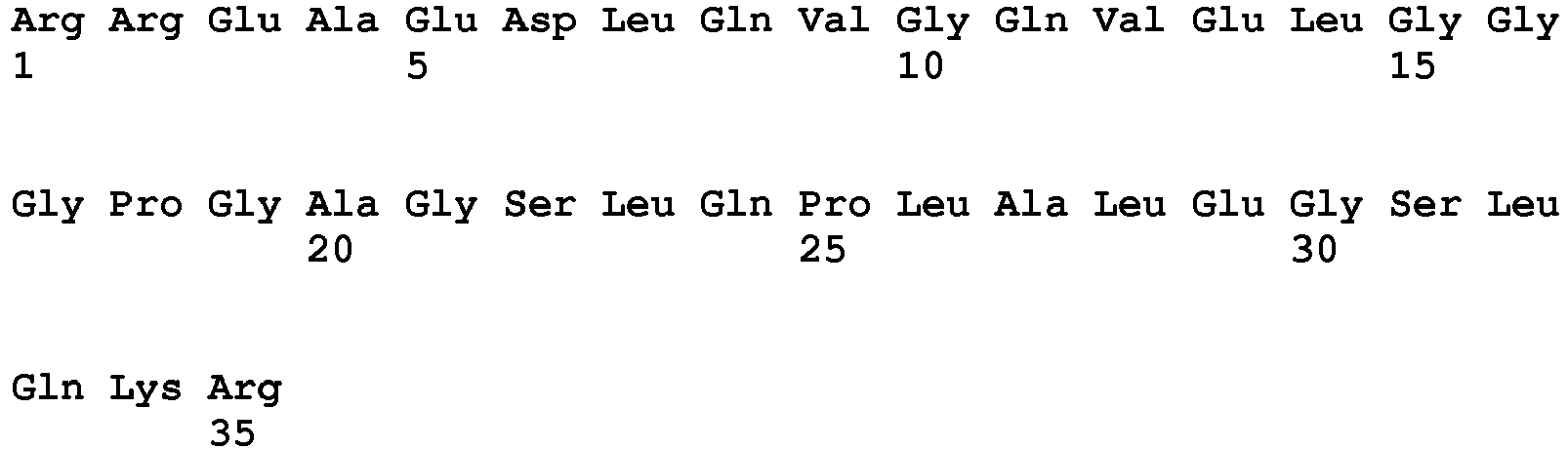
- <210> 54
<211> 51
<212> PRT
<213> Homo sapiens - <220>
<221> MISC_FEATURE
<222> (22)..(22)
<223> The Xaa atposition 22 is ornithine - <220>
<221> MISC_FEATURE
<222> (39)..(39)
<223> The Xaa at position 39 is ornithine - <220>
<221> MISC_FEATURE
<222> (44)..(45)
<223> The Xaa at positions 44-45 are ornithine - <400> 54


- <210> 55
<211> 21
<212> PRT
<213> Homo sapiens - <220>
<221> MISC_FEATURE
<222> (4)..(4)
<223> Xaa at position 5 is aspartic acid or glutamic acid - <220>
<221> MISC_FEATURE
<222> (5)..(5)
<223> Xaa at position 5 is glutamine or glutamic acid - <220>
<221> MISC_FEATURE
<222> (8)..(8)
<223> Xaa atposition 8 is histidine, threonine or phenylalanine - <220>
<221> MISC_FEATURE
<222> (9)..(9)
<223> Xaa at position 9 is serine, arginine, ornithine, lysine or alanine - <220>
<221> MISC_FEATURE
<222> (10)..(10)
<223> Xaa atposition 10 is isoleucine or serine - <220>
<221> MISC_FEATURE
<222> (12)..(12)
<223> Xaa atposition 12 is aspartic acid or serine - <220>
<221> MISC_FEATURE
<222> (14)..(14)
<223> Xaa at position 14 is tyrosine, arginine, ornathine, lysine or alanine - <220>
<221> MISC_FEATURE
<222> (15)..(15)
<223> Xaa at position 15 is glutamine, glutamic acid, arginine, ornithine, alanine, lysine or leucine - <220>
<221> MISC_FEATURE
<222> (18)..(18)
<223> Xaa at position 18 is methionine, asparagine, glutamine, glutamic acid, aspartic acid or threonine - <220>
<221> MISC_FEATURE
<222> (19)..(19)
<223> Xaa at position19 is tyrosine, 4-methoxy phenylalanine or 4-amino-phenylalanine - <220>
<221> MISC_FEATURE
<222> (21)..(21)
<223> Xaa atposition 21 is alanine, glycine, serine, valine, threonine, isoleucine, leucine, glutamine, glutamic acid, asparagine, aspartic acid, histidine, tryptophan, tyrosine, or methionine - <400> 55

- <210> 56
<211> 21
<212> PRT
<213> Homo sapiens - <220>
<221> MISC_FEATURE
<222> (6)..(6)
<223> The Xaa atposition 6 is histidine, aspartic acid, glutamic acid, homocysteic acid or cysteic acid - <400> 56

- <210> 57
<211> 6
<212> PRT
<213> Artificial Sequence - <220>
<223> synthetic peptide for testing cleavage of dipeptide prodrug element - <400> 57

- <210> 58
<211> 8
<212> PRT
<213> Artificial Sequence - <220>
<223> synthetic peptide for testing cleavage of dipeptide prodrug element - <220>
<221> MISC_FEATURE
<222> (2)..(2)
<223> Xaa atposition 2 is Sarcosine - <400> 58

- <210> 59
<211> 6
<212> PRT
<213> Artificial Sequence - <220>
<223> glucagon analogue - <220>
<221> MOD_RES
<222> (1)..(1)
<223> Xaa atposition 1 is d-histidine - <220>
<221> MOD_RES
<222> (2)..(2)
<223> Xaa atposition 2 is d-threonine - <220>
<221> MOD_RES
<222> (3)..(3)
<223> Xaa atposition 3 is d-arginine - <220>
<221> MOD_RES
<222> (5)..(5)
<223> Xaa at position 5 is d-threonine - <220>
<221> MOD_RES
<222> (6)..(6)
<223> Xaa atposition 6 is d-phenylalanine - <400> 59

- <210> 60
<211> 8
<212> PRT
<213> Artificial Sequence - <220>
<223> glucagon analogue - <220>
<221> MOD_RES
<222> (1)..(1)
<223> Xaa atposition 1 is d-lysine - <220>
<221> MOD_RES
<222> (2)..(2)
<223> Xaa atposition 2 is d-sarcosine - <220>
<221> MOD_RES
<222> (3)..(3)
<223> Xaa atposition 3 is d-histidine - <220>
<221> MOD_RES
<222> (4)..(4)
<223> Xaa atposition 4 is d-threonine - <220>
<221> MOD_RES
<222> (5)..(5)
<223> Xaa at position 5 is d-arginine - <220>
<221> MOD_RES
<222> (7)..(7)
<223> Xaa atposition 7 is d-threonine - <220>
<221> MOD_RES
<222> (8)..(8)
<223> Xaa atposition 8 is d-phenylalanine - <400> 60

- <210> 61
<211> 6
<212> PRT
<213> Artificial Sequence - <220>
<223> synthetic peptide for testing cleavage of dipeptide prodrug element - <220>
<221> MISC_FEATURE
<222> (1)..(1)
<223> The Xaa atposition 1 is histidine, d-histidine or N-methyl-histdine - <400> 61

- <210> 62
<211> 29
<212> PRT
<213> Homo sapiens - <400> 62

- <210> 63
<211> 21
<212> PRT
<213> Artificial Sequence - <220>
<223> Analog of the insulin B chain - <220>
<221> MISC_FEATURE
<222> (19)..(19)
<223> Xaa atposition 19 is tyrosine or 4-amino phenylanaline - <400> 63

- <210> 64
<211> 29
<212> PRT
<213> Homo sapiens - <400> 64

- <210> 65
<211> 28
<212> PRT
<213> Homo sapiens - <400> 65


- <210> 66
<211> 29
<212> PRT
<213> Homo sapiens - <220>
<221> MISC_FEATURE
<222> (5)..(5)
<223> Xaa at position 5 is lysine or Arginine - <220>
<221> MISC_FEATURE
<222> (29)..(29)
<223> Xaa atposition 29 is lysine or Arginine - <400> 66

- <210> 67
<211> 93
<212> PRT
<213> Homo sapiens - <400> 67
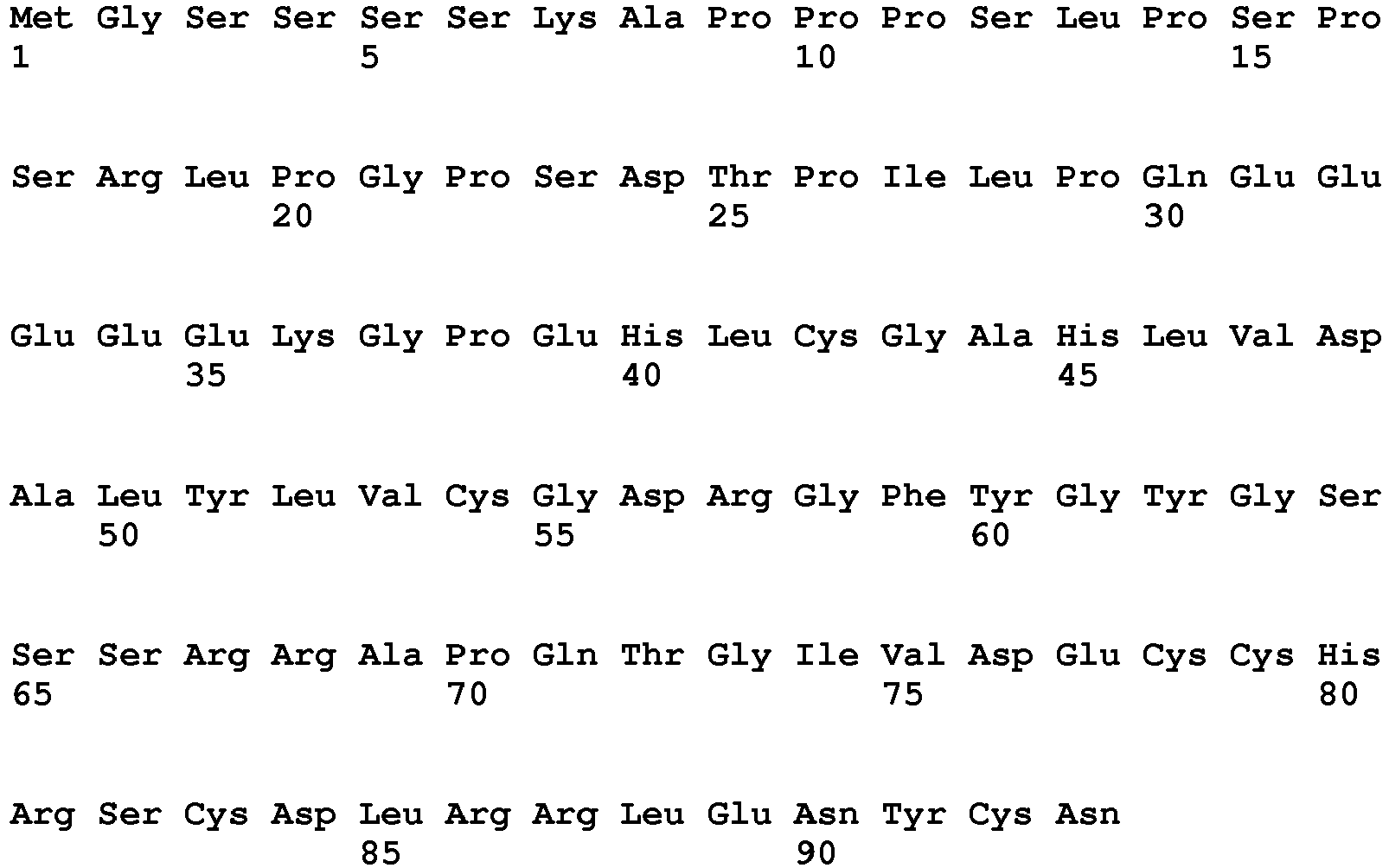
- <210> 68
<211> 81
<212> PRT
<213> Homo sapiens - <400> 68

- <210> 69
<211> 26
<212> PRT
<213> Homo sapiens - <400> 69

- <210> 70
<211> 81
<212> PRT
<213> Homo sapiens - <400> 70
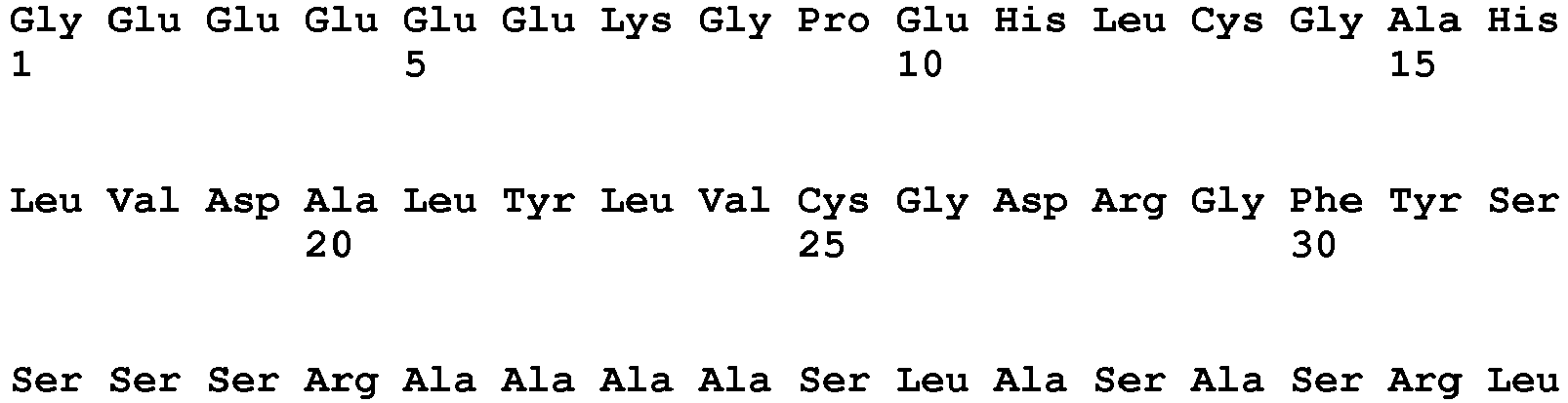

- <210> 71
<211> 87
<212> PRT
<213> Homo sapiens - <400> 71
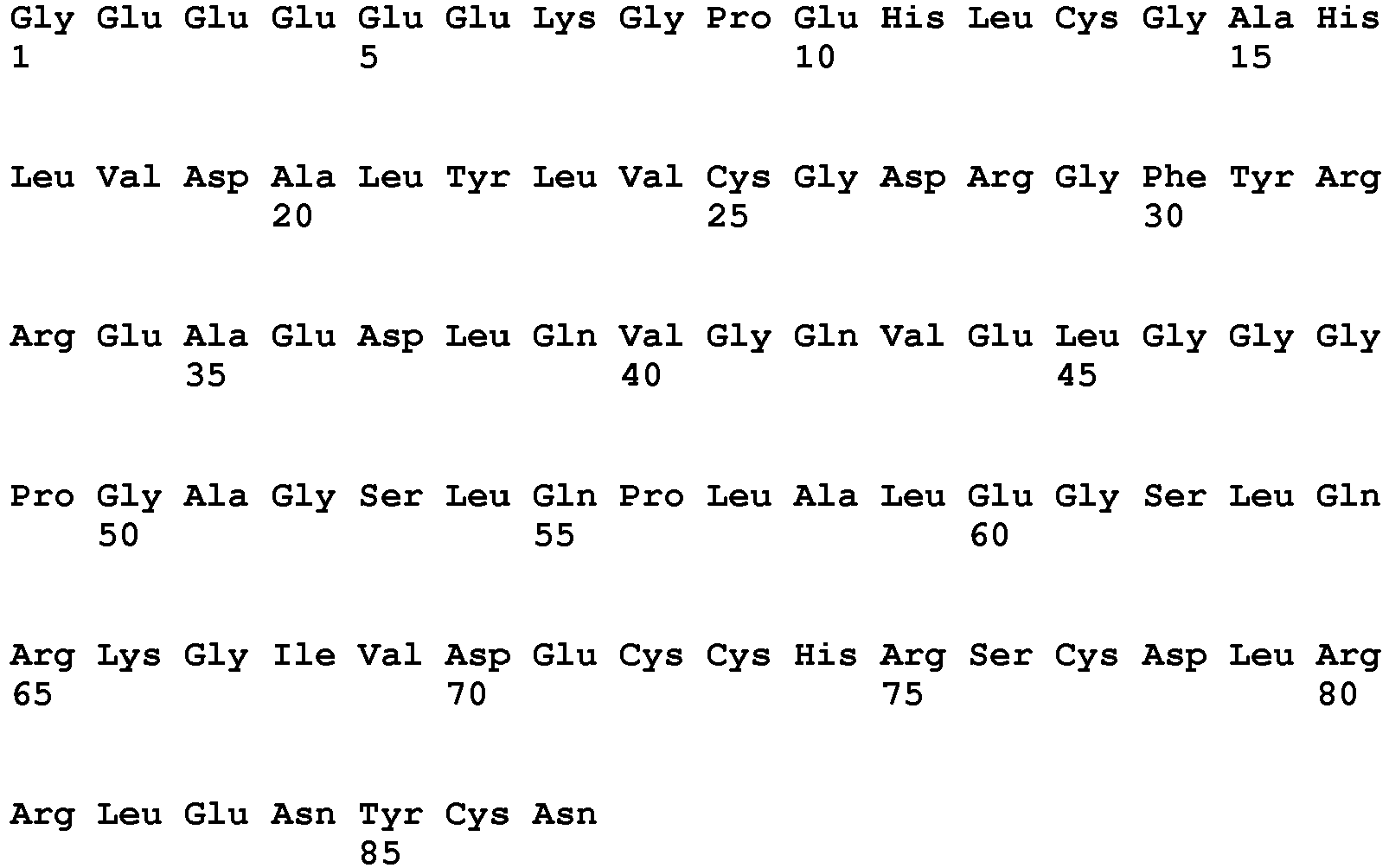
- <210> 72
<211> 64
<212> PRT
<213> Homo sapiens - <400> 72


- <210> 73
<211> 116
<212> PRT
<213> Homo sapiens - <400> 73

- <210> 74
<211> 116
<212> PRT
<213> Homo sapiens - <400> 74
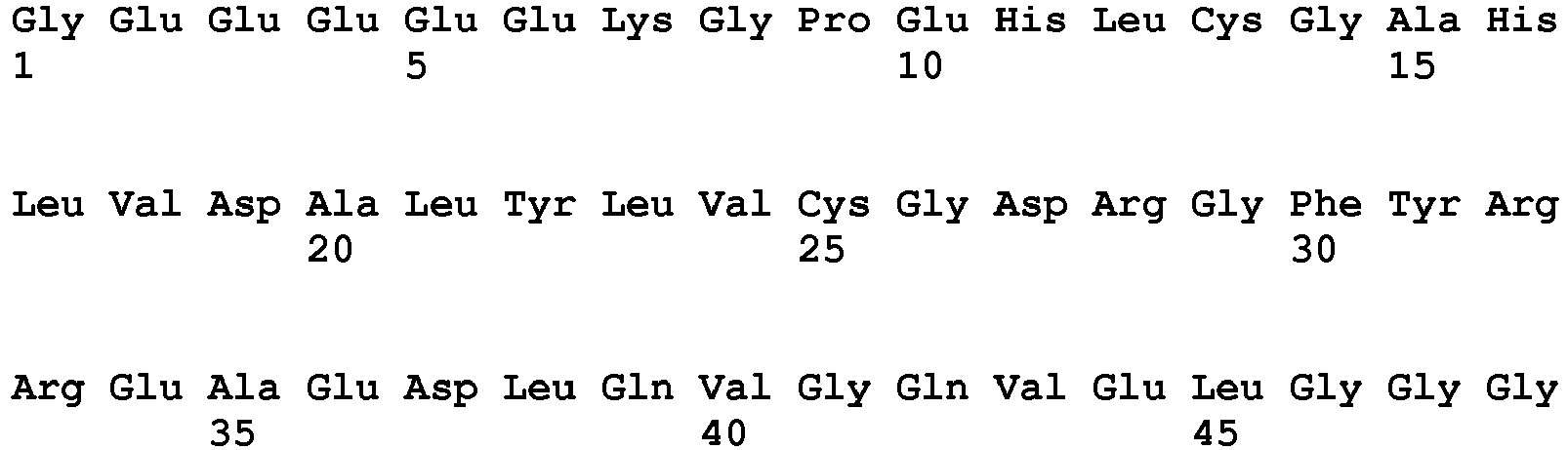
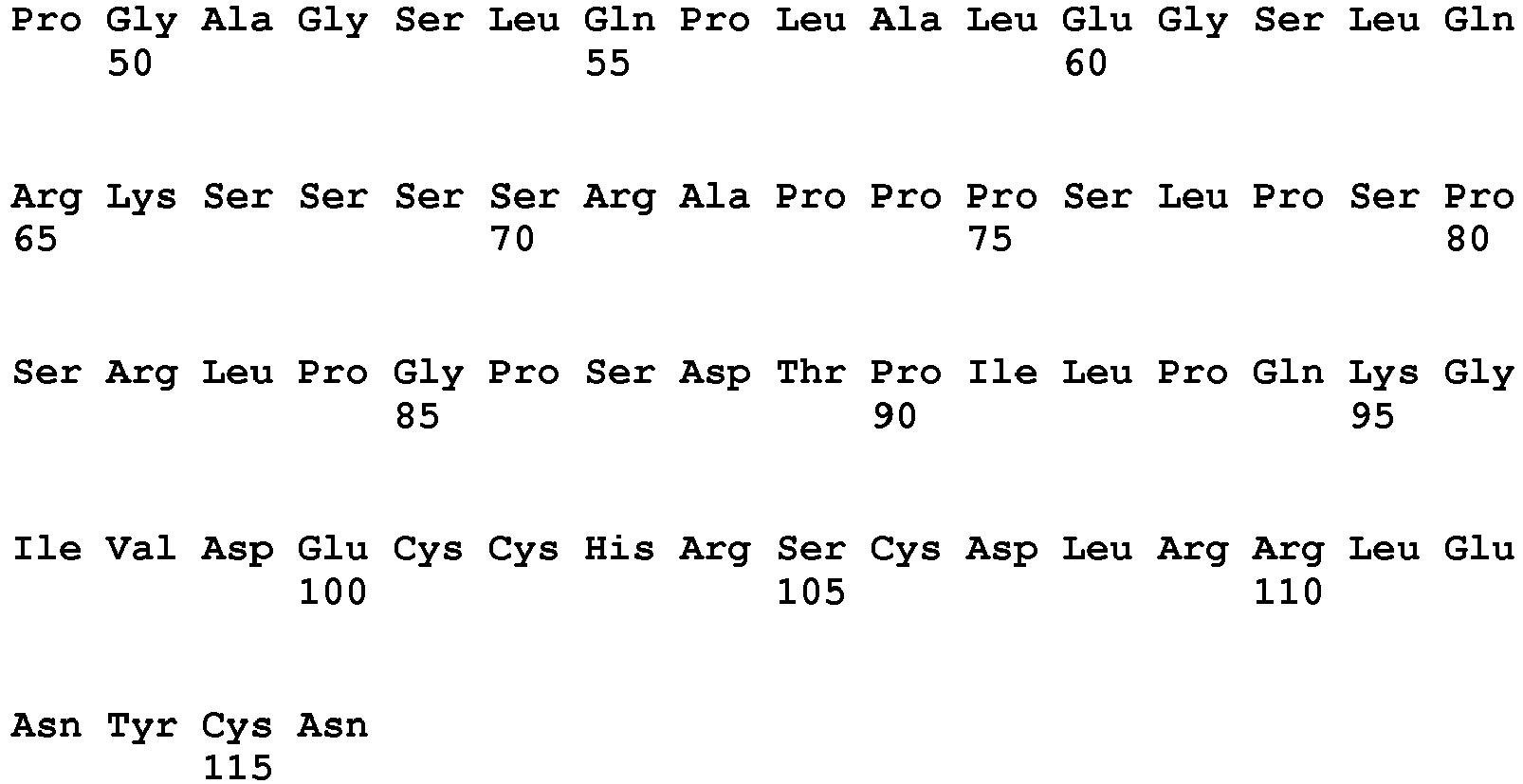
- <210> 75
<211> 110
<212> PRT
<213> Homo sapiens - <400> 75
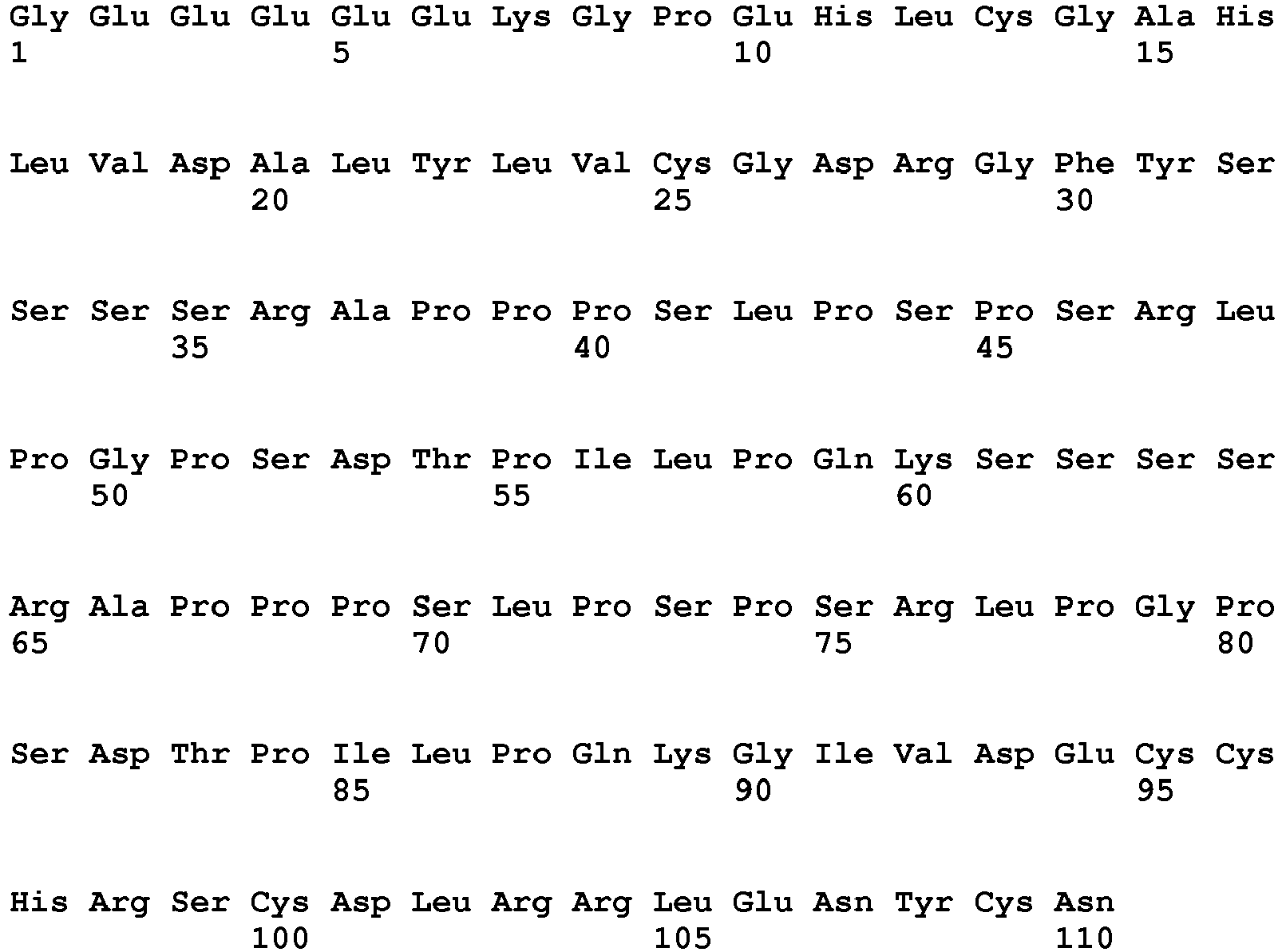
- <210> 76
<211> 81
<212> PRT
<213> Homo sapiens - <400> 76

- <210> 77
<211> 80
<212> PRT
<213> Homo sapiens - <400> 77

- <210> 78
<211> 80
<212> PRT
<213> Homo sapiens - <400> 78


- <210> 79
<211> 29
<212> PRT
<213> Homo sapiens - <400> 79

- <210> 80
<211> 81
<212> PRT
<213> Homo sapiens - <400> 80
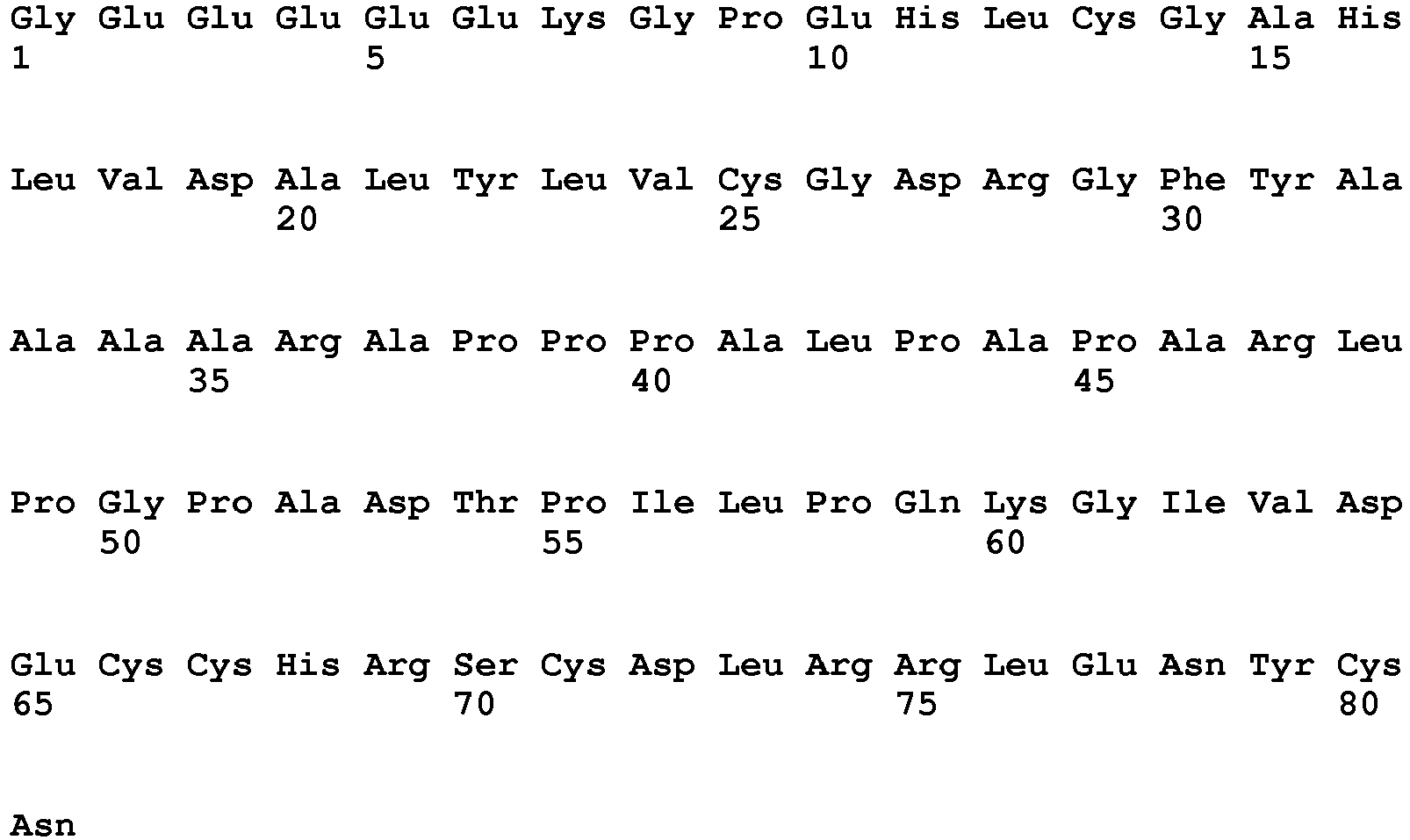
- <210> 81
<211> 87
<212> PRT
<213> Artificial Sequence - <220>
<223> Insulin analog - <400> 81

- <210> 82
<211> 109
<212> PRT
<213> Artificial Sequence - <220>
<223> Insulin analog - <400> 82
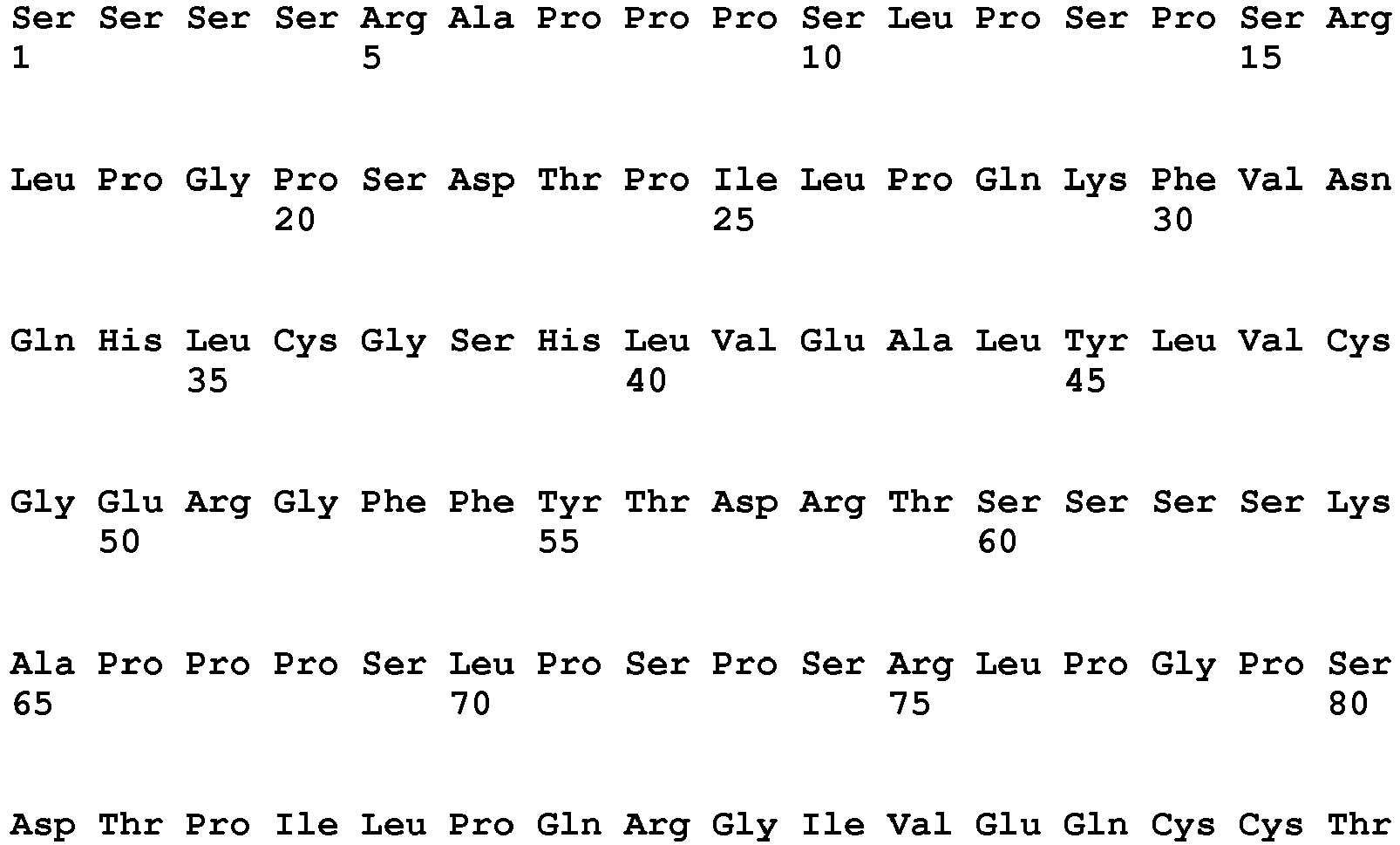

- <210> 83
<211> 82
<212> PRT
<213> Artificial Sequence - <220>
<223> Insulin analog - <400> 83

- <210> 84
<211> 82
<212> PRT
<213> Artificial Sequence - <220>
<223> Insulin analog - <400> 84
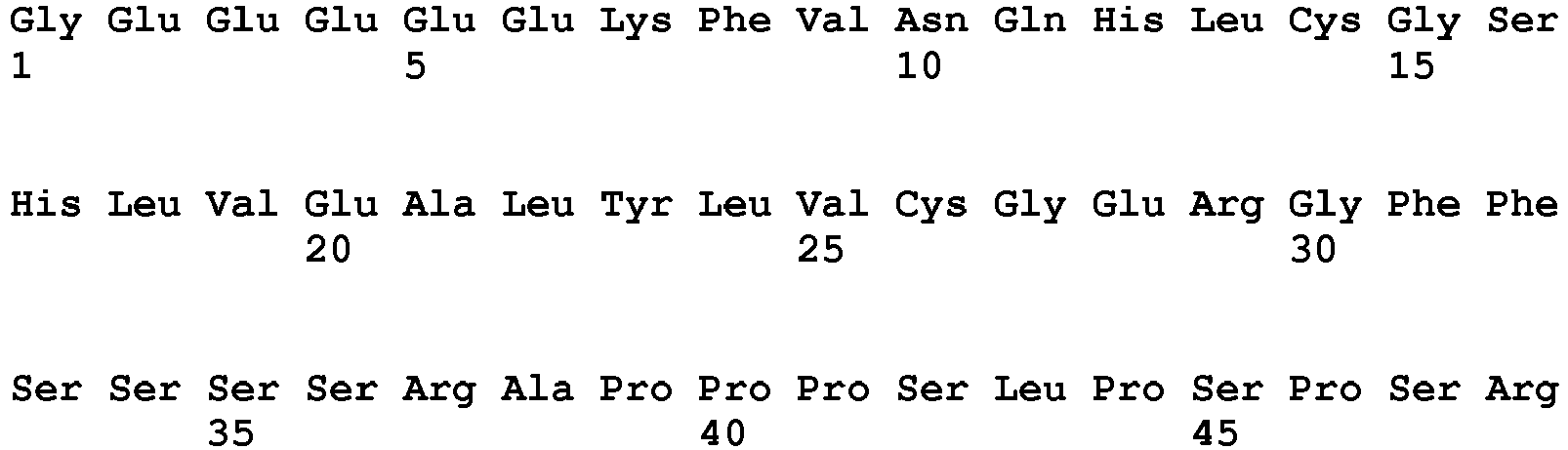

- <210> 85
<211> 81
<212> PRT
<213> Artificial Sequence - <220>
<223> Insulin analog - <400> 85

- <210> 86
<211> 70
<212> PRT
<213> Artificial Sequence - <220>
<223> Insulin analog - <400> 86


- <210> 87
<211> 70
<212> PRT
<213> Artificial Sequence - <220>
<223> Insulin analog - <400> 87

- <210> 88
<211> 75
<212> PRT
<213> Artificial Sequence - <220>
<223> Insulin analog - <400> 88


- <210> 89
<211> 75
<212> PRT
<213> Artificial Sequence - <220>
<223> Insulin analog - <400> 89

- <210> 90
<211> 74
<212> PRT
<213> Artificial Sequence - <220>
<223> Insulin analog - <400> 90
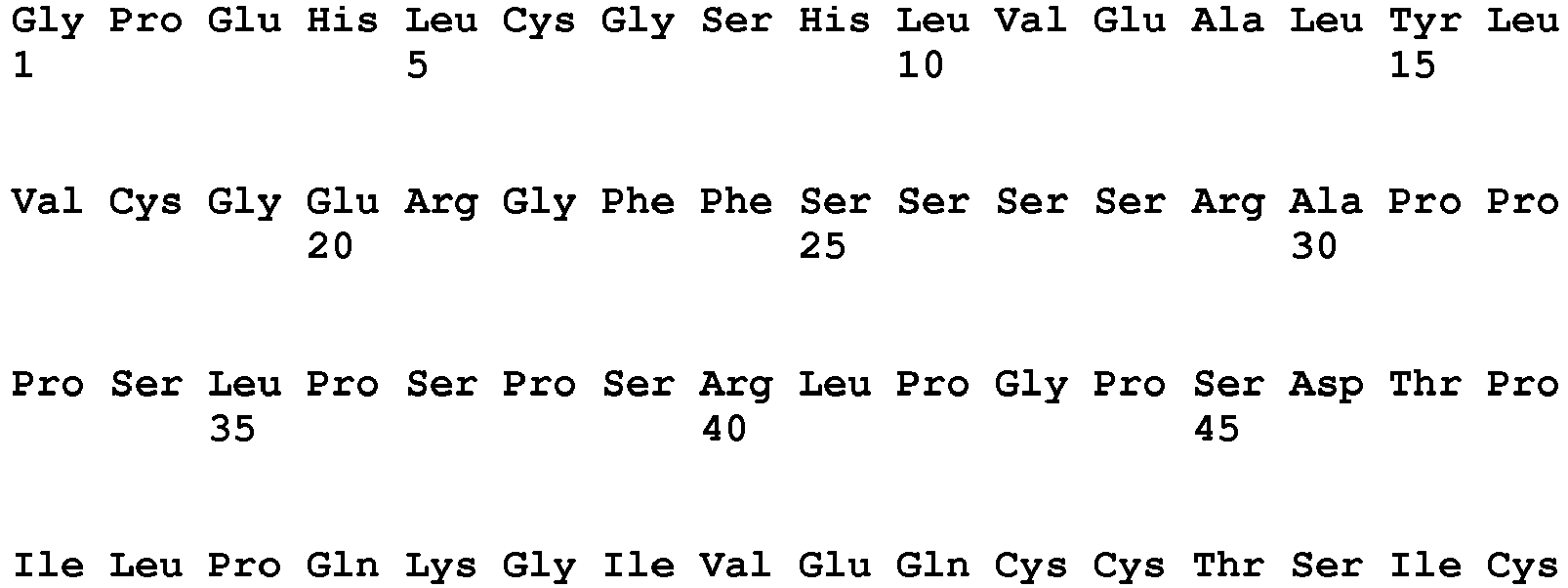

- <210> 91
<211> 110
<212> PRT
<213> Artificial Sequence - <220>
<223> single chain insulin analog - <400> 91

- <210> 92
<211> 28
<212> PRT
<213> Homo sapiens - <220>
<221> MISC_FEATURE
<222> (5)..(5)
<223> Xaa at position 5 is lysine or Arginine - <400> 92


- <210> 93
<211> 30
<212> PRT
<213> Homo sapiens - <220>
<221> MISC_FEATURE
<222> (5)..(5)
<223> Xaa at position 5 is lysine or Arginine - <220>
<221> misc_feature
<222> (7)..(7)
<223> Xaa can be any naturally occurring amino acid - <400> 93

- <210> 94
<211> 30
<212> PRT
<213> Homo sapiens - <400> 94

- <210> 95
<211> 21
<212> PRT
<213> Artificial Sequence - <220>
<223> Analog of the insulin A chain - <220>
<221> MISC_FEATURE
<222> (19)..(19)
<223> Xaa at position19 is tyrosine, 4-methoxy phenylalanine or 4-amino-phenylalanine - <220>
<221> MISC_FEATURE
<222> (21)..(21)
<223> Xaa atposition 21 is alanine, glycine or asparagine - <400> 95

- <210> 96
<211> 70
<212> PRT
<213> Homo sapiens - <400> 96
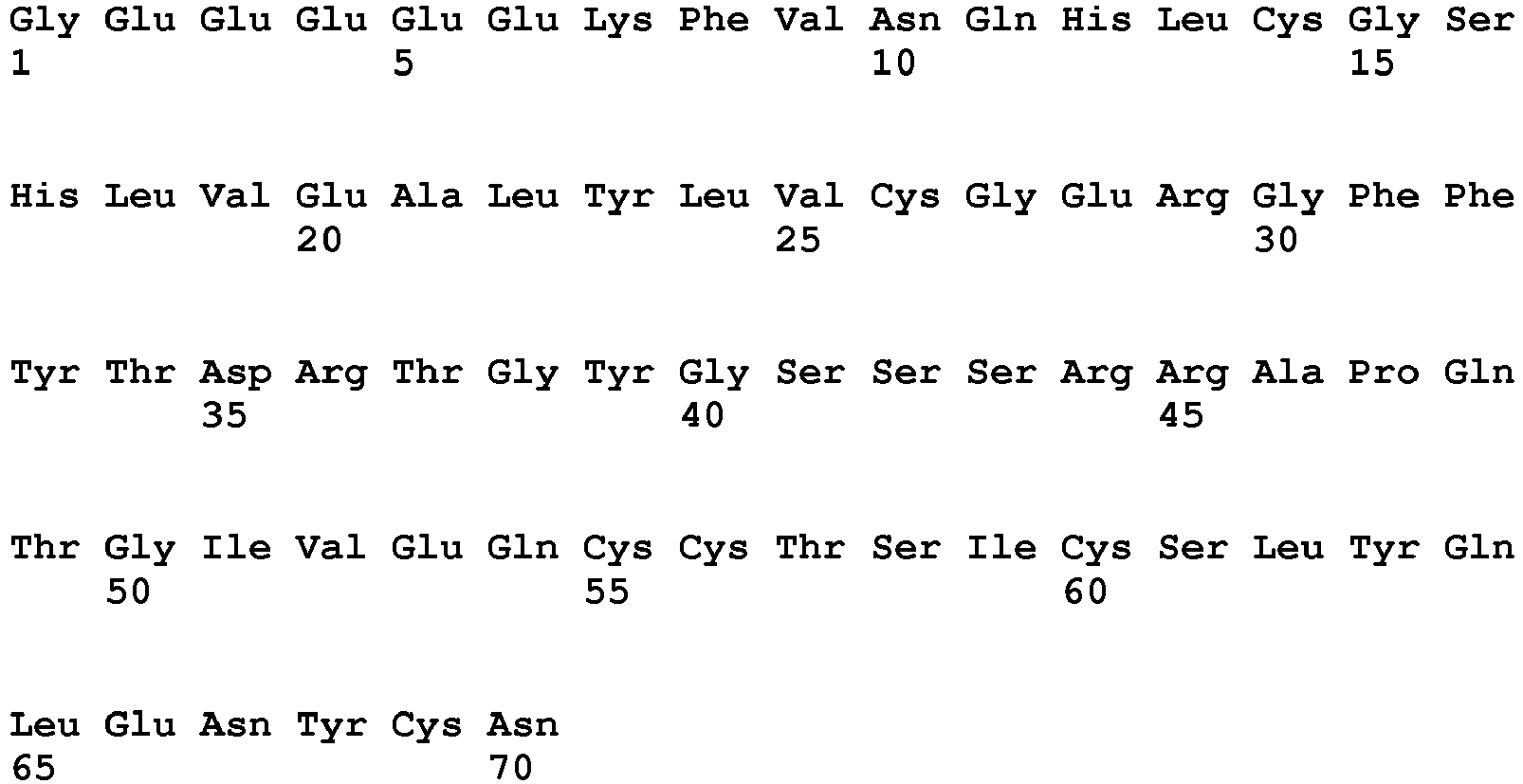
- <210> 97
<211> 70
<212> PRT
<213> Homo sapiens - <400> 97

- <210> 98
<211> 82
<212> PRT
<213> Homo sapiens - <400> 98

- <210> 99
<211> 82
<212> PRT
<213> Homo sapiens - <400> 99
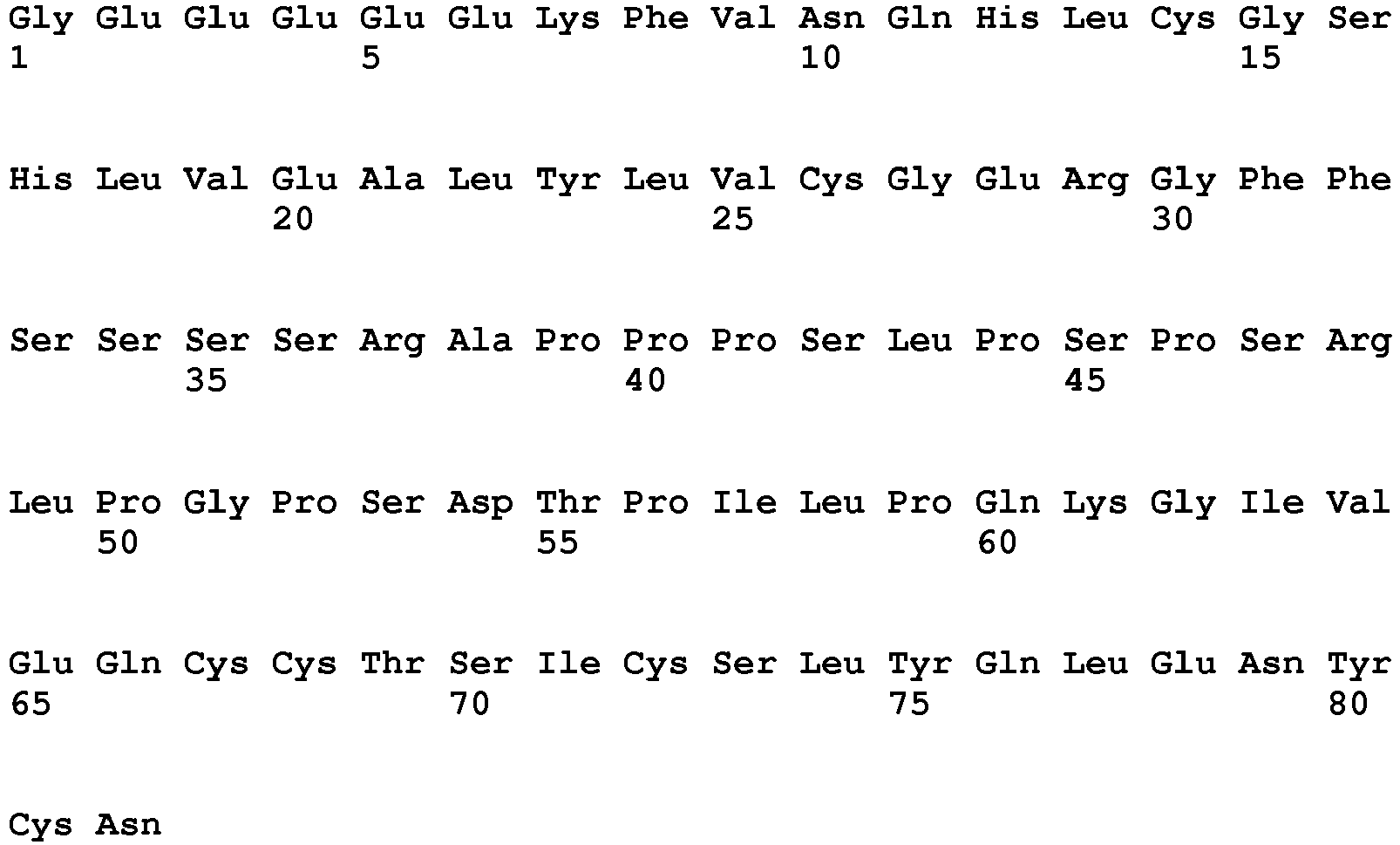
- <210> 100
<211> 87
<212> PRT
<213> Homo sapiens - <400> 100

- <210> 101
<211> 58
<212> PRT
<213> Homo sapiens - <400> 101
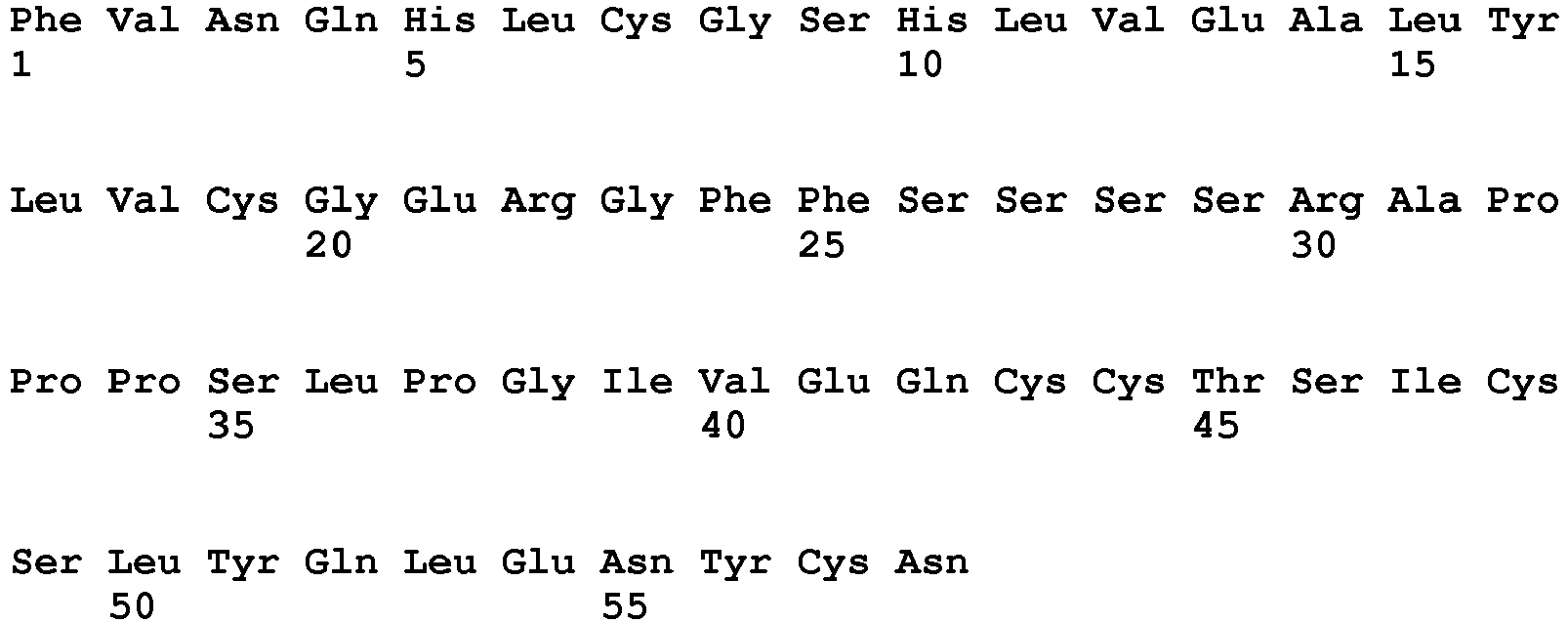
- <210> 102
<211> 58
<212> PRT
<213> Homo sapiens - <400> 102

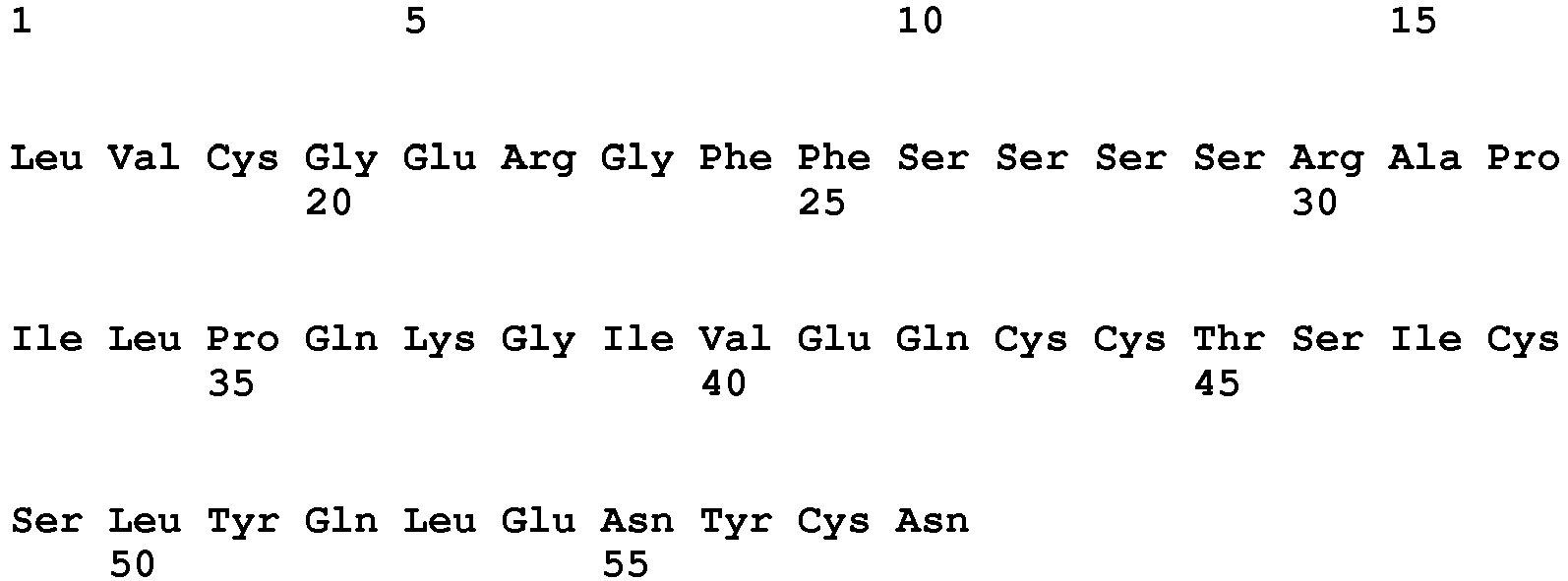
- <210> 103
<211> 63
<212> PRT
<213> Homo sapiens - <400> 103
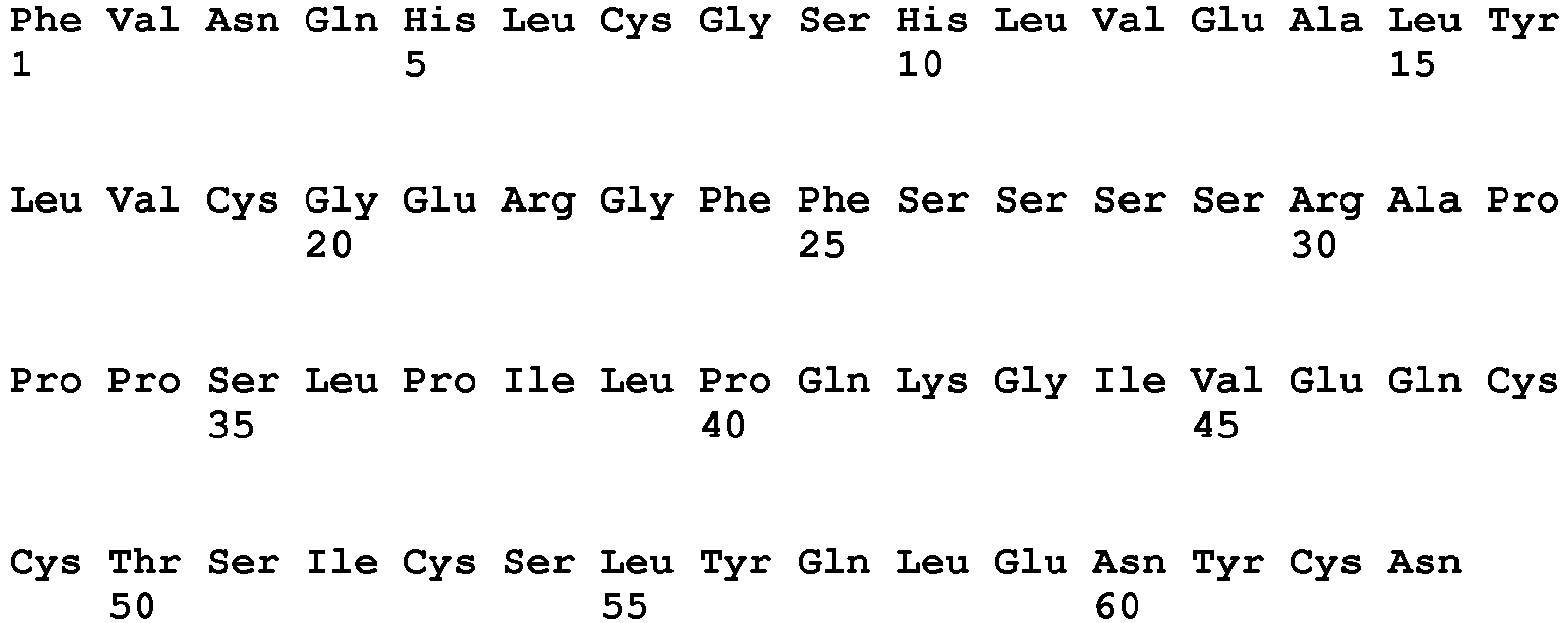
- <210> 104
<211> 25
<212> PRT
<213> Homo sapiens - <400> 104

n is 1 or 2, with the proviso that B24 is linked directly to the first serine of SEQ ID NO: 66 without any intervening amino acids.
X22 is selected from the group consisting of phenylalanine and desamino-phenylalanine;
X23 is asparagine or glycine;
X25 is histidine or threonine;
X29 is selected from the group consisting of alanine, glycine and serine;
X30 is selected from the group consisting of histidine, aspartic acid, glutamic acid, homocysteic acid and cysteic acid;
Z1 is a dipeptide selected from the group consisting of aspartate-lysine, lysine-proline, and proline-lysine; and
B1 is selected from the group consisting of threonine, alanine or a threonine-arginine-arginine tripeptide.
| Analog | Receptor Binding | Receptor Phosphorylation | Proliferation | |||||||||||
| IR-A | IR-B | IGR-1R | IR-A- | IR-B | IGF-IR | HMEC | ||||||||
| EC50 | STDev** | EC50 | STDev | EC50 | STDev | EC50 | STDev | EC50 | STDev | EC50 | STDev | EC50 | STDev | |
| Insulin | 0.226 | 0.235 | 0.217 | 0.293 | 171.245 | 1.538 | 0.408 | 0.17 | 0.385 | 0.081 | 77.200 | 60.692 | 23.390 | 2.249 |
| DP19 | 0.524 | 0.263 | 1.214 | 1.253 | 216.270 | #DIV/0! | 0.985 | 0.163 | 4.340 | 3.055 | 26.723 | 17.285 | #DIV/0! | #DIV/0! |
| DP20 | 2.088 | 0.813 | 5.444 | 7.420 | 36.864 | #DIV/0! | 0.720 | 0.072 | 4.827 | 50.23 | 378.673 | 128.061 | 146.500 | 9.192 |
| DP19LysC | 0.434 | 0.136 | 1.832 | 0.096 | 162.257 | #DIV/0! | 0.300 | #DIV/0! | 1.200 | #DIV/0! | 20.720 | #DIV/0! | #DIV/0! | #DIV/0! |
| DP20LysC | 0.231 | 0184 | 0.433 | 0.497 | 50.027 | 22.137 | 0.210 | 0.118 | 1.335 | 1.563 | 13.273 | 4.397 | 8.185 | 0.629 |
| DP22 | 8.418 | #DIV/0! | 16.402 | #DIV/0! | 437.588 | #DIV/0! | 1.245 | 0.389 | 11.335 | 9.850 | 269.025 | 262.938 | 431.000 | 158.392 |
| DP22LysC | 1.062 | #DIV/0! | 3.710 | #DIV/0! | 58.835 | #DIV/0! | 0.385 | 0.007 | 1.410 | 0.665 | 22.985 | 11.575 | 29.700 | 10.607 |
| IGF-1 | 18.809 | 22.813 | 60.697 | 53.193 | 0.493 | 0.204 | 6.480 | 5.996 | 32.175 | 0.318 | 0.617 | 0.144 | 0.310 | #DIV/0! |
| ** - interexperimental |
Claims (14)
- A single chain insulin analog comprising an A chain, a B chain and a linking moiety, wherein said linking moiety comprises a peptide of 18 amino acids that covalently links the carboxy terminus of the B chain to the amino terminus of the A chain to form a contiguous amino acid chain, with the proviso that the linking moiety does not comprise an 18 amino acid sequence that is identical to an 18 amino acid sequence of SEQ ID NO: 53 directly linked to the carboxy terminus of the B chain,
said B chain comprises the sequence R22-X25LCGX29X30LVX33X34LYLVCGX41X42GFX45 (SEQ ID NO: 17);
said A chain comprises the sequence GIVX4X5CCX8X9X10CX12LX14X15LX17X18X19CX21-R13 (SEQ ID NO: 18), wherein
X4 is glutamic acid or aspartic acid;
X5 is glutamine or glutamic acid
X8 is histidine threonine or phenylalanine;
X9 is serine, arginine, lysine, ornithine or alanine;
X10 is isoleucine or serine;
X12 is serine or aspartic acid;
X14 is tyrosine, arginine, lysine, ornithine or alanine;
X15 is glutamine, glutamic acid, arginine, alanine, lysine, ornithine or leucine;
X17 is glutamic acid, or glutamine;
X18 is methionine, asparagine, glutamine, aspartic acid, glutamic acid or threonine;
X19 is tyrosine, 4-methoxy-phenylalanine or 4-amino phenylalanine;
X21 is selected from the group consisting of alanine, glycine, serine, valine, threonine, isoleucine, leucine, glutamine, glutamic acid, asparagine, aspartic acid, histidine, tryptophan, tyrosine, and methionine;
X25 is histidine or threonine;
X29 is selected from the group consisting of alanine, glycine and serine;
X30 is selected from the group consisting of histidine, aspartic acid, glutamic acid, homocysteic acid and cysteic acid;
X33 is selected from the group consisting of aspartic acid, glutamine and glutamic acid;
X34 is selected from the group consisting of alanine and threonine;
X41 is selected from the group consisting of glutamic acid, aspartic acid or asparagine;
X42 is selected from the group consisting of alanine, ornithine, lysine and arginine;
X45 is tyrosine;
R22 is selected from the group consisting of AYRPSE (SEQ ID NO: 11), FVNQ (SEQ ID NO: 10), PGPE (SEQ ID NO: 9), a tripeptide glycine-proline-glutamic acid, a tripeptide valine-asparagine-glutamine, a dipeptide proline-glutamic acid, a dipeptide asparagine-glutamine, glutamine, glutamic acid and an N-terminal amine; and
R13 is COOH or CONH2; and
said linking moiety comprisesi) the sequence SSSSX50APPPSLPSPSRLPGPSDTPILPQX51 (SEQ ID NO: 66), wherein
X50 and X51 are independently selected from arginine and lysine; orii) a sequence that differs from SEQ ID NO: 64 by 1 to 6 amino acid substitutions. - The single chain insulin analog of claim 1 wherein the B chain comprises the sequence R22-HLCGSX30LVEALYLVCGERGFF (SEQ ID NO: 56) or R24-X25LCGX29X30LVX33X34LYLVCGX41X42GFX45 (SEQ ID NO: 17) and the A chain comprises the sequence GIVEQCCX8SICSLYQLENX19CX21-R13 (SEQ ID NO: 26) or GIVX4ECCX8X9SCDLX14X15LX17X18X19CX21-R13 (SEQ ID NO: 15)
wherein
X4 is glutamic acid or aspartic acid;
X8 is histidine, threonine or phenylalanine;
X9 is arginine, lysine, ornithine or alanine;
X14 is arginine, lysine, ornithine or alanine;
X15 is glutamine, glutamic acid, arginine, alanine, lysine, ornithine or leucine;
X17 is glutamine or glutamic acid;
X18 is methionine, asparagine, glutamine, aspartic acid, glutamic acid or threonine;
X19 is tyrosine, 4-methoxy-phenylalanine or 4-amino phenylalanine;
X21 is selected from the group consisting of alanine, glycine, serine, valine, threonine, isoleucine, leucine, glutamine, glutamic acid, asparagine, aspartic acid, histidine, tryptophan, tyrosine, and methionine;
X25 is histidine or threonine;
X29 is selected from the group consisting of alanine and glycine;
X30 is selected from the group consisting of histidine, aspartic acid, glutamic acid, homocysteic acid and cysteic acid;
X33 is selected from the group consisting of aspartic acid, glutamine and glutamic acid; X34 is selected from the group consisting of alanine and threonine;
X41 is selected from the group consisting of glutamic acid, aspartic acid or asparagine;
X42 is selected from the group consisting of alanine, lysine, ornithine and arginine;
X45 is tyrosine;
R22 is selected from the group consisting of X22VNQ (SEQ ID NO: 50), a tripeptide valine-asparagine-glutamine, a dipeptide asparagine-glutamine, glutamine, and a bond;
R24 is selected from the group consisting of AYRPSE (SEQ ID NO: 11), PGPE (SEQ ID NO: 9), a tripeptide glycine-proline-glutamic acid, a dipeptide proline-glutamic acid, glutamine, glutamic acid and a bond; and
R13 is COOH or CONH2. - The single chain insulin agonist of claim 2 wherein X8, X25 and X30 are each histidine; optionally wherein.
X4 is aspartic acid;
X9 is arginine, lysine, ornithine or alanine;
X21 is alanine, glycine or asparagine;
X29 is alanine;
X33 is aspartic acid;
X34 is alanine;
X41 is aspartic acid; and
R22 is a glycine-proline-glutamic acid tripeptide. - The single chain insulin analog of any of the preceding claims further comprising a hydrophilic moiety linked to said analog; optionally wherein the hydrophilic moiety is a plasma protein, polyethylene glycol chain or the Fc portion of an immunoglobin.
- The single chain insulin analog of claim 1 comprising an A chain, a B chain and a linking moiety, wherein
said A chain comprises the sequence GIVX4X5CCX8X9X10CX12LX14X15LEX18X19CX21-R13 (SEQ ID NO: 55);
said B chain comprises the sequence X25LCGX29X30LVX33X34LYLVCGX41X42GFX45 (SEQ ID NO: 17); and
said linking moiety comprises the sequence (SSSSX50APPPSLPSPSRLPGPSDTPILPQX51)n (SEQ ID NO: 66), wherein said A and B chain are linked to one another via disulfide bonds and wherein the carboxy terminus of said B chain is covalently linked to the amino terminus of the A chain via said linking moiety is covalently bound to the amino or carboxy terminus of the B chain, further wherein
n is an integer selected from 1 to 3;
X4 is glutamic acid or aspartic acid;
X5 is glutamic acid or glutamine;
X8 is threonine, histidine or phenylalanine;
X9 is serine, arginine, ornithine or alanine;
X10 is serine or isoleucine;
X12 is serine or aspartic acid;
X14 is arginine, tyrosine, ornithine or alanine;
X15 is glutamine, arginine, alanine, ornithine or leucine;
X18 is methionine, asparagine or threonine;
X19 is tyrosine, 4-methoxy-phenylalanine or 4-amino phenylalanine;
X21 is alanine, glycine or asparagine;
X25 is histidine or threonine;
X29 is alanine, glycine or serine;
X30 is histidine, aspartic acid, glutamic acid, homocysteic acid or cysteic acid;
X33 is aspartic acid or glutamic acid;
X34 is alanine or threonine;
X41 is aspartic acid or glutamic acid;
X42 is alanine, ornithine or arginine;
X45 is tyrosine;
X50 and X51 are independently selected from arginine and lysine; and
R13 is COOH or CONH2. - The single chain insulin analog of claim 5 wherein said B chain comprises the sequence FVNQHLCGSHLVEALYLVCGERGFF (SEQ ID NO: 104), the A chain comprises the sequence GIVEQCCTSICSLYQLENYCN (SEQ ID NO: 1), and the linking moiety comprises the sequence (SSSSX50APPPSLPSPSRLPGPSDTPILPQX51)n (SEQ ID NO: 66), wherein
X50 and X51 are independently selected from arginine and lysine; and
n is 1 or 2. - The single chain insulin analog of claim 5 wherein the linking moiety comprises a sequence independently selected from the group consisting of(SSSSX50APPPSLPSPSRLPGPSDTPILPQ)n (SEQ ID NO; 92),(SSSSRAPPPSLPSPSRLPGPSDTPILPQK)n (SEQ ID NO: 79), and(SSSSKAPPPSLPSPSRLPGPSDTPILPQR)n (SEQ ID NO: 64), further whereinn is 1 or 2, optionally wherein n is 1 and the linking moiety comprises the sequence SSSSRAPPPSLPSPSRLPGPSDTPILPQK (SEQ ID NO: 79).
- The single chain insulin analog of any of claims 5-7 wherein the linking moiety is glycosylated.
- The single chain insulin analog of any one of claims 5-8 wherein
X8, X25 and X30 are each histidine;
X4 is aspartic acid;
X9 is arginine, lysine, ornithine or alanine;
X21 is alanine, glycine or asparagine;
X29 is alanine;
X33 is aspartic acid;
X34 is alanine;
X41 is aspartic acid; and
R22 is a glycine-proline-glutamic acid tripeptide. - The single chain insulin analog of claim 7 wherein the B chain comprises the sequence R25-HLCGSX30LVEALYLVCGERGFF (SEQ ID NO: 56), the linking moiety comprises the sequence of SEQ ID NO 66 and the A chain comprises the sequence of GIVEQCCX8SICSLYQLENX19CX21-R13 (SEQ ID NO: 26),
wherein
X30 is selected from the group consisting of histidine, aspartic acid, glutamic acid, homocysteic acid and cysteic acid;
X8 is histidine, threonine or phenylalanine;
X19 is tyrosine, 4-methoxy-phenylalanine or 4-amino phenylalanine;
X21 is alanine, glycine or asparagine; and
R25 is selected from the group consisting of X22VNQ (SEQ ID NO: 50), a tripeptide valine-asparagine-glutamine, a dipeptide asparagine-glutamine, glutamine, AYRPSE (SEQ ID NO: 11), PGPE (SEQ ID NO: 9), a tripeptide glycine-proline-glutamic acid, a dipeptide proline-glutamic acid, glutamic acid. - The single chain insulin analog of any of claims 5-10 further comprising a hydrophilic moiety linked to said analog optionally
wherein the hydrophilic moiety is a polyethylene glycol linked to the N-terminal amino acid of the B chain or an amino acid side chain of the linking moiety or
wherein an amino acid side chain of said insulin agonist is covalently attached to an acyl group or an alkyl group via an alkyl amine, amide, ether, ester, thioether, or thioester linkage. - A eukaryotic host cell comprising a nucleic acid sequence that encodes the single chain insulin analog of any one of claims 5-10.
- A method of producing a hyperglycosylated insulin analog, said method comprising
culturing the cell of claim 12 under conditions wherein said protein is produced; and
recovering said protein from the culture; said method further comprising the step of cleaving the recovered protein to produce a two chain insulin analog; and optionally wherein the linking moiety comprises the sequence SSSSRAPPPSLPSPSRLPGPSDTPILPQK (SEQ ID NO: 79). - A pharmaceutical composition comprising an insulin analog of any of claims 1-11 and a pharmaceutically acceptable carrier.
Applications Claiming Priority (2)
| Application Number | Priority Date | Filing Date | Title |
|---|---|---|---|
| US201161578052P | 2011-12-20 | 2011-12-20 | |
| PCT/US2012/070503 WO2013096386A1 (en) | 2011-12-20 | 2012-12-19 | Ctp-based insulin analogs for treatment of diabetes |
Publications (3)
| Publication Number | Publication Date |
|---|---|
| EP2793932A1 EP2793932A1 (en) | 2014-10-29 |
| EP2793932A4 EP2793932A4 (en) | 2015-04-29 |
| EP2793932B1 true EP2793932B1 (en) | 2018-10-03 |
Family
ID=48669428
Family Applications (1)
| Application Number | Title | Priority Date | Filing Date |
|---|---|---|---|
| EP12859172.4A Not-in-force EP2793932B1 (en) | 2011-12-20 | 2012-12-19 | Ctp-based insulin analogs for treatment of diabetes |
Country Status (6)
| Country | Link |
|---|---|
| US (1) | US9573987B2 (en) |
| EP (1) | EP2793932B1 (en) |
| JP (1) | JP6392123B2 (en) |
| CN (1) | CN104114183A (en) |
| BR (1) | BR112014015156A2 (en) |
| WO (1) | WO2013096386A1 (en) |
Families Citing this family (33)
| Publication number | Priority date | Publication date | Assignee | Title |
|---|---|---|---|---|
| US9249407B2 (en) | 2006-02-03 | 2016-02-02 | Opko Biologics Ltd. | Long-acting coagulation factors and methods of producing same |
| US12203113B2 (en) | 2009-07-09 | 2025-01-21 | Opko Biologics Ltd. | Long-acting coagulation factors and methods of producing same |
| EP2925345B1 (en) | 2012-12-03 | 2018-09-05 | Merck Sharp & Dohme Corp. | Method for making o-glycosylated carboxy terminal portion (ctp) peptide-based insulin and insulin analogues |
| KR20150131213A (en) * | 2013-03-14 | 2015-11-24 | 인디애나 유니버시티 리서치 앤드 테크놀로지 코퍼레이션 | Insulin-incretin conjugates |
| WO2015006833A1 (en) * | 2013-07-19 | 2015-01-22 | St. Vincent's Institute Of Medical Research | A method for treating type 1 diabetes |
| US20150158926A1 (en) | 2013-10-21 | 2015-06-11 | Opko Biologics, Ltd. | Long-acting polypeptides and methods of producing and administering same |
| GB201321489D0 (en) * | 2013-12-05 | 2014-01-22 | Chemical & Biopharmaceutical Lab Of Patras S A | Biologically active insulin derivatives |
| ES2822994T3 (en) * | 2014-09-24 | 2021-05-05 | Univ Indiana Res & Tech Corp | Incretin-insulin conjugates |
| CA2964918A1 (en) * | 2014-10-20 | 2016-04-28 | Case Western Reserve University | Halogenated insulin analogues of enhanced biological potency |
| PH12021552108A1 (en) | 2014-12-10 | 2022-05-11 | Opko Biologics Ltd | Methods of producing long acting ctp-modified growth hormone polypeptides |
| EP3260139A4 (en) * | 2015-02-17 | 2018-09-05 | Hanmi Pharm. Co., Ltd. | Long-acting insulin or insulin analogue complex |
| US20180110863A1 (en) * | 2015-04-08 | 2018-04-26 | Merck Sharp & Dohme Corp. | Glucose-responsive insulin conjugates |
| CN105061566A (en) * | 2015-09-05 | 2015-11-18 | 苏州普罗达生物科技有限公司 | Pseudoinsulin polypeptide and application thereof |
| WO2017068477A1 (en) * | 2015-10-18 | 2017-04-27 | Rao M Surya | Compound, composition and uses thereof |
| WO2017189342A1 (en) | 2016-04-26 | 2017-11-02 | Merck Sharp & Dohme Corp. | Insulin dimer-incretin conjugates |
| SG10202100189WA (en) | 2016-07-11 | 2021-02-25 | Opko Biologics Ltd | Long-acting coagulation factor vii and methods of producing same |
| CN106279437B (en) * | 2016-08-19 | 2017-10-31 | 安源医药科技(上海)有限公司 | Hyperglycosylated human coagulation factor VIII fusion proteins and preparation method thereof and purposes |
| CN107759696A (en) * | 2016-08-19 | 2018-03-06 | 安源医药科技(上海)有限公司 | Fusion protein of human interleukin 7 and preparation method thereof |
| WO2018032638A1 (en) | 2016-08-19 | 2018-02-22 | 安源医药科技(上海)有限公司 | Linker peptide for constructing fusion protein |
| CN106279436B (en) * | 2016-08-19 | 2017-10-31 | 安源医药科技(上海)有限公司 | Human blood coagulation factor VII fusion protein of activation and preparation method thereof and purposes |
| CN106256835A (en) * | 2016-08-19 | 2016-12-28 | 安源医药科技(上海)有限公司 | High-glycosylation human growth hormone's fusion protein and preparation method thereof and purposes |
| CN107970204B (en) * | 2016-10-21 | 2021-08-03 | 财团法人工业技术研究院 | Hydrogel compositions and drug delivery systems comprising the same |
| TWI660740B (en) | 2016-10-21 | 2019-06-01 | 財團法人工業技術研究院 | Hydrogel compositions and drug delivery systems comprising the same |
| MX2020001434A (en) | 2017-08-17 | 2020-03-20 | Novo Nordisk As | Novel acylated insulin analogues and uses thereof. |
| EP3694535B1 (en) * | 2017-10-11 | 2025-11-26 | Elanco US Inc. | Porcine g-csf variants and their uses |
| KR102666154B1 (en) * | 2018-08-08 | 2024-05-20 | 주식회사 대웅제약 | Long-acting Insulin Analog and Derivatives Thereof |
| CN110950964B (en) * | 2018-09-26 | 2021-06-18 | 安源医药科技(上海)有限公司 | Mutant single-chain human coagulation factor VIII fusion protein and preparation method and use thereof |
| WO2021005604A1 (en) * | 2019-07-11 | 2021-01-14 | Opko Biologics Ltd. | Long-acting igf-1 or igf-1 variants and methods of producing same |
| US11981718B2 (en) | 2020-05-27 | 2024-05-14 | Ampsource Biopharma Shanghai Inc. | Dual-function protein for lipid and blood glucose regulation |
| CN113773398B (en) * | 2020-06-10 | 2023-05-23 | 宁波鲲鹏生物科技有限公司 | De-glu insulin derivative and application thereof |
| WO2022017309A1 (en) * | 2020-07-24 | 2022-01-27 | 江苏晟斯生物制药有限公司 | Insulin-fc fusion protein and application thereof |
| CN114010765A (en) * | 2021-08-30 | 2022-02-08 | 上海延立药业有限公司 | A long-acting human growth hormone |
| WO2024194897A1 (en) * | 2023-03-22 | 2024-09-26 | Council Of Scientific And Industrial Research An Indian Registered Body Incorporated Under The Regn. Of Soc. Act (Act Xxi Of 1860) | A glycation resistant insulin polypeptide and a method of preparing the same thereof |
Citations (1)
| Publication number | Priority date | Publication date | Assignee | Title |
|---|---|---|---|---|
| WO2010080607A1 (en) * | 2008-12-19 | 2010-07-15 | Indiana University Research And Technology Corporation | Yl-based insulin-like growth factors exhibiting high activity at the insulin receptor |
Family Cites Families (90)
| Publication number | Priority date | Publication date | Assignee | Title |
|---|---|---|---|---|
| US3740385A (en) | 1970-05-07 | 1973-06-19 | M Ondetti | N-terminal derivatives of secretin |
| US4450150A (en) | 1973-05-17 | 1984-05-22 | Arthur D. Little, Inc. | Biodegradable, implantable drug delivery depots, and method for preparing and using the same |
| US4275152A (en) | 1977-02-03 | 1981-06-23 | Eastman Kodak Company | Hydrolysis of protein-bound cholesterol esters |
| DK159276C (en) * | 1980-03-31 | 1991-02-18 | Takeda Chemical Industries Ltd | PROCEDURE FOR THE ISOLATION OF SPECIFIC ANTIBODIES AND ENZYM IMMUNE DETERMINATION METHOD USING THE ISOLATED ANTIBODY |
| DK119785D0 (en) | 1985-03-15 | 1985-03-15 | Nordisk Gentofte | INSULIN PREPARATION |
| PH25772A (en) | 1985-08-30 | 1991-10-18 | Novo Industri As | Insulin analogues, process for their preparation |
| PT83613B (en) | 1985-10-28 | 1988-11-21 | Lilly Co Eli | Process for the selective chemical removal of a protein amino-terminal residue |
| WO1987005330A1 (en) | 1986-03-07 | 1987-09-11 | Michel Louis Eugene Bergh | Method for enhancing glycoprotein stability |
| US4741897A (en) | 1986-07-08 | 1988-05-03 | Baxter Travenol | Thyroxine analogs and reagents for thyroid hormone assays |
| US4876242A (en) | 1987-09-21 | 1989-10-24 | Merck & Co., Inc. | Human insulin-like growth factor analoges with reduced binding to serum carrier proteins and their production in yeast |
| GB8728561D0 (en) | 1987-12-07 | 1988-01-13 | Glaxo Group Ltd | Chemical compounds |
| DE68927283T2 (en) * | 1988-07-20 | 1997-04-24 | Abbott Lab | HCG peptides for use in antibody purification processes |
| US5514646A (en) | 1989-02-09 | 1996-05-07 | Chance; Ronald E. | Insulin analogs modified at position 29 of the B chain |
| US6225449B1 (en) * | 1991-10-04 | 2001-05-01 | Washington University | Hormone analogs with multiple CTP extensions |
| FI914898A0 (en) | 1989-04-20 | 1991-10-17 | Sinai School Medicine | LEVERSPECIFIKA INSULINANALOGER. |
| US5422339A (en) * | 1991-03-19 | 1995-06-06 | Joslin Diabetes Center, Inc. | Peptides having insulin autoantibody but not insulin receptor binding capacity |
| US5268453A (en) | 1991-08-08 | 1993-12-07 | Scios Inc. | Tissue-selective insulin analogs |
| CA2157767A1 (en) * | 1993-03-09 | 1994-09-15 | Elaine M. Brate | Genetically engineered enzymes and their conjugates for diagnostic assays |
| US5359030A (en) | 1993-05-10 | 1994-10-25 | Protein Delivery, Inc. | Conjugation-stabilized polypeptide compositions, therapeutic delivery and diagnostic formulations comprising same, and method of making and using the same |
| US6476290B1 (en) | 1995-04-19 | 2002-11-05 | Dalhousie University | Transgenic tilapia comprising a humanized insulin gene |
| AU5724996A (en) | 1995-05-05 | 1996-11-21 | Eli Lilly And Company | Single chain insulin with high bioactivity |
| US6180767B1 (en) | 1996-01-11 | 2001-01-30 | Thomas Jefferson University | Peptide nucleic acid conjugates |
| AU724326B2 (en) | 1996-09-09 | 2000-09-14 | Zealand Pharmaceuticals A/S | Peptide prodrugs containing an alpha-hydroxyacid linker |
| UA65549C2 (en) | 1996-11-05 | 2004-04-15 | Елі Ліллі Енд Компані | Use of glucagon-like peptides such as glp-1, glp-1 analog, or glp-1 derivative in methods and compositions for reducing body weight |
| US6303144B1 (en) | 1998-02-10 | 2001-10-16 | Welfide Corporation | Preparations with controlled release |
| SK12412000A3 (en) | 1998-02-23 | 2002-05-09 | Neurocrine Biosciences, Inc. | Methods for treatment of diabetes using peptide analogues of insulin |
| NZ506839A (en) | 1998-03-09 | 2003-05-30 | Zealand Pharma As | Pharmacologically active peptide conjugates having a reduced tendency towards enzymatic hydrolysis |
| US6875741B2 (en) | 1998-09-02 | 2005-04-05 | Renuka Pillutla | Insulin and IGF-1 receptor agonists and antagonists |
| US20030236190A1 (en) | 1998-09-02 | 2003-12-25 | Renuka Pillutla | Isulin and IGF-1 receptor agonists and antagonists |
| GB2344287A (en) | 1998-12-03 | 2000-06-07 | Ferring Bv | Controlled release pharmaceutical formulation |
| DE19908041A1 (en) | 1999-02-24 | 2000-08-31 | Hoecker Hartwig | Covalently bridged insulin dimers |
| WO2000058360A2 (en) | 1999-03-29 | 2000-10-05 | Uutech Limited | Analogs of gastric inhibitory peptide and their use for treatment of diabetes |
| US6746853B1 (en) | 1999-05-19 | 2004-06-08 | Xencor, Inc. | Proteins with insulin-like activity useful in the treatment of diabetes |
| AUPQ661800A0 (en) | 2000-03-31 | 2000-05-04 | Metabolic Pharmaceuticals Limited | Insulin-potentiating compounds |
| JP2004501642A (en) | 2000-06-28 | 2004-01-22 | グライコフィ, インコーポレイテッド | Methods for producing modified glycoproteins |
| US7449308B2 (en) | 2000-06-28 | 2008-11-11 | Glycofi, Inc. | Combinatorial DNA library for producing modified N-glycans in lower eukaryotes |
| CN1454214A (en) | 2000-08-02 | 2003-11-05 | 赛莱技术公司 | Modified Biopeptides with Enhanced Efficacy |
| US6967202B2 (en) | 2000-08-04 | 2005-11-22 | Dmi Biosciences, Inc. | Method of synthesizing diketopiperazines |
| EP1324779B1 (en) | 2000-09-29 | 2011-07-20 | Schering Corporation | Pegylated interleukin-10 |
| EP1193272B1 (en) | 2000-10-02 | 2004-06-30 | Yonsei University | Single-chain insulin analogs |
| KR100449454B1 (en) | 2000-10-02 | 2004-09-21 | 이현철 | Vector for Curing Diabetes Mellitus Containing Gene of Single-chain Insulin Analog |
| KR101229995B1 (en) * | 2000-12-11 | 2013-02-06 | 씨제이 주식회사 | Fusion protein having the enhanced in vivo activity of erythropoietin |
| EP1243276A1 (en) | 2001-03-23 | 2002-09-25 | Franciscus Marinus Hendrikus De Groot | Elongated and multiple spacers containing activatible prodrugs |
| MXPA03009566A (en) | 2001-04-19 | 2004-12-06 | Scripps Research Inst | Methods and composition for the production of orthoganal trna-aminoacyltrna synthetase pairs. |
| SK2432004A3 (en) | 2001-12-20 | 2005-04-01 | Eli Lilly And Company | Insulin compound having protracted activity |
| FR2842209B1 (en) * | 2002-07-09 | 2007-11-23 | NOVEL ASPARTIC PROTEASE DITE SASPASE AND ITS USE IN THE COSMETIC AND THERAPEUTIC FIELD | |
| EP1551505B1 (en) | 2002-10-04 | 2010-02-24 | Microchips, Inc. | Medical device for controlled drug delivery and cardiac monitoring and/or stimulation |
| AU2004204494B2 (en) | 2003-01-09 | 2011-09-29 | Macrogenics, Inc. | Identification and engineering of antibodies with variant Fc regions and methods of using same |
| US20050059605A1 (en) | 2003-01-31 | 2005-03-17 | Krishna Peri | Chemically modified metabolites of regulatory peptides and methods of producing and using same |
| EP1626981A4 (en) | 2003-03-04 | 2006-11-22 | Biorexis Pharmaceutical Corp | Dipeptidyl-peptidase protected proteins |
| PT1605897E (en) | 2003-03-19 | 2012-09-10 | Lilly Co Eli | Polyethelene glycol link glp-1 compounds |
| WO2004089280A2 (en) | 2003-04-08 | 2004-10-21 | Yeda Research And Development Co. Ltd. | Reversible pegylated drugs |
| TWI353991B (en) | 2003-05-06 | 2011-12-11 | Syntonix Pharmaceuticals Inc | Immunoglobulin chimeric monomer-dimer hybrids |
| WO2005027978A2 (en) | 2003-09-19 | 2005-03-31 | Novo Nordisk A/S | Albumin-binding derivatives of therapeutic peptides |
| WO2005035003A2 (en) | 2003-09-22 | 2005-04-21 | Dihedron Corporation | Compositions and methods for increasing drug efficiency |
| CN107090025A (en) | 2003-11-05 | 2017-08-25 | 达纳-法伯癌症研究所股份有限公司 | Stable alpha helical peptides and application thereof |
| ATE517119T1 (en) | 2003-12-03 | 2011-08-15 | Novo Nordisk As | SINGLE CHAIN INSULIN |
| US20080280814A1 (en) * | 2004-09-17 | 2008-11-13 | Novo Nordisk A/S | Pharmaceutical Compositions Containing Insulin and Insulinotropic Peptide |
| CA2582552A1 (en) | 2004-10-21 | 2006-05-04 | Igf Oncology, Llc | Toxins and radionuclides coupled to igf-1 receptor ligands for treatment of cancer |
| EP1863840A1 (en) | 2005-03-18 | 2007-12-12 | Novo Nordisk A/S | Pegylated single-chain insulin |
| US7521211B2 (en) | 2005-04-05 | 2009-04-21 | Regeneron Pharmaceuticals, Inc | IGF-1 and IGF-2 chimeric polypeptides and therapeutic uses thereof |
| US20090209453A1 (en) * | 2005-04-13 | 2009-08-20 | University Of Medicine And Dentistry Of New Jersey | Glycoprotein Hormone Analogs |
| US7846445B2 (en) | 2005-09-27 | 2010-12-07 | Amunix Operating, Inc. | Methods for production of unstructured recombinant polymers and uses thereof |
| US8304386B2 (en) * | 2006-02-03 | 2012-11-06 | Prolor Biotech, Inc. | Long-acting growth hormone and methods of producing same |
| WO2007096332A1 (en) | 2006-02-21 | 2007-08-30 | Novo Nordisk A/S | Single-chain insulin analogues and pharmaceutical formulations thereof |
| JP5312054B2 (en) | 2006-03-15 | 2013-10-09 | ノボ・ノルデイスク・エー/エス | Mixture of amylin and insulin |
| JP5256199B2 (en) | 2006-08-07 | 2013-08-07 | テヴァ バイオファーマシューティカルズ ユーエスエー,インコーポレーティッド | Albumin-insulin fusion protein |
| CA2660835A1 (en) | 2006-08-17 | 2008-02-21 | Amylin Pharmaceuticals, Inc. | Dpp-iv resistant gip hybrid polypeptides with selectable propperties |
| CL2007002502A1 (en) | 2006-08-31 | 2008-05-30 | Hoffmann La Roche | VARIANTS OF THE SIMILAR GROWTH FACTOR TO HUMAN INSULIN-1 (IGF-1) PEGILATED IN LISIN; METHOD OF PRODUCTION; FUSION PROTEIN THAT UNDERSTANDS IT; AND ITS USE TO TREAT ALZHEIMER'S DISEASE. |
| CA2663083A1 (en) | 2006-09-08 | 2008-03-13 | Ambrx, Inc. | Modified human plasma polypeptide or fc scaffolds and their uses |
| US20090098130A1 (en) | 2007-01-05 | 2009-04-16 | Bradshaw Curt W | Glucagon-like protein-1 receptor (glp-1r) agonist compounds |
| US8282990B2 (en) | 2007-04-19 | 2012-10-09 | Dong-A Pharmaceutical, Co., Ltd. | Method for preparing a biodegradable polymer microsphere containing a glucose-regulating peptide |
| CN103298935A (en) | 2007-08-15 | 2013-09-11 | 阿穆尼克斯公司 | Compositions and methods for improving the performance of biologically active polypeptides |
| EP2036923A1 (en) | 2007-09-11 | 2009-03-18 | Novo Nordisk A/S | Improved derivates of amylin |
| EP2036539A1 (en) | 2007-09-11 | 2009-03-18 | Novo Nordisk A/S | Stable formulations of amylin and its analogues |
| ES2632504T3 (en) | 2007-11-20 | 2017-09-13 | Ambrx, Inc. | Modified insulin polypeptides and their uses |
| AU2009210570B2 (en) | 2008-01-30 | 2014-11-20 | Indiana University Research And Technology Corporation | Ester-based insulin prodrugs |
| HRP20191052T1 (en) | 2008-02-01 | 2019-11-01 | Ascendis Pharma As | A TREATMENT INCLUDING A SELF-CLEAVING LINK |
| WO2010011313A2 (en) | 2008-07-23 | 2010-01-28 | President And Fellows Of Harvard College | Ligation of stapled polypeptides |
| EP2376520B1 (en) * | 2008-12-19 | 2014-02-12 | Indiana University Research&Technology Corporation | Insulin analogs |
| SG172291A1 (en) | 2008-12-19 | 2011-07-28 | Univ Indiana Res & Tech Corp | Amide based glucagon superfamily peptide prodrugs |
| US20110237493A1 (en) | 2008-12-19 | 2011-09-29 | Indiana University Research And Technology Corporation | Dipeptide linked medicinal agents |
| WO2010080609A1 (en) | 2008-12-19 | 2010-07-15 | Indiana University Research And Technology Corporation | Amide-based insulin prodrugs |
| EP2408470A4 (en) | 2009-03-20 | 2012-08-29 | Smartcells Inc | Soluble non-soluble insulin conjugates and their uses |
| PE20120918A1 (en) | 2009-07-31 | 2012-08-14 | Sanofi Aventis Deutschland | DEPTH DRUGS THAT INCLUDE AN INSULIN-CONNECTOR CONJUGATE |
| WO2011159895A2 (en) | 2010-06-16 | 2011-12-22 | Indiana University Research And Technology Corporation | Single chain insulin agonists exhibiting high activity at the insulin receptor |
| WO2011163460A1 (en) | 2010-06-24 | 2011-12-29 | Indiana University Research And Technology Corporation | Yl-based insulin-like growth factors exhibiting high activity at the insulin receptor |
| CA2796894A1 (en) | 2010-06-24 | 2011-12-29 | Indiana University Research And Technology Corporation | Amide based glucagon superfamily peptide prodrugs |
| JP5912112B2 (en) | 2010-06-24 | 2016-04-27 | インディアナ ユニバーシティー リサーチ アンド テクノロジー コーポレーションIndiana University Research And Technology Corporation | Amide insulin prodrug |
| EP2925345B1 (en) | 2012-12-03 | 2018-09-05 | Merck Sharp & Dohme Corp. | Method for making o-glycosylated carboxy terminal portion (ctp) peptide-based insulin and insulin analogues |
-
2012
- 2012-12-19 EP EP12859172.4A patent/EP2793932B1/en not_active Not-in-force
- 2012-12-19 BR BR112014015156-3A patent/BR112014015156A2/en not_active Application Discontinuation
- 2012-12-19 JP JP2014548812A patent/JP6392123B2/en not_active Expired - Fee Related
- 2012-12-19 US US14/366,187 patent/US9573987B2/en not_active Expired - Fee Related
- 2012-12-19 WO PCT/US2012/070503 patent/WO2013096386A1/en not_active Ceased
- 2012-12-19 CN CN201280070186.7A patent/CN104114183A/en active Pending
Patent Citations (1)
| Publication number | Priority date | Publication date | Assignee | Title |
|---|---|---|---|---|
| WO2010080607A1 (en) * | 2008-12-19 | 2010-07-15 | Indiana University Research And Technology Corporation | Yl-based insulin-like growth factors exhibiting high activity at the insulin receptor |
Also Published As
| Publication number | Publication date |
|---|---|
| EP2793932A4 (en) | 2015-04-29 |
| JP2015508285A (en) | 2015-03-19 |
| JP6392123B2 (en) | 2018-09-19 |
| EP2793932A1 (en) | 2014-10-29 |
| CN104114183A (en) | 2014-10-22 |
| BR112014015156A2 (en) | 2020-10-27 |
| US20150299285A1 (en) | 2015-10-22 |
| WO2013096386A1 (en) | 2013-06-27 |
| US9573987B2 (en) | 2017-02-21 |
Similar Documents
| Publication | Publication Date | Title |
|---|---|---|
| EP2793932B1 (en) | Ctp-based insulin analogs for treatment of diabetes | |
| EP2582719B1 (en) | Single chain insulin agonists exhibiting high activity at the insulin receptor | |
| EP3395358B1 (en) | Insulin analog dimers | |
| US10696726B2 (en) | Insulin-incretin conjugates | |
| EP2585102B1 (en) | Amide-based insulin prodrugs | |
| WO2011159882A2 (en) | Novel stabilized insulin agonists |
Legal Events
| Date | Code | Title | Description |
|---|---|---|---|
| PUAI | Public reference made under article 153(3) epc to a published international application that has entered the european phase |
Free format text: ORIGINAL CODE: 0009012 |
|
| 17P | Request for examination filed |
Effective date: 20140716 |
|
| AK | Designated contracting states |
Kind code of ref document: A1 Designated state(s): AL AT BE BG CH CY CZ DE DK EE ES FI FR GB GR HR HU IE IS IT LI LT LU LV MC MK MT NL NO PL PT RO RS SE SI SK SM TR |
|
| DAX | Request for extension of the european patent (deleted) | ||
| RA4 | Supplementary search report drawn up and despatched (corrected) |
Effective date: 20150326 |
|
| RIC1 | Information provided on ipc code assigned before grant |
Ipc: A61K 38/27 20060101ALI20150320BHEP Ipc: A61K 38/00 20060101ALI20150320BHEP Ipc: A61K 38/28 20060101AFI20150320BHEP |
|
| 17Q | First examination report despatched |
Effective date: 20160415 |
|
| STAA | Information on the status of an ep patent application or granted ep patent |
Free format text: STATUS: EXAMINATION IS IN PROGRESS |
|
| RAP1 | Party data changed (applicant data changed or rights of an application transferred) |
Owner name: INDIANA UNIVERSITY RESEARCH AND TECHNOLOGY CORPORA |
|
| GRAP | Despatch of communication of intention to grant a patent |
Free format text: ORIGINAL CODE: EPIDOSNIGR1 |
|
| STAA | Information on the status of an ep patent application or granted ep patent |
Free format text: STATUS: GRANT OF PATENT IS INTENDED |
|
| INTG | Intention to grant announced |
Effective date: 20180418 |
|
| GRAS | Grant fee paid |
Free format text: ORIGINAL CODE: EPIDOSNIGR3 |
|
| GRAA | (expected) grant |
Free format text: ORIGINAL CODE: 0009210 |
|
| STAA | Information on the status of an ep patent application or granted ep patent |
Free format text: STATUS: THE PATENT HAS BEEN GRANTED |
|
| AK | Designated contracting states |
Kind code of ref document: B1 Designated state(s): AL AT BE BG CH CY CZ DE DK EE ES FI FR GB GR HR HU IE IS IT LI LT LU LV MC MK MT NL NO PL PT RO RS SE SI SK SM TR |
|
| REG | Reference to a national code |
Ref country code: GB Ref legal event code: FG4D |
|
| REG | Reference to a national code |
Ref country code: CH Ref legal event code: EP Ref country code: AT Ref legal event code: REF Ref document number: 1047910 Country of ref document: AT Kind code of ref document: T Effective date: 20181015 |
|
| REG | Reference to a national code |
Ref country code: IE Ref legal event code: FG4D Ref country code: DE Ref legal event code: R096 Ref document number: 602012051895 Country of ref document: DE |
|
| REG | Reference to a national code |
Ref country code: NL Ref legal event code: MP Effective date: 20181003 |
|
| REG | Reference to a national code |
Ref country code: LT Ref legal event code: MG4D |
|
| REG | Reference to a national code |
Ref country code: AT Ref legal event code: MK05 Ref document number: 1047910 Country of ref document: AT Kind code of ref document: T Effective date: 20181003 |
|
| PG25 | Lapsed in a contracting state [announced via postgrant information from national office to epo] |
Ref country code: NL Free format text: LAPSE BECAUSE OF FAILURE TO SUBMIT A TRANSLATION OF THE DESCRIPTION OR TO PAY THE FEE WITHIN THE PRESCRIBED TIME-LIMIT Effective date: 20181003 |
|
| PG25 | Lapsed in a contracting state [announced via postgrant information from national office to epo] |
Ref country code: LT Free format text: LAPSE BECAUSE OF FAILURE TO SUBMIT A TRANSLATION OF THE DESCRIPTION OR TO PAY THE FEE WITHIN THE PRESCRIBED TIME-LIMIT Effective date: 20181003 Ref country code: NO Free format text: LAPSE BECAUSE OF FAILURE TO SUBMIT A TRANSLATION OF THE DESCRIPTION OR TO PAY THE FEE WITHIN THE PRESCRIBED TIME-LIMIT Effective date: 20190103 Ref country code: HR Free format text: LAPSE BECAUSE OF FAILURE TO SUBMIT A TRANSLATION OF THE DESCRIPTION OR TO PAY THE FEE WITHIN THE PRESCRIBED TIME-LIMIT Effective date: 20181003 Ref country code: IS Free format text: LAPSE BECAUSE OF FAILURE TO SUBMIT A TRANSLATION OF THE DESCRIPTION OR TO PAY THE FEE WITHIN THE PRESCRIBED TIME-LIMIT Effective date: 20190203 Ref country code: LV Free format text: LAPSE BECAUSE OF FAILURE TO SUBMIT A TRANSLATION OF THE DESCRIPTION OR TO PAY THE FEE WITHIN THE PRESCRIBED TIME-LIMIT Effective date: 20181003 Ref country code: ES Free format text: LAPSE BECAUSE OF FAILURE TO SUBMIT A TRANSLATION OF THE DESCRIPTION OR TO PAY THE FEE WITHIN THE PRESCRIBED TIME-LIMIT Effective date: 20181003 Ref country code: BG Free format text: LAPSE BECAUSE OF FAILURE TO SUBMIT A TRANSLATION OF THE DESCRIPTION OR TO PAY THE FEE WITHIN THE PRESCRIBED TIME-LIMIT Effective date: 20190103 Ref country code: PL Free format text: LAPSE BECAUSE OF FAILURE TO SUBMIT A TRANSLATION OF THE DESCRIPTION OR TO PAY THE FEE WITHIN THE PRESCRIBED TIME-LIMIT Effective date: 20181003 Ref country code: CZ Free format text: LAPSE BECAUSE OF FAILURE TO SUBMIT A TRANSLATION OF THE DESCRIPTION OR TO PAY THE FEE WITHIN THE PRESCRIBED TIME-LIMIT Effective date: 20181003 Ref country code: FI Free format text: LAPSE BECAUSE OF FAILURE TO SUBMIT A TRANSLATION OF THE DESCRIPTION OR TO PAY THE FEE WITHIN THE PRESCRIBED TIME-LIMIT Effective date: 20181003 Ref country code: AT Free format text: LAPSE BECAUSE OF FAILURE TO SUBMIT A TRANSLATION OF THE DESCRIPTION OR TO PAY THE FEE WITHIN THE PRESCRIBED TIME-LIMIT Effective date: 20181003 |
|
| PG25 | Lapsed in a contracting state [announced via postgrant information from national office to epo] |
Ref country code: RS Free format text: LAPSE BECAUSE OF FAILURE TO SUBMIT A TRANSLATION OF THE DESCRIPTION OR TO PAY THE FEE WITHIN THE PRESCRIBED TIME-LIMIT Effective date: 20181003 Ref country code: GR Free format text: LAPSE BECAUSE OF FAILURE TO SUBMIT A TRANSLATION OF THE DESCRIPTION OR TO PAY THE FEE WITHIN THE PRESCRIBED TIME-LIMIT Effective date: 20190104 Ref country code: AL Free format text: LAPSE BECAUSE OF FAILURE TO SUBMIT A TRANSLATION OF THE DESCRIPTION OR TO PAY THE FEE WITHIN THE PRESCRIBED TIME-LIMIT Effective date: 20181003 Ref country code: SE Free format text: LAPSE BECAUSE OF FAILURE TO SUBMIT A TRANSLATION OF THE DESCRIPTION OR TO PAY THE FEE WITHIN THE PRESCRIBED TIME-LIMIT Effective date: 20181003 Ref country code: PT Free format text: LAPSE BECAUSE OF FAILURE TO SUBMIT A TRANSLATION OF THE DESCRIPTION OR TO PAY THE FEE WITHIN THE PRESCRIBED TIME-LIMIT Effective date: 20190203 |
|
| REG | Reference to a national code |
Ref country code: DE Ref legal event code: R097 Ref document number: 602012051895 Country of ref document: DE |
|
| PG25 | Lapsed in a contracting state [announced via postgrant information from national office to epo] |
Ref country code: DK Free format text: LAPSE BECAUSE OF FAILURE TO SUBMIT A TRANSLATION OF THE DESCRIPTION OR TO PAY THE FEE WITHIN THE PRESCRIBED TIME-LIMIT Effective date: 20181003 Ref country code: IT Free format text: LAPSE BECAUSE OF FAILURE TO SUBMIT A TRANSLATION OF THE DESCRIPTION OR TO PAY THE FEE WITHIN THE PRESCRIBED TIME-LIMIT Effective date: 20181003 |
|
| REG | Reference to a national code |
Ref country code: CH Ref legal event code: PL |
|
| PLBE | No opposition filed within time limit |
Free format text: ORIGINAL CODE: 0009261 |
|
| STAA | Information on the status of an ep patent application or granted ep patent |
Free format text: STATUS: NO OPPOSITION FILED WITHIN TIME LIMIT |
|
| PG25 | Lapsed in a contracting state [announced via postgrant information from national office to epo] |
Ref country code: MC Free format text: LAPSE BECAUSE OF FAILURE TO SUBMIT A TRANSLATION OF THE DESCRIPTION OR TO PAY THE FEE WITHIN THE PRESCRIBED TIME-LIMIT Effective date: 20181003 Ref country code: LU Free format text: LAPSE BECAUSE OF NON-PAYMENT OF DUE FEES Effective date: 20181219 Ref country code: SK Free format text: LAPSE BECAUSE OF FAILURE TO SUBMIT A TRANSLATION OF THE DESCRIPTION OR TO PAY THE FEE WITHIN THE PRESCRIBED TIME-LIMIT Effective date: 20181003 Ref country code: RO Free format text: LAPSE BECAUSE OF FAILURE TO SUBMIT A TRANSLATION OF THE DESCRIPTION OR TO PAY THE FEE WITHIN THE PRESCRIBED TIME-LIMIT Effective date: 20181003 Ref country code: SM Free format text: LAPSE BECAUSE OF FAILURE TO SUBMIT A TRANSLATION OF THE DESCRIPTION OR TO PAY THE FEE WITHIN THE PRESCRIBED TIME-LIMIT Effective date: 20181003 Ref country code: EE Free format text: LAPSE BECAUSE OF FAILURE TO SUBMIT A TRANSLATION OF THE DESCRIPTION OR TO PAY THE FEE WITHIN THE PRESCRIBED TIME-LIMIT Effective date: 20181003 |
|
| 26N | No opposition filed |
Effective date: 20190704 |
|
| REG | Reference to a national code |
Ref country code: IE Ref legal event code: MM4A |
|
| REG | Reference to a national code |
Ref country code: BE Ref legal event code: MM Effective date: 20181231 |
|
| PG25 | Lapsed in a contracting state [announced via postgrant information from national office to epo] |
Ref country code: SI Free format text: LAPSE BECAUSE OF FAILURE TO SUBMIT A TRANSLATION OF THE DESCRIPTION OR TO PAY THE FEE WITHIN THE PRESCRIBED TIME-LIMIT Effective date: 20181003 Ref country code: IE Free format text: LAPSE BECAUSE OF NON-PAYMENT OF DUE FEES Effective date: 20181219 |
|
| PG25 | Lapsed in a contracting state [announced via postgrant information from national office to epo] |
Ref country code: BE Free format text: LAPSE BECAUSE OF NON-PAYMENT OF DUE FEES Effective date: 20181231 |
|
| PG25 | Lapsed in a contracting state [announced via postgrant information from national office to epo] |
Ref country code: LI Free format text: LAPSE BECAUSE OF NON-PAYMENT OF DUE FEES Effective date: 20181231 Ref country code: CH Free format text: LAPSE BECAUSE OF NON-PAYMENT OF DUE FEES Effective date: 20181231 |
|
| PG25 | Lapsed in a contracting state [announced via postgrant information from national office to epo] |
Ref country code: MT Free format text: LAPSE BECAUSE OF NON-PAYMENT OF DUE FEES Effective date: 20181219 |
|
| PG25 | Lapsed in a contracting state [announced via postgrant information from national office to epo] |
Ref country code: TR Free format text: LAPSE BECAUSE OF FAILURE TO SUBMIT A TRANSLATION OF THE DESCRIPTION OR TO PAY THE FEE WITHIN THE PRESCRIBED TIME-LIMIT Effective date: 20181003 |
|
| PG25 | Lapsed in a contracting state [announced via postgrant information from national office to epo] |
Ref country code: CY Free format text: LAPSE BECAUSE OF FAILURE TO SUBMIT A TRANSLATION OF THE DESCRIPTION OR TO PAY THE FEE WITHIN THE PRESCRIBED TIME-LIMIT Effective date: 20181003 Ref country code: MK Free format text: LAPSE BECAUSE OF NON-PAYMENT OF DUE FEES Effective date: 20181003 Ref country code: HU Free format text: LAPSE BECAUSE OF FAILURE TO SUBMIT A TRANSLATION OF THE DESCRIPTION OR TO PAY THE FEE WITHIN THE PRESCRIBED TIME-LIMIT; INVALID AB INITIO Effective date: 20121219 |
|
| PGFP | Annual fee paid to national office [announced via postgrant information from national office to epo] |
Ref country code: FR Payment date: 20201227 Year of fee payment: 9 Ref country code: GB Payment date: 20201228 Year of fee payment: 9 |
|
| PGFP | Annual fee paid to national office [announced via postgrant information from national office to epo] |
Ref country code: DE Payment date: 20201229 Year of fee payment: 9 |
|
| REG | Reference to a national code |
Ref country code: DE Ref legal event code: R119 Ref document number: 602012051895 Country of ref document: DE |
|
| GBPC | Gb: european patent ceased through non-payment of renewal fee |
Effective date: 20211219 |
|
| PG25 | Lapsed in a contracting state [announced via postgrant information from national office to epo] |
Ref country code: GB Free format text: LAPSE BECAUSE OF NON-PAYMENT OF DUE FEES Effective date: 20211219 Ref country code: DE Free format text: LAPSE BECAUSE OF NON-PAYMENT OF DUE FEES Effective date: 20220701 |
|
| PG25 | Lapsed in a contracting state [announced via postgrant information from national office to epo] |
Ref country code: FR Free format text: LAPSE BECAUSE OF NON-PAYMENT OF DUE FEES Effective date: 20211231 |