EP2667852B1 - Adjuvant nanoemulsions with crystallisation inhibitors - Google Patents
Adjuvant nanoemulsions with crystallisation inhibitors Download PDFInfo
- Publication number
- EP2667852B1 EP2667852B1 EP12704573.0A EP12704573A EP2667852B1 EP 2667852 B1 EP2667852 B1 EP 2667852B1 EP 12704573 A EP12704573 A EP 12704573A EP 2667852 B1 EP2667852 B1 EP 2667852B1
- Authority
- EP
- European Patent Office
- Prior art keywords
- emulsion
- oil
- surfactant
- virus
- glycero
- Prior art date
- Legal status (The legal status is an assumption and is not a legal conclusion. Google has not performed a legal analysis and makes no representation as to the accuracy of the status listed.)
- Active
Links
Images


Classifications
-
- A—HUMAN NECESSITIES
- A61—MEDICAL OR VETERINARY SCIENCE; HYGIENE
- A61K—PREPARATIONS FOR MEDICAL, DENTAL OR TOILETRY PURPOSES
- A61K39/00—Medicinal preparations containing antigens or antibodies
- A61K39/02—Bacterial antigens
- A61K39/095—Neisseria
-
- A—HUMAN NECESSITIES
- A61—MEDICAL OR VETERINARY SCIENCE; HYGIENE
- A61K—PREPARATIONS FOR MEDICAL, DENTAL OR TOILETRY PURPOSES
- A61K9/00—Medicinal preparations characterised by special physical form
- A61K9/10—Dispersions; Emulsions
- A61K9/107—Emulsions ; Emulsion preconcentrates; Micelles
- A61K9/1075—Microemulsions or submicron emulsions; Preconcentrates or solids thereof; Micelles, e.g. made of phospholipids or block copolymers
-
- A—HUMAN NECESSITIES
- A61—MEDICAL OR VETERINARY SCIENCE; HYGIENE
- A61K—PREPARATIONS FOR MEDICAL, DENTAL OR TOILETRY PURPOSES
- A61K31/00—Medicinal preparations containing organic active ingredients
-
- A—HUMAN NECESSITIES
- A61—MEDICAL OR VETERINARY SCIENCE; HYGIENE
- A61K—PREPARATIONS FOR MEDICAL, DENTAL OR TOILETRY PURPOSES
- A61K31/00—Medicinal preparations containing organic active ingredients
- A61K31/33—Heterocyclic compounds
- A61K31/395—Heterocyclic compounds having nitrogen as a ring hetero atom, e.g. guanethidine or rifamycins
- A61K31/435—Heterocyclic compounds having nitrogen as a ring hetero atom, e.g. guanethidine or rifamycins having six-membered rings with one nitrogen as the only ring hetero atom
- A61K31/4353—Heterocyclic compounds having nitrogen as a ring hetero atom, e.g. guanethidine or rifamycins having six-membered rings with one nitrogen as the only ring hetero atom ortho- or peri-condensed with heterocyclic ring systems
- A61K31/4375—Heterocyclic compounds having nitrogen as a ring hetero atom, e.g. guanethidine or rifamycins having six-membered rings with one nitrogen as the only ring hetero atom ortho- or peri-condensed with heterocyclic ring systems the heterocyclic ring system containing a six-membered ring having nitrogen as a ring heteroatom, e.g. quinolizines, naphthyridines, berberine, vincamine
-
- A—HUMAN NECESSITIES
- A61—MEDICAL OR VETERINARY SCIENCE; HYGIENE
- A61K—PREPARATIONS FOR MEDICAL, DENTAL OR TOILETRY PURPOSES
- A61K31/00—Medicinal preparations containing organic active ingredients
- A61K31/33—Heterocyclic compounds
- A61K31/395—Heterocyclic compounds having nitrogen as a ring hetero atom, e.g. guanethidine or rifamycins
- A61K31/435—Heterocyclic compounds having nitrogen as a ring hetero atom, e.g. guanethidine or rifamycins having six-membered rings with one nitrogen as the only ring hetero atom
- A61K31/47—Quinolines; Isoquinolines
- A61K31/4738—Quinolines; Isoquinolines ortho- or peri-condensed with heterocyclic ring systems
- A61K31/4745—Quinolines; Isoquinolines ortho- or peri-condensed with heterocyclic ring systems condensed with ring systems having nitrogen as a ring hetero atom, e.g. phenantrolines
-
- A—HUMAN NECESSITIES
- A61—MEDICAL OR VETERINARY SCIENCE; HYGIENE
- A61K—PREPARATIONS FOR MEDICAL, DENTAL OR TOILETRY PURPOSES
- A61K39/00—Medicinal preparations containing antigens or antibodies
- A61K39/39—Medicinal preparations containing antigens or antibodies characterised by the immunostimulating additives, e.g. chemical adjuvants
-
- A—HUMAN NECESSITIES
- A61—MEDICAL OR VETERINARY SCIENCE; HYGIENE
- A61K—PREPARATIONS FOR MEDICAL, DENTAL OR TOILETRY PURPOSES
- A61K9/00—Medicinal preparations characterised by special physical form
- A61K9/0012—Galenical forms characterised by the site of application
- A61K9/0019—Injectable compositions; Intramuscular, intravenous, arterial, subcutaneous administration; Compositions to be administered through the skin in an invasive manner
-
- A—HUMAN NECESSITIES
- A61—MEDICAL OR VETERINARY SCIENCE; HYGIENE
- A61K—PREPARATIONS FOR MEDICAL, DENTAL OR TOILETRY PURPOSES
- A61K47/00—Medicinal preparations characterised by the non-active ingredients used, e.g. carriers or inert additives; Targeting or modifying agents chemically bound to the active ingredient
- A61K47/06—Organic compounds, e.g. natural or synthetic hydrocarbons, polyolefins, mineral oil, petrolatum or ozokerite
- A61K47/26—Carbohydrates, e.g. sugar alcohols, amino sugars, nucleic acids, mono-, di- or oligo-saccharides; Derivatives thereof, e.g. polysorbates, sorbitan fatty acid esters or glycyrrhizin
-
- A—HUMAN NECESSITIES
- A61—MEDICAL OR VETERINARY SCIENCE; HYGIENE
- A61K—PREPARATIONS FOR MEDICAL, DENTAL OR TOILETRY PURPOSES
- A61K47/00—Medicinal preparations characterised by the non-active ingredients used, e.g. carriers or inert additives; Targeting or modifying agents chemically bound to the active ingredient
- A61K47/30—Macromolecular organic or inorganic compounds, e.g. inorganic polyphosphates
- A61K47/32—Macromolecular compounds obtained by reactions only involving carbon-to-carbon unsaturated bonds, e.g. carbomers, poly(meth)acrylates, or polyvinyl pyrrolidone
-
- A—HUMAN NECESSITIES
- A61—MEDICAL OR VETERINARY SCIENCE; HYGIENE
- A61K—PREPARATIONS FOR MEDICAL, DENTAL OR TOILETRY PURPOSES
- A61K47/00—Medicinal preparations characterised by the non-active ingredients used, e.g. carriers or inert additives; Targeting or modifying agents chemically bound to the active ingredient
- A61K47/44—Oils, fats or waxes according to two or more groups of A61K47/02-A61K47/42; Natural or modified natural oils, fats or waxes, e.g. castor oil, polyethoxylated castor oil, montan wax, lignite, shellac, rosin, beeswax or lanolin
Definitions
- the invention is in the field of emulsions which are useful for delivering lipophilic pharmacological agents, such as immunopotentiators.
- Pharmacological agents can require formulation in order to optimise their in vivo effects. For instance, they might be encapsulated or adsorbed. Appropriate formulation can provide, for instance, homogeneous dosing, improved efficacy, better pharmacokinetics, or simpler manufacturing.
- reference 1 encapsulated indomethacin in polymeric nanoparticles and reference 2 formulated a lipophilic muramyl dipeptide immunopotentiator with polylactide microspheres.
- lipophilic pharmacological agents in particular, lipophilic immunopotentiators
- the emulsions could accommodate only low concentrations of agent.
- Higher loading led to crystallisation of the lipophilic agent, which gives an undesirably unstable emulsion.
- the invention uses an oil-in-water emulsion in combination with a crystallisation inhibitor, and this combination provides emulsions which can be loaded with high levels of lipophilic pharmacological agents.
- the invention provides an oil-in-water emulsion comprising an aqueous phase, an oil phase, a surfactant, and a crystallisation inhibitor.
- These emulsions are useful for formulating lipophilic pharmacological agents for in vivo use, and so the invention also provides an oil-in-water emulsion comprising an aqueous phase, an oil phase, a surfactant, a crystallisation inhibitor, and a lipophilic pharmacological agent.
- the invention also provides an immunogenic composition
- an immunogenic composition comprising (a) an oil-in-water emulsion of the invention and (b) an immunogen.
- the invention also provides a process for preparing an oil-in-water emulsion, comprising a step of homogenising a mixture comprising an aqueous component, an oil component, and a surfactant component, wherein a crystallisation inhibitor is added to the mixture before, during or after homogenisation (preferably before).
- a lipophilic pharmacological agent may be added (i) to the mixture before during or after homogenisation, or (ii) to the emulsion before or after addition of the crystallisation inhibitor; it is preferably added to the mixture before homogenisation and before addition of the crystallisation inhibitor.
- the homogenisation may comprise microfluidisation.
- the invention also provides a process for preparing an immunogenic composition, comprising a step of mixing an immunogen with an emulsion of the invention.
- Emulsions of the invention are useful for formulating lipophilic pharmacological agents (LPAs) for in vivo use.
- LPAs lipophilic pharmacological agents
- LPAs for use with the invention are small molecule immune potentiators (SMIPs). These SMIPs have a molecular weight of less than 5000 Da (e.g. ⁇ 4000 Da, ⁇ 3000 Da, ⁇ 2000 Da, or ⁇ 1000 Da). They function as agonists of one or more of human toll-like receptors TLR1, TLR2, TLR3, TLR4, TLR5, TLR6, TLR7, TLR8, TLR9 and/or TLR11, or may agonise other receptors such as CD1d.
- Lipophilic agonists of TLR1 include lipopeptides.
- Lipophilic agonists of TLR2 include glycolipids and lipoteichoic acid.
- Lipophilic agonists of TLR7 include the naphthyridines disclosed in reference 3.
- Specific lipophilic SMIPs for use with the invention include, but arc not limited to, the compounds disclosed in the examples of reference 3 e.g. example 161 (compound 'A' herein).
- Compound 'A' are very lipophilic and highly crystalline.
- Emulsions of the invention may include only one LPA or may include multiple LPAs.
- most or all (e.g. ⁇ 80%, ⁇ 85%, ⁇ 90%. ⁇ 95%) of the total LPA is present (dissolved) in the emulsion's oil droplets.
- the concentration of LPA in an emulsion of the invention can vary over a wide range e.g. between 10 ⁇ g/ml to 50mg/ml, between 0.1mg/ml to 5mg/ml, or between 0.5mg/ml to 2mg/ml.
- Emulsions of the invention include a crystallisation inhibitor.
- Various such inhibitors are known in the art.
- an emulsion of the invention may include a polyvinylpyrrolidone (PVP), a hydroxypropylmethylcellulose (HPMC), a poloxamer, a dextrin derivative, a polyethylene glycol (PEG), a polypropylene glycol (PPG), a polyvinyl acetate (PVA), a copolymer of vinylpyrrolidone and vinyl acetate, or glycerin [4-6].
- Preferred crystallisation inhibitors are polymers.
- PVP is a water-soluble polymer formed from N-vinylpyrrolidone monomers.
- Useful PVPs can have a K value (Fikentscher's viscosity coefficient) between 10-150 e.g. between 12-100, between 12-20, or between 15-30.
- K value Fikentscher's viscosity coefficient
- One useful PVP has a K value of 15.
- HPMCs include salts or esters such as hydroxypropyl methylcellulose acetate succinate.
- Poloxamers are non-ionic copolymers with a central hydrophobic chain of polyoxypropylene flanked by two hydrophilic chains of polyoxyethylene.
- Useful poloxamers for crystallisation inhibition include poloxamer "407" (Lutrol 127) [6].
- Useful crystallisation inhibitors are typically amorphous e.g. PVP.
- the amount of a crystallisation inhibitor in an emulsion of the invention can vary widely but will depend on the LPA in question and its desired dose.
- the amount of crystallisation inhibitor in the emulsion will be enough to ensure that substantially all of the LPA remains amorphous for the emulsion's desired shelf life with an adequate LPA loading.
- Emulsions of the invention may include only one crystallisation inhibitor or may include multiple crystallisation inhibitors.
- the crystallisation inhibitor will usually be located in the emulsion's oil phase, although it may also be present in the aqueous phase.
- Emulsions of the invention comprise oil droplets in an aqueous bulk phase.
- the emulsions include a surfactant and this can facilitate formation and stabilisation of the emulsion.
- the emulsion may comprise one or more oils and/or fatty acids.
- Suitable oil(s) include those from, for example, an animal (such as fish) or a vegetable source.
- the oil is ideally biodegradable (metabolisable) and biocompatible.
- Sources for vegetable oils include nuts, seeds and grains. Peanut oil, soybean oil, coconut oil, and olive oil, the most commonly available, exemplify the nut oils.
- Jojoba oil can be used e.g. obtained from the jojoba bean.
- Seed oils include safflower oil, cottonseed oil, sunflower seed oil, sesame seed oil and the like.
- corn oil is the most readily available, but the oil of other cereal grains such as wheat, oats, rye, rice, teff, triticale and the like may also be used.
- 6-10 carbon fatty acid esters of glycerol and 1,2-propanediol, while not occurring naturally in seed oils, may be prepared by hydrolysis, separation and esterification of the appropriate materials starting from the nut and seed oils. Fats and oils from mammalian milk are metabolizable and so may be used. The procedures for separation, purification, saponification and other means necessary for obtaining pure oils from animal sources are well known in the art.
- cod liver oil cod liver oil
- shark liver oils and whale oil such as spermaceti exemplify several of the fish oils which may be used herein.
- a number of branched chain oils are synthesized biochemically in 5-carbon isoprene units and are generally referred to as terpenoids.
- Squalane the saturated analog to squalene
- Fish oils, including squalene and squalane, are readily available from commercial sources or may be obtained by methods known in the art.
- oils are the tocopherols, particularly in combination with squalene.
- the oil phase of an emulsion includes a tocopherol
- any of the ⁇ , ⁇ , ⁇ , ⁇ , ⁇ or ⁇ tocopherols can be used, but ⁇ -tocopherols are preferred.
- D- ⁇ -tocopherol and DL- ⁇ -tocopherol can both be used.
- a preferred ⁇ -tocopherol is DL- ⁇ -tocopherol.
- An oil combination comprising squalene and a tocopherol (e.g. DL- ⁇ -tocopherol) can be used.
- the oil in the emulsion may comprise a combination of oils e.g. squalene and at least one further oil.
- the aqueous component of the emulsion can be plain water (e.g. w.f.i.) or can include further components e.g. solutes. For instance, it may include salts to form a buffer e.g. citrate or phosphate salts, such as sodium salts.
- Typical buffers include: a phosphate buffer; a Tris buffer; a borate buffer; a succinate buffer; a histidine buffer; or a citrate buffer.
- a buffered aqueous phase is preferred, and buffers will typically be included in the 5-20mM range.
- the surfactant in the emulsion is preferably biodegradable (metabolisable) and biocompatible.
- Surfactants can be classified by their 'HLB' (hydrophile/lipophile balance), where a HLB in the range 1-10 generally means that the surfactant is more soluble in oil than in water, and a HLB in the range 10-20 are more soluble in water than in oil.
- Emulsions preferably comprise at least one surfactant that has a HLB of at least 10 e.g. at least 15, or preferably at least 16.
- the invention can be used with surfactants including, but not limited to: the polyoxyethylene sorbitan esters surfactants (commonly referred to as the Tweens), especially polysorbate 20 and polysorbate 80; copolymers of ethylene oxide (EO), propylene oxide (PO), and/or butylene oxide (BO), sold under the DOWFAXTM tradename, such as linear EO/PO block copolymers; octoxynols, which can vary in the number of repeating ethoxy (oxy-1,2-ethanediyl) groups, with octoxynol-9 (Triton X-100, or t-octylphenoxypolyethoxyethanol) being of particular interest; (octylphenoxy)polyethoxyethanol (IGEPAL CA-630/NP-40); phospholipids such as phosphatidylcholine (lecithin); polyoxyethylene fatty ethers derived from lauryl, cetyl, steary
- surfactants can be included in the emulsion e.g. Tween 80/Span 85 mixtures, or Tween 80/Triton-X100 mixtures.
- a combination of a polyoxyethylene sorbitan ester such as polyoxyethylene sorbitan monooleate (Tween 80) and an octoxynol such as t-octylphenoxypolyethoxyethanol (Triton X-100) is also suitable.
- Another useful combination comprises laureth-9 plus a polyoxyethylene sorbitan ester and/or an octoxynol.
- Useful mixtures can comprise a surfactant with a HLB value in the range of 10-20 (e.g. polysorbate 80, with a HLB of 15.0) and a surfactant with a HLB value in the range of 1-10 (e.g . sorbitan trioleate, with a HLB of 1.8).
- an emulsion can include further components.
- an emulsion can include cholesterol and/or a phospholipid.
- Inclusion of a phospholipid can increase the loading capacity of an emulsion.
- Suitable classes of phospholipid include, but are not limited to, phosphatidylethanolamines, phosphatidylcholines, phosphatidylserines, phosphatidylglycerols, etc. Useful phospholipids are listed in Table 1. These phospholipid components will typically be present in an emulsion's oil phase.
- Preferred amounts of oil (% by volume) in the final emulsion are between 2-20% e.g. 5-15%, 6-14%, 7-13%, 8-12%.
- a squalene content of about 4-6% or about 9-11% is particularly useful.
- Preferred amounts of surfactants (% by weight) in the final emulsion are between 0.001% and 8%.
- polyoxyethylene sorbitan esters such as polysorbate 80
- polysorbate 80 0.2 to 4%, in particular between 0.4-0.6%, between 0.45-0.55%, about 0.5% or between 1.5-2%, between 1.8-2.2%, between 1.9-2.1%, about 2%, or 0.85-0.95%, or about 1%
- sorbitan esters such as sorbitan trioleate
- 0.02 to 2% in particular about 0.5% or about 1%
- octyl- or nonylphenoxy polyoxyethanols such as Triton X-100
- polyoxyethylene ethers such as laureth 9 0.1 to 8%, preferably 0.1 to 10% and in particular 0.1 to 1% or about 0.5%.
- the absolute amounts of oil and surfactant, and their ratio, can be varied within wide limits while still forming an emulsion.
- a skilled person can easily vary the relative proportions of the components to obtain a desired emulsion, but a weight ratio of between 4:1 and 5:1 for oil and surfactant is typical (excess oil).
- the amounts of cholesterol and/or phospholipid can similarly be varied widely while obtaining a desired emulsion e.g. between 0.5mg/ml and 20mg/ml e.g. between 2-10mg/ml, or between 3-7mg/ml, or about 5mg/ml.
- the amounts of these various components may be selected to provide a useful formulation of the relevant LPA e.g. to ensure that there is sufficient oil to dissolve the desired dose of LPA, etc., while giving a stable emulsion with high LPA loading.
- the oil droplet size (diameter).
- the most effective emulsions have a droplet size in the submicron range.
- the droplet sizes will be in the range 50-750nm.
- the average droplet size is less than 250nm e.g. less than 200nm, less than 150nm.
- the average droplet size is usefully in the range of 80-180nm.
- at least 80% (by number) of the emulsion's oil droplets are less than 250 nm in diameter, and preferably at least 90%. Apparatuses for determining the average droplet size in an emulsion, and the size distribution, are commercially available.
- the distribution of droplet sizes has only one maximum i.e. there is a single population of droplets distributed around an average (mode), rather than having two maxima.
- Preferred emulsions have a polydispersity of ⁇ 0.4 e.g. 0.3 or less.
- Suitable emulsions with submicron droplets and a narrow size distribution can be obtained by the use of microfluidisation.
- This technique reduces average oil droplet size by propelling streams of input components through geometrically fixed channels at high pressure and high velocity. These streams contact channel walls, chamber walls and each other. The results shear, impact and cavitation forces cause a reduction in droplet size. Repeated steps of microfluidisation can be performed until an emulsion with a desired droplet size average and distribution are achieved.
- thermal methods can be used to cause phase inversion, as disclosed in reference 7. These methods can also provide a submicron emulsion with a tight particle size distribution.
- Preferred emulsions can be filter sterilised i . e . their droplets can pass through a 220nm filter. As well as providing a sterilisation, this procedure also removes any large droplets in the emulsion.
- Preferred emulsions are adjuvant emulsions i.e. they can provide an in vivo immunostimulatory effect in a mammal even if administered without the lipophilic agent and without the crystallisation inhibitor.
- Known adjuvant emulsions, in which a lipophilic agent and a crystallisation inhibitor can be incorporated, include:
- an immunogenic composition of the invention can comprise a SMIP-containing emulsion of the invention and an immunogen.
- the immunogen may elicit an immune response against a bacterium, a virus, a fungus or a parasite.
- the immunogen may be a self antigen for immunotherapy e.g. a cancer antigen.
- Bacterial immunogens can comprise proteins, saccharides, and/or lipopolysaccharides. They may be live bacteria, inactivated bacteria, or bacterial subunits. Examples of useful immunogens elicit an immune response against:
- the immunogen is a saccharide
- it will usually be conjugated to a carrier protein.
- a carrier protein for example, pneumococcal, Hib, S.aureus, S.typhi and meningococcal saccharide conjugate vaccines are known in the art.
- Carrier proteins are typically a bacterial toxin or toxoid (e.g. a diphtheria or tetanus toxoid, or a non-toxic mutant form thereof e.g. CRM 197 [24]), but other carriers can be used.
- suitable carrier proteins include but are not limited to: N.meningitidis outer membrane protein complex [25], synthetic peptides [26,27], heat shock proteins [28,29], pertussis proteins [30,31], cytokines [32], lymphokines [32], hormones [32], growth factors [32], artificial proteins comprising multiple human CD4 + T cell epitopes from various pathogen-derived antigens [33] such as N19 [34], protein D from H.influenzae [35-37], iron-uptake proteins [38], toxin A or B from C.difficile [39], recombinant P.aeruginosa exoprotein A (rEPA) [40], pneumolysin [41] or its non-toxic derivatives [42],pneumococcal surface protein PspA [43], etc.
- N.meningitidis outer membrane protein complex [25]
- synthetic peptides [26,27] heat shock proteins [28,29]
- pertussis proteins [30
- Viral immunogens can comprise proteins. They may be live viruses, inactivated viruses, or viral subunits. Examples of useful immunogens elicit an immune response against:
- Fungal immunogens may be derived from Dermatophytres, including: Epidermophyton floccusum , Microsporum audouini, Microsporum canis, Microsporum distortum, Microsporum equinum, Microsporum gysum, Microsporum nanum, Trichophyton concentricum, Trichophyton equinum, Trichophyton gallinae, Trichophyton gypseum, Trichophyton megnini, Trichophyton mentagrophytes, Trichophyton quinckeanum, Trichophyton rubrum, Trichophyton schoenleini, Trichophyton tonsurans, Trichophyton verrucosum, T. verrucosum var. album, var.
- Emulsions of the invention can be made by various methods. As mentioned above, microfluidisation or phase inversion can be used to provide emulsions with small oil droplets. Ideally the emulsion's components are combined before these techniques are used e.g. such that all of components are microfluidised together.
- an emulsion may be formed from the aqueous, surfactant and oil components, and then the LPA and crystallisation inhibitor can be added. Usually the LPA and crystallisation inhibitor are added to the oil, and this oily mixture is combined with the aqueous component prior to microfluidisation, with surfactant being added either as a third component or as part of the oily or aqueous component. Other orders of mixing can also be used.
- an immunogen will be added after an emulsion is formed e.g. after microfluidisation.
- One method for forming the emulsion comprises combining aqueous, oil and surfactant components with an organic solution of the LPA e.g. in a volatile organic solvent such as dichloromethane or methylene chloride.
- the volatile solvent can then be evaporated e.g. after homogenisation of the mixture. After evaporation the homogenised mixture can be microfluidised.
- Emulsions and immunogenic compositions of the invention are for in vivo use (in humans or animals) and so should include only pharmaceutically acceptable components.
- Useful pharmaceutical components, such as carrier(s) and/or excipient(s), are discussed in reference 44.
- compositions may include one or more preservatives, such as thiomersal or 2-phenoxyethanol.
- preservatives such as thiomersal or 2-phenoxyethanol.
- Mercury-free compositions are preferred, and preservative-free vaccines can be prepared.
- compositions can have an osmolality of between 200 mOsm/kg and 400 mOsm/kg, e.g. between 240-360 mOsm/kg, or between 290-310 mOsm/kg.
- compositions typically have a pH between 5.0 and 9.5 e.g. between 6.0 and 8.0.
- compositions are preferably sterile.
- compositions preferably non-pyrogenic e.g. containing ⁇ 1 EU (endotoxin unit, a standard measure) per dose, and preferably ⁇ 0.1 EU per dose.
- ⁇ 1 EU endotoxin unit, a standard measure
- compositions are preferably gluten free.
- compositions of the invention may be prepared in unit dose form.
- a unit dose may have a volume of between 0.1-1.0ml e.g. about 0.5ml.
- compositions may be prepared as injectables e.g . for intramuscular injection.
- the invention provides a method for raising an immune response in a mammal comprising the step of administering an effective amount of an immunogenic composition of the invention.
- the immune response is preferably protective and preferably involves antibodies and/or cell-mediated immunity.
- the method may raise a booster response.
- the invention also provides an emulsion or immunogenic composition of the invention for use in raising an immune response in a mammal.
- the invention also provides the use of an emulsion or immunogenic composition of the invention in the manufacture of a medicament for raising an immune response in a mammal.
- the mammal By raising an immune response in the mammal by these uses and methods, the mammal can be protected against various diseases and/or infections e.g. against bacterial and/or viral diseases as discussed above.
- the invention also provides a delivery device containing an immunogenic composition of the invention.
- This device can be used to administer the composition to a mammalian subject.
- the mammal is preferably a human.
- the human is preferably a child (e.g. a toddler or infant) or a teenager; where the vaccine is for therapeutic use, the human is preferably a teenager or an adult.
- a vaccine intended for children may also be administered to adults e.g. to assess safety, dosage, immunogenicity, etc.
- compositions of the invention will generally be administered directly to a patient.
- Direct delivery may be accomplished by parenteral injection (e.g . subcutaneously, intraperitoneally, intravenously, intramuscularly, or to the interstitial space of a tissue), or mucosally, such as by rectal, oral (e.g. tablet, spray), vaginal, topical, transdermal or transcutaneous, intranasal, ocular, aural, pulmonary or other mucosal administration.
- the invention may be used to elicit systemic and/or mucosal immunity, preferably to elicit an enhanced systemic and/or mucosal immunity.
- the enhanced systemic and/or mucosal immunity is reflected in an enhanced TH1 and/or TH2 immune response.
- the enhanced immune response includes an increase in the production of IgG1 and/or IgG2a and/or IgA.
- Dosage can be by a single dose schedule or a multiple dose schedule. Multiple doses may be used in a primary immunisation schedule and/or in a booster immunisation schedule. In a multiple dose schedule the various doses may be given by the same or different routes e.g . a parenteral prime and mucosal boost, a mucosal prime and parenteral boost, etc. Multiple doses will typically be administered at least 1 week apart ( e.g . about 2 weeks, about 3 weeks, about 4 weeks, about 6 weeks, about 8 weeks, about 10 weeks, about 12 weeks, about 16 weeks, etc. ). In one embodiment, multiple doses may be administered approximately 6 weeks, 10 weeks and 14 weeks after birth, e.g.
- two primary doses are administered about two months apart, e.g. about 7, 8 or 9 weeks apart, followed by one or more booster doses about 6 months to 1 year after the second primary dose, e.g. about 6, 8, 10 or 12 months after the second primary dose.
- three primary doses are administered about two months apart, e.g. about 7, 8 or 9 weeks apart, followed by one or more booster doses about 6 months to 1 year after the third primary dose, e.g. about 6, 8, 10, or 12 months after the third primary dose.
- Vaccines prepared according to the invention may be used to treat both children and adults.
- a human patient may be less than 1 year old, less than 5 years old, 1-5 years old, 5-15 years old, 15-55 years old, or at least 55 years old.
- Preferred patients for receiving the vaccines are the elderly (e.g. ⁇ 50 years old, ⁇ 60 years old, and preferably ⁇ 65 years), the young ( e.g. ⁇ 5 years old), hospitalised patients, healthcare workers, armed service and military personnel, pregnant women, the chronically ill, or immunodeficient patients.
- the vaccines are not suitable solely for these groups, however, and may be used more generally in a population.
- composition comprising X may consist exclusively of X or may include something additional e.g . X + Y.
- a process comprising a step of mixing two or more components does not require any specific order of mixing.
- components can be mixed in any order. Where there are three components then two components can be combined with each other, and then the combination may be combined with the third component, etc.
- animal (and particularly bovine) materials are used in the culture of cells, they should be obtained from sources that are free from transmissible spongiform encaphalopathies (TSEs), and in particular free from bovine spongiform encephalopathy (BSE). Overall, it is preferred to culture cells in the total absence of animal-derived materials.
- TSEs transmissible spongiform encaphalopathies
- BSE bovine spongiform encephalopathy
- a compound is administered to the body as part of a composition then that compound may alternatively be replaced by a suitable prodrug.
- Reference 3 discloses a series of TLR7 agonist naphthyridines, including compound 'A' (example 161 on page 269):
- Lipids were added to the MF59 emulsion in an attempt to increase its capacity for solubilising the agonists.
- a variety of different phospholipid chain lengths POPC, DLPC, DMPC, DSPC; emulsions "ANE06" to “ANE10" were tested at a 25 ⁇ g dose of agonist, and also cholesterol. These emulsions were visually stable, and provided high loading (essentially 100%), but after storage at room temperature the particle size was observed to grow. Further investigation revealed that the agonist was crystallising within the emulsion.
- Emulsions ANE12 to ANE18 were tested by HPLC for agonist content before and after centrifugation to separate small and large droplets.
- PVP was added as a crystallisation inhibitor, at various amounts from 2.5mg/ml up to 10mg/ml (ANE 19 to ANE25). Loading was high ( ⁇ 80%) and agonist content was substantially the same before and after centrifugation i.e. the PVP was preventing crystallisation of the agonist.
- Emulsions ANE05 and ANE19 to ANE24 were stored at room temperature for a week to accelerate any crystallisation which might occur.
- the content of compound 'A' dropped by about 15% in the control emulsion ANE05, but was stable in the other emulsions, showing that PVP prevents crystallisation for at least a week.
- Emulsions ANE31 to ANE38 were used to study the effect of adding phospholipid (DSPC) or cholesterol together with PVP.
- ANE32 (DSPC and PVP) had the highest loading before and after 1 week at room temperature.
- PVP alone increased stability but did not increase loading (ANE33).
- Figure 2 shows emulsions ANE05, ANE31 and ANE32 after 1 week at room temperature, compared to MF59 (2D).
- ANE31 is more disperse than ANE05, but aggregates are still present.
- ANE32 with DSPC and PVP is visibly more stable.
- Figure 5 shows HPLC recovery of compound 'A' from ANE05, ANE31 and ANE32. Recovery is both higher and more stable in ANE32.
- Levels of compound 'A' were assessed in liver and muscle for five groups of mice: (a) simple monodispersion of compound 'A'; (b) monodispersion and separately administered emulsion; (c) ANE05; (d) ANE31; and (e) ANE32.
- liver levels are the highest in group (a), and then fall through (b) to (e), but are very low in all groups.
- Muscle levels ( Figure 3B ) are higher in groups (a) and (b) than in groups (c) to (e). Incorporation of compound 'A' in the emulsion's oil phase thus seems to clear the drug from the muscle.
- Serum levels were also monitored ( Figure 3C ). After 24 hours levels for groups (a) and (b) are higher than for (c) to (e) but are again very low.
- Cytokine profiles were also studied. Animals received 25 ⁇ g compound 'A' as (a) a monodispersion (c) as a monodispersion with MF59 (c) as ANE05 or (d) as ANE32.
- the profile for ANE32 was markedly different for IFN ⁇ , IL10, IL12p40, IL1b, IL5, IL6, MCP and TNF, although the levels for all groups were low and so comparisons are difficult.
- Figure 4 shows three example profiles.
- the serogroup B meningococcus vaccine of reference 9 was tested with emulsion ANE32 as adjuvant in CD1 mice.
- the same antigens were also tested with MF59, with a monodispersion of compound 'A' combined with MF59 or ANE38.
- ANE32 gave the highest antibody titer at day 28 (2432), but it was not significantly higher than the 'A'+MF59 group (2284). Both were higher than for the monodispersion with ANE38 (1509) or for MF59 alone (873).
- the ANE32 titer was not better than the 'A'+MF59 group, the emulsion was more stable for an extended period and so is advantageous e.g. it can be filter-sterilised, thus simplifying manufacture.
- emulsions were generally prepared as follows. Lipophilic components (squalene, span 85, phospholipids, compound 'A') were combined in a beaker. Lipid components were dissolved in chloroform, tetrahydrofuran or dichloromethane. The oil phase was combined with the aqueous phase and immediately homogenized for 2 minute using an IKA T25 homogenizer at 24K RPM in order to provide a homogeneous feedstock. Emulsions were immediately emulsified and then allowed to sit at room temperature on a stirplate for 2-3 hours after primary homogenization in a fume hood.
- the primary emulsions were passed three to five times through a Microfluidizer M110S homogenizer with an ice bath cooling coil at a homogenization pressure of approximately 15k - 20k PSI (Microfluidics, Newton, MA).
- the 20ml batch samples were removed from the unit and stored at 4°C, and 5ml aliquots were stored at room temperature to assess stability.
- Particle size of emulsions was measured using a Zetasizer Nano ZS (Malvern Instruments,) and a LA-930 Particle Distribution Analyzer (Horiba), according to the manufacturers' guidelines. Particles were diluted in deionised water.
- the Horiba instrument provides d10, d50 and d90 values i.e. the diameters which divide the droplets in the sample into 10%, 50% and 90% (respectively) by mass.
Landscapes
- Health & Medical Sciences (AREA)
- Life Sciences & Earth Sciences (AREA)
- Chemical & Material Sciences (AREA)
- Medicinal Chemistry (AREA)
- Pharmacology & Pharmacy (AREA)
- Epidemiology (AREA)
- Animal Behavior & Ethology (AREA)
- General Health & Medical Sciences (AREA)
- Public Health (AREA)
- Veterinary Medicine (AREA)
- Mycology (AREA)
- Immunology (AREA)
- Microbiology (AREA)
- Chemical Kinetics & Catalysis (AREA)
- General Chemical & Material Sciences (AREA)
- Dermatology (AREA)
- Biophysics (AREA)
- Molecular Biology (AREA)
- Dispersion Chemistry (AREA)
- Medicines Containing Antibodies Or Antigens For Use As Internal Diagnostic Agents (AREA)
- Medicinal Preparation (AREA)
Description
- This application claims the benefit of
U.S. Provisional Application No. 61/436,946, filed on January 27, 2011 - The invention is in the field of emulsions which are useful for delivering lipophilic pharmacological agents, such as immunopotentiators.
- Pharmacological agents can require formulation in order to optimise their in vivo effects. For instance, they might be encapsulated or adsorbed. Appropriate formulation can provide, for instance, homogeneous dosing, improved efficacy, better pharmacokinetics, or simpler manufacturing. For example, reference 1 encapsulated indomethacin in polymeric nanoparticles, and
reference 2 formulated a lipophilic muramyl dipeptide immunopotentiator with polylactide microspheres. - It is an object of the invention to provide further and improved ways of formulating lipophilic pharmacological agents for in vivo use, including methods which offer improved processing during manufacture when compared to simple monodispersions of the lipophilic agent.
- The inventors attempted to formulate lipophilic pharmacological agents (in particular, lipophilic immunopotentiators) in oil-in-water emulsions, but the emulsions could accommodate only low concentrations of agent. Higher loading led to crystallisation of the lipophilic agent, which gives an undesirably unstable emulsion. To overcome this observed crystallisation the invention uses an oil-in-water emulsion in combination with a crystallisation inhibitor, and this combination provides emulsions which can be loaded with high levels of lipophilic pharmacological agents.
- Thus the invention provides an oil-in-water emulsion comprising an aqueous phase, an oil phase, a surfactant, and a crystallisation inhibitor. These emulsions are useful for formulating lipophilic pharmacological agents for in vivo use, and so the invention also provides an oil-in-water emulsion comprising an aqueous phase, an oil phase, a surfactant, a crystallisation inhibitor, and a lipophilic pharmacological agent.
- The invention also provides an immunogenic composition comprising (a) an oil-in-water emulsion of the invention and (b) an immunogen.
- The invention also provides a process for preparing an oil-in-water emulsion, comprising a step of homogenising a mixture comprising an aqueous component, an oil component, and a surfactant component, wherein a crystallisation inhibitor is added to the mixture before, during or after homogenisation (preferably before). A lipophilic pharmacological agent may be added (i) to the mixture before during or after homogenisation, or (ii) to the emulsion before or after addition of the crystallisation inhibitor; it is preferably added to the mixture before homogenisation and before addition of the crystallisation inhibitor. The homogenisation may comprise microfluidisation.
- The invention also provides a process for preparing an immunogenic composition, comprising a step of mixing an immunogen with an emulsion of the invention.
- Emulsions of the invention are useful for formulating lipophilic pharmacological agents (LPAs) for in vivo use.
- LPAs for use with the invention are small molecule immune potentiators (SMIPs). These SMIPs have a molecular weight of less than 5000 Da (e.g. <4000 Da, <3000 Da, <2000 Da, or <1000 Da). They function as agonists of one or more of human toll-like receptors TLR1, TLR2, TLR3, TLR4, TLR5, TLR6, TLR7, TLR8, TLR9 and/or TLR11, or may agonise other receptors such as CD1d. Lipophilic agonists of TLR1 include lipopeptides. Lipophilic agonists of TLR2 include glycolipids and lipoteichoic acid.
- Lipophilic agonists of TLR7 include the naphthyridines disclosed in
reference 3. Specific lipophilic SMIPs for use with the invention include, but arc not limited to, the compounds disclosed in the examples ofreference 3 e.g. example 161 (compound 'A' herein). Compound 'A' are very lipophilic and highly crystalline. - Emulsions of the invention may include only one LPA or may include multiple LPAs.
- In preferred emulsions, most or all (e.g. ≥80%, ≥85%, ≥90%. ≥95%) of the total LPA is present (dissolved) in the emulsion's oil droplets.
- The concentration of LPA in an emulsion of the invention can vary over a wide range e.g. between 10µg/ml to 50mg/ml, between 0.1mg/ml to 5mg/ml, or between 0.5mg/ml to 2mg/ml.
- Emulsions of the invention include a crystallisation inhibitor. Various such inhibitors are known in the art. For instance, an emulsion of the invention may include a polyvinylpyrrolidone (PVP),a hydroxypropylmethylcellulose (HPMC), a poloxamer, a dextrin derivative, a polyethylene glycol (PEG), a polypropylene glycol (PPG), a polyvinyl acetate (PVA), a copolymer of vinylpyrrolidone and vinyl acetate, or glycerin [4-6]. Preferred crystallisation inhibitors are polymers.
- PVP is a water-soluble polymer formed from N-vinylpyrrolidone monomers. Useful PVPs can have a K value (Fikentscher's viscosity coefficient) between 10-150 e.g. between 12-100, between 12-20, or between 15-30. One useful PVP has a K value of 15.
- Useful HPMCs include salts or esters such as hydroxypropyl methylcellulose acetate succinate.
- Poloxamers are non-ionic copolymers with a central hydrophobic chain of polyoxypropylene flanked by two hydrophilic chains of polyoxyethylene. Useful poloxamers for crystallisation inhibition include poloxamer "407" (Lutrol 127) [6].
- Useful crystallisation inhibitors are typically amorphous e.g. PVP.
- The amount of a crystallisation inhibitor in an emulsion of the invention can vary widely but will depend on the LPA in question and its desired dose. The amount of crystallisation inhibitor in the emulsion will be enough to ensure that substantially all of the LPA remains amorphous for the emulsion's desired shelf life with an adequate LPA loading.
- Emulsions of the invention may include only one crystallisation inhibitor or may include multiple crystallisation inhibitors.
- The crystallisation inhibitor will usually be located in the emulsion's oil phase, although it may also be present in the aqueous phase.
- Emulsions of the invention comprise oil droplets in an aqueous bulk phase. The emulsions include a surfactant and this can facilitate formation and stabilisation of the emulsion.
- The emulsion may comprise one or more oils and/or fatty acids. Suitable oil(s) include those from, for example, an animal (such as fish) or a vegetable source. The oil is ideally biodegradable (metabolisable) and biocompatible. Sources for vegetable oils include nuts, seeds and grains. Peanut oil, soybean oil, coconut oil, and olive oil, the most commonly available, exemplify the nut oils. Jojoba oil can be used e.g. obtained from the jojoba bean. Seed oils include safflower oil, cottonseed oil, sunflower seed oil, sesame seed oil and the like. In the grain group, corn oil is the most readily available, but the oil of other cereal grains such as wheat, oats, rye, rice, teff, triticale and the like may also be used. 6-10 carbon fatty acid esters of glycerol and 1,2-propanediol, while not occurring naturally in seed oils, may be prepared by hydrolysis, separation and esterification of the appropriate materials starting from the nut and seed oils. Fats and oils from mammalian milk are metabolizable and so may be used. The procedures for separation, purification, saponification and other means necessary for obtaining pure oils from animal sources are well known in the art.
- Most fish contain metabolizable oils which may be readily recovered. For example, cod liver oil, shark liver oils, and whale oil such as spermaceti exemplify several of the fish oils which may be used herein. A number of branched chain oils are synthesized biochemically in 5-carbon isoprene units and are generally referred to as terpenoids. Squalane, the saturated analog to squalene, can also be used. Fish oils, including squalene and squalane, are readily available from commercial sources or may be obtained by methods known in the art.
- Other useful oils are the tocopherols, particularly in combination with squalene. Where the oil phase of an emulsion includes a tocopherol, any of the α, β, γ, δ, ε or ξ tocopherols can be used, but α-tocopherols are preferred. D-α-tocopherol and DL-α-tocopherol can both be used. A preferred α-tocopherol is DL-α-tocopherol. An oil combination comprising squalene and a tocopherol (e.g. DL-α-tocopherol) can be used.
- Preferred emulsions comprise squalene, a shark liver oil which is a branched, unsaturated terpenoid (C30H50; [(CH3)2C[=CHCH2CH2C(CH3)]2=CHCH2-]2; 2,6,10,15,19,23-hexamethyl-2,6,10,14,18,22-tetracosahexaene; CAS RN 7683-64-9).
- The oil in the emulsion may comprise a combination of oils e.g. squalene and at least one further oil.
- The aqueous component of the emulsion can be plain water (e.g. w.f.i.) or can include further components e.g. solutes. For instance, it may include salts to form a buffer e.g. citrate or phosphate salts, such as sodium salts. Typical buffers include: a phosphate buffer; a Tris buffer; a borate buffer; a succinate buffer; a histidine buffer; or a citrate buffer. A buffered aqueous phase is preferred, and buffers will typically be included in the 5-20mM range.
- The surfactant in the emulsion is preferably biodegradable (metabolisable) and biocompatible. Surfactants can be classified by their 'HLB' (hydrophile/lipophile balance), where a HLB in the range 1-10 generally means that the surfactant is more soluble in oil than in water, and a HLB in the range 10-20 are more soluble in water than in oil. Emulsions preferably comprise at least one surfactant that has a HLB of at least 10 e.g. at least 15, or preferably at least 16.
- The invention can be used with surfactants including, but not limited to: the polyoxyethylene sorbitan esters surfactants (commonly referred to as the Tweens), especially
polysorbate 20 andpolysorbate 80; copolymers of ethylene oxide (EO), propylene oxide (PO), and/or butylene oxide (BO), sold under the DOWFAX™ tradename, such as linear EO/PO block copolymers; octoxynols, which can vary in the number of repeating ethoxy (oxy-1,2-ethanediyl) groups, with octoxynol-9 (Triton X-100, or t-octylphenoxypolyethoxyethanol) being of particular interest; (octylphenoxy)polyethoxyethanol (IGEPAL CA-630/NP-40); phospholipids such as phosphatidylcholine (lecithin); polyoxyethylene fatty ethers derived from lauryl, cetyl, stearyl and oleyl alcohols (known as Brij surfactants), such as triethyleneglycol monolauryl ether (Brij 30); polyoxyethylene-9-lauryl ether; and sorbitan esters (commonly known as the Spans), such as sorbitan trioleate (Span 85) and sorbitan monolaurate. Preferred surfactants for including in the emulsion are polysorbate 80 (Tween 80; polyoxyethylene sorbitan monooleate), Span 85 (sorbitan trioleate), lecithin and Triton X-100. - Mixtures of surfactants can be included in the
emulsion e.g. Tween 80/Span 85 mixtures, orTween 80/Triton-X100 mixtures. A combination of a polyoxyethylene sorbitan ester such as polyoxyethylene sorbitan monooleate (Tween 80) and an octoxynol such as t-octylphenoxypolyethoxyethanol (Triton X-100) is also suitable. Another useful combination comprises laureth-9 plus a polyoxyethylene sorbitan ester and/or an octoxynol. Useful mixtures can comprise a surfactant with a HLB value in the range of 10-20 (e.g.polysorbate 80, with a HLB of 15.0) and a surfactant with a HLB value in the range of 1-10 (e.g. sorbitan trioleate, with a HLB of 1.8). - In addition to the oil, aqueous and surfactant components, an emulsion can include further components. For instance, an emulsion can include cholesterol and/or a phospholipid. Inclusion of a phospholipid can increase the loading capacity of an emulsion. Suitable classes of phospholipid include, but are not limited to, phosphatidylethanolamines, phosphatidylcholines, phosphatidylserines, phosphatidylglycerols, etc. Useful phospholipids are listed in Table 1. These phospholipid components will typically be present in an emulsion's oil phase.
- Preferred amounts of oil (% by volume) in the final emulsion are between 2-20% e.g. 5-15%, 6-14%, 7-13%, 8-12%. A squalene content of about 4-6% or about 9-11% is particularly useful.
- Preferred amounts of surfactants (% by weight) in the final emulsion are between 0.001% and 8%. For example: polyoxyethylene sorbitan esters (such as polysorbate 80) 0.2 to 4%, in particular between 0.4-0.6%, between 0.45-0.55%, about 0.5% or between 1.5-2%, between 1.8-2.2%, between 1.9-2.1%, about 2%, or 0.85-0.95%, or about 1%; sorbitan esters (such as sorbitan trioleate) 0.02 to 2%, in particular about 0.5% or about 1%; octyl- or nonylphenoxy polyoxyethanols (such as Triton X-100) 0.001 to 0.1%, in particular 0.005 to 0.02%; polyoxyethylene ethers (such as laureth 9) 0.1 to 8%, preferably 0.1 to 10% and in particular 0.1 to 1% or about 0.5%.
- The absolute amounts of oil and surfactant, and their ratio, can be varied within wide limits while still forming an emulsion. A skilled person can easily vary the relative proportions of the components to obtain a desired emulsion, but a weight ratio of between 4:1 and 5:1 for oil and surfactant is typical (excess oil). The amounts of cholesterol and/or phospholipid can similarly be varied widely while obtaining a desired emulsion e.g. between 0.5mg/ml and 20mg/ml e.g. between 2-10mg/ml, or between 3-7mg/ml, or about 5mg/ml. The amounts of these various components may be selected to provide a useful formulation of the relevant LPA e.g. to ensure that there is sufficient oil to dissolve the desired dose of LPA, etc., while giving a stable emulsion with high LPA loading.
- An important parameter for ensuring immunostimulatory activity of an emulsion, particularly in large animals, is the oil droplet size (diameter). The most effective emulsions have a droplet size in the submicron range. Suitably the droplet sizes will be in the range 50-750nm. Most usefully the average droplet size is less than 250nm e.g. less than 200nm, less than 150nm. The average droplet size is usefully in the range of 80-180nm. Ideally, at least 80% (by number) of the emulsion's oil droplets are less than 250 nm in diameter, and preferably at least 90%. Apparatuses for determining the average droplet size in an emulsion, and the size distribution, are commercially available. These these typically use the techniques of dynamic light scattering and/or single-particle optical sensing e.g. the Accusizer™ and Nicomp™ series of instruments available from Particle Sizing Systems (Santa Barbara, USA), or the Zetasizer™ instruments from Malvern Instruments (UK), or the Particle Size Distribution Analyzer instruments from Horiba (Kyoto, Japan).
- Ideally, the distribution of droplet sizes (by number) has only one maximum i.e. there is a single population of droplets distributed around an average (mode), rather than having two maxima. Preferred emulsions have a polydispersity of <0.4 e.g. 0.3 or less.
- Suitable emulsions with submicron droplets and a narrow size distribution can be obtained by the use of microfluidisation. This technique reduces average oil droplet size by propelling streams of input components through geometrically fixed channels at high pressure and high velocity. These streams contact channel walls, chamber walls and each other. The results shear, impact and cavitation forces cause a reduction in droplet size. Repeated steps of microfluidisation can be performed until an emulsion with a desired droplet size average and distribution are achieved.
- As an alternative to microfluidisation, thermal methods can be used to cause phase inversion, as disclosed in
reference 7. These methods can also provide a submicron emulsion with a tight particle size distribution. - Preferred emulsions can be filter sterilised i.e. their droplets can pass through a 220nm filter. As well as providing a sterilisation, this procedure also removes any large droplets in the emulsion.
- Preferred emulsions are adjuvant emulsions i.e. they can provide an in vivo immunostimulatory effect in a mammal even if administered without the lipophilic agent and without the crystallisation inhibitor. Known adjuvant emulsions, in which a lipophilic agent and a crystallisation inhibitor can be incorporated, include:
- An emulsion comprising squalene, polysorbate 80 (Tween 80), and sorbitan trioleate (Span 85). The composition of the emulsion by volume can be about 5% squalene, about 0.5
% polysorbate 80 and about 0.5% sorbitan trioleate. In weight terms, these amounts become 4.3% squalene, 0.5% polysorbate 80 and 0.48% sorbitan trioleate. This adjuvant is known as 'MF59'. The MF59 emulsion advantageously includes citrate ions e.g. 10mM sodium citrate buffer. - Emulsions comprising squalene, an α-tocopherol (ideally DL-α-tocopherol), and
polysorbate 80. These emulsions may have (by weight) from 2 to 10% squalene, from 2 to 10% α-tocopherol and from 0.3 to 3% polysorbate 80 e.g. 4.3% squalene, 4.7% α-tocopherol, 1.9% polysorbate 80. The weight ratio of squalene:tocopherol is preferably ≤1 (e.g. 0.90) as this provides a more stable emulsion. Squalene andpolysorbate 80 may be present volume ratio of about 5:2, or at a weight ratio of about 11:5. One such emulsion can be made by dissolvingpolysorbate 80 in PBS to give a 2% solution, then mixing 90ml of this solution with a mixture of (5g of DL-α-tocopherol and 5ml squalene), then microfluidizing the mixture. The resulting emulsion may have submicron oil droplets e.g. with an average diameter of between 100 and 250nm, preferably about 180nm. - An emulsion comprising squalene, a polysorbate (e.g. polysorbate 80), a Triton detergent (e.g. Triton X-100) and a tocopherol (e.g. an α-tocopherol succinate). The emulsion may include these three components at a mass ratio of about 75:11:10 (e.g. 750µg/
ml polysorbate 80, 110µg/ml Triton X-100 and 100µg/ml α-tocopherol succinate), and these concentrations should include any contribution of these components from antigens. The emulsion may also include a 3d-MPL. The emulsion may also include a saponin, such as QS21. The aqueous phase may contain a phosphate buffer. - An emulsion comprising squalene, an aqueous solvent, a polyoxyethylene alkyl ether hydrophilic nonionic surfactant (e.g. polyoxyethylene (12) cetostearyl ether) and a hydrophobic nonionic surfactant (e.g. a sorbitan ester or mannide ester, such as sorbitan monoleate or 'Span 80'). The emulsion is preferably thermoreversible and/or has at least 90% of the oil droplets (by volume) with a size less than 200 nm [7]. The emulsion may also include one or more of: alditol; a cryoprotective agent (e.g. a sugar, such as dodecylmaltoside and/or sucrose); and/or an alkylpolyglycoside. It may also include a TLR4 agonist, such as one whose chemical structure does not include a sugar ring [8]. Such emulsions may be lyophilized.
- Where the LPA is an immune potentiator, emulsions of the invention are useful for co-delivery with immunogens, thereby providing enhanced immunogenicity. Thus an immunogenic composition of the invention can comprise a SMIP-containing emulsion of the invention and an immunogen.
- The immunogen may elicit an immune response against a bacterium, a virus, a fungus or a parasite. As an alternative to eliciting an immune response against a pathogen, the immunogen may be a self antigen for immunotherapy e.g. a cancer antigen.
- Bacterial immunogens can comprise proteins, saccharides, and/or lipopolysaccharides. They may be live bacteria, inactivated bacteria, or bacterial subunits. Examples of useful immunogens elicit an immune response against:
- Neisseria meningitidis: useful immunogens include, but are not limited to, membrane proteins and/or capsular saccharides. Capsular saccharides from serogroups A, C, W135, and/or Y are useful. Adhesins, autotransporters, toxins, iron acquisition proteins, and factor H binding proteins are useful membrane protein immunogens. A preferred vaccine includes the protein antigens disclosed in reference 9.
- Streptococcus pneumoniae: useful immunogens include, but are not limited to, proteins and/or capsular saccharides. For example, capsular saccharides from any of
pneumococcal serotypes - Streptococcus pyogenes: useful immunogens include, but are not limited to, proteins and/or capsular saccharides. Useful proteins are disclosed in
references 10 and 11. -
- Bordetella pertussis: Useful pertussis immunogens include, but are not limited to, pertussis toxin or toxoid (PT), filamentous haemagglutinin (FHA), pertactin, and
agglutinogens - Staphylococcus aureus: Useful immunogens include, but are not limited to, proteins and/or capsular saccharides. For example, type 5 and/or
type 8 capsular saccharides can be used. - Clostridium tetani: The typical immunogen is tetanus toxoid.
- Cornynebacterium diphtheriae: the typical immunogen is diphtheria toxoid.
- Haemophilus influenzae type B: the typical Hib immunogen is its capsular saccharide, PRP.
-
- Streptococcus agalactiae: useful immunogens include, but are not limited to, proteins and/or capsular saccharides. Useful proteins are disclosed in reference 12. Capsular saccharides from one or more of serotypes Ia, Ib, Ia/c, II, III, IV, V, VI, VII and VIII can be used.
- Chlamydia trachomatis: Useful immunogens include, but are not limited to, PepA, LcrE, ArtJ, DnaK, CT398, OmpH-like, L7/L12, OmcA, AtoS, CT547, Eno, HtrA and MurG (e.g. as disclosed in reference 13. LcrE [14] and HtrA [15] are two preferred immunogens.
- Chlamydia pneumoniae: Useful immunogens include, but are not limited to, the proteins disclosed in reference 16.
- Helicobacter pylori: Useful immunogens include, but are not limited to, CagA, VacA, NAP, and/or urease [17].
- Escherichia coli: Useful immunogens include, but are not limited to, immunogens derived from enterotoxigenic E. coli (ETEC), enteroaggregative E. coli (EAggEC), diffusely adhering E. coli (DAEC), enteropathogenic E. coli (EPEC), extraintestinal pathogenic E. coli (ExPEC) and/or enterohemorrhagic E. coli (EHEC). ExPEC strains include uropathogenic E.coli (UPEC) and meningitis/sepsis-associated E.coli (MNEC). Useful UPEC immunogens are disclosed in
references 18 and 19. Useful MNEC immunogens are disclosed inreference 20. A useful immunogen for several E.coli types is AcfD [21]. -
- Yersinia pestis: Useful immunogens include, but are not limited to, those disclosed in references 22 and 23.
- Salmonella typhi: the typical S.typhi immunogen is its capsular saccharide, Vi.
- Where the immunogen is a saccharide, it will usually be conjugated to a carrier protein. For example, pneumococcal, Hib, S.aureus, S.typhi and meningococcal saccharide conjugate vaccines are known in the art. Carrier proteins are typically a bacterial toxin or toxoid (e.g. a diphtheria or tetanus toxoid, or a non-toxic mutant form thereof e.g. CRM 197 [24]), but other carriers can be used. For example, suitable carrier proteins include but are not limited to: N.meningitidis outer membrane protein complex [25], synthetic peptides [26,27], heat shock proteins [28,29], pertussis proteins [30,31], cytokines [32], lymphokines [32], hormones [32], growth factors [32], artificial proteins comprising multiple human CD4+ T cell epitopes from various pathogen-derived antigens [33] such as N19 [34], protein D from H.influenzae [35-37], iron-uptake proteins [38], toxin A or B from C.difficile [39], recombinant P.aeruginosa exoprotein A (rEPA) [40], pneumolysin [41] or its non-toxic derivatives [42],pneumococcal surface protein PspA [43], etc.
- Viral immunogens can comprise proteins. They may be live viruses, inactivated viruses, or viral subunits. Examples of useful immunogens elicit an immune response against:
- Orthomyxovirus: Useful immunogens can be from an influenza A, B or C virus. A live attenuated virus or an inactivated virus can be used, including a whole inactivated virus, a split virus, or viral surface glycoproteins (including hemagglutinin). The vaccine may be monovalent, 2-valent, 3-valent, 4-valent or more.
- Paramyxoviridae viruses: Viral immunogens include, but are not limited to, those derived from Pneumoviruses (e.g. respiratory syncytial virus), Paramyxoviruses (e.g. parainfluenza virus), Metapneumoviruses and Morbilliviruses (e.g. measles).
- Poxviridae: Viral immunogens include, but are not limited to, those derived from Orthopoxvirus such as Variola vera, including but not limited to, Variola major and Variola minor.
- Picornavirus: Viral immunogens include, but are not limited to, those derived from Picornaviruses, such as Enteroviruses, Rhinoviruses, Heparnavirus, Cardioviruses and Aphthoviruses. In one embodiment, the enterovirus is a poliovirus e.g. a type 1,
type 2 and/ortype 3 poliovirus. - Bunyavirus: Viral immunogens include, but are not limited to, those derived from an Orthobunyavirus, such as California encephalitis virus, a Phlebovirus, such as Rift Valley Fever virus, or a Nairovirus, such as Crimean-Congo hemorrhagic fever virus.
- Heparnavirus: Viral immunogens include, but are not limited to, those derived from a Heparnavirus, such as hepatitis A virus (HAV).
- Togavirus: Viral immunogens include, but are not limited to, those derived from a Togavirus, such as a Rubivirus, an Alphavirus, or an Arterivirus. This includes rubella virus.
- Flavivirus: Viral immunogens include, but are not limited to, those derived from a Flavivirus, such as Tick-borne encephalitis (TBE) virus, Dengue (
types - Pestivirus: Viral immunogens include, but are not limited to, those derived from a Pestivirus, such as Bovine viral diarrhea (BVDV), Classical swine fever (CSFV) or Border disease (BDV).
- Hepadnavirus: Viral immunogens include, but are not limited to, those derived from a Hepadnavirus, such as Hepatitis B virus. A composition can include hepatitis B virus surface antigen (HBsAg).
- Other hepatitis viruses: A composition can include an immunogen from a hepatitis C virus, delta hepatitis virus, hepatitis E virus, or hepatitis G virus.
- Rhabdovirus: Viral immunogens include, but are not limited to, those derived from a Rhabdovirus, such as a Lyssavirus (Rabies virus) and Vesiculovirus (VSV).
- Caliciviridae: Viral immunogens include, but are not limited to, those derived from Calciviridae, such as Norwalk virus, and Norwalk-like Viruses, such as Hawaii Virus and Snow Mountain Virus.
- Coronavirus: Viral immunogens include, but are not limited to, those derived from a SARS coronavirus, avian infectious bronchitis (IBV), Mouse hepatitis virus (MHV), and Porcine transmissible gastroenteritis virus (TGEV). The coronavirus antigens may comprise spike protein.
- Retrovirus: Viral immunogens include, but are not limited to, those derived from an Oncovirus, a Lentivirus or a Spumavirus.
- Reovirus: Viral immunogens include, but are not limited to, those derived from an Orthoreovirus, a Rotavirus, an Orbivirus, or a Coltivirus.
- Parvovirus: Viral immunogens include, but are not limited to, those derived from Parvovirus B19.
- Herpesvirus: Viral immunogens include, but are not limited to, those derived from a human herpesvirus, such as, by way of example only, Herpes Simplex Viruses (HSV), Varicellazoster virus (VZV), Epstein-Barr virus (EBV), Cytomegalovirus (CMV), Human Herpesvirus 6 (HHV6), Human Herpesvirus 7 (HHV7), and Human Herpesvirus 8 (HHV8).
- Papovaviruses: Viral immunogens include, but are not limited to, those derived from Papillomaviruses and Polyomaviruses. The Papillomavirus may be of
serotype serotypes 6, 11, 16 and/or 18. - Adenovirus: Viral immunogens include those derived from adenovirus serotype 36 (Ad-36).
- Fungal immunogens may be derived from Dermatophytres, including: Epidermophyton floccusum, Microsporum audouini, Microsporum canis, Microsporum distortum, Microsporum equinum, Microsporum gysum, Microsporum nanum, Trichophyton concentricum, Trichophyton equinum, Trichophyton gallinae, Trichophyton gypseum, Trichophyton megnini, Trichophyton mentagrophytes, Trichophyton quinckeanum, Trichophyton rubrum, Trichophyton schoenleini, Trichophyton tonsurans, Trichophyton verrucosum, T. verrucosum var. album, var. discoides, var. ochraceum, Trichophyton violaceum, and/or Trichophyton faviforme; or from Aspergillus fumigatus, Aspergillus flavus, Aspergillus niger, Aspergillus nidulans, Aspergillus terreus, Aspergillus sydowi, Aspergillus flavatus, Aspergillus glaucus, Blastoschizomyces capitatus, Candida albicans, Candida enolase, Candida tropicalis, Candida glabrata, Candida krusei, Candida parapsilosis, Candida stellatoidea, Candida kusei, Candida parakwsei, Candida lusitaniae, Candida pseudotropicalis, Candida guilliermondi, Cladosporium carrionii, Coccidioides immitis, Blastomyces dermatidis, Ctyptococcus neofomans, Geotrichum clavatum, Histoplasma capsulatum, Klebsiella pneumoniae, Microporidia, Encephalitozoon spp., Septata intestinalis and Enterocytozoon bieneusi; the less common are Brachiola spp, Microsporidium spp., Nosema spp., Pleistophora spp., Trachipleistophora spp., Vittaforma spp Paracoccidioides brasiliensis, Pneumocystis carinii, Pythiumn insidiosum, Pityrosporum ovale, Sacharomyces cerevisae, Saccharomyces boulardii, Saccharomyces pombe, Scedosporium apiosperum, Sporothrix schenckii, Trichosporon beigelii, Toxoplasma gondii, Penicillium marneffei, Malassezia spp., Fonsecaea spp., Wangiella spp., Sporothrix spp., Basidiobolus spp., Conidiobolus spp., Rhizopus spp, Mucor spp, Absidia spp, Mortierella spp, Cunninghamella spp, Saksenaea spp., Alternaria spp, Curvulcaria spp, Helminthosporium spp, Fusarium spp, Aspergillus spp, Penicillium spp, Monolinia spp, Rhizoctonia spp, Paecilomyces spp, Pithomyces spp, and Cladosporium spp.
- Emulsions of the invention can be made by various methods. As mentioned above, microfluidisation or phase inversion can be used to provide emulsions with small oil droplets. Ideally the emulsion's components are combined before these techniques are used e.g. such that all of components are microfluidised together. In other embodiments, though, an emulsion may be formed from the aqueous, surfactant and oil components, and then the LPA and crystallisation inhibitor can be added. Usually the LPA and crystallisation inhibitor are added to the oil, and this oily mixture is combined with the aqueous component prior to microfluidisation, with surfactant being added either as a third component or as part of the oily or aqueous component. Other orders of mixing can also be used. In general, an immunogen will be added after an emulsion is formed e.g. after microfluidisation.
- One method for forming the emulsion comprises combining aqueous, oil and surfactant components with an organic solution of the LPA e.g. in a volatile organic solvent such as dichloromethane or methylene chloride. The volatile solvent can then be evaporated e.g. after homogenisation of the mixture. After evaporation the homogenised mixture can be microfluidised.
- Emulsions and immunogenic compositions of the invention are for in vivo use (in humans or animals) and so should include only pharmaceutically acceptable components. Useful pharmaceutical components, such as carrier(s) and/or excipient(s), are discussed in reference 44.
- Pharmaceutical compositions may include one or more preservatives, such as thiomersal or 2-phenoxyethanol. Mercury-free compositions are preferred, and preservative-free vaccines can be prepared.
- Pharmaceutical compositions can have an osmolality of between 200 mOsm/kg and 400 mOsm/kg, e.g. between 240-360 mOsm/kg, or between 290-310 mOsm/kg.
- Pharmaceutical compositions typically have a pH between 5.0 and 9.5 e.g. between 6.0 and 8.0.
- Pharmaceutical compositions are preferably sterile.
- Pharmaceutical compositions preferably non-pyrogenic e.g. containing <1 EU (endotoxin unit, a standard measure) per dose, and preferably <0.1 EU per dose.
- Pharmaceutical compositions are preferably gluten free.
- Pharmaceutical compositions of the invention may be prepared in unit dose form. In some embodiments a unit dose may have a volume of between 0.1-1.0ml e.g. about 0.5ml.
- The compositions may be prepared as injectables e.g. for intramuscular injection.
- The invention provides a method for raising an immune response in a mammal comprising the step of administering an effective amount of an immunogenic composition of the invention. The immune response is preferably protective and preferably involves antibodies and/or cell-mediated immunity. The method may raise a booster response.
- The invention also provides an emulsion or immunogenic composition of the invention for use in raising an immune response in a mammal.
- The invention also provides the use of an emulsion or immunogenic composition of the invention in the manufacture of a medicament for raising an immune response in a mammal.
- By raising an immune response in the mammal by these uses and methods, the mammal can be protected against various diseases and/or infections e.g. against bacterial and/or viral diseases as discussed above.
- The invention also provides a delivery device containing an immunogenic composition of the invention. This device can be used to administer the composition to a mammalian subject.
- The mammal is preferably a human. Where the vaccine is for prophylactic use, the human is preferably a child (e.g. a toddler or infant) or a teenager; where the vaccine is for therapeutic use, the human is preferably a teenager or an adult. A vaccine intended for children may also be administered to adults e.g. to assess safety, dosage, immunogenicity, etc.
- Compositions of the invention will generally be administered directly to a patient. Direct delivery may be accomplished by parenteral injection (e.g. subcutaneously, intraperitoneally, intravenously, intramuscularly, or to the interstitial space of a tissue), or mucosally, such as by rectal, oral (e.g. tablet, spray), vaginal, topical, transdermal or transcutaneous, intranasal, ocular, aural, pulmonary or other mucosal administration.
- The invention may be used to elicit systemic and/or mucosal immunity, preferably to elicit an enhanced systemic and/or mucosal immunity.
- Preferably the enhanced systemic and/or mucosal immunity is reflected in an enhanced TH1 and/or TH2 immune response. Preferably, the enhanced immune response includes an increase in the production of IgG1 and/or IgG2a and/or IgA.
- Dosage can be by a single dose schedule or a multiple dose schedule. Multiple doses may be used in a primary immunisation schedule and/or in a booster immunisation schedule. In a multiple dose schedule the various doses may be given by the same or different routes e.g. a parenteral prime and mucosal boost, a mucosal prime and parenteral boost, etc. Multiple doses will typically be administered at least 1 week apart (e.g. about 2 weeks, about 3 weeks, about 4 weeks, about 6 weeks, about 8 weeks, about 10 weeks, about 12 weeks, about 16 weeks, etc.). In one embodiment, multiple doses may be administered approximately 6 weeks, 10 weeks and 14 weeks after birth, e.g. at an age of 6 weeks, 10 weeks and 14 weeks, as often used in the World Health Organisation's Expanded Program on Immunisation ("EPI"). In an alternative embodiment, two primary doses are administered about two months apart, e.g. about 7, 8 or 9 weeks apart, followed by one or more booster doses about 6 months to 1 year after the second primary dose, e.g. about 6, 8, 10 or 12 months after the second primary dose. In a further embodiment, three primary doses are administered about two months apart, e.g. about 7, 8 or 9 weeks apart, followed by one or more booster doses about 6 months to 1 year after the third primary dose, e.g. about 6, 8, 10, or 12 months after the third primary dose.
- Vaccines prepared according to the invention may be used to treat both children and adults. Thus a human patient may be less than 1 year old, less than 5 years old, 1-5 years old, 5-15 years old, 15-55 years old, or at least 55 years old. Preferred patients for receiving the vaccines are the elderly (e.g. ≥50 years old, ≥60 years old, and preferably ≥65 years), the young (e.g. ≤5 years old), hospitalised patients, healthcare workers, armed service and military personnel, pregnant women, the chronically ill, or immunodeficient patients. The vaccines are not suitable solely for these groups, however, and may be used more generally in a population.
- The term "comprising" encompasses "including" as well as "consisting" e.g. a composition "comprising" X may consist exclusively of X or may include something additional e.g. X + Y.
- The word "substantially" does not exclude "completely" e.g. a composition which is "substantially free" from Y may be completely free from Y. Where necessary, the word "substantially" may be omitted from the definition of the invention.
- The term "about" in relation to a numerical value x is optional and means, for example, x±10%.
- Unless specifically stated, a process comprising a step of mixing two or more components does not require any specific order of mixing. Thus components can be mixed in any order. Where there are three components then two components can be combined with each other, and then the combination may be combined with the third component, etc.
- Where animal (and particularly bovine) materials are used in the culture of cells, they should be obtained from sources that are free from transmissible spongiform encaphalopathies (TSEs), and in particular free from bovine spongiform encephalopathy (BSE). Overall, it is preferred to culture cells in the total absence of animal-derived materials.
- Where a compound is administered to the body as part of a composition then that compound may alternatively be replaced by a suitable prodrug.
-
-
Figure 1 shows % recovery of compound 'A' agonist in emulsions ANE12 to ANE18, both before (hatched) and after (white) centrifugation. -
Figure 2 shows microscope images of emulsions (A) ANE05 (B) ANE31 (C) ANE32 and (D) MF59. -
Figure 3 shows levels of compound 'A' in (A) liver, (B) muscle and (C) serum. Values are in µM. -
Figure 4 shows cytokine levels over 24 hours for animals receiving different formulations of compound 'A'. The cytokines are (A) IFNγ (B) IL10 and (C) TNF. -
Figure 5 shows HPLC recovery of compound 'A' from (A) ANE03, (B) ANE31 and (C) ANE32. For each pair of bars the left is recovery at time zero and the right after 7 days at room temperature. -
Reference 3 discloses a series of TLR7 agonist naphthyridines, including compound 'A' (example 161 on page 269):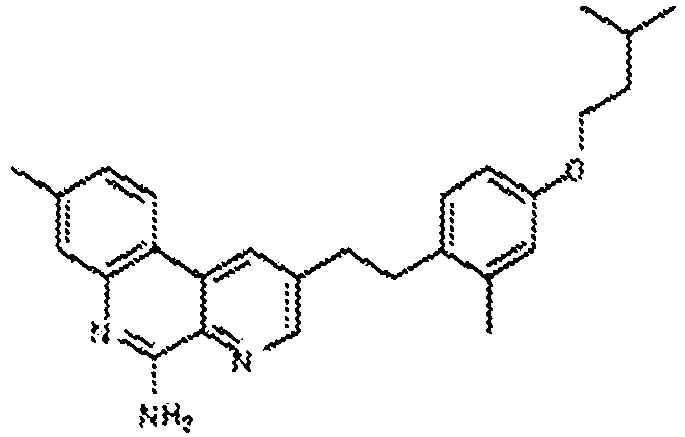
- Although these compounds are highly lipophilic (e.g. logP of compound 'A' is 7.5) they are not soluble in oil at concentrations which would be desirable for in vivo use. For example, to deliver a 25µg dose in a typical oil-in-water emulsion would require the agonist to have a squalene solubility of 10mg/ml, which is about 2.5x higher than can be achieved.
- Lipids were added to the MF59 emulsion in an attempt to increase its capacity for solubilising the agonists. A variety of different phospholipid chain lengths (POPC, DLPC, DMPC, DSPC; emulsions "ANE06" to "ANE10") were tested at a 25µg dose of agonist, and also cholesterol. These emulsions were visually stable, and provided high loading (essentially 100%), but after storage at room temperature the particle size was observed to grow. Further investigation revealed that the agonist was crystallising within the emulsion. Emulsions ANE12 to ANE18 were tested by HPLC for agonist content before and after centrifugation to separate small and large droplets. A lower value after centrifugation indicates that the agonist was dissolved in larger unstable droplets. As shown in
Figure 1 , although the addition of lipids increased loading compared to ANE12, recovery dropped for all of the emulsions, indicating that the extra agonist was crystallising and causing emulsion instability. - As the emulsion was unstable, various attempts were made to prevent crystallization of the agonist within the oil phase. PVP was added as a crystallisation inhibitor, at various amounts from 2.5mg/ml up to 10mg/ml (ANE 19 to ANE25). Loading was high (≥80%) and agonist content was substantially the same before and after centrifugation i.e. the PVP was preventing crystallisation of the agonist.
- Emulsions ANE05 and ANE19 to ANE24 were stored at room temperature for a week to accelerate any crystallisation which might occur. The content of compound 'A' dropped by about 15% in the control emulsion ANE05, but was stable in the other emulsions, showing that PVP prevents crystallisation for at least a week.
- Emulsions ANE31 to ANE38 were used to study the effect of adding phospholipid (DSPC) or cholesterol together with PVP. ANE32 (DSPC and PVP) had the highest loading before and after 1 week at room temperature. PVP alone increased stability but did not increase loading (ANE33).
-
Figure 2 shows emulsions ANE05, ANE31 and ANE32 after 1 week at room temperature, compared to MF59 (2D). ANE31 is more disperse than ANE05, but aggregates are still present. In contrast, ANE32 with DSPC and PVP is visibly more stable. -
Figure 5 shows HPLC recovery of compound 'A' from ANE05, ANE31 and ANE32. Recovery is both higher and more stable in ANE32. - The following table summarises the effect of the various components added to the starting emulsion:
"Blank" Emulsion + lipid + cholesterol + PVP + lipid +PVP + cholesterol + PVP + lipid + cholesterol + PVP Loading ∼70% ∼100% ∼100% ∼80% ∼95% ∼85% ∼85% Stable No No No Yes Yes Yes Yes - Thus addition of phospholipids or cholesterol (5mg/ml) increased loading of the emulsions but did not improve stability (assessed by droplet size and by microscopy). Addition of PVP improved stability and gave a small increase in loading. Addition of cholesterol and PVP further increased loading, and very high loading was seen with a combination of phospholipid and PVP.
- Levels of compound 'A' were assessed in liver and muscle for five groups of mice: (a) simple monodispersion of compound 'A'; (b) monodispersion and separately administered emulsion; (c) ANE05; (d) ANE31; and (e) ANE32. As shown in
Figure 3A , liver levels are the highest in group (a), and then fall through (b) to (e), but are very low in all groups. Muscle levels (Figure 3B ) are higher in groups (a) and (b) than in groups (c) to (e). Incorporation of compound 'A' in the emulsion's oil phase thus seems to clear the drug from the muscle. - Serum levels were also monitored (
Figure 3C ). After 24 hours levels for groups (a) and (b) are higher than for (c) to (e) but are again very low. - Cytokine profiles were also studied. Animals received 25µg compound 'A' as (a) a monodispersion (c) as a monodispersion with MF59 (c) as ANE05 or (d) as ANE32. The profile for ANE32 was markedly different for IFNγ, IL10, IL12p40, IL1b, IL5, IL6, MCP and TNF, although the levels for all groups were low and so comparisons are difficult.
Figure 4 shows three example profiles. - The serogroup B meningococcus vaccine of reference 9 was tested with emulsion ANE32 as adjuvant in CD1 mice. For comparison, the same antigens were also tested with MF59, with a monodispersion of compound 'A' combined with MF59 or ANE38. ANE32 gave the highest antibody titer at day 28 (2432), but it was not significantly higher than the 'A'+MF59 group (2284). Both were higher than for the monodispersion with ANE38 (1509) or for MF59 alone (873). Although the ANE32 titer was not better than the 'A'+MF59 group, the emulsion was more stable for an extended period and so is advantageous e.g. it can be filter-sterilised, thus simplifying manufacture.
- Specific emulsions which were tested are as follows, with a 20ml volume:
ANE05 4.3% sq, 0.5% S85, 0.5% T80, 10mg 'A' ANE06 4.3% sq, 0.5% S85, 0.5% T80, 10mg 'A', 100mg chol ANE07 4.3% sq, 0.5% S85, 0.5% T80, 10mg 'A', 100mg chol, 100mg POPC ANE08 4.3% sq, 0.5% S85, 0.5% T80, 10mg 'A', 100mg chol, 100mg DLPC ANE09 4.3% sq, 0.5% S85, 0.5% T80, 10mg 'A', 100mg chol, 100mg DMPC ANE10 4.3% sq, 0.5% S85, 0.5% T80, 10mg 'A', 100mg chol, 100mg DSPC ANE11 4.3% sq, 0.5% S85, 0.5% T80, 4mg 'A' ANE12 2.15% sq, 0.25% S85, 0.25% T80, 10mg 'A' ANE13 2.15% sq, 0.25% S85, 0.25% T80, 10mg 'A', 100mg DLPC ANE14 2.15% sq, 0.25% S85, 0.25% T80, 10mg 'A', 100mg chol, 100mg DLPC ANE15 2.15% sq, 0.25% S85, 0.25% T80, 10mg 'A', 100mg DMPC ANE16 2.15% sq, 0.25% S85, 0.25% T80, 10mg 'A', 100mg chol, 100mg DMPC ANE 17 2.15% sq, 0.25% S85, 0.25% T80, 10mg 'A', 100mg DSPC ANE18 2.15% sq, 0.25% S85, 0.25% T80, 10mg 'A', 100mg chol, 100mg DSPC ANE19 4.3% sq, 0.5% S85, 0.5% T80, 10mg 'A', 100mg DLPC, 50mg PVP ANE20 4.3% sq, 0.5% S85, 0.5% T80, 10mg 'A', 100mg chol, 100mg DLPC, 50mg PVP ANE21 4.3% sq, 0.5% S85, 0.5% T80, 10mg 'A', 100mg DLPC, 100mg PVP ANE22 4.3% sq, 0.5% S85, 0.5% T80, 10mg 'A', 100mg chol, 100mg DLPC, 100mg PVP ANE23 4.3% sq, 0.5% S85, 0.5% T80, 10mg 'A', 100mg DLPC, 200mg PVP ANE24 4.3% sq, 0.5% S85, 0.5% T80, 10mg 'A', 100mg chol, 100mg DLPC, 200mg PVP ANE31 4.3% sq, 0.5% S85, 0.5% T80, 10mg 'A', 100mg DSPC ANE32 4.3% sq, 0.5% S85, 0.5% T80, 10mg 'A', 100mg DSPC, 50mg PVP ANE33 4.3% sq, 0.5% S85, 0.5% T80, 10mg 'A', 50mg PVP ANE34 4.3% sq, 0.5% S85, 0.5% T80, 10mg 'A', 100mg DSPC, 50mg PVP, 100mg chol ANE35 4.3% sq, 0.5% S85, 0.5% T80, 10mg 'A', 50mg PVP, 100mg chol T80 = Tween 80;
S85 = Span 85;
chol = cholesterol;
sq = squalene - These emulsions were generally prepared as follows. Lipophilic components (squalene, span 85, phospholipids, compound 'A') were combined in a beaker. Lipid components were dissolved in chloroform, tetrahydrofuran or dichloromethane. The oil phase was combined with the aqueous phase and immediately homogenized for 2 minute using an IKA T25 homogenizer at 24K RPM in order to provide a homogeneous feedstock. Emulsions were immediately emulsified and then allowed to sit at room temperature on a stirplate for 2-3 hours after primary homogenization in a fume hood. The primary emulsions were passed three to five times through a Microfluidizer M110S homogenizer with an ice bath cooling coil at a homogenization pressure of approximately 15k - 20k PSI (Microfluidics, Newton, MA). The 20ml batch samples were removed from the unit and stored at 4°C, and 5ml aliquots were stored at room temperature to assess stability.
- Particle size of emulsions was measured using a Zetasizer Nano ZS (Malvern Instruments,) and a LA-930 Particle Distribution Analyzer (Horiba), according to the manufacturers' guidelines. Particles were diluted in deionised water. The Horiba instrument provides d10, d50 and d90 values i.e. the diameters which divide the droplets in the sample into 10%, 50% and 90% (respectively) by mass. Results were as follows:
ZETA SIZER HORRIBA Particle size (nm) Polydispersity d10 (µm) d50 (µm) d90 (µm) Median (µm) Mean (µm) ANE05 123.4 0.1 0.105 0.14 0.21 0.14 0.21 ANE06 123.5 0.1 0.109 0.16 0.31 0.16 0.59 ANE07 111.3 0.1 0.102 0.14 0.21 0.14 0.47 ANE08 109.1 0.1 0.104 0.14 0.20 0.14 0.15 ANE09 125.0 0.2 0.198 0.37 33.42 0.37 8.39 ANE10 117.4 0.1 0.106 0.15 0.20 0.15 0.15 ANE12 118.9 0.084 0.23 0.43 2.46 0.43 0.97 ANE13 - - 0.24 0.47 5.99 0.47 2.02 ANE14 - - 0.21 0.39 41.50 0.39 8.23 ANE15 - - 0.22 8.15 33.81 8.15 12.72 ANE16 121 0.139 0.12 0.17 0.29 0.17 0.23 ANE17 127.1 0.169 0.23 6.48 16.18 6.49 7.08 ANE18 115.8 0.131 0.20 0.32 3.55 0.32 1.01 ANE19 107.9 0.081 0.10 0.13 0.18 0.13 0.14 ANE20 109.3 0.115 0.11 0.14 0.20 0.14 0.15 ANE21 102.5 0.07 - 0.12 0.19 48.09 0.19 18.26 ANE22 103.8 0.091 0.10 0.13 0.20 0.13 1.24 ANE23 106 0.121 - - - - - ANE24 105 0.07 - - - - - ANE31 106 0.10 0.12 0.17 0.24 0.17 0.18 ANE32 123 0.30 0.12 0.16 0.23 0.16 0.17 ANE33 116 0.12 0.28 1.65 2.98 1.65 1.63 ANE34 97 0.06 0.10 0.14 0.21 0.14 0.67 ANE35 115 0.05 0.08 0.11 0.16 0.11 0.12 - It will be understood that the invention has been described by way of example only and modifications may be made whilst remaining within the scope and spirit of the invention.
TABLE 1: useful phospholipids DDPC 1,2-Didecanoyl-sn-Glycero-3-phosphatidylcholine DEPA-NA 1,2-Dierucoyl-sn-Glycero-3-Phosphate(Sodium Salt) DEPC 1,2-Erucoyl-sn-Glycero-3-phosphatidylcholine DEPE 1,2-Dierucoyl-sn-Glycero-3-phosphatidylethanolamine DEPG-NA 1,2-Dierucoyl-sn-Glycero-3[Phosphatidyl-rac-(1-glycerol...) DLOPC 1,2-Linoleoyl-sn-Glycero-3-phosphatidylcholine DLPA-NA 1,2-Dilauroyl-sn-Glycero-3-Phosphate(Sodium Salt) DLPC 1,2-Dilauroyl-sn-Glycero-3-phosphatidylcholine DLPE 1,2-Dilauroyl-sn-Glycero-3-phosphatidylethanolamine DLPG-NA 1,2-Dilauroyl-sn-Glycero-3[Phosphatidyl-rac-(1-glycerol...) (Sodium Salt) DLPG-NH4 1,2-Dilauroyl-sn-Glycero-3[Phosphatidyl-rac-(1-glycerol...) DLPS-NA 1,2-Dilauroyl-sn-Glycero-3-phosphatidylserine(Sodium Salt) DMPA-NA 1,2-Diimyristoyl-sn-Glycero-3-Phosphate(Sodium Salt) DMPC 1,2-Dimyristoyl-sn-Glycero-3-phosphatidylcholine DMPE 1,2-Dimyristoyl-sn-Glycero-3-phosphatidylethanolamine DMPG-NA 1,2-Myristoyl-sn-Glycero-3[Phosphatidyl-rac-(1-glycerol...) DMPG-NH4 1,2-Myristoyl-sn-Glycero-3[Phosphatidyl-rac-(1-glycerol...) DMPG-NH4/NA 1,2-Myristoyl-sn-Glycero-3[Phosphatidyl-rac-(1-glycerol...) DMPS-NA 1,2-Dimyristoyl-sn-Glycero-3-phosphatidylserine(Sodium Salt) DOPA-NA 1,2-Dioleoyl-sn-Glycero-3-Phosphate(Sodium Salt) DOPC 1,2-Dioleoyl-sn-Glycero-3-phosphatidylcholine DOPE 1,2-Dioleoyl-sn-Glycero-3-phosphatidylethanolamine DOPG-NA 1,2-Dioleoyl-sn-Glycero-3[Phosphatidyl-rac-(1-glycerol...) DOPS-NA 1,2-Dioleoyl-sn-Glycero-3-phosphatidylserine(Sodium Salt) DPPA-NA 1,2-Dipalmitoyl-sn-Glycero-3-Phosphate(Sodium Salt) DPPC 1,2-Dipalmitoyl-sn-Glycero-3-phosphatidylcholine DPPE 1,2-Dipalmitoyl-sn-Glycero-3-phosphatidylethanolamine DPPG-NA 1,2-Dipalmitoyl-sn-Glycero-3[Phosphatidyl-rac-(1-glycerol...) DPPG-NH4 1,2-Dipalmitoyl-sn-Glycero-3[Phosphatidyl-rac-(1-glycerol...) DPPS-NA 1,2-Dipalmitoyl-sn-Glycero-3-phosphatidylserine(Sodium Salt) DPyPE 1,2-diphytanoyl-sn-glycero-3-phosphoethanolamine DSPA-NA 1,2-Distearoyl-sn-Glycero-3-Phosphate(Sodium Salt) DSPC 1,2-Distearoyl-sn-Glycero-3-phosphatidylcholine DSPE 1,2-Diostearpyl-sn-Glycero-3-phosphatidylethanolamine DSPG-NA 1,2-Distearoyl-sn-Glycero-3[Phosphatidyl-rac-(1-glycerol...) DSPG-NH4 1,2-Distearoyl-sn-Glycero-3[Phosphatidyl-rac-(1-glycerol...) DSPS-NA 1,2-Distearoyl-sn-Glycero-3-phosphatidylserine(Sodium Salt) EPC Egg-PC HEPC Hydrogenated Egg PC HSPC High purity Hydrogenated Soy PC HSPC Hydrogenated Soy PC LYSOPC MYRISTIC 1-Myristoyl-sn-Glycero-3-phosphatidylcholine LYSOPC PALMITIC 1-Palmitoyl-sn-Glycero-3-phosphatidylcholine LYSOPC STEARIC 1-Stearoyl-sn-Glycero-3-phosphatidylcholine Milk Sphingomyelin MPPC 1-Myristoyl,2-palmitoyl-sn-Glycero 3-phosphatidylcholine MSPC 1-Myristoyl,2-stearoyl-sn-Glycero-3-phosphatidylcholine PMPC 1-Palmitoyl,2-myristoyl-sn-Glycero-3-phosphatidylcholine POPC 1-Palmitoyl,2-oleoyl-sn-Glycero-3-phosphatidylcholine POPE 1-Palmitoyl-2-oleoyl-sn-Glycero-3-phosphatidylethanolamine POPG-NA 1,2-Dioleoyl-sn-Glycero-3[Phosphatidyl-rac-(1-glycerol)...](Sodium Salt) PSPC 1-Palmitoyl,2-stearoyl-sn-Glycero-3-phosphatidylcholine SMPC 1-Stearoyl,2-myristoyl-sn-Glycero-3-phosphatidylcholine SOPC 1-Stearoyl,2-oleoyl-sn-Glycero-3-phosphatidylcholine SPPC 1-Stearoyl,2-palmitoyl-sn-Glycero-3-phosphatidylcholine -
- [1] Bodmeier & Chen (1990) J Controlled Release 12:223-33.
- [2] Tabata & Ikada (1980) Pharm Res 6:296-301.
- [3]
WO2009/111337 . - [4] Yoshioka et al. (1995) J Pharm Sci 84:983-6.
- [5] Ma e al. (1996) Int J Pharmaceutics 142:115-9.
- [6] Jain et al. (2010) Int J Pharmaceutics 394:68-74.
- [7]
US-2007/0014805 . - [8]
WO2007/080308 . - [9] Giuliani et al. (2006) Proc Natl Acad Sci U S A 103(29):10834-9.
- [10]
WO02/34771 - [11]
WO2005/032582 . - [12]
WO02/34771 - [13]
WO2005/002619 . - [14]
WO2006/138004 . - [15]
WO2009/109860 . - [16]
WO02/02606 - [17]
WO03/018054 - [18]
WO2006/091517 . - [19]
WO2008/020330 . - [20]
WO2006/089264 . - [21]
WO2009/104092 . - [22]
WO2009/031043 . - [23]
WO2007/049155 . - [24] Research Disclosure, 453077 (Jan 2002).
- [25]
EP-A-0372501 . - [26]
EP-A-0378881 . - [27]
EP-A-0427347 . - [28]
WO93/17712 - [29]
WO94/03208 - [30]
WO98/58668 - [31]
EP-A-0471177 . - [32]
WO91/01146 - [33] Falugi et al. (2001) Eur J Immunol 31:3816-3824.
- [34] Baraldo et al. (2004) Infect Immun 72(8):4884-7.
- [35]
EP-A-0594610 . - [36] Ruan et al. (1990) J Immunol 145:3379-3384.
- [37]
WO00/56360 - [38]
WO01/72337 - [39]
WO00/61761 - [40]
WO00/33882 - [41] Kuo et al. (1995) Infect Immun 63:2706-13.
- [42] Michon et al. (1998) vaccine. 16:1732-41.
- [43]
WO02/091998 - [44] Remington: The Science and Practice of Pharmacy (Gennaro, 2000; 20th edition, ISBN: 0683306472)
Claims (21)
- An oil-in-water emulsion comprising an aqueous phase, an oil phase, a surfactant, a lipophilic small molecule immune potentiator (SMIP), and a crystallisation inhibitor, wherein the average droplet size in the emulsion is less than 250nm, and wherein the SMIP is a TLR agonist with a molecular weight of less than 5000 Da.
- The emulsion of claim 1, wherein the oil-in-water emulsion is an adjuvant emulsion.
- The emulsion of claim 1 or claim 2, wherein the SMIP is a naphthyridine agonist of TLR7.
- The emulsion of any one of claims 1 to 3, wherein >80% of the SMIP is present in the emulsion's oil droplets.
- The emulsion of any preceding claim, wherein the crystallisation inhibitor is a polyvinylpyrrolidone.
- The emulsion of any preceding claim, wherein the oil phase comprises squalene.
- The emulsion of any preceding claim, wherein the aqueous phase comprises a buffer.
- The emulsion of any preceding claim, wherein the surfactant comprises polysorbate 80.
- The emulsion of any preceding claim, comprising 2-20% (by volume) oil and 0.001%-8% (by weight) surfactant.
- The emulsion of any preceding claim, wherein the weight ratio of oil to surfactant is between 4:1 and 5:1.
- The emulsion of any preceding claim, comprising squalene, polysorbate 80 and a polyvinylpyrrolidone, wherein the average diameter of the emulsion's droplets is between 80nm and 180nm.
- The emulsion of any preceding claim, wherein the emulsion comprises a phospholipid.
- An immunogenic composition comprising (a) the emulsion of any one of claims 1 to 12 and (b) an immunogen.
- The composition of claim 13, wherein the immunogen elicits an immune response in vivo against a bacterium or a virus.
- The composition of claim 14, wherein the bacterium is Neisseria meningitidis.
- The composition of claim 14, wherein the virus is an influenza virus.
- A process for preparing an immunogenic composition, comprising a step of mixing an immunogen with the emulsion of any one of claims 1-12.
- The composition of any one of claims 13-16 for use in a method for raising an immune response in a mammal, said method comprising the step of administering said composition to the mammal.
- The emulsion of claims 1-12, or the immunogenic composition of claims 13-16, for use in raising an immune response in a mammal.
- A process for preparing the oil-in-water emulsion of any one of claims 1-12, comprising a step of homogenising a mixture comprising an aqueous component, an oil component, and a surfactant component, wherein a crystallisation inhibitor is added to the mixture before, during or after homogenisation.
- A process for preparing the oil-in-water emulsion of any one of claims 1-12, comprising a step of homogenising a mixture comprising an aqueous component, an oil component, and a surfactant component, wherein a crystallisation inhibitor is added to the mixture before, during or after homogenisation, and wherein the SMIP is added (i) to the mixture before during or after homogenisation, or (ii) to the emulsion before or after addition of the crystallisation inhibitor.
Applications Claiming Priority (2)
| Application Number | Priority Date | Filing Date | Title |
|---|---|---|---|
| US201161436946P | 2011-01-27 | 2011-01-27 | |
| PCT/US2012/022871 WO2012103421A1 (en) | 2011-01-27 | 2012-01-27 | Adjuvant nanoemulsions with crystallisation inhibitors |
Publications (2)
| Publication Number | Publication Date |
|---|---|
| EP2667852A1 EP2667852A1 (en) | 2013-12-04 |
| EP2667852B1 true EP2667852B1 (en) | 2016-11-09 |
Family
ID=45688235
Family Applications (1)
| Application Number | Title | Priority Date | Filing Date |
|---|---|---|---|
| EP12704573.0A Active EP2667852B1 (en) | 2011-01-27 | 2012-01-27 | Adjuvant nanoemulsions with crystallisation inhibitors |
Country Status (4)
| Country | Link |
|---|---|
| US (1) | US10286056B2 (en) |
| EP (1) | EP2667852B1 (en) |
| ES (1) | ES2612511T3 (en) |
| WO (1) | WO2012103421A1 (en) |
Families Citing this family (9)
| Publication number | Priority date | Publication date | Assignee | Title |
|---|---|---|---|---|
| JP6325986B2 (en) | 2012-03-07 | 2018-05-16 | ノバルティス アーゲー | Immunologically useful arginine salt |
| US9603799B2 (en) | 2013-03-15 | 2017-03-28 | Htd Biosystems Inc. | Liposomal vaccine adjuvants and methods of making and using same |
| US20140271815A1 (en) * | 2013-03-15 | 2014-09-18 | Aryo Sorayya | Heat-and freeze-stable vaccines and methods of making and using same |
| WO2015140138A1 (en) * | 2014-03-17 | 2015-09-24 | Glaxosmithkline Biologicals Sa | Oil/surfactant mixtures for self-emulsification |
| EP3061826A1 (en) | 2015-02-27 | 2016-08-31 | Novartis AG | Flavivirus replicons |
| WO2017201390A1 (en) * | 2016-05-19 | 2017-11-23 | The Regents Of The University Of Michigan | Novel adjuvant compositions |
| US10973908B1 (en) | 2020-05-14 | 2021-04-13 | David Gordon Bermudes | Expression of SARS-CoV-2 spike protein receptor binding domain in attenuated salmonella as a vaccine |
| US12537071B1 (en) | 2020-07-22 | 2026-01-27 | David Gordon Bermudes | Bacteria having boolean control pathways expressing therapeutic proteins including immunotherapeutic cytotoxins |
| CN115475239A (en) * | 2021-05-30 | 2022-12-16 | 中国科学院上海药物研究所 | Novel coronavirus nanoemulsion vaccine based on TLR7 agonist coupling peptide and preparation method thereof |
Family Cites Families (46)
| Publication number | Priority date | Publication date | Assignee | Title |
|---|---|---|---|---|
| KR830008190A (en) | 1980-12-04 | 1983-11-16 | 죠지 제이. 카리코 | Liquid crystal display |
| DE3841091A1 (en) | 1988-12-07 | 1990-06-13 | Behringwerke Ag | SYNTHETIC ANTIGENS, METHOD FOR THEIR PRODUCTION AND THEIR USE |
| CA2006700A1 (en) | 1989-01-17 | 1990-07-17 | Antonello Pessi | Synthetic peptides and their use as universal carriers for the preparation of immunogenic conjugates suitable for the development of synthetic vaccines |
| EP0482068A1 (en) | 1989-07-14 | 1992-04-29 | American Cyanamid Company | Cytokine and hormone carriers for conjugate vaccines |
| IT1237764B (en) | 1989-11-10 | 1993-06-17 | Eniricerche Spa | SYNTHETIC PEPTIDES USEFUL AS UNIVERSAL CARRIERS FOR THE PREPARATION OF IMMUNOGENIC CONJUGATES AND THEIR USE FOR THE DEVELOPMENT OF SYNTHETIC VACCINES. |
| DE4033928A1 (en) | 1990-10-25 | 1992-04-30 | Henkel Kgaa | OIL IN WATER EMULSIONS |
| SE466259B (en) | 1990-05-31 | 1992-01-20 | Arne Forsgren | PROTEIN D - AN IGD BINDING PROTEIN FROM HAEMOPHILUS INFLUENZAE, AND THE USE OF THIS FOR ANALYSIS, VACCINES AND PURPOSE |
| DE69113564T2 (en) | 1990-08-13 | 1996-05-30 | American Cyanamid Co | Bordetella pertussis fiber hemagglutinin as a carrier for conjugated vaccine. |
| IT1262896B (en) | 1992-03-06 | 1996-07-22 | CONJUGATE COMPOUNDS FORMED FROM HEAT SHOCK PROTEIN (HSP) AND OLIGO-POLY-SACCHARIDES, THEIR USE FOR THE PRODUCTION OF VACCINES. | |
| IL102687A (en) | 1992-07-30 | 1997-06-10 | Yeda Res & Dev | Conjugates of poorly immunogenic antigens and synthetic pepide carriers and vaccines comprising them |
| DE19527132A1 (en) * | 1995-07-25 | 1997-01-30 | Laevosan Gmbh & Co Kg | Ophthalmic ozone protection composition |
| GB9713156D0 (en) | 1997-06-20 | 1997-08-27 | Microbiological Res Authority | Vaccines |
| WO2000033882A1 (en) | 1998-12-04 | 2000-06-15 | The Government Of The United States Of America As Represented By The Secretary, Department Of Health And Human Services | A vi-repa conjugate vaccine for immunization against salmonella typhi |
| DE122009000054I1 (en) | 1999-03-19 | 2009-12-31 | Glaxosmithkline Biolog Sa | VACCINE AGAINST BACTERIAL ANTIGENE |
| EP1165796A2 (en) | 1999-04-09 | 2002-01-02 | Techlab, Inc. | Recombinant clostridium toxin a protein carrier for polysaccharide conjugate vaccines |
| FR2793139B1 (en) * | 1999-05-06 | 2001-06-29 | Oreal | COMPOSITION CONTAINING AT LEAST ONE BICYCLIC AROMATIC COMPOUND AND AT LEAST ONE LIPOPHILIC SUN FILTER, AND USES THEREOF |
| DE60028754T2 (en) * | 1999-11-12 | 2007-05-31 | Abbott Laboratories, Abbott Park | SOLID DISPERSION WITH RITONAVIR, FENOFIBRATE OR GRISEOFULVIN |
| GB0007432D0 (en) | 2000-03-27 | 2000-05-17 | Microbiological Res Authority | Proteins for use as carriers in conjugate vaccines |
| WO2002002606A2 (en) | 2000-07-03 | 2002-01-10 | Chiron S.P.A. | Immunisation against chlamydia pneumoniae |
| DE10036871A1 (en) | 2000-07-28 | 2002-02-14 | Pharmasol Gmbh | Dispersions for the formulation of poorly or poorly soluble active ingredients |
| NZ594877A (en) | 2000-10-27 | 2012-07-27 | Novartis Vaccines & Diagnostic | Nucleic acids and proteins from streptococcus groups A & B |
| US20060014674A1 (en) * | 2000-12-18 | 2006-01-19 | Dennis Keith | Methods for preparing purified lipopeptides |
| US7115565B2 (en) * | 2001-01-18 | 2006-10-03 | Pharmacia & Upjohn Company | Chemotherapeutic microemulsion compositions of paclitaxel with improved oral bioavailability |
| US20030035806A1 (en) | 2001-05-11 | 2003-02-20 | D'ambra Anello J. | Novel meningitis conjugate vaccine |
| US8481043B2 (en) * | 2001-06-22 | 2013-07-09 | Cpex Pharmaceuticals, Inc. | Nasal immunization |
| US20050175629A1 (en) | 2001-08-31 | 2005-08-11 | Giuseppe Del Giudice | Helicobacter pylori vaccination |
| RU2352356C2 (en) | 2003-06-26 | 2009-04-20 | Новартис Вэксинес Энд Дайэгностикс, Инк. | IMMUNOGENE COMPOSITION ON BASIS OF ANTIGEN Chlamydia trachomatis (VERSIONS) AND ITS USE |
| PT1648500E (en) | 2003-07-31 | 2014-10-10 | Novartis Vaccines & Diagnostic | Immunogenic compositions for streptococcus pyogenes |
| US20050226878A1 (en) * | 2003-12-02 | 2005-10-13 | 3M Innovative Properties Company | Therapeutic combinations and methods including IRM compounds |
| DK2351772T3 (en) | 2005-02-18 | 2016-09-05 | Glaxosmithkline Biologicals Sa | Proteins and nucleic acids from meningitis / sepsis-associated Escherichia coli |
| SG164344A1 (en) | 2005-02-18 | 2010-09-29 | Novartis Vaccines & Diagnostics Srl | Immunogens from uropathogenic escherichia coli |
| US8133973B2 (en) | 2005-05-12 | 2012-03-13 | Novartis Vaccines And Diagnostics, S.R.L. | Immunogenic compositions for Chlamydia trachomatis |
| US8703095B2 (en) | 2005-07-07 | 2014-04-22 | Sanofi Pasteur S.A. | Immuno-adjuvant emulsion |
| WO2007049155A2 (en) | 2005-10-25 | 2007-05-03 | Novartis Vaccines And Diagnostics Srl | Compositions comprising yersinia pestis antigens |
| EP1954252B1 (en) * | 2005-12-02 | 2016-02-03 | GlaxoSmithKline Biologicals SA | Nanoparticles for use in immunogenic compositions |
| FR2896162B1 (en) | 2006-01-13 | 2008-02-15 | Sanofi Pasteur Sa | EMULSION OIL IN THERMOREVERSIBLE WATER |
| US20100166788A1 (en) | 2006-08-16 | 2010-07-01 | Novartis Vaccines And Diagnostics | Immunogens from uropathogenic escherichia coli |
| US9452209B2 (en) * | 2007-04-20 | 2016-09-27 | Glaxosmithkline Biologicals Sa | Influenza vaccine |
| GB0717187D0 (en) | 2007-09-04 | 2007-10-17 | Novartis Ag | Compositions comprising yersinia pestis antigens |
| ITMI20081249A1 (en) | 2008-07-09 | 2010-01-09 | Novartis Vaccines & Diagnostic | ESCHERICHIA COLI IMMUNOGENES WITH IMPROVED SOLUBILITY. |
| HRP20150892T1 (en) | 2008-03-03 | 2015-09-25 | Novartis Ag | COMPOUNDS AND COMPOSITIONS AS MODULATORS OF TLR ACTIVITY |
| EP2268659A2 (en) | 2008-03-06 | 2011-01-05 | Novartis AG | Mutant forms of chlamydia htra |
| CA2725381A1 (en) * | 2008-05-23 | 2010-03-25 | The Regents Of The University Of Michigan | Nanoemulsion adjuvants |
| WO2010017330A1 (en) * | 2008-08-06 | 2010-02-11 | Novartis Ag | Microparticles for use in immunogenic compositions |
| EP2174650A1 (en) * | 2008-10-08 | 2010-04-14 | Polichem SA | Modified release emulsions for application to skin or vaginal mucosa |
| DE102009031274A1 (en) * | 2009-06-30 | 2011-01-13 | Justus-Liebig-Universität Giessen | Liposomes for pulmonary application |
-
2012
- 2012-01-27 EP EP12704573.0A patent/EP2667852B1/en active Active
- 2012-01-27 US US13/982,042 patent/US10286056B2/en active Active
- 2012-01-27 ES ES12704573.0T patent/ES2612511T3/en active Active
- 2012-01-27 WO PCT/US2012/022871 patent/WO2012103421A1/en not_active Ceased
Non-Patent Citations (1)
| Title |
|---|
| None * |
Also Published As
| Publication number | Publication date |
|---|---|
| EP2667852A1 (en) | 2013-12-04 |
| US20140017279A1 (en) | 2014-01-16 |
| ES2612511T3 (en) | 2017-05-17 |
| US10286056B2 (en) | 2019-05-14 |
| WO2012103421A1 (en) | 2012-08-02 |
Similar Documents
| Publication | Publication Date | Title |
|---|---|---|
| EP2688590B1 (en) | Adjuvant nanoemulsions with phospholipids | |
| EP2667852B1 (en) | Adjuvant nanoemulsions with crystallisation inhibitors | |
| JP6283674B2 (en) | Outer membrane vesicles | |
| EP1613346B1 (en) | Microfluidized oil-in-water emulsions and vaccine compositions | |
| EP3243526B1 (en) | Delivery of rna to trigger multiple immune pathways | |
| EP1742659B1 (en) | Microfluidized oil-in-water emulsions and vaccine compositions | |
| EP2591103B1 (en) | Delivery of rna to different cell types | |
| EP3563834A1 (en) | Improved adjuvant formulations comprising tlr4 agonists and methods of using the same | |
| JP2003500365A (en) | Stability, biocompatibility optimized adjuvant (SBA) to enhance humoral and cellular immune responses | |
| JP2024501949A (en) | Solanesol vaccine adjuvant and its preparation method | |
| EP3393481A1 (en) | Oil-in-water emulsions including retinoic acid | |
| WO2024124052A1 (en) | Immune adjuvants for polysaccharide vaccines | |
| Short | Using Formulation to Unlock Vaccine Adjuvant Efficacy for Toll-Like and C-Type Lectin Receptor Agonsts | |
| CN109982715A (en) | Methods of Inducing Antibody Immune Responses in Human Subjects Using Low Dose Volume B Cell Epitope Compositions | |
| CN117323427A (en) | Liposome adjuvant and its preparation method and application | |
| WO2026033498A1 (en) | Methods of self-amplifying rna-lipid nanoparticle manufacture and compositions derived therefrom | |
| US20220000779A1 (en) | Immunogenic compositions |
Legal Events
| Date | Code | Title | Description |
|---|---|---|---|
| PUAI | Public reference made under article 153(3) epc to a published international application that has entered the european phase |
Free format text: ORIGINAL CODE: 0009012 |
|
| 17P | Request for examination filed |
Effective date: 20130827 |
|
| AK | Designated contracting states |
Kind code of ref document: A1 Designated state(s): AL AT BE BG CH CY CZ DE DK EE ES FI FR GB GR HR HU IE IS IT LI LT LU LV MC MK MT NL NO PL PT RO RS SE SI SK SM TR |
|
| DAX | Request for extension of the european patent (deleted) | ||
| 17Q | First examination report despatched |
Effective date: 20140715 |
|
| GRAP | Despatch of communication of intention to grant a patent |
Free format text: ORIGINAL CODE: EPIDOSNIGR1 |
|
| INTG | Intention to grant announced |
Effective date: 20160216 |
|
| GRAS | Grant fee paid |
Free format text: ORIGINAL CODE: EPIDOSNIGR3 |
|
| RAP1 | Party data changed (applicant data changed or rights of an application transferred) |
Owner name: GLAXOSMITHKLINE BIOLOGICALS SA |
|
| INTC | Intention to grant announced (deleted) | ||
| GRAJ | Information related to disapproval of communication of intention to grant by the applicant or resumption of examination proceedings by the epo deleted |
Free format text: ORIGINAL CODE: EPIDOSDIGR1 |
|
| GRAP | Despatch of communication of intention to grant a patent |
Free format text: ORIGINAL CODE: EPIDOSNIGR1 |
|
| GRAR | Information related to intention to grant a patent recorded |
Free format text: ORIGINAL CODE: EPIDOSNIGR71 |
|
| GRAA | (expected) grant |
Free format text: ORIGINAL CODE: 0009210 |
|
| INTG | Intention to grant announced |
Effective date: 20160927 |
|
| AK | Designated contracting states |
Kind code of ref document: B1 Designated state(s): AL AT BE BG CH CY CZ DE DK EE ES FI FR GB GR HR HU IE IS IT LI LT LU LV MC MK MT NL NO PL PT RO RS SE SI SK SM TR |
|
| REG | Reference to a national code |
Ref country code: GB Ref legal event code: FG4D |
|
| REG | Reference to a national code |
Ref country code: AT Ref legal event code: REF Ref document number: 843236 Country of ref document: AT Kind code of ref document: T Effective date: 20161115 Ref country code: CH Ref legal event code: EP |
|
| REG | Reference to a national code |
Ref country code: IE Ref legal event code: FG4D |
|
| REG | Reference to a national code |
Ref country code: DE Ref legal event code: R096 Ref document number: 602012025123 Country of ref document: DE |
|
| REG | Reference to a national code |
Ref country code: FR Ref legal event code: PLFP Year of fee payment: 6 |
|
| REG | Reference to a national code |
Ref country code: NL Ref legal event code: FP |
|
| PG25 | Lapsed in a contracting state [announced via postgrant information from national office to epo] |
Ref country code: LV Free format text: LAPSE BECAUSE OF FAILURE TO SUBMIT A TRANSLATION OF THE DESCRIPTION OR TO PAY THE FEE WITHIN THE PRESCRIBED TIME-LIMIT Effective date: 20161109 |
|
| REG | Reference to a national code |
Ref country code: LT Ref legal event code: MG4D |
|
| REG | Reference to a national code |
Ref country code: AT Ref legal event code: MK05 Ref document number: 843236 Country of ref document: AT Kind code of ref document: T Effective date: 20161109 |
|
| PG25 | Lapsed in a contracting state [announced via postgrant information from national office to epo] |
Ref country code: GR Free format text: LAPSE BECAUSE OF FAILURE TO SUBMIT A TRANSLATION OF THE DESCRIPTION OR TO PAY THE FEE WITHIN THE PRESCRIBED TIME-LIMIT Effective date: 20170210 Ref country code: SE Free format text: LAPSE BECAUSE OF FAILURE TO SUBMIT A TRANSLATION OF THE DESCRIPTION OR TO PAY THE FEE WITHIN THE PRESCRIBED TIME-LIMIT Effective date: 20161109 Ref country code: LT Free format text: LAPSE BECAUSE OF FAILURE TO SUBMIT A TRANSLATION OF THE DESCRIPTION OR TO PAY THE FEE WITHIN THE PRESCRIBED TIME-LIMIT Effective date: 20161109 Ref country code: NO Free format text: LAPSE BECAUSE OF FAILURE TO SUBMIT A TRANSLATION OF THE DESCRIPTION OR TO PAY THE FEE WITHIN THE PRESCRIBED TIME-LIMIT Effective date: 20170209 |
|
| REG | Reference to a national code |
Ref country code: ES Ref legal event code: FG2A Ref document number: 2612511 Country of ref document: ES Kind code of ref document: T3 Effective date: 20170517 |
|
| PG25 | Lapsed in a contracting state [announced via postgrant information from national office to epo] |
Ref country code: AT Free format text: LAPSE BECAUSE OF FAILURE TO SUBMIT A TRANSLATION OF THE DESCRIPTION OR TO PAY THE FEE WITHIN THE PRESCRIBED TIME-LIMIT Effective date: 20161109 Ref country code: PL Free format text: LAPSE BECAUSE OF FAILURE TO SUBMIT A TRANSLATION OF THE DESCRIPTION OR TO PAY THE FEE WITHIN THE PRESCRIBED TIME-LIMIT Effective date: 20161109 Ref country code: PT Free format text: LAPSE BECAUSE OF FAILURE TO SUBMIT A TRANSLATION OF THE DESCRIPTION OR TO PAY THE FEE WITHIN THE PRESCRIBED TIME-LIMIT Effective date: 20170309 Ref country code: HR Free format text: LAPSE BECAUSE OF FAILURE TO SUBMIT A TRANSLATION OF THE DESCRIPTION OR TO PAY THE FEE WITHIN THE PRESCRIBED TIME-LIMIT Effective date: 20161109 Ref country code: FI Free format text: LAPSE BECAUSE OF FAILURE TO SUBMIT A TRANSLATION OF THE DESCRIPTION OR TO PAY THE FEE WITHIN THE PRESCRIBED TIME-LIMIT Effective date: 20161109 Ref country code: RS Free format text: LAPSE BECAUSE OF FAILURE TO SUBMIT A TRANSLATION OF THE DESCRIPTION OR TO PAY THE FEE WITHIN THE PRESCRIBED TIME-LIMIT Effective date: 20161109 Ref country code: IS Free format text: LAPSE BECAUSE OF FAILURE TO SUBMIT A TRANSLATION OF THE DESCRIPTION OR TO PAY THE FEE WITHIN THE PRESCRIBED TIME-LIMIT Effective date: 20170309 |
|
| PG25 | Lapsed in a contracting state [announced via postgrant information from national office to epo] |
Ref country code: RO Free format text: LAPSE BECAUSE OF FAILURE TO SUBMIT A TRANSLATION OF THE DESCRIPTION OR TO PAY THE FEE WITHIN THE PRESCRIBED TIME-LIMIT Effective date: 20161109 Ref country code: DK Free format text: LAPSE BECAUSE OF FAILURE TO SUBMIT A TRANSLATION OF THE DESCRIPTION OR TO PAY THE FEE WITHIN THE PRESCRIBED TIME-LIMIT Effective date: 20161109 Ref country code: SK Free format text: LAPSE BECAUSE OF FAILURE TO SUBMIT A TRANSLATION OF THE DESCRIPTION OR TO PAY THE FEE WITHIN THE PRESCRIBED TIME-LIMIT Effective date: 20161109 Ref country code: CZ Free format text: LAPSE BECAUSE OF FAILURE TO SUBMIT A TRANSLATION OF THE DESCRIPTION OR TO PAY THE FEE WITHIN THE PRESCRIBED TIME-LIMIT Effective date: 20161109 Ref country code: EE Free format text: LAPSE BECAUSE OF FAILURE TO SUBMIT A TRANSLATION OF THE DESCRIPTION OR TO PAY THE FEE WITHIN THE PRESCRIBED TIME-LIMIT Effective date: 20161109 |
|
| REG | Reference to a national code |
Ref country code: DE Ref legal event code: R097 Ref document number: 602012025123 Country of ref document: DE |
|
| PG25 | Lapsed in a contracting state [announced via postgrant information from national office to epo] |
Ref country code: SM Free format text: LAPSE BECAUSE OF FAILURE TO SUBMIT A TRANSLATION OF THE DESCRIPTION OR TO PAY THE FEE WITHIN THE PRESCRIBED TIME-LIMIT Effective date: 20161109 Ref country code: BG Free format text: LAPSE BECAUSE OF FAILURE TO SUBMIT A TRANSLATION OF THE DESCRIPTION OR TO PAY THE FEE WITHIN THE PRESCRIBED TIME-LIMIT Effective date: 20170209 |
|
| REG | Reference to a national code |
Ref country code: CH Ref legal event code: PL |
|
| PLBE | No opposition filed within time limit |
Free format text: ORIGINAL CODE: 0009261 |
|
| STAA | Information on the status of an ep patent application or granted ep patent |
Free format text: STATUS: NO OPPOSITION FILED WITHIN TIME LIMIT |
|
| PG25 | Lapsed in a contracting state [announced via postgrant information from national office to epo] |
Ref country code: MC Free format text: LAPSE BECAUSE OF FAILURE TO SUBMIT A TRANSLATION OF THE DESCRIPTION OR TO PAY THE FEE WITHIN THE PRESCRIBED TIME-LIMIT Effective date: 20161109 |
|
| 26N | No opposition filed |
Effective date: 20170810 |
|
| PG25 | Lapsed in a contracting state [announced via postgrant information from national office to epo] |
Ref country code: CH Free format text: LAPSE BECAUSE OF NON-PAYMENT OF DUE FEES Effective date: 20170131 Ref country code: LI Free format text: LAPSE BECAUSE OF NON-PAYMENT OF DUE FEES Effective date: 20170131 |
|
| PG25 | Lapsed in a contracting state [announced via postgrant information from national office to epo] |
Ref country code: LU Free format text: LAPSE BECAUSE OF NON-PAYMENT OF DUE FEES Effective date: 20170127 Ref country code: SI Free format text: LAPSE BECAUSE OF FAILURE TO SUBMIT A TRANSLATION OF THE DESCRIPTION OR TO PAY THE FEE WITHIN THE PRESCRIBED TIME-LIMIT Effective date: 20161109 |
|
| REG | Reference to a national code |
Ref country code: FR Ref legal event code: PLFP Year of fee payment: 7 |
|
| PG25 | Lapsed in a contracting state [announced via postgrant information from national office to epo] |
Ref country code: MT Free format text: LAPSE BECAUSE OF NON-PAYMENT OF DUE FEES Effective date: 20170127 |
|
| PG25 | Lapsed in a contracting state [announced via postgrant information from national office to epo] |
Ref country code: HU Free format text: LAPSE BECAUSE OF FAILURE TO SUBMIT A TRANSLATION OF THE DESCRIPTION OR TO PAY THE FEE WITHIN THE PRESCRIBED TIME-LIMIT; INVALID AB INITIO Effective date: 20120127 |
|
| PG25 | Lapsed in a contracting state [announced via postgrant information from national office to epo] |
Ref country code: CY Free format text: LAPSE BECAUSE OF NON-PAYMENT OF DUE FEES Effective date: 20161109 |
|
| PG25 | Lapsed in a contracting state [announced via postgrant information from national office to epo] |
Ref country code: MK Free format text: LAPSE BECAUSE OF FAILURE TO SUBMIT A TRANSLATION OF THE DESCRIPTION OR TO PAY THE FEE WITHIN THE PRESCRIBED TIME-LIMIT Effective date: 20161109 |
|
| PG25 | Lapsed in a contracting state [announced via postgrant information from national office to epo] |
Ref country code: AL Free format text: LAPSE BECAUSE OF FAILURE TO SUBMIT A TRANSLATION OF THE DESCRIPTION OR TO PAY THE FEE WITHIN THE PRESCRIBED TIME-LIMIT Effective date: 20161109 |
|
| PGFP | Annual fee paid to national office [announced via postgrant information from national office to epo] |
Ref country code: GB Payment date: 20231219 Year of fee payment: 13 |
|
| PGFP | Annual fee paid to national office [announced via postgrant information from national office to epo] |
Ref country code: NL Payment date: 20231219 Year of fee payment: 13 Ref country code: IE Payment date: 20231221 Year of fee payment: 13 Ref country code: FR Payment date: 20231219 Year of fee payment: 13 |
|
| PGFP | Annual fee paid to national office [announced via postgrant information from national office to epo] |
Ref country code: BE Payment date: 20231219 Year of fee payment: 13 |
|
| PGFP | Annual fee paid to national office [announced via postgrant information from national office to epo] |
Ref country code: ES Payment date: 20240202 Year of fee payment: 13 |
|
| PGFP | Annual fee paid to national office [announced via postgrant information from national office to epo] |
Ref country code: DE Payment date: 20231219 Year of fee payment: 13 |
|
| PGFP | Annual fee paid to national office [announced via postgrant information from national office to epo] |
Ref country code: TR Payment date: 20240105 Year of fee payment: 13 Ref country code: IT Payment date: 20240102 Year of fee payment: 13 |
|
| REG | Reference to a national code |
Ref country code: DE Ref legal event code: R119 Ref document number: 602012025123 Country of ref document: DE |
|
| REG | Reference to a national code |
Ref country code: NL Ref legal event code: MM Effective date: 20250201 |
|
| GBPC | Gb: european patent ceased through non-payment of renewal fee |
Effective date: 20250127 |
|
| PG25 | Lapsed in a contracting state [announced via postgrant information from national office to epo] |
Ref country code: DE Free format text: LAPSE BECAUSE OF NON-PAYMENT OF DUE FEES Effective date: 20250801 |
|
| PG25 | Lapsed in a contracting state [announced via postgrant information from national office to epo] |
Ref country code: NL Free format text: LAPSE BECAUSE OF NON-PAYMENT OF DUE FEES Effective date: 20250201 |
|
| PG25 | Lapsed in a contracting state [announced via postgrant information from national office to epo] |
Ref country code: BE Free format text: LAPSE BECAUSE OF NON-PAYMENT OF DUE FEES Effective date: 20250131 Ref country code: GB Free format text: LAPSE BECAUSE OF NON-PAYMENT OF DUE FEES Effective date: 20250127 |
|
| PG25 | Lapsed in a contracting state [announced via postgrant information from national office to epo] |
Ref country code: FR Free format text: LAPSE BECAUSE OF NON-PAYMENT OF DUE FEES Effective date: 20250131 |
|
| REG | Reference to a national code |
Ref country code: BE Ref legal event code: MM Effective date: 20250131 |
|
| PG25 | Lapsed in a contracting state [announced via postgrant information from national office to epo] |
Ref country code: IT Free format text: LAPSE BECAUSE OF NON-PAYMENT OF DUE FEES Effective date: 20250127 |
|
| PG25 | Lapsed in a contracting state [announced via postgrant information from national office to epo] |
Ref country code: IE Free format text: LAPSE BECAUSE OF NON-PAYMENT OF DUE FEES Effective date: 20250127 |