EP2542678B1 - A MiRNA MOLECULE DEFINED BY ITS SOURCE AND ITS THERAPEUTIC USES IN CANCER ASSOCIATED WITH EMT - Google Patents
A MiRNA MOLECULE DEFINED BY ITS SOURCE AND ITS THERAPEUTIC USES IN CANCER ASSOCIATED WITH EMT Download PDFInfo
- Publication number
- EP2542678B1 EP2542678B1 EP11708936.7A EP11708936A EP2542678B1 EP 2542678 B1 EP2542678 B1 EP 2542678B1 EP 11708936 A EP11708936 A EP 11708936A EP 2542678 B1 EP2542678 B1 EP 2542678B1
- Authority
- EP
- European Patent Office
- Prior art keywords
- mirna
- mir
- molecule
- equivalent
- isomir
- Prior art date
- Legal status (The legal status is an assumption and is not a legal conclusion. Google has not performed a legal analysis and makes no representation as to the accuracy of the status listed.)
- Not-in-force
Links
- 108091070501 miRNA Proteins 0.000 title claims description 431
- 206010028980 Neoplasm Diseases 0.000 title claims description 76
- 201000011510 cancer Diseases 0.000 title claims description 50
- 230000001225 therapeutic effect Effects 0.000 title description 18
- 239000002679 microRNA Substances 0.000 claims description 490
- 210000004027 cell Anatomy 0.000 claims description 256
- 108091027558 IsomiR Proteins 0.000 claims description 192
- 230000014509 gene expression Effects 0.000 claims description 163
- 125000003729 nucleotide group Chemical group 0.000 claims description 154
- 239000002773 nucleotide Substances 0.000 claims description 145
- 230000003278 mimic effect Effects 0.000 claims description 120
- 238000000034 method Methods 0.000 claims description 106
- 230000000694 effects Effects 0.000 claims description 86
- 239000000203 mixture Substances 0.000 claims description 69
- 238000012360 testing method Methods 0.000 claims description 34
- 239000000126 substance Substances 0.000 claims description 28
- 239000003814 drug Substances 0.000 claims description 21
- 230000001939 inductive effect Effects 0.000 claims description 18
- 230000008569 process Effects 0.000 claims description 16
- 201000009030 Carcinoma Diseases 0.000 claims description 14
- 210000004962 mammalian cell Anatomy 0.000 claims description 7
- 206010060862 Prostate cancer Diseases 0.000 claims description 6
- 208000000236 Prostatic Neoplasms Diseases 0.000 claims description 6
- 210000005260 human cell Anatomy 0.000 claims description 6
- 206010005003 Bladder cancer Diseases 0.000 claims description 5
- 208000007097 Urinary Bladder Neoplasms Diseases 0.000 claims description 5
- 210000003443 bladder cell Anatomy 0.000 claims description 5
- 201000005112 urinary bladder cancer Diseases 0.000 claims description 5
- 108091032973 (ribonucleotides)n+m Proteins 0.000 description 176
- 108020004414 DNA Proteins 0.000 description 161
- 150000007523 nucleic acids Chemical class 0.000 description 125
- 108700011259 MicroRNAs Proteins 0.000 description 121
- 102000039446 nucleic acids Human genes 0.000 description 119
- 108020004707 nucleic acids Proteins 0.000 description 119
- 230000007705 epithelial mesenchymal transition Effects 0.000 description 98
- -1 DNA and RNA) Chemical class 0.000 description 74
- 241000282414 Homo sapiens Species 0.000 description 64
- 239000002243 precursor Substances 0.000 description 59
- 239000013598 vector Substances 0.000 description 56
- 108050007957 Cadherin Proteins 0.000 description 52
- 102000000905 Cadherin Human genes 0.000 description 51
- 108090000623 proteins and genes Proteins 0.000 description 46
- 108091052995 miR-520f stem-loop Proteins 0.000 description 43
- 210000001519 tissue Anatomy 0.000 description 41
- 108091034117 Oligonucleotide Proteins 0.000 description 40
- 229910052799 carbon Inorganic materials 0.000 description 39
- 230000007423 decrease Effects 0.000 description 39
- 108091074450 miR-200c stem-loop Proteins 0.000 description 37
- 201000010099 disease Diseases 0.000 description 34
- 208000037265 diseases, disorders, signs and symptoms Diseases 0.000 description 34
- 239000000523 sample Substances 0.000 description 31
- 238000012216 screening Methods 0.000 description 31
- 210000004881 tumor cell Anatomy 0.000 description 31
- 230000000295 complement effect Effects 0.000 description 29
- 108091042838 miR-524 stem-loop Proteins 0.000 description 28
- RXWNCPJZOCPEPQ-NVWDDTSBSA-N puromycin Chemical compound C1=CC(OC)=CC=C1C[C@H](N)C(=O)N[C@H]1[C@@H](O)[C@H](N2C3=NC=NC(=C3N=C2)N(C)C)O[C@@H]1CO RXWNCPJZOCPEPQ-NVWDDTSBSA-N 0.000 description 28
- 235000000346 sugar Nutrition 0.000 description 27
- 238000003556 assay Methods 0.000 description 26
- 241001465754 Metazoa Species 0.000 description 25
- 230000037396 body weight Effects 0.000 description 23
- 210000000056 organ Anatomy 0.000 description 23
- 101000723833 Homo sapiens Zinc finger E-box-binding homeobox 2 Proteins 0.000 description 22
- 229910052770 Uranium Inorganic materials 0.000 description 22
- 102100028458 Zinc finger E-box-binding homeobox 2 Human genes 0.000 description 22
- JLCPHMBAVCMARE-UHFFFAOYSA-N [3-[[3-[[3-[[3-[[3-[[3-[[3-[[3-[[3-[[3-[[3-[[5-(2-amino-6-oxo-1H-purin-9-yl)-3-[[3-[[3-[[3-[[3-[[3-[[5-(2-amino-6-oxo-1H-purin-9-yl)-3-[[5-(2-amino-6-oxo-1H-purin-9-yl)-3-hydroxyoxolan-2-yl]methoxy-hydroxyphosphoryl]oxyoxolan-2-yl]methoxy-hydroxyphosphoryl]oxy-5-(5-methyl-2,4-dioxopyrimidin-1-yl)oxolan-2-yl]methoxy-hydroxyphosphoryl]oxy-5-(6-aminopurin-9-yl)oxolan-2-yl]methoxy-hydroxyphosphoryl]oxy-5-(6-aminopurin-9-yl)oxolan-2-yl]methoxy-hydroxyphosphoryl]oxy-5-(6-aminopurin-9-yl)oxolan-2-yl]methoxy-hydroxyphosphoryl]oxy-5-(6-aminopurin-9-yl)oxolan-2-yl]methoxy-hydroxyphosphoryl]oxyoxolan-2-yl]methoxy-hydroxyphosphoryl]oxy-5-(5-methyl-2,4-dioxopyrimidin-1-yl)oxolan-2-yl]methoxy-hydroxyphosphoryl]oxy-5-(4-amino-2-oxopyrimidin-1-yl)oxolan-2-yl]methoxy-hydroxyphosphoryl]oxy-5-(5-methyl-2,4-dioxopyrimidin-1-yl)oxolan-2-yl]methoxy-hydroxyphosphoryl]oxy-5-(5-methyl-2,4-dioxopyrimidin-1-yl)oxolan-2-yl]methoxy-hydroxyphosphoryl]oxy-5-(6-aminopurin-9-yl)oxolan-2-yl]methoxy-hydroxyphosphoryl]oxy-5-(6-aminopurin-9-yl)oxolan-2-yl]methoxy-hydroxyphosphoryl]oxy-5-(4-amino-2-oxopyrimidin-1-yl)oxolan-2-yl]methoxy-hydroxyphosphoryl]oxy-5-(4-amino-2-oxopyrimidin-1-yl)oxolan-2-yl]methoxy-hydroxyphosphoryl]oxy-5-(4-amino-2-oxopyrimidin-1-yl)oxolan-2-yl]methoxy-hydroxyphosphoryl]oxy-5-(6-aminopurin-9-yl)oxolan-2-yl]methoxy-hydroxyphosphoryl]oxy-5-(4-amino-2-oxopyrimidin-1-yl)oxolan-2-yl]methyl [5-(6-aminopurin-9-yl)-2-(hydroxymethyl)oxolan-3-yl] hydrogen phosphate Polymers Cc1cn(C2CC(OP(O)(=O)OCC3OC(CC3OP(O)(=O)OCC3OC(CC3O)n3cnc4c3nc(N)[nH]c4=O)n3cnc4c3nc(N)[nH]c4=O)C(COP(O)(=O)OC3CC(OC3COP(O)(=O)OC3CC(OC3COP(O)(=O)OC3CC(OC3COP(O)(=O)OC3CC(OC3COP(O)(=O)OC3CC(OC3COP(O)(=O)OC3CC(OC3COP(O)(=O)OC3CC(OC3COP(O)(=O)OC3CC(OC3COP(O)(=O)OC3CC(OC3COP(O)(=O)OC3CC(OC3COP(O)(=O)OC3CC(OC3COP(O)(=O)OC3CC(OC3COP(O)(=O)OC3CC(OC3COP(O)(=O)OC3CC(OC3COP(O)(=O)OC3CC(OC3COP(O)(=O)OC3CC(OC3COP(O)(=O)OC3CC(OC3CO)n3cnc4c(N)ncnc34)n3ccc(N)nc3=O)n3cnc4c(N)ncnc34)n3ccc(N)nc3=O)n3ccc(N)nc3=O)n3ccc(N)nc3=O)n3cnc4c(N)ncnc34)n3cnc4c(N)ncnc34)n3cc(C)c(=O)[nH]c3=O)n3cc(C)c(=O)[nH]c3=O)n3ccc(N)nc3=O)n3cc(C)c(=O)[nH]c3=O)n3cnc4c3nc(N)[nH]c4=O)n3cnc4c(N)ncnc34)n3cnc4c(N)ncnc34)n3cnc4c(N)ncnc34)n3cnc4c(N)ncnc34)O2)c(=O)[nH]c1=O JLCPHMBAVCMARE-UHFFFAOYSA-N 0.000 description 22
- 102000004169 proteins and genes Human genes 0.000 description 22
- XLYOFNOQVPJJNP-UHFFFAOYSA-N water Substances O XLYOFNOQVPJJNP-UHFFFAOYSA-N 0.000 description 22
- 229960003722 doxycycline Drugs 0.000 description 21
- 108091077027 miR-518b stem-loop Proteins 0.000 description 21
- 108091065658 miR-518b-1 stem-loop Proteins 0.000 description 21
- 108091053758 miR-518b-2 stem-loop Proteins 0.000 description 21
- 108091028859 miR-518b-3 stem-loop Proteins 0.000 description 21
- 108091083761 miR-518b-4 stem-loop Proteins 0.000 description 21
- 206010027476 Metastases Diseases 0.000 description 20
- 102100035071 Vimentin Human genes 0.000 description 20
- XQTWDDCIUJNLTR-CVHRZJFOSA-N doxycycline monohydrate Chemical compound O.O=C1C2=C(O)C=CC=C2[C@H](C)[C@@H]2C1=C(O)[C@]1(O)C(=O)C(C(N)=O)=C(O)[C@@H](N(C)C)[C@@H]1[C@H]2O XQTWDDCIUJNLTR-CVHRZJFOSA-N 0.000 description 20
- 238000006243 chemical reaction Methods 0.000 description 19
- 230000006698 induction Effects 0.000 description 19
- 238000012986 modification Methods 0.000 description 19
- 238000011529 RT qPCR Methods 0.000 description 18
- 230000004048 modification Effects 0.000 description 18
- 230000002441 reversible effect Effects 0.000 description 18
- 101000633054 Homo sapiens Zinc finger protein SNAI2 Proteins 0.000 description 17
- 102100029570 Zinc finger protein SNAI2 Human genes 0.000 description 17
- 230000015572 biosynthetic process Effects 0.000 description 17
- 230000004709 cell invasion Effects 0.000 description 17
- HVYWMOMLDIMFJA-DPAQBDIFSA-N cholesterol group Chemical group [C@@H]1(CC[C@H]2[C@@H]3CC=C4C[C@@H](O)CC[C@]4(C)[C@H]3CC[C@]12C)[C@H](C)CCCC(C)C HVYWMOMLDIMFJA-DPAQBDIFSA-N 0.000 description 17
- 238000009472 formulation Methods 0.000 description 17
- 108010065472 Vimentin Proteins 0.000 description 16
- 241000700605 Viruses Species 0.000 description 16
- 239000000872 buffer Substances 0.000 description 16
- 238000009396 hybridization Methods 0.000 description 16
- 239000000047 product Substances 0.000 description 16
- 238000011282 treatment Methods 0.000 description 16
- 210000005048 vimentin Anatomy 0.000 description 16
- 230000000875 corresponding effect Effects 0.000 description 15
- 150000002632 lipids Chemical class 0.000 description 15
- 239000002609 medium Substances 0.000 description 15
- 108091058688 miR-141 stem-loop Proteins 0.000 description 15
- 239000002245 particle Substances 0.000 description 15
- 238000003786 synthesis reaction Methods 0.000 description 15
- 239000003153 chemical reaction reagent Substances 0.000 description 14
- 239000013642 negative control Substances 0.000 description 14
- 239000002777 nucleoside Substances 0.000 description 14
- 230000037361 pathway Effects 0.000 description 14
- 229950010131 puromycin Drugs 0.000 description 14
- 239000000243 solution Substances 0.000 description 14
- 241000713666 Lentivirus Species 0.000 description 13
- KDCGOANMDULRCW-UHFFFAOYSA-N Purine Natural products N1=CNC2=NC=NC2=C1 KDCGOANMDULRCW-UHFFFAOYSA-N 0.000 description 13
- 102100026457 Zinc finger E-box-binding homeobox 1 Human genes 0.000 description 13
- 238000005516 engineering process Methods 0.000 description 13
- 239000013604 expression vector Substances 0.000 description 13
- 230000001965 increasing effect Effects 0.000 description 13
- 208000015181 infectious disease Diseases 0.000 description 13
- 230000009545 invasion Effects 0.000 description 13
- 238000002372 labelling Methods 0.000 description 13
- 230000000670 limiting effect Effects 0.000 description 13
- 150000003839 salts Chemical class 0.000 description 13
- 239000012099 Alexa Fluor family Substances 0.000 description 12
- 101000785626 Homo sapiens Zinc finger E-box-binding homeobox 1 Proteins 0.000 description 12
- 108091062154 Mir-205 Proteins 0.000 description 12
- 101710163270 Nuclease Proteins 0.000 description 12
- 229940079593 drug Drugs 0.000 description 12
- 125000005647 linker group Chemical group 0.000 description 12
- 102000040650 (ribonucleotides)n+m Human genes 0.000 description 11
- 108091028043 Nucleic acid sequence Proteins 0.000 description 11
- 238000003491 array Methods 0.000 description 11
- 238000012054 celltiter-glo Methods 0.000 description 11
- 239000003795 chemical substances by application Substances 0.000 description 11
- 238000013461 design Methods 0.000 description 11
- 230000006870 function Effects 0.000 description 11
- 230000001105 regulatory effect Effects 0.000 description 11
- YBJHBAHKTGYVGT-ZKWXMUAHSA-N (+)-Biotin Chemical compound N1C(=O)N[C@@H]2[C@H](CCCCC(=O)O)SC[C@@H]21 YBJHBAHKTGYVGT-ZKWXMUAHSA-N 0.000 description 10
- 102000004190 Enzymes Human genes 0.000 description 10
- 108090000790 Enzymes Proteins 0.000 description 10
- 238000004458 analytical method Methods 0.000 description 10
- 239000000975 dye Substances 0.000 description 10
- 210000002919 epithelial cell Anatomy 0.000 description 10
- 230000005764 inhibitory process Effects 0.000 description 10
- 238000002347 injection Methods 0.000 description 10
- 239000007924 injection Substances 0.000 description 10
- 239000000463 material Substances 0.000 description 10
- 230000009401 metastasis Effects 0.000 description 10
- 108091059199 miR-200a stem-loop Proteins 0.000 description 10
- 238000001890 transfection Methods 0.000 description 10
- LFQSCWFLJHTTHZ-UHFFFAOYSA-N Ethanol Chemical compound CCO LFQSCWFLJHTTHZ-UHFFFAOYSA-N 0.000 description 9
- 101000702691 Homo sapiens Zinc finger protein SNAI1 Proteins 0.000 description 9
- 102100030917 Zinc finger protein SNAI1 Human genes 0.000 description 9
- 230000004913 activation Effects 0.000 description 9
- 239000000969 carrier Substances 0.000 description 9
- 238000001514 detection method Methods 0.000 description 9
- 238000002474 experimental method Methods 0.000 description 9
- 238000001415 gene therapy Methods 0.000 description 9
- 238000004519 manufacturing process Methods 0.000 description 9
- 108020004999 messenger RNA Proteins 0.000 description 9
- 108091089775 miR-200b stem-loop Proteins 0.000 description 9
- 150000003833 nucleoside derivatives Chemical class 0.000 description 9
- 239000008194 pharmaceutical composition Substances 0.000 description 9
- 238000002360 preparation method Methods 0.000 description 9
- 230000008685 targeting Effects 0.000 description 9
- 108091006107 transcriptional repressors Proteins 0.000 description 9
- 108090000331 Firefly luciferases Proteins 0.000 description 8
- 108060001084 Luciferase Proteins 0.000 description 8
- 239000005089 Luciferase Substances 0.000 description 8
- 210000001124 body fluid Anatomy 0.000 description 8
- 238000003364 immunohistochemistry Methods 0.000 description 8
- 238000000338 in vitro Methods 0.000 description 8
- 108091056924 miR-124 stem-loop Proteins 0.000 description 8
- 238000002493 microarray Methods 0.000 description 8
- 239000007787 solid Substances 0.000 description 8
- 230000007704 transition Effects 0.000 description 8
- 108091093088 Amplicon Proteins 0.000 description 7
- 102100024155 Cadherin-11 Human genes 0.000 description 7
- OKTJSMMVPCPJKN-UHFFFAOYSA-N Carbon Chemical compound [C] OKTJSMMVPCPJKN-UHFFFAOYSA-N 0.000 description 7
- 206010016654 Fibrosis Diseases 0.000 description 7
- 108091027977 Mir-200 Proteins 0.000 description 7
- 241000699670 Mus sp. Species 0.000 description 7
- 108010084455 Zeocin Proteins 0.000 description 7
- 208000009956 adenocarcinoma Diseases 0.000 description 7
- 238000010171 animal model Methods 0.000 description 7
- 239000002585 base Substances 0.000 description 7
- 239000010839 body fluid Substances 0.000 description 7
- 239000002775 capsule Substances 0.000 description 7
- 230000004700 cellular uptake Effects 0.000 description 7
- 230000008859 change Effects 0.000 description 7
- 235000012000 cholesterol Nutrition 0.000 description 7
- 150000001875 compounds Chemical class 0.000 description 7
- 230000003828 downregulation Effects 0.000 description 7
- 230000004761 fibrosis Effects 0.000 description 7
- 238000001727 in vivo Methods 0.000 description 7
- 239000007788 liquid Substances 0.000 description 7
- 210000004072 lung Anatomy 0.000 description 7
- 230000001404 mediated effect Effects 0.000 description 7
- 108091049641 miR-181-1 stem-loop Proteins 0.000 description 7
- 108091053227 miR-181a-1 stem-loop Proteins 0.000 description 7
- CWCMIVBLVUHDHK-ZSNHEYEWSA-N phleomycin D1 Chemical compound N([C@H](C(=O)N[C@H](C)[C@@H](O)[C@H](C)C(=O)N[C@@H]([C@H](O)C)C(=O)NCCC=1SC[C@@H](N=1)C=1SC=C(N=1)C(=O)NCCCCNC(N)=N)[C@@H](O[C@H]1[C@H]([C@@H](O)[C@H](O)[C@H](CO)O1)O[C@@H]1[C@H]([C@@H](OC(N)=O)[C@H](O)[C@@H](CO)O1)O)C=1N=CNC=1)C(=O)C1=NC([C@H](CC(N)=O)NC[C@H](N)C(N)=O)=NC(N)=C1C CWCMIVBLVUHDHK-ZSNHEYEWSA-N 0.000 description 7
- 239000000843 powder Substances 0.000 description 7
- 239000003755 preservative agent Substances 0.000 description 7
- 208000024891 symptom Diseases 0.000 description 7
- 238000013519 translation Methods 0.000 description 7
- 239000003981 vehicle Substances 0.000 description 7
- 241000894006 Bacteria Species 0.000 description 6
- 241000237858 Gastropoda Species 0.000 description 6
- PEDCQBHIVMGVHV-UHFFFAOYSA-N Glycerine Chemical compound OCC(O)CO PEDCQBHIVMGVHV-UHFFFAOYSA-N 0.000 description 6
- 108091007781 MIR124-1 Proteins 0.000 description 6
- 108050000637 N-cadherin Proteins 0.000 description 6
- 229910019142 PO4 Inorganic materials 0.000 description 6
- CZPWVGJYEJSRLH-UHFFFAOYSA-N Pyrimidine Chemical compound C1=CN=CN=C1 CZPWVGJYEJSRLH-UHFFFAOYSA-N 0.000 description 6
- 108010052090 Renilla Luciferases Proteins 0.000 description 6
- 108091028664 Ribonucleotide Proteins 0.000 description 6
- 108020004459 Small interfering RNA Proteins 0.000 description 6
- 239000002253 acid Substances 0.000 description 6
- 239000003242 anti bacterial agent Substances 0.000 description 6
- 238000001574 biopsy Methods 0.000 description 6
- 238000004113 cell culture Methods 0.000 description 6
- 230000001413 cellular effect Effects 0.000 description 6
- 239000000470 constituent Substances 0.000 description 6
- OPTASPLRGRRNAP-UHFFFAOYSA-N cytosine Chemical compound NC=1C=CNC(=O)N=1 OPTASPLRGRRNAP-UHFFFAOYSA-N 0.000 description 6
- 230000003111 delayed effect Effects 0.000 description 6
- 230000003211 malignant effect Effects 0.000 description 6
- 239000003550 marker Substances 0.000 description 6
- 108091046591 miR-181a-4 stem-loop Proteins 0.000 description 6
- 108091059135 miR-429 stem-loop Proteins 0.000 description 6
- 239000000546 pharmaceutical excipient Substances 0.000 description 6
- NBIIXXVUZAFLBC-UHFFFAOYSA-K phosphate Chemical compound [O-]P([O-])([O-])=O NBIIXXVUZAFLBC-UHFFFAOYSA-K 0.000 description 6
- 239000010452 phosphate Substances 0.000 description 6
- 108090000765 processed proteins & peptides Proteins 0.000 description 6
- 239000002336 ribonucleotide Substances 0.000 description 6
- 239000000758 substrate Substances 0.000 description 6
- 230000004083 survival effect Effects 0.000 description 6
- 239000000725 suspension Substances 0.000 description 6
- 230000004614 tumor growth Effects 0.000 description 6
- 210000003932 urinary bladder Anatomy 0.000 description 6
- 238000010200 validation analysis Methods 0.000 description 6
- GUBGYTABKSRVRQ-XLOQQCSPSA-N Alpha-Lactose Chemical compound O[C@@H]1[C@@H](O)[C@@H](O)[C@@H](CO)O[C@H]1O[C@@H]1[C@@H](CO)O[C@H](O)[C@H](O)[C@H]1O GUBGYTABKSRVRQ-XLOQQCSPSA-N 0.000 description 5
- 238000007808 Cell invasion assay Methods 0.000 description 5
- 102000053602 DNA Human genes 0.000 description 5
- 101000762236 Homo sapiens Cadherin-11 Proteins 0.000 description 5
- 101001066878 Homo sapiens Polyribonucleotide nucleotidyltransferase 1, mitochondrial Proteins 0.000 description 5
- 102100034343 Integrase Human genes 0.000 description 5
- GUBGYTABKSRVRQ-QKKXKWKRSA-N Lactose Natural products OC[C@H]1O[C@@H](O[C@H]2[C@H](O)[C@@H](O)C(O)O[C@@H]2CO)[C@H](O)[C@@H](O)[C@H]1O GUBGYTABKSRVRQ-QKKXKWKRSA-N 0.000 description 5
- 102000002681 Polyribonucleotide nucleotidyltransferase Human genes 0.000 description 5
- 238000012300 Sequence Analysis Methods 0.000 description 5
- 229920002472 Starch Polymers 0.000 description 5
- 108700005077 Viral Genes Proteins 0.000 description 5
- 239000000443 aerosol Substances 0.000 description 5
- 125000000217 alkyl group Chemical group 0.000 description 5
- 230000003321 amplification Effects 0.000 description 5
- 239000002246 antineoplastic agent Substances 0.000 description 5
- 230000033228 biological regulation Effects 0.000 description 5
- 229960002685 biotin Drugs 0.000 description 5
- 235000020958 biotin Nutrition 0.000 description 5
- 239000011616 biotin Substances 0.000 description 5
- 238000010367 cloning Methods 0.000 description 5
- 239000005547 deoxyribonucleotide Substances 0.000 description 5
- 125000002637 deoxyribonucleotide group Chemical group 0.000 description 5
- 150000005690 diesters Chemical class 0.000 description 5
- 239000000796 flavoring agent Substances 0.000 description 5
- 235000013355 food flavoring agent Nutrition 0.000 description 5
- 239000000543 intermediate Substances 0.000 description 5
- 239000008101 lactose Substances 0.000 description 5
- 239000003446 ligand Substances 0.000 description 5
- 239000012528 membrane Substances 0.000 description 5
- 210000004379 membrane Anatomy 0.000 description 5
- 108091031103 miR-181a stem-loop Proteins 0.000 description 5
- 108091049627 miR-181a-5 stem-loop Proteins 0.000 description 5
- 238000003199 nucleic acid amplification method Methods 0.000 description 5
- 102000004196 processed proteins & peptides Human genes 0.000 description 5
- 210000002307 prostate Anatomy 0.000 description 5
- 238000003753 real-time PCR Methods 0.000 description 5
- 238000003757 reverse transcription PCR Methods 0.000 description 5
- 150000003384 small molecules Chemical class 0.000 description 5
- 239000003826 tablet Substances 0.000 description 5
- 239000012096 transfection reagent Substances 0.000 description 5
- 230000003827 upregulation Effects 0.000 description 5
- VGIRNWJSIRVFRT-UHFFFAOYSA-N 2',7'-difluorofluorescein Chemical compound OC(=O)C1=CC=CC=C1C1=C2C=C(F)C(=O)C=C2OC2=CC(O)=C(F)C=C21 VGIRNWJSIRVFRT-UHFFFAOYSA-N 0.000 description 4
- KSXTUUUQYQYKCR-LQDDAWAPSA-M 2,3-bis[[(z)-octadec-9-enoyl]oxy]propyl-trimethylazanium;chloride Chemical compound [Cl-].CCCCCCCC\C=C/CCCCCCCC(=O)OCC(C[N+](C)(C)C)OC(=O)CCCCCCC\C=C/CCCCCCCC KSXTUUUQYQYKCR-LQDDAWAPSA-M 0.000 description 4
- IJGRMHOSHXDMSA-UHFFFAOYSA-N Atomic nitrogen Chemical compound N#N IJGRMHOSHXDMSA-UHFFFAOYSA-N 0.000 description 4
- 108091003079 Bovine Serum Albumin Proteins 0.000 description 4
- CURLTUGMZLYLDI-UHFFFAOYSA-N Carbon dioxide Chemical compound O=C=O CURLTUGMZLYLDI-UHFFFAOYSA-N 0.000 description 4
- 102000008130 Cyclic AMP-Dependent Protein Kinases Human genes 0.000 description 4
- 108010049894 Cyclic AMP-Dependent Protein Kinases Proteins 0.000 description 4
- 108050006400 Cyclin Proteins 0.000 description 4
- 102000007665 Extracellular Signal-Regulated MAP Kinases Human genes 0.000 description 4
- 108010007457 Extracellular Signal-Regulated MAP Kinases Proteins 0.000 description 4
- 108010010803 Gelatin Proteins 0.000 description 4
- 241000282412 Homo Species 0.000 description 4
- 101000950669 Homo sapiens Mitogen-activated protein kinase 9 Proteins 0.000 description 4
- 108091069013 Homo sapiens miR-206 stem-loop Proteins 0.000 description 4
- 108091064470 Homo sapiens miR-518b stem-loop Proteins 0.000 description 4
- 108091064441 Homo sapiens miR-524 stem-loop Proteins 0.000 description 4
- 108010062228 Karyopherins Proteins 0.000 description 4
- 102000011781 Karyopherins Human genes 0.000 description 4
- ZDXPYRJPNDTMRX-VKHMYHEASA-N L-glutamine Chemical compound OC(=O)[C@@H](N)CCC(N)=O ZDXPYRJPNDTMRX-VKHMYHEASA-N 0.000 description 4
- 108091007778 MIR124-2 Proteins 0.000 description 4
- 241000282560 Macaca mulatta Species 0.000 description 4
- 241000124008 Mammalia Species 0.000 description 4
- 102000018697 Membrane Proteins Human genes 0.000 description 4
- 108010052285 Membrane Proteins Proteins 0.000 description 4
- 108091030146 MiRBase Proteins 0.000 description 4
- 102100037809 Mitogen-activated protein kinase 9 Human genes 0.000 description 4
- MWUXSHHQAYIFBG-UHFFFAOYSA-N Nitric oxide Chemical compound O=[N] MWUXSHHQAYIFBG-UHFFFAOYSA-N 0.000 description 4
- 108010016790 RNA-Induced Silencing Complex Proteins 0.000 description 4
- 102000000574 RNA-Induced Silencing Complex Human genes 0.000 description 4
- FAPWRFPIFSIZLT-UHFFFAOYSA-M Sodium chloride Chemical compound [Na+].[Cl-] FAPWRFPIFSIZLT-UHFFFAOYSA-M 0.000 description 4
- 102000040945 Transcription factor Human genes 0.000 description 4
- 108091023040 Transcription factor Proteins 0.000 description 4
- DZBUGLKDJFMEHC-UHFFFAOYSA-N acridine Chemical compound C1=CC=CC2=CC3=CC=CC=C3N=C21 DZBUGLKDJFMEHC-UHFFFAOYSA-N 0.000 description 4
- 125000003277 amino group Chemical group 0.000 description 4
- 230000000259 anti-tumor effect Effects 0.000 description 4
- 229940088710 antibiotic agent Drugs 0.000 description 4
- 239000007864 aqueous solution Substances 0.000 description 4
- 230000008901 benefit Effects 0.000 description 4
- 239000011230 binding agent Substances 0.000 description 4
- 125000000484 butyl group Chemical group [H]C([*])([H])C([H])([H])C([H])([H])C([H])([H])[H] 0.000 description 4
- 230000015556 catabolic process Effects 0.000 description 4
- 125000002091 cationic group Chemical group 0.000 description 4
- 238000002512 chemotherapy Methods 0.000 description 4
- 210000005266 circulating tumour cell Anatomy 0.000 description 4
- 229940127089 cytotoxic agent Drugs 0.000 description 4
- 230000004069 differentiation Effects 0.000 description 4
- 239000000839 emulsion Substances 0.000 description 4
- 230000002255 enzymatic effect Effects 0.000 description 4
- 210000000981 epithelium Anatomy 0.000 description 4
- 239000012091 fetal bovine serum Substances 0.000 description 4
- 238000002866 fluorescence resonance energy transfer Methods 0.000 description 4
- 229920000159 gelatin Polymers 0.000 description 4
- 239000008273 gelatin Substances 0.000 description 4
- 235000019322 gelatine Nutrition 0.000 description 4
- 235000011852 gelatine desserts Nutrition 0.000 description 4
- 239000001257 hydrogen Substances 0.000 description 4
- 229910052739 hydrogen Inorganic materials 0.000 description 4
- 239000003112 inhibitor Substances 0.000 description 4
- 239000002502 liposome Substances 0.000 description 4
- 210000004185 liver Anatomy 0.000 description 4
- HQKMJHAJHXVSDF-UHFFFAOYSA-L magnesium stearate Chemical compound [Mg+2].CCCCCCCCCCCCCCCCCC([O-])=O.CCCCCCCCCCCCCCCCCC([O-])=O HQKMJHAJHXVSDF-UHFFFAOYSA-L 0.000 description 4
- 238000002595 magnetic resonance imaging Methods 0.000 description 4
- GLVAUDGFNGKCSF-UHFFFAOYSA-N mercaptopurine Chemical compound S=C1NC=NC2=C1NC=N2 GLVAUDGFNGKCSF-UHFFFAOYSA-N 0.000 description 4
- 108091092839 miR-124-1 stem-loop Proteins 0.000 description 4
- 108091063796 miR-206 stem-loop Proteins 0.000 description 4
- 239000013612 plasmid Substances 0.000 description 4
- BASFCYQUMIYNBI-UHFFFAOYSA-N platinum Chemical compound [Pt] BASFCYQUMIYNBI-UHFFFAOYSA-N 0.000 description 4
- 229920001223 polyethylene glycol Polymers 0.000 description 4
- 102000040430 polynucleotide Human genes 0.000 description 4
- 108091033319 polynucleotide Proteins 0.000 description 4
- 239000002157 polynucleotide Substances 0.000 description 4
- 229920001184 polypeptide Polymers 0.000 description 4
- 108091007428 primary miRNA Proteins 0.000 description 4
- 230000035755 proliferation Effects 0.000 description 4
- 230000002285 radioactive effect Effects 0.000 description 4
- 238000010188 recombinant method Methods 0.000 description 4
- 230000008672 reprogramming Effects 0.000 description 4
- PYWVYCXTNDRMGF-UHFFFAOYSA-N rhodamine B Chemical compound [Cl-].C=12C=CC(=[N+](CC)CC)C=C2OC2=CC(N(CC)CC)=CC=C2C=1C1=CC=CC=C1C(O)=O PYWVYCXTNDRMGF-UHFFFAOYSA-N 0.000 description 4
- 125000002652 ribonucleotide group Chemical group 0.000 description 4
- 238000012163 sequencing technique Methods 0.000 description 4
- 239000002904 solvent Substances 0.000 description 4
- 239000008107 starch Substances 0.000 description 4
- 235000019698 starch Nutrition 0.000 description 4
- 238000006467 substitution reaction Methods 0.000 description 4
- 238000013268 sustained release Methods 0.000 description 4
- 239000012730 sustained-release form Substances 0.000 description 4
- 239000006188 syrup Substances 0.000 description 4
- 235000020357 syrup Nutrition 0.000 description 4
- WYWHKKSPHMUBEB-UHFFFAOYSA-N tioguanine Chemical compound N1C(N)=NC(=S)C2=C1N=CN2 WYWHKKSPHMUBEB-UHFFFAOYSA-N 0.000 description 4
- 231100000419 toxicity Toxicity 0.000 description 4
- 230000001988 toxicity Effects 0.000 description 4
- 238000010361 transduction Methods 0.000 description 4
- 230000026683 transduction Effects 0.000 description 4
- 230000032258 transport Effects 0.000 description 4
- 230000003612 virological effect Effects 0.000 description 4
- 102000007469 Actins Human genes 0.000 description 3
- 108010085238 Actins Proteins 0.000 description 3
- 108010004586 Ataxia Telangiectasia Mutated Proteins Proteins 0.000 description 3
- 108091032955 Bacterial small RNA Proteins 0.000 description 3
- OYPRJOBELJOOCE-UHFFFAOYSA-N Calcium Chemical compound [Ca] OYPRJOBELJOOCE-UHFFFAOYSA-N 0.000 description 3
- 101800001318 Capsid protein VP4 Proteins 0.000 description 3
- 102100025064 Cellular tumor antigen p53 Human genes 0.000 description 3
- 108020004394 Complementary RNA Proteins 0.000 description 3
- 229920002261 Corn starch Polymers 0.000 description 3
- HMFHBZSHGGEWLO-SOOFDHNKSA-N D-ribofuranose Chemical compound OC[C@H]1OC(O)[C@H](O)[C@@H]1O HMFHBZSHGGEWLO-SOOFDHNKSA-N 0.000 description 3
- 108010008286 DNA nucleotidylexotransferase Proteins 0.000 description 3
- 102100029764 DNA-directed DNA/RNA polymerase mu Human genes 0.000 description 3
- 241000702421 Dependoparvovirus Species 0.000 description 3
- GHASVSINZRGABV-UHFFFAOYSA-N Fluorouracil Chemical compound FC1=CNC(=O)NC1=O GHASVSINZRGABV-UHFFFAOYSA-N 0.000 description 3
- 102100037813 Focal adhesion kinase 1 Human genes 0.000 description 3
- 102100033067 Growth factor receptor-bound protein 2 Human genes 0.000 description 3
- 101000721661 Homo sapiens Cellular tumor antigen p53 Proteins 0.000 description 3
- 101000878536 Homo sapiens Focal adhesion kinase 1 Proteins 0.000 description 3
- 101000871017 Homo sapiens Growth factor receptor-bound protein 2 Proteins 0.000 description 3
- 101000596772 Homo sapiens Transcription factor 7-like 1 Proteins 0.000 description 3
- 101000666382 Homo sapiens Transcription factor E2-alpha Proteins 0.000 description 3
- 101001050288 Homo sapiens Transcription factor Jun Proteins 0.000 description 3
- 108091069008 Homo sapiens miR-124-2 stem-loop Proteins 0.000 description 3
- 108091069007 Homo sapiens miR-124-3 stem-loop Proteins 0.000 description 3
- 108091068991 Homo sapiens miR-141 stem-loop Proteins 0.000 description 3
- 108091067469 Homo sapiens miR-181a-1 stem-loop Proteins 0.000 description 3
- 108091067482 Homo sapiens miR-205 stem-loop Proteins 0.000 description 3
- 108091032930 Homo sapiens miR-429 stem-loop Proteins 0.000 description 3
- 108010091358 Hypoxanthine Phosphoribosyltransferase Proteins 0.000 description 3
- 102100029098 Hypoxanthine-guanine phosphoribosyltransferase Human genes 0.000 description 3
- FBOZXECLQNJBKD-ZDUSSCGKSA-N L-methotrexate Chemical compound C=1N=C2N=C(N)N=C(N)C2=NC=1CN(C)C1=CC=C(C(=O)N[C@@H](CCC(O)=O)C(O)=O)C=C1 FBOZXECLQNJBKD-ZDUSSCGKSA-N 0.000 description 3
- 108090001030 Lipoproteins Proteins 0.000 description 3
- 102000004895 Lipoproteins Human genes 0.000 description 3
- 102000043136 MAP kinase family Human genes 0.000 description 3
- 108091054455 MAP kinase family Proteins 0.000 description 3
- 108091050511 Macaca mulatta miR-519a stem-loop Proteins 0.000 description 3
- 108020005187 Oligonucleotide Probes Proteins 0.000 description 3
- 238000012408 PCR amplification Methods 0.000 description 3
- 102000003993 Phosphatidylinositol 3-kinases Human genes 0.000 description 3
- 108090000430 Phosphatidylinositol 3-kinases Proteins 0.000 description 3
- 239000002202 Polyethylene glycol Substances 0.000 description 3
- 229920002873 Polyethylenimine Polymers 0.000 description 3
- DNIAPMSPPWPWGF-UHFFFAOYSA-N Propylene glycol Chemical compound CC(O)CO DNIAPMSPPWPWGF-UHFFFAOYSA-N 0.000 description 3
- 102000004245 Proteasome Endopeptidase Complex Human genes 0.000 description 3
- 108090000708 Proteasome Endopeptidase Complex Proteins 0.000 description 3
- 108091008611 Protein Kinase B Proteins 0.000 description 3
- 108090000315 Protein Kinase C Proteins 0.000 description 3
- 102000003923 Protein Kinase C Human genes 0.000 description 3
- 102100033810 RAC-alpha serine/threonine-protein kinase Human genes 0.000 description 3
- 108020005093 RNA Precursors Proteins 0.000 description 3
- 108010092799 RNA-directed DNA polymerase Proteins 0.000 description 3
- 102100027609 Rho-related GTP-binding protein RhoD Human genes 0.000 description 3
- PYMYPHUHKUWMLA-LMVFSUKVSA-N Ribose Natural products OC[C@@H](O)[C@@H](O)[C@@H](O)C=O PYMYPHUHKUWMLA-LMVFSUKVSA-N 0.000 description 3
- 102100038313 Transcription factor E2-alpha Human genes 0.000 description 3
- 102100023132 Transcription factor Jun Human genes 0.000 description 3
- 150000007513 acids Chemical class 0.000 description 3
- 230000009471 action Effects 0.000 description 3
- 239000004480 active ingredient Substances 0.000 description 3
- HMFHBZSHGGEWLO-UHFFFAOYSA-N alpha-D-Furanose-Ribose Natural products OCC1OC(O)C(O)C1O HMFHBZSHGGEWLO-UHFFFAOYSA-N 0.000 description 3
- 230000001580 bacterial effect Effects 0.000 description 3
- 210000004369 blood Anatomy 0.000 description 3
- 239000008280 blood Substances 0.000 description 3
- 210000004556 brain Anatomy 0.000 description 3
- 210000000481 breast Anatomy 0.000 description 3
- 239000011575 calcium Substances 0.000 description 3
- 229910052791 calcium Inorganic materials 0.000 description 3
- HXCHCVDVKSCDHU-LULTVBGHSA-N calicheamicin Chemical compound C1[C@H](OC)[C@@H](NCC)CO[C@H]1O[C@H]1[C@H](O[C@@H]2C\3=C(NC(=O)OC)C(=O)C[C@](C/3=C/CSSSC)(O)C#C\C=C/C#C2)O[C@H](C)[C@@H](NO[C@@H]2O[C@H](C)[C@@H](SC(=O)C=3C(=C(OC)C(O[C@H]4[C@@H]([C@H](OC)[C@@H](O)[C@H](C)O4)O)=C(I)C=3C)OC)[C@@H](O)C2)[C@@H]1O HXCHCVDVKSCDHU-LULTVBGHSA-N 0.000 description 3
- 229930195731 calicheamicin Natural products 0.000 description 3
- 235000014633 carbohydrates Nutrition 0.000 description 3
- 125000004432 carbon atom Chemical group C* 0.000 description 3
- 229910002092 carbon dioxide Inorganic materials 0.000 description 3
- 101150083915 cdh1 gene Proteins 0.000 description 3
- 230000030833 cell death Effects 0.000 description 3
- 239000013592 cell lysate Substances 0.000 description 3
- 230000012292 cell migration Effects 0.000 description 3
- 238000007385 chemical modification Methods 0.000 description 3
- 150000001841 cholesterols Chemical class 0.000 description 3
- 238000000576 coating method Methods 0.000 description 3
- 210000001072 colon Anatomy 0.000 description 3
- 239000002299 complementary DNA Substances 0.000 description 3
- 238000002591 computed tomography Methods 0.000 description 3
- 229940104302 cytosine Drugs 0.000 description 3
- 230000032459 dedifferentiation Effects 0.000 description 3
- 238000012350 deep sequencing Methods 0.000 description 3
- 238000006731 degradation reaction Methods 0.000 description 3
- 230000001419 dependent effect Effects 0.000 description 3
- 238000011161 development Methods 0.000 description 3
- 230000018109 developmental process Effects 0.000 description 3
- 238000003745 diagnosis Methods 0.000 description 3
- 238000002405 diagnostic procedure Methods 0.000 description 3
- 239000003085 diluting agent Substances 0.000 description 3
- 239000003937 drug carrier Substances 0.000 description 3
- 230000001747 exhibiting effect Effects 0.000 description 3
- 229960002949 fluorouracil Drugs 0.000 description 3
- 230000037406 food intake Effects 0.000 description 3
- 235000003599 food sweetener Nutrition 0.000 description 3
- 239000012737 fresh medium Substances 0.000 description 3
- 239000000499 gel Substances 0.000 description 3
- 210000002216 heart Anatomy 0.000 description 3
- 230000001976 improved effect Effects 0.000 description 3
- 230000002401 inhibitory effect Effects 0.000 description 3
- 238000002955 isolation Methods 0.000 description 3
- 210000003734 kidney Anatomy 0.000 description 3
- 239000000314 lubricant Substances 0.000 description 3
- 239000006166 lysate Substances 0.000 description 3
- 108010082117 matrigel Proteins 0.000 description 3
- 239000011159 matrix material Substances 0.000 description 3
- 230000007246 mechanism Effects 0.000 description 3
- 230000001394 metastastic effect Effects 0.000 description 3
- 206010061289 metastatic neoplasm Diseases 0.000 description 3
- 229960000485 methotrexate Drugs 0.000 description 3
- ONCZDRURRATYFI-QTCHDTBASA-N methyl (2z)-2-methoxyimino-2-[2-[[(e)-1-[3-(trifluoromethyl)phenyl]ethylideneamino]oxymethyl]phenyl]acetate Chemical compound CO\N=C(/C(=O)OC)C1=CC=CC=C1CO\N=C(/C)C1=CC=CC(C(F)(F)F)=C1 ONCZDRURRATYFI-QTCHDTBASA-N 0.000 description 3
- POULHZVOKOAJMA-UHFFFAOYSA-N methyl undecanoic acid Natural products CCCCCCCCCCCC(O)=O POULHZVOKOAJMA-UHFFFAOYSA-N 0.000 description 3
- 238000000386 microscopy Methods 0.000 description 3
- KKZJGLLVHKMTCM-UHFFFAOYSA-N mitoxantrone Chemical compound O=C1C2=C(O)C=CC(O)=C2C(=O)C2=C1C(NCCNCCO)=CC=C2NCCNCCO KKZJGLLVHKMTCM-UHFFFAOYSA-N 0.000 description 3
- 239000002105 nanoparticle Substances 0.000 description 3
- 229910052757 nitrogen Inorganic materials 0.000 description 3
- 125000003835 nucleoside group Chemical group 0.000 description 3
- 239000002751 oligonucleotide probe Substances 0.000 description 3
- 238000002515 oligonucleotide synthesis Methods 0.000 description 3
- 210000001672 ovary Anatomy 0.000 description 3
- 229910052760 oxygen Inorganic materials 0.000 description 3
- 230000036961 partial effect Effects 0.000 description 3
- 239000008188 pellet Substances 0.000 description 3
- 150000008300 phosphoramidites Chemical class 0.000 description 3
- 239000006187 pill Substances 0.000 description 3
- 229920000642 polymer Polymers 0.000 description 3
- 235000013855 polyvinylpyrrolidone Nutrition 0.000 description 3
- 239000001267 polyvinylpyrrolidone Substances 0.000 description 3
- 229920000036 polyvinylpyrrolidone Polymers 0.000 description 3
- 238000007639 printing Methods 0.000 description 3
- 210000005267 prostate cell Anatomy 0.000 description 3
- 238000000746 purification Methods 0.000 description 3
- 238000011002 quantification Methods 0.000 description 3
- 238000011160 research Methods 0.000 description 3
- 238000007423 screening assay Methods 0.000 description 3
- 210000002966 serum Anatomy 0.000 description 3
- 210000003491 skin Anatomy 0.000 description 3
- 238000010532 solid phase synthesis reaction Methods 0.000 description 3
- 239000007921 spray Substances 0.000 description 3
- 239000003381 stabilizer Substances 0.000 description 3
- 210000002784 stomach Anatomy 0.000 description 3
- 150000008163 sugars Chemical class 0.000 description 3
- 238000001356 surgical procedure Methods 0.000 description 3
- 239000003765 sweetening agent Substances 0.000 description 3
- 210000001550 testis Anatomy 0.000 description 3
- 238000002560 therapeutic procedure Methods 0.000 description 3
- 150000003573 thiols Chemical class 0.000 description 3
- 229960003087 tioguanine Drugs 0.000 description 3
- 238000013518 transcription Methods 0.000 description 3
- 230000035897 transcription Effects 0.000 description 3
- 238000012546 transfer Methods 0.000 description 3
- 230000009466 transformation Effects 0.000 description 3
- 150000005691 triesters Chemical class 0.000 description 3
- 241000701161 unidentified adenovirus Species 0.000 description 3
- 241001529453 unidentified herpesvirus Species 0.000 description 3
- 241001430294 unidentified retrovirus Species 0.000 description 3
- 238000011144 upstream manufacturing Methods 0.000 description 3
- 210000002700 urine Anatomy 0.000 description 3
- 239000011782 vitamin Substances 0.000 description 3
- 235000013343 vitamin Nutrition 0.000 description 3
- 229930003231 vitamin Natural products 0.000 description 3
- 229940088594 vitamin Drugs 0.000 description 3
- 102000004899 14-3-3 Proteins Human genes 0.000 description 2
- 108020005345 3' Untranslated Regions Proteins 0.000 description 2
- MJKVTPMWOKAVMS-UHFFFAOYSA-N 3-hydroxy-1-benzopyran-2-one Chemical compound C1=CC=C2OC(=O)C(O)=CC2=C1 MJKVTPMWOKAVMS-UHFFFAOYSA-N 0.000 description 2
- STQGQHZAVUOBTE-UHFFFAOYSA-N 7-Cyan-hept-2t-en-4,6-diinsaeure Natural products C1=2C(O)=C3C(=O)C=4C(OC)=CC=CC=4C(=O)C3=C(O)C=2CC(O)(C(C)=O)CC1OC1CC(N)C(O)C(C)O1 STQGQHZAVUOBTE-UHFFFAOYSA-N 0.000 description 2
- LRFVTYWOQMYALW-UHFFFAOYSA-N 9H-xanthine Chemical compound O=C1NC(=O)NC2=C1NC=N2 LRFVTYWOQMYALW-UHFFFAOYSA-N 0.000 description 2
- 102000016954 ADP-Ribosylation Factors Human genes 0.000 description 2
- 108010053971 ADP-Ribosylation Factors Proteins 0.000 description 2
- QTBSBXVTEAMEQO-UHFFFAOYSA-N Acetic acid Natural products CC(O)=O QTBSBXVTEAMEQO-UHFFFAOYSA-N 0.000 description 2
- IKYJCHYORFJFRR-UHFFFAOYSA-N Alexa Fluor 350 Chemical compound O=C1OC=2C=C(N)C(S(O)(=O)=O)=CC=2C(C)=C1CC(=O)ON1C(=O)CCC1=O IKYJCHYORFJFRR-UHFFFAOYSA-N 0.000 description 2
- JLDSMZIBHYTPPR-UHFFFAOYSA-N Alexa Fluor 405 Chemical compound CC[NH+](CC)CC.CC[NH+](CC)CC.CC[NH+](CC)CC.C12=C3C=4C=CC2=C(S([O-])(=O)=O)C=C(S([O-])(=O)=O)C1=CC=C3C(S(=O)(=O)[O-])=CC=4OCC(=O)N(CC1)CCC1C(=O)ON1C(=O)CCC1=O JLDSMZIBHYTPPR-UHFFFAOYSA-N 0.000 description 2
- WEJVZSAYICGDCK-UHFFFAOYSA-N Alexa Fluor 430 Chemical compound CC[NH+](CC)CC.CC1(C)C=C(CS([O-])(=O)=O)C2=CC=3C(C(F)(F)F)=CC(=O)OC=3C=C2N1CCCCCC(=O)ON1C(=O)CCC1=O WEJVZSAYICGDCK-UHFFFAOYSA-N 0.000 description 2
- WHVNXSBKJGAXKU-UHFFFAOYSA-N Alexa Fluor 532 Chemical compound [H+].[H+].CC1(C)C(C)NC(C(=C2OC3=C(C=4C(C(C(C)N=4)(C)C)=CC3=3)S([O-])(=O)=O)S([O-])(=O)=O)=C1C=C2C=3C(C=C1)=CC=C1C(=O)ON1C(=O)CCC1=O WHVNXSBKJGAXKU-UHFFFAOYSA-N 0.000 description 2
- ZAINTDRBUHCDPZ-UHFFFAOYSA-M Alexa Fluor 546 Chemical compound [H+].[Na+].CC1CC(C)(C)NC(C(=C2OC3=C(C4=NC(C)(C)CC(C)C4=CC3=3)S([O-])(=O)=O)S([O-])(=O)=O)=C1C=C2C=3C(C(=C(Cl)C=1Cl)C(O)=O)=C(Cl)C=1SCC(=O)NCCCCCC(=O)ON1C(=O)CCC1=O ZAINTDRBUHCDPZ-UHFFFAOYSA-M 0.000 description 2
- IGAZHQIYONOHQN-UHFFFAOYSA-N Alexa Fluor 555 Chemical compound C=12C=CC(=N)C(S(O)(=O)=O)=C2OC2=C(S(O)(=O)=O)C(N)=CC=C2C=1C1=CC=C(C(O)=O)C=C1C(O)=O IGAZHQIYONOHQN-UHFFFAOYSA-N 0.000 description 2
- 102000002260 Alkaline Phosphatase Human genes 0.000 description 2
- 108020004774 Alkaline Phosphatase Proteins 0.000 description 2
- 108091029845 Aminoallyl nucleotide Proteins 0.000 description 2
- 108010064733 Angiotensins Proteins 0.000 description 2
- 102000015427 Angiotensins Human genes 0.000 description 2
- 102100034278 Annexin A6 Human genes 0.000 description 2
- 108090000656 Annexin A6 Proteins 0.000 description 2
- 102100021569 Apoptosis regulator Bcl-2 Human genes 0.000 description 2
- 108091023037 Aptamer Proteins 0.000 description 2
- 101100297694 Arabidopsis thaliana PIP2-7 gene Proteins 0.000 description 2
- IYMAXBFPHPZYIK-BQBZGAKWSA-N Arg-Gly-Asp Chemical compound NC(N)=NCCC[C@H](N)C(=O)NCC(=O)N[C@@H](CC(O)=O)C(O)=O IYMAXBFPHPZYIK-BQBZGAKWSA-N 0.000 description 2
- 241000416162 Astragalus gummifer Species 0.000 description 2
- NOWKCMXCCJGMRR-UHFFFAOYSA-N Aziridine Chemical compound C1CN1 NOWKCMXCCJGMRR-UHFFFAOYSA-N 0.000 description 2
- 101150012716 CDK1 gene Proteins 0.000 description 2
- 101000741929 Caenorhabditis elegans Serine/threonine-protein phosphatase 2A catalytic subunit Proteins 0.000 description 2
- 102000004631 Calcineurin Human genes 0.000 description 2
- 108010042955 Calcineurin Proteins 0.000 description 2
- GAGWJHPBXLXJQN-UORFTKCHSA-N Capecitabine Chemical compound C1=C(F)C(NC(=O)OCCCCC)=NC(=O)N1[C@H]1[C@H](O)[C@H](O)[C@@H](C)O1 GAGWJHPBXLXJQN-UORFTKCHSA-N 0.000 description 2
- HEDRZPFGACZZDS-UHFFFAOYSA-N Chloroform Chemical compound ClC(Cl)Cl HEDRZPFGACZZDS-UHFFFAOYSA-N 0.000 description 2
- 108091026890 Coding region Proteins 0.000 description 2
- 229920000742 Cotton Polymers 0.000 description 2
- IVOMOUWHDPKRLL-KQYNXXCUSA-N Cyclic adenosine monophosphate Chemical compound C([C@H]1O2)OP(O)(=O)O[C@H]1[C@@H](O)[C@@H]2N1C(N=CN=C2N)=C2N=C1 IVOMOUWHDPKRLL-KQYNXXCUSA-N 0.000 description 2
- 102000016736 Cyclin Human genes 0.000 description 2
- 108010068150 Cyclin B Proteins 0.000 description 2
- 102000002427 Cyclin B Human genes 0.000 description 2
- UHDGCWIWMRVCDJ-CCXZUQQUSA-N Cytarabine Chemical compound O=C1N=C(N)C=CN1[C@H]1[C@@H](O)[C@H](O)[C@@H](CO)O1 UHDGCWIWMRVCDJ-CCXZUQQUSA-N 0.000 description 2
- FBPFZTCFMRRESA-KVTDHHQDSA-N D-Mannitol Chemical compound OC[C@@H](O)[C@@H](O)[C@H](O)[C@H](O)CO FBPFZTCFMRRESA-KVTDHHQDSA-N 0.000 description 2
- 102000016928 DNA-directed DNA polymerase Human genes 0.000 description 2
- 108010014303 DNA-directed DNA polymerase Proteins 0.000 description 2
- 108010092160 Dactinomycin Proteins 0.000 description 2
- AOJJSUZBOXZQNB-TZSSRYMLSA-N Doxorubicin Chemical compound O([C@H]1C[C@@](O)(CC=2C(O)=C3C(=O)C=4C=CC=C(C=4C(=O)C3=C(O)C=21)OC)C(=O)CO)[C@H]1C[C@H](N)[C@H](O)[C@H](C)O1 AOJJSUZBOXZQNB-TZSSRYMLSA-N 0.000 description 2
- 101100300807 Drosophila melanogaster spn-A gene Proteins 0.000 description 2
- 108050002772 E3 ubiquitin-protein ligase Mdm2 Proteins 0.000 description 2
- 102000012199 E3 ubiquitin-protein ligase Mdm2 Human genes 0.000 description 2
- 241000196324 Embryophyta Species 0.000 description 2
- ZHNUHDYFZUAESO-UHFFFAOYSA-N Formamide Chemical compound NC=O ZHNUHDYFZUAESO-UHFFFAOYSA-N 0.000 description 2
- 108091006027 G proteins Proteins 0.000 description 2
- 102000054184 GADD45 Human genes 0.000 description 2
- 102000030782 GTP binding Human genes 0.000 description 2
- 108091000058 GTP-Binding Proteins 0.000 description 2
- 108700039691 Genetic Promoter Regions Proteins 0.000 description 2
- 102100041003 Glutamate carboxypeptidase 2 Human genes 0.000 description 2
- 102000001398 Granzyme Human genes 0.000 description 2
- 108060005986 Granzyme Proteins 0.000 description 2
- 102000002812 Heat-Shock Proteins Human genes 0.000 description 2
- 108010004889 Heat-Shock Proteins Proteins 0.000 description 2
- 229920000209 Hexadimethrine bromide Polymers 0.000 description 2
- 101000723543 Homo sapiens 14-3-3 protein theta Proteins 0.000 description 2
- 101000971171 Homo sapiens Apoptosis regulator Bcl-2 Proteins 0.000 description 2
- 101000926140 Homo sapiens Gem-associated protein 2 Proteins 0.000 description 2
- 101000892862 Homo sapiens Glutamate carboxypeptidase 2 Proteins 0.000 description 2
- 101001066158 Homo sapiens Growth arrest and DNA damage-inducible protein GADD45 alpha Proteins 0.000 description 2
- 101000716750 Homo sapiens Protein SCAF11 Proteins 0.000 description 2
- 101000668416 Homo sapiens Regulator of chromosome condensation Proteins 0.000 description 2
- 101000825399 Homo sapiens SHC-transforming protein 1 Proteins 0.000 description 2
- 101000716102 Homo sapiens T-cell surface glycoprotein CD4 Proteins 0.000 description 2
- 101000914514 Homo sapiens T-cell-specific surface glycoprotein CD28 Proteins 0.000 description 2
- 101000679903 Homo sapiens Tumor necrosis factor receptor superfamily member 25 Proteins 0.000 description 2
- 108091069019 Homo sapiens miR-124-1 stem-loop Proteins 0.000 description 2
- OAKJQQAXSVQMHS-UHFFFAOYSA-N Hydrazine Chemical compound NN OAKJQQAXSVQMHS-UHFFFAOYSA-N 0.000 description 2
- 101710203526 Integrase Proteins 0.000 description 2
- 229930182816 L-glutamine Natural products 0.000 description 2
- 241000254158 Lampyridae Species 0.000 description 2
- 102000003960 Ligases Human genes 0.000 description 2
- 108090000364 Ligases Proteins 0.000 description 2
- 241000829100 Macaca mulatta polyomavirus 1 Species 0.000 description 2
- 229930195725 Mannitol Natural products 0.000 description 2
- 102000002274 Matrix Metalloproteinases Human genes 0.000 description 2
- 108010000684 Matrix Metalloproteinases Proteins 0.000 description 2
- 102100025169 Max-binding protein MNT Human genes 0.000 description 2
- 108090000744 Mitogen-Activated Protein Kinase Kinases Proteins 0.000 description 2
- 102000004232 Mitogen-Activated Protein Kinase Kinases Human genes 0.000 description 2
- NWIBSHFKIJFRCO-WUDYKRTCSA-N Mytomycin Chemical compound C1N2C(C(C(C)=C(N)C3=O)=O)=C3[C@@H](COC(N)=O)[C@@]2(OC)[C@@H]2[C@H]1N2 NWIBSHFKIJFRCO-WUDYKRTCSA-N 0.000 description 2
- 102100033457 NF-kappa-B inhibitor beta Human genes 0.000 description 2
- 101710204094 NF-kappa-B inhibitor beta Proteins 0.000 description 2
- 206010061309 Neoplasm progression Diseases 0.000 description 2
- 241001028048 Nicola Species 0.000 description 2
- 239000000020 Nitrocellulose Substances 0.000 description 2
- 108020004711 Nucleic Acid Probes Proteins 0.000 description 2
- 239000004677 Nylon Substances 0.000 description 2
- MUBZPKHOEPUJKR-UHFFFAOYSA-N Oxalic acid Natural products OC(=O)C(O)=O MUBZPKHOEPUJKR-UHFFFAOYSA-N 0.000 description 2
- 101150044441 PECAM1 gene Proteins 0.000 description 2
- 101150037263 PIP2 gene Proteins 0.000 description 2
- 102000018546 Paxillin Human genes 0.000 description 2
- ACNHBCIZLNNLRS-UHFFFAOYSA-N Paxilline 1 Natural products N1C2=CC=CC=C2C2=C1C1(C)C3(C)CCC4OC(C(C)(O)C)C(=O)C=C4C3(O)CCC1C2 ACNHBCIZLNNLRS-UHFFFAOYSA-N 0.000 description 2
- 108091093037 Peptide nucleic acid Proteins 0.000 description 2
- ISWSIDIOOBJBQZ-UHFFFAOYSA-N Phenol Chemical compound OC1=CC=CC=C1 ISWSIDIOOBJBQZ-UHFFFAOYSA-N 0.000 description 2
- OAICVXFJPJFONN-UHFFFAOYSA-N Phosphorus Chemical group [P] OAICVXFJPJFONN-UHFFFAOYSA-N 0.000 description 2
- 101710124239 Poly(A) polymerase Proteins 0.000 description 2
- 102100036691 Proliferating cell nuclear antigen Human genes 0.000 description 2
- 102000001253 Protein Kinase Human genes 0.000 description 2
- 108010076504 Protein Sorting Signals Proteins 0.000 description 2
- 108010071563 Proto-Oncogene Proteins c-fos Proteins 0.000 description 2
- 102000007568 Proto-Oncogene Proteins c-fos Human genes 0.000 description 2
- 238000001190 Q-PCR Methods 0.000 description 2
- 102100033479 RAF proto-oncogene serine/threonine-protein kinase Human genes 0.000 description 2
- 239000012980 RPMI-1640 medium Substances 0.000 description 2
- 102100039977 Regulator of chromosome condensation Human genes 0.000 description 2
- 108050002653 Retinoblastoma protein Proteins 0.000 description 2
- 108010083644 Ribonucleases Proteins 0.000 description 2
- 102000006382 Ribonucleases Human genes 0.000 description 2
- 102100022340 SHC-transforming protein 1 Human genes 0.000 description 2
- 101100456541 Saccharomyces cerevisiae (strain ATCC 204508 / S288c) MEC3 gene Proteins 0.000 description 2
- 101100262439 Saccharomyces cerevisiae (strain ATCC 204508 / S288c) UBA2 gene Proteins 0.000 description 2
- 101100483663 Saccharomyces cerevisiae (strain ATCC 204508 / S288c) UFD1 gene Proteins 0.000 description 2
- 206010039491 Sarcoma Diseases 0.000 description 2
- 108091081021 Sense strand Proteins 0.000 description 2
- 208000000102 Squamous Cell Carcinoma of Head and Neck Diseases 0.000 description 2
- CZMRCDWAGMRECN-UGDNZRGBSA-N Sucrose Chemical compound O[C@H]1[C@H](O)[C@@H](CO)O[C@@]1(CO)O[C@@H]1[C@H](O)[C@@H](O)[C@H](O)[C@@H](CO)O1 CZMRCDWAGMRECN-UGDNZRGBSA-N 0.000 description 2
- 229930006000 Sucrose Natural products 0.000 description 2
- 108091008874 T cell receptors Proteins 0.000 description 2
- 102000016266 T-Cell Antigen Receptors Human genes 0.000 description 2
- 102100036011 T-cell surface glycoprotein CD4 Human genes 0.000 description 2
- 102100027213 T-cell-specific surface glycoprotein CD28 Human genes 0.000 description 2
- NKANXQFJJICGDU-QPLCGJKRSA-N Tamoxifen Chemical compound C=1C=CC=CC=1C(/CC)=C(C=1C=CC(OCCN(C)C)=CC=1)/C1=CC=CC=C1 NKANXQFJJICGDU-QPLCGJKRSA-N 0.000 description 2
- FEWJPZIEWOKRBE-UHFFFAOYSA-N Tartaric acid Natural products [H+].[H+].[O-]C(=O)C(O)C(O)C([O-])=O FEWJPZIEWOKRBE-UHFFFAOYSA-N 0.000 description 2
- 108700031954 Tgfb1i1/Leupaxin/TGFB1I1 Proteins 0.000 description 2
- FOCVUCIESVLUNU-UHFFFAOYSA-N Thiotepa Chemical compound C1CN1P(N1CC1)(=S)N1CC1 FOCVUCIESVLUNU-UHFFFAOYSA-N 0.000 description 2
- 229920001615 Tragacanth Polymers 0.000 description 2
- 108090001012 Transforming Growth Factor beta Proteins 0.000 description 2
- 102000004887 Transforming Growth Factor beta Human genes 0.000 description 2
- 102100031988 Tumor necrosis factor ligand superfamily member 6 Human genes 0.000 description 2
- 108050002568 Tumor necrosis factor ligand superfamily member 6 Proteins 0.000 description 2
- IVOMOUWHDPKRLL-UHFFFAOYSA-N UNPD107823 Natural products O1C2COP(O)(=O)OC2C(O)C1N1C(N=CN=C2N)=C2N=C1 IVOMOUWHDPKRLL-UHFFFAOYSA-N 0.000 description 2
- 108090000848 Ubiquitin Proteins 0.000 description 2
- 102000044159 Ubiquitin Human genes 0.000 description 2
- ISAKRJDGNUQOIC-UHFFFAOYSA-N Uracil Chemical compound O=C1C=CNC(=O)N1 ISAKRJDGNUQOIC-UHFFFAOYSA-N 0.000 description 2
- 101000710810 Xenopus laevis Condensin complex subunit 1 Proteins 0.000 description 2
- 238000010521 absorption reaction Methods 0.000 description 2
- 125000002777 acetyl group Chemical group [H]C([H])([H])C(*)=O 0.000 description 2
- RJURFGZVJUQBHK-UHFFFAOYSA-N actinomycin D Natural products CC1OC(=O)C(C(C)C)N(C)C(=O)CN(C)C(=O)C2CCCN2C(=O)C(C(C)C)NC(=O)C1NC(=O)C1=C(N)C(=O)C(C)=C2OC(C(C)=CC=C3C(=O)NC4C(=O)NC(C(N5CCCC5C(=O)N(C)CC(=O)N(C)C(C(C)C)C(=O)OC4C)=O)C(C)C)=C3N=C21 RJURFGZVJUQBHK-UHFFFAOYSA-N 0.000 description 2
- 102000030621 adenylate cyclase Human genes 0.000 description 2
- 108060000200 adenylate cyclase Proteins 0.000 description 2
- 230000002411 adverse Effects 0.000 description 2
- 150000001298 alcohols Chemical class 0.000 description 2
- 235000010443 alginic acid Nutrition 0.000 description 2
- 239000000783 alginic acid Substances 0.000 description 2
- 229920000615 alginic acid Polymers 0.000 description 2
- 229960001126 alginic acid Drugs 0.000 description 2
- 150000004781 alginic acids Chemical class 0.000 description 2
- 125000003282 alkyl amino group Chemical group 0.000 description 2
- 150000008052 alkyl sulfonates Chemical class 0.000 description 2
- 229940100198 alkylating agent Drugs 0.000 description 2
- 239000002168 alkylating agent Substances 0.000 description 2
- 229960003437 aminoglutethimide Drugs 0.000 description 2
- ROBVIMPUHSLWNV-UHFFFAOYSA-N aminoglutethimide Chemical compound C=1C=C(N)C=CC=1C1(CC)CCC(=O)NC1=O ROBVIMPUHSLWNV-UHFFFAOYSA-N 0.000 description 2
- 229960000723 ampicillin Drugs 0.000 description 2
- AVKUERGKIZMTKX-NJBDSQKTSA-N ampicillin Chemical compound C1([C@@H](N)C(=O)N[C@H]2[C@H]3SC([C@@H](N3C2=O)C(O)=O)(C)C)=CC=CC=C1 AVKUERGKIZMTKX-NJBDSQKTSA-N 0.000 description 2
- 125000000129 anionic group Chemical group 0.000 description 2
- 238000000137 annealing Methods 0.000 description 2
- 230000001740 anti-invasion Effects 0.000 description 2
- 230000000340 anti-metabolite Effects 0.000 description 2
- 229940121375 antifungal agent Drugs 0.000 description 2
- 239000003429 antifungal agent Substances 0.000 description 2
- 229940100197 antimetabolite Drugs 0.000 description 2
- 239000002256 antimetabolite Substances 0.000 description 2
- 239000003963 antioxidant agent Substances 0.000 description 2
- 239000012298 atmosphere Substances 0.000 description 2
- QVGXLLKOCUKJST-UHFFFAOYSA-N atomic oxygen Chemical compound [O] QVGXLLKOCUKJST-UHFFFAOYSA-N 0.000 description 2
- 230000004071 biological effect Effects 0.000 description 2
- 239000012472 biological sample Substances 0.000 description 2
- 210000004204 blood vessel Anatomy 0.000 description 2
- 239000001506 calcium phosphate Substances 0.000 description 2
- 238000004422 calculation algorithm Methods 0.000 description 2
- 150000001720 carbohydrates Chemical class 0.000 description 2
- 230000022131 cell cycle Effects 0.000 description 2
- 239000012094 cell viability reagent Substances 0.000 description 2
- 230000004640 cellular pathway Effects 0.000 description 2
- 230000033077 cellular process Effects 0.000 description 2
- 230000005754 cellular signaling Effects 0.000 description 2
- 229920002678 cellulose Polymers 0.000 description 2
- 239000001913 cellulose Substances 0.000 description 2
- 210000003679 cervix uteri Anatomy 0.000 description 2
- 238000012512 characterization method Methods 0.000 description 2
- 125000003636 chemical group Chemical group 0.000 description 2
- 239000002975 chemoattractant Substances 0.000 description 2
- 229960004630 chlorambucil Drugs 0.000 description 2
- JCKYGMPEJWAADB-UHFFFAOYSA-N chlorambucil Chemical compound OC(=O)CCCC1=CC=C(N(CCCl)CCCl)C=C1 JCKYGMPEJWAADB-UHFFFAOYSA-N 0.000 description 2
- OSASVXMJTNOKOY-UHFFFAOYSA-N chlorobutanol Chemical compound CC(C)(O)C(Cl)(Cl)Cl OSASVXMJTNOKOY-UHFFFAOYSA-N 0.000 description 2
- 238000004140 cleaning Methods 0.000 description 2
- 239000003184 complementary RNA Substances 0.000 description 2
- 238000004590 computer program Methods 0.000 description 2
- 238000012790 confirmation Methods 0.000 description 2
- 230000021615 conjugation Effects 0.000 description 2
- 239000008120 corn starch Substances 0.000 description 2
- 229940099112 cornstarch Drugs 0.000 description 2
- ZYGHJZDHTFUPRJ-UHFFFAOYSA-N coumarin Chemical compound C1=CC=C2OC(=O)C=CC2=C1 ZYGHJZDHTFUPRJ-UHFFFAOYSA-N 0.000 description 2
- 230000008878 coupling Effects 0.000 description 2
- 238000010168 coupling process Methods 0.000 description 2
- 238000005859 coupling reaction Methods 0.000 description 2
- 210000004748 cultured cell Anatomy 0.000 description 2
- 229940095074 cyclic amp Drugs 0.000 description 2
- STQGQHZAVUOBTE-VGBVRHCVSA-N daunorubicin Chemical compound O([C@H]1C[C@@](O)(CC=2C(O)=C3C(=O)C=4C=CC=C(C=4C(=O)C3=C(O)C=21)OC)C(C)=O)[C@H]1C[C@H](N)[C@H](O)[C@H](C)O1 STQGQHZAVUOBTE-VGBVRHCVSA-N 0.000 description 2
- 238000012217 deletion Methods 0.000 description 2
- 230000037430 deletion Effects 0.000 description 2
- 235000005911 diet Nutrition 0.000 description 2
- 230000037213 diet Effects 0.000 description 2
- 238000010790 dilution Methods 0.000 description 2
- 239000012895 dilution Substances 0.000 description 2
- 239000002612 dispersion medium Substances 0.000 description 2
- 239000003651 drinking water Substances 0.000 description 2
- 235000020188 drinking water Nutrition 0.000 description 2
- 238000004520 electroporation Methods 0.000 description 2
- 230000000021 endosomolytic effect Effects 0.000 description 2
- 150000002118 epoxides Chemical class 0.000 description 2
- 210000003238 esophagus Anatomy 0.000 description 2
- 239000012894 fetal calf serum Substances 0.000 description 2
- 239000000835 fiber Substances 0.000 description 2
- MHMNJMPURVTYEJ-UHFFFAOYSA-N fluorescein-5-isothiocyanate Chemical compound O1C(=O)C2=CC(N=C=S)=CC=C2C21C1=CC=C(O)C=C1OC1=CC(O)=CC=C21 MHMNJMPURVTYEJ-UHFFFAOYSA-N 0.000 description 2
- 239000007850 fluorescent dye Substances 0.000 description 2
- OVBPIULPVIDEAO-LBPRGKRZSA-N folic acid Chemical compound C=1N=C2NC(N)=NC(=O)C2=NC=1CNC1=CC=C(C(=O)N[C@@H](CCC(O)=O)C(O)=O)C=C1 OVBPIULPVIDEAO-LBPRGKRZSA-N 0.000 description 2
- 235000019152 folic acid Nutrition 0.000 description 2
- 150000002224 folic acids Chemical class 0.000 description 2
- 239000012634 fragment Substances 0.000 description 2
- 239000012458 free base Substances 0.000 description 2
- CHPZKNULDCNCBW-UHFFFAOYSA-N gallium nitrate Chemical compound [Ga+3].[O-][N+]([O-])=O.[O-][N+]([O-])=O.[O-][N+]([O-])=O CHPZKNULDCNCBW-UHFFFAOYSA-N 0.000 description 2
- 230000009368 gene silencing by RNA Effects 0.000 description 2
- 230000002068 genetic effect Effects 0.000 description 2
- 238000009650 gentamicin protection assay Methods 0.000 description 2
- 239000011521 glass Substances 0.000 description 2
- ZDXPYRJPNDTMRX-UHFFFAOYSA-N glutamine Natural products OC(=O)C(N)CCC(N)=O ZDXPYRJPNDTMRX-UHFFFAOYSA-N 0.000 description 2
- 150000004676 glycans Chemical class 0.000 description 2
- LEQAOMBKQFMDFZ-UHFFFAOYSA-N glyoxal Chemical compound O=CC=O LEQAOMBKQFMDFZ-UHFFFAOYSA-N 0.000 description 2
- UYTPUPDQBNUYGX-UHFFFAOYSA-N guanine Chemical compound O=C1NC(N)=NC2=C1N=CN2 UYTPUPDQBNUYGX-UHFFFAOYSA-N 0.000 description 2
- 125000004051 hexyl group Chemical group [H]C([H])([H])C([H])([H])C([H])([H])C([H])([H])C([H])([H])C([H])([H])* 0.000 description 2
- 238000004128 high performance liquid chromatography Methods 0.000 description 2
- 230000002209 hydrophobic effect Effects 0.000 description 2
- 125000002887 hydroxy group Chemical group [H]O* 0.000 description 2
- FDGQSTZJBFJUBT-UHFFFAOYSA-N hypoxanthine Chemical compound O=C1NC=NC2=C1NC=N2 FDGQSTZJBFJUBT-UHFFFAOYSA-N 0.000 description 2
- 229960001101 ifosfamide Drugs 0.000 description 2
- HOMGKSMUEGBAAB-UHFFFAOYSA-N ifosfamide Chemical compound ClCCNP1(=O)OCCCN1CCCl HOMGKSMUEGBAAB-UHFFFAOYSA-N 0.000 description 2
- 238000009169 immunotherapy Methods 0.000 description 2
- 230000006872 improvement Effects 0.000 description 2
- 238000011534 incubation Methods 0.000 description 2
- 238000001802 infusion Methods 0.000 description 2
- NOESYZHRGYRDHS-UHFFFAOYSA-N insulin Chemical compound N1C(=O)C(NC(=O)C(CCC(N)=O)NC(=O)C(CCC(O)=O)NC(=O)C(C(C)C)NC(=O)C(NC(=O)CN)C(C)CC)CSSCC(C(NC(CO)C(=O)NC(CC(C)C)C(=O)NC(CC=2C=CC(O)=CC=2)C(=O)NC(CCC(N)=O)C(=O)NC(CC(C)C)C(=O)NC(CCC(O)=O)C(=O)NC(CC(N)=O)C(=O)NC(CC=2C=CC(O)=CC=2)C(=O)NC(CSSCC(NC(=O)C(C(C)C)NC(=O)C(CC(C)C)NC(=O)C(CC=2C=CC(O)=CC=2)NC(=O)C(CC(C)C)NC(=O)C(C)NC(=O)C(CCC(O)=O)NC(=O)C(C(C)C)NC(=O)C(CC(C)C)NC(=O)C(CC=2NC=NC=2)NC(=O)C(CO)NC(=O)CNC2=O)C(=O)NCC(=O)NC(CCC(O)=O)C(=O)NC(CCCNC(N)=N)C(=O)NCC(=O)NC(CC=3C=CC=CC=3)C(=O)NC(CC=3C=CC=CC=3)C(=O)NC(CC=3C=CC(O)=CC=3)C(=O)NC(C(C)O)C(=O)N3C(CCC3)C(=O)NC(CCCCN)C(=O)NC(C)C(O)=O)C(=O)NC(CC(N)=O)C(O)=O)=O)NC(=O)C(C(C)CC)NC(=O)C(CO)NC(=O)C(C(C)O)NC(=O)C1CSSCC2NC(=O)C(CC(C)C)NC(=O)C(NC(=O)C(CCC(N)=O)NC(=O)C(CC(N)=O)NC(=O)C(NC(=O)C(N)CC=1C=CC=CC=1)C(C)C)CC1=CN=CN1 NOESYZHRGYRDHS-UHFFFAOYSA-N 0.000 description 2
- 102000006495 integrins Human genes 0.000 description 2
- 108010044426 integrins Proteins 0.000 description 2
- 239000007951 isotonicity adjuster Substances 0.000 description 2
- 231100000518 lethal Toxicity 0.000 description 2
- 230000001665 lethal effect Effects 0.000 description 2
- 208000032839 leukemia Diseases 0.000 description 2
- 239000006193 liquid solution Substances 0.000 description 2
- 238000003468 luciferase reporter gene assay Methods 0.000 description 2
- 235000019359 magnesium stearate Nutrition 0.000 description 2
- 239000000594 mannitol Substances 0.000 description 2
- 235000010355 mannitol Nutrition 0.000 description 2
- 238000005259 measurement Methods 0.000 description 2
- 229960001428 mercaptopurine Drugs 0.000 description 2
- 108091045380 miR-124-2 stem-loop Proteins 0.000 description 2
- 244000005700 microbiome Species 0.000 description 2
- 150000007522 mineralic acids Chemical class 0.000 description 2
- 230000000394 mitotic effect Effects 0.000 description 2
- 229960001156 mitoxantrone Drugs 0.000 description 2
- 239000002991 molded plastic Substances 0.000 description 2
- 210000000651 myofibroblast Anatomy 0.000 description 2
- QZGIWPZCWHMVQL-UIYAJPBUSA-N neocarzinostatin chromophore Chemical compound O1[C@H](C)[C@H](O)[C@H](O)[C@@H](NC)[C@H]1O[C@@H]1C/2=C/C#C[C@H]3O[C@@]3([C@@H]3OC(=O)OC3)C#CC\2=C[C@H]1OC(=O)C1=C(O)C=CC2=C(C)C=C(OC)C=C12 QZGIWPZCWHMVQL-UIYAJPBUSA-N 0.000 description 2
- 230000007935 neutral effect Effects 0.000 description 2
- 229920001220 nitrocellulos Polymers 0.000 description 2
- 238000010606 normalization Methods 0.000 description 2
- 239000002853 nucleic acid probe Substances 0.000 description 2
- 238000001668 nucleic acid synthesis Methods 0.000 description 2
- 210000004940 nucleus Anatomy 0.000 description 2
- 229920001778 nylon Polymers 0.000 description 2
- 239000003921 oil Substances 0.000 description 2
- 235000019198 oils Nutrition 0.000 description 2
- 210000003463 organelle Anatomy 0.000 description 2
- 108010000953 osteoblast cadherin Proteins 0.000 description 2
- 230000002611 ovarian Effects 0.000 description 2
- 230000002018 overexpression Effects 0.000 description 2
- 230000003647 oxidation Effects 0.000 description 2
- 238000007254 oxidation reaction Methods 0.000 description 2
- 239000001301 oxygen Substances 0.000 description 2
- 102000002574 p38 Mitogen-Activated Protein Kinases Human genes 0.000 description 2
- 108010068338 p38 Mitogen-Activated Protein Kinases Proteins 0.000 description 2
- 210000000496 pancreas Anatomy 0.000 description 2
- ACNHBCIZLNNLRS-UBGQALKQSA-N paxilline Chemical compound N1C2=CC=CC=C2C2=C1[C@]1(C)[C@@]3(C)CC[C@@H]4O[C@H](C(C)(O)C)C(=O)C=C4[C@]3(O)CC[C@H]1C2 ACNHBCIZLNNLRS-UBGQALKQSA-N 0.000 description 2
- 230000036470 plasma concentration Effects 0.000 description 2
- 229910052697 platinum Inorganic materials 0.000 description 2
- 229920000729 poly(L-lysine) polymer Polymers 0.000 description 2
- 229920000768 polyamine Polymers 0.000 description 2
- 229920005862 polyol Polymers 0.000 description 2
- 150000003077 polyols Chemical class 0.000 description 2
- 229920001592 potato starch Polymers 0.000 description 2
- 238000001556 precipitation Methods 0.000 description 2
- 230000002335 preservative effect Effects 0.000 description 2
- 230000002265 prevention Effects 0.000 description 2
- 230000001566 pro-viral effect Effects 0.000 description 2
- 238000012545 processing Methods 0.000 description 2
- 230000002035 prolonged effect Effects 0.000 description 2
- 108060006633 protein kinase Proteins 0.000 description 2
- 150000003212 purines Chemical class 0.000 description 2
- 125000000714 pyrimidinyl group Chemical group 0.000 description 2
- 238000003762 quantitative reverse transcription PCR Methods 0.000 description 2
- 101150010682 rad50 gene Proteins 0.000 description 2
- 238000001959 radiotherapy Methods 0.000 description 2
- 229960004622 raloxifene Drugs 0.000 description 2
- GZUITABIAKMVPG-UHFFFAOYSA-N raloxifene Chemical compound C1=CC(O)=CC=C1C1=C(C(=O)C=2C=CC(OCCN3CCCCC3)=CC=2)C2=CC=C(O)C=C2S1 GZUITABIAKMVPG-UHFFFAOYSA-N 0.000 description 2
- 102000005912 ran GTP Binding Protein Human genes 0.000 description 2
- 108010005597 ran GTP Binding Protein Proteins 0.000 description 2
- 102000016914 ras Proteins Human genes 0.000 description 2
- 108010014186 ras Proteins Proteins 0.000 description 2
- 230000007420 reactivation Effects 0.000 description 2
- 102000005962 receptors Human genes 0.000 description 2
- 108020003175 receptors Proteins 0.000 description 2
- 230000000717 retained effect Effects 0.000 description 2
- FGDZQCVHDSGLHJ-UHFFFAOYSA-M rubidium chloride Chemical compound [Cl-].[Rb+] FGDZQCVHDSGLHJ-UHFFFAOYSA-M 0.000 description 2
- CVHZOJJKTDOEJC-UHFFFAOYSA-N saccharin Chemical compound C1=CC=C2C(=O)NS(=O)(=O)C2=C1 CVHZOJJKTDOEJC-UHFFFAOYSA-N 0.000 description 2
- HFHDHCJBZVLPGP-UHFFFAOYSA-N schardinger α-dextrin Chemical compound O1C(C(C2O)O)C(CO)OC2OC(C(C2O)O)C(CO)OC2OC(C(C2O)O)C(CO)OC2OC(C(O)C2O)C(CO)OC2OC(C(C2O)O)C(CO)OC2OC2C(O)C(O)C1OC2CO HFHDHCJBZVLPGP-UHFFFAOYSA-N 0.000 description 2
- 229940095743 selective estrogen receptor modulator Drugs 0.000 description 2
- 239000000333 selective estrogen receptor modulator Substances 0.000 description 2
- 239000012679 serum free medium Substances 0.000 description 2
- 210000000813 small intestine Anatomy 0.000 description 2
- 239000007790 solid phase Substances 0.000 description 2
- 238000004611 spectroscopical analysis Methods 0.000 description 2
- 238000010186 staining Methods 0.000 description 2
- 238000010561 standard procedure Methods 0.000 description 2
- 238000011272 standard treatment Methods 0.000 description 2
- 210000000130 stem cell Anatomy 0.000 description 2
- PVYJZLYGTZKPJE-UHFFFAOYSA-N streptonigrin Chemical compound C=1C=C2C(=O)C(OC)=C(N)C(=O)C2=NC=1C(C=1N)=NC(C(O)=O)=C(C)C=1C1=CC=C(OC)C(OC)=C1O PVYJZLYGTZKPJE-UHFFFAOYSA-N 0.000 description 2
- 125000001424 substituent group Chemical group 0.000 description 2
- 239000005720 sucrose Substances 0.000 description 2
- 239000006228 supernatant Substances 0.000 description 2
- 239000004094 surface-active agent Substances 0.000 description 2
- 238000011191 terminal modification Methods 0.000 description 2
- ABZLKHKQJHEPAX-UHFFFAOYSA-N tetramethylrhodamine Chemical compound C=12C=CC(N(C)C)=CC2=[O+]C2=CC(N(C)C)=CC=C2C=1C1=CC=CC=C1C([O-])=O ABZLKHKQJHEPAX-UHFFFAOYSA-N 0.000 description 2
- 229940126585 therapeutic drug Drugs 0.000 description 2
- 229960001196 thiotepa Drugs 0.000 description 2
- RWQNBRDOKXIBIV-UHFFFAOYSA-N thymine Chemical compound CC1=CNC(=O)NC1=O RWQNBRDOKXIBIV-UHFFFAOYSA-N 0.000 description 2
- 231100000331 toxic Toxicity 0.000 description 2
- 230000002588 toxic effect Effects 0.000 description 2
- 230000002103 transcriptional effect Effects 0.000 description 2
- 230000037426 transcriptional repression Effects 0.000 description 2
- 230000001052 transient effect Effects 0.000 description 2
- IUCJMVBFZDHPDX-UHFFFAOYSA-N tretamine Chemical compound C1CN1C1=NC(N2CC2)=NC(N2CC2)=N1 IUCJMVBFZDHPDX-UHFFFAOYSA-N 0.000 description 2
- 239000013638 trimer Substances 0.000 description 2
- GETQZCLCWQTVFV-UHFFFAOYSA-N trimethylamine Chemical compound CN(C)C GETQZCLCWQTVFV-UHFFFAOYSA-N 0.000 description 2
- 235000011178 triphosphate Nutrition 0.000 description 2
- 239000001226 triphosphate Substances 0.000 description 2
- 230000005751 tumor progression Effects 0.000 description 2
- 210000004291 uterus Anatomy 0.000 description 2
- 229960005486 vaccine Drugs 0.000 description 2
- 239000013603 viral vector Substances 0.000 description 2
- 238000001262 western blot Methods 0.000 description 2
- HMJIYCCIJYRONP-UHFFFAOYSA-N (+-)-Isradipine Chemical compound COC(=O)C1=C(C)NC(C)=C(C(=O)OC(C)C)C1C1=CC=CC2=NON=C12 HMJIYCCIJYRONP-UHFFFAOYSA-N 0.000 description 1
- NNJPGOLRFBJNIW-HNNXBMFYSA-N (-)-demecolcine Chemical compound C1=C(OC)C(=O)C=C2[C@@H](NC)CCC3=CC(OC)=C(OC)C(OC)=C3C2=C1 NNJPGOLRFBJNIW-HNNXBMFYSA-N 0.000 description 1
- QBYIENPQHBMVBV-HFEGYEGKSA-N (2R)-2-hydroxy-2-phenylacetic acid Chemical compound O[C@@H](C(O)=O)c1ccccc1.O[C@@H](C(O)=O)c1ccccc1 QBYIENPQHBMVBV-HFEGYEGKSA-N 0.000 description 1
- WDQLRUYAYXDIFW-RWKIJVEZSA-N (2r,3r,4s,5r,6r)-4-[(2s,3r,4s,5r,6r)-3,5-dihydroxy-4-[(2r,3r,4s,5s,6r)-3,4,5-trihydroxy-6-(hydroxymethyl)oxan-2-yl]oxy-6-[[(2r,3r,4s,5s,6r)-3,4,5-trihydroxy-6-(hydroxymethyl)oxan-2-yl]oxymethyl]oxan-2-yl]oxy-6-(hydroxymethyl)oxane-2,3,5-triol Chemical compound O[C@@H]1[C@@H](CO)O[C@@H](O)[C@H](O)[C@H]1O[C@H]1[C@H](O)[C@@H](O[C@H]2[C@@H]([C@@H](O)[C@H](O)[C@@H](CO)O2)O)[C@H](O)[C@@H](CO[C@H]2[C@@H]([C@@H](O)[C@H](O)[C@@H](CO)O2)O)O1 WDQLRUYAYXDIFW-RWKIJVEZSA-N 0.000 description 1
- LNAZSHAWQACDHT-XIYTZBAFSA-N (2r,3r,4s,5r,6s)-4,5-dimethoxy-2-(methoxymethyl)-3-[(2s,3r,4s,5r,6r)-3,4,5-trimethoxy-6-(methoxymethyl)oxan-2-yl]oxy-6-[(2r,3r,4s,5r,6r)-4,5,6-trimethoxy-2-(methoxymethyl)oxan-3-yl]oxyoxane Chemical compound CO[C@@H]1[C@@H](OC)[C@H](OC)[C@@H](COC)O[C@H]1O[C@H]1[C@H](OC)[C@@H](OC)[C@H](O[C@H]2[C@@H]([C@@H](OC)[C@H](OC)O[C@@H]2COC)OC)O[C@@H]1COC LNAZSHAWQACDHT-XIYTZBAFSA-N 0.000 description 1
- FLWWDYNPWOSLEO-HQVZTVAUSA-N (2s)-2-[[4-[1-(2-amino-4-oxo-1h-pteridin-6-yl)ethyl-methylamino]benzoyl]amino]pentanedioic acid Chemical compound C=1N=C2NC(N)=NC(=O)C2=NC=1C(C)N(C)C1=CC=C(C(=O)N[C@@H](CCC(O)=O)C(O)=O)C=C1 FLWWDYNPWOSLEO-HQVZTVAUSA-N 0.000 description 1
- CGMTUJFWROPELF-YPAAEMCBSA-N (3E,5S)-5-[(2S)-butan-2-yl]-3-(1-hydroxyethylidene)pyrrolidine-2,4-dione Chemical compound CC[C@H](C)[C@@H]1NC(=O)\C(=C(/C)O)C1=O CGMTUJFWROPELF-YPAAEMCBSA-N 0.000 description 1
- TVIRNGFXQVMMGB-OFWIHYRESA-N (3s,6r,10r,13e,16s)-16-[(2r,3r,4s)-4-chloro-3-hydroxy-4-phenylbutan-2-yl]-10-[(3-chloro-4-methoxyphenyl)methyl]-6-methyl-3-(2-methylpropyl)-1,4-dioxa-8,11-diazacyclohexadec-13-ene-2,5,9,12-tetrone Chemical compound C1=C(Cl)C(OC)=CC=C1C[C@@H]1C(=O)NC[C@@H](C)C(=O)O[C@@H](CC(C)C)C(=O)O[C@H]([C@H](C)[C@@H](O)[C@@H](Cl)C=2C=CC=CC=2)C/C=C/C(=O)N1 TVIRNGFXQVMMGB-OFWIHYRESA-N 0.000 description 1
- XRBSKUSTLXISAB-XVVDYKMHSA-N (5r,6r,7r,8r)-8-hydroxy-7-(hydroxymethyl)-5-(3,4,5-trimethoxyphenyl)-5,6,7,8-tetrahydrobenzo[f][1,3]benzodioxole-6-carboxylic acid Chemical compound COC1=C(OC)C(OC)=CC([C@@H]2C3=CC=4OCOC=4C=C3[C@H](O)[C@@H](CO)[C@@H]2C(O)=O)=C1 XRBSKUSTLXISAB-XVVDYKMHSA-N 0.000 description 1
- XRBSKUSTLXISAB-UHFFFAOYSA-N (7R,7'R,8R,8'R)-form-Podophyllic acid Natural products COC1=C(OC)C(OC)=CC(C2C3=CC=4OCOC=4C=C3C(O)C(CO)C2C(O)=O)=C1 XRBSKUSTLXISAB-UHFFFAOYSA-N 0.000 description 1
- AESVUZLWRXEGEX-DKCAWCKPSA-N (7S,9R)-7-[(2S,4R,5R,6R)-4-amino-5-hydroxy-6-methyloxan-2-yl]oxy-6,9,11-trihydroxy-9-(2-hydroxyacetyl)-4-methoxy-8,10-dihydro-7H-tetracene-5,12-dione iron(3+) Chemical compound [Fe+3].COc1cccc2C(=O)c3c(O)c4C[C@@](O)(C[C@H](O[C@@H]5C[C@@H](N)[C@@H](O)[C@@H](C)O5)c4c(O)c3C(=O)c12)C(=O)CO AESVUZLWRXEGEX-DKCAWCKPSA-N 0.000 description 1
- JXVAMODRWBNUSF-KZQKBALLSA-N (7s,9r,10r)-7-[(2r,4s,5s,6s)-5-[[(2s,4as,5as,7s,9s,9ar,10ar)-2,9-dimethyl-3-oxo-4,4a,5a,6,7,9,9a,10a-octahydrodipyrano[4,2-a:4',3'-e][1,4]dioxin-7-yl]oxy]-4-(dimethylamino)-6-methyloxan-2-yl]oxy-10-[(2s,4s,5s,6s)-4-(dimethylamino)-5-hydroxy-6-methyloxan-2 Chemical compound O([C@@H]1C2=C(O)C=3C(=O)C4=CC=CC(O)=C4C(=O)C=3C(O)=C2[C@@H](O[C@@H]2O[C@@H](C)[C@@H](O[C@@H]3O[C@@H](C)[C@H]4O[C@@H]5O[C@@H](C)C(=O)C[C@@H]5O[C@H]4C3)[C@H](C2)N(C)C)C[C@]1(O)CC)[C@H]1C[C@H](N(C)C)[C@H](O)[C@H](C)O1 JXVAMODRWBNUSF-KZQKBALLSA-N 0.000 description 1
- RCFNNLSZHVHCEK-IMHLAKCZSA-N (7s,9s)-7-(4-amino-6-methyloxan-2-yl)oxy-6,9,11-trihydroxy-9-(2-hydroxyacetyl)-4-methoxy-8,10-dihydro-7h-tetracene-5,12-dione;hydrochloride Chemical compound [Cl-].O([C@H]1C[C@@](O)(CC=2C(O)=C3C(=O)C=4C=CC=C(C=4C(=O)C3=C(O)C=21)OC)C(=O)CO)C1CC([NH3+])CC(C)O1 RCFNNLSZHVHCEK-IMHLAKCZSA-N 0.000 description 1
- NOPNWHSMQOXAEI-PUCKCBAPSA-N (7s,9s)-7-[(2r,4s,5s,6s)-4-(2,3-dihydropyrrol-1-yl)-5-hydroxy-6-methyloxan-2-yl]oxy-6,9,11-trihydroxy-9-(2-hydroxyacetyl)-4-methoxy-8,10-dihydro-7h-tetracene-5,12-dione Chemical compound N1([C@H]2C[C@@H](O[C@@H](C)[C@H]2O)O[C@H]2C[C@@](O)(CC=3C(O)=C4C(=O)C=5C=CC=C(C=5C(=O)C4=C(O)C=32)OC)C(=O)CO)CCC=C1 NOPNWHSMQOXAEI-PUCKCBAPSA-N 0.000 description 1
- FPVKHBSQESCIEP-UHFFFAOYSA-N (8S)-3-(2-deoxy-beta-D-erythro-pentofuranosyl)-3,6,7,8-tetrahydroimidazo[4,5-d][1,3]diazepin-8-ol Natural products C1C(O)C(CO)OC1N1C(NC=NCC2O)=C2N=C1 FPVKHBSQESCIEP-UHFFFAOYSA-N 0.000 description 1
- IEXUMDBQLIVNHZ-YOUGDJEHSA-N (8s,11r,13r,14s,17s)-11-[4-(dimethylamino)phenyl]-17-hydroxy-17-(3-hydroxypropyl)-13-methyl-1,2,6,7,8,11,12,14,15,16-decahydrocyclopenta[a]phenanthren-3-one Chemical compound C1=CC(N(C)C)=CC=C1[C@@H]1C2=C3CCC(=O)C=C3CC[C@H]2[C@H](CC[C@]2(O)CCCO)[C@@]2(C)C1 IEXUMDBQLIVNHZ-YOUGDJEHSA-N 0.000 description 1
- FDKXTQMXEQVLRF-ZHACJKMWSA-N (E)-dacarbazine Chemical compound CN(C)\N=N\c1[nH]cnc1C(N)=O FDKXTQMXEQVLRF-ZHACJKMWSA-N 0.000 description 1
- LKJPYSCBVHEWIU-KRWDZBQOSA-N (R)-bicalutamide Chemical compound C([C@@](O)(C)C(=O)NC=1C=C(C(C#N)=CC=1)C(F)(F)F)S(=O)(=O)C1=CC=C(F)C=C1 LKJPYSCBVHEWIU-KRWDZBQOSA-N 0.000 description 1
- AGNGYMCLFWQVGX-AGFFZDDWSA-N (e)-1-[(2s)-2-amino-2-carboxyethoxy]-2-diazonioethenolate Chemical compound OC(=O)[C@@H](N)CO\C([O-])=C\[N+]#N AGNGYMCLFWQVGX-AGFFZDDWSA-N 0.000 description 1
- DDMOUSALMHHKOS-UHFFFAOYSA-N 1,2-dichloro-1,1,2,2-tetrafluoroethane Chemical compound FC(F)(Cl)C(F)(F)Cl DDMOUSALMHHKOS-UHFFFAOYSA-N 0.000 description 1
- FONKWHRXTPJODV-DNQXCXABSA-N 1,3-bis[2-[(8s)-8-(chloromethyl)-4-hydroxy-1-methyl-7,8-dihydro-3h-pyrrolo[3,2-e]indole-6-carbonyl]-1h-indol-5-yl]urea Chemical compound C1([C@H](CCl)CN2C(=O)C=3NC4=CC=C(C=C4C=3)NC(=O)NC=3C=C4C=C(NC4=CC=3)C(=O)N3C4=CC(O)=C5NC=C(C5=C4[C@H](CCl)C3)C)=C2C=C(O)C2=C1C(C)=CN2 FONKWHRXTPJODV-DNQXCXABSA-N 0.000 description 1
- WNXJIVFYUVYPPR-UHFFFAOYSA-N 1,3-dioxolane Chemical compound C1COCO1 WNXJIVFYUVYPPR-UHFFFAOYSA-N 0.000 description 1
- CDKIEBFIMCSCBB-UHFFFAOYSA-N 1-(6,7-dimethoxy-3,4-dihydro-1h-isoquinolin-2-yl)-3-(1-methyl-2-phenylpyrrolo[2,3-b]pyridin-3-yl)prop-2-en-1-one;hydrochloride Chemical compound Cl.C1C=2C=C(OC)C(OC)=CC=2CCN1C(=O)C=CC(C1=CC=CN=C1N1C)=C1C1=CC=CC=C1 CDKIEBFIMCSCBB-UHFFFAOYSA-N 0.000 description 1
- UUUHXMGGBIUAPW-UHFFFAOYSA-N 1-[1-[2-[[5-amino-2-[[1-[5-(diaminomethylideneamino)-2-[[1-[3-(1h-indol-3-yl)-2-[(5-oxopyrrolidine-2-carbonyl)amino]propanoyl]pyrrolidine-2-carbonyl]amino]pentanoyl]pyrrolidine-2-carbonyl]amino]-5-oxopentanoyl]amino]-3-methylpentanoyl]pyrrolidine-2-carbon Chemical compound C1CCC(C(=O)N2C(CCC2)C(O)=O)N1C(=O)C(C(C)CC)NC(=O)C(CCC(N)=O)NC(=O)C1CCCN1C(=O)C(CCCN=C(N)N)NC(=O)C1CCCN1C(=O)C(CC=1C2=CC=CC=C2NC=1)NC(=O)C1CCC(=O)N1 UUUHXMGGBIUAPW-UHFFFAOYSA-N 0.000 description 1
- IXPNQXFRVYWDDI-UHFFFAOYSA-N 1-methyl-2,4-dioxo-1,3-diazinane-5-carboximidamide Chemical compound CN1CC(C(N)=N)C(=O)NC1=O IXPNQXFRVYWDDI-UHFFFAOYSA-N 0.000 description 1
- IIZPXYDJLKNOIY-JXPKJXOSSA-N 1-palmitoyl-2-arachidonoyl-sn-glycero-3-phosphocholine Chemical compound CCCCCCCCCCCCCCCC(=O)OC[C@H](COP([O-])(=O)OCC[N+](C)(C)C)OC(=O)CCC\C=C/C\C=C/C\C=C/C\C=C/CCCCC IIZPXYDJLKNOIY-JXPKJXOSSA-N 0.000 description 1
- 238000010176 18-FDG-positron emission tomography Methods 0.000 description 1
- MVWHGTYKUMDIHL-UHFFFAOYSA-N 2,2',4,4',5,5'-hexachlorobiphenyl Chemical group C1=C(Cl)C(Cl)=CC(Cl)=C1C1=CC(Cl)=C(Cl)C=C1Cl MVWHGTYKUMDIHL-UHFFFAOYSA-N 0.000 description 1
- NHBKXEKEPDILRR-UHFFFAOYSA-N 2,3-bis(butanoylsulfanyl)propyl butanoate Chemical compound CCCC(=O)OCC(SC(=O)CCC)CSC(=O)CCC NHBKXEKEPDILRR-UHFFFAOYSA-N 0.000 description 1
- LDGWQMRUWMSZIU-LQDDAWAPSA-M 2,3-bis[(z)-octadec-9-enoxy]propyl-trimethylazanium;chloride Chemical compound [Cl-].CCCCCCCC\C=C/CCCCCCCCOCC(C[N+](C)(C)C)OCCCCCCCC\C=C/CCCCCCCC LDGWQMRUWMSZIU-LQDDAWAPSA-M 0.000 description 1
- BTOTXLJHDSNXMW-POYBYMJQSA-N 2,3-dideoxyuridine Chemical compound O1[C@H](CO)CC[C@@H]1N1C(=O)NC(=O)C=C1 BTOTXLJHDSNXMW-POYBYMJQSA-N 0.000 description 1
- BOMZMNZEXMAQQW-UHFFFAOYSA-N 2,5,11-trimethyl-6h-pyrido[4,3-b]carbazol-2-ium-9-ol;acetate Chemical compound CC([O-])=O.C[N+]1=CC=C2C(C)=C(NC=3C4=CC(O)=CC=3)C4=C(C)C2=C1 BOMZMNZEXMAQQW-UHFFFAOYSA-N 0.000 description 1
- WYDKPTZGVLTYPG-UHFFFAOYSA-N 2,8-diamino-3,7-dihydropurin-6-one Chemical compound N1C(N)=NC(=O)C2=C1N=C(N)N2 WYDKPTZGVLTYPG-UHFFFAOYSA-N 0.000 description 1
- GXVUZYLYWKWJIM-UHFFFAOYSA-N 2-(2-aminoethoxy)ethanamine Chemical compound NCCOCCN GXVUZYLYWKWJIM-UHFFFAOYSA-N 0.000 description 1
- AOYNUTHNTBLRMT-MXWOLSILSA-N 2-Deoxy-2(F-18)fluoro-2-D-glucose Chemical compound OC[C@@H](O)[C@@H](O)[C@H](O)[C@@H]([18F])C=O AOYNUTHNTBLRMT-MXWOLSILSA-N 0.000 description 1
- QCXJFISCRQIYID-IAEPZHFASA-N 2-amino-1-n-[(3s,6s,7r,10s,16s)-3-[(2s)-butan-2-yl]-7,11,14-trimethyl-2,5,9,12,15-pentaoxo-10-propan-2-yl-8-oxa-1,4,11,14-tetrazabicyclo[14.3.0]nonadecan-6-yl]-4,6-dimethyl-3-oxo-9-n-[(3s,6s,7r,10s,16s)-7,11,14-trimethyl-2,5,9,12,15-pentaoxo-3,10-di(propa Chemical compound C[C@H]1OC(=O)[C@H](C(C)C)N(C)C(=O)CN(C)C(=O)[C@@H]2CCCN2C(=O)[C@H](C(C)C)NC(=O)[C@H]1NC(=O)C1=C(N=C2C(C(=O)N[C@@H]3C(=O)N[C@H](C(N4CCC[C@H]4C(=O)N(C)CC(=O)N(C)[C@@H](C(C)C)C(=O)O[C@@H]3C)=O)[C@@H](C)CC)=C(N)C(=O)C(C)=C2O2)C2=C(C)C=C1 QCXJFISCRQIYID-IAEPZHFASA-N 0.000 description 1
- PFCLMNDDPTZJHQ-XLPZGREQSA-N 2-amino-7-[(2r,4s,5r)-4-hydroxy-5-(hydroxymethyl)oxolan-2-yl]-1h-pyrrolo[2,3-d]pyrimidin-4-one Chemical class C1=CC=2C(=O)NC(N)=NC=2N1[C@H]1C[C@H](O)[C@@H](CO)O1 PFCLMNDDPTZJHQ-XLPZGREQSA-N 0.000 description 1
- CRYCZDRIXVHNQB-UHFFFAOYSA-N 2-amino-8-bromo-3,7-dihydropurin-6-one Chemical compound N1C(N)=NC(=O)C2=C1N=C(Br)N2 CRYCZDRIXVHNQB-UHFFFAOYSA-N 0.000 description 1
- YCFWZXAEOXKNHL-UHFFFAOYSA-N 2-amino-8-chloro-3,7-dihydropurin-6-one Chemical compound N1C(N)=NC(=O)C2=C1N=C(Cl)N2 YCFWZXAEOXKNHL-UHFFFAOYSA-N 0.000 description 1
- DJGMEMUXTWZGIC-UHFFFAOYSA-N 2-amino-8-methyl-3,7-dihydropurin-6-one Chemical compound N1C(N)=NC(=O)C2=C1N=C(C)N2 DJGMEMUXTWZGIC-UHFFFAOYSA-N 0.000 description 1
- MWBWWFOAEOYUST-UHFFFAOYSA-N 2-aminopurine Chemical compound NC1=NC=C2N=CNC2=N1 MWBWWFOAEOYUST-UHFFFAOYSA-N 0.000 description 1
- VNBAOSVONFJBKP-UHFFFAOYSA-N 2-chloro-n,n-bis(2-chloroethyl)propan-1-amine;hydrochloride Chemical compound Cl.CC(Cl)CN(CCCl)CCCl VNBAOSVONFJBKP-UHFFFAOYSA-N 0.000 description 1
- ZCXUVYAZINUVJD-AHXZWLDOSA-N 2-deoxy-2-((18)F)fluoro-alpha-D-glucose Chemical compound OC[C@H]1O[C@H](O)[C@H]([18F])[C@@H](O)[C@@H]1O ZCXUVYAZINUVJD-AHXZWLDOSA-N 0.000 description 1
- ASJSAQIRZKANQN-CRCLSJGQSA-N 2-deoxy-D-ribose Chemical compound OC[C@@H](O)[C@@H](O)CC=O ASJSAQIRZKANQN-CRCLSJGQSA-N 0.000 description 1
- HZLCGUXUOFWCCN-UHFFFAOYSA-N 2-hydroxynonadecane-1,2,3-tricarboxylic acid Chemical compound CCCCCCCCCCCCCCCCC(C(O)=O)C(O)(C(O)=O)CC(O)=O HZLCGUXUOFWCCN-UHFFFAOYSA-N 0.000 description 1
- SMADWRYCYBUIKH-UHFFFAOYSA-N 2-methyl-7h-purin-6-amine Chemical compound CC1=NC(N)=C2NC=NC2=N1 SMADWRYCYBUIKH-UHFFFAOYSA-N 0.000 description 1
- FXGXEFXCWDTSQK-UHFFFAOYSA-N 2-methylsulfanyl-7h-purin-6-amine Chemical compound CSC1=NC(N)=C2NC=NC2=N1 FXGXEFXCWDTSQK-UHFFFAOYSA-N 0.000 description 1
- YIMDLWDNDGKDTJ-QLKYHASDSA-N 3'-deamino-3'-(3-cyanomorpholin-4-yl)doxorubicin Chemical compound N1([C@H]2C[C@@H](O[C@@H](C)[C@H]2O)O[C@H]2C[C@@](O)(CC=3C(O)=C4C(=O)C=5C=CC=C(C=5C(=O)C4=C(O)C=32)OC)C(=O)CO)CCOCC1C#N YIMDLWDNDGKDTJ-QLKYHASDSA-N 0.000 description 1
- NDMPLJNOPCLANR-UHFFFAOYSA-N 3,4-dihydroxy-15-(4-hydroxy-18-methoxycarbonyl-5,18-seco-ibogamin-18-yl)-16-methoxy-1-methyl-6,7-didehydro-aspidospermidine-3-carboxylic acid methyl ester Natural products C1C(CC)(O)CC(CC2(C(=O)OC)C=3C(=CC4=C(C56C(C(C(O)C7(CC)C=CCN(C67)CC5)(O)C(=O)OC)N4C)C=3)OC)CN1CCC1=C2NC2=CC=CC=C12 NDMPLJNOPCLANR-UHFFFAOYSA-N 0.000 description 1
- AZKSAVLVSZKNRD-UHFFFAOYSA-M 3-(4,5-dimethylthiazol-2-yl)-2,5-diphenyltetrazolium bromide Chemical compound [Br-].S1C(C)=C(C)N=C1[N+]1=NC(C=2C=CC=CC=2)=NN1C1=CC=CC=C1 AZKSAVLVSZKNRD-UHFFFAOYSA-M 0.000 description 1
- PWMYMKOUNYTVQN-UHFFFAOYSA-N 3-(8,8-diethyl-2-aza-8-germaspiro[4.5]decan-2-yl)-n,n-dimethylpropan-1-amine Chemical compound C1C[Ge](CC)(CC)CCC11CN(CCCN(C)C)CC1 PWMYMKOUNYTVQN-UHFFFAOYSA-N 0.000 description 1
- UPGQPDVTCACHAI-UHFFFAOYSA-N 3-(pyridin-2-yldisulfanyl)propanamide Chemical compound NC(=O)CCSSC1=CC=CC=N1 UPGQPDVTCACHAI-UHFFFAOYSA-N 0.000 description 1
- QWZHDKGQKYEBKK-UHFFFAOYSA-N 3-aminochromen-2-one Chemical compound C1=CC=C2OC(=O)C(N)=CC2=C1 QWZHDKGQKYEBKK-UHFFFAOYSA-N 0.000 description 1
- 101800000504 3C-like protease Proteins 0.000 description 1
- AOJJSUZBOXZQNB-VTZDEGQISA-N 4'-epidoxorubicin Chemical compound O([C@H]1C[C@@](O)(CC=2C(O)=C3C(=O)C=4C=CC=C(C=4C(=O)C3=C(O)C=21)OC)C(=O)CO)[C@H]1C[C@H](N)[C@@H](O)[C@H](C)O1 AOJJSUZBOXZQNB-VTZDEGQISA-N 0.000 description 1
- IHDBZCJYSHDCKF-UHFFFAOYSA-N 4,6-dichlorotriazine Chemical compound ClC1=CC(Cl)=NN=N1 IHDBZCJYSHDCKF-UHFFFAOYSA-N 0.000 description 1
- CLPFFLWZZBQMAO-UHFFFAOYSA-N 4-(5,6,7,8-tetrahydroimidazo[1,5-a]pyridin-5-yl)benzonitrile Chemical compound C1=CC(C#N)=CC=C1C1N2C=NC=C2CCC1 CLPFFLWZZBQMAO-UHFFFAOYSA-N 0.000 description 1
- DODQJNMQWMSYGS-QPLCGJKRSA-N 4-[(z)-1-[4-[2-(dimethylamino)ethoxy]phenyl]-1-phenylbut-1-en-2-yl]phenol Chemical compound C=1C=C(O)C=CC=1C(/CC)=C(C=1C=CC(OCCN(C)C)=CC=1)/C1=CC=CC=C1 DODQJNMQWMSYGS-QPLCGJKRSA-N 0.000 description 1
- TVZGACDUOSZQKY-LBPRGKRZSA-N 4-aminofolic acid Chemical compound C1=NC2=NC(N)=NC(N)=C2N=C1CNC1=CC=C(C(=O)N[C@@H](CCC(O)=O)C(O)=O)C=C1 TVZGACDUOSZQKY-LBPRGKRZSA-N 0.000 description 1
- 229960000549 4-dimethylaminophenol Drugs 0.000 description 1
- VHYFNPMBLIVWCW-UHFFFAOYSA-N 4-dimethylaminopyridine Substances CN(C)C1=CC=NC=C1 VHYFNPMBLIVWCW-UHFFFAOYSA-N 0.000 description 1
- GUCPYIYFQVTFSI-UHFFFAOYSA-N 4-methoxybenzamide Chemical compound COC1=CC=C(C(N)=O)C=C1 GUCPYIYFQVTFSI-UHFFFAOYSA-N 0.000 description 1
- PTDZLXBJOJLWKG-UHFFFAOYSA-N 5-(bromomethyl)-1h-pyrimidine-2,4-dione Chemical compound BrCC1=CNC(=O)NC1=O PTDZLXBJOJLWKG-UHFFFAOYSA-N 0.000 description 1
- IDPUKCWIGUEADI-UHFFFAOYSA-N 5-[bis(2-chloroethyl)amino]uracil Chemical compound ClCCN(CCCl)C1=CNC(=O)NC1=O IDPUKCWIGUEADI-UHFFFAOYSA-N 0.000 description 1
- NMUSYJAQQFHJEW-KVTDHHQDSA-N 5-azacytidine Chemical compound O=C1N=C(N)N=CN1[C@H]1[C@H](O)[C@H](O)[C@@H](CO)O1 NMUSYJAQQFHJEW-KVTDHHQDSA-N 0.000 description 1
- LQLQRFGHAALLLE-UHFFFAOYSA-N 5-bromouracil Chemical compound BrC1=CNC(=O)NC1=O LQLQRFGHAALLLE-UHFFFAOYSA-N 0.000 description 1
- ORLGPUVJERIKLW-UHFFFAOYSA-N 5-chlorotriazine Chemical compound ClC1=CN=NN=C1 ORLGPUVJERIKLW-UHFFFAOYSA-N 0.000 description 1
- ZFTBZKVVGZNMJR-UHFFFAOYSA-N 5-chlorouracil Chemical compound ClC1=CNC(=O)NC1=O ZFTBZKVVGZNMJR-UHFFFAOYSA-N 0.000 description 1
- RHIULBJJKFDJPR-UHFFFAOYSA-N 5-ethyl-1h-pyrimidine-2,4-dione Chemical compound CCC1=CNC(=O)NC1=O RHIULBJJKFDJPR-UHFFFAOYSA-N 0.000 description 1
- KSNXJLQDQOIRIP-UHFFFAOYSA-N 5-iodouracil Chemical compound IC1=CNC(=O)NC1=O KSNXJLQDQOIRIP-UHFFFAOYSA-N 0.000 description 1
- JHEKLAXXCHLMNM-UHFFFAOYSA-N 5-propyl-1h-pyrimidine-2,4-dione Chemical compound CCCC1=CNC(=O)NC1=O JHEKLAXXCHLMNM-UHFFFAOYSA-N 0.000 description 1
- CZJGCEGNCSGRBI-UHFFFAOYSA-N 6-amino-5-ethyl-1h-pyrimidin-2-one Chemical compound CCC1=CNC(=O)N=C1N CZJGCEGNCSGRBI-UHFFFAOYSA-N 0.000 description 1
- WYXSYVWAUAUWLD-SHUUEZRQSA-N 6-azauridine Chemical compound O[C@@H]1[C@H](O)[C@@H](CO)O[C@H]1N1C(=O)NC(=O)C=N1 WYXSYVWAUAUWLD-SHUUEZRQSA-N 0.000 description 1
- IDLISIVVYLGCKO-UHFFFAOYSA-N 6-carboxy-4',5'-dichloro-2',7'-dimethoxyfluorescein Chemical compound O1C(=O)C2=CC=C(C(O)=O)C=C2C21C1=CC(OC)=C(O)C(Cl)=C1OC1=C2C=C(OC)C(O)=C1Cl IDLISIVVYLGCKO-UHFFFAOYSA-N 0.000 description 1
- BZTDTCNHAFUJOG-UHFFFAOYSA-N 6-carboxyfluorescein Chemical compound C12=CC=C(O)C=C2OC2=CC(O)=CC=C2C11OC(=O)C2=CC=C(C(=O)O)C=C21 BZTDTCNHAFUJOG-UHFFFAOYSA-N 0.000 description 1
- YCWQAMGASJSUIP-YFKPBYRVSA-N 6-diazo-5-oxo-L-norleucine Chemical compound OC(=O)[C@@H](N)CCC(=O)C=[N+]=[N-] YCWQAMGASJSUIP-YFKPBYRVSA-N 0.000 description 1
- 229960005538 6-diazo-5-oxo-L-norleucine Drugs 0.000 description 1
- CLGFIVUFZRGQRP-UHFFFAOYSA-N 7,8-dihydro-8-oxoguanine Chemical compound O=C1NC(N)=NC2=C1NC(=O)N2 CLGFIVUFZRGQRP-UHFFFAOYSA-N 0.000 description 1
- 101150044182 8 gene Proteins 0.000 description 1
- LPXQRXLUHJKZIE-UHFFFAOYSA-N 8-azaguanine Chemical compound NC1=NC(O)=C2NN=NC2=N1 LPXQRXLUHJKZIE-UHFFFAOYSA-N 0.000 description 1
- FVXHPCVBOXMRJP-UHFFFAOYSA-N 8-bromo-7h-purin-6-amine Chemical compound NC1=NC=NC2=C1NC(Br)=N2 FVXHPCVBOXMRJP-UHFFFAOYSA-N 0.000 description 1
- RGKBRPAAQSHTED-UHFFFAOYSA-N 8-oxoadenine Chemical compound NC1=NC=NC2=C1NC(=O)N2 RGKBRPAAQSHTED-UHFFFAOYSA-N 0.000 description 1
- ZGXJTSGNIOSYLO-UHFFFAOYSA-N 88755TAZ87 Chemical compound NCC(=O)CCC(O)=O ZGXJTSGNIOSYLO-UHFFFAOYSA-N 0.000 description 1
- MSSXOMSJDRHRMC-UHFFFAOYSA-N 9H-purine-2,6-diamine Chemical compound NC1=NC(N)=C2NC=NC2=N1 MSSXOMSJDRHRMC-UHFFFAOYSA-N 0.000 description 1
- HDZZVAMISRMYHH-UHFFFAOYSA-N 9beta-Ribofuranosyl-7-deazaadenin Natural products C1=CC=2C(N)=NC=NC=2N1C1OC(CO)C(O)C1O HDZZVAMISRMYHH-UHFFFAOYSA-N 0.000 description 1
- 102100040086 A-kinase anchor protein 8 Human genes 0.000 description 1
- 102000015693 Actin Depolymerizing Factors Human genes 0.000 description 1
- 108010038798 Actin Depolymerizing Factors Proteins 0.000 description 1
- 108090000963 Actin-related protein 2 Proteins 0.000 description 1
- 102000004373 Actin-related protein 2 Human genes 0.000 description 1
- 108090000104 Actin-related protein 3 Proteins 0.000 description 1
- 102000003741 Actin-related protein 3 Human genes 0.000 description 1
- 102000010825 Actinin Human genes 0.000 description 1
- 108010063503 Actinin Proteins 0.000 description 1
- 229930024421 Adenine Natural products 0.000 description 1
- GFFGJBXGBJISGV-UHFFFAOYSA-N Adenine Chemical compound NC1=NC=NC2=C1N=CN2 GFFGJBXGBJISGV-UHFFFAOYSA-N 0.000 description 1
- 208000004804 Adenomatous Polyps Diseases 0.000 description 1
- ZKHQWZAMYRWXGA-KQYNXXCUSA-N Adenosine triphosphate Chemical compound C1=NC=2C(N)=NC=NC=2N1[C@@H]1O[C@H](COP(O)(=O)OP(O)(=O)OP(O)(O)=O)[C@@H](O)[C@H]1O ZKHQWZAMYRWXGA-KQYNXXCUSA-N 0.000 description 1
- 229920001817 Agar Polymers 0.000 description 1
- 241000589158 Agrobacterium Species 0.000 description 1
- VWEWCZSUWOEEFM-WDSKDSINSA-N Ala-Gly-Ala-Gly Chemical compound C[C@H](N)C(=O)NCC(=O)N[C@@H](C)C(=O)NCC(O)=O VWEWCZSUWOEEFM-WDSKDSINSA-N 0.000 description 1
- 239000012103 Alexa Fluor 488 Substances 0.000 description 1
- 239000012104 Alexa Fluor 500 Substances 0.000 description 1
- 239000012105 Alexa Fluor 514 Substances 0.000 description 1
- 239000012109 Alexa Fluor 568 Substances 0.000 description 1
- 239000012110 Alexa Fluor 594 Substances 0.000 description 1
- 239000012111 Alexa Fluor 610 Substances 0.000 description 1
- 239000012112 Alexa Fluor 633 Substances 0.000 description 1
- 239000012114 Alexa Fluor 647 Substances 0.000 description 1
- 239000012115 Alexa Fluor 660 Substances 0.000 description 1
- 239000012116 Alexa Fluor 680 Substances 0.000 description 1
- 239000012117 Alexa Fluor 700 Substances 0.000 description 1
- 239000012118 Alexa Fluor 750 Substances 0.000 description 1
- 102000003730 Alpha-catenin Human genes 0.000 description 1
- 108090000020 Alpha-catenin Proteins 0.000 description 1
- CEIZFXOZIQNICU-UHFFFAOYSA-N Alternaria alternata Crofton-weed toxin Natural products CCC(C)C1NC(=O)C(C(C)=O)=C1O CEIZFXOZIQNICU-UHFFFAOYSA-N 0.000 description 1
- QGZKDVFQNNGYKY-UHFFFAOYSA-O Ammonium Chemical compound [NH4+] QGZKDVFQNNGYKY-UHFFFAOYSA-O 0.000 description 1
- 101710137189 Amyloid-beta A4 protein Proteins 0.000 description 1
- 102100022704 Amyloid-beta precursor protein Human genes 0.000 description 1
- 101710151993 Amyloid-beta precursor protein Proteins 0.000 description 1
- 102100030988 Angiotensin-converting enzyme Human genes 0.000 description 1
- 108090000672 Annexin A5 Proteins 0.000 description 1
- 102000004121 Annexin A5 Human genes 0.000 description 1
- 108700031308 Antennapedia Homeodomain Proteins 0.000 description 1
- 108020000948 Antisense Oligonucleotides Proteins 0.000 description 1
- ODKSFYDXXFIFQN-UHFFFAOYSA-N Arginine Chemical compound OC(=O)C(N)CCCNC(N)=N ODKSFYDXXFIFQN-UHFFFAOYSA-N 0.000 description 1
- BFYIZQONLCFLEV-DAELLWKTSA-N Aromasine Chemical compound O=C1C=C[C@]2(C)[C@H]3CC[C@](C)(C(CC4)=O)[C@@H]4[C@@H]3CC(=C)C2=C1 BFYIZQONLCFLEV-DAELLWKTSA-N 0.000 description 1
- 102000014654 Aromatase Human genes 0.000 description 1
- 108010078554 Aromatase Proteins 0.000 description 1
- 102000003916 Arrestin Human genes 0.000 description 1
- 108090000328 Arrestin Proteins 0.000 description 1
- 241000972773 Aulopiformes Species 0.000 description 1
- 102000003989 Aurora kinases Human genes 0.000 description 1
- 108090000433 Aurora kinases Proteins 0.000 description 1
- 108090001008 Avidin Proteins 0.000 description 1
- 108091008875 B cell receptors Proteins 0.000 description 1
- 102100027955 BAG family molecular chaperone regulator 4 Human genes 0.000 description 1
- 238000011729 BALB/c nude mouse Methods 0.000 description 1
- 102100021663 Baculoviral IAP repeat-containing protein 5 Human genes 0.000 description 1
- 206010004146 Basal cell carcinoma Diseases 0.000 description 1
- VGGGPCQERPFHOB-MCIONIFRSA-N Bestatin Chemical compound CC(C)C[C@H](C(O)=O)NC(=O)[C@@H](O)[C@H](N)CC1=CC=CC=C1 VGGGPCQERPFHOB-MCIONIFRSA-N 0.000 description 1
- 102000015735 Beta-catenin Human genes 0.000 description 1
- 108060000903 Beta-catenin Proteins 0.000 description 1
- 102100026189 Beta-galactosidase Human genes 0.000 description 1
- 102100023995 Beta-nerve growth factor Human genes 0.000 description 1
- 229940122361 Bisphosphonate Drugs 0.000 description 1
- 108010006654 Bleomycin Proteins 0.000 description 1
- 241000167854 Bourreria succulenta Species 0.000 description 1
- 241000701822 Bovine papillomavirus Species 0.000 description 1
- 208000003170 Bronchiolo-Alveolar Adenocarcinoma Diseases 0.000 description 1
- MBABCNBNDNGODA-LTGLSHGVSA-N Bullatacin Natural products O=C1C(C[C@H](O)CCCCCCCCCC[C@@H](O)[C@@H]2O[C@@H]([C@@H]3O[C@H]([C@@H](O)CCCCCCCCCC)CC3)CC2)=C[C@H](C)O1 MBABCNBNDNGODA-LTGLSHGVSA-N 0.000 description 1
- KGGVWMAPBXIMEM-ZRTAFWODSA-N Bullatacinone Chemical compound O1[C@@H]([C@@H](O)CCCCCCCCCC)CC[C@@H]1[C@@H]1O[C@@H]([C@H](O)CCCCCCCCCC[C@H]2OC(=O)[C@H](CC(C)=O)C2)CC1 KGGVWMAPBXIMEM-ZRTAFWODSA-N 0.000 description 1
- KGGVWMAPBXIMEM-JQFCFGFHSA-N Bullatacinone Natural products O=C(C[C@H]1C(=O)O[C@H](CCCCCCCCCC[C@H](O)[C@@H]2O[C@@H]([C@@H]3O[C@@H]([C@@H](O)CCCCCCCCCC)CC3)CC2)C1)C KGGVWMAPBXIMEM-JQFCFGFHSA-N 0.000 description 1
- COVZYZSDYWQREU-UHFFFAOYSA-N Busulfan Chemical compound CS(=O)(=O)OCCCCOS(C)(=O)=O COVZYZSDYWQREU-UHFFFAOYSA-N 0.000 description 1
- 102100025752 CASP8 and FADD-like apoptosis regulator Human genes 0.000 description 1
- 102000017420 CD3 protein, epsilon/gamma/delta subunit Human genes 0.000 description 1
- 108050005493 CD3 protein, epsilon/gamma/delta subunit Proteins 0.000 description 1
- 108010029697 CD40 Ligand Proteins 0.000 description 1
- 101150013553 CD40 gene Proteins 0.000 description 1
- 102100032937 CD40 ligand Human genes 0.000 description 1
- 108010034798 CDC2 Protein Kinase Proteins 0.000 description 1
- 102000009728 CDC2 Protein Kinase Human genes 0.000 description 1
- 108091007914 CDKs Proteins 0.000 description 1
- QCMYYKRYFNMIEC-UHFFFAOYSA-N COP(O)=O Chemical class COP(O)=O QCMYYKRYFNMIEC-UHFFFAOYSA-N 0.000 description 1
- 101000879203 Caenorhabditis elegans Small ubiquitin-related modifier Proteins 0.000 description 1
- 101100026251 Caenorhabditis elegans atf-2 gene Proteins 0.000 description 1
- 101100220616 Caenorhabditis elegans chk-2 gene Proteins 0.000 description 1
- 108091070751 Caenorhabditis elegans miR-67 stem-loop Proteins 0.000 description 1
- 101100522123 Caenorhabditis elegans ptc-1 gene Proteins 0.000 description 1
- 101100356682 Caenorhabditis elegans rho-1 gene Proteins 0.000 description 1
- 101100256965 Caenorhabditis elegans sip-1 gene Proteins 0.000 description 1
- 101100421901 Caenorhabditis elegans sos-1 gene Proteins 0.000 description 1
- UXVMQQNJUSDDNG-UHFFFAOYSA-L Calcium chloride Chemical compound [Cl-].[Cl-].[Ca+2] UXVMQQNJUSDDNG-UHFFFAOYSA-L 0.000 description 1
- 108090000236 Calpain-1 Proteins 0.000 description 1
- 102000003895 Calpain-1 Human genes 0.000 description 1
- 108090000232 Calpain-2 Proteins 0.000 description 1
- 102000003900 Calpain-2 Human genes 0.000 description 1
- KLWPJMFMVPTNCC-UHFFFAOYSA-N Camptothecin Natural products CCC1(O)C(=O)OCC2=C1C=C3C4Nc5ccccc5C=C4CN3C2=O KLWPJMFMVPTNCC-UHFFFAOYSA-N 0.000 description 1
- 101710118769 Cap-associated protein CAF20 Proteins 0.000 description 1
- GAGWJHPBXLXJQN-UHFFFAOYSA-N Capecitabine Natural products C1=C(F)C(NC(=O)OCCCCC)=NC(=O)N1C1C(O)C(O)C(C)O1 GAGWJHPBXLXJQN-UHFFFAOYSA-N 0.000 description 1
- SHHKQEUPHAENFK-UHFFFAOYSA-N Carboquone Chemical compound O=C1C(C)=C(N2CC2)C(=O)C(C(COC(N)=O)OC)=C1N1CC1 SHHKQEUPHAENFK-UHFFFAOYSA-N 0.000 description 1
- 206010007275 Carcinoid tumour Diseases 0.000 description 1
- AOCCBINRVIKJHY-UHFFFAOYSA-N Carmofur Chemical compound CCCCCCNC(=O)N1C=C(F)C(=O)NC1=O AOCCBINRVIKJHY-UHFFFAOYSA-N 0.000 description 1
- DLGOEMSEDOSKAD-UHFFFAOYSA-N Carmustine Chemical compound ClCCNC(=O)N(N=O)CCCl DLGOEMSEDOSKAD-UHFFFAOYSA-N 0.000 description 1
- 108090000397 Caspase 3 Proteins 0.000 description 1
- 102000004018 Caspase 6 Human genes 0.000 description 1
- 108090000425 Caspase 6 Proteins 0.000 description 1
- 108090000567 Caspase 7 Proteins 0.000 description 1
- 102100035904 Caspase-1 Human genes 0.000 description 1
- 108090000426 Caspase-1 Proteins 0.000 description 1
- 102100026549 Caspase-10 Human genes 0.000 description 1
- 108090000572 Caspase-10 Proteins 0.000 description 1
- 102100032616 Caspase-2 Human genes 0.000 description 1
- 108090000552 Caspase-2 Proteins 0.000 description 1
- 102100029855 Caspase-3 Human genes 0.000 description 1
- 102100025597 Caspase-4 Human genes 0.000 description 1
- 101710090338 Caspase-4 Proteins 0.000 description 1
- 102100038902 Caspase-7 Human genes 0.000 description 1
- 102100026548 Caspase-8 Human genes 0.000 description 1
- 108090000538 Caspase-8 Proteins 0.000 description 1
- 102100026550 Caspase-9 Human genes 0.000 description 1
- 108090000566 Caspase-9 Proteins 0.000 description 1
- 102000011727 Caspases Human genes 0.000 description 1
- 108010076667 Caspases Proteins 0.000 description 1
- 108090000994 Catalytic RNA Proteins 0.000 description 1
- 102000053642 Catalytic RNA Human genes 0.000 description 1
- 208000002177 Cataract Diseases 0.000 description 1
- 102000009193 Caveolin Human genes 0.000 description 1
- 108050000084 Caveolin Proteins 0.000 description 1
- 102000003727 Caveolin 1 Human genes 0.000 description 1
- 108090000026 Caveolin 1 Proteins 0.000 description 1
- 102100027047 Cell division control protein 6 homolog Human genes 0.000 description 1
- JWBOIMRXGHLCPP-UHFFFAOYSA-N Chloditan Chemical compound C=1C=CC=C(Cl)C=1C(C(Cl)Cl)C1=CC=C(Cl)C=C1 JWBOIMRXGHLCPP-UHFFFAOYSA-N 0.000 description 1
- XCDXSSFOJZZGQC-UHFFFAOYSA-N Chlornaphazine Chemical compound C1=CC=CC2=CC(N(CCCl)CCCl)=CC=C21 XCDXSSFOJZZGQC-UHFFFAOYSA-N 0.000 description 1
- MKQWTWSXVILIKJ-LXGUWJNJSA-N Chlorozotocin Chemical compound OC[C@@H](O)[C@@H](O)[C@H](O)[C@H](C=O)NC(=O)N(N=O)CCCl MKQWTWSXVILIKJ-LXGUWJNJSA-N 0.000 description 1
- 108010009685 Cholinergic Receptors Proteins 0.000 description 1
- 208000017667 Chronic Disease Diseases 0.000 description 1
- 101710082464 Cis-aconitate decarboxylase Proteins 0.000 description 1
- 102000002029 Claudin Human genes 0.000 description 1
- 108050009302 Claudin Proteins 0.000 description 1
- 108010035532 Collagen Proteins 0.000 description 1
- 102000008186 Collagen Human genes 0.000 description 1
- 206010009944 Colon cancer Diseases 0.000 description 1
- 102000007644 Colony-Stimulating Factors Human genes 0.000 description 1
- 108010071942 Colony-Stimulating Factors Proteins 0.000 description 1
- 239000004971 Cross linker Substances 0.000 description 1
- 229930188224 Cryptophycin Natural products 0.000 description 1
- 102100039195 Cullin-1 Human genes 0.000 description 1
- 244000304337 Cuminum cyminum Species 0.000 description 1
- 102000005636 Cyclic AMP Response Element-Binding Protein Human genes 0.000 description 1
- 108010045171 Cyclic AMP Response Element-Binding Protein Proteins 0.000 description 1
- 108010025454 Cyclin-Dependent Kinase 5 Proteins 0.000 description 1
- 102100032857 Cyclin-dependent kinase 1 Human genes 0.000 description 1
- 101710106279 Cyclin-dependent kinase 1 Proteins 0.000 description 1
- 108090000266 Cyclin-dependent kinases Proteins 0.000 description 1
- 102000003903 Cyclin-dependent kinases Human genes 0.000 description 1
- 102100026805 Cyclin-dependent-like kinase 5 Human genes 0.000 description 1
- 229920000858 Cyclodextrin Polymers 0.000 description 1
- CMSMOCZEIVJLDB-UHFFFAOYSA-N Cyclophosphamide Chemical compound ClCCN(CCCl)P1(=O)NCCCO1 CMSMOCZEIVJLDB-UHFFFAOYSA-N 0.000 description 1
- 102000018832 Cytochromes Human genes 0.000 description 1
- 108010052832 Cytochromes Proteins 0.000 description 1
- FBPFZTCFMRRESA-FSIIMWSLSA-N D-Glucitol Natural products OC[C@H](O)[C@H](O)[C@@H](O)[C@H](O)CO FBPFZTCFMRRESA-FSIIMWSLSA-N 0.000 description 1
- FBPFZTCFMRRESA-JGWLITMVSA-N D-glucitol Chemical compound OC[C@H](O)[C@@H](O)[C@H](O)[C@H](O)CO FBPFZTCFMRRESA-JGWLITMVSA-N 0.000 description 1
- WQZGKKKJIJFFOK-QTVWNMPRSA-N D-mannopyranose Chemical compound OC[C@H]1OC(O)[C@@H](O)[C@@H](O)[C@@H]1O WQZGKKKJIJFFOK-QTVWNMPRSA-N 0.000 description 1
- 101150082208 DIABLO gene Proteins 0.000 description 1
- 102000012410 DNA Ligases Human genes 0.000 description 1
- 108010061982 DNA Ligases Proteins 0.000 description 1
- 102100038026 DNA fragmentation factor subunit alpha Human genes 0.000 description 1
- 101710182628 DNA fragmentation factor subunit alpha Proteins 0.000 description 1
- 101710147299 DNA fragmentation factor subunit beta Proteins 0.000 description 1
- 230000006820 DNA synthesis Effects 0.000 description 1
- 241000450599 DNA viruses Species 0.000 description 1
- 101710091417 DNA-binding protein TubR Proteins 0.000 description 1
- 102000004163 DNA-directed RNA polymerases Human genes 0.000 description 1
- 108090000626 DNA-directed RNA polymerases Proteins 0.000 description 1
- WEAHRLBPCANXCN-UHFFFAOYSA-N Daunomycin Natural products CCC1(O)CC(OC2CC(N)C(O)C(C)O2)c3cc4C(=O)c5c(OC)cccc5C(=O)c4c(O)c3C1 WEAHRLBPCANXCN-UHFFFAOYSA-N 0.000 description 1
- 108010049207 Death Domain Receptors Proteins 0.000 description 1
- 102000009058 Death Domain Receptors Human genes 0.000 description 1
- NNJPGOLRFBJNIW-UHFFFAOYSA-N Demecolcine Natural products C1=C(OC)C(=O)C=C2C(NC)CCC3=CC(OC)=C(OC)C(OC)=C3C2=C1 NNJPGOLRFBJNIW-UHFFFAOYSA-N 0.000 description 1
- 108010008532 Deoxyribonuclease I Proteins 0.000 description 1
- 102100030012 Deoxyribonuclease-1 Human genes 0.000 description 1
- AHCYMLUZIRLXAA-SHYZEUOFSA-N Deoxyuridine 5'-triphosphate Chemical compound O1[C@H](COP(O)(=O)OP(O)(=O)OP(O)(O)=O)[C@@H](O)C[C@@H]1N1C(=O)NC(=O)C=C1 AHCYMLUZIRLXAA-SHYZEUOFSA-N 0.000 description 1
- 108010002156 Depsipeptides Proteins 0.000 description 1
- 102100038199 Desmoplakin Human genes 0.000 description 1
- 108091000074 Desmoplakin Proteins 0.000 description 1
- 229920002307 Dextran Polymers 0.000 description 1
- 102100033189 Diablo IAP-binding mitochondrial protein Human genes 0.000 description 1
- 101710101225 Diablo IAP-binding mitochondrial protein Proteins 0.000 description 1
- AUGQEEXBDZWUJY-ZLJUKNTDSA-N Diacetoxyscirpenol Chemical compound C([C@]12[C@]3(C)[C@H](OC(C)=O)[C@@H](O)[C@H]1O[C@@H]1C=C(C)CC[C@@]13COC(=O)C)O2 AUGQEEXBDZWUJY-ZLJUKNTDSA-N 0.000 description 1
- AUGQEEXBDZWUJY-UHFFFAOYSA-N Diacetoxyscirpenol Natural products CC(=O)OCC12CCC(C)=CC1OC1C(O)C(OC(C)=O)C2(C)C11CO1 AUGQEEXBDZWUJY-UHFFFAOYSA-N 0.000 description 1
- 235000019739 Dicalciumphosphate Nutrition 0.000 description 1
- 239000004338 Dichlorodifluoromethane Substances 0.000 description 1
- SHIBSTMRCDJXLN-UHFFFAOYSA-N Digoxigenin Natural products C1CC(C2C(C3(C)CCC(O)CC3CC2)CC2O)(O)C2(C)C1C1=CC(=O)OC1 SHIBSTMRCDJXLN-UHFFFAOYSA-N 0.000 description 1
- 102100034581 Dihydroorotase Human genes 0.000 description 1
- 206010061818 Disease progression Diseases 0.000 description 1
- ZQZFYGIXNQKOAV-OCEACIFDSA-N Droloxifene Chemical compound C=1C=CC=CC=1C(/CC)=C(C=1C=C(O)C=CC=1)\C1=CC=C(OCCN(C)C)C=C1 ZQZFYGIXNQKOAV-OCEACIFDSA-N 0.000 description 1
- 101100508533 Drosophila melanogaster IKKbeta gene Proteins 0.000 description 1
- 101000652725 Drosophila melanogaster Transcription initiation factor TFIID subunit 5 Proteins 0.000 description 1
- 101100015729 Drosophila melanogaster drk gene Proteins 0.000 description 1
- 101100044298 Drosophila melanogaster fand gene Proteins 0.000 description 1
- 208000037162 Ductal Breast Carcinoma Diseases 0.000 description 1
- 229930193152 Dynemicin Natural products 0.000 description 1
- 102100038912 E3 SUMO-protein ligase RanBP2 Human genes 0.000 description 1
- 101710198453 E3 SUMO-protein ligase RanBP2 Proteins 0.000 description 1
- 102000001301 EGF receptor Human genes 0.000 description 1
- 108060006698 EGF receptor Proteins 0.000 description 1
- 101150084967 EPCAM gene Proteins 0.000 description 1
- 230000006782 ER associated degradation Effects 0.000 description 1
- 102000004533 Endonucleases Human genes 0.000 description 1
- 108010042407 Endonucleases Proteins 0.000 description 1
- AFMYMMXSQGUCBK-UHFFFAOYSA-N Endynamicin A Natural products C1#CC=CC#CC2NC(C=3C(=O)C4=C(O)C=CC(O)=C4C(=O)C=3C(O)=C3)=C3C34OC32C(C)C(C(O)=O)=C(OC)C41 AFMYMMXSQGUCBK-UHFFFAOYSA-N 0.000 description 1
- 241000792859 Enema Species 0.000 description 1
- SAMRUMKYXPVKPA-VFKOLLTISA-N Enocitabine Chemical compound O=C1N=C(NC(=O)CCCCCCCCCCCCCCCCCCCCC)C=CN1[C@H]1[C@@H](O)[C@H](O)[C@@H](CO)O1 SAMRUMKYXPVKPA-VFKOLLTISA-N 0.000 description 1
- 108010092408 Eosinophil Peroxidase Proteins 0.000 description 1
- 102100028471 Eosinophil peroxidase Human genes 0.000 description 1
- 102000009024 Epidermal Growth Factor Human genes 0.000 description 1
- 101800003838 Epidermal growth factor Proteins 0.000 description 1
- HTIJFSOGRVMCQR-UHFFFAOYSA-N Epirubicin Natural products COc1cccc2C(=O)c3c(O)c4CC(O)(CC(OC5CC(N)C(=O)C(C)O5)c4c(O)c3C(=O)c12)C(=O)CO HTIJFSOGRVMCQR-UHFFFAOYSA-N 0.000 description 1
- OBMLHUPNRURLOK-XGRAFVIBSA-N Epitiostanol Chemical compound C1[C@@H]2S[C@@H]2C[C@]2(C)[C@H]3CC[C@](C)([C@H](CC4)O)[C@@H]4[C@@H]3CC[C@H]21 OBMLHUPNRURLOK-XGRAFVIBSA-N 0.000 description 1
- 241000588724 Escherichia coli Species 0.000 description 1
- 229930189413 Esperamicin Natural products 0.000 description 1
- 108700039887 Essential Genes Proteins 0.000 description 1
- JOYRKODLDBILNP-UHFFFAOYSA-N Ethyl urethane Chemical compound CCOC(N)=O JOYRKODLDBILNP-UHFFFAOYSA-N 0.000 description 1
- 241000206602 Eukaryota Species 0.000 description 1
- 102100020903 Ezrin Human genes 0.000 description 1
- 101150064015 FAS gene Proteins 0.000 description 1
- 102100026693 FAS-associated death domain protein Human genes 0.000 description 1
- 201000006107 Familial adenomatous polyposis Diseases 0.000 description 1
- 102100037362 Fibronectin Human genes 0.000 description 1
- 108010067306 Fibronectins Proteins 0.000 description 1
- 238000012413 Fluorescence activated cell sorting analysis Methods 0.000 description 1
- 208000004463 Follicular Adenocarcinoma Diseases 0.000 description 1
- 241000233866 Fungi Species 0.000 description 1
- 102000003688 G-Protein-Coupled Receptors Human genes 0.000 description 1
- 108090000045 G-Protein-Coupled Receptors Proteins 0.000 description 1
- 108091092584 GDNA Proteins 0.000 description 1
- 108700004714 Gelonium multiflorum GEL Proteins 0.000 description 1
- 108090001064 Gelsolin Proteins 0.000 description 1
- 102000004878 Gelsolin Human genes 0.000 description 1
- 208000008999 Giant Cell Carcinoma Diseases 0.000 description 1
- 108090000079 Glucocorticoid Receptors Proteins 0.000 description 1
- 102100033417 Glucocorticoid receptor Human genes 0.000 description 1
- WQZGKKKJIJFFOK-GASJEMHNSA-N Glucose Natural products OC[C@H]1OC(O)[C@H](O)[C@@H](O)[C@@H]1O WQZGKKKJIJFFOK-GASJEMHNSA-N 0.000 description 1
- 102000002254 Glycogen Synthase Kinase 3 Human genes 0.000 description 1
- 108010014905 Glycogen Synthase Kinase 3 Proteins 0.000 description 1
- BLCLNMBMMGCOAS-URPVMXJPSA-N Goserelin Chemical compound C([C@@H](C(=O)N[C@H](COC(C)(C)C)C(=O)N[C@@H](CC(C)C)C(=O)N[C@@H](CCCN=C(N)N)C(=O)N1[C@@H](CCC1)C(=O)NNC(N)=O)NC(=O)[C@H](CO)NC(=O)[C@H](CC=1C2=CC=CC=C2NC=1)NC(=O)[C@H](CC=1NC=NC=1)NC(=O)[C@H]1NC(=O)CC1)C1=CC=C(O)C=C1 BLCLNMBMMGCOAS-URPVMXJPSA-N 0.000 description 1
- 108010069236 Goserelin Proteins 0.000 description 1
- 108060003393 Granulin Proteins 0.000 description 1
- 108010043121 Green Fluorescent Proteins Proteins 0.000 description 1
- 102000004144 Green Fluorescent Proteins Human genes 0.000 description 1
- XKMLYUALXHKNFT-UUOKFMHZSA-N Guanosine-5'-triphosphate Chemical compound C1=2NC(N)=NC(=O)C=2N=CN1[C@@H]1O[C@H](COP(O)(=O)OP(O)(=O)OP(O)(O)=O)[C@@H](O)[C@H]1O XKMLYUALXHKNFT-UUOKFMHZSA-N 0.000 description 1
- 102000003693 Hedgehog Proteins Human genes 0.000 description 1
- 108090000031 Hedgehog Proteins Proteins 0.000 description 1
- 102100022128 High mobility group protein B2 Human genes 0.000 description 1
- 102100033636 Histone H3.2 Human genes 0.000 description 1
- 102100038885 Histone acetyltransferase p300 Human genes 0.000 description 1
- 108010033040 Histones Proteins 0.000 description 1
- 101000890594 Homo sapiens A-kinase anchor protein 8 Proteins 0.000 description 1
- 101000752722 Homo sapiens Apoptosis-stimulating of p53 protein 1 Proteins 0.000 description 1
- 101000697866 Homo sapiens BAG family molecular chaperone regulator 4 Proteins 0.000 description 1
- 101000914211 Homo sapiens CASP8 and FADD-like apoptosis regulator Proteins 0.000 description 1
- 101000914465 Homo sapiens Cell division control protein 6 homolog Proteins 0.000 description 1
- 101000746063 Homo sapiens Cullin-1 Proteins 0.000 description 1
- 101000967216 Homo sapiens Eosinophil cationic protein Proteins 0.000 description 1
- 101000911074 Homo sapiens FAS-associated death domain protein Proteins 0.000 description 1
- 101001045791 Homo sapiens High mobility group protein B2 Proteins 0.000 description 1
- 101000882390 Homo sapiens Histone acetyltransferase p300 Proteins 0.000 description 1
- 101001139115 Homo sapiens Krueppel-like factor 8 Proteins 0.000 description 1
- 101000624643 Homo sapiens M-phase inducer phosphatase 3 Proteins 0.000 description 1
- 101000844245 Homo sapiens Non-receptor tyrosine-protein kinase TYK2 Proteins 0.000 description 1
- 101001120056 Homo sapiens Phosphatidylinositol 3-kinase regulatory subunit alpha Proteins 0.000 description 1
- 101001120097 Homo sapiens Phosphatidylinositol 3-kinase regulatory subunit beta Proteins 0.000 description 1
- 101001116549 Homo sapiens Protein CBFA2T2 Proteins 0.000 description 1
- 101001000998 Homo sapiens Protein phosphatase 1 regulatory subunit 12C Proteins 0.000 description 1
- 101000989486 Homo sapiens Putative methyltransferase C9orf114 Proteins 0.000 description 1
- 101000712530 Homo sapiens RAF proto-oncogene serine/threonine-protein kinase Proteins 0.000 description 1
- 101000580039 Homo sapiens Ras-specific guanine nucleotide-releasing factor 1 Proteins 0.000 description 1
- 101001012157 Homo sapiens Receptor tyrosine-protein kinase erbB-2 Proteins 0.000 description 1
- 101000738771 Homo sapiens Receptor-type tyrosine-protein phosphatase C Proteins 0.000 description 1
- 101000927796 Homo sapiens Rho guanine nucleotide exchange factor 7 Proteins 0.000 description 1
- 101000777293 Homo sapiens Serine/threonine-protein kinase Chk1 Proteins 0.000 description 1
- 101000777277 Homo sapiens Serine/threonine-protein kinase Chk2 Proteins 0.000 description 1
- 101000691614 Homo sapiens Serine/threonine-protein kinase PLK3 Proteins 0.000 description 1
- 101000628899 Homo sapiens Small ubiquitin-related modifier 1 Proteins 0.000 description 1
- 101000617830 Homo sapiens Sterol O-acyltransferase 1 Proteins 0.000 description 1
- 101000914484 Homo sapiens T-lymphocyte activation antigen CD80 Proteins 0.000 description 1
- 101000819074 Homo sapiens Transcription factor GATA-4 Proteins 0.000 description 1
- 101000611183 Homo sapiens Tumor necrosis factor Proteins 0.000 description 1
- 101000850748 Homo sapiens Tumor necrosis factor receptor type 1-associated DEATH domain protein Proteins 0.000 description 1
- 101000997832 Homo sapiens Tyrosine-protein kinase JAK2 Proteins 0.000 description 1
- 101000621390 Homo sapiens Wee1-like protein kinase Proteins 0.000 description 1
- 101000919269 Homo sapiens cAMP-responsive element modulator Proteins 0.000 description 1
- 108010001336 Horseradish Peroxidase Proteins 0.000 description 1
- UFHFLCQGNIYNRP-UHFFFAOYSA-N Hydrogen Chemical compound [H][H] UFHFLCQGNIYNRP-UHFFFAOYSA-N 0.000 description 1
- 229920002153 Hydroxypropyl cellulose Polymers 0.000 description 1
- VSNHCAURESNICA-UHFFFAOYSA-N Hydroxyurea Chemical compound NC(=O)NO VSNHCAURESNICA-UHFFFAOYSA-N 0.000 description 1
- UGQMRVRMYYASKQ-UHFFFAOYSA-N Hypoxanthine nucleoside Natural products OC1C(O)C(CO)OC1N1C(NC=NC2=O)=C2N=C1 UGQMRVRMYYASKQ-UHFFFAOYSA-N 0.000 description 1
- 206010021143 Hypoxia Diseases 0.000 description 1
- 108010031794 IGF Type 1 Receptor Proteins 0.000 description 1
- MPBVHIBUJCELCL-UHFFFAOYSA-N Ibandronate Chemical compound CCCCCN(C)CCC(O)(P(O)(O)=O)P(O)(O)=O MPBVHIBUJCELCL-UHFFFAOYSA-N 0.000 description 1
- HEFNNWSXXWATRW-UHFFFAOYSA-N Ibuprofen Chemical compound CC(C)CC1=CC=C(C(C)C(O)=O)C=C1 HEFNNWSXXWATRW-UHFFFAOYSA-N 0.000 description 1
- XDXDZDZNSLXDNA-TZNDIEGXSA-N Idarubicin Chemical compound C1[C@H](N)[C@H](O)[C@H](C)O[C@H]1O[C@@H]1C2=C(O)C(C(=O)C3=CC=CC=C3C3=O)=C3C(O)=C2C[C@@](O)(C(C)=O)C1 XDXDZDZNSLXDNA-TZNDIEGXSA-N 0.000 description 1
- XDXDZDZNSLXDNA-UHFFFAOYSA-N Idarubicin Natural products C1C(N)C(O)C(C)OC1OC1C2=C(O)C(C(=O)C3=CC=CC=C3C3=O)=C3C(O)=C2CC(O)(C(C)=O)C1 XDXDZDZNSLXDNA-UHFFFAOYSA-N 0.000 description 1
- DGAQECJNVWCQMB-PUAWFVPOSA-M Ilexoside XXIX Chemical compound C[C@@H]1CC[C@@]2(CC[C@@]3(C(=CC[C@H]4[C@]3(CC[C@@H]5[C@@]4(CC[C@@H](C5(C)C)OS(=O)(=O)[O-])C)C)[C@@H]2[C@]1(C)O)C)C(=O)O[C@H]6[C@@H]([C@H]([C@@H]([C@H](O6)CO)O)O)O.[Na+] DGAQECJNVWCQMB-PUAWFVPOSA-M 0.000 description 1
- 108010021625 Immunoglobulin Fragments Proteins 0.000 description 1
- 102000008394 Immunoglobulin Fragments Human genes 0.000 description 1
- 102100023915 Insulin Human genes 0.000 description 1
- 108090001061 Insulin Proteins 0.000 description 1
- 102100039688 Insulin-like growth factor 1 receptor Human genes 0.000 description 1
- 108010064593 Intercellular Adhesion Molecule-1 Proteins 0.000 description 1
- 102100037877 Intercellular adhesion molecule 1 Human genes 0.000 description 1
- 102100037872 Intercellular adhesion molecule 2 Human genes 0.000 description 1
- 101710148794 Intercellular adhesion molecule 2 Proteins 0.000 description 1
- 102000014150 Interferons Human genes 0.000 description 1
- 108010050904 Interferons Proteins 0.000 description 1
- 102000013462 Interleukin-12 Human genes 0.000 description 1
- 108010065805 Interleukin-12 Proteins 0.000 description 1
- 102000004560 Interleukin-12 Receptors Human genes 0.000 description 1
- 108010017515 Interleukin-12 Receptors Proteins 0.000 description 1
- 108010002350 Interleukin-2 Proteins 0.000 description 1
- 102000000588 Interleukin-2 Human genes 0.000 description 1
- 102000010789 Interleukin-2 Receptors Human genes 0.000 description 1
- 108010038453 Interleukin-2 Receptors Proteins 0.000 description 1
- 102000004388 Interleukin-4 Human genes 0.000 description 1
- 108090000978 Interleukin-4 Proteins 0.000 description 1
- 102000010787 Interleukin-4 Receptors Human genes 0.000 description 1
- 108010038486 Interleukin-4 Receptors Proteins 0.000 description 1
- 108090001007 Interleukin-8 Proteins 0.000 description 1
- 102000004890 Interleukin-8 Human genes 0.000 description 1
- 102000015696 Interleukins Human genes 0.000 description 1
- 108010063738 Interleukins Proteins 0.000 description 1
- 102000004310 Ion Channels Human genes 0.000 description 1
- 108090000862 Ion Channels Proteins 0.000 description 1
- 102000042838 JAK family Human genes 0.000 description 1
- 108091082332 JAK family Proteins 0.000 description 1
- 102100020691 Krueppel-like factor 8 Human genes 0.000 description 1
- 108010092694 L-Selectin Proteins 0.000 description 1
- HNDVDQJCIGZPNO-YFKPBYRVSA-N L-histidine Chemical compound OC(=O)[C@@H](N)CC1=CN=CN1 HNDVDQJCIGZPNO-YFKPBYRVSA-N 0.000 description 1
- 102100033467 L-selectin Human genes 0.000 description 1
- 102000008201 Lamin Type A Human genes 0.000 description 1
- 108010021099 Lamin Type A Proteins 0.000 description 1
- 102100026519 Lamin-B2 Human genes 0.000 description 1
- 229920001491 Lentinan Polymers 0.000 description 1
- 240000007472 Leucaena leucocephala Species 0.000 description 1
- 235000010643 Leucaena leucocephala Nutrition 0.000 description 1
- 102100028206 Leucine-rich repeat-containing protein 59 Human genes 0.000 description 1
- 108010000817 Leuprolide Proteins 0.000 description 1
- 208000000265 Lobular Carcinoma Diseases 0.000 description 1
- GQYIWUVLTXOXAJ-UHFFFAOYSA-N Lomustine Chemical compound ClCCN(N=O)C(=O)NC1CCCCC1 GQYIWUVLTXOXAJ-UHFFFAOYSA-N 0.000 description 1
- 239000006142 Luria-Bertani Agar Substances 0.000 description 1
- 102100037611 Lysophospholipase Human genes 0.000 description 1
- 102100023330 M-phase inducer phosphatase 3 Human genes 0.000 description 1
- 102100025069 MARVEL domain-containing protein 1 Human genes 0.000 description 1
- 239000007993 MOPS buffer Substances 0.000 description 1
- 235000019759 Maize starch Nutrition 0.000 description 1
- PEEHTFAAVSWFBL-UHFFFAOYSA-N Maleimide Chemical compound O=C1NC(=O)C=C1 PEEHTFAAVSWFBL-UHFFFAOYSA-N 0.000 description 1
- 208000035771 Malignant Sertoli-Leydig cell tumor of the ovary Diseases 0.000 description 1
- VJRAUFKOOPNFIQ-UHFFFAOYSA-N Marcellomycin Natural products C12=C(O)C=3C(=O)C4=C(O)C=CC(O)=C4C(=O)C=3C=C2C(C(=O)OC)C(CC)(O)CC1OC(OC1C)CC(N(C)C)C1OC(OC1C)CC(O)C1OC1CC(O)C(O)C(C)O1 VJRAUFKOOPNFIQ-UHFFFAOYSA-N 0.000 description 1
- 229930126263 Maytansine Natural products 0.000 description 1
- 208000007054 Medullary Carcinoma Diseases 0.000 description 1
- 244000246386 Mentha pulegium Species 0.000 description 1
- 235000016257 Mentha pulegium Nutrition 0.000 description 1
- 235000004357 Mentha x piperita Nutrition 0.000 description 1
- IVDYZAAPOLNZKG-KWHRADDSSA-N Mepitiostane Chemical compound O([C@@H]1[C@]2(CC[C@@H]3[C@@]4(C)C[C@H]5S[C@H]5C[C@@H]4CC[C@H]3[C@@H]2CC1)C)C1(OC)CCCC1 IVDYZAAPOLNZKG-KWHRADDSSA-N 0.000 description 1
- 208000002030 Merkel cell carcinoma Diseases 0.000 description 1
- 206010054949 Metaplasia Diseases 0.000 description 1
- VFKZTMPDYBFSTM-KVTDHHQDSA-N Mitobronitol Chemical compound BrC[C@@H](O)[C@@H](O)[C@H](O)[C@H](O)CBr VFKZTMPDYBFSTM-KVTDHHQDSA-N 0.000 description 1
- 229930192392 Mitomycin Natural products 0.000 description 1
- 102100025748 Mothers against decapentaplegic homolog 3 Human genes 0.000 description 1
- 101710143111 Mothers against decapentaplegic homolog 3 Proteins 0.000 description 1
- 102100025725 Mothers against decapentaplegic homolog 4 Human genes 0.000 description 1
- 101710143112 Mothers against decapentaplegic homolog 4 Proteins 0.000 description 1
- 206010057269 Mucoepidermoid carcinoma Diseases 0.000 description 1
- 241001529936 Murinae Species 0.000 description 1
- 241000699660 Mus musculus Species 0.000 description 1
- 101100109294 Mus musculus Arhgef28 gene Proteins 0.000 description 1
- 101000978776 Mus musculus Neurogenic locus notch homolog protein 1 Proteins 0.000 description 1
- 101000989480 Mus musculus Putative methyltransferase C9orf114 homolog Proteins 0.000 description 1
- 102100026933 Myelin-associated neurite-outgrowth inhibitor Human genes 0.000 description 1
- 102100035044 Myosin light chain kinase, smooth muscle Human genes 0.000 description 1
- 108010074596 Myosin-Light-Chain Kinase Proteins 0.000 description 1
- CBCQWVQNMGNYEO-UHFFFAOYSA-N N(6)-hydroxyadenine Chemical compound ONC1=NC=NC2=C1NC=N2 CBCQWVQNMGNYEO-UHFFFAOYSA-N 0.000 description 1
- OVRNDRQMDRJTHS-CBQIKETKSA-N N-Acetyl-D-Galactosamine Chemical compound CC(=O)N[C@H]1[C@@H](O)O[C@H](CO)[C@H](O)[C@@H]1O OVRNDRQMDRJTHS-CBQIKETKSA-N 0.000 description 1
- OVBPIULPVIDEAO-UHFFFAOYSA-N N-Pteroyl-L-glutaminsaeure Natural products C=1N=C2NC(N)=NC(=O)C2=NC=1CNC1=CC=C(C(=O)NC(CCC(O)=O)C(O)=O)C=C1 OVBPIULPVIDEAO-UHFFFAOYSA-N 0.000 description 1
- MBLBDJOUHNCFQT-UHFFFAOYSA-N N-acetyl-D-galactosamine Natural products CC(=O)NC(C=O)C(O)C(O)C(O)CO MBLBDJOUHNCFQT-UHFFFAOYSA-N 0.000 description 1
- 102000004722 NADPH Oxidases Human genes 0.000 description 1
- 108010002998 NADPH Oxidases Proteins 0.000 description 1
- 108010052419 NF-KappaB Inhibitor alpha Proteins 0.000 description 1
- 102100039337 NF-kappa-B inhibitor alpha Human genes 0.000 description 1
- CMWTZPSULFXXJA-UHFFFAOYSA-N Naproxen Natural products C1=C(C(C)C(O)=O)C=CC2=CC(OC)=CC=C21 CMWTZPSULFXXJA-UHFFFAOYSA-N 0.000 description 1
- 108010025020 Nerve Growth Factor Proteins 0.000 description 1
- 108010032605 Nerve Growth Factor Receptors Proteins 0.000 description 1
- 102000008299 Nitric Oxide Synthase Human genes 0.000 description 1
- 108010021487 Nitric Oxide Synthase Proteins 0.000 description 1
- SYNHCENRCUAUNM-UHFFFAOYSA-N Nitrogen mustard N-oxide hydrochloride Chemical compound Cl.ClCC[N+]([O-])(C)CCCl SYNHCENRCUAUNM-UHFFFAOYSA-N 0.000 description 1
- 102100032028 Non-receptor tyrosine-protein kinase TYK2 Human genes 0.000 description 1
- 101800000507 Non-structural protein 6 Proteins 0.000 description 1
- 238000000636 Northern blotting Methods 0.000 description 1
- 102000005650 Notch Receptors Human genes 0.000 description 1
- 108010070047 Notch Receptors Proteins 0.000 description 1
- TTZMPOZCBFTTPR-UHFFFAOYSA-N O=P1OCO1 Chemical compound O=P1OCO1 TTZMPOZCBFTTPR-UHFFFAOYSA-N 0.000 description 1
- AWZJFZMWSUBJAJ-UHFFFAOYSA-N OG-514 dye Chemical compound OC(=O)CSC1=C(F)C(F)=C(C(O)=O)C(C2=C3C=C(F)C(=O)C=C3OC3=CC(O)=C(F)C=C32)=C1F AWZJFZMWSUBJAJ-UHFFFAOYSA-N 0.000 description 1
- 108090000304 Occludin Proteins 0.000 description 1
- 229930187135 Olivomycin Natural products 0.000 description 1
- 102000016304 Origin Recognition Complex Human genes 0.000 description 1
- 108010067244 Origin Recognition Complex Proteins 0.000 description 1
- 206010033128 Ovarian cancer Diseases 0.000 description 1
- 206010061535 Ovarian neoplasm Diseases 0.000 description 1
- 102000032626 PAR-1 Receptor Human genes 0.000 description 1
- 108010070519 PAR-1 Receptor Proteins 0.000 description 1
- 108091008606 PDGF receptors Proteins 0.000 description 1
- 108010011536 PTEN Phosphohydrolase Proteins 0.000 description 1
- 102000014160 PTEN Phosphohydrolase Human genes 0.000 description 1
- 229930012538 Paclitaxel Natural products 0.000 description 1
- 208000025618 Paget disease of nipple Diseases 0.000 description 1
- VREZDOWOLGNDPW-ALTGWBOUSA-N Pancratistatin Chemical compound C1=C2[C@H]3[C@@H](O)[C@H](O)[C@@H](O)[C@@H](O)[C@@H]3NC(=O)C2=C(O)C2=C1OCO2 VREZDOWOLGNDPW-ALTGWBOUSA-N 0.000 description 1
- VREZDOWOLGNDPW-MYVCAWNPSA-N Pancratistatin Natural products O=C1N[C@H]2[C@H](O)[C@H](O)[C@H](O)[C@H](O)[C@@H]2c2c1c(O)c1OCOc1c2 VREZDOWOLGNDPW-MYVCAWNPSA-N 0.000 description 1
- 102000016387 Pancreatic elastase Human genes 0.000 description 1
- 108010067372 Pancreatic elastase Proteins 0.000 description 1
- 108010057150 Peplomycin Proteins 0.000 description 1
- 108090000882 Peptidyl-Dipeptidase A Proteins 0.000 description 1
- 102000004503 Perforin Human genes 0.000 description 1
- 108010056995 Perforin Proteins 0.000 description 1
- KHGNFPUMBJSZSM-UHFFFAOYSA-N Perforine Natural products COC1=C2CCC(O)C(CCC(C)(C)O)(OC)C2=NC2=C1C=CO2 KHGNFPUMBJSZSM-UHFFFAOYSA-N 0.000 description 1
- 108090000029 Peroxisome Proliferator-Activated Receptors Proteins 0.000 description 1
- 102100038831 Peroxisome proliferator-activated receptor alpha Human genes 0.000 description 1
- 102000011420 Phospholipase D Human genes 0.000 description 1
- 108090000553 Phospholipase D Proteins 0.000 description 1
- 108010058864 Phospholipases A2 Proteins 0.000 description 1
- 102000009097 Phosphorylases Human genes 0.000 description 1
- 108010073135 Phosphorylases Proteins 0.000 description 1
- 208000019262 Pilomatrix carcinoma Diseases 0.000 description 1
- KMSKQZKKOZQFFG-HSUXVGOQSA-N Pirarubicin Chemical compound O([C@H]1[C@@H](N)C[C@@H](O[C@H]1C)O[C@H]1C[C@@](O)(CC=2C(O)=C3C(=O)C=4C=CC=C(C=4C(=O)C3=C(O)C=21)OC)C(=O)CO)[C@H]1CCCCO1 KMSKQZKKOZQFFG-HSUXVGOQSA-N 0.000 description 1
- 102000011653 Platelet-Derived Growth Factor Receptors Human genes 0.000 description 1
- 101100335198 Pneumocystis carinii fol1 gene Proteins 0.000 description 1
- 101710179684 Poly [ADP-ribose] polymerase Proteins 0.000 description 1
- 229920000776 Poly(Adenosine diphosphate-ribose) polymerase Polymers 0.000 description 1
- 108010039918 Polylysine Proteins 0.000 description 1
- ZLMJMSJWJFRBEC-UHFFFAOYSA-N Potassium Chemical compound [K] ZLMJMSJWJFRBEC-UHFFFAOYSA-N 0.000 description 1
- HFVNWDWLWUCIHC-GUPDPFMOSA-N Prednimustine Chemical compound O=C([C@@]1(O)CC[C@H]2[C@H]3[C@@H]([C@]4(C=CC(=O)C=C4CC3)C)[C@@H](O)C[C@@]21C)COC(=O)CCCC1=CC=C(N(CCCl)CCCl)C=C1 HFVNWDWLWUCIHC-GUPDPFMOSA-N 0.000 description 1
- 241000288906 Primates Species 0.000 description 1
- 101710145525 Probable cinnamyl alcohol dehydrogenase Proteins 0.000 description 1
- 206010036790 Productive cough Diseases 0.000 description 1
- 102000011195 Profilin Human genes 0.000 description 1
- 108050001408 Profilin Proteins 0.000 description 1
- WDVSHHCDHLJJJR-UHFFFAOYSA-N Proflavine Chemical compound C1=CC(N)=CC2=NC3=CC(N)=CC=C3C=C21 WDVSHHCDHLJJJR-UHFFFAOYSA-N 0.000 description 1
- 102000004885 Protease-activated receptor 4 Human genes 0.000 description 1
- 108090001010 Protease-activated receptor 4 Proteins 0.000 description 1
- 102100024949 Protein CBFA2T2 Human genes 0.000 description 1
- 102100024924 Protein kinase C alpha type Human genes 0.000 description 1
- 101710109947 Protein kinase C alpha type Proteins 0.000 description 1
- 102100027378 Prothrombin Human genes 0.000 description 1
- 108010094028 Prothrombin Proteins 0.000 description 1
- 102100029317 Putative methyltransferase C9orf114 Human genes 0.000 description 1
- IWYDHOAUDWTVEP-UHFFFAOYSA-N R-2-phenyl-2-hydroxyacetic acid Natural products OC(=O)C(O)C1=CC=CC=C1 IWYDHOAUDWTVEP-UHFFFAOYSA-N 0.000 description 1
- 101710141955 RAF proto-oncogene serine/threonine-protein kinase Proteins 0.000 description 1
- 101150111584 RHOA gene Proteins 0.000 description 1
- 238000002123 RNA extraction Methods 0.000 description 1
- 238000012228 RNA interference-mediated gene silencing Methods 0.000 description 1
- 230000007022 RNA scission Effects 0.000 description 1
- 108091030071 RNAI Proteins 0.000 description 1
- 102100039790 Ran-specific GTPase-activating protein Human genes 0.000 description 1
- 101710179353 Ran-specific GTPase-activating protein Proteins 0.000 description 1
- 102100022122 Ras-related C3 botulinum toxin substrate 1 Human genes 0.000 description 1
- 241000700159 Rattus Species 0.000 description 1
- 102100030086 Receptor tyrosine-protein kinase erbB-2 Human genes 0.000 description 1
- 102100037422 Receptor-type tyrosine-protein phosphatase C Human genes 0.000 description 1
- 108020004511 Recombinant DNA Proteins 0.000 description 1
- 108700008625 Reporter Genes Proteins 0.000 description 1
- OWPCHSCAPHNHAV-UHFFFAOYSA-N Rhizoxin Natural products C1C(O)C2(C)OC2C=CC(C)C(OC(=O)C2)CC2CC2OC2C(=O)OC1C(C)C(OC)C(C)=CC=CC(C)=CC1=COC(C)=N1 OWPCHSCAPHNHAV-UHFFFAOYSA-N 0.000 description 1
- NSFWWJIQIKBZMJ-YKNYLIOZSA-N Roridin A Chemical compound C([C@]12[C@]3(C)[C@H]4C[C@H]1O[C@@H]1C=C(C)CC[C@@]13COC(=O)[C@@H](O)[C@H](C)CCO[C@H](\C=C\C=C/C(=O)O4)[C@H](O)C)O2 NSFWWJIQIKBZMJ-YKNYLIOZSA-N 0.000 description 1
- 102000000341 S-Phase Kinase-Associated Proteins Human genes 0.000 description 1
- 108010055623 S-Phase Kinase-Associated Proteins Proteins 0.000 description 1
- 108010019992 STAT4 Transcription Factor Proteins 0.000 description 1
- 102000005886 STAT4 Transcription Factor Human genes 0.000 description 1
- 102000051619 SUMO-1 Human genes 0.000 description 1
- 240000004808 Saccharomyces cerevisiae Species 0.000 description 1
- 102000003800 Selectins Human genes 0.000 description 1
- 108090000184 Selectins Proteins 0.000 description 1
- 102100031081 Serine/threonine-protein kinase Chk1 Human genes 0.000 description 1
- 102100031075 Serine/threonine-protein kinase Chk2 Human genes 0.000 description 1
- 102100026209 Serine/threonine-protein kinase PLK3 Human genes 0.000 description 1
- 208000000097 Sertoli-Leydig cell tumor Diseases 0.000 description 1
- 241000700665 Sheeppox virus Species 0.000 description 1
- 229920001800 Shellac Polymers 0.000 description 1
- 208000003252 Signet Ring Cell Carcinoma Diseases 0.000 description 1
- 229920000519 Sizofiran Polymers 0.000 description 1
- 208000009574 Skin Appendage Carcinoma Diseases 0.000 description 1
- 102100026940 Small ubiquitin-related modifier 1 Human genes 0.000 description 1
- VMHLLURERBWHNL-UHFFFAOYSA-M Sodium acetate Chemical compound [Na+].CC([O-])=O VMHLLURERBWHNL-UHFFFAOYSA-M 0.000 description 1
- 238000002105 Southern blotting Methods 0.000 description 1
- 102100021993 Sterol O-acyltransferase 1 Human genes 0.000 description 1
- 244000057717 Streptococcus lactis Species 0.000 description 1
- 235000014897 Streptococcus lactis Nutrition 0.000 description 1
- 101000697584 Streptomyces lavendulae Streptothricin acetyltransferase Proteins 0.000 description 1
- 208000037065 Subacute sclerosing leukoencephalitis Diseases 0.000 description 1
- 206010042297 Subacute sclerosing panencephalitis Diseases 0.000 description 1
- 108010002687 Survivin Proteins 0.000 description 1
- BXFOFFBJRFZBQZ-QYWOHJEZSA-N T-2 toxin Chemical compound C([C@@]12[C@]3(C)[C@H](OC(C)=O)[C@@H](O)[C@H]1O[C@H]1[C@]3(COC(C)=O)C[C@@H](C(=C1)C)OC(=O)CC(C)C)O2 BXFOFFBJRFZBQZ-QYWOHJEZSA-N 0.000 description 1
- 102100027222 T-lymphocyte activation antigen CD80 Human genes 0.000 description 1
- 108091005735 TGF-beta receptors Proteins 0.000 description 1
- 108090000925 TNF receptor-associated factor 2 Proteins 0.000 description 1
- 102000004399 TNF receptor-associated factor 3 Human genes 0.000 description 1
- 108090000922 TNF receptor-associated factor 3 Proteins 0.000 description 1
- 102000003718 TNF receptor-associated factor 5 Human genes 0.000 description 1
- 108090000001 TNF receptor-associated factor 5 Proteins 0.000 description 1
- 102000003714 TNF receptor-associated factor 6 Human genes 0.000 description 1
- 108090000009 TNF receptor-associated factor 6 Proteins 0.000 description 1
- 102100034779 TRAF family member-associated NF-kappa-B activator Human genes 0.000 description 1
- 101710192266 Tegument protein VP22 Proteins 0.000 description 1
- 108010017842 Telomerase Proteins 0.000 description 1
- CGMTUJFWROPELF-UHFFFAOYSA-N Tenuazonic acid Natural products CCC(C)C1NC(=O)C(=C(C)/O)C1=O CGMTUJFWROPELF-UHFFFAOYSA-N 0.000 description 1
- FZWLAAWBMGSTSO-UHFFFAOYSA-N Thiazole Chemical compound C1=CSC=N1 FZWLAAWBMGSTSO-UHFFFAOYSA-N 0.000 description 1
- RYYWUUFWQRZTIU-UHFFFAOYSA-N Thiophosphoric acid Chemical class OP(O)(S)=O RYYWUUFWQRZTIU-UHFFFAOYSA-N 0.000 description 1
- 108091036066 Three prime untranslated region Proteins 0.000 description 1
- 102000036693 Thrombopoietin Human genes 0.000 description 1
- 108010041111 Thrombopoietin Proteins 0.000 description 1
- GYDJEQRTZSCIOI-UHFFFAOYSA-N Tranexamic acid Chemical compound NCC1CCC(C(O)=O)CC1 GYDJEQRTZSCIOI-UHFFFAOYSA-N 0.000 description 1
- 102100021380 Transcription factor GATA-4 Human genes 0.000 description 1
- 102000004338 Transferrin Human genes 0.000 description 1
- 108090000901 Transferrin Proteins 0.000 description 1
- 108010033576 Transferrin Receptors Proteins 0.000 description 1
- 102100026144 Transferrin receptor protein 1 Human genes 0.000 description 1
- 102000006747 Transforming Growth Factor alpha Human genes 0.000 description 1
- 102000016715 Transforming Growth Factor beta Receptors Human genes 0.000 description 1
- 101800004564 Transforming growth factor alpha Proteins 0.000 description 1
- 108700019146 Transgenes Proteins 0.000 description 1
- 108010007389 Trefoil Factors Proteins 0.000 description 1
- 102000007641 Trefoil Factors Human genes 0.000 description 1
- UMILHIMHKXVDGH-UHFFFAOYSA-N Triethylene glycol diglycidyl ether Chemical compound C1OC1COCCOCCOCCOCC1CO1 UMILHIMHKXVDGH-UHFFFAOYSA-N 0.000 description 1
- 239000007984 Tris EDTA buffer Substances 0.000 description 1
- 102000004243 Tubulin Human genes 0.000 description 1
- 108090000704 Tubulin Proteins 0.000 description 1
- 108060008683 Tumor Necrosis Factor Receptor Proteins 0.000 description 1
- 102000018252 Tumor Protein p73 Human genes 0.000 description 1
- 108010091356 Tumor Protein p73 Proteins 0.000 description 1
- 102100040247 Tumor necrosis factor Human genes 0.000 description 1
- 102100033725 Tumor necrosis factor receptor superfamily member 16 Human genes 0.000 description 1
- 102100022203 Tumor necrosis factor receptor superfamily member 25 Human genes 0.000 description 1
- 102100040245 Tumor necrosis factor receptor superfamily member 5 Human genes 0.000 description 1
- 102100033081 Tumor necrosis factor receptor type 1-associated DEATH domain protein Human genes 0.000 description 1
- 206010064390 Tumour invasion Diseases 0.000 description 1
- 108010083162 Twist-Related Protein 1 Proteins 0.000 description 1
- 102100030398 Twist-related protein 1 Human genes 0.000 description 1
- 102100033444 Tyrosine-protein kinase JAK2 Human genes 0.000 description 1
- 108091026822 U6 spliceosomal RNA Proteins 0.000 description 1
- 241000700618 Vaccinia virus Species 0.000 description 1
- 102000005789 Vascular Endothelial Growth Factors Human genes 0.000 description 1
- 108010019530 Vascular Endothelial Growth Factors Proteins 0.000 description 1
- 241000251539 Vertebrata <Metazoa> Species 0.000 description 1
- JXLYSJRDGCGARV-WWYNWVTFSA-N Vinblastine Natural products O=C(O[C@H]1[C@](O)(C(=O)OC)[C@@H]2N(C)c3c(cc(c(OC)c3)[C@]3(C(=O)OC)c4[nH]c5c(c4CCN4C[C@](O)(CC)C[C@H](C3)C4)cccc5)[C@@]32[C@H]2[C@@]1(CC)C=CCN2CC3)C JXLYSJRDGCGARV-WWYNWVTFSA-N 0.000 description 1
- 108090000384 Vinculin Proteins 0.000 description 1
- 102000003970 Vinculin Human genes 0.000 description 1
- 102100023037 Wee1-like protein kinase Human genes 0.000 description 1
- 102000013814 Wnt Human genes 0.000 description 1
- 108050003627 Wnt Proteins 0.000 description 1
- 108010012198 Zinc Finger E-box Binding Homeobox 2 Proteins 0.000 description 1
- 108010023606 Zinc Finger E-box-Binding Homeobox 1 Proteins 0.000 description 1
- SPJCRMJCFSJKDE-ZWBUGVOYSA-N [(3s,8s,9s,10r,13r,14s,17r)-10,13-dimethyl-17-[(2r)-6-methylheptan-2-yl]-2,3,4,7,8,9,11,12,14,15,16,17-dodecahydro-1h-cyclopenta[a]phenanthren-3-yl] 2-[4-[bis(2-chloroethyl)amino]phenyl]acetate Chemical compound O([C@@H]1CC2=CC[C@H]3[C@@H]4CC[C@@H]([C@]4(CC[C@@H]3[C@@]2(C)CC1)C)[C@H](C)CCCC(C)C)C(=O)CC1=CC=C(N(CCCl)CCCl)C=C1 SPJCRMJCFSJKDE-ZWBUGVOYSA-N 0.000 description 1
- IFJUINDAXYAPTO-UUBSBJJBSA-N [(8r,9s,13s,14s,17s)-17-[2-[4-[4-[bis(2-chloroethyl)amino]phenyl]butanoyloxy]acetyl]oxy-13-methyl-6,7,8,9,11,12,14,15,16,17-decahydrocyclopenta[a]phenanthren-3-yl] benzoate Chemical compound C([C@@H]1[C@@H](C2=CC=3)CC[C@]4([C@H]1CC[C@@H]4OC(=O)COC(=O)CCCC=1C=CC(=CC=1)N(CCCl)CCCl)C)CC2=CC=3OC(=O)C1=CC=CC=C1 IFJUINDAXYAPTO-UUBSBJJBSA-N 0.000 description 1
- IHGLINDYFMDHJG-UHFFFAOYSA-N [2-(4-methoxyphenyl)-3,4-dihydronaphthalen-1-yl]-[4-(2-pyrrolidin-1-ylethoxy)phenyl]methanone Chemical compound C1=CC(OC)=CC=C1C(CCC1=CC=CC=C11)=C1C(=O)C(C=C1)=CC=C1OCCN1CCCC1 IHGLINDYFMDHJG-UHFFFAOYSA-N 0.000 description 1
- XZSRRNFBEIOBDA-CFNBKWCHSA-N [2-[(2s,4s)-4-[(2r,4s,5s,6s)-4-amino-5-hydroxy-6-methyloxan-2-yl]oxy-2,5,12-trihydroxy-7-methoxy-6,11-dioxo-3,4-dihydro-1h-tetracen-2-yl]-2-oxoethyl] 2,2-diethoxyacetate Chemical compound O([C@H]1C[C@](CC2=C(O)C=3C(=O)C4=CC=CC(OC)=C4C(=O)C=3C(O)=C21)(O)C(=O)COC(=O)C(OCC)OCC)[C@H]1C[C@H](N)[C@H](O)[C@H](C)O1 XZSRRNFBEIOBDA-CFNBKWCHSA-N 0.000 description 1
- HMNZFMSWFCAGGW-XPWSMXQVSA-N [3-[hydroxy(2-hydroxyethoxy)phosphoryl]oxy-2-[(e)-octadec-9-enoyl]oxypropyl] (e)-octadec-9-enoate Chemical compound CCCCCCCC\C=C\CCCCCCCC(=O)OCC(COP(O)(=O)OCCO)OC(=O)CCCCCCC\C=C\CCCCCCCC HMNZFMSWFCAGGW-XPWSMXQVSA-N 0.000 description 1
- OTYCIBMYFBOSMG-XNIJJKJLSA-N [[(2r,3s,4r,5r)-5-[6-(6-aminohexylamino)purin-9-yl]-3,4-dihydroxyoxolan-2-yl]methoxy-hydroxyphosphoryl] phosphono hydrogen phosphate Chemical compound C1=NC=2C(NCCCCCCN)=NC=NC=2N1[C@@H]1O[C@H](COP(O)(=O)OP(O)(=O)OP(O)(O)=O)[C@@H](O)[C@H]1O OTYCIBMYFBOSMG-XNIJJKJLSA-N 0.000 description 1
- LVTQIVFSMGDIPF-IVZWLZJFSA-N [[(2r,3s,5r)-5-[4-amino-5-(3-aminoprop-1-ynyl)-2-oxopyrimidin-1-yl]-3-hydroxyoxolan-2-yl]methoxy-hydroxyphosphoryl] phosphono hydrogen phosphate Chemical compound O=C1N=C(N)C(C#CCN)=CN1[C@@H]1O[C@H](COP(O)(=O)OP(O)(=O)OP(O)(O)=O)[C@@H](O)C1 LVTQIVFSMGDIPF-IVZWLZJFSA-N 0.000 description 1
- 230000001594 aberrant effect Effects 0.000 description 1
- 239000003070 absorption delaying agent Substances 0.000 description 1
- ZOZKYEHVNDEUCO-XUTVFYLZSA-N aceglatone Chemical compound O1C(=O)[C@H](OC(C)=O)[C@@H]2OC(=O)[C@@H](OC(=O)C)[C@@H]21 ZOZKYEHVNDEUCO-XUTVFYLZSA-N 0.000 description 1
- 229950002684 aceglatone Drugs 0.000 description 1
- DPXJVFZANSGRMM-UHFFFAOYSA-N acetic acid;2,3,4,5,6-pentahydroxyhexanal;sodium Chemical compound [Na].CC(O)=O.OCC(O)C(O)C(O)C(O)C=O DPXJVFZANSGRMM-UHFFFAOYSA-N 0.000 description 1
- OIPILFWXSMYKGL-UHFFFAOYSA-N acetylcholine Chemical compound CC(=O)OCC[N+](C)(C)C OIPILFWXSMYKGL-UHFFFAOYSA-N 0.000 description 1
- 229960004373 acetylcholine Drugs 0.000 description 1
- 102000034337 acetylcholine receptors Human genes 0.000 description 1
- 208000006336 acinar cell carcinoma Diseases 0.000 description 1
- 150000001251 acridines Chemical class 0.000 description 1
- 229930183665 actinomycin Natural products 0.000 description 1
- RJURFGZVJUQBHK-IIXSONLDSA-N actinomycin D Chemical compound C[C@H]1OC(=O)[C@H](C(C)C)N(C)C(=O)CN(C)C(=O)[C@@H]2CCCN2C(=O)[C@@H](C(C)C)NC(=O)[C@H]1NC(=O)C1=C(N)C(=O)C(C)=C2OC(C(C)=CC=C3C(=O)N[C@@H]4C(=O)N[C@@H](C(N5CCC[C@H]5C(=O)N(C)CC(=O)N(C)[C@@H](C(C)C)C(=O)O[C@@H]4C)=O)C(C)C)=C3N=C21 RJURFGZVJUQBHK-IIXSONLDSA-N 0.000 description 1
- 230000003213 activating effect Effects 0.000 description 1
- 239000013543 active substance Substances 0.000 description 1
- 125000002015 acyclic group Chemical group 0.000 description 1
- 229960000643 adenine Drugs 0.000 description 1
- 208000002517 adenoid cystic carcinoma Diseases 0.000 description 1
- 201000008395 adenosquamous carcinoma Diseases 0.000 description 1
- 229950004955 adozelesin Drugs 0.000 description 1
- BYRVKDUQDLJUBX-JJCDCTGGSA-N adozelesin Chemical compound C1=CC=C2OC(C(=O)NC=3C=C4C=C(NC4=CC=3)C(=O)N3C[C@H]4C[C@]44C5=C(C(C=C43)=O)NC=C5C)=CC2=C1 BYRVKDUQDLJUBX-JJCDCTGGSA-N 0.000 description 1
- 208000020990 adrenal cortex carcinoma Diseases 0.000 description 1
- 210000004100 adrenal gland Anatomy 0.000 description 1
- 208000007128 adrenocortical carcinoma Diseases 0.000 description 1
- 239000008272 agar Substances 0.000 description 1
- 235000010419 agar Nutrition 0.000 description 1
- 229940040563 agaric acid Drugs 0.000 description 1
- 238000013019 agitation Methods 0.000 description 1
- 150000001299 aldehydes Chemical class 0.000 description 1
- 150000001350 alkyl halides Chemical class 0.000 description 1
- 229940045714 alkyl sulfonate alkylating agent Drugs 0.000 description 1
- 150000001356 alkyl thiols Chemical class 0.000 description 1
- 230000002152 alkylating effect Effects 0.000 description 1
- SHGAZHPCJJPHSC-YCNIQYBTSA-N all-trans-retinoic acid Chemical compound OC(=O)\C=C(/C)\C=C\C=C(/C)\C=C\C1=C(C)CCCC1(C)C SHGAZHPCJJPHSC-YCNIQYBTSA-N 0.000 description 1
- 230000000172 allergic effect Effects 0.000 description 1
- WQZGKKKJIJFFOK-PHYPRBDBSA-N alpha-D-galactose Chemical compound OC[C@H]1O[C@H](O)[C@H](O)[C@@H](O)[C@H]1O WQZGKKKJIJFFOK-PHYPRBDBSA-N 0.000 description 1
- 230000004075 alteration Effects 0.000 description 1
- 229960000473 altretamine Drugs 0.000 description 1
- 150000001412 amines Chemical class 0.000 description 1
- 150000001413 amino acids Chemical class 0.000 description 1
- 229960002749 aminolevulinic acid Drugs 0.000 description 1
- 229960003896 aminopterin Drugs 0.000 description 1
- HTIQEAQVCYTUBX-UHFFFAOYSA-N amlodipine Chemical compound CCOC(=O)C1=C(COCCN)NC(C)=C(C(=O)OC)C1C1=CC=CC=C1Cl HTIQEAQVCYTUBX-UHFFFAOYSA-N 0.000 description 1
- 229960000528 amlodipine Drugs 0.000 description 1
- 229960001220 amsacrine Drugs 0.000 description 1
- XCPGHVQEEXUHNC-UHFFFAOYSA-N amsacrine Chemical compound COC1=CC(NS(C)(=O)=O)=CC=C1NC1=C(C=CC=C2)C2=NC2=CC=CC=C12 XCPGHVQEEXUHNC-UHFFFAOYSA-N 0.000 description 1
- DZHSAHHDTRWUTF-SIQRNXPUSA-N amyloid-beta polypeptide 42 Chemical compound C([C@@H](C(=O)N[C@@H](C)C(=O)N[C@@H](CCC(O)=O)C(=O)N[C@@H](CC(O)=O)C(=O)N[C@H](C(=O)NCC(=O)N[C@@H](CO)C(=O)N[C@@H](CC(N)=O)C(=O)N[C@@H](CCCCN)C(=O)NCC(=O)N[C@@H](C)C(=O)N[C@H](C(=O)N[C@@H]([C@@H](C)CC)C(=O)NCC(=O)N[C@@H](CC(C)C)C(=O)N[C@@H](CCSC)C(=O)N[C@@H](C(C)C)C(=O)NCC(=O)NCC(=O)N[C@@H](C(C)C)C(=O)N[C@@H](C(C)C)C(=O)N[C@@H]([C@@H](C)CC)C(=O)N[C@@H](C)C(O)=O)[C@@H](C)CC)C(C)C)NC(=O)[C@H](CC=1C=CC=CC=1)NC(=O)[C@@H](NC(=O)[C@H](CC(C)C)NC(=O)[C@H](CCCCN)NC(=O)[C@H](CCC(N)=O)NC(=O)[C@H](CC=1N=CNC=1)NC(=O)[C@H](CC=1N=CNC=1)NC(=O)[C@@H](NC(=O)[C@H](CCC(O)=O)NC(=O)[C@H](CC=1C=CC(O)=CC=1)NC(=O)CNC(=O)[C@H](CO)NC(=O)[C@H](CC(O)=O)NC(=O)[C@H](CC=1N=CNC=1)NC(=O)[C@H](CCCNC(N)=N)NC(=O)[C@H](CC=1C=CC=CC=1)NC(=O)[C@H](CCC(O)=O)NC(=O)[C@H](C)NC(=O)[C@@H](N)CC(O)=O)C(C)C)C(C)C)C1=CC=CC=C1 DZHSAHHDTRWUTF-SIQRNXPUSA-N 0.000 description 1
- 229960002932 anastrozole Drugs 0.000 description 1
- YBBLVLTVTVSKRW-UHFFFAOYSA-N anastrozole Chemical compound N#CC(C)(C)C1=CC(C(C)(C#N)C)=CC(CN2N=CN=C2)=C1 YBBLVLTVTVSKRW-UHFFFAOYSA-N 0.000 description 1
- BBDAGFIXKZCXAH-CCXZUQQUSA-N ancitabine Chemical compound N=C1C=CN2[C@@H]3O[C@H](CO)[C@@H](O)[C@@H]3OC2=N1 BBDAGFIXKZCXAH-CCXZUQQUSA-N 0.000 description 1
- 229950000242 ancitabine Drugs 0.000 description 1
- 239000003098 androgen Substances 0.000 description 1
- 229940030486 androgens Drugs 0.000 description 1
- 150000008064 anhydrides Chemical class 0.000 description 1
- 210000004102 animal cell Anatomy 0.000 description 1
- 230000003042 antagnostic effect Effects 0.000 description 1
- PYKYMHQGRFAEBM-UHFFFAOYSA-N anthraquinone Natural products CCC(=O)c1c(O)c2C(=O)C3C(C=CC=C3O)C(=O)c2cc1CC(=O)OC PYKYMHQGRFAEBM-UHFFFAOYSA-N 0.000 description 1
- 150000004056 anthraquinones Chemical class 0.000 description 1
- 230000002280 anti-androgenic effect Effects 0.000 description 1
- 230000000844 anti-bacterial effect Effects 0.000 description 1
- 230000003466 anti-cipated effect Effects 0.000 description 1
- 229940046836 anti-estrogen Drugs 0.000 description 1
- 230000001833 anti-estrogenic effect Effects 0.000 description 1
- 230000002001 anti-metastasis Effects 0.000 description 1
- 230000000845 anti-microbial effect Effects 0.000 description 1
- 230000000692 anti-sense effect Effects 0.000 description 1
- 239000000051 antiandrogen Substances 0.000 description 1
- 229940030495 antiandrogen sex hormone and modulator of the genital system Drugs 0.000 description 1
- 229940125715 antihistaminic agent Drugs 0.000 description 1
- 239000000739 antihistaminic agent Substances 0.000 description 1
- 239000013059 antihormonal agent Substances 0.000 description 1
- 229940045687 antimetabolites folic acid analogs Drugs 0.000 description 1
- 229940045719 antineoplastic alkylating agent nitrosoureas Drugs 0.000 description 1
- 239000000074 antisense oligonucleotide Substances 0.000 description 1
- 238000012230 antisense oligonucleotides Methods 0.000 description 1
- 229940027998 antiseptic and disinfectant acridine derivative Drugs 0.000 description 1
- 201000007436 apocrine adenocarcinoma Diseases 0.000 description 1
- 230000005775 apoptotic pathway Effects 0.000 description 1
- 230000006907 apoptotic process Effects 0.000 description 1
- 239000012736 aqueous medium Substances 0.000 description 1
- PYMYPHUHKUWMLA-WDCZJNDASA-N arabinose Chemical compound OC[C@@H](O)[C@@H](O)[C@H](O)C=O PYMYPHUHKUWMLA-WDCZJNDASA-N 0.000 description 1
- PYMYPHUHKUWMLA-UHFFFAOYSA-N arabinose Natural products OCC(O)C(O)C(O)C=O PYMYPHUHKUWMLA-UHFFFAOYSA-N 0.000 description 1
- 150000008209 arabinosides Chemical class 0.000 description 1
- 108010072041 arginyl-glycyl-aspartic acid Proteins 0.000 description 1
- 239000003886 aromatase inhibitor Substances 0.000 description 1
- 229940046844 aromatase inhibitors Drugs 0.000 description 1
- 210000004507 artificial chromosome Anatomy 0.000 description 1
- 150000001502 aryl halides Chemical class 0.000 description 1
- 125000004429 atom Chemical group 0.000 description 1
- 208000010668 atopic eczema Diseases 0.000 description 1
- 239000005441 aurora Substances 0.000 description 1
- 229960002756 azacitidine Drugs 0.000 description 1
- VSRXQHXAPYXROS-UHFFFAOYSA-N azanide;cyclobutane-1,1-dicarboxylic acid;platinum(2+) Chemical compound [NH2-].[NH2-].[Pt+2].OC(=O)C1(C(O)=O)CCC1 VSRXQHXAPYXROS-UHFFFAOYSA-N 0.000 description 1
- 229950011321 azaserine Drugs 0.000 description 1
- 150000001540 azides Chemical class 0.000 description 1
- 125000000852 azido group Chemical group *N=[N+]=[N-] 0.000 description 1
- 150000001541 aziridines Chemical class 0.000 description 1
- 230000004888 barrier function Effects 0.000 description 1
- 201000007551 basophilic adenocarcinoma Diseases 0.000 description 1
- 238000003287 bathing Methods 0.000 description 1
- 102000055102 bcl-2-Associated X Human genes 0.000 description 1
- 108700000707 bcl-2-Associated X Proteins 0.000 description 1
- 239000011324 bead Substances 0.000 description 1
- 230000009286 beneficial effect Effects 0.000 description 1
- 102000015736 beta 2-Microglobulin Human genes 0.000 description 1
- 108010081355 beta 2-Microglobulin Proteins 0.000 description 1
- SRBFZHDQGSBBOR-UHFFFAOYSA-N beta-D-Pyranose-Lyxose Natural products OC1COC(O)C(O)C1O SRBFZHDQGSBBOR-UHFFFAOYSA-N 0.000 description 1
- 108010005774 beta-Galactosidase Proteins 0.000 description 1
- 229960000997 bicalutamide Drugs 0.000 description 1
- 239000000090 biomarker Substances 0.000 description 1
- 230000001486 biosynthesis of amino acids Effects 0.000 description 1
- 229950008548 bisantrene Drugs 0.000 description 1
- 150000004663 bisphosphonates Chemical class 0.000 description 1
- 229950006844 bizelesin Drugs 0.000 description 1
- 201000001531 bladder carcinoma Diseases 0.000 description 1
- OYVAGSVQBOHSSS-UAPAGMARSA-O bleomycin A2 Chemical class N([C@H](C(=O)N[C@H](C)[C@@H](O)[C@H](C)C(=O)N[C@@H]([C@H](O)C)C(=O)NCCC=1SC=C(N=1)C=1SC=C(N=1)C(=O)NCCC[S+](C)C)[C@@H](O[C@H]1[C@H]([C@@H](O)[C@H](O)[C@H](CO)O1)O[C@@H]1[C@H]([C@@H](OC(N)=O)[C@H](O)[C@@H](CO)O1)O)C=1N=CNC=1)C(=O)C1=NC([C@H](CC(N)=O)NC[C@H](N)C(N)=O)=NC(N)=C1C OYVAGSVQBOHSSS-UAPAGMARSA-O 0.000 description 1
- 239000002981 blocking agent Substances 0.000 description 1
- 210000000988 bone and bone Anatomy 0.000 description 1
- 201000003714 breast lobular carcinoma Diseases 0.000 description 1
- 125000001246 bromo group Chemical group Br* 0.000 description 1
- 229960005520 bryostatin Drugs 0.000 description 1
- MJQUEDHRCUIRLF-TVIXENOKSA-N bryostatin 1 Chemical compound C([C@@H]1CC(/[C@@H]([C@@](C(C)(C)/C=C/2)(O)O1)OC(=O)/C=C/C=C/CCC)=C\C(=O)OC)[C@H]([C@@H](C)O)OC(=O)C[C@H](O)C[C@@H](O1)C[C@H](OC(C)=O)C(C)(C)[C@]1(O)C[C@@H]1C\C(=C\C(=O)OC)C[C@H]\2O1 MJQUEDHRCUIRLF-TVIXENOKSA-N 0.000 description 1
- MUIWQCKLQMOUAT-AKUNNTHJSA-N bryostatin 20 Natural products COC(=O)C=C1C[C@@]2(C)C[C@]3(O)O[C@](C)(C[C@@H](O)CC(=O)O[C@](C)(C[C@@]4(C)O[C@](O)(CC5=CC(=O)O[C@]45C)C(C)(C)C=C[C@@](C)(C1)O2)[C@@H](C)O)C[C@H](OC(=O)C(C)(C)C)C3(C)C MUIWQCKLQMOUAT-AKUNNTHJSA-N 0.000 description 1
- MBABCNBNDNGODA-LUVUIASKSA-N bullatacin Chemical compound O1[C@@H]([C@@H](O)CCCCCCCCCC)CC[C@@H]1[C@@H]1O[C@@H]([C@H](O)CCCCCCCCCC[C@@H](O)CC=2C(O[C@@H](C)C=2)=O)CC1 MBABCNBNDNGODA-LUVUIASKSA-N 0.000 description 1
- 229960002092 busulfan Drugs 0.000 description 1
- 102100029387 cAMP-responsive element modulator Human genes 0.000 description 1
- 108700002839 cactinomycin Proteins 0.000 description 1
- 229950009908 cactinomycin Drugs 0.000 description 1
- 239000001110 calcium chloride Substances 0.000 description 1
- 229910001628 calcium chloride Inorganic materials 0.000 description 1
- 229910000389 calcium phosphate Inorganic materials 0.000 description 1
- 235000011010 calcium phosphates Nutrition 0.000 description 1
- 229950009823 calusterone Drugs 0.000 description 1
- IVFYLRMMHVYGJH-PVPPCFLZSA-N calusterone Chemical compound C1C[C@]2(C)[C@](O)(C)CC[C@H]2[C@@H]2[C@@H](C)CC3=CC(=O)CC[C@]3(C)[C@H]21 IVFYLRMMHVYGJH-PVPPCFLZSA-N 0.000 description 1
- 229940127093 camptothecin Drugs 0.000 description 1
- VSJKWCGYPAHWDS-FQEVSTJZSA-N camptothecin Chemical compound C1=CC=C2C=C(CN3C4=CC5=C(C3=O)COC(=O)[C@]5(O)CC)C4=NC2=C1 VSJKWCGYPAHWDS-FQEVSTJZSA-N 0.000 description 1
- 208000035269 cancer or benign tumor Diseases 0.000 description 1
- 229960004117 capecitabine Drugs 0.000 description 1
- 238000001818 capillary gel electrophoresis Methods 0.000 description 1
- 125000002837 carbocyclic group Chemical group 0.000 description 1
- 239000001569 carbon dioxide Substances 0.000 description 1
- 229960004424 carbon dioxide Drugs 0.000 description 1
- 229960004562 carboplatin Drugs 0.000 description 1
- 229960002115 carboquone Drugs 0.000 description 1
- 125000003178 carboxy group Chemical group [H]OC(*)=O 0.000 description 1
- 239000001768 carboxy methyl cellulose Substances 0.000 description 1
- 208000002458 carcinoid tumor Diseases 0.000 description 1
- 210000004413 cardiac myocyte Anatomy 0.000 description 1
- XREUEWVEMYWFFA-CSKJXFQVSA-N carminomycin Chemical compound C1[C@H](N)[C@H](O)[C@H](C)O[C@H]1O[C@@H]1C2=C(O)C(C(=O)C3=C(O)C=CC=C3C3=O)=C3C(O)=C2C[C@@](O)(C(C)=O)C1 XREUEWVEMYWFFA-CSKJXFQVSA-N 0.000 description 1
- 229930188550 carminomycin Natural products 0.000 description 1
- XREUEWVEMYWFFA-UHFFFAOYSA-N carminomycin I Natural products C1C(N)C(O)C(C)OC1OC1C2=C(O)C(C(=O)C3=C(O)C=CC=C3C3=O)=C3C(O)=C2CC(O)(C(C)=O)C1 XREUEWVEMYWFFA-UHFFFAOYSA-N 0.000 description 1
- 229960003261 carmofur Drugs 0.000 description 1
- 229960005243 carmustine Drugs 0.000 description 1
- 229950001725 carubicin Drugs 0.000 description 1
- BBZDXMBRAFTCAA-AREMUKBSSA-N carzelesin Chemical compound C1=2NC=C(C)C=2C([C@H](CCl)CN2C(=O)C=3NC4=CC=C(C=C4C=3)NC(=O)C3=CC4=CC=C(C=C4O3)N(CC)CC)=C2C=C1OC(=O)NC1=CC=CC=C1 BBZDXMBRAFTCAA-AREMUKBSSA-N 0.000 description 1
- 229950007509 carzelesin Drugs 0.000 description 1
- 108010047060 carzinophilin Proteins 0.000 description 1
- 150000001768 cations Chemical group 0.000 description 1
- 230000020411 cell activation Effects 0.000 description 1
- 230000024245 cell differentiation Effects 0.000 description 1
- 230000032823 cell division Effects 0.000 description 1
- 210000000170 cell membrane Anatomy 0.000 description 1
- 230000004663 cell proliferation Effects 0.000 description 1
- 230000003833 cell viability Effects 0.000 description 1
- 238000003570 cell viability assay Methods 0.000 description 1
- 210000004671 cell-free system Anatomy 0.000 description 1
- 210000003850 cellular structure Anatomy 0.000 description 1
- 230000007541 cellular toxicity Effects 0.000 description 1
- 210000001175 cerebrospinal fluid Anatomy 0.000 description 1
- 201000002891 ceruminous adenocarcinoma Diseases 0.000 description 1
- 208000024188 ceruminous carcinoma Diseases 0.000 description 1
- 101150113535 chek1 gene Proteins 0.000 description 1
- 239000002738 chelating agent Chemical group 0.000 description 1
- VYXSBFYARXAAKO-WTKGSRSZSA-N chembl402140 Chemical compound Cl.C1=2C=C(C)C(NCC)=CC=2OC2=C\C(=N/CC)C(C)=CC2=C1C1=CC=CC=C1C(=O)OCC VYXSBFYARXAAKO-WTKGSRSZSA-N 0.000 description 1
- 239000007795 chemical reaction product Substances 0.000 description 1
- 229940044683 chemotherapy drug Drugs 0.000 description 1
- 235000019693 cherries Nutrition 0.000 description 1
- 229950008249 chlornaphazine Drugs 0.000 description 1
- 125000001309 chloro group Chemical group Cl* 0.000 description 1
- 229960004926 chlorobutanol Drugs 0.000 description 1
- 125000000068 chlorophenyl group Chemical group 0.000 description 1
- 229960001480 chlorozotocin Drugs 0.000 description 1
- 208000006990 cholangiocarcinoma Diseases 0.000 description 1
- 238000011097 chromatography purification Methods 0.000 description 1
- 201000010240 chromophobe renal cell carcinoma Diseases 0.000 description 1
- 230000002759 chromosomal effect Effects 0.000 description 1
- 208000037976 chronic inflammation Diseases 0.000 description 1
- 230000006020 chronic inflammation Effects 0.000 description 1
- 230000001886 ciliary effect Effects 0.000 description 1
- 229960004316 cisplatin Drugs 0.000 description 1
- DQLATGHUWYMOKM-UHFFFAOYSA-L cisplatin Chemical compound N[Pt](N)(Cl)Cl DQLATGHUWYMOKM-UHFFFAOYSA-L 0.000 description 1
- 208000029664 classic familial adenomatous polyposis Diseases 0.000 description 1
- 208000009060 clear cell adenocarcinoma Diseases 0.000 description 1
- 238000003776 cleavage reaction Methods 0.000 description 1
- ACSIXWWBWUQEHA-UHFFFAOYSA-N clodronic acid Chemical compound OP(O)(=O)C(Cl)(Cl)P(O)(O)=O ACSIXWWBWUQEHA-UHFFFAOYSA-N 0.000 description 1
- 229960002286 clodronic acid Drugs 0.000 description 1
- 230000004186 co-expression Effects 0.000 description 1
- 239000011248 coating agent Substances 0.000 description 1
- 229940110456 cocoa butter Drugs 0.000 description 1
- 235000019868 cocoa butter Nutrition 0.000 description 1
- 229920001436 collagen Polymers 0.000 description 1
- 208000029742 colonic neoplasm Diseases 0.000 description 1
- 229940047120 colony stimulating factors Drugs 0.000 description 1
- 239000003086 colorant Substances 0.000 description 1
- 208000011588 combined hepatocellular carcinoma and cholangiocarcinoma Diseases 0.000 description 1
- 239000000562 conjugate Substances 0.000 description 1
- 230000001268 conjugating effect Effects 0.000 description 1
- 238000011109 contamination Methods 0.000 description 1
- 239000012050 conventional carrier Substances 0.000 description 1
- 239000003246 corticosteroid Substances 0.000 description 1
- 229960001334 corticosteroids Drugs 0.000 description 1
- 235000001671 coumarin Nutrition 0.000 description 1
- 229960000956 coumarin Drugs 0.000 description 1
- GLNDAGDHSLMOKX-UHFFFAOYSA-N coumarin 120 Chemical compound C1=C(N)C=CC2=C1OC(=O)C=C2C GLNDAGDHSLMOKX-UHFFFAOYSA-N 0.000 description 1
- 239000006071 cream Substances 0.000 description 1
- PSNOPSMXOBPNNV-VVCTWANISA-N cryptophycin 1 Chemical compound C1=C(Cl)C(OC)=CC=C1C[C@@H]1C(=O)NC[C@@H](C)C(=O)O[C@@H](CC(C)C)C(=O)O[C@H]([C@H](C)[C@@H]2[C@H](O2)C=2C=CC=CC=2)C/C=C/C(=O)N1 PSNOPSMXOBPNNV-VVCTWANISA-N 0.000 description 1
- 108010089438 cryptophycin 1 Proteins 0.000 description 1
- 108010090203 cryptophycin 8 Proteins 0.000 description 1
- PSNOPSMXOBPNNV-UHFFFAOYSA-N cryptophycin-327 Natural products C1=C(Cl)C(OC)=CC=C1CC1C(=O)NCC(C)C(=O)OC(CC(C)C)C(=O)OC(C(C)C2C(O2)C=2C=CC=CC=2)CC=CC(=O)N1 PSNOPSMXOBPNNV-UHFFFAOYSA-N 0.000 description 1
- 229960004397 cyclophosphamide Drugs 0.000 description 1
- 208000002445 cystadenocarcinoma Diseases 0.000 description 1
- 229960000684 cytarabine Drugs 0.000 description 1
- 230000000120 cytopathologic effect Effects 0.000 description 1
- 210000000805 cytoplasm Anatomy 0.000 description 1
- 210000004292 cytoskeleton Anatomy 0.000 description 1
- SUYVUBYJARFZHO-UHFFFAOYSA-N dATP Natural products C1=NC=2C(N)=NC=NC=2N1C1CC(O)C(COP(O)(=O)OP(O)(=O)OP(O)(O)=O)O1 SUYVUBYJARFZHO-UHFFFAOYSA-N 0.000 description 1
- RGWHQCVHVJXOKC-SHYZEUOFSA-J dCTP(4-) Chemical compound O=C1N=C(N)C=CN1[C@@H]1O[C@H](COP([O-])(=O)OP([O-])(=O)OP([O-])([O-])=O)[C@@H](O)C1 RGWHQCVHVJXOKC-SHYZEUOFSA-J 0.000 description 1
- HAAZLUGHYHWQIW-KVQBGUIXSA-N dGTP Chemical compound C1=NC=2C(=O)NC(N)=NC=2N1[C@H]1C[C@H](O)[C@@H](COP(O)(=O)OP(O)(=O)OP(O)(O)=O)O1 HAAZLUGHYHWQIW-KVQBGUIXSA-N 0.000 description 1
- NHVNXKFIZYSCEB-XLPZGREQSA-N dTTP Chemical compound O=C1NC(=O)C(C)=CN1[C@@H]1O[C@H](COP(O)(=O)OP(O)(=O)OP(O)(O)=O)[C@@H](O)C1 NHVNXKFIZYSCEB-XLPZGREQSA-N 0.000 description 1
- 229960003901 dacarbazine Drugs 0.000 description 1
- 229960000640 dactinomycin Drugs 0.000 description 1
- 229960000975 daunorubicin Drugs 0.000 description 1
- 230000034994 death Effects 0.000 description 1
- 230000003247 decreasing effect Effects 0.000 description 1
- 230000007547 defect Effects 0.000 description 1
- 230000007850 degeneration Effects 0.000 description 1
- 239000003405 delayed action preparation Substances 0.000 description 1
- 238000002716 delivery method Methods 0.000 description 1
- 229960005052 demecolcine Drugs 0.000 description 1
- 239000000412 dendrimer Substances 0.000 description 1
- 229920000736 dendritic polymer Polymers 0.000 description 1
- 230000000368 destabilizing effect Effects 0.000 description 1
- 229950003913 detorubicin Drugs 0.000 description 1
- 206010012601 diabetes mellitus Diseases 0.000 description 1
- 150000001982 diacylglycerols Chemical class 0.000 description 1
- 150000004891 diazines Chemical class 0.000 description 1
- WVYXNIXAMZOZFK-UHFFFAOYSA-N diaziquone Chemical compound O=C1C(NC(=O)OCC)=C(N2CC2)C(=O)C(NC(=O)OCC)=C1N1CC1 WVYXNIXAMZOZFK-UHFFFAOYSA-N 0.000 description 1
- 229950002389 diaziquone Drugs 0.000 description 1
- NEFBYIFKOOEVPA-UHFFFAOYSA-K dicalcium phosphate Chemical compound [Ca+2].[Ca+2].[O-]P([O-])([O-])=O NEFBYIFKOOEVPA-UHFFFAOYSA-K 0.000 description 1
- 229910000390 dicalcium phosphate Inorganic materials 0.000 description 1
- 229940038472 dicalcium phosphate Drugs 0.000 description 1
- PXBRQCKWGAHEHS-UHFFFAOYSA-N dichlorodifluoromethane Chemical compound FC(F)(Cl)Cl PXBRQCKWGAHEHS-UHFFFAOYSA-N 0.000 description 1
- 235000019404 dichlorodifluoromethane Nutrition 0.000 description 1
- 229940042935 dichlorodifluoromethane Drugs 0.000 description 1
- 229940087091 dichlorotetrafluoroethane Drugs 0.000 description 1
- UMGXUWVIJIQANV-UHFFFAOYSA-M didecyl(dimethyl)azanium;bromide Chemical compound [Br-].CCCCCCCCCC[N+](C)(C)CCCCCCCCCC UMGXUWVIJIQANV-UHFFFAOYSA-M 0.000 description 1
- 239000005546 dideoxynucleotide Substances 0.000 description 1
- 235000014113 dietary fatty acids Nutrition 0.000 description 1
- QONQRTHLHBTMGP-UHFFFAOYSA-N digitoxigenin Natural products CC12CCC(C3(CCC(O)CC3CC3)C)C3C11OC1CC2C1=CC(=O)OC1 QONQRTHLHBTMGP-UHFFFAOYSA-N 0.000 description 1
- SHIBSTMRCDJXLN-KCZCNTNESA-N digoxigenin Chemical compound C1([C@@H]2[C@@]3([C@@](CC2)(O)[C@H]2[C@@H]([C@@]4(C)CC[C@H](O)C[C@H]4CC2)C[C@H]3O)C)=CC(=O)OC1 SHIBSTMRCDJXLN-KCZCNTNESA-N 0.000 description 1
- UGMCXQCYOVCMTB-UHFFFAOYSA-K dihydroxy(stearato)aluminium Chemical compound CCCCCCCCCCCCCCCCCC(=O)O[Al](O)O UGMCXQCYOVCMTB-UHFFFAOYSA-K 0.000 description 1
- 239000001177 diphosphate Substances 0.000 description 1
- 235000011180 diphosphates Nutrition 0.000 description 1
- 230000005750 disease progression Effects 0.000 description 1
- 239000002270 dispersing agent Substances 0.000 description 1
- 239000006185 dispersion Substances 0.000 description 1
- 238000002224 dissection Methods 0.000 description 1
- VSJKWCGYPAHWDS-UHFFFAOYSA-N dl-camptothecin Natural products C1=CC=C2C=C(CN3C4=CC5=C(C3=O)COC(=O)C5(O)CC)C4=NC2=C1 VSJKWCGYPAHWDS-UHFFFAOYSA-N 0.000 description 1
- 239000003534 dna topoisomerase inhibitor Substances 0.000 description 1
- AMRJKAQTDDKMCE-UHFFFAOYSA-N dolastatin Chemical compound CC(C)C(N(C)C)C(=O)NC(C(C)C)C(=O)N(C)C(C(C)C)C(OC)CC(=O)N1CCCC1C(OC)C(C)C(=O)NC(C=1SC=CN=1)CC1=CC=CC=C1 AMRJKAQTDDKMCE-UHFFFAOYSA-N 0.000 description 1
- 229930188854 dolastatin Natural products 0.000 description 1
- 239000002552 dosage form Substances 0.000 description 1
- 231100000673 dose–response relationship Toxicity 0.000 description 1
- ZWAOHEXOSAUJHY-ZIYNGMLESA-N doxifluridine Chemical compound O[C@@H]1[C@H](O)[C@@H](C)O[C@H]1N1C(=O)NC(=O)C(F)=C1 ZWAOHEXOSAUJHY-ZIYNGMLESA-N 0.000 description 1
- 229950005454 doxifluridine Drugs 0.000 description 1
- 229960004679 doxorubicin Drugs 0.000 description 1
- 239000008298 dragée Substances 0.000 description 1
- 229950004203 droloxifene Drugs 0.000 description 1
- NOTIQUSPUUHHEH-UXOVVSIBSA-N dromostanolone propionate Chemical compound C([C@@H]1CC2)C(=O)[C@H](C)C[C@]1(C)[C@@H]1[C@@H]2[C@@H]2CC[C@H](OC(=O)CC)[C@@]2(C)CC1 NOTIQUSPUUHHEH-UXOVVSIBSA-N 0.000 description 1
- 239000006196 drop Substances 0.000 description 1
- 229950004683 drostanolone propionate Drugs 0.000 description 1
- 241001493065 dsRNA viruses Species 0.000 description 1
- 238000010864 dual luciferase reporter gene assay Methods 0.000 description 1
- 229960005501 duocarmycin Drugs 0.000 description 1
- VQNATVDKACXKTF-XELLLNAOSA-N duocarmycin Chemical compound COC1=C(OC)C(OC)=C2NC(C(=O)N3C4=CC(=O)C5=C([C@@]64C[C@@H]6C3)C=C(N5)C(=O)OC)=CC2=C1 VQNATVDKACXKTF-XELLLNAOSA-N 0.000 description 1
- 229930184221 duocarmycin Natural products 0.000 description 1
- 102000013035 dynein heavy chain Human genes 0.000 description 1
- 108060002430 dynein heavy chain Proteins 0.000 description 1
- AFMYMMXSQGUCBK-AKMKHHNQSA-N dynemicin a Chemical compound C1#C\C=C/C#C[C@@H]2NC(C=3C(=O)C4=C(O)C=CC(O)=C4C(=O)C=3C(O)=C3)=C3[C@@]34O[C@]32[C@@H](C)C(C(O)=O)=C(OC)[C@H]41 AFMYMMXSQGUCBK-AKMKHHNQSA-N 0.000 description 1
- 230000004064 dysfunction Effects 0.000 description 1
- FSIRXIHZBIXHKT-MHTVFEQDSA-N edatrexate Chemical compound C=1N=C2N=C(N)N=C(N)C2=NC=1CC(CC)C1=CC=C(C(=O)N[C@@H](CCC(O)=O)C(O)=O)C=C1 FSIRXIHZBIXHKT-MHTVFEQDSA-N 0.000 description 1
- 229950006700 edatrexate Drugs 0.000 description 1
- 150000002066 eicosanoids Chemical class 0.000 description 1
- XOPYFXBZMVTEJF-PDACKIITSA-N eleutherobin Chemical compound C(/[C@H]1[C@H](C(=CC[C@@H]1C(C)C)C)C[C@@H]([C@@]1(C)O[C@@]2(C=C1)OC)OC(=O)\C=C\C=1N=CN(C)C=1)=C2\CO[C@@H]1OC[C@@H](O)[C@@H](O)[C@@H]1OC(C)=O XOPYFXBZMVTEJF-PDACKIITSA-N 0.000 description 1
- XOPYFXBZMVTEJF-UHFFFAOYSA-N eleutherobin Natural products C1=CC2(OC)OC1(C)C(OC(=O)C=CC=1N=CN(C)C=1)CC(C(=CCC1C(C)C)C)C1C=C2COC1OCC(O)C(O)C1OC(C)=O XOPYFXBZMVTEJF-UHFFFAOYSA-N 0.000 description 1
- 229950000549 elliptinium acetate Drugs 0.000 description 1
- 238000005538 encapsulation Methods 0.000 description 1
- 210000004696 endometrium Anatomy 0.000 description 1
- 210000001163 endosome Anatomy 0.000 description 1
- 210000003038 endothelium Anatomy 0.000 description 1
- 239000002158 endotoxin Substances 0.000 description 1
- 239000007920 enema Substances 0.000 description 1
- 229940079360 enema for constipation Drugs 0.000 description 1
- 230000019439 energy homeostasis Effects 0.000 description 1
- 108010048367 enhanced green fluorescent protein Proteins 0.000 description 1
- JOZGNYDSEBIJDH-UHFFFAOYSA-N eniluracil Chemical compound O=C1NC=C(C#C)C(=O)N1 JOZGNYDSEBIJDH-UHFFFAOYSA-N 0.000 description 1
- 229950010213 eniluracil Drugs 0.000 description 1
- 229950011487 enocitabine Drugs 0.000 description 1
- 238000007824 enzymatic assay Methods 0.000 description 1
- 238000006911 enzymatic reaction Methods 0.000 description 1
- 238000001976 enzyme digestion Methods 0.000 description 1
- 229940116977 epidermal growth factor Drugs 0.000 description 1
- 229960001904 epirubicin Drugs 0.000 description 1
- 229950002973 epitiostanol Drugs 0.000 description 1
- 229930013356 epothilone Natural products 0.000 description 1
- 150000003883 epothilone derivatives Chemical class 0.000 description 1
- ITSGNOIFAJAQHJ-BMFNZSJVSA-N esorubicin Chemical compound O([C@H]1C[C@@](O)(CC=2C(O)=C3C(=O)C=4C=CC=C(C=4C(=O)C3=C(O)C=21)OC)C(=O)CO)[C@H]1C[C@H](N)C[C@H](C)O1 ITSGNOIFAJAQHJ-BMFNZSJVSA-N 0.000 description 1
- 229950002017 esorubicin Drugs 0.000 description 1
- LJQQFQHBKUKHIS-WJHRIEJJSA-N esperamicin Chemical compound O1CC(NC(C)C)C(OC)CC1OC1C(O)C(NOC2OC(C)C(SC)C(O)C2)C(C)OC1OC1C(\C2=C/CSSSC)=C(NC(=O)OC)C(=O)C(OC3OC(C)C(O)C(OC(=O)C=4C(=CC(OC)=C(OC)C=4)NC(=O)C(=C)OC)C3)C2(O)C#C\C=C/C#C1 LJQQFQHBKUKHIS-WJHRIEJJSA-N 0.000 description 1
- 229960001842 estramustine Drugs 0.000 description 1
- FRPJXPJMRWBBIH-RBRWEJTLSA-N estramustine Chemical compound ClCCN(CCCl)C(=O)OC1=CC=C2[C@H]3CC[C@](C)([C@H](CC4)O)[C@@H]4[C@@H]3CCC2=C1 FRPJXPJMRWBBIH-RBRWEJTLSA-N 0.000 description 1
- 239000000262 estrogen Substances 0.000 description 1
- 229940011871 estrogen Drugs 0.000 description 1
- 239000000328 estrogen antagonist Substances 0.000 description 1
- BEFDCLMNVWHSGT-UHFFFAOYSA-N ethenylcyclopentane Chemical compound C=CC1CCCC1 BEFDCLMNVWHSGT-UHFFFAOYSA-N 0.000 description 1
- QSRLNKCNOLVZIR-KRWDZBQOSA-N ethyl (2s)-2-[[2-[4-[bis(2-chloroethyl)amino]phenyl]acetyl]amino]-4-methylsulfanylbutanoate Chemical compound CCOC(=O)[C@H](CCSC)NC(=O)CC1=CC=C(N(CCCl)CCCl)C=C1 QSRLNKCNOLVZIR-KRWDZBQOSA-N 0.000 description 1
- 229960005237 etoglucid Drugs 0.000 description 1
- VJJPUSNTGOMMGY-MRVIYFEKSA-N etoposide Chemical compound COC1=C(O)C(OC)=CC([C@@H]2C3=CC=4OCOC=4C=C3[C@@H](O[C@H]3[C@@H]([C@@H](O)[C@@H]4O[C@H](C)OC[C@H]4O3)O)[C@@H]3[C@@H]2C(OC3)=O)=C1 VJJPUSNTGOMMGY-MRVIYFEKSA-N 0.000 description 1
- 229960000255 exemestane Drugs 0.000 description 1
- 239000013613 expression plasmid Substances 0.000 description 1
- 239000003889 eye drop Substances 0.000 description 1
- 229940012356 eye drops Drugs 0.000 description 1
- 108010055671 ezrin Proteins 0.000 description 1
- 229950011548 fadrozole Drugs 0.000 description 1
- 108010052621 fas Receptor Proteins 0.000 description 1
- 102000018823 fas Receptor Human genes 0.000 description 1
- 239000000194 fatty acid Substances 0.000 description 1
- 229930195729 fatty acid Natural products 0.000 description 1
- 150000004665 fatty acids Chemical class 0.000 description 1
- 230000020764 fibrinolysis Effects 0.000 description 1
- 230000003176 fibrotic effect Effects 0.000 description 1
- 239000000945 filler Substances 0.000 description 1
- ODKNJVUHOIMIIZ-RRKCRQDMSA-N floxuridine Chemical compound C1[C@H](O)[C@@H](CO)O[C@H]1N1C(=O)NC(=O)C(F)=C1 ODKNJVUHOIMIIZ-RRKCRQDMSA-N 0.000 description 1
- 229960000961 floxuridine Drugs 0.000 description 1
- 229960000390 fludarabine Drugs 0.000 description 1
- GIUYCYHIANZCFB-FJFJXFQQSA-N fludarabine phosphate Chemical compound C1=NC=2C(N)=NC(F)=NC=2N1[C@@H]1O[C@H](COP(O)(O)=O)[C@@H](O)[C@@H]1O GIUYCYHIANZCFB-FJFJXFQQSA-N 0.000 description 1
- GNBHRKFJIUUOQI-UHFFFAOYSA-N fluorescein Chemical compound O1C(=O)C2=CC=CC=C2C21C1=CC=C(O)C=C1OC1=CC(O)=CC=C21 GNBHRKFJIUUOQI-UHFFFAOYSA-N 0.000 description 1
- 108091006047 fluorescent proteins Proteins 0.000 description 1
- 102000034287 fluorescent proteins Human genes 0.000 description 1
- 125000001153 fluoro group Chemical group F* 0.000 description 1
- 238000005558 fluorometry Methods 0.000 description 1
- MKXKFYHWDHIYRV-UHFFFAOYSA-N flutamide Chemical compound CC(C)C(=O)NC1=CC=C([N+]([O-])=O)C(C(F)(F)F)=C1 MKXKFYHWDHIYRV-UHFFFAOYSA-N 0.000 description 1
- 229960002074 flutamide Drugs 0.000 description 1
- 229960000304 folic acid Drugs 0.000 description 1
- 239000011724 folic acid Substances 0.000 description 1
- 235000013305 food Nutrition 0.000 description 1
- 235000012631 food intake Nutrition 0.000 description 1
- 229960004783 fotemustine Drugs 0.000 description 1
- YAKWPXVTIGTRJH-UHFFFAOYSA-N fotemustine Chemical compound CCOP(=O)(OCC)C(C)NC(=O)N(CCCl)N=O YAKWPXVTIGTRJH-UHFFFAOYSA-N 0.000 description 1
- 125000000524 functional group Chemical group 0.000 description 1
- 108020001507 fusion proteins Proteins 0.000 description 1
- 102000037865 fusion proteins Human genes 0.000 description 1
- 230000000799 fusogenic effect Effects 0.000 description 1
- 229930182830 galactose Natural products 0.000 description 1
- 229940044658 gallium nitrate Drugs 0.000 description 1
- 239000007789 gas Substances 0.000 description 1
- 208000015419 gastrin-producing neuroendocrine tumor Diseases 0.000 description 1
- 201000000052 gastrinoma Diseases 0.000 description 1
- 210000001035 gastrointestinal tract Anatomy 0.000 description 1
- 239000007903 gelatin capsule Substances 0.000 description 1
- 229960005277 gemcitabine Drugs 0.000 description 1
- SDUQYLNIPVEERB-QPPQHZFASA-N gemcitabine Chemical compound O=C1N=C(N)C=CN1[C@H]1C(F)(F)[C@H](O)[C@@H](CO)O1 SDUQYLNIPVEERB-QPPQHZFASA-N 0.000 description 1
- 230000030279 gene silencing Effects 0.000 description 1
- 230000037440 gene silencing effect Effects 0.000 description 1
- 238000012226 gene silencing method Methods 0.000 description 1
- 210000004602 germ cell Anatomy 0.000 description 1
- 239000003862 glucocorticoid Substances 0.000 description 1
- 239000008103 glucose Substances 0.000 description 1
- 150000002303 glucose derivatives Chemical class 0.000 description 1
- 125000005456 glyceride group Chemical group 0.000 description 1
- 150000002334 glycols Chemical class 0.000 description 1
- 230000034659 glycolysis Effects 0.000 description 1
- 229930182470 glycoside Natural products 0.000 description 1
- 230000013595 glycosylation Effects 0.000 description 1
- 238000006206 glycosylation reaction Methods 0.000 description 1
- 229940015043 glyoxal Drugs 0.000 description 1
- 210000002175 goblet cell Anatomy 0.000 description 1
- 229960002913 goserelin Drugs 0.000 description 1
- 201000007574 granular cell carcinoma Diseases 0.000 description 1
- 239000003979 granulating agent Substances 0.000 description 1
- 102000017941 granulin Human genes 0.000 description 1
- 101150098203 grb2 gene Proteins 0.000 description 1
- 239000005090 green fluorescent protein Substances 0.000 description 1
- 230000012010 growth Effects 0.000 description 1
- 239000003102 growth factor Substances 0.000 description 1
- 210000003780 hair follicle Anatomy 0.000 description 1
- 150000004820 halides Chemical class 0.000 description 1
- 229910052736 halogen Inorganic materials 0.000 description 1
- 150000002367 halogens Chemical class 0.000 description 1
- 210000003128 head Anatomy 0.000 description 1
- 210000003709 heart valve Anatomy 0.000 description 1
- 206010073071 hepatocellular carcinoma Diseases 0.000 description 1
- 231100000844 hepatocellular carcinoma Toxicity 0.000 description 1
- 210000003494 hepatocyte Anatomy 0.000 description 1
- 125000005842 heteroatom Chemical group 0.000 description 1
- 125000000623 heterocyclic group Chemical group 0.000 description 1
- 239000000833 heterodimer Substances 0.000 description 1
- UUVWYPNAQBNQJQ-UHFFFAOYSA-N hexamethylmelamine Chemical compound CN(C)C1=NC(N(C)C)=NC(N(C)C)=N1 UUVWYPNAQBNQJQ-UHFFFAOYSA-N 0.000 description 1
- HNDVDQJCIGZPNO-UHFFFAOYSA-N histidine Natural products OC(=O)C(N)CC1=CN=CN1 HNDVDQJCIGZPNO-UHFFFAOYSA-N 0.000 description 1
- 230000001744 histochemical effect Effects 0.000 description 1
- 229920001519 homopolymer Polymers 0.000 description 1
- 229940088597 hormone Drugs 0.000 description 1
- 239000005556 hormone Substances 0.000 description 1
- 235000001050 hortel pimenta Nutrition 0.000 description 1
- 235000011167 hydrochloric acid Nutrition 0.000 description 1
- 150000002433 hydrophilic molecules Chemical class 0.000 description 1
- 239000012051 hydrophobic carrier Substances 0.000 description 1
- 150000004679 hydroxides Chemical class 0.000 description 1
- 229960001330 hydroxycarbamide Drugs 0.000 description 1
- 235000010977 hydroxypropyl cellulose Nutrition 0.000 description 1
- 239000001863 hydroxypropyl cellulose Substances 0.000 description 1
- 235000010979 hydroxypropyl methyl cellulose Nutrition 0.000 description 1
- 239000001866 hydroxypropyl methyl cellulose Substances 0.000 description 1
- 229920003088 hydroxypropyl methyl cellulose Polymers 0.000 description 1
- UFVKGYZPFZQRLF-UHFFFAOYSA-N hydroxypropyl methyl cellulose Chemical compound OC1C(O)C(OC)OC(CO)C1OC1C(O)C(O)C(OC2C(C(O)C(OC3C(C(O)C(O)C(CO)O3)O)C(CO)O2)O)C(CO)O1 UFVKGYZPFZQRLF-UHFFFAOYSA-N 0.000 description 1
- 229940015872 ibandronate Drugs 0.000 description 1
- 229960001680 ibuprofen Drugs 0.000 description 1
- 229960000908 idarubicin Drugs 0.000 description 1
- 150000002463 imidates Chemical class 0.000 description 1
- LFKYBJLFJOOKAE-UHFFFAOYSA-N imidazol-2-ylidenemethanone Chemical compound O=C=C1N=CC=N1 LFKYBJLFJOOKAE-UHFFFAOYSA-N 0.000 description 1
- 238000010166 immunofluorescence Methods 0.000 description 1
- 238000010185 immunofluorescence analysis Methods 0.000 description 1
- 238000013388 immunohistochemistry analysis Methods 0.000 description 1
- 238000002513 implantation Methods 0.000 description 1
- DBIGHPPNXATHOF-UHFFFAOYSA-N improsulfan Chemical compound CS(=O)(=O)OCCCNCCCOS(C)(=O)=O DBIGHPPNXATHOF-UHFFFAOYSA-N 0.000 description 1
- 229950008097 improsulfan Drugs 0.000 description 1
- 238000007901 in situ hybridization Methods 0.000 description 1
- 238000000099 in vitro assay Methods 0.000 description 1
- 238000011503 in vivo imaging Methods 0.000 description 1
- 238000011065 in-situ storage Methods 0.000 description 1
- 239000003701 inert diluent Substances 0.000 description 1
- 230000036512 infertility Effects 0.000 description 1
- 230000002757 inflammatory effect Effects 0.000 description 1
- 239000007972 injectable composition Substances 0.000 description 1
- 150000007529 inorganic bases Chemical class 0.000 description 1
- 229940125396 insulin Drugs 0.000 description 1
- 230000010354 integration Effects 0.000 description 1
- 230000003993 interaction Effects 0.000 description 1
- 210000004692 intercellular junction Anatomy 0.000 description 1
- 230000002452 interceptive effect Effects 0.000 description 1
- 229940047124 interferons Drugs 0.000 description 1
- 229940047122 interleukins Drugs 0.000 description 1
- 238000007918 intramuscular administration Methods 0.000 description 1
- 239000007927 intramuscular injection Substances 0.000 description 1
- 238000010255 intramuscular injection Methods 0.000 description 1
- 239000007928 intraperitoneal injection Substances 0.000 description 1
- 238000007913 intrathecal administration Methods 0.000 description 1
- 238000001990 intravenous administration Methods 0.000 description 1
- 206010073096 invasive lobular breast carcinoma Diseases 0.000 description 1
- 125000002346 iodo group Chemical group I* 0.000 description 1
- 239000003456 ion exchange resin Substances 0.000 description 1
- 229920003303 ion-exchange polymer Polymers 0.000 description 1
- UWKQSNNFCGGAFS-XIFFEERXSA-N irinotecan Chemical compound C1=C2C(CC)=C3CN(C(C4=C([C@@](C(=O)OC4)(O)CC)C=4)=O)C=4C3=NC2=CC=C1OC(=O)N(CC1)CCC1N1CCCCC1 UWKQSNNFCGGAFS-XIFFEERXSA-N 0.000 description 1
- 229960004768 irinotecan Drugs 0.000 description 1
- 239000012948 isocyanate Substances 0.000 description 1
- 150000002513 isocyanates Chemical class 0.000 description 1
- JJWLVOIRVHMVIS-UHFFFAOYSA-N isopropylamine Chemical compound CC(C)N JJWLVOIRVHMVIS-UHFFFAOYSA-N 0.000 description 1
- 150000002540 isothiocyanates Chemical class 0.000 description 1
- 229960004427 isradipine Drugs 0.000 description 1
- 238000005304 joining Methods 0.000 description 1
- 150000002576 ketones Chemical class 0.000 description 1
- 208000017169 kidney disease Diseases 0.000 description 1
- 108010052219 lamin B2 Proteins 0.000 description 1
- 229910021644 lanthanide ion Inorganic materials 0.000 description 1
- 210000002429 large intestine Anatomy 0.000 description 1
- 235000010445 lecithin Nutrition 0.000 description 1
- 239000000787 lecithin Substances 0.000 description 1
- 229940067606 lecithin Drugs 0.000 description 1
- 229940115286 lentinan Drugs 0.000 description 1
- 229960003881 letrozole Drugs 0.000 description 1
- HPJKCIUCZWXJDR-UHFFFAOYSA-N letrozole Chemical compound C1=CC(C#N)=CC=C1C(N1N=CN=C1)C1=CC=C(C#N)C=C1 HPJKCIUCZWXJDR-UHFFFAOYSA-N 0.000 description 1
- 208000002741 leukoplakia Diseases 0.000 description 1
- GFIJNRVAKGFPGQ-LIJARHBVSA-N leuprolide Chemical compound CCNC(=O)[C@@H]1CCCN1C(=O)[C@H](CCCNC(N)=N)NC(=O)[C@H](CC(C)C)NC(=O)[C@@H](CC(C)C)NC(=O)[C@@H](NC(=O)[C@H](CO)NC(=O)[C@H](CC=1C2=CC=CC=C2NC=1)NC(=O)[C@H](CC=1N=CNC=1)NC(=O)[C@H]1NC(=O)CC1)CC1=CC=C(O)C=C1 GFIJNRVAKGFPGQ-LIJARHBVSA-N 0.000 description 1
- 229960004338 leuprorelin Drugs 0.000 description 1
- 239000002479 lipoplex Substances 0.000 description 1
- SMEROWZSTRWXGI-HVATVPOCSA-N lithocholic acid Chemical class C([C@H]1CC2)[C@H](O)CC[C@]1(C)[C@@H]1[C@@H]2[C@@H]2CC[C@H]([C@@H](CCC(O)=O)C)[C@@]2(C)CC1 SMEROWZSTRWXGI-HVATVPOCSA-N 0.000 description 1
- 201000007270 liver cancer Diseases 0.000 description 1
- 208000014018 liver neoplasm Diseases 0.000 description 1
- 238000011068 loading method Methods 0.000 description 1
- 229960002247 lomustine Drugs 0.000 description 1
- 230000007774 longterm Effects 0.000 description 1
- YROQEQPFUCPDCP-UHFFFAOYSA-N losoxantrone Chemical compound OCCNCCN1N=C2C3=CC=CC(O)=C3C(=O)C3=C2C1=CC=C3NCCNCCO YROQEQPFUCPDCP-UHFFFAOYSA-N 0.000 description 1
- 229950008745 losoxantrone Drugs 0.000 description 1
- 239000007937 lozenge Substances 0.000 description 1
- 201000000014 lung giant cell carcinoma Diseases 0.000 description 1
- 239000012139 lysis buffer Substances 0.000 description 1
- 230000028744 lysogeny Effects 0.000 description 1
- ZLNQQNXFFQJAID-UHFFFAOYSA-L magnesium carbonate Chemical compound [Mg+2].[O-]C([O-])=O ZLNQQNXFFQJAID-UHFFFAOYSA-L 0.000 description 1
- 239000001095 magnesium carbonate Substances 0.000 description 1
- 229910000021 magnesium carbonate Inorganic materials 0.000 description 1
- 238000012423 maintenance Methods 0.000 description 1
- 230000014759 maintenance of location Effects 0.000 description 1
- 208000027202 mammary Paget disease Diseases 0.000 description 1
- 229960002510 mandelic acid Drugs 0.000 description 1
- MQXVYODZCMMZEM-ZYUZMQFOSA-N mannomustine Chemical compound ClCCNC[C@@H](O)[C@@H](O)[C@H](O)[C@H](O)CNCCCl MQXVYODZCMMZEM-ZYUZMQFOSA-N 0.000 description 1
- 229950008612 mannomustine Drugs 0.000 description 1
- 125000000311 mannosyl group Chemical group C1([C@@H](O)[C@@H](O)[C@H](O)[C@H](O1)CO)* 0.000 description 1
- 238000004949 mass spectrometry Methods 0.000 description 1
- 230000035800 maturation Effects 0.000 description 1
- WKPWGQKGSOKKOO-RSFHAFMBSA-N maytansine Chemical compound CO[C@@H]([C@@]1(O)C[C@](OC(=O)N1)([C@H]([C@@H]1O[C@@]1(C)[C@@H](OC(=O)[C@H](C)N(C)C(C)=O)CC(=O)N1C)C)[H])\C=C\C=C(C)\CC2=CC(OC)=C(Cl)C1=C2 WKPWGQKGSOKKOO-RSFHAFMBSA-N 0.000 description 1
- 229960004961 mechlorethamine Drugs 0.000 description 1
- HAWPXGHAZFHHAD-UHFFFAOYSA-N mechlorethamine Chemical compound ClCCN(C)CCCl HAWPXGHAZFHHAD-UHFFFAOYSA-N 0.000 description 1
- 208000023356 medullary thyroid gland carcinoma Diseases 0.000 description 1
- RQZAXGRLVPAYTJ-GQFGMJRRSA-N megestrol acetate Chemical compound C1=C(C)C2=CC(=O)CC[C@]2(C)[C@@H]2[C@@H]1[C@@H]1CC[C@@](C(C)=O)(OC(=O)C)[C@@]1(C)CC2 RQZAXGRLVPAYTJ-GQFGMJRRSA-N 0.000 description 1
- 229960004296 megestrol acetate Drugs 0.000 description 1
- 229960001924 melphalan Drugs 0.000 description 1
- SGDBTWWWUNNDEQ-LBPRGKRZSA-N melphalan Chemical compound OC(=O)[C@@H](N)CC1=CC=C(N(CCCl)CCCl)C=C1 SGDBTWWWUNNDEQ-LBPRGKRZSA-N 0.000 description 1
- 229950009246 mepitiostane Drugs 0.000 description 1
- 230000037353 metabolic pathway Effects 0.000 description 1
- 230000004060 metabolic process Effects 0.000 description 1
- 229910052751 metal Inorganic materials 0.000 description 1
- 239000002184 metal Substances 0.000 description 1
- 230000015689 metaplastic ossification Effects 0.000 description 1
- VJRAUFKOOPNFIQ-TVEKBUMESA-N methyl (1r,2r,4s)-4-[(2r,4s,5s,6s)-5-[(2s,4s,5s,6s)-5-[(2s,4s,5s,6s)-4,5-dihydroxy-6-methyloxan-2-yl]oxy-4-hydroxy-6-methyloxan-2-yl]oxy-4-(dimethylamino)-6-methyloxan-2-yl]oxy-2-ethyl-2,5,7,10-tetrahydroxy-6,11-dioxo-3,4-dihydro-1h-tetracene-1-carboxylat Chemical compound O([C@H]1[C@@H](O)C[C@@H](O[C@H]1C)O[C@H]1[C@H](C[C@@H](O[C@H]1C)O[C@H]1C[C@]([C@@H](C2=CC=3C(=O)C4=C(O)C=CC(O)=C4C(=O)C=3C(O)=C21)C(=O)OC)(O)CC)N(C)C)[C@H]1C[C@H](O)[C@H](O)[C@H](C)O1 VJRAUFKOOPNFIQ-TVEKBUMESA-N 0.000 description 1
- 229920000609 methyl cellulose Polymers 0.000 description 1
- 125000002496 methyl group Chemical group [H]C([H])([H])* 0.000 description 1
- 235000010270 methyl p-hydroxybenzoate Nutrition 0.000 description 1
- OSWPMRLSEDHDFF-UHFFFAOYSA-N methyl salicylate Chemical compound COC(=O)C1=CC=CC=C1O OSWPMRLSEDHDFF-UHFFFAOYSA-N 0.000 description 1
- 235000010981 methylcellulose Nutrition 0.000 description 1
- 239000001923 methylcellulose Substances 0.000 description 1
- 108091048120 miR-124-3 stem-loop Proteins 0.000 description 1
- 239000000693 micelle Substances 0.000 description 1
- HPNSFSBZBAHARI-UHFFFAOYSA-N micophenolic acid Natural products OC1=C(CC=C(C)CCC(O)=O)C(OC)=C(C)C2=C1C(=O)OC2 HPNSFSBZBAHARI-UHFFFAOYSA-N 0.000 description 1
- 238000000520 microinjection Methods 0.000 description 1
- 238000007814 microscopic assay Methods 0.000 description 1
- 229960005485 mitobronitol Drugs 0.000 description 1
- 229960003539 mitoguazone Drugs 0.000 description 1
- MXWHMTNPTTVWDM-NXOFHUPFSA-N mitoguazone Chemical compound NC(N)=N\N=C(/C)\C=N\N=C(N)N MXWHMTNPTTVWDM-NXOFHUPFSA-N 0.000 description 1
- VFKZTMPDYBFSTM-GUCUJZIJSA-N mitolactol Chemical compound BrC[C@H](O)[C@@H](O)[C@@H](O)[C@H](O)CBr VFKZTMPDYBFSTM-GUCUJZIJSA-N 0.000 description 1
- 229950010913 mitolactol Drugs 0.000 description 1
- 229960004857 mitomycin Drugs 0.000 description 1
- 229960000350 mitotane Drugs 0.000 description 1
- 238000002156 mixing Methods 0.000 description 1
- 238000001823 molecular biology technique Methods 0.000 description 1
- 238000000329 molecular dynamics simulation Methods 0.000 description 1
- 230000003990 molecular pathway Effects 0.000 description 1
- 239000003068 molecular probe Substances 0.000 description 1
- QUSNBJAOOMFDIB-UHFFFAOYSA-N monoethyl amine Natural products CCN QUSNBJAOOMFDIB-UHFFFAOYSA-N 0.000 description 1
- 239000000178 monomer Substances 0.000 description 1
- 230000000877 morphologic effect Effects 0.000 description 1
- 230000004899 motility Effects 0.000 description 1
- 201000010879 mucinous adenocarcinoma Diseases 0.000 description 1
- 208000010492 mucinous cystadenocarcinoma Diseases 0.000 description 1
- 230000036457 multidrug resistance Effects 0.000 description 1
- 230000035772 mutation Effects 0.000 description 1
- 229960000951 mycophenolic acid Drugs 0.000 description 1
- HPNSFSBZBAHARI-RUDMXATFSA-N mycophenolic acid Chemical compound OC1=C(C\C=C(/C)CCC(O)=O)C(OC)=C(C)C2=C1C(=O)OC2 HPNSFSBZBAHARI-RUDMXATFSA-N 0.000 description 1
- NJSMWLQOCQIOPE-OCHFTUDZSA-N n-[(e)-[10-[(e)-(4,5-dihydro-1h-imidazol-2-ylhydrazinylidene)methyl]anthracen-9-yl]methylideneamino]-4,5-dihydro-1h-imidazol-2-amine Chemical compound N1CCN=C1N\N=C\C(C1=CC=CC=C11)=C(C=CC=C2)C2=C1\C=N\NC1=NCCN1 NJSMWLQOCQIOPE-OCHFTUDZSA-N 0.000 description 1
- 229960002009 naproxen Drugs 0.000 description 1
- CMWTZPSULFXXJA-VIFPVBQESA-M naproxen(1-) Chemical compound C1=C([C@H](C)C([O-])=O)C=CC2=CC(OC)=CC=C21 CMWTZPSULFXXJA-VIFPVBQESA-M 0.000 description 1
- 229940037525 nasal preparations Drugs 0.000 description 1
- 210000001989 nasopharynx Anatomy 0.000 description 1
- 239000006199 nebulizer Substances 0.000 description 1
- 210000003739 neck Anatomy 0.000 description 1
- 229940053128 nerve growth factor Drugs 0.000 description 1
- 230000007514 neuronal growth Effects 0.000 description 1
- 239000002858 neurotransmitter agent Substances 0.000 description 1
- 229960002653 nilutamide Drugs 0.000 description 1
- XWXYUMMDTVBTOU-UHFFFAOYSA-N nilutamide Chemical compound O=C1C(C)(C)NC(=O)N1C1=CC=C([N+]([O-])=O)C(C(F)(F)F)=C1 XWXYUMMDTVBTOU-UHFFFAOYSA-N 0.000 description 1
- 229960001420 nimustine Drugs 0.000 description 1
- VFEDRRNHLBGPNN-UHFFFAOYSA-N nimustine Chemical compound CC1=NC=C(CNC(=O)N(CCCl)N=O)C(N)=N1 VFEDRRNHLBGPNN-UHFFFAOYSA-N 0.000 description 1
- 231100000956 nontoxicity Toxicity 0.000 description 1
- 210000004492 nuclear pore Anatomy 0.000 description 1
- 238000010899 nucleation Methods 0.000 description 1
- 238000007899 nucleic acid hybridization Methods 0.000 description 1
- 238000011580 nude mouse model Methods 0.000 description 1
- 235000015097 nutrients Nutrition 0.000 description 1
- 239000002674 ointment Substances 0.000 description 1
- CZDBNBLGZNWKMC-MWQNXGTOSA-N olivomycin Chemical class O([C@@H]1C[C@@H](O[C@H](C)[C@@H]1O)OC=1C=C2C=C3C[C@H]([C@@H](C(=O)C3=C(O)C2=C(O)C=1)O[C@H]1O[C@@H](C)[C@H](O)[C@@H](OC2O[C@@H](C)[C@H](O)[C@@H](O)C2)C1)[C@H](OC)C(=O)[C@@H](O)[C@@H](C)O)[C@H]1C[C@H](O)[C@H](OC)[C@H](C)O1 CZDBNBLGZNWKMC-MWQNXGTOSA-N 0.000 description 1
- 229950011093 onapristone Drugs 0.000 description 1
- 231100000590 oncogenic Toxicity 0.000 description 1
- 230000002246 oncogenic effect Effects 0.000 description 1
- 230000000174 oncolytic effect Effects 0.000 description 1
- 244000309459 oncolytic virus Species 0.000 description 1
- 238000005457 optimization Methods 0.000 description 1
- 150000007524 organic acids Chemical class 0.000 description 1
- 235000005985 organic acids Nutrition 0.000 description 1
- 150000007530 organic bases Chemical class 0.000 description 1
- 239000003960 organic solvent Substances 0.000 description 1
- 230000008520 organization Effects 0.000 description 1
- 208000012221 ovarian Sertoli-Leydig cell tumor Diseases 0.000 description 1
- 229960001756 oxaliplatin Drugs 0.000 description 1
- DWAFYCQODLXJNR-BNTLRKBRSA-L oxaliplatin Chemical compound O1C(=O)C(=O)O[Pt]11N[C@@H]2CCCC[C@H]2N1 DWAFYCQODLXJNR-BNTLRKBRSA-L 0.000 description 1
- 125000004430 oxygen atom Chemical group O* 0.000 description 1
- 101800000607 p15 Proteins 0.000 description 1
- 101800000629 p34 Proteins 0.000 description 1
- VYNDHICBIRRPFP-UHFFFAOYSA-N pacific blue Chemical compound FC1=C(O)C(F)=C2OC(=O)C(C(=O)O)=CC2=C1 VYNDHICBIRRPFP-UHFFFAOYSA-N 0.000 description 1
- 238000004806 packaging method and process Methods 0.000 description 1
- 229960001592 paclitaxel Drugs 0.000 description 1
- VREZDOWOLGNDPW-UHFFFAOYSA-N pancratistatine Natural products C1=C2C3C(O)C(O)C(O)C(O)C3NC(=O)C2=C(O)C2=C1OCO2 VREZDOWOLGNDPW-UHFFFAOYSA-N 0.000 description 1
- 208000004019 papillary adenocarcinoma Diseases 0.000 description 1
- 201000010198 papillary carcinoma Diseases 0.000 description 1
- 201000010210 papillary cystadenocarcinoma Diseases 0.000 description 1
- 208000024641 papillary serous cystadenocarcinoma Diseases 0.000 description 1
- 201000001494 papillary transitional carcinoma Diseases 0.000 description 1
- 208000031101 papillary transitional cell carcinoma Diseases 0.000 description 1
- 229960002340 pentostatin Drugs 0.000 description 1
- FPVKHBSQESCIEP-JQCXWYLXSA-N pentostatin Chemical compound C1[C@H](O)[C@@H](CO)O[C@H]1N1C(N=CNC[C@H]2O)=C2N=C1 FPVKHBSQESCIEP-JQCXWYLXSA-N 0.000 description 1
- QIMGFXOHTOXMQP-GFAGFCTOSA-N peplomycin Chemical compound N([C@H](C(=O)N[C@H](C)[C@@H](O)[C@H](C)C(=O)N[C@@H]([C@H](O)C)C(=O)NCCC=1SC=C(N=1)C=1SC=C(N=1)C(=O)NCCCN[C@@H](C)C=1C=CC=CC=1)[C@@H](O[C@H]1[C@H]([C@@H](O)[C@H](O)[C@H](CO)O1)O[C@@H]1[C@H]([C@@H](OC(N)=O)[C@H](O)[C@@H](CO)O1)O)C=1NC=NC=1)C(=O)C1=NC([C@H](CC(N)=O)NC[C@H](N)C(N)=O)=NC(N)=C1C QIMGFXOHTOXMQP-GFAGFCTOSA-N 0.000 description 1
- 229950003180 peplomycin Drugs 0.000 description 1
- 239000000863 peptide conjugate Substances 0.000 description 1
- 229930192851 perforin Natural products 0.000 description 1
- 230000010412 perfusion Effects 0.000 description 1
- 210000005259 peripheral blood Anatomy 0.000 description 1
- 239000011886 peripheral blood Substances 0.000 description 1
- 229940083251 peripheral vasodilators purine derivative Drugs 0.000 description 1
- 230000035699 permeability Effects 0.000 description 1
- 210000000680 phagosome Anatomy 0.000 description 1
- 230000000144 pharmacologic effect Effects 0.000 description 1
- 229960003742 phenol Drugs 0.000 description 1
- NMHMNPHRMNGLLB-UHFFFAOYSA-N phloretic acid Chemical compound OC(=O)CCC1=CC=C(O)C=C1 NMHMNPHRMNGLLB-UHFFFAOYSA-N 0.000 description 1
- 125000002467 phosphate group Chemical group [H]OP(=O)(O[H])O[*] 0.000 description 1
- 125000006245 phosphate protecting group Chemical group 0.000 description 1
- WTJKGGKOPKCXLL-RRHRGVEJSA-N phosphatidylcholine Chemical compound CCCCCCCCCCCCCCCC(=O)OC[C@H](COP([O-])(=O)OCC[N+](C)(C)C)OC(=O)CCCCCCCC=CCCCCCCCC WTJKGGKOPKCXLL-RRHRGVEJSA-N 0.000 description 1
- 150000004713 phosphodiesters Chemical group 0.000 description 1
- 235000011007 phosphoric acid Nutrition 0.000 description 1
- 150000003014 phosphoric acid esters Chemical class 0.000 description 1
- 150000003016 phosphoric acids Chemical class 0.000 description 1
- OJMIONKXNSYLSR-UHFFFAOYSA-N phosphorous acid Chemical compound OP(O)O OJMIONKXNSYLSR-UHFFFAOYSA-N 0.000 description 1
- 230000026731 phosphorylation Effects 0.000 description 1
- 238000006366 phosphorylation reaction Methods 0.000 description 1
- 239000002504 physiological saline solution Substances 0.000 description 1
- 229960000952 pipobroman Drugs 0.000 description 1
- NJBFOOCLYDNZJN-UHFFFAOYSA-N pipobroman Chemical compound BrCCC(=O)N1CCN(C(=O)CCBr)CC1 NJBFOOCLYDNZJN-UHFFFAOYSA-N 0.000 description 1
- NUKCGLDCWQXYOQ-UHFFFAOYSA-N piposulfan Chemical compound CS(=O)(=O)OCCC(=O)N1CCN(C(=O)CCOS(C)(=O)=O)CC1 NUKCGLDCWQXYOQ-UHFFFAOYSA-N 0.000 description 1
- 229950001100 piposulfan Drugs 0.000 description 1
- 229960001221 pirarubicin Drugs 0.000 description 1
- 208000021857 pituitary gland basophilic carcinoma Diseases 0.000 description 1
- 210000002381 plasma Anatomy 0.000 description 1
- 238000007747 plating Methods 0.000 description 1
- 229920000962 poly(amidoamine) Polymers 0.000 description 1
- 229920000656 polylysine Polymers 0.000 description 1
- 229920001282 polysaccharide Polymers 0.000 description 1
- 239000005017 polysaccharide Substances 0.000 description 1
- 238000010837 poor prognosis Methods 0.000 description 1
- 239000013641 positive control Substances 0.000 description 1
- 230000008092 positive effect Effects 0.000 description 1
- 230000023603 positive regulation of transcription initiation, DNA-dependent Effects 0.000 description 1
- 238000002600 positron emission tomography Methods 0.000 description 1
- 239000011591 potassium Substances 0.000 description 1
- 229910052700 potassium Inorganic materials 0.000 description 1
- 229940116317 potato starch Drugs 0.000 description 1
- 230000003334 potential effect Effects 0.000 description 1
- 230000003389 potentiating effect Effects 0.000 description 1
- 239000002244 precipitate Substances 0.000 description 1
- 229960004694 prednimustine Drugs 0.000 description 1
- 125000002924 primary amino group Chemical group [H]N([H])* 0.000 description 1
- MFDFERRIHVXMIY-UHFFFAOYSA-N procaine Chemical compound CCN(CC)CCOC(=O)C1=CC=C(N)C=C1 MFDFERRIHVXMIY-UHFFFAOYSA-N 0.000 description 1
- 229960004919 procaine Drugs 0.000 description 1
- CPTBDICYNRMXFX-UHFFFAOYSA-N procarbazine Chemical compound CNNCC1=CC=C(C(=O)NC(C)C)C=C1 CPTBDICYNRMXFX-UHFFFAOYSA-N 0.000 description 1
- 229960000624 procarbazine Drugs 0.000 description 1
- 229960000286 proflavine Drugs 0.000 description 1
- 238000004393 prognosis Methods 0.000 description 1
- 230000000750 progressive effect Effects 0.000 description 1
- 230000001737 promoting effect Effects 0.000 description 1
- 239000003380 propellant Substances 0.000 description 1
- 235000010232 propyl p-hydroxybenzoate Nutrition 0.000 description 1
- 208000023958 prostate neoplasm Diseases 0.000 description 1
- 125000006239 protecting group Chemical group 0.000 description 1
- 230000017854 proteolysis Effects 0.000 description 1
- 229940039716 prothrombin Drugs 0.000 description 1
- 239000003586 protic polar solvent Substances 0.000 description 1
- 210000001938 protoplast Anatomy 0.000 description 1
- ZCCUUQDIBDJBTK-UHFFFAOYSA-N psoralen Chemical class C1=C2OC(=O)C=CC2=CC2=C1OC=C2 ZCCUUQDIBDJBTK-UHFFFAOYSA-N 0.000 description 1
- WOLQREOUPKZMEX-UHFFFAOYSA-N pteroyltriglutamic acid Chemical compound C=1N=C2NC(N)=NC(=O)C2=NC=1CNC1=CC=C(C(=O)NC(CCC(=O)NC(CCC(=O)NC(CCC(O)=O)C(O)=O)C(O)=O)C(O)=O)C=C1 WOLQREOUPKZMEX-UHFFFAOYSA-N 0.000 description 1
- 230000002685 pulmonary effect Effects 0.000 description 1
- IGFXRKMLLMBKSA-UHFFFAOYSA-N purine Chemical compound N1=C[N]C2=NC=NC2=C1 IGFXRKMLLMBKSA-UHFFFAOYSA-N 0.000 description 1
- JUJWROOIHBZHMG-UHFFFAOYSA-N pyridine Substances C1=CC=NC=C1 JUJWROOIHBZHMG-UHFFFAOYSA-N 0.000 description 1
- UMJSCPRVCHMLSP-UHFFFAOYSA-N pyridine Natural products COC1=CC=CN=C1 UMJSCPRVCHMLSP-UHFFFAOYSA-N 0.000 description 1
- 150000003222 pyridines Chemical class 0.000 description 1
- 150000003230 pyrimidines Chemical class 0.000 description 1
- 239000002510 pyrogen Substances 0.000 description 1
- 238000012207 quantitative assay Methods 0.000 description 1
- 102000016949 rab GTP-Binding Proteins Human genes 0.000 description 1
- 108010014420 rab GTP-Binding Proteins Proteins 0.000 description 1
- 108010062302 rac1 GTP Binding Protein Proteins 0.000 description 1
- BMKDZUISNHGIBY-UHFFFAOYSA-N razoxane Chemical compound C1C(=O)NC(=O)CN1C(C)CN1CC(=O)NC(=O)C1 BMKDZUISNHGIBY-UHFFFAOYSA-N 0.000 description 1
- 229960000460 razoxane Drugs 0.000 description 1
- 239000000376 reactant Substances 0.000 description 1
- 239000011541 reaction mixture Substances 0.000 description 1
- 230000010837 receptor-mediated endocytosis Effects 0.000 description 1
- 230000002829 reductive effect Effects 0.000 description 1
- 230000022983 regulation of cell cycle Effects 0.000 description 1
- BOLDJAUMGUJJKM-LSDHHAIUSA-N renifolin D Natural products CC(=C)[C@@H]1Cc2c(O)c(O)ccc2[C@H]1CC(=O)c3ccc(O)cc3O BOLDJAUMGUJJKM-LSDHHAIUSA-N 0.000 description 1
- 108091008146 restriction endonucleases Proteins 0.000 description 1
- 229930002330 retinoic acid Natural products 0.000 description 1
- 238000012552 review Methods 0.000 description 1
- OWPCHSCAPHNHAV-LMONGJCWSA-N rhizoxin Chemical compound C/C([C@H](OC)[C@@H](C)[C@@H]1C[C@H](O)[C@]2(C)O[C@@H]2/C=C/[C@@H](C)[C@]2([H])OC(=O)C[C@@](C2)(C[C@@H]2O[C@H]2C(=O)O1)[H])=C\C=C\C(\C)=C\C1=COC(C)=N1 OWPCHSCAPHNHAV-LMONGJCWSA-N 0.000 description 1
- 102000007268 rho GTP-Binding Proteins Human genes 0.000 description 1
- 108010033674 rho GTP-Binding Proteins Proteins 0.000 description 1
- XFKVYXCRNATCOO-UHFFFAOYSA-M rhodamine 6G Chemical compound [Cl-].C=12C=C(C)C(NCC)=CC2=[O+]C=2C=C(NCC)C(C)=CC=2C=1C1=CC=CC=C1C(=O)OCC XFKVYXCRNATCOO-UHFFFAOYSA-M 0.000 description 1
- 239000001022 rhodamine dye Substances 0.000 description 1
- 239000003161 ribonuclease inhibitor Substances 0.000 description 1
- 125000000548 ribosyl group Chemical group C1([C@H](O)[C@H](O)[C@H](O1)CO)* 0.000 description 1
- 108091092562 ribozyme Proteins 0.000 description 1
- 229940100486 rice starch Drugs 0.000 description 1
- 238000012502 risk assessment Methods 0.000 description 1
- 229950004892 rodorubicin Drugs 0.000 description 1
- 238000005096 rolling process Methods 0.000 description 1
- MBABCNBNDNGODA-WPZDJQSSSA-N rolliniastatin 1 Natural products O1[C@@H]([C@@H](O)CCCCCCCCCC)CC[C@H]1[C@H]1O[C@@H]([C@H](O)CCCCCCCCCC[C@@H](O)CC=2C(O[C@@H](C)C=2)=O)CC1 MBABCNBNDNGODA-WPZDJQSSSA-N 0.000 description 1
- IMUQLZLGWJSVMV-UOBFQKKOSA-N roridin A Natural products CC(O)C1OCCC(C)C(O)C(=O)OCC2CC(=CC3OC4CC(OC(=O)C=C/C=C/1)C(C)(C23)C45CO5)C IMUQLZLGWJSVMV-UOBFQKKOSA-N 0.000 description 1
- VHXNKPBCCMUMSW-FQEVSTJZSA-N rubitecan Chemical compound C1=CC([N+]([O-])=O)=C2C=C(CN3C4=CC5=C(C3=O)COC(=O)[C@]5(O)CC)C4=NC2=C1 VHXNKPBCCMUMSW-FQEVSTJZSA-N 0.000 description 1
- 229940081974 saccharin Drugs 0.000 description 1
- 235000019204 saccharin Nutrition 0.000 description 1
- 239000000901 saccharin and its Na,K and Ca salt Substances 0.000 description 1
- 210000003296 saliva Anatomy 0.000 description 1
- 201000007416 salivary gland adenoid cystic carcinoma Diseases 0.000 description 1
- 235000019515 salmon Nutrition 0.000 description 1
- 238000007480 sanger sequencing Methods 0.000 description 1
- 229930182947 sarcodictyin Natural products 0.000 description 1
- 208000014212 sarcomatoid carcinoma Diseases 0.000 description 1
- 230000007017 scission Effects 0.000 description 1
- 238000013515 script Methods 0.000 description 1
- 201000008407 sebaceous adenocarcinoma Diseases 0.000 description 1
- 230000028327 secretion Effects 0.000 description 1
- 210000000582 semen Anatomy 0.000 description 1
- 238000000926 separation method Methods 0.000 description 1
- 210000000717 sertoli cell Anatomy 0.000 description 1
- 239000004208 shellac Substances 0.000 description 1
- ZLGIYFNHBLSMPS-ATJNOEHPSA-N shellac Chemical compound OCCCCCC(O)C(O)CCCCCCCC(O)=O.C1C23[C@H](C(O)=O)CCC2[C@](C)(CO)[C@@H]1C(C(O)=O)=C[C@@H]3O ZLGIYFNHBLSMPS-ATJNOEHPSA-N 0.000 description 1
- 229940113147 shellac Drugs 0.000 description 1
- 235000013874 shellac Nutrition 0.000 description 1
- 230000019491 signal transduction Effects 0.000 description 1
- 201000008123 signet ring cell adenocarcinoma Diseases 0.000 description 1
- 239000010703 silicon Substances 0.000 description 1
- 229910052710 silicon Inorganic materials 0.000 description 1
- HBMJWWWQQXIZIP-UHFFFAOYSA-N silicon carbide Chemical compound [Si+]#[C-] HBMJWWWQQXIZIP-UHFFFAOYSA-N 0.000 description 1
- 229910010271 silicon carbide Inorganic materials 0.000 description 1
- 229950001403 sizofiran Drugs 0.000 description 1
- 201000002078 skin pilomatrix carcinoma Diseases 0.000 description 1
- 239000002002 slurry Substances 0.000 description 1
- 208000000649 small cell carcinoma Diseases 0.000 description 1
- 239000011734 sodium Substances 0.000 description 1
- 229910052708 sodium Inorganic materials 0.000 description 1
- 239000001632 sodium acetate Substances 0.000 description 1
- 235000017281 sodium acetate Nutrition 0.000 description 1
- 235000010413 sodium alginate Nutrition 0.000 description 1
- 239000000661 sodium alginate Substances 0.000 description 1
- 229940005550 sodium alginate Drugs 0.000 description 1
- 235000019812 sodium carboxymethyl cellulose Nutrition 0.000 description 1
- 229920001027 sodium carboxymethylcellulose Polymers 0.000 description 1
- 239000011780 sodium chloride Substances 0.000 description 1
- 239000007909 solid dosage form Substances 0.000 description 1
- 239000008247 solid mixture Substances 0.000 description 1
- 230000000392 somatic effect Effects 0.000 description 1
- 239000004334 sorbic acid Substances 0.000 description 1
- 235000010199 sorbic acid Nutrition 0.000 description 1
- 229940075582 sorbic acid Drugs 0.000 description 1
- 239000000600 sorbitol Substances 0.000 description 1
- 125000006850 spacer group Chemical group 0.000 description 1
- 241000894007 species Species 0.000 description 1
- 238000001228 spectrum Methods 0.000 description 1
- PFNFFQXMRSDOHW-UHFFFAOYSA-N spermine Chemical class NCCCNCCCCNCCCN PFNFFQXMRSDOHW-UHFFFAOYSA-N 0.000 description 1
- 150000003408 sphingolipids Chemical class 0.000 description 1
- 229950006315 spirogermanium Drugs 0.000 description 1
- ICXJVZHDZFXYQC-UHFFFAOYSA-N spongistatin 1 Natural products OC1C(O2)(O)CC(O)C(C)C2CCCC=CC(O2)CC(O)CC2(O2)CC(OC)CC2CC(=O)C(C)C(OC(C)=O)C(C)C(=C)CC(O2)CC(C)(O)CC2(O2)CC(OC(C)=O)CC2CC(=O)OC2C(O)C(CC(=C)CC(O)C=CC(Cl)=C)OC1C2C ICXJVZHDZFXYQC-UHFFFAOYSA-N 0.000 description 1
- 210000003802 sputum Anatomy 0.000 description 1
- 208000024794 sputum Diseases 0.000 description 1
- 206010041823 squamous cell carcinoma Diseases 0.000 description 1
- 230000006641 stabilisation Effects 0.000 description 1
- 238000011105 stabilization Methods 0.000 description 1
- 230000000087 stabilizing effect Effects 0.000 description 1
- 238000003153 stable transfection Methods 0.000 description 1
- 238000007619 statistical method Methods 0.000 description 1
- 239000003270 steroid hormone Substances 0.000 description 1
- 102000005969 steroid hormone receptors Human genes 0.000 description 1
- 108020003113 steroid hormone receptors Proteins 0.000 description 1
- 150000003431 steroids Chemical class 0.000 description 1
- 238000003860 storage Methods 0.000 description 1
- 229960001052 streptozocin Drugs 0.000 description 1
- ZSJLQEPLLKMAKR-GKHCUFPYSA-N streptozocin Chemical compound O=NN(C)C(=O)N[C@H]1[C@@H](O)O[C@H](CO)[C@@H](O)[C@@H]1O ZSJLQEPLLKMAKR-GKHCUFPYSA-N 0.000 description 1
- 238000007920 subcutaneous administration Methods 0.000 description 1
- IIACRCGMVDHOTQ-UHFFFAOYSA-M sulfamate Chemical compound NS([O-])(=O)=O IIACRCGMVDHOTQ-UHFFFAOYSA-M 0.000 description 1
- NVBFHJWHLNUMCV-UHFFFAOYSA-N sulfamide Chemical compound NS(N)(=O)=O NVBFHJWHLNUMCV-UHFFFAOYSA-N 0.000 description 1
- 125000000446 sulfanediyl group Chemical group *S* 0.000 description 1
- 150000003461 sulfonyl halides Chemical class 0.000 description 1
- 125000004962 sulfoxyl group Chemical group 0.000 description 1
- 229910052717 sulfur Inorganic materials 0.000 description 1
- 239000013589 supplement Substances 0.000 description 1
- 239000000829 suppository Substances 0.000 description 1
- 239000002511 suppository base Substances 0.000 description 1
- 230000001629 suppression Effects 0.000 description 1
- 239000000375 suspending agent Substances 0.000 description 1
- 230000002459 sustained effect Effects 0.000 description 1
- 238000001308 synthesis method Methods 0.000 description 1
- 238000007910 systemic administration Methods 0.000 description 1
- 230000009885 systemic effect Effects 0.000 description 1
- 229940037128 systemic glucocorticoids Drugs 0.000 description 1
- 229960001603 tamoxifen Drugs 0.000 description 1
- RCINICONZNJXQF-MZXODVADSA-N taxol Chemical compound O([C@@H]1[C@@]2(C[C@@H](C(C)=C(C2(C)C)[C@H](C([C@]2(C)[C@@H](O)C[C@H]3OC[C@]3([C@H]21)OC(C)=O)=O)OC(=O)C)OC(=O)[C@H](O)[C@@H](NC(=O)C=1C=CC=CC=1)C=1C=CC=CC=1)O)C(=O)C1=CC=CC=C1 RCINICONZNJXQF-MZXODVADSA-N 0.000 description 1
- 210000001138 tear Anatomy 0.000 description 1
- 229960005311 telbivudine Drugs 0.000 description 1
- NRUKOCRGYNPUPR-QBPJDGROSA-N teniposide Chemical compound COC1=C(O)C(OC)=CC([C@@H]2C3=CC=4OCOC=4C=C3[C@@H](O[C@H]3[C@@H]([C@@H](O)[C@@H]4O[C@@H](OC[C@H]4O3)C=3SC=CC=3)O)[C@@H]3[C@@H]2C(OC3)=O)=C1 NRUKOCRGYNPUPR-QBPJDGROSA-N 0.000 description 1
- 229960001278 teniposide Drugs 0.000 description 1
- 229960005353 testolactone Drugs 0.000 description 1
- BPEWUONYVDABNZ-DZBHQSCQSA-N testolactone Chemical compound O=C1C=C[C@]2(C)[C@H]3CC[C@](C)(OC(=O)CC4)[C@@H]4[C@@H]3CCC2=C1 BPEWUONYVDABNZ-DZBHQSCQSA-N 0.000 description 1
- MPLHNVLQVRSVEE-UHFFFAOYSA-N texas red Chemical compound [O-]S(=O)(=O)C1=CC(S(Cl)(=O)=O)=CC=C1C(C1=CC=2CCCN3CCCC(C=23)=C1O1)=C2C1=C(CCC1)C3=[N+]1CCCC3=C2 MPLHNVLQVRSVEE-UHFFFAOYSA-N 0.000 description 1
- IBVCSSOEYUMRLC-GABYNLOESA-N texas red-5-dutp Chemical compound O1[C@H](COP(O)(=O)OP(O)(=O)OP(O)(O)=O)[C@@H](O)C[C@@H]1N1C(=O)NC(=O)C(C#CCNS(=O)(=O)C=2C=C(C(C=3C4=CC=5CCCN6CCCC(C=56)=C4OC4=C5C6=[N+](CCC5)CCCC6=CC4=3)=CC=2)S([O-])(=O)=O)=C1 IBVCSSOEYUMRLC-GABYNLOESA-N 0.000 description 1
- 229940124597 therapeutic agent Drugs 0.000 description 1
- 231100001274 therapeutic index Toxicity 0.000 description 1
- RTKIYNMVFMVABJ-UHFFFAOYSA-L thimerosal Chemical compound [Na+].CC[Hg]SC1=CC=CC=C1C([O-])=O RTKIYNMVFMVABJ-UHFFFAOYSA-L 0.000 description 1
- 229940033663 thimerosal Drugs 0.000 description 1
- 125000003396 thiol group Chemical group [H]S* 0.000 description 1
- ANRHNWWPFJCPAZ-UHFFFAOYSA-M thionine Chemical compound [Cl-].C1=CC(N)=CC2=[S+]C3=CC(N)=CC=C3N=C21 ANRHNWWPFJCPAZ-UHFFFAOYSA-M 0.000 description 1
- ZEMGGZBWXRYJHK-UHFFFAOYSA-N thiouracil Chemical compound O=C1C=CNC(=S)N1 ZEMGGZBWXRYJHK-UHFFFAOYSA-N 0.000 description 1
- 229950000329 thiouracil Drugs 0.000 description 1
- 229940113082 thymine Drugs 0.000 description 1
- 208000030901 thyroid gland follicular carcinoma Diseases 0.000 description 1
- 208000015191 thyroid gland papillary and follicular carcinoma Diseases 0.000 description 1
- YFTWHEBLORWGNI-UHFFFAOYSA-N tiamiprine Chemical compound CN1C=NC([N+]([O-])=O)=C1SC1=NC(N)=NC2=C1NC=N2 YFTWHEBLORWGNI-UHFFFAOYSA-N 0.000 description 1
- 229950011457 tiamiprine Drugs 0.000 description 1
- 210000002105 tongue Anatomy 0.000 description 1
- 238000011200 topical administration Methods 0.000 description 1
- 229940044693 topoisomerase inhibitor Drugs 0.000 description 1
- UCFGDBYHRUNTLO-QHCPKHFHSA-N topotecan Chemical compound C1=C(O)C(CN(C)C)=C2C=C(CN3C4=CC5=C(C3=O)COC(=O)[C@]5(O)CC)C4=NC2=C1 UCFGDBYHRUNTLO-QHCPKHFHSA-N 0.000 description 1
- 229960000303 topotecan Drugs 0.000 description 1
- 229960005026 toremifene Drugs 0.000 description 1
- XFCLJVABOIYOMF-QPLCGJKRSA-N toremifene Chemical compound C1=CC(OCCN(C)C)=CC=C1C(\C=1C=CC=CC=1)=C(\CCCl)C1=CC=CC=C1 XFCLJVABOIYOMF-QPLCGJKRSA-N 0.000 description 1
- 239000003053 toxin Substances 0.000 description 1
- 231100000765 toxin Toxicity 0.000 description 1
- 108700012359 toxins Proteins 0.000 description 1
- 208000029335 trabecular adenocarcinoma Diseases 0.000 description 1
- 108091006106 transcriptional activators Proteins 0.000 description 1
- 108091006108 transcriptional coactivators Proteins 0.000 description 1
- 108091006105 transcriptional corepressors Proteins 0.000 description 1
- 239000012581 transferrin Substances 0.000 description 1
- 206010044412 transitional cell carcinoma Diseases 0.000 description 1
- 102000027257 transmembrane receptors Human genes 0.000 description 1
- 108091008578 transmembrane receptors Proteins 0.000 description 1
- 229950001353 tretamine Drugs 0.000 description 1
- 229960001727 tretinoin Drugs 0.000 description 1
- 150000003626 triacylglycerols Chemical class 0.000 description 1
- PXSOHRWMIRDKMP-UHFFFAOYSA-N triaziquone Chemical compound O=C1C(N2CC2)=C(N2CC2)C(=O)C=C1N1CC1 PXSOHRWMIRDKMP-UHFFFAOYSA-N 0.000 description 1
- 229960004560 triaziquone Drugs 0.000 description 1
- QORWJWZARLRLPR-UHFFFAOYSA-H tricalcium bis(phosphate) Chemical compound [Ca+2].[Ca+2].[Ca+2].[O-]P([O-])([O-])=O.[O-]P([O-])([O-])=O QORWJWZARLRLPR-UHFFFAOYSA-H 0.000 description 1
- 230000004102 tricarboxylic acid cycle Effects 0.000 description 1
- CYRMSUTZVYGINF-UHFFFAOYSA-N trichlorofluoromethane Chemical compound FC(Cl)(Cl)Cl CYRMSUTZVYGINF-UHFFFAOYSA-N 0.000 description 1
- 229940029284 trichlorofluoromethane Drugs 0.000 description 1
- 229930013292 trichothecene Natural products 0.000 description 1
- 150000003327 trichothecene derivatives Chemical class 0.000 description 1
- 229960001670 trilostane Drugs 0.000 description 1
- KVJXBPDAXMEYOA-CXANFOAXSA-N trilostane Chemical compound OC1=C(C#N)C[C@]2(C)[C@H]3CC[C@](C)([C@H](CC4)O)[C@@H]4[C@@H]3CC[C@@]32O[C@@H]31 KVJXBPDAXMEYOA-CXANFOAXSA-N 0.000 description 1
- NOYPYLRCIDNJJB-UHFFFAOYSA-N trimetrexate Chemical compound COC1=C(OC)C(OC)=CC(NCC=2C(=C3C(N)=NC(N)=NC3=CC=2)C)=C1 NOYPYLRCIDNJJB-UHFFFAOYSA-N 0.000 description 1
- 229960001099 trimetrexate Drugs 0.000 description 1
- 229950000212 trioxifene Drugs 0.000 description 1
- 229960000875 trofosfamide Drugs 0.000 description 1
- UMKFEPPTGMDVMI-UHFFFAOYSA-N trofosfamide Chemical compound ClCCN(CCCl)P1(=O)OCCCN1CCCl UMKFEPPTGMDVMI-UHFFFAOYSA-N 0.000 description 1
- 229950010147 troxacitabine Drugs 0.000 description 1
- RXRGZNYSEHTMHC-BQBZGAKWSA-N troxacitabine Chemical compound O=C1N=C(N)C=CN1[C@H]1O[C@@H](CO)OC1 RXRGZNYSEHTMHC-BQBZGAKWSA-N 0.000 description 1
- HDZZVAMISRMYHH-LITAXDCLSA-N tubercidin Chemical compound C1=CC=2C(N)=NC=NC=2N1[C@@H]1O[C@@H](CO)[C@H](O)[C@H]1O HDZZVAMISRMYHH-LITAXDCLSA-N 0.000 description 1
- 210000005239 tubule Anatomy 0.000 description 1
- 102000003298 tumor necrosis factor receptor Human genes 0.000 description 1
- 230000007306 turnover Effects 0.000 description 1
- 229950009811 ubenimex Drugs 0.000 description 1
- 238000002211 ultraviolet spectrum Methods 0.000 description 1
- 241000701447 unidentified baculovirus Species 0.000 description 1
- 241001515965 unidentified phage Species 0.000 description 1
- 229940035893 uracil Drugs 0.000 description 1
- 229960001055 uracil mustard Drugs 0.000 description 1
- 230000004143 urea cycle Effects 0.000 description 1
- 208000010570 urinary bladder carcinoma Diseases 0.000 description 1
- VBEQCZHXXJYVRD-GACYYNSASA-N uroanthelone Chemical compound C([C@@H](C(=O)N[C@H](C(=O)N[C@@H](CS)C(=O)N[C@@H](CC(N)=O)C(=O)N[C@@H](CS)C(=O)N[C@H](C(=O)N[C@@H]([C@@H](C)CC)C(=O)NCC(=O)N[C@@H](CC=1C=CC(O)=CC=1)C(=O)N[C@@H](CO)C(=O)NCC(=O)N[C@@H](CC(O)=O)C(=O)N[C@@H](CCCNC(N)=N)C(=O)N[C@@H](CS)C(=O)N[C@@H](CCC(N)=O)C(=O)N[C@@H]([C@@H](C)O)C(=O)N[C@@H](CCCNC(N)=N)C(=O)N[C@@H](CC(O)=O)C(=O)N[C@@H](CC(C)C)C(=O)N[C@@H](CCCNC(N)=N)C(=O)N[C@@H](CC=1C2=CC=CC=C2NC=1)C(=O)N[C@@H](CC=1C2=CC=CC=C2NC=1)C(=O)N[C@@H](CCC(O)=O)C(=O)N[C@@H](CC(C)C)C(=O)N[C@@H](CCCNC(N)=N)C(O)=O)C(C)C)[C@@H](C)O)NC(=O)[C@H](CO)NC(=O)[C@H](CC(O)=O)NC(=O)[C@H](CC(C)C)NC(=O)[C@H](CO)NC(=O)[C@H](CCC(O)=O)NC(=O)[C@@H](NC(=O)[C@H](CC=1NC=NC=1)NC(=O)[C@H](CCSC)NC(=O)[C@H](CS)NC(=O)[C@@H](NC(=O)CNC(=O)CNC(=O)[C@H](CC(N)=O)NC(=O)[C@H](CC(C)C)NC(=O)[C@H](CS)NC(=O)[C@H](CC=1C=CC(O)=CC=1)NC(=O)CNC(=O)[C@H](CC(O)=O)NC(=O)[C@H](CC=1C=CC(O)=CC=1)NC(=O)[C@H](CO)NC(=O)[C@H](CO)NC(=O)[C@H]1N(CCC1)C(=O)[C@H](CS)NC(=O)CNC(=O)[C@H]1N(CCC1)C(=O)[C@H](CC=1C=CC(O)=CC=1)NC(=O)[C@H](CO)NC(=O)[C@@H](N)CC(N)=O)C(C)C)[C@@H](C)CC)C1=CC=C(O)C=C1 VBEQCZHXXJYVRD-GACYYNSASA-N 0.000 description 1
- 210000005166 vasculature Anatomy 0.000 description 1
- 235000015112 vegetable and seed oil Nutrition 0.000 description 1
- 239000008158 vegetable oil Substances 0.000 description 1
- 210000003462 vein Anatomy 0.000 description 1
- 230000028973 vesicle-mediated transport Effects 0.000 description 1
- 230000035899 viability Effects 0.000 description 1
- 229960003048 vinblastine Drugs 0.000 description 1
- JXLYSJRDGCGARV-XQKSVPLYSA-N vincaleukoblastine Chemical compound C([C@@H](C[C@]1(C(=O)OC)C=2C(=CC3=C([C@]45[C@H]([C@@]([C@H](OC(C)=O)[C@]6(CC)C=CCN([C@H]56)CC4)(O)C(=O)OC)N3C)C=2)OC)C[C@@](C2)(O)CC)N2CCC2=C1NC1=CC=CC=C21 JXLYSJRDGCGARV-XQKSVPLYSA-N 0.000 description 1
- OGWKCGZFUXNPDA-XQKSVPLYSA-N vincristine Chemical compound C([N@]1C[C@@H](C[C@]2(C(=O)OC)C=3C(=CC4=C([C@]56[C@H]([C@@]([C@H](OC(C)=O)[C@]7(CC)C=CCN([C@H]67)CC5)(O)C(=O)OC)N4C=O)C=3)OC)C[C@@](C1)(O)CC)CC1=C2NC2=CC=CC=C12 OGWKCGZFUXNPDA-XQKSVPLYSA-N 0.000 description 1
- 229960004528 vincristine Drugs 0.000 description 1
- OGWKCGZFUXNPDA-UHFFFAOYSA-N vincristine Natural products C1C(CC)(O)CC(CC2(C(=O)OC)C=3C(=CC4=C(C56C(C(C(OC(C)=O)C7(CC)C=CCN(C67)CC5)(O)C(=O)OC)N4C=O)C=3)OC)CN1CCC1=C2NC2=CC=CC=C12 OGWKCGZFUXNPDA-UHFFFAOYSA-N 0.000 description 1
- HHJUWIANJFBDHT-KOTLKJBCSA-N vindesine Chemical compound C([N@]1C[C@@H](C[C@]2(C(=O)OC)C=3C(=CC4=C([C@]56[C@H]([C@@]([C@H](O)[C@]7(CC)C=CCN([C@H]67)CC5)(O)C(N)=O)N4C)C=3)OC)C[C@@](C1)(O)CC)CC1=C2NC2=CC=CC=C12 HHJUWIANJFBDHT-KOTLKJBCSA-N 0.000 description 1
- 229960004355 vindesine Drugs 0.000 description 1
- GBABOYUKABKIAF-GHYRFKGUSA-N vinorelbine Chemical compound C1N(CC=2C3=CC=CC=C3NC=22)CC(CC)=C[C@H]1C[C@]2(C(=O)OC)C1=CC([C@]23[C@H]([C@]([C@H](OC(C)=O)[C@]4(CC)C=CCN([C@H]34)CC2)(O)C(=O)OC)N2C)=C2C=C1OC GBABOYUKABKIAF-GHYRFKGUSA-N 0.000 description 1
- 229960002066 vinorelbine Drugs 0.000 description 1
- 238000001429 visible spectrum Methods 0.000 description 1
- 230000000007 visual effect Effects 0.000 description 1
- 238000007794 visualization technique Methods 0.000 description 1
- 229960001771 vorozole Drugs 0.000 description 1
- XLMPPFTZALNBFS-INIZCTEOSA-N vorozole Chemical compound C1([C@@H](C2=CC=C3N=NN(C3=C2)C)N2N=CN=C2)=CC=C(Cl)C=C1 XLMPPFTZALNBFS-INIZCTEOSA-N 0.000 description 1
- 235000012431 wafers Nutrition 0.000 description 1
- 238000005406 washing Methods 0.000 description 1
- 229940100445 wheat starch Drugs 0.000 description 1
- 239000009637 wintergreen oil Substances 0.000 description 1
- 230000029663 wound healing Effects 0.000 description 1
- 229940075420 xanthine Drugs 0.000 description 1
- 229940053867 xeloda Drugs 0.000 description 1
- 229950009268 zinostatin Drugs 0.000 description 1
- FBTUMDXHSRTGRV-ALTNURHMSA-N zorubicin Chemical compound O([C@H]1C[C@@](O)(CC=2C(O)=C3C(=O)C=4C=CC=C(C=4C(=O)C3=C(O)C=21)OC)C(\C)=N\NC(=O)C=1C=CC=CC=1)[C@H]1C[C@H](N)[C@H](O)[C@H](C)O1 FBTUMDXHSRTGRV-ALTNURHMSA-N 0.000 description 1
- 229960000641 zorubicin Drugs 0.000 description 1
Images


Classifications
-
- C—CHEMISTRY; METALLURGY
- C12—BIOCHEMISTRY; BEER; SPIRITS; WINE; VINEGAR; MICROBIOLOGY; ENZYMOLOGY; MUTATION OR GENETIC ENGINEERING
- C12N—MICROORGANISMS OR ENZYMES; COMPOSITIONS THEREOF; PROPAGATING, PRESERVING, OR MAINTAINING MICROORGANISMS; MUTATION OR GENETIC ENGINEERING; CULTURE MEDIA
- C12N15/00—Mutation or genetic engineering; DNA or RNA concerning genetic engineering, vectors, e.g. plasmids, or their isolation, preparation or purification; Use of hosts therefor
- C12N15/09—Recombinant DNA-technology
- C12N15/11—DNA or RNA fragments; Modified forms thereof; Non-coding nucleic acids having a biological activity
- C12N15/113—Non-coding nucleic acids modulating the expression of genes, e.g. antisense oligonucleotides; Antisense DNA or RNA; Triplex- forming oligonucleotides; Catalytic nucleic acids, e.g. ribozymes; Nucleic acids used in co-suppression or gene silencing
- C12N15/1138—Non-coding nucleic acids modulating the expression of genes, e.g. antisense oligonucleotides; Antisense DNA or RNA; Triplex- forming oligonucleotides; Catalytic nucleic acids, e.g. ribozymes; Nucleic acids used in co-suppression or gene silencing against receptors or cell surface proteins
-
- A—HUMAN NECESSITIES
- A61—MEDICAL OR VETERINARY SCIENCE; HYGIENE
- A61K—PREPARATIONS FOR MEDICAL, DENTAL OR TOILETRY PURPOSES
- A61K31/00—Medicinal preparations containing organic active ingredients
- A61K31/70—Carbohydrates; Sugars; Derivatives thereof
- A61K31/7088—Compounds having three or more nucleosides or nucleotides
-
- A—HUMAN NECESSITIES
- A61—MEDICAL OR VETERINARY SCIENCE; HYGIENE
- A61K—PREPARATIONS FOR MEDICAL, DENTAL OR TOILETRY PURPOSES
- A61K31/00—Medicinal preparations containing organic active ingredients
- A61K31/70—Carbohydrates; Sugars; Derivatives thereof
- A61K31/7088—Compounds having three or more nucleosides or nucleotides
- A61K31/7105—Natural ribonucleic acids, i.e. containing only riboses attached to adenine, guanine, cytosine or uracil and having 3'-5' phosphodiester links
-
- A—HUMAN NECESSITIES
- A61—MEDICAL OR VETERINARY SCIENCE; HYGIENE
- A61K—PREPARATIONS FOR MEDICAL, DENTAL OR TOILETRY PURPOSES
- A61K31/00—Medicinal preparations containing organic active ingredients
- A61K31/70—Carbohydrates; Sugars; Derivatives thereof
- A61K31/7088—Compounds having three or more nucleosides or nucleotides
- A61K31/713—Double-stranded nucleic acids or oligonucleotides
-
- A—HUMAN NECESSITIES
- A61—MEDICAL OR VETERINARY SCIENCE; HYGIENE
- A61K—PREPARATIONS FOR MEDICAL, DENTAL OR TOILETRY PURPOSES
- A61K45/00—Medicinal preparations containing active ingredients not provided for in groups A61K31/00 - A61K41/00
- A61K45/06—Mixtures of active ingredients without chemical characterisation, e.g. antiphlogistics and cardiaca
-
- A—HUMAN NECESSITIES
- A61—MEDICAL OR VETERINARY SCIENCE; HYGIENE
- A61N—ELECTROTHERAPY; MAGNETOTHERAPY; RADIATION THERAPY; ULTRASOUND THERAPY
- A61N5/00—Radiation therapy
- A61N5/10—X-ray therapy; Gamma-ray therapy; Particle-irradiation therapy
-
- A—HUMAN NECESSITIES
- A61—MEDICAL OR VETERINARY SCIENCE; HYGIENE
- A61P—SPECIFIC THERAPEUTIC ACTIVITY OF CHEMICAL COMPOUNDS OR MEDICINAL PREPARATIONS
- A61P35/00—Antineoplastic agents
- A61P35/04—Antineoplastic agents specific for metastasis
-
- C—CHEMISTRY; METALLURGY
- C12—BIOCHEMISTRY; BEER; SPIRITS; WINE; VINEGAR; MICROBIOLOGY; ENZYMOLOGY; MUTATION OR GENETIC ENGINEERING
- C12N—MICROORGANISMS OR ENZYMES; COMPOSITIONS THEREOF; PROPAGATING, PRESERVING, OR MAINTAINING MICROORGANISMS; MUTATION OR GENETIC ENGINEERING; CULTURE MEDIA
- C12N15/00—Mutation or genetic engineering; DNA or RNA concerning genetic engineering, vectors, e.g. plasmids, or their isolation, preparation or purification; Use of hosts therefor
- C12N15/09—Recombinant DNA-technology
- C12N15/11—DNA or RNA fragments; Modified forms thereof; Non-coding nucleic acids having a biological activity
- C12N15/113—Non-coding nucleic acids modulating the expression of genes, e.g. antisense oligonucleotides; Antisense DNA or RNA; Triplex- forming oligonucleotides; Catalytic nucleic acids, e.g. ribozymes; Nucleic acids used in co-suppression or gene silencing
-
- C—CHEMISTRY; METALLURGY
- C12—BIOCHEMISTRY; BEER; SPIRITS; WINE; VINEGAR; MICROBIOLOGY; ENZYMOLOGY; MUTATION OR GENETIC ENGINEERING
- C12N—MICROORGANISMS OR ENZYMES; COMPOSITIONS THEREOF; PROPAGATING, PRESERVING, OR MAINTAINING MICROORGANISMS; MUTATION OR GENETIC ENGINEERING; CULTURE MEDIA
- C12N2310/00—Structure or type of the nucleic acid
- C12N2310/10—Type of nucleic acid
- C12N2310/14—Type of nucleic acid interfering nucleic acids [NA]
- C12N2310/141—MicroRNAs, miRNAs
-
- C—CHEMISTRY; METALLURGY
- C12—BIOCHEMISTRY; BEER; SPIRITS; WINE; VINEGAR; MICROBIOLOGY; ENZYMOLOGY; MUTATION OR GENETIC ENGINEERING
- C12N—MICROORGANISMS OR ENZYMES; COMPOSITIONS THEREOF; PROPAGATING, PRESERVING, OR MAINTAINING MICROORGANISMS; MUTATION OR GENETIC ENGINEERING; CULTURE MEDIA
- C12N2320/00—Applications; Uses
- C12N2320/30—Special therapeutic applications
- C12N2320/31—Combination therapy
-
- C—CHEMISTRY; METALLURGY
- C12—BIOCHEMISTRY; BEER; SPIRITS; WINE; VINEGAR; MICROBIOLOGY; ENZYMOLOGY; MUTATION OR GENETIC ENGINEERING
- C12N—MICROORGANISMS OR ENZYMES; COMPOSITIONS THEREOF; PROPAGATING, PRESERVING, OR MAINTAINING MICROORGANISMS; MUTATION OR GENETIC ENGINEERING; CULTURE MEDIA
- C12N2330/00—Production
- C12N2330/10—Production naturally occurring
Definitions
- the invention relates to the therapeutic use of a miRNA molecule defined by its source later on in diseases and conditions a cancer associated with EMT (Epithelial to Mesenchymal Transition).
- the disclosure relates to the diagnostic use of a miRNA molecule defined by its source later on in diseases and conditions associated with EMT.
- EMT Epithelial to Mesenchymal Transition
- EMT in tumor cells results from a transcriptional reprogramming of the cell.
- CDH1 E-cadherin
- the E-cadherin protein is one of the most important cadherin molecules mediating cell-cell contacts in epithelial cells/tissues.
- CDH1 is repressed by binding of the transcriptional repressors, SNAI1, SNAI2, TCF3, TWIST, ZEB1, ZEB2 or KLF8 (4-7), to three so-called E-boxes in the CDH1 proximal promoter region (8-10).
- WO 2009/044899 and EP 2 208 499 disclose that the expression of a precursor of miRNA-518 could decrease viability and induce apoptosis in an ovarian and colon cancer cell lines.
- WO 2007/148235 discloses a method of diagnosing a subject with a specific cancer based on the expression of a given miRNA. Cervigne et al.
- p4818-4829 disclose a significant overexpression of a subset of miRNAs including miRNA-518b in both progressive leukoplakias and oral squamous cell carcinomas (OSCC) compared with the expression in a normal cell.
- OSCC oral squamous cell carcinomas
- microRNAs have been shown to be linked with EMT (12).
- EMT-associated miRs 13-15.
- the target genes of the EMT-associated microRNAs of the miR-200 family were shown to be ZEB1 and ZEB2.
- MicroRNAs targeting the other known transcriptional repressors of CDH1 i.e. SNAI1, SNAI2, TCF3 and TWIST1 ) have not yet been found.
- the identification of these microRNAs in an expression profile of cells which have undergone EMT does not necessarily mean that these microRNAs are involved during EMT.
- EMT markers such as expression of mesenchymal Cadherin and/or lower expression of E-Cadherin could contribute to better disease free and overall survival. Therefore, there is still a need for diagnostic markers for EMT and for new treatments of disease or conditions associated with EMT.
- a miRNA molecule or an equivalent thereof wherein a source of said miRNA molecule or equivalent thereof comprises at least 80 nucleotides and comprises a motif having at least 98% identity with the motif represented by SEQ ID NO:1 or a composition comprising said miRNA molecule or equivalent thereof or said source thereof for use as a medicament for preventing, treating, reverting, curing and/or delaying a cancer associated with EMT by inducing a MET process, wherein said miRNA molecule is a miRNA-518b, miRNA-520f and/or miRNA-524.
- a miRNA molecule or an equivalent thereof wherein a source of said miRNA molecule or equivalent thereof comprises at least 80 nucleotides and comprises a motif having at least 98% identity with the motif represented by SEQ ID NO: 1 or a composition comprising said miRNA molecule or equivalent thereof or said source thereof for use as a medicament for preventing, treating, reverting, curing and/or delaying a disease or a condition associated with EMT, wherein said miRNA molecule is a miRNA-518b, miRNA-520f and/or miRNA-524 or an equivalent or a mimic or an isomiR or a source thereof.
- miRNAs are small RNAs of 17-25 nucleotides, which function as regulators of gene expression in eukaryotes. miRNAs are initially expressed in the nucleus as part of long primary transcripts called primary miRNAs (pri-miRNAs). Inside the nucleus, pri-miRNAs are partially digested by the enzyme Drosha, to form 65-120 nucleotide-long hairpin precursor miRNAs (pre-miRNAs) that are exported to the cytoplasm for further processing by Dicer into shorter, mature miRNAs, which are the active molecules.
- pri-miRNAs primary miRNAs
- pre-miRNAs 65-120 nucleotide-long hairpin precursor miRNAs
- these short RNAs comprise a 5' proximal "seed" region (nucleotides 2 to 8) which appears to be the primary determinant of the pairing specificity of the miRNA to the 3' untranslatedregion (3'-UTR) of a target mRNA.
- miRNA-124-1 miRNA-206, miRNA181a-1, miRNA-141, miRNA-200a, miRNA-200b, miRNA-200c, miRNA-429, miRNA-205, miRNA518b, miRNA520f, miRNA524 and sources thereof, further including a source comprising at least 80 nucleotides and comprising a motif having at least 98% identity with the motif represented by SEQ ID NO:1.
- Preferred mature (as identified in Table 3), seed (as identified in Table 5) isomiRs (as identified in Table 6) or source sequences (as identified in Tables 2 (RNA precursor) or 4 (DNA encoding a RNA precursor)) of said miRNA molecule or equivalent thereof respectively are identified in corresponding tables.
- a miRNA may also be named a miRNA molecule, a miR, or an equivalent thereof or a source or a precursor thereof.
- a preferred equivalent is a mature, an isomiR, or a mimic.
- Each sequence identified herein may be identified as being SEQ ID NO as used in the text of the application or as corresponding SEQ ID NO in the sequence listing.
- a miRNA molecule or an equivalent or a mimic or an isomiR thereof may be a synthetic or natural or recombinant or mature or part of a mature miRNA or a human miRNA or derived from a human miRNA as further defined in the part dedicated to the general definitions.
- a human miRNA molecule is a miRNA molecule which is found in a human cell, tissue, organ or body fluids (i.e. endogenous human miRNA molecule).
- a human miRNA molecule may also be a human miRNA molecule derived from an endogenous human miRNA molecule by substitution, deletion and/or addition of a nucleotide.
- a miRNA molecule or an equivalent or a mimic thereof may be a single stranded or double stranded RNA molecule.
- a preferred miRNA molecule or an equivalent or a mimic or an isomiR thereof is such that a source of said miRNA molecule or equivalent or mimic or isomiR thereof comprises or consists of at least 80 nucleotides and comprises a motif having at least 98% identity with the motif represented by SEQ ID NO:1 is further preferably defined as follows.
- SEQ ID NO: 1 is as follows: In the motif represented by SEQ ID NO: 1, n may be any base A, U, C or G.
- a miRNA molecule or an equivalent or a mimic or a isomiR thereof such that a source of said miRNA molecule or equivalent or mimic or isomiR thereof comprises at least 80 nucleotides and comprises a motif having at least 98% identity with the motif represented by SEQ ID NO:1. More preferably, the identity is at least 99% or 100%.
- said source is a precursor of a miRNA-518b, a miRNA-520f or a miRNA-524 molecule or an equivalent or a mimic or a isomiR thereof. Preferred sources and precursors are later defined herein.
- the invention therefore relates to a miRNA molecule or an equivalent or a mimic or an isomiR thereof or a source thereof or a composition comprising said miRNA molecule or equivalent or mimic or isomiR thereof or source thereof, as defined in coming paragraphs, wherein the miRNA molecule is a miRNA-518b, miRNA-520f and/or miRNA-524 or an equivalent or a mimic or an isomiR thereof or a source thereof.
- Preferred miRNA molecule, equivalent, mimic and isomiR are later defined herein.
- an equivalent of a miRNA-518b, a miRNA-520f or of a miRNA-524 is a human miRNA molecule.
- a human miRNA molecule is a miRNA molecule which is found in a human cell, tissue or organ.
- a human miRNA molecule may also be a human miRNA molecule derived from an endogenous human miRNA molecule by substitution, deletion and/or addition of a nucleotide.
- a "nucleotide" may mean 1, 2, 3, 4, 5 or more nucleotides.
- a preferred equivalent of a miRNA-518b, a miRNA-520f or of a miRNA-524 molecule is not an mml-mir-519a or an mml-mir-520c miRNA molecule as identified hereafter.
- a preferred source or precursor of a miRNA-518b, a miRNA-520f or of a miRNA-524 molecule is not a source or a precursor of an mml-mir-519a or an mml-mir-520c miRNA molecule as identified hereafter.
- Preferred disclaimed mature and precursor sequences of mml-mir-519a are identified as SEQ ID NO: 108 and 109.
- Preferred mature and precursor sequences of mml-mir-520c are identified as SEQ ID NO: 110 and 111.
- a miRNA molecule or equivalent or mimic or isomiR thereof comprises at least 6 of the 7 nucleotides present in the seed sequence of said miRNA molecule or equivalent or mimic or isomiR thereof (Table 5 shows preferred seed sequence of each of the miRNAs molecule identified herein).
- a miRNA molecule or an equivalent or a mimic or isomiR thereof can be from 6, 7, 8, 9, 10, 11, 12 to 30 nucleotides in length and more preferably comprises at least 6 of the 7 nucleotides present in the seed sequence of said miRNA molecule or equivalent thereof.
- a miRNA molecule or an equivalent or a mimic or isomiR thereof is from 15 to 28 nucleotides in length and more preferably comprises at least 6 of the 7 nucleotides present in the seed sequence. Even more preferably a miRNA molecule has a length of at least 6, 7, 8, 9, 10, 11, 12, 13, 14, 15, 16, 17, 18, 19, 20, 21, 22, 23, 24, 25, 26, 27, 28, 29, 30 nucleotides or more and preferably comprises at least 6 of the 7 nucleotides present in the seed sequence.
- a mirRNA molecule or an equivalent or a mimic or isomiR thereof may comprise the 7 nucleotides of the seed sequence as identified in table 5.
- a miRNA molecule has a length of at least 7, 8, 9, 10, 11, 12, 13, 14, 15, 16, 17, 18, 19, 20, 21, 22, 23, 24, 25, 26, 27, 28, 29, 30 nucleotides or more and comprises the 7 nucleotides present in the seed sequence as identified in table 5.
- a preferred miRNA-520f molecule or equivalent or mimic or isomiR thereof comprises at least 6 of the 7 nucleotides present in the seed sequence identified as SEQ ID NO: 104 or 105 and more preferably has a length of at least 6, 7, 8, 9, 10, 11, 12, 13, 14, 15, 16, 17, 18, 19, 20, 21, 22, 23, 24, 25, 26, 27, 28, 29, 30 nucleotides or more.
- a preferred miRNA-518b molecule or equivalent or mimic or isomiR thereof comprises at least 6 of the 7 nucleotides present in the seed sequence identified as SEQ ID NO: 103 and more preferably has a length of at least 6, 7, 8, 9, 10, 11, 12, 13, 14, 15, 16, 17, 18, 19, 20, 21, 22, 23, 24, 25, 26, 27, 28, 29, 30 nucleotides or more.
- a preferred miRNA-524 molecule or equivalent or mimic or isomiR thereof comprises at least 6 of the 7 nucleotides present in the seed sequence identified as SEQ ID NO: 106 or 107 and more preferably has a length of at least 6, 7, 8, 9, 10, 11, 12, 13, 14, 15, 16, 17, 18, 19, 20, 21, 22, 23, 24, 25, 26, 27, 28, 29, 30 nucleotides or more.
- a miRNA molecule or an equivalent or mimic or isomiR thereof comprises at least 6 of the 7 nucleotides present in a given seed sequence as identified in table 5 as SEQ ID NO: 87-107 and has at least 80% identity over the whole mature sequence (Table 3 shows preferred mature sequences of each of the miRNAs identified herein).
- identity is at least 80%, 81%, 82%, 83%, 84%, 85%, 86%, 87%, 88%, 89%, 90%, 91%, 92%, 93%, 94%, 95%, or higher such as 96%, 97%, 98%, 99% or 100%.
- a miRNA molecule or an equivalent or a mimic or an isomiR thereof has a length of not more than 6, 7, 8, 9, 10, 11, 12, 13, 14, 15, 16, 17,18, 19, 20, 21, 22, 23, 24, 25, 26, 27, 28, 29, 30, 31, 32, 33, 34, 35, 36, 37, 38, 39, 40 nucleotides, comprises at least 6 of the 7 nucleotides present in a given seed sequence as identified in table 5 as SEQ ID NO: 87-107 and has at least 80% identity over the whole mature sequence as identified in table 3 as SEQ ID NO: 2-21.
- identity is at least 80%, 81%, 82%, 83%, 84%, 85%, 86%, 87%, 88%, 89%, 90%, 91%, 92%, 93%, 94%, 95%, 96%, 97%, 98%, 99% or 100%.
- an isomiR of a miRNA molecule has at least 80% identity over the whole isomiR sequence (Table 6 shows preferred isomiR of each of the mature miRNAs identified as SEQ ID NO: 118-162).
- identity is at least 80%, 81%, 82%, 83%, 84%, 85%, 86%, 87%, 88%, 89%, 90%, 91%, 92%, 93%, 94%, 95% or higher such as 96%, 97%, 98%, 99% or 100%.
- an isomiR of a miRNA molecule or an equivalent or a mimic thereof has a length of at least 6, 7, 8, 9, 10, 11, 12, 13, 14, 15, 16, 17, 18, 19, 20, 21, 22, 23, 24, 25, 26, 27, 28, 29, 30 nucleotides or more.
- identity may be assessed using several ways as defined later herein. However, in a preferred embodiment, identity means identity percentage and is calculated by the number of equal nucleotides between subject and query, divided by the total length of the query, and multiplied by 100. Accordingly, a preferred miRNA-520f molecule or equivalent or mimic or isomiR thereof comprises at least 6 of the 7 nucleotides present in the seed sequence identified as SEQ ID NO: 104 or 105 and/or has at least 80%, 81%, 82%, 83%, 84%, 85%, 86%, 87%, 88%, 89%, 90%, 91%, 92%, 93%, 945, 95%, 96%, 97%, 98%, 99% or 100% identity over SEQ ID NO: 19, 118, 119 and/or 120 and/or has a length of at least 6, 7, 8, 9, 10, 11, 12, 13, 14, 15, 16, 17, 18, 19, 20, 21, 22, 23, 24, 25, 26, 27, 28, 29, 30, 31, 32, 33, 34, 35, 36, 37, 38, 39, 40 nucleotides or
- a preferred miRNA-518b molecule or equivalent or mimic or isomiR thereof comprises at least 6 of the 7 nucleotides present in the seed sequence identified as SEQ ID NO: 103 and/or has at least 80%, 81%, 82%, 83%, 84%, 85%, 86%, 87%, 88%, 89%, 90%, 91%, 92%, 93%, 945, 95%, 96%, 97%, 98%, 99% or 100% identity over SEQ ID NO: 18, 121, 122 and/or 123 and/or has a length of at least 6, 7, 8, 9, 10, 11, 12, 13, 14, 15, 16, 17, 18, 19, 20, 21, 22, 23, 24, 25, 26, 27, 28, 29, 30, 31, 32, 33, 34, 35, 36, 37, 38, 39, 40 nucleotides or more.
- a preferred miRNA-524 molecule or equivalent or mimic or isomiR thereof comprises at least 6 of the 7 nucleotides present in the seed sequence identified as SEQ ID NO: 106 or 107 and/or has at least 80%, 81%, 82%, 83%, 84%, 85%, 86%, 87%, 88%, 89%, 90%, 91%, 92%, 93%, 945, 95%, 96%, 97%, 98%, 99% or 100% identity over SEQ ID NO: 20, 21, 124, 125, 126, 127 and/or 128 and/or has a length of at least 6, 7, 8, 9, 10, 11, 12, 13, 14, 15, 16, 17, 18, 19, 20, 21, 22, 23, 24, 25, 26, 27, 28, 29, 30, 31, 32, 33, 34, 35, 36, 37, 38, 39, 40 nucleotides or more.
- Another preferred miRNA molecule or equivalent or mimic or an isomiR thereof has at least 80% identity with a seed sequence (as identified in Table 5 as SEQ ID NO: 87-107) or with a mature sequence (as identified in Table 3 as SEQ ID NO: 2-21) or with a precursor sequence (as identified in Table 2 as SEQ ID NO: 22-35) or with a DNA encoding an RNA precursor (as identified in Table 4 as SEQ ID NO: 36-47) or with an isomiR sequence (as identified in Table 6 as SEQ ID NO: 118-162).
- Identity may be at least 65%, 70%, 75%, 80%, 85%, 90%, 95%, 99% or 100%.
- Identity is preferably assessed on the whole SEQ ID NO as identified in a given Table. However, identity may also be assessed on part of a given SEQ ID NO. Part may mean at least 50% of the length of the SEQ ID NO, at least 60%, at least 70%, at least 80%, at least 90% or 100%.
- An equivalent may be an isomiR or a mimic.
- a precursor sequence may result in more than one isomiR sequences depending on the maturation process (see for example miRNA-520f or miRNA-518b or miRNA-524 where in certain tissues, multiple isomiRs have been identified (Table 6: SEQ ID NO:118-128).
- a mimic is a molecule which has a similar or identical activity with a miRNA molecule. In this context a similar activity is given the same meaning as an acceptable level of an activity.
- Each of the miRNA molecules or equivalents or mimics or isomiRs thereof as identified herein has an acceptable level of an activity of a given miRNA they derive from.
- An acceptable level of an activity is preferably that said miRNA or equivalent or mimics or isomiRs thereof is still able to exhibit an acceptable level of said activity of said miRNA.
- An activity of a given miRNA or an equivalent thereof is for example the ability to induce a detectable MET as later defined herein.
- An acceptable level of an activity is preferably at least 30%, 40%, 50%, 60%, 70%, 80%, 90%, 95% or 100% of the activity of the miRNA they derive from.
- Such activity may be as measured in a bladder cell of an individual or in vitro in a cell by comparison to the activity of the miRNA they derive from.
- the assessment of the activity may be carried out at the mRNA level, preferably using RT-qPCR.
- the assessment of the activity may be carried out at the protein level, preferably using Western blot analysis or, immunohistochemistry or immunofluorescence analysis of cross-sections.
- the assessment of the activity may be carried out using cells expressing a CDH1 promotor driven firefly luciferase construct and measuring luciferase activity.
- a preferred activity of any of the miRNA molecule or equivalent thereof as identified herein i.e.
- miRNA-124-1, miRNA-206, miRNA181a-1, miRNA-141, miRNA-200a, miRNA-200b, miRNA-200c, miRNA-429, miRNA-205, miRNA-518b, miRNA-520f, miRNA-524) or a preferred activity of a miRNA molecule or equivalent thereof identified by a preferred source i.e. a miRNA molecule or an equivalent thereof wherein a source of said miRNA molecule or equivalent thereof comprises at least 80 nucleotides and comprises a motif having at least 98% identity with the motif represented by SEQ ID NO:1) is to induce a detectable MET in a subject as later defined herein.
- a source of a miRNA molecule or a source of an equivalent of a miRNA molecule, mimic, isomiR may be any molecule which is able to induce the production of a miRNA molecule or of an equivalent thereof such as a mimic or isomiR as identified herein and which comprises a hairpin-like structure and/or a double stranded nucleic acid molecule.
- the presence of a hairpin-like structure may be assessed using the RNAshapes program ( Steffen P., et al, (2006), Bioinformatics, 22: 500-503 ) using sliding windows of 80, 100 and 120 nt or more.
- a source of a miRNA molecule or of an equivalent or a mimic or an isomiR thereof may be a single stranded, a double stranded RNA or a partially double stranded RNA or comprise three strands, an example of which is described in WO2008/10558 .
- partially double stranded refers to double stranded structures that also comprise single stranded structures at the 5'and/or at the 3' end.
- a source of a miRNA molecule or of an equivalent or a mimic or an isomiR thereof is a DNA molecule encoding a precursor of a miRNA molecule or of an equivalent or a mimic or an isomiR thereof.
- Preferred DNA molecules in this context are identified in table 4 as SEQ ID NO: 36-47.
- the invention encompasses the use of a DNA molecule encoding a precursor of a miRNA molecule that has at least 80% identity with said sequence as identified in table 4.
- the identity is at least 80%, 81%, 82%, 83%, 84%, 85%, 86%, 87%, 88%, 89% 90%, 91%, 92%, 93%, 94%, 95%, 96%, 97%, 98%, 99% or 100%.
- a DNA molecule has a length of at least 50, 55, 60, 70, 75, 80, 85, 90, 95, 100, 130, 150, 200, 250, 300, 350, 400 nucleotides or more and has at least 80%, 81%, 82%, 83%, 84%, 85%, 86%, 87%, 88%, 89% 90%, 91%, 92%, 93%, 94%, 95%, 96%, 97%, 98%, 99% or 100% identity with a DNA sequence as identified in table 4 as SEQ ID NO: 36-47.
- a preferred source of a miRNA-520f molecule has at least 80%, 81%, 82%, 83%, 84%, 85%, 86%, 87%, 88%, 89%, 90%, 91%, 92%, 93%, 94%, 95%, 96%, 97%, 98%, 99% or 100% identity with SEQ ID NO: 45 and/or has a length of at least 50, 55, 60, 70, 75, 80, 85, 90, 95, 100, 130, 150, 200, 250, 300, 350, 400 nucleotides or more.
- a preferred source of a miRNA-518b molecule has at least 80%, 81%, 82%, 83%, 84%, 85%, 86%, 87%, 88%, 89%, 90%, 91%, 92%, 93%, 94%, 95%, 96%, 97%, 98%, 99% or 100% identity with SEQ ID NO: 44 and/or has a length of at least 50, 55, 60, 70, 75, 80, 85, 90, 95, 100, 130, 150, 200, 250, 300, 350, 400 nucleotides or more.
- a preferred source of a miRNA-524 molecule has at least 80%, 81%, 82%, 83%, 84%, 85%, 86%, 87%, 88%, 89%, 90%, 91%, 92%, 93%, 94%, 95%, 96%, 97%, 98%, 99% or 100% identity with SEQ ID NO: 46 and/or has a length of at least 50, 55, 60, 70, 75, 80, 85, 90, 95, 100, 130, 150, 200, 250, 300, 350, 400 nucleotides or more.
- a preferred source of a miRNA molecule or of an equivalent thereof or of a mimic or an isomiR thereof is a precursor thereof, more preferably a nucleic acid encoding said miRNA molecule or an equivalent thereof or of a mimic or an isomiR thereof.
- a preferred precursor is a naturally-occuring precursor.
- a precursor may be a synthetic or recombinant precursor.
- a preferred precursor of a given miRNA molecule is identified in table 2 as SEQ ID NO: 22-35.
- the invention encompasses the use of a precursor of a miRNA molecule or of an equivalent thereof that has at least 80% identity with said sequence.
- identity is at least 80%, 81%, 82%, 83%, 84%, 85%, 86%, 87%, 88%, 89%, 90%, 91%, 92%, 93%, 94%, 95%, 96%, 97%, 98%, 99% or 100%.
- an RNA molecule has a length of at least 50, 55, 60, 70, 75, 80, 85, 90, 95, 100, 130, 150, 200, 250, 300, 350, 400 nucleotides or more and has at least 80%, 81%, 82%, 83%, 84%, 85%, 86%, 87%, 88%, 89%, 90%, 91%, 92%, 93%, 94%, 95%, 96%, 97%, 98%, 99% or 100% identity with a sequence as identified in table 2 as SEQ ID NO: 22-35.
- a preferred source of a miRNA-520f molecule has at least 80%, 81 %, 82%, 83%, 84%, 85%, 86%, 87%, 88%, 89%, 90%, 91%, 92%, 93%, 94%, 95%, 96%, 97%, 98%, 99% or 100% identity with SEQ ID NO: 33 and/or has a length of at least 50, 55, 60, 70, 75, 80, 85, 90, 95, 100, 130, 150, 200, 250, 300, 350, 400 nucleotides or more.
- a preferred source of a miRNA-518b molecule has at least 80%, 81%, 82%, 83%, 84%, 85%, 86%, 87%, 88%, 89%, 90%, 91%, 92%, 93%, 94%, 95%, 96%, 97%, 98%, 99% or 100% identity with SEQ ID NO: 32 and/or has a length of at least 50, 55, 60, 70, 75, 80, 85, 90, 95, 100, 130, 150, 200, 250, 300, 350, 400 nucleotides or more.
- a preferred source of a miRNA-524 molecule has at least 80%, 81%, 82%, 83%, 84%, 85%, 86%, 87%, 88%, 89%, 90%, 91%, 92%, 93%, 94%, 95%, 96%, 97%, 98%, 99% or 100% identity with SEQ ID NO: 34 and/or has a length of at least 50, 55, 60, 70, 75, 80, 85, 90, 95, 100, 130, 150, 200, 250, 300, 350, 400 nucleotides or more.
- Preferred sources or precursors have been defined later herein.
- a preferred source includes or comprises an expression construct comprising a nucleic acid, i.e.
- DNA encoding said precursor of said miRNA more preferably said expression construct is a viral gene therapy vector selected from gene therapy vectors based on an adenovirus, an adeno-associated virus (AAV), a herpes virus, a pox virus and a retrovirus.
- a preferred viral gene therapy vector is an AAV or Lentiviral vector.
- Other preferred vectors are oncolytic viral vectors. Such vectors are further described herein below.
- a source may be a synthetic miRNA molecule or a chemical mimic as further defined in the part dedicated to general definitions.
- the detection of the presence of a miRNA molecule or of an equivalent thereof such as a mimic or an isomiR may be carried out using any technique known to the skilled person.
- the assessment of the expression level or of the presence of a miRNA molecule or of an equivalent thereof is preferably performed using classical molecular biology techniques such as (real time) qPCR, microarrays, bead arrays, RNAse protection analysis or Northern analysis or cloning and sequencing.
- a miRNA molecule or an equivalent thereof or a mimic or an isomiR thereof may be used as such as a naked molecule, with or without chemical modifications, or encapsulated into a particle or conjugated to a moiety.
- a preferred composition comprises a miRNA molecule or an equivalent thereof or a mimic or an isomiR thereof encapsulated into a nanoparticle or a liposomal structure.
- a miRNA molecule or equivalent thereof or a mimic or an isomiR thereof may be an aptamer-miRNA hybrid.
- a miRNA molecule or equivalent thereof may be an aptamer-miRNA hybrid.
- An aptamer-miRNA is defined as a miRNA linked to an RNA (or DNA) oligonucleotide, the latter adopting a conformation that targets the aptamer-miRNA hybrid molecule to a cell-surface protein (e.g. the Prostate-Specific Membrane Antigen (PSMA)).
- PSMA Prostate-Specific Membrane Antigen
- the aptamer-tagged miRNA can be linked to e.g. polyethylene glycol, which increases the chimera's circulating half-life ( Dassie, J.P., et al. Nat. Biotechnol. 27: 839-849 (2009 )). Any cancer wherein EMT is involved or associated may be prevented, delayed, cured and/or treated with a molecule as defined herein.
- EMT Epithelial Mesenchymal Transition
- EMT is an orchestrated series of events in which cell-cell and cell-extracellular matrix (ECM) interactions are altered to allow the release of epithelial cells from the surrounding tissue.
- the epithelial cell cytoskeleton is reorganised to confer the ability of the cell to move through a three-dimensional ECM via molecular reprogramming of the cell.
- Molecular reprogramming of an epithelial cell is necessary to achieve a mesenchymal phenotype and involves the downregulation or decrease of the expression of epithelial proteins, such as E-cadherin and junction proteins such as desmoplakin, claudin and occludin.
- epithelial proteins such as E-cadherin and junction proteins such as desmoplakin, claudin and occludin.
- mesenchymal proteins is upregulated or increased, including for example, the expression of ECM proteins such as MMPs and fibronectin and cell surface proteins such as N-cadherin and integrin av ⁇ ó.
- Transcription factors may also be upregulated or increased in cells exhibiting a mesenchymal phenotype such as for example, SNAI1 (also known as SNAIL), TWIST, ZEB1 (also known as ⁇ EF1) and ZEB2 (also known as SIP1).
- SNAI1 also known as SNAIL
- TWIST TWIST
- ZEB1 also known as ⁇ EF1
- ZEB2 also known as SIP1
- Reference to inducing the "transition" of an epithelial cell to a cell exhibiting a mesenchymal phenotype should be understood as a reference to inducing the genetic, morphologic and/or functional changes which are required to change an epithelial cell to a cell exhibiting a mesenchymal phenotype of the type defined herein. Reference to inducing mesenchymal to epithelial transition should be understood to have the converse meaning.
- EMT may be detectable before the onset of the cancer i.e. before the appearance of a symptom of said cancer. It is further encompassed by the present invention that EMT is detectable during the development of said cancer, i.e. after the apparition of a symptom of said cancer. It is also further encompassed that EMT is detectable before the onset of the cancer and during the development of said cancer. EMT may be detected using any technique known to the skilled person.
- EMT is assessed by detecting a decrease of the expression of epithelial E-cadherin and/or an increase of the expression of mesenchymal vimentin and/or mesenchymal cadherin using immunohistochemistry using specific antibodies raised against E-cadherin and/or mesenchymal vimentin and/or mesenchymal cadherin respectively (2, 3).
- N-cadherin (CDH2) and OB-cadherin (CDH11) are two examples of mesenchymal cadherins.
- the assessment of the expression is preferably carried out in a tumor biopsy or section at several time points for a given subject or at one or several time points for a given subject and a healthy control.
- a decrease of the expression of epithelial E-cadherin means a significant decrease, preferably a decrease of at least 5% of the expression using immunohistochemistry. More preferably, a decrease means a decrease of at least 10%, even more preferably at least 20%, at least 30%, at least 40%, at least 50%, at least 70%, at least 90%, or 100%. In this case, no expression is detectable.
- a 25 fold increase of E-cadherin was obtained using a miRNA-520f molecule as identified herein (a representative example is shown in example 2, figure 4B ).
- an increase of the expression mesenchymal vimentin and/or mesenchymal cadherin means a significant increase, preferably an increase of at least 5% of the expression using immunohistochemistry.
- an increase means an increase of at least 10%, even more preferably at least 20%, at least 30%, at least 40%, at least 50%, at least 70%, at least 90%, at least 100%, or at least 150% or more.
- a cancer wherein EMT is involved or associated is preferably a cancer wherein a dedifferentiation process occurs.
- a decrease of the expression of epithelial E-cadherin and/or an increase of the expression of mesenchymal vimentin and/or mesenchymal cadherin preferably occurs and may be assessed as explained herein.
- EMT may be exhibited by cancer cells which undergo this process and thereby become metastatic due to their ability to separate from neighbouring cells and penetrate into and through surrounding tissues.
- a preferred disease of the invention is a cancer (e.g., malignant, metastatic) and a further disease of the disclosure is a fibrosis.
- Cancers of a preferred embodiment of the invention include a cancer of epithelial origin or a carcinoma or a solid tumor. Cancer cells may be from the bladder, brain, breast, colon, esophagus, gastrointestine, head, kidney, liver, lung, nasopharynx, neck, ovary, prostate, skin, stomach, testis, tongue, or uterus.
- the cancer may specifically be of the following histological type, though it is not limited to these: neoplasm, malignant; carcinoma; carcinoma, undifferentiated; giant and spindle cell carcinoma; small cell carcinoma; papillary carcinoma; squamous cell carcinoma; basal cell carcinoma; pilomatrix carcinoma; transitional cell carcinoma; papillary transitional cell carcinoma; adenocarcinoma; gastrinoma, malignant; cholangiocarcinoma; hepatocellular carcinoma; combined hepatocellular carcinoma and cholangiocarcinoma; trabecular adenocarcinoma; adenoid cystic carcinoma; adenocarcinoma in adenomatous polyp; adenocarcinoma, familial polyposis coli; solid carcinoma; carcinoid tumor, malignant; branchiolo-alveolar adenocarcinoma; papillary adenocarcinoma; chromophobe carcinoma; acidophil carcinoma; oxyphilic
- the cancer associated with EMT is a cancer, preferably a bladder or prostate cancer.
- EMT does not occur in all cancers.
- soft tissue sarcomas and leukemias the dedifferentiation process of EMT does not occur. Therefore in a preferred embodiment, a cancer as identified herein is a carcinoma and/or is not a leukemia and/or is not a tissue sarcoma.
- EMT may also occur during chronic inflammation or conditions that promote sustained tissue disruption which can stimulate fibrosis, thereby compromising tissue integrity and organ function.
- a fibrosis is also known as organ fibrosis or organ degeneration (reviewed in Thierry J.P. et al, 2009, Cell, 139: 871-890 ).
- myofibroblasts accumulate and secrete an excessive amount of collagen that is deposited as fibers, thereby compromising organ function and leading to its failure.
- Fibrosis originates from the conversion of a significant portion of epithelial cells into myofibroblasts through an EMT process ( Iwano et al., 2002 J. Clin. Invest. 110:341-50 ).
- a condition or disease associated with EMT according to the disclosure may also be poor wound healing, diabetic renal nephropathy, allograft dysfunction, cataracts or defects in cardiac valve formation.
- the invention encompasses to use a miRNA molecule or an equivalent thereof wherein a source of said miRNA molecule or equivalent thereof comprises at least 80 nucleotides and comprises a motif having at least 98% identity with the motif represented by SEQ ID NO:1 or a composition comprising said miRNA molecule or equivalent thereof or a source thereof to this end.
- a source of said miRNA molecule or equivalent thereof comprises at least 80 nucleotides and comprises a motif having at least 98% identity with the motif represented by SEQ ID NO:1 or a composition comprising said miRNA molecule or equivalent thereof or a source thereof to this end.
- Preferred miRNA molecules or equivalents or mimic or isomiR or sources thereof have already been defined herein.
- This use includes pharmacologically increasing an activity or the steady-state level of said miRNA molecule or equivalent thereof or of said source thereof in a subject, in a cell of said subject, in a tissue of said subject or in body fluid of said subject.
- an activity or steady-state level of said miRNA, or equivalent thereof or source thereof is increased in order to induce a detectable MET in a subject.
- a MET, Mesenchymal to Epithelial Transition is the reverse of an EMT. Therefore, induction of MET is identical to reversion of EMT.
- a MET is assessed by detecting an increase of the expression of epithelial E-cadherin and/or a decrease of the expression of mesenchymal vimentin using immunohistochemistry using a specific antibody raised against E-cadherin, respectively mesenchymal vimentin and/or mesenchymal cadherin (2, 3).
- the assessment of the expression is preferably carried out in a tumor biopsy or section at several time points for a given subject or at one or several time points for a given subject and a healthy control.
- the assessment may be carried out at regular time intervals, e.g. each week, each month.
- the increase/decrease may therefore be assessed regularly, e.g. each week, each month.
- a MET has been preferably detected when for at least one time point, an increase of the expression of epithelial E-cadherin and/or an decrease of the expression of mesenchymal vimentin and/or mesenchymal Cadherin has been detected.
- a MET has been detected when for at least two, three, four, five time points such increase of the expression of epithelial E-cadherin and/or decrease of the expression of mesenchymal vimentin and/or mesenchymal Cadherin has been detected.
- an increase of the expression of epithelial E-cadherin means a significant increase, preferably an increase of at least 5% of the expression using immunohistochemistry.
- an increase means an increase of at least 10%, even more preferably at least 20%, at least 30%, at least 40%, at least 50%, at least 70%, at least 90%, at least 150% or more.
- a decrease of the expression mesenchymal vimentin and/or mesenchymal cadherin means a significant decrease, preferably a decrease of at least 5% of the expression using immunohistochemistry. More preferably, a decrease means a decrease of at least 10%, even more preferably at least 20%, at least 30%, at least 40%, at least 50%, at least 70%, at least 90%, or 100%. In this case, no expression is detectable.
- An activity or steady-state level of said miRNA molecule or an equivalent or a mimic or an isomiR thereof wherein a source of said miRNA molecule or equivalent or mimic or isomiR thereof comprises at least 80 nucleotides and comprises a motif having at least 98% identity with the motif represented by SEQ ID NO: 1 may be increased at the level of the miRNA molecule (or equivalent or mimic or isomiR thereof) itself, e.g. by providing said miRNA molecule or equivalent or mimic or isomiR thereof to a subject, preferably to a cell of a subject, or to a tissue of said subject, or to an organ of said subject or to said subject said miRNA molecule or equivalent or mimic or isomiR thereof being from an exogenous source.
- said miRNA molecule or equivalent or mimic or isomiR thereof may conveniently be produced by expression of a nucleic acid encoding said miRNA molecule or equivalent or mimic or isomiR thereof or encoding a source of said miRNA molecule or equivalent or mimic or isomiR thereof in a suitable host cell as described below or as completely synthetic molecules by chemical synthesis.
- an activity or steady-state level of a miRNA molecule or equivalent or a mimic or an isomiR thereof is increased by regulating the expression level of a nucleotide sequence encoding said miRNA molecule or equivalent or mimic or isomiR thereof or encoding a source of said miRNA molecule or equivalent or mimic or isomiR thereof.
- the expression level of a nucleotide sequence is regulated in a cell of said subject or in a tissue of said subject or in the subject.
- the expression level of a miRNA molecule or equivalent or mimic or isomiR thereof or a source of said miRNA molecule or equivalent or mimic or isomiR thereof may be increased by introduction of a miRNA molecule, or equivalent or mimic or isomiR thereof, or a source thereof, or an expression construct (or vector) into a cell, tissue, organ or body fluid of said subject, or in the subject whereby an expression vector comprises a nucleotide sequence comprising a miRNA molecule or equivalent or a mimic or an isomiR thereof or comprising a source of said miRNA molecule or equivalent or a mimic or an isomiR thereof, and whereby a nucleotide sequence is under control of a promoter capable of driving expression of a nucleotide sequence in said cell, tissue, organ, subject.
- the expression level of a miRNA molecule or equivalent or a mimic or an isomiR thereof or source thereof may also be increased by introduction of an expression construct into a cell, tissue, organ, subject, whereby a construct comprises a nucleotide sequence encoding a factor capable of trans-activation of an endogenous nucleotide sequence encoding a miRNA molecule or equivalent or mimic or isomiR thereof.
- a use of the invention preferably comprises the step of administering to a subject a therapeutically effective amount of a pharmaceutical composition
- a pharmaceutical composition comprising a nucleic acid construct for increasing the activity or steady state level of a miRNA molecule or an equivalent or a mimic or an isomiR thereof wherein a source of said miRNA molecule or equivalent or mimic or isomiR thereof comprises at least 80 nucleotides and comprises a motif having at least 98% identity with the motif represented by SEQ ID NO:1 or a source thereof as identified herein.
- a nucleic acid construct may be an expression construct as further specified herein.
- an expression construct is a viral gene therapy vector selected from gene therapy vectors based on an adenovirus, an adeno-associated virus (AAV), a herpes virus, a pox virus, an oncolytic virus vector and a retrovirus.
- a preferred viral gene therapy vector is an AAV or Lentiviral vector.
- a use of the invention preferably comprises the step of administering to a subject a therapeutically effective amount of a pharmaceutical composition comprising a miRNA molecule or an equivalent or a mimic or an isomiR thereof wherein a source of said miRNA molecule or equivalent or mimic or isomiR thereof comprises at least 80 nucleotides and comprises a motif having at least 98% identity with the motif represented by SEQ ID NO: 1 or a source thereof as defined herein.
- a cell, a tissue, an organ or body fluid is preferably from a subject suspected to have a high risk of having a cancer associated with EMT due for example to its age or its genetic background or to its diet.
- use of the invention is applied on a cell, tissue, organ or body fluid from a subject diagnosed as either having a predictive risk for developing later a cancer associated with EMT.
- a diagnostic method used is preferably one of the disclosure as described herein.
- a cell, a tissue or organ to be treated may be selected based on risk of progression of the cancer associated with EMT. Such risk of progression may be assessed using classical clinic-pathological criteria or biomarker-based prognosis known to the skilled person.
- a miRNA molecule or an equivalent or a mimic or an isomiR thereof wherein a source of said miRNA molecule or equivalent or mimic or isomiR thereof comprises at least 80 nucleotides and comprises a motif having at least 98% identity with the motif represented by SEQ ID NO: 1 or a precursor thereof or a composition comprising said miRNA molecule or equivalent or mimic or isomiR thereof or source thereof into a tissue or organ of said subject.
- Preferred miRNA molecules or equivalents or mimic or isomiR or sources thereof have already been defined herein.
- a preferred cell, tissue or organ is a cell, tissue or organ that is or comprises a bladder or prostate cell or tissue or is or comprises the bladder or prostate as organ.
- a treatment of a cancer associated with EMT may include a treatment that prevents EMT in a tumor cell that has not yet metastasized or revert EMT (defined as Mesenchymal to Epithelial Transition) in a tumor cell that has already formed metastases and/or is migrating from the primary tumor to distant sites in the body.
- EMT Mesenchymal to Epithelial Transition
- the invention mentioned herein may be combined with standard treatments of cancer associated with EMT such as chemotherapy, radiotherapy or surgery.
- chemotherapeutic agents are exemplified later herein.
- gene therapy is a possibility for preventing, treating, reverting and/or delaying a cancer associated with EMT, other possible treatments may also be envisaged.
- treatment by " small molecule " drugs to steer certain molecular pathways in the desired direction is also preferred. These small molecules are preferably identified by the screening method of the invention as defined later herein.
- preventing, treating, reverting, curing and/or delaying a cancer associated with EMT may mean that:
- a delay in occurrence of metastases and/or of tumor cell migration may be a delay of at least one week, one month, several months, one year or longer.
- the presence of metastases may be assessed using MRI, CT or Echography or techniques allowing the detection of circulating tumour cells (CTC). Examples of the latter tests are CellSearch CTC test (Veridex), an EpCam-based magnetic sorting of CTCs from peripheral blood.
- CTC circulating tumour cells
- tumor growth may be delayed at least one week, one month, two months or more.
- an occurrence of metastases is delayed at least one week, two weeks, three weeks, fours weeks, one months, two months, three months, four months, five months, six months or more.
- a miRNA molecule or an equivalent or a mimic or an isomiR thereof or a source thereof wherein a source of said miRNA molecule or equivalent or mimic or isomiR thereof comprises at least 80 nucleotides and comprises a motif having at least 98% identity with the motif represented by SEQ ID NO:1 had been surprisingly found to delay the occurrence of metastases and/or tumor cell migration in a more pronounced fashion than the corresponding effect of miRNA molecule of the 200 family that were already known to have such an effect as shown in Example 2, Figure 6D .
- a miRNA molecule or a source thereof as identified herein may be considered as an attractive molecule for a use as identified herein.
- An increase in the capacity of differentiation of tumor cells may be assessed using a specific differentiation marker and following the presence of such marker on cells treated.
- Preferred markers or parameters have already been identified herein, i.e. markers associated with MET. This may be done using RT-PCR, western blotting or immunohistochemistry.
- An increase of the capacity of differentiation may be at least a detectable increase after at least one week of treatment using any of the identified techniques. Preferably, the increase is of 1%, 5%, 10%, 15%, 20%, 25%, or more, which means that the number of differentiated cells within a given sample will increase accordingly.
- tumor growth may be delayed at least one week, one month, two months or more.
- an occurrence of metastases is delayed at least one week, two weeks, three weeks, fours weeks, one months, two months, three months, four months, five months, six months or more.
- composition further comprising another miRNA molecule selected from:
- miRNA molecules or equivalents or isomiRs or mimics thereof Since not each of the identified miRNAs molecules or equivalents or isomiRs or mimics thereof is expected to have the same target genes, it is assumed that the use of a miRNA molecule or an equivalent or an isomiR or a mimic thereof wherein a source of said miRNA molecule or equivalent or isomiR or mimic thereof comprises at least 80 nucleotides and comprises a motif having at least 98% identity with the motif represented by SEQ ID NO:1 optionally combined with at least one of the miRNAs molecule, or equivalent or isomiR or mimic thereof or source thereof identified above under a) allows a more effective treatment of a cancer associated with EMT.
- Preferred miRNA molecules or equivalents or mimic or isomiR or sources thereof have already been defined herein.
- a tumor treated by a composition or a cocktail of at least a miRNA molecule or an equivalent or an isomiR or a mimic thereof wherein a source of said miRNA molecule or equivalent thereof comprises at least 80 nucleotides and comprises a motif having at least 98% identity with the motif represented by SEQ ID NO: 1 is expected to have fewer possibilities to escape or to resist said treatment.
- it is encompassed to diagnose the expression of each of the miRNA molecules or of their target genes as identified herein and depending on the outcome to adapt the identity of the miRNA molecules used for the treatment.
- each miRNA molecule or equivalent or isomiR or mimic thereof or source thereof may be present each in a separate composition, each composition being sequentially or simultaneously administered to a subject.
- more than one miRNA molecules or equivalents or isomiRs or mimics thereof or sources thereof is present in a composition as defined herein.
- a miRNA molecule or an equivalent or an isomiR or a mimic thereof wherein a source of said miRNA molecule or equivalent or isomiR or mimic thereof comprises at least 80 nucleotides and comprises a motif having at least 98% identity with the motif represented by SEQ ID NO: 1 or a source thereof or a composition comprising said miRNA molecule, an equivalent or isomiR or mimic or a source thereof for the manufacture of a medicament for preventing, treating, reverting, curing and/or delaying a cancer associated with EMT.
- a method for preventing, treating, reverting, curing and/or delaying a associated with EMT by administering a miRNA molecule or equivalent or isomiR or mimic thereof or source thereof or composition as earlier defined herein to a subject in the need thereof.
- a miRNA molecule or equivalent or isomiR or mimic thereof or source thereof or composition as earlier defined herein to a subject in the need thereof.
- a method for diagnosing EMT or a disease or condition associated with EMT in a subject comprising the steps of:
- An increase or decrease of the expression level of a nucleotide sequence is preferably defined as being a detectable change of the expression level of a nucleotide (or steady state level of an encoded miRNA molecule or equivalent or isomiR or mimic or source thereof or any detectable change in a biological activity of a miRNA molecule or equivalent or isomiR or mimic or source thereof) using a method as defined earlier on as compared to the expression level of a corresponding nucleotide sequence (or steady state level of a corresponding encoded miRNA molecule or equivalent or isomiR or mimic or source thereof) in a healthy subject.
- a preferred nucleotide sequence is a sequence encoding a precursor of a miRNA molecule or equivalent or isomiR or mimic thereof or a precursor sequence of a miRNA molecule or equivalent or isomiR or mimic thereof.
- an increase or decrease of a miRNA activity is quantified using a specific assay for a miRNA activity.
- a preferred assay is the assessment of MET as earlier defined herein.
- a decrease of the expression level of a nucleotide sequence means a decrease of at least 5% of the expression level of the nucleotide sequence using arrays. More preferably, a decrease of the expression level of a nucleotide sequence means an decrease of at least 10%, even more preferably at least 20%, at least 30%, at least 40%, at least 50%, at least 70%, at least 90%, or 100%. In this case, there is no detectable expression.
- a decrease of the expression level of a miRNA molecule or equivalent or isomiR or mimic or source thereof means a decrease of at least 5% of the expression level of the miRNA using qPCR, microarrays or Northernblot analysis.
- qPCR is stem-loop RT qPCR.
- a decrease of the expression level of a miRNA molecule or equivalent or isomiR or mimic or source thereof means a decrease of at least 10%, even more preferably at least 20%, at least 30%, at least 40%, at least 50%, at least 70%, at least 90%, or 100 %. In this case, there is no detectable expression.
- a decrease of a miRNA activity means a decrease of at least 5% of a miRNA activity using a suitable assay. More preferably, a decrease of a miRNA activity means a decrease of at least 10%, even more preferably at least 20%, at least 30%, at least 40%, at least 50%, at least 70%, at least 90%, or 100%. In this case, there is no detectable expression.
- an increase of the expression level of a nucleotide sequence means an increase of at least 5% of the expression level of the nucleotide sequence using any of the techniques mentioned herein. More preferably, an increase of the expression level of a nucleotide sequence means an increase of at least 10%, even more preferably at least 20%, at least 30%, at least 40%, at least 50%, at least 70%, at least 90%, at least 150% or more.
- an increase of the expression level of a miRNA molecule or equivalent or isomiR or mimic or source thereof means an increase of at least 5% of the expression level of the miRNA molecule or equivalent or isomiR or mimic or source thereof using RT-qPCR, preferably stem-loop RT qPCR. More preferably, an increase of the expression level of a miRNA molecule or equivalent or isomiR or mimic or source thereof means an increase of at least 10%, even more preferably at least 20%, at least 30%, at least 40%, at least 50%, at least 70%, at least 90%, at least 150% or more.
- an increase of a miRNA activity means an increase of at least 5% of a miRNA activity using a suitable assay. More preferably, an increase of a miRNA activity means an increase of at least 10%, even more preferably at least 20%, at least 30%, at least 40%, at least 50%, at least 70%, at least 90%, at least 150% or more.
- an expression level is determined ex vivo in a sample obtained from a subject. More preferably, the sample is as earlier defined herein and wherein subsequently, a given nucleotide sequence and/or miRNA molecule or equivalent or isomiR or mimic or source thereof is extracted and purified using known methods to the skilled person. More preferably, the sample is or comprises or is derived from a tumor biopsy, blood or urine.
- the expression level of more than one, more preferably of at least 2, 3, 4, 5, 6, 7, 8, 9, 10, 11, 12, 13, 14, 15 miRNAs molecule or equivalent or isomiR or mimic or source thereof and/or the steady state levels of the corresponding miRNAs molecule or equivalent or isomiR or mimic or source thereof are determined.
- step (a) one determines the expression level of another miRNA molecule or equivalent or source thereof selected from:
- EMT or a disease or condition associated with EMT is diagnosed when the comparison leads to the finding of a decrease of the expression level of miRNA molecule or an equivalent thereof wherein a source of said miRNA molecule or equivalent thereof comprises at least 80 nucleotides and comprises a motif having at least 98% identity with the motif represented by SEQ ID NO:1 or a source thereof and a decrease of the expression level of at least one of another miRNA selected from:
- a method for identification of a substance or a molecule capable of preventing, treating, reverting, curing and/or delaying a cancer associated with EMT by inducing a MET process in a subject, the method comprising the steps of:
- a test cell comprises a nucleic acid construct comprising a source or a precursor of a miRNA molecule or an equivalent or an isomiR thereof wherein a source or a precursor of said miRNA molecule or equivalent or isomiR thereof comprises at least 80 nucleotides and comprises a motif having at least 98% identity with the motif represented by SEQ ID NO: 1. More preferred miRNA molecules or an equivalents or isomiRs or sources thereof have all been defined earlier herein. More preferably, a test cell comprises a CDH1 promotor driven firefly luciferase construct.
- a test cell population comprises mammalian cells, more preferably human cells. Even more preferably, a test cell population comprises bladder or prostate cells.
- a preferred test cell population does not express a miRNA molecule or an equivalent or an isomiR thereof wherein a source of said miRNA molecule or equivalent thereof comprises at least 80 nucleotides and comprises a motif having at least 98% identity with the motif represented by SEQ ID NO:1 or source thereof or has a reduced expression compared to a normal epithelial counterpart that expresses CDH1.
- a test cell population comprises a mesenchymal cell with low CDH1 expression, but is capable of expressing CDH1.
- the invention also pertains to a substance that is identified in the aforementioned methods.
- the expression levels, activities or steady state levels of at least another one miRNA molecule or isomiR or source thereof is compared, preferably wherein the other miRNA molecule or isomiR or source thereof is selected from:
- miRNAs are generally 21 to 22 nucleotides in length, though lengths of 17 and up to 25 nucleotides have been reported. Any length of 17, 18, 19, 20, 21, 22, 23, 24, 25 is therefore encompassed within the present invention.
- the miRNAs are each processed from a longer precursor RNA molecule ("precursor miRNA"). Precursor miRNAs are transcribed from non-protein-encoding genes. A precursor may have a length of at least 50, 70, 75, 80, 85, 100, 150, 200 nucleotides or more.
- the precursor miRNAs have two regions of complementarity that enables them to form a stem-loop- or fold-back-like structure, which is cleaved by enzymes called Dicer and Drosha in animals.
- Dicer and Drosha are ribonuclease Ill-like nucleases.
- the processed miRNA is typically a portion of the stem.
- the processed miRNA (also referred to as "mature miRNA") becomes part of a large complex, known as the RNA-Induced Silencing Complex (RISC) complex, to (down)-regulate a particular target gene.
- RISC RNA-Induced Silencing Complex
- animal miRNAs include those that perfectly or imperfectly basepair with the mRNA target, resulting in either mRNA degradation or inhibition of translation respectively (Olsen et al, 1999; Seggerson et al, 2002).
- SiRNA molecules also are processed by Dicer, but from a long, double-stranded RNA molecule. SiRNAs are not naturally found in animal cells, but they can function in such cells in a RNA-induced silencing complex (RISC) to direct the sequence-specific cleavage of an mRNA target (Denli
- a miRNA is apparently active in the cell when the mature, single-stranded RNA is bound by a protein complex that regulates the translation of mRNAs that hybridize to the miRNA.
- Introducing exogenous RNA molecules that affect cells in the same way as endogenously expressed miRNAs requires that a single-stranded RNA molecule of the same sequence as the endogenous mature miRNA be taken up by the protein complex that facilitates translational control.
- a variety of RNA molecule designs have been evaluated. Three general designs that maximize uptake of the desired single-stranded miRNA by the miRNA pathway have been identified.
- RNA molecule with a miRNA sequence having at least one of the three designs may be referred to as a synthetic miRNA.
- miRNA molecules of the invention can replace or supplement the gene silencing activity of an endogenous miRNA.
- An example of such molecules, preferred characteristics and modifications of such molecules and compositions comprising such molecules is described in WO2009/091982 .
- miRNA molecules of the invention or equivalents or source thereof comprise, in some embodiments, two RNA molecules wherein one RNA is identical to a naturally occurring, mature miRNA.
- the RNA molecule that is identical to a mature miRNA is referred to as the active strand.
- the second RNA molecule, referred to as the complementary strand is at least partially complementary to the active strand.
- the active and complementary strands are hybridized to create a double-stranded RNA, that is similar to the naturally occurring miRNA precursor that is bound by the protein complex immediately prior to miRNA activation in the cell. Maximizing activity of said miRNA requires maximizing uptake of the active strand and minimizing uptake of the complementary strand by the miRNA protein complex that regulates gene expression at the level of translation.
- the molecular designs that provide optimal miRNA activity involve modifications of the complementary strand.
- Two designs incorporate chemical modifications of the complementary strand.
- the first modification involves creating a complementary RNA with a group other than a phosphate or hydroxyl at its 5' terminus.
- the presence of the 5' modification apparently eliminates uptake of the complementary strand and subsequently favors uptake of the active strand by the miRNA protein complex.
- the 5' modification can be any of a variety of molecules including NH2, NHCOCH3, biotin, and others.
- the second chemical modification strategy that significantly reduces uptake of the complementary strand by the miRNA pathway is incorporating nucleotides with sugar modifications in the first 2-6 nucleotides of the complementary strand.
- the sugar modifications consistent with the second design strategy can be coupled with 5' terminal modifications consistent with the first design strategy to further enhance miRNA activities.
- the third miRNA design involves incorporating nucleotides in the 3' end of the complementary strand that are not complementary to the active strand. Hybrids of the resulting active and complementary RNAs are very stable at the 3' end of the active strand but relatively unstable at the 5' end of the active strand. Studies with siRNAs indicate that 5' hybrid stability is a key indicator of RNA uptake by the protein complex that supports RNA interference, which is at least related to the miRNA pathway in cells. The inventors have found that the judicious use of mismatches in the complementary RNA strand significantly enhances the activity of said miRNA.
- a key application for the miRNAs as identified herein is the assessment or diagnosis of the presence of one individual or groups of miRNAs in a sample.
- Cell populations with each of the different miRNAs can then be assayed to identify miRNAs whose presence affects a cellular phenotype (i.e. EMT).
- EMT cellular phenotype
- the number of different miRNAs in the libraries is variable. It is contemplated that there may be, be at least, or be at most 1, 2, 3, 4, 5, 6, 7, 8, 9, 10, 11, 12, 13, 14, 15, 16, 17, 18, 19, 20 or more, or any range derivable therein, different miRNA-specific molecules in the library. In specific embodiments, libraries have 1 to 20 different miRNA-specific molecules, or 5 to 20 different miRNA-specific molecules. "Different" miRNA-specific molecules refers to nucleic acids that specifically encode miRNAs with different sequences.
- miRNAs are contemplated to be made primarily of RNA, though in some embodiments, they may be RNA, nucleotide analogs, such as Locked nucleic acids (LNA) or Unlocked nucleic acids (UNA), DNA, or any combination of DNA, RNA, nucleotide analogs, and PNAs (Peptide Nucleic Acids). Accordingly, it is understood that the library contains one or more nucleic acids for these different miRNAs. In specific embodiments, the library is specific to human miRNAs, though libraries for multiple organisms are contemplated.
- LNA Locked nucleic acids
- UPA Unlocked nucleic acids
- RNA molecule of the invention has or comprises or consists of a miRNA region.
- a miRNA molecule or equivalent thereof has a sequence that derives from any of SEQ ID NOs: 2-21 inclusive (Table 3). It is particularly contemplated that nucleic acid molecules of the invention may be derived from any of the mature miRNA sequences in SEQ ID NOs: 2-21.
- a miRNA molecule or equivalent thereof will include a sequence that extends at least 1 to 5 nucleotides of coding sequence upstream and/or downstream of the predicted miRNA sequence. In some embodiments, molecules have up to 1, 2, 3, 4, 5, 6, 7, or more contiguous nucleotides, or any range derivable therein, that flank the sequence encoding the predominant processed miRNA on one or both sides (5' and/or 3' end).
- Libraries of the disclosure can contain miRNA sequences from any organism having miRNAs, specifically including but not limited to, mammals such as humans, non human primates, rats and mice.
- libraries having, having at least, or having at most 1, 2, 3, 4, 5, 6, 7, 8, 9, 10, 11, 12, 13, 14, 15, 16, 17, 18, 19, 20 or more different miRNAs that is, miRNA-specific molecules having different sequences derived from different miRNA genes.
- miRNA-specific molecules having different sequences derived from different miRNA genes.
- the present invention concerns nucleic acid molecules also called sources or precursors of miRNAs that can introduce miRNAs in cultured cells or into a subject.
- the nucleic acids may have been produced in cells or in vitro by purified enzymes though they are preferentially produced by chemical synthesis. They may be crude or purified.
- Table 2 indicates which SEQ ID NO corresponds to a particular precursor sequence of a miRNA (SEQ ID NO: 22-35 and Table 3 which SEQ ID NO corresponds to the mature sequence of a miRNA (SEQ ID NO: 2-21.
- Table 4 identifies the cloned DNA sequences into the lentiviral vector (SEQ ID NO: 36-47, which were used in the functional screen as described in the examples.
- Table 5 identifies the preferred seed sequence (as SEQ ID NO: 87-107) of each of the mature miRNAs of Table 3.
- the name of the miRNA is often abbreviated and referred to without the prefix and will be understood as such, depending on the context.
- miRNAs referred to in the application are human sequences identified as mir-X or let-X, where X is a number and/or letter.
- a miRNA is derived from genomic sequences or a noncoding gene.
- the term "gene” is used for simplicity to refer to the genomic sequence encoding the precursor miRNA for a given miRNA.
- embodiments of the invention may involve genomic sequences of a miRNA that are involved in its expression, such as a promoter or other regulatory sequences.
- the term "recombinant” may be used and this generally refers to a molecule that has been manipulated in vitro or that is the replicated or expressed product of such a molecule.
- nucleic acid is well known in the art.
- a “nucleic acid” as used herein will generally refer to a molecule (one or more strands) of DNA, RNA or a derivative or analog thereof, comprising a nucleobase.
- a nucleobase includes, for example, a naturally occurring purine or pyrimidine base found in DNA (e.g., an adenine "A,” a guanine “G,” a thymine “T” or a cytosine “C”) or RNA (e.g., an A, a G, an uracil "U” or a C).
- the term “nucleic acid” encompasses the terms “oligonucleotide” and “polynucleotide,” each as a subgenus of the term “nucleic acid.”
- RNA generally refers to a single-stranded molecule, but in specific embodiments, molecules implemented in the invention will also encompass a region or an additional strand that is partially (between 10 and 50% complementary across length of strand), substantially (greater than 50% but less than 100% complementary across length of strand) or fully complementary to another region of the same single-stranded molecule or to another nucleic acid.
- nucleic acids may encompass a molecule that comprises one or more complementary or self-complementary strand(s) or "complement(s)" of a particular sequence comprising a molecule.
- precursor miRNA may have a self-complementary region, which is up to 100% complementary.
- hybridization As used herein, “hybridization”, “hybridizes” or “capable of hybridizing” is understood to mean the forming of a double or triple stranded molecule or a molecule with partial double or triple stranded nature using techniques known to the skilled person such as southern blotting procedures.
- anneal as used herein is synonymous with “hybridize.”
- the term “hybridization”, “hybridize(s)” or “capable of hybridizing” may mean “low”, “medium” or “high” hybridization conditions as defined below.
- Low to medium to high stringency conditions means pre-hybridization and hybridization at 42°C in 5X SSPE, 0.3% SDS, 200pg/ml sheared and denatured salmon sperm DNA, and either 25% 35% or 50% formamide for low to medium to high stringencies respectively. Subsequently, the hybridization reaction is washed three times for 30 minutes each using 2XSSC, 0.2%SDS and either 55 °C, 65 °C, or 75 °C for low to medium to high stringencies.
- Nucleic acids or derivatives thereof of the invention will comprise, in some embodiments the miRNA sequence of any miRNA described in SEQ ID NOs: 2-21 or are described in SEQ ID NO: 22-35 or in SEQ ID NO: 36-47. It is contemplated that nucleic acids sequences of the invention derived from SEQ ID NO: 2-21 can have, have at least, or have at most 5, 6, 7, 8, 9, 10, 11, 12, 13, 14, 15, 16, 17, 18, 19, 20, 21, 22, 23, contiguous nucleotides from SEQ ID NOs: 2-21 (or any range derivable therein).
- nucleic acids are, are at least, or are at most 80, 81, 82, 83, 84, 85, 86, 87, 88, 89, 90, 91, 92, 93, 94, 95, 96, 97, 98, 99, 100% identical to the miRNA sequence of SEQ ID NOs: 2-21 or to the precursor sequence of any of SEQ ID NO: 22-35 or any combination or range derivable therein.
- nucleobase refers to a heterocyclic base, such as for example a naturally occurring nucleobase (i.e., an A, T, G, C or U) found in at least one naturally occurring nucleic acid (i.e., DNA and RNA), and naturally or non- naturally occurring derivative(s) and analogs of such a nucleobase.
- a nucleobase generally can form one or more hydrogen bonds (“anneal” or “hybridize”) with at least one naturally occurring nucleobase in a manner that may substitute for naturally occurring nucleobase pairing (e.g., the hydrogen bonding between A and T, G and C, and A and U).
- Purine and/or “pyrimidine” nucleobase(s) encompass naturally occurring purine and/or pyrimidine nucleobases and also derivative(s) and analog(s) thereof, including but not limited to, those a purine or pyrimidine substituted by one or more of an alkyl, caboxyalkyl, amino, hydroxyl, halogen (i.e., fluoro, chloro, bromo, or iodo), thiol or alkylthiol moeity.
- Preferred alkyl (e.g., alkyl, caboxyalkyl, etc.) moieties comprise of from about 1, about 2, about 3, about 4, about 5, to about 6 carbon atoms.
- a purine or pyrimidine include a deazapurine, a 2,6-diaminopurine, a 5-fluorouracil, a xanthine, a hypoxanthine, a 8- bromoguanine, a 8-chloroguanine, a bromothymine, a 8-aminoguanine, a 8- hydroxyguanine, a 8-methylguanine, a 8-thioguanine, an azaguanine, a 2- aminopurine, a 5-ethylcytosine, a 5-methylcyosine, a 5-bromouracil, a 5-ethyluracil, a 5-iodouracil, a 5-chlorouracil, a 5-propyluracil, a thiouracil, a 2-methyladenine, a methylthioadenine, a N,N-diemethyladenine, an aza
- a nucleobase may be comprised in a nucleoside or nucleotide, using any chemical or natural synthesis method described herein or known to one of ordinary skill in the art. Such nucleobase may be labeled or it may be part of a molecule that is labeled and contains the nucleobase.
- nucleoside refers to an individual chemical unit comprising a nucleobase covalently attached to a nucleobase linker moiety.
- a non- limiting example of a “nucleobase linker moiety” is a sugar comprising 5 -carbon atoms (i.e., a "5-carbon sugar"), including but not limited to a deoxyribose, a ribose, an arabinose, or a derivative or an analog of a 5-carbon sugar.
- Non-limiting examples of a derivative or an analog of a 5-carbon sugar include a 2'-fluoro-2'-deoxyribose or a carbocyclic sugar where a carbon is substituted for an oxygen atom in the sugar ring.
- nucleoside comprising a purine (i.e., A or G) or a 7-deazapurine nucleobase typically covalently attaches the 9 position of a purine or a 7-deazapurine to the l'-position of a 5-carbon sugar.
- a nucleoside comprising a pyrimidine nucleobase typically covalently attaches a 1 position of a pyrimidine to a l'-position of a 5-carbon sugar (Kornberg and Baker, 1992).
- nucleotide refers to a nucleoside further comprising a "backbone moiety".
- a backbone moiety generally covalently attaches a nucleotide to another molecule comprising a nucleotide, or to another nucleotide to form a nucleic acid.
- the "backbone moiety” in naturally occurring nucleotides typically comprises a phosphorus moiety, which is covalently attached to a 5-carbon sugar. The attachment of the backbone moiety typically occurs at either the 3'- or 5'-position of the 5-carbon sugar.
- other types of attachments are known in the art, particularly when a nucleotide comprises derivatives or analogs of a naturally occurring 5-carbon sugar or phosphorus moiety.
- a nucleic acid may comprise, or be composed entirely of, a derivative or analog of a nucleobase, a nucleobase linker moiety and/or backbone moiety that may be present in a naturally occurring nucleic acid.
- RNA with nucleic acid analogs may also be labeled according to methods of the invention.
- a "derivative” refers to a chemically modified or altered form of a naturally occurring molecule, while the terms “mimic” or “analog” refer to a molecule that may or may not structurally resemble a naturally occurring molecule or moiety, but possesses similar functions.
- a "moiety” generally refers to a smaller chemical or molecular component of a larger chemical or molecular structure. Nucleobase, nucleoside and nucleotide analogs or derivatives are well known in the art, and have been described (see for example, Scheit, 1980).
- nucleosides examples include those in: U.S. Patent No. 5,681,947 , which describes oligonucleotides comprising purine derivatives that form triple helixes with and/or prevent expression of dsDNA; U.S. Patents 5,652,099 and 5,763,167 , which describe nucleic acids incorporating fluorescent analogs of nucleosides found in DNA or RNA, particularly for use as fluorescent nucleic acids probes; U.S.
- Patent 5,614,617 which describes oligonucleotide analogs with substitutions on pyrimidine rings that possess enhanced nuclease stability
- U.S. Patents 5,670,663 , 5,872,232 and 5,859,221 which describe oligonucleotide analogs with modified 5-carbon sugars (i.e., modified T-deoxyfuranosyl moieties) used in nucleic acid detection
- U.S. Patent 5,446,137 which describes oligonucleotides comprising at least one 5-carbon sugar moiety substituted at the 4' position with a substituent other than hydrogen that can be used in hybridization assays
- Patent 5,886,165 which describes oligonucleotides with both deoxyribonucleotides with 3'-5' internucleotide linkages and ribonucleotides with 2'-5' internucleotide linkages
- U.S. Patent 5,714,606 which describes a modified internucleotide linkage wherein a 3'-position oxygen of the internucleotide linkage is replaced by a carbon to enhance the nuclease resistance of nucleic acids
- U.S. Patent 5,672,697 which describes oligonucleotides containing one or more 5' methylene phosphonate internucleotide linkages that enhance nuclease resistance
- Patents 5,466,786 and 5,792,847 which describe the linkage of a substituent moiety which may comprise a drug or label to the 2' carbon of an oligonucleotide to provide enhanced nuclease stability and ability to deliver drugs or detection moieties;
- U.S. Patent 5,223,618 which describes oligonucleotide analogs with a 2' or 3' carbon backbone linkage attaching the 4' position and 3' position of adjacent 5-carbon sugar moiety to enhanced cellular uptake, resistance to nucleases and hybridization to target RNA;
- Patent 5,470,967 which describes oligonucleotides comprising at least one sulfamate or sulfamide internucleotide linkage that are useful as nucleic acid hybridization probe;
- U.S. Patents 5,378,825 , 5,777,092 , 5,623,070 , 5,610,289 and 5,602,240 which describe oligonucleotides with three or four atom linker moiety replacing phosphodiester backbone moiety used for improved nuclease resistance, cellular uptake and regulating RNA expression;
- Patent 5,858,988 which describes hydrophobic carrier agent attached to the 2'-0 position of oligonucleotides to enhanced their membrane permeability and stability;
- U.S. Patent 5,214,136 which describes oligonucleotides conjugated to anthraquinone at the 5' terminus that possess enhanced hybridization to DNA or RNA; enhanced stability to nucleases;
- Patent 5,700,922 which describes PNA-DNA-PNA chimeras wherein the DNA comprises 2'-deoxy-erythro-pentofuranosyl nucleotides for enhanced nuclease resistance, binding affinity, and ability to activate RNase H; and WO98/39352 , WO99/14226 , WO2003/95467 and WO2007/085485 , which describe modified RNA nucleotides of which the ribose moiety is modified with an extra bridge connecting the 2' oxygen and 4' carbon.
- the locked ribose significantly increases the binding affinity and specificity; and WO2008/147824 , which describes modified RNA nucleotides termed UNA (unlocked nucleic acid).
- UNA are acyclic analogues of RNA in which the bond between the C2' and C3' atoms has been cleaved, decreasing binding affinity towards a complementary strand.
- UNA are compatible with RNase H recognition and RNA cleavage and improves siRNA mediated gene silencing;
- WO2008/036127 which describes Morpholino nucleic acid analogues, which contain both uncharged and cationic intersubunit linkages;
- WO/2007/069092 and EP2075342 which describe Zip Nucleic Acids (ZNA), containing conjugating spermine derivatives as cationic moieties (Z units) to an oligonucleotide;
- U.S. Patent 5,708,154 which describes RNA linked to a DNA to form a DNA-RNA hybrid;
- U.S. Patent 5,728,525 which describes the labeling of nucleoside analogs with a universal fluorescent label.
- nucleoside analogs and nucleic acid analogs are U.S.Patent 5,728,525 , which describes nucleoside analogs that are end-labeled; U.S. Patent 5,637,683 , 6,251,666 (L-nucleotide substitutions), and 5,480,980 (7-deaza-2'-deoxyguanosine nucleotides and nucleic acid analogs thereof).
- analogs may be used in synthetic nucleic acid molecules of the invention, both throughout the molecule or at selected nucleotides. They include, but are not limited to,
- miRNAs of the invention specifically contemplate the use of nucleotides that are modified to enhance their activities. Such nucleotides include those that are at the 5' or 3' terminus of the RNA as well as those that are internal within the molecule. Modified nucleotides used in the complementary strands of said miRNAs either block the 5 'OH or phosphate of the RNA or introduce internal sugar modifications that enhance uptake of the active strand of the miRNA. Modifications for the miRNAs include internal sugar modifications that enhance hybridization as well as stabilize the molecules in cells and terminal modifications that further stabilize the nucleic acids in cells. Further contemplated are modifications that can be detected by microscopy or other methods to identify cells that contain the synthetic miRNAs.
- a nucleic acid may be made by any technique known to one of ordinary skill in the art, such as for example, chemical synthesis, enzymatic production or biological production.
- miRNAs according to the invention could be produced using recombinant methods, it is preferred to produce miRNAs by chemical synthesis or enzymatic production. miRNAs can be produced by a number of methods, including methods involving recombinant DNA technology.
- Nucleic acid synthesis is performed according to standard methods. See, for example, Itakura and Riggs (1980). Additionally, U.S. Patent 4,704,362 , U.S. Patent 5,221,619 , and U.S. Patent 5,583,013 each describe various methods of preparing nucleic acids.
- Non-limiting examples of a nucleic acid include a nucleic acid made by in vitro chemically synthesis using phosphotriester, phosphite or phosphoramidite chemistry and solid phase techniques such as described in EP 266,032 , or via deoxynucleoside H-phosphonate intermediates as described by Froehler et al., 1986 and U.S. Patent Serial No. 5,705,629 .
- one or more oligonucleotide may be used.
- Various different mechanisms of oligonucleotide synthesis have been disclosed in for example, U.S. Patents. 4,659,774 , 4,816,571 , 5,141,813 , 5,264,566 , 4,959,463 , 5,428,148 , 5,554,744 , 5,574,146 , 5,602,244 .
- a non-limiting example of an enzymatically produced nucleic acid include one produced by enzymes in amplification reactions such as PCR (TM) (see for example, U.S. Patent 4,683,202 and U.S. Patent 4,682,195 ), or the synthesis of an oligonucleotide described in U.S. Patent No. 5,645,897 .
- TM PCR
- Oligonucleotide synthesis is well known to those of skill in the art. Various different mechanisms of oligonucleotide synthesis have been disclosed in for example, U.S. Patents 4,659,774 , 4,816,571 , 5,141,813 , 5,264,566 , 4,959,463 , 5,428,148 , 5,554,744 , 5,574,146 , 5,602,244 . Basically, chemical synthesis can be achieved by the diester method, the triester method polynucleotides phosphorylase method and by solid-phase chemistry. These methods are discussed in further detail below.
- the diester method was the first to be developed to a usable state, primarily by Khorana and co-workers (Khorana, 1979).
- the basic step is the joining of two suitably protected deoxynucleotides to form a dideoxynucleotide containing a phosphodiester bond.
- the diester method is well established and has been used to synthesize DNA molecules (Khorana, 1979).
- the main difference between the diester and triester methods is the presence in the latter of an extra protecting group on the phosphate atoms of the reactants and products (Itakura et al., 1975).
- the phosphate protecting group is usually a chlorophenyl group, which renders the nucleotides and polynucleotide intermediates soluble in organic solvents. Therefore purifications are done in chloroform solutions.
- Other improvements in the method include (i) the block coupling of trimers and larger oligomers, (ii) the extensive use of high-performance liquid chromatography for the purification of both intermediate and final products, and (iii) solid-phase synthesis.
- Chromatographic purification allows the desired single adduct to be obtained. At least a trimer is required to start the procedure, and this primer must be obtained by some other method.
- the polynucleotide phosphorylase method works and has the advantage that the procedures involved are familiar to most biochemists.
- Phosphoramidite chemistry (Beaucage and Lyer, 1992) has become by far the most widely used coupling chemistry for the synthesis of oligonucleotides.
- phosphoramidite synthesis of oligonucleotides involves activation of nucleoside phosphoramidite monomer precursors by reaction with an activating agent to form activated intermediates, followed by sequential addition of the activated intermediates to the growing oligonucleotide chain (generally anchored at one end to a suitable solid support) to form the oligonucleotide product.
- Recombinant methods for producing nucleic acids in a cell are well known to those of skill in the art. These include the use of vectors, plasmids, cosmids, and other vehicles for delivery a nucleic acid to a cell, which may be the target cell or simply a host cell (to produce large quantities of the desired RNA molecule). Alternatively, such vehicles can be used in the context of a cell free system so long as the reagents for generating the RNA molecule are present. Such methods include those described in Sambrook, 2003, Sambrook, 2001 and Sambrook, 1989. In certain embodiments, the present invention concerns nucleic acid molecules that are not synthetic.
- the nucleic acid molecule has a chemical structure of a naturally occuring nucleic acid and a sequence of a naturally occuring nucleic acid, such as the exact and entire sequence of a single stranded primary miRNA (see Lee 2002), a single-stranded precursor miRNA, or a single-stranded mature miRNA.
- a naturally occuring nucleic acid such as the exact and entire sequence of a single stranded primary miRNA (see Lee 2002), a single-stranded precursor miRNA, or a single-stranded mature miRNA.
- non-synthetic nucleic acids may be generated chemically, such as by employing technology used for creating oligonucleotides.
- miRNAs typically comprise two strands, an active strand that is identical in sequence to the mature miRNA that is being studied and a complementary strand that is at least partially complementary to the active strand.
- the active strand is the biologically relevant molecule and should be preferentially taken up by the complex in cells that modulates translation either through mRNA degradation or translational control.
- Preferential uptake of the active strand has two profound results: (1) the observed activity of said miRNA increases dramatically and (2) non-intended effects induced by uptake and activation of the complementary strand are essentially eliminated.
- several miRNA designs can be used to ensure the preferential uptake of the active strand.
- a stable moiety other than phosphate or hydroxyl at the 5' end of the complementary strand impairs its activity in the miRNA pathway. This ensures that only the active strand of the miRNA will be used to regulate translation in the cell.
- 5' modifications include, but are not limited to, NH2, biotin, an amine group, a lower alkylamine group, an acetyl group, 2' O-Me, DMTO, fluoroscein, a thiol, or acridine or any other group with this type of functionality.
- nucleotide modifications like 2'-O Me, 2'-deoxy, T-deoxy-2'-fluoro, 2'-O-methyl, 2'-O-methoxyethyl (2'-O-MOE), 2'-O-aminopropyl (2'-0-AP), 2'-O-dimethylaminoethyl (2'-O-DMAOE), 2'-O-dimethylaminopropyl (2'-0-DMAP), 2'-O-dimethylaminoethyloxyethyl (2'-0-DMAEOE), or 2'-O-N-methylacetamido (2'-0-NMA), NH2, biotin, an amine group, a lower alkylamine group, an acetyl group, DMTO, fluoroscein, a thiol, or acridine or any other group with this type of functionality in the complementary strand of the miRNA can eliminate the activity of the complementary strand of the miRNA
- Base mismatches in the sense strand As with siRNAs (Schwarz 2003), the relative stability of the 5' and 3' ends of the active strand of the miRNA apparently determines the uptake and activation of the active by the miRNA pathway. Destabilizing the 5' end of the active strand of the miRNA by the strategic placement of base mismatches in the 3' end of the complementary strand of the synthetic miRNA enhances the activity of the active strand and essentially eliminates the activity of the complementary strand.
- the cells wherein a miRNA or source thereof is introduced or wherein the presence of a miRNA is assessed may be derived from or contained in any organism.
- the cell is a vertebrate cell. More preferably, the cell is a mammalian cell. Even more preferably, the cell is a human cell.
- a mammalian cell may be from the germ line or somatic, totipotent or pluripotent, dividing or non-dividing, epithelium, immortalized or transformed, or the like.
- the cell may be an undifferentiated cell, such as a stem cell, or a differentiated cell, such as from a cell of an organ or tissue.
- cells may be qualified as epithelial cells, brain, breast, cervix, colon, gastrointestinal tract, heart, kidney, large intestine, liver, lung, ovary, pancreas, heart, prostate, bladder, small intestine, stomach, testes or uterus.
- cell As used herein, the terms “cell,” “cell line,” and “cell culture” may be used interchangeably. All of these terms also include their progeny, which is any and all subsequent generations formed by cell division. It is understood that all progeny may not be identical due to deliberate or inadvertent mutations.
- a host cell may be "transfected” or “transformed,” which refers to a process by which exogenous nucleic acid is transferred or introduced into the host cell.
- a transformed cell includes the primary subject cell and its progeny.
- the terms “engineered” and “recombinant” cells or host cells are intended to refer to a cell into which an exogenous nucleic acid sequence, such as, for example, a small, interfering RNA or a template construct encoding a reporter gene has been introduced. Therefore, recombinant cells are distinguishable from naturally occurring cells that do not contain a recombinantly introduced nucleic acid.
- a tissue may comprise a host cell or cells to be transformed or contacted with a nucleic acid delivery composition and/or an additional agent.
- the tissue may be part or separated from an organism.
- a tissue and its constituent cells may comprise, but is not limited to brain, stem cells, liver, lung, bone, breast, cervix, colon, endometrium, epithelial, esophagus, goblet cells, kidney, ovaries, pancreas, prostate, bladder, skin, small intestine, stomach, testes, heart, blood vessel.
- the host cell or tissue may be comprised in at least one organism.
- the organism may be a mammal, a human, a primate or murine.
- One of skill in the art would further understand the conditions under which to incubate all of the above described host cells to maintain them and to permit their division to form progeny.
- RNA molecules may be encoded by a nucleic acid molecule comprised in a vector.
- vector is used to refer to a carrier nucleic acid molecule into which a nucleic acid sequence can be inserted for introduction into a cell where it can be replicated.
- a nucleic acid sequence can be "exogenous,” which means that it is foreign to the cell into which the vector is being introduced or that the sequence is homologous to a sequence in the cell but in a position within the host cell nucleic acid in which the sequence is ordinarily not found.
- Vectors include plasmids, cosmids, viruses (bacteriophage, animal viruses, lentivirus, and plant viruses), and artificial chromosomes (e.g., YACs).
- viruses bacteriophage, animal viruses, lentivirus, and plant viruses
- artificial chromosomes e.g., YACs
- a vector may encode non- modified polypeptide sequences such as a tag or targetting molecule.
- a targetting molecule is one that directs the desired nucleic acid to a particular organ, tissue, cell, or other location in a subject's body.
- expression vector refers to a vector containing a nucleic acid sequence coding for at least part of a gene product capable of being transcribed.
- Expression vectors can contain a variety of "control sequences,” which refer to nucleic acid sequences necessary for the transcription and possibly translation of an operably linked coding sequence in a particular host organism.
- control sequences refer to nucleic acid sequences necessary for the transcription and possibly translation of an operably linked coding sequence in a particular host organism.
- vectors and expression vectors may contain nucleic acid sequences that serve other functions as well and are described
- the expression vector comprises a virus or engineered vector derived from a viral genome.
- the first viruses used as gene vectors were DNA viruses including the papovaviruses (simian virus 40, bovine papilloma virus, and polyoma) (Ridgeway, 1988; Baichwal and Sugden, 1986) and adenoviruses (Ridgeway, 1988; Baichwal and Sugden, 1986). These have a relatively low capacity for foreign DNA sequences and have a restricted host spectrum. Furthermore, their oncogenic potential and cytopathic effects in permissive cells raise safety concerns. They can accommodate only up to 8 kb of foreign genetic material but can be readily introduced in a variety of cell lines and laboratory animals (Nicolas and Rubenstein, 1988; Temin, 1986).
- the expression vectors may contain an RNAi expression cassette comprising one promoter and one or more stem-loop structures separated by one or more spacer regions ( WO2006/084209 ). Another way of introducing expression vectors into cells, using avidin fusion proteins is described in US6,287,792 .
- the retroviruses are a group of single-stranded RNA viruses characterized by an ability to convert their RNA to double-stranded DNA in infected cells; they can also be used as vectors.
- Other viral vectors may be employed as expression constructs in the present invention.
- Vectors derived from viruses such as vaccinia virus (Ridgeway, 1988; Baichwal and Sugden, 1986; Coupar et al, 1988) adeno- associated virus (AAV) (Ridgeway, 1988; Baichwal and Sugden, 1986; Hermonat and Muzycska, 1984), lentivirus ( WO2008/071959 , WO2004/054512 ), Hemaglutinating Virus of Japan ( WO2004/035779 ), Baculovirus ( WO2006/048662 ) and herpesviruses may be employed. They offer several attractive features for various mammalian cells (Friedmann, 1989; Ridgeway, 1988; Baichwal and Sugden, 1986; Coupar et al, 1988; Horwich et al, 1990).
- a nucleic acid e.g., DNA, including viral and nonviral vectors
- Such methods include, but are not limited to, direct delivery of DNA such as by injection ( U.S. Patent Nos.
- RNA molecules in order to optimize its internalisation into a cell
- Kim SS., et al, Trends Mol. Med., 2009, 15: 491-500 discloses alternative ways of formulating a RNA molecule in order to improve its internalisation into a cell: WO 2007/095152 , describing the use of PTD-DRBD (Peptide transduction domains linked to double stranded binding domain) for delivery of oligonculeotides
- WO 2009/086558 describing the use of SNALP (Stable Nucleic Acid Lipid Particles) particles, comprising a mixture of cationic and fusogenic lipids that enable the cellular uptake and endosomal release of the particle's nucleic acid payload
- WO 2009/149418 describing neutral phospholipid-oil-RNAi emulsions
- WO 2007/121947 describing the use of a delivery vehicle based on lipoplex
- PTDs Protein Transduction Domains
- the terminal cholesterol groups apparently interact with receptors or lipids on the surfaces of cells and facilitate the internalization of the modified oligonucleotides.
- poly-L-lysine has been conjugated to oligonucleotides to decrease the net negative charge and improve uptake into cells (Leonetti 1990).
- a variety of compounds have been developed that complex with nucleic acids, deliver them to surfaces of cells, and facilitate their uptake in and release from endosomes.
- lipids such as DOTAP (or other cationic lipid), DDAB, DHDEAB, and DOPE and (2) non-lipid-based polymers like polyethylenimine, polyamidoamine, and dendrimers of these and other polymers.
- DOTAP cationic lipid
- DDAB DDAB
- DHDEAB DDAB
- DOPE non-lipid-based polymers like polyethylenimine, polyamidoamine, and dendrimers of these and other polymers.
- DOTAP DOTAP
- cholesterol or a cholesterol derivative U.S. Patent 6,770,291 .
- Several of these reagents have been shown to facilitate nucleic acid uptake in animals.
- RNAs are hydrophilic molecules by virtue of their anionic phosphate and sugar backbone. Although the nucleobases are hydrophobic, hydrophilicity dominates owing to the extensive hydrogen bonding resulting from the phosphate and sugar residues. The hydrophilic character and anionic backbone reduces cellular permeation.
- screening is a process wherein multiple miRNA-specific reagents are delivered separately into individual cell populations or animals. At one or more designated times after delivery, the cell populations or animals are assayed for one or more phenotypes. Those cells or animals that have a significantly different phenotype than cells or animals in the negative control group are classified as positives. The miRNA that was being manipulated in the sample is defined as a hit. Hits represent targets for additional research and potential therapeutic development.
- there is a multi-step process for screening in certain embodiments, there are four general steps:
- Assays that measure the intensity of a cellular phenotype range from microscopic assays that monitor cell size, cell cycle status, or antibody staining to enzymatic assays that assess the turnover of a specific substrate in a cell lysate to direct measurements of biomolecules or small molecules in lysates, on cells, or in medium.
- the first step in this process is identifying a transfection reagent and plating conditions that maximize the uptake of synthetic miRNAs while maintaining high cell viability.
- Transfection can be optimized for the reagent or electroporation condition that worked best among the conditions tested. Screening miRNA-specific libraries requires conditions for high-throughput transfection. In this type of screen, lentiviral introduction rather than transfection was used. This may require alternative optimization techniques.
- a library of synthetic miRNAs or miRNAs expressed by viruses can be introduced sequentially into cells in a 24- or 96-well plate. Duplicate or triplicate transfections for each reagent provide enough data for reasonable statistical analysis.
- Validating a hit involves showing that the observed phenotype is due to the miRNA being targeted. Hits are typically confirmed by delivering a dilution series of the miRNA inhibitor or synthetic miRNA that registered as a hit into the cell that was originally assayed. Confirmation is slightly different from validation. Confirmation is a repeat of the miRNA-induced phenotype, whereas validation can also include reversal of the phenotype by antagonizing miRNA mediated phenotype.
- the present invention concerns miRNAs that are labeled, such as for screening assays to evaluate the therapeutic or diagnostic relevance of a particular miRNA species. It is contemplated that miRNA may first be isolated (either from a cell in which the miRNA is endogenous to the cell or from a cell in which miRNA is exogenous to the cell) and/or purified prior to labeling. This may achieve a reaction that more efficiently labels the miRNA, as opposed to other RNA in a sample in which the miRNA is not isolated or purified prior to labeling. In many embodiments of the invention, the label is non-radioactive. Generally, nucleic acids may be labeled by adding labeled nucleotides (one-step process) or adding nucleotides and labeling the added nucleotides (two-step process).
- miRNAs may be labeled as is described in U.S. Patent 7,880,010 .
- Such nucleotides include those that can be labeled with a dye, including a fluorescent dye, or with a molecule such as biotin. Labeled nucleotides are readily available; they can be acquired commercially or they can be synthesized by reactions known to those of skill in the art.
- Nucleotides for labelling are not naturally occurring nucleotides, but instead, refer to prepared nucleotides that have a reactive moiety on them.
- Specific reactive functionalities of interest include: amino, sulfhydryl, sulfoxyl, aminosulfhydryl, azido, epoxide, isothiocyanate, isocyanate, anhydride, monochlorotriazine, dichlorotriazine, mono-or dihalogen substituted pyridine, mono- or disubstituted diazine, maleimide, epoxide, aziridine, sulfonyl halide, acid halide, alkyl halide, aryl halide, alkylsulfonate, N-hydroxysuccinimide ester, imido ester, hydrazine, azidonitrophenyl, azide, 3-(2-pyridyl dithio)-propionamide, glyoxal,
- the reactive functionality may be bonded directly to a nucleotide, or it may be bonded to the nucleotide through a linking group.
- the functional moiety and any linker cannot substantially impair the ability of the nucleotide to be added to the miRNA or to be labeled.
- Representative linking groups include carbon containing linking groups, typically ranging from about 2 to 18, usually from about 2 to 8 carbon atoms, where the carbon containing linking groups may or may not include one or more heteroatoms, e.g. S, O, N etc., and may or may not include one or more sites of unsaturation.
- alkyl linking groups typically lower alkyl linking groups of 1 to 16, usually 1 to 4 carbon atoms, where the linking groups may include one or more sites of unsaturation.
- the functionalized nucleotides (or primers) used in the above methods of functionalized target generation may be fabricated using known protocols or purchased from commercial vendors, e.g., Sigma, Roche, Ambion, and IDT.
- Functional groups may be prepared according to ways known to those of skill in the art, including the representative information found in U.S. Pat. Nos. 4,404,289 ; 4,405,711 ; 4,337,063 and 5,268,486 , and Br. Pat. No. 1,529,202 .
- Amine-modified nucleotides are used in several embodiments of the invention.
- the amine-modified nucleotide is a nucleotide that has a reactive amine group for attachment of the label. It is contemplated that any ribonucleotide (G, A, U, or C) or deoxyribonucleotide (G,A,T, or C) can be modified for labeling.
- Examples include, but are not limited to, the following modified ribo- and deoxyribo-nucleotides: 5-(3-aminoallyl)-UTP; 8-[(4-amino)butyl]-amino-ATP and 8-[(6-amino)butyl]-amino- ATP; N 6 -(4-amino)butyl-ATP, N 6 -(6-amino)butyl-ATP, N 4 -[2,2-oxy-bis-(ethylamine)]-CTP; N 6 -(6-Amino)hexyl-ATP; 8-[(6-Amino)hexyl]-amino-ATP; 5- propargylamino-CTP, 5-propargylamino-UTP; 5-(3-aminoallyl)-dUTP; 8-[(4- amino)butyl]-amino-dATP and 8-[(6-amino)butyl]
- nucleotides can be prepared according to methods known to those of skill in the art. Moreover, a person of ordinary skill in the art could prepare other nucleotide entities with the same amine-modification, such as a 5-(3- aminoallyl)-CTP, GTP, ATP, dCTP, dGTP, dTTP, or dUTP in place of a 5-(3- aminoallyl)-UTP.
- nucleic acids are labeled by catalytically adding to the nucleic acid an already labeled nucleotide or nucleotides.
- One or more labeled nucleotides can be added to miRNA molecules. See U.S Patent 6,723,509 .
- an unlabeled nucleotide or nucleotides is catalytically added to an miRNA, and the unlabeled nucleotide is modified with a chemical moiety that enables it to be subsequently labeled, in embodiments of the invention, the chemical moiety is a reactive amine such that the nucleotide is an amine-modified nucleotide.
- the chemical moiety is a reactive amine such that the nucleotide is an amine-modified nucleotide.
- Examples of amine-modified nucleotides are well known to those of skill in the art, many being commercially available such as from Ambion, Sigma, Jena Bioscience, and TriLink.
- the issue for labeling miRNAs is how to label the already existing molecule.
- an enzyme capable of using a di- or tri-phosphate ribonucleotide or deoxyribonucleotide as a substrate for its addition to an miRNA, a small RNA molecule.
- it involves using a modified di- or triphosphate ribonucleotide, which is added to the 3' end of an miRNA.
- the source of the enzyme is not limiting. Examples of sources for the enzymes include yeast, gram- negative bacteria such as E. coli, lactococcus lactis, and sheep pox virus.
- Enzymes capable of adding such nucleotides include, but are not limited to, poly(A) polymerase, terminal transferase, and polynucleotide phosphorylase.
- ligase is contemplated as NOT being the enzyme used to add the label, and instead, a non-ligase enzyme is employed.
- Poly(A) polymerase has been cloned from a number of organisms from plants to humans. It has been shown to catalyze the addition of homopolymer tracts to RNA ( Martin et al, RNA, 4(2):226-30, 1998 ).
- Terminal transferase catalyzes the addition of nucleotides to the 3' terminus of a nucleic acid.
- Polynucleotide phosphorylase can polymerize nucleotide diphosphates without the need for a primer.
- miRNAs or miRNA probes may be labeled with a positron emitting (including radioactive), enzymatic, colorimetric (includes visible and UV spectrum, including fluorescent), luminescent or other label or tag for detection or isolation purposes.
- the label may be detected directly or indirectly.
- Radioactive labels include 125 I, 32 P, 33 P, and 35 S .
- Examples of enzymatic labels include alkaline phosphatase, luciferase, horseradish peroxidase, and ⁇ -galactosidase. Labels can also be proteins with luminescent properties, e.g., green fluorescent protein and phicoerythrin.
- the colorimetric and fluorescent labels contemplated for use as conjugates include, but are not limited to, AMCA, Alexa Fluor dyes, BODIPY dyes, such as BODIPY FL, BODIPY 630/650, BODIPY 650/665, BODIP Y-R6G, BODIPY-TRX ; Cascade Blue; Cascade Yellow; coumarin and its derivatives, such as 7-amino-4-methylcoumarin, aminocoumarin and hydroxycoumarin; cyanine dyes, such as Cy3 and Cy5; eosins and erythrosins; fluorescein and its derivatives, such as fluorescein isothiocyanate; macrocyclic chelates of lanthanide ions, such as Quantum Dye ( TM ) ; Marina Blue; Oregon Green; rhodamine dyes, such as rhodamine red, tetramethylrhodamine and rhodamine 6G; Texas Red;
- dyes include, but are not limited to, those identified above and the following: Alexa Fluor 350, Alexa Fluor 405, Alexa Fluor 430, Alexa Fluor 488, Alexa Fluor 500. Alexa Fluor 514, Alexa Fluor 532, Alexa Fluor 546, Alexa Fluor 555, Alexa Fluor 568, Alexa Fluor 594, Alexa Fluor 610, Alexa Fluor 633, Alexa Fluor 647, Alexa Fluor 660, Alexa Fluor 680, Alexa Fluor 700, and, Alexa Fluor 750; amine-reactive BODIPY dyes, such as BODIPY 493/503, BODEPY 530/550, BODEPY 558/568, BODIPY 564/570, BODDPY 576/589, BODIPY 581/591, BODEPY 630/650, BODIPY 650/655, BODIPY FL, BODIPY R6G, BODEPY TMR, and, BODIP
- fluorescently labeled ribonucleotides are available from Molecular Probes, and these include, Alexa Fluor 488-5-UTP, Fluorescein- 12-UTP, BODEPY FL-14-UTP, BODIPY TMR-14-UTP, Tetramethylrhodamine-6-UTP, Alexa Fluor 546-14-UTP, Texas Red-5-UTP, and BODIPY TR-14-UTP.
- Other fluorescent ribonucleotides are available from Amersham Biosciences, such as Cy3-UTP and Cy5-UTP.
- fluorescently labeled deoxyribonucleotides include Dinitrophenyl (DNP)-11-dUTP, Cascade Blue-7-dUTP, Alexa Fluor 488-5-dUTP, Fluorescein- 12-dUTP, Oregon Green 488-5-dUTP, BODEPY FL-14-dUTP, Rhodamine Green-5-dUTP, Alexa Fluor 532-5-dUTP, BODEPY TMR-14-dUTP, Tetramethylrhodamine-6-dUTP, Alexa Fluor 546-14-dUTP, Alexa Fluor 568-5-dUTP, Texas Red-12-dUTP, Texas Red-5-dUTP, BODEPY TR-14-dUTP, Alexa Fluor 594-5-dUTP, BODEPY 630/650-14-dUTP, BODIPY 650/665-14-dUTP; Alexa Fluor 488-7-OBEA-dCTP, Alexa Fluor 546-16-OBEA-d
- synthetic miRNAs may be labeled with more than one label, or with two different labels.
- fluorescence resonance energy transfer FRET
- Fluorescent energy transfer dyes such as thiazole orange-ethidium heterodimer; and, TOTAB may be used.
- the label may not be detectable per se, but indirectly detectable or allowing for the isolation or separation of the targeted nucleic acid.
- the label could be biotin, digoxigenin, polyvalent cations, chelator groups and the other ligands, include ligands for an antibody.
- nucleic acids may be labeled or tagged to allow for their efficient isolation.
- nucleic acids are biotinylated.
- FRET fluorescent resonance energy transfer
- the present invention can be employed with miRNA arrays, which are ordered macroarrays or microarrays of nucleic acid molecules (probes) that are fully or nearly complementary or identical to a plurality of miRNA molecules or precursor miRNA molecules and that are positioned on a support material in a spatially separated organization.
- Macroarrays are typically sheets of nitrocellulose or nylon upon which probes have been spotted.
- Microarrays position the nucleic acid probes more densely such that up to 10,000 nucleic acid molecules can be fit into a region typically 1 to 4 square centimeters.
- Microarrays can be fabricated by spotting nucleic acid molecules, e.g., genes, oligonucleotides, etc., onto substrates or fabricating oligonucleotide sequences in situ on a substrate. Spotted or fabricated nucleic acid molecules can be applied in a high density matrix pattern of up to about 30 non-identical nucleic acid molecules per square centimeter or higher, e.g. up to about 100 or even 1000 per square centimeter. Microarrays typically use coated glass as the solid support, in contrast to the nitrocellulose-based material of filter arrays. By having an ordered array of miRNA-complementing nucleic acid samples, the position of each sample can be tracked and linked to the original sample.
- nucleic acid molecules e.g., genes, oligonucleotides, etc.
- array devices in which a plurality of distinct nucleic acid probes are stably associated with the surface of a solid support are known to those of skill in the art.
- Useful substrates for arrays include nylon, glass and silicon Such arrays may vary in a number of different ways, including average probe length, sequence or types of probes, nature of bond between the probe and the array surface, e.g. covalent or non-covalent, and the like.
- the arrays can be high density arrays, such that they contain 100 or more different probes. It is contemplated that they may contain 1000, 16,000, 65,000, 250,000 or 1,000,000 or more different probes.
- the probes can be directed to targets in one or more different organisms.
- the oligonucleotide probes range from 5 to 50, 5 to 45, 10 to 40, or 15 to 40 nucleotides in length in some embodiments, hi certain embodiments, the oligonucleotide probes are 20 to 25 nucleotides in length.
- each different probe sequence in the array are generally known.
- the large number of different probes can occupy a relatively small area providing a high density array having a probe density of generally greater than about 60, 100, 600, 1000, 5,000, 10,000, 40,000, 100,000, or 400,000 different oligonucleotide probes per cm 2 .
- the surface area of the array can be about or less than about 1, 1.6, 2, 3, 4, 5, 6, 7, 8, 9, or 10 cm 2 .
- a person of ordinary skill in the art could readily analyze data generated using an array.
- Such protocols are disclosed above, and include information found in WO 9743450 ; WO 03023058 ; WO 03022421 ; WO 03029485 ; WO03067217 ; WO 03066906 ; WO 03076928 ; WO 03093810 ; WO 03100448A1 .
- Recently, alternative profiling methods have become available, based on solution hybridization and subsequent immobilization and identification e.g. Illumina platform.
- samples may be biological samples, in which case, they can be from blood, CSF, tissue, organs, tumor, semen, sputum, stool, urine, saliva, tears, other bodily fluid, hair follicles, skin, or any sample containing or constituting biological cells.
- the sample may not be a biological sample, but be a chemical mixture, such as a cell-free reaction mixture (which may contain one or more biological enzymes).
- RNA molecules of the present invention can be used to treat any of the diseases or conditions discussed in the previous section or modulate any of the cellular pathways discussed in the previous section.
- RNAs that contribute to EMT cellular processes that are themselves parts of a disease or might otherwise be associated with a particular disease state. Also, miRNA functions may be compared between a sample believed to be susceptible to a particular disease or condition associated with EMT and one believed to be not susceptible or resistant to that disease or condition.
- chemotherapeutic agent is used to connote a compound or composition that is administered in the treatment of cancer. These agents or drugs are categorized by their mode of activity within a cell, for example, whether and at what stage they affect the cell cycle.
- an agent may be characterized based on its ability to directly cross-link DNA, to intercalate into DNA, or to induce chromosomal and mitotic aberrations by affecting nucleic acid synthesis.
- Most chemotherapeutic agents fall into the following categories: alkylating agents, antimetabolites, antitumor antibiotics, mitotic inhibitors, and nitrosoureas.
- chemotherapeutic agents include alkylating agents such as thiotepa and cyclosphosphamide; alkyl sulfonates such as busulfan, improsulfan and piposulfan; aziridines such as benzodopa, carboquone, meturedopa, and uredopa; ethylenimines and methylamelamines including altretamine, triethylenemelamine, trietylenephosphoramide, triethiylenethiophosphoramide and trimethylolomelamine; acetogenins (especially bullatacin and bullatacinone); a camptothecin (including the synthetic analogue topotecan); bryostatin; callystatin; CC- 1065 (including its adozelesin, carzelesin and bizelesin synthetic analogues); cryptophycins (particularly cryptophycin 1 and cryptophycin 8); dolastatin; duocarmycin (
- anti-hormonal agents that act to regulate or inhibit hormone action on tumors
- SERMs selective estrogen receptor modulators
- aromatase inhibitors that inhibit the enzyme aromatase, which regulates estrogen production in the adrenal glands, such as, for example, 4(5)-imidazoles, aminoglutethimide, megestrol acetate, exemestane, formestanie, fadrozole, vorozole, letrozole, and anastrozole
- anti-androgens such as flutamide, nilutamide, bicalutamide, leuprolide, and goserelin; as well as troxacitabine (a 1,3-dio
- Such cellular pathways include but are not limited to the following: any adhesion or motility pathway including but not limited to those involving cyclic AMP, protein kinase A, G-protein couple receptors, adenylyl cyclase, L-selectin, E- selectin, PECAM, VCAM-I, ⁇ -actinin, paxillin, cadherins, AKT, integrin- ⁇ , integrin- ⁇ , RAF-I, ERK, PI-3 kinase, vinculin, matrix metalloproteinases, Rho GTPases, p85, trefoil factors, profilin, FAK, MAP kinase, Ras, caveolin, calpain-1, calpain-2, epidermal growth factor receptor, ICAM-1, ICAM-2, cofilin, actin, gelsolin, Rho A, Rac, myosin light chain kinase, platelet-derived growth factor receptor or ezrin; any a
- nucleic acids molecules of the invention can be employed in diagnostic and therapeutic methods with respect to any of the above pathways or factors.
- a miRNA inhibits, eliminate, activates, induces, increases, or otherwise modulates one or more of the above pathways or factors is contemplated as part of methods of the invention.
- the nucleic acid can be used in the disclosure to diagnosis a disease or condition based on the relation of that miRNA to any of the pathways described above.
- RNAs In addition to the use of arrays and microarrays, it is contemplated that a number of difference assays could be employed to analyze miRNAs, their activities and their effects.
- assays include, but are not limited to, RT-PCR, in situ hybridization, hybridization protection assay (HPA)(GenProbe), branched DNA (bDNA) assay ( Collins, M. L.et al. (1997). Nucleic Acids Research 25: 2979-2984 ), rolling circle amplification (RCA), single molecule hybridization detection (US Genomics), Invader assay (ThirdWave Technologies), and Bridge Litigation Assay (Qiagen). It is contemplated that such methods may be used in the context of arrays, as well as in the context of diagnostic assays.
- miRNAs that affect phenotypic traits provide intervention points for therapeutic applications as well as diagnostic applications (by screening for the presence or absence of a particular miRNA). It is specifically contemplated that RNA molecules of the present invention can be used to treat any of the diseases or conditions discussed in the previous section. Moreover, any of the methods described above can also be employed with respect to therapeutic aspects of the invention. Moreover, any of the methods described above can also be employed with respect to diagnostic aspects of the disclosure. For example, methods with respect to detecting miRNAs or screening for them can also be employed in a diagnostic context. In therapeutic applications, an effective amount of the miRNAs of the present invention is administered to a cell, which may or may not be in an animal.
- a therapeutically effective amount of the miRNAs of the present invention is administered to an individual for the treatment of cancer associated with EMT.
- effective amount as used herein is defined as the amount of the molecules of the present invention that are necessary to result in the desired physiological change in the cell or tissue to which it is administered.
- therapeutically effective amount as used herein is defined as the amount of the molecules of the present invention that achieves a desired effect with respect to a cancer associated with EMT as earlier defined herein.
- a physiological change having some benefit is also considered therapeutically beneficial.
- an amount of molecules that provides a physiological change is considered an "effective amount” or a "therapeutically effective amount.”
- a molecule has a sequence that corresponds to the miRNA sequence from that particular animal, as opposed to from another animal.
- a human sequence is utilized as a RNA molecule of the present invention.
- a miRNA sequence used in a test animal may differ from a corresponding human sequence.
- a miRNA that differs from the human sequence might be used to demonstrate therapeutic effect in the animal. Results obtained with this sequence tested in an animal may be extrapolated expected results in human with a corresponding miRNA molecule.
- the nucleic acid molecules of the invention may be administered to a subject alone or in the form of a pharmaceutical composition for the treatment of a condition or disease.
- Pharmaceutical compositions may be formulated in conventional manner using one or more physiologically acceptable carriers, diluents, excipients or auxiliaries which facilitate processing of the miRNA into preparations which can be used pharmaceutically. Proper formulation is dependent upon the route of administration chosen.
- the miRNAs of the invention may be formulated as solutions, gels, ointments, creams, suspensions, etc. as are well-known in the art.
- Systemic formulations include those designed for administration by injection, e.g.
- nucleic acids of the invention may be formulated in aqueous solutions, preferably in physiologically compatible buffers such as Hanks' solution, Ringer's solution, or physiological saline buffer.
- physiologically compatible buffers such as Hanks' solution, Ringer's solution, or physiological saline buffer.
- the solution may contain formulatory agents such as suspending, stabilizing and/or dispersing agents.
- the nucleic acid molecules may be in powder form for constitution with a suitable vehicle, e.g., sterile pyrogen-free water, before use.
- a suitable vehicle e.g., sterile pyrogen-free water
- penetrants appropriate to the barrier to be permeated are used in the formulation. Such penetrants are generally known in the art.
- the nucleic acids can be readily formulated by combining the molecules with pharmaceutically acceptable carriers well known in the art. Such carriers enable the nucleic acids of the invention to be formulated as tablets, pills, dragees, capsules, liquids, gels, syrups, slurries, suspensions and the like, for oral ingestion by a patient to be treated.
- suitable excipients include fillers such as sugars, e.g. lactose, sucrose, mannitol and sorbitol; cellulose preparations such as maize starch, wheat starch, rice starch, potato starch, gelatin, gum tragacanth, methyl cellulose, hydroxypropylmethylcellulose, sodium carboxymethylcellulose, and/or polyvinylpyrrolidone (PVP); granulating agents; and binding agents.
- disintegrating agents may be added, such as the cross-linked polyvinylpyrrolidone, agar, or alginic acid or a salt thereof such as sodium alginate.
- solid dosage forms may be sugar-coated or enteric-coated using standard techniques.
- suitable carriers, excipients or diluents include water, glycols, oils, alcohols, etc. Additionally, flavoring agents, preservatives, coloring agents and the like may be added.
- the molecules may take the form of tablets, lozenges, etc. formulated in conventional manner.
- the molecules for use according to the present invention are conveniently delivered in the form of an aerosol spray from pressurized packs or a nebulizer, with the use of a suitable propellant, e.g., dichlorodifluoromethane, trichlorofluoromethane, dichlorotetrafluoroethane, carbon dioxide or other suitable gas.
- a suitable propellant e.g., dichlorodifluoromethane, trichlorofluoromethane, dichlorotetrafluoroethane, carbon dioxide or other suitable gas.
- the dosage unit may be determined by providing a valve to deliver a metered amount.
- Capsules and cartridges of gelatin for use in an inhaler or insufflator may be formulated containing a powder mix of the nucleic acids and a suitable powder base such as lactose or starch.
- the RNA molecules may also be formulated in rectal or vaginal compositions such as suppositories
- the molecules may also be formulated as a depot preparation. Such long acting formulations may be administered by implantation (for example subcutaneously or intramuscularly) or by intramuscular injection.
- the molecules may be formulated with suitable polymeric or hydrophobic materials (for example as an emulsion in an acceptable oil) or ion exchange resins, or as sparingly soluble derivatives, for example, as a sparingly soluble salt.
- suitable polymeric or hydrophobic materials for example as an emulsion in an acceptable oil
- ion exchange resins for example as sparingly soluble derivatives, for example, as a sparingly soluble salt.
- other pharmaceutical delivery systems may be employed.
- Liposomes and emulsions are well-known examples of delivery vehicles that may be used to deliver nucleic acids of the invention.
- a nucleic acid of the invention may be administered in combination with a carrier or lipid to increase cellular uptake.
- the oligonucleotide may be administered in combination with a cationic lipid.
- cationic lipids include, but are not limited to, lipofectin, DOTMA, DOPE, and DOTAP.
- the publication of WO0071096 describes different formulations, such as a DOTAP;cholesterol or cholesterol derivative formulation that can effectively be used for gene therapy.
- Other disclosures also discuss different lipid or liposomal formulations including nanoparticles and methods of administration; these include, but are not limited to, U.S.
- Methods used for forming particles are also disclosed in U.S. Pat. Nos. 5,844,107 , 5,877,302 , 6,008,336 , 6,077,835 , 5,972,901 , 6,200,801 , and 5,972,900 .
- the nucleic acids may also be administered in combination with a cationic amine such as poly-L-lysine.
- Nucleic acids may also be conjugated to a chemical moiety, such as transferrin and cholesteryls.
- oligonucleotides may be targeted to certain organs or tissues by linking specific chemical groups to the oligonucleotide. For example, linking the oligonucleotide to a suitable array of mannose residues will target the oligonucleotide to the liver. Other targeting ligands are described in Liu B., Brief Funct. Genomic Proteomic 6:112-119, 2007 .
- carbohydrate sugars such as galactose, N-acetylgalactosamine, mannose; vitamins such as folates; small molecules including naproxen, ibuprofen or other known protein- binding molecules, cyclodextrin, which targets the transferrin receptor, also called transferring modified cyclodextrin (Hu-Lieskovan et al., 2005), PEI (RGD-targeted PEG-PEI, Schiffelers et al.
- compositions and methods for site-specific delivery of nucleic acids by combining them with targeting ligands and endosomolytic components are tumor associated cell surface proteins, more preferably prostate tumor associated cell surface proteins. Targeting of nucleic acids may also be accomplished by using aptamer technology as described in WO2005/111238 .
- additional lipid moieties such as PEG-lipids, cholesterol, endosomolytic helper lipids or peptides ( WO2009/046220 ) or the overall morphology of the generated nanoparticles (characterized by charge and particle size) to the above mentioned delivery vehicles may confer targeting specificity to either cancer cells and/or tumor vasculature.
- the molecules may be delivered using a sustained-release system, such as semipermeable matrices of solid polymers containing the therapeutic agent.
- sustained-release materials have been established and are well known by those skilled in the art.
- Sustained-release capsules may, depending on their chemical nature, release the molecules for a few weeks up to over 100 days.
- additional strategies for molecule stabilization may be employed.
- the molecules may be delivered using a coordination chemistry based delivery system as described in WO2007011217 .
- Nucleic acids may be included in any of the above-described formulations as the free acids or bases or as pharmaceutically acceptable salts.
- Pharmaceutically acceptable salts are those salts that substantially retain the biological activity of the free bases and which are prepared by reaction with inorganic acids. Pharmaceutical salts tend to be more soluble in aqueous and other protic solvents than are the corresponding free base forms.
- compositions of the present invention comprise an effective amount of one or more miRNA molecules dissolved or dispersed in a pharmaceutically acceptable carrier.
- pharmaceutically acceptable refers to molecular entities and compositions that do not produce or produce acceptable adverse, allergic or other untoward reaction when administered to an animal, such as, for example, a human, as appropriate. Whether certain adverse effects are acceptable is determined based on the severity of the disease.
- the preparation of an pharmaceutical composition that contains at least one chimeric polypeptide or additional active ingredient will be known to those of skill in the art in light of the present disclosure, as exemplified by Remington's Pharmaceutical Sciences, 18th Ed. Mack Printing Company, 1990 .
- preparations should meet sterility, pyrogenicity, general safety and purity standards as required by FDA Office of Biological Standards.
- pharmaceutically acceptable carrier includes any and all solvents, dispersion media, coatings, surfactants, antioxidants, preservatives (e.g., antibacterial agents, antifungal agents), isotonic agents, absorption delaying agents, salts, preservatives, drugs, drug stabilizers, gels, binders, excipients, disintegration agents, lubricants, sweetening agents, flavoring agents, dyes, such like materials and combinations thereof, as would be known to one of ordinary skill in the art (see, for example, Remington's Pharmaceutical Sciences, 18th Ed. Mack Printing Company,1990, pp. 1289-1329 ). Except insofar as any conventional carrier is incompatible with the active ingredient, its use in the therapeutic or pharmaceutical compositions is contemplated.
- the miRNAs may comprise different types of carriers depending on whether it is to be administered in solid, liquid or aerosol form, and whether it need to be sterile for such routes of administration as injection.
- the present invention can be administered intravenously, intradermally, intraarterially, intraperitoneally, intralesionally, intracranially, intraarticularly, intraprostaticaly, intrapleurally, intratracheally, intranasally, intravitreally, intravaginally, intrarectally, topically, intratumorally, intramuscularly, intraperitoneally, subcutaneously, subconjunctival, intravesicularlly, mucosally, intrapericardially, intraumbilically, intraocularally, orally, topically, locally, inhalation (e.g.
- aerosol inhalation injection, infusion, continuous infusion, localized perfusion bathing target cells directly, via a catheter, via a lavage, in cremes, in lipid compositions (e.g., liposomes), or by other method or any combination of the forgoing as would be known to one of ordinary skill in the art (see, for example, Remington's Pharmaceutical Sciences, 18th Ed. Mack Printing Company, 1990 ).
- the actual dosage amount of a composition of the present invention administered to an animal or a patient can be determined by physical and physiological factors such as body weight, severity of condition, the type of disease being treated, previous or concurrent therapeutic interventions, idiopathy of the patient and on the route of administration.
- the practitioner responsible for administration will, in any event, determine the concentration of active ingredient(s) in a composition and appropriate dose(s) for the individual subject.
- compositions may comprise, for example, at least about 0.1% of an active compound.
- an active compound may comprise between about 2% to about 75% of the weight of the unit, or between about 25% to about 60%, for example, or 2% to 75% of the weight of the unit or 25% to 60% for example and any range derivable therein.
- a dose may also comprise less than 1 microgram/kg/body weight, or 1 microgram/kg/body weight, from 5 microgram/kg/body weight, 10 microgram/kg/body weight, 50 microgram/kg/body weight, 100 microgram/kg/body weight, 200 microgram/kg/body weight, 350 microgram/kg/body weight, 500 microgram/kg/body weight, 1 milligram/kg/body weight, 5 milligram/kg/body weight, 10 milligram/kg/body weight, 50 milligram/kg/body weight, 100 milligram/kg/body weight, 200 milligram/kg/body weight, 350 milligram/kg/body weight, or 500 milligram/kg/body weight, to 1000 mg/kg/body weight or more per administration, and any range derivable therein.
- a range of 5 mg/kg/body weight to 100 mg/kg/body weight, 5 microgram/kg/body weight to 500 milligram/kg/body weight, etc. can be administered, based on the numbers described above.
- the composition may comprise various antioxidants to retard oxidation of one or more component.
- the prevention of the action of microorganisms can be brought about by preservatives such as various antibacterial and antifungal agents, including but not limited to parabens (e.g., methylparabens, propylparabens), chlorobutanol, phenol, sorbic acid, thimerosal or combinations thereof.
- parabens e.g., methylparabens, propylparabens
- chlorobutanol phenol
- sorbic acid thimerosal or combinations thereof.
- the molecules may be formulated into a composition in a free base, neutral or salt form.
- Pharmaceutically acceptable salts include the acid addition salts, e.g., those formed with the free amino groups of a proteinaceous composition, or which are formed with inorganic acids such as for example, hydrochloric or phosphoric acids, or such organic acids as acetic, oxalic, tartaric or mandelic acid. Salts formed with the free carboxyl groups can also be derived from inorganic bases such as for example, sodium, potassium, ammonium, calcium or ferric hydroxides; or such organic bases as isopropylamine, trimethylamine, histidine or procaine.
- a carrier can be a solvent or dispersion medium comprising but not limited to, water, ethanol, polyol (e.g., glycerol, propylene glycol, liquid polyethylene glycol, etc.), lipids (e.g., triglycerides, vegetable oils, liposomes) and combinations thereof.
- the proper fluidity can be maintained, for example, by the use of a coating, such as lecithin; by the maintenance of the required particle size by dispersion in carriers such as, for example liquid polyol or lipids; by the use of surfactants such as, for example hydroxypropylcellulose; or combinations thereof such methods.
- isotonic agents such as, for example, sugars, sodium chloride or combinations thereof.
- nasal solutions are usually aqueous solutions designed to be administered to the nasal passages in drops or sprays.
- Nasal solutions are prepared so that they are similar in many respects to nasal secretions, so that normal ciliary action is maintained.
- the aqueous nasal solutions usually are isotonic or slightly buffered to maintain a pH of about 5.5 to about 6.5.
- antimicrobial preservatives similar to those used in ophthalmic preparations, drugs, or appropriate drug stabilizers, if required, may be included in the formulation.
- the molecules are prepared for administration by such routes as oral ingestion.
- the solid composition may comprise, for example, solutions, suspensions, emulsions, tablets, pills, capsules (e.g., hard or soft shelled gelatin capsules), sustained release formulations, buccal compositions, troches, elixirs, suspensions, syrups, wafers, or combinations thereof.
- Oral compositions may be incorporated directly with the food of the diet.
- Preferred carriers for oral administration comprise inert diluents, assimilable edible carriers or combinations thereof.
- the oral composition may be prepared as a syrup or elixir.
- a syrup or elixir and may comprise, for example, at least one active agent, a sweetening agent, a preservative, a flavoring agent, a dye, a preservative, or combinations thereof.
- an oral composition may comprise one or more binders, excipients, disintegration agents, lubricants, flavoring agents, and combinations thereof.
- a composition may comprise one or more of the following: a binder, such as, for example, gum tragacanth, acacia, cornstarch, gelatin or combinations thereof; an excipient, such as, for example, dicalcium phosphate, mannitol, lactose, starch, magnesium stearate, sodium saccharine, cellulose, magnesium carbonate or combinations thereof; a disintegrating agent, such as, for example, corn starch, potato starch, alginic acid or combinations thereof; a lubricant, such as, for example, magnesium stearate; a sweetening agent, such as, for example, sucrose, lactose, saccharin or combinations thereof; a flavoring agent, such as, for example peppermint, oil of wintergreen, cherry flavoring, orange flavoring, etc.
- the dosage unit form is a capsule, it may contain, in addition to materials of the above type, carriers such as a liquid carrier. Various other materials may be present as coatings or to otherwise modify the physical form of the dosage unit. For instance, tablets, pills, or capsules may be coated with shellac, sugar or both.
- composition must be stable under the conditions of manufacture and storage, and preserved against the contaminating action of microorganisms, such as bacteria and fungi. It will be appreciated that endotoxin contamination should be kept minimally at a safe level, for example, less than 0.5 ng/mg protein.
- prolonged absorption of an injectable composition can be brought about by the use in the compositions of agents delaying absorption, such as, for example, aluminum monostearate, gelatin or combinations thereof.
- the molecules of the invention will generally be used in an amount effective to achieve the intended purpose.
- the molecules of the invention, or pharmaceutical compositions thereof are administered or applied in a therapeutically effective amount.
- a therapeutically effective amount is an amount effective to ameliorate or prevent the symptoms, or prolong the survival of the patient being treated. Determination of a therapeutically effective amount is well within the capabilities of those skilled in the art, especially in light of the detailed disclosure provided herein.
- a therapeutically effective dose can be estimated initially from in vitro assays.
- a dose can be formulated in animal models to achieve a circulating concentration range that includes the EC50 as determined in cell culture. Such information can be used to more accurately determine useful doses in humans.
- Initial dosages can also be estimated from in vivo data, e.g., animal models, using techniques that are well known in the art. One having ordinary skill in the art could readily optimize administration to humans based on animal data.
- Dosage amount and interval may be adjusted individually to provide plasma levels of the molecules which are sufficient to maintain therapeutic effect.
- Usual patient dosages for administration by injection range from 0.01 to 0.1 mg/kg/day, or from 0.1 to 5 mg/kg/day, preferably from 0.5 to 1 mg/kg/day or more.
- Therapeutically effective serum levels may be achieved by administering multiple doses each day.
- the effective local concentration of the proteins may not be related to plasma concentration.
- One having skill in the art will be able to optimize therapeutically effective local dosages without undue experimentation.
- the amount of molecules administered will, of course, be dependent on the subject being treated, on the subject's weight, the severity of the affliction, the manner of administration and the judgment of the prescribing physician.
- the therapy may be repeated intermittently while symptoms detectable or even when they are not detectable.
- the therapy may be provided alone or in combination with other drugs or treatment (including surgery).
- a therapeutically effective dose of the molecules described herein will provide therapeutic benefit without causing substantial toxicity.
- Toxicity of the molecules described herein can be determined by standard pharmaceutical procedures in cell cultures or experimental animals, e.g., by determining the LD50 (the dose lethal to 50% of the population) or the LD100 (the dose lethal to 100% of the population). The dose ratio between toxic and therapeutic effect is the therapeutic index. Proteins which exhibit high therapeutic indices are preferred. The data obtained from these cell culture assays and animal studies can be used in formulating a dosage range that is not toxic for use in human.
- the dosage of the proteins described herein lies preferably within a range of circulating concentrations that include the effective dose with little or no toxicity.
- the dosage may vary within this range depending upon the dosage form employed and the route of administration utilized.
- the exact formulation, route of administration and dosage can be chosen by the individual physician in view of the patient's condition. (See, e.g., Fingl et al, 1975, In: The Pharmacological Basis of Therapeutics, Ch.1, p.1 ).
- a “pendant group” may be attached or conjugated to the nucleic acid.
- Pendant groups may increase cellular uptake of the nucleic acid.
- Pendant groups can be linked to any portion of the nucleic acid but are commonly linked to the end(s) of the oligonucleotide chain. Examples of pendant groups include, but are not limited to: acridine derivatives (i.e.
- nucleic acid is conjugated to a carbohydrate, sulfated carbohydrate, or glycan.
- compositions described herein may be comprised in a kit.
- individual miRNAs are included in a kit.
- the kit may further include one or more negative control synthetic miRNAs that can be used to control for the effects of synthetic miRNA delivery.
- the kit may further include water and hybridization buffer to facilitate hybridization of the two strands of the synthetic miRNAs.
- the kit may also include one or more transfection reagent(s) to facilitate delivery of the miRNA to cells.
- kits may further include one or more negative control synthetic miRNAs that can be used to control for the effects of synthetic miRNA delivery.
- the kit may also include one or more transfection reagents to facilitate delivery into cells.
- kits may be packaged either in aqueous media or in lyophilized form.
- the container means of the kits will generally include at least one vial, test tube, flask, bottle, syringe or other container means, into which a component may be placed, and preferably, suitably aliquoted. Where there is more than one component in the kit (labeling reagent and label may be packaged together), the kit also will generally contain a second, third or other additional container into which the additional components may be separately placed. However, various combinations of components may be comprised in a vial.
- the kits of the present invention also will typically include a means for containing the nucleic acids, and any other reagent containers in close confinement for commercial sale. Such containers may include injection or blow-molded plastic containers into which the desired vials are retained.
- the liquid solution is an aqueous solution, with a sterile aqueous solution being particularly preferred.
- the components of the kit may be provided as dried powder(s).
- the powder can be reconstituted by the addition of a suitable solvent. It is envisioned that the solvent may also be provided in another container means.
- the container means will generally include at least one vial, test tube, flask, bottle, syringe and/or other container means, into which the nucleic acid formulations are placed, preferably, suitably allocated.
- the kits may also comprise a second container means for containing a sterile, pharmaceutically acceptable buffer and/or other diluent.
- the kits of the present invention will also typically include a means for containing the vials in close confinement for commercial sale, such as, e.g., injection and/or blow-molded plastic containers into which the desired vials are retained.
- kits may also include components that preserve or maintain the miRNA or that protect against its degradation. Such components may be RNAse-free or protect against RNAses.
- kits generally will comprise, in suitable means, distinct containers for each individual reagent or solution.
- kits will also include instructions for employing the kit components as well the use of any other reagent not included in the kit. Instructions may include variations that can be implemented.
- Kits of the invention may also include one or more of the following: miRNA, library of miRNAs, combination library of miRNA, negative control miRNA, nuclease- free water; RNase-free containers, such as 1.5 ml tubes; hybridization buffer; and transfection reagent(s).
- kits of the invention are embodiments of kits of the invention. Such kits, however, are not limited to the particular items identified above and may include any reagent used for the manipulation or characterization of miRNA.
- Sequence identity is herein defined as a relationship between two or more nucleic acid (nucleotide, polynucleotide, RNA, DNA) sequences, as determined by comparing the sequences.
- identity also means the degree of sequence relatedness between nucleic acid sequences, as the case may be, as determined by the match between strings of such sequences.
- identity also means identity percentage and can be calculated by the number of equal nucleotides between subject and query, divided by the total length of the query, and multiplied by 100.
- Preferred methods to determine identity are designed to give the largest match between the sequences tested. Methods to determine identity and similarity are codified in publicly available computer programs. Preferred computer program methods to determine identity and similarity between two sequences include e.g. the GCG program package ( Devereux, J., et al., Nucleic Acids Research 12 (1): 387 (1984 )), BestFit, BLASTP, BLASTN, and FASTA ( Altschul, S. F. et al., J. Mol. Biol. 215:403-410 (1990 ).
- the BLAST X program is publicly available from NCBI and other sources ( BLAST Manual, Altschul, S., et al., NCBI NLM NIH Bethesda, MD 20894 ; Altschul, S., et al., J. Mol. Biol. 215:403-410 (1990 ).
- the well-known Smith Waterman algorithm may also be used to determine identity.
- the verb "to comprise” and its conjugations is used in its non-limiting sense to mean that items following the word are included, but items not specifically mentioned are not excluded.
- the verb "to consist” may be replaced by "to consist essentially of' meaning that a miRNA molecule, an equivalent or a source thereof or a composition as defined herein may comprise additional component(s) than the ones specifically identified, said additional component(s) not altering the unique characteristic of the invention.
- reference to an element by the indefinite article “a” or “an” does not exclude the possibility that more than one of the element is present, unless the context clearly requires that there be one and only one of the elements.
- the indefinite article “a” or “an” thus usually means “at least one”.
- the following examples are offered for illustrative purposes only, and are not intended to limit the scope of the present invention in any way.
- Human miRNAs were selected from both the public miRNA repository ( www.mirbase.org ) and proprietary small RNA deep sequencing data (see WO 2007/081204 ).
- the miRNA sequences were amplified from their genomic location with amplicons containing the full-length pre-miRNA hairpin and a flanking sequence on both sides of 50-150 basepairs.
- the primers for the amplicons were designed using Primer3 software (www.geneious.com). If the primer design program could not find appropriate primers in the designated sequences, the requirements for the flanking sequences were adjusted to 0-200 basepairs.
- the designed primers were complemented with a 5' GCGC overhang and a restriction site for directional cloning.
- the primer upstream of the miRNA was complemented with a BamHI restriction site (GGATCC) and the primer downstream of the miRNA was complemented with an EcoRI restriction site (GAATTC).
- Primers of amplicons with internal BamHI or EcoRI restriction sites i.e. occurring in the genomic sequence were complemented with either a BglII site (AGATCT) or a XbaI site (TCTAGA) respectively.
- the miRNAs were amplified using the abovementioned primers from human genomic DNA of a single individual in the following PCR reaction: constituent concentration volume supplier / cat # buffer 10X 1 ⁇ L Stratagene / 600159 dNTPs 10 mM each 0.2 ⁇ L GE Healthcare / 27-18(5-8)0-04 fwd primer 10 ⁇ M 0.2 ⁇ L IDT (Integrated DNA Technologies) rev primer 10 ⁇ M 0.2 ⁇ L " " gDNA 100 ng/ ⁇ L 0.1 ⁇ L private source Pfu DNA pol 2.5 U/ ⁇ L 0.1 ⁇ L Stratagene / 600159 H 2 O N/A 8.2 ⁇ L N/A temp (°C) time cycles 95 2 min 95 15 s 40 59* 15 s 40 * -0.1 °C / cycle 72 90 s 40 72 15 min 4 ⁇
- the separate eluates were used in the following restriction reaction: constituent concentration volume supplier / cat # buffer E 10X 2 ⁇ L Promega / R005A EcoRI* 12 U/ ⁇ L 0.1 ⁇ L Promega / R6017 BamHI* 10 U/ ⁇ L 0.1 ⁇ L Promega / R6025 eluate N/A 16 ⁇ L N/A H 2 O N/A 1.8 ⁇ L N/A *Amplicons with internal restriction sites for EcoRI or BamHI were cut with XbaI or BglII respectively instead.
- the EcoRI+BglII reaction was done with Promega buffer D.
- the BamHI+XbaI reaction was done with Promega buffer E.
- pCDH was cut with both EcoRI and BamHI.
- An alternate construct called pCDH- was made with reversed EcoRI and BamHI restriction sites so that the amplicons with 5' BamHI and 3' EcoRI were cloned in the proper direction.
- the amplicons with an internal EcoRI site were cut with XbaI and ligated into a pCDH vector that was restricted with XbaI and BamHI.
- the resulting ligates were transformed separately into bacteria (Promega Single Step (KRX) competent cells, cat # L3002).
- 50 ⁇ L competent cells was diluted with 950 ⁇ L transformation buffer II (10 mM MOPS, 75 mM CaCl 2 , 10 mM RbCl, 15% glycerol, filter-sterilized).
- Per 20 ⁇ L ligate 20 ⁇ L diluted competent cells was added. The mix was incubated for 15 minutes on ice, heat-shocked at 37 °C for 30 seconds, and put back on ice. After 2 minutes the transformed bacteria were reconstituted in 150 ⁇ L lysogeny broth (LB). The bacteria were allowed to recover for 20 minutes at 37 °C after which they were plated out separately on ampicillin-containing (50 ⁇ g/mL) LB-agar plates and grown overnight at 37 °C.
- LB lysogeny broth
- Bacterial lysate is used in the following PCR reaction: constituent concentration volume supplier / cat # buffer 5X 1 ⁇ L private source dNTPs 10 mM each 0.1 ⁇ L GE Healthcare / 27-18(5-8)0-04 pCDH-fwd 10 ⁇ M 0.1 ⁇ L IDT (Integrated DNA Technologies) pCDH-rev 10 ⁇ M 0.1 ⁇ L " " lysate 1:100 1 ⁇ L N/A Taq DNA pol unknown 0.02 ⁇ L private source H 2 O N/A 2.68 ⁇ L N/A temp (°C) time cycles 95 2 min 95 15 s 40 59* 15 s 40 * -0.1 °C / cycle 72 90 s 40 72 15 min 4 ⁇ pCDH-fwd CACG
- PCR products were diluted 25X. 1 ⁇ L of diluted PCR product was used in the following Sanger Sequencing reaction: constituent concentration volume supplier / cat # buffer N/A 1.9 ⁇ L private source BigDye v3.1 N/A 0.1 ⁇ L ABI / 4336921 pCDH-seq 10 ⁇ M 0.1 ⁇ L IDT (Integrated DNA Technologies) PCR product 1:25 1 ⁇ L N/A H 2 O N/A 1.9 ⁇ L N/A temp (°C) time cycles 94 10 sec 50 5 s 40 60 2 min 40 10 ⁇
- the TSUpr1/pEcad-luc/Rluc cell line was generated by stable transfection of the human transitional cell bladder carcinoma cell line TSUpr1 with the pEcad-Luc/Rluc expression vector ( figure 2 ).
- a single, zeocin-resistant, clone (clone 1.c.4) was used for all experiments.
- TSUpr1/pEcad-luc/Rluc cells were maintained in RPMI-1640 medium (Invitrogen, 31870), supplemented with 10% Fetal Bovine Serum (Sigma, F7524), L-Glutamine (Invitrogen 25030-024) and 50 ⁇ g/ml Zeocin (Invitrogen, R250-01). Cells were maintained in a humidified atmosphere at 37°C and 5% CO 2 . Cells were split once a week at a 1:20 ratio.
- Polybrene (2 ⁇ g/ml; Sigma, H9268) was used to increase the efficiency of infection with the miRNA-encoding lentiviral particles.
- Puromycin (5 ⁇ g/ml; Sigma, P8833) was used to select for cells expressing the miRNA of interest.
- Zeocin 50 ⁇ g/ml; Invitrogen, R250-01 was used to maintain integration and expression of the Ecad-luc/Rluc transgene.
- TSUpr1/pEcad-luc/Rluc cells were seeded at a density of 2,500 cells per well in 96-well plates (100 ⁇ l total volume per well), in duplicate.
- the packaged lentiviral constructs were provided as frozen VSV-G pseudotyped viral particles, and are stored at -80°C. Before use, contents were thawed at room temperature and put on ice immediately afterwards. To open tubes a SepraSeal Cap Removal Tool (Fisher Scientific Cat#: 50823908) was used and precipitates were resuspended by pipetting a few times. Medium was removed using a multichannel pipette. Gently, 200 ⁇ l of fresh medium (+FBS/glutamine/zeocin) containing 2 ⁇ g/ml polybrene (Sigma, H9268) was added to the cells. Next, 1.0 ⁇ l of undiluted lentiviral particles was added to each well (in duplicate). On each 96-well plate, miR-141 and miR-200c encoding lentiviral particles were added as positive controls.
- TSUpr1/pEcad-luc/Rluc cells were seeded at a density of 15,000 cells per well in 24-well plates. Lentiviral infection was performed as described above. Due to the limited amount of viral particles, virus was added at a multiplicity of infection (MOI) of 30, and if possible an MOI of 100.
- MOI multiplicity of infection
- total RNA was isolated using Trizol reagent (200 ⁇ l per well), according to the manufacturer's instructions (Invitrogen, 15596-018). Concentration and purity of the RNA was determined on a Nanodrop-1000 spectrophotometer (Thermo Scientific).
- Gene expression was determined by SYBR Green qPCR, using SYBR Green PCR mix (Roche, 04707516001) and 2 ⁇ l cDNA as a template. RNA not subjected to reverse transcriptase was used as a negative control for PCR amplification.
- Gene-specific primers are as follows: E-Cadherin forward1 5'-GAAAAGAGAGTGGAAGTG-3' reverse1 5'-GTGAAGGGAGATGTATTG-3' E-cadherin forward2 5'-CAGGTCTCCTCTTGGCTCTG-3' reverse2 5'-ACTTTGAATCGGGTGTCGAG-3' N-Cadherin forward 5'-GAGGATTAGCCGGAACAACA-3' reverse 5'-AACAAATTTCCCCCATCTCC-3' SNAIL forward 5'-AGGATCTCCAGGCTCGAAAG-3' Reverse 5'-GACATCTGAGTGGGTCTGGA-3' SLUG forward 5'-TTCGGACCCACACATTACCT-3' Reverse 5'-TTGGAGCAGTTTTTGCACTG-3' ZEB1 forward 5'-ATGCGGAAGACAGAAAATGG-3' reverse 5'-GTCACGTTCTTCCGCTTCTC-3' ZEB2 forward 5'-CGCTTGACATCACTGAAGGA-3' reverse 5'
- Q-PCR was performed on a LightCycler LC480 instrument (Roche), using the following amplification conditions: 5 min. 95°C, followed by 45 cycles of 10 sec. 95°C, 20 sec. 60°C, 20 sec. 72°C.
- E-cadherin primer set 1 an annealing temperature of 49°C (instead of 60°C) was used.
- Cp values were determined using the LightCycler 480 SW 1.5 software (Roche). Beta-2-microglobulin expression was used for normalization. Relative gene expression levels were calculated according to the model described by Pfaffl (18).
- RNA expression was determined by stem-loop RT-PCR as described (19). For this, 100 ng total RNA was reverse transcribed using 0.375 pmol miR-specific stem-loop (SL) primers:
- MicroRNA expression was determined by SYBR Green qPCR, using PCR mix (0.5 ⁇ l forward primer (25 pmol/ ⁇ l), 0.5 ⁇ l reverse primer (25 pmol/ ⁇ l), 8 ⁇ l H2O, 10 ⁇ l 2x SYBR Green PCR mix, Roche) and 2 ⁇ l of stem-loop RT product as a template. RNA not subjected to SL-RT was used as a negative control for PCR amplification.
- the miR-specific primers are as follows:
- RNA6-1 U6 snRNA
- RNU6-1 U6 (RNU6-1) primers: RT 5'-GTCATCCTTGCGCAGG-3' U6 forward 5'-CGCTTCGGCAGCACATATAC-3' and U6 reverse 5'-AGGGGCCATGCTAATCTTCT-3' (SEQ ID NO: 81-83).
- Relative miR expression levels were calculated according to the model described by Pfaffl (18).
- the sequence of the cloned miRNAs in the lentiviral vectors for the hits as described in Table 1 was verified as follows. Total nucleic acids of lentiviral transduced cells were isolated using Trizol reagent, according to the manufacturer's instructions (Invitrogen, 15596-018). Concentration and purity of the nucleic acids was determined on a Nanodrop-1000 spectrophotometer (Thermo Scientific).
- Proviral DNA was amplified by PCR, using 500 ng of nucleic acids as input, and pCDH lentiviral vector-specific primers (forward: 5'-CACGCTGTTTTGACCTCCATAGA-3', reverse: 5'-CACTGACGGGCACCGGAG-3', (SEQ ID NO: 84-85).) for 35 cycles at an annealing temperature of 65°C. Amplified products were purified using the Wizard PCR preps DNA purification system (Promega).
- DNA sequence analysis was performed using 2 ⁇ l of purified amplicon, 5 pmoles of pCDH-specific primer (5'-GACCTCCATAGAAGATTCTAGAGCTAGC-3', (SEQ ID NO: 86).), and the Big Dye Terminator v 1.1 kit (Applied Biosystems). Products were analyzed on a 3730 DNA Analyzers (Applied Biosystems). Data were collected using the Collection Software v3.0 and analyzed using the Sequencing Analysis v5.3.1 program (Applied Biosystems). The sequence for all cloned miRNAs was correct and is given in Table 4.
- MET Mesenchymal to Epithelial Transition
- EMT in tumor cells results from a transcriptional reprogramming of the cell.
- the transcriptional repression of the E-cadherin ( CDH1 ) gene promoter has been shown to trigger the EMT phenotype.
- the E-cadherin protein is one of the most important cadherin molecules mediating cell-cell contacts in epithelial cells/tissues.
- CDH1 is repressed by binding of the transcriptional repressors, SNAI1, SNAI2, TCF3, TWIST, ZEB1 or ZEB2 (20-23), to three so-called E-boxes in the CDH1 proximal promoter region (24-26).
- EMT mesenchymal-to-epithelial transition
- MET mesenchymal-to-epithelial transition
- microRNA-induced MET screening SETUP
- TSUpr1-pEcad-Luc cells are susceptible to puromycin selection.
- TSU cells were infected with a eGFP-expressing lentivirus at different MOIs, and transduced cells were selected in puromycin-containing medium. The number of infected, and hence puromycin-resistant, cells was determined by a MTT cell survival assay.
- MTT cell survival assay In two independent experiments, we have shown that at an MOI of 8, a transduction efficiency (MTT of infected cell+puro/MTT of infected cell-puro x 100%) of at least 60% could be achieved. Based on these results, we decided to perform the pilot infection experiments at an MOI of 3 and 30.
- the miR-200 family and miR-205 were shown to regulate EMT by targeting ZEB1 and ZEB2 (13-15).
- MOI miRNA vectors
- Two (day 4) and six (day 8) days post infection E-cadherin promoter-driven firefly luciferase activity was measured and normalized against the HSV-Tk controlled Renilla luciferase activity.
- the FLuc/RLuc ratio was induced more than 2-fold by miR-200c, and more than 1.5-fold by miR-141 ( Figure 1 ; Table 1).
- puromycin selection was applied.
- the miR-141 and miR-200c-induced FLuc/RLuc ratios were comparable to those without selection.
- TSU cells were infected with 0.2 microliter of undiluted miR-lentivirus. Two days after infection, puromycin selection was applied for 4 days. Six days post-infection luciferase activities were measured. The result of screening of the first 80 microRNAs is shown in figure 1 .
- the four positive 'hits' (FLuc/RLuc > average + 2 x SD) were microRNAs known to regulate EMT, i.e. miR-141, miR-200c, miR-205, and miR-429. This pilot experiment indicated the validity of the screening system.
- lentiviral constructs in the miR library have very high titers. Therefore, without dilution of virus stocks prior to infection, in some cases high MOIs of virus were applied.
- the addition of miR-141 and miR-200c lentivirus at high MOI (100 to 600) had no significant toxicity, whilst the induction of the FLuc/RLuc ratio was slightly enhanced. Therefore, the entire lentivirus-based microRNA expression library was screened using one microliter of undiluted lentivirus (all in duplicate). After screening all 1120 miRs (14 plates, each containing 80 miR vectors), 65 positive 'hits' (FLuc/RLuc > average + 2 x SD) were found.
- miRs In addition to these 65 miRs, 59 additional miRs were selected based on, e.g. increased Luc signal with increased RLuc signal, leaving the ratio below the threshold. These 124 miRs were re-screened in the TSUpr1-pEcad-luc model, after which 30 miRs with a reproducible positive FLuc/RLuc ratio remained (26 of 30 from the group of 65 'hits').
- CDH1 E-cadherin
- CDH2 N-cadherin
- SNAI1 SNAIL
- SNAI2 SLUG
- ZEB1 deltaEF1
- ZEB2 SIP1
- the (relative) ratio of CDH1 / CDH2 expression was used as a measure to study the role of the identified miRs on EMT regulation. As shown in Table 1, ten miRs (out of 12) had an increased CDH1 / CDH2 ratio (range: 1.85-17.65). The other two miRs induced CDH1 expression significantly (in line with the FLuc induction), but these miRs also substantially (> 2-fold) induced CDH2 expression. Of the 12 miRs that induced endogenous CDH1 expression or induced a cadherin switch, all also down regulated at least one CDH1 transcriptional repressor at the RNA level.
- the known EMT-associated miRs (miR-200 family and miR-205) are present, which confirms the specificity of our system.
- three miRs (miR-518b, miR-520f and miR-524) belong to the human miR-515 family.
- the miR-200 family members in general down regulated ZEB2 expression, which was associated with down regulation of CDH2 expression (at day 8).
- the miR-515 family members in general down regulated SNAI2 expression, which was associated with up regulation of CDH1 expression.
- TSUpr1/pEcad-luc/Rluc (a.k.a. TSUpr1-pEcad) cells and the PC-3 prostate cancer cell line (ATCC# CRL-1435) were maintained in RPMI-1640 medium (Invitrogen, 31870), supplemented with 10% Fetal Bovine Serum (Sigma, F7524), L-Glutamine (Invitrogen 25030-024) and for TSUpr1/pEcad-luc/Rluc 50 ⁇ g/ml Zeocin (Invitrogen, R250-01). Cells were maintained in a humidified atmosphere at 37°C and 5% CO 2 .
- RNA expression is governed in the vector by the tightly regulated, inducible promoter Ptight, and the activity of the co-expressed transactivator (Tet-on). In the presence of doxycycline the Ptight promoter will be activated, resulting in the co-expression of high levels of miRNA and ZsGreen1 protein, with low levels of expression in non-induced cells.
- the miR-200c and miR-520f precursors were PCR amplified, using proviral DNA of lentivirus- infected TSUpr1 cells as a template, and the universal pCDH forward and reverse vector-specific primers (SEQ ID NO: 84-85).
- the amplification products were digested with Eco RI/ Nhe I; these sites are from the lentiviral pCDH vector multiple cloning site.
- the digested fragments were cloned into the EcoRI/NheI sites of a modified pEGFP-N3 vector (Clontech #6080-1), which was obtained by Bam HI / Not I excizing the EGFP ORF from the vector, and closing the vector after Klenow DNA polymerase-mediated filling-in of the Bam HI and Not I overhangs.
- the miR precursor was excised from this vector by EagI/NheI-digestion and cloned into the EagI/NheI sites of the pmRi-ZsGreen1 vector (Clontech PT5049-1; Fig.5A ). Proper cloning was confirmed by DNA sequence analysis.
- the pTet-on transactivator vector (Clontech PT3899-5) was transfected into the PC3 prostate cancer cell line (ATCC# CRL-1435). G418-resistant clones were tested for proper pTet-on activity, in a transient pTRE-luciferase-reporter assay.
- the pmRi-ZsGreen1-miR-X vectors were transfected into the PC3-Tet-on cells (clone 8), along with a puromycin selection marker. Puromycin-resistant colonies were selected, and quick-screened for DOX-inducible ZsGreen1 expression (by fluorescence measurement in 96 well plates on the Victor3 multimeter). ZsGreen1-positive cells were further analyzed for DOX-inducible miRNA expression.
- DOX-inducible PC3-mRi-ZsGreen1-miR-X cells were incubated in the presence of DOX (1 ug/ml) for 2 days, prior to the invasion assay.
- the lentiviral transduced cells were puromycin-selected and passaged 1 time before use.
- Fifty thousand (PC3) or 40,000 (TSUpr1-pEcad) cells were seeded into Biocoat Matrigel Invasion chambers (8 micron; BD 354480) in serum-free medium ( Fig.6A ).
- the invasion chamber was placed in a 24-well containing medium with 10% fetal calf serum as chemo-attractant. As a control, the same amount of cells was seeded in 24-well culture plates. After 48 hours incubation, cells in the invasion chamber were removed by aspiration and cleaning the inner compartment with a cotton swab. The invasion chamber was then put into CellTiter-GLO (CTG, Promega-G7571) cell viability reagent, incubated for 15 minutes, and then analyzed on a Victor3 luminometer. Cell invasion was calculated as the CTG activity on the lower part of the membrane divided by the CTG activity of the cells grown in a 24 well plate. Inhibition of cell invasion by a specific miRNA was calculated by dividing the percentage of cell invasion of DOX-treated cells versus untreated cells, or invasion of transduced cells versus empty-vector-transduced cells.
- Synthetic miR mimics were supplied by Ambion or Dharmacon (Thermo Scientific); see Table 7 for details.
- MiR-200c mimics of both companies were compared and showed equal efficacy (i.e. CDH1 induction; data not shown).
- TSUpr1-pEcad-luc/Rluc cells were transiently transfected with 20 to 60 nM of synthetic miR mimics.
- Four days post-transfection, Luc and RLuc activity were measured, and the Luc/RLuc ratios were normalized for negative control (NC) mimic- transfected cells.
- NC negative control
- miR-124, 181a, 200c, 206 and miR-520f showed an induction of the Luc/RLuc ratio ( Fig.4A ). Except for miR-200c and miR-520f, the other miR mimics downregulated RLuc activity, and displayed cellular toxicity (not shown). Of all these miRs, miR-200c and miR-520f strongly induced ( ⁇ 20-fold) endogenous CDH1 expression, whilst miR-124* and miR-181a induced CDH1 about 2.5-fold ( Fig.4B ). MiR-200c, miR-518 and miR-524 downregulated CDH2 expression more than 30% ( Fig.4B ).
- the efficacy of the miR mimics was further tested in several other tumor cell lines with a mesenchymal-like phenotype (based on the CDH1 and vimentin mRNA expression ratios; Figure 3 ).
- miR-200c and miR-520f Like in TSUpr1-pEcad-luc/Rluc, miR-200c and miR-520f also induced CDH1 expression in wild-type TSUpr1, PC3, PANC-1, MIA-PaCa2, and MDA-MB-231 cells ( Fig.4C ).
- miR-518b and miR-524 were infected with miR-precursor containing lentivirus. All three miRs belonging to the same miR-515 family, miR-518b, miR-520f and miR-524, inhibited cell invasion by 25-53% ( Fig.6D ). Expression of the corresponding mature miRNAs was confirmed by stem-loop qPCR (as described in example 1; not shown).
- miR-515 family members miR-518b, miR-520f and miR-524
- miR-518b and miR-524 downregulated the expression of the mesenchymal marker CDH2
- miR-520f mimics strongly upregulated the expression of the epithelial marker CDH1 in several cell line models.
- Cell invasion of PC3 cells through Matrigel was inhibited after induction of miR-520f expression.
- the anti-invasion effect was also observed when all three miRNAs were expressed in the TSUpr1-pEcad screening model.
- miR-200c did not reduce invasion in this model. This indicates the great potency of these three miR-515 members as having anti-invasion activity in several cell and tumor types in contrast to miR-200c.
- mice Male, immunodeficient, BALB/c nude mice (6-8 weeks old) are injected with 0.5 x 10⁶ (200 ⁇ l volume) PC3-mRi-ZsGreen1cells expressing either miR-520f, miR-518b and miR-524, via the (lateral) tail vein (29). Groups of 6 mice are given DOX-containing (0.2 mg/ml) drinking water during the entire experiment, and a control group of mice injected with non-DOX treated PC3-mRi-ZsGreen1cells expressing either miR-520f, miR-518b and miR-524 receive DOX-free water. Mice are monitored daily, and if not suffering from serious inconvenience, are sacrificed after 2 months.
- the lungs are the primary site of metastasis, since it contains the first capillary bed the injected cells will encounter after injection (30, 31). It is suggested that cells passing the lung capillary bed, may also form metastasis in other organs (30).
- the number and size of metastasis are determined macroscopically (i.e. by visual examination through a dissection microscope) and microscopically (i.e. by studying ZsGreen expression in lung and other tissue sections). It is anticipated, based on all available data presented above, that cells expressing either miR-520f, miR-518b or miR-524 form less (and smaller) metastasis in this animal model than cells that do not express said miRNAs. This proof of concept will pave the way for further pre-clinical testing of miR-520f, miR-518b and miR-524 as a drug to treat EMT-associated diseases.
- mice are orthotopically injected into nude mice (NOD-SCID or BALB/c nu/nu).
- NOD-SCID nude mice
- mice receive DOX-containing or DOX-free water.
- Local invasion and distant metastasis to the lungs and other organs are monitored by in vivo imaging of ZsGreen1 or LUC.
- Over-expression of miR-520f, miR-518b or miR-524 is expected to reduce the number of metastases.
- mice orthotopically injected with tumor cells are expected to have a mean survival rate that will be significantly prolonged compared with that of mice not receiving DOX (i.e. no miR-520f, miR-518b or miR-524 activation in tumor cells). Survival of the animals will be defined by serious complication-free survival.
- Table 1 List of microRNAs identified by MET (Luciferase) screening and regulation of endogenous EMT-associated genes. TSUpr1-pEcad-Luc cells were infected with 30 luciferase-positive microRNAs (see text).
- LUC induction of FLuc/RLuc ratio, average of 3 experiments; CDH1, (induction of) endogenous CDH1 expression; CDH2, (inhibition of) endogenous CDH2 expression; Repressor, CDH1 transcriptional repressors that were down regulated at least 2-fold, or between 1.3 and 2-fold (underlined). Only data for 12 microRNAs that are of interest for further studies are shown; see text for a detailed reasoning of selecting these 12 miRs.
- microRNA mature miRNA SEQ ID SEQ mature miRNA hsa-miR-124-1 miR-124 2 uaaggcacgcggugaaugcc hsa-miR-124-2 miR-124* 3 cguguucacagcggaccuugau hsa-miR-124-3 hsa-miR-181a-1 miR-181a 4 aacauucaacgcugucggugagu miR-181a* 5 accaucgaccguugauuguacc hsa-miR-141 miR-141 6 uaacacugucugguaaagaugg miR-141* 7 caucuuccaguacaguguugga hsa-miR-200a miR-200a 8 uaacacugucugguaacgaugu miR-200a* 9 caucuuaccggacagugcugga hsa-miR-200b miR-200b 10
- microRNA mature miRNA SEQ ID Seed sequence hsa-miR-124-1 miR-124 87 aaggcac hsa-miR-124-2 miR-124* 88 guguuca hsa-miR-124-3 hsa-miR-181a-1 miR-181a 89 acauuca miR-181a * 90 ccaucga hsa-miR-141 miR-141 91 aacacug miR-141 * 92 aucuucc hsa-miR-200a miR-200a 93 aacacug miR-200a * 94 aucuuac hsa-miR-200b miR-200b 95 aauacug miR-200b * 96
- miRNA Mature miRNA Seed SEQ ID
- IsomiR sequence SEQ ID
- AAGUGCUUCCUUUUAGAGGGU 118
- AAGUGCUUCCUUUUAGAGGGUU *1 119
- CAAGUGCUUCCUUUUAGAGGGU 120
- AAAGCGC 103) CAAAGCGCUCCCCUUUAGAGGU (121)
- hsa-miR-524 mir-524-3p AAGGCGC (107)
- GAAGGCGCUUCCCUUUGGAGUG (124)
- GAAGGCGCUUCCCUUUGGAGU (125) mir-524-5p
- UACAAAG 10
- CUACAAAGGGAAGCACUUUCU CUACAAAGGGA
- Table 7 List of microRNA mimics used for validation of MET screening results. Suppliers and product codes for all synthetic miR precurors are shown. All listed mimics are double stranded, with each strand having a 100% complementary alignment with each other. One strand will be the exact sequenceof the mature miRNA sequences as deposited in miRBase and listed in table 3. The other strand contains certain modifications.
Landscapes
- Health & Medical Sciences (AREA)
- Life Sciences & Earth Sciences (AREA)
- Chemical & Material Sciences (AREA)
- Engineering & Computer Science (AREA)
- Genetics & Genomics (AREA)
- Molecular Biology (AREA)
- General Health & Medical Sciences (AREA)
- Biomedical Technology (AREA)
- Veterinary Medicine (AREA)
- Animal Behavior & Ethology (AREA)
- Public Health (AREA)
- Medicinal Chemistry (AREA)
- Pharmacology & Pharmacy (AREA)
- Epidemiology (AREA)
- Biochemistry (AREA)
- Organic Chemistry (AREA)
- Wood Science & Technology (AREA)
- General Engineering & Computer Science (AREA)
- Zoology (AREA)
- Bioinformatics & Cheminformatics (AREA)
- Biotechnology (AREA)
- Microbiology (AREA)
- Plant Pathology (AREA)
- Physics & Mathematics (AREA)
- Biophysics (AREA)
- Nuclear Medicine, Radiotherapy & Molecular Imaging (AREA)
- Radiology & Medical Imaging (AREA)
- Pathology (AREA)
- Oncology (AREA)
- General Chemical & Material Sciences (AREA)
- Chemical Kinetics & Catalysis (AREA)
- Pharmaceuticals Containing Other Organic And Inorganic Compounds (AREA)
- Medicines That Contain Protein Lipid Enzymes And Other Medicines (AREA)
- Measuring Or Testing Involving Enzymes Or Micro-Organisms (AREA)
Description
- The invention relates to the therapeutic use of a miRNA molecule defined by its source later on in diseases and conditions a cancer associated with EMT (Epithelial to Mesenchymal Transition).
- The disclosure relates to the diagnostic use of a miRNA molecule defined by its source later on in diseases and conditions associated with EMT.
- Most solid tumors are epithelial in origin (i.e. carcinomas). A loss of epithelial cell markers (e.g. E-cadherin) and gain of mesenchymal cell markers (e.g. N-cadherin and Vimentin) has been observed in patient tumor samples, including prostate cancer (1). Cancer cells can dedifferentiate through this so-called Epithelial to Mesenchymal Transition (EMT). During EMT, intercellular cell junctions are broken down, thereby giving tumor cells the ability to migrate and invade into the surrounding tissue or through blood vessel walls. Such phenotypic changes are thought to play a major role in dissemination of the disease and ultimately lead to disease progression, which is often associated with poor prognosis for the patients (2;3).
- Loss of E-cadherin expression is considerd as a molecular hallmark of EMT. EMT in tumor cells results from a transcriptional reprogramming of the cell. In particular the transcriptional repression of the E-cadherin (CDH1) gene promoter has been shown to trigger the EMT phenotype. The E-cadherin protein is one of the most important cadherin molecules mediating cell-cell contacts in epithelial cells/tissues. CDH1 is repressed by binding of the transcriptional repressors, SNAI1, SNAI2, TCF3, TWIST, ZEB1, ZEB2 or KLF8 (4-7), to three so-called E-boxes in the CDH1 proximal promoter region (8-10). Inhibiting the binding of these repressors to the CDH1 promoter can revert EMT, also called mesenchymal to epithelial transition (MET), and inhibits tumor cell invasion and tumor progression (11).
WO 2009/044899 andEP 2 208 499 disclose that the expression of a precursor of miRNA-518 could decrease viability and induce apoptosis in an ovarian and colon cancer cell lines.
WO 2007/148235 discloses a method of diagnosing a subject with a specific cancer based on the expression of a given miRNA.
Cervigne et al. Mol Gen 2009, vol 18, no 24, p4818-4829 disclose a significant overexpression of a subset of miRNAs including miRNA-518b in both progressive leukoplakias and oral squamous cell carcinomas (OSCC) compared with the expression in a normal cell. - Recently, the expression of several microRNAs has been shown to be linked with EMT (12). By comparing microRNA expression profiles of cells with an epithelial and (induced) mesenchymal phenotype, members of the miR-200 family (miR-141, miR-200a/b/c, and miR-429) and miR-205 were identified as EMT-associated miRs (13-15). The target genes of the EMT-associated microRNAs of the miR-200 family were shown to be ZEB1 and ZEB2. MicroRNAs targeting the other known transcriptional repressors of CDH1 (i.e. SNAI1, SNAI2, TCF3 and TWIST1) have not yet been found. The identification of these microRNAs in an expression profile of cells which have undergone EMT does not necessarily mean that these microRNAs are involved during EMT.
- Huang et al. Nature Cell Biol. 2008, demonstrate other members of the miR-515 cluster to promote tumour invasion and metastasis.
US 2009/186353 disclose several members of the miR-515 cluster as differentially regulated in cancer, including high-grade bladder cancer and metastatic liver cancer. There is currently no effective known medicament that may be used for specifically preventing, treating, reverting and/or delaying a disease or condition associated with EMT in a subject. The only standard treatments comprise chemotherapy, radiotherapy, surgery. Particularly, the identification of patients that will or have already developed metastases and/or early treatment of patients with tumors expressing EMT markers, such as expression of mesenchymal Cadherin and/or lower expression of E-Cadherin could contribute to better disease free and overall survival. Therefore, there is still a need for diagnostic markers for EMT and for new treatments of disease or conditions associated with EMT. - In a first aspect of the invention, there is provided a miRNA molecule or an equivalent thereof wherein a source of said miRNA molecule or equivalent thereof comprises at least 80 nucleotides and comprises a motif having at least 98% identity with the motif represented by SEQ ID NO:1 or a composition comprising said miRNA molecule or equivalent thereof or said source thereof for use as a medicament for preventing, treating, reverting, curing and/or delaying a cancer associated with EMT by inducing a MET process, wherein said miRNA molecule is a miRNA-518b, miRNA-520f and/or miRNA-524.
In a first aspect of the disclosure, there is provided a miRNA molecule or an equivalent thereof wherein a source of said miRNA molecule or equivalent thereof comprises at least 80 nucleotides and comprises a motif having at least 98% identity with the motif represented by SEQ ID NO: 1 or a composition comprising said miRNA molecule or equivalent thereof or said source thereof for use as a medicament for preventing, treating, reverting, curing and/or delaying a disease or a condition associated with EMT, wherein said miRNA molecule is a miRNA-518b, miRNA-520f and/or miRNA-524 or an equivalent or a mimic or an isomiR or a source thereof. MicroRNAs (miRNAs) are small RNAs of 17-25 nucleotides, which function as regulators of gene expression in eukaryotes. miRNAs are initially expressed in the nucleus as part of long primary transcripts called primary miRNAs (pri-miRNAs). Inside the nucleus, pri-miRNAs are partially digested by the enzyme Drosha, to form 65-120 nucleotide-long hairpin precursor miRNAs (pre-miRNAs) that are exported to the cytoplasm for further processing by Dicer into shorter, mature miRNAs, which are the active molecules. In animals, these short RNAs comprise a 5' proximal "seed" region (nucleotides 2 to 8) which appears to be the primary determinant of the pairing specificity of the miRNA to the 3' untranslatedregion (3'-UTR) of a target mRNA. A more detailed explanation is given in the part dedicated to general definitions. - Each of the definitions given below concerning a miRNA molecule, a miRNA equivalent or a miRNA source is to be used for each of the identified miRNAs or miRNA equivalent or miRNA sources of this application: miRNA-124-1, miRNA-206, miRNA181a-1, miRNA-141, miRNA-200a, miRNA-200b, miRNA-200c, miRNA-429, miRNA-205, miRNA518b, miRNA520f, miRNA524 and sources thereof, further including a source comprising at least 80 nucleotides and comprising a motif having at least 98% identity with the motif represented by SEQ ID NO:1. Preferred mature (as identified in Table 3), seed (as identified in Table 5) isomiRs (as identified in Table 6) or source sequences (as identified in Tables 2 (RNA precursor) or 4 (DNA encoding a RNA precursor)) of said miRNA molecule or equivalent thereof respectively are identified in corresponding tables.
Within the whole text of the application unless otherwise indicated, a miRNA may also be named a miRNA molecule, a miR, or an equivalent thereof or a source or a precursor thereof. A preferred equivalent is a mature, an isomiR, or a mimic. Each sequence identified herein may be identified as being SEQ ID NO as used in the text of the application or as corresponding SEQ ID NO in the sequence listing. - In the context of the invention a miRNA molecule or an equivalent or a mimic or an isomiR thereof may be a synthetic or natural or recombinant or mature or part of a mature miRNA or a human miRNA or derived from a human miRNA as further defined in the part dedicated to the general definitions. A human miRNA molecule is a miRNA molecule which is found in a human cell, tissue, organ or body fluids (i.e. endogenous human miRNA molecule). A human miRNA molecule may also be a human miRNA molecule derived from an endogenous human miRNA molecule by substitution, deletion and/or addition of a nucleotide. A miRNA molecule or an equivalent or a mimic thereof may be a single stranded or double stranded RNA molecule.
- Within the context of the invention, a preferred miRNA molecule or an equivalent or a mimic or an isomiR thereof is such that a source of said miRNA molecule or equivalent or mimic or isomiR thereof comprises or consists of at least 80 nucleotides and comprises a motif having at least 98% identity with the motif represented by SEQ ID NO:1 is further preferably defined as follows.
SEQ ID NO: 1 is as follows:In the motif represented by SEQ ID NO: 1, n may be any base A, U, C or G.
In a further preferred embodiment, there is provided a miRNA molecule or an equivalent or a mimic or a isomiR thereof such that a source of said miRNA molecule or equivalent or mimic or isomiR thereof comprises at least 80 nucleotides and comprises a motif having at least 98% identity with the motif represented by SEQ ID NO:1. More preferably, the identity is at least 99% or 100%. In a preferred embodiment, said source is a precursor of a miRNA-518b, a miRNA-520f or a miRNA-524 molecule or an equivalent or a mimic or a isomiR thereof. Preferred sources and precursors are later defined herein.
The invention therefore relates to a miRNA molecule or an equivalent or a mimic or an isomiR thereof or a source thereof or a composition comprising said miRNA molecule or equivalent or mimic or isomiR thereof or source thereof, as defined in coming paragraphs, wherein the miRNA molecule is a miRNA-518b, miRNA-520f and/or miRNA-524 or an equivalent or a mimic or an isomiR thereof or a source thereof. Preferred miRNA molecule, equivalent, mimic and isomiR are later defined herein. - In a preferred embodiment, an equivalent of a miRNA-518b, a miRNA-520f or of a miRNA-524 is a human miRNA molecule. A human miRNA molecule is a miRNA molecule which is found in a human cell, tissue or organ. A human miRNA molecule may also be a human miRNA molecule derived from an endogenous human miRNA molecule by substitution, deletion and/or addition of a nucleotide. In this context, a "nucleotide" may mean 1, 2, 3, 4, 5 or more nucleotides. A preferred equivalent of a miRNA-518b, a miRNA-520f or of a miRNA-524 molecule is not an mml-mir-519a or an mml-mir-520c miRNA molecule as identified hereafter. A preferred source or precursor of a miRNA-518b, a miRNA-520f or of a miRNA-524 molecule is not a source or a precursor of an mml-mir-519a or an mml-mir-520c miRNA molecule as identified hereafter. Preferred disclaimed mature and precursor sequences of mml-mir-519a are identified as SEQ ID NO: 108 and 109. Preferred mature and precursor sequences of mml-mir-520c are identified as SEQ ID NO: 110 and 111.
- In a preferred embodiment, a miRNA molecule or equivalent or mimic or isomiR thereof comprises at least 6 of the 7 nucleotides present in the seed sequence of said miRNA molecule or equivalent or mimic or isomiR thereof (Table 5 shows preferred seed sequence of each of the miRNAs molecule identified herein). Preferably in this embodiment, a miRNA molecule or an equivalent or a mimic or isomiR thereof can be from 6, 7, 8, 9, 10, 11, 12 to 30 nucleotides in length and more preferably comprises at least 6 of the 7 nucleotides present in the seed sequence of said miRNA molecule or equivalent thereof. Even more preferably a miRNA molecule or an equivalent or a mimic or isomiR thereof is from 15 to 28 nucleotides in length and more preferably comprises at least 6 of the 7 nucleotides present in the seed sequence. Even more preferably a miRNA molecule has a length of at least 6, 7, 8, 9, 10, 11, 12, 13, 14, 15, 16, 17, 18, 19, 20, 21, 22, 23, 24, 25, 26, 27, 28, 29, 30 nucleotides or more and preferably comprises at least 6 of the 7 nucleotides present in the seed sequence.
In each of these embodiments, a mirRNA molecule or an equivalent or a mimic or isomiR thereof may comprise the 7 nucleotides of the seed sequence as identified in table 5. Even more preferably a miRNA molecule has a length of at least 7, 8, 9, 10, 11, 12, 13, 14, 15, 16, 17, 18, 19, 20, 21, 22, 23, 24, 25, 26, 27, 28, 29, 30 nucleotides or more and comprises the 7 nucleotides present in the seed sequence as identified in table 5. - Accordingly, a preferred miRNA-520f molecule or equivalent or mimic or isomiR thereof comprises at least 6 of the 7 nucleotides present in the seed sequence identified as SEQ ID NO: 104 or 105 and more preferably has a length of at least 6, 7, 8, 9, 10, 11, 12, 13, 14, 15, 16, 17, 18, 19, 20, 21, 22, 23, 24, 25, 26, 27, 28, 29, 30 nucleotides or more.
Accordingly, a preferred miRNA-518b molecule or equivalent or mimic or isomiR thereof comprises at least 6 of the 7 nucleotides present in the seed sequence identified as SEQ ID NO: 103 and more preferably has a length of at least 6, 7, 8, 9, 10, 11, 12, 13, 14, 15, 16, 17, 18, 19, 20, 21, 22, 23, 24, 25, 26, 27, 28, 29, 30 nucleotides or more. - Accordingly, a preferred miRNA-524 molecule or equivalent or mimic or isomiR thereof comprises at least 6 of the 7 nucleotides present in the seed sequence identified as SEQ ID NO: 106 or 107 and more preferably has a length of at least 6, 7, 8, 9, 10, 11, 12, 13, 14, 15, 16, 17, 18, 19, 20, 21, 22, 23, 24, 25, 26, 27, 28, 29, 30 nucleotides or more.
- In another preferred embodiment, a miRNA molecule or an equivalent or mimic or isomiR thereof comprises at least 6 of the 7 nucleotides present in a given seed sequence as identified in table 5 as SEQ ID NO: 87-107 and has at least 80% identity over the whole mature sequence (Table 3 shows preferred mature sequences of each of the miRNAs identified herein). Preferably, identity is at least 80%, 81%, 82%, 83%, 84%, 85%, 86%, 87%, 88%, 89%, 90%, 91%, 92%, 93%, 94%, 95%, or higher such as 96%, 97%, 98%, 99% or 100%.
Alternatively, preferably in this embodiment, a miRNA molecule or an equivalent or a mimic or an isomiR thereof has a length of not more than 6, 7, 8, 9, 10, 11, 12, 13, 14, 15, 16, 17,18, 19, 20, 21, 22, 23, 24, 25, 26, 27, 28, 29, 30, 31, 32, 33, 34, 35, 36, 37, 38, 39, 40 nucleotides, comprises at least 6 of the 7 nucleotides present in a given seed sequence as identified in table 5 as SEQ ID NO: 87-107 and has at least 80% identity over the whole mature sequence as identified in table 3 as SEQ ID NO: 2-21. Preferably, identity is at least 80%, 81%, 82%, 83%, 84%, 85%, 86%, 87%, 88%, 89%, 90%, 91%, 92%, 93%, 94%, 95%, 96%, 97%, 98%, 99% or 100%.
In another preferred embodiment, an isomiR of a miRNA molecule has at least 80% identity over the whole isomiR sequence (Table 6 shows preferred isomiR of each of the mature miRNAs identified as SEQ ID NO: 118-162). Preferably, identity is at least 80%, 81%, 82%, 83%, 84%, 85%, 86%, 87%, 88%, 89%, 90%, 91%, 92%, 93%, 94%, 95% or higher such as 96%, 97%, 98%, 99% or 100%. Preferably in this embodiment, an isomiR of a miRNA molecule or an equivalent or a mimic thereof has a length of at least 6, 7, 8, 9, 10, 11, 12, 13, 14, 15, 16, 17, 18, 19, 20, 21, 22, 23, 24, 25, 26, 27, 28, 29, 30 nucleotides or more. - Identity may be assessed using several ways as defined later herein. However, in a preferred embodiment, identity means identity percentage and is calculated by the number of equal nucleotides between subject and query, divided by the total length of the query, and multiplied by 100.
Accordingly, a preferred miRNA-520f molecule or equivalent or mimic or isomiR thereof comprises at least 6 of the 7 nucleotides present in the seed sequence identified as SEQ ID NO: 104 or 105 and/or has at least 80%, 81%, 82%, 83%, 84%, 85%, 86%, 87%, 88%, 89%, 90%, 91%, 92%, 93%, 945, 95%, 96%, 97%, 98%, 99% or 100% identity over SEQ ID NO: 19, 118, 119 and/or 120 and/or has a length of at least 6, 7, 8, 9, 10, 11, 12, 13, 14, 15, 16, 17, 18, 19, 20, 21, 22, 23, 24, 25, 26, 27, 28, 29, 30, 31, 32, 33, 34, 35, 36, 37, 38, 39, 40 nucleotides or more.
Accordingly, a preferred miRNA-518b molecule or equivalent or mimic or isomiR thereof comprises at least 6 of the 7 nucleotides present in the seed sequence identified as SEQ ID NO: 103 and/or has at least 80%, 81%, 82%, 83%, 84%, 85%, 86%, 87%, 88%, 89%, 90%, 91%, 92%, 93%, 945, 95%, 96%, 97%, 98%, 99% or 100% identity over SEQ ID NO: 18, 121, 122 and/or 123 and/or has a length of at least 6, 7, 8, 9, 10, 11, 12, 13, 14, 15, 16, 17, 18, 19, 20, 21, 22, 23, 24, 25, 26, 27, 28, 29, 30, 31, 32, 33, 34, 35, 36, 37, 38, 39, 40 nucleotides or more.
Accordingly, a preferred miRNA-524 molecule or equivalent or mimic or isomiR thereof comprises at least 6 of the 7 nucleotides present in the seed sequence identified as SEQ ID NO: 106 or 107 and/or has at least 80%, 81%, 82%, 83%, 84%, 85%, 86%, 87%, 88%, 89%, 90%, 91%, 92%, 93%, 945, 95%, 96%, 97%, 98%, 99% or 100% identity over SEQ ID NO: 20, 21, 124, 125, 126, 127 and/or 128 and/or has a length of at least 6, 7, 8, 9, 10, 11, 12, 13, 14, 15, 16, 17, 18, 19, 20, 21, 22, 23, 24, 25, 26, 27, 28, 29, 30, 31, 32, 33, 34, 35, 36, 37, 38, 39, 40 nucleotides or more.
Another preferred miRNA molecule or equivalent or mimic or an isomiR thereof has at least 80% identity with a seed sequence (as identified in Table 5 as SEQ ID NO: 87-107) or with a mature sequence (as identified in Table 3 as SEQ ID NO: 2-21) or with a precursor sequence (as identified in Table 2 as SEQ ID NO: 22-35) or with a DNA encoding an RNA precursor (as identified in Table 4 as SEQ ID NO: 36-47) or with an isomiR sequence (as identified in Table 6 as SEQ ID NO: 118-162). Identity may be at least 65%, 70%, 75%, 80%, 85%, 90%, 95%, 99% or 100%. Identity is preferably assessed on the whole SEQ ID NO as identified in a given Table. However, identity may also be assessed on part of a given SEQ ID NO. Part may mean at least 50% of the length of the SEQ ID NO, at least 60%, at least 70%, at least 80%, at least 90% or 100%. - An equivalent may be an isomiR or a mimic. A precursor sequence may result in more than one isomiR sequences depending on the maturation process (see for example miRNA-520f or miRNA-518b or miRNA-524 where in certain tissues, multiple isomiRs have been identified (Table 6: SEQ ID NO:118-128). A mimic is a molecule which has a similar or identical activity with a miRNA molecule. In this context a similar activity is given the same meaning as an acceptable level of an activity.
- Each of the miRNA molecules or equivalents or mimics or isomiRs thereof as identified herein has an acceptable level of an activity of a given miRNA they derive from. An acceptable level of an activity is preferably that said miRNA or equivalent or mimics or isomiRs thereof is still able to exhibit an acceptable level of said activity of said miRNA. An activity of a given miRNA or an equivalent thereof is for example the ability to induce a detectable MET as later defined herein. An acceptable level of an activity is preferably at least 30%, 40%, 50%, 60%, 70%, 80%, 90%, 95% or 100% of the activity of the miRNA they derive from. Such activity may be as measured in a bladder cell of an individual or in vitro in a cell by comparison to the activity of the miRNA they derive from. The assessment of the activity may be carried out at the mRNA level, preferably using RT-qPCR. The assessment of the activity may be carried out at the protein level, preferably using Western blot analysis or, immunohistochemistry or immunofluorescence analysis of cross-sections.
The assessment of the activity may be carried out using cells expressing a CDH1 promotor driven firefly luciferase construct and measuring luciferase activity.
A preferred activity of any of the miRNA molecule or equivalent thereof as identified herein (i.e. miRNA-124-1, miRNA-206, miRNA181a-1, miRNA-141, miRNA-200a, miRNA-200b, miRNA-200c, miRNA-429, miRNA-205, miRNA-518b, miRNA-520f, miRNA-524) or a preferred activity of a miRNA molecule or equivalent thereof identified by a preferred source (i.e. a miRNA molecule or an equivalent thereof wherein a source of said miRNA molecule or equivalent thereof comprises at least 80 nucleotides and comprises a motif having at least 98% identity with the motif represented by SEQ ID NO:1) is to induce a detectable MET in a subject as later defined herein. - A source of a miRNA molecule or a source of an equivalent of a miRNA molecule, mimic, isomiR may be any molecule which is able to induce the production of a miRNA molecule or of an equivalent thereof such as a mimic or isomiR as identified herein and which comprises a hairpin-like structure and/or a double stranded nucleic acid molecule. The presence of a hairpin-like structure may be assessed using the RNAshapes program (Steffen P., et al, (2006), Bioinformatics, 22: 500-503) using sliding windows of 80, 100 and 120 nt or more. The presence of a hairpin-like structure is usually present in a natural or endogenous source of a miRNA molecule whereas a double-stranded nucleic acid molecule is usually present in a recombinant or synthetic source of a miRNA molecule or of an equivalent thereof.
A source of a miRNA molecule or of an equivalent or a mimic or an isomiR thereof may be a single stranded, a double stranded RNA or a partially double stranded RNA or comprise three strands, an example of which is described inWO2008/10558
Alternatively, a source of a miRNA molecule or of an equivalent or a mimic or an isomiR thereof is a DNA molecule encoding a precursor of a miRNA molecule or of an equivalent or a mimic or an isomiR thereof. Preferred DNA molecules in this context are identified in table 4 as SEQ ID NO: 36-47. The invention encompasses the use of a DNA molecule encoding a precursor of a miRNA molecule that has at least 80% identity with said sequence as identified in table 4. Preferably, the identity is at least 80%, 81%, 82%, 83%, 84%, 85%, 86%, 87%, 88%, 89% 90%, 91%, 92%, 93%, 94%, 95%, 96%, 97%, 98%, 99% or 100%. Preferably in this embodiment, a DNA molecule has a length of at least 50, 55, 60, 70, 75, 80, 85, 90, 95, 100, 130, 150, 200, 250, 300, 350, 400 nucleotides or more and has at least 80%, 81%, 82%, 83%, 84%, 85%, 86%, 87%, 88%, 89% 90%, 91%, 92%, 93%, 94%, 95%, 96%, 97%, 98%, 99% or 100% identity with a DNA sequence as identified in table 4 as SEQ ID NO: 36-47. Accordingly, a preferred source of a miRNA-520f molecule has at least 80%, 81%, 82%, 83%, 84%, 85%, 86%, 87%, 88%, 89%, 90%, 91%, 92%, 93%, 94%, 95%, 96%, 97%, 98%, 99% or 100% identity with SEQ ID NO: 45 and/or has a length of at least 50, 55, 60, 70, 75, 80, 85, 90, 95, 100, 130, 150, 200, 250, 300, 350, 400 nucleotides or more.
Accordingly, a preferred source of a miRNA-518b molecule has at least 80%, 81%, 82%, 83%, 84%, 85%, 86%, 87%, 88%, 89%, 90%, 91%, 92%, 93%, 94%, 95%, 96%, 97%, 98%, 99% or 100% identity with SEQ ID NO: 44 and/or has a length of at least 50, 55, 60, 70, 75, 80, 85, 90, 95, 100, 130, 150, 200, 250, 300, 350, 400 nucleotides or more.
Accordingly, a preferred source of a miRNA-524 molecule has at least 80%, 81%, 82%, 83%, 84%, 85%, 86%, 87%, 88%, 89%, 90%, 91%, 92%, 93%, 94%, 95%, 96%, 97%, 98%, 99% or 100% identity with SEQ ID NO: 46 and/or has a length of at least 50, 55, 60, 70, 75, 80, 85, 90, 95, 100, 130, 150, 200, 250, 300, 350, 400 nucleotides or more. - The induction of the production of a given miRNA molecule or of an equivalent thereof or of a mimic or an isomiR thereof is preferably obtained when said source is introduced into a cell using one assay as defined below. Cells encompassed by the present invention are later on defined.
A preferred source of a miRNA molecule or of an equivalent thereof or of a mimic or an isomiR thereof is a precursor thereof, more preferably a nucleic acid encoding said miRNA molecule or an equivalent thereof or of a mimic or an isomiR thereof. A preferred precursor is a naturally-occuring precursor. A precursor may be a synthetic or recombinant precursor.
A preferred precursor of a given miRNA molecule is identified in table 2 as SEQ ID NO: 22-35. The invention encompasses the use of a precursor of a miRNA molecule or of an equivalent thereof that has at least 80% identity with said sequence. Preferably, identity is at least 80%, 81%, 82%, 83%, 84%, 85%, 86%, 87%, 88%, 89%, 90%, 91%, 92%, 93%, 94%, 95%, 96%, 97%, 98%, 99% or 100%. Preferably in this embodiment, an RNA molecule has a length of at least 50, 55, 60, 70, 75, 80, 85, 90, 95, 100, 130, 150, 200, 250, 300, 350, 400 nucleotides or more and has at least 80%, 81%, 82%, 83%, 84%, 85%, 86%, 87%, 88%, 89%, 90%, 91%, 92%, 93%, 94%, 95%, 96%, 97%, 98%, 99% or 100% identity with a sequence as identified in table 2 as SEQ ID NO: 22-35. - Accordingly, a preferred source of a miRNA-520f molecule has at least 80%, 81 %, 82%, 83%, 84%, 85%, 86%, 87%, 88%, 89%, 90%, 91%, 92%, 93%, 94%, 95%, 96%, 97%, 98%, 99% or 100% identity with SEQ ID NO: 33 and/or has a length of at least 50, 55, 60, 70, 75, 80, 85, 90, 95, 100, 130, 150, 200, 250, 300, 350, 400 nucleotides or more.
Accordingly, a preferred source of a miRNA-518b molecule has at least 80%, 81%, 82%, 83%, 84%, 85%, 86%, 87%, 88%, 89%, 90%, 91%, 92%, 93%, 94%, 95%, 96%, 97%, 98%, 99% or 100% identity with SEQ ID NO: 32 and/or has a length of at least 50, 55, 60, 70, 75, 80, 85, 90, 95, 100, 130, 150, 200, 250, 300, 350, 400 nucleotides or more.
Accordingly, a preferred source of a miRNA-524 molecule has at least 80%, 81%, 82%, 83%, 84%, 85%, 86%, 87%, 88%, 89%, 90%, 91%, 92%, 93%, 94%, 95%, 96%, 97%, 98%, 99% or 100% identity with SEQ ID NO: 34 and/or has a length of at least 50, 55, 60, 70, 75, 80, 85, 90, 95, 100, 130, 150, 200, 250, 300, 350, 400 nucleotides or more.
Preferred sources or precursors have been defined later herein. A preferred source includes or comprises an expression construct comprising a nucleic acid, i.e. DNA encoding said precursor of said miRNA, more preferably said expression construct is a viral gene therapy vector selected from gene therapy vectors based on an adenovirus, an adeno-associated virus (AAV), a herpes virus, a pox virus and a retrovirus. A preferred viral gene therapy vector is an AAV or Lentiviral vector. Other preferred vectors are oncolytic viral vectors. Such vectors are further described herein below. Alternatively, a source may be a synthetic miRNA molecule or a chemical mimic as further defined in the part dedicated to general definitions. - The detection of the presence of a miRNA molecule or of an equivalent thereof such as a mimic or an isomiR may be carried out using any technique known to the skilled person. The assessment of the expression level or of the presence of a miRNA molecule or of an equivalent thereof is preferably performed using classical molecular biology techniques such as (real time) qPCR, microarrays, bead arrays, RNAse protection analysis or Northern analysis or cloning and sequencing. The skilled person will understand that alternatively or in combination with the quantification of a miRNA molecule or of an equivalent thereof, the quantification of a substrate of a corresponding miRNA molecule or of an equivalent thereof or any compound known to be associated with a function of said miRNA molecule or of said equivalent thereof or the quantification of a function or activity of said miRNA molecule or of said equivalent thereof using a specific assay is encompassed within the scope of the invention.
Preferred compositions and formulations are all defined later herein. A miRNA molecule or an equivalent thereof or a mimic or an isomiR thereof may be used as such as a naked molecule, with or without chemical modifications, or encapsulated into a particle or conjugated to a moiety. A preferred composition comprises a miRNA molecule or an equivalent thereof or a mimic or an isomiR thereof encapsulated into a nanoparticle or a liposomal structure. A miRNA molecule or equivalent thereof or a mimic or an isomiR thereof may be an aptamer-miRNA hybrid. A miRNA molecule or equivalent thereof may be an aptamer-miRNA hybrid. An aptamer-miRNA is defined as a miRNA linked to an RNA (or DNA) oligonucleotide, the latter adopting a conformation that targets the aptamer-miRNA hybrid molecule to a cell-surface protein (e.g. the Prostate-Specific Membrane Antigen (PSMA)). The aptamer-tagged miRNA can be linked to e.g. polyethylene glycol, which increases the chimera's circulating half-life (Dassie, J.P., et al. Nat. Biotechnol. 27: 839-849 (2009)).
Any cancer wherein EMT is involved or associated may be prevented, delayed, cured and/or treated with a molecule as defined herein.
Within the context of the invention, Epithelial Mesenchymal Transition (EMT) is an orchestrated series of events in which cell-cell and cell-extracellular matrix (ECM) interactions are altered to allow the release of epithelial cells from the surrounding tissue. The epithelial cell cytoskeleton is reorganised to confer the ability of the cell to move through a three-dimensional ECM via molecular reprogramming of the cell. Molecular reprogramming of an epithelial cell is necessary to achieve a mesenchymal phenotype and involves the downregulation or decrease of the expression of epithelial proteins, such as E-cadherin and junction proteins such as desmoplakin, claudin and occludin. In addition, the expression of mesenchymal proteins is upregulated or increased, including for example, the expression of ECM proteins such as MMPs and fibronectin and cell surface proteins such as N-cadherin and integrin avβó. Transcription factors may also be upregulated or increased in cells exhibiting a mesenchymal phenotype such as for example, SNAI1 (also known as SNAIL), TWIST, ZEB1 (also known as δEF1) and ZEB2 (also known as SIP1). Reference to inducing the "transition" of an epithelial cell to a cell exhibiting a mesenchymal phenotype should be understood as a reference to inducing the genetic, morphologic and/or functional changes which are required to change an epithelial cell to a cell exhibiting a mesenchymal phenotype of the type defined herein. Reference to inducing mesenchymal to epithelial transition should be understood to have the converse meaning. - In a cancer of the invention, EMT may be detectable before the onset of the cancer i.e. before the appearance of a symptom of said cancer. It is further encompassed by the present invention that EMT is detectable during the development of said cancer, i.e. after the apparition of a symptom of said cancer. It is also further encompassed that EMT is detectable before the onset of the cancer and during the development of said cancer.
EMT may be detected using any technique known to the skilled person. Preferably, EMT is assessed by detecting a decrease of the expression of epithelial E-cadherin and/or an increase of the expression of mesenchymal vimentin and/or mesenchymal cadherin using immunohistochemistry using specific antibodies raised against E-cadherin and/or mesenchymal vimentin and/or mesenchymal cadherin respectively (2, 3). N-cadherin (CDH2) and OB-cadherin (CDH11) are two examples of mesenchymal cadherins. The assessment of the expression is preferably carried out in a tumor biopsy or section at several time points for a given subject or at one or several time points for a given subject and a healthy control. The assessment may be carried out each week, each month. The increase/decrease may therefore be assessed each week, month. Preferably, a decrease of the expression of epithelial E-cadherin means a significant decrease, preferably a decrease of at least 5% of the expression using immunohistochemistry. More preferably, a decrease means a decrease of at least 10%, even more preferably at least 20%, at least 30%, at least 40%, at least 50%, at least 70%, at least 90%, or 100%. In this case, no expression is detectable. A 25 fold increase of E-cadherin was obtained using a miRNA-520f molecule as identified herein (a representative example is shown in example 2,figure 4B ). The effect of this miRNA molecule on this marker is quantitatively (at least 1.5 fold) more pronounced than the corresponding effect of miRNA molecule of the 200 family that were already known to have an effect on E-cadherin as shown in in example 2,figure 4B . We therefore may anticipate that a miRNA-520f molecule as identified herein may be considered as an attractive molecule for a use as identified herein.
Preferably, an increase of the expression mesenchymal vimentin and/or mesenchymal cadherin means a significant increase, preferably an increase of at least 5% of the expression using immunohistochemistry. More preferably, an increase means an increase of at least 10%, even more preferably at least 20%, at least 30%, at least 40%, at least 50%, at least 70%, at least 90%, at least 100%, or at least 150% or more.
A cancer wherein EMT is involved or associated is preferably a cancer wherein a dedifferentiation process occurs. In this dedifferentiation process, a decrease of the expression of epithelial E-cadherin and/or an increase of the expression of mesenchymal vimentin and/or mesenchymal cadherin preferably occurs and may be assessed as explained herein. As an example, EMT may be exhibited by cancer cells which undergo this process and thereby become metastatic due to their ability to separate from neighbouring cells and penetrate into and through surrounding tissues. Therefore, a preferred disease of the invention is a cancer (e.g., malignant, metastatic) and a further disease of the disclosure is a fibrosis. Cancers of a preferred embodiment of the invention include a cancer of epithelial origin or a carcinoma or a solid tumor. Cancer cells may be from the bladder, brain, breast, colon, esophagus, gastrointestine, head, kidney, liver, lung, nasopharynx, neck, ovary, prostate, skin, stomach, testis, tongue, or uterus. In addition, the cancer may specifically be of the following histological type, though it is not limited to these: neoplasm, malignant; carcinoma; carcinoma, undifferentiated; giant and spindle cell carcinoma; small cell carcinoma; papillary carcinoma; squamous cell carcinoma; basal cell carcinoma; pilomatrix carcinoma; transitional cell carcinoma; papillary transitional cell carcinoma; adenocarcinoma; gastrinoma, malignant; cholangiocarcinoma; hepatocellular carcinoma; combined hepatocellular carcinoma and cholangiocarcinoma; trabecular adenocarcinoma; adenoid cystic carcinoma; adenocarcinoma in adenomatous polyp; adenocarcinoma, familial polyposis coli; solid carcinoma; carcinoid tumor, malignant; branchiolo-alveolar adenocarcinoma; papillary adenocarcinoma; chromophobe carcinoma; acidophil carcinoma; oxyphilic adenocarcinoma; basophil carcinoma; clear cell adenocarcinoma; granular cell carcinoma; follicular adenocarcinoma; papillary and follicular adenocarcinoma; nonencapsulating sclerosing carcinoma; adrenal cortical carcinoma; endometroid carcinoma; skin appendage carcinoma; apocrine adenocarcinoma; sebaceous adenocarcinoma; ceruminous adenocarcinoma; mucoepidermoid carcinoma; cystadenocarcinoma; papillary cystadenocarcinoma; papillary serous cystadenocarcinoma; mucinous cystadenocarcinoma; mucinous adenocarcinoma; signet ring cell carcinoma; infiltrating duct carcinoma; medullary carcinoma; lobular carcinoma; inflammatory carcinoma; paget's disease of the breast; acinar cell carcinoma; adenosquamous carcinoma; adenocarcinoma w/squamous metaplasia; ovarian stromal tumor, malignant; androblastoma, malignant; Sertoli cell carcinoma. In a preferred embodiment, the cancer associated with EMT is a cancer, preferably a bladder or prostate cancer. EMT does not occur in all cancers. In soft tissue sarcomas and leukemias the dedifferentiation process of EMT does not occur. Therefore in a preferred embodiment, a cancer as identified herein is a carcinoma and/or is not a leukemia and/or is not a tissue sarcoma. - EMT according to the disclosure may also occur during chronic inflammation or conditions that promote sustained tissue disruption which can stimulate fibrosis, thereby compromising tissue integrity and organ function. A fibrosis is also known as organ fibrosis or organ degeneration (reviewed in Thierry J.P. et al, 2009, Cell, 139: 871-890). In fibrotic tissues, myofibroblasts accumulate and secrete an excessive amount of collagen that is deposited as fibers, thereby compromising organ function and leading to its failure. Fibrosis originates from the conversion of a significant portion of epithelial cells into myofibroblasts through an EMT process (Iwano et al., 2002 J. Clin. Invest. 110:341-50). Initially demonstrated in differentiated cells of renal tubules and ducts, it is now clear that lens epithelium, endothelium, hepatocytes, and cardiomyocytes can all undergo EMT and contribute significantly to tissue fibrosis. Each fibrosis wherein EMT is supposed or suspected to occur is encompassed within the scope of the disclosure.
A condition or disease associated with EMT according to the disclosure may also be poor wound healing, diabetic renal nephropathy, allograft dysfunction, cataracts or defects in cardiac valve formation. - There is currently no effective known medicament that may be used for specifically preventing, treating, reverting, curing and/or delaying a cancer associated with EMT in a subject. The invention encompasses to use a miRNA molecule or an equivalent thereof wherein a source of said miRNA molecule or equivalent thereof comprises at least 80 nucleotides and comprises a motif having at least 98% identity with the motif represented by SEQ ID NO:1 or a composition comprising said miRNA molecule or equivalent thereof or a source thereof to this end. Preferred miRNA molecules or equivalents or mimic or isomiR or sources thereof have already been defined herein.
- This use includes pharmacologically increasing an activity or the steady-state level of said miRNA molecule or equivalent thereof or of said source thereof in a subject, in a cell of said subject, in a tissue of said subject or in body fluid of said subject.
In this use, an activity or steady-state level of said miRNA, or equivalent thereof or source thereof is increased in order to induce a detectable MET in a subject. A MET, Mesenchymal to Epithelial Transition is the reverse of an EMT. Therefore, induction of MET is identical to reversion of EMT. Preferably, a MET is assessed by detecting an increase of the expression of epithelial E-cadherin and/or a decrease of the expression of mesenchymal vimentin using immunohistochemistry using a specific antibody raised against E-cadherin, respectively mesenchymal vimentin and/or mesenchymal cadherin (2, 3). The assessment of the expression is preferably carried out in a tumor biopsy or section at several time points for a given subject or at one or several time points for a given subject and a healthy control. The assessment may be carried out at regular time intervals, e.g. each week, each month. The increase/decrease may therefore be assessed regularly, e.g. each week, each month. A MET has been preferably detected when for at least one time point, an increase of the expression of epithelial E-cadherin and/or an decrease of the expression of mesenchymal vimentin and/or mesenchymal Cadherin has been detected. Preferably, a MET has been detected when for at least two, three, four, five time points such increase of the expression of epithelial E-cadherin and/or decrease of the expression of mesenchymal vimentin and/or mesenchymal Cadherin has been detected. Preferably, an increase of the expression of epithelial E-cadherin means a significant increase, preferably an increase of at least 5% of the expression using immunohistochemistry. More preferably, an increase means an increase of at least 10%, even more preferably at least 20%, at least 30%, at least 40%, at least 50%, at least 70%, at least 90%, at least 150% or more.
Preferably, a decrease of the expression mesenchymal vimentin and/or mesenchymal cadherin means a significant decrease, preferably a decrease of at least 5% of the expression using immunohistochemistry. More preferably, a decrease means a decrease of at least 10%, even more preferably at least 20%, at least 30%, at least 40%, at least 50%, at least 70%, at least 90%, or 100%. In this case, no expression is detectable. - An activity or steady-state level of said miRNA molecule or an equivalent or a mimic or an isomiR thereof wherein a source of said miRNA molecule or equivalent or mimic or isomiR thereof comprises at least 80 nucleotides and comprises a motif having at least 98% identity with the motif represented by SEQ ID NO: 1 may be increased at the level of the miRNA molecule (or equivalent or mimic or isomiR thereof) itself, e.g. by providing said miRNA molecule or equivalent or mimic or isomiR thereof to a subject, preferably to a cell of a subject, or to a tissue of said subject, or to an organ of said subject or to said subject said miRNA molecule or equivalent or mimic or isomiR thereof being from an exogenous source. For provision of a miRNA molecule or equivalent or mimic or isomiR thereof from an exogenous source, said miRNA molecule or equivalent or mimic or isomiR thereof may conveniently be produced by expression of a nucleic acid encoding said miRNA molecule or equivalent or mimic or isomiR thereof or encoding a source of said miRNA molecule or equivalent or mimic or isomiR thereof in a suitable host cell as described below or as completely synthetic molecules by chemical synthesis.
- Preferably, however, an activity or steady-state level of a miRNA molecule or equivalent or a mimic or an isomiR thereof is increased by regulating the expression level of a nucleotide sequence encoding said miRNA molecule or equivalent or mimic or isomiR thereof or encoding a source of said miRNA molecule or equivalent or mimic or isomiR thereof. Preferably, the expression level of a nucleotide sequence is regulated in a cell of said subject or in a tissue of said subject or in the subject. The expression level of a miRNA molecule or equivalent or mimic or isomiR thereof or a source of said miRNA molecule or equivalent or mimic or isomiR thereof may be increased by introduction of a miRNA molecule, or equivalent or mimic or isomiR thereof, or a source thereof, or an expression construct (or vector) into a cell, tissue, organ or body fluid of said subject, or in the subject whereby an expression vector comprises a nucleotide sequence comprising a miRNA molecule or equivalent or a mimic or an isomiR thereof or comprising a source of said miRNA molecule or equivalent or a mimic or an isomiR thereof, and whereby a nucleotide sequence is under control of a promoter capable of driving expression of a nucleotide sequence in said cell, tissue, organ, subject. The expression level of a miRNA molecule or equivalent or a mimic or an isomiR thereof or source thereof may also be increased by introduction of an expression construct into a cell, tissue, organ, subject, whereby a construct comprises a nucleotide sequence encoding a factor capable of trans-activation of an endogenous nucleotide sequence encoding a miRNA molecule or equivalent or mimic or isomiR thereof.
- A use of the invention preferably comprises the step of administering to a subject a therapeutically effective amount of a pharmaceutical composition comprising a nucleic acid construct for increasing the activity or steady state level of a miRNA molecule or an equivalent or a mimic or an isomiR thereof wherein a source of said miRNA molecule or equivalent or mimic or isomiR thereof comprises at least 80 nucleotides and comprises a motif having at least 98% identity with the motif represented by SEQ ID NO:1 or a source thereof as identified herein. A nucleic acid construct may be an expression construct as further specified herein. Preferably, an expression construct is a viral gene therapy vector selected from gene therapy vectors based on an adenovirus, an adeno-associated virus (AAV), a herpes virus, a pox virus, an oncolytic virus vector and a retrovirus. A preferred viral gene therapy vector is an AAV or Lentiviral vector. Alternatively, a use of the invention preferably comprises the step of administering to a subject a therapeutically effective amount of a pharmaceutical composition comprising a miRNA molecule or an equivalent or a mimic or an isomiR thereof wherein a source of said miRNA molecule or equivalent or mimic or isomiR thereof comprises at least 80 nucleotides and comprises a motif having at least 98% identity with the motif represented by SEQ ID NO: 1 or a source thereof as defined herein.
- In a use of the invention, a cell, a tissue, an organ or body fluid is preferably from a subject suspected to have a high risk of having a cancer associated with EMT due for example to its age or its genetic background or to its diet. Alternatively, in another preferred embodiment, use of the invention is applied on a cell, tissue, organ or body fluid from a subject diagnosed as either having a predictive risk for developing later a cancer associated with EMT. A diagnostic method used is preferably one of the disclosure as described herein. Alternatively, a cell, a tissue or organ to be treated may be selected based on risk of progression of the cancer associated with EMT. Such risk of progression may be assessed using classical clinic-pathological criteria or biomarker-based prognosis known to the skilled person. It is also encompassed by the invention to administer a miRNA molecule or an equivalent or a mimic or an isomiR thereof wherein a source of said miRNA molecule or equivalent or mimic or isomiR thereof comprises at least 80 nucleotides and comprises a motif having at least 98% identity with the motif represented by SEQ ID NO: 1 or a precursor thereof or a composition comprising said miRNA molecule or equivalent or mimic or isomiR thereof or source thereof into a tissue or organ of said subject. Preferred miRNA molecules or equivalents or mimic or isomiR or sources thereof have already been defined herein. In the invention, a preferred cell, tissue or organ is a cell, tissue or organ that is or comprises a bladder or prostate cell or tissue or is or comprises the bladder or prostate as organ.
- A treatment of a cancer associated with EMT may include a treatment that prevents EMT in a tumor cell that has not yet metastasized or revert EMT (defined as Mesenchymal to Epithelial Transition) in a tumor cell that has already formed metastases and/or is migrating from the primary tumor to distant sites in the body.
- In another use, the invention mentioned herein may be combined with standard treatments of cancer associated with EMT such as chemotherapy, radiotherapy or surgery. Examples of chemotherapeutic agents are exemplified later herein.
Although gene therapy is a possibility for preventing, treating, reverting and/or delaying a cancer associated with EMT, other possible treatments may also be envisaged. For example, treatment by "small molecule" drugs to steer certain molecular pathways in the desired direction, is also preferred. These small molecules are preferably identified by the screening method of the invention as defined later herein. - In the context of the invention, preventing, treating, reverting, curing and/or delaying a cancer associated with EMT may mean that:
- At least a symptom of this cancer has been improved, and/or
- At least a parameter associated with this cancer has been improved.
- an inhibition of proliferation of tumor cells and/or
- an increase in the capacity of differentiation of tumor cells and/or
- an induction or increased induction of tumor cells death and/or
- a delay in occurrence of metastases and/or of tumor cell migration and/or
- an inhibition or prevention or delay of the increase of a tumor weight or growth and/or
- a prolongation of patient survival of at least one month, several months or more (compared to those not treated or treated with a control or compared with the subject at the onset of the treatment).
- A delay in occurrence of metastases and/or of tumor cell migration may be a delay of at least one week, one month, several months, one year or longer. The presence of metastases may be assessed using MRI, CT or Echography or techniques allowing the detection of circulating tumour cells (CTC). Examples of the latter tests are CellSearch CTC test (Veridex), an EpCam-based magnetic sorting of CTCs from peripheral blood. In certain embodiments, tumor growth may be delayed at least one week, one month, two months or more. In a certain embodiment, an occurrence of metastases is delayed at least one week, two weeks, three weeks, fours weeks, one months, two months, three months, four months, five months, six months or more. A miRNA molecule or an equivalent or a mimic or an isomiR thereof or a source thereof wherein a source of said miRNA molecule or equivalent or mimic or isomiR thereof comprises at least 80 nucleotides and comprises a motif having at least 98% identity with the motif represented by SEQ ID NO:1 had been surprisingly found to delay the occurrence of metastases and/or tumor cell migration in a more pronounced fashion than the corresponding effect of miRNA molecule of the 200 family that were already known to have such an effect as shown in Example 2,
Figure 6D . We therefore may anticipate that a miRNA molecule or a source thereof as identified herein may be considered as an attractive molecule for a use as identified herein. - An increase in the capacity of differentiation of tumor cells may be assessed using a specific differentiation marker and following the presence of such marker on cells treated. Preferred markers or parameters have already been identified herein, i.e. markers associated with MET. This may be done using RT-PCR, western blotting or immunohistochemistry. An increase of the capacity of differentiation may be at least a detectable increase after at least one week of treatment using any of the identified techniques. Preferably, the increase is of 1%, 5%, 10%, 15%, 20%, 25%, or more, which means that the number of differentiated cells within a given sample will increase accordingly. In certain embodiments, tumor growth may be delayed at least one week, one month, two months or more. In a certain embodiment, an occurrence of metastases is delayed at least one week, two weeks, three weeks, fours weeks, one months, two months, three months, four months, five months, six months or more.
- In a further preferred embodiment, there is provided a composition further comprising another miRNA molecule selected from:
- a) at least one of miRNA-124-1, miRNA-206, miRNA-181a-1, miRNA-141, miRNA-200a, miRNA-200b, miRNA-200c, miRNA-429 and miRNA-205 and/or an equivalent or a mimic or an isomiR or a source thereof.
- Since not each of the identified miRNAs molecules or equivalents or isomiRs or mimics thereof is expected to have the same target genes, it is assumed that the use of a miRNA molecule or an equivalent or an isomiR or a mimic thereof wherein a source of said miRNA molecule or equivalent or isomiR or mimic thereof comprises at least 80 nucleotides and comprises a motif having at least 98% identity with the motif represented by SEQ ID NO:1 optionally combined with at least one of the miRNAs molecule, or equivalent or isomiR or mimic thereof or source thereof identified above under a) allows a more effective treatment of a cancer associated with EMT. Preferred miRNA molecules or equivalents or mimic or isomiR or sources thereof have already been defined herein. A tumor treated by a composition or a cocktail of at least a miRNA molecule or an equivalent or an isomiR or a mimic thereof wherein a source of said miRNA molecule or equivalent thereof comprises at least 80 nucleotides and comprises a motif having at least 98% identity with the motif represented by SEQ ID NO: 1 is expected to have fewer possibilities to escape or to resist said treatment. In a further preferred embodiment, it is encompassed to diagnose the expression of each of the miRNA molecules or of their target genes as identified herein and depending on the outcome to adapt the identity of the miRNA molecules used for the treatment.
- When the invention relates to a composition comprising more than one miRNA molecule or equivalent or isomiR or mimic thereof or source thereof, it is encompassed that each miRNA molecule or equivalent or isomiR or mimic thereof or source thereof may be present each in a separate composition, each composition being sequentially or simultaneously administered to a subject. Alternatively, it is also encompassed that more than one miRNA molecules or equivalents or isomiRs or mimics thereof or sources thereof is present in a composition as defined herein.
- In a further aspect, there is provided the use of a miRNA molecule or an equivalent or an isomiR or a mimic thereof wherein a source of said miRNA molecule or equivalent or isomiR or mimic thereof comprises at least 80 nucleotides and comprises a motif having at least 98% identity with the motif represented by SEQ ID NO: 1 or a source thereof or a composition comprising said miRNA molecule, an equivalent or isomiR or mimic or a source thereof for the manufacture of a medicament for preventing, treating, reverting, curing and/or delaying a cancer associated with EMT. Each feature of this further aspect has already been described herein.
- In a further aspect of the disclosure, there is provided a method for preventing, treating, reverting, curing and/or delaying a associated with EMT by administering a miRNA molecule or equivalent or isomiR or mimic thereof or source thereof or composition as earlier defined herein to a subject in the need thereof. Each feature of this further aspect has already been described herein.
In a further aspect of the disclosure, there is provided a method for diagnosing EMT or a disease or condition associated with EMT in a subject, the method comprising the steps of: - (a) determining the expression level of a miRNA molecule or an equivalent or isomiR or mimic thereof wherein a source of said miRNA molecule or equivalent or isomiR or mimic thereof comprises at least 80 nucleotides and comprises a motif having at least 98% identity with the motif represented by SEQ ID NO:1 or a source thereof in a subject, and optionally
- (b) comparing the expression level of said molecule or equivalent thereof or source thereof as defined in (a) with a reference value for the expression level of said molecule, equivalent, isomiR, mimic or source thereof, the reference value preferably being the average value for the expression level of said molecule, equivalent, isomiR, mimic or source thereof in a healthy subject.
- An increase or decrease of the expression level of a nucleotide sequence (or steady state level of the encoded miRNA molecule or equivalent or isomiR or mimic or source thereof) is preferably defined as being a detectable change of the expression level of a nucleotide (or steady state level of an encoded miRNA molecule or equivalent or isomiR or mimic or source thereof or any detectable change in a biological activity of a miRNA molecule or equivalent or isomiR or mimic or source thereof) using a method as defined earlier on as compared to the expression level of a corresponding nucleotide sequence (or steady state level of a corresponding encoded miRNA molecule or equivalent or isomiR or mimic or source thereof) in a healthy subject. A preferred nucleotide sequence is a sequence encoding a precursor of a miRNA molecule or equivalent or isomiR or mimic thereof or a precursor sequence of a miRNA molecule or equivalent or isomiR or mimic thereof. According to a preferred embodiment, an increase or decrease of a miRNA activity is quantified using a specific assay for a miRNA activity. A preferred assay is the assessment of MET as earlier defined herein.
- Preferably, a decrease of the expression level of a nucleotide sequence means a decrease of at least 5% of the expression level of the nucleotide sequence using arrays. More preferably, a decrease of the expression level of a nucleotide sequence means an decrease of at least 10%, even more preferably at least 20%, at least 30%, at least 40%, at least 50%, at least 70%, at least 90%, or 100%. In this case, there is no detectable expression.
- Preferably, a decrease of the expression level of a miRNA molecule or equivalent or isomiR or mimic or source thereof means a decrease of at least 5% of the expression level of the miRNA using qPCR, microarrays or Northernblot analysis. Preferably qPCR is stem-loop RT qPCR. More preferably, a decrease of the expression level of a miRNA molecule or equivalent or isomiR or mimic or source thereof means a decrease of at least 10%, even more preferably at least 20%, at least 30%, at least 40%, at least 50%, at least 70%, at least 90%, or 100 %. In this case, there is no detectable expression.
- Preferably, a decrease of a miRNA activity means a decrease of at least 5% of a miRNA activity using a suitable assay. More preferably, a decrease of a miRNA activity means a decrease of at least 10%, even more preferably at least 20%, at least 30%, at least 40%, at least 50%, at least 70%, at least 90%, or 100%. In this case, there is no detectable expression.
- Preferably, an increase of the expression level of a nucleotide sequence means an increase of at least 5% of the expression level of the nucleotide sequence using any of the techniques mentioned herein. More preferably, an increase of the expression level of a nucleotide sequence means an increase of at least 10%, even more preferably at least 20%, at least 30%, at least 40%, at least 50%, at least 70%, at least 90%, at least 150% or more.
- Preferably, an increase of the expression level of a miRNA molecule or equivalent or isomiR or mimic or source thereof means an increase of at least 5% of the expression level of the miRNA molecule or equivalent or isomiR or mimic or source thereof using RT-qPCR, preferably stem-loop RT qPCR. More preferably, an increase of the expression level of a miRNA molecule or equivalent or isomiR or mimic or source thereof means an increase of at least 10%, even more preferably at least 20%, at least 30%, at least 40%, at least 50%, at least 70%, at least 90%, at least 150% or more.
- Preferably, an increase of a miRNA activity means an increase of at least 5% of a miRNA activity using a suitable assay. More preferably, an increase of a miRNA activity means an increase of at least 10%, even more preferably at least 20%, at least 30%, at least 40%, at least 50%, at least 70%, at least 90%, at least 150% or more.
- Preferably, an expression level is determined ex vivo in a sample obtained from a subject. More preferably, the sample is as earlier defined herein and wherein subsequently, a given nucleotide sequence and/or miRNA molecule or equivalent or isomiR or mimic or source thereof is extracted and purified using known methods to the skilled person. More preferably, the sample is or comprises or is derived from a tumor biopsy, blood or urine.
- In a diagnostic method of the disclosure preferably the expression level of more than one, more preferably of at least 2, 3, 4, 5, 6, 7, 8, 9, 10, 11, 12, 13, 14, 15 miRNAs molecule or equivalent or isomiR or mimic or source thereof and/or the steady state levels of the corresponding miRNAs molecule or equivalent or isomiR or mimic or source thereof are determined.
- Accordingly in a preferred method, in step (a) one determines the expression level of another miRNA molecule or equivalent or source thereof selected from:
- (a) at least one of miRNA-124-1, miRNA-206, miRNA-181a-1, miRNA-141, miRNA-200a, miRNA-200b miRNA-200c, miRNA-429 and miRNA-205 and/or an equivalent or a source thereof.
- In a further preferred method, EMT or a disease or condition associated with EMT is diagnosed when the comparison leads to the finding of a decrease of the expression level of miRNA molecule or an equivalent thereof wherein a source of said miRNA molecule or equivalent thereof comprises at least 80 nucleotides and comprises a motif having at least 98% identity with the motif represented by SEQ ID NO:1 or a source thereof and a decrease of the expression level of at least one of another miRNA selected from:
- (a) at least one of miRNA-124-1, miRNA-206, miRNA-181a-1, miRNA-141, miRNA-200a, miRNA-200b, miRNA-200c, miRNA-429 and miRNA-205 and/or an equivalent or a mimic or an isomiR or a source thereof.
- In a further aspect of the invention, there is provided a method for identification of a substance or a molecule capable of preventing, treating, reverting, curing and/or delaying a cancer associated with EMT by inducing a MET process in a subject, the method comprising the steps of:
- (a) providing a test cell population capable of expressing a miRNA molecule or an equivalent or an isomiR thereof, wherein a source of said miRNA molecule or equivalent or isomiR thereof comprises at least 80 nucleotides and comprises a motif having at least 98% identity with the motif represented by SEQ ID NO: 1 or source thereof, preferably the test population comprises bladder or prostate cells, and/or the test cell population comprises cancer cells and/or the test cell population comprises mammalian cells, and/or the test cell population comprises human cells;
- (b) contacting the test cell population with the substance;
- (c) determining the expression level of said miRNA molecule or equivalent or isomiR thereof or source thereof or the activity or steady state level of said miRNA molecule or equivalent or isomiR thereof or source thereof in the test cell population contacted with the substance;
- (d) comparing the expression, activity or steady state level determined in (c) with the expression, activity or steady state level of said miRNA molecule or equivalent or isomiR thereof or source thereof in a test cell population that is not contacted with the substance; and,
- (e) identifying a substance that produces a difference in expression level, activity or steady state level of said miRNA molecule or equivalent or isomiR thereof or source thereof, between the test cell population that is contacted with the substance and the test cell population that is not contacted with the substance.
- Preferably, in step a), a test cell comprises a nucleic acid construct comprising a source or a precursor of a miRNA molecule or an equivalent or an isomiR thereof wherein a source or a precursor of said miRNA molecule or equivalent or isomiR thereof comprises at least 80 nucleotides and comprises a motif having at least 98% identity with the motif represented by SEQ ID NO: 1. More preferred miRNA molecules or an equivalents or isomiRs or sources thereof have all been defined earlier herein. More preferably, a test cell comprises a CDH1 promotor driven firefly luciferase construct. Preferably, in a method the expression levels, an activity or steady state levels of more than one nucleotide sequence or more than one miRNA molecule, equivalent or isomiR or source thereof are compared. Preferably, in a method, a test cell population comprises mammalian cells, more preferably human cells. Even more preferably, a test cell population comprises bladder or prostate cells. A preferred test cell population does not express a miRNA molecule or an equivalent or an isomiR thereof wherein a source of said miRNA molecule or equivalent thereof comprises at least 80 nucleotides and comprises a motif having at least 98% identity with the motif represented by SEQ ID NO:1 or source thereof or has a reduced expression compared to a normal epithelial counterpart that expresses CDH1. More preferably, a test cell population comprises a mesenchymal cell with low CDH1 expression, but is capable of expressing CDH1. Alternatively or in addition to previous mentioned cells, in one aspect the invention also pertains to a substance that is identified in the aforementioned methods.
In a preferred method, the expression levels, activities or steady state levels of at least another one miRNA molecule or isomiR or source thereof is compared, preferably wherein the other miRNA molecule or isomiR or source thereof is selected from: - (a) at least one of miRNA-124-1, miRNA-206, miRNA-181a-1, miRNA-141, miRNA-200a, miRNA-200b, miRNA-200c, miRNA-429 and miRNA-205 and/or an isomiR or a source thereof.
- MicroRNA molecules ("miRNAs") are generally 21 to 22 nucleotides in length, though lengths of 17 and up to 25 nucleotides have been reported. Any length of 17, 18, 19, 20, 21, 22, 23, 24, 25 is therefore encompassed within the present invention. The miRNAs are each processed from a longer precursor RNA molecule ("precursor miRNA"). Precursor miRNAs are transcribed from non-protein-encoding genes. A precursor may have a length of at least 50, 70, 75, 80, 85, 100, 150, 200 nucleotides or more. The precursor miRNAs have two regions of complementarity that enables them to form a stem-loop- or fold-back-like structure, which is cleaved by enzymes called Dicer and Drosha in animals. Dicer and Drosha are ribonuclease Ill-like nucleases. The processed miRNA is typically a portion of the stem.
The processed miRNA (also referred to as "mature miRNA") becomes part of a large complex, known as the RNA-Induced Silencing Complex (RISC) complex, to (down)-regulate a particular target gene. Examples of animal miRNAs include those that perfectly or imperfectly basepair with the mRNA target, resulting in either mRNA degradation or inhibition of translation respectively (Olsen et al, 1999; Seggerson et al, 2002). SiRNA molecules also are processed by Dicer, but from a long, double-stranded RNA molecule. SiRNAs are not naturally found in animal cells, but they can function in such cells in a RNA-induced silencing complex (RISC) to direct the sequence-specific cleavage of an mRNA target (Denli et al, 2003). - The study of endogenous miRNA molecules is described in
U.S. Patent Application 2008/0171667 . A miRNA is apparently active in the cell when the mature, single-stranded RNA is bound by a protein complex that regulates the translation of mRNAs that hybridize to the miRNA. Introducing exogenous RNA molecules that affect cells in the same way as endogenously expressed miRNAs requires that a single-stranded RNA molecule of the same sequence as the endogenous mature miRNA be taken up by the protein complex that facilitates translational control. A variety of RNA molecule designs have been evaluated. Three general designs that maximize uptake of the desired single-stranded miRNA by the miRNA pathway have been identified. An RNA molecule with a miRNA sequence having at least one of the three designs may be referred to as a synthetic miRNA.
miRNA molecules of the invention can replace or supplement the gene silencing activity of an endogenous miRNA. An example of such molecules, preferred characteristics and modifications of such molecules and compositions comprising such molecules is described inWO2009/091982 . - miRNA molecules of the invention or equivalents or source thereof comprise, in some embodiments, two RNA molecules wherein one RNA is identical to a naturally occurring, mature miRNA. The RNA molecule that is identical to a mature miRNA is referred to as the active strand. The second RNA molecule, referred to as the complementary strand, is at least partially complementary to the active strand. The active and complementary strands are hybridized to create a double-stranded RNA, that is similar to the naturally occurring miRNA precursor that is bound by the protein complex immediately prior to miRNA activation in the cell. Maximizing activity of said miRNA requires maximizing uptake of the active strand and minimizing uptake of the complementary strand by the miRNA protein complex that regulates gene expression at the level of translation. The molecular designs that provide optimal miRNA activity involve modifications of the complementary strand.
Two designs incorporate chemical modifications of the complementary strand.
The first modification involves creating a complementary RNA with a group other than a phosphate or hydroxyl at its 5' terminus. The presence of the 5' modification apparently eliminates uptake of the complementary strand and subsequently favors uptake of the active strand by the miRNA protein complex. The 5' modification can be any of a variety of molecules including NH2, NHCOCH3, biotin, and others.
The second chemical modification strategy that significantly reduces uptake of the complementary strand by the miRNA pathway is incorporating nucleotides with sugar modifications in the first 2-6 nucleotides of the complementary strand. It should be noted that the sugar modifications consistent with the second design strategy can be coupled with 5' terminal modifications consistent with the first design strategy to further enhance miRNA activities.
The third miRNA design involves incorporating nucleotides in the 3' end of the complementary strand that are not complementary to the active strand.
Hybrids of the resulting active and complementary RNAs are very stable at the 3' end of the active strand but relatively unstable at the 5' end of the active strand. Studies with siRNAs indicate that 5' hybrid stability is a key indicator of RNA uptake by the protein complex that supports RNA interference, which is at least related to the miRNA pathway in cells. The inventors have found that the judicious use of mismatches in the complementary RNA strand significantly enhances the activity of said miRNA. - Within the disclosure, a key application for the miRNAs as identified herein is the assessment or diagnosis of the presence of one individual or groups of miRNAs in a sample. Cell populations with each of the different miRNAs can then be assayed to identify miRNAs whose presence affects a cellular phenotype (i.e. EMT). The number of different miRNAs in the libraries is variable. It is contemplated that there may be, be at least, or be at most 1, 2, 3, 4, 5, 6, 7, 8, 9, 10, 11, 12, 13, 14, 15, 16, 17, 18, 19, 20 or more, or any range derivable therein, different miRNA-specific molecules in the library. In specific embodiments, libraries have 1 to 20 different miRNA-specific molecules, or 5 to 20 different miRNA-specific molecules. "Different" miRNA-specific molecules refers to nucleic acids that specifically encode miRNAs with different sequences.
- miRNAs are contemplated to be made primarily of RNA, though in some embodiments, they may be RNA, nucleotide analogs, such as Locked nucleic acids (LNA) or Unlocked nucleic acids (UNA), DNA, or any combination of DNA, RNA, nucleotide analogs, and PNAs (Peptide Nucleic Acids). Accordingly, it is understood that the library contains one or more nucleic acids for these different miRNAs. In specific embodiments, the library is specific to human miRNAs, though libraries for multiple organisms are contemplated.
- An RNA molecule of the invention has or comprises or consists of a miRNA region. In specific embodiments, a miRNA molecule or equivalent thereof has a sequence that derives from any of SEQ ID NOs: 2-21 inclusive (Table 3). It is particularly contemplated that nucleic acid molecules of the invention may be derived from any of the mature miRNA sequences in SEQ ID NOs: 2-21.
- A miRNA molecule or equivalent thereof will include a sequence that extends at least 1 to 5 nucleotides of coding sequence upstream and/or downstream of the predicted miRNA sequence. In some embodiments, molecules have up to 1, 2, 3, 4, 5, 6, 7, or more contiguous nucleotides, or any range derivable therein, that flank the sequence encoding the predominant processed miRNA on one or both sides (5' and/or 3' end).
- Libraries of the disclosure can contain miRNA sequences from any organism having miRNAs, specifically including but not limited to, mammals such as humans, non human primates, rats and mice. Specifically contemplated are libraries having, having at least, or having at most 1, 2, 3, 4, 5, 6, 7, 8, 9, 10, 11, 12, 13, 14, 15, 16, 17, 18, 19, 20 or more different miRNAs (that is, miRNA-specific molecules having different sequences derived from different miRNA genes). Specifically contemplated are such libraries described in the previous sentence with respect to any of SEQ ID NOs: 2-21 particularly those corresponding to miRNA sequences (mature sequence).
- The present invention concerns nucleic acid molecules also called sources or precursors of miRNAs that can introduce miRNAs in cultured cells or into a subject. The nucleic acids may have been produced in cells or in vitro by purified enzymes though they are preferentially produced by chemical synthesis. They may be crude or purified. The term "miRNA," unless otherwise indicated, refers to the processed miRNA, after it has been cleaved from its precursor. Table 2 indicates which SEQ ID NO corresponds to a particular precursor sequence of a miRNA (SEQ ID NO: 22-35 and Table 3 which SEQ ID NO corresponds to the mature sequence of a miRNA (SEQ ID NO: 2-21. Table 4 identifies the cloned DNA sequences into the lentiviral vector (SEQ ID NO: 36-47, which were used in the functional screen as described in the examples. Table 5 identifies the preferred seed sequence (as SEQ ID NO: 87-107) of each of the mature miRNAs of Table 3. The name of the miRNA is often abbreviated and referred to without the prefix and will be understood as such, depending on the context. Unless otherwise indicated, miRNAs referred to in the application are human sequences identified as mir-X or let-X, where X is a number and/or letter.
- It is understood that a miRNA is derived from genomic sequences or a noncoding gene. In this respect, the term "gene" is used for simplicity to refer to the genomic sequence encoding the precursor miRNA for a given miRNA. However, embodiments of the invention may involve genomic sequences of a miRNA that are involved in its expression, such as a promoter or other regulatory sequences.
- The term "recombinant" may be used and this generally refers to a molecule that has been manipulated in vitro or that is the replicated or expressed product of such a molecule.
- The term "nucleic acid" is well known in the art. A "nucleic acid" as used herein will generally refer to a molecule (one or more strands) of DNA, RNA or a derivative or analog thereof, comprising a nucleobase. A nucleobase includes, for example, a naturally occurring purine or pyrimidine base found in DNA (e.g., an adenine "A," a guanine "G," a thymine "T" or a cytosine "C") or RNA (e.g., an A, a G, an uracil "U" or a C). The term "nucleic acid" encompasses the terms "oligonucleotide" and "polynucleotide," each as a subgenus of the term "nucleic acid."
- The term "miRNA" generally refers to a single-stranded molecule, but in specific embodiments, molecules implemented in the invention will also encompass a region or an additional strand that is partially (between 10 and 50% complementary across length of strand), substantially (greater than 50% but less than 100% complementary across length of strand) or fully complementary to another region of the same single-stranded molecule or to another nucleic acid. Thus, nucleic acids may encompass a molecule that comprises one or more complementary or self-complementary strand(s) or "complement(s)" of a particular sequence comprising a molecule. For example, precursor miRNA may have a self-complementary region, which is up to 100% complementary.
- As used herein, "hybridization", "hybridizes" or "capable of hybridizing" is understood to mean the forming of a double or triple stranded molecule or a molecule with partial double or triple stranded nature using techniques known to the skilled person such as southern blotting procedures. The term "anneal" as used herein is synonymous with "hybridize." The term "hybridization", "hybridize(s)" or "capable of hybridizing" may mean "low", "medium" or "high" hybridization conditions as defined below.
- Low to medium to high stringency conditions means pre-hybridization and hybridization at 42°C in 5X SSPE, 0.3% SDS, 200pg/ml sheared and denatured salmon sperm DNA, and either 25% 35% or 50% formamide for low to medium to high stringencies respectively. Subsequently, the hybridization reaction is washed three times for 30 minutes each using 2XSSC, 0.2%SDS and either 55 °C, 65 °C, or 75 °C for low to medium to high stringencies.
- Nucleic acids or derivatives thereof of the invention will comprise, in some embodiments the miRNA sequence of any miRNA described in SEQ ID NOs: 2-21 or are described in SEQ ID NO: 22-35 or in SEQ ID NO: 36-47. It is contemplated that nucleic acids sequences of the invention derived from SEQ ID NO: 2-21 can have, have at least, or have at most 5, 6, 7, 8, 9, 10, 11, 12, 13, 14, 15, 16, 17, 18, 19, 20, 21, 22, 23, contiguous nucleotides from SEQ ID NOs: 2-21 (or any range derivable therein). In other embodiments, nucleic acids are, are at least, or are at most 80, 81, 82, 83, 84, 85, 86, 87, 88, 89, 90, 91, 92, 93, 94, 95, 96, 97, 98, 99, 100% identical to the miRNA sequence of SEQ ID NOs: 2-21 or to the precursor sequence of any of SEQ ID NO: 22-35 or any combination or range derivable therein.
- As used herein a "nucleobase" refers to a heterocyclic base, such as for example a naturally occurring nucleobase (i.e., an A, T, G, C or U) found in at least one naturally occurring nucleic acid (i.e., DNA and RNA), and naturally or non- naturally occurring derivative(s) and analogs of such a nucleobase. A nucleobase generally can form one or more hydrogen bonds ("anneal" or "hybridize") with at least one naturally occurring nucleobase in a manner that may substitute for naturally occurring nucleobase pairing (e.g., the hydrogen bonding between A and T, G and C, and A and U).
- "Purine" and/or "pyrimidine" nucleobase(s) encompass naturally occurring purine and/or pyrimidine nucleobases and also derivative(s) and analog(s) thereof, including but not limited to, those a purine or pyrimidine substituted by one or more of an alkyl, caboxyalkyl, amino, hydroxyl, halogen (i.e., fluoro, chloro, bromo, or iodo), thiol or alkylthiol moeity. Preferred alkyl (e.g., alkyl, caboxyalkyl, etc.) moieties comprise of from about 1, about 2, about 3, about 4, about 5, to about 6 carbon atoms. Other non-limiting examples of a purine or pyrimidine include a deazapurine, a 2,6-diaminopurine, a 5-fluorouracil, a xanthine, a hypoxanthine, a 8- bromoguanine, a 8-chloroguanine, a bromothymine, a 8-aminoguanine, a 8- hydroxyguanine, a 8-methylguanine, a 8-thioguanine, an azaguanine, a 2- aminopurine, a 5-ethylcytosine, a 5-methylcyosine, a 5-bromouracil, a 5-ethyluracil, a 5-iodouracil, a 5-chlorouracil, a 5-propyluracil, a thiouracil, a 2-methyladenine, a methylthioadenine, a N,N-diemethyladenine, an azaadenines, a 8-bromoadenine, a 8- hydroxyadenine, a 6-hydroxyaminopurine, a 6-thiopurine, a 4-(6- aminohexyl/cytosine), and the like. Other examples are well known to those of skill in the art.
- A nucleobase may be comprised in a nucleoside or nucleotide, using any chemical or natural synthesis method described herein or known to one of ordinary skill in the art. Such nucleobase may be labeled or it may be part of a molecule that is labeled and contains the nucleobase.
- As used herein, a "nucleoside" refers to an individual chemical unit comprising a nucleobase covalently attached to a nucleobase linker moiety. A non- limiting example of a "nucleobase linker moiety" is a sugar comprising 5 -carbon atoms (i.e., a "5-carbon sugar"), including but not limited to a deoxyribose, a ribose, an arabinose, or a derivative or an analog of a 5-carbon sugar. Non-limiting examples of a derivative or an analog of a 5-carbon sugar include a 2'-fluoro-2'-deoxyribose or a carbocyclic sugar where a carbon is substituted for an oxygen atom in the sugar ring.
- Different types of covalent attachment(s) of a nucleobase to a nucleobase linker moiety are known in the art. By way of non-limiting example, a nucleoside comprising a purine (i.e., A or G) or a 7-deazapurine nucleobase typically covalently attaches the 9 position of a purine or a 7-deazapurine to the l'-position of a 5-carbon sugar. In another non-limiting example, a nucleoside comprising a pyrimidine nucleobase (i.e., C, T or U) typically covalently attaches a 1 position of a pyrimidine to a l'-position of a 5-carbon sugar (Kornberg and Baker, 1992).
- As used herein, a "nucleotide" refers to a nucleoside further comprising a "backbone moiety". A backbone moiety generally covalently attaches a nucleotide to another molecule comprising a nucleotide, or to another nucleotide to form a nucleic acid. The "backbone moiety" in naturally occurring nucleotides typically comprises a phosphorus moiety, which is covalently attached to a 5-carbon sugar. The attachment of the backbone moiety typically occurs at either the 3'- or 5'-position of the 5-carbon sugar. However, other types of attachments are known in the art, particularly when a nucleotide comprises derivatives or analogs of a naturally occurring 5-carbon sugar or phosphorus moiety.
- A nucleic acid may comprise, or be composed entirely of, a derivative or analog of a nucleobase, a nucleobase linker moiety and/or backbone moiety that may be present in a naturally occurring nucleic acid. RNA with nucleic acid analogs may also be labeled according to methods of the invention. As used herein a "derivative" refers to a chemically modified or altered form of a naturally occurring molecule, while the terms "mimic" or "analog" refer to a molecule that may or may not structurally resemble a naturally occurring molecule or moiety, but possesses similar functions. As used herein, a "moiety" generally refers to a smaller chemical or molecular component of a larger chemical or molecular structure. Nucleobase, nucleoside and nucleotide analogs or derivatives are well known in the art, and have been described (see for example, Scheit, 1980).
- Additional non-limiting examples of nucleosides, nucleotides or nucleic acids comprising 5-carbon sugar and/or backbone moiety derivatives or analogs, include those in:
U.S. Patent No. 5,681,947 , which describes oligonucleotides comprising purine derivatives that form triple helixes with and/or prevent expression of dsDNA;U.S. Patents 5,652,099 and5,763,167 , which describe nucleic acids incorporating fluorescent analogs of nucleosides found in DNA or RNA, particularly for use as fluorescent nucleic acids probes;U.S. Patent 5,614,617 , which describes oligonucleotide analogs with substitutions on pyrimidine rings that possess enhanced nuclease stability;U.S. Patents 5,670,663 ,5,872,232 and5,859,221 , which describe oligonucleotide analogs with modified 5-carbon sugars (i.e., modified T-deoxyfuranosyl moieties) used in nucleic acid detection;U.S. Patent 5,446,137 , which describes oligonucleotides comprising at least one 5-carbon sugar moiety substituted at the 4' position with a substituent other than hydrogen that can be used in hybridization assays;U.S. Patent 5,886,165 , which describes oligonucleotides with both deoxyribonucleotides with 3'-5' internucleotide linkages and ribonucleotides with 2'-5' internucleotide linkages;U.S. Patent 5,714,606 , which describes a modified internucleotide linkage wherein a 3'-position oxygen of the internucleotide linkage is replaced by a carbon to enhance the nuclease resistance of nucleic acids;U.S. Patent 5,672,697 , which describes oligonucleotides containing one or more 5' methylene phosphonate internucleotide linkages that enhance nuclease resistance;U.S. Patents 5,466,786 and5,792,847 , which describe the linkage of a substituent moiety which may comprise a drug or label to the 2' carbon of an oligonucleotide to provide enhanced nuclease stability and ability to deliver drugs or detection moieties;U.S. Patent 5,223,618 , which describes oligonucleotide analogs with a 2' or 3' carbon backbone linkage attaching the 4' position and 3' position of adjacent 5-carbon sugar moiety to enhanced cellular uptake, resistance to nucleases and hybridization to target RNA;U.S. Patent 5,470,967 , which describes oligonucleotides comprising at least one sulfamate or sulfamide internucleotide linkage that are useful as nucleic acid hybridization probe;U.S. Patents 5,378,825 ,5,777,092 ,5,623,070 ,5,610,289 and5,602,240 , which describe oligonucleotides with three or four atom linker moiety replacing phosphodiester backbone moiety used for improved nuclease resistance, cellular uptake and regulating RNA expression;U.S. Patent 5,858,988 , which describes hydrophobic carrier agent attached to the 2'-0 position of oligonucleotides to enhanced their membrane permeability and stability;U.S. Patent 5,214,136 , which describes oligonucleotides conjugated to anthraquinone at the 5' terminus that possess enhanced hybridization to DNA or RNA; enhanced stability to nucleases;U.S. Patent 5,700,922 , which describes PNA-DNA-PNA chimeras wherein the DNA comprises 2'-deoxy-erythro-pentofuranosyl nucleotides for enhanced nuclease resistance, binding affinity, and ability to activate RNase H; andWO98/39352 WO99/14226 WO2003/95467 WO2007/085485 , which describe modified RNA nucleotides of which the ribose moiety is modified with an extra bridge connecting the 2' oxygen and 4' carbon. The locked ribose significantly increases the binding affinity and specificity; andWO2008/147824 , which describes modified RNA nucleotides termed UNA (unlocked nucleic acid). UNA are acyclic analogues of RNA in which the bond between the C2' and C3' atoms has been cleaved, decreasing binding affinity towards a complementary strand. UNA are compatible with RNase H recognition and RNA cleavage and improves siRNA mediated gene silencing;WO2008/036127 which describes Morpholino nucleic acid analogues, which contain both uncharged and cationic intersubunit linkages;WO/2007/069092 andEP2075342 which describe Zip Nucleic Acids (ZNA), containing conjugating spermine derivatives as cationic moieties (Z units) to an oligonucleotide;U.S. Patent 5,708,154 , which describes RNA linked to a DNA to form a DNA-RNA hybrid;U.S. Patent 5,728,525 , which describes the labeling of nucleoside analogs with a universal fluorescent label. - Additional teachings for nucleoside analogs and nucleic acid analogs are
U.S.Patent 5,728,525 , which describes nucleoside analogs that are end-labeled;U.S. Patent 5,637,683 ,6,251,666 (L-nucleotide substitutions), and5,480,980 (7-deaza-2'-deoxyguanosine nucleotides and nucleic acid analogs thereof). - The use of other analogs is specifically contemplated for use in the context of the present invention. Such analogs may be used in synthetic nucleic acid molecules of the invention, both throughout the molecule or at selected nucleotides. They include, but are not limited to,
- 1) ribose modifications (such as 2'F, 2' NH2, 2'N3,4'thio, or 2' O-CH3) and
- 2) phosphate modifications (such as those found in phosphorothioates, methyl phosphonates, and phosphoroborates).
- miRNAs of the invention specifically contemplate the use of nucleotides that are modified to enhance their activities. Such nucleotides include those that are at the 5' or 3' terminus of the RNA as well as those that are internal within the molecule. Modified nucleotides used in the complementary strands of said miRNAs either block the 5 'OH or phosphate of the RNA or introduce internal sugar modifications that enhance uptake of the active strand of the miRNA. Modifications for the miRNAs include internal sugar modifications that enhance hybridization as well as stabilize the molecules in cells and terminal modifications that further stabilize the nucleic acids in cells. Further contemplated are modifications that can be detected by microscopy or other methods to identify cells that contain the synthetic miRNAs.
- A nucleic acid may be made by any technique known to one of ordinary skill in the art, such as for example, chemical synthesis, enzymatic production or biological production. Though miRNAs according to the invention could be produced using recombinant methods, it is preferred to produce miRNAs by chemical synthesis or enzymatic production. miRNAs can be produced by a number of methods, including methods involving recombinant DNA technology.
- Nucleic acid synthesis is performed according to standard methods. See, for example, Itakura and Riggs (1980). Additionally,
U.S. Patent 4,704,362 ,U.S. Patent 5,221,619 , andU.S. Patent 5,583,013 each describe various methods of preparing nucleic acids. Non-limiting examples of a nucleic acid (e.g., a oligonucleotide), include a nucleic acid made by in vitro chemically synthesis using phosphotriester, phosphite or phosphoramidite chemistry and solid phase techniques such as described inEP 266,032 Froehler et al., 1986 and U.S. Patent Serial No. 5,705,629 . In the methods of the present invention, one or more oligonucleotide may be used. Various different mechanisms of oligonucleotide synthesis have been disclosed in for example,U.S. Patents. 4,659,774 ,4,816,571 ,5,141,813 ,5,264,566 ,4,959,463 ,5,428,148 ,5,554,744 ,5,574,146 ,5,602,244 . - A non-limiting example of an enzymatically produced nucleic acid include one produced by enzymes in amplification reactions such as PCR(TM) (see for example,
U.S. Patent 4,683,202 andU.S. Patent 4,682,195 ), or the synthesis of an oligonucleotide described inU.S. Patent No. 5,645,897 . - Oligonucleotide synthesis is well known to those of skill in the art. Various different mechanisms of oligonucleotide synthesis have been disclosed in for example,
U.S. Patents 4,659,774 ,4,816,571 ,5,141,813 ,5,264,566 ,4,959,463 ,5,428,148 ,5,554,744 ,5,574,146 ,5,602,244 .
Basically, chemical synthesis can be achieved by the diester method, the triester method polynucleotides phosphorylase method and by solid-phase chemistry. These methods are discussed in further detail below. - The diester method was the first to be developed to a usable state, primarily by Khorana and co-workers (Khorana, 1979). The basic step is the joining of two suitably protected deoxynucleotides to form a dideoxynucleotide containing a phosphodiester bond. The diester method is well established and has been used to synthesize DNA molecules (Khorana, 1979).
- The main difference between the diester and triester methods is the presence in the latter of an extra protecting group on the phosphate atoms of the reactants and products (Itakura et al., 1975). The phosphate protecting group is usually a chlorophenyl group, which renders the nucleotides and polynucleotide intermediates soluble in organic solvents. Therefore purifications are done in chloroform solutions. Other improvements in the method include (i) the block coupling of trimers and larger oligomers, (ii) the extensive use of high-performance liquid chromatography for the purification of both intermediate and final products, and (iii) solid-phase synthesis.
- This is an enzymatic method of DNA synthesis that can be used to synthesize many useful oligonucleotides (Gillam et al., 1978; Gillam et al, 1979). Under controlled conditions, polynucleotide phosphorylase adds predominantly a single nucleotide to a short oligonucleotide.
- Chromatographic purification allows the desired single adduct to be obtained. At least a trimer is required to start the procedure, and this primer must be obtained by some other method. The polynucleotide phosphorylase method works and has the advantage that the procedures involved are familiar to most biochemists.
- Drawing on the technology developed for the solid- phase synthesis of polypeptides, it has been possible to attach the initial nucleotide to solid support material and proceed with the stepwise addition of nucleotides. All mixing and washing steps are simplified, and the procedure becomes amenable to automation. These syntheses are now routinely carried out using automatic nucleic acid synthesizers.
- Phosphoramidite chemistry (Beaucage and Lyer, 1992) has become by far the most widely used coupling chemistry for the synthesis of oligonucleotides. As is well known to those skilled in the art, phosphoramidite synthesis of oligonucleotides involves activation of nucleoside phosphoramidite monomer precursors by reaction with an activating agent to form activated intermediates, followed by sequential addition of the activated intermediates to the growing oligonucleotide chain (generally anchored at one end to a suitable solid support) to form the oligonucleotide product.
- Recombinant methods for producing nucleic acids in a cell are well known to those of skill in the art. These include the use of vectors, plasmids, cosmids, and other vehicles for delivery a nucleic acid to a cell, which may be the target cell or simply a host cell (to produce large quantities of the desired RNA molecule). Alternatively, such vehicles can be used in the context of a cell free system so long as the reagents for generating the RNA molecule are present. Such methods include those described in Sambrook, 2003, Sambrook, 2001 and Sambrook, 1989. In certain embodiments, the present invention concerns nucleic acid molecules that are not synthetic. In some embodiments, the nucleic acid molecule has a chemical structure of a naturally occuring nucleic acid and a sequence of a naturally occuring nucleic acid, such as the exact and entire sequence of a single stranded primary miRNA (see Lee 2002), a single-stranded precursor miRNA, or a single-stranded mature miRNA. In addition to the use of recombinant technology, such non-synthetic nucleic acids may be generated chemically, such as by employing technology used for creating oligonucleotides.
- miRNAs typically comprise two strands, an active strand that is identical in sequence to the mature miRNA that is being studied and a complementary strand that is at least partially complementary to the active strand. The active strand is the biologically relevant molecule and should be preferentially taken up by the complex in cells that modulates translation either through mRNA degradation or translational control. Preferential uptake of the active strand has two profound results: (1) the observed activity of said miRNA increases dramatically and (2) non-intended effects induced by uptake and activation of the complementary strand are essentially eliminated. According to the invention, several miRNA designs can be used to ensure the preferential uptake of the active strand.
- The introduction of a stable moiety other than phosphate or hydroxyl at the 5' end of the complementary strand impairs its activity in the miRNA pathway. This ensures that only the active strand of the miRNA will be used to regulate translation in the cell. 5' modifications include, but are not limited to, NH2, biotin, an amine group, a lower alkylamine group, an acetyl group, 2' O-Me, DMTO, fluoroscein, a thiol, or acridine or any other group with this type of functionality.
- Other sense strand modifications. The introduction of nucleotide modifications like 2'-O Me, 2'-deoxy, T-deoxy-2'-fluoro, 2'-O-methyl, 2'-O-methoxyethyl (2'-O-MOE), 2'-O-aminopropyl (2'-0-AP), 2'-O-dimethylaminoethyl (2'-O-DMAOE), 2'-O-dimethylaminopropyl (2'-0-DMAP), 2'-O-dimethylaminoethyloxyethyl (2'-0-DMAEOE), or 2'-O-N-methylacetamido (2'-0-NMA), NH2, biotin, an amine group, a lower alkylamine group, an acetyl group, DMTO, fluoroscein, a thiol, or acridine or any other group with this type of functionality in the complementary strand of the miRNA can eliminate the activity of the complementary strand and enhance uptake of the active strand of the miRNA.
- Base mismatches in the sense strand. As with siRNAs (Schwarz 2003), the relative stability of the 5' and 3' ends of the active strand of the miRNA apparently determines the uptake and activation of the active by the miRNA pathway. Destabilizing the 5' end of the active strand of the miRNA by the strategic placement of base mismatches in the 3' end of the complementary strand of the synthetic miRNA enhances the activity of the active strand and essentially eliminates the activity of the complementary strand.
- The cells wherein a miRNA or source thereof is introduced or wherein the presence of a miRNA is assessed may be derived from or contained in any organism. Preferably, the cell is a vertebrate cell. More preferably, the cell is a mammalian cell. Even more preferably, the cell is a human cell.
A mammalian cell may be from the germ line or somatic, totipotent or pluripotent, dividing or non-dividing, epithelium, immortalized or transformed, or the like. The cell may be an undifferentiated cell, such as a stem cell, or a differentiated cell, such as from a cell of an organ or tissue. Alternatively, cells may be qualified as epithelial cells, brain, breast, cervix, colon, gastrointestinal tract, heart, kidney, large intestine, liver, lung, ovary, pancreas, heart, prostate, bladder, small intestine, stomach, testes or uterus. - As used herein, the terms "cell," "cell line," and "cell culture" may be used interchangeably. All of these terms also include their progeny, which is any and all subsequent generations formed by cell division. It is understood that all progeny may not be identical due to deliberate or inadvertent mutations. A host cell may be "transfected" or "transformed," which refers to a process by which exogenous nucleic acid is transferred or introduced into the host cell. A transformed cell includes the primary subject cell and its progeny. As used herein, the terms "engineered" and "recombinant" cells or host cells are intended to refer to a cell into which an exogenous nucleic acid sequence, such as, for example, a small, interfering RNA or a template construct encoding a reporter gene has been introduced. Therefore, recombinant cells are distinguishable from naturally occurring cells that do not contain a recombinantly introduced nucleic acid.
- A tissue may comprise a host cell or cells to be transformed or contacted with a nucleic acid delivery composition and/or an additional agent. The tissue may be part or separated from an organism. In certain embodiments, a tissue and its constituent cells may comprise, but is not limited to brain, stem cells, liver, lung, bone, breast, cervix, colon, endometrium, epithelial, esophagus, goblet cells, kidney, ovaries, pancreas, prostate, bladder, skin, small intestine, stomach, testes, heart, blood vessel.
- In certain embodiments, the host cell or tissue may be comprised in at least one organism. In certain embodiments, the organism may be a mammal, a human, a primate or murine. One of skill in the art would further understand the conditions under which to incubate all of the above described host cells to maintain them and to permit their division to form progeny.
- The present invention involves in some embodiments delivering a nucleic acid into a cell. This may be done as part of a screening method, or it may be related to a therapeutic or diagnostic application.
RNA molecules may be encoded by a nucleic acid molecule comprised in a vector. The term "vector" is used to refer to a carrier nucleic acid molecule into which a nucleic acid sequence can be inserted for introduction into a cell where it can be replicated. A nucleic acid sequence can be "exogenous," which means that it is foreign to the cell into which the vector is being introduced or that the sequence is homologous to a sequence in the cell but in a position within the host cell nucleic acid in which the sequence is ordinarily not found. Vectors include plasmids, cosmids, viruses (bacteriophage, animal viruses, lentivirus, and plant viruses), and artificial chromosomes (e.g., YACs). One of skill in the art would be well equipped to construct a vector through standard recombinant techniques, which are described in Sambrook et al, 1989 and Ausubel et al, 1996. In addition to encoding a modified polypeptide such as modified gelonin, a vector may encode non- modified polypeptide sequences such as a tag or targetting molecule. A targetting molecule is one that directs the desired nucleic acid to a particular organ, tissue, cell, or other location in a subject's body. - The term "expression vector" refers to a vector containing a nucleic acid sequence coding for at least part of a gene product capable of being transcribed. Expression vectors can contain a variety of "control sequences," which refer to nucleic acid sequences necessary for the transcription and possibly translation of an operably linked coding sequence in a particular host organism. In addition to control sequences that govern transcription and translation, vectors and expression vectors may contain nucleic acid sequences that serve other functions as well and are described
- There are a number of ways in which expression vectors may be introduced into cells. In certain embodiments of the invention, the expression vector comprises a virus or engineered vector derived from a viral genome. The ability of certain viruses to enter cells via receptor-mediated endocytosis, to integrate into host cell genome and express viral genes stably and efficiently have made them attractive candidates for the transfer of foreign genes into mammalian cells (Ridgeway, 1988; Nicolas and Rubenstein, 1988; Baichwal and Sugden, 1986; Temin, 1986). The first viruses used as gene vectors were DNA viruses including the papovaviruses (simian virus 40, bovine papilloma virus, and polyoma) (Ridgeway, 1988; Baichwal and Sugden, 1986) and adenoviruses (Ridgeway, 1988; Baichwal and Sugden, 1986). These have a relatively low capacity for foreign DNA sequences and have a restricted host spectrum. Furthermore, their oncogenic potential and cytopathic effects in permissive cells raise safety concerns. They can accommodate only up to 8 kb of foreign genetic material but can be readily introduced in a variety of cell lines and laboratory animals (Nicolas and Rubenstein, 1988; Temin, 1986). The expression vectors may contain an RNAi expression cassette comprising one promoter and one or more stem-loop structures separated by one or more spacer regions (
WO2006/084209 ).
Another way of introducing expression vectors into cells, using avidin fusion proteins is described inUS6,287,792 . - The retroviruses are a group of single-stranded RNA viruses characterized by an ability to convert their RNA to double-stranded DNA in infected cells; they can also be used as vectors. Other viral vectors may be employed as expression constructs in the present invention. Vectors derived from viruses such as vaccinia virus (Ridgeway, 1988; Baichwal and Sugden, 1986; Coupar et al, 1988) adeno- associated virus (AAV) (Ridgeway, 1988; Baichwal and Sugden, 1986; Hermonat and Muzycska, 1984), lentivirus (
WO2008/071959 ,WO2004/054512 ), Hemaglutinating Virus of Japan (WO2004/035779 ), Baculovirus (WO2006/048662 ) and herpesviruses may be employed. They offer several attractive features for various mammalian cells (Friedmann, 1989; Ridgeway, 1988; Baichwal and Sugden, 1986; Coupar et al, 1988; Horwich et al, 1990). - Other suitable methods for nucleic acid delivery to affect expression of compositions of the present invention are believed to include virtually any method by which a nucleic acid (e.g., DNA, including viral and nonviral vectors) can be introduced into an organelle, a cell, a tissue or an organism, as described herein or as would be known to one of ordinary skill in the art. Such methods include, but are not limited to, direct delivery of DNA such as by injection (
U.S. Patent Nos. 5,994,624 ,5,981,274 ,5,945,100 ,5,780,448 ,5,736,524 ,5,702,932 ,5,656,610 ,5,589,466 and5,580,859 ), including microinjection (Harlan and Weintraub, 1985;U.S. Patent No. 5,789,215 ); by electroporation (U.S. Patent No. 5,384,253 ); by calcium phosphate precipitation (Graham and Van Der Eb, 1973; Chen and Okayama, 1987; Rippe et al., 1990); by using DEAE-dextran followed by polyethylene glycol (Gopal, 1985); by direct sonic loading (Fechheimer et al, 1987); by liposome mediated transfection (Nicolau and Sene, 1982; Fraley et al., 1979; Nicolau et al, 1987; Wong et al, 1980; Kaneda et al., 1989; Kato et al., 1991); by photochemical internalization (WO2008/007073 ); by microprojectile bombardment (PCT Application Nos. WO 94/09699 95/06128 U.S. Patent Nos. 5,610,042 ;5,322,783 5,563,055 ,5,550,318 ,5,538,877 and5,538,880 ); by agitation with silicon carbide fibers (Kaeppler et al, 1990;U.S. Patent Nos. 5,302,523 and5,464,765 ); by Agrobacterium-mediated transformation (U.S. Patent Nos. 5,591,616 and5,563,055 ); or by PEG-mediated transformation of protoplasts (Omirulleh et al., 1993;U.S. Patent Nos. 4,684,611 and4,952,500 by desiccation/inhibition-mediated DNA uptake (Potrykus et al., 1985). Through the application of techniques such as these, organelle(s), cell(s), tissue(s) or organism(s) may be stably or transiently transformed. - A review provides several ways of formulating a RNA molecule in order to optimize its internalisation into a cell (Kim SS., et al, Trends Mol. Med., 2009, 15: 491-500). The following other publications discloses alternative ways of formulating a RNA molecule in order to improve its internalisation into a cell:
WO 2007/095152 , describing the use of PTD-DRBD (Peptide transduction domains linked to double stranded binding domain) for delivery of oligonculeotides,WO 2009/086558 , describing the use of SNALP (Stable Nucleic Acid Lipid Particles) particles, comprising a mixture of cationic and fusogenic lipids that enable the cellular uptake and endosomal release of the particle's nucleic acid payload,WO 2009/149418 , describing neutral phospholipid-oil-RNAi emulsions,WO 2007/121947 , describing the use of a delivery vehicle based on lipoplex,WO 2009/132131 , describing the use of novel lipids and nucleic acid-lipid particles that provide efficient encapsulation and efficient delivery of the encapsulated nucleic aicd to cells,WO2004/091578 andWO2004/064805 describing cochleate technology of alternating layers of lipids that spiral around a nucleic acid molecule,WO2003/047494 andWO2003/047493 describing reverse micelles incorporating nucleic acids for oral and mucosal delivery,WO 2008/156702 , describing bacteria and bacterial therapeutic particle (BTP), including oligonucleotides for as delivery vehicle to cells. Each of the formulations referred to or disclosed in these publications is encompassed by the present invention. - A variety of compounds have been attached to the ends of oligonucleotides to facilitate their transport across cell membranes. Short signal peptides found in the HIV TAT, HSV VP22, Drosphila antennapedia, and other proteins have been found to enable the rapid transfer of biomolecules across membranes (reviewed by Schwarze 2000). These signal peptides, referred to as Protein Transduction Domains (PTDs), have been attached to oligonucleotides to facilitate their delivery into cultured cells (Eguchi A, Dowdy SF, Trends Pharmacol Sci., 2009, 7:341-5). Cholesterols have been conjugated to oligonucleotides to improve their uptake into cells in animals (MacKellar 1992). The terminal cholesterol groups apparently interact with receptors or lipids on the surfaces of cells and facilitate the internalization of the modified oligonucleotides. Likewise, poly-L-lysine has been conjugated to oligonucleotides to decrease the net negative charge and improve uptake into cells (Leonetti 1990).
- A variety of compounds have been developed that complex with nucleic acids, deliver them to surfaces of cells, and facilitate their uptake in and release from endosomes. Among these are: (1) a variety of lipids such as DOTAP (or other cationic lipid), DDAB, DHDEAB, and DOPE and (2) non-lipid-based polymers like polyethylenimine, polyamidoamine, and dendrimers of these and other polymers. In certain of these embodiments a combination of lipids is employed such as DOTAP and cholesterol or a cholesterol derivative (
U.S. Patent 6,770,291 ). Several of these reagents have been shown to facilitate nucleic acid uptake in animals. - The cellular components involved in the miRNA pathway are becoming known. Proteins that stabilize and/or transport miRNAs within cells might enhance the stability and activity of miRNAs because they should protect and guide the bound miRNAs once they are in cells. Mixtures of miRNA-transporter proteins and miRNAs could enhance the efficacy of miRNA-based therapeutics. RNAs are hydrophilic molecules by virtue of their anionic phosphate and sugar backbone. Although the nucleobases are hydrophobic, hydrophilicity dominates owing to the extensive hydrogen bonding resulting from the phosphate and sugar residues. The hydrophilic character and anionic backbone reduces cellular permeation. Conjugation of lipophilic groups like cholesterol (Manoharan, 2002) and lauric and lithocholic acid derivatives with C32 functionality (Lorenz et al, 2004), have been shown to improve cellular uptake. Moreover binding of steroid conjugated oligonucleotides to different lipoproteins in the bloodstream, such as LDL, protect their integrity and govern their biodistribution (Rump et al, 2000). Cholesterol attached to anti-sense molecules (Bijsterbosch et al., 2001) and aptamers (Rusconi et al., 2004) has also been shown to stabilize oligonucleotides by allowing binding to lipoproteins. Cholesterol has been demonstrated to enhance uptake and serum stability of siRNAs in vitro (Lorenz et al., 2004) and in vivo (Soutschek et al., 2004). Additionally, a number of small molecules like SB-435495 (Blackie et al, (2002), Isradipine (Oravcova et al, 1994), amlodipine (Oravcova et al, 1994) and 2,2',4,4',5,5'-hexachlorobiphenyl (Borlakoglu et al, 1990) could enhance cellular uptake, and improve nuclease resistance by promoting lipoprotein association.
- As used in the patent application, screening is a process wherein multiple miRNA-specific reagents are delivered separately into individual cell populations or animals. At one or more designated times after delivery, the cell populations or animals are assayed for one or more phenotypes. Those cells or animals that have a significantly different phenotype than cells or animals in the negative control group are classified as positives. The miRNA that was being manipulated in the sample is defined as a hit. Hits represent targets for additional research and potential therapeutic development.
In some embodiments, there is a multi-step process for screening, in certain embodiments, there are four general steps: - Assays that measure the intensity of a cellular phenotype range from microscopic assays that monitor cell size, cell cycle status, or antibody staining to enzymatic assays that assess the turnover of a specific substrate in a cell lysate to direct measurements of biomolecules or small molecules in lysates, on cells, or in medium.
- Critical to the success of a screen is creating an assay that truly measures the cellular phenotype and maximizing the signal-to-noise ratio of the assay. Maximizing signal-to-noise involves testing variables like assay time, assay components, cell type, and length of time between transfection and assay. The greater the difference in the assay results between a positive phenotype and a negative control phenotype, the greater the spread will be in the screening results and the better the opportunity will be to identify interesting genes.
- The first step in this process is identifying a transfection reagent and plating conditions that maximize the uptake of synthetic miRNAs while maintaining high cell viability. We find it useful to test 2-5 different transfection reagents when using cell lines or 5-10 elelctroporation conditions when using primary or suspension cells. Transfection can be optimized for the reagent or electroporation condition that worked best among the conditions tested. Screening miRNA-specific libraries requires conditions for high-throughput transfection. In this type of screen, lentiviral introduction rather than transfection was used. This may require alternative optimization techniques.
- Once the assay and transfection process have been developed, a library of synthetic miRNAs or miRNAs expressed by viruses can be introduced sequentially into cells in a 24- or 96-well plate. Duplicate or triplicate transfections for each reagent provide enough data for reasonable statistical analysis.
- Validating a hit involves showing that the observed phenotype is due to the miRNA being targeted. Hits are typically confirmed by delivering a dilution series of the miRNA inhibitor or synthetic miRNA that registered as a hit into the cell that was originally assayed. Confirmation is slightly different from validation. Confirmation is a repeat of the miRNA-induced phenotype, whereas validation can also include reversal of the phenotype by antagonizing miRNA mediated phenotype.
- In some embodiments, the present invention concerns miRNAs that are labeled, such as for screening assays to evaluate the therapeutic or diagnostic relevance of a particular miRNA species. It is contemplated that miRNA may first be isolated (either from a cell in which the miRNA is endogenous to the cell or from a cell in which miRNA is exogenous to the cell) and/or purified prior to labeling. This may achieve a reaction that more efficiently labels the miRNA, as opposed to other RNA in a sample in which the miRNA is not isolated or purified prior to labeling. In many embodiments of the invention, the label is non-radioactive. Generally, nucleic acids may be labeled by adding labeled nucleotides (one-step process) or adding nucleotides and labeling the added nucleotides (two-step process).
- Moreover, miRNAs may be labeled as is described in
U.S. Patent 7,880,010 . Such nucleotides include those that can be labeled with a dye, including a fluorescent dye, or with a molecule such as biotin. Labeled nucleotides are readily available; they can be acquired commercially or they can be synthesized by reactions known to those of skill in the art. - Nucleotides for labelling are not naturally occurring nucleotides, but instead, refer to prepared nucleotides that have a reactive moiety on them. Specific reactive functionalities of interest include: amino, sulfhydryl, sulfoxyl, aminosulfhydryl, azido, epoxide, isothiocyanate, isocyanate, anhydride, monochlorotriazine, dichlorotriazine, mono-or dihalogen substituted pyridine, mono- or disubstituted diazine, maleimide, epoxide, aziridine, sulfonyl halide, acid halide, alkyl halide, aryl halide, alkylsulfonate, N-hydroxysuccinimide ester, imido ester, hydrazine, azidonitrophenyl, azide, 3-(2-pyridyl dithio)-propionamide, glyoxal, aldehyde, iodoacetyl, cyanomethyl ester, p-nitrophenyl ester, o-nitrophenyl ester, hydroxypyridine ester, carbonyl imidazole, and the other such chemical groups. In some embodiments, the reactive functionality may be bonded directly to a nucleotide, or it may be bonded to the nucleotide through a linking group. The functional moiety and any linker cannot substantially impair the ability of the nucleotide to be added to the miRNA or to be labeled. Representative linking groups include carbon containing linking groups, typically ranging from about 2 to 18, usually from about 2 to 8 carbon atoms, where the carbon containing linking groups may or may not include one or more heteroatoms, e.g. S, O, N etc., and may or may not include one or more sites of unsaturation. Of particular interest in many embodiments are alkyl linking groups, typically lower alkyl linking groups of 1 to 16, usually 1 to 4 carbon atoms, where the linking groups may include one or more sites of unsaturation. The functionalized nucleotides (or primers) used in the above methods of functionalized target generation may be fabricated using known protocols or purchased from commercial vendors, e.g., Sigma, Roche, Ambion, and IDT. Functional groups may be prepared according to ways known to those of skill in the art, including the representative information found in
U.S. Pat. Nos. 4,404,289 ;4,405,711 ;4,337,063 and5,268,486 , and Br. Pat. No.1,529,202 - Amine-modified nucleotides are used in several embodiments of the invention. The amine-modified nucleotide is a nucleotide that has a reactive amine group for attachment of the label. It is contemplated that any ribonucleotide (G, A, U, or C) or deoxyribonucleotide (G,A,T, or C) can be modified for labeling. Examples include, but are not limited to, the following modified ribo- and deoxyribo-nucleotides: 5-(3-aminoallyl)-UTP; 8-[(4-amino)butyl]-amino-ATP and 8-[(6-amino)butyl]-amino- ATP; N6-(4-amino)butyl-ATP, N6-(6-amino)butyl-ATP, N4-[2,2-oxy-bis-(ethylamine)]-CTP; N6-(6-Amino)hexyl-ATP; 8-[(6-Amino)hexyl]-amino-ATP; 5- propargylamino-CTP, 5-propargylamino-UTP; 5-(3-aminoallyl)-dUTP; 8-[(4- amino)butyl]-amino-dATP and 8-[(6-amino)butyl]-amino-dATP; N -(4-amino)butyl- dATP, N6-(6-amino)butyl-dATP, N4-[2,2-oxy-to-(ethylamine)]-dCTP; N6-(6-Amino)hexyl-dATP; 8-[(6-Amino)hexyl]-amino-dATP; 5-propargylamino-dCTP, and 5-propargylamino-dUTP. Such nucleotides can be prepared according to methods known to those of skill in the art. Moreover, a person of ordinary skill in the art could prepare other nucleotide entities with the same amine-modification, such as a 5-(3- aminoallyl)-CTP, GTP, ATP, dCTP, dGTP, dTTP, or dUTP in place of a 5-(3- aminoallyl)-UTP.
- In some embodiments, nucleic acids are labeled by catalytically adding to the nucleic acid an already labeled nucleotide or nucleotides. One or more labeled nucleotides can be added to miRNA molecules. See
U.S Patent 6,723,509 . - In other embodiments, an unlabeled nucleotide or nucleotides is catalytically added to an miRNA, and the unlabeled nucleotide is modified with a chemical moiety that enables it to be subsequently labeled, in embodiments of the invention, the chemical moiety is a reactive amine such that the nucleotide is an amine-modified nucleotide. Examples of amine-modified nucleotides are well known to those of skill in the art, many being commercially available such as from Ambion, Sigma, Jena Bioscience, and TriLink.
- In contrast to labeling of cDNA during its synthesis, the issue for labeling miRNAs is how to label the already existing molecule. To this end, we may use an enzyme capable of using a di- or tri-phosphate ribonucleotide or deoxyribonucleotide as a substrate for its addition to an miRNA, a small RNA molecule. Moreover, in specific embodiments, it involves using a modified di- or triphosphate ribonucleotide, which is added to the 3' end of an miRNA. The source of the enzyme is not limiting. Examples of sources for the enzymes include yeast, gram- negative bacteria such as E. coli, lactococcus lactis, and sheep pox virus.
- Enzymes capable of adding such nucleotides include, but are not limited to, poly(A) polymerase, terminal transferase, and polynucleotide phosphorylase. In specific embodiments of the invention, ligase is contemplated as NOT being the enzyme used to add the label, and instead, a non-ligase enzyme is employed.
- Poly(A) polymerase has been cloned from a number of organisms from plants to humans. It has been shown to catalyze the addition of homopolymer tracts to RNA (Martin et al, RNA, 4(2):226-30, 1998).
- Terminal transferase catalyzes the addition of nucleotides to the 3' terminus of a nucleic acid.
- Polynucleotide phosphorylase can polymerize nucleotide diphosphates without the need for a primer.
- miRNAs or miRNA probes may be labeled with a positron emitting (including radioactive), enzymatic, colorimetric (includes visible and UV spectrum, including fluorescent), luminescent or other label or tag for detection or isolation purposes. The label may be detected directly or indirectly. Radioactive labels include 125I, 32P, 33P, and 35S . Examples of enzymatic labels include alkaline phosphatase, luciferase, horseradish peroxidase, and β-galactosidase. Labels can also be proteins with luminescent properties, e.g., green fluorescent protein and phicoerythrin.
- The colorimetric and fluorescent labels contemplated for use as conjugates include, but are not limited to, AMCA, Alexa Fluor dyes, BODIPY dyes, such as BODIPY FL, BODIPY 630/650, BODIPY 650/665, BODIP Y-R6G, BODIPY-TRX ; Cascade Blue; Cascade Yellow; coumarin and its derivatives, such as 7-amino-4-methylcoumarin, aminocoumarin and hydroxycoumarin; cyanine dyes, such as Cy3 and Cy5; eosins and erythrosins; fluorescein and its derivatives, such as fluorescein isothiocyanate; macrocyclic chelates of lanthanide ions, such as Quantum Dye(™); Marina Blue; Oregon Green; rhodamine dyes, such as rhodamine red, tetramethylrhodamine and rhodamine 6G; Texas Red;
- Specific examples of dyes include, but are not limited to, those identified above and the following: Alexa Fluor 350, Alexa Fluor 405, Alexa Fluor 430, Alexa Fluor 488, Alexa Fluor 500. Alexa Fluor 514, Alexa Fluor 532, Alexa Fluor 546, Alexa Fluor 555, Alexa Fluor 568, Alexa Fluor 594, Alexa Fluor 610, Alexa Fluor 633, Alexa Fluor 647, Alexa Fluor 660, Alexa Fluor 680, Alexa Fluor 700, and, Alexa Fluor 750; amine-reactive BODIPY dyes, such as BODIPY 493/503, BODEPY 530/550, BODEPY 558/568, BODIPY 564/570, BODDPY 576/589, BODIPY 581/591, BODEPY 630/650, BODIPY 650/655, BODIPY FL, BODIPY R6G, BODEPY TMR, and, BODIPY-TR; Cy3, Cy5, 6-FAM, Fluorescein Isothiocyanate, HEX, 6-JOE, Oregon Green 488, Oregon Green 500, Oregon Green 514, Pacific Blue, REG, Rhodamine Green, Rhodamine Red, Renographin, ROX, SYPRO, TAMRA, 2',4',5',7'-Tetrabromosulfonefluorescein, and TET.
- Specific examples of fluorescently labeled ribonucleotides are available from Molecular Probes, and these include, Alexa Fluor 488-5-UTP, Fluorescein- 12-UTP, BODEPY FL-14-UTP, BODIPY TMR-14-UTP, Tetramethylrhodamine-6-UTP, Alexa Fluor 546-14-UTP, Texas Red-5-UTP, and BODIPY TR-14-UTP. Other fluorescent ribonucleotides are available from Amersham Biosciences, such as Cy3-UTP and Cy5-UTP. Examples of fluorescently labeled deoxyribonucleotides include Dinitrophenyl (DNP)-11-dUTP, Cascade Blue-7-dUTP, Alexa Fluor 488-5-dUTP, Fluorescein- 12-dUTP, Oregon Green 488-5-dUTP, BODEPY FL-14-dUTP, Rhodamine Green-5-dUTP, Alexa Fluor 532-5-dUTP, BODEPY TMR-14-dUTP, Tetramethylrhodamine-6-dUTP, Alexa Fluor 546-14-dUTP, Alexa Fluor 568-5-dUTP, Texas Red-12-dUTP, Texas Red-5-dUTP, BODEPY TR-14-dUTP, Alexa Fluor 594-5-dUTP, BODEPY 630/650-14-dUTP, BODIPY 650/665-14-dUTP; Alexa Fluor 488-7-OBEA-dCTP, Alexa Fluor 546-16-OBEA-dCTP, Alexa Fluor 594-7-OBEA-dCTP, Alexa Fluor 647-12-OBEA-dCTP. It is contemplated that nucleic acids may be labeled with two different labels.
- It is contemplated that synthetic miRNAs may be labeled with more than one label, or with two different labels. Furthermore, fluorescence resonance energy transfer (FRET) may be employed in methods of the invention (e.g., Klostermeier et al., 2002; Emptage, 2001 ; Didenko, 2001). Fluorescent energy transfer dyes, such as thiazole orange-ethidium heterodimer; and, TOTAB may be used.
Alternatively, the label may not be detectable per se, but indirectly detectable or allowing for the isolation or separation of the targeted nucleic acid. For example, the label could be biotin, digoxigenin, polyvalent cations, chelator groups and the other ligands, include ligands for an antibody. - A number of techniques for visualizing or detecting labeled nucleic acids are readily available. The reference by Stanley T. Crooke, 2000 has a discussion of such techniques (Chapter 6). Such techniques include, microscopy, arrays, Fluorometry, Light cyclers or other real time PCR machines, FACS analysis, scintillation counters, Phosphoimagers, Geiger counters, MRI, CAT, antibody-based detection methods (Westerns, immunofluorescence, immunohistochemistry), histochemical techniques, HPLC (Griffey et al, 1997, spectroscopy, capillary gel electrophoresis (Cummins et ah, 1996), spectroscopy; mass spectroscopy; radiological techniques; and mass balance techniques. Alternatively, nucleic acids may be labeled or tagged to allow for their efficient isolation. In other embodiments of the invention, nucleic acids are biotinylated.
- When two or more differentially colored labels are employed, fluorescent resonance energy transfer (FRET) techniques may be employed to characterize the dsRNA. Furthermore, a person of ordinary skill in the art is well aware of ways of visualizing, identifying, and characterizing labeled nucleic acids, and accordingly, such protocols may be used as part of the invention. Examples of tools that may be used also include fluorescent microscopy, a BioAnalyzer, a plate reader, Storm (Molecular Dynamics), Array Scanner, FACS (fluorescent activated cell sorter), or any instrument that has the ability to excite and detect a fluorescent molecule.
- The present invention can be employed with miRNA arrays, which are ordered macroarrays or microarrays of nucleic acid molecules (probes) that are fully or nearly complementary or identical to a plurality of miRNA molecules or precursor miRNA molecules and that are positioned on a support material in a spatially separated organization. Macroarrays are typically sheets of nitrocellulose or nylon upon which probes have been spotted. Microarrays position the nucleic acid probes more densely such that up to 10,000 nucleic acid molecules can be fit into a region typically 1 to 4 square centimeters. Microarrays can be fabricated by spotting nucleic acid molecules, e.g., genes, oligonucleotides, etc., onto substrates or fabricating oligonucleotide sequences in situ on a substrate. Spotted or fabricated nucleic acid molecules can be applied in a high density matrix pattern of up to about 30 non-identical nucleic acid molecules per square centimeter or higher, e.g. up to about 100 or even 1000 per square centimeter. Microarrays typically use coated glass as the solid support, in contrast to the nitrocellulose-based material of filter arrays. By having an ordered array of miRNA-complementing nucleic acid samples, the position of each sample can be tracked and linked to the original sample. A variety of different array devices in which a plurality of distinct nucleic acid probes are stably associated with the surface of a solid support are known to those of skill in the art. Useful substrates for arrays include nylon, glass and silicon Such arrays may vary in a number of different ways, including average probe length, sequence or types of probes, nature of bond between the probe and the array surface, e.g. covalent or non-covalent, and the like.
- Representative methods and apparatus for preparing a microarray have been described, for example, in
U.S. Patent Nos. 5,143,854 ;5,202,231 ;5,242,974 ;
5,288,644 ;5,324,633 ;5,384,261 ;5,405,783 ;5,412,087 ;5,424,186 ;5,429,807 ;5,432,049 ;5,436,327 ;5,445,934 ;5,468,613 ;5,470,710 ;5,472,672 ; 806;5,525,464 ;5,503,980 ;5,510,270 ;5,525,464 ;5,527,681 ;5,529,756 ;5,532,128 ;
5,545,531 ;5,547,839 ;5,554,501 ;5,556,752 ;5,561,071 ;5,571,639 ;5,580,726 ;5,580,732 ;5,593,839 ;5,599,695 ;5,599,672 ;5,610;287 ;5,624,711 ;5,631,134 ;5,639,603 ;5,654,413 ;5,658,734 ;5,661,028 ;5,665,547 ;5,667,972 ;5,695,940 ;5,700,637 ;5,744,305 ;5,800,992 ;5,807,522 ;5,830,645 ;5,837,196 ;5,871,928 ;5,847,219 ;5,876,932 ;5,919,626 ;6,004,755 ;6,087,102 ;6,368,799 ;6,383,749 ;6,617,112 ;6,638,717 ;6,720,138 , as well asWO 93/17126 WO 95/11995 WO 95/21265 WO 95/21944 WO 95/35505 WO 96/31622 WO 97/10365 WO 97/27317 WO 99/35505 WO 09923256 WO 09936760 WO0138580 WO 0168255 WO 03020898 WO 03040410 WO 03053586 WO 03087297 WO 03091426 WO03100012 WO 04020085 WO 04027093 EP 373 203 EP 785 280 EP 799 897 UK 8 803 000 - The location and sequence of each different probe sequence in the array are generally known. Moreover, the large number of different probes can occupy a relatively small area providing a high density array having a probe density of generally greater than about 60, 100, 600, 1000, 5,000, 10,000, 40,000, 100,000, or 400,000 different oligonucleotide probes per cm2. The surface area of the array can be about or less than about 1, 1.6, 2, 3, 4, 5, 6, 7, 8, 9, or 10 cm2.
Moreover, a person of ordinary skill in the art could readily analyze data generated using an array. Such protocols are disclosed above, and include information found inWO 9743450 WO 03023058 WO 03022421 WO 03029485 WO03067217 WO 03066906 WO 03076928 WO 03093810 WO 03100448A1
Recently, alternative profiling methods have become available, based on solution hybridization and subsequent immobilization and identification e.g. Illumina platform. - It is contemplated that the miRNA of a wide variety of samples can be analyzed using assays described herein. While endogenous miRNA is contemplated for use with some embodiments, recombinant or synthetic miRNA - including nucleic acids that are identical to endogenous miRNA or precursor miRNA can also be handled and analyzed as described herein. Samples may be biological samples, in which case, they can be from blood, CSF, tissue, organs, tumor, semen, sputum, stool, urine, saliva, tears, other bodily fluid, hair follicles, skin, or any sample containing or constituting biological cells. Alternatively, the sample may not be a biological sample, but be a chemical mixture, such as a cell-free reaction mixture (which may contain one or more biological enzymes).
- Specifically contemplated within the disclosure are applications that include identifying miRNAs that contribute to EMT that are themselves parts of a disease or condition or might otherwise be associated with a particular disease state. Additionally, a contemplated application includes the identification of miRNAs that are able to revert EMT and induce MET. Also, miRNA functions may be compared between a sample believed to be susceptible to a particular disease or condition associated with EMT and one believed to be not susceptible or resistant to that disease or condition. It is specifically contemplated that RNA molecules of the present invention can be used to treat any of the diseases or conditions discussed in the previous section or modulate any of the cellular pathways discussed in the previous section. Specifically contemplated applications include identifying miRNAs that contribute to EMT cellular processes that are themselves parts of a disease or might otherwise be associated with a particular disease state. Also, miRNA functions may be compared between a sample believed to be susceptible to a particular disease or condition associated with EMT and one believed to be not susceptible or resistant to that disease or condition.
- The efficacy of different therapeutic drugs may be altered by miRNAs as defined and used according to the present invention. Moreover, it has been described that tumor cells that have undergone EMT may become resistant to chemo and immunotherapy (Thiery et al. 2009 Cell 139:871-90). Therefore, miRNA based drugs that induce reversal of EMT may enhance susceptibility to e.g. chemo and immunotherapy. Such therapeutic drugs include, but are not limited to, chemotherapeutic drugs. A "chemotherapeutic agent" is used to connote a compound or composition that is administered in the treatment of cancer. These agents or drugs are categorized by their mode of activity within a cell, for example, whether and at what stage they affect the cell cycle. Alternatively, an agent may be characterized based on its ability to directly cross-link DNA, to intercalate into DNA, or to induce chromosomal and mitotic aberrations by affecting nucleic acid synthesis. Most chemotherapeutic agents fall into the following categories: alkylating agents, antimetabolites, antitumor antibiotics, mitotic inhibitors, and nitrosoureas.
- Examples of chemotherapeutic agents include alkylating agents such as thiotepa and cyclosphosphamide; alkyl sulfonates such as busulfan, improsulfan and piposulfan; aziridines such as benzodopa, carboquone, meturedopa, and uredopa; ethylenimines and methylamelamines including altretamine, triethylenemelamine, trietylenephosphoramide, triethiylenethiophosphoramide and trimethylolomelamine; acetogenins (especially bullatacin and bullatacinone); a camptothecin (including the synthetic analogue topotecan); bryostatin; callystatin; CC- 1065 (including its adozelesin, carzelesin and bizelesin synthetic analogues); cryptophycins (particularly cryptophycin 1 and cryptophycin 8); dolastatin; duocarmycin (including the synthetic analogues, KW-2189 and CB1-TM1); eleutherobin; pancratistatin; a sarcodictyin; spongistatin; nitrogen mustards such as chlorambucil, chlornaphazine, cholophosphamide, estramustine, ifosfamide, mechlorethamine, mechlorethamine oxide hydrochloride, melphalan, novembichin, phenesterine, prednimustine, trofosfamide, uracil mustard; nitrosureas such as carmustine, chlorozotocin, fotemustine, lomustine, nimustine, and ranimnustine; antibiotics such as the enediyne antibiotics (e.g., calicheamicin, especially calicheamicin gamma and calicheamicin omega); dynemicin, including dynemicin A; bisphosphonates, such as clodronate; an esperamicin; as well as neocarzinostatin chromophore and related chromoprotein enediyne antiobiotic chromophores, aclacinomysins, actinomycin, authrarnycin, azaserine, bleomycins, cactinomycin, carabicin, carminomycin, carzinophilin, chromomycinis, dactinomycin, daunorubicin, detorubicin, 6-diazo-5-oxo-L-norleucine, doxorubicin (including morpholmo-doxorubicm, cyanomorpholino- doxorubicin, 2-pyrrolino-doxorubicin and deoxydoxorubicin), epirubicin, esorubicin, idarubicin, marcellomycin, mitomycins such as mitomycin C, mycophenolic acid, nogalarnycin, olivomycins, peplomycin, potfiromycin, puromycin, quelamycin, rodorubicin, streptonigrin, streptozocin, tubercidin, ubenimex, zinostatin, zorubicin; anti-metabolites such as methotrexate and 5-fluorouracil (5-FU); folic acid analogues such as denopterin, methotrexate, pteropterin, trimetrexate; purine analogs such as fludarabine, 6-mercaptopurine, thiamiprine, thioguanine; pyrimidine analogs such as ancitabine, azacitidine, 6-azauridine, carmofur, cytarabine, dideoxyuridine, doxifluridine, enocitabine, floxuridine; androgens such as calusterone, dromostanolone propionate, epitiostanol, mepitiostane, testolactone; anti-adrenals such as aminoglutethimide, mitotane, trilostane; folic acid replenisher such as frolinic acid; aceglatone; aldophosphamide glycoside; aminolevulinic acid; eniluracil; amsacrine; bestrabucil; bisantrene; edatraxate; defofamine; demecolcine; diaziquone; elformithine; elliptinium acetate; an epothilone; etoglucid; gallium nitrate; hydroxyurea; lentinan; lonidainine; maytansinoids such as maytansine and ansamitocins; mitoguazone; mitoxantrone; mopidanmol; nitraerine; pentostatin; phenamet; pirarubicin; losoxantrone; podophyllinic acid; 2-ethylhydrazide; procarbazine; PSK polysaccharide complex; razoxane; rhizoxin; sizofiran; spirogermanium; tenuazonic acid; triaziquone; 2,2',2"-trichlorotriethylamine; trichothecenes (especially T-2 toxin, verracurin A, roridin A and anguidine); urethan; vindesine; dacarbazine; mannomustine; mitobronitol; mitolactol; pipobroman; gacytosine; arabinoside ("Ara-C"); cyclophosphamide; thiotepa; taxoids, e.g., paclitaxel and doxetaxel; chlorambucil; gemcitabine; 6-thioguanine; mercaptopurine; methotrexate; platinum coordination complexes such as cisplatin, oxaliplatin and carboplatin; vinblastine; platinum; etoposide (VP-16); ifosfamide; mitoxantrone; vincristine; vinorelbine; novantrone; teniposide; edatrexate; daunomycin; aminopterin; xeloda; ibandronate; irinotecan (e.g., CPT-Il); topoisomerase inhibitor RFS 2000; difluorometlhylornithine (DMFO); retinoids such as retinoic acid; capecitabine; and pharmaceutically acceptable salts, acids or derivatives of any of the above.
- Also included in this definition are anti-hormonal agents that act to regulate or inhibit hormone action on tumors such as anti-estrogens and selective estrogen receptor modulators (SERMs), including, for example, tamoxifen, raloxifene, droloxifene, 4-hydroxytamoxifen, trioxifene, keoxifene, LYl 17018, onapristone, and toremifene; aromatase inhibitors that inhibit the enzyme aromatase, which regulates estrogen production in the adrenal glands, such as, for example, 4(5)-imidazoles, aminoglutethimide, megestrol acetate, exemestane, formestanie, fadrozole, vorozole, letrozole, and anastrozole; and anti-androgens such as flutamide, nilutamide, bicalutamide, leuprolide, and goserelin; as well as troxacitabine (a 1,3-dioxolane nucleoside cytosine analog); antisense oligonucleotides, particularly those which inhibit expression of genes in signaling pathways implicated in aberrant cell proliferation, such as, for example, PKC-α, Raf and H-Ras; ribozymes such as a VEGF expression inhibitor and a HER2 expression inhibitor; vaccines such as gene therapy vaccines and pharmaceutically acceptable salts, acids or derivatives of any of the above. A list of U.S. FDA approved oncology drags with their approved indications can be found on the World Wide Web at accessdata.fda.gov/scripts/cder/onctools/druglist.cfm. Moreover, it is contemplated that samples that have differences in the activity of certain pathways may also be compared. Such cellular pathways include but are not limited to the following: any adhesion or motility pathway including but not limited to those involving cyclic AMP, protein kinase A, G-protein couple receptors, adenylyl cyclase, L-selectin, E- selectin, PECAM, VCAM-I, α-actinin, paxillin, cadherins, AKT, integrin-α, integrin-β, RAF-I, ERK, PI-3 kinase, vinculin, matrix metalloproteinases, Rho GTPases, p85, trefoil factors, profilin, FAK, MAP kinase, Ras, caveolin, calpain-1, calpain-2, epidermal growth factor receptor, ICAM-1, ICAM-2, cofilin, actin, gelsolin, Rho A, Rac, myosin light chain kinase, platelet-derived growth factor receptor or ezrin; any apoptosis pathway including but not limited to those involving AKT, Fas ligand, NFKB, caspase-9, PB kinase, caspase-3, caspase-7, ICAD, CAD, EndoG, Granzyme B, Bad, Bax, Bid, Bak, APAF-I, cytochrome C, p53, ATM, Bcl-2, PARP, Chk1, Chk2, Rho-21, c-Jun, Rho73, Rad51, Mdm2, Rad50, c-Abl, BRCA-I, perforin, caspase-4, caspase-8, caspase-6, caspase-1, caspase-2, caspase-10, Rho, Jun kinase, Jun kinase kinase, Rip2, lamin-A, lamin-Bl, lamin-B2, Fas receptor, H2O2, Granzyme A, NADPH oxidase, HMG2, CD4, CD28, CD3, TRADD, IKK, FADD, GADD45, DR3 death receptor, DR4/5 death receptor, FLIPs, APO-3, GRB2, SHC, ERK, MEK, RAF-1, cyclic AMP, protein kinase A, E2F, retinoblastoma protein, Smac/Diablo, ACH receptor, 14-3-3, FAK, SODD, TNF receptor, RTP, cyclin-Dl, PCNA, BcI-XL, PIP2, PIP3, PTEN, ATM, Cdc2, protein kinase C, calcineurin, IKKα, IKKβ, IKKγ, SOS-I, c-FOS, Traf-1, Traf-2, IκBβ or the proteasome; any cell activation pathway including but not limited to those involving protein kinase A, nitric oxide, caveolin- 1, actin, calcium, protein kinase C, Cdc2, cyclin B, Cdc25, GRB2, SRC protein kinase, ADP-ribosylation factors (ARFs), phospholipase D, AKAP95, p68, Aurora B, CDK1, Eg7, histone H3, PKAc, CD80, PI3 kinase, WASP, Arp2, Arp3, p34, p20, PP2A, angiotensin, angiotensin-converting enzyme, protease-activated receptor- 1, protease-activated receptor-4, Ras, RAF-I, PLCβ, PLCγ, COX-I, G-protein-coupled receptors, phospholipase A2, IP3, SUMO1, SUMO 2/3, ubiquitin, Ran, Ran-GAP, Ran-GEF, p53, glucocorticoids, glucocorticoid receptor, components of the SWI/SNF complex, RanBP1, RanBP2, importins, exportins, RCC1, CD40, CD40 ligand, p38, DCKα, IRKβ, NFKB, TRAF2, TRAF3, TRAF5, TRAF6, IL-4, IL-4 receptor, CDK5, AP-I transcription factor, CD45, CD4, T cell receptors, MAP kinase, nerve growth factor, nerve growth factor receptor, c-Jun, c-Fos, Jun kinase, GRB2, SOS-I, ERK-I, ERK, JAK2, STAT4, IL-12, IL-12 receptor, nitric oxide synthase, TYK2, IFNγ, elastase, IL-8, epithelins, IL-2, IL-2 receptor, CD28, SMAD3, SMAD4, TGFβ or TGFβ receptor; any cell cycle regulation, signaling or differentiation pathway including but not limited to those involving TNFs, SRC protein kinase, Cdc2, cyclin B, Grb2, Sos- 1, SHC, p68, Aurora kinases, protein kinase A, protein kinase C, Eg7, p53, cyclins, cyclin-dependent kinases, neural growth factor, epidermal growth factor, retinoblastoma protein, ATF-2, ATM, ATR, AKT, CHK1, CHK2, 14-3-3, WEE1, CDC25 CDC6, Origin Recognition Complex proteins, p15, p16, p27, p21, ABL, c- ABL, SMADs, ubiquitin, SUMO, heat shock proteins, Wnt, GSK-3, angiotensin, p73 any PPAR, TGFα, TGFβ, p300, MDM2, GADD45, Notch, cdc34, BRCA-I, BRCA- 2, SKP1, the proteasome, CUL1, E2F, pi 07, steroid hormones, steroid hormone receptors, IκBα, IκBβ, Sin3A, heat shock proteins, Ras, Rho, ERKs, IKKs, PI3 kinase, Bcl-2, Bax, PCNA, MAP kinases, dynein, RhoA, PKAc, cyclin AMP, FAK, PIP2, PIP3, integrins, thrombopoietin, Fas, Fas ligand, PLK3, MEKs, JAKs, STATs, acetylcholine, paxillin calcineurin, p38, importins, exportins, Ran, Rad50, Rad51, DNA polymerase, RNA polymerase, Ran-GAP, Ran-GEF, NuMA, Tpx2, RCC1, Sonic Hedgehog, Crml, Patched (Ptc-1), MPF, CaM kinases, tubulin, actin, kinetochore-associated proteins, centromere-binding proteins, telomerase, TERT, PP2A, c-MYC, insulin, T cell receptors, B cell receptors, CBP, 1KB, NFKB, RAC1, RAF1, EPO, diacylglycerol, c-Jun, c-Fos, Jun kinase, hypoxia-inducible factors, GATA4, β-catenin, α-catenin, calcium, arrestin, survivin, caspases, procaspases, CREB, CREM, cadherins, PECAMs, corticosteroids, colony-stimulating factors, calpains, adenylyl cyclase, growth factors, nitric oxide, transmembrane receptors, retinoids, G-proteins, ion channels, transcriptional activators, transcriptional coactivators, transcriptional repressors, interleukins, vitamins, interferons, transcriptional corepressors, the nuclear pore, nitrogen, toxins, proteolysis, or phosphorylation; or any metabolic pathway including but not limited to those involving the biosynthesis of amino acids, oxidation of fatty acids, biosynthesis of neurotransmitters and other cell signaling molecules, biosynthesis of polyamines, biosynthesis of lipids and sphingolipids, catabolism of amino acids and nutrients, nucleotide synthesis, eicosanoids, electron transport reactions, ER-associated degradation, glycolysis, fibrinolysis, formation of ketone bodies, formation of phagosomes, cholesterol metabolism, regulation of food intake, energy homeostasis, prothrombin activation, synthesis of lactose and other sugars, multi-drug resistance, biosynthesis of phosphatidylcholine, the proteasome, amyloid precursor protein, Rab GTPases, starch synthesis, glycosylation, synthesis of phoshoglycerides, vitamins, the citric acid cycle, IGF-I receptor, the urea cycle, vesicular transport, or salvage pathways. It is further contemplated that nucleic acids molecules of the invention can be employed in diagnostic and therapeutic methods with respect to any of the above pathways or factors. Thus, in some embodiments of the invention, a miRNA inhibits, eliminate, activates, induces, increases, or otherwise modulates one or more of the above pathways or factors is contemplated as part of methods of the invention. The nucleic acid can be used in the disclosure to diagnosis a disease or condition based on the relation of that miRNA to any of the pathways described above.
- In addition to the use of arrays and microarrays, it is contemplated that a number of difference assays could be employed to analyze miRNAs, their activities and their effects. Such assays include, but are not limited to, RT-PCR, in situ hybridization, hybridization protection assay (HPA)(GenProbe), branched DNA (bDNA) assay (Collins, M. L.et al. (1997). Nucleic Acids Research 25: 2979-2984), rolling circle amplification (RCA), single molecule hybridization detection (US Genomics), Invader assay (ThirdWave Technologies), and Bridge Litigation Assay (Qiagen). It is contemplated that such methods may be used in the context of arrays, as well as in the context of diagnostic assays.
- miRNAs that affect phenotypic traits provide intervention points for therapeutic applications as well as diagnostic applications (by screening for the presence or absence of a particular miRNA). It is specifically contemplated that RNA molecules of the present invention can be used to treat any of the diseases or conditions discussed in the previous section. Moreover, any of the methods described above can also be employed with respect to therapeutic aspects of the invention. Moreover, any of the methods described above can also be employed with respect to diagnostic aspects of the disclosure. For example, methods with respect to detecting miRNAs or screening for them can also be employed in a diagnostic context. In therapeutic applications, an effective amount of the miRNAs of the present invention is administered to a cell, which may or may not be in an animal. In some embodiments, a therapeutically effective amount of the miRNAs of the present invention is administered to an individual for the treatment of cancer associated with EMT. The term "effective amount" as used herein is defined as the amount of the molecules of the present invention that are necessary to result in the desired physiological change in the cell or tissue to which it is administered. The term "therapeutically effective amount" as used herein is defined as the amount of the molecules of the present invention that achieves a desired effect with respect to a cancer associated with EMT as earlier defined herein. A skilled artisan readily recognizes that in many cases the molecules may not provide a cure but may provide a partial benefit, such as alleviation or improvement of at least one symptom. In some embodiments, a physiological change having some benefit is also considered therapeutically beneficial. Thus, in some embodiments, an amount of molecules that provides a physiological change is considered an "effective amount" or a "therapeutically effective amount."
- In some embodiments a molecule has a sequence that corresponds to the miRNA sequence from that particular animal, as opposed to from another animal. Thus, in some embodiments, a human sequence is utilized as a RNA molecule of the present invention. In in vivo experiments, a miRNA sequence used in a test animal may differ from a corresponding human sequence. In that case, a miRNA that differs from the human sequence might be used to demonstrate therapeutic effect in the animal. Results obtained with this sequence tested in an animal may be extrapolated expected results in human with a corresponding miRNA molecule.
- The nucleic acid molecules of the invention may be administered to a subject alone or in the form of a pharmaceutical composition for the treatment of a condition or disease. Pharmaceutical compositions may be formulated in conventional manner using one or more physiologically acceptable carriers, diluents, excipients or auxiliaries which facilitate processing of the miRNA into preparations which can be used pharmaceutically. Proper formulation is dependent upon the route of administration chosen. For topical administration the miRNAs of the invention may be formulated as solutions, gels, ointments, creams, suspensions, etc. as are well-known in the art. Systemic formulations include those designed for administration by injection, e.g. subcutaneous, intravenous, intramuscular, intrathecal or intraperitoneal injection, as well as those designed for transdermal, transmucosal, inhalation, oral or pulmonary administration. For injection, the nucleic acids of the invention may be formulated in aqueous solutions, preferably in physiologically compatible buffers such as Hanks' solution, Ringer's solution, or physiological saline buffer. The solution may contain formulatory agents such as suspending, stabilizing and/or dispersing agents.
- Alternatively, the nucleic acid molecules may be in powder form for constitution with a suitable vehicle, e.g., sterile pyrogen-free water, before use. For transmucosal administration, penetrants appropriate to the barrier to be permeated are used in the formulation. Such penetrants are generally known in the art. For oral administration, the nucleic acids can be readily formulated by combining the molecules with pharmaceutically acceptable carriers well known in the art. Such carriers enable the nucleic acids of the invention to be formulated as tablets, pills, dragees, capsules, liquids, gels, syrups, slurries, suspensions and the like, for oral ingestion by a patient to be treated. For oral solid formulations such as, for example, powders, capsules and tablets, suitable excipients include fillers such as sugars, e.g. lactose, sucrose, mannitol and sorbitol; cellulose preparations such as maize starch, wheat starch, rice starch, potato starch, gelatin, gum tragacanth, methyl cellulose, hydroxypropylmethylcellulose, sodium carboxymethylcellulose, and/or polyvinylpyrrolidone (PVP); granulating agents; and binding agents. If desired, disintegrating agents may be added, such as the cross-linked polyvinylpyrrolidone, agar, or alginic acid or a salt thereof such as sodium alginate. If desired, solid dosage forms may be sugar-coated or enteric-coated using standard techniques. For oral liquid preparations such as, for example, suspensions, elixirs and solutions, suitable carriers, excipients or diluents include water, glycols, oils, alcohols, etc. Additionally, flavoring agents, preservatives, coloring agents and the like may be added. For buccal administration, the molecules may take the form of tablets, lozenges, etc. formulated in conventional manner. For administration by inhalation, the molecules for use according to the present invention are conveniently delivered in the form of an aerosol spray from pressurized packs or a nebulizer, with the use of a suitable propellant, e.g., dichlorodifluoromethane, trichlorofluoromethane, dichlorotetrafluoroethane, carbon dioxide or other suitable gas. In the case of a pressurized aerosol the dosage unit may be determined by providing a valve to deliver a metered amount. Capsules and cartridges of gelatin for use in an inhaler or insufflator may be formulated containing a powder mix of the nucleic acids and a suitable powder base such as lactose or starch. The RNA molecules may also be formulated in rectal or vaginal compositions such as suppositories or retention enemas, e.g., containing conventional suppository bases such as cocoa butter or other glycerides.
- In addition to the formulations described previously, the molecules may also be formulated as a depot preparation. Such long acting formulations may be administered by implantation (for example subcutaneously or intramuscularly) or by intramuscular injection. Thus, for example, the molecules may be formulated with suitable polymeric or hydrophobic materials (for example as an emulsion in an acceptable oil) or ion exchange resins, or as sparingly soluble derivatives, for example, as a sparingly soluble salt. Alternatively, other pharmaceutical delivery systems may be employed.
- Liposomes and emulsions are well-known examples of delivery vehicles that may be used to deliver nucleic acids of the invention.
- A nucleic acid of the invention may be administered in combination with a carrier or lipid to increase cellular uptake. For example, the oligonucleotide may be administered in combination with a cationic lipid. Examples of cationic lipids include, but are not limited to, lipofectin, DOTMA, DOPE, and DOTAP. The publication of
WO0071096 U.S. Patent Publication 20030203865 ,20020150626 ,20030032615 , and20040048787 . Methods used for forming particles are also disclosed inU.S. Pat. Nos. 5,844,107 ,5,877,302 ,6,008,336 ,6,077,835 ,5,972,901 ,6,200,801 , and5,972,900 . The nucleic acids may also be administered in combination with a cationic amine such as poly-L-lysine.
Nucleic acids may also be conjugated to a chemical moiety, such as transferrin and cholesteryls. In addition, oligonucleotides may be targeted to certain organs or tissues by linking specific chemical groups to the oligonucleotide. For example, linking the oligonucleotide to a suitable array of mannose residues will target the oligonucleotide to the liver. Other targeting ligands are described in Liu B., Brief Funct. Genomic Proteomic 6:112-119, 2007. Additional examples are carbohydrate sugars such as galactose, N-acetylgalactosamine, mannose; vitamins such as folates; small molecules including naproxen, ibuprofen or other known protein- binding molecules, cyclodextrin, which targets the transferrin receptor, also called transferring modified cyclodextrin (Hu-Lieskovan et al., 2005), PEI (RGD-targeted PEG-PEI, Schiffelers et al. 2004), anisamide, RGD-peptide or RGD mimics, poly-arginin, anti-TfR single chain antibody fragment/TfRscFv, Annexin A5 (targeting phophatidylserine exposing membranes, Garnier B. et al., Bioconjug Chem., 2009, 11:2114-22),WO 2009/126933 describing compositions and methods for site-specific delivery of nucleic acids by combining them with targeting ligands and endosomolytic components. Targeting ligands that are preferentially suitable are tumor associated cell surface proteins, more preferably prostate tumor associated cell surface proteins. Targeting of nucleic acids may also be accomplished by using aptamer technology as described inWO2005/111238 . Moreover, additional lipid moieties, such as PEG-lipids, cholesterol, endosomolytic helper lipids or peptides (WO2009/046220 ) or the overall morphology of the generated nanoparticles (characterized by charge and particle size) to the above mentioned delivery vehicles may confer targeting specificity to either cancer cells and/or tumor vasculature. - Additionally, the molecules may be delivered using a sustained-release system, such as semipermeable matrices of solid polymers containing the therapeutic agent. Various of sustained-release materials have been established and are well known by those skilled in the art. Sustained-release capsules may, depending on their chemical nature, release the molecules for a few weeks up to over 100 days. Depending on the chemical nature and the biological stability of the chimeric molecules, additional strategies for molecule stabilization may be employed.
- Alternatively, the molecules may be delivered using a coordination chemistry based delivery system as described in
WO2007011217 . - Nucleic acids may be included in any of the above-described formulations as the free acids or bases or as pharmaceutically acceptable salts. Pharmaceutically acceptable salts are those salts that substantially retain the biological activity of the free bases and which are prepared by reaction with inorganic acids. Pharmaceutical salts tend to be more soluble in aqueous and other protic solvents than are the corresponding free base forms.
- Pharmaceutical compositions of the present invention comprise an effective amount of one or more miRNA molecules dissolved or dispersed in a pharmaceutically acceptable carrier. The phrases "pharmaceutical or pharmacologically acceptable" refers to molecular entities and compositions that do not produce or produce acceptable adverse, allergic or other untoward reaction when administered to an animal, such as, for example, a human, as appropriate. Whether certain adverse effects are acceptable is determined based on the severity of the disease. The preparation of an pharmaceutical composition that contains at least one chimeric polypeptide or additional active ingredient will be known to those of skill in the art in light of the present disclosure, as exemplified by Remington's Pharmaceutical Sciences, 18th Ed. Mack Printing Company, 1990. Moreover, for animal (e.g., human) administration, it will be understood that preparations should meet sterility, pyrogenicity, general safety and purity standards as required by FDA Office of Biological Standards.
- As used herein, "pharmaceutically acceptable carrier" includes any and all solvents, dispersion media, coatings, surfactants, antioxidants, preservatives (e.g., antibacterial agents, antifungal agents), isotonic agents, absorption delaying agents, salts, preservatives, drugs, drug stabilizers, gels, binders, excipients, disintegration agents, lubricants, sweetening agents, flavoring agents, dyes, such like materials and combinations thereof, as would be known to one of ordinary skill in the art (see, for example, Remington's Pharmaceutical Sciences, 18th Ed. Mack Printing Company,1990, pp. 1289-1329). Except insofar as any conventional carrier is incompatible with the active ingredient, its use in the therapeutic or pharmaceutical compositions is contemplated.
- The miRNAs may comprise different types of carriers depending on whether it is to be administered in solid, liquid or aerosol form, and whether it need to be sterile for such routes of administration as injection. The present invention can be administered intravenously, intradermally, intraarterially, intraperitoneally, intralesionally, intracranially, intraarticularly, intraprostaticaly, intrapleurally, intratracheally, intranasally, intravitreally, intravaginally, intrarectally, topically, intratumorally, intramuscularly, intraperitoneally, subcutaneously, subconjunctival, intravesicularlly, mucosally, intrapericardially, intraumbilically, intraocularally, orally, topically, locally, inhalation (e.g. aerosol inhalation), injection, infusion, continuous infusion, localized perfusion bathing target cells directly, via a catheter, via a lavage, in cremes, in lipid compositions (e.g., liposomes), or by other method or any combination of the forgoing as would be known to one of ordinary skill in the art (see, for example, Remington's Pharmaceutical Sciences, 18th Ed. Mack Printing Company, 1990).
- The actual dosage amount of a composition of the present invention administered to an animal or a patient can be determined by physical and physiological factors such as body weight, severity of condition, the type of disease being treated, previous or concurrent therapeutic interventions, idiopathy of the patient and on the route of administration. The practitioner responsible for administration will, in any event, determine the concentration of active ingredient(s) in a composition and appropriate dose(s) for the individual subject.
- In certain embodiments, pharmaceutical compositions may comprise, for example, at least about 0.1% of an active compound. In other embodiments, an active compound may comprise between about 2% to about 75% of the weight of the unit, or between about 25% to about 60%, for example, or 2% to 75% of the weight of the unit or 25% to 60% for example and any range derivable therein. In other non-limiting examples, a dose may also comprise less than 1 microgram/kg/body weight, or 1 microgram/kg/body weight, from 5 microgram/kg/body weight, 10 microgram/kg/body weight, 50 microgram/kg/body weight, 100 microgram/kg/body weight, 200 microgram/kg/body weight, 350 microgram/kg/body weight, 500 microgram/kg/body weight, 1 milligram/kg/body weight, 5 milligram/kg/body weight, 10 milligram/kg/body weight, 50 milligram/kg/body weight, 100 milligram/kg/body weight, 200 milligram/kg/body weight, 350 milligram/kg/body weight, or 500 milligram/kg/body weight, to 1000 mg/kg/body weight or more per administration, and any range derivable therein. In non-limiting examples of a derivable range from the numbers listed herein, a range of 5 mg/kg/body weight to 100 mg/kg/body weight, 5 microgram/kg/body weight to 500 milligram/kg/body weight, etc., can be administered, based on the numbers described above.
- In any case, the composition may comprise various antioxidants to retard oxidation of one or more component. Additionally, the prevention of the action of microorganisms can be brought about by preservatives such as various antibacterial and antifungal agents, including but not limited to parabens (e.g., methylparabens, propylparabens), chlorobutanol, phenol, sorbic acid, thimerosal or combinations thereof.
- The molecules may be formulated into a composition in a free base, neutral or salt form. Pharmaceutically acceptable salts, include the acid addition salts, e.g., those formed with the free amino groups of a proteinaceous composition, or which are formed with inorganic acids such as for example, hydrochloric or phosphoric acids, or such organic acids as acetic, oxalic, tartaric or mandelic acid. Salts formed with the free carboxyl groups can also be derived from inorganic bases such as for example, sodium, potassium, ammonium, calcium or ferric hydroxides; or such organic bases as isopropylamine, trimethylamine, histidine or procaine.
- In embodiments where the composition is in a liquid form, a carrier can be a solvent or dispersion medium comprising but not limited to, water, ethanol, polyol (e.g., glycerol, propylene glycol, liquid polyethylene glycol, etc.), lipids (e.g., triglycerides, vegetable oils, liposomes) and combinations thereof. The proper fluidity can be maintained, for example, by the use of a coating, such as lecithin; by the maintenance of the required particle size by dispersion in carriers such as, for example liquid polyol or lipids; by the use of surfactants such as, for example hydroxypropylcellulose; or combinations thereof such methods. In many cases, it will be preferable to include isotonic agents, such as, for example, sugars, sodium chloride or combinations thereof.
- In other embodiments, one may use eye drops, nasal solutions or sprays, aerosols or inhalants in the present invention. Such compositions are generally designed to be compatible with the target tissue type. In a non-limiting example, nasal solutions are usually aqueous solutions designed to be administered to the nasal passages in drops or sprays. Nasal solutions are prepared so that they are similar in many respects to nasal secretions, so that normal ciliary action is maintained. Thus, in preferred embodiments the aqueous nasal solutions usually are isotonic or slightly buffered to maintain a pH of about 5.5 to about 6.5. In addition, antimicrobial preservatives, similar to those used in ophthalmic preparations, drugs, or appropriate drug stabilizers, if required, may be included in the formulation. For example, various commercial nasal preparations are known and include drugs such as antibiotics or antihistamines. In certain embodiments, the molecules are prepared for administration by such routes as oral ingestion. In these embodiments, the solid composition may comprise, for example, solutions, suspensions, emulsions, tablets, pills, capsules (e.g., hard or soft shelled gelatin capsules), sustained release formulations, buccal compositions, troches, elixirs, suspensions, syrups, wafers, or combinations thereof. Oral compositions may be incorporated directly with the food of the diet. Preferred carriers for oral administration comprise inert diluents, assimilable edible carriers or combinations thereof. In other aspects of the invention, the oral composition may be prepared as a syrup or elixir. A syrup or elixir, and may comprise, for example, at least one active agent, a sweetening agent, a preservative, a flavoring agent, a dye, a preservative, or combinations thereof.
- In certain preferred embodiments an oral composition may comprise one or more binders, excipients, disintegration agents, lubricants, flavoring agents, and combinations thereof. In certain embodiments, a composition may comprise one or more of the following: a binder, such as, for example, gum tragacanth, acacia, cornstarch, gelatin or combinations thereof; an excipient, such as, for example, dicalcium phosphate, mannitol, lactose, starch, magnesium stearate, sodium saccharine, cellulose, magnesium carbonate or combinations thereof; a disintegrating agent, such as, for example, corn starch, potato starch, alginic acid or combinations thereof; a lubricant, such as, for example, magnesium stearate; a sweetening agent, such as, for example, sucrose, lactose, saccharin or combinations thereof; a flavoring agent, such as, for example peppermint, oil of wintergreen, cherry flavoring, orange flavoring, etc. or combinations of the foregoing. When the dosage unit form is a capsule, it may contain, in addition to materials of the above type, carriers such as a liquid carrier. Various other materials may be present as coatings or to otherwise modify the physical form of the dosage unit. For instance, tablets, pills, or capsules may be coated with shellac, sugar or both.
- The composition must be stable under the conditions of manufacture and storage, and preserved against the contaminating action of microorganisms, such as bacteria and fungi. It will be appreciated that endotoxin contamination should be kept minimally at a safe level, for example, less than 0.5 ng/mg protein.
- In particular embodiments, prolonged absorption of an injectable composition can be brought about by the use in the compositions of agents delaying absorption, such as, for example, aluminum monostearate, gelatin or combinations thereof.
- Any embodiment discussed above with respect to delivery or transport to cells can also be employed with respect to implementing delivery of medicinal compounds discussed in this section.
- The molecules of the invention will generally be used in an amount effective to achieve the intended purpose. For use to treat or prevent a disease condition, the molecules of the invention, or pharmaceutical compositions thereof, are administered or applied in a therapeutically effective amount. A therapeutically effective amount is an amount effective to ameliorate or prevent the symptoms, or prolong the survival of the patient being treated. Determination of a therapeutically effective amount is well within the capabilities of those skilled in the art, especially in light of the detailed disclosure provided herein.
- For systemic administration, a therapeutically effective dose can be estimated initially from in vitro assays. For example, a dose can be formulated in animal models to achieve a circulating concentration range that includes the EC50 as determined in cell culture. Such information can be used to more accurately determine useful doses in humans.
- Initial dosages can also be estimated from in vivo data, e.g., animal models, using techniques that are well known in the art. One having ordinary skill in the art could readily optimize administration to humans based on animal data.
- Dosage amount and interval may be adjusted individually to provide plasma levels of the molecules which are sufficient to maintain therapeutic effect. Usual patient dosages for administration by injection range from 0.01 to 0.1 mg/kg/day, or from 0.1 to 5 mg/kg/day, preferably from 0.5 to 1 mg/kg/day or more. Therapeutically effective serum levels may be achieved by administering multiple doses each day.
- In cases of local administration or selective uptake, the effective local concentration of the proteins may not be related to plasma concentration. One having skill in the art will be able to optimize therapeutically effective local dosages without undue experimentation.
- The amount of molecules administered will, of course, be dependent on the subject being treated, on the subject's weight, the severity of the affliction, the manner of administration and the judgment of the prescribing physician.
- The therapy may be repeated intermittently while symptoms detectable or even when they are not detectable. The therapy may be provided alone or in combination with other drugs or treatment (including surgery).
- Preferably, a therapeutically effective dose of the molecules described herein will provide therapeutic benefit without causing substantial toxicity. Toxicity of the molecules described herein can be determined by standard pharmaceutical procedures in cell cultures or experimental animals, e.g., by determining the LD50 (the dose lethal to 50% of the population) or the LD100 (the dose lethal to 100% of the population). The dose ratio between toxic and therapeutic effect is the therapeutic index. Proteins which exhibit high therapeutic indices are preferred. The data obtained from these cell culture assays and animal studies can be used in formulating a dosage range that is not toxic for use in human. The dosage of the proteins described herein lies preferably within a range of circulating concentrations that include the effective dose with little or no toxicity. The dosage may vary within this range depending upon the dosage form employed and the route of administration utilized. The exact formulation, route of administration and dosage can be chosen by the individual physician in view of the patient's condition. (See, e.g., Fingl et al, 1975, In: The Pharmacological Basis of Therapeutics, Ch.1, p.1).
- A "pendant group" may be attached or conjugated to the nucleic acid. Pendant groups may increase cellular uptake of the nucleic acid. Pendant groups can be linked to any portion of the nucleic acid but are commonly linked to the end(s) of the oligonucleotide chain. Examples of pendant groups include, but are not limited to: acridine derivatives (i.e. 2-methoxy-6-chloro-9-ammoacridine); cross-linkers such as psoralen derivatives, azidophenacyl, proflavin, and azidoproflavin; artificial endonucleases; metal complexes such as EDTA-Fe(II), o-phenanthroline-Cu(I), and porphyrin-Fe(II); alkylating moieties; nucleases such as amino-1-hexanolstaphylococcal nuclease and alkaline phosphatase; terminal transferases; abzymes; cholesteryl moieties; lipophilic carriers; peptide conjugates; long chain alcohols; phosphate esters; amino; mercapto groups; radioactive markers; nonradioactive markers such as dyes; and polylysine or other polyamines. In one example, the nucleic acid is conjugated to a carbohydrate, sulfated carbohydrate, or glycan.
- Any of the compositions described herein may be comprised in a kit. In a non-limiting example, individual miRNAs are included in a kit. The kit may further include one or more negative control synthetic miRNAs that can be used to control for the effects of synthetic miRNA delivery. The kit may further include water and hybridization buffer to facilitate hybridization of the two strands of the synthetic miRNAs. The kit may also include one or more transfection reagent(s) to facilitate delivery of the miRNA to cells.
- In another non-limiting example, multiple synthetic miRNAs are included in a kit. The kit may further include one or more negative control synthetic miRNAs that can be used to control for the effects of synthetic miRNA delivery. The kit may also include one or more transfection reagents to facilitate delivery into cells.
- The components of the kits may be packaged either in aqueous media or in lyophilized form. The container means of the kits will generally include at least one vial, test tube, flask, bottle, syringe or other container means, into which a component may be placed, and preferably, suitably aliquoted. Where there is more than one component in the kit (labeling reagent and label may be packaged together), the kit also will generally contain a second, third or other additional container into which the additional components may be separately placed. However, various combinations of components may be comprised in a vial. The kits of the present invention also will typically include a means for containing the nucleic acids, and any other reagent containers in close confinement for commercial sale. Such containers may include injection or blow-molded plastic containers into which the desired vials are retained.
- When the components of the kit are provided in one and/or more liquid solutions, the liquid solution is an aqueous solution, with a sterile aqueous solution being particularly preferred.
- However, the components of the kit may be provided as dried powder(s). When reagents and/or components are provided as a dry powder, the powder can be reconstituted by the addition of a suitable solvent. It is envisioned that the solvent may also be provided in another container means.
- The container means will generally include at least one vial, test tube, flask, bottle, syringe and/or other container means, into which the nucleic acid formulations are placed, preferably, suitably allocated. The kits may also comprise a second container means for containing a sterile, pharmaceutically acceptable buffer and/or other diluent. The kits of the present invention will also typically include a means for containing the vials in close confinement for commercial sale, such as, e.g., injection and/or blow-molded plastic containers into which the desired vials are retained.
- Such kits may also include components that preserve or maintain the miRNA or that protect against its degradation. Such components may be RNAse-free or protect against RNAses. Such kits generally will comprise, in suitable means, distinct containers for each individual reagent or solution.
- A kit will also include instructions for employing the kit components as well the use of any other reagent not included in the kit. Instructions may include variations that can be implemented.
- Kits of the invention may also include one or more of the following: miRNA, library of miRNAs, combination library of miRNA, negative control miRNA, nuclease- free water; RNase-free containers, such as 1.5 ml tubes; hybridization buffer; and transfection reagent(s).
- It is contemplated that such reagents are embodiments of kits of the invention. Such kits, however, are not limited to the particular items identified above and may include any reagent used for the manipulation or characterization of miRNA.
- "Sequence identity" is herein defined as a relationship between two or more nucleic acid (nucleotide, polynucleotide, RNA, DNA) sequences, as determined by comparing the sequences. In the art, "identity" also means the degree of sequence relatedness between nucleic acid sequences, as the case may be, as determined by the match between strings of such sequences.
- In a preferred embodiment, identity also means identity percentage and can be calculated by the number of equal nucleotides between subject and query, divided by the total length of the query, and multiplied by 100.
- "Identity" and "similarity" can be readily calculated by known methods, including but not limited to those described in Computational Molecular Biology, Lesk, A. M., ed., Oxford University Press, New York, 1988; Biocomputing: Informatics and Genome Projects, Smith, D. W., ed., Academic Press, New York, 1993; Computer Analysis of Sequence Data, Part I, Griffin, A. M., and Griffin, H. G., eds., Humana Press, New Jersey, 1994; Sequence Analysis in Molecular Biology, von Heine, G., Academic Press, 1987; and Sequence Analysis Primer, Gribskov, M. and Devereux, J., eds., M Stockton Press, New York, 1991; and Carillo, H., and Lipman, D., SIAM J. Applied Math., 48:1073 (1988).
- Preferred methods to determine identity are designed to give the largest match between the sequences tested. Methods to determine identity and similarity are codified in publicly available computer programs. Preferred computer program methods to determine identity and similarity between two sequences include e.g. the GCG program package (Devereux, J., et al., Nucleic Acids Research 12 (1): 387 (1984)), BestFit, BLASTP, BLASTN, and FASTA (Altschul, S. F. et al., J. Mol. Biol. 215:403-410 (1990). The BLAST X program is publicly available from NCBI and other sources (BLAST Manual, Altschul, S., et al., NCBI NLM NIH Bethesda, MD 20894; Altschul, S., et al., J. Mol. Biol. 215:403-410 (1990). The well-known Smith Waterman algorithm may also be used to determine identity.
- Preferred parameters for nucleic acid comparison include the following: Algorithm: Needleman and Wunsch, J. Mol. Biol. 48:443-453 (1970); Comparison matrix: matches=+10, mismatch=0; Gap Penalty: 50; Gap Length Penalty: 3. Available as the Gap program from Genetics Computer Group, located in Madison, Wis. Given above are the default parameters for nucleic acid comparisons.
- In this document and in its claims, the verb "to comprise" and its conjugations is used in its non-limiting sense to mean that items following the word are included, but items not specifically mentioned are not excluded. In addition the verb "to consist" may be replaced by "to consist essentially of' meaning that a miRNA molecule, an equivalent or a source thereof or a composition as defined herein may comprise additional component(s) than the ones specifically identified, said additional component(s) not altering the unique characteristic of the invention. In addition, reference to an element by the indefinite article "a" or "an" does not exclude the possibility that more than one of the element is present, unless the context clearly requires that there be one and only one of the elements. The indefinite article "a" or "an" thus usually means "at least one".
The following examples are offered for illustrative purposes only, and are not intended to limit the scope of the present invention in any way. -
-
Figure 1 . Flow chart of the screening protocol for EMT reversal, and overview of the results obtained from one of the Lentivirus-based microRNA expression library plates (ITM0081-0160). A, Lentivirus stock (1.0 ul; MOI=3 to 300) was added to TSUpr1-pEcad-Luc cells for 24 hours. Two days post infection (day 4), puromycin selection was applied, and six days after infection (day 8) luciferase activity was measured. B, The background-corrected firefly/Renilla luciferase ratios were plotted against the lentiviral MOI. The four miRs with signals significantly above background (FLuc/RLuc ratio > average + 2 x standard deviation) are encircled. The four control values represent FLuc/RLuc ratios induced by miR-141 and miR-200c, which were supplied in separate tubes (both in duplicate). -
Figure 2 : Overview of the pEcad-Luc/Rluc expression vector. The CDH1 gene promoter (GenBank L34545, position -294 to +44), containing the three E-boxes, was obtained by PCR amplification using human genomic DNA as a template. The CDH1 promoter fragment was cloned upstream of the firefly luciferase gene in the pGL2-basic vector (Promega). The HSV-Tk promoter-driven Renilla luciferase cassette was obtained from the pRL-TK vector (Promega), and the SV40 promoter-driven Zeocin antibiotics-resistance cassette from the pVgRXR vector (Invitrogen). The Renilla luciferase and the ZeocinR cassettes were cloned into the pGL2-basic vector at the indicated locations. -
Figure 3 : Characterization of tumor cell line models. Total RNA was isolated from 70-80% confluent cell line cultures, and analyzed for CDH1 and Vimentin expression by qPCR. Relative expression values were plotted, and cells with high CDH1/low VIM and low CDH1/high VIM were designated epithelial and mesenchymal, respectively. -
Figure 4 : MET induction using synthetic miRNA mimics. A, TSUpr1-pEcad-Luc cells were transiently transfected with 20 to 60 nM of synthetic miR mimics (Ambion or Dharmacon; see Table 7 for details). Four days post-transfection, Luc and RLuc activity were measured, and the Luc/RLuc ratios were normalized for negative control (NC)-transfected cells. B, Cells were transfected and treated as described inFigure 4A . - Total RNA was isolated and used for miRNA and gene qPCR analysis. Expression levels of CDH1 and CDH2, normalized to the HPRT housekeeping gene, as percentage of NC-transfected cells are shown. C, Different parental tumor cell lines were transfected with miR-200c and miR-520f mimics and other miR mimics and analyzed for CDH1 expression (as described in
Fig.4B ). -
Figure 5 : Creation of doxycycline inducible miRNA expression systems. A, The miR-200c and miR-520f precursors were isolated from the provirus integrated into pCDH-lentivirus infected TSUpr1 cells (in the miR screening experiments) by restriction enzyme digestion. The miR precursors were cloned into the NheI/EagI sites of the pmRi-ZsGreen1 inducible miR expression vector (Clontech PT5049-1). Map of the miR-520f expression vector is shown. B, PC3 cells (ATCC# CRL-1435) were transfected with the pTet-on-advanced vector (Clontech PT3899-5), and selected in G418 (300ug/ml)-containing medium. Cells were transiently transfected with the pTRE-Luc reporter vector, treated with 0, 0.1 and 1.0 ug/ml doxycycline (DOX, Sigma D9891) for 2 days, and then analyzed for Luc activation. C, PC3-Tet-on cells (clone 8) were then transfected with the pmRi-ZsGreen1-miR-200c or miR-520f vector, and selected in puromycin (5ug/ml)-containing medium. Stable clones of PC3-mRi-ZsGreen-miR-X were tested for the induction of miRNA and gene expression. Cells were treated with 0 and 1.0 ug/ml DOX for 4 days, total RNA was isolated, and miRNA and gene expression (Table 8) were analyzed by qPCR. -
Figure 6 : Influence of miRNAs on tumor cell invasion. A, Fifty thousand (PC3) or fourty thousand (TSUpr1) cells were seeded into Biocoat Matrigel Invasion chambers, 8 micron (BD 354480), in serum-free medium. The invasion chamber was placed in a 24-well containing medium with 10% fetal calf serum as chemoattractant. As a control, the same amount of cells was seeded onto the surface of a 24-well culture plate. After 48 hours incubation, cells in the invasion chamber were removed by aspiration and cleaning the inner compartment with a cotton swab. The invasion chamber was then put into CellTiter-GLO (CTG, Promega-G7571) cell viability reagent, and incubated for 15 minutes. CTG activity was measured on a Victor3 luminometer. B, Cell invasion assays were performed with PC3-mRi-ZsGreen1-miR-X cells that were pre-treated for 2 days with 1µg/ml DOX. In addition, PC3 cells infected with miR-200c and miR-520f lentivirus (MOI=30), and selected on puromycin for 4 days, were used. The percentage of cell invasion was calculated as the CTG activity on the lower part of the membrane divided by the total CTG activity (of the cells grown on the surface of a 24 well culture plate). Inhibition of cell invasion by a specific miRNA was calculated by dividing the percentage of cell invasion versus untreated (-DOX) or control (empty vector virus) cells. C, Relative microRNA expression levels in parallel cultures were determined by stem-loop RT- qPCR. D, Cell invasion assays were performed with TSUpr-pEcad cells that were infected with empty-vector, miR-124-1, miR-181a-1, miR-200c, miR-206, miR-518b, miR-520f or miR-524 precursor-containing lentivirus (MOI=30), and selected on puromycin for 4 days. Cell invasion was calculated as described inFig. 6B . - Human miRNAs were selected from both the public miRNA repository (www.mirbase.org) and proprietary small RNA deep sequencing data (see
WO 2007/081204 ). The miRNA sequences were amplified from their genomic location with amplicons containing the full-length pre-miRNA hairpin and a flanking sequence on both sides of 50-150 basepairs. The primers for the amplicons were designed using Primer3 software (www.geneious.com). If the primer design program could not find appropriate primers in the designated sequences, the requirements for the flanking sequences were adjusted to 0-200 basepairs. The designed primers were complemented with a 5' GCGC overhang and a restriction site for directional cloning. As default the primer upstream of the miRNA was complemented with a BamHI restriction site (GGATCC) and the primer downstream of the miRNA was complemented with an EcoRI restriction site (GAATTC). Primers of amplicons with internal BamHI or EcoRI restriction sites (i.e. occurring in the genomic sequence) were complemented with either a BglII site (AGATCT) or a XbaI site (TCTAGA) respectively. The miRNAs were amplified using the abovementioned primers from human genomic DNA of a single individual in the following PCR reaction:constituent concentration volume supplier / cat # buffer 10X 1 µL Stratagene / 600159 dNTPs 10 mM each 0.2 µL GE Healthcare / 27-18(5-8)0-04 fwd primer 10 µM 0.2 µL IDT (Integrated DNA Technologies) rev primer 10 µM 0.2 µL " " gDNA 100 ng/µL 0.1 µL private source Pfu DNA pol 2.5 U/µL 0.1 µL Stratagene / 600159 H2O N/A 8.2 µL N/A temp (°C) time cycles 95 2 min 95 15 s 40 59* 15 s 40 * -0.1 °C / cycle 72 90 s 40 72 15 min 4 ∞ - All miRNA loci were amplified in separate 10 µL PCR reactions. The products were purified using the Qiagen PCR Clean-Up buffer set and Whatman Unifilter GF/C filter plates (cat # 7700-1101). DNA was eluted with 17 µL H2O per well. The separate eluates were used in the following restriction reaction:
constituent concentration volume supplier / cat # buffer E 10X 2 µL Promega / R005A EcoRI* 12 U/µL 0.1 µL Promega / R6017 BamHI* 10 U/µL 0.1 µL Promega / R6025 eluate N/A 16 µL N/A H2O N/A 1.8 µL N/A *Amplicons with internal restriction sites for EcoRI or BamHI were cut with XbaI or BglII respectively instead. The EcoRI+BglII reaction was done with Promega buffer D. The BamHI+XbaI reaction was done with Promega buffer E. - Restriction for 2 hours at 37 °C. The separate 20 µL restriction reactions were purified using the Qiagen PCR Clean-Up buffer set and Whatman Unifilter GF/C filter plates (cat # 7700-1101). DNA was eluted with 20 µL H2O per well. The separate eluates were used in the following ligation reaction:
constituent concentration volume supplier / cat # buffer 10X 2 µL Promega / C1263 T4 DNA ligase 1-3 U/µL 0.2 µL Promega / M1804 restricted pCDH* 1 ng/µL 7.8 µL System Biosciences / CD510B-1 eluate N/ A 10 µL N/A Ligation overnight at 4 °C.
*For directional cloning, pCDH was cut with both EcoRI and BamHI. An alternate construct called pCDH- was made with reversed EcoRI and BamHI restriction sites so that the amplicons with 5' BamHI and 3' EcoRI were cloned in the proper direction. The amplicons with an internal EcoRI site were cut with XbaI and ligated into a pCDH vector that was restricted with XbaI and BamHI. - The resulting ligates were transformed separately into bacteria (Promega Single Step (KRX) competent cells, cat # L3002). 50 µL competent cells was diluted with 950 µL transformation buffer II (10 mM MOPS, 75 mM CaCl2, 10 mM RbCl, 15% glycerol, filter-sterilized). Per 20
µL ligate 20 µL diluted competent cells was added. The mix was incubated for 15 minutes on ice, heat-shocked at 37 °C for 30 seconds, and put back on ice. After 2 minutes the transformed bacteria were reconstituted in 150 µL lysogeny broth (LB). The bacteria were allowed to recover for 20 minutes at 37 °C after which they were plated out separately on ampicillin-containing (50 µg/mL) LB-agar plates and grown overnight at 37 °C. - Single colonies of each plate are picked and subcultured overnight in 400 µL ampicillin-containinig (50 µg/mL) LB. 1 µL of subculture is lysed in 100 µL water for sequencing purposes. Bacterial lysate is used in the following PCR reaction:
constituent concentration volume supplier / cat # buffer 5X 1 µL private source dNTPs 10 mM each 0.1 µL GE Healthcare / 27-18(5-8)0-04 pCDH- fwd 10 µM 0.1 µL IDT (Integrated DNA Technologies) pCDH- rev 10 µM 0.1 µL " " lysate 1:100 1 µL N/A Taq DNA pol unknown 0.02 µL private source H2O N/A 2.68 µL N/A temp (°C) time cycles 95 2 min 95 15 s 40 59* 15 s 40 * -0.1 °C / cycle 72 90 s 40 72 15 min 4 ∞ pCDH-fwd CACGCTGTTTTGACCTCCATAGA
pCDH-rev CACTGACGGGCACCGGAG
(SEQ ID NO: 84-85) - The PCR products were diluted 25X. 1 µL of diluted PCR product was used in the following Sanger Sequencing reaction:
constituent concentration volume supplier / cat # buffer N/A 1.9 µL private source BigDye v3.1 N/A 0.1 µL ABI / 4336921 pCDH- seq 10 µM 0.1 µL IDT (Integrated DNA Technologies) PCR product 1:25 1 µL N/A H2O N/A 1.9 µL N/A temp (°C) time cycles 94 10 sec 50 5 s 40 60 2 min 40 10 ∞ - pCDH-seq GACCTCCATAGAAGATTCTAGAGCTAGC
(SEQ ID NO: 86) - 30 u precipitation mix (80% ethanol, 50 mM sodium acetate pH 5.5) was added to each of the sequencing reaction products. The mixes were vortexed for 10 seconds and spun down at 5000 rcf for 45 minutes at 4 °C. Supernatant was aspirated and DNA pellets were washed with 30 µL ice cold 80% ethanol and spun at 5000 rcf for 5 minutes at 4 °C. Supernatant was aspirated and the DNA pellet was dried on a heat block for 10 minutes. The dry DNA pellet was dissolved in 10 µL H2O. The resulting DNA solution was sequenced on an ABI 3730XL DNA Analyzer. Sequences were compared to the expected genomic sequences. Correct clones were added to the library. For incorrect clones an additional 4 bacterial colonies were picked, and analyzed for insert sequence.
- Library constructs were subcultured overnight in 50 mL ampicillin-containing (100 µg/mL) LB and isolated with the Qiagen QIAfilter Plasmid Midi Kit (cat # 12245) supplemented with the Qiagen EndoFree Plasmid Buffer Set (cat # 19048) according to the instructions of the manufacturer. DNA was dissolved in the supplied TE buffer and brought to a final concentration of 500 ng/µL.
- We ordered constructs that we were not able to clone ourselves as minigenes from Integrated DNA Technologies. In these cases, the full-length hairpin plus 20 basepairs flanking each site were cloned into our vector as a service by IDT.
- Packaging and virus production was performed by System Biosciences as described in the user manual of CD-500B1-CD523-A1.
- The TSUpr1/pEcad-luc/Rluc cell line was generated by stable transfection of the human transitional cell bladder carcinoma cell line TSUpr1 with the pEcad-Luc/Rluc expression vector (
figure 2 ). A single, zeocin-resistant, clone (clone 1.c.4) was used for all experiments. - TSUpr1/pEcad-luc/Rluc cells were maintained in RPMI-1640 medium (Invitrogen, 31870), supplemented with 10% Fetal Bovine Serum (Sigma, F7524), L-Glutamine (Invitrogen 25030-024) and 50µg/ml Zeocin (Invitrogen, R250-01). Cells were maintained in a humidified atmosphere at 37°C and 5% CO2. Cells were split once a week at a 1:20 ratio.
- Polybrene (2µg/ml; Sigma, H9268) was used to increase the efficiency of infection with the miRNA-encoding lentiviral particles. Puromycin (5µg/ml; Sigma, P8833) was used to select for cells expressing the miRNA of interest. Zeocin (50µg/ml; Invitrogen, R250-01) was used to maintain integration and expression of the Ecad-luc/Rluc transgene.
- TSUpr1/pEcad-luc/Rluc cells were seeded at a density of 2,500 cells per well in 96-well plates (100 µl total volume per well), in duplicate.
- The packaged lentiviral constructs were provided as frozen VSV-G pseudotyped viral particles, and are stored at -80°C. Before use, contents were thawed at room temperature and put on ice immediately afterwards. To open tubes a SepraSeal Cap Removal Tool (Fisher Scientific Cat#: 50823908) was used and precipitates were resuspended by pipetting a few times. Medium was removed using a multichannel pipette. Gently, 200µl of fresh medium (+FBS/glutamine/zeocin) containing 2 µg/ml polybrene (Sigma, H9268) was added to the cells. Next, 1.0 µl of undiluted lentiviral particles was added to each well (in duplicate). On each 96-well plate, miR-141 and miR-200c encoding lentiviral particles were added as positive controls.
- Twenty-four hours after the addition of lentivirus, medium was removed using a multichannel pipette. Cells were washed once with 0.9% NaCl, 50µl per well. Subsequently, 100µl fresh medium (+FBS/glutamine/zeocin) was added to each well.
- Medium was removed using a multichannel pipette. To select for transduced cells, 200µl fresh medium containing 5 µg/ml Puromycin (Sigma, P8833) was added to the cells. Note, the cells were not washed in between.
- Medium was removed using a multichannel pipette. Next, cells were washed gently with 0.9% NaCl (50 µl/well). To prepare cell lysates, Passive Lysis Buffer 1x (Promega, E1980) was added to the cells (20µl per well), and incubated at room temperature for 20 minutes on a plate shaker. Cell lysates were transferred to a white 96-well microtiter plates (Thermo Scientific, 9502887). Firefly and Renilla luciferase activity were measured on a Victor3 Multilabel Counter (PerkinElmer), according to the manufacturer's instructions.
- TSUpr1/pEcad-luc/Rluc cells were seeded at a density of 15,000 cells per well in 24-well plates. Lentiviral infection was performed as described above. Due to the limited amount of viral particles, virus was added at a multiplicity of infection (MOI) of 30, and if possible an MOI of 100. At
day 8, total RNA was isolated using Trizol reagent (200µl per well), according to the manufacturer's instructions (Invitrogen, 15596-018). Concentration and purity of the RNA was determined on a Nanodrop-1000 spectrophotometer (Thermo Scientific). - Two micrograms of total RNA was DNase-I-treated (Invitrogen, 18068-015) and cDNA was synthesized using random hexamer primers and SuperScript II-MMLV reverse transcriptase (Invitrogen, 18064-014). The RT-reaction (30µl) was diluted 4 times in H2O.
- Gene expression was determined by SYBR Green qPCR, using SYBR Green PCR mix (Roche, 04707516001) and 2µl cDNA as a template. RNA not subjected to reverse transcriptase was used as a negative control for PCR amplification. Gene-specific primers are as follows:
E-Cadherin forward1 5'-GAAAAGAGAGTGGAAGTG-3' reverse1 5'-GTGAAGGGAGATGTATTG-3' E-cadherin forward2 5'-CAGGTCTCCTCTTGGCTCTG-3' reverse2 5'-ACTTTGAATCGGGTGTCGAG-3' N-Cadherin forward 5'-GAGGATTAGCCGGAACAACA-3' reverse 5'-AACAAATTTCCCCCATCTCC-3' SNAIL forward 5'-AGGATCTCCAGGCTCGAAAG-3' Reverse 5'-GACATCTGAGTGGGTCTGGA-3' SLUG forward 5'-TTCGGACCCACACATTACCT-3' Reverse 5'-TTGGAGCAGTTTTTGCACTG-3' ZEB1 forward 5'-ATGCGGAAGACAGAAAATGG-3' reverse 5'-GTCACGTTCTTCCGCTTCTC-3' ZEB2 forward 5'-CGCTTGACATCACTGAAGGA-3' reverse 5'-CTTGCCACACTCTGTGCATT-3' β2M forward 5'-AGCAGAGAATGGAAAGTCAAA-3' reverse 5'-TGCTGCTTACATGTCTCG-3' (SEQ ID NO: 48-63). - Q-PCR was performed on a LightCycler LC480 instrument (Roche), using the following amplification conditions: 5 min. 95°C, followed by 45 cycles of 10 sec. 95°C, 20 sec. 60°C, 20 sec. 72°C. For E-cadherin primer set 1, an annealing temperature of 49°C (instead of 60°C) was used. Cp values were determined using the LightCycler 480 SW 1.5 software (Roche). Beta-2-microglobulin expression was used for normalization. Relative gene expression levels were calculated according to the model described by Pfaffl (18).
- MicroRNA expression was determined by stem-loop RT-PCR as described (19). For this, 100 ng total RNA was reverse transcribed using 0.375 pmol miR-specific stem-loop (SL) primers:
- miR-141:

- miR-200c:

- miR-181a-1:

- miR-124*:

- miR-518b:

- miR-520f:

- miR-524-5p:

- miR-524-3p:

- (SEQ ID NO: 64-71)
in 1xRT buffer, containing 0.25 mM dNTPs, 3.33 U/µl SuperScript II-MMLV reverse transcriptase (Invitrogen) and 0.25 U/µl HRP-I RNase Inhibitor (Amersham), for 30 min. at 16°C, 30 min at 42°C and 5 min at 85°C. Stem-loop RT products were diluted 2 times in H2O. - MicroRNA expression was determined by SYBR Green qPCR, using PCR mix (0.5 µl forward primer (25 pmol/µl), 0.5 µl reverse primer (25 pmol/µl), 8 µl H2O, 10 µl 2x SYBR Green PCR mix, Roche) and 2µl of stem-loop RT product as a template. RNA not subjected to SL-RT was used as a negative control for PCR amplification. The miR-specific primers are as follows:
- Forward primers:
- miR-141: 5'-GCCCGCTAACACTGTCTGGTAAAG -3'
- miR-200c: 5'-GCCCGCTAATACTGCCGGGTAATG -3'
- miR-181a-1: 5'-TGCCAGAACATTCAACGCTGTCG-3'
- miR-124*: 5'-TGCCAGTAAGGCACGCGGTGA-3'
- miR-518b: 5'-TGCCAGCAAAGCGCTCCCCTTTAG-3'
- miR-520f: 5'-GCCCGCAAGTGCTTCCTTTTAGAG-3'
- miR-524-5p: 5'-GCCCGCCTACAAAGGGAAGCACT-3'
- miR-524-3p: 5'-TGCCAGGAAGGCGCTTCCCTTTG-3'
- A universal reverse primer was used: 5'-GTGCAGGGTCCGAGGT-3'
(SEQ ID NO: 72-80) - Q-PCR was performed on a LightCycler LC480 instrument (Roche), using the following amplification conditions: 5 min. 95°C, followed by 45 cycles of 10 sec. 95°C, 20 sec. 60°C, 10 sec. 72°C. Cp values were determined using the LightCycler 480 SW 1.5 software (Roche). Expression of the U6 snRNA (RNA6-1) was used for normalization (U6 (RNU6-1) primers: RT 5'-GTCATCCTTGCGCAGG-3' U6 forward 5'-CGCTTCGGCAGCACATATAC-3' and U6 reverse 5'-AGGGGCCATGCTAATCTTCT-3' (SEQ ID NO: 81-83). Relative miR expression levels were calculated according to the model described by Pfaffl (18).
- The sequence of the cloned miRNAs in the lentiviral vectors for the hits as described in Table 1 was verified as follows. Total nucleic acids of lentiviral transduced cells were isolated using Trizol reagent, according to the manufacturer's instructions (Invitrogen, 15596-018). Concentration and purity of the nucleic acids was determined on a Nanodrop-1000 spectrophotometer (Thermo Scientific). Proviral DNA was amplified by PCR, using 500 ng of nucleic acids as input, and pCDH lentiviral vector-specific primers (forward: 5'-CACGCTGTTTTGACCTCCATAGA-3', reverse: 5'-CACTGACGGGCACCGGAG-3', (SEQ ID NO: 84-85).) for 35 cycles at an annealing temperature of 65°C. Amplified products were purified using the Wizard PCR preps DNA purification system (Promega). DNA sequence analysis was performed using 2 µl of purified amplicon, 5 pmoles of pCDH-specific primer (5'-GACCTCCATAGAAGATTCTAGAGCTAGC-3', (SEQ ID NO: 86).), and the Big Dye Terminator v 1.1 kit (Applied Biosystems). Products were analyzed on a 3730 DNA Analyzers (Applied Biosystems). Data were collected using the Collection Software v3.0 and analyzed using the Sequencing Analysis v5.3.1 program (Applied Biosystems). The sequence for all cloned miRNAs was correct and is given in Table 4.
- EMT in tumor cells results from a transcriptional reprogramming of the cell. In particular the transcriptional repression of the E-cadherin (CDH1) gene promoter has been shown to trigger the EMT phenotype. The E-cadherin protein is one of the most important cadherin molecules mediating cell-cell contacts in epithelial cells/tissues. CDH1 is repressed by binding of the transcriptional repressors, SNAI1, SNAI2, TCF3, TWIST, ZEB1 or ZEB2 (20-23), to three so-called E-boxes in the CDH1 proximal promoter region (24-26). Inhibiting the binding of these repressors to the CDH1 promoter can revert EMT, also called mesenchymal-to-epithelial transition (MET), and inhibits tumor cell invasion and tumor progression in animal models (27). We hypothesized that an extensive set of microRNAs is able to induce MET, by targeting one of the EMT-associated transcriptional repressors. Suppression of the EMT-associated transcriptional repressors will result in the re-activation of CDH1 gene expression. This re-activation of CDH1 can be easily monitored by CDH1 promoter-driven firefly luciferase activation. Therefore, we cloned the core element of the CDH1 gene promoter, containing the three E-boxes (24;25), in an expression vector to drive firefly luciferase expression. As an internal control, a HSV-Tk promoter-driven Renilla luciferase cassette was inserted into the same vector (pEcad-Luc). We have stably transfected the bladder cancer cell line TSUpr1 with this reporter construct. Endogenous CDH1 mRNA expression in this cell line is undetectable, whilst several mesenchymal markers are expressed (24;28).
- TSUpr1-pEcad-Luc cells are susceptible to puromycin selection. As a first step in setting up the screening model, we determined the transduction efficiency of TSU cells. TSU cells were infected with a eGFP-expressing lentivirus at different MOIs, and transduced cells were selected in puromycin-containing medium. The number of infected, and hence puromycin-resistant, cells was determined by a MTT cell survival assay. In two independent experiments, we have shown that at an MOI of 8, a transduction efficiency (MTT of infected cell+puro/MTT of infected cell-
puro x 100%) of at least 60% could be achieved. Based on these results, we decided to perform the pilot infection experiments at an MOI of 3 and 30. - Recently, the miR-200 family and miR-205 were shown to regulate EMT by targeting ZEB1 and ZEB2 (13-15). Two miRNAs of the miR-200 family, miR-141 and miR-200c, were selected to setup and optimize our MET screening assay. TSU cells were infected with both miRNA vectors (MOI=30). Two (day 4) and six (day 8) days post infection, E-cadherin promoter-driven firefly luciferase activity was measured and normalized against the HSV-Tk controlled Renilla luciferase activity. At
day 8, the FLuc/RLuc ratio was induced more than 2-fold by miR-200c, and more than 1.5-fold by miR-141 (Figure 1 ; Table 1). To decrease the 'noise' of uninfected cells (FLuc- and RLuc+), puromycin selection was applied. The miR-141 and miR-200c-induced FLuc/RLuc ratios were comparable to those without selection. - TSU cells were infected with 0.2 microliter of undiluted miR-lentivirus. Two days after infection, puromycin selection was applied for 4 days. Six days post-infection luciferase activities were measured. The result of screening of the first 80 microRNAs is shown in
figure 1 . The four positive 'hits' (FLuc/RLuc > average + 2 x SD) were microRNAs known to regulate EMT, i.e. miR-141, miR-200c, miR-205, and miR-429. This pilot experiment indicated the validity of the screening system. - Several lentiviral constructs in the miR library have very high titers. Therefore, without dilution of virus stocks prior to infection, in some cases high MOIs of virus were applied. The addition of miR-141 and miR-200c lentivirus at high MOI (100 to 600) had no significant toxicity, whilst the induction of the FLuc/RLuc ratio was slightly enhanced. Therefore, the entire lentivirus-based microRNA expression library was screened using one microliter of undiluted lentivirus (all in duplicate). After screening all 1120 miRs (14 plates, each containing 80 miR vectors), 65 positive 'hits' (FLuc/RLuc > average + 2 x SD) were found. In addition to these 65 miRs, 59 additional miRs were selected based on, e.g. increased Luc signal with increased RLuc signal, leaving the ratio below the threshold. These 124 miRs were re-screened in the TSUpr1-pEcad-luc model, after which 30 miRs with a reproducible positive FLuc/RLuc ratio remained (26 of 30 from the group of 65 'hits').
- To further validate and select miRs relevant for EMT/MET regulation, we studied their effects on endogenous gene expression, i.e. CDH1 (E-cadherin), CDH2 (N-cadherin), SNAI1 (SNAIL), SNAI2 (SLUG), ZEB1 (deltaEF1) and ZEB2 (SIP1). TSUpr1-pEcad-luc cells were infected with the 30 miRs identified by MET screening (MOI= 30 and 100). Six days after infection, total RNA was isolated and used for qPCR analysis of the above-mentioned genes (Table 1). The expected upregulation of CDH1 (E-cadherin) expression was only observed with a few miRs (n=10), as was the downregulation of CDH2 (N-cadherin) expression (n=8). Of those miRs, miR-181a-1, miR-200a, mir-429 and miR-524 resulted in both upregulation of CDH1 and downregulation of CDH2. The kinetics of cadherin expression by EMT-associated miRs is cadherin-dependent. This may explain the non-consistent up and down regulation of both cadherins, at the chosen time point (6 days post miR introduction). The hallmark of EMT or the reverse, MET, is cadherin switching. Therefore, the (relative) ratio of CDH1/CDH2 expression was used as a measure to study the role of the identified miRs on EMT regulation. As shown in Table 1, ten miRs (out of 12) had an increased CDH1/CDH2 ratio (range: 1.85-17.65). The other two miRs induced CDH1 expression significantly (in line with the FLuc induction), but these miRs also substantially (> 2-fold) induced CDH2 expression. Of the 12 miRs that induced endogenous CDH1 expression or induced a cadherin switch, all also down regulated at least one CDH1 transcriptional repressor at the RNA level.
- In the set of 12 selected miRs, the known EMT-associated miRs (miR-200 family and miR-205) are present, which confirms the specificity of our system. Of the remaining 9 miRs, three miRs (miR-518b, miR-520f and miR-524) belong to the human miR-515 family. In this study, the miR-200 family members in general down regulated ZEB2 expression, which was associated with down regulation of CDH2 expression (at day 8). On the other hand, the miR-515 family members in general down regulated SNAI2 expression, which was associated with up regulation of CDH1 expression. These remarkable differences may underlie two different mechanisms of EMT regulation by the miR-200 and miR-515 family members. Expression and function of the 3 miR-515 family members has not been studied and reported in the publically available databases, and therefore provides a first insight over the role of these miR in EMT.
- TSUpr1/pEcad-luc/Rluc (a.k.a. TSUpr1-pEcad) cells and the PC-3 prostate cancer cell line (ATCC# CRL-1435) were maintained in RPMI-1640 medium (Invitrogen, 31870), supplemented with 10% Fetal Bovine Serum (Sigma, F7524), L-Glutamine (Invitrogen 25030-024) and for TSUpr1/pEcad-luc/Rluc 50µg/ml Zeocin (Invitrogen, R250-01). Cells were maintained in a humidified atmosphere at 37°C and 5% CO2.
- To facilitate long-term and controlled miRNA expression, use was made of the Tet-inducible miR-X miRNA expression system (Clontech Inc.). The miRNA precursor was cloned in the 3'UTR of the ZsGreen fluorescent protein transcription unit. MiRNA expression is governed in the vector by the tightly regulated, inducible promoter Ptight, and the activity of the co-expressed transactivator (Tet-on). In the presence of doxycycline the Ptight promoter will be activated, resulting in the co-expression of high levels of miRNA and ZsGreen1 protein, with low levels of expression in non-induced cells.
- The miR-200c and miR-520f precursors were PCR amplified, using proviral DNA of lentivirus- infected TSUpr1 cells as a template, and the universal pCDH forward and reverse vector-specific primers (SEQ ID NO: 84-85). The amplification products were digested with EcoRI/NheI; these sites are from the lentiviral pCDH vector multiple cloning site. The digested fragments were cloned into the EcoRI/NheI sites of a modified pEGFP-N3 vector (Clontech #6080-1), which was obtained by BamHI / NotI excizing the EGFP ORF from the vector, and closing the vector after Klenow DNA polymerase-mediated filling-in of the BamHI and NotI overhangs. The miR precursor was excised from this vector by EagI/NheI-digestion and cloned into the EagI/NheI sites of the pmRi-ZsGreen1 vector (Clontech PT5049-1;
Fig.5A ). Proper cloning was confirmed by DNA sequence analysis. The pTet-on transactivator vector (Clontech PT3899-5) was transfected into the PC3 prostate cancer cell line (ATCC# CRL-1435). G418-resistant clones were tested for proper pTet-on activity, in a transient pTRE-luciferase-reporter assay. - Next, the pmRi-ZsGreen1-miR-X vectors were transfected into the PC3-Tet-on cells (clone 8), along with a puromycin selection marker. Puromycin-resistant colonies were selected, and quick-screened for DOX-inducible ZsGreen1 expression (by fluorescence measurement in 96 well plates on the Victor3 multimeter). ZsGreen1-positive cells were further analyzed for DOX-inducible miRNA expression.
- For cell invasion assays, DOX-inducible PC3-mRi-ZsGreen1-miR-X cells were incubated in the presence of DOX (1 ug/ml) for 2 days, prior to the invasion assay. PC3 and TSUpr1-pEcad cells were transduced with miR-expressing lentiviral particles (MOI=30), as described in example 1. The lentiviral transduced cells were puromycin-selected and passaged 1 time before use. Fifty thousand (PC3) or 40,000 (TSUpr1-pEcad) cells were seeded into Biocoat Matrigel Invasion chambers (8 micron; BD 354480) in serum-free medium (
Fig.6A ). The invasion chamber was placed in a 24-well containing medium with 10% fetal calf serum as chemo-attractant. As a control, the same amount of cells was seeded in 24-well culture plates. After 48 hours incubation, cells in the invasion chamber were removed by aspiration and cleaning the inner compartment with a cotton swab. The invasion chamber was then put into CellTiter-GLO (CTG, Promega-G7571) cell viability reagent, incubated for 15 minutes, and then analyzed on a Victor3 luminometer. Cell invasion was calculated as the CTG activity on the lower part of the membrane divided by the CTG activity of the cells grown in a 24 well plate. Inhibition of cell invasion by a specific miRNA was calculated by dividing the percentage of cell invasion of DOX-treated cells versus untreated cells, or invasion of transduced cells versus empty-vector-transduced cells. - The same protocol as described under example 1 was used to RT-PCR the following genes: vimentin and CDH11 and HPRT. The following primers were used for the respective genes:
HPRT forward 5'- CTCAACTTTAACTGGAAAGAATGTC -3' reverse 5'- TCCTTTTCACCAGCAAGCT -3'Vimentin forward 5'- GGCTCAGATTCAGGAACAGC -3' reverse 5'- GCTTCAACGGCAAAGTTCTC -3' CDH11 forward 5'- GGTCTGGAACCAGTTCTTCG -3' reverse 5'- GGCATGAATGTTCCCTGATT -3' (SEQ ID NO: 112-117) - To validate the microRNAs identified by screening a lentiviral miRNA expression library, synthetic miRNA mimics were used. Synthetic miR mimics used were supplied by Ambion or Dharmacon (Thermo Scientific); see Table 7 for details. MiR-200c mimics of both companies were compared and showed equal efficacy (i.e. CDH1 induction; data not shown). TSUpr1-pEcad-luc/Rluc cells were transiently transfected with 20 to 60 nM of synthetic miR mimics. Four days post-transfection, Luc and RLuc activity were measured, and the Luc/RLuc ratios were normalized for negative control (NC) mimic- transfected cells. Of all of the mimics tested, miR-124, 181a, 200c, 206 and miR-520f showed an induction of the Luc/RLuc ratio (
Fig.4A ). Except for miR-200c and miR-520f, the other miR mimics downregulated RLuc activity, and displayed cellular toxicity (not shown). Of all these miRs, miR-200c and miR-520f strongly induced (∼20-fold) endogenous CDH1 expression, whilst miR-124* and miR-181a induced CDH1 about 2.5-fold (Fig.4B ). MiR-200c, miR-518 and miR-524 downregulated CDH2 expression more than 30% (Fig.4B ). The efficacy of the miR mimics was further tested in several other tumor cell lines with a mesenchymal-like phenotype (based on the CDH1 and vimentin mRNA expression ratios;Figure 3 ). Like in TSUpr1-pEcad-luc/Rluc, miR-200c and miR-520f also induced CDH1 expression in wild-type TSUpr1, PC3, PANC-1, MIA-PaCa2, and MDA-MB-231 cells (Fig.4C ). - G418-resistant clones were tested for proper pTet-on activity, in a transient pTRE-luciferase-reporter assay. Upon doxycycline (DOX) treatment (0.1 and 1.0 ug/ml),
clone 8 showed a strong induction of luciferase expression, whilst Luc activity in non-induced cells (no DOX) did not exceed background levels (Fig.5B ). As shown inFigure 5C , several pmRi-ZsGreen1-miR-X transfected clones displayed DOX-inducible miR-200c or miR-520f expression, which was DOX dose dependent, reaching maximum levels at about 1 ug/ml DOX (not shown). - Endogenous gene expression in the inducible miR-200c and miR-520f expressing cells was analyzed by qPCR. Upregulation of CDH1 was observed, whilst downregulation of CDH11 and vimentin was observed repeatedly for both miRs (Table 8). PC3 cells also showed the weakest induction of CDH1 by miR-200c and miR-520f mimics of all cell lines tested. In addition to the down- regulation of mesenchymal markers, transcriptional repressors, such as ZEB1, ZEB2 and SNAI2 were also downregulated after induction of miR-200c and miR-520f (Table 8). Collectively, these data indicate that in the miR-200c and miR-520f inducible cell lines, the corresponding miRs as well as their direct and indirect EMT target genes can be regulated at the molecular level.
- To study whether the identified miRs also regulate EMT at the cellular level, cell invasion assays were performed using the miR-520f and miR-200c inducible stable clones as generated above, and miR-200c and miR-520f expressing lentivirus as described above. All miR-200c and miR-520f clones tested, inhibited cell invasion in the range of 48-68% (
Fig.6B ). Induction of miRNA expression was determined in parallel cultures and found positive (Fig.6C ). MiR levels did not show a significant correlation with invasion percentage. These data indicate that miR-520f, identified in the Luc screening assay as an MET-inducing miRNA, could also revert one of the key cell biological aspects of EMT, namely cell invasion. - To confirm the effect of the other miR-515 family members, miR-518b and miR-524, on cell invasion was tested in the TSUpr1/pEcad-luc/Rluc screening model. TSUpr1-pEcad cells were infected with miR-precursor containing lentivirus. All three miRs belonging to the same miR-515 family, miR-518b, miR-520f and miR-524, inhibited cell invasion by 25-53% (
Fig.6D ). Expression of the corresponding mature miRNAs was confirmed by stem-loop qPCR (as described in example 1; not shown). - The three miR-515 family members, miR-518b, miR-520f and miR-524, were identified in the MET screening. Mimics for miR-518b and miR-524 downregulated the expression of the mesenchymal marker CDH2, whereas, miR-520f mimics strongly upregulated the expression of the epithelial marker CDH1 in several cell line models. Cell invasion of PC3 cells through Matrigel was inhibited after induction of miR-520f expression. The anti-invasion effect was also observed when all three miRNAs were expressed in the TSUpr1-pEcad screening model. In fact, miR-200c did not reduce invasion in this model. This indicates the great potency of these three miR-515 members as having anti-invasion activity in several cell and tumor types in contrast to miR-200c.
- The fact that these three miR-515 family members could activate the E-cadherin gene promoter in vitro, based on luciferase reporter activation, and endogenous CDH1 induction (miR-520f) or decrease CDH2 expression (miR-518b and miR-524), and could all inhibit tumor cell invasion in vitro, indicates that these microRNAs are potent tools to inhibit the invasion and metastasis of tumor cells in vivo. To confirm the anti-metastatic activity of miR-520f, miR-518b and miR-524 in an in vivo setting, an experimental tumor metastasis experiment was set up. Male, immunodeficient, BALB/c nude mice (6-8 weeks old) are injected with 0.5 x 10⁶ (200µl volume) PC3-mRi-ZsGreen1cells expressing either miR-520f, miR-518b and miR-524, via the (lateral) tail vein (29). Groups of 6 mice are given DOX-containing (0.2 mg/ml) drinking water during the entire experiment, and a control group of mice injected with non-DOX treated PC3-mRi-ZsGreen1cells expressing either miR-520f, miR-518b and miR-524 receive DOX-free water. Mice are monitored daily, and if not suffering from serious inconvenience, are sacrificed after 2 months. The lungs are the primary site of metastasis, since it contains the first capillary bed the injected cells will encounter after injection (30, 31). It is suggested that cells passing the lung capillary bed, may also form metastasis in other organs (30). The number and size of metastasis are determined macroscopically (i.e. by visual examination through a dissection microscope) and microscopically (i.e. by studying ZsGreen expression in lung and other tissue sections). It is anticipated, based on all available data presented above, that cells expressing either miR-520f, miR-518b or miR-524 form less (and smaller) metastasis in this animal model than cells that do not express said miRNAs. This proof of concept will pave the way for further pre-clinical testing of miR-520f, miR-518b and miR-524 as a drug to treat EMT-associated diseases.
- To further confirm the inhibitory effect of miR-520f, miR-518b and miR-524 on metastasis in vivo, different tumor cell lines, engineered with pmRi-ZsGreen1-miR-520f, 518b or 524, are orthotopically injected into nude mice (NOD-SCID or BALB/c nu/nu). At different times after tumor cell injection, mice receive DOX-containing or DOX-free water. Local invasion and distant metastasis to the lungs and other organs are monitored by in vivo imaging of ZsGreen1 or LUC. Over-expression of miR-520f, miR-518b or miR-524 (induced by DOX in the drinking water) is expected to reduce the number of metastases. Moreover, mice orthotopically injected with tumor cells, in which miR-520f, miR-518b or miR-524 was activated, are expected to have a mean survival rate that will be significantly prolonged compared with that of mice not receiving DOX (i.e. no miR-520f, miR-518b or miR-524 activation in tumor cells). Survival of the animals will be defined by serious complication-free survival.
Table 1: List of microRNAs identified by MET (Luciferase) screening and regulation of endogenous EMT-associated genes. TSUpr1-pEcad-Luc cells were infected with 30 luciferase-positive microRNAs (see text). Total RNA was reverse-transcribed, and used for SYBR Green real-time PCR analysis of the CDH1 (Ecad), CDH2 (Ncad), SNAI1, SNAI2, ZEB1 and ZEB2 genes. LUC, induction of FLuc/RLuc ratio, average of 3 experiments; CDH1, (induction of) endogenous CDH1 expression; CDH2, (inhibition of) endogenous CDH2 expression; Repressor, CDH1 transcriptional repressors that were down regulated at least 2-fold, or between 1.3 and 2-fold (underlined). Only data for 12 microRNAs that are of interest for further studies are shown; see text for a detailed reasoning of selecting these 12 miRs. miRNA LUC CDH1 CDH2 CDH1/CDH2 Repressor miR-124-1 1,76 1,30 2,46 0,53 SNAI2 miR-181a-1 1,59 4,22 0,89 4,74 SNAI2 miR-141 1,95 0,58 0,04 14,45 ZEB2, SNAI1 miR- 200a 1,66 2,18 0,67 3,25 ZEB2 miR- 200c 2,53 0,71 0,04 17,65 ZEB2, ZEB1 miR-205 1,79 0,39 0,08 4,86 ZEB2 miR-429 1,50 3,39 0,41 8,28 ZEB2 miR-206 1,73 2,24 2,07 1,08 SNAI2 miR-518b 1.62 3.09 1.67 1.85 SNAI2 miR- 520f 1,43 12,92 1,16 11,14 SNAI2, ZEB2 miR-524 1.57 1.60 0.45 3.56 ZEB2 miR- 200b 2,08 5,17 1,18 4,38 ZEB2 Table 2 Precursor sequences of miRNAs identified in MET screening (see table 1) List of miRNA precursor sequences (5' to 3' direction). All sequences were obtained from miRBase (release 14: Sept 2009; www.mirbase.org). SEQ ID miRNA Precursor sequence 22 miR-124-1 
23 miR-124-2 
24 miR-124-3 
25 miR-181a-1 
26 miR-141 
27 miR-200a 
28 miR- 200c 
29 miR-205 
30 miR-429 
31 miR-206 
32 miR- 518b 
33 miR-520f 
34 miR-524 
35 miR-200b 
Table 3 Mature sequences of miRNAs identified in MET screening (see table 1) List of mature miRNA sequences (5' to 3' direction). All sequences were obtained from miRBase (release 14: Sept 2009; www.mirbase.org). microRNA mature miRNA SEQ ID SEQ mature miRNA hsa-miR-124-1 miR-124 2 uaaggcacgcggugaaugcc hsa-miR-124-2 miR-124* 3 cguguucacagcggaccuugau hsa-miR-124-3 hsa-miR-181a-1 miR-181a 4 aacauucaacgcugucggugagu miR-181a* 5 accaucgaccguugauuguacc hsa-miR-141 miR-141 6 uaacacugucugguaaagaugg miR-141* 7 caucuuccaguacaguguugga hsa-miR-200a miR-200a 8 uaacacugucugguaacgaugu miR-200a* 9 caucuuaccggacagugcugga hsa-miR-200b miR-200b 10 uaauacugccugguaaugauga miR-200b* 11 caucuuacugggcagcauugga hsa-miR-200c miR-200c 12 uaauacugccggguaaugaugga miR-200c* 13 cgucuuacccagcaguguuugg hsa-miR-205 miR-205 14 uccuucauuccaccggagucug miR-205* 15 gauuucaguggagugaaguuc hsa-miR-429 miR-429 16 uaauacugucugguaaaaccgu hsa-miR-206 miR-206 17 uggaauguaaggaagugugugg hsa-miR-518b miR-518b 18 caaagcgcuccccuuuagaggu hsa-miR-520f miR-520f 19 aagugcuuccuuuuagaggguu hsa-miR-524 miR-524-5p 20 cuacaaagggaagcacuuucuc miR-524-3p 21 gaaggcgcuucccuuuggagu Table 4 Sequences of miRNAs identified in MET screening as cloned in lentiviral vectors (see table 1) Seq ID miRNA Cloned sequence in lentiviral vector 36 miR-124-1 
37 miR-181a-1 
38 miR-141 
39 miR-200a 
40 miR-200c 
41 miR-205 
42 miR-429 
43 miR-206 
44 miR-518b 

45 miR-520f 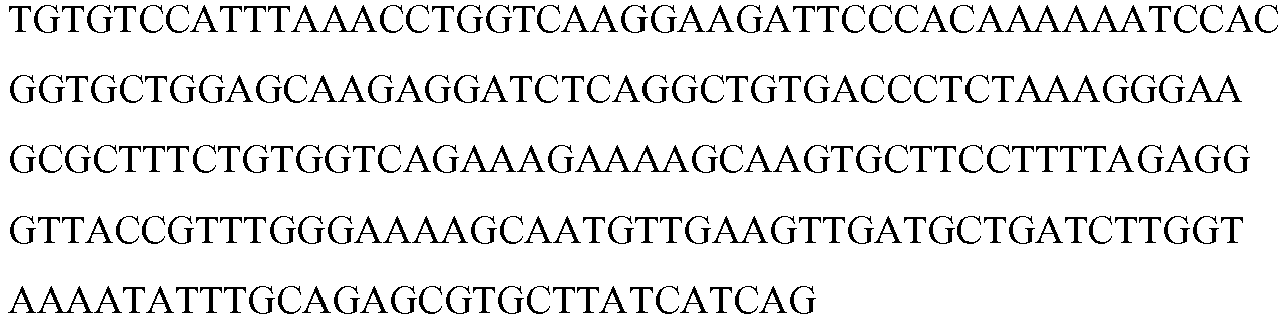
46 miR-524 
47 miR-200b 
Table 5 Seed sequences of miRNAs identified in MET screening (see Table 1) List of miRNA seed sequences (5' to 3' direction). All sequences were obtained from miRBase (release 14: Sept 2009; www.mirbase.org). Seed sequence is defined as nucleotide 2-8 (5' to 3' direction) of the mature miRNA sequence. microRNA mature miRNA SEQ ID Seed sequence hsa-miR-124-1 miR-124 87 aaggcac hsa-miR-124-2 miR-124* 88 guguuca hsa-miR-124-3 hsa-miR-181a-1 miR-181a 89 acauuca miR-181a* 90 ccaucga hsa-miR-141 miR-141 91 aacacug miR-141* 92 aucuucc hsa-miR-200a miR-200a 93 aacacug miR-200a* 94 aucuuac hsa-miR-200b miR-200b 95 aauacug miR-200b* 96 aucuuac hsa-miR-200c miR-200c 97 aauacug miR-200c* 98 gucuuac hsa-miR-205 miR-205 99 ccuucau miR-205* 100 auuucag hsa-miR-429 miR-429 101 aauacug hsa-miR-206 miR-206 102 ggaaugu hsa-miR-518b miR-518b 103 aaagcgc hsa-miR-520f miR-520f 104 agugcuu 105 aagugcu hsa-miR-524 miR-524-5p 106 uacaaag miR-524-3p 107 aaggcgc Table 6: IsomiR sequences of miRNAs identified in screening (see Table 1) These isomiRs have been detected after the analysis of 66 human tissue samples using high-throughput deep sequencing and only isomiRs that represent > 5% of the total number of cloned sequences are listed here, unless otherwise indicated. miRNA Mature miRNA Seed (SEQ ID) IsomiR sequence (SEQ ID) hsa-miR-520f mir-520f AGUGCUU(104) AAGUGCUUCCUUUUAGAGGGU (118) AAGUGCU(105) AAGUGCUUCCUUUUAGAGGGUU*1 (119) CAAGUGCUUCCUUUUAGAGGGU (120) hsa-miR-518b mir-518b AAAGCGC (103) CAAAGCGCUCCCCUUUAGAGGU (121) CAAAGCGCUCCCCUUUAGAGG (122) CAAAGCGCUCCCCUUUAGAG (123) hsa-miR-524 mir-524-3p AAGGCGC (107) GAAGGCGCUUCCCUUUGGAGUG (124) GAAGGCGCUUCCCUUUGGAGU (125) mir-524-5p UACAAAG (106) CUACAAAGGGAAGCACUUUCU (126) CUACAAAGGGAAGCACUUUCUC (127) CUACAAAGGGAAGCACUUUC (128) hsa-miR-124-1 mir-124 AAGGCAC (87) UAAGGCACGCGGUGAAUGCCAA (129) hsa-miR-124-2 UAAGGCACGCGGUGAAUGCCA (130) hsa-miR-124-3 UAAGGCACGCGGUGAAUGC (131) UAAGGCACGCGGUGAAUGCC*3 (132) hsa-miR-206 mir-206 GGAAUGU (102) UGGAAUGUAAGGAAGUGUGUGG (133) UGGAAUGUAAGGAAGUGUGUGGU (134) UGGAAUGUAAGGAAGUGUGUG (135) hsa-miR-181a-1 mir-181a ACAUUCA(89) AACAUUCAACGCUGUCGGUGAGUUU (136) AACAUUCAACGCUGUCGGUGAGU (137) AACAUUCAACGCUGUCGGUGAG (138) AACAUUCAACGCUGUCGGUGAGUU (139) AACAUUCAACGCUGUCGG (140) AACAUUCAACGCUGUCGGU (141) AACAUUCAACGCUGUCGGUG (142) AACAUUCAACGCUGUCGGUGA (143) hsa-miR-141 mir-141 AACACUG (91) UAACACUGUCUGGUAAAGAUGG (144) UAACACUGUCUGGUAAAGAUG (145) UAACACUGUCUGGUAAAGAUGGC (146) UAACACUGUCUGGUAAAGAU (147) UAACACUGUCUGGUAAAGA (148) UAACACUGUCUGGUAAAGAUGGCU (149) hsa-miR-200a mir-200a AACACUG (93) UAACACUGUCUGGUAACGAUGUU (150 UAACACUGUCUGGUAACGAUGU (151) hsa-miR-200b mir-200b AAUACUG (95) UAAUACUGCCUGGUAAUGAUGAC (152) UAAUACUGCCUGGUAAUGAUGA (153) mir-200b* AUCUUAC (96) CAUCUUACUGGGCAGCAUUGGA (154) CAUCUUACUGGGCAGCAUUGG (155) hsa-miR-200c mir-200c AAUACUG (97) UAAUACUGCCGGGUAAUGAUGGA (156) UAAUACUGCCGGGUAAUGAUGG (157) hsa-miR-205 mir-205 CCUUCAU (99) UCCUUCAUUCCACCGGAGUCU (158) UCCUUCAUUCCACCGGAGUCUG (159) UCCUUCAUUCCACCGGAGUCUGU (160) hsa-miR-429 mir-429 AAUACUG (101) UAAUACUGUCUGGUAAAACCGU (161) UAAUACUGUCUGGUAAAACCG (162) *1 miRBase-annotated sequence. Not detected in the deep-sequencing analysis
*2 Only 0.9% of the total number of cloned sequences
*3 Only 0.7% of the total number of cloned sequencesTable 7: List of microRNA mimics used for validation of MET screening results. Suppliers and product codes for all synthetic miR precurors are shown. All listed mimics are double stranded, with each strand having a 100% complementary alignment with each other. One strand will be the exact sequenceof the mature miRNA sequences as deposited in miRBase and listed in table 3. The other strand contains certain modifications. miRNA mimic Supplier Product code Mimic Negative Control # 1 **Dharmacon* CN-001000-01-05 hsa-miR-200c miRIDIAN Mimic Dharmacon C-300646-05-0005 hsa-miR-520f miRIDIAN Mimic Dharmacon C-300779-03-0005 hsa-miR-524-5p miRIDIAN Mimic Dharmacon C-300806-03-0005 hsa-miR-518b miRIDIAN Mimic Dharmacon C-300798-03-0005 hsa-miR-124 Pre-miR precursor Ambion PM10691 hsa-miR-124* Pre-miR precursor Ambion PM11154 hsa-miR-181 a Pre-miR precursor Ambion PM10421 hsa-miR-181a* Pre-miR precursor Ambion PM10381 hsa-miR-200c Pre-miR precursor Ambion PM11714 hsa-miR-206 Pre-miR precursor Ambion PM10409 *, Dharmacon is now part of Thermo Fisher Scientific.
** This negative control is based on C. Elegans Cel-miR-67 (Seq ID 163).Table 8 Gene expression in inducible microRNA transfected PC3 cells. PC3-Tet-on (clone 8) cells were stably transfected with pmRi-ZsGreen1-miR-X expression plasmids. Selected clones (see Figure 5) were treated with 1 µg/ml DOX for 4 days. Total RNA was isolated and gene expression was studied by qPCR. *, more than 1.5-fold; =, no change; n.d., not determined. Gene PC3-mRi-miR-200c PC3-mRi-miR-520f CDH1 = Up* CDH2 Weakly expressed Weakly expressed CDH1 Down* Down VIM Down n.d. ZEB1 Down Down ZEB2 Down = SNAI1 = = SNAI2 Down Down -
- 1. Tomita, K., van, B.A., van Leenders, G.J., Ruijter, E.T., Jansen, C.F., Bussemakers, M.J., and Schalken, J.A. Cadherin switching in human prostate cancer progression. Cancer Res. 60: 3650-3654 (2000).
- 2. Umbas, R., Isaacs, W.B., Bringuier, P.P., Schaafsma, H.E., Karthaus, H.F., Oosterhof, G.O., Debruyne, F.M., and Schalken, J.A. Decreased E-cadherin expression is associated with poor prognosis in patients with prostate cancer. Cancer Res. 54: 3929-3933 (1994).
- 3. Oort van, I., Tomita, K., van, B.A., Bussemakers, M.J., Kiemeney, L.A., Karthaus, H.F., Witjes, J.A., and Schalken, J.A. The prognostic value of E-cadherin and the cadherin-associated molecules alpha-, beta-, gamma-catenin and p120ctn in prostate cancer specific survival: a long-term follow-up study. Prostate. 67: 1432-1438 (2007).
- 4. Batlle, E., Sancho, E., Franci, C., Dominguez, D., Monfar, M., Baulida, J., and Garcia, D.H. The transcription factor snail is a repressor of E-cadherin gene expression in epithelial tumour cells. Nat. Cell Biol. 2: 84-89 (2000).
- 5. Cano, A., Perez-Moreno, M.A., Rodrigo, I., Locascio, A., Blanco, M.J., del Barrio, M.G., Portillo, F., and Nieto, M.A. The transcription factor snail controls epithelial-mesenchymal transitions by repressing E-cadherin expression. Nat. Cell Biol. 2: 76-83 (2000).
- 6. Hajra, K.M., Chen, D.Y., and Fearon, E.R. The SLUG zinc-finger protein represses E-cadherin in breast cancer. Cancer Res. 62: 1613-1618 (2002).
- 7. Yang, J., Mani, S.A., Donaher, J.L., Ramaswamy, S., Itzykson, R.A., Come, C., Savagner, P., Gitelman, I., Richardson, A., and Weinberg, R.A. Twist, a master regulator of morphogenesis, plays an essential role in tumor metastasis. Cell 117: 927-939 (2004).
- 8. Bussemakers, M.J., Giroldi, L.A., van Bokhoven, A., and Schalken, J.A. Transcriptional regulation of the human E-cadherin gene in human prostate cancer cell lines: characterization of the human E- cadherin gene promoter. Biochem. Biophys. Res. Commun. 203: 1284-1290 (1994).
- 9. Giroldi, L.A., Bringuier, P.P., de Weijert, M., Jansen, C., van Bokhoven, A., and Schalken, J.A. Role of E boxes in the repression of E-cadherin expression. Biochem. Biophys. Res. Commun. 241: 453-458 (1997).
- 10. Rodrigo, I., Cato, A.C.B., and Cano, A. Regulation of E-cadherin gene expression during tumor progression: the role of a new Ets-binding site and the E-pal element. Exp. Cell Res. 248: 358-371 (1999).
- 11. Conacci-Sorrell, M., Simcha, I., Ben Yedidia, T., Blechman, J., Savagner, P., and Ben Ze'ev, A. Autoregulation of E-cadherin expression by cadherin-cadherin interactions: the roles of beta-catenin signaling, Slug, and MAPK. J. Cell Biol. 163: 847-857 (2003).
- 12. Gregory, P.A., Bracken, C.P., Bert, A.G., and Goodall, G.J. MicroRNAs as regulators of epithelial-mesenchymal transition. Cell Cycle. 7: 3112-3118 (2008).
- 13. Burk, U., Schubert, J., Wellner, U., Schmalhofer, O., Vincan, E., Spaderna, S., and Brabletz, T. A reciprocal repression between ZEB1 and members of the miR-200 family promotes EMT and invasion in cancer cells. EMBO Rep. 9: 582-589 (2008).
- 14. Gregory, P.A., Bert, A.G., Paterson, E.L., Barry, S.C., Tsykin, A., Farshid, G., Vadas, M.A., Khew-Goodall, Y., and Goodall, G.J. The miR-200 family and miR-205 regulate epithelial to mesenchymal transition by targeting ZEB1 and SIP1. Nat. Cell Biol. 10: 593-601 (2008).
- 15. Park, S.M., Gaur, A.B., Lengyel, E., and Peter, M.E. The miR-200 family determines the epithelial phenotype of cancer cells by targeting the E-cadherin repressors ZEB1 and ZEB2. Genes Dev. 22: 894-907 (2008).
- 16. Berezikov, E., van, T.G., Verheul, M., van de, B.J., van, L.L., Vos, J., Verloop, R., van de, W.M., Guryev, V., Takada, S., van Zonneveld, A.J., Mano, H., Plasterk, R., and Cuppen, E. Many novel mammalian microRNA candidates identified by extensive cloning and RAKE analysis. Genome Res. 16: 1289-1298 (2006).
- 17. Lowery, A.J., Miller, N., Devaney, A., McNeill, R.E., Davoren, P.A., Lemetre, C., Benes, V., Schmidt, S., Blake, J., Ball, G., and Kerin, M.J. MicroRNA signatures predict oestrogen receptor, progesterone receptor and HER2/neu receptor status in breast cancer. Breast Cancer Res. 11: R27 (2009).
- 18. Pfaffl, M.W. A new mathematical model for relative quantification in real-time RT-PCR. Nucleic Acids Res. 29: e45 (2001).
- 19. Chen, C., Ridzon, D.A., Broomer, A.J., Zhou, Z., Lee, D.H., Nguyen, J.T., Barbisin, M., Xu, N.L., Mahuvakar, V.R., Andersen, M.R., Lao, K.Q., Livak, K.J., and Guegler, K.J. Real-time quantification of microRNAs by stem-loop RT-PCR. Nucleic Acids Res. 33: e179 (2005).
- 20. Batlle, E., Sancho, E., Franci, C., Dominguez, D., Monfar, M., Baulida, J., and Garcia, D.H. The transcription factor snail is a repressor of E-cadherin gene expression in epithelial tumour cells. Nat. Cell Biol. 2: 84-89 (2000).
- 21. Cano, A., Perez-Moreno, M.A., Rodrigo, I., Locascio, A., Blanco, M.J., del Barrio, M.G., Portillo, F., and Nieto, M.A. The transcription factor snail controls epithelial-mesenchymal transitions by repressing E-cadherin expression. Nat. Cell Biol. 2: 76-83 (2000).
- 22. Hajra, K.M., Chen, D.Y., and Fearon, E.R. The SLUG zinc-finger protein represses E-cadherin in breast cancer. Cancer Res. 62: 1613-1618 (2002).
- 23. Yang, J., Mani, S.A., Donaher, J.L., Ramaswamy, S., Itzykson, R.A., Come, C., Savagner, P., Gitelman, I., Richardson, A., and Weinberg, R.A. Twist, a master regulator of morphogenesis, plays an essential role in tumor metastasis. Cell 117: 927-939 (2004).
- 24. Bussemakers, M.J., Giroldi, L.A., van Bokhoven, A., and Schalken, J.A. Transcriptional regulation of the human E-cadherin gene in human prostate cancer cell lines: characterization of the human E- cadherin gene promoter. Biochem. Biophys. Res. Commun. 203: 1284-1290 (1994).
- 25. Giroldi, L.A., Bringuier, P.P., de Weijert, M., Jansen, C., van Bokhoven, A., and Schalken, J.A. Role of E boxes in the repression of E-cadherin expression. Biochem. Biophys. Res. Commun. 241: 453-458 (1997).
- 26. Rodrigo, I., Cato, A.C.B., and Cano, A. Regulation of E-cadherin gene expression during tumor progression: the role of a new Ets-binding site and the E-pal element. Exp. Cell Res. 248: 358-371 (1999).
- 27. Conacci-Sorrell, M., Simcha, I., Ben Yedidia, T., Blechman, J., Savagner, P., and Ben Ze'ev, A. Autoregulation of E-cadherin expression by cadherin-cadherin interactions: the roles of beta-catenin signaling, Slug, and MAPK. J. Cell Biol. 163: 847-857 (2003).
- 28. Bussemakers, M.J., van, B.A., Tomita, K., Jansen, C.F., and Schalken, J.A. Complex cadherin expression in human prostate cancer cells. Int. J Cancer. 85: 446-450 (2000).
- 29. Mohanty, S., and Xu, L. Experimental metastasis assay. J Vis. Exp. 1942 (2010).
- 30. Rubio, N., Villacampa, M.M., El, H.N., and Blanco, J. Metastatic burden in nude mice organs measured using prostate tumor PC-3 cells expressing the luciferase gene as a quantifiable tumor cell marker. Prostate. 44: 133-143 (2000).
- 31. Fukuchi, K., Steiniger, S.C., Deryugina, E., LIU, Y., Lowery, C.A., Gloeckner, C., Zhou, B., Kaufmann, G.F., Quigley, J.P., and Janda, K.D. Inhibition of tumor metastasis: functional immune modulation of the CUB ).
-
- CDH1
- - E-cadherin
- CDH2
- - N-cadherin
- CDH11
- - OB-cadherin
- CTG
- - CEllTiter-GLO (cell viability assay)
- DOX
- - Doxycycline
- EMT
- - epithelial to mesenchymal transition
- miR
- - microRNA
- MET
- - mesenchymal to epithelial transition
- MOI
- - multiplicity of infection
- MTT
- - (3-(4,5-Dimethylthiazol-2-yl)-2,5-diphenyltetrazolium bromide
- qPCR
- - quantitative PCR
- PCa
- - prostate cancer
- SNAI1
- -
SNAIL homolog 1, alias SNAIL - SNAI2
- -
SNAIL homolog 2, alias SLUG - TSU
- - TSUpr1-pEcad-Luc cells
- UBC
- - urinary bladder cancer
- VIM
- - vimentin
- ZEB1
- - zinc finger E-box
binding homeobox 1, alias deltaEF1 - ZEB2
- - zinc finger E-box
binding homeobox 2,alias SIP 1 -
- <110> InteRNA Technologies BV
- <120> A miRNA molecule defined by its source and its diagnostic and therapeutic uses in diseases or conditions associated with EMT
- <130> P6029697PCT
- <150>
EP 10155512.6
<151> 2010-03-04 - <150>
US 61/310,452
<151> 2010-03-04 - <160> 163
- <170> PatentIn version 3.3
- <210> 1
<211> 82
<212> RNA
<213> Artificial - <220>
<223> motif - <220>
<221> misc_feature
<222> (4)..(4)
<223> n may be A, U, C, G - <220>
<221> misc_feature
<222> (11)..(11)
<223> n may be A, U, C, G - <220>
<221> misc_feature
<222> (16)..(16)
<223> n may be A, U, C, G - <220>
<221> misc_feature
<222> (17)..(17)
<223> n may be A, U, C, G - <220>
<221> misc_feature
<222> (19) .. (19)
<223> n is a, c, g, or u - <220>
<221> misc_feature
<222> (28) .. (28)
<223> X may be A, U, C, G - <220>
<221> misc_feature
<222> (35)..(35)
<223> n may be A, U, C, G - <220>
<221> misc_feature
<222> (37)..(37)
<223> n may be A, U, C, G - <220>
<221> misc_feature
<222> (41)..(41)
<223> n may be A, U, C, G - <220>
<221> misc_feature
<222> (42)..(42)
<223> n may be A, U, C, G - <220>
<221> misc_feature
<222> (45)..(45)
<223> n may be A, U, C, G - <220>
<221> misc_feature
<222> (51)..(51)
<223> n may be A, U, C, G - <220>
<221> misc_feature
<222> (52)..(52)
<223> n may be A, U, C, G - <220>
<221> misc_feature
<222> (54)..(54)
<223> n may be A, U, C, G - <220>
<221> misc_feature
<222> (56)..(56)
<223> n may be A, U, C, G - <220>
<221> misc_feature
<222> (60)..(60)
<223> n may be A, U ,C , G - <220>
<221> misc_feature
<222> (63)..(63)
<223> n may be A, U, C, G - <220>
<221> misc_feature
<222> (67)..(67)
<223> n may be A, U, C, G - <220>
<221> misc_feature
<222> (71)..(71)
<223> n may be A, U, C, G - <220>
<221> misc_feature
<222> (72)..(72)
<223> n may be A, U, C, G - <220>
<221> misc_feature
<222> (77)..(77)
<223> n may be A, U, C, G - <400> 1

- <210> 2
<211> 20
<212> RNA
<213> Homo sapiens - <400> 2
uaaggcacgc ggugaaugcc 20 - <210> 3
<211> 22
<212> RNA
<213> Homo Sapiens - <400> 3
cguguucaca gcggaccuug au 22 - <210> 4
<211> 23
<212> RNA
<213> Homo sapiens - <400> 4
aacauucaac gcugucggug agu 23 - <210> 5
<211> 22
<212> RNA
<213> Homo sapiens - <400> 5
accaucgacc guugauugua cc 22 - <210> 6
<211> 22
<212> RNA
<213> Homo sapiens - <400> 6
uaacacuguc ugguaaagau gg 22 - <210> 7
<211> 22
<212> RNA
<213> Homo sapiens - <400> 7
caucuuccag uacaguguug ga 22 - <210> 8
<211> 22
<212> RNA
<213> Hom Sapiens - <400> 8
uaacacuguc ugguaacgau gu 22 - <210> 9
<211> 22
<212> RNA
<213> Homo sapiens - <400> 9
caucuuaccg gacagugcug ga 22 - <210> 10
<211> 22
<212> RNA
<213> Homo sapiens - <400> 10
uaauacugcc ugguaaugau ga 22 - <210> 11
<211> 22
<212> RNA
<213> Homo sapiens - <400> 11
caucuuacug ggcagcauug ga 22 - <210> 12
<211> 23
<212> RNA
<213> Homo sapiens - <400> 12
uaauacugcc ggguaaugau gga 23 - <210> 13
<211> 22
<212> RNA
<213> Homo sapiens - <400> 13
cgucuuaccc agcaguguuu gg 22 - <210> 14
<211> 22
<212> RNA
<213> Homo sapiens - <400> 14
uccuucauuc caccggaguc ug 22 - <210> 15
<211> 21
<212> RNA
<213> Homo sapiens - <400> 15
gauuucagug gagugaaguu c 21 - <210> 16
<211> 22
<212> RNA
<213> Homo sapiens - <400> 16
uaauacuguc ugguaaaacc gu 22 - <210> 17
<211> 22
<212> RNA
<213> Homo sapiens - <400> 17
uggaauguaa ggaagugugu gg 22 - <210> 18
<211> 22
<212> RNA
<213> Homo sapiens - <400> 18
caaagcgcuc cccuuuagag gu 22 - <210> 19
<211> 22
<212> RNA
<213> Homo sapiens - <400> 19
aagugcuucc uuuuagaggg uu 22 - <210> 20
<211> 22
<212> RNA
<213> Homo sapiens - <400> 20
cuacaaaggg aagcacuuuc uc 22 - <210> 21
<211> 21
<212> RNA
<213> Homo sapiens - <400> 21
gaaggcgcuu cccuuuggag u 21 - <210> 22
<211> 85
<212> RNA
<213> homo sapiens - <400> 22

- <210> 23
<211> 109
<212> RNA
<213> homo sapiens - <400> 23

- <210> 24
<211> 87
<212> RNA
<213> homo sapiens - <400> 24

- <210> 25
<211> 110
<212> RNA
<213> homo sapiens - <400> 25

- <210> 26
<211> 95
<212> RNA
<213> homo sapiens - <400> 26

- <210> 27
<211> 90
<212> RNA
<213> homo sapiens - <400> 27

- <210> 28
<211> 68
<212> RNA
<213> homo sapiens - <400> 28

- <210> 29
<211> 110
<212> RNA
<213> homo sapiens - <400> 29

- <210> 30
<211> 70
<212> RNA
<213> homo sapiens - <400> 30

- <210> 31
<211> 86
<212> RNA
<213> homo sapiens - <400> 31

- <210> 32
<211> 83
<212> RNA
<213> homo sapiens - <400> 32

- <210> 33
<211> 87
<212> RNA
<213> homo sapiens - <400> 33

- <210> 34
<211> 87
<212> RNA
<213> homo sapiens - <400> 34

- <210> 35
<211> 95
<212> RNA
<213> homo sapiens - <400> 35

- <210> 36
<211> 180
<212> DNA
<213> artificial DNA - <220>
<223> cloned sequence - <400> 36

- <210> 37
<211> 205
<212> DNA
<213> artificial DNA - <220>
<223> cloned sequence - <400> 37

- <210> 38
<211> 200
<212> DNA
<213> artificial DNA - <220>
<223> cloned sequence - <400> 38


- <210> 39
<211> 191
<212> DNA
<213> artificial DNA - <220>
<223> cloned sequence - <400> 39

- <210> 40
<211> 140
<212> DNA
<213> artificial DNA - <220>
<223> cloned sequence - <400> 40

- <210> 41
<211> 253
<212> DNA
<213> artificial DNA - <220>
<223> cloned sequence - <400> 41

- <210> 42
<211> 175
<212> DNA
<213> artificial DNA - <220>
<223> cloned sequence - <400> 42

- <210> 43
<211> 202
<212> DNA
<213> artificial DNA - <220>
<223> cloned sequence - <400> 43

- <210> 44
<211> 251
<212> DNA
<213> artificial DNA - <220>
<223> cloned sequence - <400> 44

- <210> 45
<211> 214
<212> DNA
<213> artificial DNA - <220>
<223> cloned sequence - <400> 45

- <210> 46
<211> 253
<212> DNA
<213> artificial DNA - <220>
<223> cloned sequence - <400> 46

- <210> 47
<211> 135
<212> DNA
<213> artificial - <220>
<223> DNA cloned into lentiviral vector - <400> 47

- <210> 48
<211> 18
<212> DNA
<213> artificial DNA - <220>
<223> primer - <400> 48
gaaaagagag tggaagtg 18 - <210> 49
<211> 18
<212> DNA
<213> artificial DNA - <220>
<223> primer - <400> 49
gtgaagggag atgtattg 18 - <210> 50
<211> 20
<212> DNA
<213> artificial DNA - <220>
<223> primer - <400> 50
caggtctcct cttggctctg 20 - <210> 51
<211> 20
<212> DNA
<213> artificial DNA - <220>
<223> primer - <400> 51
actttgaatc gggtgtcgag 20 - <210> 52
<211> 20
<212> DNA
<213> artificial DNA - <220>
<223> primer - <400> 52
gaggattagc cggaacaaca 20 - <210> 53
<211> 20
<212> DNA
<213> artificial DNA - <220>
<223> primer - <400> 53
aacaaatttc ccccatctcc 20 - <210> 54
<211> 20
<212> DNA
<213> artificial DNA - <220>
<223> primer - <400> 54
aggatctcca ggctcgaaag 20 - <210> 55
<211> 20
<212> DNA
<213> artificial DNA - <220>
<223> primer - <400> 55
gacatctgag tgggtctgga 20 - <210> 56
<211> 20
<212> DNA
<213> artificial DNA - <220>
<223> primer - <400> 56
ttcggaccca cacattacct 20 - <210> 57
<211> 20
<212> DNA
<213> artificial DNA - <220>
<223> primer - <400> 57
ttggagcagt ttttgcactg 20 - <210> 58
<211> 20
<212> DNA
<213> artificial DNA - <220>
<223> primer - <400> 58
atgcggaaga cagaaaatgg 20 - <210> 59
<211> 20
<212> DNA
<213> artificial DNA - <220>
<223> primer - <400> 59
gtcacgttct tccgcttctc 20 - <210> 60
<211> 20
<212> DNA
<213> artificial DNA - <220>
<223> primer - <400> 60
cgcttgacat cactgaagga 20 - <210> 61
<211> 20
<212> DNA
<213> artificial DNA - <220>
<223> primer - <400> 61
cttgccacac tctgtgcatt 20 - <210> 62
<211> 21
<212> DNA
<213> artificial DNA - <220>
<223> primer - <400> 62
agcagagaat ggaaagtcaa a 21 - <210> 63
<211> 18
<212> DNA
<213> artificial DNA - <220>
<223> primer - <400> 63
tgctgcttac atgtctcg 18 - <210> 64
<211> 50
<212> DNA
<213> artificial DNA - <220>
<223> primer - <400> 64
gtcgtatcca gtgcagggtc cgaggtattc gcactggata cgacccatct 50 - <210> 65
<211> 50
<212> DNA
<213> artificial DNA - <220>
<223> primer - <400> 65
gtcgtatcca gtgcagggtc cgaggtattc gcactggata cgactccatc 50 - <210> 66
<211> 50
<212> DNA
<213> artificial DNA - <220>
<223> primer - <400> 66
gtcgtatcca gtgcagggtc cgaggtattc gcactggata cgacactcac 50 - <210> 67
<211> 50
<212> DNA
<213> artificial DNA - <220>
<223> primer - <400> 67
gtcgtatcca gtgcagggtc cgaggtattc gcactggata cgacggcatt 50 - <210> 68
<211> 50
<212> DNA
<213> artificial DNA - <220>
<223> primer - <400> 68
gtcgtatcca gtgcagggtc cgaggtattc gcactggata cgacacctct 50 - <210> 69
<211> 50
<212> DNA
<213> artificial DNA - <220>
<223> primer - <400> 69
gtcgtatcca gtgcagggtc cgaggtattc gcactggata cgacaaccct 50 - <210> 70
<211> 50
<212> DNA
<213> artificial DNA - <220>
<223> primer - <400> 70
gtcgtatcca gtgcagggtc cgaggtattc gcactggata cgacgagaaa 50 - <210> 71
<211> 50
<212> DNA
<213> artificial DNA - <220>
<223> primer - <400> 71
gtcgtatcca gtgcagggtc cgaggtattc gcactggata cgacactcca 50 - <210> 72
<211> 24
<212> DNA
<213> artificial DNA - <220>
<223> primer - <400> 72
gcccgctaac actgtctggt aaag 24 - <210> 73
<211> 24
<212> DNA
<213> artificial DNA - <220>
<223> primer - <400> 73
gcccgctaat actgccgggt aatg 24 - <210> 74
<211> 23
<212> DNA
<213> artificial - <220>
<223> primer - <400> 74
tgccagaaca ttcaacgctg tcg 23 - <210> 75
<211> 21
<212> DNA
<213> artificial DNA - <220>
<223> primer - <400> 75
tgccagtaag gcacgcggtg a 21 - <210> 76
<211> 24
<212> DNA
<213> artificial DNA - <220>
<223> primer - <400> 76
tgccagcaaa gcgctcccct ttag 24 - <210> 77
<211> 24
<212> DNA
<213> artificial DNA - <220>
<223> primer - <400> 77
gcccgcaagt gcttcctttt agag 24 - <210> 78
<211> 23
<212> DNA
<213> artificial DNA - <220>
<223> primer - <400> 78
gcccgcctac aaagggaagc act 23 - <210> 79
<211> 23
<212> DNA
<213> artificial DNA - <220>
<223> primer - <400> 79
tgccaggaag gcgcttccct ttg 23 - <210> 80
<211> 16
<212> DNA
<213> artificial DNA - <220>
<223> primer - <400> 80
gtgcagggtc cgaggt 16 - <210> 81
<211> 16
<212> DNA
<213> artificial DNA - <220>
<223> primer - <400> 81
gtcatccttg cgcagg 16 - <210> 82
<211> 20
<212> DNA
<213> artificial DNA - <220>
<223> primer - <400> 82
cgcttcggca gcacatatac 20 - <210> 83
<211> 20
<212> DNA
<213> artificial DNA - <220>
<223> primer - <400> 83
aggggccatg ctaatcttct 20 - <210> 84
<211> 23
<212> DNA
<213> artificial DNA - <220>
<223> primer - <400> 84
cacgctgttt tgacctccat aga 23 - <210> 85
<211> 18
<212> DNA
<213> artificial DNA - <220>
<223> primer - <400> 85
cactgacggg caccggag 18 - <210> 86
<211> 28
<212> DNA
<213> artificial DNA - <220>
<223> primer - <400> 86
gacctccata gaagattcta gagctagc 28 - <210> 87
<211> 7
<212> RNA
<213> artificial - <220>
<223> seed sequence - <400> 87
aaggcac 7 - <210> 88
<211> 7
<212> RNA
<213> artificial - <220>
<223> seed sequence - <400> 88
guguuca 7 - <210> 89
<211> 7
<212> RNA
<213> artificial - <220>
<223> seed sequence - <400> 89
acauuca 7 - <210> 90
<211> 7
<212> RNA
<213> artificial - <220>
<223> seed sequence - <400> 90
ccaucga 7 - <210> 91
<211> 7
<212> RNA
<213> artificial - <220>
<223> seed sequence - <400> 91
aacacug 7 - <210> 92
<211> 7
<212> RNA
<213> artificial - <220>
<223> sed sequence - <400> 92
aucuucc 7 - <210> 93
<211> 7
<212> RNA
<213> artificial - <220>
<223> seed sequence - <400> 93
aacacug 7 - <210> 94
<211> 7
<212> RNA
<213> artificial - <220>
<223> seed sequence - <400> 94
aucuuac 7 - <210> 95
<211> 7
<212> RNA
<213> artificial - <220>
<223> seed sequence - <400> 95
aauacug 7 - <210> 96
<211> 7
<212> RNA
<213> artificial - <220>
<223> seed sequence - <400> 96
aucuuac 7 - <210> 97
<211> 7
<212> RNA
<213> artificial - <220>
<223> seed sequence - <400> 97
aauacug 7 - <210> 98
<211> 7
<212> RNA
<213> artificial - <220>
<223> seed sequence - <400> 98
gucuuac 7 - <210> 99
<211> 7
<212> RNA
<213> artificial - <220>
<223> seed sequence - <400> 99
ccuucau 7 - <210> 100
<211> 7
<212> RNA
<213> artificial - <220>
<223> seed sequence - <400> 100
auuucag 7 - <210> 101
<211> 7
<212> RNA
<213> artificial - <220>
<223> seed sequence - <400> 101
aauacug 7 - <210> 102
<211> 7
<212> RNA
<213> artificial - <220>
<223> seed sequence - <400> 102
ggaaugu 7 - <210> 103
<211> 7
<212> RNA
<213> artificial - <220>
<223> seed sequence - <400> 103
aaagcgc 7 - <210> 104
<211> 7
<212> RNA
<213> artificial - <220>
<223> seed sequence - <400> 104
agugcuu 7 - <210> 105
<211> 7
<212> RNA
<213> artificial - <220>
<223> seed sequence - <400> 105
aagugcu 7 - <210> 106
<211> 7
<212> RNA
<213> artificial - <220>
<223> seed sequence - <400> 106
uacaaag 7 - <210> 107
<211> 7
<212> RNA
<213> artificial - <220>
<223> seed sequence - <400> 107
aaggcgc 7 - <210> 108
<211> 25
<212> RNA
<213> macaca mulatta - <400> 108
aaagugcuuc cuuuuagagg guuac 25 - <210> 109
<211> 85
<212> RNA
<213> macaca mulatta - <400> 109

- <210> 110
<211> 23
<212> RNA
<213> macaca mulatta - <400> 110
aaagugcuuc cuuuuagagg guu 23 - <210> 111
<211> 87
<212> RNA
<213> macaca mulatta - <400> 111

- <210> 112
<211> 25
<212> DNA
<213> artificial DNA - <220>
<223> primer - <400> 112
ctcaacttta actggaaaga atgtc 25 - <210> 113
<211> 19
<212> DNA
<213> artificial DNA - <220>
<223> primer - <400> 113
tccttttcac cagcaagct 19 - <210> 114
<211> 20
<212> DNA
<213> artificial DNA - <220>
<223> primer - <400> 114
ggctcagatt caggaacagc 20 - <210> 115
<211> 20
<212> DNA
<213> artificial DNA - <220>
<223> primer - <400> 115
gcttcaacgg caaagttctc 20 - <210> 116
<211> 20
<212> DNA
<213> artificial DNA - <220>
<223> primer - <400> 116
ggtctggaac cagttcttcg 20 - <210> 117
<211> 20
<212> DNA
<213> artificial DNA - <220>
<223> primer - <400> 117
ggcatgaatg ttccctgatt 20 - <210> 118
<211> 21
<212> RNA
<213> isomiR - <400> 118
aagugcuucc uuuuagaggg u 21 - <210> 119
<211> 22
<212> RNA
<213> isomiR - <400> 119
caagugcuuc cuuuuagagg gu 22 - <210> 120
<211> 22
<212> RNA
<213> isomiR - <400> 120
aagugcuucc uuuuagaggg uu 22 - <210> 121
<211> 22
<212> RNA
<213> isomiR - <400> 121
caaagcgcuc cccuuuagag gu 22 - <210> 122
<211> 21
<212> RNA
<213> isomiR - <400> 122
caaagcgcuc cccuuuagag g 21 - <210> 123
<211> 20
<212> RNA
<213> isomiR - <400> 123
caaagcgcuc cccuuuagag 20 - <210> 124
<211> 22
<212> RNA
<213> isomiR - <400> 124
gaaggcgcuu cccuuuggag ug 22 - <210> 125
<211> 21
<212> RNA
<213> isomiR - <400> 125
gaaggcgcuu cccuuuggag u 21 - <210> 126
<211> 21
<212> RNA
<213> isomiR - <400> 126
cuacaaaggg aagcacuuuc u 21 - <210> 127
<211> 22
<212> RNA
<213> isomiR - <400> 127
cuacaaaggg aagcacuuuc uc 22 - <210> 128
<211> 20
<212> RNA
<213> isomiR - <400> 128
cuacaaaggg aagcacuuuc 20 - <210> 129
<211> 22
<212> RNA
<213> isomiR - <400> 129
uaaggcacgc ggugaaugcc aa 22 - <210> 130
<211> 21
<212> RNA
<213> isomiR - <400> 130
uaaggcacgc ggugaaugcc a 21 - <210> 131
<211> 19
<212> RNA
<213> isomiR - <400> 131
uaaggcacgc ggugaaugc 19 - <210> 132
<211> 20
<212> RNA
<213> isomiR - <400> 132
uaaggcacgc ggugaaugcc 20 - <210> 133
<211> 22
<212> RNA
<213> isomiR - <400> 133
uggaauguaa ggaagugugu gg 22 - <210> 134
<211> 23
<212> RNA
<213> isomiR - <400> 134
uggaauguaa ggaagugugu ggu 23 - <210> 135
<211> 21
<212> RNA
<213> isomiR - <400> 135
uggaauguaa ggaagugugu g 21 - <210> 136
<211> 25
<212> RNA
<213> isomiR - <400> 136
aacauucaac gcugucggug aguuu 25 - <210> 137
<211> 23
<212> RNA
<213> isomiR - <400> 137
aacauucaac gcugucggug agu 23 - <210> 138
<211> 22
<212> RNA
<213> isomiR - <400> 138
aacauucaac gcugucggug ag 22 - <210> 139
<211> 24
<212> RNA
<213> isomiR - <400> 139
aacauucaac gcugucggug aguu 24 - <210> 140
<211> 18
<212> RNA
<213> isomiR - <400> 140
aacauucaac gcugucgg 18 - <210> 141
<211> 19
<212> RNA
<213> isomiR - <400> 141
aacauucaac gcugucggu 19 - <210> 142
<211> 20
<212> RNA
<213> isomiR - <400> 142
aacauucaac gcugucggug 20 - <210> 143
<211> 21
<212> RNA
<213> isomiR - <400> 143
aacauucaac gcugucggug a 21 - <210> 144
<211> 22
<212> RNA
<213> isomiR - <400> 144
uaacacuguc ugguaaagau gg 22 - <210> 145
<211> 21
<212> RNA
<213> isomiR - <400> 145
uaacacuguc ugguaaagau g 21 - <210> 146
<211> 23
<212> RNA
<213> isomiR - <400> 146
uaacacuguc ugguaaagau ggc 23 - <210> 147
<211> 20
<212> RNA
<213> isomiR - <400> 147
uaacacuguc ugguaaagau 20 - <210> 148
<211> 19
<212> RNA
<213> isomiR - <400> 148
uaacacuguc ugguaaaga 19 - <210> 149
<211> 24
<212> RNA
<213> isomiR - <400> 149
uaacacuguc ugguaaagau ggcu 24 - <210> 150
<211> 23
<212> RNA
<213> isomiR - <400> 150
uaacacuguc ugguaacgau guu 23 - <210> 151
<211> 22
<212> RNA
<213> isomiR - <400> 151
uaacacuguc ugguaacgau gu 22 - <210> 152
<211> 23
<212> RNA
<213> isomiR - <400> 152
uaauacugcc ugguaaugau gac 23 - <210> 153
<211> 22
<212> RNA
<213> isomiR - <400> 153
uaauacugcc ugguaaugau ga 22 - <210> 154
<211> 22
<212> RNA
<213> isomiR - <400> 154
caucuuacug ggcagcauug ga 22 - <210> 155
<211> 21
<212> RNA
<213> isomiR - <400> 155
caucuuacug ggcagcauug g 21 - <210> 156
<211> 23
<212> RNA
<213> isomiR - <400> 156
uaauacugcc ggguaaugau gga 23 - <210> 157
<211> 22
<212> RNA
<213> isomiR - <400> 157
uaauacugcc ggguaaugau gg 22 - <210> 158
<211> 21
<212> RNA
<213> isomiR - <400> 158
uccuucauuc caccggaguc u 21 - <210> 159
<211> 22
<212> RNA
<213> isomiR - <400> 159
uccuucauuc caccggaguc ug 22 - <210> 160
<211> 23
<212> RNA
<213> isomiR - <400> 160
uccuucauuc caccggaguc ugu 23 - <210> 161
<211> 22
<212> RNA
<213> isomiR - <400> 161
uaauacuguc ugguaaaacc gu 22 - <210> 162
<211> 21
<212> RNA
<213> isomiR - <400> 162
uaauacuguc ugguaaaacc g 21 - <210> 163
<211> 24
<212> RNA
<213> artificial - <220>
<223> mimic - <400> 163
ucacaaccuc cuagaaagag uaga 24
An induction of tumor cell death may be at least 1%, 5%, 10%, 15%, 20%, 25%, or more. Tumor growth may be inhibited at least 5%, 10%, 20%, 30%, 40%, 50%, 55%, 60%, 65%, 70% or 75%, or more. Tumor cell death may be assessed using techniques known to the skilled person. Tumor cell death may be assessed using MRI (Magnetic Resonance Imaging) or CT (Computer Tomography).
In certain embodiments, tumor weight increase or tumor growth may be inhibited at least 20%, 30%, 40%, 50%, 55%, 60%, 65%, 70% or 75%, or more. Tumor weight or tumor growth may be assessed using techniques known to the skilled person.
The detection of tumor growth or the detection of the proliferation of tumor cells may be assessed in vivo by measuring changes in glucose utilization by positron emission tomography with the glucose analogue 2-[18F]-fluor-2-deoxy-D-glucose (FDG-PET) or [18F]-'3-fluoro-'3-deoxy-L-thymidine PET. An ex vivo alternative may be staining of a tumor biopsy with Ki67.
Since the expression levels of these nucleotide sequences and/or amounts of corresponding miRNA molecule or equivalent or isomiR or mimic thereof or source thereof may be difficult to be measured in a subject, a sample from a subject is preferably used. According to another preferred embodiment, the expression level (of a nucleotide sequence or miRNA molecule or equivalent or isomiR or mimic or source thereof) is determined ex vivo in a sample obtained from a subject. The sample preferably comprises a body fluid of a subject. A body fluid may comprise or be derived from blood, serum, plasma, stool, urine or a tissue biopsy or a tumor biopsy or a cancer tissue of epithelial origin of a subject. Preferred tissue is bladder or prostate. It is specifically contemplated that the invention can be used to evaluate or diagnose differences between stages of disease or condition associated with EMT, such as between pre-cancer and cancer, or between a primary tumor and a metastasized tumor.
Claims (6)
- A miRNA molecule or an equivalent or a mimic or an isomiR thereof wherein a source of said miRNA molecule or equivalent thereof comprises at least 80 nucleotides and comprises a motif having at least 98% identity with SEQ ID NO:1 or a source thereof, or a composition comprising said miRNA molecule, equivalent or mimic or isomiR thereof or source thereof for use as a medicament for treating, reverting, curing and/or delaying a cancer associated with EMT by inducing a MET process, wherein said miRNA molecule is a miRNA-518b, miRNA-520f and/or miRNA-524.
- The miRNA molecule, an equivalent or a mimic or an isomiR thereof or a source thereof or the composition comprising said miRNA molecule, equivalent or source thereof according to claim 1 for the use of claim 1, wherein the cancer associated with EMT is a carcinoma.
- The miRNA molecule, an equivalent or a mimic or an isomiR thereof or a source thereof or the composition comprising said miRNA molecule, equivalent or source thereof according to claim 2 for the use of claim 1 or 2, wherein the carcinoma is a bladder or prostate cancer.
- The composition according to any one of claims 1 to 3 for the use of any one of claim 1 to 3, further comprising another miRNA molecule, mimic or isomiR or source thererof selected from: at least one of miRNA-124-1, miRNA-206, miRNA-181a-1, miRNA-141, miRNA-200a, miRNA-200b, miRNA-200c, miRNA-429 and miRNA-205 and/or a source thereof.
- A method for identification of a substance capable of for treating, reverting, curing and/or delaying a cancer associated with EMT in a cell by inducing a MET process, the method comprising the steps of:(a) providing a test cell population capable of expressing a miRNA molecule or equivalent or an isomiR thereof as defined in claim 1, preferably the test population comprises bladder cells, more preferably the test cell population comprises mammalian cells, even more preferably human cells;(b) contacting or incubating the test cell population with the substance;(c) determining the expression level of said miRNA molecule or equivalent or isomiR thereof or the activity or steady state level of said miRNA-molecule or equivalent or isomiR thereof in the test cell population contacted or incubated with the substance;(d) comparing the expression, activity or steady state level determined in (c) with the expression, activity or steady state level of said molecule or equivalent or isomiR in a test cell population that is not contacted with the substance; and,(e) identifying a substance that produces a difference in expression level, activity or steady state level of said miRNA molecule or equivalent or isomiR, between the test cell population that is contacted with the substance and the test cell population that is not contacted with the substance.
- The method according to claim 5, whereby the expression levels, activities or steady state levels of at least another one miRNA molecule, or isomiR or source thereof is compared, preferably wherein the other miRNA molecule, or isomiR or source thereof is selected from: at least one of miRNA-124-1, miRNA-206, miRNA-181a-1, miRNA-141, miRNA-200a, miRNA-200b, miRNA-200c, miRNA-429 and miRNA-205 and/or an isomiR and/or a source thereof.
Priority Applications (2)
| Application Number | Priority Date | Filing Date | Title |
|---|---|---|---|
| EP11708936.7A EP2542678B1 (en) | 2010-03-04 | 2011-03-04 | A MiRNA MOLECULE DEFINED BY ITS SOURCE AND ITS THERAPEUTIC USES IN CANCER ASSOCIATED WITH EMT |
| EP17165861.0A EP3214174B1 (en) | 2010-03-04 | 2011-03-04 | A mirna molecule defined by its source and its diagnostic and therapeutic uses in diseases or conditions associated with emt |
Applications Claiming Priority (4)
| Application Number | Priority Date | Filing Date | Title |
|---|---|---|---|
| US31045210P | 2010-03-04 | 2010-03-04 | |
| EP10155512 | 2010-04-16 | ||
| EP11708936.7A EP2542678B1 (en) | 2010-03-04 | 2011-03-04 | A MiRNA MOLECULE DEFINED BY ITS SOURCE AND ITS THERAPEUTIC USES IN CANCER ASSOCIATED WITH EMT |
| PCT/NL2011/050152 WO2011108930A1 (en) | 2010-03-04 | 2011-03-04 | A MiRNA MOLECULE DEFINED BY ITS SOURCE AND ITS DIAGNOSTIC AND THERAPEUTIC USES IN DISEASES OR CONDITIONS ASSOCIATED WITH EMT |
Related Child Applications (1)
| Application Number | Title | Priority Date | Filing Date |
|---|---|---|---|
| EP17165861.0A Division EP3214174B1 (en) | 2010-03-04 | 2011-03-04 | A mirna molecule defined by its source and its diagnostic and therapeutic uses in diseases or conditions associated with emt |
Publications (2)
| Publication Number | Publication Date |
|---|---|
| EP2542678A1 EP2542678A1 (en) | 2013-01-09 |
| EP2542678B1 true EP2542678B1 (en) | 2017-04-12 |
Family
ID=42562894
Family Applications (2)
| Application Number | Title | Priority Date | Filing Date |
|---|---|---|---|
| EP11708936.7A Not-in-force EP2542678B1 (en) | 2010-03-04 | 2011-03-04 | A MiRNA MOLECULE DEFINED BY ITS SOURCE AND ITS THERAPEUTIC USES IN CANCER ASSOCIATED WITH EMT |
| EP17165861.0A Active EP3214174B1 (en) | 2010-03-04 | 2011-03-04 | A mirna molecule defined by its source and its diagnostic and therapeutic uses in diseases or conditions associated with emt |
Family Applications After (1)
| Application Number | Title | Priority Date | Filing Date |
|---|---|---|---|
| EP17165861.0A Active EP3214174B1 (en) | 2010-03-04 | 2011-03-04 | A mirna molecule defined by its source and its diagnostic and therapeutic uses in diseases or conditions associated with emt |
Country Status (4)
| Country | Link |
|---|---|
| US (2) | US9161947B2 (en) |
| EP (2) | EP2542678B1 (en) |
| ES (1) | ES2631458T3 (en) |
| WO (1) | WO2011108930A1 (en) |
Families Citing this family (17)
| Publication number | Priority date | Publication date | Assignee | Title |
|---|---|---|---|---|
| CN116966310A (en) | 2014-05-14 | 2023-10-31 | 塔歌牧恩治疗公司 | Improved polyethyleneimine polyethylene glycol carrier |
| KR102557689B1 (en) * | 2014-06-12 | 2023-07-20 | 국립연구개발법인 고쿠리츠간켄큐센터 | Prostate cancer detection kit or device, and detection method |
| RU2565548C1 (en) * | 2014-08-05 | 2015-10-20 | Дмитрий Андреевич Журавлёв | Method of producing of pluripotent stem cells |
| EP3250706A4 (en) | 2015-01-30 | 2018-09-05 | The Johns Hopkins University | Extracellular vesicles for agent delivery |
| US11584932B2 (en) | 2016-11-01 | 2023-02-21 | The Research Foundation For The State University Of New York | 5-halouracil-modified microRNAs and their use in the treatment of cancer |
| US11236337B2 (en) | 2016-11-01 | 2022-02-01 | The Research Foundation For The State University Of New York | 5-halouracil-modified microRNAs and their use in the treatment of cancer |
| US20180193270A1 (en) | 2016-11-29 | 2018-07-12 | PureTech Health LLC | Exosomes for delivery of therapeutic agents |
| CN107236749A (en) * | 2017-06-07 | 2017-10-10 | 汕头大学医学院附属肿瘤医院 | A kind of optical molecular imaging reporter gene and application thereof |
| CA3083279A1 (en) * | 2017-11-30 | 2019-06-06 | MiRagen Therapeutics, Inc. | Mir29 mimics for the treatment of ocular fibrosis |
| WO2021262919A2 (en) | 2020-06-26 | 2021-12-30 | The Research Foundation For The State University Of New York | 5-halouracil-modified micrornas and their use in the treatment of cancer |
| CA3192963A1 (en) | 2020-10-08 | 2022-04-14 | Esteban Pombo-Villar | Immunotherapy for the treatment of cancer |
| WO2022178218A1 (en) | 2021-02-19 | 2022-08-25 | Mevion Medical Systems, Inc. | Gantry for a particle therapy system |
| CA3237153A1 (en) | 2021-11-05 | 2023-05-11 | Targimmune Therapeutics Ag | Targeted linear conjugates comprising polyethyleneimine and polyethylene glycol and polyplexes comprising the same |
| EP4615509A1 (en) | 2022-11-07 | 2025-09-17 | TargImmune Therapeutics AG | Psma-targeting linear conjugates comprising polyethyleneimine and polyethylene glycol and polyplexes comprising the same |
| EP4615511A1 (en) | 2022-11-07 | 2025-09-17 | TargImmune Therapeutics AG | Targeted linear conjugates comprising polyethyleneimine and polyethylene glycol and polyplexes comprising the same |
| JP2025537216A (en) | 2022-11-07 | 2025-11-14 | ターグイミューン セラピューティクス アクチエンゲゼルシャフト | Polyplexes of nucleic acids with targeted conjugates containing polyethyleneimine and polyethylene glycol |
| WO2025238236A1 (en) | 2024-05-16 | 2025-11-20 | Targimmune Therapeutics Ag | Polyplexes of nucleic acids and targeted conjugates comprising polyethyleneimine and polyethylene glycol |
Citations (1)
| Publication number | Priority date | Publication date | Assignee | Title |
|---|---|---|---|---|
| US20090186353A1 (en) * | 2004-10-04 | 2009-07-23 | Rosetta Genomics Ltd. | Cancer-related nucleic acids |
Family Cites Families (197)
| Publication number | Priority date | Publication date | Assignee | Title |
|---|---|---|---|---|
| GB1529202A (en) | 1976-02-20 | 1978-10-18 | Ciba Geigy Ag | Spectral sensitising dyes |
| US4704362A (en) | 1977-11-08 | 1987-11-03 | Genentech, Inc. | Recombinant cloning vehicle microbial polypeptide expression |
| US5583013A (en) | 1977-11-08 | 1996-12-10 | Genentech, Inc. | Method and means for microbial polypeptide expression |
| US5221619A (en) | 1977-11-08 | 1993-06-22 | Genentech, Inc. | Method and means for microbial polypeptide expression |
| JPS55116259A (en) | 1979-03-01 | 1980-09-06 | Fuji Photo Film Co Ltd | Microimmunoassay method |
| JPS5745460A (en) | 1980-09-02 | 1982-03-15 | Fuji Photo Film Co Ltd | Inspection sheet for measuring trace component and inspecting method using said sheet |
| EP0047472B1 (en) | 1980-09-02 | 1985-04-24 | Fuji Photo Film Co., Ltd. | Method for immunochemical measurement of trace components |
| NL8200523A (en) | 1982-02-11 | 1983-09-01 | Univ Leiden | METHOD FOR TRANSFORMING IN VITRO PLANT PROTOPLASTS WITH PLASMIDE DNA. |
| US4683202A (en) | 1985-03-28 | 1987-07-28 | Cetus Corporation | Process for amplifying nucleic acid sequences |
| DE3529478A1 (en) | 1985-08-16 | 1987-02-19 | Boehringer Mannheim Gmbh | 7-DESAZA-2'DESOXYGUANOSINE NUCLEOTIDES, METHOD FOR THE PRODUCTION THEREOF AND THEIR USE FOR NUCLEIC ACID SEQUENCING |
| US4682195A (en) | 1985-09-30 | 1987-07-21 | General Electric Company | Insulated gate device with configured emitter contact pad |
| US4959463A (en) | 1985-10-15 | 1990-09-25 | Genentech, Inc. | Intermediates |
| US4659774A (en) | 1985-11-01 | 1987-04-21 | American Hoechst Corporation | Support for solid-phase oligonucleotide synthesis |
| CA1284931C (en) | 1986-03-13 | 1991-06-18 | Henry A. Erlich | Process for detecting specific nucleotide variations and genetic polymorphisms present in nucleic acids |
| US5268486A (en) | 1986-04-18 | 1993-12-07 | Carnegie-Mellon Unversity | Method for labeling and detecting materials employing arylsulfonate cyanine dyes |
| EP0266032A1 (en) | 1986-08-29 | 1988-05-04 | Beecham Group Plc | Modified fibrinolytic enzyme |
| US5525464A (en) | 1987-04-01 | 1996-06-11 | Hyseq, Inc. | Method of sequencing by hybridization of oligonucleotide probes |
| US5202231A (en) | 1987-04-01 | 1993-04-13 | Drmanac Radoje T | Method of sequencing of genomes by hybridization of oligonucleotide probes |
| US4816571A (en) | 1987-06-04 | 1989-03-28 | Applied Biosystems, Inc. | Chemical capping by phosphitylation during oligonucleotide synthesis |
| US4952500A (en) | 1988-02-01 | 1990-08-28 | University Of Georgia Research Foundation, Inc. | Cloning systems for Rhodococcus and related bacteria |
| GB8810400D0 (en) | 1988-05-03 | 1988-06-08 | Southern E | Analysing polynucleotide sequences |
| US5700637A (en) | 1988-05-03 | 1997-12-23 | Isis Innovation Limited | Apparatus and method for analyzing polynucleotide sequences and method of generating oligonucleotide arrays |
| US5602244A (en) | 1988-05-26 | 1997-02-11 | Competitive Technologies, Inc. | Polynucleotide phosphorodithioate compounds |
| GB8822228D0 (en) | 1988-09-21 | 1988-10-26 | Southern E M | Support-bound oligonucleotides |
| US5708154A (en) | 1989-02-24 | 1998-01-13 | City Of Hope | RNA-DNA hybrid molecules of nucleic acid |
| US6867195B1 (en) | 1989-03-21 | 2005-03-15 | Vical Incorporated | Lipid-mediated polynucleotide administration to reduce likelihood of subject's becoming infected |
| US5703055A (en) | 1989-03-21 | 1997-12-30 | Wisconsin Alumni Research Foundation | Generation of antibodies through lipid mediated DNA delivery |
| US5800992A (en) | 1989-06-07 | 1998-09-01 | Fodor; Stephen P.A. | Method of detecting nucleic acids |
| US5424186A (en) | 1989-06-07 | 1995-06-13 | Affymax Technologies N.V. | Very large scale immobilized polymer synthesis |
| US5744101A (en) | 1989-06-07 | 1998-04-28 | Affymax Technologies N.V. | Photolabile nucleoside protecting groups |
| US6040138A (en) | 1995-09-15 | 2000-03-21 | Affymetrix, Inc. | Expression monitoring by hybridization to high density oligonucleotide arrays |
| US5871928A (en) | 1989-06-07 | 1999-02-16 | Fodor; Stephen P. A. | Methods for nucleic acid analysis |
| US5547839A (en) | 1989-06-07 | 1996-08-20 | Affymax Technologies N.V. | Sequencing of surface immobilized polymers utilizing microflourescence detection |
| US5242974A (en) | 1991-11-22 | 1993-09-07 | Affymax Technologies N.V. | Polymer reversal on solid surfaces |
| US5527681A (en) | 1989-06-07 | 1996-06-18 | Affymax Technologies N.V. | Immobilized molecular synthesis of systematically substituted compounds |
| US5143854A (en) | 1989-06-07 | 1992-09-01 | Affymax Technologies N.V. | Large scale photolithographic solid phase synthesis of polypeptides and receptor binding screening thereof |
| US5302523A (en) | 1989-06-21 | 1994-04-12 | Zeneca Limited | Transformation of plant cells |
| DE3924454A1 (en) | 1989-07-24 | 1991-02-07 | Cornelis P Prof Dr Hollenberg | THE APPLICATION OF DNA AND DNA TECHNOLOGY FOR THE CONSTRUCTION OF NETWORKS FOR USE IN CHIP CONSTRUCTION AND CHIP PRODUCTION (DNA CHIPS) |
| US5550318A (en) | 1990-04-17 | 1996-08-27 | Dekalb Genetics Corporation | Methods and compositions for the production of stably transformed, fertile monocot plants and cells thereof |
| US7705215B1 (en) | 1990-04-17 | 2010-04-27 | Dekalb Genetics Corporation | Methods and compositions for the production of stably transformed, fertile monocot plants and cells thereof |
| US5141813A (en) | 1989-08-28 | 1992-08-25 | Clontech Laboratories, Inc. | Multifunctional controlled pore glass reagent for solid phase oligonucleotide synthesis |
| US5322783A (en) | 1989-10-17 | 1994-06-21 | Pioneer Hi-Bred International, Inc. | Soybean transformation by microparticle bombardment |
| EP0942000B1 (en) | 1989-10-24 | 2004-06-23 | Isis Pharmaceuticals, Inc. | 2'-Modified oligonucleotides |
| EP0430881A3 (en) | 1989-11-29 | 1991-10-23 | Ciba-Geigy Ag | Photochromic compounds, process for their preparation and their use |
| US5859221A (en) | 1990-01-11 | 1999-01-12 | Isis Pharmaceuticals, Inc. | 2'-modified oligonucleotides |
| US5872232A (en) | 1990-01-11 | 1999-02-16 | Isis Pharmaceuticals Inc. | 2'-O-modified oligonucleotides |
| US5484956A (en) | 1990-01-22 | 1996-01-16 | Dekalb Genetics Corporation | Fertile transgenic Zea mays plant comprising heterologous DNA encoding Bacillus thuringiensis endotoxin |
| US5214136A (en) | 1990-02-20 | 1993-05-25 | Gilead Sciences, Inc. | Anthraquinone-derivatives oligonucleotides |
| US5288644A (en) | 1990-04-04 | 1994-02-22 | The Rockefeller University | Instrument and method for the sequencing of genome |
| US5470967A (en) | 1990-04-10 | 1995-11-28 | The Dupont Merck Pharmaceutical Company | Oligonucleotide analogs with sulfamate linkages |
| US5623070A (en) | 1990-07-27 | 1997-04-22 | Isis Pharmaceuticals, Inc. | Heteroatomic oligonucleoside linkages |
| US5610289A (en) | 1990-07-27 | 1997-03-11 | Isis Pharmaceuticals, Inc. | Backbone modified oligonucleotide analogues |
| US5223618A (en) | 1990-08-13 | 1993-06-29 | Isis Pharmaceuticals, Inc. | 4'-desmethyl nucleoside analog compounds |
| US5378825A (en) | 1990-07-27 | 1995-01-03 | Isis Pharmaceuticals, Inc. | Backbone modified oligonucleotide analogs |
| CA2088258C (en) | 1990-07-27 | 2004-09-14 | Phillip Dan Cook | Nuclease resistant, pyrimidine modified oligonucleotides that detect and modulate gene expression |
| US5602240A (en) | 1990-07-27 | 1997-02-11 | Ciba Geigy Ag. | Backbone modified oligonucleotide analogs |
| US5384253A (en) | 1990-12-28 | 1995-01-24 | Dekalb Genetics Corporation | Genetic transformation of maize cells by electroporation of cells pretreated with pectin degrading enzymes |
| US5672697A (en) | 1991-02-08 | 1997-09-30 | Gilead Sciences, Inc. | Nucleoside 5'-methylene phosphonates |
| US6287792B1 (en) | 1991-06-17 | 2001-09-11 | The Regents Of The University Of California | Drug delivery of antisense oligonucleotides and peptides to tissues in vivo and to cells using avidin-biotin technology |
| WO1993004169A1 (en) | 1991-08-20 | 1993-03-04 | Genpharm International, Inc. | Gene targeting in animal cells using isogenic dna constructs |
| US5639603A (en) | 1991-09-18 | 1997-06-17 | Affymax Technologies N.V. | Synthesizing and screening molecular diversity |
| US5610042A (en) | 1991-10-07 | 1997-03-11 | Ciba-Geigy Corporation | Methods for stable transformation of wheat |
| IL103674A0 (en) | 1991-11-19 | 1993-04-04 | Houston Advanced Res Center | Method and apparatus for molecule detection |
| US5384261A (en) | 1991-11-22 | 1995-01-24 | Affymax Technologies N.V. | Very large scale immobilized polymer synthesis using mechanically directed flow paths |
| US5412087A (en) | 1992-04-24 | 1995-05-02 | Affymax Technologies N.V. | Spatially-addressable immobilization of oligonucleotides and other biological polymers on surfaces |
| US5324633A (en) | 1991-11-22 | 1994-06-28 | Affymax Technologies N.V. | Method and apparatus for measuring binding affinity |
| US5700922A (en) | 1991-12-24 | 1997-12-23 | Isis Pharmaceuticals, Inc. | PNA-DNA-PNA chimeric macromolecules |
| US5652099A (en) | 1992-02-12 | 1997-07-29 | Conrad; Michael J. | Probes comprising fluorescent nucleosides and uses thereof |
| DE69333073T2 (en) | 1992-02-12 | 2004-04-15 | Chromagen, Inc., San Diego | USES OF FLUORESCENT N-NUCLEOSIDES AND THEIR ANALOGS |
| DE4204650C1 (en) | 1992-02-15 | 1993-07-08 | Hoffmeister, Helmut, Dr., 4400 Muenster, De | |
| ATE278807T1 (en) | 1992-02-19 | 2004-10-15 | New York Health Res Inst | NEW ARRANGEMENTS OF OLIGONUCLEOTIDES AND THEIR USE FOR SORTING, ISOLATION, SEQUENCING AND MANIPULATION OF NUCLEIC ACIDS |
| ATE231920T1 (en) | 1992-03-11 | 2003-02-15 | Dana Farber Cancer Inst Inc | METHOD TO CLONE MRNA |
| EP0636186B1 (en) | 1992-04-03 | 1998-11-25 | The Perkin-Elmer Corporation | Probe composition and method |
| US5428148A (en) | 1992-04-24 | 1995-06-27 | Beckman Instruments, Inc. | N4 - acylated cytidinyl compounds useful in oligonucleotide synthesis |
| DK0604662T3 (en) | 1992-07-07 | 2008-10-20 | Japan Tobacco Inc | Method of Transforming Monocotyledon |
| US5702932A (en) | 1992-07-20 | 1997-12-30 | University Of Florida | Microinjection methods to transform arthropods with exogenous DNA |
| AU670316B2 (en) | 1992-07-27 | 1996-07-11 | Pioneer Hi-Bred International, Inc. | An improved method of (agrobacterium)-mediated transformation of cultured soybean cells |
| US5438131A (en) | 1992-09-16 | 1995-08-01 | Bergstrom; Donald E. | 3-nitropyrrole nucleoside |
| US5554501A (en) | 1992-10-29 | 1996-09-10 | Beckman Instruments, Inc. | Biopolymer synthesis using surface activated biaxially oriented polypropylene |
| GB9222888D0 (en) | 1992-10-30 | 1992-12-16 | British Tech Group | Tomography |
| US5503980A (en) | 1992-11-06 | 1996-04-02 | Trustees Of Boston University | Positional sequencing by hybridization |
| US5858988A (en) | 1993-02-24 | 1999-01-12 | Wang; Jui H. | Poly-substituted-phenyl-oligoribo nucleotides having enhanced stability and membrane permeability and methods of use |
| US5580726A (en) | 1994-04-29 | 1996-12-03 | Geron Corporation | Method and Kit for enhanced differential display |
| US5858659A (en) | 1995-11-29 | 1999-01-12 | Affymetrix, Inc. | Polymorphism detection |
| WO1995011995A1 (en) | 1993-10-26 | 1995-05-04 | Affymax Technologies N.V. | Arrays of nucleic acid probes on biological chips |
| US5472672A (en) | 1993-10-22 | 1995-12-05 | The Board Of Trustees Of The Leland Stanford Junior University | Apparatus and method for polymer synthesis using arrays |
| US5470710A (en) | 1993-10-22 | 1995-11-28 | University Of Utah | Automated hybridization/imaging device for fluorescent multiplex DNA sequencing |
| US6045996A (en) | 1993-10-26 | 2000-04-04 | Affymetrix, Inc. | Hybridization assays on oligonucleotide arrays |
| US5429807A (en) | 1993-10-28 | 1995-07-04 | Beckman Instruments, Inc. | Method and apparatus for creating biopolymer arrays on a solid support surface |
| US5610287A (en) | 1993-12-06 | 1997-03-11 | Molecular Tool, Inc. | Method for immobilizing nucleic acid molecules |
| US5446137B1 (en) | 1993-12-09 | 1998-10-06 | Behringwerke Ag | Oligonucleotides containing 4'-substituted nucleotides |
| US5519134A (en) | 1994-01-11 | 1996-05-21 | Isis Pharmaceuticals, Inc. | Pyrrolidine-containing monomers and oligomers |
| GB9401833D0 (en) | 1994-02-01 | 1994-03-30 | Isis Innovation | Method for discovering ligands |
| JPH09508800A (en) | 1994-02-14 | 1997-09-09 | スミスクライン・ビーチャム・コーポレイション | Method for identifying differentially expressed genes |
| US6077835A (en) | 1994-03-23 | 2000-06-20 | Case Western Reserve University | Delivery of compacted nucleic acid to cells |
| US5972901A (en) | 1994-03-23 | 1999-10-26 | Case Western Reserve University | Serpin enzyme complex receptor--mediated gene transfer |
| JP4285766B2 (en) | 1994-03-23 | 2009-06-24 | オハイオ ユニバーシティ | Deliver to dense nucleic acids and cells |
| US5844107A (en) | 1994-03-23 | 1998-12-01 | Case Western Reserve University | Compacted nucleic acids and their delivery to cells |
| US5571639A (en) | 1994-05-24 | 1996-11-05 | Affymax Technologies N.V. | Computer-aided engineering system for design of sequence arrays and lithographic masks |
| US5807522A (en) | 1994-06-17 | 1998-09-15 | The Board Of Trustees Of The Leland Stanford Junior University | Methods for fabricating microarrays of biological samples |
| US5656610A (en) | 1994-06-21 | 1997-08-12 | University Of Southern California | Producing a protein in a mammal by injection of a DNA-sequence into the tongue |
| US5574146A (en) | 1994-08-30 | 1996-11-12 | Beckman Instruments, Inc. | Oligonucleotide synthesis with substituted aryl carboxylic acids as activators |
| US5554744A (en) | 1994-09-23 | 1996-09-10 | Hybridon, Inc. | Method for loading solid supports for nucleic acid synthesis |
| US5604097A (en) | 1994-10-13 | 1997-02-18 | Spectragen, Inc. | Methods for sorting polynucleotides using oligonucleotide tags |
| US5556752A (en) | 1994-10-24 | 1996-09-17 | Affymetrix, Inc. | Surface-bound, unimolecular, double-stranded DNA |
| US5736524A (en) | 1994-11-14 | 1998-04-07 | Merck & Co.,. Inc. | Polynucleotide tuberculosis vaccine |
| US5830645A (en) | 1994-12-09 | 1998-11-03 | The Regents Of The University Of California | Comparative fluorescence hybridization to nucleic acid arrays |
| US5599695A (en) | 1995-02-27 | 1997-02-04 | Affymetrix, Inc. | Printing molecular library arrays using deprotection agents solely in the vapor phase |
| GB9507238D0 (en) | 1995-04-07 | 1995-05-31 | Isis Innovation | Detecting dna sequence variations |
| US5624711A (en) | 1995-04-27 | 1997-04-29 | Affymax Technologies, N.V. | Derivatization of solid supports and methods for oligomer synthesis |
| DE19518505A1 (en) | 1995-05-19 | 1996-11-21 | Max Planck Gesellschaft | Procedure for gene expression analysis |
| US5545531A (en) | 1995-06-07 | 1996-08-13 | Affymax Technologies N.V. | Methods for making a device for concurrently processing multiple biological chip assays |
| US5637683A (en) | 1995-07-13 | 1997-06-10 | Cornell Research Foundation, Inc. | Nucleic acid analog with amide linkage and method of making that analog |
| US5661028A (en) | 1995-09-29 | 1997-08-26 | Lockheed Martin Energy Systems, Inc. | Large scale DNA microsequencing device |
| US5658734A (en) | 1995-10-17 | 1997-08-19 | International Business Machines Corporation | Process for synthesizing chemical compounds |
| US5705629A (en) | 1995-10-20 | 1998-01-06 | Hybridon, Inc. | Methods for H-phosphonate synthesis of mono- and oligonucleotides |
| US5780448A (en) | 1995-11-07 | 1998-07-14 | Ottawa Civic Hospital Loeb Research | DNA-based vaccination of fish |
| JP2002515738A (en) | 1996-01-23 | 2002-05-28 | アフィメトリックス,インコーポレイティド | Nucleic acid analysis |
| US5837196A (en) | 1996-01-26 | 1998-11-17 | The Regents Of The University Of California | High density array fabrication and readout method for a fiber optic biosensor |
| US5670663A (en) | 1996-02-14 | 1997-09-23 | Regents Of The University Of California | Recovery of taxanes from conifers |
| US6458530B1 (en) | 1996-04-04 | 2002-10-01 | Affymetrix Inc. | Selecting tag nucleic acids |
| US5945100A (en) | 1996-07-31 | 1999-08-31 | Fbp Corporation | Tumor delivery vehicles |
| US6770291B2 (en) | 1996-08-30 | 2004-08-03 | The United States Of America As Represented By The Department Of Health And Human Services | Liposome complexes for increased systemic delivery |
| US5981274A (en) | 1996-09-18 | 1999-11-09 | Tyrrell; D. Lorne J. | Recombinant hepatitis virus vectors |
| US5886165A (en) | 1996-09-24 | 1999-03-23 | Hybridon, Inc. | Mixed backbone antisense oligonucleotides containing 2'-5'-ribonucleotide- and 3'-5'-deoxyribonucleotides segments |
| JP3756313B2 (en) | 1997-03-07 | 2006-03-15 | 武 今西 | Novel bicyclonucleosides and oligonucleotide analogues |
| US6251666B1 (en) | 1997-03-31 | 2001-06-26 | Ribozyme Pharmaceuticals, Inc. | Nucleic acid catalysts comprising L-nucleotide analogs |
| NO972006D0 (en) | 1997-04-30 | 1997-04-30 | Forskningsparken I Aas As | New method for diagnosis of diseases |
| US5919626A (en) | 1997-06-06 | 1999-07-06 | Orchid Bio Computer, Inc. | Attachment of unmodified nucleic acids to silanized solid phase surfaces |
| JP3693352B2 (en) | 1997-06-13 | 2005-09-07 | アフィメトリックス インコーポレイテッド | Methods for detecting genetic polymorphisms and monitoring allelic expression using probe arrays |
| NZ503765A (en) | 1997-09-12 | 2002-04-26 | Exiqon As | Bi-cyclic and tri-cyclic nucleotide analogues |
| US5994624A (en) | 1997-10-20 | 1999-11-30 | Cotton Incorporated | In planta method for the production of transgenic plants |
| CA2307674C (en) | 1997-10-30 | 2013-02-05 | Cold Spring Harbor Laboratory | Probe arrays and methods of using probe arrays for distinguishing dna |
| US6121058A (en) | 1998-01-02 | 2000-09-19 | Intel Corporation | Method for removing accumulated solder from probe card probing features |
| US6087102A (en) | 1998-01-07 | 2000-07-11 | Clontech Laboratories, Inc. | Polymeric arrays and methods for their use in binding assays |
| US6269846B1 (en) | 1998-01-13 | 2001-08-07 | Genetic Microsystems, Inc. | Depositing fluid specimens on substrates, resulting ordered arrays, techniques for deposition of arrays |
| US6004755A (en) | 1998-04-07 | 1999-12-21 | Incyte Pharmaceuticals, Inc. | Quantitative microarray hybridizaton assays |
| US6638717B2 (en) | 1999-05-19 | 2003-10-28 | Aventis Pharmaceuticals, Inc. | Microarray-based subtractive hybridzation |
| EP1180016B1 (en) | 1999-05-24 | 2006-09-27 | Introgen Therapeutics, Inc. | Methods and compositions for non-viral gene therapy for treatment of hyperproliferative diseases |
| US6201112B1 (en) | 1999-07-22 | 2001-03-13 | Agilent Technologies Inc. | Method for 3′ end-labeling ribonucleic acids |
| EP1234058A2 (en) | 1999-11-26 | 2002-08-28 | Curagen Corporation | Nucleic acid probe arrays |
| US6383749B2 (en) | 1999-12-02 | 2002-05-07 | Clontech Laboratories, Inc. | Methods of labeling nucleic acids for use in array based hybridization assays |
| US6447723B1 (en) | 2000-03-13 | 2002-09-10 | Packard Instrument Company, Inc. | Microarray spotting instruments incorporating sensors and methods of using sensors for improving performance of microarray spotting instruments |
| US20020042388A1 (en) | 2001-05-01 | 2002-04-11 | Cooper Mark J. | Lyophilizable and enhanced compacted nucleic acids |
| US20030082604A1 (en) | 2000-09-27 | 2003-05-01 | Swanson Melvin J. | High density arrays |
| US6617112B2 (en) | 2000-10-11 | 2003-09-09 | Monsanto Technology Llc | Methods for gene array analysis of nuclear runoff transcripts |
| WO2002032396A2 (en) | 2000-10-16 | 2002-04-25 | Massachusetts Institute Of Technology | Lipid-protein-sugar particles for delivery of nucleic acids |
| CA2445947A1 (en) | 2001-04-30 | 2002-11-07 | Targeted Genetics Corporation | Lipid-comprising drug delivery complexes and methods for their production |
| AU2002367748A1 (en) | 2001-08-08 | 2003-10-27 | North Carolina State University | Infectious disease microarray |
| AU2002331777A1 (en) | 2001-08-30 | 2003-03-18 | Spectral Genomics, Inc. | Arrays comprising pre-labeled biological molecules and methods for making and using these arrays |
| EP1423542A2 (en) | 2001-09-06 | 2004-06-02 | MERCK PATENT GmbH | Genetic analysis of biological samples in arrayed expanded representations of their nucleic acids |
| US7332328B2 (en) | 2001-09-07 | 2008-02-19 | Corning Incorporated | Microcolumn-platform based array for high-throughput analysis |
| EP1434883A2 (en) | 2001-10-02 | 2004-07-07 | Azign Bioscience A/S | Specific differential display arrays |
| WO2003091426A1 (en) | 2001-10-12 | 2003-11-06 | Spectral Genomics, Inc. | Compilations of nucleic acids and arrays and methods of using them |
| WO2003040410A1 (en) | 2001-11-02 | 2003-05-15 | Nimblegen Systems, Inc. | Detection of hybridization oligonucleotide microarray through covalently labeling microarray probe |
| WO2003047494A2 (en) | 2001-12-03 | 2003-06-12 | Dor Biopharma Inc. | Reverse micelle compositions and uses thereof |
| EP1460992B1 (en) | 2001-12-03 | 2009-03-11 | Dor Biopharma, Inc. | Stabilized reverse micelle compositions and uses thereof |
| CN1927466A (en) | 2001-12-19 | 2007-03-14 | 阿菲梅特里克斯公司 | Array plate and manufacturing process for array plate assembly |
| CA2474530A1 (en) | 2002-02-07 | 2003-08-14 | Eastern Virginia Medical School Of The Medical College Of Hampton Roads | Diagnostic microarray and method of use thereof |
| US20030232356A1 (en) | 2002-02-08 | 2003-12-18 | Dooley Thomas P. | Skin cell biomarkers and methods for identifying biomarkers using nucleic acid microarrays |
| WO2003076928A1 (en) | 2002-03-07 | 2003-09-18 | University Of Utah Research Foundation | Methods for identifying large subsets of differentially expressed genes based on multivariate microarray data analysis |
| EP1502098B1 (en) | 2002-05-03 | 2008-09-17 | ViaLogy, LLC | Method for characterizing microarray output data |
| ES2290448T3 (en) | 2002-05-08 | 2008-02-16 | Santaris Pharma A/S | SYSTEM OF BLOCKED NUCLEIC ACID DERIVATIVES. |
| EP1546378B1 (en) | 2002-05-24 | 2011-06-22 | Roche NimbleGen, Inc. | Microarrays and method for running hybridization reaction for multiple samples on a single microarray |
| AUPS261402A0 (en) | 2002-05-28 | 2002-06-20 | Compusign Pty Ltd | Array monitoring |
| JPWO2004035779A1 (en) | 2002-08-27 | 2006-02-16 | アンジェスMg株式会社 | Biomolecule introduction method using virus envelope and composition and system therefor |
| EP1556506A1 (en) | 2002-09-19 | 2005-07-27 | The Chancellor, Masters And Scholars Of The University Of Oxford | Molecular arrays and single molecule detection |
| EP1581056B1 (en) | 2002-12-13 | 2010-07-21 | Genetix Pharmaceuticals Inc. | Therapeutic retroviral vectors for gene therapy |
| WO2004064805A1 (en) | 2003-01-15 | 2004-08-05 | Biodelivery Sciences International, Inc. | Cochleate preparations of fragile nutrients |
| WO2004091578A2 (en) | 2003-04-09 | 2004-10-28 | Biodelivery Sciences International, Inc. | Novel encochleation methods, cochleates and methods of use |
| WO2005111238A2 (en) | 2004-04-19 | 2005-11-24 | Archemix Corporation | Aptamer-mediated intracellular delivery of therapeutic oligonucleotides |
| WO2005111211A2 (en) * | 2004-05-14 | 2005-11-24 | Rosetta Genomics Ltd. | Micronas and uses thereof |
| WO2007148235A2 (en) * | 2006-05-04 | 2007-12-27 | Rosetta Genomics Ltd | Cancer-related nucleic acids |
| GB0424357D0 (en) | 2004-11-03 | 2004-12-08 | Ark Therapeutics Ltd | Pseudotyped baculovirus |
| ES2503739T3 (en) * | 2004-11-12 | 2014-10-07 | Asuragen, Inc. | Procedures and compositions involving miRNA and miRNA inhibitor molecules |
| NZ560936A (en) | 2005-02-03 | 2010-04-30 | Benitec Inc | RNAI expression constructs |
| EP1745802A1 (en) | 2005-07-20 | 2007-01-24 | Kreatech Biotechnology B.V. | Method of conjugating therapeutic compounds to cell targeting moieties via metal complexes |
| ES2435420T3 (en) | 2005-12-15 | 2013-12-19 | Centre National De La Recherche Scientifique - Cnrs | Cationic oligonucleotides, automatic procedures for preparing them and their uses |
| AU2007205326B2 (en) | 2006-01-10 | 2013-08-22 | Koninklijke Nederlandse Akademie Van Wetenschappen | Nucleic acid molecules and collections thereof, their application and modification |
| EP1984382B1 (en) | 2006-01-27 | 2012-08-15 | Santaris Pharma A/S | Lna modified phosphorothiolated oligonucleotides |
| EP1984399A4 (en) | 2006-02-10 | 2010-03-03 | Univ California | SNATID TRANSDUCER DELIVERY BY DOUBLE-STRANDED RNA BRANCH OF MERGER DOMAINS TO PTD / CPPS |
| WO2007121947A1 (en) | 2006-04-20 | 2007-11-01 | Silence Therapeutics Ag. | Lipoplex formulations for specific delivery to vascular endothelium |
| EP2735568B8 (en) | 2006-05-10 | 2017-09-27 | Sarepta Therapeutics, Inc. | Oligonucleotide analogs having cationic intersubunit linkages |
| GB0613753D0 (en) | 2006-07-11 | 2006-08-23 | Norwegian Radium Hospital Res | Method |
| JP4933548B2 (en) | 2006-07-20 | 2012-05-16 | パナソニック株式会社 | Ultrasonic probe |
| WO2008071959A1 (en) | 2006-12-12 | 2008-06-19 | Oxford Biomedica (Uk) Limited | Lentiviral vectors comprising micrornas |
| US20100202973A1 (en) * | 2007-05-18 | 2010-08-12 | Karolinska Institutet Innovations Ab | Microrna molecules associated with inflammatory skin disorders |
| CA2687850C (en) | 2007-05-22 | 2017-11-21 | Mdrna, Inc. | Oligomers for therapeutics |
| US20080311081A1 (en) | 2007-06-15 | 2008-12-18 | Johannes Fruehauf | Bacteria mediated gene silencing |
| WO2009046220A2 (en) | 2007-10-02 | 2009-04-09 | Mdrna, Inc. | Lipopeptides for delivery of nucleic acids |
| EP2208499A4 (en) * | 2007-10-03 | 2011-12-28 | Kyowa Hakko Kirin Co Ltd | Nucleic acid capable of regulating the proliferation of cell |
| EP2075342A1 (en) | 2007-12-27 | 2009-07-01 | PolyPlus Transfection | Method for hybridizing nucleic acids |
| EP3100718B1 (en) | 2008-01-02 | 2019-11-27 | Arbutus Biopharma Corporation | Improved compositions and methods for the delivery of nucleic acids |
| US20110118339A1 (en) | 2008-01-18 | 2011-05-19 | Alnylam Pharmaceuticals, Inc. | Chemically modified oligonucleotides and uses thereof |
| EP2274425A2 (en) | 2008-04-11 | 2011-01-19 | Alnylam Pharmaceuticals Inc. | Site-specific delivery of nucleic acids by combining targeting ligands with endosomolytic components |
| WO2009132131A1 (en) | 2008-04-22 | 2009-10-29 | Alnylam Pharmaceuticals, Inc. | Amino lipid based improved lipid formulation |
| WO2009149418A2 (en) | 2008-06-06 | 2009-12-10 | Asuragen, Inc. | Novel compositions for the in vivo delivery of rnai agents |
-
2011
- 2011-03-04 EP EP11708936.7A patent/EP2542678B1/en not_active Not-in-force
- 2011-03-04 EP EP17165861.0A patent/EP3214174B1/en active Active
- 2011-03-04 ES ES11708936.7T patent/ES2631458T3/en active Active
- 2011-03-04 WO PCT/NL2011/050152 patent/WO2011108930A1/en not_active Ceased
-
2012
- 2012-09-04 US US13/603,300 patent/US9161947B2/en not_active Expired - Fee Related
-
2015
- 2015-09-10 US US14/849,777 patent/US9944932B2/en active Active
Patent Citations (1)
| Publication number | Priority date | Publication date | Assignee | Title |
|---|---|---|---|---|
| US20090186353A1 (en) * | 2004-10-04 | 2009-07-23 | Rosetta Genomics Ltd. | Cancer-related nucleic acids |
Non-Patent Citations (1)
| Title |
|---|
| HUANG QIHONG ET AL: "The microRNAs miR-373 and miR-520c promote tumour invasion and metastasis", NATURE CELL BIOLOGY, MACMILLAN MAGAZINES LTD, vol. 10, no. 2, 1 February 2008 (2008-02-01), pages 202 - 210, XP002553994, ISSN: 1465-7392, [retrieved on 20080113], DOI: 10.1038/NCB1681 * |
Also Published As
| Publication number | Publication date |
|---|---|
| EP3214174A1 (en) | 2017-09-06 |
| US20160017338A1 (en) | 2016-01-21 |
| US20130072545A1 (en) | 2013-03-21 |
| EP2542678A1 (en) | 2013-01-09 |
| US9944932B2 (en) | 2018-04-17 |
| WO2011108930A1 (en) | 2011-09-09 |
| ES2631458T3 (en) | 2017-08-31 |
| EP3214174B1 (en) | 2019-10-16 |
| US9161947B2 (en) | 2015-10-20 |
Similar Documents
| Publication | Publication Date | Title |
|---|---|---|
| EP2542678B1 (en) | A MiRNA MOLECULE DEFINED BY ITS SOURCE AND ITS THERAPEUTIC USES IN CANCER ASSOCIATED WITH EMT | |
| AU2018214137B2 (en) | MiRNA and its diagnostic therapeutic uses in diseases or conditions associated with melanoma, or in diseases or conditions associated with activated BRAF pathway | |
| EP2663641B1 (en) | Mirna for treating diseases and conditions associated with neo-angiogenesis | |
| US10201556B2 (en) | Combination for use in treating diseases or conditions associated with melanoma, or treating diseases or conditions associated with activated B-raf pathway | |
| EP3369818B1 (en) | Mirna for treating head and neck cancer | |
| ES2764699T3 (en) | MiRNA molecule defined by its source and its diagnostic and therapeutic uses in diseases or conditions associated with TEM |
Legal Events
| Date | Code | Title | Description |
|---|---|---|---|
| PUAI | Public reference made under article 153(3) epc to a published international application that has entered the european phase |
Free format text: ORIGINAL CODE: 0009012 |
|
| 17P | Request for examination filed |
Effective date: 20120903 |
|
| AK | Designated contracting states |
Kind code of ref document: A1 Designated state(s): AL AT BE BG CH CY CZ DE DK EE ES FI FR GB GR HR HU IE IS IT LI LT LU LV MC MK MT NL NO PL PT RO RS SE SI SK SM TR |
|
| DAX | Request for extension of the european patent (deleted) | ||
| 111Z | Information provided on other rights and legal means of execution |
Free format text: AL AT BE BG CH CY CZ DE DK EE ES FI FR GB GR HR HU IE IS IT LT LU LV MC MK MT NL NO PL PT RO RS SE SI SK SM TR Effective date: 20130829 |
|
| 17Q | First examination report despatched |
Effective date: 20140318 |
|
| RIN1 | Information on inventor provided before grant (corrected) |
Inventor name: VERHAEGH, GERARDUS WILHELMUS CHRISTIAAN THEODOOR Inventor name: SCHAAPVELD, ROELAND QUIRINUS JOZEF Inventor name: GOMMANS, WILLEMIJN MARIA Inventor name: WEIJZEN, SANNE Inventor name: VAN PUIJENBROEK, ANDREAS ALPHONS FRANCISCUS LUDOVI Inventor name: SCHALKEN, JACOBUS ANTONIUS |
|
| RIC1 | Information provided on ipc code assigned before grant |
Ipc: A61K 31/713 20060101ALI20160418BHEP Ipc: C12N 15/113 20100101AFI20160418BHEP Ipc: A61P 35/04 20060101ALI20160418BHEP Ipc: A61K 31/7105 20060101ALI20160418BHEP |
|
| GRAP | Despatch of communication of intention to grant a patent |
Free format text: ORIGINAL CODE: EPIDOSNIGR1 |
|
| INTG | Intention to grant announced |
Effective date: 20160614 |
|
| GRAJ | Information related to disapproval of communication of intention to grant by the applicant or resumption of examination proceedings by the epo deleted |
Free format text: ORIGINAL CODE: EPIDOSDIGR1 |
|
| GRAP | Despatch of communication of intention to grant a patent |
Free format text: ORIGINAL CODE: EPIDOSNIGR1 |
|
| INTC | Intention to grant announced (deleted) | ||
| INTG | Intention to grant announced |
Effective date: 20161102 |
|
| GRAS | Grant fee paid |
Free format text: ORIGINAL CODE: EPIDOSNIGR3 |
|
| GRAA | (expected) grant |
Free format text: ORIGINAL CODE: 0009210 |
|
| AK | Designated contracting states |
Kind code of ref document: B1 Designated state(s): AL AT BE BG CH CY CZ DE DK EE ES FI FR GB GR HR HU IE IS IT LI LT LU LV MC MK MT NL NO PL PT RO RS SE SI SK SM TR |
|
| REG | Reference to a national code |
Ref country code: GB Ref legal event code: FG4D |
|
| REG | Reference to a national code |
Ref country code: CH Ref legal event code: EP |
|
| REG | Reference to a national code |
Ref country code: IE Ref legal event code: FG4D |
|
| REG | Reference to a national code |
Ref country code: AT Ref legal event code: REF Ref document number: 883904 Country of ref document: AT Kind code of ref document: T Effective date: 20170515 |
|
| REG | Reference to a national code |
Ref country code: DE Ref legal event code: R096 Ref document number: 602011036868 Country of ref document: DE |
|
| REG | Reference to a national code |
Ref country code: NL Ref legal event code: MP Effective date: 20170412 |
|
| REG | Reference to a national code |
Ref country code: LT Ref legal event code: MG4D |
|
| REG | Reference to a national code |
Ref country code: ES Ref legal event code: FG2A Ref document number: 2631458 Country of ref document: ES Kind code of ref document: T3 Effective date: 20170831 |
|
| REG | Reference to a national code |
Ref country code: AT Ref legal event code: MK05 Ref document number: 883904 Country of ref document: AT Kind code of ref document: T Effective date: 20170412 |
|
| PG25 | Lapsed in a contracting state [announced via postgrant information from national office to epo] |
Ref country code: NL Free format text: LAPSE BECAUSE OF FAILURE TO SUBMIT A TRANSLATION OF THE DESCRIPTION OR TO PAY THE FEE WITHIN THE PRESCRIBED TIME-LIMIT Effective date: 20170412 |
|
| PG25 | Lapsed in a contracting state [announced via postgrant information from national office to epo] |
Ref country code: AT Free format text: LAPSE BECAUSE OF FAILURE TO SUBMIT A TRANSLATION OF THE DESCRIPTION OR TO PAY THE FEE WITHIN THE PRESCRIBED TIME-LIMIT Effective date: 20170412 Ref country code: HR Free format text: LAPSE BECAUSE OF FAILURE TO SUBMIT A TRANSLATION OF THE DESCRIPTION OR TO PAY THE FEE WITHIN THE PRESCRIBED TIME-LIMIT Effective date: 20170412 Ref country code: FI Free format text: LAPSE BECAUSE OF FAILURE TO SUBMIT A TRANSLATION OF THE DESCRIPTION OR TO PAY THE FEE WITHIN THE PRESCRIBED TIME-LIMIT Effective date: 20170412 Ref country code: GR Free format text: LAPSE BECAUSE OF FAILURE TO SUBMIT A TRANSLATION OF THE DESCRIPTION OR TO PAY THE FEE WITHIN THE PRESCRIBED TIME-LIMIT Effective date: 20170713 Ref country code: NO Free format text: LAPSE BECAUSE OF FAILURE TO SUBMIT A TRANSLATION OF THE DESCRIPTION OR TO PAY THE FEE WITHIN THE PRESCRIBED TIME-LIMIT Effective date: 20170712 Ref country code: LT Free format text: LAPSE BECAUSE OF FAILURE TO SUBMIT A TRANSLATION OF THE DESCRIPTION OR TO PAY THE FEE WITHIN THE PRESCRIBED TIME-LIMIT Effective date: 20170412 |
|
| PG25 | Lapsed in a contracting state [announced via postgrant information from national office to epo] |
Ref country code: LV Free format text: LAPSE BECAUSE OF FAILURE TO SUBMIT A TRANSLATION OF THE DESCRIPTION OR TO PAY THE FEE WITHIN THE PRESCRIBED TIME-LIMIT Effective date: 20170412 Ref country code: IS Free format text: LAPSE BECAUSE OF FAILURE TO SUBMIT A TRANSLATION OF THE DESCRIPTION OR TO PAY THE FEE WITHIN THE PRESCRIBED TIME-LIMIT Effective date: 20170812 Ref country code: BG Free format text: LAPSE BECAUSE OF FAILURE TO SUBMIT A TRANSLATION OF THE DESCRIPTION OR TO PAY THE FEE WITHIN THE PRESCRIBED TIME-LIMIT Effective date: 20170712 Ref country code: SE Free format text: LAPSE BECAUSE OF FAILURE TO SUBMIT A TRANSLATION OF THE DESCRIPTION OR TO PAY THE FEE WITHIN THE PRESCRIBED TIME-LIMIT Effective date: 20170412 Ref country code: RS Free format text: LAPSE BECAUSE OF FAILURE TO SUBMIT A TRANSLATION OF THE DESCRIPTION OR TO PAY THE FEE WITHIN THE PRESCRIBED TIME-LIMIT Effective date: 20170412 Ref country code: PL Free format text: LAPSE BECAUSE OF FAILURE TO SUBMIT A TRANSLATION OF THE DESCRIPTION OR TO PAY THE FEE WITHIN THE PRESCRIBED TIME-LIMIT Effective date: 20170412 |
|
| REG | Reference to a national code |
Ref country code: DE Ref legal event code: R097 Ref document number: 602011036868 Country of ref document: DE |
|
| PG25 | Lapsed in a contracting state [announced via postgrant information from national office to epo] |
Ref country code: DK Free format text: LAPSE BECAUSE OF FAILURE TO SUBMIT A TRANSLATION OF THE DESCRIPTION OR TO PAY THE FEE WITHIN THE PRESCRIBED TIME-LIMIT Effective date: 20170412 Ref country code: SK Free format text: LAPSE BECAUSE OF FAILURE TO SUBMIT A TRANSLATION OF THE DESCRIPTION OR TO PAY THE FEE WITHIN THE PRESCRIBED TIME-LIMIT Effective date: 20170412 Ref country code: RO Free format text: LAPSE BECAUSE OF FAILURE TO SUBMIT A TRANSLATION OF THE DESCRIPTION OR TO PAY THE FEE WITHIN THE PRESCRIBED TIME-LIMIT Effective date: 20170412 Ref country code: EE Free format text: LAPSE BECAUSE OF FAILURE TO SUBMIT A TRANSLATION OF THE DESCRIPTION OR TO PAY THE FEE WITHIN THE PRESCRIBED TIME-LIMIT Effective date: 20170412 Ref country code: CZ Free format text: LAPSE BECAUSE OF FAILURE TO SUBMIT A TRANSLATION OF THE DESCRIPTION OR TO PAY THE FEE WITHIN THE PRESCRIBED TIME-LIMIT Effective date: 20170412 |
|
| PLBE | No opposition filed within time limit |
Free format text: ORIGINAL CODE: 0009261 |
|
| STAA | Information on the status of an ep patent application or granted ep patent |
Free format text: STATUS: NO OPPOSITION FILED WITHIN TIME LIMIT |
|
| PG25 | Lapsed in a contracting state [announced via postgrant information from national office to epo] |
Ref country code: SM Free format text: LAPSE BECAUSE OF FAILURE TO SUBMIT A TRANSLATION OF THE DESCRIPTION OR TO PAY THE FEE WITHIN THE PRESCRIBED TIME-LIMIT Effective date: 20170412 |
|
| 26N | No opposition filed |
Effective date: 20180115 |
|
| REG | Reference to a national code |
Ref country code: FR Ref legal event code: PLFP Year of fee payment: 8 |
|
| PG25 | Lapsed in a contracting state [announced via postgrant information from national office to epo] |
Ref country code: SI Free format text: LAPSE BECAUSE OF FAILURE TO SUBMIT A TRANSLATION OF THE DESCRIPTION OR TO PAY THE FEE WITHIN THE PRESCRIBED TIME-LIMIT Effective date: 20170412 |
|
| REG | Reference to a national code |
Ref country code: CH Ref legal event code: PL |
|
| PG25 | Lapsed in a contracting state [announced via postgrant information from national office to epo] |
Ref country code: MC Free format text: LAPSE BECAUSE OF FAILURE TO SUBMIT A TRANSLATION OF THE DESCRIPTION OR TO PAY THE FEE WITHIN THE PRESCRIBED TIME-LIMIT Effective date: 20170412 |
|
| REG | Reference to a national code |
Ref country code: BE Ref legal event code: MM Effective date: 20180331 |
|
| REG | Reference to a national code |
Ref country code: IE Ref legal event code: MM4A |
|
| PG25 | Lapsed in a contracting state [announced via postgrant information from national office to epo] |
Ref country code: LU Free format text: LAPSE BECAUSE OF NON-PAYMENT OF DUE FEES Effective date: 20180304 |
|
| PG25 | Lapsed in a contracting state [announced via postgrant information from national office to epo] |
Ref country code: IE Free format text: LAPSE BECAUSE OF NON-PAYMENT OF DUE FEES Effective date: 20180304 |
|
| PG25 | Lapsed in a contracting state [announced via postgrant information from national office to epo] |
Ref country code: CH Free format text: LAPSE BECAUSE OF NON-PAYMENT OF DUE FEES Effective date: 20180331 Ref country code: LI Free format text: LAPSE BECAUSE OF NON-PAYMENT OF DUE FEES Effective date: 20180331 Ref country code: BE Free format text: LAPSE BECAUSE OF NON-PAYMENT OF DUE FEES Effective date: 20180331 |
|
| PG25 | Lapsed in a contracting state [announced via postgrant information from national office to epo] |
Ref country code: MT Free format text: LAPSE BECAUSE OF NON-PAYMENT OF DUE FEES Effective date: 20180304 |
|
| PG25 | Lapsed in a contracting state [announced via postgrant information from national office to epo] |
Ref country code: TR Free format text: LAPSE BECAUSE OF FAILURE TO SUBMIT A TRANSLATION OF THE DESCRIPTION OR TO PAY THE FEE WITHIN THE PRESCRIBED TIME-LIMIT Effective date: 20170412 |
|
| PG25 | Lapsed in a contracting state [announced via postgrant information from national office to epo] |
Ref country code: PT Free format text: LAPSE BECAUSE OF FAILURE TO SUBMIT A TRANSLATION OF THE DESCRIPTION OR TO PAY THE FEE WITHIN THE PRESCRIBED TIME-LIMIT Effective date: 20170412 Ref country code: HU Free format text: LAPSE BECAUSE OF FAILURE TO SUBMIT A TRANSLATION OF THE DESCRIPTION OR TO PAY THE FEE WITHIN THE PRESCRIBED TIME-LIMIT; INVALID AB INITIO Effective date: 20110304 |
|
| PG25 | Lapsed in a contracting state [announced via postgrant information from national office to epo] |
Ref country code: MK Free format text: LAPSE BECAUSE OF NON-PAYMENT OF DUE FEES Effective date: 20170412 Ref country code: CY Free format text: LAPSE BECAUSE OF FAILURE TO SUBMIT A TRANSLATION OF THE DESCRIPTION OR TO PAY THE FEE WITHIN THE PRESCRIBED TIME-LIMIT Effective date: 20170412 |
|
| PG25 | Lapsed in a contracting state [announced via postgrant information from national office to epo] |
Ref country code: AL Free format text: LAPSE BECAUSE OF FAILURE TO SUBMIT A TRANSLATION OF THE DESCRIPTION OR TO PAY THE FEE WITHIN THE PRESCRIBED TIME-LIMIT Effective date: 20170412 |
|
| REG | Reference to a national code |
Ref country code: DE Ref legal event code: R082 Ref document number: 602011036868 Country of ref document: DE Representative=s name: KILBURN & STRODE LLP, NL |
|
| PGFP | Annual fee paid to national office [announced via postgrant information from national office to epo] |
Ref country code: GB Payment date: 20220322 Year of fee payment: 12 Ref country code: DE Payment date: 20220329 Year of fee payment: 12 |
|
| PGFP | Annual fee paid to national office [announced via postgrant information from national office to epo] |
Ref country code: IT Payment date: 20220323 Year of fee payment: 12 Ref country code: FR Payment date: 20220325 Year of fee payment: 12 |
|
| PGFP | Annual fee paid to national office [announced via postgrant information from national office to epo] |
Ref country code: ES Payment date: 20220414 Year of fee payment: 12 |
|
| REG | Reference to a national code |
Ref country code: DE Ref legal event code: R119 Ref document number: 602011036868 Country of ref document: DE |
|
| GBPC | Gb: european patent ceased through non-payment of renewal fee |
Effective date: 20230304 |
|
| PG25 | Lapsed in a contracting state [announced via postgrant information from national office to epo] |
Ref country code: GB Free format text: LAPSE BECAUSE OF NON-PAYMENT OF DUE FEES Effective date: 20230304 |
|
| PG25 | Lapsed in a contracting state [announced via postgrant information from national office to epo] |
Ref country code: GB Free format text: LAPSE BECAUSE OF NON-PAYMENT OF DUE FEES Effective date: 20230304 Ref country code: FR Free format text: LAPSE BECAUSE OF NON-PAYMENT OF DUE FEES Effective date: 20230331 Ref country code: DE Free format text: LAPSE BECAUSE OF NON-PAYMENT OF DUE FEES Effective date: 20231003 |
|
| PG25 | Lapsed in a contracting state [announced via postgrant information from national office to epo] |
Ref country code: ES Free format text: LAPSE BECAUSE OF NON-PAYMENT OF DUE FEES Effective date: 20230305 |
|
| REG | Reference to a national code |
Ref country code: ES Ref legal event code: FD2A Effective date: 20240426 |
|
| PG25 | Lapsed in a contracting state [announced via postgrant information from national office to epo] |
Ref country code: IT Free format text: LAPSE BECAUSE OF NON-PAYMENT OF DUE FEES Effective date: 20230304 Ref country code: ES Free format text: LAPSE BECAUSE OF NON-PAYMENT OF DUE FEES Effective date: 20230305 |