EP2213687A1 - Rubber composition and pneumatic tire - Google Patents
Rubber composition and pneumatic tire Download PDFInfo
- Publication number
- EP2213687A1 EP2213687A1 EP10151978A EP10151978A EP2213687A1 EP 2213687 A1 EP2213687 A1 EP 2213687A1 EP 10151978 A EP10151978 A EP 10151978A EP 10151978 A EP10151978 A EP 10151978A EP 2213687 A1 EP2213687 A1 EP 2213687A1
- Authority
- EP
- European Patent Office
- Prior art keywords
- group
- rubber composition
- phr
- integer
- trimethylsilyl
- Prior art date
- Legal status (The legal status is an assumption and is not a legal conclusion. Google has not performed a legal analysis and makes no representation as to the accuracy of the status listed.)
- Granted
Links
- 229920001971 elastomer Polymers 0.000 title claims abstract description 88
- 239000005060 rubber Substances 0.000 title claims abstract description 74
- 239000000203 mixture Substances 0.000 title claims abstract description 43
- VYPSYNLAJGMNEJ-UHFFFAOYSA-N Silicium dioxide Chemical compound O=[Si]=O VYPSYNLAJGMNEJ-UHFFFAOYSA-N 0.000 claims abstract description 39
- 229920003048 styrene butadiene rubber Polymers 0.000 claims abstract description 36
- 239000000377 silicon dioxide Substances 0.000 claims abstract description 19
- 239000000806 elastomer Substances 0.000 claims abstract description 14
- 229920002857 polybutadiene Polymers 0.000 claims abstract description 13
- 239000005062 Polybutadiene Substances 0.000 claims abstract description 9
- 229920002554 vinyl polymer Polymers 0.000 claims abstract description 8
- 150000003573 thiols Chemical class 0.000 claims abstract description 6
- 125000000391 vinyl group Chemical group [H]C([*])=C([H])[H] 0.000 claims abstract description 6
- 125000000524 functional group Chemical group 0.000 claims abstract description 3
- NINIDFKCEFEMDL-UHFFFAOYSA-N Sulfur Chemical compound [S] NINIDFKCEFEMDL-UHFFFAOYSA-N 0.000 claims description 20
- 229910052717 sulfur Inorganic materials 0.000 claims description 19
- 239000011593 sulfur Substances 0.000 claims description 19
- 125000004432 carbon atom Chemical group C* 0.000 claims description 14
- 125000002924 primary amino group Chemical class [H]N([H])* 0.000 claims description 13
- 125000000217 alkyl group Chemical group 0.000 claims description 11
- 239000006229 carbon black Substances 0.000 claims description 11
- -1 aromatic vinyl compound Chemical class 0.000 claims description 10
- 239000003795 chemical substances by application Substances 0.000 claims description 9
- 125000003118 aryl group Chemical group 0.000 claims description 7
- 229920000642 polymer Polymers 0.000 claims description 7
- 229920001577 copolymer Polymers 0.000 claims description 6
- IJGRMHOSHXDMSA-UHFFFAOYSA-N Atomic nitrogen Chemical compound N#N IJGRMHOSHXDMSA-UHFFFAOYSA-N 0.000 claims description 5
- 125000006527 (C1-C5) alkyl group Chemical group 0.000 claims description 4
- 125000003903 2-propenyl group Chemical group [H]C([*])([H])C([H])=C([H])[H] 0.000 claims description 4
- SLSKAIZCBJQHFI-UHFFFAOYSA-N 3-triethoxysilyl-n,n-bis(trimethylsilyl)propan-1-amine Chemical compound CCO[Si](OCC)(OCC)CCCN([Si](C)(C)C)[Si](C)(C)C SLSKAIZCBJQHFI-UHFFFAOYSA-N 0.000 claims description 4
- 239000007795 chemical reaction product Substances 0.000 claims description 4
- 150000001993 dienes Chemical class 0.000 claims description 4
- TUHNTFBFUHRNMN-UHFFFAOYSA-N (2,2-dimethoxyazasilolidin-1-yl)-trimethylsilane Chemical compound CO[Si]1(OC)CCCN1[Si](C)(C)C TUHNTFBFUHRNMN-UHFFFAOYSA-N 0.000 claims description 3
- DIGKGWWSMMWBIZ-UHFFFAOYSA-N 3-[diethoxy(methyl)silyl]-n,n-bis(trimethylsilyl)propan-1-amine Chemical compound CCO[Si](C)(OCC)CCCN([Si](C)(C)C)[Si](C)(C)C DIGKGWWSMMWBIZ-UHFFFAOYSA-N 0.000 claims description 3
- JRFVCFVEJBDLDT-UHFFFAOYSA-N 3-[dimethoxy(methyl)silyl]-n,n-bis(trimethylsilyl)propan-1-amine Chemical compound CO[Si](C)(OC)CCCN([Si](C)(C)C)[Si](C)(C)C JRFVCFVEJBDLDT-UHFFFAOYSA-N 0.000 claims description 3
- JIDHFKQYRQEGCQ-UHFFFAOYSA-N 2-[diethoxy(methyl)silyl]-n,n-bis(trimethylsilyl)ethanamine Chemical compound CCO[Si](C)(OCC)CCN([Si](C)(C)C)[Si](C)(C)C JIDHFKQYRQEGCQ-UHFFFAOYSA-N 0.000 claims description 2
- ZPOBBCVISKKFBH-UHFFFAOYSA-N 2-[dimethoxy(methyl)silyl]-n,n-bis(trimethylsilyl)ethanamine Chemical compound CO[Si](C)(OC)CCN([Si](C)(C)C)[Si](C)(C)C ZPOBBCVISKKFBH-UHFFFAOYSA-N 0.000 claims description 2
- RHAYEZASBOVCGH-UHFFFAOYSA-N 2-trimethoxysilyl-n,n-bis(trimethylsilyl)ethanamine Chemical compound CO[Si](OC)(OC)CCN([Si](C)(C)C)[Si](C)(C)C RHAYEZASBOVCGH-UHFFFAOYSA-N 0.000 claims description 2
- JOGZENPUTBJZBI-UHFFFAOYSA-N 3-trimethoxysilyl-n,n-bis(trimethylsilyl)propan-1-amine Chemical compound CO[Si](OC)(OC)CCCN([Si](C)(C)C)[Si](C)(C)C JOGZENPUTBJZBI-UHFFFAOYSA-N 0.000 claims description 2
- 241000254043 Melolonthinae Species 0.000 claims description 2
- 125000002877 alkyl aryl group Chemical group 0.000 claims description 2
- 125000002947 alkylene group Chemical group 0.000 claims description 2
- 125000003277 amino group Chemical group 0.000 claims description 2
- 229920006318 anionic polymer Polymers 0.000 claims description 2
- 125000004429 atom Chemical group 0.000 claims description 2
- QVGXLLKOCUKJST-UHFFFAOYSA-N atomic oxygen Chemical compound [O] QVGXLLKOCUKJST-UHFFFAOYSA-N 0.000 claims description 2
- 125000000753 cycloalkyl group Chemical group 0.000 claims description 2
- 239000003607 modifier Substances 0.000 claims description 2
- 229910052757 nitrogen Inorganic materials 0.000 claims description 2
- 239000001301 oxygen Substances 0.000 claims description 2
- 229910052760 oxygen Inorganic materials 0.000 claims description 2
- 229910052710 silicon Inorganic materials 0.000 claims description 2
- 239000010703 silicon Substances 0.000 claims description 2
- CBDWNRVMCWOYEK-UHFFFAOYSA-N 2-triethoxysilyl-n,n-bis(trimethylsilyl)ethanamine Chemical compound CCO[Si](OCC)(OCC)CCN([Si](C)(C)C)[Si](C)(C)C CBDWNRVMCWOYEK-UHFFFAOYSA-N 0.000 claims 1
- 150000003141 primary amines Chemical class 0.000 abstract description 10
- 150000001875 compounds Chemical class 0.000 description 20
- 239000000523 sample Substances 0.000 description 15
- 125000005370 alkoxysilyl group Chemical group 0.000 description 12
- 150000003961 organosilicon compounds Chemical class 0.000 description 11
- 238000000034 method Methods 0.000 description 10
- 238000006116 polymerization reaction Methods 0.000 description 10
- 239000002174 Styrene-butadiene Substances 0.000 description 9
- 229920003193 cis-1,4-polybutadiene polymer Polymers 0.000 description 9
- KAKZBPTYRLMSJV-UHFFFAOYSA-N Butadiene Chemical compound C=CC=C KAKZBPTYRLMSJV-UHFFFAOYSA-N 0.000 description 8
- PPBRXRYQALVLMV-UHFFFAOYSA-N Styrene Chemical compound C=CC1=CC=CC=C1 PPBRXRYQALVLMV-UHFFFAOYSA-N 0.000 description 8
- 235000019241 carbon black Nutrition 0.000 description 8
- 125000003396 thiol group Chemical group [H]S* 0.000 description 7
- XLOMVQKBTHCTTD-UHFFFAOYSA-N Zinc monoxide Chemical compound [Zn]=O XLOMVQKBTHCTTD-UHFFFAOYSA-N 0.000 description 6
- 238000005299 abrasion Methods 0.000 description 6
- 239000000654 additive Substances 0.000 description 6
- DOIRQSBPFJWKBE-UHFFFAOYSA-N dibutyl phthalate Chemical compound CCCCOC(=O)C1=CC=CC=C1C(=O)OCCCC DOIRQSBPFJWKBE-UHFFFAOYSA-N 0.000 description 6
- 238000004073 vulcanization Methods 0.000 description 6
- 239000000945 filler Substances 0.000 description 5
- 238000002156 mixing Methods 0.000 description 5
- 238000012360 testing method Methods 0.000 description 5
- 239000004215 Carbon black (E152) Substances 0.000 description 4
- ZRALSGWEFCBTJO-UHFFFAOYSA-N guanidine group Chemical group NC(=N)N ZRALSGWEFCBTJO-UHFFFAOYSA-N 0.000 description 4
- 229930195733 hydrocarbon Natural products 0.000 description 4
- 150000002430 hydrocarbons Chemical class 0.000 description 4
- 230000000977 initiatory effect Effects 0.000 description 4
- 239000000049 pigment Substances 0.000 description 4
- 125000006239 protecting group Chemical group 0.000 description 4
- 229920003051 synthetic elastomer Polymers 0.000 description 4
- 230000000930 thermomechanical effect Effects 0.000 description 4
- BWGNESOTFCXPMA-UHFFFAOYSA-N Dihydrogen disulfide Chemical compound SS BWGNESOTFCXPMA-UHFFFAOYSA-N 0.000 description 3
- 241001441571 Hiodontidae Species 0.000 description 3
- 239000006057 Non-nutritive feed additive Substances 0.000 description 3
- BLRPTPMANUNPDV-UHFFFAOYSA-N Silane Chemical compound [SiH4] BLRPTPMANUNPDV-UHFFFAOYSA-N 0.000 description 3
- 239000003963 antioxidant agent Substances 0.000 description 3
- 239000013068 control sample Substances 0.000 description 3
- 229960002380 dibutyl phthalate Drugs 0.000 description 3
- 235000014113 dietary fatty acids Nutrition 0.000 description 3
- 230000000694 effects Effects 0.000 description 3
- 238000005516 engineering process Methods 0.000 description 3
- 239000000194 fatty acid Substances 0.000 description 3
- 229930195729 fatty acid Natural products 0.000 description 3
- 150000004665 fatty acids Chemical class 0.000 description 3
- 239000000463 material Substances 0.000 description 3
- 239000003921 oil Substances 0.000 description 3
- 230000000704 physical effect Effects 0.000 description 3
- 239000004033 plastic Substances 0.000 description 3
- 229920003023 plastic Polymers 0.000 description 3
- 230000008569 process Effects 0.000 description 3
- 239000011347 resin Substances 0.000 description 3
- 229920005989 resin Polymers 0.000 description 3
- 229910000077 silane Inorganic materials 0.000 description 3
- 239000005061 synthetic rubber Substances 0.000 description 3
- 238000009864 tensile test Methods 0.000 description 3
- 239000001993 wax Substances 0.000 description 3
- 239000011787 zinc oxide Substances 0.000 description 3
- OKTJSMMVPCPJKN-UHFFFAOYSA-N Carbon Chemical compound [C] OKTJSMMVPCPJKN-UHFFFAOYSA-N 0.000 description 2
- 244000043261 Hevea brasiliensis Species 0.000 description 2
- CHJJGSNFBQVOTG-UHFFFAOYSA-N N-methyl-guanidine Natural products CNC(N)=N CHJJGSNFBQVOTG-UHFFFAOYSA-N 0.000 description 2
- SMWDFEZZVXVKRB-UHFFFAOYSA-N Quinoline Chemical compound N1=CC=CC2=CC=CC=C21 SMWDFEZZVXVKRB-UHFFFAOYSA-N 0.000 description 2
- 230000009102 absorption Effects 0.000 description 2
- 238000010521 absorption reaction Methods 0.000 description 2
- 125000003545 alkoxy group Chemical group 0.000 description 2
- 230000008901 benefit Effects 0.000 description 2
- 239000003054 catalyst Substances 0.000 description 2
- SWSQBOPZIKWTGO-UHFFFAOYSA-N dimethylaminoamidine Natural products CN(C)C(N)=N SWSQBOPZIKWTGO-UHFFFAOYSA-N 0.000 description 2
- DMBHHRLKUKUOEG-UHFFFAOYSA-N diphenylamine Chemical compound C=1C=CC=CC=1NC1=CC=CC=C1 DMBHHRLKUKUOEG-UHFFFAOYSA-N 0.000 description 2
- 230000008034 disappearance Effects 0.000 description 2
- 239000012990 dithiocarbamate Substances 0.000 description 2
- 238000010438 heat treatment Methods 0.000 description 2
- 230000007062 hydrolysis Effects 0.000 description 2
- 238000006460 hydrolysis reaction Methods 0.000 description 2
- 230000006872 improvement Effects 0.000 description 2
- 239000004615 ingredient Substances 0.000 description 2
- 239000000178 monomer Substances 0.000 description 2
- 229920003052 natural elastomer Polymers 0.000 description 2
- 229920001194 natural rubber Polymers 0.000 description 2
- 239000003960 organic solvent Substances 0.000 description 2
- 239000013500 performance material Substances 0.000 description 2
- 239000010734 process oil Substances 0.000 description 2
- 238000005096 rolling process Methods 0.000 description 2
- 238000010058 rubber compounding Methods 0.000 description 2
- 238000010074 rubber mixing Methods 0.000 description 2
- JPPLPDOXWBVPCW-UHFFFAOYSA-N s-(3-triethoxysilylpropyl) octanethioate Chemical compound CCCCCCCC(=O)SCCC[Si](OCC)(OCC)OCC JPPLPDOXWBVPCW-UHFFFAOYSA-N 0.000 description 2
- QAZLUNIWYYOJPC-UHFFFAOYSA-M sulfenamide Chemical group [Cl-].COC1=C(C)C=[N+]2C3=NC4=CC=C(OC)C=C4N3SCC2=C1C QAZLUNIWYYOJPC-UHFFFAOYSA-M 0.000 description 2
- 125000004665 trialkylsilyl group Chemical group 0.000 description 2
- CBCKQZAAMUWICA-UHFFFAOYSA-N 1,4-phenylenediamine Chemical compound NC1=CC=C(N)C=C1 CBCKQZAAMUWICA-UHFFFAOYSA-N 0.000 description 1
- CBXRMKZFYQISIV-UHFFFAOYSA-N 1-n,1-n,1-n',1-n',2-n,2-n,2-n',2-n'-octamethylethene-1,1,2,2-tetramine Chemical compound CN(C)C(N(C)C)=C(N(C)C)N(C)C CBXRMKZFYQISIV-UHFFFAOYSA-N 0.000 description 1
- LLMLGZUZTFMXSA-UHFFFAOYSA-N 2,3,4,5,6-pentachlorobenzenethiol Chemical compound SC1=C(Cl)C(Cl)=C(Cl)C(Cl)=C1Cl LLMLGZUZTFMXSA-UHFFFAOYSA-N 0.000 description 1
- OVSKIKFHRZPJSS-UHFFFAOYSA-N 2,4-D Chemical compound OC(=O)COC1=CC=C(Cl)C=C1Cl OVSKIKFHRZPJSS-UHFFFAOYSA-N 0.000 description 1
- UVPKUTPZWFHAHY-UHFFFAOYSA-L 2-ethylhexanoate;nickel(2+) Chemical compound [Ni+2].CCCCC(CC)C([O-])=O.CCCCC(CC)C([O-])=O UVPKUTPZWFHAHY-UHFFFAOYSA-L 0.000 description 1
- QWGRWMMWNDWRQN-UHFFFAOYSA-N 2-methylpropane-1,3-diol Chemical compound OCC(C)CO QWGRWMMWNDWRQN-UHFFFAOYSA-N 0.000 description 1
- ZCYVEMRRCGMTRW-UHFFFAOYSA-N 7553-56-2 Chemical compound [I] ZCYVEMRRCGMTRW-UHFFFAOYSA-N 0.000 description 1
- 238000004438 BET method Methods 0.000 description 1
- KRHYYFGTRYWZRS-UHFFFAOYSA-N Fluorane Chemical compound F KRHYYFGTRYWZRS-UHFFFAOYSA-N 0.000 description 1
- YCKRFDGAMUMZLT-UHFFFAOYSA-N Fluorine atom Chemical compound [F] YCKRFDGAMUMZLT-UHFFFAOYSA-N 0.000 description 1
- UTGQNNCQYDRXCH-UHFFFAOYSA-N N,N'-diphenyl-1,4-phenylenediamine Chemical compound C=1C=C(NC=2C=CC=CC=2)C=CC=1NC1=CC=CC=C1 UTGQNNCQYDRXCH-UHFFFAOYSA-N 0.000 description 1
- BPQQTUXANYXVAA-UHFFFAOYSA-N Orthosilicate Chemical compound [O-][Si]([O-])([O-])[O-] BPQQTUXANYXVAA-UHFFFAOYSA-N 0.000 description 1
- 229920000026 Si 363 Polymers 0.000 description 1
- 239000004115 Sodium Silicate Substances 0.000 description 1
- 229920002472 Starch Polymers 0.000 description 1
- 235000021355 Stearic acid Nutrition 0.000 description 1
- 229920010741 Ultra High Molecular Weight Polyethylene (UHMWPE) Polymers 0.000 description 1
- 230000009471 action Effects 0.000 description 1
- 239000012190 activator Substances 0.000 description 1
- 230000000996 additive effect Effects 0.000 description 1
- 229910052783 alkali metal Inorganic materials 0.000 description 1
- 150000001340 alkali metals Chemical class 0.000 description 1
- 229910052784 alkaline earth metal Inorganic materials 0.000 description 1
- 150000001412 amines Chemical class 0.000 description 1
- 238000010539 anionic addition polymerization reaction Methods 0.000 description 1
- 239000002585 base Substances 0.000 description 1
- DKVNPHBNOWQYFE-UHFFFAOYSA-N carbamodithioic acid Chemical compound NC(S)=S DKVNPHBNOWQYFE-UHFFFAOYSA-N 0.000 description 1
- 229910052799 carbon Inorganic materials 0.000 description 1
- 238000006243 chemical reaction Methods 0.000 description 1
- 239000002131 composite material Substances 0.000 description 1
- 239000000470 constituent Substances 0.000 description 1
- 125000000000 cycloalkoxy group Chemical group 0.000 description 1
- 125000000113 cyclohexyl group Chemical group [H]C1([H])C([H])([H])C([H])([H])C([H])(*)C([H])([H])C1([H])[H] 0.000 description 1
- 230000003111 delayed effect Effects 0.000 description 1
- 230000001419 dependent effect Effects 0.000 description 1
- 229910001873 dinitrogen Inorganic materials 0.000 description 1
- 150000002009 diols Chemical class 0.000 description 1
- 150000002019 disulfides Chemical class 0.000 description 1
- 150000004659 dithiocarbamates Chemical class 0.000 description 1
- QUPDWYMUPZLYJZ-UHFFFAOYSA-N ethyl Chemical compound C[CH2] QUPDWYMUPZLYJZ-UHFFFAOYSA-N 0.000 description 1
- 238000001125 extrusion Methods 0.000 description 1
- 229910052731 fluorine Inorganic materials 0.000 description 1
- 239000011737 fluorine Substances 0.000 description 1
- 238000010528 free radical solution polymerization reaction Methods 0.000 description 1
- 239000000499 gel Substances 0.000 description 1
- 150000002357 guanidines Chemical class 0.000 description 1
- 229910000040 hydrogen fluoride Inorganic materials 0.000 description 1
- 239000003999 initiator Substances 0.000 description 1
- 229910052740 iodine Inorganic materials 0.000 description 1
- 239000011630 iodine Substances 0.000 description 1
- 239000004200 microcrystalline wax Substances 0.000 description 1
- 235000019808 microcrystalline wax Nutrition 0.000 description 1
- QIQXTHQIDYTFRH-UHFFFAOYSA-N octadecanoic acid Chemical compound CCCCCCCCCCCCCCCCCC(O)=O QIQXTHQIDYTFRH-UHFFFAOYSA-N 0.000 description 1
- OQCDKBAXFALNLD-UHFFFAOYSA-N octadecanoic acid Natural products CCCCCCCC(C)CCCCCCCCC(O)=O OQCDKBAXFALNLD-UHFFFAOYSA-N 0.000 description 1
- JRZJOMJEPLMPRA-UHFFFAOYSA-N olefin Natural products CCCCCCCC=C JRZJOMJEPLMPRA-UHFFFAOYSA-N 0.000 description 1
- 230000020477 pH reduction Effects 0.000 description 1
- 125000001997 phenyl group Chemical group [H]C1=C([H])C([H])=C(*)C([H])=C1[H] 0.000 description 1
- 239000004014 plasticizer Substances 0.000 description 1
- 230000000379 polymerizing effect Effects 0.000 description 1
- 239000005077 polysulfide Substances 0.000 description 1
- 229920001021 polysulfide Polymers 0.000 description 1
- 150000008117 polysulfides Polymers 0.000 description 1
- 230000001737 promoting effect Effects 0.000 description 1
- 230000001698 pyrogenic effect Effects 0.000 description 1
- NTHWMYGWWRZVTN-UHFFFAOYSA-N sodium silicate Chemical compound [Na+].[Na+].[O-][Si]([O-])=O NTHWMYGWWRZVTN-UHFFFAOYSA-N 0.000 description 1
- 229910052911 sodium silicate Inorganic materials 0.000 description 1
- 239000002904 solvent Substances 0.000 description 1
- 239000008107 starch Substances 0.000 description 1
- 235000019698 starch Nutrition 0.000 description 1
- 239000008117 stearic acid Substances 0.000 description 1
- 239000000126 substance Substances 0.000 description 1
- 239000003784 tall oil Substances 0.000 description 1
- 238000010998 test method Methods 0.000 description 1
- 150000003557 thiazoles Chemical class 0.000 description 1
- 150000003568 thioethers Chemical class 0.000 description 1
- 150000003585 thioureas Chemical class 0.000 description 1
- 229960002447 thiram Drugs 0.000 description 1
- FBBATURSCRIBHN-UHFFFAOYSA-N triethoxy-[3-(3-triethoxysilylpropyldisulfanyl)propyl]silane Chemical compound CCO[Si](OCC)(OCC)CCCSSCCC[Si](OCC)(OCC)OCC FBBATURSCRIBHN-UHFFFAOYSA-N 0.000 description 1
- VTHOKNTVYKTUPI-UHFFFAOYSA-N triethoxy-[3-(3-triethoxysilylpropyltetrasulfanyl)propyl]silane Chemical compound CCO[Si](OCC)(OCC)CCCSSSSCCC[Si](OCC)(OCC)OCC VTHOKNTVYKTUPI-UHFFFAOYSA-N 0.000 description 1
- MCULRUJILOGHCJ-UHFFFAOYSA-N triisobutylaluminium Chemical compound CC(C)C[Al](CC(C)C)CC(C)C MCULRUJILOGHCJ-UHFFFAOYSA-N 0.000 description 1
- 125000000026 trimethylsilyl group Chemical group [H]C([H])([H])[Si]([*])(C([H])([H])[H])C([H])([H])[H] 0.000 description 1
- 239000012991 xanthate Substances 0.000 description 1
Images


Classifications
-
- C—CHEMISTRY; METALLURGY
- C08—ORGANIC MACROMOLECULAR COMPOUNDS; THEIR PREPARATION OR CHEMICAL WORKING-UP; COMPOSITIONS BASED THEREON
- C08L—COMPOSITIONS OF MACROMOLECULAR COMPOUNDS
- C08L15/00—Compositions of rubber derivatives
-
- B—PERFORMING OPERATIONS; TRANSPORTING
- B60—VEHICLES IN GENERAL
- B60C—VEHICLE TYRES; TYRE INFLATION; TYRE CHANGING; CONNECTING VALVES TO INFLATABLE ELASTIC BODIES IN GENERAL; DEVICES OR ARRANGEMENTS RELATED TO TYRES
- B60C1/00—Tyres characterised by the chemical composition or the physical arrangement or mixture of the composition
-
- B—PERFORMING OPERATIONS; TRANSPORTING
- B60—VEHICLES IN GENERAL
- B60C—VEHICLE TYRES; TYRE INFLATION; TYRE CHANGING; CONNECTING VALVES TO INFLATABLE ELASTIC BODIES IN GENERAL; DEVICES OR ARRANGEMENTS RELATED TO TYRES
- B60C1/00—Tyres characterised by the chemical composition or the physical arrangement or mixture of the composition
- B60C1/0016—Compositions of the tread
-
- C—CHEMISTRY; METALLURGY
- C08—ORGANIC MACROMOLECULAR COMPOUNDS; THEIR PREPARATION OR CHEMICAL WORKING-UP; COMPOSITIONS BASED THEREON
- C08C—TREATMENT OR CHEMICAL MODIFICATION OF RUBBERS
- C08C19/00—Chemical modification of rubber
- C08C19/20—Incorporating sulfur atoms into the molecule
-
- C—CHEMISTRY; METALLURGY
- C08—ORGANIC MACROMOLECULAR COMPOUNDS; THEIR PREPARATION OR CHEMICAL WORKING-UP; COMPOSITIONS BASED THEREON
- C08C—TREATMENT OR CHEMICAL MODIFICATION OF RUBBERS
- C08C19/00—Chemical modification of rubber
- C08C19/22—Incorporating nitrogen atoms into the molecule
-
- C—CHEMISTRY; METALLURGY
- C08—ORGANIC MACROMOLECULAR COMPOUNDS; THEIR PREPARATION OR CHEMICAL WORKING-UP; COMPOSITIONS BASED THEREON
- C08C—TREATMENT OR CHEMICAL MODIFICATION OF RUBBERS
- C08C19/00—Chemical modification of rubber
- C08C19/25—Incorporating silicon atoms into the molecule
-
- C—CHEMISTRY; METALLURGY
- C08—ORGANIC MACROMOLECULAR COMPOUNDS; THEIR PREPARATION OR CHEMICAL WORKING-UP; COMPOSITIONS BASED THEREON
- C08L—COMPOSITIONS OF MACROMOLECULAR COMPOUNDS
- C08L19/00—Compositions of rubbers not provided for in groups C08L7/00 - C08L17/00
- C08L19/006—Rubber characterised by functional groups, e.g. telechelic diene polymers
-
- C—CHEMISTRY; METALLURGY
- C08—ORGANIC MACROMOLECULAR COMPOUNDS; THEIR PREPARATION OR CHEMICAL WORKING-UP; COMPOSITIONS BASED THEREON
- C08C—TREATMENT OR CHEMICAL MODIFICATION OF RUBBERS
- C08C19/00—Chemical modification of rubber
- C08C19/30—Addition of a reagent which reacts with a hetero atom or a group containing hetero atoms of the macromolecule
- C08C19/42—Addition of a reagent which reacts with a hetero atom or a group containing hetero atoms of the macromolecule reacting with metals or metal-containing groups
- C08C19/44—Addition of a reagent which reacts with a hetero atom or a group containing hetero atoms of the macromolecule reacting with metals or metal-containing groups of polymers containing metal atoms exclusively at one or both ends of the skeleton
-
- C—CHEMISTRY; METALLURGY
- C08—ORGANIC MACROMOLECULAR COMPOUNDS; THEIR PREPARATION OR CHEMICAL WORKING-UP; COMPOSITIONS BASED THEREON
- C08K—Use of inorganic or non-macromolecular organic substances as compounding ingredients
- C08K3/00—Use of inorganic substances as compounding ingredients
- C08K3/34—Silicon-containing compounds
- C08K3/36—Silica
-
- C—CHEMISTRY; METALLURGY
- C08—ORGANIC MACROMOLECULAR COMPOUNDS; THEIR PREPARATION OR CHEMICAL WORKING-UP; COMPOSITIONS BASED THEREON
- C08L—COMPOSITIONS OF MACROMOLECULAR COMPOUNDS
- C08L9/00—Compositions of homopolymers or copolymers of conjugated diene hydrocarbons
Definitions
- the present invention is directed to a rubber composition of claim 1 and to a pneumatic tire of claim 9.
- a pneumatic tire having a component comprising a vulcanizable rubber composition comprising, based on 100 parts by weight of elastomer (phr),
- the rubber composition includes a styrene-butadiene rubber functionalized with an alkoxysilane group and at least one of a primary amine group and thiol group.
- the styrene-butadiene rubber is obtained by copolymerizing styrene and butadiene, and characterized in that the styrene-butadiene rubber has a primary amino group and/or thiol group and an alkoxysilyl group which are bonded to the polymer chain.
- the alkoxysilyl group may be at least one of methoxysilyl group and ethoxysilyl group.
- the primary amino group and/or thiol group may be bonded to any of a polymerization initiating terminal, a polymerization terminating terminal, a main chain of the styrene-butadiene rubber and a side chain, as long as it is bonded to the styrene-butadiene rubber chain.
- the primary amino group and/or thiol group is preferably introduced to the polymerization initiating terminal or the polymerization terminating terminal, in that the disappearance of energy at a polymer terminal is inhibited to improve hysteresis loss characteristics.
- the content of the alkoxysilyl group bonded to the polymer chain of the (co)polymer rubber is preferably from 0.5 to 200 mmol/kg of (styrene-butadiene rubber.
- the content is more preferably from 1 to 100 mmol/kg of styrene-butadiene rubber, and particularly preferably from 2 to 50 mmol/kg of styrene-butadiene rubber.
- the alkoxysilyl group may be bonded to any of the polymerization initiating terminal, the polymerization terminating terminal, the main chain of the (co)polymer and the side chain, as long as it is bonded to the (co)polymer chain.
- the alkoxysilyl group is preferably introduced to the polymerization initiating terminal or the polymerization terminating terminal, in that the disappearance of energy is inhibited from the (co)polymer terminal to be able to improve hysteresis loss characteristics.
- the styrene-butadiene rubber can be produced by polymerizing styrene and butadiene in a hydrocarbon solvent by anionic polymerization using an organic alkali metal and/or an organic alkali earth metal as an initiator, adding a terminating agent compound having a primary amino group protected with a protective group and/or a thiol group protected with a protecting group and an alkoxysilyl group to react it with a living polymer chain terminal at the time when the polymerization has substantially completed, and then conducting deblocking, for example, by hydrolysis or other appropriate procedure.
- the styrene-butadiene rubber can be produced as disclosed in US-A- 7,342,070 .
- the styrene-butadiene rubber can be produced as disclosed in WO 2007/047943 .
- the styrene-butadiene rubber is of the formula (I) or (II) wherein P is a (co)polymer chain of a conjugated diolefin or a conjugated diolefin and an aromatic vinyl compound, R 1 is an alkylene group having 1 to 12 carbon atoms, R 2 and R 3 are each independently an alkyl group having 1 to 20 carbon atoms, an allyl group or an aryl group, n is an integer of 1 or 2, m is an integer of 1 or 2, and k is an integer of 1 or 2, with the proviso that n+m+k is an integer of 3 or 4, wherein P, R 1 , R 2 and R 3 have the same definitions as give for the above-mentioned formula I, j is an integer of 1 to 3, and h is an integer of 1 to 3, with the provision that j+h is an integer of 2 to 4.
- the terminating agent compound having a protected primary amino group and an alkoxysilyl group may be any of various compounds as are known in the art.
- the compound having a protected primary amino group and an alkoxysilyl group may include, for example, N,N-bis(trimethylsilyl)aminopropylmethyldimethoxysilane, 1-trimethylsilyl-2,2-dimethoxy-1-aza-2-silacyclopentane, N,N-bis(trimethylsilyl)aminopropyltrimethoxysilane, N,N-bis(trimethylsilyl)aminopropyltriethoxysilane, N,N-bis(trimethylsilyl)aminopropylmethyldiethoxysilane, N,N-bis(trimethylsilyl)aminoethyltrimethoxysilane, N,N-bis(trimethylsilyl)-aminoethyltriethoxysilne, N,N-bis(
- the compound having a protected primary amino group and an alkoxysilyl group may be any compound of formula III RN-(CH 2 ) x Si(OR ' ) 3 , III wherein R in combination with the nitrogen (N) atom is a protected amine group which upon appropriate post-treatment yields a primary amine, R ' represents a group having 1 to 18 carbon atoms selected from an alkyl, a cycloalkyl, an allyl, or an aryl; and X is an integer from 1 to 20.
- at least one R ' group is an ethyl radical.
- a primary amine By appropriate post-treatment to yield a primary amine, it is meant that subsequent to reaction of the living polymer with the compound having a protected primary amino group and an alkoxysilyl group, the protecting groups are removed.
- the protecting groups are removed.
- hydrolysis is used to remove the trialkylsilyl groups and leave the primary amine.
- the rubber composition includes from 60 to 90 phr of styrene-butadiene rubber functionalized with an alkoxysilane group and a primary amine group or thiol group.
- Suitable styrene-butadiene rubbers functionalized with an alkoxysilane group and a primary amine group are available commercially, such as HPR 355 from Japan Synthetic Rubber (JSR).
- a silane-sulfide modifier represented by the formula VII (R 4 O) x R 4 y Si-R 5 -S-SiR 4 3 VII wherein Si is silicon; S is sulfur; O
- R 5 is a (C 1 -C 16 ) alkyl.
- each R 4 group is the same or different, and each is independently a C 1 -C 5 alkyl, and R 5 is C 1 -C 5 alkyl.
- Suitable styrene-butadiene rubbers functionalized with an alkoxysilane group and a thiol group are available commercially, such as a developmental functionalized SBR from Dow Olefinverbund GmbH which is of the type of silane/thiol functionalized SBR described in WO-A- 2007/047943 .
- Another component of the rubber composition is a specialized cis 1,4-polybutadiene elastomer having a microstructure comprised of 96 to 99 percent cis 1,4-isomeric units, 0.1 to 1 percent trans 1,4-isomeric units and from 1 to 3 percent vinyl 1,2-isomeric units; a number average molecular weight (Mn) in a range of from 75,000 to 150,000 (relatively low Mn for a cis 1,4-polybutadiene elastomer) and a heterogeneity index (Mw/Mn) in a range of from 3/1 to 5/1 (a relatively high heterogeneity index range illustrating a significant disparity between its weight average and number average molecular weights).
- Mn number average molecular weight
- Mw/Mn a heterogeneity index
- the specialized cis 1,4-polybutadiene elastomer may be prepared, for example, by organic solvent solution polymerization of 1,3-butadiene monomer in the presence of a catalyst comprising an organonickel or organocobalt compound, an organoaluminum compound, a fluorine-containing compound, and a para styrenated diphenylamine which is exemplified in US-A- 5,451,646 .
- a catalyst comprising an organonickel or organocobalt compound, an organoaluminum compound, a fluorine-containing compound, and a para styrenated diphenylamine which is exemplified in US-A- 5,451,646 .
- Such catalyst components comprise nickel octoate, triisobutylaluminum, hydrogen fluoride and para styrenated diphenylamine.
- the relatively broad heterogeneity index (Mw/Mn ratio range of 3/1 to 5/1) of the specialized cis 1,4-polybutadiene elastomer is considered herein to be significant to promote improved processing of the unvulcanized rubber composition of which a major, rather than a minor, fraction of its rubber component is the specialized cis 1,4-polybutadiene rubber, in a sense of promoting a relatively smooth surfaced extrudate, as compared to similar and more typical cis 1,4-polybutadiene elastomers rubber having the aforesaid significantly higher molecular weight and significantly lower heterogeneity index in a range of from 1.5/1 to 2.5/1.
- the specialized cis 1,4-polybutadiene elastomer is also considered herein to be unique in that it is configured with a level, or degree, of branching.
- the rubber composition includes from 40 to 10 phr of the specialized polybutadiene rubber.
- Suitable specialized polybutadiene rubber is available commercially, such as Budene® 4001 from Goodyear.
- rubber or elastomer containing olefinic unsaturation is intended to include both natural rubber and its various raw and reclaim forms as well as various synthetic rubbers.
- the terms “rubber” and “elastomer” may be used interchangeably, unless otherwise prescribed.
- the terms “rubber composition,” “compounded rubber” and “rubber compound” are used interchangeably to refer to rubber which has been blended or mixed with various ingredients and materials, and such terms are well known to those having skill in the rubber mixing or rubber compounding art.
- the vulcanizable rubber composition may include from 50 to 150 phr of silica.
- the commonly employed siliceous pigments which may be used in the rubber compound include conventional pyrogenic and precipitated siliceous pigments (silica), although precipitated silicas are preferred.
- the conventional siliceous pigments preferably employed in this invention are precipitated silicas such as, for example, those obtained by the acidification of a soluble silicate, e.g., sodium silicate.
- Such conventional silicas might be characterized, for example, by having a BET surface area, as measured using nitrogen gas, preferably in the range of 40 to 600, and more usually in a range of 50 to 300 square meters per gram.
- the BET method of measuring surface area is described in the Journal of the American Chemical Society, Volume 60, Page 304 (1930 ).
- the conventional silica may also be typically characterized by having a dibutylphthalate (DBP) absorption value in a range of 100 to 400, and more usually 150 to 300.
- DBP dibutylphthalate
- silicas commercially available from PPG Industries under the Hi-Sil trademark with designations 210 and 243; silicas available from Rhodia, with designations of Z1165MP and Z165GR; and silicas available from Degussa AG with, designations VN2 and VN3.
- the vulcanizable rubber composition may include from 5 to 50 phr of carbon black.
- carbon blacks can be used as a conventional filler.
- Representative examples of such carbon blacks include N110, N121, N134, N220, N231, N234, N242, N293, N299, S315, N326, N330, M332, N339, N343, N347, N351, N358, N375, N539, N550, N582, N630, N642, N650, N683, N754, N762, N765, N774, N787, N907, N908, N990 and N991.
- These carbon blacks have iodine absorptions ranging from 9 to 145 g/kg and DBP number ranging from 34 to 150 cm 3 /100 g.
- the vulcanizable rubber composition may include both silica and carbon black in a combined concentration of from 20 to a100 phr, in any weight ratio of silica to carbon black.
- the vulcanizable rubber composition includes both silica and carbon black in approximately the same weight amounts, i.e., a weight ratio of 1.
- fillers may be used in the rubber composition including, but not limited to, particulate fillers including ultra high molecular weight polyethylene (UHMWPE), particulate polymer gels such as those disclosed in US-A- 6,242,534 ; US-A- 6,207,757 ; US-A- 6,133,364 ; US-A- 6,372,857 ; US-A- 5,395,891 ; or US-A-6,127,488 , and plasticized starch composite filler such as that disclosed in US-A-5,672,639 .
- UHMWPE ultra high molecular weight polyethylene
- particulate polymer gels such as those disclosed in US-A- 6,242,534 ; US-A- 6,207,757 ; US-A- 6,133,364 ; US-A- 6,372,857 ; US-A- 5,395,891 ; or US-A-6,127,488
- plasticized starch composite filler such as that disclosed in US-A-5,672,6
- the rubber composition for use in the tire component may additionally contain a conventional sulfur containing organosilicon compound.
- suitable sulfur containing organosilicon compounds are of the formula: Z-Alk-S n- Alk-Z VIII in which Z is selected from the group consisting of where R 6 is an alkyl group of 1 to 4 carbon atoms, cyclohexyl or phenyl; R 7 is alkoxy of 1 to 8 carbon atoms, or cycloalkoxy of 5 to 8 carbon atoms; Alk is a divalent hydrocarbon of 1 to 18 carbon atoms and n is an integer of 2 to 8.
- the preferred sulfur containing organosilicon compounds are the 3,3'-bis(trimethoxy or triethoxy silylpropyl) sulfides.
- the most preferred compounds are 3,3'-bis(triethoxysilylpropyl) disulfide and 3,3'-bis(triethoxysilylpropyl) tetrasulfide. Therefore, as to formula VIII, preferably Z is where R 7 is an alkoxy of 2 to 4 carbon atoms, with 2 carbon atoms being particularly preferred; alk is a divalent hydrocarbon of 2 to 4 carbon atoms with 3 carbon atoms being particularly preferred; and n is an integer of from 2 to 5 with 2 and 4 being particularly preferred.
- suitable sulfur containing organosilicon compounds include compounds disclosed in US-A- 6,608,125 .
- suitable sulfur containing organosilicon compounds include compounds disclosed in US-A- 2006/0041063 .
- the sulfur containing organosilicon compounds include the reaction product of hydrocarbon based diol (e.g., 2-methyl-1,3-propanediol) with S-[3-(triethoxysilyl)propyl] thiooctanoate.
- the sulfur containing organosilicon compound is NXT-ZTM from Momentive Performance Materials.
- suitable sulfur containing organosilicon compounds include those disclosed in US-A- 2003/0130535 .
- the sulfur containing organosilicon compound is Si-363 from Degussa.
- the amount of the sulfur containing organosilicon compound of formula I in a rubber composition will vary depending on the level of other additives that are used. Generally speaking, the amount of the compound of formula I will range from 0.5 to 20 phr. Preferably, the amount will range from 1 to 10 phr.
- the rubber composition would be compounded by methods generally known in the rubber compounding art, such as mixing the various sulfur-vulcanizable constituent rubbers with various commonly used additive materials such as, for example, sulfur donors, curing aids, such as activators and retarders and processing additives, such as oils, resins including tackifying resins and plasticizers, fillers, pigments, fatty acid, zinc oxide, waxes, antioxidants and antiozonants and peptizing agents.
- additives mentioned above are selected and commonly used in conventional amounts.
- sulfur donors include elemental sulfur (free sulfur), an amine disulfide, polymeric polysulfide and sulfur olefin adducts.
- the sulfur-vulcanizing agent is elemental sulfur.
- the sulfur-vulcanizing agent may be used in an amount ranging from 0.5 to 8 phr.
- Typical amounts of tackifier resins, if used, comprise 0.5 to 10 phr.
- Typical amounts of processing aids comprise 1 to 50 phr.
- processing aids can include, for example, aromatic, naphthenic, paraffinic, and low PCA (polycyclic aromatic) oils such as MES, TDAE, heavy naphthenic, and SRAE processing oils.
- Typical amounts of antioxidants comprise 1 to 5 phr.
- Representative antioxidants may be, for example, diphenyl-p-phenylenediamine and others, such as, for example, those disclosed in The Vanderbilt Rubber Handbook (1978), pages 344 through 346 .
- Typical amounts of antiozonants comprise 1 to 5 phr.
- Typical amounts of fatty acids, if used, which can include stearic acid comprise 0.5 to 3 phr.
- Typical amounts of zinc oxide comprise 2 to 5 phr.
- Typical amounts of waxes comprise 1 to 5 phr. Often microcrystalline waxes are used.
- Typical amounts of peptizers comprise 0.1 to 1 phr.
- Typical peptizers may be, for example, pentachlorothiophenol and dibenzamidodiphenyl disulfide.
- Accelerators are used to control the time and/or temperature required for vulcanization and to improve the properties of the vulcanizate.
- a single accelerator system may be used, i.e., primary accelerator.
- the primary accelerator(s) may be used in total amounts ranging from 0.5 to 4, preferably 0.8 to 1.5, phr.
- combinations of a primary and a secondary accelerator might be used with the secondary accelerator being used in smaller amounts, such as from 0.05 to 3 phr, in order to activate and to improve the properties of the vulcanizate.
- delayed action accelerators may be used which are not affected by normal processing temperatures but produce a satisfactory cure at ordinary vulcanization temperatures.
- Vulcanization retarders might also be used.
- Suitable types of accelerators that may be used in the present invention are amines, disulfides, guanidines, thioureas, thiazoles, thiurams, sulfenamides, dithiocarbamates and xanthates.
- the primary accelerator is a sulfenamide.
- the secondary accelerator is preferably a guanidine, dithiocarbamate or thiuram compound.
- the mixing of the rubber composition can be accomplished by methods known to those having skill in the rubber mixing art.
- the ingredients are typically mixed in at least two stages, namely, at least one non-productive stage followed by a productive mix stage.
- the final curatives including sulfur-vulcanizing agents are typically mixed in the final stage which is conventionally called the "productive" mix stage in which the mixing typically occurs at a temperature, or ultimate temperature, lower than the mix temperature(s) than the preceding non-productive mix stage(s).
- the rubber composition may be subjected to a thermomechanical mixing step.
- the thermomechanical mixing step generally comprises a mechanical working in a mixer or extruder for a period of time suitable in order to produce a rubber temperature between 140°C and 190°C.
- the appropriate duration of the thermomechanical working varies as a function of the operating conditions, and the volume and nature of the components.
- the thermomechanical working may be from 1 to 20 minutes.
- the rubber composition may be incorporated in a variety of rubber components of the tire.
- the rubber component may be a tread (including tread cap and tread base), sidewall, apex, chafer, sidewall insert, wirecoat or innerliner.
- the compound is a tread.
- the pneumatic tire of the present invention may be a race tire, passenger tire, aircraft tire, agricultural, earthmover, off-the-road or truck tire.
- the tire is a passenger or truck tire.
- the tire may also be a radial or bias, with a radial being preferred.
- Vulcanization of the pneumatic tire of the present invention is generally carried out at conventional temperatures ranging from 100°C to 200°C.
- the vulcanization is conducted at temperatures ranging from 110°C to 180°C.
- Any of the usual vulcanization processes may be used such as heating in a press or mold, heating with superheated steam or hot air.
- Such tires can be built, shaped, molded and cured by various methods which are known and will be readily apparent to those having skill in such art.
- the elastomers were compounded in a three-step mix procedure with standard amounts of conventional curatives and processing aids as indicated in Table 1, and cured with a standard cure cycle. Cured samples were evaluated for various physical properties following standard tests protocols as indicated in Table 2.
- Sample B containing the functionalized SBR shows significantly poorer processability compared to control Sample A as indicated by the higher uncured G'.
- addition of the specialized polybutadiene with the functionalized SBR in Sample C leads to improved processability as compared to Sample B as indicated by the improved uncured G'.
- the improved processability of Sample C is further illustrated in FIGS. 1 and 2 , where extrudate profiles show a much smoother extrusion for Sample C as compared to Samples A and B.
- Polybutadiene 3 30 30 0 Polybutadiene-specialized 4 0 0 30 Silica 37.3 37.3 37.3 Process Oil 11 11 11 Tall oil fatty acid 2 2 2 Zinc Oxide 3.5 3.5 3.5 Silane Disulfide 5 3.01 3.01 3.01 Second Non Productive Step Carbon Black 5.25 5.25 5.25 Waxes 6 1.5 1.5 1.5 1.5 Antidegradant 7 2 2 2 Process Oil 9 9 9 Silica 27.7 27.7 27.7 Silane Disulfide 5 2.24 2.24 2.24 Productive Step Antidegradant 7 0.75 0.75 0.75 Sulfur 1.6 1.6 1.6 Accelerators 8 3.1 3.1 3.1 1 Solution polymerized styrene-butadiene rubber, 25% styrene, 60%vinyl, 40 Mooney and Tg -26°C.
Landscapes
- Chemical & Material Sciences (AREA)
- Health & Medical Sciences (AREA)
- Chemical Kinetics & Catalysis (AREA)
- Medicinal Chemistry (AREA)
- Polymers & Plastics (AREA)
- Organic Chemistry (AREA)
- General Chemical & Material Sciences (AREA)
- Engineering & Computer Science (AREA)
- Mechanical Engineering (AREA)
- Compositions Of Macromolecular Compounds (AREA)
Abstract
(A) from 60 to 90 phr of a solution polymerized styrene-butadiene rubber functionalized with an alkoxysilane group and at least one functional group selected from the group consisting of primary amines and thiols;
(B) from 40 to 10 phr of polybutadiene having a microstructure comprising 96 to 99 percent cis 1,4-isomeric units, 0.1 to 1 percent trans 1,4-isomeric units and from 1 to 3 percent vinyl 1,2-isomeric units; a number average molecular weight (Mn) in a range of from 75,000 to 150,000 and a heterogeneity index (Mw/Mn) in a range of from 3/1 to 5/1; and
(C) from 50 to 150 phr of silica.
Description
- It is highly desirable for tires to have good wet skid resistance, low rolling resistance, and good wear characteristics. It has traditionally been very difficult to improve a tire's wear characteristics without sacrificing its wet skid resistance and traction characteristics. These properties depend, to a great extent, on the dynamic viscoelastic properties of the rubbers utilized in making the tire.
- In order to reduce the rolling resistance and to improve the treadwear characteristics of tires, rubbers having a high rebound have traditionally been utilized in making tire tread rubber compounds. On the other hand, in order to increase the wet skid resistance of a tire, rubbers which undergo a large energy loss have generally been utilized in the tire's tread. In order to balance these two viscoelastically inconsistent properties, mixtures of various types of synthetic and natural rubber are normally utilized in tire treads.
- The present invention is directed to a rubber composition of claim 1 and to a pneumatic tire of claim 9.
- Dependent claims refer to preferred embodiments of the invention.
-
- FIG. - 1 shows rubber extrudates made using a tread die; and
- FIG. - 2 shows rubber extrudates made using an ASTM #1 (Garvey) die.
- In a preferred embodiment of the invention, there is disclosed to a pneumatic tire having a component comprising a vulcanizable rubber composition comprising, based on 100 parts by weight of elastomer (phr),
- (A) from 60 to 90 phr of a solution polymerized styrene-butadiene rubber functionalized with an alkoxysilane group and at least one functional group selected from the group consisting of primary amines and thiols;
- (B) from 40 to 10 phr of polybutadiene having a microstructure comprised of 96 to 99 percent cis 1,4-isomeric units, 0.1 to 1 percent trans 1,4-isomeric units and from 1 to 3 percent vinyl 1,2-isomeric units; a number average molecular weight (Mn) in a range of from 75,000 to 150,000 and a heterogeneity index (Mw/Mn) in a range of from 3/1 to 5/1; and
- (C) from 50 to 150 phr of silica.
- The rubber composition includes a styrene-butadiene rubber functionalized with an alkoxysilane group and at least one of a primary amine group and thiol group. In one embodiment, the styrene-butadiene rubber is obtained by copolymerizing styrene and butadiene, and characterized in that the styrene-butadiene rubber has a primary amino group and/or thiol group and an alkoxysilyl group which are bonded to the polymer chain. In one embodiment, the alkoxysilyl group may be at least one of methoxysilyl group and ethoxysilyl group.
- The primary amino group and/or thiol group may be bonded to any of a polymerization initiating terminal, a polymerization terminating terminal, a main chain of the styrene-butadiene rubber and a side chain, as long as it is bonded to the styrene-butadiene rubber chain. However, the primary amino group and/or thiol group is preferably introduced to the polymerization initiating terminal or the polymerization terminating terminal, in that the disappearance of energy at a polymer terminal is inhibited to improve hysteresis loss characteristics.
- Further, the content of the alkoxysilyl group bonded to the polymer chain of the (co)polymer rubber is preferably from 0.5 to 200 mmol/kg of (styrene-butadiene rubber. The content is more preferably from 1 to 100 mmol/kg of styrene-butadiene rubber, and particularly preferably from 2 to 50 mmol/kg of styrene-butadiene rubber.
- The alkoxysilyl group may be bonded to any of the polymerization initiating terminal, the polymerization terminating terminal, the main chain of the (co)polymer and the side chain, as long as it is bonded to the (co)polymer chain. However, the alkoxysilyl group is preferably introduced to the polymerization initiating terminal or the polymerization terminating terminal, in that the disappearance of energy is inhibited from the (co)polymer terminal to be able to improve hysteresis loss characteristics.
- The styrene-butadiene rubber can be produced by polymerizing styrene and butadiene in a hydrocarbon solvent by anionic polymerization using an organic alkali metal and/or an organic alkali earth metal as an initiator, adding a terminating agent compound having a primary amino group protected with a protective group and/or a thiol group protected with a protecting group and an alkoxysilyl group to react it with a living polymer chain terminal at the time when the polymerization has substantially completed, and then conducting deblocking, for example, by hydrolysis or other appropriate procedure. In one embodiment, the styrene-butadiene rubber can be produced as disclosed in
US-A- 7,342,070 . In another embodiment, the styrene-butadiene rubber can be produced as disclosed inWO 2007/047943 . - In one embodiment, and as taught in
US-A- 7,342,070 , the styrene-butadiene rubber is of the formula (I) or (II)

- The terminating agent compound having a protected primary amino group and an alkoxysilyl group may be any of various compounds as are known in the art. In one embodiment, the compound having a protected primary amino group and an alkoxysilyl group may include, for example, N,N-bis(trimethylsilyl)aminopropylmethyldimethoxysilane, 1-trimethylsilyl-2,2-dimethoxy-1-aza-2-silacyclopentane, N,N-bis(trimethylsilyl)aminopropyltrimethoxysilane, N,N-bis(trimethylsilyl)aminopropyltriethoxysilane, N,N-bis(trimethylsilyl)aminopropylmethyldiethoxysilane, N,N-bis(trimethylsilyl)aminoethyltrimethoxysilane, N,N-bis(trimethylsilyl)-aminoethyltriethoxysilne, N,N-bis(trimethylsilyl)aminoethylmethyldimethoxysilane, N,N-bis(trimethylsilyl)aminoethylmethyldiethoxysilane, etc., and preferred are 1-trimethylsilyl-2,2-dimethoxy-1-aza-2-silacyclopentane, N,N-bis(trimethylsilyl) aminopropylmethyldimethoxysilane and N,N-bis(trimethylsilyl)aminopropylmethyldiethoxysilane. In one embodiment, the compound having a protected primary amino group and an alkoxysilyl group is N,N-bis(trimethylsilyl)aminopropyltriethoxysilane.
- In one embodiment, the compound having a protected primary amino group and an alkoxysilyl group may be any compound of formula III
RN-(CH2)xSi(OR')3, III
wherein R in combination with the nitrogen (N) atom is a protected amine group which upon appropriate post-treatment yields a primary amine, R' represents a group having 1 to 18 carbon atoms selected from an alkyl, a cycloalkyl, an allyl, or an aryl; and X is an integer from 1 to 20. In one embodiment, at least one R' group is an ethyl radical. By appropriate post-treatment to yield a primary amine, it is meant that subsequent to reaction of the living polymer with the compound having a protected primary amino group and an alkoxysilyl group, the protecting groups are removed. For example, in the case of bis(trialkylsilyl) protecting group as in N,N-bis(trimethylsilyl)aminopropyltriethoxysilane, hydrolysis is used to remove the trialkylsilyl groups and leave the primary amine. - In one embodiment, the rubber composition includes from 60 to 90 phr of styrene-butadiene rubber functionalized with an alkoxysilane group and a primary amine group or thiol group.
- Suitable styrene-butadiene rubbers functionalized with an alkoxysilane group and a primary amine group are available commercially, such as HPR 355 from Japan Synthetic Rubber (JSR).
- In one embodiment, the solution polymerized styrene-butadiene rubber is as disclosed in
WO-A- 2007/047943 and is functionalized with an alkoxysilane group and a thiol, and comprises the reaction product of a living anionic polymer and a silane-sulfide modifier represented by the formula VII
(R4O)xR4 ySi-R5-S-SiR4 3 VII
wherein Si is silicon; S is sulfur; O is oxygen; x is an integer selected from 1, 2 and 3;y is an integer selected from 0, 1, and 2; x+y=3;R4 is the same or different and is (C1-C16) alkyl; and R' is aryl, and alkyl aryl, or (C1-C16) alkyl. In one embodiment, R5 is a (C1-C16) alkyl. In one embodiment, each R4 group is the same or different, and each is independently a C1-C5 alkyl, and R5 is C1-C5 alkyl. - Suitable styrene-butadiene rubbers functionalized with an alkoxysilane group and a thiol group are available commercially, such as a developmental functionalized SBR from Dow Olefinverbund GmbH which is of the type of silane/thiol functionalized SBR described in
WO-A- 2007/047943 . - Another component of the rubber composition is a specialized cis 1,4-polybutadiene elastomer having a microstructure comprised of 96 to 99 percent cis 1,4-isomeric units, 0.1 to 1 percent trans 1,4-isomeric units and from 1 to 3 percent vinyl 1,2-isomeric units; a number average molecular weight (Mn) in a range of from 75,000 to 150,000 (relatively low Mn for a cis 1,4-polybutadiene elastomer) and a heterogeneity index (Mw/Mn) in a range of from 3/1 to 5/1 (a relatively high heterogeneity index range illustrating a significant disparity between its weight average and number average molecular weights).
- The specialized cis 1,4-polybutadiene elastomer may be prepared, for example, by organic solvent solution polymerization of 1,3-butadiene monomer in the presence of a catalyst comprising an organonickel or organocobalt compound, an organoaluminum compound, a fluorine-containing compound, and a para styrenated diphenylamine which is exemplified in
US-A- 5,451,646 . Such catalyst components comprise nickel octoate, triisobutylaluminum, hydrogen fluoride and para styrenated diphenylamine. - The relatively broad heterogeneity index (Mw/Mn ratio range of 3/1 to 5/1) of the specialized cis 1,4-polybutadiene elastomer is considered herein to be significant to promote improved processing of the unvulcanized rubber composition of which a major, rather than a minor, fraction of its rubber component is the specialized cis 1,4-polybutadiene rubber, in a sense of promoting a relatively smooth surfaced extrudate, as compared to similar and more typical cis 1,4-polybutadiene elastomers rubber having the aforesaid significantly higher molecular weight and significantly lower heterogeneity index in a range of from 1.5/1 to 2.5/1. The specialized cis 1,4-polybutadiene elastomer is also considered herein to be unique in that it is configured with a level, or degree, of branching.
- In one embodiment, the rubber composition includes from 40 to 10 phr of the specialized polybutadiene rubber. Suitable specialized polybutadiene rubber is available commercially, such as Budene® 4001 from Goodyear.
- The phrase "rubber or elastomer containing olefinic unsaturation" is intended to include both natural rubber and its various raw and reclaim forms as well as various synthetic rubbers. In the description of this invention, the terms "rubber" and "elastomer" may be used interchangeably, unless otherwise prescribed. The terms "rubber composition," "compounded rubber" and "rubber compound" are used interchangeably to refer to rubber which has been blended or mixed with various ingredients and materials, and such terms are well known to those having skill in the rubber mixing or rubber compounding art.
- The vulcanizable rubber composition may include from 50 to 150 phr of silica.
- The commonly employed siliceous pigments which may be used in the rubber compound include conventional pyrogenic and precipitated siliceous pigments (silica), although precipitated silicas are preferred. The conventional siliceous pigments preferably employed in this invention are precipitated silicas such as, for example, those obtained by the acidification of a soluble silicate, e.g., sodium silicate.
- Such conventional silicas might be characterized, for example, by having a BET surface area, as measured using nitrogen gas, preferably in the range of 40 to 600, and more usually in a range of 50 to 300 square meters per gram. The BET method of measuring surface area is described in the Journal of the American Chemical Society, Volume 60, Page 304 (1930).
- The conventional silica may also be typically characterized by having a dibutylphthalate (DBP) absorption value in a range of 100 to 400, and more usually 150 to 300.
- Various commercially available silicas may be used, such as, silicas commercially available from PPG Industries under the Hi-Sil trademark with designations 210 and 243; silicas available from Rhodia, with designations of Z1165MP and Z165GR; and silicas available from Degussa AG with, designations VN2 and VN3.
- The vulcanizable rubber composition may include from 5 to 50 phr of carbon black.
- Commonly employed carbon blacks can be used as a conventional filler. Representative examples of such carbon blacks include N110, N121, N134, N220, N231, N234, N242, N293, N299, S315, N326, N330, M332, N339, N343, N347, N351, N358, N375, N539, N550, N582, N630, N642, N650, N683, N754, N762, N765, N774, N787, N907, N908, N990 and N991. These carbon blacks have iodine absorptions ranging from 9 to 145 g/kg and DBP number ranging from 34 to 150 cm3/100 g.
- The vulcanizable rubber composition may include both silica and carbon black in a combined concentration of from 20 to a100 phr, in any weight ratio of silica to carbon black. In one embodiment, the vulcanizable rubber composition includes both silica and carbon black in approximately the same weight amounts, i.e., a weight ratio of 1.
- Other fillers may be used in the rubber composition including, but not limited to, particulate fillers including ultra high molecular weight polyethylene (UHMWPE), particulate polymer gels such as those disclosed in
US-A- 6,242,534 ;US-A- 6,207,757 ;US-A- 6,133,364 ;US-A- 6,372,857 ;US-A- 5,395,891 ; orUS-A-6,127,488 , and plasticized starch composite filler such as that disclosed inUS-A-5,672,639 . - It may be preferred to have the rubber composition for use in the tire component to additionally contain a conventional sulfur containing organosilicon compound. Examples of suitable sulfur containing organosilicon compounds are of the formula:
Z-Alk-Sn-Alk-Z VIII
in which Z is selected from the group consisting of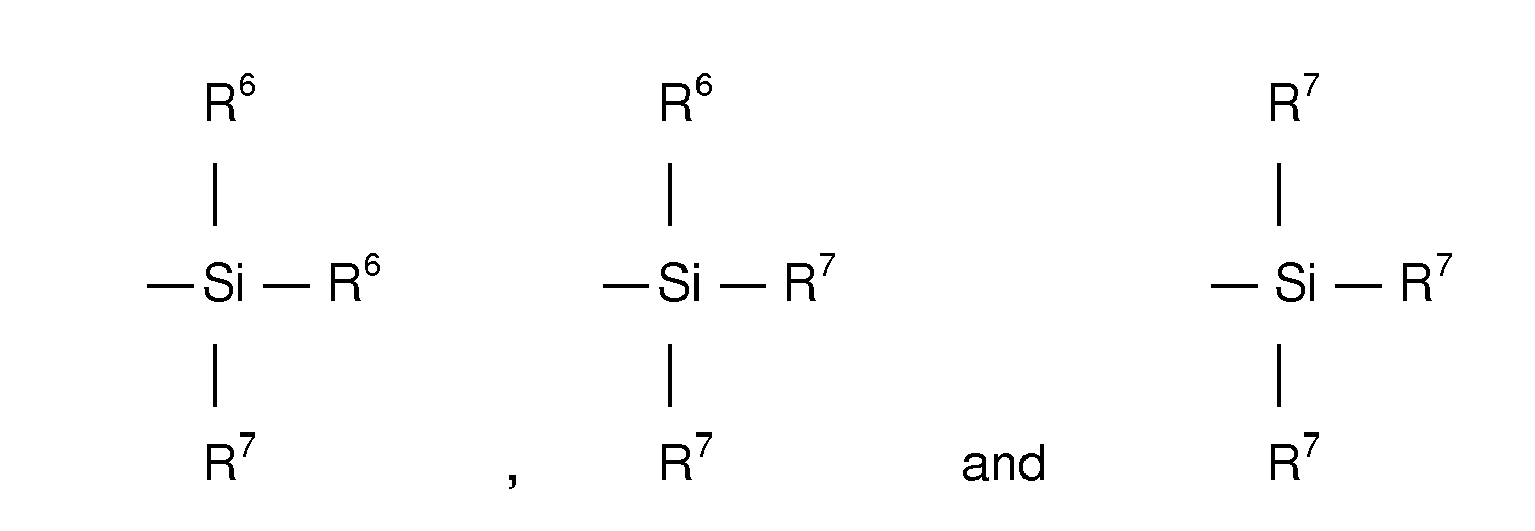
- The preferred sulfur containing organosilicon compounds are the 3,3'-bis(trimethoxy or triethoxy silylpropyl) sulfides. The most preferred compounds are 3,3'-bis(triethoxysilylpropyl) disulfide and 3,3'-bis(triethoxysilylpropyl) tetrasulfide. Therefore, as to formula VIII, preferably Z is

- In another embodiment, suitable sulfur containing organosilicon compounds include compounds disclosed in
US-A- 6,608,125 . In one embodiment, the sulfur containing organosilicon compounds includes 3-(octanoylthio)-1-propyltriethoxysilane, CH3(CH2)6C(=O) -S-CH2CH2CH2Si(OCH2CH3)3, which is available commercially as NXT™ from Momentive Performance Materials. - In another embodiment, suitable sulfur containing organosilicon compounds include compounds disclosed in
US-A- 2006/0041063 . In one embodiment, the sulfur containing organosilicon compounds include the reaction product of hydrocarbon based diol (e.g., 2-methyl-1,3-propanediol) with S-[3-(triethoxysilyl)propyl] thiooctanoate. In one embodiment, the sulfur containing organosilicon compound is NXT-Z™ from Momentive Performance Materials. - In another embodiment, suitable sulfur containing organosilicon compounds include those disclosed in
US-A- 2003/0130535 . In one embodiment, the sulfur containing organosilicon compound is Si-363 from Degussa. - The amount of the sulfur containing organosilicon compound of formula I in a rubber composition will vary depending on the level of other additives that are used. Generally speaking, the amount of the compound of formula I will range from 0.5 to 20 phr. Preferably, the amount will range from 1 to 10 phr.
- It is readily understood by those having skill in the art that the rubber composition would be compounded by methods generally known in the rubber compounding art, such as mixing the various sulfur-vulcanizable constituent rubbers with various commonly used additive materials such as, for example, sulfur donors, curing aids, such as activators and retarders and processing additives, such as oils, resins including tackifying resins and plasticizers, fillers, pigments, fatty acid, zinc oxide, waxes, antioxidants and antiozonants and peptizing agents. As known to those skilled in the art, depending on the intended use of the sulfur vulcanizable and sulfur-vulcanized material (rubbers), the additives mentioned above are selected and commonly used in conventional amounts. Representative examples of sulfur donors include elemental sulfur (free sulfur), an amine disulfide, polymeric polysulfide and sulfur olefin adducts. Preferably, the sulfur-vulcanizing agent is elemental sulfur. The sulfur-vulcanizing agent may be used in an amount ranging from 0.5 to 8 phr. Typical amounts of tackifier resins, if used, comprise 0.5 to 10 phr. Typical amounts of processing aids comprise 1 to 50 phr. Such processing aids can include, for example, aromatic, naphthenic, paraffinic, and low PCA (polycyclic aromatic) oils such as MES, TDAE, heavy naphthenic, and SRAE processing oils. Typical amounts of antioxidants comprise 1 to 5 phr. Representative antioxidants may be, for example, diphenyl-p-phenylenediamine and others, such as, for example, those disclosed in The Vanderbilt Rubber Handbook (1978), pages 344 through 346. Typical amounts of antiozonants comprise 1 to 5 phr. Typical amounts of fatty acids, if used, which can include stearic acid comprise 0.5 to 3 phr. Typical amounts of zinc oxide comprise 2 to 5 phr. Typical amounts of waxes comprise 1 to 5 phr. Often microcrystalline waxes are used. Typical amounts of peptizers comprise 0.1 to 1 phr. Typical peptizers may be, for example, pentachlorothiophenol and dibenzamidodiphenyl disulfide.
- Accelerators are used to control the time and/or temperature required for vulcanization and to improve the properties of the vulcanizate. In one embodiment, a single accelerator system may be used, i.e., primary accelerator. The primary accelerator(s) may be used in total amounts ranging from 0.5 to 4, preferably 0.8 to 1.5, phr. In another embodiment, combinations of a primary and a secondary accelerator might be used with the secondary accelerator being used in smaller amounts, such as from 0.05 to 3 phr, in order to activate and to improve the properties of the vulcanizate. In addition, delayed action accelerators may be used which are not affected by normal processing temperatures but produce a satisfactory cure at ordinary vulcanization temperatures. Vulcanization retarders might also be used. Suitable types of accelerators that may be used in the present invention are amines, disulfides, guanidines, thioureas, thiazoles, thiurams, sulfenamides, dithiocarbamates and xanthates. Preferably, the primary accelerator is a sulfenamide. If a second accelerator is used, the secondary accelerator is preferably a guanidine, dithiocarbamate or thiuram compound.
- The mixing of the rubber composition can be accomplished by methods known to those having skill in the rubber mixing art. For example, the ingredients are typically mixed in at least two stages, namely, at least one non-productive stage followed by a productive mix stage. The final curatives including sulfur-vulcanizing agents are typically mixed in the final stage which is conventionally called the "productive" mix stage in which the mixing typically occurs at a temperature, or ultimate temperature, lower than the mix temperature(s) than the preceding non-productive mix stage(s). The rubber composition may be subjected to a thermomechanical mixing step. The thermomechanical mixing step generally comprises a mechanical working in a mixer or extruder for a period of time suitable in order to produce a rubber temperature between 140°C and 190°C. The appropriate duration of the thermomechanical working varies as a function of the operating conditions, and the volume and nature of the components. For example, the thermomechanical working may be from 1 to 20 minutes.
- The rubber composition may be incorporated in a variety of rubber components of the tire. For example, the rubber component may be a tread (including tread cap and tread base), sidewall, apex, chafer, sidewall insert, wirecoat or innerliner. Preferably, the compound is a tread.
- The pneumatic tire of the present invention may be a race tire, passenger tire, aircraft tire, agricultural, earthmover, off-the-road or truck tire. Preferably, the tire is a passenger or truck tire. The tire may also be a radial or bias, with a radial being preferred.
- Vulcanization of the pneumatic tire of the present invention is generally carried out at conventional temperatures ranging from 100°C to 200°C. Preferably, the vulcanization is conducted at temperatures ranging from 110°C to 180°C. Any of the usual vulcanization processes may be used such as heating in a press or mold, heating with superheated steam or hot air. Such tires can be built, shaped, molded and cured by various methods which are known and will be readily apparent to those having skill in such art.
- The following examples are presented for the purposes of illustrating the present invention. All parts are parts by weight unless specifically identified otherwise.
- In this example, the effect of combining a styrene-butadiene rubber functionalized with alkoxysilane and primary amine groups with a specialized polybutadiene is illustrated.
- The elastomers were compounded in a three-step mix procedure with standard amounts of conventional curatives and processing aids as indicated in Table 1, and cured with a standard cure cycle. Cured samples were evaluated for various physical properties following standard tests protocols as indicated in Table 2.
- The samples were also tested for extrudability following ASTM D2230 using a tread die and an ASTM #1 die. Comparison of extrudates is shown in FIG. - 1 (tread die) and FIG. - 2 (ASTM #1 die).
- As can be seen from Table 2, Sample B containing the functionalized SBR shows significantly poorer processability compared to control Sample A as indicated by the higher uncured G'. By contrast, addition of the specialized polybutadiene with the functionalized SBR in Sample C leads to improved processability as compared to Sample B as indicated by the improved uncured G'. The improved processability of Sample C is further illustrated in
FIGS. 1 and2 , where extrudate profiles show a much smoother extrusion for Sample C as compared to Samples A and B. - Improvement in wear resistance due to the functionalized SBR is also seen comparing Sample B to control Sample A. This improved wear is maintained in Sample C, where the improved processability as compared with Sample B demonstrates the advantage of combining the functionalized SBR with the specialized polybutadiene.
- Improvement in tear resistance due to the functionalized SBR is also seen comparing Sample B to control Sample A. This improved tear is maintained in Sample C, where the improved processability as compared with Sample B demonstrates the advantage of combining the functionalized SBR with the specialized polybutadiene.
Table 1 Sample No. A B C First Non Productive Step SBR1 70 0 0 SBR-functionalized2 0 70 70 Polybutadiene3 30 30 0 Polybutadiene-specialized4 0 0 30 Silica 37.3 37.3 37.3 Process Oil 11 11 11 Tall oil fatty acid 2 2 2 Zinc Oxide 3.5 3.5 3.5 Silane Disulfide5 3.01 3.01 3.01 Second Non Productive Step Carbon Black 5.25 5.25 5.25 Waxes6 1.5 1.5 1.5 Antidegradant7 2 2 2 Process Oil 9 9 9 Silica 27.7 27.7 27.7 Silane Disulfide5 2.24 2.24 2.24 Productive Step Antidegradant7 0.75 0.75 0.75 Sulfur 1.6 1.6 1.6 Accelerators8 3.1 3.1 3.1 1 Solution polymerized styrene-butadiene rubber, 25% styrene, 60%vinyl, 40 Mooney and Tg = -26°C.
2 Solution polymerized styrene-butadiene rubber functionalized with alkoxysilyl groups and primary amine groups, with 27% by weight styrene, 57% by weight vinyl, 46 Mooney, and Tg = - 27°C, as HPR® 355 from Japan Synthetic Rubber.
3 Cis 1,4-polybutadiene rubber obtained as Budene® 1207 from The Goodyear Tire & Rubber Company having a cis 1,4-content of at least 96 percent and a Tg of - 100ºC.
4 Cis 1,4-polybutadiene elastomer as Budene® 4001 from The Goodyear Tire & Rubber Company having a Tg of -104 °C, Mooney (ML 1+4) viscosity of about 45, an Mn of 127, 000, an Mw of 445,000, a broad heterogeneity index (HI) of about 3.5 and a cis 1,4-isomeric content of 98 percent obtained by organic solvent polymerization of 1,3-butadiene monomer as described in the aforesaidUS-A- 5,451,646 .
5 bis(triethoxysilylpropyl) disulfide
6 paraffinic and microcrystalline types
7 p-phenylenediamine and quinoline type
8 sulfenamide and guanidine typeTable 2 Sample A B C SBR 70 0 0 SBR-functionalized 0 70 70 Polybutadiene 30 30 0 Polybutadiene-specialized 0 0 30 RPA1 0.83 Hz, 100ºC, 15% strain RPA G', uncured, kPa 249 280 268 RPA1 11 Hz, 100ºC
RPA, cured tan delta0.114 0.114 0.113 Rebound 0ºC 26 24 24 Rebound 100ºC 64 63 63 Modulus2 @ 300%, MPa 8.4 8.6 8.3 Tear Strength, N 63 75 75 DIN Abrasion3(Vol. Loss), mm3 103 93 91 1 Data according to Rubber Process Analyzer as RPA 2000 . TM. instrument by Alpha Technologies, formerly the Flexsys Company and formerly the Monsanto Company. References to an RPA-2000 instrument may be found in the following publications: H. A. Palowski, et al, Rubber World, June 1992 and January 1997 , as well as Rubber & Plastics News, April 26 and May 10, 1993 .
2 Data according to Automated Testing System instrument by the Instron Corporation. Such instrument may determine ultimate tensile, ultimate elongation, modulii, etc. Data reported in the Table is generated by running the ring tensile test station which is an Instron 4201 load frame.
3 Data according to DIN 53516 abrasion resistance test procedure using a Zwick drum abrasion unit, model 6102 with 2.5 Newtons force. DIN standards are German test standards. The DIN abrasion results are reported as relative values to a control rubber composition used by the laboratory. - In this example, the effect of varying the ratio of functionalized styrene-butadiene rubber to specialized polybutadiene rubber is illustrated. Rubber samples were produced following the procedures of Example I, with elastomer amounts as shown in Table 3, and amounts of all other additives the same as in Example I with the exception that 70 phr of silica was used. The samples were tested for physical properties as described in Example I, with results also shown in Table 3.
Table 3 Sample D E F G H SBR-functionalized, phr 90 80 70 60 50 Polybutadiene-specialized, phr 10 20 30 40 50 Silica, phr 70 70 70 70 70 RPA1 0.83 Hz, 100ºC, 15% strain 274 272 255 242 RPA G', uncured, kPa 304 RPA1 11 Hz, 100ºC
RPA, cured tan delta0.107 0.109 0.120 0.128 0.131 Rebound 0ºC 13 19 24 28 32 Rebound 100ºC 64 63 - - - Modulus2 @ 300%, MPa 9.4 8.7 8.4 7.9 7.5 Tear Strength, N 66 69 79 88 104 DIN Abrasion3(Vol. Loss), mm3 91 109 99 95 76 1 Data according to Rubber Process Analyzer as RPA 2000 . TM. instrument by Alpha Technologies, formerly the Flexsys Company and formerly the Monsanto Company. References to an RPA-2000 instrument may be found in the following publications: H. A. Palowski, et al, Rubber World, June 1992 and January 1997 , as well as Rubber & Plastics News, April 26 and May 10, 1993 .
2 Data according to Automated Testing System instrument by the Instron Corporation. Such instrument may determine ultimate tensile, ultimate elongation, modulii, etc. Data reported in the Table is generated by running the ring tensile test station which is an Instron 4201 load frame. - In this example, the effect of varying the amount of silica in a rubber compound containing 70 phr of functionalized styrene-butadiene rubber and 30 phr of specialized polybutadiene rubber is illustrated. Rubber samples were produced following the procedures of Example I, with silica amounts as shown in Table 4, and amounts of all other additives the same as in Example I. The samples were tested for physical properties as described in Example I, with results also shown in Table 4.
Table 4 Sample I J K L M N SBR-functionalized, phr 70 70 70 70 70 70 Polybutadiene-specialized, phr 30 30 30 30 30 30 Silica, phr 90 75 70 65 55 40 RPA1 0.83 Hz, 100°C, 15% strain
RPA G', uncured, kPa418 344 272 276 233 188 RPA1 11 Hz, 100ºC 0.156 0.144 - - - - RPA, cured tan delta Rebound 0°C 20 22 24 25 28 33 Rebound 100°C 51 56 63 63 69 76 Modulus2 @ 300%, MPa 9.6 9.2 8.4 8.3 7.9 6.9 Tear Strength, N 82 82 79 81 64 38 DIN Abrasion3(Vol. Loss), mm3 120 99 99 99 86 98 1 Data according to Rubber Process Analyzer as RPA 2000. TM. instrument by Alpha Technologies, formerly the Flexsys Company and formerly the Monsanto Company. References to an RPA-2000 instrument may be found in the following publications: H. A. Palowski, et al, Rubber World, June 1992 and January 1997 , as well as Rubber & Plastics News, April 26 and May 10, 1993 .
2 Data according to Automated Testing System instrument by the Instron Corporation. Such instrument may determine ultimate tensile, ultimate elongation, modulii, etc. Data reported in the Table is generated by running the ring tensile test station which is an Instron 4201 load frame.
Claims (14)
- A rubber composition comprising, based on 100 parts by weight of elastomer (phr),(A) from 60 to 90 phr of a solution polymerized styrene-butadiene rubber functionalized with an alkoxysilane group and at least one functional group selected from the group consisting of primary amines and thiols;(B) from 40 to 10 phr of polybutadiene having a microstructure comprising 96 to 99 percent cis 1,4-isomeric units, 0.1 to 1 percent trans 1,4-isomeric units and from 1 to 3 percent vinyl 1,2-isomeric units; a number average molecular weight (Mn) in a range of from 75,000 to 150,000 and a heterogeneity index (Mw/Mn) in a range of from 3/1 to 5/1; and(C) from 50 to 150 phr of silica.
- The rubber composition of claim 1, wherein the solution polymerized styrene-butadiene rubber functionalized with an alkoxysilane group and a primary amine group, and is represented by the formula (1) or (2)


- The rubber composition of claim 1 or 2, wherein the solution polymerized styrene-butadiene rubber is functionalized with an alkoxysilane group and a primary amine group comprises the reaction product of a living polymer chain and a terminating agent of the formula
RN-(CH2)x-Si- (OR')3, I
wherein R in combination with the nitrogen (N) atom is a protected amine group which upon appropriate post-treatment yields a primary amine, R' represents a group having 1 to 18 carbon atoms selected from an alkyl, a cycloalkyl, an allyl, or an aryl; and X is an integer from 1 to 20. - The rubber composition of claim 3, wherein the terminating agent is selected from the group consisting of N,N-bis(trimethylsilyl)aminopropylmethyldimethoxysilane, 1-trimethylsilyl-2,2-dimethoxy-1-aza-2-silacyclopentane, N,N-bis(trimethylsilyl)aminopropyltrimethoxysilane, N,N-bis(trimethylsilyl)aminopropyltriethoxysilane, N,N-bis(trimethylsilyl)aminopropylmethyldiethoxysilane, N,N-bis(trimethylsilyl)aminoethyltrimethoxysilane, N,N-bis(trimethylsilyl)-aminoethyltriethoxysilane, N,N-bis(trimethylsilyl)aminoethylmethyldimethoxysilane, and N,N-bis(trimethylsilyl)aminoethylmethyldiethoxysilane.
- The rubber composition of at least one of the previous claims wherein the solution polymerized styrene-butadiene rubber is functionalized with an alkoxysilane group and a thiol, and comprises the reaction product of a living anionic polymer and a silane-sulfide modifier represented by the formula
(R4O)xR4 ySi-R5-S-SiR4 3
wherein Si is silicon; S is sulfur; O is oxygen; x is an integer selected from 1, 2 and 3;y is an integer selected from 0, 1, and 2; x+y=3;R4 is the same or different and is (C1-C16) alkyl; and R' is aryl, and alkyl aryl, or (C1-C16) alkyl. - The rubber composition of claim 5 wherein R5 is a (C1-C16) alkyl.
- The rubber composition of claim 5 wherein each R4 group is the same or different, and each is independently a C1-C5 alkyl, and R5 is C1-C5 alkyl.
- The rubber composition of at least one of the previous claims comprising 50 to 100 phr of silica.
- A pneumatic tire having a component, the component comprising a vulcanizable rubber composition, wherein the rubber composition is the rubber composition according to at least one of the previous claims.
- The pneumatic tire of claim 9, wherein the component is selected from the group consisting of tread cap, tread base, sidewall, apex, chafer, sidewall insert, wirecoat and innerliner.
- The pneumatic tire of claim 9, wherein the component is a tread cap or a tread base.
- The pneumatic tire of claim 9, wherein the vulcanizable rubber composition further comprises from 5 to 50 phr of carbon black.
- The pneumatic tire of claim 9 or 12, wherein the vulcanizable rubber composition comprises silica and carbon black in a combined concentration of from 20 to 100 phr.
- The pneumatic tire of claim 13, wherein the vulcanizable rubber composition comprises silica and carbon black in a combined concentration of from 20 to 100 phr and in a weight ratio in a range of from 0.7 to 1.3 or from 0.9 to 1.1 such as 1.
Applications Claiming Priority (2)
| Application Number | Priority Date | Filing Date | Title |
|---|---|---|---|
| US14819909P | 2009-01-29 | 2009-01-29 | |
| US12/620,953 US20100186869A1 (en) | 2009-01-29 | 2009-11-18 | Pneumatic tire |
Publications (2)
| Publication Number | Publication Date |
|---|---|
| EP2213687A1 true EP2213687A1 (en) | 2010-08-04 |
| EP2213687B1 EP2213687B1 (en) | 2016-09-14 |
Family
ID=42126474
Family Applications (1)
| Application Number | Title | Priority Date | Filing Date |
|---|---|---|---|
| EP10151978.3A Not-in-force EP2213687B1 (en) | 2009-01-29 | 2010-01-28 | Rubber composition and pneumatic tire |
Country Status (2)
| Country | Link |
|---|---|
| US (1) | US20100186869A1 (en) |
| EP (1) | EP2213687B1 (en) |
Cited By (6)
| Publication number | Priority date | Publication date | Assignee | Title |
|---|---|---|---|---|
| WO2012050667A1 (en) * | 2010-10-13 | 2012-04-19 | Exxonmobil Chemical Patents Inc. | Silane-functionalized hydrocarbon polymer modifiers for elastomeric compositions |
| EP2716702A4 (en) * | 2011-05-25 | 2014-12-31 | Bridgestone Corp | Method for producing rubber composition |
| WO2016055953A1 (en) * | 2014-10-07 | 2016-04-14 | Bridgestone Corporation | Rubber compound for tyre portions |
| WO2017095934A1 (en) * | 2015-11-30 | 2017-06-08 | Compagnie General Des Etablissements Michelin | Method for in situ isomerization of polybutadiene |
| WO2017095375A1 (en) * | 2015-11-30 | 2017-06-08 | Compagnie Generale Des Etablissements Michelin | In situ isomerization of polybutadiene |
| US10988563B2 (en) | 2010-10-13 | 2021-04-27 | Exxonmobil Chemical Patents Inc. | Silane-functionalized hydrocarbon polymer modifiers for elastomeric compositions |
Families Citing this family (22)
| Publication number | Priority date | Publication date | Assignee | Title |
|---|---|---|---|---|
| US8592515B2 (en) * | 2010-07-28 | 2013-11-26 | The Goodyear Tire & Rubber Company | Tire with rubber component |
| US8302643B2 (en) * | 2010-07-28 | 2012-11-06 | The Goodyear Tire & Rubber Company | Pneumatic tire having tread with zoned cap layer |
| CN104718224B (en) * | 2012-09-14 | 2017-02-22 | 盛禧奥欧洲有限责任公司 | Amino silane-modified polymers |
| US9757989B2 (en) | 2013-03-11 | 2017-09-12 | The Goodyear Tire & Rubber Company | Tire with ribbed tread |
| US9757987B2 (en) | 2014-12-09 | 2017-09-12 | The Goodyear Tire & Rubber Company | Pneumatic tire |
| US9764594B2 (en) | 2014-12-09 | 2017-09-19 | The Goodyear Tire & Rubber Company | Pneumatic tire |
| JP6511872B2 (en) * | 2015-03-09 | 2019-05-15 | 日本ゼオン株式会社 | Conjugated diene polymer |
| US20170037225A1 (en) * | 2015-08-05 | 2017-02-09 | The Goodyear Tire & Rubber Company | Pneumatic tire |
| US10563050B2 (en) | 2015-12-15 | 2020-02-18 | The Goodyear Tire & Rubber Company | Pneumatic tire |
| EP3788101A4 (en) | 2018-05-04 | 2022-01-12 | Bridgestone Americas Tire Operations, LLC | RUBBER COMPOSITION FOR TIRE TREAD |
| WO2019213233A1 (en) | 2018-05-04 | 2019-11-07 | Bridgestone Americas Tire Operations, Llc | Tire tread rubber composition |
| JP2021523959A (en) | 2018-05-04 | 2021-09-09 | ブリヂストン アメリカズ タイヤ オペレーションズ、 エルエルシー | Tire tread rubber composition |
| EP3781625A4 (en) | 2018-05-04 | 2022-01-05 | Bridgestone Americas Tire Operations, LLC | Tire tread rubber composition |
| US10947368B2 (en) | 2019-03-04 | 2021-03-16 | The Goodyear Tire & Rubber Company | Pneumatic tire |
| WO2020243304A1 (en) | 2019-05-29 | 2020-12-03 | Bridgestone Americas Tire Operations, Llc | Tire tread rubber composition and related methods |
| EP3976393A1 (en) | 2019-05-29 | 2022-04-06 | Bridgestone Americas Tire Operations, LLC | Tire tread rubber composition and related methods |
| JP2022534568A (en) | 2019-05-29 | 2022-08-02 | ブリヂストン アメリカズ タイヤ オペレーションズ、 エルエルシー | Tire tread rubber composition and related methods |
| US11440350B2 (en) | 2020-05-13 | 2022-09-13 | The Goodyear Tire & Rubber Company | Pneumatic tire |
| EP4412839A4 (en) * | 2021-10-06 | 2025-08-06 | Momentive Performance Mat Inc | Silica-reinforced rubber compositions and articles made therefrom |
| US20250109286A1 (en) | 2023-09-28 | 2025-04-03 | The Goodyear Tire & Rubber Company | All-season tire tread |
| US20250163251A1 (en) | 2023-11-21 | 2025-05-22 | The Goodyear Tire & Rubber Company | Tread composition for all-season tire |
| US20250163252A1 (en) | 2023-11-21 | 2025-05-22 | The Goodyear Tire & Rubber Company | Tread composition for all-season tire |
Citations (15)
| Publication number | Priority date | Publication date | Assignee | Title |
|---|---|---|---|---|
| US5395891A (en) | 1992-06-24 | 1995-03-07 | Bayer Aktiengesellschaft | Rubber mixtures containing polybutadiene gel |
| US5451646A (en) | 1994-12-05 | 1995-09-19 | The Goodyear Tire & Rubber Company | Technique for reducing the molecular weight and improving the processability of cis-1,4-polybutadiene |
| US5672639A (en) | 1996-03-12 | 1997-09-30 | The Goodyear Tire & Rubber Company | Starch composite reinforced rubber composition and tire with at least one component thereof |
| US6127488A (en) | 1997-01-17 | 2000-10-03 | Bayer Ag | Rubber mixtures which contain SBR rubber gels |
| US6133364A (en) | 1998-08-01 | 2000-10-17 | Continental Aktiengesellschaft | Rubber composition, method of formulating the composition and vehicle tire made from the composition |
| US6207757B1 (en) | 1998-08-01 | 2001-03-27 | Continental Aktiengesellschaft | Rubber composition, method of adding and blending the composition and vehicle tire made from the composition |
| US6242534B1 (en) | 1998-08-01 | 2001-06-05 | Continental Aktiengesellschaft | Rubber composition, method of formulating and blending the same and article and tires made therefrom |
| US6372857B1 (en) | 1999-09-07 | 2002-04-16 | Bayer Aktiengesellschaft | Microgel-containing rubber mixtures with masked bi-functional mercaptans and vulcanization products produced therefrom |
| US20030130535A1 (en) | 2001-08-06 | 2003-07-10 | Degussa Ag, | Organosilicon compounds |
| US6608125B2 (en) | 1997-08-21 | 2003-08-19 | Crompton Corporation | Blocked mercaptosilane coupling agents for filled rubbers |
| JP2004067982A (en) * | 2002-06-14 | 2004-03-04 | Jsr Corp | Rubber / inorganic compound composite, rubber composition, tire tread and vibration damping material |
| US20040110906A1 (en) * | 2002-11-21 | 2004-06-10 | Koichi Fujisawa | Rubber composition for golf ball |
| US20060041063A1 (en) | 2004-08-20 | 2006-02-23 | Cruse Richard W | Cyclic diol-derived blocked mercaptofunctional silane compositions |
| WO2007047943A2 (en) | 2005-10-19 | 2007-04-26 | Dow Global Technologies Inc. | Silane-sulfide chain end modified elastomeric polymers |
| US7342070B2 (en) | 2001-09-27 | 2008-03-11 | Jsr Corporation | Conjugated diolefin (co)polymer rubber, process for producing (co)polymer rubber, rubber composition, composite, and tire |
Family Cites Families (10)
| Publication number | Priority date | Publication date | Assignee | Title |
|---|---|---|---|---|
| USH2036H1 (en) * | 1999-06-02 | 2002-07-02 | The Goodyear Tire & Rubber Company | High cis-1,4-polybutadiene rubber compounds |
| US6939920B2 (en) * | 2001-01-08 | 2005-09-06 | The Goodyear Tire & Rubber Company | Tire sidewall compounds having improved flex fatigue and tread compound having improved tear strength |
| ES2400176T3 (en) * | 2001-12-03 | 2013-04-08 | Bridgestone Corporation | Process to produce modified polymer, modified polymer obtained by rubber process and composition |
| US6998448B2 (en) * | 2002-09-16 | 2006-02-14 | The Goodyear Tire & Rubber Company | Tire with tread of CIS 1,4-polybutadiene rich rubber composition which contains a functional styrene/butadiene elastomer, silica and coupling agent |
| TW200602430A (en) * | 2004-03-03 | 2006-01-16 | Jsr Corp | Rubber composition |
| TWI385182B (en) * | 2004-03-15 | 2013-02-11 | Jsr Corp | Conjugated diene (co) poly rubber and method for producing the same |
| US7625981B2 (en) * | 2004-06-04 | 2009-12-01 | Sumitomo Chemical Company, Limited | Process for producing modified polymer rubber |
| US7367369B2 (en) * | 2004-09-23 | 2008-05-06 | The Goodyear Tire & Rubber Company | Aircraft tire |
| JP4451810B2 (en) * | 2005-05-02 | 2010-04-14 | 住友ゴム工業株式会社 | Run flat tire |
| US7956146B2 (en) * | 2009-02-24 | 2011-06-07 | The Goodyear Tire & Rubber Company | Tire with tread of polybutadiene rubber |
-
2009
- 2009-11-18 US US12/620,953 patent/US20100186869A1/en not_active Abandoned
-
2010
- 2010-01-28 EP EP10151978.3A patent/EP2213687B1/en not_active Not-in-force
Patent Citations (16)
| Publication number | Priority date | Publication date | Assignee | Title |
|---|---|---|---|---|
| US5395891A (en) | 1992-06-24 | 1995-03-07 | Bayer Aktiengesellschaft | Rubber mixtures containing polybutadiene gel |
| US5451646A (en) | 1994-12-05 | 1995-09-19 | The Goodyear Tire & Rubber Company | Technique for reducing the molecular weight and improving the processability of cis-1,4-polybutadiene |
| US5672639A (en) | 1996-03-12 | 1997-09-30 | The Goodyear Tire & Rubber Company | Starch composite reinforced rubber composition and tire with at least one component thereof |
| US6127488A (en) | 1997-01-17 | 2000-10-03 | Bayer Ag | Rubber mixtures which contain SBR rubber gels |
| US6608125B2 (en) | 1997-08-21 | 2003-08-19 | Crompton Corporation | Blocked mercaptosilane coupling agents for filled rubbers |
| US6133364A (en) | 1998-08-01 | 2000-10-17 | Continental Aktiengesellschaft | Rubber composition, method of formulating the composition and vehicle tire made from the composition |
| US6207757B1 (en) | 1998-08-01 | 2001-03-27 | Continental Aktiengesellschaft | Rubber composition, method of adding and blending the composition and vehicle tire made from the composition |
| US6242534B1 (en) | 1998-08-01 | 2001-06-05 | Continental Aktiengesellschaft | Rubber composition, method of formulating and blending the same and article and tires made therefrom |
| US6372857B1 (en) | 1999-09-07 | 2002-04-16 | Bayer Aktiengesellschaft | Microgel-containing rubber mixtures with masked bi-functional mercaptans and vulcanization products produced therefrom |
| US20030130535A1 (en) | 2001-08-06 | 2003-07-10 | Degussa Ag, | Organosilicon compounds |
| US7342070B2 (en) | 2001-09-27 | 2008-03-11 | Jsr Corporation | Conjugated diolefin (co)polymer rubber, process for producing (co)polymer rubber, rubber composition, composite, and tire |
| JP2004067982A (en) * | 2002-06-14 | 2004-03-04 | Jsr Corp | Rubber / inorganic compound composite, rubber composition, tire tread and vibration damping material |
| US20040110906A1 (en) * | 2002-11-21 | 2004-06-10 | Koichi Fujisawa | Rubber composition for golf ball |
| US20060041063A1 (en) | 2004-08-20 | 2006-02-23 | Cruse Richard W | Cyclic diol-derived blocked mercaptofunctional silane compositions |
| WO2007047943A2 (en) | 2005-10-19 | 2007-04-26 | Dow Global Technologies Inc. | Silane-sulfide chain end modified elastomeric polymers |
| EP1963110A2 (en) * | 2005-10-19 | 2008-09-03 | Dow Gloval Technologies Inc. | Silane-sulfide chain end modified elastomeric polymers |
Non-Patent Citations (2)
| Title |
|---|
| JOURNAL OF THE AMERICAN CHEMICAL SOCIETY, vol. 60, 1930, pages 304 |
| SCHAEFER RON: "Dynamic properties of rubber.", RUBBER WORLD, 1 February 1995 (1995-02-01), pages 1 - 4, XP002581503, ISSN: 0035-9572, Retrieved from the Internet <URL:http://www.thefreelibrary.com/_/print/PrintArticle.aspx?id=16717938> [retrieved on 20100507] * |
Cited By (12)
| Publication number | Priority date | Publication date | Assignee | Title |
|---|---|---|---|---|
| US9376566B2 (en) | 2008-01-18 | 2016-06-28 | Exxonmobil Chemical Patents Inc. | Silane-functionalized hydrocarbon polymer modifiers for elastomeric compositions |
| US9868807B2 (en) | 2008-01-18 | 2018-01-16 | Exxonmobil Chemical Patents Inc. | Silane-functionalized hydrocarbon polymer modifiers for elastomeric compositions |
| WO2012050667A1 (en) * | 2010-10-13 | 2012-04-19 | Exxonmobil Chemical Patents Inc. | Silane-functionalized hydrocarbon polymer modifiers for elastomeric compositions |
| CN103154051A (en) * | 2010-10-13 | 2013-06-12 | 埃克森美孚化学专利公司 | Silane-functionalized hydrocarbon polymer modifiers for elastomeric compositions |
| EP3312204A1 (en) * | 2010-10-13 | 2018-04-25 | ExxonMobil Chemical Patents Inc. | Silane-functionalized hydrocarbon polymer modifiers for elastomeric compositions |
| US10988563B2 (en) | 2010-10-13 | 2021-04-27 | Exxonmobil Chemical Patents Inc. | Silane-functionalized hydrocarbon polymer modifiers for elastomeric compositions |
| EP2716702A4 (en) * | 2011-05-25 | 2014-12-31 | Bridgestone Corp | Method for producing rubber composition |
| US9447255B2 (en) | 2011-05-25 | 2016-09-20 | Bridgestone Corporation | Method for producing rubber composition |
| WO2016055953A1 (en) * | 2014-10-07 | 2016-04-14 | Bridgestone Corporation | Rubber compound for tyre portions |
| WO2017095934A1 (en) * | 2015-11-30 | 2017-06-08 | Compagnie General Des Etablissements Michelin | Method for in situ isomerization of polybutadiene |
| WO2017095377A1 (en) * | 2015-11-30 | 2017-06-08 | Compagnie Generale Des Etablissements Michelin | Method for in situ isomerization of polybutadiene |
| WO2017095375A1 (en) * | 2015-11-30 | 2017-06-08 | Compagnie Generale Des Etablissements Michelin | In situ isomerization of polybutadiene |
Also Published As
| Publication number | Publication date |
|---|---|
| US20100186869A1 (en) | 2010-07-29 |
| EP2213687B1 (en) | 2016-09-14 |
Similar Documents
| Publication | Publication Date | Title |
|---|---|---|
| EP2213687B1 (en) | Rubber composition and pneumatic tire | |
| EP3620307B1 (en) | Rubber composition and pneumatic tire | |
| EP2412544B1 (en) | Pneumatic tire | |
| EP3127712B1 (en) | Pneumatic tire | |
| EP3170680B1 (en) | Pneumatic tire | |
| EP3251872B1 (en) | Rubber composition and pneumatic tire | |
| EP2433812B1 (en) | Pneumatic tire | |
| EP3335904B1 (en) | Pneumatic tire | |
| EP1637353B1 (en) | Pneumatic tire having a tread containing immiscible rubber blend and silica | |
| EP3159181B1 (en) | Rubber composition and pneumatic tire | |
| US20100186868A1 (en) | Pneumatic tire | |
| EP1911797B1 (en) | Pneumatic tire | |
| EP2460670B1 (en) | Pneumatic tire | |
| EP3450204B1 (en) | Pneumatic tire having a tread with an alkoxysilane-terminated polybutadiene | |
| EP3705311B1 (en) | Rubber composition and pneumatic tire | |
| EP3913018B1 (en) | Rubber composition and pneumatic tire | |
| EP3450465A1 (en) | Rubber composition and pneumatic tire | |
| EP3450490B1 (en) | Rubber composition and pneumatic tire | |
| EP3838983B1 (en) | Vulcanizable rubber composition for a pneumatic tire | |
| US20110120606A1 (en) | Pneumatic tire with tread | |
| EP3910018B1 (en) | Rubber composition and pneumatic tire | |
| EP2371895A1 (en) | Rubber composition and pneumatic tire with a rubber component containing alkylalkoxysilane and silicone resin | |
| EP4261049A1 (en) | Rubber composition and a tire | |
| EP4122718A1 (en) | Rubber tire compound containing ipn-promoting resin | |
| EP4261048A1 (en) | Rubber composition and tire |
Legal Events
| Date | Code | Title | Description |
|---|---|---|---|
| PUAI | Public reference made under article 153(3) epc to a published international application that has entered the european phase |
Free format text: ORIGINAL CODE: 0009012 |
|
| AK | Designated contracting states |
Kind code of ref document: A1 Designated state(s): AT BE BG CH CY CZ DE DK EE ES FI FR GB GR HR HU IE IS IT LI LT LU LV MC MK MT NL NO PL PT RO SE SI SK SM TR |
|
| AX | Request for extension of the european patent |
Extension state: AL BA RS |
|
| 17P | Request for examination filed |
Effective date: 20110204 |
|
| 17Q | First examination report despatched |
Effective date: 20110404 |
|
| GRAP | Despatch of communication of intention to grant a patent |
Free format text: ORIGINAL CODE: EPIDOSNIGR1 |
|
| INTG | Intention to grant announced |
Effective date: 20160426 |
|
| GRAS | Grant fee paid |
Free format text: ORIGINAL CODE: EPIDOSNIGR3 |
|
| GRAA | (expected) grant |
Free format text: ORIGINAL CODE: 0009210 |
|
| AK | Designated contracting states |
Kind code of ref document: B1 Designated state(s): AT BE BG CH CY CZ DE DK EE ES FI FR GB GR HR HU IE IS IT LI LT LU LV MC MK MT NL NO PL PT RO SE SI SK SM TR |
|
| REG | Reference to a national code |
Ref country code: GB Ref legal event code: FG4D |
|
| REG | Reference to a national code |
Ref country code: CH Ref legal event code: EP |
|
| REG | Reference to a national code |
Ref country code: IE Ref legal event code: FG4D |
|
| REG | Reference to a national code |
Ref country code: AT Ref legal event code: REF Ref document number: 828896 Country of ref document: AT Kind code of ref document: T Effective date: 20161015 |
|
| REG | Reference to a national code |
Ref country code: DE Ref legal event code: R096 Ref document number: 602010036355 Country of ref document: DE |
|
| REG | Reference to a national code |
Ref country code: FR Ref legal event code: PLFP Year of fee payment: 8 |
|
| REG | Reference to a national code |
Ref country code: LT Ref legal event code: MG4D |
|
| REG | Reference to a national code |
Ref country code: NL Ref legal event code: MP Effective date: 20160914 |
|
| PG25 | Lapsed in a contracting state [announced via postgrant information from national office to epo] |
Ref country code: HR Free format text: LAPSE BECAUSE OF FAILURE TO SUBMIT A TRANSLATION OF THE DESCRIPTION OR TO PAY THE FEE WITHIN THE PRESCRIBED TIME-LIMIT Effective date: 20160914 Ref country code: LT Free format text: LAPSE BECAUSE OF FAILURE TO SUBMIT A TRANSLATION OF THE DESCRIPTION OR TO PAY THE FEE WITHIN THE PRESCRIBED TIME-LIMIT Effective date: 20160914 Ref country code: NO Free format text: LAPSE BECAUSE OF FAILURE TO SUBMIT A TRANSLATION OF THE DESCRIPTION OR TO PAY THE FEE WITHIN THE PRESCRIBED TIME-LIMIT Effective date: 20161214 Ref country code: FI Free format text: LAPSE BECAUSE OF FAILURE TO SUBMIT A TRANSLATION OF THE DESCRIPTION OR TO PAY THE FEE WITHIN THE PRESCRIBED TIME-LIMIT Effective date: 20160914 |
|
| REG | Reference to a national code |
Ref country code: AT Ref legal event code: MK05 Ref document number: 828896 Country of ref document: AT Kind code of ref document: T Effective date: 20160914 |
|
| PG25 | Lapsed in a contracting state [announced via postgrant information from national office to epo] |
Ref country code: LV Free format text: LAPSE BECAUSE OF FAILURE TO SUBMIT A TRANSLATION OF THE DESCRIPTION OR TO PAY THE FEE WITHIN THE PRESCRIBED TIME-LIMIT Effective date: 20160914 Ref country code: GR Free format text: LAPSE BECAUSE OF FAILURE TO SUBMIT A TRANSLATION OF THE DESCRIPTION OR TO PAY THE FEE WITHIN THE PRESCRIBED TIME-LIMIT Effective date: 20161215 Ref country code: SE Free format text: LAPSE BECAUSE OF FAILURE TO SUBMIT A TRANSLATION OF THE DESCRIPTION OR TO PAY THE FEE WITHIN THE PRESCRIBED TIME-LIMIT Effective date: 20160914 Ref country code: ES Free format text: LAPSE BECAUSE OF FAILURE TO SUBMIT A TRANSLATION OF THE DESCRIPTION OR TO PAY THE FEE WITHIN THE PRESCRIBED TIME-LIMIT Effective date: 20160914 Ref country code: NL Free format text: LAPSE BECAUSE OF FAILURE TO SUBMIT A TRANSLATION OF THE DESCRIPTION OR TO PAY THE FEE WITHIN THE PRESCRIBED TIME-LIMIT Effective date: 20160914 |
|
| PG25 | Lapsed in a contracting state [announced via postgrant information from national office to epo] |
Ref country code: EE Free format text: LAPSE BECAUSE OF FAILURE TO SUBMIT A TRANSLATION OF THE DESCRIPTION OR TO PAY THE FEE WITHIN THE PRESCRIBED TIME-LIMIT Effective date: 20160914 Ref country code: RO Free format text: LAPSE BECAUSE OF FAILURE TO SUBMIT A TRANSLATION OF THE DESCRIPTION OR TO PAY THE FEE WITHIN THE PRESCRIBED TIME-LIMIT Effective date: 20160914 |
|
| PG25 | Lapsed in a contracting state [announced via postgrant information from national office to epo] |
Ref country code: BE Free format text: LAPSE BECAUSE OF FAILURE TO SUBMIT A TRANSLATION OF THE DESCRIPTION OR TO PAY THE FEE WITHIN THE PRESCRIBED TIME-LIMIT Effective date: 20160914 Ref country code: PT Free format text: LAPSE BECAUSE OF FAILURE TO SUBMIT A TRANSLATION OF THE DESCRIPTION OR TO PAY THE FEE WITHIN THE PRESCRIBED TIME-LIMIT Effective date: 20170116 Ref country code: SK Free format text: LAPSE BECAUSE OF FAILURE TO SUBMIT A TRANSLATION OF THE DESCRIPTION OR TO PAY THE FEE WITHIN THE PRESCRIBED TIME-LIMIT Effective date: 20160914 Ref country code: CZ Free format text: LAPSE BECAUSE OF FAILURE TO SUBMIT A TRANSLATION OF THE DESCRIPTION OR TO PAY THE FEE WITHIN THE PRESCRIBED TIME-LIMIT Effective date: 20160914 Ref country code: BG Free format text: LAPSE BECAUSE OF FAILURE TO SUBMIT A TRANSLATION OF THE DESCRIPTION OR TO PAY THE FEE WITHIN THE PRESCRIBED TIME-LIMIT Effective date: 20161214 Ref country code: IS Free format text: LAPSE BECAUSE OF FAILURE TO SUBMIT A TRANSLATION OF THE DESCRIPTION OR TO PAY THE FEE WITHIN THE PRESCRIBED TIME-LIMIT Effective date: 20170114 Ref country code: PL Free format text: LAPSE BECAUSE OF FAILURE TO SUBMIT A TRANSLATION OF THE DESCRIPTION OR TO PAY THE FEE WITHIN THE PRESCRIBED TIME-LIMIT Effective date: 20160914 Ref country code: SM Free format text: LAPSE BECAUSE OF FAILURE TO SUBMIT A TRANSLATION OF THE DESCRIPTION OR TO PAY THE FEE WITHIN THE PRESCRIBED TIME-LIMIT Effective date: 20160914 Ref country code: AT Free format text: LAPSE BECAUSE OF FAILURE TO SUBMIT A TRANSLATION OF THE DESCRIPTION OR TO PAY THE FEE WITHIN THE PRESCRIBED TIME-LIMIT Effective date: 20160914 |
|
| REG | Reference to a national code |
Ref country code: DE Ref legal event code: R097 Ref document number: 602010036355 Country of ref document: DE |
|
| PLBE | No opposition filed within time limit |
Free format text: ORIGINAL CODE: 0009261 |
|
| STAA | Information on the status of an ep patent application or granted ep patent |
Free format text: STATUS: NO OPPOSITION FILED WITHIN TIME LIMIT |
|
| PG25 | Lapsed in a contracting state [announced via postgrant information from national office to epo] |
Ref country code: DK Free format text: LAPSE BECAUSE OF FAILURE TO SUBMIT A TRANSLATION OF THE DESCRIPTION OR TO PAY THE FEE WITHIN THE PRESCRIBED TIME-LIMIT Effective date: 20160914 |
|
| 26N | No opposition filed |
Effective date: 20170615 |
|
| REG | Reference to a national code |
Ref country code: CH Ref legal event code: PL |
|
| GBPC | Gb: european patent ceased through non-payment of renewal fee |
Effective date: 20170128 |
|
| PG25 | Lapsed in a contracting state [announced via postgrant information from national office to epo] |
Ref country code: MC Free format text: LAPSE BECAUSE OF FAILURE TO SUBMIT A TRANSLATION OF THE DESCRIPTION OR TO PAY THE FEE WITHIN THE PRESCRIBED TIME-LIMIT Effective date: 20160914 |
|
| PG25 | Lapsed in a contracting state [announced via postgrant information from national office to epo] |
Ref country code: CH Free format text: LAPSE BECAUSE OF NON-PAYMENT OF DUE FEES Effective date: 20170131 Ref country code: LI Free format text: LAPSE BECAUSE OF NON-PAYMENT OF DUE FEES Effective date: 20170131 |
|
| REG | Reference to a national code |
Ref country code: IE Ref legal event code: MM4A |
|
| PG25 | Lapsed in a contracting state [announced via postgrant information from national office to epo] |
Ref country code: GB Free format text: LAPSE BECAUSE OF NON-PAYMENT OF DUE FEES Effective date: 20170128 Ref country code: SI Free format text: LAPSE BECAUSE OF FAILURE TO SUBMIT A TRANSLATION OF THE DESCRIPTION OR TO PAY THE FEE WITHIN THE PRESCRIBED TIME-LIMIT Effective date: 20160914 Ref country code: LU Free format text: LAPSE BECAUSE OF NON-PAYMENT OF DUE FEES Effective date: 20170128 |
|
| REG | Reference to a national code |
Ref country code: FR Ref legal event code: PLFP Year of fee payment: 9 |
|
| PG25 | Lapsed in a contracting state [announced via postgrant information from national office to epo] |
Ref country code: IE Free format text: LAPSE BECAUSE OF NON-PAYMENT OF DUE FEES Effective date: 20170128 |
|
| PG25 | Lapsed in a contracting state [announced via postgrant information from national office to epo] |
Ref country code: MT Free format text: LAPSE BECAUSE OF NON-PAYMENT OF DUE FEES Effective date: 20170128 |
|
| PG25 | Lapsed in a contracting state [announced via postgrant information from national office to epo] |
Ref country code: HU Free format text: LAPSE BECAUSE OF FAILURE TO SUBMIT A TRANSLATION OF THE DESCRIPTION OR TO PAY THE FEE WITHIN THE PRESCRIBED TIME-LIMIT; INVALID AB INITIO Effective date: 20100128 |
|
| PG25 | Lapsed in a contracting state [announced via postgrant information from national office to epo] |
Ref country code: CY Free format text: LAPSE BECAUSE OF NON-PAYMENT OF DUE FEES Effective date: 20160914 |
|
| PG25 | Lapsed in a contracting state [announced via postgrant information from national office to epo] |
Ref country code: MK Free format text: LAPSE BECAUSE OF FAILURE TO SUBMIT A TRANSLATION OF THE DESCRIPTION OR TO PAY THE FEE WITHIN THE PRESCRIBED TIME-LIMIT Effective date: 20160914 |
|
| PG25 | Lapsed in a contracting state [announced via postgrant information from national office to epo] |
Ref country code: TR Free format text: LAPSE BECAUSE OF FAILURE TO SUBMIT A TRANSLATION OF THE DESCRIPTION OR TO PAY THE FEE WITHIN THE PRESCRIBED TIME-LIMIT Effective date: 20160914 |
|
| PGFP | Annual fee paid to national office [announced via postgrant information from national office to epo] |
Ref country code: FR Payment date: 20201210 Year of fee payment: 12 |
|
| PGFP | Annual fee paid to national office [announced via postgrant information from national office to epo] |
Ref country code: IT Payment date: 20201211 Year of fee payment: 12 |
|
| PGFP | Annual fee paid to national office [announced via postgrant information from national office to epo] |
Ref country code: DE Payment date: 20210112 Year of fee payment: 12 |
|
| REG | Reference to a national code |
Ref country code: DE Ref legal event code: R119 Ref document number: 602010036355 Country of ref document: DE |
|
| PG25 | Lapsed in a contracting state [announced via postgrant information from national office to epo] |
Ref country code: DE Free format text: LAPSE BECAUSE OF NON-PAYMENT OF DUE FEES Effective date: 20220802 |
|
| PG25 | Lapsed in a contracting state [announced via postgrant information from national office to epo] |
Ref country code: FR Free format text: LAPSE BECAUSE OF NON-PAYMENT OF DUE FEES Effective date: 20220131 |
|
| PG25 | Lapsed in a contracting state [announced via postgrant information from national office to epo] |
Ref country code: IT Free format text: LAPSE BECAUSE OF NON-PAYMENT OF DUE FEES Effective date: 20220128 |