EP2097096B1 - Modified coagulation factors with prolonged in vivo half-life - Google Patents
Modified coagulation factors with prolonged in vivo half-life Download PDFInfo
- Publication number
- EP2097096B1 EP2097096B1 EP07857067.8A EP07857067A EP2097096B1 EP 2097096 B1 EP2097096 B1 EP 2097096B1 EP 07857067 A EP07857067 A EP 07857067A EP 2097096 B1 EP2097096 B1 EP 2097096B1
- Authority
- EP
- European Patent Office
- Prior art keywords
- coagulation factor
- fviii
- life
- modified
- hlep
- Prior art date
- Legal status (The legal status is an assumption and is not a legal conclusion. Google has not performed a legal analysis and makes no representation as to the accuracy of the status listed.)
- Not-in-force
Links
Images


Classifications
-
- C—CHEMISTRY; METALLURGY
- C07—ORGANIC CHEMISTRY
- C07K—PEPTIDES
- C07K14/00—Peptides having more than 20 amino acids; Gastrins; Somatostatins; Melanotropins; Derivatives thereof
- C07K14/435—Peptides having more than 20 amino acids; Gastrins; Somatostatins; Melanotropins; Derivatives thereof from animals; from humans
- C07K14/745—Blood coagulation or fibrinolysis factors
- C07K14/755—Factors VIII, e.g. factor VIII C (AHF), factor VIII Ag (VWF)
-
- A—HUMAN NECESSITIES
- A61—MEDICAL OR VETERINARY SCIENCE; HYGIENE
- A61P—SPECIFIC THERAPEUTIC ACTIVITY OF CHEMICAL COMPOUNDS OR MEDICINAL PREPARATIONS
- A61P7/00—Drugs for disorders of the blood or the extracellular fluid
- A61P7/04—Antihaemorrhagics; Procoagulants; Haemostatic agents; Antifibrinolytic agents
-
- C—CHEMISTRY; METALLURGY
- C07—ORGANIC CHEMISTRY
- C07K—PEPTIDES
- C07K14/00—Peptides having more than 20 amino acids; Gastrins; Somatostatins; Melanotropins; Derivatives thereof
- C07K14/435—Peptides having more than 20 amino acids; Gastrins; Somatostatins; Melanotropins; Derivatives thereof from animals; from humans
- C07K14/745—Blood coagulation or fibrinolysis factors
-
- C—CHEMISTRY; METALLURGY
- C07—ORGANIC CHEMISTRY
- C07K—PEPTIDES
- C07K14/00—Peptides having more than 20 amino acids; Gastrins; Somatostatins; Melanotropins; Derivatives thereof
- C07K14/435—Peptides having more than 20 amino acids; Gastrins; Somatostatins; Melanotropins; Derivatives thereof from animals; from humans
- C07K14/76—Albumins
- C07K14/765—Serum albumin, e.g. HSA
-
- C—CHEMISTRY; METALLURGY
- C07—ORGANIC CHEMISTRY
- C07K—PEPTIDES
- C07K16/00—Immunoglobulins [IGs], e.g. monoclonal or polyclonal antibodies
- C07K16/18—Immunoglobulins [IGs], e.g. monoclonal or polyclonal antibodies against material from animals or humans
-
- C—CHEMISTRY; METALLURGY
- C07—ORGANIC CHEMISTRY
- C07K—PEPTIDES
- C07K2319/00—Fusion polypeptide
- C07K2319/31—Fusion polypeptide fusions, other than Fc, for prolonged plasma life, e.g. albumin
Definitions
- the present invention relates to a modified coagulation factor FVIII having at an internal region between the N-terminal amino acid and the C-terminal amino acid of the primary translation polypeptide of the coagulation factor FVIII an insertion of a half-life enhancing polypeptide (HLEP).
- HLEP half-life enhancing polypeptide
- the present invention further relates to nucleic acid sequences coding for said coagulation factor VIII and their derivatives, recombinant expression vectors containing such nucleic acid sequences, host cells transformed with such recombinant expression vectors, recombinant polypeptides and derivatives coded for by said nucleic acid sequences which recombinant polypeptides and derivatives do have biological activities together with prolonged in vivo half-life and/or improved in vivo recovery compared to the unmodified wild-type protein.
- the invention also relates to corresponding sequences that result in improved in vitro stability.
- the present invention further relates to processes for the manufacture of such recombinant proteins and their derivatives.
- the invention also relates to a transfer vector for use in human gene therapy, which comprises such modified nucleic acid sequences.
- hemophilia A and B resulting from deficiencies of blood coagulation factor VIII and IX, respectively.
- Another known bleeding disorder is von Willebrand's disease.
- Classic hemophilia or hemophilia A is an inherited bleeding disorder. It results from a chromosome X-linked deficiency of blood coagulation Factor VIII, and affects almost exclusively males with an incidence of between one and two individuals per 10.000. The X-chromosome defect is transmitted by female carriers who are not themselves hemophiliacs. The clinical manifestation of hemophilia A is an increased bleeding tendency. Before treatment with Factor VIII concentrates was introduced the mean life span for a person with severe hemophilia was less than 20 years. The use of concentrates of Factor VIII from plasma has considerably improved the situation for the hemophilia A patients increasing the mean life span extensively, giving most of them the possibility to live a more or less normal life.
- the mature Factor VIII molecule consists of 2332 amino acids which can be grouped into three homologous A domains, two homologous C domains and a B Domain which are arranged in the order: A1-A2-B-A3-C1-C2.
- the complete amino acid sequence of mature human Factor VIII is shown in SEQ ID NO:2.
- Factor VIII is processed intracellularly into a series of metal-ion linked heterodimers as single chain Factor VIII is cleaved at the B-A3 boundary and at different sites within the B-domain.
- This processing leads to heterogenoeous heavy chain molecules consisting of the A1, the A2 and various parts of the B-domain which have a molecular size ranging from 90 kDa to 200 kDa.
- the heavy chains are bound via a metal ion to the light chains, which consist of the A3, the C1 and the C2 domain ( Saenko et al. 2002. Vox Sang. 83:89-96 ).
- this heterodimeric Factor VIII binds with high affinity to von Willebrand Factor (vWF), which protects it from premature catabolism.
- the half-life of non-activated Factor VIII bound to vWF is about 12 hours in plasma.
- Coagulation Factor VIII is activated via proteolytic cleavage by FXa and thrombin at amino acids Arg372 and Arg740 within the heavy chain and at Arg1689 in the light chain resulting in the release of von Willebrand Factor and generating the activated Factor VIII heterotrimer which will form the tenase complex on phospholipid surfaces with FIXa and FX provided that Ca 2+ is present.
- the heterotrimer consists of the A1 domain, a 50 kDa fragment, the A2 domain, a 43 kDa fragment and the light chain (A3-C1-C2), a 73 kDa fragment.
- Factor VIIIa the active form of Factor VIII (Factor VIIIa) consists of an A1-subunit associated through the divalent metal ion linkage to a thrombin-cleaved A3-C1-C2 light chain and a free A2 subunit relatively loosely associated with the A1 and the A3 domain.
- Factor VIIIa must be inactivated soon after activation.
- the inactivation of Factor VIIIa via activated Protein C (APC) by cleavage at Arg336 and Arg562 is not considered to be the major rate-limiting step. It is rather the dissociation of the non covalently attached A2 subunit from the heterotrimer which is thought to be the rate limiting step in Factor VIIIa inactivation after thrombin activation ( Fay et al. 1991. J. Biol. Chem. 266 8957 , Fay & Smudzin 1992. J. Biol. Chem. 267:13246-50 ). This is a rapid process, which explains the short half-life of Factor VIIIa in plasma, which is only 2.1 minutes ( Saenko et al. 2002. Vox Sang. 83:89-96 ).
- Gale et al. 2002 published the stabilization of FVa by covalently attaching the A3 domain to the A2 domain. They identified two neighbouring amino acids according to structural predictions, one on the A2 domain and the other being located on the A3 domain, and replaced these two amino acids with cysteine residues, which formed a disulfide bridge during export into the endoplasmatic reticulum. The same approach was used to covalently attach via disulfide bridges the A2 to the A3 domain of Factor VIII ( WO 02/103024A2 ).
- WO2006/108590 discloses several stabilized FVIII mutants characterized by the insertion of different peptidic linkers substituting the thrombin activation site at Arg372 also stabilizing the activated form of FVIII.
- the level of FVIII activity increased concomitantly with the length of the linker reaching a maximum when 99 amino acids (L99) were inserted.
- L99 99 amino acids
- modified blood coagulation FVIII molecules can be expressed by mammalian cells and retain their biological activity in the expressed modified proteins.
- Another objective of the invention is to provide an improved yield by increased expression and/or increased stability of the coagulation FVIII molecules in mammalian cell culture.
- Yet another objective of the invention is to provide FVIII molecules with increased stability in mammalian cell culture in serum- and/or animal protein-free culture media, especially in the absence of vWF.
- the present invention pertains to a modified coagulation factor VIII having at an internal region between the N-terminal amino acid and the C-terminal amino acid of the primary translation polypeptide of said coagulation factor an insertion of a half-life enhancing polypeptide (HLEP) as defined in claim 1.
- HLEP half-life enhancing polypeptide
- heterologous polypeptides such as albumin
- inserting heterologous polypeptides such as albumin into the FVIII molecule not only permits expression and secretion of FVIII chimeric proteins from mammalian cells but also results in modified FVIII molecules that retain significant FVIII activity.
- modified FVIII molecules exhibit prolonged in vivo half-life and/or improved in vivo recovery.
- the FVIII molecules of the invention are more stable than wild-type FVIII in mammalian cell culture, especially in the absence of stabilizing von Willebrand factor (vWF) in serum- and/or animal protein-free culture media.
- vWF von Willebrand factor
- Such molecules can be generated by inserting a half-life enhancing protein (HLEP) moiety into the amino acid sequence of the blood coagulation factor FVIII molecule.
- HLEP half-life enhancing protein
- the HLEP is inserted into or replaces the B domain of FVIII or part of it.
- HLEPs in the sense of the present invention are selected from a group consisting of members of the albumin family, which includes albumin, afamin, alpha-fetoprotein and the vitamin D binding protein, as well as portions of an immunoglobulin constant region.
- the most preferred HLEP is human albumin.
- the heterologous amino acid sequence in the modified coagulation factor of this invention is not fused to the very N-terminus or C-terminus of the coagulation factor, but inserted within an internal region of the amino acid sequence of the coagulation factor.
- the insertion of even large polypeptides did not result in a complete loss of biological activity of the coagulation factor. Rather, the thus modified coagulation factor had biological activity, increased in vivo functional half-life, in vivo recovery and increased stability.
- the present invention therefore relates to a modified coagulation factor VIII having at an internal region of the coagulation factor an insertion of a half-life enhancing polypeptide (HLEP) as defined above, characterized in that the modified coagulation factor VIII has prolonged functional half-life compared to the functional half-life of the coagulation factor lacking said insertion, and/or compared to the functional half-life of the wild type coagulation factor.
- HLEP half-life enhancing polypeptide
- the present invention also relates to the insertion of more than one HLEP wherein the HLEP, which is inserted several times, may be the same HLEP or may be a combination of different HLEPs. Also combinations of insertions of one or more HLEPs at an internal region of the coagulation factor with additional N- and/or C-terminal fusions of one or more HLEPs, which could be the same HLEP or a combination of different HLEPs are encompassed by the invention.
- the present invention also relates to a modified coagulation factor having at an internal region of the coagulation factor an insertion of a half-life enhancing polypeptide (HLEP), characterized in that the modified coagulation factor has improved in vivo recovery compared to the in vivo recovery of the coagulation factor lacking said insertion, and/or compared to the in vivo recovery of the wild type coagulation factor.
- HLEP half-life enhancing polypeptide
- the modified coagulation factor has increased stability in serum-free culture media, compared to that of the coagulation factor lacking said insertion, and/or compared to the stability of the wild type coagulation factor.
- the modified coagulation factor has increased stability in animal protein-free culture media, compared to that of the coagulation factor lacking said insertion, and/or compared to the stability of the wild type coagulation factor.
- the increased stability in serum-free and/or animal-free culture media is especially pronounced if stabilizing amounts of vWF are missing.
- Animal protein-free media in the sense of the invention are media free from proteins or protein fragments derived from animals.
- Another aspect of the invention are polynucleotides or sets of polynucleotides encoding the modified coagulation factor of the invention.
- the invention further relates to plasmids or vectors comprising a polynucleotide described herein, to host cells comprising a polynucleotide or a plasmid or vector described herein.
- Another aspect of the invention is a method of producing a modified coagulation factor, comprising:
- the invention further pertains to pharmaceutical compositions comprising a modified coagulation factor, a polynucleotide, or a plasmid or vector described herein.
- Yet another aspect of the invention is the use of a modified coagulation factor, a polynucleotide, or a plasmid or vector, or of a host cell according to this invention for the manufacture of a medicament for the treatment or prevention of a blood coagulation disorder.
- the invention pertains to a modified coagulation factor VIII comprising at an internal region between the N-terminal amino acid and the C-terminal amino acid of the primary translation polypeptide of the coagulation factor an insertion of a half-life enhancing polypeptide (HLEP) according to claim 1, characterized in that the modified coagulation factor preferably has prolonged functional half-life compared to the functional half-life of the coagulation factor lacking said insertion, and/or compared to the functional half-life of the wild type coagulation factor.
- HLEP half-life enhancing polypeptide
- the "functional half-life" according to the present invention is the half-life of the biological function of the coagulation factor once it has been administered to a mammal and can be measured in vitro in blood samples taken at different time intervals from said mammal after the coagulation factors has been administered.
- insertion refers to the addition of amino acids at an internal position of the coagulation factor amino acid sequence.
- the amino acids are according to this invention not added to the very N-terminus or C-terminus of the coagulation factor amino acid sequence, but inserted at an internal position within the amino acid sequence of the coagulation factor.
- Insert encompasses not only the addition of amino acids (without deleting amino acids from the coagulation factor amino acid sequence), but also the replacement of one or more amino acids of the coagulation factor amino acid sequence with the amino acids to be "inserted". For example, a complete internal domain or a substantial part thereof may be replaced with the HLEP.
- the modified coagulation factor VIII according to the invention has the following structure: N-L1-H-L2-C, [formula 1] wherein
- N comprises one or two or three or four or five protein domains that are present at the N-terminus of the wild type coagulation factor.
- C preferably comprises one or two or three or four or five protein domains that are present at the C-terminus of the wild type coagulation factor.
- the wild type coagulation factor may have substantially the structure N-C.
- the wild type coagulation factor may in the alternative substantially have the structure N-D-C, wherein D represents a domain or a part thereof that is replaced with the HLEP in the modified coagulation factor or in other words D represents a deletion of a part of the wild type coagulation factor (i.e. a complete domain or part thereof) which is replaced with the HLEP in the modified coagulation factor.
- Preferred coagulation factor sequences are described infra. Usually, the length of N + C does not exceed that of the wild type coagulation factor.
- L1 and L2 may independently be chemical bonds or linker sequences consisting of one or more amino acids, e.g. of 1 to 20, 1 to 15, 1 to 10, 1 to 5 or 1 to 3 (e.g. 1, 2 or 3) amino acids and which may be equal or different from each other.
- linker sequences are not present at the corresponding position in the wild type coagulation factor.
- suitable amino acids present in L1 and L2 include Gly and Ser.
- the modified coagulation factor of the invention may comprise more than one HLEP sequence, e.g. two or three HLEP sequences. These multiple HLEP sequences may be inserted in tandem, e.g. as successive repeats, or they may be present at different positions of the coagulation factor sequence including also fusions of HLEP sequences at the very N-terminus or at the very C-terminus or at both termini of the coagulation factor sequence, wherein at least one HLEP sequence must be inserted at an internal position within the coagulation factor sequence.
- the modified coagulation factor may have one of the following structures: N-L1-H-L2-I-L3-H-L4-C [formula 2] N-L1-H-L2-C-L3-H [formula 3] H-L1-N-L2-H-L3-C, [formula 4] H-L1-N-L2-H-L3-C-L4-H [formula 5] wherein
- Coagulation factors may be processed proteolytically at various stages. For example, as mentioned supra, during its secretion into plasma single chain Factor VIII is cleaved intracellularly at the B-A3 boundary and at different sites within the B-domain. The heavy chain is bound via a metal ion to the light chain having the domain structure A3-C1-C2. Factor VIII is activated via proteolytic cleavage at amino acids Arg372 and Arg740 within the heavy chain and at Arg1689 in the light chain generating the activated Factor VIII heterotrimer consisting of the A1 domain, the A2 domain, and the light chain (A3-C1-C2), a 73 kDa fragment.
- Factor VIIIa the active form of Factor VIII (Factor VIIIa) consists of an A1-subunit associated through the divalent metal ion linkage to a thrombin-cleaved A3-C1-C2 light chain and a free A2 subunit relatively loosely associated with the A1 and the A3 domain.
- the present invention encompasses also modified coagulation factors that are not present as single chain polypeptides but consist of several polypeptides (e.g. one or two or three) that are associated with each other via non-covalent linkages.
- the structure of the modified coagulation factor may be as follows: N-L1-H-L2- ⁇ -C, [formula 6] N-L1-H ⁇ L2-C, [formula 7] N-L1 ⁇ H-L2-C, [formula 8] N ⁇ L1-H-L2-C, [formula 9] wherein " ... " signifies a non-covalent linkage, and the meaning of N, L1, L2, H and C is as defined above. Cleaved forms analogous to those of formula 6 to formula 9 of polypeptides according to formula 2 to formula 5 are also encompassed by the invention.
- the site of insertion is chosen such that the biological activity of the coagulation factor is retained in full or at least in part.
- the biological activity of the modified coagulation factor of the invention is at least 25%, more preferably at least 50%, most preferably at least 75% of biological activity of the coagulation factor lacking the insertion or of the wild type form of the coagulation factor.
- insertion between two domains of the coagulation factor or within the vicinity of the boundary between two domains is preferred.
- the two domains may be adjacent domains in the wild type coagulation factor or not.
- an insertion between two domains e.g. an "insertion between domain X and domain Y"
- this preferably means an insertion exactly between the C-terminal amino acid of domain X and the N-terminal amino acid of domain Y.
- an "insertion between domain X and domain Y" in the sense of this invention may also include an insertion at an amino acid position up to n amino acids upstream to the C-terminal amino acid of domain X, or at an amino acid position up to n amino acids downstream to the N-terminal amino acid of domain Y.
- n is an integer that should not be greater than 10%, preferably not greater than 5% of the total number of amino acids of the domain referred to.
- n is 20, preferably 15, more preferably 10, still more preferably 5 or less (e.g. 1, 2, 3, 4 or 5).
- the stability of the modified coagulation factor in serum-free medium is greater than that of the coagulation factor lacking the insertion and/or that of the wild type form of the coagulation factor. It is also preferred that the stability of the modified coagulation factor in animal protein-free medium is greater than that of the coagulation factor lacking the insertion and/or that of the wild type form of the coagulation factor.
- the increase in stability compared to the coagulation factor lacking the insertion and/or to the wild type form of the coagulation factor is at least 10%, more preferably at least 25%, most preferably at least 50%.
- the stability of the coagulation factor in those media can be determined as described in example 7.
- the functional half-life according to the present invention is the half-life of the biological function of the coagulation factor once it has been administered to a mammal and is measured in vitro.
- the functional half-life of the modified coagulation factor according to the invention is greater than that of the coagulation factor lacking the modification as tested in the same species.
- the functional half-life is preferably increased by at least 25%, more preferably by at least 50%, and even more preferably by at least 100% compared to the coagulation factor lacking the modification and/or to the wild type form of the coagulation factor.
- the functional half-life of a modified coagulation factor comprising a HLEP modification can be determined by administering the respective modified coagulation factor (and in comparison that of the non-modified coagulation factor) to rats, rabbits or other experimental animal species intravenously or subcutaneously and following the elimination of the biological activity of said modified or respectively non-modified coagulation factor in blood samples drawn at appropriate intervals after application.
- Suitable test methods are the activity tests described herein.
- modified coagulation factors having at an internal region between the N-terminal amino acid and the C-terminal amino acid of the primary translation polypeptide of the coagulation factor an insertion of a half-life enhancing polypeptide (HLEP), characterized in that the modified coagulation factor has a prolonged half-life of the coagulation factor antigen compared to the half-life of the coagulation factor antigen lacking said insertion.
- HLEP half-life enhancing polypeptide
- the "half-life of the coagulation factor antigen" is the half-life of the antigen of the coagulation factor once it has been administered to a mammal and is measured in vitro.
- Antigen test methods based on specific antibodies in an enzyme immunoassay format as known to the man of the art and commercially available (e.g. Dade Behring, Instrumentation Laboratory, Abbott Laboratories, Diagnostica Stago).
- a coagulation factor is activated in vivo during coagulation, it may be no longer desirable to maintain the increased half-life of the now activated coagulation factor as this might lead to thrombotic complications what is already the case for a wild type activated coagulation factor FVIIa ( Aledort 2004. J Thromb Haemost 2:1700-1708 ) and what should be much more possibly threatening if the activated factor would have an increased half-life. It is therefore another objective of the present invention to provide long-lived coagulation factor molecules, which after endogenous activation in vivo or after availability of a cofactor in vivo do have a functional half-life comparable to that of an unmodified coagulation factor.
- the functional half-life of the endogenously activated modified coagulation factor is substantially the same as that of the activated non-modified coagulation factor lacking the modification, and/or it is substantially the same as that of the activated wild type coagulation factor (e.g. ⁇ 15%, preferably ⁇ 10%).
- the functional half-life of the endogenously activated modified coagulation factor is prolonged compared to that of the activated non-modified coagulation factor lacking the insertion, or compared to that of the activated wild type coagulation factor.
- the increase may be more than 15%, for example at least 20% or at least 50%.
- Such functional half-life values can be measured and calculated as described for functional half-lives supra.
- Increased half-lives of the endogenously activated modified coagulation factors may be beneficial in situations were only very low levels of the coagulation factors are available that therefore are not thrombogenic. Such situations may occur e.g. upon gene therapy treatment where often only low expression rates can be achieved. Therefore, such stabilized coagulation factors might be beneficial in e.g. gene therapy despite a thrombogenic risk connected to such coagulation factors if administered as proteins in high or physiologic doses.
- HLEPs Half-life enhancing polypeptides
- a "half-life enhancing polypeptide” as used herein is selected from the group consisting of members of the albumin-family, i.e. albumin, afamin, alpha-fetoprotein and the vitamin D binding protein, as well as the constant region of immunoglobulin G and fragments thereof. It may be a full-length half-life-enhancing protein described herein (e.g. albumin, a member of the albumin-family or the constant region of immunoglobulin G) or one or more fragments thereof that are capable of stabilizing or prolonging the therapeutic activity or the biological activity of the coagulation factor.
- Such fragments may be of 10 or more amino acids in length or may include at least about 15, at least about 20, at least about 25, at least about 30, at least about 50, at least about 100, or more contiguous amino acids from the HLEP sequence or may include part or all of specific domains of the respective HLEP, as long as the HLEP fragment provides a functional half-life extension of at least 25% compared to a wild type coagulation factor.
- the HLEP portion of the proposed coagulation factor insertion constructs of the invention may be a variant of a normal HLEP.
- variants includes insertions, deletions and substitutions, either conservative or non-conservative, where such changes do not substantially alter the active site, or active domain which confers the biological activities of the modified coagulation factors.
- the proposed FVIII HLEP insertion or B domain replacement constructs of the invention may include naturally occurring polymorphic variants of HLEPs and fragments of HLEPs.
- the HLEP may be derived from any vertebrate, especially any mammal, for example human, monkey, cow, sheep, or pig.
- Non-mammalian HLEPs include, but are not limited to, hen and salmon.
- HSA human serum albumin
- HA human albumin
- ALB albumin
- albumin and “serum albumin” are broader, and encompass human serum albumin (and fragments and variants thereof) as well as albumin from other species (and fragments and variants thereof).
- albumin refers collectively to albumin polypeptide or amino acid sequence, or an albumin fragment or variant, having one or more functional activities (e.g., biological activities) of albumin.
- albumin refers to human albumin or fragments thereof, especially the mature form of human albumin as shown in SEQ ID NO:3 herein or albumin from other vertebrates or fragments thereof, or analogs or variants of these molecules or fragments thereof.
- the proposed coagulation factor insertion constructs of the invention may include naturally occurring polymorphic variants of human albumin and fragments of human albumin.
- an albumin fragment or variant will be at least 10, preferably at least 40, most preferably more than 70 amino acids long.
- the albumin variant may preferentially consist of or alternatively comprise at least one whole domain of albumin or fragments of said domains, for example domains 1 (amino acids 1-194 of SEQ ID NO:3), 2 (amino acids 195-387 of SEQ ID NO: 3), 3 (amino acids 388-585 of SEQ ID NO: 3), 1 + 2 (1-387 of SEQ ID NO: 3), 2 + 3 (195-585 of SEQ ID NO: 3) or 1 + 3 (amino acids 1-194 of SEQ ID NO: 3 + amino acids 388-585 of SEQ ID NO: 3).
- Each domain is itself made up of two homologous subdomains namely 1-105, 120-194, 195-291, 316-387, 388-491 and 512-585, with flexible inter-subdomain linker regions comprising residues Lys106 to Glu119, Glu292 to Val315 and Glu492 to Ala511.
- the albumin portion of the proposed coagulation factor insertion constructs of the invention may comprise at least one subdomain or domain of HA or conservative modifications thereof.
- albumin alpha-fetoprotein
- alpha-fetoprotein another member of the albumin family
- the albumin family of proteins evolutionarily related serum transport proteins, consists of albumin, alpha-fetoprotein (AFP; Beattie & Dugaiczyk 1982. Gene 20:415-422 ), afamin (AFM; Lichenstein et al. 1994. J. Biol. Chem. 269:18149-18154 ) and vitamin D binding protein (DBP; Cooke & David 1985. J. Clin. Invest. 76:2420-2424 ).
- albumin family members Their genes represent a multigene cluster with structural and functional similarities mapping to the same chromosomal region in humans, mice and rat.
- the structural similarity of the albumin family members suggest their usability as HLEPs. It is therefore another object of the invention to use such albumin family members, fragments and variants thereof as HLEPs.
- variants includes insertions, deletions and substitutions, either conservative or non-conservative as long as the desired function is still present.
- Albumin family members may comprise the full length of the respective protein AFP, AFM and DBP, or may include one or more fragments thereof that are capable of stabilizing or prolonging the therapeutic activity. Such fragments may be of 10 or more amino acids in length or may include about 15, 20, 25, 30, 50, or more contiguous amino acids of the respective protein sequence or may include part or all of specific domains of the respective protein, as long as the HLEP fragments provide a half-life extension of at least 25%.
- Albumin family members of the insertion proteins of the invention may include naturally occurring polymorphic variants of AFP, AFM and DBP.
- Immunoglobulin G (IgG) constant regions are known in the art to increase the half-life of therapeutic proteins ( Dumont JA et al. 2006. BioDrugs 20:151-160 ).
- the IgG constant region of the heavy chain consists of 3 domains (CH1 - CH3) and a hinge region.
- the immunoglobulin sequence may be derived from any mammal, or from subclasses IgG1, IgG2, IgG3 or IgG4, respectively.
- IgG and IgG fragments without an antigen-binding domain may also be used as HLEPs.
- the therapeutic polypeptide portion is connected to the IgG or the IgG fragments preferably via the hinge region of the antibody or a peptidic linker, which may even be cleavable.
- Several patents and patent applications describe the fusion of therapeutic proteins to immunoglobulin constant regions to enhance the therapeutic protein's in vivo half-lifes.
- US 2004/0087778 and WO 2005/001025 describe fusion proteins of Fc domains or at least portions of immunoglobulin constant regions with biologically active peptides that increase the half-life of the peptide, which otherwise would be quickly eliminated in vivo.
- Fc-IFN-ß fusion proteins were described that achieved enhanced biological activity, prolonged circulating half-life and greater solubility ( WO 2006/000448 ).
- Fc-EPO proteins with a prolonged serum half-life and increased in vivo potency were disclosed ( WO 2005/063808 ) as well as Fc fusions with G-CSF ( WO 2003/076567 ), glucagon-like peptide-1 ( WO 2005/000892 ), clotting factors ( WO 2004/101740 ) and interleukin-10 ( US 6,403,077 ), all with half-life enhancing properties.
- coagulation factor denotes blood coagulation factor VIII.
- Coagulation factors of the present invention may also be variants of wild-type coagulation factor VIII.
- variants includes insertions, deletions and substitutions, either conservative or non-conservative, where such changes do not substantially alter the active site, or active domain, which confers the biological activities of the respective coagulation factor.
- Blood coagulation Factor VIII includes wild type blood coagulation Factor VIII as well as derivatives of wild type blood coagulation Factor VIII having the procoagulant activity of wild type blood coagulation Factor VIII. Derivatives may have deletions, insertions and/or additions compared with the amino acid sequence of wild type Factor VIII.
- FVIII includes proteolytically processed forms of Factor VIII, e.g. the form before activation, comprising heavy chain and light chain.
- Factor VIII includes any Factor VIII variants or mutants having at least 10%, preferably at least 25%, more preferably at least 50%, most preferably at least 75% of the biological activity of wild type factor VIII.
- Factor VIII molecules include Factor VIII mutants preventing or reducing APC cleavage ( Amano 1998. Thromb. Haemost. 79:557-563 ), Factor VIII mutants further stabilizing the A2 domain ( WO 97/40145 ), FVIII mutants resulting in increased expression ( Swaroop et al. 1997. JBC 272:24121-24124 ), Factor VIII mutants reducing its immunogenicity ( Lollar 1999. Thromb. Haemost. 82:505-508 ), FVIII reconstituted from differently expressed heavy and light chains ( Oh et al. 1999. Exp. Mol. Med.
- FVIII mutants reducing binding to receptors leading to catabolism of FVIII like HSPG (heparan sulfate proteoglycans) and/or LRP (low density lipoprotein receptor related protein) ( Ananyeva et al. 2001. TCM, 11:251-257 ), disulfide bond-stabilized FVIII variants ( Gale et al., 2006. J. Thromb. Hemost. 4:1315-1322 ), FVIII mutants with improved secretion properties ( Miao et al., 2004. Blood 103:3412-3419 ), FVIII mutants with increased cofactor specific activity ( Wakabayashi et al., 2005.
- HSPG heparan sulfate proteoglycans
- LRP low density lipoprotein receptor related protein
- a suitable test to determine the biological activity of Factor VIII is the one stage or the two stage coagulation assay ( Rizza et al. 1982. Coagulation assay of FVIII:C and FIXa in Bloom ed. The Hemophilias. NY Churchchill Livingston 1992 ) or the chromogenic substrate FVIII:C assay ( S. Rosen, 1984. Scand J Haematol 33: 139-145, suppl .).
- the cDNA sequence and the amino acid sequence of the mature wild type form of human blood coagulation Factor VIII are shown in SEQ ID NO:1 and SEQ ID NO:2, respectively.
- the reference to an amino acid position of a specific sequence means the position of said amino acid in the FVIII wild-type protein and does not exclude the presence of mutations, e.g. deletions, insertions and/or substitutions at other positions in the sequence referred to.
- a mutation in "Glu2004" referring to SEQ ID NO:2 does not exclude that in the modified homologue one or more amino acids at positions 1 through 2332 of SEQ ID NO:2 are missing.
- Modified FVIII proteins of the invention in the most general sense are characterized in that they comprise FVIII molecules with a HLEP integrated into the FVIII molecules as defined herein such that the HLEP does not reduce the molar specific FVIII activity of the chimeric protein below about 10% of the molar specific FVIII activity of wild type FVIII.
- the insertion of the HLEP can take place in any place between the N-terminal and the C-terminal amino acid of the FVIII sequence.
- the HLEP is integrated between domains of the wild-type FVIII protein.
- the domains of FVIII comprise the following amino acid positions (amino acid numbers refer to SEQ ID NO:2):
- the integration site is the region of the B domain, where the B domain may be replaced partially or in its entirety ( figure 2 ).
- chimeric FVIII proteins of the invention are characterized in that they comprise FVIII molecules with partial or full deletion of the B domain and a HLEP integrated into the FVIII molecules such that the HLEP is inserted between a functional A1/A2 domain at its amino terminus and a functional A3/C1/C2 domain at its carboxy terminus.
- the B domain has a length of about 900 amino acids and the HLEP may either be inserted at any place within the B domain without any deletion of the B domain or the B domain may be replaced by a HLEP partially or in its entirety.
- Partial deletion refers to deletions of at least 1 amino acid, preferably to deletions of 100 to 600 amino acids and most preferred to deletions of more than 600 amino acids of the B domain ( figure 2e-h ).
- most of the B domain is replaced by a HLEP, while a few amino acids of the amino and carboxy terminal sequence of the B domain containing processing sites important for cleavage and activation of the FVIII molecules of the invention are conserved ( figures 1a , b , d and 2h - i ).
- amino acids Preferably about 1 to 20 amino acids, more preferably 3 to 10 amino acids, at the C- and at the N-terminus of the B domain, which are required to conserve the processing sites for thrombin at amino acid position 740 of the FVIII sequence (SEQ ID NO 2) and the protease cleaving between the B domain and the A3 domain during the secretion process, are maintained within the FVIII molecule of the invention ( figure1 and figure 2h ).
- the amino acids retained from the B domain might be replaced by artificial cleavage sites.
- a PACE/Furin cleavage site Nakayama 1997. Biochem. J.
- 327:625-635 may be used to guide the processing during secretion, and artificial thrombin cleavage sites as described in WO 2004/005347 ( figure 1c ) or other protease cleavage sites may be introduced for activation processing ( figure 1e ).
- Another aspect of the invention is the insertion of more than one HLEP wherein the HLEP, which is inserted several times, may be the same HLEP or may be a combination of different HLEPs. Also combinations of insertions of one or more HLEPs into FVIII with additional N- and/or C-terminal fusions of one or more HLEPs, which could be the same HLEP or a combination of different HLEPs are encompassed by the invention.
- a coagulation factor is endogenously activated during coagulation in vivo, it may be no longer desirable to maintain the increased functional half-life of the now activated coagulation factor as this might lead to thrombotic complications what is already the case for a wild type activated coagulation factor as FVIIa ( Aledort 2004. J Thromb Haemost 2:1700-1708 ) and what should be much more relevant if the activated factor would have an increased functional half-life. It is therefore another objective of the present invention to provide long-lived coagulation factor VIII molecules, which after endogenous activation in vivo or after availability of a cofactor do have a functional half-life comparable to that of unmodified FVIII.
- FVIII-HLEP connecting sequences the activation of the FVIII chimeric protein of the invention will lead to a concomitant complete separation of FVllla from the HLEP moiety.
- one or more of the proteolytical cleavage sites are mutated or deleted in order to prevent cleavage and result in an insertion protein which displays improved properties like enhanced functional half-life even as an activated molecule.
- the deletion of the B domain may be extended into the flanking acidic regions a2 and a3 ( figure 2k and l ).
- this region may be deleted in part ( figure 2k ) or completely. Therefore the HLEP moiety will not be released upon FVIII activation but instead remain attached to the A2 domain.
- Such an activated insertion protein will have an enhanced functional half-life.
- Acidic region a3 may be deleted in part ( figure 2l ) as long as the vWF binding properties of a3 remain unaffected.
- FIG. 2a - d an integration site within the FVIII molecule represented by the region between the C-terminus of acidic region 1 (a1) and the N-terminus of the A2 domain is disclosed (not in accordance with the invention).
- Figure 2a describes an integration scheme where an additional thrombin cleavage site has been introduced at the albumin C-terminus.
- the HLEP moiety will be cleaved off during endogenous FVIII activation in vivo and the activated FVIII molecule will have a functional half-life comparable to wild-type FVIII.
- the additional thrombin cleavage site at the HLEP C-terminus is lacking.
- the HLEP will not be released upon FVIII activation but instead remain attached to the A2 domain.
- Such an activated insertion protein will have an enhanced functional half-life.
- the thrombin cleavage site at Arg372 is lacking. Therefore the HLEP will not be released upon FVIII activation but instead remain attached to the A1 domain.
- Such an activated insertion protein will have an enhanced half-life.
- An insertion protein as depicted in figure 2d will keep A1 and A2 domains covalently linked and generate an insertion protein with functional half-life extension also of the activated form.
- FIG. 2m An integration site within the FVIII molecule represented by the region between the C-terminus of the A3 domain and the N-terminus of the C1 domain is disclosed in figure 2m , which is not in accordance with the invention.
- the HLEP moiety will be an integral component of the FVIII light chain and both the non-activated and the activated insertion protein will have enhanced functional half-lives.
- An integration site within the FVIII molecule is represented by the region between the C-terminus of the C1 domain and the N-terminus of the C2 domain as disclosed herein as depicted in figure 2n , which integration site is not in accordance with the invention.
- the HLEP moiety will be an integral component of the FVIII light chain and both the non-activated and the activated insertion protein will have enhanced functional half-lives.
- FVIII proteins of the invention may be expressed as two separate chains (see infra).
- the modified coagulation factor VIII according to this invention may be a single chain polypeptide, or it may be composed of two or three polypeptide chains that are associated via non-covalent linkages, due to proteolytic processing.
- the amino acids at or near the PACE/Furin cleavage site are mutated or deleted in order to prevent cleavage by PACE/Furin. This is thought to result in a one-chain Factor VIII/HLEP fusion molecule with improved half-life.
- the modified FVIII of the invention exhibits an increased functional half-life compared to the corresponding FVIII form containing no integrated HLEP and/or to the wild type form FVIII.
- the functional half-life e.g. can be determined in vivo in animal models of hemophilia A, like FVIII knockout mice, in which one would expect a longer lasting hemostatic effect as compared to wild type FVIII.
- the hemostatic effect could be tested for example by determining time to arrest of bleeding after a tail clip.
- the functional half-life is preferably increased by at least 25%, more preferably by at least 50%, and even more preferably by at least 100% compared to the form without inclusion of a HLEP and/or to the wild type form of FVIII.
- the modified FVIII of the invention exhibits an improved in vivo recovery compared to the corresponding FVIII form containing no integrated HLEP and/or to the wild type form FVIII.
- the in vivo recovery can be determined in vivo in normal animals or in animal models of hemophilia A, like FVIII knockout mice, in which one would expect an increased percentage of the modified FVIII of the invention be found by antigen or activity assays in the circulation shortly (5 to 10 min.) after i.v. administration compared to the corresponding FVIII form containing no integrated HLEP and/or to the wild type form FVIII.
- the in vivo recovery is preferably increased by at least 10%, more preferably by at least 20%, and even more preferably by at least 40% compared to the form without inclusion of a HLEP and/or to the wild type form of FVIII.
- immunoglobulin constant regions or portions thereof are used as HLEPs.
- the Fc region comprised of a CH2 and CH3 domain and a hinge region of an IgG, more preferably of an IgG1 or fragments or variants thereof are used, variants including mutations which enhance binding to the neonatal Fc receptor (FcRn).
- the Fc region is not used to generate monomeric or dimeric Fc insertions as described in the art, but rather is inserted into the FVIII molecule such that part of the FVIII molecule is fused to its N-terminus and another part is fused to its C-terminus ( figure 2 a-n).
- an unfused Fc region is coexpressed from another expression vector or even from the same expression vector which through disulfide bridge linking forms a Fc heterodimer with the Fc region within the chimeric FVIII molecule.
- HLEP moieties as described in this invention may also be used for insertion into other multi-domain proteins for the same purpose of half-life extension.
- the invention also encompasses other modified proteins, preferably modified coagulation factors, with insertions of HLEP moieties within their amino acid sequence.
- the invention further relates to a polynucleotide encoding a modified coagulation factor FVIII of the invention as described in this application.
- polynucleotide(s) generally refers to any polyribonucleotide or polydeoxyribonucleotide that may be unmodified RNA or DNA or modified RNA or DNA.
- the polynucleotide may be single- or double-stranded DNA, single or double-stranded RNA.
- the term “polynucleotide(s)” also includes DNAs or RNAs that comprise one or more modified bases and/or unusual bases, such as inosine.
- polynucleotide(s) as it is employed herein embraces such chemically, enzymatically or metabolically modified forms of polynucleotides, as well as the chemical forms of DNA and RNA characteristic of viruses and cells, including, for example, simple and complex cells.
- the polynucleotide of the invention is an isolated polynucleotide.
- isolated polynucleotide refers to a polynucleotide that is substantially free from other nucleic acid sequences, such as and not limited to other chromosomal and extrachromosomal DNA and RNA. Isolated polynucleotides may be purified from a host cell. Conventional nucleic acid purification methods known to skilled artisans may be used to obtain isolated polynucleotides. The term also includes recombinant polynucleotides and chemically synthesized polynucleotides.
- the invention further relates to a group of polynucleotides which together encode the modified coagulation factor of the invention.
- a first polynucleotide in the group may encode the N-terminal part of the modified coagulation factor, and a second polynucleotide may encode the C-terminal part of the modified coagulation factor.
- plasmid or vector comprising a polynucleotide according to the invention.
- the plasmid or vector is an expression vector.
- the vector is a transfer vector for use in human gene therapy.
- the invention also relates to a group of plasmids or vectors that comprise the above group of polynucleotides.
- a first plasmid or vector may contain said first polynucleotide
- a second plasmid or vector may contain said second polynucleotide.
- the coding sequences of the signal peptide, the A1 and A2 domains, the B domain sequence remainder and the HLEP may be cloned into the first expression vector and the coding sequences of A3, C1 and C2 with an appropriate signal peptide sequence may be cloned into the second expression vector ( figure 2o ).
- Both expression vectors are cotransfected into a suitable host cell, which will lead to the expression of the light and heavy chains of the FVIII molecule of the invention and the formation of a functional protein.
- the coding sequence of the FVIII signal peptide, the A1 and A2 domains are cloned into the first expression vector and the coding sequences of the HLEP, FVIII A3, C1 and C2 with an appropriate signal peptide sequence are cloned into the second expression vector ( figure 2p ).
- Both expression vectors are cotransfected into a suitable host cell, which will lead to the expression of the light and heavy chains of the FVIII molecule of the invention and the formation of a functional protein.
- both coding sequences are cloned into one expression vector either using two separate promoter sequences or one promoter and an internal ribosome entry site (IRES) element to direct the expression of both FVIII chains.
- IRES internal ribosome entry site
- Still another aspect of the invention is a host cell comprising a polynucleotide, a plasmid or vector of the invention, or a group of polynucleotides or a group of plasmids or vectors as described herein.
- the host cells of the invention may be employed in a method of producing the modified coagulation factor FVIII molecule, which is part of this invention.
- the method comprises:
- modified coagulation factors of the present invention it is preferred to purify the modified coagulation factors of the present invention to ⁇ 80% purity, more preferably ⁇ 95% purity, and particularly preferred is a pharmaceutically pure state that is greater than 99.9% pure with respect to contaminating macromolecules, particularly other proteins and nucleic acids, and free of infectious and pyrogenic agents.
- an isolated or purified modified coagulation factor of the invention is substantially free of other, non-related polypeptides.
- the invention relates to a pharmaceutical composition
- a pharmaceutical composition comprising a modified coagulation factor FVIII molecule as described herein, a polynucleotide of the invention, or a plasmid or vector of the invention.
- the invention also concerns the modified coagulation factor for use in the treatment of an individual suffering from a blood coagulation disorder such as hemophilia A.
- the treatment comprises administering to said individual an efficient amount of the modified coagulation factorFVIII as described herein.
- the treatment comprises administering to the individual an efficient amount of a polynucleotide of the invention or of a plasmid or vector of the invention.
- the treatment may comprise administering to the individual an efficient amount of the host cells of the invention described herein.
- promoter-enhancer combinations derived from the Simian Virus 40, adenovirus, BK polyoma virus, human cytomegalovirus, or the long terminal repeat of Rous sarcoma virus, or promoter-enhancer combinations including strongly constitutively transcribed genes in animal cells like beta-actin or GRP78 can be used.
- the transcriptional unit should contain in its 3'-proximal part a DNA region encoding a transcriptional termination-polyadenylation sequence.
- this sequence is derived from the Simian Virus 40 early transcriptional region, the rabbit beta-globin gene, or the human tissue plasminogen activator gene.
- the cDNAs are then integrated into the genome of a suitable host cell line for expression of the Factor VIII proteins.
- this cell line should be an animal cell-line of vertebrate origin in order to ensure correct folding, disulfide bond formation, asparagine-linked glycosylation and other post-translational modifications as well as secretion into the cultivation medium. Examples on other post-translational modifications are tyrosine O-sulfation and proteolytic processing of the nascent polypeptide chain.
- Examples of cell lines that can be use are monkey COS-cells, mouse L-cells, mouse C127-cells, hamster BHK-21 cells, human embryonic kidney 293 cells, and hamster CHO-cells.
- recombinant expression vector encoding the corresponding cDNAs can be introduced into an animal cell line in several different ways.
- recombinant expression vectors can be created from vectors based on different animal viruses. Examples of these are vectors based on baculovirus, vaccinia virus, adenovirus, and preferably bovine papilloma virus.
- the transcription units encoding the corresponding DNA's can also be introduced into animal cells together with another recombinant gene which may function as a dominant selectable marker in these cells in order to facilitate the isolation of specific cell clones which have integrated the recombinant DNA into their genome.
- this type of dominant selectable marker genes are Tn5 amino glycoside phosphotransferase, conferring resistance to geneticin (G418), hygromycin phosphotransferase, conferring resistance to hygromycin, and puromycin acetyl transferase, conferring resistance to puromycin.
- the recombinant expression vector encoding such a selectable marker can reside either on the same vector as the one encoding the cDNA of the desired protein, or it can be encoded on a separate vector which is simultaneously introduced and integrated to the genome of the host cell, frequently resulting in a tight physical linkage between the different transcription units.
- selectable marker genes which can be used together with the cDNA of the desired protein are based on various transcription units encoding dihydrofolate reductase (dhfr). After introduction of this type of gene into cells lacking endogenous dhfr-activity, preferentially CHO-cells (DUKX-B11, DG-44), it will enable these to grow in media lacking nucleosides.
- dhfr dihydrofolate reductase
- DUKX-B11, DG-44 preferentially CHO-cells
- An example of such a medium is Ham's F12 without hypoxanthine, thymidin, and glycine.
- dhfr-genes can be introduced together with the Factor VIII cDNA transcriptional units into CHO-cells of the above type, either linked on the same vector or on different vectors, thus creating dhfr-positive cell lines producing recombinant protein.
- the above cell lines producing the desired protein can be grown on a large scale, either in suspension culture or on various solid supports.
- these supports are micro carriers based on dextran or collagen matrices, or solid supports in the form of hollow fibres or various ceramic materials.
- the culture of the above cell lines can be performed either as a bath culture or as a perfusion culture with continuous production of conditioned medium over extended periods of time.
- the above cell lines are well suited for the development of an industrial process for the production of the desired recombinant mutant proteins
- the recombinant mutant protein which accumulates in the medium of secreting cells of the above types, can be concentrated and purified by a variety of biochemical and chromatographic methods, including methods utilizing differences in size, charge, hydrophobicity, solubility, specific affinity, etc. between the desired protein and other substances in the cell cultivation medium.
- purification is the adsorption of the recombinant mutant protein to a monoclonal antibody, directed to e.g. a HLEP, preferably human albumin, or directed to the respective coagulation factor, which is immobilised on a solid support.
- a monoclonal antibody directed to e.g. a HLEP, preferably human albumin
- the protein can be further purified by a variety of chromatographic techniques based on the above properties.
- the order of the purification steps is chosen e.g. according to capacity and selectivity of the steps, stability of the support or other aspects.
- Preferred purification steps e.g. are but are not limited to ion exchange chromatography steps, immune affinity chromatography steps, affinity chromatography steps, hydrophobic interaction chromatography steps, dye chromatography steps, and size exclusion chromatography steps.
- steps may be included in the process that allow effective inactivation or elimination of viruses.
- steps e.g. are heat treatment in the liquid or solid state, treatment with solvents and/or detergents, radiation in the visible or UV spectrum, gamma-radiation or nanofiltration.
- modified polynucleotides e.g. DNA
- the insertion proteins as described in this invention can be formulated into pharmaceutical preparations for therapeutic use.
- the purified protein may be dissolved in conventional physiologically compatible aqueous buffer solutions to which there may be added, optionally, pharmaceutical excipients to provide pharmaceutical preparations.
- compositions comprising the polypeptide variant of the invention may be formulated in lyophilized or stable liquid form.
- the polypeptide variant may be lyophilized by a variety of procedures known in the art. Lyophilized formulations are reconstituted prior to use by the addition of one or more pharmaceutically acceptable diluents such as sterile water for injection or sterile physiological saline solution.
- Formulations of the composition are delivered to the individual by any pharmaceutically suitable means of administration.
- Various delivery systems are known and can be used to administer the composition by any convenient route.
- the compositions of the invention are administered systemically.
- insertion proteins of the invention are formulated for parenteral (e.g. intravenous, subcutaneous, intramuscular, intraperitoneal, intracerebral, intrapulmonar, intranasal or transdermal) or enteral (e.g., oral, vaginal or rectal) delivery according to conventional methods.
- parenteral e.g. intravenous, subcutaneous, intramuscular, intraperitoneal, intracerebral, intrapulmonar, intranasal or transdermal
- enteral e.g., oral, vaginal or rectal
- the most preferential routes of administration are intravenous and subcutaneous administration.
- the formulations can be administered continuously by infusion or by bolus injection. Some formulations encompass slow release systems.
- the insertion proteins of the present invention are administered to patients in a therapeutically effective dose, meaning a dose that is sufficient to produce the desired effects, preventing or lessening the severity or spread of the condition or indication being treated without reaching a dose which produces intolerable adverse side effects.
- a therapeutically effective dose meaning a dose that is sufficient to produce the desired effects, preventing or lessening the severity or spread of the condition or indication being treated without reaching a dose which produces intolerable adverse side effects.
- the exact dose depends on many factors as e.g. the indication, formulation, mode of administration and has to be determined in preclinical and clinical trials for each respective indication.
- the pharmaceutical composition of the invention may be administered alone or in conjunction with other therapeutic agents. These agents may be incorporated as part of the same pharmaceutical.
- One example of such an agent is von Willebrand factor.
- Example 1 Generation of expression vectors for FVIII molecules with albumin replacing the FVIII B domain
- pF8-FL An expression plasmid based on pIRESpuro3 (BD Biosciences) containing the full length FVIII cDNA sequence in its multiple cloning site (pF8-FL) was first used to delete the majority of the B domain sequence and create a restriction site for insertion of foreign sequences.
- oligonucleotides We1356 and We1357 SEQ ID NO. 5 and 6 were used in a PCR reaction using pF8-FL as a template to amplify a part of the A2 domain and the N-terminus of the B domain (fragment 1) and oligonucleotides We1358 and We1359 (SEQ ID NO.
- fragment 7 and 8 were used in another PCR reaction using pF8-FL as a template to amplify the C-terminus of the B domain, the A3 domain and part of the C1 domain (fragment 2). Both fragments were gel purified. Fragment 1 was subsequently digested with restricion endonucleases PinAl and BamH1, fragment 2 was digested with restriction endonucleases PinAl and BspEl; both fragments were then purified and ligated into pF8-FL, where the BamH1/BspEl fragment encompassing part of the A2 domain, the B and A3 domains and part of the C1 domain had been removed.
- the resulting plasmid, pF8-DB now basically contained a major B domain deletion with a remainder of N- and C-terminal B domain sequences joined by a PinAl site.
- a human albumin fragment was inserted, which had been generated by PCR amplification on albumin cDNA using primers We2502 and We2503 (SEQ ID NO. 9 and 10), PinAl digestion and purification.
- To remove the PinAl sites the resulting plasmid was subjected to two rounds of site-directed mutagenesis according to standard protocols (QuickChange XL Site Directed Mutagenesis Kit, Stratagene). For this oligonucleotides We2504 and We2505 (SEQ ID NO.
- oligonucleotides We2506 and We2507 were used in the second round of mutagenesis.
- the final expression plasmid was designated pF8-1210.
- site-directed mutagenesis was applied using oligonucleotides We2508 and We2509 (SEQ ID NO. 15 and 16) giving rise to plasmid pF8-1211.
- Site directed mutagenesis was applied according to standard protocols (QuickChange XL Site Directed Mutagenesis Kit, Stratagene) to delete the arginine in position 740 in plasmid pF8-1211.
- oligonucleotides We2768 and We2769 (SEQ ID NO. 17 and 18) were used as mutagenic primers.
- the resulting expression plasmid was designated pF8-1413.
- a FVIII molecule where the B domain had been replaced by amino acid sequence RRGR was used as the wild-type FVIII control, the encoding plasmid was called pF8-457.
- Example 2 Generation of expression vectors for FVIII molecules with an immunoglobulin constant region replacing the FVIII B domain.
- FVIII heavy and light chains were expressed separately.
- pF8-1518 was mutated in that a stop codon was introduced at the very 3'-end of the IgG heavy chain sequence.
- the expression of such construct (pF8-1515) led to a FVIII heavy chain (A1 and A2 domain) with a few amino acids of the B domain followed by the IgG heavy chain (SEQ ID NO. 21).
- the FVIII light chain construct was also based on plasmid pF8-1518 in that the A1 and A2 domain coding sequences were replaced by a signal peptide.
- Expression plasmids were grown up in E.coli TOP10 (Invitrogen) and purified using standard protocols (Qiagen).
- HEK-293 cells were transfected using the Lipofectamine 2000 reagent (Invitrogen) and grown up in serum-free medium (Invitrogen 293 Express) in the presence of 4 ⁇ g/ml Puromycin and optionally 0.5 IU/ml vWF.
- Transfected cell populations were spread through T-flasks into roller bottles or small scale fermenters from which supernatants were harvested for purification.
- the immune affinity resin had been prepared by binding an appropriate anti-FVIII MAb covalently to Sephacryl S1000 resin used as a support. After washing of the resin it was filled into a chromatography column and washed again. Elution was done using a buffer containing 250 mM CaCl2 and 50% ethylene glycol.
- IAC immune affinity chromatography
- the FVIII containing cell culture supernatant is concentrated/purified by a first ion exchange chromatography followed by further purification using immune affinity chromatography (IAC).
- IAC immune affinity chromatography
- the eluate of the ion exchange chromatography is loaded onto an IAC column using the above mentioned resin.
- FVIII:C For activity determination of FVIII:C in vitro either a clotting assay (e.g. Pathromtin SL reagent and FVIII deficient plasma delivered by Dade Behring, Germany) or a chromogenic assay (e.g. Coamatic FVIII:C assay delivered by Haemochrom) were used. The assays were performed according to the manufacturers instructions.
- a clotting assay e.g. Pathromtin SL reagent and FVIII deficient plasma delivered by Dade Behring, Germany
- a chromogenic assay e.g. Coamatic FVIII:C assay delivered by Haemochrom
- FVIII antigen FVIII:Ag was determined by an ELISA whose performance is known to those skilled in the art. Briefly, microplates were incubated with 100 ⁇ L per well of the capture antibody (sheep anti-human FVIII IgG, Cedarlane CL20035K-C, diluted 1:200 in Buffer A [Sigma C3041]) for 2 hours at ambient temperature.
- the terminal half-life calculated for the chimeric FVIII-HA constructs between 2 and 24 h was 4.97 h for 1413 and 6.86 h for 1211, the terminal half-life calculated for wild type FVIII between 2 and 8 h was 2.17 h. Therefore, a clear increase of the terminal half-life is shown for the chimeric FVIII-HA molecules extending FVIII half-life 2-3-fold..
- Bioavailabilities of the chimeric FVIII-HA constructs and wild-type FVIII are shown in table 3 displaying superior bioavailabilities of the FVIII-HA proteins of the invention.
- Table 3 Increased in vivo recovery of FVIII-HA proteins compared with FVIII wild-type (Helixate) in vivo recovery [% of injected protein 5 min. after i.v. application] increase in in vivo recovery compared to Helixate ® (wild-type FVIII) [%] 1211 73.5 123.5 1413 87.7 147.8 Helixate 59.4
- the FVIII mutant pF8-1211 (expressed in HEK-293 cells and purified by IAC) as well as a control preparation (wild type FVIII Helixate NexGen) were administered intravenously to narcotized CD / Lewis rats (6 rats per substance) with a dose of 100 IU/kg body weight. Blood samples were drawn at appropriate intervals starting at 5 minutes after application of the test substances. FVIII antigen content was subsequently quantified for the control group using an ELISA assay specific for human Factor VIII (see example 4). In order to measure the FVIII:C activity of the FVIII mutant in rat plasma an assay was established determining specifically the FVIII mutant activity.
- the FVIII mutant was bound from the rat plasma sample to a microtiter plate via an antibody directed against human albumin and FVIII activity was then determined by a chromogenic FVIII:C assay (Coatest VIII:C/4). Briefly, 96-well microtiter plates were coated with the capture antibody (mouse anti-human albumin Mab 3E8, diluted to 5 ⁇ g/mL in carbonate/bicarbonate buffer.) over night at ambient temperature.
- the capture antibody mouse anti-human albumin Mab 3E8, diluted to 5 ⁇ g/mL in carbonate/bicarbonate buffer.
- PBST phosphate buffered saline containing 0.05% Tween 20, Sigma P3563
- the plates were blocked using non-fat milk in PBS (Phosphate buffered saline) and washed again with wash buffer followed by dilution buffer (50 mM Tris x HCl, 100 mM NaCl, 0,05% Tween 20 pH 7.2). Samples were applied in 40 ⁇ L volume per well and incubated for 1 h at 37°C. Washing was done using dilution buffer containing 300 mM CaCl2 followed by dilution buffer. The FVIII:C activity determination was performed using Coatest VIII:C/4 reagents.
- the FVIII:C respectively FVIII antigen results of the treatment groups were used to calculate the terminal half-lives for the corresponding proteins.
- the terminal half-life of FVIII antigen calculated for wild type FVIII between 2 and 8 h was 2.75 h. Therefore, a clear increase of the functional half-life of FVIII:C activity was shown for the chimeric FVIII-HSA molecule (increase by 61% compared to terminal FVIII:Ag half-life of wild type FVIII).
- Example 8 In vitro stability of FVIII albumin insertion protein
- Table 4 summarizes the results of an expression study of a FVIII albumin insertion protein in serum-free cell culture.
- HEK-293 cells were transfected in triplicate with pF8-1439 (FVIII albumin insertion) and pF8-457 (FVIII wild-type), respectively, seeded into T80 flasks with equal cell numbers and grown in the absence of stabilizing vWF. Culture supernatant was then harvested after 96, 120 and 144 hours and tested for FVIII activity and antigen content.
- the results demonstrate a stabilizing effect of albumin when present as an integral part of the FVIII molecule in cell culture.
- the productivity is not necessarily higher in the case of the insertion protein but the specific activity of the FVIII protein (expressed in the ratio activity/antigen) is significantly higher when the albumin is an integral part of the FVIII molecule ( figure 3 ) compared to wild-type FVIII.
Landscapes
- Health & Medical Sciences (AREA)
- Chemical & Material Sciences (AREA)
- Organic Chemistry (AREA)
- Life Sciences & Earth Sciences (AREA)
- Medicinal Chemistry (AREA)
- General Health & Medical Sciences (AREA)
- Molecular Biology (AREA)
- Biochemistry (AREA)
- Proteomics, Peptides & Aminoacids (AREA)
- Genetics & Genomics (AREA)
- Biophysics (AREA)
- Gastroenterology & Hepatology (AREA)
- Zoology (AREA)
- Toxicology (AREA)
- Hematology (AREA)
- Immunology (AREA)
- Veterinary Medicine (AREA)
- Bioinformatics & Cheminformatics (AREA)
- Pharmacology & Pharmacy (AREA)
- Public Health (AREA)
- Nuclear Medicine, Radiotherapy & Molecular Imaging (AREA)
- Engineering & Computer Science (AREA)
- Chemical Kinetics & Catalysis (AREA)
- Diabetes (AREA)
- Animal Behavior & Ethology (AREA)
- General Chemical & Material Sciences (AREA)
- Peptides Or Proteins (AREA)
- Medicines That Contain Protein Lipid Enzymes And Other Medicines (AREA)
- Micro-Organisms Or Cultivation Processes Thereof (AREA)
- Preparation Of Compounds By Using Micro-Organisms (AREA)
- Medicines Containing Material From Animals Or Micro-Organisms (AREA)
Description
- The present invention relates to a modified coagulation factor FVIII having at an internal region between the N-terminal amino acid and the C-terminal amino acid of the primary translation polypeptide of the coagulation factor FVIII an insertion of a half-life enhancing polypeptide (HLEP). The present invention further relates to nucleic acid sequences coding for said coagulation factor VIII and their derivatives, recombinant expression vectors containing such nucleic acid sequences, host cells transformed with such recombinant expression vectors, recombinant polypeptides and derivatives coded for by said nucleic acid sequences which recombinant polypeptides and derivatives do have biological activities together with prolonged in vivo half-life and/or improved in vivo recovery compared to the unmodified wild-type protein. The invention also relates to corresponding sequences that result in improved in vitro stability. The present invention further relates to processes for the manufacture of such recombinant proteins and their derivatives. The invention also relates to a transfer vector for use in human gene therapy, which comprises such modified nucleic acid sequences.
- There are various bleeding disorders caused by deficiencies of blood coagulation factors. The most common disorders are hemophilia A and B, resulting from deficiencies of blood coagulation factor VIII and IX, respectively. Another known bleeding disorder is von Willebrand's disease.
- Classic hemophilia or hemophilia A is an inherited bleeding disorder. It results from a chromosome X-linked deficiency of blood coagulation Factor VIII, and affects almost exclusively males with an incidence of between one and two individuals per 10.000. The X-chromosome defect is transmitted by female carriers who are not themselves hemophiliacs. The clinical manifestation of hemophilia A is an increased bleeding tendency. Before treatment with Factor VIII concentrates was introduced the mean life span for a person with severe hemophilia was less than 20 years. The use of concentrates of Factor VIII from plasma has considerably improved the situation for the hemophilia A patients increasing the mean life span extensively, giving most of them the possibility to live a more or less normal life. However, there have been certain problems with the plasma derived concentrates and their use, the most serious of which have been the transmission of viruses. So far, viruses causing hepatitis B, non-A non-B hepatitis and AIDS have hit the population seriously. Since then different virus inactivation methods and new highly purified Factor VIII concentrates have recently been developed which established a very high safety standard also for plasma derived Factor VIII.
- The cloning of the cDNA for Factor VIII (Wood et al. 1984. Nature 312:330-336; Vehar et al. 1984. Nature 312:337-342) made it possible to express Factor VIII recombinantly leading to the development of several recombinant Factor VIII products, which were approved by the regulatory authorities between 1992 and 2003. The fact that the central B domain of the Factor VIII polypeptide chain residing between amino acids Arg-740 and Glu-1649 does not seem to be necessary for full biological activity has also led to the development of a B domain deleted Factor VIII.
- The mature Factor VIII molecule consists of 2332 amino acids which can be grouped into three homologous A domains, two homologous C domains and a B Domain which are arranged in the order: A1-A2-B-A3-C1-C2. The complete amino acid sequence of mature human Factor VIII is shown in SEQ ID NO:2. During its secretion into plasma Factor VIII is processed intracellularly into a series of metal-ion linked heterodimers as single chain Factor VIII is cleaved at the B-A3 boundary and at different sites within the B-domain. This processing leads to heterogenoeous heavy chain molecules consisting of the A1, the A2 and various parts of the B-domain which have a molecular size ranging from 90 kDa to 200 kDa. The heavy chains are bound via a metal ion to the light chains, which consist of the A3, the C1 and the C2 domain (Saenko et al. 2002. Vox Sang. 83:89-96). In plasma this heterodimeric Factor VIII binds with high affinity to von Willebrand Factor (vWF), which protects it from premature catabolism. The half-life of non-activated Factor VIII bound to vWF is about 12 hours in plasma.
- Coagulation Factor VIII is activated via proteolytic cleavage by FXa and thrombin at amino acids Arg372 and Arg740 within the heavy chain and at Arg1689 in the light chain resulting in the release of von Willebrand Factor and generating the activated Factor VIII heterotrimer which will form the tenase complex on phospholipid surfaces with FIXa and FX provided that Ca2+ is present. The heterotrimer consists of the A1 domain, a 50 kDa fragment, the A2 domain, a 43 kDa fragment and the light chain (A3-C1-C2), a 73 kDa fragment. Thus the active form of Factor VIII (Factor VIIIa) consists of an A1-subunit associated through the divalent metal ion linkage to a thrombin-cleaved A3-C1-C2 light chain and a free A2 subunit relatively loosely associated with the A1 and the A3 domain.
- To avoid excessive coagulation, Factor VIIIa must be inactivated soon after activation. The inactivation of Factor VIIIa via activated Protein C (APC) by cleavage at Arg336 and Arg562 is not considered to be the major rate-limiting step. It is rather the dissociation of the non covalently attached A2 subunit from the heterotrimer which is thought to be the rate limiting step in Factor VIIIa inactivation after thrombin activation (Fay et al. 1991. J. Biol. Chem. 266 8957, Fay & Smudzin 1992. J. Biol. Chem. 267:13246-50). This is a rapid process, which explains the short half-life of Factor VIIIa in plasma, which is only 2.1 minutes (Saenko et al. 2002. Vox Sang. 83:89-96).
- In severe hemophilia A patients undergoing prophylactic treatment Factor VIII has to be administered intravenously (i.v.) about 3 times per week due to the short plasma half-life of Factor VIII of about 12 hours. Each i.v. administration is cumbersome, associated with pain and entails the risk of an infection especially as this is mostly done at home by the patients themselves or by the parents of children being diagnosed for hemophilia A.
- It would thus be highly desirable to create a Factor VIII with increased functional half-life allowing the manufacturing of pharmaceutical compositions containing Factor VIII, which have to be administered less frequently.
- Several attempts have been made to prolong the half-life of non-activated Factor VIII either by reducing its interaction with cellular receptors (
WO 03/093313A2 WO 02/060951A2 WO 94/15625 WO 97/11957 US 4970300 ) or by encapsulation of Factor VIII (WO 99/55306 - In
WO 97/03193 - Another approach has been made in creating a Factor VIIIa, which is inactivation resistant by first covalently attaching the A2 domain to the A3 domain and secondly by mutating the APC cleavage sites (Pipe & Kaufman. 1997. PNAS 94:11851-11856,
WO 97/40145 WO 03/087355 WO 02/072023A2 - Gale et al. 2002 (Protein Science 11:2091-2101) published the stabilization of FVa by covalently attaching the A3 domain to the A2 domain. They identified two neighbouring amino acids according to structural predictions, one on the A2 domain and the other being located on the A3 domain, and replaced these two amino acids with cysteine residues, which formed a disulfide bridge during export into the endoplasmatic reticulum. The same approach was used to covalently attach via disulfide bridges the A2 to the A3 domain of Factor VIII (
WO 02/103024A2 -
WO2006/108590 discloses several stabilized FVIII mutants characterized by the insertion of different peptidic linkers substituting the thrombin activation site at Arg372 also stabilizing the activated form of FVIII. The level of FVIII activity increased concomitantly with the length of the linker reaching a maximum when 99 amino acids (L99) were inserted. Using a chromogenic assay method, the FVIII activity detected with FVIII L99 was similar to FVIII WT. Activated FVIII L99 was almost stable during more than 1 hour. - As none of the above described approaches has yet resulted in an improved FVIII molecule applicable in patients there is an ongoing need to develop modified coagulation factor VIII molecules which exhibit prolonged half-life.
- In view of a potential thrombogenic risk it is more desirable to prolong the half-life of the non-activated form of FVIII than that of FVIIIa.
- Another problem generally encountered with rec FVIII production is poor yield. Various methods known to the man of the art have been tried, but have not resolved such problem of poor yield.
- It is an objective of this invention to provide blood coagulation FVIII molecules with enhanced in vivo half-life.
- It is another objective of this invention to provide blood coagulation FVIII molecules with improved in vivo recovery.
- Another objective of the invention is that these modified blood coagulation FVIII molecules can be expressed by mammalian cells and retain their biological activity in the expressed modified proteins.
- Another objective of the invention is to provide an improved yield by increased expression and/or increased stability of the coagulation FVIII molecules in mammalian cell culture.
- Yet another objective of the invention is to provide FVIII molecules with increased stability in mammalian cell culture in serum- and/or animal protein-free culture media, especially in the absence of vWF.
- According to a first aspect, the present invention pertains to a modified coagulation factor VIII having at an internal region between the N-terminal amino acid and the C-terminal amino acid of the primary translation polypeptide of said coagulation factor an insertion of a half-life enhancing polypeptide (HLEP) as defined in
claim 1. - It was now surprisingly found that inserting heterologous polypeptides such as albumin into the FVIII molecule, preferably such that they replace the FVIII B domain almost completely or in part, not only permits expression and secretion of FVIII chimeric proteins from mammalian cells but also results in modified FVIII molecules that retain significant FVIII activity. In addition, such modified FVIII molecules exhibit prolonged in vivo half-life and/or improved in vivo recovery.
- An additional potential benefit of those embodiments of the present invention in which the A2 domain of the coagulation factor FVIII remains not covalently attached to the A3 domain after activation is that only the half-life of the non-activated form of FVIII is increased, whereas the half-life of the activated form of FVIII remains essentially the same, which might result in a decreased risk of thrombogenicity.
- It was furthermore found that the FVIII molecules of the invention are more stable than wild-type FVIII in mammalian cell culture, especially in the absence of stabilizing von Willebrand factor (vWF) in serum- and/or animal protein-free culture media.
- Such molecules can be generated by inserting a half-life enhancing protein (HLEP) moiety into the amino acid sequence of the blood coagulation factor FVIII molecule. The HLEP is inserted into or replaces the B domain of FVIII or part of it.
- HLEPs in the sense of the present invention are selected from a group consisting of members of the albumin family, which includes albumin, afamin, alpha-fetoprotein and the vitamin D binding protein, as well as portions of an immunoglobulin constant region. The most preferred HLEP is human albumin.
- In the prior art fusions of coagulation factors to albumin (
WO 01/79271 WO 2005/024044 ) and immunoglobulin (WO 2004/101740 ) as half-life enhancing polypeptides have been described. These were taught to be attached to the carboxy- or the amino-terminus or to both termini of the respective therapeutic protein moiety, occasionally linked by peptidic linkers, preferably by linkers consisting of glycine and serine. -
Ballance et al. (WO 01/79271 - Contrary to prior art fusion proteins, the heterologous amino acid sequence in the modified coagulation factor of this invention is not fused to the very N-terminus or C-terminus of the coagulation factor, but inserted within an internal region of the amino acid sequence of the coagulation factor. Surprisingly, the insertion of even large polypeptides did not result in a complete loss of biological activity of the coagulation factor. Rather, the thus modified coagulation factor had biological activity, increased in vivo functional half-life, in vivo recovery and increased stability.
- The present invention therefore relates to a modified coagulation factor VIII having at an internal region of the coagulation factor an insertion of a half-life enhancing polypeptide (HLEP) as defined above, characterized in that the modified coagulation factor VIII has prolonged functional half-life compared to the functional half-life of the coagulation factor lacking said insertion, and/or compared to the functional half-life of the wild type coagulation factor.
- The present invention also relates to the insertion of more than one HLEP wherein the HLEP, which is inserted several times, may be the same HLEP or may be a combination of different HLEPs. Also combinations of insertions of one or more HLEPs at an internal region of the coagulation factor with additional N- and/or C-terminal fusions of one or more HLEPs, which could be the same HLEP or a combination of different HLEPs are encompassed by the invention.
- The present invention also relates to a modified coagulation factor having at an internal region of the coagulation factor an insertion of a half-life enhancing polypeptide (HLEP), characterized in that the modified coagulation factor has improved in vivo recovery compared to the in vivo recovery of the coagulation factor lacking said insertion, and/or compared to the in vivo recovery of the wild type coagulation factor.
- In another aspect of the invention the modified coagulation factor has increased stability in serum-free culture media, compared to that of the coagulation factor lacking said insertion, and/or compared to the stability of the wild type coagulation factor. In another aspect of the invention the modified coagulation factor has increased stability in animal protein-free culture media, compared to that of the coagulation factor lacking said insertion, and/or compared to the stability of the wild type coagulation factor. The increased stability in serum-free and/or animal-free culture media is especially pronounced if stabilizing amounts of vWF are missing.
- Animal protein-free media in the sense of the invention are media free from proteins or protein fragments derived from animals.
- Another aspect of the invention are polynucleotides or sets of polynucleotides encoding the modified coagulation factor of the invention.
- The invention further relates to plasmids or vectors comprising a polynucleotide described herein, to host cells comprising a polynucleotide or a plasmid or vector described herein.
- Another aspect of the invention is a method of producing a modified coagulation factor, comprising:
- (a) culturing host cells of the invention under conditions such that the modified coagulation factor is expressed; and
- (b) optionally recovering the modified coagulation factor from the host cells or from the culture medium.
- The invention further pertains to pharmaceutical compositions comprising a modified coagulation factor, a polynucleotide, or a plasmid or vector described herein.
- Yet another aspect of the invention is the use of a modified coagulation factor, a polynucleotide, or a plasmid or vector, or of a host cell according to this invention for the manufacture of a medicament for the treatment or prevention of a blood coagulation disorder.
- The invention pertains to a modified coagulation factor VIII comprising at an internal region between the N-terminal amino acid and the C-terminal amino acid of the primary translation polypeptide of the coagulation factor an insertion of a half-life enhancing polypeptide (HLEP) according to
claim 1, characterized in that the modified coagulation factor preferably has prolonged functional half-life compared to the functional half-life of the coagulation factor lacking said insertion, and/or compared to the functional half-life of the wild type coagulation factor. - The "functional half-life" according to the present invention is the half-life of the biological function of the coagulation factor once it has been administered to a mammal and can be measured in vitro in blood samples taken at different time intervals from said mammal after the coagulation factors has been administered.
- The phrases "insertion", "inserting" and "inserted" refer to the addition of amino acids at an internal position of the coagulation factor amino acid sequence. Other than in the case of N-terminal or C-terminal fusion proteins, the amino acids are according to this invention not added to the very N-terminus or C-terminus of the coagulation factor amino acid sequence, but inserted at an internal position within the amino acid sequence of the coagulation factor. "Insertion" encompasses not only the addition of amino acids (without deleting amino acids from the coagulation factor amino acid sequence), but also the replacement of one or more amino acids of the coagulation factor amino acid sequence with the amino acids to be "inserted". For example, a complete internal domain or a substantial part thereof may be replaced with the HLEP.
- In one embodiment, the modified coagulation factor VIII according to the invention has the following structure:
N-L1-H-L2-C, [formula 1]
wherein - N is an N-terminal portion of the coagulation factor,
- L1 and L2 independently are chemical bonds or linker sequences, which linker sequences can be different linker sequences or the same linker sequences,
- H is a HLEP, and
- C is a C-terminal portion of the coagulation factor.
- Preferably, N comprises one or two or three or four or five protein domains that are present at the N-terminus of the wild type coagulation factor. C preferably comprises one or two or three or four or five protein domains that are present at the C-terminus of the wild type coagulation factor. The wild type coagulation factor may have substantially the structure N-C. The wild type coagulation factor may in the alternative substantially have the structure N-D-C, wherein D represents a domain or a part thereof that is replaced with the HLEP in the modified coagulation factor or in other words D represents a deletion of a part of the wild type coagulation factor (i.e. a complete domain or part thereof) which is replaced with the HLEP in the modified coagulation factor. Preferred coagulation factor sequences are described infra. Usually, the length of N + C does not exceed that of the wild type coagulation factor.
- L1 and L2 may independently be chemical bonds or linker sequences consisting of one or more amino acids, e.g. of 1 to 20, 1 to 15, 1 to 10, 1 to 5 or 1 to 3 (e.g. 1, 2 or 3) amino acids and which may be equal or different from each other. Usually, the linker sequences are not present at the corresponding position in the wild type coagulation factor. Examples of suitable amino acids present in L1 and L2 include Gly and Ser.
- Preferred HLEP sequences are described infra. The modified coagulation factor of the invention may comprise more than one HLEP sequence, e.g. two or three HLEP sequences. These multiple HLEP sequences may be inserted in tandem, e.g. as successive repeats, or they may be present at different positions of the coagulation factor sequence including also fusions of HLEP sequences at the very N-terminus or at the very C-terminus or at both termini of the coagulation factor sequence, wherein at least one HLEP sequence must be inserted at an internal position within the coagulation factor sequence. In these embodiments, the modified coagulation factor may have one of the following structures:
N-L1-H-L2-I-L3-H-L4-C [formula 2]
N-L1-H-L2-C-L3-H [formula 3]
H-L1-N-L2-H-L3-C, [formula 4]
H-L1-N-L2-H-L3-C-L4-H [formula 5]
wherein - N is an N-terminal portion of the coagulation factor,
- L1, L2, L3 and L4 independently are chemical bonds or linker sequences, which linker sequences can be different linker sequences or the same linker sequences,
- H is a HLEP,
- I is an internal sequence of the coagulation factor and
- C is a C-terminal portion of the coagulation factor.
- Coagulation factors may be processed proteolytically at various stages. For example, as mentioned supra, during its secretion into plasma single chain Factor VIII is cleaved intracellularly at the B-A3 boundary and at different sites within the B-domain. The heavy chain is bound via a metal ion to the light chain having the domain structure A3-C1-C2. Factor VIII is activated via proteolytic cleavage at amino acids Arg372 and Arg740 within the heavy chain and at Arg1689 in the light chain generating the activated Factor VIII heterotrimer consisting of the A1 domain, the A2 domain, and the light chain (A3-C1-C2), a 73 kDa fragment. Thus the active form of Factor VIII (Factor VIIIa) consists of an A1-subunit associated through the divalent metal ion linkage to a thrombin-cleaved A3-C1-C2 light chain and a free A2 subunit relatively loosely associated with the A1 and the A3 domain.
- Accordingly, the present invention encompasses also modified coagulation factors that are not present as single chain polypeptides but consist of several polypeptides (e.g. one or two or three) that are associated with each other via non-covalent linkages. By way of example, the structure of the modified coagulation factor may be as follows:
N-L1-H-L2-···-C, [formula 6]
N-L1-H···L2-C, [formula 7]
N-L1···H-L2-C, [formula 8]
N···L1-H-L2-C, [formula 9]
wherein "..." signifies a non-covalent linkage, and the meaning of N, L1, L2, H and C is as defined above. Cleaved forms analogous to those of formula 6 to formula 9 of polypeptides according to formula 2 to formula 5 are also encompassed by the invention. - Usually, the site of insertion is chosen such that the biological activity of the coagulation factor is retained in full or at least in part. Preferably, the biological activity of the modified coagulation factor of the invention is at least 25%, more preferably at least 50%, most preferably at least 75% of biological activity of the coagulation factor lacking the insertion or of the wild type form of the coagulation factor.
- Generally, insertion between two domains of the coagulation factor or within the vicinity of the boundary between two domains is preferred. The two domains may be adjacent domains in the wild type coagulation factor or not.
- When referring herein to an insertion between two domains (e.g. an "insertion between domain X and domain Y"), this preferably means an insertion exactly between the C-terminal amino acid of domain X and the N-terminal amino acid of domain Y. However, an "insertion between domain X and domain Y" in the sense of this invention may also include an insertion at an amino acid position up to n amino acids upstream to the C-terminal amino acid of domain X, or at an amino acid position up to n amino acids downstream to the N-terminal amino acid of domain Y. The figure n is an integer that should not be greater than 10%, preferably not greater than 5% of the total number of amino acids of the domain referred to. Usually, n is 20, preferably 15, more preferably 10, still more preferably 5 or less (e.g. 1, 2, 3, 4 or 5).
- It is also preferred that the stability of the modified coagulation factor in serum-free medium is greater than that of the coagulation factor lacking the insertion and/or that of the wild type form of the coagulation factor. It is also preferred that the stability of the modified coagulation factor in animal protein-free medium is greater than that of the coagulation factor lacking the insertion and/or that of the wild type form of the coagulation factor. Preferably the increase in stability compared to the coagulation factor lacking the insertion and/or to the wild type form of the coagulation factor is at least 10%, more preferably at least 25%, most preferably at least 50%. The stability of the coagulation factor in those media can be determined as described in example 7.
- The functional half-life according to the present invention is the half-life of the biological function of the coagulation factor once it has been administered to a mammal and is measured in vitro. The functional half-life of the modified coagulation factor according to the invention is greater than that of the coagulation factor lacking the modification as tested in the same species. The functional half-life is preferably increased by at least 25%, more preferably by at least 50%, and even more preferably by at least 100% compared to the coagulation factor lacking the modification and/or to the wild type form of the coagulation factor.
- The functional half-life of a modified coagulation factor comprising a HLEP modification, can be determined by administering the respective modified coagulation factor (and in comparison that of the non-modified coagulation factor) to rats, rabbits or other experimental animal species intravenously or subcutaneously and following the elimination of the biological activity of said modified or respectively non-modified coagulation factor in blood samples drawn at appropriate intervals after application. Suitable test methods are the activity tests described herein.
- As a surrogate marker for the half-life of biological activity also the levels of antigen of the modified or respectively non-modified coagulation factor can be measured. Thus also encompassed by the invention are modified coagulation factors having at an internal region between the N-terminal amino acid and the C-terminal amino acid of the primary translation polypeptide of the coagulation factor an insertion of a half-life enhancing polypeptide (HLEP), characterized in that the modified coagulation factor has a prolonged half-life of the coagulation factor antigen compared to the half-life of the coagulation factor antigen lacking said insertion. The "half-life of the coagulation factor antigen" according to the present invention is the half-life of the antigen of the coagulation factor once it has been administered to a mammal and is measured in vitro. Antigen test methods based on specific antibodies in an enzyme immunoassay format as known to the man of the art and commercially available (e.g. Dade Behring, Instrumentation Laboratory, Abbott Laboratories, Diagnostica Stago). Functional and antigen half-lives can be calculated using the time points of the beta phase of elimination according to the formula t1/2 = In2 / k, whereas k is the slope of the regression line.
- Once a coagulation factor is activated in vivo during coagulation, it may be no longer desirable to maintain the increased half-life of the now activated coagulation factor as this might lead to thrombotic complications what is already the case for a wild type activated coagulation factor FVIIa (Aledort 2004. J Thromb Haemost 2:1700-1708) and what should be much more possibly threatening if the activated factor would have an increased half-life. It is therefore another objective of the present invention to provide long-lived coagulation factor molecules, which after endogenous activation in vivo or after availability of a cofactor in vivo do have a functional half-life comparable to that of an unmodified coagulation factor. This can be achieved by maintaining certain cleavage sites in the modified coagulation factor (see infra) leading to a proteolytic cleavage during activation which separates the coagulation factor from the HLEP. Accordingly, in one embodiment, the functional half-life of the endogenously activated modified coagulation factor is substantially the same as that of the activated non-modified coagulation factor lacking the modification, and/or it is substantially the same as that of the activated wild type coagulation factor (e.g. ±15%, preferably ±10%).
- In another embodiment, the functional half-life of the endogenously activated modified coagulation factor is prolonged compared to that of the activated non-modified coagulation factor lacking the insertion, or compared to that of the activated wild type coagulation factor. The increase may be more than 15%, for example at least 20% or at least 50%. Again, such functional half-life values can be measured and calculated as described for functional half-lives supra. Increased half-lives of the endogenously activated modified coagulation factors may be beneficial in situations were only very low levels of the coagulation factors are available that therefore are not thrombogenic. Such situations may occur e.g. upon gene therapy treatment where often only low expression rates can be achieved. Therefore, such stabilized coagulation factors might be beneficial in e.g. gene therapy despite a thrombogenic risk connected to such coagulation factors if administered as proteins in high or physiologic doses.
- A "half-life enhancing polypeptide" as used herein is selected from the group consisting of members of the albumin-family, i.e. albumin, afamin, alpha-fetoprotein and the vitamin D binding protein, as well as the constant region of immunoglobulin G and fragments thereof. It may be a full-length half-life-enhancing protein described herein (e.g. albumin, a member of the albumin-family or the constant region of immunoglobulin G) or one or more fragments thereof that are capable of stabilizing or prolonging the therapeutic activity or the biological activity of the coagulation factor. Such fragments may be of 10 or more amino acids in length or may include at least about 15, at least about 20, at least about 25, at least about 30, at least about 50, at least about 100, or more contiguous amino acids from the HLEP sequence or may include part or all of specific domains of the respective HLEP, as long as the HLEP fragment provides a functional half-life extension of at least 25% compared to a wild type coagulation factor.
- The HLEP portion of the proposed coagulation factor insertion constructs of the invention may be a variant of a normal HLEP. The term "variants" includes insertions, deletions and substitutions, either conservative or non-conservative, where such changes do not substantially alter the active site, or active domain which confers the biological activities of the modified coagulation factors.
- The proposed FVIII HLEP insertion or B domain replacement constructs of the invention may include naturally occurring polymorphic variants of HLEPs and fragments of HLEPs. The HLEP may be derived from any vertebrate, especially any mammal, for example human, monkey, cow, sheep, or pig. Non-mammalian HLEPs include, but are not limited to, hen and salmon.
- The terms, "human serum albumin" (HSA) and "human albumin" (HA) and "albumin" (ALB) are used interchangeably in this application. The terms "albumin" and "serum albumin" are broader, and encompass human serum albumin (and fragments and variants thereof) as well as albumin from other species (and fragments and variants thereof).
- As used herein, "albumin" refers collectively to albumin polypeptide or amino acid sequence, or an albumin fragment or variant, having one or more functional activities (e.g., biological activities) of albumin. In particular, "albumin" refers to human albumin or fragments thereof, especially the mature form of human albumin as shown in SEQ ID NO:3 herein or albumin from other vertebrates or fragments thereof, or analogs or variants of these molecules or fragments thereof.
- In particular, the proposed coagulation factor insertion constructs of the invention may include naturally occurring polymorphic variants of human albumin and fragments of human albumin. Generally speaking, an albumin fragment or variant will be at least 10, preferably at least 40, most preferably more than 70 amino acids long. The albumin variant may preferentially consist of or alternatively comprise at least one whole domain of albumin or fragments of said domains, for example domains 1 (amino acids 1-194 of SEQ ID NO:3), 2 (amino acids 195-387 of SEQ ID NO: 3), 3 (amino acids 388-585 of SEQ ID NO: 3), 1 + 2 (1-387 of SEQ ID NO: 3), 2 + 3 (195-585 of SEQ ID NO: 3) or 1 + 3 (amino acids 1-194 of SEQ ID NO: 3 + amino acids 388-585 of SEQ ID NO: 3). Each domain is itself made up of two homologous subdomains namely 1-105, 120-194, 195-291, 316-387, 388-491 and 512-585, with flexible inter-subdomain linker regions comprising residues Lys106 to Glu119, Glu292 to Val315 and Glu492 to Ala511.
- The albumin portion of the proposed coagulation factor insertion constructs of the invention may comprise at least one subdomain or domain of HA or conservative modifications thereof.
- Besides albumin, alpha-fetoprotein, another member of the albumin family, has been claimed to enhance the half-life of an attached therapeutic polypeptide in vivo (
WO 2005/024044 ). The albumin family of proteins, evolutionarily related serum transport proteins, consists of albumin, alpha-fetoprotein (AFP; Beattie & Dugaiczyk 1982. Gene 20:415-422), afamin (AFM; Lichenstein et al. 1994. J. Biol. Chem. 269:18149-18154) and vitamin D binding protein (DBP; Cooke & David 1985. J. Clin. Invest. 76:2420-2424). Their genes represent a multigene cluster with structural and functional similarities mapping to the same chromosomal region in humans, mice and rat. The structural similarity of the albumin family members suggest their usability as HLEPs. It is therefore another object of the invention to use such albumin family members, fragments and variants thereof as HLEPs. The term "variants" includes insertions, deletions and substitutions, either conservative or non-conservative as long as the desired function is still present. - Albumin family members may comprise the full length of the respective protein AFP, AFM and DBP, or may include one or more fragments thereof that are capable of stabilizing or prolonging the therapeutic activity. Such fragments may be of 10 or more amino acids in length or may include about 15, 20, 25, 30, 50, or more contiguous amino acids of the respective protein sequence or may include part or all of specific domains of the respective protein, as long as the HLEP fragments provide a half-life extension of at least 25%. Albumin family members of the insertion proteins of the invention may include naturally occurring polymorphic variants of AFP, AFM and DBP.
- Immunoglobulin G (IgG) constant regions (Fc) are known in the art to increase the half-life of therapeutic proteins (Dumont JA et al. 2006. BioDrugs 20:151-160). The IgG constant region of the heavy chain consists of 3 domains (CH1 - CH3) and a hinge region. The immunoglobulin sequence may be derived from any mammal, or from subclasses IgG1, IgG2, IgG3 or IgG4, respectively. IgG and IgG fragments without an antigen-binding domain may also be used as HLEPs. The therapeutic polypeptide portion is connected to the IgG or the IgG fragments preferably via the hinge region of the antibody or a peptidic linker, which may even be cleavable. Several patents and patent applications describe the fusion of therapeutic proteins to immunoglobulin constant regions to enhance the therapeutic protein's in vivo half-lifes.
US 2004/0087778 andWO 2005/001025 describe fusion proteins of Fc domains or at least portions of immunoglobulin constant regions with biologically active peptides that increase the half-life of the peptide, which otherwise would be quickly eliminated in vivo. Fc-IFN-ß fusion proteins were described that achieved enhanced biological activity, prolonged circulating half-life and greater solubility (WO 2006/000448 ). Fc-EPO proteins with a prolonged serum half-life and increased in vivo potency were disclosed (WO 2005/063808 ) as well as Fc fusions with G-CSF (WO 2003/076567 ), glucagon-like peptide-1 (WO 2005/000892 ), clotting factors (WO 2004/101740 ) and interleukin-10 (US 6,403,077 ), all with half-life enhancing properties. - The term "coagulation factor" as used herein denotes blood coagulation factor VIII. Coagulation factors of the present invention may also be variants of wild-type coagulation factor VIII. The term "variants" includes insertions, deletions and substitutions, either conservative or non-conservative, where such changes do not substantially alter the active site, or active domain, which confers the biological activities of the respective coagulation factor.
- The terms "blood coagulation Factor VIII", "Factor VIII" and FVIII" are used interchangeably herein. "Blood coagulation Factor VIII" includes wild type blood coagulation Factor VIII as well as derivatives of wild type blood coagulation Factor VIII having the procoagulant activity of wild type blood coagulation Factor VIII. Derivatives may have deletions, insertions and/or additions compared with the amino acid sequence of wild type Factor VIII. The term FVIII includes proteolytically processed forms of Factor VIII, e.g. the form before activation, comprising heavy chain and light chain.
- The term "Factor VIII" includes any Factor VIII variants or mutants having at least 10%, preferably at least 25%, more preferably at least 50%, most preferably at least 75% of the biological activity of wild type factor VIII.
- As non-limiting examples, Factor VIII molecules include Factor VIII mutants preventing or reducing APC cleavage (Amano 1998. Thromb. Haemost. 79:557-563), Factor VIII mutants further stabilizing the A2 domain (
WO 97/40145 - A suitable test to determine the biological activity of Factor VIII is the one stage or the two stage coagulation assay (Rizza et al. 1982. Coagulation assay of FVIII:C and FIXa in Bloom ed. The Hemophilias. NY Churchchill Livingston 1992) or the chromogenic substrate FVIII:C assay (S. Rosen, 1984. Scand J Haematol 33: 139-145, suppl.).
- The cDNA sequence and the amino acid sequence of the mature wild type form of human blood coagulation Factor VIII are shown in SEQ ID NO:1 and SEQ ID NO:2, respectively. The reference to an amino acid position of a specific sequence means the position of said amino acid in the FVIII wild-type protein and does not exclude the presence of mutations, e.g. deletions, insertions and/or substitutions at other positions in the sequence referred to. For example, a mutation in "Glu2004" referring to SEQ ID NO:2 does not exclude that in the modified homologue one or more amino acids at
positions 1 through 2332 of SEQ ID NO:2 are missing. - Modified FVIII proteins of the invention in the most general sense are characterized in that they comprise FVIII molecules with a HLEP integrated into the FVIII molecules as defined herein such that the HLEP does not reduce the molar specific FVIII activity of the chimeric protein below about 10% of the molar specific FVIII activity of wild type FVIII. The insertion of the HLEP can take place in any place between the N-terminal and the C-terminal amino acid of the FVIII sequence. Preferentially the HLEP is integrated between domains of the wild-type FVIII protein.
- The domains of FVIII comprise the following amino acid positions (amino acid numbers refer to SEQ ID NO:2):
- A1:
- ...1-336
- a1:
- ...337 - 372
- A2:
- ...373 - 710
- a2:
- ...711 - 740
- B:
- ...741 - 1648
- a3:
- ...1649 - 1689
- A3:
- ...1690-2019
- C1:
- ...2020 - 2172
- C2:
- ...2173 - 2332
- The integration site is the region of the B domain, where the B domain may be replaced partially or in its entirety (
figure 2 ). - In a preferred embodiment of the invention chimeric FVIII proteins of the invention are characterized in that they comprise FVIII molecules with partial or full deletion of the B domain and a HLEP integrated into the FVIII molecules such that the HLEP is inserted between a functional A1/A2 domain at its amino terminus and a functional A3/C1/C2 domain at its carboxy terminus.
- It was found that it is possible to insert HLEPs or HLEP derivatives within the B domain (the FVIII sequence between the A2 and A3 domains [amino acids 741 to 1648] which seems dispensable for the biological function of FVIII (Pittman et al. 1992. Blood 81:2925-2935) to provide FVIII molecules with new and improved properties while retaining FVIII biological activity. The B domain has a length of about 900 amino acids and the HLEP may either be inserted at any place within the B domain without any deletion of the B domain or the B domain may be replaced by a HLEP partially or in its entirety. Partial deletion refers to deletions of at least 1 amino acid, preferably to deletions of 100 to 600 amino acids and most preferred to deletions of more than 600 amino acids of the B domain (
figure 2e-h ). - In a preferred embodiment of the invention most of the B domain is replaced by a HLEP, while a few amino acids of the amino and carboxy terminal sequence of the B domain containing processing sites important for cleavage and activation of the FVIII molecules of the invention are conserved (
figures 1a ,b ,d and2h - i ). Preferably about 1 to 20 amino acids, more preferably 3 to 10 amino acids, at the C- and at the N-terminus of the B domain, which are required to conserve the processing sites for thrombin atamino acid position 740 of the FVIII sequence (SEQ ID NO 2) and the protease cleaving between the B domain and the A3 domain during the secretion process, are maintained within the FVIII molecule of the invention (figure1 andfigure 2h ). Alternatively, the amino acids retained from the B domain might be replaced by artificial cleavage sites. A PACE/Furin cleavage site (Nakayama 1997. Biochem. J. 327:625-635) may be used to guide the processing during secretion, and artificial thrombin cleavage sites as described inWO 2004/005347 (figure 1c ) or other protease cleavage sites may be introduced for activation processing (figure 1e ). - Another aspect of the invention is the insertion of more than one HLEP wherein the HLEP, which is inserted several times, may be the same HLEP or may be a combination of different HLEPs. Also combinations of insertions of one or more HLEPs into FVIII with additional N- and/or C-terminal fusions of one or more HLEPs, which could be the same HLEP or a combination of different HLEPs are encompassed by the invention.
- Once a coagulation factor is endogenously activated during coagulation in vivo, it may be no longer desirable to maintain the increased functional half-life of the now activated coagulation factor as this might lead to thrombotic complications what is already the case for a wild type activated coagulation factor as FVIIa (Aledort 2004. J Thromb Haemost 2:1700-1708) and what should be much more relevant if the activated factor would have an increased functional half-life. It is therefore another objective of the present invention to provide long-lived coagulation factor VIII molecules, which after endogenous activation in vivo or after availability of a cofactor do have a functional half-life comparable to that of unmodified FVIII. This can by way of non-limiting example be achieved by maintaining the cleavage sites for thrombin at
amino acid position 740 of the FVIII sequence (SEQ ID NO 2) and for the protease cleaving between the B domain and the A3 domain during the secretion process. With such FVIII-HLEP connecting sequences the activation of the FVIII chimeric protein of the invention will lead to a concomitant complete separation of FVllla from the HLEP moiety. - In yet another embodiment of the invention, however, one or more of the proteolytical cleavage sites, preferably the thrombin cleavage sites at Arg740 (e.g.
figure 2i ) and/or Arg372, are mutated or deleted in order to prevent cleavage and result in an insertion protein which displays improved properties like enhanced functional half-life even as an activated molecule. - In another embodiment of the invention the deletion of the B domain may be extended into the flanking acidic regions a2 and a3 (
figure 2k and l ). With regard to a2 this region may be deleted in part (figure 2k ) or completely. Therefore the HLEP moiety will not be released upon FVIII activation but instead remain attached to the A2 domain. Such an activated insertion protein will have an enhanced functional half-life. Acidic region a3 may be deleted in part (figure 2l ) as long as the vWF binding properties of a3 remain unaffected. - As depicted in
figure 2a - d an integration site within the FVIII molecule represented by the region between the C-terminus of acidic region 1 (a1) and the N-terminus of the A2 domain is disclosed (not in accordance with the invention).Figure 2a describes an integration scheme where an additional thrombin cleavage site has been introduced at the albumin C-terminus. In such an insertion protein the HLEP moiety will be cleaved off during endogenous FVIII activation in vivo and the activated FVIII molecule will have a functional half-life comparable to wild-type FVIII. In the case of an insertion protein as depicted infigure 2b the additional thrombin cleavage site at the HLEP C-terminus is lacking. Therefore the HLEP will not be released upon FVIII activation but instead remain attached to the A2 domain. Such an activated insertion protein will have an enhanced functional half-life. In the case of an insertion protein as depicted infigure 2c the thrombin cleavage site at Arg372 is lacking. Therefore the HLEP will not be released upon FVIII activation but instead remain attached to the A1 domain. Such an activated insertion protein will have an enhanced half-life. An insertion protein as depicted infigure 2d will keep A1 and A2 domains covalently linked and generate an insertion protein with functional half-life extension also of the activated form. - An integration site within the FVIII molecule represented by the region between the C-terminus of the A3 domain and the N-terminus of the C1 domain is disclosed in
figure 2m , which is not in accordance with the invention. In such an insertion protein the HLEP moiety will be an integral component of the FVIII light chain and both the non-activated and the activated insertion protein will have enhanced functional half-lives. - An integration site within the FVIII molecule is represented by the region between the C-terminus of the C1 domain and the N-terminus of the C2 domain as disclosed herein as depicted in
figure 2n , which integration site is not in accordance with the invention. In such an insertion protein the HLEP moiety will be an integral component of the FVIII light chain and both the non-activated and the activated insertion protein will have enhanced functional half-lives. - In another embodiment of the invention the FVIII proteins of the invention may be expressed as two separate chains (see infra).
- The modified coagulation factor VIII according to this invention may be a single chain polypeptide, or it may be composed of two or three polypeptide chains that are associated via non-covalent linkages, due to proteolytic processing.
- In another embodiment of the invention, the amino acids at or near the PACE/Furin cleavage site (Arg1648, e.g.
figure 1 a) are mutated or deleted in order to prevent cleavage by PACE/Furin. This is thought to result in a one-chain Factor VIII/HLEP fusion molecule with improved half-life. - In one embodiment of the invention, the modified FVIII of the invention exhibits an increased functional half-life compared to the corresponding FVIII form containing no integrated HLEP and/or to the wild type form FVIII. The functional half-life e.g. can be determined in vivo in animal models of hemophilia A, like FVIII knockout mice, in which one would expect a longer lasting hemostatic effect as compared to wild type FVIII. The hemostatic effect could be tested for example by determining time to arrest of bleeding after a tail clip.
- The functional half-life is preferably increased by at least 25%, more preferably by at least 50%, and even more preferably by at least 100% compared to the form without inclusion of a HLEP and/or to the wild type form of FVIII.
- In another embodiment of the invention, the modified FVIII of the invention exhibits an improved in vivo recovery compared to the corresponding FVIII form containing no integrated HLEP and/or to the wild type form FVIII. The in vivo recovery can be determined in vivo in normal animals or in animal models of hemophilia A, like FVIII knockout mice, in which one would expect an increased percentage of the modified FVIII of the invention be found by antigen or activity assays in the circulation shortly (5 to 10 min.) after i.v. administration compared to the corresponding FVIII form containing no integrated HLEP and/or to the wild type form FVIII.
- The in vivo recovery is preferably increased by at least 10%, more preferably by at least 20%, and even more preferably by at least 40% compared to the form without inclusion of a HLEP and/or to the wild type form of FVIII.
- In yet another embodiment of the invention immunoglobulin constant regions or portions thereof are used as HLEPs. Preferably the Fc region comprised of a CH2 and CH3 domain and a hinge region of an IgG, more preferably of an IgG1 or fragments or variants thereof are used, variants including mutations which enhance binding to the neonatal Fc receptor (FcRn). The Fc region is not used to generate monomeric or dimeric Fc insertions as described in the art, but rather is inserted into the FVIII molecule such that part of the FVIII molecule is fused to its N-terminus and another part is fused to its C-terminus (
figure 2 a-n). In a preferred embodiment of the invention an unfused Fc region is coexpressed from another expression vector or even from the same expression vector which through disulfide bridge linking forms a Fc heterodimer with the Fc region within the chimeric FVIII molecule. - In addition to the extension of functional half-life of FVIII, HLEP moieties as described in this invention may also be used for insertion into other multi-domain proteins for the same purpose of half-life extension.
- Therefore the invention also encompasses other modified proteins, preferably modified coagulation factors, with insertions of HLEP moieties within their amino acid sequence.
- The invention further relates to a polynucleotide encoding a modified coagulation factor FVIII of the invention as described in this application. The term "polynucleotide(s)" generally refers to any polyribonucleotide or polydeoxyribonucleotide that may be unmodified RNA or DNA or modified RNA or DNA. The polynucleotide may be single- or double-stranded DNA, single or double-stranded RNA. As used herein, the term "polynucleotide(s)" also includes DNAs or RNAs that comprise one or more modified bases and/or unusual bases, such as inosine. It will be appreciated that a variety of modifications may be made to DNA and RNA that serve many useful purposes known to those of skill in the art. The term "polynucleotide(s)" as it is employed herein embraces such chemically, enzymatically or metabolically modified forms of polynucleotides, as well as the chemical forms of DNA and RNA characteristic of viruses and cells, including, for example, simple and complex cells.
- The skilled person will understand that, due to the degeneracy of the genetic code, a given polypeptide can be encoded by different polynucleotides. These "variants" are encompassed by this invention.
- Preferably, the polynucleotide of the invention is an isolated polynucleotide. The term "isolated" polynucleotide refers to a polynucleotide that is substantially free from other nucleic acid sequences, such as and not limited to other chromosomal and extrachromosomal DNA and RNA. Isolated polynucleotides may be purified from a host cell. Conventional nucleic acid purification methods known to skilled artisans may be used to obtain isolated polynucleotides. The term also includes recombinant polynucleotides and chemically synthesized polynucleotides.
- The invention further relates to a group of polynucleotides which together encode the modified coagulation factor of the invention. A first polynucleotide in the group may encode the N-terminal part of the modified coagulation factor, and a second polynucleotide may encode the C-terminal part of the modified coagulation factor.
- Yet another aspect of the invention is a plasmid or vector comprising a polynucleotide according to the invention. Preferably, the plasmid or vector is an expression vector. In a particular embodiment, the vector is a transfer vector for use in human gene therapy.
- The invention also relates to a group of plasmids or vectors that comprise the above group of polynucleotides. A first plasmid or vector may contain said first polynucleotide, and a second plasmid or vector may contain said second polynucleotide. By way of example, and with reference to coagulation factor VIII, the coding sequences of the signal peptide, the A1 and A2 domains, the B domain sequence remainder and the HLEP may be cloned into the first expression vector and the coding sequences of A3, C1 and C2 with an appropriate signal peptide sequence may be cloned into the second expression vector (
figure 2o ). Both expression vectors are cotransfected into a suitable host cell, which will lead to the expression of the light and heavy chains of the FVIII molecule of the invention and the formation of a functional protein. - Alternatively, the coding sequence of the FVIII signal peptide, the A1 and A2 domains are cloned into the first expression vector and the coding sequences of the HLEP, FVIII A3, C1 and C2 with an appropriate signal peptide sequence are cloned into the second expression vector (
figure 2p ). Both expression vectors are cotransfected into a suitable host cell, which will lead to the expression of the light and heavy chains of the FVIII molecule of the invention and the formation of a functional protein. - Alternatively, both coding sequences are cloned into one expression vector either using two separate promoter sequences or one promoter and an internal ribosome entry site (IRES) element to direct the expression of both FVIII chains.
- Still another aspect of the invention is a host cell comprising a polynucleotide, a plasmid or vector of the invention, or a group of polynucleotides or a group of plasmids or vectors as described herein.
- The host cells of the invention may be employed in a method of producing the modified coagulation factor FVIII molecule, which is part of this invention. The method comprises:
- (a) culturing host cells of the invention under conditions such that the desired insertion protein is expressed; and
- (b) optionally recovering the desired insertion protein from the host cells or from the culture medium.
- It is preferred to purify the modified coagulation factors of the present invention to ≥ 80% purity, more preferably ≥ 95% purity, and particularly preferred is a pharmaceutically pure state that is greater than 99.9% pure with respect to contaminating macromolecules, particularly other proteins and nucleic acids, and free of infectious and pyrogenic agents. Preferably, an isolated or purified modified coagulation factor of the invention is substantially free of other, non-related polypeptides.
- The various products of the invention are useful as medicaments. Accordingly, the invention relates to a pharmaceutical composition comprising a modified coagulation factor FVIII molecule as described herein, a polynucleotide of the invention, or a plasmid or vector of the invention.
- The invention also concerns the modified coagulation factor for use in the treatment of an individual suffering from a blood coagulation disorder such as hemophilia A. The treatment comprises administering to said individual an efficient amount of the modified coagulation factorFVIII as described herein. In another embodiment, the treatment comprises administering to the individual an efficient amount of a polynucleotide of the invention or of a plasmid or vector of the invention. Alternatively, the treatment may comprise administering to the individual an efficient amount of the host cells of the invention described herein.
- The production of recombinant mutant proteins at high levels in suitable host cells requires the assembly of the above-mentioned modified cDNAs into efficient transcriptional units together with suitable regulatory elements in a recombinant expression vector that can be propagated in various expression systems according to methods known to those skilled in the art. Efficient transcriptional regulatory elements could be derived from viruses having animal cells as their natural hosts or from the chromosomal DNA of animal cells. Preferably, promoter-enhancer combinations derived from the
Simian Virus 40, adenovirus, BK polyoma virus, human cytomegalovirus, or the long terminal repeat of Rous sarcoma virus, or promoter-enhancer combinations including strongly constitutively transcribed genes in animal cells like beta-actin or GRP78 can be used. In order to achieve stable high levels of mRNA transcribed from the cDNAs, the transcriptional unit should contain in its 3'-proximal part a DNA region encoding a transcriptional termination-polyadenylation sequence. Preferably, this sequence is derived from theSimian Virus 40 early transcriptional region, the rabbit beta-globin gene, or the human tissue plasminogen activator gene. - The cDNAs are then integrated into the genome of a suitable host cell line for expression of the Factor VIII proteins. Preferably this cell line should be an animal cell-line of vertebrate origin in order to ensure correct folding, disulfide bond formation, asparagine-linked glycosylation and other post-translational modifications as well as secretion into the cultivation medium. Examples on other post-translational modifications are tyrosine O-sulfation and proteolytic processing of the nascent polypeptide chain. Examples of cell lines that can be use are monkey COS-cells, mouse L-cells, mouse C127-cells, hamster BHK-21 cells, human embryonic kidney 293 cells, and hamster CHO-cells.
- The recombinant expression vector encoding the corresponding cDNAs can be introduced into an animal cell line in several different ways. For instance, recombinant expression vectors can be created from vectors based on different animal viruses. Examples of these are vectors based on baculovirus, vaccinia virus, adenovirus, and preferably bovine papilloma virus.
- The transcription units encoding the corresponding DNA's can also be introduced into animal cells together with another recombinant gene which may function as a dominant selectable marker in these cells in order to facilitate the isolation of specific cell clones which have integrated the recombinant DNA into their genome. Examples of this type of dominant selectable marker genes are Tn5 amino glycoside phosphotransferase, conferring resistance to geneticin (G418), hygromycin phosphotransferase, conferring resistance to hygromycin, and puromycin acetyl transferase, conferring resistance to puromycin. The recombinant expression vector encoding such a selectable marker can reside either on the same vector as the one encoding the cDNA of the desired protein, or it can be encoded on a separate vector which is simultaneously introduced and integrated to the genome of the host cell, frequently resulting in a tight physical linkage between the different transcription units.
- Other types of selectable marker genes which can be used together with the cDNA of the desired protein are based on various transcription units encoding dihydrofolate reductase (dhfr). After introduction of this type of gene into cells lacking endogenous dhfr-activity, preferentially CHO-cells (DUKX-B11, DG-44), it will enable these to grow in media lacking nucleosides. An example of such a medium is Ham's F12 without hypoxanthine, thymidin, and glycine. These dhfr-genes can be introduced together with the Factor VIII cDNA transcriptional units into CHO-cells of the above type, either linked on the same vector or on different vectors, thus creating dhfr-positive cell lines producing recombinant protein.
- If the above cell lines are grown in the presence of the cytotoxic dhfr-inhibitor methotrexate, new cell lines resistant to methotrexate will emerge. These cell lines may produce recombinant protein at an increased rate due to the amplified number of linked dhfr and the desired protein's transcriptional units. When propagating these cell lines in increasing concentrations of methotrexate (1-10000 nM), new cell lines can be obtained which produce the desired protein at very high rate.
- The above cell lines producing the desired protein can be grown on a large scale, either in suspension culture or on various solid supports. Examples of these supports are micro carriers based on dextran or collagen matrices, or solid supports in the form of hollow fibres or various ceramic materials. When grown in cell suspension culture or on micro carriers the culture of the above cell lines can be performed either as a bath culture or as a perfusion culture with continuous production of conditioned medium over extended periods of time. Thus, according to the present invention, the above cell lines are well suited for the development of an industrial process for the production of the desired recombinant mutant proteins
- The recombinant mutant protein, which accumulates in the medium of secreting cells of the above types, can be concentrated and purified by a variety of biochemical and chromatographic methods, including methods utilizing differences in size, charge, hydrophobicity, solubility, specific affinity, etc. between the desired protein and other substances in the cell cultivation medium.
- An example of such purification is the adsorption of the recombinant mutant protein to a monoclonal antibody, directed to e.g. a HLEP, preferably human albumin, or directed to the respective coagulation factor, which is immobilised on a solid support. After adsorption of the FVIII mutant to the support, washing and desorption, the protein can be further purified by a variety of chromatographic techniques based on the above properties. The order of the purification steps is chosen e.g. according to capacity and selectivity of the steps, stability of the support or other aspects. Preferred purification steps e.g. are but are not limited to ion exchange chromatography steps, immune affinity chromatography steps, affinity chromatography steps, hydrophobic interaction chromatography steps, dye chromatography steps, and size exclusion chromatography steps.
- In order to minimize the theoretical risk of virus contaminations, additional steps may be included in the process that allow effective inactivation or elimination of viruses. Such steps e.g. are heat treatment in the liquid or solid state, treatment with solvents and/or detergents, radiation in the visible or UV spectrum, gamma-radiation or nanofiltration.
- The modified polynucleotides (e.g. DNA) of this invention may also be integrated into a transfer vector for use in the human gene therapy.
- The various embodiments described herein may be combined with each other. The present invention will be further described in more detail in the following examples thereof. This description of specific embodiments of the invention will be made in conjunction with the appended figures.
- The insertion proteins as described in this invention can be formulated into pharmaceutical preparations for therapeutic use. The purified protein may be dissolved in conventional physiologically compatible aqueous buffer solutions to which there may be added, optionally, pharmaceutical excipients to provide pharmaceutical preparations.
- Such pharmaceutical carriers and excipients as well as suitable pharmaceutical formulations are well known in the art (see for example "Pharmaceutical Formulation Development of Peptides and Proteins", Frokjaer et al., Taylor & Francis (2000) or "Handbook of Pharmaceutical Excipients", 3rd edition, Kibbe et al., Pharmaceutical Press (2000)). In particular, the pharmaceutical composition comprising the polypeptide variant of the invention may be formulated in lyophilized or stable liquid form. The polypeptide variant may be lyophilized by a variety of procedures known in the art. Lyophilized formulations are reconstituted prior to use by the addition of one or more pharmaceutically acceptable diluents such as sterile water for injection or sterile physiological saline solution.
- Formulations of the composition are delivered to the individual by any pharmaceutically suitable means of administration. Various delivery systems are known and can be used to administer the composition by any convenient route. Preferentially, the compositions of the invention are administered systemically. For systemic use, insertion proteins of the invention are formulated for parenteral (e.g. intravenous, subcutaneous, intramuscular, intraperitoneal, intracerebral, intrapulmonar, intranasal or transdermal) or enteral (e.g., oral, vaginal or rectal) delivery according to conventional methods. The most preferential routes of administration are intravenous and subcutaneous administration. The formulations can be administered continuously by infusion or by bolus injection. Some formulations encompass slow release systems.
- The insertion proteins of the present invention are administered to patients in a therapeutically effective dose, meaning a dose that is sufficient to produce the desired effects, preventing or lessening the severity or spread of the condition or indication being treated without reaching a dose which produces intolerable adverse side effects. The exact dose depends on many factors as e.g. the indication, formulation, mode of administration and has to be determined in preclinical and clinical trials for each respective indication.
- The pharmaceutical composition of the invention may be administered alone or in conjunction with other therapeutic agents. These agents may be incorporated as part of the same pharmaceutical. One example of such an agent is von Willebrand factor.
-
Figure 1 shows the replacement of FVIII B domain by albumin. cDNA organisation of FVIII wild-type (FVIII wt) and FVIII with the B domain replacement by albumin (FVIII-HA) are outlined. Transition sequences and the remaining amino acids of the B domain in the FVIII-HA constructs are shown. Amino acid numbering refers to the FVIII wild-type sequence as outlined in SEQ ID NO:2. The C1636S amino acid exchange in DNA pF8-1211 and the R740 deletion in pF8-1413 are indicated. -
Figure 2 schematically shows various embodiments of the cDNA encoding the modified Factor VIII polypeptides of the present invention. The HLEP may be inserted at various positions within the FVIII sequence, as described supra. The HELP insertions as depicted inFigs. 2a - 2d, 2m and 2n are not in accordance with the invention. -
Figure 3 shows the pharmacokinetic profile of two modified FVIII molecules with albumin integrated and partial deletion of the B-domain (DNA pF8-1211 and pF8-1413, seefigure 1 ) in comparison to wild type FVIII (see example 5). - An expression plasmid based on pIRESpuro3 (BD Biosciences) containing the full length FVIII cDNA sequence in its multiple cloning site (pF8-FL) was first used to delete the majority of the B domain sequence and create a restriction site for insertion of foreign sequences. For that oligonucleotides We1356 and We1357 (SEQ ID NO. 5 and 6) were used in a PCR reaction using pF8-FL as a template to amplify a part of the A2 domain and the N-terminus of the B domain (fragment 1) and oligonucleotides We1358 and We1359 (SEQ ID NO. 7 and 8) were used in another PCR reaction using pF8-FL as a template to amplify the C-terminus of the B domain, the A3 domain and part of the C1 domain (fragment 2). Both fragments were gel purified.
Fragment 1 was subsequently digested with restricion endonucleases PinAl and BamH1, fragment 2 was digested with restriction endonucleases PinAl and BspEl; both fragments were then purified and ligated into pF8-FL, where the BamH1/BspEl fragment encompassing part of the A2 domain, the B and A3 domains and part of the C1 domain had been removed. The resulting plasmid, pF8-DB, now basically contained a major B domain deletion with a remainder of N- and C-terminal B domain sequences joined by a PinAl site. Into this site a human albumin fragment was inserted, which had been generated by PCR amplification on albumin cDNA using primers We2502 and We2503 (SEQ ID NO. 9 and 10), PinAl digestion and purification. To remove the PinAl sites the resulting plasmid was subjected to two rounds of site-directed mutagenesis according to standard protocols (QuickChange XL Site Directed Mutagenesis Kit, Stratagene). For this oligonucleotides We2504 and We2505 (SEQ ID NO. 11 and 12) were used as mutagenic primers in the first round, and oligonucleotides We2506 and We2507 (SEQ ID NO. 13 and 14) were used in the second round of mutagenesis. The final expression plasmid was designated pF8-1210. In order to remove a free cysteine residue (amino acid 1636, SEQ ID NO. 2 andFig.1 ) site-directed mutagenesis was applied using oligonucleotides We2508 and We2509 (SEQ ID NO. 15 and 16) giving rise to plasmid pF8-1211. - Site directed mutagenesis was applied according to standard protocols (QuickChange XL Site Directed Mutagenesis Kit, Stratagene) to delete the arginine in
position 740 in plasmid pF8-1211. For this oligonucleotides We2768 and We2769 (SEQ ID NO. 17 and 18) were used as mutagenic primers. The resulting expression plasmid was designated pF8-1413. - A FVIII molecule where the B domain had been replaced by amino acid sequence RRGR was used as the wild-type FVIII control, the encoding plasmid was called pF8-457.
- Using the protocols and plasmids described above and by applying molecular biology techniques known to those skilled in the art (and as described e.g. in Current Protocols in Molecular Biology, Ausubel FM et al. (eds.) including supplement 80, October 2007, John Wiley & Sons, Inc.; http://www.currentprotocols.com/WileyCDA/) other constructs can be made by the artisan with insertions of a HLEP molecule in positions described in
figure 2 and linker sequences as shown exemplarily infigures 1b - e . - The insertion of an IgG Fc domain into the FVIII molecule replacing the majority of the B domain was performed in analogy to the protocols and reference described above. The resulting plasmid was called pF8-1518 and the mature protein translated from this is shown in SEQ ID NO.19.
- As recycling of IgG by the neonatal Fc receptor only works with the Fc being dimeric pF8-1518 was cotransfected into HEK-293 cells with a plasmid encoding a human immunoglobulin G heavy chain region (p1335, SEQ ID No. 20). The coexpression of plasmids pF8-1518 and p1335 led to the expression of a functional FVIII molecule (table 1).
- In another set of constructs FVIII heavy and light chains were expressed separately. For that pF8-1518 was mutated in that a stop codon was introduced at the very 3'-end of the IgG heavy chain sequence. The expression of such construct (pF8-1515) led to a FVIII heavy chain (A1 and A2 domain) with a few amino acids of the B domain followed by the IgG heavy chain (SEQ ID NO. 21). The FVIII light chain construct was also based on plasmid pF8-1518 in that the A1 and A2 domain coding sequences were replaced by a signal peptide. The expression of such construct (pF8-1517) led to a FVIII light chain with an IgG heavy chain attached to its N-terminus (SEQ ID NO. 22). The coexpression of plasmids pF8-1515 and pF8-1517 led to the expression of a functional FVIII molecule (table 1).
- Expression plasmids were grown up in E.coli TOP10 (Invitrogen) and purified using standard protocols (Qiagen). HEK-293 cells were transfected using the Lipofectamine 2000 reagent (Invitrogen) and grown up in serum-free medium (Invitrogen 293 Express) in the presence of 4 µg/ml Puromycin and optionally 0.5 IU/ml vWF. Transfected cell populations were spread through T-flasks into roller bottles or small scale fermenters from which supernatants were harvested for purification.
- Table 1 lists expression data of a number of constructs outlined in
figures 1 and2 and described in examples 1 and 2. Unless otherwise indicated, the HLEP used is albumin.Table 1. Construct Activity [U/mL] Antigen [U/mL] Ratio activity/antigen Fig. 2c *1.0 7.3 0.14 Fig. 2d *0.4 4.7 0.09 Fig. 2f 0.44 1.09 0.40 Fig. 2h 1.04 0.94 1.11 Fig. 2i 0.33 0.47 0.70 Fig. 2i (HLEP=Afamin)0.31 1.01 0.31 Fig. 2i (HLEP=Alpha-fetoprotein)0.53 1.16 0.46 Fig. 2o 0.22 0.75 0.30 pF8-1518 + p1335 (HLEP=Fc) 1.19 1.78 0.67 pF8-1515 + pF8-1517 (HLEP=Fc) 1.75 6.68 0.26 * The constructs as depicted in Fig. 2c and 2d are not in accordance with the invention. - To the expression supernatant containing the chimeric Factor VIII molecule a sufficient amount of an immune affinity resin was added to bind the FVIII activity almost completely. The immune affinity resin had been prepared by binding an appropriate anti-FVIII MAb covalently to Sephacryl S1000 resin used as a support. After washing of the resin it was filled into a chromatography column and washed again. Elution was done using a buffer containing 250 mM CaCl2 and 50% ethylene glycol.
- The immune affinity chromatography (IAC) fractions containing FVIII:C activity were pooled, dialyzed against formulation buffer (excipients: sodium chloride, sucrose, histidine, calcium chloride, and Tween 80), and concentrated. Samples are either stored frozen or are freeze-dried using an appropriate freeze-drying cycle. Table 2 shows the results of a purification run using a FVIII mutant (pF8-1211 from HEK-293) and IAC as main purification step.
Table 2 Sample Volume (mL) FVIII:C (IU/mL) FVIII:Ag (IU/mL) Total protein* (mg/mL) Specific activity (IU/mg) FVIII:C/FVIII:Ag (IU/IU) Supernatant 890 3,3 1,92 1,72 1,9 1,72 IAC Eluate 26 52,2 30,6 0,036 1450 1,71 * determined by measurement of Optical density (OD) at 280 nm (OD280, 1% = 10.0) - Alternatively, the FVIII containing cell culture supernatant is concentrated/purified by a first ion exchange chromatography followed by further purification using immune affinity chromatography (IAC). In this case the eluate of the ion exchange chromatography is loaded onto an IAC column using the above mentioned resin.
- For activity determination of FVIII:C in vitro either a clotting assay (e.g. Pathromtin SL reagent and FVIII deficient plasma delivered by Dade Behring, Germany) or a chromogenic assay (e.g. Coamatic FVIII:C assay delivered by Haemochrom) were used. The assays were performed according to the manufacturers instructions.
- FVIII antigen (FVIII:Ag) was determined by an ELISA whose performance is known to those skilled in the art. Briefly, microplates were incubated with 100 µL per well of the capture antibody (sheep anti-human FVIII IgG, Cedarlane CL20035K-C, diluted 1:200 in Buffer A [Sigma C3041]) for 2 hours at ambient temperature. After washing plates three times with buffer B (Sigma P3563), serial dilutions of the test sample in sample diluent buffer (Cedarlane) as well as serial dilutions of a FVIII preparation (ZLB Behring; 200 - 2 mU/mL) in sample diluent buffer (volumes per well: 100 µL) were incubated for two hours at ambient temperature. After three wash steps with buffer B, 100 µL of a 1:2 dilution in buffer B of the detection antibody (sheep anti-human FVIII IgG, Cedarlane CL20035K-D, peroxidase labelled) were added to each well and incubated for another hour at ambient temperature. After three wash steps with buffer B, 100 µL of substrate solution (1:10 (v/v) TMB OUVF : TMB Buffer OUVG, Dade Behring) were added per well and incubated for 30 minutes at ambient temperature in the dark. Addition of 100 µL stop solution (Dade Behring, OSFA) prepared the samples for reading in a suitable microplate reader at 450 nm wavelength. Concentrations of test samples were then calculated using the standard curve with the FVIII preparation as reference.
- The FVIII mutants were administered intravenously to narcotized CD / Lewis rats (6 rats per substance) with a dose of 100 IU/kg body weight. Blood samples were drawn at appropriate intervals starting at 5 minutes after application of the test substances. FVIII antigen content was subsequently quantified by an ELISA assay specific for human Factor VIII or by a mixed ELISA specific for albumin and FVIII, respectively (see above). The mean values of the treatment groups were used to calculate in vivo recovery after 5 min. Half-lives for each protein were calculated using the time points of the beta phase of elimination according to the formula t1/2 = In2 / k, whereas k is the slope of the regression line. The result is depicted in
Figure 3 . - The terminal half-life calculated for the chimeric FVIII-HA constructs between 2 and 24 h was 4.97 h for 1413 and 6.86 h for 1211, the terminal half-life calculated for wild type FVIII between 2 and 8 h was 2.17 h. Therefore, a clear increase of the terminal half-life is shown for the chimeric FVIII-HA molecules extending FVIII half-life 2-3-fold..
- Bioavailabilities of the chimeric FVIII-HA constructs and wild-type FVIII are shown in table 3 displaying superior bioavailabilities of the FVIII-HA proteins of the invention.
Table 3: Increased in vivo recovery of FVIII-HA proteins compared with FVIII wild-type (Helixate) in vivo recovery [% of injected protein 5 min. after i.v. application] increase in in vivo recovery compared to Helixate® (wild-type FVIII) [%] 1211 73.5 123.5 1413 87.7 147.8 Helixate 59.4 - The FVIII mutant pF8-1211 (expressed in HEK-293 cells and purified by IAC) as well as a control preparation (wild type FVIII Helixate NexGen) were administered intravenously to narcotized CD / Lewis rats (6 rats per substance) with a dose of 100 IU/kg body weight. Blood samples were drawn at appropriate intervals starting at 5 minutes after application of the test substances. FVIII antigen content was subsequently quantified for the control group using an ELISA assay specific for human Factor VIII (see example 4). In order to measure the FVIII:C activity of the FVIII mutant in rat plasma an assay was established determining specifically the FVIII mutant activity. In principle, the FVIII mutant was bound from the rat plasma sample to a microtiter plate via an antibody directed against human albumin and FVIII activity was then determined by a chromogenic FVIII:C assay (Coatest VIII:C/4). Briefly, 96-well microtiter plates were coated with the capture antibody (mouse anti-human albumin Mab 3E8, diluted to 5 µg/mL in carbonate/bicarbonate buffer.) over night at ambient temperature. After washing the plates with wash buffer (PBST, = phosphate buffered saline containing 0.05% Tween 20, Sigma P3563), the plates were blocked using non-fat milk in PBS (Phosphate buffered saline) and washed again with wash buffer followed by dilution buffer (50 mM Tris x HCl, 100 mM NaCl, 0,05% Tween 20 pH 7.2). Samples were applied in 40 µL volume per well and incubated for 1 h at 37°C. Washing was done using dilution buffer containing 300 mM CaCl2 followed by dilution buffer. The FVIII:C activity determination was performed using Coatest VIII:C/4 reagents.
- 10µL dilution buffer and 50 µL Coatest FIXa and FX reagent were applied into the wells and incubated for 5 min at 37°C. Then, 25 µL of CaCl2 solution were added and again incubated for 10 min at 37°C. 50 µL of substrate solution was added and furthermore incubated for 10 min at 37°C. This step was followed by addition of 25µL of stopping solution (20% acetic acid). A microtiter plate reader was used to read the absorbance at 405 nm. FVIII:C concentrations of the samples were calculated using a standard curve prepared with the FVIII mutant pF8-1211 as reference.
- The FVIII:C respectively FVIII antigen results of the treatment groups were used to calculate the terminal half-lives for the corresponding proteins. The terminal functional half-life calculated for the chimeric FVIII-HSA construct pF8-1211 between 2 and 24 h was 4.44 h, the terminal half-life of FVIII antigen calculated for wild type FVIII between 2 and 8 h was 2.75 h. Therefore, a clear increase of the functional half-life of FVIII:C activity was shown for the chimeric FVIII-HSA molecule (increase by 61% compared to terminal FVIII:Ag half-life of wild type FVIII).
- Table 4 summarizes the results of an expression study of a FVIII albumin insertion protein in serum-free cell culture. HEK-293 cells were transfected in triplicate with pF8-1439 (FVIII albumin insertion) and pF8-457 (FVIII wild-type), respectively, seeded into T80 flasks with equal cell numbers and grown in the absence of stabilizing vWF. Culture supernatant was then harvested after 96, 120 and 144 hours and tested for FVIII activity and antigen content.
Table 4: Culture time FVIII antigen* SD** FVIII activity* SD** activity/ antigen [hrs] [mU/mL] [mU/mL] ratio pF8-457 (FVIII wild type) 96 679,0 48,9 1056,7 135,8 1,6 pF8-1439 (FVIII albumin) 96 386,7 44,2 1060,0 115,3 2,7 pF8-457 (FVIII wild type) 120 819,3 23,2 1720,0 65,6 2,1 pF8-1439 (FVIII albumin) 120 389,3 74,9 1420,0 196,7 3,6 pF8-457 (FVIII wild type) 144 595,7 59,9 1236,7 388,0 2,1 pF8-1439 (FVIII albumin) 144 381,3 50,1 1583,3 226,8 4,2 *mean value from triplicate experiment; **SD, standard deviation - The results demonstrate a stabilizing effect of albumin when present as an integral part of the FVIII molecule in cell culture. The productivity is not necessarily higher in the case of the insertion protein but the specific activity of the FVIII protein (expressed in the ratio activity/antigen) is significantly higher when the albumin is an integral part of the FVIII molecule (
figure 3 ) compared to wild-type FVIII. -
- <110> CSL Behring GmbH
- <120> Modified coagulation factors with prolonged in vivo half-life
- <130> 2006_M007_A122
- <150>
EP 06026747.3
<151> 2006-12-22 - <150>
US 60/879334
<151> 2007-01-09 - <160> 49
- <170> PatentIn version 3.3
- <210> 1
<211> 7056
<212> DNA
<213> Homo Sapiens - <400> 1

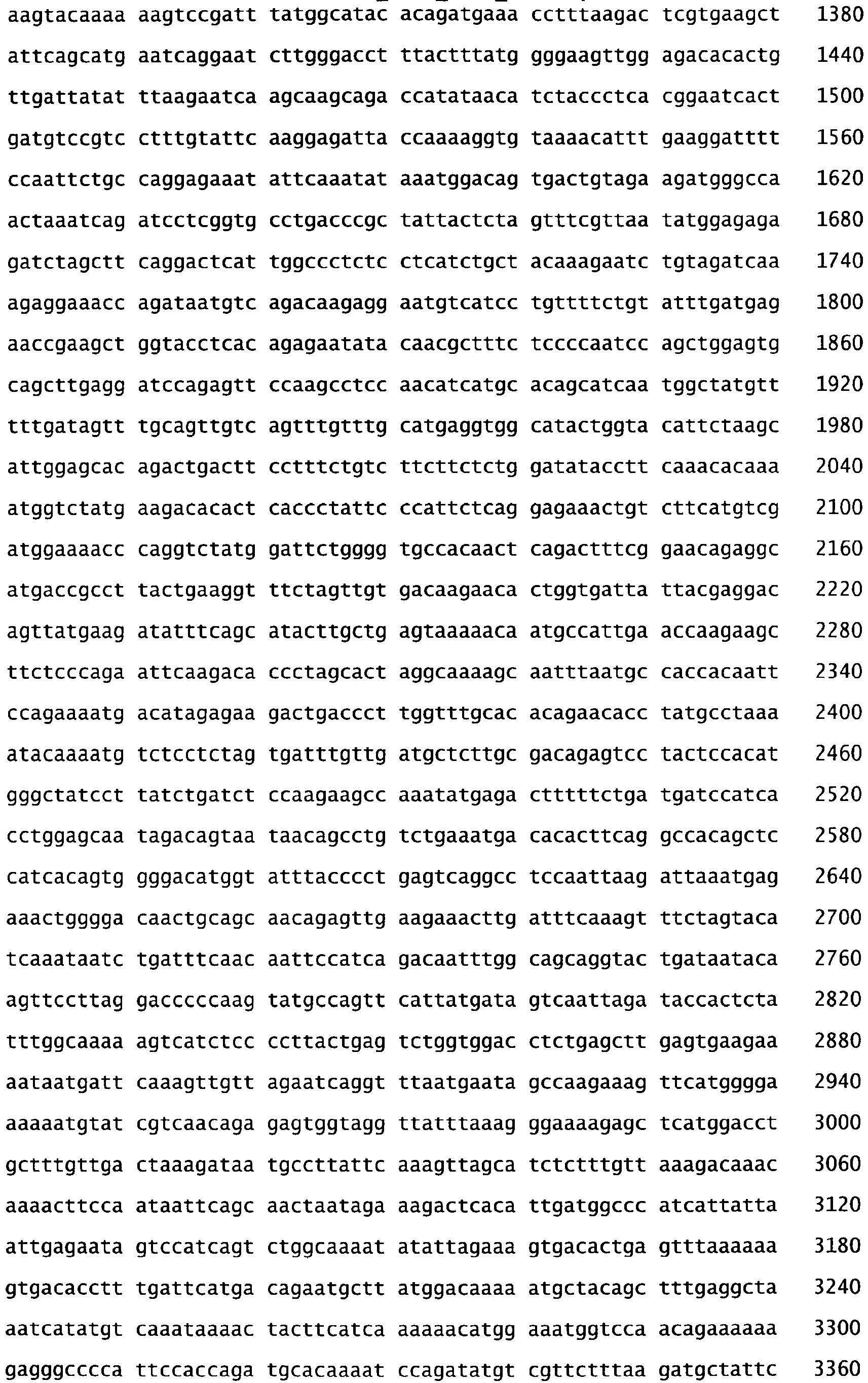
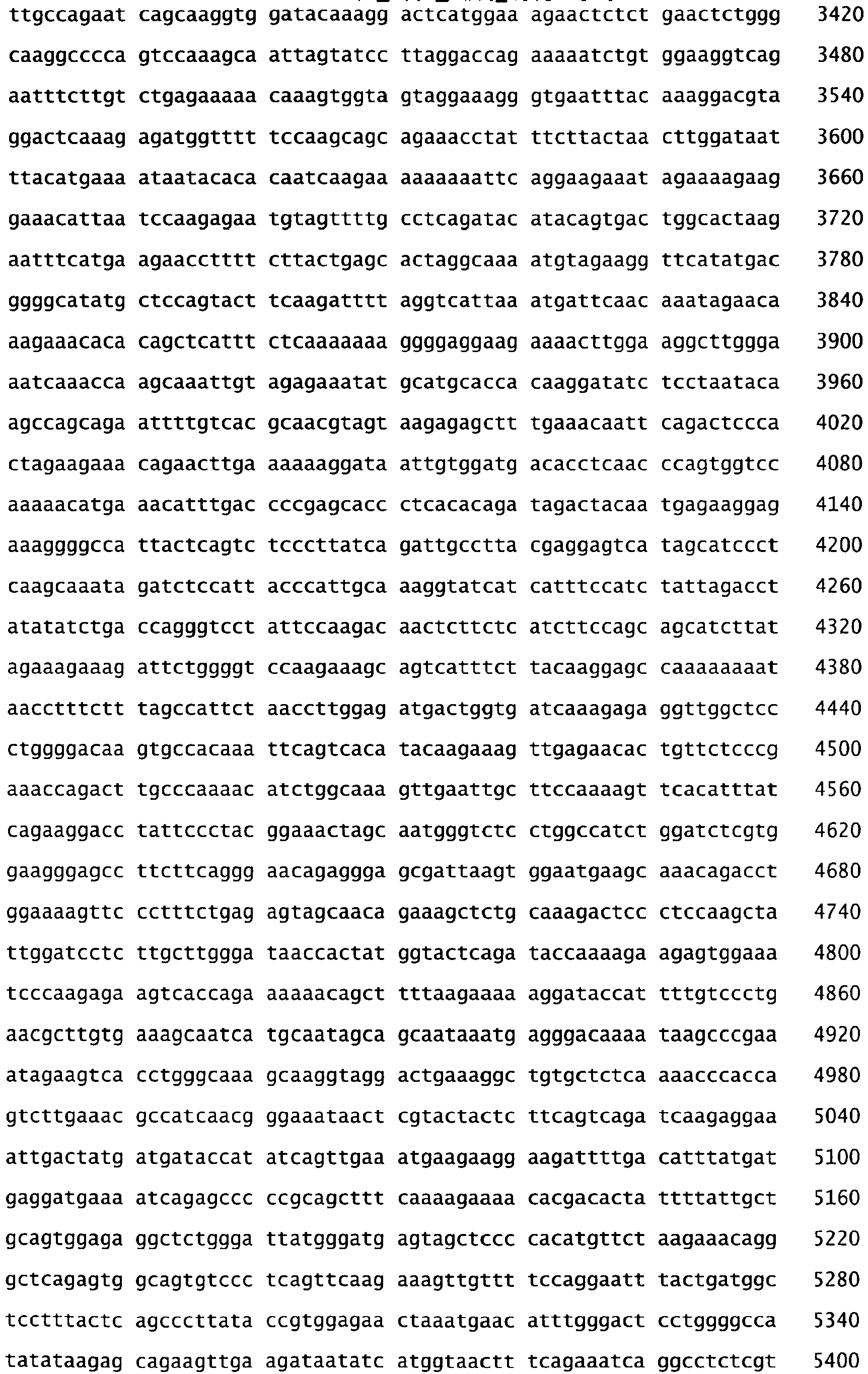
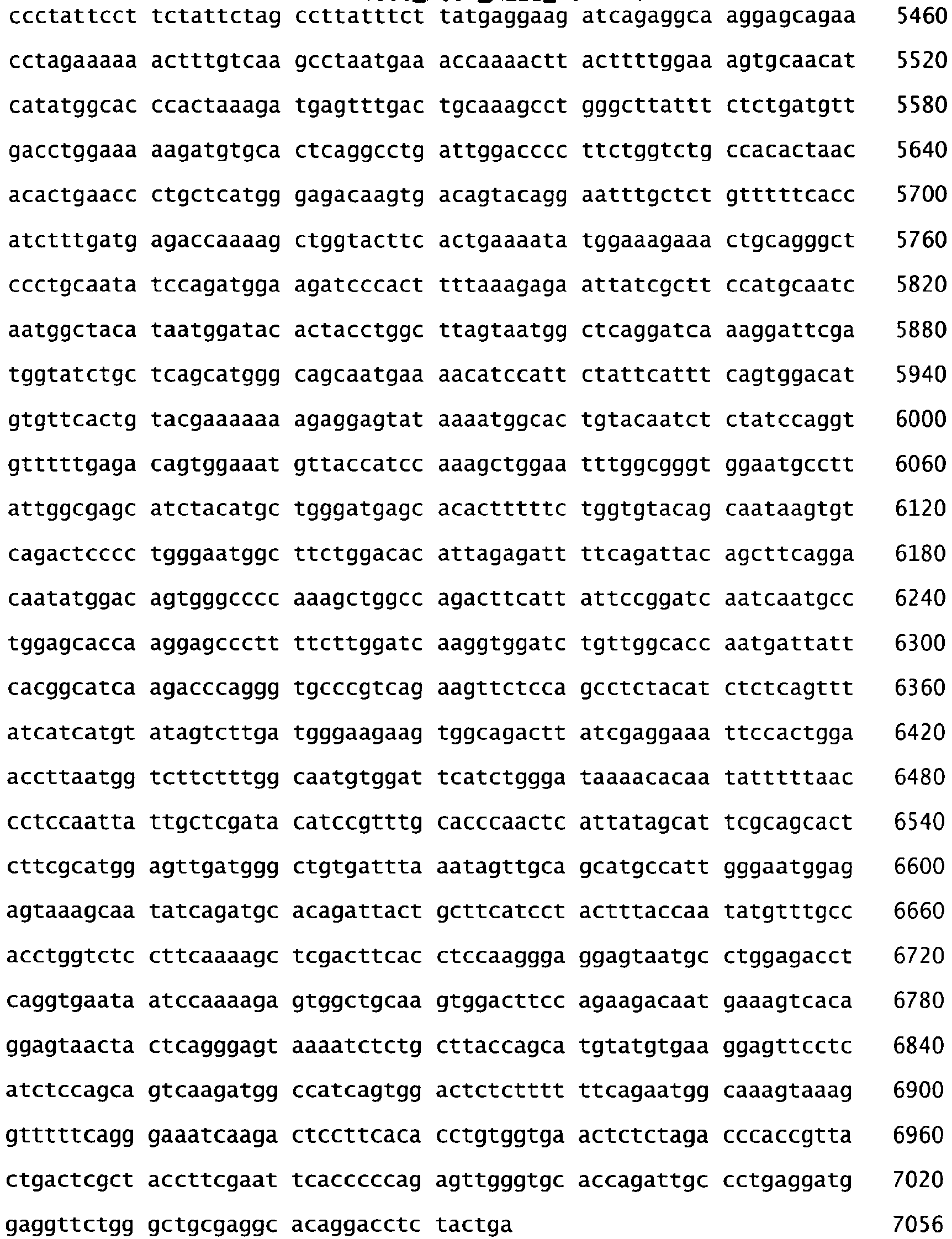
- <210> 2
<211> 2332
<212> PRT
<213> Homo Sapiens - <400> 2


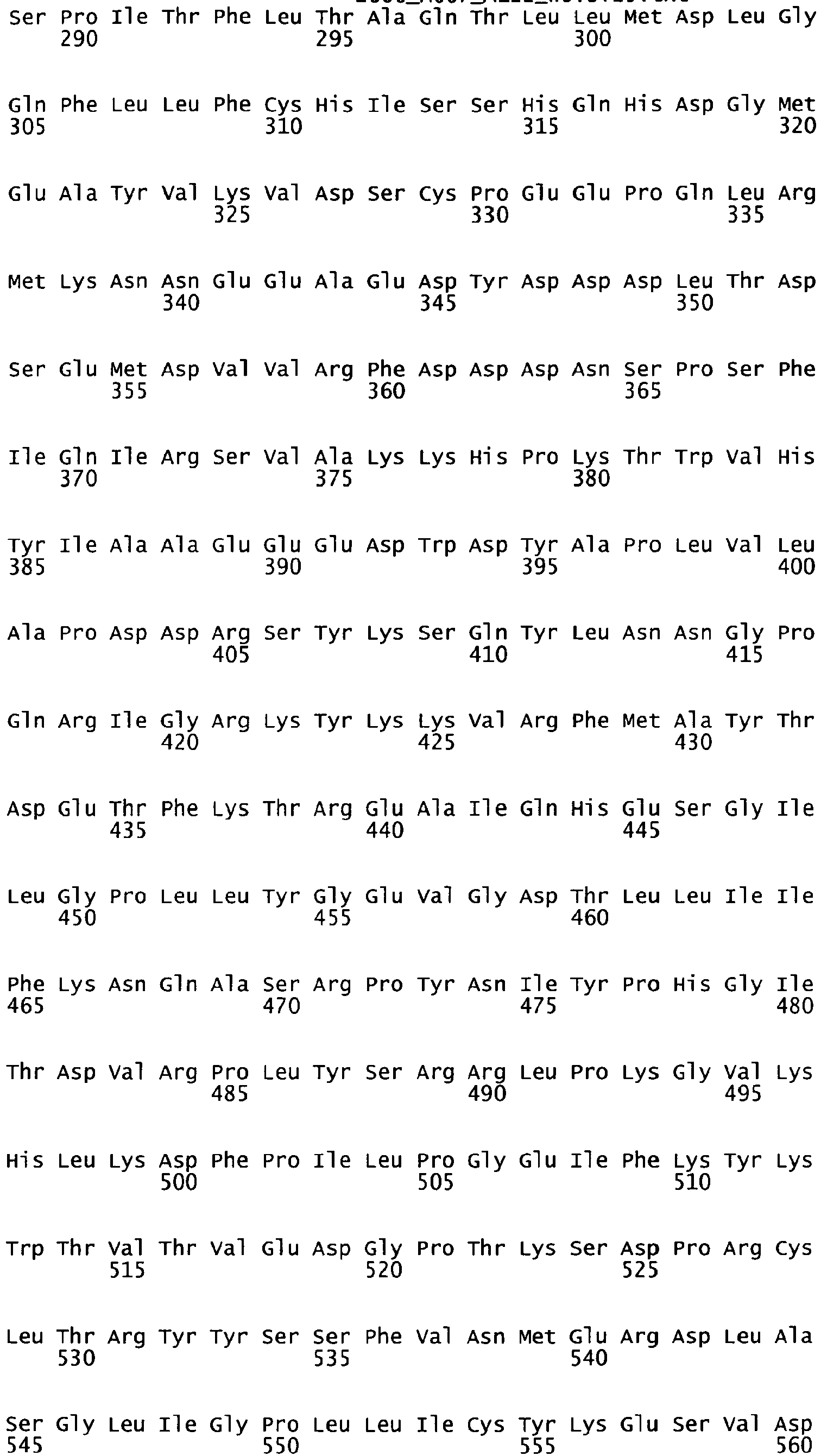
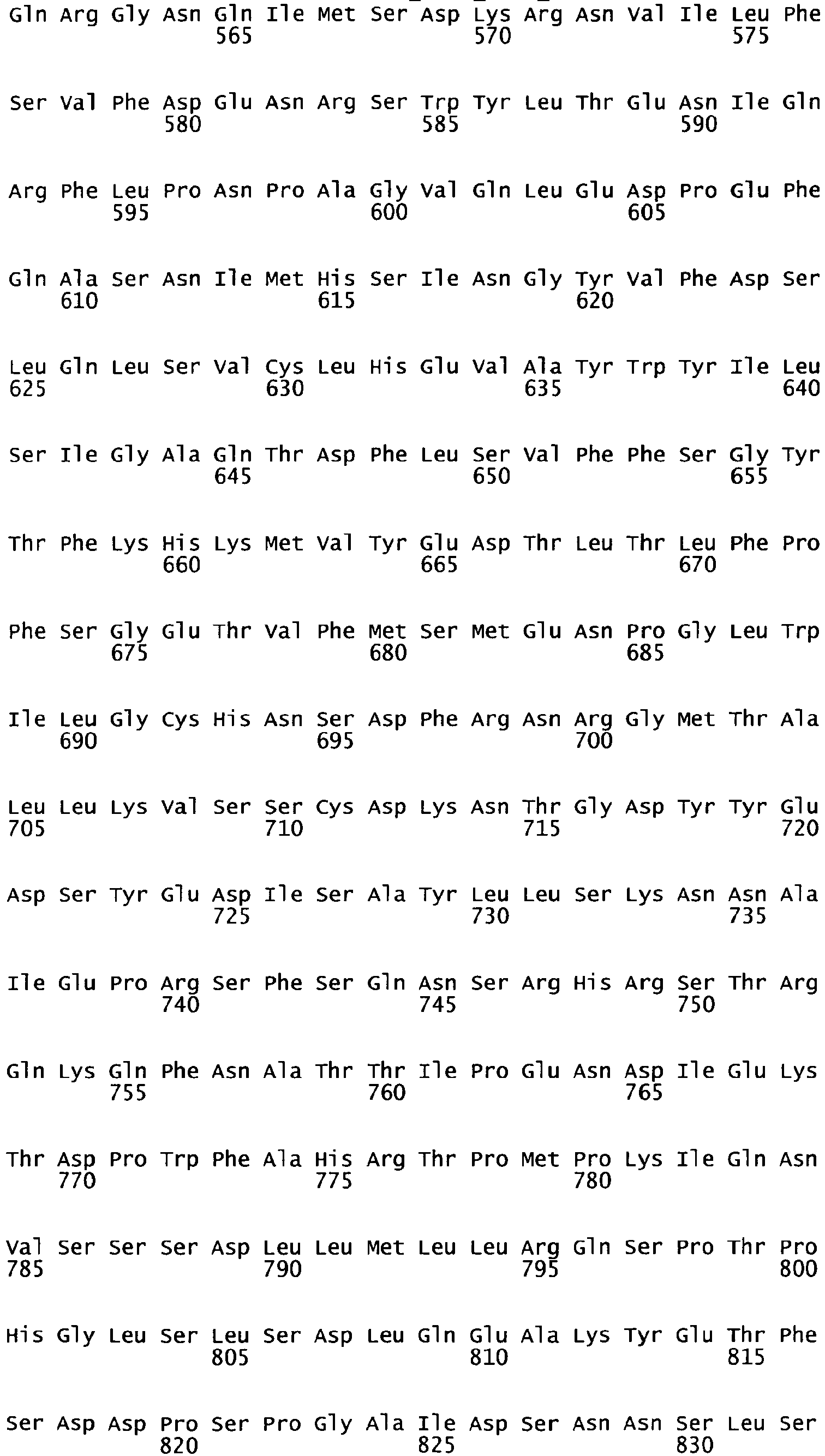
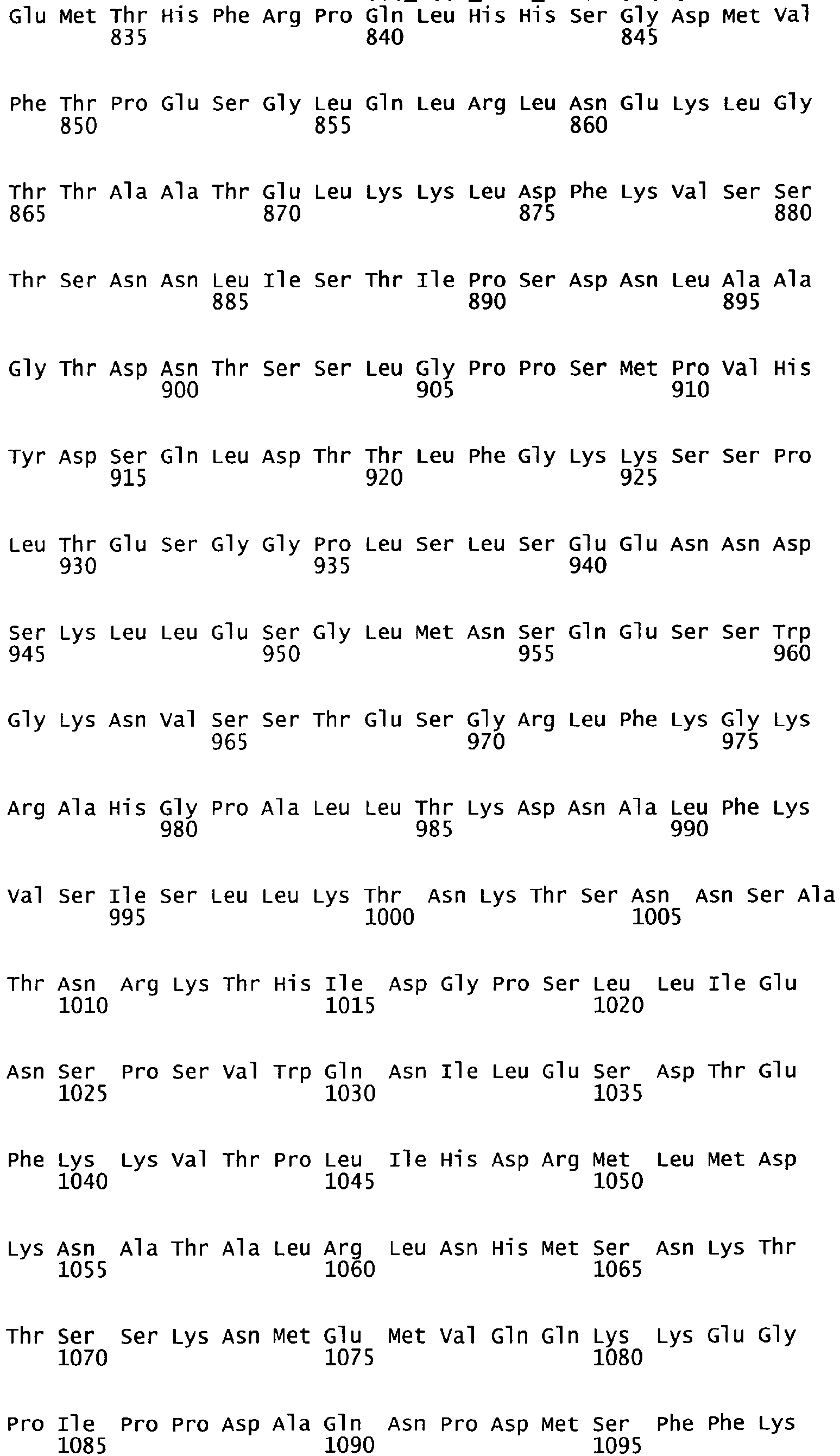
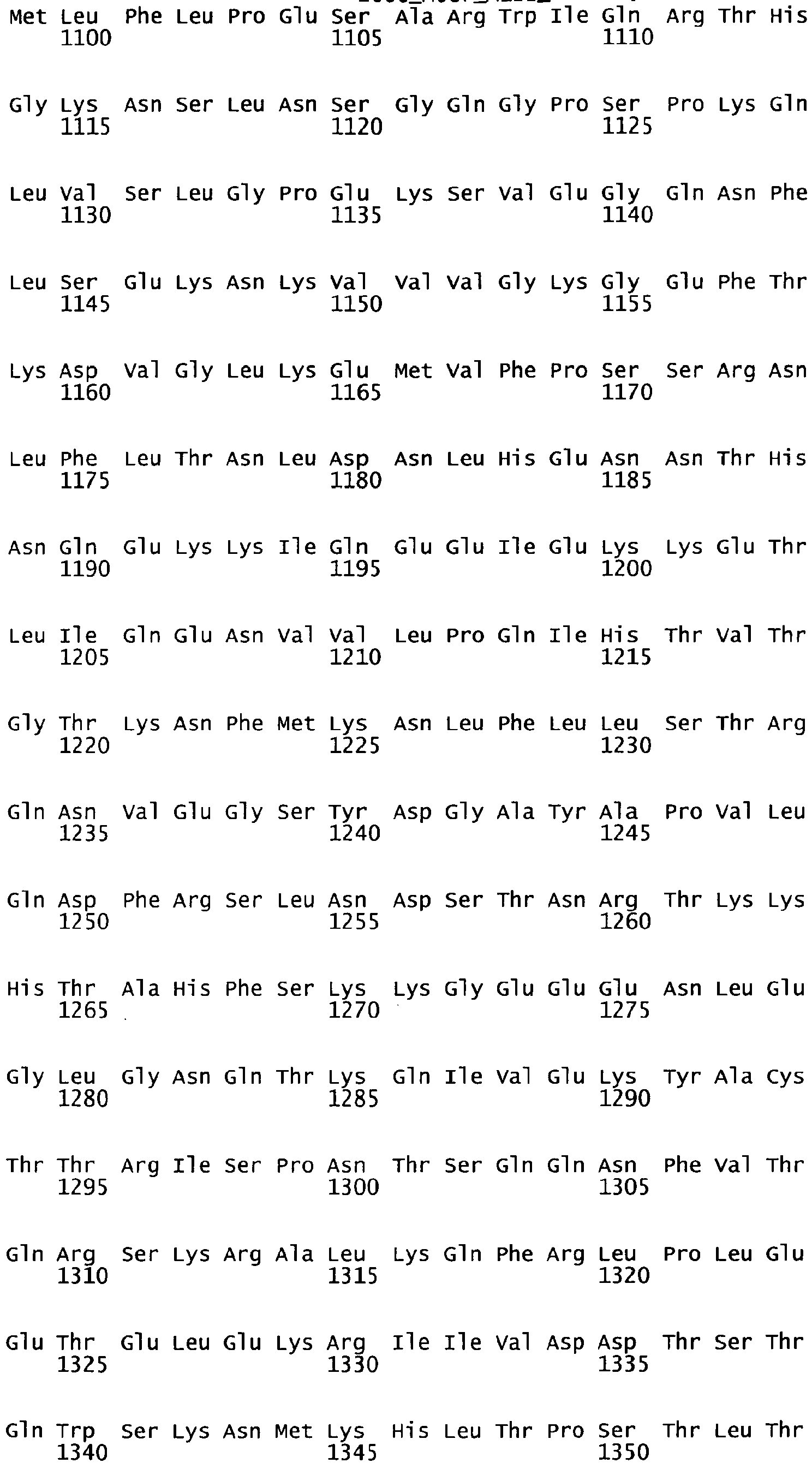

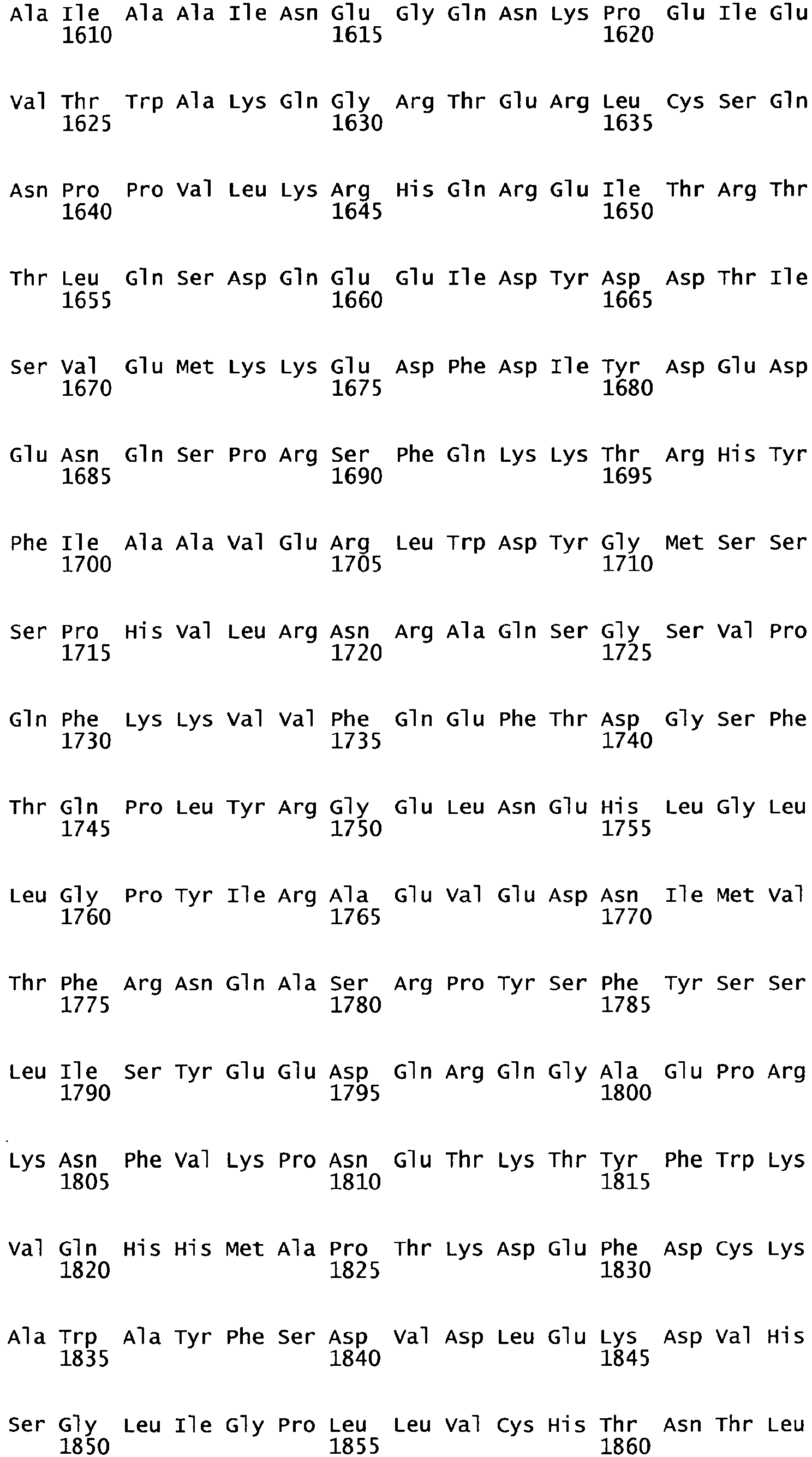
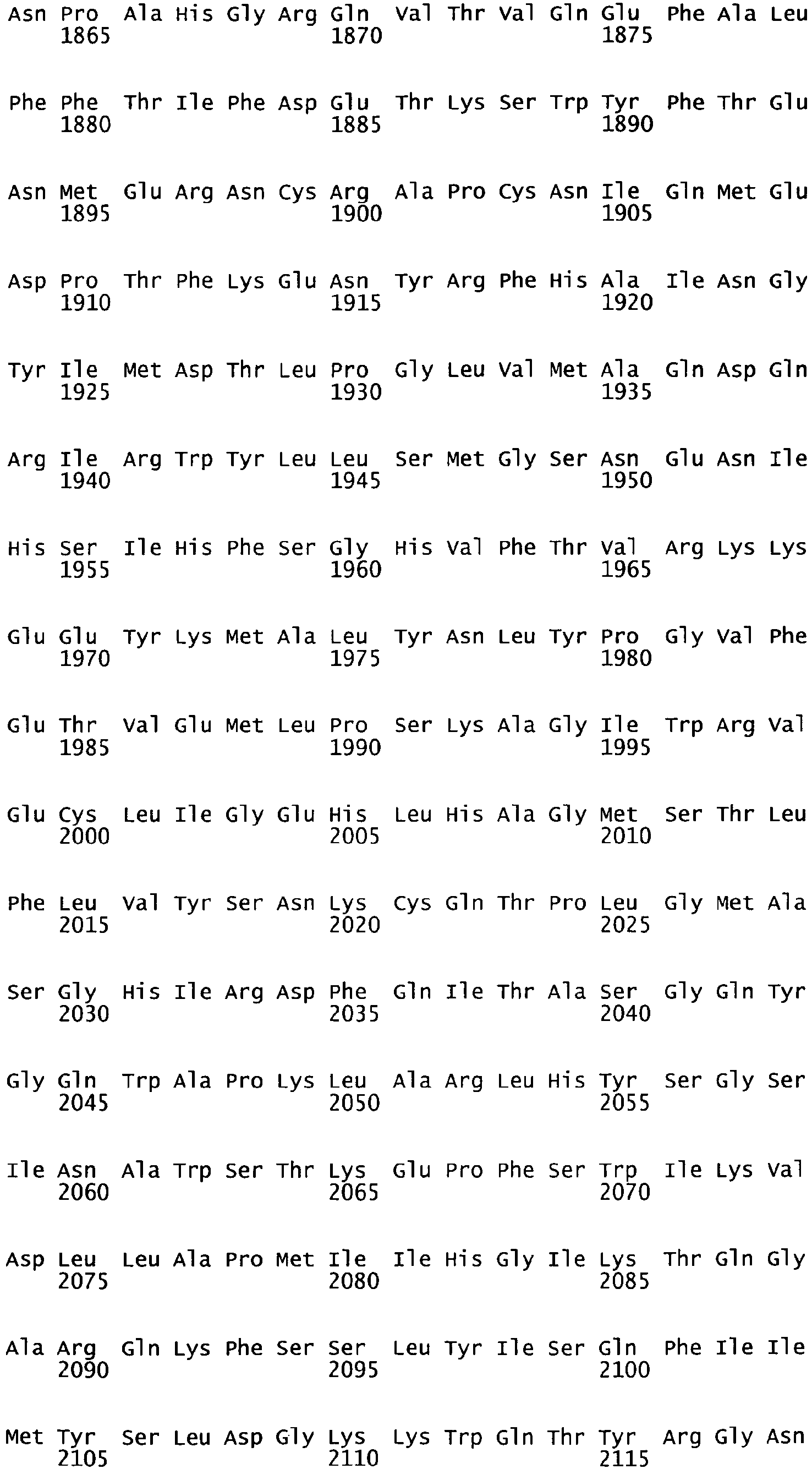

- <210> 3
<211> 585
<212> PRT
<213> Homo Sapiens - <400> 3


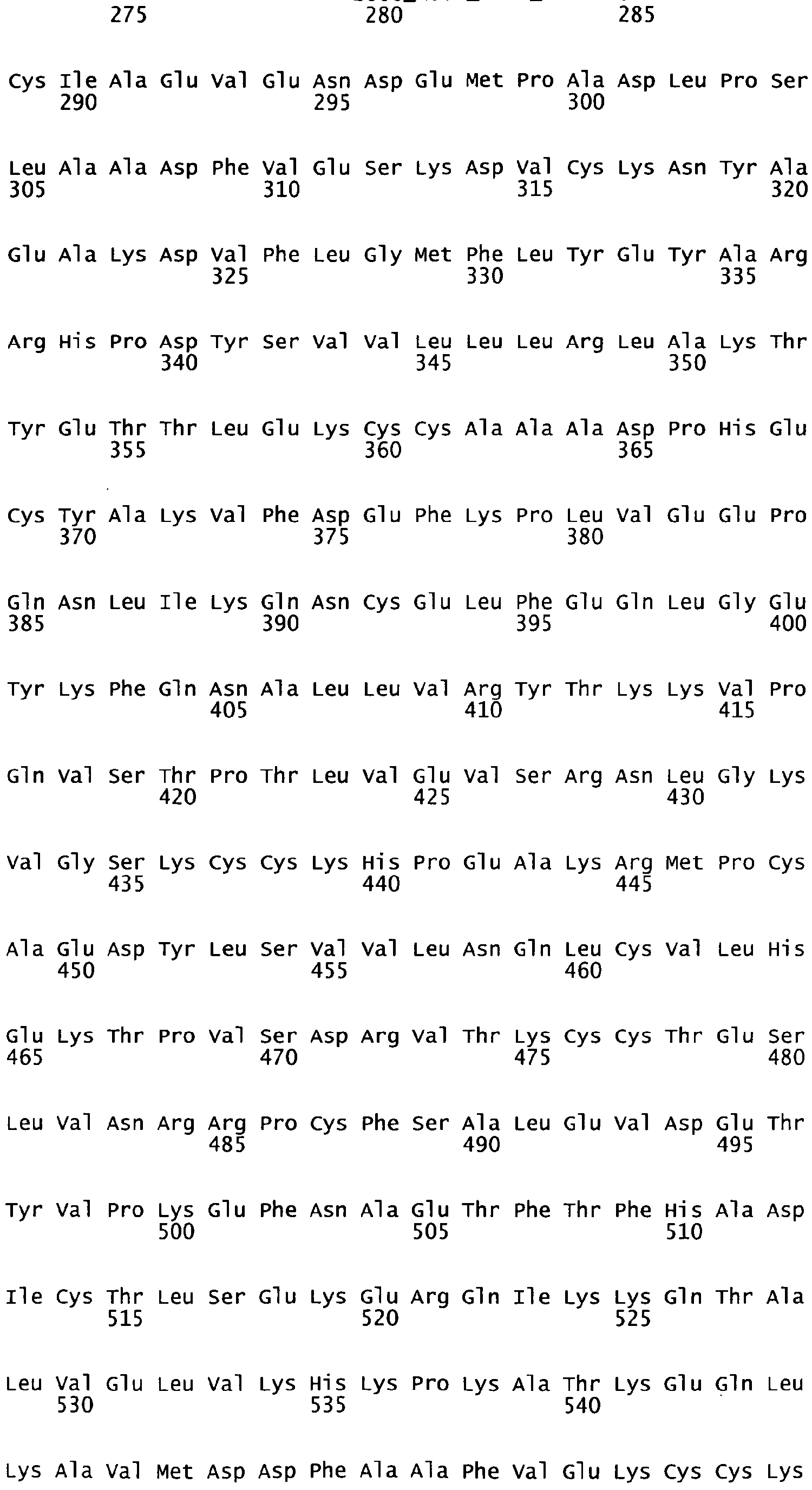
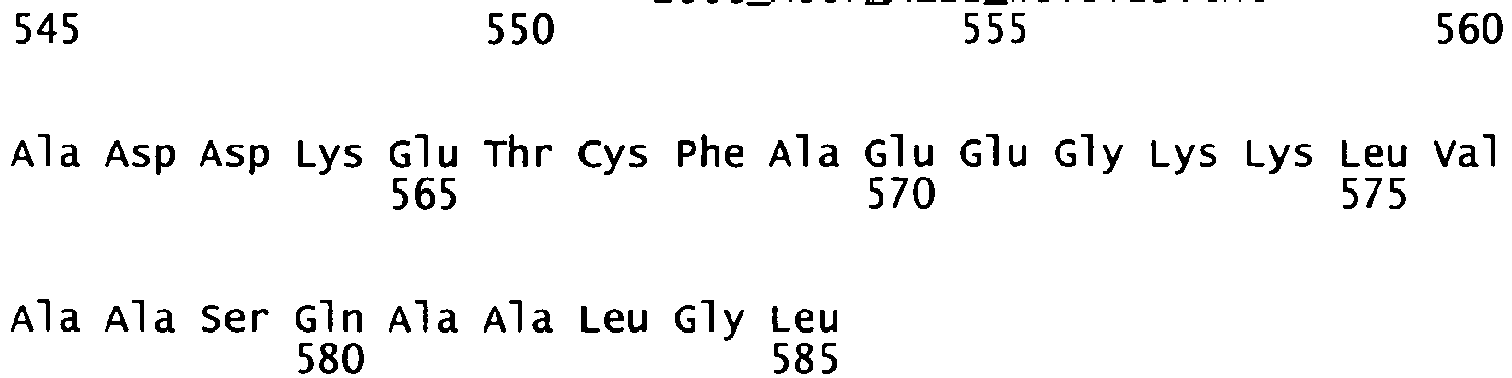
- <210> 4
<211> 2043
<212> PRT
<213> Artificial - <220>
<223> Amino acid sequence of mature human FVIII with B domain replacement by human albumin - <400> 4

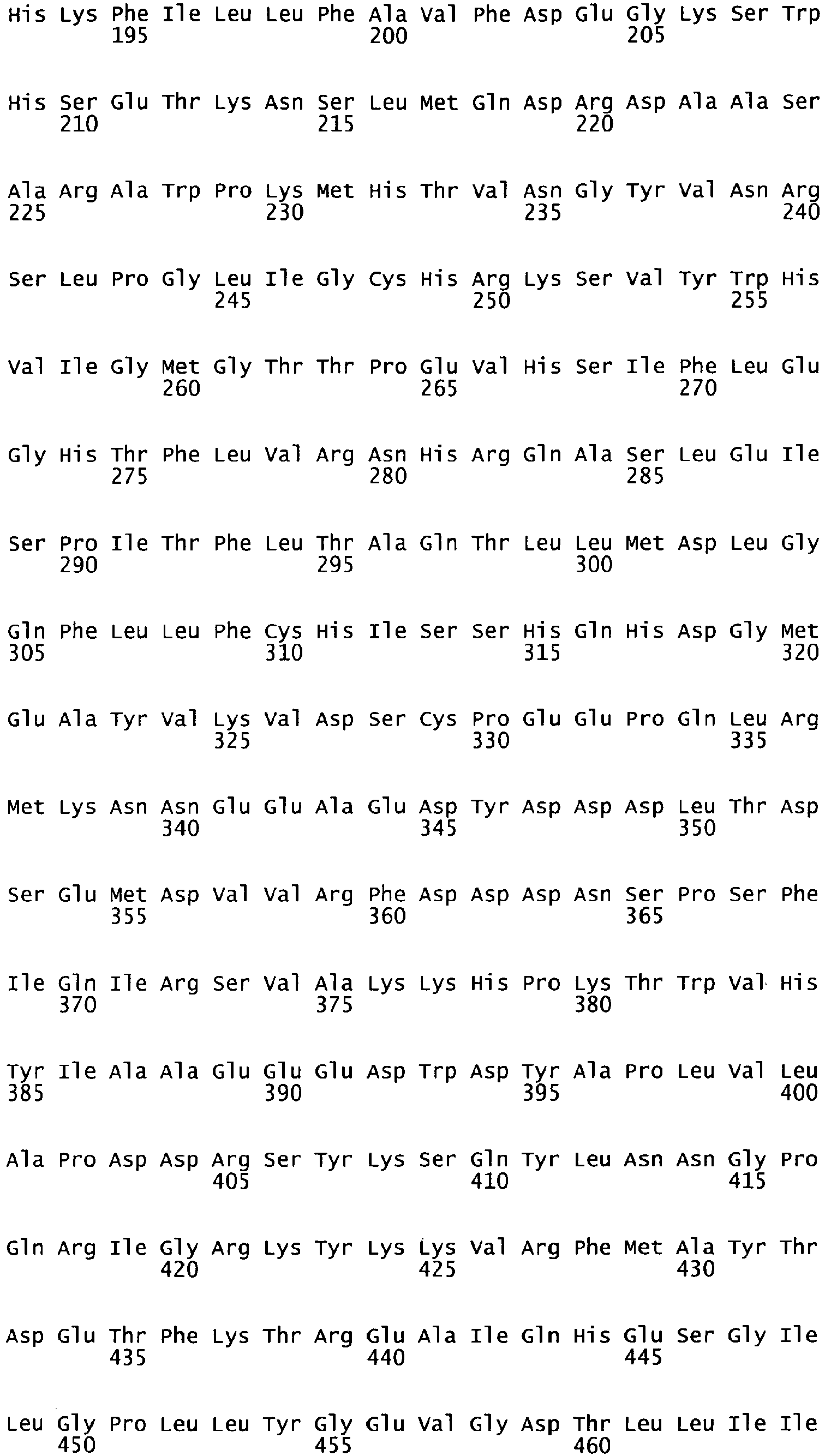
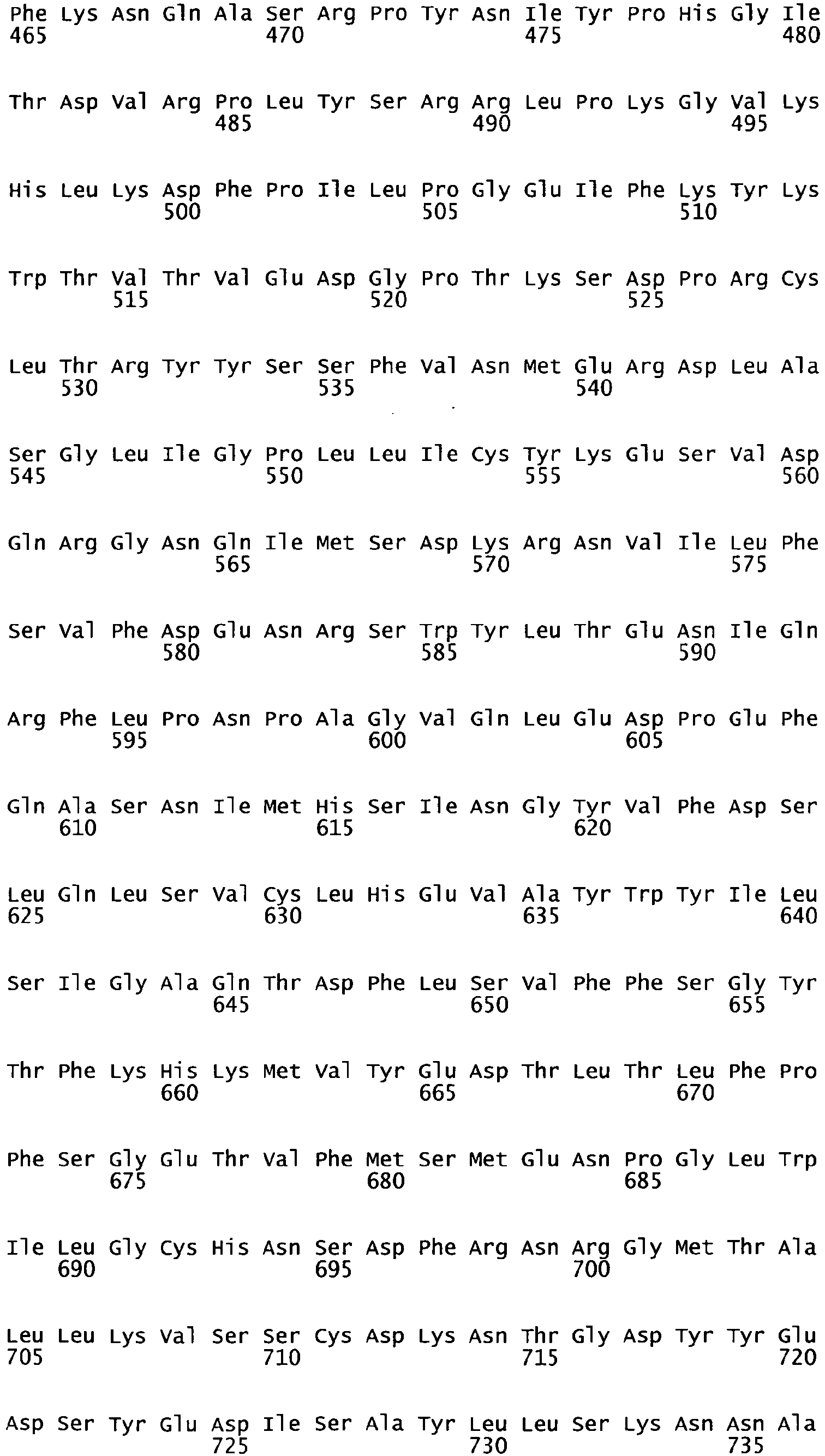
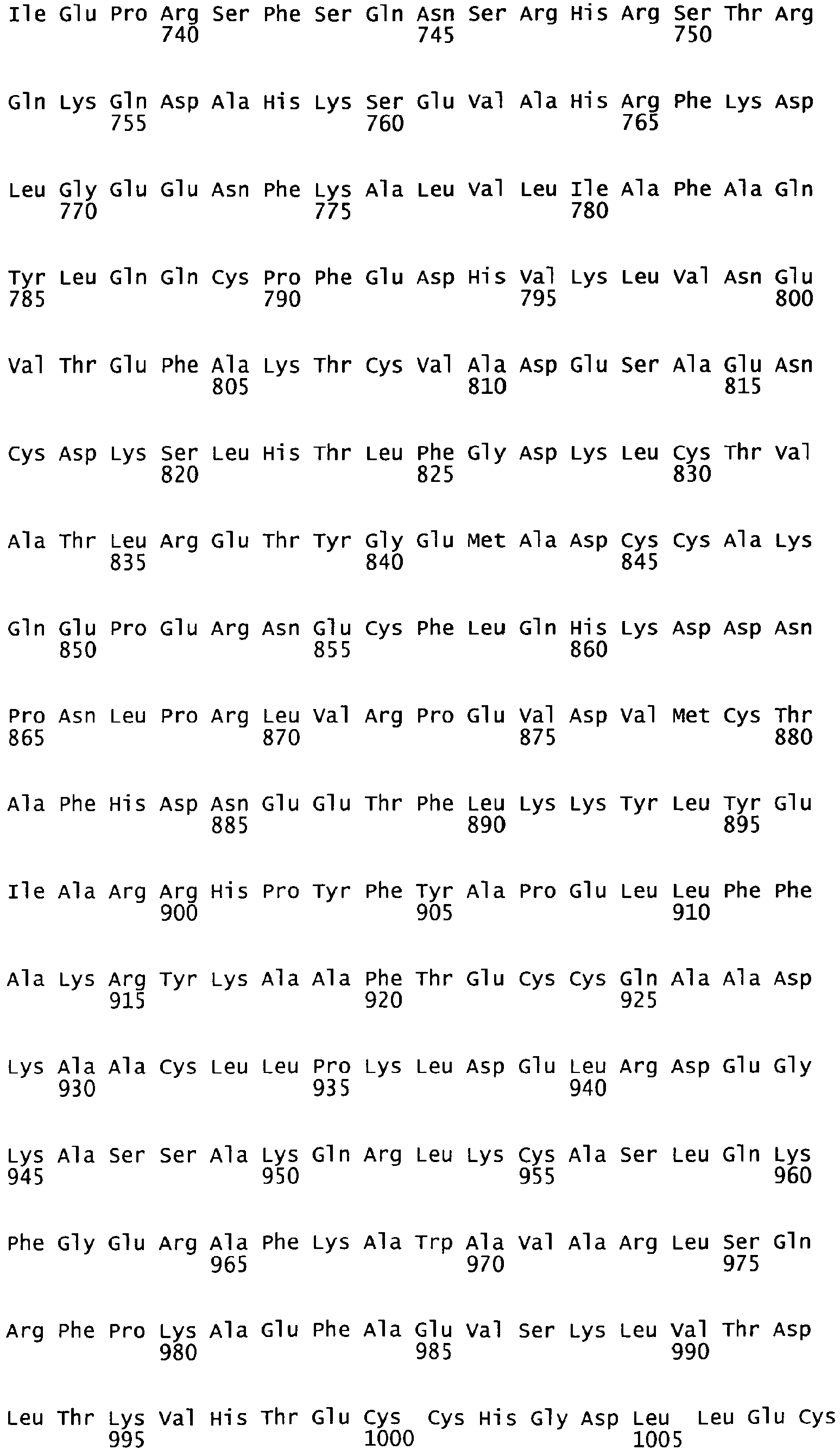


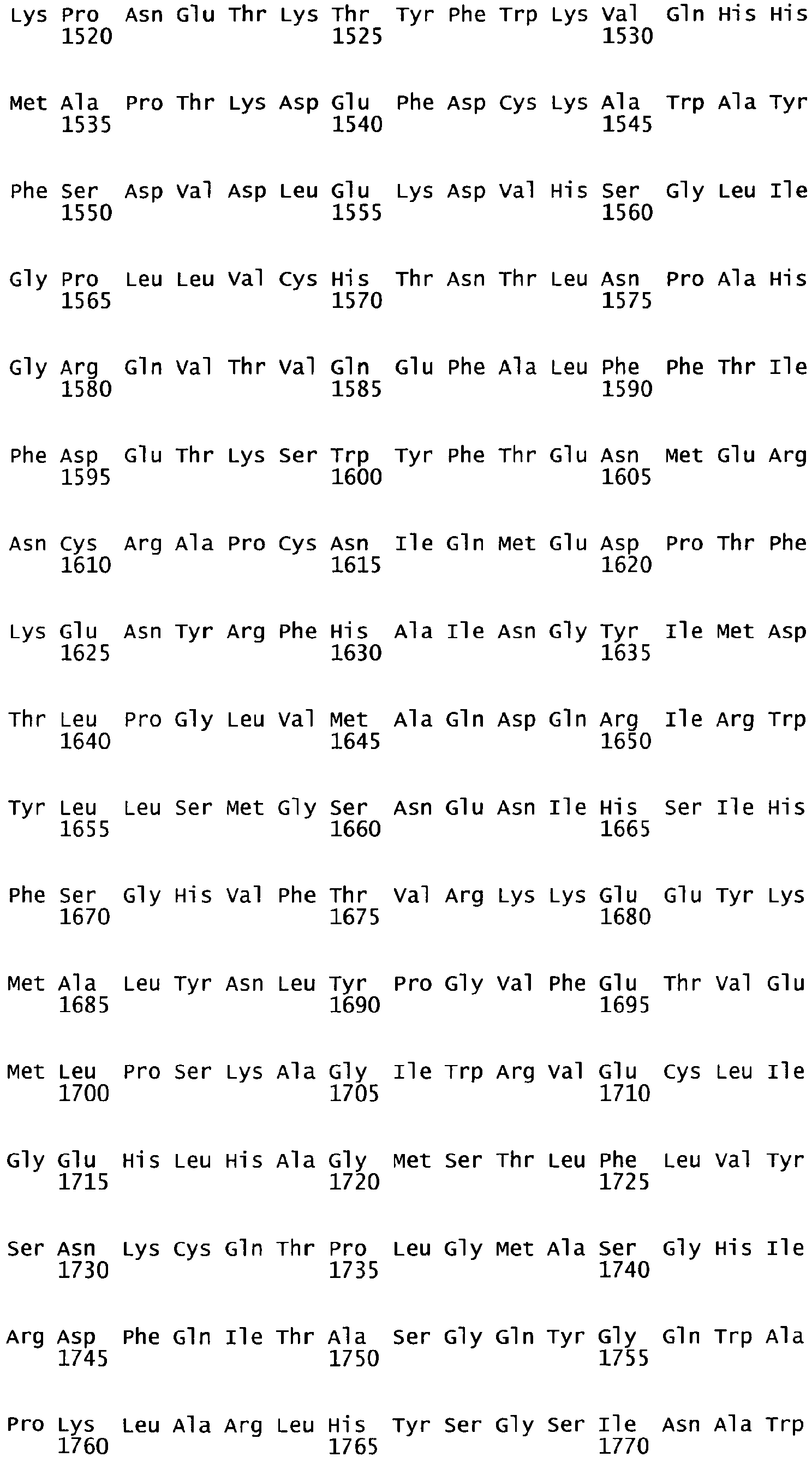
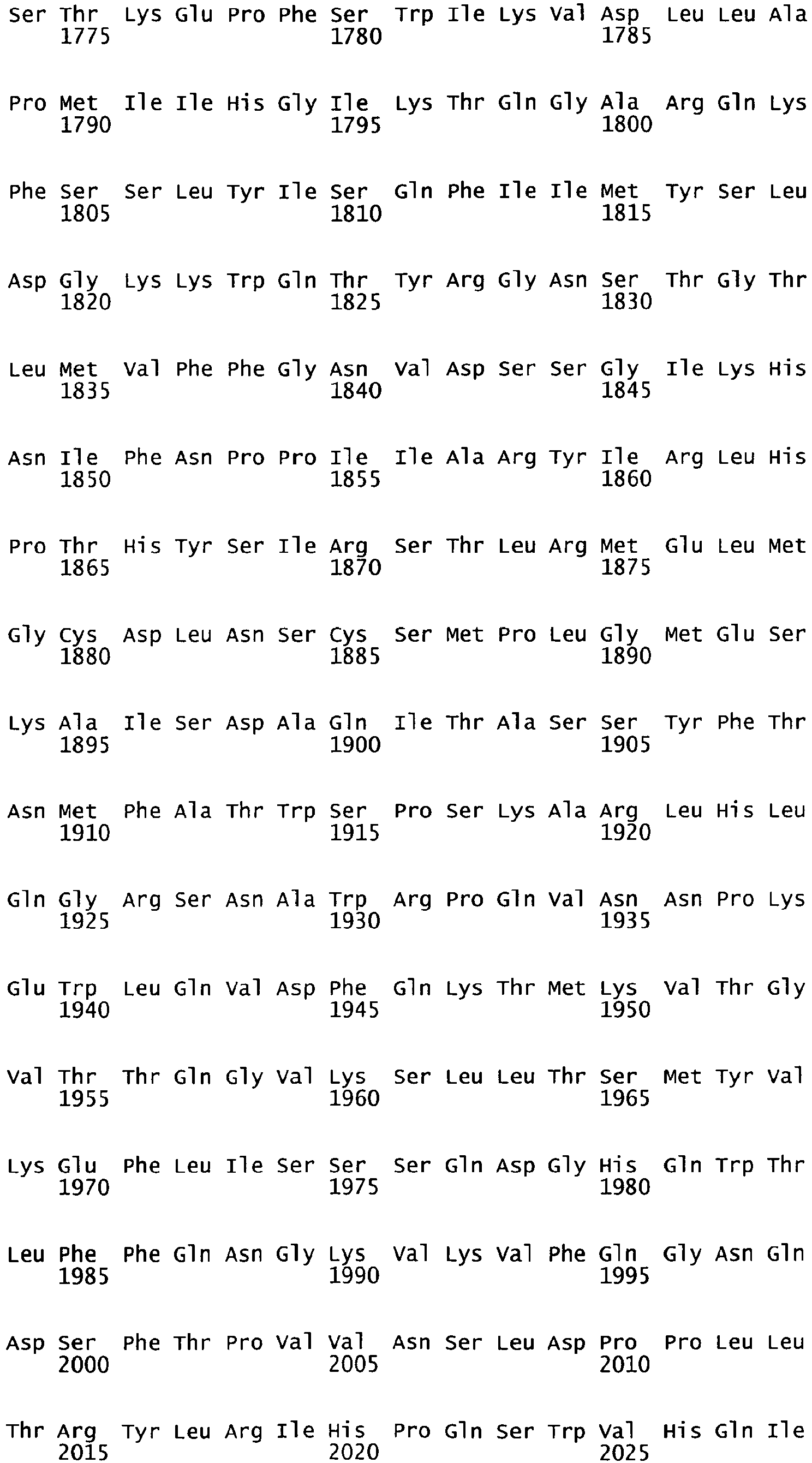

- <210> 5
<211> 21
<212> DNA
<213> Artificial - <220>
<223> Primer - <400> 5
cagcttgagg atccagagtt c 21 - <210> 6
<211> 30
<212> DNA
<213> Artificial - <220>
<223> Primer - <400> 6
gtgaccggtc ttttgcctag tgctagggtg 30 - <210> 7
<211> 26
<212> DNA
<213> Artificial - <220>
<223> Primer - <400> 7
gtgaccggta ggactgaaag gctgtg 26 - <210> 8
<211> 23
<212> DNA
<213> Artificial - <220>
<223> Primer - <400> 8
gattgatccg gaataatgaa gtc 23 - <210> 9
<211> 34
<212> DNA
<213> Artificial - <220>
<223> Primer - <400> 9
gcgaaccggt caggatgcac acaagagtga ggtt 34 - <210> 10
<211> 30
<212> DNA
<213> Artificial - <220>
<223> Primer - <400> 10
cgcaccggtt aagcctaagg cagcttgact 30 - <210> 11
<211> 29
<212> DNA
<213> Artificial - <220>
<223> Primer - <400> 11
ctagcactag gcaaaagcag gatgcacac 29 - <210> 12
<211> 29
<212> DNA
<213> Artificial - <220>
<223> Primer - <400> 12
gtgtgcatcc tgcttttgcc tagtgctag 29 - <210> 13
<211> 29
<212> DNA
<213> Artificial - <220>
<223> Primer - <400> 13
ctgccttagg cttaggtagg actgaaagg 29 - <210> 14
<211> 29
<212> DNA
<213> Artificial - <220>
<223> Primer - <400> 14
cctttcagtc ctacctaagc ctaaggcag 29 - <210> 15
<211> 33
<212> DNA
<213> Artificial - <220>
<223> Primer - <400> 15
ggactgaaag gctgtcctct caaaacccaccag 33 - <210> 16
<211> 33
<212> DNA
<213> Artificial - <220>
<223> Primer - <400> 16
ctggtgggtt ttgagaggac agcctttcag tcc 33 - <210> 17
<211> 36
<212> DNA
<213> Artificial - <220>
<223> Primer - <400> 17
caatgccatt gaaccaagct tctcccagaa ttcaag 36 - <210> 18
<211> 36
<212> DNA
<213> Artificial - <220>
<223> Primer - <400> 18
cttgaattct gggagaagct tggttcaatg gcattg 36 - <210> 19
<211> 1671
<212> PRT
<213> Artificial - <220>
<223> FVIII with human albumin replacing part of the B-domain - <400> 19


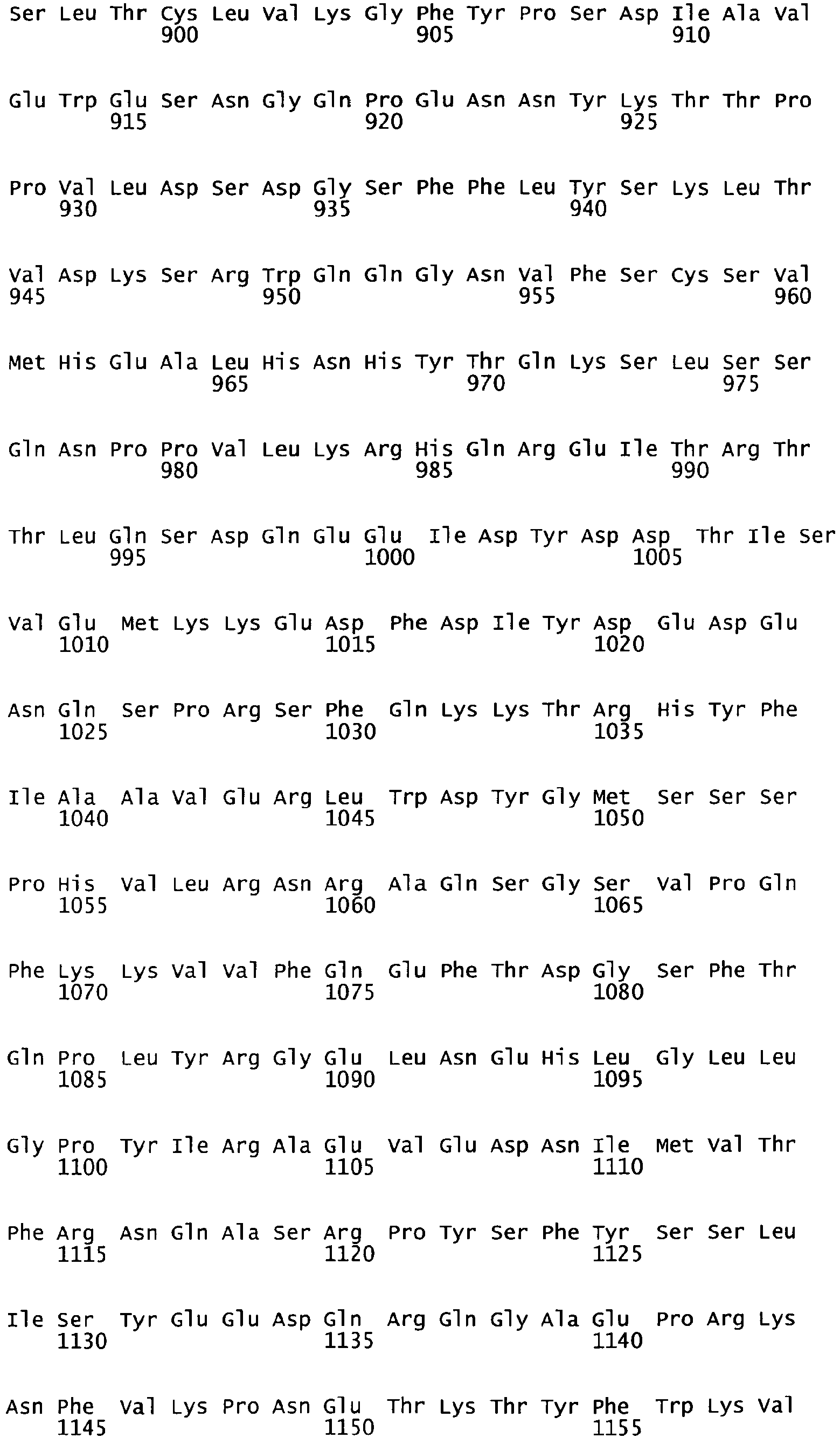

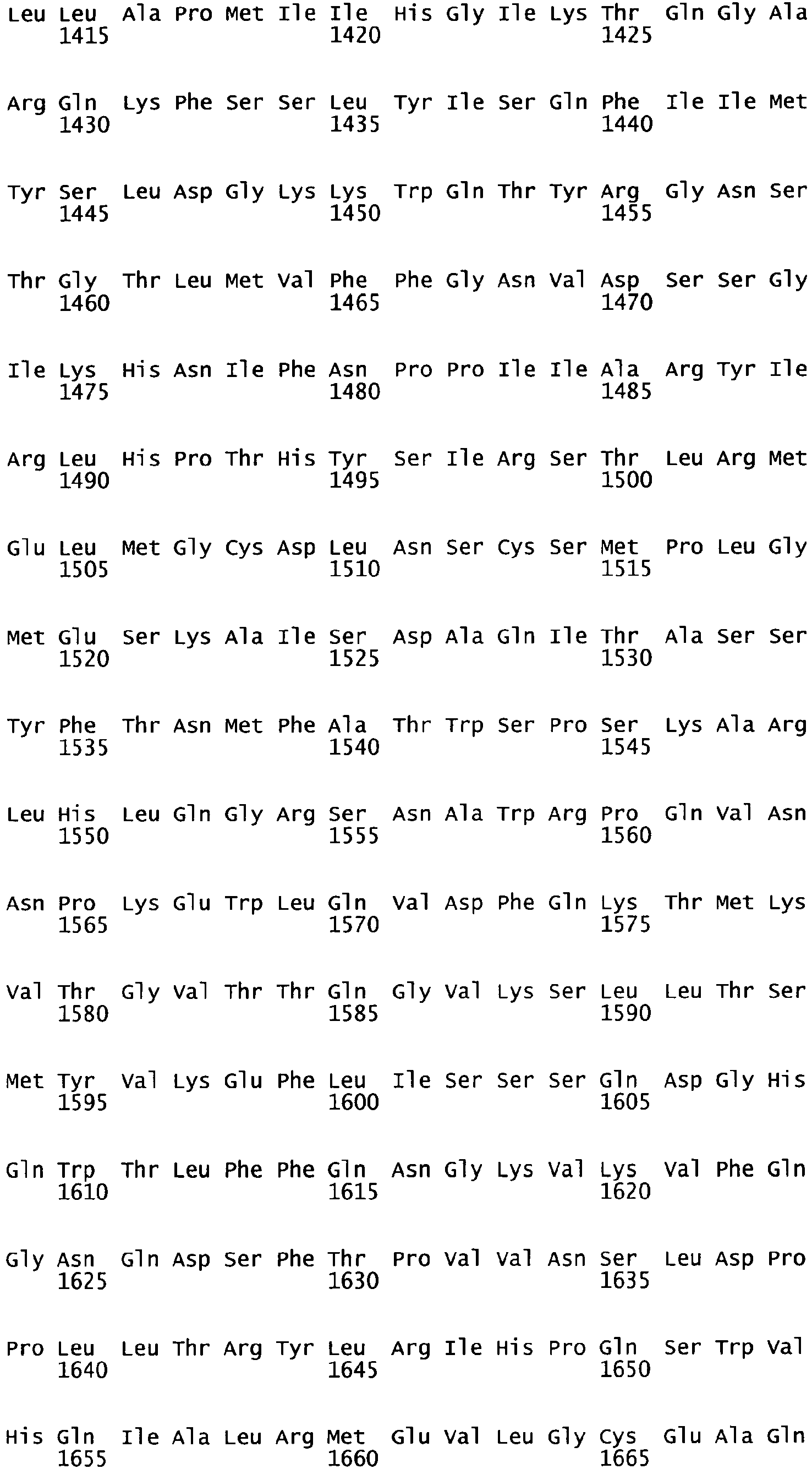

- <210> 20
<211> 240
<212> PRT
<213> Artificial - <220>
<223> Amino acid sequence of a human immunoglobulin G heavy chain region (240 amino acids: 1-19 human IgG signal peptide, 20-35 human IgG hinge region and
36-240 human IgG heavy chain) - <400> 20
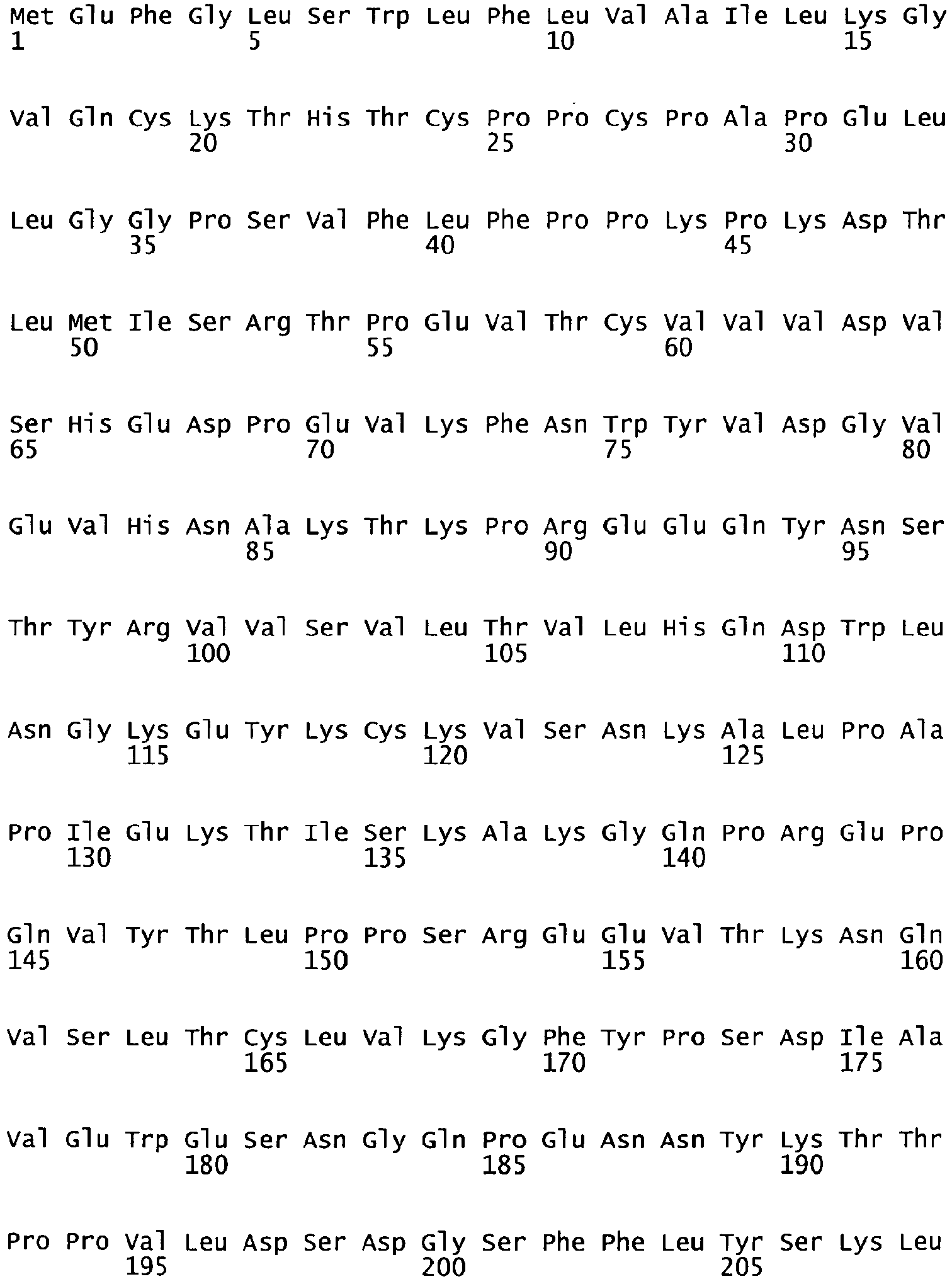

- <210> 21
<211> 975
<212> PRT
<213> Artificial - <220>
<223> mature human FVIII heavy chain with partial B domain replacement by human immunoglobulin G heavy chain region - <400> 21


- <210> 22
<211> 917
<212> PRT
<213> Artificial - <220>
<223> mature human FVIII light chain attached to human immunoglobulin G heavy chain region
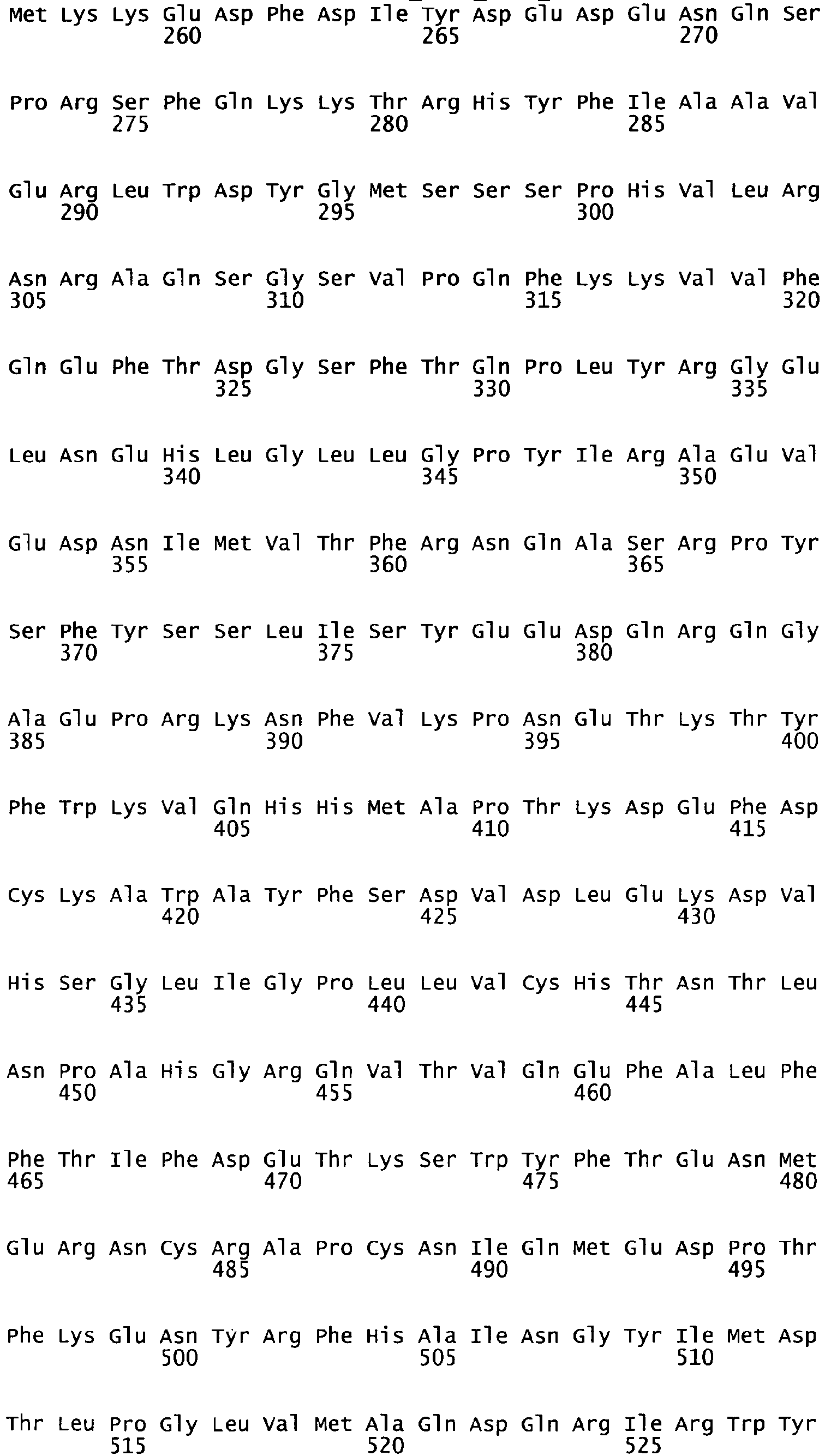
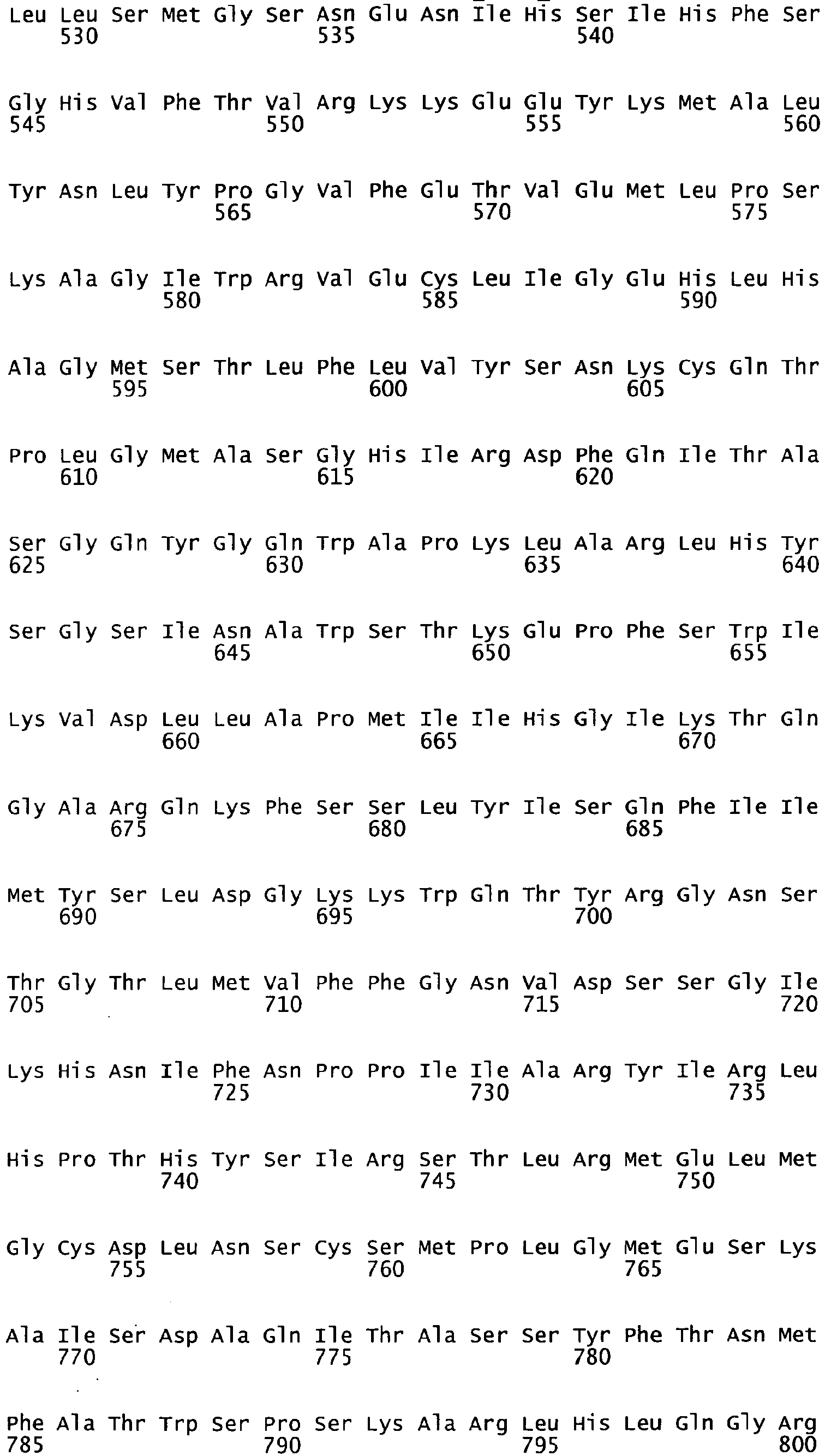

- <210> 23
<211> 31
<212> PRT
<213> Artificial - <220>
<223> Linker - <400> 23

- <210> 24
<211> 32
<212> PRT
<213> Artificial - <220>
<223> Linker - <400> 24

- <210> 25
<211> 30
<212> PRT
<213> Artificial - <220>
<223> Linker - <400> 25

- <210> 26
<211> 28
<212> PRT
<213> Artificial - <220>
<223> Linker - <400> 26

- <210> 27
<211> 25
<212> PRT
<213> Artificial - <220>
<223> Linker - <400> 27

- <210> 28
<211> 23
<212> PRT
<213> Artificial - <220>
<223> Linker - <400> 28


- <210> 29
<211> 20
<212> PRT
<213> Artificial - <220>
<223> Linker - <400> 29

- <210> 30
<211> 32
<212> PRT
<213> Artificial - <220>
<223> Linker - <400> 30

- <210> 31
<211> 27
<212> PRT
<213> Artificial - <220>
<223> Linker - <400> 31

- <210> 32
<211> 27
<212> PRT
<213> Artificial - <220>
<223> Linker - <400> 32

- <210> 33
<211> 21
<212> PRT
<213> Artificial - <220>
<223> Linker - <400> 33

- <210> 34
<211> 36
<212> PRT
<213> Artificial - <220>
<223> Linker - <400> 34

- <210> 35
<211> 36
<212> PRT
<213> Artificial - <220>
<223> Linker - <400> 35
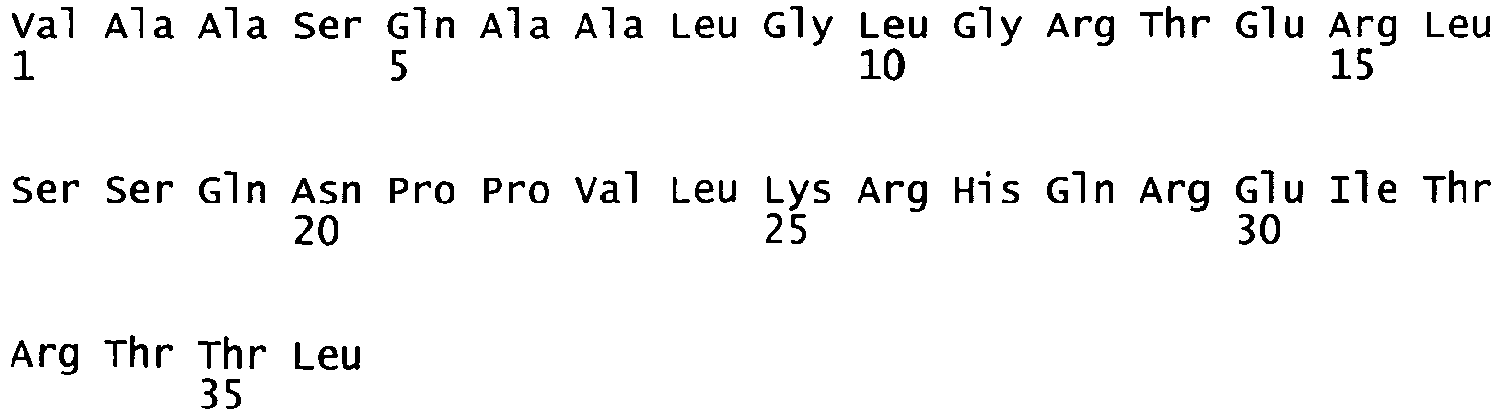
- <210> 36
<211> 34
<212> PRT
<213> Artificial - <220>
<223> Linker - <400> 36
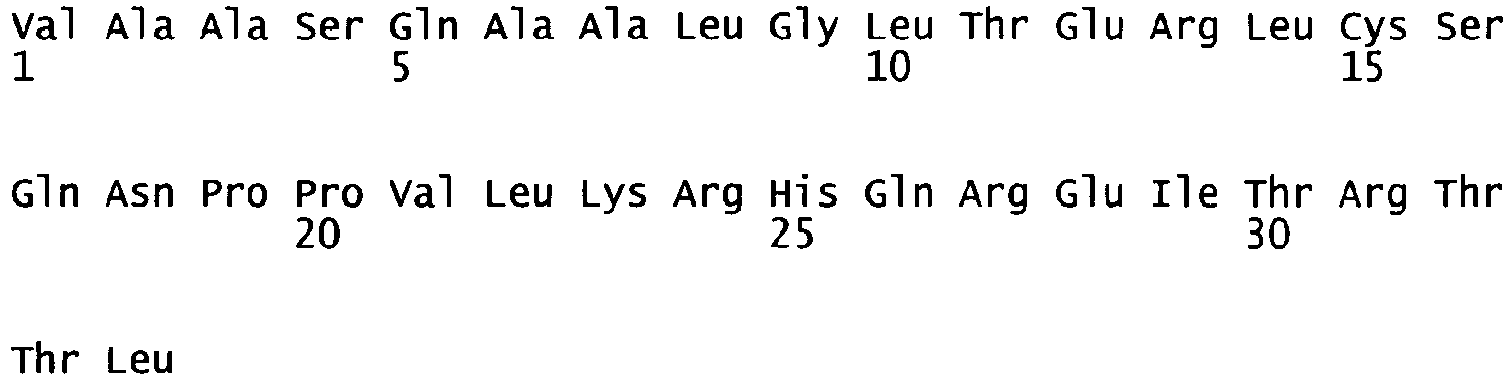
- <210> 37
<211> 34
<212> PRT
<213> Artificial - <220>
<223> Linker - <400> 37
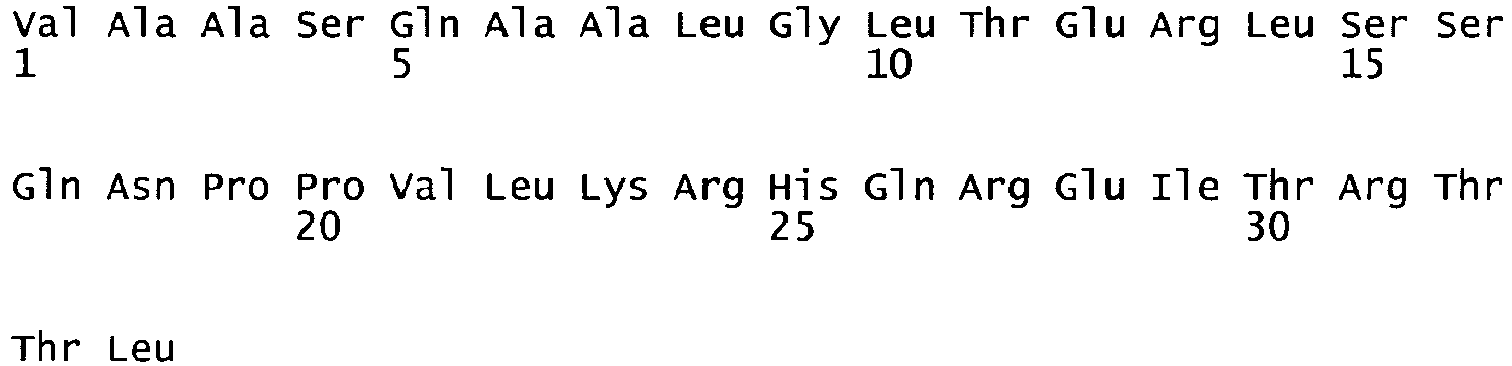
- <210> 38
<211> 31
<212> PRT
<213> Artificial - <220>
<223> Linker - <400> 38

- <210> 39
<211> 31
<212> PRT
<213> Artificial - <220>
<223> Linker - <400> 39

- <210> 40
<211> 29
<212> PRT
<213> Artificial - <220>
<223> Linker - <400> 40

- <210> 41
<211> 24
<212> PRT
<213> Artificial - <220>
<223> Linker - <400> 41

- <210> 42
<211> 21
<212> PRT
<213> Artificial - <220>
<223> Linker - <400> 42

- <210> 43
<211> 36
<212> PRT
<213> Artificial - <220>
<223> Linker - <400> 43

- <210> 44
<211> 29
<212> PRT
<213> Artificial - <220>
<223> Linker - <400> 44

- <210> 45
<211> 21
<212> PRT
<213> Artificial - <220>
<223> Linker - <400> 45

- <210> 46
<211> 36
<212> PRT
<213> Artificial - <220>
<223> Linker - <400> 46

- <210> 47
<211> 33
<212> PRT
<213> Artificial - <220>
<223> Linker - <400> 47

- <210> 48
<211> 27
<212> PRT
<213> Artificial - <220>
<223> Linker - <400> 48

- <210> 49
<211> 27
<212> PRT
<213> Artificial - <220>
<223> Linker - <400> 49

Claims (27)
- A modified coagulation factor having at an internal region between the N-terminal amino acid and the C-terminal amino acid of the primary translation polypeptide of the coagulation factor an insertion of a half-life enhancing polypeptide (HLEP), wherein the coagulation factor is FVIII, and wherein the insertion of the HLEP is within the B-domain of FVIII, and wherein the HLEP is selected from the group consisting of albumin family proteins albumin, afamin, alpha-fetoprotein and the vitamin D binding protein, and portions of an immunoglobulin constant region of immunoglobulins.
- The modified coagulation factor of claim 1, characterized in that the modified coagulation factor has a prolonged functional half-life compared to the functional half-life of the coagulation factor lacking said insertion.
- The modified coagulation factor of claim 1 or claim 2, characterized in that the modified coagulation factor has a prolonged half-life of the coagulation factor antigen compared to the half-life of the coagulation factor antigen lacking said insertion.
- The modified coagulation factor according to claims 1 and 2, which has a functional half-life increased by at least 25% as compared to the functional half-life of said coagulation factor lacking said insertion of a HLEP.
- The modified coagulation factor according to claim 3, which has a half-life of the coagulation factor antigen increased by at least 25% as compared to the functional half-life of said coagulation factor lacking said insertion of a HLEP.
- The modified coagulation factor according to claims 1 to 5 wherein the coagulation factor is separated from the HLEP during endogenous activation in vivo by proteolytic cleavage.
- The modified coagulation factor of claim 1, characterized in that the modified coagulation factor has an improved in vivo recovery compared to the in vivo recovery of the coagulation factor lacking said insertion.
- The modified coagulation factor according to claim 7, which has an in vivo recovery of the coagulation factor increased by at least 10% as compared to the in vivo recovery of said coagulation factor lacking said insertion of a HLEP.
- The modified coagulation factor according to claims 1 to 8, which has increased stability in serum-free culture media and/or in animal protein-free culture media, compared to the coagulation factor lacking said insertion.
- The modified coagulation factor according to any preceding claim, wherein more than 75% of the B-domain is deleted or replaced by linker peptides.
- The modified coagulation factor according to any one of the preceding claims, which has at least 10% of the biological activity of the coagulation factor lacking said insertion.
- The modified coagulation factor according to claim 11, wherein the half-life enhancing polypeptide is albumin or a fragment thereof.
- The modified coagulation factor according to any one of the preceding claims, wherein the B-domain has been replaced partly or completely with human albumin.
- A polynucleotide or a group of polynucleotides, encoding a modified coagulation factor according to any one of claims 1 to 13.
- A plasmid or vector comprising the polynucleotide according to claim 14, or a group of plasmids or vectors, said group comprising the group of polynucleotides according to claim 14.
- The plasmid or vector or group of plasmids or vectors according to claim 15, said plasmid(s) or vector(s) being (an) expression vector(s).
- A vector or group of vectors according to claim 16, being (a) transfer vector(s) for use in human gene therapy.
- A host cell comprising a polynucleotide or a group of polynucleotides according to claim 14 or a plasmid or vector or a group of plasmids or vectors according to any one of claims 15 to 17.
- A method of producing a modified coagulation factor, comprising:(a) culturing host cells according to claim 18 under conditions such that the modified coagulation factor is expressed; and(b) optionally recovering the modified coagulation factor from the host cells or from the culture medium.
- A pharmaceutical composition comprising a modified coagulation factor according to any one of claims 1 to 13, a polynucleotide or group of polynucleotides according to claim 14, or a plasmid or vector or a group of plasmids or vectors according to any one of claims 15 to 17.
- The use of a modified coagulation factor according to any one of claims 1 to 13, a polynucleotide or group of polynucleotides according to claim 14, or a plasmid or vector or group of plasmids or vectors according to any one of claims 15 to 17, or of a host cell according to claim 18 for the manufacture of a medicament for the treatment or prevention of a blood coagulation disorder.
- The use according to claim 21, wherein the blood coagulation disorder is hemophilia A.
- The use according to claim 21 or 22, wherein the treatment comprises human gene therapy.
- A method of preparing a modified FVIII having increased functional half-life, comprising inserting a half-life-enhancing polypeptide within the B domain of the amino acid sequence of said FVIII, wherein the HLEP is selected from the group consisting of albumin family proteins albumin, afamin, alpha-fetoprotein and the vitamin D binding protein, and portions of an immunoglobulin constant region of immunoglobulins.
- A method for increasing the functional half-life of FVIII, comprising inserting a half-life-enhancing polypeptide within the B domain of said FVIII, wherein the HLEP is selected from the group consisting of albumin family proteins albumin, afamin, alpha-fetoprotein and the vitamin D binding protein, and portions of an immunoglobulin constant region of immunoglobulins.
- A method for increasing the stability in serum- and animal protein-free culture media of FVIII, comprising inserting a half-life-enhancing polypeptide within the B domain of the amino acid sequence of FVIII, wherein the HLEP is selected from the group consisting of albumin family proteins albumin, afamin, alpha-fetoprotein and the vitamin D binding protein, and portions of an immunoglobulin constant region of immunoglobulins.
- A method according to any one of claims 24 to 26, which comprises replacing the B-domain of FVIII or a part thereof with the half-life-enhancing polypeptide.
Priority Applications (2)
| Application Number | Priority Date | Filing Date | Title |
|---|---|---|---|
| EP17167481.5A EP3231440A1 (en) | 2006-12-22 | 2007-12-21 | Modified coagulation factors with prolonged in vivo half-life |
| EP07857067.8A EP2097096B1 (en) | 2006-12-22 | 2007-12-21 | Modified coagulation factors with prolonged in vivo half-life |
Applications Claiming Priority (4)
| Application Number | Priority Date | Filing Date | Title |
|---|---|---|---|
| EP06026747A EP1935430A1 (en) | 2006-12-22 | 2006-12-22 | Modified coagulation factors with prolonged in vivo half-life |
| US87933407P | 2007-01-09 | 2007-01-09 | |
| PCT/EP2007/011356 WO2008077616A1 (en) | 2006-12-22 | 2007-12-21 | Modified coagulation factors with prolonged in vivo half-life |
| EP07857067.8A EP2097096B1 (en) | 2006-12-22 | 2007-12-21 | Modified coagulation factors with prolonged in vivo half-life |
Related Child Applications (2)
| Application Number | Title | Priority Date | Filing Date |
|---|---|---|---|
| EP17167481.5A Division-Into EP3231440A1 (en) | 2006-12-22 | 2007-12-21 | Modified coagulation factors with prolonged in vivo half-life |
| EP17167481.5A Division EP3231440A1 (en) | 2006-12-22 | 2007-12-21 | Modified coagulation factors with prolonged in vivo half-life |
Publications (2)
| Publication Number | Publication Date |
|---|---|
| EP2097096A1 EP2097096A1 (en) | 2009-09-09 |
| EP2097096B1 true EP2097096B1 (en) | 2017-05-31 |
Family
ID=39155545
Family Applications (2)
| Application Number | Title | Priority Date | Filing Date |
|---|---|---|---|
| EP07857067.8A Not-in-force EP2097096B1 (en) | 2006-12-22 | 2007-12-21 | Modified coagulation factors with prolonged in vivo half-life |
| EP17167481.5A Withdrawn EP3231440A1 (en) | 2006-12-22 | 2007-12-21 | Modified coagulation factors with prolonged in vivo half-life |
Family Applications After (1)
| Application Number | Title | Priority Date | Filing Date |
|---|---|---|---|
| EP17167481.5A Withdrawn EP3231440A1 (en) | 2006-12-22 | 2007-12-21 | Modified coagulation factors with prolonged in vivo half-life |
Country Status (7)
| Country | Link |
|---|---|
| US (2) | US8754194B2 (en) |
| EP (2) | EP2097096B1 (en) |
| JP (1) | JP5448839B2 (en) |
| KR (1) | KR101542752B1 (en) |
| AU (1) | AU2007338298B2 (en) |
| CA (1) | CA2673459C (en) |
| WO (1) | WO2008077616A1 (en) |
Families Citing this family (57)
| Publication number | Priority date | Publication date | Assignee | Title |
|---|---|---|---|---|
| EP1816201A1 (en) | 2006-02-06 | 2007-08-08 | CSL Behring GmbH | Modified coagulation factor VIIa with extended half-life |
| DE602007007923D1 (en) * | 2006-04-11 | 2010-09-02 | Csl Behring Gmbh | METHOD FOR INCREASING THE IN VIVO RECOVERY OF THERAPEUTIC POLYPEPTIDES |
| US7939632B2 (en) * | 2006-06-14 | 2011-05-10 | Csl Behring Gmbh | Proteolytically cleavable fusion proteins with high molar specific activity |
| PT2290370E (en) * | 2008-06-18 | 2015-02-27 | Sekisui Medical Co Ltd | Method for determining cause of the prolongation of blood coagulation time |
| US8680050B2 (en) | 2009-02-03 | 2014-03-25 | Amunix Operating Inc. | Growth hormone polypeptides fused to extended recombinant polypeptides and methods of making and using same |
| US8716448B2 (en) * | 2009-02-03 | 2014-05-06 | Amunix Operating Inc. | Coagulation factor VII compositions and methods of making and using same |
| EA020843B1 (en) | 2009-02-03 | 2015-02-27 | Амуникс Оперейтинг Инк. | Extended recombinant polypeptides and compositions comprising same |
| US8703717B2 (en) | 2009-02-03 | 2014-04-22 | Amunix Operating Inc. | Growth hormone polypeptides and methods of making and using same |
| US20120142593A1 (en) * | 2009-03-24 | 2012-06-07 | Bayer Healthcare Llc | Factor VIII Variants and Methods of Use |
| JP5770161B2 (en) * | 2009-04-06 | 2015-08-26 | ノヴォ ノルディスク アー/エス | Targeted delivery of factor VIII protein to platelets |
| ES2705249T3 (en) | 2009-06-08 | 2019-03-22 | Amunix Operating Inc | Glucose regulating polypeptides and methods for their production and use |
| US9849188B2 (en) | 2009-06-08 | 2017-12-26 | Amunix Operating Inc. | Growth hormone polypeptides and methods of making and using same |
| MX2012005527A (en) | 2009-11-13 | 2012-08-08 | Grifols Therapeutics Inc | Von willebrand factor (vwf)-containing preparations, and methods, kits, and uses related thereto. |
| PT3326643T (en) | 2009-12-06 | 2021-07-12 | Bioverativ Therapeutics Inc | Factor viii-fc chimeric and hybrid polypeptides, and methods of use thereof |
| CN105153313A (en) * | 2010-02-16 | 2015-12-16 | 诺沃—诺迪斯克有限公司 | Factor viii fusion protein |
| CN103221429A (en) | 2010-09-22 | 2013-07-24 | 诺沃—诺迪斯克有限公司 | Therapeutic factor VIII antibodies |
| DK2635297T3 (en) | 2010-11-05 | 2019-05-06 | Baxalta GmbH | A NEW VARIANT OF ANTIHEMOPHIL FACTOR VIII, WHICH HAS INCREASED SPECIFIC ACTIVITY |
| EP3513804B1 (en) | 2011-07-08 | 2022-03-23 | Bioverativ Therapeutics Inc. | Factor viii chimeric and hybrid polypeptides, and methods of use thereof |
| AU2012318292B2 (en) | 2011-10-18 | 2015-08-20 | Csl Limited | Method for improving the stability of purified Factor VIII after reconstitution |
| US11370827B2 (en) | 2012-01-12 | 2022-06-28 | Bioverativ Therapeutics Inc. | Chimeric factor VIII polypeptides and uses thereof |
| PT3564260T (en) * | 2012-02-15 | 2023-01-18 | Bioverativ Therapeutics Inc | Factor viii compositions and methods of making and using same |
| EP2822577B1 (en) | 2012-02-15 | 2019-02-06 | Bioverativ Therapeutics Inc. | Recombinant factor viii proteins |
| DK2814502T3 (en) | 2012-02-15 | 2017-12-18 | Csl Behring Gmbh | Von Willebrand Factor variants with improved Factor VIII binding affinity |
| CN110054699A (en) | 2012-07-11 | 2019-07-26 | 比奥贝拉蒂治疗公司 | Factor IX compound with XTEN and vWF ELISA albumen, and application thereof |
| WO2014070953A1 (en) * | 2012-10-30 | 2014-05-08 | Biogen Idec Ma Inc. | Methods of Using FVIII Polypeptide |
| JP6330026B2 (en) * | 2013-03-15 | 2018-05-23 | バイオベラティブ セラピューティクス インコーポレイテッド | Factor VIII polypeptide preparation |
| EP2796145B1 (en) | 2013-04-22 | 2017-11-01 | CSL Ltd. | A covalent complex of von willebrand factor and faktor viii linked by a disulphide bridge |
| EP2994483A4 (en) * | 2013-05-06 | 2017-02-08 | Cell Machines, Inc. | Methods and compositions related to large scale production of proteins |
| CN105392495A (en) * | 2013-06-28 | 2016-03-09 | 比奥根Ma公司 | Thrombin cleavable linkers with XTEN and uses thereof |
| TW202003554A (en) | 2013-08-14 | 2020-01-16 | 美商百歐維拉提夫治療公司 | Factor VIII-XTEN fusions and uses thereof |
| DK3091997T5 (en) | 2014-01-10 | 2024-10-14 | Bioverativ Therapeutics Inc | CHIMERIC FACTOR VIII PROTEINS AND USES THEREOF |
| CN106414491B (en) | 2014-01-20 | 2021-06-18 | 奥克塔法马股份有限公司 | A kind of method for preparing the factor VIII that FVIII:C/FVIII:Ag ratio improves |
| AU2015283822B2 (en) | 2014-07-02 | 2019-10-03 | CSL Behring Lengnau AG | Modified von willebrand factor |
| WO2016020210A1 (en) | 2014-08-04 | 2016-02-11 | Csl Behring Gmbh | Csl behring gmbh |
| CN107406493B (en) | 2015-03-06 | 2021-08-13 | 康诺贝林伦瑙有限公司 | Modified von Willebrand factor with improved half-life |
| SG11201708754XA (en) | 2015-05-22 | 2017-12-28 | Csl Behring Recombinant Facility Ag | Methods for preparing modified von willebrand factor |
| SG10201910896UA (en) | 2015-05-22 | 2020-01-30 | CSL Behring Lengnau AG | Truncated von willebrand factor polypeptides for treating hemophilia |
| BR112018002150A2 (en) | 2015-08-03 | 2018-09-18 | Bioverativ Therapeutics Inc | factor ix fusion proteins and methods of manufacturing and using them |
| KR20180031775A (en) | 2015-08-12 | 2018-03-28 | 셀 머신스, 인크. | Methods and compositions related to long half-life aggregation complexes |
| SG10202106307UA (en) | 2015-11-13 | 2021-07-29 | Takeda Pharmaceuticals Co | Viral vectors encoding recombinant fviii variants with increased expression for gene therapy of hemophilia a |
| KR20180098404A (en) | 2016-01-07 | 2018-09-03 | 체에스엘 베링 리컴비넌트 퍼실리티 아게 | Mutated von Willebrand factor |
| CA3010720A1 (en) | 2016-01-07 | 2017-07-13 | Csl Behring Recombinant Facility Ag | Mutated truncated von willebrand factor |
| EP3452102B9 (en) | 2016-04-15 | 2024-09-04 | The Trustees of The University of Pennsylvania | Gene therapy for treating hemophilia a |
| US11890327B2 (en) | 2016-11-11 | 2024-02-06 | CSL Behring Lengnau AG | Truncated von Willebrand factor polypeptides for extravascular administration in the treatment or prophylaxis of a blood coagulation disorder |
| JP7252890B2 (en) | 2016-11-11 | 2023-04-05 | ツェー・エス・エル・ベーリング・レングナウ・アクチエンゲゼルシャフト | Truncated von Willebrand factor polypeptides for treating hemophilia |
| IL308416B2 (en) | 2016-12-02 | 2025-08-01 | Bioverativ Therapeutics Inc | Methods for treating hemophilic arthritis using chimeric blood clotting factors |
| KR101952102B1 (en) | 2017-12-07 | 2019-02-26 | 주식회사 지앤피바이오사이언스 | Factor Ⅷ mutant expression vector with inhanced protein expression |
| KR102245539B1 (en) | 2018-02-12 | 2021-04-29 | 주식회사 지앤피바이오사이언스 | Composition for increasing expression level of growth factor genes containing core-shell structured microparticles as effective component |
| BR112020022164A2 (en) | 2018-05-18 | 2021-02-02 | Bioverativ Therapeutics Inc. | methods of treating hemophilia a |
| MX2021000582A (en) | 2018-07-16 | 2021-04-12 | Baxalta Inc | Gene therapy of hemophilia a using viral vectors encoding recombinant fviii variants with increased expression. |
| TWI851647B (en) | 2019-01-16 | 2024-08-11 | 日商武田藥品工業股份有限公司 | Viral vectors encoding recombinant fviii variants with increased expression for gene therapy of hemophilia a |
| KR20220029733A (en) | 2019-07-04 | 2022-03-08 | 체에스엘 베링 렝나우 아게 | truncated von Willebrand factor (VWF) to increase the in vitro stability of coagulation factor VIII |
| CN112746331A (en) * | 2019-10-29 | 2021-05-04 | 安升(上海)医药科技有限公司 | Half-life-prolonged drug, library thereof, preparation method and application |
| WO2021094344A1 (en) | 2019-11-11 | 2021-05-20 | CSL Behring Lengnau AG | Polypeptides for inducing tolerance to factor viii |
| CN111154725A (en) * | 2020-01-20 | 2020-05-15 | 河南科技大学 | Double-reporter gene cell system for screening vitamin K circulating small molecule inhibitor, preparation method and application thereof |
| US20210300985A1 (en) * | 2020-03-27 | 2021-09-30 | Epivax Inc. | Regulatory t cell epitopes |
| CN117736272B (en) * | 2024-02-19 | 2024-04-30 | 四川省医学科学院·四川省人民医院 | Bioactive polypeptide with bone function promoting function |
Family Cites Families (58)
| Publication number | Priority date | Publication date | Assignee | Title |
|---|---|---|---|---|
| US4970300A (en) | 1985-02-01 | 1990-11-13 | New York University | Modified factor VIII |
| GR860984B (en) | 1985-04-17 | 1986-08-18 | Zymogenetics Inc | Expression of factor vii and ix activities in mammalian cells |
| GB8927722D0 (en) | 1989-12-07 | 1990-02-07 | British Bio Technology | Proteins and nucleic acids |
| FR2686899B1 (en) * | 1992-01-31 | 1995-09-01 | Rhone Poulenc Rorer Sa | NOVEL BIOLOGICALLY ACTIVE POLYPEPTIDES, THEIR PREPARATION AND PHARMACEUTICAL COMPOSITIONS CONTAINING THEM. |
| US5364771A (en) * | 1992-04-07 | 1994-11-15 | Emory University | Hybrid human/porcine factor VIII |
| WO1994015625A1 (en) | 1993-01-15 | 1994-07-21 | Enzon, Inc. | Factor viii - polymeric conjugates |
| WO1994028897A2 (en) * | 1993-06-07 | 1994-12-22 | The Government Of The United States Of America, Represented By The Secretary, Department Of Health And Human Services | Use of an mhc class i suppressor drug for the treatment of autoimmune diseases and transplantation rejection |
| WO1996001653A1 (en) | 1994-07-11 | 1996-01-25 | Board Of Regents, The University Of Texas System | Methods and compositions for the specific coagulation of vasculature |
| EP0793504B1 (en) | 1994-12-12 | 2005-06-08 | Beth Israel Deaconess Medical Center, Inc. | Chimeric cytokines and uses thereof |
| AU6455896A (en) | 1995-07-11 | 1997-02-10 | Chiron Corporation | Novel factor viii:c polypeptide analogs with altered metal-binding properties |
| SE9503380D0 (en) | 1995-09-29 | 1995-09-29 | Pharmacia Ab | Protein derivatives |
| DE19538715A1 (en) | 1995-10-18 | 1997-04-30 | Behringwerke Ag | Process for cleaning factor VII and activated factor VII |
| JP3735921B2 (en) * | 1996-02-07 | 2006-01-18 | 三菱ウェルファーマ株式会社 | GPIb / lipid complex and uses thereof |
| ATE502958T1 (en) | 1996-04-24 | 2011-04-15 | Univ Michigan | INACTIVATION-RESISTANT FACTOR VIII |
| US20040092442A1 (en) | 1996-04-24 | 2004-05-13 | University Of Michigan | Inactivation resistant factor VIII |
| US6458563B1 (en) * | 1996-06-26 | 2002-10-01 | Emory University | Modified factor VIII |
| PT1079805E (en) | 1998-04-27 | 2005-03-31 | Opperbas Holding Bv | PHARMACEUTICAL COMPOSITION UNDERSTANDING FACTOR VIII AND NEUTRAL LIPOSOMES |
| CA2330527A1 (en) | 1998-06-15 | 1999-12-23 | Genzyme Transgenics Corporation | Erythropoietin analog-human serum albumin fusion |
| US6706759B1 (en) * | 1998-09-08 | 2004-03-16 | Charlotte-Mecklenburg Hospital Authority | Method of treating cancer using dithiocarbamate derivatives |
| US6660843B1 (en) * | 1998-10-23 | 2003-12-09 | Amgen Inc. | Modified peptides as therapeutic agents |
| AU762770B2 (en) * | 1998-12-01 | 2003-07-03 | University Of Kentucky Research Foundation, The | A method for enhancing protective cellular responses to genotoxic stress in skin |
| WO2001077137A1 (en) | 2000-04-12 | 2001-10-18 | Human Genome Sciences, Inc. | Albumin fusion proteins |
| AU5282200A (en) * | 1999-05-24 | 2000-12-12 | American National Red Cross, The | Methods of reducing factor viii clearance and compositions therefor |
| EP1196432A2 (en) * | 1999-07-02 | 2002-04-17 | Genentech, Inc. | FVIIa ANTAGONISTS |
| EP1982732A3 (en) | 2000-02-11 | 2011-06-08 | Bayer HealthCare LLC | Factor VII or VIIA-like conjugates |
| DE60122286T2 (en) * | 2000-02-11 | 2007-08-02 | Merck Patent Gmbh | INCREASING THE CIRCULATORY HALF-TIME OF ANTIBODY-BASED FUSION PROTEINS |
| AU2001275897A1 (en) | 2000-07-12 | 2002-01-21 | Immunex Corporation | Improvement of cell culture performance |
| EP1325127B1 (en) | 2000-10-02 | 2009-03-11 | Novo Nordisk Health Care AG | Method for the production of vitamin k-dependent proteins |
| WO2002032461A2 (en) | 2000-10-18 | 2002-04-25 | Maxygen Aps | Protein c or activated protein c-like molecules |
| AU2002248329B2 (en) | 2001-01-12 | 2007-06-28 | The American National Red Cross | Methods and compositions for reducing heparan sulfate proteoglycan-mediated clearance of factor VIII |
| MXPA03008209A (en) | 2001-03-12 | 2004-11-12 | Progenetics Llc | Production of high levels of transgenic factor viii with engineered stability, and its therapeutic uses. |
| DE60234193D1 (en) | 2001-06-14 | 2009-12-10 | Scripps Research Inst | STABILIZED FACTOR VIII WITH GENEVA CONSTRUCTED DISULPHIDE BINDINGS |
| ES2322945T5 (en) | 2001-12-21 | 2012-10-17 | Immunex Corporation | Methods for protein purification |
| EP1572908A4 (en) | 2002-02-14 | 2008-10-22 | William J Rutter | Chimeric molecules for cleavage in a treated host |
| US6573223B1 (en) | 2002-03-04 | 2003-06-03 | The Lubrizol Corporation | Lubricating compositions with good thermal stability and demulsibility properties |
| AU2003210806A1 (en) | 2002-03-05 | 2003-09-22 | Eli Lilly And Company | Heterologous g-csf fusion proteins |
| JP2005535588A (en) | 2002-04-29 | 2005-11-24 | バクスター・インターナショナル・インコーポレイテッド | Antagonists of the interaction between factor VIII and low density lipoprotein receptor-related proteins |
| FR2841904B1 (en) | 2002-07-03 | 2004-08-20 | Inst Nat Sante Rech Med | THROMBIN CLAVABLE X FACTOR ANALOGS |
| US8809504B2 (en) | 2002-09-03 | 2014-08-19 | Vit Lauermann | Inhibitor which is deactivatable by a reagent produced by a target cell |
| EP1444986A1 (en) * | 2003-02-07 | 2004-08-11 | Aventis Behring GmbH | Pharmaceutical preparation for the improved treatment of blood-clotting disorders |
| US20050176108A1 (en) | 2003-03-13 | 2005-08-11 | Young-Min Kim | Physiologically active polypeptide conjugate having prolonged in vivo half-life |
| WO2004082640A2 (en) | 2003-03-19 | 2004-09-30 | New Century Pharmaceuticals, Inc. | Human serum albumin conjugates with therapeutic compounds |
| TWI353991B (en) | 2003-05-06 | 2011-12-11 | Syntonix Pharmaceuticals Inc | Immunoglobulin chimeric monomer-dimer hybrids |
| EP2077121B1 (en) | 2003-05-06 | 2011-02-09 | Syntonix Pharmaceuticals, Inc. | Clotting factor VII-Fc chimeric proteins for treatment of a hemostatic disorder |
| ATE525395T1 (en) | 2003-06-12 | 2011-10-15 | Lilly Co Eli | FUSION PROTEINS OF GLP-1 ANALOGS |
| CN1871252A (en) | 2003-09-05 | 2006-11-29 | Gtc生物治疗学公司 | Method for the production of fusion proteins in transgenic mammal milk |
| CA2551916C (en) | 2003-12-31 | 2014-04-29 | Merck Patent Gesellschaft Mit Beschraenkter Haftung | Fc-erythropoietin fusion protein with improved pharmacokinetics |
| ES2339953T5 (en) | 2004-05-04 | 2020-05-06 | Novo Nordisk Healthcare Ag | O-linked factor VII glycoforms and method of manufacture |
| EP1598367A1 (en) * | 2004-05-18 | 2005-11-23 | ZLB Behring GmbH | Modified coagulation factors with enhanced stability and their derivatives |
| US7670595B2 (en) | 2004-06-28 | 2010-03-02 | Merck Patent Gmbh | Fc-interferon-beta fusion proteins |
| DK1781782T3 (en) | 2004-08-17 | 2010-08-23 | Csl Behring Gmbh | Modified vitamin K-dependent polypeptides |
| WO2006027111A1 (en) * | 2004-09-06 | 2006-03-16 | Zlb Behring Gmbh | Modified coagulation factor viii with enhanced stability |
| US20110124565A1 (en) * | 2005-04-14 | 2011-05-26 | Hans-Peter Hauser | Modified Coagulation Factor VIII With Enhanced Stability and Its Derivatives |
| EP1816201A1 (en) | 2006-02-06 | 2007-08-08 | CSL Behring GmbH | Modified coagulation factor VIIa with extended half-life |
| DE602007007923D1 (en) | 2006-04-11 | 2010-09-02 | Csl Behring Gmbh | METHOD FOR INCREASING THE IN VIVO RECOVERY OF THERAPEUTIC POLYPEPTIDES |
| EP1867660A1 (en) | 2006-06-14 | 2007-12-19 | CSL Behring GmbH | Proteolytically cleavable fusion protein comprising a blood coagulation factor |
| US7939632B2 (en) | 2006-06-14 | 2011-05-10 | Csl Behring Gmbh | Proteolytically cleavable fusion proteins with high molar specific activity |
| CA2678001C (en) | 2007-02-12 | 2017-07-11 | Stefan Schulte | Therapeutic application of kazal-type serine protease inhibitors |
-
2007
- 2007-12-21 EP EP07857067.8A patent/EP2097096B1/en not_active Not-in-force
- 2007-12-21 EP EP17167481.5A patent/EP3231440A1/en not_active Withdrawn
- 2007-12-21 US US12/520,840 patent/US8754194B2/en not_active Expired - Fee Related
- 2007-12-21 KR KR1020097014582A patent/KR101542752B1/en not_active Expired - Fee Related
- 2007-12-21 JP JP2009541911A patent/JP5448839B2/en not_active Expired - Fee Related
- 2007-12-21 CA CA2673459A patent/CA2673459C/en not_active Expired - Fee Related
- 2007-12-21 AU AU2007338298A patent/AU2007338298B2/en not_active Ceased
- 2007-12-21 WO PCT/EP2007/011356 patent/WO2008077616A1/en not_active Ceased
-
2014
- 2014-04-09 US US14/248,661 patent/US20140273096A1/en not_active Abandoned
Also Published As
| Publication number | Publication date |
|---|---|
| JP5448839B2 (en) | 2014-03-19 |
| CA2673459A1 (en) | 2008-07-03 |
| US8754194B2 (en) | 2014-06-17 |
| KR20090102795A (en) | 2009-09-30 |
| AU2007338298B2 (en) | 2013-02-07 |
| JP2010512768A (en) | 2010-04-30 |
| US20100120664A1 (en) | 2010-05-13 |
| EP3231440A1 (en) | 2017-10-18 |
| CA2673459C (en) | 2016-09-13 |
| KR101542752B1 (en) | 2015-08-10 |
| US20140273096A1 (en) | 2014-09-18 |
| EP2097096A1 (en) | 2009-09-09 |
| WO2008077616A1 (en) | 2008-07-03 |
| AU2007338298A1 (en) | 2008-07-03 |
Similar Documents
| Publication | Publication Date | Title |
|---|---|---|
| EP2097096B1 (en) | Modified coagulation factors with prolonged in vivo half-life | |
| AU2009262476B2 (en) | Factor VIII, von Willebrand factor or complexes thereof with prolonged in vivo half-life | |
| US9458223B2 (en) | Von willebrand factor variants having improved factor VIII binding affinity | |
| US20180092966A1 (en) | Covalent complex of von willebrand factor and factor viii, compositions, and uses relating thereto | |
| DK2097096T3 (en) | MODIFIED COAGULATION FACTORS WITH EXTENDED IN VIVO HALF TIME | |
| AU2013202564B2 (en) | Factor VIII, von Willebrand factor or complexes thereof with prolonged in vivo half-life | |
| HK1151068B (en) | Factor viii, von willebrand factor or complexes thereof with prolonged in vivo half-life |
Legal Events
| Date | Code | Title | Description |
|---|---|---|---|
| PUAI | Public reference made under article 153(3) epc to a published international application that has entered the european phase |
Free format text: ORIGINAL CODE: 0009012 |
|
| 17P | Request for examination filed |
Effective date: 20090722 |
|
| AK | Designated contracting states |
Kind code of ref document: A1 Designated state(s): AT BE BG CH CY CZ DE DK EE ES FI FR GB GR HU IE IS IT LI LT LU LV MC MT NL PL PT RO SE SI SK TR |
|
| DAX | Request for extension of the european patent (deleted) | ||
| 17Q | First examination report despatched |
Effective date: 20130805 |
|
| GRAP | Despatch of communication of intention to grant a patent |
Free format text: ORIGINAL CODE: EPIDOSNIGR1 |
|
| RIC1 | Information provided on ipc code assigned before grant |
Ipc: C07K 14/745 20060101ALI20161019BHEP Ipc: C07K 14/76 20060101ALI20161019BHEP Ipc: A61K 38/37 20060101AFI20161019BHEP Ipc: A61K 38/38 20060101ALI20161019BHEP Ipc: C07K 14/765 20060101ALI20161019BHEP Ipc: C12N 15/09 20060101ALI20161019BHEP Ipc: C07K 14/755 20060101ALI20161019BHEP Ipc: C07K 16/18 20060101ALI20161019BHEP |
|
| INTG | Intention to grant announced |
Effective date: 20161108 |
|
| GRAJ | Information related to disapproval of communication of intention to grant by the applicant or resumption of examination proceedings by the epo deleted |
Free format text: ORIGINAL CODE: EPIDOSDIGR1 |
|
| GRAJ | Information related to disapproval of communication of intention to grant by the applicant or resumption of examination proceedings by the epo deleted |
Free format text: ORIGINAL CODE: EPIDOSDIGR1 |
|
| INTC | Intention to grant announced (deleted) | ||
| GRAP | Despatch of communication of intention to grant a patent |
Free format text: ORIGINAL CODE: EPIDOSNIGR1 |
|
| INTG | Intention to grant announced |
Effective date: 20170202 |
|
| GRAS | Grant fee paid |
Free format text: ORIGINAL CODE: EPIDOSNIGR3 |
|
| GRAA | (expected) grant |
Free format text: ORIGINAL CODE: 0009210 |
|
| AK | Designated contracting states |
Kind code of ref document: B1 Designated state(s): AT BE BG CH CY CZ DE DK EE ES FI FR GB GR HU IE IS IT LI LT LU LV MC MT NL PL PT RO SE SI SK TR |
|
| REG | Reference to a national code |
Ref country code: CH Ref legal event code: EP Ref country code: GB Ref legal event code: FG4D |
|
| REG | Reference to a national code |
Ref country code: AT Ref legal event code: REF Ref document number: 896833 Country of ref document: AT Kind code of ref document: T Effective date: 20170615 |
|
| REG | Reference to a national code |
Ref country code: IE Ref legal event code: FG4D |
|
| REG | Reference to a national code |
Ref country code: DE Ref legal event code: R096 Ref document number: 602007051199 Country of ref document: DE |
|
| REG | Reference to a national code |
Ref country code: CH Ref legal event code: NV Representative=s name: FIAMMENGHI-FIAMMENGHI, CH |
|
| REG | Reference to a national code |
Ref country code: NL Ref legal event code: FP |
|
| REG | Reference to a national code |
Ref country code: SE Ref legal event code: TRGR |
|
| REG | Reference to a national code |
Ref country code: DK Ref legal event code: T3 Effective date: 20170906 |
|
| REG | Reference to a national code |
Ref country code: LT Ref legal event code: MG4D |
|
| REG | Reference to a national code |
Ref country code: ES Ref legal event code: FG2A Ref document number: 2637996 Country of ref document: ES Kind code of ref document: T3 Effective date: 20171018 |
|
| PG25 | Lapsed in a contracting state [announced via postgrant information from national office to epo] |
Ref country code: GR Free format text: LAPSE BECAUSE OF FAILURE TO SUBMIT A TRANSLATION OF THE DESCRIPTION OR TO PAY THE FEE WITHIN THE PRESCRIBED TIME-LIMIT Effective date: 20170901 Ref country code: LT Free format text: LAPSE BECAUSE OF FAILURE TO SUBMIT A TRANSLATION OF THE DESCRIPTION OR TO PAY THE FEE WITHIN THE PRESCRIBED TIME-LIMIT Effective date: 20170531 Ref country code: FI Free format text: LAPSE BECAUSE OF FAILURE TO SUBMIT A TRANSLATION OF THE DESCRIPTION OR TO PAY THE FEE WITHIN THE PRESCRIBED TIME-LIMIT Effective date: 20170531 |
|
| REG | Reference to a national code |
Ref country code: FR Ref legal event code: PLFP Year of fee payment: 11 |
|
| PG25 | Lapsed in a contracting state [announced via postgrant information from national office to epo] |
Ref country code: BG Free format text: LAPSE BECAUSE OF FAILURE TO SUBMIT A TRANSLATION OF THE DESCRIPTION OR TO PAY THE FEE WITHIN THE PRESCRIBED TIME-LIMIT Effective date: 20170831 Ref country code: IS Free format text: LAPSE BECAUSE OF FAILURE TO SUBMIT A TRANSLATION OF THE DESCRIPTION OR TO PAY THE FEE WITHIN THE PRESCRIBED TIME-LIMIT Effective date: 20170930 Ref country code: LV Free format text: LAPSE BECAUSE OF FAILURE TO SUBMIT A TRANSLATION OF THE DESCRIPTION OR TO PAY THE FEE WITHIN THE PRESCRIBED TIME-LIMIT Effective date: 20170531 |
|
| PG25 | Lapsed in a contracting state [announced via postgrant information from national office to epo] |
Ref country code: CZ Free format text: LAPSE BECAUSE OF FAILURE TO SUBMIT A TRANSLATION OF THE DESCRIPTION OR TO PAY THE FEE WITHIN THE PRESCRIBED TIME-LIMIT Effective date: 20170531 Ref country code: RO Free format text: LAPSE BECAUSE OF FAILURE TO SUBMIT A TRANSLATION OF THE DESCRIPTION OR TO PAY THE FEE WITHIN THE PRESCRIBED TIME-LIMIT Effective date: 20170531 Ref country code: SK Free format text: LAPSE BECAUSE OF FAILURE TO SUBMIT A TRANSLATION OF THE DESCRIPTION OR TO PAY THE FEE WITHIN THE PRESCRIBED TIME-LIMIT Effective date: 20170531 Ref country code: EE Free format text: LAPSE BECAUSE OF FAILURE TO SUBMIT A TRANSLATION OF THE DESCRIPTION OR TO PAY THE FEE WITHIN THE PRESCRIBED TIME-LIMIT Effective date: 20170531 |
|
| PGFP | Annual fee paid to national office [announced via postgrant information from national office to epo] |
Ref country code: DK Payment date: 20171212 Year of fee payment: 11 Ref country code: NL Payment date: 20171213 Year of fee payment: 11 |
|
| PG25 | Lapsed in a contracting state [announced via postgrant information from national office to epo] |
Ref country code: PL Free format text: LAPSE BECAUSE OF FAILURE TO SUBMIT A TRANSLATION OF THE DESCRIPTION OR TO PAY THE FEE WITHIN THE PRESCRIBED TIME-LIMIT Effective date: 20170531 |
|
| PGFP | Annual fee paid to national office [announced via postgrant information from national office to epo] |
Ref country code: AT Payment date: 20171128 Year of fee payment: 11 Ref country code: SE Payment date: 20171213 Year of fee payment: 11 Ref country code: CH Payment date: 20171212 Year of fee payment: 11 |
|
| REG | Reference to a national code |
Ref country code: DE Ref legal event code: R097 Ref document number: 602007051199 Country of ref document: DE |
|
| PLBE | No opposition filed within time limit |
Free format text: ORIGINAL CODE: 0009261 |
|
| STAA | Information on the status of an ep patent application or granted ep patent |
Free format text: STATUS: NO OPPOSITION FILED WITHIN TIME LIMIT |
|
| 26N | No opposition filed |
Effective date: 20180301 |
|
| PG25 | Lapsed in a contracting state [announced via postgrant information from national office to epo] |
Ref country code: SI Free format text: LAPSE BECAUSE OF FAILURE TO SUBMIT A TRANSLATION OF THE DESCRIPTION OR TO PAY THE FEE WITHIN THE PRESCRIBED TIME-LIMIT Effective date: 20170531 |
|
| REG | Reference to a national code |
Ref country code: IE Ref legal event code: MM4A |
|
| PG25 | Lapsed in a contracting state [announced via postgrant information from national office to epo] |
Ref country code: MT Free format text: LAPSE BECAUSE OF NON-PAYMENT OF DUE FEES Effective date: 20171221 Ref country code: LU Free format text: LAPSE BECAUSE OF NON-PAYMENT OF DUE FEES Effective date: 20171221 |
|
| REG | Reference to a national code |
Ref country code: BE Ref legal event code: MM Effective date: 20171231 |
|
| PG25 | Lapsed in a contracting state [announced via postgrant information from national office to epo] |
Ref country code: IE Free format text: LAPSE BECAUSE OF NON-PAYMENT OF DUE FEES Effective date: 20171221 |
|
| PG25 | Lapsed in a contracting state [announced via postgrant information from national office to epo] |
Ref country code: BE Free format text: LAPSE BECAUSE OF NON-PAYMENT OF DUE FEES Effective date: 20171231 |
|
| PG25 | Lapsed in a contracting state [announced via postgrant information from national office to epo] |
Ref country code: MC Free format text: LAPSE BECAUSE OF FAILURE TO SUBMIT A TRANSLATION OF THE DESCRIPTION OR TO PAY THE FEE WITHIN THE PRESCRIBED TIME-LIMIT Effective date: 20170531 Ref country code: HU Free format text: LAPSE BECAUSE OF FAILURE TO SUBMIT A TRANSLATION OF THE DESCRIPTION OR TO PAY THE FEE WITHIN THE PRESCRIBED TIME-LIMIT; INVALID AB INITIO Effective date: 20071221 |
|
| REG | Reference to a national code |
Ref country code: DK Ref legal event code: EBP Effective date: 20181231 |
|
| REG | Reference to a national code |
Ref country code: SE Ref legal event code: EUG |
|
| PG25 | Lapsed in a contracting state [announced via postgrant information from national office to epo] |
Ref country code: SE Free format text: LAPSE BECAUSE OF NON-PAYMENT OF DUE FEES Effective date: 20181222 |
|
| REG | Reference to a national code |
Ref country code: CH Ref legal event code: PL |
|
| REG | Reference to a national code |
Ref country code: NL Ref legal event code: MM Effective date: 20190101 |
|
| REG | Reference to a national code |
Ref country code: AT Ref legal event code: MM01 Ref document number: 896833 Country of ref document: AT Kind code of ref document: T Effective date: 20181221 |
|
| PG25 | Lapsed in a contracting state [announced via postgrant information from national office to epo] |
Ref country code: NL Free format text: LAPSE BECAUSE OF NON-PAYMENT OF DUE FEES Effective date: 20190101 |
|
| PG25 | Lapsed in a contracting state [announced via postgrant information from national office to epo] |
Ref country code: CY Free format text: LAPSE BECAUSE OF NON-PAYMENT OF DUE FEES Effective date: 20170531 |
|
| PG25 | Lapsed in a contracting state [announced via postgrant information from national office to epo] |
Ref country code: AT Free format text: LAPSE BECAUSE OF NON-PAYMENT OF DUE FEES Effective date: 20181221 Ref country code: CH Free format text: LAPSE BECAUSE OF NON-PAYMENT OF DUE FEES Effective date: 20181231 Ref country code: LI Free format text: LAPSE BECAUSE OF NON-PAYMENT OF DUE FEES Effective date: 20181231 |
|
| PG25 | Lapsed in a contracting state [announced via postgrant information from national office to epo] |
Ref country code: DK Free format text: LAPSE BECAUSE OF NON-PAYMENT OF DUE FEES Effective date: 20181231 |
|
| PG25 | Lapsed in a contracting state [announced via postgrant information from national office to epo] |
Ref country code: TR Free format text: LAPSE BECAUSE OF FAILURE TO SUBMIT A TRANSLATION OF THE DESCRIPTION OR TO PAY THE FEE WITHIN THE PRESCRIBED TIME-LIMIT Effective date: 20170531 |
|
| PG25 | Lapsed in a contracting state [announced via postgrant information from national office to epo] |
Ref country code: PT Free format text: LAPSE BECAUSE OF FAILURE TO SUBMIT A TRANSLATION OF THE DESCRIPTION OR TO PAY THE FEE WITHIN THE PRESCRIBED TIME-LIMIT Effective date: 20170531 |
|
| PGFP | Annual fee paid to national office [announced via postgrant information from national office to epo] |
Ref country code: FR Payment date: 20201112 Year of fee payment: 14 Ref country code: GB Payment date: 20201209 Year of fee payment: 14 Ref country code: IT Payment date: 20201110 Year of fee payment: 14 Ref country code: DE Payment date: 20201208 Year of fee payment: 14 |
|
| REG | Reference to a national code |
Ref country code: AT Ref legal event code: UEP Ref document number: 896833 Country of ref document: AT Kind code of ref document: T Effective date: 20170531 |
|
| PGFP | Annual fee paid to national office [announced via postgrant information from national office to epo] |
Ref country code: ES Payment date: 20210111 Year of fee payment: 14 |
|
| REG | Reference to a national code |
Ref country code: DE Ref legal event code: R119 Ref document number: 602007051199 Country of ref document: DE |
|
| GBPC | Gb: european patent ceased through non-payment of renewal fee |
Effective date: 20211221 |
|
| PG25 | Lapsed in a contracting state [announced via postgrant information from national office to epo] |
Ref country code: GB Free format text: LAPSE BECAUSE OF NON-PAYMENT OF DUE FEES Effective date: 20211221 Ref country code: DE Free format text: LAPSE BECAUSE OF NON-PAYMENT OF DUE FEES Effective date: 20220701 |
|
| PG25 | Lapsed in a contracting state [announced via postgrant information from national office to epo] |
Ref country code: FR Free format text: LAPSE BECAUSE OF NON-PAYMENT OF DUE FEES Effective date: 20211231 |
|
| PG25 | Lapsed in a contracting state [announced via postgrant information from national office to epo] |
Ref country code: IT Free format text: LAPSE BECAUSE OF NON-PAYMENT OF DUE FEES Effective date: 20211221 |
|
| REG | Reference to a national code |
Ref country code: ES Ref legal event code: FD2A Effective date: 20230224 |
|
| PG25 | Lapsed in a contracting state [announced via postgrant information from national office to epo] |
Ref country code: ES Free format text: LAPSE BECAUSE OF NON-PAYMENT OF DUE FEES Effective date: 20211222 |