EP1940797B1 - 8-substituted benzoazepines as toll-like receptor modulators - Google Patents
8-substituted benzoazepines as toll-like receptor modulators Download PDFInfo
- Publication number
- EP1940797B1 EP1940797B1 EP06801705A EP06801705A EP1940797B1 EP 1940797 B1 EP1940797 B1 EP 1940797B1 EP 06801705 A EP06801705 A EP 06801705A EP 06801705 A EP06801705 A EP 06801705A EP 1940797 B1 EP1940797 B1 EP 1940797B1
- Authority
- EP
- European Patent Office
- Prior art keywords
- compound
- alkyl
- amino
- ethyl
- tlr7
- Prior art date
- Legal status (The legal status is an assumption and is not a legal conclusion. Google has not performed a legal analysis and makes no representation as to the accuracy of the status listed.)
- Active
Links
Images

Classifications
-
- C—CHEMISTRY; METALLURGY
- C07—ORGANIC CHEMISTRY
- C07D—HETEROCYCLIC COMPOUNDS
- C07D223/00—Heterocyclic compounds containing seven-membered rings having one nitrogen atom as the only ring hetero atom
- C07D223/14—Heterocyclic compounds containing seven-membered rings having one nitrogen atom as the only ring hetero atom condensed with carbocyclic rings or ring systems
- C07D223/16—Benzazepines; Hydrogenated benzazepines
-
- A—HUMAN NECESSITIES
- A61—MEDICAL OR VETERINARY SCIENCE; HYGIENE
- A61K—PREPARATIONS FOR MEDICAL, DENTAL OR TOILETRY PURPOSES
- A61K31/00—Medicinal preparations containing organic active ingredients
- A61K31/33—Heterocyclic compounds
- A61K31/395—Heterocyclic compounds having nitrogen as a ring hetero atom, e.g. guanethidine or rifamycins
- A61K31/55—Heterocyclic compounds having nitrogen as a ring hetero atom, e.g. guanethidine or rifamycins having seven-membered rings, e.g. azelastine, pentylenetetrazole
-
- A—HUMAN NECESSITIES
- A61—MEDICAL OR VETERINARY SCIENCE; HYGIENE
- A61P—SPECIFIC THERAPEUTIC ACTIVITY OF CHEMICAL COMPOUNDS OR MEDICINAL PREPARATIONS
- A61P11/00—Drugs for disorders of the respiratory system
- A61P11/06—Antiasthmatics
-
- A—HUMAN NECESSITIES
- A61—MEDICAL OR VETERINARY SCIENCE; HYGIENE
- A61P—SPECIFIC THERAPEUTIC ACTIVITY OF CHEMICAL COMPOUNDS OR MEDICINAL PREPARATIONS
- A61P29/00—Non-central analgesic, antipyretic or antiinflammatory agents, e.g. antirheumatic agents; Non-steroidal antiinflammatory drugs [NSAID]
-
- A—HUMAN NECESSITIES
- A61—MEDICAL OR VETERINARY SCIENCE; HYGIENE
- A61P—SPECIFIC THERAPEUTIC ACTIVITY OF CHEMICAL COMPOUNDS OR MEDICINAL PREPARATIONS
- A61P31/00—Antiinfectives, i.e. antibiotics, antiseptics, chemotherapeutics
-
- A—HUMAN NECESSITIES
- A61—MEDICAL OR VETERINARY SCIENCE; HYGIENE
- A61P—SPECIFIC THERAPEUTIC ACTIVITY OF CHEMICAL COMPOUNDS OR MEDICINAL PREPARATIONS
- A61P35/00—Antineoplastic agents
-
- A—HUMAN NECESSITIES
- A61—MEDICAL OR VETERINARY SCIENCE; HYGIENE
- A61P—SPECIFIC THERAPEUTIC ACTIVITY OF CHEMICAL COMPOUNDS OR MEDICINAL PREPARATIONS
- A61P37/00—Drugs for immunological or allergic disorders
-
- A—HUMAN NECESSITIES
- A61—MEDICAL OR VETERINARY SCIENCE; HYGIENE
- A61P—SPECIFIC THERAPEUTIC ACTIVITY OF CHEMICAL COMPOUNDS OR MEDICINAL PREPARATIONS
- A61P37/00—Drugs for immunological or allergic disorders
- A61P37/02—Immunomodulators
-
- A—HUMAN NECESSITIES
- A61—MEDICAL OR VETERINARY SCIENCE; HYGIENE
- A61P—SPECIFIC THERAPEUTIC ACTIVITY OF CHEMICAL COMPOUNDS OR MEDICINAL PREPARATIONS
- A61P37/00—Drugs for immunological or allergic disorders
- A61P37/02—Immunomodulators
- A61P37/04—Immunostimulants
-
- A—HUMAN NECESSITIES
- A61—MEDICAL OR VETERINARY SCIENCE; HYGIENE
- A61P—SPECIFIC THERAPEUTIC ACTIVITY OF CHEMICAL COMPOUNDS OR MEDICINAL PREPARATIONS
- A61P37/00—Drugs for immunological or allergic disorders
- A61P37/02—Immunomodulators
- A61P37/06—Immunosuppressants, e.g. drugs for graft rejection
-
- A—HUMAN NECESSITIES
- A61—MEDICAL OR VETERINARY SCIENCE; HYGIENE
- A61P—SPECIFIC THERAPEUTIC ACTIVITY OF CHEMICAL COMPOUNDS OR MEDICINAL PREPARATIONS
- A61P37/00—Drugs for immunological or allergic disorders
- A61P37/08—Antiallergic agents
-
- A—HUMAN NECESSITIES
- A61—MEDICAL OR VETERINARY SCIENCE; HYGIENE
- A61P—SPECIFIC THERAPEUTIC ACTIVITY OF CHEMICAL COMPOUNDS OR MEDICINAL PREPARATIONS
- A61P43/00—Drugs for specific purposes, not provided for in groups A61P1/00-A61P41/00
-
- C—CHEMISTRY; METALLURGY
- C07—ORGANIC CHEMISTRY
- C07D—HETEROCYCLIC COMPOUNDS
- C07D403/00—Heterocyclic compounds containing two or more hetero rings, having nitrogen atoms as the only ring hetero atoms, not provided for by group C07D401/00
- C07D403/02—Heterocyclic compounds containing two or more hetero rings, having nitrogen atoms as the only ring hetero atoms, not provided for by group C07D401/00 containing two hetero rings
- C07D403/10—Heterocyclic compounds containing two or more hetero rings, having nitrogen atoms as the only ring hetero atoms, not provided for by group C07D401/00 containing two hetero rings linked by a carbon chain containing aromatic rings
Definitions
- This invention relates to compositions for modulating immune function. More specifically, this invention relates to compositions for modulating TLR7- and/or TLR8-mediated signaling.
- TLRs Toll-like receptors
- compositions and methods useful for modulating innate immunity are therefore of great interest, as they may affect therapeutic approaches to conditions involving autoimmunity, inflammation, allergy, asthma, graft rejection, graft versus host disease (GvHD), infection, cancer, and immunodeficiency.
- TLRs Toll-like receptors
- TLRs are type I transmembrane proteins that allow organisms (including mammals) to detect microbes and initiate an innate immune response ( Beutler, B., Nature 2004, 430:257-263 ). They contain homologous cytoplasmic domains and leucine-rich extracellular domains and typically form homodimers that sense extracellular (or internalized) signals and subsequently initiate a signal transduction cascade via adaptor molecules such as MyD88 (myeloid differentiation factor 88). There is such high homology in the cytoplasmic domains of the TLRs that, initially, it was suggested that similar signaling pathways exist for all TLRs ( Re, F., Strominger, J. L., Immunobiology 2004, 209:191-198 ).
- TLRs can activate NF-kB and MAP kinases; however, the cytokine/chemokine release profiles derived from TLR activation appears unique to each TLR. Additionally, the signaling pathway that TLRs stimulate is very similar to the pathway that the cytokine receptor IL-1R induces. This may be due to the homology that these receptors share, i.e., TIR (Toll/IL-1R homology) domains. Once the TIR domain is activated in TLRs and MyD88 is recruited, activation of the IRAK family of serine/threonine kinases results which eventually promotes the degradation of Ik-B and activation of NF-kB ( Means T. K., et al. Life Sci.
- TLRs migrate to endosomes where signaling can also be initiated. This process may allow for intimate contact with engulfed microbes and fits with the role that these receptors play in the innate immune response ( Underhill, D. M., et al., Nature 1999, 401:811-815 ). This process might also allow host nucleic acids, released by damaged tissues (for example, in inflammatory disease) or apoptosis to trigger a response via endosomal presentation. Among mammals, there are 11 TLRs that coordinate this rapid response. A hypothesis put forward years ago ( Janeway, C.
- PAMPs pathogen-associated molecular patterns
- Gram-negative bacterial lipopolysaccharide has long been appreciated as an adjuvant and immune-stimulant and as a pharmacological tool for inducing an inflammatory reaction in mammals similar to septic shock.
- LPS Gram-negative bacterial lipopolysaccharide
- TLR4 was identified as the receptor for LPS.
- LPS is an agonist of TLR4 illustrates the usefulness of TLR modulation for vaccine and human disease therapy ( Aderem, A.; Ulevitch, R. J., Nature 2000, 406:782-787 ). It is now appreciated that various TLR agonists can activate B cells, neutrophils, mast cells, eosinophils, endothelial cells and several types of epithelia in addition to regulating proliferation and apoptosis of certain cell types.
- TLR7 and TLR8 which are somewhat similar, have been characterized as receptors for single-stranded RNA found in endosomal compartments and thus thought to be important for the immune response to viral challenge.
- Imiquimod an approved topical antiviral/anti-cancer drug, has recently been described as a TLR7 agonist that has demonstrated clinical efficacy in certain skin disorders ( Miller R. L., et al., Int. J. Immunopharm. 1999, 21:1-14 ). This small molecule drug has been described as a structural mimetic of ssRNA.
- TLR8 was first described in 2000 ( Du, X.; et al., European Cytokine Network 2000 (Sept.), 11(3):362-371 ) and was rapidly ascribed to being involved with the innate immune response to viral infection ( Miettinen, M., et al., Genes and Immunity 2001 (Oct.), 2(6):349-355 ).
- Imidazoquinolines are potent synthetic activators of immune cells with antiviral and antitumor properties. Using macrophages from wildtype and MyD88-deficient mice, Hemmi et al.
- TNF tumor necrosis factor
- IL-12 interleukin-12
- Macrophages from mice deficient in TLR7 but not other TLRs produced no detectable cytokines in response to these imidazoquinolines.
- the imidazoquinolines induced dose-dependent proliferation of splenic B cells and the activation of intracellular signaling cascades in cells from wildtype but not TLR7-/- mice.
- Luciferase analysis established that expression of human TLR7, but not TLR2 or TLR4, in human embryonic kidney cells results in NF- ⁇ B activation in response to resiquimod.
- the findings of Hemmi et al. thus suggest that these imidazoquinoline compounds are non-natural ligands of TLR7 that can induce signaling through TLR7.
- R848 is also a ligand for human TLR8 ( Jurk M., et al. (2002) Nat. Immunol. 3:499 ).
- EP 0825186 discloses certain 2-aminobenzazapine derivatives useful for the treatment of immunosuppression.
- compositions described herein are useful for modulating immune responses in vitro and in vivo. Such compositions will find use in a number of clinical applications, such as in methods for treating conditions involving unwanted immune activity, including inflammatory and autoimmune disorders.
- one aspect of this invention provides a compound of Formula I and solvates, tautomers, and pharmaceutically acceptable salts and prodrugs thereof, wherein Y, R 1 , R 2 , R 3 , R 4 , R 5a , R 5b , and R 5c are as defined hereinbelow.
- the invention also relates to pharmaceutical compositions comprising a compound of Formula I or a solvate, pharmaceutically acceptable prodrug, or pharmaceutically acceptable salt thereof.
- inventive compounds may be used advantageously in combination with other known therapeutic agents. Accordingly, this invention also relates to pharmaceutical compositions comprising a therapeutically effective amount of a compound of Formula I or a solvate, pharmaceutically acceptable prodrug, or pharmaceutically acceptable salt thereof, in combination with a second therapeutic agent.
- the compounds of formula I are useful in methods of modulating TLR7- and/or TLR8-mediated signaling, comprising contacting a cell expressing TLR7 and/or TLR8 with an effective amount of a compound of Formula I , or a solvate, pharmaceutically acceptable prodrug, or pharmaceutically acceptable salt thereof.
- the method inhibits TLR7- and/or TLR8-mediated immunostimulatory signaling.
- the compounds of formula I are further useful in methods of modulating TLR7-and/or TLR8-mediated immunostimulation in a subject, comprising administering to a patient having or at risk of developing TLR7- and/or TLR8-mediated immunostimulation a compound of Formula I , or a solvate, pharmaceutically acceptable prodrug, or pharmaceutically acceptable salt thereof, in an amount effective to inhibit or promote TLR7-and/or TLR8-mediated immunostimulation in the subject.
- the compounds of formula I are further useful in methods of treating a condition or disorder treatable by modulation of TLR7- and/or TLR8-mediated cellular activities, comprising administering to a warm-blooded animal, such as a mammal, for example a human, having or at risk of developing said condition or disorder a compound of Formula I , or a solvate, pharmaceutically acceptable prodrug, or pharmaceutically acceptable salt thereof, in an amount effective to treat said condition or disorder.
- the compounds of formula I are further useful in methods of modulating the immune system of a mammal, comprising administering to a mammal a compound of Formula I , or a solvate, pharmaceutically acceptable prodrug, or pharmaceutically acceptable salt thereof, in an amount effective to modulate said immune system.
- a compound of Formula I or a solvate, pharmaceutically acceptable prodrug, or pharmaceutically acceptable salt thereof for use as a medicament in the treatment of the diseases or conditions described herein in a mammal, for example, a human, suffering from such disease or condition.
- a compound of Formula I. or a solvate, pharmaceutically acceptable prodrug, or pharmaceutically acceptable salt thereof in the preparation of a medicament for the treatment of the diseases and conditions described herein in a mammal, for example a human, suffering from such disorder.
- kits comprising one or more compounds of Formula I . or a solvate, pharmaceutically acceptable prodrug, or pharmaceutically acceptable salt thereof.
- the kit may further comprise a second compound or formulation comprising a second pharmaceutical agent.
- the invention provides compositions useful for modulating TLR7- and/or TLR8-mediated signaling. More specifically, one aspect of this invention provides a compound of Formula I and solvates, tautomers, and pharmaceutically acceptable salts and prodrugs thereof, wherein:
- R 2 is OR 6 .
- R 6 is (1-4C)alkyl.
- R 6 is ethyl.
- R 2 is NR 6 R 7 .
- R 6 and R 7 are independently H, C 1 -C 6 alkyl, or C 1 -C 6 heteroalkyl, such as (1-4C)alkoxy(2-4C)alkyl.
- R 6 and R 7 are independently H, ethyl, propyl, or CH 2 CH 2 OCH 3 .
- R 6 and R 7 are independently H or (1-6C)alkyl.
- alkyl refers to a saturated linear or branched-chain monovalent hydrocarbon radical having one to twelve, including one to ten carbon atoms, one to six carbon atoms and one to four carbon atoms, wherein the alkyl radical may be optionally substituted independently with one or more substituents described below.
- alkyl radicals include C 1 -C 12 hydrocarbon moieties such as, but not limited to: methyl (Me, -CH 3 ), ethyl (Et, -CH 2 CH 3 ), 1-propyl (n-Pt, n-propyl, -CH 2 CH 2 CH 3 ), 2-propyl (i-Pr, i-propyl, -CH(CH 3 ) 2 ), 1-butyl (n-Bu, n-butyl, -CH 2 CH 2 CH 2 CH 3 ), 2-methyl-1-propyl (i-Bu, i-butyl, -CH 2 CH(CH 3 ) 2 ), 2-butyl (s-Bu, s-butyl, -CH(CH 3 )CH 2 CH 3 ), 2-methyl-2-propyl (t-Bu, t-butyl, -C(CH 3 ) 3 ), 1-pentyl (n-pentyl, -CH 2 CH 2 CH 2 CH 2 CH 3
- alkenyl refers to a linear or branched-chain monovalent hydrocarbon radical having two to 10 carbon atoms, including two to six carbon atoms and two to four carbon atoms, and at least one double bond, and includes, but is not limited to, ethenyl, propenyl, 1-but-3-enyl, 1-pent-3-enyl, 1-hex-5-enyl and the like, wherein the alkenyl radical may be optionally substituted independently with one or more substituents described herein, and includes radicals having "cis” and “trans” orientations, or alternatively, "E” and "Z” orientations.
- alkenyl includes allyl.
- alkynyl refers to a linear or branched monovalent hydrocarbon radical of two to twelve carbon atoms, including two to 10 carbon atoms, two to six carbon atoms and two to four carbon atoms, containing at least one triple bond. Examples include, but are not limited to, ethynyl, propynyl, butynyl, pentyn-2-yl and the like, wherein the alkynyl radical may be optionally substituted independently with one or more substituents described herein.
- cycloalkyl includes monocyclic and polycyclic (e.g., bicyclic and tricyclic) cycloalkyl structures, wherein the polycyclic structures optionally include a saturated or partially unsaturated cycloalkyl fused to a saturated or partially unsaturated cycloalkyl or heterocycloalkyl ring or an aryl or heteroaryl ring.
- cycloalkyl groups include, but are not limited to, cyclopropyl, cyclobutyl, cyclopentyl, cyclohexyl, cycloheptyl, and the like.
- Bicyclic carbocycles have 7 to 12 ring atoms, e.g. arranged as a bicyclo [4,5], [5,5], [5,6] or [6,6] system, or 9 or 10 ring atoms arranged as a bicyclo [5,6] or [6,6] system, or as bridged systems such as bicyclo[2.2.1]heptane, bicyclo[2.2.2]octane, and bicyclo[3.2.2]nonane.
- the cycloalkyl may be optionally substituted independently at one or more substitutable positions with one or more substituents described herein.
- Such cycloalkyl groups may be optionally substituted with, for example, one or more groups independently selected from C 1 -C 6 alkyl, C 1 -C 6 alkoxy, halogen, hydroxy, cyano, nitro, amino, mono(C 1 -C 6 )alkylamino, di(C 1 -C 6 )akylamino, C 2 -C 6 alkenyl, C 2 -C 6 alkynyl, C 1 -C 6 haloalkyl, C 1 -C 6 haloalkoxy, amino(C 1 -C 6 )alkyl, mono(C 1 -C 6 )alkylamino(C 1 -C 6 )alkyl and di(C 1 -C 6 )alkylamino(C 1 -C 6 )alkyl.
- cycloalkenyl refers to a partially unsaturated cyclic hydrocarbon radical having from three to ten carbon atoms, including from three to six carbon atoms, and having at least one double bond within the carbocycle.
- heteroalkyl refers to saturated linear or branched-chain monovalent hydrocarbon radical of one to twelve carbon atoms, including from one to six carbon atoms and from one to four carbon atoms, wherein at least one of the carbon atoms is replaced with a heteroatom selected from N, O, or S, and wherein the radical may be a carbon radical or heteroatom radical (i.e., the heteroatom may appear in the middle or at the end of the radical).
- the heteroalkyl radical may be optionally substituted independently with one or more substituents described herein.
- heteroalkyl encompasses alkoxy and heteroalkoxy radicals.
- heterocycloalkyl refers to a saturated or partially unsaturated carbocyclic radical of 3 to 8 ring atoms in which at least one ring atom is a heteroatom selected from nitrogen, oxygen and sulfur, the remaining ring atoms being C, where one or more ring atoms may be optionally substituted independently with one or more substituents described below.
- the radical may be a carbon radical or heteroatom radical.
- heterocycle includes heterocycloalkoxy. The term further includes fused ring systems which include a heterocycle fused to an aromatic group.
- Heterocycloalkyl also includes radicals where heterocycle radicals are fused with aromatic or heteroaromatic rings.
- heterocycloalkyl rings include, but are not limited to, pyrrolidinyl, tetrahydrofuranyl, dihydrofuranyl, tetrahydrothienyl, tetrahydropyranyl, dihydropyranyl, tetrahydrothiopyranyl, piperidino, morpholino, thiomorpholino, thioxanyl, piperazinyl, homopiperazinyl, azetidinyl, oxetanyl, thietanyl, homopiperidinyl, oxepanyl, thiepanyl, oxazepinyl, diazepinyl, thiazepinyl, 1,2,3,6-tetrahydropyridinyl, 2-pyrrolinyl, 3-pyrrolinyl, indolinyl,
- Spiro moieties are also included within the scope of this definition.
- the foregoing groups, as derived from the groups listed above, may be C-attached or N-attached where such is possible.
- a group derived from pyrrole may be pyrrol-1-yl (N-attached) or pyrrol-3-yl (C-attached).
- a group derived from imidazole may be imidazol-1-yl (N-attached) or imidazol-3-yl (C-attached).
- heterocycle groups herein are unsubstituted or, as specified, substituted in one or more substitutable positions with various groups.
- such heterocycle groups may be optionally substituted with, for example, one or more groups independently selected from C 1 -C 6 alkyl, C 1 -C 6 alkoxy, halogen, hydroxy, cyano, nitro, amino, mono(C 1 -C 6 )alkylamino, di(C 1 -C 6 )alkylamino, C 2 -C 6 alkenyl, C 2 -C 6 alkynyl, C 1 -C 6 haloalkyl, C 1 -C 6 haloalkoxy, amino(C 1 -C 6 )alkyl, mono(C 1 -C 6 )alkylamino(C 1 -C 6 )alkyl or di(C 1 -C 6 )alkylamino(C 1 -C 6 )alkyl.
- aryl refers to a monovalent aromatic carbocyclic radical having a single ring (e.g., phenyl), multiple rings (e.g., biphenyl), or multiple condensed rings in which at least one is aromatic, (e.g., 1,2,3,4-tetrahydronaphthyl, naphthyl, etc.), which is optionally substituted with one or more substituents independently selected from, for example, halogen, lower alkyl, lower alkoxy, trifluoromethyl, aryl, heteroaryl and hydroxy.
- heteroaryl refers to a monovalent aromatic radical of 5-, 6-, or 7- membered rings and includes fused ring systems (at least one of which is aromatic) of 5-10 atoms containing at least one and up to four heteroatoms selected from nitrogen, oxygen, and sulfur.
- heteroaryl groups are pyridinyl, imidazolyl, pyrimidinyl, pyrazolyl, triazolyl, pyrazinyl, tetrazolyl, furyl, thienyl, isoxazolyl, thiazolyl, oxazolyl, isothiazolyl, pyrrolyl, quinolinyl, isoquinolinyl, indolyl, benzimidazolyl, benzofuranyl, cinnolinyl, indazolyl, indolizinyl, phthalazinyl, pyridazinyl, triazinyl, isoindolyl, pteridinyl, purinyl, oxadiazolyl, triazolyl, thiadiazolyl, thiadiazolyl, furazanyl, benzofurazanyl, benzothiophenyl, benzothiazolyl, benzoxazolyl,
- Heteroaryl groups are optionally substituted with one or more substituents independently selected from, for example, halogen, lower alkyl, lower alkoxy, haloalkyl, aryl, heteroaryl, and hydroxy.
- halogen represents fluorine, bromine, chlorine, and iodine.
- substituents suitable for purposes of this invention include, but are not limited to, oxo, halogen, cyano, nitro, trifluoromethyl, difluoromethoxy, trifluoromethoxy, azido, -NR"SO 2 R', -SO 2 NR'R", -C(O)R', -C(O)OR', -OC(O)R', -NR"C(O)OR', -NR"C(O)R', -C(O)NR'R", -NR'R", -NR"'C(O)N'R", -NR"'C(NCN)NR'R", -OR', aryl, heteroaryl, arylalkyl, heteroarylalkyl, heterocyclyl, and heterocyclylalkyl, where R', R" and R'" are independently H,
- the compounds of this invention may possess one or more asymmetric centers; such compounds can therefore be produced as individual (R)- or (S)-stereoisomers or as mixtures thereof.
- the description or naming of a particular compound in the specification and claims is intended to include both individual enantiomers, diastereomers mixtures, racemic or otherwise, thereof.
- this invention also includes all such isomers, including diastereomeric mixtures, pure diastereomers and pure enantiomers of the Formula I.
- Diastereomeric mixtures can be separated into their individual diastereomers on the basis of their physical chemical differences by methods known to those skilled in the art, for example, by chromatography or fractional crystallization.
- Enantiomers can be separated by converting the enantiomer mixture into a diastereomeric mixture by reaction with an appropriate optically active compound (e.g., alcohol), separating the diastereomers and converting (e.g., hydrolyzing) the individual diastereomers to the corresponding pure enantiomers. Enantiomers can also be separated by use of a chiral HPLC column. Methods for the determination of stereochemistry and the separation of stereoisomers are well known in the art (see discussion in Chapter 4 of "Advanced Organic Chemistry", 4th edition, J. March, John Wiley and Sons, New York, 1992 ).
- stereochemistry of any particular chiral atom is not specified, then all stereoisomers are contemplated and included as the compounds of the invention. Where stereochemistry is specified by a solid wedge or dashed line representing a particular configuration, then that stereoisomer is so specified and defined.
- a single stereoisomer, e.g. an enantiomer, substantially free of its stereoisomer may be obtained by resolution of the racemic mixture using a method such as formation of diastereomers using optically active resolving agents ( Eliel, E. and Wilen, S. Stereochemistry of Organic Compounds, John Wiley & Sons, Inc., New York, 1994 ; Lochmuller, C. H., (1975) J. Chromatogr., 113(3):283-302 ).
- Racemic mixtures of chiral compounds of the invention can be separated and isolated by any suitable method, including: (1) formation of ionic, diastereomeric salts with chiral compounds and separation by fractional crystallization or other methods, (2) formation of diastereomeric compounds with chiral derivatizing reagents, separation of the diastereomers, and conversion to the pure stereoisomers, and (3) separation of the substantially pure or enriched stereoisomers directly under chiral conditions.
- suitable method including: (1) formation of ionic, diastereomeric salts with chiral compounds and separation by fractional crystallization or other methods, (2) formation of diastereomeric compounds with chiral derivatizing reagents, separation of the diastereomers, and conversion to the pure stereoisomers, and (3) separation of the substantially pure or enriched stereoisomers directly under chiral conditions.
- diastereomeric salts can be formed by reaction of enantiomerically pure chiral bases such as brucine, quinine, ephedrine, strychnine, ⁇ -methyl- ⁇ -phenylethylamine (amphetamine), and the like with asymmetric compounds bearing acidic functionality, such as carboxylic acid and sulfonic acid.
- the diastereomeric salts may be induced to separate by fractional crystallization or ionic chromatography.
- addition of chiral carboxylic or sulfonic acids such as camphorsulfonic acid, tartaric acid, mandelic acid, or lactic acid can result in formation of the diastereomeric salts.
- the substrate to be resolved is reacted with one enantiomer of a chiral compound to form a diastereomeric pair
- a diastereomeric pair E. and Wilen, S. "Stereochemistry of Organic Compounds", John Wiley & Sons, Inc.. 1994, p. 322 .
- Diastereomeric compounds can be formed by reacting asymmetric compounds with enantiomerically pure chiral derivatizing reagents, such as menthyl derivatives, followed by separation of the diastereomers and hydrolysis to yield the pure or enriched enantiomer.
- a method of determining optical purity involves making chiral esters, for example a menthyl ester such as (-) menthyl chloroformate, in the presence of base, or Moshcr ester, ⁇ -methoxy- ⁇ -(trifluoromethyl)phenyl acetate ( Jacob III, (1982) J. Org. Chem. 47:4165 ), of the racemic mixture, and analyzing the NMR spectrum for the presence of the two atropisomeric enantiomers or diastereomers.
- Stable diastereomers of atropisomeric compounds can be separated and isolated by normal- and reverse-phase chromatography following methods for separation of atropisomeric naphthyl-isoquinolines ( WO 96/15111 ).
- a racemic mixture of two enantiomers can be separated by chromatography using a chiral stationary phase ( Chiral Liquid Chromatography (1989) W. J. Lough, Ed., Chapman and Hall, New York ; Okamoto, (1990) J. of Chromatogr. 513:375-378 ).
- Enriched or purified enantiomers can be distinguished by methods used to distinguish other chiral molecules with asymmetric carbon atoms, such as optical rotation and circular dichroism.
- the invention also includes solvates, pharmaceutically acceptable prodrugs, solvates, and pharmaceutically acceptable salts of such compounds.
- solvate refers to an aggregate of a molecule with one or more solvent molecules.
- a "pharmaceutically acceptable prodrug” is a compound that may be converted under physiological conditions or by solvolysis to the specified compound or to a pharmaceutically acceptable salt of such compound.
- Prodrugs include compounds wherein an amino acid residue, or a polypeptide chain of two or more (e.g., two, three or four) amino acid residues is covalently joined through an amide or ester bond to a free amino, hydroxy or carboxylic acid group of compounds of the present invention.
- the amino acid residues include but are not limited to the 20 naturally occurring amino acids commonly designated by three letter symbols and also includes phosphoserine, phosphothreonine, phosphotyrosine, 4-hydroxyproline, hydroxylysine, demosine, isodemosine, gamma-carboxyglutamate, hippuric acid, octahydroindole-2-carboxylic acid, statine, 1,2,3,4-tetrahydroisoquinoline-3-carboxylic acid, penicillamine, ornithine, 3-methylhistidine, norvaline, beta-alanine, gamma-aminobutyric acid, cirtulline, homocysteine, homoserine, methyl-alanine, para-benzoylphenylalanine, phenylglycine, propargylglycine, sarcosine, methionine sulfone and tert-butylglycine.
- prodrugs can be derivatized as amides or alkyl esters.
- compounds of this invention comprising free hydroxy groups may be derivatized as prodrugs by converting the hydroxy group into groups such as, but not limited to, phosphate ester, hemisuccinate, dimethylaminoacetate, or phosphoryloxymethyloxycarbonyl groups, as outlined in Advanced Drug Delivery Reviews, (1996) 19:115 .
- Carbamate prodrugs of hydroxy and amino groups are also included, as are carbonate prodrugs, sulfonate esters and sulfate esters of hydroxy groups.
- More specific examples include replacement of the hydrogen atom of the alcohol group with a group such as (C 1 -C 6 )alkanoyloxymethyl, 1-((C 1 -C 6 )alkanoyloxy)ethyl, 1-methyl-1-((C 1 -C 6 )alkanoyloxy)ethyl, (C 1 -C 6 )alkoxycarbonyloxymethyl, N-(C 1 -C 6 )alkoxycarbonylaminomethyl, succinoyl, (C 1 -C 6 )alkanoyl, ⁇ -amino(C 1 -C 4 )alkanoyl, arylacyl and ⁇ -aminoacyl, or ⁇ -aminoacyl- ⁇ -aminoacyl, where each ⁇ -aminoacyl group is independently selected from the naturally occurring L-amino acids, P(O)(OH) 2 , -P(O)(O(C 1 -C 6 )alkyl
- Free amines can also be derivatized as amides, sulfonamides or phosphonamides. All of these prodrug moieties may incorporate groups including, but not limited to, ether, amine and carboxylic acid functionalities.
- a prodrug can be formed by the replacement of a hydrogen atom in the amine group with a group such as R-carbonyl, RO-carbonyl, NRR'-carbonyl where R and R' are each independently (C 1 -C 10 )alkyl, (C 3 -C 7 )cycloalkyl, benzyl, or R-carbonyl is a natural ⁇ -aminoacyl or natural ⁇ -aminoacyl-natural ⁇ -aminoacyl, - C(OH)C(O)OY wherein Y is H, (C 1 -C 6 )alkyl or benzyl, -C(OY 0 )Y 1 wherein Y 0 is (C 1 -C 4
- prodrug derivatives see, for example, a) Design of Prodrugs, edited by H. Bundgaard, (Elsevier, 1985 ) and Methods in Enzymology, Vol. 42, p. 309-396, edited by K. Widder, et al. (Academic Press, 1985 ); b) A Textbook of Drug Design and Development, edited by Krogsgaard-Larsen and H. Bundgaard, Chapter 5 "Design and Application of Prodrugs," by H. Bundgaard p. 113-191 (1991 ); c) H. Bundgaard, Advanced Drug Delivery Reviews, (1992); 8:1-38 d) H.
- Prodrugs of a compound may be identified using routine techniques known in the art.
- a “pharmaceutically acceptable salt,” unless otherwise indicated, includes salts that retain the biological effectiveness of the free acids and bases of the specified compound and that are not biologically or otherwise undesirable.
- a compound of the invention may possess a sufficiently acidic, a sufficiently basic, or both functional groups, and accordingly react with any of a number of inorganic or organic bases, and inorganic and organic acids, to form a pharmaceutically acceptable salt.
- Examples of pharmaceutically acceptable salts include those salts prepared by reaction of the compounds of the present invention with a mineral or organic acid or an inorganic base, such salts including sulfates, pyrosulfates, bisulfates, sulfites, bisulfites, phosphates, monohydrogenphosphates, dihydrogenphosphates, metaphosphates, pyrophosphates, chlorides, bromides, iodides, acetates, propionates, decanoates, caprylates, acrylates, formates, isobutyrates, caproates, heptanoates, propiolates, oxalates, malonates, succinates, suberates, sebacates, fumarates, maleates, butyn-1,4-dioates, hexyne-1,6-dioates, benzoates, chlorobenzoates, methylbenzoates, dinitrobenzoates, hydroxybenzoates, methoxybenzoates,
- the desired pharmaceutically acceptable salt may be prepared by any suitable method available in the art, for example, treatment of the free base with an acidic compound, particularly an inorganic acid, such as hydrochloric acid, hydrobromic acid, sulfuric acid, nitric acid, phosphoric acid and the like, or with an organic acid, such as acetic acid, maleic acid, succinic acid, mandelic acid, fumaric acid, malonic acid, pyruvic acid, oxalic acid, glycolic acid, salicylic acid, a pyranosidyl acid such as glucuronic acid or galacturonic acid, an alpha hydroxy acid such as citric acid or tartaric acid, an amino acid such as aspartic acid or glutamic acid, an aromatic acid such as benzoic acid or cinnamic acid, a sulfonic acid such as p-toluenesulfonic acid or ethanesulfonic acid, or the like.
- an acidic compound particularly an inorganic acid,
- the desired pharmaceutically acceptable salt may be prepared by any suitable method, for example, treatment of the free acid with an inorganic or organic base.
- suitable inorganic salts include those formed with alkali and alkaline earth metals such as lithium, sodium, potassium, barium and calcium.
- suitable organic base salts include, for example, ammonium, dibenzylammonium, benzylammonium, 2-hydroxyethylammonium, bis(2-hydroxyethyl)ammonium, phenylethylbenzylamine, dibenzylethylenediamine, and the like salts.
- salts of acidic moieties may include, for example, those salts formed with procaine, quinine and N-methylglucosamine, plus salts formed with basic amino acids such as glycine, ornithine, histidine, phenylglycine, lysine and arginine.
- the present invention also provides salts of compounds of Formula I which are not necessarily pharmaceutically acceptable salts, but which may be useful as intermediates for preparing and/or purifying compounds of Formula I and/or for separating enantiomers of compounds of Formula I .
- inventive compounds may be prepared using the reaction routes and synthesis schemes as described in Scheme I, employing the techniques available in the art using starting materials that are readily available, or can be synthesized according to the methods described in the Examples and Figure 1 or using methods known in the art.
- compounds of Formula II may be prepared from an alkyl arene of Formula I by treatment with dimethylformamide dimethyl acetal with or without the use of pyrollidine ( J. Org. Chem., (1986), 51(26), 5106-5110 ) in DMF at 70-90 °C.
- the crude intermediate (not shown) may be cleaved to the aldehyde of Formula II with NaIO 4 in THF/pH 7.2 phosphate buffer at or around room temperature.
- the aldehyde of Formula II may be olefinated with phosphonium ylid in toluene at temperatures ranging from 70 to 110 °C (1 - 16 hours) to give compounds of Formula III.
- Compounds of Formula IV can be prepared from a compound of Formula III using iron powder in acetic acid. The reaction may be conducted at temperatures between around 90 °C for about 3-14 hours.
- the invention finds use in a variety of applications.
- the invention provides a compound of formula I for modulating TLR7- and/or TLR8-mediated signaling.
- the compounds of the invention are useful, for example, when it is desirable to alter TLR7- and/or TLRB-mediated signaling in response to a suitable TLR7 and/or TLR8 ligand or a TLR7 and/or TLR8 signaling agonist.
- TLR7 and/or TLR8 ligand refers to a molecule, other than a compound of Formula I , that interacts directly or indirectly with TLR7 and/or TLR8 through a TLR7 and/or TLR8 domain other than a TIR8 domain, and induces TLR7- and/or TLR8-mediated signaling.
- a TLR7 and/or TLR8 ligand is a natural ligand, i.e., a TLR7 and/or TLR8 ligand that is found in nature.
- a TLR7 and/or TLR8 ligand refers to a molecule other than a natural ligand of TLR7 and/or TLR8, e.g., a molecule prepared by human activity.
- modulate means the mediation of a pharmacodynamic response in a subject by (i) inhibiting or activating the receptor, or (ii) directly or indirectly affecting the normal regulation of the receptor activity.
- Compounds that modulate the receptor activity include agonists, antagonists, mixed agonists/antagonists and compounds that directly or indirectly affect regulation of the receptor activity.
- agonist refers to a compound that, in combination with a receptor (e.g., a TLR), can produce a cellular response.
- a receptor e.g., a TLR
- An agonist may be a ligand that directly binds to the receptor.
- an agonist may combine with a receptor indirectly by, for example, (a) forming a complex with another molecule that directly binds to the receptor, or (b) otherwise resulting in the modification of another compound so that the other compound directly binds to the receptor.
- An agonist may be referred to as an agonist of a particular TLR (e.g., a TLR7 and/or TLR8 agonist).
- an antagonist refers to a compound that competes with an agonist or inverse agonist for binding to a receptor, thereby blocking the action of an agonist or inverse agonist on the receptor.
- an antagonist has no effect on constitutive receptor activity. More specifically, an antagonist is a compound that inhibits the activity of TRL7 or TLR8 at the TLR7 or TLR8 receptor, respectively.
- Inhibit refers to any measurable reduction of biological activity. Thus, as used herein, “inhibit” or “inhibition” may be referred to as a percentage of a normal level of activity.
- the compounds of the invention are useful in a method of treating a condition or disorder treatable by modulation of TLR7- and/or TLR8-mediated cellular activities in a subject comprises administering to said subject a composition of Formula I in an amount effective to treat the condition or disorder.
- TLR7- and/or TLR8-mediated refers to a biological or biochemical activity that results from TLR7- and/or TLR8 function.
- Conditions and disorders that can be treated by the methods include, but are not limited to, cancer, immune complex-associated diseases, inflammatory disorders, immunodeficiency, graft rejection, graft-versus-host disease, allergies, asthma, infection, and sepsis. More specifically, methods useful in the treatment of conditions involving autoimmunity, inflammation, allergy, asthma, graft rejection, and GvHD generally will employ compounds of Formula I that inhibit TLR7- and/or TLR8-mediated signaling in response to a suitable TLR7 and/or TLR8 ligand or signaling agonist.
- compositions useful in the treatment of conditions involving infection, cancer, and immunodeficiency generally will employ compounds of Formula I that augment TLR7- and/or TLR8-mediated signaling in response to a suitable TLR7 and/or TLR8 ligand.
- the compositions can be used to inhibit or promote TLR7- and/or TLR8-mediated signaling in response to a TLR7 and/or TLR8 ligand or signaling agonist.
- the compositions can be used to inhibit or promote TLR7- and/or TLR8-mediated immunostimulation in a subject.
- treating means at least the mitigation of a disease condition in a mammal, such as a human, and includes, but is not limited to, modulating and/or inhibiting the disease condition, and/or alleviating the disease condition to which such term applies, or one or more symptoms of such disorder or condition.
- treatment refers to the act of treating as “treating” is defined immediately above.
- autoimmune disease refers to immunologically mediated acute or chronic injury to a tissue or organ derived from the host.
- the terms encompass both cellular and antibody-mediated autoimmune phenomena, as well as organ-specific and organ-nonspecific autoimmunity.
- Autoimmune diseases include insulin-dependent diabetes mellitus, rheumatoid arthritis, systemic lupus erythematosus, multiple sclerosis, atherosclerosis, and inflammatory bowel disease.
- Autoimmune diseases also include, without limitation, ankylosing spondylitis, autoimmune hemolytic anemia, Behget's syndrome, Goodpasture's syndrome, Graves' disease, Guillain-Barre syndrome, Hashimoto's thyroiditis, idiopathic thrombocytopenia, myasthenia gravis, pernicious anemia, polyarteritis nodosa, polymyositis/dermatomyositis, primary biliary sclerosis, psoriasis, sarcoidosis, sclerosing cholangitis, Sjogren's syndrome, systemic sclerosis (scleroderma and CREST syndrome), Takayasu's arteritis, temporal arteritis, and Wegener's granulomatosis. Autoimmune diseases also include certain immune complex-associated diseases.
- cancer and, “tumor” refer to a condition in which abnormally replicating cells of host origin are present in a detectable amount in a subject.
- the cancer can be a malignant or non-malignant cancer.
- Cancers or tumors include, but are not limited to, biliary tract cancer; brain cancer; breast cancer; cervical cancer; choriocarcinoma; colon cancer; endometrial cancer; esophageal cancer; gastric (stomach) cancer; intraepithelial neoplasms; leukemias; lymphomas; liver cancer; lung cancer (e.g., small cell and non-small cell); melanoma; neuroblastomas; oral cancer; ovarian cancer; pancreatic cancer; prostate cancer; rectal cancer; renal (kidney) cancer; sarcomas; skin cancer; testicular cancer; thyroid cancer; as well as other carcinomas and sarcomas. Cancers can be primary or metastatic.
- immune complex-associated disease refers to any disease characterized by the production and/or tissue deposition of immune complexes (i.e., any conjugate including an antibody and an antigen specifically bound by the antibody), including, but not limited to systemic lupus erythematosus (SLE) and related connective tissue diseases, rheumatoid arthritis, hepatitis C- and hepatitis B-related immune complex disease (e.g., cryoglobulinemia), Behget's syndrome, autoimmune glomerulonephritides, and vasculopathy associated with the presence of LDL/anti-LDL immune complexes.
- SLE systemic lupus erythematosus
- connective tissue diseases e.g., cryoglobulinemia
- Behget's syndrome e.g., autoimmune glomerulonephritides
- vasculopathy associated with the presence of LDL/anti-LDL immune complexes.
- immunodeficiency refers to a disease or disorder in which the subject's immune system is not functioning in normal capacity or in which it would be useful to boost a subject's immune response, for example to eliminate a tumor or cancer (e.g., tumors of the brain, lung (e.g., small cell and non-small cell), ovary, breast, prostate, colon, as well as other carcinomas and sarcomas) or an infection in a subject.
- a tumor or cancer e.g., tumors of the brain, lung (e.g., small cell and non-small cell), ovary, breast, prostate, colon, as well as other carcinomas and sarcomas
- the immunodeficiency can be acquired or it can be congenital.
- graft rejection refers to immunologically mediated hyperacute, acute, or chronic injury to a tissue or organ derived from a source other than the host. The term thus encompasses both cellular and antibody-mediated rejection, as well as rejection of both allografts and xenografts.
- GvHD Gel-versus-host disease
- GVHD GVHD
- acute GVIID that occurs soon after the transplant when the white cells are on the rise
- late form called chronic GVHD
- atopic diseases include, but are not limited to, atopic dermatitis or eczema, eosinophilia, asthma, allergy, allergic rhinitis, and Ommen's syndrome.
- allergy refers to acquired hypersensitivity to a substance (allergen). Allergic conditions include eczema, allergic rhinitis or coryza, hay fever, asthma, urticaria (hives) and food allergies, and other atopic conditions.
- asthma refers to a disorder of the respiratory system characterized by inflammation, narrowing of the airways and increased reactivity of the airways to inhaled agents. Asthma is frequently, although not exclusively associated with atopic or allergic symptoms. For example, asthma can be precipitated by exposure to an allergen, exposure to cold air, respiratory infection, and exertion.
- infection and, equivalently, “infectious disease” refer to a condition in which an infectious organism or agent is present in a detectable amount in the blood or in a normally sterile tissue or normally sterile compartment of a subject.
- Infectious organisms and agents include viruses, bacteria, fungi, and parasites. The terms encompass, both acute and chronic infections, as well as sepsis.
- bacteria bacteria
- septicemia bacteremia
- a compound of Formula I for use as a medicament in the treatment of the diseases or conditions described above in a mammal, for example, a human, suffering from such disease or condition.
- a compound of Formula I or a solvate, tautomer, or pharmaceutically acceptable prodrug or salt thereof, in the preparation of a medicament for the treatment of the diseases and conditions described above in a mammal, for example a human, suffering from such disorder.
- This invention also encompasses pharmaceutical compositions containing a compound of Formula I and methods of treating conditions and disorders treatable by modulation of TLR7- and/or TLR8-mediated cellular activities by administering a pharmaceutical composition comprising a compound of Formula I , or a solvate, tautomer, or pharmaceutically acceptable prodrug or salt thereof, to a patient in need thereof.
- a pharmaceutical composition that comprises a compound of Formula I , or a solvate, tautomer or pharmaceutically acceptable prodrug or salt thereof, as defined hereinbefore in association with a pharmaceutically acceptable diluent or carrier.
- a therapeutically or prophylactically effective amount of a compound of Formula I or a solvate, tautomer or pharmaceutically acceptable prodrug or salt thereof is intimately admixed, for example, with a pharmaceutically acceptable carrier according to conventional pharmaceutical compounding techniques to produce a dose.
- a carrier may take a wide variety of forms depending on the form of preparation desired for administration, e.g., oral or parenteral.
- suitable carriers include any and all solvents, dispersion media, adjuvants, coatings, antibacterial and antifungal agents, isotonic and absorption delaying agents, sweeteners, stabilizers (to promote long term storage), emulsifiers, binding agents, thickening agents, salts, preservatives, solvents, dispersion media, coatings, antibacterial and antifungal agents, isotonic and absorption delaying agents, flavoring agents, and miscellaneous materials such as buffers and absorbents that may be needed in order to prepare a particular therapeutic composition.
- suitable carriers include any and all solvents, dispersion media, adjuvants, coatings, antibacterial and antifungal agents, isotonic and absorption delaying agents, sweeteners, stabilizers (to promote long term storage), emulsifiers, binding agents, thickening agents, salts, preservatives, solvents, dispersion media, coatings, antibacterial and antifungal agents, isotonic and absorption delaying agents, flavoring agents,
- compositions of the invention may be in a form suitable for oral use (for example as tablets, lozenges, hard or soft capsules, aqueous or oily suspensions, emulsions, dispersible powders or granules, syrups or elixirs), for topical use (for example as creams, ointments, gels, or aqueous or oily solutions or suspensions), for administration by inhalation (for example as a finely divided powder or a liquid aerosol), for administration by insufflation (for example as a finely divided powder) or for parenteral administration (for example as a sterile aqueous or oily solution for intravenous, subcutaneous, or intramuscular dosing or as a suppository for rectal dosing).
- compositions intended for oral use may contain, for example, one or more coloring, sweetening, flavoring and/or preservative agents.
- Suitable pharmaceutically-acceptable excipients for a tablet formulation include, for example, inert diluents such as lactose, sodium carbonate, calcium phosphate or calcium carbonate, granulating and disintegrating agents such as corn starch or algenic acid; binding agents such as starch; lubricating agents such as magnesium stearate, stearic acid or talc; preservative agents such as ethyl or propyl p-hydroxybenzoate, and anti-oxidants, such as ascorbic acid. Tablet formulations may be uncoated or coated either to modify their disintegration and the subsequent absorption of the active ingredient within the gastrointestinal tract, or to improve their stability and/or appearance, in either case, using conventional coating agents and procedures well known in the art.
- inert diluents such as lactose, sodium carbonate, calcium phosphate or calcium carbonate
- granulating and disintegrating agents such as corn starch or algenic acid
- binding agents such as starch
- Compositions for oral use may be in the form of hard gelatin capsules in which the active ingredient is mixed with an inert solid diluent, for example, calcium carbonate, calcium phosphate or kaolin, or as soft gelatin capsules in which the active ingredient is mixed with water or an oil such as peanut oil, liquid paraffin, or olive oil.
- an inert solid diluent for example, calcium carbonate, calcium phosphate or kaolin
- water or an oil such as peanut oil, liquid paraffin, or olive oil.
- Aqueous suspensions generally contain the active ingredient in finely powdered form together with one or more suspending agents, such as sodium carboxymethylcellulose, methylcellulose, hydroxypropylmethylcellulose, sodium alginate, polyvinyl-pyrrolidone, gum tragacanth and gum acacia; dispersing or wetting agents such as lecithin or condensation products of an alkylene oxide with fatty acids (for example polyoxethylene stearate), or condensation products of ethylene oxide with long chain aliphatic alcohols, for example heptadecaethyleneoxycetanol, or condensation products of ethylene oxide with partial esters derived from fatty acids and a hexitol such as polyoxyethylene sorbitol monooleate, or condensation products of ethylene oxide with partial esters derived from fatty acids and hexitol anhydrides, for example polyethylene sorbitan monooleate.
- suspending agents such as sodium carboxymethylcellulose, methylcellulose, hydroxypropylmethylcellulose, sodium al
- the aqueous suspensions may also contain one or more preservatives (such as ethyl or propyl p-hydroxybenzoate, anti-oxidants (such as ascorbic acid), coloring agents, flavoring agents, and/or sweetening agents (such as sucrose, saccharine or aspartame).
- preservatives such as ethyl or propyl p-hydroxybenzoate, anti-oxidants (such as ascorbic acid), coloring agents, flavoring agents, and/or sweetening agents (such as sucrose, saccharine or aspartame).
- Oily suspensions may be formulated by suspending the active ingredient in a vegetable oil (such as arachis oil, olive oil, sesame oil or coconut oil) or in a mineral oil (such as liquid paraffin).
- the oily suspensions may also contain a thickening agent such as beeswax, hard paraffin or cetyl alcohol. Sweetening agents such as those set out above, and flavoring agents may be added to provide a palatable oral preparation. These compositions may be preserved by the addition of an anti-oxidant such as ascorbic acid.
- Dispersible powders and granules suitable for preparation of an aqueous suspension by the addition of water generally contain the active ingredient together with a dispersing or wetting agent, suspending agent and one or more preservatives. Suitable dispersing or wetting agents and suspending agents are exemplified by those already mentioned above. Additional excipients such as sweetening, flavoring and coloring agents, may also be present.
- the pharmaceutical compositions of the invention may also be in the form of oil-in-water emulsions.
- the oily phase may be a vegetable oil, such as olive oil or arachis oil, or a mineral oil, such as for example liquid paraffin or a mixture of any of these.
- Suitable emulsifying agents may be, for example, naturally-occurring gums such as gum acacia or gum tragacanth, naturally-occurring phosphatides such as soya bean, lecithin, esters or partial esters derived from fatty acids and hexitol anhydrides (for example sorbitan monooleate) and condensation products of the said partial esters with ethylene oxide such as polyoxyethylene sorbitan monooleate.
- the emulsions may also contain sweetening, flavoring and preservative agents.
- Syrups and elixirs may be formulated with sweetening agents such as glycerol, propylene glycol, sorbitol, aspartame or sucrose, and may also contain a demulcent, preservative, flavoring and/or coloring agent.
- sweetening agents such as glycerol, propylene glycol, sorbitol, aspartame or sucrose, and may also contain a demulcent, preservative, flavoring and/or coloring agent.
- compositions may also be in the form of a sterile injectable aqueous or oily suspension, which may be formulated according to known procedures using one or more of the appropriate dispersing or wetting agents and suspending agents, which have been mentioned above.
- the carrier will usually comprise sterile water, aqueous sodium chloride solution, 1,3-butanediol, or any other suitable nontoxic parenterally acceptable diluent or solvent. Other ingredients including those that aid dispersion may be included.
- sterile water is to be used and maintained as sterile
- Injectable suspensions may also be prepared, in which case appropriate liquid carriers, suspending agents and the like may be employed.
- Suppository formulations may be prepared by mixing the active ingredient with a suitable non-irritating excipient that is solid at ordinary temperatures but liquid at the rectal temperature and will therefore melt in the rectum to release the drug.
- suitable excipients include, for example, cocoa butter and polyethylene glycols.
- Topical formulations such as creams, ointments, gels and aqueous or oily solutions or suspensions, may generally be obtained by formulating an active ingredient with a conventional, topically acceptable, vehicle or diluent using conventional procedures well known in the art.
- compositions for administration by insufflation may be in the form of a finely divided powder containing particles of average diameter of, for example, 30 ⁇ m or much less, the powder itself comprising either active ingredient alone or diluted with one or more physiologically acceptable carriers such as lactose.
- the powder for insufflation is then conveniently retained in a capsule containing, for example, 1 to 50 mg of active ingredient for use with a turbo-inhaler device, such as is used for insufflation of the known agent sodium cromoglycate.
- Compositions for administration by inhalation may be in the form of a conventional pressurized aerosol arranged to dispense the active ingredient either as an aerosol containing finely divided solid or liquid droplets.
- Conventional aerosol propellants such as volatile fluorinated hydrocarbons or hydrocarbons may be used and the aerosol device is conveniently arranged to dispense a metered quantity of active ingredient.
- compositions for transdermal administration may be in the form of those transdermal skin patches that are well known to those of ordinary skill in the art.
- Other delivery systems can include time-release, delayed release or sustained release delivery systems. Such systems can avoid repeated administrations of the compounds, increasing convenience to the subject and the physician.
- Many types of release delivery systems are available and known to those of ordinary skill in the art. They include polymer base systems such as poly(lactide-glycolide), copolyoxalates, polycaprolactones, polyesteramides, polyorthoesters, polyhydroxybutyric acid, and polyanhydrides. Microcapsules of the foregoing polymers containing drugs are described in, for example, U.S. Patent No. 5,075,109 .
- Delivery systems also include non-polymer systems that are: lipids including sterols such as cholesterol, cholesterol esters and fatty acids or neutral fats such as mono-di-and tri-glycerides; hydrogel release systems; silastic systems; peptide based systems; wax coatings; compressed tablets using conventional binders and excipients; partially fused implants; and the like.
- lipids including sterols such as cholesterol, cholesterol esters and fatty acids or neutral fats such as mono-di-and tri-glycerides
- hydrogel release systems silastic systems
- peptide based systems such as wax, but are not limited to: (a) erosional systems in which an agent of the invention is contained in a form within a matrix such as those described in U.S. Patent Nos.
- an effective dosage is in the range of about 0.001 to about 100 mg per kg body weight per day, for example, about 0.5 to about 35 mg/kg/day, in single or divided doses. For a 70 kg human, this would amount to about 0.0035 to 2.5 g/day, such as about 0.05 to about 2.5 g/day.
- dosage levels below the lower limit of the aforesaid range may be more than adequate, while in other cases still larger doses may be employed without causing any harmful side effect, provided that such larger doses are first divided into several small doses for administration throughout the day.
- routes of administration and dosage regimes see Chapter 25.3 in Volume 5 of Comprehensive Medicinal Chemistry (Corwin Hansch; Chairman of Editorial Board), Pergamon Press 1990 , which is specifically incorporated herein by reference.
- the size of the dose for therapeutic or prophylactic purposes of a compound of Formula I will naturally vary according to the nature and severity of the conditions, the age and sex of the animal or patient and the route of administration, according to well known principles of medicine. It will be understood that the specific dosage level and frequency of dosage for any particular subject may be varied and will depend upon a variety of factors including the activity of the specific compound of Formula I , the species, age, body weight, general health, sex and diet of the subject, the mode and time of administration, rate of excretion, drug combination, and severity of the particular condition, but can nevertheless be routinely determined by one skilled in the art.
- a compound of Formula I will in some embodiments be administered to an individual in combination (e.g., in the same formulation or in separate formulations) with another therapeutic agent ("combination therapy").
- the compound of Formula I can be administered in admixture with another therapeutic agent or can be administered in a separate formulation.
- a compound of Formula I and another therapeutic agent can be administered substantially simultaneously or sequentially.
- Such combination treatment may involve, in addition to the compounds of the invention, conventional surgery or radiotherapy or chemotherapy.
- chemotherapy may include one or more of the following categories of anti-tumor agents: (i) antiproliferative/anti-neoplastic drugs and combinations thereof; (ii) cytostatic agents; (iii) agents which inhibit cancer cell invasion; (iv) inhibitors of growth factor function; (v) antiangiogenic agents; (vi) vascular damaging agents; (vii) antisense therapies; (viii) gene therapy approaches; (ix) interferon; and (x) immunotherapy approaches.
- Therapeutic agents for treating respiratory diseases which may be administered in combination with a compound of Formula I in a subject method include, but are not limited to beta adrenergics which include bronchodilators including albuterol, isoproterenol sulfate, metaproterenol sulfate, terbutaline sulfate, pirbuterol acetate and salmeterol formotorol; steroids including beclomethasone dipropionate, flunisolide, fluticasone, budesonide and triamcinolone acetonide.
- beta adrenergics which include albuterol, isoproterenol sulfate, metaproterenol sulfate, terbutaline sulfate, pirbuterol acetate and salmeterol formotorol; steroids including beclomethasone dipropionate, flunisolide, fluticasone, budesonide and triamcinolone acetonide.
- Anti-inflammatory drugs used in connection with the treatment of respiratory diseases include steroids such as beclomethasone dipropionate, triamcinolone acetonide, flunisolide and fluticasone.
- Other anti-inflammatory drugs include cromoglycates such as cromolyn sodium.
- Other respiratory drugs which would qualify as bronchodilators include anticholenergics including ipratropium bromide.
- Anti-histamines include, but are not limited to, diphenhydramine, carbinoxamine, clemastine, dimenhydrinate, pryilamine, tripelennamine, chlorpheniramine, brompheniramine, hydroxyzine, cyclizine, meclizine, chlorcyclizine, promethazine, doxylamine, loratadine, and terfenadine.
- Particular anti-histamines include rhinolast (Astelin®), claratyne (Claritin®), claratyne D (Claritin D®), telfast (Allegra®), Zyrtec®, and beconase.
- a compound of Formula I is administered as a combination therapy with interferon-gamma (IFN-gamma), a corticosteroid such as prednisone, prednisolone, methyl prednisolone, hydrocortisone, cortisone, dexamethasone, betamethasone, etc., or a combination thereof, for the treatment of interstitial lung disease, e.g., idiopathic pulmonary fibrosis.
- IFN-gamma interferon-gamma
- a corticosteroid such as prednisone, prednisolone, methyl prednisolone, hydrocortisone, cortisone, dexamethasone, betamethasone, etc.
- a compound of Formula I is administered in combination therapy with a known therapeutic agent used in the treatment of CF.
- Therapeutic agents used in the treatment of CF include, but are not limited to, antibiotics; anti-inflammatory agents; DNAse (e.g., recombinant human DNAse; pulmozyme; dornase alfa); mucolytic agents (e.g., N-acetylcysteine; MucomystTM; MucositTM); decongestants; bronchodilators (e.g., theophylline; ipatropium bromide); and the like.
- DNAse e.g., recombinant human DNAse; pulmozyme; dornase alfa
- mucolytic agents e.g., N-acetylcysteine; MucomystTM; MucositTM
- decongestants e.g., theophylline; ipatrop
- kits containing materials useful for the treatment of the disorders described above.
- the kit comprises a container comprising a composition of Formula I , or a solvate, tautomer, or pharmaceutically acceptable salt or prodrug thereof.
- the invention provides a kit for treating a TLR7- and/or TLR8-mediated disorder.
- the invention provides a kit for a condition or disorder treatable by selective modulation of the immune system in a subject.
- the kit may further comprise a label or package insert on or associated with the container. Suitable containers include, for example, bottles, vials, syringes, blister pack, etc.
- the container may be formed from a variety of materials such as glass or plastic.
- the container holds a compound of Formula I or a pharmaceutical formulation thereof in an amount effective for treating the condition, and may have a sterile access port (for example, the container may be an intravenous solution bag or a vial having a stopper pierceable by a hypodermic injection needle).
- the label or package insert indicates that the composition is used for treating the condition of choice.
- the label or package inserts indicates that the composition comprising a compound of Formula I can be used, for example, to treat a disorder treatable by modulation of TLR7- and/or TLR8-mediated cellular activities.
- the label or package insert may also indicate that the composition can be used to treat other disorders.
- the kit may further comprise a second container comprising a pharmaceutically acceptable buffer, such as bacteriostatic water for injection (BWFI), phosphate-buffered saline, Ringer's solution and dextrose solution. It may further include other materials desirable from a commercial and user standpoint, including other buffers, diluents, filters, needles, and syringes.
- a pharmaceutically acceptable buffer such as bacteriostatic water for injection (BWFI), phosphate-buffered saline, Ringer's solution and dextrose solution.
- BWFI bacteriostatic water for injection
- phosphate-buffered saline such as phosphate-buffered saline, Ringer's solution and dextrose solution.
- dextrose solution such as bacteriostatic water for injection (BWFI), phosphate-buffered saline, Ringer's solution and dextrose solution.
- BWFI bacteriostatic water for injection
- the kit may further comprise directions for the administration of the compound of Formula I and, if present, the second pharmaceutical formulation.
- the kit may further comprise directions for the simultaneous, sequential or separate administration of the first and second pharmaceutical compositions to a patient in need thereof.
- kits are suitable for the delivery of solid oral forms of a compound of Formula I, such as tablets or capsules.
- a kit includes, for example, a number of unit dosages.
- Such kits can include a card having the dosages oriented in the order of their intended use.
- An example of such a kit is a "blister pack".
- Blister packs are well known in the packaging industry and are widely used for packaging pharmaceutical unit dosage forms.
- a memory aid can be provided, for example in the form of numbers, letters, or other markings or with a calendar insert, designating the days in the treatment schedule in which the dosages can be administered.
- the kit may comprise (a) a first container with a compound of Formula I contained therein; and optionally (b) a second container with a second pharmaceutical formulation contained therein, wherein the second pharmaceutical formulation comprises a second compound which may be effective in treating a condition or disorder treatable by selective modulation of TLR7- and/or TLR8-mediated cellular activities.
- the kit may further comprise a third container comprising a pharmaceutically acceptable buffer, such as bacteriostatic water for injection (BWFI), phosphate-buffered saline, Ringer's solution and dextrose solution. It may further include other materials desirable from a commercial and user standpoint, including other buffers, diluents, filters, needles, and syringes.
- the kit may comprise a container for containing the separate formulations, such as a divided bottle or a divided foil packet; however, the separate compositions may also be contained within a single, undivided container.
- the kit comprises directions for the administration of the separate components.
- the kit form is particularly advantageous when the separate components are administered in different dosage forms (e.g., oral and parenteral), are administered at different dosage intervals, or when titration of the individual components of the combination is desired by the prescribing physician.
- reaction flasks were typically fitted with rubber septa for the introduction of substrates and reagents via syringe. Glassware was oven dried and/or heat dried.
- Step A Preparation of potassium 2,2,3,3,3-pentafluoropropanoate: Pentafluoropropionic acid (20.5 g, 183 mmol) was slowly added to a solution of KOtBu (29.9 g, 183 mmol) in ether (400 mL) at 0 °C. After 30 minutes the ice bath was removed. After stirring at room temperature for 4 hours the suspension was filtered and the cake was washed with ether (200 mL). The fine white solid was placed under vacuum for 16 hours prior to use.
- Step B Preparation of 1-methyl-4-(-Perfluoroethyl)benzene (2): Procedure adapted from Syn. Comm., (1988) 18(9):965-972 .
- a mixture of copper iodide (129 g, 679 mmol), 1-iodo-4-methylbenzene (1) (74 g, 339 mmol) and potassium 2,2,3,3,3-pentafluoropropanoate (120 g, 594 mmol) were dissolved in DMF (500 mL) and heated to 120 °C for 30 minutes and then heated at 160 °C for 4 hours, after which the mixture was allowed to cool to room temperature.
- Step C Preparation of 1-methyl-2-nitro-4-(perfluoroethyl)benzene (3): Prepared from 1-methyl-4-(perfluoroethyl)benzene (1.95 g, 9.28 mmol) with sulfuric and nitric acid as described in EP 0418175 (1.45 g, 61%).
- Step D Preparation of (E)-N,N-dimethyl-2-(2-nitro-4-(perfluoroethyl)phenyl)ethenamine (4): To a solution of 1-methyl-2-nitro-4-(perfluoroethyl)benzene (10.0 g, 39.2 mmol) and pyrollidine (2.79 g, 39.2 mmol) in toluene (250 mL) was added dimethyl formamide dimethyl acetal (4.96 g, 39.2 mmol). The mixture was heated to reflux for 16 hours. After cooling to room temperature the mixture was concentrated under vacuum and the resulting oil was immediately used in the next reaction.
- Step E Preparation of 2-nitro-4-(perfluoroethyl)benzaldehyde (5): To a solution of crude (E)-N,N-dimethyl-2-(2-nitro-4-(perfluoroethyl)phenyl)ethenamine (12.2 g, 39.2 mmol) in THF (300 mL) and pH 7.2 phosphate buffer (300 mL) was added NaIO 4 (29.3 g, 137.2 mmol). After 2.5 hours an aliquot ( ⁇ 0.3 mL) was removed, filtered and dried. The proton NMR of this sample indicated that the reaction was complete. The solids were removed and the filter cake was washed with EtOAc.
- the filtrate was washed with brine (2 x 100 mL), dried and concentrated.
- the concentrate was purified via flash chromatography (100% hexane to 5% EtOAc) to provide 2-nitro-4-(perfluoroethyl)benzaldehyde (5.4 g, 52%).
- Step F Preparation of (E)-ethyl 2-(cyanomethyl)-3-(2-nitro-4-(pertluoroethyl)phenyl)acrylate (6): To a solution of 2-nitro-4-(perfluoroethyl)benzaldehyde (5.4 g, 20.1 mmol) in toluene (150 mL) was added ⁇ -cyanomethylcarboethoxyethylidene triphenylphosphorane (8.55 g, 22.1 mmol). The mixture was heated to 75 °C for 30 minutes. The reaction was allowed to cool and the solvent was removed under vacuum.
- the concentrate was purified via flash chromatography (100% hexanes to 20% EtOAc) to provide (E)-ethyl 2-(cyanomethyl)-3-(2-nitro-4-(perfluoroethyl)phenyl)acrylate (6.00 g, 79%).
- Step G Preparation of (1E, 4E)-ethyl 2-amino-8-(perfluoroethyl)-3H-benzo[b]azepine-4-carboxylate (7): To a solution of (E)-ethyl 2-(cyanomethyl)-3-(2-nitro-4-(perfluoroethyl)phenyl)acrylate (2.60 g, 6.87 mmol) was added iron powder (2.30 g, 41.2 mmol). The mixture was heated to 90 °C for 5 hours. Upon cooling the acetic acid was removed under vacuum and the resulting semisolid was dissolved in 50% K 2 CO 3 (100 mL) and EtOAc (100 mL).
- Trimethylaluminum (0.34 mL of a 2.0 M solution in toluene) was added to bis(2-methoxyethyl)amine (92 mg, 0.69 mmol) in DCE (3 mL). After 10 minutes solid (1E,4E)-ethyl 2-amino-8-(perfluoroethyl)-3H-benzo[b]azepine-4-carboxylate (80 mg, 0.23 mmol) was added and the vessel was sealed and heated to 75 °C for 16-20 hours. Upon cooling the reaction was quenched with saturated Rochelle's salt (2 mL) and after 20 minutes the mixture was partitioned between CH 2 Cl 2 (50 mL) and brine (50 mL).
- Step A Preparation of (E)-2-(4-bromo-2-nitrophenyl)-N,N-dimethylethenamine (18): To a solution of 1-methyl-2-nitro-4-bromobenzene (17) (29.86 g, 138.2 mmol) in toluene (200 mL) was added dimethylformamide dimethylacetal (17.52 g,138.2 mmol). The mixture was heated to reflux for 14 hours. After cooling to room temperature the mixture was concentrated under vacuum and the resulting oil was immediately used in the next reaction.
- Step B Preparation of 4-bromo-2-nitrobenzaldehyde (19): To a solution of crude (E)-2-(4-bromo-2-nitrophenyl)-N,N-dimethylethenamine (35.5 g, 131 mmol) in THF (300 mL) and pH 7.2 phosphate buffer (300 mL) was added NaIO 4 (56.0 g, 262 mmol). The solids were removed and the filter cake was washed with EtOAc (200 mL). The filtrate was washed with brine (2 X 100 mL), dried and concentrated. The concentrate was purified via flash chromatography (5% EtOAc/hexanes to 10% EtOAc/hexanes) to provide 4-bromo-2-nitrobenzaldehyde (8.41 g, 28% yield).
- Step C Preparation of (E)-ethyl 3-(4-bromo-2-nitrophenyl)-2-(cyanomethyl)acrylate (20): To a solution of 4-bromo-2-nitrobenzaldehyde (3.45 g, 15.0 mmol) in toluene (15 mL) was added ⁇ -cyanomethylcarboethoxyethylidene triphenylphosphorane (6.10 g, 15.7 mmol). The mixture was heated to 75 °C for 16 hours. The reaction was allowed to cool and the solvent was removed under vacuum.
- Step D Preparation of (1E, 4E)-ethyl 2-amino-8-bromo-3H-benzo[b]azepine-4-carboxylate (21): To a solution of (E)-ethyl 3-(4-bromo-2-nitrophenyl)-2-(cyanomethyl)-acrylate (1.00 g, 2.9 mmol) in acetic acid (25 mL) was added iron powder (1.10 g, 19.0 mmol). The mixture was heated to 90 °C for 5 hours. Upon cooling the acetic acid was removed under vacuum and the resulting semisolid was dissolved in 50% K 2 CO 3 (100 mL) and EtOAc (100 mL).
- Step E Preparation of (1E, 4E)-ethyl-8-bromo-2-(tert-butoxycarbonyl)-3H-benzo[b]azepine-4-carboxylate (22): To a CH 2 Cl 2 (5 mL) solution containing (1E, 4E)-ethyl 2-amino-8-bromo-3H-benzo[b]azepine-4-carboxylate (198 mg, 0.640 mmol) was added Boc anhydride (140 mg, 0.640 mmol). The solution was stirred at room temperature for 72 hours.
- reaction was concentrated to dryness and purified by column chromatography (Biotage 12m, 4:1 hexanes:EtOAc) to provide (1E, 4E)-ethyl-8-bromo-2-(tert-butoxycarbonyl)-3H-benzo[b]azepine-4-carboxylate (245 mg, 94% yield) as a white solid.
- Step F Preparation of (1E, 4E)-ethyl-2-(tert-butoxycarbonyl)-8-(4-(pyrrolidine-1-carbonyl)phenyl)-3H-benzo[b]azepine-4-carboxylate (23): To an ethanol solution (15 mL) containing K 3 PO 4 (938 mg, 4.42 mmol), 4-(pyrrolidine-1-carbonyl)phenylboronic acid (785 mg, 3.58 mmol), and (1E, 4E)-ethyl-8-bromo-2-(tert-butoxycarbonyl)-3H-benzo[b]azepine-4-carboxylate (489 mg, 1.19 mmol), was added palladium acetate (80.5 mg, 0.358 mmol).
- Step G Preparation of (1E, 4E)-ethyl 2-amino-8-(4-(pyrrolidine-1-carbonyl)phenyl)-3H-benzo[b]azepine-4-carboxylate (24): (1E, 4E)-ethyl-2-(tert-butoxycarbonyl)-8-(4-(pyrrolidine-1-carbonyl)phenyl-3H-benzo[b]azepine-4-carboxylate (110 mg, 0.218 mmol) was diluted with a 1:4 TFA:CH 2 Cl 2 solution (4 mL). The reaction was stirred at room temperature for 1 hour, and then diluted with CH 2 Cl 2 .
- Compound (25) was prepared according to the general procedures described in Example 1. substituting 4-(methoxycarbonyl)phenylboronic acid for 4-(pyrrolidine-1-carbonyl)phenylboronic acid, to provide (1E, 4E)-ethyl 2-amino-8-(4-(methoxycarbonyl)phenyl)-3H-benzo[b]azepine-4-carboxylate (17 mg, 0.031 mmol, 54% yield) as a yellow solid.
- Compound (26) was prepared according to the general procedures described in Example 1, substituting 4-(methylcarbamoyl)phenylboronic acid for 4-(pyrrolidine-1-carbonyl)phenylboronic acid, to provide (1E, 4E)-ethyl 2-amino-8-(4-(methoxycarbonyl)phenyl)-3H-benzo[b]azepine-4-carboxylate (1 mg, 0.031 mmol, 21% yield) as a yellow solid.
- the activity of the compounds of this invention may be determined by the following assays.
- HEK Human embryonic kidney
- TLR7 and TLR8 Human embryonic kidney
- NFkB-tuciferase reporter gene were incubated with various concentrations of compound overnight. The amount of induced luciferase was measured by reading the absorbance at 650 nm.
- Compounds of this invention have an MC 50 of 100 ⁇ M or less, wherein MC 50 is defined as the concentration at which 50% of maximum induction is seen.
- PBMCs Peripheral blood mononuclear cells from human blood were isolated using BD Vacutainer Cell Preparation Tubes with sodium citrate. Cells were incubated with compound overnight. TLR8 activity was assayed by measuring the amount of TNF ⁇ in supernatants by ELISA. TLR7 activity was assayed by measuring the amount of IFN ⁇ in supernatants by ELISA (R&D Systems). Compounds of this invention had an MC 50 of 100 ⁇ M or less, wherein MC 50 is the concentration at which 50% of the maximum induction is seen.
Landscapes
- Health & Medical Sciences (AREA)
- Chemical & Material Sciences (AREA)
- Organic Chemistry (AREA)
- Public Health (AREA)
- Pharmacology & Pharmacy (AREA)
- Veterinary Medicine (AREA)
- General Health & Medical Sciences (AREA)
- Medicinal Chemistry (AREA)
- Animal Behavior & Ethology (AREA)
- Life Sciences & Earth Sciences (AREA)
- Nuclear Medicine, Radiotherapy & Molecular Imaging (AREA)
- General Chemical & Material Sciences (AREA)
- Immunology (AREA)
- Chemical Kinetics & Catalysis (AREA)
- Engineering & Computer Science (AREA)
- Bioinformatics & Cheminformatics (AREA)
- Pulmonology (AREA)
- Epidemiology (AREA)
- Communicable Diseases (AREA)
- Oncology (AREA)
- Pain & Pain Management (AREA)
- Rheumatology (AREA)
- Transplantation (AREA)
- Pharmaceuticals Containing Other Organic And Inorganic Compounds (AREA)
- Nitrogen Condensed Heterocyclic Rings (AREA)
- Thiazole And Isothizaole Compounds (AREA)
- Medicines That Contain Protein Lipid Enzymes And Other Medicines (AREA)
- Heterocyclic Carbon Compounds Containing A Hetero Ring Having Nitrogen And Oxygen As The Only Ring Hetero Atoms (AREA)
Abstract
Description
- This invention relates to compositions for modulating immune function. More specifically, this invention relates to compositions for modulating TLR7- and/or TLR8-mediated signaling.
- Stimulation of the immune system, which includes stimulation of either or both innate immunity and adaptive immunity, is a complex phenomenon that can result in either protective or adverse physiologic outcomes for the host. In recent years there has been increased interest in the mechanisms underlying innate immunity, which is believed to initiate and support adaptive immunity. This interest has been fueled in part by the recent discovery of a family of highly conserved pattern recognition receptor proteins known as Toll-like receptors (TLRs) believed to be involved in innate immunity as receptors for pathogen-associated molecular patterns (PAMPs). Compositions and methods useful for modulating innate immunity are therefore of great interest, as they may affect therapeutic approaches to conditions involving autoimmunity, inflammation, allergy, asthma, graft rejection, graft versus host disease (GvHD), infection, cancer, and immunodeficiency.
- Toll-like receptors (TLRs) are type I transmembrane proteins that allow organisms (including mammals) to detect microbes and initiate an innate immune response (Beutler, B., Nature 2004, 430:257-263). They contain homologous cytoplasmic domains and leucine-rich extracellular domains and typically form homodimers that sense extracellular (or internalized) signals and subsequently initiate a signal transduction cascade via adaptor molecules such as MyD88 (myeloid differentiation factor 88). There is such high homology in the cytoplasmic domains of the TLRs that, initially, it was suggested that similar signaling pathways exist for all TLRs (Re, F., Strominger, J. L., Immunobiology 2004, 209:191-198). Indeed, all TLRs can activate NF-kB and MAP kinases; however, the cytokine/chemokine release profiles derived from TLR activation appears unique to each TLR. Additionally, the signaling pathway that TLRs stimulate is very similar to the pathway that the cytokine receptor IL-1R induces. This may be due to the homology that these receptors share, i.e., TIR (Toll/IL-1R homology) domains. Once the TIR domain is activated in TLRs and MyD88 is recruited, activation of the IRAK family of serine/threonine kinases results which eventually promotes the degradation of Ik-B and activation of NF-kB (Means T. K., et al. Life Sci. 2000, 68:241-258). While it appears that this cascade is designed to allow extracellular stimuli to promote intracellular events, there is evidence that some TLRs migrate to endosomes where signaling can also be initiated. This process may allow for intimate contact with engulfed microbes and fits with the role that these receptors play in the innate immune response (Underhill, D. M., et al., Nature 1999, 401:811-815). This process might also allow host nucleic acids, released by damaged tissues (for example, in inflammatory disease) or apoptosis to trigger a response via endosomal presentation. Among mammals, there are 11 TLRs that coordinate this rapid response. A hypothesis put forward years ago (Janeway, C. A., Jr., Cold Spring Harb. Symp. Quant. Biol. 1989, 54:1-13) that the innate immune response initiates the adaptive immune response through the pattern of TLR activation caused by microbes has now been substantiated. Thus, the pathogen-associated molecular patterns (PAMPs) presented by a diverse group of infectious organisms results in a innate immune response involving certain cytokines, chemokines and growth factors followed by a precise adaptive immune response tailored to the infectious pathogen via antigen presentation resulting in antibody production and cytotoxic T cell generation.
- Gram-negative bacterial lipopolysaccharide (LPS) has long been appreciated as an adjuvant and immune-stimulant and as a pharmacological tool for inducing an inflammatory reaction in mammals similar to septic shock. Using a genetic approach, TLR4 was identified as the receptor for LPS. The discovery that LPS is an agonist of TLR4 illustrates the usefulness of TLR modulation for vaccine and human disease therapy (Aderem, A.; Ulevitch, R. J., Nature 2000, 406:782-787). It is now appreciated that various TLR agonists can activate B cells, neutrophils, mast cells, eosinophils, endothelial cells and several types of epithelia in addition to regulating proliferation and apoptosis of certain cell types.
- To date, TLR7 and TLR8, which are somewhat similar, have been characterized as receptors for single-stranded RNA found in endosomal compartments and thus thought to be important for the immune response to viral challenge. Imiquimod, an approved topical antiviral/anti-cancer drug, has recently been described as a TLR7 agonist that has demonstrated clinical efficacy in certain skin disorders (Miller R. L., et al., Int. J. Immunopharm. 1999, 21:1-14). This small molecule drug has been described as a structural mimetic of ssRNA. TLR8 was first described in 2000 (Du, X.; et al., European Cytokine Network 2000 (Sept.), 11(3):362-371) and was rapidly ascribed to being involved with the innate immune response to viral infection (Miettinen, M., et al., Genes and Immunity 2001 (Oct.), 2(6):349-355).
- Recently it was reported that certain imidazoquinoline compounds having antiviral activity are ligands of TLR7 and TLR8 (Hemmi H., et al. (2002) Nat. Immunol. 3:196-200; Jurk M., et al. (2002) Nat. Immunol. 3:499). Imidazoquinolines are potent synthetic activators of immune cells with antiviral and antitumor properties. Using macrophages from wildtype and MyD88-deficient mice, Hemmi et al. recently reported that two imidazoquinolines, imiquimod and resiquimod (R848), induce tumor necrosis factor (TNF) and interleukin-12 (IL-12) and activate NF-κB only in wildtype cells, consistent with activation through a TLR (Hemmi H., et al. (2002) Nat. Immunol. 3:196-200). Macrophages from mice deficient in TLR7 but not other TLRs produced no detectable cytokines in response to these imidazoquinolines. In addition, the imidazoquinolines induced dose-dependent proliferation of splenic B cells and the activation of intracellular signaling cascades in cells from wildtype but not TLR7-/- mice. Luciferase analysis established that expression of human TLR7, but not TLR2 or TLR4, in human embryonic kidney cells results in NF-κB activation in response to resiquimod. The findings of Hemmi et al. thus suggest that these imidazoquinoline compounds are non-natural ligands of TLR7 that can induce signaling through TLR7. Recently it was reported that R848 is also a ligand for human TLR8 (Jurk M., et al. (2002) Nat. Immunol. 3:499).
- European patent application, publication number
EP 0825186 discloses certain 2-aminobenzazapine derivatives useful for the treatment of immunosuppression. - The compositions described herein are useful for modulating immune responses in vitro and in vivo. Such compositions will find use in a number of clinical applications, such as in methods for treating conditions involving unwanted immune activity, including inflammatory and autoimmune disorders.
- More specifically, one aspect of this invention provides a compound of Formula I

- The invention also relates to pharmaceutical compositions comprising a compound of Formula I or a solvate, pharmaceutically acceptable prodrug, or pharmaceutically acceptable salt thereof.
- The inventive compounds may be used advantageously in combination with other known therapeutic agents. Accordingly, this invention also relates to pharmaceutical compositions comprising a therapeutically effective amount of a compound of Formula I or a solvate, pharmaceutically acceptable prodrug, or pharmaceutically acceptable salt thereof, in combination with a second therapeutic agent.
- The compounds of formula I are useful in methods of modulating TLR7- and/or TLR8-mediated signaling, comprising contacting a cell expressing TLR7 and/or TLR8 with an effective amount of a compound of Formula I, or a solvate, pharmaceutically acceptable prodrug, or pharmaceutically acceptable salt thereof. In one aspect, the method inhibits TLR7- and/or TLR8-mediated immunostimulatory signaling.
- The compounds of formula I are further useful in methods of modulating TLR7-and/or TLR8-mediated immunostimulation in a subject, comprising administering to a patient having or at risk of developing TLR7- and/or TLR8-mediated immunostimulation a compound of Formula I, or a solvate, pharmaceutically acceptable prodrug, or pharmaceutically acceptable salt thereof, in an amount effective to inhibit or promote TLR7-and/or TLR8-mediated immunostimulation in the subject.
- The compounds of formula I are further useful in methods of treating a condition or disorder treatable by modulation of TLR7- and/or TLR8-mediated cellular activities, comprising administering to a warm-blooded animal, such as a mammal, for example a human, having or at risk of developing said condition or disorder a compound of Formula I, or a solvate, pharmaceutically acceptable prodrug, or pharmaceutically acceptable salt thereof, in an amount effective to treat said condition or disorder.
- The compounds of formula I are further useful in methods of modulating the immune system of a mammal, comprising administering to a mammal a compound of Formula I, or a solvate, pharmaceutically acceptable prodrug, or pharmaceutically acceptable salt thereof, in an amount effective to modulate said immune system.
- Further provided is a compound of Formula I, or a solvate, pharmaceutically acceptable prodrug, or pharmaceutically acceptable salt thereof for use as a medicament in the treatment of the diseases or conditions described herein in a mammal, for example, a human, suffering from such disease or condition. Also provided is the use of a compound of Formula I. or a solvate, pharmaceutically acceptable prodrug, or pharmaceutically acceptable salt thereof, in the preparation of a medicament for the treatment of the diseases and conditions described herein in a mammal, for example a human, suffering from such disorder.
- This invention further provides kits comprising one or more compounds of Formula I. or a solvate, pharmaceutically acceptable prodrug, or pharmaceutically acceptable salt thereof. The kit may further comprise a second compound or formulation comprising a second pharmaceutical agent.
- Additional advantages and novel features of this invention shall be set forth in part in the description that follows, and in part will become apparent to those skilled in the art upon examination of the following specification or may be learned by the practice of the invention. The advantages of the invention may be realized and attained by means of the instrumentalities, combinations, compositions, and methods particularly pointed out in the appended claims.
- The accompanying drawings, which are incorporated herein and form a part of the specification, illustrate embodiments of the present invention, and together with the description, serve to explain the principles of the invention.
-
-
Figure 1 shows a reaction scheme for the synthesis ofcompound 24. - In certain aspects, the invention provides compositions useful for modulating TLR7- and/or TLR8-mediated signaling. More specifically, one aspect of this invention provides a compound of Formula I

- Yis

- R1, R3 and R4 are each hydrogen;
- R2 is selected from H, OR6, NR6R7, C1-C6 alkyl, C2-C6 alkenyl, C2-C6 alkynyl, C1-C6 heteroalkyl, C3-C6 cycloalkyl, C3-C6 cycloalkenyl, heterocycloalkyl with 3 to 8 ring atoms wherein one atom is selected from nitrogen, oxygen and sulfur, aryl which is selected from the group consisting in phenyl, biphenyl, 1,2,3,4-tetrahydronaphthyl and naphthyl and 5-7 membered heteroaryl, wherein said alkyl, alkenyl, alkynyl, heteroalkyl, cycloalkyl, cycloalkenyl, heterocycloalkyl, aryl and heteroaryl are optionally substituted with one or more groups independently selected from C1-C6 alkyl, C2-C6 alkenyl, C2-C6 alkynyl, F, Cl, Br, I, CN, OR6, NR6R7, C(=O)R6, C(=O)OR6, OC(=O)R6, C(=O)NR6R7, (C1-C6 alkyl)amino, CH3OCH2O-, R6OC(=O)CH=CH2-, NR6SO2R7, SR6 and SO2R6;
- R5a, R5b, and R5c are each hydrogen; and
- R6 and R7 are independently selected from H, C1-C6 alkyl, C2-C6 alkenyl, C2-C6 alkynyl, C1-C6 heteroalkyl, C3-C6 cycloalkyl, C3-C6 cycloalkenyl, heterocycloalkyl with 3 to 8 ring atoms wherein one atom is selected from nitrogen, oxygen and sulfur, aryl which is selected from the group consisting in phenyl, biphenyl, 1,2,3,4-tetrahydronaphthyl and naphthyl and 5-7 membered heteroaryl, wherein said alkyl, alkenyl, alkynyl, heteroalkyl, cycloalkyl, cycloalkenyl, heterocycloalkyl, aryl and heteroaryl are optionally substituted with one or more groups independently selected from C1-C6 alkyl, C2-C6 alkenyl, C2-C6 alkynyl, F, Cl, Br, I, CN, OR6, NR6R7, C(=O)R6, C(=O)OR6, OC(=O)R6, C(=O)NR6R7, (C1-C6 alkyl)amino, CH3OCH2O-, R6OC(=O)CH=CH2-, NR6SO2R7, SR6 and SO2R6,
- or R6 and R7 together with the atom to which they are attached form a saturated or partially unsaturated heterocyclic ring, wherein said heterocyclic ring is optionally substituted with one or more groups independently selected from C1-C6 alkyl, C2-C6 alkenyl, C2-C6 alkenyl, F, Cl, Br, I, CN, OR6, NR6R7, C(=O)R6, C(=O)OR6, OC(=O)R6, C(=O)NR6R7, (C1-C6 alkyl) amino, CH3OCH2O-, R6OC(=O)CH=CH2-, NR6SO2R7, SR6 and SO2R6.
- In certain embodiments of said compound of Formula I, R2 is OR6. In certain embodiments, R6 is (1-4C)alkyl. In particular embodiments, R6 is ethyl.
- In certain embodiments of said compound of Formula I, R2 is NR6R7. In certain embodiments, R6 and R7 are independently H, C1-C6 alkyl, or C1-C6 heteroalkyl, such as (1-4C)alkoxy(2-4C)alkyl. In particular embodiments, R6 and R7 are independently H, ethyl, propyl, or CH2CH2OCH3.
- In certain embodiments, R6 and R7 are independently H or (1-6C)alkyl.
- The term "alkyl" as used herein refers to a saturated linear or branched-chain monovalent hydrocarbon radical having one to twelve, including one to ten carbon atoms, one to six carbon atoms and one to four carbon atoms, wherein the alkyl radical may be optionally substituted independently with one or more substituents described below. Examples of alkyl radicals include C1-C12 hydrocarbon moieties such as, but not limited to: methyl (Me, -CH3), ethyl (Et, -CH2CH3), 1-propyl (n-Pt, n-propyl, -CH2CH2CH3), 2-propyl (i-Pr, i-propyl, -CH(CH3)2), 1-butyl (n-Bu, n-butyl, -CH2CH2CH2CH3), 2-methyl-1-propyl (i-Bu, i-butyl, -CH2CH(CH3)2), 2-butyl (s-Bu, s-butyl, -CH(CH3)CH2CH3), 2-methyl-2-propyl (t-Bu, t-butyl, -C(CH3)3), 1-pentyl (n-pentyl, -CH2CH2CH2CH2CH3), 2-pentyl (-CH(CH3)CH2CH2CH3), 3-pentyl (-CH(CH2CH3)2), 2-methyl-2-butyl (-C(CH3)2CH2CH3), 3-methyl-2-butyl (-CH(CH3)CH(CH3)2), 3-methyl-1-butyl (-CH2CH2CH(CH3)2), 2-methyl-1-butyl (-CH2CH(CH3)CH2CH3), 1-hexyl (-CH2CH2CH2CH2CH2CH3), 2-hexyl (-CH(CH3)CH2CH2CH2CH3), 3-hexyl (-CH(CH2CH3)(CH2CH2CH3)), 2-methyl-2-pentyl, (-C(CH3)2CH2CH2CH3), 3-methyl-2-pentyl (-CH(CH3)CH(CH3)CH2CH3), 4-methyl-2-pentyl (-CH(CH3)CH2CH(CH3)2), 3-methyl-3-pentyl (-C(CH3)(CH2CH3)2), 2-methyl-3-pentyl (-CH(CH2CH3)CH(CH3)2), 2,3-dimethyl-2-butyl (-C(CH3)2CH(CH3)2), 3,3-dimethyl-2-butyl (-CH(CH3)C(CH3)3,1-heptyl, and 1-octyl.
- The term "alkenyl" refers to a linear or branched-chain monovalent hydrocarbon radical having two to 10 carbon atoms, including two to six carbon atoms and two to four carbon atoms, and at least one double bond, and includes, but is not limited to, ethenyl, propenyl, 1-but-3-enyl, 1-pent-3-enyl, 1-hex-5-enyl and the like, wherein the alkenyl radical may be optionally substituted independently with one or more substituents described herein, and includes radicals having "cis" and "trans" orientations, or alternatively, "E" and "Z" orientations. The term "alkenyl" includes allyl.
- The term "alkynyl" refers to a linear or branched monovalent hydrocarbon radical of two to twelve carbon atoms, including two to 10 carbon atoms, two to six carbon atoms and two to four carbon atoms, containing at least one triple bond. Examples include, but are not limited to, ethynyl, propynyl, butynyl, pentyn-2-yl and the like, wherein the alkynyl radical may be optionally substituted independently with one or more substituents described herein.
- The terms "carbocycle," "carbocyclyl," or "cycloalkyl" are used interchangeably herein and refer to saturated or partially unsaturated cyclic hydrocarbon radical having from three to twelve carbon atoms, including from three to ten carbon atoms and from three to six carbon atoms. The term "cycloalkyl" includes monocyclic and polycyclic (e.g., bicyclic and tricyclic) cycloalkyl structures, wherein the polycyclic structures optionally include a saturated or partially unsaturated cycloalkyl fused to a saturated or partially unsaturated cycloalkyl or heterocycloalkyl ring or an aryl or heteroaryl ring. Examples of cycloalkyl groups include, but are not limited to, cyclopropyl, cyclobutyl, cyclopentyl, cyclohexyl, cycloheptyl, and the like. Bicyclic carbocycles have 7 to 12 ring atoms, e.g. arranged as a bicyclo [4,5], [5,5], [5,6] or [6,6] system, or 9 or 10 ring atoms arranged as a bicyclo [5,6] or [6,6] system, or as bridged systems such as bicyclo[2.2.1]heptane, bicyclo[2.2.2]octane, and bicyclo[3.2.2]nonane. The cycloalkyl may be optionally substituted independently at one or more substitutable positions with one or more substituents described herein. Such cycloalkyl groups may be optionally substituted with, for example, one or more groups independently selected from C1-C6 alkyl, C1-C6 alkoxy, halogen, hydroxy, cyano, nitro, amino, mono(C1-C6)alkylamino, di(C1-C6)akylamino, C2-C6 alkenyl, C2-C6 alkynyl, C1-C6 haloalkyl, C1-C6 haloalkoxy, amino(C1-C6)alkyl, mono(C1-C6)alkylamino(C1-C6)alkyl and di(C1-C6)alkylamino(C1-C6)alkyl.
- The term "cycloalkenyl" refers to a partially unsaturated cyclic hydrocarbon radical having from three to ten carbon atoms, including from three to six carbon atoms, and having at least one double bond within the carbocycle.
- The term "heteroalkyl" refers to saturated linear or branched-chain monovalent hydrocarbon radical of one to twelve carbon atoms, including from one to six carbon atoms and from one to four carbon atoms, wherein at least one of the carbon atoms is replaced with a heteroatom selected from N, O, or S, and wherein the radical may be a carbon radical or heteroatom radical (i.e., the heteroatom may appear in the middle or at the end of the radical). The heteroalkyl radical may be optionally substituted independently with one or more substituents described herein. The term "heteroalkyl" encompasses alkoxy and heteroalkoxy radicals.
- The terms "heterocycloalkyl," "heterocycle" and "hetercyclyl" are used interchangeably herein and refer to a saturated or partially unsaturated carbocyclic radical of 3 to 8 ring atoms in which at least one ring atom is a heteroatom selected from nitrogen, oxygen and sulfur, the remaining ring atoms being C, where one or more ring atoms may be optionally substituted independently with one or more substituents described below. The radical may be a carbon radical or heteroatom radical. The term "heterocycle" includes heterocycloalkoxy. The term further includes fused ring systems which include a heterocycle fused to an aromatic group. "Heterocycloalkyl" also includes radicals where heterocycle radicals are fused with aromatic or heteroaromatic rings. Examples of heterocycloalkyl rings include, but are not limited to, pyrrolidinyl, tetrahydrofuranyl, dihydrofuranyl, tetrahydrothienyl, tetrahydropyranyl, dihydropyranyl, tetrahydrothiopyranyl, piperidino, morpholino, thiomorpholino, thioxanyl, piperazinyl, homopiperazinyl, azetidinyl, oxetanyl, thietanyl, homopiperidinyl, oxepanyl, thiepanyl, oxazepinyl, diazepinyl, thiazepinyl, 1,2,3,6-tetrahydropyridinyl, 2-pyrrolinyl, 3-pyrrolinyl, indolinyl, 2H-pyranyl, 4H-pyranyl, dioxanyl, 1,3-dioxolanyl, pyrazolinyl, dithianyl, dithiolanyl, dihydropyranyl, dihydrothienyl, dihydrofuranyl, pyrazolidinylimidazolinyl, imidazolidinyl, 3-azabicyco[3.1.0]hexanyl, 3-azabicyclo[4.1.0]heptanyl, azabicyclo[2.2.2]hexanyl, 3H-indolyl quinolizinyl and N-pyridyl ureas. Spiro moieties are also included within the scope of this definition. The foregoing groups, as derived from the groups listed above, may be C-attached or N-attached where such is possible. For instance, a group derived from pyrrole may be pyrrol-1-yl (N-attached) or pyrrol-3-yl (C-attached). Further, a group derived from imidazole may be imidazol-1-yl (N-attached) or imidazol-3-yl (C-attached). An example of a heterocyclic group wherein 2 ring carbon atoms are substituted with oxo (=O) moieties is 1,1-dioxo-thiomorpholinyl. The heterocycle groups herein are unsubstituted or, as specified, substituted in one or more substitutable positions with various groups. For example, such heterocycle groups may be optionally substituted with, for example, one or more groups independently selected from C1-C6 alkyl, C1-C6 alkoxy, halogen, hydroxy, cyano, nitro, amino, mono(C1-C6)alkylamino, di(C1-C6)alkylamino, C2-C6 alkenyl, C2-C6 alkynyl, C1-C6 haloalkyl, C1-C6 haloalkoxy, amino(C1-C6)alkyl, mono(C1-C6)alkylamino(C1-C6)alkyl or di(C1-C6)alkylamino(C1-C6)alkyl.
- The term "aryl" refers to a monovalent aromatic carbocyclic radical having a single ring (e.g., phenyl), multiple rings (e.g., biphenyl), or multiple condensed rings in which at least one is aromatic, (e.g., 1,2,3,4-tetrahydronaphthyl, naphthyl, etc.), which is optionally substituted with one or more substituents independently selected from, for example, halogen, lower alkyl, lower alkoxy, trifluoromethyl, aryl, heteroaryl and hydroxy.
- The term "heteroaryl" refers to a monovalent aromatic radical of 5-, 6-, or 7- membered rings and includes fused ring systems (at least one of which is aromatic) of 5-10 atoms containing at least one and up to four heteroatoms selected from nitrogen, oxygen, and sulfur. Examples of heteroaryl groups are pyridinyl, imidazolyl, pyrimidinyl, pyrazolyl, triazolyl, pyrazinyl, tetrazolyl, furyl, thienyl, isoxazolyl, thiazolyl, oxazolyl, isothiazolyl, pyrrolyl, quinolinyl, isoquinolinyl, indolyl, benzimidazolyl, benzofuranyl, cinnolinyl, indazolyl, indolizinyl, phthalazinyl, pyridazinyl, triazinyl, isoindolyl, pteridinyl, purinyl, oxadiazolyl, triazolyl, thiadiazolyl, thiadiazolyl, furazanyl, benzofurazanyl, benzothiophenyl, benzothiazolyl, benzoxazolyl, quinazolinyl, quinoxalinyl, naphthyridinyl, and furopyridinyl. Spiro moieties are also included within the scope of this definition. Heteroaryl groups are optionally substituted with one or more substituents independently selected from, for example, halogen, lower alkyl, lower alkoxy, haloalkyl, aryl, heteroaryl, and hydroxy.
- The term "halogen" represents fluorine, bromine, chlorine, and iodine.
- The term "oxo" represents =O.
- In general, the various moieties or functional groups of the compounds of Formula I may be optionally substituted by one or more substituents. Examples of substituents suitable for purposes of this invention include, but are not limited to, oxo, halogen, cyano, nitro, trifluoromethyl, difluoromethoxy, trifluoromethoxy, azido, -NR"SO2R', -SO2NR'R", -C(O)R', -C(O)OR', -OC(O)R', -NR"C(O)OR', -NR"C(O)R', -C(O)NR'R", -NR'R", -NR"'C(O)N'R", -NR"'C(NCN)NR'R", -OR', aryl, heteroaryl, arylalkyl, heteroarylalkyl, heterocyclyl, and heterocyclylalkyl, where R', R" and R'" are independently H, alkyl, heteroalkyl, cycloalkyl, heterocycloalkyl, alkenyl, alkynyl, aryl or heteroaryl.
- It is to be understood that in instances where two or more radicals are used in succession to define a substituent attached to a structure, the first named radical is considered to be terminal and the last named radical is considered to be attached to the structure in question. Thus, for example, an arylalkyl radical is attached to the structure in question by the alkyl group.
- The compounds of this invention may possess one or more asymmetric centers; such compounds can therefore be produced as individual (R)- or (S)-stereoisomers or as mixtures thereof. Unless indicated otherwise, the description or naming of a particular compound in the specification and claims is intended to include both individual enantiomers, diastereomers mixtures, racemic or otherwise, thereof. Accordingly, this invention also includes all such isomers, including diastereomeric mixtures, pure diastereomers and pure enantiomers of the Formula I. Diastereomeric mixtures can be separated into their individual diastereomers on the basis of their physical chemical differences by methods known to those skilled in the art, for example, by chromatography or fractional crystallization. Enantiomers can be separated by converting the enantiomer mixture into a diastereomeric mixture by reaction with an appropriate optically active compound (e.g., alcohol), separating the diastereomers and converting (e.g., hydrolyzing) the individual diastereomers to the corresponding pure enantiomers. Enantiomers can also be separated by use of a chiral HPLC column. Methods for the determination of stereochemistry and the separation of stereoisomers are well known in the art (see discussion in Chapter 4 of "Advanced Organic Chemistry", 4th edition, J. March, John Wiley and Sons, New York, 1992).
- In the structures shown herein, where the stereochemistry of any particular chiral atom is not specified, then all stereoisomers are contemplated and included as the compounds of the invention. Where stereochemistry is specified by a solid wedge or dashed line representing a particular configuration, then that stereoisomer is so specified and defined.
- A single stereoisomer, e.g. an enantiomer, substantially free of its stereoisomer may be obtained by resolution of the racemic mixture using a method such as formation of diastereomers using optically active resolving agents (Eliel, E. and Wilen, S. Stereochemistry of Organic Compounds, John Wiley & Sons, Inc., New York, 1994; Lochmuller, C. H., (1975) J. Chromatogr., 113(3):283-302). Racemic mixtures of chiral compounds of the invention can be separated and isolated by any suitable method, including: (1) formation of ionic, diastereomeric salts with chiral compounds and separation by fractional crystallization or other methods, (2) formation of diastereomeric compounds with chiral derivatizing reagents, separation of the diastereomers, and conversion to the pure stereoisomers, and (3) separation of the substantially pure or enriched stereoisomers directly under chiral conditions. See: Drug Stereochemistry, Analytical Methods and Pharmacology, Irving W. Wainer, Ed., Marcel Dekker, Inc., New York (1993).
- Under method (1), diastereomeric salts can be formed by reaction of enantiomerically pure chiral bases such as brucine, quinine, ephedrine, strychnine, α-methyl-β-phenylethylamine (amphetamine), and the like with asymmetric compounds bearing acidic functionality, such as carboxylic acid and sulfonic acid. The diastereomeric salts may be induced to separate by fractional crystallization or ionic chromatography. For separation of the optical isomers of amino compounds, addition of chiral carboxylic or sulfonic acids, such as camphorsulfonic acid, tartaric acid, mandelic acid, or lactic acid can result in formation of the diastereomeric salts.
- Alternatively, by method (2), the substrate to be resolved is reacted with one enantiomer of a chiral compound to form a diastereomeric pair (E. and Wilen, S. "Stereochemistry of Organic Compounds", John Wiley & Sons, Inc.. 1994, p. 322). Diastereomeric compounds can be formed by reacting asymmetric compounds with enantiomerically pure chiral derivatizing reagents, such as menthyl derivatives, followed by separation of the diastereomers and hydrolysis to yield the pure or enriched enantiomer. A method of determining optical purity involves making chiral esters, for example a menthyl ester such as (-) menthyl chloroformate, in the presence of base, or Moshcr ester, α-methoxy-α-(trifluoromethyl)phenyl acetate (Jacob III, (1982) J. Org. Chem. 47:4165), of the racemic mixture, and analyzing the NMR spectrum for the presence of the two atropisomeric enantiomers or diastereomers. Stable diastereomers of atropisomeric compounds can be separated and isolated by normal- and reverse-phase chromatography following methods for separation of atropisomeric naphthyl-isoquinolines (
WO 96/15111 - In addition to compounds of the Formula I, the invention also includes solvates, pharmaceutically acceptable prodrugs, solvates, and pharmaceutically acceptable salts of such compounds.
- The term "solvate" refers to an aggregate of a molecule with one or more solvent molecules.
- A "pharmaceutically acceptable prodrug" is a compound that may be converted under physiological conditions or by solvolysis to the specified compound or to a pharmaceutically acceptable salt of such compound. Prodrugs include compounds wherein an amino acid residue, or a polypeptide chain of two or more (e.g., two, three or four) amino acid residues is covalently joined through an amide or ester bond to a free amino, hydroxy or carboxylic acid group of compounds of the present invention. The amino acid residues include but are not limited to the 20 naturally occurring amino acids commonly designated by three letter symbols and also includes phosphoserine, phosphothreonine, phosphotyrosine, 4-hydroxyproline, hydroxylysine, demosine, isodemosine, gamma-carboxyglutamate, hippuric acid, octahydroindole-2-carboxylic acid, statine, 1,2,3,4-tetrahydroisoquinoline-3-carboxylic acid, penicillamine, ornithine, 3-methylhistidine, norvaline, beta-alanine, gamma-aminobutyric acid, cirtulline, homocysteine, homoserine, methyl-alanine, para-benzoylphenylalanine, phenylglycine, propargylglycine, sarcosine, methionine sulfone and tert-butylglycine. Particular examples of prodrugs of this invention include a compound of Formula I covalently joined to a phosphate residue or a valine residue.
- Additional types of prodrugs are also encompassed. For instance, free carboxyl groups can be derivatized as amides or alkyl esters. As another example, compounds of this invention comprising free hydroxy groups may be derivatized as prodrugs by converting the hydroxy group into groups such as, but not limited to, phosphate ester, hemisuccinate, dimethylaminoacetate, or phosphoryloxymethyloxycarbonyl groups, as outlined in Advanced Drug Delivery Reviews, (1996) 19:115. Carbamate prodrugs of hydroxy and amino groups are also included, as are carbonate prodrugs, sulfonate esters and sulfate esters of hydroxy groups. Derivatization of hydroxy groups as (acyloxy)methyl and (acyloxy)ethyl ethers wherein the acyl group may be an alkyl ester, optionally substituted with groups including, but not limited to, ether, amine and carboxylic acid functionalities, or where the acyl group is an amino acid ester as described above, are also encompassed. Prodrugs of this type are described in J. Med. Chem., (1996) 39:10. More specific examples include replacement of the hydrogen atom of the alcohol group with a group such as (C1-C6)alkanoyloxymethyl, 1-((C1-C6)alkanoyloxy)ethyl, 1-methyl-1-((C1-C6)alkanoyloxy)ethyl, (C1-C6)alkoxycarbonyloxymethyl, N-(C1-C6)alkoxycarbonylaminomethyl, succinoyl, (C1-C6)alkanoyl, α-amino(C1-C4)alkanoyl, arylacyl and α-aminoacyl, or α-aminoacyl-α-aminoacyl, where each α-aminoacyl group is independently selected from the naturally occurring L-amino acids, P(O)(OH)2, -P(O)(O(C1-C6)alkyl)2 or glycosyl (the radical resulting from the removal of a hydroxyl group of the hemiacetal form of a carbohydrate).
- Free amines can also be derivatized as amides, sulfonamides or phosphonamides. All of these prodrug moieties may incorporate groups including, but not limited to, ether, amine and carboxylic acid functionalities. For example, a prodrug can be formed by the replacement of a hydrogen atom in the amine group with a group such as R-carbonyl, RO-carbonyl, NRR'-carbonyl where R and R' are each independently (C1-C10)alkyl, (C3-C7)cycloalkyl, benzyl, or R-carbonyl is a natural α-aminoacyl or natural α-aminoacyl-natural α-aminoacyl, - C(OH)C(O)OY wherein Y is H, (C1-C6)alkyl or benzyl, -C(OY0)Y1 wherein Y0 is (C1-C4) alkyl and Y1 is (C1-C6)alkyl, carboxy(C1-C6)alkyl, amino(C1-C4)alkyl or mono-N- or di-N,N-(C1-C6)alkylaminoalkyl, -C(Y2)Y3 wherein Y2 is H or methyl and Y3 is mono-N- or di-N,N-(C1-C6)alkylamino, morpholino, piperidin-1-yl or pyrrolidin-1-yl.
- For additional examples of prodrug derivatives, see, for example, a) Design of Prodrugs, edited by H. Bundgaard, (Elsevier, 1985) and Methods in Enzymology, Vol. 42, p. 309-396, edited by K. Widder, et al. (Academic Press, 1985); b) A Textbook of Drug Design and Development, edited by Krogsgaard-Larsen and H. Bundgaard, Chapter 5 "Design and Application of Prodrugs," by H. Bundgaard p. 113-191 (1991); c) H. Bundgaard, Advanced Drug Delivery Reviews, (1992); 8:1-38 d) H. Bundgaard, et al., Journal of Pharmaceutical Sciences, (1988) 77:285; and e) N. Kakeya, et al., Chem. Pharm. Bull., (1984) 32:692, each of which is specifically incorporated herein by reference.
- Prodrugs of a compound may be identified using routine techniques known in the art.
- A "pharmaceutically acceptable salt," unless otherwise indicated, includes salts that retain the biological effectiveness of the free acids and bases of the specified compound and that are not biologically or otherwise undesirable. A compound of the invention may possess a sufficiently acidic, a sufficiently basic, or both functional groups, and accordingly react with any of a number of inorganic or organic bases, and inorganic and organic acids, to form a pharmaceutically acceptable salt. Examples of pharmaceutically acceptable salts include those salts prepared by reaction of the compounds of the present invention with a mineral or organic acid or an inorganic base, such salts including sulfates, pyrosulfates, bisulfates, sulfites, bisulfites, phosphates, monohydrogenphosphates, dihydrogenphosphates, metaphosphates, pyrophosphates, chlorides, bromides, iodides, acetates, propionates, decanoates, caprylates, acrylates, formates, isobutyrates, caproates, heptanoates, propiolates, oxalates, malonates, succinates, suberates, sebacates, fumarates, maleates, butyn-1,4-dioates, hexyne-1,6-dioates, benzoates, chlorobenzoates, methylbenzoates, dinitrobenzoates, hydroxybenzoates, methoxybenzoates, phthalates, sulfonates, xylenesulfonates, pheylacetates, phenylpropionates, phenylbutyrates, citrates, lactates, γ-hydroxybutyrates, glycollates, tartrates, methanesulfonates, propanesulfonates, naphthalene-1-sulfonates, naphthalene-2-sulfonates, and mandelates. Since a single compound of the present invention may include more than one acidic or basic moieties, the compounds of the present invention may include mono, di or tri-salts in a single compound.
- If the inventive compound is a base, the desired pharmaceutically acceptable salt may be prepared by any suitable method available in the art, for example, treatment of the free base with an acidic compound, particularly an inorganic acid, such as hydrochloric acid, hydrobromic acid, sulfuric acid, nitric acid, phosphoric acid and the like, or with an organic acid, such as acetic acid, maleic acid, succinic acid, mandelic acid, fumaric acid, malonic acid, pyruvic acid, oxalic acid, glycolic acid, salicylic acid, a pyranosidyl acid such as glucuronic acid or galacturonic acid, an alpha hydroxy acid such as citric acid or tartaric acid, an amino acid such as aspartic acid or glutamic acid, an aromatic acid such as benzoic acid or cinnamic acid, a sulfonic acid such as p-toluenesulfonic acid or ethanesulfonic acid, or the like.
- If the inventive compound is an acid, the desired pharmaceutically acceptable salt may be prepared by any suitable method, for example, treatment of the free acid with an inorganic or organic base. Examples of suitable inorganic salts include those formed with alkali and alkaline earth metals such as lithium, sodium, potassium, barium and calcium. Examples of suitable organic base salts include, for example, ammonium, dibenzylammonium, benzylammonium, 2-hydroxyethylammonium, bis(2-hydroxyethyl)ammonium, phenylethylbenzylamine, dibenzylethylenediamine, and the like salts. Other salts of acidic moieties may include, for example, those salts formed with procaine, quinine and N-methylglucosamine, plus salts formed with basic amino acids such as glycine, ornithine, histidine, phenylglycine, lysine and arginine.
- The present invention also provides salts of compounds of Formula I which are not necessarily pharmaceutically acceptable salts, but which may be useful as intermediates for preparing and/or purifying compounds of Formula I and/or for separating enantiomers of compounds of Formula I.
- The inventive compounds may be prepared using the reaction routes and synthesis schemes as described in Scheme I, employing the techniques available in the art using starting materials that are readily available, or can be synthesized according to the methods described in the Examples and
Figure 1 or using methods known in the art.
- In Scheme I, compounds of Formula II may be prepared from an alkyl arene of Formula I by treatment with dimethylformamide dimethyl acetal with or without the use of pyrollidine (J. Org. Chem., (1986), 51(26), 5106-5110) in DMF at 70-90 °C. The crude intermediate (not shown) may be cleaved to the aldehyde of Formula II with NaIO4 in THF/pH 7.2 phosphate buffer at or around room temperature. The aldehyde of Formula II may be olefinated with phosphonium ylid in toluene at temperatures ranging from 70 to 110 °C (1 - 16 hours) to give compounds of Formula III. Compounds of Formula IV can be prepared from a compound of Formula III using iron powder in acetic acid. The reaction may be conducted at temperatures between around 90 °C for about 3-14 hours.
- It is noted that some of the preparations of compounds of Formula I described herein may require protection of remote functionalities. The need for such protection will vary depending on the nature of the functionality and the conditions used in the preparation methods and can be readily determined by those skilled in the art. Such protection/deprotection methods are well known to those skilled in the art.
- The compounds of the invention find use in a variety of applications. For example, in certain aspects the invention provides a compound of formula I for modulating TLR7- and/or TLR8-mediated signaling. The compounds of the invention are useful, for example, when it is desirable to alter TLR7- and/or TLRB-mediated signaling in response to a suitable TLR7 and/or TLR8 ligand or a TLR7 and/or TLR8 signaling agonist.
- As used herein, the terms "TLR7 and/or TLR8 ligand," "ligand for TLR7 and/or TLR8," and "TLR7 and/or TLR8 signaling agonist" refer to a molecule, other than a compound of Formula I, that interacts directly or indirectly with TLR7 and/or TLR8 through a TLR7 and/or TLR8 domain other than a TIR8 domain, and induces TLR7- and/or TLR8-mediated signaling. In certain embodiments, a TLR7 and/or TLR8 ligand is a natural ligand, i.e., a TLR7 and/or TLR8 ligand that is found in nature. In certain embodiments, a TLR7 and/or TLR8 ligand refers to a molecule other than a natural ligand of TLR7 and/or TLR8, e.g., a molecule prepared by human activity.
- The term "modulate" as used herein with respect to the TLR7 and/or TLR8 receptors means the mediation of a pharmacodynamic response in a subject by (i) inhibiting or activating the receptor, or (ii) directly or indirectly affecting the normal regulation of the receptor activity. Compounds that modulate the receptor activity include agonists, antagonists, mixed agonists/antagonists and compounds that directly or indirectly affect regulation of the receptor activity.
- The term "agonist" refers to a compound that, in combination with a receptor (e.g., a TLR), can produce a cellular response. An agonist may be a ligand that directly binds to the receptor. Alternatively, an agonist may combine with a receptor indirectly by, for example, (a) forming a complex with another molecule that directly binds to the receptor, or (b) otherwise resulting in the modification of another compound so that the other compound directly binds to the receptor. An agonist may be referred to as an agonist of a particular TLR (e.g., a TLR7 and/or TLR8 agonist).
- The term "antagonist" as used herein refers to a compound that competes with an agonist or inverse agonist for binding to a receptor, thereby blocking the action of an agonist or inverse agonist on the receptor. However, an antagonist has no effect on constitutive receptor activity. More specifically, an antagonist is a compound that inhibits the activity of TRL7 or TLR8 at the TLR7 or TLR8 receptor, respectively.
- "Inhibit" refers to any measurable reduction of biological activity. Thus, as used herein, "inhibit" or "inhibition" may be referred to as a percentage of a normal level of activity.
- The compounds of the invention are useful in a method of treating a condition or disorder treatable by modulation of TLR7- and/or TLR8-mediated cellular activities in a subject comprises administering to said subject a composition of Formula I in an amount effective to treat the condition or disorder. The term "TLR7- and/or TLR8-mediated" refers to a biological or biochemical activity that results from TLR7- and/or TLR8 function.
- Conditions and disorders that can be treated by the methods include, but are not limited to, cancer, immune complex-associated diseases, inflammatory disorders, immunodeficiency, graft rejection, graft-versus-host disease, allergies, asthma, infection, and sepsis. More specifically, methods useful in the treatment of conditions involving autoimmunity, inflammation, allergy, asthma, graft rejection, and GvHD generally will employ compounds of Formula I that inhibit TLR7- and/or TLR8-mediated signaling in response to a suitable TLR7 and/or TLR8 ligand or signaling agonist. Alternatively, methods useful in the treatment of conditions involving infection, cancer, and immunodeficiency generally will employ compounds of Formula I that augment TLR7- and/or TLR8-mediated signaling in response to a suitable TLR7 and/or TLR8 ligand. In some instances the compositions can be used to inhibit or promote TLR7- and/or TLR8-mediated signaling in response to a TLR7 and/or TLR8 ligand or signaling agonist. In other instances the compositions can be used to inhibit or promote TLR7- and/or TLR8-mediated immunostimulation in a subject.
- The term "treating" as used herein, unless otherwise indicated, means at least the mitigation of a disease condition in a mammal, such as a human, and includes, but is not limited to, modulating and/or inhibiting the disease condition, and/or alleviating the disease condition to which such term applies, or one or more symptoms of such disorder or condition. The term "treatment," as used herein, unless otherwise indicated, refers to the act of treating as "treating" is defined immediately above.
- As used herein, the terms "autoimmune disease," "autoimmune disorder" and "autoimmunity" refer to immunologically mediated acute or chronic injury to a tissue or organ derived from the host. The terms encompass both cellular and antibody-mediated autoimmune phenomena, as well as organ-specific and organ-nonspecific autoimmunity. Autoimmune diseases include insulin-dependent diabetes mellitus, rheumatoid arthritis, systemic lupus erythematosus, multiple sclerosis, atherosclerosis, and inflammatory bowel disease. Autoimmune diseases also include, without limitation, ankylosing spondylitis, autoimmune hemolytic anemia, Behget's syndrome, Goodpasture's syndrome, Graves' disease, Guillain-Barre syndrome, Hashimoto's thyroiditis, idiopathic thrombocytopenia, myasthenia gravis, pernicious anemia, polyarteritis nodosa, polymyositis/dermatomyositis, primary biliary sclerosis, psoriasis, sarcoidosis, sclerosing cholangitis, Sjogren's syndrome, systemic sclerosis (scleroderma and CREST syndrome), Takayasu's arteritis, temporal arteritis, and Wegener's granulomatosis. Autoimmune diseases also include certain immune complex-associated diseases.
- As used herein, the terms "cancer" and, "tumor" refer to a condition in which abnormally replicating cells of host origin are present in a detectable amount in a subject. The cancer can be a malignant or non-malignant cancer. Cancers or tumors include, but are not limited to, biliary tract cancer; brain cancer; breast cancer; cervical cancer; choriocarcinoma; colon cancer; endometrial cancer; esophageal cancer; gastric (stomach) cancer; intraepithelial neoplasms; leukemias; lymphomas; liver cancer; lung cancer (e.g., small cell and non-small cell); melanoma; neuroblastomas; oral cancer; ovarian cancer; pancreatic cancer; prostate cancer; rectal cancer; renal (kidney) cancer; sarcomas; skin cancer; testicular cancer; thyroid cancer; as well as other carcinomas and sarcomas. Cancers can be primary or metastatic.
- As used herein, the term "immune complex-associated disease" refers to any disease characterized by the production and/or tissue deposition of immune complexes (i.e., any conjugate including an antibody and an antigen specifically bound by the antibody), including, but not limited to systemic lupus erythematosus (SLE) and related connective tissue diseases, rheumatoid arthritis, hepatitis C- and hepatitis B-related immune complex disease (e.g., cryoglobulinemia), Behget's syndrome, autoimmune glomerulonephritides, and vasculopathy associated with the presence of LDL/anti-LDL immune complexes.
- As used herein, "immunodeficiency" refers to a disease or disorder in which the subject's immune system is not functioning in normal capacity or in which it would be useful to boost a subject's immune response, for example to eliminate a tumor or cancer (e.g., tumors of the brain, lung (e.g., small cell and non-small cell), ovary, breast, prostate, colon, as well as other carcinomas and sarcomas) or an infection in a subject. The immunodeficiency can be acquired or it can be congenital.
- As used herein, "graft rejection" refers to immunologically mediated hyperacute, acute, or chronic injury to a tissue or organ derived from a source other than the host. The term thus encompasses both cellular and antibody-mediated rejection, as well as rejection of both allografts and xenografts.
- "Graft-versus-host disease" (GvHD) is a reaction of donated bone marrow against a patient's own tissue. GVHD is seen most often in cases where the blood marrow donor is unrelated to the patient or when the donor is related to the patient but not a perfect match.
- There are two forms of GVHD: an early form called acute GVIID that occurs soon after the transplant when the white cells are on the rise and a late form called chronic GVHD.
- T112-mediated, atopic diseases include, but are not limited to, atopic dermatitis or eczema, eosinophilia, asthma, allergy, allergic rhinitis, and Ommen's syndrome.
- As used herein, "allergy" refers to acquired hypersensitivity to a substance (allergen). Allergic conditions include eczema, allergic rhinitis or coryza, hay fever, asthma, urticaria (hives) and food allergies, and other atopic conditions.
- As used herein, "asthma" refers to a disorder of the respiratory system characterized by inflammation, narrowing of the airways and increased reactivity of the airways to inhaled agents. Asthma is frequently, although not exclusively associated with atopic or allergic symptoms. For example, asthma can be precipitated by exposure to an allergen, exposure to cold air, respiratory infection, and exertion.
- As used herein, the terms "infection" and, equivalently, "infectious disease" refer to a condition in which an infectious organism or agent is present in a detectable amount in the blood or in a normally sterile tissue or normally sterile compartment of a subject. Infectious organisms and agents include viruses, bacteria, fungi, and parasites. The terms encompass, both acute and chronic infections, as well as sepsis.
- As used herein, the term "sepsis" refers to the presence of bacteria (bacteremia) or other infectious organisms or their toxins in the blood (septicemia) or in other tissue of the body.
- Further provided is a compound of Formula I, or a solvate, tautomer, or pharmaceutically acceptable prodrug or salt thereof, for use as a medicament in the treatment of the diseases or conditions described above in a mammal, for example, a human, suffering from such disease or condition. Also provided is the use of a compound of Formula I, or a solvate, tautomer, or pharmaceutically acceptable prodrug or salt thereof, in the preparation of a medicament for the treatment of the diseases and conditions described above in a mammal, for example a human, suffering from such disorder.
- This invention also encompasses pharmaceutical compositions containing a compound of Formula I and methods of treating conditions and disorders treatable by modulation of TLR7- and/or TLR8-mediated cellular activities by administering a pharmaceutical composition comprising a compound of Formula I, or a solvate, tautomer, or pharmaceutically acceptable prodrug or salt thereof, to a patient in need thereof.
- In order to use a compound of Formula I or a solvate, tautomer or pharmaceutically acceptable prodrug or salt thereof for the therapeutic treatment (including prophylactic treatment) of mammals including humans, it is normally formulated in accordance with standard pharmaceutical practice as a pharmaceutical composition. According to this aspect of the invention there is provided a pharmaceutical composition that comprises a compound of Formula I, or a solvate, tautomer or pharmaceutically acceptable prodrug or salt thereof, as defined hereinbefore in association with a pharmaceutically acceptable diluent or carrier.
- To prepare the pharmaceutical compositions according to this invention, a therapeutically or prophylactically effective amount of a compound of Formula I or a solvate, tautomer or pharmaceutically acceptable prodrug or salt thereof (alone or together with an additional therapeutic agent as disclosed herein) is intimately admixed, for example, with a pharmaceutically acceptable carrier according to conventional pharmaceutical compounding techniques to produce a dose. A carrier may take a wide variety of forms depending on the form of preparation desired for administration, e.g., oral or parenteral. Examples of suitable carriers include any and all solvents, dispersion media, adjuvants, coatings, antibacterial and antifungal agents, isotonic and absorption delaying agents, sweeteners, stabilizers (to promote long term storage), emulsifiers, binding agents, thickening agents, salts, preservatives, solvents, dispersion media, coatings, antibacterial and antifungal agents, isotonic and absorption delaying agents, flavoring agents, and miscellaneous materials such as buffers and absorbents that may be needed in order to prepare a particular therapeutic composition. The use of such media and agents with pharmaceutically active substances is well known in the art. Except insofar as any conventional media or agent is incompatible with a compound of Formula I, its use in the therapeutic compositions and preparations is contemplated. Supplementary active ingredients can also be incorporated into the compositions and preparations as described herein.
- The compositions of the invention may be in a form suitable for oral use (for example as tablets, lozenges, hard or soft capsules, aqueous or oily suspensions, emulsions, dispersible powders or granules, syrups or elixirs), for topical use (for example as creams, ointments, gels, or aqueous or oily solutions or suspensions), for administration by inhalation (for example as a finely divided powder or a liquid aerosol), for administration by insufflation (for example as a finely divided powder) or for parenteral administration (for example as a sterile aqueous or oily solution for intravenous, subcutaneous, or intramuscular dosing or as a suppository for rectal dosing). For example, compositions intended for oral use may contain, for example, one or more coloring, sweetening, flavoring and/or preservative agents.
- Suitable pharmaceutically-acceptable excipients for a tablet formulation include, for example, inert diluents such as lactose, sodium carbonate, calcium phosphate or calcium carbonate, granulating and disintegrating agents such as corn starch or algenic acid; binding agents such as starch; lubricating agents such as magnesium stearate, stearic acid or talc; preservative agents such as ethyl or propyl p-hydroxybenzoate, and anti-oxidants, such as ascorbic acid. Tablet formulations may be uncoated or coated either to modify their disintegration and the subsequent absorption of the active ingredient within the gastrointestinal tract, or to improve their stability and/or appearance, in either case, using conventional coating agents and procedures well known in the art.
- Compositions for oral use may be in the form of hard gelatin capsules in which the active ingredient is mixed with an inert solid diluent, for example, calcium carbonate, calcium phosphate or kaolin, or as soft gelatin capsules in which the active ingredient is mixed with water or an oil such as peanut oil, liquid paraffin, or olive oil.
- Aqueous suspensions generally contain the active ingredient in finely powdered form together with one or more suspending agents, such as sodium carboxymethylcellulose, methylcellulose, hydroxypropylmethylcellulose, sodium alginate, polyvinyl-pyrrolidone, gum tragacanth and gum acacia; dispersing or wetting agents such as lecithin or condensation products of an alkylene oxide with fatty acids (for example polyoxethylene stearate), or condensation products of ethylene oxide with long chain aliphatic alcohols, for example heptadecaethyleneoxycetanol, or condensation products of ethylene oxide with partial esters derived from fatty acids and a hexitol such as polyoxyethylene sorbitol monooleate, or condensation products of ethylene oxide with partial esters derived from fatty acids and hexitol anhydrides, for example polyethylene sorbitan monooleate. The aqueous suspensions may also contain one or more preservatives (such as ethyl or propyl p-hydroxybenzoate, anti-oxidants (such as ascorbic acid), coloring agents, flavoring agents, and/or sweetening agents (such as sucrose, saccharine or aspartame).
- Oily suspensions may be formulated by suspending the active ingredient in a vegetable oil (such as arachis oil, olive oil, sesame oil or coconut oil) or in a mineral oil (such as liquid paraffin). The oily suspensions may also contain a thickening agent such as beeswax, hard paraffin or cetyl alcohol. Sweetening agents such as those set out above, and flavoring agents may be added to provide a palatable oral preparation. These compositions may be preserved by the addition of an anti-oxidant such as ascorbic acid.
- Dispersible powders and granules suitable for preparation of an aqueous suspension by the addition of water generally contain the active ingredient together with a dispersing or wetting agent, suspending agent and one or more preservatives. Suitable dispersing or wetting agents and suspending agents are exemplified by those already mentioned above. Additional excipients such as sweetening, flavoring and coloring agents, may also be present.
- The pharmaceutical compositions of the invention may also be in the form of oil-in-water emulsions. The oily phase may be a vegetable oil, such as olive oil or arachis oil, or a mineral oil, such as for example liquid paraffin or a mixture of any of these. Suitable emulsifying agents may be, for example, naturally-occurring gums such as gum acacia or gum tragacanth, naturally-occurring phosphatides such as soya bean, lecithin, esters or partial esters derived from fatty acids and hexitol anhydrides (for example sorbitan monooleate) and condensation products of the said partial esters with ethylene oxide such as polyoxyethylene sorbitan monooleate. The emulsions may also contain sweetening, flavoring and preservative agents.
- Syrups and elixirs may be formulated with sweetening agents such as glycerol, propylene glycol, sorbitol, aspartame or sucrose, and may also contain a demulcent, preservative, flavoring and/or coloring agent.
- The pharmaceutical compositions may also be in the form of a sterile injectable aqueous or oily suspension, which may be formulated according to known procedures using one or more of the appropriate dispersing or wetting agents and suspending agents, which have been mentioned above. For parenteral formulations, the carrier will usually comprise sterile water, aqueous sodium chloride solution, 1,3-butanediol, or any other suitable nontoxic parenterally acceptable diluent or solvent. Other ingredients including those that aid dispersion may be included. Of course, where sterile water is to be used and maintained as sterile, the compositions and carriers must also be sterilized. Injectable suspensions may also be prepared, in which case appropriate liquid carriers, suspending agents and the like may be employed.
- Suppository formulations may be prepared by mixing the active ingredient with a suitable non-irritating excipient that is solid at ordinary temperatures but liquid at the rectal temperature and will therefore melt in the rectum to release the drug. Suitable excipients include, for example, cocoa butter and polyethylene glycols.
- Topical formulations, such as creams, ointments, gels and aqueous or oily solutions or suspensions, may generally be obtained by formulating an active ingredient with a conventional, topically acceptable, vehicle or diluent using conventional procedures well known in the art.
- Compositions for administration by insufflation may be in the form of a finely divided powder containing particles of average diameter of, for example, 30 µm or much less, the powder itself comprising either active ingredient alone or diluted with one or more physiologically acceptable carriers such as lactose. The powder for insufflation is then conveniently retained in a capsule containing, for example, 1 to 50 mg of active ingredient for use with a turbo-inhaler device, such as is used for insufflation of the known agent sodium cromoglycate.
- Compositions for administration by inhalation may be in the form of a conventional pressurized aerosol arranged to dispense the active ingredient either as an aerosol containing finely divided solid or liquid droplets. Conventional aerosol propellants such as volatile fluorinated hydrocarbons or hydrocarbons may be used and the aerosol device is conveniently arranged to dispense a metered quantity of active ingredient.
- Compositions for transdermal administration may be in the form of those transdermal skin patches that are well known to those of ordinary skill in the art.
- Other delivery systems can include time-release, delayed release or sustained release delivery systems. Such systems can avoid repeated administrations of the compounds, increasing convenience to the subject and the physician. Many types of release delivery systems are available and known to those of ordinary skill in the art. They include polymer base systems such as poly(lactide-glycolide), copolyoxalates, polycaprolactones, polyesteramides, polyorthoesters, polyhydroxybutyric acid, and polyanhydrides. Microcapsules of the foregoing polymers containing drugs are described in, for example,
U.S. Patent No. 5,075,109 . Delivery systems also include non-polymer systems that are: lipids including sterols such as cholesterol, cholesterol esters and fatty acids or neutral fats such as mono-di-and tri-glycerides; hydrogel release systems; silastic systems; peptide based systems; wax coatings; compressed tablets using conventional binders and excipients; partially fused implants; and the like. Specific examples include, but are not limited to: (a) erosional systems in which an agent of the invention is contained in a form within a matrix such as those described inU.S. Patent Nos. 4,452,775 ,4,675,189 , and5,736,152 , and (b) diffusional systems in which an active component permeates at a controlled rate from a polymer such as described inU.S. Patent Nos. 3,854,480 ,5,133,974 and5,407,686 . In addition, pump-based hardware delivery systems can be used, some of which are adapted for implantation. - For further information on formulations, see Chapter 25.2 in Volume 5 of Comprehensive Medicinal Chemistry (Corwin Hansch; Chairman of Editorial Board), Pergamon Press 1990, which is specifically incorporated herein by reference.
- The amount of a compound of this invention that is combined with one or more excipients to produce a single dosage form will necessarily vary depending upon the subject treated, the severity of the disorder or condition, the rate of administration, the disposition of the compound and the discretion of the prescribing physician. However, an effective dosage is in the range of about 0.001 to about 100 mg per kg body weight per day, for example, about 0.5 to about 35 mg/kg/day, in single or divided doses. For a 70 kg human, this would amount to about 0.0035 to 2.5 g/day, such as about 0.05 to about 2.5 g/day. In some instances, dosage levels below the lower limit of the aforesaid range may be more than adequate, while in other cases still larger doses may be employed without causing any harmful side effect, provided that such larger doses are first divided into several small doses for administration throughout the day. For further information on routes of administration and dosage regimes, see Chapter 25.3 in Volume 5 of Comprehensive Medicinal Chemistry (Corwin Hansch; Chairman of Editorial Board), Pergamon Press 1990, which is specifically incorporated herein by reference.
- The size of the dose for therapeutic or prophylactic purposes of a compound of Formula I will naturally vary according to the nature and severity of the conditions, the age and sex of the animal or patient and the route of administration, according to well known principles of medicine. It will be understood that the specific dosage level and frequency of dosage for any particular subject may be varied and will depend upon a variety of factors including the activity of the specific compound of Formula I, the species, age, body weight, general health, sex and diet of the subject, the mode and time of administration, rate of excretion, drug combination, and severity of the particular condition, but can nevertheless be routinely determined by one skilled in the art.
- A compound of Formula I will in some embodiments be administered to an individual in combination (e.g., in the same formulation or in separate formulations) with another therapeutic agent ("combination therapy"). The compound of Formula I can be administered in admixture with another therapeutic agent or can be administered in a separate formulation. When administered in separate formulations, a compound of Formula I and another therapeutic agent can be administered substantially simultaneously or sequentially.
- Such combination treatment may involve, in addition to the compounds of the invention, conventional surgery or radiotherapy or chemotherapy. Such chemotherapy may include one or more of the following categories of anti-tumor agents: (i) antiproliferative/anti-neoplastic drugs and combinations thereof; (ii) cytostatic agents; (iii) agents which inhibit cancer cell invasion; (iv) inhibitors of growth factor function; (v) antiangiogenic agents; (vi) vascular damaging agents; (vii) antisense therapies; (viii) gene therapy approaches; (ix) interferon; and (x) immunotherapy approaches.
- Therapeutic agents for treating respiratory diseases which may be administered in combination with a compound of Formula I in a subject method include, but are not limited to beta adrenergics which include bronchodilators including albuterol, isoproterenol sulfate, metaproterenol sulfate, terbutaline sulfate, pirbuterol acetate and salmeterol formotorol; steroids including beclomethasone dipropionate, flunisolide, fluticasone, budesonide and triamcinolone acetonide. Anti-inflammatory drugs used in connection with the treatment of respiratory diseases include steroids such as beclomethasone dipropionate, triamcinolone acetonide, flunisolide and fluticasone. Other anti-inflammatory drugs include cromoglycates such as cromolyn sodium. Other respiratory drugs which would qualify as bronchodilators include anticholenergics including ipratropium bromide. Anti-histamines include, but are not limited to, diphenhydramine, carbinoxamine, clemastine, dimenhydrinate, pryilamine, tripelennamine, chlorpheniramine, brompheniramine, hydroxyzine, cyclizine, meclizine, chlorcyclizine, promethazine, doxylamine, loratadine, and terfenadine. Particular anti-histamines include rhinolast (Astelin®), claratyne (Claritin®), claratyne D (Claritin D®), telfast (Allegra®), Zyrtec®, and beconase.
- In some embodiments, a compound of Formula I is administered as a combination therapy with interferon-gamma (IFN-gamma), a corticosteroid such as prednisone, prednisolone, methyl prednisolone, hydrocortisone, cortisone, dexamethasone, betamethasone, etc., or a combination thereof, for the treatment of interstitial lung disease, e.g., idiopathic pulmonary fibrosis.
- In some embodiments, a compound of Formula I is administered in combination therapy with a known therapeutic agent used in the treatment of CF. Therapeutic agents used in the treatment of CF include, but are not limited to, antibiotics; anti-inflammatory agents; DNAse (e.g., recombinant human DNAse; pulmozyme; dornase alfa); mucolytic agents (e.g., N-acetylcysteine; Mucomyst™; Mucosit™); decongestants; bronchodilators (e.g., theophylline; ipatropium bromide); and the like.
- In another embodiment of the invention, an article of manufacture, or "kit". containing materials useful for the treatment of the disorders described above is provided. In one embodiment, the kit comprises a container comprising a composition of Formula I, or a solvate, tautomer, or pharmaceutically acceptable salt or prodrug thereof. In one embodiment, the invention provides a kit for treating a TLR7- and/or TLR8-mediated disorder. In another embodiment, the invention provides a kit for a condition or disorder treatable by selective modulation of the immune system in a subject. The kit may further comprise a label or package insert on or associated with the container. Suitable containers include, for example, bottles, vials, syringes, blister pack, etc. The container may be formed from a variety of materials such as glass or plastic. The container holds a compound of Formula I or a pharmaceutical formulation thereof in an amount effective for treating the condition, and may have a sterile access port (for example, the container may be an intravenous solution bag or a vial having a stopper pierceable by a hypodermic injection needle). The label or package insert indicates that the composition is used for treating the condition of choice. In one embodiment, the label or package inserts indicates that the composition comprising a compound of Formula I can be used, for example, to treat a disorder treatable by modulation of TLR7- and/or TLR8-mediated cellular activities. The label or package insert may also indicate that the composition can be used to treat other disorders. Alternatively, or additionally, the kit may further comprise a second container comprising a pharmaceutically acceptable buffer, such as bacteriostatic water for injection (BWFI), phosphate-buffered saline, Ringer's solution and dextrose solution. It may further include other materials desirable from a commercial and user standpoint, including other buffers, diluents, filters, needles, and syringes.
- The kit may further comprise directions for the administration of the compound of Formula I and, if present, the second pharmaceutical formulation. For example, if the kit comprises a first composition comprising a compound of Formula I and a second pharmaceutical formulation, the kit may further comprise directions for the simultaneous, sequential or separate administration of the first and second pharmaceutical compositions to a patient in need thereof.
- In another embodiment, the kits are suitable for the delivery of solid oral forms of a compound of Formula I, such as tablets or capsules. Such a kit includes, for example, a number of unit dosages. Such kits can include a card having the dosages oriented in the order of their intended use. An example of such a kit is a "blister pack". Blister packs are well known in the packaging industry and are widely used for packaging pharmaceutical unit dosage forms. If desired, a memory aid can be provided, for example in the form of numbers, letters, or other markings or with a calendar insert, designating the days in the treatment schedule in which the dosages can be administered.
- According to one embodiment, the kit may comprise (a) a first container with a compound of Formula I contained therein; and optionally (b) a second container with a second pharmaceutical formulation contained therein, wherein the second pharmaceutical formulation comprises a second compound which may be effective in treating a condition or disorder treatable by selective modulation of TLR7- and/or TLR8-mediated cellular activities. Alternatively, or additionally, the kit may further comprise a third container comprising a pharmaceutically acceptable buffer, such as bacteriostatic water for injection (BWFI), phosphate-buffered saline, Ringer's solution and dextrose solution. It may further include other materials desirable from a commercial and user standpoint, including other buffers, diluents, filters, needles, and syringes.
- In certain other embodiments wherein the kit comprises a pharmaceutical formulation of a compound of Formula I and a second formulation comprising a second therapeutic agent, the kit may comprise a container for containing the separate formulations, such as a divided bottle or a divided foil packet; however, the separate compositions may also be contained within a single, undivided container. Typically, the kit comprises directions for the administration of the separate components. The kit form is particularly advantageous when the separate components are administered in different dosage forms (e.g., oral and parenteral), are administered at different dosage intervals, or when titration of the individual components of the combination is desired by the prescribing physician.
- In order to illustrate the invention, the following examples are included.
- In the examples described below, unless otherwise indicated all temperatures are set forth in degrees Celsius. Reagents were purchased from commercial suppliers such as Aldrich Chemical Company, Lancaster, TCI or Maybridge, and were used without further purification unless otherwise indicated.
- The reactions set forth below were done generally under a positive pressure of nitrogen or argon or with a drying tube (unless otherwise stated) in anhydrous solvents, and the reaction flasks were typically fitted with rubber septa for the introduction of substrates and reagents via syringe. Glassware was oven dried and/or heat dried.
- Column chromatography was done on a Biotage system (Manufacturer: Dyax Corporation) having a silica gel column or on a silica SepPak cartridge (Waters). 1H NMR spectra were recorded on a Varian instrument operating at 400 MHz. 1H-NMR spectra were obtained as CDCl3 solutions (reported in ppm), using chloroform as the reference standard (7.25 ppm). When peak multiplicities are reported, the following abbreviations are used: s (singlet), d (doublet), t (triplet), m (multiplet), br (broadened), dd (doublet of doublets), dt (doublet of triplets). Coupling constants, when given, are reported in Hertz (Hz).
-

- Step A: Preparation of
potassium - Step B: Preparation of 1-methyl-4-(-Perfluoroethyl)benzene (2): Procedure adapted from Syn. Comm., (1988) 18(9):965-972. A mixture of copper iodide (129 g, 679 mmol), 1-iodo-4-methylbenzene (1) (74 g, 339 mmol) and
potassium - Step C: Preparation of 1-methyl-2-nitro-4-(perfluoroethyl)benzene (3): Prepared from 1-methyl-4-(perfluoroethyl)benzene (1.95 g, 9.28 mmol) with sulfuric and nitric acid as described in
EP 0418175 (1.45 g, 61%). - Step D: Preparation of (E)-N,N-dimethyl-2-(2-nitro-4-(perfluoroethyl)phenyl)ethenamine (4): To a solution of 1-methyl-2-nitro-4-(perfluoroethyl)benzene (10.0 g, 39.2 mmol) and pyrollidine (2.79 g, 39.2 mmol) in toluene (250 mL) was added dimethyl formamide dimethyl acetal (4.96 g, 39.2 mmol). The mixture was heated to reflux for 16 hours. After cooling to room temperature the mixture was concentrated under vacuum and the resulting oil was immediately used in the next reaction.
- Step E: Preparation of 2-nitro-4-(perfluoroethyl)benzaldehyde (5): To a solution of crude (E)-N,N-dimethyl-2-(2-nitro-4-(perfluoroethyl)phenyl)ethenamine (12.2 g, 39.2 mmol) in THF (300 mL) and pH 7.2 phosphate buffer (300 mL) was added NaIO4 (29.3 g, 137.2 mmol). After 2.5 hours an aliquot (∼0.3 mL) was removed, filtered and dried. The proton NMR of this sample indicated that the reaction was complete. The solids were removed and the filter cake was washed with EtOAc. The filtrate was washed with brine (2 x 100 mL), dried and concentrated.. The concentrate was purified via flash chromatography (100% hexane to 5% EtOAc) to provide 2-nitro-4-(perfluoroethyl)benzaldehyde (5.4 g, 52%).
- Step F: Preparation of (E)-ethyl 2-(cyanomethyl)-3-(2-nitro-4-(pertluoroethyl)phenyl)acrylate (6): To a solution of 2-nitro-4-(perfluoroethyl)benzaldehyde (5.4 g, 20.1 mmol) in toluene (150 mL) was added α-cyanomethylcarboethoxyethylidene triphenylphosphorane (8.55 g, 22.1 mmol). The mixture was heated to 75 °C for 30 minutes. The reaction was allowed to cool and the solvent was removed under vacuum. The concentrate was purified via flash chromatography (100% hexanes to 20% EtOAc) to provide (E)-ethyl 2-(cyanomethyl)-3-(2-nitro-4-(perfluoroethyl)phenyl)acrylate (6.00 g, 79%).
- Step G: Preparation of (1E, 4E)-ethyl 2-amino-8-(perfluoroethyl)-3H-benzo[b]azepine-4-carboxylate (7): To a solution of (E)-ethyl 2-(cyanomethyl)-3-(2-nitro-4-(perfluoroethyl)phenyl)acrylate (2.60 g, 6.87 mmol) was added iron powder (2.30 g, 41.2 mmol). The mixture was heated to 90 °C for 5 hours. Upon cooling the acetic acid was removed under vacuum and the resulting semisolid was dissolved in 50% K2CO3 (100 mL) and EtOAc (100 mL). The mixture was filtered to remove insoluble material and the phases were separated. The aqueous phase was extracted with EtOAc (2 x 100 mL). The combined organics were dried and concentrated. The concentrate was purified via flash chromatography (100% CH2Cl2 to 2% MeOH) to yield (1E, 4E)-ethyl 2-amino-8-(perfluoroethyl)-3H-benzo[b]azepine-4-carboxylate (1,8 g, 74 %). 1H NMR (CDCl3) δ 1.39 (t, 3H), 2.95 (s, 2H), 4.32 (q, 2H), 5.12 (br s, 1-2H), 7.22-7.27 (m, 2H), 7.47-7.51 (m, 2H), 7.80 (s, 1H).
-

- Trimethylaluminum (0.34 mL of a 2.0 M solution in toluene) was added to bis(2-methoxyethyl)amine (92 mg, 0.69 mmol) in DCE (3 mL). After 10 minutes solid (1E,4E)-ethyl 2-amino-8-(perfluoroethyl)-3H-benzo[b]azepine-4-carboxylate (80 mg, 0.23 mmol) was added and the vessel was sealed and heated to 75 °C for 16-20 hours. Upon cooling the reaction was quenched with saturated Rochelle's salt (2 mL) and after 20 minutes the mixture was partitioned between CH2Cl2 (50 mL) and brine (50 mL). The phases were separated and the aqueous was extracted with CH2Cl2 (2 x 20 mL). The combined organics were dried and concentrated. The crude material was purified via preparative TLC (2, 0.5 mm plates, eluting with 5-10% MeOH/CH2Cl2 with 4-6 drops of NH4OH). 1H NMR (CDCl3) δ 2.81 (s, 2H), 3.36 (s, 6H), 3.55-3.74 (m, 8H), 6.98 (s, 1H), 7.20 (d, 1H), 7.40 (d, 1H), 7.39 (s, 1H).
-

- The reaction scheme for the synthesis of compound (24) is shown in
Figure 1 . - Step A: Preparation of (E)-2-(4-bromo-2-nitrophenyl)-N,N-dimethylethenamine (18): To a solution of 1-methyl-2-nitro-4-bromobenzene (17) (29.86 g, 138.2 mmol) in toluene (200 mL) was added dimethylformamide dimethylacetal (17.52 g,138.2 mmol). The mixture was heated to reflux for 14 hours. After cooling to room temperature the mixture was concentrated under vacuum and the resulting oil was immediately used in the next reaction.
- Step B: Preparation of 4-bromo-2-nitrobenzaldehyde (19): To a solution of crude (E)-2-(4-bromo-2-nitrophenyl)-N,N-dimethylethenamine (35.5 g, 131 mmol) in THF (300 mL) and pH 7.2 phosphate buffer (300 mL) was added NaIO4 (56.0 g, 262 mmol). The solids were removed and the filter cake was washed with EtOAc (200 mL). The filtrate was washed with brine (2 X 100 mL), dried and concentrated. The concentrate was purified via flash chromatography (5% EtOAc/hexanes to 10% EtOAc/hexanes) to provide 4-bromo-2-nitrobenzaldehyde (8.41 g, 28% yield).
- Step C: Preparation of (E)-ethyl 3-(4-bromo-2-nitrophenyl)-2-(cyanomethyl)acrylate (20): To a solution of 4-bromo-2-nitrobenzaldehyde (3.45 g, 15.0 mmol) in toluene (15 mL) was added α-cyanomethylcarboethoxyethylidene triphenylphosphorane (6.10 g, 15.7 mmol). The mixture was heated to 75 °C for 16 hours. The reaction was allowed to cool and the solvent was removed under vacuum. The concentrate was purified via flash chromatography (100% hexanes to 20% EtOAc) to yield (E)-ethyl 3-(4-bromo-2-nitrophenyl)-2-(cyanomethyl)acrylate (2.25 g, 44% yield) as an off white solid.
- Step D: Preparation of (1E, 4E)-ethyl 2-amino-8-bromo-3H-benzo[b]azepine-4-carboxylate (21): To a solution of (E)-ethyl 3-(4-bromo-2-nitrophenyl)-2-(cyanomethyl)-acrylate (1.00 g, 2.9 mmol) in acetic acid (25 mL) was added iron powder (1.10 g, 19.0 mmol). The mixture was heated to 90 °C for 5 hours. Upon cooling the acetic acid was removed under vacuum and the resulting semisolid was dissolved in 50% K2CO3 (100 mL) and EtOAc (100 mL). The mixture was filtered to remove insoluble material and the phases were separated. The aqueous phase was extracted with EtOAc (2 x 100 mL). The combined organics were dried and concentrated. The concentrate was purified via flash chromatography (Biotage 40m, 5% MeOH/CH2Cl2) to yield (1E,4E)-ethyl 2-amino-8-bromo-3H-benzo[b]azepine-4-carboxylate (0.52 g, 57%).
- Step E: Preparation of (1E, 4E)-ethyl-8-bromo-2-(tert-butoxycarbonyl)-3H-benzo[b]azepine-4-carboxylate (22): To a CH2Cl2 (5 mL) solution containing (1E, 4E)-ethyl 2-amino-8-bromo-3H-benzo[b]azepine-4-carboxylate (198 mg, 0.640 mmol) was added Boc anhydride (140 mg, 0.640 mmol). The solution was stirred at room temperature for 72 hours. The reaction was concentrated to dryness and purified by column chromatography (Biotage 12m, 4:1 hexanes:EtOAc) to provide (1E, 4E)-ethyl-8-bromo-2-(tert-butoxycarbonyl)-3H-benzo[b]azepine-4-carboxylate (245 mg, 94% yield) as a white solid.
- Step F: Preparation of (1E, 4E)-ethyl-2-(tert-butoxycarbonyl)-8-(4-(pyrrolidine-1-carbonyl)phenyl)-3H-benzo[b]azepine-4-carboxylate (23): To an ethanol solution (15 mL) containing K3PO4 (938 mg, 4.42 mmol), 4-(pyrrolidine-1-carbonyl)phenylboronic acid (785 mg, 3.58 mmol), and (1E, 4E)-ethyl-8-bromo-2-(tert-butoxycarbonyl)-3H-benzo[b]azepine-4-carboxylate (489 mg, 1.19 mmol), was added palladium acetate (80.5 mg, 0.358 mmol). The reaction was heated to 60 °C for 2 hours, then cooled to room temperature and concentrated to dryness. The brown oil was purified by preparative LC plate (100% EtOAc) to provide (1E,4E)-ethyl-2-(tert-butoxycarbonyl)-8-(4-(pyrrolidine-1-carbonyl)phenyl)-3H-benzo[b]azepine-4-carboxylate (277 mg, 46% yield) as a tan oil.
- Step G: Preparation of (1E, 4E)-ethyl 2-amino-8-(4-(pyrrolidine-1-carbonyl)phenyl)-3H-benzo[b]azepine-4-carboxylate (24): (1E, 4E)-ethyl-2-(tert-butoxycarbonyl)-8-(4-(pyrrolidine-1-carbonyl)phenyl-3H-benzo[b]azepine-4-carboxylate (110 mg, 0.218 mmol) was diluted with a 1:4 TFA:CH2Cl2 solution (4 mL). The reaction was stirred at room temperature for 1 hour, and then diluted with CH2Cl2. The organic phase was washed with 10% K2CO3 and brine (30 mL). The CH2Cl2 solution was dried over Na2SO4, filtered, and concentrated to provide (1E, 4E)-ethyl 2-amino-8-(4-(pyrrolidine-1-carbonyl)phenyl)-3H-benzo[b]azepine-4-carboxylate (88 mg, 81% yield) as a yellow solid. 1H NMR (CDCl3) δ 1.39 (t, 3H), 1.88-1.99 (m, 4H), 2.98 (s, 2H), 3.49-3.52 (m, 2H), 3.66-3.69 (m, 2H), 4.30-4.35 (m, 2H), 7.32 (d, I H), 7.46-7.49 (m, 2H), 7.60 (d, 2H) 7.67 (d, 2H), 7.84 (s, 1H).
-

- Compound (25) was prepared according to the general procedures described in Example 1. substituting 4-(methoxycarbonyl)phenylboronic acid for 4-(pyrrolidine-1-carbonyl)phenylboronic acid, to provide (1E, 4E)-ethyl 2-amino-8-(4-(methoxycarbonyl)phenyl)-3H-benzo[b]azepine-4-carboxylate (17 mg, 0.031 mmol, 54% yield) as a yellow solid. 1H NMR (CDCl3) δ 1.39 (t, 3H), 2.99 (s, 2H), 3.94 (s, 3H), 4.32 (q, 2H), 7.33 (dd, 1H), 7.46-7.49 (m, 2H), 7.71 (dd, 2H), 7.83 (s, 1H), 8.09 (s, 1H), 8.11 (s, 1H).
-

- Compound (26) was prepared according to the general procedures described in Example 1, substituting 4-(methylcarbamoyl)phenylboronic acid for 4-(pyrrolidine-1-carbonyl)phenylboronic acid, to provide (1E, 4E)-ethyl 2-amino-8-(4-(methoxycarbonyl)phenyl)-3H-benzo[b]azepine-4-carboxylate (1 mg, 0.031 mmol, 21% yield) as a yellow solid. 1H NMR (CDCl3) δ 1.39 (t, 3H), 2.98 (s, 2H), 3.06 (s, 3H), 4.31-4.36 (q, 2H), 7.33 (dd, 1H), 7.46-7.49 (m, 2H), 7.34 (d, 1H), 7.47-7.52 (m, 3H), 7.32 (d, 2H) 7.83-7.85 (m, 3H).
-

- Compound (27) was prepared from compound (24) by a method similar to that described in Reference Example 2 to provide 49 mg (43%) of the desired compound. 1H NMR (CDCl3) δ 0.93 (t, 6H), 1.63-1.71 (m, 4H), 1.89 (m, 2H), 1.98 (m, 2H), 2.83 (s, 2H), 3.40-3.51 (m, 6H), 3.67 (t, 2H), 6.83 (s, 1H), 7.3 (dd, 1H), 7.35 (d,1H), 7.49 (d, 1H), 7.64 (q, 4H).
- The activity of the compounds of this invention may be determined by the following assays.
- Human embryonic kidney (HEK) cells which stably express various human TLR genes, including TLR7 and TLR8, and a NFkB-tuciferase reporter gene were incubated with various concentrations of compound overnight. The amount of induced luciferase was measured by reading the absorbance at 650 nm. Compounds of this invention have an MC50 of 100 µM or less, wherein MC50 is defined as the concentration at which 50% of maximum induction is seen.
- Peripheral blood mononuclear cells (PBMCs) from human blood were isolated using BD Vacutainer Cell Preparation Tubes with sodium citrate. Cells were incubated with compound overnight. TLR8 activity was assayed by measuring the amount of TNFα in supernatants by ELISA. TLR7 activity was assayed by measuring the amount of IFNα in supernatants by ELISA (R&D Systems). Compounds of this invention had an MC50 of 100 µM or less, wherein MC50 is the concentration at which 50% of the maximum induction is seen.
- The words "comprise," "comprising," "include," "including," and "includes" when used in this specification and in the following claims are intended to specify the presence of stated features, integers, components, or steps, but they do not preclude the presence or addition of one or more other features, integers, components, steps, or groups thereof.
Claims (15)
- A compound of the Formula
 Y is
Y is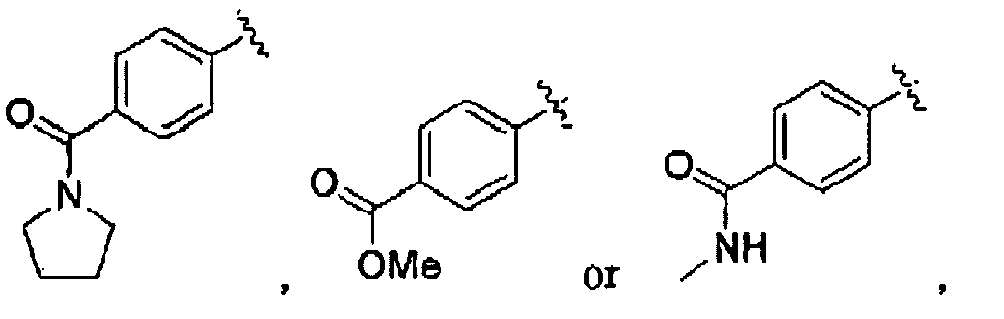 R2 is selected from H, OR6, NR6R7, C1-C6 alkyl, C2-C6 alkenyl, C2-C6 alkynyl, C1-C6 heteroalkyl, C3-C6 cycloalkyl, C3-C6 cycloalkenyl, heterocycloalkyl with 3 to 8 ring atoms wherein one atom is selected from nitrogen, oxygen and sulfur, aryl which is selected from the group consisting in phenyl, biphenyl, 1,2,3,4-tetrahydronaphthyl and naphthyl and 5-7 membered heteroaryl, wherein said alkyl, alkenyl, alkynyl, heteroalkyl, cycloalkyl, cycloalkenyl, heterocycloalkyl, aryl and heteroaryl are optionally substituted with one or more groups independently selected from C1-C6 alkyl, C2-C6 alkenyl, C2-C6 alkynyl, F, Cl, Br, I, CN, OR6, NR6R7, C(=O)R6, C(=O)OR6, OC(=O)R6, C(=O)NR6R7, (C1-C6 alkyl)amino, CH3OCH2O-, R6OC(=O)CH=CH-, NR6SO2R7, SR6 and SO2R6;R5a, R5b, and R3c are each hydrogen ; andR6 and R7 are independently selected from H, C1-C6 alkyl, C2-C6 alkenyl, C2-C6 alkynyl, C1-C6 heteroalkyl, C3-C6 cycloalkyl, C3-C6 cycloalkenyl, heterocycloalkyl with 3 to 8 ring atoms wherein one atom is selected from nitrogen, oxygen and sulfur, aryl which is selected from the group consisting in phenyl, biphenyl, 1,2,3,4-tetrahydronaphthyl and naphthyl and 5-7 membered heteroaryl, wherein said alkyl, alkenyl, alkynyl, heteroalkyl, cycloalkyl, cycloalkenyl, heterocycloalkyl, aryl and heteroaryl are optionally substituted with one or more groups independently selected from C1-C6 alkyl, C2-C6 alkenyl, C2-C6 alkynyl, F, Cl, Br, I, CN, OR6, NR6R7, C(=O)R6, C(=O)OR6, OC(=O)R6, C(=O)NR6R7, (C1-C6 alkyl)amino, CH3OCH2O-, R6OC(=O)CH=CH-, NR6SO2R7, SR6 and SO2R6,or R6 and R7 together with the atom to which they are attached form a saturated or partially unsaturated heterocyclic ring with 3 to 8 ring atoms wherein one atom is selected from nitrogen, oxygen and sulfur, wherein said heterocyclic ring is optionally substituted with one or more groups independently selected from C1-C6 alkyl, C2-C6 alkenyl, C2-C6 alkynyl, F, Cl, Br, I, CN, OR6, NR6R7, C(=O)R6, C(=O)OR6, OC(=O)R6, C(=O)NR6R7, (C1-C6 alkyl)amino, CH3OCH2O-, R6OC(=O)CH=CH-, NR6SO2R7, SR6 and SO2R6.
 - The compound of claim 1, wherein R2 is OR6.
- The compound of claim 2, wherein R6 is C1-C6 alkyl.
- The compound of claim 3, wherein R6 is ethyl.
- The compound of claim 1, wherein R2 is NR6R7.
- The compound of claim 5, wherein R6 and R7 are independently H, C1-C6 alkyl or C1-C6 heteroalkyl.
- The compound of claim 6, wherein R6 and R7 are independently H, ethyl, propyl, or CH2CH2OCH3.
- The compound of claim 8, wherein R6 and R7 are independently selected from H and C1-C6 alkyl.
- The compound of claim 1, selected from:(1E, 4E)-ethyl 2-amino-8-(4-(pyrrolidine-1-carbonyl)phenyl)-3H-benzo[b]azepine-4-carboxylate;(1E, 4E)-ethyl 2-amino-8-(4-(methoxycarbonyl)phenyl)-3H-benzo[b]azepine-4-carboxylate;(1E, 4E)-ethyl 2-amino-8-(4-(methylcarbamoyl)phenyl)-3H-benzo[b]azepine-4-carboxylate;(1E, 4E)-2-amino-N,N-dipropyl-8-(4-(pyrrolidine-1-carbonyl)-phenyl)-3H-benzo[b]azepine-4-carboxamide; and
pharmaceutically acceptable salts thereof. - A kit for use in treating a TLR7- and/or TLR8-mediated condition, comprising:a) a first pharmaceutical composition comprising a compound of any one of claims 1 to 9; andb) optionally instructions for use.
- A pharmaceutical composition, which comprises a compound as claimed in any one of claims 1 to 9 together with a pharmaceutically acceptable diluent or carrier.
- A compound according to any one of claims 1 to 9 for use as a medicament.
- A compound according to any one of claims 1 to 9 for use in the treatment of an abnormal cell growth condition.
- A compound according to any one of claims 1 to 9 for use in treating a TLR7- and/or TLR8-mediated condition.
- A compound according to any one of claims 1 to 9 for use in modulating a patient's immune system.
Priority Applications (5)
| Application Number | Priority Date | Filing Date | Title |
|---|---|---|---|
| EP16157513.9A EP3081558A1 (en) | 2005-08-19 | 2006-08-17 | 8-substituted benzoazepines as toll-like receptor modulators |
| PL06801705T PL1940797T3 (en) | 2005-08-19 | 2006-08-17 | 8-substituted benzoazepines as toll-like receptor modulators |
| EP20100184139 EP2322510A3 (en) | 2005-08-19 | 2006-08-17 | 8-substituted benzoazepines as toll-like receptor modulators |
| SI200631420T SI1940797T1 (en) | 2005-08-19 | 2006-08-17 | 8-substituted benzoazepines as toll-like receptor modulators |
| CY20121100963T CY1113399T1 (en) | 2005-08-19 | 2012-10-16 | 8-SUBSTITUTED BENZAOZEPINS AS CONSTRUCTION "TOLL" TYPE CONDENSERS |
Applications Claiming Priority (2)
| Application Number | Priority Date | Filing Date | Title |
|---|---|---|---|
| US71000405P | 2005-08-19 | 2005-08-19 | |
| PCT/US2006/032098 WO2007024612A2 (en) | 2005-08-19 | 2006-08-17 | 8-substituted benzoazepines as toll-like receptor modulators |
Related Child Applications (2)
| Application Number | Title | Priority Date | Filing Date |
|---|---|---|---|
| EP16157513.9A Division EP3081558A1 (en) | 2005-08-19 | 2006-08-17 | 8-substituted benzoazepines as toll-like receptor modulators |
| EP10184139.3 Division-Into | 2010-09-30 |
Publications (2)
| Publication Number | Publication Date |
|---|---|
| EP1940797A2 EP1940797A2 (en) | 2008-07-09 |
| EP1940797B1 true EP1940797B1 (en) | 2012-08-01 |
Family
ID=37623842
Family Applications (3)
| Application Number | Title | Priority Date | Filing Date |
|---|---|---|---|
| EP20100184139 Ceased EP2322510A3 (en) | 2005-08-19 | 2006-08-17 | 8-substituted benzoazepines as toll-like receptor modulators |
| EP06801705A Active EP1940797B1 (en) | 2005-08-19 | 2006-08-17 | 8-substituted benzoazepines as toll-like receptor modulators |
| EP16157513.9A Withdrawn EP3081558A1 (en) | 2005-08-19 | 2006-08-17 | 8-substituted benzoazepines as toll-like receptor modulators |
Family Applications Before (1)
| Application Number | Title | Priority Date | Filing Date |
|---|---|---|---|
| EP20100184139 Ceased EP2322510A3 (en) | 2005-08-19 | 2006-08-17 | 8-substituted benzoazepines as toll-like receptor modulators |
Family Applications After (1)
| Application Number | Title | Priority Date | Filing Date |
|---|---|---|---|
| EP16157513.9A Withdrawn EP3081558A1 (en) | 2005-08-19 | 2006-08-17 | 8-substituted benzoazepines as toll-like receptor modulators |
Country Status (30)
| Country | Link |
|---|---|
| US (2) | US8153622B2 (en) |
| EP (3) | EP2322510A3 (en) |
| JP (1) | JP5138592B2 (en) |
| KR (2) | KR20130082182A (en) |
| CN (6) | CN104803915A (en) |
| AP (1) | AP2008004386A0 (en) |
| AU (1) | AU2006283620B2 (en) |
| BR (1) | BRPI0614941B8 (en) |
| CA (3) | CA3003143A1 (en) |
| CR (2) | CR9809A (en) |
| DK (1) | DK1940797T3 (en) |
| EA (1) | EA018543B1 (en) |
| EC (1) | ECSP088292A (en) |
| ES (1) | ES2391031T3 (en) |
| HR (1) | HRP20120695T1 (en) |
| IL (2) | IL189467A (en) |
| MA (1) | MA29838B1 (en) |
| MX (1) | MX2008002141A (en) |
| MY (1) | MY146567A (en) |
| NO (1) | NO342587B1 (en) |
| NZ (1) | NZ565907A (en) |
| PL (1) | PL1940797T3 (en) |
| PT (1) | PT1940797E (en) |
| RS (1) | RS52447B (en) |
| SI (1) | SI1940797T1 (en) |
| TN (1) | TNSN08076A1 (en) |
| TW (2) | TW201402124A (en) |
| UA (1) | UA92754C2 (en) |
| WO (1) | WO2007024612A2 (en) |
| ZA (1) | ZA200802496B (en) |
Families Citing this family (195)
| Publication number | Priority date | Publication date | Assignee | Title |
|---|---|---|---|---|
| TWI382019B (en) * | 2005-08-19 | 2013-01-11 | Array Biopharma Inc | Aminodiazepines as toll-like receptor modulators |
| EP2313111B1 (en) * | 2008-08-01 | 2013-09-04 | Ventirx Pharmaceuticals, Inc. | Toll-like receptor agonist formulations and their use |
| ES2545275T3 (en) | 2008-11-06 | 2015-09-09 | Ventirx Pharmaceuticals, Inc. | Methods of synthesis of benzazepine derivatives |
| CN102781933B (en) | 2009-08-18 | 2016-01-20 | 文蒂雷克斯药品公司 | Substituted benzazepines as TOLL-like receptor modulators* |
| US8691809B2 (en) * | 2009-08-18 | 2014-04-08 | Ventirx Pharmaceuticals, Inc. | Substituted benzoazepines as toll-like receptor modulators |
| ES2625608T3 (en) * | 2010-04-21 | 2017-07-20 | Ventirx Pharmaceuticals, Inc. | Increase in antibody-dependent cell cytotoxicity |
| EA030813B1 (en) | 2010-05-26 | 2018-10-31 | Селекта Байосайенсиз, Инк | Methods of generating an antibody immune response and enhancing local induction of immune cytokines when using synthetic nanocarriers coupled with adjuvants |
| US9045468B2 (en) | 2010-08-17 | 2015-06-02 | Albany Molecular Research, Inc. | 2,5-methano- and 2,5-ethano-tetrahydrobenzazepine derivatives and use thereof to block reuptake of norepinephrine, dopamine, and serotonin |
| NZ608673A (en) * | 2010-10-01 | 2015-04-24 | Univ Pennsylvania | Therapeutic use of a tlr agonist and combination therapy |
| JP6092107B2 (en) * | 2010-10-01 | 2017-03-08 | ベンティアールエックス ファーマシューティカルズ, インコーポレイテッドVentiRx Pharmaceuticals,Inc. | How to treat allergic diseases |
| US9994443B2 (en) | 2010-11-05 | 2018-06-12 | Selecta Biosciences, Inc. | Modified nicotinic compounds and related methods |
| GB201022049D0 (en) * | 2010-12-29 | 2011-02-02 | Imp Innovations Ltd | Methods |
| BR112013017947A2 (en) * | 2011-01-12 | 2018-12-18 | Array Biopharma Inc | substituted benzoazepines as toll-like receptor modulators |
| MX346387B (en) * | 2011-01-12 | 2017-03-02 | Ventirx Pharmaceuticals Inc | Substituted benzoazepines as toll-like receptor modulators. |
| CN103608335B (en) | 2011-04-08 | 2018-02-23 | 爱尔兰詹森科学公司 | For treating the pyrimidine derivatives of virus infection |
| CN103566377A (en) | 2012-07-18 | 2014-02-12 | 上海博笛生物科技有限公司 | Targeted immunotherapy for cancer |
| US9868955B2 (en) | 2012-09-29 | 2018-01-16 | Dynavax Technologies Corporation | Human toll-like receptor inhibitors and methods of use thereof |
| US9228184B2 (en) | 2012-09-29 | 2016-01-05 | Dynavax Technologies Corporation | Human toll-like receptor inhibitors and methods of use thereof |
| WO2014090709A1 (en) * | 2012-12-11 | 2014-06-19 | F. Hoffmann-La Roche Ag | Dimeric compounds |
| KR101482999B1 (en) * | 2013-06-17 | 2015-01-14 | 순천향대학교 산학협력단 | Anti-inflammatory therapeutic Agents containg (E)-1-(2-(2-Nitrovinyl)Phenyl)Pyrrolidine as an Suppressor of TRIF-dependent signaling pathway of Toll-like receptors |
| CA2936376A1 (en) | 2014-01-10 | 2015-07-16 | Shanghai Birdie Biotech, Inc. | Conjugated compounds and compositions for targeted immunotherapy |
| AR100137A1 (en) | 2014-04-22 | 2016-09-14 | Hoffmann La Roche | 4-AMINO-IMIDAZOQUINOLINE COMPOUNDS |
| CN105440135A (en) | 2014-09-01 | 2016-03-30 | 博笛生物科技有限公司 | Anti-PD-L1 conjugates for the treatment of tumors |
| CN105233291A (en) | 2014-07-09 | 2016-01-13 | 博笛生物科技有限公司 | Combination Therapy Compositions and Methods of Combination Therapy for the Treatment of Cancer |
| JP6760919B2 (en) | 2014-07-09 | 2020-09-23 | バーディー バイオファーマシューティカルズ インコーポレイテッド | Anti-PD-L1 combination for treating tumors |
| KR20170118700A (en) | 2014-12-16 | 2017-10-25 | 셀진 코포레이션 | Solid forms comprising (1e,4e)-2-amino-n,n-dipropyl-8-(4-(pyrrolidine-1-carbonyl)phenyl)-3h-benzo[b]azepine-4-carboxamide, compositions thereof, and uses thereof |
| WO2016096778A1 (en) * | 2014-12-18 | 2016-06-23 | F. Hoffmann-La Roche Ag | Benzazepine sulfonamide compounds |
| EP3722297A1 (en) | 2015-03-04 | 2020-10-14 | Gilead Sciences, Inc. | Toll-like receptor modulating 4,6-diamino-pyrido[3,2-d]pyrimidine compounds |
| MX364223B (en) * | 2015-03-06 | 2019-04-16 | Hoffmann La Roche | Benzazepine dicarboxamide compounds. |
| JP6839104B2 (en) | 2015-06-30 | 2021-03-03 | エフ.ホフマン−ラ ロシュ アーゲーF. Hoffmann−La Roche Aktiengesellschaft | A novel substitution aminothiazolopyrimidinedione for the treatment and prevention of viral infections |
| JP2018525412A (en) | 2015-08-26 | 2018-09-06 | ギリアード サイエンシーズ, インコーポレイテッド | Deuterated toll-like receptor modulator |
| JP2018527366A (en) * | 2015-09-15 | 2018-09-20 | ギリアード サイエンシーズ, インコーポレイテッド | Toll-like receptor modulators for treating HIV |
| JP6893501B2 (en) * | 2015-09-17 | 2021-06-23 | エフ・ホフマン−ラ・ロシュ・アクチェンゲゼルシャフト | Sulfinylphenyl or sulfonimideylphenyl benzazepine |
| US20180303845A1 (en) | 2015-11-02 | 2018-10-25 | Ventirx Pharmaceuticals, Inc. | Use of tlr8 agonists to treat cancer |
| CN109311967B (en) | 2015-12-15 | 2022-03-04 | 吉利德科学公司 | human immunodeficiency virus neutralizing antibody |
| CN106943596A (en) | 2016-01-07 | 2017-07-14 | 博笛生物科技(北京)有限公司 | Anti-CD20 Combinations for Treating Tumors |
| CN106943598A (en) | 2016-01-07 | 2017-07-14 | 博笛生物科技(北京)有限公司 | Anti-HER2 Combinations for the Treatment of Tumors |
| CN106943597A (en) | 2016-01-07 | 2017-07-14 | 博笛生物科技(北京)有限公司 | Anti-EGFR Combinations for the Treatment of Tumors |
| JP7022702B2 (en) * | 2016-05-23 | 2022-02-18 | エフ・ホフマン-ラ・ロシュ・アクチェンゲゼルシャフト | Benzazepine dicarboxamide compound having a secondary amide group |
| EP3464245B1 (en) * | 2016-05-23 | 2020-10-14 | H. Hoffnabb-La Roche Ag | Benzazepine dicarboxamide compounds with tertiary amide function |
| AU2017271990B2 (en) | 2016-05-27 | 2019-12-19 | Gilead Sciences, Inc. | Methods for treating Hepatitis B virus infections using NS5A, NS5B or NS3 inhibitors |
| BR102017010009A2 (en) | 2016-05-27 | 2017-12-12 | Gilead Sciences, Inc. | COMPOUNDS FOR THE TREATMENT OF HEPATITIS B VIRUS INFECTION |
| WO2017216054A1 (en) | 2016-06-12 | 2017-12-21 | F. Hoffmann-La Roche Ag | Dihydropyrimidinyl benzazepine carboxamide compounds |
| US11053256B2 (en) | 2016-07-01 | 2021-07-06 | Janssen Sciences Ireland Unlimited Company | Dihydropyranopyrimidines for the treatment of viral infections |
| JOP20190024A1 (en) | 2016-08-26 | 2019-02-19 | Gilead Sciences Inc | Substituted pyrrolizine compounds and uses thereof |
| EP3507288B1 (en) | 2016-09-02 | 2020-08-26 | Gilead Sciences, Inc. | 4,6-diamino-pyrido[3,2-d]pyrimidine derivaties as toll like receptor modulators |
| PT3507276T (en) | 2016-09-02 | 2022-01-11 | Gilead Sciences Inc | TOLL-TYPE RECEIVER MODULATING COMPOUNDS |
| MA46340A (en) | 2016-09-29 | 2019-08-07 | Janssen Sciences Ireland Unlimited Co | PYRIMIDINE MEDICINES FOR THE TREATMENT OF VIRAL INFECTIONS AND OTHER DISEASES |
| US10662416B2 (en) | 2016-10-14 | 2020-05-26 | Precision Biosciences, Inc. | Engineered meganucleases specific for recognition sequences in the hepatitis B virus genome |
| TW202510891A (en) | 2017-01-31 | 2025-03-16 | 美商基利科學股份有限公司 | Crystalline forms of tenofovir alafenamide |
| JOP20180008A1 (en) | 2017-02-02 | 2019-01-30 | Gilead Sciences Inc | Compounds for the treatment of hepatitis b virus infection |
| HUE056427T2 (en) * | 2017-03-15 | 2022-02-28 | Silverback Therapeutics Inc | Benzazepine compounds, conjugates, and uses thereof |
| JOP20180040A1 (en) | 2017-04-20 | 2019-01-30 | Gilead Sciences Inc | Pd-1/pd-l1 inhibitors |
| CN118515666A (en) | 2017-04-27 | 2024-08-20 | 博笛生物科技有限公司 | 2-Amino-quinoline derivatives |
| KR20200019226A (en) | 2017-06-23 | 2020-02-21 | 버디 바이오파마슈티칼즈, 인크. | Pharmaceutical composition |
| AR112412A1 (en) | 2017-08-17 | 2019-10-23 | Gilead Sciences Inc | CHOLINE SALT FORMS OF AN HIV CAPSID INHIBITOR |
| AR112413A1 (en) | 2017-08-17 | 2019-10-23 | Gilead Sciences Inc | SOLID FORMS OF AN HIV CAPSID INHIBITOR |
| KR102891807B1 (en) | 2017-08-22 | 2025-12-01 | 길리애드 사이언시즈, 인코포레이티드 | Therapeutic heterocyclic compounds |
| CN109694351B (en) * | 2017-10-23 | 2020-07-28 | 江苏恒瑞医药股份有限公司 | Benzazepine derivatives, process for their preparation and their use in medicine |
| WO2019084060A1 (en) | 2017-10-24 | 2019-05-02 | Silverback Therapeutics, Inc. | Conjugates and methods of use thereof for selective delivery of immune-modulatory agents |
| CN109721597B (en) * | 2017-10-30 | 2021-05-14 | 上海迪诺医药科技有限公司 | Pyridoazepine derivative, and pharmaceutical composition and application thereof |
| JP2021506827A (en) | 2017-12-15 | 2021-02-22 | シルバーバック セラピューティックス インコーポレイテッド | Antibody constructs for the treatment of hepatitis-drug conjugates |
| CN111566120B (en) | 2017-12-20 | 2023-09-29 | 捷克共和国有机化学与生物化学研究所 | 3’3’ cyclic dinucleotide with phosphonate bond that activates STING adapter protein |
| US11203610B2 (en) | 2017-12-20 | 2021-12-21 | Institute Of Organic Chemistry And Biochemistry Ascr, V.V.I. | 2′3′ cyclic dinucleotides with phosphonate bond activating the sting adaptor protein |
| CR20200347A (en) | 2018-02-13 | 2020-09-23 | Gilead Sciences Inc | Pd-1/pd-l1 inhibitors |
| US10836746B2 (en) | 2018-02-15 | 2020-11-17 | Gilead Sciences, Inc. | Therapeutic compounds |
| JP7038843B2 (en) | 2018-02-16 | 2022-03-18 | ギリアード サイエンシーズ, インコーポレイテッド | Methods and Intermediates for Preparing Therapeutic Compounds Useful in the Treatment of Retroviridae Virus Infections |
| US10836769B2 (en) | 2018-02-26 | 2020-11-17 | Gilead Sciences, Inc. | Substituted pyrrolizine compounds and uses thereof |
| TW202415645A (en) | 2018-03-01 | 2024-04-16 | 愛爾蘭商健生科學愛爾蘭無限公司 | 2,4-diaminoquinazoline derivatives and medical uses thereof |
| US10870691B2 (en) | 2018-04-05 | 2020-12-22 | Gilead Sciences, Inc. | Antibodies and fragments thereof that bind hepatitis B virus protein X |
| TWI818007B (en) | 2018-04-06 | 2023-10-11 | 捷克科學院有機化學與生物化學研究所 | 2'3'-cyclic dinucleotides |
| TWI833744B (en) | 2018-04-06 | 2024-03-01 | 捷克科學院有機化學與生物化學研究所 | 3'3'-cyclic dinucleotides |
| TW202005654A (en) | 2018-04-06 | 2020-02-01 | 捷克科學院有機化學與生物化學研究所 | 2'2'-cyclic dinucleotides |
| TW201945388A (en) | 2018-04-12 | 2019-12-01 | 美商精密生物科學公司 | Optimized engineered meganucleases having specificity for a recognition sequence in the hepatitis B virus genome |
| KR102591947B1 (en) | 2018-04-19 | 2023-10-25 | 길리애드 사이언시즈, 인코포레이티드 | PD-1/PD-L1 inhibitors |
| WO2019211799A1 (en) | 2018-05-03 | 2019-11-07 | Institute Of Organic Chemistry And Biochemistry Ascr, V.V.I. | 2'3'-cyclic dinucleotide analogue comprising a cyclopentanyl modified nucleotide |
| CN112153988A (en) | 2018-05-17 | 2020-12-29 | 博尔特生物治疗药物有限公司 | immunoconjugate |
| CR20200653A (en) | 2018-07-03 | 2021-02-11 | Gilead Sciences Inc | ANTIBODIES TARGETING HIV GP120 AND METHODS OF USE |
| CN115710266B (en) | 2018-07-03 | 2024-09-13 | 江苏恒瑞医药股份有限公司 | Pyridopyrimidine derivative, preparation method thereof and application thereof in medicines |
| US11186579B2 (en) | 2018-07-06 | 2021-11-30 | Gilead Sciences, Inc. | Therapeutic heterocyclic compounds |
| CA3103987C (en) | 2018-07-06 | 2023-08-01 | Gilead Sciences, Inc. | Therapeutic heterocyclic compounds |
| PT3820572T (en) | 2018-07-13 | 2023-11-10 | Gilead Sciences Inc | Pd-1/pd-l1 inhibitors |
| KR20230141905A (en) | 2018-07-16 | 2023-10-10 | 길리애드 사이언시즈, 인코포레이티드 | Capsid inhibitors for the treatment of hiv |
| WO2020028097A1 (en) | 2018-08-01 | 2020-02-06 | Gilead Sciences, Inc. | Solid forms of (r)-11-(methoxymethyl)-12-(3-methoxypropoxy)-3,3-dimethyl-8-0x0-2,3,8,13b-tetrahydro-1h-pyrido[2,1-a]pyrrolo[1,2-c] phthalazine-7-c arboxylic acid |
| SG11202101980VA (en) | 2018-09-12 | 2021-03-30 | Silverback Therapeutics Inc | Methods and composition for the treatment of disease with immune stimulatory conjugates |
| WO2020072656A1 (en) | 2018-10-03 | 2020-04-09 | Gilead Sciences, Inc. | Imidozopyrimidine derivatives |
| JP7158577B2 (en) | 2018-10-24 | 2022-10-21 | ギリアード サイエンシーズ, インコーポレイテッド | PD-1/PD-L1 inhibitor |
| KR102658602B1 (en) | 2018-10-31 | 2024-04-19 | 길리애드 사이언시즈, 인코포레이티드 | Substituted 6-azabenzimidazole compounds with HPK1 inhibitory activity |
| EP4371987B9 (en) | 2018-10-31 | 2025-11-26 | Gilead Sciences, Inc. | Substituted 6-azabenzimidazole compounds as hpk1 inhibitors |
| JP7287708B2 (en) | 2019-02-08 | 2023-06-06 | プロジェニア インコーポレイテッド | Toll-like receptor 7 or 8 agonist-cholesterol conjugate and use thereof |
| WO2020176505A1 (en) | 2019-02-25 | 2020-09-03 | Gilead Sciences, Inc. | Protein kinase c agonists |
| WO2020176510A1 (en) | 2019-02-25 | 2020-09-03 | Gilead Sciences, Inc. | Protein kinase c agonists |
| US20220143061A1 (en) | 2019-03-07 | 2022-05-12 | Institute Of Organic Chemistry And Biochemistry Ascr, V.V.I. | 3'3'-cyclic dinucleotides and prodrugs thereof |
| EP3935065A1 (en) | 2019-03-07 | 2022-01-12 | Institute of Organic Chemistry and Biochemistry ASCR, V.V.I. | 3'3'-cyclic dinucleotide analogue comprising a cyclopentanyl modified nucleotide as sting modulator |
| CN113543851B (en) | 2019-03-07 | 2025-03-18 | 捷克共和国有机化学与生物化学研究所 | 2'3'-Cyclic dinucleotides and prodrugs thereof |
| TW202544011A (en) | 2019-03-22 | 2025-11-16 | 美商基利科學股份有限公司 | Bridged tricyclic carbamoylpyridone compounds and their pharmaceutical use |
| TW202210480A (en) | 2019-04-17 | 2022-03-16 | 美商基利科學股份有限公司 | Solid forms of a toll-like receptor modulator |
| TWI751517B (en) | 2019-04-17 | 2022-01-01 | 美商基利科學股份有限公司 | Solid forms of a toll-like receptor modulator |
| TWI762925B (en) | 2019-05-21 | 2022-05-01 | 美商基利科學股份有限公司 | Methods of identifying hiv patients sensitive to therapy with gp120 v3 glycan-directed antibodies |
| WO2020237025A1 (en) | 2019-05-23 | 2020-11-26 | Gilead Sciences, Inc. | Substituted exo-methylene-oxindoles which are hpk1/map4k1 inhibitors |
| WO2020255019A1 (en) | 2019-06-18 | 2020-12-24 | Janssen Sciences Ireland Unlimited Company | Combination of hepatitis b virus (hbv) vaccines and a quinazoline derivative |
| KR20220024441A (en) | 2019-06-18 | 2022-03-03 | 얀센 사이언시즈 아일랜드 언리미티드 컴퍼니 | Quinazoline prodrugs for the treatment of viral infections and additional diseases |
| CA3140708A1 (en) | 2019-06-18 | 2020-12-24 | Helen Horton | Combination of hepatitis b virus (hbv) vaccines and pyridopyrimidine derivatives |
| WO2020257407A1 (en) | 2019-06-19 | 2020-12-24 | Silverback Therapeutics, Inc. | Anti-mesothelin antibodies and immunoconjugates thereof |
| WO2020263830A1 (en) | 2019-06-25 | 2020-12-30 | Gilead Sciences, Inc. | Flt3l-fc fusion proteins and methods of use |
| TWI879779B (en) | 2019-06-28 | 2025-04-11 | 美商基利科學股份有限公司 | Processes for preparing toll-like receptor modulator compounds |
| AU2020315598B2 (en) | 2019-07-16 | 2024-12-12 | Gilead Sciences, Inc. | HIV vaccines and methods of making and using |
| WO2021011891A1 (en) | 2019-07-18 | 2021-01-21 | Gilead Sciences, Inc. | Long-acting formulations of tenofovir alafenamide |
| WO2021030665A1 (en) | 2019-08-15 | 2021-02-18 | Silverback Therapeutics, Inc. | Formulations of benzazepine conjugates and uses thereof |
| EP4017476A1 (en) | 2019-08-19 | 2022-06-29 | Gilead Sciences, Inc. | Pharmaceutical formulations of tenofovir alafenamide |
| CA3149557A1 (en) | 2019-09-30 | 2021-04-08 | Scott J. Balsitis | Hbv vaccines and methods treating hbv |
| CA3151322A1 (en) | 2019-10-01 | 2021-04-08 | Silverback Therapeutics, Inc. | Combination therapy with immune stimulatory conjugates |
| CN118178645A (en) | 2019-10-18 | 2024-06-14 | 四十七公司 | Combination therapy for the treatment of myelodysplastic syndrome and acute myeloid leukemia |
| KR20220091576A (en) | 2019-10-31 | 2022-06-30 | 포티 세븐, 인코포레이티드 | Anti-CD47 and Anti-CD20 Based Treatment of Hematological Cancers |
| TWI778443B (en) | 2019-11-12 | 2022-09-21 | 美商基利科學股份有限公司 | Mcl1 inhibitors |
| WO2021108544A1 (en) | 2019-11-26 | 2021-06-03 | Gilead Sciences, Inc. | Capsid inhibitors for the prevention of hiv |
| WO2021113765A1 (en) | 2019-12-06 | 2021-06-10 | Precision Biosciences, Inc. | Optimized engineered meganucleases having specificity for a recognition sequence in the hepatitis b virus genome |
| HRP20241518T1 (en) | 2019-12-24 | 2025-01-03 | Carna Biosciences, Inc. | Diacylglycerol kinase modulating compounds |
| KR20220123437A (en) | 2020-01-02 | 2022-09-06 | 지앙수 헨그루이 파마슈티컬스 컴퍼니 리미티드 | Crystalline form of pyridopyrimidine derivative and method for preparing same |
| PH12022552122A1 (en) | 2020-02-14 | 2024-01-29 | Jounce Therapeutics Inc | Antibodies and fusion proteins that bind to ccr8 and uses thereof |
| WO2021168274A1 (en) | 2020-02-21 | 2021-08-26 | Silverback Therapeutics, Inc. | Nectin-4 antibody conjugates and uses thereof |
| AU2021231160A1 (en) | 2020-03-02 | 2022-09-22 | Progeneer Inc. | Live-pathogen-mimetic nanoparticles based on pathogen cell wall skeleton, and production method thereof |
| AR121620A1 (en) | 2020-03-20 | 2022-06-22 | Gilead Sciences Inc | 4-C-SUBSTITUTED-2-HALO-2-DEOXIADENOSINE NUCLEOSIDE PRODRUGS AND METHODS OF PREPARATION AND USE THEREOF |
| US12110294B2 (en) | 2020-05-01 | 2024-10-08 | Gilead Sciences, Inc. | CD73 compounds |
| WO2021236944A1 (en) | 2020-05-21 | 2021-11-25 | Gilead Sciences, Inc. | Pharmaceutical compositions comprising bictegravir |
| CA3181690A1 (en) | 2020-06-25 | 2021-12-30 | Chienhung CHOU | Capsid inhibitors for the treatment of hiv |
| KR20230047361A (en) | 2020-07-01 | 2023-04-07 | 아르스 파마슈티컬스 인크. | Anti-ASGR1 antibody conjugates and uses thereof |
| EP4194008A4 (en) | 2020-08-04 | 2025-01-08 | Progeneer Inc. | KINETIC ACTION ADJUVANT SET |
| WO2022031021A1 (en) | 2020-08-04 | 2022-02-10 | 성균관대학교산학협력단 | Mrna vaccine comprising adjuvant capable of kinetic control |
| JP2023536954A (en) | 2020-08-04 | 2023-08-30 | プロジェニア インコーポレイテッド | Conjugate of Toll-like Receptor 7 or 8 Agonist with Temporarily Inactivated Activation Site and Functional Drug, and Use of the Same |
| ES3054072T3 (en) | 2020-08-07 | 2026-01-29 | Gilead Sciences Inc | Prodrugs of phosphonamide nucleotide analogues and their pharmaceutical use |
| TWI815194B (en) | 2020-10-22 | 2023-09-11 | 美商基利科學股份有限公司 | INTERLEUKIN-2-Fc FUSION PROTEINS AND METHODS OF USE |
| US20220144923A1 (en) | 2020-11-11 | 2022-05-12 | Gilead Sciences, Inc. | METHODS OF IDENTIFYING HIV PATIENTS SENSITIVE TO THERAPY WITH gp120 CD4 BINDING SITE-DIRECTED ANTIBODIES |
| AU2022253902A1 (en) | 2021-04-10 | 2023-11-02 | Genmab A/S | Folr1 binding agents, conjugates thereof and methods of using the same |
| TW202302145A (en) | 2021-04-14 | 2023-01-16 | 美商基利科學股份有限公司 | Co-inhibition of cd47/sirpα binding and nedd8-activating enzyme e1 regulatory subunit for the treatment of cancer |
| JP7742892B2 (en) | 2021-04-23 | 2025-09-22 | ジェンマブ エー/エス | Anti-CD70 antibodies, conjugates thereof and methods of using same |
| JP2024518558A (en) | 2021-05-13 | 2024-05-01 | ギリアード サイエンシーズ, インコーポレイテッド | Combination of TLR8 Modulating Compounds with Anti-HBV siRNA Therapeutics |
| WO2022245671A1 (en) | 2021-05-18 | 2022-11-24 | Gilead Sciences, Inc. | Methods of using flt3l-fc fusion proteins |
| EP4359413A1 (en) | 2021-06-23 | 2024-05-01 | Gilead Sciences, Inc. | Diacylglyercol kinase modulating compounds |
| US11932634B2 (en) | 2021-06-23 | 2024-03-19 | Gilead Sciences, Inc. | Diacylglycerol kinase modulating compounds |
| WO2022271659A1 (en) | 2021-06-23 | 2022-12-29 | Gilead Sciences, Inc. | Diacylglyercol kinase modulating compounds |
| US11976072B2 (en) | 2021-06-23 | 2024-05-07 | Gilead Sciences, Inc. | Diacylglycerol kinase modulating compounds |
| TW202320857A (en) | 2021-07-06 | 2023-06-01 | 美商普方生物製藥美國公司 | Linkers, drug linkers and conjugates thereof and methods of using the same |
| US20230183216A1 (en) | 2021-10-28 | 2023-06-15 | Gilead Sciences, Inc. | Pyridizin-3(2h)-one derivatives |
| CR20240173A (en) | 2021-10-29 | 2024-06-20 | Gilead Sciences Inc | CD73 COMPOUNDS |
| US12084467B2 (en) | 2021-12-03 | 2024-09-10 | Gilead Sciences, Inc. | Therapeutic compounds for HIV virus infection |
| PL4445900T3 (en) | 2021-12-03 | 2025-09-22 | Gilead Sciences, Inc. | THERAPEUTIC COMPOUNDS AGAINST HIV INFECTION |
| CN118369316A (en) | 2021-12-03 | 2024-07-19 | 吉利德科学公司 | Therapeutic compounds for HIV infection |
| US20230203202A1 (en) | 2021-12-08 | 2023-06-29 | Dragonfly Therapeutics, Inc. | Proteins binding nkg2d, cd16 and 5t4 |
| WO2023107954A1 (en) | 2021-12-08 | 2023-06-15 | Dragonfly Therapeutics, Inc. | Antibodies targeting 5t4 and uses thereof |
| CN118488948A (en) | 2021-12-22 | 2024-08-13 | 吉利德科学公司 | IKAROS zinc finger family degraders and their uses |
| JP2024546851A (en) | 2021-12-22 | 2024-12-26 | ギリアード サイエンシーズ, インコーポレイテッド | IKAROS ZINC FINGER FAMILY DEGRADANT AND USES THEREOF |
| TW202340168A (en) | 2022-01-28 | 2023-10-16 | 美商基利科學股份有限公司 | Parp7 inhibitors |
| JP2025509610A (en) | 2022-03-17 | 2025-04-11 | ギリアード サイエンシーズ, インコーポレイテッド | IKAROS ZINC FINGER FAMILY DEGRADANT AND USES THEREOF |
| WO2023183817A1 (en) | 2022-03-24 | 2023-09-28 | Gilead Sciences, Inc. | Combination therapy for treating trop-2 expressing cancers |
| TWI876305B (en) | 2022-04-05 | 2025-03-11 | 美商基利科學股份有限公司 | Combination therapy for treating colorectal cancer |
| TWI856796B (en) | 2022-04-06 | 2024-09-21 | 美商基利科學股份有限公司 | Bridged tricyclic carbamoylpyridone compounds and uses thereof |
| JP2025513258A (en) | 2022-04-21 | 2025-04-24 | ギリアード サイエンシーズ, インコーポレイテッド | KRA G12D modulating compounds |
| TWI867601B (en) | 2022-07-01 | 2024-12-21 | 美商基利科學股份有限公司 | Therapeutic compounds useful for the prophylactic or therapeutic treatment of an hiv virus infection |
| IL317958A (en) | 2022-07-01 | 2025-02-01 | Gilead Sciences Inc | Cd73 compounds |
| AU2023307100A1 (en) | 2022-07-12 | 2025-01-02 | Gilead Sciences, Inc. | Hiv immunogenic polypeptides and vaccines and uses thereof |
| KR20250051732A (en) | 2022-08-26 | 2025-04-17 | 길리애드 사이언시즈, 인코포레이티드 | Dosage and schedule regimen for broadly neutralizing antibodies |
| US20240091351A1 (en) | 2022-09-21 | 2024-03-21 | Gilead Sciences, Inc. | FOCAL IONIZING RADIATION AND CD47/SIRPa DISRUPTION ANTICANCER COMBINATION THERAPY |
| EP4598934A1 (en) | 2022-10-04 | 2025-08-13 | Gilead Sciences, Inc. | 4'-thionucleoside analogues and their pharmaceutical use |
| KR20250122479A (en) | 2022-12-22 | 2025-08-13 | 길리애드 사이언시즈, 인코포레이티드 | PRMT5 inhibitors and uses thereof |
| CN120882725A (en) | 2023-04-11 | 2025-10-31 | 吉利德科学公司 | KRAS-regulated compounds |
| AR132464A1 (en) | 2023-04-19 | 2025-07-02 | Gilead Sciences Inc | CAPSID INHIBITOR DOSAGE REGIMEN |
| CN121079300A (en) | 2023-04-21 | 2025-12-05 | 吉利德科学公司 | PRMT5 inhibitors and their uses |
| TW202448483A (en) | 2023-05-31 | 2024-12-16 | 美商基利科學股份有限公司 | Therapeutic compounds for hiv |
| WO2024249573A1 (en) | 2023-05-31 | 2024-12-05 | Gilead Sciences, Inc. | Solid forms of compounds useful in the treatment of hiv |
| WO2025006720A1 (en) | 2023-06-30 | 2025-01-02 | Gilead Sciences, Inc. | Kras modulating compounds |
| WO2025024811A1 (en) | 2023-07-26 | 2025-01-30 | Gilead Sciences, Inc. | Parp7 inhibitors |
| WO2025024663A1 (en) | 2023-07-26 | 2025-01-30 | Gilead Sciences, Inc. | Parp7 inhibitors |
| AU2023460182A1 (en) | 2023-07-28 | 2026-02-05 | Gilead Sciences, Inc. | Weekly regimen of lenacapavir for the treatment and prevention of hiv |
| WO2025042394A1 (en) | 2023-08-23 | 2025-02-27 | Gilead Sciences, Inc. | Dosing regimen of hiv capsid inhibitor |
| US20250101042A1 (en) | 2023-09-08 | 2025-03-27 | Gilead Sciences, Inc. | Kras g12d modulating compounds |
| US20250109147A1 (en) | 2023-09-08 | 2025-04-03 | Gilead Sciences, Inc. | Kras g12d modulating compounds |
| AR133955A1 (en) | 2023-09-26 | 2025-11-19 | Profoundbio Us Co | PTK7 BINDING AGENTS, CONJUGATES THEREOF AND METHODS OF USE THEREOF |
| WO2025080879A1 (en) | 2023-10-11 | 2025-04-17 | Gilead Sciences, Inc. | Bridged tricyclic carbamoylpyridone compounds and uses thereof |
| WO2025080850A1 (en) | 2023-10-11 | 2025-04-17 | Gilead Sciences, Inc. | Bridged tricyclic carbamoylpyridone compounds and uses thereof |
| WO2025080863A1 (en) | 2023-10-11 | 2025-04-17 | Gilead Sciences, Inc. | Bridged tricyclic carbamoylpyridone compounds and uses thereof |
| WO2025096589A1 (en) | 2023-11-03 | 2025-05-08 | Gilead Sciences, Inc. | Prmt5 inhibitors and uses thereof |
| WO2025137640A1 (en) | 2023-12-22 | 2025-06-26 | Gilead Sciences, Inc. | Azaspiro wrn inhibitors |
| US20250230163A1 (en) | 2023-12-22 | 2025-07-17 | Gilead Sciences, Inc. | Solid forms of hiv integrase inhibitors |
| WO2025149661A1 (en) | 2024-01-10 | 2025-07-17 | Genmab A/S | Slitrk6 binding agents, conjugates thereof and methods of using the same |
| US20250381289A1 (en) | 2024-02-29 | 2025-12-18 | Genmab A/S | Egfr and c-met bispecific binding agents, conjugates thereof and methods of using the same |
| US20250333424A1 (en) | 2024-03-01 | 2025-10-30 | Gilead Sciences, Inc. | Antiviral compounds |
| US20250289822A1 (en) | 2024-03-01 | 2025-09-18 | Gilead Sciences, Inc. | Solid forms of hiv integrase inhibitors |
| WO2025184447A1 (en) | 2024-03-01 | 2025-09-04 | Gilead Sciences, Inc. | Pharmaceutical compositions comprising hiv integrase inhibitors |
| US20250345390A1 (en) | 2024-05-13 | 2025-11-13 | Gilead Sciences, Inc. | Combination therapies |
| WO2025240242A1 (en) | 2024-05-13 | 2025-11-20 | Gilead Sciences, Inc. | Combination therapies with ribavirin |
| WO2025240246A1 (en) | 2024-05-13 | 2025-11-20 | Gilead Sciences, Inc. | Combination therapies with ribavirin |
| US20250345389A1 (en) | 2024-05-13 | 2025-11-13 | Gilead Sciences, Inc. | Combination therapies |
| US20250376484A1 (en) | 2024-05-21 | 2025-12-11 | Gilead Sciences, Inc. | Prmt5 inhibitors and uses thereof |
| US20260007683A1 (en) | 2024-06-14 | 2026-01-08 | Gilead Sciences, Inc. | Pharmaceutical compositions comprising hiv integrase inhibitors |
Family Cites Families (25)
| Publication number | Priority date | Publication date | Assignee | Title |
|---|---|---|---|---|
| US3854480A (en) | 1969-04-01 | 1974-12-17 | Alza Corp | Drug-delivery system |
| US4002610A (en) * | 1975-09-22 | 1977-01-11 | Mcneil Laboratories, Incorporated | 2-Aminobenzodiazepine-5-ones |
| US4675189A (en) | 1980-11-18 | 1987-06-23 | Syntex (U.S.A.) Inc. | Microencapsulation of water soluble active polypeptides |
| US4452775A (en) | 1982-12-03 | 1984-06-05 | Syntex (U.S.A.) Inc. | Cholesterol matrix delivery system for sustained release of macromolecules |
| US5075109A (en) | 1986-10-24 | 1991-12-24 | Southern Research Institute | Method of potentiating an immune response |
| JPS6487631A (en) | 1987-09-28 | 1989-03-31 | Idemitsu Petrochemical Co | Production of polyarylene sulfide |
| US5133974A (en) | 1989-05-05 | 1992-07-28 | Kv Pharmaceutical Company | Extended release pharmaceutical formulations |
| GB8920519D0 (en) | 1989-09-11 | 1989-10-25 | Rhone Poulenc Ltd | New compositions of matter |
| US5407686A (en) | 1991-11-27 | 1995-04-18 | Sidmak Laboratories, Inc. | Sustained release composition for oral administration of active ingredient |
| US5543523A (en) | 1994-11-15 | 1996-08-06 | Regents Of The University Of Minnesota | Method and intermediates for the synthesis of korupensamines |
| US5736152A (en) | 1995-10-27 | 1998-04-07 | Atrix Laboratories, Inc. | Non-polymeric sustained release delivery system |
| PT825186E (en) * | 1996-08-16 | 2002-08-30 | Pfizer | 2-AMINOBENZAZEPINE DERIVATIVES AND THEIR USE FOR IMMUNOSUPPRESSION TREATMENT |
| CN1549726A (en) * | 2000-07-31 | 2004-11-24 | 耶鲁大学 | Vaccines directed by the innate immune system |
| WO2003084527A1 (en) * | 2002-04-08 | 2003-10-16 | Takeda Chemical Industries, Ltd. | Severe sepsis preventive therapeutic agent |
| RS107404A (en) * | 2002-06-12 | 2007-02-05 | Biogen Idec Ma Inc., | Method of treating ischemia perefusion injury using adenosine receptor antagonists |
| US20040213264A1 (en) | 2003-04-25 | 2004-10-28 | Nortel Networks Limited | Service class and destination dominance traffic management |
| US7410975B2 (en) * | 2003-06-20 | 2008-08-12 | Coley Pharmaceutical Group, Inc. | Small molecule toll-like receptor (TLR) antagonists |
| WO2005041891A2 (en) * | 2003-10-31 | 2005-05-12 | 3M Innovative Properties Company | Neutrophil activation by immune response modifier compounds |
| US20050226878A1 (en) * | 2003-12-02 | 2005-10-13 | 3M Innovative Properties Company | Therapeutic combinations and methods including IRM compounds |
| WO2005055932A2 (en) * | 2003-12-02 | 2005-06-23 | 3M Innovative Properties Company | Therapeutic combinations and methods including irm compounds |
| WO2006026760A2 (en) | 2004-09-02 | 2006-03-09 | 3M Innovative Properties Company | 1-amino imidazo-containing compounds and methods |
| TWI382019B (en) * | 2005-08-19 | 2013-01-11 | Array Biopharma Inc | Aminodiazepines as toll-like receptor modulators |
| ES2545275T3 (en) * | 2008-11-06 | 2015-09-09 | Ventirx Pharmaceuticals, Inc. | Methods of synthesis of benzazepine derivatives |
| CN102781933B (en) * | 2009-08-18 | 2016-01-20 | 文蒂雷克斯药品公司 | Substituted benzazepines as TOLL-like receptor modulators* |
| US8691809B2 (en) * | 2009-08-18 | 2014-04-08 | Ventirx Pharmaceuticals, Inc. | Substituted benzoazepines as toll-like receptor modulators |
-
2006
- 2006-08-10 TW TW102117584A patent/TW201402124A/en unknown
- 2006-08-10 TW TW095129414A patent/TWI404537B/en not_active IP Right Cessation
- 2006-08-17 EA EA200800634A patent/EA018543B1/en unknown
- 2006-08-17 AU AU2006283620A patent/AU2006283620B2/en not_active Ceased
- 2006-08-17 UA UAA200803390A patent/UA92754C2/en unknown
- 2006-08-17 CA CA3003143A patent/CA3003143A1/en not_active Abandoned
- 2006-08-17 CA CA2865331A patent/CA2865331C/en active Active
- 2006-08-17 EP EP20100184139 patent/EP2322510A3/en not_active Ceased
- 2006-08-17 EP EP06801705A patent/EP1940797B1/en active Active
- 2006-08-17 PL PL06801705T patent/PL1940797T3/en unknown
- 2006-08-17 CN CN201510118046.8A patent/CN104803915A/en active Pending
- 2006-08-17 SI SI200631420T patent/SI1940797T1/en unknown
- 2006-08-17 US US12/064,193 patent/US8153622B2/en active Active
- 2006-08-17 ES ES06801705T patent/ES2391031T3/en active Active
- 2006-08-17 NZ NZ565907A patent/NZ565907A/en not_active IP Right Cessation
- 2006-08-17 CN CN201510165871.3A patent/CN104910072A/en active Pending
- 2006-08-17 CA CA2619581A patent/CA2619581C/en active Active
- 2006-08-17 WO PCT/US2006/032098 patent/WO2007024612A2/en not_active Ceased
- 2006-08-17 RS RS20120384A patent/RS52447B/en unknown
- 2006-08-17 DK DK06801705.2T patent/DK1940797T3/en active
- 2006-08-17 PT PT06801705T patent/PT1940797E/en unknown
- 2006-08-17 HR HRP20120695TT patent/HRP20120695T1/en unknown
- 2006-08-17 KR KR1020137016949A patent/KR20130082182A/en not_active Withdrawn
- 2006-08-17 KR KR1020087006590A patent/KR101442846B1/en not_active Expired - Fee Related
- 2006-08-17 MY MYPI20080300A patent/MY146567A/en unknown
- 2006-08-17 CN CN201510192094.1A patent/CN104945323A/en active Pending
- 2006-08-17 AP AP2008004386A patent/AP2008004386A0/en unknown
- 2006-08-17 BR BRPI0614941A patent/BRPI0614941B8/en not_active IP Right Cessation
- 2006-08-17 MX MX2008002141A patent/MX2008002141A/en active IP Right Grant
- 2006-08-17 EP EP16157513.9A patent/EP3081558A1/en not_active Withdrawn
- 2006-08-17 CN CNA2006800380964A patent/CN101309906A/en active Pending
- 2006-08-17 JP JP2008527127A patent/JP5138592B2/en not_active Expired - Fee Related
- 2006-08-17 CN CN201810884424.7A patent/CN109096192A/en active Pending
- 2006-08-17 CN CN201810884657.7A patent/CN109096193A/en active Pending
-
2008
- 2008-02-12 IL IL189467A patent/IL189467A/en active IP Right Grant
- 2008-02-18 TN TNP2008000076A patent/TNSN08076A1/en unknown
- 2008-03-12 CR CR9809A patent/CR9809A/en unknown
- 2008-03-18 MA MA30762A patent/MA29838B1/en unknown
- 2008-03-18 NO NO20081425A patent/NO342587B1/en unknown
- 2008-03-18 ZA ZA200802496A patent/ZA200802496B/en unknown
- 2008-03-18 EC EC2008008292A patent/ECSP088292A/en unknown
-
2012
- 2012-03-07 US US13/414,579 patent/US8304407B2/en active Active
-
2013
- 2013-03-24 IL IL225446A patent/IL225446A0/en unknown
- 2013-06-25 CR CR20130321A patent/CR20130321A/en unknown
Also Published As
Similar Documents
| Publication | Publication Date | Title |
|---|---|---|
| EP1940797B1 (en) | 8-substituted benzoazepines as toll-like receptor modulators | |
| EP1928845B1 (en) | Aminodiazepines as toll-like receptor modulators | |
| EP2663555B1 (en) | Substituted benzoazepines as toll-like receptor modulators | |
| AU2018260965A1 (en) | 8-substituted benzoazepines as toll-like receptor modulators | |
| HK1122017B (en) | 8-substituted benzoazepines as toll-like receptor modulators | |
| HK1158186A (en) | 8-substituted benzoazepines as toll-like receptor modulators | |
| HK1122018B (en) | Aminodiazepines as toll-like receptor modulators | |
| AU2012216474A1 (en) | 8-substituted benzoazepines as toll-like receptor modulators |
Legal Events
| Date | Code | Title | Description |
|---|---|---|---|
| PUAI | Public reference made under article 153(3) epc to a published international application that has entered the european phase |
Free format text: ORIGINAL CODE: 0009012 |
|
| 17P | Request for examination filed |
Effective date: 20080318 |
|
| AK | Designated contracting states |
Kind code of ref document: A2 Designated state(s): AT BE BG CH CY CZ DE DK EE ES FI FR GB GR HU IE IS IT LI LT LU LV MC NL PL PT RO SE SI SK TR |
|
| AX | Request for extension of the european patent |
Extension state: AL BA HR MK RS |
|
| 17Q | First examination report despatched |
Effective date: 20080619 |
|
| REG | Reference to a national code |
Ref country code: HK Ref legal event code: DE Ref document number: 1122017 Country of ref document: HK |
|
| GRAP | Despatch of communication of intention to grant a patent |
Free format text: ORIGINAL CODE: EPIDOSNIGR1 |
|
| GRAS | Grant fee paid |
Free format text: ORIGINAL CODE: EPIDOSNIGR3 |
|
| GRAA | (expected) grant |
Free format text: ORIGINAL CODE: 0009210 |
|
| AK | Designated contracting states |
Kind code of ref document: B1 Designated state(s): AT BE BG CH CY CZ DE DK EE ES FI FR GB GR HU IE IS IT LI LT LU LV MC NL PL PT RO SE SI SK TR |
|
| AX | Request for extension of the european patent |
Extension state: AL BA HR MK RS |
|
| REG | Reference to a national code |
Ref country code: GB Ref legal event code: FG4D |
|
| REG | Reference to a national code |
Ref country code: AT Ref legal event code: REF Ref document number: 568612 Country of ref document: AT Kind code of ref document: T Effective date: 20120815 Ref country code: CH Ref legal event code: EP |
|
| REG | Reference to a national code |
Ref country code: IE Ref legal event code: FG4D |
|
| REG | Reference to a national code |
Ref country code: CH Ref legal event code: NV Representative=s name: OFFICE ERNEST T. FREYLINGER S.A. |
|
| REG | Reference to a national code |
Ref country code: HR Ref legal event code: TUEP Ref document number: P20120695 Country of ref document: HR |
|
| REG | Reference to a national code |
Ref country code: DK Ref legal event code: T3 |
|
| REG | Reference to a national code |
Ref country code: DE Ref legal event code: R096 Ref document number: 602006031156 Country of ref document: DE Effective date: 20120927 |
|
| REG | Reference to a national code |
Ref country code: HR Ref legal event code: T1PR Ref document number: P20120695 Country of ref document: HR |
|
| REG | Reference to a national code |
Ref country code: SE Ref legal event code: TRGR |
|
| REG | Reference to a national code |
Ref country code: RO Ref legal event code: EPE |
|
| REG | Reference to a national code |
Ref country code: PT Ref legal event code: SC4A Free format text: AVAILABILITY OF NATIONAL TRANSLATION Effective date: 20121011 |
|
| REG | Reference to a national code |
Ref country code: NL Ref legal event code: T3 |
|
| REG | Reference to a national code |
Ref country code: ES Ref legal event code: FG2A Ref document number: 2391031 Country of ref document: ES Kind code of ref document: T3 Effective date: 20121120 |
|
| REG | Reference to a national code |
Ref country code: EE Ref legal event code: FG4A Ref document number: E007146 Country of ref document: EE Effective date: 20121024 |
|
| REG | Reference to a national code |
Ref country code: PL Ref legal event code: T3 |
|
| REG | Reference to a national code |
Ref country code: SK Ref legal event code: T3 Ref document number: E 12814 Country of ref document: SK |
|
| REG | Reference to a national code |
Ref country code: GR Ref legal event code: EP Ref document number: 20120402305 Country of ref document: GR Effective date: 20121122 |
|
| REG | Reference to a national code |
Ref country code: HK Ref legal event code: GR Ref document number: 1122017 Country of ref document: HK |
|
| PLBE | No opposition filed within time limit |
Free format text: ORIGINAL CODE: 0009261 |
|
| STAA | Information on the status of an ep patent application or granted ep patent |
Free format text: STATUS: NO OPPOSITION FILED WITHIN TIME LIMIT |
|
| REG | Reference to a national code |
Ref country code: HU Ref legal event code: AG4A Ref document number: E015417 Country of ref document: HU |
|
| 26N | No opposition filed |
Effective date: 20130503 |
|
| REG | Reference to a national code |
Ref country code: DE Ref legal event code: R097 Ref document number: 602006031156 Country of ref document: DE Effective date: 20130503 |
|
| REG | Reference to a national code |
Ref country code: FR Ref legal event code: PLFP Year of fee payment: 11 |
|
| REG | Reference to a national code |
Ref country code: FR Ref legal event code: PLFP Year of fee payment: 12 |
|
| REG | Reference to a national code |
Ref country code: FR Ref legal event code: PLFP Year of fee payment: 13 |
|
| REG | Reference to a national code |
Ref country code: HR Ref legal event code: ODRP Ref document number: P20120695 Country of ref document: HR Payment date: 20190807 Year of fee payment: 14 |
|
| REG | Reference to a national code |
Ref country code: HR Ref legal event code: ODRP Ref document number: P20120695 Country of ref document: HR Payment date: 20200806 Year of fee payment: 15 |
|
| REG | Reference to a national code |
Ref country code: HR Ref legal event code: ODRP Ref document number: P20120695 Country of ref document: HR Payment date: 20210811 Year of fee payment: 16 |
|
| PGFP | Annual fee paid to national office [announced via postgrant information from national office to epo] |
Ref country code: CY Payment date: 20210716 Year of fee payment: 16 |
|
| PGFP | Annual fee paid to national office [announced via postgrant information from national office to epo] |
Ref country code: PT Payment date: 20220627 Year of fee payment: 17 |
|
| REG | Reference to a national code |
Ref country code: HR Ref legal event code: ODRP Ref document number: P20120695 Country of ref document: HR Payment date: 20220810 Year of fee payment: 17 |
|
| PGFP | Annual fee paid to national office [announced via postgrant information from national office to epo] |
Ref country code: NL Payment date: 20220714 Year of fee payment: 17 |
|
| PGFP | Annual fee paid to national office [announced via postgrant information from national office to epo] |
Ref country code: TR Payment date: 20220805 Year of fee payment: 17 Ref country code: SK Payment date: 20220725 Year of fee payment: 17 Ref country code: SE Payment date: 20220808 Year of fee payment: 17 Ref country code: RO Payment date: 20220811 Year of fee payment: 17 Ref country code: LU Payment date: 20220726 Year of fee payment: 17 Ref country code: LT Payment date: 20220811 Year of fee payment: 17 Ref country code: IT Payment date: 20220810 Year of fee payment: 17 Ref country code: IE Payment date: 20220726 Year of fee payment: 17 Ref country code: GB Payment date: 20220726 Year of fee payment: 17 Ref country code: FI Payment date: 20220727 Year of fee payment: 17 Ref country code: ES Payment date: 20220906 Year of fee payment: 17 Ref country code: EE Payment date: 20220713 Year of fee payment: 17 Ref country code: DK Payment date: 20220728 Year of fee payment: 17 Ref country code: DE Payment date: 20220615 Year of fee payment: 17 Ref country code: CZ Payment date: 20220714 Year of fee payment: 17 Ref country code: BG Payment date: 20220630 Year of fee payment: 17 Ref country code: AT Payment date: 20220726 Year of fee payment: 17 |
|
| PGFP | Annual fee paid to national office [announced via postgrant information from national office to epo] |
Ref country code: SI Payment date: 20220718 Year of fee payment: 17 Ref country code: PL Payment date: 20220706 Year of fee payment: 17 Ref country code: MC Payment date: 20220727 Year of fee payment: 17 Ref country code: LV Payment date: 20220713 Year of fee payment: 17 Ref country code: IS Payment date: 20220712 Year of fee payment: 17 Ref country code: HU Payment date: 20220802 Year of fee payment: 17 Ref country code: GR Payment date: 20220726 Year of fee payment: 17 Ref country code: FR Payment date: 20220713 Year of fee payment: 17 Ref country code: BE Payment date: 20220713 Year of fee payment: 17 |
|
| PGFP | Annual fee paid to national office [announced via postgrant information from national office to epo] |
Ref country code: CH Payment date: 20220901 Year of fee payment: 17 |
|
| PG25 | Lapsed in a contracting state [announced via postgrant information from national office to epo] |
Ref country code: CY Free format text: LAPSE BECAUSE OF NON-PAYMENT OF DUE FEES Effective date: 20220817 |
|
| REG | Reference to a national code |
Ref country code: DE Ref legal event code: R119 Ref document number: 602006031156 Country of ref document: DE |
|
| REG | Reference to a national code |
Ref country code: HR Ref legal event code: PBON Ref document number: P20120695 Country of ref document: HR Effective date: 20230817 |
|
| PG25 | Lapsed in a contracting state [announced via postgrant information from national office to epo] |
Ref country code: MC Free format text: LAPSE BECAUSE OF NON-PAYMENT OF DUE FEES Effective date: 20230831 |
|
| REG | Reference to a national code |
Ref country code: LT Ref legal event code: MM4D Effective date: 20230817 |
|
| REG | Reference to a national code |
Ref country code: EE Ref legal event code: MM4A Ref document number: E007146 Country of ref document: EE Effective date: 20230831 |
|
| REG | Reference to a national code |
Ref country code: DK Ref legal event code: EBP Effective date: 20230831 |
|
| REG | Reference to a national code |
Ref country code: SK Ref legal event code: MM4A Ref document number: E 12814 Country of ref document: SK Effective date: 20230817 |
|
| REG | Reference to a national code |
Ref country code: CH Ref legal event code: PL |
|
| PG25 | Lapsed in a contracting state [announced via postgrant information from national office to epo] |
Ref country code: MC Free format text: LAPSE BECAUSE OF NON-PAYMENT OF DUE FEES Effective date: 20230831 |
|
| REG | Reference to a national code |
Ref country code: NL Ref legal event code: MM Effective date: 20230901 |
|
| PG25 | Lapsed in a contracting state [announced via postgrant information from national office to epo] |
Ref country code: GR Free format text: LAPSE BECAUSE OF NON-PAYMENT OF DUE FEES Effective date: 20240307 |
|
| PG25 | Lapsed in a contracting state [announced via postgrant information from national office to epo] |
Ref country code: LT Free format text: LAPSE BECAUSE OF NON-PAYMENT OF DUE FEES Effective date: 20230817 |
|
| REG | Reference to a national code |
Ref country code: AT Ref legal event code: MM01 Ref document number: 568612 Country of ref document: AT Kind code of ref document: T Effective date: 20230817 |
|
| PG25 | Lapsed in a contracting state [announced via postgrant information from national office to epo] |
Ref country code: LU Free format text: LAPSE BECAUSE OF NON-PAYMENT OF DUE FEES Effective date: 20230817 |
|
| PG25 | Lapsed in a contracting state [announced via postgrant information from national office to epo] |
Ref country code: AT Free format text: LAPSE BECAUSE OF NON-PAYMENT OF DUE FEES Effective date: 20230817 |
|
| GBPC | Gb: european patent ceased through non-payment of renewal fee |
Effective date: 20230817 |
|
| PG25 | Lapsed in a contracting state [announced via postgrant information from national office to epo] |
Ref country code: RO Free format text: LAPSE BECAUSE OF NON-PAYMENT OF DUE FEES Effective date: 20230817 Ref country code: LU Free format text: LAPSE BECAUSE OF NON-PAYMENT OF DUE FEES Effective date: 20230817 Ref country code: LT Free format text: LAPSE BECAUSE OF NON-PAYMENT OF DUE FEES Effective date: 20230817 Ref country code: HU Free format text: LAPSE BECAUSE OF NON-PAYMENT OF DUE FEES Effective date: 20230818 Ref country code: GR Free format text: LAPSE BECAUSE OF NON-PAYMENT OF DUE FEES Effective date: 20240307 Ref country code: FI Free format text: LAPSE BECAUSE OF NON-PAYMENT OF DUE FEES Effective date: 20230817 Ref country code: EE Free format text: LAPSE BECAUSE OF NON-PAYMENT OF DUE FEES Effective date: 20230831 Ref country code: CZ Free format text: LAPSE BECAUSE OF NON-PAYMENT OF DUE FEES Effective date: 20230817 Ref country code: BG Free format text: LAPSE BECAUSE OF NON-PAYMENT OF DUE FEES Effective date: 20240229 Ref country code: AT Free format text: LAPSE BECAUSE OF NON-PAYMENT OF DUE FEES Effective date: 20230817 Ref country code: SK Free format text: LAPSE BECAUSE OF NON-PAYMENT OF DUE FEES Effective date: 20230817 Ref country code: CH Free format text: LAPSE BECAUSE OF NON-PAYMENT OF DUE FEES Effective date: 20230831 Ref country code: PT Free format text: LAPSE BECAUSE OF NON-PAYMENT OF DUE FEES Effective date: 20240219 |
|
| PG25 | Lapsed in a contracting state [announced via postgrant information from national office to epo] |
Ref country code: SI Free format text: LAPSE BECAUSE OF NON-PAYMENT OF DUE FEES Effective date: 20230818 |
|
| REG | Reference to a national code |
Ref country code: BE Ref legal event code: MM Effective date: 20230831 |
|
| PG25 | Lapsed in a contracting state [announced via postgrant information from national office to epo] |
Ref country code: NL Free format text: LAPSE BECAUSE OF NON-PAYMENT OF DUE FEES Effective date: 20230901 |
|
| PG25 | Lapsed in a contracting state [announced via postgrant information from national office to epo] |
Ref country code: SI Free format text: LAPSE BECAUSE OF NON-PAYMENT OF DUE FEES Effective date: 20230818 Ref country code: SE Free format text: LAPSE BECAUSE OF NON-PAYMENT OF DUE FEES Effective date: 20230818 Ref country code: NL Free format text: LAPSE BECAUSE OF NON-PAYMENT OF DUE FEES Effective date: 20230901 Ref country code: LV Free format text: LAPSE BECAUSE OF NON-PAYMENT OF DUE FEES Effective date: 20230817 |
|
| REG | Reference to a national code |
Ref country code: SI Ref legal event code: KO00 Effective date: 20240429 |
|
| PG25 | Lapsed in a contracting state [announced via postgrant information from national office to epo] |
Ref country code: IE Free format text: LAPSE BECAUSE OF NON-PAYMENT OF DUE FEES Effective date: 20230817 |
|
| PG25 | Lapsed in a contracting state [announced via postgrant information from national office to epo] |
Ref country code: GB Free format text: LAPSE BECAUSE OF NON-PAYMENT OF DUE FEES Effective date: 20230817 |
|
| PG25 | Lapsed in a contracting state [announced via postgrant information from national office to epo] |
Ref country code: DK Free format text: LAPSE BECAUSE OF NON-PAYMENT OF DUE FEES Effective date: 20230831 |
|
| PG25 | Lapsed in a contracting state [announced via postgrant information from national office to epo] |
Ref country code: IT Free format text: LAPSE BECAUSE OF NON-PAYMENT OF DUE FEES Effective date: 20230817 Ref country code: IE Free format text: LAPSE BECAUSE OF NON-PAYMENT OF DUE FEES Effective date: 20230817 Ref country code: GB Free format text: LAPSE BECAUSE OF NON-PAYMENT OF DUE FEES Effective date: 20230817 Ref country code: FR Free format text: LAPSE BECAUSE OF NON-PAYMENT OF DUE FEES Effective date: 20230831 Ref country code: DK Free format text: LAPSE BECAUSE OF NON-PAYMENT OF DUE FEES Effective date: 20230831 Ref country code: DE Free format text: LAPSE BECAUSE OF NON-PAYMENT OF DUE FEES Effective date: 20240301 |
|
| PG25 | Lapsed in a contracting state [announced via postgrant information from national office to epo] |
Ref country code: BE Free format text: LAPSE BECAUSE OF NON-PAYMENT OF DUE FEES Effective date: 20230831 |
|
| REG | Reference to a national code |
Ref country code: ES Ref legal event code: FD2A Effective date: 20240930 |
|
| PG25 | Lapsed in a contracting state [announced via postgrant information from national office to epo] |
Ref country code: ES Free format text: LAPSE BECAUSE OF NON-PAYMENT OF DUE FEES Effective date: 20230818 |
|
| PG25 | Lapsed in a contracting state [announced via postgrant information from national office to epo] |
Ref country code: PL Free format text: LAPSE BECAUSE OF NON-PAYMENT OF DUE FEES Effective date: 20230817 |
|
| PG25 | Lapsed in a contracting state [announced via postgrant information from national office to epo] |
Ref country code: PL Free format text: LAPSE BECAUSE OF NON-PAYMENT OF DUE FEES Effective date: 20230817 Ref country code: ES Free format text: LAPSE BECAUSE OF NON-PAYMENT OF DUE FEES Effective date: 20230818 |
|
| PG25 | Lapsed in a contracting state [announced via postgrant information from national office to epo] |
Ref country code: IS Free format text: LAPSE BECAUSE OF NON-PAYMENT OF DUE FEES Effective date: 20240305 |