EP1933768B1 - Accomodative intraocular lens system - Google Patents
Accomodative intraocular lens system Download PDFInfo
- Publication number
- EP1933768B1 EP1933768B1 EP06802540A EP06802540A EP1933768B1 EP 1933768 B1 EP1933768 B1 EP 1933768B1 EP 06802540 A EP06802540 A EP 06802540A EP 06802540 A EP06802540 A EP 06802540A EP 1933768 B1 EP1933768 B1 EP 1933768B1
- Authority
- EP
- European Patent Office
- Prior art keywords
- lens
- lens system
- ring
- optic
- haptics
- Prior art date
- Legal status (The legal status is an assumption and is not a legal conclusion. Google has not performed a legal analysis and makes no representation as to the accuracy of the status listed.)
- Not-in-force
Links
Images



Classifications
-
- A—HUMAN NECESSITIES
- A61—MEDICAL OR VETERINARY SCIENCE; HYGIENE
- A61F—FILTERS IMPLANTABLE INTO BLOOD VESSELS; PROSTHESES; DEVICES PROVIDING PATENCY TO, OR PREVENTING COLLAPSING OF, TUBULAR STRUCTURES OF THE BODY, e.g. STENTS; ORTHOPAEDIC, NURSING OR CONTRACEPTIVE DEVICES; FOMENTATION; TREATMENT OR PROTECTION OF EYES OR EARS; BANDAGES, DRESSINGS OR ABSORBENT PADS; FIRST-AID KITS
- A61F2/00—Filters implantable into blood vessels; Prostheses, i.e. artificial substitutes or replacements for parts of the body; Appliances for connecting them with the body; Devices providing patency to, or preventing collapsing of, tubular structures of the body, e.g. stents
- A61F2/02—Prostheses implantable into the body
- A61F2/14—Eye parts, e.g. lenses or corneal implants; Artificial eyes
- A61F2/16—Intraocular lenses
- A61F2/1613—Intraocular lenses having special lens configurations, e.g. multipart lenses; having particular optical properties, e.g. pseudo-accommodative lenses, lenses having aberration corrections, diffractive lenses, lenses for variably absorbing electromagnetic radiation, lenses having variable focus
- A61F2/1648—Multipart lenses
-
- A—HUMAN NECESSITIES
- A61—MEDICAL OR VETERINARY SCIENCE; HYGIENE
- A61F—FILTERS IMPLANTABLE INTO BLOOD VESSELS; PROSTHESES; DEVICES PROVIDING PATENCY TO, OR PREVENTING COLLAPSING OF, TUBULAR STRUCTURES OF THE BODY, e.g. STENTS; ORTHOPAEDIC, NURSING OR CONTRACEPTIVE DEVICES; FOMENTATION; TREATMENT OR PROTECTION OF EYES OR EARS; BANDAGES, DRESSINGS OR ABSORBENT PADS; FIRST-AID KITS
- A61F2/00—Filters implantable into blood vessels; Prostheses, i.e. artificial substitutes or replacements for parts of the body; Appliances for connecting them with the body; Devices providing patency to, or preventing collapsing of, tubular structures of the body, e.g. stents
- A61F2/02—Prostheses implantable into the body
- A61F2/14—Eye parts, e.g. lenses or corneal implants; Artificial eyes
- A61F2/16—Intraocular lenses
- A61F2/1613—Intraocular lenses having special lens configurations, e.g. multipart lenses; having particular optical properties, e.g. pseudo-accommodative lenses, lenses having aberration corrections, diffractive lenses, lenses for variably absorbing electromagnetic radiation, lenses having variable focus
- A61F2/1624—Intraocular lenses having special lens configurations, e.g. multipart lenses; having particular optical properties, e.g. pseudo-accommodative lenses, lenses having aberration corrections, diffractive lenses, lenses for variably absorbing electromagnetic radiation, lenses having variable focus having adjustable focus; power activated variable focus means, e.g. mechanically or electrically by the ciliary muscle or from the outside
- A61F2/1629—Intraocular lenses having special lens configurations, e.g. multipart lenses; having particular optical properties, e.g. pseudo-accommodative lenses, lenses having aberration corrections, diffractive lenses, lenses for variably absorbing electromagnetic radiation, lenses having variable focus having adjustable focus; power activated variable focus means, e.g. mechanically or electrically by the ciliary muscle or from the outside for changing longitudinal position, i.e. along the visual axis when implanted
-
- A—HUMAN NECESSITIES
- A61—MEDICAL OR VETERINARY SCIENCE; HYGIENE
- A61F—FILTERS IMPLANTABLE INTO BLOOD VESSELS; PROSTHESES; DEVICES PROVIDING PATENCY TO, OR PREVENTING COLLAPSING OF, TUBULAR STRUCTURES OF THE BODY, e.g. STENTS; ORTHOPAEDIC, NURSING OR CONTRACEPTIVE DEVICES; FOMENTATION; TREATMENT OR PROTECTION OF EYES OR EARS; BANDAGES, DRESSINGS OR ABSORBENT PADS; FIRST-AID KITS
- A61F2/00—Filters implantable into blood vessels; Prostheses, i.e. artificial substitutes or replacements for parts of the body; Appliances for connecting them with the body; Devices providing patency to, or preventing collapsing of, tubular structures of the body, e.g. stents
- A61F2/02—Prostheses implantable into the body
- A61F2/14—Eye parts, e.g. lenses or corneal implants; Artificial eyes
- A61F2/16—Intraocular lenses
- A61F2002/1681—Intraocular lenses having supporting structure for lens, e.g. haptics
- A61F2002/169—Surrounding optic
-
- A—HUMAN NECESSITIES
- A61—MEDICAL OR VETERINARY SCIENCE; HYGIENE
- A61F—FILTERS IMPLANTABLE INTO BLOOD VESSELS; PROSTHESES; DEVICES PROVIDING PATENCY TO, OR PREVENTING COLLAPSING OF, TUBULAR STRUCTURES OF THE BODY, e.g. STENTS; ORTHOPAEDIC, NURSING OR CONTRACEPTIVE DEVICES; FOMENTATION; TREATMENT OR PROTECTION OF EYES OR EARS; BANDAGES, DRESSINGS OR ABSORBENT PADS; FIRST-AID KITS
- A61F2250/00—Special features of prostheses classified in groups A61F2/00 - A61F2/26 or A61F2/82 or A61F9/00 or A61F11/00 or subgroups thereof
- A61F2250/0004—Special features of prostheses classified in groups A61F2/00 - A61F2/26 or A61F2/82 or A61F9/00 or A61F11/00 or subgroups thereof adjustable
- A61F2250/0008—Special features of prostheses classified in groups A61F2/00 - A61F2/26 or A61F2/82 or A61F9/00 or A61F11/00 or subgroups thereof adjustable for adjusting a position by translation along an axis or two perpendicular axes
Definitions
- the ciliary muscle relaxes to cause enlargement of the ciliary ring diameter.
- the enlargement of the ciliary ring pulls the zonules outward in radial directions.
- Such outward zonule movement causes the anterior and posterior capsule portions to move towards each other.
- the capsular bag flattens. Flattening of the capsular bag causes ring 200 and edge 104 120 of lens 100 to move toward each other because the anterior capsule portion (not shown) contacts ring 200 at anterior edge 202, and because the posterior capsule portion (not shown) contacts lens 100 at edge 104 of haptic 120.
Landscapes
- Health & Medical Sciences (AREA)
- Ophthalmology & Optometry (AREA)
- Cardiology (AREA)
- Oral & Maxillofacial Surgery (AREA)
- Transplantation (AREA)
- Engineering & Computer Science (AREA)
- Biomedical Technology (AREA)
- Heart & Thoracic Surgery (AREA)
- Vascular Medicine (AREA)
- Life Sciences & Earth Sciences (AREA)
- Animal Behavior & Ethology (AREA)
- General Health & Medical Sciences (AREA)
- Public Health (AREA)
- Veterinary Medicine (AREA)
- Prostheses (AREA)
- Eyeglasses (AREA)
Abstract
Description
- This invention relates generally to the field of intraocular lenses (IOL) and, more particularly, to accommodative IOLs.
- The human eye in its simplest terms functions to provide vision by transmitting light through a clear outer portion called the cornea, and focusing the image by way of a crystalline lens onto a retina. The quality of the focused image depends on many factors including the size and shape of the eye, and the transparency of the cornea and the lens.
- When age or disease causes the lens to become less transparent, vision deteriorates because of the diminished light which can be transmitted to the retina. This deficiency in the lens of the eye is medically known as a cataract. An accepted treatment for this condition is surgical removal of the lens and replacement of the lens function by an artificial intraocular lens (IOL).
- In the United States, the majority of cataractous lenses are removed by a surgical technique called phacoemulsification. During this procedure, an opening is made in the anterior capsule and a thin phacoemulsification cutting tip is inserted into the diseased lens and vibrated ultrasonically. The vibrating cutting tip liquefies or emulsifies the lens so that the lens may be aspirated out of the eye. The diseased lens, once removed, is replaced by an artificial lens.
- In the natural lens, bifocality of distance and near vision is provided by a mechanism known as accommodation. The natural lens, early in life, is soft and contained within the capsular bag. The bag is suspended from the ciliary muscle by the zonules. Relaxation of the ciliary muscle tightens the zonules, and stretches the capsular bag. As a result, the natural lens tends to flatten. Tightening of the ciliary muscle relaxes the tension on the zonules, allowing the capsular bag and the natural lens to assume a more rounded shape. In this way, the natural lens can focus alternatively on near and far objects. As the lens ages, it becomes harder and is less able to change shape in reaction to the tightening of the ciliary muscle. This makes it harder for the lens to focus on near objects, a medical condition known as presbyopia. Presbyopia affects nearly all adults over the age of 45 or 50.
- Prior to the present invention, when a cataract or other disease required the removal of the natural lens and replacement with an artificial IOL, the IOL was a monofocal lens. requiring that the patient use a pair of spectacles or contact lenses for near vision. Advanced Medical Optics has been selling a bifocal IOL, the Array lens, for several years, but due to issues of quality, this lens has not been widely accepted.
- Several designs for accommodative IOLs are being studied. For example, several designs manufactured by C&C Vision are currently undergoing clinical trials. See
U.S. Patent Nos. 6,197,059 ,5,674,282 ,5,496,366 and5,476,514 (Cumming). The lens described in these patents is a single optic lens having flexible haptics that allows the optic to move forward and backward in reaction to movement of the ciliary muscle. Similar designs are described inU.S. Patent No. 6,302,911 B1 (Hanna),6,261,321 B1 and6,241,777 B1 (both to Kellan). The amount of movement of the optic in these single-lens systems, however, may be insufficient to allow for a useful range of accommodation. In addition, as described inU.S. Patent Nos. 6,197,059 ,5,674,282 ,5,496,366 and5,476,514 , the eye must be paralyzed for one to two weeks in order for capsular fibrosis to entrap the lens that thereby provide for a rigid association between the lens and the capsular bag. In addition, the commercial models of these lenses are made from a hydrogel or silicone material. Such materials are not inherently resistive to the formation of posterior capsule opacification ("PCO"). The only treatment for PCO is a capsulotomy using a Nd:YAG laser that vaporizes a portion of the posterior capsule. Such destruction of the posterior capsule may destroy the mechanism of accommodation of these lenses. - There have been some attempts to make a two-optic accommodative lens system. For example,
U.S. Patent No. 5,275,623 (Sarfarazi), WIPO Publication No.00/66037 (Glick, et al. WO 01134067 Al (Bandhauer, et al US 2004/0148023 (Shu ) all disclose a two-optic lens system with one optic having a positive power and the other optic having a negative power. The optics are connected by a hinge mechanism that reacts to movement of the ciliary muscle to move the optics closer together or further apart, thereby providing accommodation. In order to provide this "zoom lens" effect, movement of the ciliary muscle must be adequately transmitted to the lens system through the capsular bag, and none of these references disclose a mechanism for ensuring that there is a tight connection between the capsular bag and the lens system. In addition, none of these lens designs have addressed the problem with PCO noted above. An IOL according to the preamble of claim 1 is known from the documentUS-A-2004/0148023 . - Prior art accommodative two lens systems using a movable "zoom" lens have inherently limited movement. The maximum sensitivity or movement magnification a (a unitless ratio) is defined as the axial movement of the lens per unit zonule movement and is derived by the following equation:

where B is the projected distance of the zonule length which is in the order of 1.0 to 2.0 mm; and
A is the axial distance between the middle plane between the dual lens and the anterior surface of the anterior lens where the zonules terminate. - Practically speaking, because of the lens thickness and dual lens separation requirement, A cannot be less than ~ 1 mm. Therefore, α cannot be larger than 2, which defines the limit of the known dual lens accommodative approaches. This limit is too low for the dual optics design to achieve the objective of creating the greater than 2.25 diopters of accommodative amplitude that patients need for normal accommodation, which ideally results in α greater than or equal to 4.
- Secondly, existing dual optics accommodative implants do not manage any necessary change in the base power of the dual optics lens systems. Such changes can result from the inaccuracy of biometry, surgical variations, implant variations and inter-patient capsule variations. Consequently, patients can have refractive error after the implantation and need additional spectacles corrections that are not desired. In addition, potential post implantation capsule reaction and other ocular changes over time can result in the gradual development of refractive errors over time.
- Therefore, a need continues to exist for a safe and stable accommodative intraocular lens that provides accommodation over a broad and useful range and an adjustable base power.
- The present invention improves upon the prior art by providing a two optic accommodative lens system, in accordance with claims which follow. The present invention also contemplates the use of a cam mechanism to adjust the distance power via adjustment of the dual lens separation when the eye is at distance vision stasis. The cam mechanism allows for distance/base power adjustment as needed.
- Accordingly, one objective of the present invention is to provide a safe and biocompatible intraocular lens system.
- Another objective of the present invention is to provide a safe and biocompatible intraocular lens system that is easily implanted in the posterior chamber.
- Still another objective of the present invention is to provide a safe and biocompatible intraocular lens system that is stable in the posterior chamber. Still another objective of the present invention is to provide a safe and biocompatible accommodative lens system. Still another objective of the present invention is to provide a safe and biocompatible accommodative lens system having an adjustable base power. These and other advantages and objectives of the present invention will become apparent from the detailed description and claims that follow.
-
-
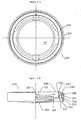
FIG. 1A is an enlarged top plan view of the first lens of the lens system of the present invention. -
FIG. 1B is an enlarged elevational view of the first lens of the lens system of the present invention. -
FIG. 2A is an enlarged top plan view of the force transfer ring of the lens system of the present invention. -
FIG. 2B is an enlarged partial cross-sectional view of the force transfer ring of 10 the lens system of the present invention. -
FIG. 3A is an enlarged top plan view of the capsule ring and second lens of the lens system of the present invention. -
FIG. 3B is an enlarged partial cross-sectional view of the capsule ring and second lens of the lens system of the present invention. -
FIG. 4A is an enlarged plan view of the lens system of the present invention shown in its low power, or distance vision state. -
FIG. 4B is an enlarged partial cross-sectional view of the lens system of the present invention shown in its low power, or distance vision state. -
FIG. 5 is an enlarged partial cross-sectional view of the lens system of the present invention in its medium power, or intermediate vision position. -
FIG. 6 is an enlarged partial cross-sectional view of the lens system of the present invention in its high power, or near vision state. - As best seen in
FIGS. 1A-1B , first, oranterior lens 100 of the present invention generally includesfirst optic 110 and attachedhaptics 120. Haptics 120 are attached tooptic 110 byhinges 101.Haptics 120 generally encircleoptic 110 and contain widenedtabs 180 having downward turn edges 104.Tabs 180 are formed in a vaulted position, as best seen in FIG. IB so thatedge 104 lays in a plane separated from the plane in whichoptic 110 lays. As best seen inFIGS.2A-2B ,force transfer ring 200 is generally circular having acentral bore 140 into whichanterior lens 100 fits.Ring 200 containscamming surface 201 that rests ontabs 180 onhaptics 120 in the manner described below.Ring 200 further contains outercircumferential rim 203. - As best seen in
FIGS. 3A-3B ,outer ring 300 is generally circular having acentral bore 340 into which ring 200 fits.Ring 300 further contains internalcircumferential ledge 301 on which rim 204 rests whenring 200 is fitted withinring 300. Attached to ring 300 by haptics 420 is second orposterior lens 400.Lenses Lenses lenses lens 400 andring 300 may be implanted in an eye and the eye allowed to recover from the surgical trauma. After waiting such a healing period, bioptric and other physiological measurements may be made sufficient to calculate an accurate prescription forlens 100, at whichtime lens 100 andring 200 may be implanted. - As best seen in
FIGS. 4-6 ,lens assembly 500 is assembled within in an eye by first implantingouter ring 300 containingposterior lens 400 within the capsular bag.Anterior lens 100 is then placed withinring 300 in front ofposterior lens 400 so that widenedtabs 180 are caught underlower rim 302 ofcircumferential ledge 301 onring 300.Ring 200 is then placed withinring 300 so that camming surface 210 rests ontabs 180 ofhaptics 120 andcircumferential rim 203 rests oncircumferential ledge 301. As show inFIG. 4A-4B ,lens assembly 500 is at its low power state - distance vision state. This state is achieved via the following sequence. When there is a need to dis-accommodate - to see distance objects, the ciliary muscle relaxes to cause enlargement of the ciliary ring diameter. The enlargement of the ciliary ring pulls the zonules outward in radial directions. Such outward zonule movement causes the anterior and posterior capsule portions to move towards each other. In other words, the capsular bag flattens. Flattening of the capsular bag causesring 200 and edge 104 120 oflens 100 to move toward each other because the anterior capsule portion (not shown) contacts ring 200 atanterior edge 202, and because the posterior capsule portion (not shown)contacts lens 100 atedge 104 of haptic 120. The movement stops whencircumferential rim 203 rests oncircumferential ledge 301 and whendistal end 103 oftab 180 meetslower rim 302. In this position,camming rim 201 presses againsttabs 180 atarea 102. Consequently, hinge 101 is in a flexed, tensioned or sprung position. In this dis-accommodative position, the separation betweenanterior lens 100 andposterior lens 400 together with the respective powers of the two lenses determines the actual power of thelens assembly 500. -
FIGS. 5-6 ,show lens assembly 500 in accommodative positions. As one needs to accommodate - to see near objects, the ciliary muscle contracts causing ciliary ring diameter reduction. This reduction relaxes the holding force of the zonules, no longer flattening the capsule bag. With the capsular bag no longer holdinghaptics 120 and optic 110 flat, the tension inhinges 101cause edges 104 to move away fromoptic 110, thereby returninglens 110 into its natural vaulted state. Such vaulting moveslens 100 away fromlens 400, thereby causing an increase in lens separations resulting in an overall higher power ofdual lens assembly 500. The leverage ratio is determined by the ratio of the length of haptic 120 fromhinge 101 toarea 102, and the length fromarea 102 todistal end 103. By design adjustment, a higher ratio can be achieved such that the axial movement ofoptic 110 is much larger than that ofring 200. Therefore, the amount of axial movement ofoptic 110 is not limited to the amount of axial movement of the anterior capsule, so that α >2.25 can be achieved. - In order to provide power adjustability to
lens assembly 500, as best seen inFIG. 2B ,camming surface 201 onring 200 is not straight, but has an undulating profile, so that the distance betweencamming surface 201 andanterior edge 202 varies. Rotation ofring 200 causes variable axial movement ofoptic 110 becausecamming rim 201 presses againsttabs 180 atarea 102, such pressure causing flexure ofhinges 101. - This description is given for purposes of illustration and explanation. It will be apparent to those skilled in the relevant art that changes and modifications may be made to the invention described above without departing from its scope.
Claims (5)
- An accommodative intraocular lens system, comprising:a) a first lens (100) having an optic (110) and a first pair of encircling haptics (120), the haptics having opposing widened tabs (180) formed in a vaulted position with downwardly turned edges (104), the haptics being attached to the optic by a pair of hinges (101);b) a second lens (400) attached to an outer ring (300) by a second set of haptics (420),characterized in that
the outer ring (300) contains an internal circumferential ledge (301) and is sized to telescopically receive the first lens (100); and
in that a force transfer ring (200) has an outer circumferential rim (203) and is telescopically received within the outer ring (300) anteriorly of the first lens (100), wherein rotation of the force transfer ring (200) variably limits the movement of the first lens by virtue of a camming mechanism, in which the force transfer ring bears upon the said opposing widened tabs (180) to cause flexure of the hinges (101). - The lens system of claim 1, wherein the force transfer ring (200) further comprises a camming surface (201).
- The lens system of claim 2, wherein the camming surface (201) has an undulating profile.
- The lens system of claim 3, wherein the hinges (101) allow the first lens (100) to move anteriorly and posteriorly when implanted in an eye and rotation of the force transfer ring (200) causes variable axial movement of the optic (110) to provide power adjustability to the accommodative intraocular lens system.
- The lens system of claim 3 or claim 4, wherein the outer ring (300) is sized to telescopically receive the first lens (100) so that the circumferential ledge (301) retains the first lens within the outer ring anteriorly of the second lens (400).
Priority Applications (2)
| Application Number | Priority Date | Filing Date | Title |
|---|---|---|---|
| SI200630858T SI1933768T1 (en) | 2005-08-29 | 2006-08-29 | Accomodative intraocular lens system |
| PL06802540T PL1933768T3 (en) | 2005-08-29 | 2006-08-29 | Accomodative intraocular lens system |
Applications Claiming Priority (2)
| Application Number | Priority Date | Filing Date | Title |
|---|---|---|---|
| US11/214,318 US7316713B2 (en) | 2005-08-29 | 2005-08-29 | Accommodative intraocular lens system |
| PCT/US2006/033655 WO2007027665A1 (en) | 2005-08-29 | 2006-08-29 | Accomodative intraocular lens system |
Publications (2)
| Publication Number | Publication Date |
|---|---|
| EP1933768A1 EP1933768A1 (en) | 2008-06-25 |
| EP1933768B1 true EP1933768B1 (en) | 2010-10-06 |
Family
ID=37433794
Family Applications (1)
| Application Number | Title | Priority Date | Filing Date |
|---|---|---|---|
| EP06802540A Not-in-force EP1933768B1 (en) | 2005-08-29 | 2006-08-29 | Accomodative intraocular lens system |
Country Status (12)
| Country | Link |
|---|---|
| US (1) | US7316713B2 (en) |
| EP (1) | EP1933768B1 (en) |
| JP (1) | JP2009505796A (en) |
| AT (1) | ATE483426T1 (en) |
| CA (1) | CA2620284A1 (en) |
| DE (1) | DE602006017410D1 (en) |
| DK (1) | DK1933768T3 (en) |
| ES (1) | ES2351578T3 (en) |
| PL (1) | PL1933768T3 (en) |
| PT (1) | PT1933768E (en) |
| SI (1) | SI1933768T1 (en) |
| WO (1) | WO2007027665A1 (en) |
Cited By (2)
| Publication number | Priority date | Publication date | Assignee | Title |
|---|---|---|---|---|
| US9993336B2 (en) | 2016-06-06 | 2018-06-12 | Omega Ophthalmics Llc | Prosthetic capsular devices, systems, and methods |
| US10136989B2 (en) | 2012-02-22 | 2018-11-27 | Omega Ophthalmics Llc | Prosthetic implant devices |
Families Citing this family (43)
| Publication number | Priority date | Publication date | Assignee | Title |
|---|---|---|---|---|
| US9398949B2 (en) * | 2007-01-29 | 2016-07-26 | Emmetropia, Inc. | Intraocular lens system |
| CN101861133B (en) * | 2007-11-14 | 2014-07-30 | 爱尔康公司 | Accommodative intraocular lens system |
| US7998198B2 (en) * | 2008-02-07 | 2011-08-16 | Novartis Ag | Accommodative IOL with dynamic spherical aberration |
| CN102099730B (en) * | 2008-07-15 | 2013-03-06 | 爱尔康公司 | Accommodating IOL with toric optic and extended depth of focus |
| NL2003881C2 (en) * | 2009-11-30 | 2011-05-31 | Akkolens Int Bv | Adjustable intraocular lens. |
| JP2013525028A (en) | 2010-04-27 | 2013-06-20 | レンスゲン、インコーポレイテッド | Adjustable intraocular lens / device |
| US9220590B2 (en) | 2010-06-10 | 2015-12-29 | Z Lens, Llc | Accommodative intraocular lens and method of improving accommodation |
| KR101822399B1 (en) | 2010-12-17 | 2018-01-30 | 삼성전자주식회사 | Unit for adjusting lens position of optical system |
| US20130184816A1 (en) * | 2011-12-30 | 2013-07-18 | Anew Optics, Inc. | Intraocular lens rings |
| US9364316B1 (en) | 2012-01-24 | 2016-06-14 | Clarvista Medical, Inc. | Modular intraocular lens designs, tools and methods |
| CA3177993A1 (en) | 2012-01-24 | 2013-08-01 | The Regents Of The University Of Colorado, A Body Corporate | Modular intraocular lens designs and methods |
| US10080648B2 (en) | 2012-01-24 | 2018-09-25 | Clarvista Medical, Inc. | Modular intraocular lens designs, tools and methods |
| US10028824B2 (en) | 2012-01-24 | 2018-07-24 | Clarvista Medical, Inc. | Modular intraocular lens designs, tools and methods |
| TWI588560B (en) | 2012-04-05 | 2017-06-21 | 布萊恩荷登視覺協會 | Lens, device, method and system for refractive error |
| US9364318B2 (en) | 2012-05-10 | 2016-06-14 | Z Lens, Llc | Accommodative-disaccommodative intraocular lens |
| US9201250B2 (en) | 2012-10-17 | 2015-12-01 | Brien Holden Vision Institute | Lenses, devices, methods and systems for refractive error |
| TWI600418B (en) | 2012-10-17 | 2017-10-01 | 布萊恩荷登視覺協會 | Lens, device, method and system for refractive error |
| WO2014099345A1 (en) | 2012-12-18 | 2014-06-26 | Novartis Ag | Presbyopia-correcting iol using curvature change of an air chamber |
| JP2016534816A (en) | 2013-11-01 | 2016-11-10 | レンスゲン、インコーポレイテッド | Two-part adjustable intraocular lens device |
| EP3062741B1 (en) | 2013-11-01 | 2023-04-26 | Lensgen, Inc. | Accomodating intraocular lens device |
| CA3184269A1 (en) | 2014-02-18 | 2015-08-27 | Alcon, Inc. | Modular intraocular lens designs, tools and methods |
| AU2015277207B2 (en) | 2014-06-19 | 2018-03-29 | Omega Ophthalmics Llc | Prosthetic capsular devices, systems, and methods |
| US10004596B2 (en) * | 2014-07-31 | 2018-06-26 | Lensgen, Inc. | Accommodating intraocular lens device |
| US10945832B2 (en) | 2014-09-22 | 2021-03-16 | Onpoint Vision, Inc. | Intraocular pseudophakic contact lens with mechanism for securing by anterior leaflet of capsular wall and related system and method |
| US10159562B2 (en) | 2014-09-22 | 2018-12-25 | Kevin J. Cady | Intraocular pseudophakic contact lenses and related systems and methods |
| US12447007B2 (en) | 2014-09-22 | 2025-10-21 | Onpoint Vision, Inc. | Intraocular pseudophakic contact lens with mechanism for securing by anterior leaflet of capsular wall and related system and method |
| US11109957B2 (en) | 2014-09-22 | 2021-09-07 | Onpoint Vision, Inc. | Intraocular pseudophakic contact lens with mechanism for securing by anterior leaflet of capsular wall and related system and method |
| US10299910B2 (en) | 2014-09-22 | 2019-05-28 | Kevin J. Cady | Intraocular pseudophakic contact lens with mechanism for securing by anterior leaflet of capsular wall and related system and method |
| US11938018B2 (en) | 2014-09-22 | 2024-03-26 | Onpoint Vision, Inc. | Intraocular pseudophakic contact lens (IOPCL) for treating age-related macular degeneration (AMD) or other eye disorders |
| EP3197462A4 (en) | 2014-09-23 | 2018-05-30 | Lensgen, Inc | Polymeric material for accommodating intraocular lenses |
| AU2015380300B2 (en) | 2015-01-30 | 2020-01-02 | Alcon Inc. | Modular intraocular lens designs |
| US9358103B1 (en) | 2015-02-10 | 2016-06-07 | Omega Ophthalmics Llc | Prosthetic capsular devices, systems, and methods |
| WO2017079449A1 (en) | 2015-11-04 | 2017-05-11 | Clarvista Medical, Inc. | Modular intraocular lens designs, tools and methods |
| CN108778185B (en) | 2015-12-01 | 2021-04-27 | 雷恩斯根公司 | Accommodating intraocular lens device |
| US11045309B2 (en) | 2016-05-05 | 2021-06-29 | The Regents Of The University Of Colorado | Intraocular lens designs for improved stability |
| JP2019519664A (en) | 2016-05-27 | 2019-07-11 | レンズジェン、インコーポレイテッド | Narrow molecular weight distribution lens oil for intraocular lens devices |
| EP3503843B1 (en) | 2016-08-24 | 2023-11-15 | Carl Zeiss Meditec AG | Dual mode accommodative-disacommodative intraocular lens |
| EP3954326A1 (en) | 2016-10-21 | 2022-02-16 | Omega Ophthalmics LLC | Prosthetic capsular device |
| US11382736B2 (en) | 2017-06-27 | 2022-07-12 | Alcon Inc. | Injector, intraocular lens system, and related methods |
| AU2019249216B2 (en) | 2018-04-06 | 2024-07-18 | Omega Ophthalmics Llc | Prosthetic capsular devices, systems, and methods |
| WO2021144787A1 (en) * | 2020-01-13 | 2021-07-22 | Shaare Zedek Scientific Ltd. | Intraocular ring system |
| US11364107B2 (en) | 2020-10-12 | 2022-06-21 | Omega Ophthalmics Llc | Prosthetic capsular devices, systems, and methods |
| US11357620B1 (en) | 2021-09-10 | 2022-06-14 | California LASIK & Eye, Inc. | Exchangeable optics and therapeutics |
Family Cites Families (21)
| Publication number | Priority date | Publication date | Assignee | Title |
|---|---|---|---|---|
| US5476514A (en) | 1990-04-27 | 1995-12-19 | Cumming; J. Stuart | Accommodating intraocular lens |
| US6197059B1 (en) | 1990-04-27 | 2001-03-06 | Medevec Licensing, B.V. | Accomodating intraocular lens |
| US5275623A (en) | 1991-11-18 | 1994-01-04 | Faezeh Sarfarazi | Elliptical accommodative intraocular lens for small incision surgery |
| US5366501A (en) * | 1993-05-12 | 1994-11-22 | Langerman David W | Intraocular lens with dual 360 degree haptics |
| US6616692B1 (en) | 1999-04-30 | 2003-09-09 | Advanced Medical Optics, Inc. | Intraocular lens combinations |
| US6261321B1 (en) | 1999-09-01 | 2001-07-17 | Robert E. Kellan | Phakic or aphakic intraocular lens assembly |
| US6241777B1 (en) | 1999-09-01 | 2001-06-05 | Robert E. Kellan | Phakic intraocular lenses |
| FR2799952B1 (en) | 1999-10-21 | 2001-12-14 | Humanoptics Ag | INTRAOCULAR IMPLANT |
| US6767363B1 (en) | 1999-11-05 | 2004-07-27 | Bausch & Lomb Surgical, Inc. | Accommodating positive and negative intraocular lens system |
| FR2804860B1 (en) * | 2000-02-16 | 2002-04-12 | Humanoptics Ag | ACCOMODATIVE CRYSTALLINE IMPLANT |
| US7118596B2 (en) | 2001-01-25 | 2006-10-10 | Visiogen, Inc. | Accommodating intraocular lens system |
| EP1353611B1 (en) * | 2001-01-25 | 2006-09-06 | Gholam-Reza Zadno-Azizi | Accommodating intraocular lens system |
| US20040148023A1 (en) | 2001-02-15 | 2004-07-29 | Shu Stephen K. | High gain wide range accommodating intraocular lens for implant into the capsular bag |
| JP4077638B2 (en) * | 2001-12-14 | 2008-04-16 | 敏之 永本 | Adjustment ring and artificial lens kit |
| AU2003210534A1 (en) | 2002-01-14 | 2003-07-30 | Advanced Medical Optics, Inc. | Accommodating intraocular lens with integral capsular bag ring |
| WO2003059196A2 (en) | 2002-01-14 | 2003-07-24 | Advanced Medical Optics, Inc. | Accommodating intraocular lens with elongated suspension structure |
| US6695881B2 (en) * | 2002-04-29 | 2004-02-24 | Alcon, Inc. | Accommodative intraocular lens |
| US6972033B2 (en) | 2002-08-26 | 2005-12-06 | Advanced Medical Optics, Inc. | Accommodating intraocular lens assembly with multi-functional capsular bag ring |
| US6616691B1 (en) * | 2003-01-10 | 2003-09-09 | Alcon, Inc. | Accommodative intraocular lens |
| US7281699B2 (en) * | 2003-12-29 | 2007-10-16 | Bausch & Lomb Incorporated | Universal accommodating IOL holder for lens processing and packaging |
| US7150760B2 (en) * | 2004-03-22 | 2006-12-19 | Alcon, Inc. | Accommodative intraocular lens system |
-
2005
- 2005-08-29 US US11/214,318 patent/US7316713B2/en not_active Expired - Fee Related
-
2006
- 2006-08-29 JP JP2008529184A patent/JP2009505796A/en active Pending
- 2006-08-29 WO PCT/US2006/033655 patent/WO2007027665A1/en not_active Ceased
- 2006-08-29 DK DK06802540.2T patent/DK1933768T3/en active
- 2006-08-29 PT PT06802540T patent/PT1933768E/en unknown
- 2006-08-29 DE DE602006017410T patent/DE602006017410D1/en active Active
- 2006-08-29 EP EP06802540A patent/EP1933768B1/en not_active Not-in-force
- 2006-08-29 SI SI200630858T patent/SI1933768T1/en unknown
- 2006-08-29 PL PL06802540T patent/PL1933768T3/en unknown
- 2006-08-29 ES ES06802540T patent/ES2351578T3/en active Active
- 2006-08-29 CA CA002620284A patent/CA2620284A1/en not_active Abandoned
- 2006-08-29 AT AT06802540T patent/ATE483426T1/en active
Cited By (3)
| Publication number | Priority date | Publication date | Assignee | Title |
|---|---|---|---|---|
| US10136989B2 (en) | 2012-02-22 | 2018-11-27 | Omega Ophthalmics Llc | Prosthetic implant devices |
| US9993336B2 (en) | 2016-06-06 | 2018-06-12 | Omega Ophthalmics Llc | Prosthetic capsular devices, systems, and methods |
| US10271945B2 (en) | 2016-06-06 | 2019-04-30 | Omega Ophthalmics Llc | Prosthetic capsular devices, systems, and methods |
Also Published As
| Publication number | Publication date |
|---|---|
| JP2009505796A (en) | 2009-02-12 |
| DK1933768T3 (en) | 2010-11-29 |
| SI1933768T1 (en) | 2011-02-28 |
| EP1933768A1 (en) | 2008-06-25 |
| ATE483426T1 (en) | 2010-10-15 |
| US20070050024A1 (en) | 2007-03-01 |
| PL1933768T3 (en) | 2011-05-31 |
| PT1933768E (en) | 2010-12-16 |
| WO2007027665A1 (en) | 2007-03-08 |
| US7316713B2 (en) | 2008-01-08 |
| DE602006017410D1 (en) | 2010-11-18 |
| ES2351578T3 (en) | 2011-02-08 |
| CA2620284A1 (en) | 2007-03-08 |
Similar Documents
| Publication | Publication Date | Title |
|---|---|---|
| EP1933768B1 (en) | Accomodative intraocular lens system | |
| AU2008321009B2 (en) | Accommodative intraocular lens system | |
| EP1852090B1 (en) | Accommodative intraocular lens system | |
| US6616691B1 (en) | Accommodative intraocular lens | |
| EP1499264B1 (en) | Accommodative intraocular lens | |
| CA2580331C (en) | Intraocular lens system | |
| US7029497B2 (en) | Accommodative intraocular lens | |
| US7223288B2 (en) | Accommodative intraocular lens | |
| US20070010881A1 (en) | Intraocular lens system | |
| US20090204209A1 (en) | Accommodative Intraocular Lens System | |
| WO2005092035A2 (en) | Accommodative intraocular lens system | |
| US20040249455A1 (en) | Accommodative intraocular lens system | |
| JP4473217B2 (en) | Implantable artificial lens |
Legal Events
| Date | Code | Title | Description |
|---|---|---|---|
| PUAI | Public reference made under article 153(3) epc to a published international application that has entered the european phase |
Free format text: ORIGINAL CODE: 0009012 |
|
| 17P | Request for examination filed |
Effective date: 20080227 |
|
| AK | Designated contracting states |
Kind code of ref document: A1 Designated state(s): AT BE BG CH CY CZ DE DK EE ES FI FR GB GR HU IE IS IT LI LT LU LV MC NL PL PT RO SE SI SK TR |
|
| 17Q | First examination report despatched |
Effective date: 20090407 |
|
| RAP1 | Party data changed (applicant data changed or rights of an application transferred) |
Owner name: ALCON, INC. |
|
| GRAP | Despatch of communication of intention to grant a patent |
Free format text: ORIGINAL CODE: EPIDOSNIGR1 |
|
| DAX | Request for extension of the european patent (deleted) | ||
| GRAS | Grant fee paid |
Free format text: ORIGINAL CODE: EPIDOSNIGR3 |
|
| GRAA | (expected) grant |
Free format text: ORIGINAL CODE: 0009210 |
|
| AK | Designated contracting states |
Kind code of ref document: B1 Designated state(s): AT BE BG CH CY CZ DE DK EE ES FI FR GB GR HU IE IS IT LI LT LU LV MC NL PL PT RO SE SI SK TR |
|
| REG | Reference to a national code |
Ref country code: GB Ref legal event code: FG4D |
|
| REG | Reference to a national code |
Ref country code: CH Ref legal event code: EP |
|
| REG | Reference to a national code |
Ref country code: CH Ref legal event code: NV Representative=s name: LEMAN CONSULTING S.A. |
|
| REG | Reference to a national code |
Ref country code: IE Ref legal event code: FG4D |
|
| REF | Corresponds to: |
Ref document number: 602006017410 Country of ref document: DE Date of ref document: 20101118 Kind code of ref document: P |
|
| REG | Reference to a national code |
Ref country code: DK Ref legal event code: T3 |
|
| REG | Reference to a national code |
Ref country code: EE Ref legal event code: FG4A Ref document number: E004631 Country of ref document: EE Effective date: 20101015 |
|
| REG | Reference to a national code |
Ref country code: PT Ref legal event code: SC4A Free format text: AVAILABILITY OF NATIONAL TRANSLATION Effective date: 20101209 |
|
| REG | Reference to a national code |
Ref country code: RO Ref legal event code: EPE |
|
| REG | Reference to a national code |
Ref country code: NL Ref legal event code: T3 |
|
| REG | Reference to a national code |
Ref country code: SE Ref legal event code: TRGR |
|
| REG | Reference to a national code |
Ref country code: ES Ref legal event code: FG2A Effective date: 20110127 |
|
| REG | Reference to a national code |
Ref country code: SK Ref legal event code: T3 Ref document number: E 8420 Country of ref document: SK |
|
| REG | Reference to a national code |
Ref country code: HU Ref legal event code: AG4A Ref document number: E009638 Country of ref document: HU |
|
| REG | Reference to a national code |
Ref country code: PL Ref legal event code: T3 |
|
| PLBE | No opposition filed within time limit |
Free format text: ORIGINAL CODE: 0009261 |
|
| STAA | Information on the status of an ep patent application or granted ep patent |
Free format text: STATUS: NO OPPOSITION FILED WITHIN TIME LIMIT |
|
| 26N | No opposition filed |
Effective date: 20110707 |
|
| REG | Reference to a national code |
Ref country code: DE Ref legal event code: R097 Ref document number: 602006017410 Country of ref document: DE Effective date: 20110707 |
|
| BERE | Be: lapsed |
Owner name: ALCON, INC. Effective date: 20110831 |
|
| REG | Reference to a national code |
Ref country code: NL Ref legal event code: V1 Effective date: 20120301 |
|
| PG25 | Lapsed in a contracting state [announced via postgrant information from national office to epo] |
Ref country code: MC Free format text: LAPSE BECAUSE OF NON-PAYMENT OF DUE FEES Effective date: 20110831 |
|
| REG | Reference to a national code |
Ref country code: CH Ref legal event code: PL |
|
| REG | Reference to a national code |
Ref country code: SE Ref legal event code: EUG |
|
| REG | Reference to a national code |
Ref country code: EE Ref legal event code: MM4A Ref document number: E004631 Country of ref document: EE Effective date: 20110831 |
|
| GBPC | Gb: european patent ceased through non-payment of renewal fee |
Effective date: 20110829 |
|
| LTIE | Lt: invalidation of european patent or patent extension | ||
| REG | Reference to a national code |
Ref country code: GR Ref legal event code: ML Ref document number: 20100402933 Country of ref document: GR Effective date: 20120302 |
|
| PG25 | Lapsed in a contracting state [announced via postgrant information from national office to epo] |
Ref country code: LI Free format text: LAPSE BECAUSE OF NON-PAYMENT OF DUE FEES Effective date: 20110831 Ref country code: CZ Free format text: LAPSE BECAUSE OF NON-PAYMENT OF DUE FEES Effective date: 20110829 Ref country code: SK Free format text: LAPSE BECAUSE OF NON-PAYMENT OF DUE FEES Effective date: 20110829 Ref country code: CH Free format text: LAPSE BECAUSE OF NON-PAYMENT OF DUE FEES Effective date: 20110831 Ref country code: HU Free format text: LAPSE BECAUSE OF NON-PAYMENT OF DUE FEES Effective date: 20110830 Ref country code: IS Free format text: LAPSE BECAUSE OF FAILURE TO SUBMIT A TRANSLATION OF THE DESCRIPTION OR TO PAY THE FEE WITHIN THE PRESCRIBED TIME-LIMIT Effective date: 20120301 Ref country code: LT Free format text: LAPSE BECAUSE OF NON-PAYMENT OF DUE FEES Effective date: 20110829 |
|
| REG | Reference to a national code |
Ref country code: DK Ref legal event code: EBP |
|
| REG | Reference to a national code |
Ref country code: SK Ref legal event code: MM4A Ref document number: E 8420 Country of ref document: SK Effective date: 20110829 |
|
| REG | Reference to a national code |
Ref country code: FR Ref legal event code: ST Effective date: 20120430 |
|
| REG | Reference to a national code |
Ref country code: IE Ref legal event code: MM4A |
|
| PG25 | Lapsed in a contracting state [announced via postgrant information from national office to epo] |
Ref country code: LV Free format text: LAPSE BECAUSE OF NON-PAYMENT OF DUE FEES Effective date: 20110829 Ref country code: EE Free format text: LAPSE BECAUSE OF NON-PAYMENT OF DUE FEES Effective date: 20110831 Ref country code: IT Free format text: LAPSE BECAUSE OF NON-PAYMENT OF DUE FEES Effective date: 20110829 Ref country code: BE Free format text: LAPSE BECAUSE OF NON-PAYMENT OF DUE FEES Effective date: 20110831 Ref country code: NL Free format text: LAPSE BECAUSE OF NON-PAYMENT OF DUE FEES Effective date: 20120301 Ref country code: SI Free format text: LAPSE BECAUSE OF NON-PAYMENT OF DUE FEES Effective date: 20110830 Ref country code: GR Free format text: LAPSE BECAUSE OF NON-PAYMENT OF DUE FEES Effective date: 20120302 Ref country code: FI Free format text: LAPSE BECAUSE OF NON-PAYMENT OF DUE FEES Effective date: 20110829 |
|
| REG | Reference to a national code |
Ref country code: SI Ref legal event code: KO00 Effective date: 20120403 |
|
| REG | Reference to a national code |
Ref country code: PT Ref legal event code: MM4A Free format text: LAPSE DUE TO NON-PAYMENT OF FEES Effective date: 20120529 |
|
| REG | Reference to a national code |
Ref country code: DE Ref legal event code: R119 Ref document number: 602006017410 Country of ref document: DE Effective date: 20120301 |
|
| PG25 | Lapsed in a contracting state [announced via postgrant information from national office to epo] |
Ref country code: CY Free format text: LAPSE BECAUSE OF NON-PAYMENT OF DUE FEES Effective date: 20110829 |
|
| PG25 | Lapsed in a contracting state [announced via postgrant information from national office to epo] |
Ref country code: DK Free format text: LAPSE BECAUSE OF NON-PAYMENT OF DUE FEES Effective date: 20110831 Ref country code: IE Free format text: LAPSE BECAUSE OF NON-PAYMENT OF DUE FEES Effective date: 20110829 |
|
| PG25 | Lapsed in a contracting state [announced via postgrant information from national office to epo] |
Ref country code: GB Free format text: LAPSE BECAUSE OF NON-PAYMENT OF DUE FEES Effective date: 20110829 Ref country code: PT Free format text: LAPSE BECAUSE OF NON-PAYMENT OF DUE FEES Effective date: 20120529 Ref country code: FR Free format text: LAPSE BECAUSE OF NON-PAYMENT OF DUE FEES Effective date: 20110831 |
|
| PG25 | Lapsed in a contracting state [announced via postgrant information from national office to epo] |
Ref country code: RO Free format text: LAPSE BECAUSE OF NON-PAYMENT OF DUE FEES Effective date: 20101006 Ref country code: PL Free format text: LAPSE BECAUSE OF NON-PAYMENT OF DUE FEES Effective date: 20110829 |
|
| REG | Reference to a national code |
Ref country code: AT Ref legal event code: MM01 Ref document number: 483426 Country of ref document: AT Kind code of ref document: T Effective date: 20110829 |
|
| REG | Reference to a national code |
Ref country code: ES Ref legal event code: FD2A Effective date: 20121207 |
|
| REG | Reference to a national code |
Ref country code: PL Ref legal event code: LAPE |
|
| PG25 | Lapsed in a contracting state [announced via postgrant information from national office to epo] |
Ref country code: AT Free format text: LAPSE BECAUSE OF NON-PAYMENT OF DUE FEES Effective date: 20110829 |
|
| PG25 | Lapsed in a contracting state [announced via postgrant information from national office to epo] |
Ref country code: ES Free format text: LAPSE BECAUSE OF NON-PAYMENT OF DUE FEES Effective date: 20110830 |
|
| PG25 | Lapsed in a contracting state [announced via postgrant information from national office to epo] |
Ref country code: SE Free format text: LAPSE BECAUSE OF NON-PAYMENT OF DUE FEES Effective date: 20110830 |
|
| PG25 | Lapsed in a contracting state [announced via postgrant information from national office to epo] |
Ref country code: LU Free format text: LAPSE BECAUSE OF NON-PAYMENT OF DUE FEES Effective date: 20110829 |
|
| PG25 | Lapsed in a contracting state [announced via postgrant information from national office to epo] |
Ref country code: DE Free format text: LAPSE BECAUSE OF NON-PAYMENT OF DUE FEES Effective date: 20120301 |
|
| PG25 | Lapsed in a contracting state [announced via postgrant information from national office to epo] |
Ref country code: BG Free format text: LAPSE BECAUSE OF NON-PAYMENT OF DUE FEES Effective date: 20120630 |
|
| PG25 | Lapsed in a contracting state [announced via postgrant information from national office to epo] |
Ref country code: TR Free format text: LAPSE BECAUSE OF FAILURE TO SUBMIT A TRANSLATION OF THE DESCRIPTION OR TO PAY THE FEE WITHIN THE PRESCRIBED TIME-LIMIT Effective date: 20101006 |
|
| REG | Reference to a national code |
Ref country code: GR Ref legal event code: EP Ref document number: 20100402933 Country of ref document: GR Effective date: 20110119 |