EP0161058B1 - Dual surface materials - Google Patents
Dual surface materials Download PDFInfo
- Publication number
- EP0161058B1 EP0161058B1 EP85302295A EP85302295A EP0161058B1 EP 0161058 B1 EP0161058 B1 EP 0161058B1 EP 85302295 A EP85302295 A EP 85302295A EP 85302295 A EP85302295 A EP 85302295A EP 0161058 B1 EP0161058 B1 EP 0161058B1
- Authority
- EP
- European Patent Office
- Prior art keywords
- groups
- group
- carbon atoms
- porous material
- ethyl
- Prior art date
- Legal status (The legal status is an assumption and is not a legal conclusion. Google has not performed a legal analysis and makes no representation as to the accuracy of the status listed.)
- Expired
Links
- 230000009977 dual effect Effects 0.000 title claims description 22
- 239000000463 material Substances 0.000 title description 27
- 239000011148 porous material Substances 0.000 claims description 107
- 229910000077 silane Inorganic materials 0.000 claims description 95
- BLRPTPMANUNPDV-UHFFFAOYSA-N Silane Chemical compound [SiH4] BLRPTPMANUNPDV-UHFFFAOYSA-N 0.000 claims description 94
- 125000002887 hydroxy group Chemical group [H]O* 0.000 claims description 65
- 125000004432 carbon atom Chemical group C* 0.000 claims description 49
- 125000001997 phenyl group Chemical group [H]C1=C([H])C([H])=C(*)C([H])=C1[H] 0.000 claims description 45
- 125000000217 alkyl group Chemical group 0.000 claims description 35
- 125000002496 methyl group Chemical group [H]C([H])([H])* 0.000 claims description 35
- 125000001495 ethyl group Chemical group [H]C([H])([H])C([H])([H])* 0.000 claims description 31
- 238000000034 method Methods 0.000 claims description 29
- 238000006243 chemical reaction Methods 0.000 claims description 27
- 239000001257 hydrogen Substances 0.000 claims description 23
- 229910052739 hydrogen Inorganic materials 0.000 claims description 23
- XUIMIQQOPSSXEZ-UHFFFAOYSA-N Silicon Chemical group [Si] XUIMIQQOPSSXEZ-UHFFFAOYSA-N 0.000 claims description 21
- -1 N,N-disubstituted amides Chemical class 0.000 claims description 20
- 239000000203 mixture Substances 0.000 claims description 19
- 125000000391 vinyl group Chemical group [H]C([*])=C([H])[H] 0.000 claims description 19
- 229920002554 vinyl polymer Chemical group 0.000 claims description 17
- 125000003903 2-propenyl group Chemical group [H]C([*])([H])C([H])=C([H])[H] 0.000 claims description 16
- 150000001408 amides Chemical class 0.000 claims description 16
- 150000002431 hydrogen Chemical group 0.000 claims description 16
- 150000001412 amines Chemical class 0.000 claims description 15
- 125000003118 aryl group Chemical group 0.000 claims description 15
- 150000003568 thioethers Chemical class 0.000 claims description 15
- 125000000555 isopropenyl group Chemical group [H]\C([H])=C(\*)C([H])([H])[H] 0.000 claims description 14
- 229910052710 silicon Inorganic materials 0.000 claims description 14
- 239000010703 silicon Substances 0.000 claims description 14
- 230000007062 hydrolysis Effects 0.000 claims description 11
- 238000006460 hydrolysis reaction Methods 0.000 claims description 11
- UFHFLCQGNIYNRP-UHFFFAOYSA-N Hydrogen Chemical compound [H][H] UFHFLCQGNIYNRP-UHFFFAOYSA-N 0.000 claims description 7
- 125000005372 silanol group Chemical group 0.000 claims description 5
- 239000002904 solvent Substances 0.000 claims description 3
- 238000002156 mixing Methods 0.000 claims description 2
- 239000012159 carrier gas Substances 0.000 claims 1
- 239000006194 liquid suspension Substances 0.000 claims 1
- 150000004756 silanes Chemical class 0.000 description 31
- VYPSYNLAJGMNEJ-UHFFFAOYSA-N Silicium dioxide Chemical compound O=[Si]=O VYPSYNLAJGMNEJ-UHFFFAOYSA-N 0.000 description 23
- 238000006884 silylation reaction Methods 0.000 description 15
- 239000000047 product Substances 0.000 description 12
- 0 C*(C)c(ccc1c2nccc1)c2OCI=I* Chemical compound C*(C)c(ccc1c2nccc1)c2OCI=I* 0.000 description 8
- 229910002027 silica gel Inorganic materials 0.000 description 8
- 239000000741 silica gel Substances 0.000 description 8
- 239000003153 chemical reaction reagent Substances 0.000 description 7
- 239000000377 silicon dioxide Substances 0.000 description 7
- FFUAGWLWBBFQJT-UHFFFAOYSA-N hexamethyldisilazane Chemical compound C[Si](C)(C)N[Si](C)(C)C FFUAGWLWBBFQJT-UHFFFAOYSA-N 0.000 description 6
- 239000000543 intermediate Substances 0.000 description 6
- 239000012071 phase Substances 0.000 description 6
- OKTJSMMVPCPJKN-UHFFFAOYSA-N Carbon Chemical compound [C] OKTJSMMVPCPJKN-UHFFFAOYSA-N 0.000 description 5
- 229910052799 carbon Inorganic materials 0.000 description 5
- IJOOHPMOJXWVHK-UHFFFAOYSA-N chlorotrimethylsilane Chemical compound C[Si](C)(C)Cl IJOOHPMOJXWVHK-UHFFFAOYSA-N 0.000 description 5
- 238000009792 diffusion process Methods 0.000 description 5
- 239000011541 reaction mixture Substances 0.000 description 5
- PXGOKWXKJXAPGV-UHFFFAOYSA-N Fluorine Chemical compound FF PXGOKWXKJXAPGV-UHFFFAOYSA-N 0.000 description 4
- GWEVSGVZZGPLCZ-UHFFFAOYSA-N Titan oxide Chemical compound O=[Ti]=O GWEVSGVZZGPLCZ-UHFFFAOYSA-N 0.000 description 4
- 238000004833 X-ray photoelectron spectroscopy Methods 0.000 description 4
- 229910052731 fluorine Inorganic materials 0.000 description 4
- 239000011737 fluorine Substances 0.000 description 4
- 239000007788 liquid Substances 0.000 description 4
- 239000000243 solution Substances 0.000 description 4
- XLYOFNOQVPJJNP-UHFFFAOYSA-N water Substances O XLYOFNOQVPJJNP-UHFFFAOYSA-N 0.000 description 4
- PNEYBMLMFCGWSK-UHFFFAOYSA-N aluminium oxide Inorganic materials [O-2].[O-2].[O-2].[Al+3].[Al+3] PNEYBMLMFCGWSK-UHFFFAOYSA-N 0.000 description 3
- 239000003795 chemical substances by application Substances 0.000 description 3
- 238000004587 chromatography analysis Methods 0.000 description 3
- 230000000694 effects Effects 0.000 description 3
- 230000004048 modification Effects 0.000 description 3
- 238000012986 modification Methods 0.000 description 3
- 239000011236 particulate material Substances 0.000 description 3
- 239000000126 substance Substances 0.000 description 3
- NLXLAEXVIDQMFP-UHFFFAOYSA-N Ammonia chloride Chemical compound [NH4+].[Cl-] NLXLAEXVIDQMFP-UHFFFAOYSA-N 0.000 description 2
- OHLUUHNLEMFGTQ-UHFFFAOYSA-N N-methylacetamide Chemical compound CNC(C)=O OHLUUHNLEMFGTQ-UHFFFAOYSA-N 0.000 description 2
- MCMNRKCIXSYSNV-UHFFFAOYSA-N Zirconium dioxide Chemical compound O=[Zr]=O MCMNRKCIXSYSNV-UHFFFAOYSA-N 0.000 description 2
- 229910052782 aluminium Inorganic materials 0.000 description 2
- XAGFODPZIPBFFR-UHFFFAOYSA-N aluminium Chemical compound [Al] XAGFODPZIPBFFR-UHFFFAOYSA-N 0.000 description 2
- 238000004458 analytical method Methods 0.000 description 2
- 238000013459 approach Methods 0.000 description 2
- 230000009286 beneficial effect Effects 0.000 description 2
- 239000006227 byproduct Substances 0.000 description 2
- 230000003749 cleanliness Effects 0.000 description 2
- 150000001875 compounds Chemical class 0.000 description 2
- 150000002009 diols Chemical class 0.000 description 2
- 238000006073 displacement reaction Methods 0.000 description 2
- 239000012467 final product Substances 0.000 description 2
- 238000010438 heat treatment Methods 0.000 description 2
- 125000005842 heteroatom Chemical group 0.000 description 2
- 238000004811 liquid chromatography Methods 0.000 description 2
- 229910044991 metal oxide Inorganic materials 0.000 description 2
- HVCRTPRIKAOFRG-UHFFFAOYSA-N n-methyl-2-trimethylsilylacetamide Chemical compound CNC(=O)C[Si](C)(C)C HVCRTPRIKAOFRG-UHFFFAOYSA-N 0.000 description 2
- 150000001282 organosilanes Chemical class 0.000 description 2
- 238000002360 preparation method Methods 0.000 description 2
- 239000000376 reactant Substances 0.000 description 2
- 238000007086 side reaction Methods 0.000 description 2
- 239000007787 solid Substances 0.000 description 2
- 238000004381 surface treatment Methods 0.000 description 2
- 239000005051 trimethylchlorosilane Substances 0.000 description 2
- 239000012808 vapor phase Substances 0.000 description 2
- JPVQCHVLFHXNKB-UHFFFAOYSA-N 1,2,3,4,5,6-hexamethyldisiline Chemical compound CC1=C(C)[Si](C)=[Si](C)C(C)=C1C JPVQCHVLFHXNKB-UHFFFAOYSA-N 0.000 description 1
- MASDFXZJIDNRTR-UHFFFAOYSA-N 1,3-bis(trimethylsilyl)urea Chemical compound C[Si](C)(C)NC(=O)N[Si](C)(C)C MASDFXZJIDNRTR-UHFFFAOYSA-N 0.000 description 1
- NLPBRTBBFUOESW-UHFFFAOYSA-N 1-trimethoxysilylpropyl 2-methylprop-2-enoate Chemical compound CO[Si](OC)(OC)C(CC)OC(=O)C(C)=C NLPBRTBBFUOESW-UHFFFAOYSA-N 0.000 description 1
- HRBAESXLMDLLDJ-UHFFFAOYSA-N 2,2-bis(dimethylsilyl)-N-methylacetamide Chemical compound C[SiH](C)C(C(=O)NC)[SiH](C)C HRBAESXLMDLLDJ-UHFFFAOYSA-N 0.000 description 1
- YHHNEXLEMWGAGP-UHFFFAOYSA-N 2-dimethylsilyl-4,4,4-trifluoro-N,3-dimethylbutanamide Chemical compound FC(C(C)C(C(=O)NC)[SiH](C)C)(F)F YHHNEXLEMWGAGP-UHFFFAOYSA-N 0.000 description 1
- LOSLJXKHQKRRFN-UHFFFAOYSA-N 2-trimethoxysilylethanethiol Chemical compound CO[Si](OC)(OC)CCS LOSLJXKHQKRRFN-UHFFFAOYSA-N 0.000 description 1
- OXYZDRAJMHGSMW-UHFFFAOYSA-N 3-chloropropyl(trimethoxy)silane Chemical compound CO[Si](OC)(OC)CCCCl OXYZDRAJMHGSMW-UHFFFAOYSA-N 0.000 description 1
- UUEWCQRISZBELL-UHFFFAOYSA-N 3-trimethoxysilylpropane-1-thiol Chemical compound CO[Si](OC)(OC)CCCS UUEWCQRISZBELL-UHFFFAOYSA-N 0.000 description 1
- JJOWIQMPCCUIGA-UHFFFAOYSA-N 4-(Trimethylsilyl)morpholine Chemical compound C[Si](C)(C)N1CCOCC1 JJOWIQMPCCUIGA-UHFFFAOYSA-N 0.000 description 1
- ZAMOUSCENKQFHK-UHFFFAOYSA-N Chlorine atom Chemical compound [Cl] ZAMOUSCENKQFHK-UHFFFAOYSA-N 0.000 description 1
- GPBXZEUXDRWYDY-UHFFFAOYSA-N IC1C2OC2CCC1 Chemical compound IC1C2OC2CCC1 GPBXZEUXDRWYDY-UHFFFAOYSA-N 0.000 description 1
- XCOBLONWWXQEBS-KPKJPENVSA-N N,O-bis(trimethylsilyl)trifluoroacetamide Chemical compound C[Si](C)(C)O\C(C(F)(F)F)=N\[Si](C)(C)C XCOBLONWWXQEBS-KPKJPENVSA-N 0.000 description 1
- JOOMLFKONHCLCJ-UHFFFAOYSA-N N-(trimethylsilyl)diethylamine Chemical compound CCN(CC)[Si](C)(C)C JOOMLFKONHCLCJ-UHFFFAOYSA-N 0.000 description 1
- MSPCIZMDDUQPGJ-UHFFFAOYSA-N N-methyl-N-(trimethylsilyl)trifluoroacetamide Chemical compound C[Si](C)(C)N(C)C(=O)C(F)(F)F MSPCIZMDDUQPGJ-UHFFFAOYSA-N 0.000 description 1
- YKFRUJSEPGHZFJ-UHFFFAOYSA-N N-trimethylsilylimidazole Chemical compound C[Si](C)(C)N1C=CN=C1 YKFRUJSEPGHZFJ-UHFFFAOYSA-N 0.000 description 1
- 239000002253 acid Substances 0.000 description 1
- 125000003545 alkoxy group Chemical group 0.000 description 1
- 230000029936 alkylation Effects 0.000 description 1
- 238000005804 alkylation reaction Methods 0.000 description 1
- GRKUXCWELVWVMZ-UHFFFAOYSA-N amino acetate Chemical compound CC(=O)ON GRKUXCWELVWVMZ-UHFFFAOYSA-N 0.000 description 1
- 235000019270 ammonium chloride Nutrition 0.000 description 1
- 238000005349 anion exchange Methods 0.000 description 1
- 150000001450 anions Chemical class 0.000 description 1
- 239000011324 bead Substances 0.000 description 1
- RLECCBFNWDXKPK-UHFFFAOYSA-N bis(trimethylsilyl)sulfide Chemical compound C[Si](C)(C)S[Si](C)(C)C RLECCBFNWDXKPK-UHFFFAOYSA-N 0.000 description 1
- 239000008364 bulk solution Substances 0.000 description 1
- 238000006555 catalytic reaction Methods 0.000 description 1
- 238000005341 cation exchange Methods 0.000 description 1
- 239000000919 ceramic Substances 0.000 description 1
- 238000012512 characterization method Methods 0.000 description 1
- 239000007795 chemical reaction product Substances 0.000 description 1
- 239000000460 chlorine Substances 0.000 description 1
- 229910052801 chlorine Inorganic materials 0.000 description 1
- 238000000576 coating method Methods 0.000 description 1
- 125000000853 cresyl group Chemical group C1(=CC=C(C=C1)C)* 0.000 description 1
- 230000007423 decrease Effects 0.000 description 1
- 230000001419 dependent effect Effects 0.000 description 1
- LIKFHECYJZWXFJ-UHFFFAOYSA-N dimethyldichlorosilane Chemical compound C[Si](C)(Cl)Cl LIKFHECYJZWXFJ-UHFFFAOYSA-N 0.000 description 1
- 239000012153 distilled water Substances 0.000 description 1
- 229920001971 elastomer Polymers 0.000 description 1
- 230000008030 elimination Effects 0.000 description 1
- 238000003379 elimination reaction Methods 0.000 description 1
- 238000005516 engineering process Methods 0.000 description 1
- 238000011156 evaluation Methods 0.000 description 1
- 239000000945 filler Substances 0.000 description 1
- 125000000524 functional group Chemical group 0.000 description 1
- 239000007789 gas Substances 0.000 description 1
- 238000004817 gas chromatography Methods 0.000 description 1
- 230000026030 halogenation Effects 0.000 description 1
- 238000005658 halogenation reaction Methods 0.000 description 1
- 230000036571 hydration Effects 0.000 description 1
- 238000006703 hydration reaction Methods 0.000 description 1
- 229930195733 hydrocarbon Natural products 0.000 description 1
- 150000002430 hydrocarbons Chemical class 0.000 description 1
- 230000002209 hydrophobic effect Effects 0.000 description 1
- 229910003480 inorganic solid Inorganic materials 0.000 description 1
- 150000002500 ions Chemical class 0.000 description 1
- 238000002955 isolation Methods 0.000 description 1
- 239000010410 layer Substances 0.000 description 1
- 238000004519 manufacturing process Methods 0.000 description 1
- 239000012528 membrane Substances 0.000 description 1
- 229910052751 metal Inorganic materials 0.000 description 1
- 239000002184 metal Substances 0.000 description 1
- 229910021645 metal ion Inorganic materials 0.000 description 1
- 229910052752 metalloid Inorganic materials 0.000 description 1
- 150000002738 metalloids Chemical class 0.000 description 1
- 150000002739 metals Chemical class 0.000 description 1
- 125000000896 monocarboxylic acid group Chemical group 0.000 description 1
- 239000004570 mortar (masonry) Substances 0.000 description 1
- ZLDHYRXZZNDOKU-UHFFFAOYSA-N n,n-diethyl-3-trimethoxysilylpropan-1-amine Chemical compound CCN(CC)CCC[Si](OC)(OC)OC ZLDHYRXZZNDOKU-UHFFFAOYSA-N 0.000 description 1
- PFDVZMRMKCSCBG-UHFFFAOYSA-N n-(3-triethoxysilylpropyl)acetamide Chemical compound CCO[Si](OCC)(OCC)CCCNC(C)=O PFDVZMRMKCSCBG-UHFFFAOYSA-N 0.000 description 1
- RKCGEBFKSWJJFT-UHFFFAOYSA-N n-[ethenyl(dimethyl)silyl]-n-methylacetamide Chemical compound CC(=O)N(C)[Si](C)(C)C=C RKCGEBFKSWJJFT-UHFFFAOYSA-N 0.000 description 1
- KAHVZNKZQFSBFW-UHFFFAOYSA-N n-methyl-n-trimethylsilylmethanamine Chemical compound CN(C)[Si](C)(C)C KAHVZNKZQFSBFW-UHFFFAOYSA-N 0.000 description 1
- LWFWUJCJKPUZLV-UHFFFAOYSA-N n-trimethylsilylacetamide Chemical compound CC(=O)N[Si](C)(C)C LWFWUJCJKPUZLV-UHFFFAOYSA-N 0.000 description 1
- 230000007935 neutral effect Effects 0.000 description 1
- 150000002894 organic compounds Chemical class 0.000 description 1
- 238000006053 organic reaction Methods 0.000 description 1
- 150000001283 organosilanols Chemical class 0.000 description 1
- 238000012856 packing Methods 0.000 description 1
- 229920003023 plastic Polymers 0.000 description 1
- 239000004033 plastic Substances 0.000 description 1
- 239000005373 porous glass Substances 0.000 description 1
- 239000002243 precursor Substances 0.000 description 1
- 238000003825 pressing Methods 0.000 description 1
- 150000003254 radicals Chemical class 0.000 description 1
- 230000035484 reaction time Effects 0.000 description 1
- 238000010992 reflux Methods 0.000 description 1
- 230000001172 regenerating effect Effects 0.000 description 1
- 239000005060 rubber Substances 0.000 description 1
- 229910052990 silicon hydride Inorganic materials 0.000 description 1
- 125000003808 silyl group Chemical group [H][Si]([H])([H])[*] 0.000 description 1
- 239000002356 single layer Substances 0.000 description 1
- 239000012265 solid product Substances 0.000 description 1
- 238000006467 substitution reaction Methods 0.000 description 1
- VUENSYJCBOSTCS-UHFFFAOYSA-N tert-butyl-imidazol-1-yl-dimethylsilane Chemical compound CC(C)(C)[Si](C)(C)N1C=CN=C1 VUENSYJCBOSTCS-UHFFFAOYSA-N 0.000 description 1
- 238000004809 thin layer chromatography Methods 0.000 description 1
- CWERGRDVMFNCDR-UHFFFAOYSA-N thioglycolic acid Chemical compound OC(=O)CS CWERGRDVMFNCDR-UHFFFAOYSA-N 0.000 description 1
- DQZNLOXENNXVAD-UHFFFAOYSA-N trimethoxy-[2-(7-oxabicyclo[4.1.0]heptan-4-yl)ethyl]silane Chemical compound C1C(CC[Si](OC)(OC)OC)CCC2OC21 DQZNLOXENNXVAD-UHFFFAOYSA-N 0.000 description 1
- BPSIOYPQMFLKFR-UHFFFAOYSA-N trimethoxy-[3-(oxiran-2-ylmethoxy)propyl]silane Chemical compound CO[Si](OC)(OC)CCCOCC1CO1 BPSIOYPQMFLKFR-UHFFFAOYSA-N 0.000 description 1
- WLADIVUISABQHN-UHFFFAOYSA-N trimethyl(piperidin-1-yl)silane Chemical compound C[Si](C)(C)N1CCCCC1 WLADIVUISABQHN-UHFFFAOYSA-N 0.000 description 1
- NQLVIKZJXFGUET-UHFFFAOYSA-N trimethyl(pyrrolidin-1-yl)silane Chemical compound C[Si](C)(C)N1CCCC1 NQLVIKZJXFGUET-UHFFFAOYSA-N 0.000 description 1
- SIOVKLKJSOKLIF-HJWRWDBZSA-N trimethylsilyl (1z)-n-trimethylsilylethanimidate Chemical compound C[Si](C)(C)OC(/C)=N\[Si](C)(C)C SIOVKLKJSOKLIF-HJWRWDBZSA-N 0.000 description 1
- 125000000026 trimethylsilyl group Chemical group [H]C([H])([H])[Si]([*])(C([H])([H])[H])C([H])([H])[H] 0.000 description 1
- 238000005303 weighing Methods 0.000 description 1
Classifications
-
- B—PERFORMING OPERATIONS; TRANSPORTING
- B01—PHYSICAL OR CHEMICAL PROCESSES OR APPARATUS IN GENERAL
- B01J—CHEMICAL OR PHYSICAL PROCESSES, e.g. CATALYSIS OR COLLOID CHEMISTRY; THEIR RELEVANT APPARATUS
- B01J20/00—Solid sorbent compositions or filter aid compositions; Sorbents for chromatography; Processes for preparing, regenerating or reactivating thereof
- B01J20/30—Processes for preparing, regenerating, or reactivating
- B01J20/32—Impregnating or coating ; Solid sorbent compositions obtained from processes involving impregnating or coating
- B01J20/3202—Impregnating or coating ; Solid sorbent compositions obtained from processes involving impregnating or coating characterised by the carrier, support or substrate used for impregnation or coating
- B01J20/3204—Inorganic carriers, supports or substrates
-
- B—PERFORMING OPERATIONS; TRANSPORTING
- B01—PHYSICAL OR CHEMICAL PROCESSES OR APPARATUS IN GENERAL
- B01J—CHEMICAL OR PHYSICAL PROCESSES, e.g. CATALYSIS OR COLLOID CHEMISTRY; THEIR RELEVANT APPARATUS
- B01J20/00—Solid sorbent compositions or filter aid compositions; Sorbents for chromatography; Processes for preparing, regenerating or reactivating thereof
- B01J20/281—Sorbents specially adapted for preparative, analytical or investigative chromatography
- B01J20/286—Phases chemically bonded to a substrate, e.g. to silica or to polymers
-
- B—PERFORMING OPERATIONS; TRANSPORTING
- B01—PHYSICAL OR CHEMICAL PROCESSES OR APPARATUS IN GENERAL
- B01J—CHEMICAL OR PHYSICAL PROCESSES, e.g. CATALYSIS OR COLLOID CHEMISTRY; THEIR RELEVANT APPARATUS
- B01J20/00—Solid sorbent compositions or filter aid compositions; Sorbents for chromatography; Processes for preparing, regenerating or reactivating thereof
- B01J20/30—Processes for preparing, regenerating, or reactivating
- B01J20/32—Impregnating or coating ; Solid sorbent compositions obtained from processes involving impregnating or coating
- B01J20/3214—Impregnating or coating ; Solid sorbent compositions obtained from processes involving impregnating or coating characterised by the method for obtaining this coating or impregnating
- B01J20/3217—Resulting in a chemical bond between the coating or impregnating layer and the carrier, support or substrate, e.g. a covalent bond
- B01J20/3219—Resulting in a chemical bond between the coating or impregnating layer and the carrier, support or substrate, e.g. a covalent bond involving a particular spacer or linking group, e.g. for attaching an active group
-
- B—PERFORMING OPERATIONS; TRANSPORTING
- B01—PHYSICAL OR CHEMICAL PROCESSES OR APPARATUS IN GENERAL
- B01J—CHEMICAL OR PHYSICAL PROCESSES, e.g. CATALYSIS OR COLLOID CHEMISTRY; THEIR RELEVANT APPARATUS
- B01J20/00—Solid sorbent compositions or filter aid compositions; Sorbents for chromatography; Processes for preparing, regenerating or reactivating thereof
- B01J20/30—Processes for preparing, regenerating, or reactivating
- B01J20/32—Impregnating or coating ; Solid sorbent compositions obtained from processes involving impregnating or coating
- B01J20/3231—Impregnating or coating ; Solid sorbent compositions obtained from processes involving impregnating or coating characterised by the coating or impregnating layer
- B01J20/3242—Layers with a functional group, e.g. an affinity material, a ligand, a reactant or a complexing group
- B01J20/3244—Non-macromolecular compounds
- B01J20/3246—Non-macromolecular compounds having a well defined chemical structure
- B01J20/3257—Non-macromolecular compounds having a well defined chemical structure the functional group or the linking, spacer or anchoring group as a whole comprising at least one of the heteroatoms nitrogen, oxygen or sulfur together with at least one silicon atom, these atoms not being part of the carrier as such
-
- B—PERFORMING OPERATIONS; TRANSPORTING
- B01—PHYSICAL OR CHEMICAL PROCESSES OR APPARATUS IN GENERAL
- B01J—CHEMICAL OR PHYSICAL PROCESSES, e.g. CATALYSIS OR COLLOID CHEMISTRY; THEIR RELEVANT APPARATUS
- B01J20/00—Solid sorbent compositions or filter aid compositions; Sorbents for chromatography; Processes for preparing, regenerating or reactivating thereof
- B01J20/30—Processes for preparing, regenerating, or reactivating
- B01J20/32—Impregnating or coating ; Solid sorbent compositions obtained from processes involving impregnating or coating
- B01J20/3231—Impregnating or coating ; Solid sorbent compositions obtained from processes involving impregnating or coating characterised by the coating or impregnating layer
- B01J20/3242—Layers with a functional group, e.g. an affinity material, a ligand, a reactant or a complexing group
- B01J20/3244—Non-macromolecular compounds
- B01J20/3246—Non-macromolecular compounds having a well defined chemical structure
- B01J20/3257—Non-macromolecular compounds having a well defined chemical structure the functional group or the linking, spacer or anchoring group as a whole comprising at least one of the heteroatoms nitrogen, oxygen or sulfur together with at least one silicon atom, these atoms not being part of the carrier as such
- B01J20/3259—Non-macromolecular compounds having a well defined chemical structure the functional group or the linking, spacer or anchoring group as a whole comprising at least one of the heteroatoms nitrogen, oxygen or sulfur together with at least one silicon atom, these atoms not being part of the carrier as such comprising at least two different types of heteroatoms selected from nitrogen, oxygen or sulfur with at least one silicon atom
-
- B—PERFORMING OPERATIONS; TRANSPORTING
- B01—PHYSICAL OR CHEMICAL PROCESSES OR APPARATUS IN GENERAL
- B01J—CHEMICAL OR PHYSICAL PROCESSES, e.g. CATALYSIS OR COLLOID CHEMISTRY; THEIR RELEVANT APPARATUS
- B01J20/00—Solid sorbent compositions or filter aid compositions; Sorbents for chromatography; Processes for preparing, regenerating or reactivating thereof
- B01J20/30—Processes for preparing, regenerating, or reactivating
- B01J20/32—Impregnating or coating ; Solid sorbent compositions obtained from processes involving impregnating or coating
- B01J20/3231—Impregnating or coating ; Solid sorbent compositions obtained from processes involving impregnating or coating characterised by the coating or impregnating layer
- B01J20/3242—Layers with a functional group, e.g. an affinity material, a ligand, a reactant or a complexing group
- B01J20/3285—Coating or impregnation layers comprising different type of functional groups or interactions, e.g. different ligands in various parts of the sorbent, mixed mode, dual zone, bimodal, multimodal, ionic or hydrophobic, cationic or anionic, hydrophilic or hydrophobic
-
- C—CHEMISTRY; METALLURGY
- C22—METALLURGY; FERROUS OR NON-FERROUS ALLOYS; TREATMENT OF ALLOYS OR NON-FERROUS METALS
- C22B—PRODUCTION AND REFINING OF METALS; PRETREATMENT OF RAW MATERIALS
- C22B3/00—Extraction of metal compounds from ores or concentrates by wet processes
- C22B3/20—Treatment or purification of solutions, e.g. obtained by leaching
- C22B3/42—Treatment or purification of solutions, e.g. obtained by leaching by ion-exchange extraction
-
- Y—GENERAL TAGGING OF NEW TECHNOLOGICAL DEVELOPMENTS; GENERAL TAGGING OF CROSS-SECTIONAL TECHNOLOGIES SPANNING OVER SEVERAL SECTIONS OF THE IPC; TECHNICAL SUBJECTS COVERED BY FORMER USPC CROSS-REFERENCE ART COLLECTIONS [XRACs] AND DIGESTS
- Y02—TECHNOLOGIES OR APPLICATIONS FOR MITIGATION OR ADAPTATION AGAINST CLIMATE CHANGE
- Y02P—CLIMATE CHANGE MITIGATION TECHNOLOGIES IN THE PRODUCTION OR PROCESSING OF GOODS
- Y02P10/00—Technologies related to metal processing
- Y02P10/20—Recycling
Definitions
- silylation is the displacement of active hydrogen from an organic molecule by a silyl group.
- the active hydrogen is usually OH, NH, or SH
- the silylating agent is usually a trimethylsilyl halide or a nitrogen-functional compound.
- a mixture of silyating agents may be used; a mixture of trimethylchlorsilane and hexamethyldisilazine is more reactive than either reagent alone, and the by-products combine to form neutral ammonium chloride.”
- This treatment arises through the reaction of the hydroxyls on the silica with the reactive silanes. See, for example, Hertl, W. and Hair, M.L., "Reaction of Hexamethyldisilazane with Silica", J. of Phys. Chem., Volume 75, no. 14, 1971 and Chemieloweic, J. and Marrow, B.A., "Alkylation of Silica Surfaces", J. of Coll. and Inter. Sci., volume 94, No. 2, August 1983 and Boksanyi, L. Liardon, O. and Kovats, E., Advances in Coll. and Inter. Sci., 6 (1976), pages 95 to 137.
- Porous support materials used in liquid or thin layer chromatography applications also benefit by silylation techniques. Such materials have a very large surface area within their porous interior, so that the exterior surface accounts for less than one percent of the total surface area. Such materials can be in either particulate or non-particulate forms (e.g., coatings). It is common in this art to use reactive silanes to treat such materials to remove accessible reactive hydroxyl groups on the entire surface including that of the porous interior to improve the chromatographic properties of polar molecules. See, for example, L. R. Snyder and J. J. Kirkland, Introduction to Modern Liquid Chromatography, 2nd edition, Wiley-Interscience, N.Y. 1979.
- DE-A-3117732 describes the preparation of a mixed phase composition useful as a chromatographic column packing material.
- An active component is covalently handed to less than the maximum number of sterically available active sites on a porous support material suitable for use in chromatography and an inert or relatively inert component is covalently bonded to other of the available active sites of the support material.
- the first residue is formed from an organosilane reagent which may be a weak or strong anion or cation exchange reagent or a reverse phase reagent, the weak anion exchange reagent being preferred, e.g. N,N-diethylaminopropyltrimethoxysilane.
- the second inert residue is provided by a hydrophilic phase which may be an organosilane-containing diol, diol precursor or amide, e.g. a-glycidoxypropyltrimethoxysilane or N-(3-triethoxysilylpropyl) acetamide.
- a hydrophilic phase which may be an organosilane-containing diol, diol precursor or amide, e.g. a-glycidoxypropyltrimethoxysilane or N-(3-triethoxysilylpropyl) acetamide.
- DE-A-2313073 is concerned with the modification of the surfaces of inorganic solids, particularly for use in chromatography.
- the hydroxyl groups of porous solids such as silica or silica gel containing hydroxyl groups on their surfaces are reacted, for example, with C 1 - 18 alkylhalosilanes so as to form covalent bonds between these hydroxyl groups and alkyl chains into which reactive hetero atoms are introduced, for example, by halogenation or sulphochlorination of the alkyl chains.
- hetero atoms may then be substituted in order to introduce into the chains various chemically functional groups such as, for example, S0 3 H, NH 2 , SH, OH, CN, NO2, (NR 3 ) + , COOH or cresol groups.
- What is disclosed in this invention is the use of stable but rapidly reacting silanes to react with the hydroxyls on the exterior surfaces of porous materials, and then the use of a second reactive silane to react with the hydroxyls on the porous interior surface of the porous material to provide a dual surface material in the sense that the silicon-containing groups attached to the exterior surface are different than the silicon-containing groups on the surface of the porous interior of the material.
- the silicon-containing groups covalently bonded to the exterior surface of the porous material will be predominantly those obtained from the rapidly reacting silane while the silicon-containing groups covalently bonded to the interior surface of the porous material will be predominantly those obtained from the second reactive silane.
- Such dual surface materials are unique, having never been disclosed anywhere in the published literature.
- Such dual surface materials may be prepared by selecting dual groups that independently adjust transport properties to, and chemical activities of, the dual surface materials.
- the ultimate goal of this invention is to provide a method which will give a composition that has a dual surface.
- “dual surface” for purposes of this invention is that the silicon-containing groups covalently bonded by a siloxy bond to the exterior surface of the porous material are different in nature than the silicon-containing groups covalently bonded by siloxy bonds to the porous interior surface of the porous materials.
- This goal can be achieved by first reacting the porous materials with a small amount of a stable, rapidly reacting silane to treat the exterior surface of the porous material with little or no diffusion of the silane in its rapidly reacting form into the pores and therefore, little or no treatment within the pores by the rapidly reacting silane, and then, reacting the so-treated porous material with an excess of a second reactive silane different from the first silane, and allowing the reactive silane, or its silanol-bearing hydrolysis product, to diffuse into the pores and covalently bond to the interior surface.
- the rapidly reacting silanes are chosen so .that they react very rapidly with the exterior surface hydroxyls of the porous materials, and therefore, their physical entry into the pores is severely limited while the exterior hydroxyls are being treated.
- the first phase of the process requires two steps.
- the first step i.e. step (I)
- step (II) requires contacting a porous material with a rapidly reacting silane
- step (II) requires allowing the rapidly reacting silane to react with the porous material to obtain a "treated” porous material.
- steps (I) and (II) can occur virtually simultaneously.
- Step (III) is then carried out by contacting the "treated" porous material with a second reactive silane, or its silanol-bearing hydrolysis product, and allowing the reactive silane, or its hydrolysis product, to diffuse into the pores and react with the hydroxyls therein. Subsequently, the desired end- product is isolated from the reaction mixture by some means.
- the rapidly reacting silanes are selected from those that are known in the art to react very rapidly with hydroxyl groups.
- Such silanes are those whose rate of reaction, with surface hydroxyls of hydroxylated porous materials, is fast enough that the silanes do not have time to significantly diffuse into the porous interior of the porous material.
- the leaving groups which should be selected from those which generally display a rapid rate of reaction with hydroxyl groups; the type of substitution on the silane such that the leaving groups on the silane are compatible, i.e.
- any organofunctional group on the silane molecule so that the highly reactive silane is stable in the absence of hydroxyl groups; the properties that one desires from the permanent groups that are left on the silane molecule after covalent attachment to the exterior surface; and the combination of groups substituted on silicon such that steric hinderance will not too severely slow the rate of reaction with the exterior hydroxyl groups.
- the rapidly reacting silanes useful in the first step of this invention are those silanes selected from a group consisting of
- porous materials found useful in this invention are those materials which are porous solids having hydroxyl groups on their surfaces.
- Such materials for example are silica, silica gel, alumina, stannia, titania, zirconia, and the like.
- these materials can be porous glass, porous ceramic or plastic as long as the material has, or will form, hydroxyl groups on its surface.
- porous material is not overly critical. Particulate porous materials, as well as filaments, slabs, discs, blocks, spheres, films and other such forms can be used in this invention. Also contemplated within the scope of this invention is the treatment of particulate materials by the process of this invention, and the subsequent forming of the treated particulate materials into slabs, discs, blocks, spheres, films, membranes, sheets, and the like.
- porous metalloid and metallic oxides such as silica, alumina, stannia and titania in all of their related forms. Most preferred are the silicas. Also contemplated within the scope of this invention are porous mixed metallic oxides such as Na 2 0: A1 2 0 3 : 5SiO 2 : nH 2 0, wherein n is the moles of water of hydration, and the like.
- Preferred for this invention is the method whereby the rapidly reacting silane is gradually added to a rapidly stirred solvent which is in direct contact with the porous material.
- the rapidly reacting silane makes immediate contact with the porous material and decreases the chances of non-uniform use of the reactive silane intermediate.
- steps (i) and (II) are carried out in the vapor phase by causing the vapors of the reactive silane to contact and react with the porous material.
- the porous material is placed in a vacuum reactor and dried under vacuum.
- the rapidly reacting silane is then allowed to enter the vacuum chamber as a vapor and contact the porous material and after a certain contact time, the byproducts of the reactions are removed by vacuum, the vacuum is released, and the porous material removed from the chamber.
- the stoichiometry of the reaction between the rapidly reacting silane and the surface hydroxyls is a "starved" stoichiometry, in the sense that there is used much less rapidly reacting silane than would be necessary to react with all of the hydroxyls available on the entire surface of the porous material.
- Steps (I) and (II) can be carried out in a period of time of from 1 minutes to 24 hours. Generally, for purposes of this invention, it is preferred to carry out steps (I) and (II) over about a 30 minute to 6 hour time period to ensure that the exterior surface of the porous material is uniformly treated.
- the temperature at which steps (I) and (II) are carried out is not narrowly critical and can range from 0°C to 400°C. Preferred is a room temperature to 200°C reaction mixture temperature.
- the amount of rapidly reacting silane useful in this invention depends on the number of exterior surface hydroxyls to be reacted. Typically, a stoichiometric equivalent to the exterior surface hydroxyls plus some excess of the rapidly reacting silane is required to treat the surface hydroxyls because of the potential side reactions involved. Typically, 50 to 1000% excess is used. This excess is with respect to the exterior hydroxyl groups. With respect to the total hydroxyls on both the exterior and interior surfaces, the amount of the rapidly reacting silane usually amounts to about .001 to 1%. If it is desirable to achieve a somewhat thicker exterior surface treatment, then obviously, somewhat more rapidly reacting silane should be used.
- Silanes such as N-(1,1,1-trifluoropropyldimethylsilyI)N-methylacetamide can be used to provide a hydrophobic environment for the exterior surface.
- N-(vinyidimethylsilyl)N-methylacetamide is an excellent silane to use in this invention because it leaves the vinyldimethylsilyl group on the exterior surface of the porous material.
- the vinyl group is valuable because once the vinyl group is attached to the surface of the porous material, conventional organic reactions can be used to add to the vinyl group thus reacting yet another type of group on the surface of the porous material.
- step (III) the material obtained by steps (I) and (II) is contacted with a reactive silane.
- steps (I) and (II) deal with a "rapidly reacting silane” while step (III) deals with a "reactive silane”.
- “reactive silane” is that the silane will react with the surface hydroxyls. This reaction is preferably carried out in bulksolution as the reactive silanes are often neither reactive enough nor volatile enough to use as vapors. Thus, the reactants are mixed together in a solvent solution, with our without, heating.
- the object of step (III) is to permit the diffusion of the reactive silane into the pores of the porous material and to allow reaction of this silane with the hydroxyl groups that are covalently bonded to the interior surface.
- it is actually the silanol-bearing hydrolysis product of the reactive silane which reacts with the interior surface hydroxyl groups.
- Such hydrolysis products form from adsorbed water in the porous material. Since the accessible exterior surface hydroxyls of the porous material have been effectively removed by the rapidly reacting silane in steps (I) and (II), the reactive silane does not have available to it accessible reactive sites on the exterior surface of the porous material. Thus, the reactive silane has only the hydroxyls remaining on the interior surfaces of the porous material available for reaction.
- step (III) must be carried out for a sufficient period of time to allow for the diffusion of the reactive silane into the porous and reaction of the silanes with the interior hydroxyl group therein (or hydrolysis of the silane and then diffusion of the hydrolyzate into the pore to react).
- Some of the more highly reactive silanes do not require hydrolysis prior to reaction with the interior hydroxyl groups and may also be used as vapors.
- Step (III) can be carried out for a period of time of from several minutes to several hours. As indicated above, this phase of the process depends on the rate of hydrolysis of the reactive silane and the rate of diffusion of the silane, or its hydrolysis product, into the pores of the porous material. Preferred for this invention is a reaction time for step (III) of from 10 minutes to 24 hours. Most preferred is a time of 1 to 6 hours.
- step (III) The temperature at which step (III) is carried out is more critical than steps (I) and (II), yet it is not narrowly critical. As one would expect, increased temperatures enhance the rate of reaction. Increasing the temperature does not appear to promote too many undesirable side reactions. Thus, the temperature used in step (III) can range from 0°C to 300°C. Most preferred is the reflux temperature of the reaction at about 70°C to 120°C.
- the amount of reactive silane useful in this invention depends on how many of the surface hydroxyls of the pore interior one wishes to treat. An excess of the reactive silane may be used as this reactive silane does not displace any of the exterior surface groups obtained by steps (I) and (11). Typically, a stoichiometric quantity, based on reactive hydroxyls of the pore surfaces, is used in step (III) herein.
- the reaction should be catalyzed with acid or base, with the proviso that the minimum catalysis required for completion of the reaction be used.
- the time and temperature of such catalyzed silylations must be carefully adjusted by trial and error to attain adequate interior coverage before the displacement of the covalently bound external group begins.
- the reactive silanes useful in step (III) of this invention are those kinds of silanes which are recognized as conventional silylation reagents.
- the silanes that are defined as useful in steps (I) and (II) of this invention are also useful in this step of the invention as long as the silanes are chosen such that the silane used in steps (I) and (II) is not the same as the silane chosen in step (III) and vice versa.
- silanes are the common silanes such as those having the general formula R xv 4-e SiX e wherein R xv is independently selected from hydrogen, alkyl groups having 1 to 4 carbon atoms, phenyl, vinyl and allyl; X is a hydrolyzable radical selected from chlorine, alkoxy having 1 to 4 carbon atoms, acetoxy, amine and amido radicals; and e has a value of 1, 2 or 3.
- silanes which are useful herein include: trimethylchlorosilane; dimethyldichlorosilane; hexamethyldisilazane; N,N'-bis(trimethylsilyl)urea; N-trimethylsilyldiethylamine; N-trimethylsilylimidazole; N,O-bis(trimethylsilyl)acetamide; N,O-bis(trimethylsilyl)trifluoroacetamide); N-methyl-N-trimethyl- silyltrifluoroacetamide; t-butyldimethylsilylimidazole; N-trimethylsilylacetamide; N-trimethylsilyl- piperidine; hexamethyldisilthiane; 0-trimethylsilylacetate; 0-trimethylsilyltrifluoroacetate; N-trimethyl- silyldimethylamine; N-trimethylsilylmorpholine; N-trimethylsilylpyrrolidine; and N-trimethyl- si
- silanes useful in this invention include, for example, (alpha-methacryloxypropyl)-trimethoxysilane; (4-aminopropyl)trietoxysilane; ⁇ gamma-(beta-aminoethylamino)propylltrimethoxy- silane; (gamma-glycidoxypropyl)trimethoxysilane; ⁇ beta-(3,4-epoxycyclohexyl)-ethyl ⁇ trimethoxysilane; (beta-mercaptoethyl)trimethoxysilane; (gamma-mercaptopropyl)trimethoxysilane; (gamma-chloropropyl)trimethoxysilane; and the like.
- silanes will impart a variety of useful chemical properties to the porous interior surface which can be usefully combined with valuable transport properties of the exterior surface groups.
- the exterior groups may enhance the ion selectivity of chelating groups covalently bonded to the interior surface.
- step (IV) of this process is the isolation of such products from the reaction mixture.
- the liquid can be decanted, the porous material washed and the liquid decanted, successively, or the reaction mixture can be filtered to remove the liquid from the solid product.
- the final product can be used in this form or it can be dried. If the final product is other than particulate in form, it can be used as is or it can be further shaped and formed without losing beneficial properties. If the material is in a particulate form it can be used as is or it can be compressed, sintered, or otherwise formed.
- step (III) of the defined process It is also contemplated within the scope of this invention to prepare a dual surface porous material by eliminating step (III) of the defined process.
- the elimination of step (III) of the process results in an "intermediate" product wherein the surface of the porous material is first treated by steps (I) and (II) to provide a treated porous material having nonsilanol-containing silicon groups on the exterior surface and hydroxyl groups on the porous interior surface.
- this invention also consists of a method of preparing a dual surface porous material which comprises
- compositions which are intermediates consist of a porous material having reacted to its exterior surface, nonsilanol-containing silicon groups, derived from a rapidly reacting silane and whose porous interior surface contains hydroxyls.
- the "rapidly reacting silane” is in accordance with the definition given above.
- the dual-surface porous materials of this invention are useful for chelating metals from solution, among other things.
- Porous silica gel discs were prepared by pressing 0.5 gms of silica gel obtained from J. T. Baker Co., Phillipsburg, N. J., U.S.A. (No. 3405-01 chromatographic beads, 60-200 mesh, 60 angstrom units pore diameter, 300 m 2 /gm) in a 1-l inch die for 30 seconds at 30,000 psi.
- the discs were broken in half and cleaned by heating in a Lindberg Box furnace for 4 hours at 500°C.
- the disc halves were then stored for a minimum of 24 hours in a moist carbostat to rehydroxylate the surface while retaining the cleanliness of the disc half.
- the carbostate is an aluminum dessicator contining aluminum shot. Its cleanliness had been assured by regenerating the shot at 500°C for four hours in the Lindberg furnace prior to use. Rehydroxylation conditions were attained by placing a plan of distilled water in the carbostat.
- step (I) and step (II) 1',1,1-trifluoropropyldimethylsilyl-N-methylacetamide was used.
- Two halves of the cleaned and rehydroxylated discs weighing 0.25 gms each were placed in an ultrahigh vacuum reactor designed and built by the inventors herein.
- the need for--ultrahigh vacuum can be. appreciated by considering that at a pressure 10- 6 torr, an otherwise clean surface can be covered by a monolayer of residual gas molecules, mostly water and hydrocarbons, in about two seconds. In the case of partially dehydroxylated silica, this leads to uncontrolled rehydroxylation prior to silylation, as well as, interference by the chemisorbed organics.
- the half discs were dried at 200°C for 2 hours under vacuum, and then the reactor was cooled to room temperature and the source of the vacuum was shut off and the vaporous silane indicated above was allowed to enter the chamber containing the half discs for 8 seconds. This time of exposure was calculated based on the approximate number of hydroxyls on the exterior surface of the discs to provide exterior treatment but little or no interior pore treatment. After 8 seconds of flow time, the silane flow was shut off and the silane was allowed to react with the hydroxyls of the discs for a period of 30 minutes. The system was then evacuated overnight (about 16 hours) to a presure of 10- 7 torr.
- the half discs were then exposed to a second reactive silane, trimethylsilyl-N-methylacetamide, by introducing the vaporous silane into the chamber for a period of thirty seconds.
- the silane and porous material were allowed to contact and react for 30 minutes. No pressure drop occurred after shutting off the flow of silane, suggesting that saturation of the silica discs had occurred.
- the two half discs After a two hour evaluation to remove excess reagent and the unreacted silane, the two half discs were removed.
- One half disc was ground in an alumina mortar and pestle and analysed for bulk carbon and fluorine, while the other half disc was analyzed using electron spectroscopy for chemical analysis (ESCA).
- ESA electron spectroscopy for chemical analysis
- the carbon to silicon and fluorine to silicon atomic ratios measured by ESCA were corrected for carbon blank and for thin layer effects on the measured composition.
- ESCA detects about the first 50 angstrom units of thickness of material and thus it essentially detects only the exterior treatment in as much as the silica gel used in this example had a pore diameter of about 60 angstrom units.
- the corrected carbon to silicon and fluorine to silicon ratios where then used to infer the mole percents of CF 3 CH 2 CH 2 (CH 3 ) 2 Si- and (CH 3 ) 3 Si ⁇ on the exterior surface of the silica gel.
- the mole percent were determined for the interior surface by the use of the bulk wieght percent carbon and fluorine in the usual manner and correcting for the amounts detected in a similar but untrated silica gel disc. Bulk analysis is appropriate for such characterization because the interior surface accounts for more than 99% of the total surface area in porous materials.
Landscapes
- Chemical & Material Sciences (AREA)
- Analytical Chemistry (AREA)
- Organic Chemistry (AREA)
- Chemical Kinetics & Catalysis (AREA)
- Engineering & Computer Science (AREA)
- Geochemistry & Mineralogy (AREA)
- Environmental & Geological Engineering (AREA)
- General Life Sciences & Earth Sciences (AREA)
- Life Sciences & Earth Sciences (AREA)
- Geology (AREA)
- Inorganic Chemistry (AREA)
- Manufacturing & Machinery (AREA)
- Materials Engineering (AREA)
- Mechanical Engineering (AREA)
- Metallurgy (AREA)
- Solid-Sorbent Or Filter-Aiding Compositions (AREA)
- Manufacture Of Porous Articles, And Recovery And Treatment Of Waste Products (AREA)
Description
- According to Plueddemann, in the chapter on silylating agents in "encyclopedia of Chemical Technology", 3rd edition, volume 20, page 962 et seq., silylation is the displacement of active hydrogen from an organic molecule by a silyl group. Plueddemann further states that "the active hydrogen is usually OH, NH, or SH, and the silylating agent is usually a trimethylsilyl halide or a nitrogen-functional compound. A mixture of silyating agents may be used; a mixture of trimethylchlorsilane and hexamethyldisilazine is more reactive than either reagent alone, and the by-products combine to form neutral ammonium chloride."
- Thus, what Plueddemann has described is what those skilled in the art regard as the "normal way" to silylate organic molecules using reactive silanes.
- It has been beneficial to industry to have this approach available to alter organic molecules to achieve certain new molecules. See, for example, Poole, C.F., Recent Advances in Silylation of Organic Compounds for Gas Chromatography, Chapter 4, "Handbook of Derivatives for Chromatography", K. Blau and G. King, Heyden, London, 1977, pages 152-200. Those skilled in the art have extrapolated silylation of organic molecules to silylation of inorganic molecules and materials as well. For example, it is known that silicas, used as fillers for compounded rubbers, could be treated with reactive silanes such as trimethylchlorosilane and/or hexamethyldisilazane to place trimethylsilyl groups on the surface of such silicas. This treatment arises through the reaction of the hydroxyls on the silica with the reactive silanes. See, for example, Hertl, W. and Hair, M.L., "Reaction of Hexamethyldisilazane with Silica", J. of Phys. Chem., Volume 75, no. 14, 1971 and Chemieloweic, J. and Marrow, B.A., "Alkylation of Silica Surfaces", J. of Coll. and Inter. Sci., volume 94, No. 2, August 1983 and Boksanyi, L. Liardon, O. and Kovats, E., Advances in Coll. and Inter. Sci., 6 (1976), pages 95 to 137.
- Porous support materials used in liquid or thin layer chromatography applications also benefit by silylation techniques. Such materials have a very large surface area within their porous interior, so that the exterior surface accounts for less than one percent of the total surface area. Such materials can be in either particulate or non-particulate forms (e.g., coatings). It is common in this art to use reactive silanes to treat such materials to remove accessible reactive hydroxyl groups on the entire surface including that of the porous interior to improve the chromatographic properties of polar molecules. See, for example, L. R. Snyder and J. J. Kirkland, Introduction to Modern Liquid Chromatography, 2nd edition, Wiley-Interscience, N.Y. 1979.
- A more significant advance in the silylation art came about by the use of reactive silanes which also contained organofunctional groups to silylate surfaces. The desired result was to create a material having a novel end-use which was dependent on the type of organofunctional group included in the silylating silane. For example, in U.S. Patent No. 4,379,931, issued on April 12, 1983, Plueddemann used unique reactive silanes, for example

- DE-A-3117732 describes the preparation of a mixed phase composition useful as a chromatographic column packing material. An active component is covalently handed to less than the maximum number of sterically available active sites on a porous support material suitable for use in chromatography and an inert or relatively inert component is covalently bonded to other of the available active sites of the support material. The first residue is formed from an organosilane reagent which may be a weak or strong anion or cation exchange reagent or a reverse phase reagent, the weak anion exchange reagent being preferred, e.g. N,N-diethylaminopropyltrimethoxysilane. The second inert residue is provided by a hydrophilic phase which may be an organosilane-containing diol, diol precursor or amide, e.g. a-glycidoxypropyltrimethoxysilane or N-(3-triethoxysilylpropyl) acetamide.
- DE-A-2313073 is concerned with the modification of the surfaces of inorganic solids, particularly for use in chromatography. The hydroxyl groups of porous solids such as silica or silica gel containing hydroxyl groups on their surfaces are reacted, for example, with C1-18 alkylhalosilanes so as to form covalent bonds between these hydroxyl groups and alkyl chains into which reactive hetero atoms are introduced, for example, by halogenation or sulphochlorination of the alkyl chains. The latter hetero atoms may then be substituted in order to introduce into the chains various chemically functional groups such as, for example, S03H, NH2, SH, OH, CN, NO2, (NR3)+, COOH or cresol groups.
- For most of the practical applications known in the prior art, the preferred mode of silylation is that which is carried out in solution. There are, however, some silylation applications wherein the silylation reaction is carried out from the vapor phase. It can be concluded, therefore, that it is generally known in the art to use various reactive silanes to react with hydroxyls on the surfaces of various materials.
- What is disclosed in this invention is the use of stable but rapidly reacting silanes to react with the hydroxyls on the exterior surfaces of porous materials, and then the use of a second reactive silane to react with the hydroxyls on the porous interior surface of the porous material to provide a dual surface material in the sense that the silicon-containing groups attached to the exterior surface are different than the silicon-containing groups on the surface of the porous interior of the material.
- Further, it is contemplated that the silicon-containing groups covalently bonded to the exterior surface of the porous material will be predominantly those obtained from the rapidly reacting silane while the silicon-containing groups covalently bonded to the interior surface of the porous material will be predominantly those obtained from the second reactive silane.
- It is believed by the inventors herein that such dual surface materials are unique, having never been disclosed anywhere in the published literature. Such dual surface materials may be prepared by selecting dual groups that independently adjust transport properties to, and chemical activities of, the dual surface materials.
- Thus, it is an object of this invention to provide a method for preparing a composition having a dual surface, the method comprising (I) contacting a hydroxyl-bearing porous material with less than a stoichiometric equivalent, based on the hydroxyl content of the porous material, of a rapidly reacting silane; (II) allowing the mixture from (1) to react and form covalent bonds by reaction with the exterior surface hydroxyl groups thereby treating the porous material exterior surface; (III) thereafter, contacting and mixing the treated porous material from (II) with a reactive silane, different than the silane of steps (I) and (II), for a period of time to allow the reactive silane, or its silanol-bearing hydrolysis product, to diffuse into the interior of the porous material and covalently bond by reaction with hydroxyl groups on the interior surface of the porous material, and (IV) subsequently isolating the dual surface porous material from the mixture of (III).
- It is a further object of this invention to provide a composition of matter consisting of a porous material having covalently bonded to its exterior surface, nonsilanol-containing silicon groups derived from a rapidly reacting silane and having covalently bonded to the surface of its porous interior silicon-containing groups which are different from those bonded to the exterior surface.
- Thus, the ultimate goal of this invention is to provide a method which will give a composition that has a dual surface. What is meant by "dual surface" for purposes of this invention is that the silicon-containing groups covalently bonded by a siloxy bond to the exterior surface of the porous material are different in nature than the silicon-containing groups covalently bonded by siloxy bonds to the porous interior surface of the porous materials.
- This goal can be achieved by first reacting the porous materials with a small amount of a stable, rapidly reacting silane to treat the exterior surface of the porous material with little or no diffusion of the silane in its rapidly reacting form into the pores and therefore, little or no treatment within the pores by the rapidly reacting silane, and then, reacting the so-treated porous material with an excess of a second reactive silane different from the first silane, and allowing the reactive silane, or its silanol-bearing hydrolysis product, to diffuse into the pores and covalently bond to the interior surface.
- The "rapidly reacting silane" referred to above in connection with the objects of the invention is defined in detail below.
- This invention differs from another approach, in that, in a co-pending application (EP-A-0158500) entitled "Porous Materials Having a Dual Surface", filed on even data herewith published on 16.10.85, the inventors prepared dual surface porous materials by using an unstable, highly reactive silane intermediate in the first step of the method as opposed to the use of a stable, rapidly reacting silane used in the first step of this inventive method.
- There is one major factor that allows the inventive method to produce the inventive compositions, as claimed, herein. The rapidly reacting silanes are chosen so .that they react very rapidly with the exterior surface hydroxyls of the porous materials, and therefore, their physical entry into the pores is severely limited while the exterior hydroxyls are being treated.
- In this inventive method then, the first phase of the process requires two steps. The first step, i.e. step (I), requires contacting a porous material with a rapidly reacting silane, and step (II) requires allowing the rapidly reacting silane to react with the porous material to obtain a "treated" porous material. It should be obvious from the discussion above to those skilled in the art that steps (I) and (II) can occur virtually simultaneously. Step (III) is then carried out by contacting the "treated" porous material with a second reactive silane, or its silanol-bearing hydrolysis product, and allowing the reactive silane, or its hydrolysis product, to diffuse into the pores and react with the hydroxyls therein. Subsequently, the desired end- product is isolated from the reaction mixture by some means.
- For purposes of this invention, in steps (1) and (II), the rapidly reacting silanes are selected from those that are known in the art to react very rapidly with hydroxyl groups. Such silanes are those whose rate of reaction, with surface hydroxyls of hydroxylated porous materials, is fast enough that the silanes do not have time to significantly diffuse into the porous interior of the porous material. Thus, factors which influence the selection of the silanes that are useful in the first steps of the inventive method are the leaving groups, which should be selected from those which generally display a rapid rate of reaction with hydroxyl groups; the type of substitution on the silane such that the leaving groups on the silane are compatible, i.e. non-reactive, with any organofunctional group on the silane molecule so that the highly reactive silane is stable in the absence of hydroxyl groups; the properties that one desires from the permanent groups that are left on the silane molecule after covalent attachment to the exterior surface; and the combination of groups substituted on silicon such that steric hinderance will not too severely slow the rate of reaction with the exterior hydroxyl groups.
- The rapidly reacting silanes useful in the first step of this invention are those silanes selected from a group consisting of
- (i) disubstituted amides wherein the amides are selected from a group consisting of
- (a) N,N-disubstituted amides having the general formula

- (b) N,O-disubstituted amides having the general formula
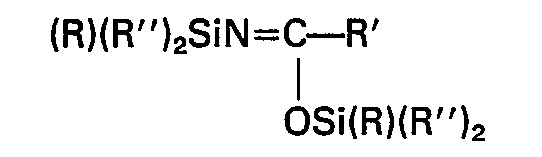
- (a) alkyl groups having less than twenty carbon atoms,
- (b) aryl groups having less than twenty carbon atoms,
- (c) -(CH2)2CF3,
- (d) -(CH2)3CI,
- (e) -(CH2)aSR'°.
- (f) ―(CH2)3NR2 iv,
- (g) -(CH2)3N(Riv)(CH2)2N(Riv)2,


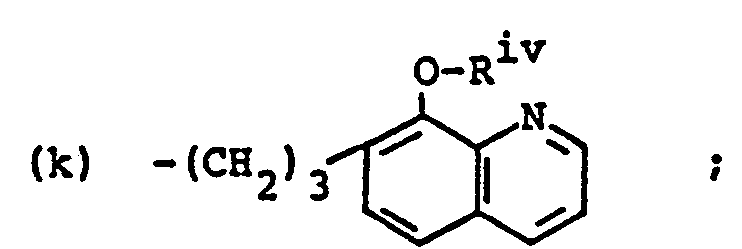
- (a) N,N-disubstituted amides having the general formula
- (ii) substituted amines wherein the amines are selected from a group consisting of
- (a) N,N,N-trisubstituted amines having.the general formula (Rv) (Rvi)cSi(NRvii 2)d and
- (b) heterocyclic amines, wherein the heterocyclic amines are selected from the group consisting of

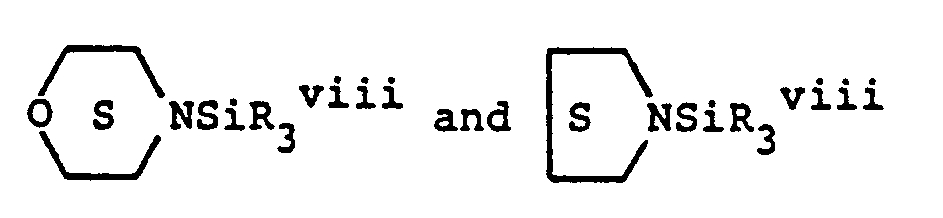
- (a) alkyl groups having less than twenty carbon atoms,
- (b) aryl groups having less than twenty carbon atoms,
- (c) -(CH2)2CF3,
- (d) -(CH2)3SRix (e) ―(CH2(3NR2 iv, (f) ―(CH2)3N(Rix)(CH2)2N(Rix)2,


- (iii) thioethers selected from the group consisting of (a) thioethers having the general formula RxR2 xiSiSRvii and (b) thioethers having the general formula (RxR2 xiSi)2S wherein in said formulae, R" is selected from a group consisting of hydrogen, allyl, vinyl and Q" wherein Q" is selected from a group consisting of
- (a) alkyl groups having less than twenty carbon atoms,
- (b) aryl groups having less than twenty carbon atoms
- (c) -(CH2)2CF3,
- (d) ―(CH2)3SRxiii,
- (e) ―(CH2)3NR2 xiii,
- (f) ―(CH2)3N(Rxiii)(CH2)2N(Rxiii)2,

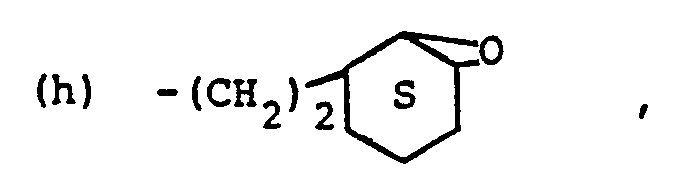

- The porous materials found useful in this invention are those materials which are porous solids having hydroxyl groups on their surfaces. Such materials for example are silica, silica gel, alumina, stannia, titania, zirconia, and the like. Also, these materials can be porous glass, porous ceramic or plastic as long as the material has, or will form, hydroxyl groups on its surface.
- The form of the porous material is not overly critical. Particulate porous materials, as well as filaments, slabs, discs, blocks, spheres, films and other such forms can be used in this invention. Also contemplated within the scope of this invention is the treatment of particulate materials by the process of this invention, and the subsequent forming of the treated particulate materials into slabs, discs, blocks, spheres, films, membranes, sheets, and the like.
- Preferred for this invention are the porous metalloid and metallic oxides such as silica, alumina, stannia and titania in all of their related forms. Most preferred are the silicas. Also contemplated within the scope of this invention are porous mixed metallic oxides such as Na20: A1203: 5SiO2: nH20, wherein n is the moles of water of hydration, and the like.
- Preferred for this invention is the method whereby the rapidly reacting silane is gradually added to a rapidly stirred solvent which is in direct contact with the porous material. The rapidly reacting silane makes immediate contact with the porous material and decreases the chances of non-uniform use of the reactive silane intermediate.
- Also contemplated within the scope of this invention is the method wherein steps (i) and (II) are carried out in the vapor phase by causing the vapors of the reactive silane to contact and react with the porous material.
- For example, the porous material is placed in a vacuum reactor and dried under vacuum. The rapidly reacting silane is then allowed to enter the vacuum chamber as a vapor and contact the porous material and after a certain contact time, the byproducts of the reactions are removed by vacuum, the vacuum is released, and the porous material removed from the chamber.
- As steps (I) and (II) are carried out, it is preferred that the stoichiometry of the reaction between the rapidly reacting silane and the surface hydroxyls is a "starved" stoichiometry, in the sense that there is used much less rapidly reacting silane than would be necessary to react with all of the hydroxyls available on the entire surface of the porous material. Thus, by using this "starved" stoichiometry, one enhances the chances that all of the exterior surface hydroxyls that are accessible will be reacted with the rapidly reacting silane but the porous interior hydroxyls will not, owing to the fact that there simply is not enough rapidly reacting silane to react with all of the hydroxyls of the porous material, and not all of the surface hydroxyls are available for reaction since once the surface hydroxyls are contacted by the silane and reacted with them, the effects of steric hinderance start to reduce the number of surface hydroxyls that are accessible by the silane. Thus, it is obvious that the material resulting from steps (I) and (II) has little or no reactant on the interior surface hydroxyls and therefore, when the "treated" product from steps (I) and (II) is subjected to step (III) of this inventive process, the moiety resulting from the second reactive silane will be found on the interior surface of the pores, resulting in a "purer" dual surface material.
- Steps (I) and (II) can be carried out in a period of time of from 1 minutes to 24 hours. Generally, for purposes of this invention, it is preferred to carry out steps (I) and (II) over about a 30 minute to 6 hour time period to ensure that the exterior surface of the porous material is uniformly treated.
- The temperature at which steps (I) and (II) are carried out is not narrowly critical and can range from 0°C to 400°C. Preferred is a room temperature to 200°C reaction mixture temperature.
- The amount of rapidly reacting silane useful in this invention depends on the number of exterior surface hydroxyls to be reacted. Typically, a stoichiometric equivalent to the exterior surface hydroxyls plus some excess of the rapidly reacting silane is required to treat the surface hydroxyls because of the potential side reactions involved. Typically, 50 to 1000% excess is used. This excess is with respect to the exterior hydroxyl groups. With respect to the total hydroxyls on both the exterior and interior surfaces, the amount of the rapidly reacting silane usually amounts to about .001 to 1%. If it is desirable to achieve a somewhat thicker exterior surface treatment, then obviously, somewhat more rapidly reacting silane should be used.
- Silanes such as N-(1,1,1-trifluoropropyldimethylsilyI)N-methylacetamide can be used to provide a hydrophobic environment for the exterior surface. N-(vinyidimethylsilyl)N-methylacetamide is an excellent silane to use in this invention because it leaves the vinyldimethylsilyl group on the exterior surface of the porous material. The vinyl group is valuable because once the vinyl group is attached to the surface of the porous material, conventional organic reactions can be used to add to the vinyl group thus reacting yet another type of group on the surface of the porous material. For example, when the porous material is treated with N-(vinyldimethylsilyl)N-methylacetamide, one can add HSCH2COOH to the resulting vinyl dimethyl silyl to give a surface group such as HOOCCHZS(CHZ)2(CH3)zSiOSi=. Using bis(dimethylsilyl)N-methylacetamide gives a surface treatment such as H(CH3)2SiOSi= which can also be further reacted with unsaturated molecles to provide further modifications to the surface of the porous material through silicon hydride addition to unsaturated compounds.
- In the second phase of the method, i.e. step (III), the material obtained by steps (I) and (II) is contacted with a reactive silane. It should be noted that steps (I) and (II) deal with a "rapidly reacting silane" while step (III) deals with a "reactive silane". For purposes of this invention, what is meant by "reactive silane" is that the silane will react with the surface hydroxyls. This reaction is preferably carried out in bulksolution as the reactive silanes are often neither reactive enough nor volatile enough to use as vapors. Thus, the reactants are mixed together in a solvent solution, with our without, heating. The object of step (III) is to permit the diffusion of the reactive silane into the pores of the porous material and to allow reaction of this silane with the hydroxyl groups that are covalently bonded to the interior surface. In many instances, it is actually the silanol-bearing hydrolysis product of the reactive silane which reacts with the interior surface hydroxyl groups. Such hydrolysis products form from adsorbed water in the porous material. Since the accessible exterior surface hydroxyls of the porous material have been effectively removed by the rapidly reacting silane in steps (I) and (II), the reactive silane does not have available to it accessible reactive sites on the exterior surface of the porous material. Thus, the reactive silane has only the hydroxyls remaining on the interior surfaces of the porous material available for reaction.
- Therefore, step (III) must be carried out for a sufficient period of time to allow for the diffusion of the reactive silane into the porous and reaction of the silanes with the interior hydroxyl group therein (or hydrolysis of the silane and then diffusion of the hydrolyzate into the pore to react). Some of the more highly reactive silanes do not require hydrolysis prior to reaction with the interior hydroxyl groups and may also be used as vapors.
- Step (III) can be carried out for a period of time of from several minutes to several hours. As indicated above, this phase of the process depends on the rate of hydrolysis of the reactive silane and the rate of diffusion of the silane, or its hydrolysis product, into the pores of the porous material. Preferred for this invention is a reaction time for step (III) of from 10 minutes to 24 hours. Most preferred is a time of 1 to 6 hours.
- The temperature at which step (III) is carried out is more critical than steps (I) and (II), yet it is not narrowly critical. As one would expect, increased temperatures enhance the rate of reaction. Increasing the temperature does not appear to promote too many undesirable side reactions. Thus, the temperature used in step (III) can range from 0°C to 300°C. Most preferred is the reflux temperature of the reaction at about 70°C to 120°C.
- The amount of reactive silane useful in this invention depends on how many of the surface hydroxyls of the pore interior one wishes to treat. An excess of the reactive silane may be used as this reactive silane does not displace any of the exterior surface groups obtained by steps (I) and (11). Typically, a stoichiometric quantity, based on reactive hydroxyls of the pore surfaces, is used in step (III) herein.
- If the reactive silane is very sluggish (e.g., organosilanol), then the reaction should be catalyzed with acid or base, with the proviso that the minimum catalysis required for completion of the reaction be used. The time and temperature of such catalyzed silylations must be carefully adjusted by trial and error to attain adequate interior coverage before the displacement of the covalently bound external group begins.
- The reactive silanes useful in step (III) of this invention are those kinds of silanes which are recognized as conventional silylation reagents. Thus, the silanes that are defined as useful in steps (I) and (II) of this invention are also useful in this step of the invention as long as the silanes are chosen such that the silane used in steps (I) and (II) is not the same as the silane chosen in step (III) and vice versa.
- Other useful silanes are the common silanes such as those having the general formula Rxv 4-eSiXe wherein Rxv is independently selected from hydrogen, alkyl groups having 1 to 4 carbon atoms, phenyl, vinyl and allyl; X is a hydrolyzable radical selected from chlorine, alkoxy having 1 to 4 carbon atoms, acetoxy, amine and amido radicals; and e has a value of 1, 2 or 3.
- Such silanes and the processes for their manufacture are known in the art and it does not appear that such processes need be set forth in detail herein.
- Specific silanes which are useful herein include: trimethylchlorosilane; dimethyldichlorosilane; hexamethyldisilazane; N,N'-bis(trimethylsilyl)urea; N-trimethylsilyldiethylamine; N-trimethylsilylimidazole; N,O-bis(trimethylsilyl)acetamide; N,O-bis(trimethylsilyl)trifluoroacetamide); N-methyl-N-trimethyl- silyltrifluoroacetamide; t-butyldimethylsilylimidazole; N-trimethylsilylacetamide; N-trimethylsilyl- piperidine; hexamethyldisilthiane; 0-trimethylsilylacetate; 0-trimethylsilyltrifluoroacetate; N-trimethyl- silyldimethylamine; N-trimethylsilylmorpholine; N-trimethylsilylpyrrolidine; and N-trimethyl- silylacetanilide.
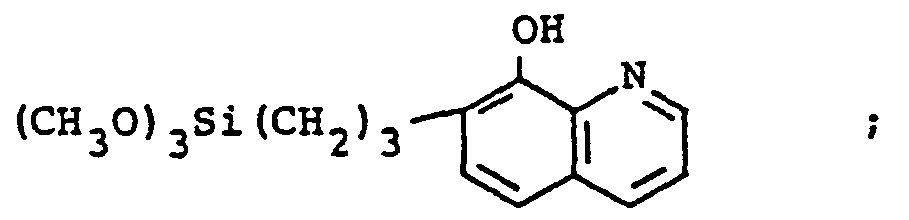
- Yet another aspect of this invention is the use in step (III) of organofunctional silanes to silylate the porous material. Such silanes useful in this invention include, for example, (alpha-methacryloxypropyl)-trimethoxysilane; (4-aminopropyl)trietoxysilane; {gamma-(beta-aminoethylamino)propylltrimethoxy- silane; (gamma-glycidoxypropyl)trimethoxysilane; {beta-(3,4-epoxycyclohexyl)-ethyl}trimethoxysilane; (beta-mercaptoethyl)trimethoxysilane; (gamma-mercaptopropyl)trimethoxysilane; (gamma-chloropropyl)trimethoxysilane;



- When it is determined that the reaction in step (III) is essentially finished, the product is typically isolated from the reaction mixture. Thus, step (IV) of this process is the isolation of such products from the reaction mixture. This can be accomplished in a number of ways. For example, the liquid can be decanted, the porous material washed and the liquid decanted, successively, or the reaction mixture can be filtered to remove the liquid from the solid product. The final product can be used in this form or it can be dried. If the final product is other than particulate in form, it can be used as is or it can be further shaped and formed without losing beneficial properties. If the material is in a particulate form it can be used as is or it can be compressed, sintered, or otherwise formed.
- It is also contemplated within the scope of this invention to prepare a dual surface porous material by eliminating step (III) of the defined process. The elimination of step (III) of the process results in an "intermediate" product wherein the surface of the porous material is first treated by steps (I) and (II) to provide a treated porous material having nonsilanol-containing silicon groups on the exterior surface and hydroxyl groups on the porous interior surface.
- Thus, this invention also consists of a method of preparing a dual surface porous material which comprises
- (A) contacting a hydroxyl-bearing porous material with less then a stoichiometric equivalent, based on the hydroxyl content of the porous material, of a rapidly reacting silane;
- (B) allowing the mixture from (A) to react and form covalent bonds by reaction with the exterior surface hydroxyl groups thereby treating the porous material exterior surface;
- (C) subsequently isolating the dual surface porous material from the mixture (B).
- Also included within the scope of this invention are the compositions which are intermediates. These compositions consist of a porous material having reacted to its exterior surface, nonsilanol-containing silicon groups, derived from a rapidly reacting silane and whose porous interior surface contains hydroxyls.
- The "rapidly reacting silane" is in accordance with the definition given above.
- These intermediates are useful products for the method disclosed supra for providing dual surface materials using reactive silane to treat the interior pore surfaces.
- The dual-surface porous materials of this invention are useful for chelating metals from solution, among other things. The materials, whose surfaces are capable of further modification, such as H(CH3)2SiO- and CHZ=CH(CH3)ZSiO- are useful intermediates in the preparation of other surface- modified porous materials.
- Now, so that those skilled in the art may appreciate and understand the invention described herein, the following examples are offered for illustration purposes only. The examples should not be construed as limiting the invention as defined in the claims.
- Porous silica gel discs were prepared by pressing 0.5 gms of silica gel obtained from J. T. Baker Co., Phillipsburg, N. J., U.S.A. (No. 3405-01 chromatographic beads, 60-200 mesh, 60 angstrom units pore diameter, 300 m2/gm) in a 1-l inch die for 30 seconds at 30,000 psi. The discs were broken in half and cleaned by heating in a Lindberg Box furnace for 4 hours at 500°C. The disc halves were then stored for a minimum of 24 hours in a moist carbostat to rehydroxylate the surface while retaining the cleanliness of the disc half. The carbostate is an aluminum dessicator contining aluminum shot. Its cleanliness had been assured by regenerating the shot at 500°C for four hours in the Lindberg furnace prior to use. Rehydroxylation conditions were attained by placing a plan of distilled water in the carbostat.
- For the silylation reaction of step (I) and step (II) 1',1,1-trifluoropropyldimethylsilyl-N-methylacetamide was used. Two halves of the cleaned and rehydroxylated discs weighing 0.25 gms each were placed in an ultrahigh vacuum reactor designed and built by the inventors herein. The need for--ultrahigh vacuum can be. appreciated by considering that at a pressure 10-6 torr, an otherwise clean surface can be covered by a monolayer of residual gas molecules, mostly water and hydrocarbons, in about two seconds. In the case of partially dehydroxylated silica, this leads to uncontrolled rehydroxylation prior to silylation, as well as, interference by the chemisorbed organics. This is not a critical factor in the silylation reactions on the porous material in a commercialization mode, but this is a fairly critical factor in attempting to establish what affect the silylation reactions have on the porous material for the purpose of establishing that the invention herein is operative.
- The half discs were dried at 200°C for 2 hours under vacuum, and then the reactor was cooled to room temperature and the source of the vacuum was shut off and the vaporous silane indicated above was allowed to enter the chamber containing the half discs for 8 seconds. This time of exposure was calculated based on the approximate number of hydroxyls on the exterior surface of the discs to provide exterior treatment but little or no interior pore treatment. After 8 seconds of flow time,, the silane flow was shut off and the silane was allowed to react with the hydroxyls of the discs for a period of 30 minutes. The system was then evacuated overnight (about 16 hours) to a presure of 10-7 torr.
- The half discs were then exposed to a second reactive silane, trimethylsilyl-N-methylacetamide, by introducing the vaporous silane into the chamber for a period of thirty seconds. The silane and porous material were allowed to contact and react for 30 minutes. No pressure drop occurred after shutting off the flow of silane, suggesting that saturation of the silica discs had occurred. After a two hour evaluation to remove excess reagent and the unreacted silane, the two half discs wer removed. One half disc was ground in an alumina mortar and pestle and analysed for bulk carbon and fluorine, while the other half disc was analyzed using electron spectroscopy for chemical analysis (ESCA). The carbon to silicon and fluorine to silicon atomic ratios measured by ESCA were corrected for carbon blank and for thin layer effects on the measured composition. ESCA detects about the first 50 angstrom units of thickness of material and thus it essentially detects only the exterior treatment in as much as the silica gel used in this example had a pore diameter of about 60 angstrom units. The corrected carbon to silicon and fluorine to silicon ratios where then used to infer the mole percents of CF3CH2CH2(CH3)2Si- and (CH3)3Si― on the exterior surface of the silica gel. The mole percent were determined for the interior surface by the use of the bulk wieght percent carbon and fluorine in the usual manner and correcting for the amounts detected in a similar but untrated silica gel disc. Bulk analysis is appropriate for such characterization because the interior surface accounts for more than 99% of the total surface area in porous materials.
- The analysis showed that the silica gel had been treated 100% with CF3CH2CH2(CH3)2Si- on the exterior surface and 97% (CH3)3Si― treatment on its interior pores.
- When the steps of example 1 were essentially repeated but the exterior surface was treated with trimethylsilyl-N-methylacetamide and the interior surface was treated with 1,1,1-trifluoropropyldimethylsilyl-N-methyl-acetamide, the result was that the surface was treated to 90% with (CH3)3Si― groups and the interior surface was treated with 34% of CF3CH2CH2(CH3)2Si- groups.
Claims (8)


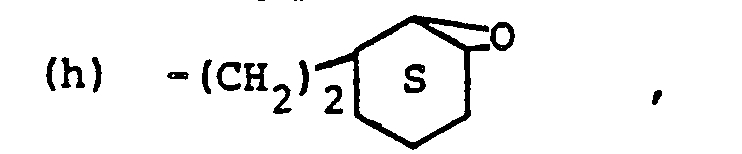


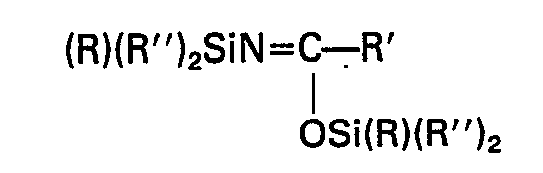


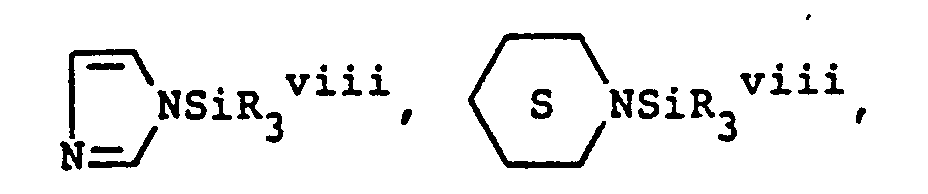
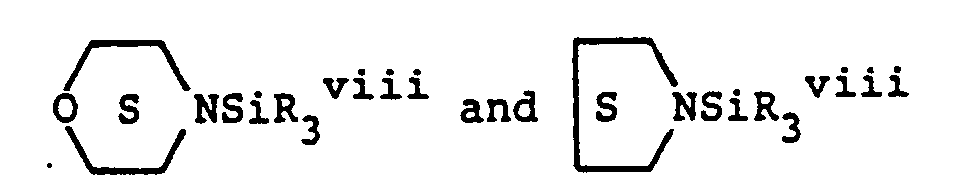


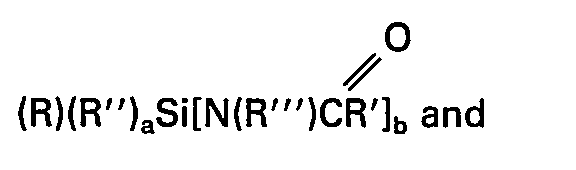


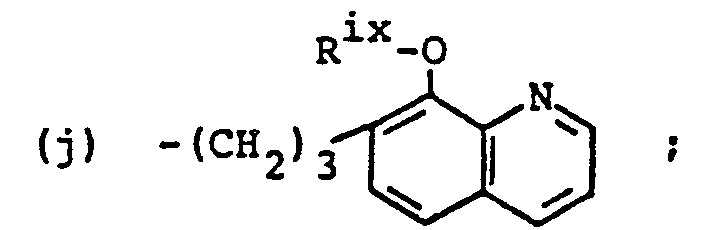


Applications Claiming Priority (2)
| Application Number | Priority Date | Filing Date | Title |
|---|---|---|---|
| US59809184A | 1984-04-09 | 1984-04-09 | |
| US598091 | 1984-04-09 |
Publications (2)
| Publication Number | Publication Date |
|---|---|
| EP0161058A1 EP0161058A1 (en) | 1985-11-13 |
| EP0161058B1 true EP0161058B1 (en) | 1989-05-24 |
Family
ID=24394190
Family Applications (1)
| Application Number | Title | Priority Date | Filing Date |
|---|---|---|---|
| EP85302295A Expired EP0161058B1 (en) | 1984-04-09 | 1985-04-02 | Dual surface materials |
Country Status (4)
| Country | Link |
|---|---|
| EP (1) | EP0161058B1 (en) |
| JP (1) | JPS60231741A (en) |
| CA (1) | CA1245208A (en) |
| DE (1) | DE3570528D1 (en) |
Families Citing this family (11)
| Publication number | Priority date | Publication date | Assignee | Title |
|---|---|---|---|---|
| JP2504005B2 (en) * | 1986-11-17 | 1996-06-05 | 東ソー株式会社 | Filler and its manufacturing method |
| US4950634A (en) * | 1988-02-11 | 1990-08-21 | Dow Corning Corporation | Method for producing dual zone materials by use of an organosilane mixture |
| US4950635A (en) * | 1988-02-11 | 1990-08-21 | Dow Corning Corporation | Method for producing dual zone materials by catalyzed halosilylation |
| GB8902771D0 (en) * | 1989-02-08 | 1989-03-30 | Bioprocessing Ltd | Improvements in or relating to affinity chromatography |
| JP2560856B2 (en) * | 1989-09-21 | 1996-12-04 | 株式会社島津製作所 | Column packing manufacturing method |
| FR2653034A1 (en) * | 1989-10-13 | 1991-04-19 | Centre Nat Rech Scient | PROCESS FOR THE PREPARATION OF A REGIOSPECIFIC POROUS PARTICULATE PRODUCT, PRODUCTS OBTAINED AND APPLICATION IN PARTICULAR TO CHROMATOGRAPHIC SEPARATIONS. |
| AU648025B2 (en) * | 1990-06-27 | 1994-04-14 | Dow Corning Corporation | Method for producing dual zone materials by catalyzed halosilylation |
| US5474796A (en) * | 1991-09-04 | 1995-12-12 | Protogene Laboratories, Inc. | Method and apparatus for conducting an array of chemical reactions on a support surface |
| US6589726B1 (en) | 1991-09-04 | 2003-07-08 | Metrigen, Inc. | Method and apparatus for in situ synthesis on a solid support |
| US6921636B1 (en) | 1991-09-04 | 2005-07-26 | Metrigen, Inc. | Method and apparatus for conducting an array of chemical reactions on a support surface |
| JP3698276B2 (en) * | 1994-09-29 | 2005-09-21 | 株式会社リコー | NOVEL ORGANIC SILICON COMPOUND, PROCESS FOR PRODUCING THE SAME, TONER FOR ELECTROSTATIC DEVELOPER USING NOVEL ORGANIC SILICON COMPOUND, AND DRY DEVELOPER |
Family Cites Families (9)
| Publication number | Priority date | Publication date | Assignee | Title |
|---|---|---|---|---|
| GB925540A (en) * | 1960-06-10 | 1963-05-08 | Ici Ltd | Surface modified silicas |
| GB1110331A (en) * | 1964-05-06 | 1968-04-18 | Degussa | Process for the production of hydrophobic silica |
| DE2028702A1 (en) * | 1969-06-13 | 1970-12-17 | Cabot Corp., Boston, Mass. (V.St.A.)j | Process for the production of surface-modified metal or non-metal oxides |
| DE2313073C2 (en) * | 1973-03-16 | 1984-11-29 | Istvan Prof. Dr. 6600 Saarbruecken Halasz | Process for the chemical modification of surfaces of inorganic solids and their use |
| DE2426306B2 (en) * | 1974-05-29 | 1977-06-23 | Sebestian, Imrich, Dipl.-Chem. Dr., 5160Düren | METHOD FOR CHEMICAL MODIFICATION OF SOLID SURFACES USING SILANES |
| DE2513608C2 (en) * | 1975-03-27 | 1982-08-05 | Degussa Ag, 6000 Frankfurt | Process for the hydrophobization of silicas and silicates with organosilanes |
| US4298500A (en) * | 1980-05-05 | 1981-11-03 | Varian Associates, Inc. | Mixed phase chromatographic compositions |
| DE3070463D1 (en) * | 1980-10-20 | 1985-05-15 | Dow Chemical Co | Process for making a chromatographic-column packing having a bonded organosiloxane coating, and process for making a chromatographic separation |
| US4379931A (en) * | 1981-07-01 | 1983-04-12 | Dow Corning Corporation | Metal extraction from solution and novel compounds used therefor |
-
1985
- 1985-03-12 CA CA000476263A patent/CA1245208A/en not_active Expired
- 1985-04-02 DE DE8585302295T patent/DE3570528D1/en not_active Expired
- 1985-04-02 EP EP85302295A patent/EP0161058B1/en not_active Expired
- 1985-04-08 JP JP60072865A patent/JPS60231741A/en active Granted
Also Published As
| Publication number | Publication date |
|---|---|
| JPH0550474B2 (en) | 1993-07-29 |
| JPS60231741A (en) | 1985-11-18 |
| EP0161058A1 (en) | 1985-11-13 |
| DE3570528D1 (en) | 1989-06-29 |
| CA1245208A (en) | 1988-11-22 |
Similar Documents
| Publication | Publication Date | Title |
|---|---|---|
| US5110784A (en) | Dual surface porous material | |
| US4782040A (en) | Porous materials having a dual surface | |
| US4705725A (en) | Substrates with sterically-protected, stable, covalently-bonded organo-silane films | |
| US4746572A (en) | Structures surface modified with bidentate silanes | |
| EP0172730B1 (en) | Metal oxide stabilized chromatography packings | |
| US4950635A (en) | Method for producing dual zone materials by catalyzed halosilylation | |
| EP0161058B1 (en) | Dual surface materials | |
| EP0437911B1 (en) | Method for producing dual zone materials by catalyzed halosilylation | |
| US4379931A (en) | Metal extraction from solution and novel compounds used therefor | |
| US8133390B2 (en) | Reversed endcapping and bonding of chromatographic stationary phases using hydrosilanes | |
| US4421654A (en) | Metal extraction from solution and novel compounds used therefor | |
| EP0160988B1 (en) | Stable silica-based ether bonded phases for biopolymer separations | |
| US5869724A (en) | Asymmetric bidentate silanes | |
| US5948531A (en) | Propylene-bridged bidentate silanes | |
| CA2007821C (en) | Method for producing dual zone materials by use of an organosilane mixture | |
| CA2007819C (en) | Method for producing dual zone materials by catalyzed halosilylation | |
| JPH02131489A (en) | Silylating agent | |
| AU648025B2 (en) | Method for producing dual zone materials by catalyzed halosilylation | |
| DE69004678T2 (en) | Method for the production of dual-zone materials by catalyzed halosilylation. | |
| Kricheldorf | Chemical modification of polymers and surfaces | |
| JPS63218249A (en) | Filler for optical resolution and its manufacturing method | |
| JPS63249051A (en) | Packing agent of liquid chromatography and preparation thereof | |
| JPH03242307A (en) | Preparation of two zone porous substance by using organosilane mixture | |
| JPS6197146A (en) | Surface treatment method for porous glass |
Legal Events
| Date | Code | Title | Description |
|---|---|---|---|
| PUAI | Public reference made under article 153(3) epc to a published international application that has entered the european phase |
Free format text: ORIGINAL CODE: 0009012 |
|
| AK | Designated contracting states |
Designated state(s): DE FR GB |
|
| 17P | Request for examination filed |
Effective date: 19860429 |
|
| 17Q | First examination report despatched |
Effective date: 19871104 |
|
| GRAA | (expected) grant |
Free format text: ORIGINAL CODE: 0009210 |
|
| AK | Designated contracting states |
Kind code of ref document: B1 Designated state(s): DE FR GB |
|
| REF | Corresponds to: |
Ref document number: 3570528 Country of ref document: DE Date of ref document: 19890629 |
|
| ET | Fr: translation filed | ||
| PLBE | No opposition filed within time limit |
Free format text: ORIGINAL CODE: 0009261 |
|
| STAA | Information on the status of an ep patent application or granted ep patent |
Free format text: STATUS: NO OPPOSITION FILED WITHIN TIME LIMIT |
|
| 26N | No opposition filed | ||
| PGFP | Annual fee paid to national office [announced via postgrant information from national office to epo] |
Ref country code: DE Payment date: 19980313 Year of fee payment: 14 |
|
| PGFP | Annual fee paid to national office [announced via postgrant information from national office to epo] |
Ref country code: GB Payment date: 19980316 Year of fee payment: 14 Ref country code: FR Payment date: 19980316 Year of fee payment: 14 |
|
| PG25 | Lapsed in a contracting state [announced via postgrant information from national office to epo] |
Ref country code: GB Free format text: LAPSE BECAUSE OF NON-PAYMENT OF DUE FEES Effective date: 19990402 |
|
| GBPC | Gb: european patent ceased through non-payment of renewal fee |
Effective date: 19990402 |
|
| PG25 | Lapsed in a contracting state [announced via postgrant information from national office to epo] |
Ref country code: FR Free format text: LAPSE BECAUSE OF NON-PAYMENT OF DUE FEES Effective date: 19991231 |
|
| REG | Reference to a national code |
Ref country code: FR Ref legal event code: ST |
|
| PG25 | Lapsed in a contracting state [announced via postgrant information from national office to epo] |
Ref country code: DE Free format text: LAPSE BECAUSE OF NON-PAYMENT OF DUE FEES Effective date: 20000201 |