EP0138854B1 - Antigenically active amino acid sequences - Google Patents
Antigenically active amino acid sequences Download PDFInfo
- Publication number
- EP0138854B1 EP0138854B1 EP84900954A EP84900954A EP0138854B1 EP 0138854 B1 EP0138854 B1 EP 0138854B1 EP 84900954 A EP84900954 A EP 84900954A EP 84900954 A EP84900954 A EP 84900954A EP 0138854 B1 EP0138854 B1 EP 0138854B1
- Authority
- EP
- European Patent Office
- Prior art keywords
- replaced
- sequences
- amino acid
- peptide
- protein
- Prior art date
- Legal status (The legal status is an assumption and is not a legal conclusion. Google has not performed a legal analysis and makes no representation as to the accuracy of the status listed.)
- Expired - Lifetime
Links
Images


Classifications
-
- C—CHEMISTRY; METALLURGY
- C07—ORGANIC CHEMISTRY
- C07K—PEPTIDES
- C07K14/00—Peptides having more than 20 amino acids; Gastrins; Somatostatins; Melanotropins; Derivatives thereof
- C07K14/005—Peptides having more than 20 amino acids; Gastrins; Somatostatins; Melanotropins; Derivatives thereof from viruses
-
- A—HUMAN NECESSITIES
- A61—MEDICAL OR VETERINARY SCIENCE; HYGIENE
- A61K—PREPARATIONS FOR MEDICAL, DENTAL OR TOILETRY PURPOSES
- A61K39/00—Medicinal preparations containing antigens or antibodies
- A61K39/12—Viral antigens
-
- A—HUMAN NECESSITIES
- A61—MEDICAL OR VETERINARY SCIENCE; HYGIENE
- A61K—PREPARATIONS FOR MEDICAL, DENTAL OR TOILETRY PURPOSES
- A61K39/00—Medicinal preparations containing antigens or antibodies
- A61K39/12—Viral antigens
- A61K39/125—Picornaviridae, e.g. calicivirus
- A61K39/135—Foot- and mouth-disease virus
-
- G—PHYSICS
- G01—MEASURING; TESTING
- G01N—INVESTIGATING OR ANALYSING MATERIALS BY DETERMINING THEIR CHEMICAL OR PHYSICAL PROPERTIES
- G01N33/00—Investigating or analysing materials by specific methods not covered by groups G01N1/00 - G01N31/00
- G01N33/48—Biological material, e.g. blood, urine; Haemocytometers
- G01N33/50—Chemical analysis of biological material, e.g. blood, urine; Testing involving biospecific ligand binding methods; Immunological testing
- G01N33/53—Immunoassay; Biospecific binding assay; Materials therefor
- G01N33/569—Immunoassay; Biospecific binding assay; Materials therefor for microorganisms, e.g. protozoa, bacteria, viruses
- G01N33/56983—Viruses
-
- G—PHYSICS
- G01—MEASURING; TESTING
- G01N—INVESTIGATING OR ANALYSING MATERIALS BY DETERMINING THEIR CHEMICAL OR PHYSICAL PROPERTIES
- G01N33/00—Investigating or analysing materials by specific methods not covered by groups G01N1/00 - G01N31/00
- G01N33/48—Biological material, e.g. blood, urine; Haemocytometers
- G01N33/50—Chemical analysis of biological material, e.g. blood, urine; Testing involving biospecific ligand binding methods; Immunological testing
- G01N33/68—Chemical analysis of biological material, e.g. blood, urine; Testing involving biospecific ligand binding methods; Immunological testing involving proteins, peptides or amino acids
- G01N33/6878—Chemical analysis of biological material, e.g. blood, urine; Testing involving biospecific ligand binding methods; Immunological testing involving proteins, peptides or amino acids in epitope analysis
-
- A—HUMAN NECESSITIES
- A61—MEDICAL OR VETERINARY SCIENCE; HYGIENE
- A61K—PREPARATIONS FOR MEDICAL, DENTAL OR TOILETRY PURPOSES
- A61K39/00—Medicinal preparations containing antigens or antibodies
- A61K2039/55—Medicinal preparations containing antigens or antibodies characterised by the host/recipient, e.g. newborn with maternal antibodies
- A61K2039/552—Veterinary vaccine
-
- A—HUMAN NECESSITIES
- A61—MEDICAL OR VETERINARY SCIENCE; HYGIENE
- A61K—PREPARATIONS FOR MEDICAL, DENTAL OR TOILETRY PURPOSES
- A61K39/00—Medicinal preparations containing antigens or antibodies
- A61K2039/555—Medicinal preparations containing antigens or antibodies characterised by a specific combination antigen/adjuvant
- A61K2039/55505—Inorganic adjuvants
-
- A—HUMAN NECESSITIES
- A61—MEDICAL OR VETERINARY SCIENCE; HYGIENE
- A61K—PREPARATIONS FOR MEDICAL, DENTAL OR TOILETRY PURPOSES
- A61K39/00—Medicinal preparations containing antigens or antibodies
- A61K2039/555—Medicinal preparations containing antigens or antibodies characterised by a specific combination antigen/adjuvant
- A61K2039/55511—Organic adjuvants
- A61K2039/55566—Emulsions, e.g. Freund's adjuvant, MF59
-
- A—HUMAN NECESSITIES
- A61—MEDICAL OR VETERINARY SCIENCE; HYGIENE
- A61K—PREPARATIONS FOR MEDICAL, DENTAL OR TOILETRY PURPOSES
- A61K39/00—Medicinal preparations containing antigens or antibodies
- A61K2039/60—Medicinal preparations containing antigens or antibodies characteristics by the carrier linked to the antigen
- A61K2039/6031—Proteins
- A61K2039/6081—Albumin; Keyhole limpet haemocyanin [KLH]
-
- A—HUMAN NECESSITIES
- A61—MEDICAL OR VETERINARY SCIENCE; HYGIENE
- A61K—PREPARATIONS FOR MEDICAL, DENTAL OR TOILETRY PURPOSES
- A61K39/00—Medicinal preparations containing antigens or antibodies
-
- C—CHEMISTRY; METALLURGY
- C12—BIOCHEMISTRY; BEER; SPIRITS; WINE; VINEGAR; MICROBIOLOGY; ENZYMOLOGY; MUTATION OR GENETIC ENGINEERING
- C12N—MICROORGANISMS OR ENZYMES; COMPOSITIONS THEREOF; PROPAGATING, PRESERVING, OR MAINTAINING MICROORGANISMS; MUTATION OR GENETIC ENGINEERING; CULTURE MEDIA
- C12N2770/00—MICROORGANISMS OR ENZYMES; COMPOSITIONS THEREOF; PROPAGATING, PRESERVING, OR MAINTAINING MICROORGANISMS; MUTATION OR GENETIC ENGINEERING; CULTURE MEDIA ssRNA viruses positive-sense
- C12N2770/00011—Details
- C12N2770/32011—Picornaviridae
- C12N2770/32111—Aphthovirus, e.g. footandmouth disease virus
- C12N2770/32122—New viral proteins or individual genes, new structural or functional aspects of known viral proteins or genes
-
- C—CHEMISTRY; METALLURGY
- C12—BIOCHEMISTRY; BEER; SPIRITS; WINE; VINEGAR; MICROBIOLOGY; ENZYMOLOGY; MUTATION OR GENETIC ENGINEERING
- C12N—MICROORGANISMS OR ENZYMES; COMPOSITIONS THEREOF; PROPAGATING, PRESERVING, OR MAINTAINING MICROORGANISMS; MUTATION OR GENETIC ENGINEERING; CULTURE MEDIA
- C12N2770/00—MICROORGANISMS OR ENZYMES; COMPOSITIONS THEREOF; PROPAGATING, PRESERVING, OR MAINTAINING MICROORGANISMS; MUTATION OR GENETIC ENGINEERING; CULTURE MEDIA ssRNA viruses positive-sense
- C12N2770/00011—Details
- C12N2770/32011—Picornaviridae
- C12N2770/32111—Aphthovirus, e.g. footandmouth disease virus
- C12N2770/32134—Use of virus or viral component as vaccine, e.g. live-attenuated or inactivated virus, VLP, viral protein
-
- Y—GENERAL TAGGING OF NEW TECHNOLOGICAL DEVELOPMENTS; GENERAL TAGGING OF CROSS-SECTIONAL TECHNOLOGIES SPANNING OVER SEVERAL SECTIONS OF THE IPC; TECHNICAL SUBJECTS COVERED BY FORMER USPC CROSS-REFERENCE ART COLLECTIONS [XRACs] AND DIGESTS
- Y10—TECHNICAL SUBJECTS COVERED BY FORMER USPC
- Y10S—TECHNICAL SUBJECTS COVERED BY FORMER USPC CROSS-REFERENCE ART COLLECTIONS [XRACs] AND DIGESTS
- Y10S930/00—Peptide or protein sequence
- Y10S930/01—Peptide or protein sequence
- Y10S930/22—Viral peptide or viral protein
- Y10S930/222—Foot and mouth disease related
Definitions
- This invention relates to the identification and chemical synthesis of peptides (or amino acid sequences) which constitute the immunogenic determinant(s) of an immunologically important coat protein, VP1, of foot-and-mouth disease virus, and to the use of these peptides for example, in the production of vaccines and diagnostic reagents.
- immunogenic determinant(s) for biologically important proteins is regarded as being of particular importance since, once these determinants have been identified, they can be simply and economically synthesised so as to provide the desired peptide sequences for use in vaccines which will have a high degree of specificity, and which will avoid any undesired effects from unnecessary amino acid or peptide sequences which might still be present in, for example, sub-unit type vaccines.
- the immunogenicity of a polypeptide can be defined as the immune response directed against a limited number of immunogenic determinants, which are confined to a few loci on the polypeptide molecule, (see Crumpton, M.J., in The Antigens (ed. Sela, M., Academic Press, New York, 1974); Benjamini, E. et al., Curr. Topics Microbiol. Immunol. 58 , 85-135 (1972); and Atassi, M.Z., Immunochemistry 12 , 423-438 (1975).) Antisera prepared against chemically synthesized peptides corresponding to short linear stretches of the polypeptide sequence have been shown to react well with the whole polypeptide, (see Green, N.
- a determinant can consist of a single sequence, (continuous), or of several sequences (discontinuous) brought together from linearly distant regions of the polypeptide chain by the folding of that chain as it exists in the native state, (see Atassi, M.Z., Immunochemistry 15 , 909-936 (1978).).
- the size of a contributing element can then vary between one and the maximum number of amino acids consistent with the dimensions of the antibody combining site, and is likely to be of the order of five to six, (see Atassi, M.Z., supra).
- the FMD virus which belongs to the aphthovirus genus of the family Picornaviridae, consists of an ordered aggregation of structurally independent sub-units surrounding a molecule of infectious single-stranded RNA. Under relatively mild conditions the whole particle readily dis-aggregates to give the naked RNA, 60 copies of the VP4 polypeptide, and 12 sub-units consisting of an ordered arrangement of five copies of each of the polypeptides, VP1, VP2 and VP3. Each of these structural sub-units can be further disrupted to yield the isolated component proteins.
- the VP1 protein of FMD virus has been shown to be an immunologically important coat protein of the virus.
- a preferred method for solid-phase synthesis according to the present invention comprises the use of a polymeric material such as polyethylene or polypropylene as the solid-phase carrier, onto which is graft polymerised a vinyl monomer containing at least one functional group to produce polymeric chains on the carrier.
- the functional groups of these polymeric chains are then reacted to provide primary or secondary amino groups of the chains, and these amino groups are then sequentially reacted with amino acid residues in appropriate order so as to build up a desired synthetic peptide.
- the carrier is preferably in the form of a solid polymer rod having a diameter of about 4mm and a length of about 50mm. A number of such rods can be held in a suitable holder in a 12 x 8 grid whose dimensions correspond to those of the standard microtitre plate used for enzyme-linked immunosorbent assays (ELISA).
- the present invention provides a synthetic peptide which displays the antigenicity of the VP1 protein of foot-and-mouth disease virus, characterised in that at least a portion of said peptide is selected from the group consisting of five-, six- or seven-long antigenically active amino acid sequences of said VP1 protein, and antigenically active modified sequences (as hereinafter defined) thereof.
- a synthetic peptide which displays the antigenicity of the VP1 protein of foot-and-mouth disease virus, Type O1, characterised in that at least a portion of said peptide is selected from amino acid sequences of the group consisting of:
- a synthetic peptide which displays the antigenicity of the VP1 protein of foot-and-mouth disease virus, type A10 (A61), characterised in that at least a portion of said peptide is selected from amino acid sequences of the group consisting of:
- a synthetic peptide which displays the antigenicity of the VP1 protein of foot-and-mouth disease virus, type C1, characterised in that at least a portion of said peptide is selected from amino acid sequences of the group consisting of:
- antigenically active modified sequences is used to describe sequences of amino acids which are based on any one of sequences (i) to (iv) of the first, second or third aspects of the invention as described above, but in which one of the amino acids in the said sequence is replaced by another amino acid to provide a modified sequence which is antigenically active.
- Antigenically active modified sequences in accordance with the first aspect of this invention include hexapeptide sequences based on the formula: in which:
- Antigenically active modified sequences in accordance with the second aspect of this invention include hexapeptide sequences based on the formula: in which:
- Antigenically active modified sequences in accordance with the third aspect of this invention include hexapeptide sequences based on the formula: in which:
- the peptides of the present invention are characterised in that at least a portion of the peptide contains an amino acid sequence selected from the groups (i) to (v) described above. Tests which have been carried out, particularly utilising the ELISA technique, have established the activity of these amino acid sequences by their reactivity with antisera. It should be noted, however, that whilst the synthetic peptides of this invention may comprise sequences which are only 5, 6 or 7 amino acids long, the present invention also extends to synthetic peptides in which one or more additional amino acids are included on either or both ends of the defined sequence, that is either on the carboxyl (-COOH) end or on the amino (-NH2) end or both. While such additional amino acids may not play any direct role in enhancing the immunogenic activity of the defined amino acid sequence, they may act, for example, as spacer amino acids to space the antigenically active amino acid sequence from the free carboxyl and/or free amino ends of the sequence.
- the modified sequences in accordance with this invention have been similarly synthesised and tested utilising the ELISA technique. As previously described, each of these modified sequences was derived by replacing one amino acid in the original sequence by another amino acid.
- the peptides of the present invention can be chemically synthesized from their constituent amino acids. This synthesis may be carried out, for example, by the Merrifield solid-phase method, as described in J.A.C.S. 85: 2149-2154 (1963). In the Merrifield solid-phase method, the C-terminal amino acid is attached to chloromethylated polystyrene-divinylbenzene copolymer beads. Each subsequent amino acid, with a suitable protecting group if necessary, is then added sequentially to the growing chain. As described in the Merrifield article, the protective group may be, for example, a t-butyloxycarbonyl or carbobenzoxy group.
- the desired amino acid sequence and chain length can be produced.
- the protective group is removed from N-terminal amino acid, and the C-terminal amino acid is cleaved from the supporting beads, using a suitable reagent such as trifluoroacetic acid and hydrogen bromide.
- the synthesis can be carried out by the solid-phase method, in which the synthetic peptide structure is built up on a solid-phase carrier which comprises a polymeric material, for example a polyethylene rod or pin, having a vinyl monomer graft polymerised thereto, for example by ⁇ -radiation of acrylic acid, acrylonitrile or acrylamide monomers.
- a mono- protected biamine such as lysine or lysine-alanine is then reacted with the polymeric chain formed on the solid-phase carrier and the synthetic peptide then built up by sequential reaction of amino acids in the same manner as in the Merrifield method described above.
- the final step in both the methods referred to above is the removal of the synthetic peptide from the solid-phase carrier or support by a cleaving reaction using a suitable reagent
- a suitable reagent for some uses of the peptides of the present invention it is convenient if not essential for the chemically synthesized peptides to be used in the form of a product in which the peptide is coupled or linked to a solid-phase carrier or support.
- the final cleaving step is omitted.
- Such antigenically active, chemically synthesized peptides which are immobilised on a solid-phase carrier or support are of particular utility in the performance of immunochemical assays, such as enzyme immunoassays (EIA).
- the immunogenic synthetic peptides of the present invention may provide the basis upon which the formation of synthetic vaccines against foot-and-mouth disease virus can be developed.
- Such synthetic vaccines would have particular merit insofar as they could be manufactured so as to be free of amino acid sequences corresponding to the entire amino acid sequences of the viral protein, and also free of biologically produced materials and of active or inactivated viral residues.
- the use of synthetic peptides as the basis for vaccines is discussed, for example, by Beale, J. in Nature 298 14-15 (1982), and by Sutcliffe, J.G. et al in Science, 219 , 660-666 (1982).
- the synthetic peptides of the present invention could be used either alone, in combination, and/or in association with a physiologically acceptable carrier and/or adjuvant.
- the synthetic peptides of the present invention also have potential for use in a number of other applications in the immunological field, including use in diagnostic and other immunological testing procedures, particularly in immunochemical assays such as enzyme immunoassays.
- N ⁇ -t-Butyloxycarbonyl-L-Lysine methyl ester was coupled to the polyethylene polyacrylic acid (PPA) via the N -amino group of the side-chain. This was followed by the coupling of Boc-Alanine, to complete a peptide-like spacer. Amino-substitution of the support was determined by reacting NH2-Lysine(OMe)-PPA with C14 labelled butyric acid, and was found to be 8-10 nmoles/rod.
- side-chain protecting groups were used; O-benzyl for threonine, serine, aspartic acid, glutamic acid and tyrosine; carbobenzoxy for lysine; tosyl for arginine; 4-methyl benzyl for cysteine and 1-benzyloxycarbonylamido-2,2,2,-trifluoroethyl for histidine.
- Side-chain deprotection was achieved by treatment with borontris(trifluoracetate) in trifluoroacetic acid for 90 minutes at room temperature (see Pless, J., Bauer, W., Angewante Chemie 85 , 142 (1973)).
- Antigenic profiles for the hexapeptides prepared as described in A. above are shown in Figure 2 as a vertical line proportional to the ELISA extinction obtained, over the number giving the location within the VP1 sequence of the peptide N-terminal amino acid.
- Antisera used to produce the different profiles as shown, were as follows:
- the enzyme-linked immunosorbent assay was used to test each rod-coupled peptide (RCP) for reactivity with each of the defined antisera described above.
- RCPs were pre-coated with 10% horse serum, 10% ovalbumin and 1% Tween-80 in PBS, to block non-specific absorption of antibodies, for 1 hour at 37°C. Overnight incubation at 4°C in antiserum diluted 1/40 in the preincubation mixture, was followed by 3 washes in 0.05% Tween-80/PBS.
- peptides were washed three times at 37°C in 8M urea containing 0.1% 2-mercaptoethanol and 0.1% sodium dodecyl sulphate, followed by several washes in PBS to remove all traces of bound antibody. The RCPs were then ready for further testing with different antisera.
- Anti-intact virus particle sera were prepared by immunising rabbits with 50 ⁇ g of inactivated, purified virus in complete Freund's adjuvant. The animals were bled 3-4 weeks after the single vaccination.
- Anti-virus-subunit serum (rabbit) was prepared by immunizing 3 times, 3-4 weeks apart, with 10 ⁇ g of acid-disrupted purified virus, initially in complete Freund's and subsequently in incomplete Freund's adjuvant.
- the polypeptide VP1 was separated from the mixture of proteins obtained from urea disrupted, purified virus, by iso-electric focusing. (see Barteling, S.J., Wagenaar, F., Gielkens, A.L.J., J.Gen.Virol.
- Antiserum for scan (c) was that used for scan (b), but after absorption with purified virus (1500 ⁇ g complete virus was incubated with 1 ml of serum for 72 hours at 4°C), and all virus bound antibodies removed by centrifugation.
- scans (a) and (b) show the extremes in the reactivity patterns found. Large quantitative differences in the response to an identical antigen preparation have been reported before, however, these scans highlight the variability possible in the antibody composition between sera. From an examination of scans (a), (b) and (c), antibody reactive with peptides numbers 146 and 147 are present in whole anti-intact virus sera, but absent after absorption with purified virus. These same antibodies are not observed in the anti-subunit sera, scan (d), and only weakly present in the anti-VP1 sera, scan (e). That some activity was found in the anti-VP1 sera, possibly accounts for the immunizing capacity, albeit weak, of the isolated protein.
- the 212 amino acid sequence of VP1 was subdivided into 207 hexapeptides. These hexapeptides were synthesised as described in Example 1 above with the exception that the side chain of arginine was protected by the p-methoxybenzene sulphonyl group.
- the 210 amino acid sequence of VP1 was subdivided into 205 hexapeptides. These hexapeptides were synthesised as described in Example 2 above.
- Example 1 The synthesis method of Example 1 was used to synthesize 120 hexapeptides, each consisting of five original amino acids of the antigenic hexapeptide G - D - L - Q - V - L (type 01), the other amino acid being systematically replaced with each of the 20 possible naturally occurring genetically coded amino acids. This replacement was performed at each of the six positions in the peptide in turn.
- the 120 peptides comprised six copies of the original sequence and 114 variations of the original sequence, each of the 114 variations differing in only one amino acid from the original sequence. This strategy is illustrated diagrammatically in Fig.5.
- the ELISA test of Example 1 was used to test the 120 peptides against an antiserum known to react with the original sequence. The results are shown in Fig.6 and Table 1.
- the antibody-binding activity for each peptide is shown as a vertical line proportional to the ELISA extinction obtained.
- the left-hand line corresponds to the substitution of the original residue by alanine (A)
- the right-hand line is for the substitution by tyrosine (Y). Lines in between are in alphabetic order according to the single letter code for each amino acid.
- Every group of twenty lines corresponds to the complete replacement set for one of the six N-terminal residue positions in the hexapeptide G - D - L - Q - V - L. It can be seen that the amino acids at certain positions in the sequence can be readily replaced without loss of antigenicity, whereas other positions cannot accept replacement without partial or complete loss of antigenicity. Those peptides containing replacements which result in retained antigenicity are candidates for use in vaccine manufacture.
- C. The preparation and testing methods of A. and B. above were repeated with the antigenic hexapeptides G - D - L - G - S - I (type A10) and D - L - A - H - L - T (type C1) - see Fig.5. The results are shown in Table 1.
- the selected antigenic peptides of each of the three FMDV types were synthesized with a variety of linking amino acids at the N-terminal end and with the linking amino acid lysine at the C-terminal end.
- the amino acids in the links do not occur in those positions in the native sequences.
- the synthesized peptides were coupled to a protein carrier and combined with an adjuvant for the purpose of animal immunisation.
- the carrier was keyhole limpet hemocyanin (KLH) and the adjuvant was either an oil adjuvant or aluminium hydroxide gel.
- Table 2 gives the results of serological tests on immunised rabbits. It shows that in each case the rabbit produced a significant amount of antibody able to react with FMDV and able to neutralise the infectivity of FMDV.
- a protection test was carried out using guinea pigs as a model, since guinea pigs are susceptible to infection with FMDV.
- the peptide used for immunisation was C - G - D - L - Q - V - L - A - K, which is made up of the heptapeptide G - D - L - Q - V - L - A from FMDV type 01 (residues 146-152), a cysteine linker at the N-terminal end and a lysine linker at the C-terminal end.
- the peptide was coupled to KLH using maleimidobenzoyl N-hydroxysuccinimide ester, which links the peptide to the KLH via the cysteine side chain.
- the KLH-peptide conjugate was then absorbed to an aluminium hydroxide gel and used to vaccinate the guinea pigs at a dose of 100 ⁇ g peptide per animal.
- An unvaccinated group of guinea pigs served as controls. The animals were challenged 21 days after the single vaccination.
- Fig.2 An example of the application of the present invention for diagnostic use is drawn from Fig.2. This shows that ELISA testing using support-coupled peptides (SCPs) is an extremely strain-specific tool for detecting FMDV antibodies.
- SCPs support-coupled peptides
- Whole antisera to FMDV type O1 reacted with hexapeptides 146, 147 and 206 derived from the FMDV type O1 sequence, whereas antiserum to type C1 did not react at all.
- Control testing on the antiserum to FMDV type C1 showed that, likewise, specific reaction only occurred with peptides derived from the C1 sequence.
- Testing of the SCPs with other non-FMDV-specific control sera, and hyperimmune sera to other FMDV types has also shown that no reaction occurs.
Landscapes
- Health & Medical Sciences (AREA)
- Life Sciences & Earth Sciences (AREA)
- Chemical & Material Sciences (AREA)
- Virology (AREA)
- Immunology (AREA)
- Engineering & Computer Science (AREA)
- General Health & Medical Sciences (AREA)
- Medicinal Chemistry (AREA)
- Molecular Biology (AREA)
- Microbiology (AREA)
- Urology & Nephrology (AREA)
- Hematology (AREA)
- Biomedical Technology (AREA)
- Biochemistry (AREA)
- Pharmacology & Pharmacy (AREA)
- Organic Chemistry (AREA)
- Analytical Chemistry (AREA)
- Biotechnology (AREA)
- Food Science & Technology (AREA)
- General Physics & Mathematics (AREA)
- Pathology (AREA)
- Proteomics, Peptides & Aminoacids (AREA)
- Veterinary Medicine (AREA)
- Public Health (AREA)
- Animal Behavior & Ethology (AREA)
- Physics & Mathematics (AREA)
- Epidemiology (AREA)
- Mycology (AREA)
- Cell Biology (AREA)
- Tropical Medicine & Parasitology (AREA)
- Genetics & Genomics (AREA)
- Biophysics (AREA)
- Gastroenterology & Hepatology (AREA)
- Zoology (AREA)
- Peptides Or Proteins (AREA)
- Medicines Containing Antibodies Or Antigens For Use As Internal Diagnostic Agents (AREA)
Abstract
Description
- This invention relates to the identification and chemical synthesis of peptides (or amino acid sequences) which constitute the immunogenic determinant(s) of an immunologically important coat protein, VP1, of foot-and-mouth disease virus, and to the use of these peptides for example, in the production of vaccines and diagnostic reagents.
- In the search for more effective means of protection against infective disease in man and animals, major advances have been made in the last decade. It is now clear that immunization is possible using an isolated component of the whole causative agent, such as for example in the influenza virus sub-unit vaccines.
- Current efforts are directed at reducing the scale of the immunizing component still further, first to the polypeptide (protein) carrying the necessary trigger for the immune system and secondly to the trigger itself. Recombinant DNA technology has provided the means, by translation from the determined nucleotide sequences, of obtaining reliable amino acid sequences for biologically important proteins including such proteins which were not readily available from natural sources. However, methods for identifying the loci of a protein which constitute the trigger(s) or immunogenic determinant(s) are few and very time consuming and form the bottle neck to further rapid progress.
- The determination of the immunogenic determinant(s) for biologically important proteins, particularly proteins derived from the causative agents of infective disease in man and animals, is regarded as being of particular importance since, once these determinants have been identified, they can be simply and economically synthesised so as to provide the desired peptide sequences for use in vaccines which will have a high degree of specificity, and which will avoid any undesired effects from unnecessary amino acid or peptide sequences which might still be present in, for example, sub-unit type vaccines.
- The immunogenicity of a polypeptide can be defined as the immune response directed against a limited number of immunogenic determinants, which are confined to a few loci on the polypeptide molecule, (see Crumpton, M.J., in The Antigens (ed. Sela, M., Academic Press, New York, 1974); Benjamini, E. et al., Curr. Topics Microbiol. Immunol. 58, 85-135 (1972); and Atassi, M.Z., Immunochemistry 12, 423-438 (1975).) Antisera prepared against chemically synthesized peptides corresponding to short linear stretches of the polypeptide sequence have been shown to react well with the whole polypeptide, (see Green, N. et al., Cell 28, 477-487 (1982); Bittle, J.L. et al., Nature 298, 30-33 (1982); Dreesman et al., Nature 295, 158-160 (1982); Prince, A.M., Ikram, H., Hopp, T.P., Proc. Nat. Acad.Sci. USA 79, 579-582 (1982); Lerner, R.A. et al., Proc.Nat.Acad.Sci.USA 78, 3403-3407 (1981); and Neurath, A.R., Kent, S.B.H., Strick, N., Proc.Nat.Acad.Sci. USA 79, 7871-7875 (1982).) However, interactions have been found to occur even when the site of interaction does not correlate with the immunogenic determinants of the native protein, (see Green, N., et al, Supra). Conversely, since antibodies produced against the native protein are by definition directed to the immunogenic determinants, it follows that a peptide interacting with these antibodies must contain at least a part of an immunogenic determinant.
- From a study of the few proteins for which the immunogenic determinants have been accurately mapped, it is clear that a determinant can consist of a single sequence, (continuous), or of several sequences (discontinuous) brought together from linearly distant regions of the polypeptide chain by the folding of that chain as it exists in the native state, (see Atassi, M.Z., Immunochemistry 15, 909-936 (1978).). As in the case of lysozyme several of the elements consist of only one amino acid, the size of a contributing element can then vary between one and the maximum number of amino acids consistent with the dimensions of the antibody combining site, and is likely to be of the order of five to six, (see Atassi, M.Z., supra). Any systematic mapping of all the detectable antigenic elements of a polypeptide by the chemical synthesis of overlapping segments and measurement of their subsequent reactivity with antisera prepared against the native protein has until now been severely limited by the scale of the synthetic and testing capability required, (see Atassi, M.Z., supra, and Kazim, A.L., Atassi, M.Z., Biochem.J. 191, 261-264 (1980)).
- The precise localisation of immunogenic determinants within the amino acid sequence of a few proteins has been performed by one or more of the following approaches: (1) antigenicity measurements of the whole polypeptide or peptide fragments isolated therefrom, before and after chemical modification at specific residues; (2) locating the position, within the polypeptide amino acid sequence of substitutions, selected by growing the virus expressing the protein in the presence of monoclonal antibodies; and (3) synthesis and Vesting of peptides, homologous with the amino acid sequence, of regions suspected of immunogenic activity. This last method probably gives the best opportunities for a comprehensive approach; however, the synthesis and purification of numerous peptides requires a great deal of expertise and time. Smith, J.A., et al, Immunochemistry 14, 565-568 (1977), circumvented the decoupling and purification steps by combining solid-phase peptide synthesis and solid-phase radio-immune assay using the same solid support, (see also Hurrell, J.G.R., Smith, J.A., Leach, S.J., Immunochemistry 15, 297-302 (1978)). With this procedure they were able to confirm the locations of the continuous immunogenic determinants of two proteins. However, even with this simplified approach, any systematic scan for antibody-binding activity of all possible hexapeptides from even a relatively small protein such as Virus Protein 1 (VP1) of foot-and-mouth disease virus (FMDV) which is known to have 213 amino acids, would take an unacceptably long time.
- The FMD virus, which belongs to the aphthovirus genus of the family Picornaviridae, consists of an ordered aggregation of structurally independent sub-units surrounding a molecule of infectious single-stranded RNA. Under relatively mild conditions the whole particle readily dis-aggregates to give the naked RNA, 60 copies of the VP4 polypeptide, and 12 sub-units consisting of an ordered arrangement of five copies of each of the polypeptides, VP1, VP2 and VP3. Each of these structural sub-units can be further disrupted to yield the isolated component proteins. The VP1 protein of FMD virus has been shown to be an immunologically important coat protein of the virus.
- Following the development of new techniques for the solid-phase synthesis of peptides, it has now become possible to develop a method for the concurrent synthesis on solid supports of hundreds of peptides. Interaction of synthesized peptides with antibodies is then easily detected without removing them from the support. A preferred method for solid-phase synthesis according to the present invention comprises the use of a polymeric material such as polyethylene or polypropylene as the solid-phase carrier, onto which is graft polymerised a vinyl monomer containing at least one functional group to produce polymeric chains on the carrier. The functional groups of these polymeric chains are then reacted to provide primary or secondary amino groups of the chains, and these amino groups are then sequentially reacted with amino acid residues in appropriate order so as to build up a desired synthetic peptide. The carrier is preferably in the form of a solid polymer rod having a diameter of about 4mm and a length of about 50mm. A number of such rods can be held in a suitable holder in a 12 x 8 grid whose dimensions correspond to those of the standard microtitre plate used for enzyme-linked immunosorbent assays (ELISA).
- As a result of work now carried out using the above technique, peptides which constitute immunogenic determinant(s) of the VP1 coat proteins of a number of important serotypes of foot-and-mouth disease virus have been identified and chemically synthesized.
Note: Throughout this specification amino acid residues will be denoted by the three-letter abbreviation or single-letter code as follows:-Amino Acid Three-letter abbreviation One-letter Symbol Alanine Ala A Arginine Arg R Asparagine Asn N Aspartic Acid Asp D Cysteine Cys C Glutamine Gln Q Glutamic Acid Glu E Glycine Gly G Histidine His H Isoleucine Ile I Leucine Leu L Lysine Lys K Methionine Met M Phenylalanine Phe F Proline Pro P Serine Ser S Threonine Thr T Tryptophan Trp W Tyrosine Tyr Y Valine Val V - In broad terms, the present invention provides a synthetic peptide which displays the antigenicity of the VP1 protein of foot-and-mouth disease virus, characterised in that at least a portion of said peptide is selected from the group consisting of five-, six- or seven-long antigenically active amino acid sequences of said VP1 protein, and antigenically active modified sequences (as hereinafter defined) thereof.
- According to a first aspect of the present invention, there is provided a synthetic peptide which displays the antigenicity of the VP1 protein of foot-and-mouth disease virus, Type O₁, characterised in that at least a portion of said peptide is selected from amino acid sequences of the group consisting of:
- (i) G - D - L - Q - V - L - A;
- (ii) G - D - L - Q - V - L;
- (iii) D - L - Q - V - L - A;
- (iv) D - L - Q - V - L; and
- (v) antigenically active modified sequences (as hereinafter defined) based on any one of the sequences (i) to (iv) above.
- According to a second aspect of the present invention, there is provided a synthetic peptide which displays the antigenicity of the VP1 protein of foot-and-mouth disease virus, type A₁₀ (A₆₁), characterised in that at least a portion of said peptide is selected from amino acid sequences of the group consisting of:
- (i) G - D - L - G - S - I - A;
- (ii) G - D - L - G - S - I;
- (iii) D - L - G - S - I - A;
- (iv) D - L - G - S - I; and
- (v) antigenically active modified sequences (as hereinafter defined) based on any one of the sequences (i) to (iv) above.
- According to a third aspect of the present invention, there is provided a synthetic peptide which displays the antigenicity of the VP1 protein of foot-and-mouth disease virus, type C1, characterised in that at least a portion of said peptide is selected from amino acid sequences of the group consisting of:
- (i) D - L - A - H - L - T - A;
- (ii) D - L - A - H - L - T;
- (iii) L - A - H - L - T - A;
- (iv) L - A - H - L - T; and
- (v) antigenically active modified sequences (as hereinafter defined) based on any one of the sequences (i) to (iv) above.
- The term "antigenically active modified sequences" as used herein, is used to describe sequences of amino acids which are based on any one of sequences (i) to (iv) of the first, second or third aspects of the invention as described above, but in which one of the amino acids in the said sequence is replaced by another amino acid to provide a modified sequence which is antigenically active.
- Antigenically active modified sequences in accordance with the first aspect of this invention include hexapeptide sequences based on the formula:

in which: - G
- at position (1) is replaced by A, H, I, K, M, N, P, Q, S or T; or
- D
- at position (2) is replaced by A, C, E, F, G, H, I, K, L, M, N, P, Q, R, S, T, V or Y; or
- Q
- at position (4) is replaced by D, K, A, M, E, N, S or R; or
- V
- at position (5) is replaced by A, D, E, F, I, K, L, M, N, Q, R, S, T or Y.
- Antigenically active modified sequences in accordance with the second aspect of this invention include hexapeptide sequences based on the formula:

in which: - G
- at position (1) is replaced by A, C, D, E, F, H, I, K, L, M, N, P, Q, R, S, T, V W or Y; or
- D
- at position (2) is replaced by L; or
- G
- at position (4) is replaced by A; or
- S
- at position (5) is replaced by T, G or A; or
- I
- at position (6) is replaced by A, C, D, E, F, K, L, M, Q, R, S, T, V, W or Y.
- Antigenically active modified sequences in accordance with the third aspect of this invention include hexapeptide sequences based on the formula:

in which: - D
- at position (1) is replaced by H or V; or
- H
- at position (4) is replaced by A, C, D, E, F, K, L, M, N, Q, R, S, T, V or Y; or
- T
- at position (6) is replaced by S.
- In arriving at this invention, the concurrent chemical synthesis of all possible hexapeptides representing the total sequences of the VP1 coat proteins of FMD virus, types O₁, A₁₀ (or A₆₁) and C₁, with the overlap of five amino acids between peptides in juxtaposition in the sequence has been completed using the solid-phase synthesis technique described above. The synthetic peptides, still attached to the support used for their synthesis, have been tested for antibody-binding activity by ELISA to produce a complete map of all the reactive sequences of the VP1 proteins at a resolution of six amino acids. A peptide length of six amino acids was chosen, taking into account the following factors:
- 1. antibody interactions with hexapeptides have been demonstrated;
- 2. the longer a peptide the greater the possibility of its folding with a secondary structure, this folding not necessarily being that occurring in the native protein;
- 3. during synthesis the yield of the desired peptide decreases as the number of coupling reactions increases; and
- 4. the smaller the sequence synthesized the greater the precision in specifying the bounds of a detected active sequence within the whole sequence.
- As set out above, the peptides of the present invention are characterised in that at least a portion of the peptide contains an amino acid sequence selected from the groups (i) to (v) described above. Tests which have been carried out, particularly utilising the ELISA technique, have established the activity of these amino acid sequences by their reactivity with antisera. It should be noted, however, that whilst the synthetic peptides of this invention may comprise sequences which are only 5, 6 or 7 amino acids long, the present invention also extends to synthetic peptides in which one or more additional amino acids are included on either or both ends of the defined sequence, that is either on the carboxyl (-COOH) end or on the amino (-NH₂) end or both. While such additional amino acids may not play any direct role in enhancing the immunogenic activity of the defined amino acid sequence, they may act, for example, as spacer amino acids to space the antigenically active amino acid sequence from the free carboxyl and/or free amino ends of the sequence.
- Following identification of the antigenically active amino acid sequences of the VP1 proteins, the modified sequences in accordance with this invention have been similarly synthesised and tested utilising the ELISA technique. As previously described, each of these modified sequences was derived by replacing one amino acid in the original sequence by another amino acid.
- The peptides of the present invention can be chemically synthesized from their constituent amino acids. This synthesis may be carried out, for example, by the Merrifield solid-phase method, as described in J.A.C.S. 85: 2149-2154 (1963). In the Merrifield solid-phase method, the C-terminal amino acid is attached to chloromethylated polystyrene-divinylbenzene copolymer beads. Each subsequent amino acid, with a suitable protecting group if necessary, is then added sequentially to the growing chain. As described in the Merrifield article, the protective group may be, for example, a t-butyloxycarbonyl or carbobenzoxy group. By the procedure of coupling, deprotection, and coupling of the next amino acid, the desired amino acid sequence and chain length can be produced. As a final step, the protective group is removed from N-terminal amino acid, and the C-terminal amino acid is cleaved from the supporting beads, using a suitable reagent such as trifluoroacetic acid and hydrogen bromide. Alternatively, the synthesis can be carried out by the solid-phase method, in which the synthetic peptide structure is built up on a solid-phase carrier which comprises a polymeric material, for example a polyethylene rod or pin, having a vinyl monomer graft polymerised thereto, for example by γ-radiation of acrylic acid, acrylonitrile or acrylamide monomers. A mono- protected biamine such as lysine or lysine-alanine is then reacted with the polymeric chain formed on the solid-phase carrier and the synthetic peptide then built up by sequential reaction of amino acids in the same manner as in the Merrifield method described above.
- It should be noted that whilst the final step in both the methods referred to above is the removal of the synthetic peptide from the solid-phase carrier or support by a cleaving reaction using a suitable reagent, for some uses of the peptides of the present invention it is convenient if not essential for the chemically synthesized peptides to be used in the form of a product in which the peptide is coupled or linked to a solid-phase carrier or support. For such uses, of course, the final cleaving step is omitted. Such antigenically active, chemically synthesized peptides which are immobilised on a solid-phase carrier or support are of particular utility in the performance of immunochemical assays, such as enzyme immunoassays (EIA).
- The immunogenic synthetic peptides of the present invention may provide the basis upon which the formation of synthetic vaccines against foot-and-mouth disease virus can be developed. Such synthetic vaccines would have particular merit insofar as they could be manufactured so as to be free of amino acid sequences corresponding to the entire amino acid sequences of the viral protein, and also free of biologically produced materials and of active or inactivated viral residues. The use of synthetic peptides as the basis for vaccines is discussed, for example, by Beale, J. in Nature 298 14-15 (1982), and by Sutcliffe, J.G. et al in Science, 219, 660-666 (1982). In formation of a synthetic vaccine, the synthetic peptides of the present invention could be used either alone, in combination, and/or in association with a physiologically acceptable carrier and/or adjuvant. The synthetic peptides of the present invention also have potential for use in a number of other applications in the immunological field, including use in diagnostic and other immunological testing procedures, particularly in immunochemical assays such as enzyme immunoassays.
- Further details of the peptide compounds of this invention, their method of preparation and their antigenic activity are illustrated by the following Examples:
- The 213-amino acid sequence of VP1 (FMDV, type 0₁) as translated by Kurz, C. et al., Nucleic Acid Research 9, 1919-1931 (1981) was subdivided into all possible hexapeptide units, and each hexapeptide unit was synthesized on a polyethylene support in the same orientation, and with a 2-long amino acid spacer as illustrated in Figure 1.
- Polyethylene rods immersed in a 6% v/v aqueous solution of acrylic acid were γ-ray irradiated at a dose of 1 Mrad (see Muller-Schulte, D., Horster, F.A., Polymer Bulletin 7, 77-81 (1982)). Using conventional methods of solid-phase peptide chemistry (see Erickson, B.W., Merrifield, R.B. in "The Proteins", Vol.2, 255-257, Academic Press, New York (1976); Meienhofer, J., in "Hormonal Proteins and Peptides", Vol.2. 45-267, Academic Press, New York (1973)), Nα-t-Butyloxycarbonyl-L-Lysine methyl ester was coupled to the polyethylene polyacrylic acid (PPA) via the N -amino group of the side-chain. This was followed by the coupling of Boc-Alanine, to complete a peptide-like spacer. Amino-substitution of the support was determined by reacting NH₂-Lysine(OMe)-PPA with C¹⁴ labelled butyric acid, and was found to be 8-10 nmoles/rod.
- Successive amino acids were added by conventional solid phase peptide synthesis as dictated by the sequence to be synthesized. At the completion of the final coupling reaction, and after removal of the t-butyloxycarbonyl (Boc) protecting group, the terminal amino group was acetylated with acetic anhydride in a dimethylformamide(DMF)/triethylamine mixture. All dicyclohexyl carbodiimide-mediated coupling reactions were carried out in DMF in the presence of N-hydroxy benzotriazole. The following side-chain protecting groups were used; O-benzyl for threonine, serine, aspartic acid, glutamic acid and tyrosine; carbobenzoxy for lysine; tosyl for arginine; 4-methyl benzyl for cysteine and 1-benzyloxycarbonylamido-2,2,2,-trifluoroethyl for histidine. Side-chain deprotection was achieved by treatment with borontris(trifluoracetate) in trifluoroacetic acid for 90 minutes at room temperature (see Pless, J., Bauer, W., Angewante Chemie 85, 142 (1973)). After hydrolysis in HCl/propionic acid, analysis of sequences included in the synthesis as controls confirmed that coupling at each stage had occurred. Before testing by ELISA, rod-coupled peptides were washed several times in phosphate buffered saline (PBS).
-
- Antigenic profiles for the hexapeptides prepared as described in A. above are shown in Figure 2 as a vertical line proportional to the ELISA extinction obtained, over the number giving the location within the VP1 sequence of the peptide N-terminal amino acid. Antisera used to produce the different profiles as shown, were as follows:
- (a) and (b) two different anti-intact virus particle, type O₁;
- (c) anti-intact virus particle, as used in (b), after absorption with purified complete virus, type O₁;
- (d) anti-virus-subunit, type O₁;
- (e) anti-VP1, type O₁ and
- (f) anti-intact virus particle, type C₁.
- The enzyme-linked immunosorbent assay was used to test each rod-coupled peptide (RCP) for reactivity with each of the defined antisera described above. RCPs were pre-coated with 10% horse serum, 10% ovalbumin and 1% Tween-80 in PBS, to block non-specific absorption of antibodies, for 1 hour at 37°C. Overnight incubation at 4°C in antiserum diluted 1/40 in the preincubation mixture, was followed by 3 washes in 0.05% Tween-80/PBS. Reaction for 1 hour at 37°C with the appropriate anti-rabbit IgG immunoglobulin coupled to horse radish peroxidase, diluted 1/50,000 in the preincubation mixture, was again followed by extensive washing in PBS/Tween to remove excess conjugate. The presence of antibody was detected by reaction for 45 min with a developing solution (40 mg orthophenylenediamine, 20 µl of hydrogen peroxide in 100 ml of phosphate buffer, pH 5.0), and the colour produced read in a Titertek Multiscan at 420 nm. After tests, peptides were washed three times at 37°C in 8M urea containing 0.1% 2-mercaptoethanol and 0.1% sodium dodecyl sulphate, followed by several washes in PBS to remove all traces of bound antibody. The RCPs were then ready for further testing with different antisera.
- Anti-intact virus particle sera were prepared by immunising rabbits with 50 µg of inactivated, purified virus in complete Freund's adjuvant. The animals were bled 3-4 weeks after the single vaccination. Anti-virus-subunit serum (rabbit) was prepared by immunizing 3 times, 3-4 weeks apart, with 10 µg of acid-disrupted purified virus, initially in complete Freund's and subsequently in incomplete Freund's adjuvant. The polypeptide VP1 was separated from the mixture of proteins obtained from urea disrupted, purified virus, by iso-electric focusing. (see Barteling, S.J., Wagenaar, F., Gielkens, A.L.J., J.Gen.Virol. 62, 357-361 (1982).) After elution from the gel with 8M urea and dialysis against PBS, antiserum was raised as described for 12S above. Antiserum for scan (c) was that used for scan (b), but after absorption with purified virus (1500 µg complete virus was incubated with 1 ml of serum for 72 hours at 4°C), and all virus bound antibodies removed by centrifugation.
- Of the four anti-intact virus particle sera tested, scans (a) and (b) show the extremes in the reactivity patterns found. Large quantitative differences in the response to an identical antigen preparation have been reported before, however, these scans highlight the variability possible in the antibody composition between sera. From an examination of scans (a), (b) and (c), antibody reactive with peptides numbers 146 and 147 are present in whole anti-intact virus sera, but absent after absorption with purified virus. These same antibodies are not observed in the anti-subunit sera, scan (d), and only weakly present in the anti-VP1 sera, scan (e). That some activity was found in the anti-VP1 sera, possibly accounts for the immunizing capacity, albeit weak, of the isolated protein. (see Kleid, D.G., et al., Science 214, 1125-1129 (1981).) It should be noted however that another anti-VP1 serum also tested, while retaining a strong activity in position number 148, showed nothing at positions numbers 146 and 147. The superimposition of scan (c) on scan (b) (absorbed compared to non-absorbed) shows that in addition to the loss of activity to peptides numbers 146 and 147, a reduction in activity to peptides numbers 5, 6 and 206 also occurred. Of these, activity to numbers 5 and 6 was not found in all the anti-intact virus sera tested, whilst number 206 activity was invariably present.
- From these results, it is concluded that of the sequences found to be reactive, the pair at numbers 146 and 147, that is the hexapeptides
Gly-Asp-Leu-Gln-Val-Leu (G - D - L - Q - V - L) and
Asp-Leu-Gln-Val-Leu-Ala (D - L - Q - V - L - A), constitute the principal loci, with a lesser contribution from the locus at number 206, consistent with the observations of others. However, with respect to the loci at numbers 146-7, we do not distinguish between the two possibilities; one, that the active element is five amino acids long, i.e. the sequence common to both Asp-Leu-Gln-Val-Leu (D - L - Q - V - L); or two, that the active element is seven amino acids long, i.e. the combination of the two hexapeptides Gly-Asp-Leu-Gln-Val-Leu-Ala (G - D - L - Q - V - L - A). - The 212 amino acid sequence of VP1 (FMDV type A₁₀ or A₆₁) was subdivided into 207 hexapeptides. These hexapeptides were synthesised as described in Example 1 above with the exception that the side chain of arginine was protected by the p-methoxybenzene sulphonyl group.
-
- Antigenic profiles for the hexapeptides are shown in Figure 3. The antisera used to produce the profiles were:-
- (a) anti-intact virus particle type A₁₀
- (b) anti-intact virus particle as used in (a) after adsorption with purified complete FMDV type A₁₀.
- The testing of the hexapeptide and preparation of the sera were essentially as described in Example 1.
- By reasoning identical to that used in Example 1 it is concluded that the hexapeptides
Gly-Asp-Leu-Gly-Ser-Ile (G - D - L - G - S - I) and
Asp-Leu-Gly-Ser-Ile-Ala (D - L - G - S - I - A) are the principal loci for the antigenic determinant of the A-type of FMDV. - As in the case of FMD virus, type O₁, described in Example 1, we did not distinguish between these two sequences, and accordingly it is concluded that it is possible that the active sequence is five amino acids long, i.e. Asp-Leu-Gly-Ser-Ile (D - L - G - S - I), or that it is seven amino acids long, i.e. Gly-Asp-Leu-Gly-Ser-Ile-Ala (G - D - L - G - S - I - A).
- The 210 amino acid sequence of VP1 (FMDV type C₁) was subdivided into 205 hexapeptides. These hexapeptides were synthesised as described in Example 2 above.
- Antigenic profiles for the hexapeptides are shown in Figure 4. The antisera used to produce the profiles were:-
- (a) anti-intact virus particle type C₁
- (b) anti-intact virus particle as used in (a) after absorption with purified complete FMDV type C₁.
- The testing of the hexapeptide and preparation of the sera were essentially as described in Example 1.
- By reasoning identical to that used in Example 1 it is concluded that the hexapeptide Asp-Leu-Ala-His-Leu-Thr (D - L - A - H - L - T) is the principal locus for the antigenic determinant of the C-type of FMDV.
- These results clearly show the potential of a systematic scanning of a polypeptide sequence. They point out the likely location of the active determinant encompassed within the peptide with which Bittle, J.L. et al, Nature 298, 30-33 (1982), obtained the successful protection in guinea pigs to a subsequent challenge by FMDV.
- The synthesis method of Example 1 was used to synthesize 120 hexapeptides, each consisting of five original amino acids of the antigenic hexapeptide G - D - L - Q - V - L (type 0₁), the other amino acid being systematically replaced with each of the 20 possible naturally occurring genetically coded amino acids. This replacement was performed at each of the six positions in the peptide in turn. Thus, the 120 peptides comprised six copies of the original sequence and 114 variations of the original sequence, each of the 114 variations differing in only one amino acid from the original sequence. This strategy is illustrated diagrammatically in Fig.5.
-
- The ELISA test of Example 1 was used to test the 120 peptides against an antiserum known to react with the original sequence. The results are shown in Fig.6 and Table 1. In Fig.6, the antibody-binding activity for each peptide is shown as a vertical line proportional to the ELISA extinction obtained. Within a group of 20 lines the left-hand line corresponds to the substitution of the original residue by alanine (A), and the right-hand line is for the substitution by tyrosine (Y). Lines in between are in alphabetic order according to the single letter code for each amino acid. Every group of twenty lines corresponds to the complete replacement set for one of the six N-terminal residue positions in the hexapeptide G - D - L - Q - V - L. It can be seen that the amino acids at certain positions in the sequence can be readily replaced without loss of antigenicity, whereas other positions cannot accept replacement without partial or complete loss of antigenicity. Those peptides containing replacements which result in retained antigenicity are candidates for use in vaccine manufacture.
C. The preparation and testing methods of A. and B. above were repeated with the antigenic hexapeptides G - D - L - G - S - I (type A₁₀) and D - L - A - H - L - T (type C₁) - see Fig.5. The results are shown in Table 1. - The selected antigenic peptides of each of the three FMDV types were synthesized with a variety of linking amino acids at the N-terminal end and with the linking amino acid lysine at the C-terminal end. The amino acids in the links do not occur in those positions in the native sequences. The synthesized peptides were coupled to a protein carrier and combined with an adjuvant for the purpose of animal immunisation. The carrier was keyhole limpet hemocyanin (KLH) and the adjuvant was either an oil adjuvant or aluminium hydroxide gel.
- Table 2 gives the results of serological tests on immunised rabbits. It shows that in each case the rabbit produced a significant amount of antibody able to react with FMDV and able to neutralise the infectivity of FMDV.
- A protection test was carried out using guinea pigs as a model, since guinea pigs are susceptible to infection with FMDV. The peptide used for immunisation was C - G - D - L - Q - V - L - A - K, which is made up of the heptapeptide G - D - L - Q - V - L - A from FMDV type 0₁ (residues 146-152), a cysteine linker at the N-terminal end and a lysine linker at the C-terminal end. To prepare the vaccine, the peptide was coupled to KLH using maleimidobenzoyl N-hydroxysuccinimide ester, which links the peptide to the KLH via the cysteine side chain.
- The KLH-peptide conjugate was then absorbed to an aluminium hydroxide gel and used to vaccinate the guinea pigs at a dose of 100µg peptide per animal. An unvaccinated group of guinea pigs served as controls. The animals were challenged 21 days after the single vaccination.
- The results of challenge were as follows:
Vaccinated Unvaccinated Fully protected 3 0 Partially protected* 2 0 Unprotected** 0 5 TOTAL 5 5 * 1 to 6 lesion score points on a scale of 0 to 12. ** Greater than 6 lesion score points on a scale of 0 to 12. - These results show that the short peptide sequence used can stimulate the immune system of a model susceptible animal to give a protective response against challenge by virulent FMDV.
- An example of the application of the present invention for diagnostic use is drawn from Fig.2. This shows that ELISA testing using support-coupled peptides (SCPs) is an extremely strain-specific tool for detecting FMDV antibodies. Whole antisera to FMDV type O₁ reacted with hexapeptides 146, 147 and 206 derived from the FMDV type O₁ sequence, whereas antiserum to type C₁ did not react at all. Control testing on the antiserum to FMDV type C₁ showed that, likewise, specific reaction only occurred with peptides derived from the C₁ sequence. Testing of the SCPs with other non-FMDV-specific control sera, and hyperimmune sera to other FMDV types, has also shown that no reaction occurs.
- Animal sera can therefore be tested on selected FMDV SCPs and a positive reaction is diagnostic of a previous exposure of the animal to FMDV antigen.


- It will, of course, be recognised that many variations and modifications may be made to the detailed description of the method of the present invention given above without departing from the method of the invention as broadly described herein.
Claims (12)
- A synthetic peptide other than a peptide identical with a naturally occurring VP1 protein but which displays the antigenicity of the VP1 protein of foot-and-mouth disease virus type 0₁, A₁₀(A₆₁) or C1, characterised in that at least a portion of said peptide is selected from the group consisting of five-, six- or seven-long antigenically active amino acid sequences of the respective VP1 protein, and antigenically active modified sequences thereof.
- A synthetic peptide other than a peptide identical with a naturally occurring VP1 protein, and which displays the antigenicity of the VP1 protein of foot-and-mouth disease virus, Type 0₁, characterised in that at least a portion of said peptide is selected from amino acid sequences of the group consisting of:(i) G - D - L - Q - V - L - A;(ii) G - D - L - Q - V - L;(iii) D - L - Q - V - L - A;(iv) D - L - Q - V - L; and(v) antigenically active modified sequences (as herein defined) based on any one of the sequences (i) to (iv) above in which one of the amino acids in said sequence (i) to (iv) is replaced by another amino acid to provide said antigenically active modified sequence.
- A synthetic peptide other than a peptide identical with a naturally occurring VP1 protein, and which displays the antigenicity of the VP1 protein of foot-and-mouth disease virus, type A₁₀(A₆₁), characterised in that at least a portion of said peptide is selected from amino acid sequences of the group consisting of:(i) G - D - L - G - S - I - A;(ii) G - D - L - G - S - I;(iii) D - L - G - S - I - A;(iv) D - L - G - S - I; and(v) antigenically active modified sequences (as herein defined) based on any one of the sequences (i) to (iv) above in which one of the amino acids in said sequence (i) to (iv) is replaced by another amino acid to provide said antigenically active modified sequence.
- A synthetic peptide other than a peptide identical with a naturally occurring VP1 protein, and which displays the antigenicity of the VP1 protein of foot-and-mouth disease virus, type C1, characterised in that at least a portion of said peptide is selected from amino acid sequences of the group consisting of:(i) D - L - A - H - L - T - A;(ii) D - L - A - H - L - T;(iii) L - A - H - L - T - A;(iv) L - A - H - L - T; and(v) antigenically active modified sequences (as herein defined) based on any one of the sequences (i) to (iv) above in which one of the amino acids in said sequence (i) to (iv) is replaced by another amino acid to provide said antigenically active modified sequence.
- A synthetic peptide according to claim 2, characterised in that at least a portion thereof is selected from hexapeptide sequences based on the formula:in which:
 G at position (1) is replaced by A, H, I, K, M, N, P, Q, S or T; orD at position (2) is replaced by A, C, E, F, G, H, I, K, L, M, N, P, Q, R, S, T, V or Y; orQ at position (4) is replaced by D, K A, M, E, N, S or R; orV at position (5) is replaced by A, D, E, F, I, K, L, M, N, Q, R, S, T or Y.
 - A synthetic peptide according to claim 3, characterised in that at least a portion thereof is selected from hexapeptide sequences based on the formula:in which:
 G at position (1) is replaced by A, C, D, E, F, H, I, K L, M, N, P, Q, R, S, T, V, W or Y; orD at position (2) is replaced by L; orG at position (4) is replaced by A; orS at position (5) is replaced by T, G or A; orI at position (6) is replaced by A, C, D, E, F, K, L, M, Q, R, S T, V, W or Y.
 - A synthetic peptide according to claim 4, characterised in that at least a portion thereof is selected from hexapeptide sequences based on the formula:in which:
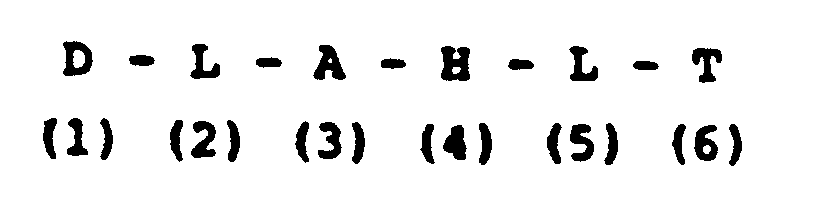 D at position (1) is replaced by H or V; orH at position (4) is replaced by A, C, D, E, F, K, L, M, N, Q, R, S, T, V or Y; orT at position (6) is replaced by S.
 - A vaccine for treating animals against infection by foot-and-mouth disease virus, comprising at least one synthetic peptide according to any one of claims 1 to 7.
- A vaccine according to claim 8, further comprising a physiologically acceptable carrier and/or adjuvant.
- A vaccine according to claim 8 or 9, wherein said at least one synthetic peptide is linked to said physiologically acceptable carrier.
- The use of a synthetic peptide as defined in Claims 1 to 7 in the production of a vaccine against infection by foot-and-mouth disease virus.
- A diagnostic or other immunological testing system for detecting the presence of foot-and-mouth disease virus or of antibodies against foot-and-mouth disease virus in an animal, characterised in that it comprises at least one synthetic peptide according to any one of claims 1 to 7 as an antigenically active component of said system.
Priority Applications (1)
| Application Number | Priority Date | Filing Date | Title |
|---|---|---|---|
| AT84900954T ATE82018T1 (en) | 1983-03-08 | 1984-03-08 | ANTIGEN ACTIVE AMINO ACID SEQUENCES. |
Applications Claiming Priority (2)
| Application Number | Priority Date | Filing Date | Title |
|---|---|---|---|
| AU8347/83 | 1983-03-08 | ||
| AUPF834783 | 1983-03-08 |
Publications (3)
| Publication Number | Publication Date |
|---|---|
| EP0138854A1 EP0138854A1 (en) | 1985-05-02 |
| EP0138854A4 EP0138854A4 (en) | 1986-04-15 |
| EP0138854B1 true EP0138854B1 (en) | 1992-11-04 |
Family
ID=3770022
Family Applications (1)
| Application Number | Title | Priority Date | Filing Date |
|---|---|---|---|
| EP84900954A Expired - Lifetime EP0138854B1 (en) | 1983-03-08 | 1984-03-08 | Antigenically active amino acid sequences |
Country Status (5)
| Country | Link |
|---|---|
| US (1) | US4708871A (en) |
| EP (1) | EP0138854B1 (en) |
| JP (1) | JPS60500673A (en) |
| CA (1) | CA1247080A (en) |
| DK (1) | DK171118B1 (en) |
Families Citing this family (385)
| Publication number | Priority date | Publication date | Assignee | Title |
|---|---|---|---|---|
| US5230888A (en) * | 1982-05-06 | 1993-07-27 | Massachusetts Institute Of Technology | Production of neutralizing antibodies by polypeptide VP1 of enteroviruses and by oligopeptide fragments of polypeptide VP1 |
| NZ207394A (en) * | 1983-03-08 | 1987-03-06 | Commw Serum Lab Commission | Detecting or determining sequence of amino acids |
| DE3813821A1 (en) * | 1988-04-22 | 1989-11-02 | Hoechst Ag | SYNTHETIC VACCINE AGAINST MOUTH AND CLAUS DISEASE AND METHOD FOR THEIR PRODUCTION |
| US5866363A (en) | 1985-08-28 | 1999-02-02 | Pieczenik; George | Method and means for sorting and identifying biological information |
| JP2661044B2 (en) * | 1986-06-17 | 1997-10-08 | カイロン コーポレイション | Hepatitis δ diagnostics and vaccines |
| US5919665A (en) * | 1989-10-31 | 1999-07-06 | Ophidian Pharmaceuticals, Inc. | Vaccine for clostridium botulinum neurotoxin |
| US6730305B1 (en) | 2000-05-08 | 2004-05-04 | The Uab Research Foundation | Nucleotide sequences encoding bovine respiratory syncytial virus immunogenic proteins |
| US5674978A (en) * | 1990-09-21 | 1997-10-07 | The Regents Of The University Of California | Peptides derived from glutamic acid decarboxylase |
| ATE176239T1 (en) * | 1990-11-21 | 1999-02-15 | Iterex Pharma Lp | SYNTHESIS OF EQUIMOLAR MIXTURES OF VARIOUS OLIGOMERS, SPECIFICALLY OLIGOPEPTIDE MIXTURES |
| US5243540A (en) * | 1991-04-03 | 1993-09-07 | The United States Of America As Represented By The Secretary Of The Army | Computer-driven amino acid indexer for peptide synthesis |
| US5397703A (en) * | 1992-07-09 | 1995-03-14 | Cetus Oncology Corporation | Method for generation of antibodies to cell surface molecules |
| US5919712A (en) | 1993-05-18 | 1999-07-06 | University Of Utah Research Foundation | Apparatus and methods for multi-analyte homogeneous fluoro-immunoassays |
| US5677196A (en) * | 1993-05-18 | 1997-10-14 | University Of Utah Research Foundation | Apparatus and methods for multi-analyte homogeneous fluoro-immunoassays |
| US5512492A (en) * | 1993-05-18 | 1996-04-30 | University Of Utah Research Foundation | Waveguide immunosensor with coating chemistry providing enhanced sensitivity |
| US5846731A (en) * | 1993-06-17 | 1998-12-08 | Torry Pines Institute For Molecular Studies | Peralkylated oligopeptide mixtures |
| US5480971A (en) * | 1993-06-17 | 1996-01-02 | Houghten Pharmaceuticals, Inc. | Peralkylated oligopeptide mixtures |
| US5380668A (en) * | 1993-07-06 | 1995-01-10 | University Of Utah Research Foundation | Compounds having the antigenicity of hCG |
| US6287787B1 (en) | 1993-11-24 | 2001-09-11 | Torrey Pines Institute For Molecular Studies | Dimeric oligopeptide mixture sets |
| US5582997A (en) * | 1994-08-24 | 1996-12-10 | Torrey Pines Institute For Molecular Studies | Lysine/leucine polypeptides, mixture sets and libraries thereof |
| US5645996A (en) * | 1994-08-24 | 1997-07-08 | Torrey Pines Institute For Molecular Studies | Melittin-related polypeptides, mixture sets and libraries thereof |
| US5747458A (en) * | 1995-06-07 | 1998-05-05 | Chiron Corporation | Urokinase receptor ligands |
| US5756300A (en) * | 1995-11-14 | 1998-05-26 | Research Genetics, Inc. | Oligodendrocyte-specific protein and method for diagnosing and treating disease |
| US6150136A (en) * | 1995-11-14 | 2000-11-21 | The Regents Of The University Of California | Nucleotide sequence encoding oligodendrocyte-specific protein |
| US6323020B1 (en) | 1996-08-23 | 2001-11-27 | North Carolina State University | Neutralization-sensitive epitopes of Cryptosporidium parvum |
| US20040161409A1 (en) * | 1997-07-25 | 2004-08-19 | Kurtzman Gary J. | Induction of immune response to antigens expressed by recombinant adeno-associated virus |
| US6710036B2 (en) | 1997-07-25 | 2004-03-23 | Avigen, Inc. | Induction of immune response to antigens expressed by recombinant adeno-associated virus |
| AU9120898A (en) | 1997-08-27 | 1999-03-16 | Chiron Corporation | Molecular mimetics of meningococcal b epitopes |
| ATE364624T1 (en) | 1997-12-11 | 2007-07-15 | Univ Saskatchewan | MULTISYSTEMIC CRIME GROWTH SYNDROME CAUSED BY VIRUSES IN PIGS |
| US6369201B1 (en) | 1998-02-19 | 2002-04-09 | Metamorphix International, Inc. | Myostatin multimers |
| US6500637B1 (en) * | 1998-03-31 | 2002-12-31 | The Institute Of Physical And Chemical Research | Neurogenesis inducing genes |
| JP2002537102A (en) | 1999-02-26 | 2002-11-05 | カイロン コーポレイション | Microemulsion with adsorbed polymer and fine particles |
| US20030235594A1 (en) * | 1999-09-14 | 2003-12-25 | Antigen Express, Inc. | Ii-Key/antigenic epitope hybrid peptide vaccines |
| US6432409B1 (en) * | 1999-09-14 | 2002-08-13 | Antigen Express, Inc. | Hybrid peptides modulate the immune response |
| US9289487B2 (en) * | 1999-09-14 | 2016-03-22 | Antigen Express, Inc. | II-key/antigenic epitope hybrid peptide vaccines |
| US20040092712A1 (en) * | 2000-03-31 | 2004-05-13 | Shoji Furusako | Tlr/cd14 binding inhibitor |
| US6686188B2 (en) * | 2000-05-26 | 2004-02-03 | Amersham Plc | Polynucleotide encoding a human myosin-like polypeptide expressed predominantly in heart and muscle |
| US6656700B2 (en) | 2000-05-26 | 2003-12-02 | Amersham Plc | Isoforms of human pregnancy-associated protein-E |
| EP1734050A3 (en) | 2000-06-12 | 2012-12-05 | University Of Saskatchewan | Immunization of dairy cattle with GapC protein against streptococcus infection |
| US6783939B2 (en) * | 2000-07-07 | 2004-08-31 | Alphavax, Inc. | Alphavirus vectors and virosomes with modified HIV genes for use in vaccines |
| CA2424296A1 (en) | 2000-10-02 | 2002-04-11 | Chiron Corporation | Human anti-cd40 antibodies |
| MXPA03006042A (en) | 2001-01-04 | 2005-02-14 | Univ British Columbia | Enterohemorragic escherichia coli. |
| WO2002057413A2 (en) | 2001-01-18 | 2002-07-25 | The Board Of Trustees Of The Leland Stanford Junior University | Peptides for activation and inhibition of delta pkc |
| EP2009027B1 (en) | 2001-04-27 | 2014-05-21 | Kyowa Hakko Kirin Co., Ltd. | Anti-CD40 monoclonal antibody |
| ATE472335T1 (en) | 2001-05-31 | 2010-07-15 | Novartis Vaccines & Diagnostic | CHIMERE ALPHAVIRUS REPLICON PARTICLES |
| US20070160576A1 (en) | 2001-06-05 | 2007-07-12 | Genentech, Inc. | IL-17A/F heterologous polypeptides and therapeutic uses thereof |
| US7803915B2 (en) | 2001-06-20 | 2010-09-28 | Genentech, Inc. | Antibody compositions for the diagnosis and treatment of tumor |
| KR100788092B1 (en) | 2001-06-20 | 2007-12-21 | 제넨테크, 인크. | Compositions and Methods for the Diagnosis and Treatment of Tumor |
| AU2002327614B2 (en) * | 2001-09-06 | 2007-12-06 | Alphavax, Inc. | Alphavirus replicon vector systems |
| EP2143438B1 (en) | 2001-09-18 | 2011-07-13 | Genentech, Inc. | Compositions and methods for the diagnosis and treatment of tumors |
| AR045702A1 (en) | 2001-10-03 | 2005-11-09 | Chiron Corp | COMPOSITIONS OF ASSISTANTS. |
| MX339524B (en) | 2001-10-11 | 2016-05-30 | Wyeth Corp | NEW IMMUNOGENIC COMPOSITIONS FOR THE PREVENTION AND TREATMENT OF MENINGOCOCICAL DISEASE. |
| EP2067472A1 (en) | 2002-01-02 | 2009-06-10 | Genentech, Inc. | Compositions and methods for the diagnosis and treatment of tumor |
| WO2003070909A2 (en) | 2002-02-20 | 2003-08-28 | Chiron Corporation | Microparticles with adsorbed polypeptide-containing molecules |
| EP1482963A4 (en) | 2002-03-08 | 2010-06-09 | Univ Texas | CONTROLLED MODULATION OF LATERAL CHAIN LENGTH OF AMINO ACIDS OF ANTIGENS PEPTIDES |
| AU2003230874A1 (en) | 2002-04-16 | 2003-11-03 | Genentech, Inc. | Compositions and methods for the diagnosis and treatment of tumor |
| WO2004037847A2 (en) * | 2002-05-07 | 2004-05-06 | Chiron Corporation | Hiv envelope-cd4 complexes and hybrids |
| EP2305710A3 (en) | 2002-06-03 | 2013-05-29 | Genentech, Inc. | Synthetic antibody phage libraries |
| JP4598518B2 (en) * | 2002-06-19 | 2010-12-15 | ユニバーシティー ヘルス ネットワーク | ACE2 activation for the treatment of heart, lung and kidney disease and hypertension |
| ZA200501839B (en) * | 2002-08-29 | 2006-10-25 | Genentech Inc | Achaete-scute like-2 polypeptides and encoding nucleic acids and methods for the diagnosis and treatment of tumor |
| US20060248617A1 (en) | 2002-08-30 | 2006-11-02 | Japan Science And Technology Corporation | Method of targeted gene disruption, genome of hyperthermostable bacterium and genome chip using the same |
| US7179645B2 (en) * | 2002-09-24 | 2007-02-20 | Antigen Express, Inc. | Ii-Key/antigenic epitope hybrid peptide vaccines |
| WO2004030616A2 (en) | 2002-09-17 | 2004-04-15 | Antigen Express, Inc. | Ii-KEY/ANTIGENIC EPITOPE HYBRID PEPTIDE VACCINES |
| ES2618309T3 (en) * | 2002-12-13 | 2017-06-21 | Alphavax, Inc. | Multi-antigenic alphavirus replicon particles and methods |
| CA2509979C (en) * | 2002-12-13 | 2013-02-26 | Alphavax, Inc. | Alphavirus particles and methods for preparation |
| EP2263687B1 (en) | 2002-12-27 | 2015-03-25 | Novartis Vaccines and Diagnostics, Inc. | Immunogenic compositions containing phospholipid |
| MXPA05010007A (en) * | 2003-03-20 | 2006-03-10 | Alphavax Inc | Improved alphavirus replicons and helper constructs. |
| CA2523875A1 (en) * | 2003-04-28 | 2004-11-11 | Public Health Agency Of Canada | Sars virus nucleotide and amino acid sequences and uses thereof |
| CA2525825A1 (en) | 2003-05-15 | 2005-01-27 | Chiron Corporation | Hiv polynucleotides and polypeptides derived from botswana mj4 |
| ES2751414T5 (en) | 2003-07-08 | 2024-04-23 | Novartis Pharma Ag | Antagonist antibodies to heterologous IL-17 A/F polypeptides |
| US7419674B2 (en) * | 2003-07-11 | 2008-09-02 | Alpha Vax, Inc. | Alpha virus-based cytomegalovirus vaccines |
| US20060035242A1 (en) | 2004-08-13 | 2006-02-16 | Michelitsch Melissa D | Prion-specific peptide reagents |
| UA94206C2 (en) * | 2003-10-31 | 2011-04-26 | Дзе Юніверсіті Оф Брітіш Коламбіа | Bacterial virulence factors and variants of using them |
| PL1684805T3 (en) | 2003-11-04 | 2010-12-31 | Novartis Vaccines & Diagnostics Inc | Use of antagonist anti-cd40 monoclonal antibodies for treatment of multiple myeloma |
| EP1694360B1 (en) | 2003-11-04 | 2010-08-04 | Novartis Vaccines and Diagnostics, Inc. | Use of antagonist anti-cd40 antibodies for treatment of autoimmune and inflammatory diseases and organ transplant rejection |
| JP4765037B2 (en) | 2003-11-04 | 2011-09-07 | ノバルティス バクシンズ アンド ダイアグノスティックス,インコーポレーテッド | Use of antagonist anti-CD40 monoclonal antibodies for the treatment of chronic lymphocytic leukemia |
| WO2005044305A2 (en) | 2003-11-04 | 2005-05-19 | Chiron Corporation | Methods of therapy for solid tumors expressing the cd40 cell-surface antigen |
| US20070098718A1 (en) | 2003-11-04 | 2007-05-03 | Chiron | Methods of therapy for b cell-related cancers |
| DK2161283T3 (en) | 2003-11-17 | 2014-09-01 | Genentech Inc | COMPOSITIONS CONTAINING ANTIBODIES AGAINST CD79b CONJUGED TO A GROWTH INHIBITOR OR CYTOTOXIC AGENT, AND METHODS FOR TREATING TUMOR OF HEMATOPOIETIC ORIGIN |
| GB0330079D0 (en) * | 2003-12-20 | 2004-02-04 | Bioinvent Int Ab | Vaccine |
| WO2005107789A1 (en) * | 2004-04-30 | 2005-11-17 | The Board Of Trustees Of The Leland Stanford Junior University | Use of delta pkc peptides for modulation of reactive oxigen species |
| DE602005012382D1 (en) | 2004-05-18 | 2009-03-05 | Alphavax Inc | TC-83 DERIVED ALPHAVIRUS VECTORS, PARTICLES AND METHOD |
| EP2848692B1 (en) | 2004-05-21 | 2017-08-16 | Novartis Vaccines and Diagnostics, Inc. | Alphavirus vectors for influenza virus vaccines |
| SG153796A1 (en) | 2004-06-08 | 2009-07-29 | Novartis Vaccines & Diagnostic | Fusion proteins comprising cd4 minimal modules and methods of use thereof |
| AU2005289756B2 (en) | 2004-09-22 | 2011-10-13 | Tripath Imaging, Inc. | Methods and computer program products for analysis and optimization of marker candidates for cancer prognosis |
| EP2266602A3 (en) | 2004-11-01 | 2011-08-10 | Novartis Vaccines and Diagnostics, Inc. | Combination approaches for generating immune responses |
| WO2006061723A2 (en) | 2004-12-06 | 2006-06-15 | Kirin Beer Kabushiki Kaisha | Human monoclonal antibodies to influenza m2 protein and methods of making and using same |
| CA2592972A1 (en) * | 2004-12-29 | 2006-07-06 | Mannkind Corporation | Methods to bypass cd+4 cells in the induction of an immune response |
| CN101111257A (en) * | 2005-01-04 | 2008-01-23 | 里兰斯坦福初级大学理事会 | Ways to increase blood flow to the brain |
| CN101146827A (en) * | 2005-02-03 | 2008-03-19 | 诺华疫苗和诊断公司 | HIV TAT-CD4 hybrid molecules and methods of use |
| EP1869076A2 (en) | 2005-03-10 | 2007-12-26 | Genentech, Inc. | Methods and compositions for modulating vascular integrity |
| US8834891B2 (en) | 2005-03-14 | 2014-09-16 | Boehringer Ingelheim Vetmedica, Inc. | Immunogenic compositions comprising Lawsonia intracellularis |
| US7595380B2 (en) | 2005-04-27 | 2009-09-29 | Tripath Imaging, Inc. | Monoclonal antibodies and methods for their use in the detection of cervical disease |
| GB0508726D0 (en) * | 2005-04-29 | 2005-06-08 | Bioinvent Int Ab | Polypeptide, vaccine and use thereof |
| CA2608750A1 (en) | 2005-05-18 | 2006-11-23 | Novartis Ag | Methods for diagnosis and treatment of diseases having an autoimmune and/or inflammatory component |
| EP1871163A2 (en) | 2005-06-06 | 2008-01-02 | Genentech, Inc. | Transgenic models for different genes and their use for gene characterization |
| US7763460B2 (en) | 2005-06-24 | 2010-07-27 | Focus Diagnostics, Inc. | Methods and compositions for detecting herpes simplex virus type 2 |
| US8398994B2 (en) | 2005-07-15 | 2013-03-19 | Boehringer Ingelheim Vetmedica, Inc. | Lawsonia vaccine and methods of use thereof |
| EP1995321A2 (en) | 2005-08-15 | 2008-11-26 | Genentech, Inc. | Gene disruptions, compositions and methods relating thereto |
| US20080241184A1 (en) | 2005-08-25 | 2008-10-02 | Jules Maarten Minke | Canine influenza vaccines |
| US8945573B2 (en) | 2005-09-08 | 2015-02-03 | The Henry M. Jackson Foundation For The Advancement Of Military Medicine, Inc. | Targeted identification of immunogenic peptides |
| US20110223197A1 (en) | 2005-10-18 | 2011-09-15 | Novartis Vaccines And Diagnostics Inc. | Mucosal and Systemic Immunization with Alphavirus Replicon Particles |
| EP2002714A1 (en) | 2005-11-21 | 2008-12-17 | Genentech, Inc. | Novel gene disruptions, compositions and methods relating thereto |
| EP2360175B1 (en) | 2005-11-22 | 2014-07-16 | Novartis Vaccines and Diagnostics, Inc. | Norovirus and Sapovirus virus-like particles (VLPs) |
| TWI461436B (en) | 2005-11-25 | 2014-11-21 | Kyowa Hakko Kirin Co Ltd | Human CD134 (OX40) human monoclonal antibody and method of making and using same |
| EP3006466B1 (en) | 2005-12-02 | 2018-08-01 | Genentech, Inc. | Compositions and methods for the treatment of diseases and disorders associated with cytokine signaling involving antibodies that bind to il-22 and il-22r |
| US7632498B2 (en) | 2005-12-19 | 2009-12-15 | Tripath Imaging, Inc. | MCM6 and MCM7 monoclonal antibodies and methods for their use in the detection of cervical disease |
| ES2572736T3 (en) | 2005-12-29 | 2016-06-02 | Boehringer Ingelheim Vetmedica, Inc. | Use of an immunogenic composition to attenuate clinical symptoms in pigs |
| BR122015028489B1 (en) | 2005-12-29 | 2021-10-13 | Boehringer Ingelheim Animal Health Usa Inc | MULTIVALENT COMBINATION VACCINE AGAINST PCV2 AS WELL AS THE USE OF AN ORF2 PROTEIN IN THE PREPARATION OF THE SAME |
| EP1987360B1 (en) | 2006-01-27 | 2012-03-07 | Tripath Imaging, Inc. | Methods for identifying patients with an increased likelihood of having ovarian cancer and compositions therefor |
| ZA200807714B (en) | 2006-02-17 | 2010-01-27 | Genentech Inc | Gene disruptions, compositions and methods relating thereto |
| AU2007233252C1 (en) | 2006-03-29 | 2013-05-23 | Boehringer Ingelheim Animal Health USA Inc. | Vaccine against Streptococci |
| AU2007243946B2 (en) | 2006-04-05 | 2012-11-29 | Curis, Inc. | Method for using BOC/CDO to modulate hedgehog signaling |
| AU2007297565A1 (en) | 2006-04-19 | 2008-03-27 | Genentech, Inc. | Novel gene disruptions, compositions and methods relating thereto |
| NZ571757A (en) | 2006-04-21 | 2012-01-12 | Novartis Ag | Antagonist anti-CD40 antibody pharmaceutical compositions comprising arginine-HCl and a citrate or citric acid buffer |
| WO2007134132A2 (en) * | 2006-05-12 | 2007-11-22 | Genentech, Inc. | Compositions and methods for the diagnosis and treatment of bladder and urinary tract tumors |
| US8586006B2 (en) | 2006-08-09 | 2013-11-19 | Institute For Systems Biology | Organ-specific proteins and methods of their use |
| ES2530438T3 (en) | 2006-09-12 | 2015-03-02 | Genentech Inc | Procedures and compositions for the diagnosis and treatment of lung cancer using the KIT or KDR gene as a genetic marker |
| AU2007333857B2 (en) | 2006-12-15 | 2014-05-15 | Boehringer Ingelheim Animal Health USA Inc. | Treatment of pigs with PCV2 antigen |
| EP1941903A1 (en) | 2007-01-03 | 2008-07-09 | Boehringer Ingelheim Vetmedica Gmbh | Prophylaxis and treatment of PRDC |
| EP1958644A1 (en) | 2007-02-13 | 2008-08-20 | Boehringer Ingelheim Vetmedica Gmbh | Prevention and treatment of sub-clinical pcvd |
| CA2676790A1 (en) | 2007-02-22 | 2008-08-28 | Genentech, Inc. | Methods for detecting inflammatory bowel disease |
| DK2450054T3 (en) | 2007-04-12 | 2018-08-13 | Stichting Katholieke Univ | New virulence factors of Streptococcus pneumoniae |
| CA2683864A1 (en) * | 2007-04-13 | 2008-10-23 | Cytopathfinder, Inc. | Compound profiling method |
| ES2670813T3 (en) | 2007-06-21 | 2018-06-01 | Alphavax, Inc. | Alphavirus Replicon Particles for Vaccination Use |
| US20090017064A1 (en) * | 2007-07-10 | 2009-01-15 | Wyeth | Methods and Compositions for Immunizing Pigs Against Porcine Circovirus |
| NZ584330A (en) * | 2007-10-04 | 2013-01-25 | Bionomics Ltd | Markers of endothelial cells and uses thereof |
| PE20091163A1 (en) | 2007-11-01 | 2009-08-09 | Wyeth Corp | ANTIBODIES FOR GDF8 |
| CN103142999A (en) | 2007-11-07 | 2013-06-12 | 健泰科生物技术公司 | Compositions and methods for treatment of microbial disorders |
| WO2009064944A2 (en) | 2007-11-16 | 2009-05-22 | Nuvelo, Inc. | Antibodies to lrp6 |
| EP2077119A1 (en) * | 2007-12-21 | 2009-07-08 | Apeiron Biologics Forschungs- und Entwicklungsgesellschaft M.B.H. | Treatment of fibrosis and liver diseases |
| CA2710247C (en) * | 2007-12-21 | 2014-02-18 | Wyeth Llc | Methods and compositions for immunizing pigs against porcine circovirus |
| JP2011507523A (en) * | 2007-12-21 | 2011-03-10 | ワイス・エルエルシー | Genetically modified attenuated vesicular stomatitis virus, composition and method of use |
| AU2009269704B2 (en) | 2008-06-16 | 2014-06-12 | Patrys Limited | LM-antibodies, functional fragments, LM-1 target antigen, and methods for making and using same |
| US9182406B2 (en) | 2008-08-04 | 2015-11-10 | Biodesy, Inc. | Nonlinear optical detection of molecules comprising an unnatural amino acid possessing a hyperpolarizability |
| EP2174664A1 (en) | 2008-10-07 | 2010-04-14 | Stichting Katholieke Universiteit, more particularly the Radboud University Nijmegen Medical Centre | New virulence factors of Streptococcus pneumoniae |
| EP3168307B1 (en) | 2008-11-28 | 2020-07-15 | Boehringer Ingelheim Animal Health USA Inc. | Recombinant avian influenza vaccine and uses thereof |
| CA2740192C (en) | 2008-12-01 | 2019-12-31 | The Board Of Trustees Of The Leland Stanford Junior University | Methods and compositions for detection of complement fixing antibodies |
| EP4331604B9 (en) | 2008-12-09 | 2025-07-23 | F. Hoffmann-La Roche AG | Anti-pd-l1 antibodies and their use to enhance t-cell function |
| WO2010088393A2 (en) * | 2009-01-28 | 2010-08-05 | Antigen Express, Inc. | Li-kay hybrid peptides that modulate the immune response to influenza |
| WO2010102167A1 (en) | 2009-03-05 | 2010-09-10 | Becton, Dickinson And Company | Matrix metalloproteinase-7 (mmp-7) monoclonal antibodies and methods for their use in the detection of ovarian cancer |
| CA2753713A1 (en) | 2009-03-06 | 2010-09-10 | Tripath Imaging, Inc | Glycodelin monoclonal antibodies and methods for their use in the detection of ovarian cancer |
| KR101715418B1 (en) | 2009-04-03 | 2017-03-10 | 메리얼 인코포레이티드 | Newcastle disease virus vectored avian vaccines |
| CN102481352A (en) | 2009-06-22 | 2012-05-30 | 惠氏有限责任公司 | Immunogenic compositions of staphylococcus aureus antigens |
| SG177310A1 (en) | 2009-06-22 | 2012-02-28 | Wyeth Llc | Compositions and methods for preparing staphylococcus aureus serotype 5 and 8 capsular polysaccharide conjugate immunogenic compositions |
| PL2467158T3 (en) | 2009-08-21 | 2017-07-31 | Merial, Inc. | Recombinant avian paramyxovirus vaccine and method for making and using thereof |
| US8926976B2 (en) * | 2009-09-25 | 2015-01-06 | Xoma Technology Ltd. | Modulators |
| JP5885664B2 (en) | 2009-09-25 | 2016-03-15 | ゾーマ テクノロジー リミテッド | Screening method |
| WO2011050194A1 (en) | 2009-10-22 | 2011-04-28 | Genentech, Inc. | Methods and compositions for modulating hepsin activation of macrophage-stimulating protein |
| EP2501414B1 (en) | 2009-11-17 | 2018-01-10 | The Trustees Of The University Of Pennsylvania | Smndelta7 degron: novel compositions and methods of use |
| CN102741294A (en) | 2009-11-30 | 2012-10-17 | 霍夫曼-拉罗奇有限公司 | Antibodies for the treatment and diagnosis of tumors expressing SLC34A2 (TAT211=SEQID2) |
| US20110150770A1 (en) | 2009-12-18 | 2011-06-23 | Boehringer Ingelheim Vetmedica, Inc. | Multivalent vaccine against porcine teschovirus and other disease causing organisms in swine |
| KR20120101572A (en) | 2009-12-28 | 2012-09-13 | 메리얼 리미티드 | Recombinant ndv antigen and uses thereof |
| CN102892779B (en) | 2010-02-18 | 2016-12-21 | 基因泰克公司 | Neuregulin antagonist and the purposes in treatment cancer thereof |
| WO2011106297A2 (en) | 2010-02-23 | 2011-09-01 | Genentech, Inc. | Compositions and methods for the diagnosis and treatment of tumor |
| US20130197612A1 (en) | 2010-02-26 | 2013-08-01 | Jack W. Lasersohn | Electromagnetic Radiation Therapy |
| WO2011112670A2 (en) | 2010-03-09 | 2011-09-15 | Board Of Regents, University Of Texas System | Methods and compositions for chlamydial antigens for diagnosis and treatment of chlamydial infection and disease |
| AU2011224188B2 (en) | 2010-03-12 | 2015-01-22 | Boehringer Ingelheim Animal Health USA Inc. | Bluetongue virus recombinant vaccines and uses thereof |
| AU2011248354A1 (en) | 2010-05-03 | 2012-11-08 | Genentech, Inc. | Compositions and methods for the diagnosis and treatment of tumor |
| CA2798390A1 (en) | 2010-05-06 | 2011-11-10 | Novartis Ag | Compositions and methods of use for therapeutic low density lipoprotein - related protein 6 (lrp6) multivalent antibodies |
| EP2566892B1 (en) | 2010-05-06 | 2017-12-20 | Novartis AG | Compositions and methods of use for therapeutic low density lipoprotein-related protein 6 (lrp6) antibodies |
| EP2575988A1 (en) | 2010-05-28 | 2013-04-10 | Tetris Online, Inc. | Interactive hybrid asynchronous computer game infrastructure |
| US9192661B2 (en) | 2010-07-06 | 2015-11-24 | Novartis Ag | Delivery of self-replicating RNA using biodegradable polymer particles |
| PL2606070T3 (en) | 2010-08-20 | 2017-06-30 | Novartis Ag | Antibodies for epidermal growth factor receptor 3 (her3) |
| MX350142B (en) | 2010-08-23 | 2017-08-28 | Wyeth Llc * | STABLE FORMULATIONS OF NEISSERIA MENINGITIDIS rLP2086 ANTIGENS. |
| WO2012030720A1 (en) | 2010-08-31 | 2012-03-08 | Merial Limited | Newcastle disease virus vectored herpesvirus vaccines |
| SG187912A1 (en) | 2010-09-10 | 2013-04-30 | Wyeth Llc | Non-lipidated variants of neisseria meningitidis orf2086 antigens |
| WO2012069466A1 (en) | 2010-11-24 | 2012-05-31 | Novartis Ag | Multispecific molecules |
| WO2012071436A1 (en) | 2010-11-24 | 2012-05-31 | Genentech, Inc. | Method of treating autoimmune inflammatory disorders using il-23r loss-of-function mutants |
| WO2012075111A1 (en) | 2010-11-30 | 2012-06-07 | Novartis Ag | Uses of anti-cd40 antibodies in combination therapy for b cell-related cancers |
| AU2011346535B2 (en) | 2010-12-22 | 2015-09-24 | Wyeth Llc | Stable immunogenic compositions of Staphylococcus aureus antigens |
| WO2012109515A1 (en) | 2011-02-11 | 2012-08-16 | Pioneer Hi-Bred International, Inc. | Synthetic insecticidal proteins active against corn rootworm |
| US9428789B2 (en) | 2011-03-21 | 2016-08-30 | Biodesy, Inc. | Classification of kinase inhibitors using nonlinear optical techniques |
| WO2012142526A1 (en) | 2011-04-14 | 2012-10-18 | Modiano Jaime | Use of tumor fas expression to determine response to anti-cancer therapy |
| CN103443118B (en) * | 2011-04-22 | 2015-08-19 | 乐敦制药株式会社 | New peptides |
| AP2013007180A0 (en) | 2011-04-25 | 2013-10-31 | Advanced Bioscience Lab Inc | Truncated HIV envelope proteins (ENV), methods andcompositions related thereto |
| MX361804B (en) | 2011-05-27 | 2018-12-17 | Boehringer Ingelheim Animal Health Usa Inc | Genetic vaccines against hendra virus and nipah virus. |
| KR20190133790A (en) | 2011-08-01 | 2019-12-03 | 제넨테크, 인크. | Methods of treating cancer using pd-1 axis binding antagonists and mek inhibitors |
| JP5925783B2 (en) | 2011-08-12 | 2016-05-25 | 国立感染症研究所長 | Methods and compositions for testing, prevention and treatment of Aspergillus fumigatus infections |
| HRP20220224T1 (en) | 2011-08-16 | 2022-04-29 | Morphosys Ag | Combination therapy with an anti - cd19 antibody and a purine analog |
| SMT202200159T1 (en) | 2011-08-16 | 2022-05-12 | Morphosys Ag | Combination therapy with an anti-cd19 antibody and a nitrogen mustard |
| WO2013033092A2 (en) | 2011-09-03 | 2013-03-07 | Boehringer Ingelheim Vetmedica Gmbh | Streptococcus suis pilus antigens |
| WO2013040433A1 (en) | 2011-09-15 | 2013-03-21 | Genentech, Inc. | Methods of promoting differentiation |
| EP2766000A2 (en) | 2011-10-15 | 2014-08-20 | F.Hoffmann-La Roche Ag | Scd1 antagonists for treating cancer |
| EP3252075A1 (en) | 2011-11-04 | 2017-12-06 | Novartis AG | Low density lipoprotein-related protein 6 (lrp6) - half life extender constructs |
| CN105920598A (en) | 2011-11-30 | 2016-09-07 | 梅里亚有限公司 | Recombinant Hvt Vectors Expressing Antigens Of Avian Pathogens And Uses Thereof |
| BR112014013568A2 (en) | 2011-12-05 | 2017-06-13 | Novartis Ag | epidermal growth factor 3 (her3) receptor antibodies directed to her3 domain ii |
| SG11201402783YA (en) | 2011-12-05 | 2014-06-27 | Novartis Ag | Antibodies for epidermal growth factor receptor 3 (her3) |
| WO2013093629A2 (en) | 2011-12-20 | 2013-06-27 | Netherlands Cancer Institute | Modular vaccines, methods and compositions related thereto |
| WO2013094720A1 (en) * | 2011-12-22 | 2013-06-27 | ロート製薬株式会社 | Composition having cell-adhesion-promoting activity |
| US20130183294A1 (en) | 2012-01-18 | 2013-07-18 | Genentech, Inc. | Methods of using fgf19 modulators |
| RU2014133069A (en) | 2012-02-11 | 2016-04-10 | Дженентек, Инк. | R-SPONDIN TRANSLOCATIONS AND WAYS WITH THEIR USE |
| KR102087458B1 (en) | 2012-02-14 | 2020-03-10 | 뵈링거 잉겔하임 애니멀 헬스 유에스에이 인코포레이티드 | Rotavirus subunit vaccines and methods of making and use thereof |
| CN104203271B (en) | 2012-02-14 | 2017-08-25 | 梅里亚股份有限公司 | Express the recombinant poxvirus carrier and the vaccine from its manufacture of hydrophobin and OX40 albumen |
| WO2013129456A1 (en) * | 2012-02-29 | 2013-09-06 | ロート製薬株式会社 | Composition capable of promoting proliferation of fibroblast |
| SA115360586B1 (en) | 2012-03-09 | 2017-04-12 | فايزر انك | Neisseria meningitidis compositions and methods thereof |
| KR101763625B1 (en) | 2012-03-09 | 2017-08-01 | 화이자 인코포레이티드 | Neisseria meningitidis compositions and methods thereof |
| BR112014020173A8 (en) | 2012-03-16 | 2017-07-11 | Hoffmann La Roche | METHODS FOR THE TREATMENT OF A MELANOMA, USES OF AN INHIBITOR, COMPOSITIONS, KIT, METHOD OF INHIBITION, METHOD OF IDENTIFICATION, METHOD OF ADJUSTING THE TREATMENT AND INVENTION |
| US9139863B2 (en) | 2012-03-16 | 2015-09-22 | Genentech, Inc. | Engineered conformationally-stabilized proteins |
| CN104254541A (en) | 2012-03-16 | 2014-12-31 | 弗·哈夫曼-拉罗切有限公司 | Engineered conformationally-stabilized proteins |
| CN104428312A (en) | 2012-04-02 | 2015-03-18 | 北卡罗来纳-查佩尔山大学 | Methods and compositions for dengue virus epitopes |
| US9597386B2 (en) | 2012-04-05 | 2017-03-21 | Boehringer Ingelheim Vetmedica, Inc. | Outer membrane proteins of Histophilus somni and methods thereof |
| CN106290917B (en) | 2012-04-25 | 2020-06-05 | 比奥德赛公司 | Method for detecting allosteric modulators of proteins |
| EP2848633B1 (en) | 2012-05-11 | 2019-02-06 | Microbial Chemistry Research Foundation | Anti-cxadr antibody |
| WO2013170191A1 (en) | 2012-05-11 | 2013-11-14 | Genentech, Inc. | Methods of using antagonists of nad biosynthesis from nicotinamide |
| MX363872B (en) | 2012-05-31 | 2019-04-05 | Genentech Inc | Methods of treating cancer using pd-l1 axis binding antagonists and vegf antagonists. |
| CN104582724A (en) | 2012-06-13 | 2015-04-29 | 梅里亚有限公司 | Reassortant BTV and AHSV vaccines |
| ES2662801T3 (en) | 2012-06-27 | 2018-04-09 | Merial, Inc. | Vaccines attenuated against Streptoccocus suis and their manufacturing and use procedures |
| JP6519851B2 (en) | 2012-07-06 | 2019-05-29 | 京都府公立大学法人 | Ophthalmic cell differentiation markers and differentiation control |
| NZ704188A (en) | 2012-07-17 | 2016-04-29 | Merial Inc | Attenuated swine influenza vaccines and methods of making and use thereof |
| PT2885007T (en) | 2012-08-16 | 2018-12-10 | Pfizer | Glycoconjugation processes and compositions |
| AU2013308627B2 (en) | 2012-08-30 | 2016-10-27 | Boehringer Ingelheim Animal Health USA Inc. | Expression of chimeric KSAC protein and method of producing soluble proteins by high pressure |
| EP2893008B1 (en) | 2012-09-10 | 2018-07-18 | Merial, Inc. | Attenuated parvovirus vaccine for muscovy duck parvovirus and goose parvovirus ( derzsy's disease) |
| CA2890466C (en) | 2012-11-08 | 2022-07-19 | Merial, Inc. | Attenuated mannheimia haemolytica vaccines and methods of making and use |
| US20140170180A1 (en) | 2012-12-17 | 2014-06-19 | Boehringer Ingelheim Vetmedica, Inc. | Porcine parvovirus 5a, methods of use and vaccine |
| TWI616535B (en) | 2012-12-18 | 2018-03-01 | 梅里亞有限公司 | High resolution melt genotyping of ibv, csfv and ndv |
| HUE060718T2 (en) | 2012-12-20 | 2023-04-28 | Pfizer | Glycoconjugation process |
| US9161972B2 (en) | 2013-02-01 | 2015-10-20 | Auburn University | Modified live flavobacterium strains, stabilized vaccines comprising same, and methods of making and use thereof |
| US20140234354A1 (en) | 2013-02-15 | 2014-08-21 | Boehringer Ingelheim Vetmedica, Inc. | Porcine parvovirus 5b, methods of use and vaccine |
| JP2016509045A (en) | 2013-02-22 | 2016-03-24 | エフ・ホフマン−ラ・ロシュ・アクチェンゲゼルシャフト | How to treat cancer and prevent drug resistance |
| WO2014138364A2 (en) | 2013-03-06 | 2014-09-12 | Genentech, Inc. | Methods of treating and preventing cancer drug resistance |
| WO2014136064A2 (en) | 2013-03-08 | 2014-09-12 | Pfizer Inc. | Immunogenic fusion polypeptides |
| EP3611189A1 (en) | 2013-03-14 | 2020-02-19 | Novartis AG | Antibodies against notch 3 |
| WO2014153030A2 (en) | 2013-03-14 | 2014-09-25 | Genentech, Inc. | Methods of treating cancer and preventing cancer drug resistance |
| AU2014236882B2 (en) | 2013-03-14 | 2019-01-31 | The Board Of Trustees Of The Leland Stanford Junior University | Methods of detecting donor-specific antibodies and systems for practicing the same |
| CN105073130A (en) | 2013-03-15 | 2015-11-18 | 勃林格殷格翰动物保健公司 | Porcine reproductive and respiratory syndrome virus, compositions, vaccine and methods of use |
| MX2015011899A (en) | 2013-03-15 | 2016-05-05 | Genentech Inc | Methods of treating cancer and preventing cancer drug resistance. |
| AU2014235453A1 (en) | 2013-03-15 | 2015-10-08 | Genentech, Inc. | Biomarkers and methods of treating PD-1 and PD-L1 related conditions |
| AU2014233494B2 (en) | 2013-03-15 | 2018-10-04 | Genentech, Inc. | IL-22 polypeptides and IL-22 Fc fusion proteins and methods of use |
| WO2014201525A1 (en) | 2013-06-21 | 2014-12-24 | Ondek Pty Ltd | Immunotherapy composition and use thereof |
| EP3590955A1 (en) | 2013-06-26 | 2020-01-08 | The University of North Carolina at Chapel Hill | Methods and compositions for dengue virus vaccines |
| KR20160030936A (en) | 2013-07-16 | 2016-03-21 | 제넨테크, 인크. | Methods of treating cancer using pd-1 axis binding antagonists and tigit inhibitors |
| CA2923129C (en) | 2013-09-08 | 2020-06-09 | Pfizer Inc. | Neisseria meningitidis compositions and methods thereof |
| US9987348B2 (en) | 2013-09-25 | 2018-06-05 | Zoetis Services Llc | PCV2B divergent vaccine composition and methods of use |
| EP3062816B1 (en) | 2013-11-01 | 2020-08-05 | Boehringer Ingelheim Animal Health USA Inc. | Attenuated pasteurella multocida vaccines & methods of making & use thereof |
| KR20160089532A (en) | 2013-12-17 | 2016-07-27 | 제넨테크, 인크. | Methods of treating cancer using pd-1 axis binding antagonists and an anti-cd20 antibody |
| WO2015116902A1 (en) | 2014-01-31 | 2015-08-06 | Genentech, Inc. | G-protein coupled receptors in hedgehog signaling |
| ES2701169T3 (en) | 2014-02-14 | 2019-02-21 | Pfizer | Immunogenic glycoprotein conjugates |
| JP6405390B2 (en) | 2014-03-25 | 2018-10-17 | メリアル インコーポレイテッド | Immunological composition comprising attenuated Histofilus somni |
| ES2910443T3 (en) | 2014-04-16 | 2022-05-12 | Biocon Ltd | Stable protein formulations comprising a molar excess of sorbitol |
| CA3225091A1 (en) | 2014-05-05 | 2015-11-12 | Regeneron Pharmaceuticals, Inc. | Humanized c5 and c3 animals |
| CN106661622B (en) | 2014-05-23 | 2020-08-21 | 豪夫迈·罗氏有限公司 | MIT biomarkers and how to use them |
| US20230190750A1 (en) | 2014-06-13 | 2023-06-22 | Genentech, Inc. | Methods of treating and preventing cancer drug resistance |
| JP6673896B2 (en) | 2014-07-15 | 2020-03-25 | ジェネンテック, インコーポレイテッド | Compositions for treating cancer using PD-1 axis binding antagonists and MEK inhibitors |
| CN107257691B (en) | 2014-07-16 | 2021-09-21 | 达娜-法勃肿瘤研究所公司 | HER3 inhibition in low-grade serous ovarian cancer |
| WO2016037157A2 (en) | 2014-09-05 | 2016-03-10 | The Johns Hopkins University | Targeting capn9/capns2 activity as a therapeutic strategy for the treatment of myofibroblast differentiation and associated pathologies |
| EP3191592A1 (en) | 2014-09-11 | 2017-07-19 | Novartis AG | Inhibition of prmt5 to treat mtap-deficiency-related diseases |
| AU2015338859A1 (en) | 2014-11-02 | 2017-06-01 | The University Of North Carolina At Chapel Hill | Methods and compositions for recombinant dengue viruses for vaccine and diagnostic development |
| LT3789402T (en) | 2014-11-20 | 2022-09-26 | F. Hoffmann-La Roche Ag | Combination therapy of t cell activating bispecific antigen binding molecules and pd-1 axis binding antagonists |
| WO2016089883A1 (en) | 2014-12-01 | 2016-06-09 | Novartis Ag | Compositions and methods for diagnosis and treatment of prostate cancer |
| WO2016090383A1 (en) | 2014-12-05 | 2016-06-09 | Merial, Inc. | Enzyme-linked immunosorbent assay (elisa) for the detection of anti-mycoplasma hyorhinis igg in swine serum |
| JP2017537929A (en) | 2014-12-05 | 2017-12-21 | ジェネンテック, インコーポレイテッド | Methods and compositions for cancer treatment using PD-1 axis antagonists and HPK1 antagonists |
| UY36449A (en) | 2014-12-19 | 2016-07-29 | Novartis Ag | COMPOSITIONS AND METHODS FOR ANTIBODIES DIRECTED TO BMP6 |
| WO2016106286A1 (en) | 2014-12-23 | 2016-06-30 | Biodesy, Inc. | Attachment of proteins to interfaces for use in nonlinear optical detection |
| CN107249626A (en) | 2015-02-19 | 2017-10-13 | 辉瑞大药厂 | Neisseria meningitidis compositions and methods thereof |
| AU2016219787B2 (en) | 2015-02-20 | 2019-05-30 | Calixar | Leptospira immunoprotective proteins and methods of identification and use thereof |
| EP3258961A4 (en) | 2015-02-20 | 2018-08-22 | Board of Regents, The University of Texas System | Methods and compositions for attenuated chlamydia as vaccine and vector |
| US10376535B2 (en) | 2015-03-26 | 2019-08-13 | University Of Rochester | Therapy for malignant disease |
| WO2016178996A1 (en) | 2015-05-01 | 2016-11-10 | The Regents Of The University Of California | Glycan-dependent immunotherapeutic molecules |
| KR102045663B1 (en) | 2015-05-04 | 2019-11-15 | 화이자 인코포레이티드 | Group B Streptococcus polysaccharide-protein conjugate, method of producing the conjugate, immunogenic composition comprising the conjugate, and use thereof |
| EP3297666B1 (en) | 2015-05-22 | 2019-07-03 | Consejo Superior De Investigaciones Científicas | Molecular adjuvant and vaccine |
| EP3297674B1 (en) | 2015-05-22 | 2023-01-04 | Translational Drug Development Llc | Benzamide and active compound compositions and methods of use |
| US10617691B2 (en) | 2015-05-26 | 2020-04-14 | Morphosys Ag | Combination of an anti-CD19 antibody and a Bruton's tyrosine kinase inhibitor and uses thereof |
| AU2016267047A1 (en) | 2015-05-27 | 2017-12-21 | Merial, Inc. | Compositions containing antimicrobial IgY antibodies, for treatment and prevention of disorders and diseases caused by oral health compromising (OHC) microorganisms |
| WO2016193945A2 (en) | 2015-06-05 | 2016-12-08 | Novartis Ag | Methods and compositions for diagnosing, treating, and monitoring treatment of shank3 deficiency associated disorders |
| CA2982237A1 (en) | 2015-06-05 | 2016-12-08 | Novartis Ag | Antibodies targeting bone morphogenetic protein 9 (bmp9) and methods therefor |
| US20180188257A1 (en) | 2015-06-19 | 2018-07-05 | University Of Rochester | Septin proteins as novel biomarkers for detection and treatment of müllerian cancers |
| NZ738957A (en) | 2015-06-23 | 2019-09-27 | Boehringer Ingelheim Animal Health Usa Inc | Prrsv minor protein-containing recombinant viral vectors and methods of making and use thereof |
| US20190030153A1 (en) | 2015-07-22 | 2019-01-31 | University Of Saskatchewan | Mycoplasma vaccines and uses thereof |
| CA2996143A1 (en) | 2015-08-20 | 2017-02-23 | Merial, Inc. | Fcv recombinant vaccines and uses thereof |
| DK3337506T3 (en) | 2015-08-21 | 2021-09-06 | Morphosys Ag | COMBINATIONS AND USES THEREOF |
| ES2778649T3 (en) | 2015-08-31 | 2020-08-11 | Boehringer Ingelheim Vetmedica Gmbh | Pestiviral vaccines for congenital tremors |
| MY186352A (en) | 2015-09-09 | 2021-07-15 | Novartis Ag | Thymic stromal lymphopoietin (tslp)-binding antibodies and methods of using the antibodies |
| MX2018003038A (en) | 2015-09-09 | 2018-04-11 | Novartis Ag | Thymic stromal lymphopoietin (tslp)-binding antibodies and methods of using the antibodies. |
| RU2710854C1 (en) | 2015-09-29 | 2020-01-14 | Мериал, Инк. | Vaccines based on virus-like particles (vlp) of canine parvovirus (cpv) and application thereof |
| CA3000386A1 (en) | 2015-09-30 | 2017-04-06 | Merck Patent Gmbh | Combination of a pd-1 axis binding antagonist and an alk inhibitor for treating alk-negative cancer |
| US11273151B2 (en) | 2015-11-04 | 2022-03-15 | Icahn School Of Medicine At Mount Sinai | Methods of treating tumors and cancer, and identifying candidate subjects for such treatment |
| US10527613B2 (en) | 2015-11-10 | 2020-01-07 | The Board Of Trustees Of The Leland Stanford Junior University | Biomarker detection methods and systems and kits for practicing same |
| AU2016355191B2 (en) | 2015-11-18 | 2023-06-29 | Orbis Health Solutions Llc | T7 alpha viral vector system |
| ES2899230T3 (en) | 2015-11-23 | 2022-03-10 | Boehringer Ingelheim Animal Health Usa Inc | Fusion proteins of FMDV and E2 and uses thereof |
| US10188725B2 (en) | 2015-12-14 | 2019-01-29 | Elanco Us Inc. | Hybrid core feline vaccines |
| AU2016370813A1 (en) | 2015-12-18 | 2018-06-28 | Novartis Ag | Antibodies targeting CD32b and methods of use thereof |
| WO2017112954A1 (en) | 2015-12-23 | 2017-06-29 | Moonshot Pharma Llc | Methods for inducing an immune response by promoting premature termination codon read-through |
| MA43859A (en) | 2016-01-11 | 2018-11-21 | Novartis Ag | HUMANIZED MONOCLONAL ANTIBODIES IMMUNOSTIMULANTS DIRECTED AGAINST HUMAN INTERLEUKIN -2, AND THEIR FUSION PROTEINS |
| ES2847155T3 (en) | 2016-01-21 | 2021-08-02 | Novartis Ag | Multispecific molecules targeting CLL-1 |
| TWI760322B (en) | 2016-01-29 | 2022-04-11 | 美商百靈佳殷格翰動物保健美國有限公司 | Recombinant adenovirus vectored fmdv vaccines and uses thereof |
| EA037813B1 (en) | 2016-02-19 | 2021-05-24 | МорфоСис АГ | Antibodies for il-17c |
| EP3436070A4 (en) | 2016-03-29 | 2019-11-27 | University of Southern California | CHIMERIC ANTIGENIC RECEPTORS TARGETING CANCER |
| US10485857B2 (en) | 2016-04-07 | 2019-11-26 | Boehringer Ingelheim Animal Health USA Inc. | Heartworm vaccine, methods and uses thereof |
| WO2017189730A1 (en) | 2016-04-26 | 2017-11-02 | Icahn School Of Medicine At Mount Sinai | Treatment of hippo pathway mutant tumors and methods of identifying subjects as candidates for treatment |
| KR102492057B1 (en) | 2016-06-15 | 2023-01-26 | 노파르티스 아게 | Methods of treating diseases using inhibitors of bone morphogenetic protein 6 (BMP6) |
| NZ749593A (en) | 2016-06-20 | 2025-10-31 | Univ Leland Stanford Junior | Circular rnas and their use in immunomodulation |
| MX2018016362A (en) | 2016-06-27 | 2019-04-22 | Morphosys Ag | Anti-cd19 antibody formulations. |
| WO2018009417A1 (en) | 2016-07-05 | 2018-01-11 | Blade Therapeutics, Inc. | Calpain modulators and therapeutic uses thereof |
| EP3494128B1 (en) | 2016-08-04 | 2023-11-29 | Stichting VUmc | Embryonic angiogenesis markers and diagnostic and therapeutic strategies based thereon |
| EP3500292B1 (en) | 2016-08-17 | 2024-10-16 | Pharmaq AS | Sea lice vaccine |
| MY199743A (en) | 2016-09-20 | 2023-11-21 | Boehringer Ingelheim Vetmedica Gmbh | Ehv insertion site orf70 |
| EA201990718A1 (en) | 2016-09-20 | 2019-10-31 | VECTORS OF Adenovirus of dogs | |
| TW201823465A (en) | 2016-09-20 | 2018-07-01 | 德商百靈佳殷格翰維美迪加股份有限公司 | Novel swine flu vaccine |
| HUE072083T2 (en) | 2016-09-20 | 2025-10-28 | Boehringer Ingelheim Vetmedica Gmbh | New promoters |
| WO2018064119A1 (en) | 2016-09-28 | 2018-04-05 | Blade Therapeutics, Inc. | Calpain modulators and therapeutic uses thereof |
| JP7094950B2 (en) | 2016-10-28 | 2022-07-04 | モルフォシス・アーゲー | Combination of anti-CD19 antibody and BCL-2 inhibitor and its use |
| US20180245065A1 (en) | 2016-11-01 | 2018-08-30 | Novartis Ag | Methods and compositions for enhancing gene editing |
| US10751402B2 (en) | 2016-11-09 | 2020-08-25 | Pfizer Inc. | Immunogenic compositions and uses thereof |
| WO2018087720A1 (en) | 2016-11-14 | 2018-05-17 | Novartis Ag | Compositions, methods, and therapeutic uses related to fusogenic protein minion |
| JP7080234B2 (en) | 2016-11-23 | 2022-06-03 | トランスレイショナル・ドラッグ・ディベロップメント・エルエルシー | Benzamide and active compound compositions and methods of use |
| JP2020502080A (en) | 2016-11-30 | 2020-01-23 | ベーリンガー インゲルハイム アニマル ヘルス ユーエスエイ インコーポレイテッド | Attenuated swine flu vaccine and methods of making and using same |
| KR20250072712A (en) | 2016-12-02 | 2025-05-26 | 앤젤레스 테라퓨틱스, 인코포레이티드 | Synthetic immune receptors and methods of use thereof |
| PE20191107A1 (en) | 2017-01-31 | 2019-08-26 | Pfizer | COMPOSITIONS OF NEISSERIA MENINGITIDIS AND RESPECTIVE METHODS |
| WO2018152496A1 (en) | 2017-02-17 | 2018-08-23 | The Usa, As Represented By The Secretary, Dept. Of Health And Human Services | Compositions and methods for the diagnosis and treatment of zika virus infection |
| JP7169979B2 (en) | 2017-02-27 | 2022-11-11 | リジェネロン・ファーマシューティカルズ・インコーポレイテッド | Method for evaluating therapeutic efficacy of candidate therapeutic agents for complement-related nephropathy and liver fibrosis |
| US11590202B2 (en) | 2017-04-11 | 2023-02-28 | University Of Maryland, Baltimore | Inhibitors of LTβR-NFκB signaling pathways for treating inflammation and cancer |
| US20190078160A1 (en) | 2017-04-21 | 2019-03-14 | Genentech, Inc. | Use of klk5 antagonists for treatment of a disease |
| EP4230649A3 (en) | 2017-04-25 | 2023-10-25 | The U.S.A. As Represented By The Secretary, Department Of Health And Human Services | Antibodies and methods for the diagnosis and treatment of epstein barr virus infection |
| WO2018229715A1 (en) | 2017-06-16 | 2018-12-20 | Novartis Ag | Compositions comprising anti-cd32b antibodies and methods of use thereof |
| JP2020525434A (en) | 2017-06-22 | 2020-08-27 | ムーンショット ファーマ エルエルシー | Method of treating cancer with a composition comprising amlexanox and an immunomodulator |
| KR102768038B1 (en) | 2017-07-12 | 2025-02-18 | 베링거 인겔하임 애니멀 헬스 유에스에이 인크. | Senecavirus A immunogenic composition and method thereof |
| EP3655430A1 (en) | 2017-07-19 | 2020-05-27 | The U.S.A. as represented by the Secretary, Department of Health and Human Services | Antibodies and methods for the diagnosis and treatment of hepatitis b virus infection |
| CN111328289A (en) | 2017-08-31 | 2020-06-23 | 勃林格殷格翰动物保健美国公司 | Streptococcus suis vaccine for preventing diseases of reproductive, reproductive and growing pigs and methods of making and using the same |
| MY201967A (en) | 2017-09-23 | 2024-03-27 | Boehringer Ingelheim Pharma | Paramyxoviridae expression system |
| EP3470428A1 (en) | 2017-10-10 | 2019-04-17 | Numab Innovation AG | Antibodies targeting cd137 and methods of use thereof |
| CA3075969A1 (en) | 2017-10-10 | 2019-04-18 | Numab Therapeutics AG | Multispecific antibody |
| EP3470426A1 (en) | 2017-10-10 | 2019-04-17 | Numab Therapeutics AG | Multispecific antibody |
| EP3470429A1 (en) | 2017-10-10 | 2019-04-17 | Numab Innovation AG | Antibodies targeting pdl1 and methods of use thereof |
| WO2019075302A2 (en) | 2017-10-12 | 2019-04-18 | The Regents Of The University Of California | A cell-based seeding assay for huntingtin aggregation |
| US20210040205A1 (en) | 2017-10-25 | 2021-02-11 | Novartis Ag | Antibodies targeting cd32b and methods of use thereof |
| WO2019092027A1 (en) | 2017-11-09 | 2019-05-16 | Boehringer Ingelheim Vetmedica Gmbh | Sapelovirus immunogenic compositions and uses thereof |
| WO2019126472A1 (en) | 2017-12-22 | 2019-06-27 | Genentech, Inc. | Use of pilra binding agents for treatment of a disease |
| US11033616B2 (en) | 2018-02-23 | 2021-06-15 | Boehringer Ingelheim Vetmedica Gmbh | Recombinant viral vector systems expressing exogenous feline paramyxovirus genes and vaccines made therefrom |
| JP7245260B2 (en) | 2018-03-19 | 2023-03-23 | ベーリンガー インゲルハイム フェトメディカ ゲーエムベーハー | EHV insertion site UL43 |
| CN111867625B (en) | 2018-03-19 | 2024-09-17 | 勃林格殷格翰动物保健有限公司 | Novel EHV with deactivated UL18 and/or UL8 |
| CA3097253A1 (en) | 2018-05-16 | 2019-11-21 | Morphosys Ag | Antibodies targeting glycoprotein vi |
| WO2019227091A1 (en) | 2018-05-25 | 2019-11-28 | The Penn State Research Foundation | Nanoparticle for protein delivery |
| TWI869346B (en) | 2018-05-30 | 2025-01-11 | 瑞士商諾華公司 | Entpd2 antibodies, combination therapies, and methods of using the antibodies and combination therapies |
| CN112351998B (en) | 2018-06-29 | 2022-07-22 | 苏州智核生物医药科技有限公司 | PD-L1 binding polypeptides and uses thereof |
| TW202026010A (en) | 2018-09-20 | 2020-07-16 | 德商百靈佳殷格翰維美迪加股份有限公司 | Intranasal vector vaccine against porcine epidemic diarrhea |
| UY38407A (en) | 2018-10-15 | 2020-05-29 | Novartis Ag | TREM2 STABILIZING ANTIBODIES |
| AU2019362029B2 (en) | 2018-10-19 | 2025-06-12 | University Of Rochester | Immune modulators in combination with radiation treatment for advanced pancreatic cancer |
| WO2020086627A1 (en) | 2018-10-22 | 2020-04-30 | University Of Rochester | Genome editing by directed non-homologous dna insertion using a retroviral integrase-cas9 fusion protein |
| US20220089670A1 (en) | 2018-12-28 | 2022-03-24 | University Of Rochester | Gene Therapy for BEST1 Dominant Mutations |
| US12371698B2 (en) | 2019-01-14 | 2025-07-29 | University Of Rochester | Targeted nuclear RNA cleavage and polyadenylation with CRISPR-Cas |
| US12465640B2 (en) | 2019-02-25 | 2025-11-11 | The University Of Chicago | Methods and compositions for treating inflammatory and autoimmune conditions with ECM-affinity peptides linked to anti-inflammatory agents |
| CA3130664A1 (en) | 2019-03-27 | 2020-10-01 | Boehringer Ingelheim Vetmedica Gmbh | Immunogenic compositions and vaccines comprising african swine fever virus peptides and proteins and uses thereof |
| KR20220004967A (en) | 2019-04-04 | 2022-01-12 | 뵈링거 잉겔하임 애니멀 헬스 유에스에이 인코포레이티드 | Porcine Circovirus Type 3 (PCV3) Vaccine, and Preparation and Use thereof |
| US20220241412A1 (en) | 2019-05-24 | 2022-08-04 | Pfizer Inc. | Combination therapies using cdk inhibitors |
| AU2020286523A1 (en) | 2019-06-03 | 2022-02-03 | The University Of Chicago | Methods and compositions for treating cancer with cancer-targeted adjuvants |
| US20230061378A1 (en) | 2019-07-01 | 2023-03-02 | Suzhou Alphamab Co., Ltd. | Pertussis toxin binding protein |
| US20220267773A1 (en) | 2019-07-23 | 2022-08-25 | University Of Rochester | Targeted RNA cleavage with CRISPR-Cas |
| AU2020325279A1 (en) | 2019-08-06 | 2022-03-17 | The University Of North Carolina At Chapel Hill | Methods and compositions for stabilized recombinant flavivirus E protein dimers |
| CN114502590A (en) | 2019-09-18 | 2022-05-13 | 诺华股份有限公司 | ENTPD2 antibodies, combination therapies, and methods of using these antibodies and combination therapies |
| TW202124446A (en) | 2019-09-18 | 2021-07-01 | 瑞士商諾華公司 | Combination therapies with entpd2 antibodies |
| CA3155669A1 (en) | 2019-09-27 | 2021-04-01 | Pfizer Inc. | Neisseria meningitidis compositions and methods thereof |
| US20210147525A1 (en) | 2019-10-18 | 2021-05-20 | The Regents Of The University Of California | Methods and compositions for treating pathogenic blood vessel disorders |
| JP2023513211A (en) | 2020-02-07 | 2023-03-30 | ユニバーシティ オブ ロチェスター | Target RNA translation by CRISPR-Cas13 to enhance protein synthesis |
| CN115996754A (en) | 2020-02-21 | 2023-04-21 | 免疫之源生物技术有限公司 | Prophylactic and therapeutic immunotherapy for Propionibacterium acnes |
| EP4119162A4 (en) | 2020-03-13 | 2023-08-23 | Jiangsu Hengrui Pharmaceuticals Co., Ltd. | Pvrig binding protein and its medical uses |
| CN116194130A (en) | 2020-03-16 | 2023-05-30 | 南加利福尼亚大学 | Novel antigen-binding domains and synthetic antigen receptors comprising these antigen-binding domains |
| EP4127169A1 (en) | 2020-03-27 | 2023-02-08 | University of Rochester | Targeted destruction of viral rna by crispr-cas13 |
| EP4127170A1 (en) | 2020-03-27 | 2023-02-08 | University of Rochester | Crispr-cas13 crrna arrays |
| CA3172880A1 (en) | 2020-04-27 | 2021-11-04 | Sotirios Tsimikas | Isoform-independent antibodies to lipoprotein(a) |
| EP4168043A1 (en) | 2020-06-17 | 2023-04-26 | Boehringer Ingelheim Vetmedica GmbH | Recombinant hvt vectors expressing influenza hemagglutinin and immunogenic compositions, and production and uses thereof |
| KR20230035079A (en) | 2020-07-03 | 2023-03-10 | 수조우 알파맵 씨오., 엘티디. | Coagulation factor XI (FXI) binding protein |
| WO2022015916A1 (en) | 2020-07-15 | 2022-01-20 | University Of Rochester | Targeted rna cleavage with dcasl3-rnase fusion proteins |
| MX2023000547A (en) | 2020-07-16 | 2023-02-13 | Novartis Ag | ANTI-BETACELLULIN ANTIBODIES, FRAGMENTS THEREOF, AND MULTI-SPECIFIC BINDING MOLECULES. |
| US20240209089A1 (en) | 2020-07-21 | 2024-06-27 | Suzhou Smartnuclide Biopharmaceutical Co., Ltd. | Cd8 binding polypeptide and use thereof |
| AU2021332183B2 (en) | 2020-08-26 | 2025-12-18 | Pfizer Inc. | Group B streptococcus polysaccharide-protein conjugates, methods for producing conjugates, immunogenic compositions comprising conjugates, and uses thereof |
| KR20230091871A (en) | 2020-10-20 | 2023-06-23 | 에프. 호프만-라 로슈 아게 | Combination therapy of a PD-1 axis binding antagonist and a LRRK2 inhibitor |
| US20220168293A1 (en) | 2020-12-02 | 2022-06-02 | Pfizer Inc. | Time to resolution of axitinib-related adverse events |
| JP2024506831A (en) | 2021-01-28 | 2024-02-15 | リジェネロン・ファーマシューティカルズ・インコーポレイテッド | Compositions and methods for treating cytokine release syndrome |
| US20240141060A1 (en) | 2021-01-29 | 2024-05-02 | Novartis Ag | Dosage regimes for anti-cd73 and anti-entpd2 antibodies and uses thereof |
| EP4046652A1 (en) | 2021-02-23 | 2022-08-24 | Johann Wolfgang Goethe-Universität Frankfurt | Compositions and methods for diagnosing, treating and preventing carrion's disease |
| WO2022226296A2 (en) | 2021-04-23 | 2022-10-27 | University Of Rochester | Genome editing by directed non-homologous dna insertion using a retroviral integrase-cas fusion protein and methods of treatment |
| MX2023014563A (en) | 2021-06-09 | 2024-02-08 | Hoffmann La Roche | COMBINATION OF A PARTICULAR BRAF INHIBITOR (PARADOX SWITCH) AND A PD-1 AXIS BINDING ANTAGONIST FOR USE IN THE TREATMENT OF CANCER. |
| CN117858903A (en) | 2021-09-15 | 2024-04-09 | 江苏恒瑞医药股份有限公司 | A pharmaceutical composition containing anti-PVRIG/TIGIT bispecific antibody |
| WO2023057882A1 (en) | 2021-10-05 | 2023-04-13 | Pfizer Inc. | Combinations of azalactam compounds with a pd-1 axis binding antagonist for the treatment of cancer |
| CN116199782A (en) | 2021-11-30 | 2023-06-02 | 苏州康宁杰瑞生物科技有限公司 | Method for preventing and/or treating thromboembolic diseases |
| KR20250009454A (en) | 2022-05-07 | 2025-01-17 | 베이징 투오 지에 바이오파마수티컬 컴퍼니 리미티드 | Fusion proteins of relaxin or analogues and medicinal uses thereof |
| NL2031833B1 (en) | 2022-05-11 | 2023-11-17 | Univ Leiden | Immunotherapeutic compositions and adjuvants |
| CN119522231A (en) * | 2022-06-14 | 2025-02-25 | 中国医学科学院病原生物学研究所 | A foot-and-mouth disease virus polypeptide inhibitor and its application |
| EP4316513A1 (en) | 2022-08-02 | 2024-02-07 | Consejo Superior de Investigaciones Científicas (CSIC) | New dna sars-cov-2 vaccine |
| WO2024028794A1 (en) | 2022-08-02 | 2024-02-08 | Temple Therapeutics BV | Methods for treating endometrial and ovarian hyperproliferative disorders |
| JPWO2024053742A1 (en) | 2022-09-09 | 2024-03-14 | ||
| WO2025050009A2 (en) | 2023-09-01 | 2025-03-06 | Children's Hospital Medical Center | Identification of targets for immunotherapy in melanoma using splicing-derived neoantigens |
| WO2025072604A1 (en) | 2023-09-28 | 2025-04-03 | University Of Rochester | Rna-editing gene therapy approaches for treating myotonic dystrophy type 1 (dm1) |
| WO2025219720A1 (en) | 2024-04-16 | 2025-10-23 | Atelerix Limited | Epitope preservation |
| WO2025248505A1 (en) | 2024-05-31 | 2025-12-04 | Wayne State University | Methods for treating endometrial and ovarian hyperproliferative disorders |
Family Cites Families (7)
| Publication number | Priority date | Publication date | Assignee | Title |
|---|---|---|---|---|
| SE436645C (en) * | 1976-04-29 | 1996-07-22 | Bonnierfoeretagen Ab | Antigenically active polypeptide which can be used in cancer diagnosis and in the production of antibodies |
| US4554101A (en) * | 1981-01-09 | 1985-11-19 | New York Blood Center, Inc. | Identification and preparation of epitopes on antigens and allergens on the basis of hydrophilicity |
| ZA824174B (en) * | 1981-06-16 | 1983-04-27 | Genentech Inc | Production of foot and mouth disease vaccine from microbially expressed antigens thereof |
| ZA831854B (en) * | 1982-03-26 | 1984-01-25 | Biogen Nv | Small peptides with the specificity of foot and mouth disease viral antigens |
| WO1983003547A1 (en) * | 1982-04-14 | 1983-10-27 | Bittle, James, L. | Synthetic picornavirus antigen |
| US4544500A (en) * | 1982-04-14 | 1985-10-01 | Scripps Clinic And Research Foundation | Synthetic foot and mouth disease antigen |
| EP0120906B1 (en) * | 1982-10-11 | 1988-09-21 | National Research Development Corporation | Polypeptides useful in vaccination against enteroviruses |
-
1984
- 1984-03-08 EP EP84900954A patent/EP0138854B1/en not_active Expired - Lifetime
- 1984-03-08 US US06/674,907 patent/US4708871A/en not_active Expired - Lifetime
- 1984-03-08 JP JP59501709A patent/JPS60500673A/en active Pending
- 1984-03-08 CA CA000449183A patent/CA1247080A/en not_active Expired
- 1984-11-08 DK DK532184A patent/DK171118B1/en not_active IP Right Cessation
Non-Patent Citations (2)
| Title |
|---|
| Nature, vol. 290, 30.04.1981, BOOTHROYD et al., "Molecular Cloning of Foot and Mouth Disease Virus Genome and Nucleotide Sequences in the Structural Protein Genes", pp 800-802. * |
| Nature, vol. 298, 01.07.82, BITTLE et al. "Protection Against Foot and Mouth Disease by Immunization with a Chemically Synthesized Peptide Predicted from the Viral Nucleotide Sequence", pp 30-33. * |
Also Published As
| Publication number | Publication date |
|---|---|
| DK532184D0 (en) | 1984-11-08 |
| JPS60500673A (en) | 1985-05-09 |
| CA1247080A (en) | 1988-12-20 |
| US4708871A (en) | 1987-11-24 |
| DK171118B1 (en) | 1996-06-17 |
| EP0138854A4 (en) | 1986-04-15 |
| EP0138854A1 (en) | 1985-05-02 |
| DK532184A (en) | 1984-11-08 |
Similar Documents
| Publication | Publication Date | Title |
|---|---|---|
| EP0138854B1 (en) | Antigenically active amino acid sequences | |
| WO1984003506A1 (en) | Antigenically active amino acid sequences | |
| EP0138855B2 (en) | Method of determining antigenically active amino acid sequences | |
| Geysen et al. | Use of peptide synthesis to probe viral antigens for epitopes to a resolution of a single amino acid. | |
| Bittle et al. | Protection against foot-and-mouth disease by immunization with a chemically synthesized peptide predicted from the viral nucleotide sequence | |
| US5574132A (en) | Peptides and mixtures thereof for detecting antibodies to hepatitis C virus (HCV) | |
| Schaaper et al. | Manipulation of antipeptide immune response by varying the coupling of the peptide with the carrier protein | |
| Schoofs et al. | Epitopes of an influenza viral peptide recognized by antibody at single amino acid resolution. | |
| CN115109125B (en) | African swine fever virus K205R protein specific B cell epitope polypeptide and application thereof | |
| Strynadka et al. | Use of synthetic peptides to map the antigenic determinants of glycoprotein D of herpes simplex virus | |
| KR100523972B1 (en) | Epstein-Barrvirus Peptides and Antibodies Against These Peptides | |
| AU638727B2 (en) | Peptides and antibodies derived therefrom for the diagnosis of, therapy for and vaccination against htlv-1 infection | |
| CA1271717A (en) | Polypeptides useful in vaccination against enteroviruses | |
| JP3390002B2 (en) | Peptides and analogs and mixtures thereof for detecting antibodies to HTLV-I and HTLV-II viruses - Patents.com | |
| US4857634A (en) | Peptides useful in vaccination against enteroviruses | |
| Van der Werf et al. | Ability of linear and cyclic peptides of neutralization antigenic site 1 of poliovirus type 1 to induce virus cross-reactive and neutralizing antibodies | |
| EP0479376B1 (en) | Peptides immunochemically reactive with antibodies directed against hepatitis Non-A, Non-B virus | |
| Van der Ploeg et al. | Immunological properties of multiple repeats of a linear epitope of herpes simplex virus type 1 glycoprotein D | |
| US5985541A (en) | Peptide capable of being recognized by antibodies recognizing the C33 antigen of hepatitis C virus | |
| Fischer et al. | Synthetic peptide antigens of tetanus toxin | |
| DE3485972T2 (en) | ANTIG ACTIVE AMINO ACID SEQUENCES. | |
| JPH05331193A (en) | Peptide reacting immunochemically with antibody to non-a non-b hepatitis virus | |
| CS258289B1 (en) | Peptide with antigenic determinant properties and method for its production |
Legal Events
| Date | Code | Title | Description |
|---|---|---|---|
| PUAI | Public reference made under article 153(3) epc to a published international application that has entered the european phase |
Free format text: ORIGINAL CODE: 0009012 |
|
| 17P | Request for examination filed |
Effective date: 19841102 |
|
| AK | Designated contracting states |
Designated state(s): AT BE CH DE FR GB LI LU NL SE |
|
| A4 | Supplementary search report drawn up and despatched |
Effective date: 19860415 |
|
| 17Q | First examination report despatched |
Effective date: 19870311 |
|
| 19A | Proceedings stayed before grant |
Effective date: 19900810 |
|
| 19F | Resumption of proceedings before grant (after stay of proceedings) |
Effective date: 19911009 |
|
| GRAA | (expected) grant |
Free format text: ORIGINAL CODE: 0009210 |
|
| AK | Designated contracting states |
Kind code of ref document: B1 Designated state(s): AT BE CH DE FR GB LI LU NL SE |
|
| REF | Corresponds to: |
Ref document number: 82018 Country of ref document: AT Date of ref document: 19921115 Kind code of ref document: T |
|
| RAP2 | Party data changed (patent owner data changed or rights of a patent transferred) |
Owner name: STICHTING CENTRAAL DIERGENEESKUNDIG INSTITUUT Owner name: CHIRON MIMOTOPES PTY. LTD. |
|
| REF | Corresponds to: |
Ref document number: 3485972 Country of ref document: DE Date of ref document: 19921210 |
|
| K2C1 | Correction of patent specification (title page) published |
Effective date: 19921104 |
|
| ET | Fr: translation filed | ||
| PLBE | No opposition filed within time limit |
Free format text: ORIGINAL CODE: 0009261 |
|
| STAA | Information on the status of an ep patent application or granted ep patent |
Free format text: STATUS: NO OPPOSITION FILED WITHIN TIME LIMIT |
|
| 26N | No opposition filed | ||
| EPTA | Lu: last paid annual fee | ||
| EAL | Se: european patent in force in sweden |
Ref document number: 84900954.3 |
|
| PGFP | Annual fee paid to national office [announced via postgrant information from national office to epo] |
Ref country code: SE Payment date: 19970213 Year of fee payment: 14 Ref country code: FR Payment date: 19970213 Year of fee payment: 14 |
|
| PGFP | Annual fee paid to national office [announced via postgrant information from national office to epo] |
Ref country code: AT Payment date: 19970217 Year of fee payment: 14 |
|
| PGFP | Annual fee paid to national office [announced via postgrant information from national office to epo] |
Ref country code: NL Payment date: 19970218 Year of fee payment: 14 Ref country code: CH Payment date: 19970218 Year of fee payment: 14 |
|
| PGFP | Annual fee paid to national office [announced via postgrant information from national office to epo] |
Ref country code: DE Payment date: 19970225 Year of fee payment: 14 |
|
| PGFP | Annual fee paid to national office [announced via postgrant information from national office to epo] |
Ref country code: GB Payment date: 19970226 Year of fee payment: 14 |
|
| PGFP | Annual fee paid to national office [announced via postgrant information from national office to epo] |
Ref country code: BE Payment date: 19970317 Year of fee payment: 14 |
|
| PGFP | Annual fee paid to national office [announced via postgrant information from national office to epo] |
Ref country code: LU Payment date: 19970403 Year of fee payment: 14 |
|
| PG25 | Lapsed in a contracting state [announced via postgrant information from national office to epo] |
Ref country code: LU Free format text: LAPSE BECAUSE OF NON-PAYMENT OF DUE FEES Effective date: 19980308 Ref country code: GB Free format text: LAPSE BECAUSE OF NON-PAYMENT OF DUE FEES Effective date: 19980308 Ref country code: AT Free format text: LAPSE BECAUSE OF NON-PAYMENT OF DUE FEES Effective date: 19980308 |
|
| PG25 | Lapsed in a contracting state [announced via postgrant information from national office to epo] |
Ref country code: SE Free format text: LAPSE BECAUSE OF NON-PAYMENT OF DUE FEES Effective date: 19980309 |
|
| PG25 | Lapsed in a contracting state [announced via postgrant information from national office to epo] |
Ref country code: LI Free format text: LAPSE BECAUSE OF NON-PAYMENT OF DUE FEES Effective date: 19980331 Ref country code: FR Free format text: THE PATENT HAS BEEN ANNULLED BY A DECISION OF A NATIONAL AUTHORITY Effective date: 19980331 Ref country code: CH Free format text: LAPSE BECAUSE OF NON-PAYMENT OF DUE FEES Effective date: 19980331 Ref country code: BE Free format text: LAPSE BECAUSE OF NON-PAYMENT OF DUE FEES Effective date: 19980331 |
|
| BERE | Be: lapsed |
Owner name: STICHTING CENTRAAL DIERGENEESKUNDIG INSTITUUT Effective date: 19980331 Owner name: CHIRON MIMOTOPES PTY LTD Effective date: 19980331 |
|
| PG25 | Lapsed in a contracting state [announced via postgrant information from national office to epo] |
Ref country code: NL Free format text: LAPSE BECAUSE OF NON-PAYMENT OF DUE FEES Effective date: 19981001 |
|
| GBPC | Gb: european patent ceased through non-payment of renewal fee |
Effective date: 19980308 |
|
| REG | Reference to a national code |
Ref country code: CH Ref legal event code: PL |
|
| NLV4 | Nl: lapsed or anulled due to non-payment of the annual fee |
Effective date: 19981001 |
|
| PG25 | Lapsed in a contracting state [announced via postgrant information from national office to epo] |
Ref country code: DE Free format text: LAPSE BECAUSE OF NON-PAYMENT OF DUE FEES Effective date: 19981201 |
|
| EUG | Se: european patent has lapsed |
Ref document number: 84900954.3 |
|
| REG | Reference to a national code |
Ref country code: FR Ref legal event code: ST |