CN1411434A - Process for producing aromatic carbonate - Google Patents
Process for producing aromatic carbonate Download PDFInfo
- Publication number
- CN1411434A CN1411434A CN01806032A CN01806032A CN1411434A CN 1411434 A CN1411434 A CN 1411434A CN 01806032 A CN01806032 A CN 01806032A CN 01806032 A CN01806032 A CN 01806032A CN 1411434 A CN1411434 A CN 1411434A
- Authority
- CN
- China
- Prior art keywords
- component
- reaction
- palladium
- heteropolyacid
- compound
- Prior art date
- Legal status (The legal status is an assumption and is not a legal conclusion. Google has not performed a legal analysis and makes no representation as to the accuracy of the status listed.)
- Pending
Links
Images
Classifications
-
- C—CHEMISTRY; METALLURGY
- C08—ORGANIC MACROMOLECULAR COMPOUNDS; THEIR PREPARATION OR CHEMICAL WORKING-UP; COMPOSITIONS BASED THEREON
- C08G—MACROMOLECULAR COMPOUNDS OBTAINED OTHERWISE THAN BY REACTIONS ONLY INVOLVING UNSATURATED CARBON-TO-CARBON BONDS
- C08G64/00—Macromolecular compounds obtained by reactions forming a carbonic ester link in the main chain of the macromolecule
- C08G64/20—General preparatory processes
- C08G64/36—General preparatory processes using carbon monoxide
-
- C—CHEMISTRY; METALLURGY
- C08—ORGANIC MACROMOLECULAR COMPOUNDS; THEIR PREPARATION OR CHEMICAL WORKING-UP; COMPOSITIONS BASED THEREON
- C08G—MACROMOLECULAR COMPOUNDS OBTAINED OTHERWISE THAN BY REACTIONS ONLY INVOLVING UNSATURATED CARBON-TO-CARBON BONDS
- C08G64/00—Macromolecular compounds obtained by reactions forming a carbonic ester link in the main chain of the macromolecule
- C08G64/20—General preparatory processes
- C08G64/30—General preparatory processes using carbonates
-
- B—PERFORMING OPERATIONS; TRANSPORTING
- B01—PHYSICAL OR CHEMICAL PROCESSES OR APPARATUS IN GENERAL
- B01J—CHEMICAL OR PHYSICAL PROCESSES, e.g. CATALYSIS OR COLLOID CHEMISTRY; THEIR RELEVANT APPARATUS
- B01J27/00—Catalysts comprising the elements or compounds of halogens, sulfur, selenium, tellurium, phosphorus or nitrogen; Catalysts comprising carbon compounds
- B01J27/14—Phosphorus; Compounds thereof
- B01J27/186—Phosphorus; Compounds thereof with arsenic, antimony, bismuth, vanadium, niobium, tantalum, polonium, chromium, molybdenum, tungsten, manganese, technetium or rhenium
- B01J27/188—Phosphorus; Compounds thereof with arsenic, antimony, bismuth, vanadium, niobium, tantalum, polonium, chromium, molybdenum, tungsten, manganese, technetium or rhenium with chromium, molybdenum, tungsten or polonium
-
- B—PERFORMING OPERATIONS; TRANSPORTING
- B01—PHYSICAL OR CHEMICAL PROCESSES OR APPARATUS IN GENERAL
- B01J—CHEMICAL OR PHYSICAL PROCESSES, e.g. CATALYSIS OR COLLOID CHEMISTRY; THEIR RELEVANT APPARATUS
- B01J31/00—Catalysts comprising hydrides, coordination complexes or organic compounds
- B01J31/02—Catalysts comprising hydrides, coordination complexes or organic compounds containing organic compounds or metal hydrides
- B01J31/0234—Nitrogen-, phosphorus-, arsenic- or antimony-containing compounds
- B01J31/0235—Nitrogen containing compounds
- B01J31/0239—Quaternary ammonium compounds
-
- B—PERFORMING OPERATIONS; TRANSPORTING
- B01—PHYSICAL OR CHEMICAL PROCESSES OR APPARATUS IN GENERAL
- B01J—CHEMICAL OR PHYSICAL PROCESSES, e.g. CATALYSIS OR COLLOID CHEMISTRY; THEIR RELEVANT APPARATUS
- B01J31/00—Catalysts comprising hydrides, coordination complexes or organic compounds
- B01J31/02—Catalysts comprising hydrides, coordination complexes or organic compounds containing organic compounds or metal hydrides
- B01J31/0234—Nitrogen-, phosphorus-, arsenic- or antimony-containing compounds
- B01J31/0255—Phosphorus containing compounds
- B01J31/0267—Phosphines or phosphonium compounds, i.e. phosphorus bonded to at least one carbon atom, including e.g. sp2-hybridised phosphorus compounds such as phosphabenzene, the other atoms bonded to phosphorus being either carbon or hydrogen
- B01J31/0268—Phosphonium compounds, i.e. phosphine with an additional hydrogen or carbon atom bonded to phosphorous so as to result in a formal positive charge on phosphorous
-
- B—PERFORMING OPERATIONS; TRANSPORTING
- B01—PHYSICAL OR CHEMICAL PROCESSES OR APPARATUS IN GENERAL
- B01J—CHEMICAL OR PHYSICAL PROCESSES, e.g. CATALYSIS OR COLLOID CHEMISTRY; THEIR RELEVANT APPARATUS
- B01J31/00—Catalysts comprising hydrides, coordination complexes or organic compounds
- B01J31/26—Catalysts comprising hydrides, coordination complexes or organic compounds containing in addition, inorganic metal compounds not provided for in groups B01J31/02 - B01J31/24
-
- B—PERFORMING OPERATIONS; TRANSPORTING
- B01—PHYSICAL OR CHEMICAL PROCESSES OR APPARATUS IN GENERAL
- B01J—CHEMICAL OR PHYSICAL PROCESSES, e.g. CATALYSIS OR COLLOID CHEMISTRY; THEIR RELEVANT APPARATUS
- B01J31/00—Catalysts comprising hydrides, coordination complexes or organic compounds
- B01J31/26—Catalysts comprising hydrides, coordination complexes or organic compounds containing in addition, inorganic metal compounds not provided for in groups B01J31/02 - B01J31/24
- B01J31/34—Catalysts comprising hydrides, coordination complexes or organic compounds containing in addition, inorganic metal compounds not provided for in groups B01J31/02 - B01J31/24 of chromium, molybdenum or tungsten
-
- B—PERFORMING OPERATIONS; TRANSPORTING
- B01—PHYSICAL OR CHEMICAL PROCESSES OR APPARATUS IN GENERAL
- B01J—CHEMICAL OR PHYSICAL PROCESSES, e.g. CATALYSIS OR COLLOID CHEMISTRY; THEIR RELEVANT APPARATUS
- B01J31/00—Catalysts comprising hydrides, coordination complexes or organic compounds
- B01J31/40—Regeneration or reactivation
- B01J31/4015—Regeneration or reactivation of catalysts containing metals
- B01J31/4023—Regeneration or reactivation of catalysts containing metals containing iron group metals, noble metals or copper
- B01J31/4038—Regeneration or reactivation of catalysts containing metals containing iron group metals, noble metals or copper containing noble metals
-
- B—PERFORMING OPERATIONS; TRANSPORTING
- B01—PHYSICAL OR CHEMICAL PROCESSES OR APPARATUS IN GENERAL
- B01J—CHEMICAL OR PHYSICAL PROCESSES, e.g. CATALYSIS OR COLLOID CHEMISTRY; THEIR RELEVANT APPARATUS
- B01J31/00—Catalysts comprising hydrides, coordination complexes or organic compounds
- B01J31/40—Regeneration or reactivation
- B01J31/4015—Regeneration or reactivation of catalysts containing metals
- B01J31/4061—Regeneration or reactivation of catalysts containing metals involving membrane separation
-
- C—CHEMISTRY; METALLURGY
- C07—ORGANIC CHEMISTRY
- C07C—ACYCLIC OR CARBOCYCLIC COMPOUNDS
- C07C68/00—Preparation of esters of carbonic or haloformic acids
- C07C68/01—Preparation of esters of carbonic or haloformic acids from carbon monoxide and oxygen
-
- C—CHEMISTRY; METALLURGY
- C08—ORGANIC MACROMOLECULAR COMPOUNDS; THEIR PREPARATION OR CHEMICAL WORKING-UP; COMPOSITIONS BASED THEREON
- C08G—MACROMOLECULAR COMPOUNDS OBTAINED OTHERWISE THAN BY REACTIONS ONLY INVOLVING UNSATURATED CARBON-TO-CARBON BONDS
- C08G64/00—Macromolecular compounds obtained by reactions forming a carbonic ester link in the main chain of the macromolecule
- C08G64/20—General preparatory processes
- C08G64/30—General preparatory processes using carbonates
- C08G64/307—General preparatory processes using carbonates and phenols
-
- B—PERFORMING OPERATIONS; TRANSPORTING
- B01—PHYSICAL OR CHEMICAL PROCESSES OR APPARATUS IN GENERAL
- B01J—CHEMICAL OR PHYSICAL PROCESSES, e.g. CATALYSIS OR COLLOID CHEMISTRY; THEIR RELEVANT APPARATUS
- B01J23/00—Catalysts comprising metals or metal oxides or hydroxides, not provided for in group B01J21/00
- B01J23/16—Catalysts comprising metals or metal oxides or hydroxides, not provided for in group B01J21/00 of arsenic, antimony, bismuth, vanadium, niobium, tantalum, polonium, chromium, molybdenum, tungsten, manganese, technetium or rhenium
- B01J23/32—Manganese, technetium or rhenium
- B01J23/34—Manganese
-
- B—PERFORMING OPERATIONS; TRANSPORTING
- B01—PHYSICAL OR CHEMICAL PROCESSES OR APPARATUS IN GENERAL
- B01J—CHEMICAL OR PHYSICAL PROCESSES, e.g. CATALYSIS OR COLLOID CHEMISTRY; THEIR RELEVANT APPARATUS
- B01J23/00—Catalysts comprising metals or metal oxides or hydroxides, not provided for in group B01J21/00
- B01J23/38—Catalysts comprising metals or metal oxides or hydroxides, not provided for in group B01J21/00 of noble metals
- B01J23/40—Catalysts comprising metals or metal oxides or hydroxides, not provided for in group B01J21/00 of noble metals of the platinum group metals
- B01J23/44—Palladium
-
- B—PERFORMING OPERATIONS; TRANSPORTING
- B01—PHYSICAL OR CHEMICAL PROCESSES OR APPARATUS IN GENERAL
- B01J—CHEMICAL OR PHYSICAL PROCESSES, e.g. CATALYSIS OR COLLOID CHEMISTRY; THEIR RELEVANT APPARATUS
- B01J2531/00—Additional information regarding catalytic systems classified in B01J31/00
- B01J2531/02—Compositional aspects of complexes used, e.g. polynuclearity
- B01J2531/0286—Complexes comprising ligands or other components characterized by their function
- B01J2531/0288—Sterically demanding or shielding ligands
-
- B—PERFORMING OPERATIONS; TRANSPORTING
- B01—PHYSICAL OR CHEMICAL PROCESSES OR APPARATUS IN GENERAL
- B01J—CHEMICAL OR PHYSICAL PROCESSES, e.g. CATALYSIS OR COLLOID CHEMISTRY; THEIR RELEVANT APPARATUS
- B01J2531/00—Additional information regarding catalytic systems classified in B01J31/00
- B01J2531/80—Complexes comprising metals of Group VIII as the central metal
- B01J2531/82—Metals of the platinum group
- B01J2531/824—Palladium
-
- B—PERFORMING OPERATIONS; TRANSPORTING
- B01—PHYSICAL OR CHEMICAL PROCESSES OR APPARATUS IN GENERAL
- B01J—CHEMICAL OR PHYSICAL PROCESSES, e.g. CATALYSIS OR COLLOID CHEMISTRY; THEIR RELEVANT APPARATUS
- B01J29/00—Catalysts comprising molecular sieves
- B01J29/04—Catalysts comprising molecular sieves having base-exchange properties, e.g. crystalline zeolites
-
- B—PERFORMING OPERATIONS; TRANSPORTING
- B01—PHYSICAL OR CHEMICAL PROCESSES OR APPARATUS IN GENERAL
- B01J—CHEMICAL OR PHYSICAL PROCESSES, e.g. CATALYSIS OR COLLOID CHEMISTRY; THEIR RELEVANT APPARATUS
- B01J31/00—Catalysts comprising hydrides, coordination complexes or organic compounds
- B01J31/02—Catalysts comprising hydrides, coordination complexes or organic compounds containing organic compounds or metal hydrides
- B01J31/04—Catalysts comprising hydrides, coordination complexes or organic compounds containing organic compounds or metal hydrides containing carboxylic acids or their salts
-
- Y—GENERAL TAGGING OF NEW TECHNOLOGICAL DEVELOPMENTS; GENERAL TAGGING OF CROSS-SECTIONAL TECHNOLOGIES SPANNING OVER SEVERAL SECTIONS OF THE IPC; TECHNICAL SUBJECTS COVERED BY FORMER USPC CROSS-REFERENCE ART COLLECTIONS [XRACs] AND DIGESTS
- Y02—TECHNOLOGIES OR APPLICATIONS FOR MITIGATION OR ADAPTATION AGAINST CLIMATE CHANGE
- Y02P—CLIMATE CHANGE MITIGATION TECHNOLOGIES IN THE PRODUCTION OR PROCESSING OF GOODS
- Y02P20/00—Technologies relating to chemical industry
- Y02P20/50—Improvements relating to the production of bulk chemicals
- Y02P20/584—Recycling of catalysts
Landscapes
- Chemical & Material Sciences (AREA)
- Organic Chemistry (AREA)
- Chemical Kinetics & Catalysis (AREA)
- Engineering & Computer Science (AREA)
- Materials Engineering (AREA)
- Health & Medical Sciences (AREA)
- Medicinal Chemistry (AREA)
- Polymers & Plastics (AREA)
- Inorganic Chemistry (AREA)
- Organic Low-Molecular-Weight Compounds And Preparation Thereof (AREA)
- Low-Molecular Organic Synthesis Reactions Using Catalysts (AREA)
Abstract
Description
本发明的技术领域Technical Field of the Invention
本发明涉及芳香族碳酸酯的制造方法,更详细地说,涉及在特定催化剂存在下使芳香族单羟基化合物、一氧化碳和分子状氧气反应制造芳香族碳酸酯的方法。The present invention relates to a method for producing an aromatic carbonate, and more specifically, relates to a method for producing an aromatic carbonate by reacting an aromatic monohydroxy compound, carbon monoxide, and molecular oxygen in the presence of a specific catalyst.
先有技术prior art
以碳酸二苯酯为代表的芳香族碳酸酯,作为聚碳酸酯的原料,是一种有用的化合物。过去芳香族碳酸酯的制造方法是利用芳香族单羟基化合物和光气进行反应的方法。但是,光气的毒性很强,而且副产大量的无机盐,使上述方法作为工业制造方法有许多问题。在此,提出一种不使用光气制造芳香族碳酸酯的几种方法。Aromatic carbonate represented by diphenyl carbonate is a useful compound as a raw material of polycarbonate. Conventionally, aromatic carbonates have been produced by reacting aromatic monohydroxy compounds with phosgene. However, the toxicity of phosgene is very high, and a large amount of inorganic salt is by-produced, so that the above-mentioned method has many problems as an industrial production method. Here, several methods for producing aromatic carbonates without using phosgene are proposed.
也就是说,提出一种如下所述的使芳香族单羟基化合物、一氧化碳和分子状氧气反应制造芳香族碳酸酯的方法。That is, a method for producing an aromatic carbonate by reacting an aromatic monohydroxy compound, carbon monoxide, and molecular oxygen is proposed as follows.
比如,在特公昭56-38,144号公报中叙述了在钯催化剂存在下,使用含有周期表第IIIA、IVA、VA、VIA、IB、IIB、IVB、VB、VIB、VIIB和VIIIB族金属的化合物以及碱,使苯酚和一氧化碳反应的方法;在特开平2-104,564号公报中叙述了使用钯化合物、锰化合物、四烷基铵盐以及醌类的方法;在特开平8-92,168号公报中叙述了使用钯化合物、碱金属卤化物以及活性炭的方法;在特开平8-99,935号公报中叙述了使用钯化合物、铅化合物以及卤化季铵盐和铜化合物的方法;在特开平8-281,114号公报中叙述了使用在公知的载体上载以铂族化合物以及作为助催化剂的金属化合物形成的带载体催化剂,季铵盐或鏻盐以及碱存在下进行反应的方法。For example, in the publication No. 56-38,144, it is described that in the presence of a palladium catalyst, the use of compounds containing metals from Groups IIIA, IVA, VA, VIA, IB, IIB, IVB, VB, VIB, VIIB and VIIIB of the Periodic Table and Alkali, the method of making phenol and carbon monoxide react; Described in JP-A-2-104,564 A method of using palladium compound, manganese compound, tetraalkylammonium salt and quinones; JP-A-8-92,168 A The method of using palladium compound, alkali metal halide and active carbon; In the Japanese Patent Application Publication No. 8-99,935, the method of using a palladium compound, a lead compound, a halide quaternary ammonium salt and a copper compound is described; in the Japanese Patent Application Publication No. 8-281,114 Describes the method of carrying out the reaction in the presence of a quaternary ammonium salt or phosphonium salt and a base using a supported catalyst formed by carrying a platinum group compound and a metal compound as a cocatalyst on a known carrier.
在《催化通讯》(Catalysis Letters)54(1998)29~31上报道了在由钯催化剂、有机氧化还原助催化剂、碱以及干燥剂组成的催化系统存在下的反应中,在各种无机氧化还原助催化剂当中,Ce(OAc)3·H2O能够以76%的高收率达到芳香族碳酸酯。In "Catalysis Letters" (Catalysis Letters) 54 (1998) 29-31, it was reported that in the presence of a catalytic system consisting of a palladium catalyst, an organic redox co-catalyst, a base, and a desiccant, in the presence of various inorganic redox Among the cocatalysts, Ce(OAc) 3 ·H2O was able to reach aromatic carbonates in a high yield of 76%.
如上所述,为了由芳香族单羟基化合物和一氧化碳以及分子状氧反应制造芳香族碳酸酯,过去的催化系统,除了必须在昂贵的钯等铂族化合物上面要使用锰、钴、铈的金属化合物等无机氧化还原剂以外,还要使用昂贵的碱和配位体或者氢醌和醌等添加剂,反应系统复杂,不仅催化剂成分和芳香族碳酸酯的分离困难,反应的选择性也不一定好,精制很困难。由于收率不高,要提高反应收率,总压力就比较高,由于在操作上形成爆炸性混合气体,必须要注意其组成也是安全上的问题。As mentioned above, in order to produce aromatic carbonates by reacting aromatic monohydroxyl compounds with carbon monoxide and molecular oxygen, conventional catalytic systems required the use of manganese, cobalt, and cerium metal compounds in addition to expensive platinum-group compounds such as palladium. In addition to other inorganic redox agents, expensive bases and ligands or additives such as hydroquinone and quinone are used. The reaction system is complex, not only the separation of catalyst components and aromatic carbonates is difficult, but the selectivity of the reaction is not necessarily good. Refining is difficult. Because the yield is not high, to increase the reaction yield, the total pressure will be relatively high. Due to the formation of explosive mixed gas in operation, attention must be paid to its composition and safety issues.
在上述方法中,使用了诸如钯之类的昂贵的贵金属,由于使用了氧化还原剂以外的比较多的季铵盐,为了在工业上经济地实施,不仅催化系统要显示出活性和选择性,催化系统要能够有效地回收并循环使用也是极其重要的条件。为此进行了用将钯载于活性炭等不均一载体上的承载方法,提高将一部分或者大部分钯催化剂不均一回收循环性是尝试(上述特开平8-92,168号公报),由本发明人的研究,看到有该催化剂被反应生成物强劲地吸附,有损反应持续性的问题,催化剂的再生处理复杂,在工业不是优选使用的。而在上述特开平8-281,114号公报中提出了使用含有具有氧化还原作用金属的金属氧化物作为载体或者载体一部分的方法,但由本发明人的研究认为,对反应收率和选择性的效果仍然不大,而且对钯等工具书氧化物的承载有不充分的情况,钯金属和氧化还原剂溶解于反应的溶液中,结果不优选作为经济的方法。In the above method, expensive noble metals such as palladium are used, and since relatively many quaternary ammonium salts other than redox agents are used, in order to be economically implemented industrially, not only the catalytic system must exhibit activity and selectivity, It is also an extremely important condition for the catalytic system to be effectively recovered and recycled. Carried out for this reason with palladium is loaded on the carrying method on the heterogeneous carrier such as active carbon, improve a part or most of palladium catalyst inhomogeneous recovery cycle is attempt (above-mentioned Japanese patent unexamined flat 8-92, No. 168 communique), by the research of the present inventor , It is found that the catalyst is strongly adsorbed by the reaction product, which impairs the continuity of the reaction, and the regeneration treatment of the catalyst is complicated, so it is not preferable to use it in industry. However, in the above-mentioned Japanese Patent Application Laid-Open No. 8-281,114, a method of using a metal oxide containing a metal having a redox effect as a carrier or a part of the carrier has been proposed, but the research by the inventors believes that the effect on the reaction yield and selectivity is still It is not large, and the supporting of tool oxides such as palladium may be insufficient, and the palladium metal and the redox agent are dissolved in the reaction solution, and as a result, it is not preferable as an economical method.
因此现状就是,在芳香族单羟基化合物和一氧化碳以及分子状氧反应制造芳香族碳酸酯的简单的方法中,还没有见到能够以更好的效率进行制造的催化系统。Therefore, the present situation is that, in the simple method of producing aromatic carbonates by reacting aromatic monohydroxyl compounds with carbon monoxide and molecular oxygen, no catalytic system capable of more efficient production has been seen.
本发明要解决的课题Problems to be solved by the present invention
本发明的目的就是提供一种能够经济而有效地由芳香族单羟基化合物和一氧化碳以及分子状氧反应制造芳香族碳酸酯的高活性并显示出选择性的催化系统,以及使用该催化系统制造芳香族碳酸酯的方法。解决问题的手段 The object of the present invention is to provide a highly active and selective catalytic system capable of economically and effectively producing aromatic carbonates from aromatic monohydroxy compounds, carbon monoxide and molecular oxygen, and to use the catalytic system to produce aromatic carbonic acid esters. family of carbonate methods. means of solving problems
本发明人对具有有关功能的催化系统进行锐意研究的结果,发现使用特定的催化系统,能够更有效地由芳香族单羟基化合物和一氧化碳以及分子状氧的反应在工业有利的条件下达到芳香族碳酸酯,从而实现了本发明。As a result of intensive research on catalytic systems with related functions, the present inventors have found that using a specific catalytic system can more effectively achieve the aromatic monohydroxy compound, carbon monoxide and molecular oxygen from the reaction under industrially favorable conditions. Carbonic acid ester, thereby realized the present invention.
这就是说,按照本发明,提供了一种芳香族碳酸酯的制造方法,其特征在于,在通过芳香族单羟基化合物和一氧化碳以及分子状氧反应制造芳香族碳酸酯的方法中,该反应在包括以下成分的催化剂存在下,以及在脱水的条件下进行:That is to say, according to the present invention, a kind of manufacture method of aromatic carbonate is provided, it is characterized in that, in the method for producing aromatic carbonate by reaction of aromatic monohydroxyl compound and carbon monoxide and molecular shape oxygen, this reaction is in In the presence of a catalyst comprising the following components, and under dehydration conditions:
(a)钯或者钯化合物(组分a);(a) palladium or a palladium compound (component a);
(b)氧化还原催化剂(组分b);(b) a redox catalyst (component b);
(c)杂多酸或其盐(组分c);和(c) a heteropolyacid or a salt thereof (component c); and
(d)季铵盐或季鏻盐(组分d)。本发明的实施模式 (d) Quaternary ammonium salts or quaternary phosphonium salts (component d). Implementation mode of the present invention
在本发明的反应中可以使用的芳香族单羟基化合物有苯酚、甲酚、羟基二甲苯、三甲基苯酚、四甲基苯酚、乙基苯酚、丙基苯酚、甲氧基苯酚、乙氧基苯酚、氯代苯酚、溴代苯酚等取代苯酚或者其异构体、萘酚、甲基萘酚、氯代萘酚、溴代萘酚等取代萘酚或其异构体,其中特别优选苯酚。Aromatic monohydroxy compounds that can be used in the reaction of the present invention are phenol, cresol, hydroxyxylene, trimethylphenol, tetramethylphenol, ethylphenol, propylphenol, methoxyphenol, ethoxy Substituted phenols such as phenol, chlorinated phenol, and bromophenol, or their isomers, naphthol, methylnaphthol, chloronaphthol, bromonaphthol, or other substituted naphthols, or their isomers, among which phenol is particularly preferred.
作为在本发明反应中使用的气体组分一氧化碳以及分子状氧,可以用对反应没有不良影响的氮气、氩气、二氧化碳等其他气体以稀释的状态使用,特别是分子状氧能够使用空气。As the gas components carbon monoxide and molecular oxygen used in the reaction of the present invention, they can be used in a diluted state with other gases such as nitrogen, argon, carbon dioxide, etc. that have no adverse effect on the reaction, and especially air can be used for molecular oxygen.
在本发明反应中使用的催化系统至少由下述组分a、组分b、组分c和组分d构成:The catalytic system used in the reaction of the present invention is at least made up of following component a, component b, component c and component d:
(a)钯或者钯化合物(组分a);(a) palladium or a palladium compound (component a);
(b)氧化还原催化剂(组分b);(b) a redox catalyst (component b);
(c)杂多酸或其盐(组分c);和(c) a heteropolyacid or a salt thereof (component c); and
(d)季铵盐或季鏻盐(组分d)。(d) Quaternary ammonium salts or quaternary phosphonium salts (component d).
在本发明的上述催化系统中,组分a是金属钯或钯化合物。作为有关的例子有钯黑、碳载钯、氧化铝载钯、氧化硅载钯等载体承载的金属钯、氯化钯、溴化钯、碘化钯、硫酸钯以及硝酸钯等钯的无机盐、醋酸钯、草酸钯以及安息香酸钯等钯的有机酸盐、乙酰丙酮酸钯以及二吡啶基钯等螯合配位的钯络合物,比如[Pd(CO)Cl]、PdCl2(PhCN)2、PdCl2(PPh3)2、PdCO(PPh3)3、[Pd(NH3)4]Cl2、[Pd(en)2]Cl2(en=亚乙基胺)以及Pd(C2H4)(PPh3)2等络合物。这些也可以是在反应过程中生成的。在上述络合物的化学式中,ph表示苯基。可以使用这样的钯或钯化合物中的一种或者两种以上一起使用。In the above catalytic system of the present invention, component a is metallic palladium or a palladium compound. Examples include palladium black, palladium on carbon, palladium on alumina, palladium on silica, and other metal palladium, palladium chloride, palladium bromide, palladium iodide, palladium sulfate, and palladium nitrate and other inorganic salts. , palladium acetate, palladium oxalate, palladium benzoate and other palladium organic acid salts, palladium acetylacetonate and bipyridyl palladium and other chelate-coordinated palladium complexes, such as [Pd(CO)Cl], PdCl 2 (PhCN ) 2 , PdCl 2 (PPh 3 ) 2 , PdCO(PPh 3 ) 3 , [Pd(NH 3 ) 4 ]Cl 2 , [Pd(en) 2 ]Cl 2 (en=ethyleneamine), and Pd(C 2 H 4 )(PPh 3 ) 2 and other complexes. These can also be formed during the reaction. In the chemical formula of the above complex, ph represents a phenyl group. Such palladium or palladium compounds may be used alone or in combination of two or more.
作为上述组分a的钯的用量,相对于1摩尔的芳香族单羟基化合物使用的钯原子优选在1~10-6摩尔的范围,特别优选在10-2~10-5摩尔的范围。The amount of palladium used in the above-mentioned component a is preferably in the range of 1 to 10 -6 mol, particularly preferably in the range of 10 -2 to 10 -5 mol, per mol of palladium atoms used in the aromatic monohydroxy compound.
作为上述组分b的氧化还原剂,可以举出周期表第IIIA、IVA、VA、VIA、IB、IIB、VIB、VIIB、铁族(VIII)、以及稀土金属(IIIB)的化合物。这些金属化合物可以使用各种化合物,比如卤化物、氧化物、氢氧化物、碳酸盐、有机羧酸盐、二酮盐、草酸盐、水杨酸盐等络盐外,还可以使用以一氧化碳、烯烃、胺类、膦等作为配位体的络合物。这些氧化还原剂的金属化合物中,优选的是选自锰、钴、铜、铈以及铅等的至少一种金属化合物,特别优选的是锰或铈化合物。最优选的是锰化合物。这些氧化还原剂的用量没有特别的限制,相对于1摩尔的碳载钯或钯化合物,优选在0.1~1,000摩尔的范围,特别优选在0.1~100摩尔的范围。Examples of the redox agent for the above-mentioned component b include compounds of Periodic Table IIIA, IVA, VA, VIA, IB, IIB, VIB, VIIB, iron group (VIII), and rare earth metals (IIIB). These metal compounds can use various compounds, such as halides, oxides, hydroxides, carbonates, organic carboxylates, diketone salts, oxalates, salicylates and other complex salts, you can also use the following Carbon monoxide, olefins, amines, phosphines, etc. as ligand complexes. Among the metal compounds of these redox agents, at least one metal compound selected from manganese, cobalt, copper, cerium, and lead is preferable, and manganese or cerium compounds are particularly preferable. Most preferred are manganese compounds. The amount of these redox agents used is not particularly limited, but is preferably in the range of 0.1 to 1,000 moles, particularly preferably in the range of 0.1 to 100 moles, based on 1 mole of palladium on carbon or the palladium compound.
在本发明催化系统中使用的组分c是杂多酸或其盐。Component c used in the catalytic system of the present invention is a heteropolyacid or a salt thereof.
杂多酸是由两种以上的含氧酸脱水缩合得到的多酸,由具有负电荷的氧化物分子团(聚阴离子)和质子组成(参考文献ChemicalReview,1998,98,3-49)。作为杂多酸,具有叫做ケギン型的结构,其阴离子部分的结构式优选如通式(1)所示。Heteropolyacids are polyacids obtained by the dehydration condensation of two or more oxoacids, and are composed of negatively charged oxide molecular groups (polyanions) and protons (references Chemical Review, 1998, 98, 3-49). As a heteropolyacid, it has a structure called Kegin type, and the structural formula of its anion part is preferably represented by the general formula (1).
XM12O40(1) (1)(在式中,X表示P、Si、As或Ge等元素,M是Mo或者W,其一部分可以被V、Mn、Co、Cu、Fe或Zn等各种原子置换)。而且与此阴离子相对的具有质子的就叫做多酸,在本发明中,这样的质子用阳离子置换的盐也是有效的。作为有关的阳离子,可以举出Li、Na、K、Rb以及Cs等碱金属离子、Ca、Mg等碱土金属离子、Cu、Zn以及Al等各种金属离子、Fe、Co、Ni、Mn以及Cr等过渡金属离子、Ce以及La等稀土金属离子等。也可以使用铵盐和有机铵盐等可溶于有机溶剂的盐。根据这些盐的种类不同,溶解度也不同,这些杂多酸可以用于均相反应的催化剂,也可以用做非均相反应的催化剂。XM 12 O 40 (1) (1) (In the formula, X represents an element such as P, Si, As or Ge, M is Mo or W, and a part of it can be replaced by V, Mn, Co, Cu, Fe or Zn, etc. atomic replacement). Furthermore, those having protons as opposed to the anions are called polyacids, and such salts in which the protons are replaced with cations are also effective in the present invention. Examples of relevant cations include alkali metal ions such as Li, Na, K, Rb, and Cs, alkaline earth metal ions such as Ca and Mg, various metal ions such as Cu, Zn, and Al, and Fe, Co, Ni, Mn, and Cr. and other transition metal ions, rare earth metal ions such as Ce and La, etc. Salts soluble in organic solvents, such as ammonium salts and organic ammonium salts, can also be used. According to the different types of these salts, the solubility is also different. These heteropolyacids can be used as catalysts for homogeneous reactions, and can also be used as catalysts for heterogeneous reactions.
在这些具有ケギン结构的杂多酸中,作为本发明的组分c,特别优选的是,作为ケギン结构的杂多酸,阴离子部分为如下通式(2)表示的杂多酸或者其盐:In these heteropolyacids with Kegin structure, as component c of the present invention, it is particularly preferred that as the heteropolyacid of Kegin structure, the anion part is a heteropolyacid represented by the following general formula (2) or a salt thereof:
X(Mo)n(W)m(V)pO40 (2)其中,X表示元素P或Si,n、m以及p各自表示0~12的数,n+m+p=12。X(Mo) n (W) m (V) p O 40 (2) wherein X represents element P or Si, n, m and p each represent a number from 0 to 12, and n+m+p=12.
作为上述通式(2)的杂多酸阴离子部分的例子,可以举出磷钼酸(PMo12O40)、磷钨酸(PW12O40)、硅钼酸(SiMo12O40)、硅钨酸(SiW12O40)、磷钨钼酸(比如,PMoW11O40、PMo3W9O40、PMo5W7O40、PMo7W5O40、PMo9W3O40、PMo11WO40、PMo2W10O40、PMo4W8O40、PMo6W6O40、PMo8W4O40、PMo10W2O40)、磷钒钼酸(比如PMo11V1O40、PMo10V2O40、PMo9V3O40、PMo4V8O40、PMo2V10O40)、磷钒钨酸(比如PW9V3O40、PW10V2O40、PW11V1O40)、硅钼钨酸(比如SiMoW11O40、SiMo2W10O40、SiMo4W8O40、SiMo5W7O40、SiMo7W5O40、SiMo9W3O40、SiMo10W2O40、SiMo11WO40、SiMo3W9O40、SiMo6W6O40、SiMo8W4O40)、硅钒钨酸(比如SiW11V1O40、SiW10V2O40、SiW9V3O40、SiW8V4O40、SiW6V6O40、SiW8V4O40)、硅钒钼酸(比如SiMo11V1O40、SiMo10V2O40、SiMo9V3O40、SiMo8V4O40、SiMo6V6O40、SiMo8V4O40)等。这些杂多酸可以单独使用,也可以两种以上混合使用。也能够以如上所述的各种阳离子的盐或者其混合物的形式使用。Examples of the heteropolyacid anion moiety of the above-mentioned general formula (2) include phosphomolybdic acid (PMo 12 O 40 ), phosphotungstic acid (PW 12 O 40 ), silicomomolybdic acid (SiMo 12 O 40 ), silicon Tungstic acid (SiW 12 O 40 ), phosphotungstomolybdic acid (for example, PMoW 11 O 40 , PMo 3 W 9 O 40 , PMo 5 W 7 O 40 , PMo 7 W 5 O 40 , PMo 9 W 3 O 40 , PMo 11 WO 40 , PMo 2 W 10 O 40 , PMo 4 W 8 O 40 , PMo 6 W 6 O 40 , PMo 8 W 4 O 40 , PMo 10 W 2 O 40 ), phosphovanadanomolybdic acid (such as PMo 11 V 1 O 40 , PMo 10 V 2 O 40 , PMo 9 V 3 O 40 , PMo 4 V 8 O 40 , PMo 2 V 10 O 40 ), phosphovanadium tungstic acid (such as PW 9 V 3 O 40 , PW 10 V 2 O 40 , PW 11 V 1 O 40 ), silicon molybdenum tungstic acid (such as SiMoW 11 O 40 , SiMo 2 W 10 O 40 , SiMo 4 W 8 O 40 , SiMo 5 W 7 O 40 , SiMo 7 W 5 O 40 , SiMo 9 W 3 O 40 , SiMo 10 W 2 O 40 , SiMo 11 WO 40 , SiMo 3 W 9 O 40 , SiMo 6 W 6 O 40 , SiMo 8 W 4 O 40 ), silicon vanadium tungstic acid (such as SiW 11 V 1 O 40 , SiW 10 V 2 O 40 , SiW 9 V 3 O 40 , SiW 8 V 4 O 40 , SiW 6 V 6 O 40 , SiW 8 V 4 O 40 ), silicon vanadium molybdenum acid (such as SiMo 11 V 1 O 40 , SiMo 10 V 2 O 40 , SiMo 9 V 3 O 40 , SiMo 8 V 4 O 40 , SiMo 6 V 6 O 40 , SiMo 8 V 4 O 40 ), etc. These heteropolyacids may be used alone or in combination of two or more. It can also be used in the form of salts of various cations as mentioned above or mixtures thereof.
上述组分c的杂多酸也可以是季铵盐或季鏻盐,如果杂多酸以其盐的形式使用,可以抑制由于杂多酸酸性过强造成的对反应装置的腐蚀。The heteropolyacid of the above-mentioned component c can also be a quaternary ammonium salt or a quaternary phosphonium salt. If the heteropolyacid is used in the form of its salt, it can inhibit the corrosion of the reaction device due to the excessive acidity of the heteropolyacid.
上述的盐,适合于作为在反应混合物和有机溶剂中有高溶解度的均相催化剂使用。The above-mentioned salts are suitable for use as homogeneous catalysts having high solubility in reaction mixtures and organic solvents.
形成杂多酸及其盐的季铵离子和季鏻离子可分别以通式R1R2R3R4N+和R1R2R3R4P+表示,式中R1~R4是碳原子数1~8的烷基或者碳原子数6~12的芳基,可以相同也可以不同。The quaternary ammonium ions and phosphonium ions that form heteropolyacids and their salts can be represented by the general formulas R 1 R 2 R 3 R 4 N + and R 1 R 2 R 3 R 4 P + respectively, where R 1 ~ R 4 It is an alkyl group having 1 to 8 carbon atoms or an aryl group having 6 to 12 carbon atoms, and may be the same or different.
作为具体的例子,可以举出四甲基铵离子、四乙基铵离子、四正丁基铵离子、1-正十六烷基吡啶盐离子、四丁基铵离子、苯基三甲基铵离子、苄基三甲基铵离子以及四甲基鏻离子、四乙基鏻离子、四丁基鏻离子、十六烷基三丁基鏻离子以及四苯基鏻离子等。杂多酸的质子可以部分或全部被置换成为杂多酸的盐。由于这些盐的种类不同溶解度也不同,这些杂多酸的盐可以用做均相反应的催化剂,也可以作为非均相反应的催化剂使用。Specific examples include tetramethylammonium ion, tetraethylammonium ion, tetra-n-butylammonium ion, 1-n-hexadecylpyridinium ion, tetrabutylammonium ion, phenyltrimethylammonium ion, ions, benzyltrimethylammonium ions and tetramethylphosphonium ions, tetraethylphosphonium ions, tetrabutylphosphonium ions, hexadecyltributylphosphonium ions, and tetraphenylphosphonium ions. The protons of the heteropolyacid can be partially or completely substituted into the salt of the heteropolyacid. Since the solubility of these salts is different depending on the type, the salts of these heteropolyacids can be used as catalysts for homogeneous reactions, and can also be used as catalysts for heterogeneous reactions.
这些杂多酸的季铵盐和季鏻盐可以用比如下面的方法很容易制造。最简便有效的方法是将上述杂多酸的水溶液和季铵或者季鏻的氢卤酸盐或者无机酸盐的水溶液混合,生成沉淀的杂多酸季铵盐或季鏻盐被过滤出而得到,而作为腐蚀主要原因的强酸性质子,以及水溶性卤化氢或者无机酸根就游离出来,能够很容易除掉。These quaternary ammonium salts and quaternary phosphonium salts of heteropolyacids can be easily produced, for example, by the following method. The most convenient and effective method is to mix the aqueous solution of the above-mentioned heteropolyacid with the aqueous solution of hydrohalide salt or inorganic acid salt of quaternary ammonium or phosphonium, and the precipitated heteropolyacid quaternary ammonium salt or quaternary phosphonium salt is filtered out to obtain , and the strong acidic protons that are the main cause of corrosion, as well as water-soluble hydrogen halides or inorganic acid radicals are freed and can be easily removed.
作为另外的制造方法,可以将杂多酸的钠盐或钾盐等的碱水溶液和季铵或季鏻的氢卤酸盐或者无机酸盐进行所谓的复分解反应(阳离子交换反应)来制造,这是在调制杂多酸时以直接的目的得到季铵盐或季鏻盐的方法(参考文献:Inorg.Syn.,vol.27,p.95)。As another production method, it is possible to produce a so-called metathesis reaction (cation exchange reaction) with an aqueous alkali solution such as a sodium salt or a potassium salt of a heteropolyacid and a hydrohalide salt or an inorganic acid salt of a quaternary ammonium or phosphonium. It is a method for obtaining a quaternary ammonium salt or a quaternary phosphonium salt directly for the purpose of preparing a heteropolyacid (reference literature: Inorg.Syn., vol.27, p.95).
在本发明的催化系统中,作为组分c的杂多酸也可以是过渡金属的复合体。这样的复合体可以是过渡金属元素和杂多酸以离子键或者配位键进行结合成为结合形态的化合物。形成这样复合体的过渡金属元素选自周期表第4周期到第6周期的第3族到第12族的过渡金属元素,优选是Co、Cu或Ce。这些过渡金属元素作为置换杂多酸的质子或阳离子部分状态下的复合体使用,使制造比较容易,一般也是稳定的。根据不同情况,可以使用将形成杂多酸阴离子部分的Mo或W置换掉一部分的形式作为复合体。In the catalytic system of the present invention, the heteropolyacid as component c may also be a transition metal complex. Such a complex may be a compound in which a transition metal element and a heteropolyacid are bonded by an ionic bond or a coordinate bond. The transition metal element forming such a complex is selected from transition metal elements of
这些杂多酸和过渡金属元素的复合体可以用比如下面的方法调制。比如可以举出,单独地导入到上述杂多阴离子相对的阳离子部分,或者与质子和其他阳离子一起导入。这些过渡金属元素和某些杂多酸可以由过渡金属元素的盐和杂多酸或其盐的直接反应而得到。其中最简便有效的方法而作为具体例子加以说明的,是将杂多酸和醋酸铈Ce(OAc)3进行反应,然后将醋酸游离出来而除去的方法。由此方法在杂多酸的阳离子部分通常以3价离子的形式引入金属铈,而且其余的阳离子部分以残留质子的状态得到铈和杂多酸的复合体,特别是以其残留的质子置换其他阳离子的形式得到铈和杂多酸的复合体。作为另外的方法,利用杂多酸的碱金属盐或者碱土金属盐和过渡金属盐进行所谓的复分解反应,把过渡金属导入杂多酸的阳离子部分而得到有关的复合体是可能的。比如,使杂多酸和碳酸钾反应制造出杂多酸钾盐,然后再与硫酸铈反应,把铈导入阳离子部分,可得到和杂多酸的复合体。可以使用将杂多酸用碳酸氢钾等碱中和,使杂多酸的阴离子部分的键活化,然后作用于过渡金属盐而在杂多酸中导入过渡金属的方法。These complexes of heteropolyacids and transition metal elements can be prepared, for example, as follows. For example, it can be introduced into the cation moiety facing the heteropolyanion alone, or introduced together with protons and other cations. These transition metal elements and certain heteropolyacids can be obtained by the direct reaction of transition metal element salts and heteropolyacids or their salts. Among them, the most convenient and effective method, which is described as a specific example, is a method in which heteropolyacid and cerium acetate Ce(OAc) 3 are reacted, and then acetic acid is liberated and removed. In this method, metal cerium is usually introduced into the cationic part of the heteropoly acid in the form of trivalent ions, and the rest of the cationic part is in the state of residual protons to obtain a complex of cerium and heteropoly acid, especially by replacing other protons with its residual protons. In the form of cations, complexes of cerium and heteropolyacids are obtained. As another method, it is possible to introduce a transition metal into the cationic portion of a heteropolyacid to obtain a related complex by performing a so-called metathesis reaction using an alkali metal salt or an alkaline earth metal salt of a heteropolyacid and a transition metal salt. For example, react heteropolyacid and potassium carbonate to produce potassium salt of heteropolyacid, and then react with cerium sulfate to introduce cerium into cationic part to obtain complex with heteropolyacid. A method of introducing a transition metal into the heteropolyacid by neutralizing the heteropolyacid with a base such as potassium bicarbonate to activate the bonds of the anion portion of the heteropolyacid and then acting on a transition metal salt can be used.
作为这些过渡金属和杂多酸复合体的组分c可以单独使用,也可以以两种以上混合物的形式使用。可以以把这样的复合体承载在适当的载体上的形式使用,作为有关的载体,可以举出比如氧化铝、氧化硅、氧化硅-铝、氧化镁、氧化钛、氧化锆、氧化铈或者它们的混合物。Component c, which is a complex of these transition metals and heteropolyacids, may be used alone or in the form of a mixture of two or more. It can be used in the form of carrying such a complex on a suitable carrier. As the related carrier, for example, alumina, silica, silica-aluminum, magnesia, titania, zirconia, cerium oxide or their mixture.
上述组分c的用量,相对于1mol的金属钯或钯化合物(组分a)在0.1~200mol的范围,优选在0.1~100mol的范围。The amount of the above-mentioned component c is in the range of 0.1-200 mol, preferably in the range of 0.1-100 mol, relative to 1 mol of metal palladium or palladium compound (component a).
在本发明催化系统中使用的组分d是季铵盐或季鏻盐,它们可分别用通式R1R2R3R4NX或R1R2R3R4PX表示(在式中,R1~R4是相同或不同的碳原子数为1~8的烷基或者碳原子数为6~12的芳基,X表示阴离子,其例子可举出羟基、烷氧基、苯氧基或者氯离子、溴离子、碘离子等卤离子)。其中,特别优选的是四正丁基铵盐或四苯基鏻,盐。在反应中使用的季铵盐或季鏻盐的量,相对于1mol的金属钯或钯化合物(组分a),在0.1~1,000mol的范围,特别优选在1~100mol的范围。Component d used in the catalytic system of the present invention is a quaternary ammonium salt or a quaternary phosphonium salt, which can be represented by the general formula R 1 R 2 R 3 R 4 NX or R 1 R 2 R 3 R 4 PX respectively (in the formula , R 1 to R 4 are the same or different alkyl groups with 1 to 8 carbon atoms or aryl groups with 6 to 12 carbon atoms, and X represents an anion, examples of which include hydroxyl, alkoxy, phenoxy group or halide ions such as chloride, bromide, iodide, etc.). Among them, tetra-n-butylammonium salt or tetraphenylphosphonium salt are particularly preferred. The amount of the quaternary ammonium salt or phosphonium salt used in the reaction is in the range of 0.1 to 1,000 mol, particularly preferably in the range of 1 to 100 mol, relative to 1 mol of metallic palladium or palladium compound (component a).
在本发明反应中的催化系统,由上述组分a、组分b、组分c以及组分d等至少4种组分构成,这4种组分可以作为彼此独立的化合物(或盐,或复合体)使用。但是也可以以组分a和组分c互相之间的复合体来使用。这就是说,能够使用由钯和杂多酸制造的复合体,此时,组分a和组分c作为一个化合物来使用。The catalytic system in the reaction of the present invention is composed of at least 4 components such as the above-mentioned component a, component b, component c and component d, and these 4 components can be used as independent compounds (or salts, or complex) use. However, it is also possible to use components a and c in complexes with one another. That is, it is possible to use a complex made of palladium and a heteropolyacid, in which case component a and component c are used as one compound.
这种钯和杂多酸的复合体,可以是钯和杂多酸以离子键或配位键结合形态的化合物。具体说来,使用用钯代替了杂多酸的质子或阳离子部分形成的复合体,比较容易调制,稳定性一般也好。根据情况不同,可以使用由钯取代形成杂多酸阴离子部分的Mo或W部分而形成的复合体。The complex of palladium and heteropolyacid can be a compound in the form of palladium and heteropolyacid in the form of ionic bond or coordination bond. Specifically, the use of a complex formed by replacing the proton or cationic part of the heteropolyacid with palladium is relatively easy to prepare and generally good in stability. Depending on the case, a complex formed by substituting palladium for the Mo or W moiety forming the anion moiety of the heteropolyacid may be used.
这样的杂多酸和钯的复合体,作为例子可以举出如下的物质,可以用如下的方法制造。比如,可以举出的是,在与上述杂多阴离子相对的阳离子部分中,单独或与质子或其他阳离子一起导入而形成的物资。某些这样的钯与杂多酸的复合体,可以由钯盐与杂多酸(或其盐)直接反应而得到。其中最为简便的方法是,使杂多酸和钯的醋酸盐Pd(OAc)2反应,然后除去游离醋酸的方法。由此方法通常以2价离子的形式将金属钯导入杂多酸的阳离子部分,而其余的阳离子部分可以得到质子形式残留状态的钯和杂多酸的复合体,并且可以成为残留的质子被其他阳离子置换的钯和杂多酸的复合体。另外,利用杂多酸的碱金属盐或碱土金属盐和钯金属盐之间的所谓复分解反应,也可以得到将钯导入杂多酸阳离子部分的复合体。比如,杂多酸和碳酸钡反应制造杂多酸的钡盐,然后与硫酸钯反应,就能够得到将钯导入到阳离子部分的杂多酸复合体。而用杂多酸中和碳酸氢钾等碱,使杂多酸的阴离子部分的键活化,然后与钯盐作用将钯导入杂多酸的方法也是可以使用的。Such complexes of heteropolyacid and palladium include the following as examples, and can be produced by the following method. For example, there may be mentioned substances formed by introducing alone or together with protons or other cations in the cation moiety opposite to the above-mentioned heteropolyanions. Some such complexes of palladium and heteropolyacid can be obtained by direct reaction of palladium salt and heteropolyacid (or its salt). Wherein the easiest method is to make heteropolyacid and palladium acetate Pd(OAc) 2 react, then remove the method of free acetic acid. This method usually introduces metal palladium into the cationic part of the heteropolyacid in the form of divalent ions, and the rest of the cationic part can obtain the complex of palladium and heteropolyacid in the residual state of protons, and can become the remaining protons to be used by other Complexes of cation-displaced palladium and heteropolyacids. In addition, a complex in which palladium is introduced into the cationic part of a heteropolyacid can also be obtained by utilizing a so-called metathesis reaction between an alkali metal salt or an alkaline earth metal salt of a heteropolyacid and a palladium metal salt. For example, heteropoly acid and barium carbonate are reacted to produce barium salt of heteropoly acid, and then reacted with palladium sulfate to obtain a heteropoly acid complex in which palladium is introduced into the cationic part. The method of neutralizing alkalis such as potassium bicarbonate with a heteropolyacid to activate the bond of the anion part of the heteropolyacid, and then reacting with a palladium salt to introduce palladium into the heteropolyacid can also be used.
作为组分a和组分c的这些钯和杂多酸的复合体可以单独使用,也可以以两种以上的混合物的形式使用。也可以在适当的载体上承载复合体的形式使用。作为有关的载体,可以选自氧化铝、氧化硅、氧化硅-铝、氧化镁、氧化钛、氧化锆、氧化铈等以及它们的混合物。These complexes of palladium and heteropolyacid as component a and component c may be used alone or as a mixture of two or more. It can also be used in the form of carrying a complex on an appropriate carrier. As the carrier concerned, it can be selected from alumina, silica, silica-alumina, magnesia, titania, zirconia, ceria, etc. and mixtures thereof.
这样的复合体通常使用形成杂多酸与钯的摩尔比近于1∶1的复合体的形态。在使用复合体的情况下,组分a和组分c的使用量,在考虑到这一点时可由上述各自的范围来决定。Such a complex is usually in the form of a complex in which the molar ratio of heteropolyacid to palladium is approximately 1:1. In the case of using a complex, the usage-amounts of component a and component c can be determined within the above respective ranges while taking this point into consideration.
如上所述,在本发明的反应中使用的催化系统,至少由组分a、组分b、组分c和组分d中构成,但优选还一起使用醌类或氢醌类(组分e)。作为此组分e的醌类,可以举出比如1,4-苯并醌、1,2-苯并醌、3,5-二叔丁基-1,2-苯并醌、1,4-萘醌、蒽醌、2-乙基-9,10-蒽醌、1,4-菲醌等。作为氢醌类可以举出比如氢醌、儿茶酚、3,5-二叔丁基儿茶酚、间苯二酚、1,4-二氢化萘、9,10-二氢化蒽、2-乙基-9,10-二氢化蒽、1,4-二羟基菲等。醌类和氢醌类的优选使用比例,相对于1mol的金属钯或钯化合物是0.1~200mol,优选为0.5~200mol。As mentioned above, the catalytic system used in the reaction of the present invention is composed of at least component a, component b, component c and component d, but preferably also use quinones or hydroquinones together (component e ). As the quinones of this component e, for example, 1,4-benzoquinone, 1,2-benzoquinone, 3,5-di-tert-butyl-1,2-benzoquinone, 1,4- Naphthoquinone, anthraquinone, 2-ethyl-9,10-anthraquinone, 1,4-phenanthrenequinone, etc. Examples of hydroquinones include hydroquinone, catechol, 3,5-di-t-butylcatechol, resorcinol, 1,4-dihydronaphthalene, 9,10-dihydroanthracene, 2- Ethyl-9,10-dihydroanthracene, 1,4-dihydroxyphenanthrene, etc. The preferred usage ratio of quinones and hydroquinones is 0.1 to 200 mol, preferably 0.5 to 200 mol, per 1 mol of metal palladium or palladium compound.
在本发明中的芳香族碳酸酯的制造反应,是将芳香族单羟基化合物和上述催化系统装入反应器,在加压下供给一氧化碳和分子状氧,由加热而实施的。The production reaction of aromatic carbonate in the present invention is carried out by charging an aromatic monohydroxy compound and the above-mentioned catalytic system into a reactor, supplying carbon monoxide and molecular oxygen under pressure, and heating.
为了以更好的效率进行此反应,把反应中生成的水尽可能快地而且更高效地运送到系统外是十分重要的。为此使用了在反应系统中与分子筛共存的方法。由于使用了气体流通式的反应器,可以把一氧化碳和分子状氧通过时生成的水连续地运出反应系统的方法是有效的。使用与水共沸的有机溶剂也能连续而高效地将水取出。In order to run this reaction with better efficiency, it is important to transport the water formed in the reaction out of the system as quickly and efficiently as possible. For this purpose, a method of co-existing with molecular sieves in the reaction system was used. It is effective to continuously transport water generated when carbon monoxide and molecular oxygen are passed through the reaction system by using a gas circulation type reactor. Water can also be removed continuously and efficiently using an organic solvent that azeotropes with water.
因此,作为在本发明中使用的与水共沸的有机溶剂,可以举出至今都认为是共沸的有机溶剂,但与反应直接有关的原料发生反应的、与生成物发生反应的,即使与水共沸也是不适当的。因此,乙醇等脂肪族的醇、伯胺或仲胺等具有活泼氢等,有涉及反应之嫌,因而不适当。而一般由于共沸组成不仅受到共存反应物的影响,还要受到反应温度和反应压力的影响,因此希望在反应条件下的有机溶剂与水的共沸温度不比反应温度高太多。Therefore, as the organic solvent that azeotropes with water used in the present invention, can enumerate the organic solvent that all thinks is azeotropic up to now, but react with the raw material directly concerned with reaction, react with product, even with Water azeotropy is also inappropriate. Therefore, aliphatic alcohols such as ethanol, primary or secondary amines, etc. have active hydrogen, etc., and are suspected of being involved in the reaction, and thus are not suitable. Generally, since the azeotropic composition is not only affected by the coexisting reactants, but also affected by the reaction temperature and reaction pressure, it is hoped that the azeotropic temperature of the organic solvent and water under the reaction conditions should not be much higher than the reaction temperature.
本发明反应的反应温度是30~200℃,优选是50~150℃的范围,在反应压力下的共沸温度优选与此温度范围接近。作为满足条件的有机溶剂,可以举出醋酸甲酯、醋酸乙酯、丙烯酸乙酯、甲基丙烯酸甲酯、丁酸甲酯和安息香酸乙酯等酯类、乙醚、二异丙醚、甲基叔丁基醚、1,2-二甲氧基乙烷、四氢呋喃、苯甲醚、1,3-二氧杂环己烷和1,4-二氧杂环己烷等醚类、环己酮、3-庚酮、4-庚酮以及乙酰基丙酮等酮类、氯化苯、氯仿或四氯化碳等卤化物、硝基乙烷、丙烯腈、吡啶、2-甲基吡啶、3-甲基吡啶以及4-甲基吡啶等含氮化合物、环己烷、己烷、辛烷以及癸烷等脂肪族烃类、苯、甲苯、二甲苯以及萘等芳香族烃类。此外,也可以使用与水形成三元共沸混合物的两种有机溶剂。可以举出许多这样的组合,比如可以使用乙腈和苯、甲乙酮和己烷、硝基甲烷和辛烷等组合。其中与水不混合的有机溶剂和分离出的水分离,循环再使用被认为是特别合适的。而从化学活性小、对反应系统的影响小、与催化剂组分和生成物的分离等方面的考虑,特别是甲基叔丁基醚、1,2-二甲氧基乙烷以及四氢呋喃等醚类、苯、甲苯以及二甲苯等芳香族烃类都是合适的。The reaction temperature of the reaction of the present invention is 30-200°C, preferably in the range of 50-150°C, and the azeotropic temperature under the reaction pressure is preferably close to this temperature range. Examples of organic solvents that meet the conditions include esters such as methyl acetate, ethyl acetate, ethyl acrylate, methyl methacrylate, methyl butyrate, and ethyl benzoate, diethyl ether, diisopropyl ether, methyl tert-butyl ether, 1,2-dimethoxyethane, tetrahydrofuran, anisole, 1,3-dioxane and 1,4-dioxane and other ethers, cyclohexanone , ketones such as 3-heptanone, 4-heptanone and acetylacetone, halides such as chlorinated benzene, chloroform or carbon tetrachloride, nitroethane, acrylonitrile, pyridine, 2-picoline, 3- Nitrogen-containing compounds such as picoline and 4-picoline, aliphatic hydrocarbons such as cyclohexane, hexane, octane, and decane, and aromatic hydrocarbons such as benzene, toluene, xylene, and naphthalene. In addition, two organic solvents that form a ternary azeotrope with water can also be used. Many such combinations can be mentioned, for example, combinations of acetonitrile and benzene, methyl ethyl ketone and hexane, nitromethane and octane, etc. can be used. Wherein the separation of the water-immiscible organic solvent and the separated water for recycling is considered to be particularly suitable. From the considerations of low chemical activity, small impact on the reaction system, and separation from catalyst components and products, especially ethers such as methyl tert-butyl ether, 1,2-dimethoxyethane and tetrahydrofuran Aromatic hydrocarbons such as benzene, toluene, and xylene are suitable.
如上所述与水形成共沸混合物的有机溶剂,相对于1重量份原料芳香族单羟基化合物,在反应时的存在量是10~0.01重量份,优选在5~0.02重量份的范围。上述与水共沸的有机溶剂,可以与原料芳香族单羟基化合物一起以液态混合供给反应器,也可以与部分汽化成为气体的原料一起供给反应器。这样的与水共沸的有机溶剂在反应器中滞留后,其一部分或者大部分,通常与过剩的反应气体和共沸的水一起以气态从反应器排出。由于排出的气体状混合物与水分离后返回到反应器中,有机溶剂和反应气体(一氧化碳和分子状氧)都没有实质性的损失,可以连续地除去从反应器中生成的水。The organic solvent forming an azeotropic mixture with water as described above is present in an amount of 10 to 0.01 parts by weight, preferably 5 to 0.02 parts by weight, during the reaction relative to 1 part by weight of the raw aromatic monohydroxy compound. The above-mentioned organic solvent azeotropic with water may be mixed with the raw material aromatic monohydroxy compound and supplied to the reactor in a liquid state, or may be supplied to the reactor together with the raw material partially vaporized into a gas. After such an organic solvent azeotropic with water stays in the reactor, a part or most thereof is usually discharged from the reactor in a gaseous state together with excess reaction gas and azeotropic water. Since the discharged gaseous mixture is separated from water and returned to the reactor, there is no substantial loss of organic solvent and reaction gas (carbon monoxide and molecular oxygen), and the water generated from the reactor can be continuously removed.
本发明的反应,优选在反应系统中一边保持一氧化碳和分子状氧混合气体中两种分压一定,一边保持总压一定的条件下实施。The reaction of the present invention is preferably carried out in the reaction system under the condition of keeping the total pressure constant while keeping the two partial pressures constant in the mixed gas of carbon monoxide and molecular oxygen.
一氧化碳和分子状氧的分压比优选保持一定,其组成比从安全方面考虑,优选在爆炸范围以外的组成。而一氧化碳和分子状氧的分压比,根据总压力和含有惰性气体的比例不同而不同,通常从5∶1~30∶1中选择。这样在供给反应气体的组成比保持一定的同时,可以连续地除去在反应中生成的水,使反应持续进行。The partial pressure ratio of carbon monoxide and molecular oxygen is preferably kept constant, and the composition ratio is preferably outside the explosive range from the viewpoint of safety. The partial pressure ratio of carbon monoxide and molecular oxygen varies according to the total pressure and the ratio of inert gas, and is usually selected from 5:1 to 30:1. In this manner, while maintaining a constant composition ratio of the supplied reaction gas, water generated during the reaction can be continuously removed to continue the reaction.
实施本发明中的反应时对压力没有限制,但从装置的结构、运转操作和安全性考虑,太高的压力是不利的,一般总压在50kg/cm2·G以下是优选的,在30kg/cm2·G以下是特别优选的。When implementing the reaction in the present invention, there is no limit to the pressure, but considering the structure of the device, operation and safety, too high pressure is unfavorable, generally the total pressure is preferred below 50kg/cm 2 ·G, at 30kg /cm 2 ·G or less is particularly preferable.
反应温度在30~200℃,优选在50~150℃的范围内。反应时间随反应条件而异,一般在几分钟到几小时之间。The reaction temperature is within the range of 30-200°C, preferably 50-150°C. The reaction time varies with the reaction conditions, but generally ranges from several minutes to several hours.
在反应时可使用各种惰性溶剂,但如果使用蒸汽压比较高的溶剂,在通过上述气体进行反应的情况下,会伴随着反应气体从反应器中逐渐流失。因此通常使用原料芳香族单羟基化合物作为反应溶剂,特别是可以不使用其他溶剂。Various inert solvents can be used during the reaction, but if a solvent with a relatively high vapor pressure is used, in the case of carrying out the reaction through the above-mentioned gas, the reaction gas will be gradually lost from the reactor. Therefore, the raw material aromatic monohydroxy compound is usually used as the reaction solvent, and in particular other solvents may not be used.
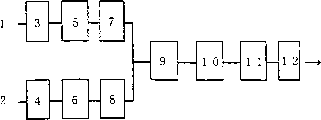
附图的简单说明A brief description of the drawings
图1表示实施本发明用的小型气体流通式反应方式的概略图的一个例子。符号的说明 Fig. 1 shows an example of a schematic diagram of a small-scale gas circulation reaction system for carrying out the present invention. Explanation of symbols
1.反应气体;1. Reactive gas;
2.反应气体;2. Reactive gas;
3.阀门;3. Valve;
4.阀门;4. Valve;
5.压力调节器;5. Pressure regulator;
6.压力调节器;6. Pressure regulator;
7.定流量气体供给装置(质量流控制器);7. Constant flow gas supply device (mass flow controller);
8.定流量气体供给装置(质量流控制器);8. Constant flow gas supply device (mass flow controller);
9.气体混合预热器;9. Gas mixing preheater;
10.反应器;10. Reactor;
11.冷阱;11. Cold trap;
12.压力调节器。12. Pressure regulator.
图1是实施本发明用的小型气体流通式反应方式的概略图的一个例子。Fig. 1 is an example of a schematic diagram of a small-scale gas circulation type reaction system for carrying out the present invention.
在图1上所示的反应方式能够在保持摩尔比和分压一定的条件下,以一定的流量,在大约10~800mL/min的范围内连续地供给一氧化碳和氧气(或空气)的混合气体。反应器10的容量是100mL,呈圆筒状,直径30mm,装有气体通入管和旋转式搅拌器。反应气体1是一氧化碳,反应气体2是分子状氧(或者空气),分别经过阀门3和4,分别由压力调节器5和6调节至比调节预定的反应压力的压力调节器12的压力高1-5个大气压的压力。由此通过定流量气体供给装置(质量流量控制器)7和8供给预定流量的气体,经过气体混合预热器9供给反应器10。经过反应器的气体成分,经过冷阱11再经过压力调节器12排放。反应器的压力由压力调节器12进行调节。The reaction method shown in Figure 1 can continuously supply the mixed gas of carbon monoxide and oxygen (or air) at a certain flow rate in the range of about 10-800mL/min under the condition of maintaining a certain molar ratio and partial pressure. . The
在如图1所示的反应方法的例子中,由反应器流出的气体导向冷阱11,在此捕集一部分生成的水和溶剂,未反应的气体经压力调节器12回收,如有必要能够在调整组成后在反应中循环使用。In the example of the reaction method shown in Figure 1, the gas flowing out from the reactor is directed to the cold trap 11, where a part of the generated water and solvent are trapped, and the unreacted gas is reclaimed through the pressure regulator 12, and can be recovered if necessary. Recycle in the reaction after adjusting the composition.
反应结束后,由反应器中取出反应混合物,过滤、用离心分离或磁分离等方法分离回收本发明的催化剂,可以进行再利用。在固定床的情况下,没有此分离操作的必要。作为目的物的芳香族碳酸酯可以用过滤、蒸馏或结晶等方法分离精制,单独分离。After the reaction, the reaction mixture is taken out from the reactor, and the catalyst of the present invention is separated and recovered by filtration, centrifugal separation or magnetic separation, and can be reused. In the case of a fixed bed, this separation operation is not necessary. The target aromatic carbonate can be isolated and purified by filtration, distillation, crystallization, etc., and isolated separately.
以下举出实施例具体说明本发明。The following examples will be given to describe the present invention in detail.
在如下的实施例中,如无特别规定都以在图1上所示的反应方式进行反应。实施例1 In the following examples, unless otherwise specified, the reaction was carried out in the reaction manner shown in FIG. 1 . Example 1
使用如图1所示的反应方式,在装有苯酚47g(0.50mol)、醋酸钯Pd(OAc)236.0mg(0.16mmol)、磷钨钼酸H3PMo6W6O40·30H2O 136mg(0.047mmol)、醋酸锰Mn(OAc)2 55mg(0.32mmol)、四正丁基溴化铵Bu4NBr968mg(3mmol)和分子筛(4,粉末状)7.0g的反应器中用一氧化碳置换。在将反应器升温到80℃的同时,提高一氧化碳的压力到8bar。在预定的温度和压力下在一氧化碳流量500mL/分钟和氧气流量35mL/min下进行3小时的反应。反应结束后从反应器中取出的反应物,进行气相色谱分析,得到11.8g(收率22.0%)的碳酸二苯酯(DPC),DPC的选择性是98.9%。实施例2 Using the reaction method shown in Figure 1, 47g (0.50mol) of phenol, palladium acetate Pd(OAc) 2 36.0mg (0.16mmol), phosphotungstomolybdic acid H 3 PMo 6 W 6 O 40 30H 2 O 136mg (0.047mmol), manganese acetate Mn (OAc) 2 55mg (0.32mmol), tetra-n-butylammonium bromide Bu 4 NBr968mg (3mmol) and molecular sieve (4 Å, powdery) 7.0g in the reactor with carbon monoxide replacement . While raising the temperature of the reactor to 80°C, the pressure of carbon monoxide was increased to 8 bar. The reaction was carried out for 3 hours at a predetermined temperature and pressure at a carbon monoxide flow rate of 500 mL/min and an oxygen flow rate of 35 mL/min. After the reaction, the reactant taken out from the reactor was analyzed by gas chromatography to obtain 11.8 g (yield 22.0%) of diphenyl carbonate (DPC), and the selectivity of DPC was 98.9%. Example 2
在装有苯酚47g(0.50mol)、醋酸钯Pd(OAc)2 36.0mg(0.16mmol)、磷钨钼酸H3PMo6W6O40·30H2O 136mg(0.047mmol)、醋酸锰Mn(OAc)2 28mg(0.16mmol)、四正丁基溴化铵Bu4NBr968mg(3mmol)和分子筛(4,粉末状)7.0g的反应器中用一氧化碳置换。在将反应器升温到80℃的同时,提高一氧化碳的压力到8bar。在预定的温度和压力下在一氧化碳流量670mL/min和氧气流量47mL/min下进行9hr的反应。反应结束后从反应器中取出的反应物,进行气相色谱分析,得到20.0g(收率37.3%)的碳酸二苯酯(DPC),DPC的选择性是98.9%。实施例3~7 Phenol 47g (0.50mol), palladium acetate Pd (OAc) 2 36.0mg (0.16mmol), phosphotungstomolybdic acid H 3 PMo 6 W 6 O 40 ·30H 2 O 136mg (0.047mmol), manganese acetate Mn ( OAc) 2 28 mg (0.16 mmol), tetra-n-butylammonium bromide Bu 4 NBr 968 mg (3 mmol), and molecular sieve (4 Å, powder) 7.0 g were replaced with carbon monoxide in the reactor. While raising the temperature of the reactor to 80°C, the pressure of carbon monoxide was increased to 8 bar. The reaction was carried out for 9 hr at a predetermined temperature and pressure at a carbon monoxide flow rate of 670 mL/min and an oxygen flow rate of 47 mL/min. After the reaction, the reactant taken out from the reactor was analyzed by gas chromatography to obtain 20.0 g (yield 37.3%) of diphenyl carbonate (DPC), and the selectivity of DPC was 98.9%. Embodiment 3-7
在装有苯酚47g(0.50mol)、表1所示的杂多酸和醋酸钯Pd(OAc)20.16mmol、苯并醌0.69mmol、醋酸锰Mn(OAc)2 0.32mmol和四正丁基溴化铵Bu4NBr 3mmol和分子筛(4,粉末状)7.0g中在一氧化碳流量500mL/min(标准状态)和纯氧流量35mL/min(标准状态)下在8bar的压力下和保持80℃进行3hr的反应。反应结束后从反应器中取出的反应物,进行气相色谱分析,结果和使用的杂多酸一起显示在表1中。47g (0.50mol) of phenol, heteropolyacids shown in Table 1 and palladium acetate Pd(OAc) 2 0.16mmol, benzoquinone 0.69mmol, manganese acetate Mn(OAc) 2 0.32mmol and tetra-n-butyl bromide In ammonium chloride Bu 4 NBr 3mmol and molecular sieve (4 Å, powder) 7.0g, carbon monoxide flow 500mL/min (standard state) and pure oxygen flow 35mL/min (standard state) under the pressure of 8bar and keep 80 ℃ to carry out 3hr response. After the reaction, the reactants taken out from the reactor were analyzed by gas chromatography, and the results are shown in Table 1 together with the heteropolyacid used.
表1
在装有苯酚50.0g(0.53mol)、醋酸钯Pd(OAc)2 0.16mmol、苯并醌0.69mmol、醋酸锰Mn(OAc)2 0.32mmol和四正丁基溴化铵Bu4NBr3mmol和分子筛(4,粉末状)7.0g中在一氧化碳流量500mL/min(标准状态)和纯氧流量30mL/min(标准状态)下在8bar的压力下和保持80℃进行3hr的反应。其结果是DPC1.09g(收率1.9%)、DPC的选择性大约78%。实施例8 Equipped with phenol 50.0g (0.53mol), palladium acetate Pd (OAc) 2 0.16mmol, benzoquinone 0.69mmol, manganese acetate Mn (OAc) 2 0.32mmol and tetra-n-butylammonium bromide Bu 4 NBr3mmol and molecular sieve ( 4 Å, powder) 7.0g, under the pressure of 8 bar and keep 80 ℃ for 3hr under the carbon monoxide flow rate 500mL/min (standard state) and pure oxygen flow rate 30mL/min (standard state). As a result, DPC was 1.09 g (yield 1.9%), and the selectivity of DPC was about 78%. Example 8
在装有苯酚40.0g(0.43mol)、醋酸钯Pd(OAc)2 36.0mg(0.16mmol)、四正丁基铵硅钨钼酸(Bu4N)4-SiWMo11O40 135mg(0.047mmol)、醋酸锰Mn(OAc)2 55mg(0.32mmol)和四正丁基溴化铵Bu4NBr1000mg(3.1mmol)和分子筛(3,粉末状)7.0g在反应器中用一氧化碳置换。在反应器升温到80℃的同时,用一氧化碳升压到8bar,在预定的温度和压力下,以一氧化碳流量500mL/min和氧气流量30mL/min进行3hr的反应。反应结束后将反应器中取出的反应物时用气相色谱分析。得到10.6g(收率23.0%)的碳酸二苯酯(DPC),DPC的选择性大约99%。实施例9 Equipped with phenol 40.0g (0.43mol), palladium acetate Pd (OAc) 2 36.0mg (0.16mmol), tetra-n-butylammonium silicotungstomolybdic acid (Bu 4 N) 4 -SiWMo 11 O 40 135mg (0.047mmol) , manganese acetate Mn(OAc) 2 55mg (0.32mmol), tetra-n-butylammonium bromide Bu 4 NBr 1000mg (3.1mmol) and molecular sieve (3 Å, powder) 7.0g were replaced with carbon monoxide in the reactor. While the temperature of the reactor was raised to 80° C., the pressure was increased to 8 bar with carbon monoxide, and the reaction was carried out for 3 hours at a predetermined temperature and pressure with a carbon monoxide flow rate of 500 mL/min and an oxygen flow rate of 30 mL/min. After the reaction, the reactants taken out from the reactor were analyzed by gas chromatography. 10.6 g (yield 23.0%) of diphenyl carbonate (DPC) was obtained, the selectivity of DPC was about 99%. Example 9
在装有苯酚40.0g(0.43mol)、醋酸钯Pd(OAc)2 36.0mg(0.16mmol)、四正丁基铵磷钨钼酸(Bu4N)4-PW6Mo6O40 145mg(0.047mmol)、醋酸锰Mn(OAc)2 55mg(0.32mmol)、四正丁基溴化铵Bu4NBr 1000mg(3.1mmol)和分子筛(3,粉末状)7.0g的反应器以一氧化碳流量500mL/min和氧气流量30mL/min,在8bar的反应压力下于80℃下进行3hr的反应。反应结束后从反应器中取出的反应物,进行气相色谱分析,得到10.5g(收率22.8%)的碳酸二苯酯(DPC),DPC的选择性是99%。实施例10 40.0g (0.43mol) of phenol , 36.0mg ( 0.16mmol ) of palladium acetate Pd ( OAc) 2 , 145mg (0.047 mmol), manganese acetate Mn(OAc) 2 55mg (0.32mmol), tetra-n-butylammonium bromide Bu 4 NBr 1000mg (3.1mmol) and molecular sieve (3 Å, powder) 7.0g reactor with carbon monoxide flow 500mL/ min and an oxygen flow rate of 30 mL/min, the reaction was carried out at 80° C. for 3 hr at a reaction pressure of 8 bar. After the reaction, the reactants taken out from the reactor were analyzed by gas chromatography to obtain 10.5 g (yield 22.8%) of diphenyl carbonate (DPC), and the selectivity of DPC was 99%. Example 10
在装有苯酚40.0g(0.43mol)、醋酸钯Pd(OAc)2 36.0mg(0.16mmol)、四乙基铵硅钼酸(Et4N)4-SiMo12O40 110mg(0.047mmol)、醋酸锰Mn(OAc)2 55mg(0.32mmol)、四正丁基溴化铵Bu4NBr 1000mg(3.1mmol)和分子筛(3,粉末状)7.0g的反应器以一氧化碳流量500mL/min(标准状态下)和纯氧流量35mL/min(标准状态下),在8bar的反应压力下于80℃下进行3hr的反应。反应结束后从反应器中取出的反应物,进行气相色谱分析,得到9.71g(收率21.5%)的碳酸二苯酯(DPC),DPC的选择性是98%。实施例11 40.0g (0.43mol) of phenol, 36.0mg (0.16mmol) of palladium acetate Pd(OAc) 2 , 110mg (0.047mmol) of tetraethylammonium silicon molybdenum acid (Et 4 N) 4 -SiMo 12 O 40 , acetic acid Manganese Mn(OAc) 2 55mg (0.32mmol), tetra-n-butylammonium bromide Bu 4 NBr 1000mg (3.1mmol) and molecular sieve (3 Å, powder) 7.0g reactor with carbon monoxide flow 500mL/min (standard state ) and pure oxygen flow rate 35mL/min (under standard conditions), the reaction was carried out at 80° C. for 3 hr under a reaction pressure of 8 bar. After the reaction, the reactants taken out from the reactor were analyzed by gas chromatography to obtain 9.71 g (yield 21.5%) of diphenyl carbonate (DPC), and the selectivity of DPC was 98%. Example 11
在装有苯酚40.0g(0.43mol)、醋酸钯Pd(OAc)2 36.0mg(0.16mmol)、四正丁基鏻硅钨钼酸(Bu4P)4-SiW6Mo6O40 159mg(0.047mmol)、醋酸锰Mn(OAc)2 55mg(0.32mmol)、四正丁基溴化铵Bu4NBr 1000mg(3.1mmol)和分子筛(3,粉末状)7.0g的反应器以一氧化碳流量500mL/min(标准状态下)和纯氧流量35mL/min(标准状态下),在8bar的反应压力下于80℃下进行3hr的反应。反应结束后从反应器中取出的反应物,进行气相色谱分析,得到10.3g(收率22.4%)的碳酸二苯酯(DPC),DPC的选择性是97%。实施例12 40.0g (0.43mol) of phenol , 36.0mg ( 0.16mmol ) of palladium acetate Pd(OAc) 2 , 159mg (0.047 mmol), manganese acetate Mn(OAc) 2 55mg (0.32mmol), tetra-n-butylammonium bromide Bu 4 NBr 1000mg (3.1mmol) and molecular sieve (3 Å, powder) 7.0g reactor with carbon monoxide flow 500mL/ min (under standard conditions) and pure oxygen flow rate 35mL/min (under standard conditions), the reaction was carried out at 80° C. for 3 hours under a reaction pressure of 8 bar. After the reaction, the reactants taken out from the reactor were analyzed by gas chromatography to obtain 10.3 g (yield 22.4%) of diphenyl carbonate (DPC), and the selectivity of DPC was 97%. Example 12
在装有苯酚40.0g(0.43mol)、醋酸钯Pd(OAc)2 36.0mg(0.16mmol)、四正丁基铵硅钨钼酸(Bu4N)4-SiW6Mo6O40 159mg(0.047mmol)、醋酸锰Mn(OAc)2 28mg(0.16mmol)、四正丁基溴化铵Bu4NBr 1000mg(3.1mmol)和分子筛(3,粉末状)7.0g的反应器以一氧化碳流量670mL/min(标准状态下)和纯氧流量47mL/min(标准状态下),在8bar的反应压力下于80℃下进行9hr的反应。反应结束后从反应器中取出的反应物,进行气相色谱分析,得到19.0g(收率41.2%)的碳酸二苯酯(DPC),DPC的选择性是99.4%。实施例13~16 40.0g (0.43mol) of phenol, 36.0mg ( 0.16mmol ) of palladium acetate Pd(OAc) 2 , 159mg (0.047 mmol), manganese acetate Mn(OAc) 2 28mg (0.16mmol), tetra-n-butylammonium bromide Bu 4 NBr 1000mg (3.1mmol) and molecular sieve (3 Å, powder) 7.0g reactor with carbon monoxide flow 670mL/ min (under standard conditions) and pure oxygen flow rate 47mL/min (under standard conditions), the reaction was carried out at 80° C. for 9 hours under a reaction pressure of 8 bar. After the reaction, the reactants taken out from the reactor were analyzed by gas chromatography to obtain 19.0 g (yield 41.2%) of diphenyl carbonate (DPC), and the selectivity of DPC was 99.4%. Examples 13-16
在装有苯酚0.43mol、如表1所示的杂多酸季铵盐0.047mmol和醋酸钯Pd(OAc)2 0.16mmol、醋酸锰Mn(OAc)2 0.32mmol、四正丁基溴化铵Bu4NBr 3.1mmol和分子筛(3,粉末状)7.0g,以一氧化碳流量500mL/min(标准状态下)和纯氧流量35mL/min(标准状态下),在8bar的反应压力下于80℃下进行3hr的反应。反应结束后从反应器中取出的反应物,进行气相色谱分析,结果和使用的杂多酸如表2所示。Phenol 0.43mol, heteropolyacid quaternary ammonium salt 0.047mmol and palladium acetate Pd(OAc) 2 0.16mmol, manganese acetate Mn(OAc) 2 0.32mmol, tetra-n-butylammonium bromide Bu 4 NBr 3.1mmol and molecular sieve (3 Å, powder) 7.0g, with a carbon monoxide flow rate of 500mL/min (under standard conditions) and a pure oxygen flow rate of 35mL/min (under standard conditions), under a reaction pressure of 8bar at 80°C The reaction was carried out for 3 hr. After the reaction, the reactants taken out from the reactor were analyzed by gas chromatography, and the results and the heteropolyacid used are shown in Table 2.
表2
钯-杂多酸复合体的制造:Manufacture of palladium-heteropolyacid complex:
将硅钼酸H4SiMo12O40·nH2O(日本无机化学工业(株)制造n近似于28)1.15g(0.5mmol)溶解于5mL的水,加入醋酸钯Pd(AcO)2 112mg,加热将水蒸发。此时要避免过热,待加入的醋酸钯完全溶解,直到在蒸发中的水蒸气中没有醋酸的气味,加入少量水反复加热蒸发。最终蒸发干,得到组成为PdH2SiMo12O40·nH2O的钯-杂多酸复合体。Dissolve 1.15 g (0.5 mmol) of silicomolybdic acid H 4 SiMo 12 O 40 nH 2 O (manufactured by Nippon Inorganic Chemical Industry Co., Ltd. n is approximately 28) in 5 mL of water, and add 112 mg of palladium acetate Pd(AcO) 2 , Heat to evaporate the water. At this time, overheating should be avoided, and the palladium acetate to be added is completely dissolved until there is no smell of acetic acid in the evaporating water vapor, and a small amount of water is added to repeatedly heat and evaporate. Finally evaporated to dryness to obtain a palladium-heteropolyacid complex with the composition of PdH 2 SiMo 12 O 40 ·nH 2 O.
把全部这些复合体溶解于30mL水中,加入四正丁基溴化铵0.75g(2.33mmol)在20mL水中的溶液,搅拌大约1hr,将沉淀过滤并干燥。得到大约1.57g固体粉末状的上述复合体的四正丁基铵盐,其组成为(Bu4N)2PdSiMo12O40·nH2O的钯-杂多酸复合体盐。All of these complexes were dissolved in 30 mL of water, a solution of 0.75 g (2.33 mmol) of tetra-n-butylammonium bromide in 20 mL of water was added, stirred for about 1 hr, and the precipitate was filtered and dried. About 1.57 g of the tetra-n-butylammonium salt of the above-mentioned complex was obtained as a solid powder, and its composition was a palladium-heteropolyacid complex salt of (Bu 4 N) 2 PdSiMo 12 O 40 ·nH 2 O.
使用上述钯-杂多酸复合体的反应Reaction using the above-mentioned palladium-heteropolyacid complex
在装有苯酚47.0g(0.5mol)和钯-SiMo12O40-四丁基铵复合体盐(Bu4N)2PdSiMo12O40·nH2O 500mg(0.16mmol)、醋酸锰Mn(OAc)2 55mg(0.32mmol)、四正丁基溴化铵Bu4NBr 968mg(3mmol)和分子筛(4,粉末状)7.0g的反应器中用一氧化碳置换。在将反应器升温到80℃的同时,提高一氧化碳的压力到8bar。在预定的温度和压力下在一氧化碳流量500mL/min和氧气流量35mL/min下进行3hr的反应。反应结束后从反应器中取出的反应物,进行气相色谱分析,得到10.3g(收率19.2%)的碳酸二苯酯(DPC),DPC的选择性是98.9%。实施例18 With phenol 47.0g (0.5mol) and palladium-SiMo 12 O 40 -tetrabutylammonium complex salt (Bu 4 N) 2 PdSiMo 12 O 40 nH 2 O 500mg (0.16mmol), manganese acetate Mn(OAc ) 2 55mg (0.32mmol), tetra-n-butylammonium bromide Bu 4 NBr 968mg (3mmol) and molecular sieve (4 Å, powder) 7.0g were replaced with carbon monoxide in the reactor. While raising the temperature of the reactor to 80°C, the pressure of carbon monoxide was increased to 8 bar. The reaction was carried out for 3 hr at a predetermined temperature and pressure at a carbon monoxide flow rate of 500 mL/min and an oxygen flow rate of 35 mL/min. After the reaction, the reactant taken out from the reactor was analyzed by gas chromatography to obtain 10.3 g (yield 19.2%) of diphenyl carbonate (DPC), and the selectivity of DPC was 98.9%. Example 18
过渡金属-杂多酸复合体的制造:Fabrication of transition metal-heteropolyacid complexes:
将硅钨钼酸H4SiWMo11O40·nH2O(日本无机化学工业(株)制造n近似于27)1.20g(0.5mmol)溶解于5mL的水,加入醋酸铈Ce(AcO)3168mg,加热将水蒸发。此时要避免过热,待加入的醋酸钯完全溶解,直到在蒸发中的水蒸气中没有醋酸的气味,加入少量水反复加热蒸发。最终蒸发干,得到组成为CeHSiWMo11O40·nH2O的铈-杂多酸复合体。Dissolve 1.20 g (0.5 mmol) of silicotungstomolybdic acid H 4 SiWMo 11 O 40 nH 2 O (manufactured by Nippon Inorganic Chemical Industry Co., Ltd. n is approximately 27) in 5 mL of water, and add 168 mg of cerium acetate Ce(AcO) 3 , heat to evaporate the water. At this time, overheating should be avoided, and the palladium acetate to be added is completely dissolved until there is no smell of acetic acid in the evaporating water vapor, and a small amount of water is added to repeatedly heat and evaporate. Finally evaporated to dryness to obtain a cerium-heteropolyacid complex with the composition CeHSiWMo 11 O 40 ·nH 2 O.
把全部这些复合体溶解于30mL水中,加入四正丁基溴化铵0.24g(0.75mmol)在20mL水中的溶液,搅拌大约1hr,将沉淀过滤并干燥。得到大约1.27g固体粉末状的上述复合体的四正丁基铵盐,其组成为(Bu4N)CeSiWMo11O40·nH2O的铈-杂多酸复合体盐。All of these complexes were dissolved in 30 mL of water, a solution of 0.24 g (0.75 mmol) of tetra-n-butylammonium bromide in 20 mL of water was added, stirred for about 1 hr, and the precipitate was filtered and dried. About 1.27 g of the tetra-n-butylammonium salt of the above complex was obtained in the form of solid powder, and its composition was a cerium-heteropolyacid complex salt of (Bu 4 N)CeSiWMo 11 O 40 ·nH 2 O.
使用上述铈-杂多酸复合体盐的反应:The reaction using the above-mentioned cerium-heteropolyacid complex salt:
在装有苯酚50.0g(0.53mol)和醋酸钯Pd(OAc)2 36mg(0.16mmol)、铈硅钨钼酸复合体CeHSiWMo11O40·nH2O 96mg(0.047mmol)、醋酸锰Mn(OAc)2 55mg(0.32mmol)、四正丁基溴化铵Bu4NBr968mg(3mmol)和分子筛(3,粉末状)7.0g的反应器中用一氧化碳置换。在将反应器升温到80℃的同时,提高一氧化碳的压力到8bar。在预定的温度和压力下在一氧化碳流量500mL/min和氧气流量35mL/min下进行3hr的反应。反应结束后从反应器中取出的反应物,进行气相色谱分析,得到7.7g(收率13.6%)的碳酸二苯酯(DPC),DPC的选择性是96.7%。实施例19 After loading phenol 50.0g (0.53mol) and palladium acetate Pd(OAc) 2 36mg (0.16mmol), cerium silicon tungsten molybdenum acid complex CeHSiWMo 11 O 40 nH 2 O 96mg (0.047mmol), manganese acetate Mn(OAc ) 2 55mg (0.32mmol), tetra-n-butylammonium bromide Bu 4 NBr 968mg (3mmol) and molecular sieve (3 Å, powder) 7.0g were replaced with carbon monoxide in the reactor. While raising the temperature of the reactor to 80°C, the pressure of carbon monoxide was increased to 8 bar. The reaction was carried out for 3 hr at a predetermined temperature and pressure at a carbon monoxide flow rate of 500 mL/min and an oxygen flow rate of 35 mL/min. After the reaction, the reactant taken out from the reactor was analyzed by gas chromatography to obtain 7.7 g (yield 13.6%) of diphenyl carbonate (DPC), and the selectivity of DPC was 96.7%. Example 19
使用在实施例18中制造的铈-硅钨钼酸正丁基铵复合体(Bu4N)CeSiWMo11O40·nH2O 119mg(0.047mmol),加入苯酚50.0g(0.53mol)和醋酸钯Pd(OAc)2 36mg(0.16mmol)、醋酸锰Mn(OAc)255mg(0.32mmol)、四正丁基溴化铵Bu4NBr 967mg(3mmol)和分子筛(3,粉末状)7.0g,用一氧化碳流量500mL/min、氧气流量30mL/min。在反应压力8bar和反应温度80℃下进行3hr的反应。反应结束后从反应器中取出的反应物,进行气相色谱分析,得到10.0g(收率17.5%)的碳酸二苯酯(DPC),DPC的选择性是98.1%。实施例20 Using the cerium-silicotungstomolybdate n-butylammonium complex (Bu 4 N)CeSiWMo 11 O 40 ·nH 2 O 119mg (0.047mmol) produced in Example 18, add phenol 50.0g (0.53mol) and palladium acetate Pd(OAc) 2 36mg (0.16mmol), manganese acetate Mn(OAc) 2 55mg (0.32mmol), tetra-n-butylammonium bromide Bu NBr 967mg (3mmol) and molecular sieve (3 Å, powder) 7.0g, Use a carbon monoxide flow rate of 500mL/min and an oxygen flow rate of 30mL/min. The reaction was carried out for 3 hrs at a reaction pressure of 8 bar and a reaction temperature of 80°C. After the reaction, the reactant taken out from the reactor was analyzed by gas chromatography to obtain 10.0 g (yield 17.5%) of diphenyl carbonate (DPC), and the selectivity of DPC was 98.1%. Example 20
加入苯酚32.5g(0.346mol)以及甲苯10mL、作为催化剂的钨钼磷酸H3PMo6W6O40·30H2O 136mg(0.047mmol)和醋酸钯Pd(OAc)20.16mmol、苯并醌0.69mmol、醋酸锰Mn(OAc)2 0.32mmol、四正丁基溴化铵Bu4NBr 3mmol和分子筛(4,粉末状)7.0g,用一氧化碳流量500mL/min(标准状态)、纯氧流量35mL/min(标准状态)。在保持反应压力8bar和反应温度80℃下进行3hr的反应。Add 32.5 g (0.346 mol) of phenol, 10 mL of toluene, 136 mg (0.047 mmol) of tungstomolybdophosphoric acid H 3 PMo 6 W 6 O 40 ·30H 2 O as a catalyst, 0.16 mmol of palladium acetate Pd(OAc) 2 , and 0.69 mmol of benzoquinone mmol, manganese acetate Mn(OAc) 2 0.32mmol, tetra-n-butylammonium bromide Bu 4 NBr 3mmol and molecular sieve (4 , powder) 7.0g, with carbon monoxide flow rate 500mL/min (standard state), pure oxygen flow rate 35mL /min (standard state). The reaction was carried out for 3 hr while maintaining a reaction pressure of 8 bar and a reaction temperature of 80°C.
其结果是得到9.59g(收率25.9%)的碳酸二苯酯(DPC),DPC的选择性是98.9%。实施例21 As a result, 9.59 g (25.9% yield) of diphenyl carbonate (DPC) was obtained, and the selectivity of DPC was 98.9%. Example 21
使用装有气体通入管和搅拌器的100mL反应器,加入苯酚40.0g以及四氢呋喃10g、醋酸钯Pd(OAc)2 36mg、醋酸锰(II)Mn(OAc)255mg、四正丁基溴化铵1000mg、硅钨钼酸四正丁基铵盐(Bu4N)4SiWMo11O40 135mg和分子筛(3,粉末状)7.0g,在反应器中用一氧化碳流量置换,在将反应器升温到80℃的同时,提高一氧化碳的压力到8bar。在预定的温度和压力下在一氧化碳流量500mL/min(标准状态)和纯氧流量35mL/min下保持80℃的温度进行3hr的反应。反应结束后从反应器中取出的反应物,进行气相色谱分析,得到12.4g(收率27.2%)的碳酸二苯酯(DPC),DPC的选择性是98.8%。实施例22 Using a 100 mL reactor equipped with a gas inlet tube and a stirrer, add 40.0 g of phenol, 10 g of tetrahydrofuran, 36 mg of palladium acetate Pd(OAc) 2 , 55 mg of manganese (II) acetate Mn(OAc) 2 , and tetra-n-butylammonium bromide 1000mg, tetra-n-butylammonium silicotungstomolybdate (Bu 4 N) 4 SiWMo 11 O 40 135mg and molecular sieve (3 , powdery) 7.0g, use carbon monoxide flow displacement in reactor, after reactor is heated up to While at 80°C, increase the carbon monoxide pressure to 8 bar. Under the predetermined temperature and pressure, the reaction was carried out at a temperature of 80° C. for 3 hr at a flow rate of carbon monoxide of 500 mL/min (standard state) and a flow rate of pure oxygen of 35 mL/min. After the reaction, the reactants taken out from the reactor were analyzed by gas chromatography to obtain 12.4 g (yield 27.2%) of diphenyl carbonate (DPC), and the selectivity of DPC was 98.8%. Example 22
加入苯酚25.0g以及四氢呋喃25g、醋酸钯Pd(OAc)2 36mg、醋酸锰(II)Mn(OAc)2 55mg、四正丁基溴化铵1000mg、硅钨钼酸四正丁基铵盐(Bu4N)4SiWMo11O40 135mg和分子筛(3,粉末状)7.0g,用与实施例1相同的一氧化碳流量500mL/min(标准状态)、纯氧流量35mL/min(标准状态)。在保持反应压力8bar和反应温度80℃下进行3hr的反应。其结果是得到8.89g(收率31.2%)的碳酸二苯酯(DPC),DPC的选择性是99.5%。实施例23 Add 25.0 g of phenol and 25 g of tetrahydrofuran, palladium acetate Pd(OAc) 2 36 mg, manganese (II) acetate Mn(OAc) 2 55 mg, tetra-n-butylammonium bromide 1000 mg, tetra-n-butylammonium silicotungstomolybdate (Bu 4 N) 4 SiWMo 11 O 40 135mg and molecular sieve (3 Å, powder) 7.0g, with the same carbon monoxide flow rate 500mL/min (standard state) and pure oxygen flow rate 35mL/min (standard state) as in Example 1. The reaction was carried out for 3 hr while maintaining a reaction pressure of 8 bar and a reaction temperature of 80°C. As a result, 8.89 g (yield 31.2%) of diphenyl carbonate (DPC) was obtained, and the selectivity of DPC was 99.5%. Example 23
使用同样的装置,加入苯酚40.0g以及四氢呋喃13g、醋酸钯Pd(OAc)2 36mg、醋酸锰(II)Mn(OAc)2 27.5mg、四正丁基溴化铵1000mg、硅钨钼酸四正丁基铵盐(Bu4N)4SiWMo11O40 135mg和分子筛(3,粉末状)7.0g,用与实施例1相同的一氧化碳流量500mL/min(标准状态)、纯氧流量35mL/min(标准状态)。在保持反应压力8bar和反应温度80℃下进行3hr的反应。其结果是得到15.5g(收率34.0%)的碳酸二苯酯(DPC),DPC的选择性是98.8%实施例24~27 Using the same device, add 40.0 g of phenol, 13 g of tetrahydrofuran, 36 mg of palladium acetate Pd(OAc) 2 , 27.5 mg of manganese (II) Mn(OAc) 2 , 1000 mg of tetra-n-butylammonium bromide, tetra-n- Butylammonium salt (Bu 4 N) 4 SiWMo 11 O 40 135mg and molecular sieve (3 , powder) 7.0g, with the carbon monoxide flow 500mL/min (standard state) identical with
分别用1,2-二甲氧基乙烷、二乙醚、1,4-二氧杂环己烷或甲基叔丁基醚代替四氢呋喃,在80℃下进行3hr的反应,结果见表3。The tetrahydrofuran was replaced by 1,2-dimethoxyethane, diethyl ether, 1,4-dioxane or methyl tert-butyl ether, and the reaction was carried out at 80°C for 3 hours. The results are shown in Table 3.
表3
在装有气体通入管和搅拌器,以及中间取样口的容量500mL的反应装置中,加入苯酚200g和四氢呋喃50g、醋酸钯Pd(OAc)2 180mg、醋酸锰(II)Mn(OAc)2 275mg、四正丁基溴化铵5.0g、硅钨钼酸四正丁基铵盐(Bu4N)4SiWMo11O40 675mg和分子筛(3,粉末状)35.0g,在反应器中用一氧化碳流量置换,在将反应器升温到80℃的同时,提高一氧化碳的压力到8bar。在预定的温度和压力下在一氧化碳流量2.5L/min(标准状态)和纯氧流量175mL/min下保持反应压力8bar和反应温度80℃下反应。其结果在2hr时取样DPC的收率是21.9%(选择性99.0%);在3hr时取样DPC的收率是25.0%(选择性98.9%);在6hr时取样DPC的收率是30.2%(选择性99.1%)。实施例29 In a reaction device with a gas inlet tube and a stirrer, and a capacity of 500 mL in the middle sampling port, add 200 g of phenol and 50 g of tetrahydrofuran, palladium acetate Pd(OAc) 2 180 mg, manganese acetate (II) Mn(OAc) 2 275 mg, Tetra-n-butylammonium bromide 5.0g, tetra-n-butylammonium silicotungstomolybdate (Bu 4 N) 4 SiWMo 11 O 40 675mg and molecular sieve (3 Å, powder) 35.0g, in the reactor with carbon monoxide flow For replacement, while raising the temperature of the reactor to 80° C., increase the pressure of carbon monoxide to 8 bar. Under the predetermined temperature and pressure, the carbon monoxide flow rate is 2.5L/min (standard state) and the pure oxygen flow rate is 175mL/min, and the reaction pressure is kept at 8 bar and the reaction temperature is 80°C. As a result, the yield of sampling DPC at 2hr is 21.9% (selectivity 99.0%); the yield of sampling DPC at 3hr is 25.0% (selectivity 98.9%); the yield of sampling DPC at 6hr is 30.2% ( Selectivity 99.1%). Example 29
使用250mg(0.08mmol)在实施例17中制造的钯-杂多酸复合体(Bu4N)2PdSiMo12O40·nH2O,加入加入苯酚20.0g(0.425mmol)和醋酸锰Mn(OAc)227.5mg(0.16mmol)、四正丁基溴化铵Bu4NBr 500mg(1.5mmol)和分子筛(4,粉末状)7.0g,以及作为溶剂的甲基叔丁基醚30g,在流过一氧化碳的流量500mL/min(标准状态)和纯氧流量35mL/min下,在保持8bar的反应压力和80℃的反应温度下进行3hr的反应。反应结束后从反应器中取出的反应物,进行气相色谱分析,得到6.4g(收率28.2%)的碳酸二苯酯(DPC),DPC的选择性是98.9%。Using 250mg (0.08mmol) of the palladium-heteropolyacid complex (Bu 4 N) 2 PdSiMo 12 O 40 ·nH 2 O produced in Example 17, add 20.0g (0.425mmol) of phenol and manganese acetate Mn(OAc ) 2 27.5mg (0.16mmol), tetra-n-butylammonium bromide Bu 4 NBr 500mg (1.5mmol) and molecular sieve (4 Å, powder) 7.0g, and methyl tert-butyl ether 30g as solvent, in flow The reaction was carried out for 3 hours at a reaction pressure of 8 bar and a reaction temperature of 80° C. at a flow rate of 500 mL/min of carbon monoxide (standard state) and a flow rate of pure oxygen of 35 mL/min. After the reaction, the reactants taken out from the reactor were analyzed by gas chromatography to obtain 6.4 g (yield 28.2%) of diphenyl carbonate (DPC), and the selectivity of DPC was 98.9%.
Claims (24)
Applications Claiming Priority (6)
| Application Number | Priority Date | Filing Date | Title |
|---|---|---|---|
| JP58591/2000 | 2000-03-03 | ||
| JP2000058591 | 2000-03-03 | ||
| JP246725/2000 | 2000-08-16 | ||
| JP2000246725 | 2000-08-16 | ||
| JP2000286779 | 2000-09-21 | ||
| JP286779/2000 | 2000-09-21 |
Publications (1)
| Publication Number | Publication Date |
|---|---|
| CN1411434A true CN1411434A (en) | 2003-04-16 |
Family
ID=27342571
Family Applications (1)
| Application Number | Title | Priority Date | Filing Date |
|---|---|---|---|
| CN01806032A Pending CN1411434A (en) | 2000-03-03 | 2001-03-01 | Process for producing aromatic carbonate |
Country Status (6)
| Country | Link |
|---|---|
| US (1) | US6596896B2 (en) |
| EP (1) | EP1266883A4 (en) |
| KR (1) | KR20020075445A (en) |
| CN (1) | CN1411434A (en) |
| AU (1) | AU2001236022A1 (en) |
| WO (1) | WO2001064616A1 (en) |
Families Citing this family (10)
| Publication number | Priority date | Publication date | Assignee | Title |
|---|---|---|---|---|
| EP1342711A3 (en) * | 2002-03-07 | 2003-10-15 | Daicel Chemical Industries, Ltd. | Process for producing aromatic compounds |
| US7091152B2 (en) | 2003-01-24 | 2006-08-15 | Conocophillips Company | Catalyst composition comprising a heteropoly acid, zinc, and a support component and processes therefor and therewith |
| TW200934581A (en) * | 2007-11-07 | 2009-08-16 | Sumitomo Chemical Co | Method for preparing ketone compound |
| EP2703423B1 (en) * | 2011-06-29 | 2017-09-06 | SABIC Global Technologies B.V. | Late-addition catalyst formulation |
| US8664012B2 (en) * | 2011-09-30 | 2014-03-04 | Tokyo Electron Limited | Combined silicon oxide etch and contamination removal process |
| DE102015000813A1 (en) | 2015-01-21 | 2016-07-21 | Smart Material Printing B.V. | Method of destroying drugs and toxins and their metabolites using polyoxometalate micro and / or nanoparticles |
| DE102015000814A1 (en) | 2015-01-21 | 2016-07-21 | Smart Material Printing B.V. | Biocide equipment of articles with polyoxometalate micro and / or nanoparticles |
| WO2016116259A1 (en) | 2015-01-21 | 2016-07-28 | Smartmaterialprinting B.V. | Biocidal treatment of objects and water-containing cleaning and body-care products with polyoxometalate microparticles and/or nanoparticles |
| EP3103786A1 (en) * | 2015-06-08 | 2016-12-14 | Hexion Research Belgium SA | Process for the production of higher carboxylic acid vinyl esters |
| DE102018003906A1 (en) | 2018-05-07 | 2019-11-07 | Smart Material Printing | Use of polyoxometalates against the infestation of eukaryotic cultures, viral cultures and microorganism populations by mollicutes and mollicutene-inhibiting and killing polyoxometalate-containing substances and processes |
Family Cites Families (11)
| Publication number | Priority date | Publication date | Assignee | Title |
|---|---|---|---|---|
| JPS5638144A (en) | 1979-09-06 | 1981-04-13 | Hitachi Plant Eng & Constr Co Ltd | Electric precipitator |
| US4532362A (en) * | 1982-04-01 | 1985-07-30 | Phillips Petroleum Company | Olefin oxidation catalyst |
| JPS6075447A (en) | 1983-09-30 | 1985-04-27 | Mitsubishi Gas Chem Co Inc | Manufacturing method of carbonate ester |
| EP0350697A3 (en) | 1988-07-11 | 1991-07-31 | General Electric Company | Preparation of organic carbonates by oxidative carbonylation using palladium-manganese catalyst |
| WO1992006066A1 (en) * | 1990-09-28 | 1992-04-16 | Ube Industries, Ltd. | Process for producing diester of carbonic acid |
| JP3554049B2 (en) | 1994-01-12 | 2004-08-11 | 三菱化学株式会社 | Method for producing aromatic carbonate |
| JPH0892168A (en) | 1994-09-21 | 1996-04-09 | Mitsubishi Chem Corp | Method for producing aromatic carbonic acid ester |
| DE19512615A1 (en) | 1995-04-05 | 1996-10-10 | Bayer Ag | Supported catalysts containing platinum metal and process for the preparation of diaryl carbonates |
| JPH09241372A (en) | 1996-03-14 | 1997-09-16 | Teijin Ltd | Method for producing polycarbonate |
| DE19614062A1 (en) | 1996-04-09 | 1997-10-16 | Bayer Ag | Process for the continuous production of diaryl carbonates |
| KR20010021789A (en) * | 1997-08-04 | 2001-03-15 | 야스이 쇼사꾸 | Catalyst and process for the preparation of aromatic carbonates |
-
2001
- 2001-03-01 CN CN01806032A patent/CN1411434A/en active Pending
- 2001-03-01 AU AU2001236022A patent/AU2001236022A1/en not_active Abandoned
- 2001-03-01 KR KR1020027010880A patent/KR20020075445A/en not_active Withdrawn
- 2001-03-01 EP EP01908196A patent/EP1266883A4/en not_active Withdrawn
- 2001-03-01 US US10/220,597 patent/US6596896B2/en not_active Expired - Fee Related
- 2001-03-01 WO PCT/JP2001/001565 patent/WO2001064616A1/en not_active Ceased
Also Published As
| Publication number | Publication date |
|---|---|
| EP1266883A1 (en) | 2002-12-18 |
| WO2001064616A1 (en) | 2001-09-07 |
| KR20020075445A (en) | 2002-10-04 |
| US6596896B2 (en) | 2003-07-22 |
| US20030032831A1 (en) | 2003-02-13 |
| AU2001236022A1 (en) | 2001-09-12 |
| EP1266883A4 (en) | 2005-02-23 |
Similar Documents
| Publication | Publication Date | Title |
|---|---|---|
| CN1245371C (en) | Process for the carbonylation of ethylene | |
| CN104203884B (en) | Passivation of homogeneous hydrogenation catalysts for the production of ethylene glycol | |
| CN1347866A (en) | Recirculating process | |
| CN1507371A (en) | Metal bis (trifluoromethanesulfonyl) imide compounds and methods of synthesizing metal bis (trifluoromethanesulfonyl) imide compounds | |
| CN1358168A (en) | Catalyst composition and method for producing diaryl carbonates using nitrile as promoter | |
| JPH02142754A (en) | Preparation of organic carbonate by means of oxidative carbonylation using palladium- cobalt catalyst | |
| CN1411434A (en) | Process for producing aromatic carbonate | |
| CN104936939B (en) | Method for producing aromatic dihydroxy compound | |
| CN1116930C (en) | Catalyst and method for producing aromatic carbonate | |
| CN1390641A (en) | High temperature mixture | |
| CN1134398C (en) | Carbonylation method of lower fatty alcohol | |
| CN1059888C (en) | The preparation method of aldehydes | |
| CN1112965C (en) | Method for preparing platinum-group metal catalyst and diaryl carbonate by sol-gel method | |
| CN1183079C (en) | Iridium catalysts for the carbonylation of lower aliphatic alcohols | |
| TWI641588B (en) | Method for producing carbonate compound and methacrylic acid or ester thereof | |
| CN1422242A (en) | Separation and recovery method and preparation method of aromatic carbonate | |
| CN103182325B (en) | Catalyst, its preparation method and use its prepare the method for aromatic carbonate from dialkyl carbonate | |
| CN1216059C (en) | Phosphonium salt, its preparation method and use, and phosphine used as the phosphonium salt and its preparation method | |
| CN1551865A (en) | Process for preparing 2,6-naphthalene dicarboxylic acid | |
| CN118076575A (en) | Process for producing methyl methacrylate | |
| US8987446B2 (en) | Bimetallic complexes and the use thereof in producing diaryl carbonate | |
| JP2004525105A (en) | Method for producing diaryl carbonate | |
| CN100354248C (en) | Method for producing carbonate and method for producing polycarbonate | |
| JP2004526678A (en) | Method for producing diaryl carbonate | |
| JP2002338523A (en) | Method for producing diaryl carbonate |
Legal Events
| Date | Code | Title | Description |
|---|---|---|---|
| C06 | Publication | ||
| PB01 | Publication | ||
| C10 | Entry into substantive examination | ||
| SE01 | Entry into force of request for substantive examination | ||
| AD01 | Patent right deemed abandoned | ||
| C20 | Patent right or utility model deemed to be abandoned or is abandoned |