CN116172307A - Knitted parts with inlaid cushioning - Google Patents
Knitted parts with inlaid cushioning Download PDFInfo
- Publication number
- CN116172307A CN116172307A CN202310268531.8A CN202310268531A CN116172307A CN 116172307 A CN116172307 A CN 116172307A CN 202310268531 A CN202310268531 A CN 202310268531A CN 116172307 A CN116172307 A CN 116172307A
- Authority
- CN
- China
- Prior art keywords
- layer
- region
- yarn
- cushioning
- inlaid
- Prior art date
- Legal status (The legal status is an assumption and is not a legal conclusion. Google has not performed a legal analysis and makes no representation as to the accuracy of the status listed.)
- Pending
Links
Images


Classifications
-
- A—HUMAN NECESSITIES
- A43—FOOTWEAR
- A43B—CHARACTERISTIC FEATURES OF FOOTWEAR; PARTS OF FOOTWEAR
- A43B23/00—Uppers; Boot legs; Stiffeners; Other single parts of footwear
- A43B23/02—Uppers; Boot legs
- A43B23/0245—Uppers; Boot legs characterised by the constructive form
-
- A—HUMAN NECESSITIES
- A43—FOOTWEAR
- A43B—CHARACTERISTIC FEATURES OF FOOTWEAR; PARTS OF FOOTWEAR
- A43B1/00—Footwear characterised by the material
- A43B1/02—Footwear characterised by the material made of fibres or fabrics made therefrom
- A43B1/04—Footwear characterised by the material made of fibres or fabrics made therefrom braided, knotted, knitted or crocheted
-
- A—HUMAN NECESSITIES
- A43—FOOTWEAR
- A43B—CHARACTERISTIC FEATURES OF FOOTWEAR; PARTS OF FOOTWEAR
- A43B23/00—Uppers; Boot legs; Stiffeners; Other single parts of footwear
- A43B23/02—Uppers; Boot legs
- A43B23/0245—Uppers; Boot legs characterised by the constructive form
- A43B23/028—Resilient uppers, e.g. shock absorbing
-
- D—TEXTILES; PAPER
- D04—BRAIDING; LACE-MAKING; KNITTING; TRIMMINGS; NON-WOVEN FABRICS
- D04B—KNITTING
- D04B1/00—Weft knitting processes for the production of fabrics or articles not dependent on the use of particular machines; Fabrics or articles defined by such processes
- D04B1/10—Patterned fabrics or articles
- D04B1/12—Patterned fabrics or articles characterised by thread material
- D04B1/123—Patterned fabrics or articles characterised by thread material with laid-in unlooped yarn, e.g. fleece fabrics
-
- D—TEXTILES; PAPER
- D10—INDEXING SCHEME ASSOCIATED WITH SUBLASSES OF SECTION D, RELATING TO TEXTILES
- D10B—INDEXING SCHEME ASSOCIATED WITH SUBLASSES OF SECTION D, RELATING TO TEXTILES
- D10B2403/00—Details of fabric structure established in the fabric forming process
- D10B2403/02—Cross-sectional features
- D10B2403/023—Fabric with at least two, predominantly unlinked, knitted or woven plies interlaced with each other at spaced locations or linked to a common internal co-extensive yarn system
- D10B2403/0231—Fabric with at least two, predominantly unlinked, knitted or woven plies interlaced with each other at spaced locations or linked to a common internal co-extensive yarn system including contracting yarn, e.g. blister fabrics
-
- D—TEXTILES; PAPER
- D10—INDEXING SCHEME ASSOCIATED WITH SUBLASSES OF SECTION D, RELATING TO TEXTILES
- D10B—INDEXING SCHEME ASSOCIATED WITH SUBLASSES OF SECTION D, RELATING TO TEXTILES
- D10B2403/00—Details of fabric structure established in the fabric forming process
- D10B2403/02—Cross-sectional features
- D10B2403/024—Fabric incorporating additional compounds
- D10B2403/0241—Fabric incorporating additional compounds enhancing mechanical properties
-
- D—TEXTILES; PAPER
- D10—INDEXING SCHEME ASSOCIATED WITH SUBLASSES OF SECTION D, RELATING TO TEXTILES
- D10B—INDEXING SCHEME ASSOCIATED WITH SUBLASSES OF SECTION D, RELATING TO TEXTILES
- D10B2403/00—Details of fabric structure established in the fabric forming process
- D10B2403/03—Shape features
- D10B2403/032—Flat fabric of variable width, e.g. including one or more fashioned panels
-
- D—TEXTILES; PAPER
- D10—INDEXING SCHEME ASSOCIATED WITH SUBLASSES OF SECTION D, RELATING TO TEXTILES
- D10B—INDEXING SCHEME ASSOCIATED WITH SUBLASSES OF SECTION D, RELATING TO TEXTILES
- D10B2501/00—Wearing apparel
- D10B2501/04—Outerwear; Protective garments
- D10B2501/043—Footwear
Landscapes
- Engineering & Computer Science (AREA)
- Textile Engineering (AREA)
- Knitting Of Fabric (AREA)
- Footwear And Its Accessory, Manufacturing Method And Apparatuses (AREA)
Abstract
本申请涉及一种具有镶嵌缓冲的针织部件。针织部件可以包括具有第一表面和相对的第二表面的针织元件。镶嵌纱线可以延伸穿过针织元件并且在第一表面和第二表面之间延伸。可以包括第一表面和第二表面固定在一起的固定区域,其中镶嵌纱线通过形成第一表面和第二表面的线圈固定。可以包括缓冲区域,其中缓冲区域具有管状构造,使得第一表面和第二表面是可分离的,从而在它们之间形成腔,并且其中镶嵌纱线延伸穿过形成在第一表面和第二表面之间的腔。
The present application relates to a knitted component with inlaid cushioning. A knitted component may include a knit element having a first surface and an opposing second surface. The inlaid yarn can extend through the knit element and between the first surface and the second surface. A securement region may be included where the first and second surfaces are secured together, wherein the inlaid yarns are secured by loops forming the first and second surfaces. A cushioning region may be included, wherein the cushioning region has a tubular configuration such that the first surface and the second surface are separable to form a cavity therebetween, and wherein the inlaid yarn extends through the surface formed on the first surface and the second surface. cavity between.
Description
本申请是申请日为2019年4月9日,申请号为201980025557.1,发明名称为“具有镶嵌缓冲的针织部件”的申请的分案申请。This application is a divisional application of the application dated April 9, 2019, the application number is 201980025557.1, and the invention title is "knitted parts with inlaid cushioning".
相关申请related application
本申请要求2018年4月13日提交的美国临时申请第62/657,451号的权益,该美国临时申请据此通过引用以其整体并入。This application claims the benefit of US Provisional Application No. 62/657,451, filed April 13, 2018, which is hereby incorporated by reference in its entirety.
背景background
常规的鞋类物品通常包括两个主要元件:鞋面和鞋底结构。鞋面通常固定到鞋底结构并且可以在鞋类物品内形成空腔以用于舒适地且牢固地接纳足部。鞋底结构通常固定到鞋面的下表面以便定位于鞋面和地面之间。例如,在一些运动鞋类物品中,鞋底结构可以包括鞋底夹层和鞋外底。鞋底夹层可以由聚合物泡沫材料形成,该聚合物泡沫材料在行走、跑步和其他步行运动期间衰减地面反作用力以减轻作用在足部和腿部上的应力。鞋外底可以固定到鞋底夹层的下表面并且可以形成鞋底结构的地面接合部分,该地面接合部分由耐用且耐磨的材料形成。Conventional articles of footwear generally include two primary elements: an upper and a sole structure. The upper is generally secured to the sole structure and may form a void within the article of footwear for comfortably and securely receiving the foot. The sole structure is generally secured to a lower surface of the upper so as to be positioned between the upper and the ground. For example, in some articles of athletic footwear, the sole structure may include a midsole and an outsole. The midsole may be formed from a polymer foam material that attenuates ground reaction forces to relieve stress on the foot and leg during walking, running, and other ambulatory movements. An outsole may be secured to a lower surface of the midsole and may form a ground-engaging portion of the sole structure formed from a durable and wear-resistant material.
鞋类物品的鞋面通常在足部的足背和趾部区域上、沿着足部的内侧面和外侧面以及围绕足部的足跟区域延伸,并且在一些情况下在足部下方延伸。通常通过鞋类的鞋跟区中和/或邻近鞋类的鞋跟区的踝部开口提供进入鞋面的内部中的空腔的入口。系带系统常常结合到鞋面中以调节鞋面的贴合性,从而有利于足部进入鞋面内的空腔和从鞋面内的空腔移出。此外,鞋面可以包括在系带系统下方延伸以增强鞋类的可调节性的鞋舌,并且鞋面可以包含其他结构,诸如,例如鞋跟稳定器(heel counter),以提供支撑并且限制足跟的移动。The upper of the article of footwear generally extends over the instep and toe areas of the foot, along the medial and lateral sides of the foot, and around the heel area of the foot, and in some cases extends under the foot. Access to the void in the interior of the upper is typically provided through an ankle opening in and/or adjacent to a heel region of the footwear. Lacing systems are often incorporated into the upper to adjust the fit of the upper to facilitate entry and removal of the foot from the cavity within the upper. Additionally, the upper may include a tongue that extends beneath the lacing system to enhance the adjustability of the footwear, and the upper may incorporate other structures such as, for example, a heel counter to provide support and restrain the foot. Follow the move.
发明内容Contents of the invention
本申请涉及以下项目:This application involves the following items:
1.一种针织部件,包括:1. A knitted part comprising:
针织元件,所述针织元件具有第一表面和相对的第二表面;a knit element having a first surface and an opposing second surface;
镶嵌纱线,所述镶嵌纱线延伸穿过所述针织元件并在所述第一表面和所述第二表面之间延伸;an inlaid yarn extending through the knit element and between the first surface and the second surface;
固定区域,其中所述第一表面和所述第二表面固定在一起,并且其中所述镶嵌纱线通过形成所述第一表面和所述第二表面的线圈固定;以及a fixation region, wherein the first surface and the second surface are affixed together, and wherein the inlaid yarns are affixed by loops forming the first surface and the second surface; and
缓冲区域,buffer area,
其中所述缓冲区域包括管状构造,使得所述第一表面和所述第二表面是可分离的,从而在所述第一表面和所述第二表面之间形成腔,以及wherein said cushioning region comprises a tubular configuration such that said first surface and said second surface are separable to form a cavity between said first surface and said second surface, and
其中所述镶嵌纱线延伸穿过形成在所述第一表面和所述第二表面之间的所述腔。Wherein the inlaid yarn extends through the cavity formed between the first surface and the second surface.
2.如项目1所述的针织部件,2. Knitted parts as described in
其中所述针织元件包括具有一组第一线圈的第一横列和具有一组第二线圈的第二横列,wherein said knitting elements comprise a first course having a first set of stitches and a second course having a set of second stitches,
其中在所述缓冲区域中,所述第一线圈中的每一个位于所述镶嵌纱线的第一侧上并形成所述第一表面,并且wherein in said cushioning region, each of said first loops is on a first side of said inlaid yarn and forms said first surface, and
其中在所述缓冲区域中,所述第二线圈中的每一个位于所述镶嵌纱线的第二侧上并形成所述第二表面。Wherein in the cushioning region, each of the second loops is located on a second side of the inlaid yarn and forms the second surface.
3.如项目1所述的针织部件,其中所述镶嵌纱线在所述缓冲区域中具有第一直径,其中所述镶嵌纱线在所述固定区域中具有第二直径,并且其中所述第一直径大于所述第二直径。3. The knitted component of
4.如项目3所述的针织部件,其中所述第一直径比所述第二直径大至少50%。4. The knitted component of item 3, wherein the first diameter is at least 50% larger than the second diameter.
5.如项目3所述的针织部件,其中所述第一直径为所述第二直径的至少两倍。5. The knitted component of item 3, wherein the first diameter is at least twice the second diameter.
6.如项目1所述的针织部件,其中所述缓冲区域被放置在用于鞋类物品的鞋面的踝部区域、鞋中部区域、鞋领区域、鞋喉区域和足下区域中的至少一个中。6. The knitted component of
7.一种针织部件,包括:7. A knitted component comprising:
针织元件,所述针织元件具有缓冲区域和固定区域,其中所述缓冲区域和所述固定区域具有第一表面和相对的第二表面,所述第一表面和所述第二表面在所述缓冲区域中是可分离的;以及A knit element having a cushioning region and a fastening region, wherein the cushioning region and the fastening region have a first surface and an opposing second surface, the first surface and the second surface are positioned between the cushioning is separable in the region; and
镶嵌纱线,所述镶嵌纱线延伸穿过所述针织元件并且在所述固定区域和所述缓冲区域中在所述第一表面和所述第二表面之间延伸,an inlaid yarn extending through the knitting element and between the first surface and the second surface in the securement region and the cushioning region,
其中在所述固定区域中,所述第一表面和所述第二表面中的每一个由至少第一横列和第二横列形成,wherein in said securing region each of said first surface and said second surface is formed by at least a first course and a second course,
其中在所述固定区域中,所述第一横列和所述第二横列具有至少一个相互穿套的线圈,wherein in said fixation region said first course and said second course have at least one loop intertwined with each other,
其中在所述固定区域中,所述镶嵌纱线的第一段延伸穿过所述固定区域中的所述第一横列,并且所述镶嵌纱线的第二段延伸穿过所述第二横列,wherein in said fixation region a first length of said inlaid yarn extends through said first course in said fixation region and a second length of said inlaid yarn extends through said second course ,
其中在所述缓冲区域中,所述第一横列位于所述镶嵌纱线的第一侧上,使得所述第一横列形成所述第一表面,并且wherein in the cushioning region, the first course is on a first side of the inlaid yarn such that the first course forms the first surface, and
其中在所述缓冲区域中,所述第二横列位于所述镶嵌纱线的第二侧上,使得所述第二横列形成所述第二表面。Wherein in the cushioning region, the second course is located on a second side of the inlaid yarn such that the second course forms the second surface.
8.如项目7所述的针织部件,其中所述固定区域邻近所述缓冲区域并且具有双面针织结构。8. The knitted component of
9.如项目7所述的针织部件,其中所述第一横列具有多个第一线圈并且其中所述第二横列具有多个第二线圈,并且其中在所述缓冲区域中在所述第一线圈和所述第二线圈之间形成了腔。9. The knitted component according to
10.如项目9所述的针织部件,其中在所述缓冲区域中,所述镶嵌纱线位于所述腔内。10. The knitted component of item 9, wherein in the cushioning region, the inlaid yarn is located within the cavity.
11.如项目9所述的针织部件,其中在所述固定区域中,所述第二横列的所述第二线圈中的至少一个位于所述镶嵌纱线的所述第一侧上,并且其中所述第一横列的所述第一线圈中的至少一个位于所述镶嵌纱线的所述第二侧上。11. The knitted component of item 9, wherein in said fixation region at least one of said second stitches of said second course is located on said first side of said inlaid yarn, and wherein At least one of the first loops of the first course is on the second side of the inlaid yarn.
12.如项目9所述的针织部件,其中在所述缓冲区域中,所述镶嵌纱线具有第一直径,其中在所述固定区域中,所述镶嵌纱线具有第二直径,并且其中所述第一直径比所述第二直径大至少50%。12. The knitted component of item 9, wherein in the cushioning region, the inlaid yarns have a first diameter, wherein in the fixation region, the inlaid yarns have a second diameter, and wherein the The first diameter is at least 50% larger than the second diameter.
13.如项目12所述的针织部件,其中所述第一直径为所述第二直径的至少两倍。13. The knitted component of
14.如项目9所述的针织部件,其中所述第一横列和所述第二横列由公共连续纱线形成。14. The knitted component of item 9, wherein said first course and said second course are formed from a common continuous yarn.
15.如项目9所述的针织部件,其中所述缓冲区域被放置在用于鞋类物品的鞋面的踝部区域、鞋中部区域、鞋领区域、鞋喉区域和足下区域中的至少一个中。15. The knitted component of item 9, wherein the cushioning region is positioned in at least one of an ankle region, a midfoot region, a collar region, a throat region, and an underfoot region of an upper for an article of footwear middle.
16.一种用于鞋类物品的鞋面,所述鞋面包括:16. An upper for an article of footwear, the upper comprising:
针织部件,所述针织部件具有针织元件,所述针织元件形成有多个横列并且具有第一表面和相对的第二表面,所述多个横列包括第一横列和第二横列;a knitted component having knitting elements formed with a plurality of courses and having a first surface and an opposing second surface, the plurality of courses including a first course and a second course;
所述第一横列具有一组第一线圈并且所述第二横列具有一组第二线圈;said first course has a set of first stitches and said second course has a set of second stitches;
镶嵌纱线,所述镶嵌纱线延伸穿过所述第一横列和所述第二横列中的至少一个;以及inlaid yarns extending through at least one of the first course and the second course; and
缓冲区域,buffer area,
其中在所述缓冲区域中,所述第一线圈中的每一个位于所述镶嵌纱线的第一侧上并形成所述第一表面,并且wherein in said cushioning region, each of said first loops is on a first side of said inlaid yarn and forms said first surface, and
其中在所述缓冲区域中,所述第二线圈中的每一个位于所述镶嵌纱线的第二侧上并形成所述第二表面。Wherein in the cushioning region, each of the second loops is located on a second side of the inlaid yarn and forms the second surface.
17.如项目16所述的鞋面,其中所述第一线圈中的至少一个与所述第二线圈中的至少一个在固定区域中相互穿套。17. The upper of item 16, wherein at least one of the first coils and at least one of the second coils inter-thread in a securement region.
18.如项目16所述的鞋面,其中所述镶嵌纱线在所述缓冲区域中具有第一直径并且在固定区域中具有第二直径,并且其中所述第一直径比所述第二直径大至少50%。18. The upper of item 16, wherein the inlaid yarns have a first diameter in the cushioning region and a second diameter in the anchoring region, and wherein the first diameter is larger than the second diameter at least 50% larger.
19.如项目18所述的鞋面,其中所述缓冲区域被放置在所述鞋面的踝部区域中。19. The upper of
20.如项目16所述的鞋面,其中所述针织部件包括与第一缓冲区域重叠的第二缓冲区域,使得所述第一缓冲区域和所述第二缓冲区域至少部分地共同延伸。20. The upper recited in item 16, wherein the knitted component includes a second cushioning region that overlaps a first cushioning region such that the first cushioning region and the second cushioning region are at least partially coextensive.
附图说明Description of drawings
参考以下附图和描述可以更好地理解本公开。附图中的部件不一定是按比例的,而是着重于说明本公开的原理。此外,在附图中,相似的参考数字在所有不同的视图中指示对应的部分。The present disclosure can be better understood with reference to the following figures and descriptions. The components in the drawings are not necessarily to scale, emphasis instead being placed upon illustrating the principles of the disclosure. Furthermore, in the drawings, like reference numerals indicate corresponding parts throughout the different views.
图1是示出了根据本公开的某些方面的具有镶嵌纱线(inlaid yarn)的针织部件(knitted component)的图示。FIG. 1 is a diagram illustrating a knitted component with inlaid yarns according to certain aspects of the present disclosure.
图2是示出了图1的针织部件的代表性剖切视图的图示。FIG. 2 is a diagram showing a representative cutaway view of the knitted component of FIG. 1 .
图3A是示出了根据本公开的某些方面的延伸穿过针织元件的镶嵌缓冲纱线的代表性俯视图的图示。3A is an illustration showing a representative top view of an inlaid buffer yarn extending through a knit element, according to certain aspects of the present disclosure.
图3B是示出了根据本公开的某些方面的延伸穿过针织元件的多根镶嵌缓冲纱线的代表性俯视图的图示。3B is an illustration showing a representative top view of a plurality of inlaid buffer yarns extending through a knit element, according to certain aspects of the present disclosure.
图4A是示出了根据本公开的某些方面的具有衬垫(cushion)的针织部件的前透视图的图示。4A is an illustration showing a front perspective view of a knitted component with a cushion, according to certain aspects of the present disclosure.
图4B是示出了根据本公开的某些方面的具有衬垫的针织部件的后透视图的图示。4B is an illustration showing a rear perspective view of a knitted component with a pad according to certain aspects of the present disclosure.
图5是示出了根据本公开的某些方面的用于形成具有缓冲区域的针织部件的针织顺序的图示。5 is a diagram illustrating a knitting sequence for forming a knitted component with a cushioning region, according to certain aspects of the present disclosure.
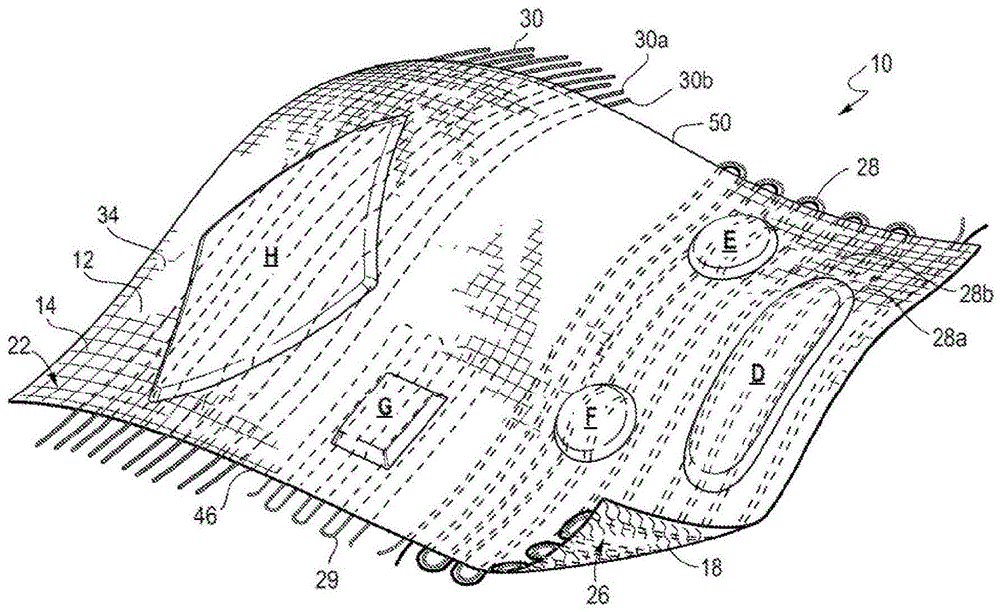
图6示出了根据本公开的某些方面的具有各种缓冲区域的针织部件。6 illustrates a knitted component with various cushioning regions, according to certain aspects of the present disclosure.
图7是示出了根据本公开的某些方面的具有衬垫的鞋类物品的透视图的图示。7 is an illustration showing a perspective view of an article of footwear with a liner according to certain aspects of the present disclosure.
图8-图9是示出了在图7中描绘的鞋类物品的各种截面视图的图示。8-9 are diagrams showing various cross-sectional views of the article of footwear depicted in FIG. 7 .
图10是示出了根据本公开的某些方面的具有衬垫的针织部件在其从针织机移除之后并且在结合到用于鞋类物品的鞋面中之前的图示。10 is an illustration showing a knitted component with a pad after it is removed from a knitting machine and prior to incorporation into an upper for an article of footwear, according to certain aspects of the present disclosure.
图11是示出了具有衬垫的两个针织部件在它们从针织机移除之后并且在组装和结合到用于鞋类物品的鞋面中之前的图示。Figure 11 is an illustration showing two knitted components with a liner after they are removed from the knitting machine and prior to assembly and incorporation into an upper for an article of footwear.
图12是示出了根据本公开的某些方面的具有鞋面和带有衬垫的单独的针织部件的鞋类物品的透视图的图示。12 is an illustration showing a perspective view of an article of footwear having an upper and a separate knitted component with a liner, according to certain aspects of the present disclosure.
图13-图14是示出了在图12中描绘的鞋类物品的各种截面视图的图示。13-14 are diagrams showing various cross-sectional views of the article of footwear depicted in FIG. 12 .
图15是示出了根据本公开的某些方面的具有带有衬垫的足下部分(underfootportion)和鞋喉区域衬垫的针织部件的图示。15 is a diagram illustrating a knitted component having a padded underfoot portion and a throat area pad according to certain aspects of the present disclosure.
图16-图17是示出了根据本公开的某些方面的具有足下衬垫的鞋面的视图的图示。16-17 are diagrams showing views of an upper with an underfoot pad according to certain aspects of the present disclosure.
详细描述A detailed description
下文参考附图描述了各个方面,在附图中,相似的元件通常由相似的数字识别。通过参考以下详细描述可以更好地理解各方面的各个元件的关系和功能。然而,各方面不限于附图中图示的或下文明确描述的那些方面。还应理解,附图不一定按比例,并且在某些情况下,可能已经省略对于理解本文公开的方面不是必需的细节,例如常规的制造和组装。Various aspects are described below with reference to the drawings, in which like elements are generally identified by like numerals. The relationship and function of the various elements of the various aspects can be better understood by referring to the following detailed description. However, the aspects are not limited to those illustrated in the drawings or explicitly described below. It should also be understood that the drawings are not necessarily to scale and that in some instances details not necessary to understand the aspects disclosed herein, such as routine manufacturing and assembly, may have been omitted.
本公开的某些方面涉及被构造成用于在鞋类物品中使用的鞋面和/或其他物品(诸如,服装物品)。当提及鞋类物品时,本公开可以描述篮球鞋、跑步鞋、骑自行车鞋、交叉训练鞋、橄榄球鞋、高尔夫球鞋、登山鞋和靴子、滑雪靴和滑雪板靴、足球鞋、网球鞋和/或步行鞋,以及通常被认为是非运动型的鞋类类型,包括但不限于礼服鞋、乐福鞋(loafers)和凉鞋。Certain aspects of the present disclosure relate to uppers and/or other articles (such as articles of clothing) configured for use in articles of footwear. When referring to articles of footwear, the present disclosure may describe basketball shoes, running shoes, cycling shoes, cross-training shoes, football shoes, golf shoes, hiking shoes and boots, ski and snowboard boots, soccer shoes, tennis shoes, and/or or walking shoes, and types of footwear generally considered non-athletic, including but not limited to dress shoes, loafers, and sandals.
本公开的一个总体方面包括一种针织部件,其包括:针织元件,所述针织元件具有第一表面和相对的第二表面;镶嵌纱线,所述镶嵌纱线延伸穿过所述针织元件并在所述第一表面和所述第二表面之间延伸;固定区域,所述第一表面和所述第二表面在所述固定区域中固定在一起,并且在所述固定区域中所述镶嵌纱线通过形成所述第一表面和所述第二表面的线圈(loop)固定;以及缓冲区域,其中所述缓冲区域包括管状构造,使得所述第一表面和所述第二表面是可分离的,从而在所述第一表面和所述第二表面之间形成腔,并且其中所述镶嵌纱线延伸穿过形成在所述第一表面和所述第二表面之间的所述腔。One general aspect of the present disclosure includes a knitted component comprising: a knit element having a first surface and an opposing second surface; an inlaid yarn extending through the knit element and extending between said first surface and said second surface; a fixed region in which said first surface and said second surface are fixed together and in which said mosaic yarns are secured by loops forming said first surface and said second surface; and a cushioning area, wherein said cushioning area comprises a tubular configuration such that said first surface and said second surface are separable such that a cavity is formed between the first surface and the second surface, and wherein the inlaid yarns extend through the cavity formed between the first surface and the second surface.
本公开的另一个总体方面包括一种针织部件,其包括:针织元件,所述针织元件具有缓冲区域和固定区域,其中所述缓冲区域和所述固定区域具有第一表面和相对的第二表面,所述第一表面和所述第二表面在所述缓冲区域中是可分离的;以及镶嵌纱线,所述镶嵌纱线延伸穿过所述针织元件并且在所述固定区域和所述缓冲区域中在所述第一表面和所述第二表面之间延伸,其中在所述固定区域中,所述第一表面和所述第二表面中的每一个由至少第一横列(course)和第二横列形成,其中在所述固定区域中,所述第一横列和所述第二横列具有至少一个相互穿套的(intermeshed)线圈,其中在所述固定区域中,所述镶嵌纱线的第一段延伸穿过所述固定区域中的所述第一横列,并且所述镶嵌纱线的第二段延伸穿过所述第二横列,其中在所述缓冲区域中,所述第一横列位于所述镶嵌纱线的第一侧上使得第一横列形成所述第一表面,并且其中在所述缓冲区域中,所述第二横列位于所述镶嵌纱线的第二侧上使得第二横列形成所述第二表面。Another general aspect of the present disclosure includes a knitted component comprising: a knit element having a cushioning region and a securement region, wherein the cushioning region and the securement region have a first surface and an opposing second surface , the first surface and the second surface are separable in the cushioning region; and an inlaid yarn extends through the knitting element and in the fastening region and the cushioning extending in a region between said first surface and said second surface, wherein in said fixed region each of said first surface and said second surface consists of at least a first course and A second course is formed, wherein in the fixation region, the first course and the second course have at least one intermeshed loop, wherein in the fixation region, the inlaid yarn A first length extends through the first course in the anchorage region, and a second length of the inlaid yarn extends through the second course, wherein in the cushioning region, the first course on a first side of the inlaid yarn such that a first course forms the first surface, and wherein in the cushioning region the second course is on a second side of the inlaid yarn such that the second The rows form the second surface.
本公开的另一个总体方面包括一种用于鞋类物品的鞋面,所述鞋面包括:针织部件,所述针织部件具有针织元件,所述针织元件形成有多个横列并且具有第一表面和相对的第二表面,所述多个横列包括第一横列和第二横列;所述第一横列具有一组第一线圈并且所述第二横列具有一组第二线圈;镶嵌纱线,其延伸穿过所述第一横列和所述第二横列中的至少一个;以及缓冲区域,其中在所述缓冲区域中,所述第一线圈中的每一个位于所述镶嵌纱线的第一侧上并形成所述第一表面,并且其中在所述缓冲区域中,所述第二线圈中的每一个位于所述镶嵌纱线的第二侧上并形成所述第二表面。Another general aspect of the present disclosure includes an upper for an article of footwear that includes a knitted component having knit elements formed with a plurality of courses and having a first surface and the opposite second surface, the plurality of courses comprising a first course and a second course; the first course having a set of first stitches and the second course having a set of second stitches; an inlaid yarn, which extending through at least one of the first course and the second course; and a cushioning region, wherein in the cushioning region each of the first loops is on a first side of the inlaid yarn and forming the first surface, and wherein in the cushioning region, each of the second loops is on a second side of the inlaid yarn and forms the second surface.
本公开的另一个总体方面包括一种针织部件,其包括:第一层和第二层,其中第一层和第二层经由至少部分地延伸穿过边界区域的至少一根公共纱线固定,其中第一层包括第一衬垫,其中第二层包括第二衬垫,并且其中第二层相对于第一层倒置(inverted),使得第一层和第二层重叠。Another general aspect of the present disclosure includes a knitted component comprising: a first layer and a second layer, wherein the first layer and the second layer are secured via at least one common yarn extending at least partially across a border region, wherein the first layer comprises a first liner, wherein the second layer comprises a second liner, and wherein the second layer is inverted relative to the first layer such that the first layer and the second layer overlap.
本公开的另一个总体方面包括一种用于鞋类物品的鞋面,其包括:针织部件,该针织部件具有第一层和第二层,其中第一层和第二层经由至少一根公共纱线固定,其中第一层包括第一衬垫,其中第二层包括第二衬垫,并且其中第二层相对于第一层倒置,使得第一层和第二层重叠。Another general aspect of the present disclosure includes an upper for an article of footwear comprising: a knitted component having a first layer and a second layer, wherein the first layer and the second layer are The yarn is secured, wherein the first layer includes a first backing, wherein the second layer includes a second backing, and wherein the second layer is inverted relative to the first layer such that the first and second layers overlap.
本公开的另一个总体方面包括一种用于鞋类物品的鞋面,其包括:第一层和第二层,第一层形成鞋面的外表面并且第二层形成鞋面的内表面,第一层和第二层至少部分地共同延伸,其中第二层由针织部件形成,针织部件包括管状针织结构,其中镶嵌缓冲纱线延伸穿过该管状针织结构以形成第一衬垫,并且其中衬垫接触第一层。Another general aspect of the present disclosure includes an upper for an article of footwear comprising: a first layer forming an outer surface of the upper and a second layer forming an inner surface of the upper, The first layer and the second layer are at least partially coextensive, wherein the second layer is formed from a knitted component comprising a tubular knit structure through which the inlaid buffer yarn extends to form the first pad, and wherein The liner contacts the first layer.
本公开的另一个总体方面包括一种鞋类物品,其包括:针织部件,该针织部件形成鞋类物品的鞋面和足下区域的至少一部分,其中足下区域包括至少一个衬垫,该至少一个衬垫包括延伸穿过针织部件的管状针织构造的镶嵌缓冲纱线。Another general aspect of the present disclosure includes an article of footwear comprising: a knitted component forming at least a portion of an upper and an underfoot region of the article of footwear, wherein the underfoot region includes at least one sock, the at least one sock The pad includes inlaid cushioning yarns extending through the tubular knit construction of the knitted component.
参考图1,示出了适用于多种应用(例如鞋类、服装和工业纺织品)的针织部件10。针织部件10可以由诸如纬编针织过程(例如,用具有一个、两个或更多个针床的针织横机,或用针织圆机(circular knitting machine))、经编针织过程或任何其它合适的针织过程的单一针织过程形成为一体的一件式元件。形成针织部件10的过程可以是混合针织过程,在该混合针织过程中,形成针织部件10的一种或更多种材料不被针织。例如,针织部件10的一种或更多种材料(例如,纱线或股线(strands))可以被镶嵌。如在本申请中使用的,纱线可以包括股线,并且不意图将本公开限于复丝材料(multifilament materials)。形成针织部件10的过程可以大体上形成针织部件10的针织结构,而不需要显著的后针织过程(post-knitting process)或步骤。可替代地,针织部件10的两个或更多个部分可以单独地形成为不同的一体的一件式元件,并且然后可以附接相应的元件。Referring to FIG. 1 , there is shown a knitted
针织部件10的主要元件是针织元件12和一种或更多种镶嵌纱线28、29、30。针织元件12可以结合把不同性质赋予针织元件12的单独区域的多种类型的纱线。也就是说,针织元件12的一个区域可以由赋予第一组性质的第一类型的纱线形成,并且针织元件12的另一个区域可以由赋予第二组性质的第二类型的纱线形成。在这种构型中,通过为针织元件12的不同区域选择特定的纱线,性质可以在整个针织元件12中变化。特定类型的纱线将赋予针织元件12的区域的性质部分地取决于形成纱线中的各种丝(filament)和纤维的材料。例如,棉提供柔软手感、自然美感和生物降解能力。弹性纤维(elastane)和拉伸聚酯各自提供明显的拉伸性和恢复性,其中拉伸聚酯还提供可再利用性。人造丝提供高的光泽和吸湿性。羊毛除了提供隔热性质和可生物降解性之外,还提供高的吸湿性。尼龙是具有相对高的强度的耐用且耐磨的材料。聚酯是还提供相对高的耐用性的疏水性材料。除了材料之外,为针织元件12所选择的纱线的其它方面也可以影响针织元件12的性质。例如,形成针织元件12的纱线可以是单丝纱线或者复丝纱线。纱线还可以包括各自由不同材料形成的单独的丝。另外,纱线可以包括各自由两种或更多种不同材料形成的丝,诸如双组分纱线,其中丝具有由不同材料形成的皮芯型构型(sheath-core configuration)或者两个半部。不同程度的扭曲和卷曲以及不同旦尼尔(denier)也可以影响针织元件12的性质。因此,可以选择形成纱线的材料和纱线的其它方面两者以把各种性质赋予针织元件12的单独的区域。The main elements of the knitted
针织元件12由至少一种纱线形成,该至少一种纱线被操纵(例如,用针织机)以形成界定各种横列和纵行(wale)的多个互相穿套的线圈。即,针织元件12具有针织纺织品(knit textile)的结构。针织元件12可以包括至少第一层14和第二层18。第一层14和第二层18可以在针织机的一个或更多个针床(例如,第一针床和/或第二针床)上形成。当第一层14和第二层18中的一个或两个在多于一个针床上形成时,或者当第一层14和第二层18在不同的针床上形成时,然后所得的针织元件12是多床针织元件(multi-bed knit element)。如在本申请中使用的,第一层14可以形成包括第一多个针织线圈的第一表面22,并且第二层18可以形成包括第二多个针织线圈的第二表面26。第一层14可以与第二层18的至少一部分重叠,并且第一层14和第二层18可以在一个或更多个维度上是相连的;然而,第一层14和第二层18不必是相连的。第一层14的至少一部分可以与第二层18可自由分开。换句话说,第一层14和第二层18可以具有带有相对面向的表面的一个或更多个部分,从而使得第一层14的这些部分与第二层18可自由分开。也就是说,第一表面22通常可以面向第一方向,并且第二表面26通常可以面向相反的方向。尽管第一层14在某些区域中可以与第二层18可自由分开,但其不必是自由分开的。例如,针织元件12可以包括一个或更多个层间针织线迹(interlayer knit stitches)(例如,在同一针织过程期间形成并在第一针床和第二针床之间延伸的线迹)。这样的层间针织线迹可以由与形成第一层14和/或第二层18的纱线相同的纱线形成,或者可以由不同的纱线形成。在一个示例中,纱线的至少一个横列可以形成第一层14和第二层18两者的一部分,例如,在第一针床和第二针床两者上形成的针织结构,其包括第一表面22上的第一多个针织线圈和第二表面26上的第二多个线圈。例如,在包括具有在第一针床和第二针床两者上形成的线圈的一个或更多个横列的双罗纹针织结构(interlock knit structure)或类似结构中,每个横列可以形成第一层14和第二层18两者的至少一部分。可替代地,纱线的不同横列可以形成第一层14和第二层18,例如,第一横列可以在第一针床上形成单面第一层(single jersey first layer),并且第二横列可以在第二针床上形成单面第二层(single jersey second layer),其中单面第一层的至少一部分可与单面第二层分开(例如,参见图3A-图3B的部分B、表面22、26)。针织元件12可以包括另外的层,例如,以增强强度、提供缓冲保护或用于获得其它优点。在各种非限制性应用中,第一层14或第二层18可以对应于服装物品或工业纺织品的外层或内层的至少一部分、用于鞋类物品的鞋面的外层或内层或另一种应用的层。
第一层14和第二层18可以各自包括一种或更多种材料,该一种或更多种材料被选择为赋予针织元件12有利的性质。例如,第一层14可以最终与鞋类物品的外层相对应,诸如当该物品已经被组装并且被构造成容纳穿着者的足部时,并且因此可以包括提供耐磨性、耐水性和/或耐用性的相对无弹性的第一纱线的横列。用于第一层14的合适材料可以包括聚酯纱线,例如具有至少约0.5kg-f(例如,约0.5kg-f至约3.0kg-f的范围)的最大抗拉强度和至少约150旦尼尔(例如,约150旦尼尔至约1500旦尼尔的范围)的线密度的聚酯纱线。还可以使第一层14适应气候条件,例如,它可以由具有防水和/或抗水性质的纱线形成,或者它可以具有耐用的防水处理面(finish)。
第二层18可以最终与鞋类物品的内层相对应,诸如当该物品已经被组装并被构造成容纳穿着者的足部时,并且因此第二层18可以包括具有相对柔软手感的纱线(例如,具有带绒毛的处理面的纱线)的一个或更多个横列,或者以其它方式为穿着者提供透气性和舒适性。附加地或可替代地,第二层18可以包括一种或更多种弹性纱线以赋予针织元件12回弹性。这些示例是非限制性的,并且意图说明第一层14和第二层18的多功能性,根据需要或要求,第一层14和第二层18可以由相同的纱线或不同的纱线或其组合形成,以为相应的层和/或相应的层的不同部分、区域或区提供有利的性质。
仍然参考图1并且还参考图2的代表性剖切视图(并且注意到,在实践中,这些层可能不能如图2中描绘的分开),针织部件10可以包括一根或更多根纱线,该一根或更多根纱线位于第一表面22和第二表面26之间(并且如果包括第一层14和第二层18的话/当包括第一层14和第二层18时,还潜在地在第一层14和第二层18之间),以增强针织部件10,提高强度(例如抗拉强度),以赋予方向性拉伸阻力,以增强可压缩性,以产生吸引人的外观,以增加抗穿透性和/或用于其他优点。当结合到鞋类物品的鞋面中时,位于第一层14和第二层18之间的一根或更多根纱线可以有助于将鞋面固定在足部周围,限制鞋面的区域中的变形(例如,赋予抗拉伸性),和/或为鞋面的选定区域提供缓冲保护等。例如,所描绘的针织部件10包括第一镶嵌纱线28、第二镶嵌纱线29和第三镶嵌纱线30。应理解,图2是代表性的;尽管可选的第一层14被图示为与可选的第二层18分开(例如以便图示镶嵌纱线28-30),但是第一层14不需要与第二层18是可自由分开的。此外,作为形成针织元件12的相同过程的结果,镶嵌纱线28-30可以形成在第一表面22和第二表面26之间。换句话说,镶嵌纱线28-30可以是相同的一体形成的针织部件10的一部分。尽管镶嵌纱线28-30通常沿着针织元件12内的横列延伸,但是镶嵌纱线28-30也可以(或可替代地)沿着针织元件12内的纵行延伸。Still referring to FIG. 1 and also referring to the representative cutaway view of FIG. 2 (and noting that, in practice, the layers may not be separated as depicted in FIG. 2 ), knitted
镶嵌纱线28-30可各自包括镶嵌在针织元件12内的一根或更多根缓冲纱线。缓冲纱线可具有例如大约1/16”或更大的全直径(例如,当不被限制或压缩时),然而其他缓冲纱线可具有其他直径(例如,1/8”、1/4”或甚至更大)。缓冲纱线的两个非限制性示例性示例是已经结构化(texturize)至膨松的5500旦尼尔型和3500旦尼尔型的复丝聚酯纱线。具体的示例作为“LILY”纱线出售并且由香港泽田有限公司销售,然而来自其他制造商的其他纱线也可以是缓冲纱线。在该应用中,一根或更多根缓冲纱线可以被镶嵌,使得其被放置在一些纱线的线圈前面和其它纱线的线圈的后面(例如,在第一针床和第二针床上形成的线圈之间)。例如,镶嵌缓冲纱线可以放置在保持在第一针床上的第二纱线的线圈前面,并且放置在保持在第二针床上的第二纱线(或第三纱线)的线圈后面。作为另一个示例,镶嵌缓冲纱线可以放置在第一层14的前面和第二层18的后面;在这样的情况下,第一层14和第二层18可以是可自由分开的,或者可以不是可自由分开的。随后,保持在第一针床和第二针床上的一根或更多根纱线可以与另外的纱线横列相互打环(interloop)和/或在另一针床上集圈(tuck),因此将镶嵌纱线封闭或固定在针织元件12内,并将镶嵌纱线有效地集成到针织部件10的一体针织结构中。以这种方式,镶嵌纱线可以具有不与针织部件10的其它纱线相互打环的部分,即,镶嵌纱线可以具有可以看起来径直延伸穿过针织元件12的至少一部分的部分。这可以在针织机上完成,例如用组合喂纱器或镶嵌式喂纱器(inlay feeder),例如,如美国专利第8,522,577号中描述的,该美国专利据此通过引入以其整体并入。Inlaid yarns 28 - 30 may each include one or more buffer yarns inlaid within
针织元件12的保持镶嵌缓冲纱线的段的横列可以具有间隔关系(其中“段”在上下文中意指延伸穿过一个横列的镶嵌缓冲纱线的一部分)。在一些示例中,缓冲纱线可以被镶嵌在针织元件12的两个连续横列(例如,具有相互穿套的线圈的两个横列)内。在其他实施方案中,针织元件12的至少一个横列(诸如一个、两个、三个、四个、五个、六个、七个、八个、九个、十个或者甚至更多个横列)可以位于镶嵌缓冲纱线的段之间。例如,当缓冲纱线的第一段被镶嵌在针织元件12的第一横列的线圈之间时,并且当该同一缓冲纱线的第二段被镶嵌在针织元件12的第二横列的线圈之间时(当没有其它段位于第一段和第二段之间时),第一横列和第二横列可以是连续的,并且因此第一横列可以具有与第二横列的线圈相互穿套的线圈。可替代地,第一横列和第二横列可以被针织元件12的一个、两个、三个、四个、五个、六个、七个、八个、九个、十个或者甚至更多个横列分开。The courses of
在一些实施方案中,镶嵌缓冲纱线可以延伸穿过整个针织元件12。例如,第一镶嵌纱线28(其被描绘为镶嵌在一起的两根纱线,每根纱线具有11个镶嵌段)可以从第一边缘46延伸到第二边缘50。可替代地,一些镶嵌纱线可以仅部分地延伸穿过针织元件12,诸如第二镶嵌纱线29(描绘为具有8个镶嵌段的一根纱线)。此外,缓冲纱线的每个镶嵌段可以由一根连续纱线(诸如第一镶嵌纱线28的镶嵌段28a和28b,其以蛇形或之字形图案延伸跨过针织元件12的至少一部分)或由不同的单独的纱线端部(ends)(诸如第三镶嵌纱线30的镶嵌段30a和30b)形成。在任一情况下,缓冲纱线(一根或多根)的一个或更多个段可以延伸超过针织元件12的一个或更多个边缘,诸如镶嵌段28a和28b(其形成线圈或发夹状转弯部,例如,以这样的图案延伸返回穿过针织元件12两次或更多次)和镶嵌段30a和30b。In some embodiments, inlaid buffer yarns may extend across the
形成针织元件12的横列的合适的纱线(例如,形成第一层14和/或第二层18的线圈)可以包括聚酯和形成纱线的其它成分,该纱线具有至少约六克力/旦尼尔的范围内的韧度,例如,约6克力/旦尼尔至10克力/旦尼尔的韧度。例如,具有约275旦尼尔-325旦尼尔的范围的线密度和至少1650克力的最大抗拉强度的聚酯纱线可能是合适的。Suitable yarns forming the courses of knit element 12 (e.g., the loops forming
如图3A-图3B中示出的,针织部件10被描绘成具有示出为部分A和部分C的其中第一表面22和第二表面26被固定的两个区域(本文称为“固定区域”)。其中第一表面22和第二表面26不可分离的固定区域可以由双面针织结构或其中纱线由两个针床的针操纵的另一种针织结构形成。镶嵌纱线36可以延伸穿过双面针织结构或其它合适的结构,使得其相对于第一表面22和第二表面26相对地固定在适当位置。部分B表示管状构造的区域,其中第一表面22和第二表面26是可分离的(因此在它们之间形成腔27),部分B被描绘在两个固定区域部分A和部分C之间。如所示出的,形成第一表面的一组第一线圈23中的每一个位于镶嵌纱线36的第一侧上,并且第一线圈23都由同一连续纱线依次形成。类似地,形成第二表面26的一组第二线圈25中的每一个位于镶嵌纱线36的相对的第二侧上,并且第二线圈25都由同一连续纱线依次形成。形成第一线圈23和第二线圈25的纱线可以在固定区域(例如,如所示出的部分A、C)中在镶嵌纱线36的第一侧和第二侧之间交替。针织部件10的固定区域(例如,部分A、C)可以定位于针织部件10的侧或边缘处,并且附加地或可替代地,可以定位成邻近和/或围绕未固定区域(例如,部分B)。As shown in FIGS. 3A-3B , knitted
位于第一表面22和第二表面26之间的缓冲纱线36的镶嵌部分可以从固定区域(部分A和C)经过并穿过部分B中的管状结构。一根或更多根缓冲纱线36可以被镶嵌在一起(例如,如图3A中示出的一根缓冲纱线36,或者如图3B中示出的多于一根的缓冲纱线36)。在未固定区域中,缓冲纱线36可以大体上自由地膨胀到膨松或膨胀状态或保持处于膨松或膨胀状态,使得可以达到最大直径。也就是说,在部分B的管状结构中,缓冲纱线36的镶嵌段具有径向向外延伸以达到其各自最大直径的自由度。这可以径向向外推动第一表面22和第二表面26以形成“枕头状”,并且第一表面22和第二表面26之间的内部容积部或腔27可以填充有缓冲纱线36的材料。相比之下,缓冲纱线36的位于固定区域(例如,部分A、C)中的部分处于相对限制或压缩状态,使得没有达到缓冲纱线的最大直径。限制/压缩的程度可以通过改变针织元件的线迹密度、通过改变形成针织元件12的纱线的弹性等来改变。在一些实施方案中,缓冲纱线36在未固定区域(例如,部分B)中的直径比其在固定区域(例如,部分A、C)中的直径大至少50%,诸如是其两倍大、3倍大、5倍大或甚至更大。换句话说,在所描绘的实施方案中,缓冲纱线36的位于未固定区域(例如,部分B)内的部分在形成在第一表面22和第二表面26之间的内部容积部内自由膨胀成第一直径,而缓冲纱线36的位于固定区域(例如,部分A、C)内的部分被针织元件12限制为较小的第二直径。以这种方式,未固定区域(例如,部分B)可以以可见方式从邻近或至少部分地包围未固定区域的固定区域(例如,部分A、C)突出(例如,图4A-图4B)。The inlaid portion of the
例如,参考图4A-图4B,其示出了第一表面22和第二表面26,未固定区域(例如,部分B)可以在未固定区域(例如,部分B)中从第一表面22和第二表面26中的至少一个突出至少1/8”(例如,1/4”、1/2”或甚至更多)。在固定区域(例如,部分A和部分C)中,针织部件10可以在表面22、26两者上大体上是平坦的,并且它可以看起来与完全没有镶嵌缓冲纱线的针织部件相同或相似(因为缓冲纱线被压缩在针织元件12内)。For example, referring to FIGS. 4A-4B , which illustrate a
镶嵌缓冲纱线达到其各自膨胀直径的能力赋予未固定区域(例如,部分B)可压缩方面,使得可以形成镶嵌缓冲区域。通过使未固定区域被固定区域包围或邻近固定区域,未固定区域定位于针织部件10中的特定区域内。此外,回头参考图3A-图3B,虽然镶嵌缓冲纱线36可以相对于第一表面22和第二表面26相对地固定在适当位置,但是镶嵌缓冲纱线36在未固定区域内相对于第一表面22和第二表面26具有一定的移动自由度。这种构型的优点在于,在与一件式针织部件10的整个剩余部分相同的过程期间,镶嵌缓冲区域可以一体形成在一件式针织部件10内,而不需要在针织过程之后将单独的缓冲部件插入针织部件10中。与常规的缓冲构造相比,带有镶嵌缓冲区域的一体形成的针织部件提供多种优点。如上所述,常规的缓冲构造是通过将单独的缓冲部件插入到先前形成的针织部件内的空腔中而形成的。常规的缓冲部件可以包括泡沫材料、流体填充囊、或单独使用或与其他元件组合使用的其他缓冲元件。随着缓冲部件和针织部件内的空腔的数量和类型的增加,与缓冲部件和针织部件内的空腔的运输、储存、切割和连结(例如缝合、结合)相关联的时间和费用也会增加。此外,具有更多数量的单独连结(例如,插入)的缓冲部件的针织部件可能比具有镶嵌缓冲纱线的针织部件更难回收。随着缓冲部件和针织部件内的空腔的数量和类型的增加,由切割和缝合过程产生的废料也积累到更大程度。通过一体形成具有镶嵌缓冲区域的针织部件,可以减少浪费,可以简化可回收性,可以提高制造效率,并且可以降低制造成本。The ability of the inlaid cushioning yarns to reach their respective expanded diameters imparts a compressible aspect to the unsecured region (eg, section B) such that an inlaid cushioning region can be formed. Unfastened regions are located within specific areas in
图5示出了针织顺序,该针织顺序可以用于诸如通过纬编针织过程(例如,用具有一个、两个或更多个针床的针织横机)形成如以上所描述的一体针织部件10。图5的非限制性顺序在具有第一针床102和第二针床104的纬编针织机上被图示。形成在第一针床102上的线圈通常可以形成第一表面22(例如,如图3B中示出的),并且形成在第二针床104上的线圈通常可以形成第二表面26(例如,图3B)。线圈可以由纱线34(例如,聚酯纱线)形成,并且镶嵌纱线36可以被镶嵌在线圈内。镶嵌纱线36可以是如以上所描述的缓冲纱线。部分A、B和C可以对应于以上类似命名的部分(例如,在图3A中)。Figure 5 shows a knitting sequence that may be used to form a unitary knitted
在第一步骤201中,机器可以在第一针床102和第二针床104两者上形成纱线34的线圈,在部分A中具有双面针织结构,在部分B中仅以单面针织结构在第二针床104上形成,并且然后在部分C中再次在针床102、104两者上形成。接下来,在第二步骤202中,机器可以在第一针床102和第二针床104之间镶嵌缓冲纱线36。在第三步骤203中,除了在部分B中纱线34的线圈位于第一针床102上之外,可以形成与第一步骤201的横列类似的纱线34(其可以是公共连续纱线)的另一横列。在第四步骤204中,可以再次镶嵌另一根缓冲纱线36(或多根缓冲纱线),使得缓冲纱线36被镶嵌在连续横列中。当重复这些步骤时(例如,步骤205-207分别与步骤201-203相同),所得的针织部件将具有两个对应于部分A、C的固定区域,其中纱线36相对于第一表面22和第二表面26大体上被固定(例如,图3A)。在部分B中,针织部件将具有管状构造,因为第一针床102和第二针床104上的线圈不互锁,从而根据以上描述形成未固定区域(例如,缓冲区域)。In a
由图5的顺序形成的针织结构仅用于说明,并且可以在所用的针的数量、跳过的针的数量、特定的针织结构(例如,集圈对线圈)、某些部分/区域的尺寸等方面有所不同。通过使用各种针织结构,针织部件10可以包含具有不同尺寸和形状的各种镶嵌缓冲区域,从而赋予针织部件10的不同区域特定的性质和优点。例如,通过改变未固定区域(例如,部分B)内的纱线34的横列和/或纵行的数量,缓冲区域的尺寸和形状可以相应地改变。参考图6,针织部件10示出了具有不同针织结构、不同尺寸和形状以及不同缓冲程度的各种镶嵌缓冲区域D-H。例如,缓冲区域D、E、F类似地呈椭圆形的形状,而缓冲区域D通过在缓冲区域D内在横列方向的方向上包含较大的管状结构(例如,通过沿着横列利用更多的未固定线圈)而具有比缓冲区域E和F更大的尺寸。作为另一个示例,缓冲区域H通过在缓冲区域H内包含更多数量的纵行和横列而具有比缓冲区域E更大的尺寸。作为又一个示例,通过使用具有不同数量的纵行、不同数量的横列和/或不同数量的线圈的不同的管状针织构造或结构,缓冲区域H和G具有不同的尺寸和形状。The knit structures formed by the sequence of Figure 5 are for illustration only and may vary in number of needles used, number of skipped needles, specific knit structures (e.g. tuck versus loop), dimensions of certain sections/areas etc. are different. By using various knit constructions, knitted
而且,通过将各种缓冲纱线类型与针织结构相组合,针织部件10可以赋予不同区域一系列缓冲和/或刚度。在一些实施方案中,用于形成在第一表面22和第二表面26之间延伸的镶嵌缓冲区域的缓冲纱线的类型可以变化。例如,通过改变用于形成镶嵌缓冲区域的缓冲纱线的厚度,缓冲的量或程度可以类似地改变。在一些情况下,通过将较薄的缓冲纱线镶嵌到针织元件12中,可以在缓冲区域中在第一表面22和第二表面26之间提供较小程度的可压缩性和/或回弹性,从而使得镶嵌缓冲区域更容易压缩。在其他情况下,通过将较厚的缓冲纱线镶嵌到针织元件12中,可以在缓冲区域中在第一表面22和第二表面26之间提供较大程度的可压缩性和/或回弹性,从而使得镶嵌缓冲区域更难压缩并提供额外的或增加的垫料和/或缓冲。Furthermore, by combining various cushioning yarn types with the knit construction, knitted
附加地或可替代地,用于形成在第一表面22和第二表面26之间延伸的镶嵌缓冲区域的缓冲纱线的数量可以变化。例如,缓冲纱线的多于一个的端部可以在针织元件12的横列内被镶嵌在一起(可选地以扭曲构型,或者不以这样的构型)。通过改变用于延伸穿过针织元件12的每个横列的缓冲纱线的数量,缓冲的量或程度可以类似地改变。在一些情况下,通过将较少数量的缓冲纱线延伸穿过针织元件12的每个横列,可以在未固定区域中在第一表面22和第二表面26之间提供较小程度的可压缩性和/或回弹性,从而使得镶嵌缓冲区域更容易压缩。在其他情况下,通过在未固定区域中将较多数量的缓冲纱线延伸穿过针织元件12的每个横列,可以在未固定区域中在第一表面22和第二表面26之间提供较大程度的回弹性,从而使得镶嵌缓冲区域更难压缩并提供额外的或增加的垫料和/或缓冲。回到参考图3B,镶嵌缓冲区域(部分B)被描绘成图示相对高程度的缓冲,至少部分是由于多于一根的缓冲纱线(在这种情况下为四根)被镶嵌穿过针织元件12的横列并一起延伸穿过未固定区域(部分B)的腔。Additionally or alternatively, the number of cushioning yarns used to form the inlaid cushioning region extending between the
当针织部件10被结合到鞋类物品的鞋面中时,可以选择不同类型的纱线来赋予针织部件10的不同区域不同的抗拉伸性、耐磨性、柔性、透气性、可压缩性、舒适性、颜色和吸湿排汗性,从而赋予鞋面的不同区域适当的性质和优点。例如,鞋面可以包括镶嵌缓冲区域,该镶嵌缓冲区域在相对于穿着者的足部的骨骼结构和其他解剖结构的选定位置处具有不同水平的缓冲/刚度,以给穿着者的足部提供缓冲保护和/或稳定性。例如,在压缩中具有较小相对刚度的缓冲区域可以定位于在跑步和类似活动期间最可能经受冲击载荷的位置处。在压缩中具有较大相对刚度的缓冲区域可以定位于冲击载荷不太可能并且需要较大阻力来稳定跑步运动的位置处。以上描述类型的衬垫可以位于任何合适的位置中,诸如鞋面的趾部区域、鞋中部区域中的鞋面的内侧面和/或外侧面、鞋跟区域、鞋喉区域、踝部区域和/或鞋领区域、外表面层或内表面层等中。出于说明的目的,以下描述了几个非限制性示例。When knitted
图7-图8示出了鞋类物品的示例,该鞋类物品可以由具有缓冲区域的针织部件302形成,从而形成衬垫304、306、308。衬垫304、306、308可以根据以上的方面形成,并且因此针织部件302可以是一体的,并且具有镶嵌缓冲纱线,该镶嵌缓冲纱线填充形成在衬垫304、306、308的管状针织构造内的腔。7-8 illustrate an example of an article of footwear that may be formed from a
如图8中示出的,针织部件302可以包括第一层310(例如,形成鞋面301的外表面312的外层)和第二层314(例如,形成鞋面301的内表面315的内层)。第一层310可以包括第一衬垫304。第一衬垫可以沿着鞋面301的鞋跟区域316从外侧面318延伸到内侧面321,并且第一衬垫304可以暴露于外表面312上并且在外表面312上可见。如所示出的,第一衬垫304也可以朝向空腔320突出。As shown in FIG. 8 , knitted
第二层314可以包括第二衬垫306和第三衬垫308。第二衬垫306和第三衬垫308可以被定位成用于当使用鞋类物品300时与穿着者的踝部连通(如由图7-图9所描绘的)。在其他实施方案中,第二衬垫306和第三衬垫308可以定位成与跟腱连通。也就是说,第二衬垫306可以相对于穿着者的跟腱恰好位于外侧,并且第三衬垫308可以恰好位于跟腱的内侧。有利地,第二衬垫306和第三衬垫308可以提供舒适、紧贴的贴合(例如,特别是在鞋跟区域中),并且可以相对于其他实施方案提供增强的跟腱支撑。
第一层310和第二层314可以重叠,使得它们至少部分地共同延伸。例如,参考图8-图9,第二层314可以相对于第一层310倒置(如以下更详细描述的),并且因此第一衬垫304可以接触第二衬垫306和第三衬垫308中的至少一个。这对于向第二衬垫306和第三衬垫308提供增强的缓冲特性可能是有利的,因为它们可能被第一衬垫304迫使朝向空腔320突出。在其他实施方案中,第二衬垫306和第三衬垫308中的至少一个可以相对于第一衬垫304偏移,和/或可以不包括第一衬垫304、第二衬垫306和第三衬垫308中的至少一个。The
图10示出了类似于图7-图9的针织部件302的针织部件402的示例,但是处于平坦取向(例如,当其最初从针织机移除时并且在被折叠或以其他方式操纵成用于在鞋类物品中使用的形状之前该平坦取向可能出现)。类似于上述图7-图9的针织部件,图10的针织部件402包括第一衬垫404、第二衬垫406和第三衬垫408。第二衬垫406和第三衬垫408定位成用于与使用者的跟腱连通,并且第一衬垫404定位成暴露于外表面412上(如以上所描述的)。Figure 10 shows an example of a
第一衬垫404位于第一层410中,并且第二衬垫406和第三衬垫408位于第二层414中。注意,第一层410和第二层414可以在不同的时间针织,并且各自具有它们自己的子层(例如,当使用两个针床时,如以上所描述的)。因此,第一衬垫404可以具有管状构造,该管状构造具有形成未固定区域和/或腔的可分离表面,使得缓冲纱线可以膨胀成其全直径。区域422、424可以是也包括镶嵌缓冲纱线的固定区域(但是处于缓冲纱线的直径被针织线圈限制/压缩的固定构型)。第二衬垫406和/或第三衬垫408以及包围它们的对应的区域可以具有类似的构造。The
如所示出的,第一层410和第二层414可以由相同的一体针织部件402形成(例如,在针织机中一起形成,之后不经由接缝连接),并且因此第一层410和第二层414可以共享公共纱线。公共纱线可以是镶嵌纱线和/或形成针织线圈的纱线。例如,公共纱线可以在边界区426处形成针织线圈。边界区426可以是第一层410与第二层414相遇的点。此外,当被操纵以形成用于鞋类物品的鞋面时,针织部件402可以在边界区426处被折叠,使得第二层414相对于第一层410变得倒置。结果是,第一层410和第二层414可以变得共同延伸和重叠,并且第二衬垫406和/或第三衬垫408可以接触第一衬垫404(如图7-图9中示出的)。As shown,
当针织部件402被操纵成其可穿着形状时,边界区426可以位于鞋领428处(例如,参见图9的边界区326)。可以是末端边缘的第一层410的边缘430和第二层414的边缘432可以朝向鞋底结构和/或空腔的底部延伸。在一些实施方案中,第一层410的边缘430可以终止于鞋类物品的咬合线(biteline)附近,并且第二层414的边缘432可以终止于鞋类物品的空腔附近或空腔的底部处,然而也设想其他边缘位置。Border region 426 may be located at collar 428 when knitted
可选地,针织部件402可以包括带有第四衬垫438的附加部分436。附加部分436可以被成形和定位(或以其他方式构造)以形成鞋面的另一表面,例如内侧面表面、鞋舌、底表面等。因此,第四衬垫438可以位于鞋面的多个位置处,以在多个位置中提供缓冲和/或支撑。在图9的所描绘的实施方案中,附加部分436可以延伸到鞋面的鞋喉区域,并且因此第四衬垫438可以在鞋喉区域中提供缓冲。Optionally,
在一些实施方案中,诸如图11中描绘的实施方案,鞋面502可以包括单独的针织部件504、506,它们被缝纫或以其他方式固定在一起以完成鞋面502。虽然未示出,但是也可以包括附加的非针织元件(和/或附加的针织部件)来完成鞋面的形状。例如,第一针织部件504(具有被构造成重叠的两个层,类似于图10的实施方案)可以与第二针织部件506分开针织。第二针织部件506通常可以被构造成形成鞋面的鞋喉区域和/或鞋舌,并且它可以包括鞋喉区域衬垫508。鞋喉区域衬垫508可以具有以上描述的任何衬垫的特征和特性,并且可以有利于提供舒适的贴合和/或保护足部的顶表面。也可以包括带有位于其他区域中的衬垫的其他针织部件。In some embodiments, such as the one depicted in FIG. 11 , upper 502 may include separate
如图12-图14中示出的,鞋面602可以由针织部件形成,或者可以不由针织部件形成,鞋面602可以附接到单独的针织部件604,针织部件604包括根据以上实施方案的衬垫606。针织部件604可以通过缝纫、使用粘合剂或通过任何其他合适的方法固定到鞋面602的其余部分。虽然针织部件604可以位于任何合适的位置处,但是将针织部件604定位在鞋类物品的鞋跟区域607(如所描绘的)中以便提供增强的鞋跟缓冲可能是有利的。在其他实施方案中,针织部件604可以具有多于一个的衬垫(例如,它可以包括一对跟腱衬垫,如以上参考图7-图10所描述的)。As shown in FIGS. 12-14 , upper 602 may or may not be formed from a knitted component, and upper 602 may be attached to a separate
图15示出了用于形成鞋面702的针织部件704的另一种实施方案。针织部件704包括外侧足下部分706和内侧足下部分708,它们被成形和定位以在它们各自的边缘710、712处连接,因此形成鞋面的足下部分,当使用鞋面时,该足下部分将位于空腔(和穿着者的足部)下方。其他构型也可以提供足下区域。FIG. 15 shows another embodiment of
如所示出的,第一衬垫714和第二衬垫716可以分别位于外侧足下部分706和内侧足下部分708上。当被操纵成可穿着形状时,第一衬垫714和第二衬垫716可以提供有利的足下缓冲,从而潜在地消除使用鞋底夹层和/或其他足下部件的需要。图15的实施方案在鞋喉区域中还包括可选的第三衬垫718。图16-图17示出了类似于图15的鞋面702的鞋面804(但是没有第三衬垫718)在针织部件已经被折叠成其可穿着形状之后的视图。如所示出的,边缘810、812在足下区域处相遇,并且第一衬垫814和第二衬垫816现在位于鞋面804的空腔之下。可选地,鞋底可以在衬垫之下附接到足下区域。As shown, a
虽然已描述了本公开的各种实施方案,但除了根据所附的权利要求和其等效物之外,本公开不受限制。相关领域的技术人员应认识到,可以对上述实施方案进行许多变化和修改,而不偏离由所附权利要求所限定的本发明的范围。此外,本文中所描述的优点不一定是本公开的唯一优点,并且不一定预期本公开的每种实施方案将实现所描述的全部优点。While various embodiments of the present disclosure have been described, the disclosure is not to be restricted except in light of the appended claims and their equivalents. Those skilled in the relevant art will appreciate that many variations and modifications may be made to the embodiments described above without departing from the scope of the invention as defined in the appended claims. Furthermore, the advantages described herein are not necessarily the only advantages of the disclosure, and it is not necessarily expected that every embodiment of the disclosure will achieve all of the advantages described.
Claims (21)
Applications Claiming Priority (4)
| Application Number | Priority Date | Filing Date | Title |
|---|---|---|---|
| US201862657451P | 2018-04-13 | 2018-04-13 | |
| US62/657,451 | 2018-04-13 | ||
| PCT/US2019/026566 WO2019199812A1 (en) | 2018-04-13 | 2019-04-09 | Knitted component with inlaid cushioning |
| CN201980025557.1A CN112543600B (en) | 2018-04-13 | 2019-04-09 | Knitted component with inlaid cushioning |
Related Parent Applications (1)
| Application Number | Title | Priority Date | Filing Date |
|---|---|---|---|
| CN201980025557.1A Division CN112543600B (en) | 2018-04-13 | 2019-04-09 | Knitted component with inlaid cushioning |
Publications (1)
| Publication Number | Publication Date |
|---|---|
| CN116172307A true CN116172307A (en) | 2023-05-30 |
Family
ID=66287014
Family Applications (2)
| Application Number | Title | Priority Date | Filing Date |
|---|---|---|---|
| CN202310268531.8A Pending CN116172307A (en) | 2018-04-13 | 2019-04-09 | Knitted parts with inlaid cushioning |
| CN201980025557.1A Active CN112543600B (en) | 2018-04-13 | 2019-04-09 | Knitted component with inlaid cushioning |
Family Applications After (1)
| Application Number | Title | Priority Date | Filing Date |
|---|---|---|---|
| CN201980025557.1A Active CN112543600B (en) | 2018-04-13 | 2019-04-09 | Knitted component with inlaid cushioning |
Country Status (5)
| Country | Link |
|---|---|
| US (2) | US11492736B2 (en) |
| EP (2) | EP4602968A3 (en) |
| CN (2) | CN116172307A (en) |
| TW (1) | TWM590881U (en) |
| WO (1) | WO2019199812A1 (en) |
Families Citing this family (9)
| Publication number | Priority date | Publication date | Assignee | Title |
|---|---|---|---|---|
| US10327511B2 (en) | 2016-07-08 | 2019-06-25 | Cole Haan Llc | Shoe having knit wingtip upper |
| US20190365049A1 (en) * | 2018-06-04 | 2019-12-05 | Cole Haan Llc | Shoe Having A Structural Knit Region |
| CN112789375B (en) | 2018-08-09 | 2023-10-17 | 耐克创新有限合伙公司 | Textile component with embroidery logo |
| WO2021101979A1 (en) | 2019-11-18 | 2021-05-27 | Nike Innovate C.V. | Knitted component having a foam surface feature |
| EP4077783B1 (en) * | 2019-12-16 | 2024-07-03 | Pure Medical, Inc. | Compression garments made from a knitted quilt fabric |
| US20220240624A1 (en) * | 2021-01-29 | 2022-08-04 | Nike, Inc. | Knitted component with at least one expandable yarn |
| CN113215715A (en) * | 2021-04-28 | 2021-08-06 | 东莞晶富编织有限公司 | Method for flying knitting vamp and knitting equipment |
| JP7769188B2 (en) * | 2021-09-30 | 2025-11-13 | 株式会社アシックス | Uppers and shoes |
| TWI872710B (en) * | 2023-09-19 | 2025-02-11 | 英屬維京群島商恒聖智能系統整合股份有限公司 | Knitted fabric with concave-convex pattern |
Citations (6)
| Publication number | Priority date | Publication date | Assignee | Title |
|---|---|---|---|---|
| US7380420B1 (en) * | 2007-02-05 | 2008-06-03 | Ruey Tay Fibre Industry Co., Ltd. | Fabric with different thicknesses |
| WO2012125473A2 (en) * | 2011-03-15 | 2012-09-20 | Nike International Ltd. | Article of footwear incorporating a knitted component |
| TW201544026A (en) * | 2014-05-23 | 2015-12-01 | Fknit Internat Co Ltd | Knitting structure and knitting method for one-piece weft-knitted shoe vamp |
| TWM531760U (en) * | 2016-03-09 | 2016-11-11 | 黃瑜貞 | An integrated high stiffness porous shoe upper |
| US20170211214A1 (en) * | 2016-01-22 | 2017-07-27 | Aknit International Ltd. | Stereoscopic weft knitted fabric for vamp |
| CN107865481A (en) * | 2016-09-26 | 2018-04-03 | 清远广硕技研服务有限公司 | Article of footwear and its knitting part |
Family Cites Families (43)
| Publication number | Priority date | Publication date | Assignee | Title |
|---|---|---|---|---|
| DE2350318C3 (en) * | 1973-10-06 | 1982-02-11 | Opti Patent-, Forschungs- und Fabrikations-AG, 8750 Glarus | Chain-knitted zip fastener tape |
| US4733546A (en) * | 1984-02-24 | 1988-03-29 | Toray Industries, Inc. | Knitted fabric for clothing |
| DE3705908A1 (en) * | 1987-02-24 | 1988-09-01 | Arova Mammut Ag | PADDED BELT |
| US4736531A (en) * | 1987-04-13 | 1988-04-12 | Wolverine World Wide, Inc. | Athletic shoe for aerobic exercise and the like |
| MY106949A (en) * | 1988-02-05 | 1995-08-30 | Rudy Marion F | Pressurizable envelope and method |
| US5211672A (en) * | 1990-04-09 | 1993-05-18 | Andujar Edward M | Protective shoe |
| US5133199A (en) * | 1990-12-10 | 1992-07-28 | The Kendall Company | Conformable stretch bandage |
| US6673982B1 (en) * | 1998-10-02 | 2004-01-06 | Kimberly-Clark Worldwide, Inc. | Absorbent article with center fill performance |
| US6658835B1 (en) * | 2000-11-28 | 2003-12-09 | Honeywell International Inc. | Untwisted wrapped singles yarns and carpets manufactured therefrom |
| JP3880320B2 (en) * | 2001-02-08 | 2007-02-14 | 帝人ファイバー株式会社 | Underwear made from lightweight heat-insulated knitted fabric |
| US6612136B2 (en) * | 2002-02-07 | 2003-09-02 | Wigwam Mills, Inc. | Double layer sock and method for making same |
| US7086423B2 (en) * | 2003-05-15 | 2006-08-08 | Milliken & Company | Pile fabric |
| US20050003184A1 (en) * | 2003-07-03 | 2005-01-06 | Milliken & Company | Yarn having variable shrinkage zones |
| TW200745398A (en) * | 2006-02-22 | 2007-12-16 | Asahi Kasei Fibers Corp | Three-dimensional fabric |
| NL2000825C2 (en) * | 2007-08-22 | 2009-02-24 | Innotex Beheer B V | A knit with at least two layers that are locally spaced apart and a method for manufacturing such a knit. |
| US8490299B2 (en) * | 2008-12-18 | 2013-07-23 | Nike, Inc. | Article of footwear having an upper incorporating a knitted component |
| US9295298B2 (en) * | 2009-10-07 | 2016-03-29 | Nike, Inc. | Footwear uppers with knitted tongue elements |
| US9353465B2 (en) * | 2010-04-20 | 2016-05-31 | Kuraray Trading Co., Ltd. | Bulked yarn and wound yarn for production of woven or knit fabric, woven or knit fabric, and method for producing the same |
| US8536076B1 (en) * | 2010-05-04 | 2013-09-17 | Innovative Textiles, Inc. | Thermal energy resistant textile fleece fabric for use in safety apparel |
| DE202010009276U1 (en) * | 2010-06-18 | 2010-09-16 | Kobleder Vermögensverwaltung GmbH | Molded shoe insert with integrated padding |
| JP2012087434A (en) * | 2010-10-20 | 2012-05-10 | Toyota Boshoku Corp | Heat generating yarn and woven or knitted fabric using the same |
| US8522577B2 (en) | 2011-03-15 | 2013-09-03 | Nike, Inc. | Combination feeder for a knitting machine |
| WO2012162540A1 (en) * | 2011-05-24 | 2012-11-29 | Lee David E | Knitted fabrics and methods of producing the same |
| EP2742175A4 (en) * | 2011-09-07 | 2015-09-16 | Invista Technologies Srl | DURABLE FABRIC COMPRISING AN INFLATABLE THREAD AND ENCHANTED |
| WO2013084322A1 (en) * | 2011-12-07 | 2013-06-13 | 旭化成せんい株式会社 | Synthetic fiber |
| US9320312B2 (en) * | 2012-08-30 | 2016-04-26 | Nike, Inc. | Composite upper for shoe with selectively disposed bonding agent |
| US9861160B2 (en) * | 2012-11-30 | 2018-01-09 | Nike, Inc. | Article of footwear incorporating a knitted component |
| US9226540B2 (en) * | 2013-02-28 | 2016-01-05 | Nike, Inc. | Method of knitting a knitted component with a vertically inlaid tensile element |
| WO2015101631A1 (en) * | 2013-12-31 | 2015-07-09 | Sense Textile B.V. | Stretchable textile stay and transfer sheet |
| DE102014202432B4 (en) * | 2014-02-11 | 2017-07-27 | Adidas Ag | Improved football boot |
| US10194711B2 (en) * | 2014-05-06 | 2019-02-05 | Nike, Inc. | Packaged dyed knitted component |
| JP6408842B2 (en) * | 2014-09-12 | 2018-10-17 | ショーワグローブ株式会社 | Cut resistant gloves and method of manufacturing cut resistant gloves |
| CN107109726B (en) * | 2015-05-14 | 2018-06-29 | 郡是株式会社 | Conductive stretch knitted fabric and conductive wire harness |
| MX2018012158A (en) * | 2016-04-04 | 2019-05-30 | Mirka Ltd | ABRASIVE PRODUCT. |
| EP3263755B1 (en) * | 2016-06-28 | 2021-08-04 | Aknit International Ltd. | Double-sided fabric comprising a stitched sack having an interlayer stacked with continuous cord material to from an area of high thickness |
| US11168415B2 (en) * | 2016-07-01 | 2021-11-09 | Federal-Mogul Powertrain Llc | Circumferentially continuous and constrictable textile sleeve and method of construction thereof |
| US10415164B2 (en) * | 2017-05-02 | 2019-09-17 | Nike, Inc. | Upper-torso garment with three-dimensional knit structures |
| CN110573665B (en) * | 2017-08-04 | 2022-04-26 | 耐克创新有限合伙公司 | Articles and knitted components formed from knitted components comprising at least one layered pod |
| DE102017126047A1 (en) * | 2017-11-08 | 2019-05-09 | Sipra Patententwicklungs- Und Beteiligungsgesellschaft Mbh | Knitted spacer fabric |
| US10791791B2 (en) * | 2018-01-20 | 2020-10-06 | Nike, Inc. | Articles of footwear reinforced with high tenacity yarn |
| US20200085121A1 (en) * | 2018-09-14 | 2020-03-19 | The North Face Apparel Corp. | Composite materials and methods of manufacture |
| DE102019110909B4 (en) * | 2019-04-26 | 2020-12-10 | Müller Textil GmbH | Spacer fabrics |
| US20200385896A1 (en) * | 2019-06-04 | 2020-12-10 | Milliken & Company | Magnetic fabric for molding applications |
-
2019
- 2019-04-09 CN CN202310268531.8A patent/CN116172307A/en active Pending
- 2019-04-09 EP EP25186438.5A patent/EP4602968A3/en active Pending
- 2019-04-09 WO PCT/US2019/026566 patent/WO2019199812A1/en not_active Ceased
- 2019-04-09 EP EP19719719.7A patent/EP3773050B1/en active Active
- 2019-04-09 CN CN201980025557.1A patent/CN112543600B/en active Active
- 2019-04-12 US US16/383,275 patent/US11492736B2/en active Active
- 2019-04-12 TW TW108204481U patent/TWM590881U/en unknown
-
2022
- 2022-10-28 US US17/976,486 patent/US20230048832A1/en active Pending
Patent Citations (6)
| Publication number | Priority date | Publication date | Assignee | Title |
|---|---|---|---|---|
| US7380420B1 (en) * | 2007-02-05 | 2008-06-03 | Ruey Tay Fibre Industry Co., Ltd. | Fabric with different thicknesses |
| WO2012125473A2 (en) * | 2011-03-15 | 2012-09-20 | Nike International Ltd. | Article of footwear incorporating a knitted component |
| TW201544026A (en) * | 2014-05-23 | 2015-12-01 | Fknit Internat Co Ltd | Knitting structure and knitting method for one-piece weft-knitted shoe vamp |
| US20170211214A1 (en) * | 2016-01-22 | 2017-07-27 | Aknit International Ltd. | Stereoscopic weft knitted fabric for vamp |
| TWM531760U (en) * | 2016-03-09 | 2016-11-11 | 黃瑜貞 | An integrated high stiffness porous shoe upper |
| CN107865481A (en) * | 2016-09-26 | 2018-04-03 | 清远广硕技研服务有限公司 | Article of footwear and its knitting part |
Also Published As
| Publication number | Publication date |
|---|---|
| EP4602968A2 (en) | 2025-08-20 |
| WO2019199812A8 (en) | 2021-02-11 |
| CN112543600B (en) | 2023-04-04 |
| WO2019199812A1 (en) | 2019-10-17 |
| EP3773050B1 (en) | 2025-07-02 |
| US20230048832A1 (en) | 2023-02-16 |
| EP3773050A1 (en) | 2021-02-17 |
| CN112543600A (en) | 2021-03-23 |
| US11492736B2 (en) | 2022-11-08 |
| US20190313738A1 (en) | 2019-10-17 |
| TWM590881U (en) | 2020-02-21 |
| EP4602968A3 (en) | 2025-11-26 |
Similar Documents
| Publication | Publication Date | Title |
|---|---|---|
| CN112543600B (en) | Knitted component with inlaid cushioning | |
| TWI542749B (en) | Method of weaving a braided component having an integral braided tongue | |
| JP7086888B2 (en) | Footwear upper | |
| CN205728390U (en) | Vamp and article | |
| TWI672105B (en) | Articles of footwear having an upper that includes a knitted component with a cushioning region and methods for fabricating the same | |
| CN105455286B (en) | The article of footwear of knitting part comprising the knitting ankle cuff with one | |
| JP2017531473A (en) | Knit component for a product incorporating a lenticular knit structure and method of manufacturing the same | |
| CN204763686U (en) | Knitted component and article of footwear | |
| HK40046051A (en) | Knitted component with inlaid cushioning | |
| HK40003115A (en) | Articles of footwear having an upper that includes a knitted component with a cushioning region, an upper and methods for fabricating the footwear article | |
| HK1233872A1 (en) | Article of footwear incorporating a knitted component with an integral knit ankle cuff | |
| HK1222099B (en) | Article of footwear incorporating a knitted component with an integral knit tongue |
Legal Events
| Date | Code | Title | Description |
|---|---|---|---|
| PB01 | Publication | ||
| PB01 | Publication | ||
| SE01 | Entry into force of request for substantive examination | ||
| SE01 | Entry into force of request for substantive examination |