CN116157533A - Capture Genetic Targets Using Hybridization - Google Patents
Capture Genetic Targets Using Hybridization Download PDFInfo
- Publication number
- CN116157533A CN116157533A CN202180031221.3A CN202180031221A CN116157533A CN 116157533 A CN116157533 A CN 116157533A CN 202180031221 A CN202180031221 A CN 202180031221A CN 116157533 A CN116157533 A CN 116157533A
- Authority
- CN
- China
- Prior art keywords
- capture
- analyte
- nucleic acid
- sequence
- extended
- Prior art date
- Legal status (The legal status is an assumption and is not a legal conclusion. Google has not performed a legal analysis and makes no representation as to the accuracy of the status listed.)
- Pending
Links
Images


Classifications
-
- C—CHEMISTRY; METALLURGY
- C12—BIOCHEMISTRY; BEER; SPIRITS; WINE; VINEGAR; MICROBIOLOGY; ENZYMOLOGY; MUTATION OR GENETIC ENGINEERING
- C12Q—MEASURING OR TESTING PROCESSES INVOLVING ENZYMES, NUCLEIC ACIDS OR MICROORGANISMS; COMPOSITIONS OR TEST PAPERS THEREFOR; PROCESSES OF PREPARING SUCH COMPOSITIONS; CONDITION-RESPONSIVE CONTROL IN MICROBIOLOGICAL OR ENZYMOLOGICAL PROCESSES
- C12Q1/00—Measuring or testing processes involving enzymes, nucleic acids or microorganisms; Compositions therefor; Processes of preparing such compositions
- C12Q1/68—Measuring or testing processes involving enzymes, nucleic acids or microorganisms; Compositions therefor; Processes of preparing such compositions involving nucleic acids
- C12Q1/6806—Preparing nucleic acids for analysis, e.g. for polymerase chain reaction [PCR] assay
-
- C—CHEMISTRY; METALLURGY
- C12—BIOCHEMISTRY; BEER; SPIRITS; WINE; VINEGAR; MICROBIOLOGY; ENZYMOLOGY; MUTATION OR GENETIC ENGINEERING
- C12Q—MEASURING OR TESTING PROCESSES INVOLVING ENZYMES, NUCLEIC ACIDS OR MICROORGANISMS; COMPOSITIONS OR TEST PAPERS THEREFOR; PROCESSES OF PREPARING SUCH COMPOSITIONS; CONDITION-RESPONSIVE CONTROL IN MICROBIOLOGICAL OR ENZYMOLOGICAL PROCESSES
- C12Q1/00—Measuring or testing processes involving enzymes, nucleic acids or microorganisms; Compositions therefor; Processes of preparing such compositions
- C12Q1/68—Measuring or testing processes involving enzymes, nucleic acids or microorganisms; Compositions therefor; Processes of preparing such compositions involving nucleic acids
- C12Q1/6813—Hybridisation assays
- C12Q1/6834—Enzymatic or biochemical coupling of nucleic acids to a solid phase
Landscapes
- Chemical & Material Sciences (AREA)
- Organic Chemistry (AREA)
- Life Sciences & Earth Sciences (AREA)
- Zoology (AREA)
- Proteomics, Peptides & Aminoacids (AREA)
- Health & Medical Sciences (AREA)
- Engineering & Computer Science (AREA)
- Wood Science & Technology (AREA)
- Analytical Chemistry (AREA)
- Microbiology (AREA)
- Physics & Mathematics (AREA)
- Molecular Biology (AREA)
- Immunology (AREA)
- Biotechnology (AREA)
- Biophysics (AREA)
- Biochemistry (AREA)
- Bioinformatics & Cheminformatics (AREA)
- General Engineering & Computer Science (AREA)
- General Health & Medical Sciences (AREA)
- Genetics & Genomics (AREA)
- Chemical Kinetics & Catalysis (AREA)
- Measuring Or Testing Involving Enzymes Or Micro-Organisms (AREA)
Abstract
本文提供了使用杂交作为增强分析物检测的方法来确定分析物位置的方法。具体地,使用包含空间条形码和捕获域的捕获探针来捕获与基材接触的生物样品中的分析物。分析物可以是核酸或蛋白质。在测序之前,使用诱饵寡核苷酸来富集感兴趣的核酸。
Provided herein are methods for determining the location of an analyte using hybridization as a method to enhance analyte detection. Specifically, a capture probe comprising a spatial barcode and a capture domain is used to capture an analyte in a biological sample in contact with a substrate. Analytes can be nucleic acids or proteins. Prior to sequencing, bait oligonucleotides are used to enrich for nucleic acids of interest.
Description
相关申请的交叉引用Cross References to Related Applications
本申请要求2020年2月21日提交的美国临时专利申请号62/979,652;2020年2月21日提交的美国临时专利申请号62/980,124;以及2020年9月11日提交的美国临时专利申请号63/077,019的优先权。上述申请的内容通过引用其全部内容纳入本文。This application claims U.S. Provisional Patent Application No. 62/979,652, filed February 21, 2020; U.S. Provisional Patent Application No. 62/980,124, filed February 21, 2020; and U.S. Provisional Patent Application No. 62/980,124, filed September 11, 2020 Priority of No. 63/077,019. The content of the above application is incorporated herein by reference in its entirety.
背景技术Background technique
对象组织内的细胞由于不同细胞内的不同分析物丰度(例如,基因和/或蛋白质表达)而在细胞形态和/或功能上存在差异。细胞在组织内的特定位置(例如,细胞相对于邻近细胞的位置或细胞相对于组织微环境的位置)可以影响,例如,细胞的形态、分化、命运、活力、增殖、行为以及与组织中其它细胞的信号转导和串扰。Cells within a subject's tissue differ in cellular morphology and/or function due to different analyte abundance (eg, gene and/or protein expression) in different cells. The specific location of a cell within a tissue (e.g., a cell's location relative to neighboring cells or a cell's location relative to the tissue microenvironment) can affect, for example, the cell's morphology, differentiation, fate, viability, proliferation, behavior, and relationship with other cells in the tissue. Signal transduction and crosstalk in cells.
空间异质性先前被研究过,所述研究使用的技术仅提供完整组织或部分组织中的少量分析物的数据,或提供单细胞的大量分析物数据,但无法提供有关单细胞在亲本生物样品(例如,组织样品)中位置的信息。Spatial heterogeneity has been studied previously using techniques that provide data for only a small number of analytes in intact or fractional tissues, or single cells for a large number of analytes, but fail to provide information on single cells in the parental biological sample. (e.g., tissue samples) location information.
全外显子组测序提供了对于样品中各转录物的覆盖。本领域需要转录组特异性方法,用于高保真富集用于靶向测序的核酸分子,同时降低成本、最大化效率和最小化冗余。Whole-exome sequencing provides coverage for each transcript in a sample. There is a need in the art for transcriptome-specific methods for high-fidelity enrichment of nucleic acid molecules for targeted sequencing while reducing cost, maximizing efficiency and minimizing redundancy.
序列表sequence listing
本申请包含通过光盘提交并通过引用全部内容纳入本文的序列表。创建于2021年2月19日的所述光盘命名为47706-0198WO1_sequence_listing_CORRECTED.txt,大小为316,281,109字节。提交3份光盘拷贝。This application contains a Sequence Listing filed on compact disc and incorporated herein by reference in its entirety. Said disc, created on February 19, 2021, is named 47706-0198WO1_sequence_listing_CORRECTED.txt and has a size of 316,281,109 bytes. Submit 3 CD copies.
发明概述Summary of the invention
本文公开了用于识别生物样品中分析物丰度和位置的方法,该方法包括:(a)将多个核酸与多个诱饵寡核苷酸接触,在一些实施方式中,多个核酸包括延伸的核酸,其包含(i)空间条形码或其互补物和(ii)分析物、分析物衍生物或其互补物的全部或部分序列;多个诱饵寡核苷酸的诱饵寡核苷酸包含:(i)捕获域,其与分析物、分析物衍生物或其互补物的全部或部分序列杂交,和(ii)分子标签;(b)使用基材捕获与延伸的核酸结合的诱饵寡核苷酸,所述基材包含与分子标签结合的试剂;和(c)确定(i)空间条形码或其互补物的全部或部分序列和(ii)延伸的核酸的全部或部分序列,并使用(i)和(ii)所确定的序列识别生物样品中分析物的丰度和位置。Disclosed herein are methods for identifying the abundance and location of an analyte in a biological sample, the method comprising: (a) contacting a plurality of nucleic acids with a plurality of decoy oligonucleotides, in some embodiments, the plurality of nucleic acids comprising an extension A nucleic acid comprising (i) a spatial barcode or a complement thereof and (ii) an analyte, an analyte derivative or a complement thereof in whole or in part; the decoy oligonucleotide of the plurality of bait oligonucleotides comprising: (i) a capture domain that hybridizes to all or part of the sequence of the analyte, analyte derivative, or complement thereof, and (ii) a molecular tag; (b) use of a substrate to capture bait oligonucleotides bound to extended nucleic acids and (c) determining (i) all or part of the sequence of the spatial barcode or its complement and (ii) all or part of the sequence of the extended nucleic acid, and using (i ) and (ii) the determined sequence identifies the abundance and location of the analyte in the biological sample.
在一些实施方式中,分析物是核酸。In some embodiments, the analyte is nucleic acid.
在一些实施方式中,该方法还包括生成多个核酸,该方法包括:(a)将生物样品与基材接触,所述基材包含多个附接的捕获探针,在一些实施方式中,多个捕获探针的捕获探针包含(i)空间条形码和(ii)捕获域,其结合核酸中存在的序列;(b)使捕获探针与核酸杂交;(c)使用与捕获域结合的核酸作为模板延伸捕获探针的3′端以生成延伸的捕获探针;和(d)扩增延伸的捕获探针以产生延伸的核酸。In some embodiments, the method further comprises generating a plurality of nucleic acids, the method comprising: (a) contacting a biological sample with a substrate comprising a plurality of attached capture probes, in some embodiments, A capture probe of a plurality of capture probes comprises (i) a spatial barcode and (ii) a capture domain that binds to a sequence present in the nucleic acid; (b) hybridizes the capture probe to the nucleic acid; (c) uses a extending the 3' end of the capture probe with the nucleic acid as a template to generate an extended capture probe; and (d) amplifying the extended capture probe to generate an extended nucleic acid.
在一些实施方式中,延伸的核酸释放自延伸的捕获探针。In some embodiments, the extended nucleic acid is released from the extended capture probe.
在一些实施方式中,分析物是蛋白质。In some embodiments, the analyte is a protein.
在一些实施方式中,分析物衍生物是寡核苷酸,其包含分析物结合部分条形码,和分析物捕获序列。In some embodiments, the analyte derivative is an oligonucleotide comprising an analyte binding moiety barcode, and an analyte capture sequence.
一些实施方式中,该方法还包括生成多个核酸,该方法包括:(a)将多个分析物捕获剂与生物样品接触,在一些实施方式中,多个分析物捕获剂的分析物捕获剂包含(i)结合蛋白质的分析物结合部分和(ii)包含分析物结合部分条形码和分析物捕获序列的寡核苷酸;(b)使多个分析物捕获剂与基材接触,所述基材包含多个捕获探针,在一些实施方式中,多个捕获探针的捕获探针包含空间条形码和捕获域,在一些实施方式中,捕获域结合分析物捕获序列;(c)使用分析物结合部分条形码作为模板延伸捕获探针的3′端以生成延伸的捕获探针;和(d)扩增延伸的捕获探针以产生延伸的核酸。In some embodiments, the method further comprises generating a plurality of nucleic acids, the method comprising: (a) contacting a plurality of analyte capture agents with a biological sample, in some embodiments, an analyte capture agent of the plurality of analyte capture agents comprising (i) an analyte binding moiety that binds a protein and (ii) an oligonucleotide comprising a barcode of the analyte binding moiety and an analyte capture sequence; (b) contacting a plurality of analyte capture agents with a substrate, the base The material comprises a plurality of capture probes, in some embodiments, a capture probe of the plurality of capture probes comprises a spatial barcode and a capture domain, in some embodiments, the capture domain binds to an analyte capture sequence; (c) using the analyte extending the 3' end of the capture probe incorporating the portion of the barcode as a template to generate an extended capture probe; and (d) amplifying the extended capture probe to generate an extended nucleic acid.
在一些实施方式中,延伸的核酸释放自延伸的捕获探针。In some embodiments, the extended nucleic acid is released from the extended capture probe.
在一些实施方式中,基本上同时进行步骤(a)和步骤(b)。在一些实施方式中,步骤(a)在步骤(b)之前进行。在一些实施方式中,步骤(b)在步骤(a)之前进行。In some embodiments, step (a) and step (b) are performed substantially simultaneously. In some embodiments, step (a) is performed before step (b). In some embodiments, step (b) is performed before step (a).
本文还提供了用于富集生物样品中分析物或分析物衍生物的方法,该方法包括:(a)将多个核酸与多个诱饵寡核苷酸接触,在一些实施方式中,多个核酸包括延伸的核酸,其包含(i)空间条形码或其互补物和(ii)分析物、分析物衍生物或其互补物的全部或部分序列;多个诱饵寡核苷酸的诱饵寡核苷酸包含:(i)捕获域,其与分析物、分析物衍生物或其互补物的全部或部分序列杂交,和(ii)分子标签;(b)使用基材捕获与延伸的核酸结合的诱饵寡核苷酸的复合物,所述基材包含与分子标签结合的试剂;和(c)分离与延伸的核酸结合的诱饵寡核苷酸的复合物,从而富集生物样品中的分析物或分析物衍生物。Also provided herein are methods for enriching an analyte or analyte derivative in a biological sample, the method comprising: (a) contacting a plurality of nucleic acids with a plurality of decoy oligonucleotides, in some embodiments, a plurality of Nucleic acids include extended nucleic acids comprising all or part of the sequence of (i) a steric barcode or its complement and (ii) an analyte, analyte derivative or its complement; a decoy oligonucleotide of a plurality of decoy oligonucleotides The acid comprises: (i) a capture domain that hybridizes to all or part of the sequence of the analyte, analyte derivative, or its complement, and (ii) a molecular tag; (b) uses a substrate to capture the bait bound to the extended nucleic acid a complex of oligonucleotides, the substrate comprising a reagent that binds to a molecular tag; and (c) isolating the complex of bait oligonucleotides bound to the extended nucleic acid, thereby enriching the analyte in the biological sample or Analyte Derivatives.
在一些实施方式中,分析物是核酸。In some embodiments, the analyte is nucleic acid.
在一些实施方式中,该方法还包括生成多个核酸,该方法包括:(a)将生物样品与基材接触,所述基材包含多个附接的捕获探针,在一些实施方式中,多个捕获探针的捕获探针包含(i)空间条形码和(ii)捕获域,其结合核酸中存在的序列;(b)使捕获探针与核酸杂交;(c)使用与捕获域结合的核酸作为模板延伸捕获探针的3′端以生成延伸的捕获探针;和(d)扩增延伸的捕获探针以产生延伸的核酸。In some embodiments, the method further comprises generating a plurality of nucleic acids, the method comprising: (a) contacting a biological sample with a substrate comprising a plurality of attached capture probes, in some embodiments, A capture probe of a plurality of capture probes comprises (i) a spatial barcode and (ii) a capture domain that binds to a sequence present in the nucleic acid; (b) hybridizes the capture probe to the nucleic acid; (c) uses a extending the 3' end of the capture probe with the nucleic acid as a template to generate an extended capture probe; and (d) amplifying the extended capture probe to generate an extended nucleic acid.
在一些实施方式中,延伸的核酸释放自延伸的捕获探针。In some embodiments, the extended nucleic acid is released from the extended capture probe.
在一些实施方式中,分析物是蛋白质。In some embodiments, the analyte is a protein.
在一些实施方式中,分析物衍生物是寡核苷酸,其包含分析物结合部分条形码,和分析物捕获序列。In some embodiments, the analyte derivative is an oligonucleotide comprising an analyte binding moiety barcode, and an analyte capture sequence.
一些实施方式中,该方法还包括生成多个核酸,该方法包括:(a)将多个分析物捕获剂与生物样品接触,在一些实施方式中,多个分析物捕获剂的分析物捕获剂包含(i)结合蛋白质的分析物结合部分和(ii)包含分析物结合部分条形码和分析物捕获序列的寡核苷酸;(b)使多个分析物捕获剂与基材接触,所述基材包含多个捕获探针,在一些实施方式中,多个捕获探针的捕获探针包含空间条形码和捕获域,在一些实施方式中,捕获域结合分析物捕获序列;(c)使用分析物结合部分条形码作为模板延伸捕获探针的3′端以生成延伸的捕获探针;和(d)扩增延伸的捕获探针以产生延伸的核酸。In some embodiments, the method further comprises generating a plurality of nucleic acids, the method comprising: (a) contacting a plurality of analyte capture agents with a biological sample, in some embodiments, an analyte capture agent of the plurality of analyte capture agents comprising (i) an analyte binding moiety that binds a protein and (ii) an oligonucleotide comprising a barcode of the analyte binding moiety and an analyte capture sequence; (b) contacting a plurality of analyte capture agents with a substrate, the base The material comprises a plurality of capture probes, in some embodiments, a capture probe of the plurality of capture probes comprises a spatial barcode and a capture domain, in some embodiments, the capture domain binds to an analyte capture sequence; (c) using the analyte extending the 3' end of the capture probe incorporating the portion of the barcode as a template to generate an extended capture probe; and (d) amplifying the extended capture probe to generate an extended nucleic acid.
在一些实施方式中,延伸的核酸释放自延伸的捕获探针。In some embodiments, the extended nucleic acid is released from the extended capture probe.
在一些实施方式中,基本上同时进行步骤(a)和步骤(b)。在一些实施方式中,步骤(a)在步骤(b)之前进行。在一些实施方式中,步骤(b)在步骤(a)之前进行。In some embodiments, step (a) and step (b) are performed substantially simultaneously. In some embodiments, step (a) is performed before step (b). In some embodiments, step (b) is performed before step (a).
在一些实施方式中,来自生物样品的分析物与疾病或病症相关。In some embodiments, an analyte from a biological sample is associated with a disease or condition.
在一些实施方式中,诱饵寡核苷酸的捕获域结合分析物、分析物衍生物或其互补物的序列的3′部分、5′部分、内含子、外显子、3′非翻译区或5′非翻译区。In some embodiments, the capture domain of the bait oligonucleotide binds to the 3' portion, 5' portion, intron, exon, 3' untranslated region of the sequence of the analyte, analyte derivative or its complement or 5' untranslated region.
在一些实施方式中,诱饵寡核苷酸的捕获域包括总共约10个核苷酸至约300个核苷酸。In some embodiments, the capture domain of the bait oligonucleotide comprises a total of about 10 nucleotides to about 300 nucleotides.
在一些实施方式中,分子标签包括蛋白质、小分子、核酸或碳水化合物。In some embodiments, molecular tags include proteins, small molecules, nucleic acids, or carbohydrates.
在一些实施方式中,分子标签是链霉亲和素、亲和素、生物素或荧光团。In some embodiments, the molecular tag is streptavidin, avidin, biotin, or a fluorophore.
在一些实施方式中,与分子标签结合的试剂包括蛋白质(例如,抗体)、核酸或小分子。In some embodiments, reagents that bind to molecular tags include proteins (eg, antibodies), nucleic acids, or small molecules.
在一些实施方式中,分子标签是生物素并且与分子标签结合的试剂是亲和素或链霉亲和素。In some embodiments, the molecular tag is biotin and the reagent that binds to the molecular tag is avidin or streptavidin.
在一些实施方式中,与分子标签特异性结合的试剂附接到基材。在一些实施方式中,基材是珠、孔或载玻片。In some embodiments, a reagent that specifically binds to a molecular tag is attached to a substrate. In some embodiments, the substrate is a bead, well, or glass slide.
在一些实施方式中,延伸的核酸是DNA分子(例如,cDNA分子)。In some embodiments, the extended nucleic acid is a DNA molecule (eg, a cDNA molecule).
在一些实施方式中,延伸的核酸还包含引物序列或其互补物;独特分子序列或其互补物;或其他引物结合序列或其互补物。In some embodiments, the extended nucleic acid further comprises a primer sequence or its complement; a unique molecular sequence or its complement; or other primer binding sequences or its complement.
在一些实施方式中,生物样品是组织样品,选自福尔马林固定、石蜡包埋(FFPE)的组织样品或冷冻的组织样品。In some embodiments, the biological sample is a tissue sample selected from a formalin-fixed, paraffin-embedded (FFPE) tissue sample or a frozen tissue sample.
在一些实施方式中,生物样品预先使用可检测标记物、苏木精和伊红(H&E)染料、免疫荧光或免疫组织化学染色。In some embodiments, the biological sample is previously stained with a detectable marker, hematoxylin and eosin (H&E) dye, immunofluorescence, or immunohistochemistry.
在一些实施方式中,生物样品是透化的生物样品。In some embodiments, the biological sample is a permeabilized biological sample.
在一些实施方式中,本文所述确定步骤包括对(i)空间条形码或其互补物的全部或部分序列和(ii)来自生物样品的核酸的全部或部分序列进行测序。In some embodiments, the determining step described herein comprises sequencing (i) all or part of the sequence of a spatial barcode or its complement and (ii) all or part of the sequence of a nucleic acid from a biological sample.
在一些实施方式中,测序是高通量测序。In some embodiments, the sequencing is high throughput sequencing.
在一些实施方式中,分析物在癌细胞、免疫细胞、细胞信号转导通路或神经细胞中失调或差异表达。In some embodiments, the analyte is deregulated or differentially expressed in cancer cells, immune cells, cell signaling pathways, or neural cells.
本文还公开了用于识别生物样品中核酸丰度和位置的方法,该方法包括:(a)将生物样品与基材接触,所述基材包含多个附接的捕获探针,在一些实施方式中,多个捕获探针的捕获探针包含(i)空间条形码和(ii)与核酸中存在的序列结合的捕获域;(b)使捕获探针与核酸杂交;(c)使用与捕获域结合的核酸作为模板延伸捕获探针的3′端以生成延伸的捕获探针;和(d)扩增延伸的捕获探针以产生延伸的核酸;在一些实施方式中,延伸的核酸包含(i)空间条形码或其互补物和(ii)核酸或其互补物的全部或部分序列;(e)由延伸的捕获探针释放延伸的核酸;(f)将多个释放的核酸与多个诱饵寡核苷酸接触,所述释放的核酸包含来自步骤(e)的延伸的核酸,在一些实施方式中,多个诱饵寡核苷酸的诱饵寡核苷酸包含:(i)捕获域,其与核酸或其互补物的全部或部分序列杂交和(ii)分子标签;(g)使用基材捕获与延伸的核酸结合的诱饵寡核苷酸,所述基材包含与分子标签结合的试剂;和(h)确定(i)空间条形码或其互补物的全部或部分序列和(ii)延伸的核酸的全部或部分序列,并使用(i)和(ii)确定的序列识别生物样品中核酸的丰度和位置。Also disclosed herein are methods for identifying the abundance and location of nucleic acids in a biological sample, the methods comprising: (a) contacting the biological sample with a substrate comprising a plurality of attached capture probes, in some embodiments In a manner, a capture probe of a plurality of capture probes comprises (i) a spatial barcode and (ii) a capture domain that binds to a sequence present in the nucleic acid; (b) hybridizes the capture probe to the nucleic acid; The domain-bound nucleic acid serves as a template to extend the 3' end of the capture probe to generate an extended capture probe; and (d) amplifying the extended capture probe to generate an extended nucleic acid; in some embodiments, the extended nucleic acid comprises ( i) a spatial barcode or its complement and (ii) the full or partial sequence of a nucleic acid or its complement; (e) release of the extended nucleic acid from an extended capture probe; (f) combining multiple released nucleic acids with multiple decoys contacting the oligonucleotides, the released nucleic acid comprising extended nucleic acid from step (e), in some embodiments, a bait oligonucleotide of the plurality of bait oligonucleotides comprising: (i) a capture domain that hybridizing to all or part of the sequence of the nucleic acid or its complement and (ii) a molecular tag; (g) capturing a decoy oligonucleotide bound to the extended nucleic acid using a substrate comprising a reagent that binds the molecular tag; and (h) determining (i) the entire or partial sequence of the spatial barcode or its complement and (ii) the entire or partial sequence of the extended nucleic acid, and using the (i) and (ii) determined sequences to identify the sequence of the nucleic acid in the biological sample abundance and location.
本文还公开了用于识别生物样品中蛋白质丰度和位置的方法,该方法包括:(a)将多个分析物捕获剂与生物样品接触,在一些实施方式中,多个分析物捕获剂的分析物捕获剂包含(i)与蛋白质结合的分析物结合部分和(ii)包含分析物结合部分条形码和分析物捕获序列的寡核苷酸;(b)将多个分析物捕获剂与基材接触,所述基材包含多个捕获探针,在一些实施方式中,多个捕获探针的捕获探针包含空间条形码和捕获域,在一些实施方式中,捕获域结合分析物捕获序列;(c)使用分析物结合部分条形码作为模板延伸捕获探针的3′端以生成延伸的捕获探针;(d)扩增延伸的捕获探针以产生延伸的核酸;在一些实施方式中,延伸的核酸包含(i)空间条形码或其互补物和(ii)寡核苷酸或其互补物的全部或部分序列;(e)由延伸的捕获探针释放延伸的核酸;(f)将多个释放的核酸与多个诱饵寡核苷酸接触,所述释放的核酸包含来自步骤(e)的延伸的核酸,在一些实施方式中,多个诱饵寡核苷酸的诱饵寡核苷酸包含(i)与寡核苷酸或其互补物的全部或部分序列杂交的捕获域和(ii)分子标签;(g)使用基材捕获与延伸的核酸结合的诱饵寡核苷酸,所述基材包含与分子标签结合的试剂;和(h)确定(i)空间条形码或其互补物的全部或部分序列和(ii)延伸的核酸的全部或部分序列,并使用(i)和(ii)确定的序列来识别生物样品中蛋白质的丰度和位置。Also disclosed herein is a method for identifying the abundance and location of a protein in a biological sample, the method comprising: (a) contacting a plurality of analyte capture agents with the biological sample, in some embodiments, the plurality of analyte capture agents The analyte capture agent comprises (i) an analyte binding moiety that binds to a protein and (ii) an oligonucleotide comprising a barcode of the analyte binding moiety and an analyte capture sequence; (b) multiple analyte capture agents are bonded to a substrate contacting, the substrate comprising a plurality of capture probes, in some embodiments, a capture probe of the plurality of capture probes comprising a spatial barcode and a capture domain, in some embodiments, the capture domain binds an analyte capture sequence; ( c) extending the 3' end of the capture probe using the analyte binding moiety barcode as a template to generate an extended capture probe; (d) amplifying the extended capture probe to generate an extended nucleic acid; in some embodiments, the extended The nucleic acid comprises all or part of the sequence of (i) a spatial barcode or its complement and (ii) an oligonucleotide or its complement; (e) the extended nucleic acid is released by the extended capture probe; (f) multiple released The nucleic acid of the plurality of decoy oligonucleotides is contacted with a plurality of decoy oligonucleotides, the released nucleic acid comprises the extended nucleic acid from step (e), in some embodiments, the decoy oligonucleotide of the plurality of decoy oligonucleotides comprises (i ) a capture domain that hybridizes to all or part of the sequence of the oligonucleotide or its complement and (ii) a molecular tag; (g) capturing the bait oligonucleotide bound to the extended nucleic acid using a substrate comprising A reagent that binds to a molecular tag; and (h) determining (i) all or part of the sequence of the spatial barcode or its complement and (ii) all or part of the sequence of the extended nucleic acid, and using the determined sequence of (i) and (ii) sequence to identify the abundance and location of proteins in biological samples.
本文还公开了包含诱饵寡核苷酸和延伸的核酸的组合物,在一些实施方式中,诱饵寡核苷酸与延伸的核酸结合,在一些实施方式中,延伸的核酸包含(i)空间条形码或其互补物和(ii)分析物、分析物衍生物或其互补物的全部或部分序列;在一些实施方式中,诱饵寡核苷酸包含分子标签,在一些实施方式中,分子标签选自链霉亲和素、亲和素、生物素或荧光团。Also disclosed herein are compositions comprising a decoy oligonucleotide and an extending nucleic acid, in some embodiments the decoy oligonucleotide binds to the extending nucleic acid, in some embodiments the extending nucleic acid comprises (i) a steric barcode or its complement and (ii) the entire or partial sequence of the analyte, analyte derivative, or its complement; in some embodiments, the decoy oligonucleotide comprises a molecular tag, and in some embodiments, the molecular tag is selected from Streptavidin, avidin, biotin or fluorophore.
在一些实施方式中,诱饵寡核苷酸通过捕获域与延伸的核酸结合,所述捕获域与分析物、分析物衍生物或其互补物的全部或部分序列杂交。In some embodiments, the bait oligonucleotide binds to the extended nucleic acid through a capture domain that hybridizes to all or a portion of the sequence of the analyte, analyte derivative, or complement thereof.
在一些实施方式中,如本文所述的组合物还包含与分子标签结合的试剂。In some embodiments, a composition as described herein further comprises a reagent that binds to the molecular tag.
在一些实施方式中,与分子标签结合的试剂包括蛋白质(例如,抗体)、核酸或小分子。In some embodiments, reagents that bind to molecular tags include proteins (eg, antibodies), nucleic acids, or small molecules.
在一些实施方式中,分子标签是生物素并且与分子标签结合的试剂是亲和素或链霉亲和素。In some embodiments, the molecular tag is biotin and the reagent that binds to the molecular tag is avidin or streptavidin.
在一些实施方式中,如本文所述的组合物还包含基材,在一些实施方式中,与分子标签结合的试剂附接于基材。在一些实施方式中,基材是珠、孔或载玻片。In some embodiments, a composition as described herein further comprises a substrate, and in some embodiments, a reagent that binds a molecular tag is attached to the substrate. In some embodiments, the substrate is a bead, well, or glass slide.
本文还提供了试剂盒,其包括:包含多个捕获探针的阵列,在一些实施方式中,多个捕获探针的捕获探针包含空间条形码和捕获域;多个诱饵寡核苷酸;和用于进行本文所述方法的说明书。Also provided herein is a kit comprising: an array comprising a plurality of capture probes, in some embodiments, the capture probes of the plurality of capture probes comprising a spatial barcode and a capture domain; a plurality of bait oligonucleotides; and Instructions for performing the methods described herein.
本文还提供了试剂盒,其包括:多个分析物捕获剂,在一些实施方式中,多个分析物捕获剂的分析物捕获剂包含分析物结合部分、分析物结合部分条形码和分析物捕获序列;包含多个捕获探针的阵列,在一些实施方式中,多个捕获探针的捕获探针包含空间条形码和捕获域;多个诱饵寡核苷酸;和用于进行本文所述方法的说明书。Also provided herein is a kit comprising: a plurality of analyte capture agents, in some embodiments, an analyte capture agent of the plurality of analyte capture agents comprising an analyte binding moiety, an analyte binding moiety barcode, and an analyte capture sequence an array comprising a plurality of capture probes, in some embodiments, the capture probes of the plurality of capture probes comprising a spatial barcode and a capture domain; a plurality of bait oligonucleotides; and instructions for performing the methods described herein .
在一些实施方式中,本文所述试剂盒还包含用于进行所述方法的试剂和/或酶。In some embodiments, the kits described herein further comprise reagents and/or enzymes for performing the methods.
本文还公开了用于识别生物样品中核酸位置的方法,该方法包括:(a)将来自生物样品的多个核酸与多个诱饵寡核苷酸接触,在一些实施方式中,多个核酸包含(i)空间条形码或其互补物和(ii)来自生物样品的核酸或其互补物的部分序列;多个诱饵寡核苷酸的诱饵寡核苷酸包含捕获域和分子标签,所述捕获域特异性结合来自生物样品的核酸或其互补物的全部或部分序列;(b)使用基材捕获特异性结合核酸的诱饵寡核苷酸,所述基材包含特异性结合分子标签的试剂;和(c)确定(i)空间条形码或其互补物的全部或部分序列和(ii)来自生物样品的核酸的全部或部分序列,并使用(i)和(ii)所确定的序列识别生物样品中核酸的位置。Also disclosed herein is a method for identifying the location of a nucleic acid in a biological sample, the method comprising: (a) contacting a plurality of nucleic acids from the biological sample with a plurality of decoy oligonucleotides, in some embodiments, the plurality of nucleic acids comprising (i) a spatial barcode or its complement and (ii) a partial sequence of a nucleic acid or its complement from a biological sample; the decoy oligonucleotide of the plurality of bait oligonucleotides comprising a capture domain and a molecular tag, the capture domain specifically binding to all or part of the sequence of a nucleic acid from a biological sample or its complement; (b) capturing a bait oligonucleotide that specifically binds to the nucleic acid using a substrate comprising a reagent that specifically binds to the molecular tag; and (c) determining (i) the whole or part of the sequence of the spatial barcode or its complement and (ii) the whole or part of the sequence of the nucleic acid from the biological sample, and using the determined sequences of (i) and (ii) to identify the sequence in the biological sample position of the nucleic acid.
在一些实施方式中,诱饵寡核苷酸的捕获域与来自生物样品的核酸的全部或部分序列特异性地结合。在一些实施方式中,诱饵寡核苷酸的捕获域与来自生物样品的核酸或其互补物的序列的3′部分特异性地结合。在一些实施方式中,诱饵寡核苷酸的捕获域与来自生物样品的核酸或其互补物的序列的5′部分特异性地结合。在一些实施方式中,诱饵寡核苷酸的捕获域与来自生物样品的核酸或其互补物的序列中的内含子特异性地结合。在一些实施方式中,诱饵寡核苷酸的捕获域与来自生物样品的核酸或其互补物的序列中的外显子特异性地结合。在一些实施方式中,诱饵寡核苷酸的捕获域与来自生物样品的核酸或其互补物的3′非翻译区特异性地结合。在一些实施方式中,诱饵寡核苷酸的捕获域与来自生物样品的核酸或其互补物的5′非翻译区特异性地结合。In some embodiments, the capture domain of the bait oligonucleotide specifically binds to all or part of the sequence of a nucleic acid from a biological sample. In some embodiments, the capture domain of the bait oligonucleotide specifically binds to the 3' portion of the sequence of the nucleic acid or its complement from the biological sample. In some embodiments, the capture domain of the bait oligonucleotide specifically binds to the 5' portion of the sequence of a nucleic acid from a biological sample or its complement. In some embodiments, the capture domain of the bait oligonucleotide specifically binds to an intron in the sequence of a nucleic acid from a biological sample or its complement. In some embodiments, the capture domain of the bait oligonucleotide specifically binds to an exon in the sequence of a nucleic acid from a biological sample or its complement. In some embodiments, the capture domain of the bait oligonucleotide specifically binds to the 3' untranslated region of a nucleic acid from a biological sample or its complement. In some embodiments, the capture domain of the bait oligonucleotide specifically binds to the 5' untranslated region of a nucleic acid from a biological sample or its complement.
在一些实施方式中,来自生物样品的核酸与疾病或病症相关联。在一些实施方式中,来自生物样品的核酸包含突变。在一些实施方式中,来自生物样品的核酸包含单核苷酸多态性(SNP)。在一些实施方式中,来自生物样品的核酸包含三核苷酸重复。In some embodiments, nucleic acid from a biological sample is associated with a disease or condition. In some embodiments, a nucleic acid from a biological sample comprises a mutation. In some embodiments, the nucleic acid from the biological sample comprises a single nucleotide polymorphism (SNP). In some embodiments, the nucleic acid from the biological sample comprises trinucleotide repeats.
在一些实施方式中,诱饵寡核苷酸的捕获域包括总共约10个核苷酸至约300个核苷酸。In some embodiments, the capture domain of the bait oligonucleotide comprises a total of about 10 nucleotides to about 300 nucleotides.
在一些实施方式中,分子标签包括部分(moiety)。在一些实施方式中,部分是链霉亲和素、亲和素、生物素或荧光团。在一些实施方式中,分子标签包括小分子。在一些实施方式中,分子标签包括核酸。在一些实施方式中,分子标签包括碳水化合物。在一些实施方式中,分子标签位于诱饵寡核苷酸中捕获域的5′位置。在一些实施方式中,分子标签位于诱饵寡核苷酸中捕获域的3′位置。在一些实施方式中,与分子标签特异性结合的试剂包括蛋白质。在一些实施方式中,蛋白质是抗体。在一些实施方式中,与分子标签特异性结合的试剂包括核酸。在一些实施方式中,与分子标签特异性结合的试剂包括小分子。在一些实施方式中,与分子标签特异性结合的试剂附接到基材。在一些实施方式中,基材是珠。在一些实施方式中,基材是孔。在一些实施方式中,基材是载玻片。In some embodiments, a molecular tag comprises a moiety. In some embodiments, the moiety is streptavidin, avidin, biotin, or a fluorophore. In some embodiments, molecular tags include small molecules. In some embodiments, molecular tags include nucleic acids. In some embodiments, the molecular tag includes carbohydrates. In some embodiments, the molecular tag is located 5' to the capture domain in the bait oligonucleotide. In some embodiments, the molecular tag is located 3' to the capture domain in the bait oligonucleotide. In some embodiments, reagents that specifically bind to molecular tags include proteins. In some embodiments, the protein is an antibody. In some embodiments, reagents that specifically bind to molecular tags include nucleic acids. In some embodiments, reagents that specifically bind to molecular tags include small molecules. In some embodiments, a reagent that specifically binds to a molecular tag is attached to a substrate. In some embodiments, the substrate is a bead. In some embodiments, the substrate is a well. In some embodiments, the substrate is a glass slide.
在一些实施方式中,核酸是DNA。在一些实施方式中,核酸还包含功能序列。在一些实施方式中,功能序列是引物序列或其互补物。在一些实施方式中,核酸还包括独特分子序列或其互补物。在一些实施方式中,核酸还包括其他引物结合序列或其互补物。In some embodiments, the nucleic acid is DNA. In some embodiments, the nucleic acid further comprises functional sequences. In some embodiments, the functional sequence is a primer sequence or its complement. In some embodiments, a nucleic acid also includes a unique molecular sequence or its complement. In some embodiments, the nucleic acid also includes additional primer binding sequences or complements thereof.
在一些实施方式中,生物样品是组织样品。在一些实施方式中,组织样品是福尔马林固定、石蜡包埋(FFPE)的组织样品或冷冻的组织样品。在一些实施方式中,生物样品预先使用可检测标记物染色。在一些实施方式中,生物样品经预先染色。在一些实施方式中,生物样品预先使用苏木精和伊红(H&E)染色。在一些实施方式中,生物样品预先使用免疫荧光或免疫组织化学染色。在一些实施方式中,生物样品是已经透化剂透化的透化的生物样品,所述透化剂选自有机溶剂、交联剂、去污剂和酶或其组合。在一些实施方式中,透化剂是交联剂。在一些实施方式中,分析物是RNA分子。在一些实施方式中,RNA分子是mRNA分子。In some embodiments, the biological sample is a tissue sample. In some embodiments, the tissue sample is a formalin-fixed, paraffin-embedded (FFPE) tissue sample or a frozen tissue sample. In some embodiments, the biological sample is previously stained with a detectable marker. In some embodiments, the biological sample is pre-stained. In some embodiments, the biological sample is previously stained with hematoxylin and eosin (H&E). In some embodiments, the biological sample is previously stained using immunofluorescence or immunohistochemistry. In some embodiments, the biological sample is a permeabilized biological sample that has been permeabilized with a permeabilizing agent selected from organic solvents, cross-linking agents, detergents, and enzymes, or combinations thereof. In some embodiments, the permeabilizing agent is a crosslinking agent. In some embodiments, the analyte is an RNA molecule. In some embodiments, the RNA molecule is an mRNA molecule.
在一些实施方式中,步骤(c)中的确定包括对(i)空间条形码或其互补物的全部或部分序列和(ii)来自生物样品的核酸的全部或部分序列进行测序。在一些实施方式中,测序是高通量测序。在一些实施方式中,测序包括将衔接子与核酸连接。In some embodiments, the determining in step (c) comprises sequencing (i) all or part of the sequence of the spatial barcode or its complement and (ii) all or part of the sequence of the nucleic acid from the biological sample. In some embodiments, the sequencing is high throughput sequencing. In some embodiments, sequencing includes ligating adapters to the nucleic acid.
在一些实施方式中,该方法还包括生成多个核酸,其包括:(a)将生物样品与基材接触,所述基材包含多个附接的捕获探针,在一些实施方式中,多个捕获探针的捕获探针包含(i)空间条形码和(ii)捕获域,其特异性地结合分析物中存在的序列;(b)使用与捕获域特异性结合的分析物作为模板延伸捕获探针的3′端以生成延伸的捕获探针;和(c)扩增延伸的捕获探针以产生核酸。在一些实施方式中,扩增是等温的。In some embodiments, the method further comprises generating a plurality of nucleic acids comprising: (a) contacting a biological sample with a substrate comprising a plurality of attached capture probes, in some embodiments, a plurality of A capture probe comprising (i) a spatial barcode and (ii) a capture domain that specifically binds a sequence present in the analyte; (b) extends the capture using the analyte specifically bound to the capture domain as a template the 3' end of the probe to generate an extended capture probe; and (c) amplifying the extended capture probe to generate a nucleic acid. In some embodiments, amplification is isothermal.
在一些实施方式中,产生的核酸释放自延伸的捕获探针。In some embodiments, the nucleic acid produced is released from the extended capture probe.
在一些实施方式中,核酸在癌细胞中失调或差异表达。在一些实施方式中,核酸在免疫细胞中失调或差异表达。在一些实施方式中,核酸在细胞信号转导通路中失调。在一些实施方式中,核酸在神经细胞中失调或差异表达。In some embodiments, the nucleic acid is deregulated or differentially expressed in cancer cells. In some embodiments, the nucleic acid is deregulated or differentially expressed in immune cells. In some embodiments, the nucleic acid is dysregulated in a cellular signaling pathway. In some embodiments, the nucleic acid is deregulated or differentially expressed in neural cells.
本文还公开了用于识别生物样品中核酸位置的方法,该方法包括:(a)将多个核酸与多个诱饵寡核苷酸接触,在一些实施方式中,多个核酸的核酸包含(i)空间条形码或其互补物和(ii)结合部分条形码或其互补物的部分;多个诱饵寡核苷酸的诱饵寡核苷酸包含捕获域和分子标签,所述捕获域特异性结合(i)核酸或其互补物的全部或部分和/或(ii)结合部分条形码或其互补物全部或部分;(b)使用基材捕获与核酸或其互补物特异性结合的诱饵寡核苷酸的复合物或与分析物结合部分条形码或其互补物特异性结合的诱饵寡核苷酸的复合物,所述基材包含与分子标签特异性结合的试剂;和(c)确定(i)核酸或其互补物的全部或部分序列和/或(ii)分析物结合部分条形码或其互补物的全部或部分序列,并使用(i)和(ii)所确定的序列识别生物样品中核酸的位置。Also disclosed herein is a method for identifying the location of a nucleic acid in a biological sample, the method comprising: (a) contacting a plurality of nucleic acids with a plurality of decoy oligonucleotides, in some embodiments, a nucleic acid of the plurality of nucleic acids comprising (i ) a spatial barcode or its complement and (ii) a portion that binds to a portion of the barcode or its complement; a decoy oligonucleotide of a plurality of bait oligonucleotides comprising a capture domain and a molecular tag that specifically binds to (i ) all or part of the nucleic acid or its complement and/or (ii) binding part of the barcode or all or part of its complement; a complex or a complex of bait oligonucleotides specifically binding to the analyte binding moiety barcode or its complement, the substrate comprising reagents specifically binding to the molecular tag; and (c) determining (i) the nucleic acid or The full or partial sequence of its complement and/or (ii) the analyte binding portion of the barcode or the full or partial sequence of its complement, and using the sequence determined by (i) and (ii) to identify the location of the nucleic acid in the biological sample.
在一些实施方式中,诱饵寡核苷酸的捕获域与来自生物样品的核酸序列的全部或部分特异性地结合。在一些实施方式中,诱饵寡核苷酸的捕获域与分析物结合部分条形码的全部或部分特异性地结合。In some embodiments, the capture domain of the bait oligonucleotide specifically binds to all or part of a nucleic acid sequence from a biological sample. In some embodiments, the capture domain of the bait oligonucleotide specifically binds to all or a portion of the analyte binding moiety barcode.
在一些实施方式中,来自生物样品的核酸与疾病或病症相关联。In some embodiments, nucleic acid from a biological sample is associated with a disease or condition.
在一些实施方式中,诱饵寡核苷酸的捕获域包括总共约10个核苷酸至约300个核苷酸。In some embodiments, the capture domain of the bait oligonucleotide comprises a total of about 10 nucleotides to about 300 nucleotides.
在一些实施方式中,分子标签包括蛋白质。在一些实施方式中,蛋白质是链霉亲和素、亲和素或生物素。在一些实施方式中,分子标签包括小分子。在一些实施方式中,分子标签包括核酸。在一些实施方式中,分子标签包括碳水化合物。在一些实施方式中,分子标签位于诱饵寡核苷酸中结构域的5′位置。在一些实施方式中,分子标签位于诱饵寡核苷酸中结构域的3′位置。在一些实施方式中,与分子标签特异性结合的试剂包括蛋白质。在一些实施方式中,蛋白质是抗体。在一些实施方式中,与分子标签特异性结合的试剂包括核酸。在一些实施方式中,与分子标签特异性结合的试剂包括小分子。In some embodiments, molecular tags include proteins. In some embodiments, the protein is streptavidin, avidin, or biotin. In some embodiments, molecular tags include small molecules. In some embodiments, molecular tags include nucleic acids. In some embodiments, the molecular tag includes carbohydrates. In some embodiments, the molecular tag is located 5' to the domain in the decoy oligonucleotide. In some embodiments, the molecular tag is located 3' to the domain in the decoy oligonucleotide. In some embodiments, reagents that specifically bind to molecular tags include proteins. In some embodiments, the protein is an antibody. In some embodiments, reagents that specifically bind to molecular tags include nucleic acids. In some embodiments, reagents that specifically bind to molecular tags include small molecules.
在一些实施方式中,与分子标签特异性结合的试剂附接到基材。在一些实施方式中,基材是珠。在一些实施方式中,基材是孔。在一些实施方式中,基材是载玻片。In some embodiments, a reagent that specifically binds to a molecular tag is attached to a substrate. In some embodiments, the substrate is a bead. In some embodiments, the substrate is a well. In some embodiments, the substrate is a glass slide.
在一些实施方式中,核酸是DNA。在一些实施方式中,核酸还包括引物结合序列或其互补物。在一些实施方式中,核酸还包括独特分子序列或其互补物。在一些实施方式中,核酸还包括其他引物结合序列或其互补物。In some embodiments, the nucleic acid is DNA. In some embodiments, the nucleic acid also includes a primer binding sequence or its complement. In some embodiments, a nucleic acid also includes a unique molecular sequence or its complement. In some embodiments, the nucleic acid also includes additional primer binding sequences or complements thereof.
在一些实施方式中,生物样品是组织样品。在一些实施方式中,组织样品是福尔马林固定、石蜡包埋(FFPE)的组织样品或冷冻的组织样品。在一些实施方式中,生物样品预先使用可检测标记物染色。在一些实施方式中,生物样品经预先染色。在一些实施方式中,生物样品预先使用苏木精和伊红(H&E)染色。在一些实施方式中,生物样品预先使用免疫荧光或免疫组织化学染色。在一些实施方式中,生物样品是已经透化剂透化的透化的生物样品,所述透化剂选自有机溶剂、交联剂、去污剂和酶或其组合。在一些实施方式中,透化剂选自有机溶剂、交联剂、去污剂和酶或其组合。在一些实施方式中,分析物是RNA分子。在一些实施方式中,RNA分子是mRNA分子。In some embodiments, the biological sample is a tissue sample. In some embodiments, the tissue sample is a formalin-fixed, paraffin-embedded (FFPE) tissue sample or a frozen tissue sample. In some embodiments, the biological sample is previously stained with a detectable marker. In some embodiments, the biological sample is pre-stained. In some embodiments, the biological sample is previously stained with hematoxylin and eosin (H&E). In some embodiments, the biological sample is previously stained using immunofluorescence or immunohistochemistry. In some embodiments, the biological sample is a permeabilized biological sample that has been permeabilized with a permeabilizing agent selected from organic solvents, cross-linking agents, detergents, and enzymes, or combinations thereof. In some embodiments, the permeabilizing agent is selected from organic solvents, cross-linking agents, detergents, and enzymes, or combinations thereof. In some embodiments, the analyte is an RNA molecule. In some embodiments, the RNA molecule is an mRNA molecule.
在一些实施方式中,步骤(c)中的确定包括对(i)核酸或其互补物的全部或部分序列和(ii)分析物结合部分条形码的全部或部分序列进行测序。在一些实施方式中,测序是高通量测序。在一些实施方式中,测序包括将衔接子与核酸连接。In some embodiments, the determining in step (c) comprises sequencing (i) all or part of the sequence of the nucleic acid or its complement and (ii) all or part of the sequence of the analyte binding moiety barcode. In some embodiments, the sequencing is high throughput sequencing. In some embodiments, sequencing includes ligating adapters to the nucleic acid.
在一些实施方式中,该方法还包括生成多个核酸,其包括:(a)将多个捕获剂与置于基材的生物样品接触,在一些实施方式中,多个捕获剂的捕获剂包含(i)与生物样品中核酸特异性结合的结合部分,(ii)结合部分条形码,和(iii)捕获序列;基材包含多个捕获探针,在一些实施方式中,多个捕获探针的捕获探针包含空间条形码和捕获域,在一些实施方式中,捕获域与分析物捕获序列特异性地结合;和(b)使用分析物结合部分条形码作为模板延伸捕获探针的3′端以生成延伸的捕获探针;和(c)扩增延伸的捕获探针以产生核酸。在一些实施方式中,扩增是等温的。In some embodiments, the method further comprises generating a plurality of nucleic acids comprising: (a) contacting a plurality of capture agents with a biological sample disposed on a substrate, in some embodiments, a capture agent of the plurality of capture agents comprises (i) a binding moiety that specifically binds to a nucleic acid in a biological sample, (ii) a barcode of the binding moiety, and (iii) a capture sequence; the substrate comprises a plurality of capture probes, and in some embodiments, the plurality of capture probes The capture probe comprises a spatial barcode and a capture domain, in some embodiments, the capture domain specifically binds to the analyte capture sequence; and (b) extending the 3' end of the capture probe using the analyte binding moiety barcode as a template to generate an extended capture probe; and (c) amplifying the extended capture probe to produce a nucleic acid. In some embodiments, amplification is isothermal.
在一些实施方式中,产生的核酸释放自延伸的捕获探针。在一些实施方式中,核酸是在癌细胞中失调或差异表达的核酸。在一些实施方式中,核酸是在免疫细胞中失调或差异表达的核酸。在一些实施方式中,核酸是在细胞信号转导通路中失调的核酸。在一些实施方式中,核酸是在神经细胞中失调或差异表达的核酸。In some embodiments, the nucleic acid produced is released from the extended capture probe. In some embodiments, the nucleic acid is a nucleic acid that is deregulated or differentially expressed in cancer cells. In some embodiments, the nucleic acid is a dysregulated or differentially expressed nucleic acid in an immune cell. In some embodiments, the nucleic acid is one that is dysregulated in a cellular signaling pathway. In some embodiments, the nucleic acid is a dysregulated or differentially expressed nucleic acid in a neural cell.
本文还公开了用于富集生物样品中核酸的方法,该方法包括:(a)将多个核酸与多个诱饵寡核苷酸接触,在一些实施方式中,多个核酸的核酸包含(i)空间条形码或其互补物和(ii)结合部分条形码或其互补物的部分;多个诱饵寡核苷酸的诱饵寡核苷酸包含捕获域和分子标签,所述捕获域特异性结合(i)核酸或其互补物的全部或部分和/或(ii)结合部分条形码或其互补物的全部或部分;(b)使用基材捕获与核酸或其互补物特异性结合的诱饵寡核苷酸的复合物或与分析物结合部分条形码或其互补物特异性结合的诱饵寡核苷酸的复合物,所述基材包含与分子标签特异性结合的试剂;和(c)分离与核酸或其互补物特异性结合的诱饵寡核苷酸的复合物或与分析物结合部分条形码或其互补物特异性结合的诱饵寡核苷酸的复合物,从而富集生物样品中的核酸。Also disclosed herein are methods for enriching nucleic acids in a biological sample, the methods comprising: (a) contacting a plurality of nucleic acids with a plurality of decoy oligonucleotides, in some embodiments, nucleic acids of the plurality of nucleic acids comprising (i ) a spatial barcode or its complement and (ii) a portion that binds to a portion of the barcode or its complement; a decoy oligonucleotide of a plurality of bait oligonucleotides comprising a capture domain and a molecular tag that specifically binds to (i ) all or part of the nucleic acid or its complement and/or (ii) binding to all or part of a partial barcode or its complement; (b) using a substrate to capture a bait oligonucleotide that specifically binds to the nucleic acid or its complement or complexes of bait oligonucleotides that specifically bind to the analyte-binding moiety barcode or its complement, the substrate comprising reagents that specifically bind to the molecular tag; A complex of bait oligonucleotides that specifically binds to the complement or a complex of bait oligonucleotides that specifically binds to the analyte binding moiety barcode or its complement, thereby enriching the nucleic acid in the biological sample.
在一些实施方式中,诱饵寡核苷酸的捕获域与来自生物样品的核酸序列的全部或部分特异性地结合。在一些实施方式中,诱饵寡核苷酸的捕获域与分析物结合部分条形码的全部或部分特异性地结合。在一些实施方式中,来自生物样品的核酸与疾病或病症相关联。在一些实施方式中,诱饵寡核苷酸的捕获域包括总共约10个核苷酸至约300个核苷酸。In some embodiments, the capture domain of the bait oligonucleotide specifically binds to all or part of a nucleic acid sequence from a biological sample. In some embodiments, the capture domain of the bait oligonucleotide specifically binds to all or a portion of the analyte binding moiety barcode. In some embodiments, nucleic acid from a biological sample is associated with a disease or condition. In some embodiments, the capture domain of the bait oligonucleotide comprises a total of about 10 nucleotides to about 300 nucleotides.
在一些实施方式中,分子标签包括蛋白质。在一些实施方式中,蛋白质是链霉亲和素、亲和素或生物素。在一些实施方式中,分子标签包括小分子。在一些实施方式中,分子标签包括核酸。在一些实施方式中,分子标签包括碳水化合物。在一些实施方式中,分子标签位于诱饵寡核苷酸中结构域的5′位置。在一些实施方式中,分子标签位于诱饵寡核苷酸中结构域的3′位置。在一些实施方式中,与分子标签特异性结合的试剂包括蛋白质。在一些实施方式中,蛋白质是抗体。在一些实施方式中,与分子标签特异性结合的试剂包括核酸。在一些实施方式中,与分子标签特异性结合的试剂包括小分子。在一些实施方式中,与分子标签特异性结合的试剂附接到基材。在一些实施方式中,基材是珠。在一些实施方式中,基材是孔。在一些实施方式中,基材是载玻片。In some embodiments, molecular tags include proteins. In some embodiments, the protein is streptavidin, avidin, or biotin. In some embodiments, molecular tags include small molecules. In some embodiments, molecular tags include nucleic acids. In some embodiments, the molecular tag includes carbohydrates. In some embodiments, the molecular tag is located 5' to the domain in the decoy oligonucleotide. In some embodiments, the molecular tag is located 3' to the domain in the decoy oligonucleotide. In some embodiments, reagents that specifically bind to molecular tags include proteins. In some embodiments, the protein is an antibody. In some embodiments, reagents that specifically bind to molecular tags include nucleic acids. In some embodiments, reagents that specifically bind to molecular tags include small molecules. In some embodiments, a reagent that specifically binds to a molecular tag is attached to a substrate. In some embodiments, the substrate is a bead. In some embodiments, the substrate is a well. In some embodiments, the substrate is a glass slide.
在一些实施方式中,核酸是DNA。在一些实施方式中,核酸还包括引物结合序列或其互补物。在一些实施方式中,核酸还包括独特分子序列或其互补物。在一些实施方式中,核酸还包括其他引物结合序列或其互补物。In some embodiments, the nucleic acid is DNA. In some embodiments, the nucleic acid also includes a primer binding sequence or its complement. In some embodiments, a nucleic acid also includes a unique molecular sequence or its complement. In some embodiments, the nucleic acid also includes additional primer binding sequences or complements thereof.
在一些实施方式中,生物样品是组织样品。在一些实施方式中,组织样品是福尔马林固定、石蜡包埋(FFPE)的组织样品或冷冻的组织样品。在一些实施方式中,生物样品预先使用可检测标记物染色。在一些实施方式中,生物样品经预先染色。在一些实施方式中,生物样品预先使用苏木精和伊红(H&E)染色。在一些实施方式中,生物样品预先使用免疫荧光或免疫组织化学染色。In some embodiments, the biological sample is a tissue sample. In some embodiments, the tissue sample is a formalin-fixed, paraffin-embedded (FFPE) tissue sample or a frozen tissue sample. In some embodiments, the biological sample is previously stained with a detectable marker. In some embodiments, the biological sample is pre-stained. In some embodiments, the biological sample is previously stained with hematoxylin and eosin (H&E). In some embodiments, the biological sample is previously stained using immunofluorescence or immunohistochemistry.
在一些实施方式中,生物样品是已经透化剂透化的透化的生物样品,所述透化剂选自有机溶剂、交联剂、去污剂和酶或其组合。在一些实施方式中,透化剂选自有机溶剂、交联剂、去污剂和酶或其组合。In some embodiments, the biological sample is a permeabilized biological sample that has been permeabilized with a permeabilizing agent selected from organic solvents, cross-linking agents, detergents, and enzymes, or combinations thereof. In some embodiments, the permeabilizing agent is selected from organic solvents, cross-linking agents, detergents, and enzymes, or combinations thereof.
在一些实施方式中,分析物是RNA分子。在一些实施方式中,RNA分子是mRNA分子。In some embodiments, the analyte is an RNA molecule. In some embodiments, the RNA molecule is an mRNA molecule.
在一些实施方式中,该方法还包括生成多个核酸,其包括:(a)将多个捕获剂与置于基材的生物样品接触,在一些实施方式中,多个捕获剂的捕获剂包含(i)与生物样品中核酸特异性结合的结合部分,(ii)结合部分条形码,和(iii)捕获序列;基材包含多个捕获探针,在一些实施方式中,多个捕获探针的捕获探针包含空间条形码和捕获域,在一些实施方式中,捕获域与分析物捕获序列特异性地结合;和(b)使用分析物结合部分条形码作为模板延伸捕获探针的3′端以生成延伸的捕获探针;和(c)扩增延伸的捕获探针以产生核酸。在一些实施方式中,扩增是等温的。In some embodiments, the method further comprises generating a plurality of nucleic acids comprising: (a) contacting a plurality of capture agents with a biological sample disposed on a substrate, in some embodiments, a capture agent of the plurality of capture agents comprises (i) a binding moiety that specifically binds to a nucleic acid in a biological sample, (ii) a barcode of the binding moiety, and (iii) a capture sequence; the substrate comprises a plurality of capture probes, and in some embodiments, the plurality of capture probes The capture probe comprises a spatial barcode and a capture domain, in some embodiments, the capture domain specifically binds to the analyte capture sequence; and (b) extending the 3' end of the capture probe using the analyte binding moiety barcode as a template to generate an extended capture probe; and (c) amplifying the extended capture probe to produce a nucleic acid. In some embodiments, amplification is isothermal.
在一些实施方式中,产生的核酸释放自延伸的捕获探针。In some embodiments, the nucleic acid produced is released from the extended capture probe.
在一些实施方式中,核酸是在癌细胞中失调或差异表达的核酸。在一些实施方式中,核酸是在免疫细胞中失调或差异表达的核酸。在一些实施方式中,核酸是在细胞信号转导通路中失调的核酸。在一些实施方式中,核酸是在神经细胞中失调或差异表达的核酸。In some embodiments, the nucleic acid is a nucleic acid that is deregulated or differentially expressed in cancer cells. In some embodiments, the nucleic acid is a dysregulated or differentially expressed nucleic acid in an immune cell. In some embodiments, the nucleic acid is one that is dysregulated in a cellular signaling pathway. In some embodiments, the nucleic acid is a dysregulated or differentially expressed nucleic acid in a neural cell.
本文还公开了用于识别生物样品中核酸位置的方法,该方法包括:(a)将多个捕获剂与置于基材的生物样品接触,在一些实施方式中,多个捕获剂的捕获剂包含(i)与生物样品中核酸特异性结合的结合部分,(ii)结合部分条形码和(iii)捕获序列;基材包含多个捕获探针,在一些实施方式中,多个捕获探针的捕获探针包含空间条形码和捕获域,在一些实施方式中,捕获域与分析物捕获序列特异性地结合;和(b)使用分析物结合部分条形码作为模板延伸捕获探针的3′端以生成延伸的捕获探针;和(c)扩增延伸的捕获探针以产生核酸;在一些实施方式中,核酸包含(i)空间条形码或其互补物和(ii)部分分析物结合部分条形码或其互补物;(d)由延伸的捕获探针释放产生的核酸;(e)将来自步骤(d)的多个释放的核酸与多个诱饵寡核苷酸接触,在一些实施方式中,多个诱饵寡核苷酸的诱饵寡核苷酸包含捕获域和分子标签,所述捕获域特异性结合(i)核酸或其互补物的全部或部分和/或(ii)分析物结合部分条形码或其互补物全部或部分;(f)使用基材捕获与核酸或其互补物特异性结合的诱饵寡核苷酸的复合物或与分析物结合部分条形码或其互补物特异性结合的诱饵寡核苷酸的复合物,所述基材包含与分子标签特异性结合的试剂;和(g)确定(i)核酸或其互补物的全部或部分序列和/或(ii)分析物结合部分条形码或其互补物的全部或部分序列,并使用(i)和(ii)所确定序列识别生物样品中核酸的位置。Also disclosed herein is a method for identifying the location of a nucleic acid in a biological sample, the method comprising: (a) contacting a plurality of capture agents with a biological sample disposed on a substrate, in some embodiments, a capture agent of the plurality of capture agents Comprising (i) a binding moiety that specifically binds to a nucleic acid in a biological sample, (ii) a binding moiety barcode and (iii) a capture sequence; the substrate comprises a plurality of capture probes, and in some embodiments, the plurality of capture probes The capture probe comprises a spatial barcode and a capture domain, in some embodiments, the capture domain specifically binds to the analyte capture sequence; and (b) extending the 3' end of the capture probe using the analyte binding moiety barcode as a template to generate the extended capture probe; and (c) amplifying the extended capture probe to produce a nucleic acid; in some embodiments, the nucleic acid comprises (i) a steric barcode or its complement and (ii) a portion of the analyte binding moiety barcode or its complement complement; (d) nucleic acid resulting from the release of the extended capture probe; (e) contacting the plurality of released nucleic acids from step (d) with a plurality of decoy oligonucleotides, in some embodiments, a plurality of The bait oligonucleotide of the bait oligonucleotide comprises a capture domain that specifically binds (i) all or part of a nucleic acid or its complement and/or (ii) an analyte binding moiety barcode or its All or part of the complement; (f) using the substrate to capture the complex of the bait oligonucleotide that specifically binds to the nucleic acid or its complement or the bait oligonucleotide that specifically binds to the analyte binding moiety barcode or its complement A complex of acids, the substrate comprising a reagent that specifically binds to a molecular tag; and (g) determining (i) the entire or partial sequence of a nucleic acid or its complement and/or (ii) an analyte binding moiety barcode or its The complete or partial sequence of the complement, and using the sequence determined by (i) and (ii) to identify the location of the nucleic acid in the biological sample.
本文还公开了包含与核酸结合的诱饵寡核苷酸的组合物,在一些实施方式中,核酸包含(i)空间条形码或其互补物和(ii)部分分析物结合部分条形码或其互补物。Also disclosed herein are compositions comprising a bait oligonucleotide that binds to a nucleic acid that, in some embodiments, comprises (i) a steric barcode or complement thereof and (ii) a portion of the analyte binding moiety barcode or complement thereof.
在一些实施方式中,诱饵寡核苷酸通过捕获域与核酸结合,捕获域特异性结合(i)全部或部分核酸和/或(ii)全部或部分分析物结合部分条形码或其互补物。In some embodiments, the bait oligonucleotide is bound to the nucleic acid via a capture domain that specifically binds (i) all or a portion of the nucleic acid and/or (ii) all or a portion of the analyte binding portion of the barcode or its complement.
在一些实施方式中,组合物还包含分子标签。在一些实施方式中,组合物还包含特异性结合分子标签的试剂。在一些实施方式中,分子标签包括蛋白质。在一些实施方式中,蛋白质是链霉亲和素、亲和素或生物素。在一些实施方式中,分子标签包括小分子。在一些实施方式中,分子标签包括核酸。在一些实施方式中,分子标签包括碳水化合物。在一些实施方式中,分子标签位于诱饵寡核苷酸中结构域的5′位置。在一些实施方式中,分子标签位于诱饵寡核苷酸中结构域的3′位置。In some embodiments, the composition further comprises a molecular tag. In some embodiments, the composition further comprises a reagent that specifically binds to the molecular tag. In some embodiments, molecular tags include proteins. In some embodiments, the protein is streptavidin, avidin, or biotin. In some embodiments, molecular tags include small molecules. In some embodiments, molecular tags include nucleic acids. In some embodiments, the molecular tag includes carbohydrates. In some embodiments, the molecular tag is located 5' to the domain in the decoy oligonucleotide. In some embodiments, the molecular tag is located 3' to the domain in the decoy oligonucleotide.
在一些实施方式中,试剂包括链霉亲和素、亲和素或生物素。在一些实施方式中,与分子标签特异性结合的试剂包括蛋白质。在一些实施方式中,蛋白质是抗体。在一些实施方式中,与分子标签特异性结合的试剂包括核酸。在一些实施方式中,与分子标签特异性结合的试剂包括小分子。In some embodiments, the reagent includes streptavidin, avidin, or biotin. In some embodiments, reagents that specifically bind to molecular tags include proteins. In some embodiments, the protein is an antibody. In some embodiments, reagents that specifically bind to molecular tags include nucleic acids. In some embodiments, reagents that specifically bind to molecular tags include small molecules.
一些实施方式中,组合物还包括基材。在一些实施方式中,基材是珠。在一些实施方式中,基材是孔。在一些实施方式中,基材是载玻片。In some embodiments, the composition also includes a substrate. In some embodiments, the substrate is a bead. In some embodiments, the substrate is a well. In some embodiments, the substrate is a glass slide.
本说明书中提到的可在因特网上获得的所有发表物、专利和专利申请通过引用纳入本文,就如同将各篇单独的发表物、专利、专利申请和信息项目专门和单独地通过引用纳入本文那样。对于通过引用纳入的出版物、专利、专利申请和信息项目与本说明书中所含公开内容相矛盾的内容,均意于以本说明书为准和/或本说明书优先于任何相矛盾的材料。All publications, patents, and patent applications available on the Internet mentioned in this specification are herein incorporated by reference as if each individual publication, patent, patent application, and item of information were specifically and individually indicated to be incorporated by reference. like that. To the extent that publications, patents, patent applications, and items of information incorporated by reference contradict the disclosure contained in this specification, it is intended that this specification control and/or that this specification take precedence over any conflicting material.
在以范围来描述值的情况下,应当理解的是,该描述包括在该范围内的所有可能的子范围的公开,以及在该范围内的特定数值的公开,而不管是否明确地说明了特定数值或特定子范围。Where values are described in terms of ranges, it is to be understood that that description includes the disclosure of all possible subranges within that range, as well as the disclosure of specific values within that range, whether or not a specific value is explicitly stated. A numeric value or a specific subrange.
术语“每个”提及一组物品时,意在鉴别该集合中的一个单独物品,但不一定指该集合中的每一项物品,除非另有明确说明,或除非用法的上下文另有明确说明。The term "each" when referring to a group of items is intended to identify a single item in the collection, but does not necessarily refer to every item in the collection, unless expressly stated otherwise, or unless the context of usage makes otherwise clear illustrate.
如本文所用,术语“分析物衍生物”是指衍生自分析物(例如核酸)或传递对应分析物(例如蛋白质)信息(例如同源性信息)的分子(例如核酸或蛋白质分子)。在一些实施方式中,分析物衍生物包括本文所述分析物(例如,核酸)的全部或部分。在一些实施方式中,分析物衍生物包括本文所述的分析物捕获剂的全部或部分(例如,分析物捕获部分、分析物结合部分条形码和/或分析物捕获序列的全部或部分)。As used herein, the term "analyte derivative" refers to a molecule (eg, nucleic acid or protein molecule) that is derived from an analyte (eg, nucleic acid) or that conveys information (eg, homology information) corresponding to an analyte (eg, protein). In some embodiments, an analyte derivative includes all or a portion of an analyte (eg, nucleic acid) described herein. In some embodiments, an analyte derivative comprises all or a portion of an analyte capture agent described herein (eg, all or a portion of an analyte capture moiety, an analyte binding moiety barcode, and/or an analyte capture sequence).
本文描述了本发明的特征的各种实施方式。然而,应当理解,这些实施方式仅作为示例提供,并且在不脱离本公开的范围的情况下,本领域技术人员可以作出许多变化、改变和替换。还应理解,本文所描述的特定实施方式的各种替代方案也在本公开的范围内。Various implementations of the features of the invention are described herein. However, it should be understood that these embodiments are provided as examples only, and that many variations, changes and substitutions may be made by those skilled in the art without departing from the scope of the present disclosure. It should also be understood that various alternatives to the specific embodiments described herein are within the scope of the present disclosure.
附图说明Description of drawings
以下附图说明了本发明的特征和优点的某些实施方式。这些实施方式无意以任何方式限制所附权利要求的范围。附图中的相同附图标记表示相同的元素。The following figures illustrate certain embodiments of the features and advantages of the invention. These embodiments are not intended to limit the scope of the appended claims in any way. The same reference numbers in the figures denote the same elements.
图1是示出如本文所述的条码化捕获探针的示例的示意图。Figure 1 is a schematic diagram illustrating an example of a barcoded capture probe as described herein.
图2是说明可裂解捕获探针的示意图,其中裂解的捕获探针可进入非透化细胞并结合到样品内的目标分析物。Figure 2 is a schematic diagram illustrating a cleavable capture probe, wherein the cleaved capture probe can enter a non-permeabilized cell and bind to an analyte of interest within a sample.
图3是示例性多重空间条码化特征的示意图。3 is a schematic diagram of an exemplary multiple spatial barcoding feature.
图4是示例性分析物捕获剂的示意图。Figure 4 is a schematic diagram of an exemplary analyte capture agent.
图5是描绘特征固定的(feature-immobilized)捕获探针524和分析物捕获剂526之间的示例性相互作用的示意图。FIG. 5 is a schematic diagram depicting exemplary interactions between a feature-immobilized
图6A-6C是图示如何在基于阵列的系统中利用链霉亲和素细胞标签来产生空间条码化细胞或细胞内容物的示意图。6A-6C are schematic diagrams illustrating how to utilize streptavidin cell labeling in an array-based system to generate spatially barcoded cells or cellular contents.
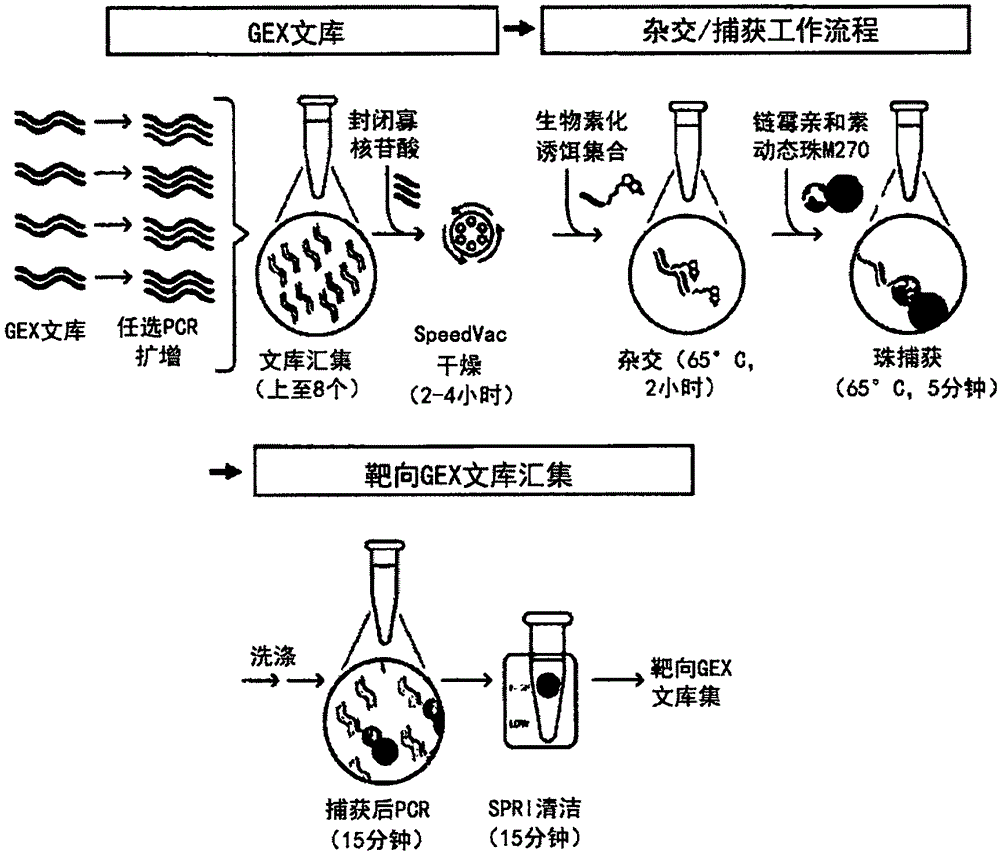
图7是显示靶向空间基因表达的工作流程示意图。Figure 7 is a schematic illustration of a workflow showing targeted spatial gene expression.
图8A-8B显示了中靶、富集和复杂性值,其中使用了不同的空间文库。该空间文库包括来自心脏、乳腺、乳腺癌或淋巴的样品。使用hL1k_200.1组或Immune组。Figures 8A-8B show on-target, enrichment and complexity values for different spatial libraries used. The spatial library includes samples from heart, breast, breast cancer or lymph. Use hL1k_200.1 group or Immune group.
图9是显示靶向空间基因表达的示例性工作流程。Figure 9 is an exemplary workflow showing targeted spatial gene expression.
图10是使用空间基因表达文库对靶向的核酸序列进行杂交和基于捕获的富集的示例性工作流程。Figure 10 is an exemplary workflow for hybridization and capture-based enrichment of targeted nucleic acid sequences using a spatial gene expression library.
图11是显示使用65基因靶向的富集神经组(Y轴)的小鼠脑组织空间UMI计数相比Visium对照全转录组分析(X轴)之间相关性的示意图。Figure 11 is a graph showing the correlation between mouse brain tissue-space UMI counts using a 65-gene targeted enriched neural panel (Y-axis) compared to a Visium control whole-transcriptome analysis (X-axis).
图12A-12B是显示A)来自Visium全转录组空间阵列的OLIG2基因表达(对照)和B)来自65基因靶向的富集神经组的OLIG2基因表达的示例性图片。图片与图11的数据相关联。12A-12B are exemplary graphs showing A) OLIG2 gene expression from the Visium whole transcriptome spatial array (control) and B) OLIG2 gene expression from the 65 gene-targeted enriched neural group. The pictures are associated with the data of Figure 11.
图13A-13B是显示A)全转录组Visium相对4个Visium靶向的基因组的映射读数和B)Visium全转录组对照(X轴)相较Visium靶向的泛癌基因组(Y轴)之间的UMI计数相关性的示例性图表。Figures 13A-13B are graphs showing A) whole-transcriptome Visium versus 4 Visium-targeted genomes mapped reads and B) Visium-wide transcriptome controls (X-axis) versus Visium-targeted pan-cancer genomes (Y-axis) Exemplary graph of UMI count correlations.
图14A-14B是显示使用4个靶向的基因富集组的12个人组织类型空间阵列相较A)针对匹配的Visium全转录组恢复的基因部分和B)针对匹配的Visium全转录组的UMI R平方(R-squared)一致性的Visium全转录组空间阵列的靶向度量的示例性图表。Figures 14A-14B are spatial arrays showing 12 human tissue types using 4 targeted gene enrichment sets compared to A) the gene fraction recovered for the matched Visium full transcriptome and B) the UMI for the matched Visium full transcriptome Exemplary graph of targeting metric for Visium whole-transcriptome spatial array of R-squared concordance.
图15A-15C显示了A)Visium全转录组和B)神经科学靶向的基因富集组的6个基因簇的人大脑皮层聚类。图15C显示了图15A和图15B之间的UMI相关性。Figures 15A-15C show the human cerebral cortex clustering of 6 gene clusters of A) the Visium full transcriptome and B) the neuroscience-targeted gene enrichment set. Figure 15C shows the UMI correlation between Figure 15A and Figure 15B.
图16A-16D显示了来自泛癌基因组的人乳腺癌组织切片中的空间基因表达;A)病理学家的注释(对照)、B)全转录组Visium数据、C)来自泛癌富集组的196个乳腺癌基因和D)来自泛癌富集组的ERBB2基因表达。Figures 16A-16D show spatial gene expression in human breast cancer tissue sections from the Pan-Oncogenome; A) pathologist's annotation (control), B) transcriptome-wide Visium data, C) from the Pan-Cancer Enriched Group 196 breast cancer genes and D) ERBB2 gene expression from the pan-cancer enrichment set.
图17A-17D提供了关于根据本公开实施方式的癌症组中包含的遗传靶标的细节。Figures 17A-17D provide details regarding genetic targets included in cancer panels according to embodiments of the disclosure.
图18A-18C提供了关于根据本公开实施方式的免疫学探针组中包含的遗传靶标的细节。Figures 18A-18C provide details regarding genetic targets included in immunological probe sets according to embodiments of the disclosure.
图19A-19D提供了关于根据本公开实施方式的通路组中包含的遗传靶标的细节。Figures 19A-19D provide details regarding the genetic targets included in pathway panels according to embodiments of the disclosure.
图20A-20D提供了关于根据本公开实施方式的神经组中包含的遗传靶标的细节。Figures 20A-20D provide details regarding genetic targets included in neural panels according to embodiments of the disclosure.
具体实施方式Detailed ways
I.引言I. Introduction
本文所述的空间分析方法和组合物能以高空间分辨率提供生物样品内大量分析物和/或各种各样分析物的表达数据,同时保留天然空间背景信息。空间分析方法和组合物可以包括,例如,使用包括空间条形码(例如,提供关于分析物在细胞或组织样品(例如哺乳动物细胞或哺乳动物组织样品)内的位置或方位的信息的核酸序列)的捕获探针,和能够与细胞产生和/或其中存在的分析物(例如,蛋白质和/或核酸)结合的捕获域。空间分析方法和组合物还可包括使用具有捕获域的捕获探针,其捕获用于间接检测分析物的中间物(intermediate agent)。例如,中间物可以包括与中间物相关联的核酸序列(例如,条形码)。因此,中间物的检测指示细胞或组织样品中的分析物。The spatial analysis methods and compositions described herein can provide expression data for a large number of analytes and/or a wide variety of analytes within a biological sample at high spatial resolution while preserving native spatial context information. Spatial analysis methods and compositions can include, for example, the use of nucleic acid sequences that include spatial barcodes (e.g., provide information about the position or orientation of an analyte within a cell or tissue sample (e.g., a mammalian cell or a mammalian tissue sample) A capture probe, and a capture domain capable of binding an analyte (eg, protein and/or nucleic acid) produced by and/or present in the cell. Spatial analysis methods and compositions may also include the use of capture probes having capture domains that capture intermediate agents for indirect detection of analytes. For example, an intermediate can include a nucleic acid sequence (eg, a barcode) associated with the intermediate. Thus, detection of an intermediate is indicative of the analyte in the cell or tissue sample.
空间分析的方法和组合物的非限制性方面描述于美国专利号10,774,374,10,724,078,10,480,022,10,059,990,10,041,949,10,002,316,9,879,313,9,783,841,9,727,810,9,593,365,8,951,726,8,604,182,7,709,198,美国专利申请公开号2020/239946,2020/080136,2020/0277663,2020/024641,2019/330617,2019/264268,2020/256867,2020/224244,2019/194709,2019/161796,2019/085383,2019/055594,2018/216161,2018/051322,2018/0245142,2017/241911,2017/089811,2017/067096,2017/029875,2017/0016053,2016/108458,2015/000854,2013/171621,WO 2018/091676,WO2020/176788,Rodriques等,Science 363(6434):1463-1467,2019;Lee等,Nat.Protoc.10(3):442-458,2015;Trejo等,PLoS ONE 14(2):e0212031,2019;Chen等,Science 348(6233):aaa6090,2015;Gao等,BMC Biol.15:50,2017;和Gupta等,Nature Biotechnol.36:1197-1202,2018;Visium空间基因表达试剂盒用户指南(Visium Spatial GeneExpression Reagent Kits User Guide)(例如,Rev C,日期2020年6月),和/或Visium空间组织优化试剂盒用户指南(Visium Spatial Tissue Optimization Reagent Kits UserGuide)(例如,Rev C,日期2020年7月),两者均可得于10x基因组学有限公司(10xGenomics)支持文档网站,可以任意组合使用。本文描述了空间分析方法和组合物的其它非限制性方面。Non-limiting aspects of methods and compositions for spatial analysis are described in U.S. Pat. 5, 8,951,726, 8,604,182, 7,709,198, U.S. Patent Application Publication No. 2020/ 239946, 2020/080136, 2020/0277663, 2020/024641, 2019/330617, 2019/264268, 2020/256867, 2020/224244, 2019/194709, 2019/161796, 2019/ 085383, 2019/055594, 2018/216161, 2018/051322, 2018/0245142, 2017/241911, 2017/089811, 2017/067096, 2017/029875, 2017/0016053, 2016/108458, 2015/000854, 2013/171621 , WO 2018/091676, WO 2020/176788, Rodriques et al., Science 363(6434):1463-1467, 2019; Lee et al., Nat.Protoc.10(3):442-458, 2015; Trejo et al., PLoS ONE 14(2):e0212031, 2019; Chen et al., Science 348(6233): aaa6090, 2015; Gao et al., BMC Biol.15:50, 2017; and Gupta et al., Nature Biotechnol.36:1197-1202, 2018; Visium Spatial GeneExpression Reagent Kits User Guide (Visium Spatial GeneExpression Reagent Kits User Guide) (e.g., Rev C, dated June 2020), and/or the Visium Spatial Tissue Optimization Reagent Kits User Guide (e.g., Rev C, dated July 2020), both Both are available on the 10x Genomics support documentation website and may be used in any combination. Other non-limiting aspects of spatial analysis methods and compositions are described herein.
可以在本公开中使用的一些通用术语可以见于WO2020/176788的第(I)(b)部分和/或美国专利申请公开号2020/0277663。通常,“条形码”是一种标签或标识符,它传递或能够传递信息(例如,关于样品中分析物、珠和/或捕获探针的信息)。条形码可以是分析物的部分,也可以独立于分析物。条形码可以附接于分析物。特定条形码相对于其它条形码可能是独特的。就本发明而言,“分析物”可包括任何待分析的生物物质、结构、部分或组分。术语“靶标”可以类似地指感兴趣的分析物。Some general terms that may be used in this disclosure can be found in Section (I)(b) of WO2020/176788 and/or US Patent Application Publication No. 2020/0277663. In general, a "barcode" is a label or identifier that conveys or is capable of conveying information (eg, information about analytes, beads and/or capture probes in a sample). The barcode can be part of the analyte or independent of the analyte. A barcode can be attached to the analyte. Certain barcodes may be unique relative to other barcodes. For purposes of the present invention, "analyte" may include any biological substance, structure, part or component to be analysed. The term "target" may similarly refer to an analyte of interest.
分析物可大致分为两类:核酸分析物和非核酸分析物。非核酸分析物的示例包括但不限于脂质、碳水合合物、肽、蛋白质、糖蛋白(N-连接或O-连接)、脂蛋白、磷蛋白、蛋白质的特定磷酸化或乙酰化变体、蛋白质的酰胺化变体、蛋白质的羟基化变体、蛋白质的甲基化变体,蛋白质泛素化变体、蛋白质硫酸化变体、病毒蛋白(例如,病毒衣壳、病毒包膜、病毒外壳、病毒附件、病毒糖蛋白、病毒刺突等)、胞外和胞内蛋白质、抗体和抗原结合片段。在一些实施方式中,分析物可定位于亚细胞位置,包括例如细胞器,例如线粒体、高尔基体、内质网、叶绿体、内吞囊泡、排出囊泡、液泡、溶酶体等。在一些实施方式中,分析物可以是肽或蛋白质,包括但不限于抗体和酶。分析物的其它示例可见于WO2020/176788第(I)(c)部分和/或美国专利申请公开号2020/0277663。在一些实施方式中,分析物可被间接检测,例如通过检测中间物,例如连接的探针(例如连接产物)或分析物捕获剂(例如,寡核苷酸偶联的抗体),如本文所述的那些。Analytes can be broadly divided into two classes: nucleic acid analytes and non-nucleic acid analytes. Examples of non-nucleic acid analytes include, but are not limited to, lipids, carbohydrates, peptides, proteins, glycoproteins (N-linked or O-linked), lipoproteins, phosphoproteins, specific phosphorylated or acetylated variants of proteins , amidated variants of proteins, hydroxylated variants of proteins, methylated variants of proteins, ubiquitinated variants of proteins, sulfated variants of proteins, viral proteins (e.g., viral capsids, viral envelopes, viral coat, viral appendages, viral glycoproteins, viral spikes, etc.), extracellular and intracellular proteins, antibodies and antigen-binding fragments. In some embodiments, analytes can be localized to subcellular locations including, for example, organelles such as mitochondria, Golgi apparatus, endoplasmic reticulum, chloroplasts, endocytic vesicles, expelling vesicles, vacuoles, lysosomes, and the like. In some embodiments, analytes can be peptides or proteins, including but not limited to antibodies and enzymes. Additional examples of analytes can be found in WO2020/176788, section (I)(c) and/or US Patent Application Publication No. 2020/0277663. In some embodiments, an analyte can be detected indirectly, for example, by a detection intermediate, such as a ligated probe (e.g., a ligation product) or an analyte capture agent (e.g., an oligonucleotide-conjugated antibody), as described herein. those mentioned.
通常从对象处获取“生物样品”,以使用各种技术中的任一种进行分析,包括但不限于活检、手术和激光捕获显微镜(LCM),并且通常包括来自对象的细胞和/或其他生物材料。在一些实施方式中,生物样品可以是组织切片。在一些实施方式中,生物样品可以是固定和/或染色的生物样品(例如,固定和/或染色的组织切片)。染色剂的非限制性示例包括组织染色剂(例如,苏木精和/或伊红)和免疫染色剂(例如,荧光染色剂)。在一些实施方式中,可以对生物样品(例如,固定和/或染色的生物样品)成像。生物样品也描述于WO2020/176788第(I)(d)部分和/或美国专利申请公开号2020/0277663中。A "biological sample" is typically obtained from a subject for analysis using any of a variety of techniques, including but not limited to biopsy, surgery, and laser capture microscopy (LCM), and often includes cells and/or other organisms from the subject Material. In some embodiments, the biological sample can be a tissue section. In some embodiments, the biological sample can be a fixed and/or stained biological sample (eg, a fixed and/or stained tissue section). Non-limiting examples of stains include histological stains (eg, hematoxylin and/or eosin) and immunostains (eg, fluorescent stains). In some embodiments, a biological sample (eg, a fixed and/or stained biological sample) can be imaged. Biological samples are also described in WO2020/176788, Section (I)(d) and/or US Patent Application Publication No. 2020/0277663.
在一些实施方式中,生物样品用一种或多种透化试剂透化。例如,生物样品的透化可以促进分析物的捕获。示例性透化剂和条件描述于WO2020/176788的第(I)(d)(ii)(13)部分或示例性实施方式部分和/或美国专利申请公开号2020/0277663。In some embodiments, a biological sample is permeabilized with one or more permeabilizing reagents. For example, permeabilization of biological samples can facilitate analyte capture. Exemplary permeabilizing agents and conditions are described in Section (I)(d)(ii)(13) or the Exemplary Embodiments section of WO2020/176788 and/or US Patent Application Publication No. 2020/0277663.
基于阵列的空间分析方法涉及将一种或多种分析物从生物样品转移到基材上的特征阵列,其中各特征与阵列上的独特空间位置相关联。转移分析物的后续分析包括确定分析物的相同性以及生物样品中分析物的空间位置。分析物在生物样品中的空间位置是基于阵列中分析物所结合(例如,直接或间接)的特征以及特征在阵列上的相对空间位置来确定的。Array-based spatial analysis methods involve the transfer of one or more analytes from a biological sample to an array of features on a substrate, where each feature is associated with a unique spatial location on the array. Subsequent analysis of the transferred analyte includes determining the identity of the analyte as well as the spatial location of the analyte in the biological sample. The spatial location of the analyte in the biological sample is determined based on the features in the array to which the analyte binds (eg, directly or indirectly) and the relative spatial location of the features on the array.
“捕获探针”是指能够捕获(直接或间接)和/或标记生物样品中的分析物(例如,感兴趣的分析物)的任何分子。在一些实施方式中,捕获探针是核酸或多肽。在一些实施方式中,捕获探针包括条形码(例如,空间条形码和/或独特分子标识符(UMI))和捕获域。在一些实施方式中,捕获探针可包括裂解域和/或功能域(例如,引物结合位点,例如用于下一代测序(NGS))。"Capture probe" refers to any molecule capable of capturing (directly or indirectly) and/or labeling an analyte (eg, an analyte of interest) in a biological sample. In some embodiments, capture probes are nucleic acids or polypeptides. In some embodiments, a capture probe includes a barcode (eg, a spatial barcode and/or a unique molecular identifier (UMI)) and a capture domain. In some embodiments, a capture probe can include a cleavage domain and/or a functional domain (eg, a primer binding site, eg, for next generation sequencing (NGS)).
图1是示出如本文所述的示例性捕获探针的示意图。如图所示,捕获探针102任选地通过例如二硫键接头的裂解域101耦合到特征103。捕获探针可以包括对后续处理有用的功能序列104。功能序列104可以包括全部或部分测序仪特异性流动池附连序列(例如P5或P7序列)、全部或部分测序引物序列(例如R1引物结合位点、R2引物结合位点)或其组合。获探针还可以包括空间条形码10。捕获探针还可以包括独特分子标识符(UMI)序列106。虽然图1显示空间条形码105位于UMI序列106上游(5′),但应理解的是,其中UMI序列106位于空间条形码105上游(5′)的捕获探针也适合使用在本文所述的任何方法中。捕获探针还可以包括捕获域107以促进目标分析物的捕获。在一些实施方式中,捕获探针包含一个或多个额外的功能序列,其可以位于例如空间条形码105和UMI序列106之间、UMI序列106和捕获域107之间或在捕获域107之后。捕获域可以具有与核酸分析物序列互补的序列。捕获域可以具有与本文所述连接的探针互补的序列。捕获域可以具有与分析物捕获剂中存在的捕获柄(handle)序列互补的序列。捕获域可以具有与夹板(splint)寡核苷酸互补的序列。这种夹板寡核苷酸除了具有与捕获探针捕获域互补的序列外,还可具有核酸分析物的序列、与本文所述连接的探针的部分互补的序列和/或本文所述的捕获柄序列。Figure 1 is a schematic diagram illustrating exemplary capture probes as described herein. As shown,
通常可选择功能性序列以与各种不同测序系统中的任何一种兼容,例如离子激流质子(Ion Torrent Proton)或PGM、Illumina测序仪、PacBio、牛津纳米孔(OxfordNanopore)等及其要求。在一些实施方式中,可选择功能性序列以与非商业化测序系统兼容。可使用适当功能性序列的此类测序系统和技术的示例包括(但不限于)离子激流质子或PGM测序、Illumina测序、PacBio SMRT测序和牛津纳米孔测序。此外,在一些实施方式中,可以选择功能性序列以与其他测序系统(包括非商业化测序系统)兼容。Functional sequences can generally be selected to be compatible with any of a variety of different sequencing systems, such as Ion Torrent Proton or PGM, Illumina sequencers, PacBio, Oxford Nanopore, etc. and their requirements. In some embodiments, functional sequences can be selected to be compatible with non-commercial sequencing systems. Examples of such sequencing systems and techniques for which appropriate functional sequences may be used include, but are not limited to, Ion Torrent Proton or PGM sequencing, Illumina sequencing, PacBio SMRT sequencing, and Oxford Nanopore sequencing. Additionally, in some embodiments, functional sequences can be selected for compatibility with other sequencing systems, including non-commercial sequencing systems.
在一些实施方式中,空间条形码105和功能序列104对于所有与给定特征附接的探针都是共同的。在一些实施方式中,附接给定特征的捕获探针的UMI序列106与附接给定特征的不同捕获探针的UMI序列是不同的。In some embodiments,
图2是说明可裂解捕获探针的示意图,其中裂解的捕获探针可进入非透化细胞并结合到样品内的分析物。捕获探针201包含裂解域202、细胞穿透肽203、报告分子204和二硫键(-S-S-)。205表示捕获探针的所有其他部分,例如,空间条形码和捕获域。Figure 2 is a schematic diagram illustrating a cleavable capture probe, wherein the cleaved capture probe can enter a non-permeabilized cell and bind to an analyte within a sample. The
图3是示例性多重空间条码化特征的示意图。在图3中,特征301可耦合到空间条码化捕获探针,其中特定特征的空间条码化探针可具有相同的空间条形码,但具有设计成将特征的空间条形码与多个目标分析物相关联的不同捕获域。例如,特征可以耦合到四种不同类型的空间条码化捕获探针,每种类型的空间条码化捕获探针具有空间条形码302。与该特征相关联的一种类型捕获探针包括空间条形码303与聚(T)捕获域403的组合,其设计用于捕获mRNA目标分析物。与该特征相关联的第二类型捕获探针包括空间条形码304与用于gDNA分析的随机N-聚体捕获域804的组合。与该特征相关联的第三类型捕获探针包括空间条形码302联合与感兴趣的分析物捕获剂305的捕获柄序列互补的捕获域。与该特征相关联的第四类型捕获探针包括空间条形码306与捕获探针组合,该捕获探针可特异性结合可在CRISPR分析(例如CRISPR/Cas9)中起作用的核酸分子806。虽然图3中仅示出了四种不同的捕获探针条码化构建体,但是捕获探针条码化构建体可被定制用于与核酸相关联的任何给定分析物的分析,并且能够与这种构建体结合。例如,图3中所示的方案也可用于本文中所公开的其它分析物的同时分析,包括但不限于:(a)mRNA,谱系追踪构建体,细胞表面或细胞内蛋白质和代谢物,以及gDNA;(b)mRNA,可获得的染色质(例如,ATAC-seq,DNA酶-seq,和/或MNA酶-seq)细胞表面或细胞内蛋白质和代谢物,以及扰动剂(例如,CRISPR-crRNA/sgRNA、TALEN、锌指核酸酶和/或如本文所述的反义寡核苷酸);(c)mRNA、细胞表面或细胞内蛋白质和/或代谢物,条码化标记剂(例如,本文所述的MHC多聚体)和免疫细胞受体(例如,T细胞受体)的V(D)J序列。在一些实施方式中,扰动剂可以是小分子、抗体、药物、适配体、miRNA、物理环境(例如,温度变化),或任何其它已知扰动剂。参见例如WO2020/176788的第(II)(b)部分(例如,第(i)-(vi)小节)和/或美国专利申请公开号2020/0277663。捕获探针的产生可以通过任何合适的方法来实现,包括在WO2020/176788的第(II)(d)(ii)部分和/或美国专利申请公开号2020/0277663中描述的那些。3 is a schematic diagram of an exemplary multiple spatial barcoding feature. In FIG. 3, feature 301 can be coupled to a spatially barcoded capture probe, where the spatially barcoded probe for a particular feature can have the same spatial barcode, but with features designed to associate the feature's spatial barcode with multiple target analytes. different capture domains. For example, a feature can be coupled to four different types of spatially barcoded capture probes, each type of spatially barcoded capture probe having a spatially barcoded 302 . One type of capture probe associated with this feature includes a
在一些实施方式中,可采用任何合适的多重化技术(例如,描述于WO 2020/176788的第(IV)部分和/或美国专利申请公开号2020/0277663)来检测(例如同时或依次检测)来自生物样品的多于一种分析物类型(例如,核酸和蛋白质)。In some embodiments, any suitable multiplexing technique (eg, described in Section (IV) of WO 2020/176788 and/or US Patent Application Publication No. 2020/0277663) can be used for detection (eg, simultaneous or sequential detection) More than one analyte type (eg, nucleic acid and protein) from a biological sample.
在一些实施方式中,可以使用一种或多种分析物捕获剂进行一种或多种分析物(例如,蛋白质分析物)的检测。如本文所用,“分析物捕获剂”是指某一物质,其与分析物(例如,生物样品中的分析物)以及与捕获探针(例如,连接至基材或特征的捕获探针)相互作用以鉴别分析物。在一些实施方式中,分析物捕获剂包括:(i)分析物结合部分(例如,其结合分析物),例如抗体或其抗原结合片段;(ii)分析物结合部分条形码;和(iii)捕获柄序列(例如,分析物捕获序列)。如本文所用,术语“分析物结合部分条形码”是指与分析物结合部分相关联或以其他方式鉴别分析物结合部分的条形码。如本文所用,术语“分析物捕获序列”或“捕获柄序列”是指被配置为杂交到捕获探针的捕获域、结合到捕获探针的捕获域、耦合到捕获探针的捕获域或以其他方式与捕获探针的捕获域相互作用的区域或部分。在一些实施方式中,捕获柄序列与捕获探针的捕获域互补。在一些情况中,分析物结合部分条形码(或其部分)可能能够从分析物捕获剂去除(例如,裂解)。In some embodiments, detection of one or more analytes (eg, protein analytes) can be performed using one or more analyte capture agents. As used herein, "analyte capture agent" refers to a substance that interacts with an analyte (e.g., an analyte in a biological sample) and with a capture probe (e.g., a capture probe attached to a substrate or feature). function to identify analytes. In some embodiments, the analyte capture agent comprises: (i) an analyte binding moiety (e.g., which binds the analyte), such as an antibody or antigen-binding fragment thereof; (ii) an analyte binding moiety barcode; and (iii) a capture handle sequence (eg, analyte capture sequence). As used herein, the term "analyte binding moiety barcode" refers to a barcode associated with or otherwise identifying an analyte binding moiety. As used herein, the term "analyte capture sequence" or "capture handle sequence" refers to a capture domain configured to hybridize to a capture probe, bind to a capture probe, couple to a capture probe, or otherwise bind to a capture probe. A region or portion that otherwise interacts with the capture domain of the capture probe. In some embodiments, the capture handle sequence is complementary to the capture domain of the capture probe. In some cases, the analyte binding moiety barcode (or portion thereof) may be capable of being removed (eg, lysed) from the analyte capture agent.
图4是由分析物结合部分404和分析物结合部分条形码408构成的示例性分析物捕获剂402的示意图。示例性分析物结合部分404是能够与到分析物406结合的分子,反应性物质捕获剂能够与空间条码化捕获探针相互作用。分析物结合部分可以高亲和力和/或高特异性结合到分析物406。分析物捕获剂可以包括分析物结合部分条形码结构域408、核苷酸序列(例如,寡核苷酸),其可与捕获探针的捕获域的至少部分或全部杂交。反应性物质结合部分条形码加工和使用408可以包含本文所述的分析物结合部分条形码和捕获柄序列。分析物结合部分404可以包括多肽和/或适配体。分析物结合部分404可包括抗体或抗体片段(例如,抗原结合片段)。FIG. 4 is a schematic diagram of an exemplary
图5是描绘特征固定的(feature-immobilized)捕获探针524和分析物捕获剂526之间的示例性相互作用的示意图。特征固定的捕获探针524可以包括空间条形码508以及功能序列506和UMI 510,如本文他处所述。捕获探针还可以包括能够结合到分析物捕获剂526的捕获域512。分析物捕获剂526可以包括功能序列518、分析物结合部分条形码516和能够与捕获探针524的捕获域512结合的捕获柄序列514。分析物捕获剂还可以包括接头520,其使捕获剂条形码结构域516耦合到分析物结合部分522。FIG. 5 is a schematic diagram depicting exemplary interactions between a feature-immobilized
图6A、6B和6C是图示如何在基于阵列的系统中利用链霉亲和素细胞标签来产生空间条码化细胞或细胞内容物的示意图。例如,如图6A所示,肽结合的主要组织相容性复合物(MHC)可单独与生物素(β2m)关联并与链霉亲和素部分结合,使得链霉亲和素部分包含多个pMHC部分。这些部分中的每一个可结合到TCR,使得链霉亲和素通过多个MCH/TCR结合相互作用结合到靶T细胞。多个相互作用协同作用,可以大大提高结合亲和力。这种改进的亲和力可以改善T细胞的标记,也可以降低标记从T细胞表面解离的可能性。如图6B所示,捕获剂条形码结构域601可由链霉亲和素602修饰并与生物素化MHC603的多个分子接触,使得生物素化MHC 603分子与链霉亲和素偶联的捕获剂条形码结构域601耦合。结果是条码化的MHC多聚体复合物605。如图6B所示,捕获剂条形码结构域序列601可以将MHC识别为其相关联的标签,并且还包括可选的功能序列,例如用于与其他寡核苷酸杂交的序列。如图6C所示,一个示例寡核苷酸是捕获探针606,其包括互补序列(例如,与C C C相对应的rGrGrG)、条形码序列和其他功能序列,例如,UMI、衔接子序列(例如,包括测序引物序列(例如,R1或部分R1(“pR1”))、流动池附接序列(例如,P5或P7或其部分序列)等。在某些情况下,捕获探针606可首先与特征(例如,凝胶珠)相关联并从特征中释放。在其它实施方式中,捕获探针606可与MHC-寡核苷酸复合物601的捕获剂条形码结构域605杂交。杂交的寡核苷酸(间隔子C C C和间隔子rGrGrG)随后可在引物延伸反应中延伸,使得生成包含对应于两个空间条形码序列(与捕获探针相关联的空间条形码,与MHC-寡核苷酸复合物相关联的条形码)中的每一个的序列的构建物。在一些情况中,这些对应序列中的一个或两个可以是捕获探针606或捕获剂条形码结构域601中的原始序列的互补物。在其他实施方式中,捕获探针和捕获剂条形码结构域连接在一起。所得到的构建体可以任选地进一步加工(例如,以添加任何其它序列和/或用于清理)并进行测序。如本文别处所述,源自捕获探针606空间条形码序列的序列可用于识别特征,并且源自捕获剂条形码结构域601上的空间条形码序列的序列可用于识别结合在细胞表面上的特定肽MHC复合物604(例如,当使用用于筛选免疫细胞或免疫细胞群的MHC肽库时)。Figures 6A, 6B and 6C are schematic diagrams illustrating how to utilize streptavidin cell tags in an array-based system to generate spatially barcoded cells or cellular contents. For example, as shown in Figure 6A, the peptide-bound major histocompatibility complex (MHC) can be independently associated with biotin (β2m) and associated with a streptavidin moiety such that the streptavidin moiety contains multiple pMHC part. Each of these moieties can bind to a TCR, allowing streptavidin to bind to target T cells through multiple MCH/TCR binding interactions. Multiple interactions work synergistically to greatly increase binding affinity. This improved affinity can improve T cell labeling and also reduce the likelihood of label dissociation from the T cell surface. As shown in Figure 6B, the capture
分析物捕获剂的其它描述可见于WO2020/176788的第(II)(b)(ix)部分和/或美国专利申请公开号2020/0277663的第(II)(b)(viii)部分。Additional descriptions of analyte capture agents can be found in Section (II)(b)(ix) of WO2020/176788 and/or Section (II)(b)(viii) of US Patent Application Publication No. 2020/0277663.
存在将空间条形码与一个或多个相邻细胞相关联的至少两种方法,从而使得空间条形码将一个或多个细胞和/或一个或多个细胞的内容标识为与特定空间位置相关联。一种方法是促进分析物或分析物代用物(proxy)(例如,中间物)移出细胞并朝向空间条码化阵列(例如,包括空间条码化捕获探针)。另一种方法是从阵列裂解空间条码化捕获探针,并促进空间条码化捕获探针朝向生物样品和/或至生物样品中或至生物样品上。There are at least two methods of associating a spatial barcode with one or more neighboring cells such that the spatial barcode identifies one or more cells and/or the contents of one or more cells as being associated with a particular spatial location. One approach is to facilitate the movement of analytes or analyte proxies (eg, intermediates) out of the cell and toward spatially barcoded arrays (eg, including spatially barcoded capture probes). Another approach is to cleave the spatially barcoded capture probes from the array and facilitate the spatially barcoded capture probes towards and/or into or onto the biological sample.
在一些情况中,捕获探针可以用于由模板(例如,DNA或RNA模板,例如分析物或中间物(例如,结合的探针(例如,连接产物)或分析物捕获剂)或其部分)或其衍生物引发、复制并任选地由此产生条码化的延伸产物(参见,例如,WO2020/176788的第(II)(b)(vii)部分和/或美国专利申请公开号2020/0277663关于延伸的捕获探针)。在一些情况中,捕获探针可以用于与模板(例如,DNA或RNA模板,例如分析物或中间物或其部分)形成结合的探针(例如,连接产物),由此产生用作模板代用物的连接产物。In some cases, a capture probe can be used to generate a template (e.g., a DNA or RNA template, such as an analyte, or an intermediate (e.g., a bound probe (e.g., ligation product) or analyte capture agent) or a portion thereof) or derivatives thereof to prime, replicate and optionally generate barcoded extension products therefrom (see, e.g., Section (II)(b)(vii) of WO2020/176788 and/or US Patent Application Publication No. 2020/0277663 for extended capture probes). In some cases, capture probes can be used to form probes (e.g., ligation products) that bind to templates (e.g., DNA or RNA templates, such as analytes or intermediates or portions thereof), thereby generating product of the connection.
如本文所用,“延伸的捕获探针”是指具有添加到捕获探针末端(例如,3′或5′端)的附加核苷酸从而延伸捕获探针总长度的捕获探针。例如,“延伸的3′端”表示附加的核苷酸被添加到捕获探针的最3′核苷酸以延伸的捕获探针的长度,例如,通过用于延伸的核酸分子的聚合反应,包括通过聚合酶(例如,DNA聚合酶或逆转录酶)催化的模板化聚合。在一些实施方式中,延伸的捕获探针包括向捕获探针的3′末端添加与特异性结合捕获探针的捕获域的分析物或中间物的核酸序列互补的核酸序列。在一些实施方式中,捕获探针使用逆转录延伸。在一些实施方式中,捕获探针使用一种或多种DNA聚合酶延伸。延伸的捕获探针包括捕获探针的序列和捕获探针的空间条形码序列。As used herein, an "extended capture probe" refers to a capture probe that has additional nucleotides added to the ends (eg, 3' or 5' ends) of the capture probe to extend the overall length of the capture probe. For example, "extended 3' end" means that additional nucleotides are added to the most 3' nucleotide of the capture probe to extend the length of the capture probe, e.g., by polymerization for the extended nucleic acid molecule, Templated polymerization catalyzed by a polymerase (eg, DNA polymerase or reverse transcriptase) is included. In some embodiments, an extended capture probe comprises the addition to the 3' end of the capture probe of a nucleic acid sequence complementary to the nucleic acid sequence of the analyte or intermediate that specifically binds to the capture domain of the capture probe. In some embodiments, the capture probes are extended using reverse transcription. In some embodiments, capture probes are extended using one or more DNA polymerases. The extended capture probe includes the sequence of the capture probe and the spatial barcode sequence of the capture probe.
在一些实施方式中,延伸的捕获探针被扩增(例如,在本体溶液中或在阵列上)以产生足以用于下游分析(例如通过DNA测序)的量。在一些实施方式中,延伸的捕获探针(例如,DNA分子)充当扩增反应(例如,聚合酶链反应)的模板。In some embodiments, extended capture probes are amplified (eg, in bulk solution or on an array) to produce sufficient quantities for downstream analysis (eg, by DNA sequencing). In some embodiments, an extended capture probe (eg, DNA molecule) serves as a template for an amplification reaction (eg, polymerase chain reaction).
在WO2020/176788的第(II)(a)部分和/或美国专利申请公开号2020/0277663中描述了空间分析方法的其它变化形式,在一些实施方式中包括成像步骤。捕获的分析物(和/或中间物或其部分)的分析,例如,包括样品移出、捕获探针的延伸、测序(例如,裂解的延伸捕获探针和/或与延伸的捕获探针互补的cDNA分子的测序)、阵列上测序(例如,使用例如原位杂交或原位连接方法)、时域分析和/或邻近捕获,描述于WO2020/176788的第(II)(g)部分和/或美国专利申请公开号2020/0277663。一些质量控制措施也描述于WO2020/176788的第(II)(h)部分和/或美国专利申请公开号2020/0277663中。Other variations of spatial analysis methods, which in some embodiments include an imaging step, are described in Section (II)(a) of WO2020/176788 and/or US Patent Application Publication No. 2020/0277663. Analysis of captured analytes (and/or intermediates or portions thereof), for example, including sample removal, extension of capture probes, sequencing (e.g., cleaved extended capture probes and/or complementary to extended capture probes) Sequencing of cDNA molecules), sequencing on arrays (e.g. using e.g. in situ hybridization or in situ ligation methods), time domain analysis and/or proximity capture, as described in section (II)(g) of WO2020/176788 and/or U.S. Patent Application Publication No. 2020/0277663. Some quality control measures are also described in section (II)(h) of WO2020/176788 and/or US Patent Application Publication No. 2020/0277663.
空间信息可以提供具有生物学和/或医学重要性的信息。例如,本文描述的方法和组合物可以允许:鉴定疾病或病症的一种或多种生物标志物(例如,诊断、预后和/或用于确定治疗功效);确定用于治疗疾病或病症的候选药物靶标;将对象鉴定(例如,诊断)为患有疾病或病症;鉴定对象的疾病或病症的阶段和/或预后;将对象鉴定为具有增加的发展疾病或病症的可能性;监测对象的疾病或病症的进展;确定治疗对象的疾病或病症的功效;确定治疗对疾病或病症有效的患者亚群;对患有疾病或病症的对象的治疗的修改;选择参加临床试验的对象;和/或为患有疾病或病症的对象选择治疗。Spatial information can provide information of biological and/or medical importance. For example, the methods and compositions described herein may allow for: identification of one or more biomarkers of a disease or disorder (e.g., for diagnosis, prognosis, and/or for determining efficacy of treatment); identification of candidates for treatment of the disease or disorder drug target; identifying (e.g., diagnosing) a subject as having a disease or disorder; identifying the stage and/or prognosis of a disease or disorder in a subject; identifying a subject as having an increased likelihood of developing a disease or disorder; monitoring a subject for a disease or disorder progression of a condition; determining the efficacy of treating a disease or condition in a subject; determining a subpopulation of patients whose treatment is effective for a disease or condition; modification of treatment for a subject with a disease or condition; selecting subjects to participate in a clinical trial; A subject with a disease or condition is selected for treatment.
空间信息可以提供具有生物学重要性的信息。例如,本文描述的方法和组合物可以允许:鉴定转录组和/或蛋白质组表达谱(例如,在健康和/或患病组织中);近距离鉴别多种分析物类型(例如,最近邻分析);确定患病组织中上调和/或下调的基因和/或蛋白质;肿瘤微环境的表征;肿瘤免疫反应的表征;细胞类型的表征及其在组织中的共定位;组织内遗传变异的鉴定(例如,基于与特定疾病或障碍生物标志物相关联的基因和/或蛋白质表达谱)。Spatial information can provide information of biological importance. For example, the methods and compositions described herein can allow: identification of transcriptomic and/or proteomic expression profiles (e.g., in healthy and/or diseased tissues); identification of multiple analyte types at close range (e.g., nearest neighbor analysis ); identification of up- and/or down-regulated genes and/or proteins in diseased tissues; characterization of tumor microenvironment; characterization of tumor immune response; characterization of cell types and their colocalization in tissues; identification of genetic variation within tissues (eg, based on gene and/or protein expression profiles associated with specific disease or disorder biomarkers).
通常,对于基于空间阵列的方法,基材起到支持捕获探针直接或间接附接到阵列特征的作用。“特征”是一个实体,作为空间分析中使用的各种分子实体的支持或存储库。在一些实施方式中,阵列中的一些或全部特征被功能化以用于分析物捕获。示例性基材描述于WO2020/176788的第(II)(c)部分和/或美国专利申请公开号2020/0277663中。阵列的示例性特征和几何属性可以在WO2020/176788的第(II)(d)(i)、(II)(d)(iii)和(II)(d)(iv)部分和/或美国专利申请公开号2020/0277663中找到。Typically, for spatial array-based approaches, the substrate serves to support the direct or indirect attachment of capture probes to features of the array. A "feature" is an entity that acts as a support or repository for various molecular entities used in spatial analysis. In some embodiments, some or all of the features in the array are functionalized for analyte capture. Exemplary substrates are described in Section (II)(c) of WO2020/176788 and/or US Patent Application Publication No. 2020/0277663. Exemplary features and geometric properties of the arrays can be found in Sections (II)(d)(i), (II)(d)(iii) and (II)(d)(iv) of WO2020/176788 and/or US Pat. Found in Application Publication No. 2020/0277663.
通常,当将生物样品与包括捕获探针的基材(例如,具有嵌入、点样、印刷、制造在基材上的捕获探针的基材,或具有包括捕获探针的特征(例如,珠、孔)的基材)接触时,分析物和/或中间物(或其部分)可被捕获。如本文所用,使生物样品“接触”基材指任何接触(例如,直接或间接),使得捕获探针可以与来自生物样品的分析物相互作用(例如,共价或非共价结合(例如,杂交))。捕获可以主动(例如,使用电泳)或被动(例如,使用扩散)实现。分析物捕获进一步描述于WO2020/176788的第(II)(e)部分和/或美国专利申请公开号2020/0277663中。Typically, when a biological sample is combined with a substrate that includes capture probes (e.g., a substrate with capture probes embedded, spotted, printed, fabricated on a substrate, or with features (e.g., beads) that include capture probes, , pore) contact, analytes and/or intermediates (or portions thereof) can be captured. As used herein, "contacting" a biological sample to a substrate refers to any contact (e.g., directly or indirectly) such that the capture probes can interact (e.g., covalently or non-covalently bind (e.g., hybridization)). Capture can be achieved actively (eg, using electrophoresis) or passively (eg, using diffusion). Analyte capture is further described in Section (II)(e) of WO2020/176788 and/or US Patent Application Publication No. 2020/0277663.
在一些情况中,可以通过将具有条形码(例如空间条形码)的分子(例如肽、脂质或核酸分子)附连和/或引至生物样品(例如,引至生物样品中的细胞)来进行空间分析。在一些实施方式中,将具有多个条形码(例如,多个空间条形码)的多个分子(例如,多个核酸分子)引入生物样品(例如,生物样品中的多个细胞))用于空间分析。在一些实施方式中,在将具有条形码的分子附连和/或引至生物样品之后,可以将生物样品物理分离(例如,解离)成单细胞或细胞群以进行分析。一些这样的空间分析方法描述于WO2020/176788的第(III)部分和/或美国专利申请公开号2020/0277663中。In some cases, spatialization can be performed by attaching and/or introducing molecules (eg, peptides, lipids, or nucleic acid molecules) with barcodes (eg, spatial barcodes) to biological samples (eg, to cells in a biological sample). analyze. In some embodiments, a plurality of molecules (e.g., a plurality of nucleic acid molecules) having a plurality of barcodes (e.g., a plurality of spatial barcodes) are introduced into a biological sample (e.g., a plurality of cells in a biological sample) for spatial analysis . In some embodiments, after attaching and/or introducing the barcoded molecules to the biological sample, the biological sample can be physically separated (eg, dissociated) into single cells or populations of cells for analysis. Some such spatial analysis methods are described in Section (III) of WO2020/176788 and/or US Patent Application Publication No. 2020/0277663.
在一些情况中,空间分析可以通过检测与分析物杂交的多个寡核苷酸来进行。在一些情况中,例如,可以使用RNA模板连接(RTL)进行空间分析。RTL的方法之前已经描述过。参见例如Credle等,Nucleic Acids Res.2017年8月21日;45(14):e128。通常,RTL包括两个寡核苷酸与分析物(例如,RNA分子,例如mRNA分子)上的相邻序列的杂交。在一些情况中,寡核苷酸是DNA分子。在一些情况中,寡核苷酸之一在3′末端包括至少两个核糖核酸碱基和/或另一寡核苷酸在5′末端包括磷酸化核苷酸。在一些情况中,两个寡核苷酸之一包括捕获域(例如,聚(A)序列、非均聚序列)。在与分析物杂交后,连接酶(例如,SplintR连接酶)将两个寡核苷酸连接在一起,产生结合的探针(例如,连接产物)。在一些情况中,两个寡核苷酸与彼此不相邻的序列杂交。例如,两个寡核苷酸的杂交在杂交的寡核苷酸之间产生间隙。在一些情况中,聚合酶(例如,DNA聚合酶)可以在连接之前延伸寡核苷酸之一。连接后,结合的探针(例如,连接产物)释放自分析物。在一些情况中,利用核酸内切酶(例如,RNA酶H)释放结合的探针(例如,连接产物)。然后可以通过阵列上的捕获探针(例如,代替分析物的直接捕获)捕获释放的结合的探针(例如,连接产物),任选地经扩增和测序,从而确定生物样品中分析物的位置和任选地丰度。In some cases, spatial analysis can be performed by detecting multiple oligonucleotides that hybridize to the analyte. In some cases, for example, RNA template ligation (RTL) can be used for spatial analysis. The approach to RTL has been described previously. See, eg, Credle et al., Nucleic Acids Res. 2017 Aug 21;45(14):e128. Typically, RTL involves the hybridization of two oligonucleotides to adjacent sequences on an analyte (eg, an RNA molecule, such as an mRNA molecule). In some cases, oligonucleotides are DNA molecules. In some cases, one of the oligonucleotides includes at least two ribonucleic acid bases at the 3' end and/or the other oligonucleotide includes phosphorylated nucleotides at the 5' end. In some cases, one of the two oligonucleotides includes a capture domain (eg, poly(A) sequence, non-homopolymeric sequence). After hybridization to the analyte, a ligase (eg, SplintR ligase) ligates the two oligonucleotides together, producing a bound probe (eg, a ligation product). In some cases, two oligonucleotides hybridize to sequences that are not adjacent to each other. For example, hybridization of two oligonucleotides creates a gap between the hybridized oligonucleotides. In some cases, a polymerase (eg, DNA polymerase) can extend one of the oligonucleotides prior to ligation. After ligation, the bound probe (eg, ligation product) is released from the analyte. In some cases, bound probes (eg, ligation products) are released using an endonuclease (eg, RNase H). The released bound probes (e.g., ligation products) can then be captured by capture probes on the array (e.g., instead of direct capture of the analyte), optionally amplified and sequenced, thereby determining the identity of the analyte in the biological sample. location and optionally abundance.
在空间信息分析期间,获得与分析物相关联的空间条形码的序列信息,并且该序列信息可用于提供关于分析物在生物样品中的空间分布的信息。可以使用各种方法来获得空间信息。在一些实施方式中,特定捕获探针和它们捕获的分析物与基材上特征阵列中的特定位置相关联。例如,特定空间条形码可以在阵列制造之前与特定阵列位置相关联,并且空间条形码的序列可以与特定阵列位置信息一起存储(例如,在数据库中),从而使得每个空间条形码唯一地映射到特定的阵列位置。During spatial information analysis, sequence information of a spatial barcode associated with an analyte is obtained and can be used to provide information about the spatial distribution of the analyte in the biological sample. Various methods can be used to obtain spatial information. In some embodiments, specific capture probes and the analytes they capture are associated with specific locations in the array of features on the substrate. For example, specific spatial barcodes can be associated with specific array locations prior to array fabrication, and sequences of spatial barcodes can be stored (e.g., in a database) with specific array location information such that each spatial barcode uniquely maps to a specific array location. array position.
或者,特定空间条形码可以在制造期间沉积在特征阵列中的预定位置,从而使得在每个位置,仅存在一种类型的空间条形码,由此空间条形码与阵列的单个特征独特地相关联。必要时,可以使用本文所述的任何方法对阵列进行解码,以便空间条形码与阵列特征位置独特地相关联,并且可以如上所述存储该映射。Alternatively, specific spatial barcodes may be deposited at predetermined locations in the array of features during manufacture such that at each location only one type of spatial barcode is present, whereby the spatial barcode is uniquely associated with a single feature of the array. If desired, the array can be decoded using any of the methods described herein so that the spatial barcode is uniquely associated with the array feature location, and this mapping can be stored as described above.
当在空间信息分析期间获得捕获探针和/或分析物的序列信息时,可以通过参考存储的将每个空间条形码与阵列特征位置独特关联的信息来确定捕获探针和/或分析物的位置。以此方式,特定捕获探针和捕获分析物与特征阵列中的特定位置相关联。各阵列特征位置表示相对于阵列的坐标参考点(例如,阵列位置、基准标志物)的位置。因此,各特征位置在阵列的坐标空间中具有“地址”或位置。When sequence information for capture probes and/or analytes is obtained during spatial information analysis, the positions of capture probes and/or analytes can be determined by referencing stored information that uniquely associates each spatial barcode with an array feature location . In this way, specific capture probes and captured analytes are associated with specific locations in the feature array. Each array feature location represents a location relative to a coordinate reference point (eg, array location, fiducial marker) of the array. Thus, each feature location has an "address" or location in the coordinate space of the array.
一些示例性空间分析工作流程描述于WO2020/176788的示例性实施方式部分和/或美国专利申请公开号2020/0277663中。参见例如WO2020/176788和/或美国专利申请公开号2020/0277663的以“在本文描述的工作流程的一些非限制性示例中,可以将样品浸入……”开头的示例性实施方式。还参见,例如,Visium空间基因表达试剂盒用户指南(Visium Spatial Gene Expression Reagent Kits User Guide)(例如,Rev C,日期2020年6月),靶向基因表达空间用户指南(the Targeted Gene Expression-Spatial UserGuide)(,例如,Rev A,日期2020年10月),和/或Visium空间组织优化试剂盒用户指南(Visium Spatial Tissue Optimization Reagent Kits User Guide)(例如,Rev C,日期2020年7月)。Some exemplary spatial analysis workflows are described in the Exemplary Implementations section of WO2020/176788 and/or US Patent Application Publication No. 2020/0277663. See, eg, WO2020/176788 and/or US Patent Application Publication No. 2020/0277663 for example embodiments beginning with "In some non-limiting examples of the workflows described herein, a sample may be immersed in...". See also, e.g., Visium Spatial Gene Expression Reagent Kits User Guide (e.g., Rev C, dated June 2020), the Targeted Gene Expression-Spatial UserGuide) (eg, Rev A, dated October 2020), and/or the Visium Spatial Tissue Optimization Reagent Kits User Guide (eg, Rev C, dated July 2020).
在一些实施方式中,可以使用专用硬件和/或软件来进行空间分析,例如WO2020/176788的第(II)(e)(ii)和/或(V)部分和/或美国专利申请公开号2020/0277663中描述的任何系统,或在WO2020/123320的用于成像的控制载玻片、使用控制载玻片和基材的方法、使用用于成像的控制载玻片和基材的系统和/或样品和阵列对齐装置和方法、信息标签中描述的任何一种或多种装置或方法。In some embodiments, dedicated hardware and/or software can be used for spatial analysis, such as sections (II)(e)(ii) and/or (V) of WO2020/176788 and/or US Patent Application Publication No. 2020 /0277663 or any of the systems described in WO2020/123320 Control slides for imaging, methods using control slides and substrates, systems using control slides and substrates for imaging and/ or any one or more of the devices or methods described in the Sample and Array Alignment Devices and Methods, Information tab.
用于进行空间分析的合适系统可以包括部件,例如用于容纳生物样品的室(例如,流动池或可密封的流体密封室)。生物样品可以被固定在例如生物样品容器中。一个或多个流体室可以通过流体导管连接到室和/或样品容器,并且可以通过流体泵、真空源或连接到流体导管的其它装置(产生压强梯度以驱动流体流)将流体递送到室和/或样品容器中。一个或多个阀也可以连接到流体导管以调节试剂从储器到室和/或样品容器的流动。Suitable systems for performing spatial analysis may include components such as chambers for containing biological samples (eg, flow cells or sealable fluid-tight chambers). Biological samples may be immobilized, for example, in biological sample containers. One or more fluidic chambers may be connected to the chamber and/or sample container by fluidic conduits, and fluids may be delivered to the chambers and/or sample containers by fluidic pumps, vacuum sources, or other devices connected to the fluidic conduits that create a pressure gradient to drive fluid flow. / or in the sample container. One or more valves may also be connected to the fluid conduits to regulate the flow of reagents from the reservoirs to the chambers and/or sample containers.
系统可以任选地包括控制单元,该控制单元包括一个或多个电子处理器、输入接口、输出接口(例如显示器)和存储单元(例如固态存储介质,例如但不限于,磁性、光学或其它固态、持久性、可写和/或可重写存储介质)。控制单元可以任选地通过网络连接到一个或多个远程设备。控制单元(及其组件)通常可以进行本文描述的任何步骤和功能。在系统连接到远程设备的情况下,远程设备(或多个设备)可以进行本文描述的任何步骤或特征。该系统可以任选地包括用于捕获图像的一个或多个检测器(例如,CCD、CMOS)。系统还可以任选地包括用于照射样品的一个或多个光源(例如,基于LED、基于二极管、激光器)、具有特征的基材、来自捕获在基材上的生物样品的分析物以及各种控制和校准介质。The system may optionally include a control unit comprising one or more electronic processors, an input interface, an output interface (such as a display), and a storage unit (such as a solid-state storage medium, such as, but not limited to, magnetic, optical, or other solid-state , persistent, writable and/or rewritable storage media). The control unit may optionally be networked to one or more remote devices. The control unit (and its components) can generally perform any of the steps and functions described herein. Where the system is connected to a remote device, the remote device (or devices) can perform any of the steps or features described herein. The system may optionally include one or more detectors (eg, CCD, CMOS) for capturing images. The system may also optionally include one or more light sources (e.g., LED-based, diode-based, lasers) for illuminating the sample, a substrate with features, analytes from the biological sample captured on the substrate, and various Control and calibration media.
系统可以可选地包括在一种或多种有形存储介质和硬件组件(例如专用集成电路)中编码和/或实现的软件指令。软件指令在由控制单元(尤其是电子处理器)或集成电路执行时,可以使控制单元、集成电路或其它执行软件指令的组件执行本文所述的任何方法步骤或功能。The system may optionally include software instructions encoded and/or implemented in one or more tangible storage media and hardware components (eg, application specific integrated circuits). The software instructions, when executed by a control unit (especially an electronic processor) or an integrated circuit, may cause the control unit, integrated circuit or other component executing the software instructions to perform any method step or function described herein.
在一些情况中,本文描述的系统可以检测(例如配准图像)阵列上的生物样品。检测阵列上的生物样品的示例性方法描述于PCT申请号2020/061064和/或美国专利申请序列号16/951,854。In some cases, the systems described herein can detect (eg, register images of) biological samples on an array. Exemplary methods of detecting biological samples on an array are described in PCT Application No. 2020/061064 and/or US Patent Application Serial No. 16/951,854.
在将分析物从生物样品转移到基材上的特征阵列之前,可以将生物样品与阵列对齐。生物样品和包括捕获探针的特征阵列的对齐可以促进空间分析,这可以用于检测生物样品中不同位置内分析物存在和/或水平的差异,例如,生成分析物的存在和/或水平的三维图。用于生成分析物存在和/或水平的二维和/或三维图的示例性方法描述于PCT申请号2020/053655中,空间分析方法一般描述于WO2020/061108和/或美国专利申请序列号16/951,864中。The biological sample can be aligned with the array prior to transferring the analytes from the biological sample to the array of features on the substrate. Alignment of a biological sample and a feature array comprising capture probes can facilitate spatial analysis, which can be used to detect differences in the presence and/or level of an analyte within different locations in a biological sample, for example, to generate a pattern of presence and/or levels of an analyte. Three-dimensional map. Exemplary methods for generating two- and/or three-dimensional maps of analyte presence and/or levels are described in PCT Application No. 2020/053655, and spatial analysis methods are generally described in WO2020/061108 and/or U.S. Patent Application Serial No. 16 /951,864 in.
在一些情况中,可以使用一个或多个基准标志物将分析物存在和/或水平的图与生物样品的图像对齐,例如,放置在成像系统视野中的物体出现在产生的图像中,如WO2020/123320的基材属性部分、用于成像的控制载玻片部分、PCT申请号2020/061066和/或美国专利申请序列号16/951,843中所述。基准标志物可被用作对准的参考点或测量标度(例如,以对准样品和阵列、以对准两个基材、以确定基材上样品或阵列相对于基准标志物的位置)和/或用于尺寸和/或距离的定量测量。In some cases, one or more fiducial markers may be used to align a map of analyte presence and/or level with an image of a biological sample, e.g., objects placed in the field of view of an imaging system appear in the resulting image, as described in WO2020 /123320 as described in the Substrate Properties section, Control Slide Section for Imaging, PCT Application No. 2020/061066, and/or U.S. Patent Application Serial No. 16/951,843. Fiducial markers can be used as reference points or scales of measurement for alignment (e.g., to align a sample and array, to align two substrates, to determine the position of a sample or array on a substrate relative to a fiducial marker) and and/or for quantitative measurements of size and/or distance.
PCT专利申请公开好WO 2020/123320中描述了夹层工艺,该专利申请通过以引用引用其全部内容纳入本文。The interlayer process is described in PCT patent application publication WO 2020/123320, which is hereby incorporated by reference in its entirety.
II.通过空间cDNA的杂交和捕获进行靶向空间基因表达谱分析II. Targeted Spatial Gene Expression Profiling by Hybridization and Capture of Spatial cDNA
(a)引言(a) Introduction
使用捕获探针和/或分析物捕获剂的空间分析方法提供了关于分析物(例如,核酸或蛋白质)丰度和位置的信息。传统上,测序结果包含不需要的基因、核糖体或线粒体转录物,以及其他不感兴趣的读数。感兴趣的分析物的检测很大程度上取决于(至少部分)阵列上所有捕获的分析物的测序能力。本文公开了使用对感兴趣的目标分析物具有特异性的诱饵寡核苷酸来捕获感兴趣的目标分析物的方法和组合物。通过这种方式,测序结果包含来自感兴趣的目标分析物更高百分比的读数,这增加了感兴趣的目标分析物的空间分辨率和测序成本Spatial analysis methods using capture probes and/or analyte capture agents provide information about the abundance and location of analytes (eg, nucleic acids or proteins). Traditionally, sequencing results contain unwanted genes, ribosomal or mitochondrial transcripts, and other reads of no interest. Detection of an analyte of interest is largely dependent (at least in part) on the sequencing capability of all captured analytes on the array. Disclosed herein are methods and compositions for capturing a target analyte of interest using a decoy oligonucleotide specific for the target analyte of interest. In this way, the sequencing results contain a higher percentage of reads from the target analyte of interest, which increases the spatial resolution and sequencing cost of the target analyte of interest
本文公开了使用对感兴趣的目标分析物具有特异性的诱饵寡核苷酸来捕获感兴趣的目标分析物的方法。如本文所公开,诱饵寡核苷酸是与转录的(例如,mRNA)序列杂交的短(40bp至160bp)寡核苷酸,从而检测mRNA及其表达。已鉴定诱饵寡核苷酸可与转录物的5′端、转录物的3′端或转录物的任何插入序列杂交。特别地,设计探针以与转录物的插入序列(即并非5′端和3′端)杂交具有某些优势。例如,人基因组中许多转录物在5′和3′端具有不同的序列。因此,设计将靶向间插转录物序列的诱饵,特别是靶向保守序列的诱饵,可以使得单个诱饵与同一基因的多个同种型杂交。因此,本文公开了包含诱饵寡核苷酸的组合物和方法,所述诱饵寡核苷酸与同一基因的多个同种型杂交。Disclosed herein are methods of capturing a target analyte of interest using a decoy oligonucleotide specific for the target analyte of interest. As disclosed herein, bait oligonucleotides are short (40 bp to 160 bp) oligonucleotides that hybridize to transcribed (eg, mRNA) sequences, thereby detecting mRNA and its expression. Decoy oligonucleotides have been identified that hybridize to the 5' end of the transcript, the 3' end of the transcript, or any intervening sequence in the transcript. In particular, there are certain advantages to designing probes to hybridize to intervening sequences (ie, not the 5' and 3' ends) of the transcript. For example, many transcripts in the human genome have different sequences at the 5' and 3' ends. Thus, designing baits that will target intervening transcript sequences, especially conserved sequences, may allow a single bait to hybridize to multiple isoforms of the same gene. Accordingly, disclosed herein are compositions and methods comprising bait oligonucleotides that hybridize to multiple isoforms of the same gene.
因此,本文提供这样的方法,其包括设计和使用探针(例如,诱饵寡核苷酸、核酸诱饵等)来捕获全长(例如,未片段化的)cDNA用于测序分析,而不是诱饵寡核苷酸用于捕获包含3′UTR的最终文库片段。通过靶向全长cDNA,有可能针对各个基因的个转录物(例如,同种型)利用靶基因更可靠注释的区域,例如编码序列。因此,使用该方法识别样品中感兴趣的靶标的步骤包括但不限于制备核酸文库以使核酸诱饵可以与一个或多个目标分析物杂交;使核酸诱饵与一个或多个目标分析物杂交;和确定生物样品中目标分析物的位置和丰度。Accordingly, provided herein are methods comprising designing and using probes (e.g., bait oligonucleotides, nucleic acid baits, etc.) to capture full-length (e.g., unfragmented) cDNA for sequencing analysis, rather than bait oligonucleotides. Nucleotides are used to capture the final library fragments containing the 3'UTR. By targeting full-length cDNAs, it is possible to exploit more reliably annotated regions of the target gene, such as coding sequences, for individual transcripts (eg, isoforms) of each gene. Accordingly, the steps of using the method to identify a target of interest in a sample include, but are not limited to, preparing a nucleic acid library such that the nucleic acid bait can hybridize to one or more target analytes; hybridizing the nucleic acid bait to one or more target analytes; and Determine the location and abundance of target analytes in biological samples.
本文的特征还在于检测已经通过基材(即空间阵列)上捕获探针捕获的感兴趣的分析物的方法。在一些情况中,在感兴趣的分析物被捕获在空间阵列上后,使用探针(例如,核酸诱饵)来鉴定感兴趣的目标分析物。因此,使用该方法识别样品中感兴趣的靶标的步骤包括但不限于使用捕获探针捕获样品中的分析物;扩增杂交捕获探针/分析物产物以创建cDNA文库;制备cDNA文库以使核酸诱饵可以与一个或多个目标分析物杂交;使核酸诱饵与一个或多个目标分析物杂交;和确定生物样品中目标分析物的位置和丰度。Also featured herein are methods of detecting an analyte of interest that has been captured by capture probes on a substrate (ie, a spatial array). In some cases, probes (eg, nucleic acid baits) are used to identify target analytes of interest after the analytes of interest are captured on the spatial array. Thus, the steps of using this method to identify a target of interest in a sample include, but are not limited to, capturing the analyte in the sample using a capture probe; amplifying the hybridized capture probe/analyte product to create a cDNA library; preparing the cDNA library so that the nucleic acid The bait can hybridize to one or more target analytes; hybridize the nucleic acid bait to the one or more target analytes; and determine the location and abundance of the target analytes in the biological sample.
使用上述任何一种方法以及本文进一步阐明的方法对生物样品的表型进行概况分析有助于避免混淆生物学因素,例如检测与研究无关的强表达基因或可能掩盖生物学差异的细胞周期表型。此外,增强对一个或多个目标分析物的检测有助于显著降低获得感兴趣的基因组的信息的测序成本,通过将消耗在非组内基因(例如核糖体蛋白转录物、线粒体转录物等)的读数数量最小化。如此,文所述的方法还具有成本效益。Profiling the phenotype of a biological sample using any of the methods described above, as well as those further elucidated herein, can help avoid confounding biological factors such as detection of strongly expressed genes not relevant to the study or cell cycle phenotypes that may mask biological differences . In addition, enhanced detection of one or more target analytes can help to significantly reduce the cost of sequencing to obtain information on the genome of interest by depleting genes that are not in the genome (e.g., ribosomal protein transcripts, mitochondrial transcripts, etc.) The number of reads is minimized. As such, the methods described herein are also cost-effective.
(b)生物样品、分析物及其制备(b) Biological samples, analytes and their preparation
(i)生物样品和分析物(i) Biological samples and analytes
在一些实施方式中,本文公开的方法中使用的生物样品是细胞培养样品。在一些情况中,生物样品是组织样品。在一些实施方式中,生物样品是组织样品切片。在一些实施方式中,生物样品是新鲜组织样品。在一些实施方式中,生物样品是新鲜冷冻组织样品。在一些实施方式中,生物样品是已经福尔马林固定和石蜡包埋(FFPE)的组织样品(即FFPE样品)。在一些实施方式中,生物样品是包埋于最佳切割温度(OCT)化合物中的组织样品。在一些实施方式中,生物样品已经预先染色(例如,免疫组织化学(IHC)或组织学染色)和成像,并且任选地,脱色。In some embodiments, the biological sample used in the methods disclosed herein is a cell culture sample. In some cases, the biological sample is a tissue sample. In some embodiments, the biological sample is a section of a tissue sample. In some embodiments, the biological sample is a fresh tissue sample. In some embodiments, the biological sample is a fresh frozen tissue sample. In some embodiments, the biological sample is a tissue sample that has been formalin fixed and paraffin embedded (FFPE) (ie, an FFPE sample). In some embodiments, the biological sample is a tissue sample embedded in an optimal cutting temperature (OCT) compound. In some embodiments, the biological sample has been previously stained (eg, immunohistochemical (IHC) or histological staining) and imaged, and optionally, destained.
在一些实施方式中,生物样品获自对象,以使用各种技术中的任一种进行分析,包括但不限于活检、手术和激光捕获显微镜(LCM),并且通常包括来自对象的细胞和/或其他生物材料。生物样品还可获自原核生物,例如细菌,例如大肠杆菌(Escherichia coli)、葡萄球菌(Staphylococci)或肺炎支原体(Mycoplasma pneumoniae);古细菌;病毒,例如丙型肝炎病毒或人类免疫缺陷病毒;或类病毒。生物样品还可以获自真核生物,例如患者来源的类器官(PDO)或患者来源的异种移植物(PDX)。生物样品可以来自哺乳动物,例如人,非人哺乳动物(例如,小鼠)等。可从中获得生物样品的对象可以是健康或无症状的个体、患有或怀疑患有疾病(例如,患有疾病如癌症的患者)的个体或对疾病有预处置的个体,和/或需要治疗或怀疑需要治疗的个体。In some embodiments, a biological sample is obtained from a subject for analysis using any of a variety of techniques, including but not limited to biopsy, surgery, and laser capture microscopy (LCM), and typically includes cells from the subject and/or other biological materials. Biological samples can also be obtained from prokaryotes, such as bacteria, such as Escherichia coli, Staphylococci, or Mycoplasma pneumoniae; archaebacteria; viruses, such as hepatitis C virus or human immunodeficiency virus; or viroid. Biological samples can also be obtained from eukaryotes, such as patient-derived organoids (PDO) or patient-derived xenografts (PDX). Biological samples can be from mammals, such as humans, non-human mammals (eg, mice), and the like. A subject from which a biological sample may be obtained can be a healthy or asymptomatic individual, an individual suffering from or suspected of having a disease (e.g., a patient with a disease such as cancer), or an individual predisposed to a disease, and/or in need of treatment or individuals suspected of needing treatment.
生物样品可以包括任何数量的大分子,例如细胞大分子和细胞器(例如线粒体和细胞核)。生物样品可以是核酸样品和/或蛋白质样品。生物样品可以是碳水合合物样品或脂质样品。生物样品可以作为组织样品获得,例如组织切片、活检、核心活检、针吸或细针吸。样品可以是液体样品,例如血液样品、尿液样品或唾液样品。样品可以是皮肤样品、结肠样品、颊拭子、组织学样品、组织病理学样品、血浆或血清样品、肿瘤样品、活细胞、培养细胞、临床样品,例如全血或血液衍生产品、血细胞或培养组织或细胞,包括细胞悬浮液。A biological sample can include any number of macromolecules, such as cellular macromolecules and organelles (eg, mitochondria and nuclei). A biological sample can be a nucleic acid sample and/or a protein sample. The biological sample can be a carbohydrate sample or a lipid sample. A biological sample can be obtained as a tissue sample, such as a tissue section, biopsy, core biopsy, needle aspiration or fine needle aspiration. The sample may be a liquid sample, such as a blood sample, a urine sample or a saliva sample. Samples can be skin samples, colon samples, buccal swabs, histological samples, histopathological samples, plasma or serum samples, tumor samples, live cells, cultured cells, clinical samples such as whole blood or blood-derived products, blood cells or cultured Tissue or cells, including cell suspensions.
生物样品可来自本文所述的对象或生物体的同质培养物或群体,或可替代地来自例如群落或生态系统中的若干不同生物体的集合。在一些实施方式中,生物样品是人样品。A biological sample may be derived from a homogeneous culture or population of subjects or organisms described herein, or alternatively from a collection of several different organisms, such as in a colony or ecosystem. In some embodiments, the biological sample is a human sample.
生物样品可以包括一个或多个病变细胞。病变细胞可以具有改变的代谢特性、基因表达、蛋白质表达和/或形态特征。疾病的例子包括炎症紊乱、代谢紊乱、神经系统紊乱和癌症。癌细胞可以来源于实体瘤、血液系统恶性肿瘤、细胞系,也可以以循环肿瘤细胞形式获得。A biological sample may include one or more diseased cells. Diseased cells may have altered metabolic properties, gene expression, protein expression, and/or morphological characteristics. Examples of diseases include inflammatory disorders, metabolic disorders, nervous system disorders, and cancer. Cancer cells can be derived from solid tumors, hematological malignancies, cell lines, or obtained as circulating tumor cells.
生物样品也可以包括胎儿细胞。例如,可以进行例如羊膜穿刺术之类的操作以从母体循环获得胎儿细胞样品。胎儿细胞测序可用于鉴定许多遗传疾病中的任何一种,包括例如非整倍体,例如唐氏综合征、爱德华兹综合征和帕陶综合征。此外,胎儿细胞的细胞表面特征可用于识别多种疾病或病症中的任一种。Biological samples can also include fetal cells. For example, procedures such as amniocentesis may be performed to obtain a sample of fetal cells from the maternal circulation. Sequencing of fetal cells can be used to identify any of a number of genetic disorders including, for example, aneuploidy such as Down syndrome, Edwards syndrome, and Patau syndrome. Furthermore, cell surface characteristics of fetal cells can be used to identify any of a variety of diseases or conditions.
生物样品也可以包括免疫细胞。对这类细胞的免疫功能进行序列分析,包括基因组学、蛋白质组学和细胞表面特征,可以提供丰富的信息,有助于了解免疫系统的状态和功能。举例来说,在自体干细胞移植后确定多发性骨髓瘤(MM)患者中最小残留病(MRD)的状态(例如阴性或阳性)被认为是MM患者中MRD的预测因素(参见,例如,美国专利申请公开号2018/0156784,其通过引用全文纳入本文)。Biological samples can also include immune cells. Sequence analysis of the immune function of such cells, including genomics, proteomics, and cell surface characterization, can provide a wealth of information for understanding the state and function of the immune system. For example, determination of minimal residual disease (MRD) status (e.g., negative or positive) in multiple myeloma (MM) patients after autologous stem cell transplantation is considered to be a predictor of MRD in MM patients (see, e.g., U.S. Patent Application Publication No. 2018/0156784, which is incorporated herein by reference in its entirety).
生物样品中的免疫细胞的示例包括但不限于B细胞、T细胞(例如,细胞毒性T细胞、自然杀伤性T细胞、调节性T细胞和辅助性T细胞)、自然杀伤细胞、细胞因子诱导的杀伤(CIK)细胞、髓样细胞,例如粒细胞(嗜碱性粒细胞、嗜酸性粒细胞、中性粒细胞/多节核中性粒细胞)、单核细胞/巨噬细胞、肥大细胞、血小板/巨核细胞和树突状细胞。Examples of immune cells in a biological sample include, but are not limited to, B cells, T cells (e.g., cytotoxic T cells, natural killer T cells, regulatory T cells, and helper T cells), natural killer cells, cytokine-induced Killer (CIK) cells, myeloid cells such as granulocytes (basophils, eosinophils, neutrophils/multinodular neutrophils), monocytes/macrophages, mast cells, Platelets/megakaryocytes and dendritic cells.
在一些实施方式中,生物样品固定于载玻片。在一些实施方式中,在创建核酸文库(例如,多个核酸)之前对样品进行染色。在一些实施方式中,生物样品在载玻片上时染色。在一些实施方式中,在创建核酸文库(例如,多个核酸)之前对染色的生物样品进行成像。In some embodiments, the biological sample is fixed to a glass slide. In some embodiments, a sample is stained prior to creating a library of nucleic acids (eg, a plurality of nucleic acids). In some embodiments, the biological sample is stained while on a glass slide. In some embodiments, the stained biological sample is imaged prior to creating a nucleic acid library (eg, a plurality of nucleic acids).
在一些实施方式中,染色包括生物染色技术,例如H&E染色。在一些实施方式中,染色包括使用荧光偶联抗体(例如,免疫荧光)鉴定分析物。在一些实施方式中,使用两种或更多种不同类型的染色剂或两种或更多种不同的染色技术(例如,IF、IHC和/或H&E染色)对生物样品进行染色。例如,生物样品可以这样来制备:通过使用一种技术(例如,H&E染色和明场成像)进行染色和成像,脱色(例如,淬灭或光漂白),然后使用另一种技术(例如,IHC/IF染色和荧光显微镜)对同一生物样品进行染色和成像。In some embodiments, staining includes biological staining techniques, such as H&E staining. In some embodiments, staining includes identification of analytes using fluorescently-conjugated antibodies (eg, immunofluorescence). In some embodiments, the biological sample is stained using two or more different types of stains or two or more different staining techniques (eg, IF, IHC and/or H&E staining). For example, biological samples can be prepared by staining and imaging using one technique (e.g., H&E staining and brightfield imaging), destained (e.g., quenching or photobleaching), and then stained using another technique (e.g., IHC /IF staining and fluorescence microscopy) to stain and image the same biological sample.
在一些实施方式中,可以在创建核酸空间文库之前对生物样品进行脱色。生物样品的去污或脱色方法在本领域是已知的,并且通常取决于应用于样品的染色剂的性质。In some embodiments, the biological sample can be destained prior to creating the nucleic acid spatial library. Methods of decontamination or destaining of biological samples are known in the art and generally depend on the nature of the stain applied to the sample.
在一些实施方式中,生物样品中的分析物是核酸。在一些实施方式中,分析物(例如,核酸)获自生物样品。在一些实施方式中,核酸是DNA(例如,基因组DNA、线粒体DNA或外泌体DNA)。在一些实施方案中,核酸是RNA。在一些实施方式中,RNA是mRNA。RNA的其他示例,例如各种类型的编码和非编码RNA。不同类型的RNA分析物包括信使RNA(mRNA)、核糖体RNA(rRNA)、转移RNA(tRNA)、小RNA(miRNA)和病毒RNA。RNA可以是转录物(例如,存在于组织切片中)。RNA可以是小的(例如,长度小于200个核酸碱基)或大的(例如,长度大于200个核酸碱基的RNA)。小RNA主要包括5.8S核糖体RNA(rRNA)、5S rRNA、转移RNA(tRNA)、微小RNA(miRNA)、小干扰RNA(siRNA)、小核仁RNA(snRNA)、Piwi相互作用RNA(piRNA)、tRNA衍生的小RNA(tsRNA)和小rDNA衍生的RNA(srRNA)。RNA可以是双链RNA或单链RNA。RNA可以是环状RNA。RNA可以是细菌rRNA(例如,16s rRNA或23s rRNA)。In some embodiments, the analyte in the biological sample is nucleic acid. In some embodiments, the analyte (eg, nucleic acid) is obtained from a biological sample. In some embodiments, the nucleic acid is DNA (eg, genomic DNA, mitochondrial DNA, or exosomal DNA). In some embodiments, the nucleic acid is RNA. In some embodiments, the RNA is mRNA. Other examples of RNA such as various types of coding and non-coding RNA. Different types of RNA analytes include messenger RNA (mRNA), ribosomal RNA (rRNA), transfer RNA (tRNA), small RNA (miRNA), and viral RNA. RNA can be a transcript (eg, present in a tissue section). RNA can be small (eg, less than 200 nucleobases in length) or large (eg, RNA greater than 200 nucleobases in length). Small RNA mainly includes 5.8S ribosomal RNA (rRNA), 5S rRNA, transfer RNA (tRNA), microRNA (miRNA), small interfering RNA (siRNA), small nucleolar RNA (snRNA), Piwi-interacting RNA (piRNA) , tRNA-derived small RNA (tsRNA) and small rDNA-derived RNA (srRNA). RNA can be double-stranded RNA or single-stranded RNA. RNA can be circular RNA. The RNA can be bacterial rRNA (eg, 16s rRNA or 23s rRNA).
在一些实施方式中,核酸包含DNA。DNA的示例包括基因组DNA、甲基化DNA、特定甲基化DNA序列、片段化DNA、线粒体DNA、原位合成的PCR产物和RNA/DNA杂合体。In some embodiments, the nucleic acid comprises DNA. Examples of DNA include genomic DNA, methylated DNA, specific methylated DNA sequences, fragmented DNA, mitochondrial DNA, in situ synthesized PCR products, and RNA/DNA hybrids.
(ii)成像和染色(ii) Imaging and staining
在一些情况中,可以使用多种染色剂和染色技术对生物样品进行染色。在一些情况中,生物样品是组织的切片(例如,10μm切片)。在一些情况中,生物样品在放置到载玻片上之后被干燥。在一些情况中,生物样品在42℃干燥。在一些情况中,干燥发生约1小时、约2小时、约3小时,或直到切片变得透明。在一些情况中,可以将生物样品干燥过夜(例如,在室温的干燥器中)。In some cases, biological samples can be stained using a variety of stains and staining techniques. In some cases, the biological sample is a section (eg, a 10 μm section) of tissue. In some cases, biological samples were dried after being placed on glass slides. In some cases, biological samples were dried at 42°C. In some cases, drying occurs for about 1 hour, about 2 hours, about 3 hours, or until the sections become transparent. In some cases, the biological sample can be dried overnight (eg, in a desiccator at room temperature).
在一些实施方式中,可使用任意数量的生物染色剂对样品进行染色,包括但不限于吖啶橙、俾斯麦棕、胭脂红、考马斯蓝、甲酚紫、DAPI、伊红、溴化乙锭、酸性品红、苏木精、霍氏染色剂、碘、甲基绿、亚甲基蓝、中性红、尼罗蓝、尼罗红、四氧化锇、碘化丙啶、罗丹明或藏红。在一些情况中,本文公开的方法包括对生物样品进行成像。在一些情况中,样品成像发生在生物样品脱氨基之前。在一些情况中,样品可以使用已知的染色技术染色,包括坎格伦瓦染色(Can-Grunwald)、姬姆萨染色(Giemsa)、苏木精和伊红(H&E)、哲纳尔氏染色(Jenner′s)、利什曼染色(Leishman)、马松(Masson′s)三色、巴氏(Papanicolaou)、罗曼落司基染色(Romanowsky)、银染(silver)、苏丹(Sudan)、瑞氏染色(Wright′s)和/或PAS染色法染色技术。PAS染色通常在甲醛或丙酮固定后进行。在一些情况中,染剂是H&E染剂。In some embodiments, samples can be stained with any number of biological stains, including but not limited to Acridine Orange, Bismarck Brown, Carmine, Coomassie Blue, Cresyl Violet, DAPI, Eosin, Ethyl Bromide Tablets, acid fuchsin, hematoxylin, Hoch's stain, iodine, methyl green, methylene blue, neutral red, Nile blue, Nile red, osmium tetroxide, propidium iodide, rhodamine, or saffron. In some cases, the methods disclosed herein include imaging a biological sample. In some cases, imaging of the sample occurs prior to deamination of the biological sample. In some cases, samples can be stained using known staining techniques, including Can-Grunwald, Giemsa, hematoxylin and eosin (H&E), Janard stain (Jenner's), Leishman's stain, Masson's trichrome, Papanicolaou, Romanowsky, silver, Sudan, Wright's and/or PAS staining techniques. PAS staining is usually performed after formaldehyde or acetone fixation. In some cases, the stain is an H&E stain.
在一些实施方式中,可以使用如本文他处所述的可检测标记物(例如,放射性同位素、荧光团、化学发光化合物、生物发光化合物和染料)对生物样品进行染色。在一些实施方式中,仅使用一种类型的染色剂或一种技术对生物样品进行染色。在一些实施方式中,染色包括生物染色技术,例如H&E染色。在一些实施方式中,染色包括使用荧光偶联抗体鉴定分析物。在一些实施方式中,使用两种或更多种不同类型的染色剂或两种或更多种不同的染色技术对生物样品进行染色。例如,可以通过使用一种技术(例如,H&E染色和明场成像)进行染色和成像,然后使用另一种技术(例如,IHC/IF染色和荧光显微镜)对同一生物样品进行染色和成像,来制备生物样品。In some embodiments, biological samples can be stained with detectable labels (eg, radioisotopes, fluorophores, chemiluminescent compounds, bioluminescent compounds, and dyes) as described elsewhere herein. In some embodiments, only one type of stain or one technique is used to stain a biological sample. In some embodiments, staining includes biological staining techniques, such as H&E staining. In some embodiments, staining includes the use of fluorescently-conjugated antibodies to identify the analyte. In some embodiments, the biological sample is stained using two or more different types of stains or two or more different staining techniques. For example, staining and imaging using one technique (e.g., H&E staining and brightfield imaging) and then staining and imaging the same biological sample using another technique (e.g., IHC/IF staining and fluorescence microscopy) can Prepare biological samples.
在一些实施方式中,生物样品可以脱色。生物样品的去污或脱色方法在本领域是已知的,并且通常取决于应用于样品的染色剂的性质。例如,H&E染色可通过在HCl或任何其它酸中洗涤样品来脱色(例如,硒酸、硫酸、氢碘酸、苯甲酸、碳酸、苹果酸、磷酸、草酸、琥珀酸、水杨酸、酒石酸、亚硫酸、三氯乙酸、氢溴酸、盐酸、硝酸、正磷酸、砷酸、亚硒酸、铬酸、柠檬酸、氢氟酸、亚硝酸、异氰酸、甲酸、硒化氢、钼酸、乳酸、乙酸、碳酸、硫化氢或其组合)。在一些实施方式中,脱色可以包括在酸(例如HCl)中的1、2、3、4、5或更多次洗涤。在一些实施方式中,脱色可包括将HCl添加到下游溶液(例如透化溶液)中。在一些实施方式中,脱色可包括在酸(例如HCl)溶液中溶解所公开方法中使用的酶(例如胃蛋白酶)。在一些实施方式中,在用酸对苏木精脱色后,可向脱色溶液中添加其他试剂以升高pH用于其他应用。例如,可以向酸脱色溶液中添加SDS以与单独酸脱色溶液相比升高pH。作为另一个示例,在一些实施方式中,通过抗体偶联将一种或多种免疫荧光染色剂施用于样品。这些染色剂可以使用例如通过还原剂和洗涤剂洗涤处理的二硫键的裂解、潮变性盐处理、抗原回收溶液处理和酸性甘氨酸缓冲液处理等技术移除。例如,Bolognesi等,J.Histochem.Cytochem.2017;65(8):431-444,Lin等,Nat Commun.2015;6:8390,Pirici等,J.Histochem.Cytochem.2009;57:567-75,和Glass等,J.Histochem.Cytochem.2009;57:899-905中描述了多重染色和脱色的方法,其全部内容通过引用纳入本文。In some embodiments, the biological sample can be decolorized. Methods of decontamination or destaining of biological samples are known in the art and generally depend on the nature of the stain applied to the sample. For example, H&E staining can be decolorized by washing the sample in HCl or any other acid (e.g., selenic acid, sulfuric acid, hydroiodic acid, benzoic acid, carbonic acid, malic acid, phosphoric acid, oxalic acid, succinic acid, salicylic acid, tartaric acid, Sulfurous acid, trichloroacetic acid, hydrobromic acid, hydrochloric acid, nitric acid, orthophosphoric acid, arsenic acid, selenous acid, chromic acid, citric acid, hydrofluoric acid, nitrous acid, isocyanic acid, formic acid, hydrogen selenide, molybdic acid , lactic acid, acetic acid, carbonic acid, hydrogen sulfide or combinations thereof). In some embodiments, decolorization can include 1, 2, 3, 4, 5 or more washes in acid (eg, HCl). In some embodiments, decolorization can include adding HCl to a downstream solution (eg, a permeabilization solution). In some embodiments, decolorization can include dissolving an enzyme (eg, pepsin) used in the disclosed methods in an acid (eg, HCl) solution. In some embodiments, after decolorizing hematoxylin with acid, other reagents can be added to the decolorizing solution to raise the pH for other applications. For example, SDS can be added to the acid decolorization solution to raise the pH compared to the acid decolorization solution alone. As another example, in some embodiments, one or more immunofluorescent stains are administered to the sample by antibody conjugation. These stains can be removed using techniques such as cleavage of disulfide bonds by reducing agent and detergent wash treatments, hygrotropic salt treatment, antigen retrieval solution treatment, and acidic glycine buffer treatment. For example, Bolognesi et al., J.Histochem.Cytochem.2017;65(8):431-444, Lin et al., Nat Commun.2015;6:8390, Pirici et al., J.Histochem.Cytochem.2009;57:567-75 , and Glass et al., J. Histochem. Cytochem. 2009; 57:899-905 describe methods for multiple staining and depigmentation, the entire contents of which are incorporated herein by reference.
在一些实施方式中,免疫荧光或免疫组织化学方案(直接和间接染色技术)可以作为本文呈现的示例性空间工作流程的部分或附加部分来执行。例如,可以根据本文所述的方法固定组织切片。可以将生物样品转移至阵列(例如,捕获探针阵列),其中使用免疫荧光方案探测分析物(例如,蛋白质)。例如,可以对样品进行再水合、封闭和透化(3XSSC、2%BSA、0.1%Triton X、1U/μl RNA酶抑制剂,4℃持续10分钟),然后用荧光一抗染色(1∶100于3XSSC,2%BSA、0.1%Triton X、1U/μl RNA酶抑制剂,4℃持续30分钟)。可对生物样品进行洗涤、加盖玻片(在甘油+1U/μl RNA酶抑制剂中)、成像(例如,使用共聚焦显微镜或其他能够进行荧光检测的装置)、洗涤和处理(根据本文所述的分析物捕获或空间工作流程)。In some embodiments, immunofluorescence or immunohistochemistry protocols (direct and indirect staining techniques) can be performed as part of or in addition to the exemplary spatial workflow presented herein. For example, tissue sections can be fixed according to the methods described herein. Biological samples can be transferred to an array (eg, capture probe array) where analytes (eg, proteins) are detected using an immunofluorescence protocol. For example, samples can be rehydrated, blocked, and permeabilized (3XSSC, 2% BSA, 0.1% Triton X, 1U/μl RNase inhibitor, 4°C for 10 minutes) and then stained with a fluorescent primary antibody (1:100 in 3XSSC, 2% BSA, 0.1% Triton X, 1U/μl RNase inhibitor, 4°C for 30 minutes). Biological samples can be washed, coverslipped (in glycerol + 1 U/μl RNase inhibitor), imaged (e.g., using a confocal microscope or other device capable of fluorescence detection), washed and processed (according to described analyte capture or spatial workflow).
在一些情况中,可以将甘油溶液和盖玻片添加到样品中。在一些情况中,甘油溶液可以包括复染剂(例如,DAPI)。In some cases, a glycerol solution and a coverslip can be added to the sample. In some cases, the glycerol solution can include a counterstain (eg, DAPI).
如本文所用,抗原修复缓冲液可改善IF/IHC方案中的抗体捕获。抗原修复的示例性方案可以是预热抗原修复缓冲液(例如,至95℃),将生物样品浸入加热的抗原修复缓冲液中持续预定时间,然后从抗原修复缓冲液中取出生物样品并洗涤生物样品。As used herein, antigen retrieval buffers can improve antibody capture in IF/IHC protocols. An exemplary protocol for antigen retrieval may be to pre-warm the antigen retrieval buffer (e.g., to 95° C.), immerse the biological sample in the heated antigen retrieval buffer for a predetermined period of time, then remove the biological sample from the antigen retrieval buffer and wash the biological sample. sample.
在一些实施方式中,优化透化对于鉴定细胞内分析物可能是有用的。透化优化可以包括选择透化剂、透化剂的浓度和透化持续时间。组织透化在本文别处讨论。In some embodiments, optimizing permeabilization may be useful for identifying intracellular analytes. Permeabilization optimization can include selection of a permeabilizing agent, concentration of permeabilizing agent, and duration of permeabilizing. Tissue permeabilization is discussed elsewhere herein.
在一些实施方式中,在标记(labeling)生物样品的准备过程中封闭阵列和/或生物样品能降低抗体与阵列和/或生物样品的非特异性结合(减低背景)。一些实施方式提供了可以在施用标记物之前和/或期间施加的封闭缓冲液/封闭溶液,其中封闭缓冲液可以包括封闭剂和任选的表面活性剂和/或盐溶液。在一些实施方式中,封闭剂可以是牛血清白蛋白(BSA)、血清、明胶(例如鱼明胶)、牛奶(例如脱脂奶粉)、酪蛋白、聚乙二醇(PEG)、聚乙烯醇(PVA),或聚乙烯吡咯烷酮(PVP)、生物素封闭剂、过氧化物酶封闭剂、左旋咪唑、卡诺伊溶液(Carnoy′s solution)、甘氨酸、赖氨酸、硼氢化钠、泮胺天蓝(pontamine sky blue)、苏丹黑、台盼蓝、FITC封闭剂和/或醋酸。封闭缓冲液/封闭溶液可以在对生物样品进行标记(例如,应用偶联了荧光团的抗体)之前和/或期间施用于阵列和/或生物样品。In some embodiments, blocking the array and/or biological sample during preparation of the biological sample for labeling reduces non-specific binding of antibodies to the array and/or biological sample (reduces background). Some embodiments provide a blocking buffer/blocking solution that can be applied before and/or during administration of a marker, wherein the blocking buffer can include a blocking agent and optionally a surfactant and/or a saline solution. In some embodiments, the blocking agent can be bovine serum albumin (BSA), serum, gelatin (eg, fish gelatin), milk (eg, nonfat dry milk), casein, polyethylene glycol (PEG), polyvinyl alcohol (PVA ), or polyvinylpyrrolidone (PVP), biotin blocking agent, peroxidase blocking agent, levamisole, Carnoy's solution (Carnoy's solution), glycine, lysine, sodium borohydride, panamine sky blue ( pontamine sky blue), Sudan black, trypan blue, FITC blocker, and/or acetic acid. A blocking buffer/blocking solution can be applied to the array and/or the biological sample before and/or during labeling of the biological sample (eg, application of a fluorophore-conjugated antibody).
(iii)样品制备供探针应用(iii) Sample preparation for probe application
在一些情况中,生物样品被脱蜡。脱蜡可以使用本领域已知的任何方法实现。例如,在一些情况中,用包括二甲苯和各种浓度的乙醇的一系列洗涤液处理生物样品。在一些情况中,脱蜡方法包括用二甲苯处理(例如,每次5分钟洗涤3次)。在一些情况中,所述方法还包括用乙醇处理(例如,100%乙醇,每次洗涤两次,每次10分钟;95%乙醇,每次洗涤两次,每次10分钟;70%乙醇,每次洗涤两次,每次10分钟;50%乙醇,每次洗涤两次每次10分钟)。在一些情况中,在乙醇洗涤之后,可以用去离子水洗涤生物样品(例如,每次洗涤两次,每次5分钟)。可以理解,本领域技术人员可以调整这些方法以优化脱蜡。In some cases, biological samples are deparaffinized. Dewaxing can be achieved using any method known in the art. For example, in some cases, biological samples were treated with a series of washes including xylene and various concentrations of ethanol. In some cases, the dewaxing method includes treatment with xylene (eg, 3 washes of 5 minutes each). In some cases, the method further comprises ethanol treatment (e.g., 100% ethanol, two washes of 10 minutes each; 95% ethanol, two washes of 10 minutes each; 70% ethanol, Two washes, 10 min each; 50% ethanol, two washes, 10 min each). In some cases, following the ethanol wash, the biological sample can be washed with deionized water (eg, two washes of 5 minutes each). It will be appreciated that those skilled in the art can adjust these methods to optimize dewaxing.
在一些情况中,生物样品是去交联的。在一些情况中,生物样品在含有TE缓冲液(包括Tris和EDTA)的溶液中去交联。在一些情况中,TE缓冲液是碱性的(例如,在约9的pH下)。在一些情况中,去交联发生在约50℃至约80℃。在一些情况中,去交联发生在约70℃。在一些情况中,去交联在70℃发生约1小时。就在去交联之前,可以用酸(例如,0.1M HCl,约1分钟)处理生物样品。在去交联步骤之后,可以洗涤生物样品(例如,用1 x PBST)。In some cases, the biological sample is de-crosslinked. In some cases, biological samples were decrosslinked in a solution containing TE buffer including Tris and EDTA. In some cases, the TE buffer is basic (eg, at a pH of about 9). In some cases, decrosslinking occurs at about 50°C to about 80°C. In some cases, decrosslinking occurs at about 70°C. In some cases, decrosslinking occurred at 70°C for about 1 hour. Biological samples can be treated with acid (eg, 0.1M HCl for about 1 minute) just prior to decrosslinking. After the de-crosslinking step, the biological sample can be washed (eg, with 1 x PBST).
在一些情况中,制备用于探针应用的生物样品的方法包括对样品进行透化。在一些情况中,使用磷酸盐缓冲液对生物样品进行透化。在一些情况中,磷酸盐缓冲液是PBS(例如,1 x PBS)。在一些情况中,磷酸盐缓冲液是PBST(例如,1 x PBST)。在一些情况中,透化步骤进行多次(例如,每次5分钟3次)。In some cases, the method of preparing a biological sample for probe application includes permeabilizing the sample. In some cases, biological samples are permeabilized using phosphate buffered saline. In some cases, the phosphate buffered saline is PBS (eg, 1 x PBS). In some cases, the phosphate buffer is PBST (eg, 1 x PBST). In some cases, the permeabilization step is performed multiple times (eg, 3 times for 5 minutes each).
在一些情况中,制备用于探针应用的生物样品的方法包括平衡和封闭生物样品的步骤。在一些情况中,使用杂交前(pre-Hyb)缓冲液进行平衡。在一些情况中,pre-Hyb缓冲液不含RNA酶。在一些情况中,pre-Hyb缓冲液不含牛血清白蛋白(BSA)、Denhardt氏溶液或其它可能被核酸酶污染的生物材料。In some cases, methods of preparing biological samples for probe applications include the steps of equilibrating and blocking the biological samples. In some cases, equilibration was performed using a pre-hybridization (pre-Hyb) buffer. In some cases, the pre-Hyb buffer is RNase free. In some cases, the pre-Hyb buffer does not contain bovine serum albumin (BSA), Denhardt's solution, or other biological material that may be contaminated with nucleases.
在一些情况中,平衡步骤进行多次(例如,2次,每次5分钟;3次,每次5分钟)。在一些情况中,生物样品用封闭缓冲液封闭。在一些情况中,封闭缓冲液包括运载体(例如tRNA),例如来自啤酒酵母的酵母tRNA(例如,终浓度为10-20μg/mL)。在一些情况中,封闭可以进行5、10、15、20、25或30分钟。In some cases, the equilibration step is performed multiple times (eg, 2 times of 5 minutes each; 3 times of 5 minutes each). In some cases, biological samples are blocked with a blocking buffer. In some cases, the blocking buffer includes a carrier (eg, tRNA), eg, yeast tRNA from Saccharomyces cerevisiae (eg, at a final concentration of 10-20 μg/mL). In some cases, blocking can be performed for 5, 10, 15, 20, 25 or 30 minutes.
任何前述步骤都可以针对性能进行优化。例如,可以改变温度。在一些情况中,预杂交方法在室温下进行。在一些情况中,预杂交方法在4℃进行(在一些情况中,改变本文提供的时间范围)。Any of the preceding steps can be optimized for performance. For example, the temperature can be varied. In some cases, the prehybridization method is performed at room temperature. In some cases, prehybridization methods were performed at 4°C (in some cases, varying the time frames provided herein).
(c)核酸文库制备(c) Nucleic acid library preparation
(i)单细胞文库制备(i) Single-cell library preparation
本文公开了由细胞或细胞群制备核酸文库(例如,多个核酸)的方法。在一些实施方式中,生物样品可从体外生长的细胞培养物中获得。来自细胞培养物的样品可包括一个或多个悬浮细胞,其在细胞培养物内是锚定独立的。此类细胞的示例包括但不限于衍生自造血细胞及衍生自以下细胞系的细胞系:Colo205、CCRF-CEM、HL-60、K562、MOLT-4、RPMI-8226、SR、HOP-92、NCI-H322M及MALME-3M。Disclosed herein are methods of making a library of nucleic acids (eg, a plurality of nucleic acids) from a cell or population of cells. In some embodiments, a biological sample can be obtained from an in vitro grown cell culture. A sample from a cell culture may include one or more suspension cells that are anchorage independent within the cell culture. Examples of such cells include, but are not limited to, those derived from hematopoietic cells and from the following cell lines: Colo205, CCRF-CEM, HL-60, K562, MOLT-4, RPMI-8226, SR, HOP-92, NCI -H322M and MALME-3M.
来自细胞培养物的样品可以包括生长在含有培养基的容器表面上的一个或多个贴壁细胞。贴壁细胞的非限制性示例包括DU145(前列腺癌)细胞、H295R(肾上腺皮质癌)细胞、HeLa(宫颈癌)细胞、KBM-7(慢性粒细胞白血病)细胞、LNCaP(前列腺癌)细胞、MCF-7(乳腺癌)细胞、MDA-MB-468(乳腺癌)细胞、PC3(前列腺癌)细胞、SaOS-2(骨癌)细胞、SH-SY5Y(神经母细胞瘤,克隆自骨髓瘤)细胞、T-47D(乳腺癌)细胞、THP-1(急性髓系白血病)细胞、U87(胶质母细胞瘤)细胞、国家癌症研究所60癌细胞系小组(NCI60)、vero(非洲绿猴肾上皮细胞系)细胞、MC3T3(胚胎颅骨)细胞、GH3(垂体瘤)细胞,PC12(嗜铬细胞瘤)细胞、狗MDCK肾上皮细胞、爪蟾A6肾上皮细胞、斑马鱼AB9细胞和Sf9昆虫上皮细胞。A sample from a cell culture can include one or more adherent cells growing on the surface of a vessel containing medium. Non-limiting examples of adherent cells include DU145 (prostate carcinoma) cells, H295R (adrenocortical carcinoma) cells, HeLa (cervical carcinoma) cells, KBM-7 (chronic myelogenous leukemia) cells, LNCaP (prostate carcinoma) cells, MCF -7 (breast cancer) cells, MDA-MB-468 (breast cancer) cells, PC3 (prostate cancer) cells, SaOS-2 (bone cancer) cells, SH-SY5Y (neuroblastoma, cloned from myeloma) cells , T-47D (breast cancer) cells, THP-1 (acute myeloid leukemia) cells, U87 (glioblastoma) cells, National Cancer Institute 60 cancer cell line panel (NCI60), vero (African green monkey kidney Epithelial cell line) cells, MC3T3 (embryonic skull) cells, GH3 (pituitary tumor) cells, PC12 (pheochromocytoma) cells, dog MDCK kidney epithelium, Xenopus A6 kidney epithelium, zebrafish AB9 cells, and Sf9 insect epithelium cell.
被视为细胞或细胞群的样品的其他示例包括但不限于优先权文件美国临时专利申请No.62/979,652、62/980,124和63/077,019中表1中列的那些,其各自通过引用其全部内容纳入本文。应当理解的是,单细胞文库制备中所细胞群可以来自本文公开的任何细胞或细胞培养物群。Other examples of samples considered cells or populations of cells include, but are not limited to, those listed in Table 1 in priority documents U.S. Provisional Patent Application Nos. 62/979,652, 62/980,124, and 63/077,019, each of which is incorporated by reference in its entirety The content is included in this article. It should be understood that the population of cells used in the preparation of a single cell library can be from any population of cells or cell cultures disclosed herein.
在一些实施方式中,核酸文库(例如,多个核酸)包括一个或多个感兴趣核酸,可以使用杂交方法增强对其的检测。可以分离、扩增和/或以其他方式处理分析物,用于后续分析,例如片段化和测序文库制备。In some embodiments, a library of nucleic acids (eg, a plurality of nucleic acids) includes one or more nucleic acids of interest, the detection of which can be enhanced using hybridization methods. Analytes can be isolated, amplified, and/or otherwise processed for subsequent analysis, such as fragmentation and sequencing library preparation.
在一些实施方式中,使用本文所述的任何方法对生物样品进行透化。生物样品经透化,使得分析物从生物样品中的一个或多个细胞中释放。在一些实施方式中,从生物样品中获得分析物集(例如,mRNA)包括本领域已知和/或本文所述的任何核酸提取和/或分离方法。在一些实施方式中,可以扩增释放并获自一个或多个的分析物。在一些实施方式中,聚腺苷酸化mRNA集获自为测序方法准备物中的生物样品(例如,通过测序文库制备工作流程中包含的任何方法)。In some embodiments, the biological sample is permeabilized using any of the methods described herein. The biological sample is permeabilized such that the analyte is released from one or more cells in the biological sample. In some embodiments, obtaining an analyte set (eg, mRNA) from a biological sample includes any nucleic acid extraction and/or isolation method known in the art and/or described herein. In some embodiments, analytes released and obtained from one or more can be amplified. In some embodiments, a collection of polyadenylated mRNAs is obtained from a biological sample in preparation for a sequencing method (eg, by any method included in a sequencing library preparation workflow).
在分析样品之前,可以向生物样品中添加其它试剂以进行各种功能。在一些实施方式中,可以将DNA酶和RNA酶失活剂或抑制剂和/或螯合剂如EDTA添加到样品中。在一些实施方式中,样品可以用一种或多种酶处理。例如,可以添加一种或多种用于片段化DNA或RNA的核酸内切酶,以及聚合酶,用于扩增核酸。可以添加到样品中的酶包括但不限于聚合酶、转座酶、连接酶、DNA酶和RNA酶。Additional reagents can be added to biological samples to perform various functions prior to analysis of the sample. In some embodiments, DNase and RNase inactivators or inhibitors and/or chelating agents such as EDTA can be added to the sample. In some embodiments, a sample can be treated with one or more enzymes. For example, one or more endonucleases for fragmenting DNA or RNA, and polymerases for amplifying nucleic acids can be added. Enzymes that can be added to a sample include, but are not limited to, polymerases, transposases, ligases, DNases, and RNases.
在一些实施方式中,可将逆转录酶添加到样品中,包括具有末端转移酶活性的酶、引物和转换寡核苷酸。模板转换可用于增加cDNA的长度,例如通过将预定义的核酸序列附加到cDNA,由此可以进行核酸延伸。In some embodiments, a reverse transcriptase may be added to the sample, including an enzyme with terminal transferase activity, primers, and switch oligonucleotides. Template switching can be used to increase the length of cDNA, for example by appending a predefined nucleic acid sequence to the cDNA, whereby nucleic acid extension can be performed.
在一些实施方式中,获得多个cDNA序列包括通过逆转录相应的分析物集(例如,聚腺苷酸化mRNA)来进行第一链cDNA合成。在一些这类实施方式中,使用含有引物多聚(T)生成cDNA。在一些实施方式中,使用捕获探针对生成的cDNA进行条码化,该捕获探针的特征在于具有与所生成的cDNA的至少部分杂交的条形码序列(和可选的UMI序列)。在一些实施方式中,使用捕获探针为生成的cDNA附加独特的分子标识符(UMI),该捕获探针的特征在于具有与所生成的cDNA的至少部分杂交的UMI。在一些实施方式中,模板转换寡核苷酸与通过逆转录酶添加到cDNA 3′端的多聚(C)尾杂交。在一些这类实施方式中,原始mRNA模板和模板转换寡核苷酸从cDNA中变性,并且条码化的捕获探针与cDNA杂交以生成cDNA的互补物,该条码化的捕获探针具有任选的UMI。In some embodiments, obtaining the plurality of cDNA sequences comprises performing first-strand cDNA synthesis by reverse transcription of the corresponding set of analytes (eg, polyadenylated mRNA). In some such embodiments, the cDNA is generated using a poly(T) containing primer. In some embodiments, the generated cDNA is barcoded using a capture probe characterized by having a barcode sequence (and optionally a UMI sequence) that hybridizes to at least a portion of the generated cDNA. In some embodiments, the generated cDNA is appended with a unique molecular identifier (UMI) using a capture probe characterized by having a UMI that hybridizes to at least a portion of the generated cDNA. In some embodiments, the template-switching oligonucleotide hybridizes to a poly(C) tail added to the 3' end of the cDNA by reverse transcriptase. In some such embodiments, the original mRNA template and template-switching oligonucleotides are denatured from the cDNA, and a barcoded capture probe is hybridized to the cDNA to generate the complement of the cDNA, the barcoded capture probe having an optional The UMI.
在一些实施方式中,获得多个cDNA序列还包括扩增(例如,PCR扩增)和/或衔接子延伸多个cDNA序列中的各cDNA序列。在一些实施方式中,衔接子延伸发生在cDNA扩增前。在一些实施方式中,衔接子延伸发生在第一链cDNA合成期间。在一些这类实施方式中,衔接子延伸通过RNA分子与捕获探针的杂交发生。在一些这类实施方式中,衔接子延伸通过cDNA分子与捕获探针的杂交发生。In some embodiments, obtaining the plurality of cDNA sequences further comprises amplifying (eg, PCR amplification) and/or adapter extending each cDNA sequence of the plurality of cDNA sequences. In some embodiments, adapter extension occurs prior to cDNA amplification. In some embodiments, adapter extension occurs during first strand cDNA synthesis. In some such embodiments, adapter extension occurs by hybridization of the RNA molecule to the capture probe. In some such embodiments, adapter extension occurs by hybridization of the cDNA molecule to a capture probe.
在一些实施方式中,多个cDNA序列未被片段化,使得多个cDNA序列中的各cDNA序列都是全长cDNA序列。在一些这类实施方式中,多个cDNA序列包含基因表达文库制备工作流程的中间产物(例如,使用3′基因表达文库制备方法生成的未片段化的cDNA序列)。In some embodiments, the plurality of cDNA sequences is not fragmented such that each cDNA sequence of the plurality of cDNA sequences is a full-length cDNA sequence. In some such embodiments, the plurality of cDNA sequences comprises an intermediate product of a gene expression library preparation workflow (eg, unfragmented cDNA sequences generated using a 3' gene expression library preparation method).
在一些实施方式中,多个cDNA序列包含第一cDNA序列子集,其中第一cDNA序列子集中的各相应cDNA序列映射至多个基因中的各相应基因。多个基因可以是靶向的基因组(例如,感兴趣的基因组)。在一些实施方式中,多个基因介于5个基因和20000个基因之间。在一些实施方式中,多个基因介于100个基因和10000个基因之间。在一些实施方式中,多个基因介于500个基因和2000个基因之间。在一些实施方式中,多个基因是超过10个、超过50个、超过100个、超过500个、超过1000个、超过2000个、超过5000个、超过10000个、超过15000个或超过20000个基因。In some embodiments, the plurality of cDNA sequences comprises a first subset of cDNA sequences, wherein each corresponding cDNA sequence in the first subset of cDNA sequences maps to each corresponding gene of the plurality of genes. A plurality of genes can be a targeted genome (eg, a genome of interest). In some embodiments, the plurality of genes is between 5 genes and 20,000 genes. In some embodiments, the plurality of genes is between 100 genes and 10,000 genes. In some embodiments, the plurality of genes is between 500 genes and 2000 genes. In some embodiments, the plurality of genes is more than 10, more than 50, more than 100, more than 500, more than 1000, more than 2000, more than 5000, more than 10000, more than 15000 or more than 20000 genes .
在一些实施方式中,多个cDNA序列包含第二cDNA序列子集,其中第二cDNA序列子集中的各相应cDNA序列映射至未通过第一cDNA序列集合映射至的多个基因代表的参考基因组部分。第二cDNA序列子集可以包括映射到参考基因组脱靶区域和/或未包括在靶向的基因组中的其他基因的cDNA序列。In some embodiments, the plurality of cDNA sequences comprises a second subset of cDNA sequences, wherein each corresponding cDNA sequence in the second subset of cDNA sequences maps to a portion of the reference genome represented by a plurality of genes not mapped to by the first set of cDNA sequences . The second subset of cDNA sequences may include cDNA sequences that map to off-target regions of the reference genome and/or other genes not included in the targeted genome.
在一些实施方式中,多个cDNA序列由第一cDNA序列子集和第二cDNA序列子集组成。在一些这类实施方式中,多个cDNA序列中的各cDNA序列映射到感兴趣的基因或参考基因组的脱靶区域。In some embodiments, the plurality of cDNA sequences consists of a first subset of cDNA sequences and a second subset of cDNA sequences. In some such embodiments, each cDNA sequence of the plurality of cDNA sequences maps to an off-target region of a gene of interest or a reference genome.
多个基因中的各相应基因可以通过任何数量的转录物来表征。例如,在一些实施方式中,3个或更多个转录物对应于各相应基因。例如,在一些实施方式中,4个或更多个转录物对应于各相应基因。在一些实施方式中,2、3、4、5、6、7、8、9、10个或更多个转录物对应于各相应基因。在一些实施方式中,多个基因中各相应基因对应的多个转录物包含各相应基因的多个同种型。Each corresponding gene of a plurality of genes can be characterized by any number of transcripts. For example, in some embodiments, 3 or more transcripts correspond to each respective gene. For example, in some embodiments, 4 or more transcripts correspond to each respective gene. In some embodiments, 2, 3, 4, 5, 6, 7, 8, 9, 10 or more transcripts correspond to each respective gene. In some embodiments, the plurality of transcripts corresponding to each corresponding gene in the plurality of genes comprises a plurality of isoforms of each corresponding gene.
基因的同种型是指源自同一基因组基因座但包含不同核酸序列的mRNA分子(和对应的cDNA分子),包括但不限于转录起始位点(TSS)、蛋白质编码DNA序列(CDS)和/或非翻译区(UTR)。这些差异是由可变剪接、可变启动子使用、基因融合或缺失、单核苷酸多态性(SNP)和/或其他突变或转录后遗传修饰所引起的。由于编码序列的mRNA序列和/或启动子序列中的顺式调节元件的差异,基因的同种型可能具有不同的功能能力。The isotype of a gene refers to mRNA molecules (and corresponding cDNA molecules) derived from the same genomic locus but comprising different nucleic acid sequences, including but not limited to transcription start sites (TSS), protein-coding DNA sequences (CDS) and /or untranslated region (UTR). These differences result from alternative splicing, alternative promoter usage, gene fusions or deletions, single nucleotide polymorphisms (SNPs), and/or other mutations or post-transcriptional genetic modifications. Isoforms of a gene may have different functional capacities due to differences in the mRNA sequence of the coding sequence and/or the cis-regulatory elements in the promoter sequence.
鉴定基因的不同同种型是准确富集相应基因的cDNA序列的重要步骤。例如,当靶基因的两个或更个同种型的不同核酸序列包括不同的转录起始位点和/或非翻译区时,与基因3′或5′注释端互补的诱饵探针可能无法捕获所有可能的同种型。如果将核酸诱饵设计成与延伸超过第二同种型任一末端的第一同种型区域杂交,则可能发生这种情况虽然最小诱饵探针组对于成本效益和线性靶向测序分析是理想的,但在某些情况下,当两个或多个同种型具有如此显著不同的长度以至于它们不重叠,则可能有必要设计多个核酸诱饵,以便可以结合和富集各同种型。在一些此类情况下,各个非重叠的同种型与不同的独特诱饵探针杂交。Identification of different isoforms of a gene is an important step to accurately enrich the cDNA sequence of the corresponding gene. For example, when the different nucleic acid sequences of two or more isoforms of the target gene include different transcription initiation sites and/or untranslated regions, bait probes complementary to the 3' or 5' annotated ends of the gene may not be able to Capture all possible isoforms. This can occur if the nucleic acid bait is designed to hybridize to a region of the first isoform extending beyond either end of the second isoform, although a minimal bait probe set is ideal for cost-effective and linear targeted sequencing analysis , but in some cases when two or more isoforms have such significantly different lengths that they do not overlap, it may be necessary to design multiple nucleic acid baits so that each isoform can be bound and enriched. In some such cases, each non-overlapping isoform hybridizes to a different unique bait probe.
因此,对各同种型跨越的基因组区域(例如,编码和/或非编码序列)进行适当注释是必要的,以确保诱饵探针设计生成代表靶基因的各转录物的多个诱饵探针(例如,可杂交的)。Therefore, proper annotation of the genomic regions (e.g., coding and/or non-coding sequences) spanned by each isoform is necessary to ensure that bait probe design generates multiple bait probes representing each transcript of the target gene ( For example, hybridizable).
在一些实施方式中,多个转录物中的各转录物是蛋白质编码的。或者,多个转录物中的一个或多个转录物可以包含非编码序列(例如,3′或5′非翻译区)。例如,多个转录物中的一个或多个转录物可以包含终止密码子下游的3′UTR序列或起始密码子上游的5′UTR。在一些实施方式中,多个转录物中的一个或多个转录物是蛋白质编码的,但包含不完整的编码序列。例如,在一些这类实施方式中,多个转录物中对应于相应基因的转录物是编码序列(CDS)3′不完整的、CDS 5′不完整的或3′和CDS 5′不完整的。如本文所用,CDS 3′不完整是指由于不完整验证(evidence)而不包括终止密码子的蛋白质编码转录物。如本文所用,CDS5′不完整是指由于不完整验证而不包括起始密码子的蛋白质编码转录物。In some embodiments, each transcript of the plurality of transcripts is protein-coding. Alternatively, one or more of the plurality of transcripts may comprise non-coding sequences (eg, 3' or 5' untranslated regions). For example, one or more of the plurality of transcripts may comprise a 3'UTR sequence downstream of a stop codon or a 5'UTR upstream of a start codon. In some embodiments, one or more transcripts of the plurality of transcripts are protein-coding but comprise incomplete coding sequences. For example, in some such embodiments, the transcript corresponding to the corresponding gene in the plurality of transcripts is incomplete 3' of the coding sequence (CDS), incomplete 5' of the CDS, or incomplete both 3' and 5' of the CDS . As used herein, CDS 3' incomplete refers to a protein-coding transcript that does not include a stop codon due to incomplete evidence. As used herein, CDS 5' incomplete refers to protein-coding transcripts that do not include a start codon due to incomplete validation.
在一些实施方式中,参考数据库能够用于比对对应于相应基因的转录物,例如参考基因组GENCODE版本33(GRCh38.p13)。例如,相应基因的注释能够作为GENCODE联盟(Consortium)内的参考数据库。在其他情况下,可通过Ensembl项目获得相应基因的注释,参见Harrow等,2012,“GENCODE:ENCODE项目的参考人基因组注释(GENCODE:The referencehuman genome annotation for The ENCODE Project),”Genome Res.22(9):1760-1774:doi:10.1101/gr.135350.111;和Flicek等,2014,“Ensembl 2014,”Nucleic Acids Res.42(数据库发行):D749-D755:doi:10.1093/nar/gkt1196,它们的全部内容通过引用纳入本文。In some embodiments, a reference database can be used to align transcripts corresponding to corresponding genes, such as a reference genome GENCODE version 33 (GRCh38.p13). For example, the annotations of the corresponding genes can serve as a reference database within the GENCODE Consortium (Consortium). In other cases, annotations of corresponding genes can be obtained through the Ensembl project, see Harrow et al., 2012, "GENCODE: The reference human genome annotation for The ENCODE Project," Genome Res.22( 9): 1760-1774: doi: 10.1101/gr.135350.111; and Flicek et al., 2014, "Ensembl 2014," Nucleic Acids Res. 42 (database release): D749-D755: doi: 10.1093/nar/gkt1196, their The entire contents are incorporated herein by reference.
(ii)空间文库制备(ii) Spatial library preparation
本文公开了生成多个延伸的核酸(例如,本文所述的任何延伸的核酸)用于检测包括蛋白质和核酸的分析物的方法。在一些情况中,该方法包括检测核酸。在一些实施方式中,该方法包括检测蛋白质。Disclosed herein are methods of generating a plurality of extended nucleic acids (eg, any of the extended nucleic acids described herein) for detection of analytes including proteins and nucleic acids. In some cases, the method includes detecting nucleic acid. In some embodiments, the method includes detecting the protein.
如本文所用,“延伸的核酸”是指具有添加到核酸末端(例如,3′或5′端)的附加核苷酸从而延伸核酸总长度的核酸。As used herein, an "extended nucleic acid" refers to a nucleic acid that has additional nucleotides added to the termini (eg, 3' or 5' ends) of the nucleic acid to extend the overall length of the nucleic acid.
本文公开了使用诱饵寡核苷酸制备靶核酸文库的方法,其中靶核酸文库最初由与捕获空间阵列(即,基材)上的探针杂交的核酸制备。例如,基材上捕获的核酸序列可以通过空间工作流程,提供可以被分离、扩增和/或以其他方式处理用于后续分析(例如片段化和测序文库制备)的所得核酸。捕获探针、基材和阵列已在本申请的前述部分描述并纳入本部分中。Disclosed herein are methods of using bait oligonucleotides to prepare a library of target nucleic acids, wherein the library of target nucleic acids is initially prepared from nucleic acids that hybridize to probes on an array of capture spaces (ie, a substrate). For example, nucleic acid sequences captured on a substrate can be passed through a spatial workflow, providing resulting nucleic acids that can be isolated, amplified, and/or otherwise processed for subsequent analysis (eg, fragmentation and sequencing library preparation). Capture probes, substrates and arrays have been described in previous sections of this application and incorporated into this section.
在一些情况中,本文所述的任何方法的实施方式可以包括将生物样品与基材接触,所述基材包含多个附接的捕获探针,其中多个捕获探针的捕获探针包含(i)空间条形码和(ii)捕获域,其特异性地结合分析物中存在的序列(例如,核酸);使用与捕获域特异性结合的分析物作为模板延伸捕获探针的3′端以生成延伸的捕获探针;和扩增延伸的捕获探针。在一些情况中,本文所述的任何方法的实施方式可以包括将多个分析物捕获剂与生物样品接触,其中多个分析物捕获剂的分析物捕获剂包含(i)结合分析物(例如,蛋白质)的分析物结合部分和(ii)包含分析物结合部分条形码和分析物捕获序列的寡核苷酸;使多个分析物捕获剂与基材接触,所述基材包含多个捕获探针,其中多个捕获探针的捕获探针包含空间条形码和捕获域,其中捕获域结合分析物捕获序列;使用分析物结合部分条形码作为模板延伸捕获探针的3′端以生成延伸的捕获探针;和扩增延伸的捕获探针。单独的方法步骤和系统特征可以组合存在于许多不同的实施方式中;本文中描述的特定组合不以任何方式限制步骤或特征的其它组合。In some cases, embodiments of any of the methods described herein can include contacting a biological sample with a substrate comprising a plurality of attached capture probes, wherein a capture probe of the plurality of capture probes comprises ( i) a spatial barcode and (ii) a capture domain that specifically binds a sequence (e.g., a nucleic acid) present in the analyte; the 3' end of the capture probe is extended using the analyte specifically bound to the capture domain as a template to generate the extended capture probe; and amplifying the extended capture probe. In some cases, embodiments of any of the methods described herein can include contacting a plurality of analyte capture agents with a biological sample, wherein an analyte capture agent of the plurality of analyte capture agents comprises (i) a bound analyte (e.g., an analyte binding portion of a protein and (ii) an oligonucleotide comprising a barcode of the analyte binding portion and an analyte capture sequence; contacting a plurality of analyte capture agents with a substrate comprising a plurality of capture probes , wherein the capture probes of the plurality of capture probes comprise a spatial barcode and a capture domain, wherein the capture domain binds the analyte capture sequence; the 3' ends of the capture probes are extended using the analyte binding moiety barcode as a template to generate extended capture probes and amplifying the extended capture probe. Individual method steps and system features may be combined in many different embodiments; the particular combinations described herein do not in any way limit other combinations of steps or features.
当将生物样品与例如包含捕获探针的基材(例如阵列)接触时,分析物可以被捕获在阵列上。捕获探针通过本申请通篇所述的捕获域与释放自生物样品的分析物相互作用以捕获分析物。例如,捕获域通过与来自生物样品的靶核酸分子中的核酸序列杂交来捕获分析物。在一些情况中,与捕获域互补的序列是聚腺苷酸化(多聚(A))序列。在一些情况中,将与捕获域互补的序列设计成对感兴趣的序列(即,在目标分析物中的)具有特异性。When a biological sample is contacted, for example, with a substrate (eg, an array) comprising capture probes, analytes can be captured on the array. The capture probe interacts with the analyte released from the biological sample through the capture domains described throughout this application to capture the analyte. For example, a capture domain captures an analyte by hybridizing to a nucleic acid sequence in a target nucleic acid molecule from a biological sample. In some cases, the sequence complementary to the capture domain is a polyadenylation (poly(A)) sequence. In some cases, the sequence complementary to the capture domain is designed to be specific for the sequence of interest (ie, in the analyte of interest).
在核酸检测设置中,核酸分析物与阵列(例如基材)上的捕获探针直接杂交。在蛋白质检测设置中,参考图4,分析物结合部分402包含蛋白质结合部分404和寡核苷酸408。在一些情况中,将分析物结合部分添加到生物样品中。在蛋白质与蛋白质结合部分404结合后,通过阵列(例如基材)的捕获域捕获寡核苷酸。因此,可以将本文所用的分析物结合部分认为是分析物衍生物,并且可以与分析核酸分析物类似的方式捕获和分析其寡核苷酸。先前已描述了分析物结合部分的实施方式,例如于WO 2020/176788和/或美国专利申请公开号2020/0277663中,其各自通过引用其全文方式纳入本文。In a nucleic acid detection setup, nucleic acid analytes are hybridized directly to capture probes on an array (eg, a substrate). In a protein detection setup, referring to FIG. 4 , an
或者,可以通过阵列上捕获探针的捕获域捕获分析物的替代物(proxy)。例如,两个探针可以与靶核酸杂交,由此它们可以连接在一起以产生可以作为靶序列替代物的连接产物。连接产物可以包含与阵列上捕获探针的捕获域基本上互补的序列。连接产物可以被捕获在阵列上并作为靶核酸存在的替代物。Alternatively, a proxy for the analyte can be captured by the capture domains of the capture probes on the array. For example, two probes can hybridize to a target nucleic acid, whereby they can be ligated together to produce a ligation product that can serve as a surrogate for the target sequence. The ligation product can comprise a sequence that is substantially complementary to the capture domains of the capture probes on the array. The ligation product can be captured on the array and present as a surrogate for the target nucleic acid.
在一些实施方式中,在创建核酸文库之前对样品进行染色。在一些实施方式中,生物样品在载玻片上时染色。在一些实施方式中,在创建核酸文库之前对染色的生物样品进行成像。在一些实施方式中,染色包括生物染色技术,例如H&E染色。在一些实施方式中,染色包括使用荧光偶联抗体(例如,免疫荧光)鉴定分析物。在一些实施方式中,使用两种或更多种不同类型的染色剂或两种或更多种不同的染色技术(例如,IF、IHC和/或H&E染色)对生物样品进行染色。例如,生物样品可以这样来制备:通过使用一种技术(例如,H&E染色和明场成像)进行染色和成像,脱色(例如,淬灭或光漂白),然后使用另一种技术(例如,IHC/IF染色和荧光显微镜)对同一生物样品进行染色和成像。In some embodiments, the sample is stained prior to creating the nucleic acid library. In some embodiments, the biological sample is stained while on a glass slide. In some embodiments, the stained biological sample is imaged prior to creating the nucleic acid library. In some embodiments, staining includes biological staining techniques, such as H&E staining. In some embodiments, staining includes identification of analytes using fluorescently-conjugated antibodies (eg, immunofluorescence). In some embodiments, the biological sample is stained using two or more different types of stains or two or more different staining techniques (eg, IF, IHC and/or H&E staining). For example, biological samples can be prepared by staining and imaging using one technique (e.g., H&E staining and brightfield imaging), destained (e.g., quenching or photobleaching), and then stained using another technique (e.g., IHC /IF staining and fluorescence microscopy) to stain and image the same biological sample.
在一些实施方式中,在与阵列上的捕获探针相互作用之前,在生物样品中进行靶特异性反应以增强一个或多个感兴趣的靶标的检测。靶特异性反应的示例包括但不限于靶向特异性衔接子、探针和/或其他寡核苷酸的连接、使用对一种或多种分析物特异性引物的靶特异性扩增、以及使用原位杂交、DNA显微镜和/或抗体检测的靶特异性检测。在一些实施方式中,捕获探针包括被靶向到靶特异性产物的捕获域(例如,扩增或连接)。然后可以通过捕获探针(例如,如本文通篇所述)捕获目标分析物。In some embodiments, a target-specific reaction is performed in a biological sample to enhance detection of one or more targets of interest prior to interaction with the capture probes on the array. Examples of target-specific reactions include, but are not limited to, ligation of target-specific adapters, probes, and/or other oligonucleotides, target-specific amplification using primers specific for one or more analytes, and Target specific detection using in situ hybridization, DNA microscopy and/or antibody detection. In some embodiments, a capture probe includes a capture domain that is targeted (eg, amplified or ligated) to a target-specific product. The analyte of interest can then be captured by a capture probe (eg, as described throughout).
在一些实施方式中,本文提供的方法包括透化步骤,从而从生物样品释放分析物。在一些实施方式中,使用蛋白酶发生透化。在一些实施方式中,蛋白酶是内肽酶。可以使用的内肽酶包括但不限于胰蛋白酶、胰凝乳蛋白酶、弹性蛋白酶、嗜热菌蛋白酶、胃蛋白酶、梭菌蛋白酶、谷氨酰内肽酶(GluC)、ArgC、肽酰-天冬氨酸内肽酶(ApsN)、内肽酶LysC和内肽酶LysN。在一些实施方式中,内肽酶是胃蛋白酶。In some embodiments, the methods provided herein include a permeabilization step to release the analyte from the biological sample. In some embodiments, permeabilization occurs using a protease. In some embodiments, the protease is an endopeptidase. Endopeptidases that may be used include, but are not limited to, trypsin, chymotrypsin, elastase, thermolysin, pepsin, clostripain, glutamyl endopeptidase (GluC), ArgC, peptidyl-aspartase Amino endopeptidase (ApsN), endopeptidase LysC and endopeptidase LysN. In some embodiments, the endopeptidase is pepsin.
在一些实施方式中,本文提供的方法包括生物样品的透化,从而使得捕获探针可以更容易地结合分析物或分析物衍生物(即,与无透化相比)。在一些实施方式中,可以将逆转录(RT)试剂添加到透化生物样品中。与RT试剂一起孵育可以从捕获的分析物(例如,聚腺苷酸化的mRNA)产生空间条码化的全长cDNA。第二链试剂(例如,第二链引物、酶)可被添加到载玻片上的生物样品中以起始第二链合成。In some embodiments, the methods provided herein include permeabilization of the biological sample such that the capture probes can bind the analyte or analyte derivative more readily (ie, compared to no permeabilization). In some embodiments, reverse transcription (RT) reagents can be added to the permeabilized biological sample. Incubation with RT reagents can generate spatially barcoded full-length cDNA from captured analytes (eg, polyadenylated mRNA). Second strand reagents (eg, second strand primers, enzymes) can be added to the biological sample on the slide to initiate second strand synthesis.
在一些情况中,透化步骤包括将透化缓冲液施加于生物样品。在一些情况中,透化缓冲液包括缓冲液(例如,Tris pH 7.5)、MgCl2、肌氨酰去污剂(例如,月桂酰肌氨酸钠)或其他去污剂、酶(例如,蛋白酶K、胃蛋白酶、胶原酶等)和无核酸酶的水。在一些情况中,透化步骤在37℃进行。在一些情况中,透化步骤进行约20分钟至2小时(例如,约20分钟、约30分钟、约40分钟、约50分钟、约1小时、约1.5小时或约2小时)。在一些情况中,释放步骤进行约40分钟。In some cases, the permeabilizing step includes applying a permeabilization buffer to the biological sample. In some cases, permeabilization buffers include buffers (eg, Tris pH 7.5), MgCl2 , sarcosyl detergents (eg, sodium lauroyl sarcosinate) or other detergents, enzymes (eg, protease K, pepsin, collagenase, etc.) and nuclease-free water. In some cases, the permeabilization step was performed at 37°C. In some cases, the permeabilization step is performed for about 20 minutes to 2 hours (eg, about 20 minutes, about 30 minutes, about 40 minutes, about 50 minutes, about 1 hour, about 1.5 hours, or about 2 hours). In some cases, the releasing step is performed for about 40 minutes.
在透化后,在一些情况中,通过捕获探针和/或分析物捕获剂捕获分析物。在一些实施方式中,本文所述增加空间阵列捕获效率的此类方法包括将空间阵列与生物样品接触并允许分析物与捕获探针和/或分析物捕获剂相互作用。After permeabilization, in some cases, the analyte is captured by the capture probe and/or analyte capture agent. In some embodiments, such methods of increasing the capture efficiency of a spatial array described herein comprise contacting the spatial array with a biological sample and allowing the analyte to interact with the capture probe and/or the analyte capture agent.
在一些实施方式中,利用杂交的分析物作为模板,可以用聚合酶(例如逆转录酶)延伸与分析物杂交的捕获探针,以生成延伸的捕获探针。在一些实施方式中,利用杂交的分析物作为模板,可以使用聚合酶(例如逆转录酶)延伸与分析物杂交的捕获探针的3′端,以生成延伸的捕获探针。在一些实施方式中,利用杂交的分析物作为模板,可以使用聚合酶(例如逆转录酶)延伸与分析物杂交的捕获探针的5′端,以生成延伸的捕获探针。可以扩增延伸的捕获探针(例如,通过第二链合成),以生成包含与延伸的捕获探针互补的序列的单链核酸。包含与延伸的捕获探针互补的序列的单链核酸可用于生成核酸文库或者可以是核酸文库的一部分。In some embodiments, using the hybridized analyte as a template, a polymerase (eg, reverse transcriptase) can be used to extend a capture probe hybridized to the analyte to generate an extended capture probe. In some embodiments, using the hybridized analyte as a template, a polymerase (eg, reverse transcriptase) can be used to extend the 3' end of a capture probe hybridized to the analyte to generate an extended capture probe. In some embodiments, using the hybridized analyte as a template, a polymerase (eg, reverse transcriptase) can be used to extend the 5' end of a capture probe hybridized to the analyte to generate an extended capture probe. The extended capture probe can be amplified (eg, by second strand synthesis) to generate a single-stranded nucleic acid comprising a sequence complementary to the extended capture probe. A single-stranded nucleic acid comprising a sequence complementary to an extended capture probe can be used to generate a nucleic acid library or can be part of a nucleic acid library.
分析物与捕获探针杂交后,扩增杂交的产物。例如,获得cDNA序列文库还包括扩增(例如,PCR扩增)和/或衔接子延伸cDNA序列。在一些实施方式中,衔接子延伸发生在cDNA扩增前。在一些实施方式中,衔接子延伸发生在第一链cDNA合成期间。After the analyte is hybridized to the capture probe, the hybridized product is amplified. For example, obtaining a library of cDNA sequences also includes amplifying (eg, PCR amplification) and/or extending the cDNA sequences with adapters. In some embodiments, adapter extension occurs prior to cDNA amplification. In some embodiments, adapter extension occurs during first strand cDNA synthesis.
在一些实施方式中,该方法包括使用等温扩增或非等温扩增来扩增全部或部分分析物。在一些实施方式中,扩增产生扩增产物,其包括(i)与捕获探针或其互补物结合的分析物或分析物衍生物的全部或部分序列,和(ii)空间条形码或其互补物的全部或部分序列。在一些实施方式中,确定步骤包括测序。可用于确定分析物、分析物衍生物和/或空间条形码的序列的非限制性测序示例是原位测序。在一些方面中,原位测序通过合成测序(SBS)、顺序荧光杂交、连接测序、核酸杂交或高通量数字测序技术进行。在一些实施方式中,分析物是DNA或RNA。在一些实施方式中,分析物是蛋白质。In some embodiments, the method includes amplifying all or a portion of the analyte using isothermal amplification or non-isothermal amplification. In some embodiments, the amplification produces an amplification product comprising (i) all or part of the sequence of the analyte or analyte derivative bound to the capture probe or its complement, and (ii) a spatial barcode or its complement all or part of a sequence. In some embodiments, the determining step includes sequencing. A non-limiting example of sequencing that can be used to determine the sequence of an analyte, analyte derivative, and/or spatial barcode is in situ sequencing. In some aspects, in situ sequencing is performed by sequencing-by-synthesis (SBS), sequential fluorescent hybridization, sequencing-by-ligation, nucleic acid hybridization, or high-throughput digital sequencing techniques. In some embodiments, the analyte is DNA or RNA. In some embodiments, the analyte is a protein.
在一些实施方式中,在将生物样品与包括捕获探针的基材接触之后,可任选地进行移出步骤以从基材移出全部或部分生物样品。在一些实施方式中,移出步骤包括生物样品细胞的酶促和/或化学降解。例如,移出步骤可包括用酶(例如,蛋白酶,例如,蛋白酶K)处理生物样品以从基材去除生物样品的至少部分。在一些实施方式中,移出步骤可包括组织的消融(例如,激光消融)。In some embodiments, after contacting the biological sample with the substrate comprising capture probes, a removal step can optionally be performed to remove all or a portion of the biological sample from the substrate. In some embodiments, the removing step includes enzymatic and/or chemical degradation of the cells of the biological sample. For example, the removing step can include treating the biological sample with an enzyme (eg, a protease, eg, proteinase K) to remove at least a portion of the biological sample from the substrate. In some embodiments, the removing step can include ablation of tissue (eg, laser ablation).
在一些实施方式中,本文提供了用于从生物样品(例如,存在于生物样品中)空间检测分析物(例如,检测分析物(例如生物分析物)的位置)的方法,该方法包括:(a)任选地对基材上的生物样品进行染色和/或成像;(b)透化基材上的生物样品(例如,提供包含透化试剂的溶液);(c)将生物样品与包含多个捕获探针的阵列接触,其中捕获探针捕获生物分析物;和(d)分析捕获的生物分析物,从而在空间上检测生物分析物;其中生物样品从基材全部或部分移出。In some embodiments, provided herein are methods for spatially detecting an analyte (e.g., detecting the location of an analyte (e.g., a biological analyte)) from (e.g., present in a biological sample) a biological sample, the method comprising: ( a) optionally staining and/or imaging the biological sample on the substrate; (b) permeabilizing the biological sample on the substrate (e.g., providing a solution comprising a permeabilizing reagent); (c) combining the biological sample with the contacting an array of a plurality of capture probes, wherein the capture probes capture the biological analyte; and (d) analyzing the captured biological analyte, thereby spatially detecting the biological analyte; wherein the biological sample is fully or partially removed from the substrate.
在一些实施方式中,不从基材移出生物样品。例如,在从基材释放捕获探针(例如,结合到分析物的捕获探针)之前,不从基材移出生物样品。在一些实施方式中,这种释放包括从基材上裂解捕获探针(例如,通过裂解域)。在一些实施方式中,这种释放不包括从基材释放捕获探针(例如,可以制备与分析物结合的捕获探针的拷贝,且该拷贝可从基材释放,例如,通过变性)。在一些实施方式中,生物样品从基材释放后,在分析结合到捕获探针的分析物之前,不从基材移出生物样品。在一些实施方式中,在从基材移出捕获探针期间和/或在从基材释放后分析结合到捕获探针的分析物期间,生物样品保持在基材上。在一些实施方式中,在捕获探针(例如,互补体)的拷贝的去除(例如,通过变性)期间,生物样品保留在基材上。在一些实施方式中,可以在不使生物样品经受细胞(例如透化的细胞)的酶促和/或化学降解或组织的消融(例如激光消融)的情况下进行对结合到来自基材的捕获探针的分析物的分析。In some embodiments, the biological sample is not removed from the substrate. For example, the biological sample is not removed from the substrate until capture probes (eg, capture probes bound to an analyte) are released from the substrate. In some embodiments, such release includes cleavage of the capture probe from the substrate (eg, via a cleavage domain). In some embodiments, such release does not include release of the capture probe from the substrate (eg, a copy of the capture probe bound to the analyte can be prepared and released from the substrate, eg, by denaturation). In some embodiments, after the biological sample is released from the substrate, the biological sample is not removed from the substrate prior to analysis of the analyte bound to the capture probes. In some embodiments, the biological sample remains on the substrate during removal of the capture probes from the substrate and/or during analysis of the analyte bound to the capture probes after release from the substrate. In some embodiments, the biological sample remains on the substrate during removal (eg, by denaturation) of copies of capture probes (eg, complements). In some embodiments, the capture of binding to a substrate can be performed without subjecting the biological sample to enzymatic and/or chemical degradation of cells (e.g., permeabilized cells) or ablation of tissue (e.g., laser ablation). Analysis of Probes for Analytes.
在一些实施方式中,至少部分生物样品不从基材被移出。例如,在从基材释放捕获探针(例如,与分析物结合的捕获探针)和/或分析从基材释放的与捕获探针结合的分析物之前,生物样品的部分可以保留在基材上。在一些实施方式中,在分析结合到来自基材的捕获探针的分析物之前,生物样品的至少部分不经受细胞(例如透化的细胞)的酶促和/或化学降解或组织的消融(例如激光消融)。In some embodiments, at least a portion of the biological sample is not removed from the substrate. For example, the portion of the biological sample can remain on the substrate prior to release of the capture probes (e.g., capture probes bound to the analyte) from the substrate and/or analysis of the analyte bound to the capture probes released from the substrate. superior. In some embodiments, at least a portion of the biological sample is not subjected to enzymatic and/or chemical degradation of cells (e.g., permeabilized cells) or ablation of tissue prior to analysis of analytes bound to capture probes from the substrate ( such as laser ablation).
在一些实施方式中,本文提供了用于从生物样品(例如,存在于生物样品中)空间检测分析物(例如,检测分析物的位置,例如,生物分析物)的方法,其包括:(a)任选地对基材上的生物样品进行染色和/或成像;(b)透化基材上的生物样品(例如,提供包含透化试剂的溶液);(c)将生物样品与包含多个捕获探针的阵列接触,其中多个捕获探针的捕获探针捕获生物分析物;和(d)分析捕获的生物分析物,从而在空间上检测生物分析物;其中生物样品未从基材移出。In some embodiments, provided herein are methods for spatially detecting an analyte (e.g., detecting a location of an analyte, e.g., a biological analyte) from (e.g., present in a biological sample) a biological sample comprising: (a ) optionally staining and/or imaging the biological sample on the substrate; (b) permeabilizing the biological sample on the substrate (e.g., providing a solution comprising a permeabilizing reagent); (c) combining the biological sample with An array of capture probes is contacted, wherein the capture probes of the plurality of capture probes capture the biological analyte; and (d) analyzing the captured biological analyte, thereby spatially detecting the biological analyte; wherein the biological sample is not removed from the substrate move out.
在一些实施方式中,本文提供用于从生物样品空间检测感兴趣的生物分析物的方法,其包括:(a)对基材上生物样品进行染色和成像;(b)向基材上的生物样品提供包含透化试剂的溶液;(c)将生物样品与基材上的阵列接触,其中阵列包括一个或多个捕获探针,从而使一个或多个捕获探针捕获感兴趣的生物分析物;和(d)分析捕获的生物分析物,从而在空间上检测感兴趣的生物分析物;其中生物样品未从基材移出。In some embodiments, provided herein are methods for detecting a biological analyte of interest from a biological sample space comprising: (a) staining and imaging a biological sample on a substrate; The sample is provided with a solution comprising a permeabilization reagent; (c) contacting the biological sample with an array on a substrate, wherein the array includes one or more capture probes such that the one or more capture probes capture the biological analyte of interest and (d) analyzing the captured biological analyte to spatially detect the biological analyte of interest; wherein the biological sample is not removed from the substrate.
在一些实施方式中,所述方法还包括对生物样品中的感兴趣区域进行空间转录组学分析。在一些实施方式中,一种或多种捕获探针包括捕获域。在一些实施方式中,一种或多种捕获探针包含独特的分子标识符(UMI)。在一些实施方式中,一种或多种捕获探针包含裂解域。在一些实施方式中,裂解域包含由尿嘧啶DNA糖基酶、无嘌呤/无嘧啶(AP)核酸内切酶(APE1)、U尿嘧啶特异性切除试剂(USER)和/或核酸内切酶VIII识别和裂解的序列。在一些实施方式中,一个或多个捕获探针不包含裂解域并且不从阵列裂解。In some embodiments, the method further comprises performing spatial transcriptomic analysis of the region of interest in the biological sample. In some embodiments, one or more capture probes include a capture domain. In some embodiments, one or more capture probes comprise a unique molecular identifier (UMI). In some embodiments, one or more capture probes comprise a cleavage domain. In some embodiments, the cleavage domain comprises uracil DNA glycosylase, apurinic/apyrimidinic (AP) endonuclease (APE1), Uuracil-specific excision reagent (USER), and/or endonuclease Sequences for VIII recognition and cleavage. In some embodiments, one or more capture probes do not comprise a cleavage domain and are not cleaved from the array.
在一些实施方式中,捕获探针可以被延伸(“延伸的捕获探针”,例如,如本文所述)。例如,延伸的捕获探针可以包括从捕获的(杂交的)RNA生成cDNA。该过程涉及合成杂交核酸的互补链,例如,基于捕获的RNA模板(与捕获探针的捕获域杂交的RNA)生成cDNA。因此,在延伸的捕获探针的初始步骤(例如cDNA生成)中,捕获的(杂交的)核酸(例如RNA)充当延伸的模板(例如逆转录步骤)。In some embodiments, a capture probe can be extended ("extended capture probe", eg, as described herein). For example, extended capture probes can involve the generation of cDNA from captured (hybridized) RNA. The process involves synthesizing complementary strands of hybridized nucleic acids, eg, generating cDNA based on a captured RNA template (RNA that hybridizes to the capture domain of a capture probe). Thus, in the initial step of an extended capture probe (eg cDNA generation), the captured (hybridized) nucleic acid (eg RNA) serves as a template for extension (eg reverse transcription step).
在一些实施方式中,捕获探针使用逆转录延伸。例如,逆转录包括使用逆转录酶从RNA(例如信使RNA)合成cDNA(互补或拷贝DNA)。在一些实施方式中,当组织仍在原位时进行逆转录,产生分析物文库,其中分析物文库包括来自邻近捕获探针的空间条形码。在一些实施方式中,捕获探针使用一种或多种DNA聚合酶延伸。In some embodiments, the capture probes are extended using reverse transcription. For example, reverse transcription involves the synthesis of cDNA (complementary or copy DNA) from RNA (eg, messenger RNA) using reverse transcriptase. In some embodiments, reverse transcription is performed while the tissue is still in situ, generating an analyte library, wherein the analyte library includes spatial barcodes from proximity capture probes. In some embodiments, capture probes are extended using one or more DNA polymerases.
在一些实施方式中,捕获探针的捕获域包括用于产生与捕获探针杂交的核酸互补链的引物,例如,用于DNA聚合酶和/或逆转录的引物。由延伸反应产生的核酸(例如DNA和/或cDNA)分子纳入捕获探针的序列。捕获探针的延伸,例如DNA聚合酶和/或逆转录反应,可以使用各种合适的酶和方案来进行。In some embodiments, the capture domain of the capture probe includes a primer for generating a nucleic acid complementary strand to which the capture probe hybridizes, eg, a primer for DNA polymerase and/or reverse transcription. Nucleic acid (eg, DNA and/or cDNA) molecules produced by the extension reaction incorporate the sequences of the capture probes. Extension of capture probes, eg, DNA polymerase and/or reverse transcription reactions, can be performed using a variety of suitable enzymes and protocols.
在一些实施方式中,产生全长DNA(例如cDNA)分子。在一些实施方式中,“全长”DNA分子是指整个捕获的核酸分子。然而,如果核酸(例如RNA)在组织样品中部分降解,则捕获的核酸分子将与组织样品中的初始RNA长度不同。在一些实施方式中,延伸的探针的3′端(例如第一链cDNA分子)被修饰。例如,接头或衔接子可以连接到延伸的探针的3′端。这可以通过使用单链连接酶如T4 RNA连接酶或CircleGaseTM(可从威斯康星州米德尔顿的鲁慈根公司(Lucigen)购得)来实现。在一些实施方式中,模板转换寡核苷酸用于延伸cDNA以产生全长cDNA(或尽可能接近全长cDNA)。在一些实施方式中,第二链合成辅助探针(能够与延伸的捕获探针的3′端杂交的部分双链DNA分子)可以使用双链连接酶(例如T4DNA连接酶)连接到延伸的探针的3′端,例如第一链cDNA分子。适用于连接步骤的其他酶的其他酶在本领域中是已知的,并且包括例如Tth DNA连接酶、Taq DNA连接酶、热球菌属(菌株9°N)DNA连接酶(9°NTM DNA连接酶,新英格兰生物实验室(New England Biolabs))、AmpligaseTM(可从威斯康星州米德尔顿的鲁慈根公司(Lucigen)获得)和SplintR(可从马萨诸塞州伊普斯维奇的新英格兰生物实验室获得)。在一些实施方式中,多核苷酸尾(例如聚(A)尾)纳入延伸的探针分子的3′端。在一些实施方式中,使用末端转移酶活性酶纳入多核苷酸尾。In some embodiments, full-length DNA (eg, cDNA) molecules are produced. In some embodiments, a "full length" DNA molecule refers to the entire captured nucleic acid molecule. However, if the nucleic acid (eg, RNA) is partially degraded in the tissue sample, the captured nucleic acid molecule will not be the same length as the original RNA in the tissue sample. In some embodiments, the 3' end of the extended probe (eg, the first strand cDNA molecule) is modified. For example, linkers or adapters can be ligated to the 3' ends of the extended probes. This can be accomplished by using a single-stranded ligase such as T4 RNA ligase or CircleGase ™ (commercially available from Lucigen, Middletown, Wisconsin). In some embodiments, template-switching oligonucleotides are used to extend cDNA to generate full-length cDNA (or as close to full-length cDNA as possible). In some embodiments, a second-strand synthesis helper probe (a partially double-stranded DNA molecule capable of hybridizing to the 3' end of an extended capture probe) can be ligated to the extended probe using a double-stranded ligase (eg, T4 DNA ligase). The 3' end of the needle, such as a first-strand cDNA molecule. Other enzymes suitable for the ligation step are known in the art and include, for example, Tth DNA ligase, Taq DNA ligase, Thermococcus (strain 9°N) DNA ligase (9°N ™ DNA Ligase, New England Biolabs), Ampligase ™ (available from Lucigen, Middleton, WI) and SplintR (available from New England, Ipswich, MA) obtained from the biological laboratory). In some embodiments, a polynucleotide tail (eg, a poly(A) tail) is incorporated into the 3' end of the extended probe molecule. In some embodiments, the polynucleotide tail is incorporated using a terminal transferase active enzyme.
在一些实施方式中,处理双链延伸的捕获探针以在扩增和/或分析(例如序列分析)之前去除任何未延伸的捕获探针。这可以通过多种方法实现,例如,使用酶降解未延伸的探针,例如核酸外切酶或纯化柱。In some embodiments, double-stranded extended capture probes are treated to remove any unextended capture probes prior to amplification and/or analysis (eg, sequence analysis). This can be achieved in a variety of ways, for example, using enzymatic degradation of unextended probes, such as exonucleases or purification columns.
在一些实施方式中,延伸的捕获探针被扩增以产生足以进行分析的量,例如通过DNA测序。在一些实施方式中,延伸的捕获探针的第一链(例如,DNA和/或cDNA分子)用作扩增反应(例如,聚合酶链反应)的模板。In some embodiments, the extended capture probes are amplified to yield sufficient quantities for analysis, eg, by DNA sequencing. In some embodiments, the first strand (eg, DNA and/or cDNA molecule) of the extended capture probe is used as a template for an amplification reaction (eg, polymerase chain reaction).
在一些实施方式中,扩增反应使用包括亲和力基团的引物将亲和力基团纳入延伸的捕获探针(例如,RNA-cDNA杂交)上。在一些实施方式中,所述引物包括亲和基团,所述延伸的捕获探针包括亲和基团。亲和基团可以对应于前面描述的任何亲和基团。In some embodiments, the amplification reaction incorporates the affinity group onto the extended capture probe (eg, RNA-cDNA hybridization) using primers that include the affinity group. In some embodiments, the primer includes an affinity group and the extended capture probe includes an affinity group. The affinity group may correspond to any of the affinity groups described above.
在一些实施方式中,包括亲和基团的延伸的捕获探针可以耦合到亲和基团特异性的基材。在一些实施方式中,基材可包括抗体或抗体片段。在一些实施方式中,基材包括亲和素或链霉亲和素,并且亲和基团包括生物素。在一些实施方式中,基材包括麦芽糖,亲和基团包括麦芽糖结合蛋白。在一些实施方式中,基材包括麦芽糖结合蛋白,亲和基团包括麦芽糖。在一些实施方式中,只要延伸的探针的拷贝未固定到基材,则扩增延伸的捕获探针可以起到从基材表面释放延伸的探针的作用。In some embodiments, an extended capture probe comprising an affinity group can be coupled to a substrate specific for the affinity group. In some embodiments, a substrate can include an antibody or antibody fragment. In some embodiments, the substrate includes avidin or streptavidin, and the affinity group includes biotin. In some embodiments, the substrate includes maltose and the affinity group includes maltose binding protein. In some embodiments, the substrate comprises maltose binding protein and the affinity group comprises maltose. In some embodiments, amplification of the extended capture probe can function to release the extended probe from the surface of the substrate as long as a copy of the extended probe is not immobilized to the substrate.
在一些实施方式中,释放延伸的捕获探针或其互补物或扩增子。从基材表面释放延伸的捕获探针或其互补物或扩增子的步骤可以通过多种方式实现。在一些实施方式中,通过核酸裂解和/或变性(例如通过加热使双链分子变性)从阵列释放延伸的捕获探针或其互补物。In some embodiments, the extended capture probe or its complement or amplicon is released. The step of releasing the extended capture probe or its complement or amplicon from the substrate surface can be accomplished in a number of ways. In some embodiments, the extended capture probes or their complements are released from the array by nucleic acid cleavage and/or denaturation (eg, by heating to denature double-stranded molecules).
在一些实施方式中,通过物理方式从基材的表面(例如阵列)释放延伸的捕获探针或其互补物或扩增子。例如,当延伸的捕获探针被间接固定在阵列基材上时,例如通过与表面探针杂交,能足以破坏延伸的捕获探针和表面探针之间的相互作用。破坏核酸分子之间相互作用的方法包括本领域已知的使双链核酸分子变性。释放DNA分子(即剥离延伸探针阵列)的直接方法是使用干扰双链分子氢键的溶液。在一些实施方式中,通过施加加热的溶液(例如至少85℃的水或缓冲液,例如至少90℃、91℃、92℃、93℃、94℃、95℃、96℃、97℃、98℃或99℃的水)来释放延伸的捕获探针。在一些实施方式中,添加包括盐、表面活性剂等可以进一步使核酸分子之间的相互作用不稳定的溶液以从基材释放延伸的捕获探针。In some embodiments, the extended capture probes or their complements or amplicons are physically released from the surface of the substrate (eg, an array). For example, when the extended capture probes are indirectly immobilized on the array substrate, such as by hybridization to the surface probes, it can be sufficient to disrupt the interaction between the extended capture probes and the surface probes. Methods of disrupting interactions between nucleic acid molecules include denaturing double-stranded nucleic acid molecules as known in the art. A straightforward method for releasing DNA molecules (ie, stripping the array of extension probes) is to use a solution that interferes with the hydrogen bonding of double-stranded molecules. In some embodiments, by applying a heated solution (eg, water or buffer at at least 85°C, eg, at least 90°C, 91°C, 92°C, 93°C, 94°C, 95°C, 96°C, 97°C, 98°C or water at 99°C) to release the extended capture probes. In some embodiments, a solution comprising salts, surfactants, etc. that can further destabilize interactions between nucleic acid molecules is added to release the extended capture probes from the substrate.
在一些实施方式中,延伸的捕获探针包括裂解域,延伸的捕获探针通过裂解从基材表面释放。例如,延伸的捕获探针的裂解域可以通过本文所述的任何方法裂解。在一些实施方式中,在扩增延伸的捕获探针的步骤之前,例如通过裂解延伸的捕获探针中的裂解域,从基材表面释放延伸的捕获探针。In some embodiments, the extended capture probe includes a cleavage domain, and the extended capture probe is released from the substrate surface by cleavage. For example, the cleavage domain of an extended capture probe can be cleaved by any of the methods described herein. In some embodiments, prior to the step of amplifying the extended capture probe, the extended capture probe is released from the surface of the substrate, eg, by cleavage of a cleavage domain in the extended capture probe.
在一些实施方式中,如上文所述,通过与与细胞表面杂交、结合或关联或引入细胞的捕获探针或分析物捕获剂杂交直接对样品进行条码化,可对完整样品进行测序。In some embodiments, the entire sample can be sequenced by directly barcoding the sample by hybridization to a capture probe or analyte capture agent that hybridizes to, binds or associates with, or is introduced into the cell surface, as described above.
许多种不同的测序方法可用于分析条码化的分析物或部分。一般来说,测序的多核苷酸可以是例如核酸分子,例如脱氧核糖核酸(DNA)或核糖核酸(RNA),包括其变体或衍生物(例如,单链DNA或DNA/RNA杂合体,以及具有核苷酸类似物的核酸分子)。A number of different sequencing methods can be used to analyze barcoded analytes or fractions. In general, a sequenced polynucleotide can be, for example, a nucleic acid molecule such as deoxyribonucleic acid (DNA) or ribonucleic acid (RNA), including variants or derivatives thereof (e.g., single-stranded DNA or DNA/RNA hybrids, and Nucleic acid molecules with nucleotide analogs).
多核苷酸的测序可以通过各种系统进行。更一般地,可以使用核酸扩增、聚合酶链反应(PCR)(例如,数字PCR和液滴数字PCR(ddPCR)、定量PCR、实时PCR、多重PCR、基于PCR的单重方法、乳液PCR)和/或等温扩增来进行测序。对遗传物质进行测序的方法的非限制性示例包括但不限于DNA杂交方法(例如,Southern印迹法)、限制性酶消化方法、桑格测序法、下一代测序法(例如,单分子实时测序、合成测序、纳米孔测序和Polony测序)、连接法和微阵列法。Sequencing of polynucleotides can be performed by a variety of systems. More generally, nucleic acid amplification, polymerase chain reaction (PCR) (e.g., digital PCR and droplet digital PCR (ddPCR), quantitative PCR, real-time PCR, multiplex PCR, PCR-based singleplex methods, emulsion PCR) can be used and/or isothermal amplification for sequencing. Non-limiting examples of methods for sequencing genetic material include, but are not limited to, DNA hybridization methods (e.g., Southern blotting), restriction enzyme digestion methods, Sanger sequencing, next-generation sequencing methods (e.g., single-molecule real-time sequencing, Sequencing by synthesis, nanopore sequencing and Polony sequencing), ligation and microarray methods.
(iii)核酸文库的处理(iii) Processing of Nucleic Acid Library
在一些实施方式中,在创建核酸文库(例如,多个核酸)后,一个或多个诱饵寡核苷酸(例如,来自本文所述的一个或多个组)与多个核酸杂交。该核酸包括感兴趣的分析物或其互补物的全部或部分序列和/或包括感兴趣的空间条形码或其互补物的全部或部分。在一些实施方式中,一个或多个诱饵寡核苷酸与核酸杂交,所述核酸包含感兴趣的分析物或其互补物的全部或部分序列。In some embodiments, following creation of a library of nucleic acids (eg, a plurality of nucleic acids), one or more bait oligonucleotides (eg, from one or more groups described herein) hybridize to the plurality of nucleic acids. The nucleic acid comprises all or part of the sequence of the analyte of interest or its complement and/or comprises all or part of the spatial barcode of interest or its complement. In some embodiments, one or more bait oligonucleotides hybridize to a nucleic acid comprising all or a portion of the sequence of an analyte of interest or its complement.
在一些实施方式中,将一个或多个核酸文库汇集。在一些情况中,将一个或多个文库与Cot DNA(例如,人Cot DNA)孵育。在一些情况中,将一个或多个文库与通用型阻断剂核酸一起孵育,该通用型阻断剂核酸与一个或多个良好表达的核酸杂交以防止不需要的核酸与诱饵寡核苷酸杂交。In some embodiments, one or more nucleic acid libraries are pooled. In some cases, one or more libraries are incubated with Cot DNA (eg, human Cot DNA). In some cases, one or more libraries are incubated with a universal blocker nucleic acid that hybridizes to one or more well-expressed nucleic acids to prevent unwanted nucleic acids from bait oligonucleotides hybridize.
在其他实施方式中,在诱饵寡核苷酸杂交之前,可以使用定量PCR(qPCR)对文库、核酸或富集的核酸进行定量。在一些实施方式中,可以对文库、核酸或富集的核酸进行片段化。在一些实施方式中,文库、核酸或富集的核酸可以通过基于酶的方法(例如,通过限制酶、切口酶和/或转座酶)进行片段化。在一些实施方式中,文库、核酸或富集的核酸可以通过核酸内切酶片段化。在一些实施方式中,文库、核酸或富集的核酸可以通过机械剪切(例如,声剪切、流体动力学剪切和/或雾化)片段化。在一些实施方式中,文库、核酸或富集的核酸可以通过基于合并酶的方法和机械剪切片段化。在一些实施方式中,文库、核酸或富集的核酸可以通过末端修复、多聚A加尾或其组合片段化。在一些实施方式中,衔接子连接到各核酸或富集的核酸序列。在一些实施方式中,衔接子连接到核酸或富集的核酸序列的3′端。在一些实施方式中,衔接子连接到核酸序列或富集的核酸序列的5′端。在一些实施方式中,衔接子可以是添加功能的核酸序列,例如,间隔子序列、引物序列/位点、条形码序列、独特分子标识符(UMI)序列、接头和/或测序衔接子。In other embodiments, quantitative PCR (qPCR) can be used to quantify the library, nucleic acid, or enriched nucleic acid prior to hybridization of the bait oligonucleotide. In some embodiments, a library, nucleic acid, or enriched nucleic acid can be fragmented. In some embodiments, libraries, nucleic acids, or enriched nucleic acids can be fragmented by enzyme-based methods (eg, by restriction enzymes, nicking enzymes, and/or transposases). In some embodiments, libraries, nucleic acids, or enriched nucleic acids can be fragmented by endonucleases. In some embodiments, libraries, nucleic acids, or enriched nucleic acids can be fragmented by mechanical shearing (eg, acoustic shearing, hydrodynamic shearing, and/or nebulization). In some embodiments, libraries, nucleic acids, or enriched nucleic acids can be fragmented by poolase-based methods and mechanical shearing. In some embodiments, the library, nucleic acid, or enriched nucleic acid can be fragmented by end repair, poly A tailing, or a combination thereof. In some embodiments, adapters are ligated to individual nucleic acids or enriched nucleic acid sequences. In some embodiments, an adapter is ligated to the 3' end of a nucleic acid or enriched nucleic acid sequence. In some embodiments, an adapter is ligated to the 5' end of a nucleic acid sequence or enriched nucleic acid sequence. In some embodiments, an adapter can be a nucleic acid sequence that adds functionality, eg, a spacer sequence, a primer sequence/site, a barcode sequence, a unique molecular identifier (UMI) sequence, a linker, and/or a sequencing adapter.
在一些实施方式中,本文公开的方法包括样品索引(SI)PCR,其将核酸序列(例如,条形码)添加到核酸序列或富集的核酸序列的5′和/或3′端。在某些情况下,SI-PCR反应在67℃下进行。在一些实施方式中,SI-PCR是将样品索引序列(例如i5和i7)引入核酸序列或富集核酸序列的5′和/或3′端的PCR反应。在一些实施方式中,用于SI-PCR的方法添加i5样品索引序列。在一些实施方式中,用于SI-PCR的方法添加i7样品索引序列。在一些实施方式中,将P5衔接子添加至核酸序列或富集的核酸序列。在一些实施方式中,将P7衔接子添加至核酸序列或富集的核酸序列。在一些实施方式中,在诱饵寡核苷酸富集感兴趣的核酸之前进行SI-PCR。在一些实施方式中,在诱饵寡核苷酸富集感兴趣的核酸之后进行SI-PCR。In some embodiments, the methods disclosed herein include sample indexing (SI) PCR, which adds nucleic acid sequences (eg, barcodes) to the 5' and/or 3' ends of the nucleic acid sequences or enriched nucleic acid sequences. In some cases, SI-PCR reactions were performed at 67°C. In some embodiments, SI-PCR is a PCR reaction in which sample index sequences (eg, i5 and i7) are introduced into the 5' and/or 3' ends of nucleic acid sequences or enriched nucleic acid sequences. In some embodiments, the method for SI-PCR adds the i5 sample index sequence. In some embodiments, the method for SI-PCR adds the i7 sample index sequence. In some embodiments, a P5 adapter is added to the nucleic acid sequence or enriched nucleic acid sequence. In some embodiments, a P7 adapter is added to the nucleic acid sequence or enriched nucleic acid sequence. In some embodiments, SI-PCR is performed prior to enrichment of the nucleic acid of interest with the bait oligonucleotide. In some embodiments, SI-PCR is performed after enrichment of the nucleic acid of interest by the bait oligonucleotide.
在一些实施方式中,可以干燥感兴趣的核酸(在使用诱饵寡核苷酸富集之前或之后)或由其产生的文库。在一些实施方式中,干燥包括脱水过程,例如加热、真空、冻干、干燥、过滤和风干。在一些实施方式中,使用真空离心机来干燥样品。在一些情况中,干燥在约50℃、约55℃、约60℃、约63℃、约65℃、约67℃、约70℃或约75℃下进行。在一些实施方式中,干燥可以进行至少1小时、至少2小时、至少3小时或至少4小时。如果不立即使用样品,可以储存样品(例如,在-20℃)。在一些实施方式中,对感兴趣的核酸(在使用诱饵寡核苷酸富集之前或之后)或由其产生的文库不进行干燥。In some embodiments, nucleic acids of interest (before or after enrichment with bait oligonucleotides) or libraries generated therefrom can be dried. In some embodiments, drying includes dehydration processes such as heat, vacuum, freeze-drying, drying, filtering, and air-drying. In some embodiments, a vacuum centrifuge is used to dry the sample. In some cases, drying is performed at about 50°C, about 55°C, about 60°C, about 63°C, about 65°C, about 67°C, about 70°C, or about 75°C. In some embodiments, drying can be performed for at least 1 hour, at least 2 hours, at least 3 hours, or at least 4 hours. Samples can be stored (eg, at -20°C) if not used immediately. In some embodiments, no drying is performed on the nucleic acid of interest (before or after enrichment with bait oligonucleotides) or the library generated therefrom.
(d)使用诱饵寡核苷酸的杂交靶向捕获分析物(d) Targeted capture of analytes using hybridization of bait oligonucleotides
在从生物样品制备核酸文库后,可以将文库与多个诱饵寡核苷酸孵育,从而选择性地富集感兴趣的靶标的文库。可以从库中分离目标分析物,从而产生富集的目标分析物群。虽然全转录组空间分析提供非常有用的信息,但更靶向的基因富集能够空间定位特别感兴趣的靶标的子集,例如用于癌症或疾病检测相关癌症或疾病相关基因和基因表达。因此,研究可以专注于感兴趣的基因的子集并最大限度地了解这些基因的空间知识,同时最大限度地减少与空间全转录组工作流程相关的成本和试剂。Following preparation of a nucleic acid library from a biological sample, the library can be incubated with multiple bait oligonucleotides, thereby selectively enriching the library for targets of interest. The target analyte can be isolated from the library, resulting in an enriched target analyte population. While whole-transcriptome spatial analysis provides very informative, more targeted gene enrichment enables spatial localization of subsets of targets of particular interest, for example for cancer or disease detection-related cancer or disease-associated genes and gene expression. Thus, studies can focus on a subset of genes of interest and maximize spatial knowledge of these genes, while minimizing costs and reagents associated with spatial whole-transcriptome workflows.
(i)锈铒寡核苷酸设计(i) Erbium oligonucleotide design
在一些实施方式中,将诱饵寡核苷酸组设计为靶向并杂交多个核酸(例如,制备的空间文库,例如制备的cDNA文库)。在一些实施方式中,诱饵寡核苷酸组与来自更广泛的文库核酸组的靶核酸(例如,cDNA)杂交。在一些实施方式中,随后通过链霉亲和素珠捕获杂交的产物(例如,诱饵寡核苷酸和杂交的核酸)。在一些实施方式中,随后通过亲和素珠捕获杂交的产物(例如,诱饵寡核苷酸和杂交的核酸)。洗去未杂交的核酸。再次扩增和测序靶产物。在一些实施方式中,再次扩增的靶产物可以经片段化、与接头序列连接并通过SI-PCR扩增。In some embodiments, sets of bait oligonucleotides are designed to target and hybridize to multiple nucleic acids (eg, prepared spatial libraries, eg, prepared cDNA libraries). In some embodiments, the set of bait oligonucleotides hybridizes to a target nucleic acid (eg, cDNA) from a broader set of library nucleic acids. In some embodiments, the hybridized products (eg, bait oligonucleotides and hybridized nucleic acids) are then captured by streptavidin beads. In some embodiments, the hybridized products (eg, bait oligonucleotides and hybridized nucleic acids) are then captured by avidin beads. Unhybridized nucleic acids are washed away. The target product is again amplified and sequenced. In some embodiments, reamplified target products can be fragmented, ligated with adapter sequences and amplified by SI-PCR.
本文公开了设计和测试候选诱饵寡核苷酸序列的方法。设计候选诱饵寡核苷酸序列,以使各诱饵寡核苷酸序列在理论上与感兴趣的独特靶标杂交。因此,设计的诱饵寡核苷酸长度为至少40个核苷酸。为了识别感兴趣的诱饵寡核苷酸,使用为比对RNA-seq数据而设计的对齐器来识别人转录组独特的40个核苷酸部分并将其与基因组比对。在一些实施方式中,将诱饵寡核苷酸设计成与特定外显子杂交。在一些实施方式中,将诱饵寡核苷酸设计成跨过外显子-外显子连接(exon-exon junction)。在一些实施方式中,诱饵寡核苷酸可以与靶标杂交,从而能够识别转录组中的剪接和可变剪接转录物。使用比对识别并分类与基因组对齐一次或多次的序列。可以针对(即与其比较)基因组中识别的序列测试各设计的诱饵。如果诱饵寡核苷酸和基因组中的序列不匹配,则可以在如本文公开的一个或多个组中测试诱饵。Methods for designing and testing candidate bait oligonucleotide sequences are disclosed herein. Candidate bait oligonucleotide sequences are designed such that each bait oligonucleotide sequence theoretically hybridizes to a unique target of interest. Therefore, the designed bait oligonucleotides are at least 40 nucleotides in length. To identify decoy oligonucleotides of interest, an aligner designed for aligning RNA-seq data was used to identify and align a unique 40-nucleotide segment of the human transcriptome to the genome. In some embodiments, bait oligonucleotides are designed to hybridize to specific exons. In some embodiments, decoy oligonucleotides are designed to span exon-exon junctions. In some embodiments, a decoy oligonucleotide can hybridize to a target, enabling the identification of spliced and alternatively spliced transcripts in the transcriptome. Use alignments to identify and classify sequences that align to the genome one or more times. Each designed bait can be tested against (ie compared to) a sequence identified in the genome. If there is no match between the bait oligonucleotide and the sequence in the genome, the bait can be tested in one or more panels as disclosed herein.
本公开提供了一种为全长cDNA设计核酸诱饵的方法,其包括获得靶向的基因组中各靶基因的各转录物(例如,同种型)的编码序列。当编码序列小于阈值长度(例如,120个碱基对)时,可以使用完整的mRNA序列代替。该方法还包括,对于各编码序列中的各120个碱基对子序列,获得其中出现该120个碱基对子序列的转录物数量的计数。通过获得的计数对各子序列进行排序,并从相应基因最大数量的转录物中出现的子序列选择第一子序列。对第一子序列进一步进行过滤标准(例如,独特性、可映射性、不存在重复子序列和/或总体GC含量)。在一些实施方式中,如果第一子序列未能满足一个或多个过滤标准,则拒绝该第一子序列,并从进一步满足过滤标准的相应基因最大数量的转录物中出现的子序列选择新的第一子序列。在一些实施方式中,如果第一子序列未能满足一个或多个过滤标准,则对第一子序列进行修饰(例如,通过截短第一子序列以使其满足一个或多个过滤标准和/或通过使第一个子序列沿参考基因组移位以使其满足一个或多个过滤标准)。The present disclosure provides a method of designing a nucleic acid bait for a full-length cDNA comprising obtaining the coding sequence for each transcript (eg, isoform) of each target gene in the targeted genome. When the coding sequence is less than a threshold length (eg, 120 base pairs), the entire mRNA sequence can be used instead. The method also includes, for each 120 base pair subsequence in each coding sequence, obtaining a count of the number of transcripts in which the 120 base pair subsequence occurs. Each subsequence is ranked by the counts obtained, and the first subsequence is selected from the subsequence occurring in the largest number of transcripts for the corresponding gene. Filtering criteria (eg, uniqueness, mappability, absence of repetitive subsequences, and/or overall GC content) are further performed on the first subsequence. In some embodiments, if a first subsequence fails to satisfy one or more filter criteria, the first subsequence is rejected and a new subsequence is selected from the subsequences occurring in the largest number of transcripts of the corresponding gene that further satisfy the filter criteria. the first subsequence of . In some embodiments, if the first subsequence fails to meet one or more filter criteria, the first subsequence is modified (e.g., by truncating the first subsequence so that it satisfies the one or more filter criteria and and/or by shifting the first subsequence along the reference genome so that it satisfies one or more filter criteria).
该方法还包括从相应基因最大数量的剩余转录物中出现的子序列选择第二子序列(例如,不是第一子序列出现的转录物)。对所有剩余转录物迭代该方法直到没有转录物剩余(例如,多个选定子序列中的至少一个子序列出现在靶基因多个转录物中的各转录物)。The method also includes selecting a second subsequence (eg, a transcript in which the first subsequence does not occur) from the subsequence occurring in the largest number of remaining transcripts of the corresponding gene. The method is iterated for all remaining transcripts until no transcripts remain (eg, at least one subsequence of the plurality of selected subsequences occurs in each transcript of the plurality of transcripts of the target gene).
本公开中提供的方法通过利用全长cDNA序列而非3′片段化测序文库改进了当前技术,允许访问更大区域的可靠注释序列用于核酸诱饵设计。例如,全长cDNA序列包含通常被良好注释的编码序列,确保更好的靶向杂交结果和中靶率。The methods provided in this disclosure improve on current technology by utilizing full-length cDNA sequences rather than 3' fragmented sequencing libraries, allowing access to larger regions of reliably annotated sequences for nucleic acid bait design. For example, full-length cDNA sequences contain generally well-annotated coding sequences, ensuring better on-target hybridization results and on-target rates.
全长cDNA序列包括转录物(例如,同种型)间共享的共同序列,能够设计可以靶向多个转录物并将所需的核酸诱饵数量减少10倍的核酸诱饵。因此,可以使所得的多个核酸诱饵缩小尺寸和线性化,从而为需要用于大型和/或定制靶向基因组的核酸诱饵的用户带来更高的效率和更低的成本。例如,虽然通常“平铺的”多个核酸诱饵对于1000个基因组的1倍覆盖将包括38,000到68,000个核酸诱饵,但使用本公开的方法设计的多个核酸诱饵对于相同的1000个基因组将包括2,500到4,000个核酸诱饵。此外,本公开的方法可以用于任何需要靶向分析的应用(例如,单细胞RNA测序和/或空间基因表达谱分析)。在一些情况中,多个核酸诱饵包括至少500个、至少1000个、至少2000个、至少3000个、至少4000个或至少5000个核酸诱饵。The full-length cDNA sequence includes common sequences shared between transcripts (eg, isoforms), enabling the design of nucleic acid baits that can target multiple transcripts and reduce the number of nucleic acid baits required by 10-fold. Thus, the resulting multiple nucleic acid decoys can be downsized and linearized, resulting in higher efficiency and lower cost for users requiring nucleic acid decoys for large and/or custom-targeted genomes. For example, while typically a "tiled" multiple nucleic acid baits for 1000 genomes would include 38,000 to 68,000 nucleic acid baits for a 1x coverage of 1000 genomes, multiple nucleic acid baits designed using the methods of the present disclosure would include 2,500 to 4,000 nucleic acid baits. Furthermore, the methods of the present disclosure can be used in any application requiring targeted analysis (eg, single-cell RNA sequencing and/or spatial gene expression profiling). In some cases, the plurality of nucleic acid decoys includes at least 500, at least 1000, at least 2000, at least 3000, at least 4000, or at least 5000 nucleic acid decoys.
在一些情况中,与映射到多个基因中相应基因的cDNA序列杂交的多个核酸诱饵中各相应的核酸诱饵(i)在对应于相应基因的多个转录物中对应的多个转录物子集中,与第一转录物子集选择性地杂交,或(ii)在对应于相应基因的多个转录物中对应的多个转录物子集中,与另一转录物子集而非第一转录物子集杂交。多个基因中各相应基因对应的多个转录物中的各相应转录物与多个核酸诱饵中的核酸诱饵可杂交。In some cases, each corresponding nucleic acid decoy in the plurality of nucleic acid decoys that hybridizes to a cDNA sequence that maps to a corresponding one of the plurality of genes (i) a corresponding plurality of transcripts in the plurality of transcripts corresponding to the corresponding gene focused, selectively hybridized to a first subset of transcripts, or (ii) among a plurality of transcript subsets corresponding to a plurality of transcripts corresponding to a corresponding gene, to another subset of transcripts other than the first transcript Subset hybridization. Each corresponding transcript of the plurality of transcripts corresponding to each corresponding gene of the plurality of genes is hybridizable to a nucleic acid decoy of the plurality of nucleic acid decoys.
例如,核酸诱饵可以与对应于靶基因的一个或多个核酸序列杂交(例如,可以包含与之互补的核酸序列)。在一些情况中,与核酸诱饵杂交的一个或多个核酸序列代表靶基因的相应一个或多个转录物或同种型。如本文所用,转录物子集(例如,同种型子集)定义为与相应核酸诱饵杂交的靶基因的转录物(例如,同种型)组。For example, a nucleic acid bait can hybridize to (eg, can comprise a nucleic acid sequence complementary to) one or more nucleic acid sequences corresponding to a target gene. In some cases, one or more nucleic acid sequences to which the nucleic acid bait hybridizes represent corresponding one or more transcripts or isoforms of a target gene. As used herein, a subset of transcripts (eg, an isoform subset) is defined as the set of transcripts (eg, isoforms) of a target gene that hybridizes to a corresponding nucleic acid decoy.
在一些实施方式中,与靶基因的cDNA序列杂交的核酸诱饵与相应基因的多个转录物中的各转录物选择性地杂交。例如,单个核酸诱饵可以与靶基因的所有同种型杂交,使得第一同种型子集由靶基因的多个同种型组成。在一些这类情况下,没有定义其他同种型子集(例如,可以将多个同种型分组为单个或第一同种型子集)。In some embodiments, a nucleic acid decoy that hybridizes to a cDNA sequence of a target gene selectively hybridizes to each of a plurality of transcripts of the corresponding gene. For example, a single nucleic acid decoy can hybridize to all isoforms of a target gene such that the first subset of isoforms consists of multiple isoforms of the target gene. In some such cases, no other subset of isotypes is defined (eg, multiple isotypes may be grouped into a single or first subset of isotypes).
在一些情况中,靶基因的多个转录物可以细分为多个转录物子集。多个转录物子集可以包括第一和第二转录物子集。In some cases, multiple transcripts of a target gene can be subdivided into multiple transcript subsets. The plurality of transcript subsets may include first and second transcript subsets.
在一些实施方式中,将多个转录物子集中的各转录物子集定义为与相应核酸诱饵杂交的转录物组。在这种情况下,将第一转录物子集定义为至少第一核酸诱饵与之杂交的转录物组,并将第二转录物子集定义为至少第二核酸诱饵与之杂交的转录物组。例如,将与第一核酸诱饵杂交的靶基因的第一组转录物(例如,同种型)定义为第一转录物子集(例如,第一同种型子集)。此外,将与第二核酸诱饵杂交的靶基因的第二组转录物(例如,同种型)定义为第二转录物子集(例如,第二同种型子集)In some embodiments, each subset of transcripts in the plurality of subsets of transcripts is defined as the set of transcripts to which the corresponding nucleic acid decoy hybridizes. In this case, the first subset of transcripts is defined as the set of transcripts to which at least the first nucleic acid decoy hybridizes, and the second subset of transcripts is defined as the set of transcripts to which at least the second nucleic acid decoy hybridizes . For example, a first set of transcripts (eg, isoforms) of a target gene that hybridizes to a first nucleic acid decoy is defined as a first subset of transcripts (eg, a first subset of isoforms). Furthermore, defining a second set of transcripts (e.g., isoforms) of a target gene that hybridizes to a second nucleic acid decoy as a second subset of transcripts (e.g., a second subset of isotypes)
在一些实施方式中,第二转录物子集由第一转录物子集未包括的转录物组成(例如,第一同种型子集和第二同种型子集可以包括互斥的同种型组)。In some embodiments, the second subset of transcripts consists of transcripts not included in the first subset of transcripts (e.g., the first subset of isoforms and the second subset of isoforms may include mutually exclusive isoforms). type group).
在一些情况中,可以通过对候选诱饵序列具有给定长度的各可能的子序列(例如,靶基因编码序列或mRNA序列的子序列)的匹配进行计数来选择第一同种型子集。In some cases, the first subset of isoforms can be selected by counting matches of each possible subsequence (eg, a subsequence of a target gene coding sequence or mRNA sequence) of a given length to a candidate bait sequence.
对于相应基因的各同种型,反复进行各可能的诱饵子序列和各同种型中各位置之间的杂交匹配。计算与各诱饵子序列匹配的同种型(例如,包含互补序列)的数量,将具有最高匹配数的诱饵子序列选为第一核酸诱饵,并将与第一核酸诱饵匹配的同种型子集定义为第一同种型子集。在一些情况中,当对应的第一同种型子集未能考虑到靶基因的所有同种型时,对未能与第一核酸诱饵匹配的所有剩余同种型重复该过程。因此,将与剩余同种型(例如,第一同种型子集中不包括的同种型)具有最高匹配数的诱饵子序列选为第二核酸诱饵,并将与第二核酸诱饵匹配的第二同种型子集定义为第二同种型子集。For each isoform of the corresponding gene, a hybrid match between each possible bait subsequence and each position in each isoform is iterated. Counting the number of isoforms (e.g., comprising complementary sequences) that match each bait subsequence, selecting the bait subsequence with the highest number of matches as the first nucleic acid bait, and counting the isoforms that match the first nucleic acid bait A set is defined as a first isotype subset. In some cases, when the corresponding first subset of isoforms fails to account for all isoforms of the target gene, the process is repeated for all remaining isoforms that failed to match the first nucleic acid decoy. Therefore, the decoy subsequence with the highest number of matches to the remaining isoforms (e.g., isoforms not included in the first subset of isoforms) is selected as the second nucleic acid decoy, and the decoy subsequence that matches the second nucleic acid decoy The two-isotype subset is defined as the second isotype subset.
在一些情况中,可以根据需要重复该过程多次,直到鉴定出多个核酸诱饵,使得相应基因的多个转录物中的所有转录物与多个核酸诱饵中的至少一个核酸诱饵可杂交。In some cases, this process can be repeated as many times as desired until a plurality of nucleic acid decoys is identified such that all of the plurality of transcripts of the corresponding gene are hybridizable to at least one nucleic acid decoy of the plurality of nucleic acid decoys.
在一些实施方式中,多个转录物子集包括至少一个、至少两个、至少三个、至少四个、至少五个、至少六个、至少七个、至少八个、至少九个或至少十个转录物子集。在一些实施方式中,各转录物子集对应单个核酸诱饵。在一些替代性实施方式中,各转录物子集对应多个核酸诱饵。In some embodiments, the plurality of transcript subsets comprises at least one, at least two, at least three, at least four, at least five, at least six, at least seven, at least eight, at least nine, or at least ten subset of transcripts. In some embodiments, each subset of transcripts corresponds to a single nucleic acid decoy. In some alternative embodiments, each subset of transcripts corresponds to a plurality of nucleic acid decoys.
在一些实施方式中,除第一转录物子集外的转录物子集由一个或多个、两个或更多、三个或更多个、四个或更多个、五个或更多个、六个或更多个、七个或更多个、八个或更多个、九个或更多个或十个或更多转录物组成。在一些实施方式中,多个核酸诱饵包括至少2 x 10³、至少3 x 10³、至少4 x 10³、至少5 x 10³、至少1 x 10⁴、至少2 x 10⁴、至少3 x10⁴、至少4 x 10⁴、至少5 x 10⁴、至少6 x 10⁴、至少7 x 10⁴或至少1 x 10⁵个核酸诱饵。In some embodiments, the subset of transcripts other than the first subset of transcripts consists of one or more, two or more, three or more, four or more, five or more one, six or more, seven or more, eight or more, nine or more, or ten or more transcripts. In some embodiments, the plurality of nucleic acid baits comprises at least 2 x 10 3 , at least 3 x 10 3 , at least 4 x 10 3 , at least 5 x 10 3 , at least 1 x 10 4 , at least 2 x 10 4 , at least 3 x 10 4. At least 4 x 10 4 , at least 5 x 10 4 , at least 6 x 10 4 , at least 7 x 10 4 , or at least 1 x 10 5 nucleic acid baits.
在一些实施方式中,多个核酸诱饵包括与多个基因中相应基因对应的多个转录物中各相应转录物选择性杂交所需的最小数量的诱饵。例如,多个基因中各相应基因对应的多个转录物中的各相应转录物能够与多个核酸诱饵中的至少一个核酸诱饵杂交。In some embodiments, the plurality of nucleic acid decoys includes the minimum number of decoys required to selectively hybridize to each corresponding transcript in the plurality of transcripts corresponding to a corresponding gene in the plurality of genes. For example, each corresponding transcript of the plurality of transcripts corresponding to each corresponding gene of the plurality of genes is capable of hybridizing to at least one nucleic acid decoy of the plurality of nucleic acid decoys.
在一些实施方式中,多个核酸诱饵中的各核酸诱饵能够与多个转录物中的单个转录物杂交,并且多个核酸诱饵中的核酸诱饵数量等于多个基因中的各相应基因的多个转录物中的转录物数量。在一些实施方式中,多个核酸诱饵中的各核酸诱饵能够与多个转录物杂交,并且多个核酸诱饵中的核酸诱饵数量小于多个基因中的各相应基因的多个转录物中的转录物数量。In some embodiments, each nucleic acid decoy in the plurality of nucleic acid decoys is capable of hybridizing to a single transcript in the plurality of transcripts, and the number of nucleic acid decoys in the plurality of nucleic acid decoys is equal to the number of nucleic acid decoys in each corresponding gene in the plurality of genes. Number of transcripts in transcripts. In some embodiments, each nucleic acid decoy in the plurality of nucleic acid decoys is capable of hybridizing to the plurality of transcripts, and the number of nucleic acid decoys in the plurality of nucleic acid decoys is less than the transcription in the plurality of transcripts of each corresponding gene in the plurality of genes quantity of items.
在一些这类实施方式中,针对相应基因的多个转录物中各相应转录物的诱饵覆盖小于1X。在一些这类实施方式中,针对第一遗传靶标的多个同种型中各相应同种型的诱饵覆盖小于0.8X、小于0.6X、小于0.4X、小于0.2X或小于0.1X。In some such embodiments, the bait coverage for each corresponding transcript of the plurality of transcripts for the corresponding gene is less than 1X. In some such embodiments, the decoy coverage for each respective isoform of the plurality of isoforms of the first genetic target is less than 0.8X, less than 0.6X, less than 0.4X, less than 0.2X, or less than 0.1X.
在一些实施方式中,多个核酸诱饵中的各相应核酸诱饵与多个核酸诱饵中的任何其他核酸诱饵的序列同一性小于阈值百分比。例如,在一些实施方式中,多个核酸诱饵中的各相应的核酸诱饵与多个核酸诱饵中的其他任何核酸诱饵的同一性小于100%、小于98%、小于96%、小于94%、小于92%、小于90%、小于88%、小于86%、小于84%、小于82%、小于80、小于70%、小于60%、小于50%或小于40%。在一些实施方式中,序列同一性阈值百分比是10%、20%、30%或5%-50%。在一些实施方式中,多个核酸诱饵中的相应核酸诱饵与多个核酸诱饵中的任何其他核酸诱饵之间共享的序列同一性的阈值决定了各相应核酸诱饵与脱靶序列读数交叉杂交的水平。在一些实施方式中,多个核酸诱饵中的各相应核酸诱饵包含与参考基因组具有至少90%最小同一性的核酸序列。在一些实施方式中,多个核酸诱饵中的各相应核酸诱饵包含与参考基因组具有至少90%、至少91%、至少92%、至少93%、至少94%、至少95%、至少96%、至少97%、至少98%或至少99%最小同一性的核酸序列。In some embodiments, each corresponding nucleic acid decoy in the plurality of nucleic acid decoys has less than a threshold percent sequence identity to any other nucleic acid decoy in the plurality of nucleic acid decoys. For example, in some embodiments, each corresponding nucleic acid bait in the plurality of nucleic acid baits is less than 100%, less than 98%, less than 96%, less than 94%, less than 94% identical to any other nucleic acid bait in the plurality of nucleic acid baits. 92%, less than 90%, less than 88%, less than 86%, less than 84%, less than 82%, less than 80, less than 70%, less than 60%, less than 50%, or less than 40%. In some embodiments, the threshold percent sequence identity is 10%, 20%, 30%, or 5%-50%. In some embodiments, a threshold of shared sequence identity between a corresponding nucleic acid bait in the plurality of nucleic acid baits and any other nucleic acid bait in the plurality of nucleic acid baits determines the level of cross-hybridization of each corresponding nucleic acid bait to off-target sequence reads. In some embodiments, each corresponding nucleic acid decoy in the plurality of nucleic acid decoys comprises a nucleic acid sequence having at least 90% minimum identity to a reference genome. In some embodiments, each corresponding nucleic acid decoy in the plurality of nucleic acid decoys comprises at least 90%, at least 91%, at least 92%, at least 93%, at least 94%, at least 95%, at least 96%, at least Nucleic acid sequences that are at least 97%, at least 98%, or at least 99% identical.
在一些实施方式中,与相应基因的多个转录物中的转录物杂交的多个核酸诱饵中的各相应核酸诱饵相对于转录物具有介于第一阈值温度和第二阈值温度之间的Tm。在一些这类实施方式中,第一阈值温度介于55℃和85℃之间,第二阈值温度介于90℃和110℃之间在某些情况下,杂交发生在65℃。在某些情况下,杂交发生在60℃。In some embodiments, each respective nucleic acid decoy in the plurality of nucleic acid decoys that hybridizes to a transcript in the plurality of transcripts of the corresponding gene has a Tm relative to the transcript between a first threshold temperature and a second threshold temperature . In some such embodiments, the first threshold temperature is between 55°C and 85°C and the second threshold temperature is between 90°C and 110°C. In some cases, hybridization occurs at 65°C. In some instances, hybridization occurred at 60°C.
在一些实施方式中,多个核酸诱饵中的各相应核酸诱饵与距相应基因的任何注释的起始和/或终止位点至少最小阈值距离的相应基因区域杂交。在一些实施方式中,映射到相应基因的多个序列读数中的相应序列读数的多个核酸诱饵中的相应核酸诱饵位于距相应序列读数3′端至少最小阈值距离的位置。在一些这类实施方式中,当基因组外显子和/或mRNA序列中存在导致寡聚dT错引的未注释的多聚A位点或多聚A序列时,可以发生相应核酸诱饵与相应cDNA序列的脱靶杂交。因此,在一些这类实施方式中,核酸诱饵与对应cDNA序列杂交的最佳位置位于距3′端至少最小阈值距离的位置。最小阈值距离的非限制性示例是100-200碱基对(bp)、200-300bp、300-400bp、400-500bp、500-600bp、600-700bp、700-800bp、800-900bp、900-1000bp或超过1000bp。在一些实施方式中,在距3′端至少最小阈值距离的位置与核酸诱饵优先杂交的cDNA序列的百分比介于0%和10%之间、介于10%和20%之间或介于20%和30%之间。此外,在一些实施方式中,从多个核酸诱饵中去除在mRNA序列中包含未注释的多聚A位点或多聚A序列的核酸诱饵。在一些情况中,如果诱饵寡核苷酸中的序列和基因组中的序列匹配,则设计修饰的诱饵。为了制备修饰的诱饵,可以将初始序列从原始位置滑动+/-40bp以识别潜在新的诱饵寡核苷酸。对于各设计,新的诱饵寡核苷酸针对基因组测试。在将所有这类候选物分类后,最终包含在本文所述的一个或多个组中的诱饵寡核苷酸根据诱饵寡核苷酸长度(即,优先考虑较长的诱饵)整理(即排序),然后通过距原始预定位置的距离(距原始预定位置更近的序列优先)进行。然而,如果没有诱饵符合要求的标准,则将该诱饵舍弃并不在该位置设计诱饵。In some embodiments, each corresponding nucleic acid bait of the plurality of nucleic acid baits hybridizes to a corresponding gene region that is at least a minimum threshold distance from any annotated start and/or end site of the corresponding gene. In some embodiments, a respective nucleic acid decoy of the plurality of nucleic acid decoys that maps to a respective one of the plurality of sequence reads of the respective gene is located at least a minimum threshold distance from the 3' end of the respective sequence read. In some such embodiments, fusion of the corresponding nucleic acid decoy with the corresponding cDNA can occur when there is an unannotated poly-A site or poly-A sequence in the genomic exon and/or mRNA sequence that causes oligo-dT mispriming. Off-target hybridization of sequences. Thus, in some such embodiments, the optimal position for hybridization of the nucleic acid bait to the corresponding cDNA sequence is at least a minimum threshold distance from the 3' end. Non-limiting examples of minimum threshold distances are 100-200 base pairs (bp), 200-300bp, 300-400bp, 400-500bp, 500-600bp, 600-700bp, 700-800bp, 800-900bp, 900-1000bp or over 1000bp. In some embodiments, the percentage of cDNA sequences that preferentially hybridize to the nucleic acid bait at a position at least a minimum threshold distance from the 3' end is between 0% and 10%, between 10% and 20%, or between 20% and 30%. Additionally, in some embodiments, nucleic acid decoys comprising unannotated poly A sites or poly A sequences in the mRNA sequence are removed from the plurality of nucleic acid decoys. In some cases, a modified bait is designed if the sequence in the bait oligonucleotide matches the sequence in the genome. To prepare modified baits, the initial sequence can be slipped +/- 40bp from the original position to identify potential new bait oligonucleotides. For each design, new bait oligonucleotides were tested against the genome. After sorting all such candidates, the decoy oligonucleotides ultimately included in one or more of the groups described herein are sorted (i.e., ranked) according to bait oligonucleotide length (i.e., giving preference to longer decoys). ), then proceed by distance from the original intended location (sequences closer to the original intended location take precedence). However, if no bait meets the required criteria, that bait is discarded and no bait is designed at that location.
在一些实施方式中,诱饵寡核苷酸序列的长度为40个核苷酸。在一些实施方式中,诱饵寡核苷酸序列的长度为40-160个核苷酸。在一些实施方式中,诱饵寡核苷酸序列的长度为40-120个核苷酸。在一些实施方式中,诱饵寡核苷酸序列的长度为约40、约41、约42、约43、约44、约45、约46、约47、约48、约49、约50、约51、约52、约53、约54、约55、约56、约57、约58、约59、约60、约61、约62、约63、约64、约65、约66、约67、约68、约69、约70、约71、约72、约73、约74、约75、约76、约77、约78、约79、约80、约81、约82、约83、约84、约85、约86、约87、约88、约89、约90、约91、约92、约93、约94、约95、约96、约97、约98、约99、约100、约101、约102、约103、约104、约105、约106、约107、约108、约109、约110、约111、约112、约113、约114、约115、约116、约117、约118、约119、约120、约121、约122、约123、约124、约125、约126、约127、约128、约129、约130、约131、约132、约133、约134、约135、约136、约137、约138、约139、约140、约141、约142、约143、约144、约145、约146、约147、约148、约149、约150、约151、约152、约153、约154、约155、约156、约157、约158、约159或约160个核苷酸。在某些情况下,诱饵寡核苷酸是具有5′生物素修饰的单链120个核苷酸长的DNA寡核苷酸。在一些情况中,各诱饵靶向独特的文库分子。诱饵寡核苷酸可以跨越所有成熟mRNA序列,包括UTR和所有注释的同种型。In some embodiments, the decoy oligonucleotide sequence is 40 nucleotides in length. In some embodiments, the decoy oligonucleotide sequence is 40-160 nucleotides in length. In some embodiments, the decoy oligonucleotide sequence is 40-120 nucleotides in length. In some embodiments, the bait oligonucleotide sequence is about 40, about 41, about 42, about 43, about 44, about 45, about 46, about 47, about 48, about 49, about 50, about 51 in length , about 52, about 53, about 54, about 55, about 56, about 57, about 58, about 59, about 60, about 61, about 62, about 63, about 64, about 65, about 66, about 67, about 68, about 69, about 70, about 71, about 72, about 73, about 74, about 75, about 76, about 77, about 78, about 79, about 80, about 81, about 82, about 83, about 84, About 85, about 86, about 87, about 88, about 89, about 90, about 91, about 92, about 93, about 94, about 95, about 96, about 97, about 98, about 99, about 100, about 101 , About 102, About 103, About 104, About 105, About 106, About 107, About 108, About 109, About 110, About 111, About 112, About 113, About 114, About 115, About 116, About 117, About 118, about 119, about 120, about 121, about 122, about 123, about 124, about 125, about 126, about 127, about 128, about 129, about 130, about 131, about 132, about 133, about 134, About 135, about 136, about 137, about 138, about 139, about 140, about 141, about 142, about 143, about 144, about 145, about 146, about 147, about 148, about 149, about 150, about 151 , about 152, about 153, about 154, about 155, about 156, about 157, about 158, about 159, or about 160 nucleotides. In certain instances, the decoy oligonucleotide is a single-stranded 120 nucleotide long DNA oligonucleotide with a 5' biotin modification. In some cases, each bait targets a unique library molecule. Decoy oligonucleotides can span all mature mRNA sequences, including UTRs and all annotated isoforms.
在一些实施方式中,多个诱饵寡核苷酸的诱饵寡核苷酸包括特异性结合全部或部分空间条形码或其互补物的结构域。在一些实施方式中,多个诱饵寡核苷酸的诱饵寡核苷酸包括特异性结合来自生物样品的分析物或其互补物全部或部分序列的结构域。在一些实施方式中,多个诱饵寡核苷酸的诱饵寡核苷酸包括特异性结合全部或部分空间条形码或其互补物或来自生物样品的分析物或其互补物全部或部分序列的结构域。在一些实施方式中,诱饵寡核苷酸的结构域与感兴趣的分析物杂交。在一些实施方式中,诱饵寡核苷酸的结构域与感兴趣的分析物特异性地结合。在一些实施方式中,诱饵寡核苷酸的结构域与全部或部分空间条形码或其互补物特异性地结合。在一些实施方式中,诱饵寡核苷酸的结构域与来自生物样品的分析物的全部或部分序列特异性地结合。在一些实施方式中,诱饵寡核苷酸的结构域与来自生物样品的分析物或其互补物的序列的3′部分特异性地结合。在一些实施方式中,诱饵寡核苷酸的结构域与来自生物样品的分析物或其互补物的序列的5′部分特异性地结合。在一些实施方式中,诱饵寡核苷酸的结构域与来自生物样品的分析物或其互补物的序列中的内含子特异性地结合。在一些实施方式中,诱饵寡核苷酸的结构域与来自生物样品的分析物或其互补物的序列中的外显子特异性地结合。在一些实施方式中,诱饵寡核苷酸的结构域与来自生物样品的分析物或其互补物的3′非翻译区特异性地结合。在一些实施方式中,诱饵寡核苷酸的结构域与来自生物样品的分析物或其互补物的5′非翻译区特异性地结合。In some embodiments, a bait oligonucleotide of the plurality of bait oligonucleotides includes a domain that specifically binds all or a portion of a spatial barcode or its complement. In some embodiments, a bait oligonucleotide of the plurality of bait oligonucleotides includes a domain that specifically binds all or a portion of the sequence of an analyte from a biological sample or its complement. In some embodiments, the bait oligonucleotide of the plurality of bait oligonucleotides comprises a domain that specifically binds all or part of the sequence of a spatial barcode or its complement or an analyte from a biological sample or its complement or all or part of the sequence . In some embodiments, the domain of the bait oligonucleotide hybridizes to the analyte of interest. In some embodiments, the domain of the decoy oligonucleotide specifically binds the analyte of interest. In some embodiments, the domain of the decoy oligonucleotide specifically binds all or part of the spatial barcode or its complement. In some embodiments, the domain of the bait oligonucleotide specifically binds all or part of the sequence of an analyte from a biological sample. In some embodiments, the domain of the bait oligonucleotide specifically binds to the 3' portion of the sequence of the analyte or its complement from the biological sample. In some embodiments, the domain of the bait oligonucleotide specifically binds to the 5' portion of the sequence of the analyte or its complement from the biological sample. In some embodiments, the domain of the bait oligonucleotide specifically binds to an intron in the sequence of the analyte or its complement from the biological sample. In some embodiments, the domain of the bait oligonucleotide specifically binds to an exon in the sequence of the analyte or its complement from the biological sample. In some embodiments, the domain of the bait oligonucleotide specifically binds to the 3' untranslated region of an analyte or its complement from a biological sample. In some embodiments, the domain of the bait oligonucleotide specifically binds to the 5' untranslated region of the analyte or its complement from the biological sample.
在一些实施方式中,诱饵寡核苷酸序列的结构域的长度为40个核苷酸。在一些实施方式中,诱饵寡核苷酸序列的结构域的长度为40-160个核苷酸。在一些实施方式中,诱饵寡核苷酸序列的结构域的长度为40-120个核苷酸。在一些实施方式中,诱饵寡核苷酸序列的结构域的长度为约40、约41、约42、约43、约44、约45、约46、约47、约48、约49、约50、约51、约52、约53、约54、约55、约56、约57、约58、约59、约60、约61、约62、约63、约64、约65、约66、约67、约68、约69、约70、约71、约72、约73、约74、约75、约76、约77、约78、约79、约80、约81、约82、约83、约84、约85、约86、约87、约88、约89、约90、约91、约92、约93、约94、约95、约96、约97、约98、约99、约100、约101、约102、约103、约104、约105、约106、约107、约108、约109、约110、约111、约112、约113、约114、约115、约116、约117、约118、约119、约120、约121、约122、约123、约124、约125、约126、约127、约128、约129、约130、约131、约132、约133、约134、约135、约136、约137、约138、约139、约140、约141、约142、约143、约144、约145、约146、约147、约148、约149、约150、约151、约152、约153、约154、约155、约156、约157、约158、约159或约160个核苷酸。In some embodiments, the domain of the decoy oligonucleotide sequence is 40 nucleotides in length. In some embodiments, the domain of the decoy oligonucleotide sequence is 40-160 nucleotides in length. In some embodiments, the domain of the decoy oligonucleotide sequence is 40-120 nucleotides in length. In some embodiments, the domain of the bait oligonucleotide sequence has a length of about 40, about 41, about 42, about 43, about 44, about 45, about 46, about 47, about 48, about 49, about 50 , about 51, about 52, about 53, about 54, about 55, about 56, about 57, about 58, about 59, about 60, about 61, about 62, about 63, about 64, about 65, about 66, about 67, about 68, about 69, about 70, about 71, about 72, about 73, about 74, about 75, about 76, about 77, about 78, about 79, about 80, about 81, about 82, about 83, About 84, about 85, about 86, about 87, about 88, about 89, about 90, about 91, about 92, about 93, about 94, about 95, about 96, about 97, about 98, about 99, about 100 , About 101, About 102, About 103, About 104, About 105, About 106, About 107, About 108, About 109, About 110, About 111, About 112, About 113, About 114, About 115, About 116, About 117, about 118, about 119, about 120, about 121, about 122, about 123, about 124, about 125, about 126, about 127, about 128, about 129, about 130, about 131, about 132, about 133, About 134, about 135, about 136, about 137, about 138, about 139, about 140, about 141, about 142, about 143, about 144, about 145, about 146, about 147, about 148, about 149, about 150 , about 151, about 152, about 153, about 154, about 155, about 156, about 157, about 158, about 159, or about 160 nucleotides.
在一些实施方式中,来自生物样品的分析物与疾病或病症相关。在一些实施方式中,来自生物样品的分析物包含突变。在一些实施方式中,来自生物样品的分析物包含单核苷酸多态性(SNP)。在一些实施方式中,来自生物样品的分析物包含三核苷酸重复。In some embodiments, an analyte from a biological sample is associated with a disease or condition. In some embodiments, the analyte from the biological sample comprises a mutation. In some embodiments, the analyte from the biological sample comprises a single nucleotide polymorphism (SNP). In some embodiments, the analyte from the biological sample comprises trinucleotide repeats.
在一些实施方式中,诱饵寡核苷酸的结构域与转录物(即mRNA分子)的特定外显子杂交。例如,可以处理转录物,使得在正常设置中将被切除的外显子包含在不同环境(例如病理环境,诸如癌症)中的成熟mRNA产物中。在一些实施方式中,诱饵寡核苷酸的结构域识别(例如,杂交)一个或多个同种型或分析物,但不识别其他。在一些实施方式中,例如,诱饵寡核苷酸与病理环境(例如癌症)中检测到的特定外显子杂交。In some embodiments, the domain of the decoy oligonucleotide hybridizes to a specific exon of the transcript (ie, the mRNA molecule). For example, transcripts can be manipulated such that exons that would be excised in a normal setting are included in the mature mRNA product in a different setting (eg a pathological setting such as cancer). In some embodiments, the domains of the decoy oligonucleotides recognize (eg, hybridize to) one or more isoforms or analytes, but not others. In some embodiments, for example, a decoy oligonucleotide hybridizes to a specific exon detected in a pathological setting (eg, cancer).
在一些实施方式中,对于组中的特定感兴趣分析物,存在超过一个诱饵寡核苷酸。例如,分析物可以经历交替剪接(例如,如在mRNA分子中)。在一些实施方式中,不同的诱饵可以检测和增强特定转录物,从而检测特定外显子是否包含在分析物中。因此,在一些实施方式中,对于一个分析物,组将包括至少2个、至少3个、至少4个、至少5个、至少6个、至少7个、至少8个、至少9个、至少10个或更多个诱饵寡核苷酸。In some embodiments, there is more than one bait oligonucleotide for a particular analyte of interest in a panel. For example, an analyte can undergo alternative splicing (eg, as in an mRNA molecule). In some embodiments, different baits can detect and enhance specific transcripts, thereby detecting whether specific exons are included in the analyte. Thus, in some embodiments, for an analyte, a panel will include at least 2, at least 3, at least 4, at least 5, at least 6, at least 7, at least 8, at least 9, at least 10 one or more bait oligonucleotides.
在一些实施方式中,诱饵寡核苷酸与目标分析物的部分完全互补(即100%互补)。在一些实施方式中,诱饵寡核苷酸与目标分析物的部分部分互补(即小于100%互补)。在一些实施方式中,诱饵寡核苷酸与目标分析物的部分具有至少75%、至少80%、至少85%、至少90%、至少91%、至少92%、至少93%、至少94%、至少95%、至少96%、至少97%、至少98%或至少99%的序列同一性。In some embodiments, the bait oligonucleotide is fully complementary (ie, 100% complementary) to a portion of the target analyte. In some embodiments, the bait oligonucleotide is partially complementary (ie, less than 100% complementary) to a portion of the target analyte. In some embodiments, the bait oligonucleotide has at least 75%, at least 80%, at least 85%, at least 90%, at least 91%, at least 92%, at least 93%, at least 94%, At least 95%, at least 96%, at least 97%, at least 98%, or at least 99% sequence identity.
在一些实施方式中,诱饵寡核苷酸与目标分析物的部分部分互补(即小于100%互补)。在一些实施方式中,诱饵寡核苷酸与目标分析物的部分部分互补(即小于100%互补)。在一些实施方式中,部分诱饵寡核苷酸与目标分析物的部分杂交。在一些实施方式中,部分诱饵寡核苷酸与目标分析物的部分具有至少75%、至少80%、至少85%、至少90%、至少91%、至少92%、至少93%、至少94%、至少95%、至少96%、至少97%、至少98%或至少99%的序列同一性。In some embodiments, the bait oligonucleotide is partially complementary (ie, less than 100% complementary) to a portion of the target analyte. In some embodiments, the bait oligonucleotide is partially complementary (ie, less than 100% complementary) to a portion of the target analyte. In some embodiments, a portion of the bait oligonucleotide hybridizes to a portion of the target analyte. In some embodiments, a portion of the decoy oligonucleotide has at least 75%, at least 80%, at least 85%, at least 90%, at least 91%, at least 92%, at least 93%, at least 94% , at least 95%, at least 96%, at least 97%, at least 98%, or at least 99% sequence identity.
诱饵寡核苷酸包含在一个或多个组(例如,群组)中。组包括靶向特定分析物群组的诱饵寡核苷酸组。例如,组可以包括特定于病理环境的诱饵寡核苷酸集合。在一些实施方式中,可以使用超过一个组(例如,诱饵寡核苷酸集合)来增强分析物的检测。例如,在一些实施方式中,可以使用至少1个、至少2个、至少3个、至少4个、至少5个或更多个组(例如,诱饵寡核苷酸集合)来增强分析物的检测。公开的所有组的诱饵寡核苷酸和目标分析物在本文公开的附带测序列表中提供。Decoy oligonucleotides are contained in one or more groups (eg, groups). A panel includes a set of decoy oligonucleotides targeted to a particular group of analytes. For example, a panel can include a set of decoy oligonucleotides specific to a pathological environment. In some embodiments, more than one set (eg, set of decoy oligonucleotides) can be used to enhance detection of an analyte. For example, in some embodiments, at least 1, at least 2, at least 3, at least 4, at least 5 or more groups (e.g., bait oligonucleotide collections) can be used to enhance the detection of analytes . All disclosed sets of bait oligonucleotides and target analytes are provided in the accompanying sequence listing disclosed herein.
在一些实施方式中,组包括杂交并增强癌症中失调的分析物的检测(例如,癌症组)的诱饵寡核苷酸。在一些实施方式中,癌症组能够定量分析癌症转录组中异常表达的分析物,同时避免与对整个外显子组进行测序相关的额外成本和时间。示例性癌症组的诱饵寡核苷酸和目标分析物在表1和本文公开的附带测序列表中提供。在一些实施方式中,癌症组中的诱饵寡核苷酸可以包括检测与诸如细胞凋亡、代谢、细胞周期(例如,检查点分析物)、DNA损伤和修复、缺氧和应激毒性等生物过程相关的失调的分析物。更具体地,癌症组中的诱饵寡核苷酸靶向癌症特异性分析物,例如在包括但不限于Myc通路、Hippo通路、RTK/RAS通路、TP53和TP53相关通路、TFGβ通路和Wnt通路等通路中起作用的分析物。癌症组中的诱饵寡核苷酸还可以检测癌症热点、肿瘤抑制分析物和免疫失调分析物。示例性癌症组的诱饵寡核苷酸和目标分析物公开于美国专利申请号62/970,066(标题为“使用杂交/捕获方法捕获靶向遗传靶标(Capturing Targeted Genetic Targets Using A Hybridization/Capture Approach)”)和美国专利申请号62/929,686(标题为“使用杂交/捕获方法捕获靶向遗传靶标(Capturing Targeted Genetic Targets Using A Hybridization/CaptureApproach)”)中,其各自通过引用其全部内容纳入本文。In some embodiments, a panel includes a decoy oligonucleotide that hybridizes and enhances detection of an analyte that is deregulated in cancer (eg, a cancer panel). In some embodiments, the cancer panel enables quantitative analysis of analytes aberrantly expressed in the cancer transcriptome while avoiding the additional cost and time associated with sequencing the entire exome. Decoy oligonucleotides and target analytes for an exemplary cancer panel are provided in Table 1 and the accompanying sequence listing disclosed herein. In some embodiments, decoy oligonucleotides in cancer panels can include assays related to biological factors such as apoptosis, metabolism, cell cycle (e.g., checkpoint analytes), DNA damage and repair, hypoxia, and stress toxicity. Process-related dysregulated analytes. More specifically, the decoy oligonucleotides in the cancer panel target cancer-specific analytes, for example, in including but not limited to Myc pathway, Hippo pathway, RTK/RAS pathway, TP53 and TP53-related pathways, TFGβ pathway and Wnt pathway, etc. Analytes that play a role in the pathway. Decoy oligonucleotides in the cancer panel can also detect cancer hotspots, tumor suppressor analytes, and immune dysregulation analytes. Decoy oligonucleotides and target analytes for an exemplary cancer panel are disclosed in U.S. Patent Application No. 62/970,066, entitled "Capturing Targeted Genetic Targets Using A Hybridization/Capture Approach" ) and US Patent Application No. 62/929,686 (titled "Capturing Targeted Genetic Targets Using A Hybridization/Capture Approach"), each of which is incorporated herein by reference in its entirety.
在一些实施方式中,组包括杂交并增强与免疫失调相关的分析物的检测(例如,免疫学组)的诱饵寡核苷酸。在一些实施方式中,免疫学组能够定量分析与免疫失调相关的分析物,同时避免与对整个外显子组进行测序相关的额外成本和时间。示例性免疫学组的诱饵寡核苷酸和目标分析物在表2和本文公开的附带测序列表中提供。在一些实施方式中,免疫学组中的诱饵寡核苷酸可以包括检测与诸如B细胞功能、T细胞功能、细胞周期、细胞信号传导、白介素信号传导和代谢等生物过程相关的失调分析物。更具体地,诱饵寡核苷酸靶向分析物,包括但不限于转录因子、T细胞活化标志物、抗原呈递基因、代谢基因和SIRP家族成员。在一些实施方式中,免疫学组具有检测与免疫失调相关的应用,以检查先天免疫、适应性免疫、一种或多种炎症反应、检测一种或多种传染病(例如,细菌感染;病毒感染),和移植受体的免疫反应。更具体地,免疫学组中的诱饵寡核苷酸靶向免疫特异性生物标志物,包括但不限于谱系标志物、组织标志物和癌症标志物。在一些实施方式中,诱饵寡核苷酸增强骨髓、肠、肺、唾液腺、肠、淋巴结、干细胞或其组合中表达的分析物的检测。示例性免疫学组的诱饵寡核苷酸和目标分析物公开于美国专利申请号62/970,066(标题为“使用杂交/捕获方法捕获靶向遗传靶标(Capturing Targeted Genetic Targets Using A Hybridization/Capture Approach)”)和美国专利申请号62/929,686(标题为“使用杂交/捕获方法捕获靶向遗传靶标(Capturing Targeted Genetic Targets Using A Hybridization/CaptureApproach)”)中,其各自通过引用其全部内容纳入本文。In some embodiments, a panel includes a decoy oligonucleotide that hybridizes and enhances detection of an analyte associated with immune dysregulation (eg, an immunological panel). In some embodiments, the immunology panel enables quantification of analytes associated with immune dysregulation while avoiding the additional cost and time associated with sequencing the entire exome. Decoy oligonucleotides and target analytes for exemplary immunological panels are provided in Table 2 and the accompanying sequence listing disclosed herein. In some embodiments, the bait oligonucleotides in the immunology panel can include detection of dysregulated analytes associated with biological processes such as B cell function, T cell function, cell cycle, cell signaling, interleukin signaling, and metabolism. More specifically, the decoy oligonucleotides target analytes including, but not limited to, transcription factors, T cell activation markers, antigen-presenting genes, metabolic genes, and SIRP family members. In some embodiments, the immunology panel has applications in detecting immune disorders related to innate immunity, adaptive immunity, one or more inflammatory responses, detection of one or more infectious diseases (e.g., bacterial infection; viral infection), and the immune response of the transplant recipient. More specifically, the decoy oligonucleotides in the immunology panel target immune-specific biomarkers, including but not limited to lineage markers, tissue markers, and cancer markers. In some embodiments, a decoy oligonucleotide enhances the detection of an analyte expressed in bone marrow, gut, lung, salivary gland, gut, lymph node, stem cells, or a combination thereof. Decoy oligonucleotides and target analytes for an exemplary immunological panel are disclosed in U.S. Patent Application No. 62/970,066 (titled "Capturing Targeted Genetic Targets Using A Hybridization/Capture Approach) ”) and U.S. Patent Application No. 62/929,686 (titled “Capturing Targeted Genetic Targets Using A Hybridization/Capture Approach”), each of which is incorporated herein by reference in its entirety.
在一些实施方式中,组包括杂交并增强检测通路失调的分析物的检测(例如,通路组或基因特征组)的诱饵寡核苷酸。在一些实施方式中,通路组能够定量分析与通路失调相关的分析物,同时避免与对整个外显子组进行测序相关的额外成本和时间。示例性通路组的诱饵寡核苷酸和目标分析物在表3和本文公开的附带测序列表中提供。在一些实施方式中,通路组中的诱饵寡核苷酸可以包括检测与复杂信号转导通路相关的失调分析物。目标分析物包括对疾病或药物靶标具有特异性的分析物;G蛋白偶联受体(GPCR),一种或多种激酶;一种或多种表观遗传标志物;或一种或多种检查点分析物。通路组中通过诱饵寡核苷酸检测的分析物包括但不限于癌症失调、中枢神经系统失调、炎症失调、代谢失调、心血管失调、呼吸失调和生殖失调的组织标志物。示例性通路组的诱饵寡核苷酸和目标分析物公开于美国专利申请号62/970,066(标题为“使用杂交/捕获方法捕获靶向遗传靶标(CapturingTargeted Genetic Targets Using A Hybridization/Capture Approach)”)和美国专利申请号62/929,686(标题为“使用杂交/捕获方法捕获靶向遗传靶标(Capturing TargetedGenetic Targets Using A Hybridization/Capture Approach)”)中,其各自通过引用其全部内容纳入本文。In some embodiments, panels include decoy oligonucleotides that hybridize and enhance detection of analytes that detect pathway dysregulation (eg, pathway panels or gene signature panels). In some embodiments, pathway panels enable the quantification of analytes associated with pathway dysregulation while avoiding the additional cost and time associated with sequencing the entire exome. Decoy oligonucleotides and target analytes for exemplary pathway sets are provided in Table 3 and the accompanying sequencing listing disclosed herein. In some embodiments, decoy oligonucleotides in a pathway panel can include detection of dysregulated analytes associated with complex signal transduction pathways. Analytes of interest include analytes specific for a disease or drug target; a G protein-coupled receptor (GPCR), one or more kinases; one or more epigenetic markers; or one or more Checkpoint analytes. Analytes detected by the decoy oligonucleotides in the pathway panel include, but are not limited to, tissue markers of cancer disorders, central nervous system disorders, inflammatory disorders, metabolic disorders, cardiovascular disorders, respiratory disorders, and reproductive disorders. Decoy oligonucleotides and target analytes for an exemplary pathway set are disclosed in U.S. Patent Application No. 62/970,066 (titled "Capturing Targeted Genetic Targets Using A Hybridization/Capture Approach") and US Patent Application No. 62/929,686 (titled "Capturing Targeted Genetic Targets Using A Hybridization/Capture Approach"), each of which is incorporated herein by reference in its entirety.
在一些实施方式中,组包括杂交并增强检测神经发育和/或失调的分析物的检测的诱饵寡核苷酸。在一些实施方式中,组包括杂交并增强检测神经发育的分析物的检测的诱饵寡核苷酸。在一些实施方式中,组包括杂交并增强检测神经失调的分析物的检测的诱饵寡核苷酸。在一些实施方式中,组包括杂交并增强检测神经发育和失调的分析物的检测的诱饵寡核苷酸。在一些实施方式中,神经组能够定量分析与通路失调相关的分析物,同时避免与对整个转录组进行测序相关的额外成本和时间。示例性神经组的诱饵寡核苷酸和目标分析物在表4和本文公开的附带测序列表中提供。在一些实施方式中,神经组中的诱饵寡核苷酸可以包括检测与轴突靶向、缺氧和胶质母细胞瘤相关的失调分析物。在一些实施方式中,神经组中的诱饵寡核苷酸可以包括检测与轴突靶向相关的失调分析物。在一些实施方式中,神经组中的诱饵寡核苷酸可以包括检测与缺氧相关的失调分析物。在一些实施方式中,神经组中的诱饵寡核苷酸可以包括检测与胶质母细胞瘤相关的失调分析物。在一些实施方式中,神经组中的诱饵寡核苷酸可以包括检测线粒体蛋白编码基因。在一些实施方式中,神经组中的诱饵寡核苷酸可以包括检测线粒体蛋白编码基因,从而评估能量代谢。In some embodiments, the panel includes a decoy oligonucleotide that hybridizes and enhances detection of an analyte that detects neurodevelopment and/or disorder. In some embodiments, the panel includes a decoy oligonucleotide that hybridizes and enhances detection of an analyte that detects neurodevelopment. In some embodiments, the panel includes a decoy oligonucleotide that hybridizes and enhances detection of an analyte that detects a neurological disorder. In some embodiments, the panel includes a decoy oligonucleotide that hybridizes and enhances the detection of an analyte that detects neurodevelopment and disorders. In some embodiments, the neuralome enables quantification of analytes associated with pathway dysregulation while avoiding the additional cost and time associated with sequencing the entire transcriptome. Decoy oligonucleotides and target analytes for exemplary neuropanels are provided in Table 4 and the accompanying sequence listing disclosed herein. In some embodiments, decoy oligonucleotides in the neural set can include detection of dysregulated analytes associated with axonal targeting, hypoxia, and glioblastoma. In some embodiments, decoy oligonucleotides in the neural set can include detection of dysregulated analytes associated with axonal targeting. In some embodiments, the decoy oligonucleotides in the neural set can include detection of dysregulated analytes associated with hypoxia. In some embodiments, the decoy oligonucleotides in the neural panel can include the detection of dysregulated analytes associated with glioblastoma. In some embodiments, the decoy oligonucleotides in the neural set can include the detection of mitochondrial protein-encoding genes. In some embodiments, decoy oligonucleotides in the neural set can include the detection of mitochondrial protein-encoding genes to assess energy metabolism.
在一些情况中,可以向各组添加额外的(即定制的)诱饵。此外,在一些情况中,可以制备完全定制的组。In some cases, additional (ie custom) baits can be added to each group. Furthermore, in some cases completely custom panels can be prepared.
在一些实施方式中,本文公开的任何组包括这样的诱饵寡核苷酸,其可以增强对至少约100个分析物、约200个分析物、约300个分析物、约400个分析物、约500个分析物、约600个分析物、约700个分析物、约800个分析物、约900个分析物、约1000个分析物、约1100个分析物、约1200个分析物、约1300个分析物、约1400个分析物、约1500个分析物、约1600个分析物、约1700个分析物、约1800个分析物、约1900个分析物、约2000个分析物或者更多个分析物的检测。In some embodiments, any of the panels disclosed herein includes a decoy oligonucleotide that enhances detection of at least about 100 analytes, about 200 analytes, about 300 analytes, about 400 analytes, about 500 analytes, about 600 analytes, about 700 analytes, about 800 analytes, about 900 analytes, about 1000 analytes, about 1100 analytes, about 1200 analytes, about 1300 analytes Analytes, about 1400 analytes, about 1500 analytes, about 1600 analytes, about 1700 analytes, about 1800 analytes, about 1900 analytes, about 2000 analytes or more analytes detection.
在一些实施方式中,相较于使用诱饵寡核苷酸未检测到的分析物,诱饵寡核苷酸将感兴趣的分析物的检测提高约1.5倍、约2倍、约3倍、约4倍、约5倍、约6倍、约7倍、约8倍、约9倍、约10倍、约20倍、约50倍、约100倍、500倍、1000倍或更高。In some embodiments, the decoy oligonucleotide increases the detection of the analyte of interest by about 1.5-fold, about 2-fold, about 3-fold, about 4-fold compared to an analyte not detected using the bait oligonucleotide. times, about 5 times, about 6 times, about 7 times, about 8 times, about 9 times, about 10 times, about 20 times, about 50 times, about 100 times, 500 times, 1000 times or more.
在一些实施方式中,诱饵寡核苷酸包括分子标签。如本文所公开的,诱饵寡核苷酸的分子标签附着于(例如,偶联至)诱饵寡核苷酸的核酸序列。在一些实施方式中,分子标签包括一个或多个部分。在一些实施方式中,部分包括如本文所述的标记物。标记物能够检测诱饵寡核苷酸与分析物的杂交。在一些实施方式中,标记物与诱饵寡核苷酸直接相关联(即偶联)。可检测标记物可由其自身而可直接检测(例如,放射性同位素标记物或荧光标记物),或者,在酶标记物的情况下,可以是可间接检测的,例如,通过催化化学底物化合物或组合物的化学改变,该化学底物化合物或组合物可直接检测。可检测标记物可适于小规模检测和/或适于高通量筛选。因此,合适的可检测标记物包括但不限于放射性同位素、荧光团、化学发光化合物、生物发光化合物和染料。In some embodiments, the decoy oligonucleotide includes a molecular tag. As disclosed herein, the molecular tag of the decoy oligonucleotide is attached to (eg, coupled to) the nucleic acid sequence of the decoy oligonucleotide. In some embodiments, a molecular tag comprises one or more moieties. In some embodiments, a moiety includes a marker as described herein. The label is capable of detecting hybridization of the bait oligonucleotide to the analyte. In some embodiments, the label is directly associated (ie, conjugated) to the bait oligonucleotide. A detectable label may be directly detectable by itself (e.g., a radioisotopic label or a fluorescent label), or, in the case of an enzymatic label, may be indirectly detectable, e.g., by catalytic chemical substrate compounds or A chemical change in composition, the chemical substrate compound or composition can be detected directly. Detectable labels may be suitable for small-scale detection and/or for high-throughput screening. Accordingly, suitable detectable labels include, but are not limited to, radioisotopes, fluorophores, chemiluminescent compounds, bioluminescent compounds, and dyes.
在一些实施方式中,分子标签包括小分子。在一些实施方式中,分子标签包括核酸。在一些实施方式中,靶核酸是单链的。在一些实施方式中,靶核酸是双链的。在一些实施方案中,核酸是RNA。在一些实施方式中,核酸是DNA。在一些实施方式中,分子标签包括碳水化合物。在一些实施方式中,分子标签位于诱饵寡核苷酸中结构域的5′位置。在一些实施方式中,分子标签位于诱饵寡核苷酸中结构域的3′位置。In some embodiments, molecular tags include small molecules. In some embodiments, molecular tags include nucleic acids. In some embodiments, the target nucleic acid is single-stranded. In some embodiments, the target nucleic acid is double-stranded. In some embodiments, the nucleic acid is RNA. In some embodiments, the nucleic acid is DNA. In some embodiments, the molecular tag includes carbohydrates. In some embodiments, the molecular tag is located 5' to the domain in the decoy oligonucleotide. In some embodiments, the molecular tag is located 3' to the domain in the decoy oligonucleotide.
在一些实施方式中,与分子标签特异性结合的试剂包括蛋白质。在一些实施方式中,蛋白质是抗体。在一些实施方式中,与分子标签特异性结合的试剂包括核酸。在一些实施方式中,与分子标签特异性结合的试剂包括小分子。在一些实施方式中,与分子标签特异性结合的试剂附接到基材。在一些实施方式中,基材是珠。在一些实施方式中,基材是孔。在一些实施方式中,基材是载玻片。In some embodiments, reagents that specifically bind to molecular tags include proteins. In some embodiments, the protein is an antibody. In some embodiments, reagents that specifically bind to molecular tags include nucleic acids. In some embodiments, reagents that specifically bind to molecular tags include small molecules. In some embodiments, a reagent that specifically binds to a molecular tag is attached to a substrate. In some embodiments, the substrate is a bead. In some embodiments, the substrate is a well. In some embodiments, the substrate is a glass slide.
在一些实施方式中,部分是生物素。在一些实施方式中,生物素分子与诱饵寡核苷酸在3′端直接相关联(即偶联)。在一些实施方式中,生物素分子与诱饵寡核苷酸在5′端直接相关联(即偶联)。一些实施方式中,并如下文所公开的,生物素分子可以与亲和素分子相关联(例如偶联),从而能够拉下(pulldown)分析物。一些实施方式中,并如下文所公开的,生物素分子可以与链霉亲和素分子相关联(例如偶联),从而能够拉下分析物。In some embodiments, the moiety is biotin. In some embodiments, the biotin molecule is directly associated (ie, conjugated) at the 3' end of the bait oligonucleotide. In some embodiments, the biotin molecule is directly associated (ie, conjugated) at the 5' end of the bait oligonucleotide. In some embodiments, and as disclosed below, a biotin molecule can be associated (eg, coupled) to an avidin molecule to enable pulldown of the analyte. In some embodiments, and as disclosed below, a biotin molecule can be associated (eg, conjugated) to a streptavidin molecule to enable pulldown of the analyte.
在一些实施方式中,诱饵寡核苷酸不包括附着于序列的部分(即诱饵寡核苷酸是裸诱饵寡核苷酸)。In some embodiments, the decoy oligonucleotide does not include a moiety attached to the sequence (ie, the decoy oligonucleotide is a naked decoy oligonucleotide).
(ii)杂交方法(ii) Hybridization method
在一些情况中,来自单个核酸文库(即单个样品)的核酸与寡核苷酸诱饵杂交。在一些情况中,在杂交之前,可以由多个样品汇集。。在一些情况中,汇集至少2、3、4、5、6、7、8或更多个样品。在一些情况中,各文库与对特定核酸集具有特异性的条形码复合。在一些情况中,集文库来自相同的细胞或组织类型。在一些情况中,集文库来自不同的细胞或组织类型。In some cases, nucleic acids from a single nucleic acid library (ie, a single sample) are hybridized to oligonucleotide baits. In some cases, multiple samples may be pooled prior to hybridization. . In some cases, at least 2, 3, 4, 5, 6, 7, 8 or more samples are pooled. In some cases, each library is complexed with a barcode specific for a particular set of nucleic acids. In some cases, pooled libraries are from the same cell or tissue type. In some cases, pooled libraries are from different cell or tissue types.
在汇集来自一个或多个阵列上不同点的多个样品的设置中,汇集计算考虑了阵列上组织覆盖的点的数量。在一些情况中,可以目测估计组织覆盖的基因表达点的数量,或者通过使用自动计算方法进行更准确的测量。在具有约5000个点的阵列的设置中,阵列上样品覆盖的点的数量可以通过将覆盖百分比乘以基因表达点总数(例如,约5000个)来计算。In settings where multiple samples are pooled from different spots on one or more arrays, pooling calculations take into account the number of spots on the array covered by tissue. In some cases, the number of gene expression loci covered by the tissue can be estimated visually, or more accurate measurements can be made through the use of automated calculation methods. In a setup with an array of about 5000 spots, the number of spots covered by a sample on the array can be calculated by multiplying the percent coverage by the total number of gene expression spots (eg, about 5000).
在一些情况中,在预杂交汇集核酸的步骤中,将通用阻断剂添加到集中。在一些实施方式中,将人Cot DNA添加到集中。人Cot DNA富含基因组DNA中常见的重复性非编码元件。这些重复序列通常导致杂交反应期间的非特异性结合。向这些反应添加Cot DNA减少与这些重复序列相关的非特异性结合,提高准确性。In some cases, a universal blocking agent is added to the pool during the step of prehybridizing the pooled nucleic acids. In some embodiments, human Cot DNA is added to the pool. Human Cot DNA is enriched in repetitive non-coding elements commonly found in genomic DNA. These repetitive sequences often lead to non-specific binding during hybridization reactions. Adding Cot DNA to these reactions reduces nonspecific binding associated with these repeats and improves accuracy.
在一些情况中,本文公开的诱饵寡核苷酸杂交方法包括多种缓冲液和组分以帮助核酸捕获。在一些情况中,该方法包括杂交增强剂、洗涤缓冲液、平衡缓冲液、杂交缓冲液或其任何组合。任何缓冲液可以是浓缩形式,其可以由本领域技术人员使用例如无核酸酶的水稀释至适当浓度。在一些情况中,组分包括链霉亲和素珠。在一些情况中,组分包括亲和素珠。In some cases, the bait oligonucleotide hybridization methods disclosed herein include various buffers and components to facilitate nucleic acid capture. In some cases, the method includes a hybridization enhancer, a wash buffer, an equilibration buffer, a hybridization buffer, or any combination thereof. Any buffer may be in concentrated form, which may be diluted to an appropriate concentration by one skilled in the art using, for example, nuclease-free water. In some cases, the components include streptavidin beads. In some cases, the components include avidin beads.
在其中RNA是核酸分析物的一些实施方式中,可以选择性地富集一种或多种感兴趣的RNA分析物。例如,可以通过向样品中添加一个或多个寡核苷酸来选择一种或多种感兴趣的RNA。在一些实施方式中,其它寡核苷酸是用于通过聚合酶引发反应的序列。例如,与一种或多种感兴趣的RNA具有序列互补性的一种或多种引物序列可用于扩增一种或多种感兴趣的RNA,从而选择性地富集这些RNA。在一些实施方式中,与捕获的RNA(例如cDNA)的互补链具有序列互补性的寡核苷酸(例如探针)可结合cDNA。例如,具有与一种或多种感兴趣的cDNA互补的序列的生物素化寡核苷酸能够结合到cDNA并且可以利用生物素化-链霉亲和素亲和力,使用本领域已知的各种方法中的任何一种(例如,链霉亲和素珠)来选择。本领域已知他非核酸亲和部分,例如2-(4-羟基苯基偶氮)苯甲酸(HABA)或表5中列出的化合物。In some embodiments where the RNA is a nucleic acid analyte, one or more RNA analytes of interest can be selectively enriched. For example, one or more RNAs of interest can be selected by adding one or more oligonucleotides to the sample. In some embodiments, the other oligonucleotides are sequences used to initiate reactions by polymerases. For example, one or more primer sequences having sequence complementarity to one or more RNAs of interest can be used to amplify the one or more RNAs of interest, thereby selectively enriching for those RNAs. In some embodiments, oligonucleotides (eg, probes) that have sequence complementarity to the complementary strand of captured RNA (eg, cDNA) can bind to the cDNA. For example, biotinylated oligonucleotides having a sequence complementary to one or more cDNAs of interest are capable of binding to cDNAs and can utilize biotinylated-streptavidin affinity using various cDNAs known in the art. Any of the methods (for example, streptavidin beads) to choose. Other non-nucleic acid affinity moieties are known in the art, such as 2-(4-hydroxyphenylazo)benzoic acid (HABA) or the compounds listed in Table 5.

或者,可以使用多种方法中的任何一种来向下选择(例如,去除)一种或多种RNA。例如,可以将探针给予选择性地与核糖体RNA(rRNA)杂交的样品,从而减少样品中rRNA的集和浓度。随后将捕获探针应用于样品可导致由于样品中存在的非特异性RNA的减少所得到的对其他类型RNA的捕获的改善。Alternatively, one or more RNAs can be down-selected (eg, removed) using any of a variety of methods. For example, a probe can be administered to a sample that selectively hybridizes to ribosomal RNA (rRNA), thereby reducing the concentration and concentration of rRNA in the sample. Subsequent application of capture probes to the sample can result in improved capture of other types of RNA due to the reduction of non-specific RNA present in the sample.
(1)诱饵寡核苷酸的直接杂交(1) Direct hybridization of bait oligonucleotides
在创建多个核酸或使用其生成的文库之后,可以使用一个或多个诱饵寡核苷酸来富集一个或多个感兴趣的核酸。Following creation of a plurality of nucleic acids or a library generated using them, one or more bait oligonucleotides can be used to enrich for one or more nucleic acids of interest.
在一些实施方式中,将诱饵寡核苷酸添加到多个核酸(例如,核酸文库)。在一些实施方式中,多个核酸包括这样的核酸,其具有空间条形码或其互补物以及来自生物样品的分析物或其互补物的部分序列。在一些实施方式中,空间条形码包括对应于生物样品中感兴趣的区域的序列。在一些实施方式中,空间条形码能够检测生物样品中感兴趣的特定区域并与其相关联。在一些实施方式中,本文公开的方法包括识别感兴趣的区域。在一些实施方式中,空间条形码提供关于生物样品中分析物位置的信息。在一些实施方式中,本文公开的方法包括识别生物样品中分析物的位置和/或丰度。In some embodiments, bait oligonucleotides are added to a plurality of nucleic acids (eg, a library of nucleic acids). In some embodiments, the plurality of nucleic acids includes a nucleic acid having a spatial barcode or its complement and a partial sequence of an analyte or its complement from a biological sample. In some embodiments, a spatial barcode includes a sequence corresponding to a region of interest in a biological sample. In some embodiments, spatial barcodes enable the detection and association of specific regions of interest in a biological sample. In some embodiments, the methods disclosed herein include identifying a region of interest. In some embodiments, spatial barcodes provide information about the location of an analyte in a biological sample. In some embodiments, the methods disclosed herein include identifying the location and/or abundance of an analyte in a biological sample.
在一些实施方式中,将诱饵寡核苷酸添加到多个核酸。在一些实施方式中,诱饵寡核苷酸包括特异性结合空间条形码或其互补物的全部或部分和/或分析物或其互补物的全部或部分序列的结构域。在一些实施方式中,可以富集与核酸特异性结合的诱饵寡核苷酸的复合物。例如,诱饵寡核苷酸可以包括分子标签,并且可以使用与分子标签特异性结合的试剂来富集与核酸特异性结合的诱饵寡核苷酸的复合物。在一些实施方式中,分子标签可以(直接或间接地)连接于基材(例如,载玻片、孔或珠)。在一些实施方式中,分子标签可以包括蛋白质、核酸、碳水化合物、小分子或其任意组合。在一些实施方式中,特异性结合分子标签的试剂可以是蛋白质、核酸、碳水化合物、小分子或其任意组合。在一些实施方式中,分子标签可以是亲和素并且特异性结合分子标签的试剂可以是生物素。在一些实施方式中,分子标签可以是链霉亲和素并且特异性结合分子标签的试剂可以是生物素。In some embodiments, a decoy oligonucleotide is added to a plurality of nucleic acids. In some embodiments, a decoy oligonucleotide comprises a domain that specifically binds all or a portion of a spatial barcode or its complement and/or all or a portion of the sequence of an analyte or its complement. In some embodiments, complexes of decoy oligonucleotides that specifically bind to nucleic acids can be enriched. For example, a decoy oligonucleotide can include a molecular tag, and a reagent that specifically binds to the molecular tag can be used to enrich the complexes of the decoy oligonucleotide that specifically binds to the nucleic acid. In some embodiments, a molecular tag can be attached (directly or indirectly) to a substrate (eg, a glass slide, well, or bead). In some embodiments, molecular tags can include proteins, nucleic acids, carbohydrates, small molecules, or any combination thereof. In some embodiments, a reagent that specifically binds to a molecular tag can be a protein, a nucleic acid, a carbohydrate, a small molecule, or any combination thereof. In some embodiments, the molecular tag can be avidin and the reagent that specifically binds the molecular tag can be biotin. In some embodiments, the molecular tag can be streptavidin and the reagent that specifically binds the molecular tag can be biotin.
在一些实施方式中,分子标签可以是生物素并且与分子标签特异性结合的试剂可以是亲和素或链霉亲和素(例如,连接于珠的链霉亲和素)。在一些情况中,使用本领域已知的方法制备珠。在一些情况中,缓冲液(例如,平衡缓冲液)用于悬浮珠。在一些情况中,使用本领域已知的方法(例如,使用磁分离器;离心)分离珠与缓冲液。在一些情况中,将珠重悬于缓冲液中以用于捕获诱饵寡核苷酸。In some embodiments, the molecular tag can be biotin and the reagent that specifically binds to the molecular tag can be avidin or streptavidin (eg, streptavidin attached to a bead). In some cases, beads are prepared using methods known in the art. In some cases, a buffer (eg, equilibration buffer) is used to suspend the beads. In some cases, the beads are separated from the buffer using methods known in the art (eg, using a magnetic separator; centrifugation). In some cases, beads were resuspended in buffer for capturing bait oligonucleotides.
在分子标签是生物素并且该方法包括使用亲和素或链霉亲和素珠来富集与诱饵寡核苷酸复合的核酸的一些实施方式中,可以使用本领域已知的任何方法洗涤链霉亲和素珠。在一些实施方式中,可以洗涤链霉亲和素珠1次、2次、3次、4次、5次、6次、7次或更多次。在一些实施方式中,可以严格洗涤链霉亲和素珠1次、2次、3次、4次、5次、6次、7次或更多次。在一些实施方式中,链霉亲和素珠洗涤可以在约15℃、约20℃、约25℃、约30℃、约35℃、约40℃、约45℃、约48℃、约50℃、约55℃、约60℃、约62℃、约65℃、约67℃、约70℃、约75℃或更高。在一些实施方式中,可以在约67℃下洗涤链霉亲和素珠。在一些情况中,亲和素或链霉亲和素珠洗涤的温度与诱饵寡核苷酸杂交步骤的温度相同(例如,60℃或65℃)。在一些实施方式中,在一个或多个洗涤步骤之后,可以回收并富集与一个或多个诱饵寡核苷酸杂交的一个或多个核酸。In some embodiments where the molecular tag is biotin and the method includes the use of avidin or streptavidin beads to enrich nucleic acids complexed with bait oligonucleotides, the strands can be washed using any method known in the art. Mycoavidin beads. In some embodiments, the streptavidin beads can be washed 1 time, 2 times, 3 times, 4 times, 5 times, 6 times, 7 times or more. In some embodiments, the streptavidin beads can be washed stringently 1 time, 2 times, 3 times, 4 times, 5 times, 6 times, 7 times or more. In some embodiments, the streptavidin bead wash can be performed at about 15°C, about 20°C, about 25°C, about 30°C, about 35°C, about 40°C, about 45°C, about 48°C, about 50°C , about 55°C, about 60°C, about 62°C, about 65°C, about 67°C, about 70°C, about 75°C or higher. In some embodiments, the streptavidin beads can be washed at about 67°C. In some cases, the temperature of the avidin or streptavidin bead wash is the same as that of the bait oligonucleotide hybridization step (eg, 60°C or 65°C). In some embodiments, following one or more washing steps, one or more nucleic acids that hybridize to one or more bait oligonucleotides can be recovered and enriched.
在一些实施方式中,回收的核酸可以从一个或多个诱饵寡核苷酸释放并经纯化以去除亲和素或链霉亲和素和生物素(或任何其他分子标签和特异性结合分子标签的试剂)。In some embodiments, recovered nucleic acids can be released from one or more bait oligonucleotides and purified to remove avidin or streptavidin and biotin (or any other molecular tags and specific binding molecular tags). reagents).
在一些实施方式中,分子标签可以是生物素并且与分子标签特异性结合的试剂可以是亲和素(例如,连接于珠的亲和素)。在分子标签是生物素并且该方法包括使用亲和素珠来富集与诱饵寡核苷酸复合的核酸的一些实施方式中,可以使用本领域已知的任何方法洗涤亲和素珠。在一些实施方式中,可以洗涤亲和素珠1次、2次、3次、4次、5次、6次、7次或更多次。在一些实施方式中,可以严格洗涤亲和素珠1次、2次、3次、4次、5次、6次、7次或更多次。在一些实施方式中,亲和素珠洗涤可以在约15℃、约20℃、约25℃、约30℃、约35℃、约40℃、约45℃、约48℃、约50℃或更高。在一些实施方式中,在一个或多个洗涤步骤之后,可以回收并富集与一个或多个诱饵寡核苷酸杂交的一个或多个核酸。在一些实施方式中,多个诱饵寡核苷酸可用于本文所述的任何方法中以从多个核酸富集一个或多个感兴趣的核酸。在一些实施方式中,将多个诱饵寡核苷酸设计成富集包括感兴趣的分析物(例如,在特定细胞状态或通路中起作用或异常表达的一个或多个基因)或其互补物全部或部分序列的一个或多个核酸。例如,在一些实施方式中,多个诱饵寡核苷酸可用于富集包括癌症相关转录物或其互补物全部或部分序列的核酸(例如,美国专利申请号62/970,066(标题为“使用杂交/捕获方法捕获靶向遗传靶标(Capturing Targeted Genetic Targets Using AHybridization/Capture Approach)”)和美国专利申请号62/929,686(标题为“使用杂交/捕获方法捕获靶向遗传靶标(Capturing Targeted Genetic Targets Using AHybridization/Capture Approach)”)中所公开,其各自通过引用其全部内容纳入本文)。在一些实施方式中,多个诱饵寡核苷酸可用于富集包括免疫相关转录物或其互补物全部或部分序列的核酸(例如,美国专利申请号62/970,066(标题为“使用杂交/捕获方法捕获靶向遗传靶标(Capturing Targeted Genetic Targets Using A Hybridization/CaptureApproach)”)和美国专利申请号62/929,686(标题为“使用杂交/捕获方法捕获靶向遗传靶标(Capturing Targeted Genetic Targets Using A Hybridization/CaptureApproach)”)中所公开,其各自通过引用其全部内容纳入本文)。在一些实施方式中,多个诱饵寡核苷酸可用于富集包括通路特异性转录物或其互补物全部或部分序列的核酸(例如,美国专利申请号62/970,066(标题为“使用杂交/捕获方法捕获靶向遗传靶标(CapturingTargeted Genetic Targets Using A Hybridization/Capture Approach)”)和美国专利申请号62/929,686(标题为“使用杂交/捕获方法捕获靶向遗传靶标(Capturing TargetedGenetic Targets Using A Hybridization/Capture Approach)”)中所公开,其各自通过引用其全部内容纳入本文)。在一些实施方式中,多个诱饵寡核苷酸可用于富集包括神经学特异性转录物或其互补物全部或部分序列的核酸,如表4和附带序列表中所列。In some embodiments, the molecular tag can be biotin and the reagent that specifically binds to the molecular tag can be avidin (eg, avidin attached to a bead). In some embodiments where the molecular tag is biotin and the method includes using avidin beads to enrich nucleic acids complexed with bait oligonucleotides, the avidin beads can be washed using any method known in the art. In some embodiments, the avidin beads can be washed 1, 2, 3, 4, 5, 6, 7 or more times. In some embodiments, the avidin beads can be washed stringently 1 time, 2 times, 3 times, 4 times, 5 times, 6 times, 7 times or more. In some embodiments, the avidin bead wash can be performed at about 15°C, about 20°C, about 25°C, about 30°C, about 35°C, about 40°C, about 45°C, about 48°C, about 50°C or more. high. In some embodiments, following one or more washing steps, one or more nucleic acids that hybridize to one or more bait oligonucleotides can be recovered and enriched. In some embodiments, a plurality of bait oligonucleotides can be used in any of the methods described herein to enrich one or more nucleic acids of interest from a plurality of nucleic acids. In some embodiments, multiple decoy oligonucleotides are designed to enrich for an analyte comprising an analyte of interest (e.g., one or more genes that function or are aberrantly expressed in a particular cellular state or pathway) or its complement One or more nucleic acids in whole or in part sequence. For example, in some embodiments, multiple decoy oligonucleotides can be used to enrich nucleic acids that include all or a portion of the sequence of a cancer-associated transcript or its complement (e.g., U.S. Patent Application No. 62/970,066 (titled "Using hybridization Capturing Targeted Genetic Targets Using AHybridization/Capture Approach") and U.S. Patent Application No. 62/929,686 (titled "Capturing Targeted Genetic Targets Using AHybridization /Capture Approach)"), each of which is incorporated herein by reference in its entirety). In some embodiments, multiple decoy oligonucleotides can be used to enrich for nucleic acids comprising all or a portion of the sequence of an immune-related transcript or its complement (e.g., U.S. Patent Application No. 62/970,066 (titled "Using hybridization/capture Method Capture Targeted Genetic Targets (Capturing Targeted Genetic Targets Using A Hybridization/Capture Approach)") and U.S. Patent Application No. 62/929,686 (titled "Capturing Targeted Genetic Targets Using A Hybridization/ Capture Approach)"), each of which is incorporated herein by reference in its entirety). In some embodiments, multiple decoy oligonucleotides can be used to enrich for nucleic acids that include all or a portion of the sequence of a pathway-specific transcript or its complement (e.g., U.S. Patent Application No. 62/970,066 (titled "Using Hybridization/ Capturing Targeted Genetic Targets Using A Hybridization/Capture Approach") and U.S. Patent Application No. 62/929,686 (titled "Capturing Targeted Genetic Targets Using A Hybridization/Capturing Targeted Genetic Targets Using A Hybridization/ Capture Approach)"), each of which is incorporated herein by reference in its entirety). In some embodiments, multiple decoy oligonucleotides can be used to enrich for nucleic acids comprising all or a portion of the sequence of a neurology-specific transcript or its complement, as listed in Table 4 and the accompanying Sequence Listing.
在一些实施方式中,在一个或多个诱饵寡核苷酸与其靶核酸杂交之后,富集杂交的核酸,从而产生富集了感兴趣的特定核酸的核酸集。在一些情况中,在与链霉亲和素或亲和素珠杂交和结合之后,未杂交的核酸从样品中洗出,从而富集感兴趣的核酸。在一些实施方式中,在一个或多个诱饵寡核苷酸与其靶核酸杂交之后,降解未杂交的核酸(例如,通过核酸酶),从而富集杂交的核酸。在一些实施方式中,在一个或多个诱饵寡核苷酸杂交之后,降解杂交的核酸(例如,通过核酸酶),从而富集未杂交的核酸;例如,该技术可用于减少不感兴趣的高丰度核酸的量。在一些实施方式中,诱饵寡核苷酸可以不包括可检测部分。在一些实施方式中,纯化富集的核酸。在一些实施方式中,对富集的核酸进行样品索引(例如,在测序之前)。In some embodiments, following hybridization of one or more bait oligonucleotides to their target nucleic acid, the hybridized nucleic acids are enriched, thereby producing a nucleic acid set enriched for a particular nucleic acid of interest. In some cases, following hybridization and binding to streptavidin or avidin beads, unhybridized nucleic acids are washed from the sample, thereby enriching for nucleic acids of interest. In some embodiments, following hybridization of one or more bait oligonucleotides to their target nucleic acid, unhybridized nucleic acid is degraded (eg, by nucleases), thereby enriching for hybridized nucleic acid. In some embodiments, following hybridization of one or more bait oligonucleotides, hybridized nucleic acids are degraded (e.g., by nucleases), thereby enriching for unhybridized nucleic acids; The amount of abundant nucleic acid. In some embodiments, a decoy oligonucleotide may not include a detectable moiety. In some embodiments, the enriched nucleic acids are purified. In some embodiments, the enriched nucleic acids are sample indexed (eg, prior to sequencing).
在一些实施方式中,诱饵寡核苷酸与核酸杂交在约40℃、约45℃、约50℃、约55℃、约60℃、约65℃、约70℃、约75℃,约80℃或更高。在一些实施方式中,诱饵寡核苷酸与核酸杂交至少15分钟、至少30分钟、至少45分钟、至少1小时、至少90分钟、至少2小时、至少3小时、至少至少4小时、至少5小时或更长。In some embodiments, the bait oligonucleotide hybridizes to the nucleic acid at about 40°C, about 45°C, about 50°C, about 55°C, about 60°C, about 65°C, about 70°C, about 75°C, about 80°C or higher. In some embodiments, the bait oligonucleotide hybridizes to the nucleic acid for at least 15 minutes, at least 30 minutes, at least 45 minutes, at least 1 hour, at least 90 minutes, at least 2 hours, at least 3 hours, at least at least 4 hours, at least 5 hours or longer.
在一些实施方式中,诱饵寡核苷酸与核酸杂交约2小时。在一些情况中,诱饵寡核苷酸与核酸杂交过夜(例如,至少约8小时、约9小时、约10小时、约11小时、约12小时或更长)。在一些情况中,诱饵寡核苷酸与核酸杂交约6小时、约7小时、约8小时、约9小时、约10小时、约11小时、约12小时或更长。在一些情况中,在杂交之后,洗涤包含与感兴趣的核酸杂交的诱饵寡核苷酸的样品。在一些情况中,使用本文所述的任何洗涤溶液进行洗涤。在一些情况中,洗涤发生在65℃。在一些情况中,洗涤发生在60℃。在一些情况中,杂交在60℃下发生过夜,然后在60℃下进行后续洗涤步骤。在核酸分子的平均长度小于700个碱基对的情况下,杂交应延长至60℃过夜。在该设置中,后续洗涤在60℃下进行。在文库集包括不同长度(例如,如果集包含短(例如,<700bp)和长(例如,>700bp))的核酸分子的情况下,杂交可以延长至60℃过夜,随后在60℃下进行洗涤。例如,一定百分比(例如,约10%、20%、30%、40%、50%、60%、70%、80%、90%)的核酸分子集可以少于700个碱基对,因此该替代方法在60℃下过夜,随后在60℃下进行洗涤。In some embodiments, the bait oligonucleotide hybridizes to the nucleic acid for about 2 hours. In some cases, the bait oligonucleotide hybridizes to the nucleic acid overnight (eg, at least about 8 hours, about 9 hours, about 10 hours, about 11 hours, about 12 hours or longer). In some cases, the bait oligonucleotide hybridizes to the nucleic acid for about 6 hours, about 7 hours, about 8 hours, about 9 hours, about 10 hours, about 11 hours, about 12 hours or longer. In some cases, following hybridization, the sample comprising the bait oligonucleotide that hybridized to the nucleic acid of interest is washed. In some cases, washing is performed using any of the washing solutions described herein. In some cases, washing occurred at 65°C. In some cases, washing occurred at 60°C. In some cases, hybridization occurred overnight at 60°C, followed by subsequent wash steps at 60°C. In cases where the average length of nucleic acid molecules is less than 700 base pairs, hybridization should be extended to 60°C overnight. In this setup, subsequent washes were performed at 60°C. In cases where the library pool includes nucleic acid molecules of different lengths (eg, if the pool contains short (eg, <700bp) and long (eg, >700bp)), hybridization can be extended to 60°C overnight, followed by washing at 60°C . For example, a certain percentage (e.g., about 10%, 20%, 30%, 40%, 50%, 60%, 70%, 80%, 90%) of the set of nucleic acid molecules can be less than 700 base pairs, so the Alternative method overnight at 60°C followed by washing at 60°C.
在一些实施方式中,一个或多个可检测部分可以与诱饵寡核苷酸结合(例如,直接或间接连接)。在一些实施方式中,一个或多个可检测部分可用于检测(或增强检测)诱饵寡核苷酸(例如,与核酸杂交的诱饵寡核苷酸)。In some embodiments, one or more detectable moieties can be bound to (eg, directly or indirectly linked to) a decoy oligonucleotide. In some embodiments, one or more detectable moieties can be used to detect (or enhance detection) a decoy oligonucleotide (eg, a decoy oligonucleotide that hybridizes to a nucleic acid).
在一些实施方式中,可以扩增富集的核酸。扩增后,富集和扩增的核酸可用于生成核酸文库并使用本领域已知的任何方法测序,包括本文所述的示例性测序方法。在一些实施方式中,测序可包括确定核酸中空间条形码或其互补物的全部或部分序列。在一些实施方式中,测序包括确定核酸中来自生物样品的分析物或其互补物的全部或部分序列。在一些实施方式中,测序包括高通量测序。In some embodiments, the enriched nucleic acid can be amplified. Following amplification, the enriched and amplified nucleic acids can be used to generate nucleic acid libraries and sequenced using any method known in the art, including the exemplary sequencing methods described herein. In some embodiments, sequencing can include determining the sequence of all or part of a spatial barcode or its complement in a nucleic acid. In some embodiments, sequencing comprises determining the full or partial sequence of an analyte or its complement from a biological sample in a nucleic acid. In some embodiments, sequencing comprises high throughput sequencing.
在一些情况中,扩增方法包括这样的步骤,其包括含有缓冲液和文库引物集合的组合物。热循环仪可用于扩增富集的核酸文库(例如,98℃、67℃和72℃的循环步骤)。可以理解的是,本领域技术人员可以确定温度和运行时间参数,从而扩增核酸文库。在一些情况中,可以改变扩增的总循环数,从而优化一个或多个诱饵寡核苷酸的检测。在一些情况中,为扩增文库而运行的PCR循环数为至少9、10、11、12、13、14、15、16、17、18、19、20、21、22、23、24、25、26、27、28、29、30或更多个循环。可以理解的是,如果给定靶标的预期表达较低,则需要更多个循环来检测靶标。在一些情况中,可以在珠(例如,亲和索或链霉亲和素)在混合物中时进行扩增。在一些情况中,可以使用本领域已知的方法(例如,使用磁体)去除一个或多个珠。In some cases, the amplification method includes a step comprising a composition comprising a buffer and a set of library primers. A thermal cycler can be used to amplify the enriched nucleic acid library (eg, cycling steps of 98°C, 67°C, and 72°C). It will be appreciated that temperature and run time parameters can be determined by one skilled in the art to amplify a nucleic acid library. In some cases, the total number of cycles of amplification can be varied to optimize detection of one or more bait oligonucleotides. In some cases, the number of PCR cycles run to amplify the library is at least 9, 10, 11, 12, 13, 14, 15, 16, 17, 18, 19, 20, 21, 22, 23, 24, 25 , 26, 27, 28, 29, 30 or more cycles. Understandably, if the expected expression of a given target is low, more cycles will be required to detect the target. In some cases, amplification can be performed while beads (eg, avidin or avidin) are in the mixture. In some cases, one or more beads can be removed using methods known in the art (eg, using a magnet).
在一些情况中,可以在扩增后确定文库中核酸的平均片段大小。在一些情况中,可以运行自动化电泳系统(例如,来自安捷伦公司(Agilent)的TapeStation)作为核酸文库样品的质量控制。在一些情况中,可以在下游分析(例如测序)之前分析样品的大小、数量和完整性。In some cases, the average fragment size of the nucleic acids in the library can be determined after amplification. In some cases, an automated electrophoresis system (eg, TapeStation from Agilent) can be run as a quality control of nucleic acid library samples. In some cases, samples can be analyzed for size, quantity and integrity prior to downstream analysis (eg, sequencing).
在一些实施方式中,相较于无偏倚空间谱分析,使用如本文所述的一个或多个组(例如,癌症组、免疫组、通路组或神经组)的靶向空间基因表达谱分析可富集约1倍,约2倍、约3倍、约4倍、约5倍、约6倍、约7倍、约8倍、约9倍、约10倍、约20倍、约50倍、约100倍或更多的靶核酸。在一些实施方式中,相较于无偏倚空间谱分析,使用如本文所述的一个或多个组(例如,癌症组、免疫组、通路组或神经组)的靶向空间基因表达谱分析可富集各基因约1倍,约2倍、约3倍、约4倍、约5倍、约6倍、约7倍、约8倍、约9倍、约10倍、约20倍、约50倍、约100倍或更多的靶核酸。In some embodiments, targeted spatial gene expression profiling using one or more panels as described herein (e.g., cancer panel, immune panel, pathway panel, or neural panel) can be compared to unbiased spatial profile analysis. Enrichment about 1-fold, about 2-fold, about 3-fold, about 4-fold, about 5-fold, about 6-fold, about 7-fold, about 8-fold, about 9-fold, about 10-fold, about 20-fold, about 50-fold, about 50-fold, about 100-fold or more target nucleic acids. In some embodiments, targeted spatial gene expression profiling using one or more panels as described herein (e.g., cancer panel, immune panel, pathway panel, or neural panel) can be compared to unbiased spatial profile analysis. Enrichment of each gene about 1-fold, about 2-fold, about 3-fold, about 4-fold, about 5-fold, about 6-fold, about 7-fold, about 8-fold, about 9-fold, about 10-fold, about 20-fold, about 50-fold times, about 100 times or more target nucleic acid.
在一些实施方式中,相较于无偏倚空间谱分析,使用如本文所述的一个或多个组(例如,癌症组、免疫组、通路组或神经组)的靶向空间基因表达谱分析可使中靶读数百分比增加约1倍,约2倍、约3倍、约4倍、约5倍、约6倍、约7倍、约8倍、约9倍、约10倍、约20倍、约50倍、约100倍或更多。在一些实施方式中,相较于使用无偏倚空间谱分析,使用如本文所述的一个或多个组的靶向空间基因表达谱分析的中靶读数数量为至少50%、至少60%、至少70%、至少75%、至少80%、至少85%、至少90%或至少95%。在一些实施方式中,相较于无偏倚空间谱分析,使用如本文所述的组(例如,癌症组、免疫组、通路组或神经组)的靶向空间基因表达谱分析可使脱靶读数百分比降低约1倍,约2倍、约3倍、约4倍、约5倍、约6倍、约7倍、约8倍、约9倍、约10倍、约20倍、约50倍、约100倍或更多。In some embodiments, targeted spatial gene expression profiling using one or more panels as described herein (e.g., cancer panel, immune panel, pathway panel, or neural panel) can be compared to unbiased spatial profile analysis. Increase the percentage of on-target reads by about 1-fold, about 2-fold, about 3-fold, about 4-fold, about 5-fold, about 6-fold, about 7-fold, about 8-fold, about 9-fold, about 10-fold, about 20-fold, About 50 times, about 100 times or more. In some embodiments, the number of on-target reads using targeted spatial gene expression profiling using one or more panels as described herein is at least 50%, at least 60%, at least 70%, at least 75%, at least 80%, at least 85%, at least 90%, or at least 95%. In some embodiments, targeted spatial gene expression profiling using a panel as described herein (eg, cancer panel, immune panel, pathway panel, or neural panel) can increase the percentage of off-target reads compared to unbiased spatial profile analysis. Reduced by about 1 time, about 2 times, about 3 times, about 4 times, about 5 times, about 6 times, about 7 times, about 8 times, about 9 times, about 10 times, about 20 times, about 50 times, about 100 times or more.
在一些实施方式中,使用如本文所述的一个或多个组(例如,癌症组、免疫组、通路组或神经组)的靶向空间基因表达谱分析富集目标分析物的检测。在一些实施方式中,使用如本文所述的一个或多个组(例如,癌症组、免疫组、通路组或神经组)的靶向空间基因表达谱分析富集一个或多个目标分析物的检测。在一些实施方式中,富集包括增加对多个核酸和/或探针进行测序时检测到的测序读数的数量。在一些实施方式中,富集包括增加本文所述亲和素-生物素拉下后对多个核酸进行测序时检测到的测序读数的数量。在一些实施方式中,富集包括增加本文所述链霉亲和素-生物素下拉后对多个核酸进行测序时检测到的测序读数的数量。在一些实施方式中,相较于进行全基因座测序时同一目标分析物中的序列读数的数量,增加约50%、约55%、约60%、约62%、约65%、约70%、约75%、约80%、约85%、约90%、约95%、约1倍、约2倍、约3倍、约4倍、约5倍、约6倍、约7倍、约8倍、约9倍、约10倍、约20倍、约50倍、约100倍或更多的富集目标分析物序列读数。In some embodiments, detection of an analyte of interest is enriched using targeted spatial gene expression profiling of one or more panels (eg, cancer panel, immune panel, pathway panel, or neural panel) as described herein. In some embodiments, one or more analytes of interest are enriched using targeted spatial gene expression profiling of one or more panels (e.g., a cancer panel, an immune panel, a pathway panel, or a neural panel) as described herein. detection. In some embodiments, enriching comprises increasing the number of sequencing reads detected when sequencing a plurality of nucleic acids and/or probes. In some embodiments, enriching comprises increasing the number of sequencing reads detected when sequencing a plurality of nucleic acids following avidin-biotin pulldown as described herein. In some embodiments, enriching comprises increasing the number of sequencing reads detected when a plurality of nucleic acids are sequenced following streptavidin-biotin pulldown as described herein. In some embodiments, an increase of about 50%, about 55%, about 60%, about 62%, about 65%, about 70% compared to the number of sequence reads in the same target analyte when performing whole locus sequencing , about 75%, about 80%, about 85%, about 90%, about 95%, about 1 times, about 2 times, about 3 times, about 4 times, about 5 times, about 6 times, about 7 times, about 8-fold, about 9-fold, about 10-fold, about 20-fold, about 50-fold, about 100-fold or more enriched sequence reads for the analyte of interest.
在一些实施方式中,从使用如本文所述的一个或多个组(例如,癌症组、免疫组、通路组或神经组)的靶向空间基因表达谱分析获得的富集的目标分析物序列读数与同一生物样本中进行无偏倚(例如,非靶向)空间基因表达谱分析时的序列读数高度关联。在一些实施方式中,从富集的目标分析物序列读数中检测到的至少50%、至少60%、至少70%、至少80%或至少90%UMI与同一生物学样品中进行无偏倚(例如,非靶向)空间基因表达谱分析时的序列读数匹配。在一些实施方式中,匹配的UMI计数的R2为至少0.95、至少0.96、至少0.97、至少0.98或至少0.99。In some embodiments, the enriched target analyte sequence obtained from targeted spatial gene expression profiling analysis using one or more panels as described herein (e.g., cancer panel, immune panel, pathway panel, or neural panel) Reads are highly correlated with sequence reads when performing unbiased (eg, non-targeted) spatial gene expression profiling in the same biological sample. In some embodiments, at least 50%, at least 60%, at least 70%, at least 80%, or at least 90% of the UMIs detected from the enriched target analyte sequence reads are unbiased (e.g., , non-targeted) sequence read matching for spatial gene expression profiling. In some embodiments, the R2 of the matched UMI count is at least 0.95, at least 0.96, at least 0.97, at least 0.98, or at least 0.99.
在一些实施方式中,相较于获自无偏倚(例如,非靶向)空间基因表达谱分析的各点的读数数量(读数/点),从使用本文所述的一个或多个组(例如,癌症组、免疫组、通路组或神经组)的靶向空间基因表达谱分析获得的各点的读数数量(读数/点)小于20%、小于15%、小于10%、小于9%、小于8%、小于7%、小于6%、小于5%、小于4%、小于3%、小于3%、小于2%或小于1%。在一些实施方式中,相较于获自无偏倚(例如,非靶向)空间基因表达谱分析的总读数,从使用本文所述的一个或多个组(例如,癌症组、免疫组、通路组或神经组)的靶向空间基因表达谱分析获得的总读数小于20%、小于15%、小于10%、小于9%、小于8%、小于7%、小于6%、小于5%、小于4%、小于3%、小于3%、小于2%或小于1%。在一些实施方式中,虽然通过使用如本文所述的一个或多个组的靶向空间基因表达谱分析减少了总读数和/或读数/点,但生物模式(例如,生物样品中特定基因表达的空间模式)相较于从无偏倚(例如,非靶向)空间基因表达谱分析获得的结果保持一致。In some embodiments, the number of reads (reads/point) at each point obtained from unbiased (e.g., non-targeted) spatial gene expression profiling is compared using one or more panels described herein (e.g., , cancer group, immune group, pathway group or neural group) the number of reads (reads/point) obtained by targeted spatial gene expression profiling for each point is less than 20%, less than 15%, less than 10%, less than 9%, less than 8%, less than 7%, less than 6%, less than 5%, less than 4%, less than 3%, less than 3%, less than 2% or less than 1%. In some embodiments, total reads obtained from unbiased (e.g., non-targeted) spatial gene expression profiling are compared to total reads obtained using one or more panels described herein (e.g., cancer panel, immune panel, pathway less than 20%, less than 15%, less than 10%, less than 9%, less than 8%, less than 7%, less than 6%, less than 5%, less than 4%, less than 3%, less than 3%, less than 2% or less than 1%. In some embodiments, while total reads and/or reads/points are reduced by targeted spatial gene expression profiling using one or more panels as described herein, biological patterns (e.g., specific gene expression in a biological sample) spatial pattern) compared to results obtained from unbiased (eg, non-targeted) spatial gene expression profiling.
在一些实施方式中,相对于无偏空间基因表达谱分析,使用如本文所述的一个或多个组(例如,癌症组、免疫组、通路组或神经组)的靶向空间基因表达谱分析可获得约50%、约55%、约60%、约62%、约65%、约70%、约75%、约80%、约85%、约90%、约95%或更多的组基因回收。In some embodiments, targeted spatial gene expression profiling using one or more panels (e.g., cancer panel, immune panel, pathway panel, or neural panel) as described herein is used relative to unbiased spatial gene expression profiling About 50%, about 55%, about 60%, about 62%, about 65%, about 70%, about 75%, about 80%, about 85%, about 90%, about 95% or more groups can be obtained Gene recycling.
在一些实施方式中,相对于无偏(例如,非靶向)空间基因表达谱分析,使用如本文所述的一个或多个组(例如,癌症组、免疫组、通路组或神经组)的靶向空间基因表达谱分析可获得约50%、约55%、约60%、约62%、约65%、约70%、约75%、约80%、约85%、约90%、约95%或更多的组UMI回收和/或UMI保留。在一些实施方式中,使用如本文所述的一个或多个组(例如,癌症组、免疫组、通路组或神经组)的靶向空间基因表达谱分析可使基因或UMI靶向复杂性(或复杂性)降低至无偏(例如,非靶向)空间基因表达谱分析的约90%、约80%、约70%、约60%、约50%、约40%、约30%、约20%或更少。In some embodiments, relative to unbiased (e.g., non-targeted) spatial gene expression profiling, one or more panels (e.g., cancer, immune, pathway, or neural) as described herein are used. Targeted spatial gene expression profiling can obtain about 50%, about 55%, about 60%, about 62%, about 65%, about 70%, about 75%, about 80%, about 85%, about 90%, about 95% or more group UMI recovery and/or UMI retention. In some embodiments, gene or UMI targeting complexity ( or complexity) to about 90%, about 80%, about 70%, about 60%, about 50%, about 40%, about 30%, about 20% or less.
在一些实施方式中,双索引文库可用于靶向空间基因表达谱分析。在一些实施方式中,可以在富集步骤之前通过杂交/捕获来混合单独索引的文库,以生成用于下游高通量测序的靶向文库。在一些实施方式中,可以在富集步骤之后通过杂交/捕获来混合单独索引的文库,以生成用于下游高通量测序的靶向文库。在一些实施方式中,相较于获自病理学家的注释和/或无偏倚(例如,非靶向)空间基因表达谱分析,使用如本文所述的一个或多个组的靶向空间基因表达谱提供可比较的,甚至更详细的空间基因谱分析结果。In some embodiments, dual-indexed libraries can be used for targeted spatial gene expression profiling. In some embodiments, individually indexed libraries can be pooled by hybridization/capture prior to the enrichment step to generate targeted libraries for downstream high-throughput sequencing. In some embodiments, the individually indexed libraries can be pooled by hybridization/capture after the enrichment step to generate targeted libraries for downstream high-throughput sequencing. In some embodiments, one or more sets of targeted spatial genes as described herein are used compared to annotations obtained from pathologists and/or unbiased (e.g., non-targeted) spatial gene expression profiling. Expression profiling provides comparable and even more detailed spatial gene profiling results.
(2)诱饵寡核苷酸与目标分析物的直接杂交(2) Direct hybridization of bait oligonucleotides to target analytes
在一些实施方式中,诱饵寡核苷酸(例如,来自本文公开的一个或多个组的诱饵寡核苷酸集合)可以直接添加到分析物。在一些实施方式中,诱饵寡核苷酸与可检测部分或分子标签在3′端直接相关联(即偶联)。在一些实施方式中,诱饵寡核苷酸与可检测部分或分子标签在5′端直接相关联(即偶联)。在一些实施方式中,可检测部分是荧光团或放射性同位素。In some embodiments, a bait oligonucleotide (eg, a set of bait oligonucleotides from one or more of the groups disclosed herein) can be added directly to the analyte. In some embodiments, the bait oligonucleotide is directly associated (ie, conjugated) at the 3' end of the detectable moiety or molecular tag. In some embodiments, the bait oligonucleotide is directly associated (ie, conjugated) at the 5' end to the detectable moiety or molecular tag. In some embodiments, the detectable moiety is a fluorophore or a radioisotope.
在一些实施方式中,在生物样品中进行靶特异性反应。在一些实施方式中,在与诱饵寡核苷酸接触之前核酸分析物可以变性以产生单链分析物。在一些实施方式中,诱饵寡核苷酸直接结合(例如杂交)分析物(例如单链分析物),并且可使用一种或多种成像技术鉴定可检测部分(例如荧光团)。在一些实施方式中,靶特异性反应包括诱饵寡核苷酸与分析物(例如,单链分析物)的原位杂交。在一些实施方式中,原位杂交是荧光原位杂交(FISH)。在一些实施方式中,荧光团或分子标签可以用作识别(例如,富集)感兴趣分析物的标志物。在一些实施方式中,荧光显微术可用于定位生物样品中或其他地方中的荧光团标记的诱饵寡核苷酸。在一些实施方式中,可以洗去与诱饵寡核苷酸未杂交的分析物。在一些实施方式中,洗涤方法包括仅分离发荧光的那些分析物。在一些实施方式中,洗涤步骤包括本文提供的任何洗涤步骤。In some embodiments, target-specific reactions are performed in biological samples. In some embodiments, the nucleic acid analyte can be denatured to produce a single-stranded analyte prior to contacting with the bait oligonucleotide. In some embodiments, a decoy oligonucleotide directly binds (eg, hybridizes) to an analyte (eg, a single-stranded analyte), and one or more imaging techniques can be used to identify a detectable moiety (eg, a fluorophore). In some embodiments, a target-specific reaction includes in situ hybridization of a bait oligonucleotide to an analyte (eg, a single-stranded analyte). In some embodiments, the in situ hybridization is fluorescence in situ hybridization (FISH). In some embodiments, a fluorophore or molecular tag can be used as a marker to identify (eg, enrich for) an analyte of interest. In some embodiments, fluorescence microscopy can be used to localize fluorophore-labeled decoy oligonucleotides in biological samples or elsewhere. In some embodiments, analyte that has not hybridized to the bait oligonucleotide can be washed away. In some embodiments, the washing method includes separating only those analytes that fluoresce. In some embodiments, the washing step comprises any of the washing steps provided herein.
在一些实施方式中,荧光团(例如,本文公开的任何荧光团)可以与诱饵寡核苷酸直接结合(例如,偶联)。在一些实施方式中,诱饵寡核苷酸可以包括与诱饵寡核苷酸直接结合(例如,偶联)的非荧光部分。在一些实施方式中,荧光团可以结合非荧光部分,从而增强分析物的检测。In some embodiments, a fluorophore (eg, any fluorophore disclosed herein) can be directly bound (eg, conjugated) to a decoy oligonucleotide. In some embodiments, the bait oligonucleotide can include a non-fluorescent moiety that is directly bound (eg, coupled) to the bait oligonucleotide. In some embodiments, a fluorophore can bind a non-fluorescent moiety, thereby enhancing detection of the analyte.
在一些实施方式中,本文公开的荧光原位杂交方法检测特定的转录物组。在一些实施方式中,本文公开的荧光原位杂交方法检测癌症相关转录物(例如,美国专利申请号62/970,066(标题为“使用杂交/捕获方法捕获靶向遗传靶标(Capturing TargetedGenetic Targets Using A Hybridization/Capture Approach)”)和美国专利申请号62/929,686(标题为“使用杂交/捕获方法捕获靶向遗传靶标(Capturing Targeted GeneticTargets Using A Hybridization/Capture Approach)”)中所公开,其各自通过引用其全部内容纳入本文)。在一些实施方式中,本文公开的荧光原位杂交方法检测免疫相关转录物(例如,美国专利申请号62/970,066(标题为“使用杂交/捕获方法捕获靶向遗传靶标(Capturing Targeted Genetic Targets Using A Hybridization/Capture Approach)”)和美国专利申请号62/929,686(标题为“使用杂交/捕获方法捕获靶向遗传靶标(CapturingTargeted Genetic Targets Using A Hybridization/Capture Approach)”)中所公开,其各自通过引用其全部内容纳入本文)。在一些实施方式中,本文公开的荧光原位杂交方法检测通路特异性转录物(例如,美国专利申请号62/970,066(标题为“使用杂交/捕获方法捕获靶向遗传靶标(Capturing Targeted Genetic Targets Using A Hybridization/CaptureApproach)”)和美国专利申请号62/929,686(标题为“使用杂交/捕获方法捕获靶向遗传靶标(Capturing Targeted Genetic Targets Using A Hybridization/CaptureApproach)”)中所公开,其各自通过引用其全部内容纳入本文)。在一些实施方式中,本文公开的荧光原位杂交方法检测如本文所述的神经学特异性转录物。In some embodiments, the fluorescence in situ hybridization methods disclosed herein detect a specific set of transcripts. In some embodiments, fluorescence in situ hybridization methods disclosed herein detect cancer-associated transcripts (eg, U.S. Patent Application No. 62/970,066, entitled "Capturing Targeted Genetic Targets Using A Hybridization Hybridization/Capture Approach)") and U.S. Patent Application No. 62/929,686, entitled "Capturing Targeted Genetic Targets Using A Hybridization/Capture Approach (Capturing Targeted Genetic Targets Using A Hybridization/Capture Approach)"), each of which is incorporated by reference The entire content is included in this article). In some embodiments, fluorescence in situ hybridization methods disclosed herein detect immune-related transcripts (eg, U.S. Patent Application No. 62/970,066, entitled "Capturing Targeted Genetic Targets Using A Hybridization/Capture Approach)") and U.S. Patent Application No. 62/929,686, entitled "Capturing Targeted Genetic Targets Using A Hybridization/Capture Approach (Capturing Targeted Genetic Targets Using A Hybridization/Capture Approach)"), each of which is incorporated by reference Its entire content is incorporated herein). In some embodiments, fluorescence in situ hybridization methods disclosed herein detect pathway-specific transcripts (e.g., U.S. Patent Application No. 62/970,066 (titled "Capturing Targeted Genetic Targets Using Hybridization/Capture Methods) A Hybridization/Capture Approach)") and U.S. Patent Application No. 62/929,686 (titled "Capturing Targeted Genetic Targets Using A Hybridization/Capture Approach"), each of which is incorporated by reference Its entire content is incorporated herein). In some embodiments, the fluorescence in situ hybridization methods disclosed herein detect neurologically specific transcripts as described herein.
在一些实施方式中,杂交的分析物/诱饵寡核苷酸复合物可由基材裂解。在一些实施方式中,聚集有多个捕获探针的空间条码化阵列可以与生物样品接触。可使空间条码化捕获探针裂解,然后与生物样品内的细胞相互作用。在一些实施方式中,多个捕获探针的捕获探针可以任选地包括至少一个裂解域裂解域表示用于将捕获探针可逆地附接到阵列特征的捕获探针部分。此外,捕获探针的一个或多个区段或区域可任选地通过裂解域的裂解从阵列特征中释放。例如,空间条形码可以通过裂解域的裂解来释放。在一些实施方式中,捕获探针还可包括裂解位点(例如,限制性核酸内切酶的裂解识别位点)、光不稳定键、热敏键或化学敏感键。在一些实施方式中,一旦空间条码化捕获探针与特定细胞或其分析物相关联,可以任选地移出生物样品。In some embodiments, hybridized analyte/bait oligonucleotide complexes are cleavable from the substrate. In some embodiments, a spatially barcoded array clustered with a plurality of capture probes can be contacted with a biological sample. The spatially barcoded capture probes can be cleaved and then interact with cells within the biological sample. In some embodiments, a capture probe of the plurality of capture probes may optionally include at least one cleavage domain. A cleavage domain represents a moiety of a capture probe for reversibly attaching the capture probe to an array feature. In addition, one or more segments or regions of the capture probe can optionally be released from the array features by cleavage of the cleavage domain. For example, spatial barcodes can be released by cleavage of the cleavage domain. In some embodiments, a capture probe may also include a cleavage site (eg, a cleavage recognition site for a restriction endonuclease), a photolabile bond, a thermally sensitive bond, or a chemically sensitive bond. In some embodiments, once the spatially barcoded capture probes are associated with specific cells or their analytes, the biological sample can optionally be removed.
在一些实施方式中,裂解或富集的分析物/诱饵寡核苷酸复合物可在下游步骤(例如,测序)之前进行纯化。可以使用本领域已知的任何方法进行测序,包括本文描述的示例性测序方法。在一些情况中,本文公开的方法包括单索引文库的测序。在一些情况中,本文公开的方法包括对双索引文库进行测序。在一些情况中,文库包含标准Illumina末端配对的构建体,其中包括P5和P7序列。对于单索引文库,将8bp样品索引序列纳入,作为i7样品索引序列。对于双索引文库,将10bp样品索引序列纳入,作为为i7和i5样品索引序列。In some embodiments, cleaved or enriched analyte/bait oligonucleotide complexes can be purified prior to downstream steps (eg, sequencing). Sequencing can be performed using any method known in the art, including the exemplary sequencing methods described herein. In some cases, the methods disclosed herein include sequencing of single-indexed libraries. In some cases, the methods disclosed herein include sequencing a double-indexed library. In some cases, the library comprised standard Illumina paired-end constructs, which included P5 and P7 sequences. For a single-index library, the 8bp sample index sequence is included as the i7 sample index sequence. For the dual index library, the 10bp sample index sequence was included as the index sequence for the i7 and i5 samples.
在一些实施方式中,核酸测序包括确定空间条形码或其互补物的全部或部分序列。在一些实施方式中,测序包括确定来自生物样品的分析物或其互补物的全部或部分序列。在一些实施方式中,测序包括高通量测序。在一些实施方式中,测序包括将一个或多个衔接子序列或其互补物、多聚(GI)序列或其互补物、模板转换寡核苷酸序列或其互补物、引物结合位点或其互补物与核酸连接或将其添加至核酸。In some embodiments, nucleic acid sequencing comprises determining the sequence of all or part of a spatial barcode or its complement. In some embodiments, sequencing comprises determining the full or partial sequence of an analyte or its complement from a biological sample. In some embodiments, sequencing comprises high throughput sequencing. In some embodiments, sequencing comprises linking one or more adapter sequences or their complements, poly(GI) sequences or their complements, template-switching oligonucleotide sequences or their complements, primer binding sites or their complements. The complement joins or adds to the nucleic acid.
在一些实施方式中,多个诱饵寡核苷酸(例如,两个或更多个诱饵寡核苷酸)可用于通过RNA模板化连接探询生物样品中的空间基因表达。In some embodiments, multiple bait oligonucleotides (eg, two or more bait oligonucleotides) can be used to interrogate spatial gene expression in a biological sample by RNA-templated ligation.
(3)诱饵寡核苷酸杂交后的下游应用(3) Downstream applications after hybridization of bait oligonucleotides
在一些实施方式中,本文公开的方法包括捕获后扩增。在一些情况中,可以在下游测序事件之前扩增与链霉亲和素或亲和素珠结合的杂交文库分子。在一些情况中,将引物(例如,P5衔接子和/或P7衔接子)添加到核酸序列或富集的核酸序列。在一些实施方式中,在诱饵寡核苷酸富集感兴趣的核酸之前进行扩增。在一些实施方式中,在诱饵寡核苷酸富集感兴趣的核酸之后进行扩增。In some embodiments, the methods disclosed herein include post-capture amplification. In some cases, hybridized library molecules bound to streptavidin or avidin beads can be amplified prior to downstream sequencing events. In some cases, primers (eg, P5 adapter and/or P7 adapter) are added to the nucleic acid sequence or enriched nucleic acid sequence. In some embodiments, amplification is performed prior to enrichment of the nucleic acid of interest by the bait oligonucleotide. In some embodiments, amplification follows enrichment of the nucleic acid of interest by the bait oligonucleotide.
在本文提供的方法的一些实施方式中,RNA模板化连接用于询问生物样品(例如FFPE组织切片)中的空间基因表达。在一些方面中,RNA模板化连接的步骤包括:(1)使诱饵寡核苷酸对与核酸(例如,单链cDNA或RNA分子)杂交;(2)原位连接相邻退火的探针对;(3)RNA酶H处理,其(i)从组织释放RNA模板化连接产物(例如,释放到溶液中)和(ii)破坏不需要的DNA模板化连接产物;和任选地,(4)扩增RNA模板化连接产物(例如,通过多重PCR)。In some embodiments of the methods provided herein, RNA templated ligation is used to interrogate spatial gene expression in a biological sample (eg, FFPE tissue section). In some aspects, the step of RNA templated ligation comprises: (1) hybridizing the bait oligonucleotide pair to the nucleic acid (e.g., single-stranded cDNA or RNA molecule); (2) in situ ligation of adjacent annealed probe pairs (3) RNase H treatment that (i) releases RNA-templated ligation products from the tissue (e.g., into solution) and (ii) destroys undesired DNA-templated ligation products; and optionally, (4 ) to amplify RNA-templated ligation products (eg, by multiplex PCR).
在一些方面中,RNA模板化连接用于检测目标分析物、确定序列同一性和/或表达监测和转录物分析。在一些方面中,RNA模板化连接允许检测核酸中的特定变化(例如,突变或单核苷酸多态性(SNP))、特定核酸的检测或表达、或特定核酸组的检测或表达(例如,在类似的细胞通路中或在特定病理中表达)。在一些实施方式中,包括RNA模板化连接的方法用于分析核酸,例如,通过基因分型、DNA拷贝数或RNA转录物的定量、样品内特定转录物的定位等。在一些方面中,本文提供的包括RNA模板化连接的系统和方法能鉴定单核苷酸多态性(SNP)。在一些方面中,此类系统和方法能识别突变。In some aspects, RNA templated ligation is used to detect analytes of interest, determine sequence identity and/or expression monitoring and transcript analysis. In some aspects, RNA templated ligation allows for the detection of specific changes in nucleic acids (e.g., mutations or single nucleotide polymorphisms (SNPs)), the detection or expression of specific nucleic acids, or the detection or expression of specific groups of nucleic acids (e.g., , expressed in similar cellular pathways or in specific pathologies). In some embodiments, methods involving templated ligation of RNA are used to analyze nucleic acids, eg, by genotyping, quantification of DNA copy number or RNA transcripts, localization of specific transcripts within a sample, and the like. In some aspects, the systems and methods provided herein that include RNA templated ligation enable the identification of single nucleotide polymorphisms (SNPs). In some aspects, such systems and methods identify mutations.
在一些方面中,本文公开了检测RNA表达的方法,其包括使第一诱饵寡核苷酸、第二诱饵寡核苷酸和连接酶(例如,T4 RNA连接酶)接触。在一些实施方式中,将第一诱饵寡核苷酸和第二诱饵寡核苷酸设计成与靶序列杂交,使得第一诱饵寡核苷酸的5′端和第二诱饵寡核苷酸的3′端相邻并且可以连接。杂交后,如果目标样品中存在靶序列,则连接酶(例如,T4 RNA连接酶)连接第一诱饵寡核苷酸和第二诱饵寡核苷酸,但如果靶序列不存在于目标样品中,则连接酶(例如,T4 RNA连接酶)不连接第一诱饵寡核苷酸和第二诱饵寡核苷酸。生物样品中靶序列的存在与否可以通过确定第一诱饵寡核苷酸和第二诱饵寡核苷酸是否在连接酶存在的情况下连接来确定。In some aspects, disclosed herein are methods of detecting RNA expression comprising contacting a first decoy oligonucleotide, a second decoy oligonucleotide, and a ligase (eg, T4 RNA ligase). In some embodiments, the first decoy oligonucleotide and the second decoy oligonucleotide are designed to hybridize to the target sequence such that the 5' end of the first decoy oligonucleotide and the 5' end of the second decoy oligonucleotide The 3' ends are adjacent and can be ligated. After hybridization, a ligase (e.g., T4 RNA ligase) ligates the first bait oligonucleotide and the second bait oligonucleotide if the target sequence is present in the target sample, but if the target sequence is not present in the target sample, The ligase (eg, T4 RNA ligase) then does not ligate the first and second decoy oligonucleotides. The presence or absence of a target sequence in a biological sample can be determined by determining whether a first bait oligonucleotide and a second bait oligonucleotide are ligated in the presence of a ligase.
在一些方面中,使用包括RNA模板化连接的方法分析两种或更多种RNA分析物。在一些方面中,当分析两个或更多个分析物时,使用对各RNA分析物具有特异性(例如,特异性杂交)的第一诱饵寡核苷酸和第二诱饵寡核苷酸。In some aspects, two or more RNA analytes are analyzed using a method comprising templated ligation of RNA. In some aspects, when two or more analytes are analyzed, a first decoy oligonucleotide and a second decoy oligonucleotide that are specific for (eg, specifically hybridize to) each RNA analyte are used.
在一些方面,在本文提供的RNA模板化连接方法中使用三种或更多种诱饵寡核苷酸。在一些实施方式中,将三种或更多种诱饵寡核苷酸设计成与靶序列杂交,从而使三种或更多种诱饵寡核苷酸彼此相邻杂交,从而可以连接相邻探针的5′和3′端。在一些实施方式中,生物样品中靶序列的存在与否可以通过确定三种或更多种诱饵寡核苷酸是否在连接酶存在的情况下连接来确定。In some aspects, three or more decoy oligonucleotides are used in the RNA templated ligation methods provided herein. In some embodiments, three or more bait oligonucleotides are designed to hybridize to the target sequence such that the three or more bait oligonucleotides hybridize adjacent to each other so that adjacent probes can be ligated 5' and 3' ends. In some embodiments, the presence or absence of a target sequence in a biological sample can be determined by determining whether three or more bait oligonucleotides are ligated in the presence of a ligase.
(e)组合物和试剂盒(e) Compositions and kits
本文还提供了包括用于进行本文所述方法的部件和说明书的试剂盒。在一些情况中,试剂盒包括诱饵寡核苷酸集合。在一些情况中,诱饵寡核苷酸集合对特定转录物集合(例如,如本文公开的癌症组、免疫学组、细胞通路组或神经科学组)具有特异性。在一些实施方式中,试剂盒包括对本文所述癌症组具有特异性的诱饵寡核苷酸。在一些实施方式中,试剂盒包括对本文所述免疫组具有特异性的诱饵寡核苷酸。在一些实施方式中,试剂盒包括对本文所述细胞通路组具有特异性的诱饵寡核苷酸。在一些实施方式中,试剂盒包括对本文所述神经组具有特异性的诱饵寡核苷酸。还应理解的是,可以使用如本文所述设计诱饵寡核苷酸的方法来设计定制组。在一些情况中,试剂盒包括针对同一组的多组诱饵,从而可以在同一载玻片上同时进行多个(例如,双重复、三重复)反应。在一些情况中,可以将其他诱饵寡核苷酸添加到本文所述的组之一(例如,如本文公开的癌症组、免疫组、通路组或神经组)。在一些情况中,试剂盒包括至少2、3、4、5、6、7、8、9、10、11、12、13、14、15、16、17、18、19、20、21、22、23、24或更多个反应,其中各反应是指测试一个样品。Also provided herein are kits comprising parts and instructions for performing the methods described herein. In some cases, the kit includes a set of bait oligonucleotides. In some cases, the set of decoy oligonucleotides is specific to a particular set of transcripts (eg, a cancer panel, an immunology panel, a cellular pathway panel, or a neuroscience panel as disclosed herein). In some embodiments, the kit includes a decoy oligonucleotide specific for the panel of cancers described herein. In some embodiments, the kit includes a decoy oligonucleotide specific for an immune panel described herein. In some embodiments, the kit includes a decoy oligonucleotide specific for a panel of cellular pathways described herein. In some embodiments, the kit includes a decoy oligonucleotide specific for a neural group described herein. It should also be understood that custom panels can be designed using methods for designing bait oligonucleotides as described herein. In some cases, kits include multiple sets of baits for the same set, so that multiple (eg, doublet, triplet) reactions can be performed simultaneously on the same slide. In some cases, additional decoy oligonucleotides may be added to one of the panels described herein (eg, a cancer panel, immune panel, pathway panel, or neural panel as disclosed herein). In some cases, the kit includes at least 2, 3, 4, 5, 6, 7, 8, 9, 10, 11, 12, 13, 14, 15, 16, 17, 18, 19, 20, 21, 22 , 23, 24 or more reactions, wherein each reaction refers to testing a sample.
在一些情况中,部分(例如,生物素)粘附到诱饵寡核苷酸集合中的各诱饵。在一些情况中,试剂盒还包括链霉亲和素珠。在一些情况中,试剂盒还包括亲和素珠。在一些情况中,试剂盒包括包含多个捕获探针的阵列(即入本文所述)。阵列上的捕获探针各自包括空间条形码和捕获域。In some cases, a moiety (eg, biotin) is attached to each bait in the set of bait oligonucleotides. In some cases, the kit also includes streptavidin beads. In some cases, the kit also includes avidin beads. In some cases, a kit includes an array (ie, as described herein) comprising a plurality of capture probes. The capture probes on the array each include a spatial barcode and a capture domain.
试剂盒还可以包括用于实施本文公开的方法的试剂。例如,在一些情况中,试剂盒包括试剂,用于进行逆转录反应(例如逆转录酶)、如本文所述的核酸定量、向核酸序列添加片段和核酸清理。在一些情况中,试剂盒包括对生物样品进行固定、染色和脱色所必需的试剂。Kits can also include reagents for practicing the methods disclosed herein. For example, in some cases, a kit includes reagents for performing a reverse transcription reaction (eg, reverse transcriptase), nucleic acid quantification, addition of fragments to a nucleic acid sequence, and nucleic acid cleanup as described herein. In some cases, kits include reagents necessary to fix, stain, and destain biological samples.
在一些情况中,试剂盒包括能够进行多个反应的组分。在一些情况中,试剂盒包括能够进行靶标杂交的组分。在一些情况中,用于靶标杂交的组分包括通用阻断剂、杂交缓冲液、杂交增强剂、平衡缓冲液(浓缩或1x)、洗涤缓冲液(浓缩或1x)、引物、对照样品或其任何组合中的一种或多种。在一些情况中,试剂盒包括用于扩增核酸文库的组分。在一些情况中,用于扩增核酸文库的组分包括有助于扩增的混合物、引物或其任何组合。In some cases, kits include components capable of performing multiple reactions. In some cases, kits include components that enable target hybridization. In some cases, components for target hybridization include universal blockers, hybridization buffers, hybridization enhancers, equilibration buffers (concentrated or 1x), wash buffers (concentrated or 1x), primers, control samples, or One or more in any combination. In some cases, kits include components for amplifying nucleic acid libraries. In some cases, components for amplifying a nucleic acid library include a mixture that facilitates amplification, primers, or any combination thereof.
在一些情况中,试剂盒还包括使用本文描述的方法进行文库制备和核酸检测的说明书。In some cases, the kit also includes instructions for library preparation and nucleic acid detection using the methods described herein.
本文还提供了用于分析生物样品中存在的一个或多个生物分析物的系统,其包括包含多个捕获探针的阵列。本文所述的任何捕获探针都可以包括在系统的部分中。在一些情况中,捕获探针各自包含空间条形码和捕获域。在一些情况中,系统包括可以将探针从阵列裂解的组合物(例如,酶)。在一些情况中,探针的裂解发生在探针与分析物杂交之后。Also provided herein are systems for analyzing one or more biological analytes present in a biological sample comprising an array comprising a plurality of capture probes. Any of the capture probes described herein can be included as part of the system. In some cases, the capture probes each comprise a spatial barcode and a capture domain. In some cases, the system includes a composition (eg, an enzyme) that can cleave probes from the array. In some cases, cleavage of the probe occurs after hybridization of the probe to the analyte.
在一些情况中,系统包括对感兴趣的靶标具有特异性的诱饵寡核苷酸集合。在一些情况中,该系统包括对本文所述癌症组具有特异性的诱饵寡核苷酸。在一些情况中,系统包括对本文所述免疫组具有特异性的诱饵寡核苷酸。在一些情况中,该系统包括对本文所述通路组具有特异性的诱饵寡核苷酸。在一些情况中,系统包括对本文所述神经组具有特异性的诱饵寡核苷酸。In some cases, the system includes a set of decoy oligonucleotides specific for a target of interest. In some cases, the system includes decoy oligonucleotides specific for the cancer panel described herein. In some cases, the system includes a decoy oligonucleotide specific for the immune panel described herein. In some cases, the system includes a decoy oligonucleotide specific for a pathway set described herein. In some cases, the system includes a decoy oligonucleotide specific for a neural set described herein.
系统还可以包括用于实施本文公开的方法的试剂。例如,在一些情况中,系统包括试剂,用于进行逆转录反应(例如逆转录酶)、如本文所述的核酸定量、向核酸序列添加片段和核酸清理。在一些情况中,系统包括对生物样品进行固定、染色和脱色所必需的试剂。The system can also include reagents for practicing the methods disclosed herein. For example, in some cases, a system includes reagents for performing a reverse transcription reaction (eg, reverse transcriptase), nucleic acid quantification, addition of fragments to a nucleic acid sequence, and nucleic acid cleanup as described herein. In some cases, the system includes the necessary reagents to fix, stain, and destain biological samples.
在一些情况中,系统包括试剂递送系统。试剂递送系统包括能够将试剂递送到生物样品的离散部分的仪器,从而保持寻址方案的空间模式的完整性。在一些情况中,本测定系统的试剂递送系统包括可选的成像手段、试剂递送硬件和控制软件。试剂递送可以通过多种不同方式实现。。应该注意的是,可以将试剂一次递送到多种不同的生物样品中。本文举例说明了单个组织切片;但是,可以同时操作和分析多个生物样品。例如,可以并行分析组织样品的连续切片,并将数据合并以构建3D地图。在一个示例性方面中,试剂输送系统可以是基于流的系统。本发明中用于试剂递送的基于流的系统可以包括仪器,例如一个或多个泵、阀、流体容器、通道和/或试剂储存单元。In some cases, the system includes a reagent delivery system. Reagent delivery systems include instruments capable of delivering reagents to discrete portions of a biological sample, thereby maintaining the integrity of the spatial pattern of the addressing scheme. In some cases, the reagent delivery systems of the present assay systems include optional imaging means, reagent delivery hardware, and control software. Agent delivery can be accomplished in a number of different ways. . It should be noted that reagents can be delivered to multiple different biological samples at once. This article exemplifies a single tissue section; however, multiple biological samples can be manipulated and analyzed simultaneously. For example, serial sections of a tissue sample can be analyzed in parallel and the data combined to build a 3D map. In one exemplary aspect, the reagent delivery system may be a flow-based system. Flow-based systems for reagent delivery in the present invention may include instrumentation, such as one or more pumps, valves, fluid containers, channels, and/or reagent storage units.
本文还提供了包含与核酸结合的诱饵寡核苷酸的组合物,其中,核酸包含(i)空间条形码或其互补物和(ii)部分分析物结合部分条形码或其互补物。在一些情况中,组合物是通过本文所公开的方法产生的中间组合物。Also provided herein are compositions comprising a decoy oligonucleotide that binds to a nucleic acid comprising (i) a steric barcode or its complement and (ii) a portion of the analyte binding moiety barcode or its complement. In some cases, the composition is an intermediate composition produced by the methods disclosed herein.
诱饵寡核苷酸可以是本文所述的任何诱饵寡核苷酸。在一些情况中,诱饵寡核苷酸通过捕获域与核酸结合,捕获域特异性结合(i)全部或部分核酸和/或(ii)全部或部分分析物结合部分条形码或其互补物。The decoy oligonucleotide can be any of the decoy oligonucleotides described herein. In some cases, the bait oligonucleotide is bound to the nucleic acid through a capture domain that specifically binds (i) all or a portion of the nucleic acid and/or (ii) all or a portion of the analyte binding portion of the barcode or its complement.
在一些情况中,本文所述的组合物还包含分子标签。在一些情况中,组合物还包含特异性结合分子标签的试剂。分子标签可以是本文所述的任何合适的分子标签。在一些情况中,分子标签包括蛋白质。在一些情况中,蛋白质是链霉亲和素、亲和素或生物素。在一些情况中,分子标签包括小分子。在一些情况中,分子标签包括核酸。在一些情况中,分子标签包括碳水化合物。In some cases, the compositions described herein also comprise a molecular tag. In some cases, the composition also includes a reagent that specifically binds the molecular tag. The molecular tag can be any suitable molecular tag described herein. In some cases, molecular tags include proteins. In some cases, the protein is streptavidin, avidin, or biotin. In some cases, molecular tags include small molecules. In some cases, molecular tags include nucleic acids. In some cases, molecular tags include carbohydrates.
在一些情况中,分子标签位于诱饵寡核苷酸中结构域的5′位置。在一些情况中,分子标签位于诱饵寡核苷酸中结构域的3′位置。In some cases, the molecular tag is located 5' to the domain in the decoy oligonucleotide. In some cases, the molecular tag is located 3' to the domain in the decoy oligonucleotide.
特异性结合分子标签的试剂可以是本文所述的任何合适的试剂。在一些情况中,试剂包括链霉亲和素、亲和素或生物素。在一些情况中,分子标签是生物素并且特异性结合分子标签的试剂包括亲和素。在一些情况中,分子标签包括生物素并且特异性结合分子标签的试剂包括链霉亲和素。在一些情况中,分子标签包括亲和素并且特异性结合分子标签的试剂包括生物素。在一些情况中,分子标签包括链霉亲和素并且特异性结合分子标签的试剂包括生物素。The reagent that specifically binds to the molecular tag can be any suitable reagent described herein. In some cases, reagents include streptavidin, avidin, or biotin. In some cases, the molecular tag is biotin and the reagent that specifically binds the molecular tag includes avidin. In some cases, the molecular tag includes biotin and the reagent that specifically binds the molecular tag includes streptavidin. In some cases, the molecular tag includes avidin and the reagent that specifically binds the molecular tag includes biotin. In some cases, the molecular tag includes streptavidin and the reagent that specifically binds the molecular tag includes biotin.
在一些情况中,与分子特异性结合的试剂包括蛋白质。在一些情况中,蛋白质是抗体。在一些情况中,与分子标签特异性结合的试剂包括核酸。在一些情况中,与分子标签特异性结合的试剂包括小分子。In some cases, reagents that specifically bind to molecules include proteins. In some cases, the proteins are antibodies. In some cases, reagents that specifically bind to molecular tags include nucleic acids. In some cases, reagents that specifically bind to molecular tags include small molecules.
在一些情况中,本文所述的组合物还包括基材。基材可以是本文所述的任何合适的基材。在一些实施方式中,与分子标签特异性结合的试剂固定于基材。在一些实施方式中,分子标签固定于基材。在一些情况中,基材是珠。在一些情况中,基材是孔。在一些情况中,基材是载玻片。In some cases, the compositions described herein also include a substrate. The substrate can be any suitable substrate described herein. In some embodiments, a reagent that specifically binds to a molecular tag is immobilized on a substrate. In some embodiments, molecular tags are immobilized on a substrate. In some cases, the substrates are beads. In some cases, the substrate is a hole. In some cases, the substrate is a glass slide.
示例性实施方式Exemplary implementation
在一些实施方式中,本文公开了用于识别生物样品中目标分析物(例如,核酸)位置的方法,该方法包括(a)将多个核酸与多个诱饵寡核苷酸接触,其中多个核酸的核酸包含(i)空间条形码或其互补物和(ii)分析物结合部分条形码或其互补物的部分;并且多个诱饵寡核苷酸的诱饵寡核苷酸包含结构域,其特异性结合(i)核酸或其互补物中目标序列的全部或部分,和分子标签;(b)使用基材捕获和/或分离与核酸特异性结合的诱饵寡核苷酸的复合物,所述基材包含与分子标签特异性结合的试剂;和(c)确定(i)空间条形码或其互补物的全部或部分序列和(ii)分析物结合部分条形码的全部或部分序列,并使用(i)和(ii)所确定的序列识别生物样品中分析物的位置。In some embodiments, disclosed herein are methods for identifying the location of target analytes (e.g., nucleic acids) in a biological sample, the methods comprising (a) contacting a plurality of nucleic acids with a plurality of decoy oligonucleotides, wherein the plurality The nucleic acid of the nucleic acid comprises (i) a steric barcode or a complement thereof and (ii) a portion of an analyte binding portion barcode or a complement thereof; binding (i) all or part of a target sequence in a nucleic acid or its complement, and a molecular tag; (b) capturing and/or isolating a complex of decoy oligonucleotides that specifically bind to the nucleic acid using a substrate that The material comprises a reagent that specifically binds to the molecular tag; and (c) determining (i) all or part of the sequence of the spatial barcode or its complement and (ii) all or part of the sequence of the analyte-binding portion of the barcode, and using (i) and (ii) the determined sequence identifies the location of the analyte in the biological sample.
在一些实施方式中,本文公开了用于富集生物样品中目标分析物(例如,核酸)的方法,该方法包括(a)将多个核酸与多个诱饵寡核苷酸接触,其中多个核酸的核酸包含(i)空间条形码或其互补物和(ii)分析物结合部分条形码或其互补物的部分;并且多个诱饵寡核苷酸的诱饵寡核苷酸包含结构域,其特异性结合(i)核酸或其互补物中目标序列的全部或部分,和分子标签;(b)使用基材捕获和/或分离与核酸特异性结合的诱饵寡核苷酸的复合物,所述基材包含与分子标签特异性结合的试剂;从而富集生物样品中的分析物(例如,核酸)。In some embodiments, disclosed herein are methods for enriching target analytes (e.g., nucleic acids) in a biological sample comprising (a) contacting a plurality of nucleic acids with a plurality of decoy oligonucleotides, wherein the plurality The nucleic acid of the nucleic acid comprises (i) a steric barcode or a complement thereof and (ii) a portion of an analyte binding portion barcode or a complement thereof; binding (i) all or part of a target sequence in a nucleic acid or its complement, and a molecular tag; (b) capturing and/or isolating a complex of decoy oligonucleotides that specifically bind to the nucleic acid using a substrate that The material comprises a reagent that specifically binds to the molecular tag; thereby enriching the analyte (eg, nucleic acid) in the biological sample.
在一些实施方式中,来自生物样品的分析物与疾病或病症相关。在一些实施方式中,诱饵寡核苷酸的结构域包括总共约10个核苷酸至约300个核苷酸。在一些实施方式中,分子标签包括蛋白质。在一些实施方式中,蛋白质是生物素。在一些实施方式中,分子标签包括小分子。在一些实施方式中,分子标签包括核酸。在一些实施方式中,分子标签包括碳水化合物。在一些实施方式中,分子标签位于诱饵寡核苷酸中结构域的5′位置。在一些实施方式中,分子标签位于诱饵寡核苷酸中结构域的3′位置。在一些实施方式中,与分子标签特异性结合的试剂包括蛋白质。在一些实施方式中,蛋白质是抗体。在一些实施方式中,与分子标签特异性结合的试剂包括链霉亲和素或亲和素。在一些实施方式中,与分子标签特异性结合的试剂附接到基材。在一些实施方式中,基材是珠、载玻片或孔。在一些实施方式中,核酸是DNA。在一些实施方式中,核酸还包括引物结合序列或其互补物。在一些实施方式中,核酸还包括独特分子序列或其互补物。在一些实施方式中,核酸还包括其他引物结合序列或其互补物。In some embodiments, an analyte from a biological sample is associated with a disease or condition. In some embodiments, the domain of the decoy oligonucleotide comprises a total of about 10 nucleotides to about 300 nucleotides. In some embodiments, molecular tags include proteins. In some embodiments, the protein is biotin. In some embodiments, molecular tags include small molecules. In some embodiments, molecular tags include nucleic acids. In some embodiments, the molecular tag includes carbohydrates. In some embodiments, the molecular tag is located 5' to the domain in the decoy oligonucleotide. In some embodiments, the molecular tag is located 3' to the domain in the decoy oligonucleotide. In some embodiments, reagents that specifically bind to molecular tags include proteins. In some embodiments, the protein is an antibody. In some embodiments, the reagent that specifically binds to the molecular tag includes streptavidin or avidin. In some embodiments, a reagent that specifically binds to a molecular tag is attached to a substrate. In some embodiments, the substrate is a bead, glass slide, or well. In some embodiments, the nucleic acid is DNA. In some embodiments, the nucleic acid also includes a primer binding sequence or its complement. In some embodiments, a nucleic acid also includes a unique molecular sequence or its complement. In some embodiments, the nucleic acid also includes additional primer binding sequences or complements thereof.
在一些实施方式中,生物样品是组织样品。在一些实施方式中,组织样品是福尔马林固定、石蜡包埋(FFPE)的组织样品或冷冻的组织样品。在一些实施方式中,生物样品预先使用可检测标记物染色。在一些实施方式中,生物样品预先使用苏木精和伊红(H&E)染色。在一些实施方式中,生物样品是透化的生物样品。在一些实施方式中,透化的生物样品已经用透化试剂透化。在一些实施方式中,透化剂选自有机溶剂、交联剂、去污剂和酶或其组合。In some embodiments, the biological sample is a tissue sample. In some embodiments, the tissue sample is a formalin-fixed, paraffin-embedded (FFPE) tissue sample or a frozen tissue sample. In some embodiments, the biological sample is previously stained with a detectable marker. In some embodiments, the biological sample is previously stained with hematoxylin and eosin (H&E). In some embodiments, the biological sample is a permeabilized biological sample. In some embodiments, the permeabilized biological sample has been permeabilized with a permeabilizing reagent. In some embodiments, the permeabilizing agent is selected from organic solvents, cross-linking agents, detergents, and enzymes, or combinations thereof.
在一些实施方式中,透化剂选自有机溶剂、交联剂、去污剂和酶或其组合。在一些实施方式中,分析物是RNA分子。在一些实施方式中,RNA分子是mRNA分子。在一些实施方式中,步骤(c)中的确定包括对(i)空间条形码或其互补物的全部或部分序列和(ii)分析物结合部分条形码的全部或部分序列进行测序。在一些实施方式中,测序是高通量测序。在一些实施方式中,测序包括将衔接子与核酸连接。In some embodiments, the permeabilizing agent is selected from organic solvents, cross-linking agents, detergents, and enzymes, or combinations thereof. In some embodiments, the analyte is an RNA molecule. In some embodiments, the RNA molecule is an mRNA molecule. In some embodiments, the determining in step (c) comprises sequencing (i) all or part of the sequence of the spatial barcode or its complement and (ii) all or part of the sequence of the analyte binding portion of the barcode. In some embodiments, the sequencing is high throughput sequencing. In some embodiments, sequencing includes ligating adapters to the nucleic acid.
在一些实施方式中,该方法还包括生成多个核酸,其包括:(a)将多个分析物捕获剂与置于基材的生物样品接触,其中,多个分析物捕获剂的分析物捕获剂包含(i)与分析物特异性结合的分析物结合部分,(ii)分析物结合部分条形码,和(iii)分析物捕获序列;基材包含多个捕获探针,其中,多个捕获探针的捕获探针包含空间条形码和捕获域,其中,捕获域与分析物捕获序列特异性地结合;和(b)使用分析物结合部分条形码作为模板延伸捕获探针的3′端以生成延伸的捕获探针;和(c)扩增延伸的捕获探针以产生核酸。在一些实施方式中,扩增是等温的。在一些实施方式中,产生的核酸释放自延伸的捕获探针。在一些实施方式中,分析物是在癌细胞中失调或差异表达的分析物。在一些实施方式中,分析物是在免疫细胞中失调或差异表达的分析物。在一些实施方式中,分析物是在细胞信号转导通路中失调的分析物。在一些实施方式中,分析物是在神经细胞中失调或差异表达的分析物。In some embodiments, the method further includes generating a plurality of nucleic acids comprising: (a) contacting a plurality of analyte capture agents with the biological sample disposed on the substrate, wherein the analyte capture by the plurality of analyte capture agents The reagent comprises (i) an analyte binding moiety that specifically binds to the analyte, (ii) an analyte binding moiety barcode, and (iii) an analyte capture sequence; the substrate comprises a plurality of capture probes, wherein the plurality of capture probes The capture probe of the needle comprises a spatial barcode and a capture domain, wherein the capture domain specifically binds to the analyte capture sequence; and (b) extending the 3' end of the capture probe using the analyte binding moiety barcode as a template to generate an extended a capture probe; and (c) amplifying the extended capture probe to produce a nucleic acid. In some embodiments, amplification is isothermal. In some embodiments, the nucleic acid produced is released from the extended capture probe. In some embodiments, the analyte is an analyte that is deregulated or differentially expressed in cancer cells. In some embodiments, the analyte is an analyte that is deregulated or differentially expressed in immune cells. In some embodiments, the analyte is an analyte that is dysregulated in a cell signaling pathway. In some embodiments, the analyte is an analyte that is dysregulated or differentially expressed in neural cells.
实施例Example
实施例1:靶向空间基因表达Example 1: Targeting Spatial Gene Expression
图7显示了示例性靶向空间基因表达工作流程。通常,将其上附着组织的载玻片于-80℃储存少于一周。解冻后,将生物样品在甲醇中固定,并使用H&E(苏木精和伊红)染色,使用明场显微镜成像并透化。Figure 7 shows an exemplary targeted spatial gene expression workflow. Typically, slides with tissue attached are stored at -80°C for less than one week. After thawing, biological samples were fixed in methanol, stained with H&E (hematoxylin and eosin), imaged using brightfield microscopy and permeabilized.
在通过透化获得胞内分析物(例如,mRNA)后,通过附着于载玻片的捕获探针捕获分析物,在这种情况中,进行第一和第二链cDNA合成,其中第二链cDNA可用作捕获的分析物(例如,mRNA)的替代物。在cDNA合成后,使双链分析物(例如,cDNA分子)变性并从载玻片转移并通过qPCR进行定量。在对cDNA进行定量后,将cDNA分析物片段化并进行末端修复。衔接子与cDNA分子连接,并进行样品索引(SI)PCR。SI-PCR之后,可以干燥如上制备的文库。After the intracellular analyte (eg, mRNA) is obtained by permeabilization, the analyte is captured by a capture probe attached to a glass slide, in this case, first- and second-strand cDNA synthesis, where the cDNA can be used as a surrogate for captured analyte (eg, mRNA). After cDNA synthesis, double-stranded analytes (eg, cDNA molecules) are denatured and transferred from slides and quantified by qPCR. Following quantification of the cDNA, the cDNA analyte is fragmented and subjected to end repair. Adapters were ligated to cDNA molecules and sample indexed (SI) PCR was performed. After SI-PCR, the library prepared as above can be dried.
包括对癌症靶标、免疫靶标、通路靶标或神经学靶标具有特异性的诱饵寡核苷酸的组与cDNA分析物杂交。诱饵寡核苷酸与生物素相关联。cDNA分析物与生物素化诱饵寡核苷酸杂交后,用亲和素或链霉亲和素珠捕获生物素化的诱饵。去除未结合的分析物的洗涤步骤后,将保留文库重新扩增为新的核酸文库。然后对纯化的靶向文库集进行测序。A panel comprising decoy oligonucleotides specific for a cancer target, immune target, pathway target or neurological target is hybridized to the cDNA analyte. The bait oligonucleotide is associated with biotin. After the cDNA analyte is hybridized to the biotinylated bait oligonucleotide, the biotinylated bait is captured with avidin or streptavidin beads. Following a washing step to remove unbound analyte, the retained library is reamplified as a new nucleic acid library. The purified targeted library set is then sequenced.
如图8A-8B所示,使用两个不同的组(200个基因的癌症组(即hl1k.200)和400个基因的免疫组),来自多个样品(即心脏、乳腺、乳腺癌和淋巴)的空间文库显示出非常高的中靶和映射读取百分比、富集和UMI复杂性(相对于亲本样品)。这些数据证明本文公开的用于靶向杂交富集方法的组与制备的空间文库兼容。As shown in Figures 8A-8B, using two different panels (200-gene cancer panel (i.e. hl1k.200) and 400-gene immune panel), from multiple samples (i.e. heart, breast, breast and lymphoid ) spatial libraries showed very high percentages of on-target and mapped reads, enrichment and UMI complexity (relative to parental samples). These data demonstrate that the panel disclosed herein for the targeted hybridization enrichment method is compatible with the prepared spatial library.
实施例2:靶向基因捕获Example 2: Targeted Gene Trapping
在另一示例中,靶向寡核苷酸杂交的步骤可以在衔接子连接和SI-PCR步骤之前进行。In another example, the step of hybridization of targeted oligonucleotides can be performed prior to the steps of adapter ligation and SI-PCR.
图9显示了示例性工作流程。该工作流程利用从基因表达文库中获得的多个空间生成的文库分子。任选地,通过PCR扩增文库以增加用于靶向富集的文库分子的数量。在该示例中,在富集之前将多达8个不同的文库汇集。任选地,使封闭寡核苷酸与文库杂交以防止靶向序列的修饰,从而防止测序应用期间的下游干扰。合并的文库在SpeedVac中干燥2-4小时,这使得样品在不加热的情况下在低压干燥。添加生物素化的诱饵寡核苷酸,并在65℃下与汇集的文库样品杂交2小时。提供亲和素或链霉亲和素涂覆的珠以在65℃下捕获生物素化的寡核苷酸/靶向捕获复合物5分钟。洗涤亲和素或链霉亲和素珠以去除任何未结合的序列读数并进行捕获后PCR以重新扩增目标文库(例如,扩增与生物素化的寡核苷酸诱饵杂交并随后通过亲和素或链霉亲和素珠捕获的目标序列),然后SPRI清理15分钟。然后对纯化的靶向文库集进行测序。Figure 9 shows an exemplary workflow. This workflow utilizes multiple spatially generated library molecules obtained from gene expression libraries. Optionally, the library is amplified by PCR to increase the number of library molecules used for targeted enrichment. In this example, up to 8 different libraries were pooled prior to enrichment. Optionally, blocking oligonucleotides are hybridized to the library to prevent modification of the targeted sequence, thereby preventing downstream interference during sequencing applications. Pooled libraries were dried for 2-4 hours in a SpeedVac, which allows samples to dry at low pressure without heating. Biotinylated bait oligonucleotides were added and hybridized to pooled library samples at 65°C for 2 hours. Avidin- or streptavidin-coated beads were provided to capture biotinylated oligonucleotide/targeted capture complexes at 65°C for 5 min. Wash the avidin or streptavidin beads to remove any unbound sequence reads and perform a post-capture PCR to re-amplify the library of interest (e.g., amplify hybridization with a biotinylated oligonucleotide bait and subsequently pass the affinity and target sequences captured by streptavidin beads), followed by SPRI cleanup for 15 min. The purified targeted library set is then sequenced.
实施例3:使用靶向组的杂交和捕获Example 3: Hybridization and capture using targeting panels
使用空间基因表达文库的杂交和捕获方法的示例性工作流程显示在图10中。An exemplary workflow of the hybridization and capture method using spatial gene expression libraries is shown in FIG. 10 .
具体地,使用本文所述合适的方法获得生物样品(例如,组织切片),例如通过组织样品的冷冻切片。然后对组织切片进行染色,例如通过H&E染色,并使用本文所述任何合适的方法(例如明场显微镜)成像。然后使用本文所述适当的方法对染色的组织切片进行脱色。In particular, a biological sample (eg, a tissue section) is obtained using a suitable method described herein, eg, by cryosection of the tissue sample. Tissue sections are then stained, eg, by H&E staining, and imaged using any suitable method described herein (eg, brightfield microscopy). Stained tissue sections are then destained using the appropriate method described herein.
在对组织切片进行成像和脱色后,将其透化,然后与包含多个捕获探针的阵列接触。各捕获探针包含空间条形码和与组织切片中mRNA分析物的多聚(A)尾杂交的多聚(T)序列,从而捕获阵列上的多个mRNA分析物。然后将捕获的mRNA逆转录成cDNA并使用本文所述合适的方法进行扩增。因此,构建了用于空间基因表达分析的cDNA文库(来自GEX空间阵列的最终文库)。After imaging and destaining tissue sections, they are permeabilized and then contacted with arrays containing multiple capture probes. Each capture probe comprises a spatial barcode and a poly(T) sequence that hybridizes to the poly(A) tail of the mRNA analyte in the tissue section, thereby capturing multiple mRNA analytes on the array. The captured mRNA is then reverse transcribed into cDNA and amplified using a suitable method as described herein. Therefore, a cDNA library (final library from GEX spatial array) was constructed for spatial gene expression analysis.
随后,进行使用诱饵集合的杂交和捕获。使封闭寡核苷酸与文库中的分析物杂交以防止测序相关位置的修饰,从而防止测序应用期间的下游干扰。然后将文库在SpeedVac中干燥2-4小时,这使得样品在不加热的情况下在低压干燥。添加生物素化的诱饵集合,以在65℃下与文库杂交2小时。提供亲和素或链霉亲和素涂覆的珠以在65℃下捕获生物素化的诱饵集合-序列读数复合物5分钟。在65℃下洗涤亲和素或链霉亲和素珠,以去除任何未结合的序列读数。或者,添加生物素化诱饵集合以在65℃下与文库样品杂交过夜(例如,至少8小时),并在60℃下洗涤亲和素或链霉亲和素珠以去除任何未结合的序列读数。对亲和素或链霉亲和素珠进行15分钟的PCR,以重新扩增靶向文库(例如,扩增与生物素化的诱饵杂交并随后通过亲和素或链霉亲和素珠捕获的序列读数),然后进行15分钟的SPRI净化。然后对纯化的靶向文库集进行测序。Subsequently, hybridization and capture using bait sets are performed. Blocking oligonucleotides are hybridized to analytes in the library to prevent modification of sequencing-relevant positions, thereby preventing downstream interference during sequencing applications. The library was then dried in the SpeedVac for 2-4 hours, which allows the sample to dry at low pressure without heating. A biotinylated bait pool was added to hybridize to the library for 2 hours at 65°C. Avidin- or streptavidin-coated beads were provided to capture biotinylated bait set-sequence read complexes for 5 min at 65°C. Wash the avidin or streptavidin beads at 65°C to remove any unbound sequence reads. Alternatively, add biotinylated bait pools to hybridize to library samples overnight (e.g., at least 8 hours) at 65°C and wash avidin or streptavidin beads at 60°C to remove any unbound sequence reads . Perform 15 min PCR on avidin or streptavidin beads to reamplify the targeted library (e.g., amplify hybridization with biotinylated baits and subsequent capture by avidin or streptavidin beads sequence reads) followed by a 15-minute SPRI cleanup. The purified targeted library set is then sequenced.
实施例4:小鼠组织和神经组空间转录组学Example 4: Transcriptomics in Mouse Tissue and Neural Group Space
生成诱饵寡核苷酸的小鼠神经胶质组,并在小鼠脑组织切片上进行靶向基因表达。如10X基因组靶向基因表达-空间用户指南协议中所述进行实验,除了使用小鼠脑组织代替人体组织并使用小鼠神经胶质细胞组。Generation of mouse glial panels of decoy oligonucleotides and targeted gene expression in mouse brain tissue sections. Experiments were performed as described in the 10X Genome Targeted Gene Expression-Space User Guide protocol, except that mouse brain tissue was used instead of human tissue and mouse glial cell panels were used.
在Visium阵列上运行全转录组组(对照)相对靶向的65个神经基因小鼠神经胶质组。如图11中所示,对照(Visium全转录组试验)相比靶向基因组,具有非常高质量的UMI回收效率和空间分布保留。图12A-12B图示了相较于靶向基因组文中的OLIG2基因(图12B),对照文库(图12A)中的OLIG2空间基因分布。对于对照,有大约72k个读数/点具有2211个UMI计数,而靶向基因组有大约3.5k个读数/点具有3315个UMI计数。OLIG2基因编码少突胶质细胞转录因子2,其在少突胶质细胞脑细胞中表达,并且在人类中,OLIG2基因在脑少突胶质细胞肿瘤中表达。该结果证明同样的靶向基因表达富集方法也可以使用小鼠组织样品中的小鼠诱饵寡核苷酸进行。A relative targeted mouse glial panel of 65 neurogenes was run on the Visium array for the whole transcriptome (control). As shown in Figure 11, the control (Visium whole transcriptome assay) had very high quality UMI recovery efficiency and spatially distributed retention compared to the targeted genome. Figures 12A-12B illustrate the spatial gene distribution of OLIG2 in the control library (Figure 12A) compared to the OLIG2 gene in the targeted genomic text (Figure 12B). For the control, there were approximately 72k reads/points with 2211 UMI counts, while the targeted genome had approximately 3.5k reads/points with 3315 UMI counts. The OLIG2 gene encodes
实施例5:应用于人体组织切片的靶向基因组Example 5: Targeted genome applied to human tissue slices
靶向基因组用于从Visium阵列靶向捕获不同人组织中的基因表达。遵循如10X基因组靶向基因表达空间用户指南协议中所述的靶向基因表达方法。Target Genomics was used to target capture of gene expression in different human tissues from Visium arrays. Follow the targeted gene expression method as described in the 10X Genome Targeted Gene Expression Space User Guide protocol.
图13A-13B显示了相较于常规全转录组对照Visium(非靶向)空间阵列,对在人胶质母细胞瘤组织切片上使用四种不同基因组的靶标富集进行比较时的一般数据结果。对于所有四个组(即,泛癌、免疫学、基因特征和神经科学富集基因组),不同基因的中靶读数介于70%-90%之间,而与使用的靶向组无关(图13A)。如Visium对照所示,大约3%-10%的全转录组映射的读数对应靶向组中的基因。此外,当比较Visium对照和泛癌靶向组(作为代表性的靶向组,但对所有组都有实证)之间的相关性时,观察到表达谱具有高度可重复性和相关性(R2为0.98)(图13B)。Figures 13A-13B show general data results when comparing target enrichment using four different genomes on human glioblastoma tissue sections compared to conventional whole-transcriptome control Visium (non-targeting) spatial arrays . For all four panels (i.e., Pan-Cancer, Immunology, Gene Signature, and Neuroscience-enriched Genomes), on-target reads ranged from 70% to 90% for different genes, regardless of the targeting panel used (Fig. 13A). Approximately 3%-10% of transcriptome-wide mapped reads corresponded to genes in the targeted set, as shown by Visium controls. Furthermore, expression profiles were observed to be highly reproducible and correlated (R 2 is 0.98) (Fig. 13B).
为了证明多种组织类型与靶向基因富集工作流程兼容,针对Visium对照全转录组空间试验,评估了四个靶向基因组(图14A-14B)各自的十二种不同的组织类型。测试的十二种组织类型均来自人:乳腺IDC、乳腺ILC、三阴性乳腺癌、小脑、结肠直肠癌、皮质、胶质母细胞瘤、心、肾疾病、肺、卵巢肿瘤和脊髓。无论组织类型或靶向基因富集组如何,相对于对照Visium全转录组试验,回收超过90%的靶向基因(图14A),并且UMI匹配超过80%(图14B)。因此,多种组织类型与本文所述靶向基因富集工作流程兼容。To demonstrate that multiple tissue types are compatible with targeted gene enrichment workflows, twelve different tissue types for each of the four targeted gene sets (FIGS. 14A-14B) were evaluated against the Visium control transcriptome-wide spatial assay. Twelve tissue types tested were all human: breast IDC, breast ILC, triple negative breast cancer, cerebellum, colorectal cancer, cortex, glioblastoma, heart, kidney disease, lung, ovarian tumor and spinal cord. Regardless of tissue type or target gene enrichment group, over 90% of the targeted genes were recovered relative to the control Visium whole-transcriptome assay (Figure 14A), and UMIs matched over 80% (Figure 14B). Therefore, a variety of tissue types are compatible with the targeted gene enrichment workflow described here.
为了证明进行本文所述靶向基因富集方法时聚类的保持,将人大脑皮层组织上的Visium全转录组空间阵列与神经科学小组靶向基因富集空间阵列进行比较。如图15A(Visium全转录组对照)和图15B(神经科学组)所示,聚类是可比较的。事实上,对于神经科学小组,只需要5k个原始测序读数/点即可重新概括全转录组试验中所示主要生物学模式(全转录组对照为50k个读数/点)。图15C证实了该数据,证明了针对各基因绘制的UMI的两个数据集合之间优异的关联性。To demonstrate the preservation of clustering when performing the targeted gene enrichment method described here, the Visium Whole Transcriptome Spatial Array on human cerebral cortex tissue was compared to the Neuroscience Group Targeted Gene Enrichment Spatial Array. As shown in Figure 15A (Visium Whole Transcriptome Control) and Figure 15B (Neuroscience Panel), the clustering is comparable. In fact, for the neuroscience group, only 5k raw sequencing reads/point were needed to recapitulate the major biological patterns shown in whole-transcriptome experiments (50k reads/point for whole-transcriptome controls). Figure 15C corroborates this data, demonstrating the excellent correlation between the two data sets of UMIs mapped against each gene.
下一个问题是靶向基因组富集方案是否可以细化组织中相关基因的子类别,以及其将如何与病理学家对样本的注释进行比较。因此,如本文所述对人乳腺癌组织切片进行实验。图16A显示了病理学家对乳腺癌组织中不同细胞的注释:鉴定了DCIS、脂肪、纤维组织、免疫细胞、侵袭性癌细胞和正常腺体细胞。具体地,代表侵袭性癌细胞、纤维组织和免疫细胞的区域分别用虚线、点虚线和实线圈出。图16B显示了病理学家的注释转换为Visium全转录组数据。图16C显示了来自泛癌基因富集组的196个乳腺癌基因,缩小到来自泛癌富集组的ERBB2基因的表达(图16D)。如图所示,靶向泛癌组以及来自该组的196个乳腺癌基因证明靶向基因表达与病理学家的注释相当,进一步表明ERBB2如所预期在入侵性癌隔室中最丰富地表达。此外,相较于Visium全转录组的50k个读数/点,仅使用5k个读数/点获得所有数据。这种效率需要一小部分进行全转录组空间分析的测序成本,因此不仅有利于靶向基因表达,而且还可以节省成本。The next question is whether targeted genome enrichment schemes can refine subcategories of associated genes in tissues, and how this will compare to pathologists' annotations of samples. Therefore, experiments were performed on human breast cancer tissue sections as described herein. Figure 16A shows pathologist's annotation of different cells in breast cancer tissue: DCIS, adipose, fibrous tissue, immune cells, invasive cancer cells and normal glandular cells were identified. Specifically, regions representing invasive cancer cells, fibrous tissue, and immune cells are outlined with dashed, dotted, and solid lines, respectively. Figure 16B shows the conversion of Pathologist's annotations to Visium whole-transcriptome data. Figure 16C shows 196 breast cancer genes from the pan-cancer gene enrichment group, narrowed down to the expression of the ERBB2 gene from the pan-cancer gene enrichment group (Figure 16D). As shown, targeting the pan-cancer panel as well as 196 breast cancer genes from this panel demonstrated that targeted gene expression was comparable to pathologist annotations, further suggesting that ERBB2 is most abundantly expressed in the invasive cancer compartment as expected . Furthermore, all data were obtained using only 5k reads/point compared to 50k reads/point for the Visium full transcriptome. This efficiency requires a fraction of the sequencing cost of performing whole-transcriptome spatial analysis and thus not only facilitates targeted gene expression but also saves costs.
因此,该数据证明,对于不同的靶向基因组以及所有靶向组,使用具有Visium空间基因表达的靶向基因组来识别与癌症和对人健康和疾病重要的其他疾病相关的特定基因靶标的基因表达信息的能力。Thus, this data demonstrates the use of targeted genomes with Visium Spatial Gene Expression for the different targeted genomes as well as all targeted groups to identify gene expression of specific gene targets associated with cancer and other diseases important to human health and disease capacity for information.
实施例6.癌症组Example 6. Cancer panel
图17A-17D详述了癌症组中各探针的序列表。癌症组代表SEQ ID NO:1至SEQ IDNO:1041963中序列读数的子集。癌症组中的各条目是序列表中发现的癌症组中的探针的SEQ ID NO。因此,癌症组的条目843是序列表中的SEQ ID NO:843。转向序列表中的SEQ IDNO:843,可以看到该序列的名称是探针ENSG00000002016_0。探针ENSG00000002016_0的基础部分ENSG00000002016代表Ensembl版本101数据库中的基因ENSG00000002016或RAD52,即该探针ENSG00000002016_0设计用于在靶向测序期间拉下(pull down)的基因。参见,Cunningham等,Ensembl 2019,PubMed PMID:30407521,doi:10.1093/nar/gky1113,将其通过引用纳入,获取Ensembl数据库的详细信息。序列表中的各序列都提供了Ensembl数据库中为其设计探针的对应基因的条目的名称。为简明起见,在图17A-17D中,当癌症组包括序列的连续范围时,例如SEQ ID NO:843-887,将其列为843-887,而不是列出各序列列表(例如,843、844、845、…、887)。然而,癌症组包括在图17A-17D中提供的各范围内的各探针。癌症组中的遗传靶标与癌症有关。参见例如,Kandoth等,2013,“12种主要癌症类型的突变概况和意义(Mutational landscape and significance across 12 major cancertypes),”Nature 502(7471),第333-339页;Hoadley等,2018,“细胞起源模式主导33种癌症的10,000各肿瘤的分子分类(Cell-of-Origin Patterns Dominate the MolecularClassification of 10,000 Tumors from 33 Types of Cancer),Cell 173(2),第291-304页;Bailey等,2018,“癌症驱动基因和突变的综合表征(ComprehensiveCharacterization of Cancer Driver Genes and Mutations),”Cell 173(2),第371-385页,其各自通过引用纳入。.还参见,癌症基因组图谱研究网络(Cancer Genome AtlasResearch Network)、Illumina TruSight 500、Nanostring nCounter泛癌症通路、IDTxGen泛癌症和Agilent ClearSeq综合癌症。Figures 17A-17D detail the sequence listing for each probe in the cancer panel. The cancer panel represents a subset of the sequence reads in SEQ ID NO: 1 to SEQ ID NO: 1041963. Each entry in the cancer group is the SEQ ID NO of a probe in the cancer group found in the sequence listing. Thus, entry 843 of the cancer group is SEQ ID NO: 843 in the Sequence Listing. Turning to SEQ ID NO: 843 in the sequence listing, it can be seen that the name of the sequence is probe ENSG00000002016_0. The base part ENSG00000002016 of the probe ENSG00000002016_0 represents the gene ENSG00000002016 or RAD52 in the
实施例7.免疫学探针组Example 7. Immunological probe sets
图18A-18D详述了免疫学探针组中各探针的序列表。免疫学探针组代表SEQ IDNO:1至SEQ ID NO:1041963中序列读数的子集。免疫学探针组中的各条目是序列表中发现的免疫学探针组中的探针的SEQ ID NO。因此,免疫学探针组的条目888是序列表中的SEQID NO:888。转向序列表中的SEQ ID NO:888,可以看到该序列的名称是探针ENSG00000002549_0。探针ENSG00000002549_0的基础部分ENSG00000002549代表Ensembl版本101数据库中的基因ENSG00000002549或LAP3,即该探针ENSG00000002549设计用于在靶向测序期间拉下的基因。参见,Cunningham等,Ensembl 2019,PubMed PMID:30407521,doi:10.1093/nar/gky1113,将其通过引用纳入,获取Ensembl数据库的详细信息。序列表中的各序列都提供了Ensembl数据库中为其设计探针的对应基因的条目的名称。为简明起见,在18A-18D中,当免疫学探针组包括序列的连续范围时,例如SEQ ID NO:888-894,将其列为888-894,而不是列出各序列列表(例如,888、889、890、…、894)。然而,免疫学探针组包括在图18A-18D中提供的各范围内的各探针。免疫学探针组中的遗传靶标与免疫学有关。参见例如,Thorsson等,2018,“癌症的免疫概况(The Immune Landscape of Cancer),”Immunity48(4),第812-830页,将其通过引用纳入。还参见BD(T细胞,免疫反应)和HTG(HTG EdgeSeq免疫肿瘤学试验),Nanostring(泛癌免疫谱分析,适应性免疫,先天免疫)。Figures 18A-18D detail the sequence listing for each probe in the immunology probe set. The immunology probe set represents a subset of the sequence reads in SEQ ID NO: 1 to SEQ ID NO: 1041963. Each entry in the Immunology Probe Set is the SEQ ID NO of a probe in the Immunology Probe Set found in the Sequence Listing. Accordingly, entry 888 of the immunological probe set is SEQ ID NO: 888 in the Sequence Listing. Turning to SEQ ID NO: 888 in the sequence listing, it can be seen that the name of the sequence is probe ENSG00000002549_0. The base part ENSG00000002549 of probe ENSG00000002549_0 represents the gene ENSG00000002549 or LAP3 in the
实施例8.通路组Example 8. Access groups
图19A-19D详述了通路组中各探针的序列表。通路组代表SEQ ID NO:1至SEQ IDNO:1041963中序列读数的子集。通路组中的各条目是序列表中发现的通路组中的探针的SEQ ID NO。因此,通路组的条目1是序列表中的SEQ ID NO:1。转向序列表中的SEQ ID NO:1,可以看到该序列的名称是探针ENSG00000000003_0。探针ENSG00000000003_0的基础部分ENSG00000000003代表Ensembl版本101数据库中的基因ENSG00000000003或TSPAN6,即该探针ENSG00000000003设计用于在靶向测序期间拉下的基因。参见,Cunningham等,Ensembl2019,PubMed PMID:30407521,doi:10.1093/nar/gky1113,将其通过引用纳入,获取Ensembl数据库的详细信息。序列表中的各序列都提供了Ensembl数据库中为其设计探针的对应基因的条目的名称。为简明起见,在19A-19D中,当通路组包括序列的连续范围时,例如SEQ ID NO:1-37,将其列为1-37,而不是列出各序列列表(例如,1、2、3、…、37)。然而,通路组包括在图19A-19D中提供的各范围内的各探针。通路组中的遗传靶标与生物学通路有关。参见例如,Behan等,2019,“使用CRISPR-Cas9筛选癌症治疗靶点的优先级(Prioritizationof cancer therapeutic targets using CRISPR-Cas9 screens),Nature 568,第511-516页;Sanchez-Vega等,2018,“癌症基因组图谱中的致癌信号转导通路(OncogenicSignaling Pathways in The Cancer Genome Atlas),”Cell 173(2),第321-337页;和Fang等,2019,“遗传学主导方法定义30个免疫相关性状的药物靶点概况(A genetics-ledapproach defines the drug target landscape of 30 immune-related traits),”Nature Genetics 51(7);第1082-1091页,其各自通过引用纳入。Figures 19A-19D detail the sequence listing for each probe in the pathway set. The pathway set represents a subset of the sequence reads in SEQ ID NO: 1 to SEQ ID NO: 1041963. Each entry in the pathway set is the SEQ ID NO of a probe in the pathway set found in the sequence listing. Thus,
实施例9.神经组Example 9. Neural groups
图20A-20D详述了神经组中各探针的序列表。神经组代表SEQ ID NO:1至SEQ IDNO:1041963中序列读数的子集。神经组中的各条目是序列表中发现的神经组中的探针的SEQ ID NO。因此,神经组的条目632是序列表中的SEQ ID NO:632。转向序列表中的SEQ IDNO:632,可以看到该序列的名称是探针ENSG00000001626_0。探针ENSG00000001626_0的基础部分ENSG00000001626代表Ensembl版本101数据库中的基因ENSG00000001626或CFTR,即该探针ENSG00000001626设计用于在靶向测序期间拉下的基因。参见,Cunningham等,Ensembl 2019,PubMed PMID:30407521,doi:10.1093/nar/gky1113,将其通过引用纳入,获取Ensembl数据库的详细信息。序列表中的各序列都提供了Ensembl数据库中为其设计探针的对应基因的条目的名称。为简明起见,在图20A-20D中,当神经组包括序列的连续范围时,例如SEQ ID NO:632-705,将其列为632-705,而不是列出各序列列表(例如,632、633、634、…、705)。然而,神经组包括在图20A-20D中提供的各范围内的各探针。神经组中的遗传靶标与神经生物学有关。Figures 20A-20D detail the sequence listing for each probe in the neural set. The neural group represents a subset of the sequence reads in SEQ ID NO: 1 to SEQ ID NO: 1041963. Each entry in the neural set is the SEQ ID NO of a probe in the neural set found in the sequence listing. Accordingly, entry 632 of the neural group is SEQ ID NO: 632 in the Sequence Listing. Turning to SEQ ID NO: 632 in the sequence listing, it can be seen that the name of the sequence is probe ENSG00000001626_0. The base part ENSG00000001626 of probe ENSG00000001626_0 represents the gene ENSG00000001626 or CFTR in the
在神经组中代表的基因是ABAT、ABCA1、ABCA7、ABCB1、ABCG2、ABI3、ABL1、ACAA1、ACE、ACHE、ACIN1、ACTG1、ACTN1、ACVRL1、ADAM10、ADAM15、ADAM17、ADARB1、ADCY5、ADCY8、ADCY9、ADCYAP1、ADGRG1、ADM、ADORA1、ADORA2A、ADRA2A、ADRA2C、ADRB1、ADRB2、AGER、AGT、AGTR1、AIF1、AK3、AKT1、AKT1S1、AKT2、AKT3、ALB、ALDH1A1、ALDH1L1、ALDH7A1、ALK、ALOX12、ALOX12B、ALOX15、ALS2、AMIGO1、AMPH、ANG、ANGPT2、ANO3、ANXA11、AP1S1、AP2A2、AP2B1、AP3M2、AP3S1、AP4S1、APAF1、APBB1、APC、APEX1、APOA1、APOD、APOE、APP、APTX、AQP1、AQP4、AR、ARC、ARHGAP44、ARHGEF10、ARMC10、ARRB2、ARSA、ARX、ASCL1、ASCL2、ASPM、ATCAY、ATF4、ATF6、ATG5、ATM、ATP13A2、ATP1A2、ATP1A3、ATP2B3、ATP6AP2、ATP6V0C、ATP6V0D1、ATP6V0E1、ATP6V0E2、ATP6V1A、ATP6V1D、ATP6V1E1、ATP6V1G2、ATP6V1H、ATP7A、ATP8A2、ATRN、ATRX、ATXN2、ATXN3、ATXN7、AVP、B4GALT6、BACE1、BACE2、BAD、BAI1、BAX、BCAS1、BCAS2、BCHE、BCL2、BCL2L1、BDNF、BECN1、BID、BIN1、BIRC5、BMI1、BNIP3、BRAF、BRMS1L、BTNL2、C21ORF2、C3、C5、C6、C9ORF72、CA1、CA2、CAB39、CACNA1A、CACNA1B、CACNA1 C、CACNA1D、CACNA1F、CACNA1S、CACNB2、CACNB4、CADM3、CADPS、CALB1、CALB2、CALCA、CALM1、CALML5、CAMK2B、CAMK2D、CAMK2G、CAMK4、CAPN1、CASK、CASP1、CASP3、CASP6、CASP7、CASP8、CASP9、CASS4、CAST、CAV1、CBS、CCK、CCKBR、CCL2、CCL5、CCND1、CCNH、CCR2、CCR5、CCS、CD11B、CD14、CD163、CD2AP、CD31、CD33、CD34、CD39、CD4、CD40、CD44、CD68、CD8A、CD9、CDC27、CDC40、CDC6、CDH1、CDH2、CDK2、CDK5、CDK5R1、CDK5RAP2、CDK5RAP3、CDK7、CDKL5、CDKN1A、CDKN1B、CDKN2A、CDS1、CELF1、CEND1、CENPJ、CEP135、CEP41、CER1、CERS1、CERS2、CERS4、CERS6、CFTR、CHAT、CHCHD10、CHCHD2、CHD4、CHGA、CHI3L1、CHL1、CHMP1A、CHMP2B、CHRM1、CHRM2、CHRM3、CHRM5、CHRNA1、CHRNA3、CHRNA4、CHRNA5、CHRNA7、CHRNB2、CKB、CLCN6、CLDN15、CLDN5、CLN3、CLN5、CLN8、CLU、CNKSR2、CNP、CNR1、CNR2、CNTF、CNTN1、CNTN4、CNTNAP1、CNTNAP2、COL4A1、COL4A2、COMT、COQ2、CP、CPLX1、CPT1B、CR1、CREB1、CREBBP、CRH、CRHR1、CRP、CRTC2、CRYAB、CSF1、CSF1R、CSF2RB、CSNK1A1、CSPG4、CSTB、CTNNB1、CTNS、CTSC、CTSD、CTSE、CUL1、CUL2、CUL3、CX3CL1、CX3CR1、CXCL10、CXCL11、CXCL12、CXCL16、CXCL8、CXCR4、CXXC1、CYBB、CYCS、CYP19A1、CYP27A1、CYP46A1、CYP4X1、DAGLA、DAO、DBH、DBNL、DCC、DCTN1、DCX、DDC、DDIT3、DDX23、DES、DGKB、DGKE、DHCR7、DISC1、DKK1、DLAT、DLD、DLG3、DLG4、DLGAP1、DLL4、DLX1、DLX2、DMBT1、DMD、DMPK、DNAH1、DNAJA2、DNAJC5、DNAJC6、DNM1L、DNM2、DNMT1、DOT1L、DRD1、DRD2、DRD4、EDN1、EDNRB、EEF1A1、EFHC1、EFNA1、EFNA5、EFNB3、EFR3A、EGF、EGFL7、EGFR、EGLN1、EGLN3、EGR1、EGR2、EHMT1、EIF2S1、EIF4G1、ELAVL1、EMCN、EMP2、EN2、ENG、ENO2、ENTPD2、ENTPD4、EP300、EPAS 1、EPHA1、EPHA2、EPHA3、EPHA4、EPHA5、EPHA6、EPHA7、EPHB2、EPO、ERBB2、ERBB3、ERBB4、ERCC1、ERG、ERLEC1、ERO1L、ESAM、ESR1、ESR2、F2、F2RL1、FA2H、FAM126A、FAM174A、FANCF、FAS、FASLG、FBXO7、FERMT2、FGF12、FGF14、FGF2、FGFR1、FGFR3、FIG4、FKTN、FLNA、FLT1、FLT4、FMR1、FN1、FOLH1、FOLR1、FOS、FOXG1、FOXP2、FRMPD4、FUS、FXN、FYN、GAA、GABRA1、GABRA2、GABRA4、GABRA5、GABRB2、GABRB3、GABRG 1、GABRG2、GABRP、GABRR1、GABRR3、GAD1、GAD2、GAK、GAL、GAL3ST1、GALC、GATA2、GBA、GCG、GCH1、GDNF、GDPD2、GFAP、GFPT1、GGA1、ENSG00000100031、ENSG00000286070、GHRL、GIGYF2、GJA1、GJB1、GLRB、GLS、GLUD1、GNAI1、GNAI2、GNAI3、GNAO1、GNAQ、GNAS、GNB5、GNG2、GNGT1、GNPTAB、GNPTG、GNRH1、GNRHR、GPD1L、GPHN、GPR37、GPR4、GPR84、GPRASP1、GRIA1、GRIA2、GRIA3、GRIA4、GRIK2、GRIN1、GRIN2A、GRIN2B、GRIN2C、GRIN2D、GRIN3B、GRM1、GRM2、GRM3、GRM5、GRM8、GRN、GSK3B、GSN、GSR、GSS、GSTP1、GTF2A1、GTF2B、GTF2H1、GTF2H3、GTF2IRD1、GUCY1B3、GUSB、HAP1、HCN1、HDAC1、HDAC2、HDAC6、HDAC7、HEXB、HGF、HIF1A、HIF3A、HLA-DRA1、HLA-DRB1、HLA-B、HLA-A、HMGB1、HMOX1、HNRNPA1、HNRNPA2B1、HNRNPM、HOMER1、HOXA2、HPCAL1、HPGDS、HRAS、HRH3、HSPA6、HSPB1、HTR1A、HTR1B、HTR2A、HTR2C、HTR3A、HTR4、HTR5A、HTRA2、HTT、ICAM1、ICAM2、IDE、IDH1、IDH2、IDO1、IFNG、IGF1、IGF1R、IGF2、IGFBP2、IKBKB、IL10、IL10RA、IL13RA1、IL15RA、IL18、IL1A、IL1B、IL1R1、IL1RN、IL2、IL4、IL4R、IL6、IL6R、INA、INHBB、INPP4A、INPP5D、INPP5F、INS、INSR、IPCEF1、IRF8、ISLR2、ITGA5、ITGA7、ITGAL、ITGAM、ITGAX、ITGB3、ITM2B、ITPR1、ITPR2、ITPR3、JAM3、JUN、KATNA1、KCNA1、KCNB1、KCNC3、KCND3、KCNJ10、KCNK9、KCNMA1、KCNN3、KCNQ2、KCNQ3、KDELR2、KDR、KEAP1、KEL、KIAA1161、KIF3A、KIF5A、KIFBP、KIT、KLK6、KNL1、KRAS、L1CAM、LAMA2、LAMB2、LAMP1、LARGE1、LCLAT1、LDHC、LDLR、LEP、LEPR、LGALS3、LGI1、LIF、LINGO1、LMNA、LMNB1、LOX、LPAR1、LPL、LRP1、LRRC25、LRRC4、LRRC61、LRRK2、LSM2、LSM7、LSR、LTBR、LYPLA1、MAG、MAGEE1、MAL、MAN2B1、MAP2、MAP2K1、MAP2K2、MAPK1、MAPK10、MAPK3、MAPK8、MAPK9、MAPKAPK2、MAPT、MARCO、MARK2、MARK4、ENSG00000015479、ENSG00000280987、MBP、MDM2、MEAF6、MECP2、MED10、MEF2C、MET、MFN2、MFSD8、MGMT、MIF、MKI67、MKS1、MME、MMP12、MMP14、MMP16、MMP19、MMP2、MMP24、MMP3、MMP9、MMRN2、MNAT1、MOG、MPZ、MS4A4A、MS4A6E、MSH6、MSI1、MSN、MT-ATP6、MT-ND1、MT1H、MTA1、MTA2、MTHFR、MTOR、MUTYH、MYC、MYCN、MYCT1、MYD88、MYH10、MYRF、NAGLU、NAMPT、NAPSA、NCAM1、NCF1、NCL、NEFH、NEFL、NEGR1、NEK1、NELFA、NELL2、NEO1、NES、NEUN、NF1、NFE2L2、NFKB1、NFKBIA、NFKBIB、NGF、NGFR、NINJ2、NKX2-1、NKX6-2、NLGN4X、NLRP3、NMB、NME5、NME8、NMNAT2、NOG、NOL3、NOS1、NOS2、NOS3、NOSTRIN、NOTCH1、NOTCH2、NOTCH3、NOTCH4、NOVA1、NPAS4、NPC1、NPC2、NPHP1、NPPB、NPR1、NPTN、NPY、NQO1、NR3C1、NR3C2、NR4A2、NRG1、NRP1、NRP2、NRXN1、NSF、NTF3、NTN1、NTNG1、NTRK1、NTRK2、NTRK3、NTS、NWD1、OCLN、OLFM3、OLIG2、OLR1、ONECUT2、OPA1、OPHN1、OPRK1、OPRM1、OPTN、ORC4、ORC6、OSMR、OTUD4、OXR1、OXTR、P2RX4、P2RX7、P2RY12、P4HA1、PADI2、PAFAH1B1、PAH、PAK1、PALM、PANK2、PARK2、PARK5、PARK7、PARP1、PAX2、PAX3、PAX6、PCDH19、PCNA、PCNT、PCSK2、PDE1B、PDE4D、PDGFRA、PDGFRB、PDPK1、PECAM1、PFN1、PGAM1、PGK1、PHF19、PHF2、PHF21A、PICALM、PIK3CA、PIK3CB、PIK3R1、PINK1、PKN1、PLA2G16、PLA2G2A、PLA2G2E、PLA2G2F、PLA2G4A、PLA2G4B、PLA2G4C、PLA2G4D、PLA2G4E、PLA2G4F、PLA2G6、PLAU、PLAUR、PLCB1、PLCB2、PLCB3、PLCB4、PLCG2、PLCL2、PLEKHG4、PLEKHO2、PLLP、PLOD2、PLP1、PLS1、PLXNB3、PLXNC1、PMCH、PMP22、PNKD、POC1A、PODNL1、POLG、POLR2B、POLR2H、POLR2J、POLR2K、POLR2L、POMC、POMGNT1、POU5F1、PPARG、PPARGC1A、PPM1L、PPP1R1B、PPP2CA、PPP2R5C、PPP2R5E、PPP3CA、PPP3CB、PPP3CC、PPT1、PQBP1、PRF1、PRKAA2、PRKACA、PRKACB、PRKACG、PRKAR1B、PRKCA、PRKCB、PRKCE、PRKCG、PRKCQ、PRKCSH、PRKN、PRKRA、PRL、PRNP、PROM1、PRPF3、PRPF31、PRPH、PRRT2、PSEN1、PSEN2、PSMB8、PSMB9、PTDSS1、PTDSS2、PTEN、PTGDS、PTGS2、PTK2、PTK2B、PTPRN、PTPRN2、PTPRR、PVALB、PVRL2、QKI、RAB2A、RAB38、RAB39B、RAB3A、RAB3C、RAB7L1、RABGEF1、RAC1、RAD23B、RAF1、RAN、RAPGEF2、RARS2、RASGRP1、RB1、RBBP8、RBFOX3、RCAN1、RDX、RELA、RELN、REST、RET、RHEB、RHOA、RIMS1、RIN3、RING1、RIT2、RNF216、ROBO1、RPL39L、RPP25、RRAS、RTN4、RYR1、RYR2、RYR3、S100G、S100B、SARM1、SART1、SCAMP2、SCARB2、SCN1A、SCN2A、SCN5A、SCN8A、SCN9A、SEC23A、SEMA3A、SERPINB6、SERPINE1、SERPINI1、SETX、SF3A2、SF3B2、SF3B4、SGK1、SGPL1、SGTA、SH3TC2、SHANK2、SHH、SIGMAR1、SIRT1、SIRT2、SIRT7、SIX3、SLA、SLC11A1、SLC12A5、SLC17A6、SLC17A7、SLC18A2、SLC18A3、SLC1A1、SLC1A2、SLC1A3、SLC24A4、SLC25A19、SLC2A1、SLC2A3、SLC32A1、SLC4A10、SLC6A3、SLC6A4、SLC6A6、SLC8A1、SLC9A6、SLIT1、SLIT2、SLIT3、SLU7、SMARCB1、SMN1、SMPD4、SMYD1、SNAP91、SNCA、SNCAIP、SNCB、SNRPA、SOD1、SOD2、SORCS3、SORL1、SOX10、SOX2、SOX9、SP1、SP100、SPAG4、SPARC、SPAST、SPG11、SPI1、SPP1、SPTBN2、SQSTM1、SRC、SRGAP1、SRGAP2、SRGAP3、SRI、SRSF4、SRY、SST、ST3GAL3、ST3GAL5、STAB1、STAMBPL1、STAT1、STAT3、STC1、STC2、STIL、STX1A、STX1B、STX2、SUCLA2、SYN1、SYNJ1、SYP、SYT1、SYT13、SYT4、SYT7、TAC1、TACR1、TAF1、TAF10、TAF4、TAF4B、TAF6L、TAF9、TARDBP、TAU、TAZ、TBC1D24、TBK1、TBP、TBPL1、TBR1、TCERG1、TCIRG1、TENM2、TERT、TF、TFAM、TGFB1、TGFB2、TGFBR2、TGIF1、TGM2、TH、THAP1、THY1、TIA1、TIE1、TLR2、TLR3、TLR4、TMEM106B、TMEM119、TMEM216、TMEM230、TMEM237、TMEM67、TNC、TNF、TNFRSF10A、TNFRSF10B、TNFRSF10D、TNFRSF11B、TNFRSF12A、TNFRSF1A、TNFRSF1B、TNFSF10、TNNI3、TNR、TOMM40、TOR1A、TP53、TP53INP1、TP73、TPH1、TPH2、TPM1、TPP1、TRADD、TREM1、TREM2、TRIM28、TRIM37、TRIP4、TRPA1、TRPM2、TRPV1、TRPV4、TSC1、TSC2、TSEN34、TSPAN13、TSPO、TUBA4A、TUBA8、TUBB3、TWISTNB、TWNK、TXNL1、TYROBP、U2AF2、UBB、UBE2K、UBE2N、UBE3A、UBQLN1、UBQLN2、UCHL1、UGCG、UGT8、UNC13A、USP21、USP30、VAPB、VCP、VEGFA、VEGFB、VHL、VIP、VPS13C、VPS13D、VPS35、WDR62、WFDC2、WFS1、WNT10A、WNT6、WT1、XAB2、XBP1、XIAP、XK、ZBED6CL、ZCWPW1、ZEB2、ZIC2和ZNF24。Genes represented in the neural group are ABAT, ABCA1, ABCA7, ABCB1, ABCG2, ABI3, ABL1, ACAA1, ACE, ACHE, ACIN1, ACTG1, ACTN1, ACVRL1, ADAM10, ADAM15, ADAM17, ADARB1, ADCY5, ADCY8, ADCY9, ADCYAP1, ADGRG1, ADM, ADORA1, ADORA2A, ADRA2A, ADRA2C, ADRB1, ADRB2, AGER, AGT, AGTR1, AIF1, AK3, AKT1, AKT1S1, AKT2, AKT3, ALB, ALDH1A1, ALDH1L1, ALDH7A1, ALK, ALOX12, ALOX12B, ALOX15, ALS2, AMIGO1, AMPH, ANG, ANGPT2, ANO3, ANXA11, AP1S1, AP2A2, AP2B1, AP3M2, AP3S1, AP4S1, APAF1, APBB1, APC, APEX1, APOA1, APOD, APOE, APP, APTX, AQP1, AQP4, AR, ARC, ARHGAP44, ARHGEF10, ARMC10, ARRB2, ARSA, ARX, ASCL1, ASCL2, ASPM, ATCAY, ATF4, ATF6, ATG5, ATM, ATP13A2, ATP1A2, ATP1A3, ATP2B3, ATP6AP2, ATP6V0C, ATP6V0D1, ATP6V0E1, ATP 6V0E2, ATP6V1A, ATP6V1D, ATP6V1E1, ATP6V1G2, ATP6V1H, ATP7A, ATP8A2, ATRN, ATXN2, ATXN3, AVP, BACE1, BACE1, BAI1, BAX, BCA, BCA S1, BCAS2, BCHE, BCL2, BCL2L1, BDNF, BECN1, BID, BIN1, BIRC5, BMI1, BNIP3, BRAF, BRMS1L, BTNL2, C21ORF2, C3, C5, C6, C9ORF72, CA1, CA2, CAB39, CACNA1A, CACNA1B, CACNA1C, CACNA1D, CACNA1F, CACNA1S, CACNB2, CACNB4 , CADM3, CADPS, CALB1, CALB2, CALCA, CALM1, CALML5, CAMK2B, CAMK2D, CAMK2G, CAMK4, CAPN1, CASK, CASP1, CASP3, CASP6, CASP7, CASP8, CASP9, CASS4, CAST, CAV1, CBS, CCK, CCKBR , CCL2, CCL5, CCND1, CCNH, CCR2, CCR5, CCS, CD11B, CD14, CD163, CD2AP, CD31, CD33, CD34, CD39, CD4, CD40, CD44, CD68, CD8A, CD9, CDC27, CDC40, CDC6, CDH1 , CDH2, CDK2, CDK5, CDK5R1, CDK5RAP2, CDK5RAP3, CDK7, CDKL5, CDKN1A, CDKN1B, CDKN2A, CDS1, CELF1, CEND1, CENPJ, CEP135, CEP41, CER1, CERS1, CERS2, CERS4, CERS6, CFTR, CHAT, CHCHD10 , CHCHD2, CHD4, CHGA, CHI3L1, CHL1, CHMP1A, CHMP2B, CHRM1, CHRM2, CHRM3, CHRM5, CHRNA1, CHRNA3, CHRNA4, CHRNA5, CHRNA7, CHRNB2, CKB, CLCN6, CLDN15, CLDN5, CLN3, CLN5, CLN8, CLU , CNKSR2, CNP, CNR1, CNR2, CNTF, CNTN1, CNTN4, CNTNAP1, CNTNAP2, COL4A1, COL4A2, COMT, COQ2, CP, CPLX1, CPT1B, CR1, CREB1, CREBBP, CRH, CRHR1, CRP, CRTC2, CRYAB, CSF1 , CSF1R, CSF2RB, CSNK1A1, CSPG4, CSTB, CTNNB1, CTNS, CTSC, CTSD, CTSE, CUL1, CUL2, CUL3, CX3CL1, CX3CR1, CXCL10, CXCL11, CXCL12, CXCL16, CXCL8, CXCR4, CXXC1, CYBB, CYCS, CYP19 A1 , CYP27A1, CYP46A1, CYP4X1, DAGLA, DAO, DBH, DBNL, DCC, DCTN1, DCX, DDC, DDIT3, DDX23, DES, DGKB, DGKE, DHCR7, DISC1, DKK1, DLAT, DLD, DLG3, DLG4, DLGAP1, DLL4 , DLX1, DLX2, DMBT1, DMD, DMPK, DNAH1, DNAJA2, DNAJC5, DNAJC6, DNM1L, DNM2, DNMT1, DOT1L, DRD1, DRD2, DRD4, EDN1, EDNRB, EEF1A1, EFHC1, EFNA1, EFNA5, EFNB3, EFR3A, EGF , EGFL7, EGFR, EGLN1, EGLN3, EGR1, EGR2, EHMT1, EIF2S1, EIF4G1, ELAVL1, EMCN, EMP2, EN2, ENG, ENO2, ENTPD2, ENTPD4, EP300, EPAS 1, EPHA1, EPHA2, EPHA3, EPHA4, EPHA5, EPHA6, EPHA7, EPHB2, EPO, ERBB2, ERBB3, ERBB4, ERCC1, ERG, ERLEC1, ERO1L, ESAM, ESR1, ESR2, F2, F2RL1, FA2H, FAM126A, FAM174A, FANCF, FAS, FASLG, FBXO7, FERMT2, FGF12, FGF14, FGF2, FGFR1, FGFR3, FIG4, FKTN, FLNA, FLT1, FLT4, FMR1, FN1, FOLH1, FOLR1, FOS, FOXG1, FOXP2, FRMPD4, FUS, FXN, FYN, GAA, GABRA1, GABRA2, GABRA4, GABRA5, GABRB2, GABRB3, GABRG 1, GABRG2, GABRP, GABRR1, GABRR3, GAD1, GAD2, GAK, GAL, GAL3ST1, GALC, GATA2, GBA, GCG, GCH1, GDNF, GDPD2, GFAP, GFPT1, GGA1, ENSG00000100031, ENSG00000286070, GHRL , GIGYF2, GJA1, GJB1, GLRB, GLS, GLUD1, GNAI1, GNAI2, GNAI3, GNAO1, GNAQ, GNAS, GNB5, GNG2, GNGT1, GNPTAB, GNPTG, GNRH1, GNRHR, GPD1L, GPHN, GPR37, GPR4, GPR84, GPRASP1 , GRIA1, GRIA2, GRIA3, GRIA4, GRIK2, GRIN1, GRIN2A, GRIN2B, GRIN2C, GRIN2D, GRIN3B, GRM1, GRM2, GRM3, GRM5, GRM8, GRN, GSK3B, GSN, GSR, GSS, GSTP1, GTF2A1, GTF2B, GTF2H1 , GTF2H3, GTF2IRD1, GUCY1B3, GUSB, HAP1, HCN1, HDAC1, HDAC2, HDAC6, HDAC7, HEXB, HGF, HIF1A, HIF3A, HLA-DRA1, HLA-DRB1, HLA-B, HLA-A, HMGB1, HMOX1, HNRNPA1 , HNRNPA2B1, HNRNPM, HOMER1, HOXA2, HPCAL1, HPGDS, HRAS, HRH3, HSPA6, HSPB1, HTR1A, HTR1B, HTR2A, HTR2C, HTR3A, HTR4, HTR5A, HTRA2, HTT, ICAM1, ICAM2, IDE, IDH1, IDH2, IDO1 , IFNG, IGF1, IGF1R, IGF2, IGFBP2, IKBKB, IL10, IL10RA, IL13RA1, IL15RA, IL18, IL1A, IL1B, IL1R1, IL1RN, IL2, IL4, IL4R, IL6, IL6R, INA, INHBB, INPP4A, INPP5D, INPP5F , INS, INSR, IPCEF1, IRF8, ISLR2, ITGA5, ITGA7, ITGAL, ITGAM, ITGAX, ITGB3, ITM2B, ITPR1, ITPR2, ITPR3, JAM3, JUN, KATNA1, KCNA1, KCNB1, KCNC3, KCND3, KCNJ10, KCNK9, KCNMA1 , KCNN3, KCNQ2, KCNQ3, KDELR2, KDR, KEAP1, KEL, KIAA1161, KIF3A, KIF5A, KIFBP, KIT, KLK6, KNL1, KRAS, L1CAM, LAMA2, LAMB2, LAMP1, LARGE1, LCLAT1, LDHC, LDLR, LEP, LEPR , LGALS3, LGI1, LIF, LINGO1, LMNA, LMNB1, LOX, LPAR1, LPL, LRP1, LRRC25, LRRC4, LRRC61, LRRK2, LSM2, LSM7, LSR, LTBR, LYPLA1, MAG, MAGEE1, MAL, MAN2B1, MAP2, MAP2K1 , MAP2K2, MAPK1, MAPK10, MAPK3, MAPK8, MAPK9, MAPKAPK2, MAPT, MARCO, MARK2, MARK4, ENSG00000015479, ENSG00000280987, MBP, MDM2, MEAF6, MECP2, MED10, MEF2C, MET, MFN2, M FSD8, MGMT, MIF, MKI67 , MKS1, MME, MMP12, MMP14, MMP16, MMP19, MMP2, MMP24, MMP3, MMP9, MMRN2, MNAT1, MOG, MPZ, MS4A4A, MS4A6E, MSH6, MSI1, MSN, MT-ATP6, MT-ND1, MT1H, MTA1 , MTA2, MTHFR, MTOR, MUTYH, MYC, MYCN, MYCT1, MYD88, MYH10, MYRF, NAGLU, NAMPT, NAPSA, NCAM1, NCF1, NCL, NEFH, NEFL, NEGR1, NEK1, NELFA, NELL2, NEO1, NES, NEUN , NF1, NFE2L2, NFKB1, NFKBIA, NFKBIB, NGF, NGFR, NINJ2, NKX2-1, NKX6-2, NLGN4X, NLRP3, NMB, NME5, NME8, NMNAT2, NOG, NOL3, NOS1, NOS2, NOS3, NOSTRIN, NOTCH1 , NOTCH2, NOTCH3, NOTCH4, NOVA1, NPAS4, NPC1, NPC2, NPHP1, NPPB, NPR1, NPTN, NPY, NQO1, NR3C1, NR3C2, NR4A2, NRG1, NRP1, NRP2, NRXN1, NSF, NTF3, NTN1, NTNG1, NTRK1 , NTRK2, NTRK3, NTS, NWD1, OCLN, OLFM3, OLIG2, OLR1, ONECUT2, OPA1, OPHN1, OPRK1, OPRM1, OPTN, ORC4, ORC6, OSMR, OTUD4, OXR1, OXTR, P2RX4, P2RX7, P2RY12, P4HA1, PADI2 , PAFAH1B1, PAH, PAK1, PALM, PANK2, PARK2, PARK5, PARK7, PARP1, PAX2, PAX3, PAX6, PCDH19, PCNA, PCNT, PCSK2, PDE1B, PDE4D, PDGFRA, PDGFRB, PDPK1, PECAM1, PFN1, PGAM1, PGK1 , PHF19, PHF2, PHF21A, PICALM, PIK3CA, PIK3CB, PIK3R1, PINK1, PKN1, PLA2G16, PLA2G2A, PLA2G2E, PLA2G2F, PLA2G4A, PLA2G4B, PLA2G4C, PLA2G4D, PLA2G4E, PLA2G4F, PLA2 G6, PLAU, PLAUR, PLCB1, PLCB2, PLCB3 , PLCB4, PLCG2, PLCL2, PLEKHG4, PLEKHO2, PLLP, PLOD2, PLP1, PLS1, PLXNB3, PLXNC1, PMCH, PMP22, PNKD, POC1A, PODNL1, POLG, POLR2B, POLR2H, POLR2J, POLR2K, POLR2L, POMC, POMGNT1, POU5F 1 , PPARG, PPARGC1A, PPM1L, PPP1R1B, PPP2CA, PPP2R5C, PPP2R5E, PPP3CA, PPP3CB, PPP3CC, PPT1, PQBP1, PRF1, PRKAA2, PRKACA, PRKACB, PRKACG, PRKAR1B, PRKCA, PRKCB, PRKCE, PRKCG, PRKCQ, PR KCSH, PRKN , PRKRA, PRL, PRNP, PROM1, PRPF3, PRPF31, PRPH, PRRT2, PSEN1, PSEN2, PSMB8, PSMB9, PTDSS1, PTDSS2, PTEN, PTGDS, PTGS2, PTK2, PTK2B, PTPRN, PTPRN2, PTPRR, PVALB, PVRL2, QKI , RAB2A, RAB38, RAB39B, RAB3A, RAB3C, RAB7L1, RABGEF1, RAC1, RAD23B, RAF1, RAN, RAPGEF2, RARS2, RASGRP1, RB1, RBBP8, RBFOX3, RCAN1, RDX, RELA, RELN, REST, RET, RHEB, RHOA , RIMS1, Rin3, Ring1, RIT2, RNF216, Robo1, RPL39L, RPP25, RRAS, RTN4, Ryr1, Ryr2, Ryr3, S100G, SARM1, SART1, SCAMP2, SCN1A, SCN5A, SCN5A, SCN5A, SCN5A, SCN5A, SCN5A, SCN5A, SCN5A, SCN8A, SCN9A, SEC23A ,SEMA3A,SERPINB6,SERPINE1,SERPINI1,SETX,SF3A2,SF3B2,SF3B4,SGK1,SGPL1,SGTA,SH3TC2,SHANK2,SHH,SIGMAR1,SIRT1,SIRT2,SIRT7,SIX3,SLA,SLC11A1,SLC12A5,SLC17A6,SLC1 7A7, SLC18A2 , SLC18A3, SLC1A1, SLC1A2, SLC1A3, SLC24A4, SLC25A19, SLC2A1, SLC2A3, SLC32A1, SLC4A10, SLC6A3, SLC6A4, SLC6A6, SLC8A1, SLC9A6, SLIT1, SLIT2, SLIT3, SLU7, SMARCB1, SMN 1. SMPD4, SMYD1, SNAP91, SNCA , SNCAIP, SNCB, SNRPA, SOD1, SOD2, SORCS3, SORL1, SOX10, SOX2, SOX9, SP1, SP100, SPAG4, SPARC, SPAST, SPG11, SPI1, SPP1, SPTBN2, SQSTM1, SRC, SRGAP1, SRGAP2, SRGAP3, SRI . , TAF1, TAF10, TAF4, TAF4B, TAF6L, TAF9, TARDBP, TAU, TAZ, TBC1D24, TBK1, TBP, TBPL1, TBR1, TCERG1, TCIRG1, TENM2, TERT, TF, TFAM, TGFB1, TGFB2, TGFBR2, TGIF1, TGM2 . NFRSF1B, TNFSF10, TNNI3 , TNR, TOMM40, TOR1A, TP53, TP53INP1, TP73, TPH1, TPH2, TPM1, TPP1, TRADD, TREM1, TREM2, TRIM28, TRIM37, TRIP4, TRPA1, TRPM2, TRPV1, TRPV4, TSC1, TSC2, TSEN34, TSPAN13, TSPO , TUBA4A, TUBA8, TUBB3, TWISTNB, TWNK, TXNL1, TYROBP, U2AF2, UBB, UBE2K, UBE2N, UBE3A, UBQLN1, UBQLN2, UCHL1, UGCG, UGT8, UNC13A, USP21, USP30, VAPB, VCP, VEGFA, VEGFB, VH L , VIP, VPS13C, VPS13D, VPS35, WDR62, WFDC2, WFS1, WNT10A, WNT6, WT1, XAB2, XBP1, XIAP, XK, ZBED6CL, ZCWPW1, ZEB2, ZIC2, and ZNF24.
Claims (47)
Applications Claiming Priority (7)
| Application Number | Priority Date | Filing Date | Title |
|---|---|---|---|
| US202062979652P | 2020-02-21 | 2020-02-21 | |
| US202062980124P | 2020-02-21 | 2020-02-21 | |
| US62/980,124 | 2020-02-21 | ||
| US62/979,652 | 2020-02-21 | ||
| US202063077019P | 2020-09-11 | 2020-09-11 | |
| US63/077,019 | 2020-09-11 | ||
| PCT/US2021/018795 WO2021168261A1 (en) | 2020-02-21 | 2021-02-19 | Capturing genetic targets using a hybridization approach |
Publications (1)
| Publication Number | Publication Date |
|---|---|
| CN116157533A true CN116157533A (en) | 2023-05-23 |
Family
ID=74875299
Family Applications (1)
| Application Number | Title | Priority Date | Filing Date |
|---|---|---|---|
| CN202180031221.3A Pending CN116157533A (en) | 2020-02-21 | 2021-02-19 | Capture Genetic Targets Using Hybridization |
Country Status (4)
| Country | Link |
|---|---|
| EP (1) | EP4107282A1 (en) |
| CN (1) | CN116157533A (en) |
| AU (1) | AU2021224760A1 (en) |
| WO (1) | WO2021168261A1 (en) |
Families Citing this family (94)
| Publication number | Priority date | Publication date | Assignee | Title |
|---|---|---|---|---|
| US8835358B2 (en) | 2009-12-15 | 2014-09-16 | Cellular Research, Inc. | Digital counting of individual molecules by stochastic attachment of diverse labels |
| US20190300945A1 (en) | 2010-04-05 | 2019-10-03 | Prognosys Biosciences, Inc. | Spatially Encoded Biological Assays |
| US10787701B2 (en) | 2010-04-05 | 2020-09-29 | Prognosys Biosciences, Inc. | Spatially encoded biological assays |
| GB201106254D0 (en) | 2011-04-13 | 2011-05-25 | Frisen Jonas | Method and product |
| JP6375230B2 (en) | 2012-02-27 | 2018-08-15 | セルラー リサーチ, インコーポレイテッド | Compositions and kits for molecular counting |
| EP3901280B1 (en) | 2012-10-17 | 2025-03-12 | 10x Genomics Sweden AB | Methods and product for optimising localised or spatial detection of gene expression in a tissue sample |
| CN105849275B (en) | 2013-06-25 | 2020-03-17 | 普罗格诺西斯生物科学公司 | Method and system for detecting spatial distribution of biological targets in a sample |
| EP3039158B1 (en) | 2013-08-28 | 2018-11-14 | Cellular Research, Inc. | Massively parallel single cell analysis |
| CA2982146A1 (en) | 2015-04-10 | 2016-10-13 | Spatial Transcriptomics Ab | Spatially distinguished, multiplex nucleic acid analysis of biological specimens |
| US10301677B2 (en) | 2016-05-25 | 2019-05-28 | Cellular Research, Inc. | Normalization of nucleic acid libraries |
| US10202641B2 (en) | 2016-05-31 | 2019-02-12 | Cellular Research, Inc. | Error correction in amplification of samples |
| EP4300099A3 (en) | 2016-09-26 | 2024-03-27 | Becton, Dickinson and Company | Measurement of protein expression using reagents with barcoded oligonucleotide sequences |
| EP4345172A3 (en) | 2017-06-05 | 2024-07-03 | Becton, Dickinson and Company | Sample indexing for single cells |
| US11773441B2 (en) | 2018-05-03 | 2023-10-03 | Becton, Dickinson And Company | High throughput multiomics sample analysis |
| US11519033B2 (en) | 2018-08-28 | 2022-12-06 | 10X Genomics, Inc. | Method for transposase-mediated spatial tagging and analyzing genomic DNA in a biological sample |
| JP7670607B2 (en) | 2018-10-01 | 2025-04-30 | ベクトン・ディキンソン・アンド・カンパニー | Determination of 5' transcript sequence |
| WO2020123309A1 (en) | 2018-12-10 | 2020-06-18 | 10X Genomics, Inc. | Resolving spatial arrays by proximity-based deconvolution |
| US12529094B2 (en) | 2018-12-10 | 2026-01-20 | 10X Genomics, Inc. | Imaging system hardware |
| US11926867B2 (en) | 2019-01-06 | 2024-03-12 | 10X Genomics, Inc. | Generating capture probes for spatial analysis |
| US11649485B2 (en) | 2019-01-06 | 2023-05-16 | 10X Genomics, Inc. | Generating capture probes for spatial analysis |
| EP3924506A1 (en) | 2019-02-14 | 2021-12-22 | Becton Dickinson and Company | Hybrid targeted and whole transcriptome amplification |
| EP3976820A1 (en) | 2019-05-30 | 2022-04-06 | 10X Genomics, Inc. | Methods of detecting spatial heterogeneity of a biological sample |
| CN114051534B (en) | 2019-07-22 | 2025-02-21 | 贝克顿迪金森公司 | Single-cell chromatin immunoprecipitation sequencing assay |
| WO2021091611A1 (en) | 2019-11-08 | 2021-05-14 | 10X Genomics, Inc. | Spatially-tagged analyte capture agents for analyte multiplexing |
| US11773436B2 (en) | 2019-11-08 | 2023-10-03 | Becton, Dickinson And Company | Using random priming to obtain full-length V(D)J information for immune repertoire sequencing |
| WO2021092433A2 (en) | 2019-11-08 | 2021-05-14 | 10X Genomics, Inc. | Enhancing specificity of analyte binding |
| US20230022489A1 (en) * | 2019-12-04 | 2023-01-26 | Athma A. PAI | Identifying non-productive splice sites |
| WO2021133842A1 (en) | 2019-12-23 | 2021-07-01 | 10X Genomics, Inc. | Compositions and methods for using fixed biological samples in partition-based assays |
| EP3891300B1 (en) | 2019-12-23 | 2023-03-29 | 10X Genomics, Inc. | Methods for spatial analysis using rna-templated ligation |
| WO2021146207A1 (en) | 2020-01-13 | 2021-07-22 | Becton, Dickinson And Company | Methods and compositions for quantitation of proteins and rna |
| US12365942B2 (en) | 2020-01-13 | 2025-07-22 | 10X Genomics, Inc. | Methods of decreasing background on a spatial array |
| US12405264B2 (en) | 2020-01-17 | 2025-09-02 | 10X Genomics, Inc. | Electrophoretic system and method for analyte capture |
| US11702693B2 (en) | 2020-01-21 | 2023-07-18 | 10X Genomics, Inc. | Methods for printing cells and generating arrays of barcoded cells |
| US11732299B2 (en) | 2020-01-21 | 2023-08-22 | 10X Genomics, Inc. | Spatial assays with perturbed cells |
| US20210230681A1 (en) | 2020-01-24 | 2021-07-29 | 10X Genomics, Inc. | Methods for spatial analysis using proximity ligation |
| WO2021155057A1 (en) | 2020-01-29 | 2021-08-05 | Becton, Dickinson And Company | Barcoded wells for spatial mapping of single cells through sequencing |
| US11821035B1 (en) | 2020-01-29 | 2023-11-21 | 10X Genomics, Inc. | Compositions and methods of making gene expression libraries |
| US12076701B2 (en) | 2020-01-31 | 2024-09-03 | 10X Genomics, Inc. | Capturing oligonucleotides in spatial transcriptomics |
| US11898205B2 (en) | 2020-02-03 | 2024-02-13 | 10X Genomics, Inc. | Increasing capture efficiency of spatial assays |
| US12110541B2 (en) | 2020-02-03 | 2024-10-08 | 10X Genomics, Inc. | Methods for preparing high-resolution spatial arrays |
| US11732300B2 (en) | 2020-02-05 | 2023-08-22 | 10X Genomics, Inc. | Increasing efficiency of spatial analysis in a biological sample |
| US12129516B2 (en) | 2020-02-07 | 2024-10-29 | 10X Genomics, Inc. | Quantitative and automated permeabilization performance evaluation for spatial transcriptomics |
| US11835462B2 (en) | 2020-02-11 | 2023-12-05 | 10X Genomics, Inc. | Methods and compositions for partitioning a biological sample |
| US12281357B1 (en) | 2020-02-14 | 2025-04-22 | 10X Genomics, Inc. | In situ spatial barcoding |
| US12399123B1 (en) | 2020-02-14 | 2025-08-26 | 10X Genomics, Inc. | Spatial targeting of analytes |
| US11891654B2 (en) | 2020-02-24 | 2024-02-06 | 10X Genomics, Inc. | Methods of making gene expression libraries |
| WO2021173719A1 (en) | 2020-02-25 | 2021-09-02 | Becton, Dickinson And Company | Bi-specific probes to enable the use of single-cell samples as single color compensation control |
| US11926863B1 (en) | 2020-02-27 | 2024-03-12 | 10X Genomics, Inc. | Solid state single cell method for analyzing fixed biological cells |
| US11768175B1 (en) | 2020-03-04 | 2023-09-26 | 10X Genomics, Inc. | Electrophoretic methods for spatial analysis |
| WO2021216708A1 (en) | 2020-04-22 | 2021-10-28 | 10X Genomics, Inc. | Methods for spatial analysis using targeted rna depletion |
| WO2021231779A1 (en) | 2020-05-14 | 2021-11-18 | Becton, Dickinson And Company | Primers for immune repertoire profiling |
| US12416603B2 (en) | 2020-05-19 | 2025-09-16 | 10X Genomics, Inc. | Electrophoresis cassettes and instrumentation |
| WO2021236929A1 (en) | 2020-05-22 | 2021-11-25 | 10X Genomics, Inc. | Simultaneous spatio-temporal measurement of gene expression and cellular activity |
| WO2021237087A1 (en) * | 2020-05-22 | 2021-11-25 | 10X Genomics, Inc. | Spatial analysis to detect sequence variants |
| WO2021242834A1 (en) | 2020-05-26 | 2021-12-02 | 10X Genomics, Inc. | Method for resetting an array |
| WO2021247593A1 (en) | 2020-06-02 | 2021-12-09 | Becton, Dickinson And Company | Oligonucleotides and beads for 5 prime gene expression assay |
| EP4025692A2 (en) | 2020-06-02 | 2022-07-13 | 10X Genomics, Inc. | Nucleic acid library methods |
| CN116249785A (en) | 2020-06-02 | 2023-06-09 | 10X基因组学有限公司 | Spatial Transcriptomics for Antigen-Receptors |
| US12265079B1 (en) | 2020-06-02 | 2025-04-01 | 10X Genomics, Inc. | Systems and methods for detecting analytes from captured single biological particles |
| US12031177B1 (en) | 2020-06-04 | 2024-07-09 | 10X Genomics, Inc. | Methods of enhancing spatial resolution of transcripts |
| ES2981265T3 (en) | 2020-06-08 | 2024-10-08 | 10X Genomics Inc | Methods for determining a surgical margin and methods of using it |
| EP4446430A3 (en) | 2020-06-10 | 2024-12-18 | 10X Genomics, Inc. | Methods for determining a location of an analyte in a biological sample |
| AU2021288090A1 (en) | 2020-06-10 | 2023-01-19 | 10X Genomics, Inc. | Fluid delivery methods |
| US12435363B1 (en) | 2020-06-10 | 2025-10-07 | 10X Genomics, Inc. | Materials and methods for spatial transcriptomics |
| EP4450639B1 (en) | 2020-06-25 | 2025-10-15 | 10X Genomics, Inc. | Spatial analysis of dna methylation |
| US11981960B1 (en) | 2020-07-06 | 2024-05-14 | 10X Genomics, Inc. | Spatial analysis utilizing degradable hydrogels |
| US12209280B1 (en) | 2020-07-06 | 2025-01-28 | 10X Genomics, Inc. | Methods of identifying abundance and location of an analyte in a biological sample using second strand synthesis |
| US11761038B1 (en) | 2020-07-06 | 2023-09-19 | 10X Genomics, Inc. | Methods for identifying a location of an RNA in a biological sample |
| US11932901B2 (en) | 2020-07-13 | 2024-03-19 | Becton, Dickinson And Company | Target enrichment using nucleic acid probes for scRNAseq |
| US12391940B2 (en) | 2020-07-31 | 2025-08-19 | Becton, Dickinson And Company | Single cell assay for transposase-accessible chromatin |
| US11981958B1 (en) | 2020-08-20 | 2024-05-14 | 10X Genomics, Inc. | Methods for spatial analysis using DNA capture |
| AU2021345283B2 (en) | 2020-09-18 | 2024-12-19 | 10X Genomics, Inc. | Sample handling apparatus and image registration methods |
| US11926822B1 (en) | 2020-09-23 | 2024-03-12 | 10X Genomics, Inc. | Three-dimensional spatial analysis |
| US11827935B1 (en) | 2020-11-19 | 2023-11-28 | 10X Genomics, Inc. | Methods for spatial analysis using rolling circle amplification and detection probes |
| EP4247967A1 (en) | 2020-11-20 | 2023-09-27 | Becton, Dickinson and Company | Profiling of highly expressed and lowly expressed proteins |
| WO2022132206A1 (en) | 2020-12-15 | 2022-06-23 | Becton, Dickinson And Company | Single cell secretome analysis |
| AU2021409136A1 (en) | 2020-12-21 | 2023-06-29 | 10X Genomics, Inc. | Methods, compositions, and systems for capturing probes and/or barcodes |
| EP4294571B8 (en) | 2021-02-19 | 2024-07-10 | 10X Genomics, Inc. | Method of using a modular assay support device |
| WO2022198068A1 (en) | 2021-03-18 | 2022-09-22 | 10X Genomics, Inc. | Multiplex capture of gene and protein expression from a biological sample |
| EP4428246B1 (en) | 2021-04-14 | 2025-12-24 | 10X Genomics, Inc. | Methods of measuring mislocalization of an analyte |
| EP4320271B1 (en) | 2021-05-06 | 2025-03-19 | 10X Genomics, Inc. | Methods for increasing resolution of spatial analysis |
| EP4582555A3 (en) | 2021-06-03 | 2025-10-22 | 10X Genomics, Inc. | Methods, compositions, kits, and systems for enhancing analyte capture for spatial analysis |
| WO2023034489A1 (en) | 2021-09-01 | 2023-03-09 | 10X Genomics, Inc. | Methods, compositions, and kits for blocking a capture probe on a spatial array |
| EP4396373B1 (en) * | 2021-09-01 | 2025-12-10 | Becton, Dickinson and Company | Spatial multiomics using in situ reverse transcription |
| EP4419707A1 (en) | 2021-11-10 | 2024-08-28 | 10X Genomics, Inc. | Methods, compositions, and kits for determining the location of an analyte in a biological sample |
| EP4305195A2 (en) | 2021-12-01 | 2024-01-17 | 10X Genomics, Inc. | Methods, compositions, and systems for improved in situ detection of analytes and spatial analysis |
| WO2023122033A1 (en) | 2021-12-20 | 2023-06-29 | 10X Genomics, Inc. | Self-test for pathology/histology slide imaging device |
| AU2023230867A1 (en) * | 2022-01-07 | 2024-06-06 | Regents Of The University Of Minnesota | Hemostatic composition containing recombinant human clotting factors, and method of producing |
| CN114958763B (en) * | 2022-01-14 | 2023-02-14 | 江苏省农业科学院 | Method for constructing Vero cell strain with DBN1 gene knocked out and application thereof |
| JP2025511970A (en) * | 2022-04-08 | 2025-04-16 | セカルナ・ファーマシューティカルズ・ゲーエムベーハー・ウント・コ・カーゲー | Oligonucleotides for reducing the expression of leucine-rich repeat kinase 2 (LRRK2) and their use for the prevention and/or treatment of human diseases - Patents.com |
| CA3246598A1 (en) * | 2022-04-12 | 2023-10-19 | Concordia University | Aptamer-based electrochemical drug detection assay |
| US20250251403A1 (en) * | 2022-04-12 | 2025-08-07 | 10X Genomics, Inc. | Compositions and methods for generating and characterizing recombinant antigen binding molecules |
| CN117512070B (en) * | 2022-10-14 | 2024-08-16 | 深圳赛陆医疗科技有限公司 | Method for generating probe on carrier and method for detecting target substance in sample |
| WO2025235822A1 (en) * | 2024-05-10 | 2025-11-13 | Gmp Biotechnology Limited | Therapeutics for cancer using tgfb2 and tgm6 |
Family Cites Families (43)
| Publication number | Priority date | Publication date | Assignee | Title |
|---|---|---|---|---|
| EP2460893B1 (en) | 2005-06-20 | 2013-08-28 | Advanced Cell Diagnostics, Inc. | Multiplex detection of nucleic acids |
| WO2011094669A1 (en) | 2010-01-29 | 2011-08-04 | Advanced Cell Diagnostics, Inc. | Methods of in situ detection of nucleic acids |
| SI2556171T1 (en) | 2010-04-05 | 2016-03-31 | Prognosys Biosciences, Inc. | Spatially encoded biological assays |
| GB201106254D0 (en) | 2011-04-13 | 2011-05-25 | Frisen Jonas | Method and product |
| WO2014163886A1 (en) | 2013-03-12 | 2014-10-09 | President And Fellows Of Harvard College | Method of generating a three-dimensional nucleic acid containing matrix |
| US9783841B2 (en) | 2012-10-04 | 2017-10-10 | The Board Of Trustees Of The Leland Stanford Junior University | Detection of target nucleic acids in a cellular sample |
| EP3901280B1 (en) | 2012-10-17 | 2025-03-12 | 10x Genomics Sweden AB | Methods and product for optimising localised or spatial detection of gene expression in a tissue sample |
| CN105849275B (en) | 2013-06-25 | 2020-03-17 | 普罗格诺西斯生物科学公司 | Method and system for detecting spatial distribution of biological targets in a sample |
| US20150000854A1 (en) | 2013-06-27 | 2015-01-01 | The Procter & Gamble Company | Sheet products bearing designs that vary among successive sheets, and apparatus and methods for producing the same |
| AU2014318698B2 (en) | 2013-09-13 | 2019-10-24 | The Board Of Trustees Of The Leland Stanford Junior University | Multiplexed imaging of tissues using mass tags and secondary ion mass spectrometry |
| US20150218620A1 (en) * | 2014-02-03 | 2015-08-06 | Integrated Dna Technologies, Inc. | Methods to capture and/or remove highly abundant rnas from a heterogenous rna sample |
| WO2015161173A1 (en) | 2014-04-18 | 2015-10-22 | William Marsh Rice University | Competitive compositions of nucleic acid molecules for enrichment of rare-allele-bearing species |
| US10179932B2 (en) | 2014-07-11 | 2019-01-15 | President And Fellows Of Harvard College | Methods for high-throughput labelling and detection of biological features in situ using microscopy |
| US20160108458A1 (en) | 2014-10-06 | 2016-04-21 | The Board Of Trustees Of The Leland Stanford Junior University | Multiplexed detection and quantification of nucleic acids in single-cells |
| CN114807307A (en) * | 2014-10-29 | 2022-07-29 | 10X 基因组学有限公司 | Methods and compositions for sequencing target nucleic acids |
| ES2836802T3 (en) | 2015-02-27 | 2021-06-28 | Becton Dickinson Co | Spatially addressable molecular barcodes |
| CA2982146A1 (en) | 2015-04-10 | 2016-10-13 | Spatial Transcriptomics Ab | Spatially distinguished, multiplex nucleic acid analysis of biological specimens |
| US10059990B2 (en) | 2015-04-14 | 2018-08-28 | Massachusetts Institute Of Technology | In situ nucleic acid sequencing of expanded biological samples |
| WO2016166128A1 (en) | 2015-04-14 | 2016-10-20 | Koninklijke Philips N.V. | Spatial mapping of molecular profiles of biological tissue samples |
| AU2016295158B2 (en) | 2015-07-17 | 2021-02-25 | Bruker Spatial Biology, Inc. | Simultaneous quantification of gene expression in a user-defined region of a cross-sectioned tissue |
| EP3329012B1 (en) | 2015-07-27 | 2021-07-21 | Illumina, Inc. | Spatial mapping of nucleic acid sequence information |
| CA2994957A1 (en) | 2015-08-07 | 2017-02-16 | Massachusetts Institute Of Technology | Protein retention expansion microscopy |
| CN108474029B (en) | 2015-08-07 | 2021-07-23 | 麻省理工学院 | Nanoscale Imaging of Proteins and Nucleic Acids by Extended Microscopy |
| US20170241911A1 (en) | 2016-02-22 | 2017-08-24 | Miltenyi Biotec Gmbh | Automated analysis tool for biological specimens |
| US11008608B2 (en) | 2016-02-26 | 2021-05-18 | The Board Of Trustees Of The Leland Stanford Junior University | Multiplexed single molecule RNA visualization with a two-probe proximity ligation system |
| CN119574873A (en) * | 2016-05-02 | 2025-03-07 | Encodia公司 | Nucleic acid-encoded macromolecular analysis |
| WO2017222453A1 (en) | 2016-06-21 | 2017-12-28 | Hauling Thomas | Nucleic acid sequencing |
| AU2017302300B2 (en) | 2016-07-27 | 2023-08-17 | The Board Of Trustees Of The Leland Stanford Junior University | Highly-multiplexed fluorescent imaging |
| CN109923216B (en) | 2016-08-31 | 2024-08-02 | 哈佛学院董事及会员团体 | Methods for combining detection of biomolecules into a single assay using fluorescent in situ sequencing |
| JP7239465B2 (en) | 2016-08-31 | 2023-03-14 | プレジデント アンド フェローズ オブ ハーバード カレッジ | Methods for preparing nucleic acid sequence libraries for detection by fluorescence in situ sequencing |
| CN110352252B (en) | 2016-09-22 | 2024-06-25 | 威廉马歇莱思大学 | Molecular hybridization probes for complex sequence capture and analysis |
| GB201619458D0 (en) | 2016-11-17 | 2017-01-04 | Spatial Transcriptomics Ab | Method for spatial tagging and analysing nucleic acids in a biological specimen |
| US10656144B2 (en) | 2016-12-02 | 2020-05-19 | The Charlotte Mecklenburg Hospital Authority | Immune profiling and minimal residue disease following stem cell transplantation in multiple myeloma |
| CA3043639A1 (en) | 2016-12-09 | 2018-06-14 | Ultivue, Inc. | Improved methods for multiplex imaging using labeled nucleic acid imaging agents |
| US10995361B2 (en) | 2017-01-23 | 2021-05-04 | Massachusetts Institute Of Technology | Multiplexed signal amplified FISH via splinted ligation amplification and sequencing |
| CN111263819B (en) | 2017-10-06 | 2025-04-15 | 10X基因组学有限公司 | RNA-templated ligation |
| WO2019075091A1 (en) | 2017-10-11 | 2019-04-18 | Expansion Technologies | Multiplexed in situ hybridization of tissue sections for spatially resolved transcriptomics with expansion microscopy |
| EP3788146A4 (en) * | 2018-05-02 | 2022-06-01 | The General Hospital Corporation | High-resolution spatial macromolecule abundance assessment |
| WO2020047010A2 (en) * | 2018-08-28 | 2020-03-05 | 10X Genomics, Inc. | Increasing spatial array resolution |
| US11694779B2 (en) | 2018-09-17 | 2023-07-04 | Labsavvy Health, Llc | Systems and methods for automated reporting and education for laboratory test results |
| EP3834401B1 (en) | 2018-09-17 | 2023-04-05 | Schneider Electric Systems USA, Inc. | Industrial system event detection and corresponding response |
| WO2020123309A1 (en) | 2018-12-10 | 2020-06-18 | 10X Genomics, Inc. | Resolving spatial arrays by proximity-based deconvolution |
| CN114174531A (en) | 2019-02-28 | 2022-03-11 | 10X基因组学有限公司 | Profiling of biological analytes with spatially barcoded oligonucleotide arrays |
-
2021
- 2021-02-19 CN CN202180031221.3A patent/CN116157533A/en active Pending
- 2021-02-19 EP EP21712302.5A patent/EP4107282A1/en active Pending
- 2021-02-19 WO PCT/US2021/018795 patent/WO2021168261A1/en not_active Ceased
- 2021-02-19 AU AU2021224760A patent/AU2021224760A1/en active Pending
Also Published As
| Publication number | Publication date |
|---|---|
| AU2021224760A1 (en) | 2022-09-15 |
| WO2021168261A1 (en) | 2021-08-26 |
| EP4107282A1 (en) | 2022-12-28 |
Similar Documents
| Publication | Publication Date | Title |
|---|---|---|
| CN116157533A (en) | Capture Genetic Targets Using Hybridization | |
| US20240368711A1 (en) | Spatial detection of sars-cov-2 using templated ligation | |
| CN103228798B (en) | Use fixing primer Direct Acquisition, amplification and order-checking target DNA | |
| JP7232643B2 (en) | Deep sequencing profiling of tumors | |
| JP2017537609A (en) | Universal blocking oligo system for multiple capture reactions and improved hybridization capture method | |
| JP7761619B2 (en) | Method for accurate parallel detection and quantification of nucleic acids - Patent Application 20070122997 | |
| JP7651497B2 (en) | A sensitive method for accurate parallel quantification of nucleic acids | |
| JP2022145605A (en) | Methods for accurate parallel quantification of nucleic acids in dilute or non-purified samples | |
| JP7762690B2 (en) | A highly sensitive method for accurate parallel quantification of mutant nucleic acids | |
| US11268087B2 (en) | Isolation and immobilization of nucleic acids and uses thereof | |
| HK40126982A (en) | Highly sensitive methods for accurate parallel quantification of nucleic acids | |
| KR20250065218A (en) | Highly sensitive methods for accurate parallel quantification of nucleic acids | |
| WO2025222124A1 (en) | High-spatial-resolution transcriptional profiling through indexed sequencing | |
| HK40099490A (en) | Highly sensitive methods for accurate parallel quantification of variant nucleic acids | |
| HK40072445A (en) | Highly sensitive methods for accurate parallel quantification of nucleic acids | |
| HK1260078A1 (en) | Deep sequencing profiling of tumors | |
| JP2007330134A (en) | Method for detecting nucleic acid |
Legal Events
| Date | Code | Title | Description |
|---|---|---|---|
| PB01 | Publication | ||
| PB01 | Publication | ||
| SE01 | Entry into force of request for substantive examination | ||
| SE01 | Entry into force of request for substantive examination |