CN115667575A - Method of forming molybdenum-containing film deposited on elemental metal film - Google Patents
Method of forming molybdenum-containing film deposited on elemental metal film Download PDFInfo
- Publication number
- CN115667575A CN115667575A CN202180035956.3A CN202180035956A CN115667575A CN 115667575 A CN115667575 A CN 115667575A CN 202180035956 A CN202180035956 A CN 202180035956A CN 115667575 A CN115667575 A CN 115667575A
- Authority
- CN
- China
- Prior art keywords
- film
- molybdenum
- metal
- substrate
- containing precursor
- Prior art date
- Legal status (The legal status is an assumption and is not a legal conclusion. Google has not performed a legal analysis and makes no representation as to the accuracy of the status listed.)
- Granted
Links
Images


Classifications
-
- C—CHEMISTRY; METALLURGY
- C23—COATING METALLIC MATERIAL; COATING MATERIAL WITH METALLIC MATERIAL; CHEMICAL SURFACE TREATMENT; DIFFUSION TREATMENT OF METALLIC MATERIAL; COATING BY VACUUM EVAPORATION, BY SPUTTERING, BY ION IMPLANTATION OR BY CHEMICAL VAPOUR DEPOSITION, IN GENERAL; INHIBITING CORROSION OF METALLIC MATERIAL OR INCRUSTATION IN GENERAL
- C23C—COATING METALLIC MATERIAL; COATING MATERIAL WITH METALLIC MATERIAL; SURFACE TREATMENT OF METALLIC MATERIAL BY DIFFUSION INTO THE SURFACE, BY CHEMICAL CONVERSION OR SUBSTITUTION; COATING BY VACUUM EVAPORATION, BY SPUTTERING, BY ION IMPLANTATION OR BY CHEMICAL VAPOUR DEPOSITION, IN GENERAL
- C23C16/00—Chemical coating by decomposition of gaseous compounds, without leaving reaction products of surface material in the coating, i.e. chemical vapour deposition [CVD] processes
- C23C16/06—Chemical coating by decomposition of gaseous compounds, without leaving reaction products of surface material in the coating, i.e. chemical vapour deposition [CVD] processes characterised by the deposition of metallic material
- C23C16/08—Chemical coating by decomposition of gaseous compounds, without leaving reaction products of surface material in the coating, i.e. chemical vapour deposition [CVD] processes characterised by the deposition of metallic material from metal halides
-
- C—CHEMISTRY; METALLURGY
- C23—COATING METALLIC MATERIAL; COATING MATERIAL WITH METALLIC MATERIAL; CHEMICAL SURFACE TREATMENT; DIFFUSION TREATMENT OF METALLIC MATERIAL; COATING BY VACUUM EVAPORATION, BY SPUTTERING, BY ION IMPLANTATION OR BY CHEMICAL VAPOUR DEPOSITION, IN GENERAL; INHIBITING CORROSION OF METALLIC MATERIAL OR INCRUSTATION IN GENERAL
- C23C—COATING METALLIC MATERIAL; COATING MATERIAL WITH METALLIC MATERIAL; SURFACE TREATMENT OF METALLIC MATERIAL BY DIFFUSION INTO THE SURFACE, BY CHEMICAL CONVERSION OR SUBSTITUTION; COATING BY VACUUM EVAPORATION, BY SPUTTERING, BY ION IMPLANTATION OR BY CHEMICAL VAPOUR DEPOSITION, IN GENERAL
- C23C16/00—Chemical coating by decomposition of gaseous compounds, without leaving reaction products of surface material in the coating, i.e. chemical vapour deposition [CVD] processes
- C23C16/06—Chemical coating by decomposition of gaseous compounds, without leaving reaction products of surface material in the coating, i.e. chemical vapour deposition [CVD] processes characterised by the deposition of metallic material
- C23C16/08—Chemical coating by decomposition of gaseous compounds, without leaving reaction products of surface material in the coating, i.e. chemical vapour deposition [CVD] processes characterised by the deposition of metallic material from metal halides
- C23C16/14—Deposition of only one other metal element
-
- C—CHEMISTRY; METALLURGY
- C23—COATING METALLIC MATERIAL; COATING MATERIAL WITH METALLIC MATERIAL; CHEMICAL SURFACE TREATMENT; DIFFUSION TREATMENT OF METALLIC MATERIAL; COATING BY VACUUM EVAPORATION, BY SPUTTERING, BY ION IMPLANTATION OR BY CHEMICAL VAPOUR DEPOSITION, IN GENERAL; INHIBITING CORROSION OF METALLIC MATERIAL OR INCRUSTATION IN GENERAL
- C23C—COATING METALLIC MATERIAL; COATING MATERIAL WITH METALLIC MATERIAL; SURFACE TREATMENT OF METALLIC MATERIAL BY DIFFUSION INTO THE SURFACE, BY CHEMICAL CONVERSION OR SUBSTITUTION; COATING BY VACUUM EVAPORATION, BY SPUTTERING, BY ION IMPLANTATION OR BY CHEMICAL VAPOUR DEPOSITION, IN GENERAL
- C23C16/00—Chemical coating by decomposition of gaseous compounds, without leaving reaction products of surface material in the coating, i.e. chemical vapour deposition [CVD] processes
- C23C16/06—Chemical coating by decomposition of gaseous compounds, without leaving reaction products of surface material in the coating, i.e. chemical vapour deposition [CVD] processes characterised by the deposition of metallic material
- C23C16/16—Chemical coating by decomposition of gaseous compounds, without leaving reaction products of surface material in the coating, i.e. chemical vapour deposition [CVD] processes characterised by the deposition of metallic material from metal carbonyl compounds
-
- C—CHEMISTRY; METALLURGY
- C23—COATING METALLIC MATERIAL; COATING MATERIAL WITH METALLIC MATERIAL; CHEMICAL SURFACE TREATMENT; DIFFUSION TREATMENT OF METALLIC MATERIAL; COATING BY VACUUM EVAPORATION, BY SPUTTERING, BY ION IMPLANTATION OR BY CHEMICAL VAPOUR DEPOSITION, IN GENERAL; INHIBITING CORROSION OF METALLIC MATERIAL OR INCRUSTATION IN GENERAL
- C23C—COATING METALLIC MATERIAL; COATING MATERIAL WITH METALLIC MATERIAL; SURFACE TREATMENT OF METALLIC MATERIAL BY DIFFUSION INTO THE SURFACE, BY CHEMICAL CONVERSION OR SUBSTITUTION; COATING BY VACUUM EVAPORATION, BY SPUTTERING, BY ION IMPLANTATION OR BY CHEMICAL VAPOUR DEPOSITION, IN GENERAL
- C23C16/00—Chemical coating by decomposition of gaseous compounds, without leaving reaction products of surface material in the coating, i.e. chemical vapour deposition [CVD] processes
- C23C16/44—Chemical coating by decomposition of gaseous compounds, without leaving reaction products of surface material in the coating, i.e. chemical vapour deposition [CVD] processes characterised by the method of coating
- C23C16/455—Chemical coating by decomposition of gaseous compounds, without leaving reaction products of surface material in the coating, i.e. chemical vapour deposition [CVD] processes characterised by the method of coating characterised by the method used for introducing gases into reaction chamber or for modifying gas flows in reaction chamber
- C23C16/45523—Pulsed gas flow or change of composition over time
- C23C16/45525—Atomic layer deposition [ALD]
-
- C—CHEMISTRY; METALLURGY
- C23—COATING METALLIC MATERIAL; COATING MATERIAL WITH METALLIC MATERIAL; CHEMICAL SURFACE TREATMENT; DIFFUSION TREATMENT OF METALLIC MATERIAL; COATING BY VACUUM EVAPORATION, BY SPUTTERING, BY ION IMPLANTATION OR BY CHEMICAL VAPOUR DEPOSITION, IN GENERAL; INHIBITING CORROSION OF METALLIC MATERIAL OR INCRUSTATION IN GENERAL
- C23C—COATING METALLIC MATERIAL; COATING MATERIAL WITH METALLIC MATERIAL; SURFACE TREATMENT OF METALLIC MATERIAL BY DIFFUSION INTO THE SURFACE, BY CHEMICAL CONVERSION OR SUBSTITUTION; COATING BY VACUUM EVAPORATION, BY SPUTTERING, BY ION IMPLANTATION OR BY CHEMICAL VAPOUR DEPOSITION, IN GENERAL
- C23C16/00—Chemical coating by decomposition of gaseous compounds, without leaving reaction products of surface material in the coating, i.e. chemical vapour deposition [CVD] processes
- C23C16/44—Chemical coating by decomposition of gaseous compounds, without leaving reaction products of surface material in the coating, i.e. chemical vapour deposition [CVD] processes characterised by the method of coating
- C23C16/455—Chemical coating by decomposition of gaseous compounds, without leaving reaction products of surface material in the coating, i.e. chemical vapour deposition [CVD] processes characterised by the method of coating characterised by the method used for introducing gases into reaction chamber or for modifying gas flows in reaction chamber
- C23C16/45523—Pulsed gas flow or change of composition over time
- C23C16/45525—Atomic layer deposition [ALD]
- C23C16/45527—Atomic layer deposition [ALD] characterized by the ALD cycle, e.g. different flows or temperatures during half-reactions, unusual pulsing sequence, use of precursor mixtures or auxiliary reactants or activations
- C23C16/45534—Use of auxiliary reactants other than used for contributing to the composition of the main film, e.g. catalysts, activators or scavengers
-
- C—CHEMISTRY; METALLURGY
- C23—COATING METALLIC MATERIAL; COATING MATERIAL WITH METALLIC MATERIAL; CHEMICAL SURFACE TREATMENT; DIFFUSION TREATMENT OF METALLIC MATERIAL; COATING BY VACUUM EVAPORATION, BY SPUTTERING, BY ION IMPLANTATION OR BY CHEMICAL VAPOUR DEPOSITION, IN GENERAL; INHIBITING CORROSION OF METALLIC MATERIAL OR INCRUSTATION IN GENERAL
- C23C—COATING METALLIC MATERIAL; COATING MATERIAL WITH METALLIC MATERIAL; SURFACE TREATMENT OF METALLIC MATERIAL BY DIFFUSION INTO THE SURFACE, BY CHEMICAL CONVERSION OR SUBSTITUTION; COATING BY VACUUM EVAPORATION, BY SPUTTERING, BY ION IMPLANTATION OR BY CHEMICAL VAPOUR DEPOSITION, IN GENERAL
- C23C16/00—Chemical coating by decomposition of gaseous compounds, without leaving reaction products of surface material in the coating, i.e. chemical vapour deposition [CVD] processes
- C23C16/44—Chemical coating by decomposition of gaseous compounds, without leaving reaction products of surface material in the coating, i.e. chemical vapour deposition [CVD] processes characterised by the method of coating
- C23C16/455—Chemical coating by decomposition of gaseous compounds, without leaving reaction products of surface material in the coating, i.e. chemical vapour deposition [CVD] processes characterised by the method of coating characterised by the method used for introducing gases into reaction chamber or for modifying gas flows in reaction chamber
- C23C16/45523—Pulsed gas flow or change of composition over time
- C23C16/45525—Atomic layer deposition [ALD]
- C23C16/45527—Atomic layer deposition [ALD] characterized by the ALD cycle, e.g. different flows or temperatures during half-reactions, unusual pulsing sequence, use of precursor mixtures or auxiliary reactants or activations
- C23C16/45536—Use of plasma, radiation or electromagnetic fields
-
- C—CHEMISTRY; METALLURGY
- C23—COATING METALLIC MATERIAL; COATING MATERIAL WITH METALLIC MATERIAL; CHEMICAL SURFACE TREATMENT; DIFFUSION TREATMENT OF METALLIC MATERIAL; COATING BY VACUUM EVAPORATION, BY SPUTTERING, BY ION IMPLANTATION OR BY CHEMICAL VAPOUR DEPOSITION, IN GENERAL; INHIBITING CORROSION OF METALLIC MATERIAL OR INCRUSTATION IN GENERAL
- C23C—COATING METALLIC MATERIAL; COATING MATERIAL WITH METALLIC MATERIAL; SURFACE TREATMENT OF METALLIC MATERIAL BY DIFFUSION INTO THE SURFACE, BY CHEMICAL CONVERSION OR SUBSTITUTION; COATING BY VACUUM EVAPORATION, BY SPUTTERING, BY ION IMPLANTATION OR BY CHEMICAL VAPOUR DEPOSITION, IN GENERAL
- C23C16/00—Chemical coating by decomposition of gaseous compounds, without leaving reaction products of surface material in the coating, i.e. chemical vapour deposition [CVD] processes
- C23C16/44—Chemical coating by decomposition of gaseous compounds, without leaving reaction products of surface material in the coating, i.e. chemical vapour deposition [CVD] processes characterised by the method of coating
- C23C16/455—Chemical coating by decomposition of gaseous compounds, without leaving reaction products of surface material in the coating, i.e. chemical vapour deposition [CVD] processes characterised by the method of coating characterised by the method used for introducing gases into reaction chamber or for modifying gas flows in reaction chamber
- C23C16/45523—Pulsed gas flow or change of composition over time
- C23C16/45525—Atomic layer deposition [ALD]
- C23C16/45553—Atomic layer deposition [ALD] characterized by the use of precursors specially adapted for ALD
-
- C—CHEMISTRY; METALLURGY
- C23—COATING METALLIC MATERIAL; COATING MATERIAL WITH METALLIC MATERIAL; CHEMICAL SURFACE TREATMENT; DIFFUSION TREATMENT OF METALLIC MATERIAL; COATING BY VACUUM EVAPORATION, BY SPUTTERING, BY ION IMPLANTATION OR BY CHEMICAL VAPOUR DEPOSITION, IN GENERAL; INHIBITING CORROSION OF METALLIC MATERIAL OR INCRUSTATION IN GENERAL
- C23C—COATING METALLIC MATERIAL; COATING MATERIAL WITH METALLIC MATERIAL; SURFACE TREATMENT OF METALLIC MATERIAL BY DIFFUSION INTO THE SURFACE, BY CHEMICAL CONVERSION OR SUBSTITUTION; COATING BY VACUUM EVAPORATION, BY SPUTTERING, BY ION IMPLANTATION OR BY CHEMICAL VAPOUR DEPOSITION, IN GENERAL
- C23C16/00—Chemical coating by decomposition of gaseous compounds, without leaving reaction products of surface material in the coating, i.e. chemical vapour deposition [CVD] processes
- C23C16/44—Chemical coating by decomposition of gaseous compounds, without leaving reaction products of surface material in the coating, i.e. chemical vapour deposition [CVD] processes characterised by the method of coating
- C23C16/52—Controlling or regulating the coating process
Landscapes
- Chemical & Material Sciences (AREA)
- Engineering & Computer Science (AREA)
- Metallurgy (AREA)
- Chemical Kinetics & Catalysis (AREA)
- Materials Engineering (AREA)
- Mechanical Engineering (AREA)
- General Chemical & Material Sciences (AREA)
- Organic Chemistry (AREA)
- Physics & Mathematics (AREA)
- Electromagnetism (AREA)
- Plasma & Fusion (AREA)
- Chemical Vapour Deposition (AREA)
- Electrodes Of Semiconductors (AREA)
Abstract
Description
技术领域technical field
本发明涉及用于形成沉积在元素金属膜上的含钼膜的方法。The present invention relates to methods for forming molybdenum-containing films deposited on elemental metal films.
背景技术Background technique
使用各种前体来形成薄膜,并且已经采用多种沉积技术。此类技术包括反应溅射、离子辅助沉积、化学气相沉积(CVD)(也称为金属有机CVD或MOCVD)和原子层沉积(也称为原子层外延)。CVD和ALD方法越来越多地被使用,因为它们具有增强的组成控制、高的膜均匀性和有效的掺杂控制的优点。此外,CVD和ALD方法对与现代微电子设备相关的高度非平面几何形状提供了杰出的共形(conformal)步骤覆盖率。Various precursors are used to form thin films, and a variety of deposition techniques have been employed. Such techniques include reactive sputtering, ion-assisted deposition, chemical vapor deposition (CVD) (also known as metal-organic CVD or MOCVD), and atomic layer deposition (also known as atomic layer epitaxy). CVD and ALD methods are increasingly used because of their advantages of enhanced composition control, high film uniformity, and effective doping control. Furthermore, CVD and ALD methods provide outstanding conformal step coverage for the highly non-planar geometries associated with modern microelectronic devices.
CVD为化学方法,其中使用前体以在基材表面上形成薄膜。在典型的CVD方法中,使前体在低压或环境压力反应室中通过基材(例如,晶片)表面。前体在基材表面上反应和/或分解,从而产生沉积材料的薄膜。等离子体可用于帮助前体反应或用于改善材料特性。通过使气流通过反应室来去除挥发性副产物。可能难以控制沉积膜厚度,因为其取决于许多参数(比如温度、压力、气流体积和均匀性、化学消耗效应、和时间)的协调。CVD is a chemical process in which precursors are used to form thin films on the surface of a substrate. In a typical CVD process, precursors are passed over the surface of a substrate (eg, wafer) in a low or ambient pressure reaction chamber. The precursors react and/or decompose on the surface of the substrate to produce a thin film of the deposited material. Plasma can be used to aid precursor reactions or to improve material properties. Volatile by-products are removed by passing a gas stream through the reaction chamber. Controlling deposited film thickness can be difficult because it depends on the coordination of many parameters such as temperature, pressure, gas flow volume and uniformity, chemical consumption effects, and time.
ALD是用于薄膜沉积的化学方法。它是基于表面反应的自限制性的、顺序的、独特的膜生长技术,其可提供精确厚度控制并将由前体提供的材料的共形薄膜沉积到不同组成的表面基材上。在ALD中,在反应期间分离前体。使第一前体通过基材表面,从而在基材表面上产生单层。从反应室泵送出任何过量的未反应前体。然后使第二前体或共反应物通过基材表面并与第一前体反应,从而在基材表面上的第一形成的膜单层上形成第二膜单层。等离子体可用于帮助前体或共反应物反应或用于改善材料品质。重复此循环以产生期望厚度的膜。ALD is a chemical method for thin film deposition. It is a self-limiting, sequential, unique film growth technique based on surface reactions that provides precise thickness control and deposits conformal thin films of precursor-provided materials onto surface substrates of varying composition. In ALD, the precursors are separated during the reaction. Passing the first precursor over the surface of the substrate produces a monolayer on the surface of the substrate. Any excess unreacted precursor is pumped from the reaction chamber. A second precursor or co-reactant is then passed over the substrate surface and reacted with the first precursor to form a second film monolayer on the first formed film monolayer on the substrate surface. Plasma can be used to aid in precursor or co-reactant reactions or to improve material quality. This cycle is repeated to produce films of desired thickness.
薄膜并且特别是含金属的薄膜具有多种重要的应用,比如在纳米技术和半导体设备的制造中。此类应用的实例包括电容器电极、栅电极、粘合剂扩散阻挡层和集成电路。Thin films, and especially metal-containing films, have a variety of important applications, such as in nanotechnology and the fabrication of semiconductor devices. Examples of such applications include capacitor electrodes, gate electrodes, adhesive diffusion barriers, and integrated circuits.
微电子部件尺寸的不断减小已经增加了对改进的薄膜技术的需要。进一步,在逻辑和存储器半导体制造中,需要沉积钼作为下一代金属电极和帽或衬层。虽然低电阻率钼膜可以通过ALD或CVD在较高温度(例如,大于400℃)下使用H2还原钼卤化物(比如MoCl5)或卤氧化物(比如MoO2Cl2)进行沉积,但此类钼膜可能由于长的成核延迟而遭受在氧化物和氮化物表面上很少或没有生长或分散的岛生长。可以使用乙硼烷作为成核层来沉积硼,但使用乙硼烷可能导致硼污染以及不均匀沉积。因此,需要用于在含金属衬层上形成含钼膜的方法,其可以实现具有改进的钼成核的较低电阻率膜。The continual reduction in the size of microelectronic components has increased the need for improved thin film technologies. Further, in logic and memory semiconductor fabrication, molybdenum needs to be deposited as next generation metal electrodes and caps or liners. Although low-resistivity molybdenum films can be deposited by ALD or CVD at higher temperatures (eg, greater than 400°C) using H2 to reduce molybdenum halides (such as MoCl5 ) or oxyhalides (such as MoO2Cl2 ), Such molybdenum films may suffer from little or no growth or scattered island growth on oxide and nitride surfaces due to long nucleation delays. Boron can be deposited using diborane as a nucleation layer, but the use of diborane can lead to boron contamination and uneven deposition. Accordingly, there is a need for methods for forming molybdenum-containing films on metal-containing liners that can achieve lower resistivity films with improved molybdenum nucleation.
发明内容Contents of the invention
因此,本文提供了在基材上形成含钼膜的方法。该方法包括在小于或等于约400℃的第一温度下在基材表面上热沉积包含元素金属的第一膜。该元素金属可以是钨、钼、或其组合。该方法进一步包括在大于约400℃的第二温度下在该第一膜的至少一部分上热沉积第二膜。该第二膜包含含钼前体与还原剂的反应产物。Accordingly, provided herein are methods of forming molybdenum-containing films on substrates. The method includes thermally depositing a first film comprising an elemental metal on a surface of a substrate at a first temperature less than or equal to about 400°C. The elemental metal can be tungsten, molybdenum, or combinations thereof. The method further includes thermally depositing a second film on at least a portion of the first film at a second temperature greater than about 400°C. The second film comprises the reaction product of a molybdenum-containing precursor and a reducing agent.
在其他实施方案中,本文提供了在基材上形成含钼膜的另一种方法。该方法包括在小于或等于约400℃的第一温度下在基材表面上热沉积包含元素金属的第一膜。该元素金属可以选自由以下组成的组:钌、钴、及其组合。该方法进一步包括在大于约400℃的第二温度下在该第一膜的至少一部分上热沉积第二膜。该第二膜包含含钼前体与还原剂的反应产物。In other embodiments, provided herein is another method of forming a molybdenum-containing film on a substrate. The method includes thermally depositing a first film comprising an elemental metal on a surface of a substrate at a first temperature less than or equal to about 400°C. The elemental metal may be selected from the group consisting of ruthenium, cobalt, and combinations thereof. The method further includes thermally depositing a second film on at least a portion of the first film at a second temperature greater than about 400°C. The second film comprises the reaction product of a molybdenum-containing precursor and a reducing agent.
从下面的具体实施方式中,包括上面概述的实施方案的特定方面的其他实施方案将是显而易见的。Other embodiments, including certain aspects of the embodiments outlined above, will be apparent from the following Detailed Description.
附图说明Description of drawings
图1是展示MoO2Cl2的重量(%)对比温度的热重分析(TGA)数据的图示。Figure 1 is a graphical representation of thermogravimetric analysis (TGA) data showing weight (%) of Mo02Cl2 versus temperature.
图2A是根据实施例2生长在SiO2基材、WCN基材、钼元素第一膜、和钌元素第一膜上的含钼膜的生长速率
图2B是根据实施例2生长在钼元素第一膜上的含钼膜的电阻率(μΩ-cm)和钼厚度
图3A是根据实施例3生长在Al2O3基材、SiO2基材、WCN基材、TiN基材、和钌元素第一膜上的含钼膜的生长速率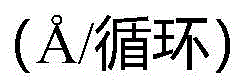
图3B是根据实施例3生长在WCN基材和钌元素第一膜上的含钼膜的电阻率(μΩ-cm)对比沉积压力(托)的图示。3B is a graphical representation of resistivity (μΩ-cm) versus deposition pressure (Torr) for a molybdenum-containing film grown on a WCN substrate and a first film of ruthenium according to Example 3. FIG.
图4是根据实施例4沉积在钌元素第一膜上的含钼膜的X射线光电子能谱(XPS)化学组成的图示。4 is a graphical representation of the X-ray photoelectron spectroscopy (XPS) chemical composition of a molybdenum-containing film deposited on a ruthenium first film according to Example 4. FIG.
图5A和图5B是沉积在钌元素第一膜上的含钼膜的扫描电子显微镜(SEM)图像。5A and 5B are scanning electron microscope (SEM) images of a molybdenum-containing film deposited on a first film of ruthenium.
图5C是沉积在Al2O3基材上的含钼膜的SEM图像。Figure 5C is an SEM image of a molybdenum-containing film deposited on an Al2O3 substrate.
图5D和图5E是沉积在WCN基材上的含钼膜的SEM图像。5D and 5E are SEM images of molybdenum-containing films deposited on WCN substrates.
图6A-图6C分别是具有直接沉积在通孔结构中的含钼膜的SiO2基材的通孔结构、通孔结构中的TiN衬层、以及沉积在通孔结构中的钼元素第一膜衬层的截面SEM图像。Figures 6A-6C are the through-hole structure of the SiO2 substrate with the molybdenum-containing film directly deposited in the through-hole structure, the TiN liner in the through-hole structure, and the molybdenum element deposited in the through-hole structure. Cross-sectional SEM image of the membrane liner.
图7A和图7B是具有直接沉积在TiN通孔结构中的含钼膜的TiN通孔结构的截面SEM图像。7A and 7B are cross-sectional SEM images of a TiN via structure with a molybdenum-containing film deposited directly in the TiN via structure.
图7C和图7D是在沉积在TiN通孔结构中的钼元素第一膜衬层上沉积的含钼膜的截面SEM图像。7C and 7D are cross-sectional SEM images of a molybdenum-containing film deposited on a molybdenum-element first film liner deposited in a TiN via structure.
具体实施方式Detailed ways
在描述本发明技术的若干示例性实施方案之前,应当理解,本技术不限于在以下描述中阐述的构造或方法步骤的细节。本发明技术能够具有其他实施方案并且能够以不同方式来实践或实施。Before describing several exemplary embodiments of the inventive technology, it is to be understood that the technology is not limited to the details of construction or method steps set forth in the following description. The inventive technique is capable of other embodiments and of being practiced or carried out in various ways.
诸位发明人已经发现用于改进钼沉积的包括两个步骤的方法和由其形成的膜。这些方法可以包括第一步骤,其包括使用第一含金属前体和共反应物在基材上沉积第一膜或衬层,比如元素含钼膜或元素含钌膜。在第二步骤中,可以通过递送含钼前体和还原剂在该第一膜上形成第二膜(即,含钼膜)。有利地,本文所述的方法可以在较低温度下进行,例如,该第一步骤可以在小于或等于400℃的温度下进行。此外,可以实现具有低电阻率的共形含钼第二膜。The inventors have discovered a two-step process for improving molybdenum deposition and films formed therefrom. These methods may include a first step comprising depositing a first film or liner, such as an elemental molybdenum-containing film or an elemental ruthenium-containing film, on a substrate using a first metal-containing precursor and a co-reactant. In a second step, a second film (ie, a molybdenum-containing film) may be formed on the first film by delivering a molybdenum-containing precursor and a reducing agent. Advantageously, the methods described herein may be performed at lower temperatures, for example, the first step may be performed at a temperature less than or equal to 400°C. Furthermore, a conformal molybdenum-containing second film with low resistivity can be achieved.
定义definition
出于本发明和其权利要求的目的,周期表族的编号方案是根据IUPAC元素周期表。For the purposes of this invention and its claims, the numbering scheme for the Periodic Table Groups is according to the IUPAC Periodic Table of the Elements.
如在短语比如″A和/或B″中使用的术语″和/或″在本文旨在包括″A和B″、″A或B″、″A″和″B″。The term "and/or" as used in phrases such as "A and/or B" is intended herein to include "A and B", "A or B", "A" and "B".
术语″取代基″、″基团(radical)″、″基团(group)″和″部分″可以可互换使用。The terms "substituent", "radical", "group" and "moiety" are used interchangeably.
如本文所用,术语″含金属络合物″(或更简单地,″络合物″)和″前体″可互换使用,并且是指可用于通过沉积工艺(例如像ALD或CVD)制备含金属膜的含金属分子或化合物。含金属络合物可以沉积在、吸附至、分解在、递送至和/或通过基材或其表面,以形成含金属膜。As used herein, the terms "metal-containing complex" (or more simply, "complex") and "precursor" are used interchangeably and refer to A metal-containing molecule or compound containing a metal film. The metal-containing complex can be deposited on, adsorbed to, decomposed on, delivered to and/or passed through the substrate or its surface to form a metal-containing film.
如本文所用,术语″含金属膜″不仅包括如下文更全面定义的元素金属膜,而且包括含有金属连同一种或多种元素的膜,例如金属氮化物膜、金属硅化物膜、金属碳化物膜等。As used herein, the term "metal-containing film" includes not only elemental metal films as defined more fully below, but also films containing metal together with one or more elements, such as metal nitride films, metal suicide films, metal carbide films film etc.
如本文所用,术语″元素金属″、″元素金属膜″和″纯金属膜″可互换使用,并且是指由纯金属组成或基本上由纯金属组成的膜。例如,元素金属膜可以包括100%纯金属,或者元素金属膜可以包括至少约70%、至少约80%、至少约90%、至少约95%、至少约96%、至少约97%、至少约98%、至少约99%、至少约99.9%或至少约99.99%纯金属连同一种或多种杂质。然而,包含元素金属的膜区别于包含金属和非金属(例如,C、N)二元膜和包含金属和两种非金属(例如,C、N)的三元膜,尽管包含元素金属的膜可以包含一定量的杂质。除非上下文另有规定,否则术语″金属膜″应被解释为意指元素金属膜。As used herein, the terms "elemental metal", "elemental metal film" and "pure metal film" are used interchangeably and refer to a film consisting of or consisting essentially of a pure metal. For example, the elemental metal film can comprise 100% pure metal, or the elemental metal film can comprise at least about 70%, at least about 80%, at least about 90%, at least about 95%, at least about 96%, at least about 97%, at least about 98%, at least about 99%, at least about 99.9%, or at least about 99.99% pure metal with one or more impurities. However, films containing elemental metals are distinguished from binary films containing a metal and a metalloid (e.g., C, N) and ternary films containing a metal and two nonmetals (e.g., C, N), although films containing an elemental metal A certain amount of impurities may be included. Unless the context dictates otherwise, the term "metal film" should be construed to mean an elemental metal film.
如本文所用,术语″沉积工艺″和″热沉积″用于指任何类型的沉积技术,包括但不限于CVD和ALD。在各实施方案中,CVD可采取常规(即,连续流)CVD、液体注射CVD、等离子体增强CVD或光辅助CVD的形式。CVD也可以采取脉冲技术即脉冲CVD的形式。ALD用于通过气化和/或使本文披露的至少一种金属络合物通过基材表面来形成含金属膜。对于常规ALD工艺,参见例如George S.M.等人,J.Phys.Chem.[物理化学杂志],1996,100,13121-13131。在其他实施方案中,ALD可采取常规(即,脉冲注射)ALD、液体注射ALD、光辅助ALD、等离子体辅助ALD或等离子体增强ALD的形式。术语″气相沉积工艺″进一步包括Chemical VapourDeposition:Precursors,Processes,and Applications[化学气相沉积:前体、工艺及应用];Jones,A.C.;Hitchman,M.L.编辑.The Royal Society of Chemistry:Cambridge[英国皇家化学学会:剑桥],2009;第1章,第1-36页中描述的各种气相沉积技术。As used herein, the terms "deposition process" and "thermal deposition" are used to refer to any type of deposition technique, including but not limited to CVD and ALD. In various embodiments, CVD may take the form of conventional (ie, continuous flow) CVD, liquid injection CVD, plasma enhanced CVD, or light assisted CVD. CVD can also take the form of a pulsed technique, pulsed CVD. ALD is used to form metal-containing films by vaporizing and/or passing at least one metal complex disclosed herein over a substrate surface. For conventional ALD processes, see eg George S.M. et al., J. Phys. Chem., 1996, 100, 13121-13131. In other embodiments, ALD may take the form of conventional (ie, pulse injection) ALD, liquid injection ALD, light-assisted ALD, plasma-assisted ALD, or plasma-enhanced ALD. The term "vapor deposition process" further includes Chemical VapourDeposition: Precursors, Processes, and Applications [chemical vapor deposition: precursor, process and application]; Jones, A.C.; Hitchman, M.L. ed. The Royal Society of Chemistry: Cambridge [Royal Chemical Society: Cambridge], 2009; Chapter 1, various vapor deposition techniques described in pp. 1-36.
形成含钼膜的方法Method for forming molybdenum-containing film
如上文所陈述,本文提供了形成含钼(含Mo)膜的方法。该方法可以包括第一步骤和第二步骤。在任何实施方案中,第一步骤可以包括在基材表面上形成第一膜(或衬层)。第一膜可以包含元素金属。例如,元素金属可以选自由以下组成的组:钨(W)、钼(Mo)、钌(Ru)、钴(Co)、及其组合。在任何实施方案中,元素金属可以是钨(W)、钼(Mo)、或其组合。在另一个实施方案中,元素金属可以选自由以下组成的组:钌(Ru)、钴(Co)、及其组合。As stated above, provided herein are methods of forming molybdenum (Mo-containing) films. The method may include a first step and a second step. In any embodiment, the first step can include forming a first film (or liner) on the surface of the substrate. The first film may contain elemental metal. For example, the elemental metal may be selected from the group consisting of tungsten (W), molybdenum (Mo), ruthenium (Ru), cobalt (Co), and combinations thereof. In any embodiment, the elemental metal can be tungsten (W), molybdenum (Mo), or combinations thereof. In another embodiment, the elemental metal may be selected from the group consisting of ruthenium (Ru), cobalt (Co), and combinations thereof.
包含元素金属(例如,Mo、Ru)的第一膜具有的通过X射线荧光(XRF)测量的厚度可以为大于或等于约1nm、大于或等于约2nm、大于或等于约4nm、大于或等于约6nm、大于或等于约8nm、大于或等于约10nm、大于或等于约12nm、或约15nm;或从约1nm至约15nm、约2nm至约12nm、约2nm至约10nm、或约6nm至约12nm。The first film comprising an elemental metal (e.g., Mo, Ru) may have a thickness measured by X-ray fluorescence (XRF) of about 1 nm or more, about 2 nm or more, about 4 nm or more, about 4 nm or more, or about 6 nm, greater than or equal to about 8 nm, greater than or equal to about 10 nm, greater than or equal to about 12 nm, or about 15 nm; or from about 1 nm to about 15 nm, about 2 nm to about 12 nm, about 2 nm to about 10 nm, or about 6 nm to about 12 nm .
另外或可替代地,包含元素金属(例如,Mo、Ru)的第一膜具有的电导率可以为小于或等于约300μΩ.cm、小于或等于约250μΩ.cm、小于或等于约200μΩ.cm、小于或等于约175μΩ.cm、小于或等于约150μΩ.cm、小于或等于约125μΩ.cm、或100μΩ.cm;或从约100μΩ.cm至约300μΩ.cm、约100μΩ.cm至约250μΩ.cm、约100μΩ.cm至约200μΩ.cm、或约100μΩ.cm至约150μΩ.cm。Additionally or alternatively, the first film comprising elemental metal (e.g., Mo, Ru) may have an electrical conductivity of about 300 μΩ.cm or less, about 250 μΩ.cm or less, about 200 μΩ.cm or less, Less than or equal to about 175 μΩ.cm, less than or equal to about 150 μΩ.cm, less than or equal to about 125 μΩ.cm, or 100 μΩ.cm; or from about 100 μΩ.cm to about 300 μΩ.cm, about 100 μΩ.cm to about 250 μΩ.cm , about 100 μΩ.cm to about 200 μΩ.cm, or about 100 μΩ.cm to about 150 μΩ.cm.
在任何实施方案中,热沉积第一膜包括将第一含金属前体和共反应物递送至基材。第一含金属前体可以是任何合适的含钨前体、含钼前体、含钌前体、含钴前体、或其组合。含钼前体的实例包括但不限于钼卤化物、钼卤氧化物、六羰基钼、或其组合。合适的钼卤化物包括但不限于MoCl5或MoF6。合适的钼卤氧化物包括但不限于MoOCl4或MoO2Cl2。钨前体的实例包括但不限于WCl5、WF6、和W(CO)6。含钌前体的实例包括但不限于零价钌(Ru(0))前体,比如但不限于η4-2,3-二甲基丁二烯三羰基钌((DMBD)Ru(CO)3)和(乙基苄基)(1-乙基-1,4-环己二烯基)(EtBz)Ru(EtCHD)。在一些实施方案中,第一膜通过将如本文所述的第一含金属前体(包括钼卤化物的)和如下文进一步描述的共反应物递送至基材来形成。在其他实施方案中,第一膜通过将如本文所述的第一含金属前体(包括零价钌前体)和如下文进一步描述的共反应物递送至基材来形成。In any embodiment, thermally depositing the first film includes delivering the first metal-containing precursor and co-reactants to the substrate. The first metal-containing precursor can be any suitable tungsten-containing precursor, molybdenum-containing precursor, ruthenium-containing precursor, cobalt-containing precursor, or combinations thereof. Examples of molybdenum-containing precursors include, but are not limited to, molybdenum halides, molybdenum oxyhalides, molybdenum hexacarbonyl, or combinations thereof. Suitable molybdenum halides include, but are not limited to, MoCl 5 or MoF 6 . Suitable molybdenum oxyhalides include , but are not limited to, MoOCl4 or MoO2Cl2 . Examples of tungsten precursors include, but are not limited to, WCl 5 , WF 6 , and W(CO) 6 . Examples of ruthenium-containing precursors include, but are not limited to, zero-valent ruthenium (Ru(0)) precursors, such as but not limited to η4-2,3-dimethylbutadieneruthenium tricarbonyl ((DMBD)Ru(CO)3 ) and (ethylbenzyl)(1-ethyl-1,4-cyclohexadienyl)(EtBz)Ru(EtCHD). In some embodiments, the first film is formed by delivering a first metal-containing precursor (comprising molybdenum halide) as described herein and co-reactants as described further below to the substrate. In other embodiments, the first film is formed by delivering to the substrate a first metal-containing precursor as described herein, including a zero-valent ruthenium precursor, and a co-reactant as further described below.
在各个方面,共反应物可以选自由以下组成的组:氮等离子体、氨等离子体、氧气、空气、水、H2O2、臭氧、NH3、H2、i-PrOH、t-BuOH、N2O、氨气、烷基肼、肼、臭氧、1,4-二-三甲基甲硅烷基-2-甲基-环己-2,5-二烯(CHD)、1-三甲基甲硅烷基环己-2,5-二烯、1,4-双-三甲基甲硅烷基-1,4-二氢比嗪(DHP)、以及其任意两种或更多种的组合。在各个方面,烷基肼可以是C1-C8-烷基肼、C1-C4-烷基肼或C1-C2-烷基肼。例如,烷基肼可以是甲基肼、乙基肼、丙基肼或丁基肼(包括叔丁基肼)。In various aspects, co-reactants may be selected from the group consisting of nitrogen plasma, ammonia plasma, oxygen, air, water, H2O2 , ozone, NH3 , H2 , i-PrOH, t-BuOH, N 2 O, ammonia, alkylhydrazine, hydrazine, ozone, 1,4-bis-trimethylsilyl-2-methyl-cyclohexa-2,5-diene (CHD), 1-trimethylsilyl Silylcyclohexa-2,5-diene, 1,4-bis-trimethylsilyl-1,4-dihydropyrazine (DHP), and any combination of two or more thereof . In various aspects, the alkylhydrazine may be a C 1 -C 8 -alkylhydrazine, a C 1 -C 4 -alkylhydrazine or a C 1 -C 2 -alkylhydrazine. For example, the alkylhydrazine can be methylhydrazine, ethylhydrazine, propylhydrazine, or butylhydrazine (including t-butylhydrazine).
在任何实施方案中,该方法的第二步骤可以包括在第一膜的至少一部分上热沉积第二膜(也称为″含钼膜″)。热沉积第二膜包括将含钼前体和还原剂递送至基材。第二膜可以包含含钼前体与还原剂的反应产物。第二膜还可以任选地包含含钼前体的解离部分、还原剂的解离部分、或其组合。含钼前体可以是例如钼卤化物、钼卤氧化物、或其组合。钼卤化物可以是MoCl5或MoF6,并且钼卤氧化物可以是MoOCl4或MoO2Cl2。还原剂可以是任何合适的还原剂,包括但不限于氢气、氢等离子体、或其组合。本文预期第一膜和第二膜可以各自是连续或不连续的层。In any embodiment, the second step of the method can include thermally depositing a second film (also referred to as a "molybdenum-containing film") on at least a portion of the first film. Thermally depositing the second film includes delivering a molybdenum-containing precursor and a reducing agent to the substrate. The second membrane may comprise the reaction product of a molybdenum-containing precursor and a reducing agent. The second membrane may also optionally include a dissociated portion of a molybdenum-containing precursor, a dissociated portion of a reducing agent, or a combination thereof. The molybdenum-containing precursor can be, for example, molybdenum halides, molybdenum oxyhalides, or combinations thereof. The molybdenum halide may be MoCl 5 or MoF 6 , and the molybdenum oxyhalide may be MoOCl 4 or MoO 2 Cl 2 . The reducing agent may be any suitable reducing agent including, but not limited to, hydrogen gas, hydrogen plasma, or combinations thereof. It is contemplated herein that the first film and the second film may each be continuous or discontinuous layers.
有利地,本文所述的方法可以产生具有较低电阻率的第二膜。例如,第二膜具有的电阻率可以为小于或等于约300μΩ-cm、小于或等于约250μΩ-cm、小于或等于约200μΩ-cm、小于或等于约175μΩ-cm、小于或等于约150μΩ-cm、小于或等于约125μΩ-cm、小于或等于约100μΩ-cm、小于或等于约75μΩ-cm、小于或等于约50μΩ-cm;或约30μΩ-cm;或从约30μΩ-cm至约300μΩ-cm、约30μΩ-cm至约200μΩ-cm、约30μΩ-cm至约175μΩ-cm、约30μΩ-cm至约150μΩ-cm、约30μΩ-cm至约100μΩ-cm、或约30μΩ-cm至约50μΩ-cm。Advantageously, the methods described herein can produce a second film with lower resistivity. For example, the second film can have a resistivity of about 300 μΩ-cm or less, about 250 μΩ-cm or less, about 200 μΩ-cm or less, about 175 μΩ-cm or less, about 150 μΩ-cm or less , less than or equal to about 125 μΩ-cm, less than or equal to about 100 μΩ-cm, less than or equal to about 75 μΩ-cm, less than or equal to about 50 μΩ-cm; or about 30 μΩ-cm; or from about 30 μΩ-cm to about 300 μΩ-cm , about 30 μΩ-cm to about 200 μΩ-cm, about 30 μΩ-cm to about 175 μΩ-cm, about 30 μΩ-cm to about 150 μΩ-cm, about 30 μΩ-cm to about 100 μΩ-cm, or about 30 μΩ-cm to about 50 μΩ-cm cm.
在任何实施方案中,第一步骤、第二步骤或、其组合可以包括使用等离子体。使用等离子体可以例如增强第一含金属前体、含钼前体、共反应物和还原剂中的一种或多种的反应。另外或可替代地,使用等离子体可以改善膜品质。In any embodiment, the first step, the second step, or a combination thereof can include the use of a plasma. Using a plasma may, for example, enhance the reaction of one or more of the first metal-containing precursor, molybdenum-containing precursor, co-reactant, and reducing agent. Additionally or alternatively, film quality can be improved using plasma.
在一些实施方案中,可以将第一含金属前体、含钼前体、或其组合溶解在合适的溶剂(如烃或胺溶剂)中以促进气相沉积工艺。适当的烃溶剂包括但不限于脂族烃,比如己烷、庚烷和壬烷;芳族烃,比如甲苯和二甲苯;和脂族醚和环状醚,比如二甘醇二甲醚、三甘醇二甲醚和四甘醇二甲醚。适当的胺溶剂的实例包括但不限于辛胺和N,N-二甲基十二烷胺。例如,可以将第一含金属前体、含钼前体、或其组合溶解在甲苯中,以产生浓度为从约0.05M至约1M的溶液。In some embodiments, the first metal-containing precursor, the molybdenum-containing precursor, or a combination thereof can be dissolved in a suitable solvent, such as a hydrocarbon or amine solvent, to facilitate the vapor deposition process. Suitable hydrocarbon solvents include, but are not limited to, aliphatic hydrocarbons such as hexane, heptane, and nonane; aromatic hydrocarbons such as toluene and xylene; and aliphatic and cyclic ethers such as diglyme, tris Glyme and tetraglyme. Examples of suitable amine solvents include, but are not limited to, octylamine and N,N-dimethyldodecylamine. For example, the first metal-containing precursor, the molybdenum-containing precursor, or a combination thereof can be dissolved in toluene to produce a solution having a concentration of from about 0.05M to about 1M.
在替代性实施方案中,可以将第一含金属前体、含钼前体、或其组合″纯净地″(未被载气稀释)递送至基材表面。因此,本文披露的且在这些方法中使用的前体可以是液体、固体或气态的。典型地,钌前体和钼前体在环境温度与足以允许蒸气一致地传输至处理室的蒸气压下(例如在较高温度下)是液体或固体。In alternative embodiments, the first metal-containing precursor, molybdenum-containing precursor, or combination thereof may be delivered "neat" (undiluted by a carrier gas) to the substrate surface. Accordingly, the precursors disclosed herein and used in these methods may be liquid, solid or gaseous. Typically, the ruthenium and molybdenum precursors are liquids or solids at ambient temperatures and vapor pressures sufficient to allow consistent transport of the vapors to the processing chamber (eg, at higher temperatures).
在各个方面,基材表面可以包含金属、介电材料、金属氧化物材料、或其组合。介电材料可以是低κ介电质或高κ介电质。合适的介电材料的实例包括但不限于SiO2、SiON、Si3N4、及其组合。合适的金属氧化物材料的实例包括但不限于HfO2、ZrO2、SiO2、Al2O3、TiO2、及其组合。其他合适的基材材料包括但不限于晶体硅、Si(100)、Si(111)、玻璃、应变硅、绝缘体上硅(SOI)、一种或多种掺杂的硅或氧化硅(例如,碳掺杂的氧化硅)、锗、砷化镓、钽、氮化钽、铝、铜、钌、钛、氮化钛、钨、氮化钨、碳氮化钨(WCN)、以及纳米级设备制造工艺(例如,半导体制造工艺)中通常遇到的任何数量的其他基材。在一些实施方案中,基材可以包括二氧化硅、氧化铝、氮化钛、氮化钨、碳氮化钨、和氮化钽中的一种或多种。如将由本领域技术人员所理解的,可将基材暴露于预处理工艺以抛光、蚀刻、还原、氧化、羟基化、退火和/或烘烤基材表面。在一个或多个实施方案中,基材表面包括氢封端的表面。In various aspects, the substrate surface can comprise a metal, a dielectric material, a metal oxide material, or combinations thereof. The dielectric material can be a low-κ dielectric or a high-κ dielectric. Examples of suitable dielectric materials include, but are not limited to, SiO 2 , SiON, Si 3 N 4 , and combinations thereof. Examples of suitable metal oxide materials include, but are not limited to, HfO 2 , ZrO 2 , SiO 2 , Al 2 O 3 , TiO 2 , and combinations thereof. Other suitable substrate materials include, but are not limited to, crystalline silicon, Si(100), Si(111), glass, strained silicon, silicon-on-insulator (SOI), one or more doped silicon, or silicon oxide (e.g., carbon-doped silicon oxide), germanium, gallium arsenide, tantalum, tantalum nitride, aluminum, copper, ruthenium, titanium, titanium nitride, tungsten, tungsten nitride, tungsten carbonitride (WCN), and nanoscale devices Any number of other substrates commonly encountered in a fabrication process (eg, a semiconductor fabrication process). In some embodiments, the substrate may include one or more of silicon dioxide, aluminum oxide, titanium nitride, tungsten nitride, tungsten carbonitride, and tantalum nitride. As will be understood by those skilled in the art, the substrate may be exposed to pretreatment processes to polish, etch, reduce, oxidize, hydroxylate, anneal, and/or bake the substrate surface. In one or more embodiments, the substrate surface includes a hydrogen terminated surface.
本文提供的方法,特别是热沉积第一膜和第二膜,涵盖各种类型的ALD和CVD工艺,比如但不限于连续或脉冲注射工艺、液体注射工艺、光辅助工艺、等离子体辅助和等离子体增强工艺。为清晰起见,本发明技术的方法尤其包括直接液体注射工艺。例如,在直接液体注射CVD(″DLI-CVD″)中,可将固体或液体金属络合物溶解在合适的溶剂中且将由此形成的溶液注入气化室中,该气化室作为气化金属络合物的装置。然后将气化的金属络合物传输/递送至基材表面。一般而言,DLI-CVD在其中金属络合物表现出相对低的挥发性或以其他方式难以气化的那些情况下可以是特别有用的。例如,第一步骤和第二步骤独立地可以是ALD或CVD工艺。The methods provided herein, in particular thermally depositing the first and second films, cover various types of ALD and CVD processes such as but not limited to continuous or pulsed injection processes, liquid injection processes, light assisted processes, plasma assisted and plasma body enhancement process. For clarity, the methods of the present technology include, inter alia, direct liquid injection processes. For example, in direct liquid injection CVD ("DLI-CVD"), a solid or liquid metal complex can be dissolved in a suitable solvent and the resulting solution injected into a vaporization chamber that acts as a gasification chamber. Metal complex device. The vaporized metal complex is then transported/delivered to the substrate surface. In general, DLI-CVD can be particularly useful in those cases where metal complexes exhibit relatively low volatility or are otherwise difficult to vaporize. For example, the first step and the second step independently may be ALD or CVD processes.
在一些实施方案中,常规或脉冲CVD通过使本文披露的所有第一含金属前体和/或含钼前体在基材表面上气化和/或通过基材表面而用于形成如本文所述的第一膜和/或如本文所述的第二膜。对于常规CVD工艺,参见例如Smith,Donald(1995).Thin-FilmDeposition:Principles and Practice[薄膜沉积::原理与实践].McGraw-Hill[麦格劳希尔集团]。In some embodiments, conventional or pulsed CVD is used to form all of the first metal-containing precursors and/or molybdenum-containing precursors disclosed herein on and/or through the substrate surface to form The first film as described and/or the second film as described herein. For conventional CVD processes see eg Smith, Donald (1995). Thin-Film Deposition: Principles and Practice. McGraw-Hill.
在其他实施方案中,光辅助CVD通过使本文披露的所有第一含金属前体和/或含钼前体在基材表面上气化和/或通过基材表面而用于形成如本文所述的第一膜和/或如本文所述的第二膜。In other embodiments, light-assisted CVD is used to form any of the first metal-containing precursors and/or molybdenum-containing precursors disclosed herein by vaporizing on and/or passing through the substrate surface to form The first film and/or the second film as described herein.
在一个实施方案中,本文披露的第一含金属前体和/或含钼前体的CVD生长条件包括但不限于:In one embodiment, the CVD growth conditions for the first metal-containing precursor and/or molybdenum-containing precursor disclosed herein include, but are not limited to:
(1)基材温度:50℃-600℃(1) Substrate temperature: 50°C-600°C
(2)蒸发器温度(金属前体温度):0-120℃(2) Evaporator temperature (metal precursor temperature): 0-120°C
(3)反应器压力:0-200托(3) Reactor pressure: 0-200 Torr
(4)氩气或氮气载气流速:0-100sccm(4) Argon or nitrogen carrier gas flow rate: 0-100sccm
(5)氧气流速:0-100sccm(5) Oxygen flow rate: 0-100sccm
(6)氢气流速:0-50sccm(6) Hydrogen flow rate: 0-50sccm
(7)金属前体脉冲时间:0.01-5秒(7) Metal precursor pulse time: 0.01-5 seconds
(8)吹扫气体脉冲时间:1-30秒(8) Purge gas pulse time: 1-30 seconds
(9)运行时间:将根据期望膜厚度变化(9) Running time: Will vary according to desired film thickness
在另一个实施方案中,光辅助CVD通过使本文披露的所有第一含金属前体和/或含钼前体在基材表面上气化和/或通过基材表面而用于形成含金属膜。In another embodiment, light-assisted CVD is used to form a metal-containing film by vaporizing all of the first metal-containing precursors and/or molybdenum-containing precursors disclosed herein on and/or through the substrate surface .
在一些实施方案中,常规(即,脉冲注射)ALD通过使本文披露的所有第一含金属前体和/或含钼前体在基材表面上气化和/或通过基材表面而用于形成如本文所述的第一膜和/或如本文所述的第二膜。对于常规ALD工艺,参见例如George S.M.等人,J.Phys.Chem.[物理化学杂志],1996,100,13121-13131。In some embodiments, conventional (i.e., pulse injection) ALD is used by vaporizing all of the first metal-containing precursors and/or molybdenum-containing precursors disclosed herein on and/or through the substrate surface. A first film as described herein and/or a second film as described herein is formed. For conventional ALD processes, see eg George S.M. et al., J. Phys. Chem., 1996, 100, 13121-13131.
在其他实施方案中,液体注射ALD通过使本文披露的所有第一含金属前体和/或含钼前体在基材表面上气化和/或通过基材表面而用于形成如本文所述的第一膜和/或如本文所述的第二膜,其中将前述前体通过直接液体注射而不是通过鼓泡器抽吸蒸气来递送至反应室。对于液体注射ALD工艺,参见例如PotterR.J.等人,Chem.Vap.Deposition[化学气相沉积],2005,11(3),159-169。In other embodiments, liquid injection ALD is used to form any of the first metal-containing precursors and/or molybdenum-containing precursors disclosed herein by vaporizing on and/or passing through the substrate surface to form The first film of and/or the second film as described herein, wherein the aforementioned precursor is delivered to the reaction chamber by direct liquid injection rather than by pumping vapor through a bubbler. For liquid injection ALD processes see eg Potter R.J. et al., Chem. Vap. Deposition, 2005, 11(3), 159-169.
在其他实施方案中,光辅助ALD通过使本文披露的所有第一含金属前体和/或含钼前体在基材表面上气化和/或通过基材表面而用于形成如本文所述的第一膜和/或如本文所述的第二膜。对于光辅助ALD工艺,参见例如美国专利号4,581,249。In other embodiments, light-assisted ALD is used by vaporizing all of the first metal-containing precursors and/or molybdenum-containing precursors disclosed herein on and/or through the substrate surface to form The first film and/or the second film as described herein. For light-assisted ALD processes, see, eg, US Patent No. 4,581,249.
在其他实施方案中,等离子体辅助或等离子体增强ALD通过使本文披露的所有第一含金属前体和/或含钼前体在基材表面上气化和/或通过基材表面而用于形成如本文所述的第一膜和/或如本文所述的第二膜。In other embodiments, plasma-assisted or plasma-enhanced ALD is used by vaporizing all of the first metal-containing precursors and/or molybdenum-containing precursors disclosed herein on and/or through the substrate surface A first film as described herein and/or a second film as described herein is formed.
本文披露的第一含金属前体和/或含钼前体的ALD生长条件的实例包括但不限于:Examples of ALD growth conditions for the first metal-containing precursor and/or molybdenum-containing precursor disclosed herein include, but are not limited to:
(1)基材温度:200℃-700℃(1) Substrate temperature: 200°C-700°C
(2)蒸发器温度(金属前体温度):20℃-150℃(2) Evaporator temperature (metal precursor temperature): 20°C-150°C
(3)反应器压力:0.01-200托(3) Reactor pressure: 0.01-200 Torr
(4)氩气或氮气载气流速:0-100sccm(4) Argon or nitrogen carrier gas flow rate: 0-100sccm
(5)反应性气体(共反应物或还原剂)脉冲时间:0.01-30秒(5) Reactive gas (co-reactant or reducing agent) pulse time: 0.01-30 seconds
(6)金属前体脉冲时间:0.01-10秒(6) Metal precursor pulse time: 0.01-10 seconds
(7)吹扫气体脉冲时间:1-10秒(7) Purge gas pulse time: 1-10 seconds
(8)脉冲顺序(金属络合物/吹扫/反应性气体/吹扫):将根据室尺寸变化。(8) Pulse sequence (metal complex/purge/reactive gas/purge): will vary according to chamber size.
(9)循环数:将根据期望膜厚度变化,例如1-100次循环。(9) Number of cycles: will vary according to the desired film thickness, eg 1-100 cycles.
选择本文所述的方法的反应时间、温度和压力以在基材表面上产生第一膜和第二膜。将基于第一含金属前体和含钼前体的特性来选择反应条件。第一和第二步骤可以在大气压下进行,但更通常在减压下进行。例如,在第一步骤期间,热沉积第一膜可以在以下的压力下进行:大于或等于约0.01托、大于或等于约0.1托、大于或等于约0.5托、大于或等于约1托、大于或等于约2托、大于或等于约4托、大于或等于约6托、大于或等于约8托、或约10托;或从约0.01托至约10托、约0.1托至约8托、约0.1托至约6托、或约2托至约6托。另外或可替代地,在第二步骤期间,热沉积第二膜可以在以下的压力下进行:大于或等于约1托、大于或等于约5托、大于或等于约10托、大于或等于约25托、大于或等于约50托、大于或等于约75托、大于或等于约100托、大于或等于约150托、或约200托;或从约1托至约200托、约1托至约100托、约1托至约50托、或约5托至约10托。The reaction times, temperatures and pressures of the methods described herein are selected to produce the first and second films on the surface of the substrate. Reaction conditions will be selected based on the properties of the first metal-containing precursor and the molybdenum-containing precursor. The first and second steps can be carried out at atmospheric pressure, but more usually under reduced pressure. For example, during the first step, thermally depositing the first film may be performed at a pressure of greater than or equal to about 0.01 Torr, greater than or equal to about 0.1 Torr, greater than or equal to about 0.5 Torr, greater than or equal to about 1 Torr, greater than Or equal to about 2 Torr, greater than or equal to about 4 Torr, greater than or equal to about 6 Torr, greater than or equal to about 8 Torr, or about 10 Torr; or from about 0.01 Torr to about 10 Torr, about 0.1 Torr to about 8 Torr, From about 0.1 Torr to about 6 Torr, or from about 2 Torr to about 6 Torr. Additionally or alternatively, during the second step, thermally depositing the second film may be performed at a pressure of greater than or equal to about 1 Torr, greater than or equal to about 5 Torr, greater than or equal to about 10 Torr, greater than or equal to about 25 Torr, greater than or equal to about 50 Torr, greater than or equal to about 75 Torr, greater than or equal to about 100 Torr, greater than or equal to about 150 Torr, or about 200 Torr; or from about 1 Torr to about 200 Torr, about 1 Torr to About 100 Torr, about 1 Torr to about 50 Torr, or about 5 Torr to about 10 Torr.
第一含金属前体和含钼前体的蒸气压应该足够高以在此类应用中实用。基材温度应该足够低以保持表面处金属原子之间的键完整并且防止气态反应物的热分解。然而,基材温度还应足够高以保持源材料(即,反应物)处于气相且为表面反应提供足够的活化能。适当的温度取决于各种参数,包括所使用的特定的第一含金属前体和含钼前体以及压力。在一些实施方案中,在第一步骤期间,热沉积第一膜可以在较低温度,例如以下的第一温度下进行:小于或等于约500℃、小于或等于约450℃、小于或等于约400℃、小于或等于约350℃、小于或等于约300℃、小于或等于约290℃、小于或等于约275℃、小于或等于约250℃、小于或等于约225℃、或约200℃;或从约200℃至约500℃、约200℃至约400℃、约200℃至约300℃、或约225℃至约290℃。另外或可替代地,在第二步骤期间,热沉积第二膜可以在较高温度,例如以下的第二温度下进行:大于或等于约300℃、大于或等于约350℃、大于或等于约400℃、大于或等于约450℃、大于或等于约500℃、大于或等于约550℃、大于或等于约600℃、大于或等于约650℃、或约700℃;或从约300℃至约700℃、约400℃至约600℃、约400℃至约500℃、或约400℃至约450℃。前述温度应理解为表示基材温度。在任何实施方案中,第一步骤、第二步骤、或两者都可以在惰性气氛中(例如在氩气气氛中)进行。The vapor pressures of the first metal-containing precursor and the molybdenum-containing precursor should be high enough to be practical in such applications. The substrate temperature should be low enough to keep the bonds between metal atoms at the surface intact and to prevent thermal decomposition of the gaseous reactants. However, the substrate temperature should also be high enough to keep the source materials (ie, reactants) in the gas phase and provide sufficient activation energy for the surface reactions. The appropriate temperature depends on various parameters, including the particular first metal-containing precursor and molybdenum-containing precursor used and the pressure. In some embodiments, during the first step, thermally depositing the first film may be performed at a lower temperature, such as a first temperature of less than or equal to about 500°C, less than or equal to about 450°C, less than or equal to about 400°C, less than or equal to about 350°C, less than or equal to about 300°C, less than or equal to about 290°C, less than or equal to about 275°C, less than or equal to about 250°C, less than or equal to about 225°C, or about 200°C; Or from about 200°C to about 500°C, from about 200°C to about 400°C, from about 200°C to about 300°C, or from about 225°C to about 290°C. Additionally or alternatively, during the second step, thermally depositing the second film may be performed at a higher temperature, such as a second temperature of greater than or equal to about 300°C, greater than or equal to about 350°C, greater than or equal to about 400°C, greater than or equal to about 450°C, greater than or equal to about 500°C, greater than or equal to about 550°C, greater than or equal to about 600°C, greater than or equal to about 650°C, or about 700°C; or from about 300°C to about 700°C, about 400°C to about 600°C, about 400°C to about 500°C, or about 400°C to about 450°C. The aforementioned temperatures are understood to mean the temperature of the substrate. In any embodiment, the first step, the second step, or both can be performed in an inert atmosphere (eg, in an argon atmosphere).
用于本文披露的沉积方法中的具体的第一含金属前体和含钼前体的特性可以使用本领域已知的方法进行评价,允许选择用于反应的适当的温度和压力。一般而言,较低的分子量和增加配体球的转动熵的官能团的存在导致在典型的递送温度和增加的蒸气压下产生液体的熔点。The properties of the particular first metal-containing precursor and molybdenum-containing precursor used in the deposition methods disclosed herein can be evaluated using methods known in the art, allowing selection of appropriate temperatures and pressures for the reaction. In general, lower molecular weights and the presence of functional groups that increase the rotational entropy of the ligand spheres result in melting points that are liquids at typical delivery temperatures and increased vapor pressures.
用于沉积方法中的第一含金属前体和含钼前体将具有对足够的蒸气压、在选定的基材温度下足够的热稳定性和在基材表面上产生反应而在薄膜中没有不想要的杂质的足够的反应性的所有要求。足够的蒸气压确保源化合物分子以足够的浓度存在于基材表面处,以使完全的自饱和反应成为可能。足够的热稳定性确保源化合物将不会经受在薄膜中产生杂质的热分解。The first metal-containing precursor and molybdenum-containing precursor used in the deposition process will have sufficient vapor pressure, sufficient thermal stability at the selected substrate temperature, and a reaction on the substrate surface to produce a reaction in the thin film. All requirements of sufficient reactivity without unwanted impurities. Sufficient vapor pressure ensures that the source compound molecules are present at the substrate surface in sufficient concentration to enable a complete self-saturation reaction. Sufficient thermal stability ensures that the source compounds will not undergo thermal decomposition producing impurities in the film.
在另外的实施方案中,第一步骤,例如在ALD工艺期间,可以包括第一步骤循环,其包括将第一含金属前体、共反应物和吹扫气体递送至基材。例如,第一含金属前体可以脉冲0.01-1秒,接着递送吹扫气体2-15秒,接着脉冲共反应物0.001-3秒,并且接着递送吹扫气体2-15秒。第一步骤循环数的范围可以为从1至100次循环、1至75次循环、1至50次循环、1至25次循环、1至10次循环、或1至5次循环。In further embodiments, a first step, such as during an ALD process, may include a first step cycle that includes delivering a first metal-containing precursor, a co-reactant, and a purge gas to the substrate. For example, the first metal-containing precursor may be pulsed for 0.01-1 seconds, followed by delivery of purge gas for 2-15 seconds, followed by pulses of co-reactants for 0.001-3 seconds, and then delivery of purge gas for 2-15 seconds. The number of first step cycles can range from 1 to 100 cycles, 1 to 75 cycles, 1 to 50 cycles, 1 to 25 cycles, 1 to 10 cycles, or 1 to 5 cycles.
在各个方面,第二步骤,例如在脉冲CVD工艺期间,可以包括第二步骤循环,其包括递送含钼前体,例如将含钼前体在还原剂和吹扫气体的流中脉冲至基材。例如,含钼前体可以在还原剂和吹扫气体的流中脉冲约0.01-2秒,其中还原剂和吹扫气体流动约5-30秒。在一些实施方案中,与吹扫气体相比,还原剂可以流动更短的时间段。可替代地,在脉冲含钼前体之后,可以将还原剂、吹扫气体或两者递送至基材,例如持续约5-30秒。含钼前体的脉冲数通过含钼膜的期望厚度确定,例如脉冲的范围可以为从1至500次脉冲、1至300次脉冲、1至200次脉冲、1至100次脉冲、1至50次脉冲、或1至25次脉冲。In various aspects, the second step, such as during a pulsed CVD process, may comprise a second step cycle comprising delivering a molybdenum-containing precursor, such as pulsed molybdenum-containing precursor to the substrate in a flow of reducing agent and purge gas . For example, the molybdenum-containing precursor may be pulsed in a flow of reducing agent and purge gas for about 0.01-2 seconds, with the reducing agent and purge gas flowing for about 5-30 seconds. In some embodiments, the reductant may flow for a shorter period of time than the purge gas. Alternatively, the reducing agent, purge gas, or both may be delivered to the substrate after pulsing the molybdenum-containing precursor, eg, for about 5-30 seconds. The number of pulses of the molybdenum-containing precursor is determined by the desired thickness of the molybdenum-containing film, for example pulses can range from 1 to 500 pulses, 1 to 300 pulses, 1 to 200 pulses, 1 to 100 pulses, 1 to 50 pulses, or 1 to 25 pulses.
在替代性实施方案中,第二步骤,例如在ALD工艺期间,可以包括第二步骤循环,其包括将含钼前体、还原剂和吹扫气体递送至基材。例如,含钼前体可以脉冲0.01-2秒,接着递送吹扫气体2-10秒,接着脉冲还原剂2-15秒,并且接着递送吹扫气体2-10秒。第二步骤循环数的范围可以为从1至1000次循环、1至750次循环、1至500次循环、1至250次循环、1至100次循环、1至75次循环、1至50次循环、1至25次循环、1至10次循环、或1至5次循环。In an alternative embodiment, a second step, such as during an ALD process, may include a second step cycle that includes delivering a molybdenum-containing precursor, a reducing agent, and a purge gas to the substrate. For example, a molybdenum-containing precursor may be pulsed for 0.01-2 seconds, followed by delivery of purge gas for 2-10 seconds, followed by a pulse of reducing agent for 2-15 seconds, and then delivery of purge gas for 2-10 seconds. The number of second step cycles can range from 1 to 1000 cycles, 1 to 750 cycles, 1 to 500 cycles, 1 to 250 cycles, 1 to 100 cycles, 1 to 75 cycles, 1 to 50 cycles cycle, 1 to 25 cycles, 1 to 10 cycles, or 1 to 5 cycles.
在第一和第二步骤中可以使用任何合适的吹扫气体,例如氮气、氢气和惰性气体,例如氦气、氖气、氩气、氪气、氙气等。Any suitable purge gas may be used in the first and second steps, such as nitrogen, hydrogen and inert gases such as helium, neon, argon, krypton, xenon, and the like.
在另外的实施方案中,本文所述的方法可以在例如对于第一膜、第二膜或其组合提供共形生长的条件下进行。如本文所用,术语″共形生长″是指沉积工艺,其中膜沿着特征物(feature)的底表面、侧壁、上拐角和外部中的一项或多项以基本相同的厚度沉积。″共形生长″也旨在涵盖膜厚度的一些变化,例如,与特征物的底部或下部相比,在特征物的外部和/或在特征物的顶部或上部附近,膜可以更厚。In additional embodiments, the methods described herein can be performed, for example, under conditions that provide for conformal growth of the first film, the second film, or a combination thereof. As used herein, the term "conformal growth" refers to a deposition process in which a film is deposited at substantially the same thickness along one or more of the bottom surface, sidewalls, upper corners, and exterior of a feature. "Conformal growth" is also intended to encompass some variation in film thickness, for example, the film may be thicker on the exterior of the feature and/or near the top or upper portion of the feature compared to the bottom or lower portion of the feature.
第一步骤(例如,第一步骤循环)和/或第二步骤可以在共形条件下进行,使得发生共形生长。共形条件包括但不限于温度(例如,基材、第一含金属前体、含钼前体、吹扫气体、共反应物、还原剂等的温度),压力(例如,在递送第一含金属前体、含钼前体、吹扫气体、共反应物、还原剂等期间),所递送的第一含金属前体、含钼前体、吹扫气体、共反应物和/或还原剂的量,吹扫时长和/或所递送的吹扫气体的量。The first step (eg, first step cycle) and/or the second step can be performed under conformal conditions such that conformal growth occurs. Conformal conditions include, but are not limited to, temperature (e.g., the temperature of the substrate, first metal-containing precursor, molybdenum-containing precursor, purge gas, co-reactant, reducing agent, etc.), pressure (e.g., during delivery of the first metal precursor, molybdenum-containing precursor, purge gas, co-reactant, reducing agent, etc.), delivered first metal-containing precursor, molybdenum-containing precursor, purge gas, co-reactant, and/or reducing agent amount of purge gas, the duration of the purge and/or the amount of purge gas delivered.
在各个方面,基材可以包括其中可以发生共形生长的一个或多个特征物。在各个方面,特征物可以是通孔、沟槽、接触物、双镶嵌物等。特征物可具有非均匀宽度,也称为″凹角特征物″,或特征物可具有基本上均匀的宽度。In various aspects, a substrate can include one or more features in which conformal growth can occur. In various aspects, the features can be vias, trenches, contacts, dual damascenes, and the like. A feature may have a non-uniform width, also referred to as a "reentrant feature," or a feature may have a substantially uniform width.
在任何实施方案中,按照本文所述的方法生长的第一膜、第二膜或两者可以是基本上连续且共形的。在一个或多个实施方案中,按照本文所述的方法生长的第一膜、第二膜或两者可以基本上没有空隙和/或中空接缝。In any embodiment, the first film, the second film, or both grown according to the methods described herein can be substantially continuous and conformal. In one or more embodiments, the first film, the second film, or both grown according to the methods described herein can be substantially free of voids and/or hollow seams.
在各个方面,该方法可以包括在足以使第一含金属前体进行以下项的条件下将第一含金属前体、吹扫气体和至少一种共反应物递送至基材表面:(i)沉积元素金属并蚀刻第一膜的一部分;(ii)沉积元素金属,蚀刻第一膜的一部分并允许对第一膜的蚀刻部分进行解吸;或(iii)沉积元素金属并允许对第一膜的一部分进行解吸;使得第一膜共形地生长在基材的至少一部分上。在此类条件下,第一含金属前体可以经历以下中的一项或多项:(i)沉积元素金属并蚀刻第一膜的一部分;(ii)沉积元素金属、蚀刻第一膜的一部分并允许对第一膜的蚀刻部分进行解吸;或(iii)沉积元素金属并允许对第一膜的一部分进行解吸。另外或可替代地,共反应物可以沉积元素金属。In various aspects, the method can include delivering the first metal-containing precursor, the purge gas, and at least one co-reactant to the surface of the substrate under conditions sufficient to cause the first metal-containing precursor to: (i) depositing elemental metal and etching a portion of the first film; (ii) depositing elemental metal, etching a portion of the first film and allowing desorption of the etched portion of the first film; or (iii) depositing elemental metal and allowing desorption of the first film A portion undergoes desorption; such that the first film conformally grows on at least a portion of the substrate. Under such conditions, the first metal-containing precursor may undergo one or more of: (i) depositing elemental metal and etching a portion of the first film; (ii) depositing elemental metal, etching a portion of the first film and allowing desorption of etched portions of the first film; or (iii) depositing elemental metal and allowing desorption of a portion of the first film. Additionally or alternatively, the co-reactant may deposit elemental metal.
在一些实施方案中,第一膜和第二膜可以在同一反应容器中沉积。可替代地,第一膜和第二膜可以在不同的反应容器中沉积。例如,第一膜可以在第一反应容器中的基材上沉积,并且然后在其上沉积有第一膜的基材可以移动至第二反应容器,在第二反应容器中第二膜可以在第一膜的至少一部分上沉积。In some embodiments, the first film and the second film can be deposited in the same reaction vessel. Alternatively, the first film and the second film may be deposited in different reaction vessels. For example, a first film can be deposited on a substrate in a first reaction vessel, and then the substrate with the first film deposited thereon can be moved to a second reaction vessel where the second film can be Depositing on at least a portion of the first film.
在任何实施方案中,本文所述的方法可以进一步包括使沉积态的第一膜、沉积态的第二膜或两者在较高温度下退火。换句话说,可以在用于形成第一膜的最后循环和/或用于形成第二膜的最后循环之后进行退火。In any of the embodiments, the methods described herein can further comprise annealing the as-deposited first film, the as-deposited second film, or both at an elevated temperature. In other words, annealing may be performed after the last cycle for forming the first film and/or the last cycle for forming the second film.
因此,在一些实施方案中,沉积态的第一膜、沉积态的第二膜或两者都可以在真空下,或在惰性气体(如Ar或N2)、或还原剂(如H2)、或其组合(例如像Ar中的5%H2)的存在下退火。不受理论的束缚,退火步骤可以通过在高温下的致密化去除结合的碳、氧气和/或氮气以降低电阻率并进一步改善膜品质。退火可以在以下的温度下进行:大于或等于约400℃、大于或等于约700℃或约800℃;从约300℃至约800℃或约500℃至约800℃。Thus, in some embodiments, the as-deposited first film, the as-deposited second film, or both may be under vacuum, or under an inert gas such as Ar or N2 , or a reducing agent such as H2 , or a combination thereof (eg like 5% H2 in Ar). Without being bound by theory, the annealing step may remove bound carbon, oxygen and/or nitrogen through densification at high temperature to reduce resistivity and further improve film quality. Annealing may be performed at temperatures greater than or equal to about 400°C, greater than or equal to about 700°C, or about 800°C; from about 300°C to about 800°C, or about 500°C to about 800°C.
应用application
由本文所述的方法形成的膜可用于存储器和/或逻辑应用,如动态随机存取存储器(DRAM)、互补金属氧化物半导体(CMOS)和3D NAND、3D交叉点以及ReRAM。Films formed by the methods described herein can be used in memory and/or logic applications such as Dynamic Random Access Memory (DRAM), Complementary Metal Oxide Semiconductor (CMOS) and 3D NAND, 3D Cross Point, and ReRAM.
在整个本说明书中对″一个实施方案″、″某些实施方案″、″一个或多个实施方案″、或″实施方案″的提及意指结合实施方案描述的特定特征、结构、材料或特性被包括在本发明技术的至少一个实施方案中。因此,在整个本说明书的不同地方出现比如″在一个或多个实施方案中″、″在某些实施方案中″、″在一个实施方案中″或″在实施方案中″等短语不一定是指本发明技术的同一个实施方案。此外,特定特征、结构、材料或特性可以以任何合适的方式组合在一个或多个实施方案中。Reference throughout this specification to "one embodiment," "certain embodiments," "one or more embodiments," or "an embodiment" means that a particular feature, structure, material, or Characteristics are included in at least one embodiment of the present technology. Thus, phrases such as "in one or more embodiments," "in certain embodiments," "in one embodiment," or "in an embodiment" that appear in various places throughout this specification are not necessarily Refers to the same embodiment of the present technology. Furthermore, the particular features, structures, materials, or characteristics may be combined in any suitable manner in one or more embodiments.
尽管本文已参考特定实施方案描述了本发明技术,但应理解,这些实施方案仅说明本发明技术的原理和应用。对于本领域技术人员来说将显而易见的是,在不背离本发明技术的精神和范围的情况下,可以对本发明技术的方法和装置进行各种修改和变化。因此,本发明技术旨在包括在所附权利要求及其等效物的范围内的修改和变化。通过参考以下实施例将更容易理解如此一般性描述的本发明技术,这些实施例以说明的方式提供并且不旨在是限制性的。Although the inventive technology has been described herein with reference to specific embodiments, it is to be understood that these embodiments are merely illustrative of the principles and applications of the inventive technology. It will be apparent to those skilled in the art that various modifications and changes can be made in the methods and apparatus of the present technology without departing from the spirit and scope of the present technology. Therefore, it is intended that the present technology cover the modifications and variations within the scope of the appended claims and their equivalents. The present technology so generally described will be more readily understood by reference to the following examples, which are provided by way of illustration and not intended to be limiting.
实施例Example
通用条件general conditions
在以下实施例中将MoCl5(从道生科技化学品有限公司(Strem Chemicals Inc.)获得)、MoO2Cl2(从密理博西格玛公司(MilliporeSigma)获得)和(DMBD)Ru(CO)3(也称为RuDMBD)用作前体。本领域已知制备(DMBD)Ru(CO)3的方法。例如,参见通过援引以其全文并入本文的U.S.2011/0165780。除非另有说明,否则膜厚度经由XRF测量并且膜的电阻率是基于椭圆偏振仪厚度。MoCl 5 (obtained from Strem Chemicals Inc.), MoO 2 Cl 2 (obtained from MilliporeSigma) and (DMBD)Ru(CO) 3 ( Also known as RuDMBD) was used as a precursor. Methods for preparing (DMBD)Ru(CO) 3 are known in the art. See, eg, US2011/0165780, which is incorporated herein by reference in its entirety. Unless otherwise stated, film thickness was measured via XRF and film resistivity was based on ellipsometer thickness.
I.第一步骤I. First steps
除非另有说明,否则钌元素第一膜是使用(DMBD)Ru(CO)3和O2在ALD工艺中在CN1ALD/CVD反应器中用以下条件沉积在基材上:Unless otherwise stated, first films of ruthenium were deposited on substrates in an ALD process using (DMBD)Ru(CO) 3 and O2 in a CN1 ALD/CVD reactor with the following conditions:
i.基材温度:250℃i. Substrate temperature: 250°C
ii.在40℃下,将(DMBD)Ru(CO)3按如下方式递送至基材:1秒脉冲(DMBD)Ru(CO)3(鼓泡器),用氩气吹扫10秒,O2共反应物(20sccm)脉冲3秒,并且用氩气吹扫10秒。ii. At 40 °C, (DMBD)Ru(CO) 3 was delivered to the substrate as follows: 1 s pulse of (DMBD)Ru(CO) 3 (bubbler), purged with argon for 10 s, O 2 co-reactants (20 sccm) were pulsed for 3 seconds and purged with argon for 10 seconds.
除非另有说明,否则钼元素第一膜是使用MoCl5和CHD在ALD工艺中在UltratechSavannah S200反应器中用以下条件沉积在基材上:Unless otherwise stated, molybdenum first films were deposited on substrates in an ALD process using MoCl5 and CHD in an Ultratech Savannah S200 reactor with the following conditions:
i.基材温度:280℃i. Substrate temperature: 280°C
ii.在114℃下,将MoCl5按如下方式递送至基材:1秒脉冲MoCl5,用氮气吹扫2秒,CHD共反应物在50℃下脉冲3秒,并且用氮气吹扫2秒。ii. At 114°C, MoCl5 was delivered to the substrate as follows: 1 s pulse of MoCl5 , 2 s purge with nitrogen, 3 s pulse of CHD co-reactant at 50°C, and 2 s purge with nitrogen .
II第二步骤IISecond step
除非另有说明,否则含钼膜是使用MoO2Cl2和H2在脉冲CVD工艺中在CN1ALD/CVD反应器中用以下条件沉积:Unless otherwise stated, molybdenum-containing films were deposited using MoO2Cl2 and H2 in a pulsed CVD process in a CN1 ALD/CVD reactor with the following conditions:
i.基材温度:430℃-490℃。i. Substrate temperature: 430°C-490°C.
ii.在85℃下将MoO2Cl2用恒定的Ar中的H2流脉冲:1-2秒脉冲MoO2Cl2并且用Ar中的H2吹扫10-30秒。ii . Pulse MoO2Cl2 at 85°C with a constant flow of H2 in Ar: 1-2 sec pulse MoO2Cl2 and purge with H2 in Ar for 10-30 sec.
实施例1-MoO2Cl2的热重分析Thermogravimetric analysis of embodiment 1-MoO 2 Cl 2
进行MoO2Cl2的热重分析(TGA)并且结果示于图1中。Mo2O2Cl2示出在约170℃的干净的蒸发,其中残留物(1.6%)可忽略。MoO2Cl2的蒸气压是LogP(托)=11.747-(3830/T)。Thermogravimetric analysis (TGA) of MoO 2 Cl 2 was performed and the results are shown in FIG. 1 . Mo 2 O 2 Cl 2 showed a clean evaporation at about 170° C. with negligible residue (1.6%). The vapor pressure of MoO 2 Cl 2 is LogP(Torr)=11.747-(3830/T).
实施例2-沉积温度对生长速率和电阻率的影响Example 2 - Effect of Deposition Temperature on Growth Rate and Resistivity
经由上述ALD条件在SiO2基材上生长钼元素第一膜,并且经由上述CVD条件使用60%H2、2.0托的压力和300次脉冲在四种不同的基材温度430℃、450℃、470℃和490℃下在钼元素第一膜上(″在Mo上″)沉积含钼膜。经由上述ALD条件在SiO2基材上生长钌元素第一膜,并且经由上述CVD条件使用60%H2、2.0托的压力和300次脉冲在四种不同的基材温度430℃、450℃、470℃和490℃下在钌元素第一膜上(″在Ru上″)沉积含钼膜。还经由上述CVD条件使用60%H2、2.0托的压力和300次脉冲在四种不同的基材温度430℃、450℃、470℃和490℃下在SiO2基材上(″在SiO2上″)和WCN基材上(″在WCN上″)沉积含钼膜。测量了含钼膜在四种不同温度下的生长速率,如图2A所示。观察到沉积在钼元素第一膜和钌元素第一膜金属上的金属Mo膜。Mo在WCN上生长缓慢并且Mo在SiO2上生长很少。还测量了在Mo上的含钼膜在四种不同温度下的电阻率和厚度,如图2B所示。The first film of molybdenum element was grown on the SiO2 substrate via the above-mentioned ALD conditions, and the above-mentioned CVD conditions were used at four different substrate temperatures of 430°C, 450°C, Molybdenum-containing films were deposited on a first film of elemental molybdenum ("on Mo") at 470°C and 490°C. The first film of ruthenium element was grown on the SiO2 substrate via the above-mentioned ALD conditions, and the above-mentioned CVD conditions were used at four different substrate temperatures of 430°C, 450°C, 450°C, Molybdenum-containing films were deposited on a first film of ruthenium ("on Ru") at 470°C and 490°C. Also via the CVD conditions described above using 60% H2 , a pressure of 2.0 Torr and 300 pulses at four different substrate temperatures 430°C, 450°C, 470°C and 490°C on SiO2 substrates ("on SiO2 Molybdenum-containing films were deposited on WCN substrates ("on WCN") and on WCN substrates. The growth rate of the Mo-containing film was measured at four different temperatures, as shown in Fig. 2A. A metal Mo film deposited on the molybdenum element first film and the ruthenium element first film metal was observed. Mo grows slowly on WCN and Mo grows little on SiO2 . The resistivity and thickness of the molybdenum-containing films on Mo were also measured at four different temperatures, as shown in Fig. 2B.
实施例3-沉积压力对生长速率和电阻率的影响Example 3 - Effect of Deposition Pressure on Growth Rate and Resistivity
经由上述ALD条件在SiO2基材上生长钌元素第一膜,并且经由上述CVD条件在490℃的基材温度下且在3.6托、4.9托和5.8托的三种不同压力下在钌元素第一膜(″Ru″)上沉积含钼膜。还经由上述CVD条件在490℃的基材温度下且在三种不同压力下在Al2O3基材(″Al2O3″)、SiO2基材(″SiO2″)、TiN基材(″TiN″)和WCN基材(″WCN″)中的每一种上沉积含钼膜。测量了含钼膜在三种不同压力下的生长速率,如图3A所示。生长速率似乎不受沉积压力的影响。还测量了在三种不同压力下在490℃下沉积的含钼膜的电阻率,如图3B所示。发现电阻率随沉积压力的增加而降低。发现在钌元素第一膜上生长的含钼膜的最低电阻率,其为在5.8托下约37μΩ-cm。The first film of ruthenium element was grown on SiO2 substrate via the above-mentioned ALD conditions, and the first film of ruthenium element was grown via the above-mentioned CVD condition at a substrate temperature of 490 °C and under three different pressures of 3.6 Torr, 4.9 Torr and 5.8 Torr. A film containing molybdenum was deposited on one film ("Ru"). Al2O3 substrates (" Al2O3 " ), SiO2 substrates (" SiO2 "), TiN ("TiN") and WCN substrates ("WCN") with molybdenum-containing films deposited on each. The growth rates of Mo-containing films under three different pressures were measured, as shown in Fig. 3A. Growth rate does not appear to be affected by deposition pressure. The resistivity of the molybdenum-containing films deposited at 490 °C under three different pressures was also measured, as shown in Fig. 3B. The resistivity was found to decrease with increasing deposition pressure. The lowest resistivity of a molybdenum-containing film grown on a ruthenium first film was found to be about 37 μΩ-cm at 5.8 Torr.
实施例4-钌第一膜上的含钼膜的XPS分析XPS analysis of molybdenum-containing film on embodiment 4-ruthenium first film
进行了经由上述CVD条件在490℃和5.8托下在钌元素第一膜上沉积的含钼膜的XPS分析。如图4所示,结果证实,含钼膜中不存在Cl或C,并且存在约6at%的O。XPS analysis of the molybdenum-containing film deposited on the ruthenium elemental first film at 490° C. and 5.8 Torr via the above-mentioned CVD conditions was performed. As shown in Fig. 4, the results confirmed that no Cl or C existed in the molybdenum-containing film, and about 6 at% O was present.
实施例5-不同表面上含钼膜的比较Example 5 - Comparison of molybdenum-containing films on different surfaces
经由上述ALD条件在SiO2基材上生长钌元素第一膜(厚度6nm),并且经由上述CVD条件在490℃的基材温度和5.8托的压力下在钌元素第一膜上沉积含钼膜。图5A是钌元素第一膜上的含钼膜的截面侧视图的SEM图像,其示出连续的钼膜(约20nm厚度)。图5B是图5A中的含钼膜的俯视图的SEM图像。经由上述CVD条件在490℃的基材温度和5.8托的压力下在Al2O3基材上沉积含钼膜。图5C是Al2O3基材上的含钼膜的俯视图的SEM图像,其示出分离的钼岛。还经由上述CVD条件在490℃的基材温度和5.8托的压力下在WCN基材上沉积含钼膜。图5D是WCN上的含钼膜的截面侧视图的SEM图像,其示出分散的钼晶体。图5E是图5D中的含钼膜的俯视图的SEM图像。The first film of ruthenium element (
实施例6-在SiO2基材的通孔中成膜Example 6 - Film formation in through-holes of SiO2 substrates
经由上述CVD条件在490℃的基材温度下在SiO2基材中存在的通孔中沉积含钼膜。图6A是SiO2通孔的截面侧视图的SEM图像,其示出由于前体受困,除底部外没有钼生长。TiN衬层是通过ALD在225℃下使用四(二甲基酰胺基)钛(TDMAT)和氨气沉积在SiO2通孔上。经由上述CVD条件在490℃的基材温度下在SiO2基材中存在的通孔中的TiN衬层(厚度约2nm)上沉积含钼膜。图6B是TiN衬里的SiO2通孔的截面侧视图的SEM图像,其示出钼生长为具有大颗粒的岛。经由上述ALD条件在280℃的基材温度下在SiO2基材中存在的通孔中生长钼元素第一膜(厚度2.5nm),并且经由上述CVD条件在490℃的基材温度下在钼元素第一膜上沉积含钼膜。图6C是Mo衬里的SiO2通孔的截面侧视图的SEM图像,其示出均匀、共形且光滑的含钼膜(厚度约20nm)。Molybdenum-containing films were deposited in via holes present in SiO2 substrates via the above-mentioned CVD conditions at a substrate temperature of 490 °C. Figure 6A is a SEM image of a cross-sectional side view of a SiO2 via showing no molybdenum growth except at the bottom due to precursor trapping. The TiN liner was deposited on the SiO2 vias by ALD at 225°C using tetrakis(dimethylamido)titanium (TDMAT) and ammonia. Molybdenum-containing films were deposited on the TiN liner (about 2 nm in thickness) in the vias present in the SiO2 substrate via the aforementioned CVD conditions at a substrate temperature of 490 °C. Figure 6B is a SEM image of a cross-sectional side view of a TiN-lined SiO2 via, showing molybdenum grown as islands with large grains. The first film of molybdenum element (thickness 2.5nm) was grown in the through-holes existing in the SiO2 substrate via the above-mentioned ALD conditions at a substrate temperature of 280°C, and the molybdenum element was grown at a substrate temperature of 490°C via the above-mentioned CVD conditions. A molybdenum-containing film is deposited on the first film of the element. Figure 6C is a SEM image of a cross-sectional side view of a Mo-lined SiO2 via, showing a uniform, conformal and smooth molybdenum-containing film (about 20 nm thick).
实施例7-在TiN基材的通孔中成膜Example 7 - Film Formation in Through Holes of TiN Substrates
在490℃ TiN基材的基材温度下经由上述CVD条件在通孔中沉积含钼膜。图7A和图7B是TiN通孔的截面侧视图的SEM图像,其示出呈大颗粒的含钼膜。经由上述ALD条件在280℃的基材温度下在TiN基材的通孔中生长钼元素第一膜(Mo衬层,厚度3.2nm),并且经由上述CVD条件在钼元素第一膜上沉积含钼膜。图7C和图7D是Mo衬里的TiN通孔的截面侧视图的SEM图像,其示出均匀且共形的含钼膜生长为小颗粒。Molybdenum-containing films were deposited in the vias via the CVD conditions described above at a substrate temperature of 490°C for TiN substrates. 7A and 7B are SEM images of cross-sectional side views of TiN vias showing molybdenum-containing films as large grains. The first film of molybdenum element (Mo liner, thickness 3.2nm) was grown in the through hole of the TiN substrate under the substrate temperature of 280°C via the above-mentioned ALD conditions, and the first film containing molybdenum element was deposited on the first film of molybdenum element via the above-mentioned CVD conditions. Molybdenum film. 7C and 7D are SEM images of cross-sectional side views of Mo-lined TiN vias showing uniform and conformal molybdenum-containing film growth as small grains.
本说明书中提及的所有出版物、专利申请、已授权专利和其他文献均通过援引并入本文,如同每个单独的出版物、专利申请、已授权专利或其他文献均被具体和单独地指示通过援引以其全文并入。在通过援引并入的文本中含有的定义在它们与本披露中的定义相矛盾的情况下被排除。All publications, patent applications, issued patents, and other documents mentioned in this specification are herein incorporated by reference as if each individual publication, patent application, issued patent, or other document were specifically and individually indicated to be Incorporated by reference in its entirety. Definitions contained in text incorporated by reference are excluded to the extent they contradict definitions in this disclosure.
词语″包含(comprise、comprises和comprising)″应解释为包括性的而非排他性的。The words "comprise, comprises and comprising" are to be interpreted inclusively and not exclusively.
Claims (28)
Applications Claiming Priority (3)
| Application Number | Priority Date | Filing Date | Title |
|---|---|---|---|
| US202063030077P | 2020-05-26 | 2020-05-26 | |
| US63/030,077 | 2020-05-26 | ||
| PCT/EP2021/063590 WO2021239596A1 (en) | 2020-05-26 | 2021-05-21 | Methods of forming molybdenum-containing films deposited on elemental metal films |
Publications (2)
| Publication Number | Publication Date |
|---|---|
| CN115667575A true CN115667575A (en) | 2023-01-31 |
| CN115667575B CN115667575B (en) | 2025-07-15 |
Family
ID=76250283
Family Applications (1)
| Application Number | Title | Priority Date | Filing Date |
|---|---|---|---|
| CN202180035956.3A Active CN115667575B (en) | 2020-05-26 | 2021-05-21 | Method for forming a molybdenum-containing film deposited on an elemental metal film |
Country Status (6)
| Country | Link |
|---|---|
| US (1) | US12448681B2 (en) |
| JP (1) | JP7716432B2 (en) |
| KR (1) | KR20230015926A (en) |
| CN (1) | CN115667575B (en) |
| TW (1) | TW202146688A (en) |
| WO (1) | WO2021239596A1 (en) |
Families Citing this family (7)
| Publication number | Priority date | Publication date | Assignee | Title |
|---|---|---|---|---|
| TW202419657A (en) | 2022-07-20 | 2024-05-16 | 美商應用材料股份有限公司 | Conformal molybdenum deposition |
| US20240102157A1 (en) * | 2022-09-22 | 2024-03-28 | Applied Materials, Inc. | Plasma-enhanced molybdenum deposition |
| US20240425974A1 (en) * | 2023-06-14 | 2024-12-26 | L'Air Liquide, Société Anonyme pour I'Exploitation des Procédès Georges Claude | Deposition of ruthenium-containing films by non-aromatizable cyclic-diene ruthenium(0) complexes |
| WO2025041857A1 (en) * | 2023-08-24 | 2025-02-27 | ダイキン工業株式会社 | Method for manufacturing thin film |
| TW202544274A (en) * | 2023-12-13 | 2025-11-16 | 美商蘭姆研究公司 | Stress tuning of molybdenum |
| US20260015713A1 (en) * | 2024-07-12 | 2026-01-15 | Applied Materials, Inc. | Plasma enhanced nucleation layer formation |
| US20260026323A1 (en) * | 2024-07-19 | 2026-01-22 | Applied Materials, Inc. | Molybdenum nucleation layer formation |
Citations (8)
| Publication number | Priority date | Publication date | Assignee | Title |
|---|---|---|---|---|
| US20020094425A1 (en) * | 1999-06-30 | 2002-07-18 | Saint-Gobain Vitrage | Process for depositing a tungsten-based and/or molybdenum-based layer on a rigid substrate, and substrate thus coated |
| TW201204860A (en) * | 2010-07-22 | 2012-02-01 | Air Liquide | Metal film deposition |
| US20160002786A1 (en) * | 2013-03-15 | 2016-01-07 | L'Air Liquide, Société Anonyme pour l'Etude et I'Exploitation des Procédés Georges Claude | Bis(alkylimido)-bis(alkylamido)molybdenum molecules for deposition of molybdenum-containing films |
| US20170037513A1 (en) * | 2015-08-03 | 2017-02-09 | Asm Ip Holding B.V. | Selective deposition on metal or metallic surfaces relative to dielectric surfaces |
| US20190067095A1 (en) * | 2017-08-30 | 2019-02-28 | Asm Ip Holding B.V. | Layer forming method |
| CN109427570A (en) * | 2017-08-30 | 2019-03-05 | Asm Ip控股有限公司 | Layer forming method |
| CN109423617A (en) * | 2017-08-30 | 2019-03-05 | Asm Ip控股有限公司 | Method and associated semiconductor device structure for depositing a molybdenum metal film on a dielectric surface of a substrate by a cyclic deposition process |
| CN110731003A (en) * | 2017-04-10 | 2020-01-24 | 朗姆研究公司 | Molybdenum-containing low resistivity films |
Family Cites Families (14)
| Publication number | Priority date | Publication date | Assignee | Title |
|---|---|---|---|---|
| JPH07107190B2 (en) | 1984-03-30 | 1995-11-15 | キヤノン株式会社 | Photochemical vapor deposition method |
| JPH11345887A (en) * | 1998-03-31 | 1999-12-14 | Seiko Epson Corp | Semiconductor device and manufacturing method thereof |
| US6635965B1 (en) | 2001-05-22 | 2003-10-21 | Novellus Systems, Inc. | Method for producing ultra-thin tungsten layers with improved step coverage |
| TW200951241A (en) | 2008-05-30 | 2009-12-16 | Sigma Aldrich Co | Methods of forming ruthenium-containing films by atomic layer deposition |
| KR101993584B1 (en) | 2010-01-22 | 2019-06-26 | 가부시키가이샤 한도오따이 에네루기 켄큐쇼 | Semiconductor device |
| JP5767570B2 (en) | 2011-01-27 | 2015-08-19 | 東京エレクトロン株式会社 | Cu wiring forming method, Cu film forming method, and film forming system |
| US9754824B2 (en) | 2015-05-27 | 2017-09-05 | Lam Research Corporation | Tungsten films having low fluorine content |
| KR102441431B1 (en) | 2016-06-06 | 2022-09-06 | 어플라이드 머티어리얼스, 인코포레이티드 | A processing method comprising positioning a substrate having a surface in a processing chamber |
| US20180019165A1 (en) | 2016-07-14 | 2018-01-18 | Entegris, Inc. | CVD Mo DEPOSITION BY USING MoOCl4 |
| US10731250B2 (en) | 2017-06-06 | 2020-08-04 | Lam Research Corporation | Depositing ruthenium layers in interconnect metallization |
| JP7256135B2 (en) | 2017-06-23 | 2023-04-11 | メルク パテント ゲゼルシャフト ミット ベシュレンクテル ハフツング | Atomic layer deposition method for selective film growth |
| US11560625B2 (en) | 2018-01-19 | 2023-01-24 | Entegris, Inc. | Vapor deposition of molybdenum using a bis(alkyl-arene) molybdenum precursor |
| KR20200135547A (en) | 2018-04-20 | 2020-12-02 | 엔테그리스, 아이엔씨. | Low temperature molybdenum film deposition using boron nucleation layer |
| WO2019209289A1 (en) | 2018-04-25 | 2019-10-31 | Entegris, Inc. | Low temperature molybdenum film depositon utilizing boron nucleation layers |
-
2021
- 2021-05-21 WO PCT/EP2021/063590 patent/WO2021239596A1/en not_active Ceased
- 2021-05-21 JP JP2022572667A patent/JP7716432B2/en active Active
- 2021-05-21 CN CN202180035956.3A patent/CN115667575B/en active Active
- 2021-05-21 TW TW110118395A patent/TW202146688A/en unknown
- 2021-05-21 KR KR1020227041695A patent/KR20230015926A/en active Pending
- 2021-05-21 US US17/926,818 patent/US12448681B2/en active Active
Patent Citations (8)
| Publication number | Priority date | Publication date | Assignee | Title |
|---|---|---|---|---|
| US20020094425A1 (en) * | 1999-06-30 | 2002-07-18 | Saint-Gobain Vitrage | Process for depositing a tungsten-based and/or molybdenum-based layer on a rigid substrate, and substrate thus coated |
| TW201204860A (en) * | 2010-07-22 | 2012-02-01 | Air Liquide | Metal film deposition |
| US20160002786A1 (en) * | 2013-03-15 | 2016-01-07 | L'Air Liquide, Société Anonyme pour l'Etude et I'Exploitation des Procédés Georges Claude | Bis(alkylimido)-bis(alkylamido)molybdenum molecules for deposition of molybdenum-containing films |
| US20170037513A1 (en) * | 2015-08-03 | 2017-02-09 | Asm Ip Holding B.V. | Selective deposition on metal or metallic surfaces relative to dielectric surfaces |
| CN110731003A (en) * | 2017-04-10 | 2020-01-24 | 朗姆研究公司 | Molybdenum-containing low resistivity films |
| US20190067095A1 (en) * | 2017-08-30 | 2019-02-28 | Asm Ip Holding B.V. | Layer forming method |
| CN109427570A (en) * | 2017-08-30 | 2019-03-05 | Asm Ip控股有限公司 | Layer forming method |
| CN109423617A (en) * | 2017-08-30 | 2019-03-05 | Asm Ip控股有限公司 | Method and associated semiconductor device structure for depositing a molybdenum metal film on a dielectric surface of a substrate by a cyclic deposition process |
Also Published As
| Publication number | Publication date |
|---|---|
| JP2023527037A (en) | 2023-06-26 |
| TW202146688A (en) | 2021-12-16 |
| US12448681B2 (en) | 2025-10-21 |
| WO2021239596A1 (en) | 2021-12-02 |
| JP7716432B2 (en) | 2025-07-31 |
| US20230203645A1 (en) | 2023-06-29 |
| CN115667575B (en) | 2025-07-15 |
| KR20230015926A (en) | 2023-01-31 |
Similar Documents
| Publication | Publication Date | Title |
|---|---|---|
| CN115667575B (en) | Method for forming a molybdenum-containing film deposited on an elemental metal film | |
| CN111032908B (en) | Atomic layer deposition method for selective film growth | |
| JP7346430B2 (en) | Ruthenium deposition method using oxygen-free co-reactants | |
| TWI756699B (en) | New group v and vi transition metal precursors for thin film deposition | |
| US20200157680A1 (en) | Peald processes using ruthenium precursor | |
| JP7667161B2 (en) | Ruthenium-containing films deposited on ruthenium-titanium nitride films and methods for forming same | |
| JP7761602B2 (en) | Method for forming ruthenium-containing films without co-reactants - Patent Application 20070122997 | |
| KR102914581B1 (en) | Ruthenium-containing film deposited on a ruthenium-titanium nitride film and method for forming the same | |
| KR102815650B1 (en) | Precursor containing group iv transition metal and deposition method of film using the same | |
| WO2018129295A1 (en) | Water assisted highly pure ruthenium thin film deposition | |
| JP2025510329A (en) | Metal carbonyl complexes with phosphorus-based ligands for use in CVD and ALD - Patent Application 20070123333 | |
| JP2023502418A (en) | Compounds and methods for selectively forming metal-containing films | |
| KR20250103680A (en) | High purity alkynyl amines for selective deposition |
Legal Events
| Date | Code | Title | Description |
|---|---|---|---|
| PB01 | Publication | ||
| PB01 | Publication | ||
| SE01 | Entry into force of request for substantive examination | ||
| SE01 | Entry into force of request for substantive examination | ||
| GR01 | Patent grant | ||
| GR01 | Patent grant |