CN115049021B - Data processing method and device applied to public cluster management and equipment thereof - Google Patents
Data processing method and device applied to public cluster management and equipment thereof Download PDFInfo
- Publication number
- CN115049021B CN115049021B CN202210961375.9A CN202210961375A CN115049021B CN 115049021 B CN115049021 B CN 115049021B CN 202210961375 A CN202210961375 A CN 202210961375A CN 115049021 B CN115049021 B CN 115049021B
- Authority
- CN
- China
- Prior art keywords
- curve
- data
- monomer
- coordinate system
- weighting
- Prior art date
- Legal status (The legal status is an assumption and is not a legal conclusion. Google has not performed a legal analysis and makes no representation as to the accuracy of the status listed.)
- Active
Links
Images


Classifications
-
- G—PHYSICS
- G06—COMPUTING OR CALCULATING; COUNTING
- G06F—ELECTRIC DIGITAL DATA PROCESSING
- G06F16/00—Information retrieval; Database structures therefor; File system structures therefor
- G06F16/20—Information retrieval; Database structures therefor; File system structures therefor of structured data, e.g. relational data
- G06F16/25—Integrating or interfacing systems involving database management systems
Landscapes
- Engineering & Computer Science (AREA)
- Databases & Information Systems (AREA)
- Theoretical Computer Science (AREA)
- Data Mining & Analysis (AREA)
- Physics & Mathematics (AREA)
- General Engineering & Computer Science (AREA)
- General Physics & Mathematics (AREA)
- Medical Treatment And Welfare Office Work (AREA)
- Information Retrieval, Db Structures And Fs Structures Therefor (AREA)
Abstract
The application provides a data processing method, a device and equipment applied to public cluster management, which are applied to the technical field of public cluster management, and the method comprises the following steps: the data processing method and the device for the public cluster management bypass the traditional partitioned data storage and data output, reduce output channels, achieve capacity balance of data storage and output of a public cluster management platform by avoiding adopting a mode of expanding a storage unit, reduce cost and achieve the effect of executing the public cluster management by a PCB single board.
Description
Technical Field
The present application relates to the field of public cluster management technologies, and in particular, to a data processing method and apparatus applied to public cluster management, and a device thereof.
Background
Public cluster management is generally applied to large-scale clustered areas, and examples thereof include: in hospitals, stations, and the like, public management for this purpose can only adopt a data processing method, and a common method in the existing data processing method is to use an Extract-Transform-Load (ETL) processing tool for data processing, so as to collect distributed data into a data warehouse or a data management platform, but the data processing related to public cluster management is excessive, and the following problems exist:
(1) The base station partition type data processing method, namely, TCCH (trunked control channel), weakens the data volume by partitioning, and partition type management means that corresponding partition channels are respectively established and data chains need to be arranged and output one by one, which occupies too much cache and affects the board load of the clustered management platform.
(2) The method needs to add a new storage unit and expand the uplink and downlink of communication, namely, realizes the balanced output of data volume by a cost-improving mode, and ensures the stable data processing.
In order to solve the above problems, an optimal scheme is to establish a correlation model, perform AI intelligent optimization to abandon useless data streams, and simultaneously solve a complex process of establishing a convolutional neural network model, based on which:
reference is made to patent application No. 201810110273. X-Spark configuration parameter auto-tuning method based on cluster scaling, and related patents such as: 201610068611.9-a Spark platform performance automatic optimization method, 201611182310.5-a data-aware Spark configuration parameter automatic optimization method; building a cluster through (1); (2) selecting a set of configuration parameters; (3) determining the value type and range of the configuration parameters; (4) scaling the clusters; (5) training a random forest model; (6) screening the optimal configuration; and (7) verifying the configuration effect. In the technical field of mass data processing, the time for evaluating each configuration is shortened by zooming the value range of the distributed memory computing frame Spark memory configuration parameters and the data volume to be processed, the relationship between the configuration and the distributed memory computing frame Spark cluster performance influence is established through a random forest model, and the configuration with the best performance of the distributed memory computing frame Spark cluster formed by a plurality of computers with the same hardware configuration is searched.
This prior art optimizes the AI intelligence establishment, but as its solution is directed to, the Spark method determines the weight of the key factors by defining the number of calls by priority, and for the public group management in the present society, there are weight differences between the data input and output every day, and all Spark transitions are inert, i.e., no computation takes place immediately. Rather, it simply remembers these transformations that apply to the underlying data set. These transformations are only really computed when there is an action that occurs that requires the return of the result to the driver application. Therefore, on the premise that the public cluster management has differentiation change and large data interaction, how to establish the AI model and the weighted value thereof can be automatically converted along with differentiation, so that the problem that the storage occupies a large single mainboard load is urgently needed by the public cluster management at present.
Disclosure of Invention
The application aims to provide a data processing method, a data processing device and data processing equipment applied to public cluster management, and aims to solve the problems that business problems in a business problem library account for inaccuracy and unexpected business problems cannot be prevented due to errors existing in business problem classification.
In order to achieve the above purpose, the present application provides the following technical solutions:
the application provides a data processing method applied to public cluster management, which comprises the following steps:
acquiring a database calling instruction, and calling monomer data of a type matched with the database calling instruction from a preset database according to the instruction, wherein the monomer data comprises but is not limited to medical data information, and the type of the monomer data comprises one or more of video data, text data and audio data;
vectorizing the two ends of the monomer data to generate a positive monomer vector and a negative monomer vector;
respectively introducing the positive monomer vector and the negative monomer vector into a preset weighted laminated coordinate frame, and respectively clustering the positive monomer vector and the negative monomer vector by adopting a K-means clustering algorithm to form a positive weighted curve and a negative weighted curve which respectively correspond to the positive monomer vector and the negative monomer vector in the weighted laminated coordinate frame;
collapsing the weighted stacking coordinate frame through the forward weighting curve and the reverse weighting curve, and loading the forward weighting curve and the reverse weighting curve into a matched weighted coordinate system;
then, calling an attention algorithm corresponding to the coordinate interval to cut off the forward weighting curve and the reverse weighting curve through the coordinate interval of the forward weighting curve and the reverse weighting curve in a weighting coordinate system to obtain a forward cut-off curve and a reverse cut-off curve;
judging the curve compound rate of an abnormal function corresponding to monomer data in a preset database and the forward truncation curve, and simultaneously reversely deducing the monomer data type matched with the reverse weighting curve;
and generating view data, and if the curve recombination rate is higher than a specified threshold value, performing special display on the view data through the monomer data type after backward extrapolation.
Further, carry out both ends vectorization to monomer data, generate positive value monomer vector and negative value monomer vector, include:
disassembling the first-level types of the single data into a video type, a text type and a voice type, and simultaneously obtaining video data, text data and voice data;
coding video data and voice data by adopting wavelet transformation to obtain quantized data, performing keyword identification and extraction on the text data to obtain a text set, and then performing vectorization on the quantized data and the text set to obtain a positive monomer vector;
and carrying out mirror image on the positive monomer vector to obtain the negative monomer vector.
Further, coding video data and voice data by adopting wavelet transform to obtain quantized data, performing keyword recognition and extraction on the text data to obtain a text set, and then vectorizing the quantized data and the text set, wherein the vectorization comprises the following steps of:
aggregating the video data, text data and voice data to form an initial vector set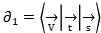 ;
;
Converting the initialVideo data in vector set And voice data
 Both decomposition and reconstruction, wherein
Decomposition formula ;
;
Reconstruction formula ;
;
Has carried out video data And voice data
 After the decomposition and reconstruction, all the intermediate state vector sets of the data textualization are obtained
 ;
;
Performing a lightweight of the set of intermediate state vectors, i.e. for video data And voice data
 Is coded, wherein
Thereby generating a positive monomer vector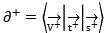 And negative monomer vector
 。
。
Further, the method includes the steps of respectively guiding the positive monomer vector and the negative monomer vector into a preset weighting laminated coordinate frame, and respectively performing clustering processing on the positive monomer vector and the negative monomer vector by adopting a K-means clustering algorithm to form a forward weighting curve and a reverse weighting curve respectively corresponding to the positive monomer vector and the negative monomer vector in the weighting laminated coordinate frame, and includes the steps of:
establishing a virtual coordinate system, and respectively and completely coinciding the positive X-axis of the first coordinate system and the positive X-axis of the fourth coordinate system of the coordinate system and the negative X-axis of the second coordinate system and the negative X-axis of the third coordinate system of the coordinate system with the positive monomer vector and the negative monomer vector;
performing second-stage type disassembly on the video type, the text type and the voice type in the single data to obtain a plurality of video nodes, a plurality of text nodes and a plurality of voice nodes in the video data, the text data and the voice data;
and clustering a plurality of video nodes, a plurality of text nodes and a plurality of voice nodes by using a K-means algorithm, and adjusting the positive value monomer vector and the negative value monomer vector in a virtual coordinate system through the repeated aggregation amount of the nodes so as to obtain a forward weighting curve and a reverse weighting curve.
Further, collapsing the weighted stack coordinate frame by the forward weighting curve and the reverse weighting curve, so that the forward weighting curve and the reverse weighting curve are loaded into a matched weighted coordinate system, including:
judging a weighting coordinate system matched with curve values in the forward weighting curve and the reverse weighting curve;
and if the matching is successful, collapsing the weighted laminated coordinate frame, so as to obtain a forward weighting curve and a reverse weighting curve formed on the weighted coordinate system.
Further, the step of obtaining a forward cut-off curve and a reverse cut-off curve by calling an attention algorithm corresponding to the coordinate interval to cut off the forward weighting curve and the reverse weighting curve through the coordinate interval of the forward weighting curve and the reverse weighting curve in the weighting coordinate system includes:
the forward weighting curve and the backward weighting curve are cut off by adopting a support vector machine in an attention algorithm mechanism, wherein

Obtaining a forward cut-off curve And reverse cut-off curve
 。
。
Further, the step of judging the curve compounding rate of the abnormal function corresponding to the monomer data preset in the database and the forward truncation curve comprises the following steps:
before comparing the forward truncation curve with the curve of the abnormal function in the weighted coordinate system by adopting the Jacard distance, matching the forward truncation curve with a formula, namely

Comparing the jaccard similarity of the curve recombination rate of the forward cut-off curve and the anomaly function, wherein

Thereby obtaining the curve recombination rate.
The present application also provides a data processing apparatus applied to public cluster management, comprising:
the system comprises an acquisition unit, a database calling instruction and a database calling unit, wherein the acquisition unit is used for acquiring the database calling instruction and calling monomer data of a type matched with the database calling instruction from a preset database according to the instruction, the monomer data comprises but is not limited to medical data, and the type of the monomer data comprises one or more of video data, text data and audio data;
the vector quantization unit is used for carrying out two-end vectorization on the monomer data to generate a positive monomer vector and a negative monomer vector;
the coordinate clustering unit is used for respectively guiding the positive monomer vector and the negative monomer vector into a preset weighted stacking coordinate frame, and respectively clustering the positive monomer vector and the negative monomer vector by adopting a K-means clustering algorithm to form a positive weighting curve and a negative weighting curve which respectively correspond to the positive monomer vector and the negative monomer vector in the weighted stacking coordinate frame;
a coordinate collapsing unit, configured to collapse the weighted stack coordinate frame according to the forward weighting curve and the reverse weighting curve, so that the forward weighting curve and the reverse weighting curve are loaded into a matched weighted coordinate system;
the attention weighting unit is used for calling an attention algorithm corresponding to the coordinate interval to cut off the forward weighting curve and the reverse weighting curve through the coordinate interval of the forward weighting curve and the reverse weighting curve in the weighting coordinate system to obtain a forward cut-off curve and a reverse cut-off curve;
the support vector machine unit is used for judging the curve compounding rate of an abnormal function corresponding to monomer data in a preset database and the forward truncation curve and reversely deducing the monomer data type matched with the reverse weighting curve;
and the view unit is used for generating view data, and if the curve compound rate is higher than a specified threshold value, the view data is specially displayed through the monomer data type after reverse push.
The present application further provides a computer device, comprising a memory and a processor, wherein the memory stores a computer program, and the processor implements the steps of the data processing method applied to public cluster management when executing the computer program.
The present application further provides a computer-readable storage medium, on which a computer program is stored, which computer program, when being executed by a processor, realizes the above-mentioned steps of the data processing method applied to public cluster management.
The application provides a data processing method, a data processing device and data processing equipment applied to public cluster management, and the data processing method, the data processing device and the data processing equipment have the following beneficial effects:
(1) According to the data processing method and device for public cluster management and the equipment thereof, traditional partitioned data storage and data output are bypassed, output channels are reduced, a mode of expanding a storage unit is avoided, capacity balance of data storage and output of a public cluster management platform is achieved, cost is reduced, and the effect of executing public cluster management by a PCB single board is achieved.
(2) Through the clustering processing of a K-means clustering algorithm, the output data in the public cluster management platform is subjected to aggregation compression, the occupied amount of the main board cache of data output is reduced in the first step, and the output data (namely, a positive monomer vector and a negative monomer vector corresponding to the monomer data) is led into a weighted stacking coordinate frame, so that the establishment and training processes of a neural network model are avoided, meanwhile, useless data flow can be intelligently abandoned, and the light weight of the data is completed.
(3) Through the collapse weighted stacking coordinate frame, a weighted coordinate system corresponding to the monomer data called by the database calling instruction is determined, the monomer data can be processed most accurately, the weighted value can be converted along with differentiation, elements of wind control management of public cluster management platforms such as hospitals and stations are different, different database calling instructions called by users along with the public cluster management platforms are realized through the collapse mode of the frame, differentiation adjustment is carried out, and a single weighting method of a traditional convolutional neural network model is changed.
Drawings
Fig. 1 is a flowchart illustrating a data processing method applied to public cluster management according to an embodiment of the present application.
Fig. 2 is a block diagram of a data processing apparatus for public cluster management according to an embodiment of the present application.
Fig. 3 is a block diagram illustrating a structure of a computer device according to an embodiment of the present application.
The implementation, functional features and advantages of the present application will be further described with reference to the embodiments, which are illustrated in the accompanying drawings.
Detailed Description
It should be understood that the specific embodiments described herein are merely illustrative of the present application and are not intended to limit the present application.
The technical solutions in the embodiments of the present application will be described clearly and completely with reference to the drawings in the embodiments of the present application, and it is obvious that the described embodiments are only some embodiments of the present application, and not all embodiments. All other embodiments, which can be derived by a person skilled in the art from the embodiments given herein without making any creative effort, shall fall within the protection scope of the present application.
Referring to fig. 1, a schematic flow chart of a data processing method applied to public cluster management is provided in the present application;
the data processing method applied to public cluster management provided by the application comprises the following steps:
s100, a database call instruction is obtained, monomer data of a type matched with the database call instruction are called from a preset database according to the instruction, wherein the monomer data include but are not limited to medical data materials, and the type of the monomer data includes one or more of video data, text data and audio data;
in the step, a manager inputs a database calling instruction to a public cluster management platform preset in the computer equipment through the computer equipment, and a storage unit in the public cluster management platform responds to the database calling instruction and calls monomer data of corresponding types, such as medical data, real-time station data, teaching data and the like.
Specifically, the database call instruction may be a specific keyword, and the individual data corresponding to the keyword is called in the database through the keyword.
S200, vectorizing the two ends of the monomer data to generate a positive monomer vector and a negative monomer vector;
since the type of the monomer data includes one or more of video data, text data and audio data, in this step, the monomer data needs to be vectorized to facilitate the subsequent weighted evaluation process, and therefore how to quantify the video data and the audio data therein is a difficult point to be overcome at present, based on this application, the following manner is proposed, that is, the steps:
resolving the first-level type of the single data into a video type, a text type and a voice type, and simultaneously obtaining video data, text data and voice data;
and classifying the single data lines obtained by calling so as to obtain one or more items of video type, text type and voice type, and further identifying one or more items of video data, text data and voice data.
Coding video data and voice data by adopting wavelet transformation to obtain quantized data, performing keyword identification and extraction on the text data to obtain a text set, and then vectorizing the quantized data and the text set to obtain a positive value monomer vector;
in the step of the method,
aggregating the video data, text data and voice data to form an initial vector set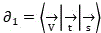 ;
;
Converting video data in the initial set of vectors And voice data
 Both decomposition and reconstruction, wherein
Decomposition formula ;
;
Reconstruction formula ;
;
Has performed video data And voice data
 After the decomposition and reconstruction, all the intermediate state vector sets of the data textualization are obtained
 ;
;
Performing a lightweight of the set of intermediate state vectors, i.e. for video data And voice data
 Is coded, wherein

Thereby generating a positive monomer vector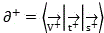 And negative monomer vector
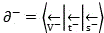 。
。
Specifically, whether any one of video data and voice data can appear in the type of the monomer data is determined, and if yes, wavelet transformation is executed to perform decomposition, reconstruction and quantization coding processes; in the related matters of public clusters, video data, text data and voice data of single data all exist, and the video data, the text data and the voice data are taken as examples in the applicationAccording to the method, text data and voice data are collected, and a vector is added to each data, so that an initial vector set is obtained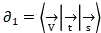 Wherein
 For video data,
 For text data,
 Voice data;
respectively will be respectively provided with For video data and
 voice data is led into a decomposition formula and a reconstruction formula, because text data is in a word state, a wavelet transformation process is not needed, only a following process is needed when video data and voice data are decomposed and reconstructed, and the specific lead-in into the decomposition formula and the reconstruction formula is as follows:
decomposition formula ;
;
Reconstruction formula ;
;
Wherein, as the object to be decomposed/reconstructed, i.e. as the object to be decomposed/reconstructed
 For video data,
 The voice data is nested into the number one by one,
 for quantizing video data
 And voice data
 The length of (a) of (b),
 the frame length of the quantized video image,
 The audio frame length in the quantized video is regarded as;
 layer-by-layer decomposition for halving video data
 Video picture frame length in
 And audio frame length in video
 The first halving separation is carried out,
 for the calculation of the second or multiple halving divisions, it will be appreciated that f is determined and then used for the first time
 The subsequent decomposition all adopt
 It should be understood that j and k belong to video image frame and audio frame in video data, respectively, and P is voice data
 The frame length of (a), in addition,
 for the frame length of video image
 Step-by-step frame reduction and matching audio frame lengths
 ,
, In (1)
 For video image frame length
 The frame-by-frame voice data in (1),
 in order to decompose the symbols after f,
 for video picture frame length
 Frame reduction step by step and matching original video image frame length
 This step is used to check if data is lost. Has performed video data
 And voiceData of
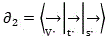
 After the decomposition and reconstruction, all the intermediate state vector sets of the data textualization are obtained
 ;
;
Performing a lightweight of the set of intermediate state vectors, i.e. for video data And voice data
 Are coded in which
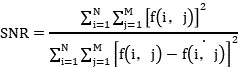
In the above-mentioned formula, for video data and voice data of decomposed and reconstructed single data, i is the number of times of light weight reduction, and mainly aims at a video image frame in the video data (the reason is that the video image frame is a key factor causing large data storage capacity), N is pigment sharpening decomposition, and M is six-bit coding of RBG (radial basis group), namely, the video image frame in the video data is subjected to the pigment sharpening decomposition for i times and then is subjected to the six-bit coding of RBG (radial basis group) to form an alignable coded data set, and the set integrates image pigment coding of each frame, so that an alignable coded data set is formed
 . Finally, mirroring is carried out on the positive value monomer vector through the steps to obtain the negative value monomer vector
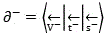 。
。
S300, respectively introducing the positive monomer vectors and the negative monomer vectors into a preset weighted laminated coordinate frame, and respectively clustering the positive monomer vectors and the negative monomer vectors by adopting a K-means clustering algorithm to form a positive weighting curve and a negative weighting curve which respectively correspond to the positive monomer vectors and the negative monomer vectors in the weighted laminated coordinate frame;
specifically, the encoded form is converted into a vectorized positive-value monomer vector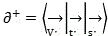 And
And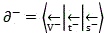 the method comprises the following steps of respectively importing positive monomer vectors and negative monomer vectors into a preset weighted laminated coordinate frame, wherein the weighted laminated coordinate frame comprises three axes of X, Y and Z, the length of an extension section of the Z axis is determined by public cluster types in a public cluster management platform, the public cluster types comprise medical data materials, real-time station data materials, teaching materials and the like, and the method comprises the following steps:
establishing a virtual coordinate system, and completely coinciding positive X-axes of a first coordinate system and a fourth coordinate system of the coordinate system and negative X-axes of a second coordinate system and a third coordinate system with the positive monomer vectors and the negative monomer vectors respectively;
performing second-level type decomposition on the video type, the text type and the voice type in the single data to obtain a plurality of video nodes, a plurality of text nodes and a plurality of voice nodes in the video data, the text data and the voice data;
and clustering a plurality of video nodes, a plurality of text nodes and a plurality of voice nodes by using a K-means algorithm, and adjusting the positive value monomer vector and the negative value monomer vector in a virtual coordinate system through the repeated aggregation amount of the nodes so as to obtain a forward weighting curve and a reverse weighting curve. It should be noted that the K-means algorithm belongs to a relatively known technology, and the description of the present application is not repeated.
S400, collapsing the weighted stacking coordinate frame through the forward weighting curve and the reverse weighting curve, and loading the forward weighting curve and the reverse weighting curve into a matched weighted coordinate system;
in the implementation process, when the weighted stacking coordinate frame of the forward weighting curve and the reverse weighting curve is in, the Z-axis type of the forward weighting curve and the reverse weighting curve is judged, for example, when the single data indicates medical data, the coordinate system corresponding to, for example, education data presented in the weighted stacking coordinate frame cannot present the forward weighting curve/reverse weighting curve, so that the matching process is realized, and then the collapse is performed, so that the original XYZ three axes are collapsed into the XY two axes, and the effect of loading the forward weighting curve and the reverse weighting curve into the matched weighted coordinate system is obtained, that is, the weighted coordinate system matched with the curve values in the forward weighting curve and the reverse weighting curve is judged; and if the matching is successful, collapsing the weighted laminated coordinate frame, thereby obtaining a process of forming a forward weighting curve and a reverse weighting curve on the weighted coordinate system.
S500, then calling an attention algorithm corresponding to the coordinate interval to cut off the forward weighting curve and the reverse weighting curve through the coordinate interval of the forward weighting curve and the reverse weighting curve in a weighting coordinate system to obtain a forward cut-off curve and a reverse cut-off curve;
specifically, this step means further reducing the weight of the monomer data, so that the data reduces the load problem of the PCB board during the input/output process, and the way of performing the truncation processing on the forward weighting curve and the reverse weighting curve by the attention algorithm is as follows:
the forward weighting curve and the backward weighting curve are cut off by a Support Vector Machine (SVM) in an attention algorithm mechanism, wherein

Obtaining a forward cut-off curve And reverse cut-off curve
 。
。
Wherein, is a symbol of a coordinate system, and is,
 forward/backward weighting curves, i is the number of truncations,
 in order to address the truncation in the Y-axis,
 for truncation on the X-axis, n is the number of sets in the forward weighting curve (e.g.:
 this n = 3),
 in order to reduce the edge calculation value of the forward weighting curve and the loss function determined by b, the edge calculation and the loss function can be understood through the edge calculation and the loss function of the conventional convolutional neural network.
S600, judging the curve compound rate of an abnormal function corresponding to monomer data in a preset database and the forward truncation curve, and reversely deducing the monomer data type matched with the reverse weighting curve;
after the forward truncation curve and the reverse weighting curve are obtained, judging the abnormal state, namely comparing the forward truncation curve with an abnormal function (the function can form a corresponding curve in a coordinate system) corresponding to the monomer data preset in a database, wherein the abnormal function is the function of the forward truncation curve; meanwhile, carrying out a reverse deduction procedure on the reverse weighting curve; after the curve compound rate comparison is completed, if the compound rate is too high, the abnormal condition is considered to occur, nodes with too high repetition rate in the forward truncation curve are calibrated, and the nodes are calibrated to a reverse-direction weighting curve reverse-direction deduction program, so that abnormal data are finally obtained; the specific curve recombination rate matching process is as follows:
before comparing the forward cut-off curve with the curve of the abnormal function in the weighted coordinate system by using the Jacobs distance, matching the forward cut-off curve with a formula, namely

Wherein, A is the set vector of the forward truncation curve, and B is the set vector corresponding to the curve of the abnormal function in the weighting coordinate system.
Comparing the jaccard similarity of the curve compounding ratio of the forward truncated curve and the anomaly function, wherein

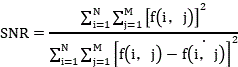
Thereby obtaining the curve recombination rate, as described above The composite rate of the curve is shown as,
 representing the number of 1 for both vector a and vector B,
 a number representing a vector a bit 1 and a vector B being 0,
 a number representing a vector a bit 0 and a vector B bit 1.
And S700, generating view data, and if the curve recombination rate is higher than a specified threshold value, performing special display in the view data through the monomer data type after reverse extrapolation.
If the recombination rate is too high, determining that the node is abnormal, calibrating the node with the too high repetition rate in the forward truncation curve, calibrating the node into a reverse-pushing program of the reverse weighting curve, and finally obtaining abnormal data; in the process of generating the view data, the view data with abnormal data is specially displayed to inform the manager.
Referring to fig. 2, the present invention further provides a data processing apparatus for public cluster management, comprising:
the system comprises an acquisition unit 1, a database calling instruction and a database calling unit, wherein the acquisition unit 1 is used for acquiring a database calling instruction and calling monomer data of a type matched with the database calling instruction from a preset database according to the instruction, the monomer data comprises but is not limited to medical data materials, and the type of the monomer data comprises one or more of video data, text data and audio data;
the vector quantization unit 2 is used for vectorizing two ends of the monomer data to generate a positive monomer vector and a negative monomer vector;
the coordinate clustering unit 3 is used for respectively guiding the positive monomer vectors and the negative monomer vectors into a preset weighted stacking coordinate frame, and respectively clustering the positive monomer vectors and the negative monomer vectors by adopting a K-means clustering algorithm to form a positive weighting curve and a negative weighting curve which respectively correspond to the positive monomer vectors and the negative monomer vectors in the weighted stacking coordinate frame;
a coordinate collapsing unit 4, configured to collapse the weighted stacked coordinate frame through the forward weighting curve and the reverse weighting curve, so that the forward weighting curve and the reverse weighting curve are loaded into a matched weighted coordinate system;
the attention weighting unit 5 is configured to call an attention algorithm corresponding to the coordinate interval to intercept the forward weighting curve and the reverse weighting curve through the coordinate interval of the forward weighting curve and the reverse weighting curve in the weighting coordinate system, so as to obtain a forward interception curve and a reverse interception curve;
the support vector machine unit 6 is used for judging the curve compounding rate of an abnormal function corresponding to the monomer data preset in the database and the forward truncation curve and reversely deducing the monomer data type matched with the reverse weighting curve;
and the view unit 7 is used for generating view data, and if the curve compound rate is higher than a specified threshold, performing special display on the view data through the single data type after reverse estimation.
Referring to fig. 3, a computer device, which may be a server and whose internal structure may be as shown in fig. 3, is also provided in the embodiment of the present application. The computer device includes a processor, a memory, a network interface, and a database connected by a system bus. Wherein the processor of the computer device is configured to provide computing and control capabilities. The memory of the computer device comprises a nonvolatile storage medium and an internal memory. The non-volatile storage medium stores an operating system, a computer program, and a database. The internal memory provides an environment for the operation of an operating system and computer programs in the non-volatile storage medium. The database of the computer device is used for storing data such as cell data. The network interface of the computer device is used for communicating with an external terminal through a network connection. The computer program is executed by a processor to implement a data processing method applied to public cluster management.
It will be understood by those skilled in the art that the structure shown in fig. 3 is only a block diagram of a part of the structure related to the present application, and does not constitute a limitation to the computer device to which the present application is applied.
An embodiment of the present application further provides a computer-readable storage medium, on which a computer program is stored, where the computer program, when executed by a processor, implements a data processing method applied to public cluster management, and specifically includes:
acquiring a database call instruction, and calling monomer data of a type matched with the database call instruction from a preset database according to the instruction, wherein the monomer data comprises but is not limited to medical data information, and the type of the monomer data comprises one or more of video data, text data and audio data;
vectorizing the two ends of the monomer data to generate a positive monomer vector and a negative monomer vector;
respectively introducing the positive monomer vector and the negative monomer vector into a preset weighted laminated coordinate frame, and respectively clustering the positive monomer vector and the negative monomer vector by adopting a K-means clustering algorithm to form a positive weighted curve and a negative weighted curve which respectively correspond to the positive monomer vector and the negative monomer vector in the weighted laminated coordinate frame;
collapsing the weighted stack coordinate frame through the forward weighting curve and the reverse weighting curve, and loading the forward weighting curve and the reverse weighting curve into a matched weighted coordinate system;
then, calling an attention algorithm corresponding to the coordinate interval to cut off the forward weighting curve and the reverse weighting curve through the coordinate interval of the forward weighting curve and the reverse weighting curve in a weighting coordinate system to obtain a forward cut-off curve and a reverse cut-off curve;
judging the curve compound rate of an abnormal function corresponding to the monomer data in a preset database and the forward truncation curve, and simultaneously reversely deducing the monomer data type matched with the reverse weighting curve;
and generating view data, and if the curve recombination rate is higher than a specified threshold value, performing special display on the view data through the monomer data type after backward extrapolation.
To sum up, the data processing method and device for public cluster management and the equipment thereof bypass the traditional partitioned data storage and data output, reduce the output access, achieve the capacity balance of data storage and output of a public cluster management platform by avoiding the adoption of a mode of expanding a storage unit, reduce the cost and realize the effect of executing the public cluster management by a PCB single board.
It will be understood by those skilled in the art that all or part of the processes of the methods of the embodiments described above may be implemented by hardware related to instructions of a computer program, which may be stored in a non-volatile computer-readable storage medium, and when executed, may include the processes of the embodiments of the methods described above. Any reference to memory, storage, database or other medium provided herein and used in the examples may include non-volatile and/or volatile memory. Non-volatile memory can include read-only memory (ROM), programmable ROM (PROM), electrically Programmable ROM (EPROM), electrically Erasable Programmable ROM (EEPROM), or flash memory. Volatile memory can include Random Access Memory (RAM) or external cache memory. By way of illustration and not limitation, RAM is available in a variety of forms such as Static RAM (SRAM), dynamic RAM (DRAM), synchronous DRAM (SDRAM), double data rate SDRAM (SSRDRAM), enhanced SDRAM (ESDRAM), synchronous Link (Synchlink) DRAM (SLDRAM), rambus (Rambus) direct RAM (RDRAM), direct bused dynamic RAM (DRDRAM), and bused dynamic RAM (RDRAM).
It should be noted that, in this document, the terms "comprises," "comprising," or any other variation thereof, are intended to cover a non-exclusive inclusion, such that a process, apparatus, article, or method that comprises a list of elements does not include only those elements but may include other elements not expressly listed or inherent to such process, apparatus, article, or method. Without further limitation, an element defined by the phrase "comprising one of 8230, and" comprising 8230does not exclude the presence of additional like elements in a process, apparatus, article, or method comprising the element.
The above description is only a preferred embodiment of the present application, and not intended to limit the scope of the present application, and all the equivalent structures or equivalent processes that can be directly or indirectly applied to other related technical fields by using the contents of the specification and the drawings of the present application are also included in the scope of the present application.
Although embodiments of the present application have been shown and described, it will be appreciated by those skilled in the art that changes, modifications, substitutions and alterations can be made in these embodiments without departing from the principles and spirit of the application, the scope of which is defined in the appended claims and their equivalents.
Claims (5)
1. A data processing method applied to public cluster management is characterized by comprising the following steps:
acquiring a database call instruction, and calling monomer data of a type matched with the database call instruction from a preset database according to the instruction, wherein the monomer data comprises but is not limited to medical data information, and the type of the monomer data comprises one or more of video data, text data and audio data;
vectorizing the two ends of the monomer data to generate a positive monomer vector and a negative monomer vector, and specifically comprising the following steps: disassembling the first-level types of the single data into a video type, a text type and a voice type, and simultaneously obtaining video data, text data and voice data; coding video data and voice data by adopting wavelet transformation to obtain quantized data, performing keyword identification and extraction on the text data to obtain a text set, and then performing vectorization on the quantized data and the text set to obtain a positive monomer vector; mirroring the positive monomer vector to obtain a negative monomer vector;
respectively introducing the positive monomer vectors and the negative monomer vectors into a preset weighted laminated coordinate frame, and respectively clustering the positive monomer vectors and the negative monomer vectors by adopting a K-means clustering algorithm to form a positive weighted curve and a negative weighted curve which respectively correspond to the positive monomer vectors and the negative monomer vectors in the weighted laminated coordinate frame, wherein the method specifically comprises the following steps of: establishing a virtual coordinate system, and respectively and completely coinciding the positive X-axis of the first coordinate system and the positive X-axis of the fourth coordinate system of the coordinate system and the negative X-axis of the second coordinate system and the negative X-axis of the third coordinate system of the coordinate system with the positive monomer vector and the negative monomer vector; performing second-level type decomposition on the video type, the text type and the voice type in the single data to obtain a plurality of video nodes, a plurality of text nodes and a plurality of voice nodes in the video data, the text data and the voice data; clustering a plurality of video nodes, a plurality of text nodes and a plurality of voice nodes by using a K-means algorithm, and adjusting the positive value monomer vector and the negative value monomer vector in a virtual coordinate system through the repeated aggregation amount of the nodes so as to obtain a forward weighting curve and a reverse weighting curve;
collapsing the weighted stack coordinate frame through the forward weighting curve and the reverse weighting curve, and loading the forward weighting curve and the reverse weighting curve into a matched weighted coordinate system; determining a weighting coordinate system matched with curve values in the forward weighting curve and the reverse weighting curve; if the matching is successful, collapsing the weighted laminated coordinate frame, so as to obtain a forward weighting curve and a reverse weighting curve formed on the weighted coordinate system, specifically: when the single data indicates medical data, a coordinate system corresponding to the educational data presented in the weighted stacked coordinate frame cannot present the forward weighting curve/the reverse weighting curve, so that a matching process is realized, and then collapse is performed, the original XYZ three axes are collapsed into two XY axes, and the effect of loading the forward weighting curve and the reverse weighting curve into the matched weighted coordinate system is obtained, namely the weighted coordinate system matched with the curve values in the forward weighting curve and the reverse weighting curve is determined; if the matching is successful, collapsing the weighted stacking coordinate frame, so as to obtain a process of forming a forward weighting curve and a reverse weighting curve on the weighted coordinate system;
and then calling an attention algorithm corresponding to the coordinate interval to intercept the forward weighting curve and the reverse weighting curve through the coordinate interval of the forward weighting curve and the reverse weighting curve in a weighting coordinate system to obtain a forward truncation curve and a reverse truncation curve, wherein the method specifically comprises the following steps of: the forward weighting curve and the backward weighting curve are cut off by adopting a support vector machine in an attention algorithm mechanism, wherein

Obtaining a forward cut-off curve And reverse cut-off curve
 ;
;
Wherein, is a symbol of a coordinate system, and is,
 forward/backward weighting curves, i is the number of truncations,
 in order to address the truncation in the Y-axis,
 for truncation on the X-axis, n is the number of sets in the forward weighting curve,
 a loss function determined for clipping an edge calculation value of the forward weighting curve and b;
judging the curve compound rate of an abnormal function corresponding to monomer data in a preset database and the forward truncation curve, and simultaneously reversely deducing the monomer data type matched with the reverse weighting curve;
and generating view data, and if the curve compound rate is higher than a specified threshold value, performing special display in the view data through the monomer data type after reverse estimation.
2. The data processing method applied to public cluster management according to claim 1, wherein judging the curve recombination rate of the abnormal function corresponding to the individual data preset in the database and the forward cut-off curve comprises:
before comparing the forward cut-off curve with the curve of the abnormal function in the weighted coordinate system by using the Jacobs distance, matching the forward cut-off curve with a formula, namely

Comparing the jaccard similarity of the curve recombination rate of the forward cut-off curve and the anomaly function, wherein

Thereby obtaining the curve recombination rate;
wherein A is the set vector of the forward truncated curve, B is the set vector corresponding to the curve of the abnormal function in the weighted coordinate system, the above-mentioned The composite rate of the curve is shown as,
 representing the number of 1 for both vector a and vector B,
 representing the number of vectors a as 1 and vectors B as 0,
 representing the number of vectors a as 0 and B as 1.
3. A data processing apparatus for public cluster management, comprising:
the system comprises an acquisition unit, a database calling unit and a database calling unit, wherein the acquisition unit is used for acquiring a database calling instruction and calling monomer data of a type matched with the database calling instruction from a preset database according to the instruction, the monomer data comprises but is not limited to medical data materials, and the type of the monomer data comprises one or more of video data, text data and audio data;
the vector quantization unit is used for carrying out two-end vectorization on the monomer data to generate a positive monomer vector and a negative monomer vector, and specifically comprises the following steps: resolving the first-level type of the single data into a video type, a text type and a voice type, and simultaneously obtaining video data, text data and voice data; coding video data and voice data by adopting wavelet transformation to obtain quantized data, performing keyword identification and extraction on the text data to obtain a text set, and then vectorizing the quantized data and the text set to obtain a positive value monomer vector; mirroring the positive monomer vector to obtain a negative monomer vector;
the coordinate clustering unit is used for respectively leading the positive monomer vectors and the negative monomer vectors into a preset weighted laminated coordinate frame, and respectively clustering the positive monomer vectors and the negative monomer vectors by adopting a K-means clustering algorithm so as to form a positive weighting curve and a negative weighting curve which respectively correspond to the positive monomer vectors and the negative monomer vectors in the weighted laminated coordinate frame, and the method specifically comprises the following steps: establishing a virtual coordinate system, and respectively and completely coinciding the positive X-axis of the first coordinate system and the positive X-axis of the fourth coordinate system of the coordinate system and the negative X-axis of the second coordinate system and the negative X-axis of the third coordinate system of the coordinate system with the positive monomer vector and the negative monomer vector; performing second-stage type disassembly on the video type, the text type and the voice type in the single data to obtain a plurality of video nodes, a plurality of text nodes and a plurality of voice nodes in the video data, the text data and the voice data; clustering a plurality of video nodes, a plurality of text nodes and a plurality of voice nodes by using a K-means algorithm, and adjusting the positive monomer vectors and the negative monomer vectors in a virtual coordinate system through the repeated aggregation amount of the nodes so as to obtain a forward weighting curve and a reverse weighting curve;
the coordinate collapsing unit is used for collapsing the weighted laminated coordinate frame through the forward weighting curve and the reverse weighting curve so as to load the forward weighting curve and the reverse weighting curve into a matched weighted coordinate system; determining a weighting coordinate system matched with curve values in the forward weighting curve and the reverse weighting curve; if the matching is successful, collapsing the weighted laminated coordinate frame, so as to obtain a forward weighting curve and a reverse weighting curve formed on the weighted coordinate system, specifically: when the single data indicates medical data, a coordinate system corresponding to the educational data presented in the weighted stacked coordinate frame cannot present the forward weighting curve/the reverse weighting curve, so that a matching process is realized, and then collapse is performed, the original XYZ three axes are collapsed into two XY axes, and the effect of loading the forward weighting curve and the reverse weighting curve into the matched weighted coordinate system is obtained, namely the weighted coordinate system matched with the curve values in the forward weighting curve and the reverse weighting curve is determined; if the matching is successful, collapsing the weighted stacking coordinate frame, so as to obtain a process of forming a forward weighting curve and a reverse weighting curve on the weighted coordinate system;
and the attention weighting unit is used for calling an attention algorithm corresponding to the coordinate interval to cut off the forward weighting curve and the reverse weighting curve through the coordinate interval of the forward weighting curve and the reverse weighting curve in the weighting coordinate system to obtain a forward cut-off curve and a reverse cut-off curve, and specifically, the attention weighting unit is used for: the forward weighting curve and the reverse weighting curve are cut off by adopting a support vector machine in an attention algorithm mechanism, wherein

Obtaining a forward cut-off curve And reverse cut-off curve
 ;
;
Wherein, is a symbol of a coordinate system, and is,
 forward/backward weighting curves, i is the number of truncations,
 in order to address the truncation in the Y-axis,
 for truncation on the X-axis, n is the number of sets in the forward weighting curve,
 a loss function determined for clipping an edge calculation value of the forward weighting curve and b;
the support vector machine unit is used for judging the curve compounding rate of an abnormal function corresponding to monomer data in a preset database and the forward truncation curve and reversely deducing the monomer data type matched with the reverse weighting curve;
and the view unit is used for generating view data, and if the curve recombination rate is higher than a specified threshold value, performing special display on the view data through the monomer data type after backward extrapolation.
4. A computer arrangement comprising a memory and a processor, the memory having a computer program stored therein, wherein the processor when executing the computer program performs the steps of the data processing method applied to public cluster management of any one of claims 1 to 2.
5. A computer-readable storage medium, on which a computer program is stored, which, when being executed by a processor, carries out the steps of the data processing method applied to public cluster management of any one of claims 1 to 2.
Priority Applications (1)
| Application Number | Priority Date | Filing Date | Title |
|---|---|---|---|
| CN202210961375.9A CN115049021B (en) | 2022-08-11 | 2022-08-11 | Data processing method and device applied to public cluster management and equipment thereof |
Applications Claiming Priority (1)
| Application Number | Priority Date | Filing Date | Title |
|---|---|---|---|
| CN202210961375.9A CN115049021B (en) | 2022-08-11 | 2022-08-11 | Data processing method and device applied to public cluster management and equipment thereof |
Publications (2)
| Publication Number | Publication Date |
|---|---|
| CN115049021A CN115049021A (en) | 2022-09-13 |
| CN115049021B true CN115049021B (en) | 2022-11-08 |
Family
ID=83166890
Family Applications (1)
| Application Number | Title | Priority Date | Filing Date |
|---|---|---|---|
| CN202210961375.9A Active CN115049021B (en) | 2022-08-11 | 2022-08-11 | Data processing method and device applied to public cluster management and equipment thereof |
Country Status (1)
| Country | Link |
|---|---|
| CN (1) | CN115049021B (en) |
Citations (4)
| Publication number | Priority date | Publication date | Assignee | Title |
|---|---|---|---|---|
| CN110647924A (en) * | 2019-09-05 | 2020-01-03 | 国网河北省电力有限公司电力科学研究院 | GIS equipment state evaluation method based on support vector description and K-nearest neighbor algorithm |
| TW202115652A (en) * | 2019-09-30 | 2021-04-16 | 財團法人亞洲大學 | Cross-enterprise credit rating and risk evaluation method and system based on artificial intelligence and block-chain can enhance credit checking for small businesses to adequately handle system risk to reduce occurrence of bad debt, thereby ensuring interest of creditors |
| CN113568819A (en) * | 2021-01-31 | 2021-10-29 | 腾讯科技(深圳)有限公司 | Abnormal data detection method, device, computer readable medium and electronic device |
| CN114783616A (en) * | 2022-04-26 | 2022-07-22 | 深圳市大数据研究院 | Drug group mining method and device, electronic device, storage medium for target disease |
Family Cites Families (4)
| Publication number | Priority date | Publication date | Assignee | Title |
|---|---|---|---|---|
| US10168953B1 (en) * | 2016-05-20 | 2019-01-01 | Nutanix, Inc. | Dynamic scheduling of distributed storage management tasks using predicted system characteristics |
| CN110781332A (en) * | 2019-10-16 | 2020-02-11 | 三峡大学 | Clustering method of daily load curve of electric residential users based on compound clustering algorithm |
| US11282257B2 (en) * | 2019-11-22 | 2022-03-22 | Adobe Inc. | Pose selection and animation of characters using video data and training techniques |
| CN114035962B (en) * | 2021-11-18 | 2025-06-17 | 中国工商银行股份有限公司 | Resource allocation method, device, computer equipment and storage medium |
-
2022
- 2022-08-11 CN CN202210961375.9A patent/CN115049021B/en active Active
Patent Citations (4)
| Publication number | Priority date | Publication date | Assignee | Title |
|---|---|---|---|---|
| CN110647924A (en) * | 2019-09-05 | 2020-01-03 | 国网河北省电力有限公司电力科学研究院 | GIS equipment state evaluation method based on support vector description and K-nearest neighbor algorithm |
| TW202115652A (en) * | 2019-09-30 | 2021-04-16 | 財團法人亞洲大學 | Cross-enterprise credit rating and risk evaluation method and system based on artificial intelligence and block-chain can enhance credit checking for small businesses to adequately handle system risk to reduce occurrence of bad debt, thereby ensuring interest of creditors |
| CN113568819A (en) * | 2021-01-31 | 2021-10-29 | 腾讯科技(深圳)有限公司 | Abnormal data detection method, device, computer readable medium and electronic device |
| CN114783616A (en) * | 2022-04-26 | 2022-07-22 | 深圳市大数据研究院 | Drug group mining method and device, electronic device, storage medium for target disease |
Non-Patent Citations (2)
| Title |
|---|
| Battery grouping based on improved K-means with curve fitting;Jiye Huang等;《2018 13th IEEE Conference on Industrial Electronics and Applications (ICIEA)》;20180628;第1966-1971页 * |
| 贝叶斯序贯重要性积分滤波器;张宏伟等;《电子学报》;20220430;第823-831页 * |
Also Published As
| Publication number | Publication date |
|---|---|
| CN115049021A (en) | 2022-09-13 |
Similar Documents
| Publication | Publication Date | Title |
|---|---|---|
| CN109978142B (en) | Neural network model compression method and device | |
| EP3796176B1 (en) | Fault root cause analysis method and apparatus | |
| CN109104731B (en) | Method and device for building cell scene category division model and computer equipment | |
| CN115426671A (en) | Method, system and equipment for graph neural network training and wireless cell fault prediction | |
| CN112925940A (en) | Similar image retrieval method and device, computer equipment and storage medium | |
| CN108934016B (en) | Method and device for dividing cell scene categories, computer equipment and storage medium | |
| CN114332500A (en) | Image processing model training method and device, computer equipment and storage medium | |
| CN115829024A (en) | Model training method, device, equipment and storage medium | |
| CN114357171A (en) | Emergency event processing method and device, storage medium and electronic equipment | |
| CN114186831B (en) | Personal credit risk prediction method and system by applying transfer learning | |
| WO2025091335A1 (en) | Multi-precision tensor multiplication in neural network | |
| CN112598062A (en) | Image identification method and device | |
| CN115049021B (en) | Data processing method and device applied to public cluster management and equipment thereof | |
| CN112308197B (en) | A convolutional neural network compression method, device and electronic device | |
| CN115618212A (en) | Power data processing method and device, computer equipment and storage medium | |
| CN112215354A (en) | Neural network model pruning method and device, computer equipment and storage medium | |
| CN119485338A (en) | Wireless network load dynamic adjustment method, training method, device and electronic equipment | |
| Zhang et al. | Compressing knowledge graph embedding with relational graph auto-encoder | |
| CN118260533A (en) | Data processing method, continuous risk control data discretization method and device | |
| CN112015922B (en) | Method, device, equipment and storage medium for retrieving multimedia file | |
| CN114461619A (en) | Energy internet multi-source data fusion method and device, terminal and storage medium | |
| CN114385876A (en) | Model search space generation method, device and system | |
| CN118171698B (en) | Neural network model quantization method | |
| CN115222489B (en) | Commodity recommendation method, commodity recommendation device, computer equipment and storage medium | |
| CN116910353B (en) | Data processing method, device, terminal equipment and readable storage medium |
Legal Events
| Date | Code | Title | Description |
|---|---|---|---|
| PB01 | Publication | ||
| PB01 | Publication | ||
| SE01 | Entry into force of request for substantive examination | ||
| SE01 | Entry into force of request for substantive examination | ||
| GR01 | Patent grant | ||
| GR01 | Patent grant |