CN114897286A - Fault model establishing method based on alliance chain - Google Patents
Fault model establishing method based on alliance chain Download PDFInfo
- Publication number
- CN114897286A CN114897286A CN202210215706.4A CN202210215706A CN114897286A CN 114897286 A CN114897286 A CN 114897286A CN 202210215706 A CN202210215706 A CN 202210215706A CN 114897286 A CN114897286 A CN 114897286A
- Authority
- CN
- China
- Prior art keywords
- fault
- data
- node
- production
- alliance chain
- Prior art date
- Legal status (The legal status is an assumption and is not a legal conclusion. Google has not performed a legal analysis and makes no representation as to the accuracy of the status listed.)
- Granted
Links
Images

Classifications
-
- G—PHYSICS
- G06—COMPUTING OR CALCULATING; COUNTING
- G06Q—INFORMATION AND COMMUNICATION TECHNOLOGY [ICT] SPECIALLY ADAPTED FOR ADMINISTRATIVE, COMMERCIAL, FINANCIAL, MANAGERIAL OR SUPERVISORY PURPOSES; SYSTEMS OR METHODS SPECIALLY ADAPTED FOR ADMINISTRATIVE, COMMERCIAL, FINANCIAL, MANAGERIAL OR SUPERVISORY PURPOSES, NOT OTHERWISE PROVIDED FOR
- G06Q10/00—Administration; Management
- G06Q10/06—Resources, workflows, human or project management; Enterprise or organisation planning; Enterprise or organisation modelling
- G06Q10/063—Operations research, analysis or management
- G06Q10/0639—Performance analysis of employees; Performance analysis of enterprise or organisation operations
- G06Q10/06395—Quality analysis or management
-
- G—PHYSICS
- G06—COMPUTING OR CALCULATING; COUNTING
- G06F—ELECTRIC DIGITAL DATA PROCESSING
- G06F18/00—Pattern recognition
- G06F18/20—Analysing
- G06F18/21—Design or setup of recognition systems or techniques; Extraction of features in feature space; Blind source separation
- G06F18/214—Generating training patterns; Bootstrap methods, e.g. bagging or boosting
-
- G—PHYSICS
- G06—COMPUTING OR CALCULATING; COUNTING
- G06F—ELECTRIC DIGITAL DATA PROCESSING
- G06F18/00—Pattern recognition
- G06F18/20—Analysing
- G06F18/24—Classification techniques
- G06F18/241—Classification techniques relating to the classification model, e.g. parametric or non-parametric approaches
-
- G—PHYSICS
- G06—COMPUTING OR CALCULATING; COUNTING
- G06N—COMPUTING ARRANGEMENTS BASED ON SPECIFIC COMPUTATIONAL MODELS
- G06N3/00—Computing arrangements based on biological models
- G06N3/02—Neural networks
- G06N3/04—Architecture, e.g. interconnection topology
- G06N3/044—Recurrent networks, e.g. Hopfield networks
-
- G—PHYSICS
- G06—COMPUTING OR CALCULATING; COUNTING
- G06Q—INFORMATION AND COMMUNICATION TECHNOLOGY [ICT] SPECIALLY ADAPTED FOR ADMINISTRATIVE, COMMERCIAL, FINANCIAL, MANAGERIAL OR SUPERVISORY PURPOSES; SYSTEMS OR METHODS SPECIALLY ADAPTED FOR ADMINISTRATIVE, COMMERCIAL, FINANCIAL, MANAGERIAL OR SUPERVISORY PURPOSES, NOT OTHERWISE PROVIDED FOR
- G06Q10/00—Administration; Management
- G06Q10/20—Administration of product repair or maintenance
-
- H—ELECTRICITY
- H04—ELECTRIC COMMUNICATION TECHNIQUE
- H04L—TRANSMISSION OF DIGITAL INFORMATION, e.g. TELEGRAPHIC COMMUNICATION
- H04L63/00—Network architectures or network communication protocols for network security
- H04L63/04—Network architectures or network communication protocols for network security for providing a confidential data exchange among entities communicating through data packet networks
- H04L63/0428—Network architectures or network communication protocols for network security for providing a confidential data exchange among entities communicating through data packet networks wherein the data content is protected, e.g. by encrypting or encapsulating the payload
-
- H—ELECTRICITY
- H04—ELECTRIC COMMUNICATION TECHNIQUE
- H04L—TRANSMISSION OF DIGITAL INFORMATION, e.g. TELEGRAPHIC COMMUNICATION
- H04L67/00—Network arrangements or protocols for supporting network services or applications
- H04L67/01—Protocols
- H04L67/10—Protocols in which an application is distributed across nodes in the network
- H04L67/1095—Replication or mirroring of data, e.g. scheduling or transport for data synchronisation between network nodes
-
- Y—GENERAL TAGGING OF NEW TECHNOLOGICAL DEVELOPMENTS; GENERAL TAGGING OF CROSS-SECTIONAL TECHNOLOGIES SPANNING OVER SEVERAL SECTIONS OF THE IPC; TECHNICAL SUBJECTS COVERED BY FORMER USPC CROSS-REFERENCE ART COLLECTIONS [XRACs] AND DIGESTS
- Y02—TECHNOLOGIES OR APPLICATIONS FOR MITIGATION OR ADAPTATION AGAINST CLIMATE CHANGE
- Y02P—CLIMATE CHANGE MITIGATION TECHNOLOGIES IN THE PRODUCTION OR PROCESSING OF GOODS
- Y02P90/00—Enabling technologies with a potential contribution to greenhouse gas [GHG] emissions mitigation
- Y02P90/30—Computing systems specially adapted for manufacturing
Landscapes
- Engineering & Computer Science (AREA)
- Business, Economics & Management (AREA)
- Theoretical Computer Science (AREA)
- Human Resources & Organizations (AREA)
- Physics & Mathematics (AREA)
- Data Mining & Analysis (AREA)
- General Physics & Mathematics (AREA)
- General Engineering & Computer Science (AREA)
- Entrepreneurship & Innovation (AREA)
- Evolutionary Computation (AREA)
- Economics (AREA)
- Strategic Management (AREA)
- Artificial Intelligence (AREA)
- Life Sciences & Earth Sciences (AREA)
- Marketing (AREA)
- Tourism & Hospitality (AREA)
- Signal Processing (AREA)
- Computing Systems (AREA)
- Bioinformatics & Cheminformatics (AREA)
- Bioinformatics & Computational Biology (AREA)
- Computer Vision & Pattern Recognition (AREA)
- Evolutionary Biology (AREA)
- Computer Networks & Wireless Communication (AREA)
- Computer Security & Cryptography (AREA)
- Development Economics (AREA)
- Educational Administration (AREA)
- General Business, Economics & Management (AREA)
- Quality & Reliability (AREA)
- Operations Research (AREA)
- Biomedical Technology (AREA)
- Health & Medical Sciences (AREA)
- Game Theory and Decision Science (AREA)
- Biophysics (AREA)
- Mathematical Physics (AREA)
- Computational Linguistics (AREA)
- General Health & Medical Sciences (AREA)
- Computer Hardware Design (AREA)
- Molecular Biology (AREA)
- Software Systems (AREA)
- General Factory Administration (AREA)
Abstract
Description
技术领域technical field
本发明涉及故障判断技术领域,尤其是一种基于联盟链的故障模型建立方法。The invention relates to the technical field of fault judgment, in particular to a method for establishing a fault model based on a consortium chain.
背景技术Background technique
随着纺织业的发展、自动控制技术的提高,缝纫业对自动化设备的需求也越来越高,这对缝纫设备的自动化控制水平提出了更高的要求。工业缝纫机是缝纫业的典型自动化设备,其主要适用于缝纫工厂或其他大量生产缝制产品的工业部门,例如各种被子、睡袋、窗帘的缝制工厂等。要实现工业缝纫机的自动控制就必然要有控制系统,控制系统包括主控单元MCU,主控单元MCU通过电控连接接口将信号传给电机控制器,电机控制器控制电动机工作完成缝纫工作。工业缝纫机在工业领域的自动控制是为了实现产品产量的提高,提高工作效率,所以在现有的工作环境下往往都是很多工业缝纫机同时工作,工业缝纫机工作就必须要有工作人员管理以便及时处理一些意外情况。如果每一台工业缝纫机都配备一名工作人员的话,那么无疑是一种人力资源的浪费;如果通过工作人员流动监测管理工业缝纫机的工作状况,那么工作人员的工作量又很大,并且也可能因为监测不到位而发生意外情况;同时一旦出现问题,负责监测管理的工作人员也未必清楚问题出在哪里,还是需要和工业缝纫机的生产厂家进行沟通并由专业的维修人员对工业缝纫机进行维修,对于使用工业缝纫机的用户来说不仅浪费了人力资源,还不能及时的解决问题,给使用工业缝纫机的用户带来了很大的不便,并且耽误了生产。参考中国专利授权公告号为CN103451866B的一种工业缝纫机远程监测与故障诊断系统,包括安装在工业缝纫机上并依次连接的电动机、电机控制器、电控连接接口和主控单元,还包括与主控单元相连接的数据采集器,所述数据采集器通过数据传输装置与中继器通信连接,中继器中设有GPRS/GSM模块,中继器与网络服务器通信连接,网络服务器分别与显示终端和故障诊断系统相连接,通过数据采集器将电动机的机器设定参数等信息通过数据传输装置传输到中继器中,中继器通过内置的GPRS/GSM模块将收到的信息传输到客服网站服务器,客服人员通过连接网站服务器的显示终端和故障诊断系统远程监测工业缝纫机的工作状态,以便及时帮助用解决问题。然而在网络传输的过程中缺少有效的保密措施,在网络传输过程中可能出现数据丢失或被篡改,导致后续无法实现正确故障诊断。With the development of the textile industry and the improvement of automatic control technology, the demand for automation equipment in the sewing industry is also getting higher and higher, which puts forward higher requirements for the automation control level of sewing equipment. Industrial sewing machines are typical automation equipment in the sewing industry, and are mainly used in sewing factories or other industrial sectors that mass-produce sewn products, such as sewing factories for various quilts, sleeping bags, and curtains. To realize the automatic control of industrial sewing machines, there must be a control system. The control system includes the main control unit MCU. The main control unit MCU transmits signals to the motor controller through the electrical control connection interface, and the motor controller controls the motor to complete the sewing work. The automatic control of industrial sewing machines in the industrial field is to increase product output and improve work efficiency. Therefore, in the existing working environment, many industrial sewing machines are often working at the same time. The work of industrial sewing machines must be managed by staff in order to deal with them in time. some unexpected situations. If each industrial sewing machine is equipped with a staff, it will undoubtedly be a waste of human resources; if the working status of the industrial sewing machine is monitored and managed through the flow of staff, the workload of the staff is very large, and it is also possible Accidents occur due to insufficient monitoring; at the same time, once a problem occurs, the staff responsible for monitoring and management may not know where the problem lies, and it is still necessary to communicate with the manufacturer of the industrial sewing machine and have professional maintenance personnel to repair the industrial sewing machine. For users who use industrial sewing machines, it not only wastes human resources, but also cannot solve problems in time, which brings great inconvenience to users who use industrial sewing machines and delays production. With reference to the Chinese patent authorization announcement number CN103451866B, an industrial sewing machine remote monitoring and fault diagnosis system includes a motor, a motor controller, an electric control connection interface and a main control unit installed on the industrial sewing machine and connected in sequence, and also includes a connection with the main control unit. The data collector connected to the unit, the data collector communicates with the repeater through the data transmission device, the repeater is provided with a GPRS/GSM module, the repeater is connected in communication with the network server, and the network server is respectively connected with the display terminal It is connected to the fault diagnosis system, and the information such as the machine setting parameters of the motor is transmitted to the repeater through the data transmission device through the data collector, and the repeater transmits the received information to the customer service website through the built-in GPRS/GSM module. Server, customer service personnel remotely monitor the working status of the industrial sewing machine through the display terminal and fault diagnosis system connected to the website server, so as to help solve the problem in time. However, due to the lack of effective security measures during network transmission, data may be lost or tampered with during network transmission, resulting in failure to perform correct fault diagnosis in the future.
发明内容SUMMARY OF THE INVENTION
本发明解决了远程监测和故障诊断网络传输不安全的问题,提出一种基于联盟链的故障模型建立方法,通过构建联盟链对故障数据进行加密,防止数据丢失或被篡改,使后续故障分析能够安全进行,同时对后续故障解决方案也通过联盟链传输,防止解决方案也被篡改。The invention solves the problem of unsafe network transmission for remote monitoring and fault diagnosis, and proposes a method for establishing a fault model based on a consortium chain. By constructing a consortium chain, the fault data is encrypted to prevent data loss or tampering, so that subsequent fault analysis can be performed. It is carried out safely, and the subsequent fault solutions are also transmitted through the alliance chain to prevent the solutions from being tampered with.
为实现上述目的,提出以下技术方案:In order to achieve the above purpose, the following technical solutions are proposed:
一种基于联盟链的故障模型建立方法,包括以下步骤:A method for establishing a fault model based on a consortium chain, comprising the following steps:
S1,获取缝纫机运行的历史生产数据,利用历史生产数据训练并建立生产故障识别模型,所述生产故障识别模型设有故障类型库;S1, obtain the historical production data of sewing machine operation, use the historical production data to train and establish a production fault identification model, and the production fault identification model is provided with a fault type library;
S2,构建用于故障识别的联盟链,所述联盟链包括若干企业节点和运营商节点,各节点之间通过联盟链进行数据加密传输;S2, constructing a consortium chain for fault identification, the consortium chain includes several enterprise nodes and operator nodes, and data encryption transmission is performed between each node through the consortium chain;
S3,获取缝纫机运行的实时生产数据输送到生产故障识别模型,判断生产故障识别模型是否成功识别出故障类型,若是,反馈故障类型到企业节点;若否进行S4;S3, obtain the real-time production data of sewing machine operation and transmit it to the production fault identification model, and judge whether the production fault identification model successfully identifies the fault type, if so, feed back the fault type to the enterprise node; if not, go to S4;
S4,提取对应未知故障的生产数据反馈到企业节点,企业节点通过联盟链将未知故障的生产数据反馈到运营商节点;S4, extract the production data corresponding to the unknown fault and feed it back to the enterprise node, and the enterprise node feeds back the production data of the unknown fault to the operator node through the alliance chain;
S5,运营商节点对未知故障的生产数据进行识别,获得新的故障类型,并通过联盟链发送新的故障类型的数据到各个企业节点,故障识别模型更新故障类型库。S5, the operator node identifies the production data of the unknown fault, obtains a new fault type, and sends the data of the new fault type to each enterprise node through the alliance chain, and the fault identification model updates the fault type database.
本发明中一个企业节点对应1个生产故障识别模型,且1个生产故障识别模型可同时识别对应企业节点的若干缝纫机,当出现未知故障需要运营商节点解决时,可以通过联盟链将故障数据加密上传到运营商节点,由于联盟链传输的不可篡改性,使得故障数据为原始采集的、真实的数据,为运营商找出解决方案提供便利,同时由于联盟链内数据共享,当一台缝纫机出现新的故障,运营商节点解决故障后,能够把新故障的解决方案同步到各个企业节点,各企业节点的生产故障识别模型定期更新,使的出现相同故障时能及时应对。In the present invention, one enterprise node corresponds to one production fault identification model, and one production fault identification model can simultaneously identify several sewing machines corresponding to the enterprise node. When an unknown fault occurs and needs to be solved by the operator node, the fault data can be encrypted through the alliance chain Uploaded to the operator node, due to the immutability of the transmission of the alliance chain, the fault data is the original collected and real data, which provides convenience for the operator to find a solution. At the same time, due to the data sharing within the alliance chain, when a sewing machine appears For new faults, after the operator node solves the fault, it can synchronize the solution of the new fault to each enterprise node, and the production fault identification model of each enterprise node is updated regularly, so that the same fault can be dealt with in time.
作为优选,所述生产故障识别模型设有故障处理库,所述故障处理库记录有对应故障的处理方法,运营商节点在获得新的故障类型对应提供新的故障的处理方法,一并传输到各企业节点,随后故障识别模型更新故障处理库。Preferably, the production fault identification model is provided with a fault processing library, and the fault processing library records the processing method corresponding to the fault, and the operator node provides a new fault processing method corresponding to the new fault type, and transmits it to the Each enterprise node, then the fault identification model updates the fault processing library.
作为优选,所述S1具体包括以下步骤:Preferably, the S1 specifically includes the following steps:
S101、同时采集缝纫机运行故障时的若干类振动数据并去噪,依时序对所述若干类振动数据采样,得到历史生产数据;S101. Simultaneously collect and de-noise several types of vibration data when the sewing machine fails, and sample the several types of vibration data according to time series to obtain historical production data;
S102、根据设定的时间步长,基于所述历史生产数据生成训练集和测试集;S102, according to the set time step, generate a training set and a test set based on the historical production data;
S103、为训练集设置表示机械设备故障类型的标签;S103, setting a label representing the failure type of mechanical equipment for the training set;
S104、通过所述训练集和测试集训练双层LSTM神经网络;所述双层LSTM神经网络用于判断机械设备故障的故障类型;所述测试集用于验证训练好的LSTM神经网络;经验证后的训练好的LSTM神经网络即为生产故障识别模型。S104, train the double-layer LSTM neural network through the training set and the test set; the double-layer LSTM neural network is used for judging the failure type of mechanical equipment failure; the test set is used for verifying the trained LSTM neural network; verified The trained LSTM neural network is the production fault identification model.
作为优选,所述双层LSTM神经网络包括:第一隐层、第二隐层、扁平化模块;Preferably, the double-layer LSTM neural network includes: a first hidden layer, a second hidden layer, and a flattening module;
第i次对双层LSTM网络进行训练时,i∈[1,L-w+1],其中L为常数,包含:When the i-th two-layer LSTM network is trained, i∈[1,L-w+1], where L is a constant, including:
将测试集中的时序数据xi,…,xi+w依序输入第一隐层,经过第一隐层的LSTM标准模块进行w个时间步的运算后,得到对应时间步的第一输出结果;其中xi,…,xi+w分别作为第一隐层的LSTM标准模块在该w个时间步的输入;Input the time series data x i ,...,x i+w in the test set into the first hidden layer in sequence, and after the LSTM standard module of the first hidden layer performs operations for w time steps, the first output result of the corresponding time step is obtained ; where x i ,...,x i+w are used as the input of the LSTM standard module of the first hidden layer at the w time steps;
将第一输出结果依序输入第二隐层,经过第二隐层的LSTM标准模块进行w个时间步的运算后,得到对应时间步的第二输出结果,其中第一输出结果分别作为第二隐层的LSTM标准模块在该w个时间步的输入;The first output results are sequentially input into the second hidden layer, and after the LSTM standard module of the second hidden layer performs operations for w time steps, the second output results of the corresponding time steps are obtained, wherein the first output results are respectively used as the second output results. The input of the LSTM standard module of the hidden layer at the w time steps;
将第二输出结果输入所述扁平化模块得到机械设备故障类型的分类结果,扁平化模块包含分类器。The second output result is input into the flattening module to obtain a classification result of the failure type of the mechanical equipment, and the flattening module includes a classifier.
作为优选,所述各节点之间通过联盟链进行数据加密传输的过程如下:Preferably, the process of encrypting data transmission between the nodes through the alliance chain is as follows:
S201,每个节点存有单独的密钥,当某个节点上传共享数据时,该节点将待共享数据转换成数据块,并由该节点对数据块备注明文,并上传至联盟链内网平台;S201, each node stores a separate key, when a node uploads shared data, the node converts the data to be shared into data blocks, and the node annotates the data blocks in plaintext, and uploads them to the alliance chain intranet platform ;
S202,所述联盟链内网平台将数据块分成若干数据分块,每个数据分块按照一定排序单独下发到若干节点;若干节点利用密钥对数据分块进行加密,经过若干节点加密后的数据分块按照一定排序组合为加密好的共享数据块,加密好的共享数据块备注有所述明文,参与加密的节点的数量为所有节点的数量的一半以上;S202, the alliance chain intranet platform divides the data block into several data blocks, and each data block is individually distributed to several nodes according to a certain order; several nodes use keys to encrypt the data blocks, and after several nodes encrypt The encrypted data blocks are combined into encrypted shared data blocks according to a certain order, the encrypted shared data blocks are remarked with the plaintext, and the number of nodes participating in the encryption is more than half of the number of all nodes;
S203,所述联盟链内网平台展示所述加密好的共享数据块,并且允许加密好的共享数据块复制到任意节点。S203, the alliance chain intranet platform displays the encrypted shared data block, and allows the encrypted shared data block to be copied to any node.
作为优选,本发明还包括共享数据块的解密步骤:Preferably, the present invention also includes the decryption step of the shared data block:
当联盟链的内网环境中的计算机应用程序请求打开共享数据时,向所述联盟链内网平台发出请求,所述联盟链内网平台验证所述应用程序是否在白名单内,若应用程序在白名单内则联盟链内网平台向参与加密的节点发送解密请求,待各个节点解密完毕时,并将解密后的共享数据放入指定的缓冲区,将应用程序的数据读取地址替换为所述缓冲区地址,当应用程序关闭时,所述加解密监听节点清空缓冲区,若应用程序不在白名单内,则不做任何操作。When the computer application in the intranet environment of the alliance chain requests to open the shared data, it sends a request to the intranet platform of the alliance chain, and the intranet platform of the alliance chain verifies whether the application is in the whitelist. In the whitelist, the intranet platform of the alliance chain sends a decryption request to the nodes participating in the encryption. When each node is decrypted, it puts the decrypted shared data into the designated buffer, and replaces the data read address of the application with For the buffer address, when the application is closed, the encryption/decryption monitoring node clears the buffer, and if the application is not in the whitelist, no operation is performed.
本发明的有益效果是:通过联盟链将故障数据加密上传到运营商节点,由于联盟链传输的不可篡改性,使得故障数据为原始采集的、真实的数据,为运营商找出解决方案提供便利,同时由于联盟链内数据共享,当一台缝纫机出现新的故障,运营商节点解决故障后,能够把新故障的解决方案同步到各个企业节点,各企业节点的生产故障识别模型定期更新,使的出现相同故障时能及时应对。The beneficial effects of the present invention are: the fault data is encrypted and uploaded to the operator node through the alliance chain. Due to the non-tampering of the transmission of the alliance chain, the fault data is originally collected and real data, and it is convenient for the operator to find a solution. At the same time, due to the data sharing in the alliance chain, when a sewing machine has a new fault, after the operator node solves the fault, it can synchronize the new fault solution to each enterprise node, and the production fault identification model of each enterprise node is regularly updated, so that When the same fault occurs, it can respond in time.
附图说明Description of drawings
图1是实施例的方法流程图。FIG. 1 is a flow chart of a method of an embodiment.
具体实施方式Detailed ways
实施例:Example:
本实施例提出一种基于联盟链的故障模型建立方法,参考图1,包括以下步骤:This embodiment proposes a method for establishing a fault model based on a consortium chain. Referring to FIG. 1 , the method includes the following steps:
S1,获取缝纫机运行的历史生产数据,利用历史生产数据训练并建立生产故障识别模型,生产故障识别模型设有故障类型库;生产故障识别模型设有故障处理库,故障处理库记录有对应故障的处理方法,运营商节点在获得新的故障类型对应提供新的故障的处理方法,一并传输到各企业节点,随后故障识别模型更新故障处理库。S1, obtain the historical production data of sewing machine operation, use the historical production data to train and establish a production fault identification model, the production fault identification model has a fault type library; the production fault identification model has a fault processing library, and the fault processing library records the corresponding faults In the processing method, the operator node provides a new fault processing method corresponding to a new fault type, and transmits it to each enterprise node, and then the fault identification model updates the fault processing library.
S101、同时采集缝纫机运行故障时的若干类振动数据并去噪,依时序对若干类振动数据采样,得到历史生产数据;采样数据集记为E,E={er}r∈[1,num];num为采样的总次数;er={e′r1,…,e′rp};er∈Rm,e′rp为第r次采样的第p类振动数据,p∈[1,m],m为振动数据的类别总数。S101. Simultaneously collect and de-noise several types of vibration data when the sewing machine fails, and sample several types of vibration data according to time series to obtain historical production data; the sampling data set is recorded as E, E={e r }r∈[1,num ]; num is the total number of sampling times; er = {e′ r1 , …,e′ rp }; er ∈R m , e′ rp is the p-th vibration data sampled for the rth time, p∈[1, m], where m is the total number of categories of vibration data.
S102、根据设定的时间步长,基于历史生产数据生成训练集和测试集;令xi=[e(i-1)×s+1,e(i-1)×s+2,…,ei×s]′,xi∈Rsm其中,i∈[1,num/s],s为设定的时间步长,[·]′表示矩阵的转置;将x1~xL作为训练集,xL+1~xnum/s将作为测试集,L为设定的常数。S102. According to the set time step, generate a training set and a test set based on historical production data; let x i =[e (i-1)×s+1 ,e (i-1)×s+2 ,..., e i×s ]′, x i ∈R sm where i∈[ 1 ,num/s], s is the set time step, [ ]′ represents the transpose of the matrix; The training set, x L+1 ~ x num/s will be used as the test set, and L is a set constant.
S103、为训练集设置表示机械设备故障类型的标签;S103, setting a label representing the failure type of mechanical equipment for the training set;
S104、通过训练集和测试集训练双层LSTM神经网络;双层LSTM神经网络用于判断机械设备故障的故障类型;测试集用于验证训练好的LSTM神经网络;经验证后的训练好的LSTM神经网络即为生产故障识别模型。S104. Train the two-layer LSTM neural network through the training set and the test set; the two-layer LSTM neural network is used to judge the failure type of mechanical equipment failure; the test set is used to verify the trained LSTM neural network; the verified trained LSTM The neural network is the production fault identification model.
双层LSTM神经网络包括:第一隐层、第二隐层、扁平化模块;The two-layer LSTM neural network includes: the first hidden layer, the second hidden layer, and the flattening module;
第i次对双层LSTM网络进行训练时,i∈[1,L-w+1],其中L为常数,包含:将测试集中的时序数据xi,…,xi+w依序输入第一隐层,经过第一隐层的LSTM标准模块进行w个时间步的运算后,得到对应时间步的第一输出结果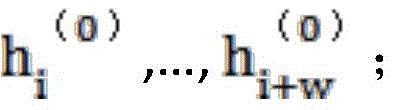
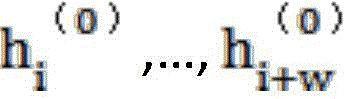


将第二输出结果
LSTM标准模块进行一个时间步的运算包含:The LSTM standard module performs a time step operation including:
S141、记LSTM标准模块的隐藏单元个数为n,s为所述设定的时间步长;当前时间步t,时间步t-1为时间步t的上一时间步;xt∈Rsm表示在时间步t的输入,ht-1表示在时间步t-1的隐藏状态,ht-1∈Rn,LSTM标准模块在时间步t的遗忘门ft和记忆门it分别为:S141. Denote the number of hidden units of the LSTM standard module as n, and s is the set time step; the current time step t, time step t-1 is the previous time step of time step t; x t ∈ R sm represents the input at time step t, h t-1 represents the hidden state at time step t-1, h t-1 ∈ R n , the forget gate f t and the memory gate i t of the LSTM standard module at time step t are respectively :
ft=σ(Wf·[ht-1,xt]+bf);f t =σ(W f ·[h t-1 ,x t ]+b f );
it=σ(Wi·[ht-1,xt]+bi);i t =σ(W i ·[h t-1 ,x t ]+ bi );
其中,ft和it∈Rsn;·表示矩阵运算,σ为sigmod激活函数,Wf和Wt∈R(n+m)s是权重参数,bf和bi∈Rn是偏置参数;Among them, f t and i t ∈ R sn ; represent matrix operations, σ is the sigmod activation function, W f and W t ∈ R (n+m)s are weight parameters, and b f and b i ∈ R n are biases parameter;
S142、计算在时间步t的新的状态候选量:S142, calculate the new state candidate quantity at time step t:

其中,tanh为激活函数,Wc为权重参数,bc为偏置参数;Among them, tanh is the activation function, W c is the weight parameter, and b c is the bias parameter;
S143、计算时间步t的更新门Ct与输出门ot:S143. Calculate the update gate C t and the output gate o t of the time step t :

ot=σ(Wo·[ht-1,xt]+bo);o t =σ(W o ·[h t-1 ,x t ]+b o );
其中,Ct与ot∈Rsn,Ct-1为时间步t-1的更新门,Ct-1∈Rsn,Wo是权重参数,bo为偏置参数;Among them, C t and o t ∈ R sn , C t-1 is the update gate at time step t-1, C t-1 ∈ R sn , W o is the weight parameter, and b o is the bias parameter;
S144、ht为LSTM标准模块在时间步t的隐藏状态,也作为LSTM标准模块在时间步t的输出结果:S144, h t is the hidden state of the LSTM standard module at time step t, and is also used as the output result of the LSTM standard module at time step t:
ht=ot*tanh(Ct)h t =o t *tanh(C t )
其中,ht∈Rsn。where h t ∈ R sn .
S2,构建用于故障识别的联盟链,联盟链包括若干企业节点和运营商节点,各节点之间通过联盟链进行数据加密传输;S2, build a consortium chain for fault identification. The consortium chain includes several enterprise nodes and operator nodes, and data encryption transmission is performed between each node through the consortium chain;
S3,获取缝纫机运行的实时生产数据输送到生产故障识别模型,判断生产故障识别模型是否成功识别出故障类型,若是,反馈故障类型到企业节点;若否进行S4;S3, obtain the real-time production data of sewing machine operation and transmit it to the production fault identification model, and judge whether the production fault identification model successfully identifies the fault type, if so, feed back the fault type to the enterprise node; if not, go to S4;
S4,提取对应未知故障的生产数据反馈到企业节点,企业节点通过联盟链将未知故障的生产数据反馈到运营商节点;S4, extract the production data corresponding to the unknown fault and feed it back to the enterprise node, and the enterprise node feeds back the production data of the unknown fault to the operator node through the alliance chain;
S5,运营商节点对未知故障的生产数据进行识别,获得新的故障类型,并通过联盟链发送新的故障类型的数据到各个企业节点,故障识别模型更新故障类型库。S5, the operator node identifies the production data of the unknown fault, obtains a new fault type, and sends the data of the new fault type to each enterprise node through the alliance chain, and the fault identification model updates the fault type database.
各节点之间通过联盟链进行数据加密传输的过程如下:The process of data encryption transmission between nodes through the alliance chain is as follows:
S201,每个节点存有单独的密钥,当某个节点上传共享数据时,该节点将待共享数据转换成数据块,并由该节点对数据块备注明文,并上传至联盟链内网平台;S201, each node stores a separate key, when a node uploads shared data, the node converts the data to be shared into data blocks, and the node annotates the data blocks in plaintext, and uploads them to the alliance chain intranet platform ;
S202,联盟链内网平台将数据块分成若干数据分块,每个数据分块按照一定排序单独下发到若干节点;若干节点利用密钥对数据分块进行加密,经过若干节点加密后的数据分块按照一定排序组合为加密好的共享数据块,加密好的共享数据块备注有明文,参与加密的节点的数量为所有节点的数量的一半以上;S202, the intranet platform of the alliance chain divides the data block into several data blocks, and each data block is individually distributed to several nodes according to a certain order; several nodes use the key to encrypt the data blocks, and the data encrypted by several nodes The blocks are combined into encrypted shared data blocks according to a certain order, the encrypted shared data blocks are remarked with plaintext, and the number of nodes participating in the encryption is more than half of the number of all nodes;
S203,联盟链内网平台展示加密好的共享数据块,并且允许加密好的共享数据块复制到任意节点。S203, the intranet platform of the alliance chain displays the encrypted shared data block, and allows the encrypted shared data block to be copied to any node.
本发明还包括共享数据块的解密步骤:The present invention also includes the decryption step of the shared data block:
当联盟链的内网环境中的计算机应用程序请求打开共享数据时,向联盟链内网平台发出请求,联盟链内网平台验证应用程序是否在白名单内,若应用程序在白名单内则联盟链内网平台向参与加密的节点发送解密请求,待各个节点解密完毕时,并将解密后的共享数据放入指定的缓冲区,将应用程序的数据读取地址替换为缓冲区地址,当应用程序关闭时,加解密监听节点清空缓冲区,若应用程序不在白名单内,则不做任何操作。When the computer application in the intranet environment of the alliance chain requests to open the shared data, it sends a request to the intranet platform of the alliance chain, and the intranet platform of the alliance chain verifies whether the application is in the whitelist. If the application is in the whitelist, the alliance The intra-chain network platform sends a decryption request to the nodes participating in the encryption. When the decryption of each node is completed, it puts the decrypted shared data into the designated buffer, and replaces the data read address of the application with the buffer address. When the program is closed, the encryption and decryption monitoring node clears the buffer. If the application is not in the whitelist, it does nothing.
为了清楚的表达联盟链的加解密过程,以下以具体某个节点的数据共享过程进行阐述:其中共享数据包括故障数据和故障解决方案数据。In order to clearly express the encryption and decryption process of the alliance chain, the following describes the data sharing process of a specific node: the shared data includes fault data and fault solution data.
第一步,节点A将待共享数据转换成数据块Dk,并由节点A对数据块备注明文,并上传至联盟链内网平台;In the first step, node A converts the data to be shared into data blocks D k , and node A annotates the data blocks in plaintext, and uploads them to the intranet platform of the alliance chain;
第二步,联盟链内网平台将数据块分成若干数据分块,每个数据分块按照一定排序单独下发到若干节点;若干节点利用密钥对数据分块进行加密,经过若干节点加密后的数据分块按照一定排序组合为加密好的共享数据块,加密好的共享数据块备注有明文,参与加密的节点的数量为所有节点的数量的一半以上;具体包括以下步骤:In the second step, the intranet platform of the alliance chain divides the data block into several data blocks, and each data block is individually distributed to several nodes according to a certain order; several nodes use the key to encrypt the data blocks, and after several nodes encrypt The encrypted data blocks are combined into encrypted shared data blocks according to a certain order. The encrypted shared data blocks are remarked with plaintext, and the number of nodes participating in the encryption is more than half of the number of all nodes. Specifically, the following steps are included:
a,联盟链内网平台将数据块Dk分成6/2=3个数据分块dki,i∈[1,3],k为数据块标号,此时k为A;当n为奇数时分成(n+1)/2个数据块;a. The alliance chain intranet platform divides the data block D k into 6/2=3 data blocks d ki, i∈[1,3] , k is the data block label, at this time k is A; when n is an odd number Divided into (n+1)/2 data blocks;
b,建立节点A对应的加密节点序列组,b, establish the encrypted node sequence group corresponding to node A,
选出除节点A以外的节点,按照进入联盟链内网的时间,进行排列组合,选取排列组合中个数为设定阈值的序列组合为加密节点序列组;Select nodes other than node A, arrange and combine them according to the time of entering the intranet of the alliance chain, and select the sequence combination whose number is the set threshold in the arrangement and combination as the encrypted node sequence group;
加密节点序列组中的各个序列对数据分块dki,i∈[1,3]进行加密;Each sequence in the encrypted node sequence group encrypts the data block d ki, i ∈ [1, 3] ;
c,联盟链内网平台展示加密好的共享数据块D′A,并且允许加密好的共享数据块D′A复制到任意节点。c. The intranet platform of the alliance chain displays the encrypted shared data block D' A and allows the encrypted shared data block D' A to be copied to any node.
解密步骤:Decryption steps:
当联盟链的内网环境中的计算机应用程序请求打开共享数据时,向联盟链内网平台发出请求,联盟链内网平台验证应用程序是否在白名单内,若应用程序在白名单内则联盟链内网平台向参与加密的节点发送解密请求,待各个节点解密完毕时,并将解密后的共享数据放入指定的缓冲区,将应用程序的数据读取地址替换为缓冲区地址,当应用程序关闭时,加解密监听节点清空缓冲区,若应用程序不在白名单内,则不做任何操作。When the computer application in the intranet environment of the alliance chain requests to open the shared data, it sends a request to the intranet platform of the alliance chain, and the intranet platform of the alliance chain verifies whether the application is in the whitelist. If the application is in the whitelist, the alliance The intra-chain network platform sends a decryption request to the nodes participating in the encryption. When the decryption of each node is completed, it puts the decrypted shared data into the designated buffer, and replaces the data read address of the application with the buffer address. When the program is closed, the encryption and decryption monitoring node clears the buffer. If the application is not in the whitelist, it does nothing.
以节点B获取节点A上传的共享数据块D′A为例,具体解密过程如下:Taking node B's acquisition of the shared data block D' A uploaded by node A as an example, the specific decryption process is as follows:
d,节点B在内网环境中,利用计算机应用程序请求打开共享数据,向联盟链内网平台发出请求;d. In the intranet environment, node B uses a computer application to request to open the shared data, and sends a request to the intranet platform of the alliance chain;
e,联盟链内网平台验证应用程序是否在白名单内,若是,进行S6,若否,不做任何操作;e. The alliance chain intranet platform verifies whether the application is in the whitelist, if so, go to S6, if not, do nothing;
f,联盟链内网平台向参与加密的节点发送解密请求,待各个节点解密完毕时,并将解密后的共享数据放入指定的缓冲区,具体包括以下步骤:f. The intranet platform of the alliance chain sends a decryption request to the nodes participating in the encryption. When the decryption of each node is completed, the decrypted shared data is put into the designated buffer, which includes the following steps:
联盟链内网平台提取共享数据块D′A的加密数据块组合;遍历加密数据块,将加密数据块分块为加密数据分块,发送到各个加密节点进行解密,直至加密数据块能够完全解密时,将解密好的分块组合还原为数据块Dk,并将数据块Dk放入指定的缓冲区。The alliance chain intranet platform extracts the encrypted data block combination of the shared data block D'A; traverses the encrypted data block, divides the encrypted data block into encrypted data blocks, and sends them to each encryption node for decryption until the encrypted data block can be completely decrypted When , the decrypted block combination is restored to the data block D k , and the data block D k is put into the specified buffer.
本发明中一个企业节点对应1个生产故障识别模型,且1个生产故障识别模型可同时识别对应企业节点的若干缝纫机,当出现未知故障需要运营商节点解决时,可以通过联盟链将故障数据加密上传到运营商节点,由于联盟链传输的不可篡改性,使得故障数据为原始采集的、真实的数据,为运营商找出解决方案提供便利,同时由于联盟链内数据共享,当一台缝纫机出现新的故障,运营商节点解决故障后,能够把新故障的解决方案同步到各个企业节点,各企业节点的生产故障识别模型定期更新,使的出现相同故障时能及时应对。In the present invention, one enterprise node corresponds to one production fault identification model, and one production fault identification model can simultaneously identify several sewing machines corresponding to the enterprise node. When an unknown fault occurs and needs to be solved by the operator node, the fault data can be encrypted through the alliance chain Uploaded to the operator node, due to the immutability of the transmission of the alliance chain, the fault data is the original collected and real data, which provides convenience for the operator to find a solution. At the same time, due to the data sharing within the alliance chain, when a sewing machine appears For new faults, after the operator node solves the fault, it can synchronize the solution of the new fault to each enterprise node, and the production fault identification model of each enterprise node is updated regularly, so that the same fault can be dealt with in time.
Claims (6)
Priority Applications (1)
| Application Number | Priority Date | Filing Date | Title |
|---|---|---|---|
| CN202210215706.4A CN114897286B (en) | 2022-03-07 | 2022-03-07 | A method for establishing fault model based on alliance chain |
Applications Claiming Priority (1)
| Application Number | Priority Date | Filing Date | Title |
|---|---|---|---|
| CN202210215706.4A CN114897286B (en) | 2022-03-07 | 2022-03-07 | A method for establishing fault model based on alliance chain |
Publications (2)
| Publication Number | Publication Date |
|---|---|
| CN114897286A true CN114897286A (en) | 2022-08-12 |
| CN114897286B CN114897286B (en) | 2025-02-25 |
Family
ID=82714964
Family Applications (1)
| Application Number | Title | Priority Date | Filing Date |
|---|---|---|---|
| CN202210215706.4A Active CN114897286B (en) | 2022-03-07 | 2022-03-07 | A method for establishing fault model based on alliance chain |
Country Status (1)
| Country | Link |
|---|---|
| CN (1) | CN114897286B (en) |
Cited By (2)
| Publication number | Priority date | Publication date | Assignee | Title |
|---|---|---|---|---|
| CN116009608A (en) * | 2022-12-30 | 2023-04-25 | 苏州汇川控制技术有限公司 | Debugging method, system, equipment and storage medium of template machine |
| CN116432904A (en) * | 2023-04-10 | 2023-07-14 | 杰克科技股份有限公司 | Production management method and system for sewing equipment |
Citations (7)
| Publication number | Priority date | Publication date | Assignee | Title |
|---|---|---|---|---|
| WO2015158198A1 (en) * | 2014-04-17 | 2015-10-22 | 北京泰乐德信息技术有限公司 | Fault recognition method and system based on neural network self-learning |
| CN110569909A (en) * | 2019-09-10 | 2019-12-13 | 腾讯科技(深圳)有限公司 | fault early warning method, device, equipment and storage medium based on block chain |
| JP2020107203A (en) * | 2018-12-28 | 2020-07-09 | 株式会社エナリス | Failure detection system |
| WO2021248917A1 (en) * | 2020-06-08 | 2021-12-16 | 南京邮电大学 | Data center network fault diagnosis and automatic configuration method based on hybrid chain |
| CN113987697A (en) * | 2021-09-28 | 2022-01-28 | 上海电气集团数字科技有限公司 | A method for fault diagnosis of mechanical equipment based on vibration data |
| CN114021755A (en) * | 2021-11-26 | 2022-02-08 | 国网陕西省电力公司汉中供电公司 | Block chain-based remote maintenance method for power transmission and transformation equipment fault |
| CN114048482A (en) * | 2021-11-05 | 2022-02-15 | 大连海事大学 | LSTM risk prediction access control method based on block chain |
-
2022
- 2022-03-07 CN CN202210215706.4A patent/CN114897286B/en active Active
Patent Citations (7)
| Publication number | Priority date | Publication date | Assignee | Title |
|---|---|---|---|---|
| WO2015158198A1 (en) * | 2014-04-17 | 2015-10-22 | 北京泰乐德信息技术有限公司 | Fault recognition method and system based on neural network self-learning |
| JP2020107203A (en) * | 2018-12-28 | 2020-07-09 | 株式会社エナリス | Failure detection system |
| CN110569909A (en) * | 2019-09-10 | 2019-12-13 | 腾讯科技(深圳)有限公司 | fault early warning method, device, equipment and storage medium based on block chain |
| WO2021248917A1 (en) * | 2020-06-08 | 2021-12-16 | 南京邮电大学 | Data center network fault diagnosis and automatic configuration method based on hybrid chain |
| CN113987697A (en) * | 2021-09-28 | 2022-01-28 | 上海电气集团数字科技有限公司 | A method for fault diagnosis of mechanical equipment based on vibration data |
| CN114048482A (en) * | 2021-11-05 | 2022-02-15 | 大连海事大学 | LSTM risk prediction access control method based on block chain |
| CN114021755A (en) * | 2021-11-26 | 2022-02-08 | 国网陕西省电力公司汉中供电公司 | Block chain-based remote maintenance method for power transmission and transformation equipment fault |
Non-Patent Citations (2)
| Title |
|---|
| 呼阳;陈亮;: "基于区块链的生产线数据共享方案研究", 国外电子测量技术, no. 05, 15 May 2019 (2019-05-15), pages 129 - 133 * |
| 艾学瑛;: "基于区块链和5G物联网的溯源及异常数据预警系统", 电子设计工程, no. 10, 20 May 2020 (2020-05-20), pages 114 - 118 * |
Cited By (3)
| Publication number | Priority date | Publication date | Assignee | Title |
|---|---|---|---|---|
| CN116009608A (en) * | 2022-12-30 | 2023-04-25 | 苏州汇川控制技术有限公司 | Debugging method, system, equipment and storage medium of template machine |
| CN116432904A (en) * | 2023-04-10 | 2023-07-14 | 杰克科技股份有限公司 | Production management method and system for sewing equipment |
| WO2024212274A1 (en) * | 2023-04-10 | 2024-10-17 | 杰克科技股份有限公司 | Sewing device production management method and system |
Also Published As
| Publication number | Publication date |
|---|---|
| CN114897286B (en) | 2025-02-25 |
Similar Documents
| Publication | Publication Date | Title |
|---|---|---|
| CN106506645B (en) | Monitoring method and system for rail vehicle | |
| CN109413188A (en) | A kind of industrial equipment management system for internet of things and method | |
| CN108737555A (en) | Industrial equipment management method based on Internet of Things and system | |
| CN113139814B (en) | Ceramic production transaction traceability system | |
| CN114897286B (en) | A method for establishing fault model based on alliance chain | |
| CN112949798B (en) | Laboratory equipment management method and system based on RFID technology | |
| CN106095670A (en) | The generation method and device of test report | |
| CN107103410A (en) | A kind of supervisory systems and method of construction engineering quality detection | |
| CN114416415A (en) | Remote online fault detection method, system and storage medium for Hongmeng operating system | |
| CN119809768A (en) | A vehicle service data management method and system based on blockchain | |
| CN113691390A (en) | A cloud-based collaborative edge node alarm system and method | |
| CN110854725B (en) | Business linkage system and method between multi-substations | |
| CN110825776B (en) | Air quality detection report processing method and device, computing equipment and storage medium | |
| CN113506096B (en) | Inter-system interface method based on industrial internet identification analysis system | |
| CN100450178C (en) | A remote monitoring system for general automation equipment based on screen simulation technology | |
| CN117786652A (en) | Block chain-based safety inspection system | |
| CN114817739A (en) | Industrial big data processing system based on artificial intelligence algorithm | |
| CN114358746A (en) | Software development integrated control system based on block chain | |
| CN114466036A (en) | Intelligent management and control platform combined with eagle eye error prevention | |
| CN113779125A (en) | Construction safety information management method and system | |
| CN117952779A (en) | Power intelligent safety operation and maintenance system and method | |
| CN118586850A (en) | In vitro test kit quality inspection data security management system | |
| CN116980483A (en) | Fire-fighting Internet of things data access method and system | |
| CN116186650B (en) | Rubber operation management method, system and storage medium | |
| CN120338287B (en) | Three-level triggered carbon emission factor dynamic update system and method |
Legal Events
| Date | Code | Title | Description |
|---|---|---|---|
| PB01 | Publication | ||
| PB01 | Publication | ||
| SE01 | Entry into force of request for substantive examination | ||
| SE01 | Entry into force of request for substantive examination | ||
| GR01 | Patent grant | ||
| GR01 | Patent grant |