CN113396158A - LPL-GPIHBP1 fusion polypeptide - Google Patents
LPL-GPIHBP1 fusion polypeptide Download PDFInfo
- Publication number
- CN113396158A CN113396158A CN201980089752.0A CN201980089752A CN113396158A CN 113396158 A CN113396158 A CN 113396158A CN 201980089752 A CN201980089752 A CN 201980089752A CN 113396158 A CN113396158 A CN 113396158A
- Authority
- CN
- China
- Prior art keywords
- seq
- lpl
- polypeptide
- fusion polypeptide
- gpihbp1
- Prior art date
- Legal status (The legal status is an assumption and is not a legal conclusion. Google has not performed a legal analysis and makes no representation as to the accuracy of the status listed.)
- Pending
Links
Images


Classifications
-
- C—CHEMISTRY; METALLURGY
- C12—BIOCHEMISTRY; BEER; SPIRITS; WINE; VINEGAR; MICROBIOLOGY; ENZYMOLOGY; MUTATION OR GENETIC ENGINEERING
- C12N—MICROORGANISMS OR ENZYMES; COMPOSITIONS THEREOF; PROPAGATING, PRESERVING, OR MAINTAINING MICROORGANISMS; MUTATION OR GENETIC ENGINEERING; CULTURE MEDIA
- C12N9/00—Enzymes; Proenzymes; Compositions thereof; Processes for preparing, activating, inhibiting, separating or purifying enzymes
- C12N9/14—Hydrolases (3)
- C12N9/16—Hydrolases (3) acting on ester bonds (3.1)
- C12N9/18—Carboxylic ester hydrolases (3.1.1)
- C12N9/20—Triglyceride splitting, e.g. by means of lipase
-
- A—HUMAN NECESSITIES
- A61—MEDICAL OR VETERINARY SCIENCE; HYGIENE
- A61P—SPECIFIC THERAPEUTIC ACTIVITY OF CHEMICAL COMPOUNDS OR MEDICINAL PREPARATIONS
- A61P3/00—Drugs for disorders of the metabolism
- A61P3/06—Antihyperlipidemics
-
- C—CHEMISTRY; METALLURGY
- C07—ORGANIC CHEMISTRY
- C07K—PEPTIDES
- C07K14/00—Peptides having more than 20 amino acids; Gastrins; Somatostatins; Melanotropins; Derivatives thereof
- C07K14/435—Peptides having more than 20 amino acids; Gastrins; Somatostatins; Melanotropins; Derivatives thereof from animals; from humans
- C07K14/705—Receptors; Cell surface antigens; Cell surface determinants
-
- C—CHEMISTRY; METALLURGY
- C12—BIOCHEMISTRY; BEER; SPIRITS; WINE; VINEGAR; MICROBIOLOGY; ENZYMOLOGY; MUTATION OR GENETIC ENGINEERING
- C12Y—ENZYMES
- C12Y301/00—Hydrolases acting on ester bonds (3.1)
- C12Y301/01—Carboxylic ester hydrolases (3.1.1)
- C12Y301/01034—Lipoprotein lipase (3.1.1.34)
-
- A—HUMAN NECESSITIES
- A61—MEDICAL OR VETERINARY SCIENCE; HYGIENE
- A61K—PREPARATIONS FOR MEDICAL, DENTAL OR TOILETRY PURPOSES
- A61K38/00—Medicinal preparations containing peptides
-
- C—CHEMISTRY; METALLURGY
- C07—ORGANIC CHEMISTRY
- C07K—PEPTIDES
- C07K2319/00—Fusion polypeptide
- C07K2319/20—Fusion polypeptide containing a tag with affinity for a non-protein ligand
- C07K2319/21—Fusion polypeptide containing a tag with affinity for a non-protein ligand containing a His-tag
-
- C—CHEMISTRY; METALLURGY
- C07—ORGANIC CHEMISTRY
- C07K—PEPTIDES
- C07K2319/00—Fusion polypeptide
- C07K2319/35—Fusion polypeptide containing a fusion for enhanced stability/folding during expression, e.g. fusions with chaperones or thioredoxin
-
- C—CHEMISTRY; METALLURGY
- C07—ORGANIC CHEMISTRY
- C07K—PEPTIDES
- C07K2319/00—Fusion polypeptide
- C07K2319/40—Fusion polypeptide containing a tag for immunodetection, or an epitope for immunisation
- C07K2319/43—Fusion polypeptide containing a tag for immunodetection, or an epitope for immunisation containing a FLAG-tag
Landscapes
- Health & Medical Sciences (AREA)
- Chemical & Material Sciences (AREA)
- Life Sciences & Earth Sciences (AREA)
- Organic Chemistry (AREA)
- Engineering & Computer Science (AREA)
- Zoology (AREA)
- Bioinformatics & Cheminformatics (AREA)
- General Health & Medical Sciences (AREA)
- Genetics & Genomics (AREA)
- Medicinal Chemistry (AREA)
- Biochemistry (AREA)
- Wood Science & Technology (AREA)
- Molecular Biology (AREA)
- General Engineering & Computer Science (AREA)
- Obesity (AREA)
- Veterinary Medicine (AREA)
- Biophysics (AREA)
- Gastroenterology & Hepatology (AREA)
- Diabetes (AREA)
- Hematology (AREA)
- Toxicology (AREA)
- Chemical Kinetics & Catalysis (AREA)
- General Chemical & Material Sciences (AREA)
- Nuclear Medicine, Radiotherapy & Molecular Imaging (AREA)
- Pharmacology & Pharmacy (AREA)
- Animal Behavior & Ethology (AREA)
- Public Health (AREA)
- Proteomics, Peptides & Aminoacids (AREA)
- Immunology (AREA)
- Cell Biology (AREA)
- Biomedical Technology (AREA)
- Biotechnology (AREA)
- Microbiology (AREA)
- Peptides Or Proteins (AREA)
- Micro-Organisms Or Cultivation Processes Thereof (AREA)
- Preparation Of Compounds By Using Micro-Organisms (AREA)
- Medicinal Preparation (AREA)
- Medicines That Contain Protein Lipid Enzymes And Other Medicines (AREA)
- Pharmaceuticals Containing Other Organic And Inorganic Compounds (AREA)
- Medicines Containing Material From Animals Or Micro-Organisms (AREA)
Abstract
本披露涉及包含脂蛋白脂肪酶(LPL)和糖基磷脂酰肌醇锚定高密度脂蛋白结合蛋白1(GPIHBP1)的融合多肽。本披露还涉及此类融合多肽在治疗诸如家族性乳糜微粒血症综合征(FCS)等疾病中的用途。

The present disclosure relates to fusion polypeptides comprising lipoprotein lipase (LPL) and glycosylphosphatidylinositol-anchored high density lipoprotein binding protein 1 (GPIHBP1). The present disclosure also relates to the use of such fusion polypeptides in the treatment of diseases such as familial chylomicronemia syndrome (FCS).
Description
Technical Field
The present disclosure relates to fusion polypeptides comprising lipoprotein lipase (LPL) and glycosylphosphatidylinositol-anchored high density lipoprotein binding protein 1(GPIHBP 1). The disclosure also relates to the use of such fusion polypeptides in the treatment of diseases such as Familial Chylomicronemia Syndrome (FCS).
Background
Familial Chylomicronemia Syndrome (FCS) is a rare genetic disorder that is caused by a lipoprotein lipase (LPL) deficiency and is characterized by abnormally high levels of plasma Triglycerides (TG). FCS patients manifest as childhood onset severe hypertriglyceridemia (>1,000mg/dL), abdominal pain episodes, recurrent Acute Pancreatitis (AP), eruptive xanthomas, lipemia retinae, and hepatosplenomegaly. AP is a frequent and severe manifestation of FCS (Davidson et al, 2018, j.clin.lipidol [ journal of clinical lipidemics ],12(4):898-907.e 2). The risk of AP increases with increasing TG levels (Nawaz et al 2015, Am J Gastroenterol [ J. Gastroenterol ]110: 1497-. The mortality rate for hyperlipidemic pancreatitis (HTAP) can be as high as 20-30% (Gubensek et al 2014, PLoS One [ public science library integrated ]9, e 102748).
Lipoprotein lipase (LPL) is a member of the lipase gene family. LPL is a triglyceride lipase secreted mainly by adipocytes, skeletal muscle cells, and cardiac muscle cells. LPL folding is mediated by the chaperone lipase maturation factor 1(LMF 1). LPL is secreted into the subendothelial space and then translocated to the capillary lumen via the glycosylphosphatidylinositol HDL-binding protein 1(GPIHBP 1). Following translocation, LPL is tethered to endothelial cells by heparan sulfate proteoglycan or GPIHBP 1. Tethered LPLs catalyze the hydrolysis of Triglycerides (TG) carried in Very Low Density Lipoproteins (VLDL) and Chylomicrons (CM) (Savonen et al, 2015, J Lipid Res [ J. Lipid Res ]56: 588-598; Goulbourne et al, 2014, Cell Metab [ Cell metabolism ]18: 389-396). The free fatty acids released by LPL are used as an energy source by heart and muscle tissue or stored in the form of TG by adipose tissue. LPL is a tightly controlled enzyme stimulated by an agonist (ApoC2) and inhibited by antagonists (ANGPTL3, ANGPTL4, ANGPTL 8) (He et al, 2018, Clin Chim Acta [ Proc. Clin Chemicals ]480: 126-. Loss-of-function mutations in LPL, GPIHBP1, LMF1 result in LPL deficiency, leading to accumulation of TG-rich CM in the blood.
No specific approved pharmacological intervention has been demonstrated to improve the clinical course of hyperlipidemic pancreatitis (HTAP). Therapeutic options for treating HTAP by drastically reducing TG to <1000mg/dL are limited to switching patients to receiving low-calorie parenteral nutrition in combination with supportive care. Plasmapheresis can be used if the device is available (Chaudhry et al, 2018, Expert Rev Clin Pharmacol [ clinical pharmacology Expert review ]11: 589-598; Gaudet et al, 2013, JMed Econ [ journal of medical economics ]16: 657-. Prevention of HTAP is also difficult to achieve. FCS patients have few options to maintain plasma TG below 1000mg/dL to avoid abdominal pain episodes and HTAP. Such patients must limit their dietary fat intake to less than 20 g/day or 15% of the total energy intake throughout their life. Eighty percent (80%) of FCS patients rated this compliance as "very difficult" (Stroes et al, 2017, Atherosealer supply 23: 1-7).
Disclosure of Invention
We have unexpectedly found that lipoprotein lipase (LPL) maintains high specific activity, does not aggregate, is stable in PBS and is resistant to activation by ANGPTL4 when expressed as a fusion polypeptide with glycosylphosphatidylinositol-anchored high density lipoprotein binding protein 1(GPIHBP 1).
Accordingly, in one aspect, the present disclosure provides a fusion polypeptide comprising (i) a lipoprotein lipase (LPL) polypeptide or a functional variant thereof; and (ii) a glycosylphosphatidylinositol-anchored high density lipoprotein binding protein 1(GPIHBP1) polypeptide or functional variant thereof. The GPIHBP1 polypeptide (or functional variant thereof) may be located at the C-terminus or N-terminus of the LPL polypeptide (or functional variant thereof). The LPL polypeptide (or functional variant thereof) and the GPIHBP1 polypeptide (or functional variant thereof) may be fused together directly or may be linked by a linker. The fusion polypeptide may further comprise an N-terminal or C-terminal amino acid sequence, e.g., to aid in purification, to improve expression, or to increase half-life. Such N-terminal or C-terminal amino acid sequences may be included in the expression of the polypeptide, but subsequently (e.g., prior to administration) removed.
In one embodiment, the disclosure provides a fusion polypeptide having one of formulas (I) or (II) from N-terminus to C-terminus:
A-B(n)-C-D(m)-E (I), or
A-D(m)-C-B(n)-E (II), wherein
A ═ optional N-terminal sequence
B ═ LPL polypeptides or functional variants thereof
C ═ optional linker sequence
D ═ GPIHBP1 polypeptide or functional variants thereof
E ═ an optional C-terminal sequence, wherein
n is an integer from 1 to 3, and
m is an integer from 1 to 3.
In some embodiments, n ═ 1. In some embodiments, m is 1. In some embodiments, n-1 and m-1. In certain embodiments, the LPL polypeptide and/or the GPIHBP1 polypeptide is based on a mammalian sequence or derivative thereof. In particular embodiments, the LPL polypeptide and/or the GPIHBP1 polypeptide is based on a human sequence or a derivative thereof.
In some embodiments, the functional variant of the LPL polypeptide comprises an amino acid sequence having at least about 80%, at least about 85%, at least about 90%, at least about 95%, at least about 97%, at least about 98%, or at least about 99% sequence identity to the LPL polypeptide of SEQ ID No. 1 or SEQ ID No. 2. In some embodiments, the functional variant of the LPL polypeptide consists of an amino acid sequence having at least about 80%, at least about 85%, at least about 90%, at least about 95%, at least about 97%, at least about 98%, or at least about 99% sequence identity to the LPL polypeptide of SEQ ID No. 1 or SEQ ID No. 2. In some embodiments, the functional variant of the LPL polypeptide comprises the amino acid sequence: (i) SEQ ID NO. 2 having one or more (e.g., 1, 2, 3, 4, 5, 6, 7, 8, 9, 10 or more) point mutations added to, deleted from, or substituted for any of the amino acids of SEQ ID NO. 2; or (ii) SEQ ID NO:1 with one or more (e.g., 1, 2, 3, 4, 5, 6, 7, 8, 9, 10 or more) point mutations added, deleted or substituted for any of amino acids 157 and 189 of SEQ ID NO: 1. In some embodiments, the functional variant of the LPL polypeptide consists of the amino acid sequence of: (i) SEQ ID NO. 2 having one or more (e.g., 1, 2, 3, 4, 5, 6, 7, 8, 9, 10 or more) point mutations added to, deleted from, or substituted for any of the amino acids of SEQ ID NO. 2; or (ii) SEQ ID NO:1 with one or more (e.g., 1, 2, 3, 4, 5, 6, 7, 8, 9, 10 or more) point mutations added, deleted or substituted for any of amino acids 157 and 189 of SEQ ID NO: 1.
In certain embodiments, the functional variant of the LPL polypeptide is a truncated form of SEQ ID NO. 1. In certain embodiments, the functional variant of the LPL polypeptide is a truncated form of SEQ ID NO. 2. In some embodiments, the functional variant of the LPL polypeptide is a truncated form of: (i) an amino acid sequence having at least about 80%, at least about 85%, at least about 90%, at least about 95%, at least about 97%, at least about 98%, or at least about 99% sequence identity to SEQ ID NO 1 or SEQ ID NO 2; (ii) SEQ ID NO. 2 having one or more (e.g., 1, 2, 3, 4, 5, 6, 7, 8, 9, 10 or more) point mutations added to, deleted from, or substituted for any of the amino acids of SEQ ID NO. 2; (iii) SEQ ID NO:1 with one or more (e.g., 1, 2, 3, 4, 5, 6, 7, 8, 9, 10 or more) point mutations added to, deleted from or substituted for any of amino acids 157-189 of SEQ ID NO: 1; (iv) 1, SEQ ID NO; or (v) SEQ ID NO 2. In some embodiments, the functional variant of the LPL polypeptide is a truncated form of: (i) an amino acid sequence having at least about 80%, at least about 85%, at least about 90%, at least about 95%, at least about 97%, at least about 98%, or at least about 99% sequence identity to SEQ ID NO 1 or SEQ ID NO 2; (ii) SEQ ID NO. 2 having one or more (e.g., 1, 2, 3, 4, 5, 6, 7, 8, 9, 10 or more) point mutations added to, deleted from, or substituted for any of the amino acids of SEQ ID NO. 2; (iii) SEQ ID NO:1 with one or more (e.g., 1, 2, 3, 4, 5, 6, 7, 8, 9, 10 or more) point mutations added to, deleted from or substituted for any of amino acids 157-189 of SEQ ID NO: 1; (iv) 1, SEQ ID NO; or (v) SEQ ID NO 2, wherein the truncated form of the LPL polypeptide corresponds to the amino acid sequence of a polypeptide comprising or consisting of: amino acids 36-335, 35-340, 34-345, 33-350, 32-355, 31-360, 30-365, 29-370, 28-375, 28-380, 28-385, 28-390, 28-395, 28-400, 28-405, 28-410, 28-415, 28-420, 28-425, 28-430, 28-435, 28-440, 28-445, 28-450, 28-455, 28-460, 28-465, or 28-470 of SEQ ID NO 1.
In some embodiments, the truncated form of the LPL polypeptide corresponds to the amino acid sequence of a polypeptide comprising or consisting of: amino acids 36-335, 35-340, 34-345, 33-350, 32-355, 31-360, 30-365, 29-370, 28-375, 28-380, 28-385, 28-390, 28-395, 28-400, 28-405, 28-410, 28-415, 28-420, 28-425, 28-430, 28-435, 28-440, 28-445, 28-450, 28-455, 28-460, 28-465, or 28-470 of SEQ ID NO 1. In certain embodiments thereof, the truncated form of SEQ ID No. 1 has at least about 80%, at least about 85%, at least about 90%, at least about 95%, at least about 97%, at least about 98%, or at least about 99% sequence identity to the corresponding region of SEQ ID No. 1; optionally wherein said truncated form of SEQ ID NO:1 has one or more (e.g., 1, 2, 3, 4, 5, 6, 7, 8, 9, 10 or more) point mutations added to, deleted from or substituted for any of amino acids 157 and 189 of SEQ ID NO: 1.
In some embodiments, the LPL polypeptide comprises or consists of any one of SEQ ID NOs 1, 2, 3, 4, or 45.
In some embodiments, the functional variant of a GPIHBP1 polypeptide comprises an amino acid sequence having at least about 80%, at least about 85%, at least about 90%, at least about 95%, at least about 97%, at least about 98%, or at least about 99% sequence identity to a GPIHBP1 polypeptide of SEQ ID No. 5, SEQ ID No. 6, or SEQ ID No. 7. In some embodiments, the functional variant of a GPIHBP1 polypeptide consists of an amino acid sequence having at least about 80%, at least about 85%, at least about 90%, at least about 95%, at least about 97%, at least about 98%, or at least about 99% sequence identity to a GPIHBP1 polypeptide of SEQ ID No. 5, SEQ ID No. 6, or SEQ ID No. 7. In certain embodiments, the functional variant of a GPIHBP1 polypeptide comprises the amino acid sequence: SEQ ID NO. 7 having one or more (e.g., 1, 2, 3, 4, 5, 6, 7, 8, 9, 10 or more) point mutations added to, deleted from, or substituted for any of the amino acids of SEQ ID NO. 7. In certain embodiments, the functional variant of a GPIHBP1 polypeptide consists of the amino acid sequence: SEQ ID NO. 7 having one or more (e.g., 1, 2, 3, 4, 5, 6, 7, 8, 9, 10 or more) point mutations added to, deleted from, or substituted for any of the amino acids of SEQ ID NO. 7.
In some embodiments, the functional variant of a GPIHBP1 polypeptide is a truncated form of: (i) an amino acid sequence having at least about 80%, at least about 85%, at least about 90%, at least about 95%, at least about 97%, at least about 98%, or at least about 99% sequence identity to a GPIHBP1 polypeptide of SEQ ID No. 5; or (ii) SEQ ID NO 5. In some embodiments, the functional variant of a GPIHBP1 polypeptide is a truncated form of: (i) an amino acid sequence having at least about 80%, at least about 85%, at least about 90%, at least about 95%, at least about 97%, at least about 98%, or at least about 99% sequence identity to a GPIHBP1 polypeptide of SEQ ID No. 5; or (ii) SEQ ID NO 5, wherein the truncated form of the GPIHBP1 polypeptide corresponds to the amino acid sequence of a polypeptide comprising or consisting of: amino acids 62-149, 61-150, 60-151, 55-152, 50-153, 45-154, 40-155, 35-156, 30-157, 25-158, or 20-159 of SEQ ID NO. 5.
In certain embodiments, the truncated form of the GPIHBP1 polypeptide corresponds to the amino acid sequence of a polypeptide comprising or consisting of: amino acids 62-149, 61-150, 60-151, 55-152, 50-153, 45-154, 40-155, 35-156, 30-157, 25-158, or 20-159 of SEQ ID NO. 5. In certain embodiments, the truncated form of SEQ ID No. 5 has at least about 80%, at least about 85%, at least about 90%, at least about 95%, at least about 97%, at least about 98%, or at least about 99% sequence identity to the corresponding region of SEQ ID No. 5.
In some embodiments, the GPIHBP1 polypeptide comprises or consists of any one of SEQ ID NOs 5, 6, 7, 8, 9, or 10.
In certain embodiments, the LPL polypeptide and the GPIHBP1 polypeptide are linked by a linker. In certain embodiments, the LPL polypeptide and the GPIHBP1 polypeptide are linked by a linker C. In some embodiments, the linker comprises or consists of the amino acid sequence set forth in any one of SEQ ID NOs 11-27. In some embodiments, the linker comprises or consists of the amino acid sequence set forth in SEQ ID NO 16 or SEQ ID NO 17. In some embodiments, the linker comprises or consists of one or more amino acid sequences set forth in any of SEQ ID NOs 11-27. In some embodiments, the linker comprises or consists of one or more amino acid sequences set forth in SEQ ID NO 16 or SEQ ID NO 17.
In some embodiments, the fusion polypeptide comprises an N-terminal sequence. In some embodiments, the fusion polypeptide comprises N-terminal sequence a. In some embodiments, the fusion polypeptide comprises a C-terminal sequence. In some embodiments, the fusion polypeptide comprises C-terminal sequence E. In certain embodiments, the N-terminal sequence or the C-terminal sequence comprises one or more tags selected from the group consisting of: his-tag, FLAG-tag, Arg-tag, T7-tag, Strep-tag, S-tag, AviTagTMAnd an aptamer tag. In some embodiments, the N-terminal sequence or the C-terminal sequence comprises a His-tag and AviTagTM. In some embodiments, the N-terminal sequence or the C-terminal sequence consists of a His-tag and AviTagTMAnd (4) forming. In some embodiments, the N-terminal sequence or the C-terminal sequence comprises a FLAG tag, a His tag, andAviTagTM. In some embodiments, the N-terminal sequence or the C-terminal sequence consists of a FLAG tag, a His tag, and AviTagTMAnd (4) forming. In certain embodiments, the N-terminal sequence or the C-terminal sequence comprises or consists of the amino acid sequence set forth in SEQ ID NO 31 or SEQ ID NO 32.
In some embodiments, the N-terminal sequence or the C-terminal sequence comprises a moiety that increases the half-life of the fusion polypeptide in vivo. In certain embodiments, the N-terminal sequence or the C-terminal sequence comprises a PEG sequence, a PAS sequence, or an antibody sequence. In some embodiments, the N-terminal sequence or the C-terminal sequence comprises a moiety that increases the half-life of the fusion polypeptide in vivo, wherein the N-terminal sequence or the C-terminal sequence comprises a PEG sequence, a PAS sequence, or optionally an antibody sequence selected from a Fab or ScFv molecule. In some embodiments, the antibody sequence is a Fab or ScFv molecule. In some embodiments, the antibody Fab or ScFv binds albumin. In certain embodiments, the antibody is CA 645.
In some embodiments, the fusion polypeptide described herein comprises or consists of the amino acid sequence of any one of SEQ ID NOs 33-40, 46-48, 51, 53, 54, or 55. In some embodiments, the fusion polypeptide described herein comprises or consists of any one of the amino acid sequences in table 1 (optionally without a signal peptide).
In other aspects, the disclosure relates to a nucleic acid molecule (e.g., an isolated nucleic acid molecule), including DNA and RNA molecules, encoding a fusion polypeptide as described herein.
In some embodiments, the nucleic acid molecule comprises a nucleotide sequence having at least about 80%, at least about 85%, at least about 90%, at least about 95%, at least about 97%, or at least about 99% sequence identity to a nucleic acid encoding any one of SEQ ID NOS 33-40, 46-48, 51, 53, 54, or 55. In some embodiments, the nucleic acid molecule comprises a nucleotide sequence having at least about 80%, at least about 85%, at least about 90%, at least about 95%, at least about 97%, or at least about 99% sequence identity to a nucleic acid encoding any one of the amino acid sequences in table 1.
In some embodiments, the nucleic acid molecule comprises a nucleotide sequence having at least about 80%, at least about 85%, at least about 90%, at least about 95%, at least about 97%, or at least about 99% sequence identity to SEQ ID No. 44.
In some embodiments, the nucleic acid molecule comprises or consists of the nucleotide sequence of SEQ ID NO. 44.
Also disclosed are vectors, particularly expression vectors, comprising the nucleic acid molecules of the disclosure.
The disclosure also provides host cells comprising nucleic acids and/or vectors encoding fusion polypeptides as described herein.
The disclosure also provides a method for producing a fusion polypeptide as described herein, the method comprising maintaining a host cell of the disclosure under conditions suitable for expression of a nucleic acid, thereby expressing a recombinant nucleic acid and producing the fusion polypeptide. The method may further comprise isolating and/or purifying the fusion polypeptide.
The disclosure also provides a pharmaceutical composition comprising a fusion polypeptide, nucleic acid molecule, vector or host cell of the disclosure, optionally further comprising a pharmaceutically or physiologically acceptable diluent and/or carrier. The disclosure also provides a pharmaceutical composition comprising a fusion polypeptide, nucleic acid molecule, vector or host cell of the disclosure, and a pharmaceutically or physiologically acceptable diluent and/or carrier.
The disclosure also provides a method of treating a patient having a pathological condition, the method comprising administering to a subject in need thereof a fusion polypeptide, nucleic acid molecule, vector, host cell, or pharmaceutical composition of the disclosure. In one embodiment, the subject may have chylomicronemia syndrome.
The present disclosure also provides a fusion polypeptide, nucleic acid molecule, vector, host cell or pharmaceutical composition according to the present disclosure, for use (i) in therapy and/or (ii) in the manufacture of a medicament for treating a pathological disorder, disease or condition disclosed herein. In some embodiments, provided herein is a method of treating a patient having a pathological disorder, disease, or condition, comprising administering to the patient a therapeutically effective amount of a fusion polypeptide, nucleic acid, vector, host cell, or pharmaceutical composition described herein. In some embodiments, the pathological disorder, disease or condition may be selected from chylomicronemia (including familial chylomicronemia syndrome, polygenic late chylomicronemia and early chylomicronemia), hyperlipidemic pancreatitis, hypertriglyceridemia, abdominal pain, recurrent acute pancreatitis, eruptive cutaneous xanthoma, retinal lipemia, hepatosplenomegaly, diabetes, obesity, cardiovascular disease, chronic kidney disease, non-alcoholic fatty liver disease, hypertriglyceridemic pancreatitis, hepatic steatosis, metabolic syndrome, ischemic heart disease, and microvascular disease. In one embodiment, the disorder can be chylomicronemia syndrome (e.g., familial chylomicronemia syndrome).
Drawings
Fig. 1 is a series of graphs showing aggregation levels, yields and lipase activities for various LPL constructs. Fig. 1 panels (a) and (C) demonstrate that LPL successfully expresses (a), but in aggregated form (C). When LPL was co-expressed with GPIHBP1 (B), no aggregation was observed (C). Co-expression of LPL and GPIHBP1 resulted in higher LPL activity (D) and also protected LPL from spontaneous inactivation (E).
Fig. 2 is a series of graphs showing aggregation level, activity and stability of LPL-GPIHBP1 fusion polypeptides. Panels (a) and (B) of fig. 1 demonstrate stable expression of the LPL-GPIHBP1 fusion polypeptide (a), and lack of aggregation (B). The LPL-GPIHBP1 fusion polypeptide has activity comparable to the coexpressed construct (C) and is also stable (D).
Figure 3 shows a schematic and the results (a) of an assay to test whether ANGPTL4 is able to displace LPL from a fusion polypeptide. ANGPTL4 is capable of replacing LPL (b) from the co-expressed LPL/GPIHBP1 complex. Binding of ANGPTL4 to both the fusion polypeptide and the co-expressed complex is shown (C). Both ANGPTL4 and GPIHBP1 were able to dissociate LPL/GPIHBP1 complex (D).
FIG. 4 is a set of graphs demonstrating the resistance of the LPL/GPIHBP1 complex or LPL/GPIHBP1 fusion polypeptide to inactivation by ANGPTL4(A) or ANGPTL3 (B).
FIG. 5 is a set of graphs showing the localization of the ANGPTL4 binding epitope to LPL of both LPL/GPIHBP1 fusion polypeptide (A) and the co-expressed LPL/GPIHBP1 complex (B).
Fig. 6 is a set of graphs demonstrating the ability of subcutaneously administered LPL/GPIHBP1 fusion polypeptides to reduce TG levels in C57BL/6 mice.
FIG. 7 is a series of graphs showing the ability of LPL/GPIHBP1 fusion polypeptides to reduce TG levels in DBA/2 mice when administered intravenously (A, B). No increase in plasma free fatty acids was observed (C). Daily administration also consistently reduced plasma TG (D, E) over 5 days.
FIG. 8 is a set of graphs demonstrating the ability of subcutaneously administered LPL/GPIHBP1 fusion polypeptides to reduce TG levels in DBA/2 mice.
Fig. 9 is a series of graphs demonstrating dose-dependent reduction of TG levels of subcutaneously administered LPL/GPIHBP1 fusion polypeptide in TALLYHO mice receiving normal diet (a, B) with a single dose or high fat diet (C, D) with repeated doses.
FIG. 10 is a set of graphs demonstrating that LPL/GPIHBP1 fusion polypeptides linked to an albumin binding moiety decrease the increase in duration of TG.
Detailed Description
Lipoprotein lipase (LPL) and functional variants thereof
The LPL polypeptide used in the fusion polypeptides described herein can be mammalian, such as, for example, human. Wild-type human LPL is encoded by the amino acid sequence with UniProtKB/Swiss-Prot accession number P06858.1 (SEQ ID NO: 1). Human LPL is initially translated as a precursor protein of 475 amino acids. The signal peptide comprising amino acids 1-27 of the precursor protein is then cleaved, leaving the mature form comprising amino acids 28-475 (SEQ ID NO: 2).
In one embodiment, the LPL polypeptide used in a fusion polypeptide of the disclosure comprises an amino acid sequence having at least about 80%, at least about 85%, at least about 90%, at least about 95%, at least about 97%, at least about 98%, or at least about 99% sequence identity to the LPL polypeptide of SEQ ID No. 1 or SEQ ID No. 2. In one embodiment, the LPL polypeptide used in a fusion polypeptide of the disclosure consists of an amino acid sequence having at least about 80%, at least about 85%, at least about 90%, at least about 95%, at least about 97%, at least about 98%, or at least about 99% sequence identity to the LPL polypeptide of SEQ ID No. 1 or SEQ ID No. 2. In one embodiment, the LPL polypeptide used in the fusion polypeptides of the present disclosure comprises or consists of the amino acid sequence of SEQ ID No. 1. In one embodiment, the LPL polypeptide used in the fusion polypeptides of the present disclosure comprises or consists of the amino acid sequence of SEQ ID No. 2.
In another embodiment, a functional variant of an LPL polypeptide used in a fusion polypeptide of the disclosure may comprise one or more (e.g., 1, 2, 3, 4, 5, 6, 7, 8, 9, 10 or more) point mutations added to, deleted from, or substituted for any of the amino acids of the mature human LPL polypeptide (SEQ ID NO: 2).
As used herein, a "functional variant" refers to a variant of a parent protein that has substantial or significant sequence identity to the parent protein and retains at least one biological activity of the parent protein. In view of the present disclosure, functional variants of a parent protein may be prepared by means known in the art. A functional variant may comprise one or more modifications to an amino acid of a parent protein. Such modifications may alter the physicochemical properties of the polypeptide, for example, by improving the thermostability of the polypeptide, altering the substrate specificity, altering the pH optimum, and the like. The modifications may also alter the biological activity of the parent protein, as long as they do not destroy or eliminate all of the biological activity of the parent protein.
In some embodiments, a functional variant of a parent protein comprises a substitution, such as a conservative amino acid substitution, to the parent protein that does not significantly affect the biological activity of the parent protein. Conservative substitutions include, but are not limited to, amino acid substitutions within the following groups: basic amino acids (arginine, lysine and histidine), acidic amino acids (glutamic acid and aspartic acid), polar amino acids (glutamine and asparagine), hydrophobic amino acids (leucine, isoleucine and valine), aromatic amino acids (phenylalanine, tryptophan and tyrosine), and small amino acids (glycine, alanine, serine, threonine and methionine). Non-standard or unnatural amino acids (such as 4-hydroxyproline, 6-N-methyllysine, 2-aminoisobutyric acid, isovaline, and alpha-methylserine) can also be used to substitute standard amino acid residues in a parent protein.
In some embodiments, a functional variant of a parent protein comprises a deletion and/or insertion of one or more amino acids from the parent protein. For example, a functional variant of an LPL protein (e.g., a mature LPL protein) can include a deletion and/or insertion of 1, 2, 3, 4, 5, 6, 7, 8, 9, 10, or more amino acids of the LPL protein (e.g., a mature LPL protein).
In some embodiments, a functional variant of a parent protein comprises substitutions (such as conservative amino acid substitutions) and deletions and/or insertions (such as small deletions and/or insertions) of amino acids to the parent protein.
For example, in one embodiment, one or more point mutations may be made to the RAKR sequence found at amino acids 294-297 of SEQ ID NO:2 (amino acids 321-324 of SEQ ID NO: 1). In one embodiment, the mutation in SEQ ID NO:2 is R294A (as shown in SEQ ID NO: 45). The RAKR sequence is the cleavage site for the proprotein convertase. Thus, mutation at this site can render the polypeptide resistant to protein cleavage. Alternative mutations may be made to the LPL polypeptides used in the fusion polypeptides of the disclosure to resist proteolytic cleavage, and are encompassed within the scope of the disclosure.
Other point mutations may be made to improve the function of the LPL polypeptide. For example, in one embodiment, a functional variant LPL polypeptide used in a fusion polypeptide described herein may be a so-called "S447X" mutant form. This variant has a C to G change at nucleotide 1595 of the LPL nucleotide sequence. This resulted in a serine 447 to codon change, resulting in a truncated form of LPL lacking the last two C-terminal amino acids (S and G). This truncated form is shown in SEQ ID NO 3. Thus, in one embodiment, a functional variant LPL polypeptide used in the present disclosure comprises or consists of SEQ ID No. 3.
The LPL polypeptides used in the fusion polypeptides of the present disclosure may comprise one or more point mutations in the ANGPTL4 binding site. Thus, the LPL polypeptides used in the fusion polypeptides of the present disclosure may comprise one or more point mutations (deletions, additions or substitutions) in the region spanning amino acids 157-189 of SEQ ID NO: 1.
Other truncated forms of LPL polypeptides may also be used in the fusion polypeptides of the disclosure. For example, a truncated form of LPL (SEQ ID NO:4) comprising only amino acids 37-334 (referred to herein as the minimal LPL catalytic domain) may be used in the fusion polypeptides of the present disclosure. Other LPL truncated forms useful in the fusion polypeptides of the disclosure include those corresponding to the amino acid sequence of a polypeptide comprising or consisting of: amino acids 36-335, 35-340, 34-345, 33-350, 32-355, 31-360, 30-365, 29-370, 28-375, 28-380, 28-385, 28-390, 28-395, 28-400, 28-405, 28-410, 28-415, 28-420, 28-425, 28-430, 28-435, 28-440, 28-445, 28-450, 28-455, 28-460, 28-465 or 28-470 (all with reference to SEQ ID NO: 1).
Other mutant or truncated forms of wild-type LPL polypeptides are also suitable for use in the fusion polypeptides of the disclosure. Any such mutant or truncated form used as a functional variant of an LPL polypeptide in the present disclosure should preferably retain the activity of at least a portion of the wild-type mature polypeptide shown in SEQ ID No. 2. In one embodiment, a functional variant of an LPL polypeptide of the disclosure retains at least 10% (e.g., 20%, 30%, 40%, 50%, 60%, 70%, 80%, 90%, 95%, 97%, 98%, 99% or more) of the activity of the wild-type mature polypeptide set forth in SEQ ID No. 2. In a certain embodiment, a functional variant of an LPL polypeptide of the disclosure retains at least 90% or more of the activity of the wild-type mature polypeptide set forth in SEQ ID No. 2. In one example, the activity can be measured using a triolein lipase activity assay. See, for example, the HR series NEFA-HR (2) assay from Fuji film and photodiagnostics U.S. company (FUJIFILM Wako Diagnostics U.S. A. corporation) or Hoppe and Theimer,1996, Phytochemistry [ Phytochemistry ],42(4): 973-.
Glycosyl phosphatidylinositol HDL binding protein 1 (GPIHBP)1) And functional variants thereof
The GPIHBP1 polypeptide used in the fusion polypeptides described herein can be mammalian, including, for example, human. Wild-type human GPIHBP1 is encoded by an amino acid sequence having UniProtKB/Swiss-Prot accession number Q8IV16 (SEQ ID NO: 5). Human GPIHBP1 was initially translated as a precursor protein with 184 amino acids. The signal peptide comprising amino acids 1-20 of the precursor protein is then cleaved, yielding a form comprising amino acids 21-184 (SEQ ID NO: 6). When initially translated, human GPIHBP1 also contained a propeptide spanning amino acids 152-184. This was also removed, yielding the mature form comprising amino acids 21-151 (SEQ ID NO: 7).
In one embodiment, the GPIHBP1 polypeptide used in a fusion polypeptide of the present disclosure comprises an amino acid sequence having at least about 80%, at least about 85%, at least about 90%, at least about 95%, at least about 97%, at least about 98%, or at least about 99% sequence identity to a GPIHBP1 polypeptide of SEQ ID No. 5, SEQ ID No. 6, or SEQ ID No. 7. In one embodiment, the GPIHBP1 polypeptide used in a fusion polypeptide of the present disclosure consists of an amino acid sequence having at least about 80%, at least about 85%, at least about 90%, at least about 95%, at least about 97%, at least about 98%, or at least about 99% sequence identity to a GPIHBP1 polypeptide of SEQ ID No. 5, SEQ ID No. 6, or SEQ ID No. 7. In one embodiment, the GPIHBP1 polypeptide used in the fusion polypeptides of the present disclosure comprises or consists of the amino acid sequence of SEQ ID No. 5. In one embodiment, the GPIHBP1 polypeptide used in the fusion polypeptides of the disclosure comprises or consists of the amino acid sequence of SEQ ID No. 6. In one embodiment, the GPIHBP1 polypeptide used in the fusion polypeptides of the disclosure comprises or consists of the amino acid sequence of SEQ ID No. 7.
In another embodiment, a functional variant GPIHBP1 polypeptide used in a fusion polypeptide of the disclosure can comprise one or more (e.g., 1, 2, 3, 4, 5, 6, 7, 8, 9, 10 or more) point mutations added to, deleted from, or substituted for any of the amino acids of the mature human GPIHBP1 polypeptide (SEQ ID NO: 7).
As used herein, a "functional variant" refers to a variant of a parent protein that has substantial or significant sequence identity to the parent protein and retains at least one biological activity of the parent protein. In view of the present disclosure, functional variants of a parent protein may be prepared by means known in the art. A functional variant may comprise one or more modifications to an amino acid of a parent protein. Such modifications may alter the physicochemical properties of the polypeptide, for example, by improving the thermostability of the polypeptide, altering the substrate specificity, altering the pH optimum, and the like. The modifications may also alter the biological activity of the parent protein, as long as they do not destroy or eliminate all of the biological activity of the parent protein.
In some embodiments, a functional variant of a parent protein comprises a substitution, such as a conservative amino acid substitution, to the parent protein that does not significantly affect the biological activity of the parent protein. Conservative substitutions include, but are not limited to, amino acid substitutions within the following groups: basic amino acids (arginine, lysine and histidine), acidic amino acids (glutamic acid and aspartic acid), polar amino acids (glutamine and asparagine), hydrophobic amino acids (leucine, isoleucine and valine), aromatic amino acids (phenylalanine, tryptophan and tyrosine), and small amino acids (glycine, alanine, serine, threonine and methionine). Non-standard or unnatural amino acids (such as 4-hydroxyproline, 6-N-methyllysine, 2-aminoisobutyric acid, isovaline, and alpha-methylserine) can also be used to substitute standard amino acid residues in a parent protein.
In some embodiments, a functional variant of a parent protein comprises a deletion and/or insertion of one or more amino acids from the parent protein. For example, a functional variant of a GPIHBP1 protein (e.g., mature GPIHBP1 protein) may comprise a deletion and/or insertion of 1, 2, 3, 4, 5, 6, 7, 8, 9, 10 or more amino acids of a GPIHBP1 protein (e.g., mature GPIHBP1 protein).
In some embodiments, a functional variant of a parent protein comprises substitutions (such as conservative amino acid substitutions) and deletions and/or insertions (such as small deletions and/or insertions) of amino acids to the parent protein.
Truncated forms of the GPIHBP1 polypeptide may also be used in the fusion polypeptides of the disclosure. For example, a truncated form of the GPIHBP1 polypeptide that lacks the propeptide but retains the signal peptide can comprise amino acids 1-151 of SEQ ID NO:5 (SEQ ID NO: 8). An alternative truncated form of GPIHBP 1(SEQ ID NO:9) (referred to herein as the minimal function domain of human GPIHBP1) comprising only amino acids 63-148 can be used in the fusion polypeptides of the disclosure. Other GPIHBP1 truncated forms that can be used in fusion polypeptides of the disclosure include those comprising amino acids 62-149, 61-150, 60-151, 55-152, 50-153, 45-154, 40-155, 35-156, 30-157, 25-158, 21-160, 20-159 (all referenced to SEQ ID NO: 5). The truncated form comprising amino acids 21-160 is referred to herein as SEQ ID NO 10.
Other mutant or truncated forms of wild-type GPIHBP1 polypeptides are also suitable for use in the fusion polypeptides of the disclosure. Any such mutant or truncated form that is useful as a functional variant of a GPIHBP1 polypeptide in a fusion polypeptide of the present disclosure should preferably retain the activity of the wild-type mature polypeptide shown in SEQ ID No. 7. In one embodiment, a functional variant of a GPIHBP1 polypeptide of the present disclosure retains at least 10% (e.g., 20%, 30%, 40%, 50%, 60%, 70%, 80%, 90%, 95%, 97%, 98%, 99% or more) of the activity of the wild-type mature polypeptide set forth in SEQ ID No. 7. In a certain embodiment, a functional variant of a GPIHBP1 polypeptide of the present disclosure retains at least 90% or more of the activity of the wild-type mature polypeptide set forth in SEQ ID No. 7. The activity of a functional variant of GPIHBP1 can be measured by assessing the ability of the functional variant to protect LPL from spontaneous inactivation and from inactivation by ANGPTL3 and ANGPTL 4.
Exemplary combination of LPL and GPIHBP1
A fusion polypeptide of the present disclosure may comprise a combination of any of the LPL and GPIHBP1 moieties described in the present disclosure. As a set of non-limiting examples, the LPL portion may comprise or consist of any of SEQ ID NOs 1, 2, 3, 4 or 45, and the GPIHBP1 portion may comprise or consist of any of SEQ ID NOs 5, 6, 7, 8, 9 or 10.
In one example, the fusion protein can comprise the LPL portion of SEQ ID NO. 1 and the GPIHBP1 portion of SEQ ID NO. 5. In one example, the fusion protein can comprise the LPL portion of SEQ ID NO. 1 and the GPIHBP1 portion of SEQ ID NO. 6. In one example, the fusion protein can comprise the LPL portion of SEQ ID NO. 1 and the GPIHBP1 portion of SEQ ID NO. 7. In one example, the fusion protein can comprise the LPL portion of SEQ ID NO. 1 and the GPIHBP1 portion of SEQ ID NO. 8. In one example, the fusion protein can comprise the LPL portion of SEQ ID NO. 1 and the GPIHBP1 portion of SEQ ID NO. 9. In one example, the fusion protein can comprise the LPL portion of SEQ ID NO. 1 and the GPIHBP1 portion of SEQ ID NO. 10.
In one example, the fusion protein can comprise the LPL portion of SEQ ID NO. 2 and the GPIHBP1 portion of SEQ ID NO. 5. In one example, the fusion protein can comprise the LPL portion of SEQ ID NO. 2 and the GPIHBP1 portion of SEQ ID NO. 6. In one example, the fusion protein can comprise the LPL portion of SEQ ID NO. 2 and the GPIHBP1 portion of SEQ ID NO. 7. In one example, the fusion protein can comprise the LPL portion of SEQ ID NO. 2 and the GPIHBP1 portion of SEQ ID NO. 8. In one example, the fusion protein can comprise the LPL portion of SEQ ID NO. 2 and the GPIHBP1 portion of SEQ ID NO. 9. In one example, the fusion protein can comprise the LPL portion of SEQ ID NO. 2 and the GPIHBP1 portion of SEQ ID NO. 10.
In one example, the fusion protein can comprise the LPL portion of SEQ ID NO. 3 and the GPIHBP1 portion of SEQ ID NO. 5. In one example, the fusion protein can comprise the LPL portion of SEQ ID NO. 3 and the GPIHBP1 portion of SEQ ID NO. 6. In one example, the fusion protein can comprise the LPL portion of SEQ ID NO. 3 and the GPIHBP1 portion of SEQ ID NO. 7. In one example, the fusion protein can comprise the LPL portion of SEQ ID NO. 3 and the GPIHBP1 portion of SEQ ID NO. 8. In one example, the fusion protein can comprise the LPL portion of SEQ ID NO. 3 and the GPIHBP1 portion of SEQ ID NO. 9. In one example, the fusion protein can comprise the LPL portion of SEQ ID NO. 3 and the GPIHBP1 portion of SEQ ID NO. 10.
In one example, the fusion protein can comprise the LPL portion of SEQ ID NO. 4 and the GPIHBP1 portion of SEQ ID NO. 5. In one example, the fusion protein can comprise the LPL portion of SEQ ID NO. 4 and the GPIHBP1 portion of SEQ ID NO. 6. In one example, the fusion protein can comprise the LPL portion of SEQ ID NO. 4 and the GPIHBP1 portion of SEQ ID NO. 7. In one example, the fusion protein can comprise the LPL portion of SEQ ID NO. 4 and the GPIHBP1 portion of SEQ ID NO. 8. In one example, the fusion protein can comprise the LPL portion of SEQ ID NO. 4 and the GPIHBP1 portion of SEQ ID NO. 9. In one example, the fusion protein can comprise the LPL portion of SEQ ID NO. 4 and the GPIHBP1 portion of SEQ ID NO. 10.
In one example, the fusion protein can comprise the LPL portion of SEQ ID NO:45 and the GPIHBP1 portion of SEQ ID NO: 5. In one example, the fusion protein can comprise the LPL portion of SEQ ID NO:45 and the GPIHBP1 portion of SEQ ID NO: 6. In one example, the fusion protein can comprise the LPL portion of SEQ ID NO:45 and the GPIHBP1 portion of SEQ ID NO: 7. In one example, the fusion protein can comprise the LPL portion of SEQ ID NO:45 and the GPIHBP1 portion of SEQ ID NO: 8. In one example, the fusion protein can comprise the LPL portion of SEQ ID NO:45 and the GPIHBP1 portion of SEQ ID NO: 9. In one example, the fusion protein can comprise the LPL portion of SEQ ID NO:45 and the GPIHBP1 portion of SEQ ID NO: 10.
Joint
The LPL and GPIHBP1 portions described in this disclosure may be directly bonded to each other in a continuous polypeptide chain, or indirectly bonded to each other through a suitable linker. The linker may be a peptide linker. Peptide linkers are commonly used in fusion polypeptides, and methods for selecting or designing linkers are well known. (see, e.g., Chen X et al adv. drug Deliv. Rev. [ advanced drug delivery review ]65(10):135701369(2013) and Wriggers W et al, Biopolymers [ Biopolymers ]80:736-746(2005), the contents of each of which are incorporated herein for this purpose).
Peptide linkers are generally classified as i) flexible linkers, ii) helix-forming linkers, and iii) cleavable linkers, and examples of each type are known in the art. In one example, a flexible linker is included in a fusion polypeptide described herein. The flexible joint may contain a majority of voidsAnd sterically unhindered amino acids such as glycine and alanine. Hydrophilic amino acids Ser are also commonly used in flexible linkers. Examples of flexible joints include, but are not limited to: polyglycines (e.g., (Gly)4And (Gly)5) Poly (alanine) poly (Gly-Ala), and poly (Gly-Ser) (e.g., (Gly)n-Sern)nOr (Ser)n-Glyn)nWherein each n is independently an integer equal to or greater than 1).
The peptide linker may be of suitable length. The peptide linker sequence may be at least 1, 2, 3, 4, 5, 6, 7, 8, 9, 10, 11, 12, 13, 14, 15, 16, 17, 18, 19, 20, 25, 30, 35, 40, 45, 50, 55, 60, 65, 70, 75 or more amino acid residues in length. For example, the peptide linker may be from about 5 to about 50 amino acids in length; from about 10 to about 40 amino acids in length; from about 15 to about 30 amino acids in length; or from about 15 to about 20 amino acids in length. Changes in the length of the peptide linker can retain or enhance activity, resulting in superior efficacy in activity studies. The peptide linker sequence may be composed of naturally occurring amino acids or non-naturally occurring amino acids or a mixture of both naturally occurring amino acids and non-naturally occurring amino acids.
In some aspects, the amino acids glycine and serine constitute amino acids within a linker sequence. In certain aspects, the linker region comprises a collection of glycine repeats (GSG)3)n(SEQ ID NO:11) wherein n is a positive integer equal to or greater than 1 (e.g., 1 to about 20). More specifically, the linker sequence may be GSGGG (SEQ ID NO: 12). The linker sequence may be GSGG (SEQ ID NO: 13). In certain other aspects, the linker region orientation comprises a set of glycine repeats (SerGly)3)nWherein n is a positive integer equal to or greater than 1 (e.g., 1 to about 20) (SEQ ID NO: 14).
In other embodiments, the linker may contain glycine (G) and serine (S) in a random or repetitive manner. For example, the linker may be (GGGGS)n(SEQ ID NO:15) wherein n is an integer ranging from 1 to 20, such as 1 to 4. In a specific example, n is 4 and the linker is GGGGSGGGGSGGGGSGGGGS (SEQ ID NO:16). In another specific example, n is 3 and the linker is GGGGSGGGGSGGGGS (SEQ ID NO: 17).
In other embodiments, the linker may contain glycine (G), serine (S), and proline (P) in a random or repetitive manner. For example, the joint may be (GPPGS)nWherein n is an integer ranging from 1 to 20, such as 1-4. In a specific example, n is 1 and the linker is GPPGS (SEQ ID NO: 18).
Typically, the linker is not immunogenic when administered in a patient or subject (such as a human). Thus, the linkers may be selected such that they are or are considered to be of low immunogenicity.
The linkers described herein are exemplary, and the linkers can include other amino acids, such as Glu and Lys, if desired. If desired, peptide linkers can include, for example, (G)3S)(SEQ ID NO:19)、(G4S) (SEQ ID NO:15), (GYS) (SEQ ID NO:20) and/or (GlySer) (SEQ ID NO: 21). In certain aspects, the peptide linker can include, for example, (SG)4)(SEQ ID NO:22)、(SG3)(SEQ ID NO:14)、(SG2) Multiple repeats of (SEQ ID NO:23) or (SerGly) (SEQ ID NO: 24).
In other aspects, the peptide linker can include combinations and multiples of repeating amino acid sequence units, such as (G)3S)+(G4S) + (GlySer) (SEQ ID NO:19+ SEQ ID NO:15+ SEQ ID NO: 21). In other aspects, Ser may be replaced with Ala (e.g., (G)4A) (SEQ ID NO:25) or (G)3A) (SEQ ID NO: 26)). In still other aspects, the linker comprises a motif (EAAAK)nWherein n is a positive integer equal to or greater than 1, such as 1 to about 20(SEQ ID NO: 27). In certain aspects, the peptide linker may further comprise a cleavable linker.
N-terminal and C-terminal sequences
Various sequences may be attached to the N-terminus or C-terminus of the fusion polypeptides of the disclosure. These may be functional, such as a signal peptide, purification tag/sequence or half-life extending moiety, or may simply comprise a spacer sequence. In some embodiments, the signal peptide may be METDTLLLWVLLLWVPGSTG (SEQ ID NO: 52). Any of the fusion polypeptides described herein may be used with or without such a signal peptide.
Purification tags and labels
Various tags or labels may be attached to the N-terminus or C-terminus of the fusion polypeptides of the disclosure to aid in purification. Any affinity tag can be combined with the fusion polypeptides of the disclosure to aid in purification. Examples of such affinity tags are His-tag, FLAG-tag, Arg-tag, T7-tag, Strep-tag, S-tag, aptamer-tag, AviTagTMOr any combination of these tags. In one embodiment, the affinity tag is a His tag (typically comprising 5-10 histidine residues), such as a 6His tag (i.e., HHHHHHHHHHHH) (SEQ ID NO: 28). In another embodiment, the affinity tag is a FLAG tag (i.e., DYKDDDDK) (SEQ ID NO: 29). In another embodiment, the affinity tag is AviTagTM(i.e., GLNDIFEAQKIEWHE) (SEQ ID NO: 30). Various other labels for use in the present disclosure are well known in the art.
Combinations of such affinity tags may also be used, including one or more tags at the N-terminus, one or more tags at the C-terminus, or one or more tags at each of the N-and C-termini. Examples of such combinations include His-tag (H) in combination with avitag (a) or both avitag (a) and FLAG tag (F). The tag may be in either orientation, so the AviTag/His tag may have the orientation N-AH-C or N-HA-C, while the Avi/His/FLAG tag may have the orientation N-AHF-C, N-FHA-C, etc.
In one embodiment, a fusion polypeptide according to the present disclosure comprises an "AHF" tag having the sequence "GLNDIFEAQKIEWHEGGHHHHHHDYKDDDDK" (SEQ ID NO: 31). In another embodiment, a fusion polypeptide according to the present disclosure comprises a "FHA" tag having the sequence "DYKDDDDKHHHHHHGGGLNDIFEAQKIEWHE" (SEQ ID NO: 32). Any of the fusion polypeptides described herein may be used with or without such a tag (e.g., AHF or FHA tag).
Any of the fusion polypeptides described herein may be used with or without such tags or labels.
Half-life extension
In other embodiments, a fusion polypeptide of the disclosure can be modified at the N-terminus or C-terminus to increase the half-life of the fusion polypeptide in vivo.
Various strategies can be used to extend the half-life of the fusion polypeptide. For example, the half-life can be extended by: by chemical linkage with polyethylene glycol (PEG), reCODE PEG, antibody scaffolds, polysialic acid (PSA), hydroxyethyl starch (HES), albumin binding ligands, and carbohydrate shielding; by gene fusion and transfer with proteins that bind to serum proteins (such as albumin, IgG, FcRn); by coupling (genetically or chemically) to other binding moieties that bind to serum proteins, such as nanobodies, fabs, darpins, avimers (avimers), affibodies and anticalin (anticalins); by gene fusion with rPEG, albumin domain, albumin binding protein and Fc; and/or by incorporation into a nanocarrier, a sustained release formulation, or a medical device.
To prolong serum circulation of the fusion polypeptide in vivo, an inert polymer molecule (such as a high molecular weight PEG) may be attached to the fusion polypeptide described herein with or without a multifunctional linker by site-specific conjugation of the PEG to the N-terminus or C-terminus of the fusion polypeptide or via the epsilon-amino group present on the lysine residue. To PEGylate the fusion polypeptide, the fusion polypeptide can typically be reacted with polyethylene glycol (PEG), such as a reactive ester or aldehyde derivative of PEG, under conditions in which one or more PEG groups are attached to the fusion polypeptide. Pegylation can be performed by an acylation reaction or an alkylation reaction with a reactive PEG molecule (or similar reactive water-soluble polymer). As used herein, the term "polyethylene glycol" is intended to encompass any form of PEG that has been used to derivatize other proteins, such as mono (C1-C10) alkoxy-or aryloxy-polyethylene glycol or polyethylene glycol-maleimide. In one embodiment, the fusion polypeptide to be pegylated is non-glycosylated. Straight or branched chain polymers may be derivatized with minimal loss of biological activity. The degree of conjugation can be closely monitored by SDS-PAGE and mass spectrometry to ensure correct conjugation of the PEG molecule to the fusion polypeptide. Unreacted PEG can be separated from the fusion polypeptide-PEG conjugate by size exclusion or by ion exchange chromatography. The activity and in vivo efficacy of PEG-derivatized fusion polypeptides can be tested using methods well known to those skilled in the art (e.g., by immunoassay). Methods for pegylating proteins are known in the art and can be applied to the fusion polypeptides disclosed herein, see, e.g., EP0154316 and EP0401384, the contents of each of which are incorporated herein for this purpose.
Other modified pegylation techniques can be used with the fusion polypeptides described herein. In one embodiment, the fusion polypeptides described herein can include a refactoring chemoorthogonal engineering technology (ReCODE PEG) that incorporates chemically specified side chains into biosynthetic proteins via a refactoring system that includes a tRNA synthetase and a tRNA. This technology enables the incorporation of more than 30 new amino acids into biosynthetic proteins in E.coli, yeast and mammalian cells. the tRNA incorporates a standard amino acid at any position where an amber codon is located, thereby converting amber from a stop codon to a codon that signals the incorporation of a chemically specified amino acid.
In one embodiment, the fusion polypeptides described herein can comprise recombinant pegylation technology (rPEG) for serum half-life extension. This technique involves genetically fusing a 300-600 amino acid unstructured protein tail to an existing drug protein. Since the apparent molecular weight of this unstructured protein chain is about 15 times its actual molecular weight, the serum half-life of the protein is greatly increased. The manufacturing process is greatly simplified and the product is homogeneous compared to traditional pegylation, which requires chemical conjugation and re-purification.
An alternative to pegylation is (Schlapschy et al, 2013, Protein Eng Des Sel. [ Protein engineering design and selection ]]26(8) 489-The contents of which are incorporated herein for this purpose).
 Are based on Random Coil Domain (RCD) techniques for polypeptides (see, e.g., WO 2011/144756 and WO 2008/155134, the contents of each of which are incorporated herein for this purpose). Thus, in one embodiment, a fusion polypeptide described herein can be polysialylated.
 Contains the sequence of the amino acids proline, alanine and optionally serine (PA/S or PAs indicates the presence of serine). The polymer as a combination of amino acid residues results in the elimination of the unique secondary structure preference of each amino acid residue to form a stable, disordered polypeptide. It has been observed that a biologically active protein attached to at least one PAS polypeptide comprising a domain having an amino acid sequence in a putative random coil conformation has increased in vivo and/or in vitro stability compared to the protein in its native state lacking this adduct.
It is said that Offer certain advantages over pegylation. For example, it maintains high target affinity; to date, it has not elicited immunogenicity in preclinical testing; it is biodegradable such that it is effectively degraded by renal enzymes; and it is stable in the bloodstream. PAS polypeptides do not exhibit polydispersity and do not require an in vitro coupling step, thereby not negatively impacting commercial cost factors. For PEGs of comparable molecular weight, PAS polypeptides have lower viscosities and half-life extensions can be adjusted from 10-fold to greater than 300-fold. These advantages can be achieved by
 The modified proteins are more effective, safer, and much more convenient by reducing the dose and frequency of administration, improving patient compliance.
The hydrodynamic volume of the PAS200 polypeptide chain corresponds approximately to a PEG polymer with a molecular weight of 20kDa, while the hydrodynamic volume of the PAS600 polypeptide chain corresponds approximately to a PEG polymer with a molecular weight of 40 kDa. The data provides that the viscosity of PAS polypeptide is one third to three times lower than that of PEG polymer for the corresponding hydrodynamic volume at higher concentrations.
Polysialylation uses the natural polymer polysialic acid (PSA) to extend the effective life and improve the stability of therapeutic peptides and proteins. PSA is a polymer of sialic acid (sugar). When used for protein and therapeutic peptide drug delivery, polysialic acid provides a protective microenvironment upon conjugation. This increases the effective life of the therapeutic protein in the circulation and prevents it from being recognized by the immune system. PSA polymers occur naturally in the human body. It is adopted by certain bacteria that have evolved millions of years to coat their walls with it. These naturally polysialylated bacteria are then able to arrest the body's defence system by means of molecular modelling. PSA (the ultimate secret technique of nature) can be easily produced from such bacteria in large quantities and with predetermined physical characteristics. Even when coupled to proteins, bacterial PSA is completely non-immunogenic because it is chemically identical to PSA in humans. In one embodiment, a fusion polypeptide described herein can be polysialylated.
Another technique involves the use of hydroxyethyl starch ("HES") derivatives linked to the fusion polypeptide. In one embodiment, a fusion polypeptide disclosed herein can be hydroxyethylated. HES is a modified natural polymer derived from waxy corn starch and can be metabolized by human enzymes. HES solutions are typically administered to replace the absent blood volume and improve the rheological properties of the blood. Hydroxyethyl amyloylation of fusion polypeptides can extend the circulatory half-life by increasing the stability of the molecule and by decreasing renal clearance, resulting in increased biological activity. By varying different parameters (such as the molecular weight of HES), multiple HES conjugates can be customized.
In one embodiment, a fusion polypeptide of the disclosure can be fused to one or more Human Serum Albumin (HSA) polypeptides or portions thereof. The use of albumin as a component of an albumin fusion polypeptide as a carrier for a variety of proteins has been described in WO 93/15199, WO 93/15200 and EP 0413622. It has also been proposed to use the N-terminal fragment of HSA for fusion with a polypeptide (EP 0399666). Thus, by genetically or chemically fusing or conjugating a fusion polypeptide of the disclosure to albumin, the shelf life can be stabilized or extended, and/or the activity of the molecule in solution, in vitro, and/or in vivo is retained for an extended period of time. Additional methods related to HSA fusion can be found, for example, in WO 2001/077137 and WO 2003/006007, the respective contents of which are incorporated herein for this purpose.
In one embodiment, the fusion polypeptides of the disclosure can be fused to an antibody or antibody fragment thereof that binds to albumin (e.g., Human Serum Albumin (HSA)). As a set of non-limiting examples, the albumin binding antibody or antibody fragment thereof may be a Fab, scFv, Fv, scFab, (Fab') 2, single domain antibody, camelid VHH domain, VH or VL domain, or a full length monoclonal antibody (mAb).
In one embodiment, the fusion polypeptides of the disclosure can be fused to fatty acids to extend their half-life. Fatty acids suitable for attachment to biomolecules have been described in the art, e.g. WO 2015/200078, WO 2015/191781, US 2013/0040884, the contents of each of which are incorporated herein for this purpose. Suitable half-life extending fatty acids include those defined as C6-70 alkyl chains, C6-70 alkenyl chains, or C6-70 alkynyl chains, each of which is substituted with at least one carboxylic acid (e.g., 1, 2, 3, or 4 CO)2H) Substituted, and optionally further substituted with hydroxy. For example, the proteins described herein may be reacted with a fatty acid having any one of the following formulae a1, a2, or A3:

wherein R is1Is CO2H or H;
R2、R3and R4Independently of one another, H, OH, CO2H、-CH=CH2or-C=CH;
Ak is a branched chain C6-C30An alkylene group;
n, m and p are independently of each other an integer between 6 and 30; or an amide, ester or pharmaceutically acceptable salt thereof.
In some embodiments, the fatty acid is of formula a1, for example a fatty acid of formula a1, wherein n and m are independently 8 to 20, for example 10 to 16. In another embodiment, the fatty acid moiety has the formula a1, and wherein R2And R3Is CO2H。
In some embodiments, the fatty acid is selected from the following formulas:

wherein Ak3、Ak4、Ak5、Ak6And Ak7Independently is (C)8-20) Alkylene, and R5And R6Independently is (C)8-20) An alkyl group.
In some embodiments, the fatty acid is selected from the following formulas:


in some embodiments, the fatty acid is selected from the following formulas:

in some embodiments, the fatty acid has formula a2 or A3. In specific embodiments, the conjugate comprises a fatty acid moiety of formula a2 (where p is 8 to 20) or of formula A3 (where Ak is C)8-20Alkylene) fatty acid moieties.
Methods of increasing the half-life of the fusion polypeptides of the disclosure include And fusion with an albumin binding antibody. In one embodiment, the albumin binding antibody can bind to human serum albumin. In one embodiment, the albumin binding antibody is Fab CA645(Adams et al, 2016, MAbs [ monoclonal antibody)]8(7) 1336-1346, the contents of which are incorporated herein for this purpose). In another embodiment, the albumin binding antibody is CA645 ScFV. In one embodiment, a fusion polypeptide of the disclosure comprises PAS200 or
 PAS 600.
Exemplary constructs
The present disclosure provides the following exemplary fusion polypeptide constructs in table 1. The fusion polypeptides described in Table 1 may be used with or without a signal peptide (e.g., METDTLLLWVLLLWVPGSTG (SEQ ID NO: 52)). The fusion polypeptides described in Table 1 may be used with or without a tag (e.g., an AHF tag such as GLNDIFEAQKIEWHEGGHHHHHHDYKDDDDK (SEQ ID NO:31) or a FHA such as DYKDDDDKHHHHHHGGGLNDIFEAQKIEWHE (SEQ ID NO: 32)). In some cases, the fusion polypeptides described in table 1 may be used with or without both a signal peptide and a tag.
Table 1: exemplary fusion polypeptide constructs


Nucleic acid molecules encoding the fusion polypeptides of the disclosure
Another aspect of the disclosure relates to nucleic acid molecules encoding the fusion polypeptides of the disclosure. Such nucleic acid molecules may be DNA or RNA. Unless specifically defined herein, the term encompasses nucleic acids containing known analogs of natural nucleotides that have similar binding properties as the reference nucleic acid and are metabolized in a manner similar to naturally occurring nucleotides. Examples of such analogs include, but are not limited to, phosphorothioate, phosphoramidate, methylphosphonate, chiral methylphosphonate, 2-O-methyl ribonucleotide, Peptide Nucleic Acid (PNA). Unless otherwise indicated, a particular nucleic acid sequence also implicitly encompasses conservatively modified variants thereof (e.g., degenerate codon substitutions) and complementary sequences as well as the sequence explicitly indicated. Specifically, as described in detail below, degenerate codon substitutions may be achieved by generating sequences in which the third position of one or more selected (or all) codons is substituted with mixed-base and/or deoxyinosine residues (Batzer et al, Nucleic Acid Res. [ Nucleic Acid research ]19:5081,1991; Ohtsuka et al, J.biol.chem. [ J.Biol.260: 2605. snake 2608, 1985; and Rossolini et al, mol.cell.Probes [ molecular cell probes ]8:91-98,1994, the contents of each of which are incorporated herein for this purpose).
Accordingly, the disclosure also provides nucleic acids comprising a nucleotide sequence encoding a polypeptide sequence of any one or more of SEQ ID NOs 33-40, 46-48, 51, 53, 54, or 55. Accordingly, the disclosure also provides a nucleic acid comprising a nucleotide sequence encoding any one of the polypeptide sequences in table 1 (optionally without a signal peptide and/or optionally without a tag or label).
The disclosure further provides a nucleic acid comprising a nucleotide sequence having at least about 80%, at least about 85%, at least about 90%, at least about 95%, at least about 97%, or at least about 99% sequence identity to a nucleic acid encoding any one of SEQ ID NOs 33-40, 46-48, 51, 53, 54, or 55. The present disclosure further provides a nucleic acid comprising a nucleotide sequence having at least about 80%, at least about 85%, at least about 90%, at least about 95%, at least about 97%, or at least about 99% sequence identity to a nucleic acid encoding any one of the amino acid sequences in table 1 (optionally without a signal peptide and/or optionally without a tag or label). Sequence identity is typically measured along the full length of the reference sequence.
The disclosure further provides nucleic acids comprising a nucleotide sequence having at least about 80%, at least about 85%, at least about 90%, at least about 95%, at least about 97%, or at least about 99% sequence identity to SEQ ID No. 44.
The disclosure also provides nucleic acids comprising the nucleotide sequence of SEQ ID NO. 44. The disclosure also provides a nucleic acid consisting of the nucleotide sequence of SEQ ID NO. 44.
Polynucleotide sequences can be generated by de novo solid phase DNA synthesis or by PCR mutagenesis of existing sequences (e.g., as described in the examples below). Direct chemical synthesis of nucleic acids can be accomplished by methods known in the art, such as the phosphotriester method of Narang et al, 1979, meth.enzymol. [ methods of enzymology ]68: 90; the phosphodiester method of Brown et al, meth.enzymol. [ methods of enzymology ]68:109,1979; the diethylphosphoramidite method of Beaucage et al, tetra.Lett. [ tetrahedron letters ],22:1859,1981; and U.S. Pat. No. 4,458,066, the contents of each of which are incorporated herein for this purpose. The introduction of mutations into polynucleotide sequences by PCR can be carried out as described in, for example, PCR Technology: Principles and Applications for DNA Amplification [ PCR Technology: principles and applications for DNA amplification ], h.a. erlich (editors), Freeman Press, new york, 1992; PCRProtocols A Guide to Methods and Applications [ PCR protocol: methods and application guidelines ], Innis et al (eds.), Academic Press (Academic Press), san Diego, Calif., 1990; mattila et al, Nucleic Acids Res. [ Nucleic acid research ]19:967,1991; and Eckert et al, PCR Methods and Applications [ PCR Methods and Applications ]1:17,1991, the contents of each of which are incorporated herein for this purpose.
Carrier
The disclosure also provides vectors comprising one or more nucleic acid molecules of the disclosure.
For expression in a host cell, the nucleic acid encoding the fusion polypeptide can be present in a suitable vector, and after introduction into a suitable host, the sequence can be expressed to produce the encoded fusion polypeptide according to standard Cloning and expression techniques known in the art (e.g., as described in Sambrook, J., Fritsh, E.F., and Maniatis, T.molecular Cloning: A Laboratory Manual, 2 nd edition, Cold Spring Harbor Laboratory (Cold Spring Harbor Laboratory), Cold Spring Harbor Laboratory Press, Cold Spring Harbor, New York, 1989, each of which is incorporated herein for this purpose). The disclosure also relates to such vectors comprising a nucleic acid sequence according to the disclosure.
A variety of expression vectors can be employed to express a polynucleotide encoding a fusion polypeptide of the disclosure. Both viral-based and non-viral expression vectors can be used to produce fusion polypeptides in host cells, such as mammalian host cells. Non-viral vectors and systems include plasmids, episomal vectors (typically having expression cassettes for expression of proteins or RNA), and human artificial chromosomes (see, e.g., Harrington et al, Nat Genet. [ nature genetics ]15:345,1997, the contents of which are incorporated herein for this purpose). For example, non-viral vectors useful for expressing polynucleotides and polypeptides of the fusion polypeptides of the disclosure in mammalian (e.g., human) cells include pThioHis a, pThioHis B, and pThioHis C, pcdna3.1/His, pEBVHis a, pEBVHis B, and pEBVHis C (Invitrogen, san diego, ca), MPS V vectors, and a variety of other vectors known in the art for expressing other proteins. Useful viral vectors include retroviral, adenoviral, adeno-associated viral, herpes virus based vectors, SV40, papilloma virus, HBP EB virus, vaccinia virus vectors and Semliki Forest Virus (SFV) based vectors. See, Brent et al, supra; smith, annu.rev.microbiol. [ microbiological annual review ]49:807,1995; and Rosenfeld et al, Cell [ Cell ]68:143,1992, the contents of each of which are incorporated herein for this purpose.
The choice of expression vector will depend on the intended host cell in which the vector is to be expressed. Expression vectors for mammalian host cells can include expression control sequences such as origins of replication, promoters, and enhancers (see, e.g., Queen et al, immunol. rev. [ immunological review ]89:49-68,1986, the contents of which are incorporated herein for this purpose); and necessary processing information sites such as ribosome binding sites, RNA splice sites, polyadenylation sites, and transcription terminator sequences. These expression vectors typically contain promoters derived from mammalian genes or from mammalian viruses. Suitable promoters may be constitutive, cell type specific, stage specific and/or regulatable. Useful promoters include, but are not limited to, the metallothionein promoter, the constitutive adenovirus major late promoter, the dexamethasone-inducible MMTV promoter, the SV40 promoter, the MRP polIII promoter, the constitutive MPS V promoter, the tetracycline-inducible CMV promoter (such as the human immediate early CMV promoter), the constitutive CMV promoter, and promoter-enhancer combinations known in the art.
Cultures of transformed organisms can be expanded under non-induced conditions without biasing the population towards coding sequences whose expression products are better tolerated by the host cell. In addition to a promoter, other regulatory elements may be required or desired for efficient expression of the antibodies or fragments thereof of the present disclosure. These elements typically include the ATG initiation codon and adjacent ribosome binding sites or other sequences. Furthermore, expression efficiency can be increased by including enhancers suitable for the cell system in use (see, e.g., Scharf et al, Results Probl. cell Differ. [ Results and problems of cell differentiation ]20:125,1994; and Bittner et al, meth. enzymol. [ methods of enzymology ],153:516,1987, the contents of each of which are incorporated herein for this purpose). For example, the SV40 enhancer or the CMV enhancer may be used to increase expression in a mammalian host cell.
Accordingly, the present disclosure provides a cloning or expression vector comprising the nucleic acid sequence of SEQ ID NO. 44. The disclosure also provides a cloning or expression vector comprising a nucleic acid comprising a nucleotide sequence having at least about 80%, at least about 85%, at least about 90%, at least about 95%, at least about 96%, at least about 97%, at least about 98%, or at least about 99% sequence identity to a nucleic acid encoding any one of SEQ ID NOs 33-40, 46-48, 51, 53, 54, or 55. The present disclosure also provides a cloning or expression vector comprising a nucleic acid comprising a nucleotide sequence having at least about 80%, at least about 85%, at least about 90%, at least about 95%, at least about 96%, at least about 97%, at least about 98%, or at least about 99% sequence identity to a nucleic acid encoding any one of the amino acid sequences in table 1 (optionally without a signal peptide). In addition, the disclosure provides cloning or expression vectors comprising a nucleic acid encoding one or more of SEQ ID NOs 33-40, 46-48, 51, 53, or 54. Furthermore, the present disclosure provides a cloning or expression vector comprising a nucleic acid encoding one or more of the amino acid sequences in table 1 (optionally without a signal peptide).
Host cell
Recombinant cells, including prokaryotic cells (e.g., e.coli) or eukaryotic cells (e.g., insect cells, yeast cells, or mammalian cells), comprising a nucleic acid of the disclosure, a vector of the disclosure, or a combination of either or both, are provided. Accordingly, cells, such as yeast cells, bacterial cells (e.g., e.coli), and mammalian cells (e.g., immortalized mammalian cells), comprising a nucleic acid of the disclosure, a vector of the disclosure, or a combination of either or both, are provided. Such cells are typically used to express fusion polypeptides according to the present disclosure. The nucleic acid or vector may be transfected into a host cell by standard techniques.
The term "transfection" in different forms is intended to encompass a variety of techniques commonly used for introducing foreign DNA into prokaryotic or eukaryotic host cells, such as electroporation, calcium phosphate precipitation, DEAE-dextran transfection, and the like. It is possible to express the fusion polypeptides of the disclosure in prokaryotic or eukaryotic host cells. Representative host cells include a number of strains of E.coli; mammalian cell lines such as CHO, CHO-K1 and HEK 293; insect cells, such as Sf9 cells; and yeast cells such as saccharomyces cerevisiae and pichia pastoris.
Mammalian host cells for expression of the fusion polypeptides of the present disclosure may include Chinese hamster ovary (CHO cells) (including dhfr-CHO cells, described by Urlaub and Chasin,1980 Proc. Natl. Acad. Sci. USA [ Proc. Natl. Acad. Sci. ]77: 4216-. In one embodiment, the host cell is a CHO K1PD cell. In another embodiment, the host cell is an NSO1 cell. In particular, for use with NSO myeloma cells, another expression system is the GS gene expression system shown in WO 87/04462, WO 89/01036 and EP 338,841, the respective contents of which are incorporated herein for this purpose. When a recombinant expression vector encoding a fusion polypeptide is introduced into a mammalian host cell, the fusion polypeptide can be produced by culturing the host cell for a period of time sufficient to allow expression of the fusion polypeptide in the host cell or secretion of the fusion polypeptide into the medium in which the host cell is grown. The fusion polypeptide can be recovered from the culture medium using standard protein purification methods.
Pharmaceutical composition
The disclosure also provides pharmaceutical compositions comprising a fusion polypeptide, nucleic acid, vector or host cell as described herein. Such pharmaceutical compositions may comprise a therapeutically effective amount of the fusion polypeptide, nucleic acid, vector or host cell and a pharmaceutically or physiologically acceptable diluent and/or carrier. The carrier is generally selected to be appropriate for the intended mode of administration, and may include agents for altering, maintaining or maintaining, for example, the pH, osmolarity, viscosity, clarity, color, isotonicity, odor, sterility, stability, dissolution or release rate, adsorption and/or permeation of the composition. Typically, these carriers include aqueous or alcoholic/aqueous solutions, emulsions or suspensions, including saline and/or buffered media.
Suitable agents for inclusion in the pharmaceutical composition may include, but are not limited to, amino acids (such as glycine, glutamine, asparagine, arginine or lysine), antimicrobial agents, antioxidants (such as ascorbic acid, sodium sulfite or sodium bisulfite), buffering agents (such as borates, bicarbonates, Tris-HCl, citrates, phosphates or other organic acids), bulking agents (such as mannitol or glycine), chelating agents (such as ethylenediaminetetraacetic acid (EDTA)), complexing agents (such as caffeine, polyvinylpyrrolidone, beta-cyclodextrin or hydroxypropyl-beta-cyclodextrin), bulking agents, monosaccharides, disaccharides and other carbohydrates (such as glucose, mannose or dextrin), proteins (such as free serum albumin, gelatin or immunoglobulin), coloring agents, flavoring agents and diluents, preservatives, and the like, Emulsifiers, hydrophilic polymers (such as polyvinylpyrrolidone), low molecular weight polypeptides, salt-forming counterions (such as sodium), preservatives (such as benzalkonium chloride, benzoic acid, salicylic acid, thimerosal, phenylethyl alcohol, methylparaben, propylparaben, chlorhexidine, sorbic acid or hydrogen peroxide), solvents (such as glycerol, propylene glycol or polyethylene glycol), sugar alcohols (such as mannitol or sorbitol), suspending agents, surfactants or wetting agents (such as pluronics; PEG; sorbitan esters; polysorbates (such as polysorbate 20 or polysorbate 80; Triton; tromethamine; lecithin; cholesterol or tyloxapal), stability enhancers (such as sucrose or sorbitol), tonicity enhancers (such as alkali metal halides (such as sodium chloride or potassium chloride) or mannitol sorbitol), A delivery vehicle, diluent, excipient and/or pharmaceutical adjuvant.
Parenteral vehicles may include, but are not limited to, sodium chloride solution, ringer's dextrose, dextrose and sodium chloride, and lactated ringer's solution. Suitable physiologically acceptable thickeners may be included such as carboxymethylcellulose, polyvinylpyrrolidone, gelatin and alginates. Intravenous vehicles include fluid and nutritional supplements as well as electrolyte supplements, such as those based on ringer's dextrose. In some cases, agents that modulate the tonicity of the composition may be included in the pharmaceutical composition, for example, sugars, polyols (such as mannitol, sorbitol), or sodium chloride. For example, in many instances, it is desirable that the composition be substantially isotonic. Preservatives and other additives may also be present such as, for example, antimicrobials, antioxidants, chelating agents and inert gases. The exact formulation will depend on the route of administration. Additional relevant principles, methods and components of Pharmaceutical formulations are well known (see, e.g., Allen, Loyd v. editor, (2012) Remington's Pharmaceutical Sciences, leimington, 22 nd edition, the contents of which are incorporated herein for this purpose).
The pharmaceutical compositions of the present disclosure can be administered by one or more routes of administration using one or more of a variety of methods known in the art. As the skilled artisan will appreciate, the route and/or manner of application will vary depending on the desired result. Routes of administration for the fusion polypeptides of the present disclosure include intravenous, intramuscular, intradermal, intraperitoneal, subcutaneous, spinal, or other parenteral routes of administration, e.g., by injection or infusion. The phrase "parenteral administration" as used herein means modes of administration other than enteral and topical administration, typically by injection, and includes, but is not limited to, intravenous, intramuscular, intraarterial, intrathecal, intracapsular, intraorbital, intracardiac, intradermal, intraperitoneal, transtracheal, subcutaneous, subcuticular, intraarticular, subcapsular, subarachnoid, intraspinal, epidural, and intrasternal (intrasternal) injection and infusion. When parenteral administration is contemplated, the pharmaceutical compositions are generally in the form of sterile, pyrogen-free, parenterally acceptable compositions. A particularly suitable vehicle for parenteral injection is a sterile isotonic solution which is preserved correctly. The pharmaceutical composition may be in the form of a lyophilisate, such as a lyophilisate.
Alternatively, the fusion polypeptides described herein may be administered by a non-parenteral route (such as a topical, epidermal or mucosal route of administration, e.g., intranasal, oral, vaginal, rectal, sublingual or topical).
In certain embodiments, the pharmaceutical composition is for subcutaneous administration. Suitable formulation components and methods for subcutaneous administration of polypeptide therapeutics (e.g., antibodies, fusion polypeptides, etc.) are known in the art, see, e.g., US 2011/0044977, US 8465739, and US 8476239, the contents of each of which are incorporated herein for this purpose. Typically, pharmaceutical compositions for subcutaneous administration contain suitable stabilizers (e.g., amino acids such as methionine and or sugars such as sucrose), buffers and/or tonicity agents.
Use and method
The fusion polypeptides described herein have therapeutic utility. For example, these fusion polypeptides can be administered to a subject and can be used to treat a disease, prevent and/or delay the onset of disease symptoms.
Accordingly, the disclosure provides a fusion polypeptide, nucleic acid, vector, host cell or pharmaceutical composition of the disclosure for use in therapy or as a medicament for treating a disease or disorder. The disclosure further provides a fusion polypeptide, nucleic acid, vector, host cell or pharmaceutical composition of the disclosure for use in treating a pathological disorder. The disclosure also provides for the use of a fusion polypeptide, nucleic acid, vector, host cell, or pharmaceutical composition of the disclosure in the manufacture of a medicament for treating a pathological disorder. The disclosure further provides a method of treating a patient or subject suffering from a pathological disorder, comprising administering to the patient or subject a therapeutically effective amount of a fusion polypeptide, nucleic acid, vector, host cell, or pharmaceutical composition of the disclosure.
In one embodiment, the patient or subject being treated may have a blood triglyceride level of 150mg/dL or greater (e.g., 200mg/dL, 250mg/dL, 300mg/dL, 350mg/dL, 400mg/dL, 500mg/dL, 600mg/dL, 700mg/dL, 800mg/dL, 900mg/dL, 1000mg/dL, 1100mg/dL, 1200mg/dL, 1300mg/dL, 1400mg/dL, 1500mg/dL or greater) prior to treatment.
As used herein, the term "pathological disorder" includes, but is not limited to, chylomicronemia (including familial chylomicronemia syndrome, polygenic late chylomicronemia and early chylomicronemia), hyperlipidemic pancreatitis, hypertriglyceridemia, abdominal pain, recurrent acute pancreatitis, eruptive cutaneous xanthoma, lipemia retinitis, hepatosplenomegaly, diabetes, obesity, cardiovascular disease, chronic kidney disease, non-alcoholic fatty liver disease, hypertriglyceridemic pancreatitis, hepatic steatosis, metabolic syndrome, ischemic heart disease, and microvascular disease.
Accordingly, in one embodiment, the disclosure provides a fusion polypeptide, nucleic acid, vector, host cell or pharmaceutical composition of the disclosure for use in treating chylomicronemia (e.g., familial chylomicronemia syndrome, polygenic late chylomicronemia, and/or early chylomicronemia).
Overview
Sequence identity can be determined by standard methods commonly used to compare the similarity in amino acid positions of two polypeptides. The two polypeptides are aligned for best match of their respective amino acids (along the full length of one or both sequences or along a predetermined portion of one or both sequences) using a computer program such as BLAST or FASTA. The program provides default open and gap penalties, and a scoring matrix such as PAM 250[ standard scoring matrix; see, Dayhoff et al, Atlas of Protein sequences and structures [ Protein sequences and Structure Atlas ], Vol.5, supplement 3(1978) ], may be used in conjunction with computer programs. For example, the percent identity may then be calculated as: the total number of identical matches is multiplied by 100 and then divided by the sum of the length of the longer sequence over the span of matches and the number of gaps introduced in the longer sequence in order to align the two sequences.
Throughout the description and claims of this specification, the words "comprise" and "contain" and variations of the words, for example "comprising" and "comprises", mean "including but not limited to", and do not exclude other components, integers or steps. Furthermore, unless the context requires otherwise, the singular encompasses the plural: in particular, where the indefinite article is used, the specification is to be understood as contemplating plurality as well as singularity, unless the context requires otherwise.
The term "about" in relation to the number x means, for example, x + 5%.
Features of each aspect of the disclosure may be as described with respect to any other aspect. Within the scope of the present application, it is expressly intended that the various aspects, embodiments, examples and alternatives set forth in the preceding paragraphs, claims and/or in the following description and drawings, in particular individual features thereof, may be employed independently or in any combination. That is, all embodiments and/or features of any embodiment may be combined in any manner and/or combination unless such features are incompatible.
Examples of the invention
General procedure
Expression plasmid
Mammalian expression vectors synthesizing LPL, GPIHBP1, ANGPTL3, and ANGPTL4, and the sequences of the open reading frames are listed in table 2.
TABLE 2 amino acid sequences of recombinant human LPL, soluble human GPIHBP1, human ANGPTL3, human ANGPTL4 and human LPL-GPIHBP1 fusion polypeptides



Enzymes and reagents
Amplex Red, resorufin butyrate, Enzchek and DGGR substrates were purchased from Life Technologies. Human VLDL and chylomicrons were obtained from EMD Millipore (EMD Millipore) and Athens research, respectively. BSA was obtained from Sigma (Sigma). HR series NEFA-HR (2) color reagent A and HR series NEFA-HR (2) color reagent B were purchased from Wako Diagnostics. Detergents are available from sigma.
Expression and purification of recombinant proteins
Human LPL: recombinant human LPL was prepared using the following procedure. HEK293T cells cultured in FreeStyle293 expression medium were transfected with a mammalian expression plasmid encoding full-length human LPL polypeptide (matching NCBI sequence NM — 000237.2) using standard polyethyleneimine transfection methods. 24 hours after transfection, heparin was added to the medium to a final concentration of 3U/mL to enhance the release of secreted LPL from the cell surface. 60 hours after transfection, the medium was collected, filtered using a 0.2 μm filter, and glycerol was added to a final concentration of 10% (v/v). The resulting solution was loaded onto a 5mL heparin Sepharose HiTrap column, which had been pre-equilibrated with buffer A (50mM Tris-HCl, 200mM NaCl, containing 10% (v/v) glycerol, pH 7.2). The column was washed with buffer A, and then LPL was eluted with a step gradient of 500mM NaCl, 1M NaCl and 2M NaCl in buffer A. The eluted fractions were assayed for LPL enzyme activity and protein purity was assessed by SDS-PAGE. The LPL with the highest catalytic activity and the highest purity was eluted with 1M NaCl. Aliquots of purified human LPL were flash frozen and stored at-80 ℃ until use.
Soluble human GPIHBP 1: plasmids containing the soluble domain of the open reading frame of the C-terminally FHA-tagged GPIHBP1(solGPIHBP1) protein were transiently transfected into HEK293T cells using standard Polyethylenimine (PEI) transfection procedures. Cells were propagated in suspension culture in Freestyle293 expression medium and at 1 × 10 in 1 liter medium6Transfection was performed at a final cell concentration of individual cells/mL. The cells were then collected by centrifugation, followed by filtration through a 0.22 μm sterile filter. The clarified supernatant was concentrated using Tangential Flow Filtration (TFF) and the bufferExchange to 50mM Tris.HCl pH 8, 150mM NaCl, 10% glycerol, 20mM imidazole. The concentrated sample was passed through a 5mL Ni-NTA affinity column equilibrated with a buffer containing 50mM tris.hcl pH 8, 150mM NaCl, 10% glycerol and 20mM imidazole. After loading the sample, the column was washed with the same buffer until a baseline absorbance at 280nm was reached. Bound ANGPTL4 protein was then eluted by running an imidazole gradient (20mM to 500 mM). The relevant fractions were combined, concentrated using an Amicon concentrator (molecular weight cut-off 10,000Da), exchanged into storage buffer (PBS) using PD-10 column buffer, aliquoted and snap frozen in liquid nitrogen.
Human LPL-soluble GPIHBP1 complex: plasmids encoding human LPL (unlabeled at the N-or C-terminus or with a His or FHA purification tag; hLPL), soluble human GPIHBP1(solGPIHBP 1; unlabeled at the C-terminus or with a FHA purification tag) and human LMF1(hLMF1, accession number: Q96S06) were transiently transfected into suspension-adapted HEK293T cells using standard Polyethylenimine (PEI) transfection methods at a molar ratio of 3:1: 1. Cells were cultured in a shaking incubator at 37 ℃ and 5% CO2The lower part is maintained for 72 hours. The cells were then harvested by centrifugation and the supernatant filtered through a 0.22 μm sterile filter. The clarified supernatant was concentrated using Tangential Flow Filtration (TFF) and the buffer exchanged into 20mM Tris-HCl (pH 7.5) containing 500mM NaCl, 10% (v/v) glycerol and 20mM imidazole. The concentrated sample was then applied to a Ni-NTA affinity column equilibrated with 20mM Tris-HCl (pH 7.5) containing 500mM NaCl, 10% (v/v) glycerol and 20mM imidazole, and the column was washed with the same buffer until a baseline absorbance at 280nm was reached. Bound hLPL-solGPIHBP1 complex was then eluted by running an imidazole gradient (20mM to 500mM imidazole in 20mM Tris-HCl (pH 7.5) containing 500mM NaCl and 10% (v/v) glycerol) and fractions containing hLPL-solGPIHBP1 complex (identified by SDS-PAGE) were pooled, concentrated (Amicon concentrator, cut-off 30kDa) and loaded onto a Superdex 20016/60 fractionation column equilibrated with running buffer (10mM Tris, pH 7.5, containing 300mM NaCl). The peak fractions were analyzed by SDS PAGE and the fractions containing LPL-solGPIHBP1 complex were pooled, concentrated, aliquoted, snap frozen in liquid nitrogen, and concentrated inStorage at-80 ℃.
Human LPL-soluble GPIHBP1 fusion polypeptide: encoding human LPL- (GGGGS) was transfected using standard Polyethyleneimine (PEI) at a molar ratio of 3:14Plasmids of the linker-human GPIHBP1 (FHA purification tag at the N-or C-terminus) and human LMF1(hLMF1) were transiently transfected into HEK293T cells adapted for suspension. Cells were cultured in a shaking incubator at 37 ℃ and 5% CO2The lower part is maintained for 72 hours. The cells were then harvested by centrifugation and the supernatant filtered through a 0.22 μm sterile filter. The clear supernatant was concentrated using Tangential Flow Filtration (TFF) and the buffer exchanged into 50mM HEPES (pH 7.3) (buffer A) containing 300mM NaCl, 10% (v/v) glycerol and 30mM imidazole. The concentrated sample was then applied to a HiTrap Ni affinity column (general electric company (GE)) equilibrated with buffer a, and the column was washed with the same buffer until a baseline absorbance at 280nm was reached. The bound fusion polypeptide was then eluted by running an imidazole gradient (30 mM to 300mM imidazole in buffer a) and the fractions containing the fusion polypeptide (identified by SDS-PAGE) were pooled, concentrated (Amicon concentrator, cut off 30kDa) and loaded onto a Superdex 20016/60 fractionation column (general electric) equilibrated with 10mM Tris (pH 7.5) containing 300mM NaCl and 10% glycerol. Peak fractions were analyzed by SDS PAGE and the fractions containing the LPL-GPIHBP1 fusion polypeptide were pooled, concentrated, aliquoted, snap frozen in liquid nitrogen and stored at-80 ℃.
Site-specific biotinylation of proteins
The purified protein with AviTag was biotinylated as follows: the purified protein, at a final concentration of approximately 1mg/mL in 50mM Bicine pH 8.3 buffer, was incubated in the presence of 10mM ATP, 10mM magnesium acetate, 0.1mM biotin and BirA biotin ligase (Avidiy) for 1h at 30 ℃ and then left overnight at 4 ℃. The protein was then concentrated using an Amicon concentrator (molecular weight cut off 10,000), exchanged into storage buffer (50mM tris. hcl pH 7.4, 150mM NaCl, 15% glycerol) using PD-10 column buffer, aliquoted and snap frozen in liquid nitrogen.
Biochemical assay
LPL enzyme activity with replacement substrates EnzChek and resorufin butyrate.
EnzChek assay
At 384 wells Measurements were performed on a black panel. To determine LPL activity, varying amounts of LPL protein (LPL alone, co-purified LPL with GPIHBP1, or LPL-GPIHBP1 fusion) were combined with 1. mu.M in assay buffer containing
 Incubation with substrate: 20mM Tris.Cl pH 8.0, 150mM NaCl, 1.5% BSA, 0.05%
 To determine the ability of ANGPTL4 or ANGPTL3 to inhibit LPL activity, a fixed amount of LPL was preincubated for 5min with ANGPTL4 or 3 before adding the Enzchek substrate. The activity was monitored using an Envision multiwell plate reader (Perkin Elmer) using excitation and emission wavelengths of 482 and 520nm, respectively. The hydrolysis rate was calculated at the initial linear stage of the reaction. Data analysis was performed using Microsoft Excel and GraphPad Prism software.
Assay for resorufin butyrate
The assay was performed similarly to Enzchek, with the following exception: the substrate concentration was 9 μ M and the detergent used was 0.025% Zwittergent. The excitation and emission wavelengths were as follows: ex.: 500 nm; em.: 593 nm.
LPL enzyme Activity in the case of VLDL and CM as substrates
The following protocol was used to evaluate the activity of purified LPL. LPL protein (LPL alone, co-purified LPL with GPIHBP1 or LPL-GPIHBP1 fusion; 20. mu.L/well, serially diluted 2-fold with assay buffer) was mixed with human VLDL or CM (20. mu.L/well, diluted with assay buffer) in 384-well Costar black-well plates. To this mixture, Amplex Red mixture (20 μ L/well, diluted in PBS) containing a coupled enzyme system (HR series NEFA-HR (2), USA and photodiagnostics USA) was added and fluorescence of resorufin was continuously monitored for 30 minutes using an Envision multi-well plate reader (perkin elmer) using excitation and emission wavelengths of 531 and 590nm, respectively. When demonstrated, a fixed concentration of LPL was preincubated with ANGPTL3 or 4 (serially diluted 2-fold with assay buffer) in a volume of 20 μ Ι _ for 10min, followed by addition of VLDL. The final assay concentrations were: altered LPL, altered ANGPTL3 or 4, 2.3. mu.g/mL human VLDL or 10. mu.g/mL human CM, 0.75mM ATP, 90. mu.M coenzyme A, 0.5U/mL ACO, 1.25U/mL ACS, 1.2U/mL HRP, and 10. mu.M Amplex Red. Data analysis was performed using Microsoft Excel and GraphPad Prism software.
ELISA assay for detection of disruption of the LPL/GPIHBP1 complex by ANGPTL 4.
LPL-GPIHBP1 complex or LPL-GPIHBP1 fusion (10nM, site-specific biotinylation at the C-terminus of GPIHBP1) was incubated with increasing concentrations of ANGPTL4 (12-point 2-fold serial dilutions, 100nM maximum). The reaction mixture was then applied to streptavidin-coated MSD. LPL or ANGPTL 4-specific Ab was used to detect the presence of LPL and ANGPTL4, followed by quantification of the LPL or ANGPTL 4-specific Ab using a sulfo-tagged second Ab. To generate signals, 1x MSD read buffer T was added and plates were developed using Sector Imager 6000(MSD corporation (Meso Scale Discovery)).
SPR assay for detecting disruption of LPL/GPIHBP1 complex by ANGPTL 4.
The LPL-GPIHBP1 complex or fusion with the C-terminal biotin tag was immobilized at a concentration of 1nM on the streptavidin surface. ANGPTL4 was flowed over the immobilized complex at a concentration of 10nM and the mass was monitored over time.
TR-FRET based assays for detecting binding of ANGPTL4 to LPL/GPIHBP1 complex
In 384 well plates (ProxiPlates)TM384-well whiteboard, perkin elmer, usa) in a final volume of 20 μ Ι for TR-FRET-based detection of binding of ANGPTL4 to LPL/GPIHBP1 complex. The composition of the assay buffer was 20mM HEPES pH 7.4, 100mM NaCl, 10% HI-FBS, 5mM CaCl 2. The procedure for the determination was as follows: first 4. mu.L/well of 5X6 HIS-hLPL-HA-Flag/biotinylated hGPIHBP1-Avi complex (50 nM stock solution in assay buffer, 10nM final concentration of complex) was added to 8. mu.L/well of buffer. Then 4. mu.L/well of 5 Xnon-biotinylated ANGPTL4(26-406) -Flag-6HIS-Avi (final concentration 1 to 1000nM) was added and incubated at room temperature for 1 hour. After incubation, 4. mu.L of 5 × anti-HA-Tb/anti-myc-D2 (Cisbio) was added, diluted to 1.25nM anti-HA-Tb/50 nM streptavidin-D2 stock concentration (0.3125nM anti-HA-Tb/10 nM streptavidin-D2 final concentration) in assay buffer, and the mixture was incubated at room temperature for 3 hours. Finally, the plates were read on an Envision plate reader (Ex 320Em 665Em 615).
TR-FRET based assays for detecting disruption of LPL/ANGPTL4 complex
In 384 well plates (ProxiPlates)TM384-well whiteboard, perkin elmer, usa) in a final volume of 20 μ l for detection of LPL/GPIHBP1 complex disruption based on TR-FRET. The composition of the assay buffer was 20mM HEPES pH 7.4, 100mM NaCl, 10% HI-FBS, 5mM CaCl 2. The procedure for the determination was as follows: first 4. mu.L/well of 5X6HIS-hLPL-HA-Flag/hGPIHBP1-Avi complex (50 nM stock in assay buffer, 10nM final concentration of complex) was added to 8. mu.L/well of buffer. Then 4. mu.L/well of 5xANGPTL4(26-406) -6HIS-myc (final concentration 0.2 to 100nM) was added and incubated for 1 hour at room temperature. After incubation, 4. mu.L of 5 × anti-HA-Tb/anti-myc-D2 (Cales. Bio, diluted to 2.5nM anti-HA-Tb/200 nM anti-myc-D2 stock concentration in assay buffer) (0.5nM anti-HA-Tb/40 nM anti-myc-D2 final concentration) was added and the mixture was incubated at room temperature for 3 hours. Finally, the plates were read on an Envision plate reader (Ex 320Em 665Em 615).
AlphaLISA-based assays for detecting LPL/ANGPTL4 complex disruption
In 384 well plates (ProxiPlates)TM384 well white plate, perkin elmer, usa) in a final volume of 20 μ l for basing the assay on Assays for detecting disruption of the LPL/ANGPTL4 complex. The composition of the assay buffer was 20mM HEPES pH 7.4, 100mM NaCl, 10% HI-FBS,
 5mM CaCl 2. The procedure for the determination was as follows: first 4. mu.L/well of 5 XHA-hLPL/hGPIHBP 1 complex (5 nM stock in assay buffer) (1nM final complex concentration) was added. Subsequently, 4. mu.L/well of 5XANGPTL4(26-406) -6HIS-myc (50 nM stock solution in assay buffer, 10nM final concentration) was added. After 1 hour incubation, 4 μ L of 5 × anti-HA was added Acceptor beads (Perkin Elmer, 100. mu.g/mL in 1 × immunoassay buffer, 20. mu.g/mL final concentration), and the mixture was incubated again at room temperature for 1 hour. Then 4. mu.L of 5 Xanti-myc was added
 Donor beads (Perkin Elmer custom bead coating, 100. mu.g/mL in 1 × immunoassay buffer, 20. mu.g/mL final concentration), and plates were sealed with TOP Seal-A plus transparent plate Seal (Perkin Elmer). Plates were incubated overnight at room temperature, followed by default
 The instrument settings were read on an Envision plate reader. According to the pipetting technique, a brief centrifugation pulse at 1500RPM was added after the addition to ensure that the reagent reached the bottom of the well.
Epitope mapping by hydrogen-deuterium exchange/mass spectrometry
The ANGPTL4 binding epitope on LPL proteins was mapped using hydrogen-deuterium exchange (HDx) in combination with Mass Spectrometry (MS) (Woods & Hamuro,2001, J Cell Biochem [ journal of Cell biochemistry ], suppl.37: 89-98, the contents of which are incorporated herein for this purpose). Automated HDx/MS experiments were performed using methods similar to those described in the literature (Chalmers,2006, the contents of which are incorporated herein for this purpose). Experiments were performed on a Waters HDx-MS platform including LEAP autosampler, nano-acquisition UPLC system and synapse G2 mass spectrometer. LPL-GPIHBP1 fusion polypeptide (15.8. mu.M) was labeled in deuterated Tris-HCl buffer at pH 7 for 15 minutes in the absence and presence of ANGPTL4 (79.2. mu.M). The labeling reaction was then quenched with frozen quench buffer on ice for three minutes. Next, the quenched protein solution was injected into an LC-MS system for automated pepsin digestion and peptide analysis. Localization of the ANGPTL4 binding epitope on the fusion polypeptide was performed by comparing LC-MS data of LPL-GPIHBP1 fusion polypeptides alone and with ANGPTL 4. All measurements were performed in triplicate using a minimum of three assays.
Animal research
Studies were performed using male 12-week-old C57BL/6 (Taconly, Ronshler, N.Y.), 12-15-week-old DBA/2J, or 15-24-week-old TALLYHO/JngJ mice (Jackson laboratory (Jackson Lab), Balanus, Maine). Animals were kept in normal photoperiods (6:00am-6:00pm), fed normal diet or high fat high sucrose diet (study diet catalog No. D12331i), and water was taken ad libitum during the study. All procedures were in compliance with Animal Welfare Act regulation 9CFR, parts 1, 2 and 3, and other guidelines. The study was conducted under an Animal protocol approved by the Institutional Animal Care and Use Committee of Novartis Institutional for BioMedical Research. Blood samples were collected by tail vein bleeding, collected in Microvette tubes (Sarstedt AG & Co.), ningburkitt, germany) and kept on ice prior to centrifugation. Animals were randomly assigned to vehicle or treatment groups (n-6-8/group) and serum Triglyceride (TG) levels were assessed using a WAKO Diagnostics kit (mountain view, ca) and matched between groups.
On the day of the study, animals were administered either Intravenous (IV) or Subcutaneous (SC) human serum albumin (HSA, as a negative control) or a dose of LPL-GPIHBP1 in PBS from 0.3 to 30mg/5 ml/kg. Tail blood samples were taken before dosing and at various time points after dosing. Serum TG levels were determined as described above.
Lipid tolerance tests were performed in DBA/2J mice. Inflixilipide (phospholipid-stabilized soybean oil as a 20% fat emulsion, Sigma-Aldrich (Sigma-Aldrich), st louis, missouri) was injected intravenously. Serum samples were obtained by tail vein bleeding and TG was measured before and at 0.5, 1 and 2 hours after the injection of indelibide.
Statistical analysis was performed using GraphPad Prism 7.0(GraphPad Software, san diego, ca). Time course analysis was performed by two-way analysis of variance (ANOVA), followed by post hoc testing using the banofiloni method for each time point. Data are presented as mean ± Standard Error of Mean (SEM). Statistical significance at p <0.05 levels was accepted.
Example 1: GPIHBP1 stabilizes LPL, prevents it from aggregating, and increases lipase activity
An initial attempt was made to self-purify the LPL protein. To aid in this purification, a variety of LPL constructs were synthesized, either untagged or with an N-terminal or C-terminal tag. These LPL constructs were expressed in mammalian cells and purified using heparin chromatography or Ni affinity chromatography. The purified protein was found to be active, but highly aggregated (FIG. 1, panels A, C and D). Cotransfection of LPL with LMF1 did not improve the yield of LPL, and the purified protein was still highly aggregated (data not shown). Co-expression of purified soluble form of GPIHBPI with LPL protected LPL from spontaneous inactivation (data not shown). GPIHBP1 was then co-expressed with LPL in the presence of LMF1 in the following manner: n-terminal 6-His tagged LPL, unlabeled GPIHBP1, and LMF1 were co-transfected into HEK293T cells at a 3:1:1 ratio. Ni affinity chromatography was used to capture the expressed protein complexes. This triple transfection significantly improved the purity and yield of LPL (fig. 1, panel B). Importantly, the presence of GPIHBP1 and LMF1 produced an LPL/GPIHBP1 complex that was homogeneous and eluted as an approximately 75KDa complex during size exclusion chromatography (fig. 1, panel C). This is in good agreement with the predicted molecular weight of the 1:1LPL/GPHBP1 complex. The LPL/GPHBP1 complex also had about 3-4 times the activity of LPL alone (fig. 1, panel D) and was resistant to spontaneous inactivation of LPL (fig. 1, panel E).
Example 2: the LPL-GPIHBP1 fusion polypeptide is homogeneous, stable, and has high specific activity
A non-dissociative complex of LPL and GPIHBP1 was then generated by making an LPL-GPIHBP1 fusion construct. Mammalian expression vectors with LPL and soluble GPIHBP1 open reading frames linked via a 20 amino acid serine/glycine linker were designed. To aid in purification, a purification tag is added to the N-terminus or C-terminus of the fusion construct. FIG. 2 panel A shows FLAG-6-His-AviTag with C-terminusTM(FHA) tagged purified LPL-GPIHBP1 complex. Fusion polypeptides greater than 95% pure were obtained using Ni affinity chromatography and size exclusion chromatography (fig. 2, panel a). Similar to the LPL/GPIHBP1 co-expressed complex, the resulting fusion polypeptide was free of aggregates and resolved into single homogeneous masses by size exclusion chromatography at a molecular weight of about 75KDa (fig. 2, panel B). These data indicate that the LPL/GPIHBP1 complex and fusion polypeptide consist of 1LPL and 1 GPIHBP1 molecule. Indeed, the crystal structure of the LPL/GPIHBP1 complex confirmed that a 1:1 monomeric complex was formed between LPL and GPIHBP1 (data not shown). The fusion polypeptide had activity comparable to that of the co-purified LPL/GPIHBP1 complex (fig. 2, panel C), confirming that the fusion did not adversely affect the catalytic activity of LPL. Furthermore, the fusion polypeptides were highly stable and maintained activity at 4 degrees for a period of 7 days (fig. 2, panel D).
Example 3: ANGPTL4 dissociation of LPL-GPIHBP1 complex
The ANGPTL4/LPL/GPIHBP1 interaction was then examined to determine whether binding of ANGPTL4 to LPL resulted in dissociation of GPIHBP 1.
First, the co-expressed LPL/GPIHBP1 complex or LPL-GPIHBP1 fusion polypeptide was immobilized on a streptavidin surface via C-terminally biotinylated GPIHBP 1. The proteins were then incubated with ANGPTL4 and changes in bound ANGPTL4 and LPL were monitored with the respective high affinity antibodies. A schematic of the assay is depicted on top of panel a of figure 3. When the complex was incubated with ANGPTL4, displacement of LPL from the co-expressed LPL/GPIHBP1 complex was observed as a function of ANGPTL4 concentration. ANGPTL4, on the other hand, was unable to replace LPL from a covalently linked LPL-GPIHBP1 fusion polypeptide (fig. 3, panel a, left). Accordingly, when bound ANGPTL4 was probed, ANGPTL4 was not captured by the co-expressed LPL/GPIHBP1 complex. However, ANGPTL4 accumulated on LPL covalently linked to GPIHBP1 as a function of ANGPTL4 concentration (fig. 3, panel a, right).
Next, the interaction of ANGPTL with LPL and GPIHBP1 was analyzed using SPR (fig. 3, panel B). ANGPTL4 was demonstrated to displace LPL from the co-expressed LPL/GPIHBP1 complex, but not from the fusion polypeptide.
Finally, in the TR-FRET assay, ANGPTL4 was observed to bind to LPL-GPIHBP1 fusion polypeptide (fig. 3, panel C, left side), and dissociate the LPL/GPIHBP1 complex (fig. 3, panel C, right side). ANGPTL3 was also able to dissociate the complexes, although not as efficiently as ANGPTL4 (data not shown).
These data indicate that ANGPTL4 and GPIHBP1 are mutually exclusive in binding to LPL. Indeed, when the LPL/GPIHBP1 complex is attacked with free GPIHBP1 or ANGPTL4, both proteins are able to behave with similar IC50Values dissociated the complex (fig. 3, panel D).
These observations are consistent with the functional competition of ANGPTL4 and GPIHBP1 for LPL. Therefore, we speculate that the LPL-GPIHBP1 fusion polypeptide may be more resistant to ANGPTL4 inactivation than free LPL and the co-expressed LPL/GPIHBP1 complex.
Example 4: LPL-GPIHBP1 fusions are resistant to inactivation by ANGPTL4 and ANGPTL3
The effect of ANGPTL3 and ANGPTL4 on the enzymatic activity of LPL was studied. It was observed that the LPL/GPIHBP1 co-expressed complex was more than 6 times more resistant to ANGPTL4 Inactivation (IC) than LPL alone5019nM and 3nM, respectively) (fig. 4, panel a). Similarly, LPL/GPIHBP1 co-expressed complex is also more resistant to ANGPTL3 inactivation than LPL alone (>37 times) (IC)50300nM and 8nM, respectively) (fig. 4, panel B). This indicates that GPIHBP1 not only protects LPL protects against spontaneous inactivation and stabilizes it against inactivation by ANGPTL. This stabilizing effect was even more pronounced in the LPL-GPIHBP1 fusion polypeptide. ANGPTL 4-mediated fusion polypeptide inactivated IC50Was more than 35 times that of LPL alone and more than 5 times that of the co-expressed LPL/GPIHBP1 complex (107 nM, 3nM and 19nM, respectively) (FIG. 4, panel A). The stabilizing effect of GPIHBP1 against ANGPTL3 inactivation was also more pronounced for the fusion polypeptides. IC of separate co-expressed complexes of LPL and LPL/GPIHBP1507nM and 300nM, respectively, without observed loss of activity by the LPL-GPIHBP1 fusion polypeptide (FIG. 4, panel B).
Example 5: HDx-MS experiments localized the ANGPTL4 binding epitope on LPL
To date, our studies demonstrated that ANGPTL 4-mediated inactivation of the fusion polypeptide was weaker than ANGPTL 4-mediated inactivation of the co-expressed LPL/GPIHBP1 complex, and that ANGPTL4 remained bound to LPL. Thus, fusion polypeptides were used to locate the ANGPTL4 binding site on LPL. For this purpose, hydrogen-deuterium exchange (HDx) is used in combination with Mass Spectrometry (MS). In this method, the covalently bonded hydrogen atoms are replaced by deuterium. The exchange reaction is carried out with the isolated protein and protein complex. The two reactions were then compared. If a region is buried in a protein complex, the amide exchange in this region is expected to be slower compared to the isolated protein. Using this approach, a 32 amino acid stretch (amino acids 157 to 189 of SEQ ID NO:1) was identified in the LPL-GPIHBP1 fusion polypeptide masked by the presence of ANGPTL4 (FIG. 5, panel A). The same amino acid stretch was also protected in the co-expressed LPL/GPIHBP1 complex (FIG. 5, panel B). This indicates that the fusion of LPL to GPIHBP1 did not fundamentally alter the interaction of LPL and ANGPTL 4. Knowledge of the amino acids involved in the LPL/ANGPTL4 interaction provides a roadmap for further stabilization of LPL-GPIHBP1 fusion polypeptides by LPL site-directed mutagenesis.
Example 6: LPL-GPIHBP1 fusion polypeptides reduce triglyceride levels in mice of several strains
The improved pharmacological properties of the LPL-GPIHBP1 fusion polypeptide (low aggregation, resistance to spontaneous inactivation, high purification yield) and the resistance of the fusion polypeptide to inactivation by the LPL antagonists ANGPTL3 and ANGPTL4 make us speculated that the fusion polypeptide may be an effective therapeutic for acute TG reduction in vivo. Mice are a convenient animal model for such studies, but plasma TG may vary significantly between mouse strains. The TG-lowering effect of LPL-GPIHBP1 was therefore tested in several strains of mice to ensure that the observed effect was not strain-specific.
TG reduction was first tested in C57BL/6 mice. Since these mice had an inherently low basal TG (about 100mg/dL), their plasma TG was transiently increased by Indelipidjumbo bolus (lipid tolerance test, FIG. 6). As indicated in fig. 6, this resulted in an approximately 5-fold surge in TG levels at approximately 30min after injection of the indelipex bolus (fig. 6, HSA control). Importantly, LPL-GPIHBP1 administered subcutaneously dose-dependently blunted the increase in TG with the highest dose reducing the AUC of TG shift by about 80% (fig. 6, panels a and B).
Next, the effect of the fusion polypeptides on TG levels was tested in DBA/2 mice, which had higher basal TG at about 200 mg/dL. Since TG levels in mouse plasma may vary substantially over the course of a day (in some cases demonstrating a 50% -60% reduction during non-feeding), fusion polypeptide-mediated TG level reduction was normalized to HSA control administered as part of the same study. Here again, LPL-GPIHBP1 dose-dependently reduced TG in DBA/2 mice after intravenous administration, with TG reduction by more than 90% at the highest dose (fig. 7, panels a and B). One concern is that this rapid reduction in TG to this extent may lead to an increase in proinflammatory free fatty acids in plasma. No increase in plasma free fatty acids was observed (fig. 7, panel C), indicating that the tissue utilized hydrolyzed TG. LPL-GPIHBP1 was also administered daily to DBA/2 mice for 5 days. The fusion polypeptides consistently reduced plasma TG (fig. 7, panels D and E), without significant accumulation of TG in liver, heart, skeletal muscle or adipose tissue.
To achieve higher plasma TG LPL-GPIHBP1 was administered subcutaneously to DBA/2 mice during the lipid tolerance test. Consistent with the results of the C57BL/6 study, LPL-GPIHBP1 fusion polypeptide dose-dependently blunted the increase in TG with the highest dose reducing the AUC for TG shift by about 90% (fig. 8, panels a and B). Finally, the effect of LPL-GPIHBP1 on TG reduction was tested in TALLYHO mice (strain with a baseline TG of about 400 mg/dL). In this hyperlipidemic line, subcutaneous administration of LPL-GPIHBP1 dose-dependently reduced TG, with the highest dose reducing TG by about 70% (fig. 9, panels a and B). To achieve even higher basal plasma TG, TALLYHO mice were maintained on a high fat/high sucrose (HFHS) diet. This regimen increased their TG to about 1000mg/dL (close to similar levels as seen in human patients with FCS). Repeated subcutaneous administration of LPL-GPIHBP1 again dose-dependently reduced plasma TG, with the highest dose resulting in about a 90% reduction in TG (fig. 9, panels C and D). These data convincingly demonstrate that LPL-GPIHBP1 fusion polypeptides dramatically reduce TG in vivo.
Example 7: addition of an albumin binding moiety to LPL-GPIHBP1 fusion prolongs the duration of triglyceride reduction
Time
LPL-GPIHBP1 was determined to have a plasma half-life of about 20min after intravenous administration and about 1.7 hours when administered subcutaneously (data not shown), accounting for the transient decrease in TG between 2-5 hours after protein administration in various mouse models. To prolong TG reduction, variants of the LPL-GPIHBP1 fusion polypeptide were generated by attaching the Fab domain of CA645(Adams et al, 2016, supra) to the N-terminus of LPL-GPIHBP 1. In another construct, the CA645 scFv was attached to the C-terminus of LPL-GPIHBP 1. Both constructs bound albumin (data not shown) and the modification did not impair LPL enzyme activity for either construct as demonstrated by VLDL, a native substrate for the enzyme.
These constructs were then tested for their ability to reduce TG in DBA/2 mice. Attachment of the albumin binding moiety increased the duration of maximum TG reduction from approximately 3 hours to 24 hours (fig. 10).
Sequence listing
SEQ ID NO:1 (human LPL; UniProtKB/Swiss-Prot: P06858.1)

SEQ ID NO:2 (mature human LPL-amino acids 28-475)

3 (mature human LPL with the mutation "S447X")

SEQ ID NO:4 (amino acids 37-334 of SEQ ID NO: 1; minimal LPL catalytic domain)

SEQ ID NO:5 (human GPIHBP 1; UniProtKB: Q8IV16)

SEQ ID NO:6 (mature human GPIHBP 1-amino acids 21-184)

SEQ ID NO:7 (human GPIHBP 1-No Signal sequence, No propeptide-amino acids 21-151)

SEQ ID NO:8 (human GPIHBP 1-non-propeptide-amino acids 1-151)

SEQ ID NO:9 (minimal function domain human GPIHBP 1-amino acids 63-148)

SEQ ID NO:10 (truncated human GPIHBP 1-amino acids 21-160)

SEQ ID NO 11 (Joint)

SEQ ID NO 12 (Joint)

SEQ ID NO 13 (Joint)

SEQ ID NO 14 (Joint)

SEQ ID NO 15 (Joint)

SEQ ID NO 16 (Joint)

SEQ ID NO 17 (Joint)

SEQ ID NO 18 (Joint)

SEQ ID NO 19 (Joint)

SEQ ID NO 20 (Joint)

SEQ ID NO 21 (Joint)

SEQ ID NO:22 (Joint)

SEQ ID NO 23 (Joint)

SEQ ID NO 24 (Joint)

SEQ ID NO 25 (Joint)

SEQ ID NO 26 (Joint)

SEQ ID NO 27 (Joint)

SEQ ID NO 28(6His tag)

SEQ ID NO:29(FLAG tag)

SEQ ID NO 30(Avi tag)

SEQ ID NO 31(AHF tag)

SEQ ID NO 32(FHA tag)

SEQ ID NO:33(AHF-hLPL(28-475)-(GGGGS)4-hGPIHBP1(21-151))
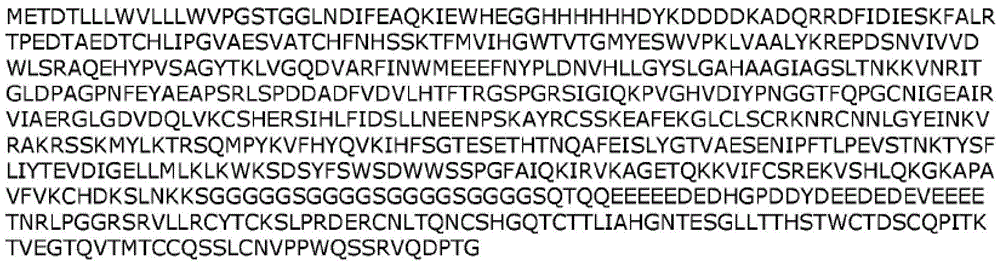
SEQ ID NO 34(AHF-hLPL (28-475) - (GGGGS)4-hGPIHBP1(21-151) (NO signal sequence))
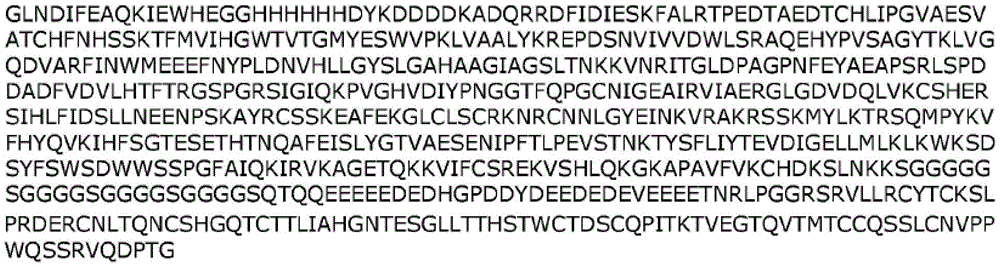
SEQ ID NO:35(AHF-hLPL(28-475)-(G4S)4-hGPIHBP1(21-151)-(G4S)3-PAS200)

SEQ ID NO:36(AHF-hLPL(28-475)-(G4S)4-hGPIHBP1(21-151)-(G4S)3-PAS600)
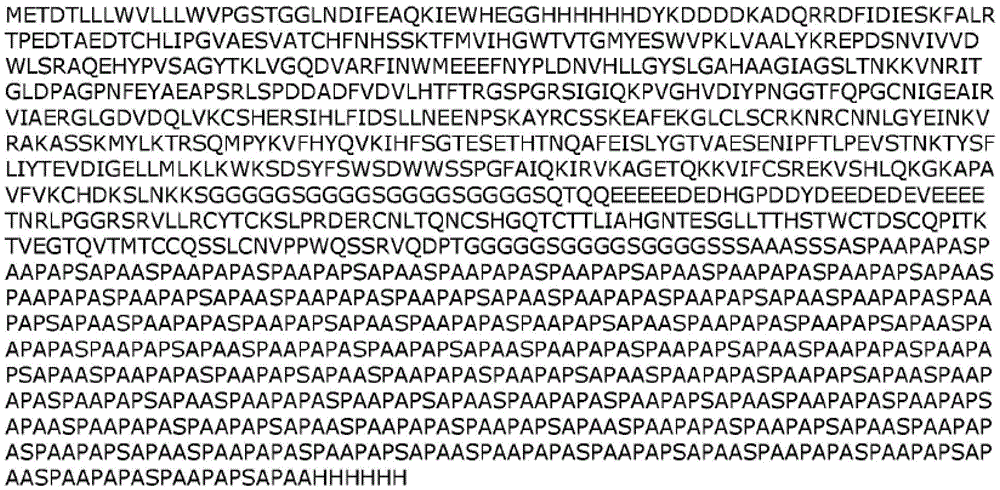
SEQ ID NO:37(AHF-hLPL(28-475)-(G4S)4-hGPIHBP1(21-151)-(G4S)3-CA645scFv-LV-HV)

SEQ ID NO:38(CA645Fab_HC(cotransf.CA645Fab_LC)-(G4S)3-hLPL(28-475)-(G4S)4-hGPIHBP1(21-151)-FHA)

SEQ ID NO:39(NOV2704Fab_HC(cotransf.NOV2704Fab_LC)-(G4S)3-hLPL(28-475)-(G4S)4-hGPIHBP1(21-151)-FHA)

SEQ ID NO:40(hLPL(28-475)-(GGGGS)4-hGPIHBP1(21-151))
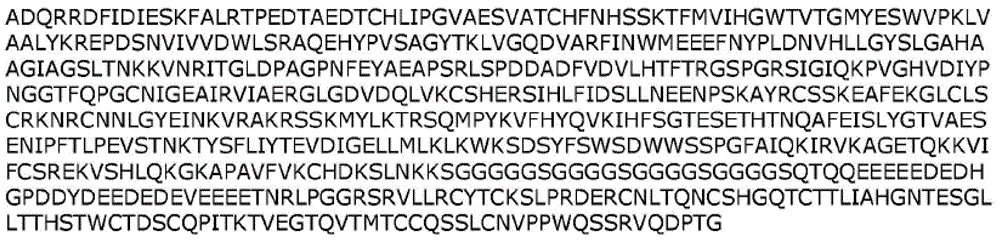
SEQ ID NO:41(His6-hLPL(28-475))

SEQ ID NO 42 (human LPL (28-475) -FHA)

43 (human ANGPTL4(26-406) -FLAG-6HIS-Avi)

SEQ ID NO:44 (nucleotide sequence: human LPL (28-475) - (G4S) 4-human GPIHBP1(22-151) -FLAG-6HIS-Avi)

SEQ ID NO:45 (mature human LPL R294A)

SEQ ID NO:46(AHF-hLPL(28-475)R294A-(GGGGS)4-hGPIHBP1(21-151))
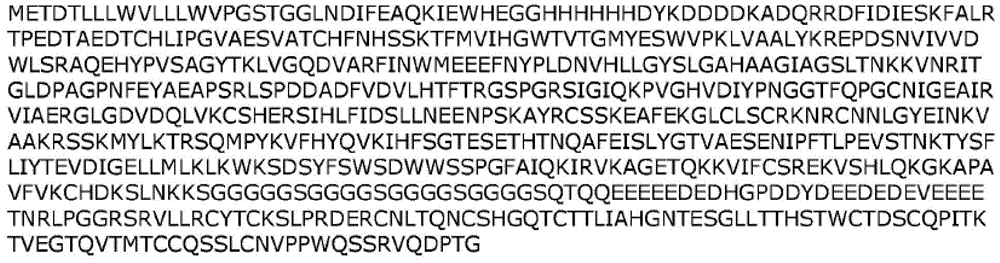
SEQ ID NO 47(AHF-hLPL (28-475) R294A- (GGGGS)4-hGPIHBP1(21-151) (NO signal sequence))

SEQ ID NO:48(hLPL(28-475)R294A-(GGGGS)4-hGPIHBP1(21-151))

SEQ ID NO:49 (human soluble GPIHBP1(21-151) -FLAG-HIS6-Avi)

50 (human ANGPTL3(17-460) -FLAG-HIS)6-Avi)

SEQ ID NO:51(LPL(28-475)-(G4S)4-hGPIHBP1(21-151)-FLAG-HIS6-Avi)

SEQ ID NO 52 (Signal sequence)

SEQ ID NO:53(LPL(28-475)-(G4S)4-hGPIHBP1(21-151)-FLAG-HIS6-Avi)

SEQ ID NO:54(LPL(28-475)-(G4S)4-hGPIHBP1(21-151))

SEQ ID NO:55(hLPL(28-475)-(G4S)4-hGPIHBP1(21-151))
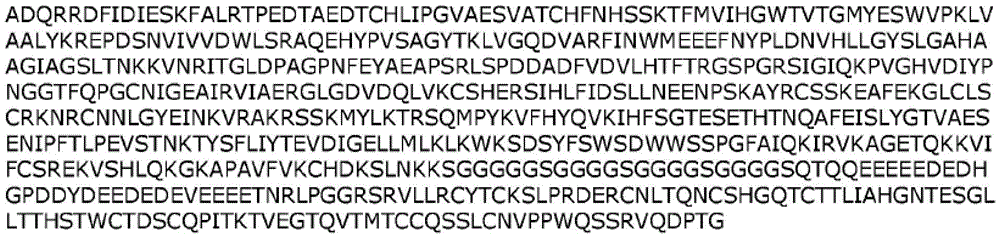
Claims (31)
Applications Claiming Priority (3)
| Application Number | Priority Date | Filing Date | Title |
|---|---|---|---|
| US201862771359P | 2018-11-26 | 2018-11-26 | |
| US62/771,359 | 2018-11-26 | ||
| PCT/IB2019/060140 WO2020109978A1 (en) | 2018-11-26 | 2019-11-25 | Lpl-gpihbp1 fusion polypeptides |
Publications (1)
| Publication Number | Publication Date |
|---|---|
| CN113396158A true CN113396158A (en) | 2021-09-14 |
Family
ID=68807212
Family Applications (1)
| Application Number | Title | Priority Date | Filing Date |
|---|---|---|---|
| CN201980089752.0A Pending CN113396158A (en) | 2018-11-26 | 2019-11-25 | LPL-GPIHBP1 fusion polypeptide |
Country Status (5)
| Country | Link |
|---|---|
| US (1) | US20220025344A1 (en) |
| EP (1) | EP3887393A1 (en) |
| JP (1) | JP2022513626A (en) |
| CN (1) | CN113396158A (en) |
| WO (1) | WO2020109978A1 (en) |
Cited By (1)
| Publication number | Priority date | Publication date | Assignee | Title |
|---|---|---|---|---|
| CN117384912A (en) * | 2023-12-13 | 2024-01-12 | 中国人民解放军东部战区总医院 | GPIHBP1 mutant gene and its application |
Families Citing this family (1)
| Publication number | Priority date | Publication date | Assignee | Title |
|---|---|---|---|---|
| WO2025124559A1 (en) * | 2023-12-13 | 2025-06-19 | 维亚臻生物技术(苏州)有限公司 | Capture probe, familial chylomicronemia syndrome detection kit containing same, and use |
Citations (2)
| Publication number | Priority date | Publication date | Assignee | Title |
|---|---|---|---|---|
| CN103732624A (en) * | 2011-06-17 | 2014-04-16 | 瑞泽恩制药公司 | Anti-angptl3 antibodies and uses thereof |
| WO2018020477A1 (en) * | 2016-07-28 | 2018-02-01 | The Regents Of The University Of California | Methods and compositions for treating hypertriglyceridemia |
Family Cites Families (20)
| Publication number | Priority date | Publication date | Assignee | Title |
|---|---|---|---|---|
| US4458066A (en) | 1980-02-29 | 1984-07-03 | University Patents, Inc. | Process for preparing polynucleotides |
| DE3572982D1 (en) | 1984-03-06 | 1989-10-19 | Takeda Chemical Industries Ltd | Chemically modified lymphokine and production thereof |
| GB8601597D0 (en) | 1986-01-23 | 1986-02-26 | Wilson R H | Nucleotide sequences |
| GB8717430D0 (en) | 1987-07-23 | 1987-08-26 | Celltech Ltd | Recombinant dna product |
| GB8809129D0 (en) | 1988-04-18 | 1988-05-18 | Celltech Ltd | Recombinant dna methods vectors and host cells |
| CA2006596C (en) | 1988-12-22 | 2000-09-05 | Rika Ishikawa | Chemically-modified g-csf |
| ATE92107T1 (en) | 1989-04-29 | 1993-08-15 | Delta Biotechnology Ltd | N-TERMINAL FRAGMENTS OF HUMAN SERUM ALBUMIN-CONTAINING FUSION PROTEINS. |
| FR2650598B1 (en) | 1989-08-03 | 1994-06-03 | Rhone Poulenc Sante | DERIVATIVES OF ALBUMIN WITH THERAPEUTIC FUNCTION |
| FR2686901A1 (en) | 1992-01-31 | 1993-08-06 | Rhone Poulenc Rorer Sa | NOVEL ANTITHROMBOTIC POLYPEPTIDES, THEIR PREPARATION AND PHARMACEUTICAL COMPOSITIONS CONTAINING THEM. |
| FR2686899B1 (en) | 1992-01-31 | 1995-09-01 | Rhone Poulenc Rorer Sa | NOVEL BIOLOGICALLY ACTIVE POLYPEPTIDES, THEIR PREPARATION AND PHARMACEUTICAL COMPOSITIONS CONTAINING THEM. |
| WO2001077137A1 (en) | 2000-04-12 | 2001-10-18 | Human Genome Sciences, Inc. | Albumin fusion proteins |
| ITMI20011483A1 (en) | 2001-07-11 | 2003-01-11 | Res & Innovation Soc Coop A R | USE OF COMPOUNDS AS FUNCTIONAL ANTAGONISTS TO CENTRAL DEICANNABINOID RECEPTORS |
| NZ532896A (en) | 2001-11-08 | 2007-08-31 | Pdl Biopharma Inc | Stable liquid pharmaceutical formulation of IGG antibodies including daclizumab and fontolizumab |
| WO2005027978A2 (en) | 2003-09-19 | 2005-03-31 | Novo Nordisk A/S | Albumin-binding derivatives of therapeutic peptides |
| TW200738261A (en) | 2005-12-20 | 2007-10-16 | Bristol Myers Squibb Co | Stable protein formulations |
| NZ580670A (en) | 2007-06-21 | 2011-09-30 | Univ Muenchen Tech | Biological active proteins having increased in vivo and/or vitro stability |
| US9345661B2 (en) | 2009-07-31 | 2016-05-24 | Genentech, Inc. | Subcutaneous anti-HER2 antibody formulations and uses thereof |
| BR112012029577B1 (en) | 2010-05-21 | 2022-04-12 | Xl-Protein Gmbh | Drug conjugate comprising biosynthetic proline/alanine random helical polypeptides, and pharmaceutical or diagnostic composition |
| WO2015191781A2 (en) | 2014-06-10 | 2015-12-17 | Amgen Inc. | Apelin polypeptides |
| US10588980B2 (en) | 2014-06-23 | 2020-03-17 | Novartis Ag | Fatty acids and their use in conjugation to biomolecules |
-
2019
- 2019-11-25 CN CN201980089752.0A patent/CN113396158A/en active Pending
- 2019-11-25 JP JP2021529265A patent/JP2022513626A/en active Pending
- 2019-11-25 EP EP19816456.8A patent/EP3887393A1/en not_active Withdrawn
- 2019-11-25 US US17/296,369 patent/US20220025344A1/en not_active Abandoned
- 2019-11-25 WO PCT/IB2019/060140 patent/WO2020109978A1/en not_active Ceased
Patent Citations (2)
| Publication number | Priority date | Publication date | Assignee | Title |
|---|---|---|---|---|
| CN103732624A (en) * | 2011-06-17 | 2014-04-16 | 瑞泽恩制药公司 | Anti-angptl3 antibodies and uses thereof |
| WO2018020477A1 (en) * | 2016-07-28 | 2018-02-01 | The Regents Of The University Of California | Methods and compositions for treating hypertriglyceridemia |
Non-Patent Citations (1)
| Title |
|---|
| SIMON MYSLING等: "The acidic domain of the endothelial membrane protein GPIHBP1 stabilizes lipoprotein lipase activity by preventing unfolding of its catalytic domain", 《ELIFE》, vol. 5, pages 1 - 24 * |
Cited By (1)
| Publication number | Priority date | Publication date | Assignee | Title |
|---|---|---|---|---|
| CN117384912A (en) * | 2023-12-13 | 2024-01-12 | 中国人民解放军东部战区总医院 | GPIHBP1 mutant gene and its application |
Also Published As
| Publication number | Publication date |
|---|---|
| US20220025344A1 (en) | 2022-01-27 |
| JP2022513626A (en) | 2022-02-09 |
| WO2020109978A1 (en) | 2020-06-04 |
| EP3887393A1 (en) | 2021-10-06 |
Similar Documents
| Publication | Publication Date | Title |
|---|---|---|
| KR102179392B1 (en) | Long acting conjugate of Trigonal glucagon/GLP-1/GIP receptor agonist | |
| KR101993714B1 (en) | Compositions and methods of use in treating metabolic disorders | |
| US10610568B2 (en) | Compositions and methods of use for treating metabolic disorders | |
| CA3003115C (en) | Dual function proteins and pharmaceutical composition comprising same | |
| JP4344136B2 (en) | Apolipoprotein analog | |
| US20120093814A1 (en) | Fusion Proteins Comprising Canine FC Portions | |
| EA032727B1 (en) | Fgf21 mutant proteolysis-resistant polypeptide and use thereof | |
| CN102272163A (en) | leptin and leptin analog conjugates and uses thereof | |
| US20260022150A1 (en) | Gdnf fusion polypeptides and methods of use thereof | |
| TW201617364A (en) | Compositions and methods of use for treating metabolic disorders | |
| BR122020010972B1 (en) | isolated and fusion polypeptide, its pharmaceutical composition and multimer | |
| AU2016346864A1 (en) | Long-acting FGF21 fusion proteins and pharmaceutical composition comprising same | |
| JP2012529272A (en) | Fusion protein for delivering GDNF and BDNF to the central nervous system | |
| EP3672621A1 (en) | Glp-2 fusion polypeptides and uses for treating and preventing gastrointestinal conditions | |
| US12226451B2 (en) | FGF-21 formulations | |
| US20180280474A1 (en) | Treatment of bile acid disorders | |
| KR102569658B1 (en) | Conjugate C1 esterase inhibitors and uses thereof | |
| KR20240029769A (en) | Fusion proteins and their applications | |
| CN113396158A (en) | LPL-GPIHBP1 fusion polypeptide | |
| KR20250167074A (en) | Protein analogs and their applications | |
| ES2356181T3 (en) | APOLIPOPROTEIN CONSTRUCTION. | |
| HK40015865A (en) | Gdnf fusion polypeptides and methods of use thereof | |
| BR112016018721B1 (en) | P97 FUSION PROTEIN (MELANOTRANSFERRIN), PHARMACEUTICAL COMPOSITION COMPRISING SAID FUSION PROTEIN AND USE OF THE FUSION PROTEIN TO TREAT LYSOSOMIC DEPOSIT DISEASE | |
| WO2014014816A2 (en) | Methods of treating glucose metabolism disorders |
Legal Events
| Date | Code | Title | Description |
|---|---|---|---|
| PB01 | Publication | ||
| PB01 | Publication | ||
| SE01 | Entry into force of request for substantive examination | ||
| SE01 | Entry into force of request for substantive examination | ||
| WD01 | Invention patent application deemed withdrawn after publication |
Application publication date: 20210914 |
|
| WD01 | Invention patent application deemed withdrawn after publication |