Priority for U.S. provisional application No. 62/949,115 filed on day 17, 12/2020, U.S. provisional application No. 63/005,003 filed on day 3, 4/2020, 63/072,699 filed on day 31, 8/2020, 63/084,739 filed on day 29, 9/2020, and 63/125,205 filed on day 14, 12/2020, are claimed in the present application and are incorporated by reference in their entireties.
Detailed Description
A. Definition of
In order that the disclosure may be more readily understood, certain terms are first defined. As used in this application, each of the following terms shall have the meaning set forth below, unless the context clearly dictates otherwise. Other definitions are listed throughout the application.
Unless defined otherwise, all technical and scientific terms used herein have the same meaning as commonly understood by one of ordinary skill in the art to which this disclosure pertains. For example, the circumcise Dictionary of Biomedicine and Molecular Biology, Juo, Pei-Show,2nd ed.,2002, CRC Press; the Dictionary of Cell and Molecular Biology,3rd ed.,1999, Academic Press; and the Oxford Dictionary Of Biochemistry And Molecular Biology, Revised,2000, Oxford University Press provide the skilled artisan with a general Dictionary description Of many Of the terms used in this disclosure. For the purposes of the present invention, the following terms are defined.
Units, prefixes, and symbols are expressed in a form that is accepted by its International unit system (systeme International de units (SI)). Numerical ranges include the numbers defining the range. The headings provided herein are not limitations of the various aspects of the disclosure which can be had by reference to the specification as a whole. Accordingly, the terms defined below are more fully defined by reference to the entire specification.
The terms "a", "an" or "the" as used herein include not only aspects having one member, but also aspects having more than one member. For example, the singular forms "a", "an" and "the" include plural referents unless the context clearly dictates otherwise. Thus, for example, reference to "a cell" includes a plurality of such cells, and reference to "the/the agent" includes one or more agents known to those skilled in the art, and so forth.
The term "or" as used herein should generally be interpreted non-exclusively. For example, a claim to "a composition comprising a or B" will generally reveal that the composition comprises both a and B. However, "or" should be construed to exclude those aspects that cannot be combined without conflict (e.g., a composition having a pH of 9 to 10 or 7 to 8).
The group "a or B" is generally equivalent to a group "selected from the group consisting of a and B".
The term "and/or" as used herein should be understood to specifically disclose each of the two specified features or components, with or without the other. Thus, the term "and/or" as used herein in phrases such as "a and/or B" is intended to include "a and B," a or B, "" a "(individually)" and "B" (individually). Likewise, the term "and/or" as used in phrases such as "A, B and/or C" is intended to encompass each of the following: A. b and C; A. b or C; a or C; a or B; b or C; a and C; a and B; b and C; a (alone); b (alone); and C (alone).
As used herein, the terms "about" and "approximately" shall generally refer to an acceptable degree of error in a measured quantity given the nature or accuracy of the measurement. Typical exemplary degrees of error are within 20 percent (%), within 10%, or within 5% of a given value or range of values. Any reference to "about X" specifically denotes at least the values X, 0.95X, 0.96X, 0.97X, 0.98X, 0.99X, 1.01X, 1.02X, 1.03X, 1.04X, and 1.05X. Thus, "about X" is intended to provide written descriptive support for claim limitations such as "0.98X". The terms "about" and "approximately," particularly when referring to a given quantity, encompass and describe the given quantity per se.
When "about" is applied to the beginning of a range of values, it is applied to both ends of the range. Thus, "about 5% to 20%" is equivalent to "about 5% to about 20%". When "about" is applied to a first value of a set of values, it will be applied to all values in the set. Thus, "about 0.5, 0.75, or 1.0mg is equivalent to" about 0.5, 0.75, or 1.0mg ".
As used herein, the term "about" preceding a series of peak positions (e.g., 2 θ values) for X-ray powder diffraction means that all peaks of the set to which they are directed are reported at angular positions with a variability of ± 0.1 °. Thus, for example, a phrase about 8.3 °, 9.7 °, 10.0 °, 13.0 °, 15.6 °, 17.2 °, or 19.5 ° refers to 8.3 ° ± 0.1 °, 9.7 ° ± 0.1 °, 10.0 ° ± 0.1 °, 13.0 ° ± 0.1 °, 15.6 ° ± 0.1 °, 17.2 ° ± 0.1 °, or 19.5 ° +0.1 °.
"treatment" or "therapy" of a subject refers to any type of intervention or process performed on the subject or administration of an active agent to the subject with the purpose of reversing, alleviating, ameliorating, inhibiting, or slowing the onset, progression, severity, or recurrence of symptoms, complications, conditions, or biochemical markers associated with the disease.
"administration/administration" or "administering" refers to the physical introduction of a therapeutic agent into a subject using any of a variety of methods and delivery systems known to those skilled in the art. Routes of administration may include oral, intravenous, intramuscular, subcutaneous, intraperitoneal, spinal or other parenteral routes of administration, for example by injection or infusion (e.g., intravenous infusion). Administration may also be carried out, for example, once, multiple times, and/or over one or more extended periods of time.
The term "prophylactic" or "prophylactically" refers to any type of intervention or process performed on or administration of an active agent to a subject with the purpose of protecting or preventing the development of a disease or disorder or at least the inability to fully develop (e.g., alleviate symptoms or severity of a disease or condition), such as the occurrence of side effects.
"subject" includes any human or non-human animal. The term "non-human animal" includes, but is not limited to, vertebrates, such as non-human primates, sheep, dogs and rodents, such as mice, rats and guinea pigs. In some embodiments, the subject is a human. The terms "subject" and "patient" and "individual" are used interchangeably herein.
An "effective amount" or a "therapeutically effective dose" of a drug or therapeutic agent is any amount that, when used alone or in combination with another therapeutic agent, slows the onset of disease or promotes disease regression, as evidenced by a decrease in the severity of disease symptoms, an increase in the frequency and duration of the asymptomatic phase of the disease, or a reduction in injury or disability due to disease affliction. The ability of a therapeutic agent to promote disease regression can be assessed using a variety of methods known to those skilled in the art, for example, in human subjects during clinical trials, in animal model systems that predict human efficacy, or by assaying pharmaceutical activity in vitro assays.
The phrase "pharmaceutically acceptable" means that the substance or composition must be chemically and/or toxicologically compatible with the other ingredients comprising the formulation and/or the mammal being treated therewith.
As used herein, "polymorphs" refer to different solids that share the same molecular formula, but each polymorph may have different solid state physical properties. A single compound may give rise to multiple polymorphic forms, each of which has different and unique solid state physical properties, such as different solubility profiles, melting point temperatures, flow properties, dissolution rates, and/or different X-ray diffraction peaks. These actual physical properties are influenced by the conformation and orientation of the molecules in the unit cell that defines a particular polymorphic form of a substance. Polymorphic forms of a compound can be distinguished in the laboratory by X-ray diffraction spectroscopy, such as X-ray powder diffraction ("XRPD"), and by other methods, such as infrared spectroscopy. In addition, polymorphs of the same drug substance or active pharmaceutical ingredient may be administered as such or formulated into a pharmaceutical product (pharmaceutical composition) and are well known in the pharmaceutical arts to affect, for example, the solubility, stability, flowability, ease of handling (bioavailability), and compressibility of a drug, as well as the safety and effectiveness of a drug product. For more information, see Hilfiker, Rolf (ed.), Polymorphism in the Pharmaceutical industry, weinheim, Germany: Wiley-VCH 2006.
As used herein, the term "amorphous" refers to a solid in an amorphous solid state. Amorphous solids generally have a short range molecular arrangement similar to crystals, but no molecular packing of long range order as seen in crystalline solids. The solid state form of a solid can be determined by polarization microscopy, X-ray powder diffraction ("XRPD"), differential scanning calorimetry ("DSC"), or other standard techniques known to those skilled in the art.
As used herein, the term "crystalline" refers to a solid in the solid state having a regular repeating arrangement of molecules or outer surface planes. The solid state form of a solid can be determined by polarization microscopy, X-ray powder diffraction ("XRPD"), differential scanning calorimetry ("DSC"), or other standard techniques known to those skilled in the art. Thus, as used herein, the term "crystalline purity" refers to the percentage of certain crystalline polymorphs of atrasentan, or a pharmaceutically acceptable salt thereof, in a sample that may comprise amorphous atrasentan, or a pharmaceutically acceptable salt thereof, one or more additional crystalline polymorphs of atrasentan, or a pharmaceutically acceptable salt thereof, or a mixture thereof. When a crystalline polymorph of atrasentan, or a pharmaceutically acceptable salt thereof, is described as having "substantially crystalline pure," this means that the polymorph is substantially free of (e.g., contains < 10%, < 5%, < 2%, < 1%, < 0.5%, < 0.1%, or < 0.05%) other polymorphs (amorphous and/or crystalline states).
As used herein, the term "chemical purity" refers to the percentage of a particular compound (e.g., atrasentan, or a pharmaceutically acceptable salt thereof) in a sample. Thus, atrasentan, or a pharmaceutically acceptable salt thereof, and compositions comprising or made from the same, may comprise one or more impurities, including but not limited to: water, ethyl acetate, ethanol, (2R,3R,4S) -2- (4-methoxyphenyl) -4- (1, 3-benzodioxol-5-yl) -l- (N- (N-butyl) aminocarbonylmethyl) pyrrolidine-3-carboxylic acid, (2R,3R,4S) -2- (4-methoxyphenyl) -4- (1, 3-benzodioxol-5-yl) -1- ((N- (N-butyl) -N-ethyl) aminocarbonylmethyl) pyrrolidine-3-carboxylic acid, (2R,4S) -2- (4-methoxyphenyl) -4- (1, 3-benzodioxol-5-yl) -1- (N, n-di (N-butyl) aminocarbonylmethyl) pyrrolidine or ethyl (2R,3R,4S) -2- (4-methoxyphenyl) -4- (1, 3-benzodioxol-5-yl) -1- (N, N-di (N-butyl) aminocarbonylmethyl) pyrrolidine-3-carboxylate. When a sample of atrasentan, or a pharmaceutically acceptable salt thereof, is described as "substantially pure," the sample is substantially free of impurities (e.g., comprises < 10%, < 5%, < 2%, < 1%, < 0.5%, < 0.1%, or < 0.05%).
As used herein, the term "diastereomeric excess" refers to the amount of one diastereomer of a compound (e.g., atrasentan, or a pharmaceutically acceptable salt thereof) in a mixture that may have other diastereomers of the same compound in the mixture. The term "substantially diastereomerically pure" as used herein refers to a diastereomeric excess of greater than about 90%, 95%, 99%, 99.5%, 99.9%, or 100%.
As used herein, the term "pharmaceutically acceptable carrier" refers to a substance that facilitates administration of an active agent to a cell, organism, or subject. By "pharmaceutically acceptable carrier" is meant a carrier or excipient that can be included in the compositions of the present disclosure and that does not cause a significant adverse toxicological effect to the subject. Non-limiting examples of pharmaceutically acceptable carriers include water, NaCl, physiological saline solution, lactated ringer's solution, physiological sucrose, physiological glucose, binders, fillers, disintegrants, lubricants, coatings, sweeteners, flavoring agents and colors, liposomes, dispersion media, microcapsules, cationic lipid carriers, isotonic and absorption delaying agents, and the like. The carrier can also be a substance used to provide stability, sterility, and isotonicity to the formulation (e.g., antimicrobial preservatives, antioxidants, chelating agents, and buffers), to prevent the action of microorganisms (e.g., antimicrobials and antifungals such as parabens, chlorobutanol, phenol, sorbic acid, and the like), or to provide an edible flavor to the formulation, and the like. In some cases, the carrier is an agent that facilitates the delivery of a small molecule drug or antibody to a target cell or tissue. One skilled in the art will recognize that other pharmaceutical carriers may be used with the present disclosure.
As used herein, the term "expression" refers to the level of protein or mRNA in a mammalian cell.
As used herein, the term "activity" refers to one or more activities of a protein, such as binding or enzymatic activity (e.g., one or more of phosphorylation, dephosphorylation, nuclear import, transcriptional activation, transcriptional repression, and/or binding activity to a substrate or binding partner).
The term "IL-6 signaling" as used herein refers to the expression and/or activity of one or more proteins in a signaling pathway that begins with activation of the IL-6 receptor and terminates with gene expression. Non-limiting examples of proteins in signaling pathways that begin with activation of the IL-6 receptor and end with gene expression include the IL-6 receptor, JAK, STAT3, PI3K, Akt/PKB, IKKs, IkBs, NF-kB, MAPK, Ras, Raf, MEK, and ERK.
The term "NF-kB signaling" as used herein refers to the expression and/or activity of one or more of: IKK α, IKK β, IkB, and NF-kB and/or one or more genes upregulated by NF-kB activity (e.g., one or more of TNF- α, IL-1, CAM, COX-2, and iNOS).
The term "PDGF signaling" as used herein refers to the expression and/or activity of one or more of the following: PDGF receptor, PKC, PI3K, Src, Ras, ERK1/2, Rho, Rac, Akt, mTOR, NAPDH oxidase, MAPK, and cPLA 2。
The term "SGLT-2 inhibitor" as used herein refers to a compound that inhibits sodium-glucose co-transporter-2 (SGLT-2). SGLT-2 inhibitors disrupt the reabsorption of glucose by the kidney, thereby exerting hypoglycemic effects. By insulin-independent potentiation of glucosuria, SGLT-2 inhibitors have been shown to treat type 2 diabetes and improve cardiovascular outcomes. See Wright, 2001, am.j. physiol.renal physiol.280: f10; and Scheen, 2018, circ.res.122: 1439. in some embodiments, the term "SGLT-2 inhibitor" refers to a compound whose primary effect is to inhibit SGLT-2, but is not limited to compounds that inhibit SGLT-2 only, and thus includes compounds that have other activities in addition to SGLT-2 inhibition (e.g., SGLT-1 inhibition).
In some embodiments, the SGLT-2 inhibitor comprises a compound of the class of drugs known as gliflozin. In some embodiments, the SGLT-2 inhibitor comprises a compound approved by a regulatory agency, such as the FDA or EMA, as an SGLT-2 inhibitor. Non-limiting examples of SGLT-2 inhibitors include bexagliflozin (bexagliflozin), canagliflozin
Dapagliflozin
Empagliflozin
Eggestrazin (STEGLATRO)
TM) Yigliflozin
Rungeglijing
Remogliflozin (remogliflozin), sergliflozin (sergliflozin), and sugelzin (zynqista)
TM) And tongliflozin.
In some embodiments, SGLT-2 inhibitors include, but are not limited to, dapagliflozin, canagliflozin, engagliflozin, besagliflozin, licogliflozin, cagogliflozin (XZP-5695), togagliflozin, egagliflozin, hengliflozin (SHR-3824), enarogliflozin (DWP-16001), TA-1887(3- (4-cyclopropylbenzyl) -4-fluoro-1- (β -D-glucopyranosyl) -1H-indole), indole-N-glycoside 18(3- (4-ethylbenzyl) -1- (β -D-glucopyranosyl) -1H-indole), soagliflozin, ruagliflozin, sogliflozin etacarbonate (ethylcarbonate), rigidozin, rigidocarbonate, and T-1095(((2R,3S,4S,5R,6S) -6- (2- (3- (benzofuran-5-yl) propionyl) -3-hydroxy-5-methylphenoxy) -3,4, 5-trihydroxytetrahydro-2H-pyran-2-yl) dicarbonate).
In some embodiments, the SGLT-2 inhibitor comprises a C-glycoside such as dapagliflozin, canagliflozin, ivagliflozin, engagliflozin, besagliflozin, licogliflozin, canagliflozin (XZP-5695), togagliflozin, egagliflozin, hengliflozin (SHR-3824), enagliflozin (DWP-16001). In some embodiments, the SGLT-2 inhibitor includes C-glycosides having a bicyclic or spiropyran group, such as torsagliflozin, egagliflozin, and hengliflozin (SHR-3824). In some embodiments, the SGLT-2 inhibitor includes C-glycosides that do not have a bicyclic or spiropyran group, such as dapagliflozin, canagliflozin, ivagliflozin, engagliflozin, besalagliflozin, licogliflozin (XZP-5695), and enagogliflozin (DWP-16001).
In some embodiments, SGLT-2 inhibitors include N-glycosides such as TA-1887(3- (4-cyclopropylbenzyl) -4-fluoro-1- (. beta. -D-glucopyranosyl) -1H-indole) and indole-N-glycoside 18(3- (4-ethylbenzyl) -1- (. beta. -D-glucopyranosyl) -1H-indole).
In some embodiments, the SGLT-2 inhibitor comprises a 2-methylsulfanyl-C-glycoside, such as suggestin.
In some embodiments, the SGLT-2 inhibitor comprises a thiopyran-C-glycoside, such as lupagliflozin.
In some embodiments, SGLT-2 inhibitors include O-glycosides and O-glycoside prodrugs, such as selegiline (ethyl carbonate), regagliflozin etabonate, and T-1095(((2R,3S,4S,5R,6S) -6- (2- (3- (benzofuran-5-yl) propionyl) -3-hydroxy-5-methylphenoxy) -3,4, 5-trihydroxytetrahydro-2H-pyran-2-yl) dicarbonate).
In some embodiments, an SGLT-2 inhibitor as defined herein includes any compound that exhibits SGLT-2 inhibitory activity. In some embodiments, the SGLT-2 inhibitor is more selective for SGLT-2 than for SGLT-1, e.g., about 2-fold, about 5-fold, about 10-fold, about 20-fold, about 5-fold, about 2-fold, about 10-fold, about 20-fold, about 5-fold more active for SGLT-20 times, about 100 times, about 200 times, about 300 times, about 400 times, about 500 times, about 750 times, about 1,000 times, about 1,250 times, about 1,500 times, about 1,750 times, about 2,000 times, about 2,500 times, or any value therebetween. Exemplary SGLT-2 inhibitors may exhibit inhibitory activity (IC) against SGLT-2 50) Less than about 1000nM, less than about 500nM, less than about 200nM, less than about 100nM, less than about 50nM, less than about 25nM, less than about 10nM, or less than about 1nM, as measured by the assay described herein. In some embodiments, SGLT-2 inhibitors may exhibit inhibitory activity (IC) against SGLT-250) Less than about 25nM, less than about 10nM, less than about 5nM, or less than about 1nM, as measured by the assay provided herein. Exemplary assays for determining SGLT-2 inhibitory activity are described in the following references: ryan, et al, Kidney International, Vol.45, pp.48-57 (1994). Briefly, CHO cells were stably transfected with cDNA encoding human SGLT-2 (GenBank # M95549). The cells were washed, and then washed with 10. mu.M14C]Alpha-methyl glucopyranoside (AMG) and 10. mu.M inhibitor. Quenching with a cold buffer solution containing phlorizin14C]Uptake of AMG and lysis of cells. Then quantitated using a suitable reagent14C]Ingestion of AMG.
SGLT-2 inhibitors include pharmaceutically acceptable salts, solvates, complexes, and salts of solvates thereof, for example, "dapagliflozin" includes salts (e.g., hydrochloride salt) and solvates (e.g., propylene glycol hydrate) of dapagliflozin; likewise, "canagliflozin" includes solvates (e.g., canagliflozin hemihydrate) and salts of solvates (e.g., hydrochloride salt of hydrate). Similarly, Hexagliflozin (SHR-3824) and dapagliflozin include the complex (e.g., the complex Hexagliflozin proline and dapagliflozin proline, respectively).
As described herein, when a subject is described as having "controlled serum glucose levels," it means that the subject has serum glucose levels within a normal or healthy range. In some embodiments, the subject has a fasting serum glucose level of about 70mg/dL to about 130 mg/dL. For example, the subject has been determined to have a fasting serum glucose level that is less than about 130mg/dL, 125mg/dL, 120mg/dL, 115mg/dL, 110mg/dL, 105mg/dL, 100mg/dL, 95mg/dL, 90mg/dL, 85mg/dL, 80mg/dL, or 75 mg/dL.
As used in the methods described herein, the term "decrease" refers to a decrease in the indicated parameter relative to a baseline measurement (or measurements) of the same parameter in a subject taken prior to the beginning of administration of atrasentan, or a pharmaceutically acceptable salt thereof, or a decrease in the indicated parameter relative to a baseline measurement (or measurements) of the same parameter in a healthy subject (e.g., a subject without IgA nephropathy). Similarly, as used herein, the term "increase" refers to an increase in the indicated parameter relative to a baseline measurement (or measurements) of the same parameter in a subject taken prior to the beginning of administration of atrasentan, or a pharmaceutically acceptable salt thereof, or an increase in the indicated parameter relative to a baseline measurement (or measurements) of the same parameter in a healthy subject (e.g., a subject without IgA nephropathy).
The term "Glomerular Filtration Rate (GFR)" is defined as the volume of fluid that filters from the glomerular capillaries of the kidney into the bowman's capsule per unit time. Which indicates overall renal function. Glomerular Filtration Rate (GFR) can be calculated by measuring any chemical in the blood that has a steady level, can be freely filtered, but is neither reabsorbed by the kidneys nor secreted. Thus, the measured ratio is the amount of material in the urine that is derived from a calculable volume of blood. GFR is typically recorded in volume per unit time, e.g., milliliters per minute, and the following formula may be used: GFR ═ (urine concentration x urine volume)/plasma concentration. GFR can be determined by injection of inulin into plasma. Since inulin is neither resorbed by the kidneys nor secreted after glomerular filtration, its rate of excretion is proportional to the rate of filtration of water and solutes through the glomerular filter. The normal values are: GFR is 90-125mL/min/1.73m2Particularly, GFR is 100-125mL/min/1.73m2. Other principles for determining GFR include measuring 51Cr-EDTA, [125I]Iophthalate or iohexol. An "estimate of glomerular filtration rate (eGFR)" is defined as being based on, for example, the Chronic renal disease epidemiological Cooperation (CKD-EPI) equation, the Cockcroft-Gault equation, or the renal disease dietary Modification (MDRD) ) The formula is derived from a serum creatine liver value screen, and the above equations/formulas are all known in the art. As used herein, "stabilizing eGFR" refers to reducing the rate of eGFR decline and/or attenuating the rate of eGFR decline. For example, the rate of decline of eGFR can be reduced by at least about 20% following treatment with atrasentan, or a pharmaceutically acceptable salt thereof; at least about 30%; at least about 40%; at least about 50%; at least about 60%; at least about 70%; at least about 80%; at least about 90%; or at least about 95%; or any value therebetween. Such reduction may be after, for example, about 1 week, about 2 weeks, about 3 weeks, about 4 weeks, about 5 weeks, about 6 weeks, about 7 weeks, about 8 weeks, about 9 weeks, about 10 weeks, about 20 weeks, about 30 weeks, about 40 weeks, about 50 weeks, about 60 weeks, about 70 weeks, about 80 weeks, about 90 weeks, about 100 weeks, about 110 weeks, about 120 weeks, about 130 weeks, about 140 weeks, about 150 weeks, about 160 weeks, about 170 weeks, about 180 weeks, about 190 weeks, or about 200 weeks, or any value therebetween. In some embodiments, the subject has been treated with atrasentan, or a pharmaceutically acceptable salt thereof, for about 15 days to about 30 days. In some embodiments, the subject has been treated with atrasentan, or a pharmaceutically acceptable salt thereof, for about 6 months to about 1 year.
"ESRD" is an abbreviation for end-stage renal disease. As used herein, the onset of ESRD is defined as when the subject's eGFR is less than about 15mL/min/1.73m2A time point when and/or a time point when the subject starts chronic dialysis. When the subject is defined as "at high risk of developing ESRD", the subject has prior to the first administration of atrasentan, or a pharmaceutically acceptable salt thereof>1 g/day of urine protein and/or eGFR<60 for at least about 3 months.
As used herein, "IgA nephropathy-associated disease onset" refers to disease onset associated with hematuria, worsening proteinuria, systemic manifestations, and a decline in eGFR. Other symptoms associated with the onset of disease include: increased edema, fatigue, hematuria, gross hematuria, and other symptoms that generally negatively impact disease progression.
As used herein, when a subject is described as "maintaining potassium levels within a normal physiological range," the subject's blood potassium levels are about 3.5mEq/L to about 5.2 mEq/L.
As used herein, when a subject is described as "maintaining sodium levels within a normal physiological range," the subject's blood sodium levels are about 135 to about 145 mEq/L.
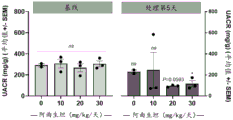
As used herein, the term "proteinuria" refers to the presence of proteins in urine above normal levels. "proteinuria" includes "albuminuria" and "microalbuminuria". Normal human protein levels in urine range from about 0 to 30mg/L, although for any given urine sample, the level may reach about 80 mg/L. For 24 hour urine collection, normal human urinary protein levels range from about 0 to 150 mg. Proteinuria may be indicated by a ratio of total protein/creatinine in the Urine (UPCR) or by a ratio of specific proteins, such as urinary albumin/creatine liver ratio (ACR), of greater than about 30 mg/g. Generally, the urinary UACR in mg/g is approximately equal to the albumin excretion in mg/day of the subject. Proteinuria, including albuminuria and microalbuminuria, often causes or is indicative of disease, but is not limited to the development of disease. Proteinuria is intended to encompass all forms of proteinuria, including but not limited to physiological proteinuria; functional proteinuria; and exercise proteinuria (which is associated with functional proteinuria after excessive muscle movement). In addition, proteinuria includes benign proteinuria (also referred to as "essential" proteinuria), which refers to the type of proteinuria that is not a consequence of renal pathological changes. Proteinuria also includes pathological proteinuria, e.g., levels of urinary protein above normal physiological levels.
As used herein, the term "albuminuria" (also referred to as "macroalbuminuria") refers to the presence of albumin in urine above normal levels. Since urinary proteins are mainly albumin, the level of UACR in normal human urine is in the range of about 0 to 30 mg/mmol. As used herein, the term "microalbuminuria" refers to the presence of albumin in human urine that is excreted at a rate present of about 20 to 200 μ g/min or at a level of about 30 to 300 mg/L. "microalbuminuria," as defined by urinary ACR, means a urinary UACR of greater than about 30mg/g, or about 3.5mg/mmol or more for females and about 2.5mg/mmol or more for males. Microalbuminuria is often an early warning of kidney disease, but may also be present for other reasons.
As used herein, the term "hematuria" refers to the presence of blood in urine. It may appear as macroscopic hematuria (visible trace of blood cells) or as microscopic hematuria (microscopic trace of blood) within the urine. A confirmed indication of microscopic hematuria is defined as the presence of 3 or more erythrocytes per microscopic High Power Field (HPF) in at least 3 correctly collected urine samples. In the clinic, the microscopic hematuria can also be detected by urine dipsticks (colorimetric estimation). Hematuria (under the mirror or by eye) may be asymptomatic (without other symptoms associated with hematuria) or symptomatic. Other symptoms include difficulty urinating (pain in urination), feeling incomplete bladder emptying or increased frequency of urination or pain in the flank.
As used herein, "ALT" refers to alanine aminotransferase. As used herein, "AST" refers to aspartate aminotransferase.
The term "synergistic" or "synergistic" is used herein to mean that the effect of a combination of two or more therapeutic agents is greater than the sum of the effects of each therapeutic agent when administered alone. See, e.g., Chou and Talalay, Advances in Enzyme Regulation (1984),22, 27-55. A "synergistically effective amount" is an amount of a combination of two or more therapeutic agents that results in a synergistic effect (as defined herein as "synergy"). In some embodiments, a synergistically effective amount of a combination may be therapeutically effective even when one or more compounds of the combination are administered at a dose that does not reach a therapeutic amount when the compounds are administered alone.
It will be appreciated that different concentrations of each compound may be employed due to various art-recognized factors, such as the patient's height, weight, sex, age, and medical history. Exemplary synergy includes, but is not limited to, enhanced therapeutic efficacy, reduced dosage at the same or increased efficacy level, reduced or delayed development of drug resistance, as well as simultaneous enhancement of the same therapeutic effect (e.g., the same therapeutic effect as the at least one therapeutic agent) and reduction of adverse drug effects (e.g., side effects and adverse events) of the at least one therapeutic agent.
In some embodiments, "synergistic" as used herein refers to an effect (e.g., any beneficial or desired result, including the clinical results described herein) produced by the combination of atrasentan, or a pharmaceutically acceptable salt thereof, and one or more other therapeutic agents (e.g., SGLT-2 inhibitors) that is greater than the sum of the effects observed when atrasentan, or a pharmaceutically acceptable salt thereof, and SGLT-2 inhibitors are administered alone. Such clinical results include, but are not limited to, treating IgA nephropathy, reducing kidney inflammation and/or fibrosis, reducing hematuria, reducing proteinuria (e.g., albuminuria), stabilizing eGFR, reducing the amount of disease episodes associated with IgA nephropathy, delaying the onset of ESRD, reducing fatigue, reducing mesangial cell activation.
In some embodiments, "synergistic" as used herein means that the combination of atrasentan, or a pharmaceutically acceptable salt thereof, and the SGLT-2 inhibitor provides a reduction in proteinuria (e.g., albuminuria) that is greater than the sum of the effects observed when atrasentan, or a pharmaceutically acceptable salt thereof, and the SGLT-2 inhibitor are administered alone.
In some embodiments, "synergistic" as used herein means that the combination of atrasentan, or a pharmaceutically acceptable salt thereof, and the SGLT-2 inhibitor produces the desired therapeutic effect and reduces the occurrence and/or severity of undesired pharmaceutical effects, side effects, or adverse events. In some embodiments, the undesired pharmaceutical effect, side effect, or adverse event is associated with or observed in monotherapy with atrasentan, or a pharmaceutically acceptable salt thereof, or an SGLT-2 inhibitor. In some embodiments, the undesired pharmaceutical effect, side effect, or adverse event is one or more of fluid retention, anemia, nausea, constipation, thirst, bone fracture, increased urination, urinary tract infection, yeast infection, vaginal itching, elevated levels of LDL cholesterol, elevated levels of Brain Natriuretic Peptide (BNP), acute sodium retention, and acute elevated levels of creatinine. In some embodiments, fluid retention is associated with weight gain greater than about 3 kg. In some embodiments, the increased BNP level is greater than about 300 pg/mL.
Unless otherwise indicated, any concentration range, percentage range, ratio range, or integer range as described herein should be understood to include any integer value within the listed range and, where appropriate, to include fractions thereof (e.g., tenths and hundredths of integers).
Any reference in this disclosure to the amount of atrasentan is based on the free equivalent weight of atrasentan, unless otherwise specified. For example, 0.75mg atrasentan refers to 0.75mg atrasentan in free form or in salt form in an equivalent amount of atrasentan.
Various aspects of the disclosure are described in further detail in the following subsections.
B. Introduction to the design reside in
Most subjects with IgAN first develop a single or sporadic macroscopic hematuria or after a microscopic hematuria and/or proteinuria is detected during routine urine testing. In certain instances, the subject may develop acute kidney injury, for example, caused by crescentic IgAN or by macroscopic hematuria causing obstruction of the renal tubules. Definitive diagnosis of IgAN is usually determined by renal biopsy and immunofluorescence and/or immunoperoxidase studies on IgA deposits. The apparent spherical IgA deposition in the mesangium (sometimes accompanied by C3 and IgG) and less pronounced deposition on the glomerular capillary wall are indicative of IgAN. Some histopathological features associated with long-term outcomes include mesangial hyperplasia, intravascular hyperplasia, segmental scarring, and tubular atrophy.
C. Method of treatment
In normal and healthy human kidney, the expression of ET-1 and ET-RA is more intense in vascular tissues and less intense in glomerular structures. In contrast, subjects with IgAN showed increased expression of ET-1 and ET-RA in the kidney. In this population, ET-1 expression is positively correlated with proteinuria, which can be at least partially alleviated by administration of an ACE inhibitor. Indeed, current therapies for IgAN are optimized for the inhibition of disease progression against hypertensive and anti-proteinuria drugs (e.g., angiotensin converting enzyme inhibitors and/or angiotensin II receptor blockers) as well as a range of corticosteroids. See, e.g., Penfold et al, int.j.nephrol.and Renovascular Dis.11, p 137-148 (2017). However, these drug combinations may exhibit significant dose-limiting side effects, such as hyperkalemia, and in more severe cases may require further immunosuppression.
Clinically, IgAN is diagnosed by a kidney biopsy indicating the presence of mesangial cell proliferation and/or stromal expansion (or late stage focal segmental glomerulosclerosis) and major IgA mesangial particle deposition on immunofluorescence (2+ or more). This pathology differs from other progressive renal diseases, such as diabetic nephropathy, which is usually manifested by diffuse capillary basement membrane thickening, with peripheral transparent PAS positive nodules, with late segmental or global glomerulosclerosis, and arteriolar thickening with transparent deposits. See, for example, Zanatta et al, Renal Failure, 34(3), page 308-315 (2012).
Accordingly, in one aspect, provided herein is a method of treating IgA nephropathy comprising administering to a subject in need thereof a therapeutically effective amount of atrasentan, or a pharmaceutically acceptable salt thereof.
In some embodiments, the subject has not been previously diagnosed with one or more of diabetic nephropathy, HIV/AIDS, HIV-associated nephropathy, prostate cancer, or acute renal failure. In some embodiments, the subject has not been previously diagnosed with any of the following: diabetic nephropathy, HIV/AIDS, HIV-related nephropathy, prostate cancer or acute renal failure. In some embodiments, the subject has not been previously diagnosed with diabetic nephropathy. In some embodiments, the subject has not been previously diagnosed with HIV/AIDS. In some embodiments, the subject has not been previously diagnosed with HIV-associated nephropathy. In some embodiments, the subject has not been previously diagnosed with prostate cancer. In some embodiments, the subject has not been previously diagnosed with acute renal failure. In some embodiments, the subject has not been previously diagnosed with one or more of: diabetic nephropathy, HIV/AIDS, HIV-related nephropathy, cancer or acute renal failure. In some embodiments, the subject has not been previously diagnosed with diabetes (i.e., type 1 or type 2 diabetes). In some embodiments, the subject has been previously diagnosed with diabetes (i.e., type 1 or type 2 diabetes). In some embodiments, the subject has been previously diagnosed with diabetes and has not been previously diagnosed with diabetic nephropathy. In some embodiments, the subject has not been previously diagnosed with type 2 diabetes. In some embodiments, the subject has been previously diagnosed with type 2 diabetes. In some embodiments, the subject has previously been diagnosed with type 2 diabetes and has not previously been diagnosed with diabetic nephropathy.
In some embodiments, the subject is not currently diagnosed with cancer. In some embodiments, the subject is not currently being treated for cancer. In some embodiments, the cancer is lung cancer or prostate cancer.
In some embodiments, the subject does not have one or more of the following: diabetic nephropathy, HIV/AIDS, HIV-related nephropathy, prostate cancer or acute renal failure. In some embodiments, the subject does not have any of the following: diabetic nephropathy, HIV/AIDS, HIV-related nephropathy, prostate cancer or acute renal failure. In some embodiments, the subject does not have diabetic nephropathy. In some embodiments, the subject does not have HIV/AIDS. In some embodiments, the subject does not have HIV-associated nephropathy. In some embodiments, the subject does not have cancer. In some embodiments, the cancer is prostate cancer. In some embodiments, the cancer is lung cancer. In some embodiments, the subject does not have acute renal failure. In some embodiments, the subject does not have one or more of the following: diabetic nephropathy, HIV/AIDS, HIV-related nephropathy, cancer or acute renal failure. In some embodiments, the cancer is lung cancer or prostate cancer. In some embodiments, the subject has diabetes (i.e., type 1 or type 2 diabetes). In some embodiments, the subject does not have diabetes (i.e., type 1 or type 2 diabetes). In some embodiments, the subject has diabetes and does not have diabetic nephropathy. In some embodiments, the subject has type 2 diabetes. In some embodiments, the subject does not have type 2 diabetes. In some embodiments, the subject has type 2 diabetes and does not have diabetic nephropathy.
In some embodiments, the subject does not suffer from one or more of the following: diabetic nephropathy, HIV/AIDS, HIV-related nephropathy, prostate cancer or acute renal failure. In some embodiments, the subject does not have any of the following: diabetic nephropathy, HIV/AIDS, HIV-related nephropathy, prostate cancer or acute renal failure. In some embodiments, the subject does not have diabetic nephropathy. In some embodiments, the subject does not have HIV/AIDS. In some embodiments, the subject does not have HIV-associated nephropathy. In some embodiments, the subject does not have cancer. In some embodiments, the cancer is prostate cancer. In some embodiments, the cancer is lung cancer. In some embodiments, the subject does not have acute renal failure. In some embodiments, the subject does not have one or more of the following: diabetic nephropathy, HIV/AIDS, HIV-related nephropathy, cancer or acute renal failure. In some embodiments, the cancer is lung cancer or prostate cancer. In some embodiments, the subject does not have diabetes (i.e., type 1 or type 2 diabetes). In some embodiments, the subject has diabetes (i.e., type 1 or type 2 diabetes). In some embodiments, the subject has diabetes, such as type 1 diabetes or type 2 diabetes, but does not have diabetic nephropathy. In some embodiments, the subject does not have type 2 diabetes. In some embodiments, the subject has type 2 diabetes. In some embodiments, the subject has type 2 diabetes, but does not have diabetic nephropathy.
In some embodiments, the subject is not being treated for one or more of: diabetic nephropathy, HIV/AIDS, HIV-related nephropathy, prostate cancer or acute renal failure. In some embodiments, the subject is not being treated for any of: diabetic nephropathy, HIV/AIDS, HIV-related nephropathy, prostate cancer or acute renal failure. In some embodiments, the subject is not being treated for diabetic nephropathy. In some embodiments, the subject is not being treated for HIV/AIDS. In some embodiments, the subject is not being treated for HIV-associated nephropathy. In some embodiments, the subject is not being treated for prostate cancer. In some embodiments, the subject is not being treated for acute renal failure. In some embodiments, the subject is not being treated for one or more of: diabetic nephropathy, HIV/AIDS, HIV-related nephropathy, cancer or acute renal failure. In some embodiments, the cancer is lung cancer or prostate cancer. In some embodiments, the subject is not being treated for diabetes (i.e., type 1 or type 2 diabetes). In some embodiments, the subject is being treated for diabetes (i.e., type 1 or type 2 diabetes). In some embodiments, the subject is being treated for diabetes, such as type 1 diabetes or type 2 diabetes, but is not being treated for diabetic nephropathy. In some embodiments, the subject is not being treated for type 2 diabetes. In some embodiments, the subject is being treated for type 2 diabetes. In some embodiments, the subject is treating type 2 diabetes, but is not treating diabetic nephropathy.
In certain embodiments, the subject has been determined to have a controlled serum glucose level. In some embodiments, the subject with controlled serum glucose levels is not being treated for diabetes. In some embodiments, a subject having a controlled serum glucose level is being treated for diabetes. In some embodiments, the subject with controlled serum glucose levels is not being treated for type 2 diabetes. In some embodiments, a subject with controlled serum glucose levels is being treated for type 2 diabetes. In some embodiments, the subject has been determined to have a controlled serum glucose level; wherein the subject has not been diagnosed as having one or more of: HIV-related nephropathy or acute renal failure. For example, a subject has been determined to have a fasting serum glucose level that is less than about 130mg/dL, about 125mg/dL, about 120mg/dL, about 115mg/dL, about 110mg/dL, about 105mg/dL, about 100mg/dL, about 95mg/dL, about 90mg/dL, about 85mg/dL, about 80mg/dL, or about 75mg/dL, or any value therebetween. In certain embodiments, the subject has not been diagnosed as having one or more of the following: HIV-related nephropathy or acute renal failure. In certain embodiments, the subject has been determined to have a controlled serum glucose level as described elsewhere herein; and the subject has not been diagnosed as having one or more of: HIV-related nephropathy or acute renal failure. In certain embodiments, the subject has been determined to have a controlled serum glucose level; and the subject has not been diagnosed as having one or more of: HIV-related nephropathy or acute renal failure.
In another aspect, provided herein is a method of reducing kidney inflammation and/or fibrosis in a subject having IgA nephropathy, comprising administering to a subject in need thereof a therapeutically effective amount of atrasentan, or a pharmaceutically acceptable salt thereof.
In some embodiments, the reduction in renal inflammation in a subject with IgA nephropathy is at least about 10% after treatment with atrasentan, or a pharmaceutically acceptable salt thereof (e.g., after about 1 week, about 2 weeks, about 3 weeks, about 4 weeks, about 5 weeks, about 6 weeks, about 7 weeks, about 8 weeks, about 9 weeks, about 10 weeks, about 20 weeks, about 30 weeks, about 40 weeks, about 50 weeks, about 60 weeks, about 70 weeks, about 80 weeks, about 90 weeks, about 100 weeks, about 110 weeks, about 120 weeks, about 130 weeks, about 140 weeks, about 150 weeks, about 160 weeks, about 170 weeks, about 180 weeks, about 190 weeks, or about 200 weeks, or any value therebetween). In certain embodiments, the reduction in kidney inflammation in the subject is at least about 20%, about 30%, about 40%, about 50%, about 60%, about 70%, about 80%, about 90%, or about 95%, or any value therebetween. In some of the above embodiments, the subject has been treated with atrasentan, or a pharmaceutically acceptable salt thereof, for about 15 days to about 30 days.
In some embodiments, renal fibrosis in a subject with IgA nephropathy is reduced by at least about 10% after treatment with atrasentan, or a pharmaceutically acceptable salt thereof (e.g., after treatment for about 1 week, about 2 weeks, about 3 weeks, about 4 weeks, about 5 weeks, about 6 weeks, about 7 weeks, about 8 weeks, about 9 weeks, about 10 weeks, about 20 weeks, about 30 weeks, about 40 weeks, about 50 weeks, about 60 weeks, about 70 weeks, about 80 weeks, about 90 weeks, about 100 weeks, about 110 weeks, about 120 weeks, about 130 weeks, about 140 weeks, about 150 weeks, about 160 weeks, about 170 weeks, about 180 weeks, about 190 weeks, or about 200 weeks, or any value therebetween). In certain embodiments, renal fibrosis in a subject is reduced by at least about 20%, about 30%, about 40%, about 50%, about 60%, about 70%, about 80%, about 90%, or about 95%, or any value therebetween. In some of the above embodiments, the subject has been treated with atrasentan, or a pharmaceutically acceptable salt thereof, for about 15 days to about 30 days.
In some embodiments, renal fibrosis in a subject with IgA nephropathy is reduced to less than about 50% of the cortical area of the affected kidney after treatment with atrasentan, or a pharmaceutically acceptable salt thereof (e.g., after treatment for about 1 week, about 2 weeks, about 3 weeks, about 4 weeks, about 5 weeks, about 6 weeks, about 7 weeks, about 8 weeks, about 9 weeks, about 10 weeks, about 20 weeks, about 30 weeks, about 40 weeks, about 50 weeks, about 60 weeks, about 70 weeks, about 80 weeks, about 90 weeks, about 100 weeks, about 110 weeks, about 120 weeks, about 130 weeks, about 140 weeks, about 150 weeks, about 160 weeks, about 170 weeks, about 180 weeks, about 190 weeks, or about 200 weeks, or any value therebetween). In certain embodiments, renal fibrosis in the subject is reduced to less than about 40% of the cortical region. For example, in some embodiments, renal fibrosis in the subject is reduced to less than about 35%, about 30%, about 25%, about 20%, about 15%, or about 10% of the cortical region, or any value therebetween. In some of the above embodiments, the subject has been treated with atrasentan, or a pharmaceutically acceptable salt thereof, for about 15 days to about 30 days.
In another aspect, provided herein is a method of reducing the incidence of hematuria in a subject with IgA nephropathy, comprising administering to a subject in need thereof a therapeutically effective amount of atrasentan, or a pharmaceutically acceptable salt thereof.
In some embodiments, the number of urinary red blood cells per high-fold (microscopic) field of view (rbc/hpf) in a subject with IgA nephropathy is reduced by at least about 10% after treatment with atrasentan, or a pharmaceutically acceptable salt thereof (e.g., after treatment for about 1 week, about 2 weeks, about 3 weeks, about 4 weeks, about 5 weeks, about 6 weeks, about 7 weeks, about 8 weeks, about 9 weeks, about 10 weeks, about 20 weeks, about 30 weeks, about 40 weeks, about 50 weeks, about 60 weeks, about 70 weeks, about 80 weeks, about 90 weeks, about 100 weeks, about 110 weeks, about 120 weeks, about 130 weeks, about 140 weeks, about 150 weeks, about 160 weeks, about 170 weeks, about 180 weeks, about 190 weeks, or about 200 weeks, or any value therebetween). In certain embodiments, the subject's urinary rbc/hpf is reduced by at least about 20%, about 30%, about 40%, about 50%, about 60%, about 70%, about 80%, about 90%, or about 95%, or any value therebetween. In some of the above embodiments, the subject has been treated with atrasentan, or a pharmaceutically acceptable salt thereof, for about 15 days to about 30 days.
In another aspect, provided herein is a method of stabilizing eGFR in a subject with IgA nephropathy, comprising administering to a subject in need thereof a therapeutically effective amount of atrasentan, or a pharmaceutically acceptable salt thereof.
In some embodiments, provided herein is a method of reducing the rate of eGFR decline in a subject with IgA nephropathy, the method comprising administering to a subject in need thereof a therapeutically effective amount of atrasentan, or a pharmaceutically acceptable salt thereof. In some embodiments, the rate of eGFR reduction in the subject is reduced by at least about 10% following treatment with atrasentan, or a pharmaceutically acceptable salt thereof (e.g., following treatment for 1 week, about 2 weeks, about 3 weeks, about 4 weeks, about 5 weeks, about 6 weeks, about 7 weeks, about 8 weeks, about 9 weeks, about 10 weeks, about 20 weeks, about 30 weeks, about 40 weeks, about 50 weeks, about 60 weeks, about 70 weeks, about 80 weeks, about 90 weeks, about 100 weeks, about 110 weeks, about 120 weeks, about 130 weeks, about 140 weeks, about 150 weeks, about 160 weeks, about 170 weeks, about 180 weeks, about 190 weeks, or about 200 weeks, or any value therebetween). In some embodiments, the rate of eGFR decrease in the subject is reduced by at least about 20%; at least about 30%; at least about 40%; at least about 50%; at least about 60%; at least about 70%; at least about 80%; at least about 90%; or at least about 95%; or any value therebetween. In some of the above embodiments, the subject has been treated with atrasentan, or a pharmaceutically acceptable salt thereof, for about 15 days to about 30 days. In some of the above embodiments, the subject has been treated with atrasentan, or a pharmaceutically acceptable salt thereof, for about 6 months to about 1 year.
In some embodiments, the rate of reduction of eGFR in a subject with IgA nephropathy decreases to less than about 10mL/min/1.73m after treatment with atrasentan, or a pharmaceutically acceptable salt thereof2. For example, at 1 week, about 2 weeks, about3 weeks, about 4 weeks, about 5 weeks, about 6 weeks, about 7 weeks, about 8 weeks, about 9 weeks, about 10 weeks, about 20 weeks, about 30 weeks, about 40 weeks, about 50 weeks, about 60 weeks, about 70 weeks, about 80 weeks, about 90 weeks, about 100 weeks, about 110 weeks, about 120 weeks, about 130 weeks, about 140 weeks, about 150 weeks, about 160 weeks, about 170 weeks, about 180 weeks, about 190 weeks, or about 200 weeks, or any value therebetween. In certain embodiments, the rate of eGFR decrease in the subject is reduced to less than about 9mL/min/1.73m after 6 months to about 1 year of treatment with atrasentan, or a pharmaceutically acceptable salt thereof2About 8mL/min/1.73m2About 7mL/min/1.73m2About 6mL/min/1.73m2About 5mL/min/1.73m2About 4mL/min/1.73m2About 3mL/min/1.73m2About 2mL/min/1.73m2About 1mL/min/1.73m2Or about 0.75mL/min/1.73m2Or any value therebetween. A typical decline in eGFR with age (e.g., in a subject from about 20 to about 30 years of age) is about 1mL/min/1.73m per year2。
In another aspect, provided herein is a method of reducing the number of IgA-nephropathy associated disease episodes in a subject suffering from IgA nephropathy, comprising administering to a subject in need thereof a therapeutically effective amount of atrasentan, or a pharmaceutically acceptable salt thereof. In some embodiments, the method reduces the onset of disease associated with hematuria. In some embodiments, the method reduces the onset of disease associated with proteinuria. In some embodiments, the method reduces the incidence of IgA-nephropathy associated with systemic manifestations. In some embodiments, the method reduces eGFR decline as described anywhere herein. In some embodiments, the method reduces one or more of edema, fatigue, hematuria, or macroscopic hematuria. In some embodiments, the method positively affects disease progression.
In another aspect, provided herein is a method of delaying the onset of ESRD in a subject suffering from IgA nephropathy, comprising administering to a subject in need thereof a therapeutically effective amount of atrasentan, or a pharmaceutically acceptable salt thereof.
In some embodiments, the method increases the diagnosis of IgA nephropathy in a subject to the subjectThe eGFR is reduced to 15mL/min/1.73m2The time between the following times. In certain embodiments, the method reduces the eGFR to 15mL/min/1.73m in the subject from the time IgA nephropathy is diagnosed in the subject2The time between the following times is increased by at least about 10%. For example, in some embodiments, the method reduces the eGFR in a subject diagnosed with IgA nephropathy to 15mL/min/1.73m2The increase in time between the following times is at least about 20%, about 30%, about 40%, about 50%, about 60%, about 70%, about 80%, about 90%, about 100%, about 150%, about 200%, about 250%, about 300%, about 350%, about 400%, about 450%, or about 500%, or any value therebetween.
In certain embodiments, the method reduces the eGFR to 15mL/min/1.73m in the subject from the time IgA nephropathy is diagnosed in the subject2The time between the following times is increased by at least about 1 year. For example, the method can reduce the eGFR of the subject to 15mL/min/1.73m 2The time delay is at least about 1.5 years, 2 years, 2.5 years, 3 years, 3.5 years, 4 years, 4.5 years, 5 years, 5.5 years, 6 years, 6.5 years, 7 years, 7.5 years, 8 years, 8.5 years, 9 years, 9.5 years, 10 years, 11 years, 12 years, 13 years, 15 years, 16 years, 17 years, 18 years, 19 years, or 20 years.
In another aspect, provided herein is a method of reducing proteinuria in a subject with IgA nephropathy, comprising administering to a subject in need thereof a therapeutically effective amount of atrasentan, or a pharmaceutically acceptable salt thereof.
In some embodiments, the amount of protein (e.g., albumin) in the urine of a subject with IgA nephropathy is reduced by at least about 10% after treatment with atrasentan, or a pharmaceutically acceptable salt thereof (e.g., after 1 week, about 2 weeks, about 3 weeks, about 4 weeks, about 5 weeks, about 6 weeks, about 7 weeks, about 8 weeks, about 9 weeks, about 10 weeks, about 20 weeks, about 30 weeks, about 40 weeks, about 50 weeks, about 60 weeks, about 70 weeks, about 80 weeks, about 90 weeks, about 100 weeks, about 110 weeks, about 120 weeks, about 130 weeks, about 140 weeks, about 150 weeks, about 160 weeks, about 170 weeks, about 180 weeks, about 190 weeks, or about 200 weeks of treatment, or any value therebetween). In some embodiments, the amount of protein in the urine of the subject is reduced by at least about 15%, about 20%, about 25%, about 30%, about 35%, about 40%, about 50%, about 55%, about 60%, about 65%, about 70%, about 75%, about 80%, about 85%, about 90%, or about 95%, or any value therebetween. In some of the above embodiments, the subject has been treated with atrasentan, or a pharmaceutically acceptable salt thereof, for about 15 days to about 30 days.
In certain embodiments, the amount of protein (e.g., albumin) in the urine of a subject with IgA nephropathy is reduced by about 20% to about 80% after about 2 days to about 30 days of treatment with atrasentan, or a pharmaceutically acceptable salt thereof. In certain embodiments, the amount of protein (e.g., albumin) in the urine of a subject with IgA nephropathy is reduced by about 20% to about 80% after about 15 days to about 30 days of treatment with atrasentan, or a pharmaceutically acceptable salt thereof. In some of these embodiments, the amount of protein in the urine of the subject is reduced by about 25% to about 80%. In some of these embodiments, the amount of protein in the urine of the subject is reduced by about 30% to about 80%. In some of these embodiments, the amount of protein in the urine of the subject is reduced by about 35% to about 80%. In some of these embodiments, the amount of protein in the urine of the subject is reduced by about 40% to about 80%. In some of these embodiments, the amount of protein in the urine of the subject is reduced by about 45% to about 80%. In some of these embodiments, the amount of protein in the urine of the subject is reduced by about 50% to about 80%. In the above embodiments, the reduction in the amount of protein (e.g., albumin) in the urine of the subject having IgA nephropathy is relative to the amount of protein (e.g., albumin) in the urine prior to initiation of treatment with atrasentan, or a pharmaceutically acceptable salt thereof.
In some embodiments, the amount of protein (e.g., albumin) in the urine of a subject with IgA nephropathy is reduced by about 100mg/dL to about 3,000mg/dL after treatment with atrasentan, or a pharmaceutically acceptable salt thereof (e.g., after 1 week, about 2 weeks, about 3 weeks, about 4 weeks, about 5 weeks, about 6 weeks, about 7 weeks, about 8 weeks, about 9 weeks, about 10 weeks, about 20 weeks, about 30 weeks, about 40 weeks, about 50 weeks, about 60 weeks, about 70 weeks, about 80 weeks, about 90 weeks, about 100 weeks, about 110 weeks, about 120 weeks, about 130 weeks, about 140 weeks, about 150 weeks, about 160 weeks, about 170 weeks, about 180 weeks, about 190 weeks, or about 200 weeks of treatment, or any value therebetween). In certain embodiments, the amount of protein in the urine of the subject is reduced by about 100mg/dL to about 2,500 mg/dL. In certain embodiments, the amount of protein in the urine of the subject is reduced by about 100mg/dL to about 2,000 mg/dL. In certain embodiments, the amount of protein in the urine of the subject is reduced by about 100mg/dL to about 1,500 mg/dL. In certain embodiments, the amount of protein in the urine of the subject is reduced by about 100mg/dL to about 1,000 mg/dL. In certain embodiments, the amount of protein in the urine of the subject is reduced by about 100mg/dL to about 500 mg/dL. In certain embodiments, the amount of protein in the urine of the subject is reduced by about 100mg/dL to about 400 mg/dL. In certain embodiments, the amount of protein in the urine of the subject is reduced by about 100mg/dL to about 300 mg/dL. In certain embodiments, the amount of protein in the urine of the subject is reduced by about 100mg/dL to about 200 mg/dL. In certain embodiments, the amount of protein in the urine of the subject is reduced by about 500mg/dL to about 2,500 mg/dL. In certain embodiments, the amount of protein in the urine of the subject is reduced by about 500mg/dL to about 2,000 mg/dL. In certain embodiments, the amount of protein in the urine of the subject is reduced by about 500mg/dL to about 1,500 mg/dL. In certain embodiments, the amount of protein in the urine of the subject is reduced by about 500mg/dL to about 1,000 mg/dL. In certain embodiments, the amount of protein in the urine of the subject is reduced by about 500mg/dL to about 900 mg/dL. In certain embodiments, the amount of protein in the urine of the subject is reduced by about 500mg/dL to about 800 mg/dL. In certain embodiments, the amount of protein in the urine of the subject is reduced by about 600mg/dL to about 900 mg/dL. In certain embodiments, the amount of protein in the urine of the subject is reduced by about 700mg/dL to about 900 mg/dL. In certain embodiments, the amount of protein in the urine of the subject is reduced by about 1,000mg/dL to about 2,000 mg/dL. In some of the above embodiments, the subject has been treated with atrasentan, or a pharmaceutically acceptable salt thereof, for about 15 days to about 30 days. In the above embodiments, the reduction in the amount of protein (e.g., albumin) in the urine of the subject having IgA nephropathy is relative to the amount of protein (e.g., albumin) in the urine prior to initiation of treatment with atrasentan, or a pharmaceutically acceptable salt thereof.
In certain embodiments, the amount of protein (e.g., albumin) in the urine of a subject having IgA nephropathy is reduced by about 100mg/dL to about 500mg/dL after about 15 days to about 30 days of treatment with atrasentan, or a pharmaceutically acceptable salt thereof. In certain embodiments, the amount of protein in the urine of the subject is reduced by about 200mg/dL to about 500mg/dL after about 15 days to about 30 days of treatment with atrasentan, or a pharmaceutically acceptable salt thereof. In certain embodiments, the amount of protein in the urine of the subject is reduced by about 300mg/dL to about 500mg/dL after about 15 days to about 30 days of treatment with atrasentan, or a pharmaceutically acceptable salt thereof. In the above embodiments, the reduction in the amount of protein (e.g., albumin) in the urine of the subject having IgA nephropathy is relative to the amount of protein (e.g., albumin) in the urine prior to initiation of treatment with atrasentan, or a pharmaceutically acceptable salt thereof.
In certain embodiments, the amount of protein (e.g., albumin) in the urine of a subject having IgA nephropathy is reduced by about 500mg/dL to about 900mg/dL after about 15 days to about 30 days of treatment with atrasentan, or a pharmaceutically acceptable salt thereof. In certain embodiments, the amount of protein in the urine of the subject is reduced by about 600mg/dL to about 900mg/dL after about 15 days to about 30 days of treatment with atrasentan, or a pharmaceutically acceptable salt thereof. In certain embodiments, the amount of protein in the urine of the subject is reduced by about 700mg/dL to about 900mg/dL after about 15 days to about 30 days of treatment with atrasentan, or a pharmaceutically acceptable salt thereof. In the above embodiments, the reduction in the amount of protein (e.g., albumin) in the urine of the subject having IgA nephropathy is relative to the amount of protein (e.g., albumin) in the urine prior to initiation of treatment with atrasentan, or a pharmaceutically acceptable salt thereof.
In some embodiments, a subject with IgA nephropathy has a reduced level of protein (e.g., albumin) in urine of less than about 1.0 grams per day after treatment with atrasentan, or a pharmaceutically acceptable salt thereof (e.g., after 1 week, 2 weeks, 3 weeks, 4 weeks, 5 weeks, 6 weeks, 7 weeks, 8 weeks, 9 weeks, 10 weeks, 20 weeks, 30 weeks, 40 weeks, 50 weeks, 60 weeks, 70 weeks, 80 weeks, 90 weeks, 100 weeks, 110 weeks, 120 weeks, 130 weeks, 140 weeks, 150 weeks, 160 weeks, 170 weeks, 180 weeks, 190 weeks, or 200 weeks of treatment). In certain embodiments, the subject has a reduced urine protein level of less than about 0.9 g/day. In certain embodiments, the subject has a reduced urine protein level of less than about 0.8 g/day.
In certain embodiments, the subject has a reduced urine protein level of less than about 0.7 g/day.
In certain embodiments, the subject has a reduced urine protein level of less than about 0.6 g/day.
In certain embodiments, the subject has a reduced urine protein level of less than about 0.5 g/day.
In certain embodiments, the subject has a reduced urine protein level of less than about 0.4 g/day.
In certain embodiments, the subject has a reduced urine protein level of less than about 0.3 g/day.
In certain embodiments, the subject has a reduced urine protein level of less than about 0.2 g/day.
In some of the above embodiments, the subject has been treated with atrasentan, or a pharmaceutically acceptable salt thereof, for about 15 days to about 30 days. In the above embodiments, the reduction in the amount of protein (e.g., albumin) in the urine of the subject having IgA nephropathy is relative to the amount of protein (e.g., albumin) in the urine prior to initiation of treatment with atrasentan, or a pharmaceutically acceptable salt thereof.
In another aspect, provided herein is a method of reducing fatigue in a subject having IgA nephropathy, comprising administering to a subject in need thereof a therapeutically effective amount of atrasentan, or a pharmaceutically acceptable salt thereof. In some embodiments, the subject has been determined not to have one or more of the following: diabetic nephropathy, HIV-related nephropathy, prostate cancer or acute renal failure. In certain embodiments, the subject has been determined not to have diabetic nephropathy. In certain embodiments, the subject has been determined not to have HIV-associated neuropathy. In certain embodiments, the subject has been determined not to have prostate cancer. In certain embodiments, the subject has been determined to not have acute renal failure.
In some embodiments, fatigue in a subject with IgA nephropathy is reduced by about 5% to about 80% after treatment with atrasentan, or a pharmaceutically acceptable salt thereof (e.g., after 1 week, about 2 weeks, about 3 weeks, about 4 weeks, about 5 weeks, about 6 weeks, about 7 weeks, about 8 weeks, about 9 weeks, about 10 weeks, about 20 weeks, about 30 weeks, about 40 weeks, about 50 weeks, about 60 weeks, about 70 weeks, about 80 weeks, about 90 weeks, about 100 weeks, about 110 weeks, about 120 weeks, about 130 weeks, about 140 weeks, about 150 weeks, about 160 weeks, about 170 weeks, about 180 weeks, about 190 weeks, or about 200 weeks of treatment, or any value therebetween). In certain embodiments, fatigue is reduced by about 10% to about 75%. In certain embodiments, fatigue is reduced by about 10% to about 70%. In certain embodiments, fatigue is reduced by about 10% to about 65%. In certain embodiments, fatigue is reduced by about 10% to about 60%. In certain embodiments, fatigue is reduced by about 10% to about 55%. In certain embodiments, fatigue is reduced by about 10% to about 50%. In certain embodiments, fatigue is reduced by about 10% to about 45%. In certain embodiments, fatigue is reduced by about 10% to about 40%. In certain embodiments, fatigue is reduced by about 10% to about 35%. In certain embodiments, fatigue is reduced by about 10% to about 30%. In certain embodiments, fatigue is reduced by about 10% to about 25%. In certain embodiments, fatigue is reduced by about 10% to about 20%. In certain embodiments, fatigue is reduced by about 10% to about 15%. In certain embodiments, fatigue is reduced by about 20% to about 75%. In certain embodiments, fatigue is reduced by about 20% to about 70%. In certain embodiments, fatigue is reduced by about 20% to about 65%. In certain embodiments, fatigue is reduced by about 20% to about 60%. In certain embodiments, fatigue is reduced by about 20% to about 55%. In certain embodiments, fatigue is reduced by about 20% to about 50%. In certain embodiments, fatigue is reduced by about 20% to about 45%. In certain embodiments, fatigue is reduced by about 20% to about 40%. In certain embodiments, fatigue is reduced by about 20% to about 35%. In certain embodiments, fatigue is reduced by about 20% to about 30%. In certain embodiments, fatigue is reduced by about 30% to about 75%. In certain embodiments, fatigue is reduced by about 30% to about 70%. In certain embodiments, fatigue is reduced by about 30% to about 65%. In certain embodiments, fatigue is reduced by about 30% to about 60%. In certain embodiments, fatigue is reduced by about 30% to about 55%. In certain embodiments, fatigue is reduced by about 30% to about 50%. In certain embodiments, fatigue is reduced by about 30% to about 45%. In certain embodiments, fatigue is reduced by about 30% to about 40%. In certain embodiments, fatigue is reduced by about 40% to about 75%. In certain embodiments, fatigue is reduced by about 40% to about 70%. In certain embodiments, fatigue is reduced by about 40% to about 65%. In certain embodiments, fatigue is reduced by about 40% to about 60%. In certain embodiments, fatigue is reduced by about 40% to about 55%. In certain embodiments, fatigue is reduced by about 40% to about 50%. In certain embodiments, fatigue is reduced by about 50% to about 75%. In certain embodiments, fatigue is reduced by about 50% to about 70%. In certain embodiments, fatigue is reduced by about 50% to about 65%. In certain embodiments, fatigue is reduced by about 50% to about 60%. In some of the above embodiments, the subject has been treated with atrasentan, or a pharmaceutically acceptable salt thereof, for about 15 days to about 30 days. In certain embodiments, reducing fatigue comprises a reduction in the score of one or more of: a fatigue severity scale, a Chalder fatigue scale, a faciet fatigue scale, a brief fatigue scale, a FACT-F subtotal scale, global vitality and impact, a May and Kline adjective checklist, a Pearson-Byars fatigue feeling checklist, a Rhoten fatigue scale, a fatigue and weakness schedule, a visual analog scale, or a personal strength checklist. In the above embodiments, the reduction in fatigue experienced by the subject with IgA nephropathy is relative to the fatigue experienced by the subject prior to initiating treatment with atrasentan, or a pharmaceutically acceptable salt thereof. In some embodiments, the reduction in fatigue comprises a fractional reduction on the easy fatigue scale.
Subject selection
A subject having IgA nephropathy as described anywhere herein can be diagnosed using one or more methods known in the art. Non-limiting examples include: renal biopsy, detection of galactose deficient IgA (e.g., Gd-IgA1), detection of anti-glycan antibodies, detection of IgA-immune complex deposition in the kidney, or any combination of the above. In some embodiments, the diagnosis of IgA nephropathy comprises detecting deposition of IgA-immune complexes in the kidney. In certain embodiments, the diagnosis of IgA nephropathy comprises a kidney biopsy. In certain embodiments, the diagnosis of IgA nephropathy comprises detecting galactose-deficient IgA. In certain embodiments, diagnosis of IgA nephropathy comprises detection of anti-glycan antibodies (e.g., KM 55). In certain embodiments, diagnosis of IgA nephropathy comprises a renal biopsy followed by detection of IgA-immune complex deposition in the kidney (e.g., by light microscopy and/or immunofluorescence microscopy).
In some embodiments, the presence and/or level of a particular protein in the subject is determined prior to administration of atrasentan, or a pharmaceutically acceptable salt thereof. For example, serum levels of Gd-IgA1, serum levels of autoantibodies specific for Gd-IgA1, and/or serum and/or urine levels of immune complexes comprising IgA 1. See, for example, Knoppova et al, front.Immunol., Vol.17, Art.117(2016), which is incorporated herein by reference in its entirety. In some embodiments, the subject has a Gd-IgA level of 90 percentile or greater prior to administration of atrasentan, or a pharmaceutically acceptable salt thereof. In some embodiments, the subject has a 95 th percentile or higher Gd-IgA level prior to administration of atrasentan, or a pharmaceutically acceptable salt thereof. In some embodiments, the Gd-IgA level in the subject decreases below the 90 th percentile after about 6 months to 1 year of treatment with atrasentan, or a pharmaceutically acceptable salt thereof.
In certain embodiments, the subject has mesangial cellularity (mesangial cellularity) in ≧ 50% (e.g., about ≧ 60%, about 70%, about ≧ 80%) of the glomeruli, wherein mesangial cellularity is defined as more than four mesangial cells in any mesangial region of the glomerulus. In certain embodiments, the subject is present with hypercellularity (endocapallary hypercellularity), wherein hypercellularity is defined as hypercellularity due to an increase in the number of cells within the glomerular capillary lumen. In certain embodiments, segmental sclerosis is present in the subject, wherein segmental sclerosis is defined as adhesion or sclerosis of part but not the entire glomerular plexus (occlusion of the capillary lumen by the stroma). In certain embodiments, the subject has tubular atrophy/interstitial fibrosis in about ≧ 50% (e.g., about ≧ 60%, about ≧ 65%, about ≧ 70%, about ≧ 75%, or about ≧ 80%) of the cortical region, where tubular atrophy/interstitial fibrosis is defined as the estimated percentage of the cortical region that exhibits tubular atrophy or interstitial fibrosis. In certain embodiments, the subject has crescents on the glomerulus. In some of these embodiments, the subject has a crescentic presence on less than about 25% (e.g., less than about 20%, about 15%, about 10%, or about 5%) of the glomeruli. In certain embodiments, the subject has M1; e1; s1; a MEST-C score of T1 or T2; and/or a MEST-C score of C0 or C1 under the Oxford MEST-C classification system. The Oxford MEST-C classification system is defined in the following: kidney International (2009)76, 546-.
In some embodiments, the subject is at high risk of developing ESRD. In some of these embodiments, prior to the first administration of atrasentan, or a pharmaceutically acceptable salt thereof, the subject excretes an average of about 1 gram or more of protein in urine per day for at least about 3 months. In certain embodiments, the first administration of atrasentan, or a pharmaceutically acceptable salt thereofThe subjects had an average eGFR of ≦ 60mL/min/1.73m2(e.g., about 55, about 50, about 45, about 40, about 35) for at least about 3 months. In some of these embodiments, the subject has an eGFR prior to the first administration of atrasentan, or a pharmaceutically acceptable salt thereof>30mL/min/1.73m2。
In some embodiments, prior to the first administration of atrasentan, or a pharmaceutically acceptable salt thereof), the subject excretes an average of about 1 gram or more of protein in urine per day for at least about 3 months (e.g., at least about 4 months, at least about 5 months, at least about 6 months, at least about 7 months, at least about 8 months, at least about 9 months, at least about 10 months, at least about 11 months, at least about 1 year, at least about 1.5 years, or at least about 2 years). For example, prior to the first administration of atrasentan, or a pharmaceutically acceptable salt thereof, the subject may excrete an average of about 1.1 gram, 1.2 gram, 1.3 gram, 1.4 gram, 1.5 gram, 1.6 gram, 1.7 gram, 1.8 gram, 1.9 gram, 2.0 gram, 2.1 gram, 2.2 gram, 2.3 gram, 2.4 gram, 2.5 gram, 2.6 gram, 2.7 gram, 2.8 gram, 2.9 gram, 3.0 gram, 3.1 gram, 3.2 gram, 3.3 gram, 3.4 gram, 3.5 gram, 5 gram, or 7.5 gram, or 10 gram, or any value therebetween, of protein in urine per day for at least 3 months.
In some embodiments, prior to the first administration of atrasentan, or a pharmaceutically acceptable salt thereof, the subject excretes an average of about 0.3 grams to about 2 grams of protein in urine per day for at least about 3 months (e.g., at least about 4 months, at least about 5 months, at least about 6 months, at least about 7 months, at least about 8 months, at least about 9 months, at least about 10 months, at least about 11 months, at least about 1 year, at least about 1.5 years, or at least about 2 years). For example, a subject may excrete about 0.3 to 0.5 grams, 0.5 to 1 gram, about 0.5 to 1.5 grams, about 1 to 1.5 grams, or about 1.5 to 2 grams of protein in urine per day for at least 3 months.
In some embodiments, prior to the first administration of atrasentan, or a pharmaceutically acceptable salt thereof, the subject excretes at least about 1 gram of protein in urine per day in at least two of 3 consecutive measurements over the year. For example, prior to the first administration of atrasentan, or a pharmaceutically acceptable salt thereof, in at least two of 3 consecutive measurements over the year, the subject may excrete in urine about 1.1 gram, 1.2 gram, 1.3 gram, 1.4 gram, 1.5 gram, 1.6 gram, 1.7 gram, 1.8 gram, 1.9 gram, 2.0 gram, 2.1 gram, 2.2 gram, 2.3 gram, 2.4 gram, 2.5 gram, 2.6 gram, 2.7 gram, 2.8 gram, 2.9 gram, 3.0 gram, 3.1 gram, 3.2 gram, 3.3 gram, 3.4 gram, 3.5 gram, 5 gram, or 7.5 gram, or 10 gram of protein per day, or any value therebetween.
In some embodiments, the subject has a UACR value of at least about 300mg/g, e.g., 300mg/g to about 5,000mg/g, for at least 3 months prior to the first administration of atrasentan, or a pharmaceutically acceptable salt thereof. In some embodiments, prior to the first administration of atrasentan, or a pharmaceutically acceptable salt thereof, the subject has a UACR value of about 800mg/g, e.g., 800mg/g to about 5,000mg/g, for at least 3 months. In some embodiments, prior to the first administration of atrasentan, or a pharmaceutically acceptable salt thereof, the subject has a UACR value of at least about 500mg/g, about 600mg/g, about 700mg/g, about 800mg/g, about 900mg/g, about 1,000mg/g, about 1,500mg/g, about 2,000mg/g, about 2,500mg/g, about 3,000mg/g, about 3,500mg/g, about 4,000mg/g, about 4,500mg/g, or about 5,000mg/g, or any value therebetween, for at least 3 months.
In some embodiments, the subject has at least about a 30% decrease in UACR value relative to the subject's average UACR value for at least 3 months prior to the first administration of atrasentan, or a pharmaceutically acceptable salt thereof, e.g., about a 30% to about a 100% decrease relative to the subject's average UACR value for at least 3 months prior to the first administration of atrasentan, or a pharmaceutically acceptable salt thereof. In some embodiments, prior to the first administration of atrasentan, or a pharmaceutically acceptable salt thereof, the subject has at least about a 30%, about a 40%, about a 50%, about a 60%, about a 70%, about a 80%, about a 90%, or about a 100% or any value therebetween reduction in UACR value relative to the subject's average UACR value for at least 3 months. In some embodiments, a subject with a decreased UACR value also does not experience significant sodium retention and/or significant fluid retention. In some embodiments, the significant fluid retention may be about 1kg to about 4k within 6 weeks, e.g., about 4kg, about 3.5kg, about 3kg, about 2.5kg, about 2kg, about 1.5kg, or about 1kg or any value therebetween within 6 weeks. In some embodiments, a subject with significant fluid retention exhibits clinical symptoms of edema.
In certain embodiments, prior to the first administration of atrasentan, or a pharmaceutically acceptable salt thereof), the subject has an average eGFR of about 20 to about 90mL/min/1.73m2For at least about 3 months (e.g., about 3 months, about 4 months, about 5 months, about 6 months, about 7 months, about 8 months, about 9 months, about 10 months, about 11 months, about 12 months, about 1.5 years, or about 2 years.) for example, about 20 to about 50mL/min/1.73m prior to the first administration of atrasentan, or a pharmaceutically acceptable salt thereof2(ii) a About 30 to about 60mL/min/1.73m2(ii) a About 40 to about 70mL/min/1.73m2(ii) a About 50 to about 80mL/min/1.73m2(ii) a Or from about 60 to about 90mL/min/1.73m2For at least about 3 months. In some embodiments, prior to the first administration of atrasentan, or a pharmaceutically acceptable salt thereof, the subject has an average eGFR ≦ 60mL/min/1.73m2For at least about 3 months. In certain embodiments, the subject has an average eGFR ≦ 55mL/min/1.73m2For at least about 3 months. In certain embodiments, the subject has an average eGFR ≦ 50mL/min/1.73m2For at least about 3 months. In certain embodiments, the subject has an average eGFR ≦ 45mL/min/1.73m 2For at least about 3 months. In certain embodiments, the subject has an average eGFR ≦ 40mL/min/1.73m2For at least about 3 months. In certain embodiments, the subject has an average eGFR ≦ 35mL/min/1.73m2For at least about 3 months. In certain embodiments, the subject has an average eGFR ≦ 25mL/min/1.73m2For at least about 3 months. In certain embodiments, the subject has an average eGFR ≦ 20mL/min/1.73m2For at least about 3 months. In some of the embodiments described above, prior to the administration of atrasentan, or a pharmaceutically acceptable salt thereofThe subjects had an average eGFR of about 30mL/min/1.73m2To about 60mL/min/1.73m2For at least about 3 months. For example, a subject can have an average eGFR of about 30mL/min/1.73m2To about 55mL/min/1.73m2About 30mL/min/1.73m2To about 50mL/min/1.73m2About 30mL/min/1.73m2To about 45mL/min/1.73m2Or about 30mL/min/1.73m2To about 40mL/min/1.73m2。
In certain embodiments, prior to the first administration of atrasentan, or a pharmaceutically acceptable salt thereof, the subject has an average eGFR of about 30mL/min/1.73m2To about 45mL/min/1.73m2For example, about 45, about 40, about 35, or about 30 months (e.g., at least about 4 months, at least about 5 months, at least about 6 months, at least about 7 months, at least about 8 months, at least about 9 months, at least about 10 months, at least about 11 months, at least about 1 year, at least about 1.5 years, or at least about 2 years). In some embodiments, prior to the first administration of atrasentan, or a pharmaceutically acceptable salt thereof, the subject has an average eGFR of about 25mL/min/1.73m 2To about 75mL/min/1.73m2For at least about 3 months. For example, about 25mL/min/1.73m prior to the first administration of atrasentan, or a pharmaceutically acceptable salt thereof2About 30mL/min/1.73m2About 35mL/min/1.73m2About 40mL/min/1.73m2About 45mL/min/1.73m2About 50mL/min/1.73m2About 55mL/min/1.73m2About 60mL/min/1.73m2About 65mL/min/1.73m2About 70mL/min/1.73m2About 75mL/min/1.73m2Or any value therebetween, for at least about 3 months.
In some embodiments, prior to the first administration of atrasentan, or a pharmaceutically acceptable salt thereof, the subject has a mean HbA1c of about 4% to about 6%. For example, a subject can have a mean HbA1c of about 4.2%, about 4.4%, about 4.6%, about 4.8%, about 5.0%, about 5.2%, about 5.4%, about 5.6%, about 5.8%, or about 6%, or any value therebetween, for at least about 3 months (e.g., at least about 4 months, at least about 5 months, at least about 6 months, at least about 7 months, at least about 8 months, at least about 9 months, at least about 10 months, at least about 11 months, at least about 1 year, at least about 1.5 years, or at least about 2 years).
In some embodiments, prior to the first administration of atrasentan, or a pharmaceutically acceptable salt thereof, the subject has a mean fasting blood glucose level of about 125mg/dL or less for at least about 3 months (e.g., at least about 4 months, at least about 5 months, at least about 6 months, at least about 7 months, at least about 8 months, at least about 9 months, at least about 10 months, at least about 11 months, at least about 1 year, at least about 1.5 years, or at least about 2 years). For example, a subject may have an average fasting blood glucose level of about 120mg/dL, about 115mg/dL, about 110mg/dL, about 105mg/dL, about 100mg/dL, about 95mg/dL, about 90mg/dL, about 85mg/dL, about 80mg/dL, or about 75mg/dL, or any value therebetween.
In some embodiments, the subject's potassium levels are maintained within a normal physiological range. In certain embodiments, the subject's potassium level remains within the normal physiological range for at least about 3 months (e.g., at least about 4 months, at least about 5 months, at least about 6 months, at least about 7 months, at least about 8 months, at least about 9 months, at least about 10 months, at least about 11 months, at least about 1 year, at least about 1.5 years, or at least about 2 years) prior to the first administration of atrasentan, or a pharmaceutically acceptable salt thereof. In certain embodiments, the subject's potassium level is maintained within 3.5 to 5.2 mEq/L. For example, the subject's average potassium level is maintained at about 3.5mEq/L, about 3.6mEq/L, about 3.7mEq/L, about 3.8mEq/L, about 3.9, about mEq/L, about 4.0mEq/L, about 4.1mEq/L, about 4.2mEq/L, about 4.3mEq/L, about 4.4mEq/L, about 4.5mEq/L, about 4.6mEq/L, about 4.7mEq/L, about 4.8mEq/L, about 4.9mEq/L, about 5.0mEq/L, about 5.1mEq/L, or about 5.2mEq/L, or any value therebetween.
In some embodiments, the subject's sodium levels remain within a normal physiological range. In certain embodiments, prior to the first administration of atrasentan, or a pharmaceutically acceptable salt thereof, the subject's sodium levels remain within the normal physiological range for at least about 3 months (e.g., at least about 4 months, at least about 5 months, at least about 6 months, at least about 7 months, at least about 8 months, at least about 9 months, at least about 10 months, at least about 11 months, at least about 1 year, at least about 1.5 years, or at least about 2 years). In certain embodiments, the subject's sodium level remains within 135 to 145 mEq/L. For example, the subject's average sodium level is maintained at about 135mEq/L, about 136mEq/L, about 137mEq/L, about 138mEq/L, about 139mEq/L, about 140mEq/L, about 141mEq/L, about 142mEq/L, about 143mEq/L, about 144mEq/L, or about 145mEq/L, or any value therebetween.
In some embodiments, the subject has an ALT/AST level during administration of atrasentan, or a pharmaceutically acceptable salt thereof, that is about the same as the ALT/AST level prior to the first administration of atrasentan, or a pharmaceutically acceptable salt thereof. For example, the subject has an ALT/AST level during administration of atrasentan, or a pharmaceutically acceptable salt thereof, that differs from the level prior to the first administration of atrasentan, or a pharmaceutically acceptable salt thereof, by no more than about 25%, about 20%, about 15%, about 10%, about 5%, about 2.5%, or any value therebetween.
In some embodiments, the subject has a bilirubin level during administration of atrasentan, or a pharmaceutically acceptable salt thereof, that is about the same as the bilirubin level prior to the first administration of atrasentan, or a pharmaceutically acceptable salt thereof. For example, the subject has a bilirubin level during administration of atrasentan, or a pharmaceutically acceptable salt thereof, that differs from the level prior to the first administration of atrasentan, or a pharmaceutically acceptable salt thereof, by no more than about 25%, about 20%, about 15%, about 10%, about 5%, or about 2.5%, or any value therebetween.
In some embodiments, fluid retention in the subject can be controlled with a diuretic (e.g., during treatment with atrasentan, or a pharmaceutically acceptable salt thereof, and/or prior to the first administration of atrasentan, or a pharmaceutically acceptable salt thereof). For example, fluid retention may be less than about 3 kilograms (kg) weight gain within 6 weeks. In some embodiments, the fluid retention is less than about 4kg, about 3.5kg, about 3kg, about 2.5kg, about 2kg, about 1.5kg, or about 1kg or any value therebetween within 6 weeks.
In some embodiments, as disclosed herein, the subject undergoes surgery and/or other regimen prior to, substantially simultaneously with, or after administration of atrasentan, or a pharmaceutically acceptable salt thereof. In some embodiments, the other chemical and/or biological therapeutic agent is administered to the subject prior to, substantially simultaneously with, or after administration of atrasentan, or a pharmaceutically acceptable salt thereof, as disclosed herein.
In some embodiments, the subject has received one or more inhibitors of the renin-angiotensin system at least about 60 weeks prior to the first administration of atrasentan, or a pharmaceutically acceptable salt thereof. For example, in some embodiments, the subject has received one or more inhibitors of the renin-angiotensin system at least about 12 weeks, about 24 weeks, about 48 weeks, or about 60 weeks, or any value therebetween, prior to the first administration of atrasentan, or a pharmaceutically acceptable salt thereof.
In some embodiments, the subject has received a maximum tolerated stable dose of one or more inhibitors of the renin-angiotensin system. For example, at least about 12 weeks, about 14 weeks, about 16 weeks, about 18 weeks, about 20 weeks, about 25 weeks, about 30 weeks, about 35 weeks, about 40 weeks, about 45 weeks, or about 50 weeks, or any value therebetween, prior to the first administration of atrasentan, or a pharmaceutically acceptable salt thereof, the subject may receive a maximum tolerated stable dose of one or more inhibitors of the renin-angiotensin system. In some embodiments, the one or more inhibitors of the renin-angiotensin system are selected from the group consisting of Angiotensin Converting Enzyme (ACE) inhibitors, angiotensin II receptor blockers (ARBs), renin inhibitors, and aldosterone antagonists. For example, the one or more inhibitors of the renin-angiotensin system may be ACE inhibitors, ARBs, or a combination thereof, wherein the ACE inhibitors or ARBs may be described anywhere herein. For example, ACE inhibitors may be selected from: quinapril, fosinopril, perindopril, captopril, enalapril, enalaprilat, ramipril, cilazapril, delapril, fosinopril, zofenopril, indopril, benazepril, lisinopril, spirapril, trandolapril, perinndepril, pentopril, moexipril, rescinamine and pivopril. For example, the ARB may be selected from: candesartan, candesartan cilexetil, eprosartan, irbesartan, losartan, olmesartan medoxomil, telmisartan, valsartan, azilsartan medoxomil, and BRA-657.
In some embodiments, one or more additional agents are also being administered to the subject. In some embodiments, the one or more additional agents are selected from calcineurin inhibitors, proteasome inhibitors, aminoquinolines, complement inhibitors, B-cell inhibitors, cytotoxic agents, mTOR inhibitors, and steroids. In some embodiments, the dose of one or more additional agents is reduced after about 15 days to about 30 days of treatment with atrasentan, or a pharmaceutically acceptable salt thereof. In some embodiments, the one or more additional agents are immunosuppressive agents.
In some embodiments, the subject is not currently receiving one or more additional agents. In certain embodiments, the subject has not used one or more additional agents for two or more weeks within 6 months prior to the first administration of atrasentan, or a pharmaceutically acceptable salt thereof.
In some embodiments, the one or more additional agents are selected from calcineurin inhibitors, proteasome inhibitors, aminoquinolines, complement inhibitors, B-cell inhibitors, cytotoxic agents, mTOR inhibitors, and steroids.
In certain embodiments, the one or more additional agents is a steroid. For example, the one or more additional agents may be selected from prednisone, dexamethasone, hydrocortisone, cyclosporine, and any combination of the foregoing.
In certain embodiments, the one or more additional agents is an aminoquinoline. For example, the one or more other agents may be hydroxychloroquine.
In some embodiments, the subject is receiving one or more additional agents upon treatment with atrasentan. In certain embodiments, the dose of one or more additional agents is reduced following treatment with atrasentan, or a pharmaceutically acceptable salt thereof (e.g., following treatment for 1 week, 2 weeks, 3 weeks, 4 weeks, 5 weeks, 6 weeks, 7 weeks, 8 weeks, 9 weeks, 10 weeks, 20 weeks, 30 weeks, 40 weeks, 50 weeks, 60 weeks, 70 weeks, 80 weeks, 90 weeks, 100 weeks, 110 weeks, 120 weeks, 130 weeks, 140 weeks, 150 weeks, 160 weeks, 170 weeks, 180 weeks, 190 weeks, or 200 weeks). In some of these embodiments, the dose of the one or more additional agents is reduced after about 15 days to about 30 days of treatment with atrasentan, or a pharmaceutically acceptable salt thereof. In some of the embodiments described above, the dose of the other agent is reduced by about 10% to about 100%. In certain embodiments, the other agent dose is reduced by about 15% to about 100%. In certain embodiments, the other agent dose is reduced by about 20% to about 100%. In certain embodiments, the other agent dose is reduced by about 25% to about 100%. In certain embodiments, the other agent dose is reduced by about 30% to about 100%. In certain embodiments, the other agent dose is reduced by about 35% to about 100%. In certain embodiments, the other agent dose is reduced by about 40% to about 100%. In certain embodiments, the other agent dose is reduced by about 45% to about 100%. In certain embodiments, the other agent dose is reduced by about 50% to about 100%. In certain embodiments, the other agent dose is reduced by about 55% to about 100%. In certain embodiments, the other agent dose is reduced by about 60% to about 100%. In certain embodiments, the other agent dose is reduced by about 65% to about 100%. In certain embodiments, the other agent dose is reduced by about 70% to about 100%. In certain embodiments, the other agent dose is reduced by about 75% to about 100%. In certain embodiments, the other agent dose is reduced by about 80% to about 100%. In certain embodiments, the other agent dose is reduced by about 85% to about 100%. In certain embodiments, the other agent dose is reduced by about 90% to about 100%. In some embodiments described above, the dose of the one or more additional agents is reduced after about 15 days to about 30 days (e.g., about 15 days, about 20 days, about 25 days, or about 30 days) of treatment with atrasentan, or a pharmaceutically acceptable salt thereof. When the dose of the other agent is reduced by 100% as described herein, the subject no longer needs the other agent.
In certain embodiments, the dose of one or more steroids is reduced after treatment with atrasentan, or a pharmaceutically acceptable salt thereof, for example after about 15 days to about 30 days of treatment with atrasentan, or a pharmaceutically acceptable salt thereof. In some embodiments, the steroid dosage is reduced by about 10% to about 100%, as described herein. In some embodiments, the dose of prednisone, dexamethasone, hydrocortisone, cyclosporine, or a combination of any of the foregoing is reduced by about 10% to about 100% following treatment with atrasentan, or a pharmaceutically acceptable salt thereof.
In certain embodiments, the dose of one or more aminoquinolines is reduced after treatment with atrasentan, or a pharmaceutically acceptable salt thereof, for example, after about 15 days to about 30 days of treatment with atrasentan, or a pharmaceutically acceptable salt thereof. In some embodiments, the aminoquinoline dose is reduced by about 10% to about 100%, as described herein. In some embodiments, the dose of hydroxychloroquine is reduced by about 10% to about 100% following treatment with atrasentan, or a pharmaceutically acceptable salt thereof.
In some embodiments, the subject is concomitantly receiving one or more additional therapeutic agents. One or more additional therapeutic agents are described herein. For example, the subject concomitantly receives an inhibitor of one or more elements of the renin-angiotensin-aldosterone system. In certain embodiments, the subject concomitantly receives an SGLT-2 inhibitor, an ACE inhibitor, an ARB, a statin, a diuretic, a calcium channel blocker, a beta blocker, an aldosterone antagonist, fish oil, hydroxychloroquine, or any combination of the foregoing. In some of these embodiments, the subject concomitantly receives the SGLT-2 inhibitor. In some of these embodiments, the subject concomitantly receives an ACE inhibitor, an ARB, or a combination thereof. In certain embodiments, the subject concomitantly receives one or more statins, such as atorvastatin, fluvastatin, lovastatin, pravastatin, rosuvastatin, simvastatin, and pitavastatin. In certain embodiments, the subject concomitantly receives one or more diuretics, such as hydrochlorothiazide, trichlorthiazide, hydroflumethiazide, quinethazone, metolazone, chlorothiazide, chlorthalidone, indapamide, mechlorthiazide, bemetanide, torsemide, piretanide, ethacrynic acid, bumetanide, furosemide, triamterene, spironolactone, eplerenone, and amiloride. In certain embodiments, the subject concomitantly receives an SGLT-2 inhibitor, such as canagliflozin, dapagliflozin, engagliflozin, or egagliflozin. In certain embodiments, the subject concomitantly receives one or more ACE inhibitors, such as quinapril, fosinopril, perindopril, captopril, enalapril, enalaprilat, ramipril, cilazapril, delapril, fosinopril, zofenopril, indopril, benazepril, lisinopril, spirapril, trandolapril, perinndep, pentopril, moexipril, rescinamine, and pivopril. In certain embodiments, the subject concomitantly receives an ARB, such as candesartan, candesartan cilexetil, eprosartan, irbesartan, losartan, olmesartan medoxomil, telmisartan, valsartan, azilsartan medoxomil, and BRA-657. In certain embodiments, the subject concomitantly receives a diuretic and an ACE inhibitor or ARB. In certain embodiments, the subject concomitantly receives a diuretic, an ACE inhibitor and an ARB. In certain embodiments, the subject concomitantly receives a diuretic and an SGLT-2 inhibitor, and an ACE inhibitor or ARB. In certain embodiments, the subject concomitantly receives a diuretic, an SGLT-2 inhibitor, an ACE inhibitor and an ARB. In certain embodiments, the subject concomitantly receiving one or more additional therapeutic agents has not previously received one or more therapeutic agents. For example, a subject concomitantly receiving an SGLT-2 inhibitor has not previously received an SGLT-2 inhibitor.
In some embodiments, the subject has previously received, but is not concomitantly receiving, one or more other therapeutic agents, such as those described herein. For example, the subject has previously received, but is not concomitantly receiving, an SGLT-2 inhibitor, an ACE inhibitor, an ARB, a statin, a diuretic, a calcium channel blocker, a beta blocker, an aldosterone antagonist, fish oil, hydroxychloroquine, or any combination of the foregoing, as described herein. In some of these embodiments, the subject has previously received, but has not concomitantly received, an SGLT-2 inhibitor.
In some embodiments, prior to the first administration of atrasentan, or a pharmaceutically acceptable salt thereof, the subject has cellular glomerular crescents present on about ≦ 25% of the glomeruli within 6 months. For example, a subject may have cellular glomerular crescents present on the glomeruli of about 25%, about 20%, about 15%, about 10%, about 5%, or about 1%, or any value therebetween. In some embodiments, the subject does not have a cellular glomerular crescent present in the glomerulus. In certain embodiments, the subject is not clinically suspected of having Rapidly Progressive Glomerulonephritis (RPGN).
In some embodiments, the subject has not undergone an organ transplant prior to the first administration of atrasentan, or a pharmaceutically acceptable salt thereof.
In some embodiments, prior to the first administration of atrasentan, or a pharmaceutically acceptable salt thereof, the subject has a systolic blood pressure of less than about 160 mmHg. For example, the subject may have a systolic blood pressure of less than about 155mmHg, less than about 150mmHg, less than about 145mmHg, or less than about 140 mmHg. In some embodiments, prior to the first administration of atrasentan, or a pharmaceutically acceptable salt thereof, the subject has a diastolic blood pressure of less than about 100 mmHg. For example, the subject may have a diastolic blood pressure of less than about 100mmHg, less than about 95mmHg, or less than about 90 mmHg. In some embodiments, the subject has a systolic pressure of about 100mm Hg to about 130mm Hg and a diastolic pressure of about 70mm Hg to about 90mm Hg.
In some embodiments, the subject is not diagnosed with heart failure prior to the first administration of atrasentan, or a pharmaceutically acceptable salt thereof. In some embodiments, prior to the first administration of atrasentan, or a pharmaceutically acceptable salt thereof, the subject has not previously been hospitalized for a disease associated with fluid overload. Non-limiting examples of disorders include uncontrolled peripheral edema, pleural effusion, or ascites. In some embodiments, the subject has not been diagnosed with a clinically significant liver disease prior to the first administration of atrasentan, or a pharmaceutically acceptable salt thereof. In some embodiments, the subject has a transaminase or bilirubin value of no more than two times the normal upper limit prior to the first administration of atrasentan or a pharmaceutically acceptable salt thereof. For example, the subject's ALT level is less than about 110U/L (e.g., less than about 100U/L, less than 90U/L, less than about 80U/L, less than about 70U/L, less than about 60U/L, less than about 50U/L, or less than about 40U/L, or any value therebetween). As another example, the AST level of the subject is less than 100U/L (e.g., less than 90U/L, less than about 80U/L, less than about 70U/L, less than about 60U/L, less than about 50U/L, or less than about 40U/L or any value therebetween). As another example, the subject has a bilirubin level of less than about 2.5mg/dL (e.g., less than about 2mg/dL, less than about 1.5mg/dL, less than about 1.4mg/dL, less than about 1.3mg/dL, less than about 1.2mg/dL, less than about 1.1mg/dL, less than about 1.0mg/dL, or less than about 0.9mg/dL or any value therebetween).
In some embodiments, prior to the first administration of atrasentan, or a pharmaceutically acceptable salt thereof, the subject has a hemoglobin level of greater than about 9g/dL (e.g., greater than about 10g/dL, about 11g/dL, about 12g/dL, or about 13g/dL, or any value therebetween). In some embodiments, prior to the first administration of atrasentan, or a pharmaceutically acceptable salt thereof, the subject has not received a blood transfusion for anemia for at least about 3 months (e.g., at least about 4 months, about 5 months, about 6 months, or about one year). In some embodiments, the subject has not been diagnosed with cancer for at least 5 years prior to the first administration of atrasentan, or a pharmaceutically acceptable salt thereof. In some embodiments, the subject has not been diagnosed with cancer (e.g., lung or prostate cancer) for at least 5 years prior to the first administration of atrasentan, or a pharmaceutically acceptable salt thereof. In some embodiments, prior to the first administration of atrasentan, or a pharmaceutically acceptable salt thereof, the subject is not diagnosed with cancer unless the cancer is a non-melanoma skin cancer that does not require continued treatment for at least 5 years. In some embodiments, prior to the first administration of atrasentan, or a pharmaceutically acceptable salt thereof, the subject does not have cancer unless the cancer is a non-melanoma skin cancer that does not require continued treatment. In some embodiments, prior to the first administration of atrasentan, or a pharmaceutically acceptable salt thereof, the subject does not suffer from cancer unless the cancer is a non-melanoma skin cancer that does not require continued treatment. In some embodiments, prior to the first administration of atrasentan, or a pharmaceutically acceptable salt thereof, the subject is not treated for cancer, unless the cancer is a non-melanoma skin cancer that does not require continued treatment for at least 5 years.
In some embodiments of the methods, uses, or products of use herein, the subject has not previously been diagnosed with one or more of: diabetic nephropathy, HIV/AIDS or acute renal failure. In some embodiments of the methods, uses, or products of use herein, the subject has not previously been diagnosed with one or more of: diabetic nephropathy, HIV/AIDS, cancer (e.g., prostate or lung cancer), or acute renal failure. In some embodiments, the subject has not been previously diagnosed with one or more of: diabetic nephropathy, HIV/AIDS, prostate cancer, or acute renal failure. In some embodiments, the subject has not been previously diagnosed with one or more of: diabetic nephropathy, HIV-related nephropathy, prostate cancer or acute renal failure. In some embodiments, the subject has not been previously diagnosed with one or more of: diabetic nephropathy, HIV-associated nephropathy, cancer (e.g., lung or prostate cancer), or acute renal failure. In some embodiments, the subject has not been previously diagnosed with one or more of: diabetic nephropathy, HIV-related nephropathy or acute renal failure. In certain embodiments, the subject has not been previously diagnosed with diabetic nephropathy. In certain embodiments, the subject has not been previously diagnosed with HIV/AIDS. In certain embodiments, the subject has not been previously diagnosed with acute renal failure. In certain embodiments, the subject has not been previously diagnosed with HIV-associated nephropathy. In certain embodiments, the subject is not diagnosed with cancer. In certain embodiments, the subject is not diagnosed with prostate cancer. In certain embodiments, the subject is not diagnosed with lung cancer. In certain embodiments, the subject has not been previously diagnosed with any of diabetic nephropathy, HIV/AIDS, and acute renal failure. In certain embodiments, the subject has not been previously diagnosed with any of diabetic nephropathy, HIV/AIDS, prostate cancer, and acute renal failure. In certain embodiments, the subject has not been previously diagnosed with any of diabetic nephropathy, HIV-associated nephropathy, prostate cancer, and acute renal failure. In certain embodiments, the subject has not been previously diagnosed with any of diabetic nephropathy, HIV-associated nephropathy, and acute renal failure. In some embodiments of the methods, uses, or products of use herein, the subject has not been previously diagnosed with diabetes. In some embodiments of the methods, uses, or products of use herein, the subject has not previously been diagnosed with type 2 diabetes. In some of the embodiments described above, the subject has been determined to have a controlled serum glucose level as described elsewhere herein.
In some embodiments, the subject does not have one or more of the following: diabetic nephropathy, HIV/AIDS or acute renal failure. In some embodiments, the subject does not have one or more of the following: diabetic nephropathy, HIV/AIDS, prostate cancer, or acute renal failure. In some embodiments, the subject does not have one or more of the following: diabetic nephropathy, HIV-related nephropathy, prostate cancer or acute renal failure. In some embodiments, the subject does not have one or more of the following: diabetic nephropathy, HIV-related nephropathy or acute renal failure. In certain embodiments, the subject does not have diabetic nephropathy. In certain embodiments, the subject does not have HIV/AIDS. In certain embodiments, the subject does not have acute renal failure. In certain embodiments, the subject does not have HIV-associated nephropathy. In certain embodiments, the subject does not have prostate cancer. In certain embodiments, the subject does not have any of diabetic nephropathy, HIV/AIDS, and acute renal failure. In certain embodiments, the subject does not have any of diabetic nephropathy, HIV/AIDS, prostate cancer, and acute renal failure. In certain embodiments, the subject does not have any of diabetic nephropathy, HIV-associated nephropathy, prostate cancer, and acute renal failure. In certain embodiments, the subject does not have any of diabetic nephropathy, HIV-associated nephropathy, and acute renal failure. In some embodiments, the subject does not have diabetes. In some embodiments, the subject does not have type 2 diabetes. In some of the embodiments described above, the subject has been determined to have a controlled serum glucose level as described elsewhere herein.
In some embodiments, the subject does not suffer from one or more of the following: diabetic nephropathy, HIV/AIDS or acute renal failure. In some embodiments, the subject does not suffer from one or more of the following: diabetic nephropathy, HIV/AIDS, prostate cancer, or acute renal failure. In some embodiments, the subject does not suffer from one or more of the following: diabetic nephropathy, HIV-related nephropathy, prostate cancer or acute renal failure. In some embodiments, the subject does not suffer from one or more of the following: diabetic nephropathy, HIV-related nephropathy or acute renal failure. In certain embodiments, the subject does not suffer from diabetic nephropathy. In certain embodiments, the subject does not suffer from HIV/AIDS. In certain embodiments, the subject does not suffer from acute renal failure. In certain embodiments, the subject does not suffer from HIV-associated nephropathy. In certain embodiments, the subject does not suffer from prostate cancer. In certain embodiments, the subject does not suffer from any of diabetic nephropathy, HIV/AIDS, and acute renal failure. In certain embodiments, the subject does not suffer from any of diabetic nephropathy, HIV/AIDS, prostate cancer, and acute renal failure. In certain embodiments, the subject does not suffer from any of diabetic nephropathy, HIV-associated nephropathy, prostate cancer, and acute renal failure. In certain embodiments, the subject does not suffer from any of diabetic nephropathy, HIV-associated nephropathy, and acute renal failure. In some embodiments, the subject does not suffer from diabetes. In some embodiments, the subject does not suffer from type 2 diabetes. In some of the embodiments described above, the subject has been determined to have a controlled serum glucose level as described elsewhere herein.
In some embodiments, the subject is not being treated for one or more of: diabetic nephropathy, HIV/AIDS or acute renal failure. In some embodiments, the subject is not being treated for one or more of: diabetic nephropathy, HIV/AIDS, prostate cancer, or acute renal failure. In some embodiments, the subject is not being treated for one or more of: diabetic nephropathy, HIV-related nephropathy, prostate cancer or acute renal failure. In some embodiments, the subject is not being treated for one or more of: diabetic nephropathy, HIV-related nephropathy or acute renal failure. In certain embodiments, the subject is not being treated for diabetic nephropathy. In certain embodiments, the subject is not being treated for HIV/AIDS. In certain embodiments, the subject is not being treated for acute renal failure. In certain embodiments, the subject is not being treated for HIV-associated nephropathy. In certain embodiments, the subject is not being treated for prostate cancer. In certain embodiments, the subject is not being treated for any of diabetic nephropathy, HIV/AIDS, and acute renal failure. In certain embodiments, the subject is not being treated for any of diabetic nephropathy, HIV/AIDS, prostate cancer, and acute renal failure. In certain embodiments, the subject is not being treated for any of diabetic nephropathy, HIV-associated nephropathy, prostate cancer, and acute renal failure. In certain embodiments, the subject is not being treated for any of diabetic nephropathy, HIV-associated nephropathy, and acute renal failure. In some embodiments, the subject is not being treated for diabetes. In some embodiments, the subject is not being treated for type 2 diabetes. In some of the embodiments described above, the subject has been determined to have a controlled serum glucose level as described elsewhere herein.
In some embodiments, the subject has been determined to have a controlled serum glucose level; or the subject has not been diagnosed as having one or more of: HIV-related nephropathy or acute renal failure. In certain embodiments, the subject has been determined to have a controlled serum glucose level. For example, a subject has been determined to have a fasting serum glucose level that is less than about 130mg/dL, about 125mg/dL, about 120mg/dL, about 115mg/dL, about 110mg/dL, about 105mg/dL, about 100mg/dL, about 95mg/dL, about 90mg/dL, about 85mg/dL, about 80mg/dL, or about 75mg/dL, or any value therebetween. In certain embodiments, the subject has not been diagnosed as having one or more of the following: HIV-related nephropathy or acute renal failure. In certain embodiments, the subject has been determined to have a controlled serum glucose level as described elsewhere herein; and the subject has not been diagnosed as having one or more of: HIV-related nephropathy or acute renal failure.
In some embodiments, the subject has not been previously diagnosed with chronic kidney disease other than IgA kidney disease. Non-limiting examples include diabetic nephropathy, hypertensive nephropathy, or primary glomerular disease determined to be unrelated to IgA nephropathy. In certain embodiments, the subject has not been previously diagnosed with diabetic nephropathy. In certain embodiments, the subject has not been previously diagnosed with hypertensive nephropathy. In certain embodiments, the subject is not diagnosed with a primary glomerular disease determined to be unrelated to IgA nephropathy.
In some embodiments, the subject does not have chronic kidney disease other than IgA kidney disease. Non-limiting examples include diabetic nephropathy, hypertensive nephropathy, or primary glomerular disease determined to be unrelated to IgA nephropathy. In certain embodiments, the subject does not have diabetic nephropathy. In certain embodiments, the subject does not have hypertensive nephropathy. In certain embodiments, the subject does not have primary glomerular disease determined to be unrelated to IgA nephropathy.
In some embodiments, the subject does not suffer from chronic kidney disease other than IgA kidney disease. Non-limiting examples include diabetic nephropathy, hypertensive nephropathy, or primary glomerular disease determined to be unrelated to IgA nephropathy. In certain embodiments, the subject does not suffer from diabetic nephropathy. In certain embodiments, the subject does not suffer from hypertensive nephropathy. In certain embodiments, the subject does not suffer from primary glomerular disease determined to be unrelated to IgA nephropathy.
In some embodiments, the subject is not being treated for chronic kidney disease other than IgA kidney disease. Non-limiting examples include diabetic nephropathy, hypertensive nephropathy, or primary glomerular disease determined to be unrelated to IgA nephropathy. In certain embodiments, the subject is not being treated for diabetic nephropathy. In certain embodiments, the subject is not being treated for hypertensive nephropathy. In certain embodiments, the subject is not being treated for a primary glomerular disease determined to be unrelated to IgA nephropathy.
Therapeutic results
In some embodiments of the methods, uses or products of use herein, the renal inflammation is reduced following treatment with atrasentan, or a pharmaceutically acceptable salt thereof. In some embodiments, the renal inflammation in the subject is reduced by at least about 10% following treatment with atrasentan, or a pharmaceutically acceptable salt thereof (e.g., following treatment for 1 week, about 2 weeks, about 3 weeks, about 4 weeks, about 5 weeks, about 6 weeks, about 7 weeks, about 8 weeks, about 9 weeks, about 10 weeks, about 20 weeks, about 30 weeks, about 40 weeks, about 50 weeks, about 60 weeks, about 70 weeks, about 80 weeks, about 90 weeks, about 100 weeks, about 110 weeks, about 120 weeks, about 130 weeks, about 140 weeks, about 150 weeks, about 160 weeks, about 170 weeks, about 180 weeks, about 190 weeks, or about 200 weeks, or any value therebetween). In some embodiments, the reduction in kidney inflammation in the subject is at least about 20%, about 30%, about 40%, about 50%, about 60%, about 70%, about 80%, about 90%, or about 95%, or any value therebetween. In some of the above embodiments, the subject has been treated with atrasentan, or a pharmaceutically acceptable salt thereof, for about 15 days to about 30 days.
In some embodiments, renal fibrosis is reduced following treatment with atrasentan, or a pharmaceutically acceptable salt thereof. In some embodiments, renal fibrosis in the subject is reduced by at least about 10% following treatment with atrasentan, or a pharmaceutically acceptable salt thereof (e.g., following treatment for 1 week, about 2 weeks, about 3 weeks, about 4 weeks, about 5 weeks, about 6 weeks, about 7 weeks, about 8 weeks, about 9 weeks, about 10 weeks, about 20 weeks, about 30 weeks, about 40 weeks, about 50 weeks, about 60 weeks, about 70 weeks, about 80 weeks, about 90 weeks, about 100 weeks, about 110 weeks, about 120 weeks, about 130 weeks, about 140 weeks, about 150 weeks, about 160 weeks, about 170 weeks, about 180 weeks, about 190 weeks, or about 200 weeks, or any value therebetween). In certain embodiments, renal fibrosis in the subject is reduced by at least about 20%, about 30%, about 40%, about 50%, about 60%, about 70%, about 80%, about 90%, or about 95%, or any value therebetween. In some of the above embodiments, the subject has been treated with atrasentan, or a pharmaceutically acceptable salt thereof, for about 15 days to about 30 days.
In some embodiments, the renal fibrosis of the subject is reduced to less than about 50% of the cortical region following treatment with atrasentan, or a pharmaceutically acceptable salt thereof (e.g., following treatment for 1 week, about 2 weeks, about 3 weeks, about 4 weeks, about 5 weeks, about 6 weeks, about 7 weeks, about 8 weeks, about 9 weeks, about 10 weeks, about 20 weeks, about 30 weeks, about 40 weeks, about 50 weeks, about 60 weeks, about 70 weeks, about 80 weeks, about 90 weeks, about 100 weeks, about 110 weeks, about 120 weeks, about 130 weeks, about 140 weeks, about 150 weeks, about 160 weeks, about 170 weeks, about 180 weeks, about 190 weeks, or about 200 weeks, or any value therebetween). In certain embodiments, renal fibrosis in the subject is reduced to less than about 40% of the cortical region. For example, in some embodiments, renal fibrosis in the subject is reduced to less than about 35%, about 30%, about 25%, about 20%, about 15%, or about 10% of the cortical region, or any value therebetween. In some of the above embodiments, the subject has been treated with atrasentan, or a pharmaceutically acceptable salt thereof, for about 15 days to about 30 days.
In some embodiments, the subject has a decreased incidence of hematuria following treatment with atrasentan, or a pharmaceutically acceptable salt thereof. In some embodiments, the number of urinary red blood cells per high-power (microscopic) field of the subject (rbc/hpf) is reduced by at least about 10% after treatment with atrasentan, or a pharmaceutically acceptable salt thereof (e.g., after 1 week, about 2 weeks, about 3 weeks, about 4 weeks, about 5 weeks, about 6 weeks, about 7 weeks, about 8 weeks, about 9 weeks, about 10 weeks, about 20 weeks, about 30 weeks, about 40 weeks, about 50 weeks, about 60 weeks, about 70 weeks, about 80 weeks, about 90 weeks, about 100 weeks, about 110 weeks, about 120 weeks, about 130 weeks, about 140 weeks, about 150 weeks, about 160 weeks, about 170 weeks, about 180 weeks, about 190 weeks, or about 200 weeks of treatment). In certain embodiments, the subject has at least about a 20% reduction in urinary rbc/hpf. For example, in some embodiments, the subject's urinary rbc/hpf is reduced by at least about 30%, about 40%, about 50%, about 60%, about 70%, about 80%, about 90%, or about 95%, or any value therebetween. In some of the above embodiments, the subject has been treated with atrasentan, or a pharmaceutically acceptable salt thereof, for about 15 days to about 30 days.
In some embodiments, the rate of eGFR reduction in the subject is reduced by at least about 10% following treatment with atrasentan, or a pharmaceutically acceptable salt thereof (e.g., following treatment for 1 week, 2 weeks, 3 weeks, about 4 weeks, about 5 weeks, about 6 weeks, about 7 weeks, about 8 weeks, about 9 weeks, about 10 weeks, about 20 weeks, about 30 weeks, about 40 weeks, about 50 weeks, about 60 weeks, about 70 weeks, about 80 weeks, about 90 weeks, about 100 weeks, about 110 weeks, about 120 weeks, about 130 weeks, about 140 weeks, about 150 weeks, about 160 weeks, about 170 weeks, about 180 weeks, about 190 weeks, or about 200 weeks, or any value therebetween). In certain embodiments, the rate of eGFR decrease in the subject is reduced by at least about 20%. For example, in some embodiments, the rate of eGFR decrease in a subject is reduced by at least about 30%, about 40%, about 50%, about 60%, about 70%, about 80%, about 90%, or about 95%, or any value therebetween. In some of the above embodiments, the subject has been treated with atrasentan, or a pharmaceutically acceptable salt thereof, for about 15 days to about 30 days. In some of the above embodiments, the subject has been treated with atrasentan, or a pharmaceutically acceptable salt thereof, for about 6 months to about 1 year.
In some embodiments, the subject's rate of reduction of eGFR is reduced to less than about 10 mL/min/year following treatment with atrasentan, or a pharmaceutically acceptable salt thereof (e.g., after about 1 week, about 2 weeks, about 3 weeks, about 4 weeks, about 5 weeks, about 6 weeks, about 7 weeks, about 8 weeks, about 9 weeks, about 10 weeks, about 20 weeks, about 30 weeks, about 40 weeks, about 50 weeks, about 60 weeks, about 70 weeks, about 80 weeks, about 90 weeks, about 100 weeks, about 110 weeks, about 120 weeks, about 130 weeks, about 140 weeks, about 150 weeks, about 160 weeks, about 170 weeks, about 180 weeks, about 190 weeks, or about 200 weeks of treatment, or any value therebetween). In some embodiments, the rate of eGFR decrease in the subject is reduced to less than about 9 mL/min/year. For example, in some embodiments, the rate of eGFR decrease in the subject is reduced to about 8 mL/min/year, about 7 mL/min/year, about 6 mL/min/year, about 5 mL/min/year, about 4 mL/min/year, about 3 mL/min/year, about 2 mL/min/year, or about 1 mL/min/year, or any value therebetween. In some of the above embodiments, the subject has been treated with atrasentan, or a pharmaceutically acceptable salt thereof, for about 15 days to about 30 days. In some of the above embodiments, the subject has been treated with atrasentan, or a pharmaceutically acceptable salt thereof, for about 6 months to about 1 year.
In some embodiments, the risk of the subject developing ESRD is reduced by about 20% to about 99% following treatment with atrasentan, or a pharmaceutically acceptable salt thereof (e.g., after 1 week, about 2 weeks, about 3 weeks, about 4 weeks, about 5 weeks, about 6 weeks, about 7 weeks, about 8 weeks, about 9 weeks, about 10 weeks, about 20 weeks, about 30 weeks, about 40 weeks, about 50 weeks, about 60 weeks, about 70 weeks, about 80 weeks, about 90 weeks, about 100 weeks, about 110 weeks, about 120 weeks, about 130 weeks, about 140 weeks, about 150 weeks, about 160 weeks, about 170 weeks, about 180 weeks, about 190 weeks, or about 200 weeks of treatment, or any value therebetween). For example, the risk of a subject developing ESRD may be reduced by about 20%, about 25%, about 30%, about 35%, about 40%, about 45%, about 50%, about 55%, about 60%, about 65%, about 70%, about 75%, about 80%, about 85%, about 90%, or about 99%, or any value therebetween. In some embodiments described above, the subject has been treated for about 90 days to about 180 days. In certain embodiments, the subject's risk of developing ESRD is reduced by about 20% to about 99% after about 90 to about 180 days of treatment with atrasentan, or a pharmaceutically acceptable salt thereof. In some of the above embodiments, the subject has been treated with atrasentan, or a pharmaceutically acceptable salt thereof, for about 6 months to about 1 year.
In some embodiments, the method increases the eGFR in a subject diagnosed with IgA nephropathy to a decrease in eGFR in the subject to about 15mL/min/1.73m2The time between the following times. In certain embodiments, the method reduces the eGFR to 15mL/min/1.73m in the subject from the time IgA nephropathy is diagnosed in the subject2The time between the following times is increased by at least about 10%. For example, in some embodiments, the method reduces the eGFR in a subject diagnosed with IgA nephropathy to about 15mL/min/1.73m2An increase in time between the following times of at least about 20%, about 30%, about 40%, about 50% >,about 60%, about 70%, about 80%, about 90%, about 95%, about 100%, about 150%, about 200%, about 250%, about 300%, about 350%, about 400%, about 450%, or about 500%, or any value therebetween.
In some embodiments, the method reduces the eGFR to 15mL/min/1.73m in the subject from the time IgA nephropathy is diagnosed in the subject2The time between the following times is increased by at least about 1 year. For example, the method can reduce the eGFR of the subject to 15mL/min/1.73m2The following time delays are at least about 1.5 years, about 2 years, about 2.5 years, about 3 years, about 3.5 years, about 4 years, about 4.5 years, about 5 years, about 5.5 years, about 6 years, about 6.5 years, about 7 years, about 7.5 years, about 8 years, about 8.5 years, about 9 years, about 9.5 years, about 10 years, about 11 years, about 12 years, about 13 years, about 15 years, about 16 years, about 17 years, about 18 years, about 19 years, or about 20 years, or any value therebetween.
In some embodiments, the method reduces the mean rate of reduction of eGFR by about 0.75 mL/min/year to about 6 mL/min/year for at least about 3 months (e.g., at least about 4 months, at least about 5 months, at least about 6 months, at least about 7 months, at least about 8 months, at least about 9 months, at least about 10 months, at least about 11 months, at least about 1 year, at least about 1.5 years, or at least about 2 years) prior to the first administration of atrasentan, or a pharmaceutically acceptable salt thereof. For example, the method reduces the average rate of reduction of the eGFR by about 0.75 mL/min/year, about 1 mL/min/year, about 1.5 mL/min/year, about 2 mL/min/year, about 2.5 mL/min/year, about 3 mL/min/year, about 3.5 mL/min/year, about 4 mL/min/year, about 4.5 mL/min/year, about 5 mL/min/year, about 5.5 mL/min/year, or about 6 mL/min/year. In some embodiments, the method reduces the mean rate of reduction of eGFR by about 4 mL/min/year to about 5 mL/min/year for at least about 3 months prior to the first administration of atrasentan, or a pharmaceutically acceptable salt thereof. In some embodiments, the method reduces the mean rate of reduction of eGFR by about 3 mL/min/year to about 6 mL/min/year for at least about 3 months prior to the first administration of atrasentan, or a pharmaceutically acceptable salt thereof. In some embodiments, the method precedes the first administration of atrasentan, or a pharmaceutically acceptable salt thereof The average rate of decrease of eGFR is reduced by about 4 mL/min/year to about 5 mL/min/year for at least about 3 months. In some embodiments, a reduction in eGFR by mL/min/year is every 1.73m2The unit of (c).
In some embodiments, the method reduces the mean rate of reduction of eGFR by about 15% to about 30% after about 6 months to about 24 months of treatment with atrasentan, or a pharmaceutically acceptable salt thereof. In some embodiments, the mean rate of reduction of eGFR may be reduced by about 15% after about 6 months, 9 months, 12 months, 15 months, 18 months, 21 months, or 24 months of treatment with atrasentan, or a pharmaceutically acceptable salt thereof. In some embodiments, the mean rate of reduction of eGFR may be reduced by about 20% after about 6 months, 9 months, 12 months, 15 months, 18 months, 21 months, or 24 months of treatment with atrasentan, or a pharmaceutically acceptable salt thereof. In some embodiments, the mean rate of reduction of eGFR may be reduced by about 25% after about 6 months, 9 months, 12 months, 15 months, 18 months, 21 months, or 24 months of treatment with atrasentan, or a pharmaceutically acceptable salt thereof. In some embodiments, the mean rate of reduction of eGFR may be reduced by about 30% after about 6 months, 9 months, 12 months, 15 months, 18 months, 21 months, or 24 months of treatment with atrasentan, or a pharmaceutically acceptable salt thereof.
In another aspect, provided herein is a method of reducing proteinuria comprising administering to a subject in need thereof a therapeutically effective amount of atrasentan, or a pharmaceutically acceptable salt thereof.
In some embodiments, the amount of protein (e.g., albumin) in the urine of the subject is reduced by at least about 10% after treatment with atrasentan, or a pharmaceutically acceptable salt thereof (e.g., after about 1 week, about 2 weeks, about 3 weeks, about 4 weeks, about 5 weeks, about 6 weeks, about 7 weeks, about 8 weeks, about 9 weeks, about 10 weeks, about 20 weeks, about 30 weeks, about 40 weeks, about 50 weeks, about 60 weeks, about 70 weeks, about 80 weeks, about 90 weeks, about 100 weeks, about 110 weeks, about 120 weeks, about 130 weeks, about 140 weeks, about 150 weeks, about 160 weeks, about 170 weeks, about 180 weeks, about 190 weeks, or about 200 weeks, or any value therebetween). In some embodiments, the amount of protein in the urine of the subject is reduced by at least about 15%. For example, in some embodiments, the amount of protein in the urine of the subject is reduced by at least about 20%, about 30%, about 40%, about 50%, about 60%, about 70%, about 80%, about 90%, or about 95%, or any value therebetween. In some of the above embodiments, the subject has been treated with atrasentan, or a pharmaceutically acceptable salt thereof, for about 15 days to about 30 days.
In certain embodiments, the amount of protein (e.g., albumin) in the urine of the subject is reduced by about 20% to about 80% after about 15 days to about 30 days of treatment with atrasentan, or a pharmaceutically acceptable salt thereof. In some of these embodiments, the amount of protein in the urine of the subject is reduced by about 25% to about 80%. In some of these embodiments, the amount of protein in the urine of the subject is reduced by about 30% to about 80%. In some of these embodiments, the amount of protein in the urine of the subject is reduced by about 35% to about 80%. In some of these embodiments, the amount of protein in the urine of the subject is reduced by about 40% to about 80%. In some of these embodiments, the amount of protein in the urine of the subject is reduced by about 45% to about 80%. In some of these embodiments, the amount of protein in the urine of the subject is reduced by about 50% to about 80%.
In some embodiments, the amount of protein (e.g., albumin) in the urine of the subject is reduced by about 100mg/dL to about 3,000mg/dL after treatment with atrasentan, or a pharmaceutically acceptable salt thereof (e.g., after about 1 week, about 2 weeks, about 3 weeks, about 4 weeks, about 5 weeks, about 6 weeks, about 7 weeks, about 8 weeks, about 9 weeks, about 10 weeks, about 20 weeks, about 30 weeks, about 40 weeks, about 50 weeks, about 60 weeks, about 70 weeks, about 80 weeks, about 90 weeks, about 100 weeks, about 110 weeks, about 120 weeks, about 130 weeks, about 140 weeks, about 150 weeks, about 160 weeks, about 170 weeks, about 180 weeks, about 190 weeks, or about 200 weeks of treatment, or any value therebetween). In certain embodiments, the amount of protein in the urine of the subject is reduced by about 100mg/dL to about 2,500 mg/dL. In certain embodiments, the amount of protein in the urine of the subject is reduced by about 100mg/dL to about 2,000 mg/dL. In certain embodiments, the amount of protein in the urine of the subject is reduced by about 100mg/dL to about 1,500 mg/dL. In certain embodiments, the amount of protein in the urine of the subject is reduced by about 100mg/dL to about 1,000 mg/dL. In certain embodiments, the amount of protein in the urine of the subject is reduced by about 100mg/dL to about 500 mg/dL. In certain embodiments, the amount of protein in the urine of the subject is reduced by about 100mg/dL to about 400 mg/dL. In certain embodiments, the amount of protein in the urine of the subject is reduced by about 100mg/dL to about 300 mg/dL. In certain embodiments, the amount of protein in the urine of the subject is reduced by about 100mg/dL to about 200 mg/dL. In certain embodiments, the amount of protein in the urine of the subject is reduced by about 500mg/dL to about 2,500 mg/dL. In certain embodiments, the amount of protein in the urine of the subject is reduced by about 500mg/dL to about 2,000 mg/dL. In certain embodiments, the amount of protein in the urine of the subject is reduced by about 500mg/dL to about 1,500 mg/dL. In certain embodiments, the amount of protein in the urine of the subject is reduced by about 500mg/dL to about 1,000 mg/dL. In certain embodiments, the amount of protein in the urine of the subject is reduced by about 500mg/dL to about 900 mg/dL. In certain embodiments, the amount of protein in the urine of the subject is reduced by about 500mg/dL to about 800 mg/dL. In certain embodiments, the amount of protein in the urine of the subject is reduced by about 600mg/dL to about 900 mg/dL. In certain embodiments, the amount of protein in the urine of the subject is reduced by about 700mg/dL to about 900 mg/dL. In certain embodiments, the amount of protein in the urine of the subject is reduced by about 1,000mg/dL to about 2,000 mg/dL. In some of the above embodiments, the subject has been treated with atrasentan, or a pharmaceutically acceptable salt thereof, for about 15 days to about 30 days.
In certain embodiments, the amount of protein (e.g., albumin) in the urine of the subject is reduced by about 100mg/dL to about 500mg/dL after about 15 days to about 30 days of treatment with atrasentan, or a pharmaceutically acceptable salt thereof. In certain embodiments, the amount of protein in the urine of the subject is reduced by about 200mg/dL to about 500mg/dL after about 15 days to about 30 days of treatment with atrasentan, or a pharmaceutically acceptable salt thereof. In certain embodiments, the amount of protein in the urine of the subject is reduced by about 300mg/dL to about 500mg/dL after about 15 days to about 30 days of treatment with atrasentan, or a pharmaceutically acceptable salt thereof.
In certain embodiments, the amount of protein (e.g., albumin) in the urine of the subject is reduced by about 500mg/dL to about 900mg/dL after about 15 days to about 30 days of treatment with atrasentan, or a pharmaceutically acceptable salt thereof. In certain embodiments, the amount of protein in the urine of the subject is reduced by about 600mg/dL to about 900mg/dL after about 15 days to about 30 days of treatment with atrasentan, or a pharmaceutically acceptable salt thereof. In certain embodiments, the amount of protein in the urine of the subject is reduced by about 700mg/dL to about 900mg/dL after about 15 days to about 30 days of treatment with atrasentan, or a pharmaceutically acceptable salt thereof.
In some embodiments, the subject has a reduced protein level in urine (e.g., albumin) of about 1.0 grams per day or less following treatment with atrasentan, or a pharmaceutically acceptable salt thereof (e.g., following treatment for about 1 week, about 2 weeks, about 3 weeks, about 4 weeks, about 5 weeks, about 6 weeks, about 7 weeks, about 8 weeks, about 9 weeks, about 10 weeks, about 20 weeks, about 30 weeks, about 40 weeks, about 50 weeks, about 60 weeks, about 70 weeks, about 80 weeks, about 90 weeks, about 100 weeks, about 110 weeks, about 120 weeks, about 130 weeks, about 140 weeks, about 150 weeks, about 160 weeks, about 170 weeks, about 180 weeks, about 190 weeks, or about 200 weeks). In some embodiments, the subject has a reduced protein level in urine (e.g., albumin) of about 0.9 g/day or less. For example, in some embodiments, the subject has a reduced protein level in urine (e.g., albumin) of about 0.8 g/day, about 0.7 g/day, about 0.6 g/day, 0.5 g/day, about 0.4 g/day, about 0.3 g/day, or about 0.2 g/day, or any value therebetween. In some of the above embodiments, the subject has been treated with atrasentan, or a pharmaceutically acceptable salt thereof, for about 15 days to about 30 days.
In some embodiments, the subject is about 15 to about 40 years old. In some embodiments, the subject is about 15 to about 25 years old, about 20 to about 30 years old, about 25 to about 35 years old, about 30 to about 40 years old, or any age in between. In some embodiments, the subject is about 20 to about 30 years of age or any age in between. In some embodiments, the subject is about 20 years old, about 21 years old, about 22 years old, about 23 years old, about 24 years old, about 25 years old, about 26 years old, about 27 years old, about 28 years old, about 29 years old, or about 30 years old.
In some embodiments, the fatigue level in the patient is reduced after treatment with atrasentan, or a pharmaceutically acceptable salt thereof. In some embodiments, fatigue is reduced by about 5% to about 80% after treatment with atrasentan, or a pharmaceutically acceptable salt thereof (e.g., after about 1 week, about 2 weeks, about 3 weeks, about 4 weeks, about 5 weeks, about 6 weeks, about 7 weeks, about 8 weeks, about 9 weeks, about 10 weeks, about 20 weeks, about 30 weeks, about 40 weeks, about 50 weeks, about 60 weeks, about 70 weeks, about 80 weeks, about 90 weeks, about 100 weeks, about 110 weeks, about 120 weeks, about 130 weeks, about 140 weeks, about 150 weeks, about 160 weeks, about 170 weeks, about 180 weeks, about 190 weeks, or about 200 weeks, or any value therebetween). In certain embodiments, fatigue is reduced by about 10% to about 75%. In certain embodiments, fatigue is reduced by about 10% to about 70%. In certain embodiments, fatigue is reduced by about 10% to about 65%. In certain embodiments, fatigue is reduced by about 10% to about 60%. In certain embodiments, fatigue is reduced by about 10% to about 55%. In certain embodiments, fatigue is reduced by about 10% to about 50%. In certain embodiments, fatigue is reduced by about 10% to about 45%. In certain embodiments, fatigue is reduced by about 10% to about 40%. In certain embodiments, fatigue is reduced by about 10% to about 35%. In certain embodiments, fatigue is reduced by about 10% to about 30%. In certain embodiments, fatigue is reduced by about 10% to about 25%. In certain embodiments, fatigue is reduced by about 10% to about 20%. In certain embodiments, fatigue is reduced by about 10% to about 15%. In some of the above embodiments, the subject has been treated with atrasentan, or a pharmaceutically acceptable salt thereof, for about 15 days to about 30 days. In certain embodiments, reducing fatigue comprises a reduction in the score of one or more of: fatigue severity scale, Chalder fatigue scale, faciet fatigue scale, brief fatigue scale, FACT-F subtotal, general vitality and impact, May and Kline adjective checklist, Pearson-Byars fatigue sensation checklist, Rhoten fatigue scale, fatigue and weakness schedule, or personal strength checklist.
Some embodiments provide a method of inhibiting mesangial cell activation in a subject with IgA nephropathy, comprising administering to the subject a therapeutically effective amount of atrasentan, or a pharmaceutically acceptable salt thereof; wherein the subject has not previously been diagnosed with one or more of: diabetic nephropathy, HIV/AIDS or acute renal failure.
Some embodiments provide a method of inhibiting PDGF signaling activity in mesangial cells (e.g., reducing expression and/or activity of one or more of PIK3R1, PDGFRA, NFKBIA, PIK3CG, PLA2G4A, TIAM1, PDGFB, NFKB1, and MAP3K1) in a subject having IgA nephropathy, comprising administering to the subject a therapeutically effective amount of atrasentan, or a pharmaceutically acceptable salt thereof; wherein the subject has not previously been diagnosed with one or more of: diabetic nephropathy, HIV/AIDS or acute renal failure.
Some embodiments provide a method of inhibiting mesangial cell activation comprising contacting mesangial cells with an effective amount of atrasentan, or a pharmaceutically acceptable salt thereof.
In some embodiments, mesangial activation is induced by the IgA immune complex. In some embodiments, mesangial activation is associated with the presence of an IgA immune complex. The presence and/or amount of IgA immune complexes can be detected by a variety of methods. For example, these complexes may be detected in serum or urine, or in a kidney biopsy sample.
In some embodiments, the inhibition of mesangial cell activation comprises decreasing the expression and/or activity of one or more biomarkers indicative of mesangial cell proliferation. In some embodiments, inhibiting mesangial cell activation comprises reducing mesangial cell inflammation. In some embodiments, reducing mesangial cell inflammation comprises reducing expression and/or activity of one or more of: IL6, MCP1, or other biomarkers indicative of mesangial cell inflammation. In some embodiments, reducing mesangial cell inflammation comprises reducing expression and/or activity of IL-6. In some embodiments, expression and/or activity of one or more biomarkers indicative of mesangial cell inflammation is reduced by about 25% to about 99% following treatment with atrasentan, or a pharmaceutically acceptable salt thereof (e.g., following treatment for about 1 week, about 2 weeks, about 3 weeks, about 4 weeks, about 5 weeks, about 6 weeks, about 7 weeks, about 8 weeks, about 9 weeks, about 10 weeks, about 20 weeks, about 30 weeks, about 40 weeks, about 50 weeks, about 60 weeks, about 70 weeks, about 80 weeks, about 90 weeks, about 100 weeks, about 110 weeks, about 120 weeks, about 130 weeks, about 140 weeks, about 150 weeks, about 160 weeks, about 170 weeks, about 180 weeks, about 190 weeks, or about 200 weeks, or any value therebetween). In some embodiments, the expression and/or activity of one or more biomarkers indicative of mesangial cell inflammation is reduced by about 25% to about 50%, about 40% to about 60%, about 50% to about 75%, about 60% to about 80%, about 75% to about 90%, about 85% to about 99%, or any value therebetween. For example, in some such embodiments, one or more biomarker may be IL-6.
In some embodiments, the inhibition of mesangial cell activation comprises reducing mesangial cell inflammation. In some embodiments, reducing mesangial cell inflammation comprises reducing IL-6 signaling (e.g., reducing expression and/or activity of one or more proteins involved in the IL-6 signaling pathway, e.g., reducing expression and/or activity of one or more of Cntfr, Il1b, Csf1, Il2ra, Map3k8, and Il1r 1). In some embodiments, reducing mesangial cell inflammation comprises reducing expression and/or activity of one or more (e.g., 1, 2, 3, 4, or 5) of: cntfr, Il1b, Csf1, Il2ra, Map3k8 and Il1r 1.
In some embodiments, the inhibition of mesangial cell activation comprises reducing a profibrotic response in mesangial cells. In some embodiments, reducing a profibrotic response in a mesangial cell comprises reducing expression and/or activity of one or more of: NF-. kappa.B, TGF, PDGF, CTGF, MMP, TIMPS, or other biomarkers indicative of mesangial cell fibrosis. In some embodiments, the expression and/or activity of one or more of NF- κ B, TGF, PDGF, CTGF, MMP, and ti after treatment with atrasentan, or a pharmaceutically acceptable salt thereof (e.g., after treatment for about 1 week, about 2 weeks, about 3 weeks, about 4 weeks, about 5 weeks, about 6 weeks, about 7 weeks, about 8 weeks, about 9 weeks, about 10 weeks, about 20 weeks, about 30 weeks, about 40 weeks, about 50 weeks, about 60 weeks, about 70 weeks, about 80 weeks, about 90 weeks, about 100 weeks, about 110 weeks, about 120 weeks, about 130 weeks, about 140 weeks, about 150 weeks, about 160 weeks, about 170 weeks, about 180 weeks, about 190 weeks, or about 200 weeks, or any value therebetween) is reduced by about 25% to about 99% relative to the expression and/or activity prior to administration of atrasentan, or a pharmaceutically acceptable salt thereof. In some embodiments, the expression and/or activity of one or more of NF- κ B, TGF, PDGF, CTGF, MMP, and TIMPS is reduced by about 25% to about 50%, about 40% to about 60%, about 50% to about 75%, about 60% to about 80%, about 75% to about 90%, about 85% to about 99%, or any value therebetween.
In some embodiments, the inhibition of mesangial cell activation comprises reducing a profibrotic response in mesangial cells. In some embodiments, reducing a profibrotic response comprises reducing NF- κ B signaling. In some embodiments, reducing a profibrotic response comprises reducing the expression and/or activity of one or more (e.g., 1, 2, 3, 4, or 5) of: pfkfb3, Nr4a1, Gem, Fosl2, Klf4, F3, Nfkbia, Ifit2, Nr4a2, Klf2, Jag1, Dnajb4, Il1b, Spsb1, Btg2, Atf3, Csf1, Trib1, Zbtb10, Btg1, Rhob, Nfat5, Edn1, Rel, Nr4a3, Nfkb1, serpin 1, Ccl20, Per1, cxtracl 2, Map3k8, F1, and/or increasing the expression and/or activity of one or more of the following (e.g. 1, 2, 3, 4 or 5): ehd1, Snn, Tnfaip8, Ackr3, Id2, Ccn1, Efna1, Ccnd1, Cdkn1a, Pnrc1 (in the case where this component inhibits NF- κ B signaling).
In some embodiments, reducing the profibrotic response comprises reducing PDGF signaling. In some embodiments, reducing a profibrotic response comprises reducing the expression and/or activity of one or more (e.g., 1, 2, 3, 4, or 5) of: pik3r1, Pdgfra, Nfkbia, Pik3cg, Pla2g4a, Tiam1, Pdgfb, Nfkb1, and/or increasing the expression and/or activity of one or more (e.g., 1, 2, 3, 4, or 5) of: hras (in the case where this component inhibits PDGF signaling).
In some embodiments, the expression and/or activity of NF- κ B and/or PDGF expression and/or activity is reduced by about 25% to about 99% after treatment with atrasentan or a pharmaceutically acceptable salt thereof (e.g., after treatment for about 1 week, about 2 weeks, about 3 weeks, about 4 weeks, about 5 weeks, about 6 weeks, about 7 weeks, about 8 weeks, about 9 weeks, about 10 weeks, about 20 weeks, about 30 weeks, about 40 weeks, about 50 weeks, about 60 weeks, about 70 weeks, about 80 weeks, about 90 weeks, about 100 weeks, about 110 weeks, about 120 weeks, about 130 weeks, about 140 weeks, about 150 weeks, about 160 weeks, about 170 weeks, about 180 weeks, about 190 weeks, or about 200 weeks, or any value therebetween) relative to the expression and/or activity prior to administration of atrasentan or a pharmaceutically acceptable salt thereof. In some embodiments, expression and/or activity of NF- κ B and/or PDGF is reduced by about 25% to about 50%, about 40% to about 60%, about 50% to about 75%, about 60% to about 80%, about 75% to about 90%, about 85% to about 99%, or any value therebetween.
In some embodiments, reducing a profibrotic response in a mesangial cell comprises reducing matrix secretion by the mesangial cell. In some embodiments, reducing the stroma secretion of the mesangial cells comprises reducing the expression and/or activity of one or more of the excess stroma secretion of the mesangial cells.
Some embodiments provide a method of reducing activation of mesangial cells contacted with an IgA immune complex comprising contacting the mesangial cells with an effective amount of atrasentan, or a pharmaceutically acceptable salt thereof. In some embodiments, reducing mesangial cell activation comprises reducing the expression and/or activity of one or more biomarkers indicative of mesangial cell proliferation.
In some embodiments, reducing mesangial cell activation comprises reducing mesangial cell inflammation. In some embodiments, reducing mesangial cell inflammation comprises reducing expression and/or activity of one or more of: IL6, MCP1, or other biomarkers indicative of mesangial cell inflammation.
In some embodiments, reducing mesangial cell activation comprises reducing a profibrotic response in mesangial cells. In some embodiments, reducing a profibrotic response in a mesangial cell comprises reducing the expression and/or activity of one or more of TGF, PDGF, CTGF, MMP, TIMPS, or other biomarkers indicative of mesangial cell fibrosis.
In some embodiments, reducing a profibrotic response in a mesangial cell comprises reducing matrix secretion by the mesangial cell. In some embodiments, reducing the stroma secretion of the mesangial cells comprises reducing the expression and/or activity of one or more biomarkers indicative of excess stroma secretion by the mesangial cells.
In some embodiments, reducing mesangial cell activation comprises reducing undesired mesangial cell migration. In some embodiments, reducing undesired mesangial cell migration occurs after about 15 days to about 30 days of treatment with atrasentan, or a pharmaceutically acceptable salt thereof. In some embodiments, reducing undesired mesangial cell migration occurs after about 3 months to about 6 months of treatment with atrasentan, or a pharmaceutically acceptable salt thereof.
In some embodiments, reducing mesangial cell activation comprises reducing undesired mesangial cell proliferation. In some embodiments, reducing undesired mesangial cell proliferation occurs after about 15 days to about 30 days of treatment with atrasentan, or a pharmaceutically acceptable salt thereof. In some embodiments, reducing undesired mesangial cell proliferation occurs after about 3 months to about 6 months of treatment with atrasentan, or a pharmaceutically acceptable salt thereof.
In some embodiments, undesirable mesangial cell proliferation is reduced by about 25% to about 99% following treatment with atrasentan, or a pharmaceutically acceptable salt thereof (e.g., after about 1 week, about 2 weeks, about 3 weeks, about 4 weeks, about 5 weeks, about 6 weeks, about 7 weeks, about 8 weeks, about 9 weeks, about 10 weeks, about 20 weeks, about 30 weeks, about 40 weeks, about 50 weeks, about 60 weeks, about 70 weeks, about 80 weeks, about 90 weeks, about 100 weeks, about 110 weeks, about 120 weeks, about 130 weeks, about 140 weeks, about 150 weeks, about 160 weeks, about 170 weeks, about 180 weeks, about 190 weeks, or about 200 weeks, or any value therebetween). In some embodiments, undesired mesangial cell proliferation is reduced by about 25% to about 50%, about 40% to about 60%, about 50% to about 75%, about 60% to about 80%, about 75% to about 90%, about 85% to about 99%, or any value therebetween.
In some embodiments, mesangial cell activation can be assessed by one or more of: serum analysis, urinalysis, and microscopy of kidney biopsy samples (e.g., light microscopy and/or immunofluorescence microscopy).
In some embodiments, the contacting occurs in vitro. In some embodiments, the contacting occurs in vivo.
Some embodiments provide a method of treating IgA nephropathy in a subject in need thereof, comprising: a) determining that the subject has an elevated serum level of Gd-IgA 1; and b) administering to the subject a therapeutically effective amount of atrasentan, or a pharmaceutically acceptable salt thereof. In some embodiments, the subject has not been previously diagnosed with one or more of: diabetic nephropathy, HIV/AIDS or acute renal failure. In some embodiments, the subject has not been previously diagnosed with HIV-associated nephropathy. In some embodiments, the subject has not been previously diagnosed with cancer. In some embodiments, the cancer is lung cancer or prostate cancer.
Some embodiments provide a method of treating IgA nephropathy in a subject in need thereof, comprising: a) determining that the subject has an elevated level of mesangial activation; and b) administering to the subject a therapeutically effective amount of atrasentan, or a pharmaceutically acceptable salt thereof.
In some embodiments, determining an elevated level of mesangial activation comprises obtaining a sample from the subject and assessing the level of mesangial activation in the sample. In some embodiments, the sample is a kidney biopsy sample. In some embodiments, the sample is selected from a blood sample, a urine sample, a kidney biopsy sample, or a combination of two or three of the foregoing.
In some embodiments, the sample has an elevated level of one or more of: stromal secretion by mesangial cells, IgA-immune complex deposition, mesangial cell proliferation and capillary intravascular cell proliferation. In some embodiments, the sample has an elevated level of IgA-immune complex deposition.
In some embodiments, the subject has been determined to have proteinuria of at least about 1 g/day in at least two of the 3 consecutive readings in the year prior to administration of the therapeutically effective amount of atrasentan, or a pharmaceutically acceptable salt thereof. For example, about 1 g/day, about 1.2 g/day, about 1.4 g/day, about 1.6 g/day, about 1.8 g/day, or about at least 2 g/day.
In some embodiments, the maximum tolerated stable dose of the RAS inhibitor has been administered to the subject for at least 12 weeks prior to the administration of the therapeutically effective amount of atrasentan, or a pharmaceutically acceptable salt thereof.
In some embodiments, the maximum tolerated stable dose of the RAS inhibitor and the therapeutically effective amount of atrasentan, or a pharmaceutically acceptable salt thereof, are administered to the subject concurrently. In some embodiments, the RAS inhibitor is an angiotensin-converting enzyme inhibitor. In some embodiments, the RAS inhibitor is an Angiotensin Receptor Blocker (ARB).
In some embodiments, the subject has been determined to have hematuria prior to administration of a therapeutically effective amount of atrasentan, or a pharmaceutically acceptable salt thereof. In some embodiments, the hematuria is minimal hematuria. In some embodiments, the hematuria is macroscopic hematuria.
In some embodiments, the subject has been determined to have an eGFR of at least 30mL/min/1.73m prior to administration of a therapeutically effective amount of atrasentan, or a pharmaceutically acceptable salt thereof2. In some embodiments, the subject has been determined to have an eGFR of about 30mL/min/1.73m prior to administration of a therapeutically effective amount of atrasentan, or a pharmaceutically acceptable salt thereof2To about 60mL/min/1.73m2。
In some embodiments, the subject has not been previously diagnosed with one or more of: diabetic nephropathy, HIV/AIDS or acute renal failure. In some embodiments, the subject has not been previously diagnosed with HIV-associated nephropathy. In some embodiments, the subject has not been previously diagnosed with cancer. In some embodiments, the cancer is lung cancer or prostate cancer.
Some embodiments provide a method of treating IgA nephropathy in a subject in need thereof, comprising: a) determining that the subject has an elevated level of IgA-immune complexes in the kidney; and b) administering to the subject a therapeutically effective amount of atrasentan, or a pharmaceutically acceptable salt thereof.
In some embodiments, determining an elevated level of IgA-immune complexes in the kidney comprises obtaining a sample from the subject and assessing the level of IgA-immune complexes in the sample. In some embodiments, the sample is a kidney biopsy sample. In some embodiments, the sample is selected from a blood sample, a urine sample, a kidney biopsy sample, or a combination of two or three of the foregoing. In some embodiments, the IgA-immune complex deposits in the mesangium.
In some embodiments, the level of IgA-immune complexes may be assessed by one or more of: serum analysis, urinalysis, and microscopy of kidney biopsy samples (e.g., light microscopy and/or immunofluorescence microscopy).
In some embodiments, the sample has an elevated level of one or more of: stromal secretion by mesangial cells, deposition of IgA-immune complexes in mesangium, mesangial cell activation, mesangial cell proliferation and capillary intravascular cell proliferation.
In some embodiments, the subject has been determined to have proteinuria of at least about 1 g/day for at least two of the consecutive 3 readings of the year prior to administration of the therapeutically effective amount of atrasentan, or a pharmaceutically acceptable salt thereof. For example, about 1 g/day, about 1.2 g/day, about 1.4 g/day, about 1.6 g/day, about 1.8 g/day, or about at least 2 g/day.
In some embodiments, the maximum tolerated stable dose of the RAS inhibitor has been administered to the subject for at least 12 weeks prior to the administration of the therapeutically effective amount of atrasentan, or a pharmaceutically acceptable salt thereof. In some embodiments, the maximum tolerated stable dose of the RAS inhibitor and the therapeutically effective amount of atrasentan, or a pharmaceutically acceptable salt thereof, are administered to the subject concurrently. In some embodiments, the RAS inhibitor is an angiotensin-converting enzyme inhibitor. In some embodiments, the RAS inhibitor is an Angiotensin Receptor Blocker (ARB).
In some embodiments, the subject has been determined to have hematuria prior to administration of a therapeutically effective amount of atrasentan, or a pharmaceutically acceptable salt thereof. In some embodiments, the hematuria is minimal hematuria. In some embodiments, the hematuria is macroscopic hematuria.
In some embodiments, the subject has been determined to have an eGFR of at least 30mL/min/1.73m prior to administration of a therapeutically effective amount of atrasentan, or a pharmaceutically acceptable salt thereof2. In some embodiments, the subject has been determined to have an eGFR of about 30mL/min/1.73m prior to administration of a therapeutically effective amount of atrasentan, or a pharmaceutically acceptable salt thereof2To about 60mL/min/1.73m2。
In some embodiments, the subject has not been previously diagnosed with one or more of: diabetic nephropathy, HIV/AIDS or acute renal failure. In some embodiments, the subject has not been previously diagnosed with HIV-associated nephropathy. In some embodiments, the subject has not been previously diagnosed with cancer. In some embodiments, the cancer is lung cancer or prostate cancer.
In some embodiments, the method comprises determining in the subject the expression and/or activity of one or more of: ET1, TGF, PDGF, CTGF, MMP, TIMPS, IGF1, DPEP1, ASL, AMN, ALPL, SLC6A19, IL-6 and NF-kB. In some embodiments, the expression and/or activity is determined prior to administration of a therapeutically effective amount of atrasentan, or a pharmaceutically acceptable salt thereof. In some embodiments, the expression and/or activity is determined after administration of a therapeutically effective amount of atrasentan, or a pharmaceutically acceptable salt thereof.
In some embodiments, the determination of expression and/or activity is performed prior to administering a therapeutically effective amount of atrasentan, or a pharmaceutically acceptable salt thereof. In some embodiments, the determination of expression and/or activity is performed after administration of a therapeutically effective amount of atrasentan, or a pharmaceutically acceptable salt thereof, e.g., after about 1 week, about 2 weeks, about 3 weeks, about 4 weeks, about 5 weeks, about 6 weeks, about 7 weeks, about 8 weeks, about 9 weeks, about 10 weeks, about 20 weeks, about 30 weeks, about 40 weeks, about 50 weeks, about 60 weeks, about 70 weeks, about 80 weeks, about 90 weeks, about 100 weeks, about 110 weeks, about 120 weeks, about 130 weeks, about 140 weeks, about 150 weeks, about 160 weeks, about 170 weeks, about 180 weeks, about 190 weeks, or about 200 weeks, or any value therebetween.
In some embodiments, the subject has been determined to have elevated expression and/or activity of one or more of: ET1, TGF, PDGF, CTGF, MMP, TIMPS, IGF1, DPEP1, ASL, AMN, ALPL, SLC6A19, IL-6, NF-kB, PKC, PI3K, Src, Ras, ERK1/2, Rho, Rac, Akt, mTOR, NAPDH oxidase, MAPK, cPLA2TNF-alpha, IL-1, CAM, COX-2, iNOS, JAK, STAT3, PI3K, Akt/PKB, IKKs, IkBs, NF-kB, MAPK, Ras, Raf, MEK, ERK, MCP1, Cntfr, Il1b, Csf1, Il2ra, Map3k8, Il1r1, Pfkfb3, Nr4a1, Gem, Fosl2, Klf4, F3, Nfkbia, Ifit2, Nr4a2, Klf2, Jag1, Dnajb4, Il1 Ccc 1b, Spsb1, Btg1, Atf 1, Csf Pdfb 1, Trib Pdfb 1, Zbtb1, Rhobtb 1, Rhonffr 1, Pigfr 1, Piffr 1, Pigfr 1, Pinfr 1 and Pinfr 1. In some embodiments, the subject has been determined to have elevated expression and/or activity of one or more of: ET1, TGF, PDGF, CTGF, MMP, TIMPS, IGF1, DPEP1, ASL, AMN, ALPL, SLC6A19, IL-6, NF-kB, PKC, PI3K, Src, Ras, ERK1/2, Rho, Rac, Akt, mTOR, NAPDH oxidase, MAPK, cPLA 2TNF-alpha, IL-1, CAM, COX-2, iNOS, JAK, STAT3, PI3K, Akt/PKB, IKKs, IkBs, NF-kB, MAPK, Ras, Raf, MEK, ERK, and MCP 1. In some embodiments, the subject has been determined to have elevated expression and/or activity of one or more of: cntfr, Il1b, Csf1, Il2ra, Map3k8, Il1r1, Pfkfb3, Nr4a1, Gem, Fosl2, Klf4, F3, Nfkbia, Ifit2, Nr4a2, Klf2, Jag1, Dnajb4, Il1bSpsb1, Btg2, Atf3, Csf1, Trib1, Zbtb10, Btg1, Rhob, Nfat5, Edn1, Rel, Nr4a3, Nfkb1, serpin 1, Ccl20, Per1, Cxcl2, Map3k8, Traf1, Pik3r1, Pdgfra, Nfkbia, Pik3cg, Pla2g4a, Tiam1, and Pdgfb. In some embodiments, the subject has been determined to have elevated expression and/or activity of one or more of: ET1, TGF, PDGF, CTGF, MMP, TIMPS, IGF1, DPEP1, ASL, AMN, ALPL, SLC6A19, IL-6 and NF-kB. In some embodiments, the subject has been determined to have elevated expression and/or activity of one or more of: ET1, TGF, PDGF, CTGF, MMP, TIMPS, IGF1, DPEP1, ASL, AMN, ALPL, and SLC6a 19.
Some embodiments provide a method of treating IgA nephropathy in a subject, comprising: (a) determining that the subject has increased expression and/or activity of one or more of: ET1, TGF, PDGF, CTGF, MMP, TIMPS, IGF1, DPEP1, ASL, AMN, ALPL, SLC6A19, IL-6, NF-kB, PKC, PI3K, Src, Ras, ERK1/2, Rho, Rac, Akt, mTOR, NAPDH oxidase, MAPK, cPLA 2TNF-alpha, IL-1, CAM, COX-2, iNOS, JAK, STAT3, PI3K, Akt/PKB, IKKs, IkBs, NF-kB, MAPK, Ras, Raf, MEK, ERK, MCP1, Cntfr, Il1b, Csf1, Il2ra, Map3k8, Il1r1, Pfkfb3, Nr4a1, Gem, Fosl2, Klf4, F3, Nfkbia, Ifit2, Nr4a2, Klf2, Jag1, Dnajb4, Il1 Ccc 1b, Spsb1, Btg1, Atf 1, Csf Pdfb 1, Trib Pdfpd3672, Zbtb1, Rhobtb 1, Rhonfab 1, Pigfar 1, Pigfr 1, Pinfr 1, Pigfr 1, Pinfr 1 and Pinfr 1; and (b) administering to the subject a therapeutically effective amount of atrasentan, or a pharmaceutically acceptable salt thereof.
Some embodiments provide methods of treating IgA nephropathy in a subject determined to have elevated expression and/or activity of one or more of: ET1, TGF, PDGF, CTGF, MMP, TIMPS, IGF1, DPEP1, ASL, AMN, ALPL, SLC6A19, IL-6, NF-kB, PKC, PI3K, Src, Ras, ERK1/2, Rho, Rac, Akt, mTOR, NAPDH oxidase, MAPK, cPLA2、TNF-α、IL-1、CAM、COX-2、iNOS、JAK、STAT3、PI3K、Akt/PKB、IKKs、IkBs、NF-kB、MAPK、RasRaf, MEK, ERK, MCP1, Cntfr, Il1b, Csf1, Il2ra, Map3k8, Il1r1, Pfkfb3, Nr4a1, Gem, Fosl2, Klf4, F3, Nfkbia, Ifit2, Nr4a2, Klf2, Jag1, Dnajb4, Il1b, Spsb1, Btg2, Atf3, Csf1, Trib1, zbb tbtbtbb 10, Btg1, Rhob, Nfat 1, Rel, Nr4a1, Nfkb1, sefine 1, pdl 1, pdfr 1, Cxcl 1, trap 3k, pigbir 1, pigbirp 1, pigra 1, pigb 1, pigra 1, and pharmaceutically acceptable salts thereof.
D. Atrasentan
Atrasentan, also known as (2R,3R,4S) -4- (1, 3-benzodioxol-5-yl) -1- [2- (dibutylamino) -2-oxoethyl ] -2- (4-methoxyphenyl) pyrrolidine-3-carboxylic acid, ABT-627, a-147627 or a-127722, is a small molecule of the following chemical structure:
atrasentan and its preparation are described in the following: U.S. patent No. 7,208,517 and international patent application publication No. WO 1997/030045 (see, e.g., example 501), each of which is incorporated herein by reference in its entirety.
In some embodiments, atrasentan is administered as a free base. In some other embodiments, atrasentan is administered as a pharmaceutically acceptable salt, as described elsewhere herein.
Atrasentan is ETAInhibitor of ETAIs selective to ETBAbout 1,860 times the selectivity of (c). As used herein, "ETA"is an abbreviation for endothelin receptor a; and ETB"is an abbreviation for endothelin receptor B. See, e.g., Ann Rheum dis, 66(11), pages 1467-1472 (2007); eur.resp.j., 37, page 475-; plos One, 9, e87548 (2014); clin oncol., 10, 31(14), pages 1740-7 (2013); pharmacol. rev., 68(2) page 357-418 (2016); and Nephrol, Dial, Transplant, 29, pp. i 69-i 73 (2014).
Salt (salt)
In some embodiments, atrasentan is in a pharmaceutically acceptable salt form. The phrase "pharmaceutically acceptable salt" as described herein refers to a pharmaceutically acceptable organic or inorganic salt of a compound of the present disclosure (e.g., atrasentan). Exemplary salts include acid addition salts formed by the reaction between atrasentan and an acid (e.g., an organic or inorganic acid). Non-limiting examples include: sulfate, citrate, acetate, oxalate, chloride, bromide, iodide, nitrate, bisulfate, phosphate, acid phosphate, isonicotinate, lactate, salicylate, citrate, tartrate, oleate, tannate, pantothenate, bitartrate, ascorbate, succinate, maleate, mandelate (e.g., (S) -mandelate or (R) -mandelate), gentisate, fumarate, gluconate, glucuronate, saccharate, formate, benzoate, glutamate, methanesulfonate ", ethanesulfonate, benzenesulfonate and p-toluenesulfonate, pamoate (i.e., 4, 4' -methylene-bis- (2-hydroxy-3-naphthoate)). Exemplary salts also include base addition salts formed by the reaction between atrasentan and a base. Non-limiting examples include: alkali metal (e.g., sodium and potassium) salts, alkaline earth metal (e.g., magnesium) salts, and ammonium salts. Pharmaceutically acceptable salts may involve inclusion of another molecule, such as an acetate, succinate, or other counterion. The counterion can be any organic or inorganic moiety capable of stabilizing the charge on the parent compound. In addition, pharmaceutically acceptable salts may have more than one charged atom in their structure. The case where the plurality of charged atoms are part of a pharmaceutically acceptable salt may have a plurality of counterions. Thus, a pharmaceutically acceptable salt may have one or more charged atoms and/or one or more counterions. When referring to atrasentan, the term "salt" is to be understood as a salt of atrasentan, which may be present alone or in admixture with free atrasentan.
In some embodiments, atrasentan is in the form of a hydrochloride salt. The hydrochloride salt of atrasentan, also known as atrasentan hydrochloride (CAS number: 195733-43-8); atrasentan hydrogen chloride; atrasentan hydrochloride; atrasentan chloride salt; atrasentan HCl; atrasentan monohydrochloride; (2R,3R,4S) -4- (1, 3-benzodioxol-5-yl) -1- [2- (dibutylamino) -2-oxoethyl ] -2- (4-methoxyphenyl) pyrrolidine-3-carboxylic acid, monohydrochloride; 3-pyrrolidinecarboxylic acid, 4- (1, 3-benzodioxol-5-yl) -1- [2- (dibutylamino) -2-oxoethyl ] -2- (4-methoxyphenyl) -, hydrochloride salt (1: 1), (2R,3R,4S) -; (2R,3R,4S) -1- [ (dibutylcarbamoyl) methyl ] -2- (p-methoxyphenyl) -4- [3,4- (methylenedioxy) phenyl ] -3-pyrrolidinecarboxylic acid, monohydrochloride; 3-pyrrolidinecarboxylic acid, 4- (1, 3-benzodioxol-5-yl) -1- [2- (dibutylamino) -2-oxoethyl ] -2- (4-methoxyphenyl) -, monohydrochloride, [2R- (2 α,3 β,4 α) ]; ABT-627; a-147627.1; abbott-147627.1 having the structure:
wherein the molar ratio of atrasentan to hydrochloride is 1: 1. atrasentan hydrochloride and methods for its preparation are further described in the following: U.S. patent No. 7,208,517 and international patent application publication No. WO 1997/030045 (see, e.g., example 501), each of which is incorporated herein by reference in its entirety.
In some embodiments, atrasentan is in the form of a mandelate salt. In certain embodiments, atrasentan is in the form of an (S) -mandelate salt. In certain embodiments, atrasentan is in the form of an (R) -mandelate salt. In certain embodiments, in the atrasentan mandelate salt, the molar ratio of atrasentan to mandelate is 1: 1. in certain embodiments, in the atrasentan mandelate salt, the molar ratio of atrasentan to mandelate is 2: 1. atrasentan mandelate salts and methods for their preparation are further described in the following: U.S. patent nos. 8,962,675 and 9,637,476, each of which is incorporated herein by reference in its entirety.
In some embodiments, atrasentan is in the form of a hemisulfate salt. The hemisulfate salt and its method of preparation are further described in the following: U.S. patent nos. 8,962,675 and 9,637,476, each of which is incorporated herein by reference in its entirety.
In some embodiments, atrasentan, or a pharmaceutically acceptable salt thereof, is in the form of an anhydrate. In certain embodiments, atrasentan, or a pharmaceutically acceptable salt thereof, is in the form of a hydrate. In certain embodiments, atrasentan, or a pharmaceutically acceptable salt thereof, is in the form of a solvate.
Stereochemistry
Atrasentan has 3 asymmetric centers and can be prepared as individual stereoisomers (e.g., enantiomers or diastereomers) or mixtures thereof, as described in U.S. patent No. 7,208,517 and international patent application publication No. WO 1997/030045. In some embodiments, atrasentan described herein comprises the (2R,3R,4S) -stereoisomer, i.e., (2R,3R,4S) -4- (1, 3-benzodioxol-5-yl) -1- [2- (dibutylamino) -2-oxoethyl ] -2- (4-methoxyphenyl) pyrrolidine-3-carboxylic acid. In certain embodiments, atrasentan is a (2R,3R,4S) -stereoisomer that is substantially free of another stereoisomer (e.g., comprises < 10%, < 5%, < 2%, < 1%, < 0.5%, < 0.1%, or < 0.05% of the other stereoisomer).
Polymorphic substance
As described herein, atrasentan, or a pharmaceutically acceptable salt thereof, can be in one or more polymorphs. In some embodiments, atrasentan, or a pharmaceutically acceptable salt thereof, is substantially amorphous (e.g., > 75%, > 80%, > 85%, > 90%, > 95%, > 98%, > 99%, or > 99.5% amorphous). In some embodiments, atrasentan, or a pharmaceutically acceptable salt thereof, is substantially crystalline (e.g., > 75%, > 80%, > 85%, > 90%, > 95%, > 98%, > 99%, or > 99.5% crystalline).
In certain embodiments, atrasentan, or a pharmaceutically acceptable salt thereof, comprises atrasentan hydrochloride form 1. In certain embodiments, the atrasentan, or a pharmaceutically acceptable salt thereof, is substantially atrasentan hydrochloride form 1 (e.g., > 75%, > 80%, > 85%, > 90%, > 95%, > 98%, > 99%, or > 99.5% form 1). Atrasentan hydrochloride form 1 and its method of preparation are described in the following: international patent application publication No. WO 2006/034094, which is incorporated herein by reference in its entirety.
In some embodiments, atrasentan hydrochloride form 1 is characterized by an X-ray powder diffraction pattern having at least 3 peaks (e.g., 3, 4, 5, 6, or 7) with the following respective 2 Θ values when measured with Cu-ka radiation at about 25 ℃: about 8.3 °, 9.7 °, 10.0 °, 13.0 °, 15.6 °, 17.2 °, or 19.5 °. In certain embodiments, atrasentan hydrochloride form 1 is characterized by the following X-ray powder diffraction pattern having at least 3 peaks having the following respective 2 Θ values when measured with Cu-ka radiation at about 25 ℃: about 8.3 °, 9.7 °, 10.0 °, 13.0 °, 15.6 °, 17.2 °, or 19.5 °, and is substantially free of peaks having 2 θ values below about 6.2 ° and/or between about 6.6 ° and 8.0 °.
In some embodiments,
atrasentan hydrochloride form 1 is characterized by an orthorhombic crystal system and P2 when measured with Cu-ka radiation at about 25
℃ l2
l2
lSpace group in which lattice parameters a, b and c are respectively
And
in some embodiments, atrasentan hydrochloride form 1 has a substantially crystalline purity. In some embodiments, atrasentan hydrochloride form 1 has substantially chemical purity. In some embodiments, atrasentan hydrochloride form 1 has substantially diastereomeric purity.
Generation in X-ray powder diffraction Pattern of crystalline form I of atrasentan hydrochloride when measured with Cu-Kalpha radiation at about 25 ℃An apparent characteristic peak position, expressed in degrees relative to 2 θ, of about 8.3 ° ((020), 77.35%); 9.7 ° ((120), 76.37%); 10.0 ° ((200), 14.53%); 13.2 ° ((220), 28.03%); 13.6 ° ((130), 16.71%); 14.9 ° ((121), 38.93%); 15.8 ° ((310), 13.11%); 16.2 ° ((230), 18.09%); 17.4 ° ((320), 15.87%); 17.5 ° ((131), 37.80%); 19.6 ° ((240), 28.77%); 20.8 ° ((141), 46.26%); 23.3 ° ((112), 100.0%); 24.3 ° ((151), 52.6%); 25.3 ° ((341, 13.08%); and 25.9 ° ((132), 33.98%). Each peak position and its accompanying miller index (hkl) value and its integrated intensity (peak height) are shown. It will be appreciated that the peak heights may vary and will depend on variables such as temperature, size of crystal size or morphology, sample preparation or sample height in the analysis well of the Scintag x2 diffraction pattern system. It will also be appreciated that the peak position may vary when measured with different radiation sources. For example, respectively have

And
the wavelengths of Cu-
Ka 1, Mo-Ka, Co-Ka, and Fe-Ka radiation can provide different peak positions than those measured using Cu-Ka radiation.
In certain embodiments, atrasentan, or a pharmaceutically acceptable salt thereof, comprises atrasentan hydrochloride form 2. In certain embodiments, the atrasentan, or a pharmaceutically acceptable salt thereof, is substantially atrasentan hydrochloride form 2 (e.g., > 75%, > 80%, > 85%, > 90%, > 95%, > 98%, > 99%, or > 99.5% form 2). Atrasentan hydrochloride form 2 and its method of preparation are described in the following: international patent application publication No. WO 2006/034084, which is incorporated herein by reference in its entirety.
In certain embodiments, crystalline form 2 of atrasentan hydrochloride is characterized by the following X-ray powder diffraction pattern comprising peaks having the following respective 2 Θ values, when measured with Cu-ka radiation at about 25 ℃: about 6.7 ° and 22.05 °, and at least one peak having each of the following 2 Θ values: about 8.4 °, 15.6 °, 18.0 °, 18.5 °, 19.8 °, or 20.6 °.
In certain embodiments, atrasentan hydrochloride form 2 has a substantially crystalline purity and is characterized by an X-ray powder diffraction pattern comprising peaks having the following respective 2 Θ values, when measured with Cu-ka radiation at about 25 ℃: about 6.7 ° and 22.05 °, and at least one peak having each of the following 2 Θ values: about 8.4 °, 15.6 °, 18.0 °, 18.5 °, 19.8 °, or 20.6 °.
In certain embodiments, atrasentan hydrochloride form 2 has a substantially crystalline purity and a substantially chemical purity; and said crystalline form 2 of atrasentan hydrochloride is characterized by the following X-ray powder diffraction pattern comprising peaks having the following respective 2-theta values when measured with Cu-ka radiation at about 25 ℃: about 6.7 ° and 22.05 °, and at least one peak having each of the following 2 Θ values: about 8.4 °, 15.6 °, 18.0 °, 18.5 °, 19.8 °, or 20.6 °.
In certain embodiments, atrasentan hydrochloride form 2 has a substantially crystalline purity, a substantially chemical purity, and a substantially diastereomeric purity; and said crystalline form 2 of atrasentan hydrochloride is characterized by the following X-ray powder diffraction pattern comprising peaks having the following respective 2-theta values when measured with Cu-ka radiation at about 25 ℃: about 6.7 ° and 22.05 °, and at least one peak having each of the following 2 Θ values: about 8.4 °, 15.6 °, 18.0 °, 18.5 °, 19.8 °, or 20.6 °.
In certain embodiments, atrasentan, or a pharmaceutically acceptable salt thereof, comprises atrasentan hydrochloride form 3. In certain embodiments, the atrasentan, or a pharmaceutically acceptable salt thereof, is substantially atrasentan hydrochloride form 3 (e.g., > 75%, > 80%, > 85%, > 90%, > 95%, > 98%, > 99%, or > 99.5% form 3). Atrasentan hydrochloride form 3 and its method of preparation are described in the following: international patent application publication No. WO 2006/034234 and U.S. patent No. 9,051,301, each of which is incorporated herein by reference in its entirety.
In certain embodiments, crystalline form 3 of atrasentan hydrochloride is characterized by the following X-ray powder diffraction pattern comprising peaks having the following respective 2 Θ values when measured with Cu-ka radiation at about 25 ℃: about 6.7 ° and 21.95 °, and at least one peak having each of the following 2 θ values: about 8.4 °, 15.6 °, 18.0 °, 18.5 °, 19.8 °, or 20.6 °.
In certain embodiments, atrasentan hydrochloride form 3 has a substantially crystalline purity and is characterized by an X-ray powder diffraction pattern comprising peaks having the following respective 2-theta values when measured with Cu-ka radiation at about 25 ℃: about 6.7 ° and 21.95 °, and at least one peak having each of the following 2 θ values: about 8.4 °, 15.6 °, 18.0 °, 18.5 °, 19.8 °, or 20.6 °.
In certain embodiments, atrasentan hydrochloride form 3 has a substantially crystalline purity and a substantially chemical purity; and said crystalline form 3 of atrasentan hydrochloride, when measured with Cu-Ka radiation at about 25 ℃, is characterized by an X-ray powder diffraction pattern comprising peaks having the following respective 2 θ values: about 6.7 ° and 21.95 °, and at least one peak having each of the following 2 θ values: about 8.4 °, 15.6 °, 18.0 °, 18.5 °, 19.8 °, or 20.6 °.
In certain embodiments, atrasentan hydrochloride form 3 has a substantially crystalline purity, a substantially chemical purity, and a substantially diastereomeric purity; and said crystalline form 3 of atrasentan hydrochloride is characterized by the following X-ray powder diffraction pattern comprising peaks having the following respective 2-theta values when measured with Cu-ka radiation at about 25 ℃: about 6.7 ° and 21.95 °, and at least one peak having each of the following 2 θ values: about 8.4 °, 15.6 °, 18.0 °, 18.5 °, 19.8 °, or 20.6 °.
In certain embodiments, the atrasentan, or a pharmaceutically acceptable salt thereof, comprises amorphous atrasentan hydrochloride. In certain embodiments, atrasentan hydrochloride is substantially amorphous (e.g., > 75%, > 80%, > 85%, > 90%, > 95%, > 98%, > 99%, or > 99.5% amorphous). Amorphous atrasentan hydrochloride and its method of preparation are described in the following: international patent application publication No. WO2006/034085, which is incorporated herein by reference in its entirety.
In certain embodiments, the amorphous atrasentan hydrochloride salt has substantially chemical purity. In certain embodiments, the amorphous atrasentan hydrochloride salt has substantially diastereomeric purity.
In some embodiments, the atrasentan, or a pharmaceutically acceptable salt thereof, comprises crystalline atrasentan mandelate salt. In certain embodiments, the atrasentan, or a pharmaceutically acceptable salt thereof, is substantially a crystalline atrasentan mandelate salt (e.g., > 75%, > 80%, > 85%, > 90%, > 95%, > 98%, > 99%, or > 99.5% crystalline atrasentan mandelate salt).
In certain embodiments, the crystalline atrasentan mandelate salt is a crystalline atrasentan (S) -mandelate salt. In certain embodiments, the atrasentan (S) -mandelate salt is an anhydrous salt. In certain embodiments, the atrasentan (S) -mandelate salt is a solvated salt. In certain embodiments, the atrasentan (S) -mandelate salt is a solvated salt selected from: acetonitrile solvate, ethanol solvate, and pyridine solvate. In certain embodiments, the atrasentan (S) -mandelate salt is a hydrated salt.
(a) (S) -mandelate salt (1: 1 stoichiometry)
In certain embodiments, the crystalline atrasentan (S) -mandelate salt is a crystalline atrasentan (S) -mandelate salt wherein the molar ratio of atrasentan to (S) -mandelate is about 1: 1. in certain embodiments, the atrasentan (S) -mandelate salt is an anhydrous salt. In certain embodiments, the atrasentan (S) -mandelate salt is a solvated salt. In certain embodiments, the atrasentan (S) -mandelate salt is a solvated salt selected from: acetonitrile solvate, ethanol solvate, and pyridine solvate. In certain embodiments, the atrasentan (S) -mandelate salt is a hydrated salt. In certain embodiments, the atrasentan, or a pharmaceutically acceptable salt thereof, is a substantially (e.g., > 75%, > 80%, > 85%, > 90%, > 95%, > 98%, > 99%, or > 99.5%) crystalline atrasentan (S) -mandelate salt, wherein the molar ratio of atrasentan to (S) -mandelate is about 1: 1.
in certain embodiments, the crystalline (S) -mandelate salt has an X-ray powder diffraction pattern comprising the following peaks when measured with monochromatic K α 1 radiation at about 25 ℃: 5.5 + -0.2, 9.7 + -0.2, and 19.4 + -0.2 degrees 2 theta. In certain embodiments, the crystalline (S) -mandelate salt has an X-ray powder diffraction pattern comprising the following peaks when measured with monochromatic K α 1 radiation at about 25 ℃: 5.5 + -0.2, 9.7 + -0.2, 12.1 + -0.2, and 19.4 + -0.2 degrees 2 theta. In certain embodiments, the crystalline (S) -mandelate salt has an X-ray powder diffraction pattern comprising the following peaks when measured with monochromatic K α 1 radiation at about 25 ℃: 5.5 + -0.2, 9.7 + -0.2, 12.1 + -0.2, 18.0 + -0.2, 18.4 + -0.2 and 19.4 + -0.2 degrees 2 theta. In certain embodiments, the experimental error associated with the X-ray powder diffraction peak described in each of the above embodiments is ± 0.1 degrees 2 Θ. In certain embodiments, the crystalline (S) -mandelate salt is an anhydrous salt. In certain embodiments, the molar ratio of atrasentan to (S) -mandelate is about 1: 1.
In certain embodiments, the crystalline (S) -mandelate salt has an orthorhombic lattice type. In certain embodiments, the crystalline (S) -mandelate salt has
P2 12
12
1And (4) space group. In certain embodiments, the crystalline (S) -mandelate salt has unit cell a, b, and c values, respectively, of about
About
And the combination
In certain embodiments, the crystalline (S) -mandelate salt has a unit cell α, β, and γ values of about 90 °, and about 90 °, respectively. In certain embodiments, the crystalline (S) -mandelate salt has at least 3 or more of the following properties: (a) orthorhombic lattice type, (b)
P2 12
12
1Space group, (c) unit cells having a, b and c values of about
About
And the combination
And/or (d) unit cell α, β, and γ values of about 90 °, and about 90 °, respectively. In certain embodiments, the crystalline (S) -mandelate salt has: (a) orthorhombic lattice type, (b)
P2 12
12
1Space group, (c) unit cells having a, b and c values of about
About
And the combination
And (d) unit cell α, β, and γ values of about 90 °, and about 90 °, respectively. In certain embodiments, the crystalline (S) -mandelate salt is an anhydrous salt. In certain embodiments, the molar ratio of atrasentan to (S) -mandelate is about 1: 1.
(b) (S) -mandelate salt (2: 1 stoichiometry)
In certain embodiments, the crystalline (S) -mandelate salt is a crystalline atrasentan (S) -mandelate salt having a molar ratio of atrasentan to (S) -mandelate of about 2: 1. in certain embodiments, the crystalline atrasentan (S) -mandelate salt is an anhydrous salt. In certain embodiments, the crystalline atrasentan (S) -mandelate salt is a solvated salt. In certain embodiments, the crystalline atrasentan (S) -mandelate salt is a hydrated salt. In certain embodiments, the atrasentan, or a pharmaceutically acceptable salt thereof, is a substantially (e.g., > 75%, > 80%, > 85%, > 90%, > 95%, > 98%, > 99%, or > 99.5%) crystalline atrasentan (S) -mandelate salt, wherein the molar ratio of atrasentan to (S) -mandelate is about 2: 1.
in certain embodiments, the crystalline (S) -mandelate salt has an X-ray powder diffraction pattern comprising the following peaks when measured with monochromatic K α 1 radiation at about 25 ℃: 4.5 + -0.2, 8.6 + -0.2 and 18.1 + -0.2 degrees 2 theta. In certain embodiments, the crystalline (S) -mandelate salt has an X-ray powder diffraction pattern comprising the following peaks when measured with monochromatic K α 1 radiation at about 25 ℃: 4.5 + -0.2, 8.6 + -0.2, 18.1 + -0.2 and 18.7 + -0.2 degrees 2 theta. In certain embodiments, the crystalline (S) -mandelate salt has an X-ray powder diffraction pattern comprising the following peaks when measured with monochromatic K α 1 radiation at about 25 ℃: 4.5 + -0.2, 8.6 + -0.2, 9.1 + -0.2, 18.1 + -0.2 and 18.7 + -0.2 degrees 2 theta. In certain embodiments, the experimental error associated with the X-ray powder diffraction peak described in each of the above embodiments is ± 0.1 degrees 2 Θ. In certain embodiments, the crystalline (S) -mandelate salt is an anhydrous salt. In certain embodiments, the crystalline (S) -mandelate salt is a hydrated salt.
In certain embodiments, the crystalline atrasentan mandelate salt is a crystalline atrasentan (R) -mandelate salt. In certain embodiments, the crystalline atrasentan (R) -mandelate salt is an anhydrous salt. In certain embodiments, the crystalline atrasentan (R) -mandelate salt is a solvated salt. In certain embodiments, the crystalline atrasentan (R) -mandelate salt is a hydrated salt.
(c) (R) -mandelate salt (1: 1 stoichiometry)
In certain embodiments, the crystalline atrasentan (R) -mandelate salt is a crystalline atrasentan (R) -mandelate salt, wherein the molar ratio of atrasentan to (R) -mandelate is about 1: 1. in certain embodiments, the crystalline atrasentan (R) -mandelate salt is an anhydrous salt. In certain embodiments, the crystalline atrasentan (R) -mandelate salt is a solvated salt. In certain embodiments, the crystalline atrasentan (R) -mandelate salt is a hydrated salt. In certain embodiments, the atrasentan, or a pharmaceutically acceptable salt thereof, is a substantially (e.g., > 75%, > 80%, > 85%, > 90%, > 95%, > 98%, > 99%, or > 99.5%) crystalline atrasentan (R) -mandelate salt, wherein the molar ratio of atrasentan to (R) -mandelate is about 1: 1.
In certain embodiments, the crystalline atrasentan (R) -mandelate salt has an X-ray powder diffraction pattern comprising the following peaks when measured with monochromatic ka 1 radiation at about 25 ℃: 5.7 + -0.2, 11.8 + -0.2 and 20.9 + -0.2 degrees 2 theta. In certain embodiments, the crystalline atrasentan (R) -mandelate salt has an X-ray powder diffraction pattern comprising the following peaks when measured with monochromatic ka 1 radiation at about 25 ℃: 5.7 + -0.2, 8.2 + -0.2, 11.8 + -0.2 and 20.9 + -0.2 degrees 2 theta. In certain embodiments, the crystalline atrasentan (R) -mandelate salt has an X-ray powder diffraction pattern comprising the following peaks when measured with monochromatic ka 1 radiation at about 25 ℃: 5.7 + -0.2, 8.2 + -0.2, 8.6 + -0.2, 11.8 + -0.2 and 20.9 + -0.2 degrees 2 theta. In certain embodiments, the experimental error associated with the X-ray powder diffraction peak described in each of the above embodiments is ± 0.1 degrees 2 Θ. In certain embodiments, the crystalline atrasentan (R) -mandelate salt is an anhydrous salt.
In some embodiments, the atrasentan, or a pharmaceutically acceptable salt thereof, comprises amorphous atrasentan mandelate salt. In certain embodiments, the atrasentan, or a pharmaceutically acceptable salt thereof, is substantially amorphous atrasentan mandelate (e.g., > 75%, > 80%, > 85%, > 90%, > 95%, > 98%, > 99%, or > 99.5% amorphous atrasentan mandelate).
In certain embodiments, the amorphous atrasentan mandelate salt is an amorphous atrasentan (S) -mandelate salt. In certain embodiments, the amorphous atrasentan (S) -mandelate salt is an anhydrous salt. In certain embodiments, the amorphous atrasentan (S) -mandelate salt is a solvated salt. In certain embodiments, the amorphous atrasentan (S) -mandelate salt is a solvated salt selected from the group consisting of: acetonitrile solvate, ethanol solvate, and pyridine solvate. In certain embodiments, the amorphous atrasentan (S) -mandelate salt is a hydrated salt. In certain embodiments, in the amorphous atrasentan (S) -mandelate salt, the molar ratio of atrasentan to (S) -mandelate is about 1: 1. in certain embodiments, in the amorphous atrasentan (S) -mandelate salt, the molar ratio of atrasentan to (S) -mandelate is about 2: 1.
in certain embodiments, the amorphous atrasentan mandelate salt is an amorphous atrasentan (R) -mandelate salt. In certain embodiments, the amorphous atrasentan (R) -mandelate salt is an anhydrous salt. In certain embodiments, the amorphous atrasentan (R) -mandelate salt is a solvated salt. In certain embodiments, the amorphous atrasentan (R) -mandelate salt is a solvated salt selected from the group consisting of: acetonitrile solvate, ethanol solvate, and pyridine solvate. In certain embodiments, the amorphous atrasentan (R) -mandelate salt is a hydrated salt. In certain embodiments, in the amorphous atrasentan (R) -mandelate salt, the molar ratio of atrasentan to (R) -mandelate is about 1: 1. in certain embodiments, in the amorphous atrasentan (R) -mandelate salt, the molar ratio of atrasentan to (R) -mandelate is about 2: 1.
Crystalline and amorphous atrasentan mandelate salts are further described in the following: U.S. patent nos. 8,962,675 and 9,637,476, each of which is incorporated herein by reference in its entirety.
E. Preparation
The term "pharmaceutical composition" as used herein is intended to encompass a product comprising the active ingredient and the inert ingredient(s) that make up the carrier, as well as any product which results, directly or indirectly, from combination, complexation or aggregation of any two or more of the ingredients, or from dissociation of one or more of the ingredients, or from other types of reactions or interactions of one or more of the ingredients. Accordingly, the pharmaceutical compositions of the present invention include any composition made by mixing a compound of the present invention, or a pharmaceutically acceptable salt or solvate of a salt thereof, with a pharmaceutically acceptable carrier.
The amount of administration depends on the compound formulation, route of administration, etc., and is generally determined empirically, and will necessarily vary depending on the target, host, and route of administration, etc. Generally, the amount of active compound in a unit dose formulation may vary or be adjusted from about 0.1 milligram (mg) to about 10mg, or from about 0.5mg to about 2mg, depending on the particular application. For convenience, the total daily dose may be divided and administered in portions throughout the day.
Pharmaceutical compositions of the present disclosure for injection comprise pharmaceutically acceptable sterile aqueous or non-aqueous solutions, dispersions, suspensions or emulsions, and sterile powders for reconstitution into sterile injectable solutions or dispersions just prior to use. Examples of suitable aqueous and nonaqueous carriers, diluents, solvents, or vehicles include water, ethanol, polyols (e.g., glycerol, propylene glycol, polyethylene glycol, and the like) and suitable mixtures thereof, vegetable oils (e.g., olive oil), and injectable organic esters such as ethyl oleate. Proper fluidity can be maintained, for example, by the use of a coating material, such as lecithin, by the maintenance of the required particle size in the case of dispersions, and by the use of surfactants.
These pharmaceutical compositions may also contain adjuvants such as preserving, wetting, emulsifying, and dispersing agents. Prevention of the action of microorganisms can be ensured by including various antibacterial and antifungal agents, for example, parabens, chlorobutanol, phenol sorbic acid, and the like. It may also be desirable to include isotonic agents, for example, sugars, sodium chloride, and the like. Prolonged absorption of the injectable pharmaceutical form can be brought about by the inclusion of agents which delay absorption such as aluminum monostearate and gelatin. The compounds may be incorporated into slow release or targeted delivery systems such as polymer matrices, liposomes and microspheres. Such formulations may provide more efficient distribution of the compound.
Pharmaceutical compositions as injectable formulations can be sterilized, for example, by filtration through a bacterial-retaining filter or by incorporation of sterilizing agents in the form of sterile solid pharmaceutical compositions that can be dissolved or dispersed in sterile water or other inert injectable medium prior to use.
Solid dosage forms of the pharmaceutical composition of the present invention for oral administration include capsules, tablets, pills, powders and granules. In such solid dosage forms, the active compound is mixed with at least one inert, pharmaceutically acceptable excipient or carrier, such as sodium citrate or dicalcium phosphate and/or a) fillers or extenders, such as starches, lactose, sucrose, glucose, mannitol, and silicic acid; b) binders, such as carboxymethylcellulose, alginates, gelatin, polyvinylpyrrolidone, sucrose and acacia, c) wetting agents, such as glycerol, d) disintegrating agents, such as agar-agar, calcium carbonate, potato or tapioca starch, alginic acid, certain silicates and sodium carbonate, e) solution retarding agents, such as paraffin, f) absorption promoters, such as quaternary ammonium compounds, g) wetting agents, such as cetyl alcohol and glycerol monostearate, h) absorbents, such as kaolin and bentonite clay, and i) lubricants, such as talc, calcium stearate, magnesium stearate, solid polyethylene glycols, sodium lauryl sulfate and mixtures thereof. In the case of capsules, tablets and pills, the dosage forms may also comprise buffering agents.
Solid pharmaceutical compositions of a similar type may also be employed as fillers in soft and hard-filled gelatin capsules using such excipients as lactose or milk sugars, as well as high molecular weight polyethylene glycols and the like.
Solid dosage forms of the pharmaceutical compositions of the present invention in the form of tablets, dragees, capsules, pills and granules can be prepared with coatings and shells, such as enteric coatings and other drug coatings. They may optionally contain opacifying agents and may also be of the following formulation: they release one or more active ingredients only or preferably in certain parts of the intestinal tract, optionally in a delayed manner. Examples of embedded pharmaceutical compositions that may be used include polymeric substances and waxes.
If appropriate, the active compounds can also be in microencapsulated form together with one or more of the abovementioned excipients.
Liquid dosage forms of the pharmaceutical compositions of the invention for oral administration include pharmaceutically acceptable emulsions, solutions, suspensions, syrups and elixirs. In addition to the active compounds, the liquid dosage forms may contain inert diluents commonly used in the art such as, for example, water or other solvents, solubilizing agents and emulsifiers such as ethyl alcohol, isopropyl alcohol, ethyl carbonate, ethyl acetate, benzyl alcohol, benzyl benzoate, propylene glycol, 1, 3-butylene glycol, dimethylformamide, oils (in particular, cottonseed, groundnut, corn, germ, olive, castor, and sesame oils), glycerol, tetrahydrofurfuryl alcohol, polyethylene glycols and fatty acid esters of sorbitan, and mixtures thereof.
In addition to inert diluents, oral pharmaceutical compositions can also contain adjuvants such as wetting agents, emulsifying and suspending agents, sweetening, flavoring, and perfuming agents.
Suspensions of the compounds of the invention may contain, in addition to the active compound, suspending agents, for example, ethoxylated isostearyl alcohols, polyoxyethylene sorbitol and sorbitan esters, microcrystalline cellulose, aluminum metahydroxide, bentonite, agar-agar and tragacanth, and mixtures thereof.
The compounds and compositions described herein may be administered orally or parenterally, for example, every 4 to 120 hours, at doses ranging from about 0.01 milligrams per kilogram (mg/kg) to about 0.05mg/kg, or as required by the particular drug, dosage form, and/or route of administration. Freirich et al, Cancer chemother. Rep.50, 219-244(1966) describe the correlation between animal and human dose (based on milligrams per square meter of body surface). The body surface area may be determined approximately according to the height and weight of the patient. See, for example, Scientific Tables, Geigy Pharmaceuticals, Adsley, N.Y., 537 (1970). In certain embodiments, the composition is administered orally or by injection. The methods herein contemplate administration of an effective amount of a compound or compound composition to achieve a desired or stated effect. Typically, the pharmaceutical compositions of the present invention will be administered from about 1 to about 6 times per day, or alternatively, as a continuous infusion. Such administration may be used as a chronic or acute therapy.
Lower or higher doses than those described above may be required. The specific dose and treatment regimen for any particular patient will depend upon a variety of factors including the activity of the specific compound employed, the age, body weight, general health, sex, diet, time of administration, rate of excretion, drug combination, the severity and course of the disease, the condition or symptom, the patient's attitude to the disease, and the judgment of the treating physician.
The dosage form contains from about 0.01mg to about 10mg (including, from about 0.1mg to about 5mg, from about 0.2mg to about 4mg, from about 0.3mg to about 3mg, from about 0.4mg to about 2mg, from about 0.5mg to about 1.5mg, or from about 0.6mg to about 1mg) of the atrasentan compound, or a pharmaceutically acceptable salt thereof. In some embodiments, the dosage form comprises about 0.1mg, about 0.2mg, about 0.3mg, about 0.4mg, about 0.5mg, about 0.6mg, about 0.65, about 0.7mg, about 0.75, about 0.8mg, about 0.85, about 0.9mg, about 1mg, about 1.1mg, about 1.2mg, about 1.3mg, about 1.4mg, about 1.5mg, about 1.6mg, about 1.7mg, about 1.8mg, about 1.9mg, about 2mg, or any value therebetween of atrasentan, or a pharmaceutically acceptable salt thereof. In some embodiments, the dosage form comprises about 0.75mg of the compound atrasentan, or a pharmaceutically acceptable salt thereof.
The dosage form may further comprise a pharmaceutically acceptable carrier and/or an additional therapeutic agent.
Suitable dosage levels can be determined by any suitable method. Preferably, for topical administration, the active substance is administered at a frequency of 1-4 times per day, or less if a drug delivery system is used. However, the actual dose level of the active ingredient in the pharmaceutical compositions of the present disclosure and the time course of administration may be varied in order to obtain an amount of the active ingredient which is effective to achieve the desired therapeutic response for a particular patient, composition and mode of administration without intolerable toxicity to the patient. In some cases, the dosage may deviate from the prescribed dosage, depending on the age, sex, body weight, diet and general health of the patient, the route of administration, the individual response to the active ingredient, the nature of the formulation and the time or interval of administration. Thus, in some cases it may be desirable to apply less than the minimum amount described above, while in other cases the upper limit may be exceeded. In the case of larger dose administration, it is advisable to divide it into a plurality of individual doses spread over the day.
Exemplary dosage forms of atrasentan
In some embodiments, provided herein are stable solid pharmaceutical dosage forms comprising: (a) from about 0.25mg to about 1.25mg of atrasentan or an equivalent amount of a pharmaceutically acceptable salt thereof; wherein the weight percentage of atrasentan, or a pharmaceutically acceptable salt thereof, in the dosage form is from about 0.05 to about 2.0 weight percent based on atrasentan free base weight equivalent; and (b) a pharmaceutically acceptable diluent.
In some embodiments, provided herein are stable solid pharmaceutical dosage forms comprising: (a) from about 0.25mg to about 1.25mg of atrasentan or an equivalent amount of a pharmaceutically acceptable salt thereof; wherein the weight percentage of atrasentan, or a pharmaceutically acceptable salt thereof, in the dosage form is from about 0.05 to about 2.0 weight percent based on atrasentan free base weight equivalent; (b) a pharmaceutically acceptable antioxidant; wherein the molar ratio of antioxidant to atrasentan, or a pharmaceutically acceptable salt thereof, is about 10: 1 to about 1: 10; and (c) a pharmaceutically acceptable diluent.
In some of these embodiments, the degradation of atrasentan in the dosage form is less than the degradation of atrasentan in an otherwise identical dosage form lacking the antioxidant when the dosage form is stored for a shelf life of 6 months at about 40 ℃ and about 75% relative humidity.
In some embodiments, the dosage form is stored in a semi-gas permeable container or a substantially gas impermeable container during storage. In some embodiments, the dosage form is stored in a sealed HDPE bottle or blister pack during storage. In some embodiments, the dosage form is stored in a sealed HDPE bottle during storage. In some embodiments, the dosage form is stored in a blister pack during storage.
(i) Atrasentan
The dosage form may comprise the free base of atrasentan, a pharmaceutically acceptable salt of atrasentan, or a combination thereof. In some embodiments, the dosage form comprises the free base of atrasentan. In some embodiments, the dosage form comprises a pharmaceutically acceptable salt of atrasentan. In some embodiments, the dosage form comprises atrasentan hydrochloride. In some embodiments, the dosage form comprises atrasentan hydrochloride having a polymorphic form selected from the group consisting of: amorphous atrasentan hydrochloride, atrasentan hydrochloride form 1, atrasentan hydrochloride form 2, and atrasentan hydrochloride form 3. In some embodiments, the dosage form comprises amorphous atrasentan hydrochloride. In some embodiments, the dosage form comprises atrasentan hydrochloride form 1. In some embodiments, the dosage form comprises atrasentan hydrochloride form 2. In some embodiments, the dosage form comprises atrasentan hydrochloride form 3. In some embodiments, the dosage form comprises an atrasentan mandelate salt. In certain embodiments, the dosage form comprises a crystalline atrasentan mandelate salt (e.g., a crystalline atrasentan (S) -mandelate salt and/or a crystalline atrasentan (R) -mandelate salt). In certain embodiments, the dosage form comprises an amorphous atrasentan mandelate salt (e.g., an amorphous atrasentan (S) -mandelate salt and/or an amorphous atrasentan (R) -mandelate salt). In some of the above embodiments (when the dosage form comprises crystalline and/or amorphous atrasentan (S) -and/or (R) -mandelate salts), the molar ratio of atrasentan to mandelate is 1: 1. in certain other embodiments, the molar ratio of atrasentan to mandelate is 2: 1.
In certain embodiments, the dosage form comprises amorphous atrasentan hydrochloride; and which is substantially free of (e.g., comprises < 10%, < 5%, < 1%, < 0.5%, < 0.1%, < 0.05%) other forms of atrasentan (e.g., other salts and/or other polymorphs). In certain embodiments, the dosage form comprises atrasentan hydrochloride form 1; and which is substantially free of (e.g., comprises < 10%, < 5%, < 1%, < 0.5%, < 0.1%, < 0.05%) other forms of atrasentan (e.g., other salts and/or other polymorphs). In certain embodiments, the dosage form comprises atrasentan hydrochloride form 2; and which is substantially free of other forms (e.g., other salts and/or other polymorphs) of atrasentan. In certain embodiments, the dosage form comprises atrasentan hydrochloride form 3; and which is substantially free of (e.g., comprises < 10%, < 5%, < 1%, < 0.5%, < 0.1%, < 0.05%) other forms of atrasentan (e.g., other salts and/or other polymorphs). In certain embodiments, the dosage form comprises a crystalline atrasentan (S) -mandelate salt; and which is substantially free of (e.g., comprises < 10%, < 5%, < 1%, < 0.5%, < 0.1%, < 0.05%) other forms of atrasentan (e.g., other salts and/or other polymorphs). In certain embodiments, the dosage form comprises a crystalline atrasentan (R) -mandelate salt; and which is substantially free of (e.g., comprises < 10%, < 5%, < 1%, < 0.5%, < 0.1%, < 0.05%) other forms of atrasentan (e.g., other salts and/or other polymorphs). In certain embodiments, the dosage form comprises amorphous atrasentan (S) -mandelate salt; and which is substantially free of (e.g., comprises < 10%, < 5%, < 1%, < 0.5%, < 0.1%, < 0.05%) other forms of atrasentan (e.g., other salts and/or other polymorphs). In certain embodiments, the dosage form comprises amorphous atrasentan (R) -mandelate salt; and which is substantially free of (e.g., comprises < 10%, < 5%, < 1%, < 0.5%, < 0.1%, < 0.05%) other forms of atrasentan (e.g., other salts and/or other polymorphs).
In some embodiments, the weight percentage of atrasentan, or a pharmaceutically acceptable salt thereof, in the dosage form is from about 0.1% to about 2.0% by weight, based on the atrasentan free base weight equivalent. In some embodiments, the weight percentage of atrasentan, or a pharmaceutically acceptable salt thereof, in the dosage form is from about 0.2% to about 1.0% by weight, based on the atrasentan free base weight equivalent. In some embodiments, the weight percentage of atrasentan, or a pharmaceutically acceptable salt thereof, in the dosage form is from about 0.3% to about 0.8% by weight, based on the atrasentan free base weight equivalent. In some embodiments, the weight percentage of atrasentan, or a pharmaceutically acceptable salt thereof, in the dosage form is from about 0.40% to about 0.45% by weight, based on the atrasentan free base weight equivalent. In some embodiments, the weight percentage of atrasentan, or a pharmaceutically acceptable salt thereof, in the dosage form is from about 0.60 to about 0.65 weight percent based on atrasentan free base weight equivalent.
In some embodiments, the dosage form comprises from about 0.40mg to about 1.00mg atrasentan, or an equivalent amount of a pharmaceutically acceptable salt thereof. In some embodiments, the dosage form comprises from about 0.40mg to about 0.85mg atrasentan, or an equivalent amount of a pharmaceutically acceptable salt thereof. In some embodiments, the dosage form comprises about 0.50mg atrasentan, or an equivalent amount of a pharmaceutically acceptable salt thereof. In some embodiments, the dosage form comprises about 0.75mg atrasentan, or an equivalent amount of a pharmaceutically acceptable salt thereof.
(ii) Diluent
Suitable diluents for the disclosed dosage forms include, but are not limited to, lactose (e.g., lactose monohydrate, anhydrous lactose, and lactose monohydrate)
DCL21), sucrose, glucose, mannitol, sorbitol, isomalt, microcrystalline cellulose (such as
PH101 and
PH102), silicified microcrystalline cellulose (e.g., silicon-containing microcrystalline cellulose)
SMCC 50 and SMCC 90), dicalcium phosphate, starch, and combinations thereof. In some embodiments, the diluent is selected from the group consisting of lactose, mannitol, isomalt, microcrystalline cellulose, dicalcium phosphate, and combinations thereof. In some embodiments, the diluent is lactose.
In some embodiments, the weight percentage of diluent in the dosage form is from about 70 weight% to about 99 weight%. In some embodiments, the weight percentage of diluent in the dosage form is from about 80 weight% to about 99 weight%. In some embodiments, the weight percentage of diluent in the dosage form is from about 85 weight% to about 99 weight%. In some of the above embodiments, the diluent is selected from the group consisting of lactose, mannitol, isomalt, and combinations thereof. As a non-limiting example, the diluent may be lactose.
(iii) Adhesive agent
In some embodiments, the dosage form further comprises a pharmaceutically acceptable binder (e.g., a polymeric binder). Suitable binders for use in the disclosed dosage forms include, but are not limited to, cellulose (such as hydroxypropyl methylcellulose (e.g., hypromellose E5(Premium LV))), hydroxypropyl ethylcellulose and hydroxypropyl cellulose, as well as other pharmaceutically acceptable substances having cohesive properties. In some embodiments, the binder is selected from the group consisting of hydroxymethylpropyl cellulose, hydroxyethylpropyl cellulose, and hydroxypropylcellulose. In some embodiments, the binder is hydroxypropyl methylcellulose. In some embodiments, the binder is hydroxypropyl cellulose. In some embodiments, the binder is hydroxyethyl propyl cellulose.
In some embodiments, the dosage form further comprises a pharmaceutically acceptable binder; and the weight percentage of binder in the dosage form is from about 1.0 wt% to about 10.0 wt%. In some embodiments, the weight percentage of binder in the dosage form is from about 1.0 wt% to about 8.0 wt%. In some embodiments, the weight percentage of binder in the dosage form is from about 1.0 wt% to about 5.0 wt%. In some of the above embodiments, the binder is a polymeric binder selected from the group consisting of hydroxymethylpropylcellulose, hydroxyethylpropylcellulose, and hydroxypropylcellulose.
In some embodiments, the dosage form further comprises a pharmaceutically acceptable binder; and the weight/weight ratio of binder to atrasentan, or a pharmaceutically acceptable salt thereof, is about 2: 1 to about 25: 1. in some embodiments, the weight/weight ratio of binder to atrasentan, or a pharmaceutically acceptable salt thereof, is about 1: 1 to about 20: 1. in some embodiments, the weight/weight ratio of binder to atrasentan, or a pharmaceutically acceptable salt thereof, is about 1: 1 to about 15: 1. in certain embodiments, the binder is a polymeric binder selected from the group consisting of: hydroxymethylpropyl cellulose, hydroxyethylpropyl cellulose and hydroxypropyl cellulose.
(iv) Disintegrating agent
In some embodiments, the dosage form optionally comprises a pharmaceutically acceptable disintegrant. Suitable disintegrants for use in the disclosed dosage forms include, but are not limited to, cross-linked polyvinylpyrrolidone (e.g., POLYPLASDONE)TMXL), corn starch, potato starch, corn starch and modified starches (including sodium starch glycolate), agar, alginic acid, microcrystalline cellulose, croscarmellose sodium, and combinations thereof. In some embodiments, the disintegrant is selected from crospovidone, hydroxyethyleneSodium starch sulfate and croscarmellose sodium. In some embodiments, the disintegrant is crosslinked polyvinylpyrrolidone. In some embodiments, the disintegrant is crospovidone.
In some embodiments, the dosage form further comprises a pharmaceutically acceptable disintegrant. In certain embodiments, the weight percentage of disintegrant in the dosage form is from about 1.0 weight% to about 10.0 weight%. In some embodiments, the weight percentage of disintegrant in the dosage form is from about 1.0 weight% to about 6.0 weight%. In some embodiments, the weight percentage of disintegrant in the dosage form is from about 1.0 weight% to about 4.0 weight%. In some of the above embodiments, the disintegrant is crospovidone.
In some embodiments, the dosage form further comprises a pharmaceutically acceptable disintegrant, and the weight/weight ratio of disintegrant to antioxidant (e.g., L-cysteine) or a pharmaceutically acceptable salt or ester thereof is about 60: 1 to about 3: 1. in some embodiments, the weight/weight ratio of disintegrant to antioxidant (e.g., L-cysteine), or a pharmaceutically acceptable salt or ester thereof, is about 50: 1 to about 4: 1. in some embodiments, the weight/weight ratio of disintegrant to antioxidant (e.g., L-cysteine) or a pharmaceutically acceptable salt or ester thereof is about 35: 1 to about 5: 1.
(v) other excipients
In other embodiments, the dosage form optionally comprises a pharmaceutically acceptable lubricant and/or glidant. Suitable lubricants and glidants for the disclosed dosage forms include, but are not limited to, silicon dioxide (e.g., silicon dioxide)
244FP and
200) glyceryl behenate (e.g. glyceryl behenate)
) Talc, stearic acid, solid polyethylene glycols, colloidal silica and mixtures thereof and other substances with lubricating or glidant properties. In thatIn certain embodiments, the lubricant is glyceryl behenate (e.g., glyceryl behenate)
). In certain embodiments, the glidant is silicon dioxide (e.g., as in
244 FP). In certain embodiments, the lubricant is glyceryl behenate and the glidant is silicon dioxide.
In some embodiments, the dosage form further comprises a pharmaceutically acceptable glidant. In another aspect, the weight percentage of glidant in the dosage form is from about 0.1 to about 1.5 weight percent. In some embodiments, the weight percentage of glidant in the dosage form is from about 0.1 to about 1.0 weight%. In some embodiments, the weight percentage of glidant in the dosage form is from about 0.1 to about 0.8 weight%. In some embodiments, the glidant is silicon dioxide.
In some embodiments, the dosage form further comprises a pharmaceutically acceptable lubricant. In some embodiments, the dosage form further comprises a pharmaceutically acceptable hydrophobic lubricant. In some embodiments, the weight percentage of lubricant in the dosage form is from about 0.05 weight% to about 5.0 weight%. In some embodiments, the weight percentage of lubricant in the dosage form is from about 0.2 weight% to about 3.0 weight%. In some embodiments, the weight percentage of lubricant in the dosage form is from about 0.5 weight% to about 2.0 weight%. In certain embodiments, the lubricant is glyceryl behenate.
In some embodiments, the dosage form further comprises a disintegrant, a glidant, and a lubricant.
(vi) Antioxidant agent
Suitable antioxidants for use in the disclosed dosage forms include antioxidants that function as reducing agents in the dosage form and are oxidized to pharmaceutically acceptable reduction products. In some embodiments, the antioxidant has a redox potential less than the redox potential of atrasentan (i.e., a redox potential less than about 900mV) and greater than about 550 mV. In some embodiments, the antioxidant has an oxidation-reduction potential of less than about 550 mV. In some embodiments, the antioxidant has an oxidation-reduction potential of about 1mV to about 550 mV. In some embodiments, the antioxidant has a solubility in water at about 25 ℃ of greater than about 24 mg/mL. In some embodiments, the antioxidant is an amino acid or a pharmaceutically acceptable salt or ester thereof.
In some embodiments, the antioxidant is cysteine. In some embodiments, the antioxidant is L-cysteine or a pharmaceutically acceptable salt or ester thereof. In some embodiments, the antioxidant is selected from the group consisting of L-cysteine hydrochloride monohydrate, L-cysteine hydrochloride anhydrate, and L-cysteine ethyl ester.
In some embodiments, the dosage form comprises L-cysteine hydrochloride monohydrate.
In some embodiments, the weight percentage of antioxidant in the dosage form is from about 0.05 weight% to about 1.0 weight%. In some embodiments, the weight percentage of antioxidant in the dosage form is from about 0.07 weight% to about 0.7 weight%. In some embodiments, the weight percentage of antioxidant in the dosage form is from about 0.09 weight% to about 0.5 weight%.
In some embodiments, the molar ratio of antioxidant to atrasentan, or a pharmaceutically acceptable salt thereof, is about 10: 1 to about 1: 10. in some embodiments, the molar ratio of antioxidant to atrasentan, or a pharmaceutically acceptable salt thereof, in the dosage form is about 5: 1 to about 1: 5. in some embodiments, the molar ratio of antioxidant to atrasentan, or a pharmaceutically acceptable salt thereof, is about 2: 1 to about 1: 2. in some embodiments, the molar ratio of antioxidant to atrasentan, or a pharmaceutically acceptable salt thereof, is about 1: 1.
in some embodiments, the antioxidant is L-cysteine or a pharmaceutically acceptable salt thereof. In certain embodiments, the weight percentage of L-cysteine, or a pharmaceutically acceptable salt or ester thereof, in the dosage form is from about 0.05 weight% to about 1.0 weight%. In certain embodiments, the weight percentage of L-cysteine, or a pharmaceutically acceptable salt or ester thereof, in the dosage form is from about 0.07 weight% to about 0.7 weight%. In certain embodiments, the weight percentage of L-cysteine, or a pharmaceutically acceptable salt or ester thereof, in the dosage form is from about 0.09 weight% to about 0.5 weight%.
In certain embodiments, the molar ratio of L-cysteine, or a pharmaceutically acceptable salt or ester thereof, to atrasentan, or a pharmaceutically acceptable salt thereof, in the dosage form is about 10: 1 to about 1: 10. in certain embodiments, the molar ratio of L-cysteine, or a pharmaceutically acceptable salt or ester thereof, to atrasentan, or a pharmaceutically acceptable salt thereof, in the dosage form is about 5: 1 to about 1: 5. in certain embodiments, the molar ratio of L-cysteine, or a pharmaceutically acceptable salt or ester thereof, to atrasentan, or a pharmaceutically acceptable salt thereof, is about 2: 1 to about 1: 2. in certain embodiments, the molar ratio of L-cysteine, or a pharmaceutically acceptable salt or ester thereof, to atrasentan, or a pharmaceutically acceptable salt thereof, is about 1: 1.
in certain embodiments, the antioxidant is selected from the group consisting of L-cysteine hydrochloride monohydrate, L-cysteine hydrochloride anhydrate, and L-cysteine ethyl ester. In some embodiments, the dosage form comprises L-cysteine hydrochloride monohydrate.
(vii) Other embodiments
In some embodiments, the dosage form comprises atrasentan, or a pharmaceutically acceptable salt thereof, and an antioxidant. In some of these embodiments, the antioxidant is L-cysteine or a pharmaceutically acceptable salt or ester thereof. In some embodiments, the molar ratio of antioxidant (e.g., L-cysteine or a pharmaceutically acceptable salt or ester thereof) is about 5: 1 to about 1: 5. in some of the above embodiments, the dosage form further comprises a pharmaceutically acceptable polymeric binder selected from the group consisting of hydroxymethylpropylcellulose, hydroxyethylpropylcellulose and hydroxypropylcellulose; the molar ratio of antioxidant (e.g., L-cysteine or a pharmaceutically acceptable salt or ester thereof) to atrasentan or a pharmaceutically acceptable salt thereof is about 5: 1 to about 1: 5; and the weight/weight ratio of binder to atrasentan, or a pharmaceutically acceptable salt thereof, is about 1: 1 to about 20: 1. in some embodiments, the dosage form further comprises a disintegrant, and the weight ratio of disintegrant to antioxidant (e.g., L-cysteine or a pharmaceutically acceptable salt or ester thereof) is about 60: 1 to about 3: 1. in some embodiments, the weight percentage of atrasentan, or a pharmaceutically acceptable salt thereof, in the dosage form is from about 0.2% to about 1.0% by weight, based on the atrasentan free base weight equivalent. In some embodiments, the dosage form comprises from about 0.40mg to about 0.85mg atrasentan, or an equivalent amount of a pharmaceutically acceptable salt thereof.
In some embodiments, the dosage form comprises a pharmaceutically acceptable polymeric binder selected from the group consisting of hydroxymethylpropyl cellulose, hydroxyethylpropyl cellulose, and hydroxypropylcellulose; the molar ratio of antioxidant (e.g., L-cysteine or a pharmaceutically acceptable salt or ester thereof) to atrasentan or a pharmaceutically acceptable salt thereof is about 2: 1 to about 1: 2; and the weight/weight ratio of binder to atrasentan, or a pharmaceutically acceptable salt thereof, is about 1: 1 to about 15: 1. in some embodiments, the dosage form further comprises a disintegrant and the weight/weight ratio of disintegrant to antioxidant (e.g., L-cysteine or a pharmaceutically acceptable salt or ester thereof) is about 50: 1 to about 4: 1. in some embodiments, the weight percentage of atrasentan, or a pharmaceutically acceptable salt thereof, in the dosage form is from about 0.2% to about 1.0% by weight, based on the atrasentan free base weight equivalent. In some embodiments, the dosage form comprises from about 0.40mg to about 0.85mg atrasentan, or an equivalent amount of a pharmaceutically acceptable salt thereof.
In some embodiments, the dosage form comprises a pharmaceutically acceptable polymeric binder selected from the group consisting of hydroxymethylpropyl cellulose, hydroxyethylpropyl cellulose, and hydroxypropylcellulose; the molar ratio of antioxidant (e.g., L-cysteine or a pharmaceutically acceptable salt or ester thereof) to atrasentan or a pharmaceutically acceptable salt thereof is about 1: 1; and the weight/weight ratio of binder to atrasentan, or a pharmaceutically acceptable salt thereof, is about 1: 1 to about 15: 1. in some embodiments, the dosage form further comprises a disintegrant and the weight/weight ratio of disintegrant to antioxidant (e.g., L-cysteine or a pharmaceutically acceptable salt or ester thereof) is about 35: 1 to about 5: 1. in some embodiments, the weight percentage of atrasentan, or a pharmaceutically acceptable salt thereof, in the dosage form is from about 0.3% to about 0.8% by weight, based on the atrasentan free base weight equivalent. In some embodiments, the dosage form comprises from about 0.40mg to about 0.85mg atrasentan, or an equivalent amount of a pharmaceutically acceptable salt thereof.
In some embodiments, the dosage form comprises a pharmaceutically acceptable polymeric binder selected from the group consisting of hydroxymethylpropyl cellulose, hydroxyethylpropyl cellulose, and hydroxypropylcellulose; the dosage form comprises about 0.05 wt.% to about 1.0 wt.% of an antioxidant (e.g., L-cysteine or a pharmaceutically acceptable salt or ester thereof); and the dosage form comprises from about 1.0 wt% to about 10.0 wt% of the binder. In some embodiments, the dosage form further comprises a disintegrant and the weight percentage of disintegrant in the dosage form is from about 1.0 wt% to about 10.0 wt%. In some embodiments, the weight percentage of atrasentan, or a pharmaceutically acceptable salt thereof, in the dosage form is from about 0.1% to about 2.0% by weight, based on the atrasentan free base weight equivalent. In some embodiments, the dosage form comprises from about 0.40mg to about 0.85mg atrasentan, or an equivalent amount of a pharmaceutically acceptable salt thereof.
In some embodiments, the dosage form comprises a pharmaceutically acceptable polymeric binder selected from the group consisting of hydroxymethylpropyl cellulose, hydroxyethylpropyl cellulose, and hydroxypropylcellulose; the dosage form comprises about 0.07% to about 0.70% by weight of an antioxidant (e.g., L-cysteine or a pharmaceutically acceptable salt or ester thereof); and the dosage form comprises from about 1.0 wt% to about 8.0 wt% of the binder. In some embodiments, the dosage form further comprises a disintegrant, and the weight percentage of the disintegrant in the dosage form is from about 1.0 wt% to about 6.0 wt%. In some embodiments, the weight percentage of atrasentan, or a pharmaceutically acceptable salt thereof, in the dosage form is from about 0.2% to about 1.0% by weight, based on the atrasentan free base weight equivalent. In some embodiments, the dosage form comprises from about 0.40mg to about 0.85mg atrasentan, or an equivalent amount of a pharmaceutically acceptable salt thereof.
In some embodiments, the dosage form comprises a pharmaceutically acceptable polymeric binder selected from the group consisting of hydroxymethylpropyl cellulose, hydroxyethylpropyl cellulose, and hydroxypropylcellulose; the dosage form comprises about 0.09% to about 0.80% by weight of an antioxidant (e.g., L-cysteine or a pharmaceutically acceptable salt or ester thereof) and the dosage form comprises about 1.0% to about 5.0% by weight of a binder. In some embodiments, the dosage form further comprises a disintegrant and the weight percentage of disintegrant in the dosage form is from about 1.0 wt% to about 4.0 wt%. In some embodiments, the weight percentage of atrasentan, or a pharmaceutically acceptable salt thereof, in the dosage form is from about 0.3% to about 0.8% by weight, based on the atrasentan free base weight equivalent. In some embodiments, the dosage form comprises from about 0.40mg to about 0.85mg atrasentan, or an equivalent amount of a pharmaceutically acceptable salt thereof.
In some embodiments, the dosage form comprises:
(a) from about 0.1% to about 2.0% by weight atrasentan, or a pharmaceutically acceptable salt thereof, based on atrasentan free base weight equivalent;
(b) about 0.05% to about 1.0% by weight of an antioxidant (e.g., L-cysteine or a pharmaceutically acceptable salt or ester thereof);
(c) About 75% to about 99% by weight of a diluent;
(d) about 1.0% to about 10.0% by weight of a pharmaceutically acceptable binder;
(e) optionally, from about 1.0% to about 10.0% by weight of a pharmaceutically acceptable disintegrant;
(f) optionally, about 0 wt% to about 1.5 wt% of a pharmaceutically acceptable glidant; and
(g) optionally, about 0 wt% to about 5.0 wt% of a pharmaceutically acceptable lubricant;
wherein the cumulative weight percentage of all components of the dosage form equals 100%.
In some embodiments, the dosage form comprises:
(a) from about 0.1% to about 2.0% by weight atrasentan, or a pharmaceutically acceptable salt thereof, based on atrasentan free base weight equivalent;
(b) about 0.05% to about 1.0% by weight of an antioxidant (L-cysteine or a pharmaceutically acceptable salt or ester thereof);
(c) about 75% to about 99% by weight of a diluent;
(d) about 1.0% to about 10.0% by weight of a pharmaceutically acceptable binder;
(e) about 1.0% to about 10.0% by weight of a pharmaceutically acceptable disintegrant;
(f) optionally, about 0 wt% to about 1.5 wt% of a pharmaceutically acceptable glidant; and
(g) optionally, about 0 wt% to about 5.0 wt% of a pharmaceutically acceptable lubricant;
Wherein the cumulative weight percentage of all components of the dosage form equals 100%.
In some embodiments, the dosage form comprises:
(a) from about 0.2% to about 1.0% by weight atrasentan, or a pharmaceutically acceptable salt thereof, based on atrasentan free base weight equivalent;
(b) about 0.07% to about 0.7% by weight of an antioxidant (L-cysteine or a pharmaceutically acceptable salt or ester thereof);
(c) about 82% to about 99% by weight of a diluent;
(d) about 1.0% to about 8.0% by weight of a pharmaceutically acceptable binder;
(e) optionally, about 1.0% to about 6.0% by weight of a pharmaceutically acceptable disintegrant;
(f) optionally, about 0 wt% to about 1.0 wt% of a pharmaceutically acceptable glidant; and
(g) optionally, about 0 wt% to about 3.0 wt% of a pharmaceutically acceptable lubricant;
wherein the cumulative weight percentage of all components of the dosage form equals 100%.
In some embodiments, the dosage form comprises:
(a) from about 0.2% to about 1.0% by weight atrasentan, or a pharmaceutically acceptable salt thereof, based on atrasentan free base weight equivalent;
(b) about 0.07% to about 0.70% by weight of L-cysteine, or a pharmaceutically acceptable salt or ester thereof;
(c) About 82% to about 99% by weight of a diluent;
(d) about 1.0% to about 8.0% by weight of a pharmaceutically acceptable binder;
(e) about 1.0% to about 6.0% by weight of a pharmaceutically acceptable disintegrant;
(f) optionally, about 0 wt% to about 1.0 wt% of a pharmaceutically acceptable glidant; and
(g) optionally, about 0 wt% to about 3.0 wt% of a pharmaceutically acceptable lubricant;
wherein the cumulative weight percentage of all components of the dosage form equals 100%.
In some embodiments, the dosage form comprises:
(a) from about 0.3% to about 0.8% by weight atrasentan, or a pharmaceutically acceptable salt thereof, based on atrasentan free base weight equivalent;
(b) about 0.09% to about 0.50% by weight of L-cysteine, or a pharmaceutically acceptable salt or ester thereof;
(c) about 87% to about 99% by weight of a pharmaceutically acceptable diluent;
(d) about 1.0% to about 5.0% by weight of a pharmaceutically acceptable binder;
(e) optionally, about 1.0% to about 4.0% by weight of a pharmaceutically acceptable disintegrant;
(f) optionally, about 0 wt% to about 0.75 wt% of a pharmaceutically acceptable glidant; and
(g) optionally, about 0 wt% to about 2.0 wt% of a pharmaceutically acceptable lubricant;
Wherein the cumulative weight percentage of all components of the dosage form equals 100%.
In some embodiments, the dosage form comprises:
(a) from about 0.3% to about 0.8% by weight atrasentan, or a pharmaceutically acceptable salt thereof, based on atrasentan free base weight equivalent;
(b) about 0.09% to about 0.50% by weight of L-cysteine, or a pharmaceutically acceptable salt or ester thereof;
(c) about 87% to about 99% by weight of a pharmaceutically acceptable diluent;
(d) about 1.0% to about 5.0% by weight of a pharmaceutically acceptable binder;
(e) about 1.0% to about 4.0% by weight of a pharmaceutically acceptable disintegrant;
(f) optionally, about 0 wt% to about 0.75 wt% of a pharmaceutically acceptable glidant; and
(g) optionally, about 0 wt% to about 2.0 wt% of a pharmaceutically acceptable lubricant;
wherein the cumulative weight percentage of all components of the dosage form equals 100%.
In some embodiments, the dosage form comprises:
(a) from about 0.1% to about 2.0% by weight atrasentan, or a pharmaceutically acceptable salt thereof, based on atrasentan free base weight equivalent;
(b) about 75% to about 99% by weight of a diluent;
(c) about 1.0% to about 10.0% by weight of a pharmaceutically acceptable binder;
(d) Optionally, from about 1.0% to about 10.0% by weight of a pharmaceutically acceptable disintegrant;
(e) optionally, about 0 wt% to about 1.5 wt% of a pharmaceutically acceptable glidant; and
(f) optionally, about 0 wt% to about 5.0 wt% of a pharmaceutically acceptable lubricant;
wherein the cumulative weight percentage of all components of the dosage form equals 100%.
In some embodiments, the dosage form comprises:
(a) from about 0.1% to about 2.0% by weight atrasentan, or a pharmaceutically acceptable salt thereof, based on atrasentan free base weight equivalent;
(b) about 75% to about 99% by weight of a diluent;
(c) about 1.0% to about 10.0% by weight of a pharmaceutically acceptable binder;
(d) about 1.0% to about 10.0% by weight of a pharmaceutically acceptable disintegrant;
(e) optionally, about 0 wt% to about 1.5 wt% of a pharmaceutically acceptable glidant; and
(f) optionally, about 0 wt% to about 5.0 wt% of a pharmaceutically acceptable lubricant;
wherein the cumulative weight percentage of all components of the dosage form equals 100%.
In some embodiments, the dosage form comprises:
(a) from about 0.2% to about 1.0% by weight atrasentan, or a pharmaceutically acceptable salt thereof, based on atrasentan free base weight equivalent;
(b) About 82% to about 99% by weight of a diluent;
(c) about 1.0% to about 8.0% by weight of a pharmaceutically acceptable binder;
(d) optionally, about 1.0% to about 6.0% by weight of a pharmaceutically acceptable disintegrant;
(e) optionally, about 0 wt% to about 1.0 wt% of a pharmaceutically acceptable glidant; and
(f) optionally, about 0 wt% to about 3.0 wt% of a pharmaceutically acceptable lubricant;
wherein the cumulative weight percentage of all components of the dosage form equals 100%.
In some embodiments, the dosage form comprises:
(a) from about 0.2% to about 1.0% by weight atrasentan, or a pharmaceutically acceptable salt thereof, based on atrasentan free base weight equivalent;
(b) about 82% to about 99% by weight of a diluent;
(c) about 1.0% to about 8.0% by weight of a pharmaceutically acceptable binder;
(d) about 1.0% to about 6.0% by weight of a pharmaceutically acceptable disintegrant;
(e) optionally, about 0 wt% to about 1.0 wt% of a pharmaceutically acceptable glidant; and
(f) optionally, about 0 wt% to about 3.0 wt% of a pharmaceutically acceptable lubricant;
wherein the cumulative weight percentage of all components of the dosage form equals 100%.
In some embodiments, the dosage form comprises:
(a) from about 0.3% to about 0.8% by weight atrasentan, or a pharmaceutically acceptable salt thereof, based on atrasentan free base weight equivalent;
(b) about 87% to about 99% by weight of a pharmaceutically acceptable diluent;
(c) about 1.0% to about 5.0% by weight of a pharmaceutically acceptable binder;
(d) optionally, about 1.0% to about 4.0% by weight of a pharmaceutically acceptable disintegrant;
(e) optionally, about 0 wt% to about 0.75 wt% of a pharmaceutically acceptable glidant; and
(f) optionally, about 0 wt% to about 2.0 wt% of a pharmaceutically acceptable lubricant;
wherein the cumulative weight percentage of all components of the dosage form equals 100%.
In some embodiments, the dosage form comprises:
(a) from about 0.3% to about 0.8% by weight atrasentan, or a pharmaceutically acceptable salt thereof, based on atrasentan free base weight equivalent;
(b) about 87% to about 99% by weight of a pharmaceutically acceptable diluent;
(c) about 1.0% to about 5.0% by weight of a pharmaceutically acceptable binder;
(d) about 1.0% to about 4.0% by weight of a pharmaceutically acceptable disintegrant;
(e) optionally, about 0 wt% to about 0.75 wt% of a pharmaceutically acceptable glidant; and
(f) Optionally, about 0 wt% to about 2.0 wt% of a pharmaceutically acceptable lubricant;
wherein the cumulative weight percentage of all components of the dosage form equals 100%.
In some embodiments, the dosage form meets one or more of the following conditions:
(a) the diluent is lactose;
(b) the dosage form comprises a pharmaceutically acceptable binder and the binder is hydroxypropyl methylcellulose;
(c) the dosage form comprises a pharmaceutically acceptable disintegrant and the disintegrant is crospovidone;
(d) the dosage form comprises a pharmaceutically acceptable glidant and the glidant is silicon dioxide;
(e) the dosage form comprises a pharmaceutically acceptable lubricant and the lubricant is glyceryl behenate.
In some embodiments, the dosage form is a solid pharmaceutical dosage form comprising about 0.25mg to about 1.25mg atrasentan, or a pharmaceutically acceptable salt thereof (e.g., atrasentan hydrochloride salt), based on atrasentan parent weight equivalent. In some embodiments, the pharmaceutical composition comprises about 0.40mg to about 1.00mg atrasentan, or a pharmaceutically acceptable salt thereof (e.g., atrasentan hydrochloride), based on the atrasentan parent weight equivalent, in some embodiments, about 0.40mg to about 0.85mg atrasentan, or a pharmaceutically acceptable salt thereof (e.g., atrasentan hydrochloride), based on the atrasentan parent weight equivalent, in some embodiments, about 0.50mg atrasentan, or a pharmaceutically acceptable salt thereof (e.g., atrasentan hydrochloride), based on the atrasentan parent weight equivalent, in some embodiments, about 0.75mg atrasentan, or a pharmaceutically acceptable salt thereof (e.g., atrasentan hydrochloride), based on the atrasentan parent weight equivalent, in some embodiments, the pharmaceutical composition comprises about 0.75mg atrasentan, or a pharmaceutically acceptable salt thereof (e.g., atrasentan hydrochloride), in some embodiments described above, the dosage form is tablet.
In some embodiments, the dosage form is a tablet. In some embodiments, the tablet has a weight of about 37.5mg to about 1500 mg. In some embodiments, the tablet has a weight of about 50mg to about 750 mg. In some embodiments, the tablet has a weight of about 50mg to about 250 mg. In some embodiments, the tablet has a weight of about 75mg to about 500 mg. In some embodiments, the tablet has a weight of about 75mg to about 150 mg. In some embodiments, the tablet has a weight of about 100mg to about 250 mg. In some embodiments, the tablet has a weight of about 100mg to about 230 mg. In some embodiments, the water content of the tablet is less than about 10%. In certain embodiments, the water content of the tablet is about 4% to 6% (e.g., about 4% to 5%).
Generally, the tablet may optionally be surrounded or coated by at least one non-rate controlling layer. The non-rate controlling layer may be formed as a single layer, coating or film or as multiple monolayers, coatings or films. The functions of the non-rate controlling layer may include, for example, providing further stability to atrasentan, acting as a processing aid and/or cosmetic enhancer for the formulation, and/or acting as a masking agent to reduce any unpleasant odor associated with the formulation (e.g., odor typically associated with L-cysteine).
When the dosage form comprises a non-rate controlling layer, the non-rate controlling layer may be made from one or more polymers and other ingredients known in the art, such as, but not limited to: plasticizers, pigments/opacifiers, waxes, and the like. Examples of polymers that may be used include, but are not limited to, hydroxypropyl methylcellulose, hydroxypropyl cellulose, methylcellulose, polyvinyl alcohol, and polyethylene glycol. Examples of plasticizers that may be used include, but are not limited to, polyethylene glycol, glycerol, triacetin, triethyl citrate, diethyl phthalate, L-cysteine, and mineral oil. Examples of pigments/opacifiers that may be used include, but are not limited to, water-soluble dyes (e.g., sunset yellow, quinoline yellow, erythrosine, and tartrazine), pigments (e.g., aluminum lakes, titanium oxide, iron oxide, and talc), and natural products (e.g., riboflavin, carotenoids, chlorophyll, anthocyanins, and carmine). Examples of waxes that may be used include, but are not limited to, paraffin wax.
In some embodiments, the dosage form is a tablet coated with a pharmaceutically acceptable polymer.
In some embodiments, the dosage form is a capsule.
In some embodiments, the dosage form is packaged in a semi-permeable container. In some embodiments, the semi-permeable container is a blister pack.
In some embodiments, the dosage form is packaged in a substantially gas-impermeable container.
In some embodiments, the dosage form is an immediate release dosage form. In some embodiments, the dosage form is an immediate release tablet and at least about 85% of the atrasentan, or a pharmaceutically acceptable salt thereof, is released within about 45 minutes as determined in an in vitro dissolution test using USP dissolution Apparatus 2(Paddle Apparatus), 0.01N hydrochloric acid dissolution medium, 50RPM Paddle rotation. In some embodiments, the dosage form is an immediate release tablet and releases at least about 75% of the atrasentan, or a pharmaceutically acceptable salt thereof, within about 30 minutes.
In some embodiments, the dosage form comprises less than about 1.0% by weight total impurities resulting from degradation of atrasentan, or a pharmaceutically acceptable salt thereof, after six months of storage at about 40 ℃ and about 75% relative humidity. In some embodiments, the degradation of atrasentan, or a pharmaceutically acceptable salt thereof, is analyzed using high performance liquid chromatography.
In some embodiments, after six months of storage at about 40 ℃ and about 75% relative humidity, the dosage form comprises less than about 0.6% by weight of any single impurity resulting from degradation of atrasentan, or a pharmaceutically acceptable salt thereof. In some embodiments, the degradation of atrasentan, or a pharmaceutically acceptable salt thereof, is analyzed using high performance liquid chromatography.
In some embodiments, after six months of storage at about 40 ℃ and about 75% relative humidity, the dosage form comprises less than about 1.0% by weight of any single impurity resulting from degradation of atrasentan, or a pharmaceutically acceptable salt thereof. In some embodiments, the degradation of atrasentan, or a pharmaceutically acceptable salt thereof, is analyzed using high performance liquid chromatography.
In certain embodiments, the dosage form is selected from:
aatrasentan monohydrochloride factor ═ 1.07 (i.e., 0.35mg free base × 1.07 ═ 0.37mg salt).
bGranulating the suspension medium. Less than 2% of the final product.
cBased on a 10% solids aqueous solution.
dThe coating weight gain was 3% based on 120mg tablet weight.
aAtrasentan monohydrochloride factor ═ 1.07 (i.e., 0.50mg free base × 1.07 ═ 0.5350mg salt).
bGranulating the suspension medium. Less than 2% of the final product.
cBased on a 10% solids aqueous solution.
dThe coating weight gain was 3% based on 120mg tablet weight.
aAtrasentan monohydrochloride factor ═ 1.07 (i.e., 0.75mg free base × 1.07 ═ 0.8025mg salt).
bGranulating the suspension medium. Less than 2% of the final product.
cBased on a 10% solids aqueous solution.
dThe coating weight gain was 3% based on 120mg tablet weight.
In certain embodiments, the dosage form is selected from:
aatrasentan monohydrochloride factor ═ 1.07 (i.e., 0.5mg free base × 1.07 ═ 0.5350mg salt).
bGranulating the suspension medium. Less than 2% of the final product.
cBased on a 10% solids aqueous solution.
dThe coating weight gain was 3% based on 120mg tablet weight.
aAtrasentan monohydrochloride factor ═ 1.07 (i.e., 0.75mg free base × 1.07 ═ 0.8025mg salt).
bGranulating the suspension medium. Less than 2% of the final product.
cBased on a 10% solids aqueous solution.
dThe coating weight gain was 3% based on 120mg tablet weight.
aAtrasentan monohydrochloride factor ═ 1.07 (i.e., 0.35mg free base × 1.07 ═ 0.37mg salt).
bGranulating the suspension medium. Less than 2% of the final product.
cBased on a 10% solids aqueous solution.
dThe coating weight gain was 3% based on 120mg tablet weight.
Formulations of atrasentan, or a pharmaceutically acceptable salt thereof, and methods of making the same are further described in U.S. patent No. 9,364,458 and U.S. patent No. 10,016,393, each of which is incorporated herein by reference in its entirety.
F. Dosage and administration
In some embodiments, the dose of atrasentan, or a pharmaceutically acceptable salt thereof, is from about 0.001mg to 0.1mg of atrasentan, or a pharmaceutically acceptable salt thereof, per kg of body weight of the subject (e.g., about 0.001, about 0.002, about 0.003, about 0.004, about 0.005, about 0.006, about 0.007, about 0.008, about 0.009, about 0.01, about 0.015, about 0.02, about 0.025, about 0.03, about 0.035, about 0.04, about 0.045, about 0.05, about 0.055, about 0.06, about 0.065, about 0.07, about 0.075, about 0.08, about 0.085, about 0.09, about 0.095, or about 0.10mg per kg of body weight of the subject, or any value therebetween).
In some embodiments, the dose of atrasentan, or a pharmaceutically acceptable salt thereof, is from about 0.1mg to 10mg (e.g., about 0.1, about 0.2, about 0.3, about 0.4, about 0.5, about 0.6, about 0.7, about 0.75, about 0.8, about 0.9, about 1.0, about 1.1, about 1.2, about 1.3, about 1.4, about 1.5, about 1.6, about 1.7, about 1.8, about 1.9, about 2.0, about 2.5, about 3.0, about 3.5, about 4.0, about 4.5, about 5.0, about 5.5, about 6.0, about 6.5, about 7.0, about 7.5, about 8.0, about 8.5, about 9.0, about 9.5, or about 10.0mg or any pharmaceutically acceptable equivalent thereof) of atrasentan equivalent or a pharmaceutically acceptable salt thereof. In certain embodiments, the dose of atrasentan, or a pharmaceutically acceptable salt thereof, is about 0.75mg atrasentan, or an equivalent amount of a pharmaceutically acceptable salt thereof (e.g., when administered once daily). In certain embodiments, the dose of atrasentan, or a pharmaceutically acceptable salt thereof, is about 0.25mg (e.g., when administered once daily) of atrasentan, or an equivalent amount of a pharmaceutically acceptable salt thereof. In certain embodiments, the dose of atrasentan, or a pharmaceutically acceptable salt thereof, is about 0.35mg atrasentan, or an equivalent amount of a pharmaceutically acceptable salt thereof (e.g., when administered once daily). In certain embodiments, the dose of atrasentan, or a pharmaceutically acceptable salt thereof, is about 1.0mg atrasentan, or an equivalent amount of a pharmaceutically acceptable salt thereof (e.g., when administered once daily). In certain embodiments, the dose of atrasentan, or a pharmaceutically acceptable salt thereof, is about 1.25mg atrasentan, or an equivalent amount of a pharmaceutically acceptable salt thereof (e.g., when administered once daily). In certain embodiments, the dose of atrasentan, or a pharmaceutically acceptable salt thereof, is about 1.5mg atrasentan, or an equivalent amount of a pharmaceutically acceptable salt thereof (e.g., when administered once daily). In certain embodiments, the dose of atrasentan, or a pharmaceutically acceptable salt thereof, is about 1.75mg atrasentan, or an equivalent amount of a pharmaceutically acceptable salt thereof (e.g., when administered once daily). In some of these embodiments, the dose of atrasentan, or a pharmaceutically acceptable salt thereof, is 0.75mg (e.g., a 1 × 0.75mg tablet; or a 1.5 × 0.50mg tablet) of atrasentan, or an equivalent amount of a pharmaceutically acceptable salt thereof, administered once daily.
In some embodiments, the dose of atrasentan, or a salt or solvate thereof, comprises a therapeutically effective amount of atrasentan, or a salt or solvate thereof. In other embodiments, a dose of atrasentan, or a salt or solvate thereof, comprises less than a therapeutically effective amount of atrasentan, or a salt or solvate thereof (e.g., when multiple doses are administered to achieve a desired clinical or therapeutic effect).
In some embodiments, the therapeutically effective amount of atrasentan, or a pharmaceutically acceptable salt thereof, is from about 0.20mg to about 1.5mg atrasentan, or an equivalent amount of a pharmaceutically acceptable salt thereof. For example, a therapeutically effective amount of atrasentan, or a pharmaceutically acceptable salt thereof, may be about 0.20mg, about 0.30mg, about 0.40mg, about 0.50mg, about 0.60mg, about 0.70mg, about 0.80mg, about 0.90mg, about 1.0mg, about 1.1mg, about 1.2mg, about 1.3mg, about 1.4mg, or about 1.5mg atrasentan, or an equivalent amount of a pharmaceutically acceptable salt thereof. In certain embodiments, the therapeutically effective amount of atrasentan, or a pharmaceutically acceptable salt thereof, is from about 0.25mg to about 1.25mg of atrasentan, or an equivalent amount of a pharmaceutically acceptable salt thereof. In certain embodiments, the therapeutically effective amount of atrasentan, or a pharmaceutically acceptable salt thereof, is from about 0.40mg to about 0.85mg of atrasentan, or an equivalent amount of a pharmaceutically acceptable salt thereof. For example, a therapeutically effective amount of atrasentan, or a pharmaceutically acceptable salt thereof, may be about 0.50mg, about 0.55mg, about 0.60mg, about 0.65mg, about 0.70mg, about 0.75mg, about 0.80mg, or about 0.85mg of atrasentan, or an equivalent amount of a pharmaceutically acceptable salt thereof. As a non-limiting example, a therapeutically effective amount of atrasentan, or a pharmaceutically acceptable salt thereof, may be about 0.75mg of atrasentan, or an equivalent amount of a pharmaceutically acceptable salt thereof.
Atrasentan, or a salt or solvate thereof, may be administered by any suitable route and means. Suitable routes of administration of the antibodies and/or antibody-drug conjugates of the present disclosure are well known in the art and can be selected by one of ordinary skill in the art. In some embodiments, the atrasentan, or a pharmaceutically acceptable salt thereof, is administered parenterally. Parenteral administration refers to modes of administration other than enteral and topical administration, typically by injection, and includes epidermal, intravenous, intramuscular, intraarterial, intrathecal, intracapsular, intraorbital, intracardiac, intradermal, intraperitoneal, intratendinous, transtracheal, subcutaneous, subcuticular, intraarticular, subepithelial, subarachnoid, intraspinal, intracranial, intrathoracic, epidural, and intrasternal injection and infusion. In some embodiments, the route of administration of atrasentan is intravenous injection or infusion. In some embodiments, the route of administration of atrasentan is intravenous infusion. In some embodiments, the route of administration of atrasentan is intravenous injection or infusion. In some embodiments, the atrasentan is an intravenous infusion. In some embodiments, the route of administration of atrasentan is oral.
In one embodiment of the methods or uses or products provided herein, atrasentan is administered to the subject daily, twice daily, three times daily, or four times daily. In some embodiments, atrasentan is administered to the subject every other day, about once per week, or about once per three weeks. In some embodiments, atrasentan is administered to the subject once daily. In some embodiments, atrasentan is administered to the subject twice daily. In some embodiments, atrasentan is administered to the subject once daily at a dose of about 0.75 mg. In some embodiments, atrasentan is administered to the subject at a dose of 0.75mg once daily. In some embodiments, atrasentan is administered to the subject once daily at a dose of about 0.25 mg. In some embodiments, atrasentan is administered to the subject at a dose of 0.25mg once daily. In some embodiments, atrasentan is administered to the subject once daily at a dose of about 0.35 mg. In some embodiments, atrasentan is administered to the subject at a dose of 0.35mg once daily. In some embodiments, atrasentan is administered to the subject once daily at a dose of about 0.5 mg. In some embodiments, atrasentan is administered to the subject at a dose of 0.5mg once daily. In some embodiments, atrasentan is administered to the subject at a dose of about 1.0mg once daily. In some embodiments, atrasentan is administered to the subject at a dose of 1.0mg once daily. In some embodiments, atrasentan is administered to the subject once daily at a dose of about 1.75 mg. In some embodiments, atrasentan is administered to the subject at a dose of 1.75mg once daily.
G. Combination therapy
The methods of the present disclosure also contemplate treatments comprising administering atrasentan, or a pharmaceutically acceptable salt thereof, as described in any embodiment of the present disclosure in combination with one or more other therapeutic agents (e.g., an inhibitor of one or more elements of the renin-angiotensin-aldosterone system). Thus, atrasentan, or a pharmaceutically acceptable salt thereof, described anywhere herein may be administered alone or in combination with one or more other therapeutic agents. When administered in combination with one or more other therapeutic agents, a separate dosage form may be administered to the subject, or a single dosage form comprising both atrasentan, or a pharmaceutically acceptable salt thereof, and the other therapeutic agent may be administered to the subject. If administered as a separate dosage form, the other therapeutic agent may be administered simultaneously with the atrasentan dosage form of the invention or sequentially (in any order) with the atrasentan dosage form of the invention. The combined administration of two or more agents may also be referred to herein as "co-administration".
Representative other therapeutic agents include, for example, diuretics, antihypertensive agents, therapeutic agents for diabetes or diabetic complications, and therapeutic agents for hyperlipidemia.
In some embodiments, atrasentan, or a pharmaceutically acceptable salt thereof, may be co-administered with one or more diuretics, such as hydrochlorothiazide (e.g., MICROZIDE)TMOr ORETICTM) Hydrofluorothiazines (e.g. salouron)TM) Bemettany (e.g. BUMEX)TM) Torsemide (e.g. DEMADEX)TM) Metolazone (e.g., ZAROXOLYN)TM) Chlorothiazide (e.g. DIURIL)TM、ESIDRIXTMOr HYDRODIRILTM) Triamterene (such as DYRENIUM)TM) Ethacrynic acid (e.g. EDECRIN)TM) Chlorothiophenones (e.g. HYGROTON)TM) Furosemide (e.g. LASIX)TM) Indapamide (e.g. LOZOL)TM) Or amiloride (e.g. MIDAMOR)TMOr MODURETICTM)。
In some embodiments, atrasentan, or a pharmaceutically acceptable salt thereof, may be co-administered with one or more thiazide diuretics, such as chlorothiazide, chlorothiadone, hydrochlorothiazide, trichlorthiazide, indapamide, or metolazone.
In some embodiments, atrasentan, or a pharmaceutically acceptable salt thereof, may be co-administered with one or more loop diuretics such as bumetanide, ethacrynic acid, furosemide, or torsemide.
In some embodiments, atrasentan, or a pharmaceutically acceptable salt thereof, may be co-administered with one or more potassium sparing diuretics such as amiloride, eplerenone, spironolactone, and triamterene.
In some embodiments, atrasentan, or a pharmaceutically acceptable salt thereof, may be co-administered with one or more Angiotensin Converting Enzyme (ACE) inhibitors, such as quinapril (e.g., ACCUPRIL)TM) Fosinopril, perindopril (e.g. ACEON)TM) Captopril (e.g., CAPOTEN)TM) Enalapril (e.g. VASOTEC)TM) Enalaprilat, enalaprilatTMRamipril (e.g. ALACE)TM) Cilazapril, delapril, fosinopril (e.g. MONOPRIL)TM) Zofenopril, indopril, benazepril (e.g. LOTENSIN)TM) Lisinopril (e.g. PRINIVIL)TMOr ZESTRILTM) Spirapril, trandolapril (e.g. MAVIK)TM) Perindep, pentopril, moexipril (e.g. UNIVASC)TM) Pivopril, temocapril, omatrala, imidapril, resisinapine, benazeprilat, fosinoprill, ramiprilat, perindoprillat, quinaprilat, trandolaprilat, moexiprilat, quinoline yellow WS or cilazaprilat. In certain embodiments, the ACE inhibitor is selected from: quinapril, fosinopril, perindopril, captopril, enalapril, enalaprilat, ramipril, cilazapril, delapril, fosinopril, zofenopril, indopril, benazepril, lisinopril, spirapril, trandolapril, perinndepril, pentopril, moexipril, rescinamine and pivopril.
In some embodiments, atrasentan, or a pharmaceutically acceptable salt thereof, may be co-administered with one or more angiotensin II receptor blockers (ARBs), such as candesartan (e.g., ATACAND)TM) Candesartan cilexetil, eprosartan (e.g. TEVETEN)TM) Irbesartan (e.g. AVEPRO)TM) Losartan (e.g. COZAAR)TM) Olmesartan, olmesartan medoxomil (e.g. BENICAR)TM) Tasosartan and telmisartan (e.g. MICARDIS)TM) Valsartan (e.g. DIOVAN)TM) Zolasartan, azilsartan medoxomil, F1-6828K, RNH-6270, UR-7198, Way-126227, KRH-594, TAK-536, BRA-657 or TA-606. In certain embodiments, the ARB is selected from: candesartan, candesartan cilexetil, eprosartan, irbesartan, losartan, olmesartan medoxomil, telmisartan, valsartan, azilsartan medoxomil, and BRA-657.
In some embodiments, atrasentan, or a pharmaceutically acceptable salt thereof, may be co-administered with one or more calcium channel blockers, such as nifedipine (e.g., adalate)TM、ADALAT CCTMOr procaridiaTM) Verapamil (e.g. GALAN)TM、COVERA-HSTM、ISOPTIN SRTMOr VERELANTM) Diltiazem (such as CARDIZEM)TM、CARDIZEM CDTM、CARDIZEM LATM、CARDIZEM SRTM、DILACORTM、TIAMATETMOr TIAzacTM) Isradipine (e.g. DYNACIRC) TMOr DYNACIRC CRTM) Amlodipine (e.g. NORVASC)TM) Felodipine (e.g. PLENDIL)TM) Nisoldipine (such as SULAR)TM) Benpridil (e.g. VASCOR)TM) Vardipine, clevidipine, lercanidipine or diltiazem.
In some embodiments, atrasentan, or a pharmaceutically acceptable salt thereof, may be co-administered with one or more renin inhibitors, such as aliskiren (e.g., TEKTURNA)TM)。
In some embodiments, atrasentan, or a pharmaceutically acceptable salt thereof, may be co-administered with one or more aldosterone receptor antagonists, such as eplerenone (e.g., INSPRA)TM) Or spironolactones (e.g. ALDACTONE)TM)。
In some embodiments, atrasentan, or a pharmaceutically acceptable salt thereof, may be co-administered with one or more alpha blockers, such as a dozazosin (e.g., CARDURA)TM) Phenoxybenzamine (e.g. DIBENZYLINE)TM) Terazosin (e.g. HYTRIN)TM) CDR1-93/478 or CR-2991.
In some embodiments, atrasentan, or a pharmaceutically acceptable salt thereof, may be administered to a subject in need thereofCo-administration with one or more beta blockers, such as timolol (e.g., BLOCKEN)TM) Carteolol (e.g. CARTROL)TM) Carvedilol (e.g., COREG) TM) Nadolol (e.g. CORGARD)TM) Propranolol (e.g. INNOPRAN XL)TM) Betaxolol (e.g. KERLONE)TM) Penbutolol (e.g. LEVATOL)TM) Metoprolol (e.g., LOPRESSOR)TMOr TOPROL-XLTM) Atenolol (e.g. TENORMIN)TM) Pindolol (e.g. VISKEN)TM) Or bisoprolol.
In some embodiments, atrasentan, or a pharmaceutically acceptable salt thereof, can be co-administered with one or more α - β blockers, such as labetalol (e.g., NORMODYNE)TMOr TRANDATETM)。
In some embodiments, atrasentan, or a pharmaceutically acceptable salt thereof, may be co-administered with one or more central anti-adrenergic agents, such as methyldopa (e.g., ALDOMET)TM) Clonidine (e.g. CATARES)TMOr CATPRES-TTSTM) Guanfacine (e.g., TENEX)TM) Or guanabenz (e.g. WYTENSIN)TM)。
In some embodiments, atrasentan, or a pharmaceutically acceptable salt thereof, may be co-administered with one or more glycosides/inotropic agents, such as digoxin (e.g., LANOXIN)TM)。
In some embodiments, atrasentan, or a pharmaceutically acceptable salt thereof, may be co-administered with one or more alpha glucosidase inhibitors, such as miglitol (e.g., GLYSET) TM) Or acarbose (e.g. PRECOSE)TM)。
In some embodiments, atrasentan, or a pharmaceutically acceptable salt thereof, may be co-administered with one or more biguanides, such as rosiglitazone (e.g., AVANDAMET)TM) Or metformin (e.g. GLUCOPHAGE)TMOr GLUCOPHAGE XRTM)。
In some embodiments, atrasentan, or a pharmaceutically acceptable salt thereof, may be combined with one or more insulinsCo-administration of insulin, e.g. HUMALOGTM、HUMALOG 50/50TM、HUMALOG 75/25TM、HUMULIN 50/50TM、HUMALIN 75/25TM、HUMALIN LTM、HUMALIN NTM、HUMALIN RTM、HUMALIN R U-500TM、HUMALIN UTM、ILETIN II LENTETM、ILETIN II NPHTM、ILETIN II REGULARTM、LANTUSTM、NOVOLIN 70/30TM、NOVILIN NTM、NOVILIN RTM、NOVOLOGTMOr VELOSULIN BRTMAnd EXUBERATM。
In some embodiments, atrasentan, or a pharmaceutically acceptable salt thereof, may be co-administered with one or more meglitinides, such as repaglinides (e.g., PRANDIN)TM) Or nateglinide (e.g. STARLIX)TM)。
In some embodiments, atrasentan, or a pharmaceutically acceptable salt thereof, may be co-administered with one or more sulfonylureas, such as glimepiride (e.g., AMARYL)TM) Glibenclamide (e.g. DIABETA)TM、GLYNASE PRESTABTMOr MICRONASETM) Or glipizide (e.g., GLUCOTROL)TMOr GLUCOTROL XLTM)。
In some embodiments, atrasentan, or a pharmaceutically acceptable salt thereof, may be co-administered with one or more thiazolidinediones, such as pioglitazone (e.g., ACTOS)TM) Or rosiglitazone (e.g. AVANDIA) TM)。
In some embodiments, atrasentan, or a pharmaceutically acceptable salt thereof, may be co-administered with one or more niacin or one or more niacin derivatives, such as NIACORTM、NIASPANTM、NICOLARTMOr SLO-nicotinic acidTM。
In some embodiments, atrasentan, or a pharmaceutically acceptable salt thereof, may be co-administered with one or more fabric acid derivatives, such as clofibrate (e.g., ATROMID-S)TM) Gemfibrozil (e.g., LOPID)TM) Or fenofibrate (e.g. TRICOR)TM)。
In some embodiments, atrasentan, or a pharmaceutically acceptable salt thereof, may be co-administered with one or more bile acid sequestrants, such as colestipol (e.g., colestidi @)TM) Cholestyramine (e.g. LOCHOLEST)TM、PREVALITETM、QUESTRANTMOr QUESTRAN LIGHTTM) Or colesevelam (e.g. WELCHOL)TM)。
In some embodiments, atrasentan, or a pharmaceutically acceptable salt thereof, may be co-administered with one or more cholesterol absorption inhibitors, such as ezetimibe (e.g., ZETIA)TM)。
In some embodiments, atrasentan, or a pharmaceutically acceptable salt thereof, may be co-administered with one or more 3-hydroxy-3-methylglutaryl coenzyme a (HMG-CoA) reductase inhibitors (statins), such as fluvastatin (e.g., LESCOL) TM) Atorvastatin (e.g. LIPITOR)TM) Lovastatin (e.g. ALTOCOR)TMOr MEVACORTM) Pravastatin (e.g. pravacchol)TM) Rosuvastatin (e.g. CRESTOR)TM) Simvastatin (e.g. ZOCOR)TM) Or pitavastatin.
In some embodiments, atrasentan, or a pharmaceutically acceptable salt thereof, may be co-administered with one or more other agents. In some embodiments, the one or more additional agents are immunosuppressive agents. In some embodiments, the one or more additional pharmaceutical agents are selected from the group consisting of aminopterin, azathioprine, cyclosporine A, D-penicillamine, gold salts, hydroxychloroquine, leflunomide, methotrexate, minocycline, rapamycin, sulfasalazine, tacrolimus (FK506), and pharmaceutically acceptable salts thereof. By way of non-limiting example, the one or more other agents may be hydroxychloroquine.
In some embodiments, atrasentan, or a pharmaceutically acceptable salt thereof, may be co-administered with one or more additional therapeutic agents selected from SGLT-2 inhibitors (e.g., canagliflozin, GR-immunosuppressive agents (e.g., budesonide, MASP-2 antibodies (e.g., OMS721), dual ET1A/ARB inhibitors (e.g., sparsentan), B cell modulators (e.g., APRIL modulators such as asecept, APL-2, and VIS649), SYK inhibitors (e.g., fosamatinib), complement factor 3 convertase inhibitors (e.g., LNP023), NRF2 activators (e.g., Bardoxolone), and RNAi therapeutics targeting the C5 component of the complement pathway (e.g., cemdisiram).
In some embodiments, the one or more additional agents is an SGLT-2 inhibitor. In some embodiments, the one or more additional agents is an SGLT-2 inhibitor selected from dapagliflozin, canagliflozin, egagliflozin, engliflozin, bexagliflozin, licogliflozin, cagoglzin (XZP-5695), togagliflozin, egagliflozin, isogliflozin (SHR-3824), enagliflozin (DWP-16001), TA-1887(3- (4-cyclopropylbenzyl) -4-fluoro-1- (β -D-glucopyranosyl) -1H-indole), indole-N-glycoside 18(3- (4-ethylbenzyl) -1- (β -D-glucopyranosyl) -1H-indole), soagliflozin, luagliflozin, elsagliflozin, rigidozin, regexenatide, rigidozin etabonate, and T-1095(((2R,3S,4S,5R,6S) -6- (2- (3- (benzofuran-5-yl) propionyl) -3-hydroxy-5-methylphenoxy) -3,4, 5-trihydroxytetrahydro-2H-pyran-2-yl) dicarbonate). In some embodiments, the one or more additional agent is an SGLT-2 inhibitor selected from the group consisting of bexagliflozin, canagliflozin, dapagliflozin, engagliflozin, egagliflozin, ruagliflozin, rigagliflozin, serfliflozin, licoglioglozin, soagliflozin, and togagliflozin. In some embodiments, the one or more additional agents is bexagliflozin. In some embodiments, the one or more additional agents is canagliflozin. In some embodiments, the one or more additional agents is dapagliflozin. In some embodiments, the one or more additional agents is empagliflozin. In some embodiments, the one or more additional agents is eggliflozin. In some embodiments, the one or more additional agents is ipragliflozin. In some embodiments, the one or more additional agents is luagliflozin. In some embodiments, the one or more additional agents is remogliflozin. In some embodiments, the one or more additional agents is serfliflozin. In some embodiments, the one or more additional agents is lipogliglozin. In some embodiments, the one or more additional agents is suggestin. In some embodiments, the one or more additional agents is tolgliflozin. In some embodiments, the SGLT-2 inhibitor is dapagliflozin propylene glycol hydrate. In some embodiments, the SGLT-2 inhibitor is canagliflozin hemihydrate.
In some embodiments, the amount of the SGLT-2 inhibitor is from about 1mg to about 350 mg. For example, from about 1mg to about 175mg, from about 175mg to about 350mg, or from about 90mg to about 260 mg. In some embodiments, the amount of the SGLT-2 inhibitor is from about 85mg to about 325 mg. In some embodiments, the amount of the SGLT-2 inhibitor is from about 1mg to about 50mg, from about 20mg to about 70mg, from about 50mg to about 100mg, from about 70mg to about 120mg, from about 90mg to about 140mg, from about 110mg to about 160mg, from about 130mg to about 180mg, from about 150mg to about 200mg, from about 170mg to about 220mg, from about 190mg to about 240mg, from about 210mg to about 260mg, from about 230mg to about 280mg, from about 250mg to about 300mg, from about 270mg to about 320mg, or from about 290mg to about 350 mg. For example, about 100mg or about 300 mg. In some embodiments, the amount of the SGLT-2 inhibitor is from about 1 to about 15 mg. For example, from about 1 to about 10mg or from about 5 to about 15 mg. In some embodiments, the amount of the SGLT-2 inhibitor is 1mg to about 3mg, about 2mg to about 4mg, about 3mg to about 5mg, about 4mg to about 6mg, about 5mg to about 7mg, about 6mg to about 8mg, about 7mg to about 9mg, about 8mg to about 10mg, about 9mg to about 11mg, about 10mg to about 12mg, about 11mg to about 13mg, about 12mg to about 14mg, or about 13mg to about 15 mg.
In some embodiments, the SGLT-2 inhibitor is canagliflozin. In some embodiments, 100mg or 300mg of canagliflozin is administered. In some embodiments, 100mg or 300mg of canagliflozin hemihydrate is administered. In some embodiments, the SGLT-2 inhibitor is dapagliflozin. In some embodiments, the SGLT-2 inhibitor is dapagliflozin propylene glycol hydrate. In some embodiments, 5mg or 10mg dapagliflozin is administered. In some embodiments, 5mg or 10mg of dapagliflozin propylene glycol hydrate is administered. In some embodiments, the SGLT-2 inhibitor is engagliflozin. In some embodiments, 10mg or 25mg of empagliflozin is administered. In some embodiments, the SGLT-2 inhibitor is eggliflozin. In some embodiments, 5mg or 15mg of eggliflozin is administered. In some embodiments, the SGLT-2 inhibitor is ipragliflozin. In some embodiments, 25mg or 50mg of ivagliflozin is administered. In some embodiments, the SGLT-2 inhibitor is bexagliflozin. In some embodiments, 20mg of bexagliflozin is administered. In some embodiments, the SGLT-2 inhibitor is suggestin. In some embodiments, 200mg or 400mg of suggestin is administered. In some embodiments, the SGLT-2 inhibitor is licogliflozin. In some embodiments, 15mg, 50mg, 75mg, or 150mg of licogliflozin is administered.
In any of the embodiments described herein, various combinations of atrasentan, or a pharmaceutically acceptable salt thereof, and SGLT-2 inhibitors that produce an effect are contemplated. In some embodiments, the effect of any beneficial or desired result, e.g., as described herein, is greater than the sum of the effects observed when administered as a monotherapy with the same amount of atrasentan, or a pharmaceutically acceptable salt thereof, and with the same amount of SGLT-2 inhibitor when administered together. In some embodiments, co-administration of atrasentan, or a pharmaceutically acceptable salt thereof, and the SGLT-2 inhibitor results in an effect, e.g., a therapeutic effect of either or both compounds of a monotherapy using a smaller dose. For example, the use of a smaller dose of atrasentan, or a pharmaceutically acceptable salt thereof, and/or an SGLT-2 inhibitor produces a therapeutic effect as compared to the amount used in monotherapy. For example, in some embodiments, the dose of atrasentan, or a pharmaceutically acceptable salt thereof, administered in combination with an SGLT-2 inhibitor may be from about 50% to about 90% of the dose of atrasentan, or a pharmaceutically acceptable salt thereof, administered as monotherapy to produce the same therapeutic effect, e.g., any beneficial or desired result described herein. In some embodiments, the dose of SGLT-2 inhibitor administered in combination with atrasentan, or a pharmaceutically acceptable salt thereof, may be from about 50% to about 90% of the SGLT-2 inhibitor administered as monotherapy to produce the same therapeutic effect, e.g., any beneficial or desired result described herein. For example, treating IgA nephropathy, reducing kidney inflammation and/or fibrosis, reducing hematuria, reducing proteinuria, stabilizing eGFR, reducing the number of IgA-nephropathy related disease episodes, delaying ESRD episodes, reducing fatigue, and reducing mesangial cell activation.
In some embodiments, the present disclosure relates to the use of atrasentan, or a pharmaceutically acceptable salt thereof, in combination with a second therapeutic agent for treating a disorder as described in various embodiments of the disclosure.
In some embodiments, the present invention relates to the use of atrasentan, or a pharmaceutically acceptable salt thereof, in the treatment of a disorder as described in various embodiments of the invention, wherein the use comprises one or more additional therapeutic agents.
In some embodiments, the present invention relates to a pharmaceutical composition comprising atrasentan, or a pharmaceutically acceptable salt thereof, and further comprising one or more additional therapeutic agents.
In some embodiments, the one or more additional therapeutic agents inhibit one or more elements of the renin-angiotensin-aldosterone system. In some embodiments, the one or more additional therapeutic agents are selected from the group consisting of diuretics, Angiotensin Converting Enzyme (ACE) inhibitors, angiotensin II receptor (ARB) blockers, calcium channel blockers, renin inhibitors, and aldosterone antagonists. In certain embodiments, the one or more additional therapeutic agents are selected from Angiotensin Converting Enzyme (ACE) inhibitors and angiotensin II receptor blockers (ARBs). In certain embodiments, the one or more additional therapeutic agents are selected from one or more angiotensin converting enzyme inhibitors. In certain embodiments, the one or more additional therapeutic agents are selected from one or more angiotensin II receptor blockers. In certain embodiments, the one or more additional therapeutic agents include one or more ACE inhibitors and one or more ARBs. For example, the inhibitor of one or more renin-angiotensin system may be an ACE inhibitor, an ARB, or a combination thereof. For example, ACE inhibitors may be selected from: quinapril, fosinopril, perindopril, captopril, enalapril, enalaprilat, ramipril, cilazapril, delapril, fosinopril, zofenopril, indopril, benazepril, lisinopril, spirapril, trandolapril, perinndepril, pentopril, moexipril, rescinamine and pivopril. For example, the ARB may be selected from: candesartan, candesartan cilexetil, eprosartan, irbesartan, losartan, olmesartan medoxomil, telmisartan, valsartan, azilsartan medoxomil, and BRA-657.
In some embodiments, atrasentan, or a pharmaceutically acceptable salt thereof, may be co-administered with an SGLT-2 inhibitor and one or more ACE inhibitors and/or one or more ARBs. In some embodiments, atrasentan, or a pharmaceutically acceptable salt thereof, may be co-administered with an SGLT-2 inhibitor and one or more ACE inhibitors. In some embodiments, atrasentan, or a pharmaceutically acceptable salt thereof, may be co-administered with an SGLT-2 inhibitor and one or more ARBs. In some embodiments, atrasentan, or a pharmaceutically acceptable salt thereof, may be co-administered with an SGLT-2 inhibitor, an ACE inhibitor, and an ARB.
It is understood that the examples and embodiments described herein are for illustrative purposes only and that various modifications or changes in light thereof will be suggested to persons skilled in the art and are to be included within the spirit and purview of this application and scope of the appended claims. All publications, patents, patent applications, and sequence accession numbers cited herein are hereby incorporated by reference in their entirety for all purposes.
The present disclosure will be more fully understood by reference to the following examples. However, they should not be construed as limiting the scope of the disclosure. It is understood that the examples and embodiments described herein are for illustrative purposes only and that various modifications or changes in light thereof will be suggested to persons skilled in the art and are to be included within the spirit and purview of this application and scope of the appended claims.
Selected embodiments
Embodiment 1. a method of inhibiting mesangial cell activation in a subject with IgA nephropathy comprising administering to the subject a therapeutically effective amount of atrasentan, or a pharmaceutically acceptable salt thereof;
wherein the subject has not previously been diagnosed with one or more of: diabetic nephropathy, HIV/AIDS or acute renal failure.
Embodiment 2. a method of treating IgA nephropathy, comprising administering to a subject in need thereof a therapeutically effective amount of atrasentan, or a pharmaceutically acceptable salt thereof;
wherein the subject has not previously been diagnosed with one or more of: diabetic nephropathy, HIV/AIDS or acute renal failure.
Embodiment 3. a method of treating IgA nephropathy, comprising administering to a subject in need thereof a therapeutically effective amount of atrasentan, or a pharmaceutically acceptable salt thereof;
wherein the subject does not have one or more of the following: diabetic nephropathy, HIV/AIDS or acute renal failure.
Embodiment 4. a method of treating IgA nephropathy, comprising administering to a subject in need thereof a therapeutically effective amount of atrasentan, or a pharmaceutically acceptable salt thereof;
wherein the subject does not suffer from one or more of the following: diabetic nephropathy, HIV/AIDS or acute renal failure.
Embodiment 5. a method of treating IgA nephropathy, comprising administering to a subject in need thereof a therapeutically effective amount of atrasentan, or a pharmaceutically acceptable salt thereof;
wherein the subject has not previously been diagnosed with one or more of: diabetic nephropathy, HIV/AIDS, prostate cancer, or acute renal failure.
Embodiment 6. a method of treating IgA nephropathy, comprising administering to a subject in need thereof a therapeutically effective amount of atrasentan, or a pharmaceutically acceptable salt thereof;
wherein the subject has not previously been diagnosed with one or more of: diabetic nephropathy, HIV-related nephropathy, prostate cancer or acute renal failure.
Embodiment 7. a method of treating IgA nephropathy, comprising administering to a subject in need thereof a therapeutically effective amount of atrasentan, or a pharmaceutically acceptable salt thereof;
wherein the subject has not previously been diagnosed with one or more of: diabetic nephropathy, HIV-related nephropathy or acute renal failure.
Embodiment 8. a method of treating IgA nephropathy, comprising administering to a subject in need thereof a therapeutically effective amount of atrasentan, or a pharmaceutically acceptable salt thereof;
wherein the subject is not being treated for one or more of: diabetic nephropathy, HIV-related nephropathy or acute renal failure.
Embodiment 9 a method of treating IgA nephropathy, comprising administering to a subject in need thereof a therapeutically effective amount of atrasentan, or a pharmaceutically acceptable salt thereof;
wherein the subject has been determined to have a controlled serum glucose level;
wherein the subject has not been diagnosed as having one or more of: HIV-related nephropathy or acute renal failure.
Embodiment 10. a method of reducing kidney inflammation and/or fibrosis in a subject with IgA nephropathy comprising administering to a subject in need thereof a therapeutically effective amount of atrasentan, or a pharmaceutically acceptable salt thereof.
Embodiment 11. a method of reducing the incidence of hematuria in a subject with IgA nephropathy, comprising administering to a subject in need thereof a therapeutically effective amount of atrasentan, or a pharmaceutically acceptable salt thereof.
Embodiment 12 a method of stabilizing eGFR in a subject with IgA nephropathy, comprising administering to a subject in need thereof a therapeutically effective amount of atrasentan, or a pharmaceutically acceptable salt thereof.
Embodiment 13. a method of reducing the number of IgA-nephropathy associated disease episodes in a subject suffering from IgA nephropathy, comprising administering to a subject in need thereof a therapeutically effective amount of atrasentan, or a pharmaceutically acceptable salt thereof.
Embodiment 14. a method of delaying the onset of ESRD in a subject with IgA nephropathy comprising administering to a subject in need thereof a therapeutically effective amount of atrasentan, or a pharmaceutically acceptable salt thereof.
Embodiment 15 a method of reducing proteinuria in a subject with IgA nephropathy comprising administering to the subject in need thereof a therapeutically effective amount of atrasentan, or a pharmaceutically acceptable salt thereof.
Embodiment 16: the method of embodiment 1, wherein the mesangial activation is induced by an IgA immune complex.
Embodiment 17: the method of embodiment 1, wherein the mesangial activation is associated with the presence of an IgA immune complex.
Embodiment 18: the method of embodiment 1, wherein said inhibiting mesangial cell activation comprises reducing the expression and/or activity of one or more biomarkers indicative of mesangial cell proliferation.
Embodiment 19: the method of embodiment 1, wherein said inhibiting mesangial cell activation comprises reducing mesangial cell inflammation.
Embodiment 20: the method of embodiment 19, wherein reducing mesangial cell inflammation comprises reducing expression and/or activity of one or more of IL6, MCP1, or other biomarkers indicative of mesangial cell inflammation.
Embodiment 21: the method of embodiment 19 or 20, wherein reducing mesangial cell inflammation comprises reducing IL-6 signaling.
Embodiment 22: the method of embodiment 1, wherein said inhibiting mesangial cell activation comprises reducing a profibrotic response in mesangial cells.
Embodiment 23: the method of embodiment 22, wherein reducing a profibrotic response in a mesangial cell comprises reducing the expression and/or activity of one or more of TGF, PDGF, CTGF, MMP, TIMPS, or other biomarkers indicative of mesangial cell fibrosis.
Embodiment 24: the method of embodiment 22 or 23, wherein reducing a profibrotic response in a mesangial cell comprises reducing the expression and/or activity of one or more of: ET1, TGF, PDGF, CTGF, MMP, TIMPS, IGF1, DPEP1, ASL, AMN, ALPL, SLC6A19, IL-6, NF-kB, PKC, PI3K, Src, Ras, ERK1/2, Rho, Rac, Akt, mTOR, NAPDH oxidase, MAPK, cPLA 1, TNF-alpha, IL-1, CAM, COX-2, iNOS, JAK, STAT 1, PI3 1, Akt/PKB, IKKs, IkBs, MAPK, Ras, Raf, MEK, ERK, MCP1, Ctfr, Ill 1 1, Ilf 1, Ill 21, Map3k 1, Ill 1r1, Pfkfb 1, Nfr 4a Pdfpm, Gesls 1, Klf 1, Klb3672, KlbBifF 1, Pinfr 1, Pdfb 1, Ptff 1, Pfbr 1, Ptff 1, Pbtb 1, Ptff 1, Pbtb 1, Pftb 1, Pfab 1, Pnff 1, Pdfb 1, Pnff 1, Pinff 1, Pnff 1.
Embodiment 25: the method of any one of embodiments 22-24, wherein reducing a profibrotic response in a mesangial cell comprises reducing the expression and/or activity of one or more of: ET1, TGF, PDGF, CTGF, MMP, TIMPS, IGF1, DPEP1, ASL, AMN, ALPL, SLC6A19, IL-6, PKC, PI3K, Src, Ras, ERK1/2, Rho, Rac, Akt, mTOR, NAPDH oxidase, MAPK, cPLA2, TNF- α, IL-1, CAM, COX-2, iNOS, JAK, STAT3, PI3K, Akt/PKB, IKKs, IkBs, NF-kB, MAPK, Ras, Raf, MEK, ERK, and MCP 1.
Embodiment 26: the method of any one of embodiments 22-25, wherein reducing a profibrotic response in a mesangial cell comprises reducing the expression and/or activity of one or more of: cntfr, Il1b, Csf1, Il2ra, Map3k8, Il1r1, Pfkfb3, Nr4a1, Gem, Fosl2, Klf4, F3, Nfkbia, Ifit2, Nr4a2, Klf2, Jag1, Dnajb4, Il1b, Spsb1, Btg2, Atf3, Csf1, Trib1, Zbtb10, Btg1, Rhob, Nfat5, Edn1, Rel, Nr4a3, Nfkb 3, seccl 3, Ccl 3, Per 3, Cxcl 3, Map3k 3, Traf 3, pigb 3, and plag 3.
Embodiment 27: the method of any one of embodiments 22-25, wherein reducing a profibrotic response in mesangial cells comprises reducing NF- κ B signaling and/or PDGF signaling.
Embodiment 28: the method of any one of embodiments 23-27, wherein reducing a profibrotic response in a mesangial cell comprises reducing matrix secretion by a mesangial cell.
Embodiment 29: the method of embodiment 28, wherein reducing stroma secretion by the mesangial cells comprises reducing expression and/or activity of one or more of: excess matrix secretion by mesangial cells.
Embodiment 30: the method of any one of embodiments 1-29, wherein the subject is not currently receiving one or more immunosuppressive agents.
Embodiment 31: the method of any one of embodiments 1-30, wherein the subject is also being administered one or more additional agents.
Embodiment 32: the method of embodiment 31, wherein the one or more additional agents are selected from the group consisting of calcineurin inhibitors, proteasome inhibitors, aminoquinolines, complement inhibitors, B-cell inhibitors, cytotoxic agents, mTOR inhibitors, and steroids.
Embodiment 33: the method of embodiment 31 or 32, wherein the one or more additional agents is an immunosuppressive agent.
Embodiment 34: the method of any one of embodiments 31-33, wherein the one or more additional agents is a steroid.
Embodiment 35: the method of embodiment 34, wherein the steroid is selected from the group consisting of prednisone, dexamethasone, hydrocortisone, cyclosporine, and any combination of the foregoing.
Embodiment 36: the method of embodiment 31 or 32, wherein the one or more additional agents is an aminoquinoline.
Embodiment 37: the method of any one of embodiments 31, 32 or 36, wherein the one or more additional agents is hydroxychloroquine.
Embodiment 38: the method of any one of embodiments 31-37, wherein the dose of the one or more additional agents is reduced after about 15 days to about 30 days of treatment with atrasentan, or a pharmaceutically acceptable salt thereof.
Embodiment 39: the method of any one of embodiments 33-38, wherein the dose of the one or more additional agents is reduced by about 25% to about 100%.
Embodiment 40: the method of any one of embodiments 33-39, wherein the dose of the one or more additional agents is reduced by about 50% to about 100%.
Embodiment 41: the method of any one of embodiments 33-40, wherein the dose of the one or more additional agents is reduced by about 75% to about 100%.
Embodiment 42: a method of reducing fatigue in a subject with IgA nephropathy, comprising administering to a subject in need thereof a therapeutically effective amount of atrasentan, or a pharmaceutically acceptable salt thereof;
Wherein the subject has been determined not to have one or more of: diabetic nephropathy, HIV-related nephropathy, prostate cancer or acute renal failure.
Embodiment 43: the method of embodiment 42, wherein the fatigue is reduced by about 10% to about 20%.
Embodiment 44: the method of embodiment 42 or 43, wherein reducing fatigue comprises a reduction in the score of one or more of: fatigue severity scale, Chalder fatigue scale, faciet fatigue scale, brief fatigue scale, FACT-F subtotal, general vitality and impact, May and Kline adjective checklist, Pearson-Byars fatigue sensation checklist, Rhoten fatigue scale, fatigue and weakness schedule, or personal strength checklist.
Embodiment 45: the method of any of embodiments 1-44, wherein the subject concomitantly receives an ACE inhibitor, an ARB, a statin, a diuretic, a calcium channel blocker, a beta blocker, an aldosterone antagonist, fish oil, hydroxychloroquine, or any combination of the foregoing.
Embodiment 46: the method of any one of embodiments 1-45, wherein the subject concomitantly receives an ACE inhibitor, an ARB or a combination thereof.
Embodiment 47: the method of embodiment 45 or 46, wherein the statin is selected from the group consisting of: atorvastatin, fluvastatin, lovastatin, pravastatin, rosuvastatin, simvastatin, and pitavastatin.
Embodiment 48: the method of any one of embodiments 45-47, wherein the diuretic is selected from: hydrochlorothiazide, trichlorthiazide, hydroflumethiazide, quinethazone, metolazone, chlorothiazide, chlorthalidone, indapamide, mechlorthiazide, bemetinib, torsemide, piretanide, ethacrynic acid, bumetanide, furosemide, triamterene, spironolactone, eplerenone, and amiloride.
Embodiment 49: the method of any one of embodiments 45-48, wherein the ACE inhibitor is selected from the group consisting of: quinapril, fosinopril, perindopril, captopril, enalapril, enalaprilat, ramipril, cilazapril, delapril, fosinopril, zofenopril, indopril, benazepril, lisinopril, spirapril, trandolapril, perinndepril, pentopril, moexipril, rescinamine and pivopril.
Embodiment 50: the method of any one of embodiments 45-49, wherein the ACE inhibitor is selected from the group consisting of: quinapril, fosinopril, captopril, enalapril, and lisinopril.
Embodiment 51: the method of any one of embodiments 45-50, wherein the ACE inhibitor is quinapril.
Embodiment 52: the method of any one of embodiments 45-50, wherein the ACE inhibitor is fosinopril.
Embodiment 53: the method of any one of embodiments 45-50, wherein the ACE inhibitor is captopril.
Embodiment 54: the method of any one of embodiments 45-50, wherein the ACE inhibitor is enalapril.
Embodiment 55: the method of any one of embodiments 45-50, wherein the ACE inhibitor is lisinopril.
Embodiment 56: the method of any one of embodiments 45-55, wherein the ARB is selected from the group consisting of: candesartan, candesartan cilexetil, eprosartan, irbesartan, losartan, olmesartan medoxomil, telmisartan, valsartan, azilsartan medoxomil, and BRA-657.
Embodiment 57: the method of any one of embodiments 45-56, wherein the ARB is selected from the group consisting of: candesartan, losartan, olmesartan and valsartan.
Embodiment 58: the method of any of embodiments 45-57, wherein the ARB is candesartan.
Embodiment 59: the method of any of embodiments 45-57, wherein the ARB is losartan.
Embodiment 60: the method of any one of embodiments 45-57, wherein the ARB is olmesartan.
Embodiment 61: the method of any of embodiments 45-57, wherein the ARB is valsartan.
Embodiment 62: the method of any one of embodiments 45-61, wherein the dosage of the ACE inhibitor, ARB, statin, diuretic, calcium channel blocker, beta blocker, aldosterone antagonist, fish oil, hydroxychloroquine, or any combination of the foregoing is reduced after about 15 days to about 30 days of treatment with atrasentan, or a pharmaceutically acceptable salt thereof.
Embodiment 63: the method of any one of embodiments 45-62, wherein the dose is reduced by about 25% to about 100%.
Embodiment 64: the method of any one of embodiments 45-63, wherein the dose is reduced by about 50% to about 100%.
Embodiment 65: the method of any one of embodiments 45-64, wherein the dose is reduced by about 75% to about 100%.
Embodiment 66: the method of any one of embodiments 46 or 49-65, wherein the dose of the ACE inhibitor, ARB and/or diuretic is reduced following treatment with atrasentan, or a pharmaceutically acceptable salt thereof.
Embodiment 67: the method of any one of embodiments 46 or 49-66, wherein the dose of the ACE inhibitor, ARB, and/or diuretic is reduced after about 15 days to about 30 days of treatment with atrasentan, or a pharmaceutically acceptable salt thereof.
Embodiment 68: the method of any one of embodiments 46 or 49-67, wherein the dosage of the ACE inhibitor, ARB and/or diuretic is reduced by about 25% to about 100% following treatment with atrasentan or a pharmaceutically acceptable salt thereof.
Embodiment 69: the method of any one of embodiments 46 or 49-68, wherein the dosage of the ACE inhibitor, ARB, and/or diuretic is reduced by about 50% to about 100% following treatment with atrasentan, or a pharmaceutically acceptable salt thereof.
Embodiment 70: the method of any one of embodiments 46 or 49-69, wherein the dosage of the ACE inhibitor, ARB and/or diuretic is reduced by about 75% to about 100% following treatment with atrasentan or a pharmaceutically acceptable salt thereof.
Embodiment 71: the method of embodiment 66, wherein the dose of the ACE inhibitor is reduced after treatment with atrasentan, or a pharmaceutically acceptable salt thereof.
Embodiment 72: the method of embodiment 66, wherein the dosage of ARB is reduced following treatment with atrasentan, or a pharmaceutically acceptable salt thereof.
Embodiment 73: the method of embodiment 66, wherein the dose of diuretic is reduced after treatment with atrasentan, or a pharmaceutically acceptable salt thereof.
Embodiment 74: the method of any one of embodiments 1-73, wherein the atrasentan is administered as a pharmaceutically acceptable salt.
Embodiment 75: the method of any one of embodiments 1-74, wherein the atrasentan is administered as an atrasentan hydrochloride salt or an atrasentan mandelate salt.
Embodiment 76: the method of any one of embodiments 1-75, wherein the atrasentan is administered as atrasentan hydrochloride.
Embodiment 77: the method of any one of embodiments 1-76, wherein the atrasentan is administered as a free base.
Embodiment 78: the method of any one of embodiments 1-77, wherein said subject is at high risk of developing ESRD.
Embodiment 79: the method of any one of embodiments 1-78, wherein the subject has been diagnosed with IgA nephropathy.
Embodiment 80: the method of embodiment 79, wherein the diagnosis of IgA nephropathy comprises a kidney biopsy, detection of anti-glycan antibodies, detection of deposition of IgA-immune complexes in the kidney, or any combination of the foregoing.
Embodiment 81: the method of embodiment 79 or 80, wherein the diagnosis of IgA nephropathy comprises a kidney biopsy.
Embodiment 82: the method of any one of embodiments 1-81, wherein the subject excretes an average of about 0.5 grams or more of protein in urine per day for at least 3 months prior to the first administration of atrasentan, or a pharmaceutically acceptable salt thereof.
Embodiment 83: the method of any one of embodiments 1-82, wherein the subject excretes an average of about 0.75 grams or more of protein in urine per day for at least 3 months prior to the first administration of atrasentan, or a pharmaceutically acceptable salt thereof.
Embodiment 84: the method of any one of embodiments 1-82, wherein the subject excretes an average of about 1 gram or more of protein in urine per day for at least 3 months prior to the first administration of atrasentan, or a pharmaceutically acceptable salt thereof.
Embodiment 85: the method of any one of embodiments 1-84, wherein prior to the first administration of atrasentan, or a pharmaceutically acceptable salt thereof, the subject has a mean eGFR of about 20 to about 90mL/min/1.73m2For at least about 3 months.
Embodiment 86: the method of any one of embodiments 1-85, wherein prior to the first administration of atrasentan, or a pharmaceutically acceptable salt thereof, the subject has a mean eGFR of about 30 to about 90mL/min/1.73m2For at least about 3 months.
Embodiment 87: the method of any one of embodiments 1-85, wherein prior to the first administration of atrasentan, or a pharmaceutically acceptable salt thereof, the subject has a mean eGFR of about 20 to about 60mL/min/1.73m 2For at least about 3 months.
Embodiment 88: the method of any one of embodiments 1-87, wherein the subject has a mean HbA1c of about 4% to about 6% for at least about 3 months prior to the first administration of atrasentan, or a pharmaceutically acceptable salt thereof.
Embodiment 89: the method of any one of embodiments 1-88, wherein the subject has a mean fasting blood glucose level of about 125mg/dL or less for at least about 3 months prior to the first administration of atrasentan, or a pharmaceutically acceptable salt thereof.
Embodiment 90: the method of any one of embodiments 1-89, wherein the subject's potassium levels remain within a normal physiological range.
Embodiment 91: the method of any one of embodiments 1-90, wherein the subject's sodium levels remain within a normal physiological range.
Embodiment 92: the method of any one of embodiments 1-91, wherein the subject has an ALT/AST level during administration of atrasentan, or a pharmaceutically acceptable salt thereof, that is about the same as the ALT/AST level prior to the first administration of atrasentan, or a pharmaceutically acceptable salt thereof.
Embodiment 93: the method of any one of embodiments 1-92, wherein the subject has a bilirubin level during administration of atrasentan, or a pharmaceutically acceptable salt thereof, that is about the same as the bilirubin level prior to the first administration of atrasentan, or a pharmaceutically acceptable salt thereof.
Embodiment 94: the method of any one of embodiments 1-93, wherein fluid retention in the subject can be controlled with a diuretic.
Embodiment 95: the method of any one of embodiments 1-94, wherein the amount of protein in the urine of the subject is reduced by about 20% to about 80% after about 15 days to about 30 days of treatment with atrasentan, or a pharmaceutically acceptable salt thereof.
Embodiment 96: the method of embodiment 95, wherein the amount of protein in the urine of the subject is reduced by about 35% to about 80%.
Embodiment 97: the method of any one of embodiments 1-96, wherein the amount of protein in the urine of the subject is reduced by about 100mg/dL to about 500mg/dL after about 15 days to about 30 days of treatment with atrasentan, or a pharmaceutically acceptable salt thereof.
Embodiment 98: the method of any one of embodiments 1-97, wherein the amount of protein in the urine of the subject is reduced by about 500mg/dL to about 900mg/dL after about 15 days to about 30 days of treatment with atrasentan, or a pharmaceutically acceptable salt thereof.
Embodiment 99: the method of any one of embodiments 1-98, wherein the subject's risk of developing ESRD is reduced by about 20% to about 99% after about 6 months to about 24 months of treatment with atrasentan, or a pharmaceutically acceptable salt thereof.
Embodiment 100: the method of any one of embodiments 1-99, wherein the subject's risk of developing ESRD is reduced by about 20% to about 99% after about 12 months to about 24 months of treatment with atrasentan, or a pharmaceutically acceptable salt thereof.
Embodiment 101: the method of any one of embodiments 1-100, wherein prior to the first administration of atrasentan, or a pharmaceutically acceptable salt thereof, the average rate of reduction of eGFR is from about 0.75 mL/min/year to about 6 mL/min/year for at least about 3 months.
Embodiment 102: the method of any one of embodiments 1-101, wherein the average rate of reduction of eGFR is about 3 mL/min/year to about 6 mL/min/year for at least about 3 months prior to the first administration of atrasentan, or a pharmaceutically acceptable salt thereof.
Embodiment 103: the method of any one of embodiments 1-102, wherein prior to the first administration of atrasentan, or a pharmaceutically acceptable salt thereof, the average rate of reduction of eGFR is from about 4 mL/min/year to about 5 mL/min/year for at least about 3 months.
Embodiment 104: the method of any one of embodiments 1-103, wherein the mean rate of reduction of eGFR is reduced by about 15% to about 30% after about 6 months to about 24 months of treatment with atrasentan, or a pharmaceutically acceptable salt thereof.
Embodiment 105: the method of any one of embodiments 1-104, wherein the therapeutically effective amount of atrasentan, or a pharmaceutically acceptable salt thereof, is from about 0.20mg to about 1.5mg of atrasentan, or an equivalent amount of a pharmaceutically acceptable salt thereof.
Embodiment 106: the method of any one of embodiments 1-105, wherein the therapeutically effective amount of atrasentan, or a pharmaceutically acceptable salt thereof, is from about 0.25mg to about 1.25mg of atrasentan, or an equivalent amount of a pharmaceutically acceptable salt thereof.
Embodiment 107: the method of any one of embodiments 1-106, wherein the therapeutically effective amount of atrasentan, or a pharmaceutically acceptable salt thereof, is from about 0.40mg to about 0.85mg of atrasentan, or an equivalent amount of a pharmaceutically acceptable salt thereof.
Embodiment 108: the method of any one of embodiments 1-107, wherein the therapeutically effective amount of atrasentan, or a pharmaceutically acceptable salt thereof, is about 0.75mg of atrasentan, or an equivalent amount of a pharmaceutically acceptable salt thereof.
Embodiment 109: the method of any one of embodiments 1-108, further comprising determining the expression and/or activity of one or more of: ET1, TGF, PDGF, CTGF, MMP, TIMPS, IGF1, DPEP1, ASL, AMN, ALPL, SLC6A19, IL-6, NF-kB, PKC, PI3K, Src, Ras, ERK1/2, Rho, Rac, Akt, mTOR, NAPDH oxidase, MAPK, cPLA 1, TNF-alpha, IL-1, CAM, COX-2, iNOS, JAK, STAT 1, PI3 1, Akt/PKB, IKKs, IkBs, NF-kB, MAPK, Ras, Raf, MEK, MCP1, Tratfr, Csf1, Cc 2 1, Map3k 1, Ilp 1 pfr 1, Nkfb 1, Npdr 4a1, Gem, Cnsl 1, Klf 1, Klb3672, Pinfr 1, Pinff 1, Pinfr 1, Pinff 1, Pinfr 1, Pinff 1, and PfB 1, Pinff 1, Pinfb 1, Pinff 1, Pinfb 1.
Embodiment 110: the method of any one of embodiments 1-109, further comprising determining the expression and/or activity of one or more of: ET1, TGF, PDGF, CTGF, MMP, TIMPS, IGF1, DPEP1, ASL, AMN, ALPL, SLC6A19, IL-6, NF-kB, PKC, PI3K, Src, Ras, ERK1/2, Rho, Rac, Akt, mTOR, NAPDH oxidase, MAPK, cPLA2, TNF- α, IL-1, CAM, COX-2, iNOS, JAK, STAT3, PI3K, Akt/PKB, IKKs, IkBs, NF-kB, MAPK, Ras, Raf, MEK, ERK, and MCP 1.
Embodiment 111: the method of any one of embodiments 1-110, further comprising determining the expression and/or activity of one or more of: cntfr, Il1b, Csf1, Il2ra, Map3k8, Il1r1, Pfkfb3, Nr4a1, Gem, Fosl2, Klf4, F3, Nfkbia, Ifit2, Nr4a2, Klf2, Jag1, Dnajb4, Il1b, Spsb1, Btg2, Atf3, Csf1, Trib1, Zbtb10, Btg1, Rhob, Nfat5, Edn1, Rel, Nr4a3, Nfkb 3, seccl 3, Ccl 3, Per 3, Cxcl 3, Map3k 3, Traf 3, pigb 3, and plag 3.
Embodiment 112: the method of any one of embodiments 1-108, further comprising determining in the subject the expression and/or activity of one or more of: ET1, TGF, PDGF, CTGF, MMP, TIMPS, IGF1, DPEP1, ASL, AMN, ALPL, SLC6A19, NF-kB and IL 6.
Embodiment 113: the method of embodiment 109, wherein determining expression and/or activity is performed prior to administering a therapeutically effective amount of atrasentan, or a pharmaceutically acceptable salt thereof.
Embodiment 114: the method of embodiment 109, wherein determining expression and/or activity is performed after administering a therapeutically effective amount of atrasentan, or a pharmaceutically acceptable salt thereof.
Embodiment 115: the method of any one of embodiments 1-114, further comprising administering a therapeutically effective amount of an SGLT-2 inhibitor.
Embodiment 116: the method of embodiment 115, wherein said SGLT-2 inhibitor is selected from the group consisting of dapagliflozin, canagliflozin, eaglezin, engagliflozin, bexagliflozin, licogliflozin, canagliflozin (XZP-5695), tolagliflozin, egagliflozin, hengliflozin (SHR-3824), enagliflozin (DWP-16001), TA-7 (3- (4-cyclopropylbenzyl) -4-fluoro-1- (β -D-glucopyranosyl) -1H-indole), indole-N-glycoside 18(3- (4-ethylbenzyl) -1- (β -D-glucopyranosyl) -1H-indole), soagliflozin, ruagliflozin, elsagliflozin, rigidozin etabonate, and T-1095(((2R,3S,4S,5R,6S) -6- (2- (3- (benzofuran-5-yl) propionyl) -3-hydroxy-5-methylphenoxy) -3,4, 5-trihydroxytetrahydro-2H-pyran-2-yl) dicarbonate).
Embodiment 117: the method of embodiment 115 or 116, wherein the SGLT-2 inhibitor is selected from the group consisting of bexagliflozin, canagliflozin, dapagliflozin, engagliflozin, egagliflozin, ivagliflozin, ruagliflozin, rigagliflozin, servliflozin, licofolliglozin, soagliflozin, and trogliflozin.
Embodiment 118: the method of any one of embodiments 115-117, wherein the SGLT-2 inhibitor is canagliflozin, dapagliflozin, engagliflozin, or egagliflozin.
Embodiment 119: the method of any one of embodiments 115-117, wherein the SGLT-2 inhibitor is canagliflozin.
Embodiment 120: the method of any one of embodiments 115-117, wherein the SGLT-2 inhibitor is dapagliflozin.
Embodiment 121: the method of any one of embodiments 115-117, wherein the SGLT-2 inhibitor is engagliflozin.
Embodiment 122: the method of any one of embodiments 115-117, wherein the SGLT-2 inhibitor is eggliflozin.
Embodiment 123: the method of any one of embodiments 115-122, wherein the subject is administered an SGLT-2 inhibitor in combination with one or more ACE inhibitor and/or one or more ARB.
Embodiment 124: the method of any one of embodiments 115-123, wherein the subject is administered an SGLT-2 inhibitor and one or more ACE inhibitors.
Embodiment 125: the method of any one of embodiments 115-123, wherein the subject is administered an SGLT-2 inhibitor and one or more ARBs.
Embodiment 126: the method of any one of embodiments 115-123, wherein the subject is administered an SGLT-2 inhibitor and an ACE inhibitor.
Embodiment 127: the method of any one of embodiments 115-123, wherein the subject is administered an SGLT-2 inhibitor and an ARB.
Embodiment 128: the method of any one of embodiments 115-123, wherein the subject is administered an SGLT-2 inhibitor, an ACE inhibitor and an ARB.
Embodiment 129 a method of inhibiting mesangial cell activation comprising contacting mesangial cells with an effective amount of atrasentan, or a pharmaceutically acceptable salt thereof.
Embodiment 130: the method of embodiment 129, wherein the mesangial activation is induced by an IgA immune complex.
Embodiment 131: the method of embodiment 129, wherein said mesangial activation is associated with the presence of an IgA immune complex.
Embodiment 132: the method of embodiment 129, wherein said inhibiting mesangial cell activation comprises reducing the expression and/or activity of one or more biomarkers indicative of mesangial cell proliferation.
Embodiment 133: the method of embodiment 129, wherein said inhibiting mesangial cell activation comprises reducing mesangial cell inflammation.
Embodiment 134: the method of embodiment 133, wherein reducing mesangial cell inflammation comprises reducing expression and/or activity of one or more of IL6, MCP1, or other biomarkers indicative of mesangial cell inflammation.
Embodiment 135: the method of embodiment 134, wherein reducing mesangial cell inflammation comprises reducing IL-6 signaling.
Embodiment 136: the method of embodiment 129, wherein said inhibiting mesangial cell activation comprises reducing a profibrotic response in mesangial cells.
Embodiment 137: the method of embodiment 136, wherein reducing a profibrotic response in a mesangial cell comprises reducing the expression and/or activity of one or more of TGF, PDGF, CTGF, MMP, TIMPS, or other biomarkers indicative of mesangial cell fibrosis.
Embodiment 138: the method of embodiment 136 or 137, wherein reducing a profibrotic response in a mesangial cell comprises reducing the expression and/or activity of one or more of: ET1, TGF, PDGF, CTGF, MMP, TIMPS, IGF1, DPEP1, ASL, AMN, ALPL, SLC6A19, IL-6, NF-kB, PKC, PI3K, Src, Ras, ERK1/2, Rho, Rac, Akt, mTOR, NAPDH oxidase, MAPK, cPLA 1, TNF-alpha, IL-1, CAM, COX-2, iNOS, JAK, STAT 1, PI3 1, Akt/PKB, IKKs, IkBs, NF-kB, MAPK, Ras, Raf, MEK, MCP1, Tratfr, Csf1, Cc 2 1, Map3k 1, Ilp 1 pfr 1, Nkfb 1, Npdr 4a1, Gem, Cnsl 1, Klf 1, Klb3672, Pinfr 1, Pinff 1, Pinfr 1, Pinff 1, Pinfr 1, Pinff 1, and PfB 1, Pinff 1, Pinfb 1, Pinff 1, Pinfb 1.
Embodiment 139: the method of embodiment 136 or 137, wherein reducing a profibrotic response in a mesangial cell comprises reducing the expression and/or activity of one or more of: ET1, TGF, PDGF, CTGF, MMP, TIMPS, IGF1, DPEP1, ASL, AMN, ALPL, SLC6A19, IL-6, NF-kB, PKC, PI3K, Src, Ras, ERK1/2, Rho, Rac, Akt, mTOR, NAPDH oxidase, MAPK, cPLA2TNF-alpha, IL-1, CAM, COX-2, iNOS, JAK, STAT3, PI3K, Akt/PKB, IKKs, IkBs, NF-kB, MAPK, Ras, Raf, MEK, ERK, and MCP 1.
Embodiment 140: the method of embodiment 136 or 137, wherein reducing a profibrotic response in a mesangial cell comprises reducing the expression and/or activity of one or more of: cntfr, Il1b, Csf1, Il2ra, Map3k8, Il1r1, Pfkfb3, Nr4a1, Gem, Fosl2, Klf4, F3, Nfkbia, Ifit2, Nr4a2, Klf2, Jag1, Dnajb4, Il1b, Spsb1, Btg2, Atf3, Csf1, Trib1, Zbtb10, Btg1, Rhob, Nfat5, Edn1, Rel, Nr4a3, Nfkb 3, seccl 3, Ccl 3, Per 3, Cxcl 3, Map3k 3, Traf 3, pigb 3, and plag 3.
Embodiment 141: the method of embodiment 136 or 137, wherein reducing a profibrotic response in mesangial cells comprises reducing NF- κ B signaling and/or PDGF signaling.
Embodiment 142: the method of any one of embodiments 136-141, wherein reducing a profibrotic response in a mesangial cell comprises reducing matrix secretion by the mesangial cell.
Embodiment 143: the method of embodiment 142, wherein reducing stroma secretion by the mesangial cells comprises reducing expression and/or activity of one or more of: excess matrix secretion by mesangial cells.
Embodiment 144: a method of reducing activation of mesangial cells contacted with an IgA immune complex comprising contacting the mesangial cells with an effective amount of atrasentan, or a pharmaceutically acceptable salt thereof.
Embodiment 145: the method of embodiment 144, wherein said reducing mesangial cell activation comprises reducing expression and/or activity of one or more biomarkers indicative of mesangial cell proliferation.
Embodiment 146: the method of embodiment 144, wherein said reducing mesangial cell activation comprises reducing mesangial cell inflammation.
Embodiment 147: the method of embodiment 146, wherein reducing mesangial cell inflammation comprises reducing expression and/or activity of one or more of: IL6, MCP1, or other biomarkers indicative of mesangial cell inflammation.
Embodiment 148: the method of embodiment 144, wherein said reducing mesangial cell activation comprises reducing a profibrotic response in mesangial cells.
Embodiment 149: the method of embodiment 148, wherein reducing a profibrotic response in a mesangial cell comprises reducing the expression and/or activity of one or more of TGF, PDGF, CTGF, MMP, TIMPS, or other biomarkers indicative of mesangial cell fibrosis.
Embodiment 150: the method of embodiment 148 or 149, wherein reducing a profibrotic response in a mesangial cell comprises reducing the expression and/or activity of one or more of: ET1, TGF, PDGF, CTGF, MMP, TIMPS, IGF1, DPEP1, ASL, AMN, ALPL, SLC6A19, IL-6, NF-kB, PKC, PI3K, Src, Ras, ERK1/2, Rho, Rac, Akt, mTOR, NAPDH oxidase, MAPK, cPLA 1, TNF-alpha, IL-1, CAM, COX-2, iNOS, JAK, STAT 1, PI3 1, Akt/PKB, IKKs, IkBs, NF-kB, MAPK, Ras, Raf, MEK, MCP1, Tratfr, Csf1, Cc 2 1, Map3k 1, Ilp 1 pfr 1, Nkfb 1, Npdr 4a1, Gem, Cnsl 1, Klf 1, Klb3672, Pinfr 1, Pinff 1, Pinfr 1, Pinff 1, Pinfr 1, Pinff 1, and PfB 1, Pinff 1, Pinfb 1, Pinff 1, Pinfb 1.
Embodiment 151: the method of embodiment 148 or 149, wherein reducing a profibrotic response in a mesangial cell comprises reducing the expression and/or activity of one or more of: ET1, TGF, PDGF, CTGF, MMP, TIMPS, IGF1, DPEP1, ASL, AMN, ALPL, SLC6A19, IL-6, NF-kB, PKC, PI3K, Src, Ras, ERK1/2, Rho, Rac, Akt, mTOR, NAPDH oxidase, MAPK, cPLA2, TNF- α, IL-1, CAM, COX-2, iNOS, JAK, STAT3, PI3K, Akt/PKB, IKKs, IkBs, NF-kB, MAPK, Ras, Raf, MEK, ERK, and MCP 1.
Embodiment 152: the method of embodiment 148 or 149, wherein reducing a profibrotic response in a mesangial cell comprises reducing the expression and/or activity of one or more of: cntfr, Il1b, Csf1, Il2ra, Map3k8, Il1r1, Pfkfb3, Nr4a1, Gem, Fosl2, Klf4, F3, Nfkbia, Ifit2, Nr4a2, Klf2, Jag1, Dnajb4, Il1b, Spsb1, Btg2, Atf3, Csf1, Trib1, Zbtb10, Btg1, Rhob, Nfat5, Edn1, Rel, Nr4a3, Nfkb 3, seccl 3, Ccl 3, Per 3, Cxcl 3, Map3k 3, Traf 3, pigb 3, and plag 3.
Embodiment 153: the method of any one of embodiments 148-152, wherein reducing a profibrotic response in a mesangial cell comprises reducing matrix secretion by the mesangial cell.
Embodiment 154: the method of embodiment 153, wherein reducing stromal secretion by mesangial cells comprises reducing expression and/or activity of one or more biomarkers indicative of excess stromal secretion by mesangial cells.
Embodiment 155: the method of embodiment 144, wherein said reducing mesangial cell activation comprises reducing undesired mesangial cell migration.
Embodiment 156: the method of any one of embodiments 129-155, wherein the contacting occurs in vitro.
Embodiment 157: the method of any one of embodiments 129-155, wherein the contacting occurs in vivo.
Embodiment 158: a method of treating IgA nephropathy in a subject in need thereof, comprising:
a) determining that the subject has IgA-immune complex deposits in the kidney; and
b) administering to the subject a therapeutically effective amount of atrasentan, or a pharmaceutically acceptable salt thereof.
Embodiment 159: the method of embodiment 158, wherein the subject has not previously been diagnosed with one or more of: diabetic nephropathy, HIV/AIDS or acute renal failure.
Embodiment 160: the method of embodiment 158, wherein said subject has not been previously diagnosed with HIV-associated nephropathy.
Embodiment 161: the method of any one of embodiments 158-160, wherein the subject is not currently diagnosed with cancer.
Embodiment 162: the method of any one of embodiments 158-160, wherein the subject is not currently being treated for cancer.
Embodiment 163: the method of any one of embodiments 158-160, wherein the subject has not been previously diagnosed with cancer.
Embodiment 164: the method of embodiment 163, wherein the cancer is lung cancer or prostate cancer.
Embodiment 165: a method of treating IgA nephropathy in a subject in need thereof, comprising:
a) determining that the subject has an elevated level of mesangial activation; and
b) administering to the subject a therapeutically effective amount of atrasentan, or a pharmaceutically acceptable salt thereof.
Embodiment 166: the method of embodiment 165, wherein determining an elevated level of mesangial activation comprises obtaining a sample from the subject and assessing the level of mesangial activation in the sample.
Embodiment 167: the method of embodiment 166, wherein the sample is a kidney biopsy sample.
Embodiment 168: the method of embodiments 166 or 167, wherein the sample has an elevated level of one or more of: stromal secretion by mesangial cells, IgA-immune complex deposition, mesangial cell proliferation and capillary intravascular cell proliferation.
Embodiment 169: the method of any one of embodiments 166-168, wherein the sample has an elevated level of IgA-immune complex deposition.
Embodiment 170: the method of any one of embodiments 165-169, wherein the subject has been determined to have proteinuria of at least 1 g/day in at least two of the three consecutive readings over the year prior to administration of the therapeutically effective amount of atrasentan, or a pharmaceutically acceptable salt thereof.
Embodiment 171: the method of any one of embodiments 165-170, wherein the subject has been administered a maximum tolerated stable dose of a RAS inhibitor for at least 12 weeks prior to the administration of the therapeutically effective amount of atrasentan, or a pharmaceutically acceptable salt thereof.
Embodiment 172: the method of any one of embodiments 165-171, wherein the subject is concurrently administered a maximum tolerated stable dose of a RAS inhibitor and a therapeutically effective amount of atrasentan, or a pharmaceutically acceptable salt thereof.
Embodiment 173: the method of any one of embodiments 165-171, wherein the subject has been determined to have hematuria prior to the administration of the therapeutically effective amount of atrasentan, or a pharmaceutically acceptable salt thereof.
Embodiment 174: the method of embodiment 173, wherein said hematuria is microhematuria.
Embodiment 175: the method of embodiment 173, wherein said hematuria is macroscopic hematuria.
Embodiment 176: the method of any one of embodiments 165-175, wherein the subject has been determined to have an eGFR of at least 30mL/min/1.73m prior to administration of a therapeutically effective amount of atrasentan, or a pharmaceutically acceptable salt thereof2。
Embodiment 177: the method of any one of embodiments 165-176, wherein the subject has not previously been diagnosed with one or more of: diabetic nephropathy, HIV/AIDS or acute renal failure.
Embodiment 178: the method of any one of embodiments 165-177, wherein the subject has not been previously diagnosed with HIV-associated nephropathy.
Embodiment 179: the method of any one of embodiments 165-178, wherein the subject is not currently diagnosed with cancer.
Embodiment 180: the method of any one of embodiments 165-178, wherein the subject is not currently being treated for cancer.
Embodiment 181: the method of any one of embodiments 165-178, wherein the subject has not been previously diagnosed with cancer.
Embodiment 182: the method of embodiment 181, wherein the cancer is lung cancer or prostate cancer.
Embodiment 183: the method of any one of embodiments 165-182, wherein assessing the level of mesangial activation in the sample comprises one or more of serum analysis, urinalysis, light microscopy and immunofluorescence microscopy.
Embodiment 184: a method of treating IgA nephropathy in a subject in need thereof, comprising:
a) determining that the subject has an elevated level of IgA-immune complexes in the kidney; and
b) administering to the subject a therapeutically effective amount of atrasentan, or a pharmaceutically acceptable salt thereof.
Embodiment 185: the method of embodiment 184, wherein determining an elevated IgA-immune complex level in the kidney comprises obtaining a kidney biopsy sample from the subject and assessing the level of IgA-immune complex in the sample.
Embodiment 186: the method of embodiment 184 or 185, wherein the sample has an elevated level of one or more of: stromal secretion by mesangial cells, mesangial cell activation, mesangial cell proliferation, and capillary intravascular cell proliferation.
Embodiment 187: the method of any one of embodiments 184-186, wherein the subject has been determined to have proteinuria of at least 1 g/day in at least two of the three consecutive readings for the year prior to administration of the therapeutically effective amount of atrasentan, or a pharmaceutically acceptable salt thereof.
Embodiment 188: the method of any one of embodiments 184-187, wherein a maximum tolerated stable dose of a RAS inhibitor has been administered to the subject for at least 12 weeks prior to the administration of the therapeutically effective amount of atrasentan, or a pharmaceutically acceptable salt thereof.
Embodiment 189: the method of any one of embodiments 184-188, wherein the subject is concurrently administered a maximum tolerated stable dose of the RAS inhibitor and a therapeutically effective amount of atrasentan, or a pharmaceutically acceptable salt thereof.
Embodiment 190: the method of any one of embodiments 184-189, wherein the subject has been determined to have hematuria prior to the administration of the therapeutically effective amount of atrasentan, or a pharmaceutically acceptable salt thereof.
Embodiment 191: the method of embodiment 190, wherein the hematuria is microhematuria.
Embodiment 192: the method of embodiment 190, wherein the hematuria is macroscopic hematuria.
Embodiment 193: the method of any one of embodiments 184-192, wherein the subject has been determined to have an eGFR of at least 30mL/min/1.73m prior to administration of a therapeutically effective amount of atrasentan, or a pharmaceutically acceptable salt thereof2。
Embodiment 194: the method of any one of embodiments 184-193, wherein the subject has not been previously diagnosed as having one or more of: diabetic nephropathy, HIV/AIDS or acute renal failure.
Embodiment 195: the method of any one of embodiments 184-194, wherein the subject has not been previously diagnosed with HIV-associated nephropathy.
Embodiment 196: the method of any one of embodiments 184-195, wherein the subject is not currently diagnosed with cancer.
Embodiment 197: the method of any one of embodiments 184-196, wherein the subject is not currently being treated for cancer.
Embodiment 198: the method of any one of embodiments 184-197, wherein the subject has not been previously diagnosed with cancer.
Embodiment 199: the method of any one of embodiments 196-198, wherein the cancer is lung cancer or prostate cancer.
Embodiment 200: the method of any one of embodiments 185-199, wherein assessing the level of IgA-immune complexes in the sample comprises one or more of serum analysis, urinalysis, light microscopy, and immunofluorescence microscopy.
Embodiment 201: the method of any one of embodiments 158-200, further comprising administering an SGLT-2 inhibitor.
Embodiment 202: the method of embodiment 201, wherein the SGLT-2 inhibitor is selected from the group consisting of dapagliflozin, canagliflozin, eaglezin, engagliflozin, bexagliflozin, licogliflozin, cagogliflozin (XZP-5695), togagliflozin, egagliflozin, hengliflozin (SHR-3824), enagliflozin (DWP-16001), TA-7 (3- (4-cyclopropylbenzyl) -4-fluoro-1- (β -D-glucopyranosyl) -1H-indole), indole-N-glycoside 18(3- (4-ethylbenzyl) -1- (β -D-glucopyranosyl) -1H-indole), soagliflozin, ruagliflozin, elsagliflozin etazin, rigidozin etabonate, rigidozin etazin etabonate, and T-1095(((2R,3S,4S,5R,6S) -6- (2- (3- (benzofuran-5-yl) propionyl) -3-hydroxy-5-methylphenoxy) -3,4, 5-trihydroxytetrahydro-2H-pyran-2-yl) dicarbonate).
Embodiment 203: the method of embodiment 200 or 201, wherein the SGLT-2 inhibitor is selected from the group consisting of bexagliflozin, canagliflozin, dapagliflozin, engagliflozin, egagliflozin, ivagliflozin, ruagliflozin, rigagliflozin, servliflozin, licofolliglozin, soagliflozin, and trogliflozin.
Embodiment 204: the method of any one of embodiments 201-203, wherein the SGLT-2 inhibitor is canagliflozin, dapagliflozin, engagliflozin, or egagliflozin.
Examples
Example 1 in vitro study Using a cellular model of human IgA nephropathy
Primary human mesangial cells in culture are stimulated with pathogenic dgIgA immune complexes isolated from human IgA nephropathy patients or produced in vitro. Proliferation and proinflammatory and profibrotic responses to these disease-causing immune complexes are observed in mesangial cells within 48 hours. Treating the cells with atrasentan, or a pharmaceutically acceptable salt thereof (e.g., atrasentan hydrochloride), in a suitable medium. Measuring changes in proliferation, pro-inflammatory response and/or pro-fibrotic response. The results of this study will indicate the extent to which atrasentan reduces the underlying disease processes in IgA nephropathy in an in vitro model.
Example 2 study of the efficacy and safety of random, double-blind, placebo-controlled atrasentan in patients with IgA nephropathy
This example describes a randomized, double-blind, placebo-controlled efficacy and safety study of atrasentan on IgA nephropathy patients receiving inhibitors of the Renin Angiotensin System (RAS) with a risk of persistent proteinuria and rapid renal progression.
Overview of the study
This scheme covers 2 phases. The first phase involves open label treatment of about 20-30 IgA nephropathy patients to confirm the safety and tolerability of 0.75mg atrasentan per day for 6 weeks. After all patients completed at least 6 weeks of treatment, the independent Data Monitoring Committee (DMC) reviewed all available safety data, including adverse events, laboratory studies, and vital signs, and continued to make recommendations as to whether the safety profile conformed to prior clinical experience and whether the safety data supported continued to be in a larger randomized study. If the DMC suggests to continue the randomized study, the initial open label patient will continue to receive open label therapy for 110 weeks (about two years).
The second phase involved a double-blind, placebo-controlled study of approximately 350-400 patients who were enrolled at a 1: a ratio of 1 randomly received 0.75mg daily atrasentan or matched placebo for 110 weeks. Blood and urine markers of renal function and safety assessments of patients are tracked on a regular basis.
Both the initial open label study group and the randomized double-blind study group received the indicated treatment prior to week 110. All patients subsequently discontinued study medication at week 110 and returned for safety follow-up/study completion at week 114. Any patient who discontinued treatment before week 114 should receive a safety follow-up approximately 4 weeks after receiving the last dose of study drug. Patients who discontinued treatment prematurely are encouraged to continue to receive the study after a safety follow-up to perform a quarterly efficacy assessment to provide data for the study endpoint.
The target is as follows:
the main objectives of this study were:
(1) confirming the short-term safety and tolerability of IgA nephropathy patients taking 0.75mg atrasentan per day; and
(2) the effect of atrasentan on proteinuria levels compared to placebo was evaluated at week 24.
The secondary goals are:
(3) the effect of atrasentan on slowing the loss of glomerular filtration rate (eGFR) was evaluated between baseline and week 114 (4 weeks after discontinuation of randomized treatment);
(4) comparing the two-year treatment change rate of eGFR between atrasentan and placebo (eGFR slope from 6 to 110 weeks of randomized treatment); and
(5) the percentage of patients who reached a partial clinical response (in which proteinuria was reduced to less than 1 g/day) at week 24 was compared between atrasentan and placebo.
The exploration targets are as follows:
(6) assessing the percentage of patients who reached partial and complete response at each time point from week 6 to week 114;
(7) assessing quality of life (QOL) of patients receiving atrasentan as compared to placebo; and
(8) steady state pharmacokinetics of atrasentan in support of exploratory exposure-response analysis were evaluated.
Number of subjects
Approximately 20-30 patients participated in the phase 2 safety phase and approximately 350-400 patients participated in the randomized double-blind phase.
Patients who discontinue the initial open label period for reasons other than safety considerations may be replaced at the discretion of the sponsor to ensure adequate safety data review after at least 6 weeks of treatment.
Number of study sites:about 120 sites all over the world
Inclusion criteria were:
the inclusion criteria are as follows. Patients must meet all of the following inclusion criteria for inclusion:
(1) male and female patients over 18 years of age;
(2) biopsy-confirmed IgA nephropathy is not a diagnosis caused by secondary causes;
(3) receiving a maximum tolerated stable dose of a RAS inhibitor at least 12 weeks prior to screening;
(4) the amount of proteinuria at the time of screening and on at least two of the three consecutive readings in the previous year is at least 1 g/day per day.
(5) The eGFR at screening is at least 30mL/min/1.73m 2;
(6) Willingness to follow the high-efficiency contraceptive regimen prescribed throughout the study protocol; and
(7) willing and able to provide written informed consent and comply with all study visits and study procedures.
Exclusion criteria
The following are exclusion criteria; patients must not meet any of the following exclusion criteria for inclusion:
(1) another cause of chronic kidney disease is also diagnosed, including diabetic kidney disease, hypertensive kidney disease, or another primary glomerular disease. A well-controlled history of hypertension is acceptable;
(2) renal biopsy (if biopsy can be performed within 6 months after screening) or clinical suspicion that cellular glomerular crescents are present in > 25% of the glomeruli in Rapidly Progressing Glomerulonephritis (RPGN);
(3) history of organ transplantation;
(4) systemic immunosuppressant drugs (or study drugs) are used for at least 2 consecutive weeks over the last 6 months;
(5) systolic pressure >160 or diastolic pressure >100 at screening;
(6) a history of heart failure or prior hospitalization with conditions associated with fluid overload, such as uncontrolled peripheral edema, pleural effusion, or ascites;
(7) a clinically significant history of liver disease and a history of transaminase or bilirubin values exceeding twice the upper normal limit;
(8) Hemoglobin less than 9g/dL at screening or a previous history of transfusion for anemia within 3 months of screening;
(9) a history of malignancy, except for non-melanoma skin cancers that have not had cancer or require continued treatment for at least 5 years;
(10) the female was pregnant, lactating or intended to be pregnant during the study;
(11) males intended to be father during the study;
(12) any study or biological agent has been received within 1 month prior to screening (or 5 half-lives of the agent, whichever is longer);
(13) with clinically significant, unstable or uncontrolled cardiovascular, pulmonary, hepatic, renal, gastrointestinal, genitourinary, hematological, coagulation, immunological, endocrine/metabolic or other medical disorders, researchers believe that the results of the study may be confounded or additional risk to the patient due to their participation in the study; or
(14) There is a history of alcohol or illegal drug related diseases.
Note that:in medical treatmentPreviously ineligible patients can be screened repeatedly under the approval of the guardian.
Test products, dosages and modes of administration:
patients in the open label phase received 0.75mg of atrasentan orally once a day. Patients in the randomized double-blind phase received one of the following drugs: 0.75mg of aztreartan is taken orally once a day; or once daily oral matched placebo.
Treatment allocation during the randomized study was determined by an interactive voice/network response system (IXRS). Patients, researchers, and sponsors do have access to the assigned study treatments. In the event of a medical emergency, a researcher may receive treatment tasks via the IXRS system if it is necessary to provide optimal care to the patient. Randomization was stratified by baseline urinary protein levels (>2 g/day and <2 g/day) at both the region (north america and all other regions) and at the time of screening.
Duration of treatment:
duration of screening: at most 4 weeks
Duration of treatment: for 110 weeks
And (4) safety tracking: 4 weeks
Total study duration for individual patients: up to 118 weeks (about 2.3 years)
Evaluation criteria: efficacy of
The primary efficacy endpoint was the change in proteinuria (urine protein/creatinine ratio based on 24 hour urine collection) in atrasentan-treated patients from baseline to week 24 compared to placebo-treated patients.
The key secondary efficacy endpoint was the rate of change in eGFR for atrasentan-treated patients as measured by the slope calculated from baseline to the value of the safety follow-up/study completion visit (week 114) compared to placebo-treated patients.
Other secondary efficacy endpoints include: rates of change of eGFR over the two-year treatment period for atrasentan-treated patients measured by chronic slopes calculated from week 6 to week 110 values, and the percentage of patients who achieved partial and complete clinical response compared to placebo-treated patients.
Evaluation criteria: safety feature
The safety endpoints include:
(1) the frequency and severity of adverse events and serious adverse events;
(2) the frequency and severity of adverse events of particular concern, including heart failure and/or fluid overload events; and
(3) safety laboratories, electrocardiographic or physical examination results (including vital signs) are clinically significant.
Stopping criteria
Independent Data Monitoring Committee (DMC) was appointed to monitor the study. DMC periodic meetings review the security data and make recommendations for continuation, modification, suspension, or termination of the study. DMC has also formally recommended that randomized studies be performed after at least 6 weeks of treatment for all patients during the open label period.
The only study drug withdrawal criteria needed are pregnancy or evidence of non-compliance with schedule-prescribed contraception or pregnancy monitoring. Other study drug discontinuation criteria may be at the discretion of the investigator and patient, which may include fluid overload syndrome uncontrolled by diuretics and drug management, as well as any suspected study drug related adverse events representing unacceptable toxicity.
All patients who stopped study medication before week 110 were encouraged to continue quarterly visits until week 114 for efficacy evaluation only.
Evaluation criteria: pharmacokinetics and pharmacodynamics
The pharmacokinetic and pharmacodynamic endpoints are:
(1) atrasentan plasma levels; and
(2) exploratory biomarkers.
Note that:the PK sampling is sparse, and the development of group PK cannot be supported
Statistical method
Definition of the treated population:
all open label participants included an open label population for safety analysis and descriptive non-comparative efficacy analysis
All randomized participants who received any amount of study drug included a safety population for safety and exposure analysis
All randomized participants included the intent-to-treat population for efficacy analysis
All randomized participants who received any amount of study drug and had at least one post-baseline PK sample constituted the PK population
Safety and tolerability:
continuous safety data are summarized with descriptive statistics (arithmetic mean, standard deviation [ SD ], median, minimum and maximum) for treatment groups. Categorical safety data were summarized by frequency count and percentage of treatment groups. Adverse events are encoded using the latest regulated medical dictionary (MedDRA) version. The number of participants who experienced a treatment emergent adverse event was summarized as well as the maximum severity and relationship to study medication.
The laboratory assessments, vital sign assessments, and ECG parameters were summarized at the collection time points specified by the treatment groups and protocols. The summary of baseline changes for the treatment groups at each protocol-specified time point is also listed. The participants listed concomitant medications and were coded using the world health organization's latest dictionary of medications. Medical history is listed by subject. Further details regarding the presentation and analysis of security data are detailed in Statistical Analysis Programs (SAPs).
Pharmacokinetics:
individual steady-state atrasentan concentration data are listed and summarized with descriptive statistics (sample size, arithmetic mean, SD, median, minimum, maximum, geometric mean and geometric coefficient of variation). These data can be entered into a larger population of atrasentan PK model. The correlation between atrasentan drug levels and safety or efficacy response can be explored. Detailed information on statistical analysis of pharmacokinetic data is provided in SAP.
And (3) evaluating the efficacy:
descriptive statistics are used to assess the difference in demographics and baseline characteristics. The primary efficacy endpoint was the change in the ratio of urine protein to creatinine from baseline to each post-baseline visit until week 24 as determined from 24 hour urine collection samples. Preliminary analysis was performed using log transformed data and repeated measures were performed using all data collected at baseline, week 12 and week 24. Additional sensitivity analyses were performed on the primary endpoints to assess the impact of robustness and missing data. Subgroup analysis was performed as specified in SAP. After the primary endpoint data was collected and analyzed at week 24, patients in randomized studies continued to receive assigned study treatment until the study was completed at week 114.
Example 3 in vitro study Using a cellular model of human IgA nephropathy
Primary human mesangial cells in culture were stimulated with immune complexes containing pathogenic galactose-deficient (Gd) -IgA isolated from human IgA nephropathy patients. Within 48-72 hours, proliferation and proinflammatory and profibrotic responses to these disease-causing immune complexes are observed in mesangial cells. Cells were treated with atrasentan and changes in proliferation, pro-inflammatory response and/or profibrotic response were measured.
Specifically, IgA comprising the pathogen is isolated from the serum of IgA nephropathy patients or healthy individuals of age, sex and ethnicity. Frozen sera were purchased from BioIVT and the IgA containing immune complexes were purified using jacalin affinity chromatography. Briefly, 2mL of serum was applied to a Jacalin-agarose affinity column (ThermoFisher) and IgA eluted with 0.1M melezitose (Sigma Aldrich). The purified IgA-containing immune complexes were concentrated using a 100K Amicon filtration device and the amount of total IgA and galactose deficient IgA (Gd-IgA) in the immune complexes were measured by ELISA (ThermoFisher and IBL America, respectively). Primary human mesangial cells (HRMC) from 23 year old male donors were purchased from ScienCell research laboratory. HRMC were cultured in MCM medium containing 2% FBS and proprietary growth factors according to the supplier's recommendations. For proliferation and cytokine production experiments, 5,000 cells per well were plated in 96-well plates, cultured overnight in complete medium, and then switched to MCM medium with 0.5% FBS in the absence of growth factors. After one day of low serum treatment, the medium was replaced with MCM with 0.5% FBS in the presence or absence of purified immunocomplexes of atrasentan (up to 72 hours). See, e.g., Novak et al, Kidney International,67, pp.504-516; 2005; novak et al, nephrol, dial, transplant,26, pp.3451-3457; 2011; liang et al, Cell physiol. biochem.,36, pp.1793-1808; 2015; nguyen et al, Clin. kidney J.,12(2), pp, 232-; 2019. mesangial cell activation was assessed by measuring proliferation of BrdU incorporation (Abcam) and secretion of inflammatory cytokines including IL-6 was measured by ELISA (R & D Systems).
HRMCs treated with IgA-containing immune complexes purified from three independent IgA nephropathy patients showed increased cell proliferation compared to IgA-containing serum fractions from healthy controls, an indicator of mesangial cell activation in response to pathogenic IgA immune complexes (fig. 1A). Atrasentan had no effect on basal cell proliferation in HRMC treated with IgA-containing serum fractions of healthy controls, however, atrasentan significantly attenuated the excessive proliferation of HRMC induced by IgA-containing immune complexes purified from three independent IgA nephropathy patients (fig. 1A). Purified immune complexes from normal and IgAN donors contained on average 1.9 and 4.4. mu.g/mL Gd-IgA, respectively (FIG. 1B).
Example 4 atrasentan inhibits ET-1 induced proliferation and IL-6 production in primary human mesangial cells
Primary human mesangial cells (HRMC) from 23 year old male donors were purchased from ScienCell Research Laboratories. HRMCs were cultured in MCM medium with 2% FBS and proprietary growth factor (ScienCell) as recommended by the supplier. For proliferation and cytokine production experiments, 5,000 cells per well were plated in 96-well plates, cultured overnight in complete medium, and then switched to MCM medium with 0.5% FBS in the absence of growth factors. One day after low serum treatment, in the presence or absence of 10ng/mL ET-1 and a range of concentrations of atrasentan (up to 72 hours) In the case, the medium was replaced with MCM containing 0.5% FBS. Mesangial cell activation was assessed by measuring proliferation of bromodeoxyuridine (BrdU) incorporation (Abcam) and by ELISA (R)&D Systems) measure the secretion of inflammatory cytokines including IL-6. IC calculation in GraphPad Prism Using variable slope four-parameter fitting50The value is obtained.
ET-1 induced HRMC proliferation at both 48 hours (FIG. 2A) and 72 hours (FIG. 2B). After 48 hours (fig. 2A) and 72 hours (fig. 2B) of treatment, atrasartan blocks ET-1 induced HRMC proliferation, IC, in a concentration-dependent manner50Values were 4.2nM and 50.8nM, respectively. ET-1 also stimulated IL-6 production in HRMC at 48 (FIG. 3A) and 72 hours (FIG. 3B), which was inhibited by atrasentan in a concentration-dependent manner, IC50Values were 1.0nM and 0.65nM at 48 and 72 hour time points, respectively (FIGS. 3A and 3B).
Example 5 phase 3, randomized, double-Blind placebo-controlled study of atrasentan in IgA nephropathy patients at risk for progressive loss of renal function (ALIGN study)
This example describes a phase 3, randomized, double-blind, placebo-controlled study of atrasentan in IgA nephropathy patients at risk of progressive loss of renal function despite treatment with a maximally tolerated dose and a stable dose of RAS inhibitor.
Overview of the study
Approximately 320 IgA nephropathy patients were treated as 1: 1 randomized, receiving 0.75mg atrasentan once daily (QD) or matched placebo treatment for 132 weeks. Randomization will be stratified by region and screening UPCR level. Subjects will be evaluated for safety as well as changes in proteinuria and eGFR compared to baseline. The total duration of each subject's participation in the study is expected to be up to 140 weeks, including 4 weeks of screening, 132 weeks of treatment and 4 weeks of follow-up.
The Independent Data Monitoring Committee (IDMC) will conference regularly to review the overall safety and emerging efficacy outcomes of the non-blinding law. Likewise, interim re-assessments of the sample size supporting the critical secondary endpoints may result in an increase in the number of enrollees up to a total of 450 subjects.
Subjects completing the study may be eligible to participate in an extended study to receive open label treatment of atrasentan under a separate regimen.
The target is as follows:
the main objectives of this study were:
(1) the effect of atrasentan on proteinuria levels was evaluated at week 24 compared to placebo.
The secondary goals are:
(2) assessing the effect of atrasentan and placebo on changes in estimated glomerular filtration rate (eGFR) from baseline to week 136 (4 weeks after termination of randomized treatment);
(3) Comparing 2-year treatment change rate of eGFR between atrasentan and placebo (eGFR slope from week 12 to week 120 of randomized treatment); and
(4) the total study rate of change of eGFR (eGFR slope from baseline to week 136) was compared between atrasentan and placebo.
The exploration targets are as follows:
(5) assessing quality of life (QOL) of patients receiving atrasentan as compared to placebo; and
(6) steady state pharmacokinetics of atrasentan in support of exploratory exposure-response analysis were evaluated.
Number of subjects
Approximately 320 patients will be enrolled.
Number of study sites:about 150 sites all over the world
Inclusion criteria were:
the inclusion criteria are as follows. Patients must meet all of the following inclusion criteria for inclusion:
1. male and female subjects aged 18 years were signed up on ICF before starting any study specific activities/procedures.
2. Researchers believe that biopsy-confirmed IgAN is not due to a secondary cause.
Biopsies may occur at any time prior to the study.
The diagnostic report must be available for review by the originator or the nominator.
3. RAS inhibitors that received the maximum tolerated and optimized dose had been stable for 12 weeks prior to screening.
At the discretion of the investigator, the maximum tolerability and optimal dose should be determined.
Subjects who are intolerant to RAS inhibitors are eligible, but do not exceed 5% of the total population randomized.
UPCR ≧ 1g/g, based on central laboratory evaluation of first day morning urine collected at screening.
5. According to the CKD-EPI equation, the eGFR during screening is at least 30mL/min/1.73m2。
6. During the entire study and within 1 month thereafter, it was willing to follow the high-efficiency contraceptive regimen prescribed in the regimen. In WOCBP, hormonal contraceptives are used
7. Willing and able to provide written informed consent and comply with all study visits and study procedures.
Exclusion criteria
The following are exclusion criteria; patients must not meet any of the following exclusion criteria for inclusion:
1. another cause of chronic kidney disease is also diagnosed, including diabetic kidney disease or another primary glomerular disease.
2. According to KDIGO guidelines Rapid Progressive Glomerulonephritis (RPGN) is clinically suspected or allergic purpura is clinically suspected.
3. Nephrotic syndrome was diagnosed with serum albumin <3g/dL at screening.
4. BNP values >200pg/mL at screening.
5. Platelet count at screening <80,000/μ L
6. History of organ transplantation (not excluding subjects with history of corneal transplantation).
7. Systemic immunosuppressant drugs including mycophenolate mofetil, azathioprine, cyclosporine, tacrolimus, and the like; using herbs such as Tripterygium Wilfordii Hook F, Caulis Sinomenii (Caulis sinomenii) and Stephania acclimatum (Sinomenium acutum); over the last 3 months, over 2 weeks. Rituximab was used over the past 6 months.
8. From the average of 3 measurements obtained at screening, systolic pressure >150mmHg or diastolic pressure >95mmHg was confirmed.
9. A history of heart failure or prior hospitalization for conditions known to be associated with fluid overload, such as pulmonary edema, uncontrolled peripheral edema, pleural effusion or ascites;
10. known history of clinically significant liver disease or the history of transaminase or bilirubin values exceeding twice the upper normal limit. Treated hepatitis c subjects can be considered for inclusion in the study after consultation with a sponsor medical supervisor (or a designated person).
11. Hemoglobin was below 9g/dL at screening or there was a prior history of transfusion for anemia within 3 months of screening.
12. A history of malignancy, except for non-melanoma skin cancers that have not had cancer or require continued treatment for at least 5 years. Curative-treated cervical carcinoma in situ patients were eligible for this study.
13. Female was pregnant, lactating or intended to be pregnant for at least 1 month during and after the study
14. Males are intended to be paternal or donated sperm during the study and for at least 1 month thereafter.
15. Any study agent was received within 1 month prior to screening (or 5 half-lives of the agent, whichever is longer). If the study drug is cytotoxic or immunosuppressive, then the clearance period is 6 months.
16. With clinically significant, unstable or uncontrolled cardiovascular, lung, liver, kidney, gastrointestinal, genitourinary, hematological, coagulation, immunological, endocrine/metabolic or other medical conditions, the medical supervisor (or prescribing) of the researcher or sponsor deems it likely to confound the results of the study, or pose additional risks to the patient as a result of their participation in the study.
17. History of alcohol or illegal drug related diseases over the last three years.
Test product, dosage and mode of administration:
Subjects will receive 0.75mg atrasentan orally once daily or a matched placebo orally once daily.
Treatment allocation is determined by an interactive voice/network response system (IXRS). Patients, researchers, and sponsors do have access to the assigned study treatments. In the event of a medical emergency, a researcher may receive treatment tasks via the IXRS system if it is necessary to provide optimal care to the patient. Randomization was stratified by regional (asia versus all others) and UPCR levels at screening (> 2 g/day vs. <2 g/day).
Duration of treatment:
duration of screening: at most 4 weeks
Duration of treatment: for 110 weeks
And (4) safety tracking: 4 weeks
Total study duration for individual patients: up to 140 weeks (about 2.3 years)
Evaluation criteria: efficacy of
The primary efficacy endpoint was the change in proteinuria (urine protein/creatinine ratio based on 24 hour urine collection) in atrasentan-treated patients from baseline to week 24 compared to placebo-treated patients.
The key secondary endpoint, i.e., change in eGFR per subject from baseline, will be determined by the difference in eGFR from baseline at week 136. Changes in eGFR from baseline will be analyzed using the MMRM model.
Other secondary efficacy endpoints include:
rate of change of 2-year eGFR over the treatment period measured by the chronic slope calculated from the values from week 12 to week 120
The rate of change of eGFR during the study, as measured by the total slope calculated from the baseline to week 136 values
Percentage of subjects who achieved a decrease in proteinuria to <1 g/day ratio and a 40% decrease in UPCR from baseline by week 24
Percentage of subjects in whom eGFR decreased by at least 30% or reached ESKD during the course of the study
The percentage of subjects in whom eGFR decreased by at least 40% or reached ESKD over the course of the study. After approximately 320 subjects in the ITT analysis group completed a 136 week visit or discontinuation study, the secondary endpoints will be tested in a tiered fashion in the 136 week final analysis. Secondary analysis will be tested for stratification based on a 2-way significance level of 0.05 (as described above).
Evaluation criteria: safety feature
The safety endpoints include:
(1) the frequency and severity of adverse events and serious adverse events;
(2) the frequency and severity of adverse events of particular concern, including heart failure and/or fluid overload events; and
(3) safety laboratories, electrocardiographic or physical examination results (including vital signs) are clinically significant.
Stopping criteria
Independent Data Monitoring Committee (DMC) was appointed to monitor the study. DMC periodic meetings review the security data and make recommendations for continuation, modification, suspension, or termination of the study.
Subjects will be required to permanently discontinue study medication for the following reasons:
evidence of pregnancy or of non-compliance with a contraceptive or pregnancy monitoring prescribed by the protocol
Chronic dialysis or renal transplantation for ESKD
Other study drug discontinuation criteria may be at the discretion of the investigator and subject, which may include fluid overload syndrome uncontrolled by diuretics and drug management, as well as any suspected study drug-related adverse events representing unacceptable toxicity.
All subjects who discontinued study medication prior to week 132 will receive an EoT visit at study medication discontinuation, followed by a visit 2 weeks after study medication discontinuation and a safety follow-up visit 4 weeks after study medication discontinuation. Thereafter, subjects should continue to the quarterly efficacy assessment visit to week 136/EoS.
Evaluation criteria: pharmacokinetics and pharmacodynamics
The pharmacokinetic and pharmacodynamic endpoints are:
(1) atrasentan plasma levels; and
(2) proteomic, metabolomic and transcriptomic analyses of blood and urine were performed to analyze potential IgAN disease activity biomarkers, such as galactose-deficient IgA (gd-IgA) and gd-IgA autoantibodies, or factors that had an impact on the subject's response to atrasentan, for assessment of efficacy, tolerability and safety.
(3) Pharmacogenetic (PGx) analysis can be performed on any biological sample of subjects who agree to PGx sampling. The subjects were kept secret. This analysis is optional.
Statistical method
Definition of the treated population:
and (3) registered: all subjects signed an Informed Consent Form (ICF).
Intention treatment: all subjects were randomly assigned to study medication. Subjects will be analyzed according to their randomly assigned intervention.
Safety: all subjects who were randomly assigned to the study medication and took at least 1 dose of study medication. Will be analyzed according to the intervention actually received by the subject
Pharmacokinetic (PK) population: all randomized subjects who received any amount of study drug and had at least one post-baseline PK sample would constitute a PK population. The data will be analyzed according to the treatment received
Safety and tolerability:
continuous safety data are summarized with descriptive statistics (arithmetic mean, standard deviation [ SD ], median, minimum and maximum) for treatment groups. Categorical safety data were summarized by frequency count and percentage of treatment groups. Adverse events are encoded using the latest regulated medical dictionary (MedDRA) version. The number of participants who experienced a treatment emergent adverse event was summarized as well as the maximum severity and relationship to study medication.
The laboratory assessments, vital sign assessments, and ECG parameters were summarized at the collection time points specified by the treatment groups and protocols. The summary of baseline changes for the treatment groups at each protocol-specified time point is also listed. The participants listed concomitant medications and were coded using the world health organization's latest dictionary of medications. Medical history is listed by subject. Further details regarding the presentation and analysis of security data are detailed in Statistical Analysis Programs (SAPs).
Pharmacokinetics:
individual steady-state atrasentan concentration data are listed and summarized with descriptive statistics (sample size, arithmetic mean, SD, median, minimum, maximum, geometric mean and geometric coefficient of variation). These data can be entered into a larger population of atrasentan PK model. The correlation between atrasentan drug levels and safety or efficacy response can be explored. Detailed information on statistical analysis of pharmacokinetic data is provided in SAP.
And (3) evaluating the efficacy:
descriptive statistics are used to assess the difference in demographics and baseline characteristics.
The primary efficacy endpoint was change in proteinuria (UPCR) based on 24 hour urine collection from baseline to week 24. The primary analysis will be performed after completion of the 24 week visit or discontinuation of the study in about 270 subjects in the intent-to-treat (ITT) analysis group. The primary analysis will be tested based on a 2-way significance level of 0.01. The UPCR values at baseline and week 24 will be estimated as the mean of the natural log of two independent samples collected within 14 days prior to any study drug value.
The primary endpoint will be analyzed using a mixed effects model repeated measures (MMRM) model. The MMRM model will include as a result the change in the baseline of the natural log UPCR after each baseline measurement. The model will also include fixed effects of treatment, visit and treatment interaction, and covariates of baseline natural logarithm UPCR and baseline eGFR as continuous variables and regional random stratification factors (region: Asia with all other regions). The covariance structure is assumed to be unstructured. The lost data will be considered to be randomly lost. UPCR data collected after dialysis, use of SGLT-2 inhibitors or use of disabled systemic corticosteroids will not be included in the analysis. The results of the analysis after 24 weeks will be used to assess efficacy.
Support and sensitivity analysis of the primary endpoint will be performed to assess the robustness of the data and to assess the impact of missing data. A supporting analysis will be performed using the analysis of covariance (ANCOVA) method on the point estimate of the change from baseline to week 24 in the natural log UPCR. The missing data will not be evaluated and is therefore assumed to be lost randomly. Sensitivity analysis will be performed by 24-week endpoint analysis using the MMRM model, as described in the main analysis, including all treatment-in-and post-treatment data. In addition, a critical point analysis will be performed to assess the impact of missing data on the final endpoint. These sensitivity assays are further described in SAP. Subjects lacking baseline UPCR will be excluded from the efficacy analysis. A subgroup analysis of clinically relevant demographics and baseline disease characteristics can be performed as specified by SAP.
Example 6 randomized, double-Blind, placebo-controlled study of atrasentan in IgA nephropathy patients at risk for progressive loss of renal function
Overview of the study
The study is a phase 3, double-blind, placebo-controlled study comparing the efficacy and safety of the selective endothelin a receptor antagonist atrasentan to placebo in IgA nephropathy patients at risk of progressive loss of renal function. Approximately 320 patients will be treated as 1: 1, treated with 0.75mg atrasentan per day or matched placebo for 132 weeks while receiving the maximum tolerated and stable dose of RAS inhibitor (physician selected). Patients who cannot tolerate RAS inhibition (up to 5% of the study population) may be included and the study groups will be stratified according to regional and baseline urinary protein levels.
Patients will be assessed for safety by telephone contact at week 1, then returned to the clinic at weeks 2, 4, 6, 12, and then completed treatment every 12 to 132 weeks to assess safety and efficacy. Throughout the study, pregnant women were given monthly patient counseling for pregnancy tests and contraceptive requirements. A negative pregnancy test will be verified by the healthcare provider before the patient is approved for continued dosing. Positive or indeterminate pregnancy results resulted in immediate withdrawal of study drug and repeated serum trials at the clinical trial site within 2 days. Any positive serum pregnancy test will result in permanent treatment termination. In some regions, patients may choose to conduct monthly urine pregnancy tests in local care facilities/laboratories or at home with virtual field visits via video/audio, approved by a lead researcher and agreed with the sponsor.
Patients who prematurely discontinued treatment prior to week 132 should continue the study for quarterly efficacy assessments to provide data on the study endpoint. Approximately 4 weeks after the last study medication, the patient will return to the clinic. Blood should be re-drawn about 2 weeks after the last study medication. The final study visit will be at around week 136. Patients completing the study up to week 136 may be eligible to participate in an extended study to receive open label treatment of atrasentan on a separate schedule.
The target is as follows:
the main objectives of this study were:
(1) the effect of atrasentan on proteinuria levels was evaluated at week 24 compared to placebo.
The secondary goals are:
(2) assessing the effect of atrasentan and placebo on changes in estimated glomerular filtration rate (eGFR) from baseline to week 136 (4 weeks after discontinuation of randomized treatment);
(3) comparing 2-year treatment change rate of eGFR between atrasentan and placebo (eGFR slope from week 12 to week 120 of randomized treatment); and
(4) the total study rate of change of eGFR (eGFR slope from baseline to week 136) was compared between atrasentan and placebo.
The exploration targets are as follows:
(5) comparing the percentage of patients who had at least a 50% reduction in proteinuria from baseline and reached a value of less than 1 g/day at week 24 between atrasentan and placebo;
(6) assessing the percentage of patients with a weekly proteinuria level of less than 0.3 g/day;
(7) assessing the percentage of patients with at least 30% reduction in eGFR over the study;
(8) assessing the percentage of patients with at least a 40% reduction in eGFR over the study;
(9) assessing quality of life (QOL) of patients receiving atrasentan as compared to placebo; and
(10) steady state pharmacokinetics of atrasentan in support of exploratory exposure-response analysis were evaluated.
Number of subjects
Approximately 320 patients will be recruited. Patients who are discontinued for reasons other than safety considerations may be replaced at the discretion of the sponsor to ensure adequate safety data review after at least 6 weeks of treatment.
Number of study sites:about 120 sites all over the world
Inclusion criteria were:
the inclusion criteria are as follows. Patients must meet all of the following inclusion criteria for inclusion:
(1) male and female patients over 18 years of age;
(2) biopsy-confirmed diagnosis of IgA nephropathy is not due to secondary causes;
(3) receiving a maximum tolerated stable dose of a RAS inhibitor at least 12 weeks prior to screening;
(4) the urine protein to creatine liver (UPCR) ratio at the time of screening is at least 1 g/g.
(5) The eGFR at screening is at least 30mL/min/1.73m2;
(6) Willingness to follow the high-efficiency contraceptive regimen prescribed throughout the study protocol; and
(7) willing and able to provide written informed consent and comply with all study visits and study procedures.
Exclusion criteria
The following are exclusion criteria; patients must not meet any of the following exclusion criteria for inclusion:
(1) another cause of chronic kidney disease is also diagnosed, including diabetic kidney disease, hypertensive kidney disease, or another primary glomerular disease. A well-controlled history of hypertension is acceptable;
(2) Cellular glomerular crescents are present in > 25% of the glomeruli that are biopsied from the kidney (if biopsies can be performed within 6 months after screening) or clinically suspected of Rapidly Progressive Glomerulonephritis (RPGN);
(3) history of organ transplantation;
(4) systemic immunosuppressant drugs (or study drugs) are used for at least 2 consecutive weeks over the last 6 months;
(5) systolic pressure >160 or diastolic pressure >100 at screening;
(6) a history of heart failure or prior hospitalization with conditions associated with fluid overload, such as uncontrolled peripheral edema, pleural effusion, or ascites;
(7) a clinically significant history of liver disease and a history of transaminase or bilirubin values exceeding twice the upper normal limit;
(8) hemoglobin less than 9g/dL at screening or a previous history of transfusion for anemia within 3 months of screening;
(9) a history of malignancy, except for non-melanoma skin cancers that have not had cancer or require continued treatment for at least 5 years;
(10) the female was pregnant, lactating or intended to be pregnant during the study;
(11) males intended to be father during the study;
(12) any study or biological agent has been received within 1 month prior to screening (or 5 half-lives of the agent, whichever is longer); if the study drug is cytotoxic or immunosuppressive, the clearance period is 6 months;
(13) With clinically significant, unstable or uncontrolled cardiovascular, pulmonary, hepatic, renal, gastrointestinal, genitourinary, hematological, coagulation, immunological, endocrine/metabolic or other medical disorders, researchers believe that the results of the study may be confounded or additional risk to the patient due to their participation in the study; or
(14) There is a history of alcohol or illegal drug related diseases.
(15) Nephrotic syndrome is being diagnosed during screening, and serum albumin is less than 3 g/dL; or
(16) Brain Natriuretic Peptide (BNP) values >200pg/mL were screened.
Note that:under the approval of the healthcare worker, previously ineligible patients can be screened repeatedly.
Test products, dosages and modes of administration:
the patient receives: oral administration of atrasentan 0.75mg once a day; or once daily oral matched placebo.
Atrasentan tablets or placebo tablets will be provided in a blinded fashion in a bottle with a 4-week supply (35 tablets to accommodate the access window). The patient will be instructed to take one tablet at about the same time each day, preferably in the morning. Patients should stay on taking medication until clinical, for a few days of study visit, in order to take pharmacokinetic samples before the applicable dose is administered. The medication may be taken with or without food. It is not permissible to reduce the dose of study drug during the study. If unacceptable toxicity cannot be handled by supportive measures, the study drug should be temporarily discontinued or the drug should be permanently discontinued.
The treatment allocation will be determined by the interactive voice/network response system (IXRS). Patients, researchers, and sponsors do have access to the assigned study treatments. In the event of a medical emergency, a researcher may receive treatment tasks via the IXRS system if it is necessary to provide optimal care to the patient. Baseline urinary protein levels (. gtoreq.2 g/day vs. day) at randomized (Asia and all other regions) and at screening<2 g/day) and baseline eGFR (≧ 60mL/min/1.73 m)2Relative to<60mL/min/1.73m2) Layering is carried out. All patients will continue to receive the maximum tolerated and stable dose of RAS inhibitor (angiotensin converting enzyme inhibitor or angiotensin-receptor blocker) selected by the physician according to the standard of care. During the whole course of the study,all efforts should be made to maintain a stable dosing regimen.
Duration of treatment:
the study duration for a single patient was approximately 2 years and 7 months (136 weeks), including up to 4 weeks of screening, 132 weeks of blind study treatment, and 4 weeks of post-treatment follow-up. Patients may provide additional consent for pre-screening until 6 months prior to the expected baseline visit; however, if the screening is performed outside the 28 day screening window, the pre-screening evaluation must be repeated for the screening. The total duration of the study is expected to be 4-5 years. Enrollment is expected to last 2 to 2.5 years, with the last patient completing treatment and safety follow-up after approximately 2 years and 7 months.
Evaluation criteria: efficacy of
The primary efficacy endpoint was the change in proteinuria (urine protein/creatinine ratio based on 24 hour urine collection) in atrasentan-treated patients from baseline to week 24 compared to placebo-treated patients.
The key secondary efficacy endpoint was the rate of change of eGFR from baseline values to the end of the study visit (week 136) using the CKD-EPI creatinine equation for atrasentan-treated patients compared to placebo-treated patients. Other secondary efficacy endpoints included: the rate of change of eGFR over two years of treatment, calculated from baseline to week 136 values, in atrasentan-treated patients compared to placebo-treated patients.
Exploratory endpoints included the percentage of patients who achieved a reduction in proteinuria to less than 1 g/day at week 24 and 50% from baseline, the percentage of patients who achieved a reduction in proteinuria to less than 0.3 g/day at week 24, the percentage of patients who reduced eGFR by at least 30% during the study, and the percentage of patients who reduced eGFR by at least 40% during the study.
Evaluation criteria: safety feature
The safety endpoints include:
(1) the type, incidence, severity, grade, severity, and relevance of adverse events;
(2) the incidence, severity and relevance of adverse events of particular interest (including fluid overload events); and
(3) Safety laboratories, electrocardiographic or physical examination results (including vital signs) are clinically significant.
Stopping criteria
Independent Data Monitoring Committee (DMC) was appointed to monitor the study. DMC periodic meetings review the security data and make recommendations for continuation, modification, suspension, or termination of the study.
Patients will be required to discontinue study medication for the following reasons:
(1) evidence of pregnancy or of pregnancy monitoring not following regulatory provisions
(2) Initiating a high dose of a steroid or other immunosuppressive or cytotoxic agent to treat IgAN; or
(3) For chronic dialysis of ESRD.
Other study drug discontinuation criteria may be at the discretion of the investigator and subject, which may include fluid overload syndrome uncontrolled by diuretics and drug management, as well as any suspected adverse events associated with study drug, which represent unacceptable toxicity. All patients who discontinued study medication before week 132 will be bled 2 weeks after drug withdrawal and given a safety follow-up 4 weeks later. Patients should continue to visit quarterly through week 136 for efficacy assessment only.
Statistical method
Definition of the treated population:
safety population: all randomized participants who received any amount of study drug included a safety population for safety and exposure analysis. The data will be analyzed according to the treatment received.
Intention treatment: all randomized participants included an intention-treated population for efficacy analysis. The data will be based on a randomized treatment allocation analysis.
The PK population: all randomized participants who received any amount of study drug and had at least one post-baseline PK sample comprised the PK population. The data will be analyzed according to the treatment received.
Safety and tolerability:
the continuous safety data are summarized with descriptive statistics (arithmetic mean, standard deviation [ SD ], median, minimum and maximum) for the treatment groups. Categorical safety data were summarized by frequency count and percentage of treatment groups. Adverse events are encoded using the latest regulated medical dictionary (MedDRA) version. The number of participants who experienced a treatment emergent adverse event was summarized as well as the maximum severity and relationship to study medication.
The laboratory assessments, vital sign assessments, and ECG parameters were summarized at the collection time points specified by the treatment groups and protocols. The summary of baseline changes for the treatment groups at each protocol-specified time point is also listed. The participants listed concomitant medications and were coded using the world health organization's latest dictionary of medications. Medical history is listed by subject. Further details regarding the presentation and analysis of security data are detailed in Statistical Analysis Programs (SAPs).
Pharmacokinetics:
individual steady-state atrasentan concentration data are listed and summarized with descriptive statistics (sample size, arithmetic mean, SD, median, minimum, maximum, geometric mean and geometric coefficient of variation). These data can be entered into a larger population of atrasentan PK model. The correlation between atrasentan drug levels and safety or efficacy response can be explored.
And (3) evaluating the efficacy:
the primary and key secondary efficacy endpoints of the trial will be ranked hierarchically and tested sequentially by a gatekeeper program. The primary endpoint will be tested first and acts as a gatekeeper, and if the null hypothesis is rejected at a significance level of 1% (α ═ 0.01), the critical secondary endpoint will be tested. If the critical secondary endpoint null hypothesis was rejected at a significant level of 5% (α ═ 0.05), the study would be considered positive.
Primary efficacy endpoints were urine protein to creatinine ratio (UPCR) from baseline to each baseline visit through week 24 as determined from 24 hour urine collection samplesAnd (4) changing. Since the primary analysis is considering longitudinal results, the analytical method would be a mixed effects model repeated measures (MMRM) analysis of the change from baseline to each post-baseline measurement of log UPCR. The model will include a fixed effect of treatment, visit and interaction with treatment and contain covariates including a random stratification factor (region: Asia versus all other regions; baseline urinary protein levels at screening ≧ 2 g/day vs. day ≧ 2 g/day <2 g/day, baseline eGFR is more than or equal to 60mL/min/1.73m2Relative to<60mL/min/1.73m2). The covariance structure is assumed to be unstructured. The results of the analysis after 24 weeks will be used to assess efficacy. A supportive analysis will be performed using the analysis of covariance (ANCOVA) method, estimated at the point of change in log UPCR from baseline to week 24. This analysis will be performed on the primary endpoint to assess the robustness of the data. The missing data will not be evaluated and is therefore assumed to be lost randomly. Patients lacking baseline UPCR will be excluded from the efficacy analysis. Further sensitivity analysis can be performed to assess the impact of missing data. A subgroup analysis will be performed on clinically relevant demographics and baseline disease characteristics as specified in the statistical analysis program.
After collecting and analyzing the primary endpoint data at week 24, patients will continue to receive assigned blind study treatment for up to 132 weeks and stop study medication for 4 weeks to complete the study at week 136, collecting additional data regarding eGFR decline.
The baseline and final eGFR values were estimated as the average of two samples per time point to reduce variability. The baseline reference eGFR value will be determined from the mean of the screening and baseline (before any study drug), and the final eGFR value will be estimated as the mean of two independent samples from 7 days to 35 days (including the visit window) after the last study drug administration. The estimated GFR will be determined using the chronic renal disease epidemiological co-equation. The change in eGFR from baseline for each patient will be determined by the absolute difference between the baseline and the week 136 mean, and then normalized for each time of the study to reduce the risk of bias between the two groups due to differences in the time of occurrence of the study discontinuation. Endpoints will be analyzed by ANCOVA and factors such as treatment groups and random stratification factors will be used as independent variables.
Example 7 phase 3, randomized placebo-controlled study of atrasentan and dapagliflozin in IgA nephropathy patients
This example describes a phase 3, randomized, double-blind, placebo-controlled study of atrasentan in IgA nephropathy patients at risk of progressive loss of renal function despite treatment with a maximally tolerated dose and a stable dose of RAS inhibitor.
Overview of the study
This example describes a randomized placebo-controlled therapeutic effect and safety study of atrasentan (a selective endothelin-a receptor antagonist) in combination with dapagliflozin (a sodium-glucose linked transporter 2(SGLT-2) inhibitor) in patients with IgA nephropathy. About 36 patients will follow a 1: 1: a ratio of 1 was randomly assigned and received either 0.75mg atrasentan per day, and dapagliflozin per day, or a matched placebo (for both atrasentan and dapagliflozin), respectively, for 4 weeks (plus a 2-week washout period), in addition to the maximum tolerated dose of RAS inhibitor.
Patients will be contacted by phone for safety assessment at week 1 and returned to the clinic at week 3 and at the end of the washout period (week 6) for safety and efficacy assessment.
The target is as follows:
the main objectives of this study were:
(1) the effect of atrasentan in combination with dapagliflozin on proteinuria levels was evaluated compared to placebo.
The secondary goals are:
(2) evaluating the effect of a change in albumin to creatinine ratio from baseline during the active treatment period and the washout period;
(3) assessing the effect on body weight change from baseline during the active treatment period and the washout period;
(4) assessing the effect on changes in extracellular fluid from baseline during the active treatment period and the washout period (e.g., as measured by bioimpedance spectroscopy (i.e., impedance));
(5) assessing the effect on changes in Brain Natriuretic Peptide (BNP) levels relative to baseline during the active treatment period and the washout period; and
(6) the effect on systolic blood pressure versus baseline changes during the active treatment period and the washout period was assessed.
The exploration targets are as follows:
(7) comparing the change in hematocrit from baseline to the end of the active treatment;
(8) comparing changes in eGFR from baseline to the end of active treatment; and
(9) changes in eGFR from baseline to the end of the washout period (2 weeks after drug administration in the last study) were compared.
Number of subjects
Approximately 36 patients will be enrolled. Patients who are discontinued for reasons other than safety considerations may be replaced at the discretion of the sponsor to ensure adequate safety data review after at least 6 weeks of treatment.
Number of study sites:about 6 sites worldwide
Inclusion criteria were:
the inclusion criteria are as follows. Patients must meet all of the following inclusion criteria for inclusion:
(1) male and female patients over 18 years of age;
(2) biopsy-confirmed diagnosis of IgA nephropathy is not due to secondary causes;
(3) receiving a maximum tolerated stable dose of a RAS inhibitor for at least 4 weeks prior to screening;
(4) the eGFR at screening is at least 30mL/min/1.73m2;
(5) Willingness to follow the high-efficiency contraceptive regimen prescribed throughout the study protocol; and
(6) willing and able to provide written informed consent and comply with all study visits and study procedures.
Exclusion criteria
The following are exclusion criteria; patients must not meet any of the following exclusion criteria for inclusion:
(1) another cause of chronic kidney disease is also diagnosed, including diabetic kidney disease, hypertensive kidney disease, or another primary glomerular disease. A well-controlled history of hypertension is acceptable;
(2) simultaneously diagnosing type 1 diabetes or type 2 diabetes;
(3) brain Natriuretic Peptide (BNP) values >200pg/mL during screening;
(4) cardiovascular events occurred within 3 months prior to screening;
(5) a history of heart failure or prior hospitalization with conditions associated with fluid overload, such as uncontrolled peripheral edema, pleural effusion, or ascites;
(6) Systemic immunosuppressant drugs (or study drugs) were used for at least 2 weeks over the last 6 months;
(7) systolic pressure >160 or diastolic pressure >100 at screening;
(8) clinically significant history of liver disease and history of transaminase or bilirubin values exceeding twice the upper normal limit;
(9) hemoglobin less than 9g/dL at screening or a previous history of transfusion for anemia within 3 months of screening;
(10) a history of malignancy, except for non-melanoma skin cancers that have not had cancer or require continued treatment for at least 5 years;
(11) any study or biological agent has been received within 1 month prior to screening (or 5 half-lives of the agent, whichever is longer); if the study drug is cytotoxic or immunosuppressive, the clearance period is 6 months;
(12) with clinically significant, unstable or uncontrolled cardiovascular, pulmonary, hepatic, renal, gastrointestinal, genitourinary, hematological, coagulation, immunological, endocrine/metabolic or other medical disorders, researchers believe that the results of the study may be confounded or additional risk to the patient due to their participation in the study; or
(13) There is a history of alcohol or illegal drug related diseases.
(14) Progressive diagnosis of nephrotic syndrome with serum albumin <3g/dL at screening; or
Note that:under the approval of the healthcare worker, previously ineligible patients can be screened repeatedly.
Test products, dosages and modes of administration:
the patient receives: 0.75mg of atrasentan, administered orally once a day; or 0.75mg of atrasentan and 10mg of dapagliflozin, each administered orally once daily; or a matched placebo, administered orally once a day.
The treatment allocation will be determined by the interactive voice/network response system (IXRS). Patients, researchers, and sponsors do have access to the assigned study treatments. In the event of a medical emergency, a researcher may receive treatment tasks via the IXRS system if it is necessary to provide optimal care to the patient. Baseline urinary protein levels (. gtoreq.2 g/day vs. day) at randomized (Asia and all other regions) and at screening<2 g/day) and baseline eGFR (≧ 60mL/min/1.73 m)2Relative to<60mL/min/1.73m2) Layering is carried out. All patients will continue to receive the maximum tolerated and stable dose of RAS inhibitor (angiotensin converting enzyme inhibitor or angiotensin-receptor blocker) selected by the physician according to the standard of care. All efforts should be made to maintain a stable dosing regimen throughout the study.
Evaluation criteria: efficacy of
The primary efficacy endpoint was the change in proteinuria (urine protein/creatinine ratio based on 24 hour urine collection) from baseline to week 4 in atrasentan-treated patients and atrasentan + dapagliflozin treated patients compared to placebo treated patients.
Evaluation criteria: safety feature
The safety endpoints include:
(1) the type, incidence, severity, grade, severity, and relevance of adverse events;
(2) the incidence, severity and relevance of adverse events of particular interest (including fluid overload events); and
(3) safety laboratories, electrocardiographic or physical examination results (including vital signs) are clinically significant.
Stopping criteria
Independent Data Monitoring Committee (DMC) was appointed to monitor the study. DMC periodic meetings review the security data and make recommendations for continuation, modification, suspension, or termination of the study.
Safety and tolerability:
continuous safety data are summarized with descriptive statistics (arithmetic mean, standard deviation [ SD ], median, minimum and maximum) for treatment groups. Categorical safety data were summarized by frequency count and percentage of treatment groups. Adverse events are encoded using the latest regulated medical dictionary (MedDRA) version. The number of participants who experienced a treatment emergent adverse event was summarized as well as the maximum severity and relationship to study medication.
The laboratory assessments, vital sign assessments, and ECG parameters were summarized at the collection time points specified by the treatment groups and protocols. The summary of baseline changes for the treatment groups at each protocol-specified time point is also listed. The participants listed concomitant medications and were coded using the world health organization's latest dictionary of medications. Medical history is listed by subject.
And (3) evaluating the efficacy:
the primary efficacy endpoint was the change in proteinuria levels from baseline to the end of the study as determined from 24 hour urine collection samples. After collecting and analyzing the primary endpoint data at week 4, patients will discontinue study drug treatment for 2 weeks (washout period) to collect additional data on proteinuria levels.
Example 8 in vivo Studies Using IgA nephropathy mouse model
The grouped ddY (g-ddY) mice are a spontaneous model of early-onset IgA nephropathy, characterized by the deposition of IgA immune complexes in the glomerular mesangium of the kidney, resulting in overt proteinuria, glomerular hypercytosis, mesangial proliferative glomerulopathy, glomerulosclerosis and reduced renal function, all of which are characteristic of human IgA nephropathy (J Am Soc Nephrol 23: 1364-. Consistent with human IgA nephropathy, mesangial IgA deposition in g-ddY mice is also accompanied by IgG and complement C3 deposition.
Method
g-ddY mice of about 6 weeks of age were administered different doses of atrasentan hydrochloride (10, 20 or 30 mg/kg/day, n-3/group) in drinking water for about 5 days. Another group of 6-week-old male control g-ddY mice (n ═ 2) received regular drinking water without atrasentan. Proteinuria was assessed as the urinary albumin to creatinine ratio (UACR) at baseline prior to and last day after administration of atrasentan. The effect of atrasentan on UACR was compared relative to baseline in individual mice and also compared to a control group that did not receive atrasentan.
RNA sequencing (RNA-seq) was used to assess the changes in gene expression in kidney tissue following administration of atrasentan to g-ddY mice at 0 (control), 10, 20, or 30 mg/kg/day. RNA isolation and sequencing libraries were generated using standard protocols. Sequencing was performed using Illumina NextSeq500 according to the manufacturer's instructions, read length 75bp, read depth 3000 ten thousand. The raw data is assembled into a FASTQ file. After QC analysis, high quality sequencing reads (e.g., reads with Phred quality score > 36) were aligned to the mouse reference genome (GRCm38-mm10) using the default parameters of the alignment algorithm, and transcript count tables for each pool were generated using the default parameters of the featureCounts algorithm of RSubread package. High quality sequencing reads mapped to 27,129 genes. After additional QC on low count filtration (i.e., <10 counts of transcripts for all samples), 16,207 genes were identified and used for further analysis. The remaining sequencing read counts for the included 16,207 genes were normalized to library size, log transformed, and quantified as Counts Per Million (CPM). Selected RNA-seq counts were verified using qPCR.
Sequencing read Counts (CPMs) were used to identify differential gene expression between specific populations using the quasi-likelihood approach of the edgeR package. Genes are considered to be differentially expressed between populations if their p-value is adjusted (FDR less than 0.05). MA maps were generated using edgeR. Heatmaps and other graphs were generated using gplots and ggplot2 packages.
Genetic pathways were analyzed using Qiagen's Ingeneity Pathway Analysis (IPA) and the Gene set enrichment Analysis (Subramanian, et al, Gene set enrichment Analysis: A knowledge-based approach for expressing genome-wide expression profiles, Proc. Nat. Acad. Sci. USA,102(43), 15545-15550 (2005)). The results of the differential gene expression analysis were uploaded to the IPA system for core analysis and then overlaid on a global molecular network in the Ingenuity Pathway Knowledge Base (IPKB). IPA was performed to identify as the most significant canonical pathways and gene networks for differentially expressed genes identified using the analysis described above. The gene expression data for input IPA did not contain a fold change threshold and the P value filter was set to < 0.001. The adjusted p-value of Benjamin-Hochberg was <0.001, and the resulting enriched gene pathway was considered significant. IPA analysis output is summarized in a heat map where activation z-scores represent pathway enrichment in different populations. See fig. 6. The list of differentially expressed genes for GSEA, edgeR (Robinson et al, A Bioconductor packet for differential expression analysis of digital Gene expression data. bioinformatics,26 (1)), 139-140 (2009) was sorted according to F-statistics without any logFC or p-value threshold GSEA was performed using The fgsea package (Korotkevich et al, BioRxiv 2016, Fast Gene Set expression analysis.1-29. https: 2015doi.org/10.1101/060012) and The Halrk Gene Set collection of MSigDB (Liberzon et al, The Molecular Database hall Gene collection Systems,1(6),417 (425)).
Results
Healthy Balb/c mice without IgA nephropathy (a suitable control strain for g-ddY mice) have a very low UACR level even by 2 years of age and are hardly detectable (Tsaih et al, 2010, Kidney International). At baseline, the cohort of g-ddY mice used in this study had abundant proteinuria with a UACR mean (+ -Standard Error of Mean (SEM)) level of 293.1 + -16 mg/g. Baseline albuminuria matched well between treatment groups with no significant difference between groups (figure 4).
Effect of atrasentan on UACR: comparison with baseline
Atrasentan treatment at 30 mg/kg/day for about 5 days significantly (P ═ 0.0002, paired two-way t-test) reduced albuminuria from baseline (fig. 4). Albuminuria decreased from baseline to a similar extent by treatment with 20 mg/kg/day of atrasentan, but this effect failed to reach statistical significance (P ═ 0.0593) (fig. 4). In control g-ddY mice that did not receive atrasentan, or in groups of mice that received 10 mg/kg/day atrasentan treatment, there was no significant change in albuminuria from baseline; although in this 10 mg/kg/day group, the proteinuria of 2/3 mice was reduced (FIG. 4).
Effect of atrasentan on UACR: comparison with control
Changes in proteinuria from baseline (percent (%) change from baseline) after about 5 days of treatment with atrasentan or control are shown in figure 5. Atrasentan reduced UACR by 28 ± 44%, 62 ± 8% and 63 ± 6% from baseline at 10, 20 and 30 mg/kg/day, respectively. The effect of atrasentan on lowering UACR from baseline at 20 mg/kg/day (P0.0498, unpaired t test) and 30 mg/kg/day (P0.029) was statistically significant compared to the control group (0 mg/kg/day) (figure 5). However, although proteinuria was again reduced in 2/3 mice in this 10 mg/kg/day group, the effect of 10 mg/kg/day atrasentan was not significant (fig. 5).
Analysis of Gene expression following atrasentan treatment
Analysis of RNA-seq data provided the first 100 differentially expressed genes in kidney tissue after administration of atrasentan to g-ddY mice at 0 (control), 10, 20, or 30 mg/kg/day, clustered according to disease and atrasentan treatment, as shown in fig. 6 and table 5. Pairwise comparisons between 10 mg/kg/day and control, 20 mg/kg/day and control, and 30 mg/kg/day and control showed dose-dependent gene expression changes (fig. 7A-7C). FIG. 7A shows differentially expressed genes at 10 mg/kg/day versus control, with 25 genes up-regulated (+ log-fold change) and 15 genes down-regulated (-log-fold change). Table 1 shows the genes up-and down-regulated in fig. 7A. FIG. 7B shows differentially expressed genes at 20 mg/kg/day versus control, with 214 genes upregulated (+ log-fold change) and 281 genes downregulated (-log-fold change). Table 2 shows the first 25 up-regulated genes and the first 25 down-regulated genes from fig. 7B. FIG. 7C shows differentially expressed genes at 30 mg/kg/day versus control, with 910 genes up-regulated (+ log-fold change) and 768 genes down-regulated (-log-fold change). Table 3 shows the first 25 up-regulated genes and the first 25 down-regulated genes from fig. 7C.
Comparison of gene expression changes in atrasentan-treated mice with a human specific Atra/ET1 gene signature revealed 53 overlaps in 60 genes. Specifically, figures 8A-8C show differentially expressed genes (p-value < 0.05), annotated as part of the 60 genes associated with the ET1 gene signature, and differentially expressed in mice treated with atrasentan. Gene expression analysis showed that ET1(End1) was down-regulated in all three doses (fig. 8A-8C). Furthermore, Ednra and Ednrb were down-regulated at 30 mg/kg/day. When 10 mg/kg/day atrasentan treatment was compared to untreated controls, Ccnd1, Ppara, Agt, Map2k2 and Hoxa9 were up-regulated, while Grk5, Mllt3, Klf2, Pparg, Hgf, Edn1, Fos, Ptgs2, and IL-1b were down-regulated in overlapping and differentially expressed genes between mice and humans (fig. 8A). Looking at overlapping genes differentially expressed when comparing 20 mg/kg/day atrasentan treatment to untreated controls, fig. 8B shows that Ccdn1, Cat, Ppara, Map2k2, Hoxa9, Agt and Egfr are up-regulated, while Nfatc1, Grk5, Klf2, Cav1, Pparg, Itga5, Myc, Ednra, Sell, Hgf, Mmp2, Edn1, Syk, Fos and IL-1B are down-regulated. Finally, when comparing 30 mg/kg/day atrasentan treatment to untreated controls, the species-to-species overlapping differentially expressed genes included up-regulated genes Ccnd1, Agt, Cat, Map2k2, Hoxa9 and Ppara, and down-regulated genes Ednrb, Myc, Mllt3, Hdac7, Ednra, Itga5, Grk5, Pparg, Klf2, Hgf, Mmp2, Sell, Sphk1, Fos, Syk, Edn1 and IL-1b (FIG. 8C).
Ingeneity Pathway Analysis (IPA) and genome enrichment analysis (GSEA) were applied to systematically identify pathways associated with genes differentially expressed at different doses of atrasentan. In IPA, canonical pathways significantly enriched, including adjusted p values less than 0.001, and no filter on activation z scores, are shown in table 4. IPA analysis showed that treatment with 30 mg/kg/day atrasentan reduced NF- κ B signaling, IL-6 pathway signaling (e.g., STAT3), and PDGF signaling. Tables 9-11 list the specific signaling components affected by atrasentan treatment for NF- κ B signaling (table 9), IL-6 signaling (table 10) and PDGF signaling (table 11). In addition, IPA demonstrates that atrasentan treatment-induced gene expression changes can act synergistically in rescue pathways, e.g., reducing inflammation and proliferative pathways. Table 5 shows the positive and negative enrichment gene sets from GSEA after atrasentan treatment. As shown in Table 5, GSEA identified consistent negative enrichment (NES < -1.5 and adjusted p value <0.05), indicating under-expression of marker signaling pathways including TNF α signaling through NF-. kappa.B, epithelial mesenchymal transition, inflammatory response, IL6-JAK-STAT3 signaling, and the gene set associated with cell proliferation (mitotic spindle and G2M checkpoint) following treatment of G-ddY mice with atrasentan at 10, 20, and 30 mg/kg/day.
Upstream modulator analysis using the Ingenity Pathway identified the predicted activation/inactivation status of potential upstream regulatory molecules, associated with biological processes and pathways that were differentially regulated in 30 mg/kg/day atrasentan (tables 6, 7 and 8). Tables 6, 7 and 8 show that the reduction in proinflammatory, fibrosis and cell proliferation is the result of one or more positive regulators intended to inhibit inflammation, fibrosis and cell proliferation and/or one or more negative regulators intended to activate inflammation, fibrosis and cell proliferation. Contemplated inhibition and activation of cytokines, growth factors, transcriptional modulators, ligand-dependent nuclear receptors, transmembrane receptors, and G-coupled protein receptors may include, but are not limited to, EDN1, CCL5, CD40LG, CSF2, CSF3, CXCL2, IFNA2, IFNG, OSM, PF4, PRL, tumor necrosis family (TNF, TNFSF11, TNFSF12), TSLP, WNT3A, interleukin cytokine family (IL1A, IL A, TGFB A, IGF A, HGF, AGT, EGF, NRG A, PDGFB, VEGFA A, FGF A, GDF A, FGF 6, edkb A, edfb-like receptor family (EGF, tot A, TLR A, STAT A, etc.
As shown in tables 4, 5 and 8, treatment with 30 mg/kg/day atrasentan reduced NF- κ B signaling. Differentially expressed NF- κ B signaling after treatment with 30 mg/kg/day atrasentan is shown in Table 9. Table 9 shows that a decrease in NK-kb signaling is a result of a decrease in one or more positive regulators of NF- κ B signaling and/or an increase in one or more negative regulators of NF- κ B signaling. Table 9 also shows that the reduction of NK- κ B signaling is also a result of modulating one or more core components of NF- κ B signaling, thereby reducing NF- κ B signaling. NF-. kappa.B signaling PATHWAY components may include, but are not limited to, CHUK, FADD, IKB KG, IL1A, IL1R1, MAP3K1, MAP3K14, MAP3K7, MYD88, NFKB1, NFKBIA, RELA, RIPK1, TAB1, TNF, TNFAIP3, TNFRSF1A, TNFRSF1B, TRADD, and TRAF6 (see, e.g., BIOCARTA NFKB _ PATHWAY).
As shown in tables 5 and 10, IL-6 signaling was reduced by treatment with 30 mg/kg/day atrasentan. The components of IL-6 signaling that were differentially expressed following treatment with 30 mg/kg/day atrasentan can be found in Table 10. Table 10 shows that the decrease in IL-6 signaling is a result of a decrease in one or more positive modulators of IL-6 signaling and/or an increase in one or more negative modulators of IL-6 signaling. Table 10 also shows that a decrease in IL-6 signaling is also a result of modulating one or more core components of IL-6 signaling such that IL-6 signaling is decreased. IL-6 SIGNALING Pathway components may include, but are not limited to, AGT, AKT1, BAD, BCL2L1, CREBP, CRP, GAB1, GRB2, GSK3B, HCK, HDAC1, IL6, IL6R, IL6ST, IRF1, JAK1, JAK2, JUNB, MAP2K1, MAP2K2, MAP2K4, MAP3K7, MAPK1, MAPK3, NCOA1, NLK, NR2F6, PIK3R1, PIK3R2, PRDM1, PRKCD, PTPN11, RAC1, RPS6KB1, SHC1, SOCS 36 3, SOS1, STAT1, TIMP1, TYK 1, VAV1, and VIP _ GN _ INWAY (see, e.g.g.g.g..
As shown in tables 4 and 11, treatment with 30 mg/kg/day atrasentan reduced PDGF signaling. The components of PDGF signaling that were differentially expressed following treatment with 30 mg/kg/day atrasentan were found in table 11. Table 11 shows that the decrease in PDGF signaling is a result of a decrease in one or more positive modulators of PDGF signaling and/or an increase in one or more negative modulators of PDGF signaling. Table 11 also shows that the reduction in PDGF signaling is also a result of modulation of one or more core components of PDGF signaling, thereby reducing PDGF signaling. PDGF signaling Pathway components may include, but are not limited to, ARFIP2CDC42, CHUK, ELK1, FOS, GRB2, HRAS, JAK1, JUN, MAP2K1, MAP2K4, MAP3K1, MAPK1, MAPK3, MAPK8, MT-CO2, NFKB1, NFKBIA, PAK1, PDGFA, PDGFB, PDGFRB, PIK3R1, PLA2G4A, PLCG1, PTPN11, RAC1, RAF1, RASA1, RHOA, SHC1, SOS1, SRC, SRF, STAT1, STAT3, TIAM1, VAV1, VAV2, and WASL WASL way (see, for example, PDGF _ HWPATAY). For example, atrasentan may inhibit the expression and/or activity of one or more PDGF signaling pathway components selected from the group consisting of: ARFIP2CDC42, CHUK, ELK1, FOS, GRB2, HRAS, JAK1, JUN, MAP2K1, MAP2K4, MAP3K1, MAPK1, MAPK3, MAPK8, MT-CO2, NFKB1, NFKBIA, PAK1, PDGFA, PDGFB, PDGFRA, PDGFRB, PIK3CG, PIK3R1, PLA2G4A, PLCG1, PTPN11, RAC1, RAF1, RASA1, RHOA, SHC1, SOS1, SRC, SRF, STAT1, STAT3, TIAM1, VAV1, VAV2 and WASL.
As shown in tables 5 and 12, treatment with 30 mg/kg/day atrasentan reduced signaling associated with cell proliferation. The components of cell proliferation-related signaling (mitotic spindle and G2M checkpoint) differentially expressed after treatment with 30 mg/kg/day atrasentan are shown in Table 12. Table 12 shows that the decrease in cell proliferation-related signaling (mitotic spindle and G2M checkpoint) is a result of a decrease in one or more positive regulators of cell proliferation-related signaling (mitotic spindle and G2M checkpoint) and/or an increase in one or more negative regulators of cell proliferation-related signaling (mitotic spindle and G2M checkpoint). Table 12 also shows that a decrease in cell proliferation-related signaling (mitotic spindle and G2M checkpoint) is also a result of modulation of one or more core components of cell proliferation-related signaling (mitotic spindle and G2M checkpoint) such that cell proliferation-related signaling (mitotic spindle and G2M checkpoint) is decreased. Components of signaling pathways associated with cell proliferation (mitotic spindle and G2M checkpoint) may include, but are not limited to, CCDC88A, SORBS2, RHOT2, EPB41L2, CEP192, BCAR1, PPP4R2, TUBA4A, OPHN1, CNTRL, TIAM1, NIN, MYH10, FLNA, RAPGEF5, FGD6, MYO1E, VCL, ITSN1, SMC3, MYH9, SLC12a2, DMD, nd cc 1, ARID4A, KMT5A, ATRX, SLC38a1, SLC7a1, YTHDC1, and MEIS1 (see, e.g., MSigDB markers — G2M checkpoint and spindle — halk).
As shown in tables 5 and 13, treatment with 30 mg/kg/day atrasentan reduced inflammatory response signaling. The components of the inflammatory response signaling that are differentially expressed after treatment with 30 mg/kg/day atrasentan are shown in table 13. Table 13 shows that the reduction of inflammatory response signaling is a result of a reduction of one or more positive modulators of inflammatory response signaling and/or an increase of one or more negative modulators of inflammatory response signaling. Table 13 also shows that the reduction in inflammatory response signaling is also a result of modulating one or more core components of inflammatory response signaling such that inflammatory response signaling is reduced. Inflammatory response signaling pathway components may include, but are not limited to, RNF144B, ROS1, SLC7a2, F3, NFKBIA, HPN, SLC4a4, CHST2, IL1B, CDKN1A, BTG2, CSF1, SLC11a2, EIF2AK2, EDN1, NFKB1, SERPINE1, SLC7a1, CCL20, IL1R1, LY6E, and GABBR1 (see, e.g., MSigDB marker _ inflammatory _ response).
FIG. 10 shows cross validation of the effect of atrasentan treatment on marker gene sets in two models (g-ddY mouse model of IgAN and ET-1 treated HRMC). Figure 10 illustrates the consistency of negative enrichment scores, indicating underexpression of the marker gene set (i.e., TNF α signaling through NF- κ B, mitotic spindle, inflammatory response, epithelial-mesenchymal transition, IL2-STAT5 signaling, IL6-JAK-STAT3 signaling, G2M checkpoint, E2F target, complement, apoptosis, and allograft rejection) as a result of treatment with atrasentan in the G-ddY and HRMC model systems. The enriched gene set after treatment of HRMC with ET-1 showed a positive enrichment score compared to untreated HRMC (control), indicating overexpression of the same marker gene set (i.e., TNF α signaling by NF-kb, mitotic spindle, inflammatory response, epithelial mesenchymal transition, IL2-STAT5 signaling, IL6-JAK-STAT3 signaling, G2M checkpoint, E2F target, complement, apoptosis, and allograft rejection).
Analysis of the mesangial cell-associated gene signature is shown in fig. 11A and 11B. FIG. 11A shows the differentially expressed genes after treatment of HRMC with 25nM atrasentan in the presence of ET-1, and the overlapping genes of the published human mesangial single cell signature (Lake ET al, 2018) between the differentially expressed genes after treatment of g-ddY mice with 30 mg/kg/day atrasentan compared to 0 mg/kg/day atrasentan treatment (control). FIG. 11B shows the increase and/or decrease in expression levels of 44 genes associated with mesangial cell markers in 0 mg/kg/day atrasentan (control) -treated g-ddY mice, and the decrease and/or increase in expression levels after treatment of g-ddY mice with 10, 20, and 30 mg/kg/day atrasentan. The components of the mesangial cell-associated gene signature are shown in Table 14.
The evaluation of potential biomarkers based on RNA-seq data is shown in FIGS. 12A-12B. Fig. 12A summarizes the mouse relative human translatability between the following selected biomarkers: ALPL, AMN, ASL, CRYL1, DPEP1, GAPDH, IGF1, PDZK1IP1, PEBP1, SELENBP1, SLC19A1, and SLC6A 19. Figure 12A shows which potential biomarkers are present in plasma/serum and/or urine, and whether the potential biomarkers are expressed in both mice and humans. Since RNA-seq data was generated in mice, filtering potential biomarkers based on a set of criteria (as shown in fig. 12A) was used to limit future potential problems of lack of translatability. The gene expression changes (log2(CPM)) for each potential biomarker were plotted for the control and 10 mg/kg/day, 20 mg/kg/day, and 30 mg/kg/day atrasentan treatment (fig. 12B). According to the criteria in fig. 12A and the RNA-seq data in fig. 12B, IGF1, DPEP1, ASL, AMN, ALPL and SLC6a19 were identified as potential biomarkers.
In summary, gene expression analysis following atrasentan treatment indicates that treatment induces changes in genes that act synergistically in rescue pathways (e.g., reduction in inflammatory and proliferative pathways). In addition, RNA-seq data identified potential biomarkers that could be used with ET-1(EDN1), TNF, and FGF-2 (e.g., IGF1, DPEP1, ASL, AMN, ALPL, and SLC6A 19). Note that the overall dose-dependent change in gene expression after treatment indicates that biomarkers and functional UACR readings can be used in combination.
Watch (A)
Table 1: atrasentan 10 mg/kg/day versus the control's pre-40 deg (25 up and 15 down regulation).
Table 2: atrasentan 20 mg/kg/day vs control top 50DeGs (25 Up and 25 Down)
Table 3: atrasentan 30 mg/kg/day vs control top 50DeGs (25 Up and 25 Down)
Table 4: enrichment of signaling pathways following treatment of g-ddY mice with 0 (control), 10, 20, or 30 mg/kg/day atrasentan. The Z score value indicates the magnitude of the effect seen at each dose.
Table 5: gene set enrichment analysis showed enrichment of marker gene sets after treatment of g-ddY mice with 0 (control), 10, 20, or 30 mg/kg/day atrasentan. NES is a normalized enrichment score, indicating that the gene set size is considered. NES < -1.5 or >1.5 is considered biologically significant. The Adj p value is the estimated probability that the result for a given set of enriched genes is a false positive result.
Table 6: list of upstream modulators grouped by cytokine and growth factor molecular type. The overlapping P-values indicate the significance of enrichment based on the number of overlapping genes between the gene targets in the dataset and IPKB. Activation z-score threshold < -2 or >2 and p-value <0.05 of overlap threshold are considered significant.
Table 7: the list of upstream modulators, grouped by transmembrane receptor, G-protein coupled receptor, and protein complex molecular type. The overlapping P-values indicate the significance of enrichment based on the number of overlapping genes between the gene targets in the dataset and IPKB. Activation z-score thresholds < -2 or >2, and p-values of overlap thresholds <0.05 were considered significant.
Table 8: list of upstream modulators grouped by transcription modulator and ligand-dependent nuclear receptor molecule type. The overlapping P-values indicate the significance of enrichment based on the number of overlapping genes between the gene targets in the dataset and IPKB. Activation z-score thresholds < -2 or >2, and p-values of overlap thresholds <0.05 were considered significant.
Table 9: gene expression of components of the NF-kB signaling pathway following treatment of g-ddY mice with 10, 20, or 30 mg/kg/day atrasentan compared to 0 mg/kg/day atrasentan (control).
Table 10: gene expression of a component of the IL6 signaling pathway following treatment of g-ddY mice with 10, 20, or 30 mg/kg/day atrasentan compared to 0 mg/kg/day atrasentan (control).
Table 11: gene expression of a component of the PDGF signaling pathway following treatment of g-ddY mice with 10, 20 or 30 mg/kg/day atrasentan compared to 0 mg/kg/day atrasentan (control).
Table 12: gene expression of components of the cell proliferation signaling pathway (mitotic spindle and G2M cell cycle checkpoint) following treatment of G-ddY mice with 10, 20 or 30 mg/kg/day atrasentan compared to 0 mg/kg/day atrasentan (control).
Table 13: gene expression of components of the inflammatory response signaling pathway following treatment of g-ddY mice with 10, 20, or 30 mg/kg/day atrasentan compared to 0 mg/kg/day atrasentan (control).
Table 14: gene expression of 44 genes associated with mesangial cell markers following treatment of g-ddY mice with 10, 20 or 30 mg/kg/day atrasentan compared to 0 mg/kg/day atrasentan (control).
Conclusion
Thus, in the g-ddY mouse model of idiopathic IgA nephropathy, atrasentan at 20 and 30 mg/kg/day significantly reduced proteinuria after about 5 days of treatment compared to control g-ddY mice that were not treated with atrasentan. The magnitude of the observed decrease in proteinuria at these doses (> 60% reduction from baseline) is considered to be of high clinical significance, indicating that atrasentan reduces proteinuria in a mouse model of IgA nephropathy.