Disclosure of Invention
In view of the above, a data processing method, an apparatus, a computer device and a computer readable storage medium for a sideband compensation mode of sample adaptive compensation are provided to solve the problem that the conventional BO technique consumes more time when counting residual values of 0 to 31 sidebands and the number of pixel points in a CTB.
The application provides a data processing method of a sideband compensation mode of sample adaptive compensation, which comprises the following steps:
acquiring a target reconstructed image, and dividing the target reconstructed image into a plurality of non-overlapping tree-shaped coding blocks;
for each tree-shaped coding block, traversing all reconstructed pixel points in the tree-shaped coding block, calculating a sideband value to which each traversed reconstructed pixel point belongs, and calculating a residual value of each traversed reconstructed pixel point and a corresponding original pixel point;
storing the calculated sideband value of each reconstructed pixel point into a first array, and storing the calculated residual value of each reconstructed pixel point and the corresponding original pixel point into a second array;
judging whether m continuous sideband values in the first array belong to the same sideband, wherein m is an integer greater than or equal to 2;
if the continuous m sideband values in the first array belong to the same sideband, calculating the accumulated residual values of m reconstruction pixel points corresponding to the m sideband values at one time according to the residual values in the second array, and counting the accumulated number of the m reconstruction pixel points.
Optionally, the method further comprises:
if the continuous m sideband values in the first array do not belong to the same sideband, further judging whether the continuous n sideband values in the m sideband values belong to the same sideband, wherein n < m, n is an integer greater than or equal to 2;
if the n sideband values belong to the same sideband, calculating the accumulated residual values of n reconstruction pixel points corresponding to the n sideband values at one time according to the residual values in the second array, and counting the accumulated number of the n reconstruction pixel points.
Optionally, the determining whether consecutive m sideband values in the first array belong to the same sideband includes:
reading continuous m sideband values from the first array, and storing the read sideband values in a first variable of a preset bit:
taking one sideband value out of the first variables, and copying the taken sideband value for m-1 times to obtain a sideband value after copying;
storing the sideband value obtained after the copying processing in a second variable of a preset bit;
and judging whether the first variable is equal to the second variable or not, and determining whether the continuous m sideband values in the first array belong to the same sideband according to the judgment result.
Optionally, when the first variable is not equal to the second variable, the determining whether consecutive n sideband values of the m sideband values belong to the same sideband includes:
acquiring numerical values of preset digits corresponding to the n sideband values from the first variable and the second variable respectively;
and judging whether the value obtained from the first variable is equal to the value obtained from the second variable, and determining whether the continuous n sideband values in the m sideband values belong to the same sideband according to the judgment result.
Optionally, the extracting one of the sideband values from the first variable includes:
and taking the sideband value at the preset position from the first variable.
Optionally, the m is 8, the n is 4, each sideband value is represented by an 8-bit numerical value, the first variable of the preset bits is a 64-bit first variable, and obtaining the numerical value of the preset number of bits corresponding to the n sideband values from the first variable and the second variable respectively includes:
and respectively obtaining a low-order 32-bit or high-order 32-bit numerical value from the first variable and the second variable.
Optionally, the method further comprises:
and if the continuous m sideband values in the first array do not belong to the same sideband, separately counting the residual value and the number of each reconstructed pixel point.
The application also provides a data processing device in a sideband compensation mode with sample adaptive compensation, which comprises:
the system comprises an acquisition module, a reconstruction module and a reconstruction module, wherein the acquisition module is used for acquiring a target reconstruction image and dividing the target reconstruction image into a plurality of non-overlapping tree-shaped coding blocks;
the traversal module is used for traversing all reconstructed pixel points in each tree-shaped coding block, calculating a sideband value to which each traversed reconstructed pixel point belongs, and calculating a residual error value between each traversed reconstructed pixel point and the corresponding original pixel point;
the storage module is used for storing the calculated sideband value to which each reconstructed pixel point belongs into a first array and storing the calculated residual value of each reconstructed pixel point and the corresponding original pixel point into a second array;
the judging module is used for judging whether m continuous sideband values in the first array belong to the same sideband, and m is an integer greater than or equal to 2;
and the calculating module is used for calculating the accumulated residual values of m reconstruction pixel points corresponding to the m sideband values at one time according to the residual values in the second array and counting the accumulated number of the m reconstruction pixel points if the continuous m sideband values in the first array belong to the same sideband.
The present application further provides a computer device comprising a memory, a processor and a computer program stored on the memory and executable on the processor, the processor implementing the steps of the above method when executing the computer program.
The present application also provides a computer-readable storage medium having stored thereon a computer program which, when being executed by a processor, carries out the steps of the above-mentioned method.
The beneficial effects of the above technical scheme are that:
in the embodiment of the application, a target reconstructed image is obtained, and the target reconstructed image is divided into a plurality of non-overlapping tree-shaped coding blocks; for each tree-shaped coding block, traversing all reconstructed pixel points in the tree-shaped coding block, calculating a sideband value to which each traversed reconstructed pixel point belongs, and calculating a residual value of each traversed reconstructed pixel point and a corresponding original pixel point; storing the calculated sideband value of each reconstructed pixel point into a first array, and storing the calculated residual value of each reconstructed pixel point and the corresponding original pixel point into a second array; judging whether m continuous sideband values in the first array belong to the same sideband, wherein m is an integer greater than or equal to 2; if the continuous m sideband values in the first array belong to the same sideband, calculating the accumulated residual values of m reconstruction pixel points corresponding to the m sideband values at one time according to the residual values in the second array, and counting the accumulated number of the m reconstruction pixel points. In the embodiment of the application, when the plurality of pixel points belonging to the same sideband are traversed, the residual error calculation and the quantity statistics of the pixel points belonging to the same sideband are completed at one time, so that the read-write operation on the memory can be reduced, the time consumption of statistics is reduced, and the power consumption is reduced.
Detailed Description
The advantages of the present application are further illustrated below with reference to the accompanying drawings and specific embodiments.
Reference will now be made in detail to the exemplary embodiments, examples of which are illustrated in the accompanying drawings. When the following description refers to the accompanying drawings, like numbers in different drawings represent the same or similar elements unless otherwise indicated. The implementations described in the exemplary embodiments below do not represent all implementations consistent with the present disclosure. Rather, they are merely examples of apparatus and methods consistent with certain aspects of the present disclosure, as detailed in the appended claims.
The terminology used in the present disclosure is for the purpose of describing particular embodiments only and is not intended to be limiting of the disclosure. As used in this disclosure and the appended claims, the singular forms "a," "an," and "the" are intended to include the plural forms as well, unless the context clearly indicates otherwise. It should also be understood that the term "and/or" as used herein refers to and encompasses any and all possible combinations of one or more of the associated listed items.
It is to be understood that although the terms first, second, third, etc. may be used herein to describe various information, such information should not be limited to these terms. These terms are only used to distinguish one type of information from another. For example, first information may also be referred to as second information, and similarly, second information may also be referred to as first information, without departing from the scope of the present disclosure. The word "if" as used herein may be interpreted as "at … …" or "when … …" or "in response to a determination", depending on the context.
In the description of the present application, it should be understood that the numerical references before the steps do not identify the order of performing the steps, but merely serve to facilitate the description of the present application and to distinguish each step, and therefore should not be construed as limiting the present application.
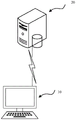
Fig. 1 schematically shows a frame diagram of a data processing method in a sideband compensation mode of sample adaptive compensation according to an embodiment of the present application. In an exemplary embodiment, the system of the application environment may include a computer device 10, a server 20. Wherein the computer device 10 forms a wireless or wired connection with the server 20. The computer device 10 may be a cell phone, an iPAD, a tablet, a server, etc. The server 20 may be a rack server, a blade server, a tower server, or a rack server (including an independent server or a server cluster composed of a plurality of servers).
Fig. 2 is a flowchart illustrating a data processing method in a sideband compensation mode of sample adaptive compensation according to an embodiment of the present application. It should be understood that the flow charts in the embodiments of the present method are not used to limit the order of executing the steps. In the following, a computer device is taken as an execution subject for exemplary description, and as can be seen from the figure, the data processing method of the sideband compensation mode of sample adaptive compensation provided in this embodiment includes:
step S20, obtaining a target reconstructed image, and dividing the target reconstructed image into a plurality of non-overlapping tree-shaped coding blocks.
Specifically, the target reconstructed image is an image obtained after deblocking the reconstructed image, and is a frame of image after reconstruction is completed.
In this embodiment, when dividing the target reconstructed image into Tree-shaped Coding blocks, the image of the whole frame is divided into blocks according to the size of a Tree-shaped Coding Unit (CTU) preset by an encoder, for example, the size of the target reconstructed image is 128 × 128, and the size of the CTU is 64 × 64, so that the target reconstructed image can be divided into 4 Tree-shaped Coding blocks that do not overlap with each other.
And step S21, traversing all reconstructed pixel points in each tree-shaped coding block, calculating a sideband value to which each traversed reconstructed pixel point belongs, and calculating a residual error value between each traversed reconstructed pixel point and the corresponding original pixel point.
Specifically, the Tree-shaped Coding Block (CTB) may be a luminance CTB or a chrominance CTB included in a Tree-shaped Coding Unit (CTU) in a Sample Adaptive compensation technique (SAO) in HEVC. A tree-shaped coding block is composed of multiple reconstructed pixel points, such as 16 × 16, 32 × 32, and 64 × 64 multiple pixel points, for example, referring to fig. 3, it is a region composed of 16 × 16 reconstructed pixel points in the tree-shaped coding block, and the pixel values of the reconstructed pixel points in the region are as shown in the figure.
The tree-shaped coding block shown in fig. 3 is an example of an 8-bit image. The reconstruction pixel refers to a pixel obtained by restoring each pixel in the original image.
In this embodiment, when calculating the sideband value to which each reconstructed pixel belongs, the pixel value range included in each sideband may be determined according to the pixel value range of the pixel in the image. For example, if the pixel values of the pixels in the image range from 0 to 255, it may be determined that each sideband includes 256/32-8 pixel values; if the pixel values of the pixels in the image range from 0 to 65535, it can be determined that each sideband contains 2048 pixel values.
As an example, after calculating the sideband value for each reconstructed pixel point in fig. 3, the sideband value corresponding to each reconstructed pixel point as shown in fig. 4 can be obtained.
The residual value diff between each reconstructed pixel point and the corresponding original pixel point refers to the difference between the pixel value a of the reconstructed pixel point and the pixel value b of the corresponding original pixel point, that is, diff is a-b.
It can be understood that, in the embodiment of the present application, to save data processing time, the sideband values and the residual values of all reconstructed pixel points in the tree-shaped coding block may be calculated in advance, instead of calculating only by using the sideband values and the residual values.
And step S22, storing the calculated sideband value of each reconstructed pixel point into a first array, and storing the calculated residual value of each reconstructed pixel point and the corresponding original pixel point into a second array.
Specifically, in order to facilitate the subsequent sequential acquisition of the sideband value of each reconstructed pixel point and the residual value of each reconstructed pixel point and the corresponding original pixel point, the sideband value may be stored in the first array, and the residual value may be stored in the second array, for example, the sideband value may be stored in the bttype array, and the residual value may be stored in the btdiff array.
Step S23, determine whether m consecutive sideband values in the first array belong to the same sideband, where m is an integer greater than or equal to 2.
As an example, it may be determined whether a first consecutive 8 sideband values in the first array belong to the same sideband, and if the 8 sideband values belong to the same sideband, it may continue to obtain whether a next consecutive 8 sideband values from the first array belong to the same sideband until all sideband values in the first array are determined.
Step S24, if the m continuous sideband values in the first array belong to the same sideband, calculating the accumulated residual values of the m reconstruction pixel points corresponding to the m sideband values at one time according to the residual values in the second array, and counting the accumulated number of the m reconstruction pixel points.
Specifically, the accumulated residual value is an accumulated sum of residual values of the m reconstructed pixel points and corresponding original pixel points, for example, m is 8, and the residual values of the 8 reconstructed pixel points and corresponding original pixel points are 5, 8, 7, 6, 4, 3, 12, and 9, respectively, so that the accumulated residual value is 5+8+7+6+4+3+12+9 is 54.
The accumulated number is the number of the m reconstruction pixels, for example, if m is 8, the accumulated number is also 8, and if m is 4, the accumulated number is 4.
In this embodiment, when it is determined that m consecutive sideband values in the first array belong to the same sideband, residual values of m reconstruction pixel points corresponding to the m sideband values can be read from the second array at one time, and then the accumulated sum of the read m residual values can be calculated at one time without reading the m residual values from the second array one by one and accumulating the read residual values one by one.
It should be noted that after the calculation of the accumulated residual value and the statistics of the accumulated number are completed, the obtained accumulated residual value may be added to the sum variable of the corresponding sideband p, and the accumulated number m is added to the count variable of the corresponding sideband p, and then the subsequent processing operation is performed.
In the embodiment of the application, all reconstructed pixel points in the tree-shaped coding block are traversed, the sideband value of each traversed reconstructed pixel point is calculated, and the residual value of each traversed reconstructed pixel point and the corresponding original pixel point is calculated; storing the calculated sideband value of each reconstructed pixel point into a first array, and storing the calculated residual value of each reconstructed pixel point and the corresponding original pixel point into a second array; judging whether m continuous sideband values in the first array belong to the same sideband, wherein m is an integer greater than or equal to 2; if the continuous m sideband values in the first array belong to the same sideband, calculating the accumulated residual values of m reconstruction pixel points corresponding to the m sideband values at one time according to the residual values in the second array, and counting the accumulated number of the m reconstruction pixel points. In the embodiment of the application, when the plurality of pixel points belonging to the same sideband are traversed, the residual error calculation and the quantity statistics of the pixel points belonging to the same sideband are completed at one time, so that the read-write operation on the memory can be reduced, the time consumption of statistics is reduced, and the power consumption is reduced.
Through experimental statistics, the calculation method can reduce the memory read-write operation of the BO module by about 67.2%. In addition, no matter Android/IOS or PC of the mobile device, the memory read-write operation is very slow and power-consuming, so that the memory read-write operation is reduced, the power consumption can be greatly reduced by the calculation scheme of the method, and meanwhile, the calculation method can also accelerate the BO module by about 48.2%. In the prior art, the processing time of the BO module in the scene of live broadcast accounts for about 10% of the time consumed by the whole encoding and decoding, and if the technical scheme of the application is applied to the BO module, the live broadcast coding can be accelerated by about 4.8%, so that the power consumption can be reduced, and the live broadcast coding can be accelerated.
In an exemplary embodiment, referring to fig. 5, the data processing method of the sideband compensation mode of sample adaptive compensation further includes:
step S50, if the consecutive m sideband values in the first array do not belong to the same sideband, further determining whether consecutive n sideband values in the m sideband values belong to the same sideband, where n < m, n is an integer greater than or equal to 2.
As an example, if m is 8 and n is 4, then 8 consecutive sideband values in the first array are determined not to belong to the same sideband, for example, 5 consecutive sideband values belong to 15 sidebands and the other 3 sideband values belong to 16 sidebands. In this case, it can be further determined whether there are 4 consecutive sideband values belonging to the same sideband among the 8 sideband values.
It should be noted that the consecutive n sideband values may be consecutive n sideband values at any position in the m sideband values, for example, the first sideband value to the nth sideband value in the m sideband values, the second sideband value to the n +1 th sideband value in the m sideband values, or the third sideband value to the n +2 th sideband value in the m sideband values, etc.
Preferably, the consecutive n sideband values are the first sideband value through the nth sideband value of the m sideband values, or the m-n +1 sideband values through the mth sideband value of the m sideband values. As an example, when m is 8 and n is 4, the consecutive 4 sideband values are the first to 4 th sideband values of the 8 sideband values, or the consecutive 4 sideband values are the 5 th to 8 th sideband values of the 8 sideband values.
Step S51, if the n sideband values belong to the same sideband, calculating the accumulated residual values of the n reconstruction pixels corresponding to the n sideband values at one time according to the residual values in the second array, and counting the accumulated number of the n reconstruction pixels.
Specifically, when it is determined that the n continuous sideband values belong to the same sideband, the residual values of the n reconstruction pixel points corresponding to the n sideband values can be read from the second array at one time, and then the accumulated sum of the read n residual values can be calculated at one time without reading the n residual values from the second array one by one and accumulating the read residual values one by one.
It should be noted that after the calculation of the accumulated residual value and the statistics of the accumulated number are completed, the obtained accumulated residual value may be added to the sum variable of the corresponding sideband p, the accumulated number n is added to the count variable of the corresponding sideband p, and then the subsequent processing operation is performed.
In this embodiment, when it is determined that the m continuous sideband values do not belong to the same sideband, it is further determined whether n continuous sideband values of the m sideband values belong to the same sideband, and when the m continuous sideband values belong to the same sideband, residual error calculation and number statistics of the pixel points belonging to the same sideband are completed at one time, so that read-write operations on the memory can be reduced, time consumed by statistics is reduced, and power consumption is reduced.
It should be noted that, in this embodiment, when it is determined that n consecutive sideband values do not belong to the same sideband, it may be further determined whether k consecutive sideband values belong to the same sideband, where k is an integer smaller than n. In this embodiment, how many times the above-mentioned determining step is executed is not limited in this embodiment, and may be set according to actual situations.
In an exemplary embodiment, referring to fig. 6, the step of determining whether consecutive m sideband values in the first array belong to the same sideband may include steps S60-S63, wherein:
step S60, reading consecutive m sideband values from the first array, and storing the read sideband values in a first variable of a preset bit.
Specifically, the first variable may be a global variable or a local variable, and in this embodiment, the first variable is preferably a local variable, such as a local variable classIdx _ 64. The preset bit is a preset value, for example, the preset bit is 64 bits. It is understood that the preset bit may be other values, and the specific value may be set according to the actual situation.
As an example, the read sideband value may be deposited in a 64-bit local variable classIdx — 64.
And step S61, one sideband value is taken out from the first variable, and the taken-out sideband value is copied for m-1 times to obtain the sideband value after copying.
Specifically, one of the sideband values, for example, the 2 nd sideband value, can be randomly taken out from the m sideband values included in the first variable; the sideband value at the preset position can also be taken out from the m sideband values contained in the first variable, wherein the preset position is preset or default, for example, the preset position is the first position, and the sideband value at the first position can be taken out.
In this embodiment, after a sideband value is extracted, in order to make the number of the finally obtained sideband values equal to the number of the sideband values included in the first variable, the extracted sideband value may be copied m-1 times to obtain a sideband value after copying, and the sideband value obtained after copying is stored in the second variable of the preset bit to obtain m sideband values.
And step S62, storing the sideband value obtained after the copying process in the second variable of the preset bit.
Specifically, the second variable is of the same type as the first variable, and may be a global variable or a local variable, and in this embodiment, the second variable is preferably a local variable, such as a local variable classIdx _ rep. The preset bit is a preset value, for example, the preset bit is 64 bits.
As an example, the sideband value obtained after the copy processing may be stored in a 64-bit local variable classIdx _ rep.
Step S63, determining whether the first variable and the second variable are equal, and determining whether m consecutive sideband values in the first array belong to the same sideband according to the determination result.
Specifically, when the first variable is equal to the second variable as a result of the determination, it may be determined that consecutive m sideband values in the first array belong to the same sideband; when the first variable and the second variable are not equal to each other as a result of the determination, it may be determined that consecutive m sideband values in the first array do not belong to the same sideband.
In the embodiment, the second variable is generated by copying the extracted sideband value m-1 times, so that the generation time of the second variable can be saved.
In an exemplary embodiment, referring to fig. 7, when the first variable and the second variable are not equal, the step of determining whether consecutive n sideband values of the m sideband values belong to the same sideband may include: steps S70-S71, wherein:
step S70, obtaining the values of the preset number of bits corresponding to the n sideband values from the first variable and the second variable, respectively.
Specifically, the preset number of bits may be determined according to how many bit values each sideband value is represented by, for example, if one sideband value is represented by an 8-bit value, the preset number of bits may be determined to be 8 n; when one sideband value is represented by a 5-bit numerical value, the preset digit can be determined to be 5 n; when one sideband value is represented by a 16-bit value, the predetermined number of bits can be determined to be 16 n.
In this embodiment, the specific values of which bits are obtained are related to the positions of the n sideband values in the m sideband values.
As an example, if the m is 8, the n is 4, each sideband value is represented by an 8-bit value, the first variable of the preset bits is a 64-bit first variable, and the 4 sideband values are first to fourth sideband values of the 8 sideband values, when the values of the preset number of bits corresponding to the n sideband values are obtained from the first variable and the second variable, the values of the first to 32 th bits may be obtained from the first variable and the second variable, respectively.
It is to be understood that, when the 4 sideband values are 2 nd to 5 th sideband values among the 8 sideband values, when values of a preset number of bits corresponding to the n sideband values are acquired from the first and second variables, values of 9 th to 40 th bits may be acquired from the first and second variables, respectively.
In an exemplary embodiment, if m is 8 and n is 4, each sideband value is represented by an 8-bit value, and the first variable of the preset bits is a first variable of 64 bits, the obtaining the values of the preset number of bits corresponding to the n sideband values from the first variable and the second variable respectively may include:
and respectively obtaining a low-order 32-bit or high-order 32-bit numerical value from the first variable and the second variable.
In this embodiment, in order to obtain the value from the first variable and the second variable, the lower 32-bit or upper 32-bit value may be directly obtained.
Step S71, determining whether the value obtained from the first variable is equal to the value obtained from the second variable, and determining whether consecutive n sideband values of the m sideband values belong to the same sideband according to the determination result.
Specifically, when the determination result is that the value obtained from the first variable is equal to the value obtained from the second variable, it may be determined that consecutive n sideband values of the m sideband values belong to the same sideband; when the value obtained from the first variable is not equal to the value obtained from the second variable as a result of the determination, it may be determined that consecutive n sideband values of the m sideband values do not belong to the same sideband.
In an exemplary embodiment, the method further comprises:
and if the continuous m sideband values in the first array do not belong to the same sideband, separately counting the residual value and the number of each reconstructed pixel point.
Specifically, when the consecutive m sideband values in the first array do not belong to the same sideband, that is, belong to different sidebands, the residual value and the number of each reconstructed pixel point may be separately counted, that is, only one residual value is read from the second array at a time, the read residual value is then added to the sum variable of the corresponding sideband p, and the number 1 is added to the count variable of the corresponding sideband p, and then subsequent processing operations are performed.
Referring to FIG. 8, a block diagram of an embodiment of a data processing apparatus 80 for sideband compensation mode of sample adaptive compensation of the present application is shown.
In this embodiment, the data processing apparatus 80 of the sideband compensation mode of sample adaptive compensation comprises a series of computer program instructions stored in a memory, which when executed by a processor can realize the data processing function of the sideband compensation mode of sample adaptive compensation in the embodiments of the present application. In some embodiments, the data processing apparatus 80 for the sideband compensation mode of sample adaptive compensation may be divided into one or more modules based on the particular operations implemented by the portions of the computer program instructions. For example, in fig. 8, the data processing apparatus 80 of the sideband compensation mode of the sample adaptive compensation can be divided into an obtaining module 81, a traversing module 8/2, a saving module 83, a judging module 84, and a calculating module 85. Wherein:
an obtaining module 81, configured to obtain a target reconstructed image, and divide the target reconstructed image into a plurality of non-overlapping tree-shaped coding blocks;
the traversal module 82 is configured to traverse all reconstructed pixel points in each tree-shaped coding block, calculate a sideband value to which each traversed reconstructed pixel point belongs, and calculate a residual value between each traversed reconstructed pixel point and a corresponding original pixel point;
the storage module 83 is configured to store the calculated sideband value to which each reconstructed pixel belongs in the first array, and store the calculated residual value between each reconstructed pixel and the corresponding original pixel in the second array;
a judging module 84, configured to judge whether m consecutive sideband values in the first array belong to the same sideband, where m is an integer greater than or equal to 2;
and the calculating module 85 is configured to calculate accumulated residual values of m reconstruction pixels corresponding to the m sideband values at a time according to the residual values in the second array if the m continuous sideband values in the first array belong to the same sideband, and count the accumulated number of the m reconstruction pixels.
In an exemplary embodiment, the determining module 84 is further configured to determine whether consecutive n sideband values of the m sideband values belong to the same sideband if the consecutive m sideband values in the first array do not belong to the same sideband, where n < m, n is an integer greater than or equal to 2; if the n sideband values belong to the same sideband, calculating the accumulated residual values of n reconstruction pixel points corresponding to the n sideband values at one time according to the residual values in the second array, and counting the accumulated number of the n reconstruction pixel points.
In an exemplary embodiment, the determining module 84 is further configured to read consecutive m sideband values from the first array, and store the read sideband values in a first variable of a preset bit: taking one sideband value out of the first variables, and copying the taken sideband value for m-1 times to obtain a sideband value after copying; storing the sideband value obtained after the copying processing in a second variable of the preset bit; and judging whether the first variable is equal to the second variable or not, and determining whether the continuous m sideband values in the first array belong to the same sideband according to the judgment result.
In an exemplary embodiment, when the first variable and the second variable are not equal, the determining module 84 is further configured to obtain values of preset bits corresponding to the n sideband values from the first variable and the second variable respectively; and judging whether the value obtained from the first variable is equal to the value obtained from the second variable, and determining whether the continuous n sideband values in the m sideband values belong to the same sideband according to the judgment result.
In an exemplary embodiment, the determining module 84 is further configured to extract the sideband value located at the preset position from the first variable.
In an exemplary embodiment, the m is 8, the n is 4, each sideband value is represented by an 8-bit value, the first variable of the preset bits is a 64-bit first variable, and the determining module 83 is further configured to obtain a lower 32-bit value or an upper 32-bit value from the first variable and the second variable, respectively.
In an exemplary embodiment, the data processing apparatus 80 of the sideband compensation mode of sample adaptive compensation further comprises a statistic module.
And the counting module is used for separately counting the residual value and the quantity of each reconstructed pixel point if the continuous m sideband values in the first array do not belong to the same sideband.
In the embodiment of the application, a target reconstructed image is obtained, and the target reconstructed image is divided into a plurality of non-overlapping tree-shaped coding blocks; for each tree-shaped coding block, traversing all reconstructed pixel points in the tree-shaped coding block, calculating a sideband value to which each traversed reconstructed pixel point belongs, and calculating a residual value of each traversed reconstructed pixel point and a corresponding original pixel point; storing the calculated sideband value of each reconstructed pixel point into a first array, and storing the calculated residual value of each reconstructed pixel point and the corresponding original pixel point into a second array; judging whether m continuous sideband values in the first array belong to the same sideband, wherein m is an integer greater than or equal to 2; if the continuous m sideband values in the first array belong to the same sideband, calculating the accumulated residual values of m reconstruction pixel points corresponding to the m sideband values at one time according to the residual values in the second array, and counting the accumulated number of the m reconstruction pixel points. In the embodiment of the application, when the plurality of pixel points belonging to the same sideband are traversed, the residual error calculation and the quantity statistics of the pixel points belonging to the same sideband are completed at one time, so that the read-write operation on the memory can be reduced, the time consumption of statistics is reduced, and the power consumption is reduced.
Fig. 9 schematically shows a hardware architecture diagram of a computer device 10 adapted to implement a data processing method of a sideband compensation mode of sample adaptive compensation according to an embodiment of the present application. In the present embodiment, the computer device 10 is a device capable of automatically performing numerical calculation and/or information processing in accordance with a command set or stored in advance. For example, the server may be a tablet computer, a notebook computer, a desktop computer, a rack server, a blade server, a tower server, or a cabinet server (including an independent server or a server cluster composed of multiple servers). As shown in fig. 9, computer device 10 includes at least, but is not limited to: the memory 120, processor 121, and network interface 123 may be communicatively linked to each other via a system bus. Wherein:
the memory 120 includes at least one type of computer-readable storage medium, which may be volatile or non-volatile, and particularly, includes a flash memory, a hard disk, a multimedia card, a card type memory (e.g., SD or DX memory, etc.), a Random Access Memory (RAM), a Static Random Access Memory (SRAM), a Read Only Memory (ROM), an Electrically Erasable Programmable Read Only Memory (EEPROM), a Programmable Read Only Memory (PROM), a magnetic memory, a magnetic disk, an optical disk, and the like. In some embodiments, the memory 120 may be an internal storage module of the computer device 10, such as a hard disk or a memory of the computer device 10. In other embodiments, the memory 120 may also be an external storage device of the computer device 10, such as a plug-in hard disk, a Smart Media Card (SMC), a Secure Digital (SD) Card, a Flash memory Card (Flash Card), and the like, provided on the computer device 10. Of course, memory 120 may also include both internal and external memory modules of computer device 10. In this embodiment, the memory 120 is generally used for storing the operating system installed in the computer device 10 and various types of application software, such as program codes of the data processing method in the sideband compensation mode of the sample adaptive compensation. In addition, the memory 120 may also be used to temporarily store various types of data that have been output or are to be output.
Processor 121 may be, in some embodiments, a Central Processing Unit (CPU), a controller, a microcontroller, a microprocessor, or other data Processing chip in a sideband compensation mode with sample adaptive compensation. The processor 121 is generally configured to control the overall operation of the computer device 10, such as performing control and processing related to data interaction or communication with the computer device 10. In this embodiment, the processor 121 is configured to execute the program code stored in the memory 120 or process data.
Network interface 123 may comprise a wireless network interface or a wired network interface, with network interface 123 typically being used to establish communication links between computer device 10 and other computer devices. For example, the network interface 123 is used to connect the computer device 10 to an external terminal via a network, establish a data transmission channel and a communication link between the computer device 10 and the external terminal, and the like. The network may be a wireless or wired network such as an Intranet (Intranet), the Internet (Internet), a Global System of Mobile communication (GSM), Wideband Code Division Multiple Access (WCDMA), a 4G network, a 5G network, Bluetooth (Bluetooth), or Wi-Fi.
It is noted that FIG. 9 only shows a computer device having components 120-122, but it is understood that not all of the shown components are required to be implemented, and that more or fewer components may be implemented instead.
In this embodiment, the data processing method of the sideband compensation mode of the sample adaptive compensation stored in the memory 120 can be divided into one or more program modules and executed by one or more processors (in this embodiment, the processor 121) to complete the present application.
Embodiments of the present application provide a computer-readable storage medium, on which a computer program is stored, and the computer program, when executed by a processor, implements the steps of the data processing method in the sideband compensation mode of sample adaptive compensation in the embodiments.
In this embodiment, the computer-readable storage medium includes a flash memory, a hard disk, a multimedia card, a card type memory (e.g., SD or DX memory, etc.), a Random Access Memory (RAM), a Static Random Access Memory (SRAM), a Read Only Memory (ROM), an Electrically Erasable Programmable Read Only Memory (EEPROM), a Programmable Read Only Memory (PROM), a magnetic memory, a magnetic disk, an optical disk, and the like. In some embodiments, the computer readable storage medium may be an internal storage unit of the computer device, such as a hard disk or a memory of the computer device. In other embodiments, the computer-readable storage medium may be an external storage device of the computer device, such as a plug-in hard disk provided on the computer device, a Smart Media Card (SMC), a Secure Digital (SD) Card, a Flash memory Card (Flash Card), and the like. Of course, the computer-readable storage medium may also include both internal and external storage units of the computer device. In the present embodiment, the computer-readable storage medium is generally used for storing an operating system and various types of application software installed in a computer device, for example, a program code of a data processing method in a sideband compensation mode of sample adaptive compensation in the embodiment, and the like. Further, the computer-readable storage medium may also be used to temporarily store various types of data that have been output or are to be output.
The above-described embodiments of the apparatus are merely illustrative, and the units described as separate parts may or may not be physically separate, and the parts displayed as units may or may not be physical units, may be located in one place, or may be distributed on at least two network units. Some or all of the modules can be screened out according to actual needs to achieve the purpose of the scheme of the embodiment of the application. One of ordinary skill in the art can understand and implement it without inventive effort.
Through the above description of the embodiments, those skilled in the art will clearly understand that each embodiment can be implemented by software plus a general hardware platform, and certainly can also be implemented by hardware. It will be understood by those skilled in the art that all or part of the processes of the methods of the embodiments described above can be implemented by hardware related to instructions of a computer program, which can be stored in a computer readable storage medium, and when executed, can include the processes of the embodiments of the methods described above. The storage medium may be a magnetic disk, an optical disk, a Read-only memory (ROM), a Random Access Memory (RAM), or the like.
Finally, it should be noted that: the above embodiments are only used for illustrating the technical solutions of the present application, and not for limiting the same; although the present application has been described in detail with reference to the foregoing embodiments, it should be understood by those of ordinary skill in the art that: the technical solutions described in the foregoing embodiments may still be modified, or some or all of the technical features may be equivalently replaced; and the modifications or the substitutions do not make the essence of the corresponding technical solutions depart from the scope of the technical solutions of the embodiments of the present application.