CN112580714B - Article identification method for dynamically optimizing loss function in error-cause reinforcement mode - Google Patents
Article identification method for dynamically optimizing loss function in error-cause reinforcement mode Download PDFInfo
- Publication number
- CN112580714B CN112580714B CN202011477588.1A CN202011477588A CN112580714B CN 112580714 B CN112580714 B CN 112580714B CN 202011477588 A CN202011477588 A CN 202011477588A CN 112580714 B CN112580714 B CN 112580714B
- Authority
- CN
- China
- Prior art keywords
- correlation
- training
- loss function
- model
- loss
- Prior art date
- Legal status (The legal status is an assumption and is not a legal conclusion. Google has not performed a legal analysis and makes no representation as to the accuracy of the status listed.)
- Active
Links
Images


Classifications
-
- G—PHYSICS
- G06—COMPUTING OR CALCULATING; COUNTING
- G06F—ELECTRIC DIGITAL DATA PROCESSING
- G06F18/00—Pattern recognition
- G06F18/20—Analysing
- G06F18/24—Classification techniques
- G06F18/241—Classification techniques relating to the classification model, e.g. parametric or non-parametric approaches
-
- G—PHYSICS
- G06—COMPUTING OR CALCULATING; COUNTING
- G06F—ELECTRIC DIGITAL DATA PROCESSING
- G06F17/00—Digital computing or data processing equipment or methods, specially adapted for specific functions
- G06F17/10—Complex mathematical operations
- G06F17/15—Correlation function computation including computation of convolution operations
-
- G—PHYSICS
- G06—COMPUTING OR CALCULATING; COUNTING
- G06F—ELECTRIC DIGITAL DATA PROCESSING
- G06F18/00—Pattern recognition
- G06F18/20—Analysing
- G06F18/21—Design or setup of recognition systems or techniques; Extraction of features in feature space; Blind source separation
- G06F18/214—Generating training patterns; Bootstrap methods, e.g. bagging or boosting
Landscapes
- Engineering & Computer Science (AREA)
- Data Mining & Analysis (AREA)
- Theoretical Computer Science (AREA)
- Physics & Mathematics (AREA)
- General Physics & Mathematics (AREA)
- General Engineering & Computer Science (AREA)
- Computer Vision & Pattern Recognition (AREA)
- Mathematical Analysis (AREA)
- Evolutionary Computation (AREA)
- Bioinformatics & Computational Biology (AREA)
- Bioinformatics & Cheminformatics (AREA)
- Artificial Intelligence (AREA)
- Life Sciences & Earth Sciences (AREA)
- Computational Mathematics (AREA)
- Mathematical Physics (AREA)
- Evolutionary Biology (AREA)
- Mathematical Optimization (AREA)
- Pure & Applied Mathematics (AREA)
- Algebra (AREA)
- Computing Systems (AREA)
- Databases & Information Systems (AREA)
- Software Systems (AREA)
- Image Analysis (AREA)
- Information Retrieval, Db Structures And Fs Structures Therefor (AREA)
- Feedback Control In General (AREA)
Abstract

Description
技术领域Technical Field
本发明涉及一种优化损失函数的物品识别方法,特别是一种以错因强化方式动态优化损失函数的物品识别方法。The present invention relates to an object recognition method for optimizing a loss function, and in particular to an object recognition method for dynamically optimizing a loss function in an error-cause reinforcement manner.
背景技术Background Art
申请号为“2020106691598”的专利文献公开了一种采用错因强化方式优化损失函数的方法,优化后的损失函数取名为corloss,在原来的交叉熵损失函数的基础上加入惩罚项实现,惩罚项包含以下三个模块:惩罚程度调节因子T,数据集各类别之间的相关性Xijd,相关类别的概率
发明内容Summary of the invention
为了克服现有技术的不足,本发明提供一种识别准确率高的以错因强化方式动态优化损失函数的物品识别方法。In order to overcome the shortcomings of the prior art, the present invention provides an object recognition method with high recognition accuracy and dynamically optimizes the loss function in an error-cause reinforcement manner.
本发明解决其技术问题所采用的技术方案是:The technical solution adopted by the present invention to solve the technical problem is:
一种以错因强化方式动态优化损失函数的物品识别方法,优化后的损失函数取名为ER-Loss,在原来的交叉熵损失函数的基础上加入惩罚项实现,惩罚项包含以下四个模块:An object recognition method that dynamically optimizes the loss function in an error-cause reinforcement manner. The optimized loss function is named ER-Loss. It is implemented by adding a penalty term on the basis of the original cross entropy loss function. The penalty term includes the following four modules:
惩罚程度的放大因子A,用于放大相关类别对模型精度的影响,当A=0时,惩罚项为0,对模型精度无影响,此时ER-Loss即为交叉熵损失函数,在模型训练时可根据相关性的实际情况设置A值;The penalty amplification factor A is used to amplify the impact of related categories on model accuracy. When A = 0, the penalty term is 0, which has no effect on model accuracy. At this time, ER-Loss is the cross entropy loss function. The A value can be set according to the actual situation of the correlation during model training.
惩罚程度调节系数Aprob,用于在训练过程中根据实际情况调节放大因子A对数据集各类别之间的相关性和相关类别的实际输出概率的影响,让放大因子A能够自动适应训练的不同阶段;The penalty adjustment coefficient A prob is used to adjust the impact of the amplification factor A on the correlation between categories in the data set and the actual output probability of the relevant categories according to the actual situation during the training process, so that the amplification factor A can automatically adapt to different stages of training;
在各网络下,数据集各类别之间的相关性组合X,通过初步模型测试所有物品类别的输出,并使用信息熵公式计算后获得单个网络的相关性Xijd,随后根据实际情况设定权重矩阵λ对各网络相关性进行线性组合得到X;Under each network, the correlation combination X between each category of the data set is used to test the output of all item categories through the preliminary model, and the correlation Xijd of a single network is calculated using the information entropy formula. Then, the weight matrix λ is set according to the actual situation to linearly combine the correlations of each network to obtain X;
相关类别的概率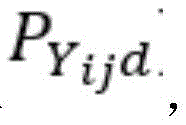
本发明包括以下步骤:The present invention comprises the following steps:
步骤S1、初步训练并获取各类别的相关性;Step S1, preliminary training and obtaining the correlation of each category;
步骤S2、根据识别结果动态加入惩罚项;Step S2: dynamically add penalty items according to the recognition results;
步骤S3、构建新的损失函数;Step S3, constructing a new loss function;
步骤S4:设定溢出机制;Step S4: setting the overflow mechanism;
步骤S5:采用ER-Loss训练。Step S5: Use ER-Loss training.
步骤S1的具体步骤如下:采用交叉熵损失的损失函数对模型进行初步训练,初步训练后的模型用于测试各类别的相关项以及各类别之间的相关性。The specific steps of step S1 are as follows: the model is preliminarily trained using a cross entropy loss function, and the preliminarily trained model is used to test the related items of each category and the correlation between each category.
步骤S2包括以下具体步骤:根据识别结果动态加入惩罚项,监控每张图片的识别结果,对于相关项的输出,模型以概率分数的形式作为惩罚项的一部分加入损失函数的计算中,同时在训练过程中使用溢出机制保护损失函数继续计算,一旦溢出则使用原来的交叉熵损失函数。Step S2 includes the following specific steps: dynamically adding penalty items according to the recognition results, monitoring the recognition results of each picture, and for the output of related items, the model adds the probability score as part of the penalty item to the calculation of the loss function. At the same time, during the training process, an overflow mechanism is used to protect the loss function from continuing to calculate. Once an overflow occurs, the original cross entropy loss function is used.
步骤S3的具体步骤如下:以原来的交叉熵损失函数为基础,通过原来的交叉熵损失函数训练出初步模型后,测试所有类别的相关项,所有类别的相关项即分类错因,在正式训练时把这些分类错因引入到损失函数的计算中,构建新的损失函数,得到ER-Loss的具体公式如下:The specific steps of step S3 are as follows: Based on the original cross entropy loss function, after training the preliminary model through the original cross entropy loss function, test the relevant items of all categories, which are the classification errors. In the formal training, these classification errors are introduced into the calculation of the loss function, and a new loss function is constructed. The specific formula of ER-Loss is as follows:

其中,i是指正确分类的物品类别,j是指与i相关的具有物品类别,d是指相关物品类别的个数,n代表该数据集的分类总数;A为放大因子,用于放大相关类别对模型精度的影响;惩罚程度调节系数Aprob,用于在训练过程中根据实际情况调节放大因子A对数据集各类别之间的相关性和相关类别的实际输出概率的影响,让A能够自动适应训练的不同阶段;X为各网络模型下的错因值组合,即各网络下相近物品类别之间的相关性组合,用信息熵来表示,信息熵越大说明相关性越大,模型识别错误的几率越高;
其中,Aprob的具体公式如下:Among them, the specific formula of A prob is as follows:

其中,d是指相关物品类别的个数,D是指在当次训练中,输出概率大于概率阈值T的类别个数。Among them, d refers to the number of related item categories, and D refers to the number of categories whose output probability is greater than the probability threshold T in the current training.
其中,单个网络获得的相关性Xijd的具体公式如下:Among them, the specific formula of the correlation Xijd obtained by a single network is as follows:

其中Bij为类别i的相关类别j在类别i的图片中得到的输出平均值,将每个类别的图片输出值按位置相加,然后求平均值以保证输出是正常水平。Where Bij is the average output value of the related category j of category i in the picture of category i. The output values of the pictures of each category are added by position, and then the average value is calculated to ensure that the output is at a normal level.
模型训练时可以根据实际情况设置d值,当d=0时,其他物品类别不会对目标物品的类别识别产生影响,此时ER-Loss即为交叉熵损失函数。During model training, the d value can be set according to the actual situation. When d = 0, other item categories will not affect the category recognition of the target item. At this time, ER-Loss is the cross entropy loss function.
步骤S3中,放大因子A的初始设定值:A是放大因子,用于放大类别间的相关性组合X以及模型实际犯错的概率

其中,C是一个根据实际情况设定的定值,aver_X是通过预训练网络获得的相关性的均值,通过均值的手段获取整个数据集的相关性。这里的均值是算术平均值、几何平均值、调和平均值、加权平均值、均方根平均值、指数平均值和中位数其中的一种。Among them, C is a fixed value set according to the actual situation, aver_X is the mean of the correlation obtained by the pre-trained network, and the correlation of the entire data set is obtained by means of the mean. The mean here is one of the arithmetic mean, geometric mean, harmonic mean, weighted mean, root mean square mean, exponential mean and median.
步骤S3中,最后计算采用的相关性X=∑m(λmXijdm)的具体组合方式:Xijdm是同一类别在不同网络下获得的相关性,通过初步模型测试获得,最后计算时通过将其线性组合获得最终的相关性公式,具体如下:In step S3, the specific combination of the correlation X=∑ m (λ m X ijdm ) used in the final calculation is as follows: X ijdm is the correlation obtained under different networks of the same category, obtained through preliminary model testing, and the final correlation formula is obtained by linearly combining them in the final calculation, as follows:

其中,m是获取类别间相关性的网络个数,λm是各相关性的系数,为一个常数,同一类别在不同网络下的相关性的权重系数,在训练中可以根据实际情况设定权重λm的值,灵活的应用各网络的相关性。Among them, m is the number of networks for obtaining the correlation between categories, λ m is the coefficient of each correlation, which is a constant and the weight coefficient of the correlation of the same category in different networks. During training, the value of weight λ m can be set according to the actual situation to flexibly apply the correlation of each network.
步骤S4的具体步骤如下:当

步骤S5包括以下训练方式:Step S5 includes the following training methods:
A、第一种训练方式如下:共进行两次训练,第一次训练为初步训练,先使用原来的交叉熵损失函数训练初步模型,再使用初步模型测出数据集各类别之间的相关性,整理成相关性表格再进行正式训练,第二次训练则使用ER-Loss进行正式训练,在正式训练时以索引的方式把每个物品类别的相关项加入到ER-Loss中计算,针对初步模型对每个图片的识别情况,从相关性表格中搜索到对应的惩罚项加入到ER-Loss中计算;A. The first training method is as follows: two trainings are conducted. The first training is preliminary training. The original cross entropy loss function is used to train the preliminary model. The preliminary model is then used to measure the correlation between the categories of the data set, which is then organized into a correlation table for formal training. The second training uses ER-Loss for formal training. During formal training, the relevant items of each item category are added to the ER-Loss in an indexed manner. According to the recognition of each image by the preliminary model, the corresponding penalty item is searched from the correlation table and added to the ER-Loss for calculation.
B、第二种训练方式如下:只进行一次训练,共N个epoch,训练包括两个阶段,第一个阶段取epoch=int[kN]时的模型作为初步模型,其中0<k<1,用初步模型测出数据集各类别之间的相关性,整理成相关性表格,第二个阶段则使用ER-Loss从epoch=int[kN]+1处开始断点续训,其中0<k<1,在断点续训过程中,针对模型对每个图片的识别情况,从相关性表格中搜索到对应的惩罚项加入到损失函数中计算;B. The second training method is as follows: only one training is performed, with a total of N epochs. The training includes two stages. In the first stage, the model at epoch = int[kN] is taken as the preliminary model, where 0 < k < 1. The preliminary model is used to measure the correlation between the categories of the data set and sorted into a correlation table. In the second stage, ER-Loss is used to start breakpoint training from epoch = int[kN] + 1, where 0 < k < 1. During the breakpoint training process, according to the model's recognition of each image, the corresponding penalty item is searched from the correlation table and added to the loss function for calculation;
C、第三种训练方式如下:共进行两个阶段,并且多次训练,第一阶段为预训练,首先使用不同网络分别对数据集进行预训练,接着使用各初步模型分别测出各类别在不同网络下的相关项以及它们之间的相关性,整理成相关性表格,并根据实际情况设定相关性组合公式中的相关性权重矩阵λ,将各网络相关性和相关性权重矩阵λ相乘得到最终相关性X=∑m(λmXijdm),通过均值的手段计算放大因子A的初始值;第二阶段为正式训练,调用相关性表格及权重矩阵λ重构损失函数,并形成新的损失函数ER-Loss,使用ER-Loss进行正式训练,在正式训练时以索引的方式把每个物品类别的相关项及它们之间的相关性和模型实际犯错的概率加入到ER-Loss中计算,针对初步模型对每个图片的识别情况,从相关性表格中搜索到对应的惩罚项加入到ER-Loss中计算。C. The third training method is as follows: there are two stages in total, and multiple trainings. The first stage is pre-training. First, different networks are used to pre-train the data sets. Then, each preliminary model is used to measure the relevant items of each category under different networks and the correlation between them, and then they are sorted into a correlation table. The correlation weight matrix λ in the correlation combination formula is set according to the actual situation. The correlation of each network and the correlation weight matrix λ are multiplied to obtain the final correlation X=∑ m (λ m X ijdm ), and the initial value of the amplification factor A is calculated by means of the mean; the second stage is formal training, calling the correlation table and the weight matrix λ to reconstruct the loss function, and forming a new loss function ER-Loss. ER-Loss is used for formal training. During the formal training, the relevant items of each item category, the correlation between them, and the actual probability of the model making an error are added to ER-Loss in an indexed manner for calculation. According to the recognition of each picture by the preliminary model, the corresponding penalty item is searched from the correlation table and added to ER-Loss for calculation.
本发明的有益效果是:与现有技术相比,本发明通过惩罚程度调节系数Aprob动态调节放大因子A,识别更加灵活,提高了模型对物品识别的精度,降低得到的结果与实际结果之间的偏差,能有效地提高深度学习网络模型的识别准确程度。The beneficial effects of the present invention are as follows: compared with the prior art, the present invention dynamically adjusts the amplification factor A through the penalty degree adjustment coefficient A prob , and the recognition is more flexible, the accuracy of the model in identifying objects is improved, the deviation between the obtained results and the actual results is reduced, and the recognition accuracy of the deep learning network model can be effectively improved.
附图说明BRIEF DESCRIPTION OF THE DRAWINGS
下面结合附图和实施例对本发明进一步说明。The present invention is further described below in conjunction with the accompanying drawings and embodiments.
图1是本发明的步骤流程图;Fig. 1 is a flow chart of the steps of the present invention;
图2是第一种训练方式的步骤流程图;FIG2 is a flow chart of the steps of the first training method;
图3是第二种训练方式的步骤流程图;FIG3 is a flow chart of the steps of the second training method;
图4是第三种训练方式的步骤流程图。FIG. 4 is a flow chart of the steps of the third training method.
具体实施方式DETAILED DESCRIPTION
参照图1至图4,一种以错因强化方式动态优化损失函数的物品识别方法,优化后的损失函数取名为ER-Loss,在原来的交叉熵损失函数的基础上加入惩罚项实现,惩罚项包含以下四个模块:Referring to Figures 1 to 4, an object recognition method for dynamically optimizing the loss function in an error-cause reinforcement manner is shown. The optimized loss function is named ER-Loss, which is implemented by adding a penalty term on the basis of the original cross entropy loss function. The penalty term includes the following four modules:
惩罚程度的放大因子A,用于放大相关类别对模型精度的影响,当A=0时,惩罚项为0,对模型精度无影响,此时ER-Loss即为交叉熵损失函数,在模型训练时可根据相关性的实际情况设置A值;The penalty amplification factor A is used to amplify the impact of related categories on model accuracy. When A = 0, the penalty term is 0, which has no effect on model accuracy. At this time, ER-Loss is the cross entropy loss function. The A value can be set according to the actual situation of the correlation during model training.
惩罚程度调节系数Aprob,用于在训练过程中根据实际情况调节放大因子A对数据集各类别之间的相关性和相关类别的实际输出概率的影响,让放大因子A能够自动适应训练的不同阶段;The penalty adjustment coefficient A prob is used to adjust the impact of the amplification factor A on the correlation between categories in the data set and the actual output probability of the relevant categories according to the actual situation during the training process, so that the amplification factor A can automatically adapt to different stages of training;
在各网络下,数据集各类别之间的相关性组合X,通过初步模型测试所有物品类别的输出,并使用信息熵公式计算后获得相关性Xijd,随后根据实际情况设定权重矩阵λ对各网络相关性进行线性组合得到X;Under each network, the correlation combination X between each category of the data set is tested through the preliminary model output of all item categories, and the correlation Xijd is calculated using the information entropy formula. Then, the weight matrix λ is set according to the actual situation to linearly combine the correlations of each network to obtain X;
相关类别的概率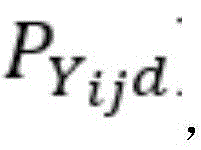
与现有技术相比,本发明通过惩罚程度调节系数Aprob动态调节放大因子A,识别更加灵活,提高了模型对物品识别的精度,降低得到的结果与实际结果之间的偏差,能有效地提高深度学习网络模型的识别准确程度Compared with the prior art, the present invention dynamically adjusts the amplification factor A through the penalty degree adjustment coefficient A prob , which makes the recognition more flexible, improves the accuracy of the model in identifying objects, reduces the deviation between the obtained results and the actual results, and can effectively improve the recognition accuracy of the deep learning network model.
本方法包括以下步骤:The method comprises the following steps:
步骤S1、初步训练并获取各类别的相关性;Step S1, preliminary training and obtaining the correlation of each category;
步骤S2、根据识别结果动态加入惩罚项;Step S2: dynamically add penalty items according to the recognition results;
步骤S3、构建新的损失函数;Step S3, constructing a new loss function;
步骤S4:设定溢出机制;Step S4: setting the overflow mechanism;
步骤S5:采用ER-Loss训练。Step S5: Use ER-Loss training.
步骤S1的具体步骤如下:采用交叉熵损失的损失函数对模型进行初步训练,初步训练后的模型用于测试各类别的相关项以及各类别之间的相关性。The specific steps of step S1 are as follows: the model is preliminarily trained using a cross entropy loss function, and the preliminarily trained model is used to test the related items of each category and the correlation between each category.
步骤S2包括以下具体步骤:根据识别结果动态加入惩罚项,监控每张图片的识别结果,对于相关项的输出,模型以概率分数的形式作为惩罚项的一部分加入损失函数的计算中,同时在训练过程中使用溢出机制保护损失函数继续计算,一旦溢出则使用原来的交叉熵损失函数。Step S2 includes the following specific steps: dynamically adding penalty items according to the recognition results, monitoring the recognition results of each picture, and for the output of related items, the model adds the probability score as part of the penalty item to the calculation of the loss function. At the same time, during the training process, an overflow mechanism is used to protect the loss function from continuing to calculate. Once an overflow occurs, the original cross entropy loss function is used.
步骤S3的具体步骤如下:以原来的交叉熵损失函数为基础,通过原来的交叉熵损失函数训练出初步模型后,测试所有类别的相关项,所有类别的相关项即分类错因,在正式训练时把这些分类错因引入到损失函数的计算中,构建新的损失函数,得到ER-Loss的具体公式如下:The specific steps of step S3 are as follows: Based on the original cross entropy loss function, after training the preliminary model through the original cross entropy loss function, test the relevant items of all categories, which are the classification errors. In the formal training, these classification errors are introduced into the calculation of the loss function, and a new loss function is constructed. The specific formula of ER-Loss is as follows:

其中,i是指正确分类的物品类别,j是指与i相关的具有物品类别,d是指相关物品类别的个数,n代表该数据集的分类总数;A为放大因子,用于放大相关类别对模型精度的影响;惩罚程度调节系数Aprob,用于在训练过程中根据实际情况调节放大因子A对数据集各类别之间的相关性和相关类别的实际输出概率的影响,让A能够自动适应训练的不同阶段;X为各网络模型下的错因值组合,即各网络下相近物品类别之间的相关性组合,用信息熵来表示,信息熵越大说明相关性越大,模型识别错误的几率越高;
其中,Aprob的具体公式如下:Among them, the specific formula of A prob is as follows:

其中,d是指相关物品类别的个数,D是指在当次训练中,输出概率大于概率阈值T的类别个数。Among them, d refers to the number of related item categories, and D refers to the number of categories whose output probability is greater than the probability threshold T in the current training.
其中,单个网络获得的相关性Xijd的具体公式如下:Among them, the specific formula of the correlation Xijd obtained by a single network is as follows:

其中Bij为类别i的相关类别j在类别i的图片中得到的输出平均值,将每个类别的图片输出值按位置相加,然后求平均值以保证输出是正常水平。Where Bij is the average output value of the related category j of category i in the picture of category i. The output values of the pictures of each category are added by position, and then the average value is calculated to ensure that the output is at a normal level.
模型训练时可以根据实际情况设置d值,当d=0时,其他物品类别不会对目标物品的类别识别产生影响,此时ER-Loss即为交叉熵损失函数。During model training, the d value can be set according to the actual situation. When d = 0, other item categories will not affect the category recognition of the target item. At this time, ER-Loss is the cross entropy loss function.
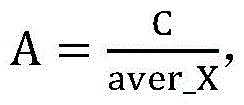
步骤S3中,放大因子A的初始设定值:A是放大因子,用于放大类别间的相关性组合X以及模型实际犯错的概率
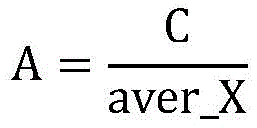
其中,C是一个根据实际情况设定的定值,aver_X是通过预训练网络获得的相关性的均值,通过均值的手段获取整个数据集的相关性。这里的均值是算术平均值、几何平均值、调和平均值、加权平均值、均方根平均值、指数平均值和中位数其中的一种。Among them, C is a fixed value set according to the actual situation, aver_X is the mean of the correlation obtained by the pre-trained network, and the correlation of the entire data set is obtained by means of the mean. The mean here is one of the arithmetic mean, geometric mean, harmonic mean, weighted mean, root mean square mean, exponential mean and median.
步骤S3中,最后计算采用的相关性X=∑m(λmXijdm)的具体组合方式:Xijdm是同一类别在不同网络下获得的相关性,通过初步模型测试获得,最后计算时通过将其线性组合获得最终的相关性公式,具体如下:In step S3, the specific combination of the correlation X=∑ m (λ m X ijdm ) used in the final calculation is as follows: X ijdm is the correlation obtained under different networks of the same category, obtained through preliminary model testing, and the final correlation formula is obtained by linearly combining them in the final calculation, as follows:

其中,m是获取类别间相关性的网络个数,λm是各相关性的系数,为一个常数,同一类别在不同网络下的相关性的权重系数,在训练中可以根据实际情况设定权重λm的值,灵活的应用各网络的相关性。Among them, m is the number of networks for obtaining the correlation between categories, λ m is the coefficient of each correlation, which is a constant and the weight coefficient of the correlation of the same category in different networks. During training, the value of weight λ m can be set according to the actual situation to flexibly apply the correlation of each network.
步骤S4的具体步骤如下:当

步骤S5包括以下训练方式:Step S5 includes the following training methods:
A、第一种训练方式如下:共进行两次训练,第一次训练为初步训练,先使用原来的交叉熵损失函数训练初步模型,再使用初步模型测出数据集各类别之间的相关性,整理成相关性表格再进行正式训练,第二次训练则使用ER-Loss进行正式训练,在正式训练时以索引的方式把每个物品类别的相关项加入到ER-Loss中计算,针对初步模型对每个图片的识别情况,从相关性表格中搜索到对应的惩罚项加入到ER-Loss中计算;A. The first training method is as follows: two trainings are conducted. The first training is preliminary training. The original cross entropy loss function is used to train the preliminary model. The preliminary model is then used to measure the correlation between the categories of the data set, which is then organized into a correlation table for formal training. The second training uses ER-Loss for formal training. During formal training, the relevant items of each item category are added to the ER-Loss in an indexed manner. According to the recognition of each image by the preliminary model, the corresponding penalty item is searched from the correlation table and added to the ER-Loss for calculation.
B、如图3所示,第二种训练方式如下:只进行一次训练,共N个epoch,训练包括两个阶段,第一个阶段取epoch=int[kN]时的模型作为初步模型,其中0<k<1,用初步模型测出数据集各类别之间的相关性,整理成相关性表格,第二个阶段则使用ER-Loss从epoch=int[kN]+1处开始断点续训,其中0<k<1,在断点续训过程中,针对模型对每个图片的识别情况,从相关性表格中搜索到对应的惩罚项加入到损失函数中计算;B. As shown in FIG3 , the second training method is as follows: only one training is performed, with a total of N epochs. The training includes two stages. In the first stage, the model at epoch=int[kN] is taken as the preliminary model, where 0<k<1. The preliminary model is used to measure the correlation between the categories of the data set and sort it into a correlation table. In the second stage, ER-Loss is used to start breakpoint training from epoch=int[kN]+1, where 0<k<1. During the breakpoint training process, according to the recognition of each image by the model, the corresponding penalty item is searched from the correlation table and added to the loss function for calculation;
C、如图4所示,第三种训练方式如下:共进行两个阶段,并且多次训练,第一阶段为预训练,首先使用不同网络分别对数据集进行预训练,接着使用各初步模型分别测出各类别在不同网络下的相关项以及它们之间的相关性,整理成相关性表格,并根据实际情况设定相关性组合公式中的相关性权重矩阵λ,将各网络相关性和相关性权重矩阵λ相乘得到最终相关性X=∑m(λmXijdm),通过均值的手段计算放大因子A的初始值;第二阶段为正式训练,调用相关性表格及权重矩阵λ重构损失函数,并形成新的损失函数ER-Loss,使用ER-Loss进行正式训练,在正式训练时以索引的方式把每个物品类别的相关项及它们之间的相关性和模型实际犯错的概率加入到ER-Loss中计算,针对初步模型对每个图片的识别情况,从相关性表格中搜索到对应的惩罚项加入到ER-Loss中计算。C. As shown in FIG4 , the third training method is as follows: there are two stages in total, and multiple trainings are performed. The first stage is pre-training. First, different networks are used to pre-train the data sets. Then, each preliminary model is used to measure the relevant items of each category under different networks and the correlation between them, and then they are sorted into a correlation table. The correlation weight matrix λ in the correlation combination formula is set according to the actual situation. The correlation of each network and the correlation weight matrix λ are multiplied to obtain the final correlation X=∑ m (λ m X ijdm ). The initial value of the amplification factor A is calculated by means of the mean. The second stage is formal training. The correlation table and the weight matrix λ are called to reconstruct the loss function, and a new loss function ER-Loss is formed. ER-Loss is used for formal training. During the formal training, the relevant items of each item category, the correlation between them, and the actual probability of the model making an error are added to ER-Loss in an indexed manner for calculation. According to the recognition of each picture by the preliminary model, the corresponding penalty item is searched from the correlation table and added to ER-Loss for calculation.
以上的实施方式不能限定本发明创造的保护范围,专业技术领域的人员在不脱离本发明创造整体构思的情况下,所做的均等修饰与变化,均仍属于本发明创造涵盖的范围之内。The above implementation modes cannot limit the protection scope of the present invention. The equivalent modifications and changes made by those skilled in the art without departing from the overall concept of the present invention are still within the scope of the present invention.
Claims (6)








Priority Applications (2)
| Application Number | Priority Date | Filing Date | Title |
|---|---|---|---|
| CN202011477588.1A CN112580714B (en) | 2020-12-15 | 2020-12-15 | Article identification method for dynamically optimizing loss function in error-cause reinforcement mode |
| PCT/CN2021/070884 WO2022126809A1 (en) | 2020-12-15 | 2021-01-08 | Method for dynamically optimizing loss function by means of error cause reinforcement |
Applications Claiming Priority (1)
| Application Number | Priority Date | Filing Date | Title |
|---|---|---|---|
| CN202011477588.1A CN112580714B (en) | 2020-12-15 | 2020-12-15 | Article identification method for dynamically optimizing loss function in error-cause reinforcement mode |
Publications (2)
| Publication Number | Publication Date |
|---|---|
| CN112580714A CN112580714A (en) | 2021-03-30 |
| CN112580714B true CN112580714B (en) | 2023-05-30 |
Family
ID=75135070
Family Applications (1)
| Application Number | Title | Priority Date | Filing Date |
|---|---|---|---|
| CN202011477588.1A Active CN112580714B (en) | 2020-12-15 | 2020-12-15 | Article identification method for dynamically optimizing loss function in error-cause reinforcement mode |
Country Status (2)
| Country | Link |
|---|---|
| CN (1) | CN112580714B (en) |
| WO (1) | WO2022126809A1 (en) |
Families Citing this family (3)
| Publication number | Priority date | Publication date | Assignee | Title |
|---|---|---|---|---|
| CN114494529A (en) * | 2022-01-05 | 2022-05-13 | 电子科技大学长三角研究院(衢州) | Face attribute editing method based on cost sensitive learning |
| CN114898162A (en) * | 2022-06-08 | 2022-08-12 | 电子科技大学中山学院 | Self-adaptive data enhancement method based on class imbalance |
| CN116563696B (en) * | 2022-12-15 | 2025-12-23 | 湖南大学 | General crop mapping loss function based on physical condition priori |
Citations (8)
| Publication number | Priority date | Publication date | Assignee | Title |
|---|---|---|---|---|
| CN107301640A (en) * | 2017-06-19 | 2017-10-27 | 太原理工大学 | A kind of method that target detection based on convolutional neural networks realizes small pulmonary nodules detection |
| CN107358198A (en) * | 2017-07-12 | 2017-11-17 | 中山大学 | A kind of iris identification method based on segmentation feature selection |
| CN108376267A (en) * | 2018-03-26 | 2018-08-07 | 天津大学 | A kind of zero sample classification method based on classification transfer |
| CN109815988A (en) * | 2018-12-27 | 2019-05-28 | 北京奇艺世纪科技有限公司 | Model generating method, classification method, device and computer readable storage medium |
| CN111295669A (en) * | 2017-06-16 | 2020-06-16 | 马克波尔公司 | image processing system |
| CN111860631A (en) * | 2020-07-13 | 2020-10-30 | 电子科技大学中山学院 | A method for optimizing loss function using fault reinforcement method |
| CN111881987A (en) * | 2020-07-31 | 2020-11-03 | 西安工业大学 | Apple virus identification method based on deep learning |
| CN111985274A (en) * | 2019-05-23 | 2020-11-24 | 中国科学院沈阳自动化研究所 | Remote sensing image segmentation algorithm based on convolutional neural network |
Family Cites Families (3)
| Publication number | Priority date | Publication date | Assignee | Title |
|---|---|---|---|---|
| CN107506868B (en) * | 2017-08-31 | 2021-01-26 | 广东工业大学 | Method and device for predicting short-time power load |
| CN109285129A (en) * | 2018-09-06 | 2019-01-29 | 哈尔滨工业大学 | Image real noise removal system based on convolutional neural network |
| EP3963476A1 (en) * | 2019-05-03 | 2022-03-09 | Verily Life Sciences LLC | Predictive classification of insects |
-
2020
- 2020-12-15 CN CN202011477588.1A patent/CN112580714B/en active Active
-
2021
- 2021-01-08 WO PCT/CN2021/070884 patent/WO2022126809A1/en not_active Ceased
Patent Citations (8)
| Publication number | Priority date | Publication date | Assignee | Title |
|---|---|---|---|---|
| CN111295669A (en) * | 2017-06-16 | 2020-06-16 | 马克波尔公司 | image processing system |
| CN107301640A (en) * | 2017-06-19 | 2017-10-27 | 太原理工大学 | A kind of method that target detection based on convolutional neural networks realizes small pulmonary nodules detection |
| CN107358198A (en) * | 2017-07-12 | 2017-11-17 | 中山大学 | A kind of iris identification method based on segmentation feature selection |
| CN108376267A (en) * | 2018-03-26 | 2018-08-07 | 天津大学 | A kind of zero sample classification method based on classification transfer |
| CN109815988A (en) * | 2018-12-27 | 2019-05-28 | 北京奇艺世纪科技有限公司 | Model generating method, classification method, device and computer readable storage medium |
| CN111985274A (en) * | 2019-05-23 | 2020-11-24 | 中国科学院沈阳自动化研究所 | Remote sensing image segmentation algorithm based on convolutional neural network |
| CN111860631A (en) * | 2020-07-13 | 2020-10-30 | 电子科技大学中山学院 | A method for optimizing loss function using fault reinforcement method |
| CN111881987A (en) * | 2020-07-31 | 2020-11-03 | 西安工业大学 | Apple virus identification method based on deep learning |
Non-Patent Citations (4)
| Title |
|---|
| Discriminative Marginalized Least-Squares Regression for Hyperspectral Image Classification;Yuxiang Zhang等;《IEEE TRANSACTIONS ON GEOSCIENCE AND REMOTE SENSING》;第58卷(第5期);3148-3161 * |
| Error Refactor loss based on error analysis in image classification;Xiaoyu Yu等;《IET Computer Vision》;192-203 * |
| 一种改进的DSOD目标检测算法;吴建耀等;《光电技术及应用》;第40卷(第3期);428-432、438 * |
| 基于改进残差网络的果实病害分类方法;肖经纬等;《计算机工程》;第46卷(第9期);221-225 * |
Also Published As
| Publication number | Publication date |
|---|---|
| WO2022126809A1 (en) | 2022-06-23 |
| CN112580714A (en) | 2021-03-30 |
Similar Documents
| Publication | Publication Date | Title |
|---|---|---|
| CN112580714B (en) | Article identification method for dynamically optimizing loss function in error-cause reinforcement mode | |
| CN107122467B (en) | Search engine retrieval result evaluation method and device and computer readable medium | |
| CN112990130B (en) | Data cleaning method and device for training sample and classifier | |
| Yu et al. | Mechanistic understanding and mitigation of language model non-factual hallucinations | |
| CN110046789B (en) | Automatic generation method and system for student information literacy assessment test paper | |
| CN111783818B (en) | A precision marketing method based on Xgboost and DBSCAN | |
| CN112651500B (en) | Method for generating quantization model and terminal | |
| CN111523768A (en) | Entropy weight-TOPSIS-based generalized demand side resource quality evaluation method | |
| CN110096652A (en) | Public sentiment wind vane index calculation method and device, readable storage medium storing program for executing | |
| CN112668476A (en) | Data processing method and device, electronic equipment and storage medium | |
| CN119621891A (en) | Method, system and device for enhancing factuality of legal question answering based on large language model | |
| CN117520754A (en) | Pretreatment system for model training data | |
| CN112085348A (en) | Soil fertility assessment method based on fuzzy neural network | |
| CN111291967A (en) | Hidden Markov Model food safety risk assessment method based on cuckoo search | |
| CN111860631B (en) | Article identification method adopting error factor reinforcement mode to optimize loss function | |
| CN116486150A (en) | A Regression Error Reduction Method for Image Classification Model Based on Uncertainty Perception | |
| CN100555270C (en) | A kind of machine automatic testing method and system thereof | |
| CN114862092A (en) | Evaluation method and device based on neural network | |
| CN101739417A (en) | System for sequencing multi-index comprehensive weight audio-video album | |
| CN120179818A (en) | A method for classifying defect text in electronic medical records based on feature fusion | |
| Sakamoto et al. | Predicting numerals in natural language text using a language model considering the quantitative aspects of numerals | |
| CN111553165A (en) | Football player competition performance evaluation method based on emotion calculation | |
| CN110929849A (en) | Neural network model compression method and device | |
| CN113609304B (en) | Entity matching method and device | |
| CN114676820A (en) | Network model tuning method, device, electronic device and storage medium |
Legal Events
| Date | Code | Title | Description |
|---|---|---|---|
| PB01 | Publication | ||
| PB01 | Publication | ||
| SE01 | Entry into force of request for substantive examination | ||
| SE01 | Entry into force of request for substantive examination | ||
| GR01 | Patent grant | ||
| GR01 | Patent grant | ||
| OL01 | Intention to license declared | ||
| OL01 | Intention to license declared |