CN111554360A - Drug relocation prediction method based on biomedical literature and domain knowledge data - Google Patents
Drug relocation prediction method based on biomedical literature and domain knowledge data Download PDFInfo
- Publication number
- CN111554360A CN111554360A CN202010344114.3A CN202010344114A CN111554360A CN 111554360 A CN111554360 A CN 111554360A CN 202010344114 A CN202010344114 A CN 202010344114A CN 111554360 A CN111554360 A CN 111554360A
- Authority
- CN
- China
- Prior art keywords
- entity
- model
- word
- biomedical
- sample set
- Prior art date
- Legal status (The legal status is an assumption and is not a legal conclusion. Google has not performed a legal analysis and makes no representation as to the accuracy of the status listed.)
- Withdrawn
Links
Images


Classifications
-
- G—PHYSICS
- G16—INFORMATION AND COMMUNICATION TECHNOLOGY [ICT] SPECIALLY ADAPTED FOR SPECIFIC APPLICATION FIELDS
- G16C—COMPUTATIONAL CHEMISTRY; CHEMOINFORMATICS; COMPUTATIONAL MATERIALS SCIENCE
- G16C20/00—Chemoinformatics, i.e. ICT specially adapted for the handling of physicochemical or structural data of chemical particles, elements, compounds or mixtures
- G16C20/70—Machine learning, data mining or chemometrics
-
- G—PHYSICS
- G06—COMPUTING OR CALCULATING; COUNTING
- G06F—ELECTRIC DIGITAL DATA PROCESSING
- G06F40/00—Handling natural language data
- G06F40/20—Natural language analysis
- G06F40/279—Recognition of textual entities
- G06F40/289—Phrasal analysis, e.g. finite state techniques or chunking
- G06F40/295—Named entity recognition
-
- G—PHYSICS
- G06—COMPUTING OR CALCULATING; COUNTING
- G06F—ELECTRIC DIGITAL DATA PROCESSING
- G06F40/00—Handling natural language data
- G06F40/30—Semantic analysis
-
- G—PHYSICS
- G06—COMPUTING OR CALCULATING; COUNTING
- G06N—COMPUTING ARRANGEMENTS BASED ON SPECIFIC COMPUTATIONAL MODELS
- G06N3/00—Computing arrangements based on biological models
- G06N3/02—Neural networks
- G06N3/04—Architecture, e.g. interconnection topology
- G06N3/044—Recurrent networks, e.g. Hopfield networks
-
- G—PHYSICS
- G06—COMPUTING OR CALCULATING; COUNTING
- G06N—COMPUTING ARRANGEMENTS BASED ON SPECIFIC COMPUTATIONAL MODELS
- G06N3/00—Computing arrangements based on biological models
- G06N3/02—Neural networks
- G06N3/04—Architecture, e.g. interconnection topology
- G06N3/045—Combinations of networks
Landscapes
- Engineering & Computer Science (AREA)
- Theoretical Computer Science (AREA)
- Physics & Mathematics (AREA)
- Artificial Intelligence (AREA)
- Health & Medical Sciences (AREA)
- General Health & Medical Sciences (AREA)
- General Physics & Mathematics (AREA)
- Computational Linguistics (AREA)
- General Engineering & Computer Science (AREA)
- Life Sciences & Earth Sciences (AREA)
- Data Mining & Analysis (AREA)
- Evolutionary Computation (AREA)
- Software Systems (AREA)
- Computing Systems (AREA)
- Biophysics (AREA)
- Mathematical Physics (AREA)
- Molecular Biology (AREA)
- Biomedical Technology (AREA)
- Audiology, Speech & Language Pathology (AREA)
- Computer Vision & Pattern Recognition (AREA)
- Databases & Information Systems (AREA)
- Medical Informatics (AREA)
- Chemical & Material Sciences (AREA)
- Crystallography & Structural Chemistry (AREA)
- Bioinformatics & Cheminformatics (AREA)
- Bioinformatics & Computational Biology (AREA)
- Information Retrieval, Db Structures And Fs Structures Therefor (AREA)
Abstract
本发明属于生物医学文献技术领域,具体涉及一种基于生物医学文献和领域知识数据的药物重定位预测方法。本发明基于深度学习模型和Attention机制,抽取生物医学文献中的药物重定位信息;基于异构网络模型,整合生物医学文献知识和领域数据;基于元路径模型和机器学习方法,在异构药物重定位关系网络中预测药物与疾病隐含作用关系。本发明解决了当前药物重定位预测中无法有效整合非结构化文本数据和结构化领域数据源的问题,能够充分利用生物医学文献和领域数据提升药物重定位预测的准确性。
The invention belongs to the technical field of biomedical documents, in particular to a drug relocation prediction method based on biomedical documents and domain knowledge data. Based on the deep learning model and the Attention mechanism, the invention extracts the drug relocation information in the biomedical literature; based on the heterogeneous network model, the biomedical literature knowledge and domain data are integrated; Predicting the implicit effect relationship between drugs and diseases in the localization relationship network. The present invention solves the problem that unstructured text data and structured domain data sources cannot be effectively integrated in current drug relocation prediction, and can fully utilize biomedical literature and domain data to improve the accuracy of drug relocation prediction.
Description
技术领域technical field
本发明属于生物医学文献技术领域,具体涉及一种基于生物医学文献和领域知识数据的药物重定位预测方法。The invention belongs to the technical field of biomedical documents, in particular to a drug relocation prediction method based on biomedical documents and domain knowledge data.
背景技术Background technique
药物重定位是指利用相关技术方法从已有的药物挖掘其新适应症的过程。与传统的药物研发方法相比,药物重定位是基于已有药物的重新挖掘,因而能够有效地降低药物研发的周期、成本和风险,是突破新药开发高投入低产出困境的有效方法之一。Drug repositioning refers to the process of mining new indications from existing drugs using related technical methods. Compared with traditional drug development methods, drug repositioning is based on the re-excavation of existing drugs, which can effectively reduce the cycle, cost and risk of drug development, and is one of the effective methods to break through the dilemma of high input and low output for new drug development. .
生物医学文献作为生物医学领域成果展示和学术交流的最主要方式,其数目之大,增长速度之快远远超过了其他学科领域。另一方面,以药物靶标数据、药物副作用数据为代表的领域数据,主要来自于医学实验测定和筛选,与生物医学文献知识存在较强的互补性。这些领域数据与药物重定位研究密切相关,能够从不同角度为药物与疾病的关系预测引入先验知识,提高药物重定位预测的准确性。Biomedical literature, as the most important way to display achievements and academic exchanges in the field of biomedicine, has a large number and a rapid growth rate that far exceeds that of other disciplines. On the other hand, the domain data represented by drug target data and drug side effect data mainly come from medical experimental measurement and screening, and have strong complementarity with the knowledge of biomedical literature. These domain data are closely related to drug repositioning research, and can introduce prior knowledge for drug-disease relationship prediction from different perspectives, and improve the accuracy of drug repositioning prediction.
发明内容SUMMARY OF THE INVENTION
为解决目前药物重定位预测方法无法有效整合非结构化文本数据和结构化领域数据源的主要问题,本发明提出融合生物医学文献数据和领域知识源的药物重定位预测方法。本发明基于自然语言处理技术、深度学习,通过整合生物医学知识和领域数据构建异构药物重定位网络,采用元路径模型和机器学习方法预测药物与疾病的未知作用关系,最终实现药物重定位预测。In order to solve the main problem that the current drug relocation prediction method cannot effectively integrate unstructured text data and structured domain data sources, the present invention proposes a drug relocation prediction method that integrates biomedical literature data and domain knowledge sources. Based on natural language processing technology and deep learning, the present invention constructs a heterogeneous drug relocation network by integrating biomedical knowledge and domain data, adopts meta-path model and machine learning method to predict the unknown effect relationship between drugs and diseases, and finally realizes drug relocation prediction .
本发明的技术方案:Technical scheme of the present invention:
一种基于生物医学文献和领域知识数据的药物重定位预测方法,具体步骤如下:A drug relocation prediction method based on biomedical literature and domain knowledge data, the specific steps are as follows:
S1)使用分布式文本表示学习方法来学习词向量作为深度神经网络模型的输入,在双向LSTM模型的基础上结合CRF模型(BLSTM-CRF),对生物医学数据库中的命名实体进行高精度识别,找到最佳标签序列。利用UMLS、MESH等生物医学语义资源,基于语义消歧等方法,实现生物医学实体名称标准化。S1) Use the distributed text representation learning method to learn word vectors as the input of the deep neural network model, and combine the CRF model (BLSTM-CRF) on the basis of the bidirectional LSTM model to perform high-precision identification of named entities in the biomedical database, Find the best tag sequence. Using biomedical semantic resources such as UMLS and MESH, based on methods such as semantic disambiguation, the standardization of biomedical entity names is realized.
S2)在步骤S1)对生物医学数据库中的疾病、药物、基因实体名进行识别及其标准化的基础上,建立基于双路Attention机制的实体关系抽取模型,从生物医学数据库中抽取疾病、药物、基因之间的语义关系。S2) On the basis of identifying and standardizing the entity names of diseases, drugs, and genes in the biomedical database in step S1), establish an entity relationship extraction model based on the two-way Attention mechanism, and extract diseases, drugs, and genes from the biomedical database. Semantic relationships between genes.
S3)通过构建异构网络来融合步骤S2)产生的多种类型的实体和实体关系。S3) Integrate the various types of entities and entity relationships generated in step S2) by constructing a heterogeneous network.
S4)建立面向步骤S3)所构建的异构生物医学知识网络的元路径模型,将药物与疾病未知作用关系之间存在的元路径模式,表示为药物与疾病未知作用关系的特征,最终文献知识与领域数据有机融合为药物与疾病未知作用关系相应的特征向量。S4) establish a meta-path model oriented towards the heterogeneous biomedical knowledge network constructed in step S3), express the meta-path pattern existing between the unknown action relationship between the drug and the disease as the feature of the unknown action relationship between the drug and the disease, and finally document knowledge It is organically fused with the domain data to form a feature vector corresponding to the unknown relationship between drugs and diseases.
S5)在步骤S4)得到药物与疾病关系的特征向量表示后,基于机器学习理论,使用现有的样本数据,训练得到药物重定位预测模型,对候选的药物与疾病未知作用关系进行二元分类,最终实现药物重定位的预测。S5) After obtaining the feature vector representation of the relationship between the drug and the disease in step S4), based on the machine learning theory and using the existing sample data, the drug relocation prediction model is trained to obtain a drug relocation prediction model, and the unknown effect relationship between the candidate drug and the disease is binary classification. , and finally realize the prediction of drug repositioning.
本发明的开发及部署端为Python平台。The development and deployment end of the present invention is a Python platform.
本发明的实体识别模型为双向LSTM模型、CRF模型(BLSTM-CRF)。The entity recognition model of the present invention is a bidirectional LSTM model and a CRF model (BLSTM-CRF).
本发明的生物医学语义资源和开源工具包括UMLS、MESH。The biomedical semantic resources and open source tools of the present invention include UMLS and MESH.
本发明使用的生物医学数据库包括MEDLINE、DRUGBANK、SIDER、Gene Ontology和KEGG。Biomedical databases used in the present invention include MEDLINE, DRUGBANK, SIDER, Gene Ontology and KEGG.
本发明建立的模型为异构网络元路径模型、卷积神经网络模型、药物重定位预测模型。The model established by the present invention is a heterogeneous network meta-path model, a convolutional neural network model, and a drug relocation prediction model.
所述的双向LSTM模型,用于对生物医学文献中的命名实体进行高精度识别,充分的利用句子上下文信息。The described bidirectional LSTM model is used for high-precision recognition of named entities in biomedical literature, making full use of sentence context information.
所述的CRF模型(BLSTM-CRF),用于辅助双向LSTM模型,对生物医学文献中的命名实体进行高精度识别。The described CRF model (BLSTM-CRF) is used to assist the bidirectional LSTM model for high-accuracy recognition of named entities in biomedical literature.
所述的UMLS,是一体化医学语言系统,生物医学领域中的实体如疾病、药物、基因等都可以借助UMLS的MetaMap工具映射成UMLS的超级叙词表(Metathesaurus)里的概念。The UMLS is an integrated medical language system. Entities in the biomedical field, such as diseases, drugs, and genes, can be mapped to concepts in the Metathesaurus of UMLS with the help of the MetaMap tool of UMLS.
所述的MESH(Medical Subject Headings),是美国国立医学图书馆编制的权威性医学主题词表,使用MESH词对生物医学数据库中的文献数据库建立索引。The MESH (Medical Subject Headings) is an authoritative medical subject thesaurus compiled by the National Library of Medicine of the United States. MESH words are used to index the literature database in the biomedical database.
所述的MEDLINE,是开源的生物医学文献数据库,用于抽取疾病、药物、基因之间的关系信息。The MEDLINE is an open source biomedical literature database for extracting relationship information among diseases, drugs and genes.
所述的DRUGBANK,是阿尔伯塔大学提供的生物信息学和化学信息学数据库,它提供了约4800种药物的详细资料,其中药物靶标数据是药物重定位研究的重要领域数据。基于药物靶标数据能够得到药物与基因(蛋白质)的作用关系,对于从生物医学文献中抽取的药物与基因关系信息是重要的补充。The DRUGBANK is a bioinformatics and chemoinformatics database provided by the University of Alberta, which provides detailed information on about 4,800 drugs, of which drug target data is an important field data for drug repositioning research. Based on drug target data, the relationship between drugs and genes (proteins) can be obtained, which is an important supplement to the relationship information between drugs and genes extracted from biomedical literature.
所述的SIDER,是目前应用最广泛的药物副作用数据库,全面地记录了药物的副作用信息数据。相似的药物很可能会产生某种相同的药物副作用,因此,药物副作用数据对于药物之间的相似性具有很强的指示作用,已广泛应用于药物重定位研究中。整合药物副作用数据能够以副作用作为桥梁,建立药物之间的联系。The SIDER is currently the most widely used drug side effect database, which comprehensively records the information data of drug side effects. Similar drugs are likely to produce some of the same drug side effects. Therefore, drug side effect data is a strong indicator of the similarity between drugs and has been widely used in drug repositioning studies. Integrating drug side effect data can use side effects as a bridge to establish links between drugs.
所述的Gene Ontology,是生物医学领域基因本体数据,包括三个子域:分子功能、生物进程和细胞组件,通过对基因(蛋白质)进行功能标注来描述其生物特性。整合基因本体数据能够以基因本体作为桥梁,建立基因(蛋白质)之间的联系。The Gene Ontology is the data of gene ontology in the field of biomedicine, including three sub-domains: molecular function, biological process and cellular components. The biological properties of genes (proteins) are described by functional annotation. Integrating Gene Ontology data can use Gene Ontology as a bridge to establish connections between genes (proteins).
所述的KEGG,是京都大学开发的生物信息数据库,整合了基因组、化学和系统功能信息数据,其中基因与通路关系数据是药物重定位研究的另一重要领域数据。整合基因与通路关系数据能够以通路作为桥梁,建立起基因(蛋白质)之的联系。The KEGG is a biological information database developed by Kyoto University, which integrates genomic, chemical and systemic functional information data, among which gene and pathway relationship data is another important field data for drug relocation research. Integrating gene and pathway relationship data can use the pathway as a bridge to establish the relationship between genes (proteins).
所述的异构网络元路径模型,用于实现文献知识与领域数据的有机融合。The heterogeneous network meta-path model is used to realize the organic integration of literature knowledge and domain data.
所述的卷积神经网络模型,用于抽取药物重定位相关实体关系。The convolutional neural network model is used to extract the entity relationship related to drug relocation.
所述的药物重定位预测模型,对候选的药物与疾病未知作用关系进行二元分类,最终实现药物重定位的预测。The drug relocation prediction model performs binary classification on the relationship between the drug candidate and the unknown action of the disease, and finally realizes the prediction of drug relocation.
本发明的有益效果:Beneficial effects of the present invention:
本发明提出了基于双路Attention机制的关系抽取方法,提升了药物重定位相关实体关系抽取的性能;提出了基于元路径模型的文献知识与领域数据融合方法,实现异构网络中文献知识与领域数据的有机融合;提出了基于半监督的药物重定位预测方法,实现了药物与疾病未知作用关系的有效预测。The invention proposes a relationship extraction method based on a two-way Attention mechanism, which improves the performance of entity relationship extraction related to drug relocation; and proposes a document knowledge and domain data fusion method based on a meta-path model, which realizes document knowledge and domain data in heterogeneous networks. Organic fusion of data; a semi-supervised drug relocation prediction method is proposed, which can effectively predict the relationship between drugs and diseases.
本发明解决了当前药物重定位预测中无法有效整合非结构化文本数据和结构化领域数据源的问题,能够充分利用生物医学文献和领域数据提升药物重定位预测的准确性。The present invention solves the problem that unstructured text data and structured domain data sources cannot be effectively integrated in current drug relocation prediction, and can fully utilize biomedical literature and domain data to improve the accuracy of drug relocation prediction.
附图说明Description of drawings
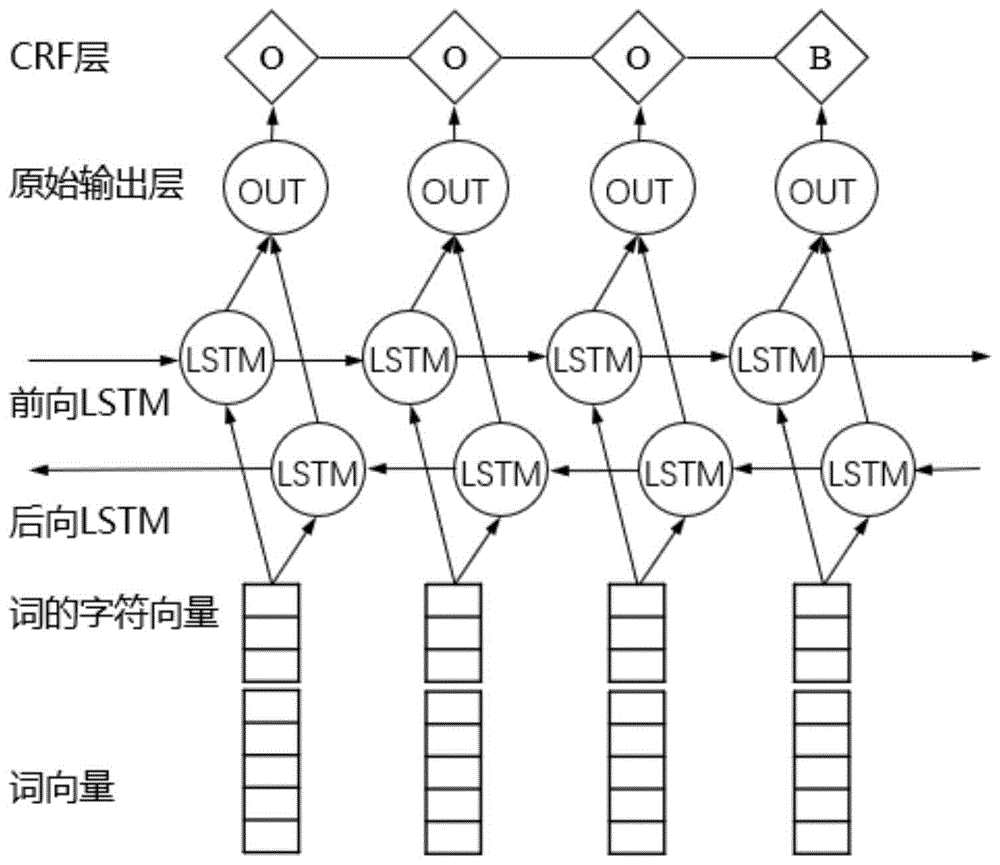
图1为BLSTM-CRF模型结构示意图;Figure 1 is a schematic diagram of the structure of the BLSTM-CRF model;
图2为句法依存图示例示意图;FIG. 2 is a schematic diagram of an example of a syntax dependency diagram;
图3为基于双路Attention机制的实体关系抽取模型示意图。Figure 3 is a schematic diagram of the entity relation extraction model based on the two-way Attention mechanism.
具体实施方式Detailed ways
下面将结合附图和技术方案给出本发明较好的实施方案,并给予详细说明。The preferred embodiments of the present invention will be given below in conjunction with the accompanying drawings and technical solutions, and a detailed description will be given.
本发明的一种基于生物医学文献和领域知识数据的药物重定位预测方法,具体步骤如下:A method for predicting drug relocation based on biomedical literature and domain knowledge data of the present invention, the specific steps are as follows:
(1)生物医学领域命名实体识别及标准化(1) Named Entity Recognition and Standardization in Biomedical Field
采用基于深度学习模型的命名实体识别方法,对生物医学文献中的药物、疾病、基因、表型实体名进行高精度的识别,在此基础上结合生物医学领域资源对识别得到的生物医学命名实体进行实体名称标准化。其中主要包括三个步骤:1)分布式文本表示学习;2)建立命名实体识别模型;3)实体名称标准化。The named entity recognition method based on the deep learning model is used to identify the entity names of drugs, diseases, genes and phenotypes in the biomedical literature with high precision. Perform entity name normalization. It mainly includes three steps: 1) distributed text representation learning; 2) establishment of named entity recognition model; 3) entity name standardization.
1、分布式文本表示学习1. Distributed text representation learning
使用分布式文本表示学习方法来学习词向量作为深度神经网络模型的输入。从PubMed上下载海量生物医学文献,构建大规模的无标注语料集,作为词向量的训练集。将所有文本语料进行小写转化,然后基于word2vec工具从海量生物医学语料中,训练生成词向量矩阵WV(维度为dw×|V|),其中|V|是字典的大小,dw是词向量的维度。Use a distributed text representation learning approach to learn word vectors as input to deep neural network models. Download massive biomedical literature from PubMed and build a large-scale unlabeled corpus as a training set of word vectors. Convert all text corpus to lowercase, and then train to generate word vector matrix W V (dimension is d w ×|V|) from massive biomedical corpus based on word2vec tool, where |V| is the size of the dictionary and d w is the word The dimension of the vector.
2、基于BLSTM-CRF的命名实体识别模型2. Named entity recognition model based on BLSTM-CRF
在双向LSTM模型的基础上结合CRF模型(BLSTM-CRF),对生物医学文献中的命名实体进行高精度识别,模型结构如图1所示。Based on the bidirectional LSTM model and combined with the CRF model (BLSTM-CRF), high-precision recognition of named entities in biomedical literature is performed. The model structure is shown in Figure 1.
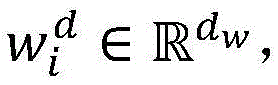
在BLSTM-CRF模型中,使用双向的LSTM结构,这样能够更充分的利用句子上下文信息。采用目前命名实体识别任务主流的BIO(Begin,Inside,Outside)标签机制。以一个句子为单位,将句子中的每个单词wi使用前面训练得到的词向量矩阵WV(维度为dw×|V|)进行映射,这样句子中的每个词wi∈V被映射为词向量
具体如下,定义一个标签转移矩阵A,这里Ai,j代表从标签i转移到标签j的得分,这是一个需要训练学习的参数。定义θ为双向LSTM模型需要学习的参数,那么
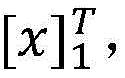


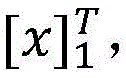
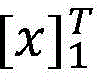
在计算所有可能的标签序列后,使用公式(2)能够得到一个句子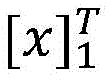



使用最大似然估计来训练模型,如公式(3)所示。整个训练过程使用随机梯度下降法(stochastic gradientdescent,SGD)进行优化参数。The model is trained using maximum likelihood estimation, as shown in Equation (3). The entire training process uses stochastic gradient descent (SGD) to optimize parameters.

模型训练后,预测标签的任务就是要找到得分最高的标签序列作为预测标签序列。本实施例使用维特比算法找到最佳标签序列,实现对于药物、疾病、基因、表型实体的识别。After the model is trained, the task of predicting labels is to find the label sequence with the highest score as the predicted label sequence. In this embodiment, the Viterbi algorithm is used to find the best tag sequence, so as to realize the identification of drugs, diseases, genes, and phenotypic entities.
3、实体名称标准化3. Entity name standardization
在生物医学命名实体识别后,还存在实体名称不统一的问题,需进行实体名标准化。在生物医学领域拥有相对完善的语义资源,如UMLS、MESH等。UMLS(Unified MedicalLanguage System)是一体化医学语言系统,生物医学领域中的实体如疾病、药物、基因等都可以借助UMLS的MetaMap工具映射成UMLS的超级叙词表(Metathesaurus)里的概念。MESH(Medical Subject Headings)是美国国立医学图书馆编制的权威性医学主题词表,使用MESH词对生物医学数据库中的文献数据库建立索引。利用UMLS、MESH等生物医学语义资源,基于语义消歧等方法能较好地实现生物医学实体名称标准化。After biomedical named entity recognition, there is still the problem of inconsistency of entity names, and entity name standardization is required. It has relatively complete semantic resources in the biomedical field, such as UMLS, MESH, etc. UMLS (Unified Medical Language System) is an integrated medical language system. Entities in the biomedical field, such as diseases, drugs, genes, etc., can be mapped to concepts in UMLS's super thesaurus (Metathesaurus) with the help of UMLS's MetaMap tool. MESH (Medical Subject Headings) is an authoritative medical subject thesaurus compiled by the US National Library of Medicine. MESH words are used to index the literature databases in the biomedical database. Using biomedical semantic resources such as UMLS and MESH, methods such as semantic disambiguation can better realize the standardization of biomedical entity names.
(2)基于双路Attention机制的实体关系抽取(2) Entity relation extraction based on two-way Attention mechanism
在对MEDLINE文献中的疾病、药物、基因实体名进行识别及其标准化的基础上,建立高性能的关系抽取模型,从MEDLINE文献中抽取疾病、药物、基因之间的关系信息。Based on the identification and standardization of disease, drug, and gene entity names in MEDLINE documents, a high-performance relationship extraction model is established to extract relationship information between diseases, drugs, and genes from MEDLINE documents.
首先,使用句法分析器对句子进行句法分析。以句子“However,there has beenone report of prolonged prothrombin time when buspirone was added to theregimenof a patient treated with warfarin.”为例,本实施例使用生物医学领域广泛应用的句法分析器McClosky-Charniak Parser对其进行句法分析,得到其句法依存图(如图2所示)。例句中的“buspirone”(丁螺环酮)和“warfarin”(华法林)分别是两个药物实体,在图2中分别标注为“DRUG1”和“DRUG2”。从图2中,能够看到实体间最短依存路径(图2中用黑色加重表示)上的单词如“added”、“treated”等,对于判断实体“DRUG1”和“DRUG2”之间是否存在作用关系具有重要作用。First, the sentence is syntactically analyzed using a syntactic analyzer. Taking the sentence "However, there has been one report of prolonged prothrombin time when buspirone was added to theregimenof a patient treated with warfarin." as an example, this embodiment uses the McClosky-Charniak Parser, a syntactic analyzer widely used in the biomedical field, to syntactic it Analysis, get its syntactic dependency graph (as shown in Figure 2). "buspirone" (buspirone) and "warfarin" (warfarin) in the example sentences are two drug entities, respectively, which are marked as "DRUG1" and "DRUG2" in Figure 2, respectively. From Figure 2, it can be seen that words such as "added", "treated", etc. on the shortest dependency path between entities (indicated by black emphasis in Figure 2) are useful for judging whether there is a relationship between entities "DRUG1" and "DRUG2" Relationships play an important role.
针对生物医学实体关系抽取任务的特点,本发明提出基于双路Attention机制的实体关系抽取模型,通过在CNN神经网络的输入层使用双路Attention机制重点强化与目标实体具有重要句法关系的单词的权重,使CNN模型能够更加有效地学习句子中对于实体关系抽取具有重要作用的信息。Aiming at the characteristics of biomedical entity relationship extraction tasks, the present invention proposes an entity relationship extraction model based on a two-way Attention mechanism. By using a two-way Attention mechanism in the input layer of the CNN neural network, the weight of words that have important syntactic relations with the target entity is emphasized. , so that the CNN model can learn the information that is important for entity relation extraction in sentences more effectively.
具体方法如下:The specific method is as follows:
1.在生物医学命名实体识别及标准化的基础上,筛选出包括两个或两个以上药物重定位相关实体(主要包括疾病实体、药物实体、基因实体)的句子。对于药物重定位任务需要抽取疾病、药物、基因之间的关系信息。1. On the basis of biomedical named entity recognition and standardization, screen out sentences that include two or more drug relocation related entities (mainly including disease entities, drug entities, and gene entities). For drug relocation tasks, it is necessary to extract the relationship information between diseases, drugs, and genes.
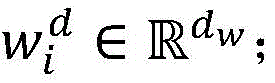
2.采用卷积神经网络模型抽取药物重定位相关实体关系,包括输入层、卷积层、池化层和输出层,如图3所示。首先使用前面训练好的词向量矩阵WV(维度为dw×|V|),将句子中的每个词wi∈V映射为dw维的向量表示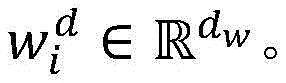


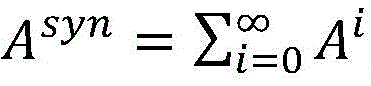
3.在句法依存图中,实体间的最短路径上通常含有重要的句法依存信息,为了区分句法依存图中实体间最短路径和普通路径,在句法依存图邻接矩阵E基础上,对路径进行加权得到邻接权重矩阵A,其中最短路径权重设置为α,普通路径的权重设置为β,且满足0<β<α<1。在此基础上,构建句法Attention矩阵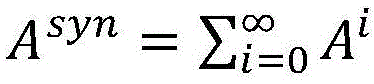


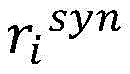
生物医学实体关系抽取任务,重点关注在句法依存图中每个单词与目标实体之间句法依存关系的紧密程度。通过公式(5)能够计算句子中单词wi与目标实体entity的相关度Score_syn(wi,entity),其中entity∈{entity1,entity2},Wa为参数权重矩阵。对其进行归一化处理,得到句法Attention的概率分布,如公式(6)所示。The task of biomedical entity relation extraction focuses on the closeness of the syntactic dependency between each word and the target entity in the syntactic dependency graph. The correlation between the word wi in the sentence and the target entity entity can be calculated by formula (5) Score_syn( wi ,entity), where entity∈{entity 1 ,entity 2 }, W a is the parameter weight matrix. It is normalized to obtain the probability distribution of syntactic Attention, as shown in formula (6).
Score_syn(wi,entity)=[Wa·Asyn]i,entity(5)Score_syn(w i ,entity)=[W a ·A syn ] i,entity (5)

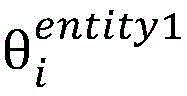
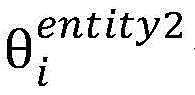
计算得到的


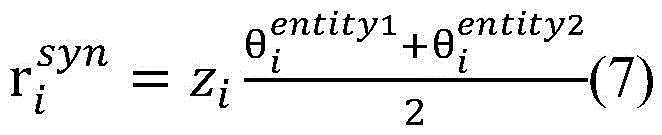
单词的词向量表示是基于大量生物医学领域语料进行训练生成的,其中蕴含着丰富语义信息。在句法Attention机制的基础上,基于词向量表示建立词向量Attention机制。通过计算单词目标实体entity与单词wi之间的词向量相似度,得到词向量Attention矩阵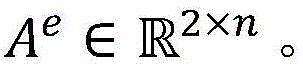


最终将基于句法Attention机制的向量表示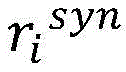


4.将基于双路Attention模型的向量映射作为卷积层的输入,卷积层中卷积核大小设置为h,使用tanh函数作为卷积层的激活函数,则卷积层的输出的新特征为c=[c1,c2,…,cn-h+1],其中ci=tanh(W1·zi:i+h-1+b)。经过卷积层的非线性函数激活后,新的特征具有更泛化的表示能力。4. The vector map based on the two-way Attention model is used as the input of the convolution layer, the size of the convolution kernel in the convolution layer is set to h, and the tanh function is used as the activation function of the convolution layer, then the output of the convolution layer is new. is c=[c 1 , c 2 , . . . , c n-h+1 ], where c i =tanh(W 1 ·z i:i+h-1 +b). After being activated by the nonlinear function of the convolutional layer, the new features have a more generalized representation ability.
在池化层使用最大池化方法对卷积层的输出特征进行处理,处理后的特征为f=max(c)。将特征向量输入到最后的输出层,使用分类器进行分类预测,如公式10所示。In the pooling layer, the max pooling method is used to process the output features of the convolutional layer, and the processed features are f=max(c). The feature vector is input to the final output layer, and the classifier is used for classification prediction, as shown in Equation 10.
O=W2·f(10)O=W 2 ·f(10)
最终,实现对生物医学文献语料中的抽取疾病、药物、基因间的语义关系。Finally, the semantic relationship between diseases, drugs, and genes can be extracted from the biomedical literature corpus.
(3)异构生物医学知识网络的构建(3) Construction of heterogeneous biomedical knowledge network
用实体关系表示文献知识与领域数据中的关系数据信息,因此将产生药物、疾病、基因、副作用、基因本体和通路6类实体类型以及10类实体关系,具体如表1所示。通过构建异构实体关系网络来融合多种类型的实体和实体关系。Entity relations are used to represent relational data information in literature knowledge and domain data, so 6 types of entity types and 10 types of entity relations will be generated for drugs, diseases, genes, side effects, gene ontology and pathways, as shown in Table 1. Integrate multiple types of entities and entity relationships by building heterogeneous entity-relationship networks.
表1多源生物医学领域知识数据对应的实体关系Table 1 Entity relationships corresponding to knowledge data in the multi-source biomedical domain
(4)文献知识与领域数据的融合(4) Fusion of literature knowledge and domain data
在异构网络中的文献知识与领域数据融合方面,针对药物重定位研究的特点,基于异构网络元路径理论将文献知识与领域数据统一抽象为药物与疾病间的元路径模式,建立面向异构生物医学知识网络的元路径模型,将药物与疾病候选关系之间存在的元路径模式,表示为药物与疾病候选关系的特征,最终文献知识与领域数据将有机融合为药物与疾病候选关系相应的特征向量。元路径实例上的节点连接度构成连接度集合Path_Degree,该元路径实例的权重Path_Weight可由公式(11)计算得到,其中w为衰减系数,可以通过初步实验选取w的最优值,在图3中w=0.5。In terms of the fusion of literature knowledge and domain data in heterogeneous networks, according to the characteristics of drug relocation research, based on the meta-path theory of heterogeneous networks, literature knowledge and domain data are unified and abstracted into a meta-path model between drugs and diseases, and a heterogeneous-oriented meta-path model is established. The meta-path model of the biomedical knowledge network is constructed, and the meta-path pattern existing between the drug-disease candidate relationship is expressed as the characteristics of the drug-disease candidate relationship. Finally, the literature knowledge and domain data will be organically integrated into the drug-disease candidate relationship. eigenvectors of . The degree of node connectivity on a meta-path instance constitutes the connectivity set Path_Degree, and the weight Path_Weight of the meta-path instance can be calculated by formula (11), where w is the attenuation coefficient, and the optimal value of w can be selected through preliminary experiments, as shown in Figure 3 w=0.5.
Path_Weight(path)=∏d∈Path_Degreed-w (11)Path_Weight(path)=∏ d∈Path_Degree d -w (11)
(5)基于半监督的药物重定位预测(5) Semi-supervised drug relocalization prediction
在得到药物与疾病关系的特征向量表示后,基于机器学习理论,使用现有的样本数据,训练得到药物重定位预测模型,实现对药物与疾病候选关系的预测。After obtaining the feature vector representation of the drug-disease relationship, based on machine learning theory, using the existing sample data, a drug relocation prediction model is trained to predict the drug-disease candidate relationship.
根据现有的正例样本集P和未标注样本集U,本发明提出基于半监督的药物重定位预测方法。为了更好地利用未标注样本集U,基于正例样本集P和未标注样本集U的分布情况,将未标注样本集U进一步划分为“可靠负例”样本集RN(Reliable Negatives)、“可能正例”样本集LP(Likely Positives)、“可能负例”样本集LN(Likely Negatives)以及“弱负例”样本集WN(Weak Negatives)。According to the existing positive sample set P and unlabeled sample set U, the present invention proposes a semi-supervised drug relocation prediction method. In order to make better use of the unlabeled sample set U, based on the distribution of the positive sample set P and the unlabeled sample set U, the unlabeled sample set U is further divided into "Reliable Negatives" sample set RN (Reliable Negatives), "Reliable Negatives". Likely positive example set LP (Likely Positives), "likely negative example" set LN (Likely Negatives) and "weak negative example" set WN (Weak Negatives).
1.首先使用公式(12)基于正例样本集P,计算得到正例样本特征向量的平均值Ave_VP。其中|P|为正例样本个数,VPi表示第i个正例样本特征向量。分别计算未标注样本集U中的每个未标注样本特征向量与正例特征向量平均值Ave_VP的欧式距离(EuclideanDistance),用Dist(Ave_V,VUi)表示,其中VUi表示第i个未标注样本的特征向量。Dist(Ave_V,VUi)能够区分未标注样本Ui与正例样本集P之间的相似程度。在此基础上,使用公式(13)计算未标注样本集U与正例样本集P之间的平均欧式距离Ave_Dist。Ave_Dist表示未标注样本集U和正例样本集P之间的平均欧式距离,对于一个未标注样本Ui,如果Dist(Ave_V,VUi)>Ave_Dist,表明未标注样本Ui与正例样本集P之间的相似性较弱。因此,将这样的未标注样本Ui加入到“可靠负例”样本集RN。通过上述方法,将初始的未标注样本集U划分为“可靠负例”样本集RN和未标注样本集U-RN。1. First, use formula (12) to calculate the average value Ave_VP of the positive sample feature vector based on the positive sample set P. where |P| is the number of positive samples, and VP i represents the ith positive sample feature vector. Calculate the Euclidean Distance (EuclideanDistance) between each unlabeled sample feature vector in the unlabeled sample set U and the average value of the positive feature vector Ave_VP, represented by Dist(Ave_V, VU i ), where VU i represents the i-th unlabeled The eigenvectors of the samples. Dist(Ave_V,VU i ) can distinguish the similarity between the unlabeled sample U i and the positive sample set P. On this basis, formula (13) is used to calculate the average Euclidean distance Ave_Dist between the unlabeled sample set U and the positive sample set P. Ave_Dist represents the average Euclidean distance between the unlabeled sample set U and the positive sample set P. For an unlabeled sample U i , if Dist(Ave_V,VU i )>Ave_Dist, it indicates that the unlabeled sample U i and the positive sample set P The similarity between them is weak. Therefore, such unlabeled samples U i are added to the "reliable negative" sample set RN. Through the above method, the initial unlabeled sample set U is divided into "reliable negative" sample set RN and unlabeled sample set U-RN.


2.因为“可靠负例”样本集RN与正例样本集P之间存在较大的欧式距离,所以仅依靠“可靠负例”样本集RN和正例样本集P的分布仍然无法准确地估计分类超平面。为了进一步对未标注样本集U-RN进行区分,本发明构建一个样本相似性网络GSim(Vsim,Esim),样本相似性网络的节点集合Vsim为全体样本集合P∪U,样本相似性网络中的边表示两个样本之间的相似程度。样本相似性网络的相似性矩阵Aij定义如下:2. Because there is a large Euclidean distance between the "reliable negative" sample set RN and the positive sample set P, it is still impossible to accurately estimate the classification only by relying on the distribution of the "reliable negative" sample set RN and the positive sample set P. hyperplane. In order to further distinguish the unlabeled sample set U-RN, the present invention constructs a sample similarity network G Sim (V sim , E sim ), the node set V sim of the sample similarity network is the entire sample set P∪U, and the samples are similar Edges in the sex network represent the degree of similarity between two samples. The similarity matrix A ij of the sample similarity network is defined as follows:

其中Dist(Si,Sj)表示两个样本Si和Sj之间的欧式距离。Aij值越高,表示两个样本Si和Sj之间的欧式距离越小,因此属于同一类别的可能性越大。在构建样本相似性网络的过程中,对于每个样本Si,仅选取与Si相似度排名最高的m个节点相连(m取值可以通过实验的方法设定),以保证样本相似度网络中的边具有较高的置信度。where Dist(S i , S j ) represents the Euclidean distance between the two samples S i and S j . The higher the value of A ij , the smaller the Euclidean distance between the two samples Si and S j , and therefore the more likely they belong to the same class. In the process of constructing the sample similarity network, for each sample S i , only the m nodes with the highest similarity ranking of Si are selected to be connected (the value of m can be set by experimental methods) to ensure the sample similarity network. The edges in have high confidence.
3.分别用P0、RN0和U0来表示正例样本集P、“可靠负例”样本集RN和未标注样本集U-RN的先验初始向量。对于一个正例样本,先验概率设为1;对于一个“可靠负例”样本,先验概率设为-|P|/|RN|;对于一个未标注样本,先验概率设为0。这样能够得到全体样本集P∪U的初始向量G0(P0,U0,RN0)T,并保证样本集的先验概率∑P0+∑U0+∑RN0=0。然后,基于随机游走模型,将样本的先验概率通过样本相似性网络进行传播,最终达到收敛的稳态。整个过程表示如公式(15)所示,其中G1=G0,D为对角阵且Dii=∑kAik。3. Use P 0 , RN 0 and U 0 to represent the prior initial vectors of the positive sample set P, the “reliable negative” sample set RN, and the unlabeled sample set U-RN, respectively. For a positive sample, the prior probability is set to 1; for a "reliable negative" sample, the prior probability is set to -|P|/|RN|; for an unlabeled sample, the prior probability is set to 0. In this way, the initial vector G 0 (P 0 , U 0 , RN 0 ) T of the entire sample set P∪U can be obtained, and the prior probability of the sample set ∑P 0 +∑U 0 +∑RN 0 =0 can be guaranteed. Then, based on the random walk model, the prior probability of the sample is propagated through the sample similarity network, and finally a convergent steady state is reached. The whole process is expressed as formula (15), where G 1 =G 0 , D is a diagonal matrix and D ii =Σ k A ik .
Gr=(1-α)D-1AGr-1+αG0,(r≥2) (15)G r =(1-α)D -1 AG r-1 +αG 0 , (r≥2) (15)
在随机游走过程中,参数α可以通过初步实验选取最优值,一般当Dif=|Gr-Gr-1|<10-6时,认为随机游走过程达到稳态,迭代终止。系统达到稳态后,样本集的后验概率向量为Gr(Pr,Ur,RNr)T,相应的未标注的样本集U-RN后验概率为Ur。未标注样本的后验概率Ur是基于正例样本集P和“可靠负例”样本集RN的先验概率,利用随机游走模型通过样本相似性网络迭代计算生成,对于未标注样本具有很强的类别指示作用。按照公式(16)给出的分类标准,能够对于每个未标注样本Si,基于其后验概率Ur(Si)分配相应的类别标签,最终将未标注的样本集U-RN进一步划分为“可能正例”样本集LP、“可能负例”样本集LN以及“弱负例”样本集WN。In the random walk process, the optimal value of parameter α can be selected through preliminary experiments. Generally, when Dif=|G r -G r-1 |<10 -6 , the random walk process is considered to reach a steady state and the iteration is terminated. After the system reaches a steady state, the posterior probability vector of the sample set is Gr (P r ,U r ,RN r ) T , and the corresponding unlabeled sample set U-RN posterior probability is Ur r . The posterior probability U r of unlabeled samples is based on the prior probability of the positive sample set P and the “reliable negative” sample set RN, and it is generated by iterative calculation through the sample similarity network using the random walk model. Strong class indication. According to the classification standard given by formula (16), for each unlabeled sample S i , the corresponding class label can be assigned based on its posterior probability U r (S i ), and finally the unlabeled sample set U-RN can be further divided It is a "possible positive" sample set LP, a "possible negative" sample set LN, and a "weak negative" sample set WN.

4.通过以上步骤,得到正例样本集P、“可靠负例”样本集RN、“可能正例”样本集LP、“可能负例”样本集LN以及“弱负例”样本集WN。这五个样本集具有不同的置信度,因此,在分类模型的构造上应为不同样本集设置不同的惩罚系数。基于权重支持向量机(WeightedSupport Vector Machine)模型,使用以上五个样本集训练生成药物重定位预测模型。权重支持向量机模型定义如公式(17)所示,其中δi为松弛变量,c′+、c″+、c′-、c″-、c″′-分别为五个样本集P、LP、RN、LN、WN的惩罚系数。因为正例样本集P比“可能正例”样本集LP具有更高的置信度,因此,在公式(17)中设c′+>c″+。类似的c′->c″->c″′-。4. Through the above steps, a positive sample set P, a "reliable negative" sample set RN, a "possible positive" sample set LP, a "possible negative" sample set LN, and a "weak negative" sample set WN are obtained. The five sample sets have different confidence levels, therefore, different penalty coefficients should be set for different sample sets in the construction of the classification model. Based on the Weighted Support Vector Machine model, the above five sample sets were used to train and generate a drug relocation prediction model. The weighted support vector machine model is defined as shown in formula (17), where δ i is the slack variable, c′ + , c″ + , c′ - , c″ - , c″′ - are the five sample sets P, LP, respectively , RN, LN, WN penalty coefficient. Because the positive sample set P has a higher confidence than the "possible positive" sample set LP, therefore, set c′ + >c″ + in formula (17). Similar to c′ - >c″ - >c″′ - .

最后,使用训练得到的药物重定位预测模型,对候选的药物与疾病未知作用关系进行二元分类,最终实现药物重定位的有效预测。Finally, the drug relocation prediction model obtained by training is used to perform binary classification on the relationship between the drug candidate and the unknown effect of the disease, and finally achieve effective prediction of drug relocation.
Claims (3)





















Priority Applications (1)
| Application Number | Priority Date | Filing Date | Title |
|---|---|---|---|
| CN202010344114.3A CN111554360A (en) | 2020-04-27 | 2020-04-27 | Drug relocation prediction method based on biomedical literature and domain knowledge data |
Applications Claiming Priority (1)
| Application Number | Priority Date | Filing Date | Title |
|---|---|---|---|
| CN202010344114.3A CN111554360A (en) | 2020-04-27 | 2020-04-27 | Drug relocation prediction method based on biomedical literature and domain knowledge data |
Publications (1)
| Publication Number | Publication Date |
|---|---|
| CN111554360A true CN111554360A (en) | 2020-08-18 |
Family
ID=72004092
Family Applications (1)
| Application Number | Title | Priority Date | Filing Date |
|---|---|---|---|
| CN202010344114.3A Withdrawn CN111554360A (en) | 2020-04-27 | 2020-04-27 | Drug relocation prediction method based on biomedical literature and domain knowledge data |
Country Status (1)
| Country | Link |
|---|---|
| CN (1) | CN111554360A (en) |
Cited By (21)
| Publication number | Priority date | Publication date | Assignee | Title |
|---|---|---|---|---|
| CN112017735A (en) * | 2020-09-04 | 2020-12-01 | 平安科技(深圳)有限公司 | Medicine discovery method, device and equipment based on relation extraction and knowledge reasoning |
| CN112036151A (en) * | 2020-09-09 | 2020-12-04 | 平安科技(深圳)有限公司 | Method and device for constructing gene disease relation knowledge base and computer equipment |
| CN112364654A (en) * | 2020-11-11 | 2021-02-12 | 安徽工业大学 | Education-field-oriented entity and relation combined extraction method |
| CN112818676A (en) * | 2021-02-02 | 2021-05-18 | 东北大学 | Medical entity relationship joint extraction method |
| CN112837743A (en) * | 2021-02-04 | 2021-05-25 | 东北大学 | A Machine Learning-Based Drug Relocation Method |
| CN112863634A (en) * | 2021-01-12 | 2021-05-28 | 山东大学 | Traditional Chinese medicine prescription recommendation method and system based on new crown protein heterogeneous network clustering |
| CN112927765A (en) * | 2021-03-29 | 2021-06-08 | 天士力国际基因网络药物创新中心有限公司 | Method for repositioning medicine |
| CN112951328A (en) * | 2021-03-03 | 2021-06-11 | 湖南大学 | MiRNA-gene relation prediction method and system based on deep learning heterogeneous information network |
| CN114496302A (en) * | 2021-12-29 | 2022-05-13 | 深圳云天励飞技术股份有限公司 | Method for predicting pharmaceutical indications and related device |
| CN114999566A (en) * | 2022-05-26 | 2022-09-02 | 西安交通大学 | Method and system for drug relocation based on word vector representation and attention mechanism |
| WO2022198625A1 (en) * | 2021-03-26 | 2022-09-29 | 深圳华大基因股份有限公司 | Method for constructing variation literature interpretation knowledge base, and interpretation method and electronic device |
| CN115495591A (en) * | 2022-09-23 | 2022-12-20 | 内蒙古民族大学 | Knowledge map construction method and system integrating common sense and empirical knowledge of Mongolian medicine |
| WO2023040150A1 (en) * | 2021-09-16 | 2023-03-23 | 平安科技(深圳)有限公司 | Method and apparatus for drug retargeting model generation, storage medium, and computer device |
| CN115938609A (en) * | 2022-12-12 | 2023-04-07 | 北京交通大学 | Drug repositioning method and system fusing curative effect comparison information |
| CN116504331A (en) * | 2023-04-28 | 2023-07-28 | 东北林业大学 | A Frequency Score Prediction Method for Drug Side Effects Based on Multimodality and Multitask |
| CN116562266A (en) * | 2023-07-10 | 2023-08-08 | 中国医学科学院北京协和医院 | Text analysis method, computer device and computer readable storage medium |
| CN117077781A (en) * | 2023-07-11 | 2023-11-17 | 吉林大学 | A callback nonlinear computing knowledge representation body relationship extraction method |
| CN117198408A (en) * | 2023-09-07 | 2023-12-08 | 重庆邮电大学 | A multi-model comprehensive integrated drug repositioning system and method |
| CN118588233A (en) * | 2024-08-06 | 2024-09-03 | 中国石油大学(华东) | A knowledge graph-driven drug recommendation method for neurodegenerative diseases |
| CN119203165A (en) * | 2024-11-22 | 2024-12-27 | 国网四川省电力公司乐山供电公司 | A vulnerability troubleshooting method based on deep neural network model and related products |
| CN120429756A (en) * | 2025-07-02 | 2025-08-05 | 中国人民解放军海军军医大学第三附属医院 | RCT literature annotation method and system based on model consensus |
Citations (3)
| Publication number | Priority date | Publication date | Assignee | Title |
|---|---|---|---|---|
| US20130339005A1 (en) * | 2012-03-30 | 2013-12-19 | The Florida State University Research Foundation, Inc. | Automated Extraction of Bio-Entity Relationships from Literature |
| CN109074368A (en) * | 2016-02-23 | 2018-12-21 | 微软技术许可有限责任公司 | Use the graphics frame of isomery social networks |
| CN109325131A (en) * | 2018-09-27 | 2019-02-12 | 大连理工大学 | A Drug Recognition Method Based on Biomedical Knowledge Graph Reasoning |
-
2020
- 2020-04-27 CN CN202010344114.3A patent/CN111554360A/en not_active Withdrawn
Patent Citations (3)
| Publication number | Priority date | Publication date | Assignee | Title |
|---|---|---|---|---|
| US20130339005A1 (en) * | 2012-03-30 | 2013-12-19 | The Florida State University Research Foundation, Inc. | Automated Extraction of Bio-Entity Relationships from Literature |
| CN109074368A (en) * | 2016-02-23 | 2018-12-21 | 微软技术许可有限责任公司 | Use the graphics frame of isomery social networks |
| CN109325131A (en) * | 2018-09-27 | 2019-02-12 | 大连理工大学 | A Drug Recognition Method Based on Biomedical Knowledge Graph Reasoning |
Non-Patent Citations (3)
| Title |
|---|
| YIJIA ZHANG 等: "A hybrid model based on neural networks for biomedical relation extraction" * |
| 桑盛田 等: "融合知识图谱与深度学习的药物发现方法" * |
| 王熙;吕佳高;: "利用机器学习对生物医药文献命名实体识别和关系抽取研究" * |
Cited By (31)
| Publication number | Priority date | Publication date | Assignee | Title |
|---|---|---|---|---|
| CN112017735A (en) * | 2020-09-04 | 2020-12-01 | 平安科技(深圳)有限公司 | Medicine discovery method, device and equipment based on relation extraction and knowledge reasoning |
| WO2021159758A1 (en) * | 2020-09-04 | 2021-08-19 | 平安科技(深圳)有限公司 | Method and apparatus for drug discovery based on relationship extraction and knowledgeable inference, and device |
| CN112017735B (en) * | 2020-09-04 | 2023-08-22 | 平安科技(深圳)有限公司 | Drug discovery method, device and equipment based on relation extraction and knowledge reasoning |
| CN112036151A (en) * | 2020-09-09 | 2020-12-04 | 平安科技(深圳)有限公司 | Method and device for constructing gene disease relation knowledge base and computer equipment |
| CN112036151B (en) * | 2020-09-09 | 2024-04-05 | 平安科技(深圳)有限公司 | Gene disease relation knowledge base construction method, device and computer equipment |
| CN112364654A (en) * | 2020-11-11 | 2021-02-12 | 安徽工业大学 | Education-field-oriented entity and relation combined extraction method |
| CN112863634B (en) * | 2021-01-12 | 2022-09-20 | 山东大学 | Traditional Chinese medicine prescription recommendation method and system based on new crown protein heterogeneous network clustering |
| CN112863634A (en) * | 2021-01-12 | 2021-05-28 | 山东大学 | Traditional Chinese medicine prescription recommendation method and system based on new crown protein heterogeneous network clustering |
| CN112818676A (en) * | 2021-02-02 | 2021-05-18 | 东北大学 | Medical entity relationship joint extraction method |
| CN112818676B (en) * | 2021-02-02 | 2023-09-26 | 东北大学 | A joint extraction method of medical entity relationships |
| CN112837743A (en) * | 2021-02-04 | 2021-05-25 | 东北大学 | A Machine Learning-Based Drug Relocation Method |
| CN112837743B (en) * | 2021-02-04 | 2024-03-26 | 东北大学 | Drug repositioning method based on machine learning |
| CN112951328A (en) * | 2021-03-03 | 2021-06-11 | 湖南大学 | MiRNA-gene relation prediction method and system based on deep learning heterogeneous information network |
| CN112951328B (en) * | 2021-03-03 | 2022-04-22 | 湖南大学 | miRNA-gene relationship prediction method and system based on deep learning heterogeneous information network |
| WO2022198625A1 (en) * | 2021-03-26 | 2022-09-29 | 深圳华大基因股份有限公司 | Method for constructing variation literature interpretation knowledge base, and interpretation method and electronic device |
| CN112927765A (en) * | 2021-03-29 | 2021-06-08 | 天士力国际基因网络药物创新中心有限公司 | Method for repositioning medicine |
| WO2023040150A1 (en) * | 2021-09-16 | 2023-03-23 | 平安科技(深圳)有限公司 | Method and apparatus for drug retargeting model generation, storage medium, and computer device |
| CN114496302A (en) * | 2021-12-29 | 2022-05-13 | 深圳云天励飞技术股份有限公司 | Method for predicting pharmaceutical indications and related device |
| CN114999566A (en) * | 2022-05-26 | 2022-09-02 | 西安交通大学 | Method and system for drug relocation based on word vector representation and attention mechanism |
| CN114999566B (en) * | 2022-05-26 | 2024-04-19 | 西安交通大学 | Drug repositioning method and system based on word vector characterization and attention mechanism |
| CN115495591A (en) * | 2022-09-23 | 2022-12-20 | 内蒙古民族大学 | Knowledge map construction method and system integrating common sense and empirical knowledge of Mongolian medicine |
| CN115938609A (en) * | 2022-12-12 | 2023-04-07 | 北京交通大学 | Drug repositioning method and system fusing curative effect comparison information |
| CN115938609B (en) * | 2022-12-12 | 2024-09-13 | 北京交通大学 | Drug repositioning method and system integrating curative effect comparison information |
| CN116504331A (en) * | 2023-04-28 | 2023-07-28 | 东北林业大学 | A Frequency Score Prediction Method for Drug Side Effects Based on Multimodality and Multitask |
| CN116562266A (en) * | 2023-07-10 | 2023-08-08 | 中国医学科学院北京协和医院 | Text analysis method, computer device and computer readable storage medium |
| CN116562266B (en) * | 2023-07-10 | 2023-09-15 | 中国医学科学院北京协和医院 | Text analysis method, computer device, and computer-readable storage medium |
| CN117077781A (en) * | 2023-07-11 | 2023-11-17 | 吉林大学 | A callback nonlinear computing knowledge representation body relationship extraction method |
| CN117198408A (en) * | 2023-09-07 | 2023-12-08 | 重庆邮电大学 | A multi-model comprehensive integrated drug repositioning system and method |
| CN118588233A (en) * | 2024-08-06 | 2024-09-03 | 中国石油大学(华东) | A knowledge graph-driven drug recommendation method for neurodegenerative diseases |
| CN119203165A (en) * | 2024-11-22 | 2024-12-27 | 国网四川省电力公司乐山供电公司 | A vulnerability troubleshooting method based on deep neural network model and related products |
| CN120429756A (en) * | 2025-07-02 | 2025-08-05 | 中国人民解放军海军军医大学第三附属医院 | RCT literature annotation method and system based on model consensus |
Similar Documents
| Publication | Publication Date | Title |
|---|---|---|
| CN111554360A (en) | Drug relocation prediction method based on biomedical literature and domain knowledge data | |
| CN109446338B (en) | Neural network-based drug disease relation classification method | |
| US11580415B2 (en) | Hierarchical multi-task term embedding learning for synonym prediction | |
| CN111192680B (en) | Intelligent auxiliary diagnosis method based on deep learning and collective classification | |
| US10949456B2 (en) | Method and system for mapping text phrases to a taxonomy | |
| CN110309268B (en) | A Cross-Language Information Retrieval Method Based on Concept Map | |
| CN114330343B (en) | Part-of-speech aware nested named entity recognition method, system, device and storage medium | |
| CN106980608A (en) | A Chinese electronic medical record word segmentation and named entity recognition method and system | |
| CN106599032B (en) | Text event extraction method combining sparse coding and structure sensing machine | |
| CN112735597A (en) | Medical text disorder identification method driven by semi-supervised self-learning | |
| CN108875809A (en) | The biomedical entity relationship classification method of joint attention mechanism and neural network | |
| Tiwari et al. | TermInformer: unsupervised term mining and analysis in biomedical literature | |
| CN111274790A (en) | Text-level event embedding method and device based on syntactic dependency graph | |
| Daniali et al. | Enriching representation learning using 53 million patient notes through human phenotype ontology embedding | |
| CN111222318A (en) | Trigger word recognition method based on two-channel bidirectional LSTM-CRF network | |
| WO2022242074A1 (en) | Multi-feature fusion-based method for named entity recognition in chinese medical text | |
| Zhao et al. | Exploiting the concept level feature for enhanced name entity recognition in Chinese EMRs: Q. Zhao et al. | |
| CN111581974A (en) | Biomedical entity identification method based on deep learning | |
| Viji et al. | A hybrid approach of Poisson distribution LDA with deep Siamese Bi-LSTM and GRU model for semantic similarity prediction for text data | |
| Chakrapani et al. | An enhanced exploration of sentimental analysis in health care | |
| Riyanto et al. | Plant-Disease Relation Model through BERT-BiLSTM-CRF Approach | |
| CN117408255A (en) | A dual-graph neural network medical named entity recognition method based on multi-feature fusion | |
| Xing et al. | Phenotype extraction based on word embedding to sentence embedding cascaded approach | |
| CN114818648B (en) | Interpretable judicial case matching method and system based on inverse optimal transportation model | |
| Wei et al. | Biomedical named entity recognition via a hybrid neural network model |
Legal Events
| Date | Code | Title | Description |
|---|---|---|---|
| PB01 | Publication | ||
| PB01 | Publication | ||
| SE01 | Entry into force of request for substantive examination | ||
| SE01 | Entry into force of request for substantive examination | ||
| WW01 | Invention patent application withdrawn after publication | ||
| WW01 | Invention patent application withdrawn after publication |
Application publication date: 20200818 |