CN111434686A - An anti-human PBX1 monoclonal antibody, its preparation method and its use in the clinical diagnosis of recurrent miscarriage - Google Patents
An anti-human PBX1 monoclonal antibody, its preparation method and its use in the clinical diagnosis of recurrent miscarriage Download PDFInfo
- Publication number
- CN111434686A CN111434686A CN201910037029.XA CN201910037029A CN111434686A CN 111434686 A CN111434686 A CN 111434686A CN 201910037029 A CN201910037029 A CN 201910037029A CN 111434686 A CN111434686 A CN 111434686A
- Authority
- CN
- China
- Prior art keywords
- seq
- antigen
- monoclonal antibody
- binding fragment
- antibody
- Prior art date
- Legal status (The legal status is an assumption and is not a legal conclusion. Google has not performed a legal analysis and makes no representation as to the accuracy of the status listed.)
- Granted
Links
Images


Classifications
-
- C—CHEMISTRY; METALLURGY
- C07—ORGANIC CHEMISTRY
- C07K—PEPTIDES
- C07K16/00—Immunoglobulins [IGs], e.g. monoclonal or polyclonal antibodies
- C07K16/18—Immunoglobulins [IGs], e.g. monoclonal or polyclonal antibodies against material from animals or humans
-
- G—PHYSICS
- G01—MEASURING; TESTING
- G01N—INVESTIGATING OR ANALYSING MATERIALS BY DETERMINING THEIR CHEMICAL OR PHYSICAL PROPERTIES
- G01N33/00—Investigating or analysing materials by specific methods not covered by groups G01N1/00 - G01N31/00
- G01N33/48—Biological material, e.g. blood, urine; Haemocytometers
- G01N33/50—Chemical analysis of biological material, e.g. blood, urine; Testing involving biospecific ligand binding methods; Immunological testing
- G01N33/53—Immunoassay; Biospecific binding assay; Materials therefor
- G01N33/577—Immunoassay; Biospecific binding assay; Materials therefor involving monoclonal antibodies binding reaction mechanisms characterised by the use of monoclonal antibodies; monoclonal antibodies per se are classified with their corresponding antigens
-
- G—PHYSICS
- G01—MEASURING; TESTING
- G01N—INVESTIGATING OR ANALYSING MATERIALS BY DETERMINING THEIR CHEMICAL OR PHYSICAL PROPERTIES
- G01N33/00—Investigating or analysing materials by specific methods not covered by groups G01N1/00 - G01N31/00
- G01N33/48—Biological material, e.g. blood, urine; Haemocytometers
- G01N33/50—Chemical analysis of biological material, e.g. blood, urine; Testing involving biospecific ligand binding methods; Immunological testing
- G01N33/68—Chemical analysis of biological material, e.g. blood, urine; Testing involving biospecific ligand binding methods; Immunological testing involving proteins, peptides or amino acids
- G01N33/6893—Chemical analysis of biological material, e.g. blood, urine; Testing involving biospecific ligand binding methods; Immunological testing involving proteins, peptides or amino acids related to diseases not provided for elsewhere
-
- C—CHEMISTRY; METALLURGY
- C07—ORGANIC CHEMISTRY
- C07K—PEPTIDES
- C07K2317/00—Immunoglobulins specific features
- C07K2317/50—Immunoglobulins specific features characterized by immunoglobulin fragments
- C07K2317/56—Immunoglobulins specific features characterized by immunoglobulin fragments variable (Fv) region, i.e. VH and/or VL
-
- C—CHEMISTRY; METALLURGY
- C07—ORGANIC CHEMISTRY
- C07K—PEPTIDES
- C07K2317/00—Immunoglobulins specific features
- C07K2317/50—Immunoglobulins specific features characterized by immunoglobulin fragments
- C07K2317/56—Immunoglobulins specific features characterized by immunoglobulin fragments variable (Fv) region, i.e. VH and/or VL
- C07K2317/565—Complementarity determining region [CDR]
-
- C—CHEMISTRY; METALLURGY
- C07—ORGANIC CHEMISTRY
- C07K—PEPTIDES
- C07K2317/00—Immunoglobulins specific features
- C07K2317/90—Immunoglobulins specific features characterized by (pharmaco)kinetic aspects or by stability of the immunoglobulin
- C07K2317/92—Affinity (KD), association rate (Ka), dissociation rate (Kd) or EC50 value
-
- G—PHYSICS
- G01—MEASURING; TESTING
- G01N—INVESTIGATING OR ANALYSING MATERIALS BY DETERMINING THEIR CHEMICAL OR PHYSICAL PROPERTIES
- G01N2333/00—Assays involving biological materials from specific organisms or of a specific nature
- G01N2333/435—Assays involving biological materials from specific organisms or of a specific nature from animals; from humans
- G01N2333/46—Assays involving biological materials from specific organisms or of a specific nature from animals; from humans from vertebrates
- G01N2333/47—Assays involving proteins of known structure or function as defined in the subgroups
-
- G—PHYSICS
- G01—MEASURING; TESTING
- G01N—INVESTIGATING OR ANALYSING MATERIALS BY DETERMINING THEIR CHEMICAL OR PHYSICAL PROPERTIES
- G01N2800/00—Detection or diagnosis of diseases
- G01N2800/36—Gynecology or obstetrics
Landscapes
- Health & Medical Sciences (AREA)
- Life Sciences & Earth Sciences (AREA)
- Chemical & Material Sciences (AREA)
- Immunology (AREA)
- Engineering & Computer Science (AREA)
- Molecular Biology (AREA)
- Biomedical Technology (AREA)
- Urology & Nephrology (AREA)
- Hematology (AREA)
- General Health & Medical Sciences (AREA)
- Medicinal Chemistry (AREA)
- Biochemistry (AREA)
- Proteomics, Peptides & Aminoacids (AREA)
- General Physics & Mathematics (AREA)
- Biotechnology (AREA)
- Physics & Mathematics (AREA)
- Analytical Chemistry (AREA)
- Cell Biology (AREA)
- Microbiology (AREA)
- Food Science & Technology (AREA)
- Pathology (AREA)
- Organic Chemistry (AREA)
- Biophysics (AREA)
- Genetics & Genomics (AREA)
- Chemical Kinetics & Catalysis (AREA)
- Peptides Or Proteins (AREA)
- Preparation Of Compounds By Using Micro-Organisms (AREA)
Abstract
一种单克隆抗体、其制备方法及其在复发性流产临床诊断中的用途。具体地,本发明涉及单克隆抗体,其由杂交瘤细胞株2D11分泌,可用在复发性流产疾病诊断中,特异性好,敏感性高。A monoclonal antibody, its preparation method and its use in the clinical diagnosis of recurrent miscarriage. Specifically, the present invention relates to a monoclonal antibody, which is secreted by the hybridoma cell line 2D11 and can be used in the diagnosis of recurrent miscarriage, with good specificity and high sensitivity.
Description
技术领域technical field
本发明涉及生物技术领域,具体涉及单克隆抗体、表达该单克隆抗体的杂交瘤细胞株以及该单克隆抗体在疾病诊断中的用途。The present invention relates to the field of biotechnology, in particular to a monoclonal antibody, a hybridoma cell line expressing the monoclonal antibody and the use of the monoclonal antibody in disease diagnosis.
背景技术Background technique
我国约有近4500万不孕不育症患者,且每年以数十万的速度递增。解决不孕不育问题,对家庭幸福、社会和谐稳定有十分重要的意义。复发性流产已成为困扰育龄女性的一种常见的妊娠疾病,严重影响生殖健康;其中约50%患者临床难以诊断病因(乔杰(2018)中国实用妇科与产科杂志,12期1309-131页),临床表现为不明原因复发性流产,目前研究表明其主要与蜕膜NK细胞免疫功能异常相关(Fu B,Zhou Y等人(2017)Immunity.;47(6):1100-1113.e6.和Fu B,Li X等人(2013)Proc Natl Acad Sci U S A.;110(3):E231-40)。NK细胞作为母胎界面主体免疫细胞,承担着重要的生理功能,例如参与诱导免疫耐受、促进滋养层细胞侵袭、参与螺旋动脉改建过程、促进胎盘和胎儿发育等(Vento-Tormo R,Efremova M,等人(2018)Nature.;563(7731):347-353)。转录因子PBX1参与蜕膜NK细胞数量的维持,调控蜕膜NK细胞正常功能的执行。There are about 45 million infertility patients in my country, and the number is increasing by hundreds of thousands every year. Solving the problem of infertility is of great significance to family happiness and social harmony and stability. Recurrent miscarriage has become a common pregnancy disease that plagues women of childbearing age, seriously affecting reproductive health; about 50% of them are difficult to diagnose clinically. , clinically manifested as unexplained recurrent miscarriage, and current studies have shown that it is mainly associated with abnormal immune function of decidual NK cells (Fu B, Zhou Y et al. (2017) Immunity.; 47(6):1100-1113.e6. and Fu B, Li X et al. (2013) Proc Natl Acad Sci US A.; 110(3):E231-40). As the main immune cells at the maternal-fetal interface, NK cells undertake important physiological functions, such as participating in the induction of immune tolerance, promoting trophoblast cell invasion, participating in the remodeling process of spiral arteries, and promoting placental and fetal development (Vento-Tormo R, Efremova M, (2018) Nature.;563(7731):347-353). The transcription factor PBX1 is involved in the maintenance of the number of decidual NK cells and regulates the execution of normal functions of decidual NK cells.
转录因子PBX1,又称:CAKUHED,PRL。由前B细胞白血病同源盒基因(pre-B-cellleukemia homeobox 1,PBX1)编码,是同源盒基因家族的重要成员之一。转录因子PBX1由美国学者Kamps MP等人在前B细胞白血病患者中鉴定(Kamps MP等人(1990)Cell.;60(4):547-55),后研究认为其在胚胎发育、器官发生和细胞分化均发挥重要作用;与多种恶性肿瘤相关。人类PBX1的基因定位于1q23,由9个外显子和8个内含子组成。其编码蛋白相对分子量为47kD,由430个氨基酸构成,同时存在两种主要的同源异构体PBX1a(430aa,47kD)和PBX1b(347aa,38kD),其中PBX1b中第1至333个氨基酸与PBX1a完全一致,两种同源异构体结构类似,均包含C端的同源结构域,起到稳定PBX1和HOX及DNA形成的三元复合物结构的作用,N端包含两个PBC结构域,为蛋白间相互作用区域。Transcription factor PBX1, also known as: CAKUHED, PRL. It is encoded by the pre-B-cell leukemia homeobox gene (pre-B-cellleukemia homeobox 1, PBX1) and is one of the important members of the homeobox gene family. Transcription factor PBX1 was identified by American scholar Kamps MP et al in patients with pre-B cell leukemia (Kamps MP et al (1990) Cell.; 60(4): 547-55), and later studies suggested that it is involved in embryonic development, organogenesis and Cell differentiation plays an important role; it is associated with a variety of malignancies. The gene of human PBX1 is located at 1q23 and consists of 9 exons and 8 introns. The relative molecular weight of the encoded protein is 47kD, which is composed of 430 amino acids, and there are two main isoforms, PBX1a (430aa, 47kD) and PBX1b (347aa, 38kD), of which the 1st to 333rd amino acids in PBX1b are related to PBX1a. Completely consistent, the two homologous isomers are similar in structure, both contain the C-terminal homology domain, which plays a role in stabilizing the ternary complex structure formed by PBX1, HOX and DNA, and the N-terminal contains two PBC domains. protein-protein interaction region.
发明概述SUMMARY OF THE INVENTION
本发明涉及单克隆抗体、其制备方法及其在复发性流产临床诊断中的用途。具体地,本发明的单克隆抗体由保藏于中国典型培养物保藏中心,保藏编号为CCTCCNO.C201912的杂交瘤细胞株2D11分泌,其可应用于检测人早孕蜕膜组织NK细胞中PBX1的表达,作为蜕膜NK细胞异常相关复发性流产(不明原因复发性流产)疾病的有限临床诊断指标之一。因此,本发明的单克隆抗体对复发性流产等妊娠相关疾病的诊断及指导进一步针对性精准治疗具有重大的临床意义。The present invention relates to a monoclonal antibody, its preparation method and its use in the clinical diagnosis of recurrent miscarriage. Specifically, the monoclonal antibody of the present invention is secreted by the hybridoma cell line 2D11 deposited in the China Center for Type Culture Collection with the deposit number CCTCCNO.C201912, which can be applied to detect the expression of PBX1 in the NK cells of human early pregnancy decidual tissue, As one of the limited clinical diagnostic indicators for recurrent miscarriage (unexplained recurrent miscarriage) disease associated with abnormal decidual NK cells. Therefore, the monoclonal antibody of the present invention has great clinical significance for the diagnosis of recurrent miscarriage and other pregnancy-related diseases and for guiding further targeted and precise treatment.
在一个方面,本发明提供单克隆抗体或其抗原结合片段,其包含:In one aspect, the present invention provides a monoclonal antibody or antigen-binding fragment thereof comprising:
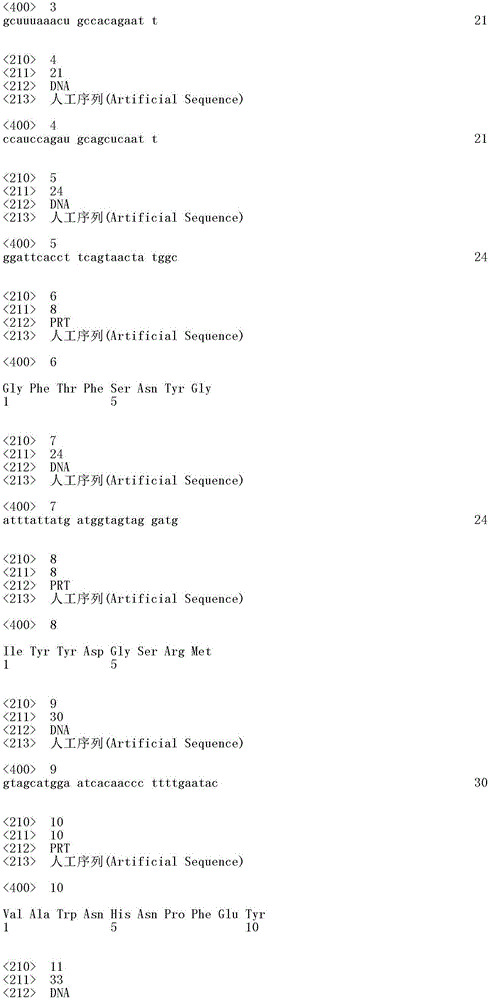
氨基酸序列为SEQ ID No:6的重链可变区CDR-H1,优选地,其编码序列为SEQ IDNo:5;The amino acid sequence is the heavy chain variable region CDR-H1 of SEQ ID No: 6, preferably, its coding sequence is SEQ ID No: 5;
氨基酸序列为SEQ ID No:8的重链可变区CDR-H2,优选地,其编码序列为SEQ IDNo:7;The amino acid sequence is the heavy chain variable region CDR-H2 of SEQ ID No: 8, preferably, its coding sequence is SEQ ID No: 7;
氨基酸序列为SEQ ID No:10的重链可变区CDR-H3,优选地,其编码序列为SEQ IDNo:9;The amino acid sequence is the heavy chain variable region CDR-H3 of SEQ ID No: 10, preferably, its coding sequence is SEQ ID No: 9;
氨基酸序列为SEQ ID No:12的轻链可变区CDR-L1,优选地,其编码序列为SEQ IDNo:11;The amino acid sequence is the light chain variable region CDR-L1 of SEQ ID No: 12, preferably, its coding sequence is SEQ ID No: 11;
氨基酸序列为SEQ ID No:14的轻链可变区CDR-L2,优选地,其编码序列为SEQ IDNo:13;以及The amino acid sequence is the light chain variable region CDR-L2 of SEQ ID No: 14, preferably, its coding sequence is SEQ ID No: 13; and
氨基酸序列为SEQ ID No:16的轻链可变区CDR-L3,优选地,其编码序列为SEQ IDNo:15;The amino acid sequence is the light chain variable region CDR-L3 of SEQ ID No: 16, preferably, its coding sequence is SEQ ID No: 15;
其中所述抗原结合片段选自Fab、Fab'、F(ab')2、Fd、Fv或dAb。wherein the antigen-binding fragment is selected from Fab, Fab', F(ab')2, Fd, Fv or dAb.
在一个方面,本发明提供如上所述的单克隆抗体或其抗原结合片段,其由保藏于中国典型培养物保藏中心,保藏编号为CCTCC NO.C201912的杂交瘤细胞株分泌。In one aspect, the present invention provides the monoclonal antibody or antigen-binding fragment thereof as described above, which is secreted by the hybridoma cell line deposited in the China Center for Type Culture Collection with the deposit number CCTCC NO.C201912.
在一个方面,本发明提供缀合物,其包含如上所述任一种单克隆抗体或其抗原结合片段和与其结合的允许其检测的标记,其中所述标记选自荧光团、生物素、放射性同位素、金属和酶中的一种或更多种。In one aspect, the present invention provides a conjugate comprising any of the monoclonal antibodies or antigen-binding fragments thereof as described above and a label bound thereto that allows its detection, wherein the label is selected from the group consisting of fluorophores, biotin, radioactive One or more of isotopes, metals and enzymes.
在一个方面,本发明提供产生如上所述任一种单克隆抗体或其抗原结合片段的杂交瘤细胞株。In one aspect, the present invention provides hybridoma cell lines that produce any of the monoclonal antibodies or antigen-binding fragments thereof described above.
在一个方面,本发明提供如上所述任一种单克隆抗体或其抗原结合片段或如上所述任一种缀合物的制备方法。In one aspect, the present invention provides a method for the preparation of any of the monoclonal antibodies or antigen-binding fragments thereof described above, or of any of the conjugates described above.
在一个方面,本发明提供如上所述任一项的单克隆抗体或其抗原结合片段或如上所述任一种缀合物在检测PBX1a和/或PBX1b的蛋白表达中的用途。In one aspect, the present invention provides the use of a monoclonal antibody or antigen-binding fragment thereof of any of the above, or a conjugate of any of the above, in detecting the protein expression of PBX1a and/or PBX1b.
在一个方面,本发明提供免疫检测试剂盒,其含有如上所述任一种单克隆抗体或其抗原结合片段或如上所述任一种缀合物。In one aspect, the present invention provides an immunoassay kit comprising any of the monoclonal antibodies or antigen-binding fragments thereof described above, or any of the conjugates described above.
在一个方面,本发明提供如上所述任一种单克隆抗体或其抗原结合片段或如上所述任一种缀合物在制备用于辅助诊断不明原因复发性流产的诊断剂中的用途。In one aspect, the present invention provides the use of any of the monoclonal antibodies or antigen-binding fragments thereof or the conjugates thereof in the preparation of a diagnostic agent for assisting in the diagnosis of unexplained recurrent miscarriage.
在一个方面,本发明提供用于辅助诊断不明原因复发性流产的试剂盒,其中含有根如上所述任一种单克隆抗体或其抗原结合片段或如上所述任一种缀合物。In one aspect, the present invention provides a kit for assisting in the diagnosis of unexplained recurrent miscarriage, comprising any of the monoclonal antibodies or antigen-binding fragments thereof described above or any of the conjugates described above.
附图简要说明Brief Description of Drawings
图1.原核重组表达载体pET21a-PBX1b及真核重组表达载体pPBX1b的构建流程图。图1A显示基于pET21a质粒构建原核重组表达载体pET21a-PBX1b的流程图;图1B显示基于pEGFP-N1质粒构建真核重组表达载体pPBX1b的流程图。Figure 1. The construction flow chart of the prokaryotic recombinant expression vector pET21a-PBX1b and the eukaryotic recombinant expression vector pPBX1b. Figure 1A shows the flow chart of constructing prokaryotic recombinant expression vector pET21a-PBX1b based on pET21a plasmid; Figure 1B shows the flow chart of constructing eukaryotic recombinant expression vector pPBX1b based on pEGFP-N1 plasmid.
图2.人转录因子PBX1b重组蛋白表达、纯化和测定。图2A显示PBX1b重组蛋白诱导表达结果;图2B显示PBX1b重组蛋白的镍琼脂糖亲和层析前后结果;图2C显示纯化后PBX1b重组蛋白的免疫印迹鉴定结果。Figure 2. Human transcription factor PBX1b recombinant protein expression, purification and assay. Figure 2A shows the induced expression results of the PBX1b recombinant protein; Figure 2B shows the results before and after nickel agarose affinity chromatography of the PBX1b recombinant protein; Figure 2C shows the immunoblot identification results of the purified PBX1b recombinant protein.
图3.PBX1b重组蛋白免疫大鼠前后血清ELISA检测结果。Figure 3. Serum ELISA results before and after immunization of rats with PBX1b recombinant protein.
图4.2D11单克隆抗体纯度鉴定结果。Figure 4.2D11 monoclonal antibody purity identification results.
图5.2D11单克隆抗体特异性鉴定结果。图5A显示免疫印迹法鉴定2D11单克隆抗体特异性;图5B显示流式细胞术鉴定2D11单克隆抗体特异性。Figure 5. 2D11 monoclonal antibody specific identification results. Figure 5A shows the identification of 2D11 monoclonal antibody specificity by immunoblotting; Figure 5B shows the identification of 2D11 monoclonal antibody specificity by flow cytometry.
图6.ALEXA FLUORTM488标记的2D11单克隆抗体应用于流式细胞术检测正常人早孕蜕膜组织NK细胞转录因子PBX1的表达。图6A显示2D11单克隆抗体可以分别结合蜕膜组织单个核细胞和外周血单个核细胞中PBX1a和PBX1b。图6B显示使用2D11单克隆抗体,应用流式细胞术检测人蜕膜组织NK(dNK)细胞和外周血NK(pNK)细胞中转录因子PBX1的表达情况;图6C显示PBX1+NK细胞分别在dNK和pNK细胞中比例的统计图。Figure 6. ALEXA FLUOR TM 488-labeled 2D11 monoclonal antibody was used to detect the expression of NK cell transcription factor PBX1 in normal human early pregnancy decidua tissue by flow cytometry. Figure 6A shows that 2D11 mAb can bind to PBX1a and PBX1b in decidual tissue mononuclear cells and peripheral blood mononuclear cells, respectively. Figure 6B shows the expression of transcription factor PBX1 in human decidual tissue NK ( dNK ) cells and peripheral blood NK (pNK) cells by flow cytometry using 2D11 monoclonal antibody; and a statistical plot of the proportions in pNK cells.
图7.ALEXA FLUORTM488标记的2D11单克隆抗体应用于流式细胞术诊断不明原因复发性流产。图7A显示流式细胞术检测复发性流产患者(RSA)蜕膜组织NK细胞中转录因子PBX1的表达情况,以正常人dNK细胞为对照;图7B显示复发性流产患者和正常人PBX1+dNK细胞比例(上)和数量(下)的统计图。图7C显示荧光定量PCR检测复发性流产患者蜕膜组织中PBX1基因表达;图7D显示PBX1表达降低在不明原因复发性流产和胚胎染色体异常复发性流产中的受试者工作特征曲线;图7E显示PBX1表达降低在复发性流产中的受试者工作特征曲线。Figure 7. Application of ALEXA FLUOR ™ 488-labeled 2D11 monoclonal antibody in the diagnosis of recurrent unexplained miscarriage by flow cytometry. Figure 7A shows the expression of transcription factor PBX1 in decidua NK cells of patients with recurrent miscarriage (RSA) detected by flow cytometry, with normal human dNK cells as control; Figure 7B shows recurrent miscarriage patients and normal human PBX1 + dNK cells Statistical plot of proportion (top) and quantity (bottom). Figure 7C shows real-time PCR detection of PBX1 gene expression in decidual tissue of patients with recurrent miscarriage; Figure 7D shows the receiver operating characteristic curve of reduced PBX1 expression in unexplained recurrent miscarriage and recurrent miscarriage with fetal chromosomal abnormalities; Figure 7E shows Receiver operating characteristic curve of reduced PBX1 expression in recurrent miscarriage.
材料保藏Material preservation
以下材料已经保藏于:中国典型培养物保藏中心(中国湖北省武汉市武昌区八一路299号)(CCTCC):The following materials have been deposited in: China Center for Type Culture Collection (No. 299, Bayi Road, Wuchang District, Wuhan City, Hubei Province, China) (CCTCC):
材料:大鼠抗人PBX1抗体杂交瘤细胞株2D11Materials: Rat anti-human PBX1 antibody hybridoma cell line 2D11
保藏号:C201912Deposit number: C201912
保藏日:2019年1月8日Deposit date: January 8, 2019
发明详述Detailed description of the invention
除非另有说明,本文所使用的所有技术和科学术语都具有如本领域普通技术人员所通常理解的含义。一般来说,本文所使用的术语是公知的并且常规使用于本领域。Unless otherwise defined, all technical and scientific terms used herein have the meaning as commonly understood by one of ordinary skill in the art. Generally, the terms used herein are well known and routinely used in the art.
本发明所使用的主要术语定义如下:The main terms used in the present invention are defined as follows:
如本文中所使用的,术语“抗体”是指通常由两对相同的多肽链(每对具有一条“轻”(L)链和一条“重”(H)链组成的免疫球蛋白分子。抗体轻链可分类为κ和λ轻链。重链可分类为μ、δ、γ、α或ε,并且分别将抗体的同种型定义为IgM、IgD、IgG、IgA和IgE。在轻链和重链内,可变区和恒定区通过大约12或更多个氨基酸的“J”区连接,重链还包含大约3个或更多个氨基酸的“D”区。各重链由重链可变区(VH)和重链恒定区(CH)组成。重链恒定区由3个结构域(CH1、CH2和CH3)组成。各轻链由轻链可变区(VL)和轻链恒定区(CL)组成。轻链恒定区由一个结构域CL组成。抗体的恒定区可介导免疫球蛋白与宿主组织或因子,包括免疫系统的各种细胞(例如,效应细胞)和经典补体系统的第一组分(C1q)的结合。VH和VL区还可被细分为具有高变性的区域(称为互补决定区(CDR),其间散布有较保守的称为构架区(FR)的区域。各VH和VL由按下列顺序:FR1、CDR1、FR2、CDR2、FR3、CDR3、FR4从氨基末端至羧基末端排列的3个CDR和4个FR组成。各重链/轻链对的可变区(VH和VL)分别形成抗体结合部位。氨基酸至各区域或结构域的分配遵循Kabat Sequences of Proteins of ImmunologicalInterest(National Institutes of Health,Bethesda,Md.(1987and 1991)),或Chothia&Lesk(1987)J.Mol.Biol.196:901-917;Chothia等人(1989)Nature342:878-883的定义。As used herein, the term "antibody" refers to an immunoglobulin molecule generally composed of two identical pairs of polypeptide chains, each pair having one "light" (L) chain and one "heavy" (H) chain. Antibody Light chains can be classified as kappa and lambda light chains. Heavy chains can be classified as mu, delta, gamma, alpha, or epsilon, and define the antibody's isotype as IgM, IgD, IgG, IgA, and IgE, respectively. In light chains and Within the heavy chain, the variable and constant regions are linked by a "J" region of about 12 or more amino acids, and the heavy chain also contains a "D" region of about 3 or more amino acids. Variable region (VH) and heavy chain constant region (CH). The heavy chain constant region consists of 3 domains (CH1, CH2 and CH3). Each light chain consists of a light chain variable region (VL) and a light chain constant region (CL). The light chain constant region consists of one domain, CL. The constant region of an antibody mediates the interaction of immunoglobulins with host tissues or factors, including various cells of the immune system (eg, effector cells) and the classical complement system Binding of the first component (C1q). The VH and VL regions can also be subdivided into regions of high variability called complementarity determining regions (CDRs) interspersed with more conserved regions called framework regions (FRs) Each VH and VL consists of 3 CDRs and 4 FRs arranged in the following order: FR1, CDR1, FR2, CDR2, FR3, CDR3, FR4 from amino terminus to carboxy terminus. Variable for each heavy/light chain pair The regions (VH and VL) respectively form the antibody binding site. The assignment of amino acids to each region or domain follows the Kabat Sequences of Proteins of Immunological Interest (National Institutes of Health, Bethesda, Md. (1987 and 1991)), or Chothia & Lesk (1987) J MoI. Biol. 196:901-917; definition by Chothia et al. (1989) Nature 342:878-883.
如本文中所使用的,术语抗体的“抗原结合片段”是指全长抗体的一个或多个片段,通常指所述全长抗体的抗原结合区或可变区。所述片段保持结合抗体所结合的相同抗原(例如,PBX1)的能力,与完整抗体竞争对抗原的特异性结合。可通过重组DNA技术或通过完整抗体的酶促或化学断裂产生抗原结合片段。在一些情况下,抗原结合片段包括Fab、Fab'、F(ab')2、Fd、Fv、dAb和互补决定区(CDR)片段、单链抗体(例如,scFv)、嵌合抗体、双抗体(diabody)和这样的多肽,其包含足以赋予多肽特异性抗原结合能力的抗体的至少一部分。As used herein, the term "antigen-binding fragment" of an antibody refers to one or more fragments of a full-length antibody, typically the antigen-binding or variable region of the full-length antibody. The fragments retain the ability to bind the same antigen to which the antibody binds (eg, PBX1), competing with the intact antibody for specific binding to the antigen. Antigen-binding fragments can be produced by recombinant DNA techniques or by enzymatic or chemical cleavage of intact antibodies. In some cases, antigen-binding fragments include Fab, Fab', F(ab')2, Fd, Fv, dAb and complementarity determining region (CDR) fragments, single chain antibodies (eg, scFv), chimeric antibodies, diabodies (diabody) and polypeptides comprising at least a portion of an antibody sufficient to confer specific antigen-binding ability to the polypeptide.
如本文中所使用的,术语“单克隆抗体”是指均一的仅针对某一特定抗原表位的抗体。与典型地包括针对不同抗原决定簇(表位)的不同抗体的普通多克隆抗体制剂相比,每种单克隆抗体针对抗原上的单个抗原决定簇。修饰语“单克隆”表示抗体的均一特征,不解释为需要通过任何特定方法产生的抗体。本发明的单克隆抗体优选通过单一的杂交瘤产生,所述杂交瘤产生自脾细胞与骨髓瘤细胞的融合。As used herein, the term "monoclonal antibody" refers to a uniform antibody directed against only a particular epitope. In contrast to common polyclonal antibody preparations, which typically include different antibodies directed against different antigenic determinants (epitopes), each monoclonal antibody is directed against a single epitope on the antigen. The modifier "monoclonal" denotes a uniform characteristic of an antibody and is not to be construed as requiring that the antibody be produced by any particular method. The monoclonal antibodies of the present invention are preferably produced by a single hybridoma resulting from the fusion of spleen cells and myeloma cells.
可以修饰编码抗体的DNA以生成“嵌合或融合抗体多肽”,例如通过用人重链和轻链恒定域(CH和CL)序列替代同源鼠序列(US 4816567;及Morrison等人(1984)Proc.NatlAcad.Sci.USA.;81:6851),或者通过融合免疫球蛋白编码序列与非免疫球蛋白多肽(异源多肽)的整个或部分编码序列。非免疫球蛋白多肽序列可替代抗体的恒定域,或者用它们替代抗体的一个抗原结合位点的可变域以创建嵌合二价抗体,其包含对一种抗原具有特异性的抗原结合位点和对不同抗原具有特异性的另一抗原结合位点。Antibody-encoding DNA can be modified to generate "chimeric or fusion antibody polypeptides", for example by substituting human heavy and light chain constant domain (CH and CL) sequences for homologous murine sequences (US 4816567; and Morrison et al. (1984) Proc . NatlAcad. Sci. USA.; 81:6851), or by fusing an immunoglobulin coding sequence with all or part of a coding sequence for a non-immunoglobulin polypeptide (heterologous polypeptide). Non-immunoglobulin polypeptide sequences can be substituted for the constant domains of antibodies, or they can be substituted for the variable domains of one antigen-binding site of an antibody to create chimeric bivalent antibodies that contain an antigen-binding site specific for one antigen and another antigen-binding site specific for a different antigen.
非人(例如啮齿类)抗体的“人源化”形式指最低限度包含衍生自非人抗体的序列的嵌合抗体。在极大程度上,人源化抗体指人免疫球蛋白(受体抗体)中的高变区残基用具有期望抗体特异性、亲和力和能力的非人物种(供体抗体)(诸如小鼠、大鼠、家兔或非人灵长类动物)的高变区残基替换的免疫球蛋白。在有些情况中,将人免疫球蛋白的框架区(FR)残基用相应的非人残基替换。此外,人源化抗体可包含在受体抗体中或在供体抗体中没有找到的残基。进行这些修饰是为了进一步改进抗体的性能。一般而言,人源化抗体将包含至少一个、通常两个基本上整个如下的可变域,其中所有或基本上所有高变环对应于非人免疫球蛋白的高变环,且所有或基本上所有FR是人免疫球蛋白序列的FR。人源化抗体任选还将包含至少部分免疫球蛋白恒定区(Fc),通常是人免疫球蛋白的恒定区。Fc片段包含通过二硫键保持在一起的所有两条重链的羧基末端部分。抗体的效应器功能是由Fc区中的序列决定的,该区还是受到在某些类型的细胞上找到的Fc受体(FcR)所识别的部分(Jones等人(1986)Nature.;321:522-525;Riechmann等人(1988)Nature.;332:323-329;Presta(1992)Curr.Op.Struct.Biol.;2:593-596;Verhoeyen,等人(1988)Science,;239:1534-1536)。其它方法使用自特定轻链或重链亚组的所有人抗体的共有序列衍生的特定框架区(Carter等人(1992)Proc.Natl.Acad.Sci.USA.;89:4285;Presta等人(1993)J.Immunol.;151:2623)。"Humanized" forms of non-human (eg, rodent) antibodies refer to chimeric antibodies that minimally contain sequences derived from non-human antibodies. To a large extent, a humanized antibody refers to the use of hypervariable region residues in a human immunoglobulin (acceptor antibody) with a non-human species (donor antibody) (such as a mouse) having the desired antibody specificity, affinity and capacity , rat, rabbit, or non-human primate) immunoglobulins with the hypervariable region residues replaced. In some cases, framework region (FR) residues of the human immunoglobulin are replaced with corresponding non-human residues. In addition, the humanized antibody may contain residues not found in the recipient antibody or in the donor antibody. These modifications are made to further improve the performance of the antibody. In general, a humanized antibody will comprise substantially all of at least one, and usually two, variable domains in which all or substantially all of the hypervariable loops correspond to those of a non-human immunoglobulin, and all or substantially all of the hypervariable loops correspond to those of a non-human immunoglobulin. All FRs above are FRs of human immunoglobulin sequences. The humanized antibody will optionally also comprise at least a portion of an immunoglobulin constant region (Fc), typically the constant region of a human immunoglobulin. The Fc fragment contains the carboxy-terminal portions of all two heavy chains held together by disulfide bonds. The effector functions of antibodies are determined by sequences in the Fc region, which is also the part recognized by the Fc receptor (FcR) found on certain types of cells (Jones et al. (1986) Nature.; 321: 522-525; Riechmann et al (1988) Nature.; 332: 323-329; Presta (1992) Curr. Op. Struct. Biol.; 2: 593-596; Verhoeyen, et al (1988) Science,; 239: 1534-1536). Other methods use specific framework regions derived from consensus sequences of all human antibodies of a specific subgroup of light or heavy chains (Carter et al. (1992) Proc. Natl. Acad. Sci. USA.; 89:4285; Presta et al. ( 1993) J. Immunol.; 151:2623).
如本文中所使用的,术语“序列同一性”是指在比对序列并在必要时引入缺口以实现最大百分比序列同一性后,氨基酸序列变体中同样的残基的百分比。比对的方法和计算机程序是本领域公知的。As used herein, the term "sequence identity" refers to the percentage of identical residues in an amino acid sequence variant after aligning the sequences and introducing gaps where necessary to achieve maximum percent sequence identity. Methods and computer programs for alignment are well known in the art.
如本文中所使用的,术语“特异结合”或“特异性结合”特定分子靶或感兴趣抗原或特定分子靶或感兴趣抗原上的表位对其“特异性的”意味着可测量的不同于非特异性相互作用的结合。特异性结合可通过例如测定分子的结合并与对照分子的结合比较来测量,所述对照分子通常是结构相似但没有结合活性的分子。例如,特异性结合可通过与对照分子的竞争来测定,所述对照分子与靶物相似,例如过量的未标记靶物。在这种情况中,若经标记靶物与探针的结合受到过量未标记靶物的竞争性抑制,则指示特异性结合。通常,抗体以小于大约10-6M,例如小于大约10-7M、10-8M、10-9M或10-10M或更小的亲和力(KD)结合抗原表位。As used herein, the term "specifically binds" or "specifically binds" to a specific molecular target or antigen of interest or to an epitope on a specific molecular target or antigen of interest for which it is "specific" to mean a measurable difference binding to nonspecific interactions. Specific binding can be measured, for example, by assaying the binding of a molecule and comparing the binding to a control molecule, typically a molecule that is structurally similar but has no binding activity. For example, specific binding can be determined by competition with a control molecule that is similar to the target, eg, an excess of unlabeled target. In this case, specific binding is indicated if the binding of the labeled target to the probe is competitively inhibited by excess unlabeled target. Typically, an antibody binds an epitope with an affinity (KD) of less than about 10-6 M, eg, less than about 10-7 M, 10-8 M, 10-9 M, or 10-10 M or less.
“结合亲和力”通常指分子(例如抗体)的单一结合位点与其结合配偶体(例如抗原)之间全部非共价相互作用总和的强度。除非另有说明,在用于本文时,“结合亲和力”指反映结合对的成员(例如抗体与抗原)之间1:1相互作用的内在结合亲和力。分子X对其配偶体Y的亲和力通常可用解离常数(Kd)来表述。亲和力可通过本领域知道的常用方法来测量,包括本文中所描述的那些。低亲和力抗体通常缓慢的地结合抗原且趋于容易解离,而高亲和力抗体通常更快速的地结合抗原且趋于保持更长时间的结合。本领域知道测量结合亲和力的多种方法,其中任一种都可用于本发明的目的。"Binding affinity" generally refers to the strength of the sum of all non-covalent interactions between a single binding site of a molecule (eg, an antibody) and its binding partner (eg, an antigen). Unless otherwise specified, as used herein, "binding affinity" refers to the intrinsic binding affinity that reflects a 1:1 interaction between members of a binding pair (eg, antibody and antigen). The affinity of a molecule X for its partner Y can generally be expressed in terms of the dissociation constant (Kd). Affinity can be measured by common methods known in the art, including those described herein. Low-affinity antibodies generally bind antigen slowly and tend to dissociate easily, whereas high-affinity antibodies generally bind antigen more rapidly and tend to remain bound longer. Various methods of measuring binding affinity are known in the art, any of which can be used for the purposes of the present invention.
如本文中所使用的,术语“单克隆抗体的特异性”是指单克隆抗体识别抗原上的特定表位或者抗原决定簇并与之结合的性质。As used herein, the term "specificity of a monoclonal antibody" refers to the property of a monoclonal antibody to recognize and bind to a particular epitope or antigenic determinant on an antigen.
如本文中所使用的,术语“单克隆抗体的反应性”是指在合适的反应条件下,单克隆抗体与抗原结合的能力。As used herein, the term "reactivity of a monoclonal antibody" refers to the ability of a monoclonal antibody to bind to an antigen under appropriate reaction conditions.
如本文中所使用的,术语“杂交瘤”,其不仅包括杂交瘤亲本细胞还包括杂交瘤的亚克隆和后代细胞。As used herein, the term "hybridoma" includes not only hybridoma parent cells but also subclones and progeny cells of hybridomas.
如本文中所使用的,术语“细胞株”是指通过筛选或者有限稀释方法,从原代培养物或细胞系中获得的单细胞培养物。As used herein, the term "cell line" refers to a single cell culture obtained from a primary culture or cell line by screening or limiting dilution methods.
如本文中所使用的,术语“试剂盒”可以包括多种适于使用的存在形式,例如可以为盒装、瓶装、袋装等。As used herein, the term "kit" can include a variety of forms of presentation suitable for use, eg, can be in boxes, bottles, bags, and the like.
如本文中所用的,术语“PBX1”在本文中指PBX1a和PBX1b。As used herein, the term "PBX1" refers herein to PBX1a and PBX1b.
在一方面,本发明提供了单克隆抗体或其抗原结合片段,其包含:In one aspect, the present invention provides a monoclonal antibody or antigen-binding fragment thereof comprising:
氨基酸序列为SEQ ID No:6的重链可变区CDR-H1,优选地,其编码序列为SEQ IDNo:5;The amino acid sequence is the heavy chain variable region CDR-H1 of SEQ ID No: 6, preferably, its coding sequence is SEQ ID No: 5;
氨基酸序列为SEQ ID No:8的重链可变区CDR-H2,优选地,其编码序列为SEQ IDNo:7;The amino acid sequence is the heavy chain variable region CDR-H2 of SEQ ID No: 8, preferably, its coding sequence is SEQ ID No: 7;
氨基酸序列为SEQ ID No:10的重链可变区CDR-H3,优选地,其编码序列为SEQ IDNo:9;The amino acid sequence is the heavy chain variable region CDR-H3 of SEQ ID No: 10, preferably, its coding sequence is SEQ ID No: 9;
氨基酸序列为SEQ ID No:12的轻链可变区CDR-L1,优选地,其编码序列为SEQ IDNo:11;The amino acid sequence is the light chain variable region CDR-L1 of SEQ ID No: 12, preferably, its coding sequence is SEQ ID No: 11;
氨基酸序列为SEQ ID No:14的轻链可变区CDR-L2,优选地,其编码序列为SEQ IDNo:13;以及The amino acid sequence is the light chain variable region CDR-L2 of SEQ ID No: 14, preferably, its coding sequence is SEQ ID No: 13; and
氨基酸序列为SEQ ID No:16的轻链可变区CDR-L3,优选地,其编码序列为SEQ IDNo:15;The amino acid sequence is the light chain variable region CDR-L3 of SEQ ID No: 16, preferably, its coding sequence is SEQ ID No: 15;
其中所述抗原结合片段选自Fab、Fab'、F(ab')2、Fd、Fv或dAb。wherein the antigen-binding fragment is selected from Fab, Fab', F(ab')2, Fd, Fv or dAb.
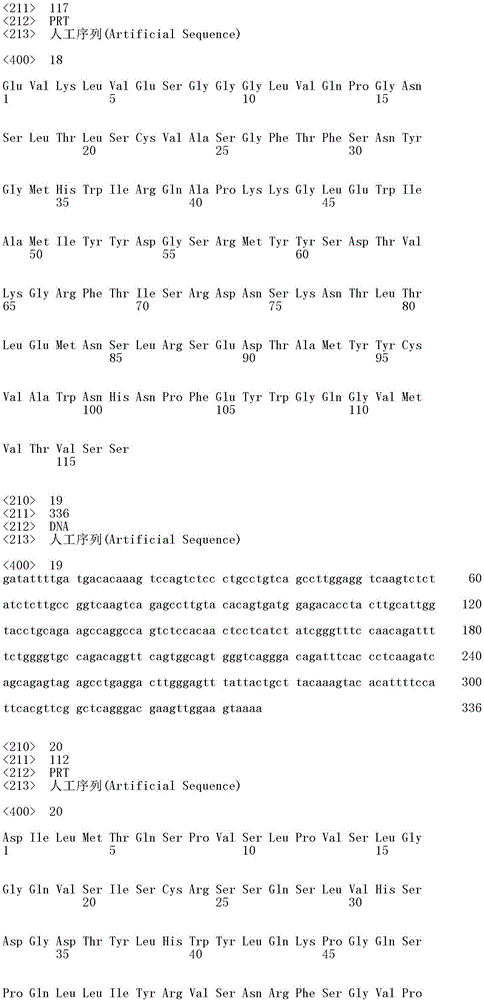
在一方面,本发明提供了单克隆抗体或其抗原结合片段,其包含:In one aspect, the present invention provides a monoclonal antibody or antigen-binding fragment thereof comprising:
氨基酸序列为SEQ ID No:18的重链可变区,优选地,其编码序列为SEQ ID No:17;以及The amino acid sequence is the heavy chain variable region of SEQ ID No: 18, preferably, its coding sequence is SEQ ID No: 17; and
氨基酸序列为SEQ ID No:20的轻链可变区,优选地,其编码序列为SEQ ID No:19;The amino acid sequence is the light chain variable region of SEQ ID No:20, preferably, its coding sequence is SEQ ID No:19;
其中所述抗原结合片段选自Fab、Fab'、F(ab')2、Fd、Fv或dAb。wherein the antigen-binding fragment is selected from Fab, Fab', F(ab')2, Fd, Fv or dAb.
在一个实施方案中,如上所述任一种单克隆抗体或其抗原结合片段能够特异性结合至PBX1a和/或PBX1b蛋白。在一个实施方案中,如上所述任意一种单克隆抗体或其抗原结合片段的Ig的亚类为IgG2a,κ。在一个实施方案中,如上所述任意一种单克隆抗体或其抗原结合片段为人源化抗体、嵌合抗体、单链抗体或双抗体。In one embodiment, any of the monoclonal antibodies or antigen-binding fragments thereof described above are capable of specifically binding to the PBX1a and/or PBX1b protein. In one embodiment, the subclass of Ig of any one of the monoclonal antibodies or antigen-binding fragments thereof as described above is IgG2a ,κ. In one embodiment, any one of the monoclonal antibodies or antigen-binding fragments thereof described above is a humanized antibody, a chimeric antibody, a single-chain antibody, or a diabody.
在一个实施方案中,如上所述任意一种单克隆抗体或其抗原结合片段由保藏于中国典型培养物保藏中心,保藏编号为CCTCC NO.C201912的杂交瘤细胞株2D11分泌。In one embodiment, any one of the monoclonal antibodies or antigen-binding fragments thereof described above is secreted by the hybridoma cell line 2D11 deposited in the China Center for Type Culture Collection with the deposit number CCTCC NO.C201912.
在另一方面,本发明提供缀合物,其包含如上所述任一种单克隆抗体或其抗原结合片段和与其结合的允许其检测的标记,其中所述标记选自荧光团、生物素、放射性同位素、金属和酶中的一种或更多种。In another aspect, the present invention provides a conjugate comprising any one of the monoclonal antibodies or antigen-binding fragments thereof as described above and bound thereto a label allowing its detection, wherein the label is selected from the group consisting of a fluorophore, biotin, One or more of radioisotopes, metals and enzymes.
在一方面,本发明提供了杂交瘤细胞株,其保藏于中国典型培养物保藏中心,保藏编号为CCTCC NO.C201912。在一个实施方案中,所述杂交瘤细胞株产生抗人转录因子PBX1蛋白的单克隆抗体或其抗原结合片段。在一个实施方案中,所述杂交瘤细胞株能够稳定分泌抗人转录因子PBX1蛋白的单克隆抗体或其抗原结合片段。In one aspect, the present invention provides a hybridoma cell line, which is deposited in the China Center for Type Culture Collection with the deposit number CCTCC NO.C201912. In one embodiment, the hybridoma cell line produces a monoclonal antibody or antigen-binding fragment thereof against the human transcription factor PBX1 protein. In one embodiment, the hybridoma cell line is capable of stably secreting a monoclonal antibody against the human transcription factor PBX1 protein or an antigen-binding fragment thereof.
在另一方面,本发明提供了如上所述任意一种单克隆抗体或其抗原结合片或如上所述任意一种缀合物在检测PBX1a和/或PBX1b的蛋白表达中的用途。在一个实施方案中,所述检测的样品为血浆样品。在一个实施方案中,所述检测的样品为人源的。在一个实施方案中,所述检测的样品为复发性流产患者早孕蜕膜组织NK细胞,优选为不明原因复发性流产患者。在一个实施方案中,所述检测的方法为将如上所述任意一种单克隆抗体或其抗原结合片段或如上所述任意一种缀合物作为一抗。在一个实施方案中,所述检测的方法为用免疫印迹法检测人细胞转录因子PBX1。在一个实施方案中,所述缀合物中的荧光团为标记荧光素ALEXAFLUORTM488。在一个实施方案中,所述检测的方法为用流式细胞术检测人细胞转录因子PBX1。In another aspect, the present invention provides the use of any one of the monoclonal antibodies or antigen-binding sheets thereof, or any one of the conjugates described above, in detecting the protein expression of PBX1a and/or PBX1b. In one embodiment, the detected sample is a plasma sample. In one embodiment, the detected sample is of human origin. In one embodiment, the detected samples are NK cells in the decidua tissue of early pregnancy patients with recurrent miscarriage, preferably patients with unexplained recurrent miscarriage. In one embodiment, the method of detection is to use any one of the monoclonal antibodies or antigen-binding fragments thereof described above or any one of the conjugates described above as the primary antibody. In one embodiment, the method of detection is the detection of human cellular transcription factor PBX1 by immunoblotting. In one embodiment, the fluorophore in the conjugate is the labeled fluorescein ALEXAFLUORTM488. In one embodiment, the method of detection is the detection of human cellular transcription factor PBX1 by flow cytometry.
在另一方面,本发明提供了一种免疫检测试剂盒,其含有如上所述任意一种单克隆抗体或其抗原结合片段或如上所述任意一种缀合物。In another aspect, the present invention provides an immunoassay kit comprising any one of the monoclonal antibodies or antigen-binding fragments thereof described above or any one of the conjugates described above.
在另一方面,本发明提供了如上所述任意一种单克隆抗体或其抗原结合片段或如上所述任意一种缀合物在制备用于辅助诊断不明原因复发性流产疾病的诊断剂中的用途,在一个实施方案中,所述用于辅助诊断的样品为不明原因复发性流产患者早孕蜕膜组织NK细胞。在一个实施方案中,所述缀合物中的荧光团为标记荧光素ALEXA FLUORTM488。在一个实施方案中,所述诊断的方法为用流式细胞术检测不明原因复发性流产患者早孕蜕膜组织NK细胞的转录因子PBX1,进而诊断其发病原因是否为转录因子PBX1低表达,NK细胞异常。In another aspect, the present invention provides any one of the above monoclonal antibodies or antigen-binding fragments thereof or any one of the above conjugates in the preparation of a diagnostic agent for auxiliary diagnosis of unexplained recurrent miscarriage disease Uses, in one embodiment, the sample for auxiliary diagnosis is NK cells in the decidua tissue of early pregnancy of patients with unexplained recurrent miscarriage. In one embodiment, the fluorophore in the conjugate is the labeled fluorescein ALEXA FLUORTM488. In one embodiment, the method of diagnosis is to detect the transcription factor PBX1 of NK cells in the decidual tissue of patients with unexplained recurrent miscarriage in early pregnancy by flow cytometry, and then diagnose whether the cause of the disease is the low expression of transcription factor PBX1, NK cells abnormal.
在另一方面,本发明提供用于辅助诊断不明原因复发性流产的试剂盒,其中含有如上所述任意一种单克隆抗体或其抗原结合片段或如上所述任意一种缀合物。In another aspect, the present invention provides a kit for assisting diagnosis of unexplained recurrent miscarriage, which contains any one of the monoclonal antibodies or antigen-binding fragments thereof or any one of the conjugates described above.
实施例Example
以下实施例将有助于本领域的普通技术人员进一步理解本发明,但不以任何形式限制本发明。The following examples will help those of ordinary skill in the art to further understand the present invention, but do not limit the present invention in any form.
实施例中的实验方法,如无特别说明,均采用本领域常规技术,实验试剂均为市售产品。The experimental methods in the examples, unless otherwise specified, use conventional techniques in the art, and the experimental reagents are all commercially available products.
实施例一:原核重组表达载体pET21a-PBX1b及真核重组表达载体pPBX1b的构建Example 1: Construction of prokaryotic recombinant expression vector pET21a-PBX1b and eukaryotic recombinant expression vector pPBX1b
委托通用生物系统(安徽)有限公司人工合成人转录因子PBX1b全长基因(NCBIReference Sequence:NM_001204961.1,编码第1至347位氨基酸),其基因序列和所编码的蛋白序列分别为SEQ ID NO:1和2所示的序列,并在C端引入6His-Tag和终止密码子,并通过NdeI和XhoI酶切位点直接克隆到重组表达载体pET21a(上海生工生物公司),将所得重组表达载体转入DH5α感受态细胞中,筛选阳性克隆进行DNA测序鉴定,测序结果表明重组表达载体pET21a-PBX1b构建成功。原核重组表达载体pET21a-PBX1b的构建流程如图1A所示。General Biosystems (Anhui) Co., Ltd. was entrusted to artificially synthesize the full-length gene of human transcription factor PBX1b (NCBI Reference Sequence: NM_001204961.1, encoding
人工合成人转录因子PBX1b全长基因,通过EcoRI和BamHI酶切位点直接克隆到重组表达载体pEGFP-N1(湖南科爱医疗器械有限公司(优宝生物),货号:VT1110),命名为pPBX1b,将所得重组表达载体转入DH5α感受态细胞中,筛选阳性克隆进行DNA测序鉴定,测序结果表明重组表达载体pPBX1b构建成功。真核重组表达载体pPBX1b的构建流程如图1B所示。The full-length gene of the synthetic human transcription factor PBX1b was directly cloned into the recombinant expression vector pEGFP-N1 (Hunan Keai Medical Equipment Co., Ltd. (Youbao Bio), Cat. No.: VT1110) through EcoRI and BamHI restriction sites, named pPBX1b, The obtained recombinant expression vector was transferred into DH5α competent cells, and positive clones were screened for DNA sequencing identification. The sequencing results showed that the recombinant expression vector pPBX1b was successfully constructed. The construction flow of the eukaryotic recombinant expression vector pPBX1b is shown in Figure 1B.
实施例二:人转录因子PBX1b重组蛋白表达、纯化和测定Example 2: Expression, purification and determination of recombinant protein of human transcription factor PBX1b
1.诱导表达重组蛋白1. Induce the expression of recombinant protein
1.1转化1.1 Transformation
将实施例1所得到的重组表达载体pET21a-PBX1b转化到Transetta(DE3)感受态细胞中(北京全式金生物技术有限公司公司,货号CD801)中,42℃热击90秒后冰上静置2分钟后涂布在含有终浓度为50μg/mL氨苄青霉素和34μg/mL氯霉素的LB固体平板上,37℃培养过夜。The recombinant expression vector pET21a-PBX1b obtained in Example 1 was transformed into Transetta (DE3) competent cells (Beijing Quanshijin Biotechnology Co., Ltd., product number CD801), and placed on ice after heat shock at 42°C for 90 seconds. After 2 minutes, it was spread on LB solid plates containing a final concentration of 50 μg/mL ampicillin and 34 μg/mL chloramphenicol, and cultured at 37°C overnight.
1.2小试培养选择最佳的诱导条件1.2 Select the best induction conditions for small test culture
挑取PBX1b重组蛋白表达菌株Transetta(DE3)的单菌落于10mL LB培养基,(含50μg/mL氨苄青霉素和34μg/mL氯霉素)37℃,220转/分钟,振荡过夜培养。将过夜培养的菌液按1:100比例分别接种于10mL LB(含50μg/mL氨苄青霉素和34μg/mL氯霉素)培养基中,37℃,220转/分钟振荡培养。当OD600nm=0.6时,添加终浓度为0.5mM的IPTG,220转/分钟,振荡培养诱导表达,分别20℃诱导过夜,37℃诱导4小时,未加IPTG诱导剂的作为阴性对照。离心收集菌体,菌体用超声破碎裂解,分别离心收集上清和沉淀,沉淀用500μL包涵体溶解液(8MUrea,50mM Tris-HCl,300mM NaCl,PH8.0)溶解,分别取40μL样品进行12%的SDS-PAGE电泳检测,上样量为10μL,凝胶电泳结束后,考马斯亮蓝染色20分钟,脱色后成像。如图2A所示,和其他对照条件相比,IPTG诱导菌裂解液上清在38kDa处有一明显的条带,且20℃诱导过夜条件优于37℃诱导4小时。Pick a single colony of the PBX1b recombinant protein expression strain Transetta (DE3) in 10 mL of LB medium (containing 50 μg/mL ampicillin and 34 μg/mL chloramphenicol) at 37°C, 220 rpm, and shake overnight for culture. The overnight cultured bacterial solution was inoculated into 10 mL LB (containing 50 μg/mL ampicillin and 34 μg/mL chloramphenicol) medium at a ratio of 1:100, and cultured with shaking at 37°C and 220 rpm. When OD 600nm = 0.6, IPTG with a final concentration of 0.5 mM was added at 220 rpm to induce expression by shaking culture, overnight at 20°C and 4 hours at 37°C. No IPTG inducer was added as a negative control. The cells were collected by centrifugation, the cells were lysed by ultrasonication, the supernatant and the precipitate were collected by centrifugation, and the precipitate was dissolved with 500 μL inclusion body lysis solution (8MUrea, 50 mM Tris-HCl, 300 mM NaCl, pH 8.0), and 40 μL samples were taken for 12% SDS-PAGE electrophoresis detection, the loading volume is 10 μL, after gel electrophoresis, Coomassie brilliant blue staining for 20 minutes, and imaging after destaining. As shown in Figure 2A, compared with other control conditions, the supernatant of IPTG-induced bacterial lysate had an obvious band at 38kDa, and the overnight induction at 20°C was better than the induction at 37°C for 4 hours.
1.3大量诱导表达融合蛋白1.3 Induction and expression of fusion proteins in large quantities
根据1.2的小试结果最终确定:选择20℃诱导过夜条件,将上述1.2中小试所用的未诱导前的单克隆培养菌液按1:100比例接种于4L的LB抗性培养基中进行大量诱导表达。According to the results of the small test in 1.2, it is finally determined: select the condition of overnight induction at 20 °C, and inoculate the uninduced monoclonal culture bacteria solution used in the small and medium-sized test in the above 1.2 at a ratio of 1:100 in 4L of LB resistance medium for large-scale induction. Express.
2.纯化融合蛋白2. Purification of the fusion protein
离心收集上述1.3中大量诱导的菌液沉淀,冰浴中超声破碎裂解菌液沉淀,离心后收集裂解上清,采用镍琼脂糖亲和层析的方法进行纯化。取5mL Ni-IDA,用10倍柱床体积的平衡溶液(1M Tris,150mM NaCl,pH8.0)清洗平衡柱子,流速5mL/分钟。用上述实施例二步骤1.3中得到的裂解上清上柱,流速为2mL/分钟,收集穿透液,作为对照。使用10倍柱床体积的平衡溶液清洗柱子,流速5mL/分钟。再使用20/50mM咪唑洗脱液(1MTris,150mM NaCl,20/50mM Imidazole,pH 8.0)洗去杂蛋白,流速5mL/分钟,收集洗脱液,作为对照。最终使用500mM咪唑溶液(1M Tris,150mMNaCl,500mM Imidazole,pH8.0)洗脱目的蛋白,流速2mL/分钟,收集目的蛋白洗脱液。收集目的蛋白洗脱液样品进行12%SDS-PAGE检测,如图2B所示,相比对照组,500mM咪唑洗脱液中在38kDa处有一个明显的目的蛋白条带。根据鉴定结果,将500mM咪唑溶液洗脱的目的蛋白透析到透析液1(500mM L-Arginine,25mM Tris,150mMNaCl,PH7.4)中,4℃透析16h后,换为透析液2(250mM L-Arginine,25mM Tris,150mMNaCl,PH7.4)透析6h,浓缩离心,分装冻干,-80℃保存。Centrifuge to collect a large amount of the bacterial liquid precipitate induced in the above 1.3, ultrasonically break the lysed bacterial liquid precipitate in an ice bath, collect the lysed supernatant after centrifugation, and purify by nickel agarose affinity chromatography. Take 5 mL of Ni-IDA and wash the equilibrated column with 10 bed volumes of equilibration solution (1M Tris, 150 mM NaCl, pH 8.0) at a flow rate of 5 mL/min. The lysis supernatant obtained in step 1.3 of Example 2 above was applied to the column at a flow rate of 2 mL/min, and the permeate was collected as a control. The column was washed with 10 bed volumes of equilibration solution at a flow rate of 5 mL/min. Then use 20/50 mM imidazole eluate (1M Tris, 150 mM NaCl, 20/50 mM Imidazole, pH 8.0) to wash off the impurity protein, the flow rate is 5 mL/min, and the eluate is collected as a control. Finally, 500 mM imidazole solution (1 M Tris, 150 mM NaCl, 500 mM Imidazole, pH 8.0) was used to elute the target protein at a flow rate of 2 mL/min, and the target protein eluate was collected. The target protein eluate samples were collected for 12% SDS-PAGE detection. As shown in Figure 2B, compared with the control group, there was an obvious target protein band at 38kDa in the 500mM imidazole eluate. According to the identification results, the target protein eluted with 500mM imidazole solution was dialyzed into dialysate 1 (500mM L-Arginine, 25mM Tris, 150mMNaCl, pH 7.4), and after dialysis at 4°C for 16h, it was changed to dialysate 2 (250mM L- Arginine, 25mM Tris, 150mM NaCl, PH7.4) dialyzed for 6h, concentrated and centrifuged, aliquoted and lyophilized, and stored at -80°C.
3.重组PBX1b蛋白的鉴定3. Identification of recombinant PBX1b protein
采用非干扰型蛋白浓度测定试剂盒(上海生工生物公司,货号:C503071)测定实施例二步骤2中纯化所得的目的蛋白的浓度和纯度,最终获得蛋白纯度约为90%,浓度为0.5mg/mL。对该目的蛋白进行免疫印迹检测,即用兔抗His-tag抗体(CST公司,货号#2365)1:1000稀释作为一抗,辣根过氧化物酶(酶)标记的羊抗兔IgG(Boster公司,货号BA1054)1:5000稀释作为二抗,化学发光显色(Thermo scientific公司,货号34080)检测,如图2C显示,表明实施例二2中纯化所得的诱导表达的蛋白为重组PBX1b蛋白。The concentration and purity of the target protein purified in
实施例三:单克隆抗体的制备Example 3: Preparation of Monoclonal Antibodies
1.免疫大鼠、细胞融合及单克隆筛选1. Immune rats, cell fusion and monoclonal screening
1.1大鼠免疫及脾细胞的制备1.1 Rat immunization and preparation of splenocytes
将实施例二中得到的纯化后终浓度为100μg/ml的人PBX1b重组蛋白与等体积完全福氏佐剂充分混合至油包水状,于5只8周龄雌性SD大鼠(分别标记为1#、2#、3#、4#、5#)背部皮下多点注射进行初次免疫,每只大鼠注射100μg PBX1b重组蛋白。然后每隔15天,50μg人PBX1b重组蛋白与不完全福氏佐剂混合后,皮下免疫注射一次,共重复免疫注射三次,共45天。再隔15天后,腹腔注射50μg人PBX1b重组蛋白与不完全福氏佐剂混合物。末次免疫后10天,经尾静脉取血,间接ELISA测定血清效价,如图3所示。挑选2只抗血清效价最高者在尾静脉取血后第15天进行50μg人PBX1b重组蛋白腹腔注射加强免疫。The purified human PBX1b recombinant protein with a final concentration of 100 μg/ml obtained in Example 2 was thoroughly mixed with an equal volume of complete Freund's adjuvant to a water-in-oil state, and then placed in five 8-week-old female SD rats (respectively marked as 1#, 2#, 3#, 4#, 5#) were subcutaneously injected at multiple points on the back for primary immunization, and each rat was injected with 100 μg of PBX1b recombinant protein. Then every 15 days, after mixing 50 μg of human PBX1b recombinant protein with incomplete Freund's adjuvant, subcutaneous immunization was injected once, and the immunization injection was repeated three times for a total of 45 days. After another 15 days, 50 μg of recombinant human PBX1b protein mixed with incomplete Freund's adjuvant was injected intraperitoneally. 10 days after the last immunization, blood was collected from the tail vein, and the serum titer was determined by indirect ELISA, as shown in Figure 3. Two animals with the highest antiserum titer were selected for booster immunization by intraperitoneal injection of 50 μg recombinant human PBX1b on the 15th day after blood was drawn from the tail vein.
ELISA检测抗体效价的方法:用包被液(0.1M碳酸盐缓冲液,pH 9.6)稀释经实施例二所得的纯化蛋白,终浓度为10μg/ml,每孔100μl包被96孔酶标板,4℃过夜,用TBST(50mMTris-HCl,150mM NaCl,0.05%Tween20,pH 7.5)清洗3遍,1%BSA封闭,37℃孵育2小时。TBST清洗3遍,加入待测倍比稀释(1/1000、1/2000、1/4000、1/8000、1/16000、1/32000、1/64000、1/128000、1/256000、1/512000、1/1024000)的免疫大鼠血清(实验组),未免疫大鼠的尾静脉血清做阴性对照,100μl/孔,37℃孵育1小时。TBS清洗3遍,每孔加入100μl 1:10000稀释的碱性磷酸酶(AP)标记的兔抗大鼠二抗(Boster公司,货号BA1012),37℃孵育1小时。TBST清洗3遍后加入含1mg/ml对硝基苯磷酸盐(PNPP,Thermoscientific公司,货号34045)的底物显色液,100μl/孔,避光显色10-15分钟,加入终止液(1M HCl)100μl/孔,终止后立即用酶标仪进行检测,读取波长405nm的吸光值(OD405)。ELISA method for detecting antibody titer: Dilute the purified protein obtained in Example 2 with coating solution (0.1M carbonate buffer, pH 9.6), the final concentration is 10 μg/ml, and 100 μl per well is coated with 96-well enzyme label Plates, overnight at 4°C, washed 3 times with TBST (50 mM Tris-HCl, 150 mM NaCl, 0.05
1.2细胞融合1.2 Cell fusion
加强免疫3天后,无菌取实施例三所获得的加强免疫大鼠脾细胞,使用常规PEG法与处于对数生长期的骨髓瘤细胞SP2/0(ATCC编号CRL-1581),融合。用不完全的RPMI-1640培养基洗涤制备好的108个脾细胞和2.5×107个骨髓瘤细胞SP2/0,离心后弃上清,轻轻弹散细胞,加入0.7ml 40℃的PEG(分子量1,000-6,000)溶液,PEG的终浓度为50%(W/V),60秒之后开始加入40℃预热的不完全RPMI-1640培养基(5分钟加完),首先加1ml,1分钟后加4ml,2分钟后加入20ml。4℃300g离心10分钟收集细胞,用37℃含有2×HAT(含有次黄嘌呤、氨基蝶呤和胸苷)的不完全RPMI-1640培养基轻轻悬起细胞,使细胞终浓度为2×106/ml。将重悬细胞每孔100μl加入96孔板中,继续培养。当细胞融合后第二天补加HAT不完全RPMI-1640培养基。细胞融合一周后用RPMI-1640完全培养基换液一次,补加含HAT的RPMI-1640完全培养基,HAT选择培养基维持培养两周后,改用HT培养基培养,两周后改为RPMI-1640完全培养基。当融合细胞(即杂交瘤细胞)布满孔底1/10面积时,检测特异性抗体的产生。以人PBX1b重组蛋白包被酶标板,用间接ELISA法筛选阳性克隆。Three days after booster immunization, the booster immunized rat splenocytes obtained in Example 3 were aseptically taken, and fused with myeloma cells SP2/0 (ATCC number CRL-1581) in logarithmic growth phase using conventional PEG method. Wash the prepared 10 8 splenocytes and 2.5×10 7 myeloma cells SP2/0 with incomplete RPMI-1640 medium, discard the supernatant after centrifugation, gently flick the cells, and add 0.7 ml of PEG at 40°C (Molecular weight 1,000-6,000) solution, the final concentration of PEG is 50% (W/V), after 60 seconds, start adding incomplete RPMI-1640 medium preheated at 40°C (5 minutes), first add 1ml, 1 After 2 minutes add 4ml and after 2 minutes add 20ml. Cells were collected by centrifugation at 300g at 4°C for 10 minutes, and the cells were gently resuspended in incomplete RPMI-1640 medium containing 2×HAT (containing hypoxanthine, aminopterin, and thymidine) at 37°C to make the
1.3单克隆筛选1.3 Monoclonal Screening
将实施例三步骤1.2中筛选出的阳性杂交瘤当即采用有限稀释法对阳性孔杂交瘤细胞进行克隆化,以正常小鼠脾细胞制备饲养细胞。多次筛选后获得杂交瘤细胞株。连续体外培养杂交瘤细胞株2个月以上或者冻存6个月之后,细胞株仍能稳定和大量分泌抗人PBX1抗体,则将该抗体命名为2D11单克隆抗体,将该杂交瘤细胞株命名为2D11并保藏于中国典型培养物保藏中心,保藏编号为CCTCC NO.C201912。The positive hybridomas screened in step 1.2 of Example 3 were immediately cloned by the limiting dilution method to clone the hybridoma cells in the positive wells, and feeder cells were prepared from normal mouse spleen cells. Hybridoma cell lines were obtained after multiple screening. Hybridoma cell lines were continuously cultured in vitro for more than 2 months or after cryopreservation for 6 months, and the cell lines were still able to stably and massively secrete anti-human PBX1 antibody, the antibody was named 2D11 monoclonal antibody, and the hybridoma cell line was named It is 2D11 and is deposited in the China Center for Type Culture Collection with the deposit number CCTCC NO.C201912.
2.2D11单克隆抗体的大量制备2.2 Mass production of D11 monoclonal antibody
采用裸鼠腹腔接种法制备2D11单克隆抗体。首先给予8周龄的裸鼠腹腔注射500μl无菌的液体石蜡,一周之后腹腔注射1×10⁶杂交瘤细胞,7-10天左右收集腹水,高速离心收集上清。通过上述方法获得的抗体,用Protein A亲和层析方法纯化2D11抗体,SDS-PAGE鉴定抗体纯度,如图4所示,经纯化的2D11单克隆抗体纯度高于95%,抗体的重链都约为45kDa,轻链约为25kDa。The 2D11 monoclonal antibody was prepared by intraperitoneal inoculation of nude mice. First, 8-week-old nude mice were intraperitoneally injected with 500 μl of sterile liquid paraffin. One week later, 1×10 6 hybridoma cells were intraperitoneally injected. The ascites was collected in about 7-10 days, and the supernatant was collected by high-speed centrifugation. For the antibody obtained by the above method, the 2D11 antibody was purified by Protein A affinity chromatography, and the purity of the antibody was identified by SDS-PAGE. As shown in Figure 4, the purity of the purified 2D11 monoclonal antibody was higher than 95%, and the heavy chain of the antibody was all It is about 45kDa and the light chain is about 25kDa.
实施例四:2D11单克隆抗体的鉴定Example 4: Identification of 2D11 monoclonal antibody
1.间接ELISA测定2D11单克隆抗体效价约为10-9。1. The titer of 2D11 monoclonal antibody measured by indirect ELISA was about 10 -9 .
2.竞争ELISA测定2D11单克隆抗体的亲和常数为6.37×10⁸L/M。2. The affinity constant of 2D11 monoclonal antibody determined by competitive ELISA was 6.37×10 8 L/M.
用包被液(0.1M碳酸盐缓冲液,pH 9.6)稀释实施例三得到的纯化PBX1单克隆抗体,终浓度为2μg/ml,100μl每孔包被96孔酶标板,4℃过夜孵育。纯化PBX1b对比稀释为2μg/ml、1μg/ml、0.5μg/ml、0.25μg/ml、0.125μg/ml 0.0625μg/ml、0.03125μg/ml、0μg/ml,各取50μl,以及50μl单克隆抗体杂交瘤细胞株2D11的培养上清4℃孵育过夜制备抗原竞争的2D11单克隆抗体混合液。将各浓度抗原与杂交瘤2D11上清的孵育液100μl加入每孔,37℃孵育1小时。PBST清洗3遍,每孔加入100μl辣根过氧化物酶(HRP)标记的羊抗大鼠二抗(1:10000稀释,Abcam公司,货号:ab97057),37℃孵育1小时。PBST清洗3遍后加入TMB(eBioscience公司,货号00-4201-56)底物,100μl/孔,避光显色10-15分钟,加入终止液(1MHCl)100μl/孔,终止后立即用酶标仪进行OD450和OD630检测。抗体亲和常数计算公式为A0/(A0-A)=1+Kd/a0,其中A0为竞争抗原为0时的OD值,A为各抗原浓度的OD值,a0为抗原总量,Kd为解离常数。根据K=1/Kd求出K,K为亲和常数,单位L/M,计算出的亲和常数为6.37×108L/M。The purified PBX1 monoclonal antibody obtained in Example 3 was diluted with coating solution (0.1M carbonate buffer, pH 9.6), the final concentration was 2 μg/ml, 100 μl per well was coated on a 96-well microtiter plate, and incubated overnight at 4°C . Purified PBX1b was diluted to 2μg/ml, 1μg/ml, 0.5μg/ml, 0.25μg/ml, 0.125μg/ml 0.0625μg/ml, 0.03125μg/ml, 0μg/ml, 50μl of each, and 50μl of monoclonal antibody The culture supernatant of the hybridoma cell line 2D11 was incubated at 4°C overnight to prepare a mixture of 2D11 monoclonal antibodies for antigen competition. 100 μl of the incubation solution of each concentration of antigen and the supernatant of hybridoma 2D11 was added to each well, and incubated at 37° C. for 1 hour. After washing three times with PBST, 100 μl of horseradish peroxidase (HRP)-labeled goat anti-rat secondary antibody (1:10000 dilution, Abcam, product number: ab97057) was added to each well, and incubated at 37°C for 1 hour. After washing 3 times with PBST, add TMB (eBioscience, product number 00-4201-56) substrate, 100 μl/well, dark for 10-15 minutes, add stop solution (1M HCl) 100 μl/well, immediately after termination, use enzyme labeling OD 450 and OD 630 measurements were performed on the instrument. The antibody affinity constant calculation formula is A0/(A0-A)=1+Kd/a0, where A0 is the OD value when the competing antigen is 0, A is the OD value of each antigen concentration, a0 is the total amount of antigen, and Kd is dissociation constant. K is obtained according to K=1/Kd, where K is an affinity constant, and the unit is L/M, and the calculated affinity constant is 6.37×10 8 L/M.
3.2D11单克隆抗体的Ig亚类测定,其为IgG2a,κ3.2 Determination of Ig subclass of D11 monoclonal antibody, which is IgG 2a , κ
采用安泰吉(北京)生物技术有限公司提供的大鼠抗体亚型快速检测卡进行测定。The rat antibody subtype rapid detection card provided by Antaiji (Beijing) Biotechnology Co., Ltd. was used for the determination.
4.2D11单克隆抗体的特异性鉴定4.2 Specificity identification of D11 monoclonal antibody
鉴定2D11单克隆抗体的特异性采用免疫印迹和流式细胞术法。The specificity of the 2D11 monoclonal antibody was identified by immunoblotting and flow cytometry.
人胚肾293T细胞(ATCC编号CRL-3216)表达转录因子PBX1,通过靶向PBX1b基因的siRNA(上海吉玛公司合成),序列分别为siRNA-1(SEQ ID NO:3)和siRNA-2(SEQ ID NO:4)建立PBX1b敲低(PBX1-K.D.)293T细胞系,通过转染1μg和5μg的pPBX1b过表达质粒至PBX1-K.D.293T细胞系中以恢复表达PBX1b。通过免疫印迹(图5A)检测293T细胞、PBX1b-K.D.293T细胞、恢复表达PBX1b的PBX1b-K.D.293T细胞中PBX1b的表达量,鉴定2D11单克隆抗体的特异性。提取以上分组等量细胞的核蛋白,取20μl进行4-20%SDS-PAGE电泳,接着通过湿转法将目的蛋白转至0.22μm PVDF膜,5%脱脂牛奶室温封闭1小时后,用5%脱脂牛奶稀释2D11单克隆抗体至2μg/ml,4℃孵育过夜,TBST洗去非特异结合的抗体后,室温孵育二抗(HRP标记的羊抗大鼠抗体,1:5000稀释)1小时,TBST洗涤3次。化学发光显色。如图5A所示,经免疫印迹鉴定,在293T细胞中相对分子质量38kDa处有特异性条带,PBX1b-K.D.293T细胞该条带明显减弱,恢复表达PBX1b的PBX1b-K.D.293T细胞中该条带明显恢复。Human embryonic kidney 293T cells (ATCC number CRL-3216) express the transcription factor PBX1, and the siRNA (synthesized by Shanghai Gema Company) targeting the PBX1b gene, the sequences are siRNA-1 (SEQ ID NO: 3) and siRNA-2 ( SEQ ID NO: 4) PBX1b knockdown (PBX1-K.D.) 293T cell line was established, and PBX1b expression was restored by transfecting 1 μg and 5 μg of pPBX1b overexpression plasmid into PBX1-K.D.293T cell line. The specificity of the 2D11 monoclonal antibody was identified by immunoblotting (Figure 5A) to detect the expression of PBX1b in 293T cells, PBX1b-K.D.293T cells, and PBX1b-K.D.293T cells that restored PBX1b expression. Extract the nuclear protein from the above grouped cells of equal amount, take 20 μl for 4-20% SDS-PAGE electrophoresis, then transfer the target protein to 0.22 μm PVDF membrane by wet transfer method, block with 5% skim milk at room temperature for 1 hour, and then use 5% Dilute 2D11 monoclonal antibody to 2μg/ml in skim milk, incubate overnight at 4°C, after washing off non-specifically bound antibody with TBST, incubate with secondary antibody (HRP-labeled goat anti-rat antibody, 1:5000 dilution) for 1 hour at room temperature,
通过流式细胞术法(图5B)检测293T细胞、PBX1b-K.D.293T细胞、恢复表达PBX1b的PBX1b-K.D.293T细胞中PBX1b的表达量,鉴定2D11单克隆抗体在活细胞检测中的特异性。以上分组各106个细胞,使用eBioscience公司转录因子固定穿膜液试剂盒(货号00-5523-00),进行固定穿膜后,试剂盒洗液稀释2D11单克隆抗体至20μg/ml,4℃孵育30分钟,PBS洗去非特异结合的抗体后,4℃孵育1:500稀释的Alexa Fluor 647标记羊抗大鼠二抗(AF647)(BioLegend公司,货号405416)30分钟,PBS洗涤后使用BD公司LSR II流式细胞仪检测。The expression of PBX1b in 293T cells, PBX1b-KD293T cells, and PBX1b-KD293T cells restored to express PBX1b was detected by flow cytometry (Fig. 5B), and the specificity of 2D11 monoclonal antibody in live cell detection was identified. 10 6 cells in each of the above groups, use eBioscience company transcription factor immobilization transmembrane kit (Cat. No. 00-5523-00), after immobilization and transmembrane, the kit wash solution diluted 2D11 monoclonal antibody to 20μg/ml, 4 ℃ Incubate for 30 minutes. After washing off non-specifically bound antibodies with PBS, incubate with Alexa Fluor 647-labeled goat anti-rat secondary antibody (AF647) (BioLegend, Cat. No. 405416) at a dilution of 1:500 at 4°C for 30 minutes. After washing with PBS, use BD The company LSR II flow cytometer detection.
以上检测结果说明杂交瘤细胞株2D11所分泌的2D11单克隆抗体特异结合PBX1b,且2D11单克隆抗体可以用于免疫印迹检测和流式细胞术检测。The above detection results indicate that the 2D11 monoclonal antibody secreted by the hybridoma cell line 2D11 specifically binds to PBX1b, and the 2D11 monoclonal antibody can be used for western blot detection and flow cytometry detection.
5.将纯化的2D11单克隆抗体测序5. Sequencing the purified 2D11 monoclonal antibody
委托金唯智公司测序纯化的2D11单克隆抗体,在Sanger测序获得核酸序列的基础上,比对国际免疫遗传学数据库(IMGT),获得对应氨基酸序列。测序结果为:详见SEQ IDNO:5-20。The 2D11 monoclonal antibody was entrusted to be sequenced and purified by Jinweizhi Company. Based on the nucleic acid sequence obtained by Sanger sequencing, the corresponding amino acid sequence was obtained by comparing with the International Immunogenetics Database (IMGT). The sequencing results are: see SEQ ID NOs: 5-20 for details.
6.Alexa FluorTM488荧光素标记2D11单克隆抗体6. Alexa Fluor ™ 488 Fluorescein-labeled 2D11 Monoclonal Antibody
使用Invitrogen公司Alexa FluorTM488抗体标记试剂盒(货号A10235)标记500μl浓度为2mg/ml 2D11单克隆抗体。标记后的洗脱液,通过测量280nm和494nm处的溶液(A280和A494)的吸光度计算抗体浓度M和标记效率C,M=[(A280-A494×0.11)]/203,000,C=A494×稀释倍数/71,000×M。通过计算,我们标记后的抗体浓度为M=1mg/ml,标记效率C=5.8,平均每个抗体上标记5.8个荧光素。Use Invitrogen Alexa Fluor ™ 488 Antibody Labeling Kit (Cat. No. A10235) to label 500 μl of 2D11 monoclonal antibody at a concentration of 2 mg/ml. After labeling, the antibody concentration M and labeling efficiency C were calculated by measuring the absorbance of the solutions (A280 and A494) at 280 nm and 494 nm, M=[(A280-A494×0.11)]/203,000, C=A494×dilution Multiples/71,000×M. By calculation, the concentration of our labeled antibody is M=1 mg/ml, the labeling efficiency is C=5.8, and each antibody is labeled with 5.8 fluorescein on average.
实施例五:2D11单克隆抗体的应用Example 5: Application of 2D11 monoclonal antibody
1.应用于人蜕膜NK细胞转录因子PBX1的流式细胞术检测1. Flow cytometry detection of human decidual NK cell transcription factor PBX1
取自愿终止妊娠,正常人早孕蜕膜组织,PBS中去除残余血块等,在培养基中剪碎组织,使用终浓度为5mg/ml的胶原酶IV(Sigma公司)消化组织至乳糜状,200目筛网过滤细胞悬液至50ml离心管,离心收集沉淀,通过人淋巴细胞分离血液(索莱宝公司,货号P8610)进行密度梯度离心,收集白膜层蜕膜组织单个核细胞。以正常人外周血单个核细胞为对照,进行免疫印迹检测,分别取5×106个蜕膜组织单个核细胞和外周血单个核细胞提取核蛋白,取20μl进行4-20%SDS-PAGE电泳,通过湿转法将目的蛋白转至0.22μm PVDF膜,免疫印迹实验操作与上述293T细胞检测方法一致。如图6A所示,经免疫印迹鉴定,蜕膜组织单个核细胞和外周血单个核细胞中相对分子质量47kDa(PBX1a)和38kDa(PBX1b)处有均有特异性条带,优势条带为38kDa,2D11单克隆抗体可以特异性结合PBX1a和PBX1b,即在本公开中,单克隆抗体可以特异性结合PBX1。Take the decidual tissue of voluntary termination of pregnancy, normal human early pregnancy decidua, remove residual blood clots in PBS, cut the tissue into pieces in the culture medium, and digest the tissue to chyle with a final concentration of 5 mg/ml collagenase IV (Sigma), 200 mesh Filter the cell suspension into a 50ml centrifuge tube with a sieve, collect the pellet by centrifugation, and perform density gradient centrifugation through human lymphocyte separation blood (Solebold, Product No. P8610) to collect decidua albuginea mononuclear cells. Take normal human peripheral blood mononuclear cells as control, carry out western blot detection, take 5×10 6 decidual tissue mononuclear cells and peripheral blood mononuclear cells respectively to extract nuclear protein, take 20μl for 4-20% SDS-PAGE electrophoresis , the target protein was transferred to 0.22 μm PVDF membrane by wet transfer method, and the immunoblotting experiment operation was consistent with the above-mentioned 293T cell detection method. As shown in Figure 6A, identified by immunoblotting, decidual tissue mononuclear cells and peripheral blood mononuclear cells have specific bands at relative molecular weights of 47kDa (PBX1a) and 38kDa (PBX1b), and the dominant band is 38kDa , the 2D11 monoclonal antibody can specifically bind to PBX1a and PBX1b, that is, in the present disclosure, the monoclonal antibody can specifically bind to PBX1.
进一步通过流式细胞术检测单个核细胞中NK细胞PBX1表达。1×10⁶个单个核细胞悬于100μl PBS中,标记鉴定人NK细胞的表面分子,包括CD3、CD45、CD56等4℃孵育30分钟,PBS洗去非特异结合的抗体后,使用eBioscience公司转录因子固定穿膜液试剂盒(货号00-5523-00),进行固定穿膜后,试剂盒洗液稀释实施例四中得到的Alexa FluorTM488标记的2D11单克隆抗体至20μg/ml,4℃孵育30分钟,PBS洗去非特异结合的抗体后,使用流式细胞仪检测。如图6B/C所示,CD3-CD45+CD56+人蜕膜组织NK细胞高表达转录因子PBX1,统计后的结果可以看出PBX1+蜕膜NK(dNK)细胞比例(96.7)显著高于外周血NK(pNK)细胞比例(1.96)。The expression of NK cell PBX1 in mononuclear cells was further detected by flow cytometry. 1×10 6 mononuclear cells were suspended in 100 μl PBS, and the surface molecules of human NK cells, including CD3, CD45, CD56, etc., were labeled and identified, and incubated at 4°C for 30 minutes. Fixing transmembrane kit (Cat. No. 00-5523-00), after fixing and transmembrane, dilute the Alexa Fluor TM 488-labeled 2D11 monoclonal antibody obtained in Example 4 to 20 μg/ml in the kit wash, and incubate at 4°C After 30 minutes, non-specifically bound antibodies were washed away with PBS and detected by flow cytometry. As shown in Figure 6B/C, CD3 - CD45 + CD56 + human decidual tissue NK cells highly express the transcription factor PBX1, and the statistical results show that the proportion of PBX1 + decidual NK (dNK) cells (96.7) is significantly higher than that of peripheral The proportion of blood NK (pNK) cells (1.96).
2.应用于流式细胞术诊断不明原因复发性流产2. Application of flow cytometry in the diagnosis of unexplained recurrent miscarriage
以正常人蜕膜组织NK细胞为对照,取不明原因复发性流产患者早孕蜕膜组织,共12例,使用2D11单克隆抗体进行流式细胞术检测其转录因子PBX1表达情况。实验操作与正常人dNK细胞检测方法一致。结果如图7A/B所示,结合统计可以看出PBX1在不明原因复发性流产患者早孕蜕膜组织NK细胞中表达显著降低,表达PBX1的dNK细胞(PBX1+dNK细胞)比例和数量均在患者中显著减少。Taking normal human decidual tissue NK cells as control, the decidual tissue of early pregnancy patients with unexplained recurrent miscarriage was taken as a control, and 2D11 monoclonal antibody was used to detect the expression of transcription factor PBX1 by flow cytometry. The experimental operation is consistent with the detection method of normal human dNK cells. The results are shown in Figure 7A/B. Combining the statistics, it can be seen that the expression of PBX1 in the NK cells of the decidual tissue of the first trimester of patients with unexplained recurrent miscarriage is significantly reduced . significantly reduced.
以20例正常人蜕膜组织为对照,进一步通过荧光定量PCR检测50例复发性流产患者(其中包括27例不明原因复发性流产患者以及23例胚胎染色体异常复发性流产患者)的早孕蜕膜组织中转录因子PBX1基因表达量变化。具体步骤为,通过液氮研磨破碎组织,使用1ml Trizol(Invitrogen公司,货号:15596026)溶解研磨后的组织,200μl氯仿萃取其中总RNA,高速离心取上清,与等体积异丙醇混匀,冰上沉淀RNA 30分钟,高速离心取RNA沉淀使用75%乙醇溶液洗涤沉淀,最终溶于DEPC处理后的水中。使用M-MLV试剂盒(Invitrogen公司,货号:28025-013)将RNA反转录为cDNA,作为后续荧光定量PCR检测模板。使用染料法荧光定量试剂盒(TaKaRa公司,货号:RR820A)进行荧光定量PCR,以蜕膜组织cDNA为模板,SEQID NO:21和SEQ ID NO:22所示的序列分别为荧光定量PCR的正向和反向引物,配制20μl反应体系。以94℃预变性30秒;94℃变性15秒,60℃退火30秒,40个循环为反应条件,使用罗氏公司LightCycler96实时荧光定量PCR仪进行检测。使用2-ΔΔCt分析方法及非配对t检验统计方法处理数据,结果如图7C所示,结合统计可以看出PBX1基因在全部不明原因复发性流产患者(p<0.0001)和部分胚胎染色体异常复发性流产患者(p=0.0001)的早孕蜕膜组织中的表达均显著降低。通过受试者工作特征曲线(receiver operating characteristiccurve,简称ROC曲线)分别分析不明原因复发性流产患者蜕膜组织、胚胎染色体异常复发性流产患者及两部分复发性流产患者整体中PBX1基因相对表达量与疾病发生的相关性,结果如图7D-E所示,PBX1表达降低可以非常有效用于临床诊断不明原因复发性流产(在不明原因复发性流产组,AUC=0.941(95%置信区间=0.8601至1.021,p<0.0001),高于在胚胎染色体异常复发性流产组,AUC=0.762(95%置信区间=0.6167至0.9072,p=0.003361)),有效预测复发性流产疾病的发生(整体复发性流产,AUC=0.859(95%置信区间=0.7731至0.9439,p<0.0001))。综上,蜕膜组织PBX1表达降低可以有效用于诊断复发性流产,特别是不明原因复发性流产病例;而2D11单克隆抗体可以通过流式细胞术更进一步具体分析蜕膜组织中优势免疫细胞NK细胞转录因子PBX1表达量,为复发性流产患者,特别是多次妊娠失败的不明原因复发性流产患者提供精准诊断依据,为后续针对性治疗提供可能。Taking 20 normal human decidual tissues as controls, the early pregnancy decidual tissues of 50 patients with recurrent miscarriage (including 27 cases of unexplained recurrent miscarriage and 23 cases of embryo chromosomal abnormality recurrent miscarriage) were detected by fluorescence quantitative PCR. Changes in the expression of the transcription factor PBX1 gene. The specific steps are as follows: the tissue is ground and broken with liquid nitrogen, the ground tissue is dissolved with 1 ml of Trizol (Invitrogen, product number: 15596026), the total RNA is extracted with 200 μl of chloroform, the supernatant is collected by high-speed centrifugation, and mixed with an equal volume of isopropanol. RNA was precipitated on ice for 30 minutes, and the RNA precipitate was collected by high-speed centrifugation, washed with 75% ethanol solution, and finally dissolved in DEPC-treated water. RNA was reverse transcribed into cDNA using M-MLV kit (Invitrogen, Cat. No. 28025-013), which was used as a template for subsequent fluorescence quantitative PCR detection. Use the dye method fluorescence quantitative kit (TaKaRa company, product number: RR820A) to carry out fluorescence quantitative PCR, using decidual tissue cDNA as the template, the sequences shown in SEQ ID NO: 21 and SEQ ID NO: 22 are the forward direction of fluorescence quantitative PCR, respectively and reverse primer to prepare a 20 μl reaction system. The reaction conditions were pre-denaturation at 94°C for 30 seconds; denaturation at 94°C for 15 seconds, annealing at 60°C for 30 seconds, and 40 cycles as reaction conditions. Using the 2- ΔΔCt analysis method and the unpaired t-test statistical method to process the data, the results are shown in Figure 7C. Combined with statistics, it can be seen that the PBX1 gene is in all patients with unexplained recurrent miscarriage (p<0.0001) and some embryos with recurrent chromosomal abnormalities. The expression in the first trimester decidua tissue of miscarriage patients (p=0.0001) was significantly decreased. Receiver operating characteristic curve (ROC curve) was used to analyze the relative expression of PBX1 gene in decidual tissue of patients with unexplained recurrent miscarriage, patients with recurrent miscarriage with embryonic chromosomal abnormalities and two parts of patients with recurrent miscarriage as a whole. The correlation of disease occurrence, the results are shown in Figure 7D-E, the reduction of PBX1 expression can be very effective for clinical diagnosis of unexplained recurrent miscarriage (in the unexplained recurrent miscarriage group, AUC = 0.941 (95% confidence interval = 0.8601 to 1.021, p<0.0001), higher than that in the recurrent miscarriage group with chromosomal abnormalities in embryos, AUC=0.762 (95% confidence interval=0.6167 to 0.9072, p=0.003361)), effectively predicting the occurrence of recurrent miscarriage disease (overall recurrent miscarriage) , AUC=0.859 (95% confidence interval=0.7731 to 0.9439, p<0.0001)). In conclusion, the decreased expression of PBX1 in decidual tissue can be effectively used for the diagnosis of recurrent miscarriage, especially in cases of unexplained recurrent miscarriage; and 2D11 monoclonal antibody can further analyze the dominant immune cell NK in decidual tissue by flow cytometry. The expression of cellular transcription factor PBX1 provides accurate diagnosis basis for recurrent miscarriage patients, especially unexplained recurrent miscarriage with multiple pregnancy failures, and provides the possibility for subsequent targeted treatment.




Claims (15)
Priority Applications (1)
| Application Number | Priority Date | Filing Date | Title |
|---|---|---|---|
| CN201910037029.XA CN111434686B (en) | 2019-01-15 | 2019-01-15 | Anti-human PBX1 monoclonal antibody, preparation method thereof and application thereof in clinical diagnosis of recurrent abortion |
Applications Claiming Priority (1)
| Application Number | Priority Date | Filing Date | Title |
|---|---|---|---|
| CN201910037029.XA CN111434686B (en) | 2019-01-15 | 2019-01-15 | Anti-human PBX1 monoclonal antibody, preparation method thereof and application thereof in clinical diagnosis of recurrent abortion |
Publications (2)
| Publication Number | Publication Date |
|---|---|
| CN111434686A true CN111434686A (en) | 2020-07-21 |
| CN111434686B CN111434686B (en) | 2022-09-30 |
Family
ID=71580086
Family Applications (1)
| Application Number | Title | Priority Date | Filing Date |
|---|---|---|---|
| CN201910037029.XA Active CN111434686B (en) | 2019-01-15 | 2019-01-15 | Anti-human PBX1 monoclonal antibody, preparation method thereof and application thereof in clinical diagnosis of recurrent abortion |
Country Status (1)
| Country | Link |
|---|---|
| CN (1) | CN111434686B (en) |
Cited By (1)
| Publication number | Priority date | Publication date | Assignee | Title |
|---|---|---|---|---|
| CN113046315A (en) * | 2021-03-30 | 2021-06-29 | 中国科学技术大学 | Method for obtaining decidua-like natural killer cells by peripheral blood natural killer cell in-vitro induction |
Citations (1)
| Publication number | Priority date | Publication date | Assignee | Title |
|---|---|---|---|---|
| US5858682A (en) * | 1996-08-02 | 1999-01-12 | Pharmingen | E2A/pbx1 fusion protein specific monoclonal antibodies |
-
2019
- 2019-01-15 CN CN201910037029.XA patent/CN111434686B/en active Active
Patent Citations (1)
| Publication number | Priority date | Publication date | Assignee | Title |
|---|---|---|---|---|
| US5858682A (en) * | 1996-08-02 | 1999-01-12 | Pharmingen | E2A/pbx1 fusion protein specific monoclonal antibodies |
Non-Patent Citations (1)
| Title |
|---|
| NILAY SHAH等: "PBX1 is a Favorable Prognostic Biomarker as it Modulates 13-cis Retinoic Acid-mediated Differentiation in Neuroblastoma.", 《CLIN CANCER RES.》 * |
Cited By (1)
| Publication number | Priority date | Publication date | Assignee | Title |
|---|---|---|---|---|
| CN113046315A (en) * | 2021-03-30 | 2021-06-29 | 中国科学技术大学 | Method for obtaining decidua-like natural killer cells by peripheral blood natural killer cell in-vitro induction |
Also Published As
| Publication number | Publication date |
|---|---|
| CN111434686B (en) | 2022-09-30 |
Similar Documents
| Publication | Publication Date | Title |
|---|---|---|
| RU2765306C2 (en) | Antibody against b7-h3, its antigen-binding fragment and their medical use | |
| JP2023071948A (en) | Antibodies that bind human programmed death ligand 1 (PD-L1) | |
| CN110914304B (en) | CD96 antibody, antigen binding fragment thereof and medical application | |
| US20220372117A1 (en) | Anti-allergen antibodies | |
| KR20210137477A (en) | Bifunctional fusion proteins and pharmaceutical uses thereof | |
| CN103827144A (en) | Novel anti-CXCR4 antibodies and their use for detection and diagnosis of cancer | |
| US20250145705A1 (en) | Gprc5d antibody and application thereof | |
| JP2018148915A (en) | Anti-vasa antibodies, and methods of production and use thereof | |
| WO2022247804A1 (en) | Anti-gprc5d antibody, preparation method therefor, and use thereof | |
| JP6749901B2 (en) | Monoclonal anti-GPC-1 antibody and uses thereof | |
| WO2024017326A1 (en) | Anti-gprc5d nanobody and use thereof | |
| CN111434686B (en) | Anti-human PBX1 monoclonal antibody, preparation method thereof and application thereof in clinical diagnosis of recurrent abortion | |
| WO2023109061A1 (en) | Monoclonal antibody for resisting hla-g isomer molecules hla-g5 and hla-g6, and use thereof | |
| JP2023553205A (en) | Antibodies that specifically bind to Strep-TagII tag and uses thereof | |
| CN116547300B (en) | Bispecific antibodies and uses thereof | |
| CN116813782A (en) | Claudin-18.2 specific antibody and application thereof | |
| CN115956089A (en) | Inhibitory anti-ENPP1 antibody | |
| WO2024012513A1 (en) | Antibody, antigen-binding fragment thereof, and pharmaceutical use thereof | |
| TWI804099B (en) | Antibody specifically binding to glycosylated CEACAM5 and preparation method thereof | |
| CN116903737B (en) | Claudin-18.2 specific antibody and application thereof | |
| KR102688094B1 (en) | Antibody specific for cobll1 protein or antigen binding fragment thereof, and its use | |
| KR20250122027A (en) | Monoclonal antibody against Feline Serum amyloid A, hybridoma cell line producing same, and uses thereof | |
| CN120209151A (en) | GAA monoclonal antibody and its application | |
| WO2023184734A1 (en) | Monoclonal antibody against hla-g1, -g2, -g5 and hla-g6 isomeric molecules and use thereof | |
| KR20250122026A (en) | Monoclonal antibody against Feline Serum amyloid A, hybridoma cell line producing same, and uses thereof |
Legal Events
| Date | Code | Title | Description |
|---|---|---|---|
| PB01 | Publication | ||
| PB01 | Publication | ||
| SE01 | Entry into force of request for substantive examination | ||
| SE01 | Entry into force of request for substantive examination | ||
| GR01 | Patent grant | ||
| GR01 | Patent grant |