CN111228798A - Virtual item control method and device, electronic equipment and storage medium - Google Patents
Virtual item control method and device, electronic equipment and storage medium Download PDFInfo
- Publication number
- CN111228798A CN111228798A CN202010009747.9A CN202010009747A CN111228798A CN 111228798 A CN111228798 A CN 111228798A CN 202010009747 A CN202010009747 A CN 202010009747A CN 111228798 A CN111228798 A CN 111228798A
- Authority
- CN
- China
- Prior art keywords
- injury
- virtual
- damage
- user interface
- virtual prop
- Prior art date
- Legal status (The legal status is an assumption and is not a legal conclusion. Google has not performed a legal analysis and makes no representation as to the accuracy of the status listed.)
- Pending
Links
Images



Classifications
-
- A—HUMAN NECESSITIES
- A63—SPORTS; GAMES; AMUSEMENTS
- A63F—CARD, BOARD, OR ROULETTE GAMES; INDOOR GAMES USING SMALL MOVING PLAYING BODIES; VIDEO GAMES; GAMES NOT OTHERWISE PROVIDED FOR
- A63F13/00—Video games, i.e. games using an electronically generated display having two or more dimensions
- A63F13/40—Processing input control signals of video game devices, e.g. signals generated by the player or derived from the environment
- A63F13/42—Processing input control signals of video game devices, e.g. signals generated by the player or derived from the environment by mapping the input signals into game commands, e.g. mapping the displacement of a stylus on a touch screen to the steering angle of a virtual vehicle
- A63F13/426—Processing input control signals of video game devices, e.g. signals generated by the player or derived from the environment by mapping the input signals into game commands, e.g. mapping the displacement of a stylus on a touch screen to the steering angle of a virtual vehicle involving on-screen location information, e.g. screen coordinates of an area at which the player is aiming with a light gun
-
- A—HUMAN NECESSITIES
- A63—SPORTS; GAMES; AMUSEMENTS
- A63F—CARD, BOARD, OR ROULETTE GAMES; INDOOR GAMES USING SMALL MOVING PLAYING BODIES; VIDEO GAMES; GAMES NOT OTHERWISE PROVIDED FOR
- A63F13/00—Video games, i.e. games using an electronically generated display having two or more dimensions
- A63F13/80—Special adaptations for executing a specific game genre or game mode
- A63F13/837—Shooting of targets
-
- G—PHYSICS
- G06—COMPUTING OR CALCULATING; COUNTING
- G06F—ELECTRIC DIGITAL DATA PROCESSING
- G06F3/00—Input arrangements for transferring data to be processed into a form capable of being handled by the computer; Output arrangements for transferring data from processing unit to output unit, e.g. interface arrangements
- G06F3/01—Input arrangements or combined input and output arrangements for interaction between user and computer
- G06F3/048—Interaction techniques based on graphical user interfaces [GUI]
- G06F3/0487—Interaction techniques based on graphical user interfaces [GUI] using specific features provided by the input device, e.g. functions controlled by the rotation of a mouse with dual sensing arrangements, or of the nature of the input device, e.g. tap gestures based on pressure sensed by a digitiser
- G06F3/0488—Interaction techniques based on graphical user interfaces [GUI] using specific features provided by the input device, e.g. functions controlled by the rotation of a mouse with dual sensing arrangements, or of the nature of the input device, e.g. tap gestures based on pressure sensed by a digitiser using a touch-screen or digitiser, e.g. input of commands through traced gestures
-
- A—HUMAN NECESSITIES
- A63—SPORTS; GAMES; AMUSEMENTS
- A63F—CARD, BOARD, OR ROULETTE GAMES; INDOOR GAMES USING SMALL MOVING PLAYING BODIES; VIDEO GAMES; GAMES NOT OTHERWISE PROVIDED FOR
- A63F2300/00—Features of games using an electronically generated display having two or more dimensions, e.g. on a television screen, showing representations related to the game
- A63F2300/30—Features of games using an electronically generated display having two or more dimensions, e.g. on a television screen, showing representations related to the game characterized by output arrangements for receiving control signals generated by the game device
Landscapes
- Engineering & Computer Science (AREA)
- Multimedia (AREA)
- Human Computer Interaction (AREA)
- General Engineering & Computer Science (AREA)
- Theoretical Computer Science (AREA)
- Physics & Mathematics (AREA)
- General Physics & Mathematics (AREA)
- User Interface Of Digital Computer (AREA)
Abstract
The invention provides a method and a device for controlling a virtual prop, electronic equipment and a storage medium, wherein the method comprises the following steps: displaying a user interface; when the trigger operation of the injury control assembly is received, displaying a sighting picture on the user interface, and locking a corresponding injury object in the displayed user interface through the virtual prop; when the locking of the injury object reaches the corresponding interaction condition, controlling the virtual prop to initiate interaction to the injury object through the injury control component. The invention can determine the optimal interaction mode according to different states of different virtual props, so that the interaction operation of the user is simple and efficient, the operability of interaction of different virtual objects is enhanced, and the use experience of the user is improved.
Description
Technical Field
The present invention relates to a virtual object-based control technology, and in particular, to a method and an apparatus for controlling a virtual item, an electronic device, and a storage medium.
Background
In some shooting games, a user can control a virtual prop held by a virtual object to shoot in a game scene provided by game match, and the virtual object of an enemy is killed, so that the game match is won.
In the related art, a shooting-type game is provided in a user interface with a mirror-opening button and a firing button. After the user clicks the open mirror button, the virtual gun held by the virtual object can be controlled to enter an open mirror state, and in the open mirror state, the user can observe a virtual environment through the virtual sighting telescope equipped with the virtual gun. After the user clicks the firing button, the virtual firearm held by the virtual object can be controlled to shoot.
However, the related art cannot determine the optimal attack mode for different states of different virtual props, so that the attack operation of the user is complex and inefficient, and the use experience of the user is affected.
Disclosure of Invention
In view of this, embodiments of the present invention provide a method, an apparatus, an electronic device, and a storage medium for controlling a virtual item, which can determine an optimal attack manner according to different states of different virtual items, so that an attack operation of a user is simple and efficient, and a use experience of the user is improved.
The technical scheme of the embodiment of the invention is realized as follows:
the embodiment of the invention provides a method for controlling a virtual prop, which comprises the following steps:
displaying a user interface, wherein the user interface comprises a person name visual angle picture for observing the virtual environment by using a person name visual angle of a virtual object, the virtual object holds a virtual prop, a sighting telescope accessory is assembled on the virtual prop, and the user interface also comprises an injury control component;
when the trigger operation of the injury control assembly is received, displaying a sighting picture on the user interface, and locking a corresponding injury object in the displayed user interface through the virtual prop;
when the locking of the injury object reaches the corresponding interaction condition, controlling the virtual prop to initiate interaction to the injury object through the injury control component.
In the above scheme, when the locking of the injury object reaches the corresponding interaction condition, controlling, by the injury control component, the virtual prop to initiate an interaction to the injury object includes:
when the damage object is locked to reach a corresponding damage condition, the virtual prop is controlled to attack the damage object through the damage control assembly, so that the virtual object in the display user interface attacks the damage object; or,
when the damage object is locked to reach a corresponding defense condition, the second virtual prop is controlled to launch defense on the corresponding damage object in the display user interface through the damage control assembly, so that the virtual object in the display user interface can defend attack launched by the damage object.
The embodiment of the invention also provides a virtual prop control device, which comprises:
the system comprises an information transmission module, a control module and an injury control module, wherein the information transmission module is used for displaying a user interface, the user interface comprises a person name visual angle picture for observing a virtual environment by using a person name visual angle of a virtual object, the virtual object holds a virtual prop, a sighting telescope accessory is assembled on the virtual prop, and the user interface also comprises an injury control assembly;
the information processing module is used for displaying a sighting picture on the user interface when receiving triggering operation on the injury control assembly, and locking a corresponding injury object in the displayed user interface through the virtual prop;
the information processing module is configured to control the virtual prop to launch an attack to the injury object through the injury control component when the locking of the injury object reaches a corresponding injury condition, so as to enable the virtual object in the display user interface to attack the injury object.
In the above-mentioned scheme, the first step of the method,
the information processing module is used for determining different damage objects in the aiming picture according to the sight position and the sight orientation of the virtual prop, wherein the damage objects are positioned on the ray emitted from the sight position according to the sight orientation; and displaying a locking identifier corresponding to the damaged object in the aiming picture according to the display position of the damaged object in the aiming picture.
In the above-mentioned scheme, the first step of the method,
the information processing module is used for determining different damage objects in the virtual environment from corresponding layers of the virtual environment according to the position and the orientation of the sight bead;
the information processing module is used for determining the distance between the different injury objects and the virtual object;
the information processing module is used for determining a corresponding candidate damage object as the damage object when the distance between the candidate damage object and the virtual object is within the range of the virtual prop.
In the above-mentioned scheme, the first step of the method,
the information processing module is used for controlling the virtual prop to attack the injury object through the injury control component when the damage object is locked to reach a corresponding injury condition, so that the virtual object in the display user interface attacks the injury object;
the information processing module is used for controlling the second virtual prop to launch defense on the corresponding injury object in the display user interface through the injury control component when the locking on the injury object reaches the corresponding defense condition, so that the virtual object in the display user interface can defend the attack launched by the injury object.
In the above-mentioned scheme, the first step of the method,
the information processing module is used for completing locking of the injury object and enabling the injury control assembly to be in a trigger state when the virtual prop is in a one-key mirror lifting injury mode, and when the trigger state of the injury control assembly is changed, the virtual prop is controlled to attack the injury object through the injury control assembly and the sighting telescope accessory is closed.
In the above-mentioned scheme, the first step of the method,
the information processing module is used for playing animation information when the trigger operation for unlocking is detected, wherein the animation information is used for representing the locking state of the injury releasing control assembly;
and the information transmission module is used for switching to a corresponding user display interface when the playing of the animation information is finished.
In the above-mentioned scheme, the first step of the method,
and the information processing module is used for controlling the virtual prop to attack the injury object through the injury control component when the change of the injury control component is in a trigger state when the virtual prop is in a waist shooting injury mode.
In the above-mentioned scheme, the first step of the method,
the information processing module is used for locking the injury object and enabling the injury control assembly to be in a trigger state when the virtual prop is in an open-mirror injury mode, and controlling the virtual prop to attack the injury object through the injury control assembly when the trigger state of the injury control assembly is changed;
the information processing module is used for locking the injury object, enabling the injury control assembly to be in an initial state, and controlling the virtual prop to attack the injury object through the injury control assembly when the injury control assembly is adjusted to be in a trigger state.
In the above-mentioned scheme, the first step of the method,
and the information processing module is used for adjusting the attack direction of the virtual prop according to the position of the injury object when the position of the injury object moves.
In the above-mentioned scheme, the first step of the method,
the information processing module is used for acquiring the item type of the virtual item;
the information processing module is used for acquiring setting items corresponding to the prop types, and the setting items are used for setting different attack modes of the virtual props.
An embodiment of the present invention further provides an electronic device, where the electronic device includes:
a memory for storing executable instructions;
and the processor is used for realizing the preorder virtual prop control method when the executable instructions stored in the memory are operated.
The embodiment of the invention also provides a computer-readable storage medium, which stores executable instructions, and is characterized in that the executable instructions are executed by a processor to realize the preorder virtual prop control method.
The embodiment of the invention has the following beneficial effects:
displaying a user interface, wherein the user interface comprises a person name visual angle picture for observing the virtual environment by using a person name visual angle of a virtual object, the virtual object holds a virtual prop, a sighting telescope accessory is assembled on the virtual prop, and the user interface also comprises an injury control assembly; when the trigger operation of the injury control assembly is received, displaying a sighting picture on the user interface, and locking a corresponding injury object in the displayed user interface through the virtual prop; when the damage object is locked to reach the corresponding damage condition, the virtual prop is controlled to initiate interaction to the damage object through the damage control assembly so as to realize interaction between the virtual object and the damage object in the display user interface, and the optimal interaction mode is determined according to different states of different virtual props, so that the interaction operation of a user is simple and efficient, the operability of interaction of different virtual objects is enhanced, and the use experience of the user is improved.
Drawings
Fig. 1 is a schematic view of a usage scenario of a virtual item control method according to an embodiment of the present invention;
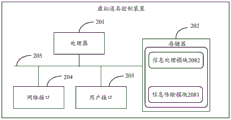
fig. 2 is a schematic structural diagram of a virtual item control device according to an embodiment of the present invention;
fig. 3 is an optional schematic flow chart of a virtual item control method according to an embodiment of the present invention;
FIG. 4 is a schematic diagram of a front-end display of a virtual object control method according to an embodiment of the present invention;
FIG. 5 is a schematic diagram of an alternative front-end display of a virtual object control method according to an embodiment of the present invention;
FIG. 6 is a schematic diagram of an alternative front-end display of a virtual object control method according to an embodiment of the present invention;
FIG. 7 is an optional flowchart of a virtual object control method according to an embodiment of the present invention;
FIG. 8 is a schematic diagram illustrating detection of a physical collision in the virtual object control method according to the embodiment of the present invention;
FIG. 9 is a schematic diagram of an alternative front-end display of a virtual object control method according to an embodiment of the present invention;
FIG. 10 is a schematic diagram of an alternative front-end display of a virtual object control method according to an embodiment of the present invention;
fig. 11 is an optional flowchart of the virtual object control method according to the embodiment of the present invention.
Detailed Description
In order to make the objects, technical solutions and advantages of the present invention clearer, the present invention will be further described in detail with reference to the accompanying drawings, the described embodiments should not be construed as limiting the present invention, and all other embodiments obtained by a person of ordinary skill in the art without creative efforts shall fall within the protection scope of the present invention.
In the following description, reference is made to "some embodiments" which describe a subset of all possible embodiments, but it is understood that "some embodiments" may be the same subset or different subsets of all possible embodiments, and may be combined with each other without conflict.
Before further detailed description of the embodiments of the present invention, terms and expressions mentioned in the embodiments of the present invention are explained, and the terms and expressions mentioned in the embodiments of the present invention are applied to the following explanations.
1) In response to the condition or state on which the performed operation depends, one or more of the performed operations may be in real-time or may have a set delay when the dependent condition or state is satisfied; there is no restriction on the order of execution of the operations performed unless otherwise specified.
2) Terminals, including but not limited to: the system comprises a common terminal and a special terminal, wherein the common terminal is in long connection and/or short connection with a sending channel, and the special terminal is in long connection with the sending channel.
3) The client, the carrier in the terminal implementing the specific function, such as mobile client (APP), is the carrier of the specific function in the mobile terminal, such as executing the function of paying for consumption or purchasing a financial product.
4) Virtual environment: is a virtual environment that is displayed (or provided) when an application is run on the terminal. The virtual environment may be a simulation environment of a real world, a semi-simulation semi-fictional three-dimensional environment, or a pure fictional three-dimensional environment. The virtual environment may be any one of a two-dimensional virtual environment, a 2.5-dimensional virtual environment, and a three-dimensional virtual environment, and the following embodiments illustrate the virtual environment as a three-dimensional virtual environment, but are not limited thereto. Optionally, the virtual environment is also used for virtual environment engagement between at least two virtual characters. Optionally, the virtual environment is also used for a virtual firearm engagement between at least two virtual characters. Optionally, the virtual environment is further configured to engage a virtual firearm between at least two virtual characters within a target area that is smaller over time in the virtual environment.
5) Virtual props: the virtual target is a virtual weapon which attacks by shooting bullets in a virtual environment, or a virtual bow and arrow which shoot a bow cluster and a virtual slingshot, and the virtual target can pick up the virtual firearm in the virtual environment and attack the virtual firearm obtained by picking up. Optionally, each virtual firearm may be provided with at least one slot, each slot for fitting at least one firearm accessory, such as: the HK416 or 95 type automatic rifle is generally provided with a muzzle slot position, a grip slot position, a cartridge clip slot position, a gunstock slot position and a sighting telescope slot position, wherein any one of a red dot sighting telescope, a holographic sighting telescope, a 2-time sighting telescope (for short, a 2-time telescope), a 4-time sighting telescope (for short, a 4-time telescope) and an 8-time sighting telescope (for short, an 8-time telescope) can be assembled on the sighting telescope slot position, and when a player holds the M416 automatic rifle and opens the telescope, the player can carry out amplification observation to a certain extent on a virtual environment according to the sighting telescope assembled by a firearm. Alternatively, the virtual object may be a Player Character controlled by an operation on the client, an Artificial Intelligence (AI Artificial Intelligence) set in the virtual scene fight by training, or a Non-Player Character (NPC Non-Player Character) set in the virtual scene interaction. Alternatively, the virtual object may be a virtual character playing a game in a virtual scene. Optionally, the number of virtual objects participating in the interaction in the virtual scene may be preset, or may be dynamically determined according to the number of clients participating in the interaction.
In the shooting game, for example, the user may control the virtual object to freely fall, glide, or open a parachute to fall in the sky of the virtual scene, to run, jump, crawl, bow to move ahead on land, or to swim, float, or dive in the sea, or the user may control the virtual object to move in the virtual scene by using a virtual vehicle, such as a virtual car, a virtual aircraft, or a virtual yacht, which is only exemplified in the above-mentioned scenes, but the present invention is not limited thereto. The user can also control the virtual object to interact with other virtual objects in the modes of fighting and the like through the virtual weapon, the virtual weapon can be a cold weapon or a hot weapon, and the type of the virtual weapon is not specifically limited by the invention.
The method provided by the invention can be applied to virtual reality application programs, three-dimensional map programs, military simulation programs, First-person shooter Games (FPS First-person shooting Games), multi-player on-line tactical Games (MOBILE Online Battle Arena Games), and the like, and the following embodiments are exemplified by application in Games.
The game based on the virtual environment is often composed of one or more maps of game worlds, the virtual environment in the game simulates the scene of the real world, the user can control the virtual object in the game to perform actions of walking, running, jumping, shooting, fighting, driving, switching to use a virtual weapon, attacking other virtual objects by using the virtual weapon and the like in the virtual environment, the interactivity is strong, and a plurality of users can form a team on line to play a competitive game. When the user controls the virtual object to use the virtual weapon to attack the target virtual object, the user selects a proper virtual weapon to attack the virtual object according to the position of the target virtual object or the operation habit.
The First-person Shooting game (FPS First-person Shooting) refers to a Shooting game that a user can play from a First-person perspective, and a screen of a virtual environment in the game is a screen of a virtual environment observed from a perspective of a First virtual object. In the game, at least two virtual objects carry out a single-game fighting mode in a virtual environment, the virtual objects achieve the purpose of survival in the virtual environment by avoiding attacks initiated by other virtual objects and dangers (such as poison circle, marshland and the like) existing in the virtual environment, when the life value of the virtual objects in the virtual environment is zero, the life of the virtual objects in the virtual environment is ended, and finally the virtual objects which survive in the virtual environment are winners. Optionally, each client may control one or more virtual objects in the virtual environment, with the time when the first client joins the battle as a starting time and the time when the last client exits the battle as an ending time. Optionally, the competitive mode of the battle may include a single battle mode, a double group battle mode or a multi-person group battle mode, and the competitive mode is not limited in the embodiment of the present invention.
In the related art, when the observation mode of the virtual environment is switched, a sighting telescope control is usually provided in the environment interface, a person perspective view picture for observing the virtual environment at a first person perspective of the virtual object is displayed in the environment interface, the virtual object holds a virtual prop (e.g., a virtual firearm), which is fitted with a sighting telescope accessory, the picture of the sighting telescope is superposed and displayed with the sighting telescope control, when the user clicks on the sighting telescope control, the picture of the sighting telescope is displayed, the picture of the sighting telescope is a picture for observing a virtual environment through the sighting telescope accessories, the sighting telescope control is superposed and displayed on the picture of the sighting telescope, the sighting telescope control is displayed in a corresponding cross shape after the sighting telescope control is opened, when a user clicks on the sighting telescope control again, the sighting telescope control is closed, and the first-person visual angle is restored to display the person-name visual angle picture.
Fig. 1 is a schematic view of a usage scenario of a virtual item control method provided in an embodiment of the present invention, referring to fig. 1, a terminal (including a terminal 10-1 and a terminal 10-2) is provided with a client capable of displaying software controlled by a corresponding virtual item, such as clients or plug-ins of different games, a user can obtain and display control of the virtual item through the corresponding client, and trigger a corresponding virtual item control process in a virtual resource change process (for example, a virtual object can pick up a virtual gun in a virtual environment and attack the virtual gun obtained by the picking up); the terminal is connected to the server 200 through a network 300, and the network 300 may be a wide area network or a local area network, or a combination of the two, and uses a wireless link to realize data transmission.
As an example, the server 200 is configured to deploy the virtual item control apparatus to implement the virtual item control method provided by the present invention, so as to display a user interface, where the user interface includes a person-name viewing angle picture for observing the virtual environment with a person-name viewing angle of a virtual object, the virtual object holds a virtual item, a sighting telescope accessory is installed on the virtual item, and the user interface further includes an injury control component; when the trigger operation of the injury control assembly is received, displaying a sighting picture on the user interface, and locking a corresponding injury object in the displayed user interface through the virtual prop;
when the locking of the injury object reaches the corresponding interaction condition, controlling, by the injury control component, the virtual prop to initiate an interaction to the injury object, for example: when the damage object is locked to reach a corresponding damage condition, the virtual prop is controlled to attack the damage object through the damage control assembly, so that the virtual object in the display user interface attacks the damage object.
Certainly, the virtual prop control device provided by the present invention can be applied to different game environments including, but not limited to, virtual reality application programs, three-dimensional map programs, military simulation programs, First-person shooter games (FPS First-person shooting games), multi-player on-line tactical sports games (MOBA Multiplayer Online Battle arena games), etc., and finally, corresponding virtual props are presented on a User Interface (UI User Interface) and controlled. The virtual props (such as virtual weapons in a virtual environment for attacking by shooting bullets, or virtual archers and virtual slingshots for shooting clusters of arrows) obtained by the user in the current display interface can also be called by other application programs.
Certainly, determining virtual prop control through a virtual prop control device specifically includes: displaying a user interface, wherein the user interface comprises a person name visual angle picture for observing the virtual environment by using a person name visual angle of a virtual object, the virtual object holds a virtual prop, a sighting telescope accessory is assembled on the virtual prop, and the user interface also comprises an injury control component; when the trigger operation of the injury control assembly is received, displaying a sighting picture on the user interface, and locking a corresponding injury object in the displayed user interface through the virtual prop; when the damage object is locked to reach a corresponding damage condition, the virtual prop is controlled to attack the damage object through the damage control assembly, so that the virtual object in the display user interface attacks the damage object.
As will be described in detail below with respect to the structure of the virtual item control device according to the embodiment of the present invention, the virtual item control device may be implemented in various forms, such as a dedicated terminal with a processing function of the virtual item control device, or a server with a processing function of the virtual item control device, such as the server 200 in fig. 1. Fig. 2 is a schematic diagram of a composition structure of a virtual item control device according to an embodiment of the present invention, and it can be understood that fig. 2 only shows an exemplary structure of the virtual item control device, and not all structures, and a part of the structure or all structures shown in fig. 2 may be implemented as needed.
The virtual prop control device provided by the embodiment of the invention comprises: at least one processor 201, memory 202, user interface 203, and at least one network interface 204. The various components in the virtual prop control device are coupled together by a bus system 205. It will be appreciated that the bus system 205 is used to enable communications among the components. The bus system 205 includes a power bus, a control bus, and a status signal bus in addition to a data bus. For clarity of illustration, however, the various buses are labeled as bus system 205 in fig. 2.
The user interface 203 may include, among other things, a display, a keyboard, a mouse, a trackball, a click wheel, a key, a button, a touch pad, or a touch screen.
It will be appreciated that the memory 202 can be either volatile memory or nonvolatile memory, and can include both volatile and nonvolatile memory. The memory 202 in embodiments of the present invention is capable of storing data to support operation of the terminal (e.g., 10-1). Examples of such data include: any computer program, such as an operating system and application programs, for operating on a terminal (e.g., 10-1). The operating system includes various system programs, such as a framework layer, a core library layer, a driver layer, and the like, and is used for implementing various basic services and processing hardware-based tasks. The application program may include various application programs.
In some embodiments, the virtual item control device provided in the embodiments of the present invention may be implemented by a combination of software and hardware, and as an example, the virtual item control device provided in the embodiments of the present invention may be a processor in the form of a hardware decoding processor, which is programmed to execute the virtual item control method provided in the embodiments of the present invention. For example, a processor in the form of a hardware decoding processor may employ one or more Application Specific Integrated Circuits (ASICs), DSPs, Programmable Logic Devices (PLDs), Complex Programmable Logic Devices (CPLDs), Field Programmable Gate Arrays (FPGAs), or other electronic components.
As an example that the virtual item control device provided by the embodiment of the present invention is implemented by combining software and hardware, the virtual item control device provided by the embodiment of the present invention may be directly embodied as a combination of software modules executed by the processor 201, where the software modules may be located in a storage medium, the storage medium is located in the memory 202, the processor 201 reads executable instructions included in the software modules in the memory 202, and the virtual item control method provided by the embodiment of the present invention is completed by combining necessary hardware (for example, including the processor 201 and other components connected to the bus 205).
By way of example, the Processor 201 may be an integrated circuit chip having Signal processing capabilities, such as a general purpose Processor, a Digital Signal Processor (DSP), or other programmable logic device, discrete gate or transistor logic, discrete hardware components, or the like, wherein the general purpose Processor may be a microprocessor or any conventional Processor or the like.
As an example that the virtual prop control apparatus provided in the embodiment of the present invention is implemented by hardware, the apparatus provided in the embodiment of the present invention may be implemented by directly using a processor 201 in the form of a hardware decoding processor, for example, the apparatus may be implemented by one or more Application Specific Integrated Circuits (ASICs), DSPs, Programmable Logic Devices (PLDs), Complex Programmable Logic Devices (CPLDs), Field Programmable Gate Arrays (FPGAs), or other electronic components to implement the virtual prop control method provided in the embodiment of the present invention.
In other embodiments, the virtual item control device provided in the embodiments of the present invention may be implemented in a software manner, and fig. 2 shows the virtual item control device stored in the memory 202, which may be software in the form of a program, a plug-in, and the like, and includes a series of modules, as an example of the program stored in the memory 202, the virtual item control device may include the following software modules, that is, an information transmission module 2081 and an information processing module 2082. When the software modules in the virtual item control device are read into the RAM by the processor 201 and executed, the virtual item control method provided by the embodiment of the present invention is implemented, where the functions of each software module in the virtual item control device include:
the information transmission module 2081 is configured to display a user interface, where the user interface includes a person-name view angle picture for observing the virtual environment with a person-name view angle of a virtual object, the virtual object holds a virtual prop, a sighting telescope accessory is mounted on the virtual prop, and the user interface further includes an injury control component;
the information processing module 2082 is configured to display a sighting picture on the user interface when receiving a trigger operation on the injury control component, and lock a corresponding injury object in the displayed user interface through the virtual prop;
the information processing module 2082 is configured to, when the locking of the injury object reaches a corresponding interaction condition, control the virtual prop to initiate interaction to the injury object through the injury control component, so as to enable the virtual object in the display user interface to attack the injury object, or enable the virtual object in the display user interface to defend the attack initiated by the injury object.
Referring to fig. 3, fig. 3 is an optional flow diagram of the virtual item control method provided in the embodiment of the present invention, and it can be understood that the steps shown in fig. 3 may be executed by various electronic devices operating the virtual item control device, for example, a server or a server cluster with the virtual item control device, where a dedicated terminal with the virtual item control device may be packaged in the server shown in fig. 1 to execute a corresponding software module in the virtual item control device shown in the previous sequence fig. 2. The following is a description of the steps shown in fig. 3.
Step 301: a user interface is displayed.
The user interface comprises a person name visual angle picture for observing the virtual environment by using a person name visual angle of a virtual object, the virtual object holds a virtual prop, a sighting telescope accessory is assembled on the virtual prop, and the user interface also comprises an injury control component;
step 302: when a triggering operation on the injury control component is received, a sighting picture is displayed on the user interface.
In some embodiments of the invention, when the trigger operation of the injury control component is received, the aiming picture is displayed on the user interface, and the method can be realized by the following steps:
determining different damage objects in the aiming picture according to the sight position and the sight orientation of the virtual prop, wherein the damage objects are positioned on the ray emitted from the sight position according to the sight orientation; and displaying a locking identifier corresponding to the damaged object in the aiming picture according to the display position of the damaged object in the aiming picture.
In some embodiments of the present invention, determining different injury objects in the sighting picture according to the sight position and the sight orientation of the virtual prop can be implemented by:
determining different damage objects in the virtual environment from corresponding layers of the virtual environment according to the position and the orientation of the sight bead; determining a distance between the different damaging objects and the virtual object; and when the distance between the candidate damage object and the virtual object is within the range of the virtual prop, determining the corresponding candidate damage object as the damage object.
Step 303: and locking the corresponding injury object in the display user interface through the virtual prop.
Step 304: when the locking of the injury object reaches the corresponding interaction condition, controlling the virtual prop to initiate interaction to the injury object through the injury control component.
In some embodiments of the present invention, when the locking of the injury object reaches the corresponding interaction condition, controlling, by the injury control component, the virtual prop to initiate an interaction to the injury object may be implemented by:
when the damage object is locked to reach a corresponding damage condition, the virtual prop is controlled to attack the damage object through the damage control assembly, so that the virtual object in the display user interface attacks the damage object; or,
when the damage object is locked to reach a corresponding defense condition, the second virtual prop is controlled to launch defense on the corresponding damage object in the display user interface through the damage control assembly, so that the virtual object in the display user interface can defend attack launched by the damage object.
Therefore, by triggering the injury control component in the user interface, the virtual object in the user interface can be displayed to attack the injury object or defend the attack initiated by the injury object according to different requirements of the user, the interaction between different virtual objects (injury objects) is realized, and the operability of the virtual objects is enhanced.
In some embodiments of the present invention, when the locking of the injury object reaches the corresponding injury condition, controlling, by the injury control component, the virtual prop to launch an attack on the injury object may be implemented by:
when the virtual prop is in a one-key mirror lifting injury mode, the virtual prop is locked on the injury object and the injury control assembly is in a trigger state, when the trigger state of the injury control assembly is changed, the virtual prop is controlled to attack the injury object through the injury control assembly, and the sighting telescope accessory is closed.
In some embodiments of the invention, the method further comprises:
when the trigger operation for unlocking is detected, playing animation information, wherein the animation information is used for representing the locking state of the injury releasing control assembly; and when the playing of the animation information is finished, switching to a corresponding user display interface.
In some embodiments of the present invention, when the locking of the injury object reaches the corresponding injury condition, the virtual prop is controlled to launch an attack to the injury object by the injury control component, which may be implemented by:
when the virtual prop is in a waist shooting injury mode and the injury control assembly is changed from a trigger state to a trigger state, the virtual prop is controlled to attack the injury object through the injury control assembly.
In some embodiments of the present invention, when the locking of the injury object reaches the corresponding injury condition, the virtual prop is controlled to launch an attack to the injury object by the injury control component, which may be implemented by:
when the virtual prop is in an open-mirror injury mode, the virtual prop is locked to the injury object and the injury control assembly is in a trigger state, and when the trigger state of the injury control assembly is changed, the virtual prop is controlled to attack the injury object through the injury control assembly.
In some embodiments of the present invention, when the locking of the injury object reaches the corresponding injury condition, the virtual prop is controlled to launch an attack to the injury object by the injury control component, which may be implemented by:
and locking the damage object, enabling the damage control assembly to be in an initial state, and controlling the virtual prop to attack the damage object through the damage control assembly when the damage control assembly is adjusted to be in a trigger state.
In some embodiments of the invention, the virtual object control method further comprises:
when the position of the injury object is moved,
and adjusting the attack direction of the virtual prop according to the position of the injury object.
In some embodiments of the invention, the virtual object control method further comprises:
acquiring the property category of the virtual property;
obtaining a setting item corresponding to the property category, wherein the setting item is used for setting different attack modes of the virtual property, and the attack mode of the virtual property comprises at least one of the following modes: a one-key lifting mirror injury mode, a waist shooting injury mode and an open mirror injury mode.
In some embodiments of the present invention, the method for controlling a virtual item provided in the embodiments of the present invention further includes:
when the virtual prop hits the injury object, the interaction attribute value of the injury object can be deducted. The interaction attribute value is used to represent the attribute state of the injury object in the interaction process, for example, in a survival game, the interaction attribute value may be a virtual life value, a virtual blood volume, a virtual essence value, a virtual gold coin number, and the like of the injury object.
The following describes the virtual object control method provided by the present invention by taking an FPS First-person Shooting game (FPS First-person Shooting) as an example, where fig. 4 is a schematic front-end display diagram of the virtual object control method according to the embodiment of the present invention. In some shooting games at a mobile terminal, referring to fig. 4, a user can control a virtual gun held by a virtual object to shoot in a game scene provided by game match, and the virtual object of an enemy is killed, so as to win the game match.
In the related art, a shooting type game user interface is provided with a shooting button to lock an injury object, and a firing button (namely, an injury control component in the preceding embodiment) controls the virtual prop to attack the injury object. After the user clicks the open mirror button, the virtual gun held by the virtual object can be controlled to enter an open mirror state, namely the virtual gun is in an open mirror injury mode, and in the open mirror state, the user can observe a virtual environment through a virtual sighting telescope equipped with the virtual gun. After the user clicks the firing button, the virtual gun held by the virtual object can be controlled to shoot, that is, the virtual prop is controlled to attack the injury object through the injury control component, so that the virtual object in the display user interface attacks the injury object.
The different virtual firearms shown in the use environment shown in fig. 4 can be in a lens-opening injury mode or a waist-shooting injury mode, but firing in different states should be distinguished from pressing firing or releasing firing, for example, one-key lens-lifting firing is suitable for releasing firing, but pressing firing is suitable for pressing firing under waist-shooting, because the degree of aiming is not needed under waist-shooting, if the user still releases firing, the operation sensitivity of the user is not high, and no instant response exists, and an operation mode that the user needs to press the lens-opening button to fire is also needed, because the user uses the operation mode, the user is actually aimed, does not need to release firing, and at this time, the user should press the lens to fire. However, the prior art cannot distinguish, and the use experience of the user is influenced.
The virtual gun in the preamble refers to a virtual article capable of simulating a real gun to shoot. The virtual firearm may be a three-dimensional model of a real firearm, and the virtual object is capable of carrying the virtual firearm and controlling the virtual firearm to shoot at a target.
The virtual firearm may include a variety of different firearm categories such as rifles, submachine guns, machine guns, shotguns, handguns, and the like. The firearm categories can be divided according to actual requirements, for example, rifles can be further divided into different categories such as assault rifles and attack rifles, and machine guns can be further divided into different categories such as light machine guns and heavy machine guns.
The preorder virtual sighting telescope is a virtual object which is arranged on a virtual gun and used for carrying out auxiliary observation on a virtual environment. The virtual scope may be a three-dimensional model of a real scope. After the virtual gun is equipped with the virtual sighting telescope, the shooting state can be entered, and the shooting state refers to a state that the virtual environment is observed through the virtual sighting telescope. The virtual sighting telescope can comprise various magnifications (such as 2-time telescope, 3-time telescope, 4-time telescope, 6-time telescope, 8-time telescope and the like), laser sighting telescope, red dot sighting telescope, holographic sighting telescope and the like.
In order to solve the problems, the invention respectively optimizes the release firing mode, the waist Shooting pressing firing mode and the mirror lifting button pressing firing mode in the process of the First person shooter game (FPS First-person Shooting).
Specifically, referring to fig. 5, fig. 5 is an optional front-end display schematic diagram of the virtual object control method according to the embodiment of the present invention, wherein the release-to-one-touch firing mode is a normal hand-feeling operation for firing a mirror by one key, that is, when a user presses a firing key, the mirror is first fired, then the mirror is aimed, and then the user releases the one-key operation for firing the mirror after aiming at a target, in this mode, because the user needs to aim first, the mirror cannot be fired, but after the user aims at the target, the user can instantly release the hand to fire without clicking other buttons, the user presses the mirror and lifts the mirror, and then the user releases the hand to fire, and referring to fig. 6 continuously, fig. 6 is an optional front-end display schematic diagram of the virtual object control method according to the embodiment of the present invention, if the user wants to cancel the firing operation of the mirror at this time, and does not want to waste bullets, the operation shown in fig. 6 can be performed, the operation flow of the user is saved.
Referring to fig. 7, fig. 7 is a flow diagram illustrating an optional operation of the virtual object control method according to the embodiment of the present invention, where the specific operation flow includes:
step 701: the user clicks the fire key.
Wherein, only the firing key on the right side in the preamble figure has the function of firing by lifting the mirror by one key.
Step 702: the weapon opens the mirror.
But if the user looses his hand before the mirror is completely opened, the mirror is immediately dropped, and once the weapon has been opened, the X button is displayed to indicate that the user can close the mirror by this button.
Step 703: and judging whether the user clicks X to close the mirror, and if so, closing the mirror.
Step 704: and (5) firing and closing the mirror.
When the user aims at the enemy, the enemy can be released to fire, and a ray is emitted from the lens at the moment of firing to carry out physical collision detection.
Referring to fig. 8, fig. 8 is a schematic diagram illustrating detection of a physical collision in the virtual object control method according to the embodiment of the present invention.
Referring to fig. 9, fig. 9 is a schematic diagram of an alternative front-end display of the virtual object control method according to the embodiment of the present invention, wherein the waist shooting injury mode is generally used for close-up fire, so that no mirror is required, and only a response operation is required immediately, otherwise, the target may not be hit if the fire is restarted after the hands are released.
Referring to fig. 10, fig. 10 is a schematic view of an optional front-end display of a virtual object control method according to an embodiment of the present invention, where, for a fire mode of pressing a fire button to fire, there are two ways to fire a mirror in a shooting game, one is to fire the mirror by pressing a key with a fire key, and the other is to open the mirror by pressing a mirror button, in this process, only the mirror is turned on, and turning on the mirror button again turns off the mirror, so as to end the current attack. The user can aim the fire without pressing the firing key all the time after clicking the mirror opening key, and can click the left firing key to press the firing after aiming,
in some embodiments of the invention, the firing key can be pressed and then the release hand is fired after aiming, so the right firing key also can be used for holding the release hand to fire, namely, in the mirror-lifting button mirror-opening mode, two firing modes are provided, namely, the left firing key is pressed to fire, and the right firing key is used for firing by releasing the hand.
Referring to fig. 11 in a specific process, fig. 11 is a flow diagram illustrating an optional process of the virtual object control method according to the embodiment of the present invention, which specifically includes:
step 1101: and clicking a mirror opening button by the user to perform mirror opening operation.
Step 1102: and judging whether the X key is triggered.
The mirror can be closed only by clicking the mirror opening button once again in the mirror opening mode through the mirror opening button, and the mirror opening button can become an X key after the mirror opening button is clicked to open the mirror, so that a user is prompted to close the mirror through the X key.
Step 1103: and clicking a firing key.
There are only two fire keys in total, if the user clicks the left fire key, the user presses the fire key, and if the user clicks the right fire key, the user releases his hand to fire.
The beneficial technical effects are as follows:
displaying a user interface, wherein the user interface comprises a person name visual angle picture for observing the virtual environment by using a person name visual angle of a virtual object, the virtual object holds a virtual prop, a sighting telescope accessory is assembled on the virtual prop, and the user interface also comprises an injury control assembly; when the trigger operation of the injury control assembly is received, displaying a sighting picture on the user interface, and locking a corresponding injury object in the displayed user interface through the virtual prop; when the damage object is locked to reach the corresponding damage condition, the virtual prop is controlled to attack the damage object through the damage control assembly, so that the virtual object in the display user interface attacks the damage object, the optimal attack mode is determined according to different states of different virtual props, the attack operation of a user is simple and efficient, and the use experience of the user is improved.
The above description is only exemplary of the present invention and should not be taken as limiting the scope of the present invention, and any modifications, equivalents, improvements, etc. made within the spirit and principle of the present invention should be included in the scope of the present invention.
Claims (15)
1. A virtual item control method is characterized by comprising the following steps:
displaying a user interface, wherein the user interface comprises a person name visual angle picture for observing the virtual environment by using a person name visual angle of a virtual object, the virtual object holds a virtual prop, a sighting telescope accessory is assembled on the virtual prop, and the user interface also comprises an injury control component;
when the trigger operation of the injury control assembly is received, displaying a sighting picture on the user interface, and locking a corresponding injury object in the displayed user interface through the virtual prop;
when the locking of the injury object reaches the corresponding interaction condition, controlling the virtual prop to initiate interaction to the injury object through the injury control component.
2. The method of claim 1, wherein displaying a sighting screen on the user interface upon receiving a triggering operation of the injury control component comprises:
determining different damage objects in the aiming picture according to the sight position and the sight orientation of the virtual prop, wherein the damage objects are positioned on the ray emitted from the sight position according to the sight orientation; and displaying a locking identifier corresponding to the damaged object in the aiming picture according to the display position of the damaged object in the aiming picture.
3. The method of claim 2, wherein determining different injury objects in the sighting screen according to the sight position and the sight orientation of the virtual prop comprises:
determining different damage objects in the virtual environment from corresponding layers of the virtual environment according to the position and the orientation of the sight bead;
determining a distance between the different damaging objects and the virtual object;
and when the distance between the candidate damage object and the virtual object is within the range of the virtual prop, determining the corresponding candidate damage object as the damage object.
4. The method of claim 1, wherein controlling, by the injury control component, the virtual prop to initiate an interaction with the injury object when the locking of the injury object meets a corresponding interaction condition comprises:
when the damage object is locked to reach a corresponding damage condition, the virtual prop is controlled to attack the damage object through the damage control assembly, so that the virtual object in the display user interface attacks the damage object; or,
when the damage object is locked to reach a corresponding defense condition, the second virtual prop is controlled to launch defense on the corresponding damage object in the display user interface through the damage control assembly, so that the virtual object in the display user interface can defend attack launched by the damage object.
5. The method of claim 4, wherein controlling, by the injury control component, the virtual prop to launch an attack on the injury subject when the locking of the injury subject reaches a corresponding injury condition comprises:
when the virtual prop is in a one-key mirror lifting injury mode, the virtual prop is locked on the injury object and the injury control assembly is in a trigger state, when the trigger state of the injury control assembly is changed, the virtual prop is controlled to attack the injury object through the injury control assembly, and the sighting telescope accessory is closed.
6. The method of claim 5, further comprising:
when the trigger operation for unlocking is detected, playing animation information, wherein the animation information is used for representing the locking state of the injury releasing control assembly;
and when the playing of the animation information is finished, switching to a corresponding user display interface.
7. The method of claim 4, wherein controlling, by the injury control component, the virtual prop to launch an attack on the injury subject when the locking of the injury subject reaches a corresponding injury condition comprises:
when the virtual prop is in a waist shooting injury mode and the injury control assembly is changed from a trigger state to a trigger state, the virtual prop is controlled to attack the injury object through the injury control assembly.
8. The method of claim 4, wherein controlling, by the injury control component, the virtual prop to launch an attack on the injury subject when the locking of the injury subject reaches a corresponding injury condition comprises:
when the virtual prop is in an open-mirror injury mode, the virtual prop is locked to the injury object and the injury control assembly is in a trigger state, and when the trigger state of the injury control assembly is changed, the virtual prop is controlled to attack the injury object through the injury control assembly; or
And locking the damage object, enabling the damage control assembly to be in an initial state, and controlling the virtual prop to attack the damage object through the damage control assembly when the damage control assembly is adjusted to be in a trigger state.
9. The method of claim 1, further comprising:
when the position of the injury object is moved,
and adjusting the attack direction of the virtual prop according to the position of the injury object.
10. The method of claim 1, further comprising:
acquiring the property category of the virtual property;
and acquiring a setting item corresponding to the property category, wherein the setting item is used for setting different attack modes of the virtual property.
11. A virtual prop control apparatus, the apparatus comprising:
the system comprises an information transmission module, a control module and an injury control module, wherein the information transmission module is used for displaying a user interface, the user interface comprises a person name visual angle picture for observing a virtual environment by using a person name visual angle of a virtual object, the virtual object holds a virtual prop, a sighting telescope accessory is assembled on the virtual prop, and the user interface also comprises an injury control assembly;
the information processing module is used for displaying a sighting picture on the user interface when receiving triggering operation on the injury control assembly, and locking a corresponding injury object in the displayed user interface through the virtual prop;
and the information processing module is used for controlling the virtual prop to initiate interaction to the injury object through the injury control component when the locking of the injury object reaches corresponding interaction conditions.
12. The apparatus of claim 11,
the information processing module is used for determining different damage objects in the aiming picture according to the sight position and the sight orientation of the virtual prop, wherein the damage objects are positioned on the ray emitted from the sight position according to the sight orientation; and displaying a locking identifier corresponding to the damaged object in the aiming picture according to the display position of the damaged object in the aiming picture.
13. The apparatus of claim 11,
the information processing module is used for controlling the virtual prop to attack the injury object through the injury control component when the damage object is locked to reach a corresponding injury condition, so that the virtual object in the display user interface attacks the injury object;
the information processing module is used for controlling the second virtual prop to launch defense on the corresponding injury object in the display user interface through the injury control component when the locking on the injury object reaches the corresponding defense condition, so that the virtual object in the display user interface can defend the attack launched by the injury object.
14. An electronic device, characterized in that the electronic device comprises:
a memory for storing executable instructions;
a processor, configured to execute the executable instructions stored in the memory, and implement the virtual item control method according to any one of claims 1 to 10.
15. A computer-readable storage medium storing executable instructions, wherein the executable instructions when executed by a processor implement the virtual item control method of any one of claims 1 to 10.
Priority Applications (1)
| Application Number | Priority Date | Filing Date | Title |
|---|---|---|---|
| CN202010009747.9A CN111228798A (en) | 2020-01-06 | 2020-01-06 | Virtual item control method and device, electronic equipment and storage medium |
Applications Claiming Priority (1)
| Application Number | Priority Date | Filing Date | Title |
|---|---|---|---|
| CN202010009747.9A CN111228798A (en) | 2020-01-06 | 2020-01-06 | Virtual item control method and device, electronic equipment and storage medium |
Publications (1)
| Publication Number | Publication Date |
|---|---|
| CN111228798A true CN111228798A (en) | 2020-06-05 |
Family
ID=70869187
Family Applications (1)
| Application Number | Title | Priority Date | Filing Date |
|---|---|---|---|
| CN202010009747.9A Pending CN111228798A (en) | 2020-01-06 | 2020-01-06 | Virtual item control method and device, electronic equipment and storage medium |
Country Status (1)
| Country | Link |
|---|---|
| CN (1) | CN111228798A (en) |
Cited By (3)
| Publication number | Priority date | Publication date | Assignee | Title |
|---|---|---|---|---|
| CN111782096A (en) * | 2020-06-29 | 2020-10-16 | 联想(北京)有限公司 | Target object selection method and device |
| CN113318434A (en) * | 2021-06-10 | 2021-08-31 | 网易(杭州)网络有限公司 | Game information processing method and device and storage medium |
| CN113384876A (en) * | 2021-06-23 | 2021-09-14 | 努比亚技术有限公司 | A game visual magnifying mirror switching method, device and computer-readable storage medium |
Citations (6)
| Publication number | Priority date | Publication date | Assignee | Title |
|---|---|---|---|---|
| CN108211358A (en) * | 2017-11-30 | 2018-06-29 | 腾讯科技(成都)有限公司 | The display methods and device of information, storage medium, electronic device |
| CN108837506A (en) * | 2018-05-25 | 2018-11-20 | 网易(杭州)网络有限公司 | Control method, device and the storage medium of virtual item in a kind of race games |
| CN110339562A (en) * | 2019-08-01 | 2019-10-18 | 腾讯科技(深圳)有限公司 | Virtual object control method, device, terminal and storage medium |
| CN110433489A (en) * | 2018-11-28 | 2019-11-12 | 网易(杭州)网络有限公司 | Control method, device, storage medium and the electronic device aimed in game |
| CN110448891A (en) * | 2019-08-08 | 2019-11-15 | 腾讯科技(深圳)有限公司 | Control the method, apparatus and storage medium of virtual objects operation remote dummy stage property |
| CN110597449A (en) * | 2019-09-12 | 2019-12-20 | 腾讯科技(深圳)有限公司 | Prop using method, device, terminal and storage medium based on virtual environment |
-
2020
- 2020-01-06 CN CN202010009747.9A patent/CN111228798A/en active Pending
Patent Citations (6)
| Publication number | Priority date | Publication date | Assignee | Title |
|---|---|---|---|---|
| CN108211358A (en) * | 2017-11-30 | 2018-06-29 | 腾讯科技(成都)有限公司 | The display methods and device of information, storage medium, electronic device |
| CN108837506A (en) * | 2018-05-25 | 2018-11-20 | 网易(杭州)网络有限公司 | Control method, device and the storage medium of virtual item in a kind of race games |
| CN110433489A (en) * | 2018-11-28 | 2019-11-12 | 网易(杭州)网络有限公司 | Control method, device, storage medium and the electronic device aimed in game |
| CN110339562A (en) * | 2019-08-01 | 2019-10-18 | 腾讯科技(深圳)有限公司 | Virtual object control method, device, terminal and storage medium |
| CN110448891A (en) * | 2019-08-08 | 2019-11-15 | 腾讯科技(深圳)有限公司 | Control the method, apparatus and storage medium of virtual objects operation remote dummy stage property |
| CN110597449A (en) * | 2019-09-12 | 2019-12-20 | 腾讯科技(深圳)有限公司 | Prop using method, device, terminal and storage medium based on virtual environment |
Non-Patent Citations (1)
| Title |
|---|
| MUYIXHMK: "生死狙击:武器带盾牌", 《生死狙击:武器带盾牌HTTPS://WWW.BILIBILI.COM/VIDEO/BV1XB411B7EM?FROM=SEARCH&SEID=3444222733757704015》 * |
Cited By (5)
| Publication number | Priority date | Publication date | Assignee | Title |
|---|---|---|---|---|
| CN111782096A (en) * | 2020-06-29 | 2020-10-16 | 联想(北京)有限公司 | Target object selection method and device |
| CN111782096B (en) * | 2020-06-29 | 2022-06-24 | 联想(北京)有限公司 | Target object selection method and device |
| CN113318434A (en) * | 2021-06-10 | 2021-08-31 | 网易(杭州)网络有限公司 | Game information processing method and device and storage medium |
| CN113318434B (en) * | 2021-06-10 | 2024-07-19 | 网易(杭州)网络有限公司 | Game information processing method and device and storage medium |
| CN113384876A (en) * | 2021-06-23 | 2021-09-14 | 努比亚技术有限公司 | A game visual magnifying mirror switching method, device and computer-readable storage medium |
Similar Documents
| Publication | Publication Date | Title |
|---|---|---|
| CN111202979B (en) | Virtual item control method and device, electronic equipment and storage medium | |
| US12268962B2 (en) | Method and apparatus for using virtual item, computer device, and storage medium | |
| US12324987B2 (en) | Method and apparatus for displaying virtual item, device, and storage medium | |
| US6814667B2 (en) | eTroops infrared shooting game | |
| CN111437601B (en) | Game playback control method and device, electronic equipment and storage medium | |
| US20080070686A1 (en) | Storage medium and game device | |
| US20060287027A1 (en) | Real-time control system for console-based gaming | |
| CN111803944B (en) | Image processing method and device, electronic equipment and storage medium | |
| WO2022156712A1 (en) | Method and apparatus for displaying aiming point, and device and storage medium | |
| CN114432701B (en) | Ray display method, device, equipment and storage medium based on virtual scene | |
| CN111228798A (en) | Virtual item control method and device, electronic equipment and storage medium | |
| CN111841014B (en) | Virtual article display method and device, electronic equipment and storage medium | |
| CN112755539A (en) | Interactive display method and device and computer storage medium | |
| Giusti et al. | Weapon design patterns in shooter games | |
| CN111202983A (en) | Method, device, equipment and storage medium for using props in virtual environment | |
| CN112107859B (en) | Prop control method and device, storage medium and electronic equipment | |
| CN115970286A (en) | Virtual object control method, device, terminal, storage medium and program product | |
| WO2025252007A1 (en) | Game interaction method and apparatus, electronic device, and storage medium | |
| HK40023572A (en) | Method and apparatus for controlling virtual props, electronic device and storage medium | |
| CN116099190A (en) | Interaction method, device, equipment, medium and program product based on virtual scene | |
| KR20130082657A (en) | Server for online first player shooting game using traces of bullets, and method of controlling the same | |
| CN112755524A (en) | Virtual target display method and device, electronic equipment and storage medium | |
| CN119701340B (en) | Game interaction method and device, electronic equipment and storage medium | |
| HK40025829B (en) | Game playback control method and device, electronic apparatus and storage medium | |
| HK40025829A (en) | Game playback control method and device, electronic apparatus and storage medium |
Legal Events
| Date | Code | Title | Description |
|---|---|---|---|
| PB01 | Publication | ||
| PB01 | Publication | ||
| SE01 | Entry into force of request for substantive examination | ||
| SE01 | Entry into force of request for substantive examination | ||
| REG | Reference to a national code |
Ref country code: HK Ref legal event code: DE Ref document number: 40023572 Country of ref document: HK |
|
| RJ01 | Rejection of invention patent application after publication |
Application publication date: 20200605 |
|
| RJ01 | Rejection of invention patent application after publication |