CN110868850B - NSG mice lacking MHC class I and class II - Google Patents
NSG mice lacking MHC class I and class II Download PDFInfo
- Publication number
- CN110868850B CN110868850B CN201880045358.2A CN201880045358A CN110868850B CN 110868850 B CN110868850 B CN 110868850B CN 201880045358 A CN201880045358 A CN 201880045358A CN 110868850 B CN110868850 B CN 110868850B
- Authority
- CN
- China
- Prior art keywords
- null
- nsg
- mice
- cells
- human
- Prior art date
- Legal status (The legal status is an assumption and is not a legal conclusion. Google has not performed a legal analysis and makes no representation as to the accuracy of the status listed.)
- Active
Links
Images


Classifications
-
- A—HUMAN NECESSITIES
- A01—AGRICULTURE; FORESTRY; ANIMAL HUSBANDRY; HUNTING; TRAPPING; FISHING
- A01K—ANIMAL HUSBANDRY; AVICULTURE; APICULTURE; PISCICULTURE; FISHING; REARING OR BREEDING ANIMALS, NOT OTHERWISE PROVIDED FOR; NEW BREEDS OF ANIMALS
- A01K67/00—Rearing or breeding animals, not otherwise provided for; New or modified breeds of animals
- A01K67/027—New or modified breeds of vertebrates
- A01K67/0275—Genetically modified vertebrates, e.g. transgenic
- A01K67/0276—Knock-out vertebrates
-
- A—HUMAN NECESSITIES
- A01—AGRICULTURE; FORESTRY; ANIMAL HUSBANDRY; HUNTING; TRAPPING; FISHING
- A01K—ANIMAL HUSBANDRY; AVICULTURE; APICULTURE; PISCICULTURE; FISHING; REARING OR BREEDING ANIMALS, NOT OTHERWISE PROVIDED FOR; NEW BREEDS OF ANIMALS
- A01K67/00—Rearing or breeding animals, not otherwise provided for; New or modified breeds of animals
- A01K67/027—New or modified breeds of vertebrates
- A01K67/0275—Genetically modified vertebrates, e.g. transgenic
- A01K67/0278—Knock-in vertebrates, e.g. humanised vertebrates
-
- A—HUMAN NECESSITIES
- A01—AGRICULTURE; FORESTRY; ANIMAL HUSBANDRY; HUNTING; TRAPPING; FISHING
- A01K—ANIMAL HUSBANDRY; AVICULTURE; APICULTURE; PISCICULTURE; FISHING; REARING OR BREEDING ANIMALS, NOT OTHERWISE PROVIDED FOR; NEW BREEDS OF ANIMALS
- A01K2207/00—Modified animals
- A01K2207/12—Animals modified by administration of exogenous cells
-
- A—HUMAN NECESSITIES
- A01—AGRICULTURE; FORESTRY; ANIMAL HUSBANDRY; HUNTING; TRAPPING; FISHING
- A01K—ANIMAL HUSBANDRY; AVICULTURE; APICULTURE; PISCICULTURE; FISHING; REARING OR BREEDING ANIMALS, NOT OTHERWISE PROVIDED FOR; NEW BREEDS OF ANIMALS
- A01K2217/00—Genetically modified animals
- A01K2217/07—Animals genetically altered by homologous recombination
- A01K2217/075—Animals genetically altered by homologous recombination inducing loss of function, i.e. knock out
-
- A—HUMAN NECESSITIES
- A01—AGRICULTURE; FORESTRY; ANIMAL HUSBANDRY; HUNTING; TRAPPING; FISHING
- A01K—ANIMAL HUSBANDRY; AVICULTURE; APICULTURE; PISCICULTURE; FISHING; REARING OR BREEDING ANIMALS, NOT OTHERWISE PROVIDED FOR; NEW BREEDS OF ANIMALS
- A01K2217/00—Genetically modified animals
- A01K2217/15—Animals comprising multiple alterations of the genome, by transgenesis or homologous recombination, e.g. obtained by cross-breeding
-
- A—HUMAN NECESSITIES
- A01—AGRICULTURE; FORESTRY; ANIMAL HUSBANDRY; HUNTING; TRAPPING; FISHING
- A01K—ANIMAL HUSBANDRY; AVICULTURE; APICULTURE; PISCICULTURE; FISHING; REARING OR BREEDING ANIMALS, NOT OTHERWISE PROVIDED FOR; NEW BREEDS OF ANIMALS
- A01K2227/00—Animals characterised by species
- A01K2227/10—Mammal
- A01K2227/105—Murine
-
- A—HUMAN NECESSITIES
- A01—AGRICULTURE; FORESTRY; ANIMAL HUSBANDRY; HUNTING; TRAPPING; FISHING
- A01K—ANIMAL HUSBANDRY; AVICULTURE; APICULTURE; PISCICULTURE; FISHING; REARING OR BREEDING ANIMALS, NOT OTHERWISE PROVIDED FOR; NEW BREEDS OF ANIMALS
- A01K2267/00—Animals characterised by purpose
- A01K2267/03—Animal model, e.g. for test or diseases
Landscapes
- Life Sciences & Earth Sciences (AREA)
- Environmental Sciences (AREA)
- Animal Husbandry (AREA)
- Biodiversity & Conservation Biology (AREA)
- General Health & Medical Sciences (AREA)
- Veterinary Medicine (AREA)
- Animal Behavior & Ethology (AREA)
- Zoology (AREA)
- Health & Medical Sciences (AREA)
- Biotechnology (AREA)
- Engineering & Computer Science (AREA)
- Medicines Containing Material From Animals Or Micro-Organisms (AREA)
- Investigating Or Analysing Biological Materials (AREA)
- Measuring Or Testing Involving Enzymes Or Micro-Organisms (AREA)
- Medicines That Contain Protein Lipid Enzymes And Other Medicines (AREA)
- Micro-Organisms Or Cultivation Processes Thereof (AREA)
- Transition And Organic Metals Composition Catalysts For Addition Polymerization (AREA)
- Processes Of Treating Macromolecular Substances (AREA)
Abstract
根据本发明的方面,提供了一种NOD.Cg‑Prkdcscid Il2rgtm1Wjl/SzJ(NOD‑scid‑IL2rγnull,NSG)小鼠,所述小鼠被遗传修饰使得所述NSG小鼠缺乏功能性主要组织相容性复合物I(MHC I)和缺乏功能性主要组织相容性复合物II(MHC II)。根据特定的方面,遗传修饰的NSG小鼠是NOD.Cg‑Prkdcscid H2‑K1tm1Bpe H2‑Ab1em1Mvw H2‑D1tm1Bpe Il2rgtm1Wjl/SzJ(NSG‑(Kb Db)null(IAnull))小鼠、NSG‑RIP‑DTR(Kb Db)null(IAnull)小鼠或NOD.Cg‑B2mtm1Unc Prkdcscid H2dlAb1‑Ea Il2rgtm1Wjl/SzJ(NSG‑B2Mnull(IA IEnull))小鼠。根据本文所描述的方面向遗传修饰的免疫缺陷小鼠施用人免疫细胞和/或人肿瘤细胞,并且可以使用所提供的小鼠对一种或多种测试物质进行测定。
According to aspects of the present invention there is provided a NOD.Cg-Prkdc scid Il2rg tm1Wjl /SzJ (NOD-scid-IL2rγ null , NSG) mouse which has been genetically modified such that the NSG mouse lacks a functional primary Histocompatibility complex I (MHC I) and lack of functional major histocompatibility complex II (MHC II). According to particular aspects, the genetically modified NSG mouse is NOD.Cg-Prkdc scid H2-K1 tm1Bpe H2-Ab1 em1Mvw H2-D1 tm1Bpe Il2rg tm1Wjl /SzJ(NSG-(K b D b ) null (IA null )) small mouse, NSG‑RIP‑DTR (K b D b ) null (IA null ) mouse or NOD.Cg‑B2m tm1Unc Prkdc scid H2 dlAb1‑Ea Il2rg tm1Wjl /SzJ (NSG‑B2M null (IA IE null )) mouse . Human immune cells and/or human tumor cells are administered to genetically modified immunodeficient mice according to aspects described herein, and the provided mice can be used to assay for one or more test substances.
Description
相关申请的引用References to related applications
本申请要求2017年5月12日提交的美国临时专利申请序列号62/505,264和2018年3月28日提交的美国临时专利申请序列号62/649,099的优先权,其全部内容通过引用并入本文。This application claims priority to U.S. Provisional Patent Application Serial No. 62/505,264, filed May 12, 2017, and U.S. Provisional Patent Application Serial No. 62/649,099, filed March 28, 2018, the entire contents of which are incorporated herein by reference .
拨款引用Grant Citation
本发明是在国立卫生研究院授予的拨款号1R24 OD018259和拨款号OD011190的政府支持下完成的。政府拥有本发明的某些权利。This invention was made with Government support under Grant No. 1R24 OD018259 and Grant No. OD011190 awarded by the National Institutes of Health. The government has certain rights in this invention.
技术领域technical field
通常描述的是功能性人类细胞和组织的小鼠模型。根据特定的方面,提供了遗传修饰的免疫缺陷小鼠,其缺乏I类MHC和II类MHC。根据进一步特定的方面,提供了遗传修饰的免疫缺陷小鼠,其缺乏I类MHC和II类MHC并且其包含1)移植的功能性人T细胞和2)同种异体或异种细胞,如人患者来源的肿瘤细胞。Often described are mouse models of functional human cells and tissues. According to certain aspects, a genetically modified immunodeficient mouse lacking MHC class I and MHC class II is provided. According to a further specific aspect, there is provided a genetically modified immunodeficient mouse which lacks MHC class I and MHC class II and which comprises 1) transplanted functional human T cells and 2) allogeneic or xenogeneic cells, such as a human patient source of tumor cells.
背景技术Background technique
人源化小鼠(例如,移植了功能性人细胞和组织的免疫缺陷小鼠)已广泛用于在体内对人类免疫细胞的功能进行建模。在这样的小鼠模型中研究人类T细胞功能的主要限制是移植物抗宿主病(GVHD)的快速发展,这不仅缩短了实验时间窗,而且由于最终杀死小鼠的正在进行中的潜在GVHD,使得对人类T细胞功能的分析造成混淆。这些问题已经阻碍了人类T细胞功能的研究。Humanized mice (eg, immunodeficient mice transplanted with functional human cells and tissues) have been widely used to model human immune cell function in vivo. A major limitation to studying human T cell function in such mouse models is the rapid development of graft-versus-host disease (GVHD), which not only shortens the experimental time window, but also due to the ongoing underlying GVHD that eventually kills the mice , confounding the analysis of human T cell function. These issues have hampered the study of human T cell function.
做出了一些尝试以产生缺乏I类或II类主要组织相容性复合物(MHC)的人源化小鼠模型。例如,Vugmeyster等公开了一种缺乏由H-2K和H-2D基因编码的MHC分子的小鼠模型(KbDb-/-小鼠)(Vugmeyster等,Proc.Natl.Acad.Sci.USA 95:12492-12497,1998)。Ashizawa等描述了一种人源化免疫缺陷NOG小鼠(NOD/Shi-scid-IL2rγnull)[NOD/Shi-Prkdcscid-IL2rγnull],其敲除了I/II类MHC(Ashizawa等,Clin Cancer Res;23(1),149-158,2017)。Several attempts have been made to generate humanized mouse models lacking class I or class II major histocompatibility complex (MHC). For example, Vugmeyster et al. disclose a mouse model (K b D b-/- mouse) lacking MHC molecules encoded by the H-2K and H-2D genes (Vugmeyster et al., Proc. Natl. Acad. Sci. USA 95:12492-12497, 1998). Ashizawa et al. describe a humanized immunodeficient NOG mouse (NOD/Shi-scid-IL2rγ null ) [NOD/Shi-Prkdc scid -IL2rγ null ], which was knocked out of MHC class I/II (Ashizawa et al., Clin Cancer Res; 23(1), 149-158, 2017).
对功能性人细胞和组织的小鼠模型存在持续需求。There is an ongoing need for mouse models of functional human cells and tissues.
发明内容Contents of the invention
根据本发明的方面,提供了一种NOD.Cg-Prkdcscid Il2rgtm1Wjl/SzJ(NOD-scid-IL2rγnull,NSG)小鼠,所述小鼠被遗传修饰使得所述NSG小鼠缺乏功能性主要组织相容性复合物I(MHC I)和缺乏功能性主要组织相容性复合物II(MHC II)。根据特定的方面,遗传修饰的NSG小鼠是NOD.Cg-Prkdcscid H2-K1tm1Bpe H2-Ab1em1Mvw H2-D1tm1Bpe Il2rgtm1Wjl/SzJ(NSG-(Kb Db)null(IAnull))小鼠、NSG-RIP-DTR(Kb Db)null(IAnull)小鼠或NOD.Cg-B2mtm1UncPrkdcscid H2dlAb1-Ea Il2rgtm1Wjl/SzJ(NSG-B2Mnull(IA IEnull))小鼠。According to an aspect of the present invention, there is provided a NOD.Cg-Prkdc scid Il2rg tm1Wjl /SzJ (NOD-scid-IL2rγ null , NSG) mouse which has been genetically modified such that the NSG mouse lacks a functional primary Histocompatibility complex I (MHC I) and lack of functional major histocompatibility complex II (MHC II). According to certain aspects, the genetically modified NSG mouse is NOD.Cg-Prkdc scid H2-K1 tm1Bpe H2-Ab1 em1Mvw H2-D1 tm1Bpe Il2rg tm1Wjl /SzJ(NSG-(K b D b ) null (IA null )) small mouse, NSG-RIP-DTR(K b D b ) null (IA null ) mouse or NOD.Cg-B2m tm1Unc Prkdc scid H2 dlAb1-Ea Il2rg tm1Wjl /SzJ(NSG-B2M null (IA IE null )) mouse .
根据本发明的方面,提供了一种NOD.Cg-Prkdcscid Il2rgtm1Wjl/SzJ(NOD-scid-IL2rγnull,NSG)小鼠,所述小鼠被遗传修饰使得所述NSG小鼠缺乏功能性主要组织相容性复合物I(MHC I)和缺乏功能性主要组织相容性复合物II(MHC II),其包含人免疫细胞。根据特定的方面,所述遗传修饰的NSG小鼠是NOD.Cg-Prkdcscid H2-K1tm1Bpe H2-Ab1em1Mvw H2-D1tm1Bpe Il2rgtm1Wjl/SzJ(NSG-(Kb Db)null(IAnull))小鼠,其包含人免疫细胞,NSG-RIP-DTR(KbDb)null(IAnull)小鼠,其包含人免疫细胞,或者NOD.Cg-B2mtm1Unc Prkdcscid H2dlAb1-EaIl2rgtm1Wjl/SzJ(NSG-B2Mnull(IA IEnull))小鼠,其包含人免疫细胞。According to an aspect of the present invention, there is provided a NOD.Cg-Prkdc scid Il2rg tm1Wjl /SzJ (NOD-scid-IL2rγ null , NSG) mouse which has been genetically modified such that the NSG mouse lacks a functional primary Histocompatibility complex I (MHC I) and lack of functional major histocompatibility complex II (MHC II), which comprise human immune cells. According to a particular aspect, said genetically modified NSG mouse is NOD.Cg-Prkdc scid H2-K1 tm1Bpe H2-Ab1 em1Mvw H2-D1 tm1Bpe Il2rg tm1Wjl /SzJ(NSG-(K b D b ) null (IA null ) ) mice comprising human immune cells, NSG-RIP-DTR(K b D b ) null (IA null ) mice comprising human immune cells, or NOD.Cg-B2m tm1Unc Prkdc scid H2 dlAb1-Ea Il2rg tm1Wjl /SzJ (NSG-B2M null (IAIE null )) mice comprising human immune cells.
根据本发明的方面,提供了一种NOD.Cg-Prkdcscid Il2rgtm1Wjl/SzJ(NOD-scid-IL2rγnull,NSG)小鼠,所述小鼠被遗传修饰使得所述NSG小鼠缺乏功能性主要组织相容性复合物I(MHC I)和缺乏功能性主要组织相容性复合物II(MHC II),其包含人外周血单核细胞。根据特定的方面,所述遗传修饰的NSG小鼠是NOD.Cg-Prkdcscid H2-K1tm1Bpe H2-Ab1em1MvwH2-D1tm1Bpe Il2rgtm1Wjl/SzJ(NSG-(Kb Db)null(IAnull))小鼠,其包含人外周血单核细胞,NSG-RIP-DTR(Kb Db)null(IAnull)小鼠,其包含人外周血单核细胞,或者NOD.Cg-B2mtm1Unc PrkdcscidH2dlAb1-Ea Il2rgtm1Wjl/SzJ(NSG-B2Mnull(IA IEnull))小鼠,其包含人外周血单核细胞。According to an aspect of the present invention, there is provided a NOD.Cg-Prkdc scid Il2rg tm1Wjl /SzJ (NOD-scid-IL2rγ null , NSG) mouse which has been genetically modified such that the NSG mouse lacks a functional primary Histocompatibility complex I (MHC I) and lack of functional major histocompatibility complex II (MHC II), which comprise human peripheral blood mononuclear cells. According to a particular aspect, said genetically modified NSG mouse is NOD.Cg-Prkdc scid H2-K1 tm1Bpe H2-Ab1 em1Mvw H2-D1 tm1Bpe Il2rg tm1Wjl /SzJ(NSG-(K b D b ) null (IA null ) ) mice comprising human peripheral blood mononuclear cells, NSG-RIP-DTR(K b D b ) null (IA null ) mice comprising human peripheral blood mononuclear cells, or NOD.Cg-B2m tm1Unc Prkdc scid H2 dlAb1-Ea Il2rg tm1Wjl /SzJ (NSG-B2M null (IAIE null )) mice containing human peripheral blood mononuclear cells.
根据本发明的方面,提供了一种NOD.Cg-Prkdcscid Il2rgtm1Wjl/SzJ(NOD-scid-IL2rγnull,NSG)小鼠,所述小鼠被遗传修饰使得所述NSG小鼠缺乏功能性主要组织相容性复合物I(MHC I)和缺乏功能性主要组织相容性复合物II(MHC II),其包含人T细胞。根据特定的方面,所述遗传修饰的NSG小鼠是NOD.Cg-Prkdcscid H2-K1tm1Bpe H2-Ab1em1Mvw H2-D1tm1Bpe Il2rgtm1Wjl/SzJ(NSG-(Kb Db)null(IAnull))小鼠,其包含人T细胞,NSG-RIP-DTR(KbDb)null(IAnull)小鼠,其包含人T细胞,或者NOD.Cg-B2mtm1Unc Prkdcscid H2dlAb1-Ea Il2rgtm1Wjl/SzJ(NSG-B2Mnull(IA IEnull))小鼠,其包含人T细胞。According to an aspect of the present invention, there is provided a NOD.Cg-Prkdc scid Il2rg tm1Wjl /SzJ (NOD-scid-IL2rγ null , NSG) mouse which has been genetically modified such that the NSG mouse lacks a functional primary Histocompatibility complex I (MHC I) and lack of functional major histocompatibility complex II (MHC II), which comprise human T cells. According to a particular aspect, said genetically modified NSG mouse is NOD.Cg-Prkdc scid H2-K1 tm1Bpe H2-Ab1 em1Mvw H2-D1 tm1Bpe Il2rg tm1Wjl /SzJ(NSG-(K b D b ) null (IA null ) ) mice containing human T cells, NSG-RIP-DTR(K b D b ) null (IA null ) mice containing human T cells, or NOD.Cg-B2m tm1Unc Prkdc scid H2 dlAb1-Ea Il2rg tm1Wjl /SzJ (NSG-B2M null (IAIE null )) mice, which contain human T cells.
根据本发明的方面,提供了一种NOD.Cg-Prkdcscid Il2rgtm1Wjl/SzJ(NOD-scid-IL2rγnull,NSG)小鼠,所述小鼠被遗传修饰使得所述NSG小鼠缺乏功能性主要组织相容性复合物I(MHC I)和缺乏功能性主要组织相容性复合物II(MHC II),其包含人免疫细胞和人肿瘤细胞。根据特定的方面,所述遗传修饰的NSG小鼠是NOD.Cg-Prkdcscid H2-K1tm1Bpe H2-Ab1em1Mvw H2-D1tm1Bpe Il2rgtm1Wjl/SzJ(NSG-(Kb Db)null(IAnull))小鼠,其包含人免疫细胞和人肿瘤细胞,NSG-RIP-DTR(Kb Db)null(IAnull)小鼠,其包含人免疫细胞和人肿瘤细胞,或者NOD.Cg-B2mtm1Unc Prkdcscid H2dlAb1-Ea Il2rgtm1Wjl/SzJ(NSG-B2Mnull(IA IEnull))小鼠,其包含人免疫细胞和人肿瘤细胞。According to an aspect of the present invention, there is provided a NOD.Cg-Prkdc scid Il2rg tm1Wjl /SzJ (NOD-scid-IL2rγ null , NSG) mouse which has been genetically modified such that the NSG mouse lacks a functional primary Histocompatibility complex I (MHC I) and lack of functional major histocompatibility complex II (MHC II), which comprise human immune cells and human tumor cells. According to a particular aspect, said genetically modified NSG mouse is NOD.Cg-Prkdc scid H2-K1 tm1Bpe H2-Ab1 em1Mvw H2-D1 tm1Bpe Il2rg tm1Wjl /SzJ(NSG-(K b D b ) null (IA null ) ) mice comprising human immune cells and human tumor cells, NSG-RIP-DTR(K b D b ) null (IA null ) mice comprising human immune cells and human tumor cells, or NOD.Cg-B2m tm1Unc Prkdc scid H2 dlAb1-Ea Il2rg tm1Wjl /SzJ (NSG-B2M null (IAIE null )) mice containing human immune cells and human tumor cells.
根据本发明的方面,提供了一种NOD.Cg-Prkdcscid Il2rgtm1Wjl/SzJ(NOD-scid-IL2rγnull,NSG)小鼠,所述小鼠被遗传修饰使得所述NSG小鼠缺乏功能性主要组织相容性复合物I(MHC I)和缺乏功能性主要组织相容性复合物II(MHC II),其包含人外周血单核细胞和人肿瘤细胞。根据特定的方面,所述遗传修饰的NSG小鼠是NOD.Cg-Prkdcscid H2-K1tm1Bpe H2-Ab1em1Mvw H2-D1tm1Bpe Il2rgtm1Wjl/SzJ(NSG-(Kb Db)null(IAnull))小鼠,其包含人外周血单核细胞和人肿瘤细胞,NSG-RIP-DTR(Kb Db)null(IAnull)小鼠,其包含人外周血单核细胞和人肿瘤细胞,或者NOD.Cg-B2mtm1Unc Prkdcscid H2dlAb1-Ea Il2rgtm1Wjl/SzJ(NSG-B2Mnull(IA IEnull))小鼠,其包含人外周血单核细胞和人肿瘤细胞。According to an aspect of the present invention, there is provided a NOD.Cg-Prkdc scid Il2rg tm1Wjl /SzJ (NOD-scid-IL2rγ null , NSG) mouse which has been genetically modified such that the NSG mouse lacks a functional primary Histocompatibility complex I (MHC I) and lack of functional major histocompatibility complex II (MHC II), which comprise human peripheral blood mononuclear cells and human tumor cells. According to a particular aspect, said genetically modified NSG mouse is NOD.Cg-Prkdc scid H2-K1 tm1Bpe H2-Ab1 em1Mvw H2-D1 tm1Bpe Il2rg tm1Wjl /SzJ(NSG-(K b D b ) null (IA null ) ) mice comprising human peripheral blood mononuclear cells and human tumor cells, NSG-RIP-DTR(K b D b ) null (IA null ) mice comprising human peripheral blood mononuclear cells and human tumor cells, or NOD.Cg-B2m tm1Unc Prkdc scid H2 dlAb1-Ea Il2rg tm1Wjl /SzJ (NSG-B2M null (IAIE null )) mice containing human peripheral blood mononuclear cells and human tumor cells.
根据本发明的方面,提供了一种NOD.Cg-Prkdcscid Il2rgtm1Wjl/SzJ(NOD-scid-IL2rγnull,NSG)小鼠,所述小鼠被遗传修饰使得所述NSG小鼠缺乏功能性主要组织相容性复合物I(MHC I)和缺乏功能性主要组织相容性复合物II(MHC II),其包含人T细胞和人肿瘤细胞。根据特定的方面,所述遗传修饰的NSG小鼠是NOD.Cg-Prkdcscid H2-K1tm1Bpe H2-Ab1em1Mvw H2-D1tm1Bpe Il2rgtm1Wjl/SzJ(NSG-(Kb Db)null(IAnull))小鼠,其包含人T细胞和人肿瘤细胞,NSG-RIP-DTR(Kb Db)null(IAnull)小鼠,其包含人T细胞和人肿瘤细胞,或者NOD.Cg-B2mtm1Unc Prkdcscid H2dlAb1-Ea Il2rgtm1Wjl/SzJ(NSG-B2Mnull(IA IEnull))小鼠,其包含人T细胞和人肿瘤细胞。According to an aspect of the present invention, there is provided a NOD.Cg-Prkdc scid Il2rg tm1Wjl /SzJ (NOD-scid-IL2rγ null , NSG) mouse which has been genetically modified such that the NSG mouse lacks a functional primary Histocompatibility complex I (MHC I) and lack of functional major histocompatibility complex II (MHC II), which comprise human T cells and human tumor cells. According to a particular aspect, said genetically modified NSG mouse is NOD.Cg-Prkdc scid H2-K1 tm1Bpe H2-Ab1 em1Mvw H2-D1 tm1Bpe Il2rg tm1Wjl /SzJ(NSG-(K b D b ) null (IA null ) ) mice comprising human T cells and human tumor cells, NSG-RIP-DTR(K b D b ) null (IA null ) mice comprising human T cells and human tumor cells, or NOD.Cg-B2m tm1Unc Prkdc scid H2 dlAb1-Ea Il2rg tm1Wjl /SzJ (NSG-B2M null (IAIE null )) mice containing human T cells and human tumor cells.
本发明NSG-(Kb Db)null(IAnull)小鼠的特征为在施用人IgG后2天的时间段内所施用的人IgG的清除不超过60%,如不超过70%、80%或90%。NSG-(K b D b ) null (IA null ) mice of the present invention are characterized in that the clearance of administered human IgG within a period of 2 days after administration of human IgG is no more than 60%, such as no more than 70%, 80% % or 90%.
一种免疫缺陷小鼠被遗传修饰使得所述小鼠缺乏功能性主要组织相容性复合物I(MHC I)和缺乏功能性主要组织相容性复合物II(MHC II),但前提是所述免疫缺陷小鼠不是以β2m(MHC I的组分)敲除和IAβ(MHC II的组分)敲除为特征的NOD/Shi-scid-IL2rγnull小鼠。根据特定的方面,所述小鼠还包含人免疫细胞,如人外周血单核细胞和如人T细胞。根据特定的方面,所述小鼠还包含人免疫细胞,如人外周血单核细胞和如人T细胞,以及还包含人肿瘤细胞。An immunodeficient mouse is genetically modified such that the mouse lacks functional major histocompatibility complex I (MHC I) and lacks functional major histocompatibility complex II (MHC II), provided that all The immunodeficient mice are not NOD/Shi-scid-IL2rγ null mice characterized by β2m (a component of MHC I) knockout and IAβ (a component of MHC II) knockout. According to a particular aspect, said mouse also comprises human immune cells, such as human peripheral blood mononuclear cells and such as human T cells. According to a particular aspect, said mouse further comprises human immune cells, such as human peripheral blood mononuclear cells and such as human T cells, and further comprises human tumor cells.
提供了一种对遗传修饰的免疫缺陷小鼠中人免疫系统的作用进行建模的方法,其包括向本发明的遗传修饰的免疫缺陷小鼠施用测试物质;和在所述遗传修饰的免疫缺陷小鼠中测定所述人免疫系统或者其一种或多种组分的作用。测试物质可以是但不限于抗肿瘤抗体、免疫治疗剂、免疫检查点抑制剂,包括但不限于PD-1抑制剂、PD-L1抑制剂或CTLA-4抑制剂。测试物质可以是选自下述的免疫检查点抑制剂:阿特珠单抗、阿维鲁单抗、德鲁单抗、伊匹单抗、纳武单抗或派姆单抗,或者前述任一种的抗原结合片段。测试物质可以是抗癌剂。Provided is a method of modeling the role of the human immune system in a genetically modified immunodeficient mouse, comprising administering a test substance to the genetically modified immunodeficient mouse of the present invention; The effects of the human immune system, or one or more components thereof, are assayed in mice. The test substance can be but not limited to anti-tumor antibodies, immunotherapeutics, immune checkpoint inhibitors, including but not limited to PD-1 inhibitors, PD-L1 inhibitors or CTLA-4 inhibitors. The test substance may be an immune checkpoint inhibitor selected from the group consisting of atezolizumab, avelumab, durumab, ipilimumab, nivolumab, or pembrolizumab, or any of the foregoing An antigen-binding fragment of a species. The test substance may be an anticancer agent.
提供了一种对遗传修饰的免疫缺陷小鼠中人T细胞的作用进行建模的方法,其包括向本发明的遗传修饰的免疫缺陷小鼠施用测试物质;和在所述遗传修饰的免疫缺陷小鼠中测定所述人T细胞的作用。测试物质可以是但不限于抗肿瘤抗体、免疫治疗剂、免疫检查点抑制剂,包括但不限于PD-1抑制剂、PD-L1抑制剂或CTLA-4抑制剂。测试物质可以是选自下述的免疫检查点抑制剂:阿特珠单抗、阿维鲁单抗、德鲁单抗、伊匹单抗、纳武单抗或派姆单抗,或者前述任一种的抗原结合片段。测试物质可以是抗癌剂。Provided is a method of modeling the effect of human T cells in a genetically modified immunodeficient mouse, comprising administering a test substance to the genetically modified immunodeficient mouse of the present invention; The effects of the human T cells were determined in mice. The test substance can be but not limited to anti-tumor antibodies, immunotherapeutics, immune checkpoint inhibitors, including but not limited to PD-1 inhibitors, PD-L1 inhibitors or CTLA-4 inhibitors. The test substance may be an immune checkpoint inhibitor selected from the group consisting of atezolizumab, avelumab, durumab, ipilimumab, nivolumab, or pembrolizumab, or any of the foregoing An antigen-binding fragment of a species. The test substance may be an anticancer agent.
提供了一种对遗传修饰的免疫缺陷小鼠中人免疫系统或其一种或多种组分的作用进行建模的方法,其中所述遗传修饰的免疫缺陷小鼠是NOD.Cg-Prkdcscid H2-K1tm1BpeH2-Ab1em1Mvw H2-D1tm1Bpe Il2rgtm1Wjl/SzJ(NSG-(Kb Db)null(IAnull))小鼠、NSG-RIP-DTR(KbDb)null(IAnull)小鼠或者NOD.Cg-B2mtm1Unc Prkdcscid H2dlAb1-Ea Il2rgtm1Wjl/SzJ(NSG-B2Mnull(IA IEnull))小鼠,其中所述方法包括向所述遗传修饰的免疫缺陷小鼠施用测试物质;和在所述遗传修饰的免疫缺陷小鼠中测定所述人免疫系统或者其一种或多种组分的作用。测试物质可以是但不限于抗肿瘤抗体、免疫治疗剂、免疫检查点抑制剂,包括但不限于PD-1抑制剂、PD-L1抑制剂或CTLA-4抑制剂。测试物质可以是选自下述的免疫检查点抑制剂:阿特珠单抗、阿维鲁单抗、德鲁单抗、伊匹单抗、纳武单抗或派姆单抗,或者前述任一种的抗原结合片段。测试物质可以是抗癌剂。Provided is a method of modeling the role of the human immune system or one or more components thereof in a genetically modified immunodeficient mouse, wherein the genetically modified immunodeficient mouse is NOD.Cg-Prkdc scid H2-K1 tm1Bpe H2-Ab1 em1Mvw H2-D1 tm1Bpe Il2rg tm1Wjl /SzJ(NSG-(K b D b ) null (IA null )) mouse, NSG-RIP-DTR(K b D b ) null (IA null ) Mice or NOD.Cg-B2m tm1Unc Prkdc scid H2 dlAb1-Ea Il2rg tm1Wjl /SzJ (NSG-B2M null (IAIE null )) mice, wherein said method comprises administering a test to said genetically modified immunodeficient mice and determining the effect of said human immune system or one or more components thereof in said genetically modified immunodeficient mice. The test substance can be but not limited to anti-tumor antibodies, immunotherapeutics, immune checkpoint inhibitors, including but not limited to PD-1 inhibitors, PD-L1 inhibitors or CTLA-4 inhibitors. The test substance may be an immune checkpoint inhibitor selected from the group consisting of atezolizumab, avelumab, durumab, ipilimumab, nivolumab, or pembrolizumab, or any of the foregoing An antigen-binding fragment of a species. The test substance may be an anticancer agent.
提供了一种对遗传修饰的免疫缺陷小鼠中人白细胞的作用进行建模的方法,其中所述遗传修饰的免疫缺陷小鼠是NOD.Cg-Prkdcscid H2-K1tm1Bpe H2-Ab1em1Mvw H2-D1tm1BpeIl2rgtm1Wjl/SzJ(NSG-(Kb Db)null(IAnull))小鼠,NSG-RIP-DTR(Kb Db)null(IAnull)小鼠,或者NOD.Cg-B2mtm1Unc Prkdcscid H2dlAb1-Ea Il2rgtm1Wjl/SzJ(NSG-B2Mnull(IA IEnull))小鼠,其中所述方法包括向所述遗传修饰的免疫缺陷小鼠施用测试物质;和在所述遗传修饰的免疫缺陷小鼠中测定所述人白细胞的作用。测试物质可以是但不限于抗肿瘤抗体、免疫治疗剂、免疫检查点抑制剂,包括但不限于PD-1抑制剂、PD-L1抑制剂或CTLA-4抑制剂。测试物质可以是选自下述的免疫检查点抑制剂:阿特珠单抗、阿维鲁单抗、德鲁单抗、伊匹单抗、纳武单抗或派姆单抗,或者前述任一种的抗原结合片段。测试物质可以是抗癌剂。Provided is a method for modeling the role of human leukocytes in a genetically modified immunodeficient mouse that is NOD.Cg-Prkdc scid H2-K1 tm1Bpe H2-Ab1 em1Mvw H2- D1 tm1Bpe Il2rg tm1Wjl /SzJ(NSG-(K b D b ) null (IA null )) mice, NSG-RIP-DTR(K b D b ) null (IA null ) mice, or NOD.Cg-B2m tm1Unc Prkdc scid H2 dlAb1-Ea Il2rg tm1Wjl /SzJ (NSG-B2M null (IA IE null )) mice, wherein the method comprises administering a test substance to the genetically modified immunodeficient mice; and in the genetically modified The effect of the human leukocytes was determined in immunodeficient mice. The test substance can be but not limited to anti-tumor antibodies, immunotherapeutics, immune checkpoint inhibitors, including but not limited to PD-1 inhibitors, PD-L1 inhibitors or CTLA-4 inhibitors. The test substance may be an immune checkpoint inhibitor selected from the group consisting of atezolizumab, avelumab, durumab, ipilimumab, nivolumab, or pembrolizumab, or any of the foregoing An antigen-binding fragment of a species. The test substance may be an anticancer agent.
提供了一种对遗传修饰的免疫缺陷小鼠中人PMBC的作用进行建模的方法,其中所述遗传修饰的免疫缺陷小鼠是NOD.Cg-Prkdcscid H2-K1tm1Bpe H2-Ab1em1Mvw H2-D1tm1BpeIl2rgtm1Wjl/SzJ(NSG-(Kb Db)null(IAnull))小鼠,NSG-RIP-DTR(Kb Db)null(IAnull)小鼠,或者NOD.Cg-B2mtm1Unc Prkdcscid H2dlAb1-Ea Il2rgtm1Wjl/SzJ(NSG-B2Mnull(IA IEnull))小鼠,其中所述方法包括向所述遗传修饰的免疫缺陷小鼠施用测试物质;和在所述遗传修饰的免疫缺陷小鼠中测定所述人PMBC的作用。测试物质可以是但不限于抗肿瘤抗体、免疫治疗剂、免疫检查点抑制剂,包括但不限于PD-1抑制剂、PD-L1抑制剂或CTLA-4抑制剂。测试物质可以是选自下述的免疫检查点抑制剂:阿特珠单抗、阿维鲁单抗、德鲁单抗、伊匹单抗、纳武单抗或派姆单抗,或者前述任一种的抗原结合片段。测试物质可以是抗癌剂。Provided is a method for modeling the role of human PMBC in genetically modified immunodeficient mice that are NOD.Cg-Prkdc scid H2-K1 tm1Bpe H2-Ab1 em1Mvw H2- D1 tm1Bpe Il2rg tm1Wjl /SzJ(NSG-(K b D b ) null (IA null )) mice, NSG-RIP-DTR(K b D b ) null (IA null ) mice, or NOD.Cg-B2m tm1Unc Prkdc scid H2 dlAb1-Ea Il2rg tm1Wjl /SzJ (NSG-B2M null (IA IE null )) mice, wherein the method comprises administering a test substance to the genetically modified immunodeficient mice; and in the genetically modified The effect of the human PMBCs was determined in immunodeficient mice. The test substance can be but not limited to anti-tumor antibodies, immunotherapeutics, immune checkpoint inhibitors, including but not limited to PD-1 inhibitors, PD-L1 inhibitors or CTLA-4 inhibitors. The test substance may be an immune checkpoint inhibitor selected from the group consisting of atezolizumab, avelumab, durumab, ipilimumab, nivolumab, or pembrolizumab, or any of the foregoing An antigen-binding fragment of a species. The test substance may be an anticancer agent.
提供了一种对遗传修饰的免疫缺陷小鼠中人T细胞的作用进行建模的方法,其中所述遗传修饰的免疫缺陷小鼠是NOD.Cg-Prkdcscid H2-K1tm1Bpe H2-Ab1em1Mvw H2-D1tm1BpeIl2rgtm1Wjl/SzJ(NSG-(Kb Db)null(IAnull))小鼠,NSG-RIP-DTR(Kb Db)null(IAnull)小鼠,或者NOD.Cg-B2mtm1Unc Prkdcscid H2dlAb1-Ea Il2rgtm1Wjl/SzJ(NSG-B2Mnull(IA IEnull))小鼠,其中所述方法包括向所述遗传修饰的免疫缺陷小鼠施用测试物质;和在所述遗传修饰的免疫缺陷小鼠中测定所述人T细胞的作用。测试物质可以是但不限于抗肿瘤抗体、免疫治疗剂、免疫检查点抑制剂,包括但不限于PD-1抑制剂、PD-L1抑制剂或CTLA-4抑制剂。测试物质可以是选自下述的免疫检查点抑制剂:阿特珠单抗、阿维鲁单抗、德鲁单抗、伊匹单抗、纳武单抗或派姆单抗,或者前述任一种的抗原结合片段。测试物质可以是抗癌剂。Provided is a method for modeling the role of human T cells in a genetically modified immunodeficient mouse that is NOD.Cg-Prkdc scid H2-K1 tm1Bpe H2-Ab1 em1Mvw H2 -D1 tm1Bpe Il2rg tm1Wjl /SzJ(NSG-(K b D b ) null (IA null )) mice, NSG-RIP-DTR(K b D b ) null (IA null ) mice, or NOD.Cg-B2m tm1Unc Prkdc scid H2 dlAb1-Ea Il2rg tm1Wjl /SzJ (NSG-B2M null (IA IE null )) mice, wherein said method comprises administering a test substance to said genetically modified immunodeficient mice; and said genetically modified The effect of the human T cells was determined in immunodeficient mice. The test substance can be but not limited to anti-tumor antibodies, immunotherapeutics, immune checkpoint inhibitors, including but not limited to PD-1 inhibitors, PD-L1 inhibitors or CTLA-4 inhibitors. The test substance may be an immune checkpoint inhibitor selected from the group consisting of atezolizumab, avelumab, durumab, ipilimumab, nivolumab, or pembrolizumab, or any of the foregoing An antigen-binding fragment of a species. The test substance may be an anticancer agent.
附图说明Description of drawings
图1A-1C显示了在NSG-(Kb Db)null(IAnull)和NSG-B2Mnull(IA IE)null小鼠中I类和II类MHC的表达的代表性流式细胞术图。通过酶促和机械消化分解NSG、NSG-(Kb Db)null(IAnull)和NSG-B2Mnull(IA IE)null敲除小鼠的脾脏。Figures 1A-1C show representative flow cytometry plots of MHC class I and class II expression in NSG-(K b D b ) null (IA null ) and NSG-B2M null (IA IE) null mice. Spleens of NSG, NSG-(K b D b ) null (IA null ) and NSG-B2M null (IA IE) null knockout mice were disassembled by enzymatic and mechanical digestion.
图1A是显示在活细胞中鉴定出单核细胞来源的树突状细胞为CD11b+、Ly6Gdim、CD11c+和Ly6C-的图。Figure 1A is a graph showing the identification of monocyte-derived dendritic cells as CD11b+, Ly6Gdim, CD11c+ and Ly6C- in live cells.
图1B是显示从各个表达小鼠H2Kd和H2Kb的品系中回收的单核细胞来源的树突状细胞的评估结果的图。对于所有染色,显示了代表性染色(N=2)。Fig. 1B is a graph showing the results of evaluation of monocyte-derived dendritic cells recovered from each of mouse H2K d and H2K b -expressing strains. For all staining, representative staining (N=2) is shown.
图1C是显示从各个表达小鼠H2 IAg7和H2 IAb的品系中回收的单核细胞来源的树突状细胞的评估结果的图。对于所有染色,显示了的代表性染色(N=2)。Fig. 1C is a graph showing the results of evaluation of monocyte-derived dendritic cells recovered from the respective strains expressing mouse H2IA g7 and H2IA b . For all stainings, representative stainings (N=2) are shown.
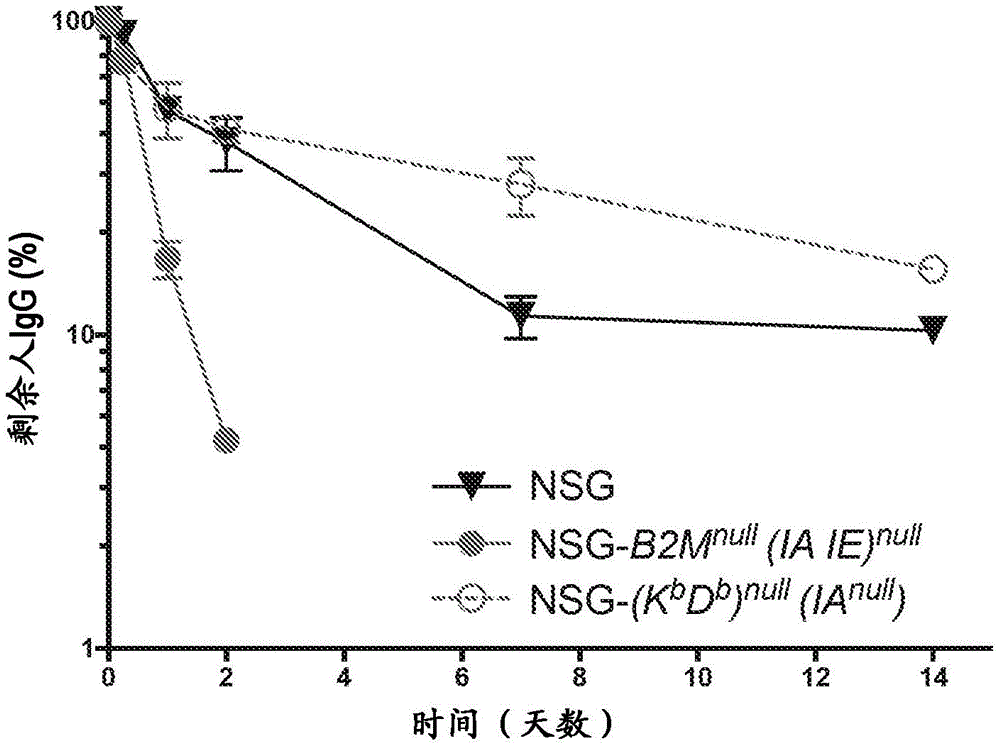
图2是显示在NSG-(Kb Db)null(IAnull)和NSG-B2Mnull(IA IE)null小鼠血清中人IgG半衰期的图。向小鼠IV注射200μg人IgG并在所示时间点取血以回收血清。将血清用于循环人IgG的ELISA分析。将在注射后2分钟的第一次取血认为是100%血清IgG。每个点表示5只2-3月龄雄鼠IgG的平均值±标准误差。Figure 2 is a graph showing human IgG half-life in NSG-(K b D b ) null (IA null ) and NSG-B2M null (IA IE) null mouse serum. Mice were injected IV with 200 μg of human IgG and bled at the indicated time points to recover serum. Sera were used for ELISA analysis of circulating human IgG. The first bleed at 2 minutes after injection was considered 100% serum IgG. Each point represents the mean±standard error of IgG from 5 male mice aged 2-3 months.
图3A和3B显示了注射人外周血单核细胞(PBMC)后缺乏小鼠I类和II类MHC两者的表达的NSG小鼠的存活。向受体小鼠静脉内注射(IV)10x106个PBMC,监测小鼠的总体健康情况和存活。Figures 3A and 3B show the survival of NSG mice lacking expression of both mouse MHC class I and class II following injection of human peripheral blood mononuclear cells (PBMC). Recipient mice were injected intravenously (IV) with 10x106 PBMCs and the general health and survival of the mice were monitored.
图3A是显示当将NSG、NSG-(IAnull)、NSG-(Kb Db)null和NSG-(KbDb)null(IAnull)小鼠作为PBMC的受体时存活%的图。数据代表3次独立实验。使用对数秩统计检验组间的存活分布。Figure 3A is a graph showing % survival when NSG, NSG-(IA null ), NSG-(K b D b ) null and NSG-(K b D b ) null (IA null ) mice were used as recipients of PBMCs . Data are representative of 3 independent experiments. The distribution of survival between groups was tested using the log-rank statistic.
图3B是显示当将NSG、NSG-(IA IE)null、NSG-B2M null和NSG-B2Mnull(IA IE)null小鼠作为PBMC的受体时存活%的图。数据代表3次独立实验。使用对数秩统计检验组间的存活分布。Figure 3B is a graph showing % survival when NSG, NSG-(IAIE) null , NSG- B2Mnull and NSG- B2Mnull (IAIE) null mice were used as recipients of PBMCs. Data are representative of 3 independent experiments. The distribution of survival between groups was tested using the log-rank statistic.
图4A-4D显示了注射PBMC后在缺乏小鼠I类和II类MHC两者的表达的NSG小鼠中人CD45+细胞嵌合水平。向受体小鼠IV注射10x106个PBMC细胞,并通过确定在外周血(图4A和图4C)和脾脏(图4B和图4D)中人CD45+细胞的比例监测小鼠中人细胞嵌合水平。Figures 4A-4D show the level of human CD45+ cell chimerism in NSG mice lacking expression of both mouse MHC class I and class II after injection of PBMCs. Recipient mice were injected IV with 10x106 PBMC cells and the level of human cell chimerism in the mice was monitored by determining the proportion of human CD45+ cells in the peripheral blood (Figure 4A and Figure 4C) and spleen (Figure 4B and Figure 4D) .
图4A是显示在10周时间段内在注射PBMC的NSG、NSG-(IAnull)、NSG-(Kb Db)null和NSG-(Kb Db)null(IAnull)小鼠的血液中监测的人细胞嵌合水平的图。数据代表3次独立实验。将双因素ANOVA用于确定在每个时间点组间的显著性差异。第6周;NSG相比于NSG-(Kb Db)null p<0.01和NSG相比于NSG-(Kb Db)null(IAnull)p<0.001;NSG-(IAnull)相比于NSG-(Kb Db)null p<0.01,和NSG-(IAnull)相比于NSG-(Kb Db)null(IAnull)p<0.001。Figure 4A is a graph showing the blood of NSG, NSG-(IA null ), NSG-(K b D b ) null and NSG-(K b D b ) null (IA null ) mice injected with PBMCs over a period of 10 weeks. Graph of monitored levels of chimerism in human cells. Data are representative of 3 independent experiments. Two-way ANOVA was used to determine significant differences between groups at each time point.
图4B是显示当将小鼠麻醉后在注射PBMC的NSG、NSG-(IAnull)、NSG-(Kb Db)null和NSG-(Kb Db)null(IAnull)小鼠的脾脏中监测的人细胞嵌合水平的图。将单因素ANOVA用于确定组间的显著性差异。*表示p<0.05,**表示p<0.01。Figure 4B is a graph showing spleens of NSG, NSG-(IA null ), NSG-(K b D b ) null and NSG-(K b D b ) null (IA null ) mice injected with PBMCs when the mice were anesthetized. A graph of the level of chimerism in human cells monitored in . One-way ANOVA was used to determine significant differences between groups. * indicates p<0.05, ** indicates p<0.01.
图4C是显示在10周时间段内在注射PBMC的NSG、NSG-(IA IE)null、NSG-B2Mnull和NSG-B2Mnull(IA IE)null小鼠的血液中监测的人细胞嵌合水平的图。数据代表3次独立实验。将双因素ANOVA用于确定在每个时间点组间的显著性差异。第4周;NSG相比于NSG-B2Mnull(IA IE)null p<0.01,NSG-(IA IE)null相比于NSG-B2Mnull(IA IE)null p<0.01,和NSG-B2Mnull相比于NSG-B2Mnull(IA IE)null p<0.05。第6周;NSG相比于NSG-B2Mnull(IA IE)null p<0.05,NSG-(IA IE)null相比于NSG-B2Mnull p<0.05,NSG-(IA IE)null相比于NSG-B2Mnull(IA IE)nullp<0.01。第8周;NSG相比于NSG-B2Mnull p<0.001,NSG相比于NSG-B2Mnull(IA IE)null p<0.01,NSG-(IA IE)null相比于NSG-B2Mnull p<0.001,NSG-(IA IE)null相比于NSG-B2Mnull(IA IE)nullp<0.01。第10周;NSG相比于NSG-B2Mnull p<0.01,NSG相比于NSG-B2Mnull(IA IE)null p<0.01,和NSG-(IA IE)null相比于NSG-B2Mnull p<0.01,NSG-(IA IE)null相比于NSG-B2Mnull(IA IE)null p<0.01。Figure 4C is a graph showing the level of human cell chimerism monitored in the blood of PBMC-injected NSG, NSG-(IAIE) null , NSG-B2M null and NSG-B2M null (IAIE) null mice over a period of 10 weeks picture. Data are representative of 3 independent experiments. Two-way ANOVA was used to determine significant differences between groups at each time point.
图4D是显示当将小鼠麻醉后在注射PBMC的NSG、NSG-(IA IE)null、NSG-B2Mnull和NSG-B2Mnull(IA IE)null小鼠的脾脏中监测的人细胞嵌合水平的图。将单因素ANOVA用于确定组间的显著性差异。**表示p<0.01。Figure 4D is a graph showing the level of human cell chimerism monitored in the spleens of PBMC-injected NSG, NSG-(IA IE) null , NSG-B2M null and NSG-B2M null (IA IE) null mice when the mice were anesthetized diagram. One-way ANOVA was used to determine significant differences between groups. ** indicates p<0.01.
图5A-5D显示了注射PBMC后在缺乏小鼠I类和II类MHC两者的表达的NSG小鼠中人T细胞和B细胞的移植情况。向受体小鼠IV注射10x106个PBMC细胞,并监测小鼠外周血中人CD3+T细胞(图5A和图5C)和CD20+B细胞(图5B和图5D)的水平。Figures 5A-5D show engraftment of human T and B cells in NSG mice lacking expression of both mouse MHC class I and class II following injection of PBMCs. Recipient mice were injected IV with 10x106 PBMC cells, and the levels of human CD3+ T cells (Figure 5A and Figure 5C) and CD20+ B cells (Figure 5B and Figure 5D) in the peripheral blood of the mice were monitored.
图5A是显示当将NSG(N=7)、NSG-(IAnull)(N=5)、NSG-(Kb Db)null(N=7)和NSG-(KbDb)null(IAnull)(N=8)小鼠用作PBMC的受体时人CD3+细胞(占CD45的%)的图。数据代表3次独立实验。将双因素ANOVA用于确定在每个时间点组间的显著性差异。*表示p<0.05。Fig. 5A shows that when NSG(N=7), NSG-(IA null )(N=5), NSG-(K b D b ) null (N=7) and NSG-(K b D b ) null ( Graph of human CD3+ cells (% of CD45) when IA null (N=8) mice were used as recipients of PBMCs. Data are representative of 3 independent experiments. Two-way ANOVA was used to determine significant differences between groups at each time point. * indicates p<0.05.
图5B是显示当将NSG(N=7)、NSG-(IAnull)(N=5)、NSG-(Kb Db)null(N=7)和NSG-(KbDb)null(IAnull)(N=8)小鼠用作PBMC的受体时人CD20+细胞(占CD45的%)的图。数据代表3次独立实验。将双因素ANOVA用于确定在每个时间点组间的显著性差异。*表示p<0.05。Fig. 5B shows that when NSG(N=7), NSG-(IA null )(N=5), NSG-(K b D b ) null (N=7) and NSG-(K b D b ) null ( Graph of human CD20+ cells (% of CD45) when IA null (N=8) mice were used as recipients of PBMCs. Data are representative of 3 independent experiments. Two-way ANOVA was used to determine significant differences between groups at each time point. * indicates p<0.05.
图5C是显示当将NSG(N=6)、NSG-(IA IE)null(N=6)、NSG-B2Mnull(N=5)和NSG-B2Mnull(IA IE)null(N=7)小鼠用作PBMC的受体时人CD3+细胞(占CD45的%)的图。数据代表3次独立实验。将双因素ANOVA用于确定在每个时间点组间的显著性差异。*表示p<0.05。Figure 5C shows that when NSG (N=6), NSG-(IA IE) null (N=6), NSG-B2M null (N=5) and NSG-B2M null (IA IE) null (N=7) Graph of human CD3+ cells (% of CD45) when mice were used as recipients of PBMCs. Data are representative of 3 independent experiments. Two-way ANOVA was used to determine significant differences between groups at each time point. * indicates p<0.05.
图5D是显示当将NSG(N=6)、NSG-(IA IE)null(N=6)、NSG-B2Mnull(N=5)和NSG-B2Mnull(IA IE)null(N=7)小鼠用作PBMC的受体时人CD20+细胞(占CD45的%)的图。数据代表3次独立实验。将双因素ANOVA用于确定在每个时间点组间的显著性差异。*表示p<0.05。Figure 5D shows that when NSG (N=6), NSG-(IA IE) null (N=6), NSG-B2M null (N=5) and NSG-B2M null (IA IE) null (N=7) Graph of human CD20+ cells (% of CD45) when mice were used as recipients of PBMCs. Data are representative of 3 independent experiments. Two-way ANOVA was used to determine significant differences between groups at each time point. * indicates p<0.05.
图6A-6H显示了在注射了PBMC的NSG、NSG-(IAnull)、NSG-(Kb Db)null和NSG-(Kb Db)null(IAnull)小鼠中移植的人T细胞的表型分析。向受体小鼠IV注射10x106个PBMC,并在注射后4周监测外周血中人CD3+/CD4+和CD3/CD8+T细胞的水平(图6A和图6D)和T细胞表型(图6B、图6C和图6E-图6H)。数据代表2次独立实验。将单因素ANOVA用于确定组间的显著性差异。*表示p<0.05,**表示p<0.01,***表示p<0.005和****表示p<0.001。 Figures 6A - 6H show transplanted human T Phenotypic analysis of cells. Recipient mice were injected IV with 10x106 PBMCs, and the levels of human CD3+/CD4+ and CD3/CD8+ T cells in peripheral blood (Figure 6A and Figure 6D) and T cell phenotypes (Figure 6B) were monitored 4 weeks after injection. , Figure 6C and Figure 6E-Figure 6H). Data represent 2 independent experiments. One-way ANOVA was used to determine significant differences between groups. * indicates p<0.05, ** indicates p<0.01, *** indicates p<0.005 and **** indicates p<0.001.
图6A是显示通过流式细胞术确定并以CD4与CD8 T细胞的比率表示的CD4和CD8 T细胞的水平的图。Figure 6A is a graph showing the levels of CD4 and CD8 T cells as determined by flow cytometry and expressed as the ratio of CD4 to CD8 T cells.
图6B是显示对于注射了PBMC的NSG、NSG-(IAnull)、NSG-(Kb Db)null和NSG-(Kb Db)null(IAnull)小鼠通过流式细胞术确定的由CD4 T细胞表达的PD-1的图。Figure 6B is a graph showing the results determined by flow cytometry for NSG, NSG-(IA null ), NSG-(K b D b ) null and NSG-(K b D b ) null (IA null ) mice injected with PBMCs. Diagram of PD-1 expressed by CD4 T cells.
图6C是显示对于注射了PBMC的NSG、NSG-(IAnull)、NSG-(Kb Db)null和NSG-(Kb Db)null(IAnull)小鼠通过流式细胞术确定的由CD8 T细胞表达的PD-1的图。Figure 6C is a graph showing the results determined by flow cytometry for NSG, NSG-(IA null ), NSG-(K b D b ) null and NSG-(K b D b ) null (IA null ) mice injected with PBMCs. Diagram of PD-1 expressed by CD8 T cells.
图6D-6F是显示代表性CD4、CD8和PD1染色的图。Figures 6D-6F are graphs showing representative CD4, CD8 and PDl staining.
图6G和6H是分别显示CD4和CD8 T细胞的图,其通过流式细胞术针对CD45RA和CCR7的表达进行评估。T细胞亚群的百分比显示为CD45RA+/CCR7+细胞标记为幼稚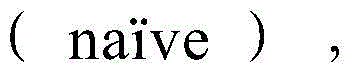
图7A-7H显示了在注射了PBMC的NSG、NSG-(IA IE)null、NSG-B2Mnull和NSG-B2Mnull(IA IE)null小鼠中移植的人T细胞的表型分析。向受体小鼠IV注射10x106个PBMC,并在注射后4周监测外周血中人CD3+/CD4+和CD3/CD8+T细胞(图7A和图7D)的水平和T细胞表型(图7B、图7C和图7E-图7H)。数据代表2次独立实验。将单因素ANOVA用于确定组间的显著性差异。*表示p<0.05,**表示p<0.01,***表示p<0.005和****表示p<0.001。Figures 7A-7H show phenotypic analysis of human T cells engrafted in PBMC-injected NSG, NSG-(IAIE) null , NSG- B2Mnull and NSG- B2Mnull (IAIE) null mice. Recipient mice were injected IV with 10x106 PBMCs, and the levels of human CD3+/CD4+ and CD3/CD8+ T cells (Figure 7A and Figure 7D) and T cell phenotypes in peripheral blood (Figure 7B , Figure 7C and Figure 7E-Figure 7H). Data represent 2 independent experiments. One-way ANOVA was used to determine significant differences between groups. * indicates p<0.05, ** indicates p<0.01, *** indicates p<0.005 and **** indicates p<0.001.
图7A是显示通过流式细胞术确定并以CD4与CD8 T细胞的比率表示的CD4和CD8 T细胞水平的图。Figure 7A is a graph showing CD4 and CD8 T cell levels as determined by flow cytometry and expressed as the ratio of CD4 to CD8 T cells.
图7B是显示对于注射了PBMC的NSG、NSG-(IA IE)null、NSG-B2Mnull和NSG-B2Mnull(IAIE)null小鼠通过流式细胞术确定的由CD4细胞表达的PD-1的图。Figure 7B is a graph showing the expression of PD-1 by CD4 cells determined by flow cytometry for NSG, NSG-(IAIE) null , NSG-B2M null and NSG-B2M null (IAIE) null mice injected with PBMCs picture.
图7C是显示对于注射了PBMC的NSG、NSG-(IA IE)null、NSG-B2Mnull和NSG-B2Mnull(IAIE)null小鼠通过流式细胞术确定的由CD8细胞表达的PD-1的图。Figure 7C is a graph showing PD-1 expressed by CD8 cells determined by flow cytometry for NSG, NSG-(IAIE) null , NSG-B2M null and NSG-B2M null (IAIE) null mice injected with PBMCs picture.
图7D-7F是显示代表性CD4、CD8和PD1染色的图。Figures 7D-7F are graphs showing representative CD4, CD8 and PD1 staining.
图7G和7H是分别显示CD4和CD8 T细胞的图,其通过流式细胞术针对CD45RA和CCR7的表达进行评估。T细胞亚群的百分比显示为CD45RA+/CCR7+细胞标记为幼稚
图8A-8F显示了在移植了PBMC的NSG-RIP-DTR(Kb Db)null(IAnull)小鼠中人胰岛(islet)同种异体移植物的排斥情况。数据代表2次独立实验。将t-检验用于确定组间的显著性差异。*表示p<0.05,**表示p<0.01,***表示p<0.005。Figures 8A-8F show rejection of human islet allografts in NSG-RIP-DTR(K b D b ) null (IA null ) mice transplanted with PBMCs. Data represent 2 independent experiments. A t-test was used to determine significant differences between groups. * indicates p<0.05, ** indicates p<0.01, *** indicates p<0.005.
图8A是显示在PBMC注射前6天,用40ng白喉毒素(DT)处理NSG-RIP-DTR(Kb Db)null(IAnull)小鼠,然后再通过脾内注射植入人胰岛(4000IEQ)的结果的图。在第0天时,向一组小鼠IP注射50x106个人PBMC,未对另一组小鼠进行处理。监测血糖水平,将连续2次检测血糖水平高于300mg/dl的小鼠认为是糖尿病。Figure 8A shows that 6 days before PBMC injection, NSG-RIP-DTR(K b D b ) null (IA null ) mice were treated with 40ng diphtheria toxin (DT), and then implanted into human islets (4000IEQ ) plot of the results. On
图8B是显示通过确定外周血(6周)和脾脏(7周)中CD45+细胞比例监测小鼠中人细胞嵌合水平的结果的图。Fig. 8B is a graph showing the results of monitoring the level of human cell chimerism in mice by determining the ratio of CD45+ cells in peripheral blood (6 weeks) and spleen (7 weeks).
图8C和8D是分别显示在外周血和脾脏中CD3+/CD4+和CD3+/CD8+T细胞水平的图。Figures 8C and 8D are graphs showing CD3+/CD4+ and CD3+/CD8+ T cell levels in peripheral blood and spleen, respectively.
图8E是显示在第6周时通过ELISA确定的血浆中循环人C-肽水平的图。Figure 8E is a graph showing circulating human C-peptide levels in plasma determined by ELISA at
图8F是显示通过ELISA在第7周时确定的胰岛移植小鼠的脾脏中总胰岛素含量的图。FIG. 8F is a graph showing the total insulin content in the spleen of islet-transplanted mice determined by ELISA at week 7. FIG.
图9A-9H显示了在移植PBMC的NSG和NSG-(Kb Db)null(IAnull)小鼠中表达人IL2增强人CD4+Treg的存活。向受体NSG和NSG-(Kb Db)null(IAnull)小鼠IP注射2.5x10¹¹个AAV-IL2颗粒或注射PBS。两周后,向小鼠腹腔(IP)注射1x10⁶个PBMC。Figures 9A-9H show that expression of human IL2 enhances the survival of human CD4+ Treg in PBMC-transplanted NSG and NSG-(K b D b ) null (IA null ) mice. Recipient NSG and NSG-(K b D b ) null (IA null ) mice were injected IP with 2.5x10 11 AAV-IL2 particles or injected with PBS. Two weeks later, mice were injected intraperitoneally (IP) with 1x10⁶ PBMCs.
图9A-9C是显示通过流式细胞术确定的人CD45+细胞(图9A)、CD3+T细胞(图9B)和CD4+/CD25+/CD127-/FOXP3+Treg(图9C)水平的图。将双因素ANOVA用于确定组间的显著性差异。***表示p<0.005,和****表示p<0.001。Figures 9A-9C are graphs showing levels of human CD45+ cells (Figure 9A), CD3+ T cells (Figure 9B) and CD4+/CD25+/CD127-/FOXP3+ Treg (Figure 9C) as determined by flow cytometry. Two-way ANOVA was used to determine significant differences between groups. *** indicates p<0.005, and **** indicates p<0.001.
图9D显示了针对所示组的对CD25、CD127和FOXP3的CD4+T细胞的代表性染色。Figure 9D shows representative staining of CD4+ T cells for CD25, CD127 and FOXP3 for the indicated groups.
图9E是显示监测受体小鼠存活%并使用对数秩统计检验所示组之间的存活分布的图。Figure 9E is a graph showing the distribution of survival between groups as indicated by monitoring the % survival of recipient mice and using the log-rank statistical test.
图9F是显示通过流式细胞术确定并以CD4与CD8 T细胞的比率表示的CD4和CD8 T细胞水平的图。实心黑色三角形表示NSG小鼠,空心黑色三角形表示注射了AAV-IL2的NSG小鼠,实心圆圈表示NSG-(Kb Db)null(IAnull)小鼠和空心圆圈表示注射了AAV-IL2的NSG-(KbDb)null(IAnull)小鼠。Figure 9F is a graph showing CD4 and CD8 T cell levels as determined by flow cytometry and expressed as the ratio of CD4 to CD8 T cells. Solid black triangles represent NSG mice, open black triangles represent NSG mice injected with AAV-IL2, solid circles represent NSG-(K b D b ) null (IA null ) mice and open circles represent AAV-IL2-injected NSG-(K b D b ) null (IA null ) mice.
图9G是显示通过流式细胞术评估CD8 T细胞中CD45RA和CCR7表达的结果的图。T细胞亚群的百分比显示为CD45RA+/CCR7+细胞标记为幼稚,CD45RA-/CCR7+细胞标记为中央记忆,CD45RA-/CCR7-细胞标记为效应/效应记忆和CD45RA+/CCR7-细胞标记为TEMRA。实心黑色三角形表示NSG小鼠,空心黑色三角形表示注射了AAV-IL2的NSG小鼠,实心圆圈表示NSG-(Kb Db)null(IAnull)小鼠和空心圆圈表示注射了AAV-IL2的NSG-(Kb Db)null(IAnull)小鼠。Fig. 9G is a graph showing the results of evaluating the expression of CD45RA and CCR7 in CD8 T cells by flow cytometry. Percentages of T cell subsets are shown as CD45RA+/CCR7+ cells labeled naive, CD45RA-/CCR7+ cells labeled central memory, CD45RA-/CCR7- cells labeled effector/effector memory and CD45RA+/CCR7- cells labeled TEMRA. Solid black triangles represent NSG mice, open black triangles represent NSG mice injected with AAV-IL2, solid circles represent NSG-(K b D b ) null (IA null ) mice and open circles represent AAV-IL2-injected NSG-(K b D b ) null (IA null ) mice.
图9H是显示通过流式细胞术确定的由CD8 T细胞表达的颗粒酶B并且显示了代表性染色的图。将t-检验用于确定用AAV-IL2处理的小鼠与对照之间的显著性差异。***表示p<0.005,****表示p<0.001。数据代表3次独立实验。Figure 9H is a graph showing expression of granzyme B by CD8 T cells as determined by flow cytometry and showing representative staining. A t-test was used to determine significant differences between mice treated with AAV-IL2 and controls. *** indicates p<0.005, **** indicates p<0.001. Data are representative of 3 independent experiments.
图10A是显示共同注射了PBMC和人患者来源的肿瘤细胞的一组NSG小鼠和共同注射了PBMC和人患者来源的肿瘤细胞的一组NSG-(Kb Db)null(IAnull)小鼠的存活百分比的图。10A is a graph showing a group of NSG mice co-injected with PBMC and human patient-derived tumor cells and a group of NSG-(K b D b ) null (IA null ) mice co-injected with PBMC and human patient-derived tumor cells. Graph of percent survival of mice.
图10B是显示1)在注射人患者来源的肿瘤细胞的NSG小鼠;2)在共同注射了PBMC和人患者来源的肿瘤细胞的NSG小鼠;注射了PBMC的NSG-(Kb Db)null(IAnull)小鼠;和共同注射了PBMC和人患者来源的肿瘤细胞的NSG-(Kb Db)null(IAnull)小鼠中的肿瘤生长的图。Figure 10B shows 1) NSG mice injected with human patient-derived tumor cells; 2) NSG mice co-injected with PBMC and human patient-derived tumor cells; NSG-(K b D b ) injected with PBMC Graphs of tumor growth in null (IA null ) mice; and NSG-(K b D b ) null (IA null ) mice co-injected with PBMCs and human patient-derived tumor cells.
具体实施方式Detailed ways
本文使用的科学和技术术语旨在具有本领域普通技术人员通常理解的含义。这样的术语被发现在各种标准参考文献的上下文中定义和使用,说明性地包括:J.Sambrook和D.W.Russell,Molecular Cloning:A Laboratory Manual,Cold Spring HarborLaboratory Press;第3版,2001;F.M.Ausubel,Ed.,Short Protocols in MolecularBiology,Current Protocols;第5版,2002;B.Alberts等,Molecular Biology of theCell,第4版,Garland,2002;D.L.Nelson和M.M.Cox,Lehninger Principles ofBiochemistry,第4版,W.H.Freeman&Company,2004;A.Nagy,M.Gertsenstein,K.Vintersten,R.Behringer,Manipulating the Mouse Embryo:A Laboratory Manual,第3版,Cold Spring Harbor Laboratory Press;2002年12月15日,ISBN-10:0879695919;Kursad Turksen(Ed.),Embryonic stem cells:methods and protocols in Methods MolBiol.2002;185,Humana Press;Current Protocols in Stem Cell Biology,ISBN:9780470151808;Chu,E.和Devita,V.T.,Eds.,Physicians’Cancer Chemotherapy DrugManual,Jones&Bartlett Publishers,2005;J.M.Kirkwood等,Eds.,Current CancerTherapeutics,第4版,Current Medicine Group,2001;Remington:The Science andPractice of Pharmacy,Lippincott Williams&Wilkins,第21版,2005;L.V.Allen,Jr.等,Ansel’s Pharmaceutical Dosage Forms and Drug Delivery Systems,第8版,Philadelphia,PA:Lippincott,Williams&Wilkins,2004;和L.Brunton等,Goodman&Gilman’s The Pharmacological Basis of Therapeutics,McGraw-Hill Professional,第12版,2011。Scientific and technical terms used herein are intended to have the meanings commonly understood by those of ordinary skill in the art. Such terms are found defined and used in the context of various standard references, including illustratively: J. Sambrook and D.W. Russell, Molecular Cloning: A Laboratory Manual, Cold Spring Harbor Laboratory Press; 3rd Edition, 2001; F.M. Ausubel , Ed., Short Protocols in Molecular Biology, Current Protocols; 5th Edition, 2002; B.Alberts et al., Molecular Biology of the Cell, 4th Edition, Garland, 2002; D.L.Nelson and M.M.Cox, Lehninger Principles of Biochemistry, 4th Edition, W.H. Freeman & Company, 2004; A. Nagy, M. Gertsenstein, K. Vintersten, R. Behringer, Manipulating the Mouse Embryo: A Laboratory Manual, 3rd Edition, Cold Spring Harbor Laboratory Press; December 15, 2002, ISBN-10 : 0879695919; Kursad Turksen (Ed.), Embryonic stem cells: methods and protocols in Methods MolBiol. 2002; 185, Humana Press; Current Protocols in Stem Cell Biology, ISBN: 9780470151808; Chu, E. and Devita, V.T., Eds . , Physicians' Cancer Chemotherapy Drug Manual, Jones & Bartlett Publishers, 2005; J.M.Kirkwood et al., Eds., Current Cancer Therapeutics, 4th Edition, Current Medicine Group, 2001; Remington: The Science and Practice of Pharmacy, Lippincott Williams & Wilkins, vol. 21 Edition, 2005; L.V. Allen, Jr. et al., Ansel's Pharmaceutical Dosage Forms and Drug Delivery Systems, 8th ed., Philadelphia, PA: Lippincott, Williams & Wilkins, 2004; and L. Brunton, et al., Goodman & Gilman's The Pharmacological Basis of Therapeutics, McGraw-Hill Professional, 12th ed. , 2011.
单数的术语“一种/一个(a/an)”和“所述/该(the)”并无意局限,其包括复数形式,除非另行明确说明或者上下文另有明确指示。The singular terms "a/an" and "the" are not intended to be limiting and include plural forms unless expressly stated otherwise or the context clearly dictates otherwise.
如本文通常使用的,术语“功能性”指保留了相应天然蛋白、复合物、细胞或其他物质的生物学功能的蛋白、复合物、细胞或其他物质。As generally used herein, the term "functional" refers to a protein, complex, cell or other substance that retains the biological function of the corresponding native protein, complex, cell or other substance.
而相反的是,如本文通常使用的,术语“非功能性”指没有保留相应天然蛋白、复合物、细胞或其他物质的生物学功能的蛋白、复合物、细胞或其他物质。In contrast, as generally used herein, the term "non-functional" refers to a protein, complex, cell or other substance that does not retain the biological function of the corresponding native protein, complex, cell or other substance.
本发明提供了缺乏I类MHC和II类MHC的遗传修饰的免疫缺陷小鼠。The invention provides genetically modified immunodeficient mice lacking MHC class I and MHC class II.
根据各个方面,提供了一种遗传修饰的免疫缺陷小鼠,其在其基因组中包含至少一个突变,所述突变有效地减少或消除功能性MHC Iα蛋白的表达和/或减少或消除功能性β2-微球蛋白的表达,以使得在所述小鼠中不存在MHC I或其不是功能性的;并且其在其基因组中包含至少一个突变,所述突变有效地减少或消除功能性MHC IIα蛋白的表达和/或功能性MHC IIβ蛋白的表达,以使得在所述小鼠中不存在MHC II或其不是功能性的。According to various aspects, there is provided a genetically modified immunodeficient mouse comprising at least one mutation in its genome effective to reduce or eliminate expression of a functional MHC Iα protein and/or reduce or eliminate functional β2 -expression of microglobulin such that MHC I is absent or not functional in said mouse; and it comprises at least one mutation in its genome that effectively reduces or eliminates a functional MHC II alpha protein Expression of and/or expression of functional MHC IIβ protein, such that MHC II is absent or not functional in said mice.
根据各个方面,遗传修饰的免疫缺陷小鼠是遗传修饰的NSG小鼠。根据本发明的方面,NSG MHC I/II敲除小鼠可用于各种应用,包括在不存在GVHD情况下的人免疫力的研究以及评估基于抗体的疗法。According to various aspects, the genetically modified immunodeficient mouse is a genetically modified NSG mouse. According to aspects of the invention, NSG MHC I/II knockout mice are useful in a variety of applications, including the study of human immunity in the absence of GVHD and the evaluation of antibody-based therapies.
MHC IMHC I
术语“MHC I”和“I类MHC”可以互换使用,指由MHC Iα蛋白和β2-微球蛋白形成的复合物。The terms "MHC I" and "MHC class I" are used interchangeably to refer to the complex formed by MHC Iα protein and β2-microglobulin.
MHC Iα蛋白包括胞外域(其具有3个亚结构域:α1、α2和α3)、跨膜结构域和胞质尾。α1和α2亚结构域形成了肽结合裂口,而α3亚结构域与β2-微球蛋白相互作用。术语“H2-K”、“H2-D”和“H2-L”指小鼠MHC Iα蛋白亚类,其均在小鼠17号染色体上编码。The MHC Iα protein includes an extracellular domain (which has 3 subdomains: α1, α2 and α3), a transmembrane domain and a cytoplasmic tail. The α1 and α2 subdomains form the peptide-binding cleft, while the α3 subdomain interacts with β2-microglobulin. The terms "H2-K", "H2-D" and "H2-L" refer to the mouse MHC Iα protein subclass, which are all encoded on mouse chromosome 17.
β2-微球蛋白与MHC Iα蛋白的α3亚结构域非共价结合。编码小鼠β2-微球蛋白的基因在2号染色体(Chr2:122147686-122153083bp,+链,GRCm38)上编码。β2-microglobulin binds non-covalently to the α3 subdomain of the MHC Iα protein. The gene encoding mouse β2-microglobulin is encoded on chromosome 2 (Chr2: 122147686-122153083 bp, + strand, GRCm38).
MHC IIMHC II
术语“MHC II”和“II类MHC”可以互换使用,指由两个非共价相关联的蛋白:MHC IIα蛋白和MHC IIβ蛋白形成的复合物。术语“H-2A”和“H-2E”(通常分别缩写为I-A和I-E)指MHC II的亚类。MHC IIα蛋白和MHC IIβ蛋白均跨质膜,并且均含有胞外域、跨膜结构域和胞质结构域。MHC IIα蛋白的胞外部分包含MHC IIα1和MHC IIα2结构域,以及MHC IIβ蛋白的胞外部分包含MHC IIβ1和MHC IIβ2结构域。The terms "MHC II" and "MHC class II" are used interchangeably to refer to a complex formed by two non-covalently associated proteins: the MHC II alpha protein and the MHC II beta protein. The terms "H-2A" and "H-2E" (commonly abbreviated I-A and I-E, respectively) refer to subclasses of MHC II. Both MHC IIα and MHC IIβ proteins span the plasma membrane and both contain an extracellular domain, a transmembrane domain, and a cytoplasmic domain. The extracellular portion of the MHC IIα protein comprises the MHC IIα1 and MHC IIα2 domains, and the extracellular portion of the MHC IIβ protein comprises the MHC IIβ1 and MHC IIβ2 domains.
如在本文中所使用的关于功能性MHC Iα蛋白、功能性β2-微球蛋白、功能性MHC IIα蛋白、功能性MHC IIβ蛋白、功能性MHC I或功能性MHC II的术语“功能性”指保留了相应天然MHC Iα蛋白、β2-微球蛋白、MHC IIα蛋白、MHC IIβ蛋白、MHC I或MHC II的生物学功能的MHC Iα蛋白、β2-微球蛋白、MHC IIα蛋白、MHC IIβ蛋白、MHC I或MHC II。The term "functional" as used herein in relation to functional MHC Iα protein, functional β2-microglobulin, functional MHC IIα protein, functional MHC IIβ protein, functional MHC I or functional MHC II refers to MHC Iα protein, β2-microglobulin, MHC IIα protein, MHC IIβ protein, MHC I or MHC II.
而相反的是,如在本文中所使用的关于非功能性MHC Iα蛋白、β2-微球蛋白、MHCIIα蛋白、MHC IIβ蛋白、MHC I或MHC II的术语“非功能”指未保留相应天然MHC Iα蛋白、β2-微球蛋白、MHC IIα蛋白、MHC IIβ蛋白、MHC I或MHC II的生物学功能的MHC蛋白或MHC复合物。On the contrary, the term "non-functional" as used herein with respect to a non-functional MHC Iα protein, β2-microglobulin, MHCIIα protein, MHC IIβ protein, MHC I or MHC II means that the corresponding native MHC Biologically functional MHC protein or MHC complex of Iα protein, β2-microglobulin, MHC IIα protein, MHC IIβ protein, MHC I or MHC II.
如在本文中所使用的,术语“天然的”指未突变的蛋白或核酸。As used herein, the term "native" refers to an unmutated protein or nucleic acid.
如在本文中所使用的,术语“遗传修饰”指小鼠中基因组DNA的修饰,其破坏了功能性MHC Iα蛋白和功能性β2-微球蛋白的至少一种;以及功能性MHC IIα蛋白和功能性MHC IIβ蛋白的至少一种的表达,以使得所述小鼠缺乏功能性MHC I和功能性MHC II。As used herein, the term "genetic modification" refers to a modification of genomic DNA in a mouse that disrupts at least one of a functional MHC Iα protein and a functional β2-microglobulin; and a functional MHC IIα protein and Expression of at least one of functional MHC II beta proteins such that the mouse lacks functional MHC I and functional MHC II.
术语“表达”指核酸序列转录以产生相应的mRNA和/或mRNA翻译以产生相应的蛋白。The term "expression" refers to the transcription of a nucleic acid sequence to produce the corresponding mRNA and/or the translation of the mRNA to produce the corresponding protein.
如在本文中所使用的,术语“靶基因”指定义小鼠MHC Iα基因、小鼠β2-微球蛋白基因、小鼠MHC IIα基因或小鼠MHC IIβ基因的核酸序列。As used herein, the term "target gene" refers to a nucleic acid sequence defining a mouse MHC Iα gene, a mouse β2-microglobulin gene, a mouse MHC IIα gene, or a mouse MHC IIβ gene.
可以将任意各种方法用于产生遗传修饰的免疫缺陷小鼠,其基因组包含破坏功能性MHC Iα蛋白和功能性β2-微球蛋白的至少一种;以及功能性MHC IIα蛋白和功能性MHC IIβ蛋白的至少一种的表达的遗传修饰,以使得所述小鼠缺乏功能性MHC I和功能性MHC II。Any of a variety of methods can be used to generate a genetically modified immunodeficient mouse whose genome comprises disruption of at least one of a functional MHC Iα protein and a functional β2-microglobulin; and a functional MHC IIα protein and a functional MHC IIβ Genetic modification of the expression of at least one of the proteins such that the mouse lacks functional MHC I and functional MHC II.
使用基因工程的标准方法产生的遗传修饰例如但不限于化学诱变、辐射、同源重组和反义RNA的转基因表达。这样的技术是本领域熟知的并且还包括但不限于原核(pronuclear)显微注射和胚胎干细胞的转化。用于产生其基因组中包含可以使用的基因突变的遗传修饰的动物的方法包括但不限于下述中描述的那些:J.P.Sundberg和T.Ichiki,Eds.,Genetically Engineered Mice Handbook,CRC Press;2006;M.H.Hofker和J.vanDeursen,Eds.,Transgenic Mouse Methods and Protocols,Humana Press,2002;A.L.Joyner,Gene Targeting:A Practical Approach,Oxford University Press,2000;Manipulating the Mouse Embryo:A Laboratory Manual,第3版,Cold Spring HarborLaboratory Press;2002年12月15日,ISBN-10:0879695919;Kursad Turksen(Ed.),Embryonic stem cells:methods and protocols in Methods Mol Biol.2002;185,Humana Press;Current Protocols in Stem Cell Biology,ISBN:978047015180;Meyer等,PNAS USA,vol.107(34),15022-15026。Genetic modifications are produced using standard methods of genetic engineering such as, but not limited to, chemical mutagenesis, radiation, homologous recombination, and transgenic expression of antisense RNA. Such techniques are well known in the art and also include, but are not limited to, pronuclear microinjection and transformation of embryonic stem cells. Methods for producing genetically modified animals whose genomes contain usable genetic mutations include, but are not limited to, those described in: J.P. Sundberg and T. Ichiki, Eds., Genetically Engineered Mice Handbook, CRC Press; 2006; M.H.Hofker and J.vanDeursen, Eds., Transgenic Mouse Methods and Protocols, Humana Press, 2002; A.L.Joyner, Gene Targeting: A Practical Approach, Oxford University Press, 2000; Manipulating the Mouse Embryo: A Laboratory Manual, 3rd Edition, Cold Spring Harbor Laboratory Press; December 15, 2002, ISBN-10:0879695919; Kursad Turksen (Ed.), Embryonic stem cells: methods and protocols in Methods Mol Biol. 2002; 185, Humana Press; Current Protocols in Stem Cell Biology , ISBN: 978047015180; Meyer et al., PNAS USA, vol. 107(34), 15022-15026.
根据优选的方面,除了缺乏功能性内源性MHC I和MHC II以外,在本发明的遗传修饰的免疫缺陷小鼠中不表达非内源性MHC I或MHC II。特别地,根据优选的实施方式,在本发明的遗传修饰的免疫缺陷小鼠中不存在或不表达人淋巴细胞相容性基因。According to a preferred aspect, in addition to lacking functional endogenous MHC I and MHC II, no non-endogenous MHC I or MHC II is expressed in the genetically modified immunodeficient mice of the invention. In particular, according to a preferred embodiment, no human lymphocyte compatibility gene is present or expressed in the genetically modified immunodeficient mice of the present invention.
如本文中所使用的,与基因及其编码的蛋白相关的“内源性”指在小鼠基因组的其天然基因座中存在的基因。As used herein, "endogenous" in relation to a gene and the protein it encodes refers to a gene present at its natural locus in the mouse genome.
可以将基于同源性的重组基因修饰策略用于通过编码一种或多种内源性蛋白(例如,MHC Iα蛋白和β2-微球蛋白的至少一种;以及MHC IIα蛋白和MHC IIβ蛋白的至少一种)的基因的“敲除”或其他突变来遗传修饰免疫缺陷小鼠。Homology-based recombinant genetic modification strategies can be used to encode one or more endogenous proteins (e.g., at least one of MHC Iα protein and β2-microglobulin; and MHC IIα protein and MHC IIβ protein) "knockout" or other mutation of at least one) gene to genetically modify immunodeficient mice.
基于同源性的重组基因修饰策略包括基因编辑方法,如使用归巢核酸内切酶、整合酶、大范围核酸酶、转座子、使用锌指核酸酶(ZFN)的核酸酶介导的过程、转录激活因子样(TAL)、规律成簇的间隔短回文重复序列(CRISPR)-Cas或者果蝇重组相关蛋白(DRAP)方法的那些。参见例如,Cerbini等,PLoS One.2015;10(1):e0116032;Shen等,PLoS ONE 8(10):e77696;和Wang等,Protein&Cell,2016年2月,第7卷,第2期,pp 152–156。Homology-based recombination genetic modification strategies include gene editing methods such as using homing endonucleases, integrases, meganucleases, transposons, nuclease-mediated processes using zinc finger nucleases (ZFNs) , transcription activator-like (TAL), clustered regularly interspaced short palindromic repeats (CRISPR)-Cas or those of the Drosophila recombination-associated protein (DRAP) approach. See, eg, Cerbini et al., PLoS One. 2015; 10(1):e0116032; Shen et al., PLoS ONE 8(10):e77696; and Wang et al., Protein & Cell, Feb. 2016, Vol. 7, No. 2, pp. 152–156.
通过例如本文所述的和在下述中详述的方法进行基因组编辑:J.P.Sundberg和T.Ichiki,Eds.,Genetically Engineered Mice Handbook,CRC Press;2006;M.H.Hofker和J.van Deursen,Eds.,Transgenic Mouse Methods and Protocols,Humana Press,2002;A.L.Joyner,Gene Targeting:A Practical Approach,Oxford University Press,2000;Manipulating the Mouse Embryo:A Laboratory Manual,第3版,Cold SpringHarbor Laboratory Press;2002年12月15日,ISBN-10:0879695919;Kursad Turksen(Ed.),Embryonic stem cells:methods and protocols in Methods Mol.Biol.2002;185,Humana Press;Current Protocols in Stem Cell Biology,ISBN:978047015180;Meyer等,PNAS USA,2010,vol.107(34),15022–15026;以及Doudna,J.等,(eds.)CRISPR-Cas:A Laboratory Manual,2016,CSHP。本文描述了几种基因组编辑技术的简要描述。Genome editing by methods such as described herein and detailed in: J.P. Sundberg and T. Ichiki, Eds., Genetically Engineered Mice Handbook, CRC Press; 2006; M.H. Hofker and J. van Deursen, Eds., Transgenic Mouse Methods and Protocols, Humana Press, 2002; A.L. Joyner, Gene Targeting: A Practical Approach, Oxford University Press, 2000; Manipulating the Mouse Embryo: A Laboratory Manual, 3rd Edition, Cold Spring Harbor Laboratory Press; December 15, 2002 , ISBN-10: 0879695919; Kursad Turksen (Ed.), Embryonic stem cells: methods and protocols in Methods Mol. Biol. 2002; 185, Humana Press; Current Protocols in Stem Cell Biology, ISBN: 978047015180; Meyer et al., PNAS USA , 2010, vol.107(34), 15022–15026; and Doudna, J. et al., (eds.) CRISPR-Cas: A Laboratory Manual, 2016, CSHP. Brief descriptions of several genome editing technologies are described here.
用于遗传修饰的核酸酶技术Nuclease technology for genetic modification
可以将遗传修饰方法(例如但不限于核酸酶基因编辑技术)用于将期望的DNA序列在预定靶位点引入基因组中,如使用归巢核酸内切酶、整合酶、大范围核酸酶、转座子、使用锌指核酸酶(ZFN)的核酸酶介导的过程、转录激活因子样(TAL)、规律成簇间隔短回文重复序列(CRISPR)-Cas或者果蝇重组相关蛋白(DRAP)的方法。简言之,可以使用的遗传修饰方法包括将编码靶向TALEN、ZFN、CRISPR或DRAP的RNA分子和至少一种寡核苷酸引入ES细胞、iPS细胞、体细胞、受精卵或胚胎中,然后选择具有期望的遗传修饰的ES细胞、iPS细胞、体细胞、受精卵或胚胎。Genetic modification methods (such as but not limited to nuclease gene editing techniques) can be used to introduce desired DNA sequences into the genome at predetermined target sites, such as using homing endonucleases, integrases, meganucleases, transgenic Transposons, nuclease-mediated processes using zinc finger nucleases (ZFNs), transcription activator-like (TALs), clustered regularly interspaced short palindromic repeats (CRISPR)-Cas, or Drosophila recombination-associated protein (DRAP) Methods. Briefly, genetic modification methods that can be used include introducing RNA molecules encoding TALENs, ZFNs, CRISPRs, or DRAPs and at least one oligonucleotide into ES cells, iPS cells, somatic cells, fertilized eggs, or embryos, and then ES cells, iPS cells, somatic cells, fertilized eggs or embryos with the desired genetic modification are selected.
例如,可以通过核酸酶技术(例如但不限于CRISPR方法、TAL(转录激活因子样效应物方法)、锌指介导的基因组编辑或DRAP)在预定的靶位点将期望的核酸序列引入小鼠的基因组中,以产生根据本发明的实施方式提供的遗传修饰的小鼠。For example, desired nucleic acid sequences can be introduced into mice at predetermined target sites by nuclease techniques such as but not limited to CRISPR approach, TAL (transcription activator-like effector approach), zinc finger-mediated genome editing, or DRAP Genome, to produce the genetically modified mice provided according to the embodiments of the present invention.
如在本文中所使用的,在核酸酶基因编辑技术的背景下,术语“靶位点”和“靶序列”指定义了待编辑的染色体序列的一部分的核酸序列,并且只要存在充分的结合条件,核酸酶被工程化与之识别和结合。As used herein, in the context of nuclease gene editing technology, the terms "target site" and "target sequence" refer to a nucleic acid sequence that defines a portion of the chromosomal sequence to be edited, and as long as sufficient binding conditions exist , nucleases are engineered to recognize and bind to them.
CRISPR-Cas系统CRISPR-Cas system
CRISPR(规律成簇的间隔短回文重复序列)是含有多个短直接重复序列的基因座,其见于约40%已测序的细菌和90%已测序的古细菌的基因组中,并且赋予了对外源DNA元件的抗性,参见Horvath,2010,Science,327:167–170;Barrangou等,2007,Science,315:1709-1712;和Makarova等,2011,Nature Reviews Microbiology.9:467-477。CRISPR (Clustered Regularly Interspaced Short Palindromic Repeats) is a locus containing multiple short direct repeats found in about 40% of sequenced bacterial and 90% of sequenced Resistance to source DNA elements, see Horvath, 2010, Science, 327:167-170; Barrangou et al., 2007, Science, 315:1709-1712; and Makarova et al., 2011, Nature Reviews Microbiology.9:467-477.
CRISPR重复序列的大小范围为24至48个碱基对。其通常表现出一定的二重对称性,这意味着形成了例如发夹但并不是真正的回文的二级结构。CRISPR重复序列被相似长度的间隔子隔开。CRISPR repeats range in size from 24 to 48 base pairs. They usually exhibit a certain two-fold symmetry, which means that a secondary structure such as a hairpin is formed but is not a true palindrome. CRISPR repeats are separated by spacers of similar length.
CRISPR-相关(cas)基因通常与CRISPR重复序列间隔子阵列相关。已经描述了超过40种不同的Cas蛋白家族(Haft等,2005,PLoS Comput Biol.1(6):e60)。已将Cas基因与重复序列结构的特定组合用于定义8种CRISPR亚型,其中的一些与编码重复序列相关未知蛋白(RAMP)的其他基因模块相关。CRISPR-associated (cas) genes are often associated with arrays of CRISPR repeat spacers. More than 40 different families of Cas proteins have been described (Haft et al., 2005, PLoS Comput Biol. 1(6):e60). Specific combinations of Cas genes and repeat structures have been used to define eight CRISPR isoforms, some of which are related to other gene modules encoding repeat-associated unknown proteins (RAMPs).
在不同生物体中存在多样的CRISPR系统,最简单的一个是来自酿脓链球菌(Streptococcus pyogenes)的II型CRISPR系统:只有一个编码Cas9蛋白的基因和两个RNA,一个成熟CRISPR RNA(crRNA)和一个部分互补的反式作用RNA(tracrRNA),其对于RNA指导的外源DNA沉默是必需且充分的(Gasiunas等,2012,PNAS 109:E2579-E2586;Jinek等,2012,Science 337:816-821)。CrRNA的成熟需要tracrRNA和RNase III(Deltcheva等,2011,Nature 471:602-607)。然而,这种需求可以通过使用含有模拟tracrRNA-crRNA复合物的设计发夹的工程化的小指导RNA(sgRNA)而绕过(Jinek等,2012,Science 337:816-821)。由于Cas9的核酸内切酶活性,sgRNA与靶DNA之间的碱基配对导致双链断裂(DSB)。结合特异性由sgRNA-DNA碱基配对和与DNA互补区并列的短DNA基序(原间隔子相邻基序[PAM]序列:NGG)两者决定(Marraffini&Sontheimer,2010,Nature Reviews Genetics,11:181-190)。例如,CRISPR系统需要含有两个分子即Cas9蛋白和sgRNA的最小组,因此可以用作独立于宿主的基因靶向平台。可以利用Cas9/CRISPR进行位点选择性RNA指导的基因组编辑,如靶向插入,参见例如,Carroll,2012,Molecular Therapy 20:1658-1660;Chang等,2013,Cell Research 23:465-472;Cho等,2013,Nature Biotechnol 31:230-232;Cong等,2013,Science 339:819-823;Hwang等,2013,Nature Biotechnol 31:227-229;Jiang等,2013,Nature Biotechnol 31:233-239;Mali等,2013,Science 339:823-826;Qi等,2013,Cell152:1173-1183;Shen等,2013,Cell Research 23:720-723;和Wang等,2013,Cell 153:910-918。特别是,Wang等,2013,Cell 153:910-918描述了使用CRISPR/Cas9系统联合寡核苷酸的靶向插入。There are various CRISPR systems in different organisms, the simplest one is the type II CRISPR system from Streptococcus pyogenes: there is only one gene encoding Cas9 protein and two RNAs, one mature CRISPR RNA (crRNA) and a partially complementary trans-acting RNA (tracrRNA), which is necessary and sufficient for RNA-guided exogenous DNA silencing (Gasiunas et al., 2012, PNAS 109:E2579-E2586; Jinek et al., 2012, Science 337:816- 821). CrRNA maturation requires tracrRNA and RNase III (Deltcheva et al., 2011, Nature 471:602-607). However, this requirement can be bypassed by using engineered small guide RNAs (sgRNAs) containing engineered hairpins that mimic the tracrRNA-crRNA complex (Jinek et al., 2012, Science 337:816-821). Due to the endonuclease activity of Cas9, the base pairing between the sgRNA and the target DNA results in a double-strand break (DSB). Binding specificity is determined by both sgRNA-DNA base pairing and a short DNA motif (protospacer adjacent motif [PAM] sequence: NGG) juxtaposed to the DNA complementary region (Marraffini & Sontheimer, 2010, Nature Reviews Genetics, 11: 181-190). For example, the CRISPR system requires a minimal panel containing two molecules, Cas9 protein and sgRNA, and thus can be used as a host-independent gene targeting platform. Cas9/CRISPR can be used for site-selective RNA-guided genome editing, such as targeted insertions, see e.g., Carroll, 2012, Molecular Therapy 20:1658-1660; Chang et al., 2013, Cell Research 23:465-472; Cho et al., 2013, Nature Biotechnol 31:230-232; Cong et al., 2013, Science 339:819-823; Hwang et al., 2013, Nature Biotechnol 31:227-229; Jiang et al., 2013, Nature Biotechnol 31:233-239; Mali et al., 2013, Science 339:823-826; Qi et al., 2013, Cell 152:1173-1183; Shen et al., 2013, Cell Research 23:720-723; and Wang et al., 2013, Cell 153:910-918. In particular, Wang et al., 2013, Cell 153:910-918 describe targeted insertion of oligonucleotides using the CRISPR/Cas9 system in combination.
产生根据本发明的遗传修饰的免疫缺陷小鼠可以包括将适当的核酸(例如用于在CRISPR中使用的编码cas9的表达构建体和编码对被靶向的基因具有特异性的指导RNA的表达构建体)注射或转染至植入前的胚胎或干细胞,如胚胎干细胞(ES)或诱导的多能干细胞(iPS)。任选地,cas9和指导RNA在单个表达构建体中编码。Producing a genetically modified immunodeficient mouse according to the invention may comprise combining appropriate nucleic acids such as an expression construct encoding cas9 for use in CRISPR and an expression construct encoding a guide RNA specific for the gene being targeted. in vivo) or transfected into preimplantation embryos or stem cells, such as embryonic stem (ES) or induced pluripotent stem (iPS) cells. Optionally, cas9 and guide RNA are encoded in a single expression construct.
TAL(转录激活因子样)效应物TAL (transcription activator-like) effectors
转录激活因子样(TAL)效应物或TALE(转录激活因子样效应物)来源于植物病原菌黄单胞菌属,并且这些蛋白模拟植物转录激活因子和操纵植物转录,参见Kay等,2007,Science,318:648-651。Transcription activator-like (TAL) effectors or TALEs (Transcription Activator-like Effectors) are derived from the plant pathogen Xanthomonas, and these proteins mimic plant transcription activators and manipulate plant transcription, see Kay et al., 2007, Science, 318:648–651.
TAL效应物含有集中的串联重复序列结构域,每个重复序列含有约34个氨基酸,其对这些蛋白的DNA结合特异性是关键的。此外,其含有核酸定位序列和酸性转录激活结构域,综述参见Schornack等,2006,J.Plant Physiol.,163(3):256-272;Scholze和Boch,2011,Curr Opin Microbiol,14:47–53。TAL effectors contain concentrated tandem repeat domains, each repeat containing approximately 34 amino acids, which are critical to the DNA-binding specificity of these proteins. In addition, it contains a nucleic acid localization sequence and an acidic transcriptional activation domain, reviewed in Schornack et al., 2006, J. Plant Physiol., 163(3):256-272; Scholze and Boch, 2011, Curr Opin Microbiol, 14:47– 53.
TAL效应物的特异性取决于在串联重复序列中存在的序列。重复序列包含约102bp,重复序列彼此之间通常具有91-100%的同源性(Bonas等,1989,Mol Gen Genet218:127-136)。重复序列的多态性通常位于第12和13位,并且第12和13位高变二残基的同一性与TAL效应物靶序列中连续核苷酸的同一性之间似乎是一一对应的,参见Moscou和Bogdanove 2009,Science 326:1501;和Boch等,2009,Science 326:1509-1512。将两个高变残基称为重复可变二残基(RVD),其中一个RVD识别DNA序列的一个核苷酸并确保每个TAL效应物的DNA结合结构域能够以较高精度(15-30nt)靶向大的识别位点。在实验上,已确定了这些TAL-效应物的DNA识别代码,以使得在第12和13位的HD序列与胞嘧啶(C)结合,NG与T结合,NI与A、C、G或T结合,NN与A或G结合以及IG与T结合。这些DNA结合重复序列已被组装成具有新的组合和重复序列的数量的蛋白,以形成能够在植物细胞中与新序列相互作用并激活报告基因的表达的人工转录因子(Boch等,2009,Science 326:1509-1512)。这些DNA结合结构域已被证明在所有细胞类型中的靶向基因组编辑或靶向基因调控领域具有普遍适用性,参见Gaj等,Trends in Biotechnol,2013,31(7):397-405。而且,工程化的TAL效应物已显示出与外源功能性蛋白效应结构域(如核酸酶)结合的功能,所述外源功能性蛋白效应结构域在哺乳动物细胞的天然黄单胞菌TAL-效应物或蛋白中不天然存在。可以通过组合TAL与核酸酶(例如,在N-末端或C-末端的FokI核酸酶结构域)构建TAL核酸酶(TALN或TALEN),Kim等,1996,PNAS 93:1156-1160;Christian等,2010,Genetics 186:757-761;Li等,2011,Nucleic Acids Res 39:6315-6325;和Miller等,2011,Nat Biotechnol 29:143-148。已在大鼠、小鼠、斑马鱼、非洲爪蟾、青鳉、大鼠和人细胞中显示出TALEN通过NHEJ导致缺失的功能性,Ansai等,2013,Genetics,193:739-749;Carlson等,2012,PNAS,109:17382-17387;Hockemeyer等,2011,Nature Biotechnol.,29:731-734;Lei等,2012,PNAS,109:17484-17489;Moore等,2012,PLoS ONE,7:e37877;Stroud等,2013,J.Biol.Chem.,288:1685-1690;Sung等,2013,Nature Biotechnol 31:23-24;Wefers等,2013,PNAS 110:3782-3787。The specificity of TAL effectors depends on the sequences present in the tandem repeats. The repeat sequence comprises approximately 102 bp, and the repeat sequences typically share 91-100% homology with each other (Bonas et al., 1989, Mol Gen Genet 218:127-136). Repeat polymorphisms are often located at
对于TALEN,进一步在美国专利号8,420,782;8,450,471;8,450,107;8,440,432;8,440,431和美国专利公开号US20130137161和US20130137174中描述了制备其的方法。As for TALENs, methods for their preparation are further described in US Patent Nos. 8,420,782; 8,450,471; 8,450,107; 8,440,432;
其他有用的核酸内切酶可以包括例如HhaI、HindIII、NotI、BbvCI、EcoRI、Bg/I和AlwI。可以利用一些核酸内切酶(例如,FokI)仅作为二聚体的功能来增强TAL效应物的靶特异性。例如,在一些情况下,每个FokI单体均可以与识别不同DNA靶序列的TAL效应物序列融合,并且仅当两个识别位点非常接近时,无活性单体才能结合在一起形成功能性酶。通过要求DNA结合以激活核酸酶,可以产生高度位点特异性限制酶。Other useful endonucleases can include, for example, HhaI, HindIII, NotI, BbvCI, EcoRI, Bg/I, and AlwI. The target specificity of TAL effectors can be enhanced by exploiting the function of some endonucleases (eg, FokI) only as dimers. For example, in some cases, each FokI monomer can be fused to a TAL effector sequence that recognizes a different DNA target sequence, and only when the two recognition sites are in close proximity can the inactive monomers come together to form a functional enzyme. Highly site-specific restriction enzymes can be produced by requiring DNA binding to activate the nuclease.
在一些实施方式中,TALEN还可以包含核定位信号或序列(NLS)。NLS是有助于将TALEN核酸酶蛋白靶向细胞核中以便在染色体中的靶序列处引入双链断裂的氨基酸序列。In some embodiments, the TALEN may also comprise a nuclear localization signal or sequence (NLS). NLS is an amino acid sequence that helps target TALEN nuclease proteins into the nucleus to introduce double-strand breaks at target sequences in chromosomes.
核定位信号是本领域所公知的,参见例如,Makkerh等,1996,Curr Biol.6:1025-1027。NLS包括来自SV40大T抗原的序列,Kalderon 1984,Cell,39:499–509;来自核蛋白的NLS,在Dingwall等,1988,J Cell Biol.,107,841–9中对其进行了详细描述。在McLane和Corbett 2009,IUBMB Life,61,697–70;Dopie等,2012,PNAS,109,E544–E552中描述了进一步的实例。Nuclear localization signals are well known in the art, see eg, Makkerh et al., 1996, Curr Biol. 6:1025-1027. NLS include sequences from the SV40 large T antigen, Kalderon 1984, Cell, 39:499-509; NLS from nucleoproteins, which are described in detail in Dingwall et al., 1988, J Cell Biol., 107, 841-9. Further examples are described in McLane and Corbett 2009, IUBMB Life, 61, 697-70; Dopie et al., 2012, PNAS, 109, E544-E552.
切割结构域可以从任何核酸内切酶或核酸外切酶获得。可以作为切割结构域来源的核酸内切酶的非限制性实例包括但不限于限制性核酸内切酶和归巢核酸内切酶。参见例如,2002-2003 Catalog,New England Biolabs,Beverly,Mass.;和Belfort等,(1997)Nucleic Acids Res.25:3379-3388。切割DNA的其他酶是已知的,例如SI核酸酶;绿豆核酸酶;胰DNase I;微球菌核酸酶;酵母HO核酸内切酶。亦参见Linn等,(eds.)Nucleases,ColdSpring Harbor Laboratory Press,1993。可以将一种或多种这些酶或者其功能性片段作为切割结构域的来源。A cleavage domain can be obtained from any endonuclease or exonuclease. Non-limiting examples of endonucleases that may be the source of the cleavage domain include, but are not limited to, restriction endonucleases and homing endonucleases. See, eg, 2002-2003 Catalog, New England Biolabs, Beverly, Mass.; and Belfort et al., (1997) Nucleic Acids Res. 25:3379-3388. Other enzymes that cleave DNA are known, eg SI nuclease; mung bean nuclease; pancreatic DNase I; micrococcal nuclease; yeast HO endonuclease. See also Linn et al., (eds.) Nucleases, Cold Spring Harbor Laboratory Press, 1993. One or more of these enzymes, or functional fragments thereof, can be used as the source of the cleavage domain.
锌指介导的基因组编辑Zinc finger-mediated genome editing
已经很好地建立了使用锌指核酸酶(ZFN)用于基因编辑,如通过同源定向修复过程进行靶向插入。例如,参见Carbery等,2010,Genetics,186:451-459;Cui等,2011,NatureBiotechnol.,29:64-68;Hauschild等,2011,PNAS,108:12013-12017;Orlando等,2010,Nucleic Acids Res.,38:e152-e152;和Porteus&Carroll,2005,Nature Biotechnology,23:967-973。The use of zinc finger nucleases (ZFNs) for gene editing, such as targeted insertion through the process of homology-directed repair, is well established. See, eg, Carbery et al., 2010, Genetics, 186:451-459; Cui et al., 2011, Nature Biotechnol., 29:64-68; Hauschild et al., 2011, PNAS, 108:12013-12017; Orlando et al., 2010, Nucleic Acids Res., 38:e152-e152; and Porteus & Carroll, 2005, Nature Biotechnology, 23:967-973.
锌指介导过程的组分包括具有DNA结合结构域和切割结构域的锌指核酸酶。例如,在下述中对其进行了描述:Beerli等,(2002)Nature Biotechnol.,20:135-141;Pabo等,(2001)Ann.Rev.Biochem.,70:313-340;Isalan等,(2001)Nature Biotechnol.19:656-660;Segal等,(2001)Curr Opin.Biotechnol.,12:632-637;和Choo等,(2000)CurrOpin.Struct.Biol.,10:411-416;以及美国专利号6,453,242和6,534,261。设计和选择靶序列的锌指结合结构域的方法是本领域公知的,参见例如Sera,等,Biochemistry 2002,41,7074-7081;美国专利号6,607,882;6,534,261和6,453,242。Components of zinc finger-mediated processes include zinc finger nucleases with DNA-binding and cleavage domains. For example, it is described in: Beerli et al., (2002) Nature Biotechnol., 20:135-141; Pabo et al., (2001) Ann.Rev.Biochem., 70:313-340; Isalan et al., ( 2001) Nature Biotechnol. 19:656-660; Segal et al., (2001) Curr Opin. Biotechnol., 12:632-637; and Choo et al., (2000) Curr Opin. Struct. Biol., 10:411-416; and US Patent Nos. 6,453,242 and 6,534,261. Methods for designing and selecting zinc finger binding domains for target sequences are well known in the art, see eg Sera, et al.,
在一些实施方式中,锌指核酸酶还可以包含核定位信号或序列(NLS)。NLS是有助于将锌指核酸酶蛋白靶向细胞核中以便在染色体中的靶序列处引入双链断裂的氨基酸序列。核定位信号是本领域公知的。参见例如,Makkerh等,(1996)Current Biology 6:1025-1027以及本文所述的其他文献。In some embodiments, the zinc finger nuclease may also comprise a nuclear localization signal or sequence (NLS). NLS is an amino acid sequence that helps target zinc finger nuclease proteins into the nucleus to introduce double-strand breaks at target sequences in chromosomes. Nuclear localization signals are well known in the art. See, eg, Makkerh et al., (1996) Current Biology 6:1025-1027 and others described herein.
切割结构域可以从任何核酸内切酶或核酸外切酶获得。可以作为切割结构域来源的核酸内切酶的非限制性实例包括但不限于限制性核酸内切酶和归巢核酸内切酶。参见例如,2002-2003Catalog,New England Biolabs,Beverly,Mass.;和Belfort等,(1997)Nucleic Acids Res.25:3379-3388。切割DNA的其他酶是已知的(例如,SI核酸酶;绿豆核酸酶;胰DNase I;微球菌核酸酶;酵母HO核酸内切酶)。亦参见Linn等,(eds.)Nucleases,ColdSpring Harbor Laboratory Press,1993。可以将一种或多种这些酶(或者其功能性片段)作为切割结构域的来源。如上所述,切割结构域还可以来自需要二聚化以产生切割活性的酶或其部分。A cleavage domain can be obtained from any endonuclease or exonuclease. Non-limiting examples of endonucleases that may be the source of the cleavage domain include, but are not limited to, restriction endonucleases and homing endonucleases. See, eg, 2002-2003 Catalog, New England Biolabs, Beverly, Mass.; and Belfort et al., (1997) Nucleic Acids Res. 25:3379-3388. Other enzymes that cleave DNA are known (eg, SI nuclease; mung bean nuclease; pancreatic DNase I; micrococcal nuclease; yeast HO endonuclease). See also Linn et al., (eds.) Nucleases, Cold Spring Harbor Laboratory Press, 1993. One or more of these enzymes (or functional fragments thereof) can be used as the source of the cleavage domain. As noted above, the cleavage domain may also be derived from an enzyme or part thereof that requires dimerization for cleavage activity.
可能需要两个锌指核酸酶进行切割,因为每个核酸酶包括活性酶二聚体的一个单体。或者,单个锌指核酸酶可以包含全部两个单体以产生活性酶二聚体。限制性核酸内切酶(限制酶)存在于很多物种中,并且能够序列特异性地与DNA结合(在识别位点)并在结合位点处或其附近切割DNA。某些限制酶(例如,IIS型)在从识别位点去除的位点切割DNA,并且具有可分离的结合和切割结构域。例如,IIS型酶FokI催化DNA的双链切割,其在一条链上是来自其识别位点的9个核苷酸,在另一条连上是来自其识别位点的13个核苷酸。参见例如,美国专利号5,356,802;5,436,150和5,487,994;以及Li等,(1992)PNAS 89:4275-4279;Li等,(1993)PNAS90:2764-2768;Kim等,(1994)PNAS 91:883-887;Kim等,(1994)J.Biol.Chem.269:31,978-31,982。因而,锌指核酸酶可以包含来自至少一种IIS型限制酶的切割结构域和一种或多种锌指结合结构域,其可以是经过或未经工程化的。例如,在国际公开的WO 07/014275中描述了示例性的IIS型限制酶,其全部公开内容通过引用并入本申请。其他限制酶还含有可分离的结合和切割结构域,并且这些也包含在本公开内容中。参见例如,Roberts等,(2003)Nucleic Acids Res.31:418-420。切割结构域与结合结构域相分离的示例性IIS型限制酶是FokI。这种特定的酶是作为二聚体具有活性的(Bitinaite等,1998,PNAS 95:10,570-10,575)。因此,出于本公开内容的目的,将在锌指核酸酶中使用的FokI酶的部分认为是切割单体。因此,对于使用FokI切割结构域靶向双链切割而言,可以使用两个锌指核酸酶(每个均包含FokI切割单体)以重构核心酶二聚体。或者,也可以使用含有锌指结合结构域和两个FokI切割单体的单一多肽分子。在某些实施方式中,切割结构域可以包含一个或多个工程化的切割单体,其最小化或阻止同源二聚化,如在例如美国专利公开号20050064474、20060188987和20080131962中所描述的,其全部内容均通过引用并入本申请。在非限制性实例中,在FokI的位置446、447、479、483、484、486、487、490、491、496、498、499、500、531、534、537和538的氨基酸残基均是影响FokI切割半结构域二聚化的靶点。形成专性异二聚体的FokI的示例性工程化切割单体包含一对,其中第一切割单体包含在FokI的氨基酸残基位置490和538处的突变以及第二切割单体包含在氨基酸残基位置486和499处的突变。因此,在一个实施方式中,在氨基酸位置490存在Glu(E)替代Lys(K)的突变;在氨基酸残基538处存在Ile(E)替代Lys(K)的突变;在氨基酸残基486处存在Gln(Q)替代Glu(E)的突变;以及在位置499处存在Ile(I)替代Lys(K)的突变。特别地,可以通过以下方式来制备工程化的切割单体:在一个切割单体中通过将位置490由E突变为K并将位置538由I突变为K以产生命名为“E490K:I538K”的工程化的切割单体并且在另一个切割单体中通过将位置486由Q突变为E并将位置499由Q突变为E以产生命名为“Q486E:I499L”的工程化的切割单体。上文所述的工程化的切割单体是专性异二聚体突变体,其中异常切割被最小化或消除。可以使用适宜的方法制备工程化的切割单体,例如通过野生型切割单体(FokI)的位点定向诱变,如在美国专利公开号20050064474中所描述的。Two zinc finger nucleases may be required for cleavage, since each nuclease includes one monomer of the active enzyme dimer. Alternatively, a single zinc finger nuclease can contain both monomers to produce an active enzyme dimer. Restriction endonucleases (restriction enzymes) are present in many species and are capable of sequence-specifically binding to DNA (at a recognition site) and cleaving DNA at or near the binding site. Certain restriction enzymes (eg, type IIS) cleave DNA at a site removed from the recognition site and have separable binding and cleavage domains. For example, the type IIS enzyme FokI catalyzes double-strand cleavage of DNA that is 9 nucleotides from its recognition site on one strand and 13 nucleotides from its recognition site on the other. See, eg, U.S. Patent Nos. 5,356,802; 5,436,150 and 5,487,994; and Li et al., (1992) PNAS 89:4275-4279; Li et al., (1993) PNAS 90:2764-2768; Kim et al., (1994) PNAS 91:883-887 ; Kim et al. (1994) J. Biol. Chem. 269:31,978-31,982. Thus, a zinc finger nuclease may comprise a cleavage domain from at least one type IIS restriction enzyme and one or more zinc finger binding domains, which may or may not be engineered. Exemplary Type IIS restriction enzymes are described, for example, in International Publication WO 07/014275, the entire disclosure of which is incorporated herein by reference. Other restriction enzymes also contain separable binding and cleavage domains, and these are also encompassed by the present disclosure. See, eg, Roberts et al., (2003) Nucleic Acids Res. 31:418-420. An exemplary type IIS restriction enzyme in which the cleavage domain is separated from the binding domain is FokI. This particular enzyme is active as a dimer (Bitinaite et al., 1998, PNAS 95:10,570-10,575). Thus, for the purposes of this disclosure, the portion of the FokI enzyme used in zinc finger nucleases is considered to be a cleavage monomer. Thus, for targeted double-strand cleavage using the FokI cleavage domain, two zinc finger nucleases, each comprising a FokI cleavage monomer, can be used to reconstitute the core enzyme dimer. Alternatively, a single polypeptide molecule containing a zinc finger binding domain and two FokI cleavage monomers can also be used. In certain embodiments, a cleavage domain may comprise one or more engineered cleavage monomers that minimize or prevent homodimerization, as described in, e.g., US Patent Publication Nos. 20050064474, 20060188987, and 20080131962 , the entire contents of which are incorporated into this application by reference. In a non-limiting example, the amino acid residues at
上文所述的锌指核酸酶可以被工程化,以在靶向整合位点处引入双链断裂。双链断裂可以位于靶向整合位点处,或者可以距离整合位点最多1、2、3、4、5、10、15、20、25、30、35、40、45、50、100或1000个核苷酸。在一些实施方式中,双链断裂可以距离整合位点最多1、2、3、4、5、10、15或20个核苷酸。在其他实施方式中,双链断裂可以距离整合位点最多10、15、20、25、30、35、40、45或50个核苷酸。在另外其他实施方式中,双链断裂可以距离整合位点最多50、100或1000个核苷酸。The zinc finger nucleases described above can be engineered to introduce double-strand breaks at targeted integration sites. Double-strand breaks can be at the targeted integration site, or can be up to 1, 2, 3, 4, 5, 10, 15, 20, 25, 30, 35, 40, 45, 50, 100, or 1000 away from the integration site nucleotides. In some embodiments, the double strand break may be at most 1, 2, 3, 4, 5, 10, 15, or 20 nucleotides from the integration site. In other embodiments, the double strand break can be up to 10, 15, 20, 25, 30, 35, 40, 45 or 50 nucleotides from the integration site. In still other embodiments, the double strand break can be up to 50, 100, or 1000 nucleotides from the integration site.
已在美国专利号6,534,643;6,858,716和6,830,910以及Watt等,2006中描述了DRAP技术。DRAP techniques have been described in US Patent Nos. 6,534,643; 6,858,716 and 6,830,910 and Watt et al., 2006.
可以通过将基因靶向载体引入植入前胚胎或干细胞(如胚胎干细胞(ES)或诱导的多能干细胞(iPS))中产生其基因组包含遗传修饰的遗传修饰的免疫缺陷小鼠,其中所述遗传修饰使得小鼠缺乏MHC I和MHC II。A genetically modified immunodeficient mouse whose genome comprises a genetic modification can be produced by introducing a gene targeting vector into a preimplantation embryo or stem cell, such as an embryonic stem cell (ES) or an induced pluripotent stem cell (iPS), wherein the Genetically modified mice lack MHC I and MHC II.
术语“基因靶向载体”指例如通过插入或替代靶基因有效地与特定染色基因座重组并对其进行突变的双链重组DNA分子。The term "gene targeting vector" refers to a double-stranded recombinant DNA molecule that efficiently recombines with and mutates a specific chromosomal locus, eg, by insertion or replacement of a target gene.
对于靶基因破坏(例如,突变)而言,基因靶向载体是使用重组DNA技术制备的并且包含与干细胞内源性靶基因同源的5’和3’序列。基因靶向载体任选地和优选地还包含选择标记,如新霉素磷酸转移酶、潮霉素或嘌呤霉素。本领域普通技术人员能够选择包含在基因靶向载体中的序列,并仅使用常规实验就可以使用它们。可以使用公知的方法重组或合成产生基因靶向载体。For target gene disruption (eg, mutation), gene targeting vectors are prepared using recombinant DNA techniques and contain 5' and 3' sequences homologous to the stem cell endogenous target gene. The gene targeting vector optionally and preferably also comprises a selectable marker such as neomycin phosphotransferase, hygromycin or puromycin. Those of ordinary skill in the art are able to select the sequences to be included in the gene targeting vector and use them using only routine experimentation. Gene targeting vectors can be produced recombinantly or synthetically using well-known methods.
对于将基因靶向载体DNA注射进入植入前的胚胎中的方法而言,在注射进入非人植入前胚胎中以前将基因靶向载体线形化。优选地,将基因靶向载体注射进入受精卵。交配次日(0.5dpc)从超排卵雌性中收集受精卵,并注射表达构建体。将注射的卵母细胞培养过夜或直接转移至0.5-天p.c.假孕雌性的输卵管中。用于超排卵,收获卵母细胞,基因靶向注射以及胚胎转移的方法是本领域公知的,并且在Manipulating the Mouse Embryo:ALaboratory Manual,第3版,Cold Spring Harbor Laboratory Press;2002年12月15日,ISBN-10:0879695919中进行了描述。可以通过DNA分析(如PCR、Southern印记或测序)针对靶基因破坏(例如,突变)的存在情况对后代进行检测。可以针对靶蛋白的表达(如通过使用ELISA或Western印记分析)和/或mRNA的表达(如通过RT-PCR)对具有破坏的(例如,突变的)靶基因的小鼠进行检测。For the method of injecting gene targeting vector DNA into a preimplantation embryo, the gene targeting vector is linearized prior to injection into a non-human preimplantation embryo. Preferably, the gene targeting vector is injected into fertilized eggs. Fertilized eggs were collected from superovulated females the day after mating (0.5dpc) and injected with the expression construct. Injected oocytes were cultured overnight or transferred directly into the oviducts of 0.5-day p.c. pseudopregnant females. Methods for superovulation, oocyte harvesting, gene-targeted injection, and embryo transfer are well known in the art and described in Manipulating the Mouse Embryo: A Laboratory Manual, 3rd Edition, Cold Spring Harbor Laboratory Press; December 15, 2002 , ISBN-10:0879695919 is described. Progeny can be tested for the presence of target gene disruptions (eg, mutations) by DNA analysis (eg, PCR, Southern blot, or sequencing). Mice with a disrupted (eg, mutated) target gene can be detected for expression of the target protein (eg, by using ELISA or Western blot analysis) and/or mRNA expression (eg, by RT-PCR).
或者,可以使用熟知的方法(如电穿孔、磷酸钙沉淀和脂质转染)将基因靶向载体转染进入干细胞(ES细胞或iPS细胞)。Alternatively, gene-targeting vectors can be transfected into stem cells (ES cells or iPS cells) using well-known methods such as electroporation, calcium phosphate precipitation, and lipofection.
在针对特定细胞系优化的培养基中培养小鼠ES细胞。通常地,ES培养基为含有15%胎牛血清(FBS)或者合成或半合成等价物、2nM谷氨酰胺、1mM丙酮酸钠、0.1mM非必需氨基酸、50U/ml青霉素和链霉素、0.1mM 2-巯基乙醇和1000U/ml LIF(对于一些细胞系加入化学分化抑制剂)的Dulbecco's Modified Eagle Media(DMEM)。详细说明是本领域所公知的(Tremml等,2008,Current Protocols in Stem Cell Biology,Chapter 1:Unit 1C.4)。ES细胞分化抑制剂的综述参见Buehr,M.等,(2003).Genesis of embryonic stemcells.Philosophical Transactions of the Royal Society B:Biological Sciences358,1397-1402。Mouse ES cells are grown in media optimized for the specific cell line. Usually, ES medium contains 15% fetal bovine serum (FBS) or synthetic or semi-synthetic equivalent, 2nM glutamine, 1mM sodium pyruvate, 0.1mM non-essential amino acids, 50U/ml penicillin and streptomycin, 0.1mM Dulbecco's Modified Eagle Media (DMEM) with 2-mercaptoethanol and 1000 U/ml LIF (additional chemical differentiation inhibitor for some cell lines). Detailed instructions are known in the art (Tremml et al., 2008, Current Protocols in Stem Cell Biology, Chapter 1: Unit 1C.4). For a review of ES cell differentiation inhibitors see Buehr, M. et al., (2003). Genesis of embryonic stem cells. Philosophical Transactions of the Royal Society B: Biological Sciences 358, 1397-1402.
通过DNA分析(如PCR、Southern印记或测序)针对靶基因的破坏(例如,突变)对细胞进行筛选。可以针对靶蛋白的表达(如通过使用ELISA或Western印记分析)和/或mRNA的表达(如通过RT-PCR)对具有破坏靶基因的正确同源重组事件的细胞进行检测。如有需要,可以通过使用Cre重组酶处理干细胞除去选择标记。在使用Cre重组酶处理后,针对编码靶蛋白的核酸的存在情况对细胞进行分析。Cells are screened for disruption (eg, mutation) of the target gene by DNA analysis (eg, PCR, Southern blot, or sequencing). Cells with the correct homologous recombination event disrupting the target gene can be detected for expression of the target protein (eg, by using ELISA or Western blot analysis) and/or mRNA expression (eg, by RT-PCR). If desired, the selectable marker can be removed by treating the stem cells with Cre recombinase. Following treatment with Cre recombinase, cells are analyzed for the presence of nucleic acid encoding the target protein.
可以将所选择的具有破坏靶基因的正确基因组事件的干细胞注射进入植入前的胚胎中。对于显微注射,使用胰酶和EDTA的混合物将ES或iPS细胞制成单细胞,随后重悬于ES培养基中。使用拉出的细玻璃针(内径为20-25微米)选择单细胞群,并使用装有显微操作器的倒置显微镜将其通过胚胎的透明带引入胚泡腔(囊胚腔)。作为胚泡注射的替代方法,可以将干细胞注射到早期胚胎中(例如,2细胞、4细胞、8细胞、前桑葚胚或桑葚胚)。可以使用钻孔打开透明带的激光或压电脉冲辅助注射。每个胚泡或8细胞阶段胚胎注射约9-10个选定的干细胞(ES或iPS细胞),每个4细胞阶段胚胎注射6-9个干细胞以及每个2细胞阶段胚胎注射约6个干细胞。引入干细胞后,使胚胎在37℃下在含5%CO2、5%O2的氮气中恢复数小时或培养过夜,随后转移进入假孕受体雌性中。在干细胞注射进一步的替代方法中,可以将桑葚胚期的胚胎与干细胞聚集在一起。所有这些方法均已很好的建立,并且可以用于生产干细胞嵌合体。更加详细的说明,参见Manipulating the Mouse Embryo:A LaboratoryManual,第3版(A.Nagy,M.Gertsenstein,K.Vintersten,R.Behringer,Cold SpringHarbor Laboratory Press;2002年12月15日,ISBN-10:0879695919),Nagy等,1990,Development 110,815-821;US7576259:Method for making genetic modifications,US7659442,US7,294,754,Kraus等,010,Genesis 48,394-399。Stem cells selected to have the correct genomic events that disrupt the target gene can be injected into pre-implantation embryos. For microinjection, ES or iPS cells were singled using a mixture of trypsin and EDTA and subsequently resuspended in ES medium. Single-cell populations were selected using a drawn-out fine glass needle (20-25 μm inner diameter) and introduced into the blastocyst cavity (blastocoel) through the zona pellucida of the embryo using an inverted microscope equipped with a micromanipulator. As an alternative to blastocyst injection, stem cells can be injected into early embryos (eg, 2-cell, 4-cell, 8-cell, premorula or morula). Injections can be assisted by laser or piezoelectric pulses that open the zona pellucida using a drill hole. Inject approximately 9-10 selected stem cells (ES or iPS cells) per blastocyst or 8-cell stage embryo, 6-9 per 4-cell stage embryo and approximately 6 per 2-cell stage embryo . Following stem cell introduction, embryos are allowed to recover for several hours or overnight at 37°C in nitrogen with 5% CO2 , 5% O2 , and then transferred into pseudopregnant recipient females. In a further alternative to stem cell injection, embryos at the morula stage can be pooled with stem cells. All of these methods are well established and can be used to produce stem cell chimeras. For a more detailed description, see Manipulating the Mouse Embryo: A Laboratory Manual, 3rd Edition (A.Nagy, M.Gertsenstein, K.Vintersten, R.Behringer, Cold Spring Harbor Laboratory Press; December 15, 2002, ISBN-10: 0879695919), Nagy et al., 1990, Development 110,815-821; US7576259: Method for making genetic modifications, US7659442, US7,294,754, Kraus et al., 010, Genesis 48,394-399.
使用本领域公知的方法制备假孕胚胎受体。简言之,将6-8周龄的可育雌性小鼠与已切除输精管或不育的雄性小鼠交配,以诱导有助于支持手术引入胚胎的激素状态。在交配后(dpc)2.5天,将多达15个含有胚泡的干细胞引入非常靠近子宫与输卵管交界处的子宫角。对于早期胚胎和桑葚胚而言,将这些胚胎在体外培养成胚泡或根据胚胎阶段将其植入0.5dpc或1.5dpc假孕雌性的输卵管中。来自移植胚胎的嵌合幼崽在转移后16-20天出生,具体取决于植入时的胚龄。选择嵌合雄性进行繁殖。可以通过皮毛颜色和核酸分析(如PCR、Southern印记或测序)分析后代ES细胞基因组的传递情况。此外,可以比如通过蛋白分析(例如,免疫测定)或功能性测定针对靶mRNA或蛋白表达情况对靶基因表达情况进行分析,以确认靶基因破坏。将靶基因破坏(例如,突变)的后代互相交配,以产生靶基因破坏的非人动物纯合子。将转基因小鼠与免疫缺陷小鼠交配,以产生靶基因破坏的同基因免疫缺陷品系。Pseudopregnant embryo recipients are prepared using methods well known in the art. Briefly, fertile female mice aged 6-8 weeks were mated with vasectomized or sterile male mice to induce a hormonal state that would help support surgically introduced embryos. Up to 15 stem cells containing blastocysts were introduced into the uterine horns very close to the junction of the uterus and fallopian tubes at 2.5 days post-coupation (dpc). For early embryos and morulae, these embryos were cultured in vitro as blastocysts or implanted into the oviducts of 0.5dpc or 1.5dpc pseudopregnant females depending on embryonic stage. Chimeric pups from transferred embryos are born 16-20 days after transfer, depending on embryo age at implantation. Chimeric males are selected for breeding. Genome transmission of progeny ES cells can be analyzed by coat color and nucleic acid analysis such as PCR, Southern blotting or sequencing. In addition, target gene expression can be analyzed for target mRNA or protein expression, such as by protein assays (eg, immunoassays) or functional assays, to confirm target gene disruption. The offspring of the disrupted (eg, mutated) target gene are crossed to produce non-human animals homozygous for the disrupted target gene. The transgenic mice are mated with immunodeficient mice to generate isogenic immunodeficient strains with disruption of the target gene.
对遗传修饰小鼠进行评估以确定靶基因是否被破坏以使得所述小鼠缺乏表达靶基因的能力的方法是众所周知的,并且包括标准技术,如核酸测定、光谱测定、免疫测定和功能性测定。Methods for evaluating genetically modified mice to determine whether a target gene has been disrupted such that the mouse lacks the ability to express the target gene are well known and include standard techniques such as nucleic acid assays, spectroscopic assays, immunoassays, and functional assays .
可以使用一个或多个标准品,以便能够对样品中的靶蛋白进行定量检测。One or more standards can be used to enable quantitative detection of the target protein in the sample.
可以在推定靶基因破坏的动物中进行评估功能性靶蛋白的测定。本文描述了在推定靶基因破坏的动物中进行评估靶蛋白的功能的测定。Assays to assess functional target proteins can be performed in animals with putative target gene disruption. Described herein are assays to assess the function of target proteins in animals with putative target gene disruption.
任选地,通过选择性繁殖产生根据本发明的方面的遗传修饰的免疫缺陷小鼠。可以将具有第一期望基因型的小鼠的第一亲本品系与具有第二期望基因型的小鼠的第二亲本品系进行繁殖,以产生具有第一和第二期望基因型的遗传修饰小鼠的后代。例如,可以将免疫缺陷的第一小鼠与MHC I基因破坏的第二小鼠进行繁殖,以使得不表达MHC I或其表达减少,以产生免疫缺陷且MHC I基因破坏以使得不表达MHC I或其表达减少的后代。在进一步的实例中,可以将NSG小鼠与靶基因破坏以使得不表达靶基因或其表达减少的小鼠进行繁殖,以产生免疫缺陷且靶基因破坏以使得不表达靶蛋白或其表达减少的后代。Optionally, genetically modified immunodeficient mice according to aspects of the invention are produced by selective breeding. A first parental strain of mice having a first desired genotype can be bred to a second parental strain of mice having a second desired genotype to produce mice having the first and second desired genotypes Offspring of genetically modified mice. For example, a first mouse that is immunodeficient can be bred to a second mouse that has the MHC I gene disrupted so that it does not express MHC I or its expression is reduced to produce immunodeficiency and the MHC I gene disrupted so that it does not express MHC I or their reduced expression progeny. In a further example, NSG mice can be bred with mice whose target gene is disrupted so that no or reduced expression of the target gene is produced to produce immunodeficient mice whose target gene is disrupted so that no or reduced expression of the target protein is produced offspring.
本发明的方面提供了一种遗传修饰的免疫缺陷小鼠,其在基本上所有细胞中包含靶基因破坏,以及一种遗传修饰的小鼠,其在一些但不是所有细胞中包含靶基因破坏。Aspects of the invention provide a genetically modified immunodeficient mouse comprising a target gene disruption in substantially all cells, and a genetically modified mouse comprising a target gene disruption in some but not all cells.
免疫缺陷Immunodeficiency
术语“免疫缺陷的非人动物”意指其特征在于以下中的一种或多种的非人动物:缺少功能性免疫细胞,如T细胞和B细胞;DNA修复缺陷;编码淋巴细胞上抗原特异性受体的基因重排的缺陷;缺乏免疫功能分子,如IgM、IgG1、IgG2a、IgG2b、IgG3和IgA。The term "immunodeficient non-human animal" means a non-human animal characterized by one or more of the following: lack of functional immune cells, such as T cells and B cells; defects in DNA repair; antigen-specific Defects in gene rearrangement of sex receptors; lack of immune function molecules such as IgM, IgG1, IgG2a, IgG2b, IgG3 and IgA.
根据本发明的方面,根据本发明的方面提供的其基因组包含遗传修饰的遗传修饰的免疫缺陷非人动物是小鼠,其中所述遗传修饰使得所述非人动物缺乏MHC I和MHC II活性。尽管本文描述的主要指本发明的方面,其中遗传修饰的免疫缺陷非人动物是小鼠,但是遗传修饰的免疫缺陷非人动物也可以是哺乳动物,如大鼠、沙鼠、豚鼠、仓鼠、兔子、猪、绵羊或非人灵长类动物。According to aspects of the present invention, the genetically modified immunodeficient non-human animal whose genome comprises a genetic modification provided according to aspects of the present invention is a mouse, wherein the genetic modification renders the non-human animal devoid of MHC I and MHC II activity. Although described herein primarily refers to aspects of the invention wherein the genetically modified immunodeficient non-human animal is a mouse, the genetically modified immunodeficient non-human animal can also be a mammal such as a rat, gerbil, guinea pig, hamster, Rabbits, pigs, sheep or non-human primates.
术语“免疫缺陷小鼠”意指其特征在于以下中的一种或多种的小鼠:缺少功能性免疫细胞,如T细胞和B细胞;DNA修复缺陷;编码淋巴细胞上抗原特异性受体的基因重排的缺陷;缺乏免疫功能分子,如IgM、IgG1、IgG2a、IgG2b、IgG3和IgA。免疫缺陷小鼠可通过参与免疫功能的基因中一种或多种缺陷来表征,如Rag1和Rag2(Oettinger,M.A等,Science,248:1517-1523,1990;和Schatz,D.G.等,Cell,59:1035-1048,1989)免疫缺陷小鼠可能具有导致小鼠免疫功能异常的这些或其他缺陷中的任一种。The term "immunodeficient mouse" means a mouse characterized by one or more of the following: lack of functional immune cells, such as T cells and B cells; defects in DNA repair; encoding antigen-specific receptors on lymphocytes Defects in gene rearrangements; lack of immune function molecules such as IgM, IgG1, IgG2a, IgG2b, IgG3 and IgA. Immunodeficient mice can be characterized by defects in one or more genes involved in immune function, such as Rag1 and Rag2 (Oettinger, M.A et al., Science, 248:1517-1523, 1990; and Schatz, D.G. et al., Cell, 59 : 1035-1048, 1989) immunodeficient mice may have any of these or other defects that lead to abnormal immune function in mice.
特别有用的免疫缺陷小鼠品系是NOD.Cg-Prkdcscid Il2rgtm1Wjl/SzJ,通常将其称为NOD scidγ(NSG)小鼠,在Shultz LD等,2005,J.Immunol,174:6477-89中对其进行了详细描述。NSG是在Jackson Laboratory开发的具有代表性的小鼠亚品系。可以将其他类似的小鼠亚品系用于制备NSG,并且旨在包括在本发明中。其他有用的免疫缺陷小鼠品系包括NOD.Cg-Rag1tm1Mom Il2rgtm1Wjl/SzJ,参见Shultz LD等,2008,Clin Exp Immunol 154(2):270-84,通常将其称为NRG小鼠;和NOD.Cg-Prkdcscid Il2rgtm1Sug/JicTac或NOD/Shi-scid-IL2rγnull,通常将其称为NOG小鼠,如在Ito,M.等,Blood 100,3175–3182(2002)中详细描述的。A particularly useful immunodeficient mouse strain is the NOD.Cg-Prkdc scid Il2rg tm1Wjl /SzJ, commonly referred to as the NOD scid gamma (NSG) mouse, in Shultz LD et al., 2005, J. Immunol, 174:6477-89 It is described in detail. NSG is a representative mouse substrain developed at the Jackson Laboratory. Other similar mouse substrains can be used to make NSGs and are intended to be encompassed by the present invention. Other useful immunodeficient mouse strains include NOD.Cg-Rag1 tm1Mom Il2rg tm1Wjl /SzJ, see Shultz LD et al., 2008, Clin Exp Immunol 154(2):270-84, commonly referred to as NRG mice; and NOD .Cg-Prkdc scid Il2rg tm1Sug /JicTac or NOD/Shi-scid- IL2rγnull , commonly referred to as NOG mice, as described in detail in Ito, M. et al.,
术语“严重联合免疫缺陷(SCID)”意指其特征在于缺乏T细胞和B细胞功能缺乏的病况。The term "severe combined immunodeficiency (SCID)" means a condition characterized by a deficiency of T cells and a deficiency of B cell function.
SCID的常见形式包括:X-连锁SCID,其特征在于IL2RG基因中γ链基因突变和淋巴细胞表型T(-)B(+)NK(-);和常染色体隐性SCID,其特征在于Jak3基因突变和淋巴细胞表型T(-)B(+)NK(-),ADA基因突变和淋巴细胞表型T(-)B(-)NK(-),IL-7Rα链突变和淋巴细胞表型T(-)B(+)NK(+),CD3δ或ε突变和淋巴细胞表型T(-)B(+)NK(+),RAG1/RAG2突变和淋巴细胞表型T(-)B(-)NK(+),Artemis基因突变和淋巴细胞表型T(-)B(-)NK(+),CD45基因突变和淋巴细胞表型T(-)B(+)NK(+)。Common forms of SCID include: X-linked SCID, characterized by mutations in the gamma chain gene in the IL2RG gene and a lymphocytic phenotype T(-)B(+)NK(-); and autosomal recessive SCID, characterized by Jak3 Gene mutation and lymphocyte phenotype T(-)B(+)NK(-), ADA gene mutation and lymphocyte phenotype T(-)B(-)NK(-), IL-7Rα chain mutation and lymphocyte expression Type T(-)B(+)NK(+), CD3δ or ε mutation and lymphocyte phenotype T(-)B(+)NK(+), RAG1/RAG2 mutation and lymphocyte phenotype T(-)B (-)NK(+), Artemis gene mutation and lymphocyte phenotype T(-)B(-)NK(+), CD45 gene mutation and lymphocyte phenotype T(-)B(+)NK(+).
在进一步的方面,遗传修饰的免疫缺陷小鼠在其编码DNA依赖性蛋白激酶催化亚基(Prkdc)的内源性基因中有缺陷,其导致小鼠表达有缺陷的内源性DNA依赖性蛋白激酶催化亚基和/或内源性DNA依赖性蛋白激酶催化亚基的量减少,或者所述小鼠可能根本不表达内源性DNA依赖性蛋白激酶催化亚基。免疫缺陷小鼠可以任选地是Prkdc null的,以使得其缺乏功能性内源性Prkdc基因。In a further aspect, the genetically modified immunodeficient mice are defective in their endogenous gene encoding the catalytic subunit of DNA-dependent protein kinase (Prkdc), which results in the mouse expressing the defective endogenous DNA-dependent protein The amount of the kinase catalytic subunit and/or the endogenous DNA-dependent protein kinase catalytic subunit is reduced, or the mouse may not express the endogenous DNA-dependent protein kinase catalytic subunit at all. Immunodeficient mice can optionally be Prkdc null such that they lack a functional endogenous Prkdc gene.
根据本发明的方面遗传修饰的小鼠具有具有严重联合免疫缺陷突变(Prkdcscid),通常被称为scid突变。scid突变是公知的,并且如Bosma等,Immunogenetics 29:54-56,1989中所描述位于小鼠第16号染色体上。对于scid突变纯合的小鼠的特征在于缺乏功能性T细胞和B细胞、淋巴细胞减少、低球蛋白血症和正常的造血微环境。可以检测scid突变,例如通过使用公知的方法(如PCR或流式细胞术)检测scid突变的标志物。Mice genetically modified according to aspects of the invention have a severe combined immunodeficiency mutation (Prkdc scid ), commonly referred to as the scid mutation. The scid mutation is well known and is located on
根据本发明的方面,遗传修饰的小鼠具有IL2受体γ链的缺乏。术语“IL2受体γ链缺陷”意指IL2受体γ链减少。IL2受体γ链的减少可能是由于基因缺失或突变所致。可以检测降低的IL2受体γ链,例如通过使用公知的方法检测IL2受体γ链基因的缺失或突变和/或检测降低的IL2受体γ链的表达。According to aspects of the invention, the genetically modified mice have a deficiency of the IL2 receptor gamma chain. The term "IL2 receptor gamma chain deficiency" means a reduction in the IL2 receptor gamma chain. The reduction of the IL2 receptor gamma chain may be due to gene deletion or mutation. Reduced IL2 receptor gamma chain can be detected, for example, by detecting deletion or mutation of the IL2 receptor gamma chain gene and/or detecting reduced expression of IL2 receptor gamma chain using known methods.
根据本发明的方面,提供了一种遗传修饰的免疫缺陷NSG小鼠,其基因组包含遗传修饰,其中所述遗传修饰使得免疫缺陷小鼠缺乏MHC I和MHC II,以使得所述遗传修饰的免疫缺陷NSG小鼠缺乏功能性MHC I和缺乏功能性MHC II。According to an aspect of the present invention, there is provided a genetically modified immunodeficient NSG mouse whose genome comprises a genetic modification, wherein the genetic modification makes the immunodeficient mouse lack MHC I and MHC II, so that the genetically modified immune Deficient NSG mice lack functional MHC I and lack functional MHC II.
根据本发明的方面,提供了一种遗传修饰的免疫缺陷NRG小鼠,其基因组包含遗传修饰,其中所述遗传修饰使得免疫缺陷小鼠缺乏MHC I和MHC II,以使得所述遗传修饰的免疫缺陷NRG小鼠缺乏功能性MHC I和缺乏功能性MHC II。According to an aspect of the present invention, there is provided a genetically modified immunodeficient NRG mouse whose genome comprises a genetic modification, wherein the genetic modification makes the immunodeficient mouse lack MHC I and MHC II, so that the genetically modified immune NRG-deficient mice lack functional MHC I and lack functional MHC II.
根据本发明的方面,提供了一种遗传修饰的免疫缺陷NOG小鼠,其基因组包含遗传修饰,其中所述遗传修饰使得免疫缺陷小鼠缺乏MHC I和MHC II,以使得所述遗传修饰的免疫缺陷NOG小鼠缺乏功能性MHC I和缺乏功能性MHC II,前体是所述免疫缺陷小鼠不是以β2m(MHC I的组分)敲除和IAβ(MHC II的组分)敲除为特征的NOD/Shi-scid-IL2rγnull小鼠。According to an aspect of the present invention, there is provided a genetically modified immunodeficient NOG mouse whose genome comprises a genetic modification, wherein the genetic modification makes the immunodeficient mouse lack MHC I and MHC II, so that the genetically modified immune Deficient NOG mice lack functional MHC I and lack functional MHC II, the precursor being that the immunodeficient mice are not characterized by knockout of β2m (component of MHC I) and knockout of IAβ (component of MHC II) NOD/Shi-scid-IL2rγ null mice.
NSG-(KbDb)null(IAnull)小鼠NSG-(K b D b ) null (IA null ) mice
根据本发明的方面,一种缺乏I类MHC和II类MHC的遗传修饰的免疫缺陷小鼠是NOD.Cg-Prkdcscid H2-K1tm1Bpe H2-Ab1em1MvwH2-D1tm1Bpe Il2rgtm1Wjl/SzJ(缩写为NSG-(Kb Db)null(IAnull))小鼠,其缺乏功能性MHC I和缺乏功能性MHC II。由于H2-K和H2-D MHC Iα蛋白亚类的纯合null突变(缩写为(Kb Db)null),使得NSG-(Kb Db)null(IAnull)小鼠缺乏功能性MHCI。由于MHC II的H-2A亚类的纯合null突变(缩写为IAnull),使得NSG-(Kb Db)null(IAnull)小鼠缺乏功能性MHC II。According to aspects of the invention , a genetically modified immunodeficient mouse lacking MHC class I and MHC class II is NOD. NSG-(K b D b ) null (IA null )) mice, which lack functional MHC I and lack functional MHC II. NSG-(K b D b ) null (IA null ) mice lack functional MHCI due to homozygous null mutations in the H2-K and H2-D MHC Iα protein subclasses ( abbreviated as (K b D b ) null ) . NSG-(K b D b ) null (IA null ) mice lack functional MHC II due to a homozygous null mutation of the H-2A subclass of MHC II (abbreviated IA null ).
尽管NSG-(Kb Db)null(IAnull)和NSG-B2Mnull(IA IE)null小鼠均缺乏功能性MHC I和MHC II,但是未预料到的是,人IgG在NSG-(KbDb)null(IAnull)小鼠中的清除与在NSG-B2Mnull(IA IE)null小鼠中存在显著差异。尽管NSG-(Kb Db)null(IAnull)小鼠显示出缓慢的人IgG清除模式(与在NSG小鼠中观察到的类似;值得注意的是NSG小鼠具有功能性MHC I和MHC II),但是NSG-B2Mnull(IA IE)null小鼠显示出迅速的IgG清除(见图2),其使得这种小鼠模型不适于在抗体测试中使用。本发明的NSG-(Kb Db)null(IAnull)小鼠的特征在于在施用人IgG后2天的时间段内清除不超过60%,例如清除不超过70%、80%或90%。在约2周后,在NSG-(Kb Db)null(IAnull)小鼠中约90%的人IgG被清除。涉及向小鼠施用的人IgG时,所使用的术语“清除”指从小鼠中除去功能性人IgG的过程。Although both NSG-(K b D b ) null (IA null ) and NSG-B2M null (IA IE) null mice lack functional MHC I and MHC II, it was unexpected that human IgG was detected in NSG-(K b D b ) Clearance in null (IA null ) mice is significantly different from that in NSG-B2M null (IA IE ) null mice. Although NSG-(K b D b ) null (IA null ) mice display a slow human IgG clearance pattern (similar to that observed in NSG mice; it is noteworthy that NSG mice have functional MHC I and MHC II), but NSG-B2M null (IA IE) null mice showed rapid IgG clearance (see Figure 2), which makes this mouse model unsuitable for use in antibody testing. NSG-( KbDb ) null ( IAnull ) mice of the invention are characterized by no more than 60% clearance, such as no more than 70%, 80% or 90% clearance, within a period of 2 days after administration of human IgG . After about 2 weeks, about 90% of human IgG was cleared in NSG-(K b D b ) null (IA null ) mice. The term "depletion" as used in reference to human IgG administered to mice refers to the process of removing functional human IgG from the mice.
NSG-B2Mnull(IA IE)null小鼠NSG-B2M null (IA IE) null mice
根据本发明的方面,缺乏功能性MHC I和缺乏功能性MHC II的I类MHC和II类MHC缺陷的遗传修饰的免疫缺陷小鼠是NOD.Cg-Prkdcscid H2-K1tm1Bpe H2-Ab1em1Mvw H2-D1tm1BpeIl2rgtm1WjlTg(Ins2-HBEGF)6832Ugfm/Sz(缩写为NSG-B2Mnull(IA IE)null)小鼠。由于β2微球蛋白的纯合null突变(缩写为B2Mnull)使得NSG-B2Mnull(IA IE)null小鼠缺乏功能型MHC I。由于MHC II的H-2A和H-2E亚类的纯合null突变(缩写为(IA IE)null)使得NSG-B2Mnull(IA IE)null小鼠缺乏功能性MHC II。According to aspects of the invention, the genetically modified MHC class I and MHC class II deficient immunodeficient mice lacking functional MHC I and lacking functional MHC II are NOD.Cg-Prkdc scid H2-K1 tm1Bpe H2-Ab1 em1Mvw H2 - D1 tm1Bpe Il2rg tm1Wjl Tg(Ins2-HBEGF)6832Ugfm/Sz (abbreviated as NSG-B2M null (IAIE) null ) mice. NSG-B2M null (IA IE) null mice lack functional MHC I due to a homozygous null mutation of β2 microglobulin (abbreviated as B2M null ) . NSG-B2M null ( IA IE) null mice lack functional MHC II due to homozygous null mutations of the H-2A and H-2E subclasses of MHC II (abbreviated as (IA IE) null ).
在NSG-B2Mnull(IA IEnull)小鼠中观察到人IgG的迅速清除。在约2天后,在NSG-B2Mnull(IA IEnull)小鼠中约90%的人IgG被清除,见图2。Rapid clearance of human IgG was observed in NSG-B2M null (IAIE null ) mice. After about 2 days, about 90% of human IgG was cleared in NSG-B2M null (IAIE null ) mice, see FIG. 2 .
NSG-RIP-DTR(KbDb)null(IAnull)小鼠NSG-RIP-DTR(K b D b ) null (IA null ) mice
根据本发明的方面,缺乏功能性MHC I和缺乏功能性MHC II的I类MHC和II类MHC缺陷的遗传修饰的免疫缺陷小鼠是NOD.Cg-Prkdcscid H2-K1tm1Bpe H2-Ab1em1Mvw H2-D1tm1BpeIl2rgtm1WjlTg(Ins2-HBEGF)6832Ugfm/Sz转基因小鼠,缩写为NSG-RIP-DTR(KbDb)null(IAnull),其在NSG背景下在大鼠胰岛素启动子的控制下表达白喉毒素受体。将白喉毒素(DT)注射至在大鼠胰岛素启动子的控制下表达白喉毒素受体的小鼠中导致小鼠胰岛β细胞死亡和高血糖。NSG-RIP-DTR(Kb Db)null(IAnull)品系能够完全和特异性消除小鼠胰腺β细胞,从而避免了糖尿病性药物(如链脲佐菌素)的广泛毒性作用。According to aspects of the invention, the genetically modified MHC class I and MHC class II deficient immunodeficient mice lacking functional MHC I and lacking functional MHC II are NOD.Cg-Prkdc scid H2-K1 tm1Bpe H2-Ab1 em1Mvw H2 -D1 tm1Bpe Il2rg tm1Wjl Tg(Ins2-HBEGF)6832Ugfm/Sz transgenic mouse, abbreviated as NSG-RIP-DTR(K b D b ) null (IA null ), which operates under the control of the rat insulin promoter in the NSG background Down expression of diphtheria toxin receptor. Injection of diphtheria toxin (DT) into mice expressing the diphtheria toxin receptor under the control of the rat insulin promoter results in mouse islet beta cell death and hyperglycemia. The NSG-RIP-DTR(K b D b ) null (IA null ) strain can completely and specifically eliminate mouse pancreatic β cells, thereby avoiding the extensive toxic effects of diabetic drugs such as streptozotocin.
包含同种异体和/或异种细胞的小鼠模型Mouse models containing allogeneic and/or xenogeneic cells
根据本发明的方面的遗传修饰的免疫缺陷小鼠还包含同种异体和/或异种细胞或组织。由于所述小鼠缺乏功能性MHC I和功能性MHC II使得移植物抗宿主病(GVHD)减轻或消失,因而观察到已施用同种异体和/或异种细胞或组织的本发明的遗传修饰的免疫缺陷小鼠的存活增加。例如,与相同类型但不缺乏功能性MHC I和功能性MHC II的免疫缺陷小鼠相比,向所述遗传修饰的免疫缺陷小鼠施用同种异体和/或异种细胞或组织后缺乏功能性MHC I和功能性MHC II的遗传修饰的免疫缺陷小鼠的存活延长。Genetically modified immunodeficient mice according to aspects of the invention also comprise allogeneic and/or xenogeneic cells or tissues. Since the lack of functional MHC I and functional MHC II in the mice reduced or eliminated graft-versus-host disease (GVHD), it was observed that the genetic modification of the present invention administered with allogeneic and/or xenogeneic cells or tissues Increased survival of immunodeficient mice. For example, administration of allogeneic and/or xenogeneic cells or tissues to said genetically modified immunodeficient mice lacks functional Prolonged survival of immunodeficient mice genetically modified for MHC I and functional MHC II.
向缺乏功能性MHC I和功能性MHC II的遗传修饰的免疫缺陷小鼠施用的同种异体和/或异种细胞或组织的来源或类型不受限制。向缺乏功能性MHC I和功能性MHC II的遗传修饰的免疫缺陷小鼠施用同种异体和/或异种细胞或组织,根据所施用的同种异体和/或异种细胞或组织的类型,可提供多种用途的小鼠模型。所施用的异种细胞或组织包括但不限于:人胰腺细胞;人胰岛;人胰腺β细胞;干细胞,例如但不限于人CD34+细胞;人患者来源的原代肿瘤细胞;人肿瘤细胞系细胞;人肝细胞;人造血细胞;分离的或混合的人分群血细胞群,如白细胞、红细胞、淋巴细胞、单核细胞、中性粒细胞、嗜酸性粒细胞、嗜碱性粒细胞、血小板、NK细胞、人外周血单核细胞(PBMC)以及两种或多种类型的细胞或组织的组合。The source or type of allogeneic and/or xenogeneic cells or tissues administered to the genetically modified immunodeficient mice lacking functional MHC I and functional MHC II is not limited. Administration of allogeneic and/or xenogeneic cells or tissues to genetically modified immunodeficient mice lacking functional MHC I and functional MHC II provides, depending on the type of allogeneic and/or xenogeneic cells or tissues administered, Mouse model for many uses. The administered xenogeneic cells or tissues include, but are not limited to: human pancreatic cells; human pancreatic islets; human pancreatic beta cells; stem cells, such as but not limited to human CD34+ cells; primary tumor cells derived from human patients; human tumor cell line cells; Hepatocytes; human hematopoietic cells; isolated or mixed populations of human blood cell populations such as leukocytes, erythrocytes, lymphocytes, monocytes, neutrophils, eosinophils, basophils, platelets, NK cells, human Peripheral blood mononuclear cells (PBMCs) and combinations of two or more types of cells or tissues.
所施用的同种异体和/或异种细胞或组织包括但不限于:非人胰腺细胞;非人胰岛;非人胰腺β细胞;干细胞,例如但不限于非人CD34+细胞;非人原代肿瘤细胞;非人肿瘤细胞系细胞;非人干细胞;非人造血细胞;分离的或混合的非人分群血细胞群,如白细胞、红细胞、淋巴细胞、单核细胞、中性粒细胞、嗜酸性粒细胞、嗜碱性粒细胞、血小板、NK细胞、非人外周血单核细胞以及两种或多种类型的细胞或组织的组合。Allogeneic and/or xenogeneic cells or tissues administered include, but are not limited to: non-human pancreatic cells; non-human pancreatic islets; non-human pancreatic beta cells; stem cells such as, but not limited to, non-human CD34+ cells; non-human primary tumor cells ; non-human tumor cell line cells; non-human stem cells; non-human hematopoietic cells; Basocytes, platelets, NK cells, non-human peripheral blood mononuclear cells, and combinations of two or more types of cells or tissues.
任选地,向缺乏功能性MHC I和功能性MHC II的遗传修饰的免疫缺陷小鼠施用的同种异体和/或异种细胞或组织是遗传修饰的。Optionally, the allogeneic and/or xenogeneic cells or tissues administered to the genetically modified immunodeficient mice lacking functional MHC I and functional MHC II are genetically modified.
根据本发明特定的方面,向缺乏功能性MHC I和功能性MHC II的免疫缺陷的遗传修饰小鼠施用人T细胞。人T细胞可以以分离的人T细胞群的形式,以在小鼠中将分化成人T细胞的人干细胞或人前体细胞群的形式,或者以人T细胞作为子集的混合细胞群的形式施用。According to a particular aspect of the invention, human T cells are administered to immunodeficient genetically modified mice lacking functional MHC I and functional MHC II. Human T cells can be in the form of isolated human T cell populations, in the form of human stem or human precursor cell populations that will differentiate into adult T cells in mice, or in mixed cell populations of human T cells as a subset apply.
根据本发明特定的方面,向缺乏功能性MHC I和功能性MHC II的免疫缺陷的遗传修饰小鼠施用人肿瘤细胞。人肿瘤细胞可以以分离的人肿瘤细胞群的形式(例如但不限于,人患者来源的原代人肿瘤细胞或人肿瘤细胞系细胞),或者以人肿瘤细胞作为子集的混合细胞群的形式施用。According to a particular aspect of the invention, human tumor cells are administered to immunodeficient genetically modified mice lacking functional MHC I and functional MHC II. The human tumor cells can be in the form of an isolated population of human tumor cells (such as, but not limited to, primary human tumor cells or human tumor cell line cells derived from a human patient), or a mixed population of cells with human tumor cells as a subset apply.
根据本发明特定的方面,向缺乏功能性MHC I和功能性MHC II的免疫缺陷的遗传修饰小鼠施用人肿瘤细胞。人肿瘤细胞可以以分离的人肿瘤细胞群的形式(例如但不限于,人患者来源的原代人肿瘤细胞或人肿瘤细胞系细胞),或者以人肿瘤细胞作为子集的混合细胞群的形式施用。According to a particular aspect of the invention, human tumor cells are administered to immunodeficient genetically modified mice lacking functional MHC I and functional MHC II. The human tumor cells can be in the form of an isolated population of human tumor cells (such as, but not limited to, primary human tumor cells or human tumor cell line cells derived from a human patient), or a mixed population of cells with human tumor cells as a subset apply.
可以通过各种途径(例如但不限于静脉内或腹腔内施用)将同种异体和/或异种细胞或组织施用给本发明的遗传修饰的免疫缺陷小鼠。Allogeneic and/or xenogeneic cells or tissues can be administered to the genetically modified immunodeficient mice of the invention by various routes such as but not limited to intravenous or intraperitoneal administration.
可以向遗传修饰的免疫缺陷小鼠施用一次或多次同种异体和/或异种细胞或组织。由于移植物抗宿主病(GVHD)减轻或消失,因而已施用同种异体和/或异种细胞或组织的本发明的缺乏功能性MHC I和功能性MHC II的遗传修饰的免疫缺陷小鼠的存活增加。One or more administrations of allogeneic and/or xenogeneic cells or tissues can be administered to the genetically modified immunodeficient mice. Survival of Genetically Modified Immunodeficient Mice Deficient in Functional MHC I and Functional MHC II of the Invention that Have Been Administered Allogeneic and/or Xenogeneic Cells or Tissues Due to Reduction or Absence of Graft Versus Host Disease (GVHD) Increase.
根据本发明的方面,通过施用一种或多种类型的干细胞将分化的同种异体和/或异种细胞引入缺乏功能性MHC I和功能性MHC II的免疫缺陷的遗传修饰的小鼠,所述一种或多种类型的干细胞植入免疫缺陷的遗传修饰的小鼠并通过在小鼠中分化干细胞产生分化的细胞或组织。According to aspects of the invention, differentiated allogeneic and/or xenogeneic cells are introduced into immunodeficient genetically modified mice lacking functional MHC I and functional MHC II by administering one or more types of stem cells, said One or more types of stem cells are implanted into immunodeficient genetically modified mice and differentiated cells or tissues are produced by differentiating the stem cells in the mice.
不认为同种异体和/或异种细胞的数量是限制性的。因而,尽管可以使用更多或更少的细胞,但是所施用的同种异体和/或异种细胞数通常在1x103至1x108个(1,000至100,000,000个)范围内。The number of allogeneic and/or xenogeneic cells is not considered limiting. Thus, the number of allogeneic and/or xenogeneic cells administered typically ranges from 1×10 3 to 1×10 8 (1,000 to 100,000,000), although more or fewer cells may be used.
因而,根据本发明的方法的方法可以包括向免疫缺陷的遗传修饰的小鼠施用约1x103(1000)至约1x108(100,000,000)、约1x104(10,000)至约1x108(100,000,000)、约1x104(10,000)至约1x107(10,000,000)、约1x105(100,000)至约1x107(10,000,000)、约1x103(1,000)至约1x104(10,000)、约5x103(5,000)至约5x104(50,000)、约1x104(10,000)至约1x105(100,000)、约5x104(50,000)至约5x105(500,000)、约1x106(1,000,000)至约1x108(100,000,000)、约5x106(5,000,000)至约1x108(100,000,000)、约1x107(10,000,000)至约1x108(100,000,000)、约2x104(20,000)至约5x105(500,000)或者约5x104(50,000)至约2x105(200,000)个同种异体和/或异种细胞。所述方法可以包括向免疫缺陷的遗传修饰小鼠施用至少约1x102(100)、约2x102(200)、约3x102(300)、约4x102(400)、约5x102(500)、约6x102(600)、约7x102(700)、约8x102(800)、约9x102(900)、约1x103(1000)、约2x103(2000)、约3x103(3000)4x103(4000)、约5x103(5000)、约6x103(6000)、约7x103(7000)、约8x103(8000)、约9x103(9000)、约1x104(10,000)、约2x104(20,000)、约3x104(30,000)、约4x104(40,000)、约5x104(50,000)、约6x104(60,000)、约7x104(70,000)、约8x104(80,000)、约9x104(90,000)、约1x105(100,000)、约2x105(200,000)、约3x105(300,000)、约4x105(400,000)、约5x105(500,000)、约6x105(600,000)、约7x105(700,000)、约8x105(800,000)、约9x105(900,000)、约1x106(1,000,000)、约2x106(2,000,000)、约3x106(3,000,000)、约4x106(4,000,000)、约5x106(5,000,000)、约6x106(6,000,000)、约7x106(7,000,000)、约8x106(8,000,000)、约9x106(9,000,000)、约1x107(10,000,000)、约2x107(20,000,000)、约3x107(30,000,000)、约4x107(40,000,000)、约5x107(50,000,000)、约6x107(60,000,000)、约7x107(70,000,000)、约8x107(80,000,000)、约9x107(90,000,000)或者约1x108(100,000,000)个同种异体和/或异种细胞。本领域普通技术人员将能够通过有限的实验确定向特定小鼠施用的同种异体和/或异种细胞的数量。Thus, methods according to the methods of the present invention may comprise administering to an immunodeficient genetically modified mouse about 1x10 3 (1000) to about 1x10 8 (100,000,000), about 1x10 4 (10,000) to about 1x10 8 (100,000,000), about 1x10 4 (10,000) to about 1x10 7 (10,000,000), about 1x10 5 (100,000) to about 1x10 7 ( 10,000,000 ), about 1x10 3 (1,000) to about 1x10 4 (10,000), about 5x10 3 (5,000) to about 5x 10 4 (50,000), about 1x10 4 (10,000) to about 1x10 5 (100,000), about 5x10 4 (50,000) to about 5x10 5 (500,000), about 1x10 6 (1,000,000) to about 1x10 8 (100,000,000), about 5x10 6 (5,000,000) to about 1x10 8 (100,000,000), about 1x10 7 (10,000,000) to about 1x10 8 (100,000,000), about 2x10 4 (20,000) to about 5x10 5 (500,000), or about 5x10 4 ( 50,000) to about 2x10 5 ( 200,000) allogeneic and/or xenogeneic cells. The method may comprise administering to the immunodeficient genetically modified mouse at least about 1x10 2 (100), about 2x10 2 (200), about 3x10 2 (300), about 4x10 2 (400), about 5x10 2 (500), Approx. 6x10 2 (600), Approx. 7x10 2 (700), Approx. 8x10 2 (800), Approx. 9x10 2 (900), Approx. 1x10 3 (1000), Approx. 2x10 3 (2000), Approx. 3x10 3 (3000)4x10 3 (4000), about 5x10 3 (5000), about 6x10 3 (6000), about 7x10 3 (7000), about 8x10 3 (8000), about 9x10 3 (9000), about 1x10 4 (10,000), about 2x10 4 ( 20,000), about 3x10 4 (30,000), about 4x10 4 (40,000), about 5x10 4 (50,000), about 6x10 4 (60,000), about 7x10 4 (70,000), about 8x10 4 (80,000), about 9x10 4 (90,000 ), about 1x10 5 (100,000), about 2x10 5 (200,000), about 3x10 5 (300,000), about 4x10 5 (400,000) , about 5x10 5 (500,000), about 6x10 5 (600,000), about 7x10 5 (700,000) , about 8x10 5 (800,000), about 9x10 5 (900,000), about 1x10 6 (1,000,000), about 2x10 6 (2,000,000), about 3x10 6 (3,000,000), about 4x10 6 (4,000,000), about 5x10 6 ( 5 , 000,000), About 6x10 6 (6,000,000), about 7x10 6 (7,000,000), about 8x10 6 (8,000,000), about 9x10 6 (9,000,000), about 1x10 7 (10,000,000), about 2x10 7 (20,000,000), about 3x10 7 ( 30,000,000), approx. 4x10 7 (40,000,000), about 5x10 7 (50,000,000), about 6x10 7 (60,000,000), about 7x10 7 (70,000,000), about 8x10 7 (80,000,000), about 9x10 7 (90,000,000) or about 1 x10 8 (100,000,000) of the same species Allogeneic and/or heterogeneous cells. One of ordinary skill in the art will be able to determine with limited experimentation the number of allogeneic and/or xenogeneic cells to administer to a particular mouse.
施用同种异体和/或异种细胞至小鼠可包括施用包含同种异体和/或异种细胞的组合物至小鼠。所述组合物可以还包括,例如,水、张力调节剂(例如,盐,比如氯化钠)、pH缓冲剂(例如,柠檬酸盐)和/或糖(例如,葡萄糖)。Administering the allogeneic and/or xenogeneic cells to the mouse may comprise administering to the mouse a composition comprising the allogeneic and/or xenogeneic cells. The composition may also include, for example, water, tonicity adjusting agents (eg, salts, such as sodium chloride), pH buffering agents (eg, citrate), and/or sugars (eg, glucose).
同种异体和/或异种造血干细胞在遗传修饰的免疫缺陷动物中植入的特征在于,在本发明的遗传修饰的免疫缺陷小鼠中存在分化的同种异体和/或异种细胞(如造血细胞)。同种异体和/或异种细胞的植入可以通过各种方法中的任一者来评估,例如但不限于:在施用细胞后的一个或多个时间点对施用同种异体和/或异种细胞的动物中的细胞进行流式细胞术分析。Engraftment of allogeneic and/or xenogeneic hematopoietic stem cells in genetically modified immunodeficient animals is characterized by the presence of differentiated allogeneic and/or xenogeneic cells (such as hematopoietic cells) in the genetically modified immunodeficient mice of the invention ). Engraftment of allogeneic and/or xenogeneic cells can be assessed by any of a variety of methods, such as, but not limited to, the administration of allogeneic and/or xenogeneic cells at one or more time points after administration of the cells Cells from the animals were analyzed by flow cytometry.
肿瘤异种移植tumor xenograft
本发明的各个方面涉及施用异种肿瘤细胞至本发明的遗传修饰的免疫缺陷小鼠。Various aspects of the invention relate to the administration of xenogeneic tumor cells to the genetically modified immunodeficient mice of the invention.
施用至本发明中的遗传修饰的免疫缺陷小鼠的异种肿瘤细胞可以是任何各种肿瘤细胞,包括但不限于肿瘤细胞系细胞和原发性肿瘤细胞。异种肿瘤细胞可以来源于任何各种生物,优选地是哺乳动物,包括人、非人灵长类、大鼠、豚鼠、兔、猫、狗、马、牛、山羊、猪和绵羊。The xenogeneic tumor cells administered to the genetically modified immunodeficient mice in the present invention can be any of various tumor cells, including but not limited to tumor cell line cells and primary tumor cells. Xenogeneic tumor cells can be derived from any of a variety of organisms, preferably mammals, including humans, non-human primates, rats, guinea pigs, rabbits, cats, dogs, horses, cows, goats, pigs, and sheep.
根据本发明的具体方面,异种肿瘤细胞是人肿瘤细胞。根据本发明的具体方面,人肿瘤细胞存在于从人获得的样品,例如但不限于血液样品、组织样品或通过人肿瘤活组织检查获得的样品。According to a particular aspect of the invention, the xenogeneic tumor cells are human tumor cells. According to a particular aspect of the invention, human tumor cells are present in a sample obtained from a human such as, but not limited to, a blood sample, a tissue sample or a sample obtained by a human tumor biopsy.
从人获得的肿瘤细胞可直接施用至本发明的遗传修饰的免疫缺陷小鼠,或者可以在施用至遗传修饰的免疫缺陷小鼠之前进行体外培养。Tumor cells obtained from humans may be directly administered to the genetically modified immunodeficient mice of the present invention, or may be cultured in vitro before being administered to the genetically modified immunodeficient mice.
如本文使用的,术语“肿瘤”意指其特征在于不受调节地生长的细胞,包括但不限于肿瘤前过度增殖、原位癌、肿瘤、转移瘤和实体及非实体肿瘤。肿瘤的实例是由癌症导致的那些,包括但不限于淋巴瘤、白血病、鳞状细胞癌、小细胞肺癌、非小细胞肺癌、肺的腺癌、肺的鳞状细胞癌、腹膜癌、肾上腺癌、肛门癌、胆管癌、膀胱癌、脑癌、乳腺癌、三阴性乳腺癌、中枢或外周神经系统癌、宫颈癌、结肠癌、结直肠癌、子宫内膜癌、食道癌、胆膀胱癌、胃肠癌、胶质母细胞瘤、头颈癌、肾癌、肝癌、鼻咽癌、鼻腔癌、口咽癌、口腔癌、骨肉瘤、卵巢癌、胰腺癌、甲状旁腺癌、垂体癌、前列腺癌、视网膜母细胞瘤、肉瘤、唾液腺癌、皮肤癌、小肠癌、胃癌、睾丸癌、胸腺癌、甲状腺癌、子宫癌、阴道癌和外阴癌。As used herein, the term "tumor" means cells characterized by unregulated growth, including, but not limited to, preneoplastic hyperproliferation, carcinoma in situ, tumors, metastases, and solid and non-solid tumors. Examples of tumors are those resulting from cancer including, but not limited to, lymphoma, leukemia, squamous cell carcinoma, small cell lung cancer, non-small cell lung cancer, adenocarcinoma of the lung, squamous cell carcinoma of the lung, peritoneal carcinoma, adrenal gland carcinoma , anal cancer, bile duct cancer, bladder cancer, brain cancer, breast cancer, triple-negative breast cancer, central or peripheral nervous system cancer, cervical cancer, colon cancer, colorectal cancer, endometrial cancer, esophageal cancer, gallbladder cancer, Gastrointestinal cancer, glioblastoma, head and neck cancer, kidney cancer, liver cancer, nasopharyngeal cancer, nasal cavity cancer, oropharyngeal cancer, oral cavity cancer, osteosarcoma, ovarian cancer, pancreatic cancer, parathyroid cancer, pituitary cancer, prostate cancer Carcinoma, retinoblastoma, sarcoma, salivary gland cancer, skin cancer, small bowel cancer, stomach cancer, testicular cancer, thymus cancer, thyroid cancer, uterine cancer, vaginal cancer and vulvar cancer.
施用肿瘤细胞至遗传修饰的免疫缺陷小鼠可以是如本领域中已知适用的任何方法。例如,施用可包括施用细胞至器官、体腔或血管中,例如通过注射或植入,例如皮下和/或腹膜内植入。所述肿瘤细胞可以肿瘤块、肿瘤细胞团块或解离细胞形式施用。Administration of tumor cells to genetically modified immunodeficient mice can be by any suitable method known in the art. For example, administering may involve administering the cells into an organ, body cavity or blood vessel, eg by injection or implantation, eg subcutaneously and/or intraperitoneally. The tumor cells may be administered in the form of tumor masses, tumor cell clumps or dissociated cells.
肿瘤细胞可通过各种途径施用,例如但不限于,通过皮下注射、腹膜内注射或注射到尾静脉中。Tumor cells can be administered by various routes, such as, but not limited to, by subcutaneous injection, intraperitoneal injection, or injection into the tail vein.
异种肿瘤细胞的植入可以通过各种方法中的任一种进行评估,例如,包括但不限于目视检查小鼠的肿瘤形成迹象。Engraftment of xenogeneic tumor cells can be assessed by any of a variety of methods including, for example, but not limited to, visual inspection of mice for signs of tumor formation.
各种方法中的任一种可用于测量异种肿瘤的生长,包括但不限于,在活的小鼠中测量,测量从活的小鼠切除的肿瘤,或测量从死亡小鼠原位或切除的肿瘤。测量可以使用例如卡尺的测量仪器,使用例如超声波检查、计算机断层扫描、正电子发射断层扫描、荧光成像、生物发光成像、磁共振成像的一种或多种成像技术,以及这些或其他肿瘤测量方法中的任何两种或更多种的组合来测量。从携带异种肿瘤细胞的小鼠获得的样品中肿瘤细胞的数量可用于测量肿瘤的生长,特别是对于非实体肿瘤。例如,可以评估血液样品中非实体肿瘤细胞的数量,以获得小鼠中非实体肿瘤生长的测量。Any of a variety of methods can be used to measure xenograft tumor growth, including, but not limited to, measurement in live mice, measurement of tumors excised from live mice, or measurement of tumors in situ or excised from dead mice. tumor. Measurements can be made using measuring instruments such as calipers, using one or more imaging techniques such as ultrasonography, computed tomography, positron emission tomography, fluorescence imaging, bioluminescence imaging, magnetic resonance imaging, and these or other tumor measurement methods Any combination of two or more of them is measured. The number of tumor cells in samples obtained from xenogeneic tumor cell-bearing mice can be used to measure tumor growth, especially for non-solid tumors. For example, the number of non-solid tumor cells in a blood sample can be assessed to obtain a measure of non-solid tumor growth in mice.
施用的肿瘤细胞的数量不被认为有所限定。单个肿瘤细胞可以在本文所述的遗传修饰的免疫缺陷动物中扩增成可检测的肿瘤。施用的肿瘤细胞的数量通常在103(1,000)至1×10⁸(100,000,000)个肿瘤细胞的范围内,尽管可以施用更多或更少。The number of tumor cells administered is not considered limiting. Single tumor cells can expand into detectable tumors in the genetically modified immunodeficient animals described herein. The number of tumor cells administered is typically in the range of 103 (1,000) to 1 x 10⁸ (100,000,000) tumor cells, although more or less may be administered.
因而,根据本发明的方面的方法可以包括向遗传修饰的免疫缺陷小鼠施用约1x102(100)至约1x108(100,000,000)、约1x103(1,000)至约1x105(100,000)、约1x104(10,000)至约1x106(1,000,000)、约1x105(100,000)至约1x107(10,000,000)、约1x103(1000)至约1x104(10,000)、约5x103(5,000)至约5x104(50,000)、约1x104(10,000)至约1x105(100,000)、约5x104(50,000)至约5x105(500,000)、约1x105(100,000)至约1x106(1,000,000)、约5x105(500,000)至约5x106(5,000,000)、约1x106(1,000,000)至约1x107(10,000,000)、约2x104(20,000)至约5x105(500,000)或者约5x104(50,000)至约2x105(200,000)个异种肿瘤细胞(如人肿瘤细胞)。所述方法可以包括向免疫缺陷的QUAD小鼠施用至少约1x102(100)、约2x102(200)、约3x102(300)、约4x102(400)、约5x102(500)、约6x102(600)、约7x102(700)、约8x102(800)、约9x102(900)、约1x103(1,000)、约2x103(2,000)、约3x103(3,000)、约4x103(4000)、约5x103(5,000)、约6x103(6,000)、约7x103(7,000)、约8x103(8,000)、约9x103(9,000)、约1x104(10,000)、约2x104(20,000)、约3x104(30,000)、约4x104(40,000)、约5x104(50,000)、约6x104(60,000)、约7x104(70,000)、约8x104(80,000)、约9x104(90,000)、约1x105(100,000)、约2x105(200,000)、约3x105(300,000)、约4x105(400,000)、约5x105(500,000)、约6x105(600,000)、约7x105(700,000)、约8x105(800,000)、约9x105(900,000)、约1x106(1,000,000)、约2x106(2,000,000)、约3x106(3,000,000)、约4x106(4,000,000)、约5x106(5,000,000)、约6x106(6,000,000)、约7x106(7,000,000)、约8x106(8,000,000)、约9x106(9,000,000)或者约1x107(10,000,000)个异种肿瘤细胞(如人肿瘤细胞)。所述方法可以包括向遗传修饰的免疫缺陷小鼠施用约1x102(100)、约2x102(200)、约3x102(300)、约4x102(400)、约5x102(500)、约6x102(600)、约7x102(700)、约8x102(800)、约9x102(900)、约1x103(1,000)、约2x103(2,000)、约3x103(3,000)、约4x103(4,000)、约5x103(5,000)、约6x103(6,000)、约7x103(7,000)、约8x103(8,000)、约9x103(9,000)、约1x104(10,000)、约2x104(20,000)、约3x104(30,000)、约4x104(40,000)、约5x104(50,000)、约6x104(60,000)、约7x104(70,000)、约8x104(80,000)、约9x104(90,000)、约1x105(100,000)、约2x105(200,000)、约3x105(300,000)、约4x105(400,000)、约5x105(500,000)、约6x105(600,000)、约7x105(700,000)、约8x105(800,000)、约9x105(900,000)、约1x106(1,000,000)、约2x106(2,000,000)、约3x106(3,000,000)、约4x106(4,000,000)、约5x106(5,000,000)、约6x106(6,000,000)、约7x106(7,000,000)、约8x106(8,000,000)、约9x106(9,000,000)、约1x107(10,000,000)或者约1x108(100,000,000)个异种肿瘤细胞(如人肿瘤细胞)。本领域普通技术人员将能够通过有限的实验确定向特定小鼠施用的异种肿瘤细胞的数量。Thus, methods according to aspects of the invention may comprise administering to a genetically modified immunodeficient mouse about 1x10 2 (100) to about 1x10 8 (100,000,000), about 1x10 3 (1,000) to about 1x10 5 (100,000), about 1x10 4 (10,000) to about 1x10 6 (1,000,000), about 1x10 5 (100,000) to about 1x10 7 (10,000,000), about 1x10 3 (1000) to about 1x10 4 ( 10,000), about 5x10 3 ( 5,000 ) to about 5x10 4 (50,000), about 1x10 4 (10,000) to about 1x10 5 (100,000), about 5x10 4 (50,000) to about 5x10 5 (500,000) , about 1x10 5 (100,000) to about 1x10 6 ( 1,000,000), about 5x10 5 ( 500,000) to about 5x10 6 (5,000,000), about 1x10 6 (1,000,000) to about 1x10 7 ( 10,000,000 ), about 2x10 4 (20,000) to about 5x10 5 (500,000), or about 5x10 4 (50,000) to about 2x10 5 (200,000 ) xenogeneic tumor cells (such as human tumor cells). The method may comprise administering to an immunodeficient QUAD mouse at least about 1x10 2 (100), about 2x10 2 (200), about 3x10 2 (300), about 4x10 2 (400), about 5x10 2 (500), about 6x10 2 (600), about 7x10 2 (700), about 8x10 2 (800), about 9x10 2 (900), about 1x10 3 (1,000), about 2x10 3 (2,000), about 3x10 3 (3,000), about 4x10 3 (4000), about 5x10 3 (5,000), about 6x10 3 (6,000), about 7x10 3 (7,000), about 8x10 3 (8,000), about 9x10 3 ( 9,000), about 1x10 4 (10,000), about 2x10 4 (20,000), about 3x10 4 (30,000), about 4x10 4 (40,000), about 5x10 4 (50,000), about 6x10 4 (60,000), about 7x10 4 (70,000), about 8x10 4 (80,000), about 9x10 4 ( 90,000), about 1x10 5 (100,000), about 2x10 5 (200,000), about 3x10 5 (300,000), about 4x10 5 (400,000), about 5x10 5 (500,000), about 6x10 5 (600,000), about 7x10 5 ( 700 ,000 ), approx. 8x10 5 (800,000), approx. 9x10 5 (900,000), approx. 1x10 6 ( 1,000,000 ), approx. 2x10 6 (2,000,000), approx. 3x10 6 (3,000,000), approx . 4x10 6 (4,000,000), approx. ,000,000) , about 6x10 6 (6,000,000), about 7x10 6 (7,000,000), about 8x10 6 (8,000,000), about 9x10 6 (9,000,000), or about 1x10 7 (10,000,000) xenogeneic tumor cells (eg, human tumor cells). The method may comprise administering to a genetically modified immunodeficient mouse about 1x10 2 (100), about 2x10 2 (200), about 3x10 2 (300), about 4x10 2 (400), about 5x10 2 (500), about 6x10 2 (600), about 7x10 2 (700), about 8x10 2 (800), about 9x10 2 (900), about 1x10 3 (1,000), about 2x10 3 (2,000), about 3x10 3 (3,000), about 4x10 3 (4,000), about 5x10 3 (5,000), about 6x10 3 (6,000), about 7x10 3 (7,000), about 8x10 3 (8,000), about 9x10 3 ( 9,000), about 1x10 4 (10,000), about 2x10 4 (20,000), about 3x10 4 (30,000), about 4x10 4 (40,000), about 5x10 4 (50,000), about 6x10 4 (60,000), about 7x10 4 (70,000), about 8x10 4 (80,000), about 9x10 4 ( 90,000), about 1x10 5 (100,000), about 2x10 5 (200,000), about 3x10 5 (300,000), about 4x10 5 (400,000), about 5x10 5 (500,000), about 6x10 5 (600,000), about 7x10 5 ( 700 ,000 ), approx. 8x10 5 (800,000), approx. 9x10 5 (900,000), approx. 1x10 6 ( 1,000,000 ), approx. 2x10 6 (2,000,000), approx. 3x10 6 (3,000,000), approx . 4x10 6 (4,000,000), approx. ,000,000) , about 6x10 6 (6,000,000), about 7x10 6 (7,000,000), about 8x10 6 (8,000,000), about 9x10 6 (9,000,000), about 1x10 7 (10,000,000), or about 1x10 8 ( 100,000,000) xenogeneic tumors cells (such as human tumor cell). One of ordinary skill in the art will be able to determine with limited experimentation the number of xenogeneic tumor cells administered to a particular mouse.
根据本发明的方面,向遗传修饰的免疫缺陷小鼠施用异种肿瘤细胞和异种白细胞。可以在同时或在不同时间施用异种肿瘤细胞和异种白细胞。According to aspects of the invention, xenogeneic tumor cells and xenogeneic leukocytes are administered to genetically modified immunodeficient mice. Xenogeneic tumor cells and xenogeneic leukocytes can be administered at the same time or at different times.
根据本发明的方面,肿瘤细胞与所施用的白细胞来自同一物种。根据各个方面,向本发明的遗传修饰的免疫缺陷小鼠施用的肿瘤细胞和白细胞均是人细胞。According to aspects of the invention, the tumor cells are from the same species as the administered leukocytes. According to various aspects, the tumor cells and leukocytes administered to the genetically modified immunodeficient mice of the invention are both human cells.
根据本发明的方面,向遗传修饰的免疫缺陷小鼠施用异种肿瘤细胞和异种T细胞。可以在同时或在不同时间施用异种肿瘤细胞和异种T细胞。According to aspects of the invention, xenogeneic tumor cells and xenogeneic T cells are administered to genetically modified immunodeficient mice. Xenogeneic tumor cells and xenogeneic T cells can be administered at the same time or at different times.
根据本发明的方面,肿瘤细胞与所施用的T细胞来自同一物种。根据各个方面,向本发明的遗传修饰的免疫缺陷小鼠施用的肿瘤细胞和T细胞均是人细胞。According to aspects of the invention, the tumor cells are from the same species as the administered T cells. According to various aspects, both the tumor cells and the T cells administered to the genetically modified immunodeficient mice of the invention are human cells.
根据本发明的方面,向遗传修饰的免疫缺陷小鼠施用异种肿瘤细胞和异种PBMC。可以在同时或在不同时间施用异种肿瘤细胞和异种PBMC。According to aspects of the invention, xenogeneic tumor cells and xenogeneic PBMCs are administered to genetically modified immunodeficient mice. Xenogeneic tumor cells and xenogeneic PBMCs can be administered at the same time or at different times.
根据本发明的方面,肿瘤细胞与所施用的PBMC来自同一物种。根据各个方面,向本发明的遗传修饰的免疫缺陷小鼠施用的肿瘤细胞和PBMC均是人细胞。According to aspects of the invention, the tumor cells are from the same species as the administered PBMCs. According to various aspects, both the tumor cells and the PBMCs administered to the genetically modified immunodeficient mice of the invention are human cells.
预处理(Conditioning)Conditioning
在根据本发明的方面的免疫缺陷的遗传修饰的小鼠中植入异种细胞包括在施用异种细胞之前例如通过用高频电磁辐射或伽马射线辐射对受体动物进行亚致死性辐照,或用辐射模拟药物如白消安或氮芥处理,对免疫缺陷的遗传修饰小鼠进行“预处理”。据信预处理减少了宿主免疫细胞(如造血细胞)的数量,并形成了异种免疫细胞(例如但不限于白细胞、T细胞、PBMC或其他细胞)植入的适宜微环境因素,和/或形成了适于植入异种免疫细胞的微环境。用于预处理的标准方法是本领域公知的,如在本文中和在J.Hayakawa等,2009,Stem Cells,27(1):175-182中所描述的。Implanting xenogeneic cells in an immunodeficient genetically modified mouse according to aspects of the invention comprises sublethally irradiating the recipient animal prior to administration of the xenogeneic cells, e.g., by irradiation with high frequency electromagnetic radiation or gamma rays, or Immunodeficient genetically modified mice are "pretreated" by treatment with radiation-mimicking drugs such as busulfan or nitrogen mustard. It is believed that pretreatment reduces the number of host immune cells (such as hematopoietic cells) and creates a suitable microenvironmental factor for the engraftment of xenogeneic immune cells (such as but not limited to leukocytes, T cells, PBMC or other cells), and/or forms A microenvironment suitable for implantation of heterogeneous immune cells was established. Standard methods for pretreatment are well known in the art, as described herein and in J. Hayakawa et al., 2009, Stem Cells, 27(1):175-182.
根据本发明的方面提供的方法包括向免疫缺陷的遗传修饰的小鼠施用异种细胞(例如但不限于白细胞、T细胞、PBMC或其他细胞),而未在施用异种免疫细胞(例如但不限于白细胞、T细胞、PBMC或其他细胞)之前“预处理”免疫缺陷的遗传修饰的小鼠。根据本发明的方面提供的方法包括向免疫缺陷的遗传修饰的小鼠施用异种细胞(例如但不限于白细胞、T细胞、PBMC或其他细胞),而未在施用异种免疫细胞之前,通过辐射或辐射模拟药物“预处理”免疫缺陷的遗传修饰小鼠。Methods provided according to aspects of the invention include administering xenogeneic cells (such as but not limited to leukocytes, T cells, PBMCs, or other cells) to immunodeficient genetically modified mice without administration of xenogeneic immune cells (such as but not limited to leukocytes) , T cells, PBMC or other cells) before “preconditioning” immunodeficient genetically modified mice. Methods provided in accordance with aspects of the invention include administering xenogeneic cells (such as, but not limited to, leukocytes, T cells, PBMCs, or other cells) to immunodeficient genetically modified mice without radiation or irradiation prior to administration of the xenogeneic immune cells. Genetically modified mice "pretreated" with mock drugs for immunodeficiency.
测定determination
根据本发明的方面提供了测定推定治疗剂的作用的方法,其包括向包含同种异体和/或异种细胞或组织的遗传修饰的免疫缺陷小鼠施用一定量的推定治疗剂;和测量推定治疗剂的作用。According to aspects of the invention there is provided a method of determining the effect of a putative therapeutic agent comprising administering an amount of a putative therapeutic agent to a genetically modified immunodeficient mouse comprising allogeneic and/or xenogeneic cells or tissues; and measuring the putative therapeutic The effect of the agent.
在本发明的方法中使用的推定治疗剂可以是任何化学实体,例如包括合成的或天然存在的化合物或者合成的或天然存在的化合物的组合、有机或无机小分子、蛋白、肽、核酸、碳水化合物、寡糖、脂质或者任何这些物质的组合。The putative therapeutic agent used in the methods of the invention can be any chemical entity, including, for example, synthetic or naturally occurring compounds or combinations of synthetic or naturally occurring compounds, organic or inorganic small molecules, proteins, peptides, nucleic acids, carbohydrates compounds, oligosaccharides, lipids, or any combination of these substances.
适于测定的标准品是本领域熟知的,并且所使用的标准品可以是任何适宜的标准品。Standards suitable for the assay are well known in the art, and the standard used may be any suitable standard.
可以使用统计分析通过各种方法中的任何一种来分析测定结果,示例为通过参数或非参数检验、方差分析、协方差分析、用于多变量分析的逻辑回归、Fisher精确检验、卡方检验、Student’s T检验、Mann-Whitney检验、Wilcoxon签名排名检验、McNemar检验、Friedman检验和Page's L趋势检验。这些和其他统计学检验在本领域中是公知的,详见Hicks,CM,Research Methods for Clinical Therapists:Applied Project Design andAnalysis,Churchill Livingstone(出版商);第5版,2009;和Freund,RJ等,StatisticalMethods,Academic Press;第3版,2010。Statistical analysis can be used to analyze assay results by any of a variety of methods, examples being by parametric or nonparametric tests, analysis of variance, analysis of covariance, logistic regression for multivariate analysis, Fisher's exact test, chi-square test , Student's T test, Mann-Whitney test, Wilcoxon signed rank test, McNemar test, Friedman test, and Page's L trend test. These and other statistical tests are well known in the art, see Hicks, CM, Research Methods for Clinical Therapists: Applied Project Design and Analysis, Churchill Livingstone (Publisher); 5th Edition, 2009; and Freund, RJ et al. Statistical Methods, Academic Press; 3rd edition, 2010.
根据本发明的方面提供的方法和遗传修饰的免疫缺陷小鼠具有多种用途,如体内测试针对人类癌症的物质。The methods and genetically modified immunodeficient mice provided according to aspects of the invention have various uses, such as in vivo testing of substances against human cancers.
根据本发明的方面,用于鉴定测试物质的抗肿瘤活性的方法包括提供遗传修饰的免疫缺陷小鼠;向所述遗传修饰的免疫缺陷小鼠施用异种肿瘤细胞,其中所述异种肿瘤细胞在遗传修饰的免疫缺陷小鼠形成实体或非实体肿瘤;向所述遗传修饰的免疫缺陷小鼠施用测试物质;测定异种肿瘤和/或肿瘤细胞对所述测试物质的响应,其中所述测试物质对肿瘤和/或肿瘤细胞的抑制性作用将测试物质鉴定为具有抗肿瘤活性。According to an aspect of the present invention, the method for identifying the antitumor activity of a test substance comprises providing a genetically modified immunodeficient mouse; administering to the genetically modified immunodeficient mouse a xenogeneic tumor cell, wherein the xenogeneic tumor cell is The modified immunodeficient mouse forms a solid or non-solid tumor; administering a test substance to the genetically modified immunodeficient mouse; determining the response of the xenogeneic tumor and/or tumor cells to the test substance, wherein the test substance has an effect on the tumor and/or inhibitory effect on tumor cells identifies the test substance as having antitumor activity.
根据本发明的方面,用于鉴定测试物质的抗肿瘤活性的方法包括提供遗传修饰的免疫缺陷小鼠;其中所述遗传修饰的免疫缺陷小鼠已植入异种PMBC;向所述遗传修饰的免疫缺陷小鼠施用异种肿瘤细胞,其中所述异种肿瘤细胞在所述遗传修饰的免疫缺陷小鼠中形成实体或非实体肿瘤;向所述遗传修饰的免疫缺陷小鼠施用测试物质;测定异种肿瘤和/或肿瘤细胞对所述测试物质的响应,其中所述测试物质对肿瘤和/或肿瘤细胞的抑制性作用将测试物质鉴定为具有抗肿瘤活性。According to an aspect of the present invention, the method for identifying the antitumor activity of a test substance comprises providing a genetically modified immunodeficient mouse; wherein the genetically modified immunodeficient mouse has been implanted with heterogeneous PMBC; administration of a xenogeneic tumor cell to a deficient mouse, wherein the xenogeneic tumor cell forms a solid or non-solid tumor in the genetically modified immunodeficiency mouse; administering a test substance to the genetically modified immunodeficiency mouse; measuring the xenogeneic tumor and The response of/or tumor cells to said test substance, wherein the inhibitory effect of said test substance on tumors and/or tumor cells identifies the test substance as having antitumor activity.
根据本发明的方面,用于鉴定测试物质的抗肿瘤活性的方法包括提供遗传修饰的免疫缺陷小鼠;其中所述遗传修饰的免疫缺陷小鼠已植入人PMBC;向所述遗传修饰的免疫缺陷小鼠施用人肿瘤细胞,其中所述人肿瘤细胞在所述遗传修饰的免疫缺陷小鼠中形成实体或非实体肿瘤;向所述遗传修饰的免疫缺陷小鼠施用测试物质;测定人肿瘤和/或肿瘤细胞对所述测试物质的响应,其中所述测试物质对肿瘤和/或肿瘤细胞的抑制性作用将测试物质鉴定为具有抗肿瘤活性。According to aspects of the present invention, the method for identifying the antitumor activity of a test substance comprises providing a genetically modified immunodeficient mouse; wherein said genetically modified immunodeficient mouse has been implanted with human PMBC; Administration of human tumor cells to deficient mice, wherein said human tumor cells form solid or non-solid tumors in said genetically modified immunodeficient mice; administration of a test substance to said genetically modified immunodeficient mice; determination of human tumors and The response of/or tumor cells to said test substance, wherein the inhibitory effect of said test substance on tumors and/or tumor cells identifies the test substance as having antitumor activity.
根据本发明的方面,在用于鉴定测试物质的抗肿瘤活性的测定中使用的遗传修饰的免疫缺陷小鼠是NSG-(Kb Db)null(IAnull)小鼠;或NSG-B2Mnull(IA IEnull)小鼠。According to aspects of the present invention, the genetically modified immunodeficient mice used in the assay for identifying the antitumor activity of the test substance are NSG-(K b D b ) null (IA null ) mice; or NSG-B2M null ( IAIEnull ) mice.
如本文所用,术语“抑制效果”意指测试物质抑制肿瘤生长、肿瘤细胞代谢和肿瘤细胞分裂中一种或多种的效果。As used herein, the term "inhibitory effect" means the effect of a test substance in inhibiting one or more of tumor growth, tumor cell metabolism and tumor cell division.
测定所述异种肿瘤和/或肿瘤细胞对测试物质的响应包括将所述响应与标准进行比较以根据本发明方法的方面确定所述测试物质对异种肿瘤细胞的效果,其中所述测试物质对所述异种肿瘤细胞的抑制效果将所述测试物质鉴定为抗肿瘤组合物。标准是本领域公知的,所用标准可以是任何合适的标准。在一个实例中,标准是已知具有抗肿瘤效果的化合物。在另一个实例中,对可比的异种肿瘤的无处理提供了无处理肿瘤生长的基础水平指示用于比较测试物质的效果。标准可以是先前在可比的小鼠个体或可比的小鼠群体中确定的预期肿瘤生长的参考水平,并以印刷品或电子基质保存以备回忆和与测定结果比较。Determining the response of the xenogeneic tumor and/or tumor cells to a test substance comprises comparing the response to a standard to determine the effect of the test substance on the xenogeneic tumor cells according to aspects of the methods of the invention, wherein the test substance has an effect on the xenogeneic tumor cells. The inhibitory effect on the xenogeneic tumor cells identified the test substance as an antitumor composition. Standards are well known in the art and the standard used may be any suitable standard. In one example, the criteria are compounds known to have antineoplastic effects. In another example, no treatment to a comparable xenogeneic tumor provides an indication of the basal level of tumor growth without treatment for comparison of the effect of the test substance. The standard can be a reference level of expected tumor growth previously determined in a comparable individual mouse or in a comparable population of mice and maintained on a printed or electronic medium for recall and comparison with assay results.
测定结果可以通过各种方法中的任一种使用统计分析来确定测试物质是否对肿瘤具有抑制效果,示例为通过参数或非参数检验、方差分析、协方差分析、用于多变量分析的逻辑回归、Fisher精确检验、卡方检验、Student’s T检验、Mann-Whitney检验、Wilcoxon签名排名检验、McNemar检验、Friedman检验和Page's L趋势检验。这些和其他统计学检验在本领域中是公知的,详见Hicks,CM,Research Methods for Clinical Therapists:Applied Project Design and Analysis,Churchill Livingstone(出版商);第5版,2009;和Freund,RJ等,Statistical Methods,Academic Press;第3版,2010。The assay results can be determined by any of a variety of methods using statistical analysis to determine whether a test substance has an inhibitory effect on tumors, examples being by parametric or nonparametric tests, analysis of variance, analysis of covariance, logistic regression for multivariate analysis , Fisher's exact test, chi-square test, Student's T test, Mann-Whitney test, Wilcoxon signed rank test, McNemar test, Friedman test, and Page's L trend test. These and other statistical tests are well known in the art, see Hicks, CM, Research Methods for Clinical Therapists: Applied Project Design and Analysis, Churchill Livingstone (Publisher); 5th Edition, 2009; and Freund, RJ et al. , Statistical Methods, Academic Press; 3rd Edition, 2010.
在本发明的方法中使用的测试物质可以是任何化学实体,例如包括合成的或天然存在的化合物或者合成的或天然存在的化合物的组合、有机或无机小分子、抗体(鼠源的、嵌合的或人源化的)、抗体片段(Fab,F(ab)’2)、蛋白、肽、核酸、碳水化合物、寡糖、脂质或者任何这些物质的组合。The test substance used in the method of the invention can be any chemical entity, including for example synthetic or naturally occurring compounds or combinations of synthetic or naturally occurring compounds, organic or inorganic small molecules, antibodies (murine, chimeric or humanized), antibody fragments (Fab, F(ab)'2), proteins, peptides, nucleic acids, carbohydrates, oligosaccharides, lipids, or any combination of these substances.
根据本发明的方面,测试物质是免疫治疗剂,如抗体(鼠源的、嵌合的或人源化的)、抗体片段(Fab,F(ab)’2)或者任何这些物质的组合,或者非免疫治疗剂如合成的或天然存在的化合物、合成的或天然存在的化合物的组合、有机或无机小分子、不是抗体或抗原结合片段的蛋白或肽、核酸、碳水化合物、寡糖、脂质或者任何这些物质的组合。According to aspects of the invention, the test substance is an immunotherapeutic agent, such as an antibody (murine, chimeric or humanized), an antibody fragment (Fab, F(ab)'2) or a combination of any of these substances, or Non-immunotherapeutic agents such as synthetic or naturally occurring compounds, combinations of synthetic or naturally occurring compounds, small organic or inorganic molecules, proteins or peptides that are not antibodies or antigen-binding fragments, nucleic acids, carbohydrates, oligosaccharides, lipids Or any combination of these substances.
根据本发明的方面,测试物质是抗癌剂。根据本发明的方面,抗癌剂是抗癌免疫治疗剂,如抗癌抗体或其抗原结合片段。根据本发明的方面,抗癌剂是非免疫治疗剂,如合成的或天然存在的化合物、合成的或天然存在的化合物的组合、有机或无机小分子、不是抗体或抗原结合片段的蛋白或肽、核酸、碳水化合物、寡糖、脂质或者任何这些物质的组合。According to an aspect of the invention, the test substance is an anticancer agent. According to aspects of the invention, the anticancer agent is an anticancer immunotherapeutic agent, such as an anticancer antibody or antigen-binding fragment thereof. According to aspects of the invention, the anticancer agent is a non-immunotherapeutic agent, such as a synthetic or naturally occurring compound, a combination of synthetic or naturally occurring compounds, a small organic or inorganic molecule, a protein or peptide that is not an antibody or antigen binding fragment, Nucleic acids, carbohydrates, oligosaccharides, lipids, or combinations of any of these substances.
抗癌剂描述于例如Brunton等,(eds.),Goodman and Gilman’s ThePharmacological Basis of Therapeutics,第12版,Macmillan Publishing Co.,2011。Anticancer agents are described, for example, in Brunton et al., (eds.), Goodman and Gilman's The Pharmacological Basis of Therapeutics, 12th ed., Macmillan Publishing Co., 2011.
抗癌剂说明性地包括阿西维辛(acivicin)、阿柔比星(aclarubicin)、阿考达唑(acodazole)、阿克罗宁(acronine)、阿多来新(adozelesin)、阿地白介素(aldesleukin)、阿利维A酸(alitretinoin)、别嘌呤醇(allopurinol)、六甲蜜胺(altretamine)、安波毒素(ambomycin)、阿美蒽醌(ametantrone)、氨磷汀(amifostine)、氨鲁米特(aminoglutethimide)、安吖啶(amsacrine)、阿那曲唑(anastrozole)、氨茴霉素(anthramycin)、三氧化二砷(arsenictrioxide)、天冬酰胺酶(asparaginase)、曲林菌素(asperlin)、阿扎胞苷(azacitidine)、阿扎替哌(azetepa)、阿佐霉素(azotomycin)、巴马司他(batimastat)、苄替哌(benzodepa)、比卡鲁胺(bicalutamide)、比生群(bisantrene)、双萘法德(bisnafide dimesylate)、比折来新(bizelesin)、博来霉素(bleomycin)、布喹那(brequinar)、溴匹立明(bropirimine)、白消安(busulfan)、放线菌素(cactinomycin)、卡普睾酮(calusterone)、卡培他滨(capecitabine)、卡拉酰胺(caracemide)、卡贝替姆(carbetimer)、卡铂(carboplatin)、卡莫司汀(carmustine)、卡柔比星(carubicin)、卡折来新(carzelesin)、西地芬戈(cedefingol)、塞来昔布(celecoxib)、苯丁酸氮芥(chlorambucil)、西罗霉素(cirolemycin)、顺铂(cisplatin)、克拉屈滨(cladribine)、老比替尼(cobimetinib)、克雷斯托甲磺酸(crisnatol mesylate)、环磷酰胺(cyclophosphamide)、阿糖胞苷(cytarabine)、达卡巴嗪(dacarbazine)、更生霉素(dactinomycin)、柔红霉素(daunorubicin)、地西他滨(decitabine)、右奥马铂(dexormaplatin)、地扎胍宁(dezaguanine)、地扎胍宁甲磺酸(dezaguanine mesylate)、亚丝醌(diaziquone)、多西紫杉醇(doxorubicin)、多柔比星(droloxifene)、屈洛昔芬(droloxifene)、屈他雄酮(dromostanolone)、达佐霉素(duazomycin)、依达曲沙(edatrexate)、eflomithine、依沙芦星(elsamitrucin)、恩洛铂(enloplatin)、恩普氨酯(enpromate)、依匹哌啶(epipropidine)、表柔比星(epirubicin)、厄布洛唑(erbulozole)、依索比星(esorubicin)、雌氮芥(estramustine)、依他硝唑(etanidazole)、依托泊苷(etoposide)、艾托卜宁(etoprine)、法倔唑(fadrozole)、法扎拉滨(fazarabine)、芬维A胺(fenretinide)、氟尿嘧啶(floxuridine)、氟达拉滨(fludarabine)、氟二氧尿嘧啶(fluorouracil)、氟西他滨(flurocitabine)、磷喹酮(fosquidone)、福司曲星(fostriecin)、氟维司群(fulvestrant)、吉西他滨(gemcitabine)、羟基脲(hydroxyurea)、伊达比星(idarubicin)、异环磷酰胺(ifosfamide)、伊莫福新(ilmofosine)、白细胞介素II(IL-2,包括重组白细胞介素II或rIL2)、干扰素α-2a、干扰素α-2b、干扰素α-n1、干扰素α-n3、干扰素β-1a、干扰素γ-1b、异丙铂(iproplatin)、伊立替康(irinotecan)、兰瑞肽(lanreotide)、来曲唑(letrozole)、亮丙瑞林(leuprolide)、利罗唑(liarozole)、洛美沙星(lometrexol)、洛莫司汀(lomustine)、洛沙昔醌(losoxantrone)、马索罗酚(masoprocol)、美登素(maytansine)、盐酸二氯甲基二乙胺(mechlorethaminehydrochlride)、甲地孕酮(megestrol)、醋酸美伦孕酮(melengestrol acetate)、美法仑(melphalan)、美诺立尔(menogaril)、巯基嘌呤(mercaptopurine)、甲氨蝶呤(methotrexate)、甲托嘌呤(metoprine)、美图雷替帕(meturedepa)、米替吲哚胺(mitindomide)、米托卡星(mitocarcin)、米托罗明(mitocromin)、米托霉素(mitogillin)、米托马星(mitomalcin)、丝裂霉素(mitomycin)、米托斯珀(mitosper)、米托坦(mitota)、米托蒽酮(mitoxantrone)、霉酚酸(mycophenolicacid)、奈拉滨(nelarabine)、诺科达唑(nocodazole)、诺加拉霉素(nogalamycin)、奥姆纳铂(ormnaplatin)、奥昔舒仑(oxisuran)、紫杉醇(paclitaxel)、培加帕加司(pegaspargase)、培利霉素(peliomycin)、戊氮芥(pentamustine)、培洛霉素(peplomycin)、培磷酰胺(perfosfamide)、哌泊溴烷(pipobroman)、哌泊舒凡(piposulfan)、盐酸吡罗昔酮(piroxantrone hydrochloride)、普列卡霉素(plicamycin)、普洛美坦(plomestane)、卟菲尔钠(porfimer)、波菲霉素(porfiromycin)、泼尼莫司汀(prednimustine)、丙卡嗪(procarbazine)、普霉素(purpycin)、吡唑夫林(pyrazofurin)、利博嘌呤(riboprine)、罗格列胺(rogletimide)、赛芬哥尔(safingol)、西莫司汀(semustine)、西曲嗪(simtrazene)、司帕膦(sparfosate)、司帕霉素(sparsomycin)、螺锗胺(spirogermanium)、螺莫司汀(spiromustine)、螺铂(spiroplatin)、链霉素(streptonigrin)、链球菌素(streptozocin)、亚氯芬(sulofenur)、他霉素(talisomycin)、他莫西芬(tamoxifen)、替考加兰(tecogalan)、替加福(tegafur)、替洛蒽酮(teloxantrone)、替波尔芬(temoporfin)、替硝普赛德(teniposide)、特罗西酮(teroxirone)、四斯托内酯(testolactone)、硫胺嘌呤(thiamiprine)、硫鸟嘌呤(thioguanine)、硫代替帕(thiotepa)、硫唑嘌呤(tiazofurin)、替拉帕嗪(tirapazamine)、托泊替康(topotecan)、托瑞米芬(toremifene)、曲托龙(trestolone)、三西利滨(triciribine)、三甲基蝶呤(trimetrexate)、雷公藤红素(triptorelin)、小管洛唑(tubulozole)、尿嘧啶芥末(uracil mustard)、尿得帕(uredepa)、伐普肽(vapreotide)、维莫拉非尼(vemurafenib)、维替泊芬(verteporfin)、长春花碱(vinblastine)、硫酸醛基长春碱(vincristine sulfate)、长春地辛(vindesine)、长春匹定(vinepidine)、长春苷酯(vinglycinate)、长春罗辛(vinleurosine)、长春瑞滨(vinorelbine)、长春罗定(vinrosidine)、长春利定(vinzolidine)、伏氯唑(vorozole)、折尼铂(zeniplatin)、净司他丁(zinostatin)、唑来膦酸(zoledronate)、佐柔比星(zorubicin)等。Anticancer agents illustratively include acivicin, aclarubicin, acodazole, acronine, adozelesin, aldesleukins (aldesleukin), alitretinoin, allopurinol, altretamine, ambomycin, ametantrone, amifostine, aminoglutethimide (aminoglutethimide), amsacrine, anastrozole, anthramycin, arsenic trioxide, asparaginase, asperlin, aza Azacitidine, azetepa, azotomycin, batimastat, benzodepa, bicalutamide, bisantrene, bisnafide dimesylate, bizelesin, bleomycin, brequinar, bropirimine, busulfan, actinomycetes Cactinomycin, calusterone, capecitabine, caracemide, carbetimer, carboplatin, carmustine, carboplatin Carubicin, carzelesin, cedefingol, celecoxib, chlorambucil, cirolemycin, cisplatin ( cisplatin, cladribine, cobimetinib, crisnatol mesylate, cyclophosphamide, cytarabine, dacarbazine ), dactinomycin, daunorubicin, decitabine, dexormaplatin, dezaguanine, dezaguanine mesylate ), diaziquone, doxorubicin, doxorubicin, droloxifene, dromostanolone, duazomycin, ida edatrexate, eflomithine, elsamitrucin, enloplatin, enpromate, epipropidine, epirubicin, erbroxol Erbulazole, esorubicin, estramustine, etanidazole, etoposide, etoprine, fadrozole, Fazarabine, fenretinide, floxuridine, fludarabine, fluorouracil, flurocitabine, phosphoroquinone ( fosquidone, fostriecin, fulvestrant, gemcitabine, hydroxyurea, idarubicin, ifosfamide, imofoxine ( ilmofosine), interleukin II (IL-2, including recombinant interleukin II or rIL2), interferon alpha-2a, interferon alpha-2b, interferon alpha-n1, interferon alpha-n3, interferon beta- 1a, interferon gamma-1b, iproplatin, irinotecan, lanreotide, letrozole, leuprolide, liarozole , lometrexol, lomustine, losoxantrone, masoprocol, maytansine, mechlorethaminehydrochlride , megestrol, melengestrol acetate, melphalan, menogaril, mercaptopurine, methotrexate, formazan Metoprine, Meturedepa, Mitindomide, Mitocarcin, Mitocromin, Mitogillin, Mitoma Mitomalcin, Mitomycin, Mitosper, Mitota, Mitoxantrone, Mycophenolic Acid, Nelarabine, Nocodazole, nogalamycin, ormnaplatin, oxisuran, paclitaxel, pegaspargase, pelymycin peliomycin, pentamustine, peplomycin, perfosfamide, pipobroman, piposulfan, piroxantrone hydrochloride), plicamycin, plomestane, porfimer, porfiromycin, prednimustine, procarbazine ), purpycin, pyrazofurin, riboprine, rogletimide, safingol, semustine, cetrizine (simtrazene), sparfosate, sparsomycin, spirogermanium, spiromustine, spiroplatin, streptonigrin, streptococcin (streptozocin), sulofenur, talisomycin, tamoxifen, tecogalan, tegafur, teloxantrone, tepo Temoporfin, teniposide, teroxirone, testolactone, thiamiprine, thioguanine thiotepa, tiazofurin, tirapazamine, topotecan, toremifene, trestolone, triciribine, trimethyl Trimetrexate, triptorelin, tubulozole, uracil mustard, uredepa, vapreotide, vemorafenib ( vemurafenib), verteporfin, vinblastine, vincristine sulfate, vindesine, vinepidine, vinlycinate, vinblastine Vinleurosine, vinorelbine, vinrosidine, vinzolidine, vorozole, zeniplatin, zinostatin, azoles Letronic acid (zoledronate), zorubicin (zorubicin) and the like.
根据本发明的方面,抗癌剂是抗癌免疫治疗剂,也称为抗癌抗体。所使用的抗癌免疫治疗剂可以是任何抗体,或抗体的有效部分,其有效抑制至少一种类型的肿瘤,特别是人肿瘤。抗癌免疫治疗剂包括但不限于3F8、8H9、阿巴伏单抗(abagovomab)、abituzumab、阿达木单抗(adalimumab)、adecatumumab、aducanumab、阿夫土珠单抗(afutuzumab)、alacizumab pegol、阿仑单抗(alemtuzumab)、amatuximab、anatumomab mafenatox、anetumab ravtansine、apolizumab、arcitumomab、ascrinvacumab、阿特珠单抗(atezolizumab)、bavituximab、贝利木单抗(belimumab)、贝伐单抗(bevacizumab)、bivatuzumab mertansine、brentuximab vedotin、brontictuzumab、cantuzumabmertansine、cantuzumab ravtansine、capromab pendetide、卡妥索单抗(catumaxomab)、西妥昔单抗(cetuximab)、citatuzumabbogatox、西妥木单抗(cixutumumab)、clivatuzumabtetraxetan、coltuximab ravtansine、conatumumab、达西珠单抗(dacetuzumab)、dalotuzumab、demcizumab、denintuzumab mafodotin、depatuxizumabmafodotin、德瓦鲁单抗(durvalumab)、dusigitumab、依决洛单抗(edrecolomab)、elotuzumab、emactuzumab、emibetuzumab、enoblituzumab、enfortumab vedotin、enavatuzumab、依帕珠单抗(epratuzumab)、ertumaxomab、伊瑞西珠(etaracizumab)、farletuzumab、ficlatuzumab、figitumumab、flanvotumab、futuximab、加利昔单抗(galiximab)、ganitumab、吉妥珠单抗(gemtuzumab)、girentuximab、glembatumumab vedotin、替伊莫单抗(ibritumomabtiuxetan)、伊戈伏单抗(igovomab)、imab362、imalumab、imgatuzumab、indatuximab ravtansine、indusatumab vedotin、inebilizumab、inotuzumabozogamicin、intetumumab、伊匹木单抗、iratumumab、isatuximab、labetuzumab、来沙木单抗(lexatumumab)、lifastuzumab vedotin、林妥珠单抗(lintuzumab)、lirilumab、lorvotuzumab mertansine、lucatumumab、鲁昔单抗(lumiliximab)、lumretuzumab、马帕木单抗(mapatumumab)、margetuximab、马妥珠单抗(matuzumab)、milatuzumab、mirvetuximabsoravtansine、米妥莫单抗(mitumomab)、莫加木珠单抗(mogamulizumab)、moxetumomabpasudotox、nacolomabtafenatox、naptumomab estafenatox、narnatumab、奈昔(necitumumab)、nesvacumab、尼妥珠单抗(nimotuzumab)、纳武单抗(nivolumab)、ocaratuzumab、奥法木单抗(ofatumumab)、olaratumab、onartuzumab、ontuxizumab、奥戈伏单抗(oregovomab)、oportuzumab monatox、otlertuzumab、帕尼单抗(panitumumab)、pankomab、parsatuzumab、patritumab、派姆单抗(pembrolizumab)、pemtumomab、帕妥珠单抗(pertuzumab)、pidilizumab、pinatuzumab vedotin、polatuzumabvedotin、pritumumab、racotumomab、radretumab、ramucirumab、利妥木单抗(rilotumumab)、利妥昔单抗(rituximab)、robatumumab、sacituzumab govitecan、samalizumab、seribantumab、sibrotuzumab、siltuximab、sofituzumab vedotin、tacatuzumab tetraxetan、tarextumab、tenatumomab、teprotumumab、tetulomab、tigatuzumab、tositumomab、tovetumab、曲妥珠单抗(trastuzumab)、tremelimumab、tucotuzumabcelmoleukin、ublituximab、utomilumab、vandortuzumab vedotin、vantictumab、vanucizumab、varlilumab、vesencumab、volociximab、vorsetuzumab mafodotin、伏妥莫单抗(votumumab)、zalutumumab、zatuximab等。According to aspects of the invention, the anticancer agent is an anticancer immunotherapeutic agent, also known as an anticancer antibody. The anti-cancer immunotherapeutic used may be any antibody, or effective portion of an antibody, which is effective in inhibiting at least one type of tumor, particularly human tumors. Anti-cancer immunotherapeutic agents include but are not limited to 3F8, 8H9, abavolumab (abagovomab), abituzumab, adalimumab (adalimumab), adecatumumab, aducanumab, afutuzumab (afutuzumab), alacizumab pegol, a Alemtuzumab, amatuximab, anatumomab mafenatox, anetumab ravtansine, apolizumab, arcitumomab, ascrinvacumab, atezolizumab, bavituximab, belimumab, bevacizumab, bivatuzumab mertansine, brentuximab vedotin, brontictuzumab, cantuzumab mertansine, cantuzumab ravtansine, capromab pendetide, catumaxomab, cetuximab, citatuzumab bogatox, cixutumumab, clivatuzumab tetraxetan, coltuxim ab ravtansine, conatumumab , dacetuzumab, dalotuzumab, demcizumab, denintuzumab mafodotin, depatuxizumab mafodotin, durvalumab, dusigitumab, edrecolomab, elotuzumab, emactuzumab, emibetuzumab, enoblituzumab, enfortumab vedotin , enavatuzumab, epratuzumab, ertumaxomab, etaracizumab, farletuzumab, ficlatuzumab, figitumumab, flanvotumab, futuximab, galiximab, ganitumab, gemtuzumab , girentuximab, glembatumumab vedotin, ibritumomabtiuxetan, igovomab, imab362, imalumab, imgatuzumab, indatuximab ravtansine, indusatumab vedotin, inebilizumab, inotuzumab bozogamicin, intetumumab, ipilimumab, ir atumumab, isatuximab, labetuzumab, lexatumumab, lifastuzumab vedotin, lintuzumab, lirilumab, lorvotuzumab mertansine, lucatumumab, lumiliximab, lumretuzumab, mapatumumab , margetuximab, matuzumab, milatuzumab, mirvetuximabsoravtansine, mitumomab, mogamulizumab, moxetumomabpasudotox, nacolomabtafenatox, naptumomab estafenatox, narnatumab, necitumumab, nesvacumab, nimotuzumab, nivolumab, ocaratuzumab, ofatumumab, olaratumab, onartuzumab, ontuxizumab, oregovomab, oportuzumab monatox, otlertuzumab, Panitumumab, pankomab, parsatuzumab, patritumab, pembrolizumab, pemtumomab, pertuzumab, pidilizumab, pinatuzumab vedotin, polatuzumab vedotin, primumumab, racotumomab, radretumab, ramucirumab, Rilotumumab, rituximab, robatumumab, sacituzumab govitecan, samalizumab, seribantumab, sibrotuzumab, siltuximab, sofituzumab vedotin, tacatuzumab tetraxetan, tarextumab, tenatumomab, teprotumumab, tetulomab, tigatuzumab, tositumomab, tovetumab, Qu Trastuzumab, tremelimumab, tucotuzumab celmoleukin, ublituximab, utomilumab, vandortuzumab vedotin, vantictumab, vanucizumab, varlilumab, vesencumab, volociximab, vorsetuzumab mafodotin, votumumab, zalutumumab, zatuxim ab etc.
根据本发明的方面,测试物质是特异性结合下列的一种或多种的物质:1)细胞表面蛋白例如分化(CD)的细胞表面分子的簇;2)细胞内蛋白质例如激酶;和3)细胞外蛋白质,例如脱落细胞表面受体或细胞表面受体的可溶性配体。According to aspects of the invention, the test substance is a substance that specifically binds to one or more of: 1) a cell surface protein such as a cluster of cell surface molecules of differentiation (CD); 2) an intracellular protein such as a kinase; and 3) Extracellular proteins such as shed cell surface receptors or soluble ligands of cell surface receptors.
根据本发明的各方面,测试物质是特异性结合由白细胞(例如,淋巴细胞或骨髓系的白细胞)表达的蛋白的物质。在其他选择中,测试物质是特异性结合白细胞的配体的物质。在其他选择中,测试物质是特异性结合由癌细胞表达的分子的物质。According to aspects of the invention, the test substance is a substance that specifically binds to a protein expressed by leukocytes (eg, lymphocytes or leukocytes of myeloid lineage). In other options, the test substance is a substance that specifically binds to a ligand of leukocytes. In other options, the test substance is a substance that specifically binds to a molecule expressed by cancer cells.
根据本发明的方面,测试物质可以特异性地结合PD-1、PD-L1或CTLA-4。根据本发明的方面,测试物质可以是免疫检查点抑制剂,例如PD-1抑制剂、PD-L1抑制剂或CTLA-4抑制剂。根据本发明的方面,免疫检查点抑制剂分别是与PD-1、PD-L1或CTLA-4特异性结合的抗体,以及是PD-1抑制剂、PD-L1抑制剂或CTLA-4抑制剂。根据本发明的方面,测试物质是选自阿特珠单抗、阿维鲁单抗、德瓦鲁单抗、伊匹木单抗、纳武单抗、派姆单抗和前述任一种中的抗原结合片段的免疫检查点抑制剂。According to aspects of the invention, the test substance may specifically bind PD-1, PD-L1 or CTLA-4. According to aspects of the invention, the test substance may be an immune checkpoint inhibitor, such as a PD-1 inhibitor, a PD-L1 inhibitor or a CTLA-4 inhibitor. According to aspects of the invention, the immune checkpoint inhibitor is an antibody specifically binding to PD-1, PD-L1 or CTLA-4, and a PD-1 inhibitor, PD-L1 inhibitor or CTLA-4 inhibitor . According to aspects of the present invention, the test substance is selected from atezolizumab, avelumab, durvalumab, ipilimumab, nivolumab, pembrolizumab, and any of the foregoing Antigen-binding fragments of immune checkpoint inhibitors.
测试物质可通过任何合适的施用途径施用,例如但不限于经口、直肠、经颊、经鼻、肌肉内、阴道、眼、耳、皮下、透皮、瘤内、静脉内和腹膜内。Test substances may be administered by any suitable route of administration, such as, but not limited to, oral, rectal, buccal, nasal, intramuscular, vaginal, ophthalmic, aural, subcutaneous, transdermal, intratumoral, intravenous and intraperitoneal.
本发明的组合物和方法的实施方式在下面的实施例中说明。提供这些实施例是出于说明的目的,并不认为是对本发明组合物和方法的范围的限制。Embodiments of the compositions and methods of the invention are illustrated in the following examples. These examples are provided for purposes of illustration and are not to be considered as limitations on the scope of the compositions and methods of the invention.
实施例Example
小鼠mouse
在这些研究中使用的所有小鼠均是在Jackson Laboratory的繁殖克隆系(colonies)中养育(raised)的。此前已在Shultz LD,等,2005,J Immunol 174:6477-6489中对NOD.Cg-Prkdcscid Il2rgtm1Wjl/SzJ(NOD-scid IL2rγnull,NSG)小鼠进行了描述。All mice used in these studies were raised in breeding colonies at the Jackson Laboratory. NOD.Cg-Prkdc scid Il2rg tm1Wjl /SzJ (NOD-scid IL2rγ null , NSG) mice have been described previously in Shultz LD, et al., 2005, J Immunol 174:6477-6489.
通过同胞交配维持NSG小鼠。使用TALEN开发NOD.Cg-Prkdcscid H2-K1tm1Bpe H2-Ab1em1Mvw H2-D1tm1Bpe Il2rgtm1Wjl/SzJ(缩写为NSG-(Kb Db)null(IAnull))小鼠。在NOD.Cg-PrkdcscidH2-K1tm1Bpe H2-D1tm1Bpe Il2rgtm1Wjl/SzJ(缩写为NSG-(Kb Db)null,参见Covassin L,等,2013,Clin Exp Immunol 174:372-388)胚胎中靶向H2-Ab1基因的外显子2。通过PCR鉴定携带null IAb等位基因(H2-Ab1em1Mvw)的后代,并将null IAb等位基因固定为纯合子。通过同源同胞交配维持NSG-(Kb Db)null(IAnull)小鼠。NSG mice were maintained by sibling mating. NOD.Cg-Prkdc scid H2-K1 tm1Bpe H2-Ab1 em1Mvw H2-D1 tm1Bpe Il2rg tm1Wjl /SzJ (abbreviated as NSG-(K b D b ) null (IA null )) mice were developed using TALEN. In NOD.Cg-Prkdc scid H2-K1 tm1Bpe H2-D1 tm1Bpe Il2rg tm1Wjl /SzJ (abbreviated as NSG-(K b D b ) null , see Covassin L, et al., 2013, Clin Exp Immunol 174:372-388) embryos Targets
通过互相交配NOD.Cg-B2mtm1Unc Prkdcscid Il2rgtm1Wjl/SzJ(缩写为NSG-B2Mnull)小鼠(参见King MA,等,2009,Clin Exp Immunol157:104-118)与NOD.Cg-PrkdcscidH2dlAb1- Ea1Il2rgtm1Wjl/SzJ(参见Madsen L,等,1999,Proc Natl Acad Sci U S A 96:10338-10343)产生NOD.Cg-B2mtm1Unc Prkdcscid H2dlAb1-Ea Il2rgtm1Wjl/SzJ(缩写为NSG-B2Mnull(IA IE)null),并将F1子代互相交配,随后选择B2mtm1Unc和H2dlAb1-Ea等位基因双重纯合的NSG小鼠。通过同胞交配维持NSG-B2Mnull(IA IEnull)小鼠。By mutual mating NOD.Cg-B2m tm1Unc Prkdc scid Il2rg tm1Wjl /SzJ (abbreviated as NSG-B2M null ) mice (see King MA, et al., 2009, Clin Exp Immunol157:104-118) and NOD.Cg-Prkdc scid H2 dlAb1 -Ea1 Il2rg tm1Wjl /SzJ (see Madsen L, et al., 1999, Proc Natl Acad Sci USA 96:10338-10343) produces NOD.Cg-B2m tm1Unc Prkdc scid H2 dlAb1-Ea Il2rg tm1Wjl /SzJ (abbreviated as NSG-B2M null (IA IE) null ), and the F1 offspring were crossed with each other, and then NSG mice that were double homozygous for the B2m tm1Unc and H2 dlAb1-Ea alleles were selected. NSG-B2M null (IAIE null ) mice were maintained by sibling mating.
为了产生NOD.Cg-Prkdcscid H2-K1tm1Bpe H2-Ab1em1Mvw H2-D1tm1BpeIl2rgtm1Wjl Tg(Ins2-HBEGF)6832Ugfm/Sz转基因(缩写为NSG-RIP-DTR(Kb Db)null(IAnull))品系,将Tg(Ins2-HBEGF)6832Ugfm(缩写为RIP-DTR转基因)与NSG品系回交(Dai C,等,2016,JClinInvest 126:1857-1870;和Yang C,等,2015,.Diabetes Metab Syndr Obes8:387-398),然后将NSG-DTR品系与NSG-(KbDb)null(IAnull)品系杂交以形成NSG-RIP-DTR(KbDb)null(IAnull)品系。通过针对等位基因破坏和转基因纯合的小鼠的同胞交配维持这些小鼠。To generate NOD.Cg-Prkdc scid H2-K1 tm1Bpe H2-Ab1 em1Mvw H2-D1 tm1Bpe Il2rg tm1Wjl Tg(Ins2-HBEGF)6832Ugfm/Sz transgene (abbreviated as NSG-RIP-DTR(K b D b ) null (IA null )) line, Tg(Ins2-HBEGF)6832Ugfm (abbreviated as RIP-DTR transgene) was backcrossed with NSG line (Dai C, et al., 2016, JClinInvest 126:1857-1870; and Yang C, et al., 2015,.Diabetes Metab Syndr Obes 8:387-398), and then cross the NSG-DTR line with the NSG-(K b D b ) null (IA null ) line to form the NSG-RIP-DTR (K b D b ) null (IA null ) line . These mice were maintained by sib mating to mice homozygous for the allelic disruption and transgene.
将所有动物饲养在无特定病原体动物房的微型独立饲养笼中,提供高压灭菌食品,在Jackson Laboratory的酸化高压灭菌水下维持,或者在马萨诸塞大学医学院的酸化高压灭菌水和磺胺甲恶唑三甲氧苄啶药用水(Goldline Laboratories,Ft.Lauderdale,FL)之间每周交换下维持。All animals were housed in miniature individual housing cages in a specific pathogen-free animal room, supplied with autoclaved food, and maintained under acidified autoclaved water at the Jackson Laboratory, or acidified autoclaved water and sulfamethoxazole at the University of Massachusetts Medical School Oxazole trimethoprim medicinal water (Goldline Laboratories, Ft. Lauderdale, FL) was maintained with weekly exchanges.
抗体和流式细胞术Antibodies and Flow Cytometry
如Shultz LD,等,2005,J Immunol 174:6477-6489中所详述的,确定NSG MHC敲除小鼠中鼠细胞的表型。为适应四色流式细胞仪分析购买了为FITC、PE、APC或PerCP缀合物的抗鼠单克隆抗体(mAb)。每次实验均配有免疫功能正常的NOD/ShiLtJ(NOD)和C57BL/6(B6)小鼠,以确保正确的MHC染色。纳入B6小鼠,作为与经典敲除Ea基因相邻的连锁MHC II基因区域残留的对照,该基因在129个胚胎干细胞中制备并与NSG回交以产生NSG-B2Mnull(IAIEnull)小鼠。将脾脏在冰上在1ml在不含血清的DMEM中的200U/ml胶原酶D中中切成小块。再加入2mL胶原酶D溶液,并将脾脏涡旋。将其在37℃水浴中孵育30分钟,偶尔涡旋和混合。洗涤细胞并混悬在Geys RBC裂解缓冲液中,混合并在冰上孵育1分钟。使用FACS缓冲液洗涤细胞并在4℃下染色30分钟,使用FACS缓冲液洗涤2次,将细胞混悬于250μl FACS缓冲液中并使用碘化丙啶染色,然后在BD Biosciences LSR II流式细胞仪上分析100,000个事件。使用的抗小鼠抗体是抗-H2Kb(克隆AF6-885)、H2Kd(SF1-1.1)、CD11b(M1/70)、CD11c(N418)、I-Ab,d IEk,d(M5/114)、Ly6G(1A8)、Ly6c(HK1.4)和I-Ag7(10-2.16)。The phenotype of murine cells in NSG MHC knockout mice was determined as detailed in Shultz LD, et al., 2005, J Immunol 174:6477-6489. Anti-mouse monoclonal antibodies (mAbs) were purchased as FITC, PE, APC or PerCP conjugates for four-color flow cytometric analysis. Immunocompetent NOD/ShiLtJ (NOD) and C57BL/6 (B6) mice were paired with each experiment to ensure correct MHC staining. B6 mice were included as a control for the residue of the linked MHC II gene region adjacent to the classical knockout Ea gene, which was made in 129 embryonic stem cells and backcrossed with NSG to generate NSG-B2M null (IAIE null ) mice . Spleens were diced in 1 ml of 200 U/ml collagenase D in serum-free DMEM on ice. Add another 2 mL of collagenase D solution and vortex the spleen. Incubate it in a 37 °C water bath for 30 min, vortexing and mixing occasionally. Cells were washed and suspended in Geys RBC Lysis Buffer, mixed and incubated on ice for 1 min. Cells were washed with FACS buffer and stained at 4°C for 30 minutes, washed 2 times with FACS buffer, suspended in 250 μl of FACS buffer and stained with propidium iodide, followed by BD Biosciences LSR II flow cytometry 100,000 events were analyzed on-instrument. Anti-mouse antibodies used were anti-H2Kb (clone AF6-885), H2Kd (SF1-1.1), CD11b (M1/70), CD11c (N418), I-Ab,dIEk,d(M5/114), Ly6G (1A8), Ly6c (HK1.4) and I-Ag7 (10-2.16).
使用对下述人抗原具有特异性的mAb,在植入PBMC的小鼠中监测人免疫细胞群:购自eBioscience,BD Bioscience(San Jose,CA)或BioLegend(San Diego,CA)的CD45(克隆HI30)、CD3(克隆UCHT1)、CD4(克隆RPA-T4)、CD8(克隆RPA-T8)、CD20(克隆2H7)、CD45RA(克隆HI100)、CCR7(克隆G043H7)、PD1(克隆EH12.2H7)和颗粒酶B(克隆GB11)。通过使用对鼠CD45具有特异性的mAb(克隆30-F11,BD Biosciences)染色,鉴定小鼠细胞并将其从分析中排除。Human immune cell populations were monitored in PBMC-implanted mice using mAbs specific for the following human antigens: CD45 (clone HI30), CD3 (clone UCHT1), CD4 (clone RPA-T4), CD8 (clone RPA-T8), CD20 (clone 2H7), CD45RA (clone HI100), CCR7 (clone G043H7), PD1 (clone EH12.2H7) and granzyme B (clone GB11). Mouse cells were identified and excluded from analysis by staining with a mAb specific for murine CD45 (clone 30-F11, BD Biosciences).
从植入小鼠制备脾脏的单细胞悬液,并在肝素中收集全血。使用FACS缓冲液(补充了2%胎牛血清(FBS)和0.02%叠氮钠的PBS)洗涤1x10⁶个细胞的单细胞悬液或100μl全血,然后使用大鼠抗小鼠FcR11b mAb(克隆2.4G2,BD Biosciences)预孵育以封闭与小鼠Fc受体的结合。然后,将特异性mAb加入样品中,并在4℃下孵育30min。洗涤染色的样品并使用2%多聚甲醛固定(针对细胞悬液)或者使用BD FACS裂解溶液处理(针对全血)。在LSRII orFACSCalibur仪器(BD Biosciences)上采集至少50,000个事件。为了进行人细胞的表型分型,通过使用对小鼠CD45具有特异性的mAb(克隆30-F11,BD Biosciences)染色,鉴定小鼠细胞并将其从分析中排除。使用FlowJo(Tree Star,Inc.,Ashland,OR)软件进行数据分析。Single-cell suspensions of spleens were prepared from implanted mice, and whole blood was collected in heparin. A single cell suspension of 1x10⁶ cells or 100 μl of whole blood was washed with FACS buffer (PBS supplemented with 2% fetal bovine serum (FBS) and 0.02% sodium azide) and then treated with rat anti-mouse FcR11b mAb (clone 2.4G2, BD Biosciences) were pre-incubated to block binding to mouse Fc receptors. Then, the specific mAb was added to the samples and incubated at 4°C for 30 min. Stained samples were washed and fixed with 2% paraformaldehyde (for cell suspensions) or processed with BD FACS Lysis Solution (for whole blood). At least 50,000 events were acquired on a LSRII or FACSCalibur instrument (BD Biosciences). For phenotyping of human cells, mouse cells were identified and excluded from analysis by staining with a mAb specific for mouse CD45 (clone 30-F11, BD Biosciences). Data analysis was performed using FlowJo (Tree Star, Inc., Ashland, OR) software.
收集人外周血单核细胞(PBMC)Collection of human peripheral blood mononuclear cells (PBMC)
人PBMC来自健康志愿者。在肝素中收集PBMC,通过Ficoll-hypaque密度离心纯化并混悬在RPMI中,用于以所示细胞剂量注射至小鼠中。在一些实验中,白细胞球(pheresisleukopaks)是作为匿名丢弃单元从马萨诸塞大学医学中心的血库获得的。Human PBMC were from healthy volunteers. PBMC were collected in heparin, purified by Ficoll-hypaque density centrifugation and suspended in RPMI for injection into mice at the indicated cell doses. In some experiments, leukocyte spheres (pheresis leukopaks) were obtained as anonymous discard units from the blood bank at the University of Massachusetts Medical Center.
GVHD方案GVHD scheme
对小鼠腹腔注射各种剂量的PBMC。对小鼠每周称重2至3次,将GVHD样症状的出现(包括体重减轻(>20%)、驼背的姿势、皮毛松弛、行动不便和呼吸急促)用于确定处死时间,并指示存活时间。Various doses of PBMCs were intraperitoneally injected into mice. Mice were weighed 2 to 3 times per week, and the appearance of GVHD-like symptoms, including weight loss (>20%), hunched posture, loose fur, limited mobility, and shortness of breath, was used to determine the time of sacrifice and to indicate survival time.
人胰岛移植human islet transplantation
指定用于研究的人胰岛是从Prodo Laboratories,Inc.(Irvine,CA)获得的。将人IEQ(4000)移植到NSG-RIP-DTR(Kb Db)null(IAnull)小鼠脾脏中。在胰岛移植前,用40ng白喉毒素处理NSG-RIP-DTR(KbDb)null(IAnull)小鼠2-4天。使用Accu-Chek活性血糖仪(Hoffmann-LaRoche,Basel,Switzerland)确认高血糖(>400mg/dl)。然后在移植后每周两次间隔测定血糖水平,以监测胰岛移植物功能。使用对人C-肽具有特异性的ELISA试剂盒(Alpco,Salem,NH)检测C-肽水平。如此前所述(Harlan DM,等,1995,Diabetes,44:816-823)使用对人胰岛素具有特异性的ELISA试剂盒(Alpco,Salem,NH)确定移植的脾脏中的总胰岛素含量。Human islets designated for research were obtained from Prodo Laboratories, Inc. (Irvine, CA). Human IEQ(4000) was transplanted into the spleen of NSG-RIP-DTR(K b D b ) null (IA null ) mice. NSG-RIP-DTR(K b D b ) null (IA null ) mice were treated with 40 ng of diphtheria toxin for 2-4 days before islet transplantation. Hyperglycemia (>400 mg/dl) was confirmed using an Accu-Chek active glucose meter (Hoffmann-LaRoche, Basel, Switzerland). Blood glucose levels were then measured at two weekly intervals after transplantation to monitor islet graft function. C-peptide levels were detected using an ELISA kit specific for human C-peptide (Alpco, Salem, NH). Total insulin content in transplanted spleens was determined using an ELISA kit specific for human insulin (Alpco, Salem, NH) as previously described (Harlan DM, et al., 1995, Diabetes, 44:816-823).
dsAAV载体dsAAV vector
如此前在He Y,等,2013,Hum.Gene Ther.,24:545-553中所述,将daAAV载体工程化和包装。The daAAV vector was engineered and packaged as previously described in He Y, et al., 2013, Hum. Gene Ther., 24:545-553.
简言之,将编码人IL2或EGFP的全长cDNA亚克隆至含有鼠前胰岛素原(preproinsulin)II启动子(mIP)的dsAAV质粒(McCarty DM,等,2001,Gene Ther 8:1248-1254)中。dsAAV载体包装如此前所述(Grieger JC,等,2006,Nat Protoc 1:1412-1428;andJohnson MC,等,2013,Diabetes 62:3775-3784)进行,或者在马萨诸塞大学医学院HoraeGene Therapy Center(Worcester,MA)由病Viral Vector Core生产。向受体小鼠IP注射2.5x10¹¹个纯化的AAV8-huIL2(AAV-IL2)颗粒。Briefly, full-length cDNA encoding human IL2 or EGFP was subcloned into a dsAAV plasmid containing the murine preproinsulin II promoter (mIP) (McCarty DM, et al., 2001, Gene Ther 8:1248-1254) middle. dsAAV vector packaging was performed as previously described (Grieger JC, et al., 2006, Nat Protoc 1:1412-1428; and Johnson MC, et al., 2013, Diabetes 62:3775-3784), or at the University of Massachusetts Medical School Horae Gene Therapy Center (Worcester , MA) produced by Viral Vector Core. Recipient mice were injected IP with 2.5x10¹¹ purified AAV8-huIL2 (AAV-IL2) particles.
统计学分析Statistical analysis
为了对各个配对的分组进行比较,针对参数和非参数数据分别使用结合Bonferroni后检验的单因素ANOVA或双因素ANOVA,或者结合Dunns后检验的Kruskal-Wallis检验。假设p值<0.05有显著性差异。使用GraphPad Prism软件(4.0c版,GraphPad,San Diego,CA)进行统计学分析。For comparison of individual paired groups, one-way ANOVA or two-way ANOVA with Bonferroni post-test, or Kruskal-Wallis test with Dunns post-test were used for parametric and nonparametric data, respectively. Significant differences were assumed at p-values <0.05. Statistical analysis was performed using GraphPad Prism software (version 4.0c, GraphPad, San Diego, CA).
结果result
NSG和两个NSG I/II类MHC双敲除小鼠品系的表型特征Phenotypic characterization of NSG and two NSG MHC class I/II double knockout mouse lines
建立I类和II类MHC双重缺陷的两个NSG小鼠品系,NSG-(KbDb)null(IAnull)和NSG-B2Mnull(IA IE)null敲除品系。通过流式细胞术证实在这两个品系中不存在I类和II类MHC(图1)。由于缺乏表达易于检测到的小鼠MHC II水平的免疫细胞,因此将脾脏进行酶促分解和门控以分析树突状细胞群。图1A显示了排除双峰和死细胞并对单核细胞来源的树突状细胞(CD11b+Ly6cdim CD11c+)进行门控的门控策略。NSG小鼠显示了针对I类MHC的H2Kd阳性H2Kb阴性(图1B),以及针对II类MHC的I-Ag7阳性I-Ab阴性(图1C)的预计染色模式。NSG-(Kb Db)null(IAnull)和NSG-B2Mnull(IA IEnull)敲除小鼠两者缺乏正常由NOD和C57BL/6小鼠表达的I类和II类MHC分子。Two NSG mouse strains, NSG-(K b D b ) null (IA null ) and NSG-B2M null (IA IE ) null knockout strains, were established with dual deficiency of MHC class I and class II. The absence of MHC class I and class II in these two lines was confirmed by flow cytometry (Figure 1). Due to the lack of immune cells expressing readily detectable levels of mouse MHC II, spleens were enzymatically dissociated and gated for analysis of dendritic cell populations. Figure 1A shows the gating strategy for excluding doublets and dead cells and gating for monocyte-derived dendritic cells (CD11b+Ly6c dim CD11c+). NSG mice displayed the predicted staining pattern of H2K d positive H2K b negative for MHC class I (Fig. 1B) and IA g7 positive for MHC class II negative (Fig. 1C). Both NSG-(K b D b ) null (IA null ) and NSG-B2M null (IA IE null ) knockout mice lack MHC class I and class II molecules normally expressed by NOD and C57BL/6 mice.
由于适当表达鼠FcRn(负责延长IgG在循环中的半衰期的受体)需要B2M,因而比较了在这两种小鼠中人IgG的清除。向小鼠IV注射200μg人IgG并定期取血用于循环人IgG的ELISA分析。将注射后2分钟的第一次取血认为是100%血清IgG。在NSG-B2Mnull(IAIEnull)小鼠中观察到人IgG的迅速清除,而在NSG-(Kb Db)null(IAnull)小鼠中IgG的清除率与在NSG小鼠中观察到的结果相似(图2)。Since B2M is required for proper expression of murine FcRn, the receptor responsible for prolonging the half-life of IgG in circulation, clearance of human IgG in these two mice was compared. Mice were injected IV with 200 μg of human IgG and blood was drawn periodically for ELISA analysis of circulating human IgG. The
植入PBMC的NSG以及NSG-I类MHC敲除、NSG-II类MHC敲除和NSG-MHC I/II敲除小鼠的存活Survival of PBMC-implanted NSG and NSG-MHC class I knockout, NSG-MHC class II knockout, and NSG-MHC I/II knockout mice
NSG-(Kb Db)null (IAnull):为了确定不存在小鼠I类和II类MHC是否改变了在NSGMHC I/II敲除小鼠中人PBMC植入后异种GVHD的发生率和动力学,向缺乏I类MHC、II类MHC的NSG品系,或者两个NSG双敲除品系植入10x106个PBMC,并将其存活与NSG小鼠进行比较。如此前所报道的,NSG和NSG-(IAnull)显示出相似的相对较短的存活期,这与在NSG小鼠中观察到的结果相似。而相反的是,正如所预期的那样,与NSG小鼠相比,NSG-(Kb Db)null小鼠具有延长的存活期。然而,当在NSG-(Kb Db)null(IAnull)小鼠中将I类和II类MHC均敲除后,其存活超过100天,在观察期结束时(125天)在15只这些MHC I/II敲除小鼠中有13只仍存活且无GVHD症状,(图3A)。 NSG-(K b D b ) null (IA null ) : To determine whether the absence of mouse MHC class I and class II altered the incidence and Kinetics, NSG strains lacking MHC class I, MHC class II, or both NSG double knockout lines were implanted with 10x106 PBMCs and their survival compared to NSG mice. As previously reported, NSG and NSG-(IA null ) showed similar relatively short survival, similar to what was observed in NSG mice. In contrast, NSG-(K b D b ) null mice had prolonged survival compared to NSG mice, as expected. However, when both MHC class I and class II were knocked out in NSG-(K b D b ) null (IA null ) mice, they survived for more than 100 days, at the end of the observation period (125 days) in 15 Thirteen of these MHC I/II knockout mice survived without symptoms of GVHD, (Fig. 3A).
NSG-B2Mnull (IA IEnull):在植入PBMC的NSG-B2Mnull(IA IEnull)小鼠中,观察到了类似的存活期延长的结果。针对这种MHC I/II敲除品系,将NSG-B2Mnull品系而非NSG-(KbDb)null品系作为对照。同样地,NSG和NSG-(IAnull)敲除小鼠具有相对较短的存活期。NSG-B2Mnull小鼠的存活期显著增加。如在NSG-(Kb Db)null(IAnull)小鼠中观察到的,NSG-B2Mnull(IA IEnull)品系实现了长期存活,18只小鼠中有15只存活至实验结束时(125天)并且无GVHD症状(图3B)。 NSG-B2M null (IA IE null ) : Similar survival-prolonging results were observed in NSG-B2M null (IA IE null ) mice implanted with PBMCs. For this MHC I/II knockout strain, the NSG-B2M null strain but not the NSG-(K b D b ) null strain was used as a control. Likewise, NSG and NSG-(IA null ) knockout mice had relatively short survival periods. The survival of NSG-B2M null mice was significantly increased. As observed in NSG-(K b D b ) null (IA null ) mice, the NSG-B2M null (IA IE null ) strain achieved long-term survival, with 15 of 18 mice surviving to the end of the experiment (125 days) and no symptoms of GVHD (Fig. 3B).
在植入PBMC的NSG以及NSG-I类MHC敲除、NSG-II类MHC敲除和NSG-MHC I/II敲除小鼠中的人细胞嵌合Human cell chimerism in NSG and NSG-MHC class I knockout, NSG-MHC class II knockout, and NSG-MHC I/II knockout mice implanted with PBMCs
植入PBMC的NSG I/II敲除小鼠的长期存活可能是由于缺乏人细胞植入或由于缺乏I类和II类MHC使得缺乏GVHD所致。为了区分这两种可能性,将10x106个PBMC IP注射至两个NSG MHC I/II敲除品系,并且将随着时间推移的循环中CD45+细胞的水平与NSG、NSG-I类敲除和II类MHC敲除小鼠进行比较。The long-term survival of NSG I/II knockout mice engrafted with PBMCs may be due to lack of engraftment of human cells or lack of GVHD due to lack of MHC class I and class II. To distinguish between these two possibilities, 10x106 PBMCs were injected IP into two NSG MHC I/II knockout lines and the levels of circulating CD45+ cells were correlated with NSG, NSG-class I knockout and NSG-class I knockout lines over time. MHC class II knockout mice were used for comparison.
NSG-(Kb Db)null(IAnull)小鼠:在NSG和NSG-(IAnull)小鼠中人CD45细胞植入迅速增加(图4A)。与NSG和NSG-(IAnull)小鼠相比,随着时间的推移循环人CD45+细胞的百分比在NSG-(Kb Db)null和NSG-(Kb Db)null(IAnull)小鼠中降低。在脾脏中,在NSG-(IAnull)和NSG-(KbDb)null小鼠中人CD45+细胞的百分比与在NSG小鼠中观察到的结果相当,但是在NSG-(Kb Db)null(IAnull)小鼠脾脏中人CD45+细胞的百分比显著降低(图4B)。 NSG-(K b D b ) null (IA null ) mice: Human CD45 cell engraftment increased rapidly in NSG and NSG-(IA null ) mice ( FIG. 4A ). The percentage of circulating human CD45+ cells over time was smaller in NSG-(K b D b ) null and NSG-(K b D b ) null (IA null ) compared to NSG and NSG-(IA null ) mice decreased in mice. In the spleen, the percentage of human CD45+ cells in NSG-(IA null ) and NSG-(K b D b ) null mice was comparable to that observed in NSG mice, but in NSG-(K b D b ) null (IA null ) mice had a significantly lower percentage of human CD45+ cells in the spleen (Fig. 4B).
NSG-B2Mnull(IA IE)null小鼠:将NSG-B2Mnull品系作为NSG I类MHC敲除(KO)的对照。如在NSG、NSG-(IAnull)小鼠、NSG-(Kb Db)null和NSG-(Kb Db)null(IAnull)小鼠中所观察到的,与在NSG-B2Mnull和NSG-B2Mnull(IA IEnull)小鼠中观察到的结果相比,在NSG和NSG-(IAnull)小鼠中循环人CD45+细胞的百分比更高(图4C)。在NSG-B2Mnull(IA IEnull)小鼠脾脏中人CD45+细胞的百分比与其他三个品系显著降低(图4D)。 NSG-B2M null (IA IE) null mice: The NSG-B2M null strain was used as a control for NSG class I MHC knockout (KO). As observed in NSG, NSG-(IA null ) mice, NSG-(K b D b ) null and NSG-(K b D b ) null (IA null ) mice, compared with NSG-B2M null The percentage of circulating human CD45+ cells was higher in NSG and NSG-(IA null ) mice compared to that observed in NSG-B2M null (IA IE null ) mice ( FIG. 4C ). The percentage of human CD45+ cells in the spleen of NSG-B2M null (IAIE null ) mice was significantly lower than that of the other three strains (Fig. 4D).
在植入PBMC的NSG以及NSG-I类MHC敲除、NSG-II类MHC敲除和NSG-MHC I/II敲除小鼠中的人T细胞和B细胞的植入Engraftment of human T and B cells in PBMC-engrafted NSG and NSG-MHC class I knockout, NSG-MHC class II knockout, and NSG-MHC I/II knockout mice
NSG-(KbDb)null(IAnull):在NSG、NSG-(IAnull)和NSG-(Kb Db)null小鼠中的循环人CD45+细胞主要是CD3+T细胞(图5A)。类似地,在NSG-(Kb Db)null(IAnull)中的大多数CD45+细胞也是CD3+T细胞。在NSG和NSG-(IAnull)小鼠中,植入后2周存在易于检测数量的CD20+B细胞,但是在植入后4周基本上检测不到这些(图5B)。 NSG-(K b D b ) null (IA null ) : Circulating human CD45+ cells in NSG, NSG-(IA null ) and NSG-(K b D b ) null mice were mainly CD3+ T cells (Fig. 5A ). Similarly, most CD45+ cells in NSG-(K b D b ) null (IA null ) were also CD3+ T cells. In NSG and NSG-(IA null ) mice, readily detectable numbers of CD20+ B cells were present at 2 weeks post-implantation, but these were largely undetectable at 4 weeks post-implantation (Fig. 5B).
NSG-B2Mnull(IA IE)null :将NSG-B2Mnull小鼠作为进行比较的I类MHC敲除对照。与在NSG-B2Mnull(IA IE)null小鼠中观察到的结果一致,在NSG、NSG-(IAnull)和NSG-B2Mnull小鼠中植入的PBMC主要由CD3+T细胞组成(图5C)。尽管在第一项实验中在两周时在NSG和NSG-IAnull小鼠中易于出现人CD20+B细胞,但是在所考察的全部4个品系中其均以极低水平存在(图5D),这可能反映了供体的可变性,因为我们有时在植入PBMC的NSG小鼠中观察到了这种情况。 NSG-B2M null (IA IE) null : NSG-B2M null mice were used as MHC class I knockout controls for comparison. Consistent with the results observed in NSG-B2M null (IA IE ) null mice, PBMCs engrafted in NSG, NSG-(IA null ) and NSG-B2M null mice were mainly composed of CD3+ T cells (Fig. 5C). Although human CD20+ B cells were readily present in NSG and NSG-IA null mice at two weeks in the first experiment, they were present at very low levels in all four lines examined (Fig. 5D) , which may reflect donor variability, as we have sometimes observed in NSG mice engrafted with PBMCs.
在注射了PBMC的NSG、NSG-(IAnull)、NSG-(Kb Db)null和NSG-(KbDb)null(IAnull)小鼠中植入的人T细胞的表型分析Phenotypic analysis of engrafted human T cells in PBMC-injected NSG, NSG-(IA null ), NSG-(K b D b ) null and NSG-(K b D b ) null (IA null ) mice
在PBMC植入后4周时,在NSG小鼠中的CD4:CD8的比率为约4:1(图6A)。而相反的是,在NSG-(IAnull)小鼠中植入了非常少的CD4+T细胞,而在NSG-(Kb Db)null小鼠中植入了高水平的CD4+T细胞,从而分别导致了极低和极高的CD4:CD8的比率。在NSG-(KbDb)null(IAnull)小鼠中CD3+T细胞的CD4:CD8的比率与在NSG小鼠中观察到的结果相似(图6A),这表明在缺乏I类和II类MHC的小鼠中,这两个人T细胞子集均不具有植入的选择性优势。在所有四个品系中大部分CD4+和CD8+T细胞均表达激活标志物PD-1(图6B,图6C)。显示了CD4+和CD8+CD3+T细胞的代表性直方图(图6D)以及CD4+和CD8+细胞的PD-1染色(图6E,图6F)。为确定CD4+和CD8+T细胞的激活状态,针对CD45RA和CCR7对每个子集进行染色。将CD45RA+CCR7+细胞标记为幼稚T细胞,将CD45RA-CCR7+细胞标记为中央记忆T细胞,将CD45RA-CCR7-细胞标记为T效应/效应记忆T细胞和将CD45RA+CCR7-细胞标记为效应记忆RA(TEMRA)T细胞。在CD4+(图6G)和CD8+T细胞群(图6H)中,在PBMC注射后4周的血液中观察到非常少的幼稚T细胞。检测到少量中央记忆CD4+和CD8+T细胞,同时几乎不存在TEMRA CD4+或CD8+T细胞。大部分CD4+和CD8+T细胞均是效应/记忆CD45RA-CCR7-T细胞(图6G,图6H)。At 4 weeks after PBMC implantation, the ratio of CD4:CD8 in NSG mice was about 4:1 (Fig. 6A). In contrast, NSG-(IA null ) mice engrafted very few CD4+ T cells, whereas NSG-(K b D b ) null mice engrafted high levels of CD4+ T cells , resulting in extremely low and extremely high CD4:CD8 ratios, respectively. CD4:CD8 ratios of CD3+ T cells in NSG-(K b D b ) null (IA null ) mice were similar to those observed in NSG mice (Fig. 6A), suggesting that in the absence of class I and Neither of these human T cell subsets confers a selective advantage for engraftment in MHC class II mice. A majority of CD4+ and CD8+ T cells expressed the activation marker PD-1 in all four lines (Fig. 6B, Fig. 6C). Representative histograms of CD4+ and CD8+CD3+ T cells (Fig. 6D) and PD-1 staining of CD4+ and CD8+ cells are shown (Fig. 6E, Fig. 6F). To determine the activation status of CD4+ and CD8+ T cells, each subset was stained for CD45RA and CCR7. Label CD45RA+CCR7+ cells as naive T cells, CD45RA-CCR7+ cells as central memory T cells, CD45RA-CCR7- cells as T effector/effector memory T cells and CD45RA+CCR7- cells as effector memory RA (TEMRA) T cells. In both CD4+ (Fig. 6G) and CD8+ T cell populations (Fig. 6H), very few naive T cells were observed in
在注射了PBMC的NSG、NSG-(IA IE)null、NSG-B2Mnull、NSG-B2Mnull(IA IE)null和NSG-B2Mnull(IA IE)null小鼠中植入的人T细胞的表型分析Table of engrafted human T cells in PBMC-injected NSG, NSG-(IA IE) null , NSG-B2M null , NSG-B2M null (IA IE) null and NSG-B2M null (IA IE) null mice type analysis
在NSG小鼠中CD4:CD8 T细胞的比率也是约4:1(图7A)。与在NSG-(IAnull)和NSG-(KbDb)null小鼠中观察到的结果一致,MHC II类(IA IE)null和I类KO B2Mnull小鼠分别类似地具有低的和高的T细胞比率(图6A)。NSG-B2Mnull(IA IE)null小鼠(图7A)显示出CD4:CD8的比率为3:1,在NSG和NSG-B2Mnull(IA IE)null小鼠中(图6A)观察到~3:1。在所有四个品系的MHCKO小鼠中大部分CD4(图7B)和CD8(图7C)细胞均表达激活标志物PD-1。显示了CD4和CD8染色的代表性直方图(图7D)以及使用抗-PD-1的CD4(图7E)和CD8(图7F)染色。在所有四个品系中,几乎没有观察到CD4(图7G)或CD8(图7H)幼稚或TEMRA细胞,但是存在一些中央记忆细胞。大多数T细胞在CD45-CCR7+效应/效应记忆子集中(图7G,图7H)中。The ratio of CD4:CD8 T cells was also about 4:1 in NSG mice (Fig. 7A). Consistent with the results observed in NSG-(IA null ) and NSG-(K b D b ) null mice, MHC class II (IA IE) null and class I KO B2M null mice similarly had low and High ratio of T cells (Fig. 6A). NSG-B2M null (IA IE) null mice (Fig. 7A) displayed a CD4:CD8 ratio of 3:1, which was observed in NSG and NSG-B2M null (IA IE) null mice (Fig. 6A). :1. A majority of CD4 (Fig. 7B) and CD8 (Fig. 7C) cells in all four strains of MHCKO mice expressed the activation marker PD-1. Representative histograms of CD4 and CD8 staining (FIG. 7D) and CD4 (FIG. 7E) and CD8 (FIG. 7F) staining using anti-PD-1 are shown. In all four lines, few CD4 (Fig. 7G) or CD8 (Fig. 7H) naive or TEMRA cells were observed, but some central memory cells were present. The majority of T cells were in the CD45-CCR7+ effector/effector memory subset (Fig. 7G, Fig. 7H).
在NSG-(Kb Db)null(IAnull)小鼠中植入的人T细胞是功能性的Engrafted human T cells are functional in NSG-(K b D b ) null (IA null ) mice
将人PBMC注射至植入了人同种异体胰岛的NSG小鼠中导致胰岛同种异体排斥。为了确定在NSG MHC I/II敲除小鼠中植入的人免疫细胞是否是功能性的,建立了在大鼠胰岛素启动子控制下表达白喉毒素受体的新小鼠品系NSG-RIP-DTR(Kb Db)null(IAnull)。将白喉毒素(DT)注射至在大鼠胰岛素启动子控制下表达白喉毒素受体的雄性小鼠中导致小鼠β细胞死亡和高血糖。NSG-RIP-DTR(Kb Db)null(IAnull)品系能够完全和特异性消除小鼠胰腺β细胞,从而避免了糖尿病性药物(如链脲佐菌素)的广泛毒性作用。如图8A中所示,使用DT注射NSG-RIP-DTR(KbDb)null(IAnull)小鼠导致迅速发展成糖尿病。将NSG-RIP-DTR(Kb Db)null(IAnull)品系用于测试在高血糖的NSG MHC I/II敲除小鼠中人PBMC排斥胰岛同种异体移植物的能力。Injection of human PBMCs into NSG mice engrafted with human allogeneic islets resulted in islet allogeneic rejection. To determine whether engrafted human immune cells in NSG MHC I/II knockout mice are functional, a new mouse line NSG-RIP-DTR expressing the diphtheria toxin receptor under the control of the rat insulin promoter was established (K b D b ) null (IA null ). Injection of diphtheria toxin (DT) into male mice expressing the diphtheria toxin receptor under the control of the rat insulin promoter results in mouse β-cell death and hyperglycemia. The NSG-RIP-DTR(K b D b ) null (IA null ) strain can completely and specifically eliminate mouse pancreatic β cells, thereby avoiding the extensive toxic effects of diabetic drugs such as streptozotocin. As shown in Figure 8A, injection of NSG-RIP-DTR(K b D b ) null (IA null ) mice with DT resulted in rapid development of diabetes. The NSG-RIP-DTR(K b D b ) null (IA null ) line was used to test the ability of human PBMCs to reject islet allografts in hyperglycemic NSG MHC I/II knockout mice.
脾脏内移植4000人IEQ可以在1-2天内恢小鼠的正常血糖。然后将这些小鼠分成两组。向一个胰岛移植组IP注射50x106个同种异体PBMC,而另一组未接受PBMC以确认在不存在同种异体免疫系统的情况下人胰岛的功能。在实验期间,仅接受人胰岛的对照小鼠保持血糖正常(N=3)。而相反的是,在3至4周后,在接受同种异体人PBMC的4只小鼠中有3只恢复为高血糖(图8A)。Transplantation of 4000 human IEQ in the spleen can restore normoglycemia in mice within 1-2 days. These mice were then divided into two groups. One islet transplantation group was injected IP with 50x106 allogeneic PBMCs, while the other group received no PBMCs to confirm the function of human islets in the absence of an allogeneic immune system. Control mice that received only human islets remained euglycemic (N=3) during the experiment. In contrast, 3 out of 4 mice receiving allogeneic human PBMCs reverted to hyperglycemia after 3 to 4 weeks (Fig. 8A).
随着时间的推移,注射PBMC的胰岛移植小鼠中人CD45+细胞的植入水平趋向于更高的百分比,并且当在PBMC注射后7周分析时在脾脏中人CD45+细胞达到~70%。在NSG-RIP-DTR(Kb Db)null(IAnull)品系中植入的人CD45+细胞的该水平高于在植入PBMC的NSG-(KbDb)null(IAnull)小鼠中观察到的结果(图4B),尽管向NSG-RIP-DTR(Kb Db)null(IAnull)小鼠中注射的人PBMC(50x106)的数量是向NSG-(Kb Db)null(IAnull)小鼠中注射的10x106个细胞的5倍。在实验过程中,血液中CD4:CD8细胞的比率发生了巨大变化,因为CD4+T细胞的百分比下降而在血液中CD8+T细胞的百分比显著增加(图8C)。在实验结束时,在脾脏中CD4:CD8 T细胞的比率也显示出CD8 T细胞显著增加(图8D)。在接受人PBMC的4只胰岛移植小鼠中,有3只在6周时血液中人C肽水平降低;未恢复为高血糖的一只小鼠的C-肽的水平类似于在未移植同种异体PBMC的胰岛受体中观察到的结果(图8E)。然而,在给予同种异体PBMC的全部4只小鼠中,在胰岛移植物中观察到的人胰岛素的量与未给予人PBMC的胰岛移植受体相比显著降低(图8F)。Engraftment levels of human CD45+ cells in PBMC-injected islet-transplanted mice tended to a higher percentage over time and reached ~70% human CD45+ cells in the spleen when analyzed 7 weeks after PBMC injection. This level was higher in human CD45+ cells engrafted in the NSG-RIP-DTR(K b D b ) null (IA null ) line than in PBMC-engrafted NSG-(K b D b ) null (IA null ) mice The results observed in (Fig. 4B), although the number of human PBMC (50x10 6 ) injected into NSG-RIP-DTR(K b D b ) null (IA null ) mice was higher than that of NSG-(K b D b ) null (IA null ) mice injected 5 times 10x10 6 cells. During the course of the experiment, the ratio of CD4:CD8 cells in the blood changed dramatically, as the percentage of CD4+ T cells decreased while the percentage of CD8+ T cells in the blood increased significantly (Fig. 8C). The ratio of CD4:CD8 T cells in the spleen also showed a significant increase in CD8 T cells at the end of the experiment (Fig. 8D). Three of four islet-transplanted mice that received human PBMCs had reduced blood levels of human C-peptide at 6 weeks; one mouse that did not return to hyperglycemia had levels of C-peptide similar to those seen in untransplanted mice. The results observed in islet recipients from allogeneic PBMCs (Fig. 8E). However, in all 4 mice given allogeneic PBMCs, the amount of human insulin observed in islet grafts was significantly lower compared to islet transplant recipients not given human PBMCs (Fig. 8F).
因而,在NSG-RIP-DTR(Kb Db)null(IAnull)小鼠中植入的人PBMC易于植入高血糖NSG-RIP-DTR(Kb Db)null(IAnull)小鼠中。高血糖的返回证实了人胰岛同种异体移植物的排斥,这在组织学上得到了证实。循环C肽的减少和移植物中剩余胰岛素绝对量的减少也证实了这一点。胰岛移植小鼠在血液和脾脏两者中CD8 T细胞群均增加。这表明存在胰岛同种异体移植物优先刺激和扩增细胞毒性CD8 T细胞群。这些数据表明,在不存在正在进行的GVHD应答的NSG MHC I/II敲除小鼠中能够评估人PBMC的功能。Thus, human PBMCs engrafted in NSG-RIP-DTR(K b D b ) null (IA null ) mice readily engrafted into hyperglycemic NSG-RIP-DTR(K b D b ) null (IA null ) mice middle. Return of hyperglycemia confirmed rejection of the human islet allograft, which was confirmed histologically. This was also confirmed by a reduction in circulating C-peptide and a reduction in the absolute amount of insulin remaining in the graft. Islet-transplanted mice had increased CD8 T-cell populations in both the blood and spleen. This suggests that the presence of islet allografts preferentially stimulates and expands cytotoxic CD8 T cell populations. These data demonstrate that human PBMC function can be assessed in NSG MHC I/II knockout mice in the absence of an ongoing GVHD response.
通过用AAV-IL2处理移植PBMC的NSG和NSG-(KbDb)null(IAnull)小鼠调节植入的人T细胞Regulation of engrafted human T cells by treatment of PBMC-transplanted NSG and NSG-(K b D b ) null (IA null ) mice with AAV-IL2
很多进入临床的药物都是免疫调节剂,进入临床试验的这些药物之一是施用重组IL2。已将高剂量IL2用于癌症治疗,而已将低剂量IL2用于治疗自身免疫性疾病。Many drugs entering the clinic are immunomodulators, and one of these drugs entering clinical trials is the administration of recombinant IL2. High doses of IL2 have been used in cancer therapy, while low doses of IL2 have been used in the treatment of autoimmune diseases.
已发现在NSG-(Kb Db)null(IAnull)小鼠中植入的人T细胞是功能性的(图8A),但不介导急性GVHD(图3),接下来确定施用人重组IL2是否能够调节T细胞群。通过注射表达AAV8-人IL2的载体施用人IL2增加了通过植入人胎肝和胸腺而人源化的NSG小鼠(即,BLT模型)中人Treg的比例。注射AAV-huIL2导致在已植入10x106个PBMC 2周的NSG和NSG-(Kb Db)null(IAnull)小鼠血液中人CD45+细胞的瞬时表达(图9A)。在实验的8周期间,AAV-IL2不改变是CD3+的人CD45+细胞的比例(图9B)。然而,在NSG小鼠中在PBMC注射后2、4和6周时和在NSG-(Kb Db)null(IAnull)小鼠中在PBMC注射后2和4周时表达调节性T(Treg)表型的CD4+细胞(CD4+CD25+CD127-FOXP3+)的比例显著增加(图9C)。上面一行显示了使用针对CD25和CD127的抗体对CD4+T细胞的代表型染色,下面一行显示了在施用或不施用AAVIL2的NSG和NSG-(Kb Db)null(IAnull)小鼠中在推定CD4+CD25+CD127-T细胞中FOXP3的表达(图9D)。在两个品系中植入PBMC后,从2周至8周Treg细胞的相对百分比平稳下降,且在8周前CD4+T细胞处于正常水平。使用给予NSG和NSG-(Kb Db)null(IAnull)小鼠的AAV-IL2载体,IL2的水平从第2周(219±48和262±40pg/ml)至第4周(159±59和214±62pg/ml)至第6周(110±53和130±72pg/ml;针对NSG,在2、4和6周时N=8,针对NSG-(Kb Db)null(IAnull)小鼠在2周时N=5以及在4和6周时N=4)每周分别降低。循环IL2的这种降低与在本实验中Treg的丧失相关。Having found that engrafted human T cells in NSG-(K b D b ) null (IA null ) mice were functional (Fig. 8A) but did not mediate acute GVHD (Fig. 3), it was next determined that administration of human Whether recombinant IL2 can regulate T cell populations. Administration of human IL2 by injection of a vector expressing AAV8-human IL2 increased the proportion of human Treg in NSG mice humanized by implantation of human fetal liver and thymus (ie, BLT model). Injection of AAV-huIL2 resulted in transient expression of human CD45+ cells in the blood of NSG and NSG-(K b D b ) null (IA null ) mice implanted with 10×10 6 PBMCs for 2 weeks ( FIG. 9A ). AAV-IL2 did not alter the proportion of human CD45+ cells that were CD3+ during the 8 weeks of the experiment (Fig. 9B). However , expression of regulatory T ( The proportion of CD4+ cells (CD4+CD25+CD127-FOXP3+) with Treg) phenotype was significantly increased (Fig. 9C). The upper row shows representative staining of CD4+ T cells using antibodies against CD25 and CD127, and the lower row shows the results in NSG and NSG-(K b D b ) null (IA null ) mice administered or not administered AAVIL2 Expression of FOXP3 in putative CD4+CD25+CD127- T cells (Fig. 9D). After PBMC implantation in both lines, the relative percentage of Treg cells decreased steadily from 2 weeks to 8 weeks, and CD4+ T cells were at normal levels before 8 weeks. Using AAV-IL2 vector administered to NSG and NSG-(K b D b ) null (IA null ) mice, IL2 levels ranged from 2 weeks (219±48 and 262±40 pg/ml) to week 4 (159±40 pg/ml) 59 and 214±62 pg/ml) to week 6 (110±53 and 130±72 pg/ml; for NSG, N=8 at 2, 4 and 6 weeks, for NSG-(K b D b ) null (IA null ) mice at 2 weeks N=5 and at 4 and 6 weeks N=4) decreased weekly, respectively. This decrease in circulating IL2 correlates with the loss of Tregs in this experiment.
然而,与在NSG和用AAV-IL2处理的NSG小鼠中观察到的结果相比,施用AAV-IL2还缩短了NSG-(Kb Db)null(IAnull)小鼠的存活期(图9E)。与未注射AAV-IL2的那些相比,在NSG和NSG-(Kb Db)null(IAnull)小鼠中注射AAV-IL2还将CD4:CD8的比率改变为主要是CD8 T细胞(图9F)。在进行或未进行AAV-IL2处理的NSG和NSG-(Kb Db)null(IAnull)小鼠的血液中,CD4+T细胞群中CD4和CD8幼稚、中央记忆、效应/效应记忆和TEMRA子集的比例没有差异。在CD8 T细胞群中T细胞子集比例的唯一差异在效应/效应记忆T细胞子集中,其在用AAV-IL2处理的小鼠中增加(图9G)。与AAV-IL2处理的NSG-(Kb Db)null(IAnull)小鼠中CD8+效应/效应记忆T细胞的增加相关的是表达颗粒酶B的CD8T细胞的百分比增加(图9H)。However, administration of AAV-IL2 also shortened the survival of NSG-(K b D b ) null (IA null ) mice compared to what was observed in NSG and AAV-IL2-treated NSG mice (Fig. 9E). Injection of AAV-IL2 in NSG and NSG-(K b D b ) null (IA null ) mice also altered the CD4:CD8 ratio to be predominantly CD8 T cells compared to those not injected with AAV-IL2 (Fig. 9F). CD4 and CD8 naïve , central memory, effector / effector memory and The proportions of the TEMRA subsets did not differ. The only difference in the proportion of T cell subsets in the CD8 T cell population was in the effector/effector memory T cell subset, which was increased in mice treated with AAV-IL2 (Fig. 9G). Correlating with the increase in CD8+ effector/effector memory T cells in AAV-IL2-treated NSG-(K b D b ) null (IA null ) mice was the increased percentage of CD8 T cells expressing granzyme B ( FIG. 9H ).
PBMC和人患者来源的肿瘤细胞的共同施用Co-administration of PBMCs and human patient-derived tumor cells
向NSG和NSG-Kb Db)null(IAnull)小鼠SQ植入PDX结肠肿瘤(2mm3),并于10天后IP注射来自非匹配供体的20x106个PBMC。监测小鼠的存活和肿瘤生长。NSG and NSG-K b D b ) null (IA null ) mice were SQ implanted with PDX colon tumors (2 mm 3 ) and 10 days later IP injected with 20×10 6 PBMCs from unmatched donors. Mice were monitored for survival and tumor growth.
图10A是显示共同注射了PBMC和人患者来源的肿瘤细胞的一组NSG小鼠和共同注射了PBMC和人患者来源的肿瘤细胞的一组NSG-(Kb Db)null(IAnull)小鼠的存活百分比的图。10A is a graph showing a group of NSG mice co-injected with PBMC and human patient-derived tumor cells and a group of NSG-(K b D b ) null (IA null ) mice co-injected with PBMC and human patient-derived tumor cells. Graph of percent survival of mice.
图10B是显示1)在注射给予人患者来源的肿瘤细胞的NSG小鼠;2)在共同注射了PBMC和人患者来源的肿瘤细胞的NSG小鼠;注射了PBMC的NSG-(Kb Db)null(IAnull)小鼠;和共同注射了PBMC和人患者来源的肿瘤细胞的NSG-(Kb Db)null(IAnull)小鼠中的肿瘤生长的图。因而,NSG-(Kb Db)null(IAnull)小鼠支持共同植入PDX肿瘤和PBMC。Figure 10B is a graph showing 1) NSG mice injected with human patient-derived tumor cells; 2) NSG mice co-injected with PBMC and human patient-derived tumor cells; NSG-(K b D b injected with PBMC ) null (IA null ) mice; and graphs of tumor growth in NSG-(K b D b ) null (IA null ) mice co-injected with PBMCs and human patient-derived tumor cells. Thus, NSG-(K b D b ) null (IA null ) mice support co-implantation of PDX tumors and PBMCs.
使用两个不同的NSG I/II类MHC敲除小鼠模型NSG-(Kb Db)null(IAnull)品系和NSG-B2Mnull(IA IEnull)品系,这些实施例表明人PBMC被植入但是小鼠在实验期结束时并未发展成急性GVHD样疾病,在一些情况下未发展成急性GVHD样疾病的时间超过PBMC植入后125天。如通过其排斥人胰岛同种异体移植物的能力所示,这些植入的人T细胞是功能性的。而且,如通过使用AAV载体提供的重组人IL2导致人T细胞扩增所证实的,人T细胞能够在体内被调节。在NSG-(Kb Db)null(IAnull)品系中,人IgG的清除与在NSG小鼠中观察到的结果具有可比性,而在NSG-B2Mnull(IA IEnull)品系中IgG的清除相当迅速。Using two different NSG MHC class I/II knockout mouse models, the NSG-(K b D b ) null (IA null ) strain and the NSG-B2M null (IA IE null ) strain, these examples demonstrate that human PBMCs are engrafted with However, the mice did not develop acute GVHD-like disease by the end of the experimental period, and in some cases did not develop acute GVHD-like disease for longer than 125 days after PBMC implantation. These engrafted human T cells were functional as indicated by their ability to reject human islet allografts. Furthermore, human T cells can be modulated in vivo as demonstrated by the expansion of human T cells using recombinant human IL2 delivered by an AAV vector. In the NSG-(K b D b ) null (IA null ) strain, clearance of human IgG was comparable to that observed in NSG mice, whereas in the NSG-B2M null (IA IE null ) strain, IgG clearance Clears up fairly quickly.
本说明书提到的所有专利或出版物通过引用并入本文,其程度如同每个单独的出版物被具体地和单独地指示通过引用并入。All patents or publications mentioned in this specification are herein incorporated by reference to the same extent as if each individual publication was specifically and individually indicated to be incorporated by reference.
本文描述的组合物和方法目前代表优选的实施方式,示例性的,并且不旨在作为对本发明的范围的限制。本领域技术人员将想到对其的改变和其他用途。在不偏离权利要求所述的本发明的范围的情况下,可以进行这样的改变和其他用途。The compositions and methods described herein presently represent preferred embodiments, are exemplary, and are not intended as limitations on the scope of the invention. Modifications and other uses thereof will occur to those skilled in the art. Such changes and other uses may be made without departing from the scope of the invention as described in the claims.
Claims (15)
Priority Applications (1)
| Application Number | Priority Date | Filing Date | Title |
|---|---|---|---|
| CN202310060137.5A CN115851834A (en) | 2017-05-12 | 2018-05-14 | NSG mice deficient in class I and class II MHC |
Applications Claiming Priority (5)
| Application Number | Priority Date | Filing Date | Title |
|---|---|---|---|
| US201762505264P | 2017-05-12 | 2017-05-12 | |
| US62/505,264 | 2017-05-12 | ||
| US201862649099P | 2018-03-28 | 2018-03-28 | |
| US62/649,099 | 2018-03-28 | ||
| PCT/US2018/032548 WO2018209344A1 (en) | 2017-05-12 | 2018-05-14 | Nsg mice lacking mhc class i and class ii |
Related Child Applications (1)
| Application Number | Title | Priority Date | Filing Date |
|---|---|---|---|
| CN202310060137.5A Division CN115851834A (en) | 2017-05-12 | 2018-05-14 | NSG mice deficient in class I and class II MHC |
Publications (2)
| Publication Number | Publication Date |
|---|---|
| CN110868850A CN110868850A (en) | 2020-03-06 |
| CN110868850B true CN110868850B (en) | 2023-07-14 |
Family
ID=62598038
Family Applications (2)
| Application Number | Title | Priority Date | Filing Date |
|---|---|---|---|
| CN201880045358.2A Active CN110868850B (en) | 2017-05-12 | 2018-05-14 | NSG mice lacking MHC class I and class II |
| CN202310060137.5A Pending CN115851834A (en) | 2017-05-12 | 2018-05-14 | NSG mice deficient in class I and class II MHC |
Family Applications After (1)
| Application Number | Title | Priority Date | Filing Date |
|---|---|---|---|
| CN202310060137.5A Pending CN115851834A (en) | 2017-05-12 | 2018-05-14 | NSG mice deficient in class I and class II MHC |
Country Status (10)
| Country | Link |
|---|---|
| US (1) | US11778994B2 (en) |
| EP (2) | EP3621433B1 (en) |
| JP (2) | JP7129426B2 (en) |
| KR (1) | KR102652838B1 (en) |
| CN (2) | CN110868850B (en) |
| AU (2) | AU2018265887B2 (en) |
| CA (1) | CA3063368A1 (en) |
| RU (1) | RU2019140867A (en) |
| SG (1) | SG10202112528QA (en) |
| WO (1) | WO2018209344A1 (en) |
Families Citing this family (8)
| Publication number | Priority date | Publication date | Assignee | Title |
|---|---|---|---|---|
| US11712026B2 (en) * | 2017-10-18 | 2023-08-01 | The Jackson Laboratory | Murine-MHC-deficient HLA-transgenic nod-mouse models for T1D therapy development |
| CN112094869A (en) * | 2020-08-06 | 2020-12-18 | 郑州大学 | Preparation method and application of pancreatic cancer animal model based on gene knockout Syrian hamster |
| CA3196823A1 (en) | 2020-09-24 | 2022-03-31 | The Jackson Laboratory | Humanized mouse models for assessing immune cell therapy |
| CN120051204A (en) * | 2022-09-08 | 2025-05-27 | 杰克逊实验室 | Humanized immunodeficiency mouse model |
| KR20240134072A (en) | 2023-02-28 | 2024-09-06 | 지에이치바이오(주) | MHC(Major Histocompatibility Complex)-deficient mice and method for making the same |
| KR102725383B1 (en) * | 2023-09-27 | 2024-11-05 | 한국화학연구원 | Immunodeficiency animal model with defective MHC gene and method for producing the same |
| WO2025193621A1 (en) * | 2024-03-12 | 2025-09-18 | Avachrome, Inc. | Chimeric non-human animals comprising human hepatocytes |
| CN120272531B (en) * | 2025-06-10 | 2025-08-19 | 鼐济医药科技(杭州)有限公司 | A method for constructing an animal model of glioma based on AAV-mediated immune microenvironment |
Family Cites Families (30)
| Publication number | Priority date | Publication date | Assignee | Title |
|---|---|---|---|---|
| GB9100481D0 (en) * | 1991-01-10 | 1991-02-20 | Inst Nat Sante Rech Med | Genetically engineered mice |
| US5356802A (en) | 1992-04-03 | 1994-10-18 | The Johns Hopkins University | Functional domains in flavobacterium okeanokoites (FokI) restriction endonuclease |
| US5436150A (en) | 1992-04-03 | 1995-07-25 | The Johns Hopkins University | Functional domains in flavobacterium okeanokoities (foki) restriction endonuclease |
| US5487994A (en) | 1992-04-03 | 1996-01-30 | The Johns Hopkins University | Insertion and deletion mutants of FokI restriction endonuclease |
| US6453242B1 (en) | 1999-01-12 | 2002-09-17 | Sangamo Biosciences, Inc. | Selection of sites for targeting by zinc finger proteins and methods of designing zinc finger proteins to bind to preselected sites |
| US6534261B1 (en) | 1999-01-12 | 2003-03-18 | Sangamo Biosciences, Inc. | Regulation of endogenous gene expression in cells using zinc finger proteins |
| US6534643B1 (en) | 1999-07-21 | 2003-03-18 | Albert Einstein College Of Medicine Of Yeshiva University | Drosophila recombination-associated protein and methods for use |
| US6830910B1 (en) | 1999-07-21 | 2004-12-14 | Albert Einstein College Of Medicine Of Yeshiva University | Drosophila recombination-associated protein and methods for use |
| FR2827302B1 (en) | 2001-07-13 | 2003-10-10 | Genoway | TRANSGENIC CELL AND ANIMAL MODELING HUMAN ANTIGENIC PRESENTATION AND USES THEREOF |
| US8409861B2 (en) | 2003-08-08 | 2013-04-02 | Sangamo Biosciences, Inc. | Targeted deletion of cellular DNA sequences |
| US7888121B2 (en) | 2003-08-08 | 2011-02-15 | Sangamo Biosciences, Inc. | Methods and compositions for targeted cleavage and recombination |
| KR20070058441A (en) * | 2004-07-01 | 2007-06-08 | 유니버시티 오브 피츠버그 오브 더 커먼웰쓰 시스템 오브 하이어 에듀케이션 | Immunosuppressive exosomes |
| DK1802193T3 (en) | 2004-10-19 | 2014-06-10 | Regeneron Pharma | Method of producing a homozygous mouse for genetic modification |
| WO2007014275A2 (en) | 2005-07-26 | 2007-02-01 | Sangamo Biosciences, Inc. | Targeted integration and expression of exogenous nucleic acid sequences |
| JP2007244268A (en) | 2006-03-15 | 2007-09-27 | Osaka Prefecture Univ | Method for producing monoclonal antibody recognizing canine hematopoietic progenitor cells |
| CA2651494C (en) | 2006-05-25 | 2015-09-29 | Sangamo Biosciences, Inc. | Engineered cleavage half-domains |
| EP1878342A1 (en) * | 2006-07-13 | 2008-01-16 | Institut Pasteur | Immunodeficient mice transgenic for HLA class I and HLA class II molecules and their uses |
| CN101715485A (en) | 2007-04-06 | 2010-05-26 | 国际干细胞公司 | Patient-specific stem cell lines derived from human parthenogenetic blastocysts |
| EP2206723A1 (en) | 2009-01-12 | 2010-07-14 | Bonas, Ulla | Modular DNA-binding domains |
| TR201815882T4 (en) | 2009-12-10 | 2018-11-21 | Univ Iowa State Res Found Inc | Tal effector mediated DNA modification. |
| EP2558576B1 (en) | 2010-04-14 | 2016-10-19 | Envigo RMS, Inc. | Hairless nod scid mouse |
| KR20140004174A (en) * | 2011-01-18 | 2014-01-10 | 더 트러스티스 오브 더 유니버시티 오브 펜실바니아 | Compositions and methods for treating cancer |
| AU2016259284B2 (en) * | 2011-02-15 | 2018-05-10 | Institute For Research In Biomedicine (Irb) | Humanized M-CSF mice |
| US8450107B1 (en) | 2011-11-30 | 2013-05-28 | The Broad Institute Inc. | Nucleotide-specific recognition sequences for designer TAL effectors |
| TWI596113B (en) | 2012-07-25 | 2017-08-21 | 塞爾德克斯醫療公司 | anti-KIT antibody and use thereof |
| DK2892330T3 (en) * | 2012-09-07 | 2023-01-30 | Univ Yale | Genetically modified mice and methods of use thereof |
| EP3939423B1 (en) | 2012-11-05 | 2024-03-06 | Regeneron Pharmaceuticals, Inc. | Genetically modified non-human animals and methods of use thereof |
| US10316094B2 (en) * | 2014-10-24 | 2019-06-11 | The Board Of Trustees Of The Leland Stanford Junior University | Compositions and methods for inducing phagocytosis of MHC class I positive cells and countering anti-CD47/SIRPA resistance |
| EP3547831A1 (en) | 2016-11-30 | 2019-10-09 | The Jackson Laboratory | Humanized mouse model with improved human innate immune cell development |
| US11712026B2 (en) | 2017-10-18 | 2023-08-01 | The Jackson Laboratory | Murine-MHC-deficient HLA-transgenic nod-mouse models for T1D therapy development |
-
2018
- 2018-05-14 CN CN201880045358.2A patent/CN110868850B/en active Active
- 2018-05-14 EP EP18730891.1A patent/EP3621433B1/en active Active
- 2018-05-14 RU RU2019140867A patent/RU2019140867A/en not_active Application Discontinuation
- 2018-05-14 KR KR1020197036593A patent/KR102652838B1/en active Active
- 2018-05-14 SG SG10202112528QA patent/SG10202112528QA/en unknown
- 2018-05-14 AU AU2018265887A patent/AU2018265887B2/en active Active
- 2018-05-14 CN CN202310060137.5A patent/CN115851834A/en active Pending
- 2018-05-14 EP EP22179461.3A patent/EP4144213A1/en not_active Withdrawn
- 2018-05-14 US US16/612,450 patent/US11778994B2/en active Active
- 2018-05-14 WO PCT/US2018/032548 patent/WO2018209344A1/en not_active Ceased
- 2018-05-14 JP JP2019562297A patent/JP7129426B2/en active Active
- 2018-05-14 CA CA3063368A patent/CA3063368A1/en active Pending
-
2022
- 2022-08-22 JP JP2022131686A patent/JP2022159551A/en active Pending
-
2024
- 2024-07-09 AU AU2024204725A patent/AU2024204725A1/en active Pending
Also Published As
| Publication number | Publication date |
|---|---|
| CN110868850A (en) | 2020-03-06 |
| WO2018209344A8 (en) | 2019-12-05 |
| SG10202112528QA (en) | 2021-12-30 |
| EP4144213A1 (en) | 2023-03-08 |
| US20200060245A1 (en) | 2020-02-27 |
| CN115851834A (en) | 2023-03-28 |
| AU2018265887A1 (en) | 2019-11-28 |
| JP7129426B2 (en) | 2022-09-01 |
| KR102652838B1 (en) | 2024-04-01 |
| US11778994B2 (en) | 2023-10-10 |
| RU2019140867A (en) | 2021-06-15 |
| JP2020519282A (en) | 2020-07-02 |
| EP3621433A1 (en) | 2020-03-18 |
| AU2024204725A1 (en) | 2024-07-25 |
| AU2018265887B2 (en) | 2024-05-09 |
| JP2022159551A (en) | 2022-10-17 |
| WO2018209344A1 (en) | 2018-11-15 |
| KR20200006109A (en) | 2020-01-17 |
| CA3063368A1 (en) | 2018-11-15 |
| EP3621433B1 (en) | 2022-07-27 |
Similar Documents
| Publication | Publication Date | Title |
|---|---|---|
| CN110868850B (en) | NSG mice lacking MHC class I and class II | |
| US12409237B1 (en) | Methods and models for assessing efficacy of immunotherapies | |
| KR102693739B1 (en) | Immunodeficient mice expressing human interleukin 15 | |
| US20180325085A1 (en) | Compositions and methods relating to tumor analysis | |
| EP3496530B1 (en) | Methods and compositions relating to improved human red blood cell survival in genetically modified immunodeficient non-human animals |
Legal Events
| Date | Code | Title | Description |
|---|---|---|---|
| PB01 | Publication | ||
| PB01 | Publication | ||
| SE01 | Entry into force of request for substantive examination | ||
| SE01 | Entry into force of request for substantive examination | ||
| GR01 | Patent grant | ||
| GR01 | Patent grant |