CN110730670A - Multi-antigen presentation system (MAPS) -based staphylococcus aureus vaccines, immunogenic compositions, and uses thereof - Google Patents
Multi-antigen presentation system (MAPS) -based staphylococcus aureus vaccines, immunogenic compositions, and uses thereof Download PDFInfo
- Publication number
- CN110730670A CN110730670A CN201880035295.2A CN201880035295A CN110730670A CN 110730670 A CN110730670 A CN 110730670A CN 201880035295 A CN201880035295 A CN 201880035295A CN 110730670 A CN110730670 A CN 110730670A
- Authority
- CN
- China
- Prior art keywords
- protein
- antigen
- seq
- immunogenic composition
- immunogenic
- Prior art date
- Legal status (The legal status is an assumption and is not a legal conclusion. Google has not performed a legal analysis and makes no representation as to the accuracy of the status listed.)
- Pending
Links
Images


Classifications
-
- A—HUMAN NECESSITIES
- A61—MEDICAL OR VETERINARY SCIENCE; HYGIENE
- A61P—SPECIFIC THERAPEUTIC ACTIVITY OF CHEMICAL COMPOUNDS OR MEDICINAL PREPARATIONS
- A61P31/00—Antiinfectives, i.e. antibiotics, antiseptics, chemotherapeutics
- A61P31/04—Antibacterial agents
-
- A—HUMAN NECESSITIES
- A61—MEDICAL OR VETERINARY SCIENCE; HYGIENE
- A61K—PREPARATIONS FOR MEDICAL, DENTAL OR TOILETRY PURPOSES
- A61K39/00—Medicinal preparations containing antigens or antibodies
- A61K39/02—Bacterial antigens
- A61K39/085—Staphylococcus
-
- A—HUMAN NECESSITIES
- A61—MEDICAL OR VETERINARY SCIENCE; HYGIENE
- A61K—PREPARATIONS FOR MEDICAL, DENTAL OR TOILETRY PURPOSES
- A61K39/00—Medicinal preparations containing antigens or antibodies
- A61K2039/51—Medicinal preparations containing antigens or antibodies comprising whole cells, viruses or DNA/RNA
- A61K2039/52—Bacterial cells; Fungal cells; Protozoal cells
- A61K2039/522—Bacterial cells; Fungal cells; Protozoal cells avirulent or attenuated
-
- A—HUMAN NECESSITIES
- A61—MEDICAL OR VETERINARY SCIENCE; HYGIENE
- A61K—PREPARATIONS FOR MEDICAL, DENTAL OR TOILETRY PURPOSES
- A61K39/00—Medicinal preparations containing antigens or antibodies
- A61K2039/545—Medicinal preparations containing antigens or antibodies characterised by the dose, timing or administration schedule
-
- A—HUMAN NECESSITIES
- A61—MEDICAL OR VETERINARY SCIENCE; HYGIENE
- A61K—PREPARATIONS FOR MEDICAL, DENTAL OR TOILETRY PURPOSES
- A61K39/00—Medicinal preparations containing antigens or antibodies
- A61K2039/555—Medicinal preparations containing antigens or antibodies characterised by a specific combination antigen/adjuvant
- A61K2039/55505—Inorganic adjuvants
-
- A—HUMAN NECESSITIES
- A61—MEDICAL OR VETERINARY SCIENCE; HYGIENE
- A61K—PREPARATIONS FOR MEDICAL, DENTAL OR TOILETRY PURPOSES
- A61K39/00—Medicinal preparations containing antigens or antibodies
- A61K2039/57—Medicinal preparations containing antigens or antibodies characterised by the type of response, e.g. Th1, Th2
-
- A—HUMAN NECESSITIES
- A61—MEDICAL OR VETERINARY SCIENCE; HYGIENE
- A61K—PREPARATIONS FOR MEDICAL, DENTAL OR TOILETRY PURPOSES
- A61K39/00—Medicinal preparations containing antigens or antibodies
- A61K2039/57—Medicinal preparations containing antigens or antibodies characterised by the type of response, e.g. Th1, Th2
- A61K2039/572—Medicinal preparations containing antigens or antibodies characterised by the type of response, e.g. Th1, Th2 cytotoxic response
-
- A—HUMAN NECESSITIES
- A61—MEDICAL OR VETERINARY SCIENCE; HYGIENE
- A61K—PREPARATIONS FOR MEDICAL, DENTAL OR TOILETRY PURPOSES
- A61K39/00—Medicinal preparations containing antigens or antibodies
- A61K2039/60—Medicinal preparations containing antigens or antibodies characteristics by the carrier linked to the antigen
- A61K2039/6031—Proteins
- A61K2039/6068—Other bacterial proteins, e.g. OMP
-
- A—HUMAN NECESSITIES
- A61—MEDICAL OR VETERINARY SCIENCE; HYGIENE
- A61K—PREPARATIONS FOR MEDICAL, DENTAL OR TOILETRY PURPOSES
- A61K39/00—Medicinal preparations containing antigens or antibodies
- A61K2039/64—Medicinal preparations containing antigens or antibodies characterised by the architecture of the carrier-antigen complex, e.g. repetition of carrier-antigen units
- A61K2039/645—Dendrimers; Multiple antigen peptides
-
- A—HUMAN NECESSITIES
- A61—MEDICAL OR VETERINARY SCIENCE; HYGIENE
- A61K—PREPARATIONS FOR MEDICAL, DENTAL OR TOILETRY PURPOSES
- A61K39/00—Medicinal preparations containing antigens or antibodies
- A61K39/39—Medicinal preparations containing antigens or antibodies characterised by the immunostimulating additives, e.g. chemical adjuvants
Landscapes
- Health & Medical Sciences (AREA)
- Life Sciences & Earth Sciences (AREA)
- Animal Behavior & Ethology (AREA)
- Chemical & Material Sciences (AREA)
- Veterinary Medicine (AREA)
- Medicinal Chemistry (AREA)
- Public Health (AREA)
- Pharmacology & Pharmacy (AREA)
- General Health & Medical Sciences (AREA)
- Microbiology (AREA)
- Epidemiology (AREA)
- Mycology (AREA)
- Immunology (AREA)
- Communicable Diseases (AREA)
- Oncology (AREA)
- Chemical Kinetics & Catalysis (AREA)
- General Chemical & Material Sciences (AREA)
- Nuclear Medicine, Radiotherapy & Molecular Imaging (AREA)
- Organic Chemistry (AREA)
- Medicines Containing Antibodies Or Antigens For Use As Internal Diagnostic Agents (AREA)
- Peptides Or Proteins (AREA)
Abstract
Description
相关申请的交叉引用CROSS-REFERENCE TO RELATED APPLICATIONS
根据35 U.S.C.§119(e),本申请要求2017年3月28日提交的美国临时申请号62/477,618的优先权,以引用的方式将其内容整体并入本文。This application claims priority under 35 U.S.C. § 119(e) to US Provisional Application No. 62/477,618, filed March 28, 2017, the contents of which are incorporated herein by reference in their entirety.
技术领域technical field
本发明涉及分子遗传学、免疫学和微生物学。本申请总体上针对用于制备免疫原性组合物的方法以及组合物。更具体而言,本发明的实施方式提供了免疫原性组合物,所述免疫原性组合物包含连接至免疫原性多糖的至少一种免疫原性金黄色葡萄球菌(Staphylococcus aureus)蛋白抗原或肽抗原。在一些实施方式中,该复合物可用作免疫原性组合物(例如疫苗)以赋予协同的体液免疫应答和细胞免疫应答;以及在一些实施方式中,引发协同的抗体应答和/或B细胞应答;并且还在一些实施方式中,引发T细胞介导的针对金黄色葡萄球菌感染、定殖(colonization)和携带(carriage)的保护。The present invention relates to molecular genetics, immunology and microbiology. The present application is generally directed to methods and compositions for preparing immunogenic compositions. More specifically, embodiments of the present invention provide immunogenic compositions comprising at least one immunogenic Staphylococcus aureus protein antigen linked to an immunogenic polysaccharide or Peptide antigens. In some embodiments, the complexes are useful as immunogenic compositions (eg, vaccines) to confer synergistic humoral and cellular immune responses; and in some embodiments, to elicit synergistic antibody responses and/or B cells and also in some embodiments, elicit T cell-mediated protection against S. aureus infection, colonization, and carriage.
背景技术Background technique
金黄色葡萄球菌(SA)是重要的革兰氏阳性细菌,其在健康个体和健康受损个体中均引起广泛感染。SA是社区获得性细菌感染、医院获得性细菌感染和手术后伤口感染的主要原因之一,导致延长的住院时间以及显著增加的医疗费用。即使经过适当的抗生素治疗,葡萄球菌菌血症仍与高死亡率(在成人中约20%-40%)相关。皮肤和软组织感染(SSTI)是频繁复发的常见慢性SA感染。根据感染的严重程度和深度,SSTI可呈现为烫伤样皮肤综合征、疖(boils)、脓疱病、蜂窝组织炎、脓肿(abscess)、筋膜炎或肌坏死。SA也是侵袭性疾病(包括脑膜炎、心内膜炎、骨髓炎、肺炎、败血症和中毒性休克综合征)的原因。SA持续定殖约20%的人口,并暂时定殖高达80%的人口,充当了未来感染和传播的储库。SA感染的治疗包括外科手术、抗生素或两者的结合。然而,在过去20年中,在社区获得性(CA-)感染和医院获得性(HA-)感染中,多重耐药菌株(耐甲氧西林的SA、MRSA以及万古霉素中间菌株或VISA)的迅速出现均严重影响了抗生素治疗的有效性。Staphylococcus aureus (SA) is an important Gram-positive bacterium that causes widespread infection in both healthy and compromised individuals. SA is one of the leading causes of community-acquired bacterial infections, hospital-acquired bacterial infections, and postoperative wound infections, leading to prolonged hospital stays and significantly increased healthcare costs. Staphylococcal bacteremia is associated with high mortality (approximately 20%-40% in adults) even with appropriate antibiotic treatment. Skin and soft tissue infections (SSTIs) are common chronic SA infections with frequent recurrences. Depending on the severity and depth of the infection, SSTI can present as scalded skin syndrome, boils, impetigo, cellulitis, abscess, fasciitis, or myonecrosis. SA is also a cause of aggressive disease including meningitis, endocarditis, osteomyelitis, pneumonia, sepsis and toxic shock syndrome. SA persistently colonizes about 20% of the population and temporarily colonizes up to 80%, serving as a reservoir for future infection and transmission. Treatment of SA infection includes surgery, antibiotics, or a combination of the two. However, in community-acquired (CA-) and hospital-acquired (HA-) infections over the past 20 years, multidrug-resistant strains (methicillin-resistant SA, MRSA, and vancomycin-intermediate strains or VISA) The rapid emergence of both severely affects the effectiveness of antibiotic therapy.
人是金黄色葡萄球菌(S.aureus)的天然储库。健康个体可被金黄色葡萄球菌持续地(10%-35%)或间歇地(20%-75%)定殖在皮肤上、鼻孔和咽喉中或处于非携带状态(5%-70%),而无相关疾病。参见Vandenbergh等,J.Clin.Micro.37:3133-3140(1999)。当个体由于免疫屏障的破坏(例如在手术、放置留置导管或其它设备、创伤或伤口期间)而变得免疫功能不全时,随后发生疾病。所导致的金黄色葡萄球菌感染可引起多种疾病,从轻度皮肤感染到心内膜炎、骨髓炎、菌血症、败血症和其它形式的伴有高死亡率的疾病。巨大的人类储库增加了适应性致病性克隆类型(adapted pathogenic clonal types)的进化和传播的机会。Humans are a natural reservoir of S. aureus. Healthy individuals can be continuously (10%-35%) or intermittently (20%-75%) colonized by S. aureus on the skin, in the nostrils and throat or in a non-carrier state (5%-70%), without related diseases. See Vandenbergh et al., J. Clin. Micro. 37: 3133-3140 (1999). Disease ensues when an individual becomes immunocompromised due to disruption of the immune barrier (eg, during surgery, placement of an indwelling catheter or other device, trauma or wound). The resulting S. aureus infection can cause a variety of diseases ranging from mild skin infections to endocarditis, osteomyelitis, bacteremia, sepsis and other forms of disease with high mortality. The large human reservoir increases the chances of the evolution and spread of adapted pathogenic clonal types.
来自革兰氏阳性球菌金黄色葡萄球菌和表皮葡萄球菌(S.epidermidis)的侵袭性葡萄球菌感染特别令人关注,因为它们是世界范围内日益严重的公共卫生问题。具体而言,金黄色葡萄球菌是大部分医院获得性(医院内)感染的原因,并且其在社区发作感染中的流行性正在增加。例如,据估计2005年在美国侵袭性耐甲氧西林金黄色葡萄球菌(MRSA)的发生率为每100,000人31.8人,包括18,650人死亡。参见Klevens R.M.等,JAMA,298:1763-71(2007)。在过去20年中,葡萄球菌疾病已出现急剧增加,此种增加与血管内装置和有创程序的使用相应。由于抗生素耐药性的平行上升,疾病发病率的上升更加令人不安;因此,迫切需要用于在疫苗中使用或引发多克隆或单克隆抗体的免疫原性组合物,以赋予被动免疫力,作为预防或治疗葡萄球菌感染和相关疾病的手段。Invasive staphylococcal infections from the Gram-positive cocci Staphylococcus aureus and S. epidermidis are of particular concern because they are a growing public health problem worldwide. Specifically, Staphylococcus aureus is the cause of the majority of hospital-acquired (nosocomial) infections, and its prevalence in community-onset infections is increasing. For example, the estimated incidence of invasive methicillin-resistant Staphylococcus aureus (MRSA) in the United States in 2005 was 31.8 per 100,000 people, including 18,650 deaths. See Klevens R.M. et al., JAMA, 298: 1763-71 (2007). In the past 20 years, there has been a dramatic increase in staphylococcal disease, with this increase corresponding to the use of endovascular devices and invasive procedures. The rise in disease incidence is even more disturbing due to the parallel rise in antibiotic resistance; therefore, there is an urgent need for immunogenic compositions for use in vaccines or for eliciting polyclonal or monoclonal antibodies to confer passive immunity, As a means of preventing or treating staphylococcal infections and related diseases.
针对SA的疫苗将代表一种非常有吸引力的替代选择。疫苗为多种疾病(包括微生物感染、病毒感染和癌症)提供预防和治疗。特别是在控制由肺炎链球菌(S.pneumoniae)引起的疾病中,用于预防定殖或疾病的基于多糖的疫苗和被动免疫接种(immunization)的成功证明了荚膜抗体的重要性。此外,在动物和人类中的研究中均表明,从肺炎球菌疫苗接种(vaccination)引发的抗体可针对在肺炎球菌疾病之前发生的鼻咽(NP)肺炎球菌定殖进行保护。A vaccine against SA would represent a very attractive alternative. Vaccines provide prevention and treatment for a variety of diseases, including microbial infections, viral infections, and cancer. The importance of capsular antibodies is demonstrated by the success of polysaccharide-based vaccines and passive immunization for the prevention of colonization or disease, especially in the control of diseases caused by S. pneumoniae. Furthermore, it has been shown in both animal and human studies that antibodies elicited from pneumococcal vaccination protect against nasopharyngeal (NP) pneumococcal colonization that precedes pneumococcal disease.
如果成功,SA疫苗可通过直接免疫力和群体免疫力二者为人群提供广泛、长期的益处。早期SA疫苗开发的力度集中在生成针对各种多糖抗原或蛋白抗原(包括荚膜多糖、细胞外多糖、毒素和表面蛋白)的抗体。采取荚膜多糖和/或蛋白的组合的策略已成功针对许多人类病原体使用,如b型流感嗜血杆菌(Haemophilus influenzae)、肺炎链球菌、脑膜炎奈瑟氏菌(Neisseria meningitidis)(包括最近的血清群B)、百日咳。对于用于SA的疫苗已尝试了相同的方法。但不幸的是,迄今为止所有用于SA的候选疫苗(包括在疫苗中使用SA多糖和蛋白,或针对这些抗原的抗体)都在临床试验中失败。考虑到已明确证明了这些疫苗在侵袭性SA感染的各种动物模型中的效力,这种失败是未预料到的。If successful, SA vaccines could provide broad, long-term benefits to the population through both direct immunity and herd immunity. Efforts in early SA vaccine development have focused on generating antibodies against various polysaccharide or protein antigens, including capsular polysaccharides, extracellular polysaccharides, toxins, and surface proteins. Strategies employing combinations of capsular polysaccharides and/or proteins have been used successfully against many human pathogens, such as Haemophilus influenzae type b, Streptococcus pneumoniae, Neisseria meningitidis (including more recently). serogroup B), pertussis. The same approach has been tried for vaccines for SA. But unfortunately, all candidate vaccines for SA to date (including the use of SA polysaccharides and proteins in vaccines, or antibodies against these antigens) have failed in clinical trials. This failure was unexpected, considering that the efficacy of these vaccines in various animal models of invasive SA infection has been clearly demonstrated.
鉴于这种失败,仍需要提高SA疫苗的效力,特别是用来预防感染和/或定殖和携带的效力。Given this failure, there remains a need to improve the efficacy of SA vaccines, particularly for preventing infection and/or colonization and carriage.
发明内容SUMMARY OF THE INVENTION
本发明提供了免疫原性多抗原提呈系统(MAPS),所述MAPS包含免疫原性多糖,并通过亲和结合对将至少一种金黄色葡萄球菌(SA)抗原连接至所述免疫原性多糖。本文公开的此类金黄色葡萄球菌-MAPS(SA-MAPS)组合物可用于生产免疫原性组合物,例如可用于疫苗以及用于治疗的免疫原性组合物。The present invention provides an immunogenic multiple antigen presentation system (MAPS) comprising an immunogenic polysaccharide to which at least one Staphylococcus aureus (SA) antigen is linked via an affinity binding pair polysaccharides. Such Staphylococcus aureus-MAPS (SA-MAPS) compositions disclosed herein can be used to produce immunogenic compositions, eg, immunogenic compositions that can be used in vaccines as well as in therapy.
在一些实施方式中,本文公开的SA-MAPS免疫原性组合物在受试者中产生免疫应答,优选抗体应答以及B细胞和/或T细胞应答。在一些实施方式中,本文公开的SA-MAPS免疫原性组合物产生CD8+ T细胞应答、CD4+ T细胞应答或CD8+/CD4+ T细胞应答。发明人证明了用公开的SA-MAPS免疫原性组合物免疫接种或给予公开的SA-MAPS免疫原性组合物的小鼠针对SA抗原产生应答,并产生显著量的IFN-γ、IL-17A和IL-22,证明SA-MAPS组合物可产生Th1应答、Th2应答、Th17应答和Th22应答。因此,在一些实施方式中,本文公开的SA-MAPS免疫原性组合物产生针对SA-MAPS组合物中存在的SA肽或蛋白的T细胞应答,更具体而言,Th1应答、Th2应答、Th17应答和Th22应答中的任何一种以上。在一些实施方式中,本文公开的SA-MAPS免疫原性组合物产生抗多糖抗体应答和/或B细胞和/或T细胞(例如Th1/Th2/Th17/Th22)应答。在一些实施方式中,由本文公开的SA-MAPS免疫原性组合物引发的免疫应答为针对至少一种抗原性多糖的抗体应答或B细胞应答、以及抗体应答或B细胞应答以及CD4+和/或CD8+ T细胞应答(包括Th1应答、Th2应答、Th17应答或Th22应答)、或CD8+ T细胞应答。In some embodiments, the SA-MAPS immunogenic compositions disclosed herein generate an immune response, preferably an antibody response as well as a B cell and/or T cell response, in a subject. In some embodiments, the SA-MAPS immunogenic compositions disclosed herein generate a CD8 + T cell response, a CD4 + T cell response, or a CD8 + /CD4 + T cell response. The inventors demonstrate that mice immunized with or administered with the disclosed SA-MAPS immunogenic compositions respond to SA antigens and produce significant amounts of IFN-γ, IL-17A and IL-22, demonstrating that the SA-MAPS composition can generate Th1 responses, Th2 responses, Th17 responses and Th22 responses. Thus, in some embodiments, the SA-MAPS immunogenic compositions disclosed herein generate T cell responses, more specifically Th1 responses, Th2 responses, Th17 responses, to SA peptides or proteins present in the SA-MAPS compositions Any one or more of response and Th22 response. In some embodiments, the SA-MAPS immunogenic compositions disclosed herein generate anti-polysaccharide antibody responses and/or B cell and/or T cell (eg, Th1/Th2/Th17/Th22) responses. In some embodiments, the immune response elicited by the SA-MAPS immunogenic compositions disclosed herein is an antibody response or B cell response, and an antibody response or B cell response and CD4 + and/or to at least one antigenic polysaccharide Or CD8 + T cell responses (including Th1 responses, Th2 responses, Th17 responses or Th22 responses), or CD8 + T cell responses.
在一些实施方式中,本文公开的SA-MAPS免疫原性组合物引发免疫应答,所述免疫应答导致产生INF-γ、IL-17A、IL-17F、IL-21或IL-22的细胞活化,或生成产生INF-γ、IL-17A和IL-22的细胞。这是重要的,因为SA-MAPS免疫原性组合物通过引发2种形式的免疫力呈现出重大优势-即,针对免疫原性多糖和SA抗原的常规体液(B细胞依赖性)免疫应答以及针对SA-MAPS组合物中存在的SA肽或蛋白的T细胞应答,更具体而言,Th17应答、Th1应答、Th2应答或Th22应答中的任何一种以上。此外,在一些实施方式中,本文公开的SA-MAPS免疫原性组合物可通过修饰蛋白/多糖比、复合物大小或通过将特异性共刺激因子(例如TLR2/4配体)等掺入组合物来增强特异性B细胞应答或T细胞应答。In some embodiments, the SA-MAPS immunogenic compositions disclosed herein elicit an immune response that results in the activation of cells producing INF-gamma, IL-17A, IL-17F, IL-21, or IL-22, Or generate cells that produce INF-γ, IL-17A and IL-22. This is important because SA-MAPS immunogenic compositions present significant advantages by eliciting two forms of immunity - namely, conventional humoral (B cell-dependent) immune responses against immunogenic polysaccharides and SA antigens and against T cell responses to SA peptides or proteins present in the SA-MAPS composition, more specifically, any one or more of Th17 responses, Th1 responses, Th2 responses, or Th22 responses. Furthermore, in some embodiments, the SA-MAPS immunogenic compositions disclosed herein can be combined by modifying protein/polysaccharide ratio, complex size, or by incorporating specific costimulatory factors (eg, TLR2/4 ligands), etc. substances to enhance specific B cell responses or T cell responses.
特别地,本发明涉及组合物,所述组合物包含免疫原性多糖、至少一种金黄色葡萄球菌蛋白抗原或肽抗原;以及至少一种互补亲和分子对,所述互补亲和分子对包含(i)与免疫原性多糖缔合的第一亲和分子和(ii)与金黄色葡萄球菌蛋白抗原或肽抗原缔合的互补亲和分子,以使得第一亲和分子和互补亲和分子充当免疫原性多糖与SA蛋白抗原或肽抗原之间的间接连接。此系统允许模块化的免疫原性组合物,其中一种以上SA蛋白抗原或肽抗原能够以模块化的方式连接至免疫原性多糖,从而允许连接至免疫原性多糖的SA抗原的数量和类型的灵活性。因此,免疫原性多糖可连接至少1个或至少2个或多个相同或不同的SA蛋白抗原或肽抗原。在一些实施方式中,免疫原性多糖为抗原性的;并且在一些实施方式中,免疫原性多糖为来自金黄色葡萄球菌的5型荚膜多糖(CP5)或8型荚膜多糖(CP8)或5型荚膜多糖和8型荚膜多糖的组合;或可为肺炎球菌荚膜多糖,例如来自肺炎链球菌的1型(CP1)荚膜多糖。In particular, the present invention relates to a composition comprising an immunogenic polysaccharide, at least one Staphylococcus aureus protein antigen or peptide antigen; and at least one pair of complementary affinity molecules comprising (i) the first affinity molecule associated with the immunogenic polysaccharide and (ii) the complementary affinity molecule associated with the S. aureus protein antigen or peptide antigen, such that the first affinity molecule and the complementary affinity molecule Acts as an indirect link between immunogenic polysaccharides and SA protein antigens or peptide antigens. This system allows for modular immunogenic compositions in which more than one SA protein antigen or peptide antigen can be linked to the immunogenic polysaccharide in a modular fashion, allowing for the number and type of SA antigens linked to the immunogenic polysaccharide flexibility. Thus, the immunogenic polysaccharide can link at least one or at least two or more of the same or different SA protein antigens or peptide antigens. In some embodiments, the immunogenic polysaccharide is antigenic; and in some embodiments, the immunogenic polysaccharide is capsular polysaccharide type 5 (CP5) or capsular polysaccharide type 8 (CP8) from Staphylococcus aureus or a combination of capsular polysaccharide type 5 and
金黄色葡萄球菌(SA)是全世界发病率和死亡率的主要原因。可能由于发病机理的复杂性以及对保护性免疫机制的不完全了解,针对SA的疫苗开发一直具有挑战性。如美国专利申请2014/0154287(以引用的方式将其整体并入本文)中所公开的,发明人先前开发了称为多抗原提呈系统(MAPS)的疫苗平台,所述疫苗平台能够诱导广泛的适应性免疫应答。本文中,发明人开发并优化了用于治疗和预防来自金黄色葡萄球菌的感染的系统。本文中,发明人使用了包含6种不同SA肽抗原的SA特异性MAPS免疫原性组合物,以证明B细胞和T细胞介导的免疫机制对皮肤坏死、皮肤脓肿、侵袭性疾病或粘膜定殖模型中针对SA的宿主防御有不同影响。特别地,用仅诱导体液应答的常规亚单位疫苗(即未连接至支架或多糖的单独SA抗原的混合物)进行的免疫接种或兔抗SA血清的被动转移针对败血症和皮肤坏死感染保护了小鼠,但对SA导致的皮肤脓肿感染或胃肠定殖无影响(针对SA的抗原特异性T细胞免疫力对于保护是必要且足够的)。T细胞免疫力还有助于败血症和皮肤坏死模型中的保护,尤其是与抗体应答结合时。综上所述,发明人证明了体液免疫力和细胞免疫力对于针对SA的宿主防御均很重要。本文中,发明人证明了SA-MAPS免疫原性组合物是引发多管齐下的(multipronged)适应性应答的新型疫苗,并且在针对SA的有效且具有广泛保护性的疫苗的开发中具有很高的价值。Staphylococcus aureus (SA) is a major cause of morbidity and mortality worldwide. Vaccine development against SA has been challenging, possibly due to the complexity of pathogenesis and incomplete understanding of protective immune mechanisms. As disclosed in US Patent Application 2014/0154287 (incorporated herein by reference in its entirety), the inventors previously developed a vaccine platform called a multiple antigen presentation system (MAPS) capable of inducing a broad range of adaptive immune response. Herein, the inventors developed and optimized a system for the treatment and prevention of infections from S. aureus. Herein, the inventors used SA-specific MAPS immunogenic compositions comprising 6 different SA peptide antigens to demonstrate that B- and T-cell mediated immune mechanisms contribute to skin necrosis, skin abscesses, invasive disease or mucosal specificity. The host defense against SA in the colonization model has different effects. In particular, immunization or passive transfer of rabbit anti-SA sera with conventional subunit vaccines that induce only a humoral response (ie, a mixture of individual SA antigens not linked to scaffolds or polysaccharides) protected mice against sepsis and skin necrosis infection , but had no effect on skin abscess infection or gastrointestinal colonization by SA (antigen-specific T-cell immunity against SA is necessary and sufficient for protection). T-cell immunity also contributes to protection in sepsis and skin necrosis models, especially when combined with antibody responses. In conclusion, the inventors demonstrated that both humoral immunity and cellular immunity are important for host defense against SA. Herein, the inventors demonstrate that SA-MAPS immunogenic compositions are novel vaccines that elicit multipronged adaptive responses and have great potential in the development of effective and broadly protective vaccines against SA high value.
在一些实施方式中,SA-MAPS包含至少一种以上SA抗原,其中所述SA抗原为选自于以下的组中的任何抗原性蛋白或多肽:溶血素(Hl)(例如溶血素α或Hla)、聚集因子A(ClfA)、聚集因子B(ClfB)、丝氨酸-天冬氨酸重复蛋白D(SdrD)、铁调节表面蛋白A(IsdA)和铁调节表面蛋白B(IsdB)。在一些实施方式中,本文公开的SA-MAPS免疫原性组合物包含这些蛋白的一个以上肽片段或多肽片段,只要所述片段为抗原性的和/或包含一个以上表位以诱导免疫应答。示例性片段可为例如但不限于Hla209(27-319)、ClfA(221-559)、ClfB(203-542)、SdrD(246-682)、IsdA(47-324)、IsdB(48-447)。在一些实施方式中,本文公开的SA-MAPS免疫原性组合物包含Hla209(27-319)、ClfA(221-559)、ClfB(203-542)、SdrD(246-682)、IsdA(47-324)、IsdB(48-447)中的至少2种、或至少3种、或至少4种、或至少5种、或全部6种肽SA抗原或多肽SA抗原,或与它们具有至少85%序列同一性的蛋白或肽。在一些实施方式中,以上列举的任何SA抗原可被替换为本领域普通技术人员已知的不同的SA肽抗原或多肽抗原。示例性SA抗原可为包含丝氨酸-天冬氨酸重复蛋白E(SdrE)蛋白、白细胞毒素D(LukD)蛋白或白细胞毒素E(LukE)蛋白的至少部分的任何肽或多肽,只要所述任何肽或多肽为免疫原性或抗原性的。可使用其它SA抗原,并且在本文中公开了其它SA抗原。In some embodiments, the SA-MAPS comprises at least one or more SA antigens, wherein the SA antigens are any antigenic protein or polypeptide selected from the group consisting of hemolysin (Hl) (eg, hemolysin alpha or Hla ), aggregation factor A (ClfA), aggregation factor B (ClfB), serine-aspartate repeat protein D (SdrD), iron-regulated surface protein A (IsdA), and iron-regulated surface protein B (IsdB). In some embodiments, the SA-MAPS immunogenic compositions disclosed herein comprise more than one peptide fragment or polypeptide fragment of these proteins, so long as the fragment is antigenic and/or contains more than one epitope to induce an immune response. Exemplary fragments can be, for example, but not limited to, Hla209 (27-319), CIfA (221-559), CIfB (203-542), SdrD (246-682), IsdA (47-324), IsdB (48-447) . In some embodiments, the SA-MAPS immunogenic compositions disclosed herein comprise Hla209 (27-319), CIfA (221-559), CIfB (203-542), SdrD (246-682), IsdA (47- 324), at least 2 of IsdB (48-447), or at least 3, or at least 4, or at least 5, or all 6 peptide SA antigens or polypeptide SA antigens, or have at least 85% sequence with them identical proteins or peptides. In some embodiments, any of the SA antigens listed above can be replaced with a different SA peptide antigen or polypeptide antigen known to those of ordinary skill in the art. Exemplary SA antigens can be any peptide or polypeptide comprising at least a portion of a serine-aspartate repeat protein E (SdrE) protein, a leukotoxin D (LukD) protein, or a leukotoxin E (LukE) protein, so long as said any peptide or the polypeptide is immunogenic or antigenic. Other SA antigens can be used and are disclosed herein.
本文公开的SA-MAPS免疫原性组合物可同时引发针对一种或多种SA抗原的体液应答和细胞应答。SA-MAPS免疫原性组合物提供持久的记忆应答,潜在地保护受试者免受未来的感染。这允许单个SA-MAPS免疫原性组合物产生高效价的功能性抗SA多糖抗体,并且与常规缀合疫苗诱导的抗体水平相似或可与之媲美。此外,对MAPS构建体中使用的特异性免疫原性多糖没有限制,其通常为SA荚膜多糖或其它细菌荚膜多糖或非荚膜多糖,或用于SA-MAPS缀合物以产生稳健的抗多糖抗体应答的各种SA抗原肽或多肽。另外,强抗体应答以及Th17/Th1和/或Th22应答对通过SA-MAPS组合物提呈的多种SA蛋白抗原具有特异性。这是重要的,因为SA-MAPS免疫原性组合物通过引发2种形式的免疫力呈现出重大优势-即,针对免疫原性多糖和SA抗原的常规免疫应答以及针对SA-MAPS组合物中存在的SA肽或蛋白的T细胞应答,更具体而言,Th17应答、Th1应答、Th2应答或Th22应答中的任何一种以上。此外,本文公开的SA-MAPS免疫原性组合物提供了通过修饰蛋白/多糖比、复合物大小或通过将特异性共刺激因子(例如TLR2/4配体)等掺入组合物来增强特异性B细胞应答或T细胞应答的潜力。The SA-MAPS immunogenic compositions disclosed herein can elicit both humoral and cellular responses to one or more SA antigens. SA-MAPS immunogenic compositions provide durable memory responses, potentially protecting subjects from future infections. This allows a single SA-MAPS immunogenic composition to generate high titers of functional anti-SA polysaccharide antibodies at levels similar or comparable to those induced by conventional conjugate vaccines. Furthermore, there is no limitation on the specific immunogenic polysaccharide used in the MAPS construct, which is typically SA capsular polysaccharide or other bacterial capsular or non-capsular polysaccharide, or used in SA-MAPS conjugates to generate robust Various SA antigenic peptides or polypeptides to which anti-polysaccharide antibodies respond. In addition, strong antibody responses as well as Th17/Th1 and/or Th22 responses were specific to various SA protein antigens presented by SA-MAPS compositions. This is important because SA-MAPS immunogenic compositions present significant advantages by eliciting two forms of immunity - namely, conventional immune responses against immunogenic polysaccharides and SA antigens and against the presence of SA-MAPS compositions T cell response to SA peptide or protein, more specifically, any one or more of Th17 response, Th1 response, Th2 response or Th22 response. In addition, the SA-MAPS immunogenic compositions disclosed herein provide enhanced specificity by modifying protein/polysaccharide ratio, complex size, or by incorporating specific costimulatory factors (eg, TLR2/4 ligands), etc. into the composition Potential for a B-cell response or a T-cell response.
因此,本文公开的SA-MAPS免疫原性组合物使用亲和对方法将SA抗原缀合至免疫原性多糖,因此使对于金黄色葡萄球菌疫苗组合物的制备而言容易且高度灵活的模块化方法成为可能。SA-MAPS免疫原性组合物是高度特异性和稳定的;其可在低温下保持数月并保留其效力。组装过程足够简单以确保高重复性;只需要数个步骤,减少了批次间变化的风险,具有重要工业优势。即使在低浓度的蛋白和多糖(例如0.1mg/ml)下,SA-MAPS免疫原性组合物组装仍为高效的(超过95%);这是重大优势,因为缀合物制造的低效(效率通常在<50%范围内)代表了疫苗的主要障碍和高成本的原因。对于制剂:容易调整最终产品的组成和物理性质。复合物中的蛋白∶多糖比是可调节的;聚合物的生物素化适中,蛋白:多糖可为10∶1(w/w)或更高;相反,如果基于免疫学目的而感兴趣,该比可为1∶10或更低。另外,可通过免疫原性多糖大小的选择来调节免疫原性MAPS组合物的大小。制造SA-MAPS的方法使得易于将SA蛋白抗原和免疫原性多糖结合而几乎无需修饰,并且允许通过将多种SA肽抗原或蛋白抗原加载至单个免疫原性构建体上来产生多价SA-MAPS组合物。这样,本文公开的SA-MAPS免疫原性组合物可用于减少针对金黄色葡萄球菌(特别是金黄色葡萄球菌的不同菌株)对受试者进行免疫所需的疫苗数量。Thus, the SA-MAPS immunogenic compositions disclosed herein use an affinity pair approach to conjugate SA antigens to immunogenic polysaccharides, thus enabling easy and highly flexible modularity for the preparation of S. aureus vaccine compositions method becomes possible. SA-MAPS immunogenic compositions are highly specific and stable; they can be kept at low temperature for months and retain their potency. The assembly process is simple enough to ensure high repeatability; only a few steps are required, reducing the risk of batch-to-batch variation, with important industrial advantages. SA-MAPS immunogenic composition assembly is highly efficient (over 95%) even at low concentrations of proteins and polysaccharides (eg, 0.1 mg/ml); this is a significant advantage due to the inefficiency of conjugate manufacturing ( Efficiency typically in the <50% range) represents a major hurdle for vaccines and a cause of high cost. For formulations: The composition and physical properties of the final product can be easily adjusted. The protein:polysaccharide ratio in the complex is tunable; the biotinylation of the polymer is moderate, and the protein:polysaccharide can be 10:1 (w/w) or higher; conversely, if interested for immunological purposes, the The ratio can be 1:10 or less. Additionally, the size of the immunogenic MAPS composition can be modulated by selection of the size of the immunogenic polysaccharide. The method of making SA-MAPS allows easy conjugation of SA protein antigens and immunogenic polysaccharides with little modification, and allows the production of multivalent SA-MAPS by loading multiple SA peptide antigens or protein antigens onto a single immunogenic construct combination. As such, the SA-MAPS immunogenic compositions disclosed herein can be used to reduce the amount of vaccine required to immunize a subject against S. aureus, particularly against different strains of S. aureus.
在一些实施方式中,本文公开的SA-MAPS免疫原性组合物可通过经由全身、皮肤或粘膜途径给予免疫原性组合物的方式用于保护或治疗易受金黄色葡萄球菌感染的人,或可用于生成可用于赋予另一受试者被动免疫力的多克隆或单克隆抗体制剂。这些给药可包括通过肌内、腹膜内、皮内或皮下途径的注射;或通过粘膜给予至口腔/消化道、呼吸道或泌尿生殖道。在一个实施方式中,将鼻内给药用于治疗或预防金黄色葡萄球菌的鼻咽携带,从而在其最早期减轻感染。在一些实施方式中,本文公开的SA-MAPS免疫原性组合物也可用于生成功能性抗体(如通过在动物效力模型中的细菌杀灭或通过调理吞噬细胞杀灭测定所测量的)。In some embodiments, the SA-MAPS immunogenic compositions disclosed herein can be used to protect or treat a human susceptible to S. aureus infection by administering the immunogenic composition via systemic, dermal, or mucosal routes, or It can be used to generate polyclonal or monoclonal antibody preparations that can be used to confer passive immunity in another subject. These administrations may include injection via intramuscular, intraperitoneal, intradermal or subcutaneous routes; or via mucosal administration to the oral/alimentary, respiratory or genitourinary tracts. In one embodiment, intranasal administration is used to treat or prevent nasopharyngeal carriage of S. aureus, thereby reducing infection in its earliest stages. In some embodiments, the SA-MAPS immunogenic compositions disclosed herein can also be used to generate functional antibodies (as measured by bacterial killing in animal efficacy models or by opsonophagocytic killing assays).
在一些实施方式中,本文公开的本发明的方面涉及SA-MAPS免疫原性组合物,所述免疫原性组合物包含免疫原性多糖、至少一种金黄色葡萄球菌肽抗原或多肽抗原以及至少一种互补亲和分子对,所述互补亲和分子对包含(a)与所述免疫原性多糖缔合的第一亲和分子以及(b)与所述至少一种金黄色葡萄球菌肽抗原或多肽抗原缔合的互补亲和分子,其中,所述第一亲和分子与所述互补亲和分子缔合以连接所述金黄色葡萄球菌肽抗原或多肽抗原以及所述免疫原性多糖。In some embodiments, aspects of the invention disclosed herein relate to SA-MAPS immunogenic compositions comprising an immunogenic polysaccharide, at least one S. aureus peptide or polypeptide antigen, and at least one S. aureus peptide or polypeptide antigen. A pair of complementary affinity molecules comprising (a) a first affinity molecule associated with the immunogenic polysaccharide and (b) a peptide antigen associated with the at least one Staphylococcus aureus or a polypeptide antigen-associated complementary affinity molecule, wherein the first affinity molecule associates with the complementary affinity molecule to link the S. aureus peptide or polypeptide antigen and the immunogenic polysaccharide.
在一些实施方式中,金黄色葡萄球菌肽抗原或多肽抗原选自于SA抗原中的任一种或其组合,所述SA抗原选自于:溶血素(Hl)、聚集因子A(ClfA)、聚集因子B(ClfB)、丝氨酸-天冬氨酸重复蛋白D(SdrD)、丝氨酸-天冬氨酸重复蛋白E(SdrE)、铁调节表面蛋白A(IsdA)、铁调节表面蛋白B(IsdB)、白细胞毒素D(LukD)和/或白细胞毒素E(LukE)。在一些实施方式中,SA-MAPS组合物包含溶血素(Hl)金黄色葡萄球菌抗原和选自于以下抗原中的至少一种另外的金黄色葡萄球菌抗原:聚集因子A(ClfA)、聚集因子B(ClfB)、丝氨酸-天冬氨酸重复蛋白D(SdrD)、丝氨酸-天冬氨酸重复蛋白E(SdrE)、铁调节表面蛋白A(IsdA)、铁调节表面蛋白B(IsdB)、白细胞毒素D(LukD)或白细胞毒素E(LukE)。In some embodiments, the Staphylococcus aureus peptide antigen or polypeptide antigen is selected from any one or a combination of SA antigens selected from the group consisting of: hemolysin (H1), aggregation factor A (ClfA), Aggregation factor B (ClfB), serine-aspartate repeat protein D (SdrD), serine-aspartate repeat protein E (SdrE), iron-regulated surface protein A (IsdA), iron-regulated surface protein B (IsdB) , Leukotoxin D (LukD) and/or Leukotoxin E (LukE). In some embodiments, the SA-MAPS composition comprises a hemolysin (Hl) S. aureus antigen and at least one additional S. aureus antigen selected from the group consisting of: aggregation factor A (ClfA), aggregation factor B (ClfB), serine-aspartate repeat protein D (SdrD), serine-aspartate repeat protein E (SdrE), iron-regulated surface protein A (IsdA), iron-regulated surface protein B (IsdB), leukocytes Toxin D (LukD) or Leukotoxin E (LukE).
在一些实施方式中,SA-MAPS组合物包含溶血素(Hl)金黄色葡萄球菌抗原以及选自于包含以下抗原的组中的任意至少2种、或至少3种、或至少4种、或至少5种以上另外的金黄色葡萄球菌抗原:聚集因子A(ClfA)、聚集因子B(ClfB)、丝氨酸-天冬氨酸重复蛋白D(SdrD)、丝氨酸-天冬氨酸重复蛋白E(SdrE)、铁调节表面蛋白A(IsdA)、铁调节表面蛋白B(IsdB)、白细胞毒素D(LukD)或白细胞毒素E(LukE)。在一些实施方式中,SA-MAPS组合物包含溶血素α(Hla)抗原、聚集因子A(ClfA)抗原、聚集因子B(ClfB)抗原、丝氨酸-天冬氨酸重复蛋白D(SdrD)抗原、铁调节表面蛋白A(IsdA)抗原和铁调节表面蛋白B(IsdB)抗原。In some embodiments, the SA-MAPS composition comprises the hemolysin (H1) S. aureus antigen and any at least 2, or at least 3, or at least 4, or at least 4 selected from the group comprising the following antigens 5 or more additional S. aureus antigens: aggregation factor A (ClfA), aggregation factor B (ClfB), serine-aspartate repeat protein D (SdrD), serine-aspartate repeat protein E (SdrE) , iron-regulated surface protein A (IsdA), iron-regulated surface protein B (IsdB), leukotoxin D (LukD) or leukotoxin E (LukE). In some embodiments, the SA-MAPS composition comprises hemolysin alpha (Hla) antigen, clustering factor A (CIfA) antigen, clustering factor B (ClfB) antigen, serine-aspartate repeat protein D (SdrD) antigen, Iron-regulated surface protein A (IsdA) antigen and iron-regulated surface protein B (IsdB) antigen.
在一些实施方式中,SA-MAPS组合物包含金黄色葡萄球菌抗原Hla209(27-319)、ClfA(221-559)、ClfB(203-542)、SdrD(246-682)、IsdA(47-324)和IsdB(48-447)。In some embodiments, the SA-MAPS composition comprises the S. aureus antigens Hla209 (27-319), CIfA (221-559), CIfB (203-542), SdrD (246-682), IsdA (47-324) ) and IsdB(48-447).
在一些实施方式中,SA-MAPS组合物包含Hl抗原,其为来自金黄色葡萄球菌的α-溶血素(Hla)、β-溶血素(Hlb)或γ-溶血素(Hl-γ),例如野生型Hla(WT Hla)SA抗原或具有降低的溶血活性的Hla SA抗原或为非溶血性Hla蛋白。在一些实施方式中,SA-MAPS组合物包含具有降低的溶血活性的Hla抗原,所述Hla抗原包含SEQ ID NO:14(即wt-Hla)、SEQ IDNO:15、SEQ ID NO:17或SEQ ID NO:18的氨基酸或与它们具有至少85%序列同一性的多肽。在一些实施方式中,本文公开的SA-MAPS组合物包含具有降低的溶血活性的Hla抗原,所述Hla抗原具有SEQ ID NO:16(即Hla209(27-319))的氨基酸或与SEQ ID NO:16具有至少85%序列同一性的多肽。In some embodiments, the SA-MAPS composition comprises an HI antigen, which is alpha-hemolysin (Hla), beta-hemolysin (Hlb), or gamma-hemolysin (Hl-gamma) from Staphylococcus aureus, eg Wild-type Hla (WT Hla) SA antigen or Hla SA antigen with reduced hemolytic activity or non-hemolytic Hla protein. In some embodiments, the SA-MAPS composition comprises an Hla antigen having reduced hemolytic activity, the Hla antigen comprising SEQ ID NO: 14 (ie, wt-Hla), SEQ ID NO: 15, SEQ ID NO: 17, or SEQ ID NO: 17 The amino acid of ID NO: 18 or a polypeptide having at least 85% sequence identity thereto. In some embodiments, the SA-MAPS compositions disclosed herein comprise an Hla antigen having reduced hemolytic activity, the Hla antigen having the amino acid of SEQ ID NO: 16 (ie, Hla209(27-319)) or the same as SEQ ID NO. : 16 polypeptides with at least 85% sequence identity.
在一些实施方式中,本文公开的SA-MAPS组合物包含ClfA抗原,所述ClfA抗原至少包含SEQ ID NO:3(即ClfA的aa221-559)或与SEQ ID NO:3具有至少85%序列同一性的多肽。在一些实施方式中,本文公开的SA-MAPS组合物包含ClfA抗原,所述ClfA抗原为SEQ IDNO:2(即ClfA(40-899))的至少30个氨基酸的片段或与SEQ ID NO:2的部分具有至少85%序列同一性的至少30个氨基酸的多肽。In some embodiments, the SA-MAPS compositions disclosed herein comprise a CIfA antigen comprising at least SEQ ID NO:3 (ie, aa221-559 of CIfA) or having at least 85% sequence identity to SEQ ID NO:3 Sexual polypeptides. In some embodiments, the SA-MAPS compositions disclosed herein comprise a CIfA antigen that is a fragment of at least 30 amino acids of SEQ ID NO:2 (ie, CIfA(40-899)) or is the same as SEQ ID NO:2 A portion of a polypeptide having at least 85% sequence identity of at least 30 amino acids.
在一些实施方式中,本文公开的SA-MAPS组合物包含ClfB抗原,所述ClfB抗原至少包含SEQ ID NO:5(即ClfB(203-542))或与SEQ ID NO:5具有至少85%序列同一性的多肽。在一些实施方式中,本文公开的SA-MAPS组合物包含ClfB抗原,所述ClfB抗原为SEQ ID NO:4(即ClfB蛋白的片段)的至少30个氨基酸的片段或与SEQ ID NO:4的部分具有至少85%序列同一性的至少30个氨基酸的多肽。In some embodiments, the SA-MAPS compositions disclosed herein comprise a CIfB antigen comprising at least SEQ ID NO:5 (ie, CIfB(203-542)) or having at least 85% sequence with SEQ ID NO:5 identical polypeptides. In some embodiments, the SA-MAPS compositions disclosed herein comprise a CIfB antigen that is a fragment of at least 30 amino acids of SEQ ID NO:4 (ie, a fragment of a CIfB protein) or a fragment of SEQ ID NO:4 A portion of a polypeptide having at least 85% sequence identity of at least 30 amino acids.
在一些实施方式中,本文公开的SA-MAPS组合物包含SdrD抗原,所述SdrD抗原至少包含SEQ ID NO:7(即SdrD(246-682))或与SEQ ID NO:7具有至少85%序列同一性的多肽。在一些实施方式中,本文公开的SA-MAPS组合物包含SdrD抗原,所述SdrD抗原为SEQ ID NO:6(即SdrD蛋白的aa31-1281(成熟)的片段)的至少30个氨基酸的片段或与SEQ ID NO:6的部分具有至少85%序列同一性的至少30个氨基酸的多肽。In some embodiments, the SA-MAPS compositions disclosed herein comprise an SdrD antigen comprising at least SEQ ID NO:7 (ie, SdrD(246-682)) or having at least 85% sequence with SEQ ID NO:7 identical polypeptides. In some embodiments, the SA-MAPS compositions disclosed herein comprise an SdrD antigen that is a fragment of at least 30 amino acids of SEQ ID NO: 6 (ie, a fragment of aa31-1281 (mature) of the SdrD protein) or A polypeptide of at least 30 amino acids having at least 85% sequence identity to a portion of SEQ ID NO:6.
在一些实施方式中,本文公开的SA-MAPS组合物包含SdrE SA抗原,所述SdrE SA抗原包含SEQ ID NO:8(即SdrE的成熟蛋白的片段)的至少30个氨基酸的片段或与SEQ ID NO:8的部分具有至少85%序列同一性的至少30个氨基酸的多肽。In some embodiments, the SA-MAPS compositions disclosed herein comprise an SdrE SA antigen comprising at least a 30 amino acid fragment of SEQ ID NO: 8 (ie, a fragment of the mature protein of SdrE) or a fragment similar to SEQ ID The portion of NO:8 is a polypeptide of at least 30 amino acids having at least 85% sequence identity.
在一些实施方式中,本文公开的SA-MAPS组合物包含IsdA SA抗原,所述IsdA SA抗原至少包含SEQ ID NO:11(即IsdA(47-324))或与SEQ ID NO:11具有至少85%序列同一性的多肽。在一些实施方式中,本文公开的SA-MAPS组合物包含IsdA SA抗原,所述IsdA SA抗原包含SEQ ID NO:10(即IsdA蛋白的aa47-316(成熟)的片段)的至少30个氨基酸的片段或与SEQ ID NO:10的部分具有至少85%序列同一性的至少30个氨基酸的多肽。In some embodiments, the SA-MAPS compositions disclosed herein comprise an IsdA SA antigen comprising at least SEQ ID NO: 11 (ie, IsdA(47-324)) or having at least 85 to SEQ ID NO: 11 % Sequence Identity of Polypeptides. In some embodiments, the SA-MAPS compositions disclosed herein comprise an IsdA SA antigen comprising at least 30 amino acids of SEQ ID NO: 10 (ie, a fragment of aa47-316 (mature) of the IsdA protein) Fragments or polypeptides of at least 30 amino acids having at least 85% sequence identity to a portion of SEQ ID NO: 10.
在一些实施方式中,本文公开的SA-MAPS组合物包含IsdB SA抗原,所述IsdB SA抗原至少包含SEQ ID NO:13(即IsdB(48-477))或与SEQ ID NO:13具有至少85%序列同一性的多肽。在一些实施方式中,本文公开的SA-MAPS组合物包含IsdB SA抗原,所述IsdB SA抗原包含SEQ ID NO:12(即IsdB蛋白的aa47-613(成熟)的片段)的至少30个氨基酸的片段或与SEQ ID NO:12的部分具有至少85%序列同一性的至少30个氨基酸的多肽。In some embodiments, the SA-MAPS compositions disclosed herein comprise an IsdB SA antigen comprising at least SEQ ID NO: 13 (ie, IsdB(48-477)) or having at least 85 SEQ ID NO: 13 % Sequence Identity of Polypeptides. In some embodiments, the SA-MAPS compositions disclosed herein comprise an IsdB SA antigen comprising at least 30 amino acids of SEQ ID NO: 12 (ie, a fragment of aa47-613 (mature) of the IsdB protein) Fragments or polypeptides of at least 30 amino acids having at least 85% sequence identity to a portion of SEQ ID NO: 12.
在一些实施方式中,本文公开的SA-MAPS组合物包含第一亲和分子,所述第一亲和分子为生物素或其衍生物或模拟分子,例如但不限于生物素衍生物、硫辛酸、HABA(羟基偶氮苯-苯甲酸)或/和二甲基-HABA或胺-PEG3-生物素((+)-生物素酰-3-6,9-三氧代十一烷二胺((+)-biotinylation-3-6,9-trixaundecanediamine))。In some embodiments, the SA-MAPS compositions disclosed herein comprise a first affinity molecule that is biotin or a derivative or mimetic molecule thereof, such as, but not limited to, a biotin derivative, lipoic acid , HABA (hydroxyazobenzene-benzoic acid) or/and dimethyl-HABA or amine-PEG3-biotin ((+)-biotinyl-3-6,9-trioxoundecanediamine ( (+)-biotinylation-3-6, 9-trixaundecanediamine)).
在一些实施方式中,本文公开的SA-MAPS组合物包含互补亲和分子,所述互补亲和分子为生物素结合蛋白或亲和素样蛋白,例如但不限于以下中的任一种或其组合:rhizavidin、亲和素、链霉亲和素或它们的同系物或衍生物。在一些实施方式中,本文公开的SA-MAPS组合物包含互补亲和分子,所述互补亲和分子为rhizavidin,并且包含SEQ IDNO:1的氨基酸或与SEQ ID NO:1的氨基酸具有85%序列同一性的氨基酸。In some embodiments, the SA-MAPS compositions disclosed herein comprise complementary affinity molecules that are biotin-binding proteins or avidin-like proteins, such as, but not limited to, any of the following or Combinations: rhizavidin, avidin, streptavidin or their homologs or derivatives. In some embodiments, the SA-MAPS compositions disclosed herein comprise a complementary affinity molecule that is rhizavidin and comprises or has 85% sequence to the amino acid of SEQ ID NO: 1 identical amino acids.
在一些实施方式中,本文公开的SA-MAPS组合物包含金黄色葡萄球菌抗原作为融合蛋白,所述融合蛋白包含融合至互补亲和结合分子的金黄色葡萄球菌抗原。在替代实施方式中,第一亲和分子交联至免疫原性多糖。In some embodiments, the SA-MAPS compositions disclosed herein comprise a S. aureus antigen as a fusion protein comprising a S. aureus antigen fused to a complementary affinity binding molecule. In alternative embodiments, the first affinity molecule is cross-linked to the immunogenic polysaccharide.
在一些实施方式中,本文公开的SA-MAPS组合物包含第一亲和分子,使用选自于由以下所组成的组中的任意交联剂将所述第一亲和分子交联至免疫原性多糖:CDAP(1-氰基-4-二甲基氨基吡啶四氟硼酸盐/酯)、EDC(1-乙基-3-[3-二甲基氨基丙基]碳化二亚胺盐酸盐)、氰基硼氢化钠、溴化氰以及碳酸氢铵/碘乙酸。在一些实施方式中,所述第一亲和分子交联至所述免疫原性多糖的羧基、羟基、氨基、苯氧基、半缩醛和巯基官能团。在一些实施方式中,所述第一亲和分子共价键合至所述免疫原性多糖。In some embodiments, the SA-MAPS compositions disclosed herein comprise a first affinity molecule that is cross-linked to the immunogen using any cross-linking agent selected from the group consisting of Sex polysaccharides: CDAP (1-cyano-4-dimethylaminopyridine tetrafluoroborate), EDC (1-ethyl-3-[3-dimethylaminopropyl]carbodiimide) acid salt), sodium cyanoborohydride, cyanogen bromide, and ammonium bicarbonate/iodoacetic acid. In some embodiments, the first affinity molecule is cross-linked to the carboxyl, hydroxyl, amino, phenoxy, hemiacetal, and sulfhydryl functional groups of the immunogenic polysaccharide. In some embodiments, the first affinity molecule is covalently bonded to the immunogenic polysaccharide.
在一些实施方式中,本文公开的SA-MAPS组合物包含第一亲和分子和互补亲和分子的对,所述第一亲和分子和互补亲和分子的对可选自由以下所组成的组:生物素/生物素结合蛋白、抗体/抗原、酶/底物、受体/配体、金属/金属结合蛋白、碳水化合物/碳水化合物结合蛋白、脂质/脂质结合蛋白、His标签/His标签结合物。在一些实施方式中,其中,所述抗原非共价连接或共价连接至所述互补亲和分子。In some embodiments, the SA-MAPS compositions disclosed herein comprise a pair of a first affinity molecule and a complementary affinity molecule, the pair of first affinity molecule and complementary affinity molecule being selected from the group consisting of : Biotin/Biotin Binding Protein, Antibody/Antigen, Enzyme/Substrate, Receptor/Ligand, Metal/Metal Binding Protein, Carbohydrate/Carbohydrate Binding Protein, Lipid/Lipid Binding Protein, His Tag/His Tag conjugates. In some embodiments, wherein the antigen is non-covalently linked or covalently linked to the complementary affinity molecule.
在一些实施方式中,分泌信号肽位于亲和素样蛋白的N端,例如但不限于至少包含MKKIWLALAGLVLAFSASA(SEQ ID NO:23)或MKKIWLALAGLVLAFSASAAQDP(SEQ ID NO:24)或与它们具有至少85%同一性的氨基酸序列的分泌信号序列。在一些实施方式中,还将柔性接头肽连接至抗原,其中,所述柔性接头肽将所述抗原连接至所述互补亲和分子。In some embodiments, the secretion signal peptide is located at the N-terminus of the avidin-like protein, such as, but not limited to, at least comprising or at least 85% identical to MKKIWLALAGLVLAFSASAAQDP (SEQ ID NO:23) or MKKIWLALAGLVLAFSASAAQDP (SEQ ID NO:24) The secretory signal sequence of the sexual amino acid sequence. In some embodiments, a flexible linker peptide is also linked to the antigen, wherein the flexible linker peptide links the antigen to the complementary affinity molecule.
在一些实施方式中,本文公开的SA-MAPS组合物包含免疫原性多糖,所述免疫原性多糖是从活生物体纯化的免疫原性多糖或为合成免疫原性多糖,例如,其中,所述活生物体选自于由以下所组成的组:细菌、古细菌、真核细胞、真菌、昆虫、植物、动物或它们的嵌合体。In some embodiments, the SA-MAPS compositions disclosed herein comprise an immunogenic polysaccharide that is purified from a living organism or is a synthetic immunogenic polysaccharide, eg, wherein the The living organism is selected from the group consisting of bacteria, archaea, eukaryotic cells, fungi, insects, plants, animals or chimeras thereof.
在一些实施方式中,本文公开的SA-MAPS组合物包含至少3种金黄色葡萄球菌肽抗原或多肽抗原、或至少5种金黄色葡萄球菌肽抗原或多肽抗原、或2-10种金黄色葡萄球菌肽抗原或多肽抗原、或10-15种金黄色葡萄球菌肽抗原或多肽抗原、或15-20种金黄色葡萄球菌肽抗原或多肽抗原、或20-50种金黄色葡萄球菌肽抗原或多肽抗原、或50-100种金黄色葡萄球菌肽抗原或多肽抗原、或多于100种金黄色葡萄球菌肽抗原或多肽抗原。In some embodiments, the SA-MAPS compositions disclosed herein comprise at least 3 S. aureus peptide or polypeptide antigens, or at least 5 S. aureus peptide or polypeptide antigens, or 2-10 V. aureus Coccus peptide antigens or polypeptide antigens, or 10-15 Staphylococcus aureus peptide antigens or polypeptide antigens, or 15-20 Staphylococcus aureus peptide antigens or polypeptide antigens, or 20-50 Staphylococcus aureus peptide antigens or polypeptides Antigens, or 50-100 Staphylococcus aureus peptide antigens or polypeptide antigens, or more than 100 Staphylococcus aureus peptide antigens or polypeptide antigens.
在一些实施方式中,本文公开的SA-MAPS组合物包含选自于来自由以下所组成的组中的多糖的免疫原性多糖:金黄色葡萄球菌、Vi多糖、肺炎球菌荚膜多糖、肺炎球菌细胞壁多糖、b型流感嗜血杆菌多糖、脑膜炎球菌(Meningococcal)多糖、来自革兰氏阴性细菌的O抗原以及其它细菌荚膜多糖或细胞壁多糖。在一些实施方式中,本文公开的SA-MAPS组合物包含选自于以下多糖中的免疫原性多糖:肺炎链球菌的1型荚膜多糖(CPl)、金黄色葡萄球菌的5型荚膜多糖(CP5)或金黄色葡萄球菌的8型荚膜多糖(CP8)。In some embodiments, the SA-MAPS compositions disclosed herein comprise an immunogenic polysaccharide selected from polysaccharides from the group consisting of: Staphylococcus aureus, Vi polysaccharide, pneumococcal capsular polysaccharide, pneumococcus Cell wall polysaccharides, Haemophilus influenzae type b polysaccharides, Meningococcal polysaccharides, O antigens from Gram-negative bacteria, and other bacterial capsular or cell wall polysaccharides. In some embodiments, the SA-MAPS compositions disclosed herein comprise an immunogenic polysaccharide selected from the group consisting of Capsular Polysaccharide Type 1 (CP1) of Streptococcus pneumoniae, Capsular Polysaccharide Type 5 of Staphylococcus aureus (CP5) or the capsular polysaccharide type 8 (CP8) of Staphylococcus aureus.
在一些实施方式中,本文公开的SA-MAPS组合物进一步包含至少一种缔合至所述免疫原性多糖的共刺激因子,例如,共刺激因子选自于由以下所组成的组:Toll样受体配体或激动剂、NOD配体或激动剂、或炎性小体的活化剂/激动剂。在一些实施方式中,所述共刺激因子直接连接至免疫原性多糖或通过互补亲和分子对连接至免疫原性多糖,所述互补亲和分子对包含与所述免疫原性多糖缔合的第一亲和分子以及与所述共刺激因子缔合的互补亲和分子,其中,所述第一亲和分子与所述互补亲和分子缔合,以将所述共刺激因子连接至所述免疫原性多糖。In some embodiments, the SA-MAPS compositions disclosed herein further comprise at least one costimulatory factor associated with the immunogenic polysaccharide, eg, the costimulatory factor is selected from the group consisting of: Toll-like Receptor ligands or agonists, NOD ligands or agonists, or activators/agonists of the inflammasome. In some embodiments, the costimulatory factor is linked directly to the immunogenic polysaccharide or is linked to the immunogenic polysaccharide through a complementary affinity molecule pair comprising a polysaccharide associated with the immunogenic polysaccharide a first affinity molecule and a complementary affinity molecule associated with the costimulator, wherein the first affinity molecule is associated with the complementary affinity molecule to link the costimulator to the costimulator Immunogenic polysaccharides.
在一些实施方式中,本文公开的SA-MAPS组合物用于在受试者中引发针对金黄色葡萄球菌的免疫应答,例如,其中所述免疫应答为以下任一种或它们的组合:(i)抗体应答或B细胞应答;(ii)抗体应答或B细胞应答和T细胞应答;(iii)针对至少一种免疫原性多糖以及至少一种金黄色葡萄球菌肽抗原或多肽抗原的免疫应答;(iv)CD4+ T细胞应答(包括Th1应答、Th2应答、Th17应答或Th22应答)、或CD8+ T细胞应答、或CD4+ T细胞应答和CD8+ T细胞应答;(v)针对至少一种抗原性多糖的抗体应答或B细胞应答,以及针对至少一种肽抗原或多肽抗原的CD4+T细胞应答(包括Th1应答、Th2应答、或Th17应答或Th22应答)、或CD8+ T细胞应答、或CD4+/CD8+ T细胞应答;(vi)针对至少一种抗原性多糖的抗体应答或B细胞应答,以及针对至少一种肽抗原或多肽抗原的抗体应答或B细胞应答以及CD4+ T细胞应答(包括Th1应答、Th2应答、Th17应答或Th22应答)、或CD8+ T细胞应答、或CD4+/CD8+ T细胞应答;(vii)导致产生INF-γ、IL-17A或IL-22的细胞或者产生INF-γ、IL-17A和IL-22的细胞的活化;(viii)针对与所述免疫原性多糖缔合的金黄色葡萄球菌抗原的抗体应答或B细胞应答。In some embodiments, the SA-MAPS compositions disclosed herein are used to elicit an immune response against S. aureus in a subject, eg, wherein the immune response is any one or a combination of the following: (i ) an antibody response or a B cell response; (ii) an antibody response or a B cell response and a T cell response; (iii) an immune response against at least one immunogenic polysaccharide and at least one Staphylococcus aureus peptide antigen or polypeptide antigen; (iv) CD4 + T cell responses (including Th1 responses, Th2 responses, Th17 responses, or Th22 responses), or CD8 + T cell responses, or CD4 + T cell responses and CD8 + T cell responses; (v) directed against at least one of Antibody responses or B cell responses to antigenic polysaccharides, and CD4 + T cell responses (including Th1 responses, Th2 responses, or Th17 responses or Th22 responses) against at least one peptide antigen or polypeptide antigen, or CD8 + T cell responses, or CD4 + /CD8 + T cell responses; (vi) antibody responses or B cell responses to at least one antigenic polysaccharide, and antibody responses or B cell responses to at least one peptide antigen or polypeptide antigen and CD4 + T cells Responses (including Th1 responses, Th2 responses, Th17 responses, or Th22 responses), or CD8 + T cell responses, or CD4 + /CD8 + T cell responses; (vii) resulting in the production of INF-γ, IL-17A, or IL-22 Activation of cells or cells producing INF-γ, IL-17A and IL-22; (viii) antibody or B cell responses to S. aureus antigens associated with the immunogenic polysaccharide.
在一些实施方式中,本文公开的SA-MAPS组合物进一步包含至少一种佐剂。In some embodiments, the SA-MAPS compositions disclosed herein further comprise at least one adjuvant.
在一些实施方式中,本文公开的SA-MAPS组合物用于对暴露于病原体或免疫威胁的诊断。在一些实施方式中,本文公开的SA-MAPS组合物用于预防金黄色葡萄球菌感染。在一些实施方式中,本文公开的SA-MAPS组合物用于预防金黄色葡萄球菌对受试者的定殖。In some embodiments, the SA-MAPS compositions disclosed herein are used in the diagnosis of exposure to pathogens or immune threats. In some embodiments, the SA-MAPS compositions disclosed herein are used to prevent S. aureus infection. In some embodiments, the SA-MAPS compositions disclosed herein are used to prevent colonization of a subject by S. aureus.
本文公开的技术的另一方面涉及用于在受试者中诱导针对金黄色葡萄球菌的免疫应答的方法,所述方法包括向受试者给予本文公开的SA-MAPS组合物。例如,本文公开的SA-MAPS组合物用于在受试者中诱导针对金黄色葡萄球菌的免疫应答,其中所述免疫应答为例如以下任一种或它们的组合:(i)抗体应答或B细胞应答;(ii)抗体应答或B细胞应答和T细胞应答;(iii)针对至少一种免疫原性多糖以及至少一种金黄色葡萄球菌肽抗原或多肽抗原的免疫应答;(iv)CD4+ T细胞应答(包括Th1应答、Th2应答、或Th17应答或Th22应答)、或CD8+ T细胞应答、或CD4+ T细胞应答和CD8+ T细胞应答;(v)针对至少一种抗原性多糖的抗体应答或B细胞应答,以及针对至少一种肽抗原或多肽抗原的CD4+ T细胞应答(包括Th1应答、Th2应答、或Th17应答或Th22应答)、或CD8+ T细胞应答、或CD4+/CD8+ T细胞应答;(vi)针对至少一种抗原性多糖的抗体应答或B细胞应答,以及针对至少一种肽抗原或多肽抗原的抗体应答或B细胞应答以及CD4+ T细胞应答(包括Th1应答、Th2应答、Th17应答或Th22应答)、或CD8+ T细胞应答、或CD4+/CD8+ T细胞应答;(vii)导致产生INF-γ、IL-17A或IL-22的细胞或者产生INF-γ、IL-17A和IL-22的细胞的活化;(viii)针对与所述免疫原性多糖缔合的金黄色葡萄球菌抗原的抗体应答或B细胞应答。Another aspect of the technology disclosed herein relates to a method for inducing an immune response against S. aureus in a subject, the method comprising administering to the subject a SA-MAPS composition disclosed herein. For example, the SA-MAPS compositions disclosed herein are used to induce an immune response against S. aureus in a subject, wherein the immune response is, for example, any one or a combination of the following: (i) an antibody response or B cellular responses; (ii) antibody responses or B cell responses and T cell responses; (iii) immune responses against at least one immunogenic polysaccharide and at least one Staphylococcus aureus peptide or polypeptide antigen; (iv) CD4 + T cell responses (including Th1 responses, Th2 responses, or Th17 responses or Th22 responses), or CD8 + T cell responses, or CD4 + T cell responses and CD8 + T cell responses; (v) against at least one antigenic polysaccharide Antibody response or B cell response, and CD4 + T cell response (including Th1 response, Th2 response, or Th17 response or Th22 response), or CD8 + T cell response, or CD4 + / CD8 + T cell responses; (vi) antibody responses or B cell responses against at least one antigenic polysaccharide, and antibody responses or B cell responses against at least one peptide antigen or polypeptide antigen and CD4 + T cell responses (including Th1 response, Th2 response, Th17 response or Th22 response), or CD8 + T cell response, or CD4 + /CD8 + T cell response; (vii) cells that result in INF-γ, IL-17A or IL-22 production or INF-producing - Activation of cells of gamma, IL-17A and IL-22; (viii) antibody responses or B cell responses to S. aureus antigens associated with said immunogenic polysaccharides.
本文公开的技术的另一方面涉及针对至少一种携带抗原的病原体对哺乳动物进行疫苗接种(vaccinating)的方法,所述方法包括向哺乳动物给予本文公开的SA-MAPS组合物。在一些实施方式中,所述受试者或哺乳动物为人。在替代实施方式中,所述受试者或哺乳动物为农业动物或非驯养动物(non-domestic animal)或驯养动物。Another aspect of the technology disclosed herein relates to a method of vaccinating a mammal against at least one antigen-bearing pathogen, the method comprising administering to the mammal a SA-MAPS composition disclosed herein. In some embodiments, the subject or mammal is a human. In alternative embodiments, the subject or mammal is an agricultural animal or a non-domestic animal or a domesticated animal.
在一些实施方式中,本文公开的SA-MAPS组合物通过皮下注射、鼻内注射、皮内注射或肌内注射或通过经皮皮肤贴剂给药。In some embodiments, the SA-MAPS compositions disclosed herein are administered by subcutaneous injection, intranasal injection, intradermal injection or intramuscular injection or by transdermal skin patch.
本文公开的技术的另一方面涉及一种融合蛋白,所述融合蛋白包含rhizavidin蛋白和至少一种金黄色葡萄球菌肽抗原或多肽抗原,其中,所述rhizavidin蛋白包含SEQ IDNO:1的氨基酸或与SEQ ID NO:1的氨基酸具有85%序列同一性,并且所述金黄色葡萄球菌肽或多肽包含选自于以下任一项的蛋白的至少20个氨基酸的片段:溶血素(Hl)、聚集因子A(ClfA)、聚集因子B(ClfB)、丝氨酸-天冬氨酸重复蛋白D(SdrD)、丝氨酸-天冬氨酸重复蛋白E(SdrE)、铁调节表面蛋白A(IsdA)、铁调节表面蛋白B(IsdB)、白细胞毒素D(LukD)或白细胞毒素E(LukE)。在一些实施方式中,本文公开的融合蛋白包含选自于以下任一种的金黄色葡萄球菌肽:Hla209(27-319)、ClfA(221-559)、ClfB(203-542)、SdrD(246-682)、IsdA(47-324)和IsdB(48-447)。Another aspect of the technology disclosed herein relates to a fusion protein comprising a rhizavidin protein and at least one Staphylococcus aureus peptide or polypeptide antigen, wherein the rhizavidin protein comprises the amino acid of SEQ ID NO: 1 or is associated with The amino acids of SEQ ID NO: 1 have 85% sequence identity, and the Staphylococcus aureus peptide or polypeptide comprises a fragment of at least 20 amino acids of a protein selected from any of the following: hemolysin (Hl), aggregation factor A (ClfA), aggregation factor B (ClfB), serine-aspartate repeat protein D (SdrD), serine-aspartate repeat protein E (SdrE), iron-regulated surface protein A (IsdA), iron-regulated surface Protein B (IsdB), Leukotoxin D (LukD) or Leukotoxin E (LukE). In some embodiments, the fusion proteins disclosed herein comprise a Staphylococcus aureus peptide selected from any of the following: Hla209 (27-319), CIfA (221-559), CIfB (203-542), SdrD (246 -682), IsdA (47-324) and IsdB (48-447).
本文公开的技术的另一方面涉及一种融合蛋白,所述融合蛋白包含rhizavidin蛋白和金黄色葡萄球菌肽抗原或多肽抗原,其中,所述rhizavidin蛋白包含SEQ ID NO:1的氨基酸或与SEQ ID NO:1的氨基酸具有85%序列同一性,并且所述金黄色葡萄球菌肽或多肽包含Hla蛋白的非溶血性变体(即Rhavi-Hla209)。在一些实施方式中,Hla蛋白的非溶血性变体至少包含SEQ ID NO:16(即Hla209(aa 27-319))或与SEQ ID NO:16具有至少85%序列同一性的至少20个氨基酸的蛋白。Another aspect of the technology disclosed herein relates to a fusion protein comprising a rhizavidin protein and a Staphylococcus aureus peptide or polypeptide antigen, wherein the rhizavidin protein comprises the amino acid of SEQ ID NO: 1 or is the same as SEQ ID The amino acid of NO: 1 has 85% sequence identity, and the S. aureus peptide or polypeptide comprises a non-hemolytic variant of the Hla protein (ie Rhavi-Hla209). In some embodiments, the non-hemolytic variant of Hla protein comprises at least SEQ ID NO: 16 (ie, Hla209 (aa 27-319)) or at least 20 amino acids having at least 85% sequence identity to SEQ ID NO: 16 protein.
本文公开的技术的另一方面涉及一种融合蛋白,所述融合蛋白包含rhizavidin蛋白和金黄色葡萄球菌肽抗原或多肽抗原,其中,所述rhizavidin蛋白包含SEQ ID NO:1的氨基酸或与SEQ ID NO:1的氨基酸具有85%序列同一性,并且所述金黄色葡萄球菌肽或多肽包含聚集因子A(ClfA)蛋白的至少20个氨基酸的片段(即Rhavi-ClfA)。在一些实施方式中,ClfA蛋白至少包含SEQ ID NO:3(即ClfA(221-559))或与SEQ ID NO:3具有至少85%序列同一性的至少20个氨基酸的蛋白。Another aspect of the technology disclosed herein relates to a fusion protein comprising a rhizavidin protein and a Staphylococcus aureus peptide or polypeptide antigen, wherein the rhizavidin protein comprises the amino acid of SEQ ID NO: 1 or is the same as SEQ ID The amino acids of NO: 1 have 85% sequence identity, and the S. aureus peptide or polypeptide comprises a fragment of at least 20 amino acids of the aggregation factor A (CIfA) protein (ie, Rhavi-CIfA). In some embodiments, the CIfA protein comprises at least SEQ ID NO:3 (ie, CIfA(221-559)) or a protein of at least 20 amino acids having at least 85% sequence identity to SEQ ID NO:3.
本文公开的技术的另一方面涉及一种融合蛋白,所述融合蛋白包含rhizavidin蛋白和金黄色葡萄球菌肽抗原或多肽抗原,其中,所述rhizavidin蛋白包含SEQ ID NO:1的氨基酸或与SEQ ID NO:1的氨基酸具有85%序列同一性,并且所述金黄色葡萄球菌肽或多肽包含聚集因子B(ClfB)蛋白的至少20个氨基酸的片段(即Rhavi-ClfB)。在一些实施方式中,ClfB蛋白至少包含SEQ ID NO:5(即ClfB(203-542))或与SEQ ID NO:5具有至少85%序列同一性的至少20个氨基酸的蛋白。Another aspect of the technology disclosed herein relates to a fusion protein comprising a rhizavidin protein and a Staphylococcus aureus peptide or polypeptide antigen, wherein the rhizavidin protein comprises the amino acid of SEQ ID NO: 1 or is the same as SEQ ID The amino acids of NO: 1 have 85% sequence identity, and the S. aureus peptide or polypeptide comprises a fragment of at least 20 amino acids of the aggregation factor B (CIfB) protein (ie, Rhavi-CIfB). In some embodiments, the CIfB protein comprises at least SEQ ID NO:5 (ie, CIfB(203-542)) or a protein of at least 20 amino acids having at least 85% sequence identity to SEQ ID NO:5.
本文公开的技术的另一方面涉及一种融合蛋白,所述融合蛋白包含rhizavidin蛋白和金黄色葡萄球菌肽抗原或多肽抗原,其中,所述rhizavidin蛋白包含SEQ ID NO:1的氨基酸或与SEQ ID NO:1的氨基酸具有85%序列同一性,并且所述金黄色葡萄球菌肽或多肽包含丝氨酸-天冬氨酸重复蛋白D(SdrD)蛋白的至少20个氨基酸的片段(即Rhavi-SdrD)。在一些实施方式中,SdrD蛋白至少包含SEQ ID NO:7(即SdrD(246-682))或与SEQ ID NO:7具有至少85%序列同一性的至少20个氨基酸的蛋白。Another aspect of the technology disclosed herein relates to a fusion protein comprising a rhizavidin protein and a Staphylococcus aureus peptide or polypeptide antigen, wherein the rhizavidin protein comprises the amino acid of SEQ ID NO: 1 or is the same as SEQ ID The amino acids of NO: 1 have 85% sequence identity and the S. aureus peptide or polypeptide comprises a fragment of at least 20 amino acids of the serine-aspartate repeat protein D (SdrD) protein (ie Rhavi-SdrD). In some embodiments, the SdrD protein comprises at least SEQ ID NO:7 (ie, SdrD(246-682)) or a protein of at least 20 amino acids with at least 85% sequence identity to SEQ ID NO:7.
本文公开的技术的另一方面涉及一种融合蛋白,所述融合蛋白包含rhizavidin蛋白和金黄色葡萄球菌肽抗原或多肽抗原,其中,所述rhizavidin蛋白包含SEQ ID NO:1的氨基酸或与SEQ ID NO:1的氨基酸具有85%序列同一性,并且所述金黄色葡萄球菌肽或多肽包含丝氨酸-天冬氨酸重复蛋白E(SdrE)蛋白的至少20个氨基酸的片段(即Rhavi-SdrE)。在一些实施方式中,SdrE蛋白至少包含SEQ ID NO:8或与SEQ ID NO:8具有至少85%序列同一性的至少20个氨基酸的蛋白。Another aspect of the technology disclosed herein relates to a fusion protein comprising a rhizavidin protein and a Staphylococcus aureus peptide or polypeptide antigen, wherein the rhizavidin protein comprises the amino acid of SEQ ID NO: 1 or is the same as SEQ ID The amino acid of NO: 1 has 85% sequence identity, and the S. aureus peptide or polypeptide comprises a fragment of at least 20 amino acids of the serine-aspartate repeat protein E (SdrE) protein (ie, Rhavi-SdrE). In some embodiments, the SdrE protein comprises at least SEQ ID NO:8 or a protein of at least 20 amino acids with at least 85% sequence identity to SEQ ID NO:8.
本文公开的技术的另一方面涉及一种融合蛋白,所述融合蛋白包含rhizavidin蛋白和金黄色葡萄球菌肽抗原或多肽抗原,其中,所述rhizavidin蛋白包含SEQ ID NO:1的氨基酸或与SEQ ID NO:1的氨基酸具有85%序列同一性,并且所述金黄色葡萄球菌肽或多肽包含铁调节表面蛋白A(IsdA)蛋白的至少20个氨基酸的片段(即Rhavi-IsdA)。在一些实施方式中,IsdA蛋白至少包含SEQ ID NO:11(即IsdA(47-324))或与SEQ ID NO:11具有至少85%序列同一性的至少20个氨基酸的蛋白。Another aspect of the technology disclosed herein relates to a fusion protein comprising a rhizavidin protein and a Staphylococcus aureus peptide or polypeptide antigen, wherein the rhizavidin protein comprises the amino acid of SEQ ID NO: 1 or is the same as SEQ ID The amino acids of NO: 1 have 85% sequence identity, and the S. aureus peptide or polypeptide comprises a fragment of at least 20 amino acids of the iron-regulated surface protein A (IsdA) protein (ie, Rhavi-IsdA). In some embodiments, the IsdA protein comprises at least SEQ ID NO: 11 (ie, IsdA(47-324)) or a protein of at least 20 amino acids with at least 85% sequence identity to SEQ ID NO: 11.
本文公开的技术的另一方面涉及一种融合蛋白,所述融合蛋白包含rhizavidin蛋白和金黄色葡萄球菌肽抗原或多肽抗原,其中,所述rhizavidin蛋白包含SEQ ID NO:1的氨基酸或与SEQ ID NO:1的氨基酸具有85%序列同一性,并且所述金黄色葡萄球菌肽或多肽包含铁调节表面蛋白B(IsdB)蛋白的至少20个氨基酸的片段(即Rhavi-IsdB)。在一些实施方式中,IsdB蛋白至少包含SEQ ID NO:13(即IsdB(48-477))或与SEQ ID NO:13具有至少85%序列同一性的至少20个氨基酸的蛋白。Another aspect of the technology disclosed herein relates to a fusion protein comprising a rhizavidin protein and a Staphylococcus aureus peptide or polypeptide antigen, wherein the rhizavidin protein comprises the amino acid of SEQ ID NO: 1 or is the same as SEQ ID The amino acids of NO: 1 have 85% sequence identity, and the S. aureus peptide or polypeptide comprises a fragment of at least 20 amino acids of the iron-regulated surface protein B (IsdB) protein (ie, Rhavi-IsdB). In some embodiments, the IsdB protein comprises at least SEQ ID NO: 13 (ie, IsdB(48-477)) or a protein of at least 20 amino acids with at least 85% sequence identity to SEQ ID NO: 13.
本文公开的技术的另一方面涉及一种试剂盒,所述试剂盒包含:(a)容器,所述容器包含与多个第一亲和分子交联的免疫原性多糖;以及(b)容器,所述容器包含与所述第一亲和分子缔合的互补亲和分子,其中,所述互补亲和分子与至少一种金黄色葡萄球菌抗原缔合。在一些实施方式中,试剂盒可进一步包含以下任何一种以上:(i)将所述互补亲和分子连接至所述抗原的手段或试剂;(ii)至少一种共刺激因子;(iii)用于将所述共因子(co-factor)连接至所述多糖的交联剂,所述交联剂可选自于由以下所组成的组:CDAP(1-氰基-4-二甲基氨基吡啶四氟硼酸盐/酯)、EDC(1-乙基-3-[3-二甲基氨基丙基]碳化二亚胺盐酸盐)、氰基硼氢化钠、溴化氰或碳酸氢铵/碘乙酸;(iv)容器,所述容器包含用于表达抗原亲和分子融合蛋白的表达载体,例如可任选地包含接头肽的序列的表达载体,其中,所述表达载体可表达抗原-亲和分子融合蛋白,所述抗原-亲和分子融合蛋白在所述抗原和所述亲和分子之间包含接头肽;和/或(v)本文公开的融合蛋白中的一种以上,其中,所述融合蛋白选自于以下任一项:(i)包含融合至溶血素(Hl)(例如溶血素α或Hla209)、聚集因子A(ClfA)、聚集因子B(ClfB)、丝氨酸-天冬氨酸重复蛋白D(SdrD)、铁调节表面蛋白A(IsdA)和铁调节表面蛋白B(IsdB)或它们的片段中任一项的SEQ ID NO:1的C端(或与其具有至少80%或85%以上序列同一性的蛋白)的融合蛋白;或(ii)包含融合至Hla209(27-319)、ClfA(221-559)、ClfB(203-542)、SdrD(246-682)、IsdA(47-324)、IsdB(48-447)或与它们具有至少85%序列同一性的蛋白或肽中任一项的SEQ ID NO:1的C端(或与其具有至少80%或85%以上序列同一性的蛋白)的融合蛋白;或(iii)选自于Rhavi-HLA209-ClfA、Rhavi-HLA209-ClfB、Rhavi-HLA209-SdrD、Rhavi-HLA209-IsdA、Rhavi-HLA209-IsdB、Rhavi-ClfA-ClfB、Rhavi-ClfA-SdrD、Rhavi-ClfA-IsdA、Rhavi-ClfA-IsdB、Rhavi-ClfB-SdrD、Rhavi-ClfB-IsdA、Rhavi-ClfB-IsdB、Rhavi-SdrD-IsdA、Rhavi-SdrD-IsdB、Rhavi-IsdA-IsdB中任一项的融合蛋白,其中CLFA=CLFA蛋白或其片段,例如ClfA(221-559);CLFB=ClfB蛋白或其片段,例如ClfB(203-542);SDRD=SdrD蛋白或其片段,例如SdrD(246-682);ISDA=IsdA蛋白或其片段,例如IsdA(47-324);ISDB=IsdB蛋白或其片段,例如IsdB(48-477);HLA209=具有209突变的Hla蛋白或其片段,例如Hla209(27-319)。Another aspect of the technology disclosed herein relates to a kit comprising: (a) a container comprising an immunogenic polysaccharide cross-linked to a plurality of first affinity molecules; and (b) a container , the container comprises a complementary affinity molecule associated with the first affinity molecule, wherein the complementary affinity molecule is associated with at least one Staphylococcus aureus antigen. In some embodiments, the kit may further comprise any one or more of: (i) a means or reagent for linking the complementary affinity molecule to the antigen; (ii) at least one costimulatory factor; (iii) A cross-linking agent for linking the co-factor to the polysaccharide, the cross-linking agent may be selected from the group consisting of: CDAP (1-cyano-4-dimethyl Aminopyridine tetrafluoroborate), EDC (1-ethyl-3-[3-dimethylaminopropyl]carbodiimide hydrochloride), sodium cyanoborohydride, cyanogen bromide or carbonic acid Ammonium hydrogen/iodoacetic acid; (iv) a container comprising an expression vector for expressing an antigen affinity molecule fusion protein, such as an expression vector optionally comprising a sequence of a linker peptide, wherein the expression vector expresses an antigen-affinity molecule fusion protein comprising a linker peptide between the antigen and the affinity molecule; and/or (v) one or more of the fusion proteins disclosed herein, wherein the fusion protein is selected from any one of the following: (i) comprising fusion to hemolysin (H1) (eg hemolysin alpha or Hla209), aggregation factor A (ClfA), aggregation factor B (ClfB), serine- The C-terminus of SEQ ID NO: 1 of any one of aspartate repeat protein D (SdrD), iron-regulated surface protein A (IsdA) and iron-regulated surface protein B (IsdB) or fragments thereof (or having at least 80% or more sequence identity protein) fusion protein; or (ii) comprising fusion to Hla209 (27-319), CIfA (221-559), CIfB (203-542), SdrD (246-682) , IsdA(47-324), IsdB(48-447) or the C-terminus of SEQ ID NO: 1 (or at least 80% or 85% therewith) of any of the proteins or peptides having at least 85% sequence identity to them or (iii) selected from Rhavi-HLA209-CIfA, Rhavi-HLA209-CIfB, Rhavi-HLA209-SdrD, Rhavi-HLA209-IsdA, Rhavi-HLA209-IsdB, Rhavi -ClfA-ClfB, Rhavi-ClfA-SdrD, Rhavi-ClfA-IsdA, Rhavi-ClfA-IsdB, Rhavi-ClfB-SdrD, Rhavi-ClfB-IsdA, Rhavi-ClfB-IsdB, Rhavi-SdrD-IsdA, Rhavi-SdrD - the fusion protein of any one of IsdB, Rhavi-IsdA-IsdB, wherein CLFA=CLFA protein or fragment thereof, eg CIfA(221-559); CLFB=ClfB protein or fragment thereof, eg CIfB (203-542); SDRD=SdrD protein or fragment thereof, eg SdrD(246-682); ISDA=IsdA protein or fragment thereof, eg IsdA(47-324); ISDB=IsdB protein or fragment thereof, eg IsdB(48 -477); HLA209=Hla protein or fragment thereof with 209 mutation, eg Hla209(27-319).
因此,本发明的一方面涉及免疫原性组合物,所述免疫原性组合物包含聚合物、至少一种蛋白抗原或肽抗原以及至少一种互补亲和分子对,其中,所述互补亲和分子对包含与所述聚合物缔合的第一亲和分子以及与所述蛋白抗原或肽抗原缔合的互补亲和分子,以使得当所述第一亲和分子与所述互补亲和分子缔合时,间接地将所述抗原连接至所述聚合物。Accordingly, one aspect of the present invention pertains to immunogenic compositions comprising a polymer, at least one protein antigen or peptide antigen, and at least one pair of complementary affinity molecules, wherein the complementary affinity The pair of molecules comprises a first affinity molecule associated with the polymer and a complementary affinity molecule associated with the protein or peptide antigen, such that when the first affinity molecule is associated with the complementary affinity molecule Upon association, the antigen is indirectly linked to the polymer.
本文还提供了用本文公开的免疫原性组合物对受试者(例如哺乳动物,如人)进行疫苗接种的方法,所述方法包括向所述受试者给予包含本文公开的SA-MAPS组合物的疫苗组合物。Also provided herein is a method of vaccinating a subject (eg, a mammal, such as a human) with an immunogenic composition disclosed herein, the method comprising administering to the subject a combination comprising a SA-MAPS disclosed herein Vaccine compositions of substances.
附图说明Description of drawings
图1A-图1C示出了SA-Mix和SA-MAPS疫苗的制备。图1A示出了野生型(WT)Hla、Hla209突变体和它们的rhizavidin(rhavi)融合体的溶血活性。将一个HU定义为在37℃下孵育30分钟后在PBS(pH 7.5)中引起1%兔红细胞的50%溶血的活性,并以1mg/ml表示。与rhizavidin融合显著降低了WT Hla的溶血活性。符号代表平均值±SEM。图1B示出了SA-Mix疫苗和SA-MAPS疫苗的示意图。SA-Mix疫苗含有以等摩尔比混合的6种金黄色葡萄球菌抗原。通过将rhavi融合抗原与生物素化的肺炎球菌1型荚膜多糖(SP PS1或CP1)偶联来制备SA-MAPS复合物。图1C示出了纯化的SA-MAPS复合物的SDS-PAGE结果。在应用于SDS-PAGE前将MAPS复合物在室温(RT)或100℃(沸腾)下用还原性SDS样品缓冲液处理10分钟。除非样品被煮沸,在SDS处理后保留了MAPS复合物中的rhavi融合抗原与生物素化PS之间的亲和偶联。Figures 1A-1C show the preparation of SA-Mix and SA-MAPS vaccines. Figure 1A shows the hemolytic activity of wild-type (WT) Hla, the Hla209 mutant and their rhizavidin (rhavi) fusions. One HU was defined as the activity to cause 50% hemolysis of 1% rabbit erythrocytes in PBS (pH 7.5) after 30 min incubation at 37°C and was expressed as 1 mg/ml. Fusion with rhizavidin significantly reduced the hemolytic activity of WT Hla. Symbols represent mean ± SEM. Figure IB shows a schematic diagram of the SA-Mix vaccine and the SA-MAPS vaccine. The SA-Mix vaccine contains 6 S. aureus antigens mixed in an equimolar ratio. SA-MAPS complexes were prepared by conjugating the rhavi fusion antigen to biotinylated
图2A和图2B示出了由SA-Mix或SA-MAPS疫苗诱导的抗原特异性免疫应答。图2A是用SA-Mix疫苗或SA-MAPS疫苗进行3次皮下免疫接种后C57BL/6小鼠(每组n=10)的抗原特异性IgG效价的柱状图。对照组仅接受佐剂(明矾)。用SA-MAPS对小鼠的免疫接种诱导了显著高于SA-Mix的针对每种靶抗原的IgG抗体效价。图2B示出了IFN-γ、IL-17A和IL22的产生,表明SA-Mix或SA-MAPS后的抗原特异性T细胞应答。SA-MAPS而非SA-Mix引发抗原特异性T细胞应答。a.u.,任意单位。条形代表几何平均值土95%CI。*,P<0.05;**,P<0.01;***,P<0.001。Figures 2A and 2B show antigen-specific immune responses induced by SA-Mix or SA-MAPS vaccines. Figure 2A is a bar graph of antigen-specific IgG titers in C57BL/6 mice (n=10 per group) following 3 subcutaneous immunizations with SA-Mix vaccine or SA-MAPS vaccine. The control group received adjuvant (alum) only. Immunization of mice with SA-MAPS induced significantly higher IgG antibody titers against each target antigen than SA-Mix. Figure 2B shows the production of IFN-γ, IL-17A and IL22, indicating antigen-specific T cell responses following SA-Mix or SA-MAPS. SA-MAPS but not SA-Mix elicits antigen-specific T cell responses. a.u., arbitrary units. Bars represent geometric mean ± 95% CI. *, P<0.05; **, P<0.01; ***, P<0.001.
图3A-图3E示出了SA-MAPS在金黄色葡萄球菌感染和定殖模型中赋予了增强的和广泛的保护。小鼠(每组n=10)接受了SA-Mix疫苗或SA-MAPS疫苗的3次免疫接种。对照组仅接受佐剂(明矾)。在最后一次免疫接种后3周,用金黄色葡萄球菌感染小鼠。图3A(左)示出了用SA-Mix或SA-MAPS进行疫苗接种后的Kaplan-Maher存活曲线,并证明了SA-MAPS保护动物免受金黄色葡萄球菌的败血症感染。此外,图3A(右)示出了与对照组或接受SA-Mix的组相比,接受SA-MAPS疫苗的小鼠延迟发病。图3B和图3C示出了用SA-Mix或SA-MAPS对小鼠进行疫苗接种后的病变面积,其中SA-MAPS降低了用金黄色葡萄球菌进行皮肤感染后皮肤坏死的发生率(图3C)和程度(图3B)。图3B(左)示出了与明矾对照(空心正方形)相比,用SA-MAPS(实心正方形)、SA-Mix(实心三角形)进行免疫接种的小鼠的病变面积。图3B(左)的小图是金黄色葡萄球菌感染后皮肤坏死性病变(黑色箭头)的代表图。图3B(右)是示出了用SA-MAPS(实心正方形)而非用SA-Mix(实心三角形)进行的疫苗接种针对金黄色葡萄球菌引起的皮肤脓肿形成提供保护的柱状图。符号代表平均表面积±SEM。图3D示出了感染后第4天从皮肤脓肿中回收的细菌的CFU。图3E示出了与对照明矾组(空心正方形)相比,SA-Mix(实心三角形)或SA-MAPS(实心正方形)的CFU,并证明了明显更少的接受SA-MAPS疫苗的动物在接种后发展出皮肤脓肿。图3E(小图)是SA-MAPS(上图)或SA-Mix(下图)的皮肤脓肿(箭头)的代表图。条形表示几何平均值。虚线表示检测限(22.5CFU)。Figures 3A-3E show that SA-MAPS conferred enhanced and broad protection in a model of S. aureus infection and colonization. Mice (n=10 per group) received 3 immunizations with SA-Mix vaccine or SA-MAPS vaccine. The control group received adjuvant (alum) only. Mice were infected with
图4A-图4C示出了用SA-MAPS而非用SA-Mix进行疫苗接种促进了SA的GI定殖的清除。图4A示出了用5×10⁷CFU USA300LACstrep菌株进行鼻内接种的C57BL/6小鼠(n=5)的每克粪便的CFU。接种后第1天(D1)、第4天(D4)、第7天(D7)和第11天(D11)收集粪便颗粒。接种后第4天至第11天之间,稳定的SA定殖是显而易见的。图4B和图4C示出了用SA-MAPS而非用SA-Mix进行疫苗接种随时间显著降低了SA的GI定殖的密度。图4B示出了从粪便样品中回收的细菌的CFU。图4C示出了接种后第7天(D7)的CFU与接种后第1天(D1)的CFU比较的百分比。条形表示几何平均值。虚线表示检测限(40CFU)。N.S,不显著;**,P<0.01。Figures 4A-4C show that vaccination with SA-MAPS, but not SA-Mix, promoted clearance of GI colonization of SA. Figure 4A shows CFU per gram of feces from C57BL/6 mice (n=5) intranasally inoculated with 5 x 10⁷ CFU USA300LAC strep strain. Fecal pellets were collected on days 1 (D1), 4 (D4), 7 (D7) and 11 (D11) post-inoculation. Stable SA colonization was evident between
图5A-图5D示出了抗原特异性抗体在针对不同类型金黄色葡萄球菌感染和定殖的保护中的作用。在金黄色葡萄球菌感染前一天,小鼠(每组n=10)接受200ulSA-MAPS免疫接种前或SA-MAPS免疫接种后的热灭活兔血清的腹膜内注射。针对金黄色葡萄球菌抗原的兔血清输注保护小鼠免受败血症(图5A)和皮肤坏死感染(图5B),但对皮肤脓肿的形成(图5C)或金黄色葡萄球菌从GI道的清除(图5D)没有影响。B中的符号表示平均值±SEM。C和D中的条形表示几何平均值。虚线表示检测限(脓肿感染为22.5CFU,GI定殖模型为40CFU)。N.S,不显著;*,P<0.05;**,P<0.01;***,P<0.001。Figures 5A-5D show the role of antigen-specific antibodies in protection against infection and colonization of different types of S. aureus. One day before S. aureus infection, mice (n=10 per group) received an intraperitoneal injection of 200 ul of heat-inactivated rabbit serum either before SA-MAPS immunization or after SA-MAPS immunization. Rabbit serum infusion directed against S. aureus antigens protected mice from sepsis (Fig. 5A) and infection with skin necrosis (Fig. 5B), but not against the formation of skin abscesses (Fig. 5C) or clearance of S. aureus from the GI tract (Fig. 5D) No effect. Symbols in B represent mean ± SEM. Bars in C and D represent geometric means. The dashed line indicates the limit of detection (22.5 CFU for abscess infection and 40 CFU for the GI colonization model). N.S, not significant; *, P<0.05; **, P<0.01; ***, P<0.001.
图6A-图6F示出了抗原特异性T细胞应答对针对不同类型金黄色葡萄球菌感染和定殖的保护的贡献。图6A为抗原特异性IgF的柱状图,并示出了用SA-MAPS对μMT-/-(B细胞缺陷)小鼠进行免疫接种未引发IgG抗体。图6B示出了用SA-MAPS对μMT-/-(B细胞缺陷)小鼠进行免疫接种后IFN-γ、IL-17和IL-22产生的水平,显示了对金黄色葡萄球菌抗原的正常T细胞应答。条形表示几何平均值+95%CI。图6C示出了抗原特异性T细胞免疫力的生成稍微延迟发病,但未提供显著的保护。图6D示出了抗原特异性T细胞免疫力提供了针对皮肤坏死的部分保护,尤其是在感染早期。符号表示平均值±SEM。图6E和图6F示出了在抗体不存在的情况下,SA MAPS在皮肤感染期间提供了针对脓肿形成的保护(图6E)并加速了金黄色葡萄球菌的GI定殖的清除(图6F)。条形表示几何平均值。虚线表示检测限(脓肿感染为22.5CFU,GI定殖模型为40CFU)。N.S,不显著;*,P<0.05;***,P<0.001。Figures 6A-6F show the contribution of antigen-specific T cell responses to protection against infection and colonization with different types of S. aureus. Figure 6A is a bar graph of antigen-specific IgF and shows that immunization of μMT -/- (B cell deficient) mice with SA-MAPS did not elicit IgG antibodies. Figure 6B shows levels of IFN-γ, IL-17 and IL-22 production following immunization of μMT -/- (B cell deficient) mice with SA-MAPS, showing normal levels of S. aureus antigens T cell responses. Bars represent geometric mean + 95% CI. Figure 6C shows that the generation of antigen-specific T cell immunity slightly delayed onset, but did not provide significant protection. Figure 6D shows that antigen-specific T cell immunity provides partial protection against skin necrosis, especially early in infection. Symbols represent mean ± SEM. Figures 6E and 6F show that in the absence of antibodies, SA MAPS provided protection against abscess formation during skin infection (Figure 6E) and accelerated clearance of S. aureus GI colonization (Figure 6F) . Bars represent geometric mean. The dashed line indicates the limit of detection (22.5 CFU for abscess infection and 40 CFU for the GI colonization model). NS, not significant; *, P<0.05; ***, P<0.001.
图7示出了使用被动免疫接种的抗体的贡献。与用作对照的疫苗接种前的兔血清(前(Pre),空心正方形)相比,用SA-MAPS(P3,实心正方形)对兔进行免疫接种后ClfA、ClfB、IsdA、IsdB、SdrD或Hla的抗原特异性IgG。Figure 7 shows the contribution of antibodies using passive immunization. CIfA, CIfB, IsdA, IsdB, SdrD or Hla following immunization of rabbits with SA-MAPS (P3, filled squares) compared to pre-vaccination rabbit serum used as a control (Pre (Pre), open squares) antigen-specific IgG.
具体实施方式Detailed ways
本发明涉及免疫原性组合物和包含免疫原性复合物的组合物,所述免疫原性复合物包含至少一种金黄色葡萄球菌抗原或多种金黄色葡萄球菌抗原,所述至少一种金黄色葡萄球菌抗原或多种金黄色葡萄球菌抗原连接至免疫原性多糖支架以在给予受试者时用于引发针对连接至所述免疫原性多糖的各SA抗原以及针对所述免疫原性多糖的免疫应答(细胞免疫应答和体液免疫应答二者)。The present invention relates to immunogenic compositions and compositions comprising immunogenic complexes comprising at least one S. aureus antigen or multiple S. aureus antigens, the at least one gold A S. aureus antigen or antigens of S. aureus are attached to an immunogenic polysaccharide scaffold for use in priming against each SA antigen attached to the immunogenic polysaccharide and against the immunogenic polysaccharide when administered to a subject immune responses (both cellular and humoral).
更具体而言,本文公开了免疫原性多抗原提呈系统(MAPS),所述MAPS包含免疫原性多糖,并通过亲和结合对将至少一种金黄色葡萄球菌(SA)抗原连接至免疫原性多糖。本文公开的此类金黄色葡萄球菌-MAPS(SA-MAPS)组合物可用于生产免疫原性组合物,例如可用于疫苗以及用于治疗的免疫原性组合物。本文公开的SA-MAPS免疫原性组合物刺激体液免疫应答和细胞免疫应答:它可使用单个SA-MAPS免疫原性构建体来产生抗多糖抗体和针对多种金黄色葡萄球菌(SA)抗原的B细胞和T细胞(例如Th1/Th17)应答。针对金黄色葡萄球菌的联合的B细胞免疫力和T细胞免疫力将是针对金黄色葡萄球菌侵袭性疾病以及从轻度皮肤感染到心内膜炎、皮肤坏死、骨髓炎、菌血症、败血症和其它形式的与金黄色葡萄球菌相关的疾病的有用的疫苗策略。More specifically, disclosed herein are immunogenic multiple antigen presentation systems (MAPS) comprising immunogenic polysaccharides and linking at least one Staphylococcus aureus (SA) antigen to an immunogenic polysaccharide via an affinity binding pair. original polysaccharide. Such Staphylococcus aureus-MAPS (SA-MAPS) compositions disclosed herein can be used to produce immunogenic compositions, eg, immunogenic compositions that can be used in vaccines as well as in therapy. The SA-MAPS immunogenic composition disclosed herein stimulates both humoral and cellular immune responses: it can use a single SA-MAPS immunogenic construct to generate anti-polysaccharide antibodies and antibodies against multiple Staphylococcus aureus (SA) antigens B cell and T cell (eg Th1/Th17) responses. Combined B-cell and T-cell immunity against S. aureus will be against S. aureus invasive disease and from mild skin infections to endocarditis, skin necrosis, osteomyelitis, bacteremia, sepsis and other forms of S. aureus-related disease useful vaccine strategies.
如美国专利申请2014/0154287(以引用的方式将其整体并入本文)中所公开的,发明人先前开发了称为多抗原提呈系统(MAPS)的疫苗平台,所述疫苗平台能够诱导广泛的适应性免疫应答。本文中,发明人开发并优化了用于治疗和预防来自金黄色葡萄球菌的感染的系统。As disclosed in US Patent Application 2014/0154287 (incorporated herein by reference in its entirety), the inventors previously developed a vaccine platform called a multiple antigen presentation system (MAPS) capable of inducing a broad range of adaptive immune response. Herein, the inventors developed and optimized a system for the treatment and prevention of infections from S. aureus.
特别地,发明人生成了SA-MAPS免疫原性组合物,所述免疫原性组合物包含免疫原性多糖(通常为SA CP5、CP8或肺炎链球菌CP1、或其它PS或它们的变体或组合);至少一种金黄色葡萄球菌蛋白抗原或肽抗原;以及至少一种互补亲和分子对,所述互补亲和分子对包含(i)与所述免疫原性多糖缔合的第一亲和分子以及(ii)与所述金黄色葡萄球菌蛋白抗原或肽抗原缔合的互补亲和分子,以使得所述第一亲和分子和互补亲和分子充当免疫原性多糖与SA蛋白抗原或肽抗原之间的间接连接。此系统允许模块化的免疫原性组合物,其中一种以上SA蛋白抗原或肽抗原能够以模块化的方式连接至免疫原性多糖,从而允许连接至免疫原性多糖的SA抗原的数量和类型的灵活性。因此,免疫原性多糖可连接至少1个或至少2个或多个相同或不同的SA蛋白抗原或肽抗原。在一些实施方式中,免疫原性多糖为抗原性的;并且在一些实施方式中,免疫原性多糖为来自金黄色葡萄球菌的5型荚膜多糖(CP5)或8型荚膜多糖(CP8)或5型荚膜多糖和8型荚膜多糖的组合;或可为肺炎球菌荚膜多糖,例如来自肺炎链球菌的1型(CP1)荚膜多糖。In particular, the inventors generated SA-MAPS immunogenic compositions comprising immunogenic polysaccharides (usually SA CP5, CP8 or S. pneumoniae CP1, or other PS or variants thereof or combination); at least one Staphylococcus aureus protein antigen or peptide antigen; and at least one pair of complementary affinity molecules comprising (i) a first affinity molecule associated with the immunogenic polysaccharide and (ii) a complementary affinity molecule associated with the S. aureus protein antigen or peptide antigen, such that the first affinity molecule and the complementary affinity molecule act as immunogenic polysaccharides with the SA protein antigen or Indirect linkage between peptide antigens. This system allows for modular immunogenic compositions in which more than one SA protein antigen or peptide antigen can be linked to the immunogenic polysaccharide in a modular fashion, allowing for the number and type of SA antigens linked to the immunogenic polysaccharide flexibility. Thus, the immunogenic polysaccharide can link at least one or at least two or more of the same or different SA protein antigens or peptide antigens. In some embodiments, the immunogenic polysaccharide is antigenic; and in some embodiments, the immunogenic polysaccharide is capsular polysaccharide type 5 (CP5) or capsular polysaccharide type 8 (CP8) from Staphylococcus aureus or a combination of capsular polysaccharide type 5 and
本文中,发明人使用了包含6种不同SA肽抗原的SA特异性MAPS免疫原性组合物,以证明B细胞和T细胞介导的免疫机制对皮肤坏死、皮肤脓肿、侵袭性疾病或粘膜定殖模型中针对SA的宿主防御有不同影响。Herein, the inventors used SA-specific MAPS immunogenic compositions comprising 6 different SA peptide antigens to demonstrate that B- and T-cell mediated immune mechanisms contribute to skin necrosis, skin abscesses, invasive disease or mucosal specificity. The host defense against SA in the colonization model has different effects.
在一些实施方式中,SA-MAPS包含至少一种以上SA抗原,其中所述SA抗原为选自于以下的组中的任何抗原性蛋白或多肽:溶血素(Hl)(例如溶血素α或Hla)、聚集因子A(ClfA)、聚集因子B(ClfB)、丝氨酸-天冬氨酸重复蛋白D(SdrD)、铁调节表面蛋白A(IsdA)和铁调节表面蛋白B(IsdB)。在一些实施方式中,本文公开的SA-MAPS免疫原性组合物包含这些蛋白的一个以上肽片段或多肽片段,只要所述片段为抗原性的和/或包含一个以上表位以诱导免疫应答。示例性片段可为例如但不限于Hla209(27-319)、ClfA(221-559)、ClfB(203-542)、SdrD(246-682)、IsdA(47-324)、IsdB(48-447)。在一些实施方式中,本文公开的SA-MAPS免疫原性组合物包含Hla209(27-319)、ClfA(221-559)、ClfB(203-542)、SdrD(246-682)、IsdA(47-324)、IsdB(48-447)中的至少2种、或至少3种、或至少4种、或至少5种、或全部6种肽SA抗原或多肽SA抗原,或与它们具有至少85%序列同一性的蛋白或肽。在一些实施方式中,以上列举的任何SA抗原可被替换为本领域普通技术人员已知的不同的SA肽抗原或多肽抗原。示例性SA抗原可为包含丝氨酸-天冬氨酸重复蛋白E(SdrE)蛋白、白细胞毒素D(LukD)蛋白或白细胞毒素E(LukE)蛋白的至少部分的任何肽或多肽,只要所述任何肽或多肽为免疫原性或抗原性的。可使用其它SA抗原,并且在本文中公开了其它SA抗原。In some embodiments, the SA-MAPS comprises at least one or more SA antigens, wherein the SA antigens are any antigenic protein or polypeptide selected from the group consisting of hemolysin (Hl) (eg, hemolysin alpha or Hla ), aggregation factor A (ClfA), aggregation factor B (ClfB), serine-aspartate repeat protein D (SdrD), iron-regulated surface protein A (IsdA), and iron-regulated surface protein B (IsdB). In some embodiments, the SA-MAPS immunogenic compositions disclosed herein comprise more than one peptide fragment or polypeptide fragment of these proteins, so long as the fragment is antigenic and/or contains more than one epitope to induce an immune response. Exemplary fragments can be, for example, but not limited to, Hla209 (27-319), CIfA (221-559), CIfB (203-542), SdrD (246-682), IsdA (47-324), IsdB (48-447) . In some embodiments, the SA-MAPS immunogenic compositions disclosed herein comprise Hla209 (27-319), CIfA (221-559), CIfB (203-542), SdrD (246-682), IsdA (47- 324), at least 2 of IsdB (48-447), or at least 3, or at least 4, or at least 5, or all 6 peptide SA antigens or polypeptide SA antigens, or have at least 85% sequence with them identical proteins or peptides. In some embodiments, any of the SA antigens listed above can be replaced with a different SA peptide antigen or polypeptide antigen known to those of ordinary skill in the art. Exemplary SA antigens can be any peptide or polypeptide comprising at least a portion of a serine-aspartate repeat protein E (SdrE) protein, a leukotoxin D (LukD) protein, or a leukotoxin E (LukE) protein, so long as said any peptide or the polypeptide is immunogenic or antigenic. Other SA antigens can be used and are disclosed herein.
因此,本文的实施方式提供了可用于在受试者中引起针对金黄色葡萄球菌的免疫应答的免疫原性组合物和方法,所述免疫原性组合物和方法可单独使用或与基本上任何现有的疫苗方法联合或混合使用。Accordingly, embodiments herein provide immunogenic compositions and methods that can be used to elicit an immune response against S. aureus in a subject, alone or in combination with substantially any Existing vaccine approaches are used in combination or in admixture.
金黄色葡萄球菌多抗原提呈系统(SA-MAPS)Staphylococcus aureus multiple antigen presentation system (SA-MAPS)
虽然设想了本文公开的SA-MAPS免疫原性组合物包含来自金黄色葡萄球菌的免疫原性多糖,但SA-MAPS可使用来自多种不同细菌细胞的免疫原性多糖。在一些实施方式中,免疫原性多糖为例如但不限于来自金黄色葡萄球菌的5型(CP5)荚膜多糖或8型(CP8)荚膜多糖或5型荚膜多糖和8型荚膜多糖的组合;或可为肺炎球菌荚膜多糖,例如来自肺炎链球菌的1型(CP1)荚膜多糖;或其它荚膜PS或非荚膜PS。在一些实施方式中,多糖为荚膜多糖。在一些实施方式中,多糖不是荚膜多糖(即为非荚膜PS)。凭借免疫原性多糖的不同组合和SA肽抗原或多肽抗原的不同组合,SA-MAPS组合物是灵活且通用的组合物,其可被设计并制造用于引发针对金黄色葡萄球菌的特定、广谱的免疫应答。表1提供了用于设想SA-MAPS实施方式的灵活性的简单示例指南。While it is envisaged that the SA-MAPS immunogenic compositions disclosed herein comprise immunogenic polysaccharides from S. aureus, SA-MAPS can use immunogenic polysaccharides from a variety of different bacterial cells. In some embodiments, the immunogenic polysaccharide is, for example but not limited to, capsular polysaccharide type 5 (CP5) or capsular polysaccharide type 8 (CP8) or capsular polysaccharide type 5 and
表1示出了SA-MAPS平台的通用性:SA-MAPS包含抗原性多糖骨架和至少一种SA抗原以及任选的一种以上非SA抗原。抗原性多糖骨架或免疫原性多糖骨架可为来自金黄色葡萄球菌(或者不同病原体)的合成多糖或抗原性多糖(示例性抗原性多糖在最后一栏中列举)。SA-MAPS组合物可包含至少一种SA抗原(列举了示例性SA抗原),并且可任选地包含非SA抗原。Table 1 shows the generality of the SA-MAPS platform: SA-MAPS comprises an antigenic polysaccharide backbone and at least one SA antigen and optionally more than one non-SA antigen. The antigenic polysaccharide backbone or immunogenic polysaccharide backbone can be a synthetic polysaccharide or an antigenic polysaccharide from S. aureus (or a different pathogen) (exemplary antigenic polysaccharides are listed in the last column). SA-MAPS compositions can include at least one SA antigen (exemplary SA antigens are listed), and can optionally include non-SA antigens.

多糖polysaccharide
本文公开的SA-MAPS免疫原性组合物的一种成分为“骨架”,通常为抗原性多糖或免疫原性多糖(PS),并且可包含不对抗原性多糖的以下功能产生负面影响的另外的要素:(i)诱导针对多糖的免疫应答;以及(ii)在免疫原性模式(immunogenic fashion)中向免疫系统提呈所缔合的SA抗原。在一些实施方式中,免疫原性多糖为合成多糖。One component of the SA-MAPS immunogenic compositions disclosed herein is the "backbone", typically an antigenic polysaccharide or immunogenic polysaccharide (PS), and may contain additional components that do not negatively affect the following functions of the antigenic polysaccharide Elements: (i) induce an immune response against the polysaccharide; and (ii) present the associated SA antigen to the immune system in an immunogenic fashion. In some embodiments, the immunogenic polysaccharide is a synthetic polysaccharide.
设想SA-MAPS组合物中使用的多糖为免疫原性的,即其有助于诱导特异性免疫应答,本文称为“免疫原性多糖”或“抗原性多糖”。特异性免疫应答识别特定的免疫原性PS,并且,与不同的免疫原性复合物相对,提供针对所述免疫原性复合物的独特的应答。如本文所解释的,应答包括体液介导的应答和细胞介导的应答。The polysaccharides used in the SA-MAPS compositions are envisaged to be immunogenic, ie they help to induce a specific immune response, referred to herein as "immunogenic polysaccharides" or "antigenic polysaccharides". A specific immune response recognizes a specific immunogenic PS and, as opposed to a different immunogenic complex, provides a unique response to that immunogenic complex. As explained herein, responses include humoral-mediated responses and cell-mediated responses.
在一些实施方式中,所述免疫原性多糖为天然存在的多糖,例如来源于或纯化自细菌细胞的多糖,并且可为例如荚膜PS或非荚膜PS。在一些实施方式中,所述免疫原性多糖来源于或纯化自真核细胞(例如真菌细胞、昆虫细胞或植物细胞)。在其它实施方式中,所述免疫原性多糖来源于哺乳动物细胞(例如病毒感染的细胞或癌细胞)。通常情况下,此类免疫原性多糖为本领域公知的,并被包含用于本文公开的方法和组合物中。In some embodiments, the immunogenic polysaccharide is a naturally occurring polysaccharide, eg, a polysaccharide derived or purified from bacterial cells, and can be, eg, capsular PS or non-capsular PS. In some embodiments, the immunogenic polysaccharide is derived or purified from eukaryotic cells (eg, fungal cells, insect cells, or plant cells). In other embodiments, the immunogenic polysaccharide is derived from mammalian cells (eg, virus-infected cells or cancer cells). In general, such immunogenic polysaccharides are well known in the art and are included for use in the methods and compositions disclosed herein.
能够引起侵袭性疾病的葡萄球菌微生物通常还能够产生荚膜多糖(CP),所述荚膜多糖包封细菌并增强其对宿主固有免疫系统的清除的抗性。CP作用于将细菌细胞隐藏在保护性荚膜中,从而使细菌对吞噬作用和细胞内杀灭具有抗性。缺乏荚膜的细菌更容易受吞噬作用影响。荚膜多糖通常是许多细菌病原体(包括流感嗜血杆菌、肺炎链球菌和B群链球菌)的重要毒力因子。在一些实施方式中,用于本文公开的SA-MAPS免疫原性组合物中的免疫原性多糖为来自革兰氏阳性细菌的多糖或寡糖,例如金黄色葡萄球菌荚膜多糖。Staphylococcal microorganisms capable of causing invasive disease are also often capable of producing capsular polysaccharides (CPs) that encapsulate the bacterium and enhance its resistance to clearance by the host's innate immune system. CP acts to hide bacterial cells in a protective capsule, thereby rendering bacteria resistant to phagocytosis and intracellular killing. Bacteria lacking a capsule are more susceptible to phagocytosis. Capsular polysaccharides are often important virulence factors for many bacterial pathogens, including Haemophilus influenzae, Streptococcus pneumoniae, and Group B Streptococcus. In some embodiments, the immunogenic polysaccharides used in the SA-MAPS immunogenic compositions disclosed herein are polysaccharides or oligosaccharides from Gram-positive bacteria, such as S. aureus capsular polysaccharides.
来自金黄色葡萄球菌的5型和8型多糖
多数引起人感染的金黄色葡萄球菌菌株含有5型或8型多糖。大约60%的人菌株为8型,大约30%为5型。Moreau等,Carbohydrate Res.201,285(1990)以及Fournier等,Infect.Immun.45,87(1984)中描述了5型和8型荚膜多糖抗原的结构。两者均具有重复单元中的FucNAcp以及可用于引入巯基基团的ManNAcA。Most strains of S. aureus that cause human infection contain type 5 or
最近(Jones Carbohydrate Research 340,1097-1106(2005))NMR光谱法将荚膜多糖的结构修改为:Recently (Jones Carbohydrate Research 340, 1097-1106 (2005)) NMR spectroscopy modified the structure of the capsular polysaccharide to:
5型→4)-β-D-ManNAcA-(1→4)-α-L-FucNAc(3OAc)-(1→3)-β-D-FucNAc-(1→8型→3)-β-D-ManNAcA(4OAc)-(1→3)-α-L-FucNAc(1→3)-α-D-FucNAc(1→Type 5→4)-β-D-ManNAcA-(1→4)-α-L-FucNAc(3OAc)-(1→3)-β-D-FucNAc-(1→8→3)-β- D-ManNAcA(4OAc)-(1→3)-α-L-FucNAc(1→3)-α-D-FucNAc(1→
可使用本领域技术人员熟知的方法从合适的金黄色葡萄球菌菌株中提取多糖,例如以下中描述的方法:美国专利号6,294,177;或Infection and Immunity(1990)58(7),2367;Fournier等(1984),同上;Fournier等(1987)Ann.Inst.Pasteur/Microbiol.138:561-567;美国专利申请公开号2007/0141077;以及国际专利申请公开号WO 00/56357(通过引用将其每一者并入本文,如同将其完整阐述一样)。例如,ATCC 12902为5型金黄色葡萄球菌菌株,而ATCC 12605为8型金黄色葡萄球菌菌株。另外,它们可使用合成方案生产。此外,可使用本领域普通技术人员也已知的基因工程化程序重组生产血清型5或血清型8荚膜多糖(参见Sau等(1997)Microbiology 143:2395-2405;以及美国专利号6,027,925,通过引用将其每一者并入本文,如同将其完整阐述一样)。Polysaccharides can be extracted from suitable S. aureus strains using methods well known to those skilled in the art, such as those described in: US Patent No. 6,294,177; or Infection and Immunity (1990) 58(7), 2367; Fournier (1984), supra; Fournier et al. (1987) Ann. Inst. Pasteur/Microbiol. 138:561-567; US Patent Application Publication No. 2007/0141077; and International Patent Application Publication No. WO 00/56357 (which are incorporated by reference) Each is incorporated herein as if fully set forth). For example, ATCC 12902 is a type 5 S. aureus strain, while ATCC 12605 is a
一种可用于获得分离的血清型8荚膜多糖的金黄色葡萄球菌菌株为金黄色葡萄球菌R2PFESA0286。在改良Frantz肉汤中培养金黄色葡萄球菌PFESA0286(美国典型培养物保藏中心;Manassas,Va.:ATCC登录号495:25)后,通过流式细胞术用兔抗血清型8多糖抗体选择该菌株。在流式细胞术中观察到两个群R1和R2。将R1和R2纯化并重新培养。R2产生血清型8荚膜多糖。流式细胞术分析显示了均一的荧光强度。因此选择R2用于血清型8荚膜多糖生产。One S. aureus strain that can be used to obtain
一种可用于获得分离的血清型5荚膜多糖的金黄色葡萄球菌菌株为金黄色葡萄球菌PFESA0266。该菌株在生长过程中产生血清型5荚膜多糖,并且当细胞处于静止期时产量达到峰值。其它金黄色葡萄球菌5型或8型菌株可用于制造从确立的培养收集物或临床标本中获得的相应多糖。One S. aureus strain that can be used to obtain isolated serotype 5 capsular polysaccharides is S. aureus PFESA0266. This strain produces serotype 5 capsular polysaccharide during growth and peaks in production when cells are in stationary phase. Other
在一些实施方式中,Becker或Newman金黄色葡萄球菌菌株可用于获得分离的血清型5荚膜多糖(CP5)。在一些实施方式中,Newman金黄色葡萄球菌菌株可用于获得分离的血清型5荚膜多糖(CP5)。In some embodiments, Becker or Newman S. aureus strains can be used to obtain isolated serotype 5 capsular polysaccharide (CP5). In some embodiments, a Newman S. aureus strain can be used to obtain isolated serotype 5 capsular polysaccharide (CP5).
在一些实施方式中,Becker或Newman金黄色葡萄球菌菌株可用于获得分离的血清型8荚膜多糖(CP8)。在一些实施方式中,Becker金黄色葡萄球菌菌株可用于获得分离的血清型8荚膜多糖(CP8)。In some embodiments, Becker or Newman S. aureus strains can be used to obtain
多糖具有天然大小,或者可例如通过微流化、超声辐射或通过化学处理来调整大小(sized)。本发明还涵盖了衍生自来自金黄色葡萄球菌的5型和8型多糖的寡糖。The polysaccharide has a native size, or can be sized, eg, by microfluidization, ultrasonic irradiation, or by chemical treatment. The present invention also encompasses oligosaccharides derived from type 5 and
在一些实施方式中,用于本文公开的SA-MAPS复合物中的免疫原性多糖可包含5型(CP5)或8型(CP8)荚膜多糖(CP),或来自金黄色葡萄球菌的任何脂多糖或寡糖或多糖。在一些实施方式中,用于本文公开的SA-MAPS复合物中的免疫原性多糖可包含来自不可分型(NT)SA菌株的荚膜多糖,例如细胞壁表面抗原336(336型)或磷酸多聚核糖醇N-乙酰氨基葡萄糖(其类似细胞壁磷壁酸)。336型分离物不表达荚膜,但表达细胞表面多糖或336多糖(336PS),其类似金黄色葡萄球菌细胞壁磷壁酸(Ma,J.等,2004.Evaluation of serotypesof Staphylococcus aureus strains used in the production ofa bovine mastitisbacterin.J.Dairy.Sci.87:178-182 14,17;O′Brien等,2000.Production of antibodiesto Staphylococcus aureus serotypes 5,8,and 336using poly(dl-lactide-co-glycolide)microspheres.J.Dairy Sci.83:1758-1766)。In some embodiments, the immunogenic polysaccharide used in the SA-MAPS complexes disclosed herein can comprise type 5 (CP5) or type 8 (CP8) capsular polysaccharide (CP), or any from S. aureus Lipopolysaccharide or oligosaccharide or polysaccharide. In some embodiments, the immunogenic polysaccharides used in the SA-MAPS complexes disclosed herein may comprise capsular polysaccharides from non-typeable (NT) SA strains, such as cell wall surface antigen 336 (type 336) or phosphopolysaccharides Ribitol N-acetylglucosamine (which resembles cell wall teichoic acid). Type 336 isolates do not express capsules, but do express cell surface polysaccharides or 336 polysaccharides (336PS), which are similar to S. aureus cell wall teichoic acid (Ma, J. et al., 2004. Evaluation of serotypes of Staphylococcus aureus strains used in the production ofa bovine mastitisbacterin. J. Dairy. Sci. 87: 178-182 14, 17; O'Brien et al., 2000. Production of antibodies to Staphylococcus aureus serotypes 5, 8, and 336 using poly(dl-lactide-co-glycolide) microspheres. J. Dairy Sci. 83: 1758-1766).
在一些实施方式中,用于本文公开的SA-MAPS复合物中的免疫原性多糖可包含来自耐甲氧西林金黄色葡萄球菌(MRSA,包括医院获得性MRSA(HA-MRSA)或社区获得性MRSA(CA-MRSA))的荚膜多糖(CP),或来自MRSA的任何脂多糖或寡糖或多糖,例如来自HA-MRSA和/或CA-MRSA的CP5或CP8中的任一种或多种。在替代实施方式中,用于本文公开的SA-MAPS复合物中的免疫原性多糖可包含来自甲氧西林敏感性金黄色葡萄球菌(MSSA)的荚膜多糖(CP),例如来自MSSA的CP5或CP8中的任一种或多种。In some embodiments, the immunogenic polysaccharides used in the SA-MAPS complexes disclosed herein may comprise derived from methicillin-resistant Staphylococcus aureus (MRSA, including hospital-acquired MRSA (HA-MRSA) or community-acquired Capsular polysaccharide (CP) of MRSA (CA-MRSA)), or any lipopolysaccharide or oligosaccharide or polysaccharide from MRSA, such as any one or more of CP5 or CP8 from HA-MRSA and/or CA-MRSA kind. In alternative embodiments, the immunogenic polysaccharide used in the SA-MAPS complex disclosed herein may comprise a capsular polysaccharide (CP) from methicillin-sensitive Staphylococcus aureus (MSSA), such as CP5 from MSSA or any one or more of CP8.
在一些实施方式中,用于本文公开的SA-MAPS复合物中的免疫原性多糖可包含多于一种类型的多糖。例如,用于本文公开的SA-MAPS复合物中的免疫原性多糖可包含多糖A(例如来自SA的5型)的部分以及多糖B(来自SA的8型)的其余部分。抗原性多糖不需要来自同一生物体,例如,用于本文公开的SA-MAPS复合物中的免疫原性多糖可包含多糖A(例如来自SA的5型或8型)的部分以及多糖B(例如肺炎球菌多糖或其它细菌荚膜PS或非荚膜PS)的其余部分。对可用于单个MAPS骨架实体中的不同类型的免疫原性多糖的量没有限制。在一些实施方式中,当用于本文公开的SA-MAPS复合物中的免疫原性多糖为支链聚合物时,链多糖可为多糖A,并且支链可为至少1种、或至少2种、或至少3种以上不同的抗原性多糖。In some embodiments, the immunogenic polysaccharides used in the SA-MAPS complexes disclosed herein may comprise more than one type of polysaccharide. For example, the immunogenic polysaccharide used in the SA-MAPS complex disclosed herein may comprise a portion of polysaccharide A (eg, type 5 from SA) and the remainder of polysaccharide B (
在一些实施方式中,用于本文公开的SA-MAPS复合物中的免疫原性多糖为支链聚合物。在一些实施方式中,用于本文公开的SA-MAPS复合物中的免疫原性多糖为单链聚合物。In some embodiments, the immunogenic polysaccharides used in the SA-MAPS complexes disclosed herein are branched polymers. In some embodiments, the immunogenic polysaccharides used in the SA-MAPS complexes disclosed herein are single-chain polymers.
在一些实施方式中,用于本文公开的SA-MAPS复合物中的免疫原性多糖包含至少10个碳水化合物(carbohydrate)重复单元、或至少20个、或至少50个、或至少75个、或至少100个、或至少150个、或至少200个、或至少250个、或至少300个、或至少350个、或至少400个、或至少450个、或至少500个或多于500个重复单元(包括端值)。In some embodiments, the immunogenic polysaccharide used in the SA-MAPS complex disclosed herein comprises at least 10 carbohydrate repeat units, or at least 20, or at least 50, or at least 75, or at least 100, or at least 150, or at least 200, or at least 250, or at least 300, or at least 350, or at least 400, or at least 450, or at least 500 or more than 500 repeating units (including endpoints).
在本发明的一方面,用于本文公开的SA-MAPS复合物中的免疫原性多糖(PS)可具有<500kDa或>500kDa的分子质量。在本发明的另一方面,PS具有<70kDa的分子质量。在一些实施方式中,用于本文公开的SA-MAPS复合物中的免疫原性多糖为大分子量聚合物,例如,聚合物可具有约425kDa-500kDa(包括端值)的平均分子量,例如至少300kDa、或至少350kDa、或至少400kDa、或至少425kDa、或至少450kDa、或至少500kDa或大于500kDa(包括端值),但通常小于500kDa。在一些实施方式中,用于本文公开的SA-MAPS复合物中的免疫原性多糖可为小分子量聚合物,例如,聚合物可具有约60kDa-90kDa的平均分子量,例如至少50kDa、或至少60kDa、或至少70kDa、或至少80kDa、或至少90kDa、或至少100kDa或大于100kDa(包括端值),但通常小于约120kDa。In one aspect of the invention, the immunogenic polysaccharide (PS) used in the SA-MAPS complex disclosed herein can have a molecular mass of <500 kDa or >500 kDa. In another aspect of the invention, PS has a molecular mass of <70 kDa. In some embodiments, the immunogenic polysaccharides used in the SA-MAPS complexes disclosed herein are large molecular weight polymers, eg, the polymers can have an average molecular weight of about 425 kDa to 500 kDa inclusive, eg, at least 300 kDa , or at least 350 kDa, or at least 400 kDa, or at least 425 kDa, or at least 450 kDa, or at least 500 kDa or greater than 500 kDa (inclusive), but generally less than 500 kDa. In some embodiments, the immunogenic polysaccharide used in the SA-MAPS complexes disclosed herein can be a small molecular weight polymer, eg, the polymer can have an average molecular weight of about 60 kDa-90 kDa, eg, at least 50 kDa, or at least 60 kDa , or at least 70 kDa, or at least 80 kDa, or at least 90 kDa, or at least 100 kDa or greater than 100 kDa (inclusive), but generally less than about 120 kDa.
在一些实施方式中,用于本文公开的SA-MAPS复合物中的免疫原性多糖是从天然来源收获和纯化的;并且在其它实施方式中,多糖为合成的。生产合成聚合物(包括合成多糖)的方法是本领域普通技术人员已知的,并且涵盖在本文公开的组合物和方法中。In some embodiments, the immunogenic polysaccharides used in the SA-MAPS complexes disclosed herein are harvested and purified from natural sources; and in other embodiments, the polysaccharides are synthetic. Methods of producing synthetic polymers, including synthetic polysaccharides, are known to those of ordinary skill in the art and are encompassed by the compositions and methods disclosed herein.
在一些实施方式中,本文公开的SA-MAPS免疫原性组合物中包含的5型和/或8型荚膜多糖或寡糖具有20kDa-1000kDa的分子量。在一些实施方式中,本文公开的SA-MAPS免疫原性组合物的5型和/或8型和/或1型荚膜多糖或寡糖具有200kDa-5000kDa的分子量、或70kDa-300kDa的分子量或500kDa-2500kDa的分子量。In some embodiments, the type 5 and/or
由于存在于抗原表面上的表位的价(valence)较高,高分子量荚膜多糖能够诱导某些抗体免疫应答。预期将“高分子量荚膜多糖”的分离用于本发明的组合物和方法中。在一些实施方式中,高分子量血清型5或血清型8荚膜多糖可被分离和纯化至分子量20kDa-1000kDa。在一个实施方式中,高分子量血清型5或血清型8荚膜多糖可被分离和纯化至分子量50kDa-700kDa,或分子量50kDa-300kDa,或分子量70kDa-300kDa、或90kDa-250kDa、或90kDa-150kDa,或分子量90kDa-120kDa,或分子量80kDa-120kDa。在一些实施方式中,本文公开的SA-MAPS免疫原性组合物中包含的5型和/或8型荚膜多糖或寡糖具有以下任何高分子量:分子量70kDa-100kDa;分子量70kDa-110kDa;分子量70kDa-120kDa;分子量70kDa-130kDa;分子量70kDa-140kDa;分子量70kDa-150kDa;分子量70kDa-160kDa;分子量80kDa-110kDa;分子量80kDa-120kDa;分子量80kDa-130kDa;分子量80kDa-140kDa;分子量80kDa-150kDa;分子量80kDa-160kDa;分子量90kDa-110kDa;分子量90kDa-120kDa;分子量90kDa-130kDa;分子量90kDa-140kDa;分子量90kDa-150kDa;分子量90kDa-160kDa;分子量100kDa-120kDa;分子量100kDa-130kDa;分子量100kDa-140kDa;分子量100kDa-150kDa;分子量100kDa-160kDa;以及类似的期望分子量范围。任何以上范围内的任何整数均被认为是本发明的实施方式。High molecular weight capsular polysaccharides are capable of inducing certain antibody immune responses due to the high valence of epitopes present on the antigen surface. The isolation of "high molecular weight capsular polysaccharides" is contemplated for use in the compositions and methods of the present invention. In some embodiments, high molecular weight serotype 5 or
在一个实施方式中,缀合物具有约50kDa-约5000kDa的分子量。在一个实施方式中,缀合物具有约200kDa-约5000kDa的分子量。在一个实施方式中,免疫原性缀合物具有约500kDa-约2500kDa的分子量。在一个实施方式中,免疫原性缀合物具有约500kDa-约2500kDa的分子量。在一个实施方式中,免疫原性缀合物具有约600kDa-约2800kDa的分子量。在一个实施方式中,免疫原性缀合物具有约700kDa-约2700kDa的分子量。在一个实施方式中,免疫原性缀合物具有约1000kDa-约2000kDa、约1800kDa-约2500kDa、约1100kDa-约2200kDa、约1900kDa-约2700kDa、约1200kDa-约2400kDa、约1700kDa-约2600kDa、约1300kDa-约2600kDa、约1600kDa-约3000kDa的分子量。以上任何范围内的任何整数均被认为是本文公开的SA-MAPS免疫原性组合物的实施方式。In one embodiment, the conjugate has a molecular weight of from about 50 kDa to about 5000 kDa. In one embodiment, the conjugate has a molecular weight of about 200 kDa to about 5000 kDa. In one embodiment, the immunogenic conjugate has a molecular weight of from about 500 kDa to about 2500 kDa. In one embodiment, the immunogenic conjugate has a molecular weight of from about 500 kDa to about 2500 kDa. In one embodiment, the immunogenic conjugate has a molecular weight of from about 600 kDa to about 2800 kDa. In one embodiment, the immunogenic conjugate has a molecular weight of from about 700 kDa to about 2700 kDa. In one embodiment, the immunogenic conjugate has about 1000 kDa to about 2000 kDa, about 1800 kDa to about 2500 kDa, about 1100 kDa to about 2200 kDa, about 1900 kDa to about 2700 kDa, about 1200 kDa to about 2400 kDa, about 1700 kDa to about 2600 kDa, about Molecular weights from 1300 kDa to about 2600 kDa, about 1600 kDa to about 3000 kDa. Any integer within any of the above ranges is considered an embodiment of the SA-MAPS immunogenic compositions disclosed herein.
在一个实施方式中,血清型5或血清型8荚膜多糖具有10%-100%的O-乙酰化程度。在一个实施方式中,O-乙酰化程度为50%-100%。在一个实施方式中,O-乙酰化程度为75%-100%。在一个实施方式中,免疫原性缀合物生成功能性抗体(如通过在动物效力模型中的细菌杀灭或通过调理吞噬细胞杀灭测定所测量的)。In one embodiment, the serotype 5 or
大多数金黄色葡萄球菌的临床分离株包封有血清型5或血清型8。5型(CP5)和8型(CP8)荚膜多糖(CP)具有类似的由N-乙酰基氨基甘露糖醛酸(N-acetyl mannosaminuronicacid)、N-乙酰基L-岩藻糖胺和N-乙酰基D-岩藻糖胺组成的三糖重复单元。参见Fournier,J.M.等,Infect.Immun.45:97-93(1984)以及Moreau,M.等,Carbohydrate Res.201:285-297(1990)。这2种CP具有相同的糖,但糖连接和O-乙酰化位点不同,各自产生血清学上不同的免疫反应性模式。CP5和CP8在血清学上是不同的,并且这可归因于糖之间的连接和O-乙酰化位点上的不同。Most clinical isolates of Staphylococcus aureus encapsulate either serotype 5 or
在一些实施方式中,本文公开的SA-MAPS免疫原性组合物中包含的5型和/或8型荚膜多糖或寡糖可被O-乙酰化。在一个实施方式中,5型荚膜多糖或寡糖的O-乙酰化程度为10%-100%、20%-100%、30%-100%、40%-100%、50%-100%、60%-100%、70%-100%、80%-100%、90%-100%、50%-90%、60%-90%、70%-90%或80%-90%。在一个实施方式中,8型荚膜多糖或寡糖的O-乙酰化程度为10%-100%、20%-100%、30%-100%、40%-100%、50%-100%、60%-100%、70%-100%、80%-100%、90%-100%、50%-90%、60%-90%、70%-90%或80%-90%。在一个实施方式中,5型和8型荚膜多糖或寡糖的O-乙酰化程度为10%-100%、20%-100%、30%-100%、40%-100%、50%-100%、60%-100%、70%-100%、80%-100%、90%-100%、50%-90%、60%-90%、70%-90%或80-90%。In some embodiments, the Type 5 and/or
多糖或寡糖的O-乙酰化程度可通过本领域已知的任何方法来确定,例如通过质子NMR(Lemercinier和Jones 1996,Carbohydrate Research 296,83-96;Jones和Lemercinier 2002,J Pharmaceutical and Biomedical analysis30,1233-1247;WO 05/033148或WO 00/56357)。其它通常使用的方法为Hestrin(1949)J.Biol.Chem.180,249-261描述的方法。The degree of O-acetylation of a polysaccharide or oligosaccharide can be determined by any method known in the art, for example by proton NMR (Lemercinier and Jones 1996, Carbohydrate Research 296, 83-96; Jones and Lemercinier 2002, J Pharmaceutical and
O-乙酰基团可通过水解除去,例如通过用碱(如无水肼)处理(Konadu等,1994,Infect.Immun.62,5048-5054)或用0.1N NaOH处理1-8小时来除去。为在5型和/或8型多糖或寡糖上维持高水平的O-乙酰化,将导致O-乙酰基团水解的处理最小化。例如,将极端pH下的处理最小化。The O-acetyl group can be removed by hydrolysis, for example by treatment with a base such as anhydrous hydrazine (Konadu et al., 1994, Infect. Immun. 62, 5048-5054) or with 0.1N NaOH for 1-8 hours . In order to maintain high levels of O-acetylation on Type 5 and/or
本文公开的SA-MAPS免疫原性组合物包含5型或8型多糖或者5型或8型多糖的缀合物,或基本上由5型或8型多糖或者5型或8型多糖的缀合物组成。在一些实施方式中,本文公开的SA-MAPS免疫原性组合物包含PNAG或者来自金黄色葡萄球菌的5型或8型多糖,其中每个或全部可为30%-100%O-乙酰化的。The SA-MAPS immunogenic compositions disclosed herein comprise or consist essentially of a
在一些实施方式中,本文公开的SA-MAPS免疫原性组合物的血清型5和/或血清型8荚膜多糖用于生成功能性抗体(如通过在动物效力模型中的细菌杀灭或通过证明抗体杀灭细菌的调理吞噬细胞杀灭测定所测量的)。使用仅监测抗体生成的测定(这并不指示O-乙酰化在效力上的重要性)可能无法观察到此功能性。In some embodiments, the serotype 5 and/or
荚膜流行病学Capsular Epidemiology
通过监测临床分离株将特定的荚膜血清型与疾病相关联是可能的。所鉴定的金黄色葡萄球菌的8种不同血清型中(Karakawa和Vann(1982))仅血清型1和血清型2是重度包封的,并且它们很少被分离。参见Capsular Polysaccharides of Staphylococcus aureus,p.285-293,In J.B.Robbins,J.C.Hill和J.C.Sadoff(ed.),Seminars in infectiousdisease,vol.4,Bacterial Vaccines.Thieme Stratton,Inc.New York。调查显示大约85%-90%的金黄色葡萄球菌临床分离株表达CP5或CP8(Arbeit R D等,Diagn.Microbiol.Infect.Dis.(1984)April,2(2):85-91;Karakawa W W等,J.Clin.Microbiol.(1985)September,22(3):445-7;Essawi T等,Trop.Med.Int.Health.(1998)July,3(7):576-83;Na′was T等,J.Clin.Microbiol.(1998)36(2):414-20)。大多数CP5和CP8不可分型菌株在遗传上为在cap5/8基因座中含有突变的5型或8型(Cocchiaro,Gomez等(2006),Mol.Microbiol.Feb.59(3):948-960)。由于临床诊断中使用的介质中的高磷酸盐浓度对荚膜产生的抑制作用,某些菌株的荚膜化在体外在几代内迅速丧失。还报道了非荚膜化分离株在通过牛(passing through cows)后恢复荚膜表达(参见Opdebeck,J.P.等,J.Med.Microbiol.19:275-278(1985))。一些不可分型菌株在适当的生长条件下变为荚膜阳性。It is possible to associate specific capsular serotypes with disease by monitoring clinical isolates. Of the eight different serotypes of S. aureus identified (Karakawa and Vann (1982))
CP5和CP8结构CP5 and CP8 structure
CP5和CP8的重复单元均由2-乙酰氨基-2-脱氧-D-甘露糖醛酸、2-乙酰氨基-2-脱氧-L-岩藻糖和2-乙酰氨基-2-脱氧-D-岩藻糖组成。参见C.Jones等,Carbohydr.Res.340:1097-1106(2005)。尽管CP5和CP8具有相同的糖组成,已证明了它们在免疫学上是不同的。它们在糖醛酸的O-乙酰化位点和糖苷连接方面不同。观察到了FucNAc残基之一的菌株依赖性不完全N-乙酰化。参见Tzianabos等,PNAS V98:9365(2001)。The repeating units of CP5 and CP8 are both composed of 2-acetamido-2-deoxy-D-mannuronic acid, 2-acetamido-2-deoxy-L-fucose and 2-acetamido-2-deoxy-D- Fucose composition. See C. Jones et al., Carbohydr. Res. 340: 1097-1106 (2005). Although CP5 and CP8 have the same carbohydrate composition, they have been shown to be immunologically distinct. They differ in the O-acetylation site of the uronic acid and the glycosidic linkage. Strain-dependent incomplete N-acetylation of one of the FucNAc residues was observed. See Tzianabos et al., PNAS V98:9365 (2001).
重要的是,用于本文公开的SA-MAPS免疫原性组合物中的金黄色葡萄球菌荚膜多糖(CP)是免疫原性的。因为高分子量荚膜多糖由于抗原表面上存在的表位的价较高而可诱导某些抗体免疫应答,金黄色葡萄球菌荚膜多糖的分子量是重要的考虑因素。在一些实施方式中,用于本文公开的SA-MAPS免疫原性组合物中的CP8或CP5为5型和8型高分子量荚膜多糖。Importantly, the S. aureus capsular polysaccharide (CP) used in the SA-MAPS immunogenic compositions disclosed herein is immunogenic. Since high molecular weight capsular polysaccharides can induce certain antibody immune responses due to the higher valency of epitopes present on the antigen surface, the molecular weight of S. aureus capsular polysaccharides is an important consideration. In some embodiments, the CP8 or CP5 used in the SA-MAPS immunogenic compositions disclosed herein are Type 5 and
聚N-乙酰化葡萄糖胺(PNAG)Poly-N-acetylated glucosamine (PNAG)
PNAG为多糖细胞间粘附,并且由β-(1→6)连接葡萄糖胺(其任选地被N-乙酰基和/或O-琥珀酰成分取代)的聚合物组成。该多糖存在于金黄色葡萄球菌和表皮葡萄球菌(S.epidermidis)两者中,并且可从任一来源分离(Joyce等,2003,Carbohydrate Research338,903;Maira-Litran等,2002,Infect.Imun.70,4433)。例如,可从金黄色葡萄球菌菌株MN8m分离PNAG(WO 04/43407)。WO 04/43405中描述了dPNAG的制备。PNAG is a polysaccharide intercellular adhesion and consists of a polymer of β-(1→6) linked glucosamine (which is optionally substituted with N-acetyl and/or O-succinyl moieties). The polysaccharide is present in both S. aureus and S. epidermidis, and can be isolated from either source (Joyce et al., 2003, Carbohydrate Research 338, 903; Maira-Litran et al., 2002, Infect. Imun. 70, 4433). For example, PNAG can be isolated from S. aureus strain MN8m (WO 04/43407). The preparation of dPNAG is described in WO 04/43405.
由于N-琥珀酰化的鉴定是不正确的,最近表明先前称为聚-N-琥珀酰-3-(1→6)-葡萄糖胺(PNSG)的多糖不具有预期的结构(Maira-Litran等,2002,Infect.Imun.70,4433)。因此,术语PNAG也涵盖以前称为PNSG而现在发现为PNAG的多糖。Since the identification of N-succinylation was incorrect, it was recently shown that the polysaccharide previously known as poly-N-succinyl-3-(1→6)-glucosamine (PNSG) did not have the expected structure (Maira-Litran et al. , 2002, Infect. Imun. 70, 4433). Thus, the term PNAG also covers the polysaccharide formerly known as PNSG and now found as PNAG.
PNAG可具有从超过400kDa至75kDa-400kDa至10kDa-75kDa至由至多30个重复单元(β-(1→6)-连接葡萄糖胺的重复单元,任选地被N-乙酰基和O-琥珀酰成分取代)组成的寡糖的不同大小。在本发明的免疫原性组合物中可使用任何大小的PNAG多糖或寡糖,例如可使用超过40kDa的大小。可通过本领域已知的任何方法,例如通过微流化、超声辐射或通过化学裂解来实现大小调整(WO 03/53462、EP497524、EP497525)。PNAGs may have from over 400kDa to 75kDa-400kDa to 10kDa-75kDa to up to 30 repeating units (β-(1→6)-glucosamine-linked repeating units, optionally by N-acetyl and O-succinyl oligosaccharides of different sizes. PNAG polysaccharides or oligosaccharides of any size can be used in the immunogenic compositions of the invention, eg, sizes in excess of 40 kDa can be used. Sizing can be achieved by any method known in the art, eg by microfluidization, ultrasonic irradiation or by chemical lysis (WO 03/53462, EP497524, EP497525).
PNAG的大小范围为例如40kDa-400kDa、50kDa-350kDa、40kDa-300kDa、60kDa-300kDa、50kDa-250kDa和60kDa-200kDa。PNAGs range in size, eg, 40kDa-400kDa, 50kDa-350kDa, 40kDa-300kDa, 60kDa-300kDa, 50kDa-250kDa, and 60kDa-200kDa.
由于在氨基上被乙酸取代,PNAG可具有不同程度的乙酰化。体外产生的PNAG在氨基上几乎被完全取代(95%-100%)。替代地,可使用具有小于50%、40%、30%、20%、10%或5%的N-乙酰化的去乙酰化PNAG。去乙酰化PNAG的使用允许革兰氏阳性细菌(任选地,金黄色葡萄球菌和/或表皮葡萄球菌)的调理素杀灭(WO 04/43405)。在一个实施方式中,PNAG具有40kDa-300kDa的大小并且被去乙酰化,使得少于50%、40%、30%、20%、10%或5%的氨基是N-乙酰化的。PNAG can have varying degrees of acetylation due to substitution on the amino group with acetic acid. The PNAG produced in vitro is almost completely substituted on the amino group (95%-100%). Alternatively, deacetylated PNAG with less than 50%, 40%, 30%, 20%, 10% or 5% N-acetylation can be used. The use of deacetylated PNAG allows opsonization of Gram-positive bacteria (optionally, S. aureus and/or S. epidermidis) (WO 04/43405). In one embodiment, the PNAG has a size of 40 kDa-300 kDa and is deacetylated such that less than 50%, 40%, 30%, 20%, 10% or 5% of the amino groups are N-acetylated.
在一个实施方式中,PNAG是非O-琥珀酰化的,或者在少于25%、20%、15%、10%、5%、2%、1%或0.1%的残基上是O-琥珀酰化的。In one embodiment, the PNAG is non-O-succinylated, or is O-succinylated on less than 25%, 20%, 15%, 10%, 5%, 2%, 1%, or 0.1% of the residues Acylated.
术语去乙酰化PNAG(dPNAG)是指其中少于50%、40%、30%、20%、10%或5%的氨基被乙酰化的PNAG多糖或寡糖。The term deacetylated PNAG (dPNAG) refers to a PNAG polysaccharide or oligosaccharide in which less than 50%, 40%, 30%, 20%, 10% or 5% of the amino groups are acetylated.
本文使用的术语PNAG涵盖糖的乙酰化形式和去乙酰化形式两者。The term PNAG as used herein encompasses both acetylated and deacetylated forms of sugars.
在一个实施方式中,通过化学处理天然多糖使PNAG去乙酰化以形成dPNAG。例如,用碱性溶液处理天然PNAG以使pH升至10以上。例如,用0.1M-5M、0.2M-4M、0.3M-3M、0.5M-2M、0.75M-1.5M或1M NaOH、KOH或NH4OH处理PNAG。处理在20℃-100℃、25℃-80℃、30℃-60℃或30℃-50℃或35℃-45℃的温度下进行至少10分钟或30分钟、或1小时、2小时、3小时、4小时、5小时、10小时、15小时或20小时。可如WO04/43405中所述地制备dPNAG。In one embodiment, PNAG is deacetylated by chemical treatment of native polysaccharides to form dPNAG. For example, native PNAG is treated with an alkaline solution to raise the pH above 10. For example, PNAG is treated with 0.1M-5M, 0.2M-4M, 0.3M-3M, 0.5M-2M, 0.75M-1.5M or 1M NaOH, KOH or NH4OH . The treatment is carried out at a temperature of 20°C-100°C, 25°C-80°C, 30°C-60°C or 30°C-50°C or 35°C-45°C for at least 10 minutes or 30 minutes, or 1 hour, 2 hours, 3 hours, 4 hours, 5 hours, 10 hours, 15 hours or 20 hours. dPNAG can be prepared as described in WO04/43405.
金黄色葡萄球菌336抗原Staphylococcus aureus 336 antigen
在一个实施方式中,本文公开的SA-MAPS免疫原性组合物可包含美国专利号6,294,177(以引用的方式将其整体并入本文)中所述的金黄色葡萄球菌336抗原。336抗原包含β-连接己糖胺,不包含O-乙酰基团并特异性结合针对以ATCC 55804保藏的金黄色葡萄球菌336型的抗体。In one embodiment, the SA-MAPS immunogenic compositions disclosed herein may comprise the S. aureus 336 antigen described in US Pat. No. 6,294,177, which is incorporated herein by reference in its entirety. The 336 antigen contains beta-linked hexosamine, does not contain an O-acetyl group and binds specifically to antibodies against S. aureus type 336 deposited with ATCC 55804.
在一个实施方式中,336抗原为天然大小的多糖,或者可例如通过微流化、超声辐射或通过化学处理来调整大小。本发明还涵盖衍生自336抗原的寡糖。当包含在本发明的免疫原性组合物中时,336抗原任选地缀合至如下文所述的载体蛋白或替代地为非缀合的。In one embodiment, the 336 antigen is a native-sized polysaccharide, or can be sized, eg, by microfluidization, sonication, or by chemical treatment. The present invention also encompasses oligosaccharides derived from the 336 antigen. When included in the immunogenic compositions of the present invention, the 336 antigen is optionally conjugated to a carrier protein as described below or alternatively unconjugated.
其它免疫原性多糖Other immunogenic polysaccharides
在一些实施方式中,用于本文公开的SA-MAPS复合物中的免疫原性多糖为不是金黄色葡萄球菌多糖的多糖或寡糖。例如,在一些实施方式中,用于本文公开的SA-MAPS复合物中的免疫原性多糖可为肺炎球菌多糖,例如来自迄今已鉴定的超过93种血清型的肺炎球菌(例如,包括但不限于血清型1、2、3、4、5、6A、6B、6C、6D、7F、8、9N、9V、10A、11A、12F、14、15B、17F、18C、19A、19F、20、22F、23F和33F)中的任何肺炎链球菌的荚膜多糖。可鉴定出其它肺炎球菌血清型并将其包含在本文所述的该SA-MAPS免疫原性组合物中。可包含多于一种肺炎球菌多糖作为该免疫原性组合物的聚合物骨架或将多于一种肺炎球菌多糖包含在包含该SA-MAPS组合物的疫苗中。在一些实施方式中,用于本文公开的SA-MAPS复合物中的免疫原性多糖为来自肺炎链球菌的1型荚膜多糖(CP1)。In some embodiments, the immunogenic polysaccharide used in the SA-MAPS complex disclosed herein is a polysaccharide or oligosaccharide that is not a S. aureus polysaccharide. For example, in some embodiments, the immunogenic polysaccharide used in the SA-MAPS complex disclosed herein may be a pneumococcal polysaccharide, such as from more than 93 serotypes of pneumococcus identified to date (eg, including but not Limited to
在一些实施方式中,用于本文公开的SA-MAPS复合物中的免疫原性多糖可包含来自血清群A、C、W、W135或Y中的至少1种、2种、3种或4种的脑膜炎奈瑟氏菌荚膜多糖。在一些实施方式中,用于本文公开的SA-MAPS复合物中的免疫原性多糖选自于由以下所组成的组:伤寒沙门氏菌Vi荚膜多糖、肺炎球菌荚膜多糖、肺炎球菌细胞壁多糖、b型流感嗜血杆菌(Hib)荚膜多糖、嗜血杆菌多糖、脑膜炎球菌多糖、来自革兰氏阳性细菌的多糖或寡糖(例如金黄色葡萄球菌荚膜多糖、炭疽杆菌(Bacillus anthracis)多糖)、链球菌多糖(例如Gp A和Gp B)、假单胞菌多糖、真菌多糖(例如隐球菌多糖)、病毒多糖(例如糖蛋白)和其它细菌荚膜或细胞壁多糖。在一些实施方式中,免疫原性多糖选自于以下任意多糖:葡聚糖、伤寒沙门氏菌的Vi多糖、肺炎球菌荚膜多糖、肺炎球菌细胞壁多糖(CWPS)、脑膜炎球菌多糖、b型流感嗜血杆菌多糖,或者病毒、原核或真核来源的任何其它多糖。In some embodiments, the immunogenic polysaccharides used in the SA-MAPS complexes disclosed herein can comprise at least 1, 2, 3, or 4 from serogroups A, C, W, W135, or Y The capsular polysaccharide of Neisseria meningitidis. In some embodiments, the immunogenic polysaccharide used in the SA-MAPS complex disclosed herein is selected from the group consisting of: Salmonella typhi Vi capsular polysaccharide, pneumococcal capsular polysaccharide, pneumococcal cell wall polysaccharide, Haemophilus influenzae type b (Hib) capsular polysaccharides, Haemophilus polysaccharides, meningococcal polysaccharides, polysaccharides or oligosaccharides from Gram-positive bacteria (eg, Staphylococcus aureus capsular polysaccharides, Bacillus anthracis) polysaccharides), streptococcal polysaccharides (eg Gp A and Gp B), Pseudomonas polysaccharides, fungal polysaccharides (eg Cryptococcal polysaccharides), viral polysaccharides (eg glycoproteins) and other bacterial capsular or cell wall polysaccharides. In some embodiments, the immunogenic polysaccharide is selected from any of the following polysaccharides: glucan, Vi polysaccharide of Salmonella typhi, pneumococcal capsular polysaccharide, pneumococcal cell wall polysaccharide (CWPS), meningococcal polysaccharide, influenza b Haemophilus polysaccharide, or any other polysaccharide of viral, prokaryotic or eukaryotic origin.
在一些实施方式中,用于本文公开的SA-MAPS复合物中的免疫原性多糖选自于由以下所组成的组:伤寒沙门氏菌Vi荚膜多糖、肺炎球菌荚膜多糖、肺炎球菌细胞壁多糖、b型流感嗜血杆菌(Hib)多糖、嗜血杆菌多糖、脑膜炎球菌多糖、来自革兰氏阳性细菌的多糖或寡糖或脂多糖(例如金黄色葡萄球菌荚膜多糖、炭疽杆菌多糖)、链球菌多糖(例如Gp A和GpB)、假单胞菌多糖、来自革兰氏阴性细菌的多糖或寡糖或脂多糖、其它细菌荚膜或细胞壁多糖、真菌多糖(例如隐球菌多糖)、病毒多糖(例如糖蛋白)或来源于癌细胞的多糖。In some embodiments, the immunogenic polysaccharide used in the SA-MAPS complex disclosed herein is selected from the group consisting of: Salmonella typhi Vi capsular polysaccharide, pneumococcal capsular polysaccharide, pneumococcal cell wall polysaccharide, Haemophilus influenzae type b (Hib) polysaccharides, Haemophilus polysaccharides, meningococcal polysaccharides, polysaccharides or oligosaccharides from Gram-positive bacteria or lipopolysaccharides (eg, Staphylococcus aureus capsular polysaccharides, Bacillus anthracis polysaccharides), Streptococcus polysaccharides (eg GpA and GpB), Pseudomonas polysaccharides, polysaccharides or oligosaccharides or lipopolysaccharides from Gram-negative bacteria, other bacterial capsular or cell wall polysaccharides, fungal polysaccharides (eg Cryptococcus polysaccharides), viruses Polysaccharides (eg glycoproteins) or polysaccharides derived from cancer cells.
在一些实施方式中,用于本文公开的SA-MAPS复合物中的免疫原性多糖由抗原性糖部分组成,或者包含抗原性糖部分。例如,在一些实施方式中,用于本文公开的方法和免疫原性组合物中的多糖为伤寒沙门氏菌的Vi多糖。已将Vi荚膜多糖开发用于针对细菌性肠道感染(如伤寒)。Robbins等,150J.Infect.Dis.436(1984);Levine等,7BaillieresClin.Gastroenterol.501(1993)。Vi为α-1→4-半乳糖醛酸的聚合物,其在C-2位具有N乙酰基,在C-3位具有可变的O-乙酰化。伤寒沙门氏菌的毒力与该分子的表达有关。Sharma等,101PNAS 17492(2004)。伤寒沙门氏菌的Vi多糖疫苗具有若干优点:副作用很少发生并且温和、单剂量产生一致的免疫原性和效力。Vi多糖可通过由其它多糖疫苗验证的物理化学方法来可靠地标准化,Vi在室温下稳定,而且它可与其它疫苗同时给予,而不影响免疫原性和耐受性。Azze等,21Vaccine 2758(2003)。In some embodiments, the immunogenic polysaccharides used in the SA-MAPS complexes disclosed herein consist of, or comprise, antigenic saccharide moieties. For example, in some embodiments, the polysaccharide used in the methods and immunogenic compositions disclosed herein is the Vi polysaccharide of Salmonella typhi. Vi capsular polysaccharide has been developed against bacterial intestinal infections such as typhoid fever. Robbins et al, 150 J. Infect. Dis. 436 (1984); Levine et al, 7 Baillieres Clin. Gastroenterol. 501 (1993). Vi is a polymer of α-1→4-galacturonic acid with an N-acetyl group at the C-2 position and variable O-acetylation at the C-3 position. The virulence of Salmonella typhi is related to the expression of this molecule. Sharma et al, 101 PNAS 17492 (2004). The Vi polysaccharide vaccine for Salmonella typhi has several advantages: side effects are rare and mild, single doses yield consistent immunogenicity and efficacy. Vi polysaccharide can be reliably standardized by physicochemical methods validated by other polysaccharide vaccines, Vi is stable at room temperature, and it can be administered concurrently with other vaccines without affecting immunogenicity and tolerability. Azze et al, 21 Vaccine 2758 (2003).
因此,可将伤寒沙门氏菌的Vi多糖交联至本文公开的第一亲和分子,以将至少一种抗原连接至多糖。在一些实施方式中,抗原可来自相同生物体或另一生物体,以使所得免疫原性组合物赋予针对1种病原体或2种不同病原体的至少一定水平的免疫力:如果抗原赋予了针对肺炎球菌的保护,则聚合物支架为Vi多糖的免疫原性组合物可引起针对伤寒沙门氏菌和肺炎球菌二者的免疫原性应答。其它实例包括将来自有荚膜的细菌(如脑膜炎球菌、金黄色葡萄球菌、肺炎球菌、Hib等)的糖和结核抗原联合,以提供引起针对2种不同病原体的免疫应答的免疫原性组合物。Thus, the Vi polysaccharide of Salmonella typhi can be cross-linked to the first affinity molecule disclosed herein to link at least one antigen to the polysaccharide. In some embodiments, the antigen may be from the same organism or from another organism such that the resulting immunogenic composition confers at least some level of immunity against 1 pathogen or 2 different pathogens: if the antigen confers immunity against pneumococcus protection, immunogenic compositions in which the polymeric scaffold is Vi polysaccharide elicited immunogenic responses against both Salmonella typhi and pneumococcus. Other examples include combining saccharides from encapsulated bacteria (eg, meningococcus, S. aureus, pneumococcus, Hib, etc.) with tuberculosis antigens to provide an immunogenic combination that elicits an immune response against 2 different pathogens thing.
在一些实施方式中,用于本文公开的SA-MAPS复合物中的多糖为荚膜多糖(CP)或寡糖。在一些实施方式中,用于本文公开的SA-MAPS复合物中的多糖为非荚膜多糖或寡糖。In some embodiments, the polysaccharides used in the SA-MAPS complexes disclosed herein are capsular polysaccharides (CPs) or oligosaccharides. In some embodiments, the polysaccharides used in the SA-MAPS complexes disclosed herein are non-capsular polysaccharides or oligosaccharides.
用于本文公开的SA-MAPS复合物中的其它免疫原性多糖(PS)可包括细菌细胞壁多糖(CWPS)或癌症的碳水化合物抗原。Other immunogenic polysaccharides (PS) used in the SA-MAPS complexes disclosed herein may include bacterial cell wall polysaccharides (CWPS) or carbohydrate antigens of cancer.
在一些实施方式中,表2中例示了可用作一种以上SA抗原或非SA抗原类型的骨架的用于本文公开的SA-MAPS复合物中的免疫原性多糖。In some embodiments, immunogenic polysaccharides useful in the SA-MAPS complexes disclosed herein that can be used as scaffolds for more than one SA antigen or non-SA antigen type are exemplified in Table 2.
表2.用于SA-MAPS骨架的示例免疫原性多糖和相关的示例抗原Table 2. Exemplary Immunogenic Polysaccharides and Related Exemplary Antigens for SA-MAPS Backbone

在一些实施方式中,用于本文公开的SA-MAPS复合物中的免疫原性多糖可包含其它聚合物,例如基于聚乙二醇的聚合物、聚(原酸酯)聚合物、聚丙烯酸载体、PLGA、聚乙烯基亚胺(PEI)、聚酰胺-胺(PAMAM)树形聚合物(dendrimers)、β-氨基酯聚合物、聚磷酸酯(PPE)、脂质体、聚合物囊泡(polymerosomes)、核酸、硫代磷酸寡核苷酸(phosphorothioated oligonucleotides)、壳聚糖、丝、聚合物胶束(micelles)、蛋白聚合物、病毒颗粒、病毒样颗粒(VLP)或其它微颗粒。参见例如E1-Sayed等,Smart PolymerCarriers for Enhanced Intracellular Delivery of Therapeutic Molecules,5Exp.Op.Biol.Therapy,23(2005)。开发用于核酸递送的生物相容性聚合物可适于用作本文的骨架。参见例如Biocompatible Pol.Nucl.Acid.Deliv.(Domb等著,John Wiley&Sons,Inc.Hoboken,NJ,2011)。In some embodiments, the immunogenic polysaccharides used in the SA-MAPS complexes disclosed herein may comprise other polymers such as polyethylene glycol based polymers, poly(orthoester) polymers, polyacrylic acid carriers , PLGA, polyethyleneimine (PEI), polyamide-amine (PAMAM) dendrimers, β-aminoester polymers, polyphosphate (PPE), liposomes, polymersomes ( polymerosomes), nucleic acids, phosphorothioated oligonucleotides, chitosan, silk, polymeric micelles, protein polymers, virus particles, virus-like particles (VLPs), or other microparticles. See, eg, El-Sayed et al., Smart Polymer Carriers for Enhanced Intracellular Delivery of Therapeutic Molecules, 5 Exp. Op. Biol. Therapy, 23 (2005). Biocompatible polymers developed for nucleic acid delivery may be suitable for use as backbones herein. See, eg, Biocompatible Pol. Nucl. Acid. Deliv. (Domb et al., John Wiley & Sons, Inc. Hoboken, NJ, 2011).
例如,VLP类似于病毒,但由于其不含有任何病毒遗传物质,因此不具感染性。病毒结构蛋白(例如包膜或衣壳组分)的表达(包括重组表达)可引起VLP的自组装。VLP已由多种病毒科的组分制备,所述病毒科包括细小病毒科(Parvoviridae)(如腺相关病毒)、逆转录病毒科(Retroviridae)(如HIV)和黄病毒科(Flaviviridae)(如乙型肝炎病毒或丙型肝炎病毒)。VLP可在多种细胞培养系统中进行制备,所述细胞培养系统包括哺乳动物细胞系、昆虫细胞系、酵母和植物细胞。由于病毒组分可融合至本文所述的重组抗原,重组VLP特别有利。For example, VLPs resemble viruses but are not infectious because they do not contain any viral genetic material. Expression (including recombinant expression) of viral structural proteins (eg, envelope or capsid components) can lead to the self-assembly of VLPs. VLPs have been prepared from components of various viral families, including Parvoviridae (eg, adeno-associated viruses), Retroviridae (eg, HIV), and Flaviviridae (eg, hepatitis B virus or hepatitis C virus). VLPs can be produced in a variety of cell culture systems including mammalian cell lines, insect cell lines, yeast and plant cells. Recombinant VLPs are particularly advantageous because viral components can be fused to the recombinant antigens described herein.
金黄色葡萄球菌抗原Staphylococcus aureus antigen
公认的是,SA感染的任何单个动物模型都不太可能充分代表人类中的疾病的病理生理学;因此,在数种模型中对任何潜在候选者进行评估似乎将是明智的。同时,大量毒力因子(包括SA产生的多糖、表面蛋白和分泌毒素)可为候选疫苗中应包含多种遗传保守抗原的观点提供凭证。最后,对人类中针对SA的免疫力的机制的仔细检查也可为有效的疫苗策略提供线索。实际上,尽管体液免疫力在针对多种细菌病原体或病毒病原体的宿主防御中起主导作用,但抗体不太可能是针对SA的抵抗力的唯一因素或甚至主要因素。具有B细胞缺陷的患者似乎未处于显著增加的SA感染的风险下,并且具有高水平的预先存在的SA特异性抗体的个体仍可被SA感染。另一方面,目前越来越多的文献表明,T细胞免疫力(获得性宿主防御的另一部分)在SA防御中起至关重要的作用。事实上,具有由高剂量泼尼松治疗、HIV感染、干扰素-γ(IFN-γ)产生缺陷、白介素-17(IL-17)产生缺陷引起的受抑制的或受损的细胞免疫力的个体处于SA感染和复发的极高风险下。此外,在鼠模型中,已表明IFN-γ或IL-17A/F缺乏诱导对SA皮肤感染的高度易感性,并且小鼠中的IL-17A缺乏还与延长的SA鼻携带有关。因此,发明人开发了在生物体中诱导B细胞获得性免疫应答和T细胞获得性免疫应答二者的SA-MAPS免疫原性组合物,其可提供针对该生物体的最佳保护。It is recognized that any single animal model of SA infection is unlikely to adequately represent the pathophysiology of the disease in humans; therefore, it seems sensible to evaluate any potential candidates in several models. At the same time, a large number of virulence factors, including SA-produced polysaccharides, surface proteins, and secreted toxins, may provide evidence for the idea that multiple genetically conserved antigens should be included in vaccine candidates. Finally, careful examination of the mechanisms of immunity against SA in humans may also provide clues for effective vaccine strategies. Indeed, although humoral immunity plays a dominant role in host defense against a variety of bacterial or viral pathogens, it is unlikely that antibodies are the only or even major factor in resistance against SA. Patients with B-cell deficiencies do not appear to be at significantly increased risk of SA infection, and individuals with high levels of pre-existing SA-specific antibodies can still be infected with SA. On the other hand, a growing body of literature now suggests that T-cell immunity (another part of acquired host defense) plays a crucial role in SA defense. Indeed, patients with suppressed or impaired cellular immunity caused by high-dose prednisone treatment, HIV infection, defective interferon-gamma (IFN-gamma) production, and defective interleukin-17 (IL-17) production Individuals are at very high risk of SA infection and recurrence. Furthermore, in murine models, IFN-γ or IL-17A/F deficiency has been shown to induce a high susceptibility to SA skin infection, and IL-17A deficiency in mice has also been associated with prolonged SA nasal carriage. Accordingly, the inventors have developed SA-MAPS immunogenic compositions that induce both B-cell and T-cell-adapted immune responses in an organism that provide optimal protection against the organism.
本文中,发明人生成了SA-MAPS免疫原性组合物,所述免疫原性组合物包含数种保守SA抗原以引发广泛的免疫应答。更具体而言,发明人展示了可诱导广泛的B细胞应答和T细胞应答的包含具有SA抗原的亲和偶联复合物的免疫原性多糖的疫苗平台(本文称为金黄色葡萄球菌多抗原提呈系统(SA-MAPS))。将用SA-MAPS疫苗生成的免疫应答与使用常规途径(即仅用纯化蛋白进行免疫接种,并未连接至免疫原性多糖)的多成分SA亚单位疫苗进行了比较。发明人阐释了这2种疫苗(仅抗原或作为SA-MAPS复合物一部分的抗原)在小鼠中的免疫原性,比较了它们在SA败血症感染、皮肤坏死感染、皮肤脓肿感染和胃肠(GI)定殖模型中的保护效力,并且最终研究了抗原特异性抗体和T细胞免疫力针对不同类型的SA感染或定殖的作用。Herein, the inventors generated SA-MAPS immunogenic compositions comprising several conserved SA antigens to elicit a broad immune response. More specifically, the inventors demonstrated a vaccine platform comprising immunogenic polysaccharides with affinity conjugated complexes of SA antigens (herein referred to as S. aureus polyantigens) that induce broad B cell and T cell responses. Submission System (SA-MAPS)). Immune responses generated with SA-MAPS vaccines were compared to multicomponent SA subunit vaccines using the conventional route (ie, immunization with purified protein only, not linked to immunogenic polysaccharides). The inventors elucidated the immunogenicity of these 2 vaccines (antigen alone or antigen as part of the SA-MAPS complex) in mice, comparing their effects on SA sepsis infection, skin necrosis infection, skin abscess infection and gastrointestinal ( GI) protective efficacy in a colonization model, and finally the role of antigen-specific antibodies and T cell immunity against different types of SA infection or colonization was investigated.
用于本文所述的免疫原性组合物和方法中的免疫原性SA抗原可以是任何SA抗原,包括但不限于病原性肽、毒素、类毒素、它们的亚单位或它们的组合。在一些实施方式中,SA抗原(其在一些实施方式中融合至互补亲和分子,例如生物素结合蛋白,如本文公开的rhizavidin)可为金黄色葡萄球菌细菌表达的任何SA抗原、肽、多肽、多糖。The immunogenic SA antigen used in the immunogenic compositions and methods described herein can be any SA antigen, including but not limited to pathogenic peptides, toxins, toxoids, subunits thereof, or combinations thereof. In some embodiments, the SA antigen (which in some embodiments is fused to a complementary affinity molecule, eg, a biotin-binding protein, such as rhizavidin as disclosed herein) can be any SA antigen, peptide, polypeptide expressed by S. aureus bacteria , polysaccharides.
在一些实施方式中,SA-MAPS包含至少一种以上SA抗原,其中所述SA抗原为抗原性蛋白或多肽,并可选自于以下的组中的任一者:溶血素(Hl)(例如溶血素α或Hla)、聚集因子A(ClfA)、聚集因子B(ClfB)、丝氨酸-天冬氨酸重复蛋白D(SdrD)、铁调节表面蛋白A(IsdA)和铁调节表面蛋白B(IsdB)或它们的抗原性片段或部分。在一些实施方式中,本文公开的SA-MAPS免疫原性组合物包含这些蛋白的一个以上肽片段或多肽片段,只要所述蛋白片段为抗原性的和/或包含一个以上表位以诱导免疫应答。In some embodiments, the SA-MAPS comprises at least one or more SA antigens, wherein the SA antigens are antigenic proteins or polypeptides, and can be selected from any of the group consisting of hemolysin (H1) (eg, Hemolysin alpha or Hla), aggregation factor A (ClfA), aggregation factor B (ClfB), serine-aspartate repeat protein D (SdrD), iron-regulated surface protein A (IsdA), and iron-regulated surface protein B (IsdB ) or their antigenic fragments or parts. In some embodiments, the SA-MAPS immunogenic compositions disclosed herein comprise more than one peptide fragment or polypeptide fragment of these proteins, so long as the protein fragment is antigenic and/or contains more than one epitope to induce an immune response .
用于本文公开的SA-MAPS组合物中的示例性SA抗原可为例如但不限于Hla209(27-319)、ClfA(221-559)、ClfB(203-542)、SdrD(246-682)、IsdA(47-324)、IsdB(48-447)。Exemplary SA antigens for use in the SA-MAPS compositions disclosed herein can be, for example, but not limited to, Hla209 (27-319), CIfA (221-559), CIfB (203-542), SdrD (246-682), IsdA(47-324), IsdB(48-447).
在一些实施方式中,本文公开的SA-MAPS免疫原性组合物包含Hla209(27-319)、ClfA(221-559)、ClfB(203-542)、SdrD(246-682)、IsdA(47-324)、IsdB(48-447)中的至少2种、或至少3种、或至少4种、或至少5种、或全部6种肽SA抗原或多肽SA抗原,或与它们具有至少85%序列同一性的蛋白或肽。设想以上列举的任何SA抗原都可被替换为本领域普通技术人员已知的不同的SA肽抗原或多肽抗原。示例性SA抗原可为包含丝氨酸-天冬氨酸重复蛋白E(SdrE)蛋白、白细胞毒素D(LukD)蛋白或白细胞毒素E(LukE)蛋白的至少部分的任何肽或多肽,只要所述任何肽或多肽为免疫原性或抗原性的。可使用其它SA抗原,并且在本文中公开了其它SA抗原。In some embodiments, the SA-MAPS immunogenic compositions disclosed herein comprise Hla209 (27-319), CIfA (221-559), CIfB (203-542), SdrD (246-682), IsdA (47- 324), at least 2 of IsdB (48-447), or at least 3, or at least 4, or at least 5, or all 6 peptide SA antigens or polypeptide SA antigens, or have at least 85% sequence with them identical proteins or peptides. It is envisaged that any of the SA antigens listed above may be substituted for different SA peptide or polypeptide antigens known to those of ordinary skill in the art. Exemplary SA antigens can be any peptide or polypeptide comprising at least a portion of a serine-aspartate repeat protein E (SdrE) protein, a leukotoxin D (LukD) protein, or a leukotoxin E (LukE) protein, so long as said any peptide or the polypeptide is immunogenic or antigenic. Other SA antigens can be used and are disclosed herein.
非溶血性溶血素α(Hla)non-hemolytic hemolysin alpha (Hla)
溶血素α(Hla)是在金黄色葡萄球菌肺炎小鼠模型中的MRSA的必需毒力因子和分泌的成孔毒素。独立的金黄色葡萄球菌菌株的Hla表达水平与其毒力直接相关。在一些实施方式中,SA抗原为非溶血性Hla,例如本文公开的Hla(209)。Hemolysin alpha (Hla) is an essential virulence factor and secreted pore-forming toxin of MRSA in a mouse model of Staphylococcus aureus pneumonia. Hla expression levels of independent S. aureus strains are directly related to their virulence. In some embodiments, the SA antigen is a non-hemolytic Hla, such as Hla (209) disclosed herein.
溶血素是细菌产生的外毒素(exotoxins),其引起红细胞裂解。尽管溶血素具有强免疫原性,然而由于会引起红细胞裂解,其在疫苗中的用途有限。因此,在另一方面,本文提供了金黄色葡萄球菌α-溶血素(Hla)的变体作为用于本文公开的SA-MAPS组合物中的SA抗原,以及用于与生物素结合蛋白的融合构建体中及其应用。这些变体在本文中称为“mHla”,基本上为非溶血性,即基本上具有低溶血活性。本文所用的短语“基本上为非溶血性”意味着在与野生型Hla等同的效价(titer)下不能裂解红细胞。术语“野生型Hla”与这类短语惯用的定义一致,即由具有能力的细菌来源天然分泌而来的Hla。定义的“野生型Hla”不包括例如通过重组DNA技术衍生而得的Hla融合产物。在一些实施方式中,mHla的溶血活性比等同效价的野生型Hla低了至少5%、至少10%、至少15%、至少20%、至少20%、至少30%、至少30%、至少35%、至少40%、至少45%、至少50%、至少55%、至少60%、至少65%、至少70%、至少75%、至少80%、至少85%、至少90%、至少95%。在一些实施方式中,mHla不具有可检测的溶血活性。发明人还发现,可通过将mHla与生物素结合蛋白(例如本文公开的rhizavidin生物素结合蛋白)连接,从而进一步降低mHla的溶血活性。因此,本公开还描述了包含mHla蛋白和生物素结合蛋白的融合蛋白。Hemolysins are bacterially produced exotoxins that cause lysis of red blood cells. Although hemolysin is highly immunogenic, its use in vaccines is limited due to the lysis of red blood cells. Accordingly, in another aspect, provided herein are variants of Staphylococcus aureus alpha-hemolysin (Hla) as SA antigens for use in the SA-MAPS compositions disclosed herein, and for fusions to biotin-binding proteins constructs and their applications. These variants, referred to herein as "mHla", are substantially non-hemolytic, ie, have substantially low hemolytic activity. The phrase "substantially non-hemolytic" as used herein means that red blood cells cannot be lysed at a titer equivalent to wild-type Hla. The term "wild-type Hla" is consistent with the customary definition of such phrases, ie Hla that is naturally secreted from competent bacterial sources. The definition of "wild-type Hla" does not include Hla fusion products derived, for example, by recombinant DNA techniques. In some embodiments, the hemolytic activity of mHla is at least 5%, at least 10%, at least 15%, at least 20%, at least 20%, at least 30%, at least 30%, at least 35% lower than that of a wild-type Hla of equivalent equivalence %, at least 40%, at least 45%, at least 50%, at least 55%, at least 60%, at least 65%, at least 70%, at least 75%, at least 80%, at least 85%, at least 90%, at least 95%. In some embodiments, mHla has no detectable hemolytic activity. The inventors have also discovered that the hemolytic activity of mHla can be further reduced by linking mHla to a biotin-binding protein, such as the rhizavidin biotin-binding protein disclosed herein. Accordingly, the present disclosure also describes fusion proteins comprising mHla protein and biotin-binding protein.
在一些实施方式中,mHla为野生型Hla中的三肽DRD209-211被三丙氨酸肽(AAA)替换,并且本文称为Hla209,并包含以下氨基酸序列:In some embodiments, mHla is the tripeptide DRD209-211 in wild-type Hla replaced by a trialanine peptide (AAA), and is referred to herein as Hla209, and comprises the following amino acid sequence:

在一些实施方式中,用于本文公开的SA-MAPS免疫原性组合物中的SA抗原包含SEQID NO:16,或SEQ ID NO:16的至少50个氨基酸的蛋白或肽片段,或与SEQ ID NO:16具有至少85%氨基酸同一性的蛋白或肽,其中将Asp-Arg-Asp(DRD)突变为Ala-Ala-Ala(AAA)。In some embodiments, the SA antigen used in the SA-MAPS immunogenic compositions disclosed herein comprises SEQ ID NO: 16, or a protein or peptide fragment of at least 50 amino acids of SEQ ID NO: 16, or the same as SEQ ID NO: 16 NO: 16 A protein or peptide with at least 85% amino acid identity wherein Asp-Arg-Asp (DRD) is mutated to Ala-Ala-Ala (AAA).
在另一实施方式中,可产生其中的残基W205或W213被丙氨酸(A)替换,并且分别包含以下序列的非溶血性Hla:In another embodiment, a non-hemolytic H1a can be generated in which residues W205 or W213 are replaced by alanine (A) and respectively comprise the following sequences:
Hla W205A:Hla W205A:

在一些实施方式中,用于本文公开的SA-MAPS免疫原性组合物中的SA抗原包含SEQID NO:17,或SEQ ID NO:17的至少50个氨基酸的蛋白或肽片段,或与SEQ ID NO:17具有至少85%氨基酸同一性的蛋白或肽,其中将氨基酸W205突变为Ala(W205A)。In some embodiments, the SA antigen used in the SA-MAPS immunogenic compositions disclosed herein comprises SEQ ID NO: 17, or a protein or peptide fragment of at least 50 amino acids of SEQ ID NO: 17, or the same as SEQ ID NO: 17 NO: 17 A protein or peptide having at least 85% amino acid identity wherein amino acid W205 is mutated to Ala (W205A).
Hla W213A:Hla W213A:
在一些实施方式中,用于本文公开的SA-MAPS免疫原性组合物中的SA抗原包含SEQID NO:18,或SEQ ID NO:18的至少50个氨基酸的蛋白或肽片段,或与SEQ ID NO:18具有至少85%氨基酸同一性的蛋白或肽,其中将氨基酸W213突变为Ala(W213A)。In some embodiments, the SA antigen used in the SA-MAPS immunogenic compositions disclosed herein comprises SEQ ID NO: 18, or a protein or peptide fragment of at least 50 amino acids of SEQ ID NO: 18, or the same as SEQ ID NO: 18 NO: 18 A protein or peptide having at least 85% amino acid identity wherein amino acid W213 is mutated to Ala (W213A).
无毒的非溶血性mHla蛋白可在大肠杆菌表达系统中表达和纯化,并且突变体可由本领域普通技术人员使用quick change诱变通过点突变来制造。例如,可改变编码野生型Hla的核酸的核苷酸序列,以将野生型Hla中的给定氨基酸替换为另一氨基酸。The non-toxic, non-hemolytic mHla protein can be expressed and purified in E. coli expression systems, and mutants can be made by one of ordinary skill in the art by point mutation using quick change mutagenesis. For example, the nucleotide sequence of a nucleic acid encoding wild-type Hla can be altered to replace a given amino acid in wild-type Hla with another amino acid.
在一些实施方式中,本文所述的Hla变体(例如mHla,如Hla209)为Toll样受体(TLR)的配体,并且因此可用作TLR配体。例如,可用于本文公开的SA-MAPS免疫原性组合物中的mHla变体可诱导TLR2刺激,例如用于诱导针对其它抗原/病原体的免疫原性。In some embodiments, Hla variants described herein (eg, mHla, such as Hla209) are ligands for Toll-like receptors (TLRs), and thus are useful as TLR ligands. For example, mHla variants useful in the SA-MAPS immunogenic compositions disclosed herein can induce TLR2 stimulation, eg, for inducing immunogenicity against other antigens/pathogens.
在一些实施方式中,包含mHla SA抗原的本文公开的SA-MAPS免疫原性组合物可引发局部性免疫应答或系统性免疫应答。应答可以为保护性的,但并非必需。因此,本文所述的非溶血性Hla突变体可以作为免疫组合物、免疫原性组合物或疫苗组合物中的抗原、佐剂或共刺激物。In some embodiments, the SA-MAPS immunogenic compositions disclosed herein comprising the mHla SA antigen can elicit a localized immune response or a systemic immune response. Responses can be protective, but are not required. Accordingly, the non-hemolytic Hla mutants described herein can be used as antigens, adjuvants or co-stimulators in immune, immunogenic or vaccine compositions.
在一些实施方式中,抗原蛋白为本文所述的非溶血性Hla。In some embodiments, the antigenic protein is a non-hemolytic Hla as described herein.
在一些实施方式中,非溶血性Hla蛋白为包含本文所述的生物素结合蛋白和非溶血性Hla的融合蛋白。In some embodiments, the non-hemolytic Hla protein is a fusion protein comprising a biotin-binding protein described herein and a non-hemolytic Hla.
在替代实施方式中,Hla抗原是H35L突变体mHla(在美国专利申请2011/0274720(以引用的方式将其整体并入本文)中称为SEQ ID NO:5),其不能形成孔(Menzies,B.E.等,1996.Passive immunization with antiserum to a nontoxic alpha-toxin mutantfrom Staphylococcus aureus is protective in a murine model.Infect Immun 64:1839-41;Jursch,R.等,1994.Histidine residues near the N terminus ofstaphylococcal alpha-toxin as reporters of regions that are critical foroligomerization and pore formation.Infect Immun 62(6):2249-56),显示其生成抗原特异性免疫球蛋白G应答并提供针对葡萄球菌肺炎的保护。Hla特异性抗体的转移保护初始(naive)动物免受金黄色葡萄球菌攻击(challenge),并防止感染过程中人肺上皮细胞的损伤(Bubeck Wardenburg,J.,A.M.Palazzolo-Ballance,M.Otto,O,Schneewind和F.R.DeLeo.2008.Panton-Valentine leukocidin is not a virulence determinant inmurine models of community-associated methicillin-resistant Staphylococcusaureus disease.J Infect Dis 198:1166-70)。为用作疫苗,需要Hla中的H35L突变以消除蛋白的毒性(Menzies,B.E.和D.S.Kernodle.1994.Site-directed mutagenesis of thealpha-toxin gene of Staphylococcus aureus:role of histidines in toxinactivity in vitro and in a murine model.Infect Immun 62:1843-7)。In an alternative embodiment, the Hla antigen is the H35L mutant mHla (referred to as SEQ ID NO: 5 in US Patent Application 2011/0274720, which is incorporated by reference in its entirety), which is incapable of forming pores (Menzies, B.E. et al., 1996. Passive immunization with antiserum to a nontoxic alpha-toxin mutant from Staphylococcus aureus is protective in a murine model. Infect Immun 64: 1839-41; Jursch, R. et al., 1994. Histidine residues near the N terminus of staphylococcal alpha- toxin as reporters of regions that are critical for oligomerization and pore formation. Infect Immun 62(6):2249-56), shown to generate antigen-specific immunoglobulin G responses and provide protection against staphylococcal pneumonia. Transfer of Hla-specific antibodies protects naive animals from S. aureus challenge and prevents damage to human lung epithelial cells during infection (Bubeck Wardenburg, J., A.M. Palazzolo-Ballance, M.Otto, O, Schneewind and F.R. DeLeo. 2008. Panton-Valentine leukocidin is not a virulence determinant inmurine models of community-associated methicillin-resistant Staphylococcusaureus disease. J Infect Dis 198:1166-70). For use as a vaccine, the H35L mutation in Hla is required to abolish the toxicity of the protein (Menzies, B.E. and D.S. Kernodle. 1994. Site-directed mutagenesis of the alpha-toxin gene of Staphylococcus aureus: role of histidines in toxinactivity in vitro and in a murine model. Infect Immun 62:1843-7).
在一个实施方式中,SA-MAPS组合物可包含作为mHla蛋白的多肽、肽或蛋白,或与mHla蛋白至少70%、75%、80%、85%、90%、95%、96%、97%、98%或99%相同或相似的多肽、肽或蛋白。在某些方面,mHla蛋白将具有SEQ ID NO:16的全部或部分氨基酸序列,例如将包含SEQ ID NO:16的至少50个、或至少60个、或至少70个、或至少80个、或至少90个、或至少100个、或至少120个、或至少140个、或至少160个、或至少180个、或至少200个、或至少220个、或至少240个、或至少260个、或至少280个氨基酸。在一个实施方式中,SA-MAPS免疫原性组合物的SA抗原是作为SEQ ID NO:16的多肽、肽或蛋白,或与SEQ ID NO:16至少70%、75%、80%、85%、90%、95%、96%、97%、98%或99%相同或相似的多肽、肽或蛋白。In one embodiment, the SA-MAPS composition may comprise a polypeptide, peptide or protein as mHla protein, or at least 70%, 75%, 80%, 85%, 90%, 95%, 96%, 97% with mHla protein %, 98% or 99% identical or similar polypeptides, peptides or proteins. In certain aspects, the mHla protein will have all or part of the amino acid sequence of SEQ ID NO: 16, eg, will comprise at least 50, or at least 60, or at least 70, or at least 80, of SEQ ID NO: 16, or at least 90, or at least 100, or at least 120, or at least 140, or at least 160, or at least 180, or at least 200, or at least 220, or at least 240, or at least 260, or At least 280 amino acids. In one embodiment, the SA antigen of the SA-MAPS immunogenic composition is the polypeptide, peptide or protein of SEQ ID NO: 16, or at least 70%, 75%, 80%, 85% different from SEQ ID NO: 16 , 90%, 95%, 96%, 97%, 98% or 99% identical or similar polypeptides, peptides or proteins.
术语“Hla蛋白”是指包括来自葡萄球菌细菌的分离的野生型Hla多肽及其区段,以及刺激针对葡萄球菌细菌Hla蛋白的免疫应答的变体的蛋白。The term "Hla protein" refers to a protein that includes isolated wild-type Hla polypeptides and fragments thereof from Staphylococcus bacteria, as well as variants that stimulate an immune response against a Staphylococcus bacterial Hla protein.
聚集因子A(ClfA)clustering factor A (ClfA)
聚集因子A(ClfA)是一种与通过纤维蛋白原结合位点结合至宿主基质蛋白相关的金黄色葡萄球菌表面蛋白,并且起介导葡萄球菌结合至纤维蛋白原和血小板的细胞壁相关粘附素蛋白的作用。它在细菌的细胞表面表达,其中据认为可通过结合至沉积在组织损伤部位的纤维蛋白和纤维蛋白原而促进发病。ClfA保守性很强,甚至最多样化的形式(-85%同一性)对单克隆抗体和多克隆抗体也均表现出广泛的交叉反应性。Aggregation factor A (ClfA) is a Staphylococcus aureus surface protein associated with binding to host matrix proteins through a fibrinogen binding site and functions as a cell wall-associated adhesin that mediates staphylococcal binding to fibrinogen and platelets role of protein. It is expressed on the cell surface of bacteria, where it is thought to contribute to pathogenesis by binding to fibrin and fibrinogen deposited at the site of tissue damage. CIfA is highly conserved and even the most diverse form (-85% identity) exhibits extensive cross-reactivity with both monoclonal and polyclonal antibodies.
ClfA是含有羧基末端LPXTG(SEQ ID NO:19)基序的蛋白家族的成员,所述基序使该蛋白能够共价连接至细胞表面。ClfA还属于与结合宿主蛋白(如纤维蛋白原(被ClfA结合)、纤连蛋白结合蛋白(FnbA和FnbB)、胶原结合蛋白(Cna))等相关的另一蛋白家族(识别粘附基质分子的微生物表面组分或MSCRAMM)。这些蛋白均共享介导转运至细胞表面的氨基末端信号序列。MSCRAMM还包含A结构域,其为包含用于配体结合(例如纤维蛋白原、纤连蛋白、弹性蛋白、角蛋白)的活性位点的功能区。A结构域之后为由丝氨酸-天冬氨酸重复序列(SD重复序列)组成的区域,认为该区域跨越肽聚糖层。SD重复序列之后为跨膜区,其包含用于蛋白共价连接至肽聚糖的LPXTG(SEQ ID NO:19)基序。美国专利号6,008,341中描述了ClfA。CIfA is a member of a family of proteins that contain a carboxy-terminal LPXTG (SEQ ID NO: 19) motif that enables covalent attachment of the protein to the cell surface. CIfA also belongs to another family of proteins (recognizing adhesion matrix molecules) related to binding host proteins such as fibrinogen (bound by CIfA), fibronectin-binding proteins (FnbA and FnbB), collagen-binding proteins (Cna), etc. Microbial Surface Components or MSCRAMM). These proteins all share an amino-terminal signal sequence that mediates transport to the cell surface. MSCRAMM also contains an A domain, which is a functional domain that contains an active site for ligand binding (eg, fibrinogen, fibronectin, elastin, keratin). The A domain is followed by a region consisting of serine-aspartate repeats (SD repeats), which is believed to span the peptidoglycan layer. The SD repeat is followed by a transmembrane region that contains the LPXTG (SEQ ID NO: 19) motif for covalent attachment of the protein to peptidoglycan. CIfA is described in US Patent No. 6,008,341.
因此,ClfA为针对金黄色葡萄球菌的疫苗成分的合理候选。然而考虑到ClfA的结构不稳定性,ClfA的制剂是有问题的,因为其在储存中容易随时间降解。Therefore, CIfA is a reasonable candidate for a vaccine component against S. aureus. However, given the structural instability of CIfA, the formulation of CIfA is problematic as it tends to degrade over time in storage.
全长ClfA包含数个区域和结构域:N端分泌结构域(“S”结构域);随后为包含三个结构域(N1、N2(包含EF-手型基序)和N3)的配体结合A区域;随后为包含丝氨酸-天冬氨酸二肽重复序列的R区域;随后为包含LPXTG基序(SEQ ID NO:19)的细胞壁结合区(“W”区域);疏水性跨膜结构域(“M”区域);以及包含带正电氨基酸的带电C端(“C”区域)。N1区域含有蛋白酶敏感位点。ClfA的大部分不稳定性归因于ClfA在N1处的切割,这产生含有N1和N2N3的片段。Full-length CIfA contains several regions and domains: an N-terminal secretory domain ("S" domain); followed by a ligand containing three domains (N1, N2 (containing an EF-hand motif), and N3) Binding A region; followed by R region comprising serine-aspartate dipeptide repeats; followed by cell wall binding region ("W" region) comprising LPXTG motif (SEQ ID NO: 19); hydrophobic transmembrane structure domain ("M" region); and a charged C-terminus ("C" region) comprising positively charged amino acids. The N1 region contains a protease-sensitive site. Much of the instability of CIfA is due to the cleavage of CIfA at N1, which produces a fragment containing N1 and N2N3.
美国专利申请公开号2007/0087014A1(Pavliak等,2007年4月19日)和美国专利号6,008,341(以引用的方式将它们整体并入本文)中公开了ClfA的结构和功能。The structure and function of CIfA are disclosed in US Patent Application Publication No. 2007/0087014A1 (Pavliak et al., April 19, 2007) and US Patent No. 6,008,341, which are hereby incorporated by reference in their entirety.
ClfA含有用于免疫接种的耐蛋白酶结构域。用抗ClfA和抗CP5抗体对小鼠进行的被动免疫接种在乳腺感染模型中有效地对乳腺进行灭菌(Tuchscherr,L.P.,F.R.Buzzola,L.P.Alvarez,J.C.Lee和D.O.Sordelli.2008.Antibodies to capsular polysaccharideand clumping factor A prevent mastitis and the emergence of unencapsulatedand small-colony variants of Staphylococcus aureus in mice.Infect Immun 76:5738-44)。CIfA contains a protease-resistant domain for immunization. Passive immunization of mice with anti-ClfA and anti-CP5 antibodies efficiently sterilizes mammary glands in a mammary gland infection model (Tuchscherr, L.P., F.R. Buzzola, L.P. Alvarez, J.C. Lee and D.O. Sordelli. 2008. Antibodies to capsular polysaccharide and clumping factor A prevents mastitis and the emergence of unencapsulated and small-colony variants of Staphylococcus aureus in mice. Infect Immun 76:5738-44).
包含A结构域的N1N2N3的ClfA的配体结合区跨越氨基酸40-559。ClfA的N结构域分配如下:N1涵盖残基45-220;N2涵盖残基229-369;并且N3涵盖残基370-559。参见Deivanayagam等,EMBO J.21:6660-6672(2002)。为便于参考,N1N2N3结构域可称为N123,同样,N2N3可称为N23。在重组N1N2N3的制备中,发现N1结构域对蛋白酶敏感,并且容易被切割或水解以留下N2N3作为稳定的配体结合重组片段。参见Deivanayagam等,EMBO J.21:6660-6672(2002)。ClfA A结构域的结合纤维蛋白原的N2N3片段的晶体结构揭示了N2和N3均由反平行β链主导。除了反平行β链,N2结构域还包含单圈α螺旋和2个310螺旋,而N3结构域还包含3个310螺旋。参见Deivanayagam等,EMBO J.21:6660-6672(2002)。N2和N3的序列比对揭示了在它们的整个长度上仅有13%的序列同一性和36%的序列相似性。参见Deivanayagam等,EMBO J.21:6660-6672(2002)。N2和N3结构域的拓扑结构与经典IgG折叠相似,并且已被提议为IgG折叠的新型变体。参见Deivanayagam等,EMBO J.21:6660-6672(2002)。The ligand binding region of CIfA of N1N2N3 comprising the A domain spans amino acids 40-559. The N domain assignments of CIfA are as follows: N1 covers residues 45-220; N2 covers residues 229-369; and N3 covers residues 370-559. See Deivanayagam et al., EMBO J. 21:6660-6672 (2002). For ease of reference, the N1N2N3 domain may be referred to as N123, and similarly, the N2N3 may be referred to as N23. In the preparation of recombinant N1N2N3, the N1 domain was found to be sensitive to proteases and readily cleaved or hydrolyzed to leave N2N3 as a stable ligand-bound recombinant fragment. See Deivanayagam et al., EMBO J. 21:6660-6672 (2002). The crystal structure of the fibrinogen-binding N2N3 fragment of the ClfA A domain revealed that both N2 and N3 are dominated by antiparallel β-strands. In addition to antiparallel β-strands, the N2 domain also contains a single-turn α-helix and two 3 10 helices, while the N3 domain also contains three 3 10 helices. See Deivanayagam et al., EMBO J. 21:6660-6672 (2002). Sequence alignment of N2 and N3 revealed only 13% sequence identity and 36% sequence similarity over their entire length. See Deivanayagam et al., EMBO J. 21:6660-6672 (2002). The topology of the N2 and N3 domains is similar to the classical IgG fold and has been proposed as a novel variant of the IgG fold. See Deivanayagam et al., EMBO J. 21:6660-6672 (2002).
ClfA序列:已对聚集因子蛋白A的基因(称为ClfA)进行了克隆、测序和分子水平上的详细分析(McDevitt等,Mol.Microbiol.11:237-248(1994);McDevitt等,Mol.Microbiol.16:895-907(1995))。CIfA sequence: The gene for aggregation factor protein A (referred to as CIfA) has been cloned, sequenced, and analyzed in detail at the molecular level (McDevitt et al., Mol. Microbiol. 11:237-248 (1994); McDevitt et al., Mol. Microbiol. 16: 895-907 (1995)).
在一些实施方式中,用于本文公开的SA-MAPS免疫原性组合物中的ClfA抗原包含含有SEQ ID NO:2(其对应于来自金黄色葡萄球菌菌株USA300的全长ClfA成熟蛋白(无信号序列))的至少部分的多肽或肽。In some embodiments, the CIfA antigen used in the SA-MAPS immunogenic compositions disclosed herein comprises a protein comprising SEQ ID NO: 2 (which corresponds to the full-length CIfA mature protein (no signal) from S. aureus strain USA300 sequence)) at least part of a polypeptide or peptide.

在一些实施方式中,用于本文公开的SA-MAPS免疫原性组合物中的ClfA抗原为ClfA(221-559)(SEQ ID NO:3),或与其具有至少85%氨基酸序列同一性的蛋白或片段。SEQID NO:3具有以下氨基酸序列:In some embodiments, the CIfA antigen used in the SA-MAPS immunogenic compositions disclosed herein is CIfA(221-559) (SEQ ID NO: 3), or a protein having at least 85% amino acid sequence identity therewith or fragment. SEQ ID NO: 3 has the following amino acid sequence:

在一个实施方式中,SA-MAPS组合物可包含作为SEQ ID NO:3或SEQ ID NO:2的ClfA的多肽、肽或蛋白,或与SEQ ID NO:3或SEQ ID NO:2的ClfA至少70%、75%、80%、85%、90%、95%、96%、97%、98%或99%相同或相似的多肽、肽或蛋白。在某些方面,ClfA抗原肽或多肽将具有SEQ ID NO:3的全部或部分氨基酸序列,例如将包含SEQ ID NO:2或SEQ ID NO:3的至少50个、或至少60个、或至少70个、或至少80个、或至少90个、或至少100个、或至少120个、或至少140个、或至少160个、或至少180个、或至少200个、或至少220个、或至少240个氨基酸。在一个实施方式中,SA-MAPS免疫原性组合物中存在的ClfA抗原肽或多肽是作为SEQ ID NO:2的多肽、肽或蛋白,或与SEQ ID NO:2至少70%、75%、80%、85%、90%、95%、96%、97%、98%或99%相同或相似的多肽、肽或蛋白。In one embodiment, the SA-MAPS composition may comprise a polypeptide, peptide or protein that is CIfA of SEQ ID NO:3 or SEQ ID NO:2, or at least the same as CIfA of SEQ ID NO:3 or SEQ ID NO:2 70%, 75%, 80%, 85%, 90%, 95%, 96%, 97%, 98% or 99% identical or similar polypeptides, peptides or proteins. In certain aspects, the CIfA antigenic peptide or polypeptide will have all or part of the amino acid sequence of SEQ ID NO:3, eg, will comprise at least 50, or at least 60, or at least SEQ ID NO:2 or SEQ ID NO:3 70, or at least 80, or at least 90, or at least 100, or at least 120, or at least 140, or at least 160, or at least 180, or at least 200, or at least 220, or at least 240 amino acids. In one embodiment, the CIfA antigenic peptide or polypeptide present in the SA-MAPS immunogenic composition is as a polypeptide, peptide or protein of SEQ ID NO:2, or at least 70%, 75%, 80%, 85%, 90%, 95%, 96%, 97%, 98% or 99% identical or similar polypeptides, peptides or proteins.
在替代实施方式中,用于本文公开的SA-MAPS免疫原性组合物中的ClfA抗原为具有来自美国专利8,568,735(以引用的方式将其整体并入本文)的表10中公开的111种引起金黄色葡萄球菌疾病的分离株的ClfA的氨基酸序列的蛋白或肽。在一些实施方式中,用于本文公开的SA-MAPS免疫原性组合物中的ClfA抗原为SEQ ID NO:61-SEQ ID NO:108的ClfA变体,或美国专利8,568,735中公开的SEQ ID NO:130、SEQ ID NO:131、SEQ ID NO:123的来自金黄色葡萄球菌菌株PFESA0237的突变体ClfA,并且被涵盖用于本文公开的SA-MAPS免疫原性组合物中。In an alternative embodiment, the CIfA antigen used in the SA-MAPS immunogenic compositions disclosed herein is the 111 causative species disclosed in Table 10 from US Pat. No. 8,568,735, which is hereby incorporated by reference in its entirety Protein or peptide of amino acid sequence of CIfA of isolates of Staphylococcus aureus disease. In some embodiments, the CIfA antigen used in the SA-MAPS immunogenic compositions disclosed herein is the CIfA variant of SEQ ID NO: 61-SEQ ID NO: 108, or the SEQ ID NO disclosed in US Pat. No. 8,568,735 : 130, SEQ ID NO: 131, SEQ ID NO: 123, mutant CIfA from S. aureus strain PFESA0237, and are encompassed for use in the SA-MAPS immunogenic compositions disclosed herein.
来自金黄色葡萄球菌菌株PFESA0237的全长(包含信号序列)野生型ClfA的氨基酸序列在美国专利8,568,735中公开为SEQ ID NO:130。SEQ ID NO:130在位置338处具有酪氨酸,其在突变形式的ClfA(mClfA)中变为丙氨酸。编码来自金黄色葡萄球菌菌株PFESA0237的野生型ClfA的全长基因(包含N123区域、重复区域和锚定区域)在美国专利8,568,735中公开为SEQ ID NO:131,而mClfA(Y338A)(同上)的氨基酸序列在美国专利8,568,735中公开为SEQ ID NO:123。然而应注意,从酪氨酸到丙氨酸的变化(其在野生型ClfA中的SEQ IDNO:130的位置338处发生并被命名为Y338A)在突变形式的ClfA中的SEQ ID NO:123中的位置310处显示。此外,SEQ ID NO:123的氨基酸序列中显示的突变形式的ClfA是无信号序列的ClfA的成熟形式,因此解释了该突变在SEQ ID NO:130和SEQ ID NO:123之间的位置差异。The amino acid sequence of full-length (including signal sequence) wild-type CIfA from S. aureus strain PFESA0237 is disclosed as SEQ ID NO: 130 in US Pat. No. 8,568,735. SEQ ID NO: 130 has a tyrosine at position 338, which is changed to an alanine in a mutant form of CIfA (mCIfA). The full-length gene encoding wild-type CIfA from S. aureus strain PFESA0237 (comprising the N123 region, repeat region and anchor region) is disclosed as SEQ ID NO: 131 in US Pat. The amino acid sequence is disclosed as SEQ ID NO:123 in US Patent 8,568,735. It should be noted, however, that the change from tyrosine to alanine, which occurs at position 338 of SEQ ID NO: 130 in wild-type CIfA and is designated Y338A, is in SEQ ID NO: 123 in the mutant form of CIfA is displayed at position 310 . Furthermore, the mutated form of CIfA shown in the amino acid sequence of SEQ ID NO:123 is the mature form of CIfA without the signal sequence, thus explaining the positional difference of this mutation between SEQ ID NO:130 and SEQ ID NO:123.
术语“ClfA蛋白”是指包括来自葡萄球菌细菌的分离的野生型ClfA多肽及其区段,以及刺激针对葡萄球菌细菌ClfA蛋白的免疫应答的变体的蛋白。The term "CIfA protein" refers to a protein that includes isolated wild-type CIfA polypeptides and fragments thereof from Staphylococcus bacteria, as well as variants that stimulate an immune response against Staphylococcus bacterial CIfA proteins.
聚集因子B(ClfB)Clustering factor B (ClfB)
聚集因子B(ClfB)为具有纤维蛋白原结合活性并在血浆存在下触发金黄色葡萄球菌形成团块的金黄色葡萄球菌蛋白。ClfB为一种MSCRAMM蛋白,并且展示出包含A结构域的特征性MSCRAMM结构域组织,所述A结构域为包含用于配体结合(例如纤维蛋白原、纤连蛋白、弹性蛋白、角蛋白)的活性位点的功能区。A结构域之后为由丝氨酸-天冬氨酸重复序列(SD重复序列)组成的区域,认为该区域跨越肽聚糖层。SD重复序列之后为跨膜区,其包含用于蛋白共价连接至肽聚糖的LPXTG(SEQ ID NO:19)基序。在WO 99/27109以及美国专利号6,680,195和8,568,735(以引用的方式将它们整体并入本文)中描述了ClfB。Aggregation factor B (CIfB) is a S. aureus protein that has fibrinogen-binding activity and triggers the formation of clumps of S. aureus in the presence of plasma. CIfB is a MSCRAMM protein and exhibits a characteristic MSCRAMM domain organization comprising the A domain that is included for ligand binding (eg, fibrinogen, fibronectin, elastin, keratin) the functional region of the active site. The A domain is followed by a region consisting of serine-aspartate repeats (SD repeats), which is believed to span the peptidoglycan layer. The SD repeat is followed by a transmembrane region that contains the LPXTG (SEQ ID NO: 19) motif for covalent attachment of the protein to peptidoglycan. CIfB is described in WO 99/27109 and US Patent Nos. 6,680,195 and 8,568,735, which are incorporated herein by reference in their entirety.
ClfB N端A结构域的内部组织与在ClfB中发现的组织非常相似。A结构域由3个子结构域N1、N2和N3组成。包含A结构域的N1N2N3的ClfB的配体结合区(图1)跨越氨基酸44-585。为便于参考,N1N2N3结构域可称为N123,同样,N2N3可称为N23。ClfB的N结构域分配如下:N1涵盖残基44-197;N2涵盖残基198-375;并且N3涵盖残基375-585。在ClfA中,发现A结构域的晶体结构具有独特形式的免疫球蛋白折叠,以此类推,对于ClfB可能也为此种情况。参见Deivanayagam等,EMBO J.21:6660-6672(2002)。即使ClfA和ClfB的A结构域的组织相似,序列同一性仅为26%,参见Ni Eidhin等,Mol.Microbiol.30:245-257(2002)。The internal organization of the N-terminal A domain of CIfB is very similar to that found in CIfB. The A domain consists of 3 subdomains N1, N2 and N3. The ligand binding region of ClfB of N1N2N3 comprising the A domain (Figure 1) spans amino acids 44-585. For ease of reference, the N1N2N3 domain may be referred to as N123, and similarly, the N2N3 may be referred to as N23. The N domain assignments of CIfB are as follows: N1 covers residues 44-197; N2 covers residues 198-375; and N3 covers residues 375-585. In CIfA, the crystal structure of the A domain was found to have a unique form of immunoglobulin fold, and so on, and this may be the case for CIfB as well. See Deivanayagam et al., EMBO J. 21:6660-6672 (2002). Even though the organization of the A domains of CIfA and CIfB is similar, the sequence identity is only 26%, see Ni Eidhin et al., Mol. Microbiol. 30:245-257 (2002).
ClfB序列:编码ClfB的基因被分类为核心粘附基因。在一些实施方式中,用于本文公开的SA-MAPS免疫原性组合物中的ClfB抗原包含含有SEQ ID NO:4(其对应于来自金黄色葡萄球菌菌株USA300的全长ClfB成熟蛋白(无信号序列))的至少部分的多肽或肽。ClfB sequence: The gene encoding ClfB is classified as a core adhesion gene. In some embodiments, the CIfB antigen used in the SA-MAPS immunogenic compositions disclosed herein comprises a protein comprising SEQ ID NO: 4 (which corresponds to the full-length CIfB mature protein (no signal) from S. aureus strain USA300 sequence)) at least part of a polypeptide or peptide.

在一些实施方式中,用于本文公开的SA-MAPS免疫原性组合物中的ClfB抗原为ClfB(203-542)(SEQ ID NO:5),或与其具有至少85%氨基酸序列同一性的蛋白或片段。SEQID NO:5具有以下氨基酸序列:In some embodiments, the CIfB antigen used in the SA-MAPS immunogenic compositions disclosed herein is CIfB(203-542) (SEQ ID NO: 5), or a protein having at least 85% amino acid sequence identity thereto or fragment. SEQ ID NO: 5 has the following amino acid sequence:

在一个实施方式中,SA-MAPS组合物可包含作为SEQ ID NO:5或SEQ ID NO:4的ClfB的多肽、肽或蛋白,或与SEQ ID NO:5或SEQ ID NO:4的ClfB至少70%、75%、80%、85%、90%、95%、96%、97%、98%或99%相同或相似的多肽、肽或蛋白。在某些方面,ClfB抗原肽或多肽将具有SEQ ID NO:5的全部或部分氨基酸序列,例如将包含SEQ ID NO:4或SEQ ID NO:5的至少50个、或至少60个、或至少70个、或至少80个、或至少90个、或至少100个、或至少120个、或至少140个、或至少160个、或至少180个、或至少200个、或至少220个、或至少240个氨基酸。在一个实施方式中,SA-MAPS免疫原性组合物中存在的ClfB抗原肽或多肽是作为SEQ ID NO:5的多肽、肽或蛋白,或与SEQ ID NO:5至少70%、75%、80%、85%、90%、95%、96%、97%、98%或99%相同或相似的多肽、肽或蛋白。In one embodiment, the SA-MAPS composition may comprise a polypeptide, peptide or protein as CIfB of SEQ ID NO:5 or SEQ ID NO:4, or at least with CIfB of SEQ ID NO:5 or SEQ ID NO:4 70%, 75%, 80%, 85%, 90%, 95%, 96%, 97%, 98% or 99% identical or similar polypeptides, peptides or proteins. In certain aspects, the CIfB antigenic peptide or polypeptide will have all or part of the amino acid sequence of SEQ ID NO:5, eg, will comprise at least 50, or at least 60, or at least SEQ ID NO:4 or SEQ ID NO:5 70, or at least 80, or at least 90, or at least 100, or at least 120, or at least 140, or at least 160, or at least 180, or at least 200, or at least 220, or at least 240 amino acids. In one embodiment, the CIfB antigenic peptide or polypeptide present in the SA-MAPS immunogenic composition is the polypeptide, peptide or protein of SEQ ID NO:5, or at least 70%, 75%, 80%, 85%, 90%, 95%, 96%, 97%, 98% or 99% identical or similar polypeptides, peptides or proteins.
在替代实施方式中,用于本文公开的SA-MAPS免疫原性组合物中的ClfB抗原为具有由美国专利8,568,735的表11中公开的与多种疾病状态相关的92种金黄色葡萄球菌菌株测序而得的ClfB蛋白之一的氨基酸序列的蛋白或肽。涵盖了公开的本文未指定的其它ClfB抗原以用于所述SA-MAPS免疫原性组合物中,只要所述ClfB抗原为抗原性的。In an alternative embodiment, the ClfB antigen used in the SA-MAPS immunogenic compositions disclosed herein is sequenced with 92 S. aureus strains associated with various disease states as disclosed in Table 11 of US Patent 8,568,735 The resulting protein or peptide of the amino acid sequence of one of the CIfB proteins. Other CIfB antigens not specified herein are encompassed for use in the SA-MAPS immunogenic composition as long as the CIfB antigen is antigenic.
术语“ClfB蛋白”是指包括来自葡萄球菌细菌的分离的野生型ClfB多肽及其区段,以及刺激针对葡萄球菌细菌ClfB蛋白的免疫应答的变体的蛋白。The term "CIfB protein" refers to proteins including isolated wild-type CIfB polypeptides and fragments thereof from Staphylococcus bacteria, as well as variants that stimulate an immune response against Staphylococcus bacterial CIfB proteins.
丝氨酸-天冬氨酸重复蛋白D(SdrD)Serine-aspartate repeat protein D (SdrD)
SdrD序列:在一些实施方式中,用于本文公开的SA-MAPS免疫原性组合物中的SdrD抗原包含含有SEQ ID NO:6(其对应于来自金黄色葡萄球菌菌株USA300的全长SdrD成熟蛋白(aa53-1831)(无信号序列))的至少部分的多肽或肽。SdrD Sequence: In some embodiments, the SdrD antigen used in the SA-MAPS immunogenic compositions disclosed herein comprises SEQ ID NO: 6 (which corresponds to the full-length SdrD mature protein from S. aureus strain USA300 (aa53-1831) (no signal sequence)) at least part of a polypeptide or peptide.
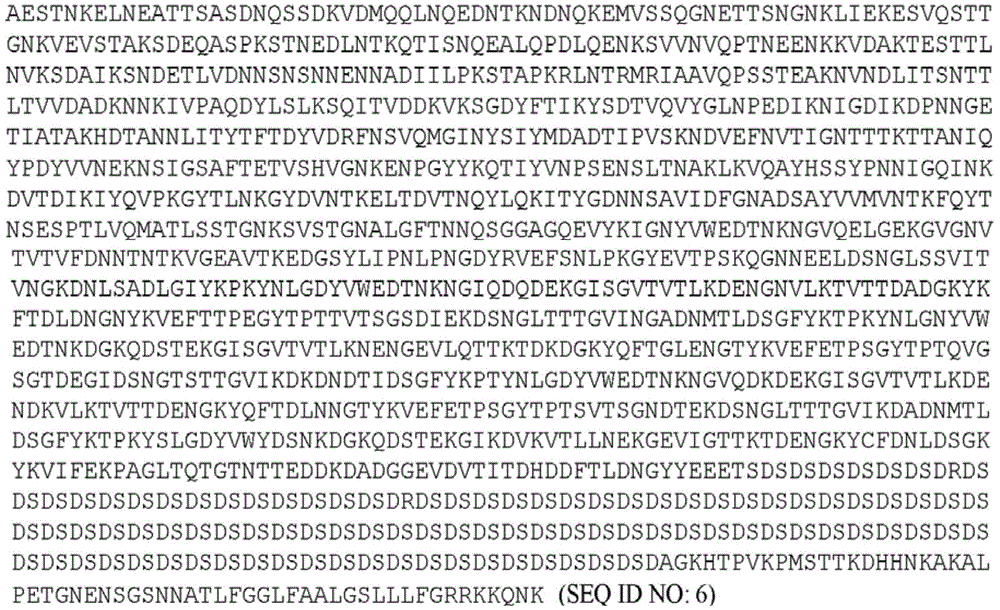
在一些实施方式中,用于本文公开的SA-MAPS免疫原性组合物中的SdrD抗原为SdrD(246-682)(SEQ ID NO:7),或与其具有至少85%氨基酸序列同一性的蛋白或片段。SEQID NO:7具有以下氨基酸序列:In some embodiments, the SdrD antigen used in the SA-MAPS immunogenic compositions disclosed herein is SdrD(246-682) (SEQ ID NO:7), or a protein having at least 85% amino acid sequence identity therewith or fragment. SEQ ID NO: 7 has the following amino acid sequence:

在一个实施方式中,SA-MAPS组合物可包含作为SEQ ID NO:7或SEQ ID NO:6的SdrD的多肽、肽或蛋白,或与SEQ ID NO:7或SEQ ID NO:6的SdrD至少70%、75%、80%、85%、90%、95%、96%、97%、98%或99%相同或相似的多肽、肽或蛋白。在某些方面,SdrD抗原肽或多肽将具有SEQ ID NO:7的全部或部分氨基酸序列,例如将包含SEQ ID NO:6或SEQ ID NO:7的至少50个、或至少60个、或至少70个、或至少80个、或至少90个、或至少100个、或至少120个、或至少140个、或至少160个、或至少180个、或至少200个、或至少220个、或至少240个氨基酸。在一个实施方式中,SA-MAPS免疫原性组合物中存在的SdrD抗原肽或多肽是作为SEQ ID NO:7的多肽、肽或蛋白,或与SEQ ID NO:7至少70%、75%、80%、85%、90%、95%、96%、97%、98%或99%相同或相似的多肽、肽或蛋白。In one embodiment, the SA-MAPS composition may comprise a polypeptide, peptide or protein that is the SdrD of SEQ ID NO:7 or SEQ ID NO:6, or is at least associated with the SdrD of SEQ ID NO:7 or SEQ ID NO:6 70%, 75%, 80%, 85%, 90%, 95%, 96%, 97%, 98% or 99% identical or similar polypeptides, peptides or proteins. In certain aspects, the SdrD antigenic peptide or polypeptide will have all or part of the amino acid sequence of SEQ ID NO:7, eg, will comprise at least 50, or at least 60, or at least SEQ ID NO:6 or SEQ ID NO:7 70, or at least 80, or at least 90, or at least 100, or at least 120, or at least 140, or at least 160, or at least 180, or at least 200, or at least 220, or at least 240 amino acids. In one embodiment, the SdrD antigenic peptide or polypeptide present in the SA-MAPS immunogenic composition is the polypeptide, peptide or protein of SEQ ID NO:7, or at least 70%, 75%, 80%, 85%, 90%, 95%, 96%, 97%, 98% or 99% identical or similar polypeptides, peptides or proteins.
术语“SdrD蛋白”是指包括来自葡萄球菌细菌的分离的野生型SdrD多肽及其区段,以及刺激针对葡萄球菌细菌SdrD蛋白的免疫应答的变体的蛋白。The term "SdrD protein" refers to a protein that includes isolated wild-type SdrD polypeptides and fragments thereof from Staphylococcus bacteria, as well as variants that stimulate an immune response against a Staphylococcus bacterial SdrD protein.
在一些实施方式中,其它SdrD抗原可用于本文公开的SA-MAPS组合物中,例如衍生自各种生物体物种的SdrD抗原性蛋白或肽,其中一些包括以下来自金黄色葡萄球菌的SdrD:菌株USA300FPR3757(蛋白登录号SAUSA3000547);菌株NCTC8325(蛋白登录号SAOUHSC00545);菌株MW2(蛋白登录号MW0517);菌株MSSA476(蛋白登录号SAS0520);以及菌株Mu50(蛋白登录号SAV0562)。In some embodiments, other SdrD antigens can be used in the SA-MAPS compositions disclosed herein, such as SdrD antigenic proteins or peptides derived from various organism species, some of which include the following SdrD from S. aureus: strains USA300FPR3757 (Protein Accession No. SAUSA3000547); strain NCTC8325 (Protein Accession No. SAOUHSC00545); Strain MW2 (Protein Accession No. MW0517); Strain MSSA476 (Protein Accession No. SAS0520); and strain Mu50 (Protein Accession No. SAV0562).
铁调节表面蛋白A(IsdA)Iron-regulated surface protein A (IsdA)
IsdA序列:在一些实施方式中,用于本文公开的SA-MAPS免疫原性组合物中的IsdA抗原包含含有SEQ ID NO:10(其对应于来自金黄色葡萄球菌菌株USA300的全长IsdA成熟蛋白(aa 47-350)(无信号序列))的至少部分的多肽或肽。IsdA sequence: In some embodiments, the IsdA antigen used in the SA-MAPS immunogenic compositions disclosed herein comprises SEQ ID NO: 10 (which corresponds to the full-length IsdA mature protein from S. aureus strain USA300 (aa 47-350) (no signal sequence)) at least part of a polypeptide or peptide.

在一些实施方式中,用于本文公开的SA-MAPS免疫原性组合物中的IsdA抗原为IsdA(47-324)(SEQ ID NO:11),或与其具有至少85%氨基酸序列同一性的蛋白或片段。SEQID NO:11具有以下氨基酸序列:In some embodiments, the IsdA antigen used in the SA-MAPS immunogenic compositions disclosed herein is IsdA(47-324) (SEQ ID NO: 11), or a protein having at least 85% amino acid sequence identity thereto or fragment. SEQ ID NO: 11 has the following amino acid sequence:

在一个实施方式中,SA-MAPS组合物可包含作为SEQ ID NO:11或SEQ ID NO:10的IsdA的多肽、肽或蛋白,或与SEQ ID NO:11或SEQ ID NO:10的IsdA至少70%、75%、80%、85%、90%、95%、96%、97%、98%或99%相同或相似的多肽、肽或蛋白。在某些方面,IsdA抗原肽或多肽将具有SEQ ID NO:11的全部或部分氨基酸序列,例如将包含SEQ ID NO:10或SEQ ID NO:11的至少50个、或至少60个、或至少70个、或至少80个、或至少90个、或至少100个、或至少120个、或至少140个、或至少160个、或至少180个、或至少200个、或至少220个、或至少240个氨基酸。在一个实施方式中,SA-MAPS免疫原性组合物中存在的IsdA抗原肽或多肽是作为SEQ ID NO:11的多肽、肽或蛋白,或与SEQ ID NO:11至少70%、75%、80%、85%、90%、95%、96%、97%、98%或99%相同或相似的多肽、肽或蛋白。In one embodiment, the SA-MAPS composition may comprise a polypeptide, peptide or protein that is the IsdA of SEQ ID NO: 11 or SEQ ID NO: 10, or at least with the IsdA of SEQ ID NO: 11 or SEQ ID NO: 10 70%, 75%, 80%, 85%, 90%, 95%, 96%, 97%, 98% or 99% identical or similar polypeptides, peptides or proteins. In certain aspects, the IsdA antigenic peptide or polypeptide will have all or part of the amino acid sequence of SEQ ID NO: 11, eg, will comprise at least 50, or at least 60, or at least SEQ ID NO: 10 or SEQ ID NO: 11 70, or at least 80, or at least 90, or at least 100, or at least 120, or at least 140, or at least 160, or at least 180, or at least 200, or at least 220, or at least 240 amino acids. In one embodiment, the IsdA antigenic peptide or polypeptide present in the SA-MAPS immunogenic composition is the polypeptide, peptide or protein of SEQ ID NO: 11, or at least 70%, 75%, 80%, 85%, 90%, 95%, 96%, 97%, 98% or 99% identical or similar polypeptides, peptides or proteins.
术语“IsdA蛋白”是指包括来自葡萄球菌细菌的分离的野生型IsdA多肽及其区段,以及刺激针对葡萄球菌细菌IsdA蛋白的免疫应答的变体的蛋白。The term "IsdA protein" refers to a protein that includes isolated wild-type IsdA polypeptides and fragments thereof from Staphylococcus bacteria, as well as variants that stimulate an immune response against Staphylococcus bacterial IsdA proteins.
铁调节表面蛋白B(IsdB)Iron-regulated surface protein B (IsdB)
在一些实施方式中,用于本文公开的SA-MAPS组合物中的SA抗原是金黄色葡萄球菌表面蛋白铁表面决定簇B(IsdB)。Mazmanian等描述了此MSCRAMM(Mazmanian,S K等,Proc.Natl.Acad.Sci.,USA 99:2293-2298(2002)),并且Kuklin等随后测试并显示了其在鼠感染模型和恒河猴免疫原性研究中作为候选疫苗是有效的(Kuklin,N A等,Infectionand Immunity,Vol.74,4,2215-2223(2006))。In some embodiments, the SA antigen used in the SA-MAPS compositions disclosed herein is the surface protein iron surface determinant B (IsdB) of Staphylococcus aureus. This MSCRAMM was described by Mazmanian et al. (Mazmanian, SK et al., Proc. Natl. Acad. Sci., USA 99: 2293-2298 (2002)), and was subsequently tested and shown by Kuklin et al. in a murine infection model and in rhesus monkey immunity It is effective as a vaccine candidate in originality studies (Kuklin, NA et al., Infection and Immunity, Vol. 74, 4, 2215-2223 (2006)).
IsdB序列:在一些实施方式中,用于本文公开的SA-MAPS免疫原性组合物中的IsdB抗原包含含有SEQ ID NO:12(其对应于来自金黄色葡萄球菌菌株USA300的全长IsdB成熟蛋白(aa 41-652)(无信号序列))的至少部分的多肽或肽。IsdB sequence: In some embodiments, the IsdB antigen used in the SA-MAPS immunogenic compositions disclosed herein comprises a mature protein comprising SEQ ID NO: 12 (which corresponds to the full-length IsdB mature protein from S. aureus strain USA300 (aa 41-652) (no signal sequence)) at least part of a polypeptide or peptide.

在一些实施方式中,用于本文公开的SA-MAPS免疫原性组合物中的IsdB抗原为IsdB(48-477)(SEQ ID NO:13),或为与其具有至少85%氨基酸序列同一性的蛋白或片段。SEQ ID NO:13具有以下氨基酸序列:In some embodiments, the IsdB antigen used in the SA-MAPS immunogenic compositions disclosed herein is IsdB(48-477) (SEQ ID NO: 13), or has at least 85% amino acid sequence identity therewith protein or fragment. SEQ ID NO: 13 has the following amino acid sequence:

在一个实施方式中,SA-MAPS组合物可包含作为SEQ ID NO:13或SEQ ID NO:12的IsdB的多肽、肽或蛋白,或与SEQ ID NO:13或SEQ ID NO:12的IsdB至少70%、75%、80%、85%、90%、95%、96%、97%、98%或99%相同或相似的多肽、肽或蛋白。在某些方面,IsdB抗原肽或多肽将具有SEQ ID NO:13的全部或部分氨基酸序列,例如将包含SEQ ID NO:12或SEQ ID NO:13的至少50个、或至少60个、或至少70个、或至少80个、或至少90个、或至少100个、或至少120个、或至少140个、或至少160个、或至少180个、或至少200个、或至少220个、或至少240个氨基酸。在一个实施方式中,SA-MAPS免疫原性组合物中存在的IsdB抗原肽或多肽是作为SEQ ID NO:13的多肽、肽或蛋白,或与SEQ ID NO:13至少70%、75%、80%、85%、90%、95%、96%、97%、98%或99%相同或相似的多肽、肽或蛋白。In one embodiment, the SA-MAPS composition may comprise a polypeptide, peptide or protein that is the IsdB of SEQ ID NO: 13 or SEQ ID NO: 12, or at least the same as the IsdB of SEQ ID NO: 13 or SEQ ID NO: 12 70%, 75%, 80%, 85%, 90%, 95%, 96%, 97%, 98% or 99% identical or similar polypeptides, peptides or proteins. In certain aspects, the IsdB antigenic peptide or polypeptide will have all or part of the amino acid sequence of SEQ ID NO: 13, eg, will comprise at least 50, or at least 60, or at least SEQ ID NO: 12 or SEQ ID NO: 13 70, or at least 80, or at least 90, or at least 100, or at least 120, or at least 140, or at least 160, or at least 180, or at least 200, or at least 220, or at least 240 amino acids. In one embodiment, the IsdB antigenic peptide or polypeptide present in the SA-MAPS immunogenic composition is the polypeptide, peptide or protein of SEQ ID NO: 13, or at least 70%, 75%, 80%, 85%, 90%, 95%, 96%, 97%, 98% or 99% identical or similar polypeptides, peptides or proteins.
术语“IsdB蛋白”是指包括来自葡萄球菌细菌的分离的野生型IsdB多肽及其区段,以及刺激针对葡萄球菌细菌IsdB蛋白的免疫应答的变体的蛋白。The term "IsdB protein" refers to a protein that includes isolated wild-type IsdB polypeptides and fragments thereof from Staphylococcus bacteria, as well as variants that stimulate an immune response against the Staphylococcus bacterial IsdB protein.
在一些实施方式中,其它IsdB抗原可用于本文公开的SA-MAPS组合物中,例如衍生自各种生物体物种的IsdB抗原性蛋白或肽,其中一些包括以下来自金黄色葡萄球菌菌株的IsdB:包括菌株MRSA252(蛋白登录号CAG40104.1);菌株Newman(蛋白登录号BAF67312.1);菌株MSSA476(蛋白登录号CAG42837.1);菌株Mu3(蛋白登录号BAF78003.1);菌株RF 122(蛋白登录号CAl80681.1)。In some embodiments, other IsdB antigens can be used in the SA-MAPS compositions disclosed herein, such as IsdB antigenic proteins or peptides derived from various organism species, some of which include the following IsdB from S. aureus strains: Including strain MRSA252 (protein accession number CAG40104.1); strain Newman (protein accession number BAF67312.1); strain MSSA476 (protein accession number CAG42837.1); strain Mu3 (protein accession number BAF78003.1); strain RF 122 (protein accession number BAF78003.1) Accession number CA180681.1).
其它SA抗原Other SA antigens
尽管用于本文公开的SA-MAPS组合物中的示例性SA抗原可为溶血素(Hl)(例如溶血素α或Hla209)、聚集因子A(ClfA)、聚集因子B(ClfB)、丝氨酸-天冬氨酸重复蛋白D(SdrD)、铁调节表面蛋白A(IsdA)和铁调节表面蛋白B(IsdB)中的1种以上或全部6种或它们的片段,例如Hla209(27-319)、ClfA(221-559)、ClfB(203-542)、SdrD(246-682)、IsdA(47-324)、IsdB(48-447),或与它们具有至少85%序列同一性的蛋白或肽,设想以上列举的任何SA抗原均可被替换为本领域普通技术人员已知的不同的SA肽抗原或多肽抗原。Although exemplary SA antigens for use in the SA-MAPS compositions disclosed herein may be hemolysin (H1) (eg, hemolysin alpha or Hla209), aggregation factor A (CIfA), aggregation factor B (CIfB), serine-day More than one or all six of the aspartate repeat protein D (SdrD), iron-regulated surface protein A (IsdA) and iron-regulated surface protein B (IsdB) or fragments thereof, such as Hla209 (27-319), CIfA (221-559), CIfB (203-542), SdrD (246-682), IsdA (47-324), IsdB (48-447), or proteins or peptides with at least 85% sequence identity to them, envisaged Any of the SA antigens listed above can be replaced with a different SA peptide antigen or polypeptide antigen known to those of ordinary skill in the art.
例如,在一些实施方式中,在本文公开的SA-MAPS组合物中有用的任何一种以上SA抗原包括但不限于包含丝氨酸-天冬氨酸重复蛋白E(SdrE)蛋白、SdrC、白细胞毒素D(LukD)蛋白或白细胞毒素E(LukE)蛋白的至少部分的肽或多肽,只要所述任何肽或多肽为免疫原性或抗原性的。可使用其它SA抗原,并且在本文中公开了其它SA抗原。For example, in some embodiments, any one or more SA antigens useful in the SA-MAPS compositions disclosed herein include, but are not limited to, proteins comprising serine-aspartate repeat E (SdrE), SdrC, leukotoxin D (LukD) protein or at least a portion of a leukotoxin E (LukE) protein, as long as any peptide or polypeptide is immunogenic or antigenic. Other SA antigens can be used and are disclosed herein.
在一些实施方式中,其它SA抗原可用于本文公开的SA-MAPS组合物中。例如,金黄色葡萄球菌MntC蛋白(也称为蛋白305、P305、P305A和ORF305)为锰ABC转运蛋白的成分。该蛋白在体内表达。金黄色葡萄球菌使用锰作为增强中性粒细胞中金黄色葡萄球菌的存活的酶的辅因子。因此,MntC对于感染期间金黄色葡萄球菌的体内存活是重要的。与ClfA一样,此蛋白在溶液中也不稳定。然而,与可聚集或通过水解作用切割的ClfA不同,MntC降解的主要机理是当处于碱性pH和/或室温(约25℃)左右或更高温度时的脱酰胺基作用。In some embodiments, other SA antigens can be used in the SA-MAPS compositions disclosed herein. For example, the S. aureus MntC protein (also known as protein 305, P305, P305A, and ORF305) is a component of the manganese ABC transporter. The protein is expressed in vivo. Staphylococcus aureus uses manganese as a cofactor for enzymes that enhance the survival of Staphylococcus aureus in neutrophils. Therefore, MntC is important for the in vivo survival of S. aureus during infection. Like CIfA, this protein is also unstable in solution. However, unlike CIfA, which can aggregate or be cleaved by hydrolysis, the primary mechanism of MntC degradation is deamidation at alkaline pH and/or at around room temperature (about 25°C) or higher.
在一些实施方式中,可用于本文公开的SA-MAPS组合物中的SA抗原可选自于以下中的任一种或它们的组合:SdrC、SdrE、MntC/SitC/唾液结合蛋白、Opp3a、DltA、HtsA、LtaS、SdrH、SrtA、SpA、SBI、β-溶血素、纤连蛋白结合蛋白A(fnbA)、凝固酶、map、Panton-Valentine杀白细胞素(pvl)、γ-毒素(hlg)、ica、免疫显性ABC转运蛋白、RAP、自溶素、层粘连蛋白受体、SPOIIIE、SsaA、EbpS、Sasf、SasH、EFB(FIB)、FnbB、Npase、EBP、骨唾液结合蛋白II、aureolysin前体(AUR)/Seppl、Cna、TSST-1、mecA、dPNAG、GehD、EbhA、EbhB、SSP-1、SSP-2HBP、玻连蛋白结合蛋白、HarA、肠毒素A、肠毒素B、肠毒素C1和新型自溶素。In some embodiments, SA antigens useful in the SA-MAPS compositions disclosed herein may be selected from any one or a combination of the following: SdrC, SdrE, MntC/SitC/saliva-binding protein, Opp3a, DltA , HtsA, LtaS, SdrH, SrtA, SpA, SBI, β-hemolysin, fibronectin-binding protein A (fnbA), coagulase, map, Panton-Valentine leukocidin (pvl), γ-toxin (hlg), ica, immunodominant ABC transporter, RAP, autolysin, laminin receptor, SPOIIIE, SsaA, EbpS, Sasf, SasH, EFB(FIB), FnbB, Npase, EBP, bone salivary binding protein II, aureolysin pre Body (AUR)/Seppl, Cna, TSST-1, mecA, dPNAG, GehD, EbhA, EbhB, SSP-1, SSP-2HBP, Vitronectin, HarA, Enterotoxin A, Enterotoxin B, Enterotoxin C1 and novel autolysins.
在一些实施方式中,可用于本文公开的SA-MAPS组合物中的SA抗原可选自于以下中的任一种或它们的组合:Opp3a、DltD、HtsA、LtaS、IsdA、IsdC、SdrF、SdrG、SdrH、SrtA、SpA、Shiα-溶血素(hla)、β-溶血素、纤连蛋白结合蛋白A(fnbA)、纤连蛋白结合蛋白B(fnbB)、凝固酶、Fig、map、Panton-Valentine杀白细胞素(pvl)、α-毒素及其变体、γ-毒素(hlg)及其变体、ica、免疫显性ABC转运蛋白、Mg2+转运蛋白、Ni ABC转运蛋白、RAP、自溶素、层粘连蛋白受体、IsaA/PisA、IsaB/PisB、SPOIIIE、SsaA、EbpS、SasA、SasF、SasH、EFB(FIB)、SBI、Npase、EBP、骨唾液结合蛋白II、aureolysin前体(AUR)/Seppl、Cna以及它们的片段,例如M55、TSST-1、mecA、聚N-乙酰葡萄糖胺(PNAG/dPNAG)胞外多糖、GehD、EbhA、EbhB、SSP-1、SSP-2、HBP、玻连蛋白结合蛋白、HarA、EsxA、EsxB、肠毒素A、肠毒素B、肠毒素C1和新型自溶素。In some embodiments, SA antigens useful in the SA-MAPS compositions disclosed herein may be selected from any one or a combination of the following: Opp3a, DltD, HtsA, LtaS, IsdA, IsdC, SdrF, SdrG , SdrH, SrtA, SpA, Shiα-hemolysin (hla), β-hemolysin, fibronectin binding protein A (fnbA), fibronectin binding protein B (fnbB), coagulase, Fig, map, Panton-Valentine Leukocidin (pvl), alpha-toxin and its variants, gamma-toxin (hlg) and its variants, ica, immunodominant ABC transporter, Mg 2+ transporter, Ni ABC transporter, RAP, autolysis protein, laminin receptor, IsaA/PisA, IsaB/PisB, SPOIIIE, SsaA, EbpS, SasA, SasF, SasH, EFB(FIB), SBI, Npase, EBP, bone salivary binding protein II, aureolysin precursor (AUR )/Seppl, Cna and their fragments, such as M55, TSST-1, mecA, poly-N-acetylglucosamine (PNAG/dPNAG) exopolysaccharide, GehD, EbhA, EbhB, SSP-1, SSP-2, HBP, Vitronectin-binding protein, HarA, EsxA, EsxB, enterotoxin A, enterotoxin B, enterotoxin C1 and novel autolysins.
细菌抗原包括但不限于(i)分泌的毒力因子和/或细胞表面蛋白或肽;或(ii)编码分泌的毒力因子和/或细胞表面蛋白或肽的重组核酸分子。细菌抗原可包括至少或至多1种、2种、3种、4种、5种、6种、7种、8种、9种、10种、11种、12种、13种、14种、15种、16种、17种、18种或19种其它葡萄球菌抗原或它们的免疫原性片段中的1种以上,包括但不限于:FnBpA、FnBpB、LukD(GI:2765304)、LukE(GI:2765303)、LukF(GI:12231006)、SasA、SasD、SasG、SasI、SasK、SpA(及其变体)、Eap、Ebh、Emp、EsaB、EsaC、EsxA、EsxB、SdrC、SdrE、Coa、Hla(例如H35突变体)、IsdC、SasF、vWbp、vWh、52kDa玻连蛋白结合蛋白(WO 01/60852)、Aaa(GenBank CAC80837)、Aap(GenBank登录号AJ249487)、Ant(GenBank登录号NP-372518)、自溶素氨基葡萄糖苷酶、自溶素酰胺酶、Cna、胶原结合蛋白(美国专利号6,288,214)、EFB(FIB)、弹性蛋白结合蛋白(EbpS)、EPB、FbpA、纤维蛋白原结合蛋白(美国专利号6,008,341)、纤连蛋白结合蛋白(美国专利号5,840,846)、FnbA、FnbB、GehD(US 2002/0169288)、HarA、HBP、免疫显性ABC转运蛋白、IsaA/P isA、层粘连蛋白受体、脂肪酶GehD、MAP、Mg2+转运蛋白、MHC II同系物(美国专利号5,648,240)、MRPII、Npase、RNA III活化蛋白(RAP)、SasA、SasB、SasC、SasD、SasK、SBI、SdrF(WO 00/12689)、SdrG/Fig(WO 00/12689)、SdrH(WO 00/12689)、SEA外毒素(WO 00/02523)、SEB外毒素(WO 00/02523)、SitC和Ni ABC转运蛋白、SitC/MntC/唾液结合蛋白(美国专利号5,801,234)、SsaA、SSP-1、SSP-2和/或玻连蛋白结合蛋白(参见PCT公开WO2007/113222、WO2007/113223、WO2006/032472、WO2006/032475、WO2006/032500,以引用的方式将它们整体并入本文)。Bacterial antigens include, but are not limited to (i) secreted virulence factors and/or cell surface proteins or peptides; or (ii) recombinant nucleic acid molecules encoding secreted virulence factors and/or cell surface proteins or peptides. Bacterial antigens may include at least or at most 1, 2, 3, 4, 5, 6, 7, 8, 9, 10, 11, 12, 13, 14, 15 1 or more of species, 16, 17, 18 or 19 other staphylococcal antigens or their immunogenic fragments, including but not limited to: FnBpA, FnBpB, LukD (GI: 2765304), LukE (GI: 2765303), LukF (GI: 12231006), SasA, SasD, SasG, SasI, SasK, SpA (and variants thereof), Eap, Ebh, Emp, EsaB, EsaC, EsxA, EsxB, SdrC, SdrE, Coa, Hla ( e.g. H35 mutant), IsdC, SasF, vWbp, vWh, 52kDa vitronectin binding protein (WO 01/60852), Aaa (GenBank CAC80837), Aap (GenBank Accession No. AJ249487), Ant (GenBank Accession No. NP-372518) , autolysin glucosaminidase, autolysin amidase, Cna, collagen binding protein (US Patent No. 6,288,214), EFB (FIB), elastin binding protein (EbpS), EPB, FbpA, fibrinogen binding protein ( US Patent No. 6,008,341), fibronectin binding protein (US Patent No. 5,840,846), FnbA, FnbB, GehD (US 2002/0169288), HarA, HBP, immunodominant ABC transporter, IsaA/P isA, laminin receptor body, lipase GehD, MAP, Mg transporter, MHC II homolog (US Pat. No. 5,648,240), MRPII, Npase, RNA III activating protein (RAP), SasA, SasB, SasC, SasD, SasK, SBI, SdrF (WO 00/12689), SdrG/Fig (WO 00/12689), SdrH (WO 00/12689), SEA exotoxin (WO 00/02523), SEB exotoxin (WO 00/02523), SitC and Ni ABC transport protein, SitC/MntC/saliva binding protein (US Patent No. 5,801,234), SsaA, SSP-1, SSP-2 and/or vitronectin binding protein (see PCT publications WO2007/113222, WO2007/113223, WO2006/032472, WO2006 /032475, WO2006/032500, which are hereby incorporated by reference in their entirety).
在一些实施方式中,用于本文公开的SA-MAPS组合物中的SA抗原为识别粘附基质分子的微生物表面组分(或MSCRAMM),包括但不限于EkeS、DsqA、KesK、KrkN、KrkN2、RkaS、RrkN和KnkA。WO 02/102829(以引用的方式将其并入本文)中描述了这些MSCRAMM。由GenBank登录号标识的其它MSCRAMM包括NP_373261.1、NP_373371.1、NP_374246.1、NP_374248.1、NP_374841.1、NP_374866.1、NP_375140.1、NP_375614.1、NP_375615.1、NP_375707.1、NP_375765.1和NP_375773.1。In some embodiments, the SA antigen used in the SA-MAPS compositions disclosed herein is a microbial surface component (or MSCRAMM) that recognizes adhesion matrix molecules, including but not limited to EkeS, DsqA, KesK, KrkN, KrkN2, RkaS, RrkN and KnkA. These MSCRAMMs are described in WO 02/102829, which is incorporated herein by reference. Other MSCRAMMs identified by GenBank accession numbers include NP_373261.1, NP_373371.1, NP_374246.1, NP_374248.1, NP_374841.1, NP_374866.1, NP_375140.1, NP_375614.1, NP_375615.1, NP_375707.1, NP_37 .1 and NP_375773.1.
在某些方面,SA-MAPS组合物可包含选自于由以下所组成的组中的葡萄球菌抗原:FnBpA、FnBpB、LukD、LukE、LukF、SasA、SasD、SasG、SasI、SasK、SpA(及其变体)、Eap、Ebh、Emp、EsaB、EsaC、EsxA、EsxB、SdrC、SdrD、SdrE、IsdA、IsdB、ClfA、ClfB、Coa、Hla(例如H35突变体)、IsdC、SasF、vWbp、vWh以及它们的免疫原性片段。In certain aspects, the SA-MAPS composition can comprise a staphylococcal antigen selected from the group consisting of: FnBpA, FnBpB, LukD, LukE, LukF, SasA, SasD, SasG, SasI, SasK, SpA (and its variants), Eap, Ebh, Emp, EsaB, EsaC, EsxA, EsxB, SdrC, SdrD, SdrE, IsdA, IsdB, CIfA, CIfB, Coa, Hla (e.g. H35 mutant), IsdC, SasF, vWbp, vWh and their immunogenic fragments.
以下讨论用于本文公开的SA-MAPS免疫原性组合物中的一些示例性替代SA抗原。Some exemplary surrogate SA antigens for use in the SA-MAPS immunogenic compositions disclosed herein are discussed below.
丝氨酸-天冬氨酸重复蛋白E(SdrE)Serine-aspartate repeat protein E (SdrE)
sdr基因紧密连接并串联排列,因此在本文公开的SA-MAPS免疫原性组合物中可使用任一种Sdr蛋白(例如SdrC、SdrD、SdrE、ClfA和ClfB)。Sdr蛋白特征性地包含A区域,其中存在高度保守的氨基酸序列,其可用于衍生共有TYTFTDYVD(SEQ ID NO:20)基序。该基序在不同蛋白之间显示出微小变化。美国专利号6,680,195中描述了此变化以及基序的共有序列。在Clf-Sdr蛋白中,该基序为高度保守的。该基序可用于免疫原性组合物中以针对细菌感染给予广谱免疫力,并且还可用作单克隆抗体或多克隆抗体生产中的抗原。此类抗体可用于给予广谱被动免疫力。The sdr genes are tightly linked and arranged in tandem, so any of the Sdr proteins (eg, SdrC, SdrD, SdrE, CIfA, and CIfB) can be used in the SA-MAPS immunogenic compositions disclosed herein. Sdr proteins characteristically contain an A region in which there is a highly conserved amino acid sequence that can be used to derive the consensus TYTFTDYVD (SEQ ID NO: 20) motif. This motif shows slight variation between different proteins. This variation, as well as the consensus sequence for the motif, is described in US Patent No. 6,680,195. In Clf-Sdr proteins, this motif is highly conserved. This motif can be used in immunogenic compositions to confer broad-spectrum immunity against bacterial infection, and can also be used as an antigen in monoclonal or polyclonal antibody production. Such antibodies can be used to confer broad-spectrum passive immunity.
Sdr蛋白与ClfA和ClfB的不同之处在于具有位于A区域和R区域之间的2个至5个另外的110-113残基重复序列(B-基序)。每个B-基序包含通常在真核蛋白中发现的共有Ca2+结合EF-手环。bisANS荧光分析显示,包含SdrD的5个B重复序列的重组蛋白的结构完整性为Ca2+依赖性的,表明EF手是功能性的。当去除Ca2+时,该结构塌陷为非折叠构象。通过Ca2+的添加恢复了原始结构。Sdr蛋白的C端R结构域包含132-170SD残基。这些之后是保守壁锚定区域,革兰氏阳性细菌的许多表面蛋白以其为特征。The Sdr protein differs from CIfA and CIfB by having 2 to 5 additional repeats of 110-113 residues (B-motif) located between the A and R regions. Each B-motif contains a consensus Ca binding EF-hand loop typically found in eukaryotic proteins. bisANS fluorescence analysis showed that the structural integrity of the recombinant protein containing the five B repeats of SdrD was Ca2 + -dependent, indicating that the EF hand is functional. When Ca2 + is removed, the structure collapses into an unfolded conformation. The original structure was restored by the addition of Ca 2+ . The C-terminal R domain of the Sdr protein contains residues 132-170SD. These are followed by conserved wall-anchoring regions, which are characterized by many surface proteins of Gram-positive bacteria.
在Sdr和Clf蛋白中该B基序为高度保守的,而在结合纤连蛋白的MSCRAMM以及胶原蛋白结合蛋白Cna中出现了简并(degenerate)形式。B基序连同R区域对于在距细胞表面一定距离处展示配体结合结构域而言是必需的。重复的B基序是本文所述的SD重复蛋白的亚组的一个共同特性。在来自菌株PFESA0237的3种Sdr蛋白中发现了不同数量的这些基序。各个B基序之间有明显区别。最保守的单元为位于R区域附近的单元(SdrC B2、SdrD B5和SdrEB3)。它们在数个位点处(尤其在C端一半处)与其余单元不同。值得注意的结构细节是相邻的B重复序列始终被C端区域中存在的脯氨酸残基分隔开,但脯氨酸从未出现在最后的B重复序列和R区域之间。相反,该接头的特征在于短的酸性延伸(acidic stretch)。这些差异是末端单元与其它B基序相比具有不同的结构或功能性作用的证据。SdrD和SdrE的N端B基序已彼此偏离,并且存在许多氨基酸改变,包括小插入和缺失,而其余的内部B基序是更加高度保守的。注意3种Sdr蛋白中的每种均具有至少一个每种B基序。This B motif is highly conserved in Sdr and Clf proteins, while a degenerate form appears in the fibronectin-binding MSCRAMM and the collagen-binding protein Cna. The B motif along with the R region is necessary for displaying the ligand binding domain at a distance from the cell surface. Repeated B motifs are a common feature of the subset of SD repeat proteins described herein. Different numbers of these motifs were found in the 3 Sdr proteins from strain PFESA0237. There is a clear distinction between the individual B motifs. The most conserved units are those located near the R region (SdrC B2, SdrD B5 and SdrEB3). They differ from the rest of the units at several sites, especially in the C-terminal half. A noteworthy structural detail is that adjacent B repeats are always separated by proline residues present in the C-terminal region, but proline never occurs between the final B repeat and the R region. Instead, the linker is characterized by short acidic stretches. These differences are evidence that end units have different structural or functional roles compared to other B motifs. The N-terminal B motifs of SdrD and SdrE have diverged from each other and there are many amino acid changes, including small insertions and deletions, while the remaining internal B motifs are more highly conserved. Note that each of the 3 Sdr proteins has at least one of each B motif.
Sdr蛋白的C端R结构域包含132-170SD残基。这些之后是保守壁锚定区域,革兰氏阳性细菌的许多表面蛋白以其为特征。The C-terminal R domain of the Sdr protein contains residues 132-170SD. These are followed by conserved wall-anchoring regions, which are characterized by many surface proteins of Gram-positive bacteria.
在一些实施方式中,SdrE抗原可用于本文公开的SA-MAPS免疫原性组合物中,并且可包含含有SEQ ID NO:8(其对应于来自金黄色葡萄球菌菌株USA300的全长SdrE成熟蛋白(无信号序列))的至少部分的多肽或肽。In some embodiments, the SdrE antigen may be used in the SA-MAPS immunogenic compositions disclosed herein, and may comprise a protein containing SEQ ID NO: 8 (which corresponds to the full-length SdrE mature protein from S. aureus strain USA300 ( A polypeptide or peptide that is at least part of a polypeptide or peptide without a signal sequence)).

在一些实施方式中,SA-MAPS组合物可包含作为SEQ ID NO:8的SdrE的多肽、肽或蛋白,或与SEQ ID NO:8的SdrE至少70%、75%、80%、85%、90%、95%、96%、97%、98%或99%相同或相似的多肽、肽或蛋白。在某些方面,SdrE抗原肽或多肽将具有SEQ ID NO:8的全部或部分氨基酸序列,例如将包含SEQ ID NO:8的至少50个、或至少60个、或至少70个、或至少80个、或至少90个、或至少100个、或至少120个、或至少140个、或至少160个、或至少180个、或至少200个、或至少220个、或至少240个氨基酸。在一个实施方式中,SA-MAPS免疫原性组合物中存在的SdrE抗原肽或多肽是作为SEQ ID NO:8的多肽、肽或蛋白,或与SEQ ID NO:8至少70%、75%、80%、85%、90%、95%、96%、97%、98%或99%相同或相似的多肽、肽或蛋白。In some embodiments, the SA-MAPS composition may comprise a polypeptide, peptide or protein that is SdrE of SEQ ID NO:8, or at least 70%, 75%, 80%, 85%, 90%, 95%, 96%, 97%, 98% or 99% identical or similar polypeptides, peptides or proteins. In certain aspects, the SdrE antigenic peptide or polypeptide will have all or part of the amino acid sequence of SEQ ID NO:8, eg, will comprise at least 50, or at least 60, or at least 70, or at least 80 of SEQ ID NO:8 or at least 90, or at least 100, or at least 120, or at least 140, or at least 160, or at least 180, or at least 200, or at least 220, or at least 240 amino acids. In one embodiment, the SdrE antigenic peptide or polypeptide present in the SA-MAPS immunogenic composition is the polypeptide, peptide or protein of SEQ ID NO:8, or at least 70%, 75%, 80%, 85%, 90%, 95%, 96%, 97%, 98% or 99% identical or similar polypeptides, peptides or proteins.
术语“SdrE蛋白”是指包括来自葡萄球菌细菌的分离的野生型SdrE多肽及其区段,以及刺激针对葡萄球菌细菌SdrE蛋白的免疫应答的变体的蛋白。The term "SdrE protein" refers to a protein that includes isolated wild-type SdrE polypeptides and fragments thereof from Staphylococcus bacteria, as well as variants that stimulate an immune response against Staphylococcus bacterial SdrE proteins.
术语“SdrC蛋白”是指包括来自葡萄球菌细菌的分离的野生型SdrC多肽及其区段,以及刺激针对葡萄球菌细菌SdrC蛋白的免疫应答的变体的蛋白。The term "SdrC protein" refers to a protein that includes isolated wild-type SdrC polypeptides and fragments thereof from Staphylococcus bacteria, as well as variants that stimulate an immune response against a Staphylococcus bacterial SdrC protein.
LukD、LukE、LukFLukD, LukE, LukF
在一个实施方式中,SA-MAPS组合物可包含作为LukD蛋白的多肽、肽或蛋白,或与LukD蛋白至少70%、75%、80%、85%、90%、95%、96%、97%、98%或99%相同或相似的多肽、肽或蛋白。在某些方面,LukD蛋白将具有登录号CAA73668/GI:2765304的全部或部分氨基酸序列。术语“LukD蛋白”是指包括来自葡萄球菌细菌的分离的野生型LukD多肽及其区段,以及刺激针对葡萄球菌细菌LukD蛋白的免疫应答的变体的蛋白。In one embodiment, the SA-MAPS composition may comprise a polypeptide, peptide or protein as a LukD protein, or at least 70%, 75%, 80%, 85%, 90%, 95%, 96%, 97% with LukD protein %, 98% or 99% identical or similar polypeptides, peptides or proteins. In certain aspects, the LukD protein will have all or part of the amino acid sequence of Accession No. CAA73668/GI:2765304. The term "LukD protein" refers to proteins including isolated wild-type LukD polypeptides and fragments thereof from Staphylococcus bacteria, as well as variants that stimulate an immune response against Staphylococcus bacterial LukD proteins.
在一个实施方式中,SA-MAPS组合物可包含作为LukE蛋白的多肽、肽或蛋白,或与LukE蛋白至少70%、75%、80%、85%、90%、95%、96%、97%、98%或99%相同或相似的多肽、肽或蛋白。在某些方面,LukE蛋白将具有登录号CAA73667.1/GI:2765303的全部或部分氨基酸序列。术语“LukE蛋白”是指包括来自葡萄球菌细菌的分离的野生型LukE多肽及其区段,以及刺激针对葡萄球菌细菌LukE蛋白的免疫应答的变体的蛋白。In one embodiment, the SA-MAPS composition may comprise a polypeptide, peptide or protein as a LukE protein, or at least 70%, 75%, 80%, 85%, 90%, 95%, 96%, 97% with the LukE protein %, 98% or 99% identical or similar polypeptides, peptides or proteins. In certain aspects, the LukE protein will have all or part of the amino acid sequence of Accession No. CAA73667.1/GI:2765303. The term "LukE protein" refers to proteins including isolated wild-type LukE polypeptides and fragments thereof from Staphylococcus bacteria, as well as variants that stimulate an immune response against Staphylococcus bacterial LukE proteins.
在一个实施方式中,SA-MAPS组合物可包含作为LukF蛋白的多肽、肽或蛋白,或与LukF蛋白至少70%、75%、80%、85%、90%、95%、96%、97%、98%或99%相同或相似的多肽、肽或蛋白。在某些方面,LukF蛋白将具有登录号AAC60446.1/GI:410007的全部或部分氨基酸序列。术语“LukF蛋白”是指包括来自葡萄球菌细菌的分离的野生型LukF多肽及其区段,以及刺激针对葡萄球菌细菌LukF蛋白的免疫应答的变体的蛋白。In one embodiment, the SA-MAPS composition may comprise a polypeptide, peptide or protein as a LukF protein, or at least 70%, 75%, 80%, 85%, 90%, 95%, 96%, 97% with the LukF protein %, 98% or 99% identical or similar polypeptides, peptides or proteins. In certain aspects, the LukF protein will have all or part of the amino acid sequence of Accession No. AAC60446.1/GI:410007. The term "LukF protein" refers to proteins including isolated wild-type LukF polypeptides and fragments thereof from Staphylococcus bacteria, as well as variants that stimulate an immune response against Staphylococcus bacterial LukF proteins.
金黄色葡萄球菌MntC/SitC/唾液结合蛋白Staphylococcus aureus MntC/SitC/saliva-binding protein
在一个实施方式中,SA-MAPS组合物可包含作为MntC/SitC/唾液结合蛋白的多肽、肽或蛋白,或与MntC/SitC/唾液结合蛋白至少70%、75%、80%、85%、90%、95%、96%、97%、98%或99%相同或相似的多肽、肽或蛋白。MntC/SitC/唾液结合蛋白为ABC转运蛋白,并在表皮葡萄球菌和金黄色葡萄球菌中具有同系物。它在本文中称为MntC。该蛋白为32kDa脂蛋白,位于细菌细胞壁中。参见Sellman等和Cockayne等,Infect.Immun.66:3767(1998)。在表皮葡萄球菌中,它是铁调节操纵子的成分。它显示出与粘附素(包括副血链球菌(S.parasanguis)的FimA)以及具有经证明或推定的金属铁转运功能的ABC转运蛋白家族的脂蛋白均有相当的同源性。MntC的金黄色葡萄球菌同系物被称为唾液结合蛋白,并在美国专利号5,801,234(以引用的方式将其整体并入本文)中公开。在菌株Mu50的GenBank登录号NP_371155中发现了MntC/SitC/唾液结合蛋白的金黄色葡萄球菌同系物的蛋白序列(也称为SAV0631),其中菌株Mu50的完全基因组的核苷酸序列的登录号为NC_002758.2(坐标704988-705917)。In one embodiment, the SA-MAPS composition may comprise a polypeptide, peptide or protein as MntC/SitC/saliva-binding protein, or at least 70%, 75%, 80%, 85%, 90%, 95%, 96%, 97%, 98% or 99% identical or similar polypeptides, peptides or proteins. MntC/SitC/saliva-binding proteins are ABC transporters and have homologs in S. epidermidis and S. aureus. It is referred to in this article as MntC. This protein is a 32kDa lipoprotein located in the bacterial cell wall. See Sellman et al. and Cockayne et al., Infect. Immun. 66:3767 (1998). In S. epidermidis, it is a component of the iron-regulated operon. It exhibits considerable homology to both adhesins (including FimA of S. parasanguis) and lipoproteins of the ABC transporter family with proven or putative metal iron transport functions. The Staphylococcus aureus homolog of MntC is known as a salivary binding protein and is disclosed in US Pat. No. 5,801,234 (incorporated herein by reference in its entirety). The protein sequence of the Staphylococcus aureus homolog of MntC/SitC/saliva-binding protein (also known as SAV0631) was found in GenBank Accession No. NP_371155 of strain Mu50, where the nucleotide sequence of the complete genome of strain Mu50 has Accession No. NC_002758.2 (coordinates 704988-705917).
在替代实施方式中,用于本文公开的SA-MAPS免疫原性组合物中的MntC抗原为具有美国专利8,568,735(以引用的方式将其整体并入本文)的表12中公开的MntC蛋白之一的氨基酸序列的蛋白或肽。涵盖了公开的本文未指定的其它MntC抗原以用于所述SA-MAPS免疫原性组合物中,只要所述MntC抗原为抗原性的。In alternative embodiments, the MntC antigen used in the SA-MAPS immunogenic compositions disclosed herein is one of the MntC proteins disclosed in Table 12 of US Pat. No. 8,568,735, which is incorporated herein by reference in its entirety The amino acid sequence of a protein or peptide. Other MntC antigens not specified herein are contemplated for use in the SA-MAPS immunogenic composition, so long as the MntC antigen is antigenic.
表皮葡萄球菌SitC蛋白Staphylococcus epidermidis SitC protein
在一个实施方式中,SA-MAPS组合物可包含作为SitC蛋白的多肽、肽或蛋白,或与SitC蛋白至少70%、75%、80%、85%、90%、95%、96%、97%、98%或99%相同或相似的多肽、肽或蛋白。SitC为MntC/SitC/唾液结合蛋白的表皮葡萄球菌同系物,并在Sellman等(Sellman等,Infect.Immun.2005October,73(10):6591-6600)中公开。SitC的蛋白序列在GenBank登录号YP_1187886.1(也称为SERP0290)中发现并在美国专利8,568,735(以引用的方式将其整体并入本文)中公开为SEQ ID NO:121。菌株RP62A的完全基因组的核苷酸序列的登录号为NC_002976(坐标293030-293959)。其它候选SitC分子可衍生自各种生物体种类,以用于本发明的免疫原性组合物中,其中一些包括但不限于登录号BAE03450.1(溶血葡萄球菌(S.haemolyticus),菌株JCSC1435)、AAO04002.1(表皮葡萄球菌,菌株ATCC 12228)、BAE19233.1(腐生葡萄球菌(S.saprophyticus),菌株ATCC 15305)、ABR57162.1(木糖葡萄球菌(S.xylosus),菌株DSM20267)、CAL27186.1(肉葡萄球菌(S.carnosus),菌株TM300)的全部或部分氨基酸序列。In one embodiment, the SA-MAPS composition may comprise a polypeptide, peptide or protein as a SitC protein, or at least 70%, 75%, 80%, 85%, 90%, 95%, 96%, 97% with the SitC protein %, 98% or 99% identical or similar polypeptides, peptides or proteins. SitC is the S. epidermidis homolog of MntC/SitC/saliva-binding protein and is disclosed in Sellman et al. (Sellman et al., Infect. Immun. 2005 October, 73(10):6591-6600). The protein sequence of SitC is found in GenBank Accession No. YP_1187886.1 (also known as SERP0290) and disclosed as SEQ ID NO: 121 in US Pat. No. 8,568,735, which is incorporated herein by reference in its entirety. The nucleotide sequence of the complete genome of strain RP62A has accession number NC_002976 (coordinates 293030-293959). Other candidate SitC molecules can be derived from various species of organisms for use in the immunogenic compositions of the invention, some of which include, but are not limited to, Accession No. BAE03450.1 (S. haemolyticus, strain JCSC1435) , AAO04002.1 (S. epidermidis, strain ATCC 12228), BAE19233.1 (S. saprophyticus, strain ATCC 15305), ABR57162.1 (S. xylosus, strain DSM20267), All or part of the amino acid sequence of CAL27186.1 (S. carnosus, strain TM300).
术语“FnBpA蛋白”是指包括来自葡萄球菌细菌的分离的野生型FnBpA多肽及其区段,以及刺激针对葡萄球菌细菌FnBpA蛋白的免疫应答的变体的蛋白。The term "FnBpA protein" refers to a protein that includes isolated wild-type FnBpA polypeptides and fragments thereof from Staphylococcus bacteria, as well as variants that stimulate an immune response against Staphylococcus bacterial FnBpA proteins.
术语“FnBpB蛋白”是指包括来自葡萄球菌细菌的分离的野生型FnBpB多肽及其区段,以及刺激针对葡萄球菌细菌FnBpB蛋白的免疫应答的变体的蛋白。The term "FnBpB protein" refers to a protein that includes isolated wild-type FnBpB polypeptides and fragments thereof from Staphylococcus bacteria, as well as variants that stimulate an immune response against Staphylococcus bacterial FnBpB proteins.
术语“SasA蛋白”是指包括来自葡萄球菌细菌的分离的野生型SasA多肽及其区段,以及刺激针对葡萄球菌细菌SasA蛋白的免疫应答的变体的蛋白。The term "SasA protein" refers to a protein that includes isolated wild-type SasA polypeptides and fragments thereof from Staphylococcus bacterium, as well as variants that stimulate an immune response against Staphylococcus bacterium SasA protein.
术语“SasD蛋白”是指包括来自葡萄球菌细菌的分离的野生型SasD多肽及其区段,以及刺激针对葡萄球菌细菌SasD蛋白的免疫应答的变体的蛋白。The term "SasD protein" refers to a protein that includes isolated wild-type SasD polypeptides and fragments thereof from Staphylococcus bacteria, as well as variants that stimulate an immune response against the Staphylococcus bacterial SasD protein.
术语“SasG蛋白”是指包括来自葡萄球菌细菌的分离的野生型SasG多肽及其区段,以及刺激针对葡萄球菌细菌SasG蛋白的免疫应答的变体的蛋白。The term "SasG protein" refers to a protein that includes isolated wild-type SasG polypeptides and fragments thereof from Staphylococcus bacteria, as well as variants that stimulate an immune response against the Staphylococcus bacterial SasG protein.
术语“SasI蛋白”是指包括来自葡萄球菌细菌的分离的野生型SasI多肽及其区段,以及刺激针对葡萄球菌细菌SasI蛋白的免疫应答的变体的蛋白。The term "SasI protein" refers to a protein that includes isolated wild-type SasI polypeptides and fragments thereof from Staphylococcus bacteria, as well as variants that stimulate an immune response against the Staphylococcus bacterial SasI protein.
术语“SasK蛋白”是指包括来自葡萄球菌细菌的分离的野生型SasK多肽及其区段,以及刺激针对葡萄球菌细菌SasK蛋白的免疫应答的变体的蛋白。The term "SasK protein" refers to a protein that includes isolated wild-type SasK polypeptides and fragments thereof from Staphylococcus bacteria, as well as variants that stimulate an immune response against the Staphylococcus bacterial SasK protein.
术语“EsxA蛋白”是指包括来自葡萄球菌细菌的分离的野生型EsxA多肽及其区段,以及刺激针对葡萄球菌细菌EsxA蛋白的免疫应答的变体的蛋白。The term "EsxA protein" refers to a protein that includes isolated wild-type EsxA polypeptides and fragments thereof from Staphylococcus bacteria, as well as variants that stimulate an immune response against the Staphylococcus bacterial EsxA protein.
术语“EsxB蛋白”是指包括来自葡萄球菌细菌的分离的野生型EsxB多肽及其区段,以及刺激针对葡萄球菌细菌EsxB蛋白的免疫应答的变体的蛋白。The term "EsxB protein" refers to a protein that includes isolated wild-type EsxB polypeptides and fragments thereof from Staphylococcus bacteria, as well as variants that stimulate an immune response against the Staphylococcus bacterial EsxB protein.
术语“Eap蛋白”是指包括来自葡萄球菌细菌的分离的野生型Eap多肽及其区段,以及刺激针对葡萄球菌细菌Eap蛋白的免疫应答的变体的蛋白。The term "Eap protein" refers to proteins including isolated wild-type Eap polypeptides and fragments thereof from Staphylococcus bacteria, as well as variants that stimulate an immune response against Staphylococcus bacterial Eap proteins.
术语“Ebh蛋白”是指包括来自葡萄球菌细菌的分离的野生型Ebh多肽及其区段,以及刺激针对葡萄球菌细菌Ebh蛋白的免疫应答的变体的蛋白。The term "Ebh protein" refers to a protein that includes isolated wild-type Ebh polypeptides and fragments thereof from Staphylococcus bacteria, as well as variants that stimulate an immune response against the Staphylococcus bacterial Ebh protein.
术语“Emp蛋白”是指包括来自葡萄球菌细菌的分离的野生型Emp多肽及其区段,以及刺激针对葡萄球菌细菌Emp蛋白的免疫应答的变体的蛋白。The term "Emp protein" is meant to include isolated wild-type Emp polypeptides and fragments thereof from Staphylococcus bacteria, as well as variants that stimulate an immune response against Staphylococcus bacterial Emp proteins.
术语“EsaB蛋白”是指包括来自葡萄球菌细菌的分离的野生型EsaB多肽及其区段,以及刺激针对葡萄球菌细菌EsaB蛋白的免疫应答的变体的蛋白。The term "EsaB protein" refers to a protein that includes isolated wild-type EsaB polypeptides and fragments thereof from Staphylococcus bacteria, as well as variants that stimulate an immune response against the Staphylococcus bacterial EsaB protein.
术语“EsaC蛋白”是指包括来自葡萄球菌细菌的分离的野生型EsaC多肽及其区段,以及刺激针对葡萄球菌细菌EsaC蛋白的免疫应答的变体的蛋白。The term "EsaC protein" refers to a protein that includes isolated wild-type EsaC polypeptides and fragments thereof from Staphylococcus bacteria, as well as variants that stimulate an immune response against the Staphylococcus bacterial EsaC protein.
术语“Coa蛋白”是指包括来自葡萄球菌细菌的分离的野生型Coa多肽及其区段,以及刺激针对葡萄球菌细菌Coa蛋白的免疫应答的变体的蛋白。The term "Coa protein" refers to proteins including isolated wild-type Coa polypeptides and fragments thereof from Staphylococcus bacteria, as well as variants that stimulate an immune response against Staphylococcus bacterial Coa proteins.
术语“SasF蛋白”是指包括来自葡萄球菌细菌的分离的野生型SasF多肽及其区段,以及刺激针对葡萄球菌细菌SasF蛋白的免疫应答的变体的蛋白。The term "SasF protein" refers to a protein that includes isolated wild-type SasF polypeptides and fragments thereof from Staphylococcus bacteria, as well as variants that stimulate an immune response against the Staphylococcus bacterial SasF protein.
术语“vWbp蛋白”是指包括来自葡萄球菌细菌的分离的野生型vWbp(vonWillebrand因子结合蛋白)多肽及其区段,以及刺激针对葡萄球菌细菌vWbp蛋白的免疫应答的变体的蛋白。The term "vWbp protein" is meant to include isolated wild-type vWbp (von Willebrand factor binding protein) polypeptides and fragments thereof from Staphylococcus bacteria, as well as variants that stimulate an immune response against the Staphylococcus bacterial vWbp protein.
术语“vWh蛋白”是指包括来自葡萄球菌细菌的分离的野生型vWh(von Willebrand因子结合蛋白同系物)多肽及其区段,以及刺激针对葡萄球菌细菌vWh蛋白的免疫应答的变体的蛋白。The term "vWh protein" refers to a protein including isolated wild-type vWh (von Willebrand factor binding protein homolog) polypeptides and fragments thereof from Staphylococcus bacteria, as well as variants that stimulate an immune response against the Staphylococcus bacterial vWh protein.
在某些实施方式中,要求保护的发明具体排除以下中的1种、2种、3种、4种、5种、6种、7种、8种、9种、10种以上:FnBpA、FnBpB、LukD(GI:2765304)、LukE(GI:2765303)、LukF(GI:12231006)、SasA、SasD、SasG、SasI、SasK、SPA(及其变体)、Eap、Ebh、Emp、EsaB、EsaC、EsxA、EsxB、SdrC、SdrD、SdrE、IsdA、IsdB、ClfA、ClfB、Coa、Hla(例如H35突变体)、IsdC、SasF、vWbp、vWh、52kDa玻连蛋白结合蛋白(WO 01/60852)、Aaa(GenBank CAC80837)、Aap(GenBank登录号AJ249487)、Ant(GenBank登录号NP-372518)、自溶素氨基葡萄糖苷酶、自溶素酰胺酶、Cna、胶原结合蛋白(美国专利号6,288,214)、EFB(FIB)、弹性蛋白结合蛋白(EbpS)、EPB、FbpA、纤维蛋白原结合蛋白(美国专利号6,008,341)、纤连蛋白结合蛋白(美国专利号5,840,846)、FnbA、FnbB、GehD(US 2002/0169288)、HarA、HBP、免疫显性ABC转运蛋白、IsaA/P isA、层粘连蛋白受体、脂肪酶GehD、MAP、Mg2+转运蛋白、MHC II同系物(美国专利号5,648,240)、MRPII、Npase、RNA III活化蛋白(RAP)、SasA、SasB、SasC、SasD、SasK、SBI、SdrF(WO 00/12689)、SdrG/Fig(WO 00/12689)、SdrH(WO 00/12689)、SEA外毒素(WO 00/02523)、SEB外毒素(WO 00/02523)、SitC和Ni ABC转运蛋白、SitC/MntC/唾液结合蛋白(美国专利号5,801,234)、SsaA、SSP-1、SSP-2和/或玻连蛋白结合蛋白(参见PCT公开WO2007/113222、WO2007/113223、WO2006/032472、WO2006/032475、WO2006/032500,以引用的方式将它们中的每一个整体并入本文)。在某些方面,细菌抗原为葡萄球菌抗原。葡萄球菌抗原可选自于由以下所组成的组:FnBpA、FnBpB、LukD、LukE、LukF、SasA、SasD、SasG、SasI、SasK、SpA(及其变体)、Eap、Ebh、Emp、EsaB、EsaC、EsxA、EsxB、SdrC、SdrD、SdrE、IsdA、IsdB、ClfA、ClfB、Coa、Hla(例如H35突变体)、IsdC、SasF、vWbp、vWh以及它们的免疫原性片段。某些实施方式涉及包含分离的蛋白A(SpA)特异性抗体和细菌抗原的免疫原性组合物,其中,蛋白A特异性抗体增强针对细菌抗原的免疫应答。在某些方面,抗体为多克隆抗体、单克隆抗体或抗体片段。在进一步的方面,细菌抗原包含在细菌内或细菌上。细菌可为减毒细菌,特别是减毒葡萄球菌细菌。In certain embodiments, the claimed invention specifically excludes 1, 2, 3, 4, 5, 6, 7, 8, 9, 10 or more of the following: FnBpA, FnBpB , LukD (GI: 2765304), LukE (GI: 2765303), LukF (GI: 12231006), SasA, SasD, SasG, SasI, SasK, SPA (and their variants), Eap, Ebh, Emp, EsaB, EsaC, EsxA, EsxB, SdrC, SdrD, SdrE, IsdA, IsdB, CIfA, CIfB, Coa, Hla (eg H35 mutant), IsdC, SasF, vWbp, vWh, 52kDa vitronectin binding protein (WO 01/60852), Aaa (GenBank CAC80837), Aap (GenBank Accession No. AJ249487), Ant (GenBank Accession No. NP-372518), autolysin glucosaminidase, autolysin amidase, Cna, collagen binding protein (US Patent No. 6,288,214), EFB (FIB), Elastin Binding Protein (EbpS), EPB, FbpA, Fibrinogen Binding Protein (US Patent No. 6,008,341), Fibronectin Binding Protein (US Patent No. 5,840,846), FnbA, FnbB, GehD (US 2002/0169288 ), HarA, HBP, immunodominant ABC transporter, IsaA/P isA, laminin receptor, lipase GehD, MAP, Mg transporter, MHC II homolog (US Pat. No. 5,648,240), MRPII, Npase , RNA III activating protein (RAP), SasA, SasB, SasC, SasD, SasK, SBI, SdrF (WO 00/12689), SdrG/Fig (WO 00/12689), SdrH (WO 00/12689), SEA exotoxin (WO 00/02523), SEB exotoxin (WO 00/02523), SitC and Ni ABC transporters, SitC/MntC/saliva binding protein (US Patent No. 5,801,234), SsaA, SSP-1, SSP-2 and/or Vitronectin binding proteins (see PCT publications WO2007/113222, WO2007/113223, WO2006/032472, WO2006/032475, WO2006/032500, each of which is hereby incorporated by reference in its entirety). In certain aspects, the bacterial antigen is a staphylococcal antigen. The staphylococcal antigen may be selected from the group consisting of: FnBpA, FnBpB, LukD, LukE, LukF, SasA, SasD, SasG, SasI, SasK, SpA (and variants thereof), Eap, Ebh, Emp, EsaB, EsaC, EsxA, EsxB, SdrC, SdrD, SdrE, IsdA, IsdB, CIfA, CIfB, Coa, Hla (eg H35 mutant), IsdC, SasF, vWbp, vWh and immunogenic fragments thereof. Certain embodiments relate to immunogenic compositions comprising an isolated protein A (SpA) specific antibody and a bacterial antigen, wherein the protein A specific antibody enhances an immune response against the bacterial antigen. In certain aspects, the antibody is a polyclonal antibody, a monoclonal antibody, or an antibody fragment. In a further aspect, the bacterial antigen is contained in or on a bacterium. The bacteria may be attenuated bacteria, particularly attenuated Staphylococcus bacteria.
在某些实施方式中,向受试者给予包含SA抗原的SA-MAPS组合物,其中,所述SA抗原为Hla209或选自于以下任何抗原的任何SA抗原:FnBpA抗原或其免疫原性片段、FnBpB抗原或其免疫原性片段、LukD抗原或其免疫原性片段、LukE抗原或其免疫原性片段、LukF抗原或其免疫原性片段、SasA抗原或其免疫原性片段、SasD抗原或其免疫原性片段、SasG抗原或其免疫原性片段、SasI抗原或其免疫原性片段、SasK抗原或其免疫原性片段、SpA(及其变体)抗原或其免疫原性片段、Eap抗原或其免疫原性片段、Ebh抗原或其免疫原性片段、Emp抗原或其免疫原性片段、EsaB抗原或其免疫原性片段、EsaC抗原或其免疫原性片段、EsxA抗原或其免疫原性片段、EsxB抗原或其免疫原性片段、SdrC抗原或其免疫原性片段、SdrD抗原或其免疫原性片段、SdrE抗原或其免疫原性片段、IsdA抗原或其免疫原性片段、IsdB抗原或其免疫原性片段、ClfA抗原或其免疫原性片段、ClfB抗原或其免疫原性片段、Coa抗原或其免疫原性片段、Hla(例如H35突变体)抗原或其免疫原性片段、IsdC抗原或其免疫原性片段、SasF抗原或其免疫原性片段、vWbp抗原或其免疫原性片段、vWh抗原或其免疫原性片段。In certain embodiments, the subject is administered an SA-MAPS composition comprising an SA antigen, wherein the SA antigen is Hla209 or any SA antigen selected from any of the following: FnBpA antigen or immunogenic fragment thereof , FnBpB antigen or its immunogenic fragment, LukD antigen or its immunogenic fragment, LukE antigen or its immunogenic fragment, LukF antigen or its immunogenic fragment, SasA antigen or its immunogenic fragment, SasD or its immunogenic fragment Immunogenic fragment, SasG antigen or immunogenic fragment thereof, SasI antigen or immunogenic fragment thereof, SasK antigen or immunogenic fragment thereof, SpA (and its variants) antigen or immunogenic fragment thereof, Eap antigen or Immunogenic fragment thereof, Ebh antigen or immunogenic fragment thereof, Emp antigen or immunogenic fragment thereof, EsaB antigen or immunogenic fragment thereof, EsaC antigen or immunogenic fragment thereof, EsxA antigen or immunogenic fragment thereof , EsxB antigen or its immunogenic fragment, SdrC antigen or its immunogenic fragment, SdrD antigen or its immunogenic fragment, SdrE antigen or its immunogenic fragment, IsdA antigen or its immunogenic fragment, IsdB antigen or its immunogenic fragment, CIfA antigen or immunogenic fragment thereof, CIfB antigen or immunogenic fragment thereof, Coa antigen or immunogenic fragment thereof, Hla (eg H35 mutant) antigen or immunogenic fragment thereof, IsdC antigen or Immunogenic fragment thereof, SasF antigen or immunogenic fragment thereof, vWbp antigen or immunogenic fragment thereof, vWh antigen or immunogenic fragment thereof.
SA-MAPS免疫原性组合物中存在的SA抗原的组合Combinations of SA antigens present in SA-MAPS immunogenic compositions
在一些实施方式中,SA-MAPS复合物包含至少2种SA抗原,例如Hla(例如但不限于本文公开的Hla(209))以及选自于以下SA抗原的一种以上SA抗原:聚集因子A(ClfA)、聚集因子B(ClfB)、丝氨酸-天冬氨酸重复蛋白D(SdrD)、丝氨酸-天冬氨酸重复蛋白E(SdrE)、铁调节表面蛋白A(IsdA)、铁调节表面蛋白B(IsdB)、白细胞毒素D(LukD)或白细胞毒素E(LukE)或它们的片段。In some embodiments, the SA-MAPS complex comprises at least 2 SA antigens, such as Hla (such as, but not limited to, Hla(209) disclosed herein) and one or more SA antigens selected from the group consisting of aggregation factor A (ClfA), aggregation factor B (ClfB), serine-aspartate repeat protein D (SdrD), serine-aspartate repeat protein E (SdrE), iron-regulated surface protein A (IsdA), iron-regulated surface protein B (IsdB), Leukotoxin D (LukD) or Leukotoxin E (LukE) or fragments thereof.
在一些实施方式中,本文公开的SA-MAPS免疫原性组合物可包含选自于以下SA抗原的所有6种SA抗原:溶血素(Hl)(如溶血素α或Hla209)、聚集因子A(ClfA)、聚集因子B(ClfB)、丝氨酸-天冬氨酸重复蛋白D(SdrD)、铁调节表面蛋白A(IsdA)和铁调节表面蛋白B(IsdB)或它们的片段,例如但不限于Hla209(27-319)、ClfA(221-559)、ClfB(203-542)、SdrD(246-682)、IsdA(47-324)、IsdB(48-447)或与它们具有至少85%序列同一性的蛋白或肽。设想以上列举的任何SA抗原可被替换为本领域普通技术人员已知的不同的SA肽抗原或多肽抗原。In some embodiments, the SA-MAPS immunogenic compositions disclosed herein may comprise all 6 SA antigens selected from the group consisting of hemolysin (H1) (eg, hemolysin alpha or Hla209), aggregation factor A ( CIfA), aggregation factor B (ClfB), serine-aspartate repeat protein D (SdrD), iron-regulated surface protein A (IsdA) and iron-regulated surface protein B (IsdB) or fragments thereof, such as but not limited to Hla209 (27-319), CIfA (221-559), CIfB (203-542), SdrD (246-682), IsdA (47-324), IsdB (48-447) or have at least 85% sequence identity to them protein or peptide. It is envisaged that any of the SA antigens listed above may be substituted for different SA peptide or polypeptide antigens known to those of ordinary skill in the art.
在替代实施方式中,本文公开的SA-MAPS免疫原性组合物可包含在受试者中引发免疫应答的任何SA抗原。在一些实施方式中,SA-MAPS组合物包含至少1种或至少2种SA抗原。在一些实施方式中,SA-MAPS免疫原性组合物包含至少2种、或至少3种、或至少4种、或2-4种、或3-5种、或6-8种、或8-10种、或10-12种、或10-15种、或15-20种或多于20种SA蛋白或多肽抗原。在一些实施方式中,抗原可为相同的(例如全部为ClfA抗原)或可为不同抗原的组合(例如Hla209、ClfA、ClfB等)。在一些实施方式中,SA-MAPS组合物至少包含Hla209抗原(例如Hla209(27-319))以及另外的至少1种、或至少2种、或至少3种、或至少4种或至少5种本文公开的SA抗原。In alternative embodiments, the SA-MAPS immunogenic compositions disclosed herein may comprise any SA antigen that elicits an immune response in a subject. In some embodiments, the SA-MAPS composition comprises at least 1 or at least 2 SA antigens. In some embodiments, the SA-MAPS immunogenic composition comprises at least 2, or at least 3, or at least 4, or 2-4, or 3-5, or 6-8, or 8- 10, or 10-12, or 10-15, or 15-20 or more than 20 SA protein or polypeptide antigens. In some embodiments, the antigens can be the same (eg, all CIfA antigens) or can be a combination of different antigens (eg, Hla209, CIfA, CIfB, etc.). In some embodiments, the SA-MAPS composition comprises at least the Hla209 antigen (eg, Hla209(27-319)) and at least 1, or at least 2, or at least 3, or at least 4, or at least 5 additional herein herein Published SA antigens.
表3A-表3G示出了本文公开的SA-MAPS免疫原性组合物中存在的不同SA抗原的示例性组合。Tables 3A-3G show exemplary combinations of different SA antigens present in the SA-MAPS immunogenic compositions disclosed herein.
特别地,表3A-表3G示出了在本文公开的组合物和方法中有用的SA-MAPS复合物中存在的示例性SA抗原。表3A-表3G使用了9种SA抗原的示例性组,并且设想任何所述SA抗原可被替换为本领域普通技术人员已知的不同的SA肽抗原或多肽抗原。在一些实施方式中,SA-MAPS免疫原性组合物包含选自于以下SA抗原的示例性SA抗原的2种、3种、4种、5种或6种的组合:溶血素(Hl)(例如溶血素α或Hla209)、聚集因子A(ClfA)、聚集因子B(ClfB)、丝氨酸-天冬氨酸重复蛋白D(SdrD)、铁调节表面蛋白A(IsdA)和铁调节表面蛋白B(IsdB)或它们的片段,例如Hla209(27-319)、ClfA(221-559)、ClfB(203-542)、SdrD(246-682)、IsdA(47-324)、IsdB(48-447)或与它们具有至少85%序列同一性的蛋白或肽。应注意表3A-表3G中对LUKD、LUKE和SDRE的参考是可用于代替(即替换)以下的任意示例性SA抗原(或在其基础上额外使用)的其它SA抗原的实例:Hla209(27-319)、ClfA(221-559)、ClfB(203-542)、SdrD(246-682)、IsdA(47-324)、IsdB(48-447)。In particular, Tables 3A-3G show exemplary SA antigens present in SA-MAPS complexes useful in the compositions and methods disclosed herein. Tables 3A-3G use an exemplary set of 9 SA antigens, and it is envisaged that any of the SA antigens can be replaced by a different SA peptide or polypeptide antigen known to those of ordinary skill in the art. In some embodiments, the SA-MAPS immunogenic composition comprises a combination of 2, 3, 4, 5, or 6 of exemplary SA antigens selected from the group consisting of hemolysin (H1) ( such as hemolysin alpha or Hla209), aggregation factor A (CIfA), aggregation factor B (ClfB), serine-aspartate repeat protein D (SdrD), iron-regulated surface protein A (IsdA) and iron-regulated surface protein B ( IsdB) or fragments thereof, such as Hla209(27-319), CIfA(221-559), CIfB(203-542), SdrD(246-682), IsdA(47-324), IsdB(48-447) or Proteins or peptides with at least 85% sequence identity to them. It should be noted that references to LUKD, LUKE, and SDRE in Tables 3A-3G are examples of other SA antigens that can be used in place of (ie, in place of) any of the following exemplary SA antigens (or in addition to): Hla209 (27 -319), CIfA (221-559), CIfB (203-542), SdrD (246-682), IsdA (47-324), IsdB (48-447).
表3B-表3G示出了MAPS复合物中存在的2种、3种、4种、5种、6种、7种、8种和9种抗原的示例性组合。HLA209=Hla(209)、CLFA=ClfA(221-559)、CLFB=ClfB(203-542)、SDRD=SdrD(246-682)、SDRE=SdrE、ISDA=IsdA(47-324)、ISDB=IsdB(48-447)、LUKD=LukD、LUKE=LukE。Tables 3B-3G show exemplary combinations of 2, 3, 4, 5, 6, 7, 8 and 9 antigens present in the MAPS complex. HLA209=Hla (209), CLFA=CIfA (221-559), CLFB=CIfB (203-542), SDRD=SdrD (246-682), SDRE=SdrE, ISDA=IsdA (47-324), ISDB=IsdB (48-447), LUKD=LukD, LUKE=LukE.
表3A:Table 3A:
表3A:具有至少1种SA抗原的SA-MAPS(9种组合)Table 3A: SA-MAPS with at least 1 SA antigen (9 combinations)
表3B:Table 3B:

表3C:Table 3C:
表3C:具有3种SA抗原的不同组合的SA-MAPS(84种组合)Table 3C: SA-MAPS with different combinations of 3 SA antigens (84 combinations)


表3D:Table 3D:
表3D:具有4种SA抗原的不同组合的SA-MAPS(126种组合)Table 3D: SA-MAPS with different combinations of 4 SA antigens (126 combinations)

表3E:Table 3E:
表3E:具有5种SA抗原的不同组合的SA-MAPS(126种组合)Table 3E: SA-MAPS with different combinations of 5 SA antigens (126 combinations)
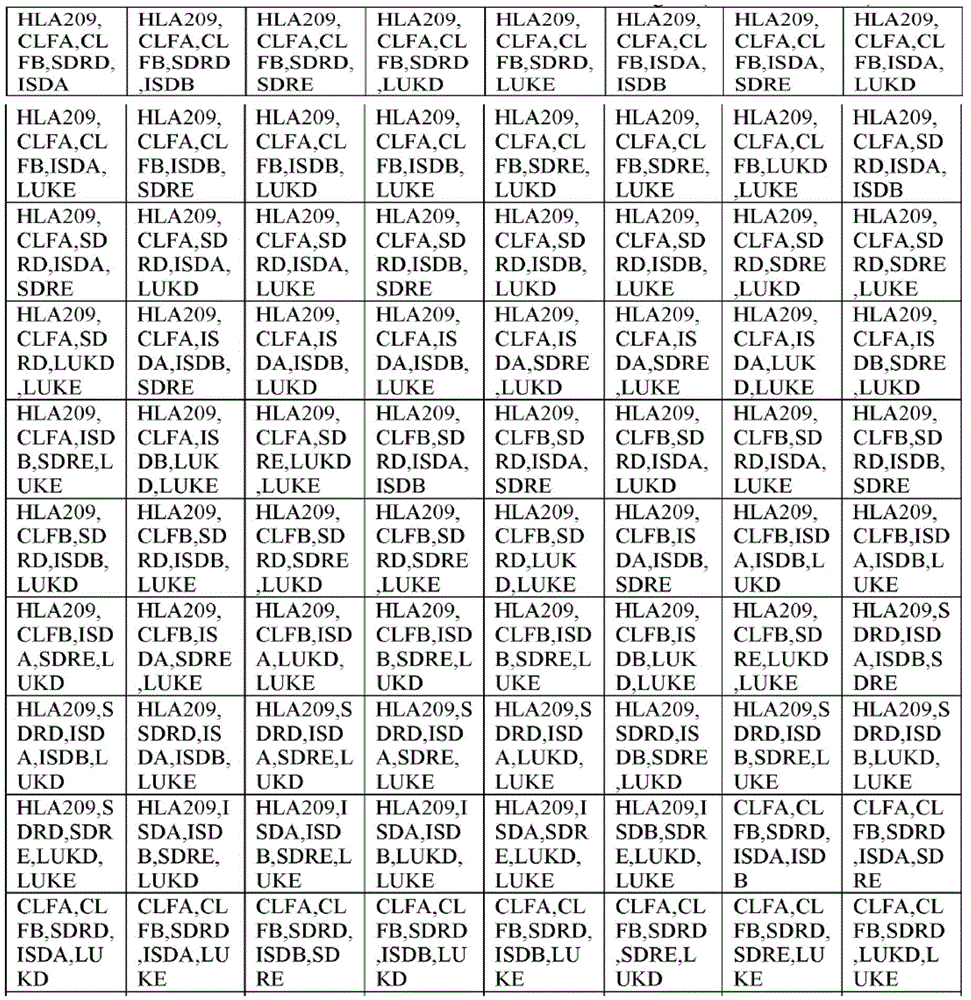
表3F:Table 3F:
表3F:具有6种SA抗原的不同组合的SA-MAPS(84种组合)Table 3F: SA-MAPS with different combinations of 6 SA antigens (84 combinations)

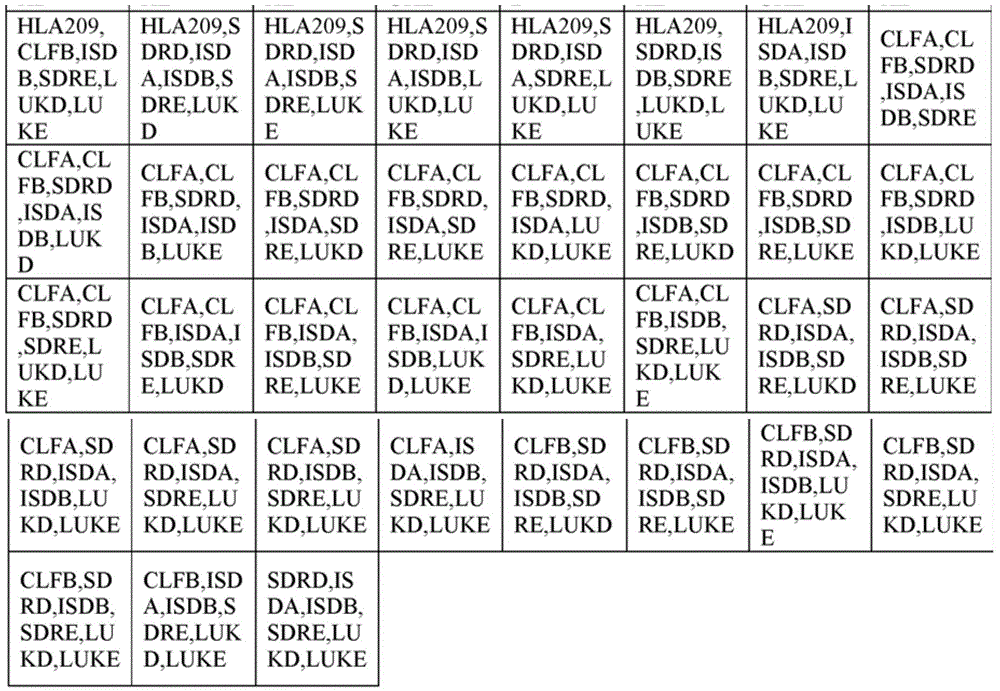
表3G:Table 3G:
表3G:具有7种SA抗原的不同组合的SA-MAPS(36种组合)Table 3G: SA-MAPS with different combinations of 7 SA antigens (36 combinations)


表3F:Table 3F:
表3F:具有8种SA抗原的不同组合的SA-MAPS(9种组合)Table 3F: SA-MAPS with different combinations of 8 SA antigens (9 combinations)
表3G:Table 3G:
表3G:具有全部9种SA抗原的示例性SA-MAPSTable 3G: Exemplary SA-MAPS with all 9 SA antigens

设想可将表3A-表3G中的任何上述抗原调换为不同的SA抗原(包括ClfA、ClfB、SdrD、SdrE、IsdA、IsdB、LukD或LukE的不同的肽或多肽,或与它们具有至少85%序列同一性的肽或多肽,或完全不同的SA抗原)。在一些实施方式中,如本文所公开的,可用非SA抗原替换或调换表3A-表3G中指定的SA抗原。It is envisaged that any of the above antigens in Tables 3A-3G can be exchanged for, or at least 85% different from, a different SA antigen (including a different peptide or polypeptide of CIfA, CIfB, SdrD, SdrE, IsdA, IsdB, LukD or LukE) peptides or polypeptides of sequence identity, or completely different SA antigens). In some embodiments, as disclosed herein, the SA antigens specified in Tables 3A-3G can be replaced or exchanged with non-SA antigens.
因此,在一些实施方式中,本领域普通技术人员可用本文未列举且本领域普通技术人员已知的任何其它SA抗原替换表3A-表3G中列举的任何抗原,或甚至用非SA抗原替换表3A-表3G中列举的SA抗原。Thus, in some embodiments, one of ordinary skill in the art can replace any of the antigens listed in Tables 3A-3G with any other SA antigen not listed herein and known to one of ordinary skill in the art, or even a non-SA antigen 3A - SA antigens listed in Table 3G.
除MAPS复合物中存在的一种以上金黄色葡萄球菌抗原外,MAPS复合物还可包含非金黄色葡萄球菌(非SA)免疫原性抗原,包括但不限于病原性肽、毒素、类毒素、它们的亚单位或它们的组合(例如霍乱毒素、破伤风类毒素)。In addition to one or more S. aureus antigens present in the MAPS complex, the MAPS complex may also contain non-S. aureus (non-SA) immunogenic antigens including, but not limited to, pathogenic peptides, toxins, toxoids, their subunits or combinations thereof (eg cholera toxin, tetanus toxoid).
在一些实施方式中,抗原衍生自(如获得自)病原性生物体。在一些实施方式中,抗原为癌抗原或肿瘤抗原,例如源自肿瘤或癌细胞的抗原。In some embodiments, the antigen is derived (eg obtained from) a pathogenic organism. In some embodiments, the antigen is a cancer antigen or a tumor antigen, eg, an antigen derived from a tumor or cancer cell.
在一些实施方式中,衍生自病原性生物体的抗原是与感染性疾病相关的抗原;该抗原可衍生自任何种类的感染原,包括病毒、细菌、真菌或寄生虫。In some embodiments, the antigen derived from a pathogenic organism is an antigen associated with an infectious disease; the antigen can be derived from any kind of infectious agent, including viruses, bacteria, fungi, or parasites.
在一些实施方式中,靶抗原是与病理(例如感染性疾病或感染性病原体、或者癌症或免疫疾病(例如自身免疫疾病))相关的任何抗原。在一些实施方式中,抗原可由多种传染原(包括病毒、细菌、真菌或寄生虫)中的任一者表达。用于本文公开的方法和组合物中的靶抗原还可包括例如病原性肽、毒素、类毒素、它们的亚单位或它们的组合(例如霍乱毒素、破伤风类毒素)。In some embodiments, the target antigen is any antigen associated with pathology (eg, infectious disease or infectious pathogen, or cancer or immune disease (eg, autoimmune disease). In some embodiments, the antigen may be expressed by any of a variety of infectious agents, including viruses, bacteria, fungi, or parasites. Target antigens for use in the methods and compositions disclosed herein may also include, eg, pathogenic peptides, toxins, toxoids, subunits thereof, or combinations thereof (eg, cholera toxin, tetanus toxoid).
感染性病毒的非限制性实例包括:逆转录病毒科;小核糖核酸病毒科(Picornaviridae)(例如脊髓灰质炎病毒、甲型肝炎病毒、肠道病毒、人柯萨奇病毒(coxsackie viruses)、鼻病毒(rhinoviruses)、艾柯病毒(echoviruses));杯状病毒科(Calciviridae)(如导致胃肠炎的毒株);披膜病毒科(Togaviridae)(例如马脑炎病毒、风疹病毒);黄病毒科(Flaviridae)(例如登革热病毒、脑炎病毒、黄热病病毒);冠状病毒科(Coronaviridae)(例如冠状病毒);弹状病毒科(Rhabdoviridae)(例如水疱性口炎病毒、狂犬病毒);丝状病毒科(Filoviridae)(例如埃博拉病毒);副粘病毒科(Paramyxoviridae)(例如副流感病毒、腮腺炎病毒、麻疹病毒、呼吸道合胞病毒);正粘病毒科(Orthomyxoviridae)(例如流感病毒);布尼亚病毒科(Bungaviridae)(例如汉坦(Hantaan)病毒、bunga病毒、白蛉病毒(phleboviruses)和内罗病毒(Nairo viruses));沙状病毒科(Arena viridae)(出血热病毒);呼肠孤病毒科(Reoviridae)(例如呼肠孤病毒、环状病毒和轮状病毒);双RNA病毒科(Birnaviridae);嗜肝DNA病毒科(Hepadnaviridae)(乙型肝炎病毒);细小病毒科(细小病毒);乳多空病毒科(Papovaviridae)(乳头状瘤病毒、多瘤病毒(polyoma viruses));腺病毒科(Adenoviridae)(大多数腺病毒);疱疹病毒科(Herpesviridae)(单纯性疱疹病毒(HSV)-1和HSV-2、水痘带状疱疹病毒、巨细胞病毒(CMV)、马立克氏病病毒、疱疹病毒);痘病毒科(Poxviridae)(天花(variola)病毒、牛痘病毒、痘(pox)病毒);以及虹彩病毒科(Iridoviridae)(例如非洲猪瘟病毒);以及未分类的病毒(例如海绵状脑病的病原体;丁型肝炎的病原体(认为是乙型肝炎病毒的缺陷卫星型(defective satellite));非甲型/非乙型肝炎的病原体(1类=内部传播的;2类=非肠道传播的(即丙型肝炎));诺瓦克(Norwalk)及相关病毒;以及星状病毒)。设想将本文所述的方法和组合物用于治疗这些病毒性病原的感染。Non-limiting examples of infectious viruses include: Retroviridae; Picornaviridae (eg, poliovirus, hepatitis A virus, enterovirus, human coxsackie viruses, nasal rhinoviruses, echoviruses); Calciviridae (eg, strains that cause gastroenteritis); Togaviridae (eg, equine encephalitis virus, rubella virus); yellow Flaviridae (eg dengue virus, encephalitis virus, yellow fever virus); Coronaviridae (eg coronavirus); Rhabdoviridae (eg vesicular stomatitis virus, rabies virus) ; Filoviridae (e.g. Ebola virus); Paramyxoviridae (e.g. Parainfluenza, mumps, measles, respiratory syncytial virus); Orthomyxoviridae ( e.g. influenza viruses); Bungaviridae (e.g. Hantaan, bunga, phleboviruses and Nairo viruses); Arena viridae ( hemorrhagic fever virus); Reoviridae (e.g. Reovirus, Orovirus and Rotavirus); Birnaviridae; Hepadnaviridae (Hepatitis B virus) ); Parvoviridae (parvoviruses); Papovaviridae (papillomaviruses, polyoma viruses); Adenoviridae (most adenoviruses); Herpesviridae ( Herpesviridae) (herpes simplex virus (HSV)-1 and HSV-2, varicella zoster virus, cytomegalovirus (CMV), Marek's disease virus, herpes virus); Poxviridae (variola) virus, vaccinia virus, pox virus); and Iridoviridae (such as African swine fever virus); and unclassified viruses (such as the causative agent of spongiform encephalopathy; the causative agent of hepatitis D (considered type B Defective satellite of hepatitis virus); non-A/non-B hepatitis pathogens (category 1 = internal transmission; type 2 = parenteral transmission (ie hepatitis C)); Norwalk ( Norwalk) and related viruses; and Astrovirus). The methods and compositions described herein are envisioned for use in the treatment of infections by these viral pathogens.
通过纳入本实施方式中的抗原可以解决的真菌感染的实例包括曲霉病(aspergillosis);鹅口疮(thrush)(由白色念珠菌(Candida albicans)导致);隐球菌病(由隐球菌导致);以及组织胞浆菌病(histoplasmosis)。因此,感染性真菌的实例包括但不限于:新型隐球菌(Cryptococcus neoformans)、荚膜组织胞浆菌(Histoplasmacapsulatum)、粗球孢子菌(Coccidioides immitis)、皮炎芽生菌(Blastomycesdermatitidis)、沙眼衣原体(Chlamydia trachomatis)、白色念珠菌。这些生物体的组分可作为抗原纳入本文所述的MAPS中。Examples of fungal infections that can be addressed by the antigens incorporated in this embodiment include aspergillosis; thrush (caused by Candida albicans); cryptococcosis (caused by Cryptococcus); and Histoplasmosis. Thus, examples of infectious fungi include, but are not limited to: Cryptococcus neoformans, Histoplasma capsulatum, Coccidioides immitis, Blastomyces dermatitidis, Chlamydia trachomatis), Candida albicans. Components of these organisms can be incorporated as antigens in the MAPS described herein.
在本发明的一方面,待与MAPS复合物中的一种以上SA抗原组合使用的非SA抗原衍生自感染性微生物,例如百日咳博德特氏菌(Bordatella pertussis)、布鲁氏菌属(Brucella)、肠球菌属(Enterococci sp.)、脑膜炎奈瑟氏菌、淋病奈瑟氏菌(Neisseriagonorrheae)、莫拉氏菌属(Moraxella)、可分型或不可分型的嗜血杆菌属(Haemophilus)、假单胞菌属、沙门氏菌属(Salmonella)、志贺氏菌属(Shigella)、肠杆菌属(Enterobacter)、柠檬酸杆菌属(Citrobacter)、克雷伯氏菌属(Klebsiella)、大肠杆菌、幽门螺旋杆菌(Helicobacterpylori)、梭菌属(Clostridia)、拟杆菌属(Bacteroides)、衣原体科(Chlamydiaceae)、霍乱弧菌(Vibrio cholera)、支原体属(Mycoplasma)、密螺旋体(Treponemes)、伯氏疏螺旋体(Borrelia burgdorferi)、嗜肺军团菌(Legionellapneumophilia)、分枝杆菌属(Mycobacteria sps)(例如结核分枝杆菌(M.tuberculosis)、鸟分支杆菌(M.avium)、胞内分枝杆菌(M.intracellulare)、堪萨斯分枝杆菌(M.kansaii)、戈登分枝杆菌(M.gordonae)、麻风分支杆菌(M.leprae))、单核细胞增生李斯特氏菌(Listeria monocytogenes)、酿脓链球菌(Streptococcus pyogenes)(A群链球菌)、无乳链球菌(Streptococcus agalactiae)(B群链球菌)、链球菌(草绿色群(viridans group))、粪链球菌(Streptococcus faecalis)、牛链球菌(Streptococcusbovis)、链球菌(厌氧种)、肺炎链球菌、病原性弯曲杆菌属(Campylobacter sp.)、肠球菌属(Enterococcus sp.)、流感嗜血杆菌、炭疽杆菌、白喉棒状杆菌(Corynebacteriumdiphtheriae)、棒状杆菌属(Corynebacterium sp.)、红斑丹毒丝菌(Erysipelothrixrhusiopathiae)、产气荚膜梭菌(Clostridium perfringens)、破伤风梭菌(Clostridiumtetani)、产气肠杆菌(Enterobacter aerogenes)、肺炎克雷伯氏菌(Klebsiellapneumoniae)、钩端螺旋体属(Leptospira sps)、多杀巴斯德氏菌(Pasturellamultocida)、拟杆菌属(Bacteroides sp.)、具核梭杆菌(Fusobacterium nucleatum)、念珠状链杆菌(Streptobacillus moniliformis)、梅毒密螺旋体(Treponema pallidium)、细弱密螺旋体(Treponema pertenue)和衣氏放线菌(Actinomyces israelli)。In one aspect of the invention, the non-SA antigens to be used in combination with more than one SA antigen in the MAPS complex are derived from infectious microorganisms such as Bordatella pertussis, Brucella ), Enterococci sp., Neisseria meningitidis, Neisseria gonorrhoeae, Moraxella, Haemophilus, typeable or untypeable , Pseudomonas, Salmonella, Shigella, Enterobacter, Citrobacter, Klebsiella, Escherichia coli, Helicobacter pylori, Clostridia, Bacteroides, Chlamydiaceae, Vibrio cholera, Mycoplasma, Treponemes, Bordetella Borrelia burgdorferi, Legionellapneumophilia, Mycobacteria sps (eg M. tuberculosis, M. avium, M. intracellulare) .intracellulare), M. kansaii, M. gordonae, M. leprae), Listeria monocytogenes, pyogenes Streptococcus (Streptococcus pyogenes) (group A Streptococcus), Streptococcus agalactiae (group B Streptococcus), Streptococcus (viridans group), Streptococcus faecalis (Streptococcus faecalis), bovine chain Streptococcus bovis, Streptococcus (anaerobic species), Streptococcus pneumoniae, Pathogenic Campylobacter sp., Enterococcus sp., Haemophilus influenzae, Bacillus anthracis, Corynebacterium diphtheriae ), Corynebacterium sp., Erysipelothrixrhus iopathiae), Clostridium perfringens, Clostridium tetani, Enterobacter aerogenes, Klebsiella pneumoniae, Leptospira sps, Pasteurella multocida, Bacteroides sp., Fusobacterium nucleatum, Streptobacillus moniliformis, Treponema pallidium, Treponema pallidium ( Treponema pertenue) and Actinomyces israelli.
在一些实施方式中,在本文公开的SA-MAPS复合物中有用的非SA抗原为来自肠细菌或非肠革兰氏阴性细菌的抗原。在一些实施方式中,在本文公开的SA-MAPS复合物中有用的非SA抗原可选自于以下中的任一种或它们的组合:肺炎球菌抗原、结核抗原、HIV抗原、季节性或流行性流感抗原、百日咳抗原、脑膜炎球菌抗原、嗜血杆菌抗原、HPV抗原、大肠杆菌抗原、沙门氏菌抗原、肠杆菌抗原、不动杆菌病原体抗原、假单胞菌抗原、克雷伯氏菌抗原、柠檬酸杆菌抗原、沙雷氏菌抗原、来自肠细菌的艰难梭菌(Clostridium difficile)抗原、来自非肠革兰氏阴性细菌的抗原、类毒素、毒素或它们的毒素部分。In some embodiments, non-SA antigens useful in the SA-MAPS complexes disclosed herein are antigens from enteric bacteria or non-enteric Gram-negative bacteria. In some embodiments, non-SA antigens useful in the SA-MAPS complexes disclosed herein may be selected from any one or a combination of the following: pneumococcal antigens, tuberculosis antigens, HIV antigens, seasonal or epidemic Influenza antigen, pertussis antigen, meningococcal antigen, Haemophilus antigen, HPV antigen, Escherichia coli antigen, Salmonella antigen, Enterobacter antigen, Acinetobacter pathogen antigen, Pseudomonas antigen, Klebsiella antigen, Citrobacter antigens, Serratia antigens, Clostridium difficile antigens from enterobacteria, antigens from non-enteric Gram-negative bacteria, toxoids, toxins or toxin portions thereof.
在一些实施方式中,在本文公开的SA-MAPS复合物中有用的非SA抗原为肺炎球菌抗原、结核抗原、炭疽抗原、HIV抗原、季节性或流行性流感抗原、HPV抗原、不动杆菌抗原、艰难梭菌抗原、肠革兰氏阴性细菌抗原或非肠革兰氏阴性细菌抗原、革兰氏阳性细菌抗原、类毒素、毒素或毒素部分、真菌抗原、病毒抗原、癌抗原或它们的任何组合。In some embodiments, non-SA antigens useful in the SA-MAPS complexes disclosed herein are pneumococcal antigens, tuberculosis antigens, anthrax antigens, HIV antigens, seasonal or epidemic influenza antigens, HPV antigens, Acinetobacter antigens , Clostridium difficile antigens, enteric gram-negative bacterial antigens or non-enteric gram-negative bacterial antigens, gram-positive bacterial antigens, toxoids, toxins or toxin portions, fungal antigens, viral antigens, cancer antigens or any of them combination.
在一些实施方式中,在本文公开的SA-MAPS复合物中有用的非SA抗原为选自于以下的组中的肠革兰氏阴性细菌抗原:大肠杆菌抗原、沙门氏菌抗原、肠杆菌抗原、克雷伯氏菌抗原、柠檬酸杆菌抗原和沙雷氏菌抗原或它们的组合。在一些实施方式中,在本文公开的SA-MAPS复合物中有用的非SA抗原为选自于以下的组中的非肠革兰氏阴性细菌抗原:百日咳抗原、脑膜炎球菌抗原、嗜血杆菌抗原和假单胞菌抗原或它们的组合。In some embodiments, the non-SA antigens useful in the SA-MAPS complexes disclosed herein are enteric Gram-negative bacterial antigens selected from the group consisting of: E. coli antigens, Salmonella antigens, Enterobacterial antigens, Gram Lebsiella, Citrobacter, and Serratia antigens or combinations thereof. In some embodiments, non-SA antigens useful in the SA-MAPS complexes disclosed herein are non-enteric gram-negative bacterial antigens selected from the group consisting of pertussis antigen, meningococcal antigen, Haemophilus Antigens and Pseudomonas antigens or combinations thereof.
抗原可由其衍生而来的其它寄生虫病原体包括例如溶组织内阿米巴(Entamoebahistolytica)、恶性疟原虫(Plasmodium falciparum)、利什曼原虫属(Leishmania sp.)、刚地弓形虫(Toxoplasma gondii)、立克次体(Rickettsia)和寄生蠕虫(Helminths)。Other parasitic pathogens from which antigens can be derived include, for example, Entamoeba histolytica, Plasmodium falciparum, Leishmania sp., Toxoplasma gondii , Rickettsia and Helminths.
在一些实施方式中,在本文公开的SA-MAPS复合物中有用的非SA抗原为:截短型(truncated)肺炎球菌PsaA蛋白;肺炎球菌溶血素类毒素;肺炎球菌丝氨酸/苏氨酸蛋白激酶(StkP);肺炎球菌丝氨酸/苏氨酸蛋白激酶重复单元(StkPR);肺炎球菌PcsB蛋白;葡萄球菌α-溶血素;结核分枝杆菌mtb蛋白ESAT-6;结核分枝杆菌细胞壁核心抗原;衣原体CT144、CT242或CT812多肽或它们的片段;衣原体DNA促旋酶(gyrase)B亚基;衣原体亚硫酸盐合成/磷酸氢盐磷酸酶(sulfite synthesis/biphosphate phosphatase);衣原体细胞分裂蛋白FtsY;衣原体甲硫氨酰-tRNA合成酶;衣原体DNA解旋酶(helicase)(uvrD);衣原体ATP合酶I亚基(atpI);或衣原体金属依赖性水解酶。In some embodiments, non-SA antigens useful in the SA-MAPS complexes disclosed herein are: truncated pneumococcal PsaA protein; pneumolysin toxoid; pneumococcal serine/threonine protein kinase (StkP); pneumococcal serine/threonine protein kinase repeat unit (StkPR); pneumococcal PcsB protein; staphylococcal alpha-hemolysin; M. tuberculosis mtb protein ESAT-6; M. tuberculosis cell wall core antigen; Chlamydia CT144, CT242 or CT812 polypeptides or fragments thereof; Chlamydia gyrase B subunit; Chlamydia sulfite synthesis/biphosphate phosphatase; Chlamydia cell division protein FtsY; Chlamydia A A thionyl-tRNA synthetase; a Chlamydia DNA helicase (uvrD); a Chlamydia ATP synthase I subunit (atpI); or a Chlamydia metal-dependent hydrolase.
在一些实施方式中,在本文公开的SA-MAPS复合物中有用的非SA抗原为来自结核分枝杆菌(TB)的抗原。TB抗原的一个实例是TbH9(也称为Mtb 39A)。其它TB抗原包括但不限于:DPV(也称为Mtb8.4)、381、Mtb41、Mtb40、Mtb32A、Mtb64、Mtb83、Mtb9.9A、Mtb9.8、Mtbl6、Mtb72f、Mtb59f、Mtb88f、Mtb71f、Mtb46f和Mtb31f,其中,“f”表明其为2种以上蛋白的融合体。In some embodiments, non-SA antigens useful in the SA-MAPS complexes disclosed herein are antigens from Mycobacterium tuberculosis (TB). An example of a TB antigen is TbH9 (also known as Mtb 39A). Other TB antigens include, but are not limited to: DPV (also known as Mtb8.4), 381, Mtb41, Mtb40, Mtb32A, Mtb64, Mtb83, Mtb9.9A, Mtb9.8, Mtbl6, Mtb72f, Mtb59f, Mtb88f, Mtb71f, Mtb46f and Mtb31f, wherein "f" indicates that it is a fusion of two or more proteins.
在一些实施方式中,在本文公开的SA-MAPS复合物中有用的非SA抗原可衍生自衣原体属中的种,以用于本发明的免疫原性组合物中。衣原体科(Chlamydiaceae)由衣原体属和嗜性衣原体属(Chlamydophila)组成,为专性(obligate)胞内革兰氏阴性细菌。沙眼衣原体感染是最流行的性传播细菌感染之一,生殖系统衣原体感染每年可能出现8900万例新发病例。本发明的衣原体属还包括例如:沙眼衣原体、肺炎嗜性衣原体(Chlamydophilapneumoniae)、鼠衣原体(C.muridarum)、猪衣原体(C.suis)、流产嗜性衣原体(Chlamydophila abortus)、鹦鹉热嗜性衣原体(Chlamydophila psittaci)、豚鼠嗜性衣原体(Chlamydophila caviae)、猫嗜性衣原体(Chlamydophila felis)、兽类嗜性衣原体(Chlamydophila pecorum)和肺炎衣原体(C.pneumoniae)。衣原体感染的动物模型已经确定了在清除易感宿主的初发感染和防止其再次感染中,T细胞均起着关键作用。因此,本文公开的免疫原性组合物可用于通过引发针对衣原体感染的细胞免疫应答而提供特别价值。In some embodiments, non-SA antigens useful in the SA-MAPS complexes disclosed herein may be derived from species in the genus Chlamydia for use in the immunogenic compositions of the present invention. The Chlamydiaceae family, consisting of the genera Chlamydia and Chlamydophila, are obligate intracellular Gram-negative bacteria. Chlamydia trachomatis infection is one of the most prevalent sexually transmitted bacterial infections, with 89 million new cases of genital chlamydia infection occurring each year. The Chlamydia genus of the present invention also includes, for example, Chlamydia trachomatis, Chlamydophilapneumoniae, C. muridarum, C. suis, Chlamydophila abortus, Chlamydophila psittaci. (Chlamydophila psittaci), guinea pig Chlamydophila caviae, feline Chlamydophila (Chlamydophila felis), veterinary Chlamydophila (Chlamydophila pecorum) and C. pneumoniae. Animal models of chlamydia infection have identified a critical role for T cells both in clearing a susceptible host from primary infection and in preventing reinfection. Accordingly, the immunogenic compositions disclosed herein can be used to provide particular value by eliciting a cellular immune response against Chlamydia infection.
更具体而言,在本文公开的SA-MAPS复合物中作为非SA抗原有用的衣原体抗原包括DNA促旋酶B亚基、亚硫酸盐合成/磷酸氢盐磷酸酶、细胞分裂蛋白FtsY、甲硫氨酰-tRNA合成酶、DNA解旋酶(uvrD);ATP合酶I亚基(atpI)或者金属依赖性水解酶(美国专利申请公开号20090028891)。其它沙眼衣原体抗原包括CT144多肽、具有CT144第67-86位氨基酸残基的肽、具有CT144第77-96位氨基酸残基的肽、CT242蛋白、具有CT242第109-117位氨基酸的肽、具有CT242多肽第112-120位氨基酸的肽、CT812蛋白(源自pmpD基因)、具有CT812蛋白第103-111位氨基酸残基的肽;以及一些其它源自沙眼衣原体的抗原性肽(美国专利申请2014/0154287和WO 2009/020553中公开)。此外,可将包括前述多肽的同源物的肺炎衣原体抗原(参见美国专利号6,919,187)用作本文公开的免疫原性组合物和方法中的抗原。More specifically, Chlamydia antigens useful as non-SA antigens in the SA-MAPS complex disclosed herein include DNA gyrase B subunit, sulfite synthesis/hydrogen phosphate phosphatase, cell division protein FtsY, methylsulfide Aminoacyl-tRNA synthetase, DNA helicase (uvrD); ATP synthase I subunit (atpI) or metal-dependent hydrolase (US Patent Application Publication No. 20090028891). Other Chlamydia trachomatis antigens include CT144 polypeptide, peptide with amino acid residues 67-86 of CT144, peptide with amino acid residues 77-96 of CT144, CT242 protein, peptide with amino acid residues 109-117 of CT242, peptide with amino acid residues 109-117 of CT242 Polypeptide peptides from amino acids 112-120, CT812 protein (derived from the pmpD gene), peptides with amino acid residues 103-111 of CT812 protein; and some other antigenic peptides derived from Chlamydia trachomatis (US Patent Application 2014/ 0154287 and WO 2009/020553). In addition, Chlamydia pneumoniae antigens including homologues of the foregoing polypeptides (see US Pat. No. 6,919,187) can be used as antigens in the immunogenic compositions and methods disclosed herein.
在一些实施方式中,用于SA-MAPS组合物中的SA抗原或非SA抗原可以是完整的(即整个或全部的)抗原,或包含多于一个表位的抗原的功能性部分。在一些实施方式中,抗原为抗原的肽功能性部分。在该上下文中,“完整(intact)”是指抗原为天然存在的抗原多肽的全长抗原。这直接相对于仅递送抗原的一小部分或肽。向细胞递送完整抗原能使得或促进引发针对完整抗原全部范围的表位的免疫应答,而非仅针对单个肽表位或选择的少数肽表位产生免疫应答。因此,本文所述的方法和免疫原性组合物涵盖了与聚合物缔合的完整抗原,从而与使用基于单表位肽的抗原相比,具有更高敏感性和更高特异性的免疫应答。In some embodiments, the SA antigen or non-SA antigen used in the SA-MAPS composition may be an intact (ie, whole or total) antigen, or a functional portion of an antigen comprising more than one epitope. In some embodiments, the antigen is a peptide functional portion of the antigen. In this context, "intact" means that the antigen is the full-length antigen of a naturally occurring antigenic polypeptide. This is directly as opposed to delivering only a fraction or peptide of the antigen. Delivery of an intact antigen to a cell enables or facilitates the elicitation of an immune response against the full range of epitopes of the intact antigen, rather than just a single peptide epitope or a selected few peptide epitopes. Thus, the methods and immunogenic compositions described herein encompass whole antigens associated with polymers, resulting in higher sensitivity and higher specificity of immune responses compared to the use of single-epitope peptide-based antigens .
或者,在一些实施方式中,可根据初始抗原的大小将完整SA抗原分割为多个部分。通常而言,当全抗原为多聚体多肽时,可将该全蛋白分为亚单位和/或结构域,其中,抗原的每一亚单位或结构域均可与根据本文公开的方法的聚合物缔合。或者,在一些实施方式中,可将完整SA抗原分割成全抗原的功能性片段或部分,例如至少2个、或至少3个、或至少4个、或至少5个、或至少6个、或至少7个、或至少8个、或至少9个、或至少10个、或至少11个、或至少12个、或至少13个、或至少15个、或至少20个、或至少25个、或超过25个的部分(例如碎片(pieces)或片段),包括端值,其中,抗原的每一功能性片段均可与根据本文公开的方法的聚合物缔合。Alternatively, in some embodiments, the whole SA antigen can be divided into multiple parts according to the size of the original antigen. In general, when a whole antigen is a multimeric polypeptide, the whole protein can be divided into subunits and/or domains, wherein each subunit or domain of the antigen can be polymerized according to the methods disclosed herein thing association. Alternatively, in some embodiments, the whole SA antigen can be divided into functional fragments or portions of the whole antigen, eg, at least 2, or at least 3, or at least 4, or at least 5, or at least 6, or at least 7, or at least 8, or at least 9, or at least 10, or at least 11, or at least 12, or at least 13, or at least 15, or at least 20, or at least 25, or more Portions of 25 (eg, pieces or fragments), inclusive, wherein each functional fragment of the antigen can be associated with a polymer according to the methods disclosed herein.
对全长SA抗原多肽的片段化或分割可以是对全长抗原多肽的均等分割;或者,在一些实施方式中,片段化是不对称或不均等的。作为非限制性实例,当将抗原分割成两个重叠的片段时,可将抗原分割为几乎相同(相等)大小的片段;或者,一个片段可为全抗原的约45%,而另一片段可为约65%。作为进一步的非限制性实例,可将全抗原分割为不同大小片段的组合,例如,当将抗原分割为两个片段时,片段可被分割为全抗原的约40%和约70%;或约45%和约65%;或约35%和约75%;或约25%和约85%,包括端值。将全长的全抗原的重叠片段的任意组合涵盖用于产生抗原的重叠多肽组(panel)。仅作为说明性实例,当将抗原分割为5部分时,这些部分可被均等分割(即,每一重叠片段为抗原整个全长的约21%至25%)或非均等分割(即,可将抗原分割为下列5个重叠片段:相对于全长抗原的大小而言,片段1为约25%、片段2为约5%、片段3为约35%、片段4为约10%且片段5为约25%,每一片段均与至少一个其它片段重叠)。Fragmentation or fragmentation of the full-length SA antigen polypeptide may be an equal fragmentation of the full-length antigen polypeptide; alternatively, in some embodiments, the fragmentation is asymmetric or unequal. As a non-limiting example, when an antigen is divided into two overlapping fragments, the antigen can be divided into fragments of approximately the same (equal) size; alternatively, one fragment can be about 45% of the whole antigen, while the other fragment can be is about 65%. As a further non-limiting example, a whole antigen can be fragmented into a combination of fragments of different sizes, eg, when the antigen is fragmented into two fragments, the fragments can be fragmented into about 40% and about 70% of the whole antigen; or about 45% % and about 65%; or about 35% and about 75%; or about 25% and about 85%, inclusive. Any combination of overlapping fragments of a full-length whole antigen is encompassed by overlapping panels used to generate the antigen. By way of illustrative example only, when dividing an antigen into 5 parts, the parts may be divided equally (ie, each overlapping fragment is about 21% to 25% of the entire full length of the antigen) or unequally (ie, the parts may be divided equally. The antigen is partitioned into the following 5 overlapping fragments: relative to the size of the full-length antigen,
通常而言,抗原部分的组可基本上覆盖全抗原多肽(或完整抗原多肽)的整个长度。因此,在一些实施方式中,免疫原性组合物包含聚合物和同一完整抗原的多种不同的和/或重叠的片段。与单独使用肽抗原相比,抗原的重叠蛋白片段的生产更迅速且更廉价,并具有提高的稳定性。进一步地,在一些实施方式中,由于构象对于表位识别是重要的,作为比简单肽更大的多肽的抗原是优选的,并且该较大的抗原多肽或片段相比于肽片段而言将提供优点。In general, the set of antigenic moieties may cover substantially the entire length of a whole antigenic polypeptide (or whole antigenic polypeptide). Thus, in some embodiments, the immunogenic composition comprises a polymer and multiple distinct and/or overlapping fragments of the same intact antigen. The production of overlapping protein fragments of an antigen is more rapid and less expensive, and has improved stability, compared to the use of peptide antigens alone. Further, in some embodiments, since conformation is important for epitope recognition, antigens that are larger polypeptides than simple peptides are preferred, and the larger antigenic polypeptides or fragments will be compared to peptide fragments. Provide advantages.
本领域普通技术人员能够将全抗原分割成抗原的重叠蛋白,以生成抗原的多肽组。仅通过说明性实例的方式,可将SA抗原ClfA分割为例如至少10部分,以生成10种不同多肽的组,每一多肽包含不同但重叠的ClfA特异性抗原片段。One of ordinary skill in the art is able to partition whole antigens into overlapping proteins of the antigens to generate the polypeptide sets of the antigens. Merely by way of illustrative example, the SA antigen CIfA can be partitioned, eg, into at least 10 portions, to generate sets of 10 different polypeptides, each polypeptide comprising distinct but overlapping CIfA-specific antigenic fragments.
本文所述的方法和组合物中使用的靶抗原可通过重组手段表达,并可任选地包含促进纯化的亲和标签或表位标签,这一方法是本领域公知的。可使用寡肽(游离或与载体蛋白缀合)的化学合成来获得本发明的抗原。寡肽被认为是一种多肽。抗原可表达为与互补亲和分子融合的形式,所述互补亲和分子例如但不限于rhizavidin或其衍生物或功能性片段。或者,还可以制备靶抗原,然后将其与互补亲和分子缀合,所述互补亲和分子例如但不限于rhizavidin或其衍生物或功能性片段。The target antigens used in the methods and compositions described herein may be expressed by recombinant means, and may optionally contain affinity tags or epitope tags to facilitate purification, methods well known in the art. The antigens of the invention can be obtained using chemical synthesis of oligopeptides (free or conjugated to carrier proteins). An oligopeptide is considered a type of polypeptide. Antigens can be expressed as fusions to complementary affinity molecules such as, but not limited to, rhizavidin or derivatives or functional fragments thereof. Alternatively, the target antigen can also be prepared and then conjugated to a complementary affinity molecule such as, but not limited to, rhizavidin or a derivative or functional fragment thereof.
还可通过如美国专利号5,229,490和5,390,111中公开的内容将多肽合成为分支结构。抗原性多肽包括例如合成或重组的B细胞表位和T细胞表位、通用型T细胞表位、以及来自一种生物体或疾病的T细胞表位和来自另一生物体或疾病的B细胞表位的混合。Polypeptides can also be synthesized as branched structures as disclosed in US Pat. Nos. 5,229,490 and 5,390,111. Antigenic polypeptides include, for example, synthetic or recombinant B- and T-cell epitopes, universal T-cell epitopes, and T-cell epitopes from one organism or disease and B-cell epitopes from another organism or disease. mix of bits.
可经由重组手段或化学多肽合成获得的抗原以及获得白天然来源或提取物的抗原可借助抗原的物理和化学特性进行纯化,例如通过分级分离(fractionation)或色谱法进行纯化。这些技术是本领域公知的。Antigens obtainable by recombinant means or chemical polypeptide synthesis and antigens obtained from natural sources or extracts of white can be purified by means of the physical and chemical properties of the antigen, eg by fractionation or chromatography. These techniques are well known in the art.
在一些实施方式中,抗原可溶于水、溶剂(例如甲醇)或缓冲液中。合适的缓冲液包括但不限于:不含Ca2+/Mg2+的磷酸盐缓冲盐水(PBS)、生理盐水(水中的150mM NaCl)以及Tris缓冲液。可将不能溶于中性缓冲液中的抗原溶解在10mM乙酸中,随后用中性缓冲液(如PBS)稀释至所需体积。在抗原仅在酸性pH下溶解的情况下,在溶解于稀释的乙酸中后,可使用酸性pH下的乙酸盐-PBS作为稀释剂。本文所述的组合物、方法和试剂盒可使用甘油作为合适的非水溶剂。In some embodiments, the antigen is soluble in water, a solvent (eg, methanol), or a buffer. Suitable buffers include, but are not limited to, phosphate buffered saline (PBS) without Ca 2+ /Mg 2+ , physiological saline (150 mM NaCl in water), and Tris buffer. Antigens that are insoluble in neutral buffers can be dissolved in 10 mM acetic acid and then diluted to the desired volume with a neutral buffer such as PBS. In cases where the antigen is only solubilized at acidic pH, after solubilization in dilute acetic acid, acetate-PBS at acidic pH can be used as a diluent. The compositions, methods and kits described herein can use glycerol as a suitable non-aqueous solvent.
典型地,当对针对病原体设计蛋白质疫苗时,病毒的胞外蛋白或暴露于环境中的蛋白通常是疫苗抗原成分的理想候选物。针对该胞外蛋白而产生的抗体成为在感染期间对抗病原体的第一道防线。抗体结合至病原体上的蛋白,从而促进抗体的调理作用并将病原体进行标记,以使吞噬细胞(如巨噬细胞)摄取和破坏病原体。抗体的调理作用还能通过抗体依赖性细胞毒性杀灭病原体。抗体触发细胞(如单核细胞、嗜中性粒细胞、嗜酸性粒细胞和自然杀伤细胞)释放裂解产物。Typically, when designing protein vaccines against pathogens, extracellular proteins of the virus or proteins exposed to the environment are often ideal candidates for the antigenic components of the vaccine. Antibodies raised against this extracellular protein become the first line of defense against pathogens during infection. Antibodies bind to proteins on the pathogen, thereby promoting opsonization of the antibody and tagging the pathogen for phagocytic cells (eg, macrophages) to take up and destroy the pathogen. Antibody opsonization also kills pathogens through antibody-dependent cytotoxicity. Antibodies trigger the release of lysates from cells such as monocytes, neutrophils, eosinophils, and natural killer cells.
在本文所述的本发明的一个实施方式中,用于本文公开的组合物中的抗原全部为野生型蛋白,这是因为氨基酸残基具有在天然存在的病毒中发现、且并未被选择性生长条件或分子生物学方法所改变的序列。In one embodiment of the invention described herein, the antigens used in the compositions disclosed herein are all wild-type proteins because the amino acid residues have amino acid residues found in naturally occurring viruses and are not selected for Sequences altered by growth conditions or molecular biology methods.
在一个实施方式中,本文所述的免疫原性组合物可包含作为糖基化蛋白的抗体。换言之,感兴趣的抗原可各自为糖基化蛋白。在本文所述的免疫原性组合物的一个实施方式中,抗原或抗原融合多肽是O-连接糖基化的。在本文所述的免疫原性组合物的另一实施方式中,抗原或抗原融合多肽是N-连接糖基化的。在本文所述的免疫原性组合物的又一实施方式中,抗原或抗原融合多肽同时是O-连接和N-连接糖基化的。在其它实施方式中,其它类型的糖基化是可能的,例如C-甘露糖基化。蛋白糖基化主要出现在真核细胞中。N-糖基化对于一些真核生物蛋白的折叠是重要的,提供共翻译和翻译后修饰机制以对膜蛋白和分泌蛋白的结构和功能进行调节。糖基化是连接多糖以生成聚糖、并将其连接至蛋白和脂质的酶过程。在N-糖基化中,在蛋白翻译期间,聚糖连接至天冬酰胺侧链的酰胺氮。形成聚糖的三类主要糖为葡萄糖、甘露糖和N-乙酰葡萄糖胺分子。N-糖基化的共有结构为Asn-Xaa-Ser/Thr,其中Xaa可以是任何已知氨基酸。O-连接糖基化在蛋白加工过程后期出现,可能在高尔基体中发生。在O-连接糖基化中,N-乙酰半乳糖胺、O-岩藻糖、O-葡萄糖和/或N-乙酰葡萄糖胺被添加至丝氨酸或苏氨酸残基。本领域技术人员可使用生物信息学软件(如来自Technical University ofDenmark的NetNGlyc 1.0和NetOGlyc Prediction软件)寻找本发明中的多肽中的N-糖基化和O-糖基化位点。NetNglyc服务器使用人工神经网络检验Asn-Xaa-Ser/Thr序列的序列上下文(sequence context),预测蛋白中的N-糖基化位点。NetNGlyc1.0和NetOGlyc 3.1Prediction软件可通过EXPASY网站访问。在一个实施方式中,N-糖基化发生于本文所述的融合多肽的靶抗原多肽中。In one embodiment, the immunogenic compositions described herein may comprise antibodies as glycosylated proteins. In other words, the antigens of interest can each be glycosylated proteins. In one embodiment of the immunogenic compositions described herein, the antigen or antigen fusion polypeptide is O-linked glycosylated. In another embodiment of the immunogenic compositions described herein, the antigen or antigen fusion polypeptide is N-linked glycosylated. In yet another embodiment of the immunogenic compositions described herein, the antigen or antigen fusion polypeptide is both O-linked and N-linked glycosylated. In other embodiments, other types of glycosylation are possible, such as C-mannosylation. Protein glycosylation occurs mainly in eukaryotic cells. N-glycosylation is important for the folding of some eukaryotic proteins, providing co-translational and post-translational modification mechanisms to regulate the structure and function of membrane and secreted proteins. Glycosylation is the enzymatic process of linking polysaccharides to generate glycans and attach them to proteins and lipids. In N-glycosylation, glycans are attached to the amide nitrogen of the asparagine side chain during protein translation. The three main classes of sugars that form glycans are glucose, mannose, and N-acetylglucosamine molecules. The consensus structure for N-glycosylation is Asn-Xaa-Ser/Thr, where Xaa can be any known amino acid. O-linked glycosylation occurs late in protein processing, possibly in the Golgi apparatus. In O-linked glycosylation, N-acetylgalactosamine, O-fucose, O-glucose and/or N-acetylglucosamine are added to serine or threonine residues. One skilled in the art can use bioinformatics software (eg NetNGlyc 1.0 and NetOGlyc Prediction software from Technical University of Denmark) to find N-glycosylation and O-glycosylation sites in the polypeptides of the present invention. The NetNglyc server uses an artificial neural network to examine the sequence context of the Asn-Xaa-Ser/Thr sequence, predicting N-glycosylation sites in the protein. NetNGlyc1.0 and NetOGlyc 3.1Prediction software can be accessed through the EXPASY website. In one embodiment, N-glycosylation occurs in the target antigen polypeptide of the fusion polypeptides described herein.
SA抗原融合蛋白SA antigen fusion protein
在一些实施方式中,用于本文公开的MAPS复合物中的SA抗原融合至重组生物素结合蛋白。在一些实施方式中,重组生物素结合蛋白为rhizavidin蛋白。在一些实施方式中,Rhizavidin(Rhavi)蛋白包含SEQ ID NO:1或与SEQ ID NO:1具有至少85%氨基酸序列同一性的蛋白或多肽。In some embodiments, the SA antigen used in the MAPS complexes disclosed herein is fused to a recombinant biotin-binding protein. In some embodiments, the recombinant biotin-binding protein is a rhizavidin protein. In some embodiments, the Rhizavidin (Rhavi) protein comprises SEQ ID NO:1 or a protein or polypeptide having at least 85% amino acid sequence identity to SEQ ID NO:1.
在一些实施方式中,重组生物素结合蛋白包含大肠杆菌信号序列,该大肠杆菌信号序列融合至包含野生型Rhizavidin(rhavi)的氨基酸45-179的氨基酸序列(如下所示)的N端:In some embodiments, the recombinant biotin-binding protein comprises an E. coli signal sequence fused to the N-terminus of the amino acid sequence comprising amino acids 45-179 of wild-type Rhizavidin (rhavi) (shown below):

在一些实施方式中,重组生物素结合蛋白由对应于野生型Rhizavidin的氨基酸45-179的氨基酸序列组成或基本上由对应于野生型Rhizavidin的氨基酸45-179的氨基酸序列组成。野生型Rhizavidin的氨基酸序列为:In some embodiments, the recombinant biotin-binding protein consists of or consists essentially of an amino acid sequence corresponding to amino acids 45-179 of wild-type Rhizavidin. The amino acid sequence of wild-type Rhizavidin is:

换句话说,生物素结合结构域不包含(即缺乏)缺乏氨基酸1-44:In other words, the biotin-binding domain does not contain (i.e. lack) amino acids 1-44 lacking:

在一些实施方式中,在与本文公开的至少一种SA抗原的融合蛋白中有用的重组生物素结合蛋白包含与SEQ ID NO:1具有至少50%同一性、至少55%同一性、至少60%同一性、至少65%同一性、至少70%同一性、至少75%同一性、至少80%同一性,优选至少85%同一性、至少90%同一性、至少95%同一性、至少96%同一性、至少97%同一性、至少98%同一性或至少99%同一性,更优选至少99.3%同一性的氨基酸序列。In some embodiments, recombinant biotin-binding proteins useful in fusion proteins with at least one SA antigen disclosed herein comprise at least 50% identity, at least 55% identity, at least 60% identity to SEQ ID NO: 1 Identity, at least 65% identity, at least 70% identity, at least 75% identity, at least 80% identity, preferably at least 85% identity, at least 90% identity, at least 95% identity, at least 96% identity amino acid sequences that are identical, at least 97% identical, at least 98% identical, or at least 99% identical, more preferably at least 99.3% identical.
根据美国专利9,499,593(以引用的方式将其整体并入本文)中公开的方法,可将用于本文公开的SA-MAPS组合物中的SA抗原与rhizavidin(rhavi)基因融合,rhizavidin为来自菜豆根瘤菌(Rhizobium etli)的二聚体生物素结合蛋白。The SA antigen used in the SA-MAPS compositions disclosed herein can be fused to the rhizavidin (rhavi) gene, which is derived from a kidney bean root nodule, according to the methods disclosed in US Pat. No. 9,499,593, which is hereby incorporated by reference in its entirety. Dimeric biotin-binding protein of Rhizobium etli.
在一些实施方式中,在本文公开的SA-MAPS组合物中有用的生物素结合蛋白包含序列X1-X2-X3,其中,X2为具有对应于野生型Rhizavidin的氨基酸45-179的氨基酸序列(即SEQ ID NO:1)的肽,并且X1和X3独立地为不存在或为1个-约100个氨基酸的肽,条件是X1的N端不包含对应于野生型Rhizavidin的氨基酸1-44的N端的氨基酸序列。In some embodiments, biotin-binding proteins useful in the SA-MAPS compositions disclosed herein comprise the sequence X1 - X2 - X3 , wherein X2 is a protein having amino acids 45-179 corresponding to wild-type Rhizavidin A peptide of amino acid sequence (i.e., SEQ ID NO: 1 ), and X1 and X3 are independently absent or a peptide of 1 to about 100 amino acids, provided that the N-terminus of X1 does not contain the corresponding wild-type Rhizavidin The amino acid sequence of the N-terminus of amino acids 1-44.
在一些实施方式中,生物素结合蛋白可包含缀合至生物素结合蛋白的N端的信号肽,即X1可包含信号肽。信号肽也称为N端前导肽,所述信号肽在转位过膜后可能被切除或可能不被切除。在一些实施方式中,大肠杆菌信号序列为Dsba信号序列,其至少包含MKKIWLALAGLVLAFSASA(SEQ ID NO:23)或MKKIWLALAGLVLAFSASAAQDP(SEQID NO:24)。在一些实施方式中,信号序列为MKKVAAFVALSLLMAGC(SEQ ID NO:25)。分泌/信号肽在下面更详细地描述。在一些实施方式中,信号序列为MKKIWLALAGLVLAFSASA(SEQ ID NO:26)、MAPFEPLASGILLLLWLIAPSRA(SEQ ID NO:27)、MKKVAAFVALSLLMAGC(SEQ ID NO:28)或它们的衍生物或功能性部分。信号序列可通过柔性肽接头与包含野生型rhavi的氨基酸45-179的序列融合。In some embodiments, the biotin-binding protein may comprise a signal peptide conjugated to the N-terminus of the biotin-binding protein, ie X 1 may comprise a signal peptide. Signal peptides, also known as N-terminal leader peptides, may or may not be cleaved after translocation across the membrane. In some embodiments, the E. coli signal sequence is a Dsba signal sequence comprising at least MKKIWLALAGLVLAFSASAA (SEQ ID NO:23) or MKKIWLALAGLVLAFSASAAQDP (SEQ ID NO:24). In some embodiments, the signal sequence is MKKVAAFVALSLLMAGC (SEQ ID NO: 25). Secretory/signal peptides are described in more detail below. In some embodiments, the signal sequence is MKKIWLALAGLVLAFASA (SEQ ID NO:26), MAPFEPLASGILLLLWLIAPSRA (SEQ ID NO:27), MKKVAAFVALSLLMAGC (SEQ ID NO:28), or derivatives or functional portions thereof. The signal sequence can be fused to a sequence comprising amino acids 45-179 of wild-type rhavi via a flexible peptide linker.
在一些实施方式中,生物素结合蛋白为具有一种以上SA抗原的融合蛋白。例如,SEQ ID NO:1(或与其具有至少80%或85%以上序列同一性的蛋白)的C端融合至至少1个、或至少2个、或至少3个、或至少4个以上SA抗原。In some embodiments, the biotin-binding protein is a fusion protein with more than one SA antigen. For example, the C-terminus of SEQ ID NO: 1 (or a protein with at least 80% or more sequence identity thereto) is fused to at least 1, or at least 2, or at least 3, or at least 4 or more SA antigens .
在一些实施方式中,生物素结合蛋白为包含融合至以下任一项的SEQ ID NO:1(或与其具有至少80%或85%以上序列同一性的蛋白)的C端的融合蛋白:溶血素(Hl)(例如溶血素α或Hla209)、聚集因子A(ClfA)、聚集因子B(ClfB)、丝氨酸-天冬氨酸重复蛋白D(SdrD)、铁调节表面蛋白A(IsdA)和铁调节表面蛋白B(IsdB)或它们的片段。在一些实施方式中,生物素结合蛋白为包含融合至以下任一项的SEQ ID NO:1(或与其具有至少80%或85%以上序列同一性的蛋白)的C端的融合蛋白:Hla209(27-319)、ClfA(221-559)、ClfB(203-542)、SdrD(246-682)、IsdA(47-324)、IsdB(48-447)或与它们具有至少85%序列同一性的蛋白或肽。In some embodiments, the biotin-binding protein is a fusion protein comprising the C-terminus of SEQ ID NO: 1 (or a protein having at least 80% or more sequence identity therewith) fused to any of the following: hemolysin ( H1) (e.g. hemolysin alpha or Hla209), aggregation factor A (CIfA), aggregation factor B (CIfB), serine-aspartate repeat protein D (SdrD), iron-regulated surface protein A (IsdA) and iron-regulated surface Protein B (IsdB) or fragments thereof. In some embodiments, the biotin-binding protein is a fusion protein comprising the C-terminus of SEQ ID NO: 1 (or a protein having at least 80% or more sequence identity thereto) fused to any of the following: Hla209 (27 -319), CIfA (221-559), CIfB (203-542), SdrD (246-682), IsdA (47-324), IsdB (48-447) or proteins with at least 85% sequence identity to them or peptides.
本发明的方面涉及包含融合至Hla209(27-319)的SEQ ID NO:1(或与其具有至少80%或85%以上序列同一性的蛋白)的分离的重组rhizavidin融合蛋白(Rhavi-Hla209)。本发明的方面涉及包含融合至ClfA(221-559)的SEQ ID NO:1(或与其具有至少80%或85%以上序列同一性的蛋白)的分离的重组rhizavidin融合蛋白(Rhavi-ClfA)。本发明的方面涉及包含融合至ClfB(203-542)的SEQ ID NO:1(或与其具有至少80%或85%以上序列同一性的蛋白)的分离的重组rhizavidin融合蛋白(Rhavi-ClfB)。本发明的方面涉及包含融合至SdrD(246-682)的SEQ ID NO:1(或与其具有至少80%或85%以上序列同一性的蛋白)的分离的重组rhizavidin融合蛋白(Rhavi-SdrD)。本发明的方面涉及包含融合至IsdA(47-324)的SEQ ID NO:1(或与其具有至少80%或85%以上序列同一性的蛋白)的分离的重组rhizavidin融合蛋白(Rhavi-IsdA)。本发明的方面涉及包含融合至IsdB(48-447)的SEQ IDNO:1(或与其具有至少80%或85%以上序列同一性的蛋白)的分离的重组rhizavidin融合蛋白(Rhavi-IsdB)。Aspects of the invention pertain to an isolated recombinant rhizavidin fusion protein (Rhavi-Hla209) comprising SEQ ID NO: 1 (or a protein having at least 80% or greater sequence identity thereto) fused to Hla209(27-319). Aspects of the invention pertain to an isolated recombinant rhizavidin fusion protein (Rhavi-CIfA) comprising SEQ ID NO: 1 (or a protein having at least 80% or greater sequence identity thereto) fused to CIfA(221-559). Aspects of the invention pertain to an isolated recombinant rhizavidin fusion protein (Rhavi-ClfB) comprising SEQ ID NO: 1 (or a protein having at least 80% or greater sequence identity thereto) fused to CIfB (203-542). Aspects of the invention relate to an isolated recombinant rhizavidin fusion protein (Rhavi-SdrD) comprising SEQ ID NO: 1 (or a protein having at least 80% or greater sequence identity therewith) fused to SdrD(246-682). Aspects of the invention pertain to an isolated recombinant rhizavidin fusion protein (Rhavi-IsdA) comprising SEQ ID NO: 1 (or a protein having at least 80% or greater sequence identity thereto) fused to IsdA(47-324). Aspects of the invention pertain to an isolated recombinant rhizavidin fusion protein (Rhavi-IsdB) comprising SEQ ID NO: 1 (or a protein having at least 80% or greater sequence identity thereto) fused to IsdB(48-447).
在一些实施方式中,生物素结合蛋白为包含融合至选自于以下任一抗原的至少2种抗原的SEQ ID NO:1(或与其具有至少80%或85%以上序列同一性的蛋白)的C端的融合蛋白:Hla209(27-319)、ClfA(221-559)、ClfB(203-542)、SdrD(246-682)、IsdA(47-324)、IsdB(48-447)或与它们具有至少85%序列同一性的蛋白或肽。SA抗原可为相同的抗原(例如SEQ ID NO:1-A-A),或替代地可为不同的SA抗原(例如SEQ ID NO:1-A-B),其中A和B为不同的SA抗原。表4示出了包含2种SA抗原的示例性Rhizavidin融合蛋白。In some embodiments, the biotin-binding protein is one comprising SEQ ID NO: 1 (or a protein having at least 80% or more sequence identity thereto) fused to at least 2 antigens selected from any of the following antigens C-terminal fusion proteins: Hla209 (27-319), CIfA (221-559), CIfB (203-542), SdrD (246-682), IsdA (47-324), IsdB (48-447) or with them Proteins or peptides of at least 85% sequence identity. The SA antigens can be the same antigen (eg, SEQ ID NO: 1-A-A), or alternatively can be different SA antigens (eg, SEQ ID NO: 1-A-B), where A and B are different SA antigens. Table 4 shows exemplary Rhizavidin fusion proteins comprising 2 SA antigens.
表4.包含2种SA抗原的不同组合的示例性Rhizavidin融合蛋白。注意,融合至SEQID NO:1的Rhizavidin蛋白(称为“Rhavi”)或与其具有至少80%同一性的同系物的2种抗原的顺序可为任何顺序,例如Rhavi-HLA209-ClfA、或Rhavi-ClfA-HLA209、或Hla209-Rhavi-ClfA、或ClfA-Rhavi-HLA209。Table 4. Exemplary Rhizavidin fusion proteins comprising different combinations of 2 SA antigens. Note that the order of the 2 antigens fused to the Rhizavidin protein of SEQ ID NO: 1 (referred to as "Rhavi") or a homolog thereof that is at least 80% identical can be any order, such as Rhavi-HLA209-CIfA, or Rhavi- CIfA-HLA209, or Hla209-Rhavi-CIfA, or CIfA-Rhavi-HLA209.
CLFA=CLFA蛋白或其片段,例如ClfA(221-559);CLFB=ClfB蛋白或其片段,例如ClfB(203-542);SDRD=SdrD蛋白或其片段,例如SdrD(246-682)、ISDA=IsdA蛋白或其片段,例如IsdA(47-324);ISDB=IsdB蛋白或其片段,例如IsdB(48-477);HLA209=具有209突变的Hla蛋白或其片段,例如Hla209(27-319)。设想表4中示出的Rhavi-抗原-抗原融合蛋白中的任何SA抗原可被本文公开的或本领域普通技术人员已知的任何其它SA抗原替换或代替。CLFA=CLFA protein or fragment thereof, eg CIfA(221-559); CLFB=ClfB protein or fragment thereof, eg CIfB(203-542); SDRD=SdrD protein or fragment thereof, eg SdrD(246-682), ISDA= IsdA protein or fragment thereof, eg IsdA(47-324); ISDB=IsdB protein or fragment thereof, eg IsdB(48-477); HLA209=Hla protein or fragment thereof with 209 mutation, eg Hla209(27-319). It is contemplated that any of the SA antigens in the Rhavi-antigen-antigen fusion proteins shown in Table 4 can be replaced or replaced by any other SA antigens disclosed herein or known to those of ordinary skill in the art.
在一些实施方式中,包含SA抗原的rhizavidin融合蛋白可在N端包含脂化序列,例如MKKVAAFVALSLLMAGC(SEQ ID NO:29)或与其具有85%同一性的氨基酸。In some embodiments, a rhizavidin fusion protein comprising the SA antigen may comprise a lipidated sequence at the N-terminus, eg, MKKVAAFVALSLLMAGC (SEQ ID NO: 29) or amino acids 85% identical thereto.
在一些实施方式中,包含SA抗原的rhizavidin融合蛋白可包含直接(例如通过键合)或间接(例如通过接头)连接至生物素结合结构域的N端的信号肽。在一些实施方式中,信号肽可通过肽接头连接至生物素结合结构域的N端。肽接头序列可为任何长度。例如,肽接头序列的长度可为1个、2个、3个、4个、5个、6个、7个、8个、9个、10个、11个、12个、13个、14个、15个以上氨基酸。在一些实施方式中,肽接头的长度为4个氨基酸。In some embodiments, the rhizavidin fusion protein comprising the SA antigen may comprise a signal peptide linked directly (eg, by a linkage) or indirectly (eg, by a linker) to the N-terminus of the biotin binding domain. In some embodiments, the signal peptide can be linked to the N-terminus of the biotin-binding domain via a peptide linker. Peptide linker sequences can be of any length. For example, peptide linker sequences can be 1, 2, 3, 4, 5, 6, 7, 8, 9, 10, 11, 12, 13, 14 in length , More than 15 amino acids. In some embodiments, the peptide linker is 4 amino acids in length.
肽接头序列可包含任何氨基酸序列。例如,肽接头可包含可被信号肽酶切割的氨基酸序列。在一些实施方式中,肽接头包含氨基酸序列AQDP(SEQ ID NO:30)或VSDP(SEQ IDNO:31)。The peptide linker sequence can comprise any amino acid sequence. For example, a peptide linker can comprise an amino acid sequence that is cleavable by a signal peptidase. In some embodiments, the peptide linker comprises the amino acid sequence AQDP (SEQ ID NO:30) or VSDP (SEQ ID NO:31).
在一些实施方式中,包含SA抗原的rhizavidin融合蛋白可在其C端缀合至1-100个氨基酸的肽。C端的此类肽可用于纯化标签、与其它结构域的接头等。在一些实施方式中,包含SA抗原的rhizavidin融合蛋白在其N端或C端包含1个以上(例如1个、2个、3个、4个、5个、6个、7个、8个、9个、10个以上)纯化标签。纯化标签的实例包括但不限于组氨酸标签、c-my标签、Halo标签、Flag标签等。在一些实施方式中,生物素结合蛋白在其C端包含组氨酸标签,例如(His)6(SEQ ID NO:32)。在一些实施方式中,用于本文公开的SA-MAPS免疫原性组合物中的包含SA抗原的rhizavidin融合蛋白包含氨基酸序列GGGGSSSVDKLAAALEHHHHHH(SEQ IDNO:33)的肽。C端的这一肽提供了用于纯化的组氨酸标签以及用于在生物素蛋白中插入其它结构域(如抗原性结构域)的位置。此外,虽然Helppolainen等(Biochem J.,2007,405:397-405)描述了Rhizavidin在大肠杆菌中的表达,然而Helppolainen等中并未对在Rhizavidin的生物素结合结构域的C端缀合额外的肽给出教导或暗示。In some embodiments, the rhizavidin fusion protein comprising the SA antigen can be conjugated to a peptide of 1-100 amino acids at its C-terminus. Such peptides at the C-terminus can be used for purification tags, linkers to other domains, and the like. In some embodiments, the rhizavidin fusion protein comprising SA antigen comprises more than 1 (
为增加标签暴露在外侧的概率,可通过肽接头将纯化标签缀合至本文公开的包含SA抗原的rhizavidin融合蛋白。接头的长度可为至少一个(例如1个、2个、3个、4个、5个、6个、7个、8个、9个、10个、11个、12个、13个、14个或15个)氨基酸。接头肽可不受限制地包含任意氨基酸序列。在一些实施方式中,接头肽包含氨基酸序列VDKLAAALE(SEQ ID NO:34)或GGGGSSSVDKLAAALE(SEQ ID NO:35)。在一些实施方式中,本文公开的包含SA抗原的rhizavidin融合蛋白可在其C端包含氨基酸序列VDKLAAALEHHHHH(SEQ ID NO:36)或GGGGSSSVDKLAAALEHHHHHH(SEQ ID NO:37)。To increase the probability that the tag is exposed on the outside, the purified tag can be conjugated to the SA antigen-containing rhizavidin fusion protein disclosed herein through a peptide linker. The length of the linker can be at least one (
如本文所讨论的,用于本文公开的SA-MAPS免疫原性组合物中的包含SA抗原的rhizavidin融合蛋白由野生型Rhizavidin的氨基酸45-179组成。As discussed herein, the SA antigen-containing rhizavidin fusion protein used in the SA-MAPS immunogenic compositions disclosed herein consists of amino acids 45-179 of wild-type Rhizavidin.
在一些实施方式中,用于本文公开的SA-MAPS免疫原性组合物中的包含SA抗原的rhizavidin融合蛋白可包含本文公开的N端信号序列。在一些实施方式中,信号序列连接至本文公开的互补亲和分子的N端。In some embodiments, a rhizavidin fusion protein comprising an SA antigen for use in the SA-MAPS immunogenic compositions disclosed herein may comprise an N-terminal signal sequence disclosed herein. In some embodiments, the signal sequence is linked to the N-terminus of the complementary affinity molecules disclosed herein.
在一些实施方式中,用于本文公开的SA-MAPS免疫原性组合物中的包含SA抗原的rhizavidin融合蛋白具有间隔肽(例如14-残基间隔(GSP GISGGGGGILE)(SEQ ID NO:38)),该间隔肽将SA抗原与rhizavidin蛋白隔开。此类短间隔的编码序列可通过对引物的互补对进行退火来构建。本领域技术人员能够设计并合成将用来编码所选间隔的寡核苷酸。间隔肽通常应具有非极性氨基酸残基,例如甘氨酸和脯氨酸。In some embodiments, the rhizavidin fusion protein comprising the SA antigen for use in the SA-MAPS immunogenic compositions disclosed herein has a spacer peptide (eg, a 14-residue spacer (GSP GISGGGGGILE) (SEQ ID NO: 38)) , the spacer peptide separates the SA antigen from the rhizavidin protein. Such short-spaced coding sequences can be constructed by annealing complementary pairs of primers. One of skill in the art can design and synthesize oligonucleotides that will be used to encode the spacer of choice. Spacer peptides should generally have non-polar amino acid residues such as glycine and proline.
脂化rhizavidin融合蛋白或生物素结合蛋白Lipidated rhizavidin fusion protein or biotin-binding protein
本文另一方面提供了脂化生物素结合蛋白,例如用于本文公开的SA-MAPS免疫原性组合物中的包含SA抗原的脂化rhizavidin融合蛋白。本文使用的术语“脂化生物素结合蛋白”是指与脂质共价缀合的生物素结合蛋白。脂质部分可为二酰基脂质或三酰基脂质。Another aspect herein provides lipidated biotin-binding proteins, such as lipidated rhizavidin fusion proteins comprising SA antigens, for use in the SA-MAPS immunogenic compositions disclosed herein. The term "lipidated biotin-binding protein" as used herein refers to a biotin-binding protein that is covalently conjugated to a lipid. The lipid moiety can be a diacyl lipid or a triacyl lipid.
在一些实施方式中,用于本文公开的SA-MAPS免疫原性组合物中的包含SA抗原的rhizavidin融合蛋白包含脂化序列。本文所用的术语“脂化序列”是指在细菌(如大肠杆菌)中促进携带该脂化序列的多肽发生脂化的氨基酸序列。脂化序列可存在于蛋白的N端或C端处。可将脂化序列连接至重组生物素结合蛋白以形成融合蛋白,该融合蛋白在通过常规重组技术在大肠杆菌中表达时处于脂化形式。在一些实施方式中,脂化序列位于生物素结合蛋白的N端。In some embodiments, a rhizavidin fusion protein comprising an SA antigen for use in the SA-MAPS immunogenic compositions disclosed herein comprises a lipidation sequence. The term "lipidation sequence" as used herein refers to an amino acid sequence that facilitates lipidation of a polypeptide carrying the lipidation sequence in bacteria (eg, E. coli). Lipidation sequences can be present at the N-terminus or the C-terminus of the protein. Lipidation sequences can be linked to recombinant biotin-binding proteins to form fusion proteins that are in lipidated form when expressed in E. coli by conventional recombinant techniques. In some embodiments, the lipidation sequence is N-terminal to the biotin-binding protein.
可使用本领域普通技术人员已知的任何脂化序列。在一些实施方式中,脂化序列为MKKVAAFVALSLLMAGC(SEQ ID NO:39)或其衍生物或功能性部分。其它示例性脂化序列包括但不限于MNSKKLCCICVLFSLLAGCAS(SEQ ID NO:40)、MRYSKLTMLIPCALLLSAC(SEQ ID NO:41)、MFVTSKKMTAAVLAITLAMSLSAC(SEQ ID NO:42)、MIKRVLVVSMVGLSLVGC(SEQ ID NO:43)以及它们的衍生物或功能性部分。Any lipidation sequence known to one of ordinary skill in the art can be used. In some embodiments, the lipidation sequence is MKKVAAFVALSLLMAGC (SEQ ID NO: 39) or a derivative or functional portion thereof. Other exemplary lipidation sequences include, but are not limited to, MNSKKLCCICVLFSLLAGCAS (SEQ ID NO:40), MRYSKLTMLIPCALLLSAC (SEQ ID NO:41), MFVTSKKMTAAVLAITLAMSLSAC (SEQ ID NO:42), MIKRVLVVSMVGLSLVGC (SEQ ID NO:43), and derivatives thereof or functional part.
在一些实施方式中,可通过肽接头将脂化序列融合至包含SA抗原的rhizavidin融合蛋白,其中,肽接头将脂化序列连接至生物素结合蛋白。在一些实施方式中,肽接头包含氨基酸序列VSDP(SEQ ID NO:44)或AQDP(SEQ ID NO:45)。In some embodiments, the lipidation sequence can be fused to the rhizavidin fusion protein comprising the SA antigen via a peptide linker that links the lipidation sequence to the biotin-binding protein. In some embodiments, the peptide linker comprises the amino acid sequence VSDP (SEQ ID NO:44) or AQDP (SEQ ID NO:45).
在一些实施方式中,用于本文公开的SA-MAPS免疫原性组合物中的包含SA抗原的rhizavidin融合蛋白(其为本文所述的脂蛋白)具有增强的免疫原性。不希望被理论所限,位于脂蛋白或脂肽N端的脂质部分提供了佐剂活性。因此,另外的实施方式提供了用于诱导免疫应答的免疫原性组合物或疫苗组合物,所述组合物包含分离的生物素结合脂蛋白或用于所述生物素结合脂蛋白体内表达的适合载体(vector),或二者兼有;以及合适的运载体(carrier);以及提供了用于引发免疫应答或保护性应答的方法,所述方法包括以足以引发所述应答的量向宿主给予所述分离的重组生物素结合脂蛋白、表达所述重组生物素结合脂蛋白的载体、或含有所述重组脂蛋白或载体的组合物。In some embodiments, rhizavidin fusion proteins comprising SA antigens, which are lipoproteins described herein, for use in the SA-MAPS immunogenic compositions disclosed herein have enhanced immunogenicity. Without wishing to be bound by theory, the lipid moiety at the N-terminus of the lipoprotein or lipopeptide provides adjuvant activity. Accordingly, additional embodiments provide immunogenic or vaccine compositions for inducing an immune response comprising an isolated biotin-binding lipoprotein or a suitable biotin-binding lipoprotein for in vivo expression of the biotin-binding lipoprotein A vector, or both; and a suitable carrier; and a method for eliciting an immune response or a protective response is provided, the method comprising administering to a host in an amount sufficient to elicit the response The isolated recombinant biotin-binding lipoprotein, a vector expressing the recombinant biotin-binding lipoprotein, or a composition containing the recombinant lipoprotein or the vector.
包含rhizavidin融合蛋白(所述融合蛋白为脂蛋白,包含SA抗原)的SA-MAPS免疫原性组合物引发局部性或全身性免疫应答。该应答可以为保护性的,但并非必需。SA-MAPS immunogenic compositions comprising rhizavidin fusion proteins that are lipoproteins comprising SA antigens elicit a local or systemic immune response. This response can be protective, but is not required.
亲和分子对Affinity molecule pair
如本文公开的,SA-MAPS组合物的关键方面是SA抗原连接至免疫原性多糖。如本文讨论的,SA抗原通过互补亲和对连接至免疫原性多糖。这种将SA抗原连接至免疫原性多糖是通过如下方式介导的:将免疫原性多糖连接至第一亲和分子,所述第一亲和分子与第二(例如互补)亲和分子缔合,所述第二亲和分子连接至所述SA抗原。示例性互补亲和对为生物素和生物素结合蛋白,例如生物素和rhizavidin蛋白或其片段。As disclosed herein, a key aspect of the SA-MAPS composition is the attachment of the SA antigen to the immunogenic polysaccharide. As discussed herein, SA antigens are linked to immunogenic polysaccharides through complementary affinity pairs. This attachment of the SA antigen to the immunogenic polysaccharide is mediated by attaching the immunogenic polysaccharide to a first affinity molecule associated with a second (eg complementary) affinity molecule In combination, the second affinity molecule is linked to the SA antigen. Exemplary complementary affinity pairs are biotin and biotin-binding proteins, such as biotin and rhizavidin proteins or fragments thereof.
用于SA-MAPS免疫原性组合物中的亲和互补亲和对的示例性实例包括但不限于生物素结合蛋白或结合至生物素的亲和素样蛋白。例如,当第一亲和结合分子为生物素(其与聚合物缔合)时,所述互补亲和分子可以是生物素结合蛋白或亲和素样蛋白或其衍生物,例如但不限于:亲和素、rhizavidin或链霉亲和素,或它们的变体、衍生物或功能性部分。Illustrative examples of affinity-complementary affinity pairs for use in SA-MAPS immunogenic compositions include, but are not limited to, biotin-binding proteins or avidin-like proteins that bind to biotin. For example, when the first affinity binding molecule is biotin (which is associated with the polymer), the complementary affinity molecule may be a biotin binding protein or an avidin-like protein or a derivative thereof, such as, but not limited to: Avidin, rhizavidin or streptavidin, or variants, derivatives or functional parts thereof.
在一些实施方式中,第一亲和结合分子为生物素、生物素衍生物或生物素模拟物,例如但不限于胺-PEG3-生物素((+)-生物素酰-3-6,9-三氧代十一烷二胺)或其衍生物或功能性片段。特定的生物素模拟物具有特定的肽基序,所述肽基序含有序列DXaAXbPXc(SEQ IDNO:46)或CDXaAXbPXcCG(SEQ ID NO:47),其中,Xa为R或L,Xb为S或T,Xc为Y或W。这些基序可结合亲和素及中性亲和素(Neutravidin),但不能结合链霉亲和素。参见例如Gai等,56Prot.Express.Purif.54(2006)。在一些实施方式中,第一亲和结合分子为硫辛酸或其衍生物,或HABA(羟基偶氮苯-苯甲酸或二甲基-HABA)。In some embodiments, the first affinity binding molecule is biotin, a biotin derivative, or a biotin mimetic, such as, but not limited to, amine-PEG3-biotin((+)-biotinyl-3-6,9 - trioxoundecanediamine) or derivatives or functional fragments thereof. A particular biotin mimetic has a particular peptide motif comprising the sequence DX a AX b PX c (SEQ ID NO: 46) or CDX a AX b PX c CG (SEQ ID NO: 47), wherein, X a is R or L, X b is S or T, and X c is Y or W. These motifs bind avidin and neutravidin, but not streptavidin. See, eg, Gai et al., 56 Prot. Express. Purif. 54 (2006). In some embodiments, the first affinity binding molecule is lipoic acid or a derivative thereof, or HABA (hydroxyazobenzene-benzoic acid or dimethyl-HABA).
第一亲和分子与免疫原性多糖的连接以及互补亲和分子与SA抗原的连接可以是非共价连接、或化学机制(例如共价结合、亲和结合、嵌插(intercalation)、配位结合和络合(complexation))。共价结合提供了非常稳定的结合,特别适用于本文的实施方式。共价结合可通过已有侧链的直接缩合或通过并入外部桥接分子(bridging molecules)而实现。The attachment of the first affinity molecule to the immunogenic polysaccharide and the attachment of the complementary affinity molecule to the SA antigen can be non-covalent attachment, or chemical mechanisms (eg, covalent binding, affinity binding, intercalation, coordination binding and complexation). Covalent binding provides a very stable binding and is particularly suitable for the embodiments herein. Covalent attachment can be achieved by direct condensation of existing side chains or by incorporation of external bridging molecules.
例如,在一些实施方式中,可将SA抗原非共价键合至互补结合对(affixing pair)中的对的一者。在替代实施方式中,可将抗原共价键合或融合至互补结合对中的对的一者。用于产生融合蛋白的方法是本领域公知的,并在本文中有论述。For example, in some embodiments, the SA antigen can be non-covalently bound to one of a complementary affixing pair. In alternative embodiments, the antigen may be covalently bonded or fused to one of the complementary binding pairs. Methods for producing fusion proteins are well known in the art and discussed herein.
在其它实施方式中,第一亲和结合分子通过非共价键或通过共价键连接至免疫原性多糖。在一些实施方式中,使用交联剂将第一亲和结合分子共价键合至本文公开的免疫原性多糖。In other embodiments, the first affinity binding molecule is linked to the immunogenic polysaccharide by a non-covalent bond or by a covalent bond. In some embodiments, the first affinity binding molecule is covalently bonded to the immunogenic polysaccharide disclosed herein using a cross-linking agent.
在一些实施方式中,第一亲和结合分子通过本领域已知的非共价键缔合作用与互补亲和分子缔合,所述本领域已知的非共价键缔合作用包括但不限于:静电相互作用、氢键、疏水相互作用(即范德华力)、亲水相互作用以及其它非共价相互作用。还预期了与中间体部分的其它高阶(higher order)相互作用。In some embodiments, the first affinity binding molecule associates with the complementary affinity molecule by non-covalent association known in the art, including but not Limited to: electrostatic interactions, hydrogen bonds, hydrophobic interactions (ie van der Waals forces), hydrophilic interactions, and other non-covalent interactions. Other higher order interactions with the intermediate moiety are also contemplated.
在一些实施方式中,互补亲和分子为亲和素相关多肽。在具体实施方式中,互补亲和分子为rhizavidin,例如SEQ ID NO:1的重组rhizavidin或具有与SEQ ID NO:1具有至少85%序列同一性的氨基酸的蛋白。具体而言,重组rhizavidin为能够在大肠杆菌中以高产量表达的修饰rhizavidin。通常的产量为>30mg每升大肠杆菌培养液。与其它亲和素样蛋白相比,Rhizavidin与卵亲和素具有较低的序列同源性(22.4%的序列同一性和35.0%的相似性)。使用修饰的rhizavidin减少了MAPS诱导受试者中卵相关过敏反应的风险。此外,针对重组修饰的rhizavidin的抗体对于卵亲和素没有明显的交叉反应性(反之亦然)。In some embodiments, the complementary affinity molecule is an avidin-related polypeptide. In a specific embodiment, the complementary affinity molecule is rhizavidin, eg, recombinant rhizavidin of SEQ ID NO:1 or a protein having amino acids having at least 85% sequence identity to SEQ ID NO:1. Specifically, recombinant rhizavidin is a modified rhizavidin that can be expressed in high yield in E. coli. Typical yields are >30 mg per liter of E. coli broth. Compared with other avidin-like proteins, Rhizavidin has lower sequence homology with ovavidin (22.4% sequence identity and 35.0% similarity). Use of modified rhizavidin reduces the risk of MAPS-induced egg-related allergic reactions in subjects. Furthermore, antibodies directed against recombinantly modified rhizavidin were not significantly cross-reactive with ovavidin (and vice versa).
其它可用于本文所述的方法和组合物中的亲和对包括抗原-抗体、金属/离子-金属/离子结合蛋白、脂质/脂质结合蛋白、糖/糖结合蛋白、氨基酸/肽-氨基酸/肽结合蛋白、酶-底物或酶-抑制剂、配体/激动剂-受体或生物素模拟物。当使用其它亲和对时,还可使用其它连接相应聚合物与抗原的手段,如体外酶反应而非基因融合。更具体而言,抗原-抗体亲和对提供了非常强且特异性的相互作用。抗原可以是任何表位,包括蛋白质、肽、核酸、脂质、多糖/寡糖、离子等。抗体可以是任何类型的免疫球蛋白或免疫球蛋白的Ag结合部分,如Fab片段。关于金属/离子-金属/离子结合蛋白,实例包括Ni NTA与组氨酸标记蛋白、或Zn与Zn结合蛋白。关于脂质/脂质结合蛋白,实例包括胆固醇与胆固醇结合蛋白。关于糖/糖结合蛋白,实例包括麦芽糖与麦芽糖结合蛋白、甘露糖/葡萄糖/寡糖与凝集素。酶-底物/抑制剂包括来自广泛物质中的底物,包括蛋白质、肽、氨基酸、脂质、糖或离子。抑制剂可以是实际底物的类似物,通常与酶的结合更紧密,甚至是不可逆的。例如,胰蛋白酶与大豆胰蛋白酶抑制剂。抑制剂可以是天然分子或合成分子。关于其它配体/激动剂-受体,配体可来自广泛的物质,包括蛋白质、肽、氨基酸、脂质、糖或离子,激动剂可以是实际配体的类似物。实例包括LPS与TLR4相互作用。Other affinity pairs useful in the methods and compositions described herein include antigen-antibody, metal/ion-metal/ion binding protein, lipid/lipid binding protein, carbohydrate/glycan binding protein, amino acid/peptide-amino acid /Peptide binding protein, enzyme-substrate or enzyme-inhibitor, ligand/agonist-receptor or biotin mimetic. When other affinity pairs are used, other means of linking the corresponding polymer to the antigen can also be used, such as in vitro enzymatic reactions rather than genetic fusion. More specifically, antigen-antibody affinity pairs provide very strong and specific interactions. An antigen can be any epitope, including proteins, peptides, nucleic acids, lipids, polysaccharides/oligosaccharides, ions, and the like. The antibody can be any type of immunoglobulin or Ag-binding portion of an immunoglobulin, such as a Fab fragment. Regarding metal/ion-metal/ion binding proteins, examples include Ni NTA and histidine-tagged proteins, or Zn and Zn binding proteins. Regarding lipids/lipid binding proteins, examples include cholesterol and cholesterol binding proteins. Regarding sugar/sugar-binding proteins, examples include maltose and maltose-binding proteins, mannose/glucose/oligosaccharides and lectins. Enzyme-substrates/inhibitors include substrates from a wide range of substances, including proteins, peptides, amino acids, lipids, sugars or ions. Inhibitors can be analogs of the actual substrate, often binding the enzyme more tightly or even irreversibly. For example, trypsin and soybean trypsin inhibitor. Inhibitors can be natural or synthetic molecules. With regard to other ligand/agonist-receptors, the ligands can be from a wide variety of substances, including proteins, peptides, amino acids, lipids, sugars or ions, and the agonists can be analogs of the actual ligand. Examples include LPS interacting with TLR4.
交联剂cross-linking agent
许多二价或多价连接剂可用于将至少一种以上亲和分子偶联至本文公开的SA-MAPS免疫原性组合物的免疫原性多糖。例如,代表性的偶联剂可包括有机化合物,如硫酯(thioesters)、碳二亚胺、琥珀酰亚胺酯、二异氰酸酯、戊二醛、重氮苯和己二胺(hexamethylene diamine)。该列表并非旨在对本领域已知的各类偶联剂进行穷举,而是示例性地给出较为常见的偶联剂。参见Killen&Lindstrom,133J.Immunol.1335(1984);Jansen等,62Imm.Rev.185(1982);Vitetta等。A number of bivalent or multivalent linkers are available for coupling at least one or more affinity molecules to the immunogenic polysaccharides of the SA-MAPS immunogenic compositions disclosed herein. For example, representative coupling agents may include organic compounds such as thioesters, carbodiimides, succinimide esters, diisocyanates, glutaraldehyde, diazobenzene, and hexamethylene diamine. This list is not intended to be exhaustive of the various types of coupling agents known in the art, but rather to exemplify the more common coupling agents. See Killen & Lindstrom, 133 J. Immunol. 1335 (1984); Jansen et al., 62Imm. Rev. 185 (1982); Vitetta et al.
在一些实施方式中,涵盖文献中所描述的交联剂以用于本文公开的方法、免疫原性组合物和试剂盒中。参见例如:Ramakrishnan等,44Cancer Res.201(1984)(描述了MBS(M-马来酰亚胺苯甲酰-N-羟基琥珀酰亚胺酯)的使用);Umemoto等,美国专利号5,030,719(描述了通过寡肽接头将卤代乙酰肼衍生物偶联至抗体的使用)。具体的接头包括:(a)EDC(1-乙基-3-(3-二甲基氨基-丙基)碳二亚胺盐酸盐);(b)SMPT(4-琥珀酰亚胺氧羰基-α-甲基-α-(2-吡啶基-二硫代)-甲苯(Pierce Chem.Co.,Cat.(21558G));(c)SPDP(琥珀酰亚胺-6[3-(2-吡啶基二硫代)丙酰胺基]己酸酯(Pierce Chem.Co.,Cat.#21651G));(d)磺基-LC-SPDP(磺基琥珀酰亚胺6[3-(2-吡啶基二硫代)-丙酰胺基]己酸酯(Pierce Chem.Co.,Cat.#2165-G));以及(f)缀合至EDC的磺基-NHS(N-羟基磺基-琥珀酰亚胺(Pierce Chem.Co.,Cat.#24510))。In some embodiments, cross-linking agents described in the literature are encompassed for use in the methods, immunogenic compositions and kits disclosed herein. See, eg, Ramakrishnan et al., 44 Cancer Res. 201 (1984) (describing the use of MBS (M-maleimidobenzoyl-N-hydroxysuccinimide ester)); Umemoto et al., US Pat. No. 5,030,719 ( The use of haloacetylhydrazide derivatives for coupling to antibodies via oligopeptide linkers is described). Specific linkers include: (a) EDC (1-ethyl-3-(3-dimethylamino-propyl)carbodiimide hydrochloride); (b) SMPT (4-succinimidyloxycarbonyl) -α-methyl-α-(2-pyridyl-dithio)-toluene (Pierce Chem. Co., Cat. (21558G)); (c) SPDP (succinimide-6[3-(2) - Pyridyldithio)propionamido]hexanoate (Pierce Chem. Co., Cat. #21651G)); (d) Sulfo-LC-SPDP (sulfosuccinimide 6[3-(2) - Pyridyldithio)-propionamido]hexanoate (Pierce Chem. Co., Cat. #2165-G)); and (f) sulfo-NHS (N-hydroxysulfonic acid) conjugated to EDC - Succinimide (Pierce Chem. Co., Cat. #24510)).
上述连接或连接剂含有具有不同作用的成分,因此使缀合物具有不同的生理化学性质。例如,烷基羧酸酯的磺基-NHS酯比芳香族羧酸酯的磺基-NHS酯稳定。含有接头的NHS-酯比磺基-NHS酯难溶。此外,SMPT接头含有空间受阻的二硫键,因此能形成稳定性更高的缀合物。由于二硫键连接在体外可被切割,因此二硫键连接通常比其它连接不稳定,导致可用的缀合物较少。特别而言,磺基-NHS能够增强碳二亚胺偶联的稳定性。与仅使用碳二亚胺偶联反应的情况相比,当与磺基-NHS联合使用时,碳二亚胺偶联(例如EDC)形成的酯对于水解的耐受性更强。The above-mentioned linkers or linking agents contain components with different actions, thus giving the conjugates different physiochemical properties. For example, sulfo-NHS esters of alkyl carboxylates are more stable than sulfo-NHS esters of aromatic carboxylates. NHS-esters containing linkers are less soluble than sulfo-NHS esters. In addition, the SMPT linker contains a sterically hindered disulfide bond, thus enabling the formation of more stable conjugates. Since disulfide linkages can be cleaved in vitro, disulfide linkages are generally less stable than other linkages, resulting in fewer conjugates available. In particular, sulfo-NHS can enhance the stability of carbodiimide coupling. Esters formed by carbodiimide coupling (eg, EDC) are more resistant to hydrolysis when used in combination with sulfo-NHS than when using only the carbodiimide coupling reaction.
用于-SH(巯基化CP)至-NH2连接的其它交联剂包括但不限于:磺胺-LC-SMPT;磺基-LC-SMPT[4-磺基琥珀酰亚胺-6-甲基-α-(2-吡啶基二硫代)甲苯酰胺基(toluamido)]己酸酯);磺基-KMUS(N-[k-马来酰亚胺十一烷酰氧基]磺基琥珀酰亚胺酯);由硫醇切割的磺基-LC-SPDP(磺基琥珀酰亚胺6-(3′-[2-吡啶基二硫代]-丙酰胺基)己酸酯);磺基-SMPB(磺基琥珀酰亚胺4-[对马来酰亚胺基苯基]丁酸酯);磺基-SIAB(N-磺基琥珀酰亚胺[4-碘代乙酰基]氨基苯甲酸酯);磺胺-EMCS([N-e-马来酰亚胺基己酰氧基]磺基琥珀酰亚胺酯);EMCA(N-e-马来酰亚胺基己酸);磺基-SMCC(磺基琥珀酰亚胺4-[N-马来酰亚胺甲基]环己烷-1-羧酸酯);磺基-MBS(间马来酰亚胺基苯甲酰基-N-羟基磺基琥珀酰亚胺酯);磺基-GMBS(N-[g-马来酰亚胺基丁酰氧基]磺基琥珀酰亚胺酯);BMPA(N-β-马来酰亚胺基丙酸);2-亚氨基硫杂环戊烷盐酸盐;3-(2-吡啶基二硫代)丙酸N-琥珀酰亚胺基酯;3-马来酰亚胺基丙酸N-琥珀酰亚胺基酯;4-马来酰亚胺基丁酸N-琥珀酰亚胺基酯;SMPT(4-琥珀酰亚胺基氧基羰基-甲基-α-[2-吡啶基二硫代]甲苯);LC-SMCC(琥珀酰亚胺基-4-[N-马来酰亚胺基甲基]环己烷-1-羧基-[6-酰胺基己酸酯]);KMUA(N-k-马来酰亚胺基十一烷酸);LC-SPDP(琥珀酰亚胺基6-(3-[2-吡啶基二硫代]-丙酰胺基)己酸酯);SMPH(琥珀酰亚胺基-6-[β-马来酰亚胺丙酰胺基]己酸酯);SMPB(琥珀酰亚胺基4-[对马来酰亚胺基苯基]丁酸酯);SIAB(N-琥珀酰亚胺基[4-碘代乙酰基]氨基苯甲酸酯);EMCS([N-e-马来酰亚胺基己酰氧基]琥珀酰亚胺酯);SMCC(琥珀酰亚胺基4-[N-马来酰亚胺甲基]环己烷-1-羧酸酯);MBS(间马来酰亚胺基苯甲酰基-N-羟基琥珀酰亚胺酯);SBAP(琥珀酰亚胺基3-[溴乙酰胺基]丙酸酯);BMPS(N-[β-马来酰亚胺基丙基氧基]琥珀酰亚胺酯);AMAS(N-(α-马来酰亚胺基乙酰氧基)琥珀酰亚胺酯);SIA(N-琥珀酰亚胺碘乙酸酯);以及N-琥珀酰亚胺基(4-碘代乙酰基)-氨基苯甲酸酯。Other crosslinkers for -SH (thiolated CP) to -NH linkages include, but are not limited to: sulfonamide - LC-SMPT; sulfo-LC-SMPT [4-sulfosuccinimide-6-methyl] -α-(2-Pyridyldithio)toluamido (toluamido)]hexanoate); Sulfo-KMUS (N-[k-maleimideundecanoyloxy]sulfosuccinyl imidoester); sulfo-LC-SPDP (sulfosuccinimide 6-(3'-[2-pyridyldithio]-propionamido)hexanoate) cleaved by thiol; sulfo -SMPB (sulfosuccinimide 4-[p-maleimidophenyl]butyrate); sulfo-SIAB (N-sulfosuccinimide[4-iodoacetyl]aminobenzene formate); sulfonamide-EMCS ([Ne-maleimidohexanoyloxy]sulfosuccinimide ester); EMCA (Ne-maleimidohexanoic acid); sulfo-SMCC (sulfosuccinimide 4-[N-maleimidomethyl]cyclohexane-1-carboxylate); Sulfo-MBS (m-maleimidobenzoyl-N-hydroxyl sulfosuccinimide ester); sulfo-GMBS (N-[g-maleimidobutyryloxy]sulfosuccinimide ester); BMPA (N-β-maleimide 2-iminothiolane hydrochloride; 3-(2-pyridyldithio)propionic acid N-succinimidyl ester; 3-maleimidopropionic acid N-succinimidyl ester; 4-maleimidobutyric acid N-succinimidyl ester; SMPT (4-succinimidyloxycarbonyl-methyl-α-[2-pyridine dithio]toluene); LC-SMCC (succinimidyl-4-[N-maleimidomethyl]cyclohexane-1-carboxy-[6-amidohexanoate]) ; KMUA (Nk-maleimidoundecanoic acid); LC-SPDP (succinimidyl 6-(3-[2-pyridyldithio]-propionamido)hexanoate); SMPH (succinimidyl-6-[beta-maleimidopropionamido]hexanoate); SMPB (succinimidyl 4-[p-maleimidophenyl]butyrate) ); SIAB (N-succinimidyl[4-iodoacetyl]aminobenzoate); EMCS ([Ne-maleimidohexanoyloxy]succinimide ester); SMCC (succinimidyl 4-[N-maleimidomethyl]cyclohexane-1-carboxylate); MBS (m-maleimidobenzoyl-N-hydroxysuccinimide) ester); SBAP (succinimidyl 3-[bromoacetamido] propionate); BMPS (N-[beta-maleimidopropyloxy] succinimidyl ester); AMAS ( N-(α-maleimidoacetoxy)succinimidyl ester); SIA (N-succinimidyl iodoacetate); and N-succinimidyl (4-iodoacetyl base)-aminobenzoate.
也可使用用于-SH至-OH基团的交联剂使试剂交联。此类交联剂包括但不限于PMPI(N-[对马来酰亚胺基苯基]异氰酸酯)。The reagents can also be cross-linked using cross-linking agents for -SH to -OH groups. Such crosslinking agents include, but are not limited to, PMPI (N-[p-maleimidophenyl]isocyanate).
用于本文公开的免疫原性组合物和方法中的示例性交联分子包括但不限于列于表5和表6中的分子。Exemplary cross-linking molecules for use in the immunogenic compositions and methods disclosed herein include, but are not limited to, the molecules listed in Table 5 and Table 6.
表5.示例性的同双功能(homobifunctional)交联剂*Table 5. Exemplary homobifunctional crosslinkers*
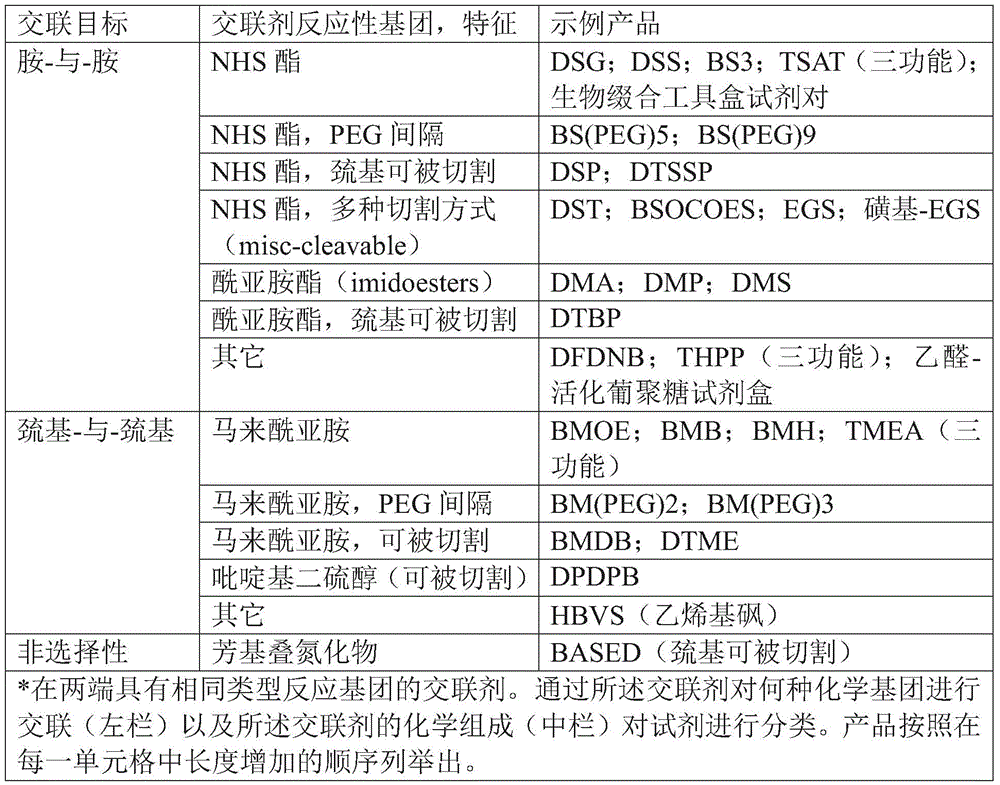
表6.示例性的异双功能(heterobifunctional)交联剂*Table 6. Exemplary heterobifunctional crosslinkers*
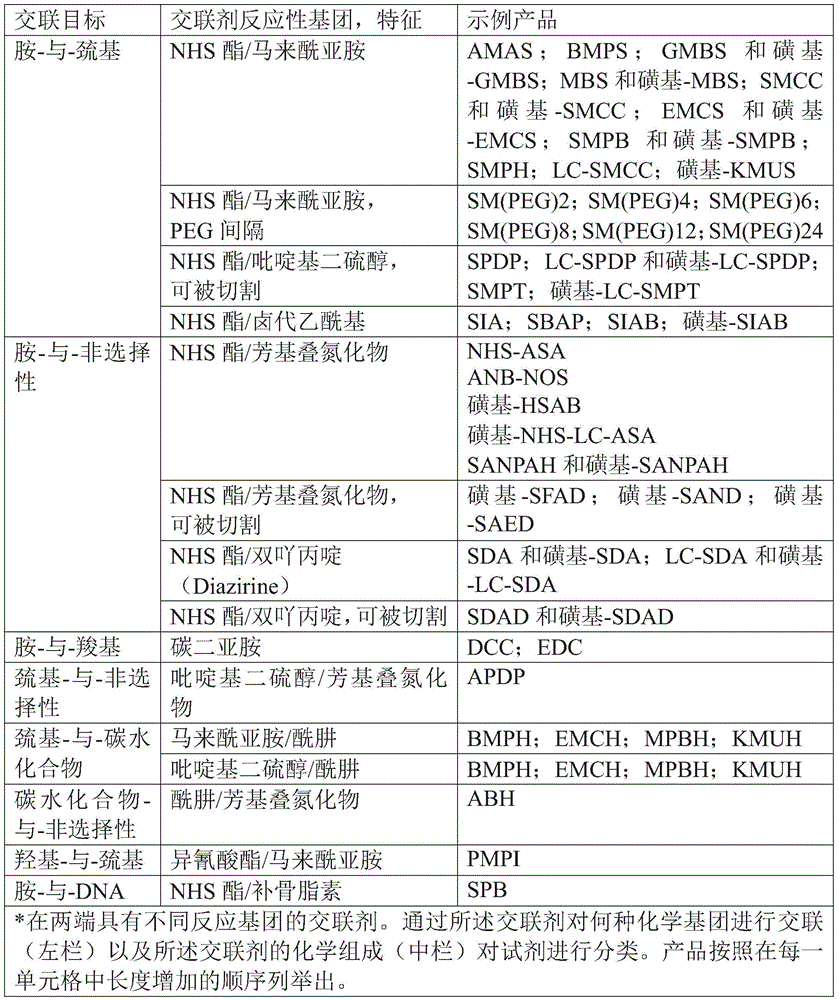
共刺激因子costimulatory factor
在一些实施方式中,包含本文公开的SA-MAPS的免疫原性组合物包含至少一种共刺激分子。在一些实施方式中,共刺激因子交联至免疫原性多糖。在一些实施方式中,共刺激因子通过互补亲和对与免疫原性多糖缔合,其类似于SA抗原与免疫原性多糖缔合的方式。在一些实施方式中,将共刺激因子连接至免疫原性多糖的互补亲和对与将SA抗原连接至免疫原性多糖的互补亲和对相同或不同。In some embodiments, an immunogenic composition comprising SA-MAPS disclosed herein comprises at least one costimulatory molecule. In some embodiments, the costimulatory factor is cross-linked to the immunogenic polysaccharide. In some embodiments, the costimulatory factor associates with the immunogenic polysaccharide through complementary affinity pairs, in a manner similar to how SA antigens associate with the immunogenic polysaccharide. In some embodiments, the complementary affinity pair linking the costimulatory factor to the immunogenic polysaccharide is the same or different from the complementary affinity pair linking the SA antigen to the immunogenic polysaccharide.
在一些实施方式中,可将至少1种、或至少2种、或至少3种、或至少5种、或至少10种、或至少15种、或至少20种、或至少50种、或至少100种、或超过约100种(包括端值)共刺激因子与本文公开的免疫原性多糖缔合。在一些实施方式中,共刺激因子可以是相同的共刺激因子,或者共刺激因子可以是与免疫原性多糖缔合的多种不同共刺激因子。In some embodiments, at least 1, or at least 2, or at least 3, or at least 5, or at least 10, or at least 15, or at least 20, or at least 50, or at least 100 One, or more than about 100, inclusive, costimulatory factors are associated with the immunogenic polysaccharides disclosed herein. In some embodiments, the costimulatory factor can be the same costimulatory factor, or the costimulatory factor can be a plurality of different costimulatory factors associated with the immunogenic polysaccharide.
在一些实施方式中,共刺激因子为Toll样受体的配体/激动剂,例如但不限于:TLR1、TLR2、TLR3、TLR4、TLR5、TLR6、TLR7、TLR8、TLR9、TLR10、TLR11等。在一些实施方式中,共刺激因子为NOD配体/激动剂、或炎性小体的激活剂/激动剂。不希望为理论所限,炎性小体为下列物质组成的多蛋白寡聚体:半胱天冬酶1、PYCARD、NALP,有时为半胱天冬酶5或半胱天冬酶11;并且,炎性小体促进炎性细胞因子白介素1-β和白介素18的成熟。In some embodiments, the costimulatory factor is a ligand/agonist of a Toll-like receptor, such as, but not limited to, TLR1, TLR2, TLR3, TLR4, TLR5, TLR6, TLR7, TLR8, TLR9, TLR10, TLR11, and the like. In some embodiments, the costimulatory factor is a NOD ligand/agonist, or an activator/agonist of the inflammasome. Without wishing to be bound by theory, inflammasomes are polyprotein oligomers composed of
在一些实施方式中,共刺激因子为细胞因子。在一些实施方式中,细胞因子选自于由下列细胞因子所组成的组:GM-CSF;IL-1α;IL-1β;IL-2;IL-3;IL-4;IL-5;IL-6;IL-7;IL-8;IL-10;IL-12;IL-23;IFN-α;IFN-β;IFN-γ;MIP-1α;MIP-1β;TGF-β;TNFa;和TNFβ。在一些实施方式中,共刺激因子为佐剂,所述佐剂可如先前刚讨论地与聚合物缔合,或可在对受试者给药之前或在给药同时添加至MAPS组合物。佐剂在本文的其它部分有进一步描述。In some embodiments, the costimulatory factor is a cytokine. In some embodiments, the cytokine is selected from the group consisting of: GM-CSF; IL-1α; IL-1β; IL-2; IL-3; IL-4; IL-5; 6; IL-7; IL-8; IL-10; IL-12; IL-23; IFN-α; IFN-β; IFN-γ; MIP-1α; MIP-1β; TGF-β; TNFa; and TNFβ . In some embodiments, the costimulatory factor is an adjuvant, which can be associated with the polymer as just previously discussed, or can be added to the MAPS composition prior to or concurrently with administration to the subject. Adjuvants are further described elsewhere herein.
SA抗原和融合至互补亲和分子的SA抗原的制备Preparation of SA antigens and SA antigens fused to complementary affinity molecules
重组蛋白可由本领域技术人员或通过使用商购试剂盒方便地进行表达和纯化,所述商购试剂盒例如ProBondTM Purification System(Invitrogen Corp.,Carlsbad,CA)。在一些实施方式中,重组抗原可使用本领域普通技术人员所知的细菌表达系统、酵母表达系统、杆状病毒(baculovirus)/昆虫细胞表达系统、哺乳动物细胞表达系统或转基因植物或动物系统通过蛋白纯化方法来进行合成和纯化。Recombinant proteins can be conveniently expressed and purified by those skilled in the art or by using commercial kits, such as the ProBond ™ Purification System (Invitrogen Corp., Carlsbad, CA). In some embodiments, recombinant antigens can be passed through bacterial expression systems, yeast expression systems, baculovirus/insect cell expression systems, mammalian cell expression systems, or transgenic plant or animal systems known to those of ordinary skill in the art protein purification methods for synthesis and purification.
本文所述的融合多肽,例如融合至SEQ ID NO:1的rhizavidin蛋白的SA抗原(例如Rhavi-Hla209(27-319)、Rhavi-ClfA(221-559)、Rhavi-ClfB(203-542)、Rhavi-SdrD(246-682)、Rhavi-IsdA(47-324)、Rhavi-IsdB(48-447)),皆可通过本领域技术人员所熟知的蛋白和分子方法进行合成和纯化。使用分子生物学方法和重组异源蛋白表达系统。例如,重组蛋白可在细菌、哺乳动物、昆虫、酵母或植物细胞中或者在转基因植物或动物宿主中表达。Fusion polypeptides described herein, eg, SA antigens fused to the rhizavidin protein of SEQ ID NO: 1 (eg, Rhavi-Hla209 (27-319), Rhavi-CIfA (221-559), Rhavi-CIfB (203-542), Rhavi-SdrD (246-682), Rhavi-IsdA (47-324), Rhavi-IsdB (48-447)) can be synthesized and purified by protein and molecular methods well known to those skilled in the art. Using molecular biology methods and recombinant heterologous protein expression systems. For example, recombinant proteins can be expressed in bacterial, mammalian, insect, yeast or plant cells or in transgenic plant or animal hosts.
在一个实施方式中,本文提供了编码本文所述的融合多肽或非融合多肽的分离的多核苷酸。可将常规聚合酶链式反应(PCR)克隆技术用于构建编码本文所述的融合多肽的嵌合编码序列或融合编码序列。可将编码序列克隆进通用克隆载体中,例如pUC19、pBR322、

每个PCR引物应在待扩增区域具有与其相应模板重叠的至少15个核苷酸。PCR扩增中使用的聚合酶应具有高保真性(例如
或者,可使用例如包含拓扑异构酶辅助的TA载体的



本领域技术人员能够使用特别设计的寡核苷酸探针和本领域所熟知的聚合酶链式反应(PCR)方法学,对感兴趣的抗原的编码区与互补亲和分子的编码区进行克隆和连接,以构建融合多肽的嵌合编码序列,所述融合多肽包含抗原或其片段以及互补亲和分子或其衍生物。本领域技术人员还能够将融合蛋白的嵌合编码序列克隆并连接入所选载体中,例如细菌表达载体、昆虫表达载体或杆状病毒表达载体。抗原和靶抗原多肽或其片段的编码序列应以在读码框中的方式连接,并且嵌合编码序列应连接在启动子下游、启动子和转录终止子之间。随后,将重组载体转染入常规的克隆大肠杆菌(例如XL1Blue)中。然后,通过抗生素抗性对怀有转化载体DNA的重组大肠杆菌进行筛选,以除去任何怀有非重组质粒DNA的大肠杆菌。使筛选出的转化子大肠杆菌生长,随后可对重组载体DNA进行纯化,用于转染至草地贪夜蛾(S.frugiperda)细胞中。One skilled in the art can clone the coding region of the antigen of interest and the coding region of the complementary affinity molecule using specially designed oligonucleotide probes and polymerase chain reaction (PCR) methodology well known in the art and ligated to construct a chimeric coding sequence for a fusion polypeptide comprising an antigen or fragment thereof and a complementary affinity molecule or derivative thereof. Those skilled in the art will also be able to clone and ligate the chimeric coding sequence of the fusion protein into a vector of choice, such as a bacterial expression vector, an insect expression vector or a baculovirus expression vector. The coding sequences for the antigen and the target antigen polypeptide or fragment thereof should be linked in reading frame, and the chimeric coding sequence should be linked downstream of the promoter, between the promoter and the transcription terminator. Subsequently, the recombinant vector is transfected into conventional cloning E. coli (eg XL1Blue). Recombinant E. coli harboring the transformation vector DNA are then screened for antibiotic resistance to remove any E. coli harboring non-recombinant plasmid DNA. The selected transformants are grown in E. coli and the recombinant vector DNA can then be purified for transfection into S. frugiperda cells.
在一些实施方式中,本文所公开的SA抗原可包含用于转位至细菌周质空间的信号肽。所述信号肽也被称作N端前导肽,所述信号肽在转位过膜后可能被切除或可能不被切除。信号肽的一个实例为本文所公开的MKKIWLALAGLVLAFSASA(SEQ ID NO:23)。另一信号肽为MAPFEPLASGILLLLWLIAPSRA(SEQ ID NO:48)。信号肽的其它实例可在SPdb(信号肽数据库,Signal Peptide Database)中找到,所述该数据库可在万维网网址“proline.bic.nus.edu.sg/spdb/”找到。In some embodiments, the SA antigens disclosed herein may comprise a signal peptide for translocation into the bacterial periplasmic space. The signal peptide, also referred to as the N-terminal leader peptide, may or may not be cleaved after translocation across the membrane. An example of a signal peptide is MKKIWLALAGLVLAFASA (SEQ ID NO: 23) disclosed herein. Another signal peptide is MAPFEPLASGILLLLWLIAPSRA (SEQ ID NO: 48). Other examples of signal peptides can be found in SPdb (Signal Peptide Database), which can be found on the World Wide Web at "proline.bic.nus.edu.sg/spdb/".
在一些实施方式中,当将抗原融合至互补亲和蛋白时,信号序列可位于互补亲和蛋白的N端。例如,如果将抗原融合至亲和素样蛋白,信号序列可位于互补亲和蛋白的N端。在一些实施方式中,在互补亲和蛋白与第一亲和分子缔合前,将信号序列从互补亲和蛋白上切除。In some embodiments, when the antigen is fused to the complementary affinity protein, the signal sequence can be located N-terminal to the complementary affinity protein. For example, if the antigen is fused to an avidin-like protein, the signal sequence can be located N-terminal to the complementary avidin. In some embodiments, the signal sequence is cleaved from the complementary affinity protein prior to association of the complementary affinity protein with the first affinity molecule.
在一些实施方式中,本文所述的SA抗原和/或互补亲和蛋白缺少信号序列。In some embodiments, the SA antigens and/or complementary affinity proteins described herein lack a signal sequence.
本文所述的多肽可在多种表达宿主细胞中进行表达,所述宿主细胞例如细菌、酵母、哺乳动物细胞、昆虫细胞、植物细胞、藻类细胞(如衣藻(Chlamadomonas)),或可在无细胞表达系统中进行表达。在一些实施方式中,可将核酸从克隆载体中亚克隆至重组表达载体,所述重组表达载体适于在细菌、哺乳动物、昆虫、酵母、或植物细胞、或无细胞表达系统(如兔网织红细胞(rabbit reticulocyte)表达系统)中表达融合多肽。一些载体被设计用于转移编码核酸以用于在单个重组反应(one single recombination reaction)中在哺乳动物细胞、昆虫细胞和酵母中进行表达。例如,一些

其它表达载体和宿主细胞的实例有:用于在哺乳动物细胞系(如CHO、COS、HEK-293、Jurkat和MCF-7)中进行表达的基于强CMV启动子的pcDNA3.1载体(Invitrogen)和pCINEO载体(Promega);用于在哺乳动物细胞中进行腺病毒介导的基因转移和表达的复制缺陷腺病毒载体pADENO-XTM、pAd5F35、pLP-ADENOTM-X-CMV
描述了在莱茵衣藻(Chlamydomonas reinhardtii)中大规模表达异源蛋白的最新进展(Griesbeck.,34Mol.Biotechnol.213(2006);Fuhrmann,94Methods Mol Med.191(2006))。将外源异源编码序列通过同源重组插入细胞核、叶绿体和线粒体的基因组中。可将携带有最通用的叶绿体筛选标记氨基糖苷类腺苷转移酶(aminoglycoside adenyltransferase,aadA)(赋予对大观霉素(spectinomycin)或链霉素的抗性)的叶绿体表达载体p64用于在叶绿体中表达外源蛋白。可将基因枪方法(biolistic gene gun method)用于将载体引入藻类。在所述载体进入叶绿体中后,外源DNA从基因枪颗粒释放,并通过同源重组整合入叶绿体基因组中。Recent advances in the large-scale expression of heterologous proteins in Chlamydomonas reinhardtii are described (Griesbeck., 34 Mol. Biotechnol. 213 (2006); Fuhrmann, 94 Methods Mol Med. 191 (2006)). Exogenous heterologous coding sequences are inserted into the genomes of the nucleus, chloroplast and mitochondria by homologous recombination. The chloroplast expression vector p64, which carries the most versatile chloroplast selectable marker, aminoglycoside adenyltransferase (aadA), which confers resistance to spectinomycin or streptomycin, can be used in chloroplasts Express foreign proteins. A biolistic gene gun method can be used to introduce vectors into algae. After the vector enters the chloroplast, the foreign DNA is released from the biolistic particle and integrated into the chloroplast genome by homologous recombination.
本发明还包括融合至抗原的互补亲和分子。在一些实施方式中,融合构建体还可任选包含纯化标签和/或分泌信号肽。这些融合蛋白可通过任何标准方法进行生产。例如,就生产表达抗原-互补亲和分子融合蛋白的稳定细胞系而言,可将PCR扩增的抗原核酸克隆至哺乳动物表达载体的衍生物的限制性位点中。例如,KA(pcDNA3(Invitrogen)的衍生物)含有编码流感病毒血凝素标签(HA)的DNA片段。或者,可使用编码其它标签(如c-myc标签或聚组氨酸标签)的载体衍生物。可依据制造商说明书使用例如LIPOFECTAMINETM(Gibco-BRL,Gaithersburg,MD)或使用本领域已知的任何其它合适的转染技术,将抗原-互补亲和分子融合表达构建体与标记物质粒共转染入合适的哺乳动物细胞系(例如COS、HEK293T或NIH3T3细胞)。合适的转染标记物包括例如β-半乳糖苷酶或绿色荧光蛋白(GFP)表达质粒、或并不含有与抗原-互补亲和分子融合蛋白相同的可检测标记物的任何质粒。可对融合蛋白表达细胞进行分选和进一步培养,或可对具有标签的抗原-互补亲和分子融合蛋白进行纯化。在一些实施方式中,可将抗原-互补亲和分子融合蛋白扩增为具有信号肽。在替代实施方式中,可将编码抗原-互补亲和分子融合蛋白的cDNA扩增为不具有信号肽,并将其亚克隆至具有强分泌信号肽的载体(pSecTagHis)。在另一实例中,抗原-互补亲和分子融合蛋白可具有用于纯化的碱性磷酸酶(AP)标签或组氨酸(His)标签。将本领域普通技术人员已知的用于对抗原和/或抗原-互补亲和分子融合蛋白进行蛋白纯化的任何方法涵盖用于本发明的方法中。The present invention also includes complementary affinity molecules fused to an antigen. In some embodiments, the fusion construct may also optionally comprise a purification tag and/or a secretion signal peptide. These fusion proteins can be produced by any standard method. For example, for the production of stable cell lines expressing antigen-complementary affinity molecule fusion proteins, PCR-amplified antigenic nucleic acids can be cloned into restriction sites of derivatives of mammalian expression vectors. For example, KA (a derivative of pcDNA3 (Invitrogen)) contains a DNA fragment encoding the influenza virus hemagglutinin tag (HA). Alternatively, vector derivatives encoding other tags such as c-myc tags or polyhistidine tags can be used. Antigen-complementary affinity molecule fusion expression constructs can be co-transfected with marker particles using, for example, LIPOFECTAMINE ™ (Gibco-BRL, Gaithersburg, MD) according to the manufacturer's instructions, or using any other suitable transfection technique known in the art. Infected into a suitable mammalian cell line (eg COS, HEK293T or NIH3T3 cells). Suitable transfection labels include, for example, beta-galactosidase or green fluorescent protein (GFP) expression plasmids, or any plasmid that does not contain the same detectable label as the antigen-complementary affinity molecule fusion protein. The fusion protein expressing cells can be sorted and further cultured, or the tagged antigen-complementary affinity molecule fusion protein can be purified. In some embodiments, the antigen-complementary affinity molecule fusion protein can be amplified to have a signal peptide. In an alternative embodiment, the cDNA encoding the antigen-complementary affinity molecule fusion protein can be amplified without the signal peptide and subcloned into a vector with a strong secretion signal peptide (pSecTagHis). In another example, the antigen-complementary affinity molecule fusion protein can have an alkaline phosphatase (AP) tag or a histidine (His) tag for purification. Any method known to one of ordinary skill in the art for protein purification of antigen and/or antigen-complementary affinity molecule fusion proteins is encompassed for use in the methods of the present invention.
在一些实施方式中,本文所述的任何多肽通过由重组杆状病毒载体进行表达而生成。在另一实施方式中,本文所述的任何多肽通过昆虫细胞进行表达。在另一实施方式中,本文所述的任何多肽从昆虫细胞中分离而来。在昆虫细胞中用杆状病毒进行蛋白表达具有多重优势,包括高表达水平、易于放大、生产的蛋白具有翻译后修饰以及简化的细胞生长。昆虫细胞在生长中不需要CO2,可容易地适应用于大规模表达的高密度悬浮培养。昆虫细胞中还使用了在哺乳动物系统中存在的多种翻译后修饰途径,这允许生产在抗原性、免疫原性和功能性上类似于天然哺乳动物蛋白的重组蛋白。In some embodiments, any of the polypeptides described herein are produced by expression from a recombinant baculovirus vector. In another embodiment, any of the polypeptides described herein are expressed by insect cells. In another embodiment, any of the polypeptides described herein are isolated from insect cells. The use of baculoviruses for protein expression in insect cells has multiple advantages, including high expression levels, ease of scale-up, post-translational modifications of the produced protein, and simplified cell growth. Insect cells do not require CO2 for growth and can be readily adapted to high density suspension cultures for large-scale expression. Various post-translational modification pathways present in mammalian systems are also used in insect cells, which allow the production of recombinant proteins that are antigenically, immunogenic and functionally similar to native mammalian proteins.
杆状病毒为杆状病毒科(Baculoviridae)中的DNA病毒。已知这些病毒具有主要限于昆虫的鳞翅目(Lepidopteran)物种(蝴蝶和蛾)的窄宿主范围。杆状病毒苜蓿银纹夜蛾核型多角体病毒(Autographa californica Nuclear Polyhedrosis Virus,AcNPV)(已成为原型杆状病毒)在易感的培养昆虫细胞中有效复制。AcNPV具有约130,000个碱基对的双链闭合环状DNA基因组,并在宿主范围、分子生物学和遗传学方面进行了很好表征。杆状病毒表达载体系统(BEVS)是在昆虫细胞和昆虫中大量生产重组蛋白的安全且快速的方法。杆状病毒表达系统是在昆虫细胞中用于高水平重组蛋白表达的强大且通用的系统。已报道使用杆状病毒表达系统的表达水平高达500mg/L,这使其成为高水平表达的理想系统。通过在杆状病毒DNA和嵌合质粒(含有感兴趣的基因序列)间进行同源重组的方式构建表达外源基因的重组杆状病毒。可通过其独特的噬菌斑形态和纯化至均质的空斑(plaque-purified tohomogeneity)对重组病毒进行检测。Baculoviruses are DNA viruses in the family Baculoviridae. These viruses are known to have a narrow host range limited primarily to insect Lepidopteran species (butterflies and moths). The baculovirus Autographa californica Nuclear Polyhedrosis Virus (AcNPV), which has become the prototype baculovirus, replicates efficiently in susceptible cultured insect cells. AcNPV has a double-stranded closed circular DNA genome of approximately 130,000 base pairs and is well characterized in terms of host range, molecular biology and genetics. The Baculovirus Expression Vector System (BEVS) is a safe and rapid method for the mass production of recombinant proteins in insect cells and insects. The baculovirus expression system is a powerful and versatile system for high-level recombinant protein expression in insect cells. Expression levels as high as 500 mg/L have been reported using the baculovirus expression system, making it an ideal system for high-level expression. Recombinant baculoviruses expressing foreign genes are constructed by homologous recombination between baculovirus DNA and a chimeric plasmid (containing the gene sequence of interest). Recombinant viruses can be detected by their unique plaque morphology and by plaque-purified tohomogeneity.
本文所述的重组融合蛋白可在昆虫细胞中进行生产,所述昆虫细胞包括但不限于来源于鳞翅目物种草地贪夜蛾的细胞。也可将能够被杆状病毒感染的其它昆虫细胞(例如来自家蚕(Bombyx mori)、大蜡螟(Galleria mellanoma)、粉纹夜蛾(Trichplusia ni)或舞毒蛾(Lamanthria dispar)物种的昆虫细胞)用作合适的基质来生产本文所述的重组蛋白。重组蛋白的杆状病毒表达为本领域所熟知。参见美国专利号4,745,051、4,879,236、5,179,007、5,516,657、5,571,709和5,759,809。本领域技术人员能够理解的是,表达系统不限于杆状病毒表达系统。重要的是表达系统指导所表达的重组蛋白的N-糖基化。本文所述的重组蛋白也可在其它表达系统(如Entomopox病毒(昆虫的痘病毒)、细胞质型多角体病毒(CPV))中进行表达,并可转化昆虫细胞以进行重组基因的组成型表达。很多杆状病毒转移载体和相应的合适的修饰宿主细胞可商购获得,例如来自BD Biosciences的pAcGP67、pAcSECG2TA、pVL1392、pVL1393、pAcGHLT和pAcAB4;来自

位于启动子和转录终止子之间的区域可具有多个限制性酶切消化位点以便于对外源编码序列进行克隆,在此情况下,所述外源编码序列为抗原多肽和互补亲和分子的编码DNA序列。可包含其它序列,例如信号肽编码序列和/或标签编码序列(如MCS上游的His标签、MAT标签、FLAG标签、肠激酶识别序列、蜜蜂蜂毒肽分泌信号、β-半乳糖苷酶、谷胱甘肽S-转移酶(GST)标签),以便于分泌、识别、适当插入、重组病毒的阳性筛选和/或重组蛋白的纯化。The region between the promoter and transcription terminator may have multiple restriction digestion sites to facilitate cloning of exogenous coding sequences, in this case antigenic polypeptides and complementary affinity molecules the coding DNA sequence. Additional sequences may be included, such as signal peptide coding sequences and/or tag coding sequences (such as His tag upstream of MCS, MAT tag, FLAG tag, enterokinase recognition sequence, honey bee melittin secretion signal, β-galactosidase, S-transferase (GST) tag) to facilitate secretion, identification, appropriate insertion, positive screening of recombinant viruses and/or purification of recombinant proteins.
可将本领域技术人员所知的标准技术用于引入突变,以在本文所述的融合多肽的抗原多肽序列中(例如在本文所述的核苷酸序列编码的融合多肽中的抗原中)造成氨基酸的替换,所述技术包括例如定点突变和PCR介导的突变。相对于本文所述的融合多肽,变体融合多肽优选具有少于50个氨基酸替换、少于40个氨基酸替换、少于30个氨基酸替换、少于25个氨基酸替换、少于20个氨基酸替换、少于15个氨基酸替换、少于10个氨基酸替换、少于5个氨基酸替换、少于4个氨基酸替换、少于3个氨基酸替换或少于2个氨基酸替换,包括端值。Standard techniques known to those skilled in the art can be used to introduce mutations that result in the antigenic polypeptide sequences of the fusion polypeptides described herein (eg, in the antigens in the fusion polypeptides encoded by the nucleotide sequences described herein) Amino acid substitution, such techniques include, for example, site-directed mutagenesis and PCR-mediated mutagenesis. Relative to the fusion polypeptides described herein, variant fusion polypeptides preferably have less than 50 amino acid substitutions, less than 40 amino acid substitutions, less than 30 amino acid substitutions, less than 25 amino acid substitutions, less than 20 amino acid substitutions, Fewer than 15 amino acid substitutions, less than 10 amino acid substitutions, less than 5 amino acid substitutions, less than 4 amino acid substitutions, less than 3 amino acid substitutions, or less than 2 amino acid substitutions, inclusive.
也可在DNA编码序列中制造某些沉默突变或中性错义突变,所述突变不改变编码的氨基酸序列或促进跨膜递送的能力。这些类型的突变对如下方面有用:优化密码子使用或改善重组蛋白的表达和生产。Certain silent or neutral missense mutations can also be made in a DNA coding sequence that do not alter the encoded amino acid sequence or the ability to facilitate transmembrane delivery. These types of mutations are useful to optimize codon usage or to improve the expression and production of recombinant proteins.
在载体中的融合多肽编码序列的特定定点突变可以用来制造特定的氨基酸突变和替换。可以根据制造商的说明书使用例如来自Stratagene的定点突变试剂盒来进行定点突变。Specific site-directed mutagenesis of the fusion polypeptide coding sequence in the vector can be used to make specific amino acid mutations and substitutions. For example from Stratagene can be used according to the manufacturer's instructions Site-Directed Mutagenesis Kit to perform site-directed mutagenesis.
在一个实施方式中,本文描述了用于表达和纯化重组多肽的含有本文所述多肽的编码DNA序列的表达载体,所述重组多肽由使用选自如下的宿主细胞的蛋白表达系统生成:例如细菌、哺乳动物、昆虫、酵母或植物细胞。表达载体应具有必需的5′上游调控元件和3′下游调控元件,例如启动子序列、核糖体识别和TATA盒以及3′UTR AAUAAA转录终止序列,以使其在各自的宿主细胞中得以进行高效的基因转录和翻译。表达载体优选为具有转录启动子和转录终止子的载体,转录启动子选自于由CMV(巨细胞病毒)启动子、RSV(劳斯肉瘤病毒)启动子、β-肌动蛋白启动子、SV40(猴病毒40)启动子和肌肉肌酸激酶启动子所组成的组,转录终止子选自于由SV40聚(A)终止子和BGH终止子所组成的组;更优选如下表达载体:具有巨细胞病毒的早期启动子/增强子序列以及腺病毒三联前导序列/内含子序列并且含有SV40的复制起点和聚(A)序列的表达载体。表达载体可具有额外的编码区,如编码如下的区域:例如6X组氨酸(SEQ ID NO:32)、V5、硫氧还蛋白、谷胱甘肽S-转移酶、c-Myc、VSV-G、HSV、FLAG、麦芽糖结合肽、金属结合肽、HA和“分泌”信号(蜜蜂蜂毒肽、α-因子、PHO、Bip),所述区域可并入表达的融合多肽。此外,在这些编码区之后可并入酶消化位点,以在如果不需要所述编码区时,将其酶法去除。这些额外的核酸可对如下方面有用:对融合多肽表达的检测、通过亲和层析进行的蛋白纯化、重组蛋白在宿主细胞质中增强的溶解度和/或将表达的融合多肽分泌出来到培养基中或分泌出酵母细胞的原生质体。融合多肽的表达在宿主细胞中可为组成型,或者融合多肽的表达可例如用硫酸铜、糖类(如半乳糖)、甲醇、甲胺、硫胺素、四环素、以杆状病毒进行的感染和(异丙基-β-D-硫代半乳糖吡喃糖苷)IPTG(乳糖的稳定合成类似物)来诱导。In one embodiment, described herein are expression vectors containing DNA sequences encoding the polypeptides described herein for use in expressing and purifying recombinant polypeptides produced using a protein expression system using host cells selected from, for example, bacteria , mammalian, insect, yeast or plant cells. Expression vectors should have the necessary 5' upstream regulatory elements and 3' downstream regulatory elements, such as promoter sequences, ribosomal recognition and TATA boxes, and 3' UTR AAUAAA transcription termination sequences, for efficient performance in their respective host cells gene transcription and translation. The expression vector is preferably a vector with a transcription promoter and a transcription terminator, and the transcription promoter is selected from the group consisting of CMV (cytomegalovirus) promoter, RSV (Rous sarcoma virus) promoter, β-actin promoter, SV40 (simian virus 40) promoter and muscle creatine kinase promoter, the transcription terminator is selected from the group consisting of SV40 poly(A) terminator and BGH terminator; more preferably the following expression vector: Cytoviral early promoter/enhancer sequences and adenoviral triplet leader/intron sequences and expression vectors containing the SV40 origin of replication and poly(A) sequence. Expression vectors may have additional coding regions, such as those encoding: eg, 6X histidine (SEQ ID NO: 32), V5, thioredoxin, glutathione S-transferase, c-Myc, VSV- G, HSV, FLAG, maltose-binding peptides, metal-binding peptides, HA and "secretory" signals (bee melittin, alpha-factor, PHO, Bip), which regions can be incorporated into the expressed fusion polypeptide. In addition, enzymatic digestion sites can be incorporated after these coding regions to enzymatically remove the coding regions if they are not needed. These additional nucleic acids may be useful for detection of fusion polypeptide expression, protein purification by affinity chromatography, enhanced solubility of recombinant protein in host cytoplasm and/or secretion of expressed fusion polypeptide into culture medium or secreted protoplasts from yeast cells. Expression of fusion polypeptides can be constitutive in host cells, or expression of fusion polypeptides can be performed, for example, by infection with copper sulfate, carbohydrates (eg, galactose), methanol, methylamine, thiamine, tetracycline, baculovirus and (isopropyl-β-D-thiogalactopyranoside) IPTG, a stable synthetic analog of lactose.
在另一实施方式中,含有本文所述的多核苷酸的表达载体为病毒载体,如腺病毒、腺相关病毒(AAV)、逆转录病毒和慢病毒载体等。重组病毒为基因表达研究和治疗应用提供了通用系统。In another embodiment, the expression vector containing the polynucleotides described herein is a viral vector, such as adenovirus, adeno-associated virus (AAV), retroviral, and lentiviral vectors, and the like. Recombinant viruses provide a versatile system for gene expression studies and therapeutic applications.
在一些实施方式中,本文所述的融合多肽由哺乳动物细胞的病毒感染进行表达。所述病毒载体可以是例如腺病毒、腺相关病毒(AAV)、逆转录病毒和慢病毒。用于生成重组腺病毒的简化系统由He等,95PNAS2509(1998)提出。首先将感兴趣的基因克隆入穿梭载体,例如pAdTrack-CMV。所生成的质粒通过用限制性内切酶PmeI消化来进行线性化,随后将其与腺病毒骨架质粒(例如Stratagene的ADEASYTM腺病毒载体系统的pADEASY-1)共转化入大肠杆菌BJ5183细胞中。选择卡那霉素抗性的重组腺病毒载体,并通过限制性内切酶分析对重组进行确证。最后,将线性化的重组质粒转染入腺病毒包装细胞系,例如HEK293细胞(E1转化的人类胚胎肾细胞)或911(E1转化的人类胚胎视网膜细胞)。Fallaux等,7Human GeneTher.215(1996)。重组腺病毒在HEK293细胞中生成。In some embodiments, the fusion polypeptides described herein are expressed by viral infection of mammalian cells. The viral vector can be, for example, adenovirus, adeno-associated virus (AAV), retrovirus and lentivirus. A simplified system for generating recombinant adenovirus is proposed by He et al., 95PNAS2509 (1998). The gene of interest is first cloned into a shuttle vector such as pAdTrack-CMV. The resulting plasmid was linearized by digestion with the restriction enzyme PmeI and subsequently co-transformed into E. coli BJ5183 cells with an adenoviral backbone plasmid (eg pADEASY-1 of Stratagene's ADEASY ™ Adenoviral Vector System). A kanamycin-resistant recombinant adenoviral vector was selected and recombination was confirmed by restriction endonuclease analysis. Finally, the linearized recombinant plasmids are transfected into adenovirus packaging cell lines such as HEK293 cells (E1 transformed human embryonic kidney cells) or 911 (E1 transformed human embryonic retinal cells). Fallaux et al., 7 Human GeneTher. 215 (1996). Recombinant adenoviruses were generated in HEK293 cells.
重组慢病毒在分裂的哺乳动物细胞和未分裂的哺乳动物细胞中具有融合多肽递送和表达的优势。与基于莫洛尼白血病病毒(Moloney Leukemia Virus,MoMLV)的逆转录病毒系统相比,基于HIV-1的慢病毒能有效地转导较宽的宿主范围。重组慢病毒的制备可使用例如pLenti4/V5-DESTTM、pLenti6/V5-DESTTM或pLenti载体与来自Invitrogen,Inc.的VIRAPOWERTM慢病毒表达系统一起来实现。Recombinant lentiviruses have the advantage of fusion polypeptide delivery and expression in dividing and non-dividing mammalian cells. Compared with Moloney Leukemia Virus (MoMLV)-based retroviral systems, HIV-1-based lentiviruses can efficiently transduce a wider host range. Preparation of recombinant lentiviruses can be accomplished using, for example, pLenti4/V5-DEST ™ , pLenti6/V5-DEST ™ or pLenti vectors in conjunction with the VIRAPOWER ™ Lentiviral Expression System from Invitrogen, Inc.
重组腺相关病毒(rAAV)载体适用于范围广泛的宿主细胞,包括许多不同的人细胞系或组织和非人细胞系或组织。rAAV能够转导宽范围的细胞类型,并且转导不依赖于活跃宿主细胞分裂。在上清液中容易获得>108病毒颗粒/ml的高效价以及由进一步浓缩得到1011-1012病毒颗粒/ml。转基因被整合入宿主基因组中,因此表达是长期且稳定的。Recombinant adeno-associated virus (rAAV) vectors are suitable for use in a wide range of host cells, including many different human and non-human cell lines or tissues. rAAV is capable of transducing a wide range of cell types, and transduction is independent of active host cell division. High titers of > 108 virus particles/ml were readily obtained in the supernatant and 1011-1012 virus particles/ml were obtained by further concentration. The transgene is integrated into the host genome, so expression is long-term and stable.
AAV载体的大规模制备通过包装细胞系的三质粒共转染(将携带编码核酸的AAV载体、含有AAV rep和cap基因的AAV RC载体以及腺病毒辅助质粒pDF6共转染入亚汇合的293细胞的50×150mm平板)完成。转染三天后收获细胞,病毒通过三个冷冻-解冻循环或超声处理而释放。Large-scale preparation of AAV vectors by three-plasmid co-transfection of packaging cell lines (AAV vector carrying the encoding nucleic acid, AAV RC vector containing AAV rep and cap genes, and adenovirus helper plasmid pDF6 were co-transfected into subconfluent 293 cells. 50×150mm flat plate) is completed. Cells were harvested three days after transfection and virus released by three freeze-thaw cycles or sonication.
取决于载体的血清型,AAV载体可通过2种不同方法进行纯化。基于AAV2载体对肝素的亲和性,通过一步重力流柱(single-step gravity-flow column)纯化法对AAV2载体进行纯化。Auricchio等,12Human Gene Ther.71(2001);Summerford和Samulski,72J.Virol.1438(1998);Summerford和Samulski,5Nat.Med.587(1999)。目前通过三个相继的CsCl梯度(sequential CsCl gradients)对AAV2/1和AAV2/5载体进行纯化。AAV vectors can be purified by 2 different methods depending on the serotype of the vector. The AAV2 vector was purified by a single-step gravity-flow column purification method based on the affinity of the AAV2 vector for heparin. Auricchio et al., 12 Human Gene Ther. 71 (2001); Summerford and Samulski, 72 J. Virol. 1438 (1998); Summerford and Samulski, 5 Nat. Med. 587 (1999). The AAV2/1 and AAV2/5 vectors are currently purified by three sequential CsCl gradients.
不期望受理论束缚,当蛋白由细胞(包括细菌细胞)表达时,蛋白靶向(targetedto)细胞中的特定部分或从细胞中分泌出。因此,蛋白靶向或蛋白分选是一种机制,细胞通过该机制将细胞转运至细胞中的合适位置或细胞外。分选靶标可以是细胞器的内部空间、若干内膜的任一者、细胞的外膜或通过分泌到达它的外部。这一递送过程基于蛋白本身所含的信息进行。正确的分选对细胞至关重要;错误可能导致疾病。Without wishing to be bound by theory, when a protein is expressed by a cell, including bacterial cells, the protein is targeted to a particular moiety in or secreted from the cell. Thus, protein targeting or protein sorting is a mechanism by which cells transport cells to appropriate locations in the cell or outside the cell. The sorting target can be the interior space of an organelle, any of several inner membranes, the outer membrane of a cell, or to its exterior by secretion. This delivery process is based on the information contained in the protein itself. Correct sorting is critical for cells; mistakes can lead to disease.
有一些例外,细菌缺乏真核生物中存在的膜结合细胞器,但它们可将蛋白组装到各种类型的内含物(例如气囊(gas vesicles)和储存颗粒)上。同时,根据细菌的种类,细菌可能具有单个质膜(革兰氏阳性细菌);或具有内(质)膜和外细胞壁膜二者,并在这二者之间具有称为周质的含水空间(革兰氏阴性细菌)。根据是否存在外膜,可将蛋白分泌至环境中。质膜处的基本机制与真核细胞类似。此外,细菌可将蛋白靶向进入或穿过外膜。用于将蛋白分泌穿过细菌外膜的系统可能相当复杂,并在发病机制中发挥关键作用。这些系统可被描述为I型分泌、II型分泌等。With some exceptions, bacteria lack the membrane-bound organelles found in eukaryotes, but they can assemble proteins onto various types of inclusions such as gas vesicles and storage particles. Meanwhile, depending on the species of bacteria, bacteria may have a single plasma membrane (Gram-positive bacteria); or both an inner (plasma) membrane and an outer cell wall membrane with an aqueous space between them called the periplasm (Gram-negative bacteria). Depending on the presence or absence of an outer membrane, proteins can be secreted into the environment. The basic mechanism at the plasma membrane is similar to that of eukaryotic cells. In addition, bacteria can target proteins into or across the outer membrane. The systems used to secrete proteins across the bacterial outer membrane can be quite complex and play a key role in pathogenesis. These systems can be described as type I secretion, type II secretion, and the like.
在大多数革兰氏阳性细菌中,某些蛋白被靶向以跨质膜输出并随后共价连接至细菌细胞壁。专门的酶分选酶(sortase)在蛋白C端附近的特征识别位点处(例如LPXTG基序(SEQ ID NO:19)(其中X可以是任何氨基酸))对靶蛋白进行切割,然后将所述蛋白转移至细胞壁上。已提出类似于分选酶/LPXTG(SEQ ID NO:19)的具有PEP-CTERM基序(SEQ ID NO:49)的称为外分选酶(exosortase)/PEP-CTERM(SEQ ID NO:49)的系统存在于广泛的革兰氏阴性细菌中。In most Gram-positive bacteria, certain proteins are targeted for export across the plasma membrane and subsequently covalently attached to the bacterial cell wall. A specialized enzyme sortase cleaves the target protein at a characteristic recognition site near the C-terminus of the protein, such as the LPXTG motif (SEQ ID NO: 19) (where X can be any amino acid), and then cleaves the target protein. The protein is transferred to the cell wall. A PEP-CTERM motif (SEQ ID NO:49) similar to sortase/LPXTG (SEQ ID NO:19) has been proposed as exosortase/PEP-CTERM (SEQ ID NO:49) ) systems are present in a wide range of Gram-negative bacteria.
具有合适的N端靶向信号的蛋白在细胞质中合成,然后被定向至特定的蛋白转运途径。在蛋白转位穿过细胞质膜期间或之后不久,蛋白被加工并折叠成其活性形式。然后,使转位的蛋白保留在细胞周质侧,或释放进入环境中。由于将蛋白靶向至膜的信号肽是转运途径特异性的关键决定因素,因此,按照其将蛋白所定向至的转运途径对这些信号肽进行分类。信号肽的分类基于信号肽酶(SPase)的类型,所述信号肽酶负责信号肽的移除。大多数输出的蛋白通过一般的“分泌(Sec)途径”从细胞质中运输出。大多数熟知的由革兰氏阳性病原体分泌的毒力因子(如金黄色葡萄球菌的外毒素、炭疽杆菌的保护性抗原、单核细胞增生李斯特氏菌的李斯特菌素(lysteriolysin)O)具有典型的N端信号肽,该N端信号肽会将它们导向Sec途径。通过这一途径分泌的蛋白以非折叠状态转位穿过细胞质膜。这些蛋白的后续加工和折叠在膜另一侧的细胞壁环境中进行。除Sec系统外,一些革兰氏阳性细菌还含有Tat系统,Tat系统能够使折叠蛋白转位过膜。病原性细菌可能含有某些特殊目标输出系统,所述系统特定地涉及仅少数几个蛋白的转运。例如,已在分枝杆菌中鉴定出几个基因簇,所述基因簇编码通过特定途径(ESAT-6)分泌到环境中的蛋白,所述蛋白对分枝杆菌发病机制很重要。特异的ATP结合盒(ABC)转运蛋白指导称作细菌素(bacteriocins)的小抗菌肽的输出及加工。负责细菌裂解启动的内溶素(endolysins)的基因通常位于编码类穴蛋白(holin-like proteins)的基因附近,表明这些穴蛋白负责将内溶素输出至细胞壁。Wooldridge,BACT.SECRETED PROTS:SECRETORY MECHS.&ROLE IN PATHOGEN(CaisterAcademic Press,2009)。Proteins with appropriate N-terminal targeting signals are synthesized in the cytoplasm and then directed to specific protein transport pathways. During or shortly after protein translocation across the cytoplasmic membrane, the protein is processed and folded into its active form. The translocated protein is then retained on the periplasmic side or released into the environment. Since signal peptides that target proteins to membranes are key determinants of transport pathway specificity, these signal peptides are classified according to the transport pathway to which they direct proteins. The classification of signal peptides is based on the type of signal peptidase (SPase) responsible for the removal of the signal peptide. Most exported proteins are transported out of the cytoplasm through the general "secretory (Sec) pathway". Most of the well-known virulence factors secreted by Gram-positive pathogens (eg, exotoxin from Staphylococcus aureus, protective antigen from Bacillus anthracis, lysteriolysin O from Listeria monocytogenes) have a typical N-terminal signal peptide that directs them to the Sec pathway. Proteins secreted through this pathway translocate across the cytoplasmic membrane in an unfolded state. Subsequent processing and folding of these proteins takes place in the environment of the cell wall on the other side of the membrane. In addition to the Sec system, some Gram-positive bacteria contain the Tat system, which enables folded proteins to translocate across membranes. Pathogenic bacteria may contain certain specific target export systems that are specifically involved in the transport of only a few proteins. For example, several gene clusters have been identified in mycobacteria that encode proteins secreted into the environment via a specific pathway (ESAT-6) that are important for mycobacterial pathogenesis. Specific ATP-binding cassette (ABC) transporters direct the export and processing of small antimicrobial peptides called bacteriocins. The genes responsible for the endolysins that initiate bacterial lysis are often located near genes encoding holin-like proteins, suggesting that these holin proteins are responsible for exporting endolysins to the cell wall. Wooldridge, BACT. SECRETED PROTS: SECRETORY MECHS. & ROLE IN PATHOGEN (Caister Academic Press, 2009).
在一些实施方式中,在本发明中有用的信号序列为OmpA信号序列,然而,涵盖本领域普通技术人员通常所知的允许将抗微生物剂转运和分泌至噬菌体感染细胞外的任何信号序列以用于本发明。In some embodiments, the signal sequence useful in the present invention is the OmpA signal sequence, however, any signal sequence generally known to those of ordinary skill in the art that allows the transport and secretion of antimicrobial agents outside of phage-infected cells is encompassed for use with in the present invention.
指导蛋白从细菌细胞中分泌的信号序列为本领域所熟知,例如在国际申请WO2005/071088中公开的信号序列。例如,可使用表7所示的信号肽的非限制性实例中的一些,所述信号肽可连接至抗菌肽(Amp)或抗菌多肽的氨基端或羧基端,以通过抗菌剂工程化的噬菌体(例如AMP工程化噬菌体)进行表达。连接可通过与所选的抗原或抗原-互补亲和分子融合蛋白进行融合或嵌合构成,以使其从感染有抗菌剂工程化的噬菌体(例如AMP工程化噬菌体)的细菌中分泌。Signal sequences directing the secretion of proteins from bacterial cells are well known in the art, for example the signal sequences disclosed in International Application WO2005/071088. For example, some of the non-limiting examples of signal peptides shown in Table 7, which can be linked to the amino- or carboxy-terminus of antimicrobial peptides (Amp) or antimicrobial polypeptides, can be used to engineer phage by antimicrobial agents (eg, AMP-engineered phage). Links can be constructed by fusion or chimerism with an antigen or antigen-complementary affinity molecule fusion protein of choice, such that it is secreted from bacteria infected with an antibacterial engineered phage (eg, AMP engineered phage).
表7:指导细菌细胞的蛋白或肽抗原或抗原-互补亲和分子融合蛋白分泌的示例性信号肽Table 7: Exemplary Signal Peptides Directing Secretion of Protein or Peptide Antigens or Antigen-Complementary Affinity Molecule Fusion Proteins from Bacterial Cells
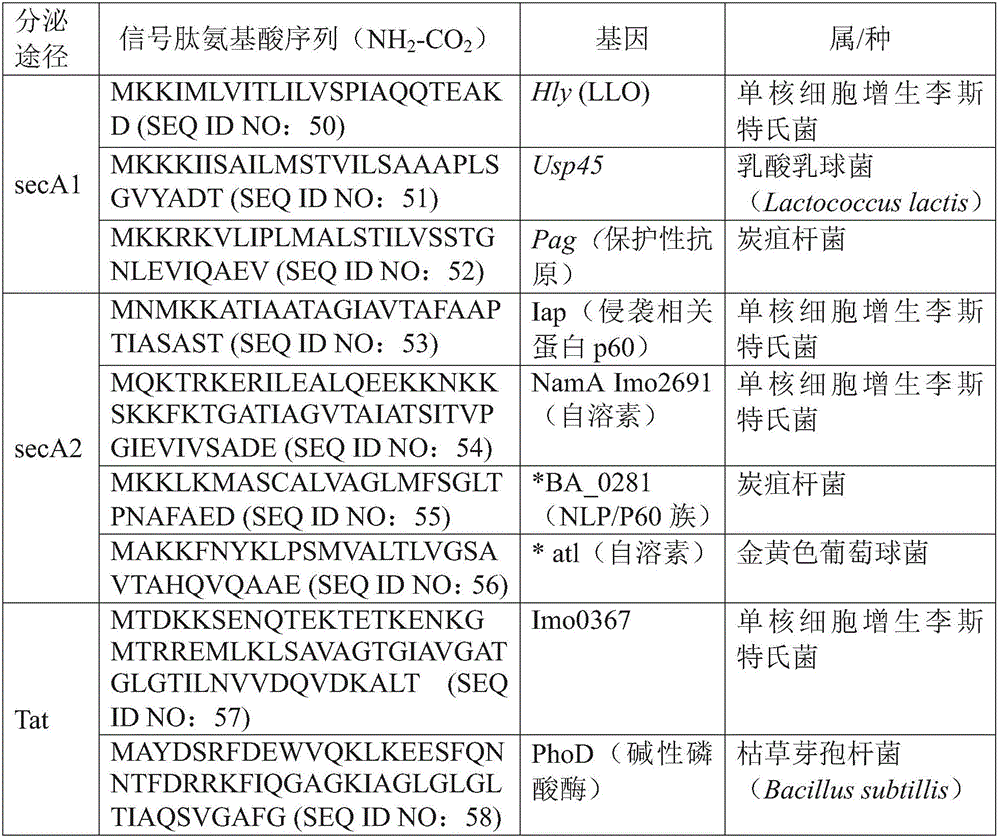
本文所述的多肽(如抗原或抗原-互补亲和分子融合蛋白)可通过本领域技术人员已知的各种方法进行表达和纯化,例如,本文所述的融合多肽可由任何合适的表达系统纯化而得。通过标准技术可将融合多肽纯化至基本上纯,所述标准技术包括:使用诸如硫酸铵的物质进行选择性沉淀、柱色谱、免疫纯化法以及其它技术;这些技术在本领域中是公知的。参见例如Scopes,PROTEIN PURIFICATION:PRINCIPLES&PRACTICE(1982);美国专利号4,673,641。Polypeptides described herein (eg, antigens or antigen-complementary affinity molecule fusion proteins) can be expressed and purified by various methods known to those of skill in the art, eg, fusion polypeptides described herein can be purified by any suitable expression system And get. Fusion polypeptides can be purified to substantial purity by standard techniques including selective precipitation using substances such as ammonium sulfate, column chromatography, immunopurification, and other techniques; these techniques are well known in the art. See, eg, Scopes, PROTEIN PURIFICATION: PRINCIPLES & PRACTICE (1982); US Patent No. 4,673,641.
纯化重组蛋白时可使用多种工序。例如,可将具有确定分子粘附性质的蛋白可逆地融合至所选择的蛋白。借助合适配体,可将蛋白选择性地吸附至纯化柱,然后以相对纯的形式由柱释放。然后通过酶活性移除融合的蛋白。最后,可使用亲和或免疫亲和柱对所选择的蛋白进行纯化。Various procedures can be used when purifying recombinant proteins. For example, proteins with defined molecular adhesion properties can be reversibly fused to the protein of choice. With suitable ligands, proteins can be selectively adsorbed to purification columns and then released from the column in relatively pure form. The fused protein is then removed by enzymatic activity. Finally, selected proteins can be purified using affinity or immunoaffinity columns.
蛋白在宿主细胞中表达之后,可裂解宿主细胞以释放出所表达的蛋白来用于纯化。裂解多种宿主细胞的方法记载于“Sample Preparation-Tools for ProteinResearch”EMD Bioscience和Current Protocols in Protein Sciences(CPPS)中。示例性纯化方法为亲和色谱,如使用镍、钴或锌亲和树脂(用于组氨酸标记的融合多肽)的金属-离子亲和色谱。由Clontech使用其

用于纯化重组蛋白和天然存在的蛋白的标准蛋白分离技术在本领域中是公知的,例如溶解度分级分离(solubility fractionation)、尺寸排阻凝胶过滤以及各种柱色谱。Standard protein separation techniques for purification of recombinant and naturally occurring proteins are well known in the art, such as solubility fractionation, size exclusion gel filtration, and various column chromatography.
溶解度分级分离:经常作为起始步骤,特别是当蛋白质混合物复杂时更是如此,初始的分级盐析可将许多不需要的宿主细胞蛋白(或者源自细胞培养基的蛋白)与感兴趣的蛋白分离。优选的盐为硫酸铵。硫酸铵通过有效地减少蛋白质混合物中水的量来使蛋白质沉淀。然后蛋白质基于其溶解度而沉淀。蛋白的疏水性越强,便越有可能在较低的硫酸铵浓度下沉淀。典型方案包括将饱和硫酸铵添加至蛋白质溶液,使得所得硫酸铵浓度为20%-30%。这一浓度将使最具疏水性的蛋白质沉淀。然后弃去沉淀(除非感兴趣的蛋白质是疏水性蛋白质),并将硫酸铵加入至上清液,直至已知使感兴趣的蛋白质沉淀的浓度。然后将沉淀在缓冲液中溶解(solubilized),如果有必要,通过透析或渗滤(diafiltration)移除过量的盐。依赖于蛋白质溶解度的其它方法(如冷乙醇沉淀)是本领域技术人员公知的,并且可用于分级分离复杂的蛋白质混合物。Solubility Fractionation: Often used as an initial step, especially when protein mixtures are complex, initial fractional salting out can separate many unwanted host cell proteins (or proteins derived from cell culture media) with the protein of interest separation. The preferred salt is ammonium sulfate. Ammonium sulfate precipitates proteins by effectively reducing the amount of water in the protein mixture. The protein is then precipitated based on its solubility. The more hydrophobic the protein, the more likely it is to precipitate at lower ammonium sulfate concentrations. A typical protocol involves adding saturated ammonium sulfate to the protein solution such that the resulting ammonium sulfate concentration is 20%-30%. This concentration will precipitate the most hydrophobic proteins. The pellet is then discarded (unless the protein of interest is a hydrophobic protein) and ammonium sulfate is added to the supernatant to a concentration known to precipitate the protein of interest. The pellet is then solubilized in buffer and excess salt is removed by dialysis or diafiltration if necessary. Other methods that rely on protein solubility, such as cold ethanol precipitation, are well known to those skilled in the art and can be used to fractionate complex protein mixtures.
尺寸排阻过滤:使用通过不同孔径的膜(例如
柱色谱:还可根据所选择的蛋白质的大小、净表面电荷、疏水性和配体亲和性将所选择的蛋白质与其它蛋白质分离。另外,可将针对重组蛋白或天然存在的蛋白产生的抗体缀合至柱基质并免疫纯化蛋白。全部这些方法在本领域中都是公知的。对本领域技术人员而言显而易见的是,色谱技术可在任何规模上实施,并可使用来自众多不同制造商(例如Pharmacia Biotech)的设备。例如,可使用PA63七聚物亲和柱对抗原多肽进行纯化。Singh等,269,J.Biol.Chem.29039(1994)。Column chromatography: Selected proteins can also be separated from other proteins based on their size, net surface charge, hydrophobicity, and ligand affinity. Additionally, antibodies raised against recombinant or naturally occurring proteins can be conjugated to column matrices and the proteins immunopurified. All of these methods are well known in the art. It will be apparent to those skilled in the art that chromatographic techniques can be performed on any scale and using equipment from a number of different manufacturers (eg Pharmacia Biotech). For example, the antigenic polypeptide can be purified using a PA63 heptameric affinity column. Singh et al., 269, J. Biol. Chem. 29039 (1994).
在一些实施方式中,可将包含例如:(a)离子交换色谱、(b)羟基磷灰石色谱、(c)疏水相互作用色谱和(d)尺寸排阻色谱的纯化步骤的组合用于对本文所述的融合多肽进行纯化。In some embodiments, a combination of purification steps comprising, for example: (a) ion exchange chromatography, (b) hydroxyapatite chromatography, (c) hydrophobic interaction chromatography, and (d) size exclusion chromatography can be used for The fusion polypeptides described herein are purified.
还设想了无细胞表达系统。无细胞表达系统提供了若干优于传统的基于细胞的表达方法的优点,包括易于对反应条件进行修改以利于蛋白质折叠、降低对产物毒性的敏感度以及由于降低了反应体积和处理时间而对高通量策略(例如快速表达筛选或大量蛋白质生产)的适用性。无细胞表达系统可以使用质粒或线性DNA。此外,翻译效率的改善已使得每毫升反应混合物的蛋白质产量高于1毫克。可商购的无细胞表达系统包括TNT偶联网织红细胞裂解物系统(Promega)(其使用基于兔网织红细胞的体外系统)。Cell-free expression systems are also contemplated. Cell-free expression systems offer several advantages over traditional cell-based expression methods, including ease of modification of reaction conditions to favor protein folding, reduced sensitivity to product toxicity, and reduced sensitivity to high levels due to reduced reaction volumes and processing times. Applicability of throughput strategies such as rapid expression screening or bulk protein production. Cell-free expression systems can use plasmids or linear DNA. In addition, improvements in translation efficiency have resulted in protein yields above 1 mg per mL of reaction mixture. Commercially available cell-free expression systems include the TNT-coupled reticulocyte lysate system (Promega), which uses a rabbit reticulocyte-based in vitro system.
确定SA-MAPS免疫原性组合物的效力:To determine the efficacy of SA-MAPS immunogenic compositions:
本文公开的SA-MAPS免疫原性组合物的有效性可通过以下方式来测量:通过增殖测定、通过细胞溶解测定(例如铬释放测定)以测量T细胞裂解其特异性靶细胞的能力;或通过测量血清中对抗原而言特异的循环抗体的水平来测量B细胞活性的水平。如本文所述,还可通过测量抗原给予后诱导的抗原特异性抗体的血清水平来检测免疫应答;更具体而言,通过测量如此诱导的抗体增强特定白细胞的调理吞噬能力的能力来检测免疫应答。可通过用已给予的抗原攻击经免疫接种的宿主来测量免疫应答的保护水平。例如,如果期望针对其产生免疫应答的抗原为细菌,则通过检测用细菌细胞攻击动物后的存活百分比或死亡百分比来测量由抗原的免疫原性量诱导的保护水平。在一个实施方式中,可通过测量与细菌感染有关的至少一种症状(例如与感染有关的发烧)来测量保护的量。多抗原或多成分疫苗或免疫原性组合物中的每种抗原的量将相对于其它成分中的每一种而变化,并且可通过本领域技术人员已知的方法来确定。此类方法将包括用于测量免疫原性和/或体内效力的程序。在某些实施方式中,术语“约”倾向于在20%以内、优选在10%以内、更优选在5%以内。The effectiveness of the SA-MAPS immunogenic compositions disclosed herein can be measured by proliferation assays, by cytolysis assays (eg, chromium release assays) to measure the ability of T cells to lyse their specific target cells; or by The level of B cell activity is measured by measuring the level of circulating antibodies specific for the antigen in the serum. As described herein, immune responses can also be detected by measuring serum levels of antigen-specific antibodies induced after antigen administration; more specifically, by measuring the ability of antibodies so induced to enhance the opsonophagocytic capacity of specific leukocytes . The level of protection of the immune response can be measured by challenging an immunized host with an administered antigen. For example, if the antigen against which an immune response is expected is a bacteria, the level of protection induced by the immunogenic amount of the antigen is measured by detecting the percentage of survival or death following challenge of the animal with bacterial cells. In one embodiment, the amount of protection can be measured by measuring at least one symptom associated with bacterial infection (eg, fever associated with infection). The amount of each antigen in a multi-antigen or multi-component vaccine or immunogenic composition will vary relative to each of the other components and can be determined by methods known to those skilled in the art. Such methods would include procedures for measuring immunogenicity and/or in vivo efficacy. In certain embodiments, the term "about" tends to be within 20%, preferably within 10%, more preferably within 5%.
在一些实施方式中,本发明进一步提供了特异性和选择性结合至本文公开的SA-MAPS免疫原性组合物的抗体和抗体组合物。在一些实施方式中,在向受试者给予本文公开的SA-MAPS免疫原性组合物时生成抗体。在一些实施方式中,本发明的抗体为功能性抗体(如通过在动物效力模型中的细菌杀灭或通过调理吞噬细胞杀灭测定所测量的)。在一些实施方式中,本发明的抗体赋予受试者被动免疫力。本发明使用本领域技术人员公知的技术进一步提供了编码本发明的抗体或抗体片段的多核苷酸分子以及生产本发明的抗体或抗体组合物的细胞、细胞系(例如杂交瘤细胞或用于抗体的重组生产的其它工程化细胞系)或转基因动物。In some embodiments, the present invention further provides antibodies and antibody compositions that specifically and selectively bind to the SA-MAPS immunogenic compositions disclosed herein. In some embodiments, the antibodies are generated upon administration of the SA-MAPS immunogenic compositions disclosed herein to a subject. In some embodiments, the antibodies of the invention are functional antibodies (as measured by bacterial killing in animal efficacy models or by opsonophagocytic killing assays). In some embodiments, the antibodies of the invention confer passive immunity in a subject. The present invention further provides polynucleotide molecules encoding the antibodies or antibody fragments of the present invention and cells, cell lines (eg, hybridoma cells or for antibodies) producing the antibodies or antibody compositions of the present invention using techniques well known to those skilled in the art other engineered cell lines for recombinant production) or transgenic animals.
本发明的抗体或抗体组合物可用于在受试者中治疗或预防与葡萄球菌属相关的葡萄球菌感染、疾病或病症的方法中,所述方法包括生成多克隆或单克隆抗体制剂,并使用所述抗体或抗体组合物以赋予受试者被动免疫力。本发明的抗体还可用于诊断方法中,例如检测CP5、CP8或它们的缀合物的存在或对它们的水平进行定量。The antibodies or antibody compositions of the invention can be used in a method of treating or preventing a Staphylococcus-associated Staphylococcus infection, disease or disorder in a subject, the method comprising generating a polyclonal or monoclonal antibody preparation, and using The antibody or antibody composition is to confer passive immunity in a subject. The antibodies of the invention can also be used in diagnostic methods, eg, to detect the presence or quantify the levels of CP5, CP8 or their conjugates.
可使用本领域已知的数种动物模型来评估本文公开的SA-MAPS免疫原性组合物中的任一种的效力。例如:The efficacy of any of the SA-MAPS immunogenic compositions disclosed herein can be assessed using several animal models known in the art. E.g:
被动鼠败血症模型:用本文公开的SA-MAPS免疫原性组合物对小鼠进行腹膜内(i.p.)被动免疫接种。24小时后用致死剂量的金黄色葡萄球菌攻击小鼠。静脉内(i.v.或i.p.)给予细菌攻击,确保任何存活都可归因于抗体与细菌的特异性体内相互作用。将细菌攻击剂量确定为实现大约20%的未经免疫接种的对照小鼠的致死性败血症所需的剂量。可通过Kaplan-Meier分析进行存活研究的统计学评价。Passive murine sepsis model: Mice were passively immunized intraperitoneally (i.p.) with the SA-MAPS immunogenic compositions disclosed herein. Mice were challenged 24 hours later with a lethal dose of S. aureus. The bacterial challenge was administered intravenously (i.v. or i.p.), ensuring that any survival was attributable to the specific in vivo interaction of the antibody with the bacteria. The bacterial challenge dose was determined as the dose required to achieve lethal sepsis in approximately 20% of unvaccinated control mice. Statistical evaluation of survival studies can be performed by Kaplan-Meier analysis.
主动免疫接种和攻击模型:在该模型中,在0、3和6周(或本领域技术人员已知的类似时间表)用本文公开的SA-MAPS免疫原性组合物对小鼠进行皮下(s.c.)主动免疫接种,并在第8周(或本领域技术人员已知的其它类似时间表)用金黄色葡萄球菌通过静脉内或腹膜内途径进行攻击。将细菌攻击剂量校准至在14天期间在对照组中实现大约20%的存活。可通过Kaplan-Meier分析进行存活研究的统计学评价。Active immunization and challenge model: In this model, mice are subcutaneously administered with the SA-MAPS immunogenic compositions disclosed herein at 0, 3, and 6 weeks (or similar schedules known to those of skill in the art). s.c.) Active immunization and challenge with S. aureus by intravenous or intraperitoneal route at week 8 (or other similar schedule known to those skilled in the art). The bacterial challenge dose was calibrated to achieve approximately 20% survival in the control group over a 14-day period. Statistical evaluation of survival studies can be performed by Kaplan-Meier analysis.
被动感染性心内膜炎模型:由金黄色葡萄球菌引起的感染性心内膜炎(IE)的被动免疫接种模型先前已被用来显示ClfA可诱导保护性免疫力。参见Vernachio等(2006)Antmicro.Agents&Chemo.50:511-518。在此IE模型中,使用兔或大鼠来模拟包括中心静脉导管、菌血症和向远端器官的血行性传播(hematogenous seeding)的临床感染。向具有无菌主动脉瓣赘生物(aortic valve vegetations)的经置管的兔或大鼠给予本文公开的SA-MAPS免疫原性组合物。24小时后,用异种(heterologous)葡萄球菌菌株或MRSA菌株对动物进行i.v.攻击。攻击后48小时,收获并培养心脏赘生物、肾和血液。然后测量心脏瓣膜赘生物、肾和血液中葡萄球菌感染的频率。在一项研究中,当用MRSE ATCC 35984或MRSAPFESA0003攻击动物时,使用针对ClfA的单克隆抗体或多克隆抗体制剂显示了显著降低的感染率。参见上文Vernachio等。Passive Infective Endocarditis Model: A passive immunization model of infective endocarditis (IE) caused by S. aureus has been previously used to show that CIfA induces protective immunity. See Vernachio et al. (2006) Antmicro. Agents & Chemo. 50:511-518. In this IE model, rabbits or rats are used to simulate clinical infections including central venous catheters, bacteremia, and hematogenous seeding to distal organs. The SA-MAPS immunogenic compositions disclosed herein are administered to cannulated rabbits or rats with sterile aortic valve vegetations. After 24 hours, animals were challenged i.v. with heterologous Staphylococcus strains or MRSA strains. Forty-eight hours post-challenge, cardiac vegetations, kidneys and blood were harvested and cultured. The frequency of staphylococcal infections in heart valve vegetation, kidneys and blood was then measured. In one study, the use of monoclonal or polyclonal antibody preparations against CIfA showed significantly reduced infection rates when animals were challenged with MRSE ATCC 35984 or MRSAPFESA0003. See Vernachio et al., supra.
被动感染性心内膜炎模型:感染性心内膜炎模型也已被调整用于主动免疫接种研究。将兔或大鼠用本文公开的SA-MAPS免疫原性组合物进行肌内(i.m.)免疫接种,2周后用金黄色葡萄球菌通过i.v.途径攻击。Passive infective endocarditis model: The infective endocarditis model has also been adapted for active immunization studies. Rabbits or rats were immunized intramuscularly (i.m.) with the SA-MAPS immunogenic compositions disclosed herein and challenged 2 weeks later with S. aureus via the i.v. route.
肾盂肾炎模型:在肾盂肾炎模型中,在第0、3和6周(或本领域技术人员已知的类似时间表)用本文公开的SA-MAPS免疫原性组合物对小鼠进行免疫接种。在第8周,通过例如1.7×10⁸cfu金黄色葡萄球菌PFESA0266的例如i.p.注射攻击动物。48小时后,收获和培养肾和/或其它组织。最后,在肾和/或其它组织中对攻击细菌的菌落形成单位进行计数。该模型评价了动物内的全身性传播(dissemination)。Pyelonephritis Model: In the pyelonephritis model, mice are immunized with the SA-MAPS immunogenic compositions disclosed herein at
使用调理吞噬细胞杀灭测定监测功能性抗体:根据制造商方案使用LYMPHOLYTE.RTM.-poly solation(Cedarlane laboratories limited,Ontario,加拿大)从供体人血液分离的多形核细胞(PMN)或来自细胞系(例如HL60)的分化效应细胞可用于该测定。将效应细胞以大约2×107个细胞/ml的浓度重悬于测定缓冲液(含有1%牛血清白蛋白的改良Eagle培养基)中,并置于37℃培养箱中直至准备使用。金黄色葡萄球菌菌株PFESA0266在胰蛋白酶大豆琼脂平板上生长过夜。刮擦细菌细胞,洗涤两次,并重悬在含有5%甘油的测定缓冲液中至OD600=1(其等于大约5×108cfu/ml的浓度)。将1ml细菌悬液等分试样(aliquots)冷冻并保存在-40℃直至准备使用。将冷冻的细菌悬液解冻,在测定缓冲液中调节至10×106cfu/ml的浓度,并置于冰上。使用无菌的96深孔1ml聚丙烯板进行测定。制备抗体样品的两倍连续稀释液(50μl),然后将300μl测定缓冲液添加至抗体混合物。将细菌(50μl)添加至板,并在4℃下置于旋转振动器上30分钟。调理(opsonization)步骤后,加入50μl人补体(1%终浓度)。最终,将50μl效应细胞(10×107个细胞/ml的浓度)添加至板,并通过反复抽吸(pipetting)将悬液充分混合。将50μl悬液等分试样在无菌的1%皂苷溶液中进行10倍连续稀释,进行涡旋以使细菌聚集最小化,并以两份重复铺在胰蛋白酶大豆琼脂上。将测定板在37℃下用烧烤(rotisserie)式振动器连续混合孵育1小时。孵育结束时,将50μl悬液等分试样在无菌的1%皂苷溶液中进行10倍连续稀释,通过涡旋混合以使细菌聚集最小化,并以两份重复铺在胰蛋白酶大豆琼脂上。通过确定在60分钟时在具有细菌、抗体、补体和效应细胞的孔中存活的cfu数与在不含抗体但含有细菌、补体和效应细胞的管中存活的cfu数之比来计算杀灭百分比。纳入含有细菌、补体和血清的对照来调整由于聚集引起的任何cfu减少。Monitoring of functional antibodies using an opsonophagocytic killing assay: polymorphonuclear cells (PMN) isolated from donor human blood or derived from cells using LYMPHOLYTE.RTM.-poly solation (Cedarlane laboratories limited, Ontario, Canada) according to the manufacturer's protocol Differentiated effector cells of a line (eg, HL60) can be used in this assay. Effector cells were resuspended in assay buffer (modified Eagle's medium with 1% bovine serum albumin) at a concentration of approximately 2 x 10⁷ cells/ml and placed in a 37°C incubator until ready for use. S. aureus strain PFESA0266 was grown overnight on tryptic soy agar plates. Bacterial cells were scraped, washed twice, and resuspended in assay buffer containing 5% glycerol to OD6oo = 1 (which equals a concentration of approximately 5 x 10⁸ cfu/ml). 1 ml aliquots of bacterial suspension were frozen and stored at -40°C until ready for use. Frozen bacterial suspensions were thawed, adjusted to a concentration of 10 x 106 cfu /ml in assay buffer, and placed on ice. Assays were performed using sterile 96 deep well 1 ml polypropylene plates. Two-fold serial dilutions (50 μl) of antibody samples were prepared, then 300 μl of assay buffer was added to the antibody mixture. Bacteria (50 μl) were added to the plate and placed on a rotary shaker for 30 minutes at 4°C. After the opsonization step, 50 [mu]l of human complement (1% final concentration) was added. Finally, 50 μl of effector cells (concentration of 10×10 7 cells/ml) were added to the plate and the suspension was mixed well by repeated pipetting. 50 μl aliquots of the suspension were serially diluted 10-fold in sterile 1% saponin solution, vortexed to minimize bacterial aggregation, and plated in duplicate on tryptic soy agar. The assay plates were incubated for 1 hour at 37°C with continuous mixing on a rotisserie shaker. At the end of the incubation, 50 μl aliquots of the suspension were serially diluted 10-fold in sterile 1% saponin solution, mixed by vortexing to minimize bacterial aggregation, and plated in duplicate on tryptic soy agar. . Percent kill was calculated by determining the ratio of the number of cfu surviving in wells with bacteria, antibody, complement and effector cells to the number of cfu surviving in tubes without antibody but containing bacteria, complement and effector cells at 60 minutes . Controls containing bacteria, complement and serum were included to adjust for any cfu reduction due to aggregation.
补体吸附:针对金黄色葡萄球菌菌株PFESA0266、PFESA0286和PFESA0270进行吸附的来自人供体的血清可用作测定中的补体来源。金黄色葡萄球菌菌株在37℃下在TSA板上过夜生长。从平板上刮下细胞,并重悬于无菌PBS中。细菌细胞在4℃下以10,000rpm离心10分钟,并将细胞沉淀重悬在人血清中以进行吸附。将血清与细菌在4℃下在nutator混合器中孵育30分钟。将细胞离心,将血清转移至另一含有细菌的管中,并再次重复吸附步骤30分钟。最终,将细胞离心并使血清通过0.2μm过滤器,然后将0.5ml等分试样在液氮中冷冻。Complement adsorption: Serum from human donors adsorbed against S. aureus strains PFESA0266, PFESA0286 and PFESA0270 can be used as a source of complement in the assay. S. aureus strains were grown overnight on TSA plates at 37°C. Cells were scraped from the plate and resuspended in sterile PBS. Bacterial cells were centrifuged at 10,000 rpm for 10 min at 4°C and cell pellets were resuspended in human serum for adsorption. Serum and bacteria were incubated in a nutator mixer for 30 min at 4°C. The cells were centrifuged, the serum was transferred to another tube containing bacteria, and the adsorption step was repeated again for 30 minutes. Finally, cells were centrifuged and serum passed through a 0.2 μm filter, then 0.5 ml aliquots were frozen in liquid nitrogen.
方法II-使用HL-60细胞的OPA:根据S.Romero-Steiner等,Clin Diagn LabImmunol 4(4)(1997),pp.415-422来分化HL-60细胞。将收获的HL-60细胞以大约108个细胞/ml重悬于测定缓冲液(含有1%牛血清白蛋白的改良Eagle培养基)中,并置于37℃培养箱中直至准备使用。金黄色葡萄球菌在胰蛋白酶大豆琼脂平板上生长过夜。刮擦细菌细胞,洗涤两次,并重悬在含有5%甘油的测定缓冲液中至OD600=1(其等于大约5×108cfu/ml)。将1ml细菌悬液等分试样冷冻并保存在-40℃直至准备使用。将冷冻的细菌悬液解冻,在测定缓冲液中调节至10×106cfu/ml的浓度,并置于冰上。使用无菌的96深孔1ml聚丙烯板进行测定。制备单克隆抗体样品的两倍连续稀释液(25μl),然后将150μl测定缓冲液添加至抗体悬液。将细菌(25μl)添加至板,并在4℃下置于旋转振动器上30分钟,然后加入25μl人补体(1%终浓度)。最终,将25μl HL-60细胞(10×107个细胞/ml)添加至板,并通过反复抽吸将悬液充分混合。将25μl悬液等分试样在无菌的1%皂苷溶液中进行10倍连续稀释,通过涡旋混合以使细菌聚集最小化,并以两份重复铺在胰蛋白酶大豆琼脂上。将测定板在37℃下用烧烤式振动器连续混合孵育1小时。孵育结束时,将25μl悬液等分试样在无菌的1%皂苷溶液中进行10倍连续稀释,通过涡旋混合并以两份重复铺在胰蛋白酶大豆琼脂上。通过确定在60分钟时在具有细菌、抗体、补体和HL-60细胞的孔中存活的cfu数与在不含抗体但含有细菌、补体和HL-60细胞的管中存活的cfu数之比来计算杀灭百分比。纳入含有细菌、补体和mAb的对照来调整由于聚集引起的任何cfu减少。Method II - OPA using HL-60 cells: HL-60 cells were differentiated according to S. Romero-Steiner et al., Clin Diagn Lab Immunol 4(4) (1997), pp. 415-422. Harvested HL-60 cells were resuspended in assay buffer (modified Eagle's medium with 1% bovine serum albumin) at approximately 108 cells/ml and placed in a 37°C incubator until ready for use. S. aureus was grown overnight on tryptic soy agar plates. Bacterial cells were scraped, washed twice, and resuspended in assay buffer containing 5% glycerol to OD600 = 1 (which equals approximately 5 x 10⁸ cfu/ml). 1 ml aliquots of bacterial suspension were frozen and stored at -40°C until ready for use. Frozen bacterial suspensions were thawed, adjusted to a concentration of 10 x 106 cfu /ml in assay buffer, and placed on ice. Assays were performed using sterile 96 deep well 1 ml polypropylene plates. Two-fold serial dilutions (25 μl) of the monoclonal antibody samples were prepared, and then 150 μl of assay buffer was added to the antibody suspension. Bacteria (25 [mu]l) were added to the plate and placed on a rotary shaker for 30 minutes at 4[deg.]C, followed by the addition of 25 [mu]l of human complement (1% final concentration). Finally, 25 μl of HL-60 cells (10×10 7 cells/ml) were added to the plate and the suspension was mixed well by repeated aspiration. 25 μl aliquots of the suspension were serially diluted 10-fold in sterile 1% saponin solution, mixed by vortexing to minimize bacterial aggregation, and plated in duplicate on tryptic soy agar. The assay plate was incubated for 1 hour at 37°C with continuous mixing on a grill shaker. At the end of the incubation, 25 μl aliquots of the suspension were serially diluted 10-fold in sterile 1% saponin solution, mixed by vortexing and plated in duplicate on tryptic soy agar. By determining the ratio of the number of cfu surviving in the wells with bacteria, antibody, complement and HL-60 cells at 60 min to the number of cfu surviving in the tube without antibody but containing bacteria, complement and HL-60 cells Calculate the kill percentage. Controls containing bacteria, complement and mAb were included to adjust for any cfu reduction due to aggregation.
免疫组合物的制剂及使用方法Preparations and methods of use of immune compositions
本发明的具体实施方式提供了本文公开的SA-MAPS免疫原性组合物在动物中引发针对金黄色葡萄球菌的免疫应答的用途。更具体而言,所述组合物既引发体液免疫力又引发细胞免疫力,并在许多情况下引发粘膜免疫力。本发明的实施方式对于感染,特别是金黄色葡萄球菌感染提供了至少部分保护或在感染后提供了至少部分改善。Specific embodiments of the present invention provide the use of the SA-MAPS immunogenic compositions disclosed herein to elicit an immune response against S. aureus in an animal. More specifically, the composition elicits both humoral and cellular immunity, and in many cases mucosal immunity. Embodiments of the present invention provide at least partial protection against infection, particularly S. aureus infection, or at least partial amelioration following infection.
在一个实施方式中,本文提供了对哺乳动物进行疫苗接种的方法,所述方法包括给予SA-MAPS免疫原性组合物,所述SA-MAPS免疫原性组合物含有连接至免疫原性多糖的至少一种或多种SA抗原,以用于在给予受试者时引发针对连接至聚合物的一种或多种抗原的免疫应答。在一些实施方式中,所述免疫应答为体液免疫应答和/或细胞免疫应答。In one embodiment, provided herein is a method of vaccinating a mammal, the method comprising administering an SA-MAPS immunogenic composition comprising an immunogenic polysaccharide linked to an immunogenic polysaccharide At least one or more SA antigens for eliciting an immune response against the one or more antigens linked to the polymer when administered to a subject. In some embodiments, the immune response is a humoral immune response and/or a cellular immune response.
因此,本发明的一方面涉及在受试者中引发免疫应答的方法,所述方法包括向受试者给予SA-MAPS免疫原性组合物,所述SA-MAPS免疫原性组合物包含至少一种类型的免疫原性多糖(例如CP5、CP8、CP5-CP8缀合物、肺炎球菌PS1(CP1)等)、至少一种SA抗原和至少一种互补亲和分子对,所述互补亲和分子对包含(i)与所述免疫原性多糖缔合的第一亲和分子;以及(ii)与所述SA抗原缔合的互补亲和分子,从而将所述SA抗原连接至所述免疫原性多糖(例如,所述第一亲和分子与所述互补亲和分子缔合,从而将所述SA抗原连接至所述免疫原性多糖)。Accordingly, one aspect of the invention pertains to a method of eliciting an immune response in a subject, the method comprising administering to the subject an SA-MAPS immunogenic composition comprising at least one Types of immunogenic polysaccharides (eg, CP5, CP8, CP5-CP8 conjugates, pneumococcal PS1 (CP1), etc.), at least one SA antigen, and at least one pair of complementary affinity molecules for comprising (i) a first affinity molecule associated with the immunogenic polysaccharide; and (ii) a complementary affinity molecule associated with the SA antigen, thereby linking the SA antigen to the immunogen an immunogenic polysaccharide (eg, the first affinity molecule associates with the complementary affinity molecule, thereby linking the SA antigen to the immunogenic polysaccharide).
因此,本发明的一方面涉及同时引发针对多种SA抗原的体液免疫力和/或细胞免疫力的方法,例如,其中给予受试者的免疫原性组合物包含含有至少1种、或至少2种或更多种,例如多种相同或不同的SA抗原的免疫原性多糖。Accordingly, one aspect of the invention pertains to methods of simultaneously eliciting humoral and/or cellular immunity against multiple SA antigens, eg, wherein the immunogenic composition administered to a subject comprises at least one, or at least two Immunogenic polysaccharides of one or more, eg, multiple, identical or different SA antigens.
本发明的一方面涉及针对金黄色葡萄球菌对受试者(例如鸟类或哺乳动物(例如人类))进行免疫接种或疫苗接种的方法,所述方法包括给予本文公开的SA-MAPS免疫组合物,所述组合物包含至少一种来源于一种或多种病原体的SA抗原。在一些实施方式中,受试者可同时针对至少1种、或至少2种、或至少2种、或至少3种、或至少5种、或至少10种、或至少15种、或至少约20种、或至少50种、或至少约100种、或超过100种不同SA抗原进行免疫接种,其中SA-MAPS免疫原性组合物的免疫原性多糖连接有不同SA抗原。One aspect of the invention pertains to a method of immunizing or vaccinating a subject (eg, a bird or a mammal (eg, a human)) against S. aureus, the method comprising administering the SA-MAPS immunization composition disclosed herein , the composition comprises at least one SA antigen derived from one or more pathogens. In some embodiments, a subject can be directed against at least 1, or at least 2, or at least 2, or at least 3, or at least 5, or at least 10, or at least 15, or at least about 20 simultaneously One, or at least 50, or at least about 100, or more than 100 different SA antigens are immunized, wherein the immunogenic polysaccharides of the SA-MAPS immunogenic composition are linked to the different SA antigens.
在一些实施方式中,可向受试者给予本文公开的若干不同的SA-MAPS免疫原性组合物,例如,可向受试者给予包含具有SA抗原或多种SA抗原(例如抗原A、B、C和D等)的免疫原性多糖的SA-MAPS组合物,并向受试者给予包含具有不同SA抗原或不同SA抗原组(例如抗原W、X、Y和z等)的免疫原性多糖的SA-MAPS组合物。或者,可向受试者给予包含具有SA抗原或多种SA抗原(例如抗原A、B、C和D等)的免疫原性多糖A(例如CP5)的SA-MAPS组合物,并向受试者给予包含具有相同抗原组(例如抗原A、B、C和D等)或不同抗原组的免疫原性多糖B(例如CP8)的SA-MAPS组合物。设想本发明提供了以所期望的尽可能多的SA抗原对受试者进行免疫接种的方法,例如,使用本文所述的各种不同免疫原性复合物,使得能以多达100种以上抗原进行免疫接种。In some embodiments, several different SA-MAPS immunogenic compositions disclosed herein can be administered to a subject, eg, a subject can be administered a composition containing SA antigens or multiple SA antigens (eg, antigens A, B , C and D, etc.) immunogenic polysaccharide SA-MAPS compositions, and administer to the subject immunogenicity comprising different SA antigens or groups of SA antigens (eg, antigens W, X, Y, and z, etc.) SA-MAPS compositions of polysaccharides. Alternatively, a SA-MAPS composition comprising an immunogenic polysaccharide A (eg, CP5) with an SA antigen or multiple SA antigens (eg, antigens A, B, C, and D, etc.) can be administered to a subject, and the subject The subjects were administered SA-MAPS compositions comprising immunogenic polysaccharide B (eg, CP8) with the same antigen group (eg, antigens A, B, C, and D, etc.) or a different antigen group. It is envisaged that the present invention provides a method of immunizing a subject with as many SA antigens as desired, eg, using a variety of different immunogenic complexes as described herein, enabling up to 100 or more antigens Get immunized.
在一个实施方式中,本文所述的SA-MAPS免疫原性组合物包含药学上可接受的载体。在另一个实施方式中,将本文所述的SA-MAPS免疫原性组合物配制为疫苗或配制在疫苗中,用于给予鸟类、哺乳动物或人类。合适的制剂例如可在Remington’s PharmaceuticalSciences(2006)或Introduction to Pharmaceutical Dosage Forms(第4版,Lea&Febiger,Philadelphia,1985)中找到。In one embodiment, the SA-MAPS immunogenic compositions described herein comprise a pharmaceutically acceptable carrier. In another embodiment, the SA-MAPS immunogenic compositions described herein are formulated as or in a vaccine for administration to birds, mammals, or humans. Suitable formulations can be found, for example, in Remington's Pharmaceutical Sciences (2006) or Introduction to Pharmaceutical Dosage Forms (4th edition, Lea & Febiger, Philadelphia, 1985).
在一个实施方式中,本文所述的SA-MAPS免疫原性组合物包含本身无毒且不具有治疗作用的药学上可接受的载体。所述载体的实例包括离子交换剂、氧化铝、硬脂酸铝、卵磷脂、血清蛋白如人血清白蛋白、缓冲物质如磷酸盐、甘氨酸、山梨酸、山梨酸钾、饱和植物脂肪酸的部分甘油酯混合物、水、盐、或电解质如硫酸鱼精蛋白、磷酸氢二钠、磷酸氢钾、氯化钠、锌盐、胶体二氧化硅(colloidal silica)、三硅酸镁、聚乙烯吡咯烷酮、基于纤维素的物质以及聚乙二醇。对于全部给予而言,适于使用常规储库(depot)形式。此类形式包括例如:微胶囊、纳米胶囊、脂质体、膏药、吸入形式、鼻喷雾剂、舌下片剂和缓释制品。对于缓释组合物的实例而言,参见美国专利号3,773,919、3,887,699、EP 58,481A、EP 158,277A、加拿大专利号1176565;Sidman等,22Biopolymers 547(1983);Langer等,12Chem.Tech.98(1982)。通常以每个患者每次施用约0.1mg/ml至100mg/ml的浓度配制蛋白质。In one embodiment, the SA-MAPS immunogenic compositions described herein comprise a pharmaceutically acceptable carrier that is not inherently toxic and has no therapeutic effect. Examples of such carriers include ion exchangers, alumina, aluminum stearate, lecithin, serum proteins such as human serum albumin, buffer substances such as phosphate, glycine, sorbic acid, potassium sorbate, partial glycerol of saturated vegetable fatty acids Ester mixtures, water, salts, or electrolytes such as protamine sulfate, disodium hydrogen phosphate, potassium hydrogen phosphate, sodium chloride, zinc salts, colloidal silica, magnesium trisilicate, polyvinylpyrrolidone, based on Cellulosic substances and polyethylene glycols. For all administration, conventional depot formats are suitable. Such forms include, for example, microcapsules, nanocapsules, liposomes, plasters, inhalation forms, nasal sprays, sublingual tablets, and sustained release formulations. For examples of sustained release compositions, see US Patent Nos. 3,773,919, 3,887,699, EP 58,481A, EP 158,277A, Canadian Patent No. 1176565; Sidman et al., 22 Biopolymers 547 (1983); Langer et al., 12 Chem. Tech. 98 (1982 ). The protein is typically formulated at a concentration of about 0.1 mg/ml to 100 mg/ml per administration per patient.
在一个实施方式中,可将其它成分添加至疫苗制剂,所述其它成分包括抗氧化剂(例如抗坏血酸);低分子量(少于约十个残基)多肽(例如聚精氨酸或三肽);蛋白质(例如血清白蛋白、明胶或免疫球蛋白);亲水性聚合物(如聚乙烯吡咯烷酮);氨基酸(如甘氨酸、谷氨酸、天冬氨酸或精氨酸);单糖、二糖及其它碳水化合物(包括纤维素或其衍生物、葡萄糖、甘露糖或糊精);螯合剂(例如EDTA);以及糖醇(例如甘露糖醇或山梨糖醇)。In one embodiment, other ingredients may be added to the vaccine formulation including antioxidants (eg, ascorbic acid); low molecular weight (less than about ten residues) polypeptides (eg, polyarginine or tripeptides); Proteins (eg, serum albumin, gelatin, or immunoglobulins); hydrophilic polymers (eg, polyvinylpyrrolidone); amino acids (eg, glycine, glutamic acid, aspartic acid, or arginine); monosaccharides, disaccharides and other carbohydrates (including cellulose or derivatives thereof, glucose, mannose, or dextrin); chelating agents (eg, EDTA); and sugar alcohols (eg, mannitol or sorbitol).
在一些实施方式中,本文公开的SA-MAPS免疫原组合物与至少一种佐剂或免疫调节剂(或两者)共同给予。佐剂是加强针对抗原(同时给予的抗原)的免疫应答的非均相物质组(a heterogeneous group of substances)。在一些情况下,佐剂提高免疫应答,从而需要较少的疫苗。佐剂有助于使抗原(刺激特定的保护性免疫应答的物质)与免疫系统相接触,并影响所产生的免疫力的类型和免疫应答的质量(强度(magnitude)或持续时间)。佐剂还可降低某些抗原的毒性;并向一些疫苗成分提供溶解性。目前使用的增强针对抗原的免疫应答的几乎所有佐剂都是颗粒、或与抗原共同形成颗粒。在Vaccine Design-subunit&adiuvant approach(Powell&Newman编,Plenum出版社,1995)一书中,描述了许多已知佐剂的免疫活性以及化学特性。不形成颗粒的佐剂的类型是作为免疫信号物质发挥作用的物质的组和在正常条件下由免疫系统形成的物质(作为在给予微粒佐剂系统之后免疫激活的结果)构成的组。In some embodiments, the SA-MAPS immunogenic compositions disclosed herein are co-administered with at least one adjuvant or immunomodulatory agent (or both). Adjuvants are a heterogeneous group of substances that enhance the immune response against antigens (antigens administered simultaneously). In some cases, adjuvants increase the immune response, thereby requiring less vaccine. Adjuvants help bring antigens (substances that stimulate a specific protective immune response) into contact with the immune system and influence the type of immunity produced and the quality (magnitude or duration) of the immune response. Adjuvants can also reduce the toxicity of certain antigens; and provide solubility to some vaccine components. Almost all adjuvants currently used to enhance immune responses against antigens are particles, or co-form particles with the antigen. In Vaccine Design-subunit & adiuvant approach (Edited by Powell & Newman, Plenum Press, 1995), the immunological activity and chemical properties of many known adjuvants are described. The types of adjuvants that do not form particles are the group of substances that act as immune signaling substances and the group of substances formed by the immune system under normal conditions as a result of immune activation after administration of the particulate adjuvant system.
用于免疫原性组合物和疫苗的佐剂在本领域中是公知的。实例包括但不限于:单甘酯和脂肪酸(例如油酸单甘油酯、油酸和大豆油的混合物);矿物盐,如氢氧化铝和磷酸铝或磷酸钙凝胶;基于表面活性剂和油乳液的制剂,例如MF59(微流化洗涤剂稳定化的水包油乳液)、QS21(纯化的皂苷)、AS02[SBAS2](水包油乳液+MPL+QS-21)、MPL-SE、MontanideISA-51和ISA-720(稳定化的油包水乳液);微粒佐剂,例如病毒颗粒(virosome)(纳入流感血凝素的单层脂质体囊泡)、AS04(具有MPL的[SBAS4]铝盐)、ISCOMS(皂苷类和脂质的结构化复合物)、聚丙交酯-共-乙交酯(PLG);微生物衍生物(天然的和合成的),例如单磷酰脂质A(MPL)、Detox(MPL+草分枝杆菌(M.Phlei)细胞壁骨架)、AGP[RC-529](合成酰化单糖)、Detox-PC、DC_Chol(能够自我组织为脂质体的脂样(lipoidal)免疫刺激物)、OM-174(脂质A衍生物)、CpG基序(含有免疫刺激性CpG基序的合成寡核苷酸)或其它DNA结构、修饰的LT和CT(提供无毒佐剂作用的基因修饰细菌毒素);内源性人免疫调节剂,例如hGM-CSF或hIL-12(可作为蛋白质或编码质粒给予的细胞因子)、Immudaptin(C3d串联阵列)、MoGM-CSF、TiterMax-G、CRL-1005、GERBU、TERamide、PSC97B、Adjumer、PG-026、GSK-I、GcMAF、B-alethine、MPC-026、Adiuvax、CpG ODN、Betafectin、明矾和MF59;以及惰性载体(例如金颗粒)。其它佐剂在本领域是已知的,参见例如美国专利号6,890,540;美国专利公开号2005/0244420;PCT/SE97/01003。Adjuvants for immunogenic compositions and vaccines are well known in the art. Examples include, but are not limited to: monoglycerides and fatty acids (eg mixtures of monooleate, oleic acid and soybean oil); mineral salts such as aluminium hydroxide and aluminium phosphate or calcium phosphate gels; surfactant and oil based Formulations of emulsions such as MF59 (Microfluidized Detergent Stabilized Oil-in-Water Emulsion), QS21 (purified saponins), AS02 [SBAS2] (Oil-in-Water Emulsion + MPL + QS-21), MPL-SE, MontanideISA -51 and ISA-720 (stabilized water-in-oil emulsion); particulate adjuvants such as virosomes (unilamellar liposomal vesicles incorporating influenza hemagglutinin), AS04 ([SBAS4] with MPL) aluminum salts), ISCOMS (structured complexes of saponins and lipids), polylactide-co-glycolide (PLG); microbial derivatives (natural and synthetic) such as monophosphoryl lipid A ( MPL), Detox (MPL+Mycobacterium phlei (M. Phlei) cell wall skeleton), AGP[RC-529] (synthetic acylated monosaccharide), Detox-PC, DC-Chol (lipid-like capable of self-organizing into liposomes ( lipoidal immunostimulators), OM-174 (lipid A derivatives), CpG motifs (synthetic oligonucleotides containing immunostimulatory CpG motifs) or other DNA constructs, modified LTs and CTs (providing non-toxic Adjuvanted genetically modified bacterial toxins); endogenous human immunomodulators such as hGM-CSF or hIL-12 (cytokines that can be administered as proteins or encoding plasmids), Immudaptin (C3d tandem array), MoGM-CSF, TiterMax-G, CRL-1005, GERBU, TERamide, PSC97B, Adjumer, PG-026, GSK-I, GcMAF, B-alethine, MPC-026, Adiuvax, CpG ODN, Betafectin, Alum, and MF59; and inert carriers such as gold particles). Other adjuvants are known in the art, see eg, US Patent No. 6,890,540; US Patent Publication No. 2005/0244420; PCT/SE97/01003.
用于增强本文公开的SA-MAPS组合物的免疫应答的其它合适佐剂进一步包括但不限于美国专利号4,912,094中描述的MPLTM(3-O-去酰化单磷酰脂质A,Corixa;Hamilton,Mont.)。美国专利号6,113,918中描述的可购自Corixa的合成脂质A类似物或氨基烷基葡萄糖胺磷酸酯化合物(AGP)或其衍生物或类似物也适合用作佐剂。一种此类AGP为2-[(R)-3-十四烷酰氧基十四烷酰氨基]乙基2-脱氧-4-O-磷酰基-3-O-[(R)-3-十四烷酰氧基十四烷酰]-2-[(R)-3-十四烷酰氧基十四烷酰-氨基]-b-D-吡喃葡萄糖苷,也称为529(之前称为RC529)。该529佐剂被配制成水性形式(AF)或稳定乳液(SE)。其它佐剂还包括胞壁酰(muramyl)肽,例如N-乙酰基-胞壁酰基-L-苏氨酰基-D-异谷氨酰胺(thr-MDP)、N-乙酰基-normuramyl-L-丙氨酸-2-(1′-2′二棕榈酰-sn-甘油-羟基磷酰氧基)-乙胺(MTP-PE);水包油型乳液,例如使用微流化器(例如110Y型微流化器(Microlluidics,Newton,Mass.))配制为亚微米颗粒的MF59(美国专利号6,299,884)(含5%鲨烯、0.5%聚山梨醇酯80和0.5%Span 85)(任选地含有各种量的MTP-PE)以及SAF(包含10%鲨烯、0.4%聚山梨醇酯80、5%普朗尼克嵌段聚合物L121和thr-MDP,微流化为亚微米乳液或经涡旋以生成较大粒径的乳液);不完全弗氏佐剂(IFA);铝盐(明矾),例如氢氧化铝、磷酸铝、硫酸铝;爱菲金(Amphigen);阿夫立定(Avridine);L121/鲨烯;D-丙交酯-聚丙交酯/糖苷;普朗尼克多元醇;灭活博德特氏菌属(Bordetella);皂苷,例如美国专利号5,057,540中所述的Stimulon.TM.QS-21(Antigenics,Framingham,Mass.)、美国专利号5,254,339中所述的Iscomatrix.RTM.(CSL Limited,Parkville,Australia)以及免疫刺激复合物(ISCOMS);结核分枝杆菌;细菌脂多糖;合成多核苷酸,例如含有CpG基序的寡核苷酸(例如美国专利号6,207,646);欧洲专利号1,296,713和1,326,634中所述的IC-31(Intercell AG,Vienna,Austria);百日咳毒素(PT)或其突变体、霍乱毒素或其突变体(例如美国专利号7,285,281、7,332,174、7,361,355和7,384,640);或大肠杆菌不耐热毒素(LT)或其突变体,特别是LT-K63、LT-R72(例如美国专利号6,149,919、7,115,730和7,291,588)。Other suitable adjuvants for enhancing the immune response of the SA-MAPS compositions disclosed herein further include, but are not limited to, MPL ™ (3-O-deacylated monophosphoryl lipid A, Corixa; Hamilton, Mont.). Synthetic lipid A analogs commercially available from Corixa or aminoalkylglucosamine phosphate compounds (AGP) or derivatives or analogs thereof described in US Pat. No. 6,113,918 are also suitable for use as adjuvants. One such AGP is 2-[(R)-3-tetradecanoyloxytetradecanoylamino]ethyl 2-deoxy-4-O-phosphoryl-3-O-[(R)-3 -tetradecanoyloxytetradecanoyl]-2-[(R)-3-tetradecanoyloxytetradecanoyl-amino]-bD-glucopyranoside, also known as 529 (formerly known as for RC529). The 529 adjuvant is formulated as an aqueous form (AF) or as a stable emulsion (SE). Other adjuvants also include muramyl peptides such as N-acetyl-muramyl-L-threonyl-D-isoglutamine (thr-MDP), N-acetyl-normuramyl-L- Alanine-2-(1'-2' dipalmitoyl-sn-glycero-hydroxyphosphoryloxy)-ethylamine (MTP-PE); oil-in-water emulsion, eg using a microfluidizer (eg 110Y MF59 (US Pat. No. 6,299,884) (containing 5% squalene, 0.5
在一些实施方式中,本文公开的SA-MAPS免疫原组合物与至少一种免疫调节剂一起给予。“免疫调节剂”或“免疫调节试剂”是扰乱或改变免疫系统,从而观察到体液和/或细胞介导的免疫力上调或下调的试剂。在一个实施方式中,提供了免疫系统的体液和/或细胞介导的方面的上调。某些免疫调节剂的实例包括例如佐剂或细胞因子,或美国专利号5,254,339等中所述的IscomatrixTM(CSL Limited;Parkville,Australia)。可用于本发明的免疫原性组合物中的佐剂的非限制性实例包括RIBI佐剂系统(Ribi Inc.;Hamilton,Mont.)、明矾、矿物凝胶(例如氢氧化铝凝胶)、水包油乳液、油包水乳液(例如弗氏完全佐剂和弗氏不完全佐剂)、嵌段共聚物(CytRx;Atlanta,Ga.)、QS-21(Cambridge Biotech Inc.;Cambridge,Mass.)、SAF-M(Chixon;Emeryville,Calif.)、AmphigenTM佐剂、皂苷、Quil A或其它皂苷成分、单磷酰脂质A和阿夫立定脂质-胺佐剂。在本发明的免疫原性组合物中有用的水包油乳液的非限制性实例包括改良的SEAM62和SEAM 1/2制剂。改良的SEAM62是一种水包油乳液,其含有5%(v/v)鲨烯(Sigma)、1%(v/v)Span.RTM.85洗涤剂(ICI表面活性剂)、0.7%(v/v)聚山梨醇酯80洗涤剂(ICI表面活性剂)、2.5%(v/v)乙醇、200mcg/ml Quil A、100mcg/ml胆固醇和0.5%(v/v)卵磷脂。改良的SEAM 1/2是一种水包油乳液,其含有5%(v/v)鲨烯、1%(v/v)Span.RTM.85洗涤剂、0.7%(v/v)聚山梨醇酯80洗涤剂、2.5%(v/v)乙醇、100mcg/ml Quil A和50mcg/ml胆固醇。可包含在免疫原性组合物中的其它“免疫调节剂”包括例如一种以上白介素、干扰素或其它已知的细胞因子或趋化因子。在一个实施方式中,佐剂可为环糊精衍生物或聚阴离子聚合物,例如美国专利号6,165,995和6,610,310中分别描述的那些。应理解的是,待使用的免疫调节剂和/或佐剂将取决于将给予免疫原性组合物的受试者、注射途径和待给予的注射次数。In some embodiments, the SA-MAPS immunogenic compositions disclosed herein are administered with at least one immunomodulatory agent. An "immunomodulator" or "immunomodulatory agent" is an agent that perturbs or alters the immune system such that up- or down-regulation of humoral and/or cell-mediated immunity is observed. In one embodiment, upregulation of humoral and/or cell-mediated aspects of the immune system is provided. Examples of certain immunomodulatory agents include, for example, adjuvants or cytokines, or Iscomatrix ™ (CSL Limited; Parkville, Australia) as described in US Pat. No. 5,254,339, among others. Non-limiting examples of adjuvants that can be used in the immunogenic compositions of the present invention include the RIBI adjuvant system (Ribi Inc.; Hamilton, Mont.), alum, mineral gels (eg, aluminum hydroxide gel), water Oil-in-oil emulsions, water-in-oil emulsions (eg, complete and incomplete Freund's adjuvant), block copolymers (CytRx; Atlanta, Ga.), QS-21 (Cambridge Biotech Inc.; Cambridge, Mass.) ), SAF-M (Chixon; Emeryville, Calif.), Amphigen ™ adjuvant, saponin, Quil A or other saponin components, monophosphoryl lipid A, and Avrilidine lipid-amine adjuvant. Non-limiting examples of oil-in-water emulsions useful in the immunogenic compositions of the present invention include modified SEAM62 and
在一些实施方式中,本文公开的SA-MAPS免疫原组合物与至少一种免疫调节试剂一起给予。已显示许多细胞因子或淋巴因子具有免疫调节活性,因此能以与佐剂相同或相似的方式使用,所述细胞因子或淋巴因子包括但不限于白介素1-α、白介素1-β、白介素2、白介素4、白介素5、白介素6、白介素7、白介素8、白介素10、白介素12(参见例如美国专利号5,723,127)、白介素13、白介素14、白介素15、白介素16、白介素17和白介素18(及其突变体形式);干扰素-α、干扰素-β和干扰素-γ;粒细胞-巨噬细胞集落刺激因子(GM-CSF)(参见例如美国专利号5,078,996和ATCC登录号39900);巨噬细胞集落刺激因子(M-CSF);粒细胞集落刺激因子(G-CSF);以及肿瘤坏死因子α和β。还可用于本文所述的免疫原性组合物的其它佐剂包括趋化因子,包括但不限于MCP-1、MfP-1α、MIP-1β和RANTES;粘附分子,例如选择素(例如L-选择素、P-选择素和E-选择素);粘蛋白样分子,例如CD34、GlyCAM-1和MadCAM-1;整合素家族成员,例如LFA-1、VLA-1、Mac-1和p150.95;免疫球蛋白超家族成员,例如PECAM、ICAM(如ICAM-1、ICAM-2和ICAM-3)、CD2和LFA-3;共刺激分子,例如B7-1、B7-2、CD40和CD40L;生长因子,包括血管生长因子、神经生长因子、成纤维细胞生长因子、表皮生长因子、PDGF、BL-1和血管内皮生长因子;受体分子,包括Fas、TNF受体、Flt、Apo-1、p55、WSL-1、DR3、TRAMP、Apo-3、AIR、LARD、NGRF、DR4、DR5、KILLER、TRAIL-R2、TRICK2和DR6;以及半胱天冬酶(Caspases),包括ICE。In some embodiments, the SA-MAPS immunogenic compositions disclosed herein are administered with at least one immunomodulatory agent. A number of cytokines or lymphokines, including but not limited to interleukin 1-alpha, interleukin 1-beta,
在一些实施方式中,佐剂为微粒,并可具有能缓慢生物降解的特征。必须注意确保佐剂不形成有毒代谢产物。优选地,在一些实施方式中,此类佐剂可为基质(matrices),且主要为来源于机体的物质。这些物质包括低毒性的生物相容性聚合物、乳酸聚合物、聚氨基酸(蛋白质)、碳水化合物和脂质。也可使用来自机体的这些物质组的组合或来自机体的物质和生物相容性聚合物的组合。由于脂质呈现出使其可生物降解的结构以及脂质在所有生物膜中均为关键元素这一事实,脂质是优选的物质。In some embodiments, the adjuvant is a particulate and can be characterized by slow biodegradation. Care must be taken to ensure that the adjuvant does not form toxic metabolites. Preferably, in some embodiments, such adjuvants may be matrices, and are primarily substances derived from the body. These substances include low toxicity biocompatible polymers, lactic acid polymers, polyamino acids (proteins), carbohydrates and lipids. Combinations of these groups of substances from the body or combinations of substances from the body and biocompatible polymers can also be used. Lipids are the preferred species due to the fact that lipids exhibit structures that make them biodegradable and the fact that lipids are key elements in all biological membranes.
在一个实施方式中,用于给药的本文所述的免疫原性组合物必须为无菌的,以用于给予受试者。无菌性可通过经由无菌过滤膜(例如0.2微米膜)过滤或通过伽玛辐射而容易地完成。In one embodiment, the immunogenic compositions described herein for administration must be sterile for administration to a subject. Sterility can be readily accomplished by filtration through sterile filtration membranes (eg, 0.2 micron membranes) or by gamma irradiation.
在一些实施方式中,本文所述的免疫原性组合物进一步包含药物赋形剂,所述赋形剂包括但不限于:生物相容的油、生理盐水溶液、防腐剂、碳水化合物、蛋白质、氨基酸、渗透压控制剂、载气、pH控制剂、有机溶剂、疏水剂、酶抑制剂、吸水性聚合物、表面活性剂、吸收促进剂和抗氧化剂。碳水化合物的代表性实例包括溶解性糖,如羟丙基纤维素、羧甲基纤维素、羧基纤维素钠、透明质酸、壳聚糖、海藻酸盐/酯、葡萄糖、木糖、半乳糖、果糖、麦芽糖、蔗糖、葡聚糖、硫酸软骨素等。蛋白质的代表性实例包括白蛋白、明胶等。氨基酸的代表性实例包括甘氨酸、丙氨酸、谷氨酸、精氨酸、赖氨酸和它们的盐。此类药物赋形剂在本领域中是公知的。In some embodiments, the immunogenic compositions described herein further comprise pharmaceutical excipients including, but not limited to, biocompatible oils, physiological saline solutions, preservatives, carbohydrates, proteins, Amino acids, osmotic pressure control agents, carrier gases, pH control agents, organic solvents, hydrophobic agents, enzyme inhibitors, water-absorbing polymers, surfactants, absorption enhancers and antioxidants. Representative examples of carbohydrates include soluble sugars such as hydroxypropylcellulose, carboxymethylcellulose, sodium carboxycellulose, hyaluronic acid, chitosan, alginates, glucose, xylose, galactose , fructose, maltose, sucrose, dextran, chondroitin sulfate, etc. Representative examples of proteins include albumin, gelatin, and the like. Representative examples of amino acids include glycine, alanine, glutamic acid, arginine, lysine and their salts. Such pharmaceutical excipients are well known in the art.
在一些实施方式中,免疫原性MAPS组合物与其它治疗成分联合给药,所述其它治疗成分包括例如:γ-干扰素、细胞因子、化疗剂或抗炎剂、或抗病毒剂。在一些实施方式中,本文公开的免疫原性组合物可以与一种或多种本文公开的共刺激分子和/或佐剂共同给药。In some embodiments, the immunogenic MAPS composition is administered in combination with other therapeutic ingredients including, for example, gamma-interferon, cytokines, chemotherapeutic or anti-inflammatory agents, or antiviral agents. In some embodiments, the immunogenic compositions disclosed herein can be co-administered with one or more costimulatory molecules and/or adjuvants disclosed herein.
在一些实施方式中,以纯的形式或基本上纯的形式给予免疫原性组合物,但是也可以作为药物组合物、制剂或制品给予。此类制剂包含本文所述的MAPS和一种或多种药学上可接受的载体以及任选的其它治疗成分。其它治疗成分包括增强抗原提呈的化合物,例如γ-干扰素、细胞因子、化疗剂或抗炎剂。所述制剂可方便地以单位剂型呈现,并可由制药领域中公知的方法制备。例如,Plotkin和Mortimer在Vaccines(第二版,W.B.SaundersCo.,1994)中描述了向动物或人类进行疫苗接种,以诱导对于特定病原体具有特异性的免疫应答,以及制备抗原、确定抗原合适剂量和分析免疫应答的诱导的方法。In some embodiments, the immunogenic composition is administered in pure or substantially pure form, but may also be administered as a pharmaceutical composition, formulation, or article of manufacture. Such formulations comprise MAPS as described herein and one or more pharmaceutically acceptable carriers and optionally other therapeutic ingredients. Other therapeutic components include compounds that enhance antigen presentation, such as gamma-interferons, cytokines, chemotherapeutic agents, or anti-inflammatory agents. The formulations may conveniently be presented in unit dosage form and may be prepared by methods well known in the art of pharmacy. For example, Plotkin and Mortimer in Vaccines (Second Edition, W.B. Saunders Co., 1994) describe the vaccination of animals or humans to induce an immune response specific for a particular pathogen, as well as the preparation of antigens, determination of appropriate doses of antigens, and Methods for analyzing the induction of immune responses.
适合于静脉内、肌内、鼻内、口腔、舌下、阴道、直肠、皮下或腹膜内给药的本文公开的SA-MAPS组合物的制剂便利地包含活性成分的无菌水溶液,优选为与接受者血液等渗的溶液。此类制剂可便利地通过下列方法制备:将固体活性成分溶解在含有生理相容物质(如氯化钠(例如0.1M-2.0M)、甘氨酸等)并具有与生理条件相容的经缓冲的pH的水中,产生水溶液,并对所述溶液进行除菌。这些制剂可存在于单位剂量或多剂量的容器(例如密封的安瓿或小瓶)中。Formulations of SA-MAPS compositions disclosed herein suitable for intravenous, intramuscular, intranasal, buccal, sublingual, vaginal, rectal, subcutaneous or intraperitoneal administration conveniently comprise a sterile aqueous solution of the active ingredient, preferably in combination with An isotonic solution of the recipient's blood. Such formulations are conveniently prepared by dissolving the solid active ingredient in a buffered solution containing a physiologically compatible substance (eg, sodium chloride (eg, 0.1M-2.0M), glycine, etc.) and having a buffer compatible with physiological conditions. pH water, an aqueous solution is produced, and the solution is sterilized. These formulations may be presented in unit-dose or multi-dose containers (eg, sealed ampoules or vials).
还可将脂质体悬浮液用作药学上可接受的载体。可根据本领域技术人员已知的方法(例如美国专利号4,522,811中所述的方法)制备所述脂质体悬浮液。Liposomal suspensions can also be used as pharmaceutically acceptable carriers. The liposomal suspension can be prepared according to methods known to those of skill in the art, such as those described in US Pat. No. 4,522,811.
在美国专利号5,427,782;5,843,451;6,398,774中描述了用于鼻内递送的制剂。Formulations for intranasal delivery are described in US Patent Nos. 5,427,782; 5,843,451; 6,398,774.
本文公开的SA-MAPS组合物的制剂中可引入稳定剂。说明性的稳定剂为聚乙二醇、蛋白质、糖类、氨基酸、无机酸和有机酸,所述稳定剂可单独使用或作为混合物使用。可将2种以上稳定剂以适当浓度和/或pH用于水溶液中。此类水溶液中的特定渗透压一般在0.1-3.0渗透单位(osmoses)的范围内,优选在0.80-1.2渗透单位的范围内。将水溶液的pH调节至pH 5.0-9.0的范围内,优选为pH 6-8的范围内。Stabilizers can be incorporated into the formulations of the SA-MAPS compositions disclosed herein. Illustrative stabilizers are polyethylene glycols, proteins, carbohydrates, amino acids, inorganic acids, and organic acids, which may be used alone or as a mixture. Two or more kinds of stabilizers may be used in the aqueous solution at an appropriate concentration and/or pH. The specific osmotic pressure in such aqueous solutions is generally in the range of 0.1-3.0 osmoses, preferably in the range of 0.80-1.2 osmoses. The pH of the aqueous solution is adjusted to be in the range of pH 5.0-9.0, preferably in the range of pH 6-8.
在某些实施方式中,与肠胃外给药相容的本发明的制剂包含一种以上非离子表面活性剂,包括但不限于聚氧乙烯脱水山梨糖醇脂肪酸酯、聚山梨醇酯-80(吐温80)、聚山梨醇酯-60(吐温60)、聚山梨醇酯-40(吐温40)和聚山梨醇酯-20(吐温20)、聚氧乙烯烷基醚,包括但不限于Brij 58、Brij 35以及其它,例如Triton X-100、Triton X-114、NP40、Span85和普朗尼克系列的非离子表面活性剂(例如普朗尼克121),其优选成分聚山梨醇酯-80的浓度为约0.001%-约2%(优选至多约0.25%)或聚山梨醇酯-40的浓度为约0.001%-1%(优选至多约0.5%)。In certain embodiments, formulations of the invention compatible with parenteral administration comprise one or more nonionic surfactants including, but not limited to, polyoxyethylene sorbitan fatty acid esters, polysorbate-80 (Tween 80), Polysorbate-60 (Tween 60), Polysorbate-40 (Tween 40) and Polysorbate-20 (Tween 20), Polyoxyethylene alkyl ethers including But not limited to Brij 58,
在某些实施方式中,本文公开的SA-MAPS组合物的制剂包含一种以上适合肠胃外给药的另外的稳定剂,例如包含至少一个巯基(-SH)基团的还原剂(例如半胱氨酸、N-乙酰基半胱氨酸、还原型谷胱甘肽、硫代乙醇酸钠、硫代硫酸盐、单硫代甘油或它们的混合物)。替代地或任选地,本发明的含防腐剂的免疫原性组合物制剂可通过从储存容器中除去氧、保护制剂免受光照(例如通过使用琥珀色玻璃容器)来进一步稳定。In certain embodiments, the formulations of SA-MAPS compositions disclosed herein comprise one or more additional stabilizers suitable for parenteral administration, such as reducing agents comprising at least one sulfhydryl (-SH) group (eg, cysteine amino acid, N-acetylcysteine, reduced glutathione, sodium thioglycolate, thiosulfate, monothioglycerol or mixtures thereof). Alternatively or optionally, the preservative-containing immunogenic composition formulations of the present invention can be further stabilized by removing oxygen from the storage container, protecting the formulation from light (eg, by using amber glass containers).
SA-MAPS组合物的含防腐剂的免疫原性组合物制剂可包含一种以上药学上可接受的载体或赋形剂,包括本身不诱导免疫应答的任何赋形剂。合适的赋形剂包括但不限于大分子,例如蛋白、糖类、聚乳酸、聚乙醇酸、聚合氨基酸、氨基酸共聚物、蔗糖(Paoletti等,2001,Vaccine,19:2118)、海藻糖、乳糖和脂质聚集体(例如油滴或脂质体)。此类载体是本领域技术人员熟知的。在例如Gennaro,2000,Remington:The Science and PracticeofPharmacy,第20版,ISBN:0683306472中讨论了药学上可接受的赋形剂。Preservative-containing immunogenic composition formulations of SA-MAPS compositions may contain one or more pharmaceutically acceptable carriers or excipients, including any excipients that do not themselves induce an immune response. Suitable excipients include, but are not limited to, macromolecules such as proteins, carbohydrates, polylactic acid, polyglycolic acid, polymeric amino acids, amino acid copolymers, sucrose (Paoletti et al., 2001, Vaccine, 19:2118), trehalose, lactose and lipid aggregates (eg oil droplets or liposomes). Such vectors are well known to those skilled in the art. Pharmaceutically acceptable excipients are discussed in eg Gennaro, 2000, Remington: The Science and Practice of Pharmacy, 20th Edition, ISBN: 0683306472.
在一些实施方式中,本文公开的SA-MAPS组合物可为冻干的或处于水性形式(即溶液或悬浮液)。液体制剂可有利地直接从其包装形式给予,并且因此对于注射是理想的,无需在水性介质中复溶(reconstitution),而这是本发明的冻干组合物所需要的。In some embodiments, the SA-MAPS compositions disclosed herein may be lyophilized or in an aqueous form (ie, a solution or suspension). Liquid formulations can advantageously be administered directly from their packaged form, and are therefore ideal for injection, without the need for reconstitution in an aqueous medium, as is required for the lyophilized compositions of the present invention.
当期望口服制品时,可将免疫原性组合物与常规载体相结合,如乳糖、蔗糖、淀粉、滑石粉、硬脂酸镁、结晶纤维素、甲基纤维素、羧甲基纤维素、甘油、海藻酸钠或阿拉伯胶等。When an oral preparation is desired, the immunogenic composition can be combined with conventional carriers such as lactose, sucrose, starch, talc, magnesium stearate, crystalline cellulose, methylcellulose, carboxymethylcellulose, glycerin , sodium alginate or gum arabic, etc.
在一些实施方式中,可以静脉内、鼻内、肌内、皮下、腹膜内、舌下、阴道、直肠或口服给予本文所述的SA-MAPS免疫原性组合物。在一些实施方式中,给药途径为口腔、鼻内、皮下或肌内给药。在一些实施方式中,给药途径为鼻内给药。In some embodiments, the SA-MAPS immunogenic compositions described herein can be administered intravenously, intranasally, intramuscularly, subcutaneously, intraperitoneally, sublingually, vaginally, rectally, or orally. In some embodiments, the route of administration is oral, intranasal, subcutaneous, or intramuscular. In some embodiments, the route of administration is intranasal.
可通过常规方法进行疫苗接种。例如,可以在合适的稀释剂(如盐水或水,或完全或不完全佐剂)中使用本文公开的SA-MAPS免疫原性组合物。可以通过任何适于引发免疫应答的途径给予免疫原性组合物。可一次给予SA-MAPS免疫原性组合物,或以定期间隔给予直至引发免疫应答。可通过本领域技术人员已知的各种方法对免疫应答进行检测,包括但不限于:抗体产生、细胞毒性测定、增殖测定和细胞因子释放测定。例如,可以由免疫接种的哺乳动物抽取血样,并通过ELISA对针对免疫原性组合物的抗原的抗体的存在进行分析(参见de Boer等,115Arch Virol.147(1990)),并可通过本领域已知的方法对这些抗体的效价进行确定。Vaccination can be carried out by conventional methods. For example, the SA-MAPS immunogenic compositions disclosed herein can be used in a suitable diluent such as saline or water, or complete or incomplete adjuvant. The immunogenic composition can be administered by any route suitable for eliciting an immune response. The SA-MAPS immunogenic composition can be administered once or at regular intervals until an immune response is elicited. Immune responses can be detected by various methods known to those of skill in the art, including but not limited to: antibody production, cytotoxicity assays, proliferation assays, and cytokine release assays. For example, blood samples can be drawn from immunized mammals and analyzed by ELISA for the presence of antibodies to antigens of the immunogenic composition (see de Boer et al., 115 Arch Virol. 147 (1990)), and can be analyzed by the art The titers of these antibodies are determined by known methods.
待在制剂中使用的SA-MAPS的精确剂量还将依赖于给药途径,并应根据执业医生的判断和每一患者的情况而决定。例如,可每月给予25μg-900μg范围的总蛋白,给药三个月。The precise dose of SA-MAPS to be used in the formulation will also depend on the route of administration and should be determined according to the judgment of the practitioner and each patient's circumstances. For example, total protein ranging from 25 μg to 900 μg can be administered monthly for three months.
包装和剂型Packaging and Dosage Form
在一些实施方式中,本文公开的SA-MAPS免疫原性组合物可包装为单位剂量或多剂量形式(例如2剂量、4剂量或更多剂量)。对于多剂量形式,小瓶通常(但不一定)优于预填充注射器。合适的多剂量形式包括但不限于:每个容器2至10剂量,每剂量0.1mL至2mL。在某些实施方式中,剂量为0.5mL剂量。参见例如国际专利申请WO2007/127668,以引用的方式将其并入本文。In some embodiments, the SA-MAPS immunogenic compositions disclosed herein can be packaged in unit dose or multi-dose form (eg, 2 doses, 4 doses, or more). For multiple dose forms, vials are often (but not necessarily) preferred over prefilled syringes. Suitable multiple dose forms include, but are not limited to, 2 to 10 doses per container, 0.1 mL to 2 mL per dose. In certain embodiments, the dose is a 0.5 mL dose. See, eg, International Patent Application WO2007/127668, which is incorporated herein by reference.
在一些实施方式中,本文公开的SA-MAPS免疫原性组合物可存在于小瓶或其它合适的储存容器中,或可存在于预填充的递送装置中,例如可提供带有或不带有针的单成分或多成分注射器。注射器通常(但不一定)含有单剂量的本发明的含防腐剂的免疫原性组合物,但也设想了多剂量的预填充注射器。同样,小瓶可包含单剂量,但也可包含多剂量。In some embodiments, the SA-MAPS immunogenic compositions disclosed herein may be presented in vials or other suitable storage containers, or may be presented in pre-filled delivery devices, eg, may be provided with or without needles single- or multi-component syringes. Syringes typically (but not necessarily) contain a single dose of a preservative-containing immunogenic composition of the invention, although multiple-dose prefilled syringes are also contemplated. Likewise, a vial may contain a single dose, but may also contain multiple doses.
可常规地确立有效剂量体积,但注射用组合物的典型剂量具有0.5mL的体积。在某些实施方式中,将剂量配制为用于给予人受试者。在某些实施方式中,将剂量配制为用于给予成人、未成年人、青少年、幼儿或婴儿(即不超过一岁)人受试者,并且在优选实施方式中可通过注射给予。Effective dose volumes can be routinely established, but a typical dose of a composition for injection has a volume of 0.5 mL. In certain embodiments, the dose is formulated for administration to a human subject. In certain embodiments, the dose is formulated for administration to adult, juvenile, adolescent, toddler or infant (ie, up to one year old) human subjects, and in preferred embodiments may be administered by injection.
最终,主诊医师将决定给予至特定个体的SA-MAPS免疫原性组合物或疫苗组合物的量。对于所有免疫原性组合物或疫苗而言,免疫原(例如免疫原性多糖和SA抗原)的免疫有效量必须根据经验确定。需要考虑的因素包括:组合物整体的免疫原性(例如,重要的是注意与未组成复合物的单独的SA抗原的混合物相比,SA抗原存在于SA-MAPS复合物中时诱导更强的免疫应答)、本文公开的佐剂或共刺激剂的存在、给药途径和待给予的免疫接种剂量的次数。此类因素在疫苗领域中是已知的,并且免疫学家有充足能力作出此类决定而无需过度实验。Ultimately, the attending physician will determine the amount of SA-MAPS immunogenic or vaccine composition to administer to a particular individual. For all immunogenic compositions or vaccines, the immunologically effective amount of immunogens (eg, immunogenic polysaccharides and SA antigens) must be determined empirically. Factors to consider include: the overall immunogenicity of the composition (eg, it is important to note that the presence of SA antigens in the SA-MAPS complex induces a stronger immune response), the presence of an adjuvant or co-stimulator disclosed herein, the route of administration, and the number of immunization doses to be administered. Such factors are known in the vaccine field, and immunologists are well equipped to make such decisions without undue experimentation.
本文公开的SA-MAPS免疫原性组合物的液体免疫原性组合物也适合于复溶以冻干形式存在的其它免疫原性组合物。在将免疫原性组合物用于此类临时复溶的情况下,在一些实施方式中,本发明提供了如下试剂盒:该试剂盒具有两个以上小瓶、两个以上预填充注射器(ready-filled syringes)或小瓶和注射器各一个以上,其中,注射器的内容物用于在注射前复溶小瓶的内容物,反之亦然。Liquid immunogenic compositions of SA-MAPS immunogenic compositions disclosed herein are also suitable for reconstitution of other immunogenic compositions in lyophilized form. Where an immunogenic composition is used for such extemporaneous reconstitution, in some embodiments, the present invention provides kits having two or more vials, two or more pre-filled syringes (ready- filled syringes) or more than one each of vials and syringes, where the contents of the syringes are used to reconstitute the contents of the vials prior to injection, and vice versa.
替代地,在一些实施方式中,例如可使用本领域熟知的多种用于冷冻干燥的方法之一来冻干和复溶本文公开的SA-MAPS免疫原性组合物,以形成干燥、形状规则(例如球形)的颗粒(例如微丸或微球),所述颗粒具有可以通过更改用于制备该颗粒的确切方法来选择和控制的颗粒特征(例如平均直径大小)。在一些实施方式中,本文公开的SA-MAPS免疫原性组合物可进一步包含佐剂,所述佐剂可任选地与单独的干燥、形状规则(例如球形)的颗粒(例如微丸或微球)一起制备或包含在其中。在一些实施方式中,本文公开的SA-MAPS免疫原性组合物存在于试剂盒中,所述试剂盒包含第一成分以及第二成分,所述第一成分包含本文公开的稳定、干燥的SA-MAPS免疫原性组合物,任选地进一步包含一种以上防腐剂;所述第二成分包含用于第一成分的复溶的无菌水性溶液。在某些实施方式中,水性溶液包含一种以上防腐剂,并且可任选地包含至少一种佐剂(参见例如WO2009/109550,以引用的方式将其并入本文)。Alternatively, in some embodiments, the SA-MAPS immunogenic compositions disclosed herein can be lyophilized and reconstituted, eg, using one of a variety of methods for lyophilization well known in the art, to form a dry, regular-shaped (eg, spherical) particles (eg, pellets or microspheres) having particle characteristics (eg, mean diameter size) that can be selected and controlled by altering the exact method used to prepare the particles. In some embodiments, the SA-MAPS immunogenic compositions disclosed herein may further comprise an adjuvant, which may optionally be combined with separate dry, regularly shaped (eg, spherical) particles (eg, pellets or microparticles) spheres) are prepared together or contained therein. In some embodiments, the SA-MAPS immunogenic compositions disclosed herein are present in a kit comprising a first component and a second component, the first component comprising the stabilized, dried SA disclosed herein - a MAPS immunogenic composition, optionally further comprising one or more preservatives; the second component comprises a sterile aqueous solution for reconstitution of the first component. In certain embodiments, the aqueous solution contains more than one preservative, and may optionally contain at least one adjuvant (see eg, WO2009/109550, which is incorporated herein by reference).
在又一个实施方式中,多剂量形式的容器选自于(但不限于)由以下所组成的组中的一种以上:普通实验室玻璃器皿、烧瓶、烧杯、带刻度量筒、发酵罐、生物反应器、管(tubings)、管线(pipes)、袋、广口瓶(jars)、小瓶、小瓶闭合件(vial closures)(例如橡胶塞、帽上的螺丝)、安瓿、注射器、双室或多室注射器、注射器塞、注射器柱塞、橡胶闭合件、塑料闭合件、玻璃闭合件、料筒(cartridges)以及一次性钢笔(disposable pens)等。本发明的容器不受制造材料限制,包括诸如玻璃、金属(例如钢、不锈钢、铝等)和聚合物(例如热塑性塑料、弹性体、热塑性塑料-弹性体)的材料。在具体实施方式中,该形式的容器为具有丁基塞的5mL Schott I型玻璃小瓶。本领域技术人员将理解,以上阐述的形式绝非穷举列表,而仅充当关于本发明可用的各种形式的对本领域技术人员的指导。预期在本发明中使用的其它形式可在实验室设备供应商和制造商(例如United States Plastic Corp(Lima,Ohio),VWR)的公开目录中找到。In yet another embodiment, the multi-dose form container is selected from, but is not limited to, one or more of the group consisting of: common laboratory glassware, flasks, beakers, graduated cylinders, fermenters, biological Reactors, tubings, pipes, bags, jars, vials, via closures (eg rubber stoppers, screws on caps), ampoules, syringes, dual or multiple chambers chamber syringes, syringe stoppers, syringe plungers, rubber closures, plastic closures, glass closures, cartridges, and disposable pens, among others. The containers of the present invention are not limited by materials of manufacture and include materials such as glass, metals (eg, steel, stainless steel, aluminum, etc.) and polymers (eg, thermoplastics, elastomers, thermoplastic-elastomers). In a specific embodiment, the container in this form is a 5 mL Schott Type I glass vial with a butyl stopper. Those skilled in the art will appreciate that the forms set forth above are by no means an exhaustive list, but merely serve as a guide to those skilled in the art regarding the various forms that may be used with the invention. Other forms contemplated for use in the present invention can be found in public catalogs of laboratory equipment suppliers and manufacturers (eg, United States Plastic Corp (Lima, Ohio), VWR).
试剂盒Reagent test kit
本发明还提供了用于产生本文公开的SA-MAPS免疫原性组合物的试剂盒,所述试剂盒对于研究人员用他们优选的SA抗原定制免疫原性组合物(例如为了研究目的而对SA抗原或SA抗原组合对免疫应答的影响进行评估)是有用的。此类试剂盒可以由容易获得的材料和试剂制备。例如,此类试剂盒可包含下列材料中的任何一种或多种:包含与多个第一亲和分子交联的免疫原性多糖的容器;以及包含与所述第一亲和分子缔合的互补亲和分子的容器,其中,所述互补亲和分子与SA抗原缔合。The present invention also provides kits for producing the SA-MAPS immunogenic compositions disclosed herein, which kits are useful for researchers to customize the immunogenic compositions with their preferred SA antigens (eg, SA-MAPS for research purposes). to assess the effect of antigen or SA antigen combinations on the immune response) is useful. Such kits can be prepared from readily available materials and reagents. For example, such kits can comprise any one or more of the following materials: a container comprising an immunogenic polysaccharide cross-linked to a plurality of first affinity molecules; and a container comprising an association with the first affinity molecules A container of complementary affinity molecules, wherein the complementary affinity molecules are associated with SA antigens.
在另一个实施方式中,所述试剂盒可包含:包含免疫原性多糖的容器、包含多个第一亲和分子的容器以及包含用于将所述第一亲和分子交联至所述免疫原性多糖的交联剂的容器。In another embodiment, the kit may comprise: a container comprising an immunogenic polysaccharide, a container comprising a plurality of first affinity molecules, and a container for cross-linking the first affinity molecules to the immunogenic Container for cross-linking agents for native polysaccharides.
在一些实施方式中,试剂盒进一步包含将所述互补亲和分子连接至所述抗原的手段,其中所述手段可为通过交联剂或通过一些中间融合蛋白。在一些实施方式中,试剂盒可包含至少一种共刺激因子,可将所述共刺激因子添加至聚合物。在一些实施方式中,试剂盒包含用于将共-因子连接至聚合物的交联剂,所述交联剂例如但不限于:CDAP(1-氰基-4-二甲基氨基吡啶四氟硼酸盐)、EDC(1-乙基-3-[3-二甲基氨基丙基]碳二亚胺盐酸盐)、氰基硼氢化钠;溴化氰;碳酸氢铵/碘乙酸。In some embodiments, the kit further comprises means for attaching the complementary affinity molecule to the antigen, wherein the means may be through a cross-linking agent or through some intermediate fusion protein. In some embodiments, the kit can include at least one costimulatory factor, which can be added to the polymer. In some embodiments, the kit includes a cross-linking agent for attaching the co-factor to the polymer, such as, but not limited to: CDAP (1-cyano-4-dimethylaminopyridinetetrafluoroethylene) borate), EDC (1-ethyl-3-[3-dimethylaminopropyl]carbodiimide hydrochloride), sodium cyanoborohydride; cyanogen bromide; ammonium bicarbonate/iodoacetic acid.
根据试剂盒的预期用途、特定的靶抗原以及使用者的需要,可以制备各种试剂盒和组分以用于本文所述的方法中。Depending on the intended use of the kit, the particular target antigen, and the needs of the user, various kits and components can be prepared for use in the methods described herein.
在一个实施方式中,当给予小鼠时,本文所述的SA-MAPS免疫原性组合物或疫苗组合物可在用5LD50包含抗原(针对所述抗原预防疾病症状)的免疫原性组合物攻击的动物的至少20%中引起预防疾病症状的免疫应答。对经免疫接种的动物进行疫苗接种和攻击的方法是本领域技术人员已知的。例如,每只小鼠每次疫苗接种的本文公开的免疫原性组合物或疫苗组合物的10μg等分试样可在100μl PBS中制备和/或添加明矾佐剂或不完全弗氏佐剂来制备,并进行皮下注射。替代地,可使用肠胃外、腹膜内和足垫注射。足垫注射的体积减少至50μl。可在3个不同时机(其间具有数天(例如14天)的间隔)用本文公开的免疫原性组合物或疫苗组合物对小鼠进行免疫接种。In one embodiment, SA-MAPS immunogenic compositions or vaccine compositions described herein, when administered to mice, can be used in immunogenic compositions comprising an antigen against which disease symptoms are prevented with a 5LD 50 At least 20% of the challenged animals elicit an immune response that prevents disease symptoms. Methods of vaccinating and challenging immunized animals are known to those skilled in the art. For example, 10 μg aliquots of an immunogenic composition or vaccine composition disclosed herein per vaccination per mouse can be prepared in 100 μl of PBS and/or added with alum adjuvant or incomplete Freund’s adjuvant prepared and injected subcutaneously. Alternatively, parenteral, intraperitoneal and footpad injections can be used. The volume of footpad injection was reduced to 50 μl. Mice can be immunized with the immunogenic or vaccine compositions disclosed herein on 3 different occasions with an interval of several days (eg, 14 days) in between.
可通过用病原体(例如金黄色葡萄球菌)攻击或通过本文公开的方法来测试疫苗接种的效力。在最后一剂免疫原性组合物后7天,用病原性生物体(抗原衍生自该病原性生物体)鼻内攻击经免疫接种的小鼠。可用50μl PBS稀释的尿囊液(含有5LD50的病原性生物体)鼻内感染经乙醚麻醉的小鼠(10g-12g)。可通过监测动物存活和体重(在整个21天的观察期内对它们进行评估)来对保护进行测量。对严重受影响的小鼠实施安乐死。1LD50的A/Mallard/Pennsylvania/10218/84等同于100-1000组织培养感染剂量50(TCID50)测定。The efficacy of vaccination can be tested by challenge with a pathogen (eg, Staphylococcus aureus) or by the methods disclosed herein. Seven days after the last dose of the immunogenic composition, the immunized mice are challenged intranasally with the pathogenic organism from which the antigen is derived. Ether anesthetized mice (10 g-12 g) can be infected intranasally with 50 μl of PBS-diluted allantoic fluid (containing 5LD 50 of pathogenic organism). Protection can be measured by monitoring animal survival and body weight, which are assessed throughout the 21 day observation period. Euthanize severely affected mice. A/Mallard/Pennsylvania/10218/84 of 1LD 50 is equivalent to a 100-1000 tissue culture infectious dose 50 (TCID50) assay.
定义definition
为了方便起见,这里收集了在整个申请(包括说明书、实施例以及所附的权利要求书)中所使用的某些术语。除非另有定义,本文使用的所有技术术语和科学术语具有与本发明所属技术领域的普通技术人员通常所理解的含义相同的含义。For convenience, certain terms used throughout this application (including the specification, examples, and appended claims) are collected here. Unless otherwise defined, all technical and scientific terms used herein have the same meaning as commonly understood by one of ordinary skill in the art to which this invention belongs.
除非上下文中清楚地另有说明,本文和权利要求中所使用的单数形式包括复数指代物,反之亦然。除非通过例如“任一(either)”进行修饰,术语“或(or)”具有包含的意味。除了在操作实施例中或另有说明的情况下,本文使用的表示成分的量或反应条件的所有数字均应被理解为在所有情况下由术语“约(about)”修饰。应当进一步理解的是,对于核酸或多肽所给出的所有碱基大小或氨基酸大小以及所有分子量或分子质量的值均为近似值,并且提供用于说明。As used herein and in the claims, the singular forms include plural referents and vice versa unless the context clearly dictates otherwise. The term "or" has an inclusive meaning unless modified by, for example, "either." Except in the working examples or where otherwise indicated, all numbers used herein indicating amounts of ingredients or reaction conditions should be understood to be modified in all instances by the term "about". It should be further understood that all base or amino acid sizes and all molecular weight or molecular mass values given for nucleic acids or polypeptides are approximations and are provided for illustration.
除非另有定义,本文使用的所有技术术语和科学术语具有与本发明所属技术领域中的普通技术人员通常所理解的含义相同的含义。尽管任何已知的方法、设备和材料可被用于本发明的实践或测试中,就这一点而言,在本文中对所述方法、设备和材料进行了描述。Unless otherwise defined, all technical and scientific terms used herein have the same meaning as commonly understood by one of ordinary skill in the art to which this invention belongs. Although any known methods, devices and materials can be used in the practice or testing of the present invention, the methods, devices and materials are described herein in this regard.
本文使用的术语“免疫原性”意为抗原或抗原表位(例如细菌荚膜多糖,或包含细菌荚膜多糖和多肽抗原或肽抗原的缀合免疫原性组合物)在宿主(如哺乳动物)中引发体液介导的免疫应答或细胞介导的免疫应答中任一者或这两者的能力。The term "immunogenic" as used herein means that an antigen or antigenic epitope (eg, a bacterial capsular polysaccharide, or a conjugated immunogenic composition comprising a bacterial capsular polysaccharide and a polypeptide antigen or peptide antigen) is present in a host (eg, a mammalian ) in eliciting either a humoral-mediated immune response or a cell-mediated immune response, or both.
本文使用的术语“免疫原性组合物”被定义为当给予受试者时能够引发免疫应答(例如抗体免疫应答或细胞免疫应答或这两者)的组合物。本文公开的免疫原性组合物可具有免疫保护性或治疗性,或可不具有免疫保护性或治疗性。当本文公开的免疫原性组合物预防、转佳(ameliorate)、缓和(palliate)或消除(eliminate)受试者的疾病时,所述免疫原性组合物即可任选地被称为疫苗。然而,本文使用的术语免疫原性组合物并不打算局限于疫苗。The term "immunogenic composition" as used herein is defined as a composition capable of eliciting an immune response (eg, an antibody immune response or a cellular immune response or both) when administered to a subject. The immunogenic compositions disclosed herein may or may not be immunoprotective or therapeutic. When an immunogenic composition disclosed herein prevents, ameliorates, palliates, or eliminates a disease in a subject, the immunogenic composition can optionally be referred to as a vaccine. However, the term immunogenic composition as used herein is not intended to be limited to vaccines.
因此,本文使用的“免疫原性组合物”意为缀合至一种或多种第一亲和分子的任何免疫原性多糖,其中所述第一亲和分子结合至互补亲和分子,所述互补亲和分子融合至或连接至至少一种金黄色葡萄球菌肽抗原或多肽抗原,其中免疫原性多糖和金黄色葡萄球菌肽抗原或多肽抗原均各自充当免疫原性组合物的抗原或抗原决定簇(即表位)以引发免疫应答。即,相比单独的每种成分(即单独的免疫原性多糖或单独的一种以上金黄色葡萄球菌肽抗原或多肽抗原(即一种以上不处于复合物形式或未缀合至多糖的金黄色葡萄球菌肽抗原或多肽抗原的混合物)),免疫原性组合物诱导更稳健的免疫应答。免疫原性组合物可通过提呈一种以上在细胞表面处与MHC缔合的金黄色葡萄球菌肽抗原或多肽抗原来致敏(sensitize)宿主。另外,可生成抗原特异性T细胞或抗体以允许未来对经免疫接种的宿主进行保护。因此,免疫原性组合物可保护宿主免受与金黄色葡萄球菌感染相关的一种以上症状,或可保护宿主免于因金黄色葡萄球菌感染导致的死亡。在一些实施方式中,本文公开的SA-MAPS免疫原性组合物也可用于生成可用于赋予受试者被动免疫力的多克隆抗体或单克隆抗体。在一些实施方式中,本文公开的SA-MAPS免疫原性组合物也可用于生成功能性抗体(如通过在动物效力模型中的细菌杀灭或通过调理吞噬细胞杀灭测定所测量的)。Thus, "immunogenic composition" as used herein means any immunogenic polysaccharide conjugated to one or more first affinity molecules, wherein the first affinity molecules are bound to complementary affinity molecules, so The complementary affinity molecule is fused to or linked to at least one Staphylococcus aureus peptide antigen or polypeptide antigen, wherein the immunogenic polysaccharide and the Staphylococcus aureus peptide or polypeptide antigen each serve as an antigen or antigen for the immunogenic composition determinants (ie epitopes) to elicit an immune response. That is, compared to each component alone (ie, the immunogenic polysaccharide alone or more than one S. aureus peptide or polypeptide antigen alone (ie, more than one gold not in complex form or conjugated to the polysaccharide) A mixture of staphylococcus aureus peptide antigens or polypeptide antigens)), the immunogenic composition induces a more robust immune response. The immunogenic composition can sensitize the host by presenting one or more S. aureus peptide or polypeptide antigens associated with the MHC at the cell surface. Additionally, antigen-specific T cells or antibodies can be generated to allow future protection of the immunized host. Thus, the immunogenic composition can protect the host from more than one symptom associated with S. aureus infection, or can protect the host from death due to S. aureus infection. In some embodiments, the SA-MAPS immunogenic compositions disclosed herein can also be used to generate polyclonal or monoclonal antibodies that can be used to confer passive immunity in a subject. In some embodiments, the SA-MAPS immunogenic compositions disclosed herein can also be used to generate functional antibodies (as measured by bacterial killing in animal efficacy models or by opsonophagocytic killing assays).
术语“抗原”一般是指生物分子,通常是免疫原性组合物中的蛋白或多肽、肽、多糖或缀合物,或可在动物中刺激抗体应答或T细胞应答或两者产生的免疫原性物质,包括注射或吸收至动物内的组合物。可针对整个分子(即,例如SA-MAPS免疫原性组合物,或针对整个免疫原性多糖,或整个肽抗原或多肽抗原)或针对分子的各个部分(例如SA-MAPS免疫原性组合物的部分内的表位或半抗原,或针对整个免疫原性多糖,或整个肽抗原或多肽抗原)生成免疫应答。该术语可用于指抗原性分子的单个分子或同质群或异质群。抗原被抗体、T细胞受体或特异性体液免疫力和/或细胞免疫力的其它要素识别。术语“抗原”还包括所有相关的抗原表位。可使用本领域熟知的任何数量的表位定位技术鉴定给定抗原的表位。参见例如Epitope Mapping Protocols in Methods in Molecular Biology,Vol.66(GlennE.Morris,Ed.,1996)Humana Press,Totowa,N.J。例如,线性表位可通过例如在固体载体上同时合成大量对应于蛋白分子的部分的肽,并使肽在仍连接至载体时与抗体反应来确定。此技术是本领域已知的,并在例如美国专利号4,708,871;Geysen等(1984)Proc.Natl.Acad.Sci.USA 81:3998-4002;Geysen等(1986)Molec.Immunol.23:709-715(通过引用将其每一者并入本文,如同将其完整阐述一样)中描述。类似地,可通过确定氨基酸的空间构象(例如通过例如X射线晶体学和二维核磁共振)来鉴定构象表位。参见例如上文的表位定位方案。此外,出于本发明的目的,“抗原”也可用于指包含对天然序列的修饰(如缺失、添加和替换)(通常在天然情况下为保守修饰,但也可为非保守修饰)的蛋白,只要所述蛋白保持引发免疫应答的能力。这些修饰可为有意的,例如通过定点突变、通过特定的合成程序或通过基因工程方法;或可为偶然的,例如通过产生所述抗原的宿主的突变。此外,抗原可衍生自、获得自或分离自微生物(例如细菌),或者可为整个生物体。类似地,定义中还包括表达抗原的寡核苷酸多核苷酸(如在核酸免疫接种应用中)。也包括合成抗原,例如多表位、侧翼表位以及其它重组或合成衍生的抗原(Bergmann等(1993)Eur.J.Immunol.23:27772781;Bergmann等(1996)J.Immunol.157:3242-3249;Suhrbier((1997)Immunol.CellBiol.75:402408;Gardner等(1998)第十二届世界艾滋病大会,日内瓦,瑞士,1998年6月28日至7月3日)。在一些实施方式中,抗原为肽或多肽(例如金黄色葡萄球菌肽或多肽)或免疫原性多糖;并且在其它实施方式中,抗原可为引发针对该物质的免疫应答的任何化学制品或部分,例如碳水化合物。The term "antigen" generally refers to a biological molecule, usually a protein or polypeptide, peptide, polysaccharide or conjugate in an immunogenic composition, or an immunogen that can stimulate an antibody response or a T cell response or both in an animal Sexual substances, including compositions for injection or absorption into animals. can be directed against the entire molecule (ie, for example, SA-MAPS immunogenic compositions, or against the entire immunogenic polysaccharide, or against the entire peptide antigen or polypeptide antigen) or against individual portions of the molecule (for example, for SA-MAPS immunogenic compositions. Epitopes or haptens within a portion, or against whole immunogenic polysaccharides, or whole peptide antigens or polypeptide antigens) generate an immune response. The term can be used to refer to a single molecule or a homogeneous or heterogeneous population of antigenic molecules. Antigens are recognized by antibodies, T cell receptors, or other elements of specific humoral and/or cellular immunity. The term "antigen" also includes all relevant antigenic epitopes. Epitopes of a given antigen can be identified using any number of epitope mapping techniques well known in the art. See, eg, Epitope Mapping Protocols in Methods in Molecular Biology, Vol. 66 (Glenn E. Morris, Ed., 1996) Humana Press, Totowa, N.J. For example, linear epitopes can be determined by simultaneously synthesizing large numbers of peptides corresponding to portions of the protein molecule, eg, on a solid support, and reacting the peptides with the antibody while still attached to the support. This technique is known in the art and is described in, eg, US Patent No. 4,708,871; Geysen et al. (1984) Proc. Natl. Acad. Sci. USA 81:3998-4002; Geysen et al. 715 (each of which is incorporated herein by reference as if fully set forth). Similarly, conformational epitopes can be identified by determining the spatial conformation of amino acids (eg, by, eg, X-ray crystallography and two-dimensional nuclear magnetic resonance). See, eg, the epitope mapping scheme above. Furthermore, for the purposes of the present invention, "antigen" may also be used to refer to a protein comprising modifications (such as deletions, additions and substitutions) to the native sequence (usually conservative in nature, but may also be non-conservative) , as long as the protein retains the ability to elicit an immune response. These modifications may be intentional, eg, by site-directed mutagenesis, by specific synthetic procedures, or by genetic engineering methods; or may be accidental, eg, by mutation of the host producing the antigen. Furthermore, an antigen can be derived, obtained or isolated from a microorganism (eg, bacteria), or can be a whole organism. Similarly, oligonucleotide polynucleotides that express antigens (as in nucleic acid immunization applications) are also included in the definition. Also included are synthetic antigens, such as polyepitopes, flanking epitopes, and other recombinant or synthetically derived antigens (Bergmann et al. (1993) Eur. J. Immunol. 23:27772781; Bergmann et al. (1996) J. Immunol. 157:3242- 3249; Suhrbier ((1997) Immunol. CellBiol. 75:402408; Gardner et al. (1998) Twelfth World AIDS Congress, Geneva, Switzerland, June 28-July 3, 1998). In some embodiments , the antigen is a peptide or polypeptide (eg, S. aureus peptide or polypeptide) or an immunogenic polysaccharide; and in other embodiments, the antigen can be any chemical or moiety that elicits an immune response against the substance, such as a carbohydrate.
针对抗原或免疫原性组合物的“免疫应答”是在受试者中发展出针对存在于感兴趣的抗原或疫苗组合物中的分子的体液和/或细胞介导的免疫应答。出于本发明的目的,“体液免疫应答”为抗体介导的免疫应答,并涉及识别并以某种亲和力结合本发明的免疫原性组合物中的抗原的抗体的诱导和生成;而“细胞介导的免疫应答”是由T细胞和/或其它白细胞介导的免疫应答。“细胞介导的免疫应答”通过提呈与主要组织相容性复合体(MHC)的I类或II类分子、CD1或其它非经典MHC样分子缔合的抗原表位来引发。这激活抗原特异性CD4+ T辅助细胞或CD8+细胞毒性淋巴细胞(“CTL”)。CTL对与由经典或非经典MHC编码并在细胞表面表达的蛋白缔合而提呈的肽抗原而言具有特异性。CTL帮助诱导和促进细胞内微生物的细胞内破坏,或被此类微生物感染的细胞的裂解。细胞免疫力的另一方面涉及辅助性T细胞的抗原特异性应答。辅助性T细胞的作用是帮助刺激非特异性效应细胞针对在其表面上展示与经典或非经典MHC分子缔合的肽或其它抗原的细胞的功能,并使该活性集中。“细胞介导的免疫应答”也指由活化T细胞和/或其它白细胞(包括衍生自CD4+ T细胞和CD8+ T细胞的细胞)产生的细胞因子、趋化因子和其它此类分子的产生。特定抗原或组合物刺激细胞介导的免疫应答的能力可通过多种测定来确定,例如通过淋巴增殖(淋巴细胞活化)测定、CTL细胞毒性细胞测定、通过对致敏受试者中的抗原特异性T淋巴细胞进行测定、或通过对T细胞在对抗原再刺激的应答中产生的细胞因子的测量。此类测定是本领域熟知的。参见例如Erickson等(1993)J.Immunol.151:4189-4199;以及Doe等(1994)Eur.J.Immunol.24:2369-2376。An "immune response" against an antigen or immunogenic composition is the development of a humoral and/or cell-mediated immune response in a subject against a molecule present in the antigen or vaccine composition of interest. For the purposes of the present invention, a "humoral immune response" is an antibody-mediated immune response and involves the induction and production of antibodies that recognize and bind with some affinity to an antigen in the immunogenic compositions of the present invention; A "mediated immune response" is an immune response mediated by T cells and/or other leukocytes. A "cell-mediated immune response" is elicited by presenting epitopes associated with class I or class II molecules of the major histocompatibility complex (MHC), CD1 or other non-classical MHC-like molecules. This activates antigen-specific CD4 + T helper cells or CD8+ cytotoxic lymphocytes ("CTL"). CTLs are specific for peptide antigens presented in association with proteins encoded by classical or non-canonical MHC and expressed on the cell surface. CTLs help induce and promote intracellular destruction of intracellular microorganisms, or lysis of cells infected by such microorganisms. Another aspect of cellular immunity involves antigen-specific responses of helper T cells. The role of helper T cells is to help stimulate the function of non-specific effector cells against cells displaying peptides or other antigens associated with canonical or non-canonical MHC molecules on their surface and to focus this activity. "Cell-mediated immune response" also refers to the production of cytokines, chemokines and other such molecules by activated T cells and/or other leukocytes, including cells derived from CD4 + T cells and CD8 + T cells . The ability of a particular antigen or composition to stimulate a cell-mediated immune response can be determined by a variety of assays, such as by lymphoproliferative (lymphocyte activation) assays, CTL cytotoxic cell assays, by specificity for antigens in sensitized subjects T lymphocytes, or by measurement of cytokine production by T cells in response to antigen restimulation. Such assays are well known in the art. See, eg, Erickson et al. (1993) J. Immunol. 151:4189-4199; and Doe et al. (1994) Eur. J. Immunol. 24:2369-2376.
本文使用的术语“治疗”(包括其变型,例如“对...进行治疗”或“经治疗的”)意为以下任何一种以上:(i)感染或再感染的预防,如在传统疫苗中;(ii)症状严重程度的减轻或症状的消除;以及(iii)关注的病原体或病症的基本消除或完全消除。因此,治疗可预防性地(在感染之前)或治疗性地(在感染之后)发挥作用。在本发明中,预防性治疗是优选模式。根据本发明的具体实施方式,提供了组合物和方法,所述组合物和方法针对微生物感染(例如细菌,如葡萄球菌)治疗(包括预防性和/或治疗性免疫接种)宿主动物。本发明的方法对于赋予受试者预防性和/或治疗性免疫力是有用的。本发明的方法也可在受试者上实践以用于生物医学研究应用。The term "treatment" (including variations thereof such as "treating" or "treated") as used herein means any or more of: (i) prevention of infection or reinfection, as in traditional vaccines (ii) reduction in severity of symptoms or elimination of symptoms; and (iii) substantial or complete elimination of the pathogen or condition of interest. Thus, treatment can act prophylactically (before infection) or therapeutically (after infection). In the present invention, prophylactic treatment is the preferred mode. According to specific embodiments of the present invention, compositions and methods are provided for treating (including prophylactic and/or therapeutic immunization) a host animal against a microbial infection (eg, bacteria such as Staphylococcus). The methods of the present invention are useful for conferring prophylactic and/or therapeutic immunity in a subject. The methods of the present invention can also be practiced on subjects for biomedical research applications.
本文使用的术语“哺乳动物”意为人或非人动物。更具体地,哺乳动物是指被分类为哺乳动物的任何动物,包括人、驯养动物和农场动物以及动物园动物、竞技(sports)动物和宠物伴侣动物,如家庭宠物和其它驯养动物,包括但不限于牛、绵羊、雪貂、猪、马、兔、山羊、狗、猫等。在一些实施方式中,伴侣动物为狗或猫。优选地,哺乳动物为人。The term "mammal" as used herein means a human or non-human animal. More specifically, mammal refers to any animal classified as a mammal, including humans, domesticated and farm animals, as well as zoo animals, sports animals, and pet companion animals, such as household pets and other domesticated animals, including but not Limited to cattle, sheep, ferrets, pigs, horses, rabbits, goats, dogs, cats, etc. In some embodiments, the companion animal is a dog or cat. Preferably, the mammal is a human.
术语“免疫原性量”和“免疫学有效量”(在本文均可互换使用)是指足以引发免疫应答(细胞(T细胞)应答或体液(B细胞或抗体)应答中任一者或两者)的抗原或免疫原性组合物的量(如通过本领域技术人员已知的标准测定所测量的)。具体免疫原性组合物的“免疫原性量”通常基于总免疫原性多糖和连接或缔合的SA肽抗原或多肽抗原来确定剂量。例如,本文公开的SA-MAPS免疫原性组合物将具有至少约80%以上的例如具有通过亲和结合对连接的SA抗原的血清型5或8荚膜多糖。因此,在一些实施方式中,本文公开的SA-MAPS免疫原性组合物可具有20%以下的游离的免疫原性(例如CP5或CP8或CP5/CP8缀合物)多糖,因此,100mcg剂量可具有约80mcg免疫原性多糖-抗原SA-MAPS复合物以及约20mcg以下非缀合免疫原性多糖。在一些实施方式中,与免疫原性多糖缔合的SA抗原的剂量是重要的,并在计算待给予受试者的SA-MAPS组合物的剂量时加以考虑。SA-MAPS复合物的量可根据连接的SA抗原的数量和类型、免疫原性多糖(例如葡萄球菌血清型)和本文公开的任何相关的共刺激剂以及给药途径、受试者和待治疗的疾病而变化。通常,每个SA-MAPS剂量将包含0.1mcg-100mcg免疫原性多糖以及连接的SA抗原,特别是0.1mcg-10mcg,并且更特别是1mcg-10mcg。The terms "immunogenic amount" and "immunologically effective amount" (both used interchangeably herein) refer to an amount sufficient to elicit either an immune response (either a cellular (T cell) response or a humoral (B cell or antibody) response or both) of the antigen or immunogenic composition (as measured by standard assays known to those of skill in the art). The "immunogenic amount" of a particular immunogenic composition is typically dosed based on the total immunogenic polysaccharide and the linked or associated SA peptide antigen or polypeptide antigen. For example, the SA-MAPS immunogenic compositions disclosed herein will have at least about 80% more capsular polysaccharides, eg,
本文公开的SA-MAPS免疫原性组合物的量可根据葡萄球菌血清型而变化。通常,每个剂量将包含0.1mcg-100mcg、特别是0.1mcg-10mcg、更特别是1mcg-10mcg免疫原性多糖。免疫原性组合物中不同多糖组分的“免疫原性量”可不同,并可各自包含1mcg、2mcg、3mcg、4mcg、6mcg、6mcg、7mcg、8mcg、9mcg、10mcg、15mcg、20mcg、30mcg、40mcg、50mcg、60mcg、70mcg、80mcg、90mcg或约100mcg的任何具体多糖抗原。The amount of the SA-MAPS immunogenic composition disclosed herein can vary depending on the staphylococcal serotype. Typically, each dose will contain 0.1 mcg-100 mcg, in particular 0.1 mcg-10 mcg, more in particular 1 mcg-10 mcg of the immunogenic polysaccharide. The "immunogenic amount" of the different polysaccharide components in the immunogenic composition may vary and may each comprise 1 mcg, 2 mcg, 3 mcg, 4 mcg, 6 mcg, 6 mcg, 7 mcg, 8 mcg, 9 mcg, 10 mcg, 15 mcg, 20 mcg, 30 mcg, 40mcg, 50mcg, 60mcg, 70mcg, 80mcg, 90mcg or about 100mcg of any particular polysaccharide antigen.
金黄色葡萄球菌“侵袭性疾病”是从存在疾病相关的临床迹象/症状的正常情况下为无菌的部位分离出细菌。正常情况下为无菌的身体部位包括血液、CSF、胸膜液、心包液、腹膜液、关节/滑液、骨、体内部位(淋巴结、脑、心脏、肝、脾、玻璃体液、肾、胰腺、卵巢)或其它正常情况下为无菌的部位。侵袭性疾病特征性临床病症包括菌血症、肺炎、蜂窝组织炎、骨髓炎、心内膜炎、败血性休克等。Staphylococcus aureus "invasive disease" is the isolation of bacteria from normally sterile sites where there are clinical signs/symptoms associated with the disease. Normally sterile body parts include blood, CSF, pleural fluid, pericardial fluid, peritoneal fluid, joint/synovial fluid, bone, body parts (lymph nodes, brain, heart, liver, spleen, vitreous humor, kidney, pancreas, ovary) or other normally sterile sites. Clinical conditions characteristic of invasive disease include bacteremia, pneumonia, cellulitis, osteomyelitis, endocarditis, septic shock, and the like.
本文使用的术语“缔合”是指两个以上分子通过非共价键或共价键的连接。在一些实施方式中,当两个以上分子的连接通过共价键发生时,所述两个以上分子可融合在一起或交联在一起。在一些实施方式中,当两个以上分子的连接通过非共价键发生时,所述两个以上分子可形成复合物。The term "association," as used herein, refers to the joining of two or more molecules by non-covalent or covalent bonds. In some embodiments, when the attachment of two or more molecules occurs by covalent bonds, the two or more molecules can be fused or cross-linked together. In some embodiments, two or more molecules can form a complex when the attachment of the two or more molecules occurs through a non-covalent bond.
本文使用的术语“复合物”是指两个以上分子的集合(collection),所述分子通过除共价相互作用以外的手段进行空间连接;例如它们可通过静电相互作用、氢键或通过疏水相互作用(即范德华力)连接。As used herein, the term "complex" refers to a collection of two or more molecules that are sterically linked by means other than covalent interactions; for example, they may interact with each other by electrostatic interactions, hydrogen bonding, or by hydrophobicity effect (ie van der Waals force) connection.
本文使用的术语“交联”是指在聚合物链和第二分子之间形成的共价键。术语“交联剂”是指如下实体或试剂:所述实体或试剂为催化聚合物和实体(例如第一亲和分子或共刺激因子)形成共价连接的中间分子。The term "crosslinking" as used herein refers to covalent bonds formed between a polymer chain and a second molecule. The term "crosslinking agent" refers to an entity or agent that is an intermediate molecule that catalyzes the formation of a covalent linkage between a polymer and an entity (eg, a first affinity molecule or a costimulatory factor).
本文使用的术语“融合”意思是至少一种蛋白或肽与第二蛋白或肽物理缔合。在一些实施方式中,融合通常为共价连接,但是,其它类型的连接也涵盖于术语“融合”中,包括例如经由静电相互作用或疏水相互作用等的连接。共价连接可包括如融合蛋白的连接、或化学偶联的连接(例如,通过在两个半胱氨酸残基之间形成的二硫键)。The term "fusion" as used herein means that at least one protein or peptide is physically associated with a second protein or peptide. In some embodiments, fusions are typically covalent linkages, however, other types of linkages are also encompassed by the term "fusion," including, for example, linkages via electrostatic interactions or hydrophobic interactions, and the like. Covalent linkages can include linkages such as fusion proteins, or chemically coupled linkages (eg, via a disulfide bond formed between two cysteine residues).
本文使用的术语“融合多肽”或“融合蛋白”是指通过将两个以上多肽序列接合(ioining)在一起而制造的蛋白。本发明所涵盖的融合多肽包括嵌合基因构建体的翻译产物,所述嵌合基因构建体将编码一种或多种抗原或其片段或突变体的DNA序列与编码第二多肽的DNA序列接合以形成单个开放读码框。换句话说,“融合多肽”或“融合蛋白”为通过肽键或经由数个肽接合的两种以上蛋白的重组蛋白。在一些实施方式中,第二蛋白(抗原融合至该第二蛋白)为能够与互补亲和对的第一亲和分子相互作用的互补亲和分子。The term "fusion polypeptide" or "fusion protein" as used herein refers to a protein made by ioining together two or more polypeptide sequences. Fusion polypeptides encompassed by the present invention include translation products of chimeric genetic constructs that combine a DNA sequence encoding one or more antigens or fragments or mutants thereof with a DNA sequence encoding a second polypeptide Join to form a single open reading frame. In other words, a "fusion polypeptide" or "fusion protein" is a recombinant protein of two or more proteins joined by peptide bonds or via several peptides. In some embodiments, the second protein to which the antigen is fused is a complementary affinity molecule capable of interacting with the first affinity molecule of the complementary affinity pair.
术语“多肽”和“蛋白”可互换使用,是指通过肽键连接的氨基酸残基的聚合物,出于所请求保护的本发明的目的,通常具有至少25个氨基酸的最小长度。术语“多肽”和“蛋白”可包括多体蛋白(multimeric protein),例如包含多于一个结构域或亚基的蛋白。本文使用的术语“肽”是指肽键连接的氨基酸的序列,含有小于25个氨基酸,例如,长度为约4个氨基酸至25个氨基酸。蛋白和肽可由通过肽键连接的线性排列的氨基酸组成,无论是生物生产的、重组生产的或是合成生产的,以及无论是由天然存在的氨基酸组成还是由非天然存在的氨基酸组成,均包含在该定义内。全长蛋白及其大于25个氨基酸的片段均涵盖在蛋白的定义中。该术语还包括具有多肽的共翻译修饰(例如信号肽切割)和翻译后修饰的多肽,例如二硫键形成、糖基化、乙酰化、磷酸化、脂化、蛋白水解切割(例如金属蛋白酶的切割)等。此外,本文使用的“多肽”是指包含对天然序列的修饰(例如删除、添加和替换(如本领域技术人员所知在自然界通常是保守的))的蛋白,只要该蛋白保持所需活性。这些修饰可为有意的,例如通过定点突变;或者可为偶然的,例如通过产生该蛋白的宿主的突变,或由于PCR扩增或其它重组DNA方法所产生的错误。The terms "polypeptide" and "protein" are used interchangeably and refer to a polymer of amino acid residues linked by peptide bonds, typically having a minimum length of at least 25 amino acids for the purposes of the claimed invention. The terms "polypeptide" and "protein" may include multimeric proteins, eg, proteins comprising more than one domain or subunit. The term "peptide" as used herein refers to a sequence of amino acids linked by peptide bonds, containing less than 25 amino acids, eg, about 4 amino acids to 25 amino acids in length. Proteins and peptides may be composed of linear arrangements of amino acids linked by peptide bonds, whether biologically, recombinantly, or synthetically produced, and whether composed of naturally occurring or non-naturally occurring amino acids, including within that definition. Both full-length proteins and fragments of greater than 25 amino acids are encompassed within the definition of protein. The term also includes polypeptides with co-translational modifications (eg, signal peptide cleavage) and post-translational modifications of the polypeptide, eg, disulfide bond formation, glycosylation, acetylation, phosphorylation, lipidation, proteolytic cleavage (eg, of metalloproteinases). cutting) etc. Furthermore, "polypeptide" as used herein refers to a protein comprising modifications (eg, deletions, additions and substitutions (as known to those skilled in the art generally conserved in nature)) to the native sequence so long as the protein retains the desired activity. These modifications may be intentional, eg, by site-directed mutagenesis; or may be accidental, eg, by mutation of the host in which the protein is produced, or by errors due to PCR amplification or other recombinant DNA methods.
“信号序列”是指这样的核酸序列:当将其可操作地连接至核酸分子时,促进由所述核酸分子编码的产物(例如蛋白或肽)的分泌。在一些实施方式中,所述信号序列优选位于所述核酸分子的5’端。A "signal sequence" refers to a nucleic acid sequence that, when operably linked to a nucleic acid molecule, promotes secretion of a product (eg, a protein or peptide) encoded by the nucleic acid molecule. In some embodiments, the signal sequence is preferably located at the 5' end of the nucleic acid molecule.
本文使用的术语“N-糖基化的(N-glycosylated)”或“N-糖基化(N-glycosylation)”是指糖部分与多肽中的天冬酰胺残基的共价连接。糖部分可包括但不限于葡萄糖、甘露糖和N-乙酰葡萄糖胺。聚糖的修饰还包括例如唾液酸化(siaylation)。The term "N-glycosylated" or "N-glycosylation" as used herein refers to the covalent attachment of a carbohydrate moiety to an asparagine residue in a polypeptide. Sugar moieties can include, but are not limited to, glucose, mannose, and N-acetylglucosamine. Modification of glycans also includes, for example, siaylation.
“抗原提呈细胞”或“APC”是表达主要组织相容性复合物(MHC)分子并可将与MHC复合的外源抗原呈现在其表面的细胞。抗原提呈细胞的实例为树突状细胞、巨噬细胞、B细胞、成纤维细胞(皮肤)、胸腺上皮细胞、甲状腺上皮细胞、胶质细胞(脑)、胰腺β细胞和血管内皮细胞。"Antigen-presenting cells" or "APCs" are cells that express major histocompatibility complex (MHC) molecules and can present on their surface exogenous antigens complexed with MHC. Examples of antigen presenting cells are dendritic cells, macrophages, B cells, fibroblasts (skin), thymic epithelial cells, thyroid epithelial cells, glial cells (brain), pancreatic beta cells and vascular endothelial cells.
在“抗原的功能性部分”的背景下使用的术语“功能性部分”或“功能性片段”是指抗原或抗原多肽的一部分,所述部分介导与全抗原部分相同的作用(例如,在受试者中引发免疫应答)或介导与其它分子的缔合(例如,包含至少一个表位)。The term "functional portion" or "functional fragment" used in the context of "functional portion of an antigen" refers to a portion of an antigen or antigenic polypeptide that mediates the same effects as a portion of a whole antigen (eg, in elicits an immune response in a subject) or mediates association with other molecules (eg, comprises at least one epitope).
本文使用的术语靶抗原的“部分”将为至少3个氨基酸的长度,并且可以为例如至少6个、至少8个、至少10个、至少14个、至少16个、至少17个、至少18个、至少19个、至少20个或至少25个氨基酸或更多个氨基酸,包括端值。As used herein, the term "portion" of a target antigen will be at least 3 amino acids in length, and may be, for example, at least 6, at least 8, at least 10, at least 14, at least 16, at least 17, at least 18 , at least 19, at least 20, or at least 25 amino acids or more, inclusive.
术语“细胞毒性T淋巴细胞”或“CTL”是指在所靶向的细胞中通过细胞凋亡或其它机制诱导死亡的淋巴细胞。CTL与靶细胞通过TCR与靶细胞表面上的经处理的抗原(Ag)的相互作用而形成抗原特异性缀合物,从而导致所靶向的细胞的细胞凋亡。凋亡小体被巨噬细胞清除。术语“CTL应答”用于指由CTL细胞介导的初次(primary)免疫应答。The term "cytotoxic T lymphocyte" or "CTL" refers to lymphocytes that induce death in targeted cells by apoptosis or other mechanisms. CTLs form antigen-specific conjugates with target cells through the interaction of TCRs with processed antigens (Ags) on the surface of the target cells, resulting in apoptosis of the targeted cells. Apoptotic bodies are cleared by macrophages. The term "CTL response" is used to refer to the primary immune response mediated by CTL cells.
本文使用的术语“细胞介导的免疫力”或“CMI”是指如下免疫应答:所述免疫应答不涉及抗体或补体,而是涉及例如巨噬细胞、自然杀伤细胞(NK)、抗原特异性细胞毒性T淋巴细胞(T细胞)、T辅助细胞、嗜中性粒细胞的活化以及针对靶抗原的应答中的各种细胞因子的释放。换种说法,CMl涉及如下免疫细胞(如T细胞和其它淋巴细胞):所述免疫细胞结合至呈现靶抗原的其它细胞(如抗原提呈细胞(APC))的表面并触发应答。所述应答可能涉及其它淋巴细胞和/或任何其它白血细胞(白细胞)以及细胞因子的释放。细胞免疫力通过以下机制保护机体:(1)活化抗原特异性细胞毒性T淋巴细胞(CTL),所述CTL能够破坏将外源抗原的表位呈现在其表面的机体细胞,例如病毒感染的细胞和携带胞内细菌的细胞;(2)活化巨噬细胞和NK细胞,使它们能够破坏胞内病原体;以及(3)刺激细胞分泌各种细胞因子或趋化因子,所述细胞因子或趋化因子影响涉及适应性免疫应答和固有免疫应答的其它细胞(例如T细胞、巨噬细胞或嗜中性粒细胞)的功能。The term "cell-mediated immunity" or "CMI" as used herein refers to an immune response that does not involve antibodies or complement, but involves, for example, macrophages, natural killer cells (NK), antigen-specific Activation of cytotoxic T lymphocytes (T cells), T helper cells, neutrophils, and release of various cytokines in response to target antigens. Stated another way, CM1 involves immune cells (eg, T cells and other lymphocytes) that bind to the surface of other cells (eg, antigen-presenting cells (APCs)) that present the target antigen and trigger a response. The response may involve the release of other lymphocytes and/or any other white blood cells (leukocytes) as well as cytokines. Cellular immunity protects the body through the following mechanisms: (1) Activation of antigen-specific cytotoxic T lymphocytes (CTLs) capable of destroying body cells that present epitopes of foreign antigens on their surfaces, such as virus-infected cells and cells that carry intracellular bacteria; (2) activate macrophages and NK cells, enabling them to destroy intracellular pathogens; and (3) stimulate cells to secrete various cytokines or chemokines, which are Factors affect the function of other cells involved in adaptive and innate immune responses, such as T cells, macrophages or neutrophils.
本文使用的术语“免疫细胞”是指在针对直接或间接抗原刺激的应答中能够释放细胞因子、趋化因子或抗体的任何细胞。本文中的术语“免疫细胞”涵盖淋巴细胞,包括天然杀伤(NK)细胞、T细胞(CD4+和/或CD8+细胞)、B细胞、巨噬细胞;白细胞;树突状细胞;肥大细胞;单核细胞;以及能够在针对直接或间接抗原刺激的应答中产生细胞因子分子或趋化因子分子的任何其它细胞。通常,免疫细胞为淋巴细胞,例如T细胞淋巴细胞。The term "immune cell" as used herein refers to any cell capable of releasing cytokines, chemokines or antibodies in response to direct or indirect antigenic stimulation. The term "immune cell" herein encompasses lymphocytes, including natural killer (NK) cells, T cells (CD 4+ and/or CD 8+ cells), B cells, macrophages; leukocytes; dendritic cells; cells; monocytes; and any other cell capable of producing cytokine or chemokine molecules in response to direct or indirect antigenic stimulation. Typically, the immune cells are lymphocytes, such as T-cell lymphocytes.
“保护性”免疫应答是指本文公开的免疫原性组合物引发用于保护受试者免于感染的免疫应答(体液介导的免疫应答或细胞介导的免疫应答或两者)的能力。如果与受试者的对照群(例如未给予疫苗或免疫原性组合物的感染动物)相比有统计学上显著的改善,则提供的保护不必是完全的,即不必完全防止或根除感染。保护可以仅限于缓和感染症状发作的严重程度或速度。通常,“保护性免疫应答“将包括在至少50%的受试者中诱导特异性针对特定抗原的抗体水平(包括针对每种抗原的可测量的功能性抗体应答的一定水平)的增加。在特定情况下,“保护性免疫应答”可包括在至少50%的受试者中诱导特异性针对特定抗原的抗体水平(包括针对每种抗原的可测量的功能性抗体应答的一定水平)的2倍的增加或4倍的增加。在某些实施方式中,调理抗体与保护性免疫应答相关。因此,例如如下文所述,可通过在调理吞噬作用测定中测量细菌计数的减少百分比来测定保护性免疫应答。优选地,细菌计数减少至少10%、25%、50%、65%、75%、80%、85%、90%、95%以上。A "protective" immune response refers to the ability of an immunogenic composition disclosed herein to elicit an immune response (humoral-mediated immune response or cell-mediated immune response or both) for protecting a subject from infection. If there is a statistically significant improvement compared to a control population of subjects (eg, infected animals not administered the vaccine or immunogenic composition), the protection provided need not be complete, ie, the infection need not be completely prevented or eradicated. Protection can be limited to moderating the severity or speed of the onset of symptoms of the infection. Generally, a "protective immune response" will include inducing an increase in the level of antibodies specific for a particular antigen (including some level of measurable functional antibody response against each antigen) in at least 50% of the subjects. In certain instances, a "protective immune response" may include an induction of antibody levels specific for a particular antigen (including some level of a measurable functional antibody response against each antigen) in at least 50% of subjects 2x increase or 4x increase. In certain embodiments, opsonizing antibodies are associated with a protective immune response. Thus, for example, as described below, a protective immune response can be determined by measuring the percent reduction in bacterial counts in an opsonophagocytosis assay. Preferably, the bacterial count is reduced by at least 10%, 25%, 50%, 65%, 75%, 80%, 85%, 90%, 95% or more.
本文使用的术语“细胞因子”是指在对用抗原刺激的应答中由免疫细胞所释放的分子。此类细胞因子的实例包括但不限于:GM-CSF、IL-1α、IL-1β、IL-2、IL-3、IL-4、IL-5、IL-6、IL-7、IL-8、IL-10、IL-12、IL-17A、IL-17F或IL-17家族的其它成员、IL-22、IL-23、IFN-α、IFN-β、IFN-γ、MIP-1α、MIP-1β、TGF-β、TNFα或TNFβ。术语“细胞因子”不包括抗体。The term "cytokine" as used herein refers to molecules released by immune cells in response to stimulation with an antigen. Examples of such cytokines include, but are not limited to: GM-CSF, IL-1α, IL-1β, IL-2, IL-3, IL-4, IL-5, IL-6, IL-7, IL-8 , IL-10, IL-12, IL-17A, IL-17F or other members of the IL-17 family, IL-22, IL-23, IFN-α, IFN-β, IFN-γ, MIP-1α, MIP -1β, TGF-β, TNFα or TNFβ. The term "cytokine" does not include antibodies.
本文使用的术语“受试者”是指在其中引发免疫应答有用的任何动物。所述受试者可以是野生动物、驯养动物、商业动物或伴侣动物,例如鸟类或哺乳动物。所述受试者可为人。尽管在本发明的一个实施方式中设想本文公开的免疫原性组合物还可适于对人进行治疗性治疗或预防性治疗,但其也适用于温血脊椎动物,例如哺乳动物,如非人灵长类动物(特别是高等灵长类动物)、绵羊、狗、啮齿类动物(例如小鼠或大鼠)、豚鼠、山羊、猪、猫、兔、牛(cow);以及非哺乳动物,如鸡、鸭或火鸡。在另一实施方式中,所述受试者为野生动物,例如用于对例如禽流感进行诊断的鸟。在一些实施方式中,所述受试者为作为疾病模型的实验动物或动物替代品。所述受试者可为需要兽医治疗的受试者,在其中引发针对抗原的免疫应答对预防疾病和/或控制疾病的传播有用,例如SIV、STL1、SFV,或就畜禽(1ive-stock)而言为口蹄疫,或就鸟类而言为马立克氏病或禽流感,以及其它此类疾病。The term "subject" as used herein refers to any animal in which it is useful to elicit an immune response. The subject may be a wild, domestic, commercial, or companion animal, such as a bird or mammal. The subject can be a human. While it is contemplated in one embodiment of the invention that the immunogenic compositions disclosed herein may also be suitable for therapeutic or prophylactic treatment in humans, they are also suitable for use in warm-blooded vertebrates, eg, mammals, such as non-humans Primates (especially higher primates), sheep, dogs, rodents (such as mice or rats), guinea pigs, goats, pigs, cats, rabbits, cows (cow); and non-mammals, Such as chicken, duck or turkey. In another embodiment, the subject is a wild animal, such as a bird used for diagnosis of eg avian influenza. In some embodiments, the subject is an experimental animal or animal surrogate as a disease model. The subject may be a subject in need of veterinary treatment where eliciting an immune response against an antigen is useful for preventing and/or controlling the spread of disease, such as SIV, STL1, SFV, or in the case of livestock (live-stock). ), foot-and-mouth disease, or, in the case of birds, Marek's disease or avian influenza, and other such diseases.
本文使用的术语“病原体”是指在受试者中引发疾病或紊乱的生物体或分子。例如,病原体包括但不限于病毒、真菌、细菌、寄生虫以及其它感染性生物体或从它们而来的分子,以及在藻类、真菌、酵母、原生动物等分类中的分类学相关宏观生物体(taxonomically related macro scopic organisms)。The term "pathogen" as used herein refers to an organism or molecule that causes a disease or disorder in a subject. For example, pathogens include, but are not limited to, viruses, fungi, bacteria, parasites, and other infectious organisms or molecules derived therefrom, as well as taxonomically related macroorganisms in the classification of algae, fungi, yeast, protozoa, etc. ( taxonomically related macroscopic organisms).
术语“野生型”分别指通常与其在体内存在时相同的天然存在的编码蛋白的正常多核苷酸序列或其部分,或蛋白序列或其部分。The term "wild-type" refers to a naturally occurring normal polynucleotide sequence encoding a protein, or a portion thereof, or a protein sequence or portion thereof, respectively, that is generally the same as it exists in vivo.
术语“突变体”是指如下生物体或细胞:在其遗传物质方面具有任何变化、特别是相对于野生型多核苷酸序列的变化(即删除、替换、添加或改变)的生物体或细胞;或相对于野生型蛋白序列具有任何变化的生物体或细胞。可将术语“变体(variant)”与“突变体(mutant)”互换使用。尽管通常假定遗传物质的变化导致蛋白功能改变,但术语“突变体”和“变体”是指野生型蛋白序列的改变,而不管所述改变是否使所述蛋白的功能发生变化(如增加、减少、赋予新功能),或者所述改变是否对蛋白的功能不产生影响(例如,突变或变异是沉默的)。The term "mutant" refers to an organism or cell that has any change in its genetic material, in particular a change (ie deletion, substitution, addition or change) relative to the wild-type polynucleotide sequence; Or an organism or cell with any changes relative to the wild-type protein sequence. The term "variant" is used interchangeably with "mutant". Although it is generally assumed that changes in genetic material result in altered protein function, the terms "mutant" and "variant" refer to changes in the sequence of a wild-type protein, regardless of whether the alteration results in a change in the function of the protein (eg, increased, decrease, impart a new function), or whether the change has no effect on the function of the protein (eg, the mutation or variation is silent).
术语“药学上可接受的”是指可给予哺乳动物而不产生过度毒性的化合物和组合物。术语“药学上可接受的载体”不包括组织培养基。示例性的药学上可接受的盐包括但不限于无机酸(mineral acid)盐,例如盐酸盐、氢溴酸盐、磷酸盐和硫酸盐等;以及有机酸盐,例如乙酸盐、丙酸盐、丙二酸盐、苯甲酸盐等。药学上可接受的载体在本领域是公知的。The term "pharmaceutically acceptable" refers to compounds and compositions that can be administered to mammals without undue toxicity. The term "pharmaceutically acceptable carrier" does not include tissue culture medium. Exemplary pharmaceutically acceptable salts include, but are not limited to, mineral acid salts, such as hydrochloride, hydrobromide, phosphate, sulfate, and the like; and organic acid salts, such as acetate, propionic acid salts, malonates, benzoates, etc. Pharmaceutically acceptable carriers are well known in the art.
应当认识到,蛋白或多肽通常含有除通常被称为20种天然存在的氨基酸的20种氨基酸外的氨基酸;还应当认识到,可通过天然过程(如糖基化和其它翻译后修饰)或通过本领域公知的化学修饰技术,对给定多肽中的多种氨基酸(包括末端氨基酸)进行修饰。可在本发明的多肽中存在的已知修饰包括但不限于乙酰化、酰化、ADP核糖基化、酰胺化、黄素(flavin)的共价连接、血红素(heme)部分的共价连接、多核苷酸或多核苷酸衍生物的共价连接、脂质或脂质衍生物的共价连接、磷脂酰肌醇的共价连接、交联、环化、二硫键形成、去甲基化、共价交联的形成、胱氨酸(cystine)的形成、焦谷氨酸的形成、制剂、γ-羧化、糖化(glycation)、糖基化、GPI锚形成、羟基化、碘化、甲基化、豆蔻酰化、氧化、蛋白水解处理、磷酸化、异戊烯化(prenylation)、外消旋化、硒化(selenoylation)、硫酸化(sulfation)、转运RNA介导的向蛋白添加氨基酸(例如精氨酰化(arginylation))以及泛素化(ubiquitination)。It should be recognized that proteins or polypeptides typically contain amino acids other than the 20 amino acids commonly referred to as the 20 naturally occurring amino acids; Various amino acids, including terminal amino acids, in a given polypeptide are modified by chemical modification techniques well known in the art. Known modifications that may be present in the polypeptides of the invention include, but are not limited to, acetylation, acylation, ADP ribosylation, amidation, covalent attachment of flavin, covalent attachment of heme moieties , covalent attachment of polynucleotides or polynucleotide derivatives, covalent attachment of lipids or lipid derivatives, covalent attachment of phosphatidylinositol, cross-linking, cyclization, disulfide bond formation, demethylation Covalent crosslink formation, cystine formation, pyroglutamic acid formation, formulation, gamma-carboxylation, glycation, glycosylation, GPI anchor formation, hydroxylation, iodination , methylation, myristoylation, oxidation, proteolytic processing, phosphorylation, prenylation, racemization, selenoylation, sulfation, transfer RNA-mediated protein targeting Amino acids are added (eg arginylation) and ubiquitination.
本文使用的术语“同源(homologous)”或“同源物(homologues)”可互换使用,并且在用于描述多核苷酸或多肽时,表示当进行高同源性的最佳比对(optimally aligned)和比较(例如使用就比对具有默认参数的BLAST,2.2.14版本)时,两个多核苷酸或多肽或它们的指定序列(具有适当的核苷酸插入或删除或氨基酸插入或删除)通常在其核苷酸中的至少70%的核苷酸是相同的。对于多肽,在多肽中应该有至少30%的氨基酸同一性,或者对于较高的同源性为至少50%的氨基酸同一性。本文使用的术语“同系物(homolog)”或“同源”还指在结构方面的同源性。对基因或多肽同系物的测定可由本领域技术人员容易地确定。在定义的百分比的情况下,所定义的同源性百分比意味着至少该百分比的氨基酸相似性(similarity)。例如,85%的同源性是指至少85%的氨基酸相似性。As used herein, the terms "homologous" or "homologues" are used interchangeably and, when used to describe polynucleotides or polypeptides, mean optimally aligned when making high homology ) and when comparing (eg using BLAST with default parameters, version 2.2.14), two polynucleotides or polypeptides or their specified sequences (with appropriate nucleotide insertions or deletions or amino acid insertions or deletions) Usually at least 70% of its nucleotides are identical. For polypeptides, there should be at least 30% amino acid identity within the polypeptide, or at least 50% amino acid identity for higher homology. The term "homolog" or "homolog" as used herein also refers to homology in structure. Assays for gene or polypeptide homologs can be readily determined by those skilled in the art. In the case of a defined percentage, the defined percentage of homology means at least that percentage of amino acid similarity. For example, 85% homology refers to at least 85% amino acid similarity.
本文使用的关于核酸序列、蛋白或多肽的术语“异源(heterologous)”意味着在该细胞中这些分子并不是天然存在的。例如,插入细胞中的编码本文所述的融合抗原多肽的核酸序列(例如在蛋白表达载体的情况下)即为异源核酸序列。The term "heterologous" as used herein with respect to nucleic acid sequences, proteins or polypeptides means that these molecules do not naturally occur in the cell. For example, a nucleic acid sequence that encodes a fusion antigen polypeptide described herein (eg, in the case of a protein expression vector) inserted into a cell is a heterologous nucleic acid sequence.
对于序列比较,通常一个序列作为参比序列,将测试序列与参比序列进行比较。当使用序列比较算法时,将测试序列和参比序列输入计算机,指定子序列坐标(subsequencecoordinates)(如果需要的话),并且指定序列算法程序参数。然后,序列比较算法基于指定的程序参数计算测试序列相对于参比序列的序列同一性百分比。在必要或需要的情况下,用于序列比较的最佳比对可通过本领域公知的各种方法中的任何方法来进行。For sequence comparison, typically one sequence acts as a reference sequence to which test sequences are compared. When using a sequence comparison algorithm, test and reference sequences are entered into a computer, subsequence coordinates (if desired) are specified, and sequence algorithm program parameters are specified. The sequence comparison algorithm then calculates the percent sequence identity of the test sequence relative to the reference sequence based on the specified program parameters. Where necessary or desired, optimal alignment for sequence comparison can be made by any of a variety of methods known in the art.
本文使用的术语“变体”可以指如下多肽或核酸:通过一个或多个氨基酸或核酸的删除、添加、替换或侧链修饰而不同于天然存在的多肽或核酸,但还保留了天然存在的分子的一种或多种特定功能或生物活性。氨基酸替换包括其中将氨基酸替换为不同的天然存在的氨基酸残基或非常规的氨基酸残基的改变。此类替换可被分类为“保守的”,在这种情况下,将多肽中含有的氨基酸残基替换为另一种在极性、侧链功能或大小方面具有类似特性的天然存在的氨基酸。本文所述的变体所涵盖的替换也可为“非保守的”,其中,将存在于多肽中的氨基酸残基替换为具有不同性质的氨基酸(例如,用丙氨酸替换带电氨基酸或疏水性氨基酸);或者其中,将天然存在的氨基酸替换为非常规的氨基酸。当针对多核苷酸或多肽而使用时,术语“变体”内还涵盖了分别相比于参比多核苷酸或多肽(例如,相对于野生型多核苷酸或多肽)而言,在一级结构、二级结构或三级结构方面的变化。The term "variant" as used herein may refer to a polypeptide or nucleic acid that differs from a naturally-occurring polypeptide or nucleic acid by one or more amino acid or nucleic acid deletions, additions, substitutions, or side-chain modifications, but also retains the naturally-occurring polypeptide or nucleic acid. One or more specific functions or biological activities of a molecule. Amino acid substitutions include changes in which an amino acid is replaced with a different naturally occurring amino acid residue or an unconventional amino acid residue. Such substitutions can be classified as "conservative," in which case the amino acid residue contained in the polypeptide is replaced by another naturally occurring amino acid with similar properties in polarity, side chain function, or size. Substitutions encompassed by the variants described herein may also be "non-conservative" in which amino acid residues present in the polypeptide are replaced with amino acids of different properties (eg, alanine for a charged amino acid or hydrophobicity amino acid); or wherein a naturally occurring amino acid is replaced with an unconventional amino acid. Also encompassed within the term "variant" when used in reference to a polynucleotide or polypeptide are, at the primary level, relative to a reference polynucleotide or polypeptide (eg, relative to a wild-type polynucleotide or polypeptide), respectively Changes in structure, secondary structure, or tertiary structure.
当针对相比于原始抗原而言抗原的变体或抗原的功能性衍生物而使用时,术语“基本上相似”意味着特定的主题序列与抗原多肽的序列因存在一个或多个替换、删除或添加而不同,但保留了至少50%或更高(例如至少60%、70%、80%、90%以上(包括端值))的抗原在受试者中引发免疫应答的功能。在对多核苷酸序列进行确定时,能够编码基本上相似的氨基酸序列的所有主题多核苷酸序列均被认为是与参比多核苷酸序列基本上相似,而不考虑密码子序列的差别。如果满足以下条件,则核苷酸序列“基本上类似”于给定抗原核酸序列:(a)所述核苷酸序列杂交至天然抗原序列的编码区;或(b)所述核苷酸序列能够在适度严格条件(moderately stringent conditions)下杂交至天然抗原的核苷酸序列,并且具有类似于天然抗原蛋白的生物活性;或者(c)所述核苷酸序列相对于(a)或(b)中定义的核苷酸序列为基因密码子简并的结果。基本上相似的蛋白与相应天然蛋白序列通常具有高于约80%的相似性。When used in reference to a variant of an antigen or a functional derivative of an antigen as compared to the original antigen, the term "substantially similar" means that the particular subject sequence is identical to the sequence of the antigenic polypeptide due to the presence of one or more substitutions, deletions, or deletions. or addition, but retains the ability of at least 50% or more (eg, at least 60%, 70%, 80%, 90% or more, inclusive) of the antigen to elicit an immune response in a subject. In determining polynucleotide sequences, all subject polynucleotide sequences that encode substantially similar amino acid sequences are considered to be substantially similar to a reference polynucleotide sequence, regardless of differences in codon sequence. A nucleotide sequence is "substantially similar" to a given antigenic nucleic acid sequence if: (a) the nucleotide sequence hybridizes to the coding region of the native antigenic sequence; or (b) the nucleotide sequence A nucleotide sequence capable of hybridizing to a native antigen under moderately stringent conditions and having biological activity similar to that of the native antigen protein; or (c) the nucleotide sequence is relative to (a) or (b) The nucleotide sequences defined in ) are the result of gene codon degeneracy. Substantially similar proteins typically have greater than about 80% similarity to the corresponding native protein sequence.
如下所述,变体可包含保守氨基酸变化或非保守氨基酸变化。多核苷酸的改变可导致在由参比序列编码的多肽中发生氨基酸替换、添加、删除、融合和截短。变体还可包含氨基酸的插入、删除或替换,包括通常不会发生在作为变体的基础的肽序列中的氨基酸和其它分子的插入和替换,例如但不限于通常不会在人蛋白中发生的鸟氨酸插入。“保守氨基酸替换”由将一个氨基酸替换为另一种具有类似结构性质和/或化学性质的氨基酸造成。提供了功能相似氨基酸的保守替换表是本领域公知的。例如,以下六组各自包含彼此为保守替换的氨基酸:(1)丙氨酸(A)、丝氨酸(S)、苏氨酸(T);(2)天冬氨酸(D)、谷氨酸(E);(3)天冬酰胺(N)、谷氨酰胺(Q);(4)精氨酸(R)、赖氨酸(K);(5)异亮氨酸(I)、亮氨酸(L)、甲硫氨酸(M)、缬氨酸(V);以及(6)苯丙氨酸(F)、酪氨酸(Y)、色氨酸(W)。参见例如Creighton,Proteins(W.H.Freeman&Co.,1984)。Variants may contain conservative amino acid changes or non-conservative amino acid changes, as described below. Changes in polynucleotides can result in amino acid substitutions, additions, deletions, fusions and truncations in the polypeptide encoded by the reference sequence. Variants may also contain insertions, deletions or substitutions of amino acids, including insertions and substitutions of amino acids and other molecules that do not normally occur in the peptide sequence on which the variant is based, such as, but not limited to, that do not normally occur in human proteins ornithine insertion. "Conservative amino acid substitutions" result from replacing one amino acid with another amino acid having similar structural and/or chemical properties. Conservative substitution tables providing functionally similar amino acids are well known in the art. For example, the following six groups each contain amino acids that are conservative substitutions for each other: (1) Alanine (A), Serine (S), Threonine (T); (2) Aspartic acid (D), Glutamic acid (E); (3) Asparagine (N), Glutamine (Q); (4) Arginine (R), Lysine (K); (5) Isoleucine (I), Leucine amino acid (L), methionine (M), valine (V); and (6) phenylalanine (F), tyrosine (Y), tryptophan (W). See eg Creighton, Proteins (W.H. Freeman & Co., 1984).
保守氨基酸的选择可基于肽中待被替换的氨基酸的位置进行选择,例如,所述氨基酸是在肽的外部并暴露于溶剂,还是在肽的内部而不会暴露于溶剂。此类对保守氨基酸替换的选择在本领域普通技术人员的技能之内。因此,能够选择适于蛋白或肽外部氨基酸(即暴露于溶剂的氨基酸)的保守氨基酸替换。这些替换包括但不限于以下替换:将Y替换为F,将T替换为S或K,将P替换为A,将E替换为D或Q,将N替换为D或G,将R替换为K,将G替换为N或A,将T替换为S或K,将D替换为N或E,将I替换为L或V,将F替换为Y,将S替换为T或A,将R替换为K,将G替换为N或A,将K替换为R,将A替换为S、K或P。The selection of conserved amino acids can be based on the position of the amino acid to be replaced in the peptide, eg, whether the amino acid is external to the peptide and exposed to the solvent, or internal to the peptide and not exposed to the solvent. The selection of such conservative amino acid substitutions is within the skill of one of ordinary skill in the art. Thus, conservative amino acid substitutions for amino acids outside the protein or peptide (ie, those exposed to solvents) can be selected. These substitutions include, but are not limited to, the following substitutions: Y with F, T with S or K, P with A, E with D or Q, N with D or G, R with K , replace G with N or A, T with S or K, D with N or E, I with L or V, F with Y, S with T or A, R with R For K, replace G with N or A, K with R, and A with S, K, or P.
或者,还能够选择适于蛋白或肽内部氨基酸(即不会暴露于溶剂的氨基酸)的保守氨基酸替换。例如,能够使用如下保守替换:其中,将Y替换为F,将T替换为A或S,将I替换为L或V,将W替换为Y,将M替换为L,将N替换为D,将G替换为A,将T替换为A或S,将D替换为N,将I替换为L或V,将F替换为Y或L,将S替换为A或T以及将A替换为S、G、T或V。在一些实施方式中,包含非保守氨基酸替换的LF多肽也涵盖在术语“变体”内。本文使用的术语“非保守”替换是指将氨基酸残基替换为具有不同化学性质的不同氨基酸残基。非保守替换的非限制性实例包括将天冬氨酸(D)用甘氨酸(G)替代;将天冬酰胺(N)用赖氨酸(K)替代;以及将丙氨酸(A)用精氨酸(R)替代。Alternatively, conservative amino acid substitutions suitable for amino acids within the protein or peptide (ie, amino acids that are not exposed to solvents) can also be selected. For example, the following conservative substitutions can be used: where Y is replaced by F, T is replaced by A or S, I is replaced by L or V, W is replaced by Y, M is replaced by L, N is replaced by D, Replace G with A, T with A or S, D with N, I with L or V, F with Y or L, S with A or T, and A with S, G, T or V. In some embodiments, LF polypeptides comprising non-conservative amino acid substitutions are also encompassed by the term "variant." The term "non-conservative" substitution as used herein refers to the replacement of an amino acid residue with a different amino acid residue with different chemical properties. Non-limiting examples of non-conservative substitutions include substitution of aspartic acid (D) with glycine (G); substitution of asparagine (N) with lysine (K); and substitution of alanine (A) with sperm Amino acid (R) substitution.
本文使用的术语“衍生物”是指经化学修饰的蛋白或肽,例如通过泛素化、标记、聚乙二醇化(用聚乙二醇进行的衍生化)或其它分子的添加进行。当分子包含通常不是该分子的一部分的附加化学部分时,该分子也是另一分子的“衍生物”。此类部分可改善分子的溶解度、吸收、生物半衰期等。或者,所述部分可降低分子的毒性、或者消除或减弱该分子的不希望的副作用等。能够介导此类效果的部分公开于Remington’s PharmaceuticalSciences(第21版,Tory,ed.,Lippincott Williams&Wilkins,Baltimore,MD,2006)。The term "derivative" as used herein refers to a protein or peptide that has been chemically modified, eg, by ubiquitination, labeling, pegylation (derivatization with polyethylene glycol), or the addition of other molecules. A molecule is also a "derivative" of another molecule when it contains additional chemical moieties that are not normally part of the molecule. Such moieties can improve the solubility, absorption, biological half-life, etc. of the molecule. Alternatively, the moiety may reduce the toxicity of the molecule, or eliminate or attenuate undesired side effects of the molecule, and the like. Portions capable of mediating such effects are disclosed in Remington's Pharmaceutical Sciences (21st Ed., Tory, ed., Lippincott Williams & Wilkins, Baltimore, MD, 2006).
当与“衍生物”或“变体”结合使用时,术语“功能性”是指具有与实体或分子的生物活性基本上相似的生物活性的蛋白分子,所述蛋白分子为所述实体或分子的衍生物或变体。在这样的上下文中,“基本上相似”意味着生物活性(例如多肽的抗原性)为参比(例如相应的野生型多肽)活性的至少50%,例如至少60%、70%、80%、90%、95%、100%或甚至更高(即,相比于野生型,变体或衍生物具有更高的活性),例如110%、120%以上,包括端值。The term "functional" when used in conjunction with "derivative" or "variant" refers to a protein molecule that has a biological activity substantially similar to the biological activity of the entity or molecule for which it is derivatives or variants. In such a context, "substantially similar" means that the biological activity (eg, antigenicity of the polypeptide) is at least 50%, eg, at least 60%, 70%, 80%, 90%, 95%, 100% or even higher (ie, the variant or derivative has higher activity compared to wild type), eg 110%, 120% and above, inclusive.
当用于描述核酸分子时,术语“重组体”意味着基因组、cDNA、病毒、半合成和/或合成来源的多核苷酸,所述多核苷酸借助于其来源或操作与其在自然界中是相关的多核苷酸序列的全部或部分不相关。关于肽、多肽、蛋白或重组融合蛋白所使用的术语重组体是指由重组多核苷酸表达而产生的多肽。关于宿主细胞所使用的术语重组体意味着其中引入有重组多核苷酸的宿主细胞。就材料(例如细胞、核酸、蛋白质或载体)而言,重组体在本文中还用于指所述材料已通过引入异源材料(例如细胞、核酸、蛋白质或载体)进行修饰。When used to describe a nucleic acid molecule, the term "recombinant" means a polynucleotide of genomic, cDNA, viral, semi-synthetic and/or synthetic origin which, by virtue of its origin or manipulation, is related in nature All or part of the polynucleotide sequences are not related. The term recombinant as used in reference to a peptide, polypeptide, protein or recombinant fusion protein refers to a polypeptide produced by expression of a recombinant polynucleotide. The term recombinant as used in reference to a host cell means a host cell into which a recombinant polynucleotide has been introduced. Recombinant is also used herein in reference to a material (eg, cells, nucleic acids, proteins, or vectors) to mean that the material has been modified by the introduction of heterologous material (eg, cells, nucleic acids, proteins, or vectors).
术语“载体”是指能够将异源核酸运送至宿主细胞或在宿主细胞中介导异源核酸表达的核酸分子,所述异源核酸已连接至所述核酸分子;质粒为术语“载体”所涵盖的种类中的一种形式。术语“载体”通常是指含有在宿主细胞中进行复制和/或维持所必需的复制起点和其它实体的核酸序列。在本文中,能够指导与其可操作地连接的基因和/或核酸序列的表达的载体被称为“表达载体”。通常情况下,实用的表达载体往往处于“质粒”的形式(指环状双链DNA分子(所述环状双链DNA分子在其载体形式中并不结合至染色体)),并且通常包含用于稳定表达或瞬时表达的实体或编码DNA。可用于本文公开的方法中的其它表达载体包括但不限于质粒、附加体(episomes)、细菌人工染色体、酵母人工染色体、噬菌体或病毒载体,并且此类载体可整合进宿主的基因组或在特定细胞中自主复制。载体可以是DNA载体或RNA载体。也可使用本领域技术人员公知的具有等同功能的其它形式的表达载体,例如自我复制的染色体外载体或整合进宿主基因组的载体。优选的载体为能够自主复制和/或表达与它们相连的核酸的载体。The term "vector" refers to a nucleic acid molecule capable of transporting a heterologous nucleic acid to a host cell or mediating the expression of a heterologous nucleic acid in a host cell to which the heterologous nucleic acid has been ligated; a plasmid is referred to by the term "vector". One of the types covered. The term "vector" generally refers to nucleic acid sequences containing origins of replication and other entities necessary for replication and/or maintenance in a host cell. A vector capable of directing the expression of a gene and/or nucleic acid sequence to which it is operably linked is referred to herein as an "expression vector". Typically, useful expression vectors tend to be in the form of "plasmids" (referring to circular double-stranded DNA molecules that are not bound to chromosomes in their vector form), and typically contain components for stabilization An expressed or transiently expressed entity or coding DNA. Other expression vectors that can be used in the methods disclosed herein include, but are not limited to, plasmids, episomes, bacterial artificial chromosomes, yeast artificial chromosomes, phage, or viral vectors, and such vectors can integrate into the host's genome or in a particular cell. autonomous replication. The vector can be a DNA vector or an RNA vector. Other forms of expression vectors with equivalent functions known to those skilled in the art can also be used, such as self-replicating extrachromosomal vectors or vectors that integrate into the host genome. Preferred vectors are those capable of autonomous replication and/or expression of nucleic acids to which they are linked.
本文使用的术语“减少/降低(reduced/reduce/decrease)”通常意味着相对于参比而言降低了统计学显著的量。为避免疑问,如本文所定义的术语,“减少”意味着相对于参比水平而言至少10%的统计学显著性降低,例如降低至少20%、至少30%、至少40%、至少50%、或至少60%、或至少70%、或至少80%、至少90%以上、上至并包括降低100%(即,相对于参比样品为缺失水平(absent level)),或者相对于参比水平而言降低在10%-100%之间的任意量。The term "reduced/reduce/decrease" as used herein generally means that a statistically significant amount is reduced relative to a reference. For the avoidance of doubt, as the term is defined herein, "reduction" means a statistically significant reduction of at least 10% relative to a reference level, eg, a reduction of at least 20%, at least 30%, at least 40%, at least 50% , or at least 60%, or at least 70%, or at least 80%, at least 90% above, up to and including a reduction of 100% (i.e., relative to a reference sample to an absent level), or relative to a reference Levels are reduced by any amount between 10%-100%.
本文使用的术语“低”通常意味着低了统计学显著的量;为避免疑问,“低”意味着相比参比水平而言低了至少10%的统计学显著值,例如低于参比水平至少20%、低于参比水平至少30%、低于参比水平至少40%、低于参比水平至少50%、低于参比水平至少60%、低于参比水平至少70%、低于参比水平至少80%、低于参比水平至少90%、上至并包括低于参比水平100%的值(即,相对于参比样品为缺失水平)。The term "low" as used herein generally means lower by a statistically significant amount; for the avoidance of doubt, "low" means a statistically significant value lower than a reference level by at least 10%, eg, lower than a reference at least 20% below reference level, at least 30% below reference level, at least 40% below reference level, at least 50% below reference level, at least 60% below reference level, at least 70% below reference level, Values at least 80% below the reference level, at least 90% below the reference level, up to and including 100% below the reference level (ie, the missing level relative to the reference sample).
本文使用的术语“增加/提高(increased/increase)”通常意味着增加了统计学显著的量;例如,如在本文中所定义的术语,相对于参比水平而言至少10%的统计学显著性增加,包括增加至少20%、至少30%、至少40%、至少50%、至少60%、至少70%、至少80%、至少90%、至少100%或以上,包括端值;包括例如相对于参比水平增加至少2倍、至少3倍、至少4倍、至少5倍、至少10倍或更多。As used herein, the term "increased/increased" generally means an increase by a statistically significant amount; eg, a statistically significant increase of at least 10% relative to a reference level, as the term is defined herein Increases in sex, including increases of at least 20%, at least 30%, at least 40%, at least 50%, at least 60%, at least 70%, at least 80%, at least 90%, at least 100% or more, inclusive; including, for example, relative At least 2-fold, at least 3-fold, at least 4-fold, at least 5-fold, at least 10-fold or more above the reference level.
本文使用的术语“高”通常意味着相对于参比而言高了统计学显著的量;例如,相比于参比水平而言高了至少10%的统计学显著值,例如,与参比水平相比高至少20%、高至少30%、高至少40%、高至少50%、高至少60%、高至少70%、高至少80%、高至少90%、高至少100%,包括端值;例如,与参比水平相比高至少2倍、高至少3倍、高至少4倍、高至少5倍、高至少10倍或更高。The term "high" as used herein generally means higher than a reference by a statistically significant amount; eg, by a statistically significant value of at least 10% higher than a reference level, eg, with a reference At least 20% higher, at least 30% higher, at least 40% higher, at least 50% higher, at least 60% higher, at least 70% higher, at least 80% higher, at least 90% higher, at least 100% higher, inclusive value; eg, at least 2-fold higher, at least 3-fold higher, at least 4-fold higher, at least 5-fold higher, at least 10-fold higher, or higher than a reference level.
本文使用的术语“包含/包括(comprising)”表示除已存在的确定要素外,还可存在其它要素。“包含/包括”的使用表示含有而非限制。As used herein, the term "comprising" means that other elements may be present in addition to the identified elements that are already present. The use of "comprises/includes" means inclusion rather than limitation.
术语“由...组成”是指本文所述的组合物、方法以及它们各自的组分,排除未在实施方式描述中详述的任何要素。The term "consisting of" refers to the compositions, methods, and their respective components described herein, excluding any elements not detailed in the description of the embodiments.
本文使用的术语“基本上由...组成”是指对于给定的实施方式而言所需的那些要素。该术语允许存在不会实质上影响本发明该实施方式的基础和新颖性或功能性特征的要素。As used herein, the term "consisting essentially of" refers to those elements required for a given implementation. The term allows for the presence of elements that do not materially affect the basic and novel or functional characteristics of the embodiment of the invention.
尽管为了清楚理解的目的以说明和举例的方式对前面的发明进行了相当详细的描述,对本领域普通技术人员而言显而易见的是,可在不脱离所附权利要求的精神或范围的情况下,根据本发明的教导对其作出某些改变和修饰。以下内容是为了说明本发明,然而,本发明的实践不以任何方式受实施例的限定或限制。Although the foregoing invention has been described in considerable detail by way of illustration and example for purposes of clarity of understanding, it will be apparent to those skilled in the art that, without departing from the spirit or scope of the appended claims, Certain changes and modifications are made in accordance with the teachings of the present invention. The following is intended to illustrate the invention, however, the practice of the invention is not limited or limited in any way by the examples.
出于描述和公开的目的,在此以引用的方式将在本文中标明的所有专利与其它出版物明确地并入本文,例如在此类出版物中描述的可用于本发明的方法学。这些出版物仅仅由于它们的公开早于本申请的申请日而提供。在这一方面不应当视作承认本发明人没有权利借助于先前的发明或因为任何其它原因而将公开的内容提前。所有关于这些文件的日期的声明或这些文件的内容的表述是基于申请人可得的信息,并不构成关于这些文件的日期或这些文件的内容的正确性的任何承认。All patents and other publications identified herein are expressly incorporated herein by reference for the purposes of description and disclosure, eg, the methodologies described in such publications that are useful in the present invention. These publications are provided solely because their disclosure predates the filing date of this application. No admission in this regard should be taken as an admission that the inventors have no right to advance the disclosure by virtue of prior invention or for any other reason. All statements regarding the dates of these documents or representations of the contents of these documents are based on information available to the applicant and do not constitute any admission as to the correctness of the dates of these documents or the contents of these documents.
可根据任何以下编号段落来定义本文所述的技术的一些实施方式:Some implementations of the techniques described herein may be defined in terms of any of the following numbered paragraphs:
1.一种免疫原性组合物,所述免疫原性组合物包含免疫原性多糖、至少一种金黄色葡萄球菌肽抗原或多肽抗原以及至少一种互补亲和分子对,所述互补亲和分子对包含:1. An immunogenic composition comprising an immunogenic polysaccharide, at least one Staphylococcus aureus peptide antigen or polypeptide antigen and at least one pair of complementary affinity molecules, the complementary affinity Molecular pairs contain:
与所述免疫原性多糖缔合的第一亲和分子;以及a first affinity molecule associated with the immunogenic polysaccharide; and
与所述至少一种金黄色葡萄球菌肽抗原或多肽抗原缔合的互补亲和分子,a complementary affinity molecule associated with said at least one Staphylococcus aureus peptide antigen or polypeptide antigen,
其中,所述第一亲和分子与所述互补亲和分子缔合以连接所述金黄色葡萄球菌肽抗原或多肽抗原以及所述免疫原性多糖。Wherein, the first affinity molecule associates with the complementary affinity molecule to link the S. aureus peptide or polypeptide antigen and the immunogenic polysaccharide.
2.如段1所述的免疫原性组合物,其中,所述至少一种金黄色葡萄球菌肽抗原或多肽抗原选自于包括以下抗原的组中的任何抗原:溶血素(Hl)、聚集因子A(ClfA)、聚集因子B(ClfB)、丝氨酸-天冬氨酸重复蛋白D(SdrD)、丝氨酸-天冬氨酸重复蛋白E(SdrE)、铁调节表面蛋白A(IsdA)、铁调节表面蛋白B(IsdB)、白细胞毒素D(LukD)或白细胞毒素E(LukE)。2. The immunogenic composition of
3.如段1所述的免疫原性组合物,其中,所述免疫原性组合物包含溶血素(Hl)金黄色葡萄球菌抗原以及选自于包括以下抗原的组中的任何抗原的至少一种另外的金黄色葡萄球菌抗原:聚集因子A(ClfA)、聚集因子B(ClfB)、丝氨酸-天冬氨酸重复蛋白D(SdrD)、丝氨酸-天冬氨酸重复蛋白E(SdrE)、铁调节表面蛋白A(IsdA)、铁调节表面蛋白B(IsdB)、白细胞毒素D(LukD)或白细胞毒素E(LukE)。3. The immunogenic composition of
4.如段1所述的免疫原性组合物,其中,所述免疫原性组合物包含溶血素(Hl)金黄色葡萄球菌抗原以及选自于包括以下抗原的组中的任何抗原的至少2种以上另外的金黄色葡萄球菌抗原:聚集因子A(ClfA)、聚集因子B(ClfB)、丝氨酸-天冬氨酸重复蛋白D(SdrD)、丝氨酸-天冬氨酸重复蛋白E(SdrE)、铁调节表面蛋白A(IsdA)、铁调节表面蛋白B(IsdB)、白细胞毒素D(LukD)或白细胞毒素E(LukE)。4. The immunogenic composition of
5.如段4所述的免疫原性组合物,其中,所述免疫原性组合物包含溶血素α(Hla)抗原、聚集因子A(ClfA)抗原、聚集因子B(ClfB)抗原、丝氨酸-天冬氨酸重复蛋白D(SdrD)抗原、铁调节表面蛋白A(IsdA)抗原和铁调节表面蛋白B(IsdB)抗原。5. The immunogenic composition of
6.如段5所述的免疫原性组合物,其中,所述免疫原性组合物包含金黄色葡萄球菌抗原Hla209(27-319)、ClfA(221-559)、ClfB(203-542)、SdrD(246-682)、IsdA(47-324)和IsdB(48-447)。6. The immunogenic composition of paragraph 5, wherein the immunogenic composition comprises Staphylococcus aureus antigens Hla209 (27-319), CIfA (221-559), CIfB (203-542), SdrD (246-682), IsdA (47-324) and IsdB (48-447).
7.如段1-6中任一项所述的免疫原性组合物,其中,Hl抗原为来自金黄色葡萄球菌的α-溶血素(Hla)、β-溶血素(Hlb)或γ-溶血素(Hl-γ)。7. The immunogenic composition of any of paragraphs 1-6, wherein the H1 antigen is alpha-hemolysin (Hla), beta-hemolysin (Hlb) or gamma-hemolysin from Staphylococcus aureus element (Hl-γ).
8.如段1-6中任一项所述的免疫原性组合物,其中,Hl为野生型Hla(WT Hla)或具有降低的溶血活性的Hla或为非溶血性Hla蛋白。8. The immunogenic composition of any of paragraphs 1-6, wherein H1 is wild-type H1a (WT H1a) or H1a with reduced hemolytic activity or is a non-hemolytic H1a protein.
9.如段1-8中任一项所述的免疫原性组合物,其中,所述具有降低的溶血活性的Hla抗原包含SEQ ID NO:14、SEQ ID NO:15、SEQ ID NO:17或SEQ ID NO:18的氨基酸或与它们具有至少85%序列同一性的多肽。9. The immunogenic composition of any of paragraphs 1-8, wherein the Hla antigen with reduced hemolytic activity comprises SEQ ID NO: 14, SEQ ID NO: 15, SEQ ID NO: 17 or the amino acids of SEQ ID NO: 18 or polypeptides having at least 85% sequence identity to them.
10.如段1-8中任一项所述的免疫原性组合物,其中,所述具有降低的溶血活性的Hla抗原为SEQ ID NO:16的氨基酸或与SEQ ID NO:16具有至少85%序列同一性的多肽。10. The immunogenic composition of any of paragraphs 1-8, wherein the Hla antigen with reduced hemolytic activity is the amino acid of SEQ ID NO: 16 or has at least 85 % Sequence Identity of Polypeptides.
11.如段1-5中任一项所述的免疫原性组合物,其中,所述ClfA抗原至少包含SEQID NO:3或与SEQ ID NO:3具有至少85%序列同一性的多肽。11. The immunogenic composition of any of paragraphs 1-5, wherein the CIfA antigen comprises at least SEQ ID NO:3 or a polypeptide having at least 85% sequence identity to SEQ ID NO:3.
12.如段1-5中任一项所述的免疫原性组合物,其中,所述ClfA抗原包含SEQ IDNO:2的至少30个氨基酸的片段或与SEQ ID NO:2的部分具有至少85%序列同一性的至少30个氨基酸的多肽。12. The immunogenic composition of any of paragraphs 1-5, wherein the CIfA antigen comprises a fragment of at least 30 amino acids of SEQ ID NO: 2 or has at least 85 amino acids with a portion of SEQ ID NO: 2 % sequence identity for polypeptides of at least 30 amino acids.
13.如段1-5中任一项所述的免疫原性组合物,其中,所述ClfB抗原至少包含SEQID NO:5或与SEQ ID NO:5具有至少85%序列同一性的多肽。13. The immunogenic composition of any of paragraphs 1-5, wherein the CIfB antigen comprises at least SEQ ID NO:5 or a polypeptide having at least 85% sequence identity to SEQ ID NO:5.
14.如段1-5中任一项所述的免疫原性组合物,其中,所述ClfB抗原包含SEQ IDNO:4的至少30个氨基酸的片段或与SEQ ID NO:4的部分具有至少85%序列同一性的至少30个氨基酸的多肽。14. The immunogenic composition of any of paragraphs 1-5, wherein the CIfB antigen comprises a fragment of at least 30 amino acids of SEQ ID NO:4 or has at least 85 amino acids with a portion of SEQ ID NO:4 % sequence identity for polypeptides of at least 30 amino acids.
15.如段1-5中任一项所述的免疫原性组合物,其中,所述SdrD抗原至少包含SEQID NO:7或与SEQ ID NO:7具有至少85%序列同一性的多肽。15. The immunogenic composition of any of paragraphs 1-5, wherein the SdrD antigen comprises at least SEQ ID NO:7 or a polypeptide having at least 85% sequence identity to SEQ ID NO:7.
16.如段1-5中任一项所述的免疫原性组合物,其中,所述SdrD抗原包含SEQ IDNO:6的至少30个氨基酸的片段或与SEQ ID NO:6的部分具有至少85%序列同一性的至少30个氨基酸的多肽。16. The immunogenic composition of any of paragraphs 1-5, wherein the SdrD antigen comprises a fragment of at least 30 amino acids of SEQ ID NO: 6 or has at least 85 amino acids with a portion of SEQ ID NO: 6 % sequence identity for polypeptides of at least 30 amino acids.
17.如段1-5中任一项所述的免疫原性组合物,其中,所述SdrE抗原包含SEQ IDNO:8的至少30个氨基酸的片段或与SEQ ID NO:8的部分具有至少85%序列同一性的至少30个氨基酸的多肽。17. The immunogenic composition of any of paragraphs 1-5, wherein the SdrE antigen comprises a fragment of at least 30 amino acids of SEQ ID NO: 8 or has at least 85 amino acids with the portion of SEQ ID NO: 8 % sequence identity for polypeptides of at least 30 amino acids.
18.如段1-5中任一项所述的免疫原性组合物,其中,所述IsdA抗原至少包含SEQID NO:11或与SEQ ID NO:11具有至少85%序列同一性的多肽。18. The immunogenic composition of any of paragraphs 1-5, wherein the IsdA antigen comprises at least SEQ ID NO: 11 or a polypeptide having at least 85% sequence identity to SEQ ID NO: 11.
19.如段1-5中任一项所述的免疫原性组合物,其中,所述IsdA抗原包含SEQ IDNO:10的至少30个氨基酸的片段或与SEQ ID NO:10的部分具有至少85%序列同一性的至少30个氨基酸的多肽。19. The immunogenic composition of any of paragraphs 1-5, wherein the IsdA antigen comprises a fragment of at least 30 amino acids of SEQ ID NO: 10 or has at least 85 amino acids with a portion of SEQ ID NO: 10 % sequence identity for polypeptides of at least 30 amino acids.
20.如段1-5中任一项所述的免疫原性组合物,其中,所述IsdB抗原至少包含SEQID NO:13或与SEQ ID NO:13具有至少85%序列同一性的多肽。20. The immunogenic composition of any of paragraphs 1-5, wherein the IsdB antigen comprises at least SEQ ID NO: 13 or a polypeptide having at least 85% sequence identity to SEQ ID NO: 13.
21.如段1-5中任一项所述的免疫原性组合物,其中,所述IsdB抗原包含SEQ IDNO:12的至少30个氨基酸的片段或与SEQ ID NO:12的部分具有至少85%序列同一性的至少30个氨基酸的多肽。21. The immunogenic composition of any of paragraphs 1-5, wherein the IsdB antigen comprises a fragment of at least 30 amino acids of SEQ ID NO: 12 or has at least 85 amino acids with a portion of SEQ ID NO: 12 % sequence identity for polypeptides of at least 30 amino acids.
22.如段1所述的免疫原性组合物,其中,所述第一亲和分子为生物素或其衍生物或模拟分子。22. The immunogenic composition of
23.如段1所述的免疫原性组合物,其中,所述第一亲和分子为生物素衍生物、硫辛酸、HABA(羟基偶氮苯-苯甲酸)或/和二甲基-HABA或胺-PEG3-生物素((+)-生物素酰-3-6,9-三氧代十一烷二胺)。23. The immunogenic composition of
24.如段1所述的免疫原性组合物,其中,所述互补亲和分子为生物素结合蛋白或亲和素样蛋白。24. The immunogenic composition of
25.如段24所述的免疫原性组合物,其中,所述亲和素样蛋白选自于由rhizavidin、亲和素、链霉亲和素或它们的同源物或衍生物所组成的组。25. The immunogenic composition of paragraph 24, wherein the avidin-like protein is selected from the group consisting of rhizavidin, avidin, streptavidin or their homologues or derivatives Group.
26.如段25所述的免疫原性组合物,其中,所述rhizavidin为SEQ ID NO:1的氨基酸或与SEQ ID NO:1的氨基酸具有85%序列同一性的氨基酸。26. The immunogenic composition of
27.如段1-26中任一项所述的免疫原性组合物,其中,所述金黄色葡萄球菌抗原为包含融合至互补亲和结合分子的所述金黄色葡萄球菌抗原的融合蛋白。27. The immunogenic composition of any of paragraphs 1-26, wherein the S. aureus antigen is a fusion protein comprising the S. aureus antigen fused to a complementary affinity binding molecule.
28.如段1所述的免疫原性组合物,其中,所述第一亲和分子交联至所述免疫原性多糖。28. The immunogenic composition of
29.如段1所述的免疫原性组合物,其中,使用选自于由以下交联剂所组成的组中的任何交联剂将所述第一亲和分子交联至所述免疫原性多糖:CDAP(1-氰基-4-二甲基氨基吡啶四氟硼酸盐/酯)、EDC(1-乙基-3-[3-二甲基氨基丙基]碳化二亚胺盐酸盐)、氰基硼氢化钠、溴化氰以及碳酸氢铵/碘乙酸。29. The immunogenic composition of
30.如段1所述的免疫原性组合物,其中,所述第一亲和分子交联至所述免疫原性多糖的羧基、羟基、氨基、苯氧基、半缩醛和巯基官能团。30. The immunogenic composition of
31.如段1所述的免疫原性组合物,其中,所述第一亲和分子共价键合至所述免疫原性多糖。31. The immunogenic composition of
32.如段1所述的免疫原性组合物,其中,所述第一亲和分子和所述互补亲和分子的对选自于由以下所组成的组:生物素/生物素结合蛋白、抗体/抗原、酶/底物、受体/配体、金属/金属结合蛋白、碳水化合物/碳水化合物结合蛋白、脂质/脂质结合蛋白、His标签/His标签结合物。32. The immunogenic composition of
33.如段1-32中任一项所述的免疫原性组合物,其中,所述抗原非共价连接或共价连接至所述互补亲和分子。33. The immunogenic composition of any of paragraphs 1-32, wherein the antigen is non-covalently linked or covalently linked to the complementary affinity molecule.
34.如段1-27中任一项所述的免疫原性组合物,其中,分泌信号肽位于所述亲和素样蛋白的N端。34. The immunogenic composition of any of paragraphs 1-27, wherein a secretion signal peptide is N-terminal to the avidin-like protein.
35.如段1-34中任一项所述的免疫原性组合物,其中,所述分泌信号序列至少包含MKKIWLALAGLVLAFSASA(SEQ ID NO:23)或MKKIWLALAGLVLAFSASAAQDP(SEQ ID NO:24)或与它们具有至少85%同一性的氨基酸序列。35. The immunogenic composition of any of paragraphs 1-34, wherein the secretion signal sequence comprises or has at least MKKIWLALAGLVLAFSASA (SEQ ID NO:23) or MKKIWLALAGLVLAFSASAAQDP (SEQ ID NO:24) Amino acid sequences that are at least 85% identical.
36.如段1-35中任一项所述的免疫原性组合物,其中,所述免疫原性多糖为从活生物体纯化的免疫原性多糖或为合成免疫原性多糖。36. The immunogenic composition of any of paragraphs 1-35, wherein the immunogenic polysaccharide is an immunogenic polysaccharide purified from a living organism or a synthetic immunogenic polysaccharide.
37.如段1-36中任一项所述的免疫原性组合物,其中,所述活生物体选自于由以下活生物体所组成的组:细菌、古细菌、真核细胞、真菌、昆虫、植物、动物或它们的嵌合体。37. The immunogenic composition of any of paragraphs 1-36, wherein the living organism is selected from the group consisting of bacteria, archaea, eukaryotic cells, fungi , insects, plants, animals or their chimeras.
38.如段1-37中任一项所述的免疫原性组合物,所述免疫原性组合物进一步包含连接至所述抗原的柔性接头肽,其中,所述柔性接头肽将所述抗原连接至所述互补亲和分子。38. The immunogenic composition of any of paragraphs 1-37, further comprising a flexible linker peptide linked to the antigen, wherein the flexible linker peptide links the antigen linked to the complementary affinity molecule.
39.如段1-38中任一项所述的免疫原性组合物,所述免疫原性组合物包含至少3种金黄色葡萄球菌肽抗原或多肽抗原。39. The immunogenic composition of any of paragraphs 1-38, comprising at least 3 S. aureus peptide or polypeptide antigens.
40.如段1-39中任一项所述的免疫原性组合物,所述免疫原性组合物包含至少5种金黄色葡萄球菌肽抗原或多肽抗原。40. The immunogenic composition of any of paragraphs 1-39, comprising at least 5 S. aureus peptide or polypeptide antigens.
41.如段1-40中任一项所述的免疫原性组合物,所述免疫原性组合物包含2-10种金黄色葡萄球菌肽抗原或多肽抗原。41. The immunogenic composition of any of paragraphs 1-40, comprising 2-10 S. aureus peptide or polypeptide antigens.
42.如段1-40中任一项所述的免疫原性组合物,所述免疫原性组合物包含10-15种金黄色葡萄球菌肽抗原或多肽抗原。42. The immunogenic composition of any of paragraphs 1-40, comprising 10-15 S. aureus peptide or polypeptide antigens.
43.如段1-41中任一项所述的免疫原性组合物,所述免疫原性组合物包含15-20种金黄色葡萄球菌肽抗原或多肽抗原。43. The immunogenic composition of any of paragraphs 1-41 comprising 15-20 S. aureus peptide or polypeptide antigens.
44.如段1-42中任一项所述的免疫原性组合物,所述免疫原性组合物包含20-50种金黄色葡萄球菌肽抗原或多肽抗原。44. The immunogenic composition of any of paragraphs 1-42, comprising 20-50 S. aureus peptide or polypeptide antigens.
45.如段1-43中任一项所述的免疫原性组合物,所述免疫原性组合物包含50-100种金黄色葡萄球菌肽抗原或多肽抗原。45. The immunogenic composition of any of paragraphs 1-43, comprising 50-100 Staphylococcus aureus peptide or polypeptide antigens.
46.如段1-44中任一项所述的免疫原性组合物,所述免疫原性组合物包含多于100种金黄色葡萄球菌肽抗原或多肽抗原。46. The immunogenic composition of any of paragraphs 1-44, comprising more than 100 S. aureus peptide or polypeptide antigens.
47.如段1-45中任一项所述的免疫原性组合物,其中,所述免疫原性多糖选自于由以下多糖所组成的组中的多糖:金黄色葡萄球菌、Vi多糖、肺炎球菌荚膜多糖、肺炎球菌细胞壁多糖、b型流感嗜血杆菌多糖、脑膜炎球菌多糖、来自革兰氏阴性细菌的O抗原以及其它细菌荚膜多糖或细胞壁多糖。47. The immunogenic composition of any of paragraphs 1-45, wherein the immunogenic polysaccharide is selected from a polysaccharide selected from the group consisting of: Staphylococcus aureus, Vi polysaccharide, Pneumococcal capsular polysaccharides, pneumococcal cell wall polysaccharides, Haemophilus influenzae type b polysaccharides, meningococcal polysaccharides, O antigens from Gram-negative bacteria and other bacterial capsular or cell wall polysaccharides.
48.如段1-46中任一项所述的免疫原性组合物,其中,所述免疫原性多糖选自于以下多糖:肺炎链球菌的1型荚膜多糖、金黄色葡萄球菌的5型荚膜多糖或金黄色葡萄球菌的8型荚膜多糖。48. The immunogenic composition of any of paragraphs 1-46, wherein the immunogenic polysaccharide is selected from the group consisting of
49.如段1-48中任一项所述的免疫原性组合物,所述免疫原性组合物进一步包含至少一种缔合至所述免疫原性多糖的共刺激因子。49. The immunogenic composition of any of paragraphs 1-48, further comprising at least one costimulatory factor associated with the immunogenic polysaccharide.
50.如段1-49中任一项所述的免疫原性组合物,其中,所述共刺激因子选自于由以下共刺激因子所组成的组:Toll样受体配体或激动剂、NOD配体或激动剂、或炎性小体的活化剂/激动剂。50. The immunogenic composition of any of paragraphs 1-49, wherein the costimulatory factor is selected from the group consisting of the following costimulatory factors: Toll-like receptor ligands or agonists, NOD ligands or agonists, or activators/agonists of the inflammasome.
51.如段50所述的免疫原性组合物,其中,所述共刺激因子直接或通过互补亲和分子对连接至所述免疫原性多糖,所述互补亲和分子对包含:与所述免疫原性多糖缔合的第一亲和分子以及与所述共刺激因子缔合的互补亲和分子,其中,所述第一亲和分子与所述互补亲和分子缔合以将所述共刺激因子连接至所述免疫原性多糖。51. The immunogenic composition of
52.如段1所述的免疫原性组合物,其中,所述组合物用于在受试者中引发针对金黄色葡萄球菌的免疫应答。52. The immunogenic composition of
53.如段52所述的免疫原性组合物,其中,所述免疫应答为抗体应答或B细胞应答。53. The immunogenic composition of paragraph 52, wherein the immune response is an antibody response or a B cell response.
54.如段52所述的免疫原性组合物,其中,所述免疫应答为抗体应答或B细胞应答和T细胞应答。54. The immunogenic composition of paragraph 52, wherein the immune response is an antibody response or a B cell response and a T cell response.
55.如段52所述的免疫原性组合物,其中,所述免疫应答针对至少一种免疫原性多糖以及至少一种金黄色葡萄球菌肽抗原或多肽抗原。55. The immunogenic composition of paragraph 52, wherein the immune response is directed against at least one immunogenic polysaccharide and at least one S. aureus peptide or polypeptide antigen.
56.如段52所述的免疫原性组合物,其中,所述免疫应答为CD4+ T细胞应答、或CD8+T细胞应答、或CD4+ T细胞应答和CD8+ T细胞应答,所述CD4+ T细胞应答包括Th1、Th2、Th17或Th22应答。56. The immunogenic composition of paragraph 52, wherein the immune response is a CD4 + T cell response, or a CD8 + T cell response, or a CD4 + T cell response and a CD8 + T cell response, the CD4 + T cell response + T cell responses include Th1, Th2, Th17 or Th22 responses.
57.如段52所述的免疫原性组合物,其中,所述免疫应答为针对至少一种抗原性多糖的抗体应答或B细胞应答;以及针对至少一种肽抗原或多肽抗原的CD4+ T细胞应答、或CD8+ T细胞应答、或CD4+/CD8+ T细胞应答,所述CD4+ T细胞应答包括Th1、Th2、Th17或Th22应答。57. The immunogenic composition of paragraph 52, wherein the immune response is an antibody response or a B cell response against at least one antigenic polysaccharide; and a CD4 + T against at least one peptide antigen or polypeptide antigen A cellular response, or a CD8 + T cell response, or a CD4 + / CD8 + T cell response, comprising a Th1, Th2, Th17 or Th22 response.
58.如段52所述的免疫原性组合物,其中,所述免疫应答为针对至少一种抗原性多糖的抗体应答或B细胞应答;以及针对至少一种肽抗原或多肽抗原的抗体应答或B细胞应答以及CD4+ T细胞应答、或CD8+ T细胞应答、或CD4+/CD8+ T细胞应答,所述CD4+ T细胞应答包括Th1、Th2、Th17或Th22应答。58. The immunogenic composition of paragraph 52, wherein the immune response is an antibody response or a B cell response to at least one antigenic polysaccharide; and an antibody response to at least one peptide antigen or polypeptide antigen or B cell responses and CD4 + T cell responses, or CD8 + T cell responses, or CD4 + / CD8 + T cell responses, including Th1, Th2, Th17 or Th22 responses.
59.如段52所述的免疫原性组合物,其中,所述免疫应答导致产生INF-γ、IL-17A或IL-22的细胞或者产生INF-γ、IL-17A和IL-22的细胞的活化。59. The immunogenic composition of paragraph 52, wherein the immune response results in cells producing INF-γ, IL-17A or IL-22 or cells producing INF-γ, IL-17A and IL-22 activation.
60.如段48所述的免疫原性组合物,其中,所述免疫应答为针对与所述免疫原性多糖缔合的所述金黄色葡萄球菌抗原的抗体应答或B细胞应答。60. The immunogenic composition of
61.如段1-60中任一项所述的免疫原性组合物,所述免疫原性组合物进一步包含至少一种佐剂。61. The immunogenic composition of any of paragraphs 1-60, further comprising at least one adjuvant.
62.如段1-61所述的免疫原性组合物,所述免疫原性组合物用于对暴露于病原体或免疫威胁的诊断。62. The immunogenic composition of paragraphs 1-61 for use in the diagnosis of exposure to a pathogen or immune threat.
63.如段1-61所述的免疫原性组合物,所述免疫原性组合物用于预防金黄色葡萄球菌感染。63. The immunogenic composition of paragraphs 1-61 for use in preventing S. aureus infection.
64.如段1-61所述的免疫原性组合物,所述免疫原性组合物用于预防金黄色葡萄球菌对受试者的定殖。64. The immunogenic composition of paragraphs 1-61 for use in preventing colonization of a subject by S. aureus.
65.一种用于在受试者中诱导针对金黄色葡萄球菌的免疫应答的方法,所述方法包括向所述受试者给予如段1-61所述的组合物。65. A method for inducing an immune response against S. aureus in a subject, the method comprising administering to the subject the composition of paragraphs 1-61.
66.一种针对至少一种携带抗原的病原体对哺乳动物进行疫苗接种的方法,所述方法包括给予如段1-61所述的免疫原性组合物。66. A method of vaccinating a mammal against at least one antigen-bearing pathogen, the method comprising administering the immunogenic composition of paragraphs 1-61.
67.如段65或66所述的方法,其中,所述受试者为人。67. The method of paragraph 65 or 66, wherein the subject is a human.
68.如段65或66所述的方法,其中,所述受试者为农业动物或非驯养动物。68. The method of paragraph 65 or 66, wherein the subject is an agricultural animal or a non-domesticated animal.
69.如段65或66所述的方法,其中,所述受试者为驯养动物。69. The method of paragraph 65 or 66, wherein the subject is a domesticated animal.
70.如段65或66所述的方法,其中,通过皮下注射、鼻内注射、皮内注射或肌内注射或通过经皮皮肤贴剂给药。70. The method of paragraph 65 or 66, wherein the administration is by subcutaneous, intranasal, intradermal, or intramuscular injection or by a transdermal skin patch.
71.如段65所述的方法,其中,所述免疫应答为抗体应答或B细胞应答。71. The method of paragraph 65, wherein the immune response is an antibody response or a B cell response.
72.如段65所述的方法,其中,所述免疫应答为抗体应答或B细胞应答和T细胞应答。72. The method of paragraph 65, wherein the immune response is an antibody response or a B cell response and a T cell response.
73.如段65所述的方法,其中,所述免疫应答针对至少一种免疫原性多肽以及至少一种金黄色葡萄球菌肽抗原或多肽抗原。73. The method of paragraph 65, wherein the immune response is directed against at least one immunogenic polypeptide and at least one S. aureus peptide or polypeptide antigen.
74.如段65所述的方法,其中,所述免疫应答为CD4+ T细胞应答、或CD8+ T细胞应答、或CD4+ T细胞应答和CD8+ T细胞应答,所述CD4+T细胞应答包括Th1、Th2、Th17或Th22应答。74. The method of paragraph 65, wherein the immune response is a CD4 + T cell response, or a CD8 + T cell response, or a CD4 + T cell response and a CD8 + T cell response, the CD4 + T cell response Th1, Th2, Th17 or Th22 responses are included.
75.如段65所述的方法,其中,所述免疫应答为针对至少一种抗原性多糖的抗体应答或B细胞应答;以及针对至少一种肽抗原或多肽抗原的CD4+ T细胞应答、或CD8+ T细胞应答、或CD4+/CD8+ T细胞应答,所述CD4+ T细胞应答包括Th1、Th2、Th17或Th22应答。75. The method of paragraph 65, wherein the immune response is an antibody response or a B cell response to at least one antigenic polysaccharide; and a CD4 + T cell response to at least one peptide antigen or polypeptide antigen, or CD8 + T cell responses, or CD4 + / CD8 + T cell responses, including Th1, Th2, Th17 or Th22 responses.
76.如段65所述的方法,其中,所述免疫应答为针对至少一种抗原性多糖的抗体应答或B细胞应答;以及针对至少一种肽抗原或多肽抗原的抗体应答或B细胞应答以及CD4+ T细胞应答、或CD8+ T细胞应答、或CD4+/CD8+ T细胞应答,所述CD4+ T细胞应答包括Th1、Th2、Th17或Th22应答。76. The method of paragraph 65, wherein the immune response is an antibody response or a B cell response to at least one antigenic polysaccharide; and an antibody response or B cell response to at least one peptide antigen or polypeptide antigen and A CD4 + T cell response, or a CD8 + T cell response, or a CD4 + / CD8 + T cell response, including a Th1, Th2, Th17 or Th22 response.
77.如段65所述的方法,其中,所述免疫应答导致产生IL-17A、IL-22或INF-γ的细胞或者产生IL-17A和IL-22的细胞的活化。77. The method of paragraph 65, wherein the immune response results in activation of IL-17A, IL-22, or INF-gamma producing cells or IL-17A and IL-22 producing cells.
78.如段65所述的方法,其中,所述免疫应答为针对与所述免疫原性多糖缔合的所述金黄色葡萄球菌抗原的抗体应答或B细胞应答。78. The method of paragraph 65, wherein the immune response is an antibody response or a B cell response to the S. aureus antigen associated with the immunogenic polysaccharide.
79.一种融合蛋白,所述融合蛋白包含rhizavidin蛋白和至少一种金黄色葡萄球菌肽抗原或多肽抗原,其中,所述rhizavidin蛋白包含SEQ ID NO:1的氨基酸或与SEQ IDNO:1的氨基酸具有85%序列同一性,并且所述金黄色葡萄球菌肽或多肽包含选自于以下任一项的蛋白的至少20个氨基酸的片段:溶血素(Hl)、聚集因子A(ClfA)、聚集因子B(ClfB)、丝氨酸-天冬氨酸重复蛋白D(SdrD)、丝氨酸-天冬氨酸重复蛋白E(SdrE)、铁调节表面蛋白A(IsdA)、铁调节表面蛋白B(IsdB)、白细胞毒素D(LukD)或白细胞毒素E(LukE)。79. A fusion protein comprising a rhizavidin protein and at least one Staphylococcus aureus peptide or polypeptide antigen, wherein the rhizavidin protein comprises the amino acid of SEQ ID NO: 1 or the amino acid of SEQ ID NO: 1 has 85% sequence identity, and the Staphylococcus aureus peptide or polypeptide comprises a fragment of at least 20 amino acids of a protein selected from any of the following: hemolysin (Hl), aggregation factor A (ClfA), aggregation factor B (ClfB), serine-aspartate repeat protein D (SdrD), serine-aspartate repeat protein E (SdrE), iron-regulated surface protein A (IsdA), iron-regulated surface protein B (IsdB), leukocytes Toxin D (LukD) or Leukotoxin E (LukE).
80.如段79所述的融合蛋白,其中,所述金黄色葡萄球菌肽选自于以下任何肽:Hla209(27-319)、ClfA(221-559)、ClfB(203-542)、SdrD(246-682)、IsdA(47-324)和IsdB(48-447)。80. The fusion protein of paragraph 79, wherein the Staphylococcus aureus peptide is selected from any of the following peptides: Hla209 (27-319), CIfA (221-559), CIfB (203-542), SdrD ( 246-682), IsdA (47-324) and IsdB (48-447).
81.一种融合蛋白,所述融合蛋白包含rhizavidin蛋白和金黄色葡萄球菌肽抗原或多肽抗原,其中,所述rhizavidin蛋白包含SEQ ID NO:1的氨基酸或与SEQ ID NO:1的氨基酸具有85%序列同一性,并且所述金黄色葡萄球菌肽或多肽包含Hla蛋白的非溶血性变体。81. A fusion protein comprising a rhizavidin protein and a staphylococcus aureus peptide or polypeptide antigen, wherein the rhizavidin protein comprises the amino acid of SEQ ID NO: 1 or has 85 with the amino acid of SEQ ID NO: 1 % sequence identity and the S. aureus peptide or polypeptide comprises a non-hemolytic variant of the Hla protein.
82.如段81所述的融合蛋白,其中,所述Hla蛋白的非溶血性变体至少包含SEQ IDNO:16或与SEQ ID NO:16具有至少85%序列同一性的至少20个氨基酸的蛋白。82. The fusion protein of paragraph 81, wherein the non-hemolytic variant of the Hla protein comprises at least SEQ ID NO: 16 or a protein of at least 20 amino acids having at least 85% sequence identity with SEQ ID NO: 16 .
83.一种融合蛋白,所述融合蛋白包含rhizavidin蛋白和金黄色葡萄球菌肽抗原或多肽抗原,其中,所述rhizavidin蛋白包含SEQ ID NO:1的氨基酸或与SEQ ID NO:1的氨基酸具有85%序列同一性,并且所述金黄色葡萄球菌肽或多肽包含聚集因子A(ClfA)蛋白的至少20个氨基酸的片段。83. A fusion protein comprising a rhizavidin protein and a staphylococcus aureus peptide or polypeptide antigen, wherein the rhizavidin protein comprises the amino acid of SEQ ID NO: 1 or has 85 with the amino acid of SEQ ID NO: 1 % sequence identity, and the S. aureus peptide or polypeptide comprises a fragment of at least 20 amino acids of the aggregation factor A (CIfA) protein.
84.如段83所述的融合蛋白,其中,所述ClfA蛋白至少包含SEQ ID NO:3或与SEQID NO:3具有至少85%序列同一性的至少20个氨基酸的蛋白。84. The fusion protein of paragraph 83, wherein the CIfA protein comprises at least SEQ ID NO:3 or a protein of at least 20 amino acids with at least 85% sequence identity to SEQ ID NO:3.
85.一种融合蛋白,所述融合蛋白包含rhizavidin蛋白和金黄色葡萄球菌肽抗原或多肽抗原,其中,所述rhizavidin蛋白包含SEQ ID NO:1的氨基酸或与SEQ ID NO:1的氨基酸具有85%序列同一性,并且所述金黄色葡萄球菌肽或多肽包含聚集因子B(ClfB)蛋白的至少20个氨基酸的片段。85. A fusion protein comprising a rhizavidin protein and a staphylococcus aureus peptide or polypeptide antigen, wherein the rhizavidin protein comprises the amino acid of SEQ ID NO: 1 or has 85 with the amino acid of SEQ ID NO: 1 % sequence identity, and the S. aureus peptide or polypeptide comprises a fragment of at least 20 amino acids of the aggregation factor B (CIfB) protein.
86.如段85所述的融合蛋白,其中,所述ClfB蛋白至少包含SEQ ID NO:5或与SEQID NO:5具有至少85%序列同一性的至少20个氨基酸的蛋白。86. The fusion protein of paragraph 85, wherein the CIfB protein comprises at least SEQ ID NO:5 or a protein of at least 20 amino acids with at least 85% sequence identity to SEQ ID NO:5.
87.一种融合蛋白,所述融合蛋白包含rhizavidin蛋白和金黄色葡萄球菌肽抗原或多肽抗原,其中,所述rhizavidin蛋白包含SEQ ID NO:1的氨基酸或与SEQ ID NO:1的氨基酸具有85%序列同一性,并且所述金黄色葡萄球菌肽或多肽包含丝氨酸-天冬氨酸重复蛋白D(SdrD)蛋白的至少20个氨基酸的片段。87. A fusion protein comprising a rhizavidin protein and a staphylococcus aureus peptide or polypeptide antigen, wherein the rhizavidin protein comprises the amino acid of SEQ ID NO: 1 or has 85 with the amino acid of SEQ ID NO: 1 % sequence identity, and the S. aureus peptide or polypeptide comprises a fragment of at least 20 amino acids of the serine-aspartate repeat protein D (SdrD) protein.
88.如段87所述的融合蛋白,其中,所述SdrD蛋白至少包含SEQ ID NO:7或与SEQID NO:7具有至少85%序列同一性的至少20个氨基酸的蛋白。88. The fusion protein of paragraph 87, wherein the SdrD protein comprises at least SEQ ID NO:7 or a protein of at least 20 amino acids with at least 85% sequence identity to SEQ ID NO:7.
89.一种融合蛋白,所述融合蛋白包含rhizavidin蛋白和金黄色葡萄球菌肽抗原或多肽抗原,其中,所述rhizavidin蛋白包含SEQ ID NO:1的氨基酸或与SEQ ID NO:1的氨基酸具有85%序列同一性,并且所述金黄色葡萄球菌肽或多肽包含丝氨酸-天冬氨酸重复蛋白E(SdrE)蛋白的至少20个氨基酸的片段。89. A fusion protein comprising a rhizavidin protein and a staphylococcus aureus peptide or polypeptide antigen, wherein the rhizavidin protein comprises the amino acid of SEQ ID NO: 1 or has 85 with the amino acid of SEQ ID NO: 1 % sequence identity, and the S. aureus peptide or polypeptide comprises a fragment of at least 20 amino acids of the serine-aspartate repeat protein E (SdrE) protein.
90.如段89所述的融合蛋白,其中,所述SdrE蛋白至少包含SEQ ID NO:8或与SEQID NO:8具有至少85%序列同一性的至少20个氨基酸的蛋白。90. The fusion protein of paragraph 89, wherein the SdrE protein comprises at least SEQ ID NO:8 or a protein of at least 20 amino acids with at least 85% sequence identity to SEQ ID NO:8.
91.一种融合蛋白,所述融合蛋白包含rhizavidin蛋白和金黄色葡萄球菌肽抗原或多肽抗原,其中,所述rhizavidin蛋白包含SEQ ID NO:1的氨基酸或与SEQ ID NO:1的氨基酸具有85%序列同一性,并且所述金黄色葡萄球菌肽或多肽包含铁调节表面蛋白A(IsdA)蛋白的至少20个氨基酸的片段。91. A fusion protein comprising a rhizavidin protein and a staphylococcus aureus peptide or polypeptide antigen, wherein the rhizavidin protein comprises the amino acid of SEQ ID NO: 1 or has 85 with the amino acid of SEQ ID NO: 1 % sequence identity, and the S. aureus peptide or polypeptide comprises a fragment of at least 20 amino acids of the iron-regulated surface protein A (IsdA) protein.
92.如段91所述的融合蛋白,其中,所述IsdA蛋白至少包含SEQ ID NO:11或与SEQID NO:11具有至少85%序列同一性的至少20个氨基酸的蛋白。92. The fusion protein of paragraph 91, wherein the IsdA protein comprises at least SEQ ID NO: 11 or a protein of at least 20 amino acids with at least 85% sequence identity to SEQ ID NO: 11.
93.一种融合蛋白,所述融合蛋白包含rhizavidin蛋白和金黄色葡萄球菌肽抗原或多肽抗原,其中,所述rhizavidin蛋白包含SEQ ID NO:1的氨基酸或与SEQ ID NO:1的氨基酸具有85%序列同一性,并且所述金黄色葡萄球菌肽或多肽包含铁调节表面蛋白B(IsdB)蛋白的至少20个氨基酸的片段。93. A fusion protein comprising a rhizavidin protein and a staphylococcus aureus peptide or polypeptide antigen, wherein the rhizavidin protein comprises the amino acid of SEQ ID NO: 1 or has 85 with the amino acid of SEQ ID NO: 1 % sequence identity, and the S. aureus peptide or polypeptide comprises a fragment of at least 20 amino acids of the iron-regulated surface protein B (IsdB) protein.
94.如段93所述的融合蛋白,其中,所述IsdB蛋白至少包含SEQ ID NO:13或与SEQID NO:13具有至少85%序列同一性的至少20个氨基酸的蛋白。94. The fusion protein of paragraph 93, wherein the IsdB protein comprises at least SEQ ID NO: 13 or a protein of at least 20 amino acids with at least 85% sequence identity to SEQ ID NO: 13.
95.一种试剂盒,所述试剂盒包含:95. A test kit comprising:
(ii)包含与多个第一亲和分子交联的免疫原性多糖的容器;以及(ii) a container comprising an immunogenic polysaccharide cross-linked to a plurality of first affinity molecules; and
(iii)包含与所述第一亲和分子缔合的互补亲和分子的容器,其中,所述互补亲和分子与至少一种金黄色葡萄球菌抗原缔合。(iii) a container comprising a complementary affinity molecule associated with the first affinity molecule, wherein the complementary affinity molecule is associated with at least one S. aureus antigen.
96.如段95所述的试剂盒,所述试剂盒进一步包含将所述互补亲和分子连接至所述抗原的手段。96. The kit of paragraph 95, further comprising means for attaching the complementary affinity molecule to the antigen.
97.如段95所述的试剂盒,所述试剂盒进一步包含至少一种共刺激因子。97. The kit of paragraph 95, further comprising at least one costimulatory factor.
98.如段95-97所述的试剂盒,所述试剂盒进一步包含用于将共因子连接至多糖的交联剂,所述交联剂选自于由以下交联剂所组成的组:CDAP(1-氰基-4-二甲基氨基吡啶四氟硼酸盐/酯)、EDC(1-乙基-3-[3-二甲基氨基丙基]碳化二亚胺盐酸盐)、氰基硼氢化钠、溴化氰或碳酸氢铵/碘乙酸。98. The kit of paragraphs 95-97, further comprising a cross-linking agent for linking the cofactor to the polysaccharide, the cross-linking agent being selected from the group consisting of: CDAP (1-cyano-4-dimethylaminopyridine tetrafluoroborate), EDC (1-ethyl-3-[3-dimethylaminopropyl]carbodiimide hydrochloride) , sodium cyanoborohydride, cyanogen bromide or ammonium bicarbonate/iodoacetic acid.
99.如段95所述的试剂盒,所述试剂盒任选地包含含有用于表达抗原-亲和分子融合蛋白的表达载体的容器。99. The kit of paragraph 95, optionally comprising a container containing an expression vector for expressing an antigen-affinity molecule fusion protein.
100.如段99所述的试剂盒,其中,所述表达载体任选地包含接头肽的序列,其中,所述表达载体能够表达抗原-亲和分子融合蛋白,所述抗原-亲和分子融合蛋白在所述抗原和所述亲和分子之间包含接头肽。100. The kit of paragraph 99, wherein the expression vector optionally comprises a sequence of a linker peptide, wherein the expression vector is capable of expressing an antigen-affinity molecule fusion protein, the antigen-affinity molecule fusion The protein contains a linker peptide between the antigen and the affinity molecule.
101.如段95所述的试剂盒,其中,所述抗原-亲和分子融合蛋白为选自于段79-94中的任何融合蛋白。101. The kit of paragraph 95, wherein the antigen-affinity molecule fusion protein is any fusion protein selected from paragraphs 79-94.
实施例Example
本文呈现的实施例涉及生成本文所述的免疫原性复合物的方法及其方法和组合物。具体而言,实施例涉及生产本文公开的金黄色葡萄球菌多抗原提呈系统(SA-MAPS)复合物的方法以及用于在受试者中产生免疫应答的方法。The examples presented herein relate to methods of generating the immunogenic complexes described herein, and methods and compositions thereof. In particular, the examples relate to methods of producing the Staphylococcus aureus multiple antigen presentation system (SA-MAPS) complexes disclosed herein and methods for generating an immune response in a subject.
材料和方法Materials and methods
细菌菌株:金黄色葡萄球菌菌株USA 300/TCH959和ATCC 29213最初购自ATCC。金黄色葡萄球菌菌株USA 300 LAC由BEI提供。通过在含0.5g/L链霉素的血琼脂平板上用USA300 LAC菌株划线并在第二天早晨选择自发突变体,获得耐链霉素USA 300 LAC菌株(USA300 LACstrep)。Bacterial strains: Staphylococcus aureus strains USA 300/TCH959 and ATCC 29213 were originally purchased from ATCC. Staphylococcus aureus strain USA 300 LAC was provided by BEI. Streptomycin-resistant USA 300 LAC strain (USA300 LAC strep ) was obtained by streaking with the USA300 LAC strain on blood agar plates containing 0.5 g/L streptomycin and selecting spontaneous mutants the next morning.
金黄色葡萄球菌抗原的克隆和纯化。通过PCR由金黄色葡萄球菌基因组DNA(由USA300 TCH959菌株纯化而得)扩增编码ClfA(221-559)、ClfB(203-542)、SdrD(246-682)、IsdA(47-324)、IsdB(48-477)或Hla(27-319)的DNA序列,然后克隆至pET-21b载体中。通过使用PCR将残基Asp-Arg-Asp(aa209-211)(DRD)替换为Ala-Ala-Ala(AAA)来生成Hla的非溶血性类毒素。对于rhizavidin融合蛋白,将编码SA抗原的DNA序列插入pET-21b载体中编码rhizavidin部分的基因的3′末端。将所有构建体转化至大肠杆菌BL21(DE3)菌株中进行表达。使用Ni-次氮基三乙酸(NTA)亲和色谱(Quagen),然后使用Superdex 200柱(GElifescience)进行尺寸排阻色谱来纯化带有His标签的重组蛋白。纯化的蛋白在使用前储存于-80℃。Cloning and purification of Staphylococcus aureus antigens. Amplification by PCR from S. aureus genomic DNA (purified from USA300 TCH959 strain) encoding CIfA (221-559), CIfB (203-542), SdrD (246-682), IsdA (47-324), IsdB (48-477) or Hla(27-319) DNA sequences and then cloned into the pET-21b vector. A non-hemolytic toxoid of Hla was generated by replacing the residues Asp-Arg-Asp(aa209-211) (DRD) with Ala-Ala-Ala (AAA) using PCR. For the rhizavidin fusion protein, the DNA sequence encoding the SA antigen was inserted into the pET-21b vector at the 3' end of the gene encoding the rhizavidin portion. All constructs were transformed into E. coli BL21(DE3) strain for expression. His-tagged recombinant proteins were purified using Ni-nitrilotriacetic acid (NTA) affinity chromatography (Quagen) followed by size exclusion chromatography using a Superdex 200 column (GElifescience). Purified proteins were stored at -80°C until use.
MAPS复合物的制备。1型肺炎球菌荚膜多糖(本文称为CP1或PS1或SP PS1)购自ATCC。如先前所述进行多糖的生物素化。通过在室温下将生物素化的免疫原性多糖与金黄色葡萄球菌抗原的rhizavidin融合体的混合物过夜孵育来组装SA-MAPS复合物。通常,rhizavidin融合体包含1∶1比例的Rhizavidin∶SA抗原。在一些实施方式中,因为Rhizavidin蛋白可包含2个SA抗原(例如Rhavi-A-A融合蛋白或Rhavi-A-B融合蛋白,其中A为一个SA抗原,而B是不同的SA抗原),Rhizavidin融合体包含1∶2比例的Rhizavidin∶SA抗原。在一些实施方式中,因为Rhizavidin蛋白可包含3个SA抗原(例如Rhavi-A-A-A融合蛋白或Rhavi-A-B-A融合蛋白或Rhavi-A-B-C融合蛋白,其中A为一个SA抗原、B为不同的SA抗原、C为不同的SA抗原),rhizavidin融合体包含1∶3比例的Rhizavidin∶SA抗原。连接至SEQ IDNO:1的rhizavidin(Rhavi)蛋白的SA抗原A、B和C的顺序可为任何顺序,并且在一些实施方式中,A、B或C中的任一种可为本文公开的非SA抗原。Preparation of MAPS complexes.
在一些实施方式中,Rhizavidin融合蛋白与多糖的投料比为3∶1(w/w)。通过尺寸排阻色谱分离组装的复合物。合并含有MAPS复合物的级分并通过超滤进行浓缩。使用二辛可宁酸(BCA)蛋白测定试剂盒(Pierce)测量MAPS复合物中的蛋白浓度。在还原SDS-PAGE凝胶上检查靶抗原的掺入。In some embodiments, the feed ratio of Rhizavidin fusion protein to polysaccharide is 3:1 (w/w). The assembled complexes were separated by size exclusion chromatography. Fractions containing MAPS complexes were pooled and concentrated by ultrafiltration. Protein concentrations in MAPS complexes were measured using a bicinchoninic acid (BCA) protein assay kit (Pierce). Incorporation of target antigen was examined on reducing SDS-PAGE gels.
免疫接种和感染。在免疫接种前一天准备疫苗。将抗原在盐水中稀释至适当浓度,然后与氢氧化铝(Brenntag)混合,并在4℃旋转孵育过夜。4-6周龄的C57BL/6野生型或μMT-/-雌性小鼠(Jackson Laboratories)间隔2周接受3次皮下免疫接种。在最后一次免疫接种后2周对动物采血用于抗体和T细胞应答分析。7-10天后,用金黄色葡萄球菌感染小鼠。Immunizations and infections. Prepare vaccines the day before immunizations. Antigens were diluted to appropriate concentrations in saline, then mixed with aluminum hydroxide (Brenntag) and incubated overnight at 4°C with rotation. 4-6 week old C57BL/6 wild-type or μMT −/− female mice (Jackson Laboratories) received 3
在Cocalico Biologicals(Reamstown,PA)生成针对金黄色葡萄球菌抗原的兔抗血清。用SA-MAPS疫苗对新西兰白兔间隔2周给予3次肌内免疫接种。在第一次免疫接种前和最后一次免疫接种后2周收集血清。对于被动免疫接种,在感染前一天,8周龄的C57BL/6雌性小鼠通过腹膜内注射接受200μl热灭活的疫苗接种前兔血清或疫苗接种后兔血清。Rabbit antisera against S. aureus antigens were generated at Cocalico Biologicals (Reamstown, PA). New Zealand White rabbits were given 3 intramuscular immunizations with SA-
对于所有感染,将金黄色葡萄球菌菌株在血琼脂平板上划线并在37℃下生长过夜。然后通过将菌落接种至胰蛋白酶大豆肉汤(TSB,Sigma)中开始过夜培养,在37℃下振荡。早晨将细胞以1∶100的稀释度重新接种至新鲜TSB培养基中,并在37℃下振荡孵育3小时。通过离心收集细菌细胞,用盐水洗涤两次,并在感染前在盐水中将其调节至一定浓度。For all infections, S. aureus strains were streaked on blood agar plates and grown overnight at 37°C. The overnight culture was then started by inoculating the colonies into Tryptic Soy Broth (TSB, Sigma), shaking at 37°C. Cells were reseeded into fresh TSB medium at a 1:100 dilution in the morning and incubated at 37°C for 3 hours with shaking. Bacterial cells were collected by centrifugation, washed twice with saline, and adjusted to a certain concentration in saline prior to infection.
使用ATCC 29213菌株进行金黄色葡萄球菌的败血症感染。用异氟烷麻醉小鼠,并用100μl中的2×10⁷-3×10⁷CFU通过眶后注射进行感染。监测小鼠疾病迹象14天;任何出现疾病的动物立即进行人道安乐死。S. aureus septicaemia infection was performed using ATCC 29213 strain. Mice were anesthetized with isoflurane and infected by retro-orbital injection with 2 x 10⁷-3 x 10⁷ CFU in 100 μl. Mice were monitored for signs of disease for 14 days; any animal that developed disease was immediately humanely euthanized.
在皮肤坏死感染模型中,将小鼠麻醉并在经剃毛的下背部用100μl体积中的0.5×10⁷-1×10⁷CFU的USA300 TCH959菌株进行皮下注射。感染后监测小鼠14天。拍摄感染区域的照片,并使用ImageJ软件测量皮肤坏死斑块/病变的大小。In the skin necrosis infection model, mice were anesthetized and injected subcutaneously on the shaved lower back with 0.5×10 7 -1×10 7 CFU of USA300 TCH959 strain in a 100 μl volume. Mice were monitored for 14 days post infection. Photographs of the infected area were taken and the size of skin necrotic plaques/lesions was measured using ImageJ software.
在皮肤脓肿模型中,将小鼠剃毛、麻醉并用100μl体积中的2×10⁵-5×10⁵USA300TCH959菌株进行皮下感染。然后在感染后第4天对小鼠进行人道安乐死。切下脓肿并用珠磨式研磨器均质化。将匀浆物的连续稀释液铺在甘露醇盐板上,并在37℃下过夜培养后对菌落进行计数。检测限为22.5CFU。在无脓肿的动物或培养阴性样品中,将其CFU设置为检测限。In the skin abscess model, mice were shaved, anesthetized, and subcutaneously infected with 2x10⁵-5x10⁵ USA300TCH959 strain in a 100 [mu]l volume. Mice were then humanely euthanized on
在GI定殖模型中,轻轻限制小鼠并用10μl体积中的5×10⁷USA 300 LACstrep菌株进行鼻内接种。在感染后第1天和第7天或按照指示收集粪便颗粒。称重样品,以0.1g/ml重悬在无菌PBS中,均质化,然后通过CellTrics30μm过滤器。将流过的样品(flow-throughsamples)的连续稀释液铺在含有0.5g/L链霉素的甘露醇盐板上,并在37℃下过夜培养后对菌落进行计数。检测限为40CFU。对于培养阴性样品,将CFU设置为检测限。In the GI colonization model, mice were gently restrained and inoculated intranasally with 5 x 10⁷ USA 300 LAC strep strain in a 10 μl volume. Fecal pellets were collected on
抗体和T细胞应答分析。使用包被有单个重组金黄色葡萄球菌蛋白(非rhizavidin融合)的Immulon 2HB 96微孔板(Thermo Scientific)通过ELISA测量抗原特异性IgG抗体。用含有0.05%吐温20的PBS(PBS-T)洗涤板,然后用PBS中的1%BSA封闭1小时。封闭后,添加小鼠血清或兔血清的连续稀释液并孵育2小时,然后与抗小鼠IgG或抗兔IgG的HRP缀合二抗孵育1小时。然后洗涤板并用SureBlue TMB微孔过氧化物酶底物(KPL)显影。在使用ELISA读出器分析A450nm之前,使用1MHCl终止反应。将抗体效价表示为相对于标准血清的任意单位。Antibody and T cell response analysis. Antigen-specific IgG antibodies were measured by ELISA using Immulon 2HB 96 microplates (Thermo Scientific) coated with a single recombinant S. aureus protein (not rhizavidin fusion). Plates were washed with PBS containing 0.05% Tween 20 (PBS-T) and then blocked with 1% BSA in PBS for 1 hour. After blocking, serial dilutions of mouse serum or rabbit serum were added and incubated for 2 hours, followed by 1 hour incubation with HRP-conjugated secondary antibodies to anti-mouse IgG or anti-rabbit IgG. Plates were then washed and developed with SureBlue TMB Microwell Peroxidase Substrate (KPL). Reactions were stopped with 1M HCl prior to analysis of A 450nm using an ELISA reader. Antibody titers are expressed in arbitrary units relative to standard serum.
为进行T细胞应答分析,将25μl肝素化血液添加至含有10%低内毒素限制的FBS(Hyclone)、50μM 2-巯基乙醇(Sigma)和环丙沙星(10μg/ml,Cellgro)的225ul DMEM(BioWhittaker)中。将培养物在2.5μg/ml 6种金黄色葡萄球菌蛋白抗原的混合物(等重量比,非rhizavidin融合)的存在下在37℃下孵育6天。离心后收集上清液,并通过ELISA分析INF-γ、IL-17A和IL-22浓度(R&D Systems)。For T cell response analysis, 25 μl of heparinized blood was added to 225 μl of DMEM containing 10% low endotoxin-limited FBS (Hyclone), 50 μM 2-mercaptoethanol (Sigma) and ciprofloxacin (10 μg/ml, Cellgro) (BioWhittaker). Cultures were incubated for 6 days at 37°C in the presence of 2.5 μg/ml of a mixture of 6 S. aureus protein antigens (equivalent weight ratio, non-rhizavidin fusion). Supernatants were collected after centrifugation and analyzed by ELISA for INF-gamma, IL-17A and IL-22 concentrations (R&D Systems).
溶血分析。如下测定野生型Hla、Hla209以及它们的rhizavidin融合体的溶血活性:用冷PBS将200μl肝素化兔血洗涤3次。然后将红细胞重悬于10ml冷PBS(2%兔红细胞)中,并将含0.1%BSA的PBS中的Hla样品的2倍连续稀释液(从100μg/ml开始)100ul添加至V型底96孔板,然后向每个孔中添加100μl红细胞。含0.1%Triton X-100的PBS用作阳性对照(100%溶血),并且含0.1%BSA的PBS用作阴性对照(0%溶血)。将板在37℃下孵育30分钟,然后在800g下离心5分钟。将上清液转移至平底96孔板中,并通过ELISA读出器测量A545nm。将一个溶血单位(HU)定义为在37℃下孵育30分钟后引起1%兔红细胞的50%裂解的活性。每个Hla构建体的活性表示为1mg/ml纯化蛋白的HU。Hemolysis analysis. The hemolytic activity of wild-type Hla, Hla209 and their rhizavidin fusions was determined as follows: 200 μl of heparinized rabbit blood was washed 3 times with cold PBS. The erythrocytes were then resuspended in 10 ml cold PBS (2% rabbit erythrocytes) and 100 ul of 2-fold serial dilutions (starting at 100 μg/ml) of the Hla sample in PBS with 0.1% BSA were added to the V-bottom 96 wells plate and then add 100 μl of red blood cells to each well. 0.1% Triton X-100 in PBS was used as a positive control (100% hemolysis) and 0.1% BSA in PBS was used as a negative control (0% hemolysis). Plates were incubated at 37°C for 30 minutes, then centrifuged at 800g for 5 minutes. The supernatant was transferred to a flat bottom 96-well plate and A545nm was measured by an ELISA reader. One hemolytic unit (HU) was defined as the activity to cause 50% lysis of 1% of rabbit erythrocytes after 30 min incubation at 37°C. The activity of each Hla construct is expressed as HU of 1 mg/ml purified protein.
统计分析。所有统计分析均使用PRISM(Windows 5.01版,GraphPad Software,Inc)进行。使用Mann-Whitney U检验在各组之间比较抗体效价、细胞因子释放、病变大小和脓肿或粪便中的CFU计数。通过Mantel-Cox检验分析存活差异。通过Fisher精确检验分析脓肿形成的百分比。Statistical Analysis. All statistical analyses were performed using PRISM (Windows version 5.01, GraphPad Software, Inc). Antibody titers, cytokine release, lesion size, and CFU counts in abscesses or feces were compared between groups using the Mann-Whitney U test. Survival differences were analyzed by the Mantel-Cox test. The percentage of abscess formation was analyzed by Fisher's exact test.
实施例1Example 1
公认的是,SA感染的任何单个动物模型都不太可能充分代表人类中的疾病的病理生理学;因此,在数种模型中对任何潜在候选者进行评估似乎将是明智的。同时,大量毒力因子(包括SA产生的多糖、表面蛋白和分泌毒素)可为候选疫苗中应包含多种遗传保守抗原的观点提供凭证。最后,对人类中针对SA的免疫力的机制的仔细检查也可为有效的疫苗策略提供线索。实际上,尽管体液免疫力在针对多种细菌病原体或病毒病原体的宿主防御中起主导作用,但抗体不太可能是针对SA的抵抗力的唯一因素或甚至主要因素。具有B细胞缺陷的患者似乎未处于显著增加的SA感染的风险下,并且具有高水平的预先存在的SA特异性抗体的个体仍可被SA感染。另一方面,目前越来越多的文献表明,T细胞免疫力(获得性宿主防御的另一部分)在SA防御中起至关重要的作用。事实上,具有由高剂量泼尼松治疗、HIV感染、干扰素-γ(IFN-γ)产生缺陷、白介素-17(IL-17)产生缺陷引起的受抑制的或受损的细胞免疫力的个体处于SA感染和复发的极高风险下。此外,在鼠模型中,已表明IFN-γ或IL-17A/F缺乏诱导对SA皮肤感染的高度易感性,并且小鼠中的IL-17A缺乏还与延长的SA鼻携带有关。因此,联合了针对生物体的B细胞和T细胞获得性免疫应答二者的方法可提供针对该生物体的最佳保护。It is recognized that any single animal model of SA infection is unlikely to adequately represent the pathophysiology of the disease in humans; therefore, it seems sensible to evaluate any potential candidates in several models. At the same time, a large number of virulence factors, including SA-produced polysaccharides, surface proteins, and secreted toxins, may provide evidence for the idea that multiple genetically conserved antigens should be included in vaccine candidates. Finally, careful examination of the mechanisms of immunity against SA in humans may also provide clues for effective vaccine strategies. Indeed, although humoral immunity plays a dominant role in host defense against a variety of bacterial or viral pathogens, it is unlikely that antibodies are the only or even major factor in resistance against SA. Patients with B-cell deficiencies do not appear to be at significantly increased risk of SA infection, and individuals with high levels of pre-existing SA-specific antibodies can still be infected with SA. On the other hand, a growing body of literature now suggests that T-cell immunity (another part of acquired host defense) plays a crucial role in SA defense. Indeed, patients with suppressed or impaired cellular immunity caused by high-dose prednisone treatment, HIV infection, defective interferon-gamma (IFN-gamma) production, and defective interleukin-17 (IL-17) production Individuals are at very high risk of SA infection and recurrence. Furthermore, in murine models, IFN-γ or IL-17A/F deficiency has been shown to induce a high susceptibility to SA skin infection, and IL-17A deficiency in mice has also been associated with prolonged SA nasal carriage. Thus, an approach that combines both B- and T-cell adaptive immune responses against an organism may provide optimal protection against that organism.
基于这些观察,发明人使用可引发广泛免疫应答(例如B细胞获得性应答和T细胞获得性应答这二者)的疫苗平台设计并开发了包含数种保守抗原的SA抗原。发明人先前已开发了称为多抗原提呈系统(MAPS)的亚单位疫苗平台,其在美国申请2014/0154287(以引用的方式将其整体并入本文)中公开。MAPS生成抗原的亲和偶联复合物,然后所述复合物可诱导广泛的B细胞应答和T细胞应答,并有趣地生成针对免疫原性多肽以及抗原这二者的免疫应答。Based on these observations, the inventors designed and developed SA antigens comprising several conserved antigens using a vaccine platform that elicits broad immune responses, such as both B- and T-cell-adapted responses. The inventors have previously developed a subunit vaccine platform called the Multiple Antigen Presenting System (MAPS), which is disclosed in US Application 2014/0154287 (herein incorporated by reference in its entirety). MAPS generates affinity-conjugated complexes of antigens that can then induce broad B- and T-cell responses, and interestingly generate immune responses against both immunogenic polypeptides and antigens.
在本文中,发明人使用常规方法(仅用纯化蛋白进行免疫接种)或使用MAPS技术掺入至支架上的蛋白(如美国申请2014/0154287中所公开的)制备了多成分SA亚单位疫苗。发明人评估了这2种不同疫苗方法在小鼠中的免疫原性;比较了它们在SA败血症感染、皮肤坏死感染、皮肤脓肿感染和胃肠(GI)定殖模型中的保护效力;并最终研究了抗原特异性抗体和T细胞免疫力针对不同类型的SA感染或定殖的作用。Here, the inventors prepared multicomponent SA subunit vaccines using conventional methods (immunization with purified protein only) or using MAPS technology to incorporate proteins onto scaffolds (as disclosed in US application 2014/0154287). The inventors evaluated the immunogenicity of these 2 different vaccine approaches in mice; compared their protective efficacy in SA sepsis infection, skin necrosis infection, skin abscess infection and gastrointestinal (GI) colonization models; and finally The role of antigen-specific antibodies and T-cell immunity against different types of SA infection or colonization was investigated.
疫苗的制备。选择了6个先前已研究和/或提议作为候选疫苗的SA毒力因子。其中,α-溶血素(Hla)是研究得最深入的SA的分泌毒素之一,并已显示在侵袭性感染和皮肤感染的早期阶段起重要作用。聚集因子A(ClfA)和聚集因子B(ClfB)以及丝氨酸-天冬氨酸重复蛋白D(SdrD)是细胞壁锚定粘附素,在定殖和感染过程中有助于SA结合至细胞外基质或上皮细胞。还显示ClfA参与补体3b的加速裂解,并因此导致降低的补体介导的SA吞噬作用。在SA感染期间,铁调节表面蛋白A(IsdA)和铁调节表面蛋白B(IsdB)在铁的获取中起作用。已显示抗IsdA和IsdB的抗体保护小鼠免受致死性静脉内攻击。Preparation of vaccines. Six SA virulence factors that had been previously studied and/or proposed as vaccine candidates were selected. Of these, alpha-hemolysin (Hla) is one of the best-studied SA secreted toxins and has been shown to play an important role in invasive and early stages of skin infections. Clustering factor A (ClfA) and clustering factor B (ClfB) and serine-aspartate repeat protein D (SdrD) are cell wall-anchored adhesins that facilitate SA binding to the extracellular matrix during colonization and infection or epithelial cells. It was also shown that CIfA is involved in the accelerated cleavage of complement 3b and thus leads to reduced complement-mediated SA phagocytosis. Iron-regulated surface protein A (IsdA) and iron-regulated surface protein B (IsdB) play a role in iron acquisition during SA infection. Antibodies to IsdA and IsdB have been shown to protect mice from lethal intravenous challenge.
从SA基因组克隆选择的抗原,然后转化至大肠杆菌中进行表达和纯化。通过将残基Asp-Arg-Asp(DRD)(209-211)基因替换为Ala-Ala-Ala(AAA)生成脱毒Hla突变体(Hla209),导致溶血活性降低超过700倍(图1A)。通过以等摩尔比混合所有6种重组蛋白(例如ClfA(221-559)、ClfB(203-542)、SdrD(245-682)、IsdA(47-324)、IsdB(48-477)和Hla209(27-319))制备本文称为“SA-Mix”的常规亚单位疫苗(参见图1B,上图)。对于SA-MAPS制备,如美国专利9,499,593(以引用的方式将其整体并入本文)中公开的,将靶抗原与rhizavidin(rhavi,在菜豆根瘤菌中鉴定的二聚生物素结合蛋白)基因融合。生成了以下Rhizavidin融合蛋白,其中融合蛋白的Rhizavidin蛋白包含SEQ ID NO:1:例如Rhavi-ClfA(221-559)、Rhavi-ClfB(203-542)、Rhavi-SdrD(245-682)、Rhavi-IsdA(47-324)、Rhavi-IsdB(48-477)和Rhavi-Hla209(27-319)。由于启动溶血所需的rhavi的二聚化与Hla的七聚化之间存在化学计量的干扰,与Hla209相比,Rhavi-Hla209融合蛋白表现出进一步降低的溶血活性(图1A)。通过将rhavi-SA抗原与生物素化的1型肺炎球菌荚膜多糖(预计不会有助于针对SA感染的保护的多糖)亲和偶联来组装SA-MAPS(图1B,下图)。SDS-PAGE显示所有6种靶抗原均以近似相等的摩尔比掺入SA-MAPS复合物中(图1C)。Selected antigens were cloned from the SA genome and then transformed into E. coli for expression and purification. A detoxified Hla mutant (Hla209) was generated by gene replacement of the residues Asp-Arg-Asp(DRD) (209-211) with Ala-Ala-Ala (AAA), resulting in a more than 700-fold reduction in hemolytic activity (Fig. 1A). By mixing all 6 recombinant proteins (e.g. CIfA(221-559), CIfB(203-542), SdrD(245-682), IsdA(47-324), IsdB(48-477) and Hla209( 27-319)) to prepare a conventional subunit vaccine referred to herein as "SA-Mix" (see Figure IB, upper panel). For SA-MAPS preparation, as disclosed in US Pat. No. 9,499,593 (incorporated by reference in its entirety), the target antigen is genetically fused to rhizavidin (rhavi, a dimeric biotin-binding protein identified in Rhizobium bean) . The following Rhizavidin fusion proteins were generated, wherein the Rhizavidin protein of the fusion protein comprises SEQ ID NO: 1: e.g. Rhavi-ClfA (221-559), Rhavi-ClfB (203-542), Rhavi-SdrD (245-682), Rhavi- IsdA (47-324), Rhavi-IsdB (48-477) and Rhavi-Hla209 (27-319). Due to the stoichiometric interference between the dimerization of rhavi required to initiate hemolysis and the heptamerization of Hla, the Rhavi-Hla209 fusion protein exhibited further reduced hemolytic activity compared to Hla209 (Fig. 1A). SA-MAPS was assembled by affinity coupling of rhavi-SA antigen to
实施例2Example 2
就针对靶抗原的B细胞和T细胞应答二者而言,SA-MAPS令人惊讶地比SA-Mix具有显著更高的免疫原性。C57BL/6小鼠接受仅佐剂(明矾)、SA-Mix或SA-MAPS疫苗的3次皮下给药。在最后一次免疫接种2周后测量针对每种SA蛋白的血清IgG抗体。与发明人先前关于肺炎球菌MAPS疫苗所报道的一致,虽然SA-Mix和SA-MAPS疫苗均诱导了针对靶抗原的稳健的抗体应答(图2A),SA-MAPS组的抗体效价比SA-Mix针对所有6种抗原诱导的抗体效价高2-6倍(图2A)。SA-MAPS was surprisingly significantly more immunogenic than SA-Mix in terms of both B cell and T cell responses to target antigens. C57BL/6 mice received 3 subcutaneous doses of adjuvant only (alum), SA-Mix or SA-MAPS vaccines. Serum IgG antibodies against each SA protein were measured 2 weeks after the last immunization. Consistent with what the inventors previously reported for pneumococcal MAPS vaccines, although both SA-Mix and SA-MAPS vaccines induced robust antibody responses against the target antigen (Fig. 2A), the SA-MAPS group had higher antibody titers than SA- Mix induced 2-6-fold higher antibody titers against all 6 antigens (Fig. 2A).
为检查抗原特异性T细胞应答,从经免疫接种的动物收集外周血,然后用重组SA抗原(无rhavi部分的纯化蛋白,以确保应答是针对抗原而非亲和标签)的混合物进行体外刺激。刺激后,通过ELISA测量培养上清液中的特异性T细胞相关细胞因子的释放。如图2B所示,从用SA-Mix进行免疫接种的小鼠获得的细胞未产生任何所评价的细胞因子。相反,从用SA-MAPS进行疫苗接种的动物采集的血液样本针对SA抗原出现应答,并产生了大量IFN-γ、IL-17A和IL-22,这暗示通过MAPS疫苗生成Th1、Th17和Th22应答。To examine antigen-specific T cell responses, peripheral blood was collected from immunized animals and stimulated in vitro with a mixture of recombinant SA antigens (purified proteins without the rhavi moiety to ensure responses were directed against the antigen and not the affinity tag). Following stimulation, the release of specific T cell-associated cytokines in the culture supernatants was measured by ELISA. As shown in Figure 2B, cells obtained from mice immunized with SA-Mix did not produce any of the cytokines assessed. In contrast, blood samples collected from animals vaccinated with SA-MAPS responded to SA antigens and produced substantial amounts of IFN-γ, IL-17A, and IL-22, implying the generation of Th1, Th17 and Th22 responses by the MAPS vaccine .
实施例3Example 3
用SA-MAPS进行疫苗接种提供了针对SA感染和定殖的广泛保护。为更好地评估SA-Mix和SA-MAPS疫苗的效力,发明人在数种SA感染或定殖模型中对它们进行了检查。首先,发明人评价了SA-Mix和SA-MAPS疫苗在小鼠败血症模型(高侵袭性全身性SA感染)中的性能。向小鼠眶后注射高剂量的ATCC29213菌株(其在7天内导致初始(naive)动物60%-90%的死亡)。在此模型中,用SA-Mix或SA-MAPS任一者进行疫苗接种显著保护小鼠免于SA诱导的疾病:与感染后具有80%死亡率的对照组相比,SA-Mix或SA-MAPS组的死亡率分别降低至40%或30%(图3A)。尽管两个疫苗组之间的存活率相当,但与SA-Mix组相比,用MAPS进行疫苗接种的动物倾向于延迟疾病发作:感染后4.5天、10.5天和13天在SA-MAPS组中分别发现3只患病动物,而在感染后1周(2.5-6.5天)内识别出对照组或SA-Mix组中的所有患病动物。Vaccination with SA-MAPS provides broad protection against SA infection and colonization. To better assess the efficacy of SA-Mix and SA-MAPS vaccines, the inventors examined them in several SA infection or colonization models. First, the inventors evaluated the performance of SA-Mix and SA-MAPS vaccines in a mouse model of sepsis (highly invasive systemic SA infection). Mice were injected retro-orbitally with a high dose of ATCC29213 strain (which resulted in 60%-90% of naive animals dying within 7 days). In this model, vaccination with either SA-Mix or SA-MAPS significantly protected mice from SA-induced disease: SA-Mix or SA-Mix or SA- Mortality in the MAPS group was reduced to 40% or 30%, respectively (Fig. 3A). Although survival was comparable between the two vaccine groups, animals vaccinated with MAPS tended to delay disease onset compared to the SA-Mix group: 4.5 days, 10.5 days and 13 days post infection in the SA-MAPS group Three diseased animals were found separately, while all diseased animals in the control or SA-Mix groups were identified within 1 week (2.5-6.5 days) post-infection.
本发明人还评价了两个SSTI模型:皮肤坏死模型,其中细菌感染导致可测量的大感染斑块;以及皮肤脓肿模型,其中感染包含在脓肿内并且其中细菌负载可通过切下和收获脓肿以及稀释涂板量化。通过USA300菌株的皮下注射诱导皮肤坏死,感染后仅2-3天,该菌株就在注射部位引起皮肤坏死性斑块/病变。感染后约5-9天,病变可进一步发展并达到最大大小,通常伴有皮肤脱皮和大的开放伤口(图3B,小图),然后开始治愈。在该模型中,SA-Mix和SA-MAPS疫苗在减轻感染方面均非常有效。与对照组(其中,10只动物中的10只在感染后发展出皮肤坏死性病变)相比,仅SA-Mix组中的2只小鼠和SA-MAPS组中的1只小鼠具有任何可见的皮肤坏死(图3C)。除了显著降低的病变发生率,与在对照动物(0.17cm2-1.2cm2)或在用SA-Mix进行疫苗接种的动物(0.4cm2-0.89cm2)中观察到的情况相比,用MAPS进行免疫接种的小鼠的最大病变大小也是最小的(<0.1cm2)(图3B)。The inventors also evaluated two SSTI models: the skin necrosis model, in which bacterial infection results in measurably large plaques of infection; and the skin abscess model, in which the infection is contained within the abscess and the bacterial load can be obtained by excising and harvesting the abscess and Diluted coated plates for quantification. Skin necrosis was induced by subcutaneous injection of the USA300 strain, which caused skin necrotic plaques/lesions at the injection site only 2-3 days after infection. About 5-9 days after infection, the lesions can further develop and reach their maximum size, usually with skin peeling and a large open wound (Fig. 3B, panels), and then begin to heal. In this model, both the SA-Mix and SA-MAPS vaccines were highly effective in reducing infection. Compared to the control group, in which 10 of 10 animals developed necrotic skin lesions after infection, only 2 mice in the SA-Mix group and one mouse in the SA-MAPS group had any Skin necrosis was visible (Figure 3C). In addition to a significantly reduced incidence of lesions, compared with that observed in control animals (0.17cm 2 -1.2cm 2 ) or in animals vaccinated with SA-Mix (0.4cm 2 -0.89cm 2 ) The largest lesion size was also the smallest (<0.1 cm2 ) in MAPS-immunized mice (Fig. 3B).
在皮肤脓肿模型中,用低得多的SA接种物(比皮肤坏死感染低大约40-50倍)皮下感染小鼠,这导致注射部位处形成封闭的皮下脓肿而无可见的皮肤破裂或损坏(图3D)。感染4天后处死小鼠,并分离脓肿进行CFU计数。在脓肿模型中,接受SA-MAPS疫苗的动物受到了良好保护:在SA-MAPS组中,10只小鼠中的7只在感染后第4天既无脓肿也无细菌,而对照组中的所有小鼠都发展出了脓肿(图3D和图3E)。有趣的是,在皮肤坏死模型中与SA-MAPS组一样受到良好保护的SA-Mix组既未受到针对脓肿形成的保护(图3D),也未展示出脓肿中降低的细菌载量(图3E),表明针对这2种类型的SSTI的保护机制可能不同,尤其是表明在脓肿模型中,T细胞应答(在SA-Mix组中缺乏)在保护中起关键作用。In the skin abscess model, mice were subcutaneously infected with a much lower SA inoculum (approximately 40-50-fold lower than skin necrotic infection), which resulted in the formation of closed subcutaneous abscesses at the injection site without visible skin rupture or damage ( Figure 3D). Mice were sacrificed 4 days after infection, and abscesses were isolated for CFU counts. In the abscess model, animals that received the SA-MAPS vaccine were well protected: in the SA-MAPS group, 7 of 10 mice had neither abscess nor bacteria on
发明人检查的最后一个模型是GI定殖模型,从而模仿非致病性SA粘膜携带条件。在该模型中,向小鼠鼻内接种5×10⁷CFU的USA300LAC菌株。1天后,从每只动物收集粪便样品并计数细菌的CFU,并将其用作GI携带的基线密度。对于初始动物,在第1天可从1克粪便样品中回收0.5×10⁵-3×10⁵CFU的SA(图4A)。粪便中的细菌数量在初次接种后减少,然后在接种后4-11天达到相对稳定的定殖密度,密度为每克粪便103-105CFU(图4A)。对于经疫苗接种的动物,在接种后第1天(GI携带的基线)和接种后第7天收集粪便样品用于CFU分析。用SA-MAPS进行疫苗接种显著降低了SA GI定殖的密度(图4B)。与基线密度相比,在接种后第7天从用SA-MAPS进行疫苗接种的动物回收了不足1%的细菌(每克粪便约600CFU);而约27%(每克粪便约18,000CFU)的原始SA接种物仍定殖于对照动物的GI道。相比之下,用SA-Mix进行疫苗接种对SA携带的清除不具有任何保护性作用:在接种后第7天,在用SA-Mix进行疫苗接种的动物中发现每克粪便约84,000CFU或基线携带的29%(图4B和图4C)。The last model examined by the inventors was the GI colonization model, thereby mimicking the non-pathogenic SA mucosal carrier condition. In this model, mice were inoculated intranasally with 5 x 10⁷ CFU of the USA300LAC strain. After 1 day, fecal samples were collected from each animal and the bacterial CFU was counted and used as the baseline density of GI carryover. For naive animals, 0.5 x 10⁵-3 x 10⁵ CFU of SA could be recovered from a 1 gram fecal sample on day 1 (Fig. 4A). Bacterial numbers in feces decreased after the initial inoculation and then reached a relatively stable colonization density at 103-105 CFU per gram of feces 4-11 days after inoculation (Fig. 4A). For vaccinated animals, fecal samples were collected for CFU analysis on
实施例4Example 4
B细胞和T细胞免疫力在针对不同类型的SA感染或SA定殖的保护中起不同作用。因此,尽管包含相同的SA抗原成分,令人惊讶的是,SA-Mix和SA-MAPS针对SA感染或定殖的效力存在如此显著的差异。重要的是,用SA-MAPS进行疫苗接种在测试的所有4个动物模型中提供广泛保护,而SA-Mix仅在败血症和皮肤坏死模型而非皮肤脓肿和GI定殖中提供保护。如上所述,这2种疫苗之间主要且显著的区别是SA-MAPS不仅诱导抗原特异性抗体,而且诱导稳健的抗原特异性T细胞应答。发明人评估了这些T细胞应答是否解释了在2种疫苗接种策略之间注意到的差异。B-cell and T-cell immunity play different roles in protection against different types of SA infection or SA colonization. Thus, despite containing the same SA antigenic components, it is surprising that there is such a dramatic difference in the efficacy of SA-Mix and SA-MAPS against SA infection or colonization. Importantly, vaccination with SA-MAPS provided broad protection in all 4 animal models tested, whereas SA-Mix only provided protection in sepsis and skin necrosis models but not skin abscesses and GI colonization. As mentioned above, the main and significant difference between these 2 vaccines is that SA-MAPS induces not only antigen-specific antibodies but also robust antigen-specific T cell responses. The inventors assessed whether these T cell responses explained the differences noted between the 2 vaccination strategies.
为测试该假设,发明人以通过使用被动免疫接种评价抗体的贡献开始。通过用SA-MAPS对兔进行免疫接种生成抗SA血清(图7)。将疫苗接种前的兔血清用作对照。与我们利用SA-Mix疫苗接种所发现的一致(其唯一地诱导抗体介导的保护),用兔抗SA血清进行被动免疫接种在败血症和皮肤坏死感染中保护了小鼠。在败血症感染期间,与具有10%存活率的对照组相比,接受抗SA血清的小鼠具有显著提高的50%的存活率(图5A)。用抗SA血清输注也能够减轻皮肤坏死模型中的结果。尽管大多数动物发展出了皮肤病变,接受免疫抗血清的组的病变大小显著小于对照组(图5B)。相比之下,我们无法在其它2种侵袭性较低的模型中检测到被动免疫接种的任何影响。在脓肿模型中,用抗SA血清进行被动免疫接种显示出对脓肿形成或脓肿中的细菌负荷均无影响(图5C)。类似地,在GI定殖期间,利用同等的初始接种,接受抗SA血清的动物并未比对照更早地清除细菌;实际上,与对照组相比,它们在第7天似乎具有甚至更高的定殖密度(几何平均数约高4倍)(图5D)。因此,尽管被动免疫接种提供了针对侵袭性疾病和皮肤坏死的显著保护,抗体本身对于在皮肤脓肿或定殖模型中提供保护方面是无效的。To test this hypothesis, the inventors started by evaluating the contribution of antibodies by using passive immunization. Anti-SA sera were generated by immunizing rabbits with SA-MAPS (Figure 7). Pre-vaccination rabbit serum was used as a control. Consistent with what we found with SA-Mix vaccination, which exclusively induced antibody-mediated protection, passive immunization with rabbit anti-SA serum protected mice against sepsis and skin necrosis infection. During sepsis infection, mice receiving anti-SA serum had a significantly improved 50% survival rate compared to controls with 10% survival rate (Figure 5A). Infusion with anti-SA serum was also able to alleviate the results in the skin necrosis model. Although most animals developed skin lesions, the size of the lesions was significantly smaller in the group receiving the immunized antiserum than in the control group (Figure 5B). In contrast, we could not detect any effect of passive immunization in the other 2 less aggressive models. In the abscess model, passive immunization with anti-SA serum showed no effect on either abscess formation or bacterial load in the abscess (Fig. 5C). Similarly, animals receiving anti-SA sera did not clear bacteria earlier than controls during GI colonization with an equivalent initial inoculation; in fact, they appeared to have an even higher rate on
为评价这些模型中的保护在多大程度上取决于获得性T细胞应答,发明人在μMT-/-小鼠(其为先天缺乏免疫球蛋白的小鼠品系)中评价了SA-MAPS。用SA-MAPS对μMT-/-小鼠进行疫苗接种未诱导出抗原特异性抗体(图6A),但诱导出正常T细胞应答(如通过用SA抗原对外周血进行体外刺激后IFN-γ、IL-17和IL-22细胞因子的释放所测量的)(图6B)。然后,在我们的动物模型中攻击经免疫接种的μMT-/-小鼠。在败血症或皮肤坏死感染模型(抗原特异性抗体针对它们提供稳健保护)任一者中,T细胞免疫力的影响相对小。在败血症感染的情况下,用SA-MAPS对μMT-/-小鼠进行疫苗接种仅略微提高了存活率(从40%至60%),伴有疾病发展变缓的趋势,这是我们之前在用MAPS进行疫苗接种的WT小鼠中观察到(图3A)、但在用SA-Mix进行疫苗接种的WT小鼠中或在仅诱导或存在抗体应答的被动免疫接种过程中未观察到的(图3A和图6C)。在皮肤坏死感染的情况下,与对照动物相比,在抗体不存在的情况下抗原特异性T细胞免疫力能够减少病变大小,尤其在感染的第一周(图6D)。相比之下,T细胞免疫力的作用在皮肤脓肿感染和GI定殖模型(针对它们,抗体是无效的)任一者中都明显得多并且实际上是充分的。用SA-MAPS对μMT-/-小鼠进行疫苗接种显著减少了脓肿形成和细菌负荷(图6E)。此外,MAPS诱导的T细胞免疫力还有助于在定殖攻击期间GI道中SA的清除。接种后7天,用MAPS进行疫苗接种的组中的小鼠的粪便样品中的几何平均细菌密度具有超过10倍的降低,包括10只小鼠中的4只中SA的完全清除,而对照组中的所有动物仍被SA定殖,并且粪便样本中的几何平均细菌密度仅具有约2倍的降低(图6F)。To assess the extent to which protection in these models depends on an acquired T cell response, the inventors evaluated SA-MAPS in μMT −/− mice, a strain of mice that are congenitally deficient in immunoglobulins. Vaccination of μMT -/- mice with SA-MAPS did not induce antigen-specific antibodies (Fig. 6A), but induced normal T cell responses (eg, IFN-γ, IFN-γ, IFN-γ, IFN-γ, measured by the release of IL-17 and IL-22 cytokines) (Fig. 6B). Then, immunized μMT -/- mice were challenged in our animal model. The effect of T cell immunity was relatively small in either the sepsis or skin necrosis infection models against which antigen-specific antibodies provided robust protection. Vaccination of μMT -/- mice with SA-MAPS only slightly improved survival (from 40% to 60%) in the setting of sepsis infection, with a trend toward slower disease progression, which we previously reported in was observed in WT mice vaccinated with MAPS (Fig. 3A), but not in WT mice vaccinated with SA-Mix or during passive immunization in which only an antibody response was induced or present ( 3A and 6C). In the case of skin necrotic infection, antigen-specific T-cell immunity in the absence of antibody was able to reduce lesion size compared to control animals, especially during the first week of infection (Fig. 6D). In contrast, the effect of T cell immunity was much more pronounced and indeed sufficient in either skin abscess infection and GI colonization models against which antibodies were ineffective. Vaccination of μMT -/- mice with SA-MAPS significantly reduced abscess formation and bacterial load (Fig. 6E). In addition, MAPS-induced T-cell immunity also contributed to the clearance of SA in the GI tract during colonization challenge. Seven days after vaccination, mice in the MAPS-vaccinated group had a more than 10-fold reduction in geometric mean bacterial density in fecal samples, including complete clearance of SA in 4 of 10 mice compared to the control group. All of the animals in the fecal samples were still colonized with SA, and the geometric mean bacterial density in the fecal samples was only about 2-fold lower (Fig. 6F).
应该理解的是,本发明并不限于本文所述的具体方法学、方案和试剂等,此类方法学、方案和试剂等可以变化。本文使用的术语仅出于描述具体实施方式的目的,而并不意图限制本发明的范围,本发明的范围仅由权利要求限定。It is to be understood that the present invention is not limited to the specific methodology, protocols, reagents, etc. described herein, which may vary. The terminology used herein is for the purpose of describing specific embodiments only, and is not intended to limit the scope of the invention, which is defined only by the claims.
Claims (101)
Applications Claiming Priority (3)
| Application Number | Priority Date | Filing Date | Title |
|---|---|---|---|
| US201762477618P | 2017-03-28 | 2017-03-28 | |
| US62/477,618 | 2017-03-28 | ||
| PCT/US2018/024810 WO2018183475A1 (en) | 2017-03-28 | 2018-03-28 | A multiple antigen presenting system (maps)-based staphylococcus aureus vaccine, immunogenic composition, and uses thereof |
Publications (1)
| Publication Number | Publication Date |
|---|---|
| CN110730670A true CN110730670A (en) | 2020-01-24 |
Family
ID=63676812
Family Applications (1)
| Application Number | Title | Priority Date | Filing Date |
|---|---|---|---|
| CN201880035295.2A Pending CN110730670A (en) | 2017-03-28 | 2018-03-28 | Multi-antigen presentation system (MAPS) -based staphylococcus aureus vaccines, immunogenic compositions, and uses thereof |
Country Status (6)
| Country | Link |
|---|---|
| US (2) | US11305001B2 (en) |
| EP (1) | EP3600400A4 (en) |
| CN (1) | CN110730670A (en) |
| AU (1) | AU2018243910B2 (en) |
| CA (1) | CA3061709A1 (en) |
| WO (1) | WO2018183475A1 (en) |
Cited By (8)
| Publication number | Priority date | Publication date | Assignee | Title |
|---|---|---|---|---|
| CN110818778A (en) * | 2019-10-14 | 2020-02-21 | 天津科技大学 | An antigen, monoclonal antibody, polyclonal antibody and method for preparing Listeria monocytogenes monoclonal antibody |
| CN111909279A (en) * | 2020-08-14 | 2020-11-10 | 石河子大学 | Staphylococcus aureus and streptococcus agalactiae immunogen fusion expression and application thereof |
| CN112920259A (en) * | 2021-02-05 | 2021-06-08 | 中国人民解放军陆军军医大学 | IsdB epitope peptide for diagnosing or preventing staphylococcus aureus infection and application thereof |
| WO2021219047A1 (en) * | 2020-05-01 | 2021-11-04 | 神州细胞工程有限公司 | Method for improving immunogenicity of protein/peptide antigen |
| CN116194566A (en) * | 2020-06-26 | 2023-05-30 | 布坦坦研究所 | Method for obtaining antigen-presenting vesicles (APVs) capable of coupling one or more antigens |
| CN118480136A (en) * | 2024-06-19 | 2024-08-13 | 南京澄实生物医药科技有限公司 | An immunogenic composition for preventing and treating Staphylococcus aureus infection |
| CN118858651A (en) * | 2024-07-05 | 2024-10-29 | 重庆原伦生物科技有限公司 | A method for quantitatively detecting the specific activity of HI antigen in a recombinant Staphylococcus aureus vaccine or stock solution |
| CN118858626A (en) * | 2024-09-20 | 2024-10-29 | 吉林大学 | A detection reagent, kit and method for detecting plasma Staphylococcus aureus antibodies |
Families Citing this family (15)
| Publication number | Priority date | Publication date | Assignee | Title |
|---|---|---|---|---|
| EP2706991B1 (en) | 2011-05-11 | 2021-03-24 | Children's Medical Center Corporation | Multiple antigen presenting immunogenic composition, and methods and uses thereof |
| CN110730670A (en) | 2017-03-28 | 2020-01-24 | 儿童医疗中心有限公司 | Multi-antigen presentation system (MAPS) -based staphylococcus aureus vaccines, immunogenic compositions, and uses thereof |
| KR20200018787A (en) * | 2017-05-22 | 2020-02-20 | 더 칠드런스 메디칼 센터 코포레이션 | Combination vaccine against mycobacterium tuberculosis |
| SG11201912601RA (en) | 2017-06-23 | 2020-01-30 | Nosocomial Vaccine Corp | Immunogenic compositions |
| CA3111436A1 (en) | 2018-09-12 | 2020-03-19 | The Children's Medical Center Corporation | Pneumococcal fusion protein vaccines |
| IL281204B2 (en) | 2018-09-12 | 2025-07-01 | Affinivax Inc | Multivalent pneumococcal vaccines |
| KR20220062311A (en) * | 2019-08-27 | 2022-05-16 | 렐리카 제노믹스 인코포레이티드 | Transgenic plants and methods of making and using the same |
| CN111072777B (en) * | 2019-12-26 | 2021-08-20 | 成都欧林生物科技股份有限公司 | Anti-mHIN2 protein antibody and application thereof and kit containing the same |
| CN112851770B (en) * | 2021-02-05 | 2022-10-04 | 中国人民解放军陆军军医大学 | A kind of alpha hemolysin epitope peptide for diagnosis or prevention of Staphylococcus aureus infection and application thereof |
| US20230233667A1 (en) * | 2021-09-08 | 2023-07-27 | Affinivax, Inc. | Coronavirus vaccine |
| WO2023039223A1 (en) | 2021-09-09 | 2023-03-16 | Affinivax, Inc. | Multivalent pneumococcal vaccines |
| WO2023172741A2 (en) * | 2022-03-11 | 2023-09-14 | The Children's Medical Center Corporation | A multiple antigen presenting system (maps)-based staphylococcus aureus vaccine comprising b- and t-cell antigens, immunogenic composition, and uses thereof |
| US20250360192A1 (en) * | 2022-06-08 | 2025-11-27 | The Regents Of The University Of California | Staphylococcus aureus vaccine |
| WO2024081871A1 (en) * | 2022-10-14 | 2024-04-18 | The Children's Medical Center Corporation | Shigella multiple antigen presenting immunogenic composition and fusion proteins thereof |
| CN116218751A (en) * | 2022-10-20 | 2023-06-06 | 昆明医科大学 | A method for knocking out the SdrC protein gene of Staphylococcus aureus |
Citations (2)
| Publication number | Priority date | Publication date | Assignee | Title |
|---|---|---|---|---|
| US20120093850A1 (en) * | 2009-04-14 | 2012-04-19 | Novartis Ag | Compositions for immunising against staphylococcus aureus |
| US20140154286A1 (en) * | 2011-05-11 | 2014-06-05 | Children's Medical Center Corporation | Modified biotin-binding protein, fusion proteins thereof and applications |
Family Cites Families (49)
| Publication number | Priority date | Publication date | Assignee | Title |
|---|---|---|---|---|
| IL112372A (en) | 1994-02-07 | 2001-08-26 | Res Dev Foundation | Non-viral vector for the delivery of genetic information to cells |
| US6994855B1 (en) * | 1994-08-22 | 2006-02-07 | The Provost Fellows And Scholars Of The College Of The Holy And Undivided Trinity Of Queen Elizabeth Near Dublin | S. aureus fibrinogen binding protein gene |
| ATE241384T1 (en) | 1995-03-22 | 2003-06-15 | Jackson H M Found Military Med | PREPARATION OF IMMUNOGENIC CONSTRUCTS USING SOLUBLE CARBOHYDRATES ACTIVATED BY ORGANIC CYANYLATION REAGENTS |
| US6420135B1 (en) | 1996-10-31 | 2002-07-16 | Human Genome Sciences, Inc. | Streptococcus pneumoniae polynucleotides and sequences |
| ES2230687T3 (en) | 1997-04-24 | 2005-05-01 | Henry M. Jackson Foundation For The Advancement Of Military Medicine | COPULATION OF PROTEINS NOMODIFIED WITH POLYACARIDS DERIVED FROM HALOACILO OR DIHALOACILO FOR THE PREPARATION OF VACCINES THAT INCLUDE PROTEINS-POLISACARIDS. |
| US7060458B1 (en) | 1997-08-14 | 2006-06-13 | Wyeth | Nucleic acid and amino acid sequences relating to Staphylococcus epidermidis for diagnostics and therapeutics |
| WO1999012416A1 (en) | 1997-09-09 | 1999-03-18 | The Trustees Of Columbia University In The City Of New York | T-independent conjugate-vaccines |
| US6680195B1 (en) * | 1997-11-26 | 2004-01-20 | Inhibitex, Inc. | Extracellular matrix-binding proteins from staphylococcus aureus |
| US8246945B2 (en) | 2000-04-06 | 2012-08-21 | University Of Arkansas | Methods and reagents for decreasing clinical reaction to allergy |
| GB0107658D0 (en) | 2001-03-27 | 2001-05-16 | Chiron Spa | Streptococcus pneumoniae |
| MXPA04011248A (en) | 2002-05-14 | 2005-02-17 | Chiron Srl | Mucosal combination vaccines for bacterial meningitis. |
| MXPA05009351A (en) * | 2003-03-07 | 2006-03-08 | Wyeth Corp | Polysaccharide - staphylococcal surface adhesin carrier protein conjugates for immunization against nosocomial infections. |
| CA2519511A1 (en) | 2003-03-17 | 2004-09-30 | Wyeth Holdings Corporation | Mutant cholera holotoxin as an adjuvant and an antigen carrier protein |
| CN102174534A (en) | 2003-04-15 | 2011-09-07 | 英特塞尔股份公司 | S. pneumoniae antigens |
| AU2004255526A1 (en) | 2003-05-07 | 2005-01-20 | Aventis Pasteur, Inc. | Method of enhanced immunogenicity to meningococcal vaccination |
| EP1670509A4 (en) | 2003-09-03 | 2007-10-31 | Dendritherapeutics Inc | Multiplex vaccines |
| US20050112139A1 (en) | 2003-10-23 | 2005-05-26 | Nmk Research, Llc | Immunogenic composition and method of developing a vaccine based on factor H binding sites |
| WO2005103073A2 (en) | 2004-04-27 | 2005-11-03 | Intercell Ag | Td antigens |
| GB0410220D0 (en) | 2004-05-07 | 2004-06-09 | Kirkham Lea Ann | Mutant pneumolysin proteins |
| AU2005274628A1 (en) | 2004-08-18 | 2006-02-23 | Governors Of The University Of Alberta | Protein production method utilizing YebF |
| FI20041396A0 (en) | 2004-10-29 | 2004-10-29 | Vesa Pekka Hytoenen | New microbial avidin |
| GB0428394D0 (en) | 2004-12-24 | 2005-02-02 | Chiron Srl | Saccharide conjugate vaccines |
| WO2006084466A2 (en) | 2005-02-11 | 2006-08-17 | Ace Biosciences A/S | Surface-located streptococcus pneumoniae polypeptides |
| US20090148894A1 (en) | 2005-08-15 | 2009-06-11 | Broedel Sheldon E | Methods for optimizing the secretion of protein in prokaryotes |
| EP2308505A3 (en) | 2005-09-01 | 2011-11-30 | Novartis Vaccines and Diagnostics GmbH | Multiple vaccines including serogroup C meningococcus |
| US20070172504A1 (en) | 2005-12-08 | 2007-07-26 | University Of Lousville Research Foundation, Inc. | In vivo cell surface engineering |
| WO2007081583A2 (en) | 2006-01-04 | 2007-07-19 | Children's Medical Center Corporation | Anti-pneumococcal preparations and methods of use |
| US7943133B2 (en) | 2006-02-02 | 2011-05-17 | Boston Biocom Llc | Mesothelin antibody protein fusions and methods of use |
| US20080032340A1 (en) | 2006-06-09 | 2008-02-07 | University Of Arizona | Peptide motifs for binding avidin or neutravidin |
| US8148084B2 (en) | 2006-06-22 | 2012-04-03 | Dana-Farber Cancer Institute, Inc. | Diagnosis of autoimmune disease |
| CA2690973A1 (en) | 2006-06-23 | 2007-12-27 | Paul M. Simon | Targeted immune conjugates |
| US7452985B2 (en) | 2006-08-17 | 2008-11-18 | Visgeneer, Inc. | Human Ron-related gene variant associated with cancers |
| EP2104512A2 (en) | 2006-12-21 | 2009-09-30 | Emergent Product Development UK Limited | Streptococcus proteins, and their use in vaccination |
| CN100579152C (en) | 2007-01-29 | 2010-01-06 | 华为技术有限公司 | A method, system and device for playing group ring tone |
| EP2108047B1 (en) | 2007-01-31 | 2012-10-24 | Pfenex Inc. | Bacterial leader sequences for increased expression |
| EP2147015A4 (en) | 2007-04-13 | 2011-01-26 | Univ Oklahoma State | CHOLESTEROL DEPENDENT CYTOLYSIN MUTANTS AND USES THEREOF |
| AU2008267208B2 (en) | 2007-06-26 | 2012-01-19 | Glaxosmithkline Biologicals S.A. | Vaccine comprising streptococcus pneumoniae capsular polysaccharide conjugates |
| GB0714963D0 (en) | 2007-08-01 | 2007-09-12 | Novartis Ag | Compositions comprising antigens |
| WO2009021548A1 (en) | 2007-08-10 | 2009-02-19 | Wacker Chemie Ag | Expression of full length igg and secretion into the culture medium of prokaryotic cells |
| EP2666784B1 (en) | 2007-08-31 | 2017-04-05 | University Of Chicago | Methods and compositions related to immunizing against staphylococcal lung diseases and conditions |
| BRPI0923649A2 (en) | 2008-12-24 | 2016-01-19 | Netherlands Vaccine Inst | modified streptococcus pneumoniae pneumolysin (ply) polypeptides. |
| EP2208787A1 (en) | 2009-01-19 | 2010-07-21 | Université de Liège | A recombinant alpha-hemolysin polypeptide of Staphylococcus aureus, having a deletion in the stem domain and heterologous sequences inserted |
| US8828953B2 (en) | 2009-04-20 | 2014-09-09 | NaZura BioHealth, Inc. | Chemosensory receptor ligand-based therapies |
| CN102481352A (en) * | 2009-06-22 | 2012-05-30 | 惠氏有限责任公司 | Immunogenic compositions of staphylococcus aureus antigens |
| JP5931724B2 (en) | 2009-06-29 | 2016-06-08 | ジェノセア バイオサイエンシーズ, インコーポレイテッド | Vaccines and compositions against Streptococcus Pneumoniae |
| CA2797963A1 (en) | 2010-04-30 | 2011-11-03 | Augmenta Biologicals, Llc | Delivery proteins |
| WO2014018904A1 (en) | 2012-07-26 | 2014-01-30 | Genocea Biosciences, Inc. | Fused antigen vaccines and compositions against streptococcus pneumoniae |
| EP4272750A3 (en) | 2013-02-07 | 2024-01-24 | Children's Medical Center, Corp. | Protein antigens that provide protection against pneumococcal colonization and/or disease |
| CN110730670A (en) | 2017-03-28 | 2020-01-24 | 儿童医疗中心有限公司 | Multi-antigen presentation system (MAPS) -based staphylococcus aureus vaccines, immunogenic compositions, and uses thereof |
-
2018
- 2018-03-28 CN CN201880035295.2A patent/CN110730670A/en active Pending
- 2018-03-28 AU AU2018243910A patent/AU2018243910B2/en active Active
- 2018-03-28 US US16/498,856 patent/US11305001B2/en active Active
- 2018-03-28 EP EP18775408.0A patent/EP3600400A4/en active Pending
- 2018-03-28 CA CA3061709A patent/CA3061709A1/en active Pending
- 2018-03-28 WO PCT/US2018/024810 patent/WO2018183475A1/en not_active Ceased
-
2022
- 2022-03-07 US US17/688,780 patent/US20220362367A1/en active Pending
Patent Citations (2)
| Publication number | Priority date | Publication date | Assignee | Title |
|---|---|---|---|---|
| US20120093850A1 (en) * | 2009-04-14 | 2012-04-19 | Novartis Ag | Compositions for immunising against staphylococcus aureus |
| US20140154286A1 (en) * | 2011-05-11 | 2014-06-05 | Children's Medical Center Corporation | Modified biotin-binding protein, fusion proteins thereof and applications |
Non-Patent Citations (1)
| Title |
|---|
| FAN ZHANG等: "Multiple antigen-presenting system (MAPS) to induce comprehensive B- and T-cell immunity" * |
Cited By (11)
| Publication number | Priority date | Publication date | Assignee | Title |
|---|---|---|---|---|
| CN110818778A (en) * | 2019-10-14 | 2020-02-21 | 天津科技大学 | An antigen, monoclonal antibody, polyclonal antibody and method for preparing Listeria monocytogenes monoclonal antibody |
| WO2021219047A1 (en) * | 2020-05-01 | 2021-11-04 | 神州细胞工程有限公司 | Method for improving immunogenicity of protein/peptide antigen |
| CN115484977A (en) * | 2020-05-01 | 2022-12-16 | 神州细胞工程有限公司 | Method for enhancing immunogenicity of protein/peptide antigen |
| CN116194566A (en) * | 2020-06-26 | 2023-05-30 | 布坦坦研究所 | Method for obtaining antigen-presenting vesicles (APVs) capable of coupling one or more antigens |
| CN111909279A (en) * | 2020-08-14 | 2020-11-10 | 石河子大学 | Staphylococcus aureus and streptococcus agalactiae immunogen fusion expression and application thereof |
| CN111909279B (en) * | 2020-08-14 | 2022-06-24 | 石河子大学 | Staphylococcus aureus and streptococcus agalactiae immunogen fusion expression and application thereof |
| CN112920259A (en) * | 2021-02-05 | 2021-06-08 | 中国人民解放军陆军军医大学 | IsdB epitope peptide for diagnosing or preventing staphylococcus aureus infection and application thereof |
| CN118480136A (en) * | 2024-06-19 | 2024-08-13 | 南京澄实生物医药科技有限公司 | An immunogenic composition for preventing and treating Staphylococcus aureus infection |
| CN118858651A (en) * | 2024-07-05 | 2024-10-29 | 重庆原伦生物科技有限公司 | A method for quantitatively detecting the specific activity of HI antigen in a recombinant Staphylococcus aureus vaccine or stock solution |
| CN118858626A (en) * | 2024-09-20 | 2024-10-29 | 吉林大学 | A detection reagent, kit and method for detecting plasma Staphylococcus aureus antibodies |
| CN118858626B (en) * | 2024-09-20 | 2025-01-03 | 吉林大学 | A detection reagent, kit and method for detecting plasma Staphylococcus aureus antibodies |
Also Published As
| Publication number | Publication date |
|---|---|
| AU2018243910A1 (en) | 2019-11-14 |
| US11305001B2 (en) | 2022-04-19 |
| EP3600400A1 (en) | 2020-02-05 |
| EP3600400A4 (en) | 2021-01-13 |
| AU2018243910A8 (en) | 2019-11-28 |
| US20210008192A1 (en) | 2021-01-14 |
| AU2018243910B2 (en) | 2025-04-10 |
| WO2018183475A1 (en) | 2018-10-04 |
| CA3061709A1 (en) | 2018-10-04 |
| US20220362367A1 (en) | 2022-11-17 |
Similar Documents
| Publication | Publication Date | Title |
|---|---|---|
| US20220362367A1 (en) | Multiple antigen presenting system (maps)-based staphylococcus aureus vaccine, immunogenic composition, and uses thereof | |
| JP7679431B2 (en) | Modified biotin-binding proteins, fusion proteins thereof, and uses | |
| JP7109412B2 (en) | Compositions for immunizing against Staphylococcus aureus | |
| KR101774062B1 (en) | Compositions and methods for preparing staphylococcus aureus serotype 5 and 8 capsular polysaccharide conjugate immunogenic compositions | |
| RU2536981C9 (en) | Immunogenic compositions of staphylococcus aureus antigens | |
| CN103826656B (en) | The stable immunogenic composition of staphylococcus aureus antigen | |
| US20250228923A1 (en) | Combined vaccine against mycobacterium tuberculosis | |
| US20250188135A1 (en) | A multiple antigen presenting system (maps)-based staphylococcus aureus vaccine comprising b- and t-cell antigens, immunogenic composition, and uses thereof | |
| JP2013510188A (en) | Bacteremia-related antigens derived from Staphylococcus aureus | |
| HK1171653A (en) | Immunogenic compositions of staphylococcus aureus antigens |
Legal Events
| Date | Code | Title | Description |
|---|---|---|---|
| PB01 | Publication | ||
| PB01 | Publication | ||
| SE01 | Entry into force of request for substantive examination | ||
| SE01 | Entry into force of request for substantive examination |