CN110353806B - Augmented reality navigation method and system for minimally invasive total knee replacement surgery - Google Patents
Augmented reality navigation method and system for minimally invasive total knee replacement surgery Download PDFInfo
- Publication number
- CN110353806B CN110353806B CN201910527900.4A CN201910527900A CN110353806B CN 110353806 B CN110353806 B CN 110353806B CN 201910527900 A CN201910527900 A CN 201910527900A CN 110353806 B CN110353806 B CN 110353806B
- Authority
- CN
- China
- Prior art keywords
- coordinate system
- pose
- virtual
- hololens
- relationship
- Prior art date
- Legal status (The legal status is an assumption and is not a legal conclusion. Google has not performed a legal analysis and makes no representation as to the accuracy of the status listed.)
- Active
Links
Images


Classifications
-
- A—HUMAN NECESSITIES
- A61—MEDICAL OR VETERINARY SCIENCE; HYGIENE
- A61B—DIAGNOSIS; SURGERY; IDENTIFICATION
- A61B34/00—Computer-aided surgery; Manipulators or robots specially adapted for use in surgery
- A61B34/20—Surgical navigation systems; Devices for tracking or guiding surgical instruments, e.g. for frameless stereotaxis
-
- A—HUMAN NECESSITIES
- A61—MEDICAL OR VETERINARY SCIENCE; HYGIENE
- A61B—DIAGNOSIS; SURGERY; IDENTIFICATION
- A61B34/00—Computer-aided surgery; Manipulators or robots specially adapted for use in surgery
- A61B34/20—Surgical navigation systems; Devices for tracking or guiding surgical instruments, e.g. for frameless stereotaxis
- A61B2034/2046—Tracking techniques
- A61B2034/2055—Optical tracking systems
-
- A—HUMAN NECESSITIES
- A61—MEDICAL OR VETERINARY SCIENCE; HYGIENE
- A61B—DIAGNOSIS; SURGERY; IDENTIFICATION
- A61B34/00—Computer-aided surgery; Manipulators or robots specially adapted for use in surgery
- A61B34/20—Surgical navigation systems; Devices for tracking or guiding surgical instruments, e.g. for frameless stereotaxis
- A61B2034/2068—Surgical navigation systems; Devices for tracking or guiding surgical instruments, e.g. for frameless stereotaxis using pointers, e.g. pointers having reference marks for determining coordinates of body points
Landscapes
- Health & Medical Sciences (AREA)
- Surgery (AREA)
- Engineering & Computer Science (AREA)
- Life Sciences & Earth Sciences (AREA)
- Biomedical Technology (AREA)
- Robotics (AREA)
- Nuclear Medicine, Radiotherapy & Molecular Imaging (AREA)
- Heart & Thoracic Surgery (AREA)
- Medical Informatics (AREA)
- Molecular Biology (AREA)
- Animal Behavior & Ethology (AREA)
- General Health & Medical Sciences (AREA)
- Public Health (AREA)
- Veterinary Medicine (AREA)
- Processing Or Creating Images (AREA)
Abstract
本发明公开了一种用于微创全膝关节置换手术的增强现实导航方法及系统,其中,方法包括:获取HoloLens应用程序对应虚拟空间的世界坐标系与现实场景的坐标系之间的第一关系;将术中膝关节点云和预设的三维模型点云按照空间变换匹配,得到术前医学图像空间坐标系和双目相机坐标系的第二关系;根据第一关系和第二关系将虚拟股骨、胫骨模型及对应的手术导板模型叠加到HoloLens视野下,实现增强现实导航。该方法可实现HoloLens虚拟空间坐标系的半自动化标定,并结合图像配准技术将虚拟膝关节解剖模型及虚拟手术导板模型准确叠加至对应真实患部位置,从而可以为医生提供直观准确的术中图像引导。
The invention discloses an augmented reality navigation method and system for minimally invasive total knee replacement surgery, wherein the method includes: acquiring a first coordinate system between a world coordinate system of a virtual space corresponding to a HoloLens application and a coordinate system of a real scene relationship; match the intraoperative knee point cloud and the preset 3D model point cloud according to the spatial transformation to obtain the second relationship between the preoperative medical image space coordinate system and the binocular camera coordinate system; according to the first relationship and the second relationship, the The virtual femur and tibia models and corresponding surgical guide models are superimposed under the field of view of HoloLens to realize augmented reality navigation. This method can realize the semi-automatic calibration of the HoloLens virtual space coordinate system, and combine the image registration technology to accurately superimpose the virtual knee joint anatomical model and the virtual surgical guide model to the corresponding real affected part position, so as to provide doctors with intuitive and accurate intraoperative images. guide.
Description
技术领域technical field
本发明涉及微创外科手术技术领域,特别涉及一种用于微创全膝关节置换手术的增强现实导航方法及系统。The invention relates to the technical field of minimally invasive surgery, in particular to an augmented reality navigation method and system for minimally invasive total knee replacement surgery.
背景技术Background technique
膝关节置换术,是将衬垫磨损的膝关节面切除,换上由金属、聚乙烯等材料制成的关节面,以达到解除患者疼痛、改善膝关节功能等目的。TKA(Total Knee Arthroplasty,全膝关节置换术)是目前治疗膝关节疾病的重要途径。膝关节结构复杂,手术空间狭小,周围存在重要的血管和神经,传统开放式手术易造成大出血及多种并发症。与之相反,MIS-TKA(Minimally Invasive Total Knee Arthroplasty,微创全膝关节置换术)以其创口小等优势而逐渐成为TKA手术的主流发展趋势。Knee replacement surgery is to remove the worn knee joint surface and replace it with an articular surface made of metal, polyethylene and other materials to achieve the purpose of relieving the patient's pain and improving knee joint function. TKA (Total Knee Arthroplasty, total knee arthroplasty) is an important way to treat knee joint diseases. The structure of the knee joint is complex, the surgical space is small, and there are important blood vessels and nerves around it. Traditional open surgery is likely to cause massive bleeding and various complications. On the contrary, MIS-TKA (Minimally Invasive Total Knee Arthroplasty, Minimally Invasive Total Knee Arthroplasty) has gradually become the mainstream development trend of TKA surgery due to its advantages of small incision.
但是,微创全膝关节置换术由于术野狭小,对于医生的经验技巧要求较高,易造成置入假体对线偏离,进而导致磨损、偏心负荷等问题,影响患者术后行动并缩短假体寿命。目前骨科微创手术中常采用关节镜或CT等图像引导手段辅助医生完成手术,但对于MIS-TKA手术,都或多或少存在手术环境感知有限,定位不便或引入辐射等问题。增强现实导航可以为医生提供术中引导,有效解决手术视野狭小,难以获取患部定位信息的问题,同时避免了辐射伤害。However, the minimally invasive total knee arthroplasty requires a high degree of experience and skills of doctors due to the narrow operative field, which may easily lead to deviation of the implanted prosthesis, which may lead to problems such as wear, eccentric load, etc., which affects the patient's postoperative movement and shortens the prosthesis. body life. At present, image-guided methods such as arthroscopy or CT are often used in orthopedic minimally invasive surgery to assist doctors in completing the surgery. However, for MIS-TKA surgery, there are more or less problems such as limited perception of the surgical environment, inconvenient positioning, or introduction of radiation. Augmented reality navigation can provide doctors with intraoperative guidance, effectively solve the problem of narrow surgical field of view, difficult to obtain the location information of the affected part, and avoid radiation damage.
鉴于骨科手术的特殊性,目前对于骨科手术的增强现实导航的研究,一般采用基于光学透视的增强现实导航方法,但受限于相关硬件技术的发展,对基于光学透视的术中增强现实导航技术的研究仍处于起步阶段。目前最先进的基于光学透视的增强现实设备是微软的HoloLens混合现实眼镜,现有与手术应用相关的对于此类增强现实导航的研究几乎全部基于HoloLens。使用HoloLens进行术中增强现实导航,需要解决的核心问题是如何将虚拟场景空间、术中现实场景空间与术前图像空间统一起来,以便将来自患者术前CT/MRI扫描的虚拟解剖模型以准确的位置和姿态叠加到佩戴HoloLens的医生的视野下。In view of the particularity of orthopedic surgery, the augmented reality navigation method based on optical fluoroscopy is generally used in the current research on augmented reality navigation in orthopedic surgery. research is still in its infancy. The current state-of-the-art optical perspective-based augmented reality device is Microsoft's HoloLens mixed reality glasses, and almost all existing research on such augmented reality navigation related to surgical applications is based on HoloLens. Using HoloLens for intraoperative augmented reality navigation, the core problem that needs to be solved is how to unify the virtual scene space, the intraoperative real scene space and the preoperative image space, so that the virtual anatomical model from the patient's preoperative CT/MRI scan can be accurately The position and posture of the device are superimposed on the field of view of the doctor wearing the HoloLens.
现有研究主要分为三类:其一是直接将虚拟模型显示在患者体外仅供医生参考,在实际临床应用中意义不大;其二是通过HoloLens提供的语音、手势等交互功能,在视野下手动调整虚拟模型的位姿直至与手术部位重合,但此方法操作不便,耗时较多,显示精度上也难以保证;其三是通过HoloLens上的网络摄像头获取图像,利用单目视觉及图像识别技术确定坐标系之间的关系,但由于网络摄像头获取的图像与佩戴HoloLens的人看见的虚实场景的相对位置并不相同,最终的增强现实效果虽然在网络摄像头获取的图像中是正确的,但是在HoloLens的佩戴者看来虚拟模型和实际患部位置存在一定的偏差。Existing research is mainly divided into three categories: one is that the virtual model is directly displayed outside the patient's body for reference only by doctors, which is of little significance in practical clinical applications; Manually adjust the pose of the virtual model until it coincides with the surgical site, but this method is inconvenient, time-consuming, and difficult to guarantee the display accuracy. The recognition technology determines the relationship between the coordinate systems, but since the relative position of the image obtained by the webcam and the virtual and real scene seen by the person wearing the HoloLens is not the same, the final augmented reality effect is correct in the image obtained by the webcam, However, in the eyes of the HoloLens wearer, there is a certain deviation between the virtual model and the actual position of the affected part.
发明内容SUMMARY OF THE INVENTION
本发明旨在至少在一定程度上解决相关技术中的技术问题之一。The present invention aims to solve one of the technical problems in the related art at least to a certain extent.
为此,本发明的一个目的在于提出一种用于微创全膝关节置换手术的增强现实导航方法。Therefore, an object of the present invention is to provide an augmented reality navigation method for minimally invasive total knee replacement surgery.
本发明的另一个目的在于提出一种用于微创全膝关节置换手术的增强现实导航系统。Another object of the present invention is to provide an augmented reality navigation system for minimally invasive total knee replacement surgery.
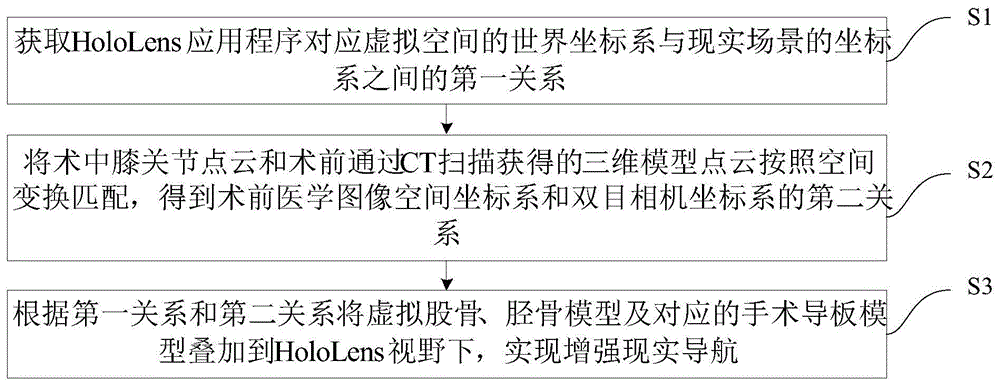
为达到上述目的,本发明一方面实施例提出了一种用于微创全膝关节置换手术的增强现实导航方法,包括:步骤S1:获取HoloLens应用程序对应虚拟空间的世界坐标系与现实场景的坐标系之间的第一关系;步骤S2:将术中膝关节点云和术前通过CT扫描获得的三维模型点云按照空间变换匹配,得到术前医学图像空间坐标系和双目相机坐标系的第二关系;步骤S3:根据所述第一关系和所述第二关系将虚拟股骨、胫骨模型及对应的手术导板模型叠加到HoloLens视野下,实现增强现实导航。In order to achieve the above object, an embodiment of the present invention proposes an augmented reality navigation method for minimally invasive total knee replacement surgery, including: step S1: obtaining the world coordinate system of the virtual space corresponding to the HoloLens application and the real scene. The first relationship between the coordinate systems; Step S2: Match the point cloud of the knee joint during the operation and the point cloud of the 3D model obtained by the CT scan before the operation according to the space transformation, and obtain the space coordinate system of the preoperative medical image and the coordinate system of the binocular camera Step S3: Superimpose the virtual femur and tibia model and the corresponding surgical guide model under the field of view of the HoloLens according to the first relationship and the second relationship to realize augmented reality navigation.
本发明实施例的用于微创全膝关节置换手术的增强现实导航方法,可实现HoloLens虚拟空间坐标系的半自动化标定,并结合图像配准技术将虚拟膝关节解剖模型及虚拟手术导板模型准确叠加至对应真实患部位置,实现增强现实导航,从而可以为医生提供直观准确的术中图像引导。The augmented reality navigation method for minimally invasive total knee replacement surgery according to the embodiment of the present invention can realize the semi-automatic calibration of the virtual space coordinate system of HoloLens, and combine the image registration technology to accurately determine the virtual knee joint anatomical model and the virtual surgical guide model. It is superimposed to the corresponding real affected part position to realize augmented reality navigation, which can provide doctors with intuitive and accurate intraoperative image guidance.
另外,根据本发明上述实施例的用于微创全膝关节置换手术的增强现实导航方法还可以具有以下附加的技术特征:In addition, the augmented reality navigation method for minimally invasive total knee replacement surgery according to the foregoing embodiments of the present invention may also have the following additional technical features:
进一步地,在本发明的一个实施例中,所述步骤S1包括:采用双目相机和视觉标记物辅助标定HoloLens虚拟场景空间坐标系。Further, in an embodiment of the present invention, the step S1 includes: using a binocular camera and a visual marker to assist in calibrating the HoloLens virtual scene space coordinate system.
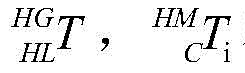
进一步地,在本发明的一个实施例中,所述步骤S1进一步包括:固定所述双目相机,并将所述HoloLens置于所述双目相机的视野下;采集标记物坐标系相对于相机坐标系的位姿,并采集所述HoloLens应用程序的虚拟场景世界坐标系相对于HoloLens自身坐标系的位姿,以得到多组位姿数据;根据所述多组位姿数据得到所述双目相机坐标系相对于虚拟场景世界坐标系的位姿关系,以得到所述虚拟空间的世界坐标系与所述现实场景的坐标系之间的第一关系。Further, in an embodiment of the present invention, the step S1 further includes: fixing the binocular camera, and placing the HoloLens under the field of view of the binocular camera; collecting the marker coordinate system relative to the camera The pose of the coordinate system, and collect the pose of the virtual scene world coordinate system of the HoloLens application relative to the HoloLens own coordinate system to obtain multiple sets of pose data; obtain the binocular according to the multiple sets of pose data The pose relationship of the camera coordinate system with respect to the world coordinate system of the virtual scene, so as to obtain the first relationship between the world coordinate system of the virtual space and the coordinate system of the real scene.
进一步地,在本发明的一个实施例中,所述步骤S2包括:将视觉探针和第一视觉标记物及第二视觉标记物辅助采集点云,其中,所述第一视觉标记物及所述第二视觉标记物被分别固定于股骨和胫骨上,以得到所述术中膝关节点云;采用随机采样一致配准算法结合迭代最近点算法完成配准。Further, in an embodiment of the present invention, the step S2 includes: assisting the collection of point clouds with a visual probe, a first visual marker and a second visual marker, wherein the first visual marker and all The second visual markers are respectively fixed on the femur and the tibia to obtain the intraoperative knee joint point cloud; the random sampling consistent registration algorithm combined with the iterative closest point algorithm is used to complete the registration.
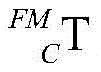
进一步地,在本发明的一个实施例中,所述虚拟股骨在所述虚拟场景空间世界坐标系下的位姿的计算公式为:Further, in an embodiment of the present invention, the formula for calculating the pose of the virtual femur in the virtual scene space world coordinate system is:

其中,

为达到上述目的,本发明另一方面实施例提出了一种用于微创全膝关节置换手术的增强现实导航系统,包括:获取模块,用于获取HoloLens应用程序对应虚拟空间的世界坐标系与现实场景的坐标系之间的第一关系;匹配模块,用于将术中膝关节点云和术前通过CT扫描获得的三维模型点云按照空间变换匹配,得到术前医学图像空间坐标系和双目相机坐标系的第二关系;叠加模块,用于根据所述第一关系和所述第二关系将虚拟股骨、胫骨模型及对应的手术导板模型叠加到HoloLens视野下,实现增强现实导航。In order to achieve the above object, another embodiment of the present invention provides an augmented reality navigation system for minimally invasive total knee replacement surgery, including: an acquisition module for acquiring the world coordinate system and the virtual space corresponding to the HoloLens application. The first relationship between the coordinate systems of the real scene; the matching module is used to match the point cloud of the knee joint during the operation and the point cloud of the 3D model obtained by the CT scan before the operation according to the space transformation, and obtain the space coordinate system of the preoperative medical image and The second relationship of the binocular camera coordinate system; the superposition module is used to superimpose the virtual femur and tibia model and the corresponding surgical guide model into the field of view of the HoloLens according to the first relationship and the second relationship, so as to realize augmented reality navigation.
本发明实施例的用于微创全膝关节置换手术的增强现实导航系统,可实现HoloLens虚拟空间坐标系的半自动化标定,并结合图像配准技术将虚拟膝关节解剖模型及虚拟手术导板模型准确叠加至对应真实患部位置,实现增强现实导航,从而可以为医生提供直观准确的术中图像引导。The augmented reality navigation system for minimally invasive total knee replacement surgery according to the embodiment of the present invention can realize the semi-automatic calibration of the HoloLens virtual space coordinate system, and combine the image registration technology to accurately determine the virtual knee joint anatomical model and the virtual surgical guide model. It is superimposed to the corresponding real affected part position to realize augmented reality navigation, which can provide doctors with intuitive and accurate intraoperative image guidance.
另外,根据本发明上述实施例的用于微创全膝关节置换手术的增强现实导航系统还可以具有以下附加的技术特征:In addition, the augmented reality navigation system for minimally invasive total knee replacement surgery according to the above embodiments of the present invention may also have the following additional technical features:
进一步地,在本发明的一个实施例中,所述获取模块进一步用于采用双目相机和视觉标记物辅助标定HoloLens虚拟场景空间坐标系。Further, in an embodiment of the present invention, the acquisition module is further configured to use a binocular camera and a visual marker to assist in calibrating the HoloLens virtual scene space coordinate system.
进一步地,在本发明的一个实施例中,所述获取模块进一步用于固定所述双目相机,并将所述HoloLens置于所述双目相机的视野下,并采集标记物坐标系相对于相机坐标系的位姿,并采集所述HoloLens应用程序的虚拟场景世界坐标系相对于HoloLens自身坐标系的位姿,以得到多组位姿数据,根据所述多组位姿数据得到所述双目相机坐标系相对于虚拟场景世界坐标系的位姿关系,以得到所述虚拟空间的世界坐标系与所述现实场景的坐标系之间的第一关系。Further, in an embodiment of the present invention, the acquisition module is further configured to fix the binocular camera, place the HoloLens under the field of view of the binocular camera, and collect the coordinate system of the marker relative to the The pose of the camera coordinate system, and the pose of the virtual scene world coordinate system of the HoloLens application relative to the HoloLens own coordinate system is collected to obtain multiple sets of pose data, and the two sets of pose data are obtained according to the multiple sets of pose data. The pose relationship of the camera coordinate system relative to the virtual scene world coordinate system is obtained to obtain the first relationship between the world coordinate system of the virtual space and the coordinate system of the real scene.
进一步地,在本发明的一个实施例中,所述匹配模块进一步用于将视觉探针和第一视觉标记物及第二视觉标记物辅助采集点云,其中,所述第一视觉标记物及所述第二视觉标记物被分别固定于股骨和胫骨上,以得到所述术中膝关节点云,并采用随机采样一致配准算法结合迭代最近点算法完成配准。Further, in an embodiment of the present invention, the matching module is further configured to assist the visual probe, the first visual marker and the second visual marker to collect point clouds, wherein the first visual marker and The second visual markers are respectively fixed on the femur and the tibia to obtain the intraoperative point cloud of the knee joint, and the random sampling consistent registration algorithm combined with the iterative closest point algorithm is used to complete the registration.
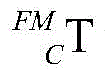
进一步地,在本发明的一个实施例中,所述虚拟股骨在所述虚拟场景空间世界坐标系下的位姿的计算公式为:Further, in an embodiment of the present invention, the formula for calculating the pose of the virtual femur in the virtual scene space world coordinate system is:

其中,

本发明附加的方面和优点将在下面的描述中部分给出,部分将从下面的描述中变得明显,或通过本发明的实践了解到。Additional aspects and advantages of the present invention will be set forth, in part, from the following description, and in part will be apparent from the following description, or may be learned by practice of the invention.
附图说明Description of drawings
本发明上述的和/或附加的方面和优点从下面结合附图对实施例的描述中将变得明显和容易理解,其中:The above and/or additional aspects and advantages of the present invention will become apparent and readily understood from the following description of embodiments taken in conjunction with the accompanying drawings, wherein:
图1为根据本发明一个实施例的用于微创全膝关节置换手术的增强现实导航方法的流程图;1 is a flowchart of an augmented reality navigation method for minimally invasive total knee replacement surgery according to an embodiment of the present invention;
图2为根据本发明一个实施例的标记物被固定于HoloLens上的示意图;FIG. 2 is a schematic diagram of a marker being immobilized on HoloLens according to an embodiment of the present invention;
图3为根据本发明一个实施例的各坐标系及坐标系间转化关系示意图;3 is a schematic diagram of each coordinate system and a transformation relationship between coordinate systems according to an embodiment of the present invention;
图4为根据本发明一个实施例的采集点云示意图;4 is a schematic diagram of a point cloud collected according to an embodiment of the present invention;
图5为根据本发明一个示例采集点云示意图;5 is a schematic diagram of a point cloud collection according to an example of the present invention;
图6为根据本发明一个实施例的点云渲染示意图;6 is a schematic diagram of point cloud rendering according to an embodiment of the present invention;
图7为根据本发明一个实施例的配准结果示意图;7 is a schematic diagram of a registration result according to an embodiment of the present invention;
图8为根据本发明一个实施例的坐标系关系示意图;8 is a schematic diagram of a coordinate system relationship according to an embodiment of the present invention;
图9为根据本发明一个实施例的增强现实显示效果示意图;9 is a schematic diagram of an augmented reality display effect according to an embodiment of the present invention;
图10为根据本发明一个实施例的用于微创全膝关节置换手术的增强现实导航系统的结构示意图。10 is a schematic structural diagram of an augmented reality navigation system for minimally invasive total knee replacement surgery according to an embodiment of the present invention.
具体实施方式Detailed ways
下面详细描述本发明的实施例,所述实施例的示例在附图中示出,其中自始至终相同或类似的标号表示相同或类似的元件或具有相同或类似功能的元件。下面通过参考附图描述的实施例是示例性的,旨在用于解释本发明,而不能理解为对本发明的限制。The following describes in detail the embodiments of the present invention, examples of which are illustrated in the accompanying drawings, wherein the same or similar reference numerals refer to the same or similar elements or elements having the same or similar functions throughout. The embodiments described below with reference to the accompanying drawings are exemplary, and are intended to explain the present invention and should not be construed as limiting the present invention.
下面参照附图描述根据本发明实施例提出的用于微创全膝关节置换手术的增强现实导航方法及系统,首先将参照附图描述根据本发明实施例提出的用于微创全膝关节置换手术的增强现实导航方法。The augmented reality navigation method and system for minimally invasive total knee replacement surgery according to the embodiments of the present invention will be described below with reference to the accompanying drawings. First, the method and system for minimally invasive total knee replacement according to the embodiments of the present invention will be described with reference to the accompanying drawings Augmented reality navigation methods for surgery.
图1是本发明一个实施例的用于微创全膝关节置换手术的增强现实导航方法的流程图。FIG. 1 is a flowchart of an augmented reality navigation method for minimally invasive total knee replacement surgery according to an embodiment of the present invention.
如图1所示,该用于微创全膝关节置换手术的增强现实导航方法包括以下步骤:As shown in Figure 1, the augmented reality navigation method for minimally invasive total knee replacement surgery includes the following steps:
步骤S1:获取HoloLens应用程序对应虚拟空间的世界坐标系与现实场景的坐标系之间的第一关系。Step S1: Obtain the first relationship between the world coordinate system of the virtual space corresponding to the HoloLens application and the coordinate system of the real scene.
可以理解的是,步骤S1主要用于HoloLens标定,其中,本发明实施例可以通过一定的手段获得HoloLens应用程序对应虚拟空间的世界坐标系CHG与现实场景的坐标系CC之间的关系,从而实现HoloLens标定。需要说明的是,现实场景的坐标系CC实际由双目相机坐标系表征。It can be understood that step S1 is mainly used for HoloLens calibration, wherein, in the embodiment of the present invention, the relationship between the world coordinate system C HG of the virtual space corresponding to the HoloLens application program and the coordinate system C C of the real scene can be obtained by certain means, So as to achieve HoloLens calibration. It should be noted that the coordinate system C C of the real scene is actually represented by the binocular camera coordinate system.
另外,HoloLens应用程序为用户开发并安装在HoloLens中的软件,类似于手机的APP(Application,应用程序)。在HoloLens应用程序启动后,自动创建HoloLens应用程序对应的虚拟空间的世界坐标系,并且该坐标系会一直存在直到用户关闭应用程序。本发明实施例还可以通过微软官方提供的程序接口显示一个虚拟模型,其中,虚拟模型可以在距离世界坐标系CHG原点一定距离的位置、且相对于坐标轴方向以一定姿态显示。In addition, the HoloLens application is software developed by the user and installed in the HoloLens, which is similar to an APP (Application) of a mobile phone. After the HoloLens application starts, the world coordinate system of the virtual space corresponding to the HoloLens application is automatically created, and the coordinate system will exist until the user closes the application. The embodiment of the present invention can also display a virtual model through a program interface officially provided by Microsoft, wherein the virtual model can be displayed at a certain distance from the origin of the world coordinate system CHG and with a certain attitude relative to the coordinate axis direction.
举例而言,HoloLens应用程序置入一个立方体模型,并设定立方体模型的位置是(1m,1m,1m),则打开应用程序之后,立方体模型在虚拟世界坐标系下的位置为(1m,1m,1m);同样,可以在虚拟场景空间世界坐标系中设置立方体模型旋转姿态。由于往往并不知道虚拟场景空间世界坐标系与现实场景的坐标系之间的关系,也不知道在虚拟模型在现实场景中显示时会呈现何种姿态,因此,往往难以在准确的在现实场景中显示虚拟模型。而本发明实施例可以有效解决该问题,通过获取虚拟模型与现实中的物体(比如,双目相机)之间的坐标系关系,从而只需要获取在现实中哪个位置、何种姿态下显示虚拟模型,便可以将需要在现实显示虚拟模型的坐标信息转化到虚拟场景空间的世界坐标系下,进而以准确的位姿显示虚拟模型。For example, a cube model is placed in the HoloLens application, and the position of the cube model is set to (1m, 1m, 1m), then after opening the application, the position of the cube model in the virtual world coordinate system is (1m, 1m) ,1m); Similarly, the rotation pose of the cube model can be set in the virtual scene space world coordinate system. Because the relationship between the virtual scene space world coordinate system and the real scene coordinate system is often unknown, and the posture of the virtual model displayed in the real scene is not known, it is often difficult to accurately display the real scene. The virtual model is displayed in the . However, the embodiment of the present invention can effectively solve this problem. By obtaining the coordinate system relationship between the virtual model and the object in reality (for example, a binocular camera), it is only necessary to obtain the position and posture in which the virtual model is displayed in reality. model, the coordinate information of the virtual model that needs to be displayed in reality can be transformed into the world coordinate system of the virtual scene space, and then the virtual model can be displayed in an accurate pose.
进一步地,在本发明的一个实施例中,步骤S1包括:采用双目相机和视觉标记物辅助标定HoloLens虚拟场景空间坐标系。Further, in an embodiment of the present invention, step S1 includes: using a binocular camera and a visual marker to assist in calibrating the HoloLens virtual scene space coordinate system.
可以理解的是,HoloLens除了包括虚拟空间世界坐标系外,还包括用于表征其自身位姿的局部坐标系CHL,双目相机的位姿随着HoloLens的移动和旋转而改变,其中,HoloLens的移动和旋转可以被双目相机内部的传感器感知到。本发明实施例的方法可以采用双目相机和视觉标记物辅助标定HoloLens虚拟场景空间坐标系。如图2所示,标记物固定于HoloLens上,其中,标记物中含有几个黑白相间、且易于识别的X角点。It can be understood that, in addition to the virtual space world coordinate system, HoloLens also includes a local coordinate system C HL used to represent its own pose. The pose of the binocular camera changes with the movement and rotation of the HoloLens. Among them, the HoloLens The movement and rotation of the camera can be sensed by the sensors inside the binocular camera. The method of the embodiment of the present invention can use a binocular camera and a visual marker to assist in calibrating the HoloLens virtual scene space coordinate system. As shown in Figure 2, the marker is fixed on the HoloLens, wherein the marker contains several X corner points that are white and black and easy to identify.
进一步地,在本发明的一个实施例中,步骤S1进一步包括:固定双目相机,并将HoloLens置于双目相机的视野下;采集标记物坐标系相对于相机坐标系的位姿,并采集HoloLens应用程序的虚拟场景世界坐标系相对于HoloLens自身坐标系的位姿,以得到多组位姿数据;根据多组位姿数据得到双目相机坐标系相对于虚拟场景世界坐标系的位姿关系,以得到虚拟空间的世界坐标系与现实场景的坐标系之间的第一关系。Further, in an embodiment of the present invention, step S1 further includes: fixing the binocular camera, and placing the HoloLens under the field of view of the binocular camera; collecting the pose of the marker coordinate system relative to the camera coordinate system, and collecting The pose of the virtual scene world coordinate system of the HoloLens application relative to the HoloLens own coordinate system to obtain multiple sets of pose data; according to the multiple sets of pose data, the pose relationship of the binocular camera coordinate system relative to the virtual scene world coordinate system is obtained , to obtain the first relationship between the world coordinate system of the virtual space and the coordinate system of the real scene.
可以理解的是,本发明实施例可以通过双目相机获取图片并识别图片中的X角点,可以根据双目视觉计算出角点在双目相机坐标系中的三维坐标信息(这些可以是在个人计算机中完成的,计算机与双目相机连接,实时处理相机抓取的图片),进而计算出标记物坐标系(记为CHM)相对于相机坐标系的位姿,该相对位姿记为
具体而言,标定步骤如下:首先,固定双目相机,将HoloLens置于双目相机视野下,保证上面的标记物同时处于两个镜头的视野之内。采集此时标记物坐标系相对于相机坐标系的位姿。与此同时,通过个人计算机和HoloLens之间的无线网络通信,采集HoloLens应用程序的虚拟场景世界坐标系相对于HoloLens自身坐标系的位姿,记为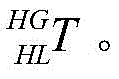


其中,



步骤S2:将术中膝关节点云和术前通过CT扫描获得的三维模型点云按照空间变换匹配,得到术前医学图像空间坐标系和双目相机坐标系的第二关系。Step S2: Match the point cloud of the knee joint during the operation with the point cloud of the three-dimensional model obtained by the CT scan before the operation according to the space transformation, and obtain the second relationship between the space coordinate system of the preoperative medical image and the coordinate system of the binocular camera.
可以理解的是,步骤S2主要用于膝关节表面点云配准,增强现实导航所使用的虚拟模型来自于术前CT/MRI扫描,为了准确显示虚拟膝关节模型,还需要通过图像配准获得术前医学图像空间坐标系CCT和双目相机坐标系CCp的关系。其中,配准是指将术中膝关节点云和术前扫描并处理获得的三维模型点云按照一定的空间变换匹配起来。It can be understood that step S2 is mainly used for point cloud registration on the knee joint surface. The virtual model used for augmented reality navigation comes from the preoperative CT/MRI scan. In order to accurately display the virtual knee joint model, it needs to be obtained through image registration. The relationship between the preoperative medical image space coordinate system C CT and the binocular camera coordinate system C C p. The registration refers to matching the intraoperative knee point cloud and the 3D model point cloud obtained by preoperative scanning and processing according to a certain spatial transformation.
进一步地,在本发明的一个实施例中,步骤S2包括:将视觉探针和第一视觉标记物及第二视觉标记物辅助采集点云,其中,第一视觉标记物及第二视觉标记物被分别固定于股骨和胫骨上,以得到术中膝关节点云;采用随机采样一致配准算法结合迭代最近点算法完成配准。Further, in an embodiment of the present invention, step S2 includes: assisting the collection of point clouds with the visual probe, the first visual marker and the second visual marker, wherein the first visual marker and the second visual marker They were fixed on the femur and tibia respectively to obtain the intraoperative knee point cloud; the random sampling consistent registration algorithm combined with the iterative closest point algorithm was used to complete the registration.
具体而言,(1)术中膝关节表面点云获取Specifically, (1) intraoperative point cloud acquisition of knee joint surface
全膝关节置换是对股骨和胫骨分别进行切骨和置入假体的手术,因此对于股骨和胫骨需要分别做配准。本发明实施例的方法采用一个视觉探针和两个视觉标记物辅助采集点云,如图4所示,两个标记物被分别固定于股骨和胫骨上。Total knee arthroplasty is a surgery in which the femur and tibia are cut and the prosthesis is placed, respectively, so the femur and tibia need to be registered separately. The method of the embodiment of the present invention uses a visual probe and two visual markers to assist in collecting point clouds. As shown in FIG. 4 , the two markers are respectively fixed on the femur and the tibia.
以股骨为例,结合图5说明采集表面点云的过程:通过预先的注册,可以在双目相机识别到探针后计算出探针针尖点的三维坐标信息。在双目相机视野下,使用探针针尖贴在靠近关节部分的股骨表面上划动,计算机不断计算并记录每一帧相机抓取的图片中探针针尖点(也即股骨表面上的点)在股骨上标记物坐标系下的三维坐标信息。当探针在预先计划的区域划动完毕后即获得了所需的点云信息。在计算机程序中使用OpenGL渲染的点云如图6所示。Taking the femur as an example, the process of collecting surface point clouds is described with reference to Figure 5: through pre-registration, the three-dimensional coordinate information of the probe tip can be calculated after the probe is identified by the binocular camera. Under the field of view of the binocular camera, use the probe tip to stick to the surface of the femur near the joint part, and the computer continuously calculates and records the probe tip point (that is, the point on the surface of the femur) in each frame of the picture captured by the camera. Three-dimensional coordinate information in the marker coordinate system on the femur. The required point cloud information is obtained when the probe is swiped over the pre-planned area. A point cloud rendered using OpenGL in a computer program is shown in Figure 6.
(2)点云配准(2) Point cloud registration
由于股骨是刚性的,因此采用刚性配准算法即可。SAC-IA(Sample ConsensusInitial Alignment,采用随机采样一致配准算法)结合传统ICP(Iterative ClosestPoint,迭代最近点算法)完成配准。Since the femur is rigid, a rigid registration algorithm is sufficient. SAC-IA (Sample ConsensusInitial Alignment, using random sampling consistent registration algorithm) combined with traditional ICP (Iterative ClosestPoint, iterative closest point algorithm) to complete the registration.
需要说明的是,在刚性配准中,最经典的算法就是ICP算法,但是ICP依赖于良好的初始位姿估计,也就是说,需要给ICP算法一个良好的输入才能实现刚性配准,比如,在初始位姿估计时,需要初始时两个点云的位姿非常接近,如果初始时两个点云的位姿不是非常接近,则容易使得ICP算法陷入局部最优,从而导致非常坏的结果,进而难以完成刚性配准。因此,往往不直接使用ICP算法,而是使用ICP算法的变种,或者ICP结合其他算法一起使用,本领域技术人员可以根据实际情况选择,在此不做具体限定。为了实现刚性配准,本发明实施例通过SAC-IA进行粗配准,由于粗配准之后可以得到一个比较好的初始位姿估计,因此,本发明实施例再通过ICP算法即可以实现刚性配准。It should be noted that in rigid registration, the most classic algorithm is the ICP algorithm, but ICP relies on a good initial pose estimation, that is to say, a good input to the ICP algorithm is required to achieve rigid registration, for example, In the initial pose estimation, the poses of the two point clouds need to be very close at the beginning. If the poses of the two point clouds are not very close at the beginning, it is easy to make the ICP algorithm fall into the local optimum, resulting in very bad results. , and it is difficult to complete rigid registration. Therefore, the ICP algorithm is often not used directly, but a variant of the ICP algorithm is used, or the ICP is used in combination with other algorithms, which can be selected by those skilled in the art according to the actual situation, which is not specifically limited here. In order to realize rigid registration, the embodiment of the present invention performs rough registration through SAC-IA. Since a relatively good initial pose estimation can be obtained after the rough registration, the embodiment of the present invention can realize rigid registration through the ICP algorithm. allow.
由于术中划取的点云规模比较小,本发明实施例以划取的点云作为源点云,术前获得的点云作为目标点云,即,对术中获取的点云做空间变换,将点云变换到与术前CT扫描获得的点云近乎一致的位置。SAC-IA算法首先提取源点云中点的三维法线信息,并使用FPFH(Fast Point Feature Histogram,快速点特征直方图)特征,然后对目标点云做相同的处理。通过在目标点云中寻找与在源点云中选取的一些点的FPFH特征近似的点,获得匹配的点对,并计算出点对间的最小二乘变换作为配准结果。然后,将此结果作为ICP算法的初始位姿估计,使用ICP算法继续迭代至收敛,获得的结果即为最终的配准变换结果。配准结果示意图7所示,其中,白色为术中划取的点云,黑色为患者术前CT扫描后经过图像分割等处理得到的三维模型,左边为股骨,右边为胫骨。Since the scale of the point cloud drawn during the operation is relatively small, in the embodiment of the present invention, the point cloud drawn during the operation is used as the source point cloud, and the point cloud obtained before the operation is used as the target point cloud, that is, the point cloud obtained during the operation is subjected to spatial transformation. , transform the point cloud to a position nearly identical to the point cloud obtained from the preoperative CT scan. The SAC-IA algorithm first extracts the 3D normal information of the midpoint of the source point cloud, and uses the FPFH (Fast Point Feature Histogram) feature, and then performs the same processing on the target point cloud. By finding points in the target point cloud that are similar to the FPFH features of some points selected in the source point cloud, matching point pairs are obtained, and the least squares transformation between the point pairs is calculated as the registration result. Then, this result is used as the initial pose estimation of the ICP algorithm, and the ICP algorithm is used to continue to iterate until convergence, and the obtained result is the final registration transformation result. Schematic diagram 7 of the registration result is shown in Figure 7, in which the white point cloud is drawn during the operation, the black is the 3D model obtained by image segmentation and other processing after the patient's preoperative CT scan, the left side is the femur, and the right side is the tibia.
步骤S3:根据第一关系和第二关系将虚拟股骨、胫骨模型及对应的手术导板模型叠加到HoloLens视野下,实现增强现实导航。Step S3: Superimpose the virtual femur and tibia model and the corresponding surgical guide model under the field of view of the HoloLens according to the first relationship and the second relationship to realize augmented reality navigation.
可以理解的是,步骤S3主要用于增强现实显示,在获得坐标系之间的关系后,虚拟股骨,胫骨模型及它们对应的手术导板模型就可以叠加到HoloLens视野下。仍然以股骨为例说明:记股骨上标记物坐标系为CFM。记最终配准结果,即CFM相对于CCT的位姿为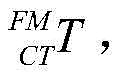
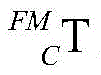
那么虚拟股骨模型在虚拟场景空间世界坐标系下的位姿表示PHG可通过下式计算:Then the pose representation P HG of the virtual femur model in the virtual scene space world coordinate system can be calculated by the following formula:

其中,


根据本发明实施例提出的用于微创全膝关节置换手术的增强现实导航方法,可实现HoloLens虚拟空间坐标系的半自动化标定,并结合图像配准技术将虚拟膝关节解剖模型及虚拟手术导板模型准确叠加至对应真实患部位置,实现增强现实导航,从而可以为医生提供直观准确的术中图像引导。According to the augmented reality navigation method for minimally invasive total knee replacement surgery proposed in the embodiment of the present invention, the semi-automatic calibration of the HoloLens virtual space coordinate system can be realized, and the virtual knee joint anatomical model and the virtual surgical guide can be combined with the image registration technology. The model is accurately superimposed to the corresponding real affected part to realize augmented reality navigation, which can provide doctors with intuitive and accurate intraoperative image guidance.
其次参照附图描述根据本发明实施例提出的用于微创全膝关节置换手术的增强现实导航系统。Next, an augmented reality navigation system for minimally invasive total knee replacement surgery according to an embodiment of the present invention will be described with reference to the accompanying drawings.
图10是本发明一个实施例的用于微创全膝关节置换手术的增强现实导航系统的结构示意图。FIG. 10 is a schematic structural diagram of an augmented reality navigation system for minimally invasive total knee replacement surgery according to an embodiment of the present invention.
如图10所示,该用于微创全膝关节置换手术的增强现实导航系统10包括:获取模块100、匹配模块200和叠加模块300。As shown in FIG. 10 , the augmented
其中,获取模块100用于获取HoloLens应用程序对应虚拟空间的世界坐标系与现实场景的坐标系之间的第一关系。匹配模块200用于将术中膝关节点云和术前通过CT扫描获得的三维模型点云按照空间变换匹配,得到术前医学图像空间坐标系和双目相机坐标系的第二关系。叠加模块300用于根据第一关系和第二关系将虚拟股骨、胫骨模型及对应的手术导板模型叠加到HoloLens视野下,实现增强现实导航。本发明实施例的系统10可实现HoloLens虚拟空间坐标系的半自动化标定,并结合图像配准技术将虚拟膝关节解剖模型及虚拟手术导板模型准确叠加至对应真实患部位置,从而可以为医生提供直观准确的术中图像引导。The obtaining
进一步地,在本发明的一个实施例中,获取模块100进一步用于采用双目相机和视觉标记物辅助标定HoloLens虚拟场景空间坐标系。Further, in an embodiment of the present invention, the
进一步地,在本发明的一个实施例中,获取模块100进一步用于固定双目相机,并将HoloLens置于双目相机的视野下,并采集标记物坐标系相对于相机坐标系的位姿,并采集HoloLens应用程序的虚拟场景世界坐标系相对于HoloLens自身坐标系的位姿,以得到多组位姿数据,根据多组位姿数据得到双目相机坐标系相对于虚拟场景世界坐标系的位姿关系,以得到虚拟空间的世界坐标系与现实场景的坐标系之间的第一关系。Further, in an embodiment of the present invention, the
进一步地,在本发明的一个实施例中,匹配模块200进一步用于将视觉探针和第一视觉标记物及第二视觉标记物辅助采集点云,其中,第一视觉标记物及第二视觉标记物被分别固定于股骨和胫骨上,以得到术中膝关节点云,并采用随机采样一致配准算法结合迭代最近点算法完成配准。Further, in an embodiment of the present invention, the
进一步地,在本发明的一个实施例中,虚拟股骨在虚拟场景空间世界坐标系下的位姿的计算公式为:Further, in an embodiment of the present invention, the formula for calculating the pose of the virtual femur in the virtual scene space world coordinate system is:

其中,

需要说明的是,前述对用于微创全膝关节置换手术的增强现实导航方法实施例的解释说明也适用于该实施例的用于微创全膝关节置换手术的增强现实导航系统,此处不再赘述。It should be noted that the foregoing explanations of the embodiment of the augmented reality navigation method for minimally invasive total knee replacement surgery are also applicable to the augmented reality navigation system for minimally invasive total knee replacement surgery of this embodiment. No longer.
根据本发明实施例的用于微创全膝关节置换手术的增强现实导航系统,可实现HoloLens虚拟空间坐标系的半自动化标定,并结合图像配准技术将虚拟膝关节解剖模型及虚拟手术导板模型准确叠加至对应真实患部位置,实现增强现实导航,从而可以为医生提供直观准确的术中图像引导。The augmented reality navigation system for minimally invasive total knee replacement surgery according to the embodiment of the present invention can realize the semi-automatic calibration of the HoloLens virtual space coordinate system, and combine the virtual knee joint anatomical model and the virtual surgical guide model with the image registration technology It is accurately superimposed to the corresponding real affected part to realize augmented reality navigation, which can provide doctors with intuitive and accurate intraoperative image guidance.
在本发明的描述中,需要理解的是,术语“中心”、“纵向”、“横向”、“长度”、“宽度”、“厚度”、“上”、“下”、“前”、“后”、“左”、“右”、“竖直”、“水平”、“顶”、“底”“内”、“外”、“顺时针”、“逆时针”、“轴向”、“径向”、“周向”等指示的方位或位置关系为基于附图所示的方位或位置关系,仅是为了便于描述本发明和简化描述,而不是指示或暗示所指的装置或元件必须具有特定的方位、以特定的方位构造和操作,因此不能理解为对本发明的限制。In the description of the present invention, it should be understood that the terms "center", "longitudinal", "lateral", "length", "width", "thickness", "upper", "lower", "front", " Rear, Left, Right, Vertical, Horizontal, Top, Bottom, Inner, Outer, Clockwise, Counterclockwise, Axial, The orientations or positional relationships indicated by "radial direction", "circumferential direction", etc. are based on the orientations or positional relationships shown in the accompanying drawings, which are only for the convenience of describing the present invention and simplifying the description, rather than indicating or implying the indicated devices or elements. It must have a specific orientation, be constructed and operate in a specific orientation, and therefore should not be construed as a limitation of the present invention.
此外,术语“第一”、“第二”仅用于描述目的,而不能理解为指示或暗示相对重要性或者隐含指明所指示的技术特征的数量。由此,限定有“第一”、“第二”的特征可以明示或者隐含地包括至少一个该特征。在本发明的描述中,“多个”的含义是至少两个,例如两个,三个等,除非另有明确具体的限定。In addition, the terms "first" and "second" are only used for descriptive purposes, and should not be construed as indicating or implying relative importance or implying the number of indicated technical features. Thus, a feature delimited with "first", "second" may expressly or implicitly include at least one of that feature. In the description of the present invention, "plurality" means at least two, such as two, three, etc., unless otherwise expressly and specifically defined.
在本发明中,除非另有明确的规定和限定,术语“安装”、“相连”、“连接”、“固定”等术语应做广义理解,例如,可以是固定连接,也可以是可拆卸连接,或成一体;可以是机械连接,也可以是电连接;可以是直接相连,也可以通过中间媒介间接相连,可以是两个元件内部的连通或两个元件的相互作用关系,除非另有明确的限定。对于本领域的普通技术人员而言,可以根据具体情况理解上述术语在本发明中的具体含义。In the present invention, unless otherwise expressly specified and limited, the terms "installed", "connected", "connected", "fixed" and other terms should be understood in a broad sense, for example, it may be a fixed connection or a detachable connection , or integrated; it can be a mechanical connection or an electrical connection; it can be directly connected or indirectly connected through an intermediate medium, it can be the internal connection of two elements or the interaction relationship between the two elements, unless otherwise specified limit. For those of ordinary skill in the art, the specific meanings of the above terms in the present invention can be understood according to specific situations.
在本发明中,除非另有明确的规定和限定,第一特征在第二特征“上”或“下”可以是第一和第二特征直接接触,或第一和第二特征通过中间媒介间接接触。而且,第一特征在第二特征“之上”、“上方”和“上面”可是第一特征在第二特征正上方或斜上方,或仅仅表示第一特征水平高度高于第二特征。第一特征在第二特征“之下”、“下方”和“下面”可以是第一特征在第二特征正下方或斜下方,或仅仅表示第一特征水平高度小于第二特征。In the present invention, unless otherwise expressly specified and limited, a first feature "on" or "under" a second feature may be in direct contact between the first and second features, or the first and second features indirectly through an intermediary touch. Also, the first feature being "above", "over" and "above" the second feature may mean that the first feature is directly above or obliquely above the second feature, or simply means that the first feature is level higher than the second feature. The first feature being "below", "below" and "below" the second feature may mean that the first feature is directly or obliquely below the second feature, or simply means that the first feature has a lower level than the second feature.
在本说明书的描述中,参考术语“一个实施例”、“一些实施例”、“示例”、“具体示例”、或“一些示例”等的描述意指结合该实施例或示例描述的具体特征、结构、材料或者特点包含于本发明的至少一个实施例或示例中。在本说明书中,对上述术语的示意性表述不必须针对的是相同的实施例或示例。而且,描述的具体特征、结构、材料或者特点可以在任一个或多个实施例或示例中以合适的方式结合。此外,在不相互矛盾的情况下,本领域的技术人员可以将本说明书中描述的不同实施例或示例以及不同实施例或示例的特征进行结合和组合。In the description of this specification, description with reference to the terms "one embodiment," "some embodiments," "example," "specific example," or "some examples", etc., mean specific features described in connection with the embodiment or example , structure, material or feature is included in at least one embodiment or example of the present invention. In this specification, schematic representations of the above terms are not necessarily directed to the same embodiment or example. Furthermore, the particular features, structures, materials or characteristics described may be combined in any suitable manner in any one or more embodiments or examples. Furthermore, those skilled in the art may combine and combine the different embodiments or examples described in this specification, as well as the features of the different embodiments or examples, without conflicting each other.
尽管上面已经示出和描述了本发明的实施例,可以理解的是,上述实施例是示例性的,不能理解为对本发明的限制,本领域的普通技术人员在本发明的范围内可以对上述实施例进行变化、修改、替换和变型。Although the embodiments of the present invention have been shown and described above, it should be understood that the above-mentioned embodiments are exemplary and should not be construed as limiting the present invention. Embodiments are subject to variations, modifications, substitutions and variations.
Claims (2)



Priority Applications (2)
| Application Number | Priority Date | Filing Date | Title |
|---|---|---|---|
| CN201910527900.4A CN110353806B (en) | 2019-06-18 | 2019-06-18 | Augmented reality navigation method and system for minimally invasive total knee replacement surgery |
| PCT/CN2020/079316 WO2020253280A1 (en) | 2019-06-18 | 2020-03-13 | Augmented reality navigation method and system for minimally invasive total knee replacement surgery |
Applications Claiming Priority (1)
| Application Number | Priority Date | Filing Date | Title |
|---|---|---|---|
| CN201910527900.4A CN110353806B (en) | 2019-06-18 | 2019-06-18 | Augmented reality navigation method and system for minimally invasive total knee replacement surgery |
Publications (2)
| Publication Number | Publication Date |
|---|---|
| CN110353806A CN110353806A (en) | 2019-10-22 |
| CN110353806B true CN110353806B (en) | 2021-03-12 |
Family
ID=68216318
Family Applications (1)
| Application Number | Title | Priority Date | Filing Date |
|---|---|---|---|
| CN201910527900.4A Active CN110353806B (en) | 2019-06-18 | 2019-06-18 | Augmented reality navigation method and system for minimally invasive total knee replacement surgery |
Country Status (2)
| Country | Link |
|---|---|
| CN (1) | CN110353806B (en) |
| WO (1) | WO2020253280A1 (en) |
Families Citing this family (32)
| Publication number | Priority date | Publication date | Assignee | Title |
|---|---|---|---|---|
| WO2019245854A2 (en) | 2018-06-19 | 2019-12-26 | Tornier, Inc. | Extended reality visualization of range of motion |
| CN110353806B (en) * | 2019-06-18 | 2021-03-12 | 北京航空航天大学 | Augmented reality navigation method and system for minimally invasive total knee replacement surgery |
| CN110742700B (en) * | 2019-11-13 | 2021-07-30 | 北京国润健康医学投资有限公司 | Simulated weight-bearing brace positioning device and method for augmented reality surgery system |
| EP4076257A1 (en) | 2019-12-18 | 2022-10-26 | Howmedica Osteonics Corporation | Surgical guidance for surgical tools |
| CN111261265B (en) * | 2020-01-14 | 2024-02-27 | 上海联影医疗科技股份有限公司 | Medical imaging system based on virtual intelligent medical platform |
| CN111292306A (en) * | 2020-02-04 | 2020-06-16 | 北京航空航天大学 | Knee joint CT and MR image fusion method and device |
| CN111281540B (en) * | 2020-03-09 | 2021-06-04 | 北京航空航天大学 | Real-time visualization navigation system for minimally invasive orthopaedic surgery based on virtual-real fusion |
| CN111445531B (en) * | 2020-03-24 | 2022-08-30 | 云南电网有限责任公司楚雄供电局 | Multi-view camera navigation method, device, equipment and storage medium |
| CN111833405B (en) * | 2020-07-27 | 2023-12-08 | 北京大华旺达科技有限公司 | Calibration and identification method and device based on machine vision |
| CN112190328B (en) * | 2020-09-17 | 2025-01-17 | 常州锦瑟医疗信息科技有限公司 | A holographic perspective positioning system and positioning method |
| CN112545649B (en) * | 2020-12-02 | 2022-03-25 | 中国科学院自动化研究所 | Femoral head core decompression operation navigation implementation system based on mixed reality |
| CN112826590A (en) * | 2021-02-02 | 2021-05-25 | 复旦大学 | A spatial registration system for knee arthroplasty based on multimodal fusion and point cloud registration |
| CN113129451B (en) * | 2021-03-15 | 2022-09-30 | 北京航空航天大学 | Quantitative projection method of holographic 3D image space based on binocular vision positioning |
| CN113081272B (en) * | 2021-03-22 | 2023-02-03 | 珞石(北京)科技有限公司 | Auxiliary positioning system for knee replacement surgery guided by virtual wall |
| CN113180828B (en) * | 2021-03-25 | 2023-05-12 | 北京航空航天大学 | Surgical robot constraint motion control method based on rotation theory |
| CN113129372B (en) * | 2021-03-29 | 2023-11-03 | 深圳清元文化科技有限公司 | Hololens space mapping-based three-dimensional scene semantic analysis method |
| CN113012230B (en) * | 2021-03-30 | 2022-09-23 | 华南理工大学 | Method for placing surgical guide plate under auxiliary guidance of AR in operation |
| CN113509264B (en) * | 2021-04-01 | 2024-07-12 | 上海复拓知达医疗科技有限公司 | Augmented reality system, method and computer readable storage medium based on correcting position of object in space |
| CN113116523B (en) * | 2021-04-09 | 2022-02-11 | 骨圣元化机器人(深圳)有限公司 | Orthopedic surgery registration device, terminal equipment and storage medium |
| CN113616350B (en) * | 2021-07-16 | 2022-04-19 | 元化智能科技(深圳)有限公司 | Verification method and device for selected positions of marking points, terminal equipment and storage medium |
| CN113679473A (en) * | 2021-08-23 | 2021-11-23 | 北京航空航天大学 | A man-machine synergistic force feedback ventricular puncture robot device |
| CN113855236B (en) * | 2021-09-03 | 2022-05-31 | 北京长木谷医疗科技有限公司 | Method and system for tracking and moving surgical robot |
| CN115957003A (en) * | 2021-10-13 | 2023-04-14 | 北京易普康达医疗科技有限公司 | Joint skeleton point selection registration method and system based on augmented reality |
| CN114224508B (en) * | 2021-11-12 | 2024-09-06 | 苏州微创畅行机器人有限公司 | Medical image processing method, system, computer device and storage medium |
| CN114587657B (en) * | 2022-02-06 | 2024-05-31 | 上海诠视传感技术有限公司 | Auxiliary navigation method and system for oral implantation based on mixed reality technology |
| CN114587650B (en) * | 2022-02-06 | 2024-06-11 | 上海诠视传感技术有限公司 | Tooth root canal orifice treatment auxiliary navigation method and system based on mixed reality technology |
| CN115471568A (en) * | 2022-08-17 | 2022-12-13 | 北京理工大学 | Augmented Reality Calibration Method and Device Based on Adaptive Corner Homography Estimation |
| CN116823897A (en) * | 2023-06-29 | 2023-09-29 | 华科精准(北京)医疗科技有限公司 | Mixed reality enhanced display system and method |
| CN116823898A (en) * | 2023-06-29 | 2023-09-29 | 华科精准(北京)医疗科技有限公司 | A mixed reality augmented display method and system |
| CN116993794B (en) * | 2023-08-02 | 2024-05-24 | 德智鸿(上海)机器人有限责任公司 | Virtual-real registration method and device for augmented reality surgery assisted navigation |
| CN118203420B (en) * | 2024-04-11 | 2025-09-19 | 广州艾目易科技有限公司 | Method, device, equipment and medium for determining guide coordinates of displacement body |
| CN118121312B (en) * | 2024-05-06 | 2024-11-01 | 北京壹点灵动科技有限公司 | Surgical robot system, computer-readable storage medium, and electronic device |
Citations (4)
| Publication number | Priority date | Publication date | Assignee | Title |
|---|---|---|---|---|
| CN105931237A (en) * | 2016-04-19 | 2016-09-07 | 北京理工大学 | A kind of image calibration method and system |
| CN106780459A (en) * | 2016-12-12 | 2017-05-31 | 华中科技大学 | A kind of three dimensional point cloud autoegistration method |
| CN108888341A (en) * | 2018-04-26 | 2018-11-27 | 上海交通大学 | A kind of scaling method of augmented reality Helmet Mounted Display position real-time tracking |
| CN109674532A (en) * | 2019-01-25 | 2019-04-26 | 上海交通大学医学院附属第九人民医院 | Operation guiding system and its equipment, method and storage medium based on MR |
Family Cites Families (7)
| Publication number | Priority date | Publication date | Assignee | Title |
|---|---|---|---|---|
| CN104434313B (en) * | 2013-09-23 | 2019-03-01 | 中国科学院深圳先进技术研究院 | A kind of abdominal surgery navigation methods and systems |
| US10154239B2 (en) * | 2014-12-30 | 2018-12-11 | Onpoint Medical, Inc. | Image-guided surgery with surface reconstruction and augmented reality visualization |
| US10499997B2 (en) * | 2017-01-03 | 2019-12-10 | Mako Surgical Corp. | Systems and methods for surgical navigation |
| CN107536643A (en) * | 2017-08-18 | 2018-01-05 | 北京航空航天大学 | A kind of augmented reality operation guiding system of Healing in Anterior Cruciate Ligament Reconstruction |
| CN109674534A (en) * | 2017-10-18 | 2019-04-26 | 深圳市掌网科技股份有限公司 | A kind of surgical navigational image display method and system based on augmented reality |
| CN109659024A (en) * | 2018-12-12 | 2019-04-19 | 黑龙江拓盟科技有限公司 | A kind of remote diagnosis method of MR auxiliary |
| CN110353806B (en) * | 2019-06-18 | 2021-03-12 | 北京航空航天大学 | Augmented reality navigation method and system for minimally invasive total knee replacement surgery |
-
2019
- 2019-06-18 CN CN201910527900.4A patent/CN110353806B/en active Active
-
2020
- 2020-03-13 WO PCT/CN2020/079316 patent/WO2020253280A1/en not_active Ceased
Patent Citations (4)
| Publication number | Priority date | Publication date | Assignee | Title |
|---|---|---|---|---|
| CN105931237A (en) * | 2016-04-19 | 2016-09-07 | 北京理工大学 | A kind of image calibration method and system |
| CN106780459A (en) * | 2016-12-12 | 2017-05-31 | 华中科技大学 | A kind of three dimensional point cloud autoegistration method |
| CN108888341A (en) * | 2018-04-26 | 2018-11-27 | 上海交通大学 | A kind of scaling method of augmented reality Helmet Mounted Display position real-time tracking |
| CN109674532A (en) * | 2019-01-25 | 2019-04-26 | 上海交通大学医学院附属第九人民医院 | Operation guiding system and its equipment, method and storage medium based on MR |
Also Published As
| Publication number | Publication date |
|---|---|
| WO2020253280A1 (en) | 2020-12-24 |
| CN110353806A (en) | 2019-10-22 |
Similar Documents
| Publication | Publication Date | Title |
|---|---|---|
| CN110353806B (en) | Augmented reality navigation method and system for minimally invasive total knee replacement surgery | |
| US11490986B2 (en) | System and method for improved electronic assisted medical procedures | |
| JP2022133440A (en) | Systems and methods for augmented reality display in navigated surgeries | |
| US20220277465A1 (en) | Skin 3d model for medical procedure | |
| Hu et al. | Head-mounted augmented reality platform for markerless orthopaedic navigation | |
| CN109069208B (en) | Ultra-Wideband Positioning for Wireless Ultrasound Tracking and Communication | |
| CN111249002B (en) | Intraoperative planning and adjustment method, device and equipment for total knee arthroplasty | |
| CN112043383A (en) | An ophthalmic surgery navigation system and electronic equipment | |
| US20240081921A1 (en) | System and method for verification of conversion of locations between coordinate systems | |
| CN114283179B (en) | Fracture far-near end space pose real-time acquisition and registration system based on ultrasonic image | |
| CN113332008B (en) | Method and system for determining length of femur in hip arthroplasty | |
| CN110946659A (en) | Registration method and system for image space and actual space | |
| CN115429430B (en) | Registration method, information display method, operation navigation system, device and equipment | |
| JP2017164075A (en) | Image alignment apparatus, method and program | |
| EP4106655B1 (en) | Computer-implemented surgical planning based on bone loss during orthopedic revision surgery | |
| CN115619790B (en) | Hybrid perspective method, system and equipment based on binocular positioning | |
| CN113545848B (en) | Registration method and registration device of navigation guide plate | |
| CN115607286B (en) | Knee joint replacement surgery navigation method, system and equipment based on binocular positioning | |
| CN110638525B (en) | Operation navigation system integrating augmented reality | |
| CN114931435A (en) | Three-dimensional model processing method, device and electronic device | |
| JP6392190B2 (en) | Image registration device, method of operating image registration device, and program | |
| Xie et al. | A small-scaled intraoperative 3D visualization navigation system for femoral head repair surgery | |
| US20240180629A1 (en) | System and method for improved electronic assisted medical procedures | |
| CN116385513B (en) | A 2D/3D registration method for laparoscopic liver surgery navigation based on the PSO-SoftPOSIT joint algorithm | |
| US20230116175A1 (en) | System and method for a target reconstruction process |
Legal Events
| Date | Code | Title | Description |
|---|---|---|---|
| PB01 | Publication | ||
| PB01 | Publication | ||
| SE01 | Entry into force of request for substantive examination | ||
| SE01 | Entry into force of request for substantive examination | ||
| GR01 | Patent grant | ||
| GR01 | Patent grant |