CN108926813B - Training method based on human body balance data - Google Patents
Training method based on human body balance data Download PDFInfo
- Publication number
- CN108926813B CN108926813B CN201710362929.2A CN201710362929A CN108926813B CN 108926813 B CN108926813 B CN 108926813B CN 201710362929 A CN201710362929 A CN 201710362929A CN 108926813 B CN108926813 B CN 108926813B
- Authority
- CN
- China
- Prior art keywords
- balance
- human body
- time
- training
- training method
- Prior art date
- Legal status (The legal status is an assumption and is not a legal conclusion. Google has not performed a legal analysis and makes no representation as to the accuracy of the status listed.)
- Active
Links
Images


Classifications
-
- A—HUMAN NECESSITIES
- A63—SPORTS; GAMES; AMUSEMENTS
- A63B—APPARATUS FOR PHYSICAL TRAINING, GYMNASTICS, SWIMMING, CLIMBING, OR FENCING; BALL GAMES; TRAINING EQUIPMENT
- A63B26/00—Exercising apparatus not covered by groups A63B1/00 - A63B25/00
- A63B26/003—Exercising apparatus not covered by groups A63B1/00 - A63B25/00 for improving balance or equilibrium
-
- A—HUMAN NECESSITIES
- A61—MEDICAL OR VETERINARY SCIENCE; HYGIENE
- A61B—DIAGNOSIS; SURGERY; IDENTIFICATION
- A61B5/00—Measuring for diagnostic purposes; Identification of persons
- A61B5/103—Measuring devices for testing the shape, pattern, colour, size or movement of the body or parts thereof, for diagnostic purposes
- A61B5/11—Measuring movement of the entire body or parts thereof, e.g. head or hand tremor or mobility of a limb
- A61B5/1116—Determining posture transitions
-
- A—HUMAN NECESSITIES
- A61—MEDICAL OR VETERINARY SCIENCE; HYGIENE
- A61B—DIAGNOSIS; SURGERY; IDENTIFICATION
- A61B5/00—Measuring for diagnostic purposes; Identification of persons
- A61B5/103—Measuring devices for testing the shape, pattern, colour, size or movement of the body or parts thereof, for diagnostic purposes
- A61B5/11—Measuring movement of the entire body or parts thereof, e.g. head or hand tremor or mobility of a limb
- A61B5/1121—Determining geometric values, e.g. centre of rotation or angular range of movement
-
- A—HUMAN NECESSITIES
- A63—SPORTS; GAMES; AMUSEMENTS
- A63B—APPARATUS FOR PHYSICAL TRAINING, GYMNASTICS, SWIMMING, CLIMBING, OR FENCING; BALL GAMES; TRAINING EQUIPMENT
- A63B71/00—Games or sports accessories not covered in groups A63B1/00 - A63B69/00
- A63B71/06—Indicating or scoring devices for games or players, or for other sports activities
- A63B71/0619—Displays, user interfaces and indicating devices, specially adapted for sport equipment, e.g. display mounted on treadmills
- A63B71/0622—Visual, audio or audio-visual systems for entertaining, instructing or motivating the user
-
- A—HUMAN NECESSITIES
- A63—SPORTS; GAMES; AMUSEMENTS
- A63B—APPARATUS FOR PHYSICAL TRAINING, GYMNASTICS, SWIMMING, CLIMBING, OR FENCING; BALL GAMES; TRAINING EQUIPMENT
- A63B71/00—Games or sports accessories not covered in groups A63B1/00 - A63B69/00
- A63B71/06—Indicating or scoring devices for games or players, or for other sports activities
- A63B71/0619—Displays, user interfaces and indicating devices, specially adapted for sport equipment, e.g. display mounted on treadmills
- A63B71/0622—Visual, audio or audio-visual systems for entertaining, instructing or motivating the user
- A63B2071/0625—Emitting sound, noise or music
-
- A—HUMAN NECESSITIES
- A63—SPORTS; GAMES; AMUSEMENTS
- A63B—APPARATUS FOR PHYSICAL TRAINING, GYMNASTICS, SWIMMING, CLIMBING, OR FENCING; BALL GAMES; TRAINING EQUIPMENT
- A63B2220/00—Measuring of physical parameters relating to sporting activity
- A63B2220/30—Speed
- A63B2220/34—Angular speed
-
- A—HUMAN NECESSITIES
- A63—SPORTS; GAMES; AMUSEMENTS
- A63B—APPARATUS FOR PHYSICAL TRAINING, GYMNASTICS, SWIMMING, CLIMBING, OR FENCING; BALL GAMES; TRAINING EQUIPMENT
- A63B2220/00—Measuring of physical parameters relating to sporting activity
- A63B2220/40—Acceleration
-
- A—HUMAN NECESSITIES
- A63—SPORTS; GAMES; AMUSEMENTS
- A63B—APPARATUS FOR PHYSICAL TRAINING, GYMNASTICS, SWIMMING, CLIMBING, OR FENCING; BALL GAMES; TRAINING EQUIPMENT
- A63B2230/00—Measuring physiological parameters of the user
- A63B2230/62—Measuring physiological parameters of the user posture
Landscapes
- Health & Medical Sciences (AREA)
- Life Sciences & Earth Sciences (AREA)
- General Health & Medical Sciences (AREA)
- Engineering & Computer Science (AREA)
- Physics & Mathematics (AREA)
- Surgery (AREA)
- Animal Behavior & Ethology (AREA)
- Pathology (AREA)
- Dentistry (AREA)
- Biomedical Technology (AREA)
- Heart & Thoracic Surgery (AREA)
- Medical Informatics (AREA)
- Molecular Biology (AREA)
- Oral & Maxillofacial Surgery (AREA)
- Biophysics (AREA)
- Physiology (AREA)
- Public Health (AREA)
- Veterinary Medicine (AREA)
- Physical Education & Sports Medicine (AREA)
- Geometry (AREA)
- Multimedia (AREA)
- Human Computer Interaction (AREA)
- Measurement Of The Respiration, Hearing Ability, Form, And Blood Characteristics Of Living Organisms (AREA)
Abstract
Description
技术领域technical field
本发明涉及一种基于人体平衡数据的训练方法,属于康复训练方法领域。The invention relates to a training method based on human body balance data, and belongs to the field of rehabilitation training methods.
背景技术Background technique
平衡是人体一项重要功能,在日常生活中平衡能力对于维持各种姿势、进行各种活动以及对外界干扰产生适宜的反应尤其重要。Balance is an important function of the human body, and the ability to balance in daily life is especially important for maintaining various postures, performing various activities, and responding appropriately to external disturbances.
目前对于平衡功能评价和训练的方法很多,其中,传统的主观观测法操作简单易行方便直观快捷,但过于粗略主观,缺乏客观量化标准,只能用于疑似有平衡功能障碍的患者的初步筛查。量表法易于量化,便于对照,但操作繁琐耗时,且受人为因素的影响,误差较高。压力平板测试操作简单快捷,但专业性强,费用较高,仅适宜研究运用。这些评估和测试导致平衡功能难以得到普通民众的足够关注,更无法科学有效地提高。所以一种便于大众随时快速有效地在常规环境下对自身平衡功能进行客观评价以及科学提高的方法亟待提出。At present, there are many methods for evaluating and training balance function. Among them, the traditional subjective observation method is simple and easy to operate, convenient, intuitive and fast, but it is too rough and subjective and lacks objective quantitative standards. It can only be used for the preliminary screening of patients suspected of having balance dysfunction. check. The scale method is easy to quantify and compare, but the operation is cumbersome and time-consuming, and it is affected by human factors, and the error is high. The pressure plate test is simple and quick to operate, but highly specialized and expensive, and is only suitable for research and application. These assessments and tests make it difficult for the general public to pay enough attention to the balance function, let alone improve it scientifically and effectively. Therefore, a method that is convenient for the public to objectively evaluate and scientifically improve the self-balancing function in a conventional environment at any time needs to be proposed urgently.
发明内容SUMMARY OF THE INVENTION
为了解决目前缺乏人体平衡功能的训练方法,本发明提供了一种基于人体平衡数据的训练方法,可以随时随地为大众进行平衡功能评价,并给出训练实现方案。In order to solve the current lack of training methods for the balance function of the human body, the present invention provides a training method based on the balance data of the human body, which can evaluate the balance function for the public anytime and anywhere, and provide a training implementation plan.
本发明的技术方案如下:The technical scheme of the present invention is as follows:
一种基于人体平衡数据的训练方法,包括以下步骤:A training method based on human body balance data, comprising the following steps:
1)人体在下身不动的情况下,上身向前、向后、向左、向右、向左前、向左后、向右前、向右后倾斜,利用加速度传感器和角速度传感器采集人体8组姿态的加速度和角速度信号的实时数据;1) When the lower body does not move, the upper body tilts forward, backward, left, right, left forward, left backward, right forward, and right backward. The acceleration sensor and angular velocity sensor are used to collect 8 groups of postures of the human body. real-time data of acceleration and angular velocity signals;
具体是采用手机内设的传感器采集人体在进行交互式姿态平衡任务下的加速度和角速度信号的实时数据。交互式姿态平衡任务共有8种,包括:在个体下身不动的情况下,上身向前、向后、向左、向右、向左前、向左后、向右前、向右后倾斜时;交互方式是通过手机语音和闪烁提示个体下一个需要完成的预设的姿态平衡任务,当前姿态平衡任务完成时手机发出提示音;采集时间为1分钟到15分钟,采样频率为100Hz到300Hz。Specifically, the sensor built in the mobile phone is used to collect the real-time data of the acceleration and angular velocity signals of the human body under the interactive attitude balance task. There are 8 kinds of interactive posture balance tasks, including: when the individual's lower body is not moving, the upper body leans forward, backward, left, right, left forward, left backward, right forward, and right backward; interactive The method is to prompt the individual to complete the next preset posture balance task through mobile phone voice and flashing. When the current posture balance task is completed, the mobile phone will send out a prompt tone; the collection time is 1 minute to 15 minutes, and the sampling frequency is 100Hz to 300Hz.
2)将人体8组姿态的实时数据通过延迟时间τ和嵌入维度E进行相空间重构,得到8组E维的时间序列Zi(i=1,2,...,E),进一步利用局部预测法将这8组时间序列两两进行相空间相互预测,预测的相似程度作为肢体协调能力的定量值;2) The real-time data of 8 groups of human body poses are reconstructed in phase space through delay time τ and embedding dimension E, and 8 groups of E-dimensional time series Z i (i=1, 2,..., E) are obtained, and further use The local prediction method predicts each other in phase space of these 8 groups of time series, and the similarity degree of prediction is used as the quantitative value of limb coordination ability;
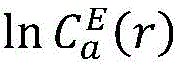
3)对相空间重构得到的8组E维的时间序列Zi(i=1,2,...,E)进行多尺度熵分析,得到8个样本熵

4)将上述肢体协调能力的定量值和人体整体平衡功能定量值分别与数据库的指标进行比对,得到人体的8种姿态保持平衡的最大角度和对应的最长时间;4) Compare the quantitative value of the above-mentioned limb coordination ability and the quantitative value of the overall balance function of the human body with the indexes of the database respectively, and obtain the maximum angle at which the 8 postures of the human body maintain balance and the corresponding maximum time;
5)满足人体每个姿态保持平衡的角度和对应的时间大于上述得到的最大角度和对应的最长时间,实现人体的8种姿态平衡训练。5) The angle and corresponding time for maintaining balance in each posture of the human body are greater than the maximum angle and the corresponding maximum time obtained above, and 8 kinds of posture balance training of the human body are realized.
其中,数据库中包含有十个等级的人群整体平衡能力和肢体协调能力数据集,每个等级中又从小到大分为1-4层;数据库中记录有个体在每个等级的每层的每个姿态任务下保持平衡的最大角度θijk(i=1,2,...8;j=1,2,...10;k=1,2,3,4)和对应的最长时间Tijk(i=1,2,...8;j=1,2,...10;k=1,2,3,4),其中i代表8个姿态任务、j代表十个等级、k代表四个层级。Among them, the database contains ten levels of data sets of the overall balance ability and limb coordination ability of the population, and each level is divided into 1-4 layers from small to large; the database records the individual in each level of each level. The maximum angle θ ijk (i=1, 2,...8; j=1, 2,...10; k=1, 2, 3, 4) for maintaining balance under the attitude task and the corresponding maximum time T ijk (i=1,2,...8; j=1,2,...10; k=1,2,3,4), where i represents 8 pose tasks, j represents ten levels, k Represents four levels.
通过人体在8种姿态任务下保持平衡的最大角度和对应的最长时间确定训练量,实现提高人体的平衡功能。其中,训练量为保持平衡的最大角度在θijk到θij(k+1)之间,对应的最长时间在Tijk到Tij(k+1)之间。The training volume is determined by the maximum angle and the corresponding maximum time for the human body to maintain balance under 8 posture tasks, so as to improve the balance function of the human body. Among them, the maximum angle of the training amount to maintain balance is between θ ijk and θ ij(k+1) , and the corresponding maximum time is between T ijk and T ij(k+1) .
本发明具有以下优点:The present invention has the following advantages:
本发明不受时间、空间限制,仅使用个体自身携带的智能手机,无需购买任何其他设备,就可以随时随地进行人体平衡功能的评估和训练,并提供长期的检测;本发明依据个体自身情况提供个性化的训练方案,能够科学有效地提高自身平衡功能。The present invention is not limited by time and space, and only uses the smart phone carried by the individual without purchasing any other equipment, so that the evaluation and training of the balance function of the human body can be performed anytime and anywhere, and long-term detection can be provided; Personalized training programs can scientifically and effectively improve one's own balance function.
附图说明Description of drawings
图1为本发明方法的流程示意图;Fig. 1 is the schematic flow chart of the method of the present invention;
图2为本发明方法中个体的8种姿态任务示意图;Fig. 2 is the schematic diagram of 8 kinds of attitude tasks of individuals in the method of the present invention;
图3为本发明方法中平衡训练的流程图。FIG. 3 is a flow chart of balanced training in the method of the present invention.
具体实施方式Detailed ways
以下通过具体实施例对本发明做进一步说明,以便更好地理解本发明,但本发明并不局限于此。The present invention will be further described below through specific embodiments for better understanding of the present invention, but the present invention is not limited thereto.
图1为本发明方法的流程示意图,主要分为采集数据、计算人体整体平衡功能定量值和肢体协调能力的定量值、数据库比对以及训练方案制定。整个系统可以利用贝叶斯估计构成闭环,不断提高个体平衡能力。1 is a schematic flow chart of the method of the present invention, which is mainly divided into data collection, calculation of the quantitative value of the overall balance function of the human body and the quantitative value of the limb coordination ability, database comparison and training plan formulation. The whole system can use Bayesian estimation to form a closed loop to continuously improve the individual balance ability.
首先根据输入的姓名、性别、年龄、身高、体重以及病史等建立个体的基本档案。First, establish the basic file of the individual according to the input name, gender, age, height, weight and medical history.
在进行个体平衡功能评价时,利用智能手机内置的加速度和角速度传感器,对人体在预设的八种交互式姿态平衡任务下进行加速度和角速度信号的实时采集,采集时间为1分钟到15分钟,采样频率为100Hz到300Hz可调,并分为以下几个步骤:When evaluating the individual balance function, the acceleration and angular velocity sensors built in the smartphone are used to collect the acceleration and angular velocity signals of the human body in real time under eight preset interactive posture balance tasks. The acquisition time is 1 minute to 15 minutes. The sampling frequency is adjustable from 100Hz to 300Hz, and is divided into the following steps:
(1)在手机应用程序界面上点击开始测试后,个体身体自然直立,双脚并拢,双臂于胸口处交叉,双手扶好手机将屏幕贴放在胸前;(1) After clicking to start the test on the mobile phone application interface, the individual's body is naturally upright, his feet are together, his arms are crossed at the chest, and the mobile phone is supported with both hands and the screen is placed on the chest;
(2)如图2所示,个体保持腰部以下身体不动,上身根据手机提示音,随机向前1、向后2、向左3、向右4、向左前5、向左后6、向右前7以及向右后8共八个方向倾斜,每一次倾斜后,听到手机发出提示音“哔”则恢复直立状态准备下一个动作;(2) As shown in Figure 2, the individual keeps the body below the waist still, and the upper body randomly moves forward 1, backward 2, left 3, right 4, left forward 5, left backward 6, and forward according to the mobile phone prompt tone. The
(3)听到手机发出提示已完成测试后,从胸前拿下手机,点击保存数据。(3) After hearing the notification from the mobile phone that the test has been completed, remove the mobile phone from the chest and click to save the data.
将人体站立时预设的8个姿态平衡任务下采集得到的实时数据通过延迟时间τ和嵌入维度E进行相空间重构,得到8组E维的时间序列Zi(i=1,2,...,E),进一步利用局部预测法将这8组时间序列两两进行相空间相互预测,预测的相似程度作为肢体协调能力的定量值。对相空间重构得到的8组E维的时间序列Zi(i=1,2,...,E)进行多尺度熵分析,得到8个样本熵
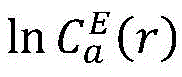
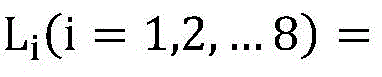

将计算得到的个体的整体平衡功能定量值和肢体协调能力定量值分别与数据库中的指标进行比对,得到人体在预设的八种姿态平衡任务下保持平衡的最大角度和对应的最长时间;其中,人体平衡功能和肢体协调能力数据库中包含有十个等级的整体平衡能力和肢体协调能力数据集,每个等级中又从小到大分为1-4层;人体平衡功能和肢体协调能力数据库中记录有每个等级的个体在每个姿态任务下保持平衡的最大角度θijk(i=1,2,...8;j=1,2,...10;k=1,2,3,4)和对应的最长时间Tijk(i=1,2,...8;j=1,2,...10;k=1,2,3,4),其中i、j、k分别代表八个姿态任务、十个等级、四个层级。Compare the calculated quantitative value of the individual's overall balance function and the quantitative value of limb coordination with the indicators in the database, and obtain the maximum angle and the corresponding maximum time for the human body to maintain balance under the eight preset posture balance tasks. ; Among them, the human body balance function and limb coordination ability database contains ten levels of overall balance ability and limb coordination ability data sets, and each level is divided into 1-4 layers from small to large; the human body balance function and limb coordination ability database The maximum angle θ ijk (i=1,2,...8; j=1,2,...10; k=1,2, 3,4) and the corresponding maximum time T ijk (i=1,2,...8; j=1,2,...10; k=1,2,3,4), where i,j , k represent eight posture tasks, ten levels, and four levels, respectively.
如图3所示,根据整体平衡功能进行的训练量选择,训练量参考上一次训练的最大角度θijk和保持平衡对应的最长时间Tijk,训练量每次增加一个层级,即两个等级差值的1/4。如上一次的训练量为(θijk,Tijk),则当次的训练量为[θijk+0.25(θi(j+1)k-θijk),Tijk+0.25(Ti(j+1)k-Tijk)],下一次的训练量为[θijk+0.50(θi(j+1)k-θijk),Tijk+0.50(Ti(j+1)k-Tijk)],直到训练量达到(θi(j+1)k,Ti(j+1)k),则重新进行个体的整体平衡功能和肢体协调能力评价,并更新训练方案。As shown in Figure 3, the training volume is selected according to the overall balance function. The training volume refers to the maximum angle θ ijk of the previous training and the longest time T ijk corresponding to maintaining balance, and the training volume increases by one level each time, that is, two
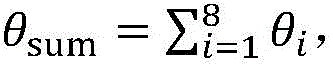
根据个体的肢体协调功能不足的程度对姿态平衡的八种训练任务数量进行比例选择,设预设的八种交互式姿态平衡任务下的典型切斜角度θi之和为θsum,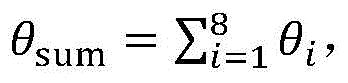
虽然本发明已以较佳实施例披露如上,然而并非用以限定本发明。任何熟悉本领域的技术人员,在不脱离本发明技术方案范围情况下,都可利用上述揭示的方法和技术内容对本发明技术方案作出许多可能的变动和修饰,或修改为等同变化的等效实施例。因此,凡是未脱离本发明技术方案的内容,依据本发明的技术实质对以上实施例所做的任何简单修改、等同变化及修饰,均仍属于本发明技术方案保护的范围内。Although the present invention has been disclosed above with preferred embodiments, it is not intended to limit the present invention. Any person skilled in the art, without departing from the scope of the technical solution of the present invention, can make many possible changes and modifications to the technical solution of the present invention by using the methods and technical contents disclosed above, or modify it into an equivalent implementation of equivalent changes. example. Therefore, any simple modifications, equivalent changes and modifications made to the above embodiments according to the technical essence of the present invention without departing from the content of the technical solutions of the present invention still fall within the protection scope of the technical solutions of the present invention.
Claims (9)


Priority Applications (1)
| Application Number | Priority Date | Filing Date | Title |
|---|---|---|---|
| CN201710362929.2A CN108926813B (en) | 2017-05-22 | 2017-05-22 | Training method based on human body balance data |
Applications Claiming Priority (1)
| Application Number | Priority Date | Filing Date | Title |
|---|---|---|---|
| CN201710362929.2A CN108926813B (en) | 2017-05-22 | 2017-05-22 | Training method based on human body balance data |
Publications (2)
| Publication Number | Publication Date |
|---|---|
| CN108926813A CN108926813A (en) | 2018-12-04 |
| CN108926813B true CN108926813B (en) | 2020-01-21 |
Family
ID=64450825
Family Applications (1)
| Application Number | Title | Priority Date | Filing Date |
|---|---|---|---|
| CN201710362929.2A Active CN108926813B (en) | 2017-05-22 | 2017-05-22 | Training method based on human body balance data |
Country Status (1)
| Country | Link |
|---|---|
| CN (1) | CN108926813B (en) |
Families Citing this family (1)
| Publication number | Priority date | Publication date | Assignee | Title |
|---|---|---|---|---|
| CN114403858B (en) * | 2021-12-29 | 2023-10-03 | 杭州程天科技发展有限公司 | A method, equipment and system for human body motor function assessment |
Family Cites Families (4)
| Publication number | Priority date | Publication date | Assignee | Title |
|---|---|---|---|---|
| US9352207B2 (en) * | 2012-01-19 | 2016-05-31 | Nike, Inc. | Action detection and activity classification |
| CN104524742A (en) * | 2015-01-05 | 2015-04-22 | 河海大学常州校区 | Cerebral palsy child rehabilitation training method based on Kinect sensor |
| CN105031908B (en) * | 2015-07-16 | 2017-11-14 | 青岛大学 | One kind balance correction-type trainer |
| JP6384436B2 (en) * | 2015-09-11 | 2018-09-05 | トヨタ自動車株式会社 | Balance training apparatus and control method thereof |
-
2017
- 2017-05-22 CN CN201710362929.2A patent/CN108926813B/en active Active
Also Published As
| Publication number | Publication date |
|---|---|
| CN108926813A (en) | 2018-12-04 |
Similar Documents
| Publication | Publication Date | Title |
|---|---|---|
| Muneer et al. | Smart health monitoring system using IoT based smart fitness mirror | |
| US10993651B2 (en) | Exercise guidance method and exercise guidance device | |
| CN110516161A (en) | A kind of recommended method and device | |
| CN105808959A (en) | Motion detection system, motion detection terminal and cloud platform | |
| CN115064246A (en) | Depression evaluation system and equipment based on multi-mode information fusion | |
| CN112472048B (en) | Implementation method of neural network for pulse recognition in patients with cardiovascular disease | |
| CN106897566A (en) | A kind of construction method and device of risk prediction model | |
| CN112768074A (en) | Artificial intelligence-based serious disease risk prediction method and system | |
| CN113171080A (en) | A method and system for energy metabolism assessment based on wearable sensor information fusion | |
| CN109106384A (en) | A kind of psychological pressure condition predicting method and system | |
| CN117854745A (en) | Intelligent health management system, method, device and medium | |
| CN112233797A (en) | Health management method and device and computer readable storage medium | |
| CN113974612A (en) | A method and system for automatic assessment of upper limb motor function in stroke patients | |
| CN114974508A (en) | Method and device for generating exercise prescription, storage medium and electronic equipment | |
| CN110047591A (en) | One kind is for doctor's posture appraisal procedure in surgical procedures | |
| CN115554674A (en) | Method and device for predicting sports energy consumption | |
| KR102033063B1 (en) | System and method for providing customized health management based on individual historical data | |
| CN110299207A (en) | For chronic disease detection in based on computer prognosis model data processing method | |
| CN108926813B (en) | Training method based on human body balance data | |
| KR101274431B1 (en) | Apparatus and method for determining health using survey information, apparatus and method for generating health sort function | |
| CN114373549B (en) | Self-adaptive exercise prescription health intervention method and system for old people | |
| CN116466823A (en) | A method, system and equipment for automatic identification and evaluation of community environmental quality | |
| CN109363678B (en) | System for predicting easily-occurring diseases based on meridian energy balance value | |
| Mahmoud et al. | ICF based automation system for spinal cord injuries rehabilitation | |
| CN119108080A (en) | A prediction and intervention system for cognitive decline in the elderly in the community based on machine learning |
Legal Events
| Date | Code | Title | Description |
|---|---|---|---|
| PB01 | Publication | ||
| PB01 | Publication | ||
| SE01 | Entry into force of request for substantive examination | ||
| SE01 | Entry into force of request for substantive examination | ||
| GR01 | Patent grant | ||
| GR01 | Patent grant |