CN108350487B - Compounds and systems for improved signal detection - Google Patents
Compounds and systems for improved signal detection Download PDFInfo
- Publication number
- CN108350487B CN108350487B CN201680067781.3A CN201680067781A CN108350487B CN 108350487 B CN108350487 B CN 108350487B CN 201680067781 A CN201680067781 A CN 201680067781A CN 108350487 B CN108350487 B CN 108350487B
- Authority
- CN
- China
- Prior art keywords
- sda
- reaction
- fluorescent
- reaction mixture
- enhancer
- Prior art date
- Legal status (The legal status is an assumption and is not a legal conclusion. Google has not performed a legal analysis and makes no representation as to the accuracy of the status listed.)
- Active
Links
Images


Classifications
-
- C—CHEMISTRY; METALLURGY
- C12—BIOCHEMISTRY; BEER; SPIRITS; WINE; VINEGAR; MICROBIOLOGY; ENZYMOLOGY; MUTATION OR GENETIC ENGINEERING
- C12Q—MEASURING OR TESTING PROCESSES INVOLVING ENZYMES, NUCLEIC ACIDS OR MICROORGANISMS; COMPOSITIONS OR TEST PAPERS THEREFOR; PROCESSES OF PREPARING SUCH COMPOSITIONS; CONDITION-RESPONSIVE CONTROL IN MICROBIOLOGICAL OR ENZYMOLOGICAL PROCESSES
- C12Q1/00—Measuring or testing processes involving enzymes, nucleic acids or microorganisms; Compositions therefor; Processes of preparing such compositions
- C12Q1/68—Measuring or testing processes involving enzymes, nucleic acids or microorganisms; Compositions therefor; Processes of preparing such compositions involving nucleic acids
- C12Q1/6813—Hybridisation assays
- C12Q1/6816—Hybridisation assays characterised by the detection means
- C12Q1/682—Signal amplification
-
- C—CHEMISTRY; METALLURGY
- C12—BIOCHEMISTRY; BEER; SPIRITS; WINE; VINEGAR; MICROBIOLOGY; ENZYMOLOGY; MUTATION OR GENETIC ENGINEERING
- C12Q—MEASURING OR TESTING PROCESSES INVOLVING ENZYMES, NUCLEIC ACIDS OR MICROORGANISMS; COMPOSITIONS OR TEST PAPERS THEREFOR; PROCESSES OF PREPARING SUCH COMPOSITIONS; CONDITION-RESPONSIVE CONTROL IN MICROBIOLOGICAL OR ENZYMOLOGICAL PROCESSES
- C12Q1/00—Measuring or testing processes involving enzymes, nucleic acids or microorganisms; Compositions therefor; Processes of preparing such compositions
- C12Q1/68—Measuring or testing processes involving enzymes, nucleic acids or microorganisms; Compositions therefor; Processes of preparing such compositions involving nucleic acids
- C12Q1/6813—Hybridisation assays
- C12Q1/6816—Hybridisation assays characterised by the detection means
-
- C—CHEMISTRY; METALLURGY
- C09—DYES; PAINTS; POLISHES; NATURAL RESINS; ADHESIVES; COMPOSITIONS NOT OTHERWISE PROVIDED FOR; APPLICATIONS OF MATERIALS NOT OTHERWISE PROVIDED FOR
- C09B—ORGANIC DYES OR CLOSELY-RELATED COMPOUNDS FOR PRODUCING DYES, e.g. PIGMENTS; MORDANTS; LAKES
- C09B29/00—Monoazo dyes prepared by diazotising and coupling
-
- C—CHEMISTRY; METALLURGY
- C12—BIOCHEMISTRY; BEER; SPIRITS; WINE; VINEGAR; MICROBIOLOGY; ENZYMOLOGY; MUTATION OR GENETIC ENGINEERING
- C12Q—MEASURING OR TESTING PROCESSES INVOLVING ENZYMES, NUCLEIC ACIDS OR MICROORGANISMS; COMPOSITIONS OR TEST PAPERS THEREFOR; PROCESSES OF PREPARING SUCH COMPOSITIONS; CONDITION-RESPONSIVE CONTROL IN MICROBIOLOGICAL OR ENZYMOLOGICAL PROCESSES
- C12Q1/00—Measuring or testing processes involving enzymes, nucleic acids or microorganisms; Compositions therefor; Processes of preparing such compositions
- C12Q1/68—Measuring or testing processes involving enzymes, nucleic acids or microorganisms; Compositions therefor; Processes of preparing such compositions involving nucleic acids
- C12Q1/6869—Methods for sequencing
-
- C—CHEMISTRY; METALLURGY
- C12—BIOCHEMISTRY; BEER; SPIRITS; WINE; VINEGAR; MICROBIOLOGY; ENZYMOLOGY; MUTATION OR GENETIC ENGINEERING
- C12Q—MEASURING OR TESTING PROCESSES INVOLVING ENZYMES, NUCLEIC ACIDS OR MICROORGANISMS; COMPOSITIONS OR TEST PAPERS THEREFOR; PROCESSES OF PREPARING SUCH COMPOSITIONS; CONDITION-RESPONSIVE CONTROL IN MICROBIOLOGICAL OR ENZYMOLOGICAL PROCESSES
- C12Q1/00—Measuring or testing processes involving enzymes, nucleic acids or microorganisms; Compositions therefor; Processes of preparing such compositions
- C12Q1/68—Measuring or testing processes involving enzymes, nucleic acids or microorganisms; Compositions therefor; Processes of preparing such compositions involving nucleic acids
- C12Q1/6869—Methods for sequencing
- C12Q1/6874—Methods for sequencing involving nucleic acid arrays, e.g. sequencing by hybridisation
-
- G—PHYSICS
- G01—MEASURING; TESTING
- G01N—INVESTIGATING OR ANALYSING MATERIALS BY DETERMINING THEIR CHEMICAL OR PHYSICAL PROPERTIES
- G01N21/00—Investigating or analysing materials by the use of optical means, i.e. using sub-millimetre waves, infrared, visible or ultraviolet light
- G01N21/62—Systems in which the material investigated is excited whereby it emits light or causes a change in wavelength of the incident light
- G01N21/63—Systems in which the material investigated is excited whereby it emits light or causes a change in wavelength of the incident light optically excited
- G01N21/64—Fluorescence; Phosphorescence
- G01N21/6428—Measuring fluorescence of fluorescent products of reactions or of fluorochrome labelled reactive substances, e.g. measuring quenching effects, using measuring "optrodes"
-
- G—PHYSICS
- G01—MEASURING; TESTING
- G01N—INVESTIGATING OR ANALYSING MATERIALS BY DETERMINING THEIR CHEMICAL OR PHYSICAL PROPERTIES
- G01N21/00—Investigating or analysing materials by the use of optical means, i.e. using sub-millimetre waves, infrared, visible or ultraviolet light
- G01N21/62—Systems in which the material investigated is excited whereby it emits light or causes a change in wavelength of the incident light
- G01N21/63—Systems in which the material investigated is excited whereby it emits light or causes a change in wavelength of the incident light optically excited
- G01N21/64—Fluorescence; Phosphorescence
- G01N21/6428—Measuring fluorescence of fluorescent products of reactions or of fluorochrome labelled reactive substances, e.g. measuring quenching effects, using measuring "optrodes"
- G01N2021/6439—Measuring fluorescence of fluorescent products of reactions or of fluorochrome labelled reactive substances, e.g. measuring quenching effects, using measuring "optrodes" with indicators, stains, dyes, tags, labels, marks
Landscapes
- Chemical & Material Sciences (AREA)
- Life Sciences & Earth Sciences (AREA)
- Organic Chemistry (AREA)
- Proteomics, Peptides & Aminoacids (AREA)
- Health & Medical Sciences (AREA)
- Zoology (AREA)
- Engineering & Computer Science (AREA)
- Wood Science & Technology (AREA)
- Immunology (AREA)
- Physics & Mathematics (AREA)
- General Health & Medical Sciences (AREA)
- Biochemistry (AREA)
- Analytical Chemistry (AREA)
- Molecular Biology (AREA)
- Bioinformatics & Cheminformatics (AREA)
- Microbiology (AREA)
- General Engineering & Computer Science (AREA)
- Biotechnology (AREA)
- Genetics & Genomics (AREA)
- Biophysics (AREA)
- Chemical Kinetics & Catalysis (AREA)
- Optics & Photonics (AREA)
- Nuclear Medicine, Radiotherapy & Molecular Imaging (AREA)
- General Physics & Mathematics (AREA)
- Pathology (AREA)
- Measuring Or Testing Involving Enzymes Or Micro-Organisms (AREA)
- Investigating, Analyzing Materials By Fluorescence Or Luminescence (AREA)
- Investigating Or Analysing Materials By The Use Of Chemical Reactions (AREA)
Abstract
用于通过向反应混合物中加入一种或多种信号检测测定(SDA)增强剂来增加光照分析反应中的信噪比(SNR)和/或增强光保护的组合物、装置、系统和方法。
Compositions, devices, systems and methods for increasing the signal-to-noise ratio (SNR) and/or enhancing photoprotection in a photoassay reaction by adding one or more signal detection assay (SDA) enhancers to the reaction mixture.
Description
Cross Reference to Related Applications
The present application claims priority from U.S. provisional patent application 62/257,581 entitled "Compounds and Systems for Improving Signal Detection" (filed 11/19/2015), the entire contents of which are incorporated herein by reference.
Background
Optically detectable labelling groups, especially those with high quantum yields, such as fluorescent, phosphorescent, luminescent or chemiluminescent groups, are widely used in the fields of analytical chemistry, biochemistry and biology. In particular, by providing a highly visible signal associated with a particular reaction, one is better able to monitor the reaction and any possible effectors of that reaction. Such analyses are fundamental tools for life science research in genomics, diagnostics, pharmaceutical research and related fields.
For example, fluorescence-based optical assays using fluorescent dye labels are often used in scientific assays. The fluorescence detected in fluorescence-based optical assays is the result of a three-stage process that occurs in the fluorophore or fluorochrome present in the reaction mixture. The first stage is excitation, where photons of quantified energy are provided from an external light source of a particular wavelength (e.g., from a laser) and absorbed by a fluorophore, producing an excited electronic singlet state (S)1'). The second stage is that the excited fluorophore undergoes several different changes to release its energy to the lowest singlet state (S)1) Lifetime of the excited state of (3). In the third stage from S1Several possible mechanisms can occur for the state, fluorescence (in which an energetic photon (S) is emitted)1-S0) Return the fluorophore to its ground state. A three-phase process that generates thousands of these excitations and emissions will typically occur to produce a signal that can be detected by standard optical sensors.
One of the many ways to dissipate the energy of the excited electron singlet is intersystem crossing (ISC), which involves a change in spin multiplicities, transitioning the electron from S1 to the excited triplet state (T1). In many fluorescent dye molecules, the formation of triplet species with significantly longer lifetimes greatly reduces the brightness of the fluorescent emission. Furthermore, it exhibits a high degree of chemical reactivity in this state, which often leads to photobleaching and the generation of harmful free radicals.
The analysis using optically detectable labelling groups is usually carried out in the presence of a large excess of the amount of reactants relative to the amount required for the reaction under investigation. The result of this excess is to provide a high degree of detectability, and to compensate for any losses due to the detection system, and to enable signal detection with minimal impact on the reactants. For example, fluorescent label group-based assays typically require the use of an excitation radiation source directed at the reaction mixture to excite the fluorescent label group, which can then be detected separately. However, one disadvantage of using optically detectable label groups is that chemical and biochemical reactants, either alone or in the presence of other components (e.g., fluorescent groups) exposed to such light sources for extended periods of time, can damage such reactants, e.g., proteins, enzymes, etc. The conventional solution to this drawback is to have a large excess of reactants, so that the number of undamaged reactant molecules far exceeds the number of damaged reactant molecules, thereby minimizing or eliminating the effects of photo-induced damage.
Various analysis techniques in use today have deviated from the conventional techniques. In particular, many reactions are based on smaller and smaller amounts of reagents, for example in microfluidic or nanofluidic reaction vessels or channels, or in "single molecule" analysis. These analysis systems can only observe one or a few "events" at a time. For example, such events can be binding of an antigen to an antibody, binding of a ligand to a receptor, cleavage of a polymer (e.g., nucleic acid, protein, or glycopolymer), incorporation of a unit into a polymer (e.g., amino acid incorporation into a protein, nucleotide incorporation into a nucleic acid, etc.). Such low reactant volumes are increasingly important in many high throughput applications, so they can provide data that cannot be obtained when multiple molecules are observed in more traditional bulk methods.
One challenge in performing single molecule (or small number of molecules) reactions involving labeled reactants is being able to distinguish between labeled reactants involved in the observed event and other labeled reactants free in the reaction mixture. This is particularly important for intermolecular events requiring high concentrations of reactants, such as ensuring adequate binding to the enzyme catalyzing the reaction. In this way, the labeled reactant in the reaction mixture may emit a "background" noise that obscures detection of the signal of the event of interest in the reaction mixture. In such analysis, the term "signal-to-noise ratio" refers to a measure that compares the level of a desired signal ("signal") to the level of background signal or "noise".
Another challenge in carrying out reactions based on smaller and smaller amounts of reagents is that such reactions are more severely affected by light-induced damage (e.g., photobleaching and free radical formation). For example, photodamage of an enzyme component in a single molecule reaction can completely stop the reaction and prevent further data acquisition.
Accordingly, the present disclosure relates non-exclusively to methods and compositions that result in (i) an increase in signal-to-noise ratio (SNR) in a reaction mixture during a light reaction; (ii) increased photoprotection, or both. The increase in SNR can facilitate detection of a reactant (e.g., at a reaction site) when the reactant participates in an observed event, thereby providing a useful improvement over currently available methods and compositions. For example, methods and compositions that improve signal-to-noise ratios can not only enhance detection of a signal of interest, but can also allow for higher concentrations of reactants in various analytical systems. Increased photoprotection in illuminated reactions may enhance detection of signals of interest and allow reactions to proceed for longer periods of time or under more intense lighting conditions, thereby increasing data acquisition and/or allowing higher intensity illumination signals to be employed. These improvements in SNR and photoprotection can lead to increased accuracy in signal detection assays (e.g., single molecule sequencing reactions).
Summary of The Invention
The present invention relates generally to compounds, compositions, methods, devices, and systems for improving signal detection assays in light reactions by (i) increasing signal-to-noise ratio (SNR), (ii) enhancing photoprotection, or both, in light reactions. The term "photoreaction" as used herein refers to a reaction that is exposed to an optical energy source. Typically, such illumination is provided to observe the production and/or consumption of a reactant or product having a particular optical characteristic indicative of its presence, such as a change in the absorption spectrum and/or emission spectrum (in intensity, wavelength, etc.) of the reaction mixture or a component thereof.
Increasing the SNR can be achieved by reducing or limiting the effect of background noise and/or enhancing one or more optical signals detected during the illuminated reaction, particularly reactions using fluorescent or fluorogenic reactants. This increased SNR can be used to improve the detectability of labeled reactants involved in the observed intermolecular events. Enhancement of photoprotection can be achieved by preventing, eliminating, reducing, or limiting (also referred to as "mitigating") the effect of photo-induced damage (PID) on one or more reactive components in a mixture and/or reducing blinking or photobleaching of an optically detectable molecule or moiety (e.g., a fluorescent moiety). Increasing SNR, enhancing photoprotection, or both in illuminated reactions can lead to improvements in the performance of these reactions, such as improving the accuracy of fluorescence-based single molecule sequencing reactions.
In one aspect, the invention provides a reaction mixture comprising an optically detectable molecule or moiety and a Signal Detection Assay (SDA) enhancing agent. When the SDA-enhancing agent of the present disclosure is present in an effective amount in a light reaction, the SDA-enhancing agent (i) increases SNR, (ii) enhances photoprotection, or both. The SDA-enhancing agent can increase the SNR by increasing the brightness or intensity of the signal to be detected and/or reducing background noise in illuminating the reaction mixture, resulting in an overall increase in the SNR of the detected signal (e.g., fluorescence). SDA-enhancing agents can enhance photoprotection by mitigating the effect of PID on one or more reactive components in a mixture and/or reducing blinking or photobleaching of an optically detectable molecule or moiety (e.g., a fluorescent moiety). In certain embodiments, a single SDA-enhancing agent both increases SNR and enhances photoprotection in a light response. The improvement in signal detection in the light reaction comprising the SDA-enhancing agent is based on comparison to a control light reaction in the absence of the SDA-enhancing agent. Thus, the reaction mixture of the present invention includes an SDA-enhancing agent that, upon illumination of the reaction mixture: (i) increasing the optical signal from the optically detectable molecule or moiety (e.g., increasing the brightness of the fluorescent label), (ii) reducing the amount of background noise, (iii) mitigating PID, (iv) reducing blinking or photobleaching, or any combination thereof, including all of (i) through (iv), which would otherwise occur in the absence of an SDA-enhancing agent.
In certain embodiments, the optically detectable molecule or moiety in the illuminated reaction is a fluorescent or fluorogenic molecule or moiety.
In certain embodiments, the SDA-enhancing agent comprises an SDA-enhancing moiety, wherein the SDA-enhancing moiety comprises formula Ra-N=N-RbAzo of (a), wherein RaAnd RbEach comprising an aromatic moiety, and wherein RaComprising, for example, covalently attached hydrophilic moieties. In certain embodiments,RaAnd RbEach comprising hydrophilic moieties (the same hydrophilic moiety or different hydrophilic moieties). In certain embodiments, RaAnd RbThe aromatic moieties of (a) are the same, while in other embodiments, the aromatic moieties are different. In certain embodiments, RaAnd RbThe aromatic moiety of (a) is selected from: aryl compounds, heterocyclic aromatic compounds, polycyclic aromatic compounds, and combinations thereof. In certain embodiments, the SDA-enhancing agent comprises an azodiaryl compound. In certain embodiments, the SDA-enhancing agent has a formula selected from:
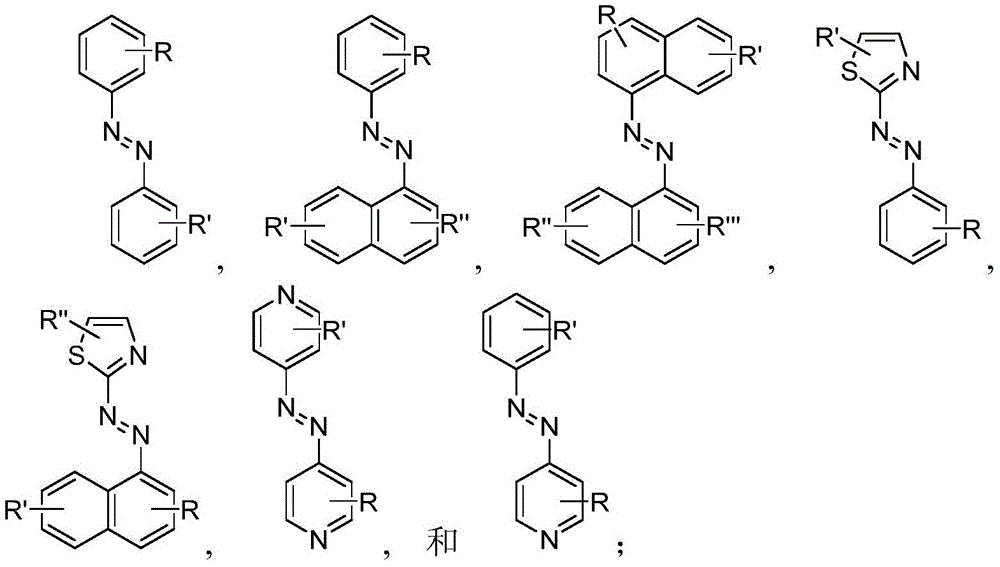
wherein each SDA-enhancing agent comprises at least one R group (one or more of R, R ', R ", and R'"), and wherein at least one R group comprises a hydrophilic moiety. Any hydrophilic moiety is contemplated, wherein in certain embodiments, the hydrophilic moiety is selected from the group consisting of: sulfonic acid/sulfonate, carboxylic acid/carboxylate, phosphoric acid/phosphate, phosphonic acid/phosphonate, amide, NH2,NR””2OH, N-sulfonylalkyl, O-sulfoalkyl and combinations thereof. In certain embodiments, a single aromatic group of the SDA-enhancing agent comprises more than one hydrophilic moiety. While not being bound by theory, it appears that the diarylazo moiety acts to increase the SNR, enhance photoprotection, or both.
In certain embodiments, the hydrophilic moiety is attached to the SDA-enhancing moiety via a linker.
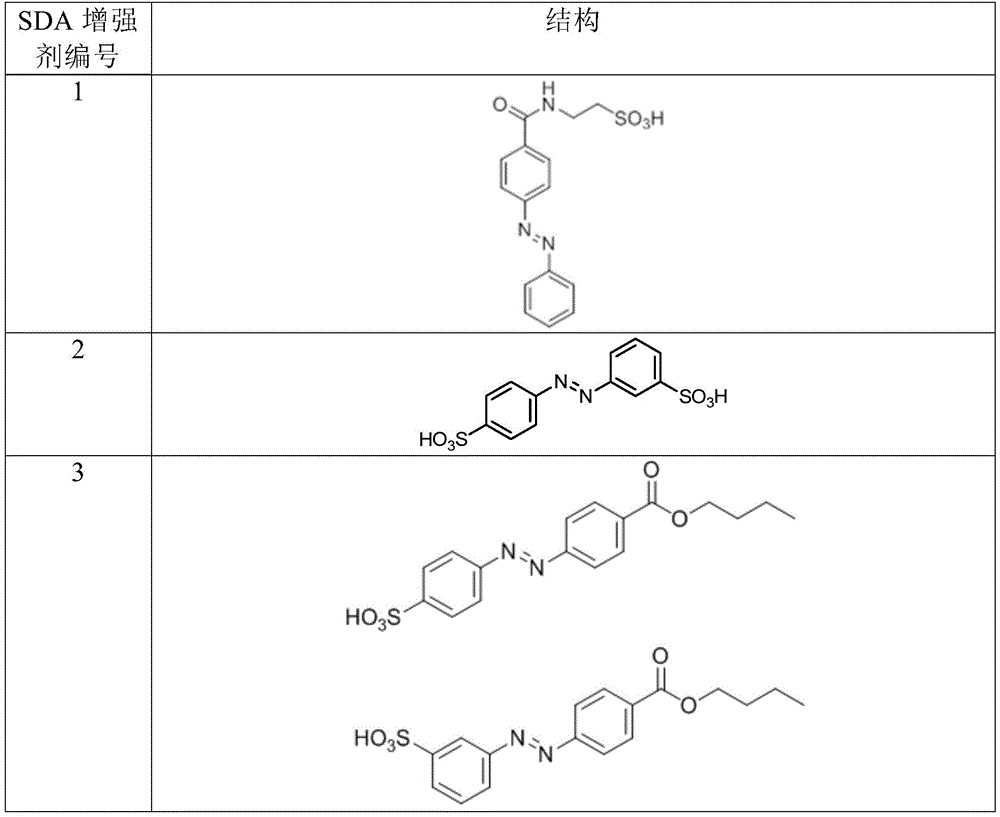
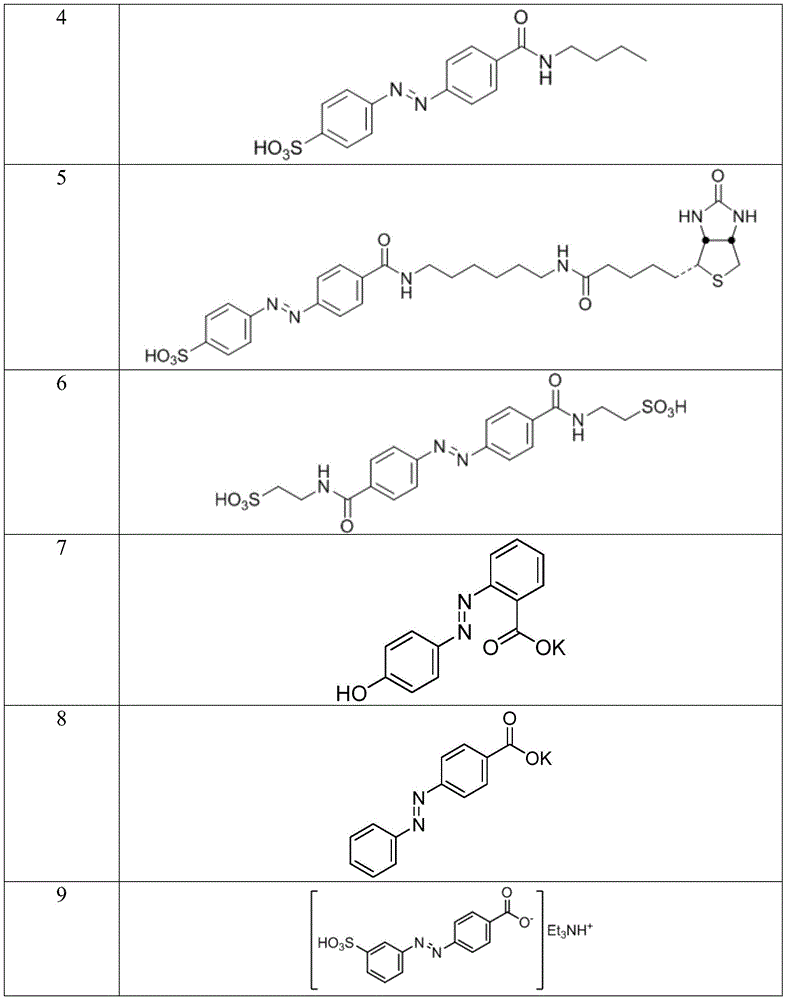
In certain embodiments, the SDA-enhancing agent has a formula selected from table 1 below:
table 1: representative SDA enhancers
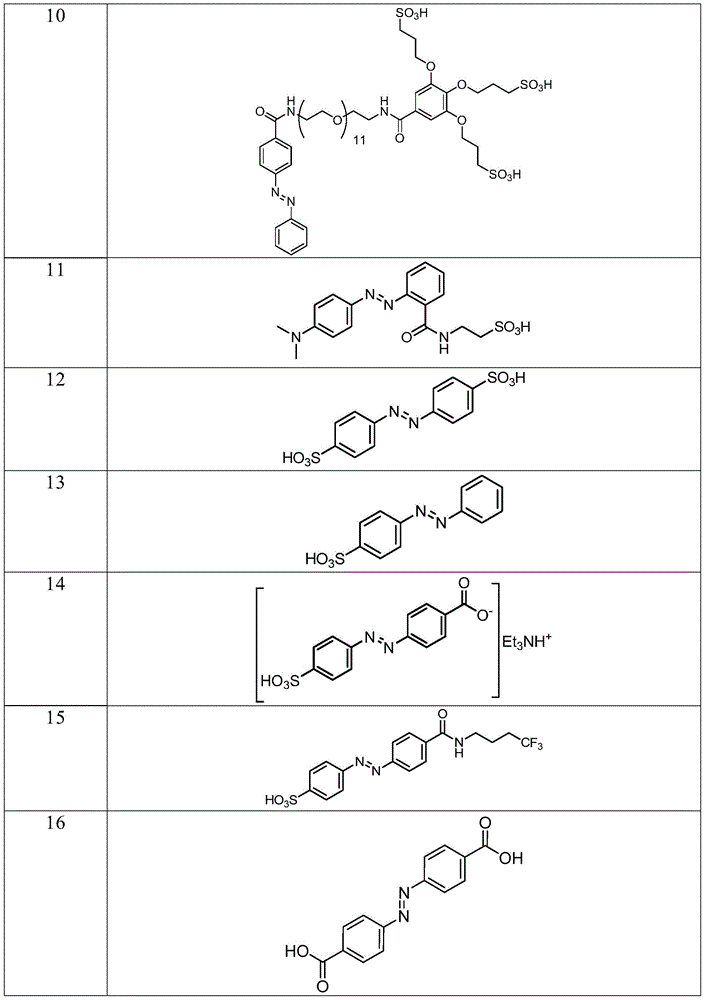
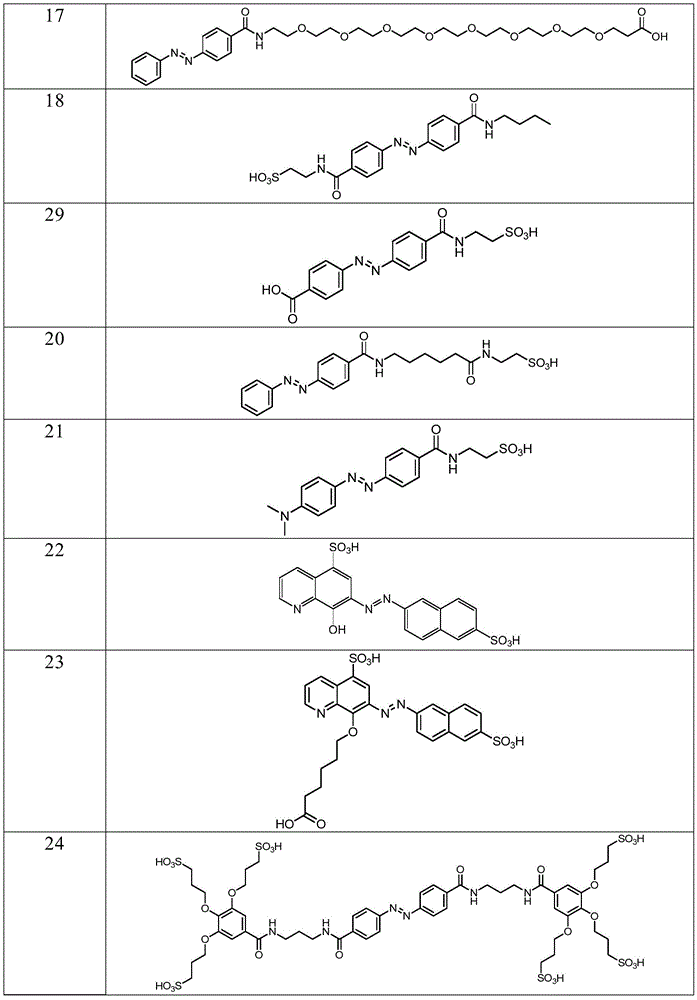

In some embodiments, included in the reaction mixture is a nucleoside polyphosphate (or analog thereof) and/or an enzyme, such as a polymerase, helicase, exonuclease, ribosome, or ligase. The mixture may also comprise a template nucleic acid molecule. At least one component of the reaction mixture may be confined within optical or structural constraints, such as zero mode waveguides, nanopores, micro or nanochannels, and the like. In certain embodiments, at least one component of the reaction mixture is attached to a fluorescent or fluorogenic molecule. In certain embodiments, the component of the reaction mixture comprising the fluorescent label is an enzyme, a nucleotide polyphosphate, a polynucleotide, a tRNA, an amino acid, or an analog thereof.
In another aspect, the present disclosure provides a method for improving signal detection in an illuminated reaction, the method comprising obtaining a reaction mixture comprising an SDA-enhancing agent, illuminating the reaction mixture with exciting illumination, and detecting a signal from the illuminated reaction mixture. The SDA-enhancing agent increases the SNR and/or enhances the photoprotection in the reaction mixture compared to the same reaction mixture in the absence of the SDA-enhancing agent. As such, in certain embodiments, the SNR is increased to a level greater than the SNR in the absence of the SDA-enhancing agent by increasing the brightness of the signal to a level greater than the brightness of the signal in the absence of the SNR-enhancing agent, and/or reducing the amount of background noise to an amount less than would occur in the absence of the SDA-enhancing agent. In a further embodiment, the SDA-enhancing agent has photoprotective activity in a lighted reaction by mitigating the effect of PID on components (e.g., enzymes) in the reaction mixture and/or reducing blinking or photobleaching or both of a fluorescent label, as compared to the same lighted reaction in the absence of the SDA-enhancing agent. Thus, in certain embodiments, inclusion of an SDA-enhancing agent comprising a photoprotective moiety can increase the PID threshold time period for an illuminated reaction (i.e., the amount of time that the illuminated analysis can be performed before PID significantly affects the reagent rendering the analysis useless), more data can be collected from the reaction. Where the method is a method of sequencing a polynucleotide, the SNR enhancement and photoprotection of the SDA-enhancing agent increases the sequencing accuracy of the reaction.
In certain embodiments, the methods of the invention further comprise the step of monitoring the reaction between the enzyme and the fluorescent or fluorogenic substrate while illuminating the reaction mixture. In some preferred embodiments, the light reaction is a base extension reaction, and the enzyme is optionally a polymerase. Such reactions typically include at least one polynucleotide (e.g., a template) and a plurality of nucleotide polyphosphates. In other preferred embodiments, the light reaction is a translation reaction during the synthesis of the polypeptide. Such reactions typically include ribosomes and mRNA, as well as multiple trnas with amino acids. Preferably, one or more components of the reaction mixture are confined to the substrate, for example within a zero mode waveguide or microfluidic channel, or near/within a nanopore.
In another aspect, the invention provides methods of preparing fluorescent illuminated reaction mixtures (e.g., sequencing or base extension reaction mixtures) comprising fluorescent compounds. The method comprises adding to the reaction mixture an SDA-enhancing agent as described herein (see description of SDA-enhancing agents above), the SDA-enhancing agent comprising an SNR-enhancing moiety, a photoprotective moiety, or both.
In another aspect, the invention provides methods for increasing the accuracy of and/or obtaining more sequencing data from a light sequencing reaction. The method comprises providing a reaction mixture comprising a polymerase, a template nucleic acid, one or more fluorescent or fluorogenic nucleotides or nucleotide analogs, and an SDA-enhancing agent (as described in detail herein). The reaction mixture is exposed to excitation radiation and the emission signal from the reaction mixture is detected, for example during monitoring of the reaction mixture during exposure to excitation radiation. In certain embodiments, the presence of the SDA-enhancing agent enhances accurate detection of fluorescent or fluorogenic nucleotides, thereby improving the accuracy of the resulting sequencing reaction data. For example, the SDA-enhancing agent may (i) reduce the amount of background noise and/or increase the intensity of the detected signal, (ii) enhance photoprotection, or both, wherein the enhancement of the light response is compared to the same response without the SDA-enhancing agent. In certain preferred embodiments, the light sequencing reaction is a base extension reaction, such as a template-mediated nascent strand extension reaction. Optionally, at least one component of the reaction mixture (e.g., a polymerase or template nucleic acid) is confined at the reaction site, e.g., within a zero-mode waveguide, at or proximal to a nanopore, or within a microfluidic channel.
In certain aspects, the present invention provides methods for increasing SNR and/or enhancing photoprotection in light response. In a preferred embodiment, the method comprises providing a reaction mixture comprising a fluorescent or fluorogenic reactant and an unlabeled reactant, wherein the unlabeled reactant is immobilized at a reaction site; adding an SDA-enhancing agent to the reaction mixture, wherein the SDA-enhancing agent comprises an SDA-enhancing portion and a hydrophilic portion (as described herein); and irradiating the reaction mixture with exciting radiation. In certain embodiments, the SDA-enhancing moiety may be attached to the hydrophilic moiety by a linker, as described above. The SDA-enhancing agent may (i) reduce the amount of background noise to less than the amount that would occur in the absence of the SDA-enhancing agent, (ii) increase the intensity of the signal detected from the reaction mixture to a level that exceeds the level that would occur in the absence of the SDA-enhancing agent, (iii) reduce PID of the unlabeled reactant due to interaction of the unlabeled reactant with the fluorescent or fluorogenic reactant under excitation illumination, as compared to the same reaction without the SDA-enhancing agent, and/or (iv) reduce blinking or photobleaching of the fluorescence of the fluorescent reactant as compared to the same reaction without the SDA-enhancing agent. In some embodiments, the unlabeled reactant is an enzyme, such as a polymerase, helicase, exonuclease, or ligase. In some embodiments, the light reaction is a base extension or sequencing-by-synthesis reaction. In some embodiments, the illuminated reaction comprises a channel of a fluorescent or fluorogenic reactant near or through a nanopore, nanochannel, or microchannel. In certain embodiments, the illuminated reaction occurs in a confined reaction site, such as near or within a nanopore or zero mode waveguide. In a preferred embodiment, the fluorescent or fluorogenic reactant comprises a nucleoside polyphosphate or analog thereof. The method may further comprise monitoring the reaction between the fluorescent or fluorogenic reactant and the unlabeled reactant while illuminating the reaction mixture.
The invention also provides kits incorporating the SDA-enhancing agents or mixtures thereof and optionally other useful agents. Such kits typically include a SDA-enhancing agent of the present invention packaged such that the SDA-enhancing agent can be used with any of a variety of assay reaction components that participate in reactions with one or more fluorescent or fluorogenic reaction components. For example, the SDA-enhancing agents of the present invention may be packaged with any of a variety of enzymes that participate in reactions with one or more fluorescent or fluorogenic substrates. Alternatively, the SDA-enhancing agents of the present invention may be packaged with any of a variety of antibodies that participate in reactions with one or more fluorescent or fluorogenic antigens, and vice versa. In other embodiments, the SDA-enhancing agents of the present invention may be packaged with any of a variety of protein receptors that participate in reactions with one or more fluorescent or fluorogenic ligands. It will be apparent that the methods, compositions, and systems described herein can be used in a variety of other types of analytical reactions, including but not limited to hybridization assays, binding assays (e.g., antibody assays), nucleic acid sequencing assays, protein sequencing assays, polymerization assays, ligation reactions, catalytic reactions, and the like. Depending on the desired application, the kit of the invention optionally comprises, for example, a buffer solution and/or a salt solution, a divalent metal ion, i.e. Mg++、Mn++、Ca++、Zn++And/or Fe++Enzyme cofactors, substrates, standard solutions, e.g., dye standards for detector calibration, etc. The kit may optionally include reagents and instructions for preparing the SDA-enhancing agent mixture. Such kitInstructions for using the compounds and other reagents according to the desired method of use (e.g., nucleic acid sequencing, etc.) are also often included.
Brief description of the drawings
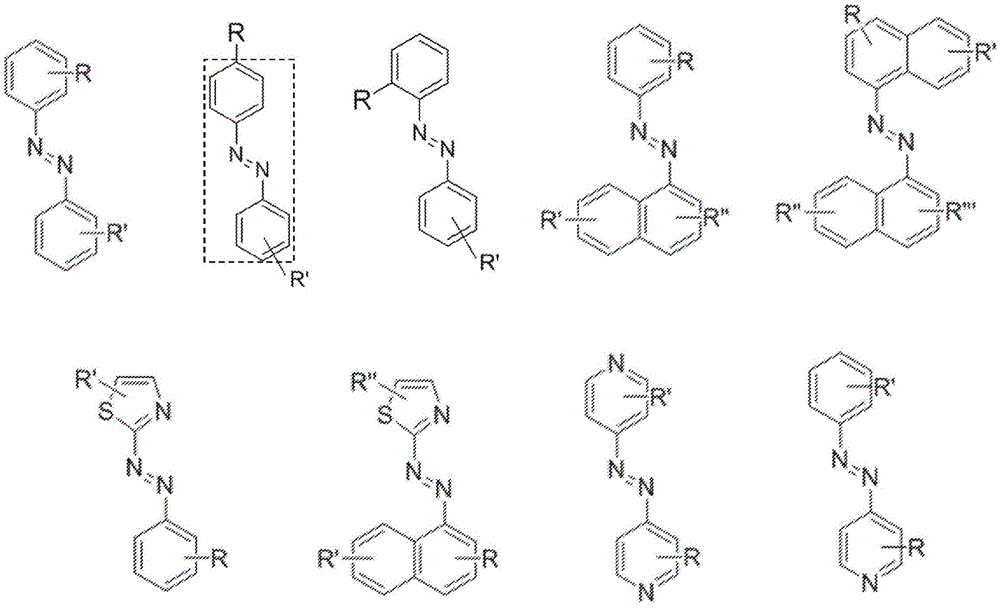
FIG. 1 is a schematic representation of various general structures of SDA-enhancing agents.
Fig. 2 is a graph illustrating the increase in SNR in the presence of an SDA-enhancing agent (No. 1 from table 1) compared to a reaction in the absence of the SDA-enhancing agent.
Fig. 3 is a graph illustrating the increase in SNR in the presence of an SDA-enhancing agent (No. 1 from table 1) compared to a reaction in the absence of the SDA-enhancing agent.
Fig. 4 is a graph illustrating the increase in SNR in the presence of an SDA-enhancing agent (No. 1 from table 1) compared to a reaction in the absence of the SDA-enhancing agent.
Fig. 5 is a graph showing the increase in signal intensity in the presence of an SDA-enhancing agent (No. 1 from table 1).
Figure 6 provides data showing noise reduction in experiments containing SDA-enhancing agent (No. 1 from table 1).
Figure 7 provides data showing noise reduction in experiments containing SDA-enhancing agent (No. 1 from table 1).
Fig. 8 shows an overall accuracy measure for sequencing reads from sequencing reactions comprising multiple different fluorescent dyes in the absence and presence of SDA-enhancing agent (No. 1 from table 1).
Detailed Description
Unless defined otherwise, all technical and scientific terms used herein have the same meaning as commonly understood by one of ordinary skill in the art to which this invention belongs. All publications mentioned herein are incorporated herein by reference for the purpose of description and the disclosed devices, formulations and methods described in the publications may be used in connection with the invention described herein.
It should be noted that, as used in this specification and the appended claims, the singular forms "a," "an," and "the" include plural referents unless the context clearly dictates otherwise. Thus, for example, reference to "a polymerase" can refer to a reagent or a mixture of reagents, and reference to "a method" can include reference to equivalent steps and methods, etc., known to those skilled in the art. When a range of values is provided, it is understood that each intervening value, to the extent that there is no such range is included within the scope of the invention, any other stated or intervening value in that stated range. The upper and lower limits of these smaller ranges may independently be included in the smaller ranges is also encompassed within the invention, subject to any specifically excluded limit in the stated range. Where the stated range includes one or both of the limits, ranges excluding either or both of those included limits are also included in the invention.
In the following description, numerous specific details are set forth in order to provide a more thorough understanding of the present invention. It will be apparent, however, to one skilled in the art, that the present invention may be practiced without some or more of these specific details. In other instances, well-known features and methods that are well known to those skilled in the art have not been described in order to avoid obscuring the present invention.
I. Overview
The present invention relates generally to compounds, compositions, methods, devices, and systems for improving signal detection assays in light reactions by using SDA-enhancing agents in light reactions, particularly in reactions using fluorescent or fluorogenic reactants, to (i) increase signal-to-noise ratio (SNR), (ii) enhance photoprotection, or both. Fluorescent or fluorogenic reactants typically include a reaction component linked to a fluorescent or fluorogenic molecule or "label". Such reaction components include, but are not limited to, enzymes, enzyme substrates, cofactors, reaction proteins, binding partners, ligands, and other types of molecules that are desired to be detected during the course of an analytical reaction. Furthermore, in some embodiments, the fluorescent or fluorogenic molecule may be attached to the reaction site, rather than to the reaction component, or attached to at least the reaction component in addition to the reaction site. The present invention provides methods and compositions for improving light response by: (i) reducing the amount of background noise to less than would occur in the absence of the SDA-enhancing agent, (ii) increasing the intensity of the signal detected from the reaction mixture to a level greater than would occur in the absence of the SDA-enhancing agent, (iii) mitigating PID to the unlabeled reactant as compared to the same reaction without the SDA-enhancing agent, and/or (iv) reducing scintillation or photobleaching of the detectable moiety as compared to the same reaction without the SDA-enhancing agent. The term "photoreaction" as used herein refers to a reaction that is exposed to an optical energy source.
Typically in a light illuminated reaction, illumination is provided to observe the presence (e.g. production, binding, activity and/or consumption) of a reactant or product having a particular optical characteristic indicative of its presence, such as a shift in the absorption and/or emission spectra of the reaction mixture or a component thereof, or such as a change in fluorescence intensity at the reaction site. The signal of interest is detected, which gives information about the reaction event. The ability to detect these information signals is affected by the amount of background noise that is also detected. If the noise is too high, the signal can be overwhelmed and difficult, if not impossible, to detect.
Certain light reactions detect the fluorescence of one or more fluorescently labeled reactants. The fluorescence detected in such fluorescence-based optical assays is the result of a three-stage process that occurs in the fluorophore or fluorochrome present in the reaction mixture. The first stage is excitation, where photons of quantified energy are provided from an external light source of a particular wavelength (e.g., from a laser) and absorbed by a fluorophore, producing an excited electronic singlet state (S)1'). The second stage is that the excited fluorophore undergoes several different changes to release its energy to the lowest singlet state (S)1) Lifetime of the excited state of (1). In the third stage from S1Several possible mechanisms can occur for the states, in which energy photons (S) are emitted1-S0) The fluorescence of (a) returns the fluorophore to its ground state. A three-phase process that generates thousands of these excitations and emissions will typically occur to produce a signal that can be detected by standard optical sensors.
Dissipative excited electronic singlet (S)1) One of the many pathways for energy of (a) is intersystem crossing (ISC), which involves a change in spin multiplicities, transitioning the system from S1 to an excited triplet state (T)1). In many fluorescent dye molecules, the lifetime is significantly longerThe formation of triplet species competes with the fluorescence emission, greatly reducing the brightness of the fluorescence emission. In addition, fluorescent dyes exhibit a high degree of chemical reactivity in this state, which often leads to photobleaching and the production of harmful free radicals and reactive intermediates, such as free radical ions, carbenes, carbocations, carbanions, etc. In addition, there is evidence that even S is present1The fluorophore in the state may also react with a reaction component, for example by mediating the production of non-reactive intermediates that negatively affect the assay reaction.
It is an object of the present invention to improve the signal-to-noise ratio, also referred to as SNR, which is a measure of comparing the level of a desired signal ("signal") with the level of a background signal or "noise". It is defined as the ratio of the signal power to the noise power. If the background noise is too high, e.g., near the level of the signal, the signal may not be detectable over the noise. Although sometimes referred to in the art as "background signal," background noise is often referred to herein as "noise," "background," or "baseline" to distinguish it from the signal that is desired to be detected during analysis, which is typically a signal that provides information about the analysis process. For example, if the analytical process is a sequencing reaction, the signal that provides information about the process will include a signal that identifies a nucleotide in the template nucleic acid being sequenced. Similarly, if the analytical process is a binding reaction, the signal providing information about the process will include a signal indicative of a binding event.
Various strategies for improving SNR in analytical assays. One way to increase the SNR so that a signal can be detected over noise is to increase the brightness (also commonly referred to as "intensity" or "density") of the signal, but this also increases the background noise. For example, if the ligand is labeled with a fluorescent dye and placed in the reaction mixture at a concentration suitable for binding to the receptor, the freely diffusing labeled ligand and any ligand bound to the receptor will both have the same label and, therefore, emit the same signal. Thus, if the intensity of the label on the binding partner is increased, the intensity of the background noise is also increased. Another method of increasing the SNR is to reduce the background by removing free diffusion labeling reagents from the reaction mixture during detection of reagents involved in the reaction event. This may be effective in removing non-interfering ligand-receptor complexes, but this method is not well suited for assays that are ongoing and require a constant supply of reactants, such as kinetic studies of binding and dissociation over time or ongoing enzymatic reactions (e.g., sequencing-by-synthesis reactions conducted in real time). Another way to increase the SNR is to reduce the background by reducing the illumination of the entire reaction mixture, i.e. illuminating only a part of the reaction mixture and/or separating the reaction event from the free diffusion reagent. In doing so, the labeled reactant in the portion of the reaction mixture that is not irradiated will not affect the background noise. For example, if the location where the reaction occurs ("reaction site") is within a limited area such that only a small amount of the reaction mixture is irradiated, most free diffusion reagents will not be irradiated during the detection of the reaction event. One or more components of the reaction mixture may be immobilized at the reaction site, so that observation is limited to the volume of the reaction mixture around the reaction site, and the labeled reactant outside the observation volume is not detectable. An example of such a strategy is the use of zero mode waveguides, which greatly limits the observation volume and provides a system for single molecule detection. Zero mode waveguides are described in detail, for example, in U.S. Pat. nos. 6,917,726, 7,013,054, 7,170,050, 7,315,019, 7,486,865, 7,907,800, and 8,247,216, the entire contents of which are incorporated herein by reference in their entirety for all purposes. This will effectively reduce noise interfering with signal detection, but some freely diffusing reactants may still enter the reaction site and introduce a degree of noise. In reactions where the concentration of labeled ligand or other reactant is high, there may still be sufficient unbound ligand within the illuminated volume to prevent detection of any binding. Reducing the concentration of the labeling reactant may help reduce background noise, but reduced concentrations may also negatively impact the ongoing reaction. Quenchers may also be used to reduce background noise, but they may also quench the detected signal, so that there is no net gain or very low net gain in SNR. These different strategies may be used independently or in combination, depending on the specific reaction conditions of the analytical system.
It is another object of the present invention to improve the performance of light reaction assays by reducing the blinking and/or photobleaching of fluorescent moieties in the reaction and/or mitigating PID of reaction components, thereby increasing the amount of time allowed for efficient analysis. In some embodiments, the SDA-enhancing agent prevents, slows, or eliminates the accumulation of the destructively excited triplet form of one or more of the reaction components. For example, in particular embodiments, the use of SDA-enhancing agents of the invention slows the accumulation of excited triplet states of a fluorophore, e.g., by decreasing T1Lifetime and return of the fluorophore to its ground state (S)0) (thereby facilitating the ability of the fluorophore to absorb another photon and re-fluoresce), the photophysical properties of the dye are greatly improved. This reduction in triplet lifetime also reduces the likelihood that other reaction components will undergo photo-induced damage caused by interaction with the triplet dye, thereby substantially protecting the other reaction components and potentially extending the time over which the reaction produces useful data. These photoprotection effects result in improved performance of light reactions, including increased sequencing accuracy of synthetic reactions such as single molecule sequencing reactions.
In certain embodiments, the SDA-enhancing agent added to the light reaction has both SNR-enhancing and photoprotective activity.
In general, the present invention relates to the performance of light analysis assays, wherein such assays are performed in a manner that allows for efficient analysis. For example, the analysis should not be hindered by suboptimal concentrations of reactants. Furthermore, the signal from the analysis, which is indicative of the progress of the reaction, should be easily distinguishable from background noise originating from reactants in the reaction mixture which are free and not actively involved in the reaction event. It should be understood that while such assays are sometimes referred to as "reactions" or "analytical reactions" that are performed using a "reaction mixture" that contains components referred to as "reactants," these terms do not necessarily imply that a chemical reaction is occurring. For example, a binding event may be considered a reaction even if the binding partner (reactant) has not undergone a chemical change. Likewise, detection during passage into or through a microchannel, nanopore, or other confined space may also be referred to as an analytical reaction.
In certain aspects, the present invention provides a group of additives known as "SDA-enhancing agents" that have been shown to have unexpected effects on increasing SNR of the light response, enhancing photoprotection, or both.
In certain embodiments, these additives can reduce background noise in these reactions and can also increase the brightness of the signal to be detected, thereby increasing the SNR of the reaction in two different ways. The combination of signal enhancement and noise reduction of a single molecule is quite different from the conventional SNR enhancement strategy discussed above and provides a significant improvement over approaches that only focus on one aspect of the SNR challenge. The increase in SNR provided by these additives allows for easier detection of signals from reaction events in the presence of high concentrations of labeled reactants in the reaction mixture, thereby increasing reaction efficiency and the accuracy of the reaction data collected and analyzed.
Upon analysis of the SDA-enhancing agents, they were unexpectedly found to also have photoprotective activity in illuminated reaction mixtures. This dual activity of the SDA-enhancing agent allows for a significant improvement in the accuracy of certain light assays (see additional description and examples below). Without being bound to a particular theory or mechanism of operation, several mechanisms, either alone or in combination, are believed to underlie the effectiveness of these additives.
One mechanism is to reduce background noise by collision quenching between the SDA-enhancing agent and the freely diffusing labeled reactant, which results in a net increase in SNR. Some local binding of the SDA-enhancing agent near the reaction site and/or one or more reagents may also occur. Another mechanism is quenching by energy transfer, which is a dark quenching mechanism in which there is sufficient overlap between the emission of the labeled reactant and the absorption spectrum of the SDA-enhancing agent. Another mechanism is by interaction with a label having multiple dyes (e.g., FRET dyes), optionally having more than one donor fluorophore and/or more than one acceptor fluorophore. Interaction with such multi-dye labels may result in the constituent dyes being arranged in conformations that increase excitation, transfer and emission efficiency.
In another mechanism, the SDA-enhancing agent may function as a triplet-quencher and/or a radical-quencher, providing significant photoprotective activity, e.g., preventing, slowing, or removing accumulation of destructively excited triplet forms of one or more reactive components and/or reducing blinking or photobleaching of fluorescent moieties. Reducing the accumulation of excited triplet states reduces the likelihood that other reactive components will undergo photodamage caused by interaction with the triplet dye. This activity protects other reaction components and prolongs the time for which the reaction yields useful data. Reducing scintillation and photobleaching improves fluorescence detection and analysis, particularly in light reactions monitored over time, such as sequencing reactions.
In certain preferred embodiments, the present invention provides one or more SDA-enhancing agents comprising an SDA-enhancing moiety and a hydrophilic moiety (e.g., a positively or negatively charged moiety) for use as an additive in a reaction mixture for light reactions. In certain embodiments, the hydrophilic moiety can be directly attached to the SDA-enhancing moiety or can be attached to the SDA-enhancing moiety through a linker.
A variety of different types of linkers having different lengths and chemistries may be used. The term "linker" encompasses any moiety used to attach one or more molecules or compounds (e.g., SDA-enhancing moiety and hydrophilic moiety), for example, to each other, to other components of the reaction mixture, and/or to the reaction site. For example, the linker may attach the SDA-enhancing agent to the reaction site or reaction; the linker may attach a reporter or "label" (e.g., a fluorescent dye) to a reaction site or reaction component (e.g., an enzyme, substrate, ligand, binding partner, etc.); and the linker can covalently attach the SNR-enhancing and/or photoprotective moiety to the hydrophilic moiety to form the SDA-enhancing agent. The linker may also be branched to link three or more components of the reaction mixture, for example to a tridentate, tetradentate or higher order structure. Methods for selecting, synthesizing, and attaching linkers to reactants and surfaces are well known to those of ordinary skill in the art, and further discussion and exemplary linker moieties are described, for example, in U.S. s.n.61/026,992 (filed 2.7.2008), 12/367,411 (filed 2.6.2009), and U.S. published patent application No. 2009/0233302, the disclosures of which are incorporated herein by reference in their entirety for all purposes.
In certain embodiments, the linker is a unit selected from the group consisting of: substituted or unsubstituted alkyl (e.g., 2-5 carbon chain), substituted or unsubstituted heteroalkyl, substituted or unsubstituted aryl, substituted or unsubstituted heteroaryl, substituted or unsubstituted cycloalkyl, and substituted or unsubstituted heterocycloalkyl. In one example, the linker moiety is selected from linear and branched carbon chains, optionally comprising at least one heteroatom (e.g., at least one functional group such as ethers, thioethers, amides, sulfonamides, carbonates, carbamates, ureas and thioureas), and optionally comprising at least one aromatic, heteroaromatic or non-aromatic ring structure (e.g., cycloalkyl, phenyl). In certain embodiments, molecules with trifunctional ligation capabilities are used, including but not limited to: cyanuric chloride, melamine, diaminopropionic acid, aspartic acid, cysteine, glutamic acid, pyroglutamic acid, S-acetylmercaptosuccinic anhydride, benzyloxycarbonyl lysine, histidine, lysine, serine, homoserine, tyrosine, piperidinyl-1, 1-aminocarboxylic acid, diaminobenzoic acid, and the like. In certain embodiments, a hydrophilic PEG (polyethylene glycol) linker is used.
In certain embodiments, the linker is derived from a molecule comprising at least two reactive functional groups (e.g., one on each end), and these reactive functional groups can react with complementary reactive functional groups on various reactive components or serve to immobilize one or more reactive components at a reactive site. As used herein, "reactive functional group" refers to groups including, but not limited to: alkenes, alkynes, alcohols, phenols, ethers, oxides, halides, aldehydes, ketones, carboxylic acids, esters, amides, cyanates, isocyanates, thiocyanates, isothiocyanates, amines, hydrazines, hydrazones, hydrazides, diazos, nitro groups, nitriles, thiols, sulfides, disulfides, sulfoxides, sulfones, sulfonic acids, sulfinic acids, acetals, ketals, anhydrides, sulfates, sulfenic acid isonitriles, amidines, imides, imidoesters, nitrones, hydroxylamines, oximes, hydroxamic acids, thiohydroxamic acids, allenes, orthoesters, sulfites, enamines, alkynylamines, ureas, pseudoureas, semicarbazides, carbodiimides, carbamates, imines, azides, azo compounds, azoxy compounds and nitroso compounds. Reactive functional groups also include those used to prepare bioconjugates, such as N-hydroxysuccinimide esters, maleimides, and the like. Methods for preparing each of these FUNCTIONAL GROUPs are well known in the art, and their use or modification for specific purposes is within the ability of those skilled in the art (see, e.g., ORGANIC FUNCTIONAL GROUP preparation by Sandler and Karo (ORGANIC GROUP precursors), Academic Press, San Diego, 1989).
Generally, the SDA-enhancing portion of the SDA-enhancing agent comprises the formula Ra-N=N-RbAzo of (a), wherein RaAnd RbEach contain an aromatic moiety, and wherein RaComprising a hydrophilic moiety. The N ═ N group is referred to as azo group. In certain embodiments, RaAnd RbEach comprising hydrophilic moieties (the same hydrophilic moiety or different hydrophilic moieties). In certain embodiments, RaAnd RbThe aromatic moieties of (a) are the same, while in other embodiments, the aromatic moieties are different. In certain embodiments, RaAnd RbThe aromatic moiety of (a) is selected from: aryl compounds, heterocyclic aromatic compounds, polycyclic aromatic compounds, and combinations thereof. In certain embodiments, the SDA-enhancing agent comprises an azodiaryl compound. In certain embodiments, the SDA-enhancing agent has a formula selected from:
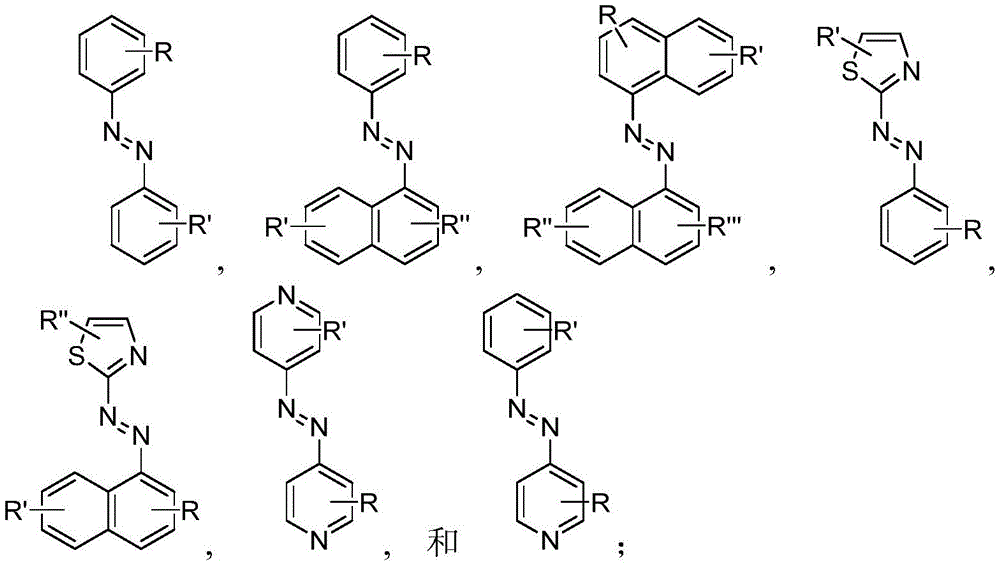
wherein each SDA-enhancing agent comprises at least one R group (one or more of R, R ', R ", and R'"), and wherein R, R ', R ", and R'" comprise a hydrophilic moiety. Any hydrophilic moiety is contemplated. In certain preferred embodiments, the hydrophilic moiety has a negative charge. In other embodiments, the hydrophilic moiety has a positive or neutral charge. In certain embodiments, the hydrophilic moietySelected from: sulfonic acid/sulfonate, carboxylic acid/carboxylate, phosphoric acid/phosphate, phosphonic acid/phosphonate, NH2,NR””2OH, N-sulfonylalkyl, O-sulfoalkyl, salts thereof, and combinations thereof. In certain embodiments, a single aromatic group of the SDA-enhancing agent comprises more than one hydrophilic moiety. While not being bound by theory, it appears that the diarylazo moiety acts to increase the SNR, enhance photoprotection, or both, while the hydrophilic moiety increases the water solubility of the SDA-enhancing agent.
Representative structures of azo compounds useful as SDA enhancers are shown in fig. 1. These structures are not meant to be limiting, but are merely illustrative of certain aspects of examples of SDA-enhancing agents having different structural characteristics, e.g., different aromatic moieties having hydrophilic moieties at different positions. In these structures, the SDA-enhancing moiety is an azo-linked aromatic compound, and R, R ', R ", and R'" represent possible positions for the group containing the hydrophilic moiety. (the dashed box in the second equation in the first row, from left to right, represents the SDA-enhanced portion). As discussed herein, the SDA-enhancing agent has at least one hydrophilic moiety (i.e., at least one hydrophilic moiety in any of R, R ', R ", and R'"). In certain embodiments, the SDA-enhancing agent comprises an additional moiety (i.e., which has at least two R groups), which may comprise another hydrophilic moiety or may comprise another moiety with a different property or function (e.g., hydrophobicity or binding activity). For example, in certain embodiments, the additional R groups (i.e., in addition to the first R group containing a hydrophilic moiety) comprise a non-hydrophilic moiety, such as a hydrophobic moiety, a member of a binding pair (e.g., biotin, streptavidin, etc.), or both. Examples of non-hydrophilic moieties include, for example: amide, NO2O-alkyl, and combinations thereof. In some cases, additional R groups provide additional water solubility, hydrophilicity, and/or adjustment of electron density to control or "tune" the absorption spectrum, e.g., depending on the emission wavelength of the fluorophore in the reaction mixture. Any R group may also include additional moieties, for example, linkers, members of binding pairs, such as biotin, and the like, or combinations thereof. In FIG. 1, the second left of the top rowThe first and third formulas are each a subset of the top row leftmost formulas wherein one R group is located at the 4-position and the other R group is located at the 2-position of the top aromatic ring. As noted above, exemplary hydrophilic moieties comprise one or more charged groups including, but not limited to, carboxylic acid groups, sulfonic acid groups, phosphate groups, phosphonate groups, and salts thereof.
In certain embodiments, the SDA-enhancing agent of the present invention is phenylazobenzoic acid, and the second SNR-enhancing moiety is a salt of phenylazobenzoic acid, such as potassium phenylazobenzoate or sodium phenylazobenzoate.
In certain embodiments, any of the R groups listed in fig. 1 (i.e., any of R, R ', R ", and R'"), if present, can further comprise a linker connecting the SDA-enhancing moiety to the R group (e.g., an R group comprising a hydrophilic moiety). In certain embodiments, the terminus of the linker proximal to the SDA-enhancing moiety may comprise a carbonyl, sulfonyl, or phosphonyl group attached to the aromatic ring. The linker may comprise a charged group along its length and in this case will be considered to be part of the hydrophilic moiety. Alternatively, the charged portion of the hydrophilic moiety may be attached at one end of the linker, e.g., the end distal to the SDA-enhancing moiety.
In certain embodiments, the SDA-enhancing moiety is characterized by lipophilicity that can provide transient localization of the SDA-enhancing agent in the vicinity of the reaction site (e.g., within or near the observation volume). In some embodiments, the SDA-enhancing agent is located on the surface of a confined reaction site (e.g., a zero-mode waveguide, a nanochannel, a nanopore, etc.). The localization of the SDA-enhancing agent near the reaction site reduces the background noise from the diffusing labeled reactants as they diffuse within the observation volume (also referred to as the "diffusion background"). For example, in certain embodiments, a relatively lipophilic arylazobenzoic acid or phenylazobenzoic acid, or salts thereof (e.g., potassium or sodium salts thereof), is used as the SDA-enhancing moiety. In addition, the absorption wavelength and lipophilicity of the SNR-enhancing moiety can be altered by substituents on the aryl moiety. For example, the addition of dimethylamino groups to the aryl moiety red-shifts the absorption from about 300nm to 450nm, and is also expected to increase the lipophilicity of the molecule.
In certain preferred embodiments, the hydrophilic moiety serves to repel incoming negatively charged labeled reactant and increase the water solubility and hydrophilicity of the SDA-enhancing agent. In particular embodiments, the hydrophilic moiety comprises one or more sulfonyl groups, such as at least two or three sulfonyl groups. The sulfonyl group increases the volume of the labeled nucleoside polyphosphate and its hydrophilicity. Other charged groups that may be included in the hydrophilic moiety include, but are not limited to: phosphoric acid/phosphate groups, phosphonic acid/phosphonate groups, carboxylic acid/carboxylate groups, and the like. Furthermore, different salts of these charged groups may be used, for example potassium or sodium salts of the charged groups.
In certain embodiments, the SDA-enhancing agent comprising an SDA-enhancing portion and a hydrophilic portion may be attached to another reaction component or to a reaction site such that the SDA-enhancing agent is in close spatial proximity to the volume of the reaction mixture subjected to irradiation. For example, the SDA-enhancing agent can be linked to one or more of a reactant (e.g., a substrate for an enzyme (e.g., a nucleic acid, polypeptide, sugar, or monomer thereof), a fluorescent or fluorogenic label (e.g., a fluorescent dye or quantum dot), an enzyme or other reactive protein or co-factor thereof (e.g., a polymerase, ligase, receptor, antibody, or nuclease)), a reaction site at which a reaction will occur (e.g., within a well, chip, fiber, bead, micro-or nanochannel, nanopore, optical confinement (e.g., Zero Mode Waveguide (ZMW)), or the like), or a combination thereof. (see, e.g., U.S. patent publication No. 20090325260, which is incorporated by reference herein in its entirety for all purposes). Preferably, the SDA-enhancing agent is not directly linked to the marker molecule intended to be detected during the assay reaction. In certain embodiments, the present invention provides methods and compositions for nucleic acid analysis in which an SDA-enhancing agent is linked to an enzyme or reaction protein that interacts with a substrate or ligand comprising a fluorescent dye. For example, where such an enzyme or reaction protein is immobilized at the reaction site by a linker construct, the SDA-enhancing agent may be integrated into the structure of the linker construct in a manner that does not interfere with the detection of the labeled reactant, or optionally may be attached to the enzyme or reaction protein at a location remote from the active site. In other embodiments, the SDA-enhancing agent is free in solution, diffusing throughout the reaction mixture, which simplifies the use of reagents, as no linking to other reagents, surfaces, linkers, etc. is required, but higher concentrations of reagents in the reaction mixture may be required.
In certain embodiments, the SDA-enhancing agent is selected from the compounds listed in table 1 (i.e., any of SDA-enhancing agents No. 1 to 28 in table 1).
The present invention is generally applicable to any of a variety of optical assays involving the illumination and/or light activated conversion or excitation of chemical groups (e.g., fluorophores) to detect specific events involving a small number (e.g., one) of labeled reactants in the background of many labeled reactants (e.g., free in solution). For example, the compositions and methods provided herein can be used with fluorescence microscopy, optical trapping and tweezers, spectrophotometry, fluorescence correlation spectroscopy, confocal microscopy, near-field optical methods, Fluorescence Resonance Energy Transfer (FRET), structured light microscopy, total internal reflection fluorescence microscopy (TIRF), and the like, all of which are well known techniques routinely used by those of skill in the art.
Although cyanine dyes 3.5 and 5 are used in the examples described herein, the use of an SDA-enhancing agent is not limited to these dyes. Other cyanine dyes are also contemplated for use in the SNR enhancers provided herein, such as Cy2, Cy3, Cy3B, Cy5.5, and Cy 7. In addition, other types of dyes well known in the art are also contemplated, including but not limited to: coumarin dyes, rhodamine and fluorescein based dyes from, for example, GE Healthcare group (GE Healthcare) and available from Life Technologies, Inc A dye. A wide variety of organic dye structures have been previously described in the art.
An example of an assay that is particularly suitable for benefiting from the present invention is a single molecule bioassay, including, inter alia, single molecule nucleic acid sequencing assays, single molecule enzyme assays, hybridization or binding assays (e.g., antibody assays), nucleic acid hybridization assaysNucleic acid sequencing assays, protein sequencing assays, polymerization assays, ligation reactions, catalytic reactions, detection of reactants in small volumes (e.g., microfluidic channels or nanopores, etc.), wherein the reagents of the primary inlet are subjected to irradiation and optically observed within a reaction mixture comprising a plurality of labeled reagents. In certain embodiments, the methods, compositions, and systems are used in nucleic acid sequencing processes that rely on the detection of fluorescent or fluorogenic reagents (e.g., dye-labeled nucleotides or analogs thereof). Examples of such nucleic acid sequencing techniques include, for example Nucleic acid sequencing (described, for example, in U.S. Pat. Nos. 6,399,335, 6,056,661, 7,052,847, 7,033,764, 7,056,676, 7,361,466, 7,416,844; U.S. Pat. publication No. 20100311061; and in Eid et al (2009) Science323:133-138, the entire disclosure of which is incorporated herein by reference in its entirety for all purposes), non-real-time or "one base at a time" sequencing methods, available, for example, from Illumina, Inc (Illumina, Inc., San Diego, CA) and Spiro BioSciences, Inc (Helicos BioSciences, Cambridge, MA), cloning single molecule arrayTMNanopore Sequencing using optically detectable labels (Genia Technologies, part of Roche Sequencing) and Oxford Nanopore (Oxford Nanopore, Oxford, UK)), and SOLiDTMSequencing (Life Technologies). Methods for single molecule protein sequencing are provided, for example, in U.S. patent publication No. 20100317116, which is incorporated by reference herein in its entirety for all purposes.
In embodiments where the SDA-enhancing agent has both SNR-enhancing and photoprotective activity, no additional SNR and/or photoprotective additives are present in the reaction mixture.
In other embodiments, for example where the SDA-enhancing agent has predominantly SNR-enhancing activity, one or more photodamage-mitigating agents (e.g., reducing agents, oxidizing agents, triplet-quenching agents, radical-quenching agents, oxygen scavengers, and/or combinations thereof) can be included in the illuminated reaction with the SDA-enhancing agents provided herein. Some examples of photodamage mitigating agents are provided in U.S. patent publication nos. 2007/0128133, 2007/0161017, 2010/0136592, and 2015/0079603, which are incorporated by reference in their entirety for all purposes. In addition, the reduction and oxidation system (ROXS) can be effective in minimizing photobleaching and scintillation of fluorescent dyes. (Agnew. chem. int. Ed,2008,47, 5465-. Such photobleaching and scintillation can adversely affect the detectability of the dye emission, and so the presence of ROXS can at least facilitate detection by reducing these photochemical phenomena. Typically, ROXS is a multi-component system, e.g., comprising a pair of TSQ agents, comprising a reducing agent and an oxidizing agent, which can work synergistically to accelerate the relaxation of a dye from its triplet state to its ground state. Examples of such systems include mixtures of methyl viologen and ascorbic acid; a combination of nitrobenzoic acid or salts thereof and mercaptoethylamine, such as 2-mercaptoethylamine HCL and sodium 2-, 3-and/or 4-nitrobenzoate; and mixtures of nitrobenzoic acid or its salts (e.g., potassium 2-nitrobenzoate) and other reducing agents such as DTT (dithiothreitol) or DMAPA (dimethylaminopropylamine). The addition of these reagents to the light reaction can be used to mitigate photo-damage to other reactants (e.g., enzymes) and also improve other reaction metrics. In certain embodiments, a single molecule ROX compound can be added to an assay reaction in combination with an SNR enhancer provided herein. Certain preferred monomolecular ROX compounds are described in detail in U.S. patent application publication No. 2015/0079603, which is incorporated herein by reference in its entirety for all purposes.
The SDA-enhancing agents herein can also be used in combination with other strategies for increasing SNR in the analytical data, including, but not limited to, increasing signal intensity by using brighter fluorophores, separating reaction events from the bulk of the reaction mixture, irradiating only a small volume of the reaction mixture containing reaction sites, immobilizing one or more reagents at the reaction sites, adjusting the concentration of labeled reactants in the reaction mixture, adding one or more quenchers, or a combination thereof.
Improving signal detection in light analysis
Certain aspects of the present disclosure generally relate to increasing SNR, increasing photoprotection, or both during illumination analysis. The terms "illuminated assay" and "illuminated reaction" are used interchangeably and generally refer to an assay reaction that occurs under illumination (e.g., with excitation radiation) to assess the production, consumption, and/or conversion of a luminescent (e.g., fluorescent or fluorogenic) reactant and/or product. The terms "reactant" and "reagent" are used interchangeably herein. In certain preferred embodiments, the light reaction is a sequencing reaction and results in suboptimal SNR, photoprotection, or both, directly or indirectly, due to the presence of large amounts of fluorescently labeled nucleoside polyphosphates in the reaction mixture. In other embodiments, the light reaction is a polypeptide sequencing reaction, a binding assay, or a hybridization assay, and results in suboptimal SNR, photoprotection, or both due to the presence of large amounts of fluorescently labeled tRNA or amino acid, binding partner (e.g., antibody, antigen, ligand, receptor, etc.), or nucleic acid, respectively, in the reaction mixture.
In one aspect of the invention, the SDA-enhancing agents described herein are particularly useful for increasing the SNR of a reaction at small reaction volume concentrations, enhancing its photoprotective effect, or both, where some reactants may be present, but at very limited concentrations. As generally mentioned herein, such limited amounts of reagents or reactants may be present in solution, but at very limited concentrations, e.g., less than 200nM, in some cases less than 10nM, or in other cases less than 10 pM. However, in a preferred aspect, such a limited amount of reagent or reactant refers to a reactant that is immobilized or otherwise confined within a given region (reaction site, e.g., within a defined range, such as within a pore, nanochannel or microchannel or zero mode waveguide) such that a limited amount of reagent is provided in the given region, and in some cases, a small number of molecules of such reagent, such as 1 to 1000 individual molecules, preferably 1 to 10 molecules, are provided in the given region.
In certain aspects of the invention, the SDA-enhancing agents described herein are particularly useful for increasing SNR, enhancing photoprotection, or both, for reactions in reaction mixtures with high concentrations of labeled reactant (e.g., at least 50, 100, 150, 200, 250, 300, 350, 400, 450, or 500nM of labeled reactant or each of multiple labeled reactants).
In other aspects of the invention, the SDA-enhancing agents described herein are particularly useful for increasing SNR, enhancing photoprotection, or both, for reactions in reaction mixtures with very small observation volumes (e.g., where the total reaction volume is much larger). For example, the observation volume preferably does not exceed 1 nanoliter, picoliter, femtoliter, atropine, or zeptopine. In certain preferred embodiments, the observation volume is less than one attoliter and greater than one zeptoptopoliter.
In certain embodiments, the SDA-enhancing agent described herein increases the SNR of the analytical reaction by reducing background noise by at least 5%, including at least 10%, 15%, 20%, 25%, 30%, 40%, or 50%. In other embodiments, the SNR-enhancing agents described herein increase the SNR of an assay reaction by increasing the signal by at least 5%, including at least 10%, 15%, 20%, 25%, 30%, 40%, or 50%. In preferred embodiments, the SDA-enhancing agents described herein increase the SNR of the analytical reaction by simultaneously reducing noise and increasing signal. In certain embodiments, the increased signal has a wavelength in the visible spectrum, preferably greater than 300, 400, 500, 550, 600, or 650 nm. These embodiments are further described in the examples herein.
The amount of time that photodamage can take before the reagent is substantially affected by the photodamage such that the analysis is useless (e.g., when the reaction terminates prematurely) is referred to as the "photodamage threshold period". The threshold period of photodamage is assay dependent and is influenced by a variety of factors including, but not limited to, the characteristics of the reactants (e.g., enzymes, substrates, binding partners, etc.) in the assay (e.g., susceptibility to photodamage and the effect of such damage on enzyme activity/persistence), the characteristics of the radiation source (e.g., wavelength, intensity), the characteristics of the signal-generating molecule (e.g., emission type, susceptibility to photodamage, propensity to enter the triplet state, and the effect of such damage on the intensity/duration of the signal), and the like of other components in the assay. The features also depend on various components of the assay system, such as signal transmission and detection, data collection and analysis procedures, and the like. The skilled person is fully capable of determining an acceptable threshold period of photodamage for a given assay, for example by monitoring the signal decay determined in the presence of photodamaging agents and confirming the period of time for which the signal is a reliable measure for the assay, and such analysis may optionally include time course reactions, titration, and the like. In certain preferred embodiments of the invention, the photodamage threshold period is a light analysis period during which such photodamage occurs such that the rate, persistence, fidelity, product formation or error frequency of the subject reaction does not decrease by more than 10%, 20%, 30%, 40%, 50%, 60%, 70%, 80% or 90% as compared to the same reaction in the absence of such light. Such effects on the subject reactions are typically due to direct or indirect damage to one or more reaction components, of particular interest being those present in limited amounts, e.g., low concentrations. For example, certain single molecule reactions involve an immobilized reactant that exists as a single molecule at a given reaction site. Such immobilized reactants are not "exchangeable" in the reaction mixture, although other reactants in solution may diffuse into and out of the reaction site. Thus, damage to these immobilized reactants is often detrimental to the subject reaction at a given reaction site, and may even lead to premature termination of a single reaction monitored at the reaction site.
In certain embodiments, the present invention provides SDA-enhancing agents that, when present, increase the threshold period of photodamage in a light reaction, thereby increasing the amount of time the reaction proceeds to completion, while minimizing damage to the reactants, thereby extending the time for which a detectable signal is an accurate measure of the progress of the reaction. In particular, the aim is to reduce damage to limiting concentrations of reactants, such as immobilized reactants, in particular reactants that exist as single molecules at the reaction site.
In some cases, reactions involving one or more components that have been photodamaged may be pseudo-reactive and therefore more reactive than desired. In this context, it is understood that the threshold period of photodamage of interest is characterized by a light analysis period during which such spurious activity (e.g., as measured by an increase in reaction rate or an increase in non-specific reaction rate) is no more than 10% compared to non-illuminated reactions, no more than 20% compared to non-illuminated reactions, no more than 50% compared to non-illuminated reactions, and in some cases no more than 90% compared to non-illuminated reactions. In one non-limiting example, such activity can affect the above-described threshold period of photodamage when a nucleic acid polymerase begins to incorrectly incorporate nucleotides (or analogs or derivatives thereof) during template-mediated synthesis due to a photodamage event. In such cases, the SDA-enhancing agents and methods of the present invention will increase the threshold period of photodamage, thereby increasing the amount of time the reaction can be illuminated before the spurious activity described above occurs.
For nucleic acid analysis, it has been observed that prolonged illumination of light in nucleic acid template-mediated synthesis using fluorescent nucleotide analogs as substrates results in a significant decrease in the ability of the polymerase to synthesize nascent strands of DNA, as previously described, for example, in U.S. published patent application No. 2007/0161017, which is incorporated herein by reference in its entirety for any purpose. Damage to the polymerase, template sequence and/or primer sequence can significantly hinder the ability of the polymerase to process longer nucleic acid strands. For example, a decrease in polymerase processing capacity results in a decrease in the read length of the sequencing process that identifies the nascent strand based on its incorporation of sequence components. As understood in the field of genetic analysis, the length of sequential reads of a sequence directly affects the ability to assemble genomic information from fragments of genomic DNA. In addition to sequencing reactions, this decrease in enzymatic activity can have significant effects on many different types of reactions, such as ligation, cleavage, digestion, phosphorylation, other types of polymerization, and the like.
Photodamage attempted to be prevented by the methods and compositions of the present invention is not only photodamage to fluorescent agents, such as photobleaching, but also relates to preventing or reducing downstream effects of photoactivation of such fluorescent agents, such as during interactions with or proximity to other agents, particularly those in limited amounts in the reaction mixture, and thus their limited presence is greatly affected even by slight losses due to photodamage. For example, and without being bound by theory of operation, photodamage to reactive proteins, enzymes, or other reactants may include damage to the reactants or irreversible interaction between these reactants and photodamaging agents. Such interactions may be covalent or non-covalent interactions, binding interactions, transient interactions, catalytic interactions, and the like. As mentioned above, photodamage generally refers to a change in a given agent, reactant, etc., due to a photoinduced reaction, either directly or indirectly, that results in a functional change in the agent in the desired reaction, such as a decrease in activity, a decrease in specificity, or a decrease in the ability to react with, be converted by, or be modified by other molecules, e.g., a photoinduced reaction that produces a reactant that interacts with and causes damage to one or more other reactants. Typically, such photoreactions directly affect the reactant of interest, e.g., directly photodamage, or affect the reactant within one, two, or three reaction steps of such reactant of interest. In addition, such photoreactions can directly affect the reaction of interest, e.g., resulting in a change in the rate, duration, throughput, product formation, or reliability of the reaction.
Generally, the SDA-enhancing agents described herein are present in the reaction mixture in an amount sufficient to provide a beneficial effect (e.g., increase SNR (reduce noise and/or increase optical signal) and/or provide enhanced photoprotection), but in an amount that does not significantly interfere with a reaction of interest, such as a sequencing reaction. In certain preferred embodiments, the concentration of SDA-enhancing agent in the reaction mixture is, for example, 10mM or less, 8mM or less, 6mM or less, 4mM or less, 2mM or less, 1mM or less, 900. mu.M or less, 500. mu.M or less, 200. mu.M or less, or 100. mu.M or less. In some preferred embodiments, the concentration of the SNR-enhancer in the reaction mixture is about 300. mu.M to 1mM, e.g., 300. mu.M, 400. mu.M, 500. mu.M, 600. mu.M, 700. mu.M, 800. mu.M, 900. mu.M or 1 mM. However, these concentrations are merely exemplary and may vary depending on various factors including, for example, the particular fluorescent or fluorogenic label present in the reaction, the type of reaction to which the fluorescent or fluorogenic label is added, the conditions under which such a reaction is carried out, and the like. Such adjustments are well within the ability of the ordinarily skilled artisan.
The SDA-enhancing agent present in the illuminated reaction comprises an SDA-enhancing moiety and a hydrophilic moiety (as described above). Briefly, in certain embodiments, the SDA-enhancing agent comprises an SDA-enhancing moiety, wherein the SDA-enhancing moiety comprises formula Ra-N=N-RbAzo of (a), wherein RaAnd RbEach comprising an aromatic moiety, and wherein RaComprising a hydrophilic moiety. The N ═ N group is referred to as azo group. In certain embodiments, RaAnd RbEach comprising hydrophilic moieties (either the same hydrophilic moiety or different hydrophilic moieties). In certain embodiments, RaAnd RbThe aromatic moieties of (a) are the same, while in other embodiments, the aromatic moieties are different. In certain embodiments, RaAnd RbThe aromatic moiety of (a) is selected from: aryl compounds, heterocyclic aromatic compounds, polycyclic aromatic compounds, and combinations thereof. In certain embodiments, the SDA-enhancing agent comprises an azodiaryl compound. In certain embodiments, the SDA-enhancing agent has a formula selected from:
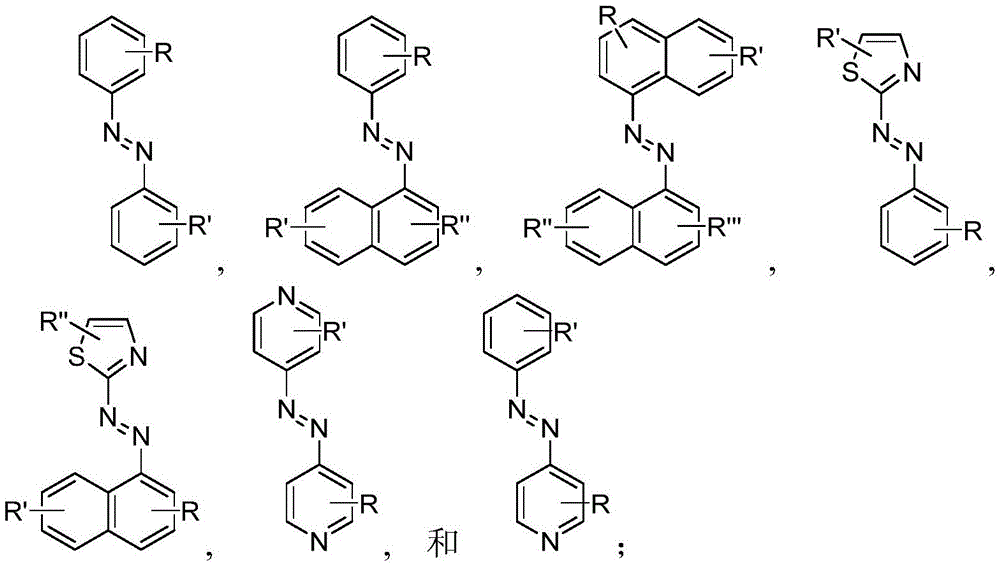
wherein each SDA-enhancing agent comprises at least one R group (one or more of R, R ', R ", and R'"), and wherein R, R ', R ", and R'" comprise a hydrophilic moiety. Any hydrophilic moiety is contemplated. In certain preferred embodiments, the hydrophilic moiety has a negative charge. In other embodiments, the hydrophilic moiety has a positive or neutral charge. In certain embodiments, the hydrophilic moiety is selected from: sulfonic acid/sulfonate, carboxylic acid/carboxylate, phosphoric acid/phosphate, phosphonic acid/phosphonate, NH2,NR””2OH, N-sulfonylalkyl, O-sulfoalkyl, salts thereof, and combinations thereof. In certain embodiments, a single aromatic group of the SDA-enhancing agentThe cluster comprises more than one hydrophilic moiety. While not being bound by theory, it appears that the diarylazo moiety acts to increase the SNR, enhance photoprotection, or both, while the hydrophilic moiety increases the water solubility of the SDA-enhancing agent.
SNR enhancers of the present invention include, but are not limited to, compounds of formula (la) selected from the compounds listed in table 1 (i.e., SDA-enhancer nos. 1 to 28).
Optionally, the method further comprises confining at least one component of the reaction mixture to a substrate, for example, to a substrate comprising one or more zero mode waveguides.
The measure of the increase in SNR or photoprotection resulting from the inclusion or treatment with one or more SDA-enhancing agents may be characterized in any manner suitable for the assay being performed.
For example, the increased SNR can be characterized as providing at least one of: the signal brightness is increased relative to the brightness detected in the non-processing reaction, and the background noise, which is lower in noise than the noise detected in the non-processing reaction, is reduced. Preferred SDA-enhancing agents are characterized by both increased signal and decreased background. In addition, characterization of the increase in SNR typically utilizes measurements of signal brightness and baseline noise during the course of the reaction and compares the signal-to-noise ratio observed in reactions containing the SDA-enhancing agent to the signal-to-noise ratio observed in control reaction mixtures lacking the SDA-enhancing agent. These analyses typically involve well-established laboratory methods such as time course reactions, titrations, and the like.
In the context of the present invention, inclusion of an SDA-enhancing agent of the present invention that increases SNR typically results in an increase in SNR of more than 5%, 10%, 15%, 20%, 25%, 30%, 40%, or 50% compared to a reaction in the absence of the SDA-enhancing agent. In the context of the present invention, inclusion of an SDA-enhancing agent of the present invention that increases SNR typically results in an increase in brightness of more than 5%, 10%, 15%, 20%, 25%, or 30% compared to a reaction in the absence of the SDA-enhancing agent. In the context of the present invention, inclusion of an SDA-enhancing agent of the present invention that increases SNR typically results in a reduction in background noise of more than 5%, 10%, 15%, 20%, or 25% compared to a reaction in the absence of the SDA-enhancing agent.
Measurement of the reduction in photodamage due to inclusion or treatment with one or more SDA-enhancing agents with photoprotective activity can be characterized as providing a reduction in the level of photodamage compared to a control reaction lacking the SDA-enhancing agent. Furthermore, the reduction in the characteristic photo-damage is typically measured using, for example, the rate of reaction, duration, throughput, product formation or reliability of the enzyme activity, and/or a comparison of the threshold period of photo-damage between the treated reaction mixture and the untreated reaction mixture. These analyses typically involve well-established laboratory methods such as time course reactions, titrations, and the like.
In the context of the present invention, the inclusion of an SDA-enhancing agent of the present invention having photoprotective activity generally results in a reduction in the photo-damage of one or more reactants in a given reaction, as measured by the "prevented loss of reactivity" in the system. Using methods known in the art, the amount of activity loss prevented can be a reduction in reactivity loss of at least 10%, preferably greater than 20%, 30%, or 40% and more preferably at least 50%, and in many cases greater than 90%, and the reduction in reactivity loss can be up to 99% or more than 99%. For purposes of illustration and purely by way of example, when using the reduction in photo-induced damage as a measure of enzyme activity in the presence and absence of the SDA-enhancing agent having photoprotective activity of the present invention, if a reaction includes a reaction mixture having 100 units of enzyme activity that, in the absence of the SDA-enhancing agent, would produce a reaction mixture having only 50 units of activity after light analysis, a 10% reduction in photo-induced damage would produce a final reaction mixture having 55 units (e.g., 10% of the 50 units that would otherwise be lost would not be lost). Similarly, the "loss of reactivity prevented" can be calculated from the reaction rate, product formation, throughput, reliability, and other metrics for a given analytical reaction. The photoprotective activity of the SDA-enhancing agent may also increase the brightness of the light signal in an illuminated reaction and/or improve the detection characteristics of the light signal (as described above).
The improvements in signal detection provided by the inclusion of the SDA-enhancing agents of the present invention can be used to enhance a number of differentAnd (3) detecting and analyzing the signal. For example, the increased SNR of an SDA-enhancing agent and/or the effect of enhanced photoprotection may directly result in an increased accuracy of a sequencing reaction, such as a single molecule sequencing reaction, e.g., as in Pacific Biosciences, Inc. (Pacific Biosciences, Menlo Park CA) Performed on a sequencing platform. The improvement in accuracy can be up to 15%, e.g., 1%, 2%, 3%, 4%, 5%, 7%, 10%, 12%, 15% and any value therebetween, as compared to a control sequencing reaction lacking the SDA-enhancing agent.
In accordance with the present invention, SDA-enhancing agents may be generally provided as a component of the reaction mixture, or by addition as a liquid or solid additive, and may be preset and/or fixed within the area where the reaction occurs, or may be provided in a form that allows them to freely interact with components of the aqueous system, particularly by including these agents within or attached to a structure (e.g., caged groups, tridentate structures, etc.) such that the agents are suspended in the aqueous system and otherwise available to interact with relevant portions of the reaction mixture (e.g., labeled reactants). For example, where the reaction of interest is localized to a particular area or location, it may be desirable to immobilize or otherwise position the SDA-enhancing agent within or near that area, e.g., on the surface of a substrate or reaction well.
As used herein, a substrate may include any of a variety of forms, including planar substrates, such as planar surfaces within glass slides or larger structures, such as multiwell plates (such as 96-well, 384-well, and 1536-well plates), or regularly spaced micro-or nanoporous substrates (e.g., arrays of zero-mode waveguides). Such substrates may also comprise more irregular porous materials such as membranes, aerogels, fibrous mats, and the like, or they may comprise particulate substrates such as beads, spheres, metal or semiconductor nanoparticles, optical fibers, and the like.
In certain embodiments, the compounds provided herein can be used in combination with each other and/or with various reducing agents, anti-fading agents, free radical quenchers/scavengers, oxygen scavengers, singlet oxygen quenchers, photo-protecting compounds and/or triplet quenchers (e.g., 6-hydroxy-2, 5,7, 8-tetramethylchroman-2-carboxylic acid), including, for example, those provided in U.S. patent publication nos. 2007/0161017 and 2010/0136592, which are incorporated herein by reference, and methods provided by which the effect of photodamage on the results of a given analytical procedure can be mitigated, and can be used with the compounds and methods provided herein. The addition of these compounds is particularly useful in optical reaction interrogation where reaction components susceptible to photo-damage are spatially confined on an assay plate or substrate by the presence of structural limitations, optical limitations, and/or by immobilization of the components. Examples of such confined reagents include surface-immobilized or localized reagents, such as surface-immobilized or associated enzymes, receptors, antibodies, etc., which are interrogated on a surface, e.g., by a fluorescent scanning microscope or scanning confocal microscope, a total internal reflection microscope or fluorometric method, surface imaging, etc.
In addition to the foregoing, it should be understood that other reagents in a given reaction of interest may be provided in any of a variety of different configurations. For example, they may be provided free in solution, or complexed with other materials such as other reagents and/or solid supports. Likewise, these agents may be provided coupled to beads, particles, nanocrystals, or other nanoparticles, or they may be tethered to a larger solid support, such as a matrix or planar surface. These reagents may be further coupled or complexed together with other reagents, or as separate reagent populations, or even as separate molecules, e.g. detectably resolved from other molecules within the reaction space. Whether a particular agent is confined due to its structural barrier to free movement, or chemically bound or immobilized to the surface of a substrate, it is understood to be confined. For example, in some preferred embodiments, one or more reagents in the assay system are confined within a spatial limit, which may be an internal reflection limit (IRC) or an external reflection limit (ERC), a zero mode waveguide, a nanopore, a microchannel, or a nanochannel, or an alternative structure, such as a structure comprising a porous membrane with a refractive index medium or a confinement using a refractive index matching solid. A more detailed description of the various types of restrictions is provided, for example, in international application publication No. WO/2006/083751, U.S. patent No. 6,917,726, and U.S. patent No. 7,170,050, the entire disclosures of which are incorporated herein by reference in their entirety for all purposes.
Exemplary applications
As noted above, the methods and compositions of the present invention are useful in a wide range of light analysis reactions, particularly those using photoluminescent or fluorescent reactants, particularly those in which the concentration of the labeling reagent is high enough to generate sufficient background noise to interfere with the detection of the information signal during the reaction. One exemplary application of the methods and compositions described herein is in single molecule analysis reactions, where a single molecule (or very limited number of molecules) is observed in the analysis, e.g., observing the effect of a single enzyme, receptor, or antibody molecule. The SDA-enhancing agents provided herein have been shown to have the following aspects: (i) increase the SNR by both reducing background noise and increasing signal, which improves detection of the signal, and/or (ii) provide photoprotective activity. In doing so, the SDA-enhancing agents of the present invention improve the accuracy and/or quantity of data collected.
In one exemplary embodiment, the SDA-enhancing agents provided herein are used in a light reaction for single molecule analysis, comprising sequencing nucleic acids by observing incorporation of nucleotides or nucleotide analogs into nascent nucleic acid sequences during template-mediated polymerase-based synthesis. Such methods, commonly referred to as "sequencing-by-incorporation" typically involve the observation that nucleotides or nucleotide analogs are added in a template-dependent manner to determine the sequence of the template strand. See, e.g., U.S. patent nos. 6,780,591, 7,037,687, 7,344,865, 7,302,146; U.S. patent publication nos. 20100075327 and 20070036511; U.S. patent application No. 12/767,673 filed on 26/4/2010; U.S. patent application No. 12/635,618 filed on 12/10/2009; and Eid et al (2009) Science323:133-138, the entire contents of which are hereby incorporated by reference in their entirety for all purposes. Methods for performing such detection typically involve the use of fluorescently labeled nucleotide analogs within a defined observation region, such as a nanoscale well, and/or bound directly or indirectly to a surface. By using excitation radiation (i.e., radiation of an appropriate wavelength to excite the fluorescent label and induce a detectable signal), the fluorescently labeled base can be detected as it is incorporated into the nascent strand, thereby identifying the nature of the incorporated base and, in turn, the complementary base in the template strand. It should be understood that many different types of reactions may also benefit by using the methods, compositions, and systems provided herein, including, for example, those described in U.S. patent application nos. 12/813,968 and 12/814,075, both of which were filed on 11/6/2010 and are incorporated herein by reference in their entirety for all purposes.
A particularly preferred aspect of the invention is in combination with sequencing by binding nucleic acids into structural or optical constraints such as micro-or nanochannels, nanopores or zero mode waveguides. Such reactions involve the observation of extremely small reaction volumes in which one or only a few polymerases and their fluorogenic substrates may be present. Zero mode waveguides and their use in sequencing applications are generally described in U.S. Pat. Nos. 6,917,726 and 7,033,764, and preferred methods of sequencing by incorporation are generally described in published U.S. patent application No. 2003/0044781, the entire disclosures of which are incorporated herein by reference in their entirety for all purposes, and in particular, for the teachings of these sequencing applications and methods. Briefly, zero mode waveguide ("ZMW") arrays configured in accordance with the present invention can be used as optical confinement for single molecule analytical reactions, such as for nucleic acid (e.g., DNA, RNA) sequencing. In particular, as noted above, these ZMWs provide a very small viewing volume at or near the surface of the transparent substrate (also referred to as the "base" of the ZMW). The nucleic acid synthesis complex immobilized on the ZMW substrate, e.g., template sequence, polymerase and primers, can then be specifically observed during synthesis to monitor the nucleotides or nucleotide analogs bound in a template-dependent manner, thereby providing the nucleotides in the template strandOr the recognition and sequence of nucleotide analogs. This recognition is typically accomplished by providing a detectable label group (e.g., a fluorescently labeled molecule) on the nucleotide or nucleotide analog. In that In sequencing (Pacific Biosciences), nucleoside polyphosphates in the reaction mixture are linked to a fluorescent dye through a linker bound to the polyphosphate tail. Thus, when the base is incorporated into a nascent nucleic acid strand, the label is released along with the polyphosphate (excluding the alpha phosphate) and the linker.
According to the present invention, the above-described sequencing reactions can be carried out in the presence of one or more SDA-enhancing agents provided herein, alone or in combination with other reaction mixture additives such as reducing agents, anti-fading agents, radical quenchers, triplet quenchers, singlet oxygen quenchers, or enzyme systems for depleting oxygen species (e.g., comprising an oxidase).
It is to be understood that the above description is intended to be illustrative, and not restrictive. It will be apparent to those skilled in the art that various embodiments and modifications may be made to the invention disclosed in this application without departing from the scope and spirit of the invention. For example, in certain embodiments, various photodamage mitigating agents and systems may be combined within a single reaction mixture, particularly where their modes of action are different and/or complementary to each other. The scope of the invention should, therefore, be determined not with reference to the above description, but instead should be determined with reference to the appended claims, along with the full scope of equivalents to which such claims are entitled. All publications mentioned herein are cited for the purpose of describing and disclosing reagents, methodologies and concepts that might be used in connection with the invention. Nothing herein is to be construed as an admission that such documents are prior art to the inventions described herein. In the disclosure, various patents, patent applications, and publications are referenced. Each is incorporated by reference in its entirety for all purposes unless otherwise indicated.
IV. embodiment
Aspects of the present disclosure include the following non-limiting embodiments.
1. A method of improving a signal detection assay, the method comprising: providing a reaction mixture comprising a fluorescent or fluorogenic reactant and an unlabeled reactant; adding a Signal Detection Assay (SDA) -enhancing agent to the reaction mixture, wherein the SDA-enhancing agent comprises an SDA-enhancing moiety and a hydrophilic moiety, wherein the SDA-enhancing moiety comprises an azo group of the formula: ra-N=N-RbWherein R isaAnd RbEach comprising an aromatic moiety, and wherein the hydrophilic moiety and RaCovalent attachment; illuminating the reaction mixture with excitation radiation; detecting an emission signal from the illuminated reaction, wherein the SDA-enhancing agent results in an increase in a signal-to-noise ratio (SNR), an enhancement in photoprotection, or both, as compared to the illuminated reaction mixture in the absence of the SDA-enhancing agent.
2. The method of embodiment 1, wherein an unlabeled reactant is immobilized at the reaction site.
3. The method of embodiment 2, wherein the reaction site is within a zero-mode waveguide.
4. The method of any one of embodiments 1-3, further comprising the step of monitoring the reaction between the fluorescent or fluorogenic reactant and the unlabeled reactant while illuminating the reaction mixture.
5. The method of any one of embodiments 1-4, wherein the illuminated reaction is a base extension reaction.
6. The method of any one of embodiments 1-5, wherein the unlabeled reactant is an enzyme.
7. The method of embodiment 6, wherein the enzyme is a polymerase, helicase, exonuclease, ribosome, or ligase.
8. The method of any one of embodiments 1-7, wherein the reaction mixture further comprises a template nucleic acid molecule.
9. The method of any one of embodiments 1-8, wherein the fluorescent or fluorogenic substrate comprises a nucleoside polyphosphate or analog thereof.
10. As in any one of embodiments 1-9Wherein R isaAnd RbThe aromatic moiety of (a) is the same.
11. The method as in any one of embodiments 1-9, wherein RaAnd RbThe aromatic moiety of (a) is different.
12. The method as in any one of embodiments 1-11 wherein RaAnd RbThe aromatic moiety of (a) is selected from: aryl compounds, heterocyclic aromatic compounds, polycyclic aromatic compounds, and combinations thereof.
13. The method of any one of embodiments 1-12, wherein the SDA-enhancing agent comprises: an azodiaryl compound.
14. The method of any one of embodiments 1-13, wherein the SDA-enhancing agent has a formula selected from the group consisting of:

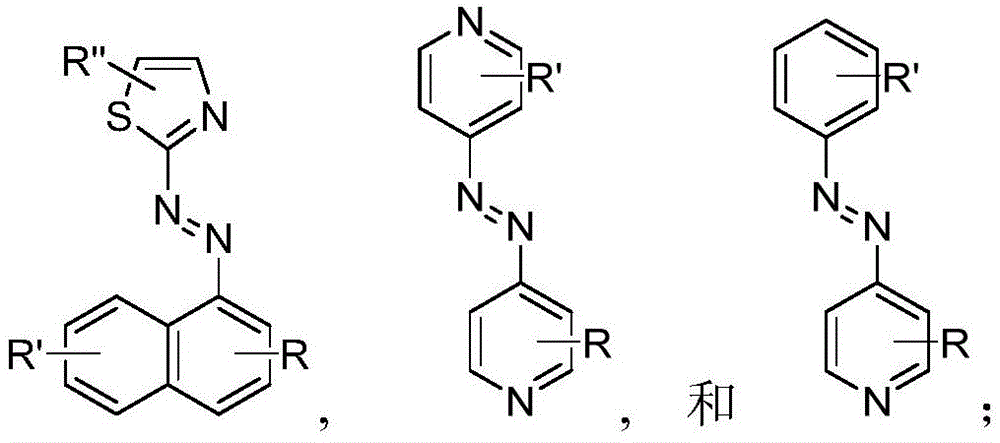
15. The method of any one of embodiments 1-14, wherein the hydrophilic portion comprises: sulfonyl, sulfonic acid/sulfonate ester groups, carboxylic acid/carboxylate ester groups, phosphoric acid/phosphate ester groups, phosphonic acid/phosphonate ester groups, NH2,NR””2OH, N-sulfonylalkyl, O-sulfoalkyl, salts thereof, and combinations thereof.
16. The method of embodiment 15, wherein the hydrophilic moiety comprises at least one sulfonyl group.
17. The method according to any one of embodiments 1-16, wherein the SNR-enhancing moiety further comprises a linker connecting the SNR-enhancing moiety to the hydrophilic moiety.
18. The method of embodiment 17, wherein the linker comprises an alkyl chain of at least two carbons.
19. The method of embodiment 17, wherein the linker comprises a polyethylene glycol chain.
20. The method of any one of embodiments 1-19, wherein the SDA-enhancing agent is selected from the group consisting of:
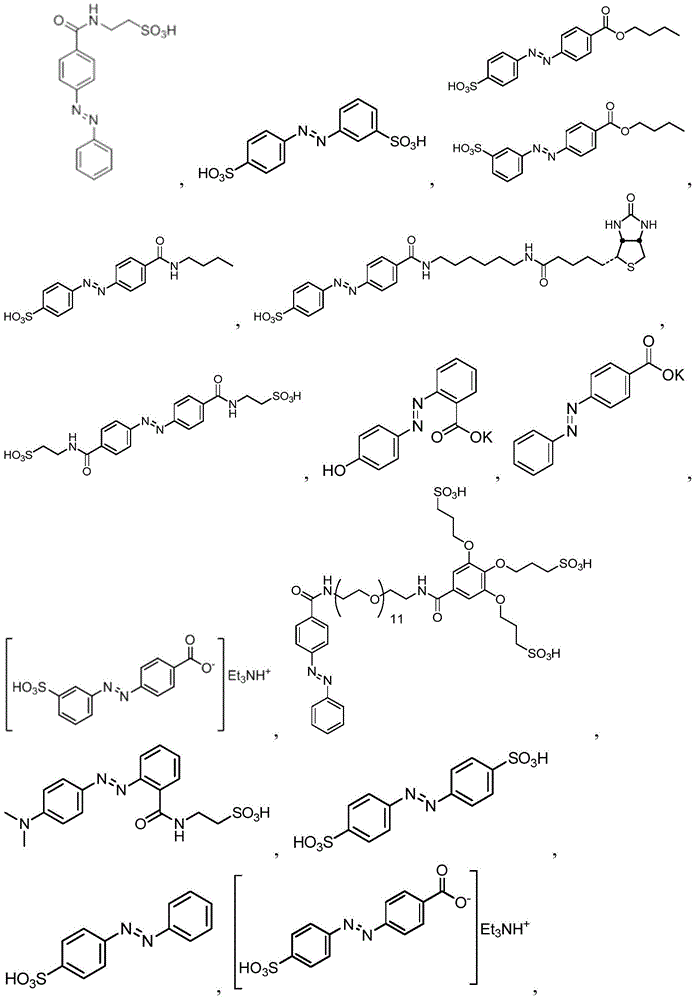
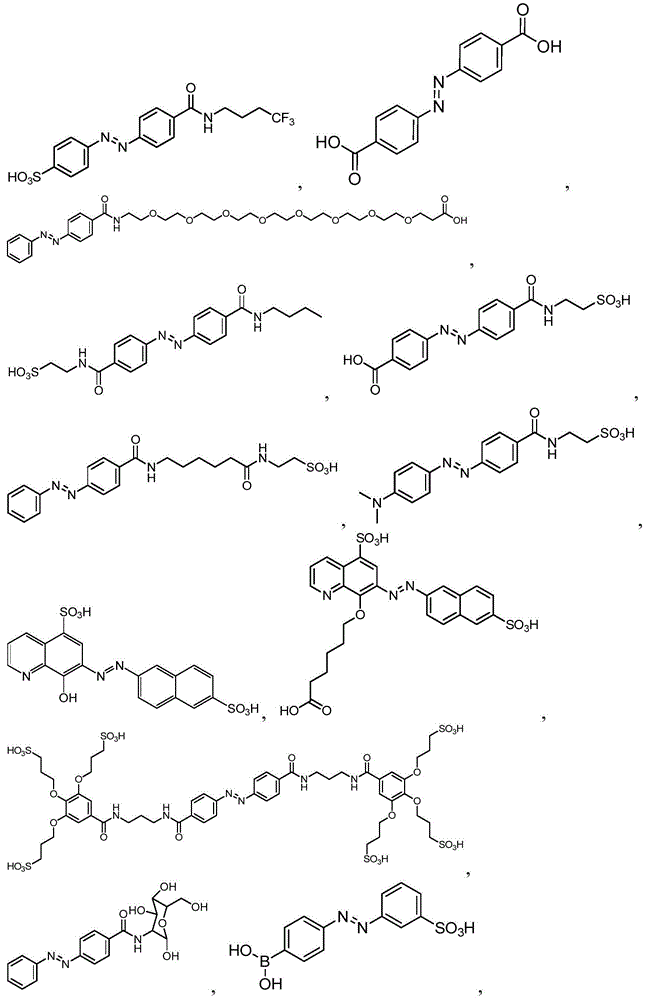
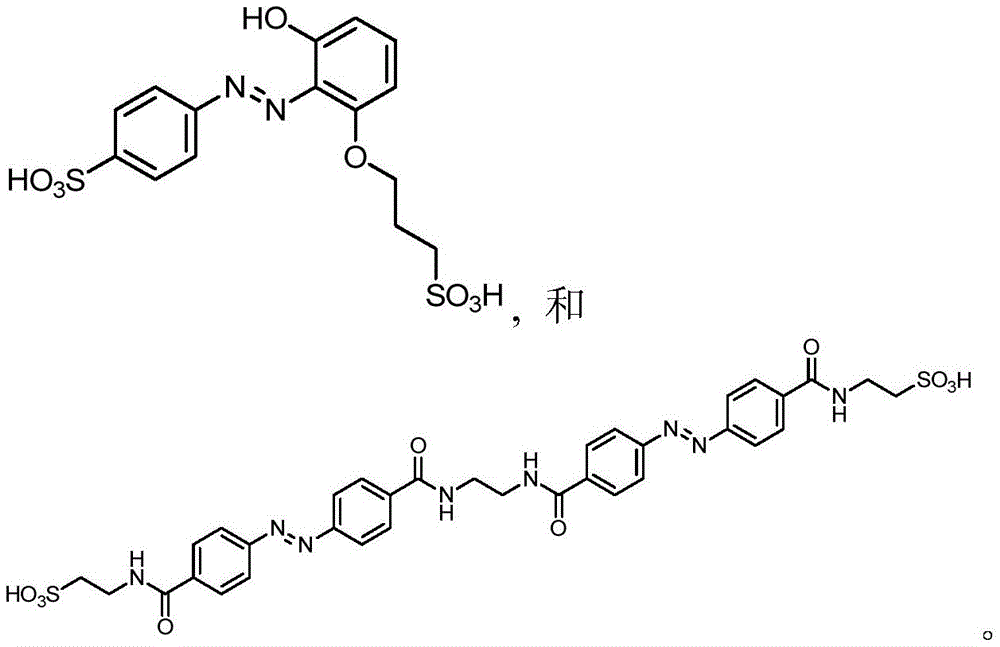
21. the method of any one of embodiments 1-20, wherein the SDA-enhancing agent results in any of the following results, or a combination thereof: (i) increasing the optical signal, (ii) reducing background noise, (iii) mitigating photo-induced damage (PID) to the unlabeled reactant, and (iv) reducing blinking or photobleaching of the fluorescent or fluorogenic reactant, wherein (i) through (iv) are compared to the illuminated reaction mixture in the absence of the SDA-enhancing agent.
22. The method of any one of embodiments 1 to 21, wherein the SDA-enhancing agent results in an increase in SNR and an increase in photoprotection compared to an illuminated reaction mixture in the absence of the SDA-enhancing agent.
23. The method of any one of embodiments 1 to 22, wherein the signal detection assay is a light sequencing reaction with increased accuracy as compared to a light sequencing reaction in the absence of the SDA-enhancing agent.
24. The method of embodiment 23, wherein the reaction mixture comprises: a polymerase, a template nucleic acid, and a fluorescent or fluorogenic nucleotide or nucleotide analog.
25. The method of embodiment 24, further comprising the step of monitoring the reaction between the polymerase and the fluorescent or fluorogenic nucleotide or nucleotide analog while illuminating the reaction mixture.
26. The method of any one of embodiments 24 or 25, wherein the light sequencing reaction is a base extension reaction.
27. The method of any one of embodiments 24-26, wherein the polymerase is confined within a zero mode waveguide.
28. A reaction mixture, comprising: a fluorescent or fluorogenic reactant; an unlabeled reactant; and a Signal Detection Assay (SDA) -enhancing agent comprising an SDA-enhancing moiety and a hydrophilic moiety, wherein the SDA-enhancing moiety comprises formula Ra-N=N-RbAzo of (a), wherein RaAnd RbEach comprising an aromatic moiety, and wherein the hydrophilic moiety and RaAnd (3) covalent linkage.
29. The reaction mixture of embodiment 28, wherein the fluorescence of the fluorescent reactant comprises one or more labeled nucleotide polyphosphates, the unlabeled reactant comprises a polymerase, and the SDA-enhancing agent is selected from table 1.
30. A kit, comprising: a fluorescent or fluorogenic reactant; an unlabeled reactant; and a Signal Detection Assay (SDA) -enhancing agent comprising an SDA-enhancing moiety and a hydrophilic moiety, wherein the SDA-enhancing moiety comprises formula Ra-N=N-RbAzo of (a), wherein RaAnd RbEach comprising an aromatic moiety, and wherein the hydrophilic moiety and RaAnd (3) covalent linkage.
31. The kit of embodiment 30, wherein the fluorescence of the fluorescent reactant comprises one or more labeled nucleotide polyphosphates, the unlabeled reactant comprises a polymerase, and the SDA-enhancing agent is selected from table 1.
V. examples
Sequencing Performance in the Presence of an SDA enhancer
According to manufacturer's instructions for 10 minute video, use SequelTMThe sequencing instrument (Pacific Biosciences, Menlo Park, Calif.) performed the experiment. Use of
 Sequencing method for small template nucleic acid (-300 bp SMRTbell)TMTemplate) is sequenced, which is a single molecule real-time sequencing method in which sequencing reads are generated by performing reactions sequencing by synthesis on single template molecules and observing base binding. The nucleotides in the reaction have a fluorescent label attached to the phosphate tail, such that upon binding of the base, the label is released with the polyphosphate. The labels on the nucleotides in the reaction are as follows: cyanine 3.5 labeled deoxythymidine (Cy3.5-dT); cyanine 5-labeled deoxyadenosine (Cy 5-dA); cyanine 3.5 labeled deoxyguanosine (Cy3.5-dG); and cyanine 5-labeled deoxycytidine (Cy 5-dC). The level of fluorescence emitted from nucleotides labeled with the same label is quantitatively different and therefore can be distinguished from each other in the reaction. Thus, the difference in the levels of fluorescence emitted from Cy3.5-dT and Cy3.5-dG during the light reaction was sufficient to distinguish them in the sequencing reaction, as was the case for Cy5-dA and Cy 5-dC. It should be noted that different labels (i.e. different from cyanine 3.5 and cyanine 5) and/or different label configurations may be used. The assay configuration is thus not meant to be limiting and can vary and include cyanine dyes 3.5 and 5. The fluorescence characteristics (wavelength, intensity, etc.) of each dye are unique to a particular deoxynucleotide and can therefore be analyzed for positive recognition when incorporated into a growing nucleic acid strand. Although only a very small volume of the reaction mixture is irradiated, the relatively high concentration of nucleotides required for polymerase activity leads to background noise, which can interfere with the detection of binding events. The addition of an SDA-enhancing agent was found to improve the SNR and accuracy of the sequencing reaction. We have previously shown that triplet-quenchers are required to provide photostability to reaction components, but unexpectedly, this increase in accuracy is maintained even without known triplet-quenchers (see below). Thus, the SDA-enhancing agent not only increases SNR, but also provides an unexpected photoprotective function for these reactions. Even in the absence of a separate photoprotectant (e.g., triplet quencher), this dual activity results in better binding detection and more accurate sequence readsAnd (4) counting.
Example 1 SDA-enhancing agent having both SNR-increasing activity and photoprotective activity.
FIGS. 2-4 show SNR differences between a sequencing reaction comprising SDA-enhancing agent No. 1 of Table 1 and an identical sequencing reaction lacking the SDA-enhancing agent. SDA-enhancing agent No. 1 has the following structural formula:

the fluorophore used in the SNR plot of FIG. 2 is Cy3.5-dT. An increase in SNR of about 25% was observed. FIG. 3 shows the results for Cy3.5-dG, indicating an increase in SNR of about 14% in the presence of the SDA-enhancing agent. FIG. 4 provides SNR gain data for Cy5-dC in a sequencing reaction, showing a 1-2% increase in SNR.
FIG. 5 is a graph showing the increase in signal intensity of Cy3.5-dT in the presence of SDA-enhancing agent # 1, with an increase in signal brightness of about 15%.
The data provided in fig. 6 shows that the noise from Cy5-dC is reduced by approximately 10% when SDA-enhancing agent No. 1 is present. Also, FIG. 7 shows a similar reduction in noise from Cy3.5-dT in the presence of this SDA-enhancing agent.
The SDA-enhancing agent also appears to increase the overall accuracy of the sequencing reads. Figure 8 shows an overall accuracy measure of sequencing reads for sequencing reactions comprising deoxynucleotides labeled with different types of fluorescent dyes (different dyes on each different nucleotide) in the absence and presence of SDA-enhancing agent No. 1. The SDA-enhancing agent improves the accuracy of the sequencing data by about 2-3%, which is a very significant increase for single molecule sequencing reactions.
In a series of subsequent experiments, the SNR-increasing activity of this SDA-enhancing agent was further evaluated. Titration experiments showed that the SNR-increasing activity of this reagent was effective in sequencing reactions from 100. mu.M to 1mM and showed no negative effect on the kinetics of the sequencing reaction over this broad range.
The SDA-enhancing agent No. 1 was then tested in a sequencing reaction in the presence of a triplet quencher (TSQ) that had previously been shown to have photoprotective activity (see us patent 8,834,847 for a detailed description of the photoprotective molecule):

as described above, the sequencing reactions were performed in the presence of 300. mu.M, 600. mu.M and 900. mu.M SDA-enhancing agent No. 1, and the titrated TSQ amounts were at 0. mu.M, 300. mu.M, 600. mu.M and 900. mu.M (thus a total of 12 reactions were performed). We surprisingly found that the increase in accuracy of the sequencing reaction with only the SDA-enhancing agent (i.e., relative to the control reaction without the additive) was as much as the increase in accuracy of the sequencing reaction containing both DQ123 and TSQ (data not shown). This experiment shows that DQ-123 has photoprotective activity in addition to its SNR-increasing activity. Thus, there is no need to add another photo-protecting agent (e.g., TSQ) to the reaction containing the SDA-enhancing agent.
Example 2 testing of SDA-enhancing Activity of other Compounds
Other compounds were tested for SDA-enhancing activity in the sequencing reactions performed as described above. Table 2 below shows the relative improvement in accuracy of the sequencing reaction results in the presence of the indicated amount of each compound. As has been described above, in the above-mentioned, the improvement of SNR and the increase of photoprotective effect in the sequencing reaction leads to an improvement of the sequencing accuracy, i.e. the accuracy of a single sequencing of a template molecule with a known sequence. DQ-123 was provided as a positive control and the reaction without any SDA-enhancing agent was provided as a negative control. Accuracy was provided relative to the negative control. These reactions did not contain any additional SNR enhancement or photo-protecting compounds.
Table 2: relative sequencing accuracy in the presence of SDA-enhancing agent
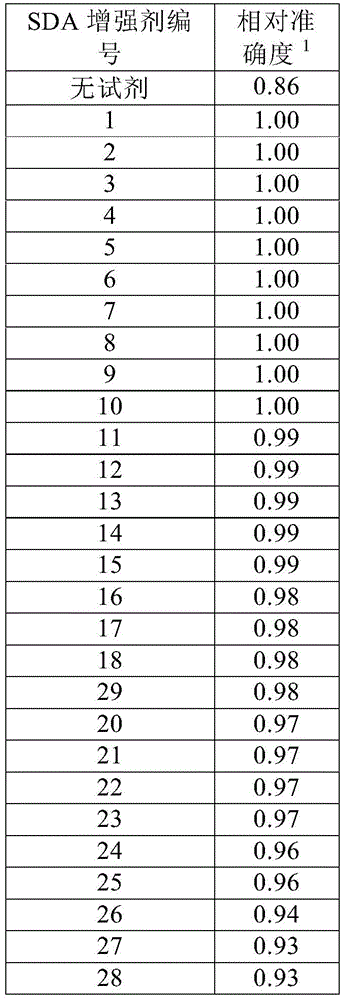
1Accuracy with respect to DQ123 accuracy performed in the same experiment.
As is clear from the above table, inclusion of any of compounds 1 to 28 in the sequencing reaction mixture improved its accuracy compared to the reaction without the SDA-enhancing agent (first row). Thus, each of these compounds is included in the group of compounds described herein as SDA-enhancing agents of the present invention.
Claims (23)
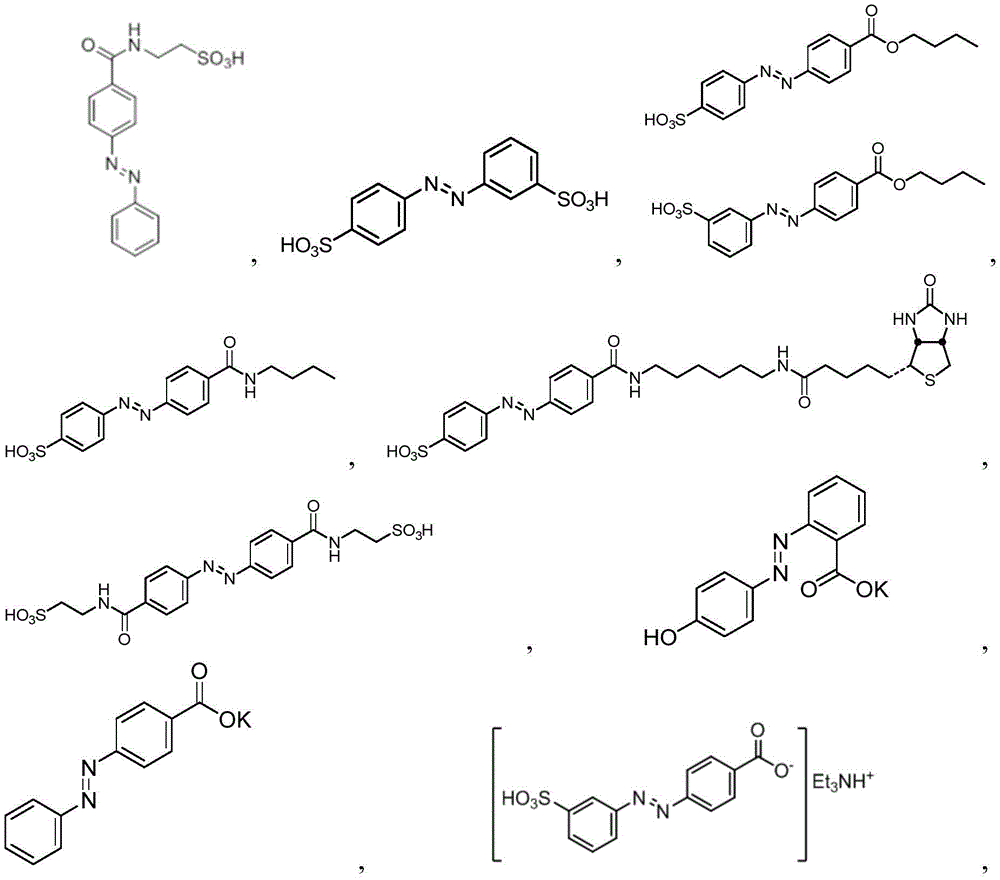
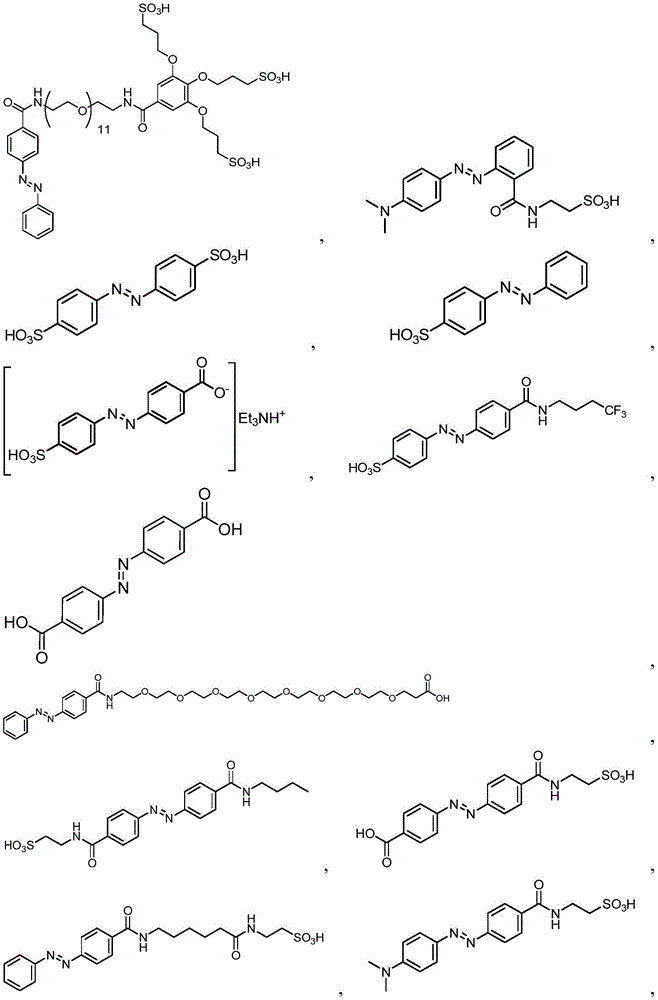

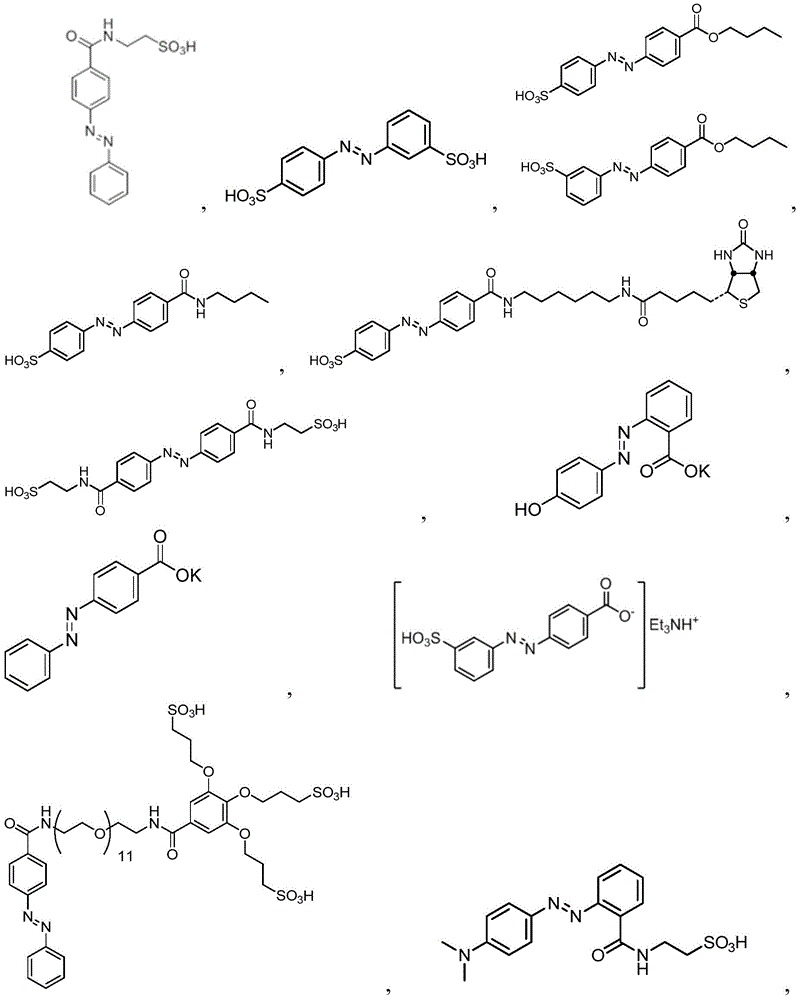


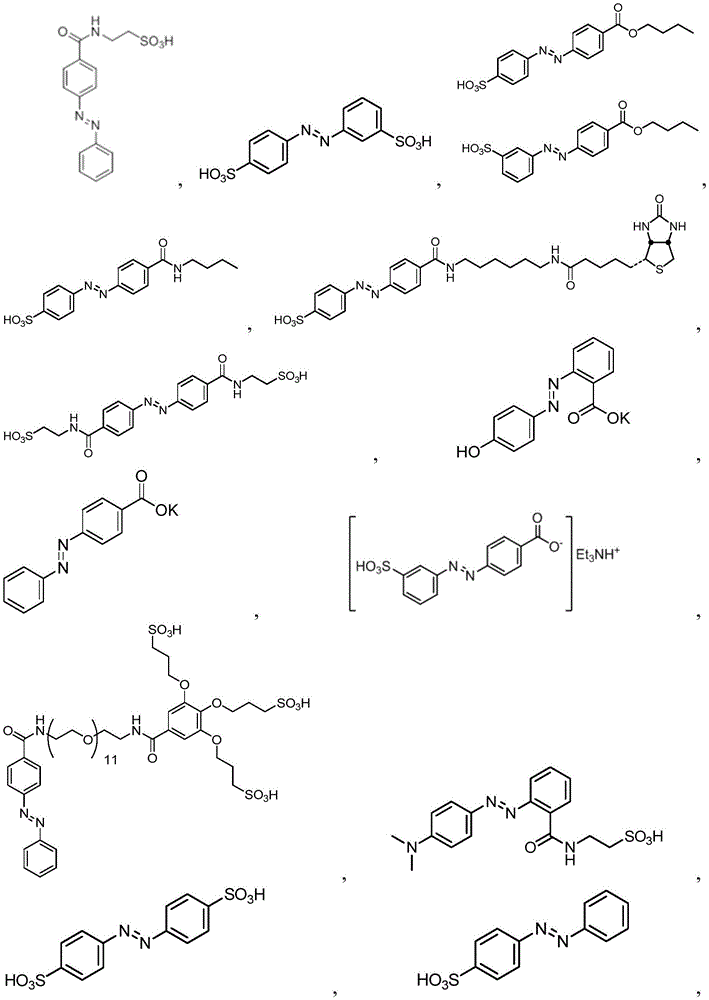
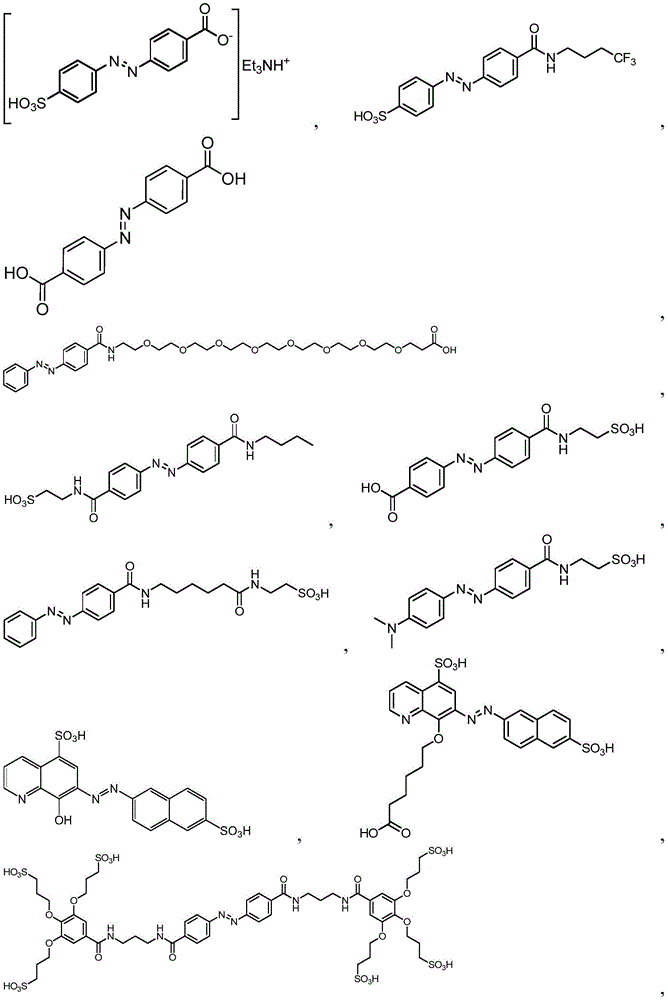

Applications Claiming Priority (3)
| Application Number | Priority Date | Filing Date | Title |
|---|---|---|---|
| US201562257581P | 2015-11-19 | 2015-11-19 | |
| US62/257,581 | 2015-11-19 | ||
| PCT/US2016/062932 WO2017087894A1 (en) | 2015-11-19 | 2016-11-18 | Compounds and systems for improving signal detection |
Publications (2)
| Publication Number | Publication Date |
|---|---|
| CN108350487A CN108350487A (en) | 2018-07-31 |
| CN108350487B true CN108350487B (en) | 2022-05-27 |
Family
ID=58719242
Family Applications (1)
| Application Number | Title | Priority Date | Filing Date |
|---|---|---|---|
| CN201680067781.3A Active CN108350487B (en) | 2015-11-19 | 2016-11-18 | Compounds and systems for improved signal detection |
Country Status (4)
| Country | Link |
|---|---|
| US (2) | US10435741B2 (en) |
| EP (1) | EP3350350B1 (en) |
| CN (1) | CN108350487B (en) |
| WO (1) | WO2017087894A1 (en) |
Families Citing this family (4)
| Publication number | Priority date | Publication date | Assignee | Title |
|---|---|---|---|---|
| WO2020006421A1 (en) | 2018-06-29 | 2020-01-02 | Pacific Biosciences Of California, Inc. | Methods and compositions for delivery of molecules and complexes to reaction sites |
| WO2021123116A1 (en) * | 2019-12-19 | 2021-06-24 | Skinosive | Adhesive photoprotective compounds and uses thereof |
| CN112187351A (en) * | 2020-09-21 | 2021-01-05 | 西安工程大学 | Method for calculating signal-to-noise ratio of ultraviolet experimental signal and simulation signal thereof |
| EP4634285A1 (en) * | 2022-12-15 | 2025-10-22 | Nautilus Subsidiary, Inc. | Inhibition of photon phenomena on single molecule arrays |
Citations (3)
| Publication number | Priority date | Publication date | Assignee | Title |
|---|---|---|---|---|
| US20040259102A1 (en) * | 2002-07-18 | 2004-12-23 | Stanford University | Detection of chemical ligation using fluorescence quenching leaving groups |
| US20110160077A1 (en) * | 2009-12-16 | 2011-06-30 | Pacific Biosciences Of California, Inc. | Sequencing methods using enzyme conformation |
| CN104592783A (en) * | 2013-11-04 | 2015-05-06 | 新昌县冠阳技术开发有限公司 | Energy transfer enhanced fluorescent dye |
Family Cites Families (24)
| Publication number | Priority date | Publication date | Assignee | Title |
|---|---|---|---|---|
| US4962020A (en) | 1988-07-12 | 1990-10-09 | President And Fellows Of Harvard College | DNA sequencing |
| US6780591B2 (en) | 1998-05-01 | 2004-08-24 | Arizona Board Of Regents | Method of determining the nucleotide sequence of oligonucleotides and DNA molecules |
| CA2330673C (en) | 1998-05-01 | 2009-05-26 | Arizona Board Of Regents | Method of determining the nucleotide sequence of oligonucleotides and dna molecules |
| AU772281B2 (en) * | 1998-12-14 | 2004-04-22 | Li-Cor Inc. | A system and methods for nucleic acid sequencing of single molecules by polymerase synthesis |
| ATE556149T1 (en) | 1999-02-23 | 2012-05-15 | Caliper Life Sciences Inc | MANIPULATION OF MICROPARTICLES IN MICROFLUIDIC SYSTEMS |
| EP1789794A1 (en) | 2004-09-14 | 2007-05-30 | Applera Corporation, Applied Biosystems Group | Multi-chromophoric quencher constructs for use in high sensitivity energy transfer probes |
| JP2008513782A (en) | 2004-09-17 | 2008-05-01 | パシフィック バイオサイエンシーズ オブ カリフォルニア, インコーポレイテッド | Apparatus and method for molecular analysis |
| US7170050B2 (en) * | 2004-09-17 | 2007-01-30 | Pacific Biosciences Of California, Inc. | Apparatus and methods for optical analysis of molecules |
| US7476504B2 (en) * | 2005-01-31 | 2009-01-13 | Pacific Biosciences Of California, Inc. | Use of reversible extension terminator in nucleic acid sequencing |
| US7805081B2 (en) | 2005-08-11 | 2010-09-28 | Pacific Biosciences Of California, Inc. | Methods and systems for monitoring multiple optical signals from a single source |
| US7998717B2 (en) | 2005-12-02 | 2011-08-16 | Pacific Biosciences Of California, Inc. | Mitigation of photodamage in analytical reactions |
| EP1969352A2 (en) * | 2006-01-06 | 2008-09-17 | Siemens Healthcare Diagnostics Inc. | Method for increasing signal intensity in an optical waveguide sensor |
| WO2008121375A2 (en) | 2007-03-29 | 2008-10-09 | Pacific Biosciences Of California, Inc. | Modified surfaces for immobilization of active molecules |
| CA2714630A1 (en) | 2008-02-07 | 2009-08-13 | Pacific Biosciences Of California, Inc. | Cis reactive oxygen quenchers integrated into linkers |
| EP2263087B1 (en) | 2008-03-13 | 2017-08-09 | Pacific Biosciences of California, Inc. | Labeled reactants and their uses |
| US20100003765A1 (en) | 2008-05-13 | 2010-01-07 | Pacific Biosciences Of California, Inc. | Methods and systems for mitigating oxygen enhanced damage in real-time analytical operations |
| US8383369B2 (en) | 2008-09-24 | 2013-02-26 | Pacific Biosciences Of California, Inc. | Intermittent detection during analytical reactions |
| WO2010059880A2 (en) | 2008-11-19 | 2010-05-27 | Pacific Biosciences Of California, Inc. | Photo-induced damage mitigating agents and preparation and methods of use thereof |
| CN102317473A (en) | 2008-12-11 | 2012-01-11 | 加利福尼亚太平洋生物科学股份有限公司 | Shenzhen tcl new technology co. , ltd |
| US8834847B2 (en) | 2010-08-12 | 2014-09-16 | Pacific Biosciences Of California, Inc. | Photodamage mitigation compounds and systems |
| US9970057B2 (en) * | 2011-05-06 | 2018-05-15 | Albert Einstein College Of Medicine, Inc. | Human invasion signature for prognosis of metastatic risk |
| US8956816B2 (en) | 2012-06-05 | 2015-02-17 | Pacific Biosciences Of California, Inc. | Methods and compositions for performing analytical operations |
| US9637782B2 (en) | 2012-09-28 | 2017-05-02 | Pacific Biosciences Of California, Inc. | Charged triplet-state quenchers for mitigation of photo-induced damage |
| HK1217517A1 (en) | 2013-01-23 | 2017-01-13 | Brandeis University | Reagents for improving pcr accuracy |
-
2016
- 2016-11-18 CN CN201680067781.3A patent/CN108350487B/en active Active
- 2016-11-18 US US15/356,366 patent/US10435741B2/en active Active
- 2016-11-18 WO PCT/US2016/062932 patent/WO2017087894A1/en not_active Ceased
- 2016-11-18 EP EP16867290.5A patent/EP3350350B1/en active Active
-
2018
- 2018-10-25 US US16/170,982 patent/US10995365B2/en active Active
Patent Citations (3)
| Publication number | Priority date | Publication date | Assignee | Title |
|---|---|---|---|---|
| US20040259102A1 (en) * | 2002-07-18 | 2004-12-23 | Stanford University | Detection of chemical ligation using fluorescence quenching leaving groups |
| US20110160077A1 (en) * | 2009-12-16 | 2011-06-30 | Pacific Biosciences Of California, Inc. | Sequencing methods using enzyme conformation |
| CN104592783A (en) * | 2013-11-04 | 2015-05-06 | 新昌县冠阳技术开发有限公司 | Energy transfer enhanced fluorescent dye |
Also Published As
| Publication number | Publication date |
|---|---|
| EP3350350A1 (en) | 2018-07-25 |
| WO2017087894A1 (en) | 2017-05-26 |
| EP3350350A4 (en) | 2019-04-10 |
| US10995365B2 (en) | 2021-05-04 |
| US20190106742A1 (en) | 2019-04-11 |
| EP3350350B1 (en) | 2021-04-14 |
| US10435741B2 (en) | 2019-10-08 |
| CN108350487A (en) | 2018-07-31 |
| US20170145494A1 (en) | 2017-05-25 |
Similar Documents
| Publication | Publication Date | Title |
|---|---|---|
| US12448647B2 (en) | Methods of monitoring a reaction | |
| US8071346B2 (en) | System for the mitigation of photodamage in analytical reactions | |
| US9732382B2 (en) | Photodamage mitigation compounds and systems | |
| US8921532B2 (en) | Phospholink nucleotides for sequencing applications | |
| US8388982B2 (en) | Photo-induced damage mitigating agents and preparation and methods of use thereof | |
| CN108350487B (en) | Compounds and systems for improved signal detection | |
| US11162129B2 (en) | Photoprotective mixtures as imaging reagents in sequencing-by-synthesis | |
| US20250236910A1 (en) | Methods for single molecule sequencing | |
| US9475768B2 (en) | Luminogen compounds and the use of the same for biosensing and cellular imaging | |
| RS62530B1 (en) | Compositions for nucleic acid sequencing | |
| EP2812698B1 (en) | Dual-acceptor time-resolved-fret | |
| US20100317544A1 (en) | Methods, Particles, and Kits for Determining Activity of a Kinase |
Legal Events
| Date | Code | Title | Description |
|---|---|---|---|
| PB01 | Publication | ||
| PB01 | Publication | ||
| SE01 | Entry into force of request for substantive examination | ||
| SE01 | Entry into force of request for substantive examination | ||
| GR01 | Patent grant | ||
| GR01 | Patent grant |