CN107210226B - Manufacturing method of semiconductor device - Google Patents
Manufacturing method of semiconductor device Download PDFInfo
- Publication number
- CN107210226B CN107210226B CN201680008319.6A CN201680008319A CN107210226B CN 107210226 B CN107210226 B CN 107210226B CN 201680008319 A CN201680008319 A CN 201680008319A CN 107210226 B CN107210226 B CN 107210226B
- Authority
- CN
- China
- Prior art keywords
- film
- oxide semiconductor
- insulating film
- oxide
- semiconductor film
- Prior art date
- Legal status (The legal status is an assumption and is not a legal conclusion. Google has not performed a legal analysis and makes no representation as to the accuracy of the status listed.)
- Active
Links
Images




Classifications
-
- H—ELECTRICITY
- H10—SEMICONDUCTOR DEVICES; ELECTRIC SOLID-STATE DEVICES NOT OTHERWISE PROVIDED FOR
- H10D—INORGANIC ELECTRIC SEMICONDUCTOR DEVICES
- H10D99/00—Subject matter not provided for in other groups of this subclass
-
- H—ELECTRICITY
- H10—SEMICONDUCTOR DEVICES; ELECTRIC SOLID-STATE DEVICES NOT OTHERWISE PROVIDED FOR
- H10D—INORGANIC ELECTRIC SEMICONDUCTOR DEVICES
- H10D30/00—Field-effect transistors [FET]
- H10D30/60—Insulated-gate field-effect transistors [IGFET]
- H10D30/67—Thin-film transistors [TFT]
- H10D30/6704—Thin-film transistors [TFT] having supplementary regions or layers in the thin films or in the insulated bulk substrates for controlling properties of the device
-
- H—ELECTRICITY
- H10—SEMICONDUCTOR DEVICES; ELECTRIC SOLID-STATE DEVICES NOT OTHERWISE PROVIDED FOR
- H10D—INORGANIC ELECTRIC SEMICONDUCTOR DEVICES
- H10D30/00—Field-effect transistors [FET]
- H10D30/60—Insulated-gate field-effect transistors [IGFET]
- H10D30/67—Thin-film transistors [TFT]
- H10D30/6729—Thin-film transistors [TFT] characterised by the electrodes
- H10D30/673—Thin-film transistors [TFT] characterised by the electrodes characterised by the shapes, relative sizes or dispositions of the gate electrodes
- H10D30/6733—Multi-gate TFTs
- H10D30/6734—Multi-gate TFTs having gate electrodes arranged on both top and bottom sides of the channel, e.g. dual-gate TFTs
-
- H—ELECTRICITY
- H10—SEMICONDUCTOR DEVICES; ELECTRIC SOLID-STATE DEVICES NOT OTHERWISE PROVIDED FOR
- H10D—INORGANIC ELECTRIC SEMICONDUCTOR DEVICES
- H10D30/00—Field-effect transistors [FET]
- H10D30/60—Insulated-gate field-effect transistors [IGFET]
- H10D30/67—Thin-film transistors [TFT]
- H10D30/674—Thin-film transistors [TFT] characterised by the active materials
- H10D30/6755—Oxide semiconductors, e.g. zinc oxide, copper aluminium oxide or cadmium stannate
-
- H—ELECTRICITY
- H10—SEMICONDUCTOR DEVICES; ELECTRIC SOLID-STATE DEVICES NOT OTHERWISE PROVIDED FOR
- H10D—INORGANIC ELECTRIC SEMICONDUCTOR DEVICES
- H10D30/00—Field-effect transistors [FET]
- H10D30/60—Insulated-gate field-effect transistors [IGFET]
- H10D30/67—Thin-film transistors [TFT]
- H10D30/6757—Thin-film transistors [TFT] characterised by the structure of the channel, e.g. transverse or longitudinal shape or doping profile
-
- H—ELECTRICITY
- H10—SEMICONDUCTOR DEVICES; ELECTRIC SOLID-STATE DEVICES NOT OTHERWISE PROVIDED FOR
- H10D—INORGANIC ELECTRIC SEMICONDUCTOR DEVICES
- H10D86/00—Integrated devices formed in or on insulating or conducting substrates, e.g. formed in silicon-on-insulator [SOI] substrates or on stainless steel or glass substrates
- H10D86/01—Manufacture or treatment
- H10D86/021—Manufacture or treatment of multiple TFTs
- H10D86/0221—Manufacture or treatment of multiple TFTs comprising manufacture, treatment or patterning of TFT semiconductor bodies
-
- H—ELECTRICITY
- H10—SEMICONDUCTOR DEVICES; ELECTRIC SOLID-STATE DEVICES NOT OTHERWISE PROVIDED FOR
- H10D—INORGANIC ELECTRIC SEMICONDUCTOR DEVICES
- H10D86/00—Integrated devices formed in or on insulating or conducting substrates, e.g. formed in silicon-on-insulator [SOI] substrates or on stainless steel or glass substrates
- H10D86/40—Integrated devices formed in or on insulating or conducting substrates, e.g. formed in silicon-on-insulator [SOI] substrates or on stainless steel or glass substrates characterised by multiple TFTs
- H10D86/421—Integrated devices formed in or on insulating or conducting substrates, e.g. formed in silicon-on-insulator [SOI] substrates or on stainless steel or glass substrates characterised by multiple TFTs having a particular composition, shape or crystalline structure of the active layer
- H10D86/423—Integrated devices formed in or on insulating or conducting substrates, e.g. formed in silicon-on-insulator [SOI] substrates or on stainless steel or glass substrates characterised by multiple TFTs having a particular composition, shape or crystalline structure of the active layer comprising semiconductor materials not belonging to the Group IV, e.g. InGaZnO
-
- H—ELECTRICITY
- H10—SEMICONDUCTOR DEVICES; ELECTRIC SOLID-STATE DEVICES NOT OTHERWISE PROVIDED FOR
- H10D—INORGANIC ELECTRIC SEMICONDUCTOR DEVICES
- H10D86/00—Integrated devices formed in or on insulating or conducting substrates, e.g. formed in silicon-on-insulator [SOI] substrates or on stainless steel or glass substrates
- H10D86/40—Integrated devices formed in or on insulating or conducting substrates, e.g. formed in silicon-on-insulator [SOI] substrates or on stainless steel or glass substrates characterised by multiple TFTs
- H10D86/451—Integrated devices formed in or on insulating or conducting substrates, e.g. formed in silicon-on-insulator [SOI] substrates or on stainless steel or glass substrates characterised by multiple TFTs characterised by the compositions or shapes of the interlayer dielectrics
-
- H—ELECTRICITY
- H10—SEMICONDUCTOR DEVICES; ELECTRIC SOLID-STATE DEVICES NOT OTHERWISE PROVIDED FOR
- H10D—INORGANIC ELECTRIC SEMICONDUCTOR DEVICES
- H10D86/00—Integrated devices formed in or on insulating or conducting substrates, e.g. formed in silicon-on-insulator [SOI] substrates or on stainless steel or glass substrates
- H10D86/40—Integrated devices formed in or on insulating or conducting substrates, e.g. formed in silicon-on-insulator [SOI] substrates or on stainless steel or glass substrates characterised by multiple TFTs
- H10D86/60—Integrated devices formed in or on insulating or conducting substrates, e.g. formed in silicon-on-insulator [SOI] substrates or on stainless steel or glass substrates characterised by multiple TFTs wherein the TFTs are in active matrices
Landscapes
- Thin Film Transistor (AREA)
- Electroluminescent Light Sources (AREA)
- Semiconductor Memories (AREA)
- Electrodes Of Semiconductors (AREA)
- Internal Circuitry In Semiconductor Integrated Circuit Devices (AREA)
- Liquid Crystal (AREA)
- Physical Deposition Of Substances That Are Components Of Semiconductor Devices (AREA)
Abstract
本发明的一个方式提供一种可靠性高的半导体装置的制造方法。该方法包括如下步骤:以第一温度形成氧化物半导体膜;将氧化物半导体膜加工为岛状;不进行比第一温度高的温度的工序通过溅射法形成将成为源电极及漏电极的构件;对构件进行加工来形成源电极及漏电极;在形成保护绝缘膜后形成第一阻挡膜;隔着第一阻挡膜对保护绝缘膜添加过剩氧或氧自由基;通过以低于400℃的第二温度进行加热处理来使过剩氧或氧自由基扩散到氧化物半导体膜;以及在利用湿蚀刻去除第一阻挡膜的一部分及保护绝缘膜的一部分后,形成第二阻挡膜。

One embodiment of the present invention provides a method for manufacturing a highly reliable semiconductor device. The method includes the following steps: forming an oxide semiconductor film at a first temperature; processing the oxide semiconductor film into an island shape; forming a member to be a source electrode and a drain electrode by sputtering without performing a process at a temperature higher than the first temperature; processing the member to form the source electrode and the drain electrode; forming a first barrier film after forming a protective insulating film; adding excess oxygen or oxygen radicals to the protective insulating film through the first barrier film; diffusing the excess oxygen or oxygen radicals into the oxide semiconductor film by performing a heat treatment at a second temperature lower than 400°C; and forming a second barrier film after removing a portion of the first barrier film and a portion of the protective insulating film by wet etching.
Description
技术领域technical field
本发明的一个方式涉及一种包括氧化物半导体膜的半导体装置及包括该半导体装置的显示装置。本发明的另一个方式涉及一种包括氧化物半导体膜的半导体装置的制造方法。One embodiment of the present invention relates to a semiconductor device including an oxide semiconductor film and a display device including the semiconductor device. Another aspect of the present invention relates to a method of manufacturing a semiconductor device including an oxide semiconductor film.
注意,本发明的一个方式不局限于上述技术领域。本说明书等所公开的发明的一个方式的技术领域涉及一种物体、方法或制造方法。另外,本发明涉及一种工序(process)、机器(machine)、产品(manufacture)或者组合物(composition of matter)。尤其是,本发明的一个方式涉及一种半导体装置、显示装置、发光装置、蓄电装置、存储装置、它们的驱动方法或者它们的制造方法。Note that one form of the present invention is not limited to the above-mentioned technical field. The technical field of one aspect of the invention disclosed in this specification and the like relates to an object, a method, or a manufacturing method. In addition, the present invention relates to a process, machine, manufacture or composition of matter. In particular, one embodiment of the present invention relates to a semiconductor device, a display device, a light-emitting device, a power storage device, a storage device, a driving method thereof, or a manufacturing method thereof.
在本说明书等中,半导体装置是指能够利用半导体特性而工作的所有装置。晶体管等半导体元件、半导体电路、运算装置及存储装置都是半导体装置的一个方式。摄像装置、显示装置、液晶显示装置、发光装置、电光装置、发电装置(包括薄膜太阳能电池及有机薄膜太阳能电池等)及电子设备有时包括半导体装置。In this specification and the like, a semiconductor device refers to any device that can operate using semiconductor characteristics. Semiconductor elements such as transistors, semiconductor circuits, arithmetic devices, and storage devices are all examples of semiconductor devices. Image pickup devices, display devices, liquid crystal display devices, light-emitting devices, electro-optical devices, power generation devices (including thin-film solar cells, organic thin-film solar cells, etc.), and electronic equipment sometimes include semiconductor devices.
背景技术Background technique
通过利用形成在具有绝缘表面的衬底上的半导体薄膜来形成晶体管(也称为场效应晶体管(FET)或薄膜晶体管(TFT))的技术受到关注。这种晶体管被广泛地应用于如集成电路(IC)及图像显示装置(显示装置)等电子设备。作为可以应用于晶体管的半导体薄膜,以硅为代表的半导体材料被广泛周知。作为其他材料,氧化物半导体受到关注。A technique of forming a transistor (also called a field effect transistor (FET) or a thin film transistor (TFT)) by using a semiconductor thin film formed on a substrate having an insulating surface has attracted attention. Such transistors are widely used in electronic equipment such as integrated circuits (ICs) and image display devices (display devices). Semiconductor materials represented by silicon are widely known as semiconductor thin films that can be applied to transistors. As other materials, oxide semiconductors are attracting attention.
已公开了一种可靠性高的半导体装置,其中使用氧化物半导体的晶体管具有稳定的电特性(例如,参照专利文献1)。在该半导体装置中,层叠有组成不同的氧化物半导体膜,包含大量的In的氧化物半导体膜位于沟道一侧,并且,包含大量的Ga等稳定剂的氧化物半导体膜位于背沟道一侧。A highly reliable semiconductor device in which a transistor using an oxide semiconductor has stable electrical characteristics has been disclosed (for example, refer to Patent Document 1). In this semiconductor device, oxide semiconductor films of different compositions are stacked, an oxide semiconductor film containing a large amount of In is located on the channel side, and an oxide semiconductor film containing a stabilizer such as Ga in a large amount is located on the back channel side. side.
[参考文献][references]
[专利文献][Patent Literature]
[专利文献1]日本专利申请公开第2013-175715号公报[Patent Document 1] Japanese Patent Application Laid-Open No. 2013-175715
发明内容SUMMARY OF THE INVENTION
包含大量的In的氧化物半导体膜有时具有小能带隙(Eg)(例如,Eg小于3.0eV)。Eg较小的氧化物半导体膜比Eg较大的氧化物半导体膜(例如,Eg为3.0eV以上且3.5eV以下)受光的影响更大。例如,当对包括Eg较小的氧化物半导体膜的晶体管进行照射光并施加负偏压的应力测试(光负GBT(negative gate bias temperature)应力测试)时,该晶体管的可靠性有时降低。An oxide semiconductor film containing a large amount of In sometimes has a small energy band gap (E g ) (eg, E g is less than 3.0 eV). An oxide semiconductor film with a small E g is more affected by light than an oxide semiconductor film with a large E g (eg, E g is 3.0 eV or more and 3.5 eV or less). For example, when a stress test (light negative GBT (negative gate bias temperature) stress test) in which light is irradiated and a negative bias voltage is applied to a transistor including an oxide semiconductor film with a small E g is performed, the reliability of the transistor sometimes decreases.
光负GBT应力测试是一种加速测试,其可以在短时间内对光照射时的长期间使用所引起的晶体管的特性变化进行评价。尤其是,光负GBT应力测试前后之间的晶体管的阈值电压的变化量(△Vth)是用于检查可靠性的重要指标。光负GBT应力测试前后之间的阈值电压的变化量(△Vth)越小,晶体管的可靠性就越高。The photo-negative GBT stress test is an accelerated test that can evaluate, in a short period of time, a change in characteristics of a transistor caused by long-term use when irradiated with light. In particular, the amount of change (ΔV th ) in the threshold voltage of the transistor between before and after the light negative GBT stress test is an important index for checking reliability. The smaller the amount of change in threshold voltage (ΔV th ) between before and after the optical negative GBT stress test, the higher the reliability of the transistor.
在使用玻璃衬底制造包括氧化物半导体膜的半导体装置的情况下,当工序温度高时,玻璃衬底有可能变形。当玻璃衬底具有如下大尺寸时,玻璃衬底会明显地变形:第6代(1500mm×1850mm)、第7代(1870mm×2200mm)、第8代(2200mm×2400mm)、第9代(2400mm×2800mm)、第10代(2950mm×3400mm)。因此,需要降低制造半导体装置时的工序中的温度。In the case of manufacturing a semiconductor device including an oxide semiconductor film using a glass substrate, the glass substrate may be deformed when the process temperature is high. When the glass substrate has the following large dimensions, the glass substrate will be significantly deformed: 6th generation (1500mm×1850mm), 7th generation (1870mm×2200mm), 8th generation (2200mm×2400mm), 9th generation (2400mm) ×2800mm), 10th generation (2950mm×3400mm). Therefore, it is necessary to lower the temperature in the process of manufacturing the semiconductor device.
鉴于上述问题,本发明的一个方式的目的是在包括包含大量的In的氧化物半导体膜的晶体管中抑制电特性的变动且提高可靠性。本发明的一个方式的另一个目的是提供一种功耗低的半导体装置。本发明的一个方式的另一个目的是提供一种新颖的半导体装置。本发明的一个方式的另一个目的是提供一种新颖半导体装置的制造方法。本发明的一个方式的另一个目的是提供一种以较低的温度制造可靠性高的半导体装置的方法。本发明的一个方式的另一个目的是提供一种新颖的显示装置的制造方法。In view of the above-mentioned problems, an object of one embodiment of the present invention is to suppress fluctuations in electrical characteristics and improve reliability in a transistor including an oxide semiconductor film containing a large amount of In. Another object of one embodiment of the present invention is to provide a semiconductor device with low power consumption. Another object of one embodiment of the present invention is to provide a novel semiconductor device. Another object of one embodiment of the present invention is to provide a method of manufacturing a novel semiconductor device. Another object of one embodiment of the present invention is to provide a method of manufacturing a highly reliable semiconductor device at a relatively low temperature. Another object of one embodiment of the present invention is to provide a novel manufacturing method of a display device.
注意,上述目的的记载不妨碍其他目的的存在。在本发明的一个方式中,并不需要实现所有上述目的。上述目的以外的目的从说明书等的记载看来是显而易见的,并可以从说明书等中抽取上述目的以外的目的。Note that the description of the above purpose does not prevent the existence of other purposes. In one form of the present invention, it is not necessary to achieve all of the above objects. Objects other than the above-mentioned objects are obvious from the description in the specification and the like, and objects other than the above-mentioned objects can be extracted from the specification and the like.
本发明的一个方式是一种半导体装置的制造方法,包括如下步骤:以第一温度形成氧化物半导体膜;接着,将氧化物半导体膜加工为岛状;接着,不进行比第一温度高的温度的工序通过溅射法形成将成为源电极及漏电极的构件;对构件进行加工来形成源电极及漏电极;接着,在形成第一保护绝缘膜和/或第二保护绝缘膜后形成第一阻挡膜;隔着第一阻挡膜对第二保护绝缘膜添加过剩氧或氧自由基;通过以低于400℃的第二温度进行加热处理来使过剩氧或氧自由基扩散到氧化物半导体膜;以及在利用湿蚀刻去除第一阻挡膜或第一阻挡膜的一部分及第二保护绝缘膜的一部分后,形成第二阻挡膜。One aspect of the present invention is a method of manufacturing a semiconductor device, comprising the steps of: forming an oxide semiconductor film at a first temperature; then, processing the oxide semiconductor film into an island shape; The temperature step is to form members to be the source and drain electrodes by sputtering; process the members to form the source and drain electrodes; and then, after forming the first protective insulating film and/or the second protective insulating film, form the a barrier film; adding excess oxygen or oxygen radicals to the second protective insulating film through the first barrier film; diffusing excess oxygen or oxygen radicals to the oxide semiconductor by performing heat treatment at a second temperature lower than 400°C film; and after removing the first barrier film or a portion of the first barrier film and a portion of the second protective insulating film by wet etching, forming the second barrier film.
在上述方式中,第一阻挡膜优选为铟锡氧化物膜、铟锡硅氧化物膜或氧化铟膜。In the above method, the first barrier film is preferably an indium tin oxide film, an indium tin silicon oxide film, or an indium oxide film.
在上述方式中,第二阻挡膜优选为氮氧化硅膜或氮化硅膜。In the above method, the second barrier film is preferably a silicon oxynitride film or a silicon nitride film.
本发明的另一个方式是一种半导体装置的制造方法,包括如下步骤:以第一温度形成氧化物半导体膜;接着,将氧化物半导体膜加工为岛状;接着,不进行比第一温度高的温度的工序通过溅射法形成将成为源电极及漏电极的构件;对构件进行加工来形成源电极及漏电极;接着,在形成第一保护绝缘膜和/或第二保护绝缘膜后,作为第一阻挡膜通过溅射法形成金属氧化膜,由此对第二保护绝缘膜添加过剩氧或氧自由基;以及通过以低于400℃的第二温度进行加热处理来使过剩氧或氧自由基扩散到氧化物半导体膜。Another aspect of the present invention is a method of manufacturing a semiconductor device, comprising the steps of: forming an oxide semiconductor film at a first temperature; then, processing the oxide semiconductor film into an island shape; then, not performing a process higher than the first temperature The process of forming a source electrode and a drain electrode by a sputtering method at a temperature of a high temperature; processing the member to form a source electrode and a drain electrode; then, after forming the first protective insulating film and/or the second protective insulating film, A metal oxide film is formed by a sputtering method as a first barrier film, thereby adding excess oxygen or oxygen radicals to the second protective insulating film; The radicals diffuse to the oxide semiconductor film.
在上述方式中,金属氧化膜优选为氧化铝膜、氧化铪膜或氧化钇膜。In the above method, the metal oxide film is preferably an aluminum oxide film, a hafnium oxide film, or a yttrium oxide film.
在上述方式中,氧化物半导体膜优选具有原子个数比为In:M(铝、镓、钇或锡):Zn=4:α1(1.5≤α1≤2.5):α2(2.5≤α2≤3.5)的第一氧化物半导体膜与原子个数比为In:M:Zn=1:β1(0.8≤β1≤1.2):β2(0.8≤β2≤1.2)的第二氧化物半导体膜的叠层结构。In the above mode, the oxide semiconductor film preferably has an atomic number ratio of In:M (aluminum, gallium, yttrium, or tin):Zn=4:α1 (1.5≤α1≤2.5):α2 (2.5≤α2≤3.5) The laminated structure of the first oxide semiconductor film and the second oxide semiconductor film whose atomic number ratio is In:M:Zn=1:β1(0.8≤β1≤1.2):β2(0.8≤β2≤1.2).
在上述方式中,氧化物半导体膜优选包含CAAC-OS。In the above-mentioned form, the oxide semiconductor film preferably contains CAAC-OS.
在上述方式中,第二温度优选低于375℃。在上述方式中,第二温度优选为340℃以上且360℃以下。In the above-mentioned manner, the second temperature is preferably lower than 375°C. In the above-mentioned form, the second temperature is preferably 340°C or higher and 360°C or lower.
本发明的另一个方式是一种半导体装置的制造方法,包括如下步骤:以第一温度形成氧化物半导体膜;将氧化物半导体膜加工为岛状;在氧化物半导体膜上通过溅射法形成将成为源电极及漏电极的构件;对构件进行加工来形成源电极及漏电极;在氧化物半导体膜、源电极及漏电极上形成第一保护绝缘膜及第二保护绝缘膜;以比第一温度高的第二温度对第一保护绝缘膜及第二保护绝缘膜进行加热;在第二保护绝缘膜上形成第一阻挡膜;隔着第一阻挡膜对第二保护绝缘膜添加过剩氧或氧自由基;利用湿蚀刻去除第一阻挡膜的一部分及第二护绝缘膜的一部分:以及在第二保护绝缘膜上以比第一温度高的第三温度形成第二阻挡膜。第二温度和第三温度中的一个或两个是上述步骤的工序中的最高温度。Another aspect of the present invention is a method of manufacturing a semiconductor device, comprising the steps of: forming an oxide semiconductor film at a first temperature; processing the oxide semiconductor film into an island shape; forming on the oxide semiconductor film by sputtering The members that will become the source electrode and the drain electrode; the member is processed to form the source electrode and the drain electrode; the first protective insulating film and the second protective insulating film are formed on the oxide semiconductor film, the source electrode and the drain electrode; A second high temperature heats the first protective insulating film and the second protective insulating film; a first barrier film is formed on the second protective insulating film; excess oxygen is added to the second protective insulating film through the first barrier film or oxygen radicals; removing a part of the first barrier film and a part of the second protective insulating film by wet etching; and forming a second barrier film on the second protective insulating film at a third temperature higher than the first temperature. One or both of the second temperature and the third temperature is the highest temperature in the process of the above steps.
在上述方式中,氧化物半导体膜优选具有原子个数比为In:M(铝、镓、钇或锡):Zn=4:α1(1.5≤α1≤2.5):α2(2.5≤α2≤3.5)的第一氧化物半导体膜与原子个数比为In:M:Zn=1:β1(0.8≤β1≤1.2):β2(0.8≤β2≤1.2)的第二氧化物半导体膜的叠层结构。In the above mode, the oxide semiconductor film preferably has an atomic number ratio of In:M (aluminum, gallium, yttrium, or tin):Zn=4:α1 (1.5≤α1≤2.5):α2 (2.5≤α2≤3.5) The laminated structure of the first oxide semiconductor film and the second oxide semiconductor film whose atomic number ratio is In:M:Zn=1:β1(0.8≤β1≤1.2):β2(0.8≤β2≤1.2).
在上述方式中,氧化物半导体膜优选包含结晶部,并且该结晶部优选具有c轴取向性。In the above-described embodiment, the oxide semiconductor film preferably includes a crystal portion, and the crystal portion preferably has c-axis orientation.
在上述方式中,第一温度优选低于340℃。在上述方式中,第一温度优选为100℃以上且200℃以下。In the above-mentioned manner, the first temperature is preferably lower than 340°C. In the above-mentioned form, the first temperature is preferably 100°C or higher and 200°C or lower.
在上述方式中,第二温度优选低于375℃。在上述方式中,第二温度优选为340℃以上且360℃以下。In the above-mentioned manner, the second temperature is preferably lower than 375°C. In the above-mentioned form, the second temperature is preferably 340°C or higher and 360°C or lower.
本发明的另一个方式是一种半导体装置的制造方法,包括如下步骤:以第一温度形成氧化物半导体膜;将氧化物半导体膜加工为岛状;在氧化物半导体膜上通过溅射法形成将成为源电极及漏电极的构件;对构件进行加工来形成源电极及漏电极;在氧化物半导体膜、源电极及漏电极上形成第一保护绝缘膜及第二保护绝缘膜;以比第一温度高的第二温度对第一保护绝缘膜及第二保护绝缘膜进行加热;在第二保护绝缘膜上形成金属氧化膜来对第二保护绝缘膜添加过剩氧或氧自由基;以及以比第一温度高的第三温度对第二保护绝缘膜进行加热来使过剩氧或氧自由基扩散到氧化物半导体膜。第二温度和第三温度中的一个或两个是工序中的最高温度。Another aspect of the present invention is a method of manufacturing a semiconductor device, comprising the steps of: forming an oxide semiconductor film at a first temperature; processing the oxide semiconductor film into an island shape; forming on the oxide semiconductor film by sputtering The members that will become the source electrode and the drain electrode; the member is processed to form the source electrode and the drain electrode; the first protective insulating film and the second protective insulating film are formed on the oxide semiconductor film, the source electrode and the drain electrode; A second high temperature heats the first protective insulating film and the second protective insulating film; forming a metal oxide film on the second protective insulating film to add excess oxygen or oxygen radicals to the second protective insulating film; and The second protective insulating film is heated at a third temperature higher than the first temperature to diffuse excess oxygen or oxygen radicals into the oxide semiconductor film. One or both of the second temperature and the third temperature is the highest temperature in the process.
本发明的另一个方式是一种半导体装置的制造方法,包括如下步骤:以第一温度形成氧化物半导体膜;将氧化物半导体膜加工为岛状;在氧化物半导体膜上通过溅射法形成将成为源电极及漏电极的构件;对构件进行加工来形成源电极及漏电极;在氧化物半导体膜、源电极及漏电极上形成第一保护绝缘膜及第二保护绝缘膜;以比第一温度高的第二温度对第一保护绝缘膜及第二保护绝缘膜进行加热;以及以比第一温度高的第三温度在第二保护绝缘膜上形成金属氧化膜来对第二保护绝缘膜添加过剩氧或氧自由基,并且使第二保护绝缘膜中的氧、过剩氧或氧自由基扩散到氧化物半导体膜。第二温度和第三温度中的一个或两个是上述步骤的工序中的最高温度。Another aspect of the present invention is a method of manufacturing a semiconductor device, comprising the steps of: forming an oxide semiconductor film at a first temperature; processing the oxide semiconductor film into an island shape; forming on the oxide semiconductor film by sputtering The members that will become the source electrode and the drain electrode; the member is processed to form the source electrode and the drain electrode; the first protective insulating film and the second protective insulating film are formed on the oxide semiconductor film, the source electrode and the drain electrode; Heating the first protective insulating film and the second protective insulating film at a second temperature higher than the first temperature; and forming a metal oxide film on the second protective insulating film at a third temperature higher than the first temperature to insulate the second protective insulating film The film adds excess oxygen or oxygen radicals, and diffuses oxygen, excess oxygen, or oxygen radicals in the second protective insulating film to the oxide semiconductor film. One or both of the second temperature and the third temperature is the highest temperature in the process of the above steps.
在上述方式中,金属氧化膜优选为氧化铝膜、氧化铪膜或氧化钇膜。In the above method, the metal oxide film is preferably an aluminum oxide film, a hafnium oxide film, or a yttrium oxide film.
在上述方式中,氧化物半导体膜优选具有原子个数比为In:M(铝、镓、钇或锡):Zn=4:α1(1.5≤α1≤2.5):α2(2.5≤α2≤3.5)的第一氧化物半导体膜与原子个数比为In:M:Zn=1:β1(0.8≤β1≤1.2):β2(0.8≤β2≤1.2)的第二氧化物半导体膜的叠层结构。In the above mode, the oxide semiconductor film preferably has an atomic number ratio of In:M (aluminum, gallium, yttrium, or tin):Zn=4:α1 (1.5≤α1≤2.5):α2 (2.5≤α2≤3.5) The laminated structure of the first oxide semiconductor film and the second oxide semiconductor film whose atomic number ratio is In:M:Zn=1:β1(0.8≤β1≤1.2):β2(0.8≤β2≤1.2).
在上述方式中,氧化物半导体膜优选包含结晶部,并且该结晶部优选具有c轴取向性。In the above-described embodiment, the oxide semiconductor film preferably includes a crystal portion, and the crystal portion preferably has c-axis orientation.
在上述方式中,第一温度优选低于340℃。在上述方式中,第一温度优选为100℃以上且200℃以下。In the above-mentioned manner, the first temperature is preferably lower than 340°C. In the above-mentioned form, the first temperature is preferably 100°C or higher and 200°C or lower.
在上述方式中,第二温度和第三温度中的一个或两个优选低于375℃。在上述方式中,第二温度和第三温度中的一个或两个优选为340℃以上且360℃以下。In the above manner, one or both of the second temperature and the third temperature are preferably lower than 375°C. In the above-mentioned form, one or both of the second temperature and the third temperature is preferably 340°C or higher and 360°C or lower.
根据本发明的一个方式,在使用包括氧化物半导体的晶体管的半导体装置中可以抑制电特性的变动且提高可靠性。根据本发明的一个方式,可以提供一种功耗低的半导体装置。根据本发明的一个方式,可以提供一种新颖的半导体装置。根据本发明的一个方式,可以提供一种新颖的半导体装置的制造方法。根据本发明的一个方式,可以提供一种以较低的温度制造可靠性高的半导体装置的方法。根据本发明的一个方式,可以提供一种新颖的显示装置。According to one aspect of the present invention, in a semiconductor device using a transistor including an oxide semiconductor, it is possible to suppress fluctuations in electrical characteristics and improve reliability. According to one aspect of the present invention, a semiconductor device with low power consumption can be provided. According to one aspect of the present invention, a novel semiconductor device can be provided. According to one aspect of the present invention, a novel method of manufacturing a semiconductor device can be provided. According to one aspect of the present invention, a method of manufacturing a highly reliable semiconductor device at a low temperature can be provided. According to one aspect of the present invention, a novel display device can be provided.
注意,这些效果的记载不妨碍其他效果的存在。本发明的一个方式并不需要实现所有上述效果。从说明书、附图、权利要求书等的记载看来这些效果以外的效果是显而易见的,并可以从说明书、附图、权利要求书等的记载中抽取这些效果以外的效果。Note that the description of these effects does not prevent the existence of other effects. One form of the present invention does not need to achieve all of the above effects. Effects other than these effects are obvious from the description of the specification, drawings, claims, and the like, and effects other than these effects can be extracted from the description of the specification, drawings, claims, and the like.
附图说明Description of drawings
图1A至图1C是示出半导体装置的制造工序的例子的截面图。1A to 1C are cross-sectional views illustrating examples of manufacturing processes of a semiconductor device.
图2A至图2C是示出半导体装置的制造工序的例子的截面图。2A to 2C are cross-sectional views illustrating examples of manufacturing processes of the semiconductor device.
图3A至图3C是示出半导体装置的制造工序的例子的截面图。3A to 3C are cross-sectional views showing examples of manufacturing processes of the semiconductor device.
图4A至图4C是示出半导体装置的制造工序的例子的截面图。4A to 4C are cross-sectional views showing examples of manufacturing processes of the semiconductor device.
图5A至图5C是示出半导体装置的制造工序的例子的截面图以及半导体装置的一个方式的截面图及俯视图。5A to 5C are a cross-sectional view illustrating an example of a manufacturing process of a semiconductor device, and a cross-sectional view and a plan view of one embodiment of the semiconductor device.
图6A及图6B是示出半导体装置的一个方式的俯视图及截面图。6A and 6B are a plan view and a cross-sectional view showing one embodiment of a semiconductor device.
图7A至图7C是示出半导体装置的制造工序的例子的截面图。7A to 7C are cross-sectional views showing examples of manufacturing processes of the semiconductor device.
图8示出能带结构。FIG. 8 shows the energy band structure.
图9A及图9B是示出半导体装置的一个方式的截面图。9A and 9B are cross-sectional views showing one embodiment of a semiconductor device.
图10A至图10D是CAAC-OS的截面中的Cs校正高分辨率TEM图像及CAAC-OS的截面示意图。10A to 10D are Cs-corrected high-resolution TEM images in a cross-section of CAAC-OS and schematic cross-sectional views of CAAC-OS.
图11A至图11D是CAAC-OS的平面的Cs校正高分辨率TEM图像。11A-11D are Cs-corrected high-resolution TEM images of the plane of CAAC-OS.
图12A至图12C示出通过XRD得到的CAAC-OS及单晶氧化物半导体的结构分析。12A to 12C show the structural analysis of CAAC-OS and single crystal oxide semiconductor obtained by XRD.
图13A及图13B示出CAAC-OS的电子衍射图案。13A and 13B show electron diffraction patterns of CAAC-OS.
图14示出通过电子照射而发生的In-Ga-Zn氧化物的结晶部的变化。FIG. 14 shows the change of the crystal part of the In-Ga-Zn oxide by electron irradiation.
图15A及图15B是示出CAAC-OS及nc-OS的成膜模型的示意图。15A and 15B are schematic diagrams showing film formation models of CAAC-OS and nc-OS.
图16A至图16C示出InGaZnO4的结晶及颗粒。16A to 16C show crystals and particles of InGaZnO 4 .
图17A至图17D是示出CAAC-OS的成膜模型的示意图。17A to 17D are schematic diagrams illustrating a film formation model of CAAC-OS.
图18是示出显示装置的一个方式的俯视图。FIG. 18 is a plan view showing one embodiment of the display device.
图19是示出显示装置的一个方式的截面图。FIG. 19 is a cross-sectional view showing one embodiment of a display device.
图20是示出显示装置的一个方式的截面图。FIG. 20 is a cross-sectional view showing one embodiment of a display device.
图21A至图21C是示出显示装置的方框图及电路图。21A to 21C are a block diagram and a circuit diagram showing a display device.
图22示出显示模块。Figure 22 shows a display module.
图23A至图23G示出电子设备。23A-23G illustrate an electronic device.
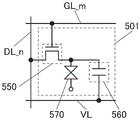
图24示出半导体装置的电路结构。FIG. 24 shows the circuit configuration of the semiconductor device.
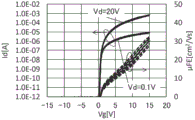
图25A至图25C示出实施例中的晶体管的Id-Vg特性。25A to 25C show the Id - Vg characteristics of the transistors in the embodiment.
具体实施方式Detailed ways
下面,参照附图对实施方式进行说明。所属技术领域的普通技术人员可以很容易地理解一个事实,就是实施方式可以以多个不同形式来实施,其方式和详细内容可以在不脱离本发明的宗旨及其范围的条件下被变换为各种各样的形式。因此,本发明不应该被解释为仅限定在以下所示的实施方式所记载的内容中。Hereinafter, embodiments will be described with reference to the drawings. One of ordinary skill in the art can easily appreciate the fact that the embodiments can be implemented in many different forms, and the modes and details can be changed into various forms without departing from the spirit and scope of the present invention. various forms. Therefore, the present invention should not be construed as being limited only to the contents described in the embodiments shown below.
在附图中,为了明确起见,有时夸大表示大小、层的厚度或区域。因此,本发明的一个方式并不一定限定于上述尺寸。此外,附图是示出理想例子的示意图,因此本发明的一个方式不局限于附图所示的形状或数值。In the drawings, the size, thickness of layers or regions are sometimes exaggerated for clarity. Therefore, one embodiment of the present invention is not necessarily limited to the above-mentioned dimensions. In addition, since the drawings are schematic diagrams showing ideal examples, one embodiment of the present invention is not limited to the shapes and numerical values shown in the drawings.
在本说明书中,“第一”、“第二”、“第三”等序数词是为了避免构成要素的混淆而使用的,而不是为了在数目方面上进行限定的。In this specification, ordinal numbers such as "first", "second", and "third" are used to avoid confusion among constituent elements, rather than to limit the number.
在本说明书中,当参照附图说明构成要素的位置关系时,为了方便起见,使用“上”、“下”等表示配置的词句。另外,构成要素的位置关系根据描述各构成要素的方向适当地改变。因此,上述位置关系不局限于本说明书中所说明的词句,根据情况可以适当地使用其他词句而描述。In this specification, when describing the positional relationship of the constituent elements with reference to the drawings, for the sake of convenience, words and phrases such as "upper" and "lower" are used to express arrangement. In addition, the positional relationship of the constituent elements is appropriately changed according to the direction in which each constituent element is described. Therefore, the above-described positional relationship is not limited to the words and phrases described in this specification, and other words and phrases may be appropriately used for description depending on the situation.
在本说明书等中,晶体管是至少包括栅极、漏极以及源极这三个端子的元件。晶体管在漏极(漏极端子、漏区域或漏电极)与源极(源极端子、源区域或源电极)之间具有沟道区域,并且电流能够流过漏极、沟道区域以及源极。注意,在本说明书等中,沟道区域是指电流主要流过的区域。In this specification and the like, a transistor is an element including at least three terminals of a gate, a drain, and a source. A transistor has a channel region between the drain (drain terminal, drain region or drain electrode) and source (source terminal, source region or source electrode) and current can flow through the drain, channel region and source . Note that in this specification and the like, the channel region refers to a region through which current mainly flows.
另外,例如在采用极性不同的晶体管的情况或电路工作中的电流方向变化的情况下,源极及漏极的功能有时互相调换。因此,在本说明书等中,“源极”和“漏极”可以互相调换。In addition, for example, when transistors with different polarities are used, or when the direction of current changes during circuit operation, the functions of the source and the drain may be interchanged with each other. Therefore, in this specification and the like, "source" and "drain" may be interchanged with each other.
在本说明书等中,“电连接”包括构成要素通过“具有某种电作用的元件”彼此连接的情况。“具有某种电作用的元件”只要可以进行上述构成要素间的电信号的授受,就对其没有特别的限制。除了电极和布线之外,“具有某种电作用的元件”的例子是晶体管等开关元件、电阻器、电感器、电容器以及具有各种功能的元件。In the present specification and the like, "electrical connection" includes a case where constituent elements are connected to each other by "an element having a certain electrical effect". The "element having a certain electrical effect" is not particularly limited as long as it can transmit and receive electrical signals between the above-mentioned constituent elements. In addition to electrodes and wirings, examples of "elements having a certain electrical effect" are switching elements such as transistors, resistors, inductors, capacitors, and elements having various functions.
在本说明书等中,“氧氮化硅膜”是指在其组成中含氧量多于含氮量的膜,而“氮氧化硅膜”是指在其组成中含氮量多于含氧量的膜。In this specification and the like, "silicon oxynitride film" refers to a film containing more oxygen than nitrogen in its composition, and "silicon oxynitride film" refers to a film containing more nitrogen than oxygen in its composition amount of film.
在本说明书等中,当利用附图说明本发明的结构时,在不同的附图中对相同的部分使用共同的符号。In this specification and the like, when the configuration of the present invention is described with reference to the drawings, the same reference numerals are used for the same parts in different drawings.
在本说明书等中,“平行”是指两条直线形成的角度为-10°以上且10°以下的状态,因此,也包括该角度为-5°以上且5°以下的状态。“大致平行”是指两条直线形成的角度为-30°以上且30°以下的状态。另外,“垂直”是指两条直线的角度为80°以上且100°以下的状态,因此,也包括该角度为85°以上且95°以下的状态。“大致垂直”是指两条直线形成的角度为60°以上且120°以下的状态。In this specification and the like, "parallel" refers to a state where the angle formed by two straight lines is -10° or more and 10° or less, and therefore includes a state where the angle is -5° or more and 5° or less. "Substantially parallel" refers to a state where the angle formed by the two straight lines is -30° or more and 30° or less. In addition, "perpendicular" refers to a state where the angle of two straight lines is 80° or more and 100° or less, and therefore includes a state where the angle is 85° or more and 95° or less. "Substantially perpendicular" refers to a state where the angle formed by two straight lines is 60° or more and 120° or less.
在本说明书等中,根据情况可以互相调换“膜”和“层”。例如,有时可以将“导电层”换为“导电膜”。此外,有时可以将“绝缘膜”换为“绝缘层”。In this specification and the like, "film" and "layer" may be interchanged with each other depending on the situation. For example, "conductive layer" may sometimes be replaced by "conductive film". In addition, "insulating film" may be replaced with "insulating layer" in some cases.
实施方式1
在本实施方式中,参照图1A至图1C、图2A至图2C、图3A至图3C、图4A至图4C、图5A至图5C、图6A和图6B、图7A至图7C、图8、图9A和图9B说明本发明的一个方式的半导体装置以及半导体装置的制造方法。1A to 1C, 2A to 2C, 3A to 3C, 4A to 4C, 5A to 5C, 6A and 6B, 7A to 7C, 8. FIGS. 9A and 9B illustrate a semiconductor device and a method for manufacturing the semiconductor device according to one embodiment of the present invention.
<半导体装置的结构实例1><Structure Example 1 of Semiconductor Device>
图5C是作为本发明的一个方式的半导体装置的晶体管100的俯视图。图5B是沿着图5C的点划线X1-X2的截面图以及沿着图5C的点划线Y1-Y2的截面图。另外,图1A至图1C、图2A至图2C、图3A至图3C、图4A至图4C以及图5A是说明图5B的晶体管100的制造工序的截面图。在图1A至图1C、图2A至图2C、图3A至图3C、图4A至图4C以及图5A和图5B中,左侧示出沿着点划线X1-X2的截面图,右侧示出沿着点划线Y1-Y2的截面图。FIG. 5C is a plan view of the
另外,在图5C中,为了方便起见,省略晶体管100的构成要素的一部分(例如,用作栅极绝缘膜的绝缘膜)。有时将点划线X1-X2的方向称为沟道长度方向,将点划线Y1-Y2的方向称为沟道宽度方向。与图5C同样地,有时在后面说明的晶体管的俯视图中也省略构成要素的一部分。In addition, in FIG. 5C , for the sake of convenience, a part of the constituent elements of the transistor 100 (for example, an insulating film serving as a gate insulating film) is omitted. The direction of the dashed-dotted line X1-X2 may be referred to as the channel length direction, and the direction of the dashed-dotted line Y1-Y2 may be referred to as the channel width direction. Similar to FIG. 5C , some of the constituent elements may be omitted in the plan view of the transistor described later.
晶体管100包括:衬底102上的用作栅电极的导电膜104;衬底102及导电膜104上的绝缘膜106;绝缘膜106上的绝缘膜107;绝缘膜107上的氧化物半导体膜108;与氧化物半导体膜108电连接的用作源电极的导电膜112a;以及与氧化物半导体膜108电连接的用作漏电极的导电膜112b。在晶体管100上,具体地说,在导电膜112a、112b及氧化物半导体膜108上设置有绝缘膜114、116及118。绝缘膜114、116及118具有晶体管100的保护绝缘膜的功能。将绝缘膜114、绝缘膜116及绝缘膜118分别称为第一保护绝缘膜、第二保护绝缘膜及第三保护绝缘膜。The
氧化物半导体膜108包括位于导电膜104一侧的第一氧化物半导体膜108a以及第一氧化物半导体膜108a上的第二氧化物半导体膜108b。该导电膜104具有栅电极的功能。另外,绝缘膜106及107具有晶体管100的栅极绝缘膜的功能。The
作为氧化物半导体膜108,可以使用In-M(M是铝、镓、钇或锡)氧化物或In-M-Zn氧化物。尤其是,作为氧化物半导体膜108优选使用In-M-Zn氧化物。As the
第一氧化物半导体膜108a的原子个数比优选为In:M:Zn=4:α1(1.5≤α1≤2.5):α2(2.5≤α2≤3.5)。第二氧化物半导体膜108b的原子个数比优选为In:M:Zn=1:β1(0.8≤β1≤1.2):β2(0.8≤β2≤1.2)。The atomic number ratio of the first
当第一氧化物半导体膜108a具有上述原子个数比,即In的原子个数比大于M的原子个数比的组成时,可以提高晶体管100的场效应迁移率(简称为迁移率或μFE)。具体而言,晶体管100的场效应迁移率可以高于10cm2/Vs,优选高于30cm2/Vs。When the first
例如,通过将上述场效应迁移率高的晶体管用于生成栅极信号的栅极驱动器(特别是,连接到栅极驱动器所包括的移位寄存器的输出端子的多路分配器(demultiplexer)),可以提供边框宽度窄的半导体装置或显示装置。For example, by using the above-described transistor with high field effect mobility as a gate driver for generating a gate signal (in particular, a demultiplexer connected to an output terminal of a shift register included in the gate driver), A semiconductor device or a display device with a narrow frame width can be provided.
另一方面,当第一氧化物半导体膜108a具有In的原子个数比大于M的原子个数比的组成时,光照射时的晶体管100的电特性容易变动。但是,在本发明的一个方式的半导体装置中,在第一氧化物半导体膜108a上形成有第二氧化物半导体膜108b。因为第二氧化物半导体膜108b的In的原子个数比小于第一氧化物半导体膜108a,所以第二氧化物半导体膜108b的Eg大于第一氧化物半导体膜108a。因此,具有第一氧化物半导体膜108a和第二氧化物半导体膜108b的叠层结构的氧化物半导体膜108的对光负偏压应力测试的耐性高。On the other hand, when the first
在光照射时,具有上述叠层结构的氧化物半导体膜108的光吸收量得到降低。因此,能够减小因光照射导致的晶体管100的电特性变动。Upon light irradiation, the light absorption amount of the
当在晶体管100所具有的氧化物半导体膜108中形成有氧缺陷时,产生作为载流子的电子,由此晶体管100容易成为常开启特性。注意,常开启特性的晶体管是指在栅极电压Vg为0V时电流(例如,漏极与源极之间的电流(Ids))流动的晶体管。由此,为了获得稳定的晶体管特性,减少氧化物半导体膜108中的氧缺陷,特别是减少第一氧化物半导体膜108a中的氧缺陷是重要的。在本发明的一个方式的晶体管的结构中,通过对氧化物半导体膜108上的绝缘膜,在此,对氧化物半导体膜108上的绝缘膜114和/或绝缘膜116引入过剩氧,使氧从绝缘膜114和/或绝缘膜116移动到氧化物半导体膜108中,由此填补氧化物半导体膜108中的氧缺陷,尤其是,填补第一氧化物半导体膜108a中的氧缺陷。或者,当在绝缘膜116上形成第一阻挡膜时,对绝缘膜116引入过剩氧,使氧从绝缘膜116移动到氧化物半导体膜108中,由此填补氧化物半导体膜108中的氧缺陷,尤其是填补第一氧化物半导体膜108a中的氧缺陷。When oxygen vacancies are formed in the
优选的是,绝缘膜114、116具有含有超过化学计量组成的氧的区域(氧过剩区域)。换句话说,绝缘膜114、116是一种能够释放氧的绝缘膜。此外,例如通过对成膜后的绝缘膜114、116引入氧,来在绝缘膜114、116中形成氧过剩区域。作为氧的引入方法,可以采用离子注入法、离子掺杂法、等离子体浸没式离子注入法、等离子体处理等。Preferably, the insulating
为了填补第一氧化物半导体膜108a中的氧缺陷,优选使第二氧化物半导体膜108b的沟道区域及其附近的厚度减薄。例如,第二氧化物半导体膜108b的沟道区域及其附近的厚度优选为1nm以上且20nm以下,更优选为3nm以上且10nm以下。In order to fill the oxygen vacancies in the first
此外,为了填补第一氧化物半导体膜108a中的氧缺陷,第二氧化物半导体膜108b优选具有高透氧性。当第二氧化物半导体膜108b的透氧性高时,可以使绝缘膜114及116中的过剩氧顺利地扩散到第一氧化物半导体膜108a中。Further, in order to fill the oxygen vacancies in the first
如此,在本发明的一个方式的半导体装置中,氧化物半导体膜为叠层结构,并且接触于该氧化物半导体膜的绝缘膜包含过剩氧,由此可以提高半导体装置的可靠性。此外,在本发明的一个方式中,可以降低半导体装置的制造工序中的温度(典型的是低于400℃或低于375℃(优选为340℃以上且360℃以下))。此外,在后面说明半导体装置的制造工序。As described above, in the semiconductor device according to one embodiment of the present invention, the oxide semiconductor film has a laminated structure, and the insulating film in contact with the oxide semiconductor film contains excess oxygen, whereby reliability of the semiconductor device can be improved. Furthermore, in one aspect of the present invention, the temperature in the manufacturing process of the semiconductor device can be lowered (typically lower than 400°C or lower than 375°C (preferably 340°C or higher and 360°C or lower)). In addition, the manufacturing process of a semiconductor device is demonstrated later.
下面,对本实施方式的半导体装置的其他构成要素进行详细的说明。Next, other constituent elements of the semiconductor device of the present embodiment will be described in detail.
<衬底><substrate>
只要具有能够承受后续的加热处理的耐热性,就对衬底102的材料等没有特别的限制。例如,作为衬底102,可以使用玻璃衬底、陶瓷衬底、石英衬底、蓝宝石衬底等。另外,作为衬底102,也可以使用由硅或碳化硅制造的单晶半导体衬底或多晶半导体衬底、由硅锗等制造的化合物半导体衬底、SOI(绝缘体上硅)衬底等。或者,也可以将在这些衬底上设置有半导体元件的衬底用作衬底102。当作为衬底102使用玻璃衬底时,可以使用第6代、第7代、第8代、第9代、第10代等尺寸的玻璃衬底。由此,可以制造大型显示装置。优选使用这样的大面积衬底,此时可以降低制造成本。The material and the like of the
另外,作为衬底102可以使用柔性衬底,并且,可以在柔性衬底上直接形成晶体管100。或者,也可以在衬底102与晶体管100之间设置剥离层。剥离层可以在如下情况下使用:将在剥离层上形成的半导体装置的一部分或全部从衬底102分离并转置到其他衬底上。此时,可以将晶体管100转置到耐热性低的衬底或柔性衬底上。In addition, a flexible substrate can be used as the
<用作栅电极、源电极及漏电极的导电膜><Conductive Films Used as Gate Electrode, Source Electrode, and Drain Electrode>
用作栅电极的导电膜104、用作源电极的导电膜112a及用作漏电极的导电膜112b都可以使用选自铬(Cr)、铜(Cu)、铝(Al)、金(Au)、银(Ag)、锌(Zn)、钼(Mo)、钽(Ta)、钛(Ti)、钨(W)、锰(Mn)、镍(Ni)、铁(Fe)、钴(Co)中的金属元素、包含上述金属元素作为成分的合金或者包含上述金属元素的组合的合金等而形成。The
此外,导电膜104、112a、112b也可以具有单层结构或者两层以上的叠层结构。例如,可以举出包含硅的铝膜的单层结构、在铝膜上层叠钛膜的两层结构、在氮化钛膜上层叠钛膜的两层结构、在氮化钛膜上层叠钨膜的两层结构、在氮化钽膜或氮化钨膜上层叠钨膜的两层结构、以及依次层叠钛膜、铝膜和钛膜的三层结构等。另外,还可以使用包含铝与选自钛、钽、钨、钼、铬、钕、钪中的一种或多种的合金膜或氮化膜。In addition, the
导电膜104、112a、112b可以使用铟锡氧化物、包含氧化钨的铟氧化物、包含氧化钨的铟锌氧化物、包含氧化钛的铟氧化物、包含氧化钛的铟锡氧化物、铟锌氧化物、添加有氧化硅的铟锡氧化物等透光导电材料形成。As the
作为导电膜104、112a、112b,也可以使用Cu-X合金膜(X为Mn、Ni、Cr、Fe、Co、Mo、Ta或Ti)。通过使用Cu-X合金膜,在加工时可以使用湿蚀刻工序,从而可以降低制造成本。As the
<用作栅极绝缘膜的绝缘膜><Insulating Film Used as Gate Insulating Film>
作为用作晶体管100的栅极绝缘膜的绝缘膜106、107,可以分别使用通过等离子体增强化学气相沉积(PECVD:plasma enhanced chemical vapor deposition)法、溅射法等形成的包括氧化硅膜、氧氮化硅膜、氮氧化硅膜、氮化硅膜、氧化铝膜、氧化铪膜、氧化钇膜、氧化锆膜、氧化镓膜、氧化钽膜、氧化镁膜、氧化镧膜、氧化铈膜和氧化钕膜中的至少一种的绝缘层。此外,也可以采用使用选自上述材料中的材料而形成的单层绝缘膜或者三层以上的绝缘膜,而代替绝缘膜106和107的叠层结构。As the insulating
绝缘膜106被用作抑制氧透过的阻挡膜。例如,当对绝缘膜107、绝缘膜114、绝缘膜116和/或氧化物半导体膜108供应过剩氧时,绝缘膜106能够抑制氧透过。The insulating
与用作晶体管100的沟道区域的氧化物半导体膜108接触的绝缘膜107优选为氧化物绝缘膜,并优选包括包含超过化学计量组成的氧的区域(氧过剩区域)。换言之,绝缘膜107是能够释放氧的绝缘膜。为了在绝缘膜107中设置氧过剩区域,例如在氧气氛下形成绝缘膜107。或者,也可以对成膜后的绝缘膜107引入氧来形成氧过剩区域。作为氧的引入方法,可以采用离子注入法、离子掺杂法、等离子体浸没式离子注入法、等离子体处理等。The insulating
当作为绝缘膜107使用氧化铪时发挥如下效果。氧化铪的相对介电常数比氧化硅及氧氮化硅高。因此,使用氧化铪的绝缘膜107可以具有比使用氧化硅的绝缘膜107厚的厚度,由此,可以减少隧道电流引起的泄漏电流。也就是说,可以提供关态电流(off-statecurrent)小的晶体管。再者,与具有非晶结构的氧化铪相比,具有结晶结构的氧化铪的相对介电常数较高。因此,为了提供关态电流小的晶体管,优选使用具有结晶结构的氧化铪。作为结晶结构的例子,可以举出单斜晶系及立方晶系。注意,本发明的一个方式不局限于上述例子。When hafnium oxide is used as the insulating
在本实施方式中,作为绝缘膜106形成氮化硅膜,作为绝缘膜107形成氧化硅膜。与氧化硅膜相比,氮化硅膜的相对介电常数较高,且为了得到与氧化硅膜相等的静电容量需要的厚度较大,因此,当作为晶体管100的栅极绝缘膜使用氮化硅膜时,可以增加绝缘膜的物理厚度。因此,可以抑制晶体管100的绝缘耐压的下降并提高绝缘耐压,来减轻晶体管100的静电破坏。In the present embodiment, a silicon nitride film is formed as the insulating
<氧化物半导体膜><Oxide semiconductor film>
氧化物半导体膜108可以使用上述材料形成。当氧化物半导体膜108包含In-M-Zn氧化物时,用来形成In-M-Zn氧化物的溅射靶材的金属元素的原子个数比优选满足In≥M及Zn≥M。作为这种溅射靶材的金属元素的原子个数比,优选为In:M:Zn=1:1:1、In:M:Zn=1:1:1.2、In:M:Zn=2:1:3、In:M:Zn=3:1:2、In:M:Zn=4:2:4.1。当氧化物半导体膜108包含In-M-Zn氧化物时,作为溅射靶材优选使用包含多晶的In-M-Zn氧化物的靶材。通过使用包含多晶的In-M-Zn氧化物的靶材,容易形成具有结晶性的氧化物半导体膜108。注意,所形成的氧化物半导体膜108的金属元素的原子个数比与上述溅射靶材的金属元素的原子个数比之间有±40%范围内的误差。例如,在使用原子个数比为In:Ga:Zn=4:2:4.1的溅射靶材时,有时氧化物半导体膜108中的In、Ga及Zn的原子个数比为4:2:3左右。The
第一氧化物半导体膜108a可以使用上述原子个数比为In:M:Zn=2:1:3、In:M:Zn=3:1:2、In:M:Zn=4:2:4.1等的溅射靶材形成。第一氧化物半导体膜108a的原子个数比优选为In:M:Zn=4:α1(1.5≤α1≤2.5):α2(2.5≤α2≤3.5)。For the first
此外,第二氧化物半导体膜108b可以使用上述原子个数比为In:M:Zn=1:1:1、In:M:Zn=1:1:1.2等的溅射靶材形成。第二氧化物半导体膜108b的原子个数比优选为In:M:Zn=1:β1(0.8≤β1≤1.2):β2(0.8≤β2≤1.2)。另外,用来形成第二氧化物半导体膜108b的溅射靶材的金属元素的原子个数比不一定必须满足In≥M及Zn≥M,也可以满足In<M或Zn<M。例如,溅射靶材的原子个数比可以为In:M:Zn=1:3:2、In:M:Zn=1:3:4、In:M:Zn=1:3:6。In addition, the second
氧化物半导体膜108的能隙为2eV以上,优选为2.5eV以上,更优选为3eV以上。通过使用能隙较宽的氧化物半导体,可以降低晶体管100的关态电流。尤其优选的是,作为第一氧化物半导体膜108a使用能隙为2eV以上,优选为2eV以上且3.0eV以下的氧化物半导体膜,作为第二氧化物半导体膜108b使用能隙为2.5eV以上且3.5eV以下的氧化物半导体膜。此外,优选第二氧化物半导体膜108b的能隙大于第一氧化物半导体膜108a的能隙。The energy gap of the
第一氧化物半导体膜108a及第二氧化物半导体膜108b的厚度都为3nm以上且200nm以下,优选为3nm以上且100nm以下,更优选为3nm以上且50nm以下。The thicknesses of the first
作为第一氧化物半导体膜108a使用载流子密度低的氧化物半导体膜,由此,第一氧化物半导体膜108a的载流子密度可以为1×10⁻⁹/cm3以上且低于8×1011/cm3,优选为1×10-9/cm3以上且低于1×1011/cm3,更优选为1×10-9/cm3以上且低于1×1010/cm3。作为第二氧化物半导体膜108b使用载流子密度较低的氧化物半导体膜,由此,第二氧化物半导体膜108b的载流子密度可以为1×1017/cm3以下,优选为1×1015/cm3以下,更优选为1×1013/cm3以下,进一步优选为1×1011/cm3以下。Using an oxide semiconductor film with a low carrier density as the first
注意,不局限于上述组成,可以根据所需的晶体管的半导体特性及电特性(例如,场效应迁移率、阈值电压)来使用具有适当的组成的材料。另外,为了得到所需的晶体管的半导体特性,优选适当地设定第一氧化物半导体膜108a及第二氧化物半导体膜108b的载流子密度、杂质浓度、缺陷密度、金属元素与氧的原子个数比、原子间距离、密度等。Note that the composition is not limited to the above, and a material having an appropriate composition can be used according to desired semiconductor characteristics and electrical characteristics (eg, field-effect mobility, threshold voltage) of the transistor. In addition, in order to obtain desired semiconductor characteristics of the transistor, it is preferable to appropriately set the carrier density, impurity concentration, defect density, metal element and oxygen atoms of the first
优选的是,作为第一氧化物半导体膜108a及第二氧化物半导体膜108b使用杂质浓度低且缺陷态密度低的氧化物半导体膜,此时,晶体管可以具有更优良的电特性。这里,将杂质浓度低且缺陷态密度低(氧缺陷数少)的状态称为“高纯度本征”或“实质上高纯度本征”。因为高纯度本征或实质上高纯度本征的氧化物半导体膜的载流子发生源较少,所以可以降低载流子密度。因此,在该氧化物半导体膜中形成有沟道区域的晶体管很少具有负阈值电压的电特性(很少为常开启特性)。因为高纯度本征或实质上高纯度本征的氧化物半导体膜具有较低的缺陷态密度,所以有时具有较低的陷阱态密度。此外,高纯度本征或实质上高纯度本征的氧化物半导体膜的关态电流极小。在沟道宽度为1×106μm、沟道长度L为10μm的元件中,当源电极与漏电极间的电压(漏电压)为1V至10V时,其关态电流可以为半导体参数分析仪的测定极限以下,即1×10-13A以下。It is preferable to use oxide semiconductor films with a low impurity concentration and a low density of defect states as the first
因此,在上述高纯度本征或实质上高纯度本征的氧化物半导体膜中形成有沟道区域的晶体管可以具有变动小的电特性及高可靠性。被氧化物半导体膜的陷阱能级俘获的电荷到消失需要较长的时间,有时像固定电荷那样动作。因此,有时在陷阱态密度高的氧化物半导体膜中形成有沟道区域的晶体管的电特性不稳定。杂质的例子是氢、氮、碱金属及碱土金属。Therefore, a transistor in which a channel region is formed in the above-mentioned high-purity intrinsic or substantially high-purity intrinsic oxide semiconductor film can have electrical characteristics with little variation and high reliability. It takes a long time for the charges trapped in the trap levels of the oxide semiconductor film to disappear, and sometimes behaves like fixed charges. Therefore, the electrical characteristics of a transistor in which a channel region is formed in an oxide semiconductor film having a high trap state density may be unstable. Examples of impurities are hydrogen, nitrogen, alkali metals and alkaline earth metals.
包含在氧化物半导体膜中的氢与键合于金属原子的氧起反应而生成水,与此同时在发生氧脱离的晶格(或氧脱离的部分)中产生氧缺陷。由于氢进入该氧缺陷,有时生成作为载流子的电子。另外,有时氢的一部分与键合于金属原子的氧键合而产生作为载流子的电子。因此,包括包含氢的氧化物半导体膜的晶体管容易为常开启特性。由此,优选尽可能减少氧化物半导体膜108中的氢。具体而言,在氧化物半导体膜108中利用SIMS(二次离子质谱分析法)测得的氢浓度为2×10²⁰atoms/cm3以下,优选为5×1019atoms/cm3以下,更优选为1×1019atoms/cm3以下,更优选为5×1018atoms/cm3以下,更优选为1×1018atoms/cm3以下,更优选为5×1017atoms/cm3以下,更优选为1×1016atoms/cm3以下。Hydrogen contained in the oxide semiconductor film reacts with oxygen bonded to metal atoms to generate water, and at the same time, oxygen vacancies are generated in the lattice (or the portion where oxygen is desorbed) from which oxygen desorption occurs. Since hydrogen enters this oxygen defect, electrons as carriers are sometimes generated. In addition, a part of hydrogen may be bonded to oxygen bonded to a metal atom to generate electrons as carriers. Therefore, a transistor including an oxide semiconductor film containing hydrogen tends to have normally-on characteristics. Therefore, it is preferable to reduce hydrogen in the
第一氧化物半导体膜108a优选包括其氢浓度低于第二氧化物半导体膜108b的区域。当第一氧化物半导体膜108a包括其氢浓度低于第二氧化物半导体膜108b的区域时,半导体装置可以具有高可靠性。The first
当第一氧化物半导体膜108a包含第14族元素之一的硅或碳时,在第一氧化物半导体膜108a中氧缺陷增加,由此第一氧化物半导体膜108a成为n型膜。因此,将第一氧化物半导体膜108a中的硅或碳的浓度或者与第一氧化物半导体膜108a之间的界面附近的硅或碳的浓度(利用SIMS分析测得的浓度)设定为2×10¹⁸atoms/cm3以下,优选为2×1017atoms/cm3以下。When the first
另外,在第一氧化物半导体膜108a中利用SIMS分析测得的碱金属或碱土金属的浓度为1×10¹⁸atoms/cm3以下,优选为2×1016atoms/cm3以下。当碱金属及碱土金属与氧化物半导体键合时有时生成载流子而使晶体管的关态电流增大。由此,优选降低第一氧化物半导体膜108a的碱金属或碱土金属的浓度。In addition, the concentration of alkali metal or alkaline earth metal measured by SIMS analysis in the first
另外,当在第一氧化物半导体膜108a中含有氮时,生成作为载流子的电子,载流子密度增加,由此第一氧化物半导体膜108a容易成为n型膜。其结果是,包括含有氮的氧化物半导体膜的晶体管容易具有常开启特性。因此,优选尽可能地减少氧化物半导体膜中的氮,例如,利用SIMS分析测得的氮浓度优选为5×10¹⁸atoms/cm3以下。In addition, when nitrogen is contained in the first
例如,第一氧化物半导体膜108a及第二氧化物半导体膜108b也可以分别具有非单晶结构。非单晶结构例如包括下述CAAC-OS(c-axis aligned crystalline oxidesemiconductor:c轴取向结晶氧化物半导体)、多晶结构、微晶结构或非晶结构。在非单晶结构中,非晶结构的缺陷态密度最高,而CAAC-OS的缺陷态密度最低。For example, the first
在此,参照图8说明氧化物半导体膜108以及接触于氧化物半导体膜108的绝缘膜的能带结构。Here, the energy band structure of the
图8示出叠层结构的膜厚度方向上的能带结构的一个例子,该叠层结构具有绝缘膜107、第一氧化物半导体膜108a、第二氧化物半导体膜108b以及绝缘膜114。为了容易理解,在能带结构中示出绝缘膜107、第一氧化物半导体膜108a、第二氧化物半导体膜108b以及绝缘膜114的导带底能级(Ec)。FIG. 8 shows an example of the energy band structure in the film thickness direction of the laminated structure having the insulating
在图8的能带结构中,作为绝缘膜107、114使用氧化硅膜,作为第一氧化物半导体膜108a使用利用金属元素的原子个数比为In:Ga:Zn=4:2:4.1的金属氧化物靶材形成的氧化物半导体膜,作为第二氧化物半导体膜108b使用利用金属元素的原子个数比为In:Ga:Zn=1:1:1.2的金属氧化物靶材形成的金属氧化膜。In the energy band structure of FIG. 8, a silicon oxide film is used as the insulating
如图8所示,在第一氧化物半导体膜108a与第二氧化物半导体膜108b之间,导带底能级平缓地变化。换言之,导带底能级连续地变化或连续接合。为了实现这样的能带结构,使第一氧化物半导体膜108a与第二氧化物半导体膜108b的界面处不存在形成陷阱中心或复合中心等缺陷能级的杂质。As shown in FIG. 8, between the first
为了在第一氧化物半导体膜108a与第二氧化物半导体膜108b之间形成连续接合,使用设置有装载闭锁室的多室成膜装置(溅射装置)以不暴露于大气中的方式连续地形成这些膜。In order to form a continuous bond between the first
通过采用图8的能带结构,第一氧化物半导体膜108a成为阱(well),并且,在具有上述叠层结构的晶体管中,沟道区域形成在第一氧化物半导体膜108a中。By adopting the energy band structure of FIG. 8, the first
当不设置第二氧化物半导体膜108b时,陷阱能级有可能形成在第一氧化物半导体膜108a中。但是,在上述叠层结构中,该陷阱能级可以形成在第二氧化物半导体膜108b中。因此,可以使陷阱能级远离第一氧化物半导体膜108a。When the second
另外,有时陷阱能级与用作沟道区域的第一氧化物半导体膜108a的导带底能级(Ec)相比离真空能级更远,而电子容易积累在陷阱能级中。当电子积累在陷阱能级时,该电子成为负固定电荷,导致晶体管的阈值电压漂移到正方向。因此,优选的是,陷阱能级与第一氧化物半导体膜108a的导带底能级(Ec)相比更接近于真空能级。通过采用上述结构,电子不容易积累在陷阱能级。其结果是,能够增大晶体管的通态电流及场效应迁移率。In addition, sometimes the trap level is farther from the vacuum level than the conduction band bottom level (Ec) of the first
在图8中,第二氧化物半导体膜108b的导带底能级与第一氧化物半导体膜108a相比更接近于真空能级。典型的是,第一氧化物半导体膜108a的导带底能级与第二氧化物半导体膜108b的导带底能级之差为0.15eV以上或0.5eV以上,且为2eV以下或1eV以下。换言之,第二氧化物半导体膜108b的电子亲和势与第一氧化物半导体膜108a的电子亲和势之差为0.15eV以上或0.5eV以上,且为2eV以下或1eV以下。In FIG. 8, the conduction band bottom level of the second
在上述结构中,第一氧化物半导体膜108a成为电流的主要路径并被用作沟道区域。此外,由于第二氧化物半导体膜108b包括形成有沟道区域的第一氧化物半导体膜108a所包含的金属元素中的一种以上,所以在第一氧化物半导体膜108a与第二氧化物半导体膜108b的界面处不容易产生界面散射。由此,在该界面中载流子的移动不受到阻碍,因此晶体管的场效应迁移率得到提高。In the above-described structure, the first
为了防止第二氧化物半导体膜108b被用作沟道区域的一部分,作为第二氧化物半导体膜108b使用导电率充分低的材料。或者,作为第二氧化物半导体膜108b使用其电子亲和势(真空能级与导带底能级之间的能级差)低于第一氧化物半导体膜108a且其导带底能级与第一氧化物半导体膜108a的导带底能级有差异(能带偏移)的材料。此外,为了抑制起因于漏极电压值的阈值电压之间的差异产生,优选使用其导带底能级与第一氧化物半导体膜108a的导带底能级相比更接近于真空能级0.2eV以上,优选为0.5eV以上的材料,来形成第二氧化物半导体膜108b。In order to prevent the second
第二氧化物半导体膜108b优选不包含尖晶石型结晶结构。在第二氧化物半导体膜108b包含尖晶石型结晶结构时,导电膜112a、112b的构成元素有时会在该尖晶石型结晶结构与其他区域的界面处扩散到第一氧化物半导体膜108a中。此外,第二氧化物半导体膜108b优选为后述的CAAC-OS,此时,阻挡导电膜112a、112b的构成元素如铜元素的性质得到提高。The second
第二氧化物半导体膜108b的厚度大于能够抑制导电膜112a、112b的构成元素扩散到第一氧化物半导体膜108a的厚度且小于从绝缘膜114向第一氧化物半导体膜108a的氧的供应被抑制的厚度。例如,当第二氧化物半导体膜108b的厚度为10nm以上时,能够抑制导电膜112a、112b的构成元素扩散到第一氧化物半导体膜108a。当第二氧化物半导体膜108b的厚度为100nm以下时,能够有效地从绝缘膜114、116向第一氧化物半导体膜108a供应氧。The thickness of the second
<用作晶体管的保护绝缘膜的绝缘膜><Insulating film used as protective insulating film of transistor>
绝缘膜114、116具有对氧化物半导体膜108供应氧的功能。绝缘膜118具有晶体管100的保护绝缘膜的功能。绝缘膜114、116包含氧。此外,绝缘膜114是能够使氧透过的绝缘膜。此外,绝缘膜114还被用作在后面工序中形成绝缘膜116时缓和对氧化物半导体膜108造成的损伤的膜。The insulating
作为绝缘膜114,可以使用厚度为5nm以上且150nm以下,优选为5nm以上且50nm以下的氧化硅膜、氧氮化硅膜等。As the insulating
此外,优选的是,绝缘膜114中的缺陷量较少,典型的是,通过ESR(电子自旋共振)测量的起因于硅的悬空键的g=2.001处呈现的信号的自旋密度为3×10¹⁷spins/cm3以下。这是因为若绝缘膜114的缺陷密度高,氧则与该缺陷键合,而使绝缘膜114中的氧透过量减少的缘故。In addition, it is preferable that the amount of defects in the insulating
在绝缘膜114中,有时从外部进入绝缘膜114的氧不是全部移动到绝缘膜114的外部,而是其一部分的氧残留在绝缘膜114中。另外,有时在氧进入绝缘膜114的同时,绝缘膜114中含有的氧移动到绝缘膜114的外部,而在绝缘膜114中发生氧的移动。在形成能够使氧透过的氧化物绝缘膜作为绝缘膜114时,可以将从设置在绝缘膜114上的绝缘膜116脱离的氧经由绝缘膜114移动到氧化物半导体膜108。In the insulating
绝缘膜114可以使用因氮氧化物产生的态密度低的氧化物绝缘膜形成。注意,该因氮氧化物产生的态密度有时形成在氧化物半导体膜的价带顶的能量(EV_OS)与导带底的能量(EC_OS)之间。作为上述氧化物绝缘膜,可以使用氮氧化物的释放量少的氧氮化硅膜或氮氧化物的释放量少的氧氮化铝膜等。The insulating
此外,在热脱附谱分析中,氮氧化物的释放量少的氧氮化硅膜是氨释放量比氮氧化物的释放量多的膜。典型的是,该氧氮化硅膜的氨分子释放量为1×10¹⁸/cm3以上且5×1019/cm3以下。注意,该膜的氨释放量为在进行膜表面温度为50℃以上且650℃以下,优选为50℃以上且550℃以下的加热处理时的氨释放量。In addition, in the thermal desorption spectrum analysis, the silicon oxynitride film with a small amount of nitrogen oxide released is a film with a larger amount of ammonia released than that of nitrogen oxides. Typically, the amount of ammonia molecules released from the silicon oxynitride film is 1×10 18 /cm 3 or more and 5×10 19 /cm 3 or less. Note that the ammonia release amount of the film is the ammonia release amount when the film surface temperature is 50°C or higher and 650°C or lower, preferably 50°C or higher and 550°C or lower.
氮氧化物(NOx,x为0以上且2以下,优选为1以上且2以下),典型的是NO2或NO,例如在绝缘膜114等中形成能级。该能级位于氧化物半导体膜108的能隙中。由此,当氮氧化物扩散到绝缘膜114与氧化物半导体膜108的界面时,有时该能级在绝缘膜114一侧俘获电子。其结果是,被俘获的电子留在绝缘膜114与氧化物半导体膜108的界面附近,由此,晶体管的阈值电压向正方向漂移。Nitrous oxide (NO x , where x is 0 or more and 2 or less, preferably 1 or more and 2 or less), typically NO 2 or NO, forms an energy level in the insulating
在加热处理中,氮氧化物与氨及氧起反应。由于在加热处理中绝缘膜114所包含的氮氧化物与绝缘膜116所包含的氨起反应,所以绝缘膜114所包含的氮氧化物减少。因此,在绝缘膜114与氧化物半导体膜108的界面中不容易俘获电子。In the heat treatment, nitrogen oxides react with ammonia and oxygen. Since the oxynitride contained in the insulating
通过作为绝缘膜114使用上述氧化物绝缘膜,可以降低晶体管的阈值电压的漂移,从而可以降低晶体管的电特性的变动。By using the above-mentioned oxide insulating film as the insulating
通过进行晶体管的制造工序的加热处理,典型的是低于400℃或低于375℃(优选为340℃以上且360℃以下)的加热处理,在绝缘膜114的100K以下的ESR光谱中,观察到g值为2.037以上且2.039以下的第一信号、g值为2.001以上且2.003以下的第二信号以及g值为1.964以上且1.966以下的第三信号。通过使用X带的ESR测定而得到的第一信号与第二信号之间的分割宽度(split width)及第二信号与第三信号之间的分割宽度大约为5mT。g值为2.037以上且2.039以下的第一信号、g值为2.001以上且2.003以下的第二信号以及g值为1.964以上且1.966以下的第三信号的自旋密度的总和低于1×10¹⁸spins/cm3,典型为1×1017spins/cm3以上且低于1×1018spins/cm3。By performing heat treatment in the manufacturing process of the transistor, typically below 400° C. or below 375° C. (preferably 340° C. or higher and 360° C. or lower), in the ESR spectrum of the insulating
在100K以下的ESR谱中,g值为2.037以上且2.039以下的第一信号、g值为2.001以上且2.003以下的第二信号以及g值为1.964以上且1.966以下的第三信号相当于起因于氮氧化物(NOx;x为0以上且2以下,优选为1以上且2以下)的信号。氮氧化物的典型例子包括:一氧化氮及二氧化氮。就是说,g值为2.037以上且2.039以下的第一信号、g值为2.001以上且2.003以下的第二信号以及g值为1.964以上且1.966以下的第三信号的自旋密度的总数越少,氧化物绝缘膜的氮氧化物含量越少。In the ESR spectrum of 100K or less, the first signal with a g value of 2.037 or more and 2.039 or less, the second signal with a g value of 2.001 or more and 2.003 or less, and the third signal with a g value of 1.964 or more and 1.966 or less correspond to A signal of nitrogen oxides (NO x ; x is 0 or more and 2 or less, preferably 1 or more and 2 or less). Typical examples of nitrogen oxides include: nitric oxide and nitrogen dioxide. That is, the smaller the total number of spin densities of the first signal with a g value of 2.037 or more and 2.039 or less, the second signal with a g value of 2.001 or more and 2.003 or less, and the third signal with a g value of 1.964 or more and 1.966 or less, The oxynitride content of the oxide insulating film is smaller.
通过SIMS测得的上述氧化物绝缘膜的氮浓度为6×10²⁰atoms/cm3以下。The nitrogen concentration of the oxide insulating film as measured by SIMS was 6×10 20 atoms/cm 3 or less.
通过以220℃以上且350℃以下的衬底温度利用使用硅烷及一氧化二氮的PECVD法形成上述氧化物绝缘膜,可以形成致密且硬度高的膜。By forming the above-mentioned oxide insulating film by the PECVD method using silane and nitrous oxide at a substrate temperature of 220° C. or higher and 350° C. or lower, a dense and high hardness film can be formed.
绝缘膜116使用其氧含量超过化学计量组成的氧化物绝缘膜形成。其氧含量超过化学计量组成的氧化物绝缘膜通过加热而其一部分的氧脱离。在TDS分析中,其氧含量超过化学计量组成的氧化物绝缘膜的换算为氧原子的氧释放量为1.0×10¹⁹atoms/cm3以上,优选为3.0×1020atoms/cm3以上。注意,上述TDS分析时的膜表面温度优选为100℃以上且700℃以下或100℃以上且500℃以下。The insulating
作为绝缘膜116可以使用厚度为30nm以上且500nm以下,优选为50nm以上且400nm以下的氧化硅膜、氧氮化硅膜等。As the insulating
优选的是,绝缘膜116中的缺陷量较少,典型的是,通过ESR测量的起因于硅的悬空键的g=2.001处呈现的信号的自旋密度低于1.5×10¹⁸spins/cm3,更优选为1×1018spins/cm3以下。此外,由于绝缘膜116与绝缘膜114相比离氧化物半导体膜108更远,所以绝缘膜116的缺陷密度也可以高于绝缘膜114。Preferably, the amount of defects in the insulating
另外,因为绝缘膜114、116可以使用由相同种类的材料形成的绝缘膜而形成,所以有时无法明确地确认到绝缘膜114与116之间的界面。因此,在本实施方式中,以虚线示出绝缘膜114与116之间的界面。虽然在本实施方式中说明绝缘膜114与116的两层结构,但是本发明不局限于该结构。例如,也可以采用绝缘膜114或绝缘膜116的单层结构。In addition, since the insulating
绝缘膜118具有能够阻挡氧、氢、水、碱金属、碱土金属等的功能。通过设置绝缘膜118,能够防止氧从氧化物半导体膜108扩散到外部,能够防止绝缘膜114、116所包含的氧扩散到外部,并且能够防止氢、水等从外部侵入氧化物半导体膜108中。作为绝缘膜118,例如可以使用氮化物绝缘膜。该氮化物绝缘膜使用氮化硅、氮氧化硅、氮化铝、氮氧化铝等形成。尤其是,作为绝缘膜118优选使用氮氧化硅或氮化硅膜,此时可以抑制氧向外部扩散。The insulating
作为绝缘膜118也可以设置对氧、氢、水等具有阻挡效果的氧化物绝缘膜代替对氧、氢、水、碱金属、碱土金属等具有阻挡效果的氮化物绝缘膜。作为对氧、氢、水等具有阻挡效果的氧化物绝缘膜,可以举出氧化铝膜、氧氮化铝膜、氧化镓膜、氧氮化镓膜、氧化钇膜、氧氮化钇膜、氧化铪膜、氧氮化铪膜等。作为对氧、氢、水等具有阻挡效果的氧化物绝缘膜,尤其优选使用氧化铝膜、氧化铪膜或氧化钇膜。As the insulating
虽然上述导电膜、绝缘膜及氧化物半导体膜等各种膜可以通过溅射法或PECVD法形成,但是这些膜也可以利用例如热CVD(chemical vapor deposition:有机金属化学气相沉积)法或ALD(atomic layer deposition:原子层沉积)法形成。作为热CVD法的例子,可以举出MOCVD(metal organic chemical vapor deposition:有机金属化学气相沉积)法。Although various films such as the above-described conductive film, insulating film, and oxide semiconductor film can be formed by sputtering or PECVD, these films can also be formed by, for example, thermal CVD (chemical vapor deposition) or ALD ( atomic layer deposition: Atomic layer deposition) method to form. As an example of the thermal CVD method, MOCVD (metal organic chemical vapor deposition) method is mentioned.
由于热CVD法在成膜时不使用等离子体,因此具有不产生因等离子体损伤所引起的缺陷的优点。Since the thermal CVD method does not use plasma during film formation, there is an advantage that defects due to plasma damage do not occur.
可以以如下方法利用热CVD法在衬底上进行成膜:将源气体及氧化剂同时供应到腔室内,将腔室内的压力设定为大气压或减压,在衬底附近或在衬底上使源气体和氧化剂起反应。A film can be formed on a substrate by thermal CVD by supplying a source gas and an oxidizing agent into a chamber at the same time, setting the pressure in the chamber to atmospheric pressure or reduced pressure, and using a method near or on the substrate. The source gas and the oxidant react.
另外,也可以以如下方法进行利用ALD法的成膜:将腔室内的压力设定为大气压或减压,将用于反应的源气体依次引入腔室,然后按该顺序反复地引入气体。例如,通过切换各开关阀(也称为高速阀)来将两种以上的源气体依次供应到腔室内。例如,为了防止源气体混合,在引入第一源气体的同时或之后引入惰性气体(例如,氩或氮)等,然后引入第二源气体。注意,当同时引入第一源气体及惰性气体时,惰性气体被用作载流子气体。另外,也可以在引入第二源气体的同时引入惰性气体。另外,也可以不引入惰性气体而通过真空抽气将第一源气体排出,然后引入第二源气体。第一源气体附着到衬底表面而形成第一层,之后引入的第二源气体与该第一层起反应,由此第二层层叠在第一层上而形成薄膜。通过按该顺序反复多次地引入气体直到获得所希望的厚度为止,可以形成台阶覆盖性良好的薄膜。由于薄膜的厚度可以根据按顺序反复引入气体的次数来进行调节,因此,ALD法可以准确地调节膜厚度而适用于微型FET的制造。Alternatively, the film formation by the ALD method may be performed by setting the pressure in the chamber to atmospheric pressure or reduced pressure, sequentially introducing the source gas for the reaction into the chamber, and then repeatedly introducing the gas in this order. For example, by switching each on-off valve (also referred to as a high-speed valve), two or more source gases are sequentially supplied into the chamber. For example, in order to prevent mixing of the source gases, an inert gas (eg, argon or nitrogen) or the like is introduced at the same time as or after the introduction of the first source gas, and then the second source gas is introduced. Note that when the first source gas and the inert gas are introduced at the same time, the inert gas is used as the carrier gas. Alternatively, the inert gas may be introduced simultaneously with the introduction of the second source gas. Alternatively, the first source gas may be exhausted by vacuum evacuation without introducing the inert gas, and then the second source gas may be introduced. The first source gas adheres to the surface of the substrate to form the first layer, and the second source gas introduced thereafter reacts with the first layer, whereby the second layer is laminated on the first layer to form a thin film. By repeatedly introducing gas in this order until a desired thickness is obtained, a thin film with good step coverage can be formed. Since the thickness of the thin film can be adjusted according to the number of times of sequentially repeating the introduction of the gas, the ALD method can accurately adjust the thickness of the film and is suitable for the manufacture of micro-FETs.
通过MOCVD法等热CVD法可以形成上述实施方式的导电膜、绝缘膜、氧化物半导体膜及金属氧化膜等各种膜。例如,当形成In-Ga-Zn-O膜时,使用三甲基铟、三甲基镓及二甲基锌。三甲基铟的化学式为In(CH3)3。三甲基镓的化学式为Ga(CH3)3。二甲基锌的化学式为Zn(CH3)2。不局限于上述组合,可以使用三乙基镓(化学式:Ga(C2H5)3)代替三甲基镓,并可以使用二乙基锌(化学式:Zn(C2H5)2)代替二甲基锌。Various films such as conductive films, insulating films, oxide semiconductor films, and metal oxide films of the above-described embodiments can be formed by thermal CVD methods such as MOCVD methods. For example, when forming an In-Ga-Zn-O film, trimethyl indium, trimethyl gallium, and dimethyl zinc are used. The chemical formula of trimethylindium is In(CH 3 ) 3 . The chemical formula of trimethylgallium is Ga(CH 3 ) 3 . The chemical formula of dimethylzinc is Zn(CH 3 ) 2 . Not limited to the above combination, triethylgallium (chemical formula: Ga(C 2 H 5 ) 3 ) may be used instead of trimethylgallium, and diethyl zinc (chemical formula: Zn(C 2 H 5 ) 2 ) may be used instead Dimethyl zinc.
例如,在使用利用ALD法的成膜装置形成氧化铪膜时,使用如下两种气体:用作氧化剂的臭氧(O3);以及通过使包含溶剂和铪前体化合物的液体(例如,铪醇盐、四二甲基酰胺铪(TDMAH)等铪酰胺)气化而得到的源气体。此外,四二甲基酰胺铪的化学式为Hf[N(CH3)2]4。其他材料液的例子包括:四(乙基甲基酰胺)铪。For example, in forming a hafnium oxide film using a film forming apparatus utilizing the ALD method, two gases are used: ozone (O 3 ) serving as an oxidizing agent; and a liquid containing a solvent and a hafnium precursor compound (for example, hafnium alcohol) A source gas obtained by vaporizing salts, hafnium amides such as tetradimethylamide hafnium (TDMAH), etc. In addition, the chemical formula of hafnium tetradimethylamide is Hf[N(CH 3 ) 2 ] 4 . Examples of other material liquids include: tetrakis(ethylmethylamide) hafnium.
例如,在使用利用ALD法的成膜装置形成氧化铝膜时,使用如下两种气体:用作氧化剂的H2O;以及通过使包含溶剂和铝前体化合物的液体(例如,三甲基铝(TMA))气化而得到的源气体。此外,三甲基铝的化学式为Al(CH3)3。其他材料液的例子包括:三(二甲基酰胺)铝、三异丁基铝、铝三(2,2,6,6-四甲基-3,5-庚二酮)。For example, when an aluminum oxide film is formed using a film forming apparatus utilizing the ALD method, two gases are used: H 2 O serving as an oxidant; and by causing a liquid containing a solvent and an aluminum precursor compound (for example, trimethyl aluminum (TMA)) is a source gas obtained by gasification. In addition, the chemical formula of trimethylaluminum is Al(CH 3 ) 3 . Examples of other material liquids include: tris(dimethylamide)aluminum, triisobutylaluminum, aluminum tris(2,2,6,6-tetramethyl-3,5-heptanedione).
例如,在使用利用ALD法的成膜装置形成氧化硅膜时,使六氯乙硅烷附着在形成膜的表面上,去除附着物所包含的氯,供应氧化性气体(例如,O2或一氧化二氮)的自由基来使其与附着物起反应。For example, when a silicon oxide film is formed using a film forming apparatus using the ALD method, hexachlorodisilane is adhered to the surface of the film to be formed, chlorine contained in the adhered is removed, and an oxidizing gas (for example, O 2 or monoxide) is supplied. dinitrogen) free radicals to react with attachments.
例如,在使用利用ALD法的成膜装置形成钨膜时,依次反复引入WF6气体和B2H6气体形成初始钨膜,然后使用WF6气体和H2气体形成钨膜。此外,也可以使用SiH4气体代替B2H6气体。For example, when forming a tungsten film using a film forming apparatus using the ALD method, WF 6 gas and B 2 H 6 gas are sequentially introduced repeatedly to form an initial tungsten film, and then WF 6 gas and H 2 gas are used to form a tungsten film. In addition, SiH 4 gas may also be used instead of B 2 H 6 gas.
例如,在使用利用ALD法的成膜装置形成氧化物半导体膜(例如,In-Ga-ZnO膜)时,依次反复引入In(CH3)3气体和O3气体形成In-O层,然后使用Ga(CH3)3气体和O3气体形成GaO层,之后使用Zn(CH3)2气体和O3气体形成ZnO层。注意,这些层的顺序不局限于上述例子。此外,也可以混合这些气体来形成混合化合物层,诸如In-Ga-O层、In-Zn-O层、Ga-Zn-O层。注意,虽然也可以使用利用Ar等惰性气体进行鼓泡而得到的H2O气体代替O3气体,但是优选使用不包含H的O3气体。另外,也可以使用In(C2H5)3气体代替In(CH3)3气体。也可以使用Ga(C2H5)3气体代替Ga(CH3)3气体。也可以使用Zn(CH3)2气体。For example, when an oxide semiconductor film (for example, an In-Ga-ZnO film) is formed using a film forming apparatus using an ALD method, an In(CH 3 ) 3 gas and an O 3 gas are sequentially introduced repeatedly to form an In-O layer, and then the In-O layer is formed using Ga(CH 3 ) 3 gas and O 3 gas form a GaO layer, and then Zn(CH 3 ) 2 gas and O 3 gas are used to form a ZnO layer. Note that the order of these layers is not limited to the above example. In addition, these gases can also be mixed to form mixed compound layers such as In-Ga-O layers, In-Zn-O layers, Ga-Zn-O layers. Note that H 2 O gas bubbling with an inert gas such as Ar may be used instead of O 3 gas, but O 3 gas not containing H is preferably used. In addition, In(C 2 H 5 ) 3 gas may be used instead of In(CH 3 ) 3 gas. Instead of Ga(CH 3 ) 3 gas, Ga(C 2 H 5 ) 3 gas may also be used. Zn( CH3 ) 2 gas can also be used.
<半导体装置的结构实例2><Structure Example 2 of Semiconductor Device>
参照图6A及6B说明与图5B及5C的晶体管100不同的结构实例。注意,当表示具有与上面所说明的功能相同的功能的部分时,有时将相同的阴影线用于该部分,而不特别附加附图标记。A structure example different from that of the
图6A是作为本发明的一个方式的半导体装置的晶体管170的俯视图。图6B是沿着图6A的点划线X1-X2的截面图以及沿着图6A的点划线Y1-Y2的截面图。在图6B中,左侧示出沿着点划线X1-X2的截面图,右侧示出沿着点划线Y1-Y2的截面图。6A is a plan view of a
晶体管170包括:衬底102上的用作第一栅电极的导电膜104;衬底102及导电膜104上的绝缘膜106;绝缘膜106上的绝缘膜107;绝缘膜107上的氧化物半导体膜108;氧化物半导体膜108上的绝缘膜114;绝缘膜114上的绝缘膜116;与氧化物半导体膜108电连接的用作源电极的导电膜112a;与氧化物半导体膜108电连接的用作漏电极的导电膜112b;绝缘膜116上的绝缘膜118;绝缘膜118上的导电膜120a;以及绝缘膜118上的导电膜120b。绝缘膜114、116、118具有晶体管170的第二栅极绝缘膜的功能。导电膜120a通过设置在绝缘膜114、116、118的开口142c与导电膜112b电连接。在晶体管170中,导电膜120a例如具有用于显示装置的像素电极的功能。在晶体管170中,导电膜120b用作第二栅电极(也称为背栅电极)。The
如图6B右侧的截面图所示,导电膜120b在设置于绝缘膜106、107、114、116、118中的开口142a、142b中连接于用作第一栅电极的导电膜104。因此,导电膜120b和导电膜104被施加相同的电位。As shown in the cross-sectional view on the right side of FIG. 6B , the
另外,虽然在本实施方式中示出设置开口142a、142b而使导电膜120b与导电膜104连接的结构,但是本发明的一个方式不局限于此。例如,也可以采用仅形成开口142a和开口142b中的一个而使导电膜120b与导电膜104连接的结构,或者,不设置开口142a和开口142b而不使导电膜120b与导电膜104连接的结构。当导电膜120b不与导电膜104连接时,可以对导电膜120b和导电膜104施加彼此不同的电位。In addition, although the structure in which the
如图6B左侧的截面图所示,氧化物半导体膜108位于与用作第一栅电极的导电膜104及用作第二栅电极的导电膜120b相对的位置,并夹在两个用作栅电极的导电膜之间。用作第二栅电极的导电膜120b的沟道长度方向的长度及沟道宽度方向的长度都大于氧化物半导体膜108的沟道长度方向的长度及沟道宽度方向的长度。导电膜120b隔着绝缘膜114、116、118覆盖整个氧化物半导体膜108。由于用作第二栅电极的导电膜120b与用作第一栅电极的导电膜104在设置于绝缘膜106、107、114、116、118中的开口142a、142b中连接,所以氧化物半导体膜108的沟道宽度方向的侧面隔着绝缘膜114、116、118与用作第二栅电极的导电膜120b相对。As shown in the cross-sectional view on the left side of FIG. 6B , the
换言之,在晶体管170的沟道宽度方向上,用作第一栅电极的导电膜104和用作第二栅电极的导电膜120b在设置于用作第一栅极绝缘膜的绝缘膜106、107及用作第二栅极绝缘膜的绝缘膜114、116、118中的开口中连接,并且,导电膜104及导电膜120b隔着用作第一栅极绝缘膜的绝缘膜106、107及用作第二栅极绝缘膜的绝缘膜114、116、118围绕氧化物半导体膜108。In other words, in the channel width direction of the
通过采用上述结构,用作第一栅电极的导电膜104及用作第二栅电极的导电膜120b的电场电围绕晶体管170所包括的氧化物半导体膜108。如晶体管170那样,可以将第一栅电极及第二栅电极的电场电围绕形成有沟道区域的氧化物半导体膜的晶体管的装置结构称为surrounded channel(s-channel:围绕沟道)结构。By adopting the above-described structure, the
因为晶体管170具有s-channel结构,所以可以使用用作第一栅电极的导电膜104对氧化物半导体膜108有效地施加用来引起沟道的电场。由此,晶体管170的电流驱动能力得到提高,从而可以得到高的通态电流(on-state current)特性。由于可以增加通态电流,所以可以减小晶体管170的尺寸。另外,由于晶体管170具有氧化物半导体膜108由用作第一栅电极的导电膜104及用作第二栅电极的导电膜120b围绕的结构,所以可以提高晶体管170的机械强度。Since the
注意,晶体管170的其他结构与上述晶体管100是同样的,并且发挥与上述晶体管100同样的效果。Note that the other structures of the
本实施方式的晶体管结构可以自由地组合在一起。例如,可以将图5A及图5B所示的晶体管100用作显示装置的像素中的晶体管,而将图6A及图6B所示的晶体管170用作显示装置的栅极驱动器中的晶体管。The transistor structures of this embodiment mode can be freely combined. For example, the
<半导体装置的制造方法1><
接着,下面参照图1A至图1C、图2A至图2C、图3A至图3C、图4A至图4C、图5A详细地说明本发明的一个方式的半导体装置的晶体管100的制造方法。图1A至图1C、图2A至图2C、图3A至图3C、图4A至图4C、图5A是说明半导体装置的制造方法的截面图。1A to 1C, 2A to 2C, 3A to 3C, 4A to 4C, and 5A, a method for manufacturing the
首先,在衬底102上形成导电膜,通过光刻工序及蚀刻工序进行加工,来形成用作栅电极的导电膜104。接着,在导电膜104上形成用作栅极绝缘膜的绝缘膜106、107(参照图1A)。First, a conductive film is formed on the
在本实施方式中,作为衬底102使用玻璃衬底。作为用作栅电极的导电膜104,通过溅射法形成厚度为100nm的钨膜。作为绝缘膜106的厚度为400nm的氮化硅膜及作为绝缘膜107的厚度为50nm的氧氮化硅膜通过PECVD法形成。In this embodiment mode, a glass substrate is used as the
绝缘膜106可以具有氮化硅膜的叠层结构。具体而言,绝缘膜106可以具有第一氮化硅膜、第二氮化硅膜及第三氮化硅膜的三层的叠层结构。下面说明该三层结构的例子。The insulating
例如,在如下条件下可以形成厚度为50nm的第一氮化硅膜:作为源气体将流量为200sccm的硅烷、流量为2000sccm的氮以及流量为100sccm的氨气体供应给PECVD装置的反应室内,将反应室内的压力控制为100Pa,使用27.12MHz的高频电源供应2000W的功率。For example, a first silicon nitride film having a thickness of 50 nm can be formed under the following conditions: silane at a flow rate of 200 sccm, nitrogen at a flow rate of 2000 sccm, and ammonia gas at a flow rate of 100 sccm are supplied into the reaction chamber of the PECVD apparatus as source gases, The pressure in the reaction chamber was controlled to 100Pa, and a high-frequency power supply of 27.12MHz was used to supply a power of 2000W.
在如下条件下可以形成厚度为300nm的第二氮化硅膜:作为源气体将流量为200sccm的硅烷、流量为2000sccm的氮以及流量为2000sccm的氨气体供应给PECVD装置的反应室内,将反应室内的压力控制为100Pa,使用27.12MHz的高频电源供应2000W的功率。A second silicon nitride film with a thickness of 300 nm can be formed under the following conditions: Silane at a flow rate of 200 sccm, nitrogen at a flow rate of 2000 sccm, and ammonia gas at a flow rate of 2000 sccm are supplied into the reaction chamber of the PECVD apparatus as source gases, and the inside of the reaction chamber is The pressure control is 100Pa, and the high-frequency power supply of 27.12MHz is used to supply 2000W of power.
在如下条件下可以形成厚度为50nm的第三氮化硅膜:作为源气体将流量为200sccm的硅烷以及流量为5000sccm的氮供应给PECVD装置的反应室内,将反应室内的压力控制为100Pa,使用27.12MHz的高频电源供应2000W的功率。A third silicon nitride film with a thickness of 50 nm can be formed under the following conditions: silane with a flow rate of 200 sccm and nitrogen with a flow rate of 5000 sccm are supplied into the reaction chamber of the PECVD apparatus as source gases, the pressure in the reaction chamber is controlled to 100 Pa, and the use of The 27.12MHz high frequency power supply supplies 2000W of power.
另外,可以以350℃以下的衬底温度形成上述第一氮化硅膜、第二氮化硅膜及第三氮化硅膜。In addition, the above-mentioned first silicon nitride film, second silicon nitride film, and third silicon nitride film may be formed at a substrate temperature of 350° C. or lower.
例如,当绝缘膜106具有氮化硅膜的三层结构时,在作为导电膜104使用包含铜(Cu)的导电膜的情况下,发挥如下效果。For example, when the insulating
第一氮化硅膜可以抑制铜(Cu)元素从导电膜104扩散。第二氮化硅膜具有释放氢的功能,可以提高用作栅极绝缘膜的绝缘膜的耐压。第三氮化硅膜的氢释放量少且其可以抑制从第二氮化硅膜释放的氢的扩散。The first silicon nitride film can suppress the diffusion of copper (Cu) elements from the
为了提高绝缘膜107与后面形成的氧化物半导体膜108(具体而言为第一氧化物半导体膜108a)的界面特性,绝缘膜107优选为包含氧的绝缘膜。In order to improve the interface characteristics between the insulating
接着,在绝缘膜107上以第一温度形成氧化物半导体膜109。氧化物半导体膜109通过如下方式形成:首先,形成第一氧化物半导体膜109a,接着形成第二氧化物半导体膜109b(参照图1B)。Next, the
形成氧化物半导体膜109时的第一温度为室温以上且低于340℃,优选为室温以上且300℃以下,更优选为100℃以上且250℃以下,进一步优选为100℃以上且200℃以下。通过在进行加热的同时形成氧化物半导体膜109,可以提高氧化物半导体膜109的结晶性。当作为衬底102使用大型玻璃衬底(例如,第6代至第10代的玻璃衬底)时,在第一温度为150℃以上且低于340℃的情况下,衬底102有时会变形。但是,即使使用大型玻璃衬底,当第一温度为100℃以上且低于150℃时可以防止玻璃衬底的变形。The first temperature when forming the
第一氧化物半导体膜109a和第二氧化物半导体膜109b的成膜时的衬底温度既可以相同又可以不同。优选的是,以相同的衬底温度形成第一氧化物半导体膜109a和第二氧化物半导体膜109b,此时可以降低制造成本。The substrate temperatures at the time of film formation of the first
在本实施方式中,使用In-Ga-Zn金属氧化物靶材(原子个数比为In:Ga:Zn=4:2:4.1)通过溅射法形成第一氧化物半导体膜109a,然后在真空中使用In-Ga-Zn金属氧化物靶材(原子个数比为In:Ga:Zn=1:1:1.2)通过溅射法连续形成第二氧化物半导体膜109b。以170℃的衬底温度形成第一氧化物半导体膜109a及第二氧化物半导体膜109b。In this embodiment mode, the first
在通过溅射法形成氧化物半导体膜109的情况下,作为溅射气体适当地使用稀有气体(典型的是氩)、氧、或者稀有气体和氧的混合气体。当使用稀有气体和氧的混合气体时,优选增高相对于稀有气体的氧比例。另外,需要进行溅射气体的高纯度化。例如,作为用作溅射气体的氧气体或氩气体,使用露点为-40℃以下,优选为-80℃以下,更优选为-100℃以下,进一步优选为-120℃以下的高纯度气体,由此能够尽可能地减少水分等混入氧化物半导体膜109。When the
在通过溅射法形成氧化物半导体膜109的情况下,在溅射装置的处理室中,优选使用低温泵等吸附式真空抽气泵进行高真空抽气(抽空到5×10⁻⁷Pa至1×10⁻⁴Pa左右)以尽可能地去除对氧化物半导体膜109来说是杂质的水等。或者,优选组合涡轮分子泵和冷阱来防止气体(尤其是包含碳或氢的气体)从抽气系统倒流到处理室内。In the case of forming the
接着,对氧化物半导体膜109进行加工来形成岛状的氧化物半导体膜108。注意,第一氧化物半导体膜109a被加工为岛状的第一氧化物半导体膜108a,第二氧化物半导体膜109b被加工为岛状的第二氧化物半导体膜108b(参照图1C)。Next, the
接着,不进行比上述第一温度高的温度的加热工序,在绝缘膜107及氧化物半导体膜108上通过溅射法形成将成为源电极及漏电极的导电膜112(参照图2A)。换言之,在氧化物半导体膜109的加工以及岛状的氧化物半导体膜108的形成后且在导电膜112的形成前的工序中的温度为第一温度以下。Next, a
在本实施方式中,作为导电膜112,通过溅射法形成依次层叠有厚度为50nm的钨膜和厚度为400nm的铝膜的叠层膜。虽然在本实施方式中导电膜112具有两层结构,但是本发明的一个方式不局限于此。例如,导电膜112也可以具有依次层叠有厚度为50nm的钨膜、厚度为400nm的铝膜和厚度为100nm的钛膜的三层结构。In the present embodiment, as the
接着,在导电膜112上的所希望的区域形成掩模136a、136b(参照图2B)。Next,
在本实施方式中,通过如下方式形成掩模136a、136b:在导电膜112上形成感光性树脂膜并通过光刻工序对该感光性树脂膜进行图案化。In the present embodiment, the
接着,从导电膜112及掩模136a、136b的上方施加蚀刻材料138,来对导电膜112进行加工,由此形成彼此分开的导电膜112a、112b(参照图2C)。Next, the
在本实施方式中,使用干蚀刻装置对导电膜112进行加工。注意,导电膜112的加工方法并不局限于此。例如,可以将化学溶液用作蚀刻材料138并使用湿蚀刻装置,来对导电膜112及第二氧化物半导体膜108b进行加工。注意,与使用湿蚀刻装置对导电膜112进行加工的情况相比,使用干蚀刻装置对导电膜112进行加工时可以形成更微细的图案。但是,与使用干蚀刻装置对导电膜112进行加工的情况相比,使用湿蚀刻装置对导电膜112进行加工时可以降低制造成本。In the present embodiment, the
接着,从第二氧化物半导体膜108b、导电膜112a、112b及掩模136a、136b的上方施加蚀刻材料139,来对第二氧化物半导体膜108b的表面(背沟道一侧)进行洗涤(参照图3A)。Next, the
例如,可以使用磷酸等化学溶液进行上述洗涤。通过使用磷酸等化学溶液进行洗涤,可以去除附着于第二氧化物半导体膜108b表面的杂质(例如,包含在导电膜112a、112b中的元素)。注意,不一定需要进行该洗涤,有时可以不进行该洗涤。For example, the above washing can be performed using a chemical solution such as phosphoric acid. By washing with a chemical solution such as phosphoric acid, impurities (for example, elements contained in the
在导电膜112a、112b的形成和/或洗涤的工序中,第二氧化物半导体膜108b的不被导电膜112a或112b覆盖的区域有时会变得比第一氧化物半导体膜108a薄。In the steps of forming and/or cleaning the
但是,在导电膜112a、112b的形成和/或洗涤的工序中,第二氧化物半导体膜108b的不被导电膜112a或112b覆盖的区域也有时不会变得比第二氧化物半导体膜108b的被导电膜112a或112b覆盖的区域薄。图9A及图9B示出该情况的一个例子。图9A及图9B是示出半导体装置的一个例子的截面图。在图9A及图9B中,左侧及右侧分别示出沿着点划线X1-X2的截面图及沿着点划线Y1-Y2的截面图。图9A示出图5B所示的晶体管100的第二氧化物半导体膜108b不比第二氧化物半导体膜108b的被导电膜112a、112b覆盖的区域薄的情况的一个例子。图9B示出预先将第二氧化物半导体膜108b形成得比第一氧化物半导体膜108a薄,并使不被导电膜112a、112b覆盖的区域的厚度与图5B所示的晶体管100相等的情况的一个例子。However, in the steps of forming and/or cleaning the
接着,去除掩模136a、136b,由此在第二氧化物半导体膜108b上形成用作源电极的导电膜112a以及用作漏电极的导电膜112b。氧化物半导体膜108具有第一氧化物半导体膜108a与第二氧化物半导体膜108b的叠层结构(参照图3B)。Next, the
接着,在氧化物半导体膜108及导电膜112a、112b上形成用作第一保护绝缘膜的绝缘膜114以及用作第二保护绝缘膜的绝缘膜116,然后形成第一阻挡膜131(参照图3C)。Next, an insulating
另外,在形成绝缘膜114之后,优选在不暴露于大气的状态下连续地形成绝缘膜116。在形成绝缘膜114之后,在不暴露于大气的状态下,调节源气体的流量、压力、高频功率和衬底温度中的一个以上以连续地形成绝缘膜116,由此可以减少绝缘膜114与绝缘膜116之间的界面的来源于大气成分的杂质浓度,并可以将包含于绝缘膜114及116中的氧移动到氧化物半导体膜108中。因此,可以减少氧化物半导体膜108中的氧缺陷量。In addition, after the insulating
例如,作为绝缘膜114,可以通过PECVD法形成氧氮化硅膜。此时,作为源气体,优选使用含有硅的沉积气体及氧化性气体。包含硅的沉积气体的典型例子包括:硅烷、乙硅烷、丙硅烷、氟化硅烷。氧化性气体的例子包括:一氧化二氮、二氧化氮。可以在如下条件下利用PECVD法形成包含氮且缺陷量少的绝缘膜114:氧化性气体的流量为上述沉积气体的流量的大于20倍且小于100倍,优选为40倍以上且80倍以下;并且处理室内的压力为低于100Pa,优选为50Pa以下。For example, as the insulating
在本实施方式中,作为绝缘膜114,在如下条件下利用PECVD法形成氧氮化硅膜:将衬底102的温度保持为220℃;作为源气体使用流量为50sccm的硅烷及流量为2000sccm的一氧化二氮;处理室内的压力为20Pa;将13.56MHz、100W的高频功率(功率密度为1.6×10⁻²W/cm2)供应到平行平板电极。In this embodiment, as the insulating
作为绝缘膜116,在如下条件下形成氧化硅膜或氧氮化硅膜:将安装在PECVD装置中的进行了真空抽气的处理室内的衬底的温度保持为180℃以上且350℃以下,将源气体导入处理室中并将处理室内的压力设定为100Pa以上且250Pa以下,优选设定为100Pa以上且200Pa以下,并且,对设置在处理室内的电极供应0.17W/cm2以上且0.5W/cm2以下,更优选为0.25W/cm2以上且0.35W/cm2以下的高频功率。As the insulating
作为绝缘膜116的成膜条件,对具有上述压力的反应室供应具有上述功率密度的高频功率,由此在等离子体中源气体的分解效率得到提高,氧自由基增加,并且源气体的氧化促进,因此,绝缘膜116中的含氧量超过化学计量组成。另一方面,在上述范围内的衬底温度下形成的膜中,由于硅与氧之间的键合力较弱,因此,膜中的氧的一部分因后面工序的加热处理而脱离。其结果是,可以形成其氧含量超过化学计量组成且氧的一部分因加热而脱离的氧化物绝缘膜。As the film-forming conditions of the insulating
在绝缘膜116的形成工序中,绝缘膜114被用作氧化物半导体膜108的保护膜。因此,可以在减少对氧化物半导体膜108造成的损伤的同时使用功率密度高的高频功率形成绝缘膜116。In the step of forming the insulating
另外,在绝缘膜116的成膜条件中,当增加相对于氧化性气体的包含硅的沉积气体的流量时,可以减少绝缘膜116中的缺陷量。典型的是,能够形成缺陷量较少的氧化物绝缘层,即:通过ESR测量,在起因于硅的悬空键的g=2.001处呈现的信号的自旋密度低于6×10¹⁷spins/cm3,优选为3×1017spins/cm3以下,更优选为1.5×1017spins/cm3以下。其结果是,能够提高晶体管的可靠性。In addition, in the film formation conditions of the insulating
在形成绝缘膜114、116之后(即,在形成绝缘膜116后且形成第一阻挡膜131前),也可以进行加热处理。通过该加热处理,可以减少包含在绝缘膜114、116中的氮氧化物。通过该加热处理,可以将包含在绝缘膜114、116中的氧的一部分移动到氧化物半导体膜108中以减少氧化物半导体膜108中的氧缺陷量。The heat treatment may also be performed after the insulating
对绝缘膜114、116进行的加热处理的温度典型为低于400℃,优选为低于375℃,更优选为150℃以上且低于360℃,进一步优选为350℃以上且低于360℃。该加热处理可以在氮、氧、超干燥空气(含水量为20ppm以下,优选为1ppm以下,更优选为10ppb以下的空气)或稀有气体(氩、氦等)的气氛下进行。在该加热处理中可以使用电炉、RTA装置等,其中,上述氮、氧、超干燥空气或稀有气体优选不含有氢、水等。The temperature of the heat treatment for the insulating
第一阻挡膜131包含氧及金属(铟、锌、钛、铝、钨、钽、钼、铪及钇中的至少一个)。作为第一阻挡膜131优选使用铟锡氧化物(也称为ITO)、铟锡硅氧化物(In-Sn-Si氧化物,下面也称为ITSO)或氧化铟,因为其可以良好地覆盖凹凸。The
第一阻挡膜131可以通过溅射法形成。当第一阻挡膜131很薄时,有时难以抑制氧从绝缘膜116释放到外部。另一方面,当第一阻挡膜131很厚时,有时不能顺利地对绝缘膜116中添加氧。因此,第一阻挡膜131的厚度优选为1nm以上且20nm以下或2nm以上且10nm以下。在本实施方式中,作为第一阻挡膜131形成厚度为5nm的ITSO膜。The
接着,隔着第一阻挡膜131对用作第二保护绝缘膜的绝缘膜116添加氧140。在图4A中,将被添加到绝缘膜116中的氧示意性地表示为氧140a。Next,
作为隔着第一阻挡膜131对绝缘膜116添加氧140的方法,可以使用离子掺杂法、离子注入法、等离子体处理法等。氧140也可以为过剩氧或氧自由基等。在添加氧140时,通过对衬底一侧施加偏压,可以有效地将氧140添加到绝缘膜116。作为上述偏压,例如,电力密度可以为1W/cm2以上且5W/cm2以下。当在绝缘膜116上设置第一阻挡膜131并添加氧时,第一阻挡膜131被用作抑制氧从绝缘膜116脱离的保护膜。因此,可以对绝缘膜116添加更多的氧。As a method of adding the
接着,通过在低于400℃的第二温度下进行加热处理,可以使上述过剩氧或上述氧自由基扩散到氧化物半导体膜108(参照图4B)。Next, by performing heat treatment at a second temperature lower than 400° C., the above-mentioned excess oxygen or the above-mentioned oxygen radicals can be diffused into the oxide semiconductor film 108 (see FIG. 4B ).
在图4B中,以箭头141示意性地表示第二温度的加热处理。第二温度低于400℃,优选低于375℃,更优选为340℃以上且低于360℃。第二温度的加热处理可以在氮、氧、超干燥空气(含水量为20ppm以下,优选为1ppm以下,更优选为10ppb以下的空气)或稀有气体(氩、氦等)的气氛下进行。在该加热处理中可以使用电炉、RTA装置等,其中,上述氮、氧、超干燥空气或稀有气体优选不含有氢、水等。In FIG. 4B , the heat treatment at the second temperature is schematically indicated by
在本实施方式中,作为第二温度的加热处理,在氮气氛下以350℃进行1小时的处理。注意,在形成晶体管100的工序中,第二温度的加热处理的温度为最高温度,但是,也可以在其他工序中进行与第二温度的加热处理大致相同的温度的加热处理。例如,形成绝缘膜106、107、114、116、118时的衬底温度也可以与第二温度相同。In the present embodiment, as the heat treatment at the second temperature, treatment is performed at 350° C. for 1 hour in a nitrogen atmosphere. Note that in the process of forming the
接着,使用蚀刻材料142去除第一阻挡膜131或其一部分以及用作第二保护绝缘膜的绝缘膜116的一部分(参照图4C)。Next, the
作为去除第一阻挡膜131及用作第二保护绝缘膜的绝缘膜116的一部分的方法,可以举出干蚀刻法、湿蚀刻法、组合干蚀刻法及湿蚀刻法的方法等。注意,当采用干蚀刻法时,蚀刻材料142为蚀刻气体,当采用湿蚀刻法时,蚀刻材料142为化学溶液。在本实施方式中,优选利用湿蚀刻法去除第一阻挡膜131,此时可以抑制制造成本。As a method of removing a part of the
接着,在绝缘膜116上形成用作第二阻挡膜的绝缘膜118(参照图5A)。Next, an insulating
当利用PECVD法形成绝缘膜118时,衬底温度低于400℃,优选低于375℃,更优选为150℃以上且低于360℃,进一步优选为350℃以上且低于360℃。此时,绝缘膜118可以为致密结构。另外,当形成绝缘膜118时的衬底温度为上述范围时,可以省略形成第一阻挡膜131后的第二温度的加热处理。When the insulating
例如,当作为绝缘膜118利用PECVD法形成氮化硅膜时,作为源气体优选使用包含硅的沉积气体、氮及氨。通过使氨量比氮量少,在等离子体中氨离解而产生活性种。该活性种切断包含在包含硅的沉积气体中的硅与氢的键合以及氮分子间的三键。其结果是,可以形成缺陷较少且致密的氮化硅膜,在该膜中,硅与氮的键合得到促进,并且硅与氢的键合较少。另一方面,在相对于氮的氨量多时,包含硅的沉积气体的分解及氮的分解不进展,由此导致形成不致密的氮化硅膜,在该膜中,硅与氢的键合残留,并且缺陷较多。由此,在源气体中,将相对于氨的氮的流量比设定为5:1以上且50:1以下,优选设定为10:1以上且50:1以下。For example, when a silicon nitride film is formed by PECVD as the insulating
在本实施方式中,作为绝缘膜118,通过利用PECVD装置并作为源气体使用硅烷、氮及氨来形成厚度为50nm的氮化硅膜。硅烷的流量为50sccm,氮的流量为5000sccm,氨的流量为100sccm。处理室的压力为100Pa,衬底温度为350℃,使用27.12MHz的高频电源对平行平板电极供应1000W的高频功率。PECVD装置是电极面积为6000cm2的平行平板型PECVD装置,将所供应的电功率换算为每单位面积的功率(功率密度)为1.7×10⁻¹W/cm2。In the present embodiment, as the insulating
另外,也可以在形成用作第二阻挡膜的绝缘膜118后进行加热处理。通过形成绝缘膜118前的第二温度的加热处理或形成绝缘膜118后的加热处理,可以使绝缘膜116中的过剩氧或氧自由基扩散到氧化物半导体膜108中,由此填补氧化物半导体膜108中的氧缺陷。或者,也可以在进行加热的同时形成绝缘膜118,此时可以使绝缘膜116中的过剩氧或氧自由基扩散到氧化物半导体膜108中,由此填补氧化物半导体膜108中的氧缺陷。In addition, heat treatment may also be performed after forming the insulating
通过上述工序可以制造图5B所示的晶体管100。Through the above steps, the
<半导体装置的制造方法2><
接着,对与图1A至图1C、图2A至图2C、图3A至图3C、图4A至图4C及图5A所示的制造方法不同的晶体管100的制造方法进行说明。Next, a manufacturing method of the
首先,与<半导体装置的制造方法1>同样地,进行图1A至图1C、图2A至图2C、图3A至图3C所示的工序。此后,不进行图4A至图4C、图5A所示的工序。换言之,图3C所示的结构具有与图5B及图5C所示的晶体管100同样的功能。First, the steps shown in FIGS. 1A to 1C , 2A to 2C, and 3A to 3C are performed in the same manner as in <
当不进行图4A至图4C、图5A所示的工序时,在图3C所示的结构中,作为第一阻挡膜131使用金属氧化膜,作为该金属氧化膜,优选形成氧化铝、氧化铪或氧化钇。When the steps shown in FIGS. 4A to 4C and 5A are not performed, in the structure shown in FIG. 3C, a metal oxide film is used as the
当作为第一阻挡膜131通过溅射法形成氧化铝、氧化铪或氧化钇时,溅射气体优选至少包含氧。在形成第一阻挡膜131时被用作溅射气体的氧在等离子体中有时成为氧自由基,并且该氧和/或该氧自由基会被添加到绝缘膜116中。此时,可以省略图4A所示的添加氧140的工序。换言之,形成第一阻挡膜131的工序能够兼作氧添加处理。在形成第一阻挡膜131时(尤其是形成初期),第一阻挡膜131具有添加氧的功能,而在形成第一阻挡膜131后,第一阻挡膜131具有阻挡氧的功能。When aluminum oxide, hafnium oxide, or yttrium oxide is formed by sputtering as the
在作为第一阻挡膜131通过溅射法形成氧化铝时,有时在绝缘膜116与第一阻挡膜131的界面附近形成混合层。当绝缘膜116为氧氮化硅膜时,作为该混合层有可能形成AlxSiyOz。When forming aluminum oxide as the
当作为第一阻挡膜131使用氧化铝、氧化铪或氧化钇时,由于氧化铝、氧化铪及氧化钇具有高绝缘性及高氧阻挡性,因此无须进行图4C所示的去除第一阻挡膜131的工序以及图5A所示的形成绝缘膜118的工序。因此,第一阻挡膜131具有与绝缘膜118同样的功能。When aluminum oxide, hafnium oxide, or yttrium oxide is used as the
另外,通过在以低于400℃的衬底温度(即,第二温度)进行加热的同时形成第一阻挡膜131,可以使添加在绝缘膜116中的过剩氧或氧自由基扩散到氧化物半导体膜108中。或者,通过在形成第一阻挡膜131后以低于400℃的第二温度进行加热处理,可以使添加在绝缘膜116中的过剩氧或氧自由基扩散到氧化物半导体膜108中。In addition, by forming the
通过作为第一阻挡膜131使用氧化铝、氧化铪或氧化钇,能够缩短半导体装置的制造工序,从而可以抑制制造成本。By using aluminum oxide, hafnium oxide, or yttrium oxide as the
<半导体装置的制造方法3><
接着,参照图7A至图7C对本发明的一个方式的晶体管170的制造方法进行说明。图7A至图7C是说明半导体装置的制造方法的截面图。在图7A至图7C中,左侧及右侧分别示出沿着点划线X1-X2的截面图及沿着点划线Y1-Y2的截面图。Next, a method of manufacturing the
首先,进行与上面所示的晶体管100的制造方法同样的工序(参照图1A至图1C、图2A至图2C、图3A至图3C、图4A至图4C、图5A所示的工序)。First, the same steps as the method of manufacturing the
接着,通过光刻工序在绝缘膜118上形成掩模,在绝缘膜114、116、118的所希望的区域中形成开口142c。此外,通过光刻工序在绝缘膜118上形成掩模,在绝缘膜106、107、114、116、118的所希望的区域中形成开口142a、142b。开口142c到达导电膜112b。开口142a、142b到达导电膜104(参照图7A)。Next, a mask is formed on the insulating
另外,开口142a、142b及开口142c既可以以相同工序形成又可以以不同工序形成。当在相同的工序中形成开口142a、142b及开口142c时,例如,可以使用灰色调掩模或半色调掩模。另外,也可以以多个工序形成开口142a、142b。例如,加工绝缘膜106、107,然后加工绝缘膜114、116、118。In addition, the
接着,以覆盖开口142a、142b、142c的方式在绝缘膜118上形成导电膜120(参照图7B)。Next, the
作为导电膜120,例如可以使用包含选自铟(In)、锌(Zn)和锡(Sn)中的一种的材料。尤其是,导电膜120可以使用包含氧化钨的铟氧化物、包含氧化钨的铟锌氧化物、包含氧化钛的铟氧化物、包含氧化钛的铟锡氧化物、铟锡氧化物(ITO)、铟锌氧化物、铟锡硅氧化物(ITSO)等透光导电材料形成。例如,可以使用溅射法形成导电膜120。在本实施方式中,通过溅射法形成厚度为110nm的ITSO膜。As the
接着,通过光刻工序在导电膜120上形成掩模,将导电膜120加工为所希望的形状,来形成导电膜120a、120b(参照图7C)。Next, a mask is formed on the
在形成导电膜120a、120b时,例如使用干蚀刻法、湿蚀刻法或组合干蚀刻法和湿蚀刻法的方法。在本实施方式中,使用湿蚀刻法将导电膜120加工为导电膜120a、120b。When forming the
通过上述步骤,可以制造图6A及图6B所示的晶体管170。Through the above steps, the
本实施方式所示的结构、方法可以与其他实施方式所示的结构、方法适当地组合而实施。The structures and methods shown in the present embodiment can be implemented in combination with the structures and methods shown in other embodiments as appropriate.
实施方式2
在本实施方式中,以下详细地说明本发明的一个方式的半导体装置所包括的氧化物半导体的结构。In this embodiment mode, the structure of the oxide semiconductor included in the semiconductor device according to one embodiment of the present invention will be described in detail below.
<氧化物半导体的结构><Structure of oxide semiconductor>
氧化物半导体被分为单晶氧化物半导体和非单晶氧化物半导体。非单晶氧化物半导体的例子包括:CAAC-OS(c-axis aligned crystalline oxide semiconductor:c轴取向结晶氧化物半导体)、多晶氧化物半导体、nc-OS(nanocrystalline oxide semiconductor:纳米晶氧化物半导体)、a-like OS(amorphous like oxide semiconductor)以及非晶氧化物半导体。Oxide semiconductors are classified into single crystal oxide semiconductors and non-single crystal oxide semiconductors. Examples of non-single crystal oxide semiconductors include: CAAC-OS (c-axis aligned crystalline oxide semiconductor: c-axis aligned crystalline oxide semiconductor), polycrystalline oxide semiconductor, nc-OS (nanocrystalline oxide semiconductor: nanocrystalline oxide semiconductor) ), a-like OS (amorphous like oxide semiconductor) and amorphous oxide semiconductor.
从其他观点看来,氧化物半导体被分为非晶氧化物半导体和结晶氧化物半导体。结晶氧化物半导体的例子包括:单晶氧化物半导体、CAAC-OS、多晶氧化物半导体以及nc-OS。From other viewpoints, oxide semiconductors are classified into amorphous oxide semiconductors and crystalline oxide semiconductors. Examples of crystalline oxide semiconductors include: single crystal oxide semiconductors, CAAC-OS, polycrystalline oxide semiconductors, and nc-OS.
已知:非晶结构一般被定义为处于亚稳态并没有被固定化,具有各向同性而不具有不均匀结构。换言之,非晶结构的键角不固定,其具有短程有序性而不具有长程有序性。Known: Amorphous structure is generally defined as being in a metastable state and not being immobilized, being isotropic and not having an inhomogeneous structure. In other words, the bond angles of the amorphous structure are not fixed, and it has short-range order but not long-range order.
这意味着不能将实质上稳定的氧化物半导体称为完全非晶(completelyamorphous)氧化物半导体。另外,不能将不具有各向同性的氧化物半导体(例如,在微小区域中具有周期结构的氧化物半导体)称为完全非晶氧化物半导体。注意,a-like OS在微小区域中具有周期结构,但是同时具有空洞(void)并具有不稳定结构。因此,a-like OS具有近于非晶氧化物半导体的物性。This means that a substantially stable oxide semiconductor cannot be called a completely amorphous oxide semiconductor. In addition, an oxide semiconductor that does not have isotropy (for example, an oxide semiconductor having a periodic structure in a minute region) cannot be called a completely amorphous oxide semiconductor. Note that the a-like OS has a periodic structure in a tiny region, but has both a void and an unstable structure. Therefore, the a-like OS has physical properties close to that of an amorphous oxide semiconductor.
<CAAC-OS><CAAC-OS>
首先,对CAAC-OS进行说明。First, CAAC-OS will be described.
CAAC-OS是包含多个c轴取向的结晶部(也称为颗粒)的氧化物半导体之一。CAAC-OS is one of oxide semiconductors including a plurality of c-axis-oriented crystal parts (also referred to as particles).
在利用透射电子显微镜(TEM:transmission electron microscope)而得到的CAAC-OS的明视场图像与衍射图案的复合分析图像(也称为高分辨率TEM图像)中,观察到多个颗粒。然而,在高分辨率TEM图像中,观察不到颗粒与颗粒之间的明确的边界,即晶界(grain boundary)。因此,在CAAC-OS中,不容易发生起因于晶界的电子迁移率的降低。In a composite analysis image (also referred to as a high-resolution TEM image) of a bright-field image of CAAC-OS and a diffraction pattern obtained by a transmission electron microscope (TEM: transmission electron microscope), a plurality of particles were observed. However, in high-resolution TEM images, clear boundaries between particles, ie, grain boundaries, are not observed. Therefore, in CAAC-OS, the decrease in electron mobility due to grain boundaries does not easily occur.
下面,对利用TEM观察的CAAC-OS进行说明。图10A示出从大致平行于样品面的方向观察所得到的CAAC-OS的截面的高分辨率TEM图像。利用球面像差校正(sphericalaberration corrector)功能得到该高分辨率TEM图像。将利用球面像差校正功能所得到的高分辨率TEM图像特别称为Cs校正高分辨率TEM图像。例如可以使用日本电子株式会社制造的原子分辨率分析型电子显微镜JEM-ARM200F得到Cs校正高分辨率TEM图像。Next, CAAC-OS observed by TEM will be described. FIG. 10A shows a high-resolution TEM image of a cross-section of the obtained CAAC-OS viewed from a direction approximately parallel to the sample surface. The high-resolution TEM image was obtained using a spherical aberration corrector function. The high-resolution TEM image obtained by utilizing the spherical aberration correction function is particularly referred to as a Cs-corrected high-resolution TEM image. For example, a Cs-corrected high-resolution TEM image can be obtained using an atomic resolution analytical electron microscope JEM-ARM200F manufactured by JEOL Ltd.
图10B是图10A中的区域(1)的放大Cs校正高分辨率TEM图像。图10B示出在颗粒中金属原子排列为层状。各金属原子层具有反映了形成CAAC-OS的面(下面,该面也称为形成面)或CAAC-OS的顶面的凸凹的配置,并以平行于CAAC-OS的形成面或顶面的方式排列。Fig. 10B is an enlarged Cs-corrected high-resolution TEM image of region (1) in Fig. 10A. Figure 10B shows that the metal atoms are arranged in layers in the particle. Each metal atomic layer has a configuration that reflects the convex and concave configuration of the surface on which the CAAC-OS is formed (hereinafter, this surface is also referred to as the formation surface) or the top surface of the CAAC-OS, and is parallel to the formation surface or the top surface of the CAAC-OS. arranged in a manner.
如图10B所示,CAAC-OS具有特有的原子排列。在图10C中,以辅助线示出特有的原子排列。图10B和图10C示出,颗粒的尺寸为1nm以上或者3nm以上,由颗粒与颗粒之间的倾斜产生的空隙的尺寸为0.8nm左右。因此,也可以将颗粒称为纳米晶(nc:nanocrystal)。注意,也可以将CAAC-OS称为具有CANC(c-axis aligned nanocrystals:c轴取向纳米晶)的氧化物半导体。As shown in Fig. 10B, CAAC-OS has a characteristic atomic arrangement. In Figure 10C, the characteristic atomic arrangement is shown with auxiliary lines. 10B and 10C show that the size of the particles is 1 nm or more or 3 nm or more, and the size of the voids generated by the inclination between the particles is about 0.8 nm. Therefore, the particles may also be referred to as nanocrystals (nc: nanocrystals). Note that CAAC-OS may also be referred to as an oxide semiconductor with CANC (c-axis aligned nanocrystals).
在此,根据Cs校正高分辨率TEM图像,将衬底5120上的CAAC-OS的颗粒5100的配置示意性地表示为推积砖块或块体的结构(参照图10D)。在图10C中观察到的颗粒倾斜的部分相当于图10D所示的区域5161。Here, the arrangement of the
图11A示出从大致垂直于样品面的方向观察所得到的CAAC-OS的平面的Cs校正高分辨率TEM图像。图11B、图11C和图11D分别是图11A中的区域(1)、区域(2)和区域(3)的放大Cs校正高分辨率TEM图像。图11B、图11C和图11D示出在颗粒中金属原子排列为三角形状、四角形状或六角形状。但是,在不同的颗粒之间金属原子的排列没有规律性。FIG. 11A shows a Cs-corrected high-resolution TEM image of the plane of the resulting CAAC-OS viewed from a direction approximately perpendicular to the sample surface. 11B, 11C, and 11D are magnified Cs-corrected high-resolution TEM images of region (1), region (2), and region (3) in FIG. 11A, respectively. Figures 11B, 11C and 11D show that the metal atoms are arranged in a triangular, tetragonal or hexagonal shape in the particle. However, there is no regularity in the arrangement of metal atoms between different particles.
接着,说明使用X射线衍射(XRD:X-Ray diffraction)进行分析的CAAC-OS。例如,当利用out-of-plane法对包含InGaZnO4结晶的CAAC-OS的结构进行分析时,如图12A所示,在衍射角(2θ)为31°附近时出现峰值。该峰值来源于InGaZnO4结晶的(009)面,由此可知CAAC-OS中的结晶具有c轴取向性,并且该c轴朝向大致垂直于CAAC-OS的形成面或顶面的方向。Next, CAAC-OS analyzed by X-ray diffraction (XRD: X-Ray diffraction) will be described. For example, when the structure of CAAC-OS including InGaZnO 4 crystals is analyzed by the out-of-plane method, as shown in FIG. 12A , a peak appears when the diffraction angle (2θ) is around 31°. This peak is derived from the (009) plane of the InGaZnO 4 crystal, and it can be seen that the crystal in CAAC-OS has c-axis orientation, and the c-axis is oriented in a direction substantially perpendicular to the formation surface or top surface of CAAC-OS.
注意,在利用out-of-plane法的CAAC-OS的结构分析中,除了2θ为31°附近的峰值以外,有时在2θ为36°附近时也出现峰值。2θ为36°附近的峰值表示CAAC-OS的一部分中包含不具有c轴取向性的结晶。优选的是,在利用out-of-plane法分析的CAAC-OS中,在2θ为31°附近时出现峰值而在2θ为36°附近时不出现峰值。Note that in the structural analysis of CAAC-OS by the out-of-plane method, in addition to the peak around 31° in 2θ, a peak may appear around 36° in 2θ. A peak near 36° in 2θ indicates that a part of CAAC-OS contains crystals that do not have c-axis orientation. Preferably, in the CAAC-OS analyzed by the out-of-plane method, the peak appears when 2θ is around 31° and the peak does not appear when 2θ is around 36°.
另一方面,在利用从大致垂直于c轴的方向使X射线入射到样品的in-plane法的CAAC-OS的结构分析中,在2θ为56°附近时出现峰值。该峰值来源于InGaZnO4结晶的(110)面。在CAAC-OS中,当将2θ固定为56°附近并在以样品面的法线向量为轴(φ轴)旋转样品的条件下进行分析(φ扫描)时,如图12B所示,观察不到明确的峰值。相比之下,在InGaZnO4的单晶氧化物半导体中,当将2θ固定为56°附近来进行φ扫描时,如图12C所示,观察到来源于相等于(110)面的结晶面的六个峰值。因此,使用XRD的结构分析表示CAAC-OS中的a轴和b轴的取向没有规律性。On the other hand, in the structural analysis of CAAC-OS by the in-plane method in which X-rays are incident on the sample from a direction substantially perpendicular to the c-axis, a peak appears when 2θ is around 56°. This peak originates from the (110) plane of the InGaZnO 4 crystal. In CAAC-OS, when 2θ is fixed at around 56° and the sample is rotated with the normal vector of the sample surface as the axis (φ axis), the analysis (φ scan) is performed, as shown in FIG. 12B , no observation is observed. to a clear peak. In contrast, in the single crystal oxide semiconductor of InGaZnO 4 , when φ scan was performed with 2θ fixed at around 56°, as shown in FIG. 12C , it was observed that the six peaks. Therefore, structural analysis using XRD indicated that the orientation of the a-axis and b-axis in CAAC-OS has no regularity.
接着,说明利用电子衍射进行分析的CAAC-OS。例如,当对包含InGaZnO4结晶的CAAC-OS在平行于样品面的方向上入射束径为300nm的电子束时,可以获得图13A所示的衍射图案(也称为选区透射电子衍射图案)。在该衍射图案中包含起因于InGaZnO4结晶的(009)面的斑点。因此,电子衍射还表示CAAC-OS所包含的颗粒具有c轴取向性,并且该c轴朝向大致垂直于CAAC-OS的形成面或顶面的方向。另一方面,图13B示出对相同的样品在垂直于样品面的方向上入射束径为300nm的电子束而得到的衍射图案。如图13B所示,观察到环状的衍射图案。因此,电子衍射还表示CAAC-OS所包含的颗粒的a轴和b轴不具有取向性。可以认为图13B中的第一环起因于InGaZnO4结晶的(010)面和(100)面等。可以认为图13B中的第二环起因于(110)面等。Next, CAAC-OS analyzed by electron diffraction will be described. For example, when an electron beam with a beam diameter of 300 nm is incident on CAAC - OS containing InGaZnO crystals in a direction parallel to the sample surface, a diffraction pattern (also referred to as a selected area transmission electron diffraction pattern) shown in FIG. 13A can be obtained. The diffraction pattern includes spots originating from the (009) plane of the InGaZnO 4 crystal. Therefore, the electron diffraction also shows that the particles contained in the CAAC-OS have c-axis orientation, and the c-axis is oriented in a direction substantially perpendicular to the formation surface or the top surface of the CAAC-OS. On the other hand, FIG. 13B shows a diffraction pattern obtained by injecting an electron beam with a beam diameter of 300 nm into the same sample in a direction perpendicular to the sample surface. As shown in Fig. 13B, a ring-shaped diffraction pattern was observed. Therefore, electron diffraction also shows that the a-axis and b-axis of the particles contained in CAAC-OS have no orientation. It is considered that the first ring in FIG. 13B originates from the (010) plane, the (100) plane, and the like of the InGaZnO 4 crystal. The second ring in FIG. 13B can be considered to originate from the (110) plane or the like.
如上所述,CAAC-OS是结晶性高的氧化物半导体。氧化物半导体的结晶性有时因杂质的混入或缺陷的生成等而降低。这意味着CAAC-OS的杂质及缺陷(例如,氧缺陷)少。As described above, CAAC-OS is an oxide semiconductor with high crystallinity. The crystallinity of an oxide semiconductor may be lowered due to contamination of impurities, generation of defects, or the like. This means that the impurities and defects (eg, oxygen defects) of the CAAC-OS are small.
另外,杂质是指氧化物半导体的主要成分以外的元素,诸如氢、碳、硅或过渡金属元素。例如,与氧的键合力比包含在氧化物半导体中的金属元素强的硅等元素会从氧化物半导体中夺取氧,由此打乱氧化物半导体的原子排列,导致结晶性下降。由于铁或镍等的重金属、氩、二氧化碳等的原子半径(或分子半径)大,所以会打乱氧化物半导体的原子排列,导致结晶性下降。In addition, the impurities refer to elements other than the main components of the oxide semiconductor, such as hydrogen, carbon, silicon, or transition metal elements. For example, an element such as silicon, which has a stronger bonding force with oxygen than a metal element contained in an oxide semiconductor, robs oxygen from the oxide semiconductor, thereby disrupting the atomic arrangement of the oxide semiconductor, resulting in a decrease in crystallinity. Heavy metals such as iron and nickel, argon, carbon dioxide, and the like have large atomic radii (or molecular radii), so that the atomic arrangement of the oxide semiconductor is disturbed, resulting in a decrease in crystallinity.
包含杂质或缺陷的氧化物半导体的特性有时因光或热等会发生变动。例如,包含于氧化物半导体的杂质有时会成为载流子陷阱或载流子发生源。另外,氧化物半导体中的氧缺陷有时会成为载流子陷阱或者在其俘获氢时成为载流子发生源。The properties of an oxide semiconductor containing impurities or defects may vary due to light, heat, or the like. For example, impurities contained in an oxide semiconductor may become a carrier trap or a carrier generation source. In addition, oxygen vacancies in the oxide semiconductor may become carrier traps or become a carrier generation source when hydrogen is trapped.
杂质及氧缺陷少的CAAC-OS是载流子密度低的氧化物半导体。将这样的氧化物半导体称为高纯度本征或实质上高纯度本征的氧化物半导体。CAAC-OS的杂质浓度和缺陷态密度低。因此,可以将CAAC-OS称为具有稳定特性的氧化物半导体。CAAC-OS with few impurities and oxygen vacancies is an oxide semiconductor with low carrier density. Such an oxide semiconductor is called a high-purity intrinsic or substantially high-purity intrinsic oxide semiconductor. The impurity concentration and defect state density of CAAC-OS are low. Therefore, CAAC-OS can be called an oxide semiconductor with stable characteristics.
<nc-OS><nc-OS>
接着说明nc-OS。Next, nc-OS will be described.
在nc-OS的高分辨率TEM图像中有能够观察到结晶部的区域和观察不到明确的结晶部的区域。在大多情况下,nc-OS所包含的结晶部的尺寸为1nm以上且10nm以下或1nm以上。注意,有时将其结晶部的尺寸大于10nm且为100nm以下的氧化物半导体称为微晶氧化物半导体。例如,在nc-OS的高分辨率TEM图像中,有时无法明确地观察到晶界。注意,纳米晶的来源有可能与CAAC-OS中的颗粒相同。因此,下面有时将nc-OS的结晶部称为颗粒。In the high-resolution TEM image of nc-OS, there are regions where crystal parts can be observed and regions where clear crystal parts are not observed. In many cases, the size of the crystal part included in nc-OS is 1 nm or more and 10 nm or less, or 1 nm or more. Note that an oxide semiconductor whose crystal portion size is larger than 10 nm and 100 nm or less may be referred to as a microcrystalline oxide semiconductor. For example, in high-resolution TEM images of nc-OS, grain boundaries are sometimes not clearly observed. Note that it is possible that the source of nanocrystals is the same as the particles in CAAC-OS. Therefore, the crystal part of nc-OS is sometimes referred to as a particle below.
在nc-OS中,微小的区域(例如1nm以上且10nm以下的区域,特别是1nm以上且3nm以下的区域)中的原子排列具有周期性。nc-OS在不同的颗粒之间没有结晶取向的规律性。因此,在膜整体中观察不到取向性。所以,根据分析方法,nc-OS与a-like OS或非晶氧化物半导体没有差别。例如,当利用使用其束径比颗粒大的X射线的out-of-plane法对nc-OS进行分析时,检测不到表示结晶面的峰值。此外,在使用其束径比颗粒大(例如,50nm以上)的电子射线对nc-OS进行电子衍射时,观察到类似光晕图案的衍射图案。另一方面,在照射其束径近于颗粒或者比颗粒小的电子射线时,在nc-OS的纳米束电子衍射中观察到斑点。另外,在nc-OS的纳米束电子衍射图案中,有时观察到圆圈的(环状的)亮度高的区域。在nc-OS的纳米束电子衍射图案中,有时在环状的区域内还观察到多个斑点。In nc-OS, the atomic arrangement in a minute region (for example, a region of 1 nm or more and 10 nm or less, in particular, a region of 1 nm or more and 3 nm or less) has periodicity. nc-OS has no regularity of crystallographic orientation among different particles. Therefore, no orientation was observed in the entire film. Therefore, according to the analysis method, nc-OS is not different from a-like OS or amorphous oxide semiconductor. For example, when nc-OS is analyzed by the out-of-plane method using X-rays whose beam diameter is larger than that of particles, no peaks indicating crystal planes are detected. Furthermore, when the nc-OS is electron-diffracted using electron rays whose beam diameter is larger than that of the particles (eg, 50 nm or more), a diffraction pattern resembling a halo pattern is observed. On the other hand, when an electron beam whose beam diameter is close to or smaller than that of the particles is irradiated, spots are observed in the nanobeam electron diffraction of nc-OS. In addition, in the nanobeam electron diffraction pattern of nc-OS, a circled (annular) region with high brightness may be observed. In the nanobeam electron diffraction pattern of nc-OS, a plurality of spots are sometimes observed in the annular region.
如此,由于在颗粒(纳米晶)之间结晶取向都没有规律性,所以也可以将nc-OS称为包含RANC(random aligned nanocrystals:无规取向纳米晶)的氧化物半导体或包含NANC(non-aligned nanocrystals:无取向纳米晶)的氧化物半导体。In this way, since there is no regularity in the crystallographic orientation between particles (nanocrystals), nc-OS can also be called an oxide semiconductor containing RANC (random aligned nanocrystals) or an oxide semiconductor containing NANC (non- aligned nanocrystals: non-aligned nanocrystals) oxide semiconductors.
nc-OS是规律性比非晶氧化物半导体高的氧化物半导体。因此,nc-OS的缺陷态密度比a-like OS及非晶氧化物半导体低。注意,在nc-OS中的不同的颗粒之间没有结晶取向的规律性。所以,nc-OS的缺陷态密度比CAAC-OS高。nc-OS is an oxide semiconductor with higher regularity than an amorphous oxide semiconductor. Therefore, the defect state density of nc-OS is lower than that of a-like OS and amorphous oxide semiconductors. Note that there is no regularity of crystallographic orientation among different particles in nc-OS. Therefore, the defect state density of nc-OS is higher than that of CAAC-OS.
<a-like OS><a-like OS>
a-like OS具有介于nc-OS与非晶氧化物半导体之间的结构。a-like OS has a structure intermediate between nc-OS and amorphous oxide semiconductor.
在a-like OS的高分辨率TEM图像中有时观察到空洞。另外,在高分辨率TEM图像中,有明确地观察到结晶部的区域和观察不到结晶部的区域。Voids are sometimes observed in high-resolution TEM images of a-like OS. In addition, in the high-resolution TEM image, there are regions where crystal parts are clearly observed and regions where crystal parts are not observed.
由于a-like OS包含空洞,所以其结构不稳定。为了证明与CAAC-OS及nc-OS相比a-like OS具有不稳定的结构,下面示出电子照射所导致的结构变化。Since a-like OS contains voids, its structure is unstable. In order to demonstrate that a-like OS has an unstable structure compared with CAAC-OS and nc-OS, the structural change by electron irradiation is shown below.
作为进行电子照射的样品,准备a-like OS(记载为样品A)、nc-OS(记载为样品B)和CAAC-OS(记载为样品C)。每个样品都是In-Ga-Zn氧化物。As samples for electron irradiation, a-like OS (described as sample A), nc-OS (described as sample B), and CAAC-OS (described as sample C) were prepared. Each sample is In-Ga-Zn oxide.
首先,取得各样品的高分辨率截面TEM图像。该高分辨率截面TEM图像表示每个样品都具有结晶部。First, a high-resolution cross-sectional TEM image of each sample is acquired. This high-resolution cross-sectional TEM image shows that each sample has crystal parts.
注意,如下那样决定将哪个部分作为结晶部。已知InGaZnO4结晶的单位晶格具有包括三个In-O层和六个Ga-Zn-O层的九个层在c轴方向上以层状层叠的结构。这些靠近的层的间隔与(009)面的晶格表面间隔(也称为d值)是相等的,由结晶结构分析求出其值为0.29nm。由此,可以将晶格条纹的间隔为0.28nm以上且0.30nm以下的部分作为InGaZnO4结晶部。每个晶格条纹对应于InGaZnO4结晶的a-b面。Note that which part is to be the crystal part is determined as follows. It is known that the unit lattice of the InGaZnO 4 crystal has a structure in which nine layers including three In-O layers and six Ga-Zn-O layers are stacked in layers in the c-axis direction. The interval between these adjacent layers is equal to the lattice surface interval (also referred to as the d value) of the (009) plane, and the value thereof was found to be 0.29 nm from the crystal structure analysis. Thereby, the part where the interval of the lattice fringes is 0.28 nm or more and 0.30 nm or less can be used as the InGaZnO 4 crystal part. Each lattice fringe corresponds to the ab plane of the InGaZnO crystal.
图14示出各样品的结晶部(22个部分至45个部分)的平均尺寸的变化。注意,结晶部尺寸对应于上述晶格条纹的长度。图14表示:a-like OS中的结晶部根据电子的累积照射量逐渐变大。具体而言,如图14中的(1)所示,在利用TEM的观察初期尺寸为1.2nm左右的结晶部(也称为初始晶核)在累积照射量为4.2×10⁸e-/nm2时生长到2.6nm左右。另一方面,nc-OS和CAAC-OS在开始电子照射时到电子的累积照射量为4.2×108e-/nm2的范围内,结晶部的尺寸都没有变化。具体而言,如图14中的(2)及(3)所示,无论电子的累积照射量如何,nc-OS及CAAC-OS的平均结晶部尺寸都分别为1.4nm左右及2.1nm左右。FIG. 14 shows the change in the average size of the crystal parts (22 parts to 45 parts) of each sample. Note that the crystal portion size corresponds to the length of the above-described lattice fringes. FIG. 14 shows that the crystal part in the a-like OS gradually increases according to the cumulative irradiation amount of electrons. Specifically, as shown in (1) in FIG. 14 , the crystal portion (also referred to as an initial crystal nucleus) having a size of about 1.2 nm at the initial stage of observation by TEM has a cumulative irradiation dose of 4.2×10 8 e − /nm 2 o'clock grew to about 2.6nm. On the other hand, in both nc-OS and CAAC-OS, the size of the crystal part did not change until the cumulative irradiation dose of electrons was 4.2×10 8 e - /nm 2 when the electron irradiation was started. Specifically, as shown in (2) and (3) of FIG. 14 , regardless of the cumulative irradiation amount of electrons, the average crystal part sizes of nc-OS and CAAC-OS were about 1.4 nm and about 2.1 nm, respectively.
如此,有时电子照射引起a-like OS中的结晶部的生长。另一方面,在nc-OS和CAAC-OS中,几乎没有电子照射所引起的结晶部的生长。因此,与nc-OS及CAAC-OS相比,a-like OS具有不稳定的结构。In this way, the electron irradiation sometimes causes the growth of crystal parts in the a-like OS. On the other hand, in nc-OS and CAAC-OS, there is almost no growth of crystal parts by electron irradiation. Therefore, a-like OS has an unstable structure compared to nc-OS and CAAC-OS.
由于a-like OS包含空洞,所以其密度比nc-OS及CAAC-OS低。具体地,a-like OS的密度为具有相同组成的单晶氧化物半导体的78.6%以上且小于92.3%。nc-OS及CAAC-OS的密度为具有相同组成的单晶氧化物半导体的92.3%以上且小于100%。注意,难以形成其密度小于单晶氧化物半导体的密度的78%的氧化物半导体。Since a-like OS contains voids, its density is lower than that of nc-OS and CAAC-OS. Specifically, the density of the a-like OS is 78.6% or more and less than 92.3% of the single crystal oxide semiconductor having the same composition. The densities of nc-OS and CAAC-OS are 92.3% or more and less than 100% of the single crystal oxide semiconductors having the same composition. Note that it is difficult to form an oxide semiconductor whose density is less than 78% of that of a single crystal oxide semiconductor.
例如,在原子个数比为In:Ga:Zn=1:1:1的氧化物半导体中,具有菱方晶系结构的单晶InGaZnO4的密度为6.357g/cm3。因此,例如,在原子个数比为In:Ga:Zn=1:1:1的氧化物半导体中,a-like OS的密度为5.0g/cm3以上且小于5.9g/cm3。例如,在原子个数比为In:Ga:Zn=1:1:1的氧化物半导体中,nc-OS和CAAC-OS的密度为5.9g/cm3以上且小于6.3g/cm3。For example, in an oxide semiconductor whose atomic ratio is In:Ga:Zn=1:1:1, the density of single crystal InGaZnO 4 having a rhombohedral structure is 6.357 g/cm 3 . Therefore, for example, in an oxide semiconductor whose atomic ratio is In:Ga:Zn=1:1:1, the density of a-like OS is 5.0 g/cm 3 or more and less than 5.9 g/cm 3 . For example, in an oxide semiconductor having an atomic ratio of In:Ga:Zn=1:1:1, the densities of nc-OS and CAAC-OS are 5.9 g/cm 3 or more and less than 6.3 g/cm 3 .
注意,有时不存在具有所希望的组成的单晶氧化物半导体。此时,通过以任意比例组合组成不同的单晶氧化物半导体,可以估计出相当于所希望的组成的单晶氧化物半导体的密度。可以根据组成不同的单晶氧化物半导体的组合比例使用加权平均来计算出所希望的组成的单晶氧化物半导体的密度。注意,优选尽可能减少所使用的单晶氧化物半导体的种类来计算密度。Note that a single crystal oxide semiconductor having a desired composition may not exist in some cases. At this time, by combining the single crystal oxide semiconductors of different compositions in an arbitrary ratio, the density of the single crystal oxide semiconductors corresponding to the desired composition can be estimated. The density of a single crystal oxide semiconductor of a desired composition can be calculated by using a weighted average from the combination ratio of the single crystal oxide semiconductors of different compositions. Note that it is preferable to calculate the density by reducing the types of single crystal oxide semiconductors used as much as possible.
如上所述,氧化物半导体具有各种结构及各种特性。注意,氧化物半导体例如可以是包括非晶氧化物半导体、a-like OS、nc-OS和CAAC-OS中的两种以上的叠层膜。As described above, oxide semiconductors have various structures and various properties. Note that the oxide semiconductor may be, for example, a laminated film including two or more of amorphous oxide semiconductor, a-like OS, nc-OS, and CAAC-OS.
<成膜模型><Film formation model>
下面对CAAC-OS和nc-OS的成膜模型的例子进行说明。Examples of film formation models of CAAC-OS and nc-OS will be described below.
图15A是利用溅射法形成CAAC-OS时的成膜室内的示意图。FIG. 15A is a schematic view of a film forming chamber when CAAC-OS is formed by sputtering.
靶材5130被粘合到垫板上。在隔着垫板与靶材5130相对的位置配置多个磁铁。该多个磁铁产生磁场。对于磁铁的配置及结构等,参照上述成膜室的记载。利用磁铁的磁场提高成膜速度的溅射法被称为磁控溅射法。The
靶材5130具有多晶结构,其中至少一个晶粒包括劈开面。
作为一个例子,对包含In-Ga-Zn氧化物的靶材5130的劈开面进行说明。图16A示出靶材5130所包含的InGaZnO4结晶的结构。注意,图16A示出使c轴朝上并从平行于b轴的方向观察InGaZnO4结晶时的结构。As an example, the cleavage plane of the
图16A表示:Ga-Zn-O层中的氧原子与相邻的Ga-Zn-O层中的氧原子配置得很近。氧原子具有负电荷,由此该两个Ga-Zn-O层相互排斥。其结果是,InGaZnO4结晶在该两个Ga-Zn-O层之间具有劈开面。FIG. 16A shows that the oxygen atoms in the Ga-Zn-O layer are arranged in close proximity to the oxygen atoms in the adjacent Ga-Zn-O layer. Oxygen atoms have a negative charge, whereby the two Ga-Zn-O layers repel each other. As a result, the InGaZnO 4 crystal has a cleavage plane between the two Ga-Zn-O layers.
衬底5120以与靶材5130相对的方式配置,其距离d(也称为靶材与衬底之间的距离(T-S间距离))为0.01m以上且1m以下,优选为0.02m以上且0.5m以下。成膜室内几乎被成膜气体(例如,氧气体、氩气体或包含5vol%以上的氧的混合气体)充满,并且成膜室内的压力被控制为0.01Pa以上且100Pa以下,优选为0.1Pa以上且10Pa以下。在此,对靶材5130施加一定程度以上的电压来开始放电,并产生等离子体。磁场在靶材5130附近形成高密度等离子体区域。在高密度等离子体区域中,成膜气体离子化,而产生离子5101。离子5101的例子包括:氧的阳离子(O+)及氩的阳离子(Ar+)。The
离子5101由电场向靶材5130一侧被加速而碰撞到靶材5130。此时,平板状(颗粒状)的溅射粒子的颗粒5100a和颗粒5100b从劈开面剥离而溅出。注意,颗粒5100a和颗粒5100b的结构有时会因离子5101碰撞的冲击而产生畸变。The
颗粒5100a是具有三角形(例如正三角形)的平面的平板状(颗粒状)的溅射粒子。颗粒5100b是具有六角形(例如正六角形)的平面的平板状(颗粒状)的溅射粒子。注意,将颗粒5100a和颗粒5100b等平板状(颗粒状)的溅射粒子总称为颗粒5100。颗粒5100的平面的形状不局限于三角形或六角形。例如,有时该平面具有组合两个以上的三角形而成的形状。例如,还有时为组合两个三角形(例如正三角形)的四角形(例如菱形)。The
根据成膜气体的种类等决定颗粒5100的厚度。颗粒5100的厚度优选为均匀的,其理由在后面说明。另外,与厚度大的色子状相比,溅射粒子优选为厚度小的颗粒状。例如,颗粒5100的厚度为0.4nm以上且1nm以下,优选为0.6nm以上且0.8nm以下。另外,例如,颗粒5100的宽度为1nm以上。颗粒5100相当于在上述图14中的(1)所说明的初始晶核。例如,在使离子5101碰撞包含In-Ga-Zn氧化物的靶材5130的情况下,如图16B所示,包含Ga-Zn-O层、In-O层和Ga-Zn-O层的三个层的颗粒5100溅出来。注意,图16C示出从平行于c轴的方向观察颗粒5100时的结构。因此,颗粒5100具有包含两个Ga-Zn-O层(面包片)和In-O层(馅)的纳米尺寸的三明治结构。The thickness of the
有时颗粒5100在穿过等离子体时接收电荷,因此其侧面带负电或带正电。颗粒5100在其侧面具有氧原子,该氧原子有可能带负电。如此,当该侧面带相同极性的电荷时,电荷相互排斥,由此颗粒5100可以维持平板形状。当CAAC-OS是In-Ga-Zn氧化物时,与铟原子键合的氧原子有可能带负电。或者,与铟原子、镓原子或锌原子键合的氧原子有可能带负电。另外,有时颗粒5100在穿过等离子体时与铟原子、镓原子、锌原子或氧原子等键合而生长。这相当于上述图14中的(2)和(1)的尺寸的差异。在此,当衬底5120的温度为室温左右时,颗粒5100不再继续生长,因此成为nc-OS(参照图15B)。由于能够在室温下进行nc-OS的成膜,当衬底5120的面积大时也能够形成nc-OS。注意,为了使颗粒5100在等离子体中生长,提高溅射法中的成膜功率是有效的。通过提高成膜功率,可以使颗粒5100的结构稳定。Sometimes the
如图15A和图15B所示,颗粒5100像风筝那样在等离子体中飞着,并飞到衬底5120上。由于颗粒5100带有电荷,所以在它靠近其他颗粒5100已沉积的区域时产生斥力。在此,在衬底5120的上方产生平行于衬底5120顶面的磁场(也称为水平磁场)。由于在衬底5120与靶材5130之间有电位差,所以电流从衬底5120向靶材5130流过。因此,颗粒5100在衬底5120顶面受到由磁场和电流的作用引起的力量(洛伦兹力)。这可以由弗莱明左手定则得到解释。As shown in FIGS. 15A and 15B , the
颗粒5100的质量比一个原子大。因此,为了使颗粒5100在衬底5120顶面移动,重要的是从外部对颗粒5100施加某些力量。该力量之一有可能是由磁场和电流的作用产生的力量。为了增大施加到颗粒5100的力量,优选在衬底5120顶面设置平行于衬底5120顶面的磁场为10G以上,优选为20G以上,更优选为30G以上,进一步优选为50G以上的区域。或者,优选在衬底5120顶面设置平行于衬底5120顶面的磁场为垂直于衬底5120顶面的磁场的1.5倍以上,优选为2倍以上,更优选为3倍以上,进一步优选为5倍以上的区域。The mass of
此时,通过磁铁和/或衬底5120相对地移动或旋转,衬底5120顶面的水平磁场的方向不断地变化。因此,在衬底5120顶面,颗粒5100受到各种方向的力量而可以向各种方向移动。At this time, by relatively moving or rotating the magnet and/or the
另外,如图15A所示,当衬底5120被加热时,颗粒5100与衬底5120之间的由摩擦等引起的电阻小。其结果是,颗粒5100在衬底5120顶面滑翔。颗粒5100的滑动发生在使其平板面朝向衬底5120的状态下。然后,当颗粒5100到达已沉积的其他颗粒5100的侧面时,颗粒5100的侧面彼此键合。此时,颗粒5100的侧面的氧原子脱离。CAAC-OS中的氧缺陷有时被所脱离的氧原子填补,因此CAAC-OS具有低缺陷态密度。注意,衬底5120的顶面温度例如为100℃以上且小于500℃、150℃以上且小于450℃、170℃以上且小于400℃或170℃以上且350℃以下。也就是说,即使衬底5120的面积大也能够形成CAAC-OS。In addition, as shown in FIG. 15A , when the
另外,通过在衬底5120上加热颗粒5100,原子重新排列,从而离子5101的碰撞所引起的结构畸变得到减小。畸变得到减小的颗粒5100几乎为单晶。由于颗粒5100几乎成为单晶,即使颗粒5100在彼此键合之后被加热也几乎不会发生颗粒5100本身的伸缩。因此,可以防止颗粒5100之间的空隙扩大导致晶界等缺陷的形成,从而可以防止裂缝(crevasse)的产生。In addition, by heating the
CAAC-OS不是具有如一张平板的单晶氧化物半导体的结构,而是具有如砖块或块体堆积起来那样的颗粒5100(纳米晶)的集合体的排列。另外,它们之间没有晶界。因此,即使因成膜时的加热、成膜后的加热或弯曲等而发生CAAC-OS的收缩等变形,也能够缓和局部应力或解除畸变。因此,上述结构适合于柔性半导体装置。注意,nc-OS具有颗粒5100(纳米晶)无序地堆积起来那样的排列。CAAC-OS does not have the structure of a single crystal oxide semiconductor as a flat plate, but has an arrangement of aggregates of particles 5100 (nanocrystals) such as bricks or blocks stacked. Also, there are no grain boundaries between them. Therefore, even if deformation such as shrinkage of the CAAC-OS occurs due to heating during film formation, heating or bending after film formation, or the like, local stress can be relieved or distortion can be relieved. Therefore, the above structure is suitable for a flexible semiconductor device. Note that nc-OS has an arrangement in which particles 5100 (nanocrystals) are disorderly stacked.
当使离子碰撞靶材时,有时不仅是颗粒,氧化锌等也溅出来。氧化锌比颗粒轻,因此先到达衬底5120的顶面。其结果是,该氧化锌形成其厚度为0.1nm以上且10nm以下、0.2nm以上且5nm以下或0.5nm以上且2nm以下的氧化锌层5102。图17A至图17D是其截面示意图。When ions are made to collide with the target, not only particles but also zinc oxide and the like may be splashed out. Zinc oxide is lighter than particles and therefore reaches the top surface of
如图17A所示,在氧化锌层5102上沉积颗粒5105a和颗粒5105b。在此,颗粒5105a和颗粒5105b的侧面彼此接触。另外,颗粒5105c在沉积到颗粒5105b上后,在颗粒5105b上滑动。此外,在颗粒5105a的其他侧面上,与氧化锌一起从靶材溅出来的多个粒子5103因对衬底5120的加热而晶化,由此形成区域5105a1。注意,多个粒子5103有可能包含氧、锌、铟或镓等。As shown in FIG. 17A,
然后,如图17B所示,区域5105a1与颗粒5105a变为一体而形成颗粒5105a2。另外,颗粒5105c的侧面与颗粒5105b的其他侧面接触。Then, as shown in FIG. 17B , the regions 5105a1 and the
接着,如图17C所示,颗粒5105d在沉积到颗粒5105a2和颗粒5105b上后,在颗粒5105a2和颗粒5105b上滑动。另外,颗粒5105e在氧化锌层5102上向颗粒5105c的其他侧面滑动。Next, as shown in FIG. 17C, the
然后,如图17D所示,颗粒5105d被配置为其侧面与颗粒5105a2的侧面接触。另外,颗粒5105e的侧面与颗粒5105c的其他侧面接触。在颗粒5105d的其他侧面上,与氧化锌一起从靶材溅出来的多个粒子5103因衬底5120的加热而晶化,由此形成区域5105d1。Then, as shown in FIG. 17D, the
如上所述,所沉积的颗粒彼此接触,然后在颗粒的侧面发生结晶生长,由此在衬底5120上形成CAAC-OS。因此,CAAC-OS的颗粒的每一个都比nc-OS的颗粒大。这对应于上述图14中的(3)和(2)的尺寸的差异。As described above, the deposited particles are in contact with each other, and then crystal growth occurs on the sides of the particles, thereby forming CAAC-OS on the
当颗粒5100之间的空隙极小时,有时多个颗粒形成一个大颗粒。大颗粒具有单晶结构。例如,从顶面看时大颗粒的尺寸有时为10nm以上且200nm以下、15nm以上且100nm以下或20nm以上且50nm以下。因此,当晶体管的沟道形成区域比大颗粒小时,可以将具有单晶结构的区域用作沟道形成区域。另外,当颗粒变大时,可以将具有单晶结构的区域用作晶体管的沟道形成区域、源区域和漏区域。When the voids between the
如此,当晶体管的沟道形成区域等形成在具有单晶结构的区域时,有时可以提高晶体管的频率特性。In this way, when a channel formation region of a transistor or the like is formed in a region having a single crystal structure, the frequency characteristics of the transistor can be improved in some cases.
如上述模型那样,可以认为颗粒5100沉积到衬底5120上。因此,即使形成面不具有结晶结构,也能够形成CAAC-OS,这是与外延生长不同的。例如,即使衬底5120的顶面(形成面)为非晶结构(例如,该顶面由非晶氧化硅形成),也能够形成CAAC-OS。
另外,可知即使作为形成面的衬底5120顶面具有凹凸,在CAAC-OS中颗粒5100也根据衬底5120顶面的形状排列。例如,当衬底5120的顶面在原子级别上平坦时,颗粒5100以使其平行于ab面的平板面朝下的方式排列,因此形成厚度平均、平坦且结晶性高的层。通过层叠n个(n是自然数)层,可以得到CAAC-OS。In addition, even if the top surface of the
在衬底5120的顶面具有凹凸的情况下,在所形成的CAAC-OS中层叠有颗粒5100沿凸面排列的n个(n是自然数)层。由于衬底5120具有凹凸,在CAAC-OS中有时容易在颗粒5100之间产生空隙。注意,由于分子间力,即使在凹凸表面上,颗粒也以尽可能地减小它们之间的空隙的方式排列。因此,即使形成面具有凹凸也可以得到结晶性高的CAAC-OS。When the top surface of the
因此,在形成CAAC-OS时不需要激光晶化,并且在大面积的玻璃衬底等上也能够形成均匀的膜。Therefore, laser crystallization is not required when forming CAAC-OS, and a uniform film can be formed even on a large-area glass substrate or the like.
因为根据这样的模型形成CAAC-OS,所以溅射粒子优选为厚度小的颗粒状。注意,当溅射粒子为厚度大的色子状时,朝向衬底5120上的面产生变化,所以有时不能使厚度或结晶取向均匀。Since the CAAC-OS is formed according to such a model, the sputtered particles are preferably small in thickness. Note that when the sputtered particles are in the shape of dice with a large thickness, the surface facing the
根据上述成膜模型,即使在具有非晶结构的形成面上也可以形成结晶性高的CAAC-OS。According to the above-described film formation model, CAAC-OS with high crystallinity can be formed even on the formation surface having an amorphous structure.
本实施方式所示的结构可以与其他实施方式所示的结构适当地组合而使用。The configuration shown in this embodiment can be used in combination with the configuration shown in other embodiments as appropriate.
实施方式3
在本实施方式中,参照图18、图19及图20说明包括在前面的实施方式中说明的晶体管的显示装置的一个例子。In this embodiment, an example of a display device including the transistor described in the previous embodiment will be described with reference to FIGS. 18 , 19 , and 20 .
图18是示出显示装置的一个例子的俯视图。图18所示的显示装置700包括:设置在第一衬底701上的像素部702;设置在第一衬底701上的源极驱动电路部704及栅极驱动电路部706;以围绕像素部702、源极驱动电路部704及栅极驱动电路部706的方式设置的密封剂712;以及以与第一衬底701对置的方式设置的第二衬底705。由密封剂712密封第一衬底701及第二衬底705。也就是说,像素部702、源极驱动电路部704及栅极驱动电路部706被第一衬底701、密封剂712及第二衬底705密封。虽然在图18中未图示,但是在第一衬底701与第二衬底705之间设置有显示元件。FIG. 18 is a plan view showing an example of a display device. The
在显示装置700中,在第一衬底701上的与由密封剂712围绕的区域不同的区域中设置有电连接于像素部702、源极驱动电路部704及栅极驱动电路部706的FPC(flexibleprinted circuit:柔性印刷电路)端子部708。另外,FPC716连接于FPC端子部708,并且,通过FPC716对像素部702、源极驱动电路部704及栅极驱动电路部706供应各种信号等。另外,信号线710连接于像素部702、源极驱动电路部704、栅极驱动电路部706以及FPC端子部708。各种信号等从FPC716通过信号线710供应到像素部702、源极驱动电路部704、栅极驱动电路部706以及FPC端子部708。In the
另外,也可以在显示装置700中设置多个栅极驱动电路部706。作为显示装置700说明将源极驱动电路部704及栅极驱动电路部706形成在与像素部702相同的第一衬底701上的例子,但是并不局限于该结构。例如,可以只将栅极驱动电路部706形成在第一衬底701上,或者可以只将源极驱动电路部704形成在第一衬底701上。此时,也可以将形成有源极驱动电路或栅极驱动电路等的衬底(例如,使用单晶半导体膜或多晶半导体膜形成的驱动电路衬底)安装于第一衬底701。对另行形成的驱动电路衬底的连接方法没有特别的限制,可以使用COG(chip on glass:玻璃覆晶封装)方法、引线键合方法等。In addition, a plurality of gate
显示装置700所包括的像素部702、源极驱动电路部704及栅极驱动电路部706包括多个晶体管。作为该多个晶体管,可以使用本发明的一个方式的半导体装置的晶体管。The
显示装置700可以包括各种元件。该元件例如包括液晶元件、EL(电致发光)元件(例如,包含有机和无机材料的EL元件、有机EL元件或无机EL元件)、LED(例如,白色LED、红色LED、绿色LED、蓝色LED)、晶体管(根据电流而发光的晶体管)、电子发射元件、电子墨水、电泳元件、光栅光阀(GLV)、等离子体显示器(PDP)、使用微电机系统(MEMS)的显示元件、数字微镜设备(DMD)、数字微快门(DMS)、MIRASOL(注册商标)、IMOD(干涉测量调节)元件、快门方式的MEMS显示元件、光干涉方式的MEMS显示元件、电润湿(electrowetting)元件、压电陶瓷显示器及包含碳纳米管的显示元件中的至少一个。除此之外,也可以包括通过电作用或磁作用改变对比度、亮度、反射率、透射率等而发生变化的显示媒体。具有EL元件的显示装置的例子包括EL显示器。具有电子发射元件的显示装置的例子是场致发射显示器(FED)及SED方式平面型显示器(SED:surface-conduction electron-emitter display,表面传导电子发射显示器)。具有液晶元件的显示装置的例子包括液晶显示器(例如,透射式液晶显示器、半透射式液晶显示器、反射式液晶显示器、直观式液晶显示器、投射式液晶显示器)。具有电子墨水或电泳元件的显示装置的例子是电子纸。当采用半透射式液晶显示器或反射式液晶显示器时,像素电极的一部分或全部具有反射电极的功能。例如,像素电极的一部分或全部包含铝、银等。此时,可以将SRAM等存储电路设置在反射电极下,由此可以降低功耗。The
作为显示装置700的显示方式,可以采用逐行扫描方式或隔行扫描方式等。另外,作为当进行彩色显示时在像素中控制的颜色要素,不局限于R、G和B(R、G和B分别表示红色、绿色和蓝色)这三种颜色。例如,也可以包括R像素、G像素、B像素及W(白色)像素的四个像素。或者,如PenTile排列,也可以由RGB中的两个颜色构成颜色要素。该两个颜色也可以根据各颜色要素而不同。或者,也可以对RGB追加黄色(yellow)、青色(cyan)、品红色(magenta)等中的一种以上的颜色。另外,各个颜色要素的点的显示区域的大小可以彼此不同。所公开的发明的一个方式不局限于彩色显示的显示装置。所公开的发明也可以应用于黑白显示的显示装置。As the display method of the
为了将白色光(W)用于背光(例如,有机EL元件、无机EL元件、LED、荧光灯)而获得全彩色显示装置,也可以使用着色层(也称为滤光片)。作为着色层,例如可以适当地组合红色(R)、绿色(G)、蓝色(B)、黄色(Y)等。通过使用着色层,可以与不使用着色层的情况相比进一步提高颜色再现性。此时,通过设置包括着色层的区域和不包括着色层的区域,可以将不包括着色层的区域中的白色光直接用于显示。通过部分地设置不包括着色层的区域,在显示明亮的图像时,有时可以减少着色层所引起的亮度降低而减少功耗20%至30%。注意,在使用有机EL元件或无机EL元件等自发光元件进行全彩色显示时,各元件也可以发射与R、G、B、Y、W等颜色相对应的光。通过使用自发光元件,有时与使用着色层的情况相比进一步减少功耗。In order to obtain a full-color display device using white light (W) for backlight (eg, organic EL element, inorganic EL element, LED, fluorescent lamp), a colored layer (also referred to as a filter) may also be used. As the colored layer, for example, red (R), green (G), blue (B), yellow (Y) and the like can be appropriately combined. By using the coloring layer, the color reproducibility can be further improved compared to the case where the coloring layer is not used. At this time, by setting the area including the coloring layer and the area not including the coloring layer, the white light in the area not including the coloring layer can be directly used for display. By partially arranging an area that does not include a coloring layer, it is sometimes possible to reduce power consumption by 20% to 30% by reducing the decrease in brightness caused by the coloring layer when displaying a bright image. Note that when full-color display is performed using a self-luminous element such as an organic EL element or an inorganic EL element, each element may emit light corresponding to colors such as R, G, B, Y, and W. By using a self-luminous element, power consumption may be further reduced compared to the case of using a coloring layer.
在本实施方式中,参照图19及图20说明作为显示元件包括液晶元件及EL元件的结构。图19是沿着图18所示的点划线Q-R的截面图,并示出作为显示元件包括液晶元件的结构。另一方面,图20是沿着图18所示的点划线Q-R的截面图,并示出作为显示元件包括EL元件的结构。In this embodiment mode, a structure including a liquid crystal element and an EL element as a display element will be described with reference to FIGS. 19 and 20 . FIG. 19 is a cross-sectional view taken along a dashed-dotted line Q-R shown in FIG. 18, and shows a structure including a liquid crystal element as a display element. On the other hand, FIG. 20 is a cross-sectional view taken along a chain line Q-R shown in FIG. 18, and shows a structure including an EL element as a display element.
首先说明图19与图20之间的共同部分,然后说明不同的部分。First, the common parts between FIG. 19 and FIG. 20 will be described, and then the different parts will be described.
<显示装置中的共同部分><Common part in display device>
图19及图20所示的显示装置700包括:引绕布线部711;像素部702;源极驱动电路部704;以及FPC端子部708。另外,引绕布线部711包括信号线710。像素部702包括晶体管750及电容器790。源极驱动电路部704包括晶体管752。The
作为晶体管750及752可以使用上述晶体管。The transistors described above can be used as the
在本实施方式中使用的晶体管包括高度纯化且氧缺陷的形成被抑制的氧化物半导体膜。在该晶体管中,可以降低关闭状态下的电流(关态电流)。因此,可以长期间保持图像信号等电信号,在开启电源的状态下可以延长写入间隔。因此,可以降低刷新工作的频度,由此可以发挥降低功耗的效果。The transistor used in this embodiment mode includes a highly purified oxide semiconductor film in which the formation of oxygen vacancies is suppressed. In this transistor, the current in the OFF state (off-state current) can be reduced. Therefore, electrical signals such as image signals can be held for a long period of time, and the writing interval can be extended in the state where the power is turned on. Therefore, the frequency of the refresh operation can be reduced, whereby the effect of reducing power consumption can be exhibited.
另外,在本实施方式中使用的晶体管能够具有较高的场效应迁移率,因此能够进行高速驱动。例如,通过将这种能够进行高速驱动的晶体管用于液晶显示装置,可以在一个衬底上形成像素部的开关晶体管及驱动电路部的驱动晶体管。也就是说,作为驱动电路不需要另行使用由硅片等形成的半导体装置,由此可以缩减半导体装置的构件数。另外,在像素部中也可以使用能够进行高速驱动的晶体管,由此可以提供高品质的图像。In addition, the transistor used in this embodiment mode can have high field-effect mobility, and thus can be driven at high speed. For example, by using such a transistor capable of high-speed driving in a liquid crystal display device, the switching transistor of the pixel portion and the drive transistor of the drive circuit portion can be formed on one substrate. That is, it is not necessary to separately use a semiconductor device formed of a silicon wafer or the like as the driver circuit, and thus the number of components of the semiconductor device can be reduced. In addition, a transistor capable of high-speed driving can also be used in the pixel portion, whereby a high-quality image can be provided.
电容器790具有在一对电极间设置有电介质的结构。更详细地说,作为电容器790的一个电极使用经与被用作晶体管750的栅电极的导电膜相同的工序而形成的导电膜,而作为电容器790的另一个电极使用被用作晶体管750的源电极及漏电极的导电膜。另外,作为在一对电极之间的电介质使用被用作晶体管750的栅极绝缘膜的绝缘膜。The
在图19及图20中,在晶体管750、晶体管752以及电容器790上形成有绝缘膜764、766、768、氧化物半导体膜767以及平坦化绝缘膜770。In FIGS. 19 and 20 , insulating
绝缘膜764、766、768可以使用与上述实施方式所示的绝缘膜114、116、118相同的材料及方法而形成。氧化物半导体膜767可以使用与上述实施方式所示的氧化物半导体膜108同样的材料及方法而形成。作为平坦化绝缘膜770,可以使用聚酰亚胺树脂、丙烯酸树脂、聚酰亚胺酰胺树脂、苯并环丁烯类树脂、聚酰胺树脂、环氧树脂等耐热性有机材料而形成。此外,也可以通过层叠多个使用这些材料形成的绝缘膜来形成平坦化绝缘膜770。另外,也可以采用不设置平坦化绝缘膜770的结构。The insulating
信号线710通过与用作晶体管750、752的源电极及漏电极的导电膜相同的工序形成。信号线710也可以使用通过与用作晶体管750、752的源电极及漏电极的导电膜不同的工序形成的导电膜,例如使用用作栅电极的导电膜形成。当使用包含铜元素的材料形成信号线710时,起因于布线电阻的信号延迟等得到减少,从而可以实现大屏幕显示。The
FPC端子部708包括连接电极760、各向异性导电膜780及FPC716。连接电极760通过与用作晶体管750、752的源电极及漏电极的导电膜相同的工序形成。连接电极760与FPC716所包括的端子通过各向异性导电膜780电连接。The FPC
例如,作为第一衬底701及第二衬底705,可以使用玻璃衬底。作为第一衬底701及第二衬底705,也可以使用柔性衬底。柔性衬底的例子包括塑料衬底。For example, as the
在第一衬底701与第二衬底705之间设置有结构体778。结构体778是通过选择性地对绝缘膜进行蚀刻而得到的柱状的间隔物,且被用来控制第一衬底701与第二衬底705之间的距离(液晶盒厚(cell gap))。另外,作为结构体778,也可以使用球状的间隔物。虽然在本实施方式中示出结构体778设置在第一衬底701一侧的结构,但是本发明的一个方式不局限于此。例如,可以在第二衬底705一侧设置结构体778,或者也可以在第一衬底701和第二衬底705的双方上设置结构体778。A
另外,在第二衬底705一侧设置有用作黑矩阵的遮光膜738、用作滤色片的着色膜736、与遮光膜738及着色膜736接触的绝缘膜734。In addition, a
<作为显示元件使用液晶元件的显示装置的结构实例><Example of the structure of a display device using a liquid crystal element as a display element>
图19所示的显示装置700包括液晶元件775。液晶元件775包括导电膜772、导电膜774及液晶层776。导电膜774设置在第二衬底705一侧并被用作对置电极。图19所示的显示装置700可以通过根据施加到导电膜772与导电膜774之间的电压改变液晶层776的取向状态来控制光的透过或非透过而显示图像。The
导电膜772连接到晶体管750所具有的被用作源电极及漏电极的导电膜。导电膜772形成在平坦化绝缘膜770上并被用作像素电极,即显示元件的一个电极。导电膜772被用作反射电极。图19的显示装置700是由导电膜772反射外光并经过着色膜736进行显示的所谓反射型彩色液晶显示装置。The
作为导电膜772,可以使用使可见光透过的导电膜或反射可见光的导电膜。作为使可见光透过的导电膜,例如,优选使用包含选自铟(In)、锌(Zn)、錫(Sn)中的一种的材料。作为反射可见光的导电膜,例如,可以使用包含铝或银的材料。在本实施方式中,作为导电膜772使用反射可见光的导电膜。As the
当作为导电膜772使用反射可见光的导电膜时,该导电膜也可以具有叠层结构。例如,作为下层形成厚度为100nm的铝膜,作为上层形成厚度为30nm的银合金膜(例如,包含银、钯及铜的合金膜)。通过采用上述结构,可以得到下述效果。When a conductive film reflecting visible light is used as the
(1)可以提高基底膜与导电膜772之间的密接性;(2)可以使用化学溶液对铝膜及银合金膜一起进行蚀刻;(3)可以使导电膜772具有良好的截面形状(例如,锥形形状)。(3)的原因可认为如下缘故:当使用化学溶液进行蚀刻时,铝膜的蚀刻速度比银合金膜慢,或者当在进行上层的银合金膜的蚀刻之后使下层的铝膜露出时,从比银合金膜贱的金属,换句话说,离子化倾向高的铝抽出电子,由此银合金膜的蚀刻被抑制,而下层的铝膜的蚀刻进行速度比银合金膜快。(1) the adhesion between the base film and the
在图19的显示装置700中,在像素部702的平坦化绝缘膜770的一部分设置有凹凸。使用有机树脂膜等形成平坦化绝缘膜770,并在该有机树脂膜的表面上形成凹凸,由此可以形成该凹凸。用作反射电极的导电膜772沿着上述凹凸而形成。由此,在外光入射到导电膜772的情况下,可以在导电膜772的表面上使光漫反射,由此可以提高可见度。In the
另外,作为图19所示的显示装置700例示出反射型彩色液晶显示装置,但是其显示方式不局限于此。例如,也可以采用导电膜772为使可视光透过的导电膜的透过型彩色液晶显示装置。当采用透过型彩色液晶显示装置时,不一定需要在平坦化绝缘膜770上设置凹凸。In addition, although the reflective type color liquid crystal display device is illustrated as the
虽然在图19中未图示,但是也可以在导电膜772及导电膜774的与液晶层776接触的一侧设置取向膜。虽然在图19中未图示,但是也可以适当地设置偏振构件、相位差构件、抗反射构件等光学构件(光学衬底)等。例如,也可以采用使用偏振衬底及相位差衬底的圆偏振。此外,作为光源,也可以使用背光、侧光等。Although not shown in FIG. 19 , an alignment film may be provided on the side of the
在作为显示元件使用液晶元件的情况下,可以使用热致液晶、低分子液晶、高分子液晶、高分子分散型液晶、铁电液晶、反铁电液晶等。这些液晶材料根据条件呈现出胆甾相、近晶相、立方相、手征向列相、均质相等。When a liquid crystal element is used as a display element, a thermotropic liquid crystal, a low molecular liquid crystal, a polymer liquid crystal, a polymer dispersion liquid crystal, a ferroelectric liquid crystal, an antiferroelectric liquid crystal, or the like can be used. These liquid crystal materials exhibit a cholesteric phase, a smectic phase, a cubic phase, a chiral nematic phase, and a homogeneous phase depending on conditions.
在采用横向电场方式的情况下,也可以使用不需要取向膜的呈现蓝相的液晶。蓝相是液晶相的一种,是指当使胆甾型液晶的温度上升时即将从胆甾相转变到均质相之前出现的相。因为蓝相只在较窄的温度范围内出现,所以将其中混合有几wt%以上的手征试剂的液晶组合物用于液晶层,以扩大上述温度范围。包含呈现蓝相的液晶和手征试剂的液晶组成物的响应速度快,并且其具有光学各向同性。此外,包含呈现蓝相的液晶和手征试剂的液晶组成物不需要取向处理,且视角依赖性小。由于不需要设置取向膜所以不需要摩擦处理,因此可以防止由于摩擦处理而引起的静电破坏,由此可以降低制造工序中的液晶显示装置的不良和破损。When the transverse electric field method is employed, a liquid crystal exhibiting a blue phase that does not require an alignment film can also be used. The blue phase is a type of liquid crystal phase, and refers to a phase that appears just before the transition from the cholesteric phase to the homogeneous phase when the temperature of the cholesteric liquid crystal is raised. Since the blue phase appears only in a narrow temperature range, a liquid crystal composition in which a chiral agent of several wt% or more is mixed is used for the liquid crystal layer to expand the above temperature range. A liquid crystal composition containing a liquid crystal exhibiting a blue phase and a chiral agent has a high response speed and is optically isotropic. In addition, a liquid crystal composition comprising a liquid crystal exhibiting a blue phase and a chiral agent does not require alignment treatment and has little viewing angle dependence. Since there is no need to provide an alignment film, no rubbing treatment is required, and thus electrostatic breakdown due to the rubbing treatment can be prevented, thereby reducing defects and breakage of the liquid crystal display device in the manufacturing process.
当作为显示元件使用液晶元件时,可以使用:TN(twisted nematic:扭曲向列)模式、IPS(in-plane-switching:平面内转换)模式、FFS(fringe field switching:边缘电场转换)模式、ASM(axially symmetric aligned micro-cell:轴对称排列微单元)模式、OCB(optical compensated birefringence:光学补偿弯曲)模式、FLC(ferroelectric liquidcrystal:铁电性液晶)模式以及AFLC(antiFerroelectric liquid crystal:反铁电性液晶)模式等。When a liquid crystal element is used as a display element, TN (twisted nematic) mode, IPS (in-plane-switching: in-plane switching) mode, FFS (fringe field switching: fringe field switching) mode, ASM can be used (axially symmetric aligned micro-cell: Axisymmetric aligned micro-cell) mode, OCB (optical compensated birefringence: optical compensation bending) mode, FLC (ferroelectric liquid crystal: ferroelectric liquid crystal) mode and AFLC (antiFerroelectric liquid crystal: antiferroelectricity) mode LCD) mode, etc.
另外,也可以采用常黑型液晶显示装置,例如使用垂直取向(VA)模式的透过型液晶显示装置。作为垂直配向模式,可以举出几个例子,例如可以采用MVA(multi-domainvertical alignment:多畴垂直配向)模式、PVA(patterned vertical alignment:垂直取向构型)模式、ASV(advanced super view:高级超视觉)模式等。In addition, a normally black liquid crystal display device, for example, a transmissive liquid crystal display device using a vertical alignment (VA) mode can also be used. As the vertical alignment mode, several examples can be given, for example, MVA (multi-domain vertical alignment: multi-domain vertical alignment) mode, PVA (patterned vertical alignment: vertical alignment configuration) mode, ASV (advanced super view: advanced super view) mode can be used visual) mode, etc.
<作为显示元件使用发光元件的显示装置><Display device using light-emitting element as display element>
图20所示的显示装置700包括发光元件782。发光元件782包括导电膜784、EL层786及导电膜788。图20所示的显示装置700可以通过从发光元件782所包括的EL层786发射光来显示图像。The
导电膜784连接于晶体管750所具有的用作源电极或漏电极的导电膜。导电膜784形成在平坦化绝缘膜770上并被用作像素电极,即,显示元件的一个电极。作为导电膜784,可以使用使可见光透过的导电膜或反射可见光的导电膜。作为使可见光透过的导电膜,例如优选使用包含选自铟(In)、锌(Zn)和锡(Sn)中的一种的材料。作为反射可见光的导电膜,例如优选使用包含铝或银的材料。The
在图20所示的显示装置700中,在平坦化绝缘膜770及导电膜784上设置有绝缘膜730。绝缘膜730覆盖导电膜784的一部分。发光元件782具有顶部发射结构。因此,导电膜788具有透光性且使EL层786发射的光透过。虽然在本实施方式中例示出顶部发射结构,但是本发明的一个方式不局限于此。例如,也可以采用向导电膜784一侧发射光的底部发射结构或向导电膜784一侧及导电膜788一侧的双方发射光的双面发射结构。In the
在与发光元件782重叠的位置上设置有着色膜736,并且在与绝缘膜730重叠的位置以包括在引绕布线部711及源极驱动电路部704中的方式设置有遮光膜738。着色膜736及遮光膜738被绝缘膜734覆盖。由密封膜732填充发光元件782与绝缘膜734之间。虽然在图20所例示的显示装置700中设置有着色膜736,但是本发明的一个方式不局限于此。在通过分别涂布不同颜色的材料来形成EL层786时,不一定需要设置着色膜736。A
本实施方式所示的结构可以与其他实施方式所示的结构适当地组合而使用。The configuration shown in this embodiment can be used in combination with the configuration shown in other embodiments as appropriate.
实施方式4
在本实施方式中,参照图21A至图21C说明具有本发明的一个方式的半导体装置的显示装置。In this embodiment mode, a display device including a semiconductor device according to an embodiment of the present invention will be described with reference to FIGS. 21A to 21C .
图21A所示的显示装置包括:具有显示元件的像素的区域(以下称为像素部502);配置在像素部502外侧并具有用来驱动像素的电路的电路部(以下称为驱动电路部504);具有保护元件的功能的电路(以下称为保护电路506);以及端子部507。注意,不一定需要设置保护电路506。The display device shown in FIG. 21A includes: a region having a pixel of a display element (hereinafter referred to as a pixel portion 502 ); ); a circuit having a function of a protection element (hereinafter referred to as a protection circuit 506 ); and a
驱动电路部504的一部分或全部优选形成在与像素部502同一的衬底上。此时,可以减少构件数量及端子数量。当驱动电路部504的一部分或全部不形成在与像素部502相同的衬底上时,可以通过COG或TAB(tape automated bonding:卷带自动结合)安装驱动电路部504的一部分或全部。Part or all of the
像素部502包括用来驱动配置为X行(X为2以上的自然数)Y列(Y为2以上的自然数)的显示元件的电路(以下,将这种电路称为像素电路501)。驱动电路部504包括输出选择像素的信号(扫描信号)的电路(以下,将该电路称为栅极驱动器504a)、用来供应用来驱动像素中的显示元件的信号(数据信号)的电路(以下,将该电路称为源极驱动器504b)等的驱动电路。The
栅极驱动器504a具有移位寄存器等。栅极驱动器504a通过端子部507接收用来驱动移位寄存器的信号并输出信号。例如,栅极驱动器504a接收起始脉冲信号、时钟信号等并输出脉冲信号。栅极驱动器504a具有控制被供应扫描信号的布线(以下,将这种布线称为扫描线GL_1至GL_X)的电位的功能。另外,也可以设置多个栅极驱动器504a,以分别控制扫描线GL_1至GL_X。或者,栅极驱动器504a具有供应初始化信号的功能。但是,不局限于此,栅极驱动器504a可以供应其他信号。The
源极驱动器504b具有移位寄存器等。通过端子部507,源极驱动器504b除了接收用来驱动移位寄存器的信号之外,还接收生成数据信号的信号(图像信号)。源极驱动器504b具有以图像信号为基础生成写入到像素电路501的数据信号的功能。另外,源极驱动器504b具有依照输入起始脉冲信号、时钟信号等而产生的脉冲信号来控制数据信号的输出的功能。另外,源极驱动器504b具有控制被供应数据信号的布线(以下,将这种布线称为数据线DL_1至DL_Y)的电位的功能。或者,源极驱动器504b具有供应初始化信号的功能。但是,不局限于此,源极驱动器504b也可以供应其他信号。The
源极驱动器504b例如包括多个模拟开关等。通过依次使多个模拟开关成为导通状态,源极驱动器504b可以输出对图像信号进行时间分割而成的信号作为数据信号。源极驱动器504b也可以包括移位寄存器等。The
多个像素电路501的每一个分别通过被供应扫描信号的多个扫描线GL之一而被输入脉冲信号,并通过被供应数据信号的多个数据线DL之一而被输入数据信号。多个像素电路501的每一个被栅极驱动器504a控制数据信号的写入及保持。例如,通过扫描线GL_m从栅极驱动器504a对第m行第n列的像素电路501输入脉冲信号,并根据扫描线GL_m的电位而通过数据线DL_n从源极驱动器504b对第m行第n列的像素电路501输入数据信号(m是X以下的自然数,n是Y以下的自然数)。Each of the plurality of
图21A所示的保护电路506例如与栅极驱动器504a和像素电路501之间的扫描线GL连接。或者,保护电路506与源极驱动器504b和像素电路501之间的数据线DL连接。或者,保护电路506可以与栅极驱动器504a和端子部507之间的布线连接。或者,保护电路506可以与源极驱动器504b和端子部507之间的布线连接。此外,端子部507是指具有用来从外部电路对显示装置输入电源、控制信号及图像信号的端子的部分。The
保护电路506是在与该保护电路连接的布线被供应一定范围之外的电位时使该布线和其他布线连接的电路。The
如图21A所示,通过对各像素部502和驱动电路部504设置保护电路506,可以提高显示装置对因ESD(electro static discharge:静电放电)等而产生的过电流的电阻。但是,保护电路506的结构不局限于此,例如,保护电路506可以与栅极驱动器504a连接,或者保护电路506也可以与源极驱动器504b连接。或者,保护电路506也可以与端子部507连接。As shown in FIG. 21A , by providing the
在图21A中示出驱动电路部504包括栅极驱动器504a和源极驱动器504b的例子,但是其结构不局限于此。例如,也可以只形成栅极驱动器504a并安装另外准备的形成有源极驱动电路的衬底(例如,使用单晶半导体膜或多晶半导体膜形成的驱动电路衬底)。FIG. 21A shows an example in which the
图21A所示的多个像素电路501例如可以具有图21B所示的结构。The plurality of
图21B所示的像素电路501包括液晶元件570、晶体管550以及电容器560。作为晶体管550,例如可以使用上述实施方式所示的晶体管。The
根据像素电路501的规格适当地设定液晶元件570的一对电极中的一个的电位。根据被写入的数据设定液晶元件570的取向状态。此外,也可以对多个像素电路501的每一个所具有的液晶元件570的一对电极中的一个供应公共电位。此外,对一个行的像素电路501的液晶元件570的一对电极中的一个供应的电位也可以不同于对另一个行的像素电路501的液晶元件570的一对电极中的一个供应的电位。The potential of one of the pair of electrodes of the
作为包括液晶元件570的显示装置的驱动方法的例子,可以举出如下模式:TN模式;STN模式;VA模式;ASM(axially symmetric aligned micro-cell:轴对称排列微单元)模式;OCB(optically compensated birefringence:光学补偿弯曲)模式;FLC(ferroelectric liquid crystal:铁电性液晶)模式;AFLC(antiFerroelectric liquidcrystal:反铁电液晶)模式;MVA模式;PVA(patterned vertical alignment:垂直取向构型)模式;IPS模式;FFS模式;或TBA(transverse bend alignment:横向弯曲取向)模式等。作为显示装置的驱动方法的其他例子,还有ECB(electrically controlledbirefringence:电控双折射)模式、PDLC(polymer dispersed liquid crystal:聚合物分散型液晶)模式、PNLC(polymer network liquid crystal:聚合物网络型液晶)模式、宾主模式。但是,本发明不局限于这些例子,可以将各种液晶元件及驱动方式应用于液晶元件及其驱动方式。As an example of the driving method of the display device including the
在第m行第n列的像素电路501中,晶体管550的源电极和漏电极中的一个与数据线DL_n电连接,源极和漏极中的另一个与液晶元件570的一对电极中的另一个电连接。晶体管550的栅电极与扫描线GL_m电连接。晶体管550具有通过成为导通状态或关闭状态而控制是否写入数据信号的功能。In the
电容器560的一对电极中的一个与被供应电位的布线(以下,称为电位供应线VL)电连接,另一个与液晶元件570的一对电极中的另一个电连接。根据像素电路501的规格适当地设定电位供应线VL的电位。电容器560被用作储存被写入的数据的存储电容器。One of the pair of electrodes of the
例如,在具有图21B的像素电路501的显示装置中,通过图21A所示的栅极驱动器504a依次选择各行的像素电路501,以使晶体管550成为导通状态而写入数据信号。For example, in a display device having the
当晶体管550成为关闭状态时,被写入数据的像素电路501成为保持状态。通过按行依次进行上述步骤,可以显示图像。When the
另外,图21A的多个像素电路501例如可以具有图21C所示的结构。In addition, the plurality of
图21C所示的像素电路501包括晶体管552及554、电容器562以及发光元件572。可以将上述实施方式所示的晶体管用于晶体管552和554中的一个或两个。The
晶体管552的源电极和漏电极中的一个电连接于被供应数据信号的布线(以下,称为信号线DL_n)。晶体管552的栅电极电连接于被供应栅极信号的布线(以下,称为扫描线GL_m)。One of the source electrode and the drain electrode of the
晶体管552具有通过成为开启状态或关闭状态而控制是否写入数据信号的功能。The
电容器562的一对电极中的一个与被供应电位的布线(以下,称为电位供应线VL_a)电连接,另一个与晶体管552的源电极和漏电极中的另一个电连接。One of the pair of electrodes of the
电容器562被用作储存被写入的数据的存储电容器。The
晶体管554的源电极和漏电极中的一个与电位供应线VL_a电连接。并且,晶体管554的栅电极与晶体管552的源电极和漏电极中的另一个电连接。One of the source electrode and the drain electrode of the
发光元件572的阳极和阴极中的一个与电位供应线VL_b电连接,另一个与晶体管554的源电极和漏电极中的另一个电连接。One of the anode and the cathode of the light-emitting
作为发光元件572,例如可以使用有机电致发光元件(也称为有机EL元件)等。注意,发光元件572并不局限于有机EL元件,也可以使用包含无机材料的无机EL元件。As the light-emitting
高电源电位VDD施加到电位供应线VL_a和电位供应线VL_b中的一个,低电源电位VSS施加到另一个。The high power supply potential VDD is applied to one of the potential supply line VL_a and the potential supply line VL_b, and the low power supply potential VSS is applied to the other.
例如,在具有图21C的像素电路501的显示装置中,通过图21A所示的栅极驱动器504a依次选择各行的像素电路501,以使晶体管552成为导通状态而写入数据信号。For example, in a display device having the
当晶体管552成为关闭状态时,被写入数据的像素电路501成为保持状态。并且,流在晶体管554的源电极与漏电极之间的电流量根据被写入的数据信号的电位被控制。发光元件572以对应于流动的电流量的亮度发光。通过按行依次进行上述步骤,可以显示图像。When the
本实施方式所示的结构可以与其他实施方式所示的结构适当地组合而使用。The configuration shown in this embodiment can be used in combination with the configuration shown in other embodiments as appropriate.
实施方式5
在本实施方式中,参照图22及图23A至图23G说明具有本发明的一个方式的半导体装置的显示模块及电子设备。In this embodiment mode, a display module and an electronic device including a semiconductor device according to an embodiment of the present invention will be described with reference to FIGS. 22 and 23A to 23G .
在图22所示的显示模块8000中,在上盖8001与下盖8002之间设置有连接于FPC8003的触摸面板8004、连接于FPC8005的显示面板8006、背光8007、框架8009、印刷电路板8010及电池8011。In the
例如,可以将本发明的一个方式的半导体装置用于显示面板8006。For example, the semiconductor device of one embodiment of the present invention can be used for the
上盖8001及下盖8002的形状及尺寸可以根据触摸面板8004及显示面板8006的尺寸适当地改变。The shapes and sizes of the
触摸面板8004可以是电阻膜式触摸面板或静电容量式触摸面板,并且能够以与显示面板8006重叠的方式被形成。显示面板8006的对置衬底(密封衬底)可以具有触摸面板的功能。另外,也可以在显示面板8006的各像素中设置光传感器,以制成光学触摸面板。The
背光8007包括光源8008。注意,虽然在图22中示出在背光8007上配置光源8008的结构,但是本发明的一个方式不局限于该结构。例如,也可以采用在背光8007的端部设置有光源8008并还设置有光扩散板的结构。当使用有机EL元件等自发光型发光元件时,或者当使用反射型面板等时,不一定需要设置背光8007。The
框架8009保护显示面板8006,并具有用来遮断因印刷电路板8010的工作而产生的电磁波的电磁屏蔽的功能。框架8009也可以具有散热板的功能。The
印刷电路板8010设置有电源电路以及用来输出视频信号及时钟信号的信号处理电路。作为对电源电路供应电力的电源,可以使用外部的商业电源或者使用另行设置的电池8011的电源。当使用商业电源时,可以省略电池8011。The printed
显示模块8000还可以设置有偏振片、相位差板、棱镜片等构件。The
图23A至图23G示出电子设备。这些电子设备可以包括框体9000、显示部9001、扬声器9003、操作键9005(包括电源开关或操作开关)、连接端子9006、传感器9007(具有测量如下因素的功能的传感器:力、位移、位置、速度、加速度、角速度、转速、距离、光、液、磁、温度、化学物质、声音、时间、硬度、电场、电流、电压、电力、辐射线、流量、湿度、倾斜度、振动、气味或红外线)、麦克风9008等。23A-23G illustrate an electronic device. These electronic devices may include a
图23A至图23G所示的电子设备可以具有各种功能,诸如:将各种信息(静态图像、动态图像、文字图像等)显示在显示部上的功能;触摸面板的功能;显示日历、日期或时刻等的功能;通过利用各种软件(程序)控制处理的功能;进行无线通信的功能;通过利用无线通信功能来连接到各种计算机网络的功能;通过利用无线通信功能,进行各种数据的发送或接收的功能;读出储存在记录媒体中的程序或数据来将其显示在显示部上的功能;等。注意,图23A至图23G所示的电子设备的功能不局限于此,该电子设备可以具有各种各样的功能。虽然在图23A至图23G中未图示,但是电子设备也可以包括多个显示部。电子设备可以具有相机等,并可以具有如下功能:拍摄静态图像的功能;拍摄动态图像的功能;将所拍摄的图像储存在记录媒体(外部记录媒体或内置于相机的记录媒体)中的功能;将所拍摄的图像显示在显示部上的功能;等。The electronic device shown in FIGS. 23A to 23G can have various functions, such as: a function of displaying various information (still images, moving images, text images, etc.) on a display portion; a touch panel function; a calendar, date display functions such as time or time; functions to control processing by using various software (programs); functions to perform wireless communication; functions to connect to various computer networks by using wireless communication functions; functions to perform various data by using wireless communication functions the function of sending or receiving; the function of reading out the program or data stored in the recording medium and displaying it on the display unit; etc. Note that the functions of the electronic device shown in FIGS. 23A to 23G are not limited to this, and the electronic device may have various functions. Although not shown in FIGS. 23A to 23G , the electronic device may also include a plurality of display parts. The electronic device may have a camera, etc., and may have the following functions: a function of capturing a still image; a function of capturing a moving image; a function of storing the captured image in a recording medium (an external recording medium or a recording medium built into the camera); The function of displaying the captured image on the display section; etc.
下面,对图23A至图23G所示的电子设备进行详细的说明。Next, the electronic equipment shown in FIGS. 23A to 23G will be described in detail.
图23A是便携式信息终端9100的立体图。便携式信息终端9100的显示部9001具有柔性,因此能够沿着框体9000的弯曲面被组装。另外,显示部9001包括触摸传感器,可以用手指或触屏笔等触摸画面来进行操作。例如,通过触摸显示于显示部9001的图标,可以启动应用程序。FIG. 23A is a perspective view of the
图23B是便携式信息终端9101的立体图。便携式信息终端9101例如具有电话机、电子笔记本和信息阅读系统等中的一种或多种的功能。具体而言,可以将该便携式信息终端9101用作智能手机。注意,虽然在图23B中未图示扬声器9003、连接端子9006、传感器9007等,但是在便携式信息终端9101中也可以在与图23A所示的便携式信息终端9100同样的位置设置扬声器9003、连接端子9006、传感器9007等。便携式信息终端9101可以将文字及图像信息显示在其多个面上。例如,可以将三个操作按钮9050(也称为操作图标,或简称为图标)显示在显示部9001的一个面上。另外,可以将以虚线的矩形表示的信息9051显示在显示部9001的其他面上。作为信息9051的例子,有来自SNS(social networking services:社交网络服务)的通知、表示收到电子邮件或电话等的显示;电子邮件或SNS等的标题;电子邮件或SNS等的发送者;日期;时间;电池电量;天线的接收强度。或者,也可以在显示信息9051的位置显示操作按钮9050等来代替信息9051。FIG. 23B is a perspective view of the
图23C是便携式信息终端9102的立体图。便携式信息终端9102具有在显示部9001的三个以上的面显示信息的功能。在此,将信息9052、信息9053、信息9054显示在不同的面上。例如,便携式信息终端9102的用户能够在将便携式信息终端9102放在上衣口袋里的状态下确认其显示(这里是信息9053)。具体而言,将打来电话的人的电话号码或姓名等显示在能够从便携式信息终端9102的上方观看到这些信息的位置。因此,用户可以确认到该显示而无需从口袋里拿出便携式信息终端9102,并判断是否接电话。23C is a perspective view of the
图23D是手表型的便携式信息终端9200的立体图。便携式信息终端9200可以执行移动电话、电子邮件、文章的阅读及编辑、音乐播放、网络通信、电脑游戏等各种应用程序。显示部9001的显示面弯曲,并可以在该弯曲的显示面上显示图像。便携式信息终端9200可以采用基于通信标准的近距离无线通信。例如,通过利用便携式信息终端9200与可进行无线通信的耳麦的相互通信,可以进行免提通话。另外,便携式信息终端9200包括连接端子9006,可以通过连接器直接与其他信息终端进行数据的交换。另外,也可以通过连接端子9006进行充电。另外,也可以利用无线供电进行充电工作,而不使用连接端子9006。FIG. 23D is a perspective view of the wristwatch-type
图23E、图23F、图23G是能够折叠的便携式信息终端9201的立体图,它们分别示出:展开状态;从展開状态转换成折叠状态或者从折叠状态转换成展开状态;以及折叠状态。便携式信息终端9201在折叠状态下可携带性好。在便携式信息终端9201为展开状态时,无缝拼接的大显示区域可以提供高一览性。便携式信息终端9201的显示部9001被由铰链9055连结的三个框体9000支撑。通过利用铰链9055在两个框体9000之间的连接部使便携式信息终端9201折叠,可以使便携式信息终端9201从展开状态可逆性地变为折叠状态。例如,能够使便携式信息终端9201以1mm以上且150mm以下的曲率半径弯曲。23E, 23F, and 23G are perspective views of the
本实施方式所述的电子设备具有用来显示某些信息的显示部。但是,本发明的一个方式的半导体装置也能够用于不包括显示部的电子设备。另外,本实施方式所述的电子设备的显示部也可以不具有柔性且在平面的表面上显示图像,而不局限于能够在弯曲的显示面上显示图像的模式或能够折叠的模式。The electronic device described in this embodiment has a display portion for displaying some information. However, the semiconductor device of one embodiment of the present invention can also be used in electronic equipment that does not include a display unit. In addition, the display unit of the electronic device according to the present embodiment may not have flexibility and may display images on a flat surface, and is not limited to a mode capable of displaying images on a curved display surface or a foldable mode.
本实施方式所示的结构可以与其他实施方式所示的结构适当地组合而使用。The configuration shown in this embodiment can be used in combination with the configuration shown in other embodiments as appropriate.
实施方式6Embodiment 6
在本实施方式中,参照图24对半导体装置的电路结构的一个例子进行说明,在该半导体装置的电路结构中,即使在没有电力供应的情况下也能够保持数据,并且对写入次数也没有限制。In the present embodiment, an example of a circuit configuration of a semiconductor device is described with reference to FIG. 24 . In the circuit configuration of the semiconductor device, data can be held even when no power is supplied, and the number of times of writing is not affected. limit.
<电路结构><Circuit structure>
图24示出半导体装置的电路结构的例子。在图24中,第一布线(1st Line)与p型晶体管1280a的源电极和漏电极中的一个电连接。另外,p型晶体管1280a的源电极和漏电极中的另一个与n型晶体管1280b的源电极和漏电极中的一个电连接。另外,n型晶体管1280b的源电极和漏电极中的另一个与n型晶体管1280c的源电极和漏电极中的一个电连接。FIG. 24 shows an example of a circuit configuration of a semiconductor device. In FIG. 24, the first wiring (1st Line) is electrically connected to one of the source electrode and the drain electrode of the p-
第二布线(2nd Line)与晶体管1282的源电极和漏电极中的一个电连接。另外,晶体管1282的源电极和漏电极中的另一个与电容器1281的一个电极及n型晶体管1280c的栅电极电连接。The second wiring (2nd Line) is electrically connected to one of the source electrode and the drain electrode of the
第三布线(3rd Line)与p型晶体管1280a及n型晶体管1280b的栅电极电连接。此外,第四布线(4th Line)与晶体管1282的栅电极电连接。此外,第五布线(5th Line)与电容器1281的另一个电极及n型晶体管1280c的源电极和漏电极中的另一个电连接。此外,第六布线(6th Line)与p型晶体管1280a的源电极和漏电极中的另一个及n型晶体管1280b的源电极和漏电极中的一个电连接。The third wiring (3rd Line) is electrically connected to the gate electrodes of the p-
另外,晶体管1282可以使用氧化物半导体(OS:oxide semiconductor)形成。因此,在图24中,对晶体管1282附有“OS”的标记。此外,也可以使用氧化物半导体以外的材料形成晶体管1282。作为晶体管1282可以使用实施方式1所示的晶体管100或晶体管170。In addition, the
另外,在图24中,对晶体管1282的源电极和漏电极中的另一个、电容器1281的一个电极以及n型晶体管1280c的栅电极的连接部分附有浮动节点(FN)。当晶体管1282处于关闭状态时,可以保持施加到浮动节点、电容器1281的一个电极以及n型晶体管1280c的栅电极的电位。24, a floating node (FN) is attached to the connection portion of the other of the source electrode and the drain electrode of the
图24所示的电路结构通过有效地利用能够保持n型晶体管1280c的栅电极的电位的特征,可以以如下方式进行数据的写入、保持及读出。The circuit configuration shown in FIG. 24 makes it possible to write, hold, and read data in the following manner by effectively utilizing the feature that the potential of the gate electrode of the n-
<数据的写入及保持><Writing and holding of data>
首先,对数据的写入及保持进行说明。将第四布线的电位设定为使晶体管1282成为开启状态的电位,由此使晶体管1282成为开启状态。由此,第二布线的电位施加到n型晶体管1280c的栅电极及电容器1281。也就是说,对n型晶体管1280c的栅电极施加指定的电荷(写入)。然后,将第四布线的电位设定为使晶体管1282成为关闭状态的电位,由此使晶体管1282成为关闭状态。由此,施加到n型晶体管1280c的栅电极的电荷被保持(保持)。First, writing and holding of data will be described. The potential of the fourth wiring is set to a potential that enables the
由于晶体管1282的关态电流极小,所以n型晶体管1280c的栅电极的电荷被长时间保持。Since the off-state current of the
<数据的读出><Reading of data>
接着,对数据的读出进行说明。当第三布线的电位为低电平电位时,p型晶体管1280a成为开启状态,n型晶体管1280b成为关闭状态。此时,第一布线的电位施加到第六布线。另一方面,当第三布线的电位为高电平电位时,p型晶体管1280a成为关闭状态,n型晶体管1280b成为开启状态。此时,第六布线的电位根据保持在浮动节点(FN)的电荷量而变化。因此,通过测量第六布线的电位可以读出所保持的数据(读出)。Next, the reading of data will be described. When the potential of the third wiring is a low-level potential, the p-
在其沟道形成区域中使用氧化物半导体的晶体管1282的关态电流极小。由于使用氧化物半导体的晶体管1282的关态电流是使用硅半导体等形成的晶体管的关态电流的十万分之一以下,所以可以忽视因晶体管1282的泄漏电流而引起的储存在浮动节点(FN)的电荷的消失。也就是说,使用氧化物半导体形成的晶体管1282可以实现即使没有电力供应也能够保持数据的非易失性存储电路。The off-state current of the
通过将包括上述电路结构的半导体装置应用于寄存器或高速缓冲存储器等存储装置,可以防止因电源电压的供应停止而存储装置内的数据消失。另外,在电源电压的供应重新开始后,该存储装置可以立刻恢复到电源供应停止前的状态。因此,在整个存储装置或包括在存储装置中的一个或多个逻辑电路处于待机状态时,即使在短时间内也可以停止电源,所以可以实现低功耗。By applying the semiconductor device including the above-described circuit configuration to a storage device such as a register or a cache memory, it is possible to prevent data in the storage device from disappearing when the supply of the power supply voltage is stopped. In addition, immediately after the supply of the power supply voltage is restarted, the memory device can be restored to the state before the power supply was stopped. Therefore, when the entire storage device or one or more logic circuits included in the storage device is in a standby state, the power supply can be stopped even for a short time, so low power consumption can be achieved.
本实施方式所示的结构、方法等可以与其他实施方式所示的结构、方法等适当地组合而使用。The structures, methods, and the like shown in this embodiment can be used in combination with structures, methods, and the like shown in other embodiments as appropriate.
实施例Example
在本实施例中,制造相当于图6A及图6B所示的晶体管170的晶体管,并对该晶体管的Id-Vg特性进行评价。In this example, a transistor corresponding to the
在本实施例中,形成下面所示的样品A1至A3并进行评价。样品A1至A3是本发明的一个方式的样品。在样品A1的晶体管中,沟道长度L为6μm,沟道宽度W为5μm;在样品A2的晶体管中,沟道长度L为6μm,沟道宽度W为50μm;在样品A3的晶体管中,沟道长度L为6μm,沟道宽度W为200μm。作为样品A1至A3,分别形成10个上述尺寸的晶体管。In this example, samples A1 to A3 shown below were formed and evaluated. Samples A1 to A3 are samples of one embodiment of the present invention. In the transistor of sample A1, the channel length L is 6 μm and the channel width W is 5 μm; in the transistor of sample A2, the channel length L is 6 μm and the channel width W is 50 μm; in the transistor of sample A3, the channel length L is 6 μm and the channel width W is 50 μm; The track length L was 6 μm, and the channel width W was 200 μm. As samples A1 to A3, 10 transistors of the above-mentioned size were formed, respectively.
下面,对在本实施例中形成的样品A1至A3进行说明。样品A1至A3的不同之处只在于晶体管的沟道宽度W的尺寸,而它们的制造工序是相同的。注意,在以下的说明中,使用在图6A及图6B的晶体管170中使用的符号。Next, the samples A1 to A3 formed in this example will be described. The samples A1 to A3 differ only in the size of the channel width W of the transistors, and their manufacturing processes are the same. Note that in the following description, the symbols used for the
<样品A1至A3的制造方法><Manufacturing method of samples A1 to A3>
首先,在衬底102上形成导电膜104。作为衬底102使用玻璃衬底。另外,将玻璃衬底的尺寸及厚度分别设定为600mm×720mm及0.7mm。作为导电膜104,通过使用溅射装置形成厚度为100nm的钨膜。First, the
接着,在衬底102及导电膜104上形成绝缘膜106、107。作为绝缘膜106,通过使用PECVD装置形成厚度为400nm的氮化硅膜。作为绝缘膜107,通过使用PECVD装置形成厚度为50nm的氧氮化硅膜。Next, insulating
绝缘膜106通过如下方式形成。首先,在如下条件下形成厚度为50nm的氮化硅膜:衬底温度为350℃;将流量为200sccm的硅烷气体、流量为2000sccm的氮气体及流量为100sccm的氨气体引入到处理室内;压力为100Pa;以及对设置在PECVD装置内的平行板电极供应2000W的RF功率。接着,将氨流量改变为2000sccm,形成厚度为300nm的氮化硅膜。最后,将氨流量改变为100sccm,形成厚度为50nm的氮化硅膜。The insulating
绝缘膜107在如下条件下形成:衬底温度为350℃;将流量为20sccm的硅烷气体及流量为3000sccm的一氧化二氮气体引入到处理室内;压力为40Pa;以及对设置在PECVD装置内的平行板电极供应100W的RF功率。The insulating
接着,在绝缘膜107上形成氧化物半导体膜108。氧化物半导体膜108具有在导电膜104(被用作栅电极)一侧的第一氧化物半导体膜108a以及第一氧化物半导体膜108a上的第二氧化物半导体膜108b的叠层结构。作为第一氧化物半导体膜108a,形成厚度为10nm的IGZO膜,作为第二氧化物半导体膜108b,形成厚度为15nm的IGZO膜。Next, the
第一氧化物半导体膜108a在如下条件下形成:衬底温度为170℃;将流量为140sccm的氩气体及流量为60sccm的氧气体引入到处理室内;压力为0.6Pa;以及对多晶金属氧化物溅射靶材(具有In:Ga:Zn=4:2:4.1的原子个数比)供应2500W的AC功率。The first
第二氧化物半导体膜108b在如下条件下形成:衬底温度为170℃;将流量为100sccm的氩气体及流量为100sccm的氧气体引入到处理室内;压力为0.6Pa;以及对多晶金属氧化物溅射靶材(具有In:Ga:Zn=1:1:1.2的原子个数比)供应2500W的AC功率。The second
接着,在绝缘膜107及氧化物半导体膜108上形成导电膜112a、112b。导电膜112a、112b通过如下方式形成:通过使用溅射装置在真空中依次连续形成厚度为50nm的钨膜、厚度为400nm的铝膜以及厚度为100nm的钛膜。Next,
接着,在绝缘膜107、氧化物半导体膜108以及导电膜112a、112b上形成绝缘膜114及绝缘膜116。作为绝缘膜114,通过使用PECVD装置形成厚度为50nm的氧氮化硅膜。作为绝缘膜116,通过使用PECVD装置形成厚度为400nm的氧氮化硅膜。注意,绝缘膜114及绝缘膜116是通过使用PECVD装置在真空中连续形成的。Next, the insulating
绝缘膜114在如下条件下形成:衬底温度为220℃;将流量为50sccm的硅烷气体及流量为2000sccm的一氧化二氮气体引入到处理室内;压力为20Pa;以及对设置在PECVD装置内的平行板电极供应100W的RF功率。绝缘膜116在如下条件下形成:衬底温度为220℃;将流量为160sccm的硅烷气体及流量为4000sccm的一氧化二氮气体引入到处理室内;压力为200Pa;以及对设置在PECVD装置内的平行板电极供应1500W的RF功率。The insulating
接着,进行第一加热处理。该第一加热处理在氮气体气氛下以350℃进行一个小时。Next, the first heat treatment is performed. This first heat treatment was performed at 350° C. for one hour under a nitrogen gas atmosphere.
通过使用溅射装置在绝缘膜116上形成厚度为5nm的ITSO膜。该ITSO膜在如下条件下形成:衬底温度为室温;将流量为72sccm的氩气体、流量为5sccm的氧气体引入到处理室内;压力为0.15Pa;以及对设置在溅射装置内的金属氧化物靶材(In2O3:SnO2:SiO2=85:10:5[wt.%])供应1000W的DC功率。An ITSO film with a thickness of 5 nm was formed on the insulating
接着,经由ITSO膜对绝缘膜116进行氧添加处理。该氧添加处理通过利用灰化装置在如下条件下进行;衬底温度为40℃;将流量为250sccm的氧气体引入到处理室内;压力为15Pa;以及对设置在灰化装置内的平行板电极供应4500W的RF功率120秒钟,以对衬底一侧施加偏压。Next, oxygen addition treatment is performed on the insulating
接着,去除ITSO膜,使绝缘膜116露出。ITSO膜的去除方法为如下:在利用湿蚀刻装置,使用浓度为5%的草酸水溶液进行300秒钟的蚀刻之后,使用浓度为0.5%的氢氟酸进行15秒钟的蚀刻。Next, the ITSO film is removed to expose the insulating
接着,在绝缘膜116上形成绝缘膜118。作为绝缘膜118,通过使用PECVD装置形成厚度为100nm的氮化硅膜。另外,形成绝缘膜118时的PECVD装置内的衬底温度为350℃。Next, an insulating
接着,形成到达导电膜112b的开口142c以及到达导电膜104的开口142a、142b。开口142a、142b及142c通过使用干蚀刻装置形成。Next, the
接着,以覆盖开口142a、142b、142c的方式在绝缘膜118上形成导电膜,且对该导电膜进行加工,来形成导电膜120a及120b。作为导电膜120a及120b,通过使用溅射装置形成厚度为100nm的ITSO膜。用于ITSO膜的靶材的组成与上面所示的形成ITSO膜的靶材的组成相同。Next, a conductive film is formed on the insulating
接着,进行第二加热处理。该第二加热处理在氮气体气氛下以250℃进行一个小时。Next, the second heat treatment is performed. This second heat treatment was performed at 250° C. for one hour under a nitrogen gas atmosphere.
经过上述工序,制造本实施例的样品A1至A3。另外,制造样品A1至A3的工序中的最高温度为350℃。Through the above-described processes, samples A1 to A3 of the present embodiment were produced. In addition, the highest temperature in the process of manufacturing samples A1 to A3 was 350 degreeC.
<晶体管的Id-Vg特性><I d -V g characteristics of transistors>
接着,测定通过上述方式制造的样品A1至A3的Id-Vg特性。图25A至图25C示出样品A1至A3的Id-Vg特性。注意,图25A示出样品A1的Id-Vg特性,图25B示出样品A2的Id-Vg特性,图25C示出样品A3的Id-Vg特性。在图25A至图25C中,第一纵轴表示Id(A),第二纵轴表示μFE(cm2/Vs),横轴表示Vg(V)。另外,在图25A至图25C中,分别重叠地表示10个晶体管特性。Next, the Id - Vg characteristics of the samples A1 to A3 produced in the above-described manner were measured. 25A to 25C show the Id - Vg characteristics of samples A1 to A3. Note that FIG. 25A shows the Id - Vg characteristics of the sample A1, FIG. 25B shows the Id - Vg characteristics of the sample A2, and FIG. 25C shows the Id - Vg characteristics of the sample A3. In FIGS. 25A to 25C , the first vertical axis represents I d (A), the second vertical axis represents μFE (cm 2 /Vs), and the horizontal axis represents V g (V). In addition, in FIGS. 25A to 25C , 10 transistor characteristics are respectively shown in a superimposed manner.
另外,在晶体管170的Id-Vg测定中,施加到用作第一栅电极的导电膜104的电压(下面,将该电压也称为栅极电压(Vg))以及施加到用作第二栅电极的导电膜120b的电压(Vbg)分别以每次增加0.25V的方式从-15V改变至+20V。注意,仅在样品A3的晶体管中,Vg及Vbg分别以每次增加0.25V的方式从-15V改变至+15V。施加到用作源电极的导电膜112a的电压(下面,将该电压也称为源极电压(Vs))为0V(comm),并且,施加到用作漏电极的导电膜112b的电压(下面,将该电压也称为漏极电压(Vd))为0.1V或20V。作为场效应迁移率(μFE)示出在Vd=20V时得到的结果。In addition, in the Id - Vg measurement of the
由图25A至图25C所示的结果可知,即使工序中的最高温度是较低的350℃,FET特性也几乎不依赖于沟道宽度W,并且该FET得到稳定的常关闭特性。注意,在本实施例中,晶体管的常关闭特性是指:在Vg=0V时流过漏极与源极之间的每沟道宽度1μm的电流在室温下为1×10-20A以下,在85℃下为1×10-18A以下,或在125℃下为1×10-16A以下。本发明的一个方式的样品A1至A3的晶体管呈现高场效应迁移率。尤其是,样品A2及A3的晶体管呈现高场效应迁移率,高于30cm2/Vs。As can be seen from the results shown in FIGS. 25A to 25C , even if the highest temperature in the process is as low as 350° C., the FET characteristics hardly depend on the channel width W, and the FET obtains stable normally-off characteristics. Note that, in this embodiment, the normally-off characteristic of the transistor means that a current flowing through a channel width of 1 μm between the drain and the source when V g = 0V is 1×10 −20 A or less at room temperature , below 1×10 -18 A at 85°C, or below 1×10 -16 A at 125°C. The transistors of samples A1 to A3 of one embodiment of the present invention exhibited high field-effect mobility. In particular, the transistors of samples A2 and A3 exhibited high field effect mobility, higher than 30 cm 2 /Vs.
如上所述,在本发明的一个方式的半导体装置中,即使工序温度较低(例如为350℃),通过使用叠层结构的氧化物半导体膜,也可以使半导体装置具有优异的电特性(尤其是,高可靠性及高场效应迁移率)。As described above, in the semiconductor device according to one embodiment of the present invention, even if the process temperature is low (for example, 350° C.), by using the oxide semiconductor film of the stacked structure, the semiconductor device can have excellent electrical characteristics (especially Yes, high reliability and high field-effect mobility).
本实施例所示的结构也可以与其他实施方式适当地组合而使用。The configuration shown in this example can be used in combination with other embodiments as appropriate.
符号说明Symbol Description
100:晶体管、102:衬底、104:导电膜、106:绝缘膜、107:绝缘膜、108:氧化物半导体膜、108a:氧化物半导体膜、108b:氧化物半导体膜、109:氧化物半导体膜、109a:氧化物半导体膜、109b:氧化物半导体膜、112:导电膜、112a:导电膜、112b:导电膜、114:绝缘膜、116:绝缘膜、118:绝缘膜、120:导电膜、120a:导电膜、120b:导电膜、131:阻挡膜、136a:掩模、136b:掩模、138:蚀刻材料、139:蚀刻材料、140:氧、140a:氧、141:箭头、142:蚀刻材料、142a:开口、142b:开口、142c:开口、170:晶体管、501:像素电路、502:像素部、504:驱动电路部、504a:栅极驱动器、504b:源极驱动器、506:保护电路、507:端子部、550:晶体管、552:晶体管、554:晶体管、560:电容器、562:电容器、570:液晶元件、572:发光元件、700:显示装置、701:衬底、702:像素部、704:源极驱动电路部、705:衬底、706:栅极驱动电路部、708:FPC端子部、710:信号线、711:布线部、712:密封剂、716:FPC、730:绝缘膜、732:密封膜、734:绝缘膜、736:着色膜、738:遮光膜、750:晶体管、752:晶体管、760:连接电极、764:绝缘膜、766:绝缘膜、767:氧化物半导体膜、768:绝缘膜、770:平坦化绝缘膜、772:导电膜、774:导电膜、775:液晶元件、776:液晶层、778:结构体、780:各向异性导电膜、782:发光元件、784:导电膜、786:EL层、788:导电膜、790:电容器、1280a:p型晶体管、1280b:n型晶体管、1280c:n型晶体管、1281:电容器、1282:晶体管、5100:颗粒、5100a:颗粒、5100b:颗粒、5101:离子、5102:氧化锌层、5103:粒子、5105a:颗粒、5105a1:区域、5105a2:颗粒、5105b:颗粒、5105c:颗粒、5105d:颗粒、5105d1:区域、5105e:颗粒、5120:衬底、5130:靶材、5161:区域、8000:显示模块、8001:上盖、8002:下盖、8003:FPC、8004:触摸面板、8005:FPC、8006:显示面板、8007:背光、8008:光源、8009:框架、8010:印刷电路板、8011:电池、9000:框体、9001:显示部、9003:扬声器、9005:操作键、9006:连接端子、9007:传感器、9008:麦克风、9050:操作按钮、9051:信息、9052:信息、9053:信息、9054:信息、9055:铰链、9100:便携式信息终端、9101:便携式信息终端、9102:便携式信息终端、9200:便携式信息终端、9201:便携式信息终端100: transistor, 102: substrate, 104: conductive film, 106: insulating film, 107: insulating film, 108: oxide semiconductor film, 108a: oxide semiconductor film, 108b: oxide semiconductor film, 109: oxide semiconductor film, 109a: oxide semiconductor film, 109b: oxide semiconductor film, 112: conductive film, 112a: conductive film, 112b: conductive film, 114: insulating film, 116: insulating film, 118: insulating film, 120: conductive film , 120a: Conductive film, 120b: Conductive film, 131: Barrier film, 136a: Mask, 136b: Mask, 138: Etching material, 139: Etching material, 140: Oxygen, 140a: Oxygen, 141: Arrow, 142: Etching material, 142a: opening, 142b: opening, 142c: opening, 170: transistor, 501: pixel circuit, 502: pixel portion, 504: driver circuit portion, 504a: gate driver, 504b: source driver, 506: protection Circuit, 507: Terminal, 550: Transistor, 552: Transistor, 554: Transistor, 560: Capacitor, 562: Capacitor, 570: Liquid Crystal Element, 572: Light-Emitting Element, 700: Display Device, 701: Substrate, 702: Pixel part, 704: source driver circuit part, 705: substrate, 706: gate driver circuit part, 708: FPC terminal part, 710: signal line, 711: wiring part, 712: encapsulant, 716: FPC, 730: Insulating film, 732: Sealing film, 734: Insulating film, 736: Coloring film, 738: Light shielding film, 750: Transistor, 752: Transistor, 760: Connection electrode, 764: Insulating film, 766: Insulating film, 767: Oxide Semiconductor film, 768: insulating film, 770: planarization insulating film, 772: conductive film, 774: conductive film, 775: liquid crystal element, 776: liquid crystal layer, 778: structure, 780: anisotropic conductive film, 782: Light-emitting element, 784: conductive film, 786: EL layer, 788: conductive film, 790: capacitor, 1280a: p-type transistor, 1280b: n-type transistor, 1280c: n-type transistor, 1281: capacitor, 1282: transistor, 5100: Particles, 5100a: Particles, 5100b: Particles, 5101: Ions, 5102: Zinc Oxide Layer, 5103: Particles, 5105a: Particles, 5105a1: Regions, 5105a2: Particles, 5105b: Particles, 5105c: Particles, 5105d: Particles, 5105d1: Area, 5105e: Particles, 5120: Substrate, 5130: Target, 5161: Area, 8000: Display Module, 8001: Top Cover, 8002: Bottom Cover, 8003: FPC, 8004: Touch Panel, 8005: FPC, 8006: Display Panel, 8007: Backlight, 8 008: Light source, 8009: Frame, 8010: Printed circuit board, 8011: Battery, 9000: Frame, 9001: Display, 9003: Speaker, 9005: Operation keys, 9006: Connection terminal, 9007: Sensor, 9008: Microphone, 9050: Operation button, 9051: Information, 9052: Information, 9053: Information, 9054: Information, 9055: Hinge, 9100: Portable information terminal, 9101: Portable information terminal, 9102: Portable information terminal, 9200: Portable information terminal, 9201 : Portable Information Terminal
本申请基于2015年2月4日由日本专利局受理的日本专利申请第2015-019938号,其全部内容通过引用纳入本文。This application is based on Japanese Patent Application No. 2015-019938 filed with the Japan Patent Office on February 4, 2015, the entire contents of which are incorporated herein by reference.
Claims (22)
Priority Applications (1)
| Application Number | Priority Date | Filing Date | Title |
|---|---|---|---|
| CN202011380786.6A CN112436021B (en) | 2015-02-04 | 2016-01-28 | Method for manufacturing semiconductor device |
Applications Claiming Priority (3)
| Application Number | Priority Date | Filing Date | Title |
|---|---|---|---|
| JP2015-019938 | 2015-02-04 | ||
| JP2015019938 | 2015-02-04 | ||
| PCT/IB2016/050417 WO2016125051A1 (en) | 2015-02-04 | 2016-01-28 | Method for manufacturing semiconductor device |
Related Child Applications (1)
| Application Number | Title | Priority Date | Filing Date |
|---|---|---|---|
| CN202011380786.6A Division CN112436021B (en) | 2015-02-04 | 2016-01-28 | Method for manufacturing semiconductor device |
Publications (2)
| Publication Number | Publication Date |
|---|---|
| CN107210226A CN107210226A (en) | 2017-09-26 |
| CN107210226B true CN107210226B (en) | 2020-12-22 |
Family
ID=56554707
Family Applications (2)
| Application Number | Title | Priority Date | Filing Date |
|---|---|---|---|
| CN201680008319.6A Active CN107210226B (en) | 2015-02-04 | 2016-01-28 | Manufacturing method of semiconductor device |
| CN202011380786.6A Active CN112436021B (en) | 2015-02-04 | 2016-01-28 | Method for manufacturing semiconductor device |
Family Applications After (1)
| Application Number | Title | Priority Date | Filing Date |
|---|---|---|---|
| CN202011380786.6A Active CN112436021B (en) | 2015-02-04 | 2016-01-28 | Method for manufacturing semiconductor device |
Country Status (7)
| Country | Link |
|---|---|
| US (2) | US9831275B2 (en) |
| JP (4) | JP6635812B2 (en) |
| KR (2) | KR102669385B1 (en) |
| CN (2) | CN107210226B (en) |
| DE (1) | DE112016000607B4 (en) |
| TW (3) | TWI693712B (en) |
| WO (1) | WO2016125051A1 (en) |
Families Citing this family (18)
| Publication number | Priority date | Publication date | Assignee | Title |
|---|---|---|---|---|
| TWI541904B (en) | 2011-03-11 | 2016-07-11 | 半導體能源研究所股份有限公司 | Semiconductor device manufacturing method |
| EP3995117A1 (en) * | 2013-05-17 | 2022-05-11 | Hollister Incorporated | Biodegradable odor barrier film |
| TWI657488B (en) * | 2014-03-20 | 2019-04-21 | 日商半導體能源研究所股份有限公司 | Semiconductor device, display device including semiconductor device, display module including display device, and electronic device including semiconductor device, display device, and display module |
| JP6758844B2 (en) | 2015-02-13 | 2020-09-23 | 株式会社半導体エネルギー研究所 | Display device |
| WO2017064590A1 (en) | 2015-10-12 | 2017-04-20 | Semiconductor Energy Laboratory Co., Ltd. | Method for manufacturing semiconductor device |
| CN108022937B (en) * | 2016-10-31 | 2021-10-01 | 乐金显示有限公司 | Thin film transistor substrate with double layer oxide semiconductor |
| JP7154136B2 (en) * | 2017-02-07 | 2022-10-17 | 株式会社半導体エネルギー研究所 | Manufacturing method of semiconductor device |
| TWI778959B (en) | 2017-03-03 | 2022-10-01 | 日商半導體能源硏究所股份有限公司 | Semiconductor device and method for manufacturing the same |
| JP2019121696A (en) * | 2018-01-05 | 2019-07-22 | 株式会社ジャパンディスプレイ | Semiconductor device and manufacturing method |
| GB2574793B (en) * | 2018-05-01 | 2022-09-28 | Flexenable Ltd | Organic liquid crystal display device with one or more oxygen permeable films |
| US12253391B2 (en) | 2018-05-24 | 2025-03-18 | The Research Foundation For The State University Of New York | Multielectrode capacitive sensor without pull-in risk |
| CN112639937B (en) * | 2018-09-05 | 2023-06-23 | 株式会社半导体能源研究所 | Display device, display module, electronic device and method for manufacturing display device |
| US10833206B2 (en) * | 2018-12-11 | 2020-11-10 | Micron Technology, Inc. | Microelectronic devices including capacitor structures and methods of forming microelectronic devices |
| US11631447B2 (en) * | 2019-07-25 | 2023-04-18 | Taiwan Semiconductor Manufacturing Co., Ltd. | Memory circuit and manufacturing method thereof |
| CN111679454B (en) * | 2020-06-19 | 2023-07-07 | 联合微电子中心有限责任公司 | Method for manufacturing semiconductor device |
| US11545453B2 (en) * | 2021-04-19 | 2023-01-03 | Nanya Technology Corporation | Semiconductor device with barrier layer and method for fabricating the same |
| JP2024528497A (en) | 2021-06-25 | 2024-07-30 | 京東方科技集團股▲ふん▼有限公司 | Oxide thin film transistor, its manufacturing method, and display device |
| US12396176B2 (en) * | 2022-01-24 | 2025-08-19 | Taiwan Semiconductor Manufacturing Company, Ltd. | 3T memory with enhanced speed of operation and data retention |
Citations (4)
| Publication number | Priority date | Publication date | Assignee | Title |
|---|---|---|---|---|
| US20110062435A1 (en) * | 2009-09-16 | 2011-03-17 | Semiconductor Energy Laboratory Co., Ltd. | Semiconductor device and method for manufacturing the same |
| CN103098220A (en) * | 2010-09-30 | 2013-05-08 | 株式会社神户制钢所 | Wiring structure and display device |
| US20130161610A1 (en) * | 2011-12-27 | 2013-06-27 | Semiconductor Energy Laboratory Co., Ltd. | Semiconductor device and method for manufacturing the same |
| US20130207111A1 (en) * | 2012-02-09 | 2013-08-15 | Semiconductor Energy Laboratory Co., Ltd. | Semiconductor device, display device including semiconductor device, electronic device including semiconductor device, and method for manufacturing semiconductor device |
Family Cites Families (135)
| Publication number | Priority date | Publication date | Assignee | Title |
|---|---|---|---|---|
| JPS60198861A (en) | 1984-03-23 | 1985-10-08 | Fujitsu Ltd | Thin film transistor |
| JPH0244256B2 (en) | 1987-01-28 | 1990-10-03 | Kagaku Gijutsucho Mukizaishitsu Kenkyushocho | INGAZN2O5DESHIMESARERUROTSUHOSHOKEINOSOJOKOZOOJUSURUKAGOBUTSUOYOBISONOSEIZOHO |
| JPS63210023A (en) | 1987-02-24 | 1988-08-31 | Natl Inst For Res In Inorg Mater | Compound having a hexagonal layered structure represented by InGaZn↓4O↓7 and its manufacturing method |
| JPH0244258B2 (en) | 1987-02-24 | 1990-10-03 | Kagaku Gijutsucho Mukizaishitsu Kenkyushocho | INGAZN3O6DESHIMESARERUROTSUHOSHOKEINOSOJOKOZOOJUSURUKAGOBUTSUOYOBISONOSEIZOHO |
| JPH0244260B2 (en) | 1987-02-24 | 1990-10-03 | Kagaku Gijutsucho Mukizaishitsu Kenkyushocho | INGAZN5O8DESHIMESARERUROTSUHOSHOKEINOSOJOKOZOOJUSURUKAGOBUTSUOYOBISONOSEIZOHO |
| JPH0244262B2 (en) | 1987-02-27 | 1990-10-03 | Kagaku Gijutsucho Mukizaishitsu Kenkyushocho | INGAZN6O9DESHIMESARERUROTSUHOSHOKEINOSOJOKOZOOJUSURUKAGOBUTSUOYOBISONOSEIZOHO |
| JPH0244263B2 (en) | 1987-04-22 | 1990-10-03 | Kagaku Gijutsucho Mukizaishitsu Kenkyushocho | INGAZN7O10DESHIMESARERUROTSUHOSHOKEINOSOJOKOZOOJUSURUKAGOBUTSUOYOBISONOSEIZOHO |
| JPH05251705A (en) | 1992-03-04 | 1993-09-28 | Fuji Xerox Co Ltd | Thin-film transistor |
| JP3479375B2 (en) | 1995-03-27 | 2003-12-15 | 科学技術振興事業団 | Metal oxide semiconductor device in which a pn junction is formed with a thin film transistor made of a metal oxide semiconductor such as cuprous oxide, and methods for manufacturing the same |
| DE69635107D1 (en) | 1995-08-03 | 2005-09-29 | Koninkl Philips Electronics Nv | SEMICONDUCTOR ARRANGEMENT WITH A TRANSPARENT CIRCUIT ELEMENT |
| JP3625598B2 (en) | 1995-12-30 | 2005-03-02 | 三星電子株式会社 | Manufacturing method of liquid crystal display device |
| JPH1048667A (en) * | 1996-08-01 | 1998-02-20 | Seiko Epson Corp | Liquid crystal panel substrate, method of manufacturing the same, and projection display device |
| JP4170454B2 (en) | 1998-07-24 | 2008-10-22 | Hoya株式会社 | Article having transparent conductive oxide thin film and method for producing the same |
| JP2000150861A (en) | 1998-11-16 | 2000-05-30 | Tdk Corp | Oxide thin film |
| JP3276930B2 (en) | 1998-11-17 | 2002-04-22 | 科学技術振興事業団 | Transistor and semiconductor device |
| TW460731B (en) | 1999-09-03 | 2001-10-21 | Ind Tech Res Inst | Electrode structure and production method of wide viewing angle LCD |
| JP4089858B2 (en) | 2000-09-01 | 2008-05-28 | 国立大学法人東北大学 | Semiconductor device |
| KR20020038482A (en) | 2000-11-15 | 2002-05-23 | 모리시타 요이찌 | Thin film transistor array, method for producing the same, and display panel using the same |
| JP3997731B2 (en) | 2001-03-19 | 2007-10-24 | 富士ゼロックス株式会社 | Method for forming a crystalline semiconductor thin film on a substrate |
| JP2002289859A (en) | 2001-03-23 | 2002-10-04 | Minolta Co Ltd | Thin film transistor |
| JP3925839B2 (en) | 2001-09-10 | 2007-06-06 | シャープ株式会社 | Semiconductor memory device and test method thereof |
| JP4090716B2 (en) | 2001-09-10 | 2008-05-28 | 雅司 川崎 | Thin film transistor and matrix display device |
| WO2003040441A1 (en) | 2001-11-05 | 2003-05-15 | Japan Science And Technology Agency | Natural superlattice homologous single crystal thin film, method for preparation thereof, and device using said single crystal thin film |
| JP4164562B2 (en) | 2002-09-11 | 2008-10-15 | 独立行政法人科学技術振興機構 | Transparent thin film field effect transistor using homologous thin film as active layer |
| JP2003172949A (en) * | 2001-12-06 | 2003-06-20 | Toshiba Corp | Method of manufacturing array substrate for display device |
| JP4083486B2 (en) | 2002-02-21 | 2008-04-30 | 独立行政法人科学技術振興機構 | Method for producing LnCuO (S, Se, Te) single crystal thin film |
| CN1445821A (en) | 2002-03-15 | 2003-10-01 | 三洋电机株式会社 | Forming method of ZnO film and ZnO semiconductor layer, semiconductor element and manufacturing method thereof |
| JP3933591B2 (en) | 2002-03-26 | 2007-06-20 | 淳二 城戸 | Organic electroluminescent device |
| US7339187B2 (en) | 2002-05-21 | 2008-03-04 | State Of Oregon Acting By And Through The Oregon State Board Of Higher Education On Behalf Of Oregon State University | Transistor structures |
| JP2004022625A (en) | 2002-06-13 | 2004-01-22 | Murata Mfg Co Ltd | Semiconductor device and method of manufacturing the semiconductor device |
| US7105868B2 (en) | 2002-06-24 | 2006-09-12 | Cermet, Inc. | High-electron mobility transistor with zinc oxide |
| US7067843B2 (en) | 2002-10-11 | 2006-06-27 | E. I. Du Pont De Nemours And Company | Transparent oxide semiconductor thin film transistors |
| JP4166105B2 (en) | 2003-03-06 | 2008-10-15 | シャープ株式会社 | Semiconductor device and manufacturing method thereof |
| JP2004273732A (en) | 2003-03-07 | 2004-09-30 | Sharp Corp | Active matrix substrate and manufacturing method thereof |
| JP4108633B2 (en) | 2003-06-20 | 2008-06-25 | シャープ株式会社 | THIN FILM TRANSISTOR, MANUFACTURING METHOD THEREOF, AND ELECTRONIC DEVICE |
| US7262463B2 (en) | 2003-07-25 | 2007-08-28 | Hewlett-Packard Development Company, L.P. | Transistor including a deposited channel region having a doped portion |
| US7282782B2 (en) | 2004-03-12 | 2007-10-16 | Hewlett-Packard Development Company, L.P. | Combined binary oxide semiconductor device |
| US7297977B2 (en) | 2004-03-12 | 2007-11-20 | Hewlett-Packard Development Company, L.P. | Semiconductor device |
| US7145174B2 (en) | 2004-03-12 | 2006-12-05 | Hewlett-Packard Development Company, Lp. | Semiconductor device |
| CN102867855B (en) | 2004-03-12 | 2015-07-15 | 独立行政法人科学技术振兴机构 | Amorphous oxide and thin film transistor |
| US7211825B2 (en) | 2004-06-14 | 2007-05-01 | Yi-Chi Shih | Indium oxide-based thin film transistors and circuits |
| JP2006100760A (en) | 2004-09-02 | 2006-04-13 | Casio Comput Co Ltd | Thin film transistor and manufacturing method thereof |
| US7285501B2 (en) | 2004-09-17 | 2007-10-23 | Hewlett-Packard Development Company, L.P. | Method of forming a solution processed device |
| US7298084B2 (en) | 2004-11-02 | 2007-11-20 | 3M Innovative Properties Company | Methods and displays utilizing integrated zinc oxide row and column drivers in conjunction with organic light emitting diodes |
| US7863611B2 (en) | 2004-11-10 | 2011-01-04 | Canon Kabushiki Kaisha | Integrated circuits utilizing amorphous oxides |
| CN101057333B (en) | 2004-11-10 | 2011-11-16 | 佳能株式会社 | Light emitting device |
| US7829444B2 (en) | 2004-11-10 | 2010-11-09 | Canon Kabushiki Kaisha | Field effect transistor manufacturing method |
| RU2358355C2 (en) | 2004-11-10 | 2009-06-10 | Кэнон Кабусики Кайся | Field transistor |
| CA2585190A1 (en) | 2004-11-10 | 2006-05-18 | Canon Kabushiki Kaisha | Amorphous oxide and field effect transistor |
| US7791072B2 (en) | 2004-11-10 | 2010-09-07 | Canon Kabushiki Kaisha | Display |
| US7453065B2 (en) | 2004-11-10 | 2008-11-18 | Canon Kabushiki Kaisha | Sensor and image pickup device |
| US7579224B2 (en) | 2005-01-21 | 2009-08-25 | Semiconductor Energy Laboratory Co., Ltd. | Method for manufacturing a thin film semiconductor device |
| TWI505473B (en) | 2005-01-28 | 2015-10-21 | 半導體能源研究所股份有限公司 | Semiconductor device, electronic device, and method of manufacturing semiconductor device |
| TWI569441B (en) | 2005-01-28 | 2017-02-01 | 半導體能源研究所股份有限公司 | Semiconductor device, electronic device, and method of manufacturing semiconductor device |
| US7858451B2 (en) | 2005-02-03 | 2010-12-28 | Semiconductor Energy Laboratory Co., Ltd. | Electronic device, semiconductor device and manufacturing method thereof |
| US7948171B2 (en) | 2005-02-18 | 2011-05-24 | Semiconductor Energy Laboratory Co., Ltd. | Light emitting device |
| US20060197092A1 (en) | 2005-03-03 | 2006-09-07 | Randy Hoffman | System and method for forming conductive material on a substrate |
| US8681077B2 (en) | 2005-03-18 | 2014-03-25 | Semiconductor Energy Laboratory Co., Ltd. | Semiconductor device, and display device, driving method and electronic apparatus thereof |
| WO2006105077A2 (en) | 2005-03-28 | 2006-10-05 | Massachusetts Institute Of Technology | Low voltage thin film transistor with high-k dielectric material |
| US7645478B2 (en) | 2005-03-31 | 2010-01-12 | 3M Innovative Properties Company | Methods of making displays |
| US8300031B2 (en) | 2005-04-20 | 2012-10-30 | Semiconductor Energy Laboratory Co., Ltd. | Semiconductor device comprising transistor having gate and drain connected through a current-voltage conversion element |
| JP2006344849A (en) | 2005-06-10 | 2006-12-21 | Casio Comput Co Ltd | Thin film transistor |
| US7402506B2 (en) | 2005-06-16 | 2008-07-22 | Eastman Kodak Company | Methods of making thin film transistors comprising zinc-oxide-based semiconductor materials and transistors made thereby |
| US7691666B2 (en) | 2005-06-16 | 2010-04-06 | Eastman Kodak Company | Methods of making thin film transistors comprising zinc-oxide-based semiconductor materials and transistors made thereby |
| US7507618B2 (en) | 2005-06-27 | 2009-03-24 | 3M Innovative Properties Company | Method for making electronic devices using metal oxide nanoparticles |
| KR100711890B1 (en) | 2005-07-28 | 2007-04-25 | 삼성에스디아이 주식회사 | OLED display and manufacturing method thereof |
| JP2007059128A (en) | 2005-08-23 | 2007-03-08 | Canon Inc | Organic EL display device and manufacturing method thereof |
| JP4850457B2 (en) | 2005-09-06 | 2012-01-11 | キヤノン株式会社 | Thin film transistor and thin film diode |
| JP4280736B2 (en) | 2005-09-06 | 2009-06-17 | キヤノン株式会社 | Semiconductor element |
| JP5116225B2 (en) | 2005-09-06 | 2013-01-09 | キヤノン株式会社 | Manufacturing method of oxide semiconductor device |
| JP2007073705A (en) | 2005-09-06 | 2007-03-22 | Canon Inc | Oxide semiconductor channel thin film transistor and method for manufacturing the same |
| EP1998373A3 (en) | 2005-09-29 | 2012-10-31 | Semiconductor Energy Laboratory Co, Ltd. | Semiconductor device having oxide semiconductor layer and manufacturing method thereof |
| JP5037808B2 (en) | 2005-10-20 | 2012-10-03 | キヤノン株式会社 | Field effect transistor using amorphous oxide, and display device using the transistor |
| KR20090130089A (en) | 2005-11-15 | 2009-12-17 | 가부시키가이샤 한도오따이 에네루기 켄큐쇼 | Diodes and Active Matrix Displays |
| TWI292281B (en) | 2005-12-29 | 2008-01-01 | Ind Tech Res Inst | Pixel structure of active organic light emitting diode and method of fabricating the same |
| US7867636B2 (en) | 2006-01-11 | 2011-01-11 | Murata Manufacturing Co., Ltd. | Transparent conductive film and method for manufacturing the same |
| JP4977478B2 (en) | 2006-01-21 | 2012-07-18 | 三星電子株式会社 | ZnO film and method of manufacturing TFT using the same |
| US7576394B2 (en) | 2006-02-02 | 2009-08-18 | Kochi Industrial Promotion Center | Thin film transistor including low resistance conductive thin films and manufacturing method thereof |
| US7977169B2 (en) | 2006-02-15 | 2011-07-12 | Kochi Industrial Promotion Center | Semiconductor device including active layer made of zinc oxide with controlled orientations and manufacturing method thereof |
| KR20070101595A (en) | 2006-04-11 | 2007-10-17 | 삼성전자주식회사 | ZnO TFT |
| US20070252928A1 (en) | 2006-04-28 | 2007-11-01 | Toppan Printing Co., Ltd. | Structure, transmission type liquid crystal display, reflection type display and manufacturing method thereof |
| JP5028033B2 (en) | 2006-06-13 | 2012-09-19 | キヤノン株式会社 | Oxide semiconductor film dry etching method |
| JP4609797B2 (en) | 2006-08-09 | 2011-01-12 | Nec液晶テクノロジー株式会社 | Thin film device and manufacturing method thereof |
| JP4999400B2 (en) | 2006-08-09 | 2012-08-15 | キヤノン株式会社 | Oxide semiconductor film dry etching method |
| JP4332545B2 (en) | 2006-09-15 | 2009-09-16 | キヤノン株式会社 | Field effect transistor and manufacturing method thereof |
| JP5164357B2 (en) | 2006-09-27 | 2013-03-21 | キヤノン株式会社 | Semiconductor device and manufacturing method of semiconductor device |
| JP4274219B2 (en) | 2006-09-27 | 2009-06-03 | セイコーエプソン株式会社 | Electronic devices, organic electroluminescence devices, organic thin film semiconductor devices |
| US7622371B2 (en) | 2006-10-10 | 2009-11-24 | Hewlett-Packard Development Company, L.P. | Fused nanocrystal thin film semiconductor and method |
| US7772021B2 (en) | 2006-11-29 | 2010-08-10 | Samsung Electronics Co., Ltd. | Flat panel displays comprising a thin-film transistor having a semiconductive oxide in its channel and methods of fabricating the same for use in flat panel displays |
| JP2008140684A (en) | 2006-12-04 | 2008-06-19 | Toppan Printing Co Ltd | Color EL display and manufacturing method thereof |
| KR101303578B1 (en) | 2007-01-05 | 2013-09-09 | 삼성전자주식회사 | Etching method of thin film |
| US8207063B2 (en) | 2007-01-26 | 2012-06-26 | Eastman Kodak Company | Process for atomic layer deposition |
| KR100851215B1 (en) | 2007-03-14 | 2008-08-07 | 삼성에스디아이 주식회사 | Thin film transistor and organic light emitting display device using same |
| US7795613B2 (en) | 2007-04-17 | 2010-09-14 | Toppan Printing Co., Ltd. | Structure with transistor |
| KR101325053B1 (en) | 2007-04-18 | 2013-11-05 | 삼성디스플레이 주식회사 | Thin film transistor substrate and manufacturing method thereof |
| KR20080094300A (en) | 2007-04-19 | 2008-10-23 | 삼성전자주식회사 | Thin film transistors and methods of manufacturing the same and flat panel displays comprising thin film transistors |
| KR101334181B1 (en) | 2007-04-20 | 2013-11-28 | 삼성전자주식회사 | Thin Film Transistor having selectively crystallized channel layer and method of manufacturing the same |
| WO2008133345A1 (en) | 2007-04-25 | 2008-11-06 | Canon Kabushiki Kaisha | Oxynitride semiconductor |
| KR101345376B1 (en) | 2007-05-29 | 2013-12-24 | 삼성전자주식회사 | Fabrication method of ZnO family Thin film transistor |
| JP5215158B2 (en) | 2007-12-17 | 2013-06-19 | 富士フイルム株式会社 | Inorganic crystalline alignment film, method for manufacturing the same, and semiconductor device |
| JP4623179B2 (en) | 2008-09-18 | 2011-02-02 | ソニー株式会社 | Thin film transistor and manufacturing method thereof |
| JP5451280B2 (en) | 2008-10-09 | 2014-03-26 | キヤノン株式会社 | Wurtzite crystal growth substrate, manufacturing method thereof, and semiconductor device |
| TWI487104B (en) * | 2008-11-07 | 2015-06-01 | 半導體能源研究所股份有限公司 | Semiconductor device and method of manufacturing same |
| TWI529914B (en) * | 2009-08-07 | 2016-04-11 | 半導體能源研究所股份有限公司 | Semiconductor device and method of manufacturing same |
| KR101791812B1 (en) | 2009-09-04 | 2017-10-30 | 가부시키가이샤 한도오따이 에네루기 켄큐쇼 | Manufacturing method of semiconductor device |
| JP2011108739A (en) | 2009-11-13 | 2011-06-02 | Dainippon Printing Co Ltd | Thin film transistor substrate, method of manufacturing the same, and image display device |
| WO2011068022A1 (en) | 2009-12-04 | 2011-06-09 | Semiconductor Energy Laboratory Co., Ltd. | Semiconductor device |
| KR102011259B1 (en) | 2010-02-26 | 2019-08-16 | 가부시키가이샤 한도오따이 에네루기 켄큐쇼 | Semiconductor device |
| CN102822980B (en) | 2010-03-26 | 2015-12-16 | 株式会社半导体能源研究所 | Manufacturing method of semiconductor device |
| WO2011118741A1 (en) | 2010-03-26 | 2011-09-29 | Semiconductor Energy Laboratory Co., Ltd. | Method for manufacturing semiconductor device |
| KR101877377B1 (en) | 2010-04-23 | 2018-07-11 | 가부시키가이샤 한도오따이 에네루기 켄큐쇼 | Manufacturing method of semiconductor device |
| WO2011145738A1 (en) | 2010-05-20 | 2011-11-24 | Semiconductor Energy Laboratory Co., Ltd. | Semiconductor device and method for driving semiconductor device |
| KR102220873B1 (en) | 2010-07-02 | 2021-02-25 | 가부시키가이샤 한도오따이 에네루기 켄큐쇼 | Semiconductor device |
| WO2012002974A1 (en) | 2010-07-02 | 2012-01-05 | Hewlett-Packard Development Company, L.P. | Thin film transistors |
| CN103270601B (en) * | 2010-12-20 | 2016-02-24 | 夏普株式会社 | Semiconductor device and display unit |
| TWI541904B (en) | 2011-03-11 | 2016-07-11 | 半導體能源研究所股份有限公司 | Semiconductor device manufacturing method |
| US8541266B2 (en) * | 2011-04-01 | 2013-09-24 | Semiconductor Energy Laboratory Co., Ltd. | Method for manufacturing semiconductor device |
| US8901554B2 (en) | 2011-06-17 | 2014-12-02 | Semiconductor Energy Laboratory Co., Ltd. | Semiconductor device including channel formation region including oxide semiconductor |
| JP4982619B1 (en) * | 2011-07-29 | 2012-07-25 | 富士フイルム株式会社 | Manufacturing method of semiconductor element and manufacturing method of field effect transistor |
| US9252279B2 (en) * | 2011-08-31 | 2016-02-02 | Semiconductor Energy Laboratory Co., Ltd. | Semiconductor device and manufacturing method thereof |
| US20130137232A1 (en) | 2011-11-30 | 2013-05-30 | Semiconductor Energy Laboratory Co., Ltd. | Method for forming oxide semiconductor film and method for manufacturing semiconductor device |
| JP5873324B2 (en) * | 2011-12-20 | 2016-03-01 | 株式会社半導体エネルギー研究所 | Method for manufacturing semiconductor device |
| TWI605597B (en) | 2012-01-26 | 2017-11-11 | 半導體能源研究所股份有限公司 | Semiconductor device and method of manufacturing semiconductor device |
| US8916424B2 (en) | 2012-02-07 | 2014-12-23 | Semiconductor Energy Laboratory Co., Ltd. | Method for manufacturing semiconductor device |
| US8981370B2 (en) * | 2012-03-08 | 2015-03-17 | Semiconductor Energy Laboratory Co., Ltd. | Semiconductor device |
| US8999773B2 (en) | 2012-04-05 | 2015-04-07 | Semiconductor Energy Laboratory Co., Ltd. | Processing method of stacked-layer film and manufacturing method of semiconductor device |
| JP6239292B2 (en) | 2012-07-20 | 2017-11-29 | 株式会社半導体エネルギー研究所 | Semiconductor device |
| CN104662470A (en) * | 2012-09-21 | 2015-05-27 | 夏普株式会社 | LCD Monitor |
| JP6059501B2 (en) | 2012-10-17 | 2017-01-11 | 株式会社半導体エネルギー研究所 | Method for manufacturing semiconductor device |
| US9287411B2 (en) | 2012-10-24 | 2016-03-15 | Semiconductor Energy Laboratory Co., Ltd. | Semiconductor device and method for manufacturing the same |
| TWI614813B (en) | 2013-01-21 | 2018-02-11 | 半導體能源研究所股份有限公司 | Semiconductor device manufacturing method |
| TWI624936B (en) * | 2013-06-05 | 2018-05-21 | 半導體能源研究所股份有限公司 | Display device |
| TWI666776B (en) * | 2014-06-20 | 2019-07-21 | 日商半導體能源研究所股份有限公司 | Semiconductor device and display device having the same |
| KR20220069118A (en) | 2014-07-15 | 2022-05-26 | 가부시키가이샤 한도오따이 에네루기 켄큐쇼 | Semiconductor device, manufacturing method thereof, and display device including the semiconductor device |
| US9704704B2 (en) | 2014-10-28 | 2017-07-11 | Semiconductor Energy Laboratory Co., Ltd. | Semiconductor device and display device including the same |
-
2016
- 2016-01-28 CN CN201680008319.6A patent/CN107210226B/en active Active
- 2016-01-28 CN CN202011380786.6A patent/CN112436021B/en active Active
- 2016-01-28 WO PCT/IB2016/050417 patent/WO2016125051A1/en not_active Ceased
- 2016-01-28 KR KR1020177021233A patent/KR102669385B1/en active Active
- 2016-01-28 KR KR1020247016955A patent/KR102875870B1/en active Active
- 2016-01-28 DE DE112016000607.1T patent/DE112016000607B4/en active Active
- 2016-01-29 TW TW105102880A patent/TWI693712B/en not_active IP Right Cessation
- 2016-01-29 US US15/010,392 patent/US9831275B2/en not_active Expired - Fee Related
- 2016-01-29 TW TW109114914A patent/TWI744891B/en active
- 2016-01-29 TW TW110139932A patent/TWI800057B/en not_active IP Right Cessation
- 2016-02-01 JP JP2016017125A patent/JP6635812B2/en active Active
-
2017
- 2017-11-21 US US15/819,201 patent/US10431600B2/en active Active
-
2019
- 2019-12-17 JP JP2019227130A patent/JP6905575B2/en active Active
-
2021
- 2021-06-25 JP JP2021105327A patent/JP7209774B2/en active Active
-
2023
- 2023-01-10 JP JP2023001683A patent/JP7483956B2/en active Active
Patent Citations (4)
| Publication number | Priority date | Publication date | Assignee | Title |
|---|---|---|---|---|
| US20110062435A1 (en) * | 2009-09-16 | 2011-03-17 | Semiconductor Energy Laboratory Co., Ltd. | Semiconductor device and method for manufacturing the same |
| CN103098220A (en) * | 2010-09-30 | 2013-05-08 | 株式会社神户制钢所 | Wiring structure and display device |
| US20130161610A1 (en) * | 2011-12-27 | 2013-06-27 | Semiconductor Energy Laboratory Co., Ltd. | Semiconductor device and method for manufacturing the same |
| US20130207111A1 (en) * | 2012-02-09 | 2013-08-15 | Semiconductor Energy Laboratory Co., Ltd. | Semiconductor device, display device including semiconductor device, electronic device including semiconductor device, and method for manufacturing semiconductor device |
Also Published As
| Publication number | Publication date |
|---|---|
| JP2023052283A (en) | 2023-04-11 |
| US9831275B2 (en) | 2017-11-28 |
| KR102669385B1 (en) | 2024-05-28 |
| TWI744891B (en) | 2021-11-01 |
| JP2016146478A (en) | 2016-08-12 |
| KR20170109237A (en) | 2017-09-28 |
| TW201639148A (en) | 2016-11-01 |
| DE112016000607B4 (en) | 2025-03-27 |
| JP7483956B2 (en) | 2024-05-15 |
| KR20240090743A (en) | 2024-06-21 |
| CN112436021B (en) | 2025-06-06 |
| JP6905575B2 (en) | 2021-07-21 |
| JP2021168400A (en) | 2021-10-21 |
| JP6635812B2 (en) | 2020-01-29 |
| US10431600B2 (en) | 2019-10-01 |
| CN107210226A (en) | 2017-09-26 |
| TW202207322A (en) | 2022-02-16 |
| US20180083048A1 (en) | 2018-03-22 |
| JP2020061565A (en) | 2020-04-16 |
| JP7209774B2 (en) | 2023-01-20 |
| TWI800057B (en) | 2023-04-21 |
| WO2016125051A1 (en) | 2016-08-11 |
| DE112016000607T5 (en) | 2017-11-16 |
| US20160225795A1 (en) | 2016-08-04 |
| KR102875870B1 (en) | 2025-10-27 |
| TW202034524A (en) | 2020-09-16 |
| CN112436021A (en) | 2021-03-02 |
| TWI693712B (en) | 2020-05-11 |
Similar Documents
| Publication | Publication Date | Title |
|---|---|---|
| JP7483956B2 (en) | Method for manufacturing a semiconductor device | |
| CN106537604B (en) | Semiconductor device, method for manufacturing the same, and display device including the same | |
| CN106256017B (en) | Semiconductor device and display device including the same | |
| CN107683531B (en) | Semiconductor device and display device including the same | |
| TWI666776B (en) | Semiconductor device and display device having the same | |
| TWI669761B (en) | Semiconductor device and display device including the same | |
| CN108292684A (en) | Semiconductor device, manufacturing method of the semiconductor device, or display device including the semiconductor device | |
| TW201622146A (en) | Semiconductor device, method of manufacturing the same, and display device including the same |
Legal Events
| Date | Code | Title | Description |
|---|---|---|---|
| PB01 | Publication | ||
| PB01 | Publication | ||
| SE01 | Entry into force of request for substantive examination | ||
| SE01 | Entry into force of request for substantive examination | ||
| GR01 | Patent grant | ||
| GR01 | Patent grant |