CN107148428B - Angiopoietin-like protein 4 antibodies and methods of use - Google Patents
Angiopoietin-like protein 4 antibodies and methods of use Download PDFInfo
- Publication number
- CN107148428B CN107148428B CN201580054216.9A CN201580054216A CN107148428B CN 107148428 B CN107148428 B CN 107148428B CN 201580054216 A CN201580054216 A CN 201580054216A CN 107148428 B CN107148428 B CN 107148428B
- Authority
- CN
- China
- Prior art keywords
- antibody
- seq
- antibodies
- angptl4
- sequence
- Prior art date
- Legal status (The legal status is an assumption and is not a legal conclusion. Google has not performed a legal analysis and makes no representation as to the accuracy of the status listed.)
- Active
Links
Images


Classifications
-
- A—HUMAN NECESSITIES
- A61—MEDICAL OR VETERINARY SCIENCE; HYGIENE
- A61P—SPECIFIC THERAPEUTIC ACTIVITY OF CHEMICAL COMPOUNDS OR MEDICINAL PREPARATIONS
- A61P3/00—Drugs for disorders of the metabolism
-
- C—CHEMISTRY; METALLURGY
- C07—ORGANIC CHEMISTRY
- C07K—PEPTIDES
- C07K16/00—Immunoglobulins [IGs], e.g. monoclonal or polyclonal antibodies
- C07K16/18—Immunoglobulins [IGs], e.g. monoclonal or polyclonal antibodies against material from animals or humans
-
- A—HUMAN NECESSITIES
- A61—MEDICAL OR VETERINARY SCIENCE; HYGIENE
- A61P—SPECIFIC THERAPEUTIC ACTIVITY OF CHEMICAL COMPOUNDS OR MEDICINAL PREPARATIONS
- A61P3/00—Drugs for disorders of the metabolism
- A61P3/04—Anorexiants; Antiobesity agents
-
- A—HUMAN NECESSITIES
- A61—MEDICAL OR VETERINARY SCIENCE; HYGIENE
- A61P—SPECIFIC THERAPEUTIC ACTIVITY OF CHEMICAL COMPOUNDS OR MEDICINAL PREPARATIONS
- A61P3/00—Drugs for disorders of the metabolism
- A61P3/06—Antihyperlipidemics
-
- A—HUMAN NECESSITIES
- A61—MEDICAL OR VETERINARY SCIENCE; HYGIENE
- A61P—SPECIFIC THERAPEUTIC ACTIVITY OF CHEMICAL COMPOUNDS OR MEDICINAL PREPARATIONS
- A61P3/00—Drugs for disorders of the metabolism
- A61P3/08—Drugs for disorders of the metabolism for glucose homeostasis
- A61P3/10—Drugs for disorders of the metabolism for glucose homeostasis for hyperglycaemia, e.g. antidiabetics
-
- A—HUMAN NECESSITIES
- A61—MEDICAL OR VETERINARY SCIENCE; HYGIENE
- A61P—SPECIFIC THERAPEUTIC ACTIVITY OF CHEMICAL COMPOUNDS OR MEDICINAL PREPARATIONS
- A61P9/00—Drugs for disorders of the cardiovascular system
-
- C—CHEMISTRY; METALLURGY
- C07—ORGANIC CHEMISTRY
- C07K—PEPTIDES
- C07K16/00—Immunoglobulins [IGs], e.g. monoclonal or polyclonal antibodies
- C07K16/18—Immunoglobulins [IGs], e.g. monoclonal or polyclonal antibodies against material from animals or humans
- C07K16/22—Immunoglobulins [IGs], e.g. monoclonal or polyclonal antibodies against material from animals or humans against growth factors ; against growth regulators
-
- A—HUMAN NECESSITIES
- A61—MEDICAL OR VETERINARY SCIENCE; HYGIENE
- A61K—PREPARATIONS FOR MEDICAL, DENTAL OR TOILETRY PURPOSES
- A61K39/00—Medicinal preparations containing antigens or antibodies
- A61K2039/505—Medicinal preparations containing antigens or antibodies comprising antibodies
-
- C—CHEMISTRY; METALLURGY
- C07—ORGANIC CHEMISTRY
- C07K—PEPTIDES
- C07K2317/00—Immunoglobulins specific features
- C07K2317/20—Immunoglobulins specific features characterized by taxonomic origin
- C07K2317/24—Immunoglobulins specific features characterized by taxonomic origin containing regions, domains or residues from different species, e.g. chimeric, humanized or veneered
-
- C—CHEMISTRY; METALLURGY
- C07—ORGANIC CHEMISTRY
- C07K—PEPTIDES
- C07K2317/00—Immunoglobulins specific features
- C07K2317/30—Immunoglobulins specific features characterized by aspects of specificity or valency
- C07K2317/31—Immunoglobulins specific features characterized by aspects of specificity or valency multispecific
-
- C—CHEMISTRY; METALLURGY
- C07—ORGANIC CHEMISTRY
- C07K—PEPTIDES
- C07K2317/00—Immunoglobulins specific features
- C07K2317/30—Immunoglobulins specific features characterized by aspects of specificity or valency
- C07K2317/33—Crossreactivity, e.g. for species or epitope, or lack of said crossreactivity
-
- C—CHEMISTRY; METALLURGY
- C07—ORGANIC CHEMISTRY
- C07K—PEPTIDES
- C07K2317/00—Immunoglobulins specific features
- C07K2317/50—Immunoglobulins specific features characterized by immunoglobulin fragments
- C07K2317/56—Immunoglobulins specific features characterized by immunoglobulin fragments variable (Fv) region, i.e. VH and/or VL
- C07K2317/565—Complementarity determining region [CDR]
-
- C—CHEMISTRY; METALLURGY
- C07—ORGANIC CHEMISTRY
- C07K—PEPTIDES
- C07K2317/00—Immunoglobulins specific features
- C07K2317/70—Immunoglobulins specific features characterized by effect upon binding to a cell or to an antigen
- C07K2317/71—Decreased effector function due to an Fc-modification
-
- C—CHEMISTRY; METALLURGY
- C07—ORGANIC CHEMISTRY
- C07K—PEPTIDES
- C07K2317/00—Immunoglobulins specific features
- C07K2317/70—Immunoglobulins specific features characterized by effect upon binding to a cell or to an antigen
- C07K2317/76—Antagonist effect on antigen, e.g. neutralization or inhibition of binding
-
- C—CHEMISTRY; METALLURGY
- C07—ORGANIC CHEMISTRY
- C07K—PEPTIDES
- C07K2317/00—Immunoglobulins specific features
- C07K2317/90—Immunoglobulins specific features characterized by (pharmaco)kinetic aspects or by stability of the immunoglobulin
- C07K2317/92—Affinity (KD), association rate (Ka), dissociation rate (Kd) or EC50 value
-
- C—CHEMISTRY; METALLURGY
- C07—ORGANIC CHEMISTRY
- C07K—PEPTIDES
- C07K2317/00—Immunoglobulins specific features
- C07K2317/90—Immunoglobulins specific features characterized by (pharmaco)kinetic aspects or by stability of the immunoglobulin
- C07K2317/94—Stability, e.g. half-life, pH, temperature or enzyme-resistance
Landscapes
- Health & Medical Sciences (AREA)
- Chemical & Material Sciences (AREA)
- Organic Chemistry (AREA)
- General Health & Medical Sciences (AREA)
- Life Sciences & Earth Sciences (AREA)
- Medicinal Chemistry (AREA)
- Genetics & Genomics (AREA)
- Immunology (AREA)
- Proteomics, Peptides & Aminoacids (AREA)
- Molecular Biology (AREA)
- Biophysics (AREA)
- Biochemistry (AREA)
- Diabetes (AREA)
- Engineering & Computer Science (AREA)
- Nuclear Medicine, Radiotherapy & Molecular Imaging (AREA)
- Chemical Kinetics & Catalysis (AREA)
- Animal Behavior & Ethology (AREA)
- General Chemical & Material Sciences (AREA)
- Public Health (AREA)
- Veterinary Medicine (AREA)
- Bioinformatics & Cheminformatics (AREA)
- Pharmacology & Pharmacy (AREA)
- Obesity (AREA)
- Hematology (AREA)
- Cardiology (AREA)
- Heart & Thoracic Surgery (AREA)
- Child & Adolescent Psychology (AREA)
- Emergency Medicine (AREA)
- Endocrinology (AREA)
- Peptides Or Proteins (AREA)
- Medicines Containing Antibodies Or Antigens For Use As Internal Diagnostic Agents (AREA)
- Preparation Of Compounds By Using Micro-Organisms (AREA)
- Micro-Organisms Or Cultivation Processes Thereof (AREA)
Abstract
The present invention relates to monoclonal antibodies that bind to human angiopoietin-like protein 4 (hereinafter sometimes referred to as "ANGPTL 4"), and pharmaceutical compositions and methods of treatment comprising the same.
Description
Background
Angiopoietin-like protein 4(ANGPTL4) is a member of the angiopoietin-like family of secreted proteins. It is a homo-oligomeric protein expressed by multiple cell types, including macrophages, adipocytes, muscle cells and liver cells, and is capable of forming dimers and tetramers. ANGPTL4 also known as hepatic fibrinogen/angiogenin-associated protein (HFARP) (Kim et al, (2000) biochem. J.346: 603-610); PPAR γ angiopoietin-related Protein (PGAR) (Yoon et al (2000) mol.Celbiol., 20:5343-5349) and fasting-induced adipokine (FIAF) (Kerten et al (2000) J.biol.chem.,275: 28488-28493). ANGPTL4 contains an N-terminal coiled-coil domain and a C-terminal Fibrinogen (FBN) -like domain (Kim et al (2000) biochem. J.346: 603-610).
Lipoprotein lipase (LPL) has a central role in lipoprotein metabolism, which includes maintaining lipoprotein levels in the blood and regulating its activity through tissue-specific regulation. The coiled-coil region of ANGPTL4 is known to inhibit lipoprotein lipase (LPL) -mediated Triglyceride (TG) clearance. Thus, loss-of-function mutations in ANGPTL4 (e.g., as seen in human subjects), genetic deletions (e.g., as seen in transgenic mice), and antibody inhibition (e.g., as seen in mice and cynomolgus monkeys) were observed to reduce plasma triglycerides. In addition, ANGPTL4 antibodies are also known to activate LPL. In contrast, injection of ANGPTL4 into mice resulted in a rapid increase in circulating triglycerides and this was a higher rate than injection of angiopoietin-like protein 3(ANGPTL3) (Yoshida et al, (2002) J Lipid Res 43: 1770-1772).
The anti-ANGPTL 4 antibodies and antigen-binding fragments described herein initiate, promote, or enhance LPL activation, e.g., by blocking LPL inhibition by ANGPTL4, thereby reducing plasma triglycerides. These antibodies are expected to prevent and ameliorate the acute and chronic manifestations of diseases characterized by elevated triglyceride levels (e.g., primary dyslipidemia, hypertriglyceridemia, metabolic syndrome, type II diabetes, etc.).
Summary of The Invention
The present invention relates to a monoclonal antibody that binds to human angiopoietin-like protein 4 (hereinafter, sometimes referred to as "ANGPTL 4"), and pharmaceutical compositions and methods of treatment comprising the same.
The isolated anti-ANGPTL 4 antibodies or antigen-binding fragments described herein have an equilibrium dissociation constant (K) of less than or equal to 100pMD) Binds to ANGPTL 4. For example, the isolated antibodies or antigens described hereinThe binding fragment may have a K of less than or equal to 150nM, less than or equal to 50nM, less than or equal to 10nM, less than or equal to 750pM, less than or equal to 600pM, less than or equal to 500pM, less than or equal to 400pM, less than or equal to 300pM, less than or equal to 200pM, less than or equal to 100pM, less than or equal to 75pM, less than or equal to 65pM, less than or equal to 60pM, less than or equal to 55pMDBinding to human ANGPTL 4. More specifically, the isolated antibodies or antigen-binding fragments described herein can also have a K of less than or equal to 45pM (as measured by ForteBio kinetic binding assay) or less than or equal to 24pM (as measured by solution equilibrium titration assay (SET))DBinds to human ANGPTL 4; and may also have a K of less than or equal to 87pM (as measured by ForteBio kinetic binding assay) or less than or equal to 22pM (as measured by SET)DBinds to cynomolgus monkey ANGPTL 4.
The present invention relates to isolated antibodies or antigen-binding fragments thereof that bind to human ANGPTL 4. The invention also relates to an isolated antibody or antigen-binding fragment thereof that binds to ANGPTL4 and further competes for binding with an antibody as described in table 1. The invention also further relates to an isolated antibody or antigen-binding fragment thereof that binds to the same epitope as the antibody described in table 1.
The binding affinity of the isolated antibodies and antigen-binding fragments described herein can be determined by Solution Equilibrium Titration (SET). Methods for SET are known in the art and are described in further detail below. Alternatively, the binding affinity of the isolated antibodies or fragments described herein can be determined by a Biacore assay. Methods for BIAcore kinetic determination are known in the art and are described in further detail below.
The isolated anti-ANGPTL 4 antibodies and antigen-binding fragments described herein can be used with an EC of less than or equal to 100nM, less than or equal to 50nM, less than or equal to 35nM, less than or equal to 25nM, less than or equal to 10nM, or less than or equal to 3nM50Inhibits ANGPTL4 binding to lipoprotein lipase (LPL).
An isolated anti-ANGPTL 4 antibody or antigen-binding fragment thereof can be used to reduce levels of circulating Triglycerides (TG).
An isolated anti-ANGPTL 4 antibody or antigen binding fragment thereof as described herein can be a monoclonal antibody, a human or humanized antibody, a chimeric antibody, a single chain antibody, a Fab fragment, a Fv fragment, a F (ab')2Fragments or scFv fragments and/or IgG isotypes.
The isolated anti-ANGPTL 4 antibodies or antigen-binding fragments thereof as described herein may also include frameworks in which amino acids have been substituted with antibody frameworks from the corresponding human VH or VL germline sequences.
Another aspect of the invention includes an isolated antibody or antigen-binding fragment thereof having the complete heavy chain sequence and the complete light chain sequence of a humanized antibody described in table 1. More specifically, the isolated antibody or antigen-binding fragment thereof can have the heavy and light chain sequences of NEG276, NEG276-LALA, NEG278, NEG310, NEG313, NEG315, NEG318, NEG 319.
Yet another aspect of the invention includes an isolated antibody or antigen-binding fragment thereof having the heavy chain variable domain sequence and the light chain variable domain sequence of the humanized antibody set forth in table 1. More specifically, the isolated antibody or antigen-binding fragment thereof can have the heavy chain variable domain sequence and the light chain variable domain sequence of NEG276, NEG276-LALA, NEG278, NEG310, NEG313, NEG315, NEG318, NEG 319.
The invention also relates to an isolated antibody or antigen-binding fragment thereof comprising a heavy chain CDR1 selected from the group consisting of SEQ ID NOs 7, 32, 52, 72, 92, 112, and 132; a heavy chain CDR2 selected from SEQ ID NOs 8, 33, 53,73, 93, 113, and 133 and a heavy chain CDR3 selected from SEQ ID NOs 9, 34, 54, 74, 94, 114, and 134, wherein the isolated antibody or antigen-binding fragment thereof binds to human ANGPTL 4. In another aspect, the isolated antibody or antigen-binding fragment thereof further comprises a light chain CDR1 selected from the group consisting of SEQ ID NOs 17, 42, 62, 82, 102, 122, and 142; 18, 43, 63, 83, 103, 123 and 143 selected from the group consisting of light chain CDR 2; and a light chain CDR3 selected from SEQ ID NOs 19, 44, 64, 84, 104, 124 and 144.
The invention also relates to an isolated antibody or antigen-binding fragment thereof comprising a light chain CDR1 selected from the group consisting of SEQ ID NOs 17, 42, 62, 82, 102, 122, and 142; a light chain CDR2 selected from SEQ ID NOs 18, 43, 63, 83, 103, 123, and 143 and a light chain CDR3 selected from SEQ ID NOs 19, 44, 64, 84, 104, 124, and 144, wherein the isolated antibody or antigen binding fragment thereof binds to human ANGPTL 4.
The invention also relates to isolated antibodies or antigen-binding fragments thereof that bind to ANGPTL4 having HCDR1, HCDR2 and HCDR3 and LCDR1, LCDR2 and LCDR3, wherein HCDR1, HCDR2 and HCDR3 comprise SEQ ID NOs 7,8 and 9 and LCDR1, LCDR2, LCDR3 comprise SEQ ID NOs 17, 18 and 19; or HCDR1, HCDR2 and HCDR3 comprise SEQ ID NOs 32, 33 and 34 and LCDR1, LCDR2, LCDR3 comprise SEQ ID NOs 42, 43 and 44; or HCDR1, HCDR2 and HCDR3 comprise SEQ ID NOs 52, 53 and 54 and LCDR1, LCDR2, LCDR3 comprise SEQ ID NOs 62, 63 and 64; or HCDR1, HCDR2 and HCDR3 comprise SEQ ID NOs 72, 73 and 74 and LCDR1, LCDR2, LCDR3 comprise SEQ ID NOs 82, 83 and 84; or HCDR1, HCDR2 and HCDR3 comprise SEQ ID NOs 92, 93 and 94 and LCDR1, LCDR2, LCDR3 comprise SEQ ID NOs 102, 103 and 104; or HCDR1, HCDR2 and HCDR3 comprise SEQ ID NOs 112, 113 and 114 and LCDR1, LCDR2, LCDR3 comprise SEQ ID NOs 122, 123 and 124; or HCDR1, HCDR2 and HCDR3 comprise SEQ ID NOs 132, 133 and 134 and LCDR1, LCDR2, LCDR3 comprise SEQ ID NOs 142, 143 and 144.
The invention also relates to antibodies or antigen binding fragments having HCDR1, HCDR2 and HCDR3 of the heavy chain variable domains of SEQ ID NO 13, 38, 58, 78, 98, 118 and 138 and LCDR1, LCDR2 and LCDR3 of the light chain variable domains of SEQ ID NO 23, 48, 68, 88, 108, 128 and 148 as defined by Chothia. In another aspect of the invention, the antibody or antigen binding fragment may have HCDR1, HCDR2 and HCDR3 of the heavy chain variable domain sequences of SEQ ID NOs 13, 38, 58, 78, 98, 118 and 138 and LCDR1, LCDR2 and LCDR3 of the light chain variable domain sequences of SEQ ID NOs 23, 48, 68, 88, 108, 128 and 148 as defined by Kabat.
In one aspect of the invention, the isolated antibody or antigen-binding fragment thereof comprises a heavy chain variable domain sequence selected from the group consisting of SEQ ID NOs 13, 38, 58, 78, 98, 118, and 138. The isolated antibody or antigen-binding fragment may further comprise a light chain variable domain sequence, wherein the heavy chain variable domain and the light chain variable domain combine to form an antigen-binding site of ANGPTL 4. In particular, the light chain variable domain sequence may be selected from SEQ ID NOs 23, 48, 68, 88, 108, 128, and 148, wherein the isolated antibody or antigen binding fragment thereof binds to ANGPTL 4.
The invention also relates to an isolated antibody or antigen-binding fragment thereof comprising a light chain variable domain sequence selected from the group consisting of SEQ ID NOs 23, 48, 68, 88, 108, 128, and 148, wherein the isolated antibody or antigen-binding fragment thereof binds to human ANGPTL 4. The isolated antibody or antigen-binding fragment may further comprise a heavy chain variable domain sequence, wherein the light chain variable domain and the heavy chain variable domain combine to form an antigen binding site of ANGPTL 4.
In particular, an isolated antibody or antigen-binding fragment thereof that binds to ANGPTL4 can have an amino acid sequence comprising SEQ ID NOs 13 and 23; 38 and 48; 58 and 68; 78 and 88; 98 and 108; 118 and 128; or 138 and 148.
The invention also relates to an isolated antibody or antigen-binding fragment thereof comprising a heavy chain variable domain having at least 90% sequence identity to a sequence selected from the group consisting of SEQ ID NOs 13, 38, 58, 78, 98, 118, and 138, wherein the antibody binds to ANGPTL 4. In one aspect, the isolated antibody or antigen-binding fragment thereof further comprises a light chain variable domain having at least 90% sequence identity to a sequence selected from the group consisting of SEQ ID NOs 23, 48, 68, 88, 108, 128, and 148. In yet another aspect of the invention, the isolated antibody or antigen binding fragment has HCDR1, HCDR2, HCDR3, LCDR1, LCDR2 and LCDR3 as defined by Kabat and as described in table 1.
The invention also relates to an isolated antibody or antigen-binding fragment thereof having a light chain variable domain that has at least 90% sequence identity to a sequence selected from the group consisting of SEQ ID NOs 23, 48, 68, 88, 108, 128, and 148, wherein the antibody binds to ANGPTL 4.
In another aspect of the invention, an isolated antibody or antigen-binding fragment thereof that binds to ANGPTL4 can have a heavy chain comprising the sequence of SEQ ID NOs 15, 28, 40, 60, 80, 100, 120, and 140. An isolated antibody may also comprise a light chain that can be combined with a heavy chain to form an antigen binding site for human ANGPTL 4. In particular, the light chain may have a sequence comprising SEQ ID NOs 25, 50, 70, 90, 110, 130 and 150. In particular, an isolated antibody or antigen-binding fragment thereof that binds to ANGPTL4 can have an amino acid sequence comprising SEQ ID NOs 15 and 25; 28 and 25; 40 and 50; 60 and 70; 80 and 90; 100 and 110; 120 and 130; or 140 and 150, or a light chain and a heavy chain.
The invention also relates to an isolated antibody or antigen-binding fragment thereof comprising a heavy chain having at least 90% sequence identity to a sequence selected from the group consisting of SEQ ID NOs 15, 28, 40, 60, 80, 100, 120, and 140, wherein the antibody binds to ANGPTL 4. In one aspect, the isolated antibody or antigen-binding fragment thereof further comprises a light chain having at least 90% sequence identity to a sequence selected from the group consisting of SEQ ID NOs 25, 50, 70, 90, 110, 130, and 150.
The invention also relates to an isolated antibody or antigen-binding fragment thereof comprising a light chain having at least 90% sequence identity to a sequence selected from the group consisting of SEQ ID NOs 25, 50, 70, 90, 110, 130, and 150, wherein the antibody binds to ANGPTL 4.
The invention still further relates to an isolated antibody or antigen-binding fragment that competes for binding to an antibody or antigen-binding fragment described herein, e.g., binding to humanized antibodies NEG276, NEG276-LALA, NEG278, NEG310, NEG313, NEG315, NEG318, and NEG 319. In one embodiment, the isolated antibody or antigen-binding fragment of the invention is capable of inhibiting the binding of a humanized antibody selected from the group consisting of NEG276, NEG276-LALA, NEG278, NEG310, NEG313, NEG315, NEG318, and NEG319 to ANGPTL4 by more than 50%, when both antibodies or antigen-binding fragments are present at equimolar concentrations.
In another embodiment, an isolated antibody or antigen-binding fragment of the invention is capable of inhibiting binding of a humanized antibody selected from the group consisting of NEG276, NEG276-LALA, NEG278, NEG310, NEG313, NEG315, NEG318, and NEG319 to ANGPTL4 by more than 80%, when both antibodies or antigen-binding fragments are present at equimolar concentrations. In additional embodiments, an isolated antibody or antigen-binding fragment of the invention is capable of inhibiting binding of a humanized antibody selected from the group consisting of NEG276, NEG276-LALA, NEG278, NEG310, NEG313, NEG315, NEG318, and NEG319 to ANGPTL4 by more than 85% (or 90%, 95%, 98%, or 99%) when the two antibodies or antigen-binding fragments are present at equimolar concentrations.
The invention also relates to compositions comprising the isolated antibodies or antigen-binding fragments thereof described herein. And, an antibody composition in combination with a pharmaceutically acceptable carrier. In particular, the invention further includes pharmaceutical compositions comprising an antibody or antigen-binding fragment thereof of table 1, such as, for example, humanized antibodies NEG276, NEG276-LALA, NEG278, NEG310, NEG313, NEG315, NEG318, NEG 319. The invention also relates to pharmaceutical compositions comprising a combination of two or more isolated antibodies or antigen-binding fragments thereof of table 1.
The invention also relates to an isolated nucleic acid sequence encoding a heavy chain variable domain having a sequence selected from the group consisting of SEQ ID NOs 13, 38, 58, 78, 98, 118, and 138. In particular, the nucleic acid has a sequence with at least 90% sequence identity to a sequence selected from the group consisting of SEQ ID NOs 14, 27, 39,59, 79, 99, 119 and 139. In yet another aspect of the invention, the sequence is SEQ ID NO 14, 27, 39,59, 79, 99, 119 or 139.
The invention also relates to an isolated nucleic acid sequence encoding a light chain variable domain having a sequence selected from the group consisting of SEQ ID NOs 23, 48, 68, 88, 108, 128 and 148. In particular, the nucleic acid has a sequence with at least 90% sequence identity to a sequence selected from the group consisting of SEQ ID NOs 24, 31, 49, 69, 89, 109, 129, and 149. In yet another aspect of the invention, the sequence is SEQ ID NO 24, 31, 49, 69, 89, 109, 129 or 149.
The invention also relates to an isolated nucleic acid comprising a sequence encoding a polypeptide comprising a light chain variable domain having at least 90% sequence identity to a sequence selected from the group consisting of SEQ ID NOs 23, 48, 68, 88, 108, 128, and 148.
The invention also relates to vectors comprising one or more of the nucleic acid molecules described herein.
The present invention also relates to an isolated host cell comprising a recombinant DNA sequence encoding the heavy chain of an antibody as described above and a second recombinant DNA sequence encoding the light chain of an antibody as described above, wherein said DNA sequences are operably linked to a promoter and are capable of being expressed in the host cell. It is contemplated that the antibody may be a humanized antibody. Host cells that are non-human mammalian cells are also contemplated.
It is contemplated that the cell is a human cell. It is also contemplated that the cell is in a subject. In one embodiment, it is contemplated that the cells are endothelial cells. In other embodiments, the cell may be one or more of an adipocyte, a muscle cell, and a liver cell. It is still further contemplated that the subject is a human.
The present invention also relates to a method of treating, ameliorating or preventing an ANGPTL 4-associated disorder in a patient, wherein the method comprises the steps of: administering to the patient an effective amount of a composition comprising an antibody or antigen-binding fragment thereof described herein. In one aspect, an ANGPTL 4-related disorder is associated with hypertriglyceridemia (e.g., severe hypertriglyceridemia (e.g., plasma triglyceride concentration >500mg/dL), hypertriglyceridemia associated with obesity, and type V hypertriglyceridemia). In other aspects, the ANGPTL 4-related disorder is associated with primary dyslipidemia, metabolic syndrome, type II diabetes. It is contemplated that the patient is a human.
Any of the foregoing isolated antibodies or antigen-binding fragments thereof can be a monoclonal antibody or antigen-binding fragment thereof.
Definition of
Unless defined otherwise, all technical and scientific terms used herein have the same meaning as commonly understood by one of ordinary skill in the art to which this invention belongs.
The terms "ANGPTL 4 protein" or "ANGPTL 4 antigen" or "ANGPTL 4" are used interchangeably and refer to angiopoietin-like protein 4(ANGPTL4) in different species. For example, human ANGPTL4 has a sequence as set forth in Table 1 (SEQ ID NO:1) and has been described in previous reports and literature (Nature, Vol. 386, pp. 73-77,1997; Genomics, Vol. 54, vol. 2, pp. 191-199, 1998; biochem. J., Vol. 339, Part 1, pp. 177-184, 1999; Genbank accession NP 002534). ANGPTL4 contains an N-terminal coiled-coil domain and a C-terminal Fibrinogen (FBN) -like domain (Kim et al (2000) biochem. J.346: 603-610). It is a homo-oligomeric protein expressed by a number of cell types, including macrophages, adipocytes, muscle cells and liver cells, capable of forming dimers and tetramers, and is known to inhibit lipoprotein lipase (LPL) -mediated Triglyceride (TG) clearance.
Furthermore, in the context of the present invention, the term "ANGPTL 4" includes mutants of native angiopoietin-like protein 4(ANGPTL4) that have an amino acid sequence that is substantially identical to the native primary structure (amino acid sequence) described in the above-mentioned reports. Herein, the term "human native angiopoietin-like protein 4(ANGPTL4) mutant having substantially the same amino acid sequence" refers to such a mutein.
The term "antibody" as used herein means whole antibodies and any antigen-binding fragment (i.e., "antigen-binding portion") or single chain thereof. A whole antibody is a glycoprotein comprising at least two heavy (H) chains and two light (L) chains inter-connected by disulfide bonds. Each heavy chain is composed of a heavy chain variable region (abbreviated herein as V)H) And a heavy chain constant region. The heavy chain constant region consists of 3 domains, CH1, CH2, and CH 3. Each light chain consists of a light chain variable region (abbreviated herein as VL) and a light chain constant region. The light chain constant junction domain consists of one domain CL. VHRegion and VLThe regions can be further subdivided into hypervariable regions, termed Complementarity Determining Regions (CDRs), interspersed with more conserved regions, termed Framework Regions (FRs). Each VH and VL consists of three CDRs and 4 FRs, arranged from amino-terminus to carboxy-terminus in the following order: FR1, CDR1, FR2, CDR2, FR3, CDR3, FR 4. The variable regions of the heavy and light chains contain binding domains that interact with antigens. The constant regions of antibodies may mediate immunityThe immunoglobulin binds to host tissues or factors, including various cells of the immune system (e.g., effector cells) and the first component of the classical complement system (C1 q).
As used herein, the term "antigen-binding portion" or "antigen-binding fragment" of an antibody refers to one or more fragments of an intact antibody that retain the ability to specifically bind to a given antigen (e.g., human oxidized LDL receptor (ANGPTL 4)). The antigen binding function of an antibody may be performed by a fragment of an intact antibody. Examples of binding fragments encompassed within the term "antigen-binding portion of an antibody or antigen-binding fragment" include Fab fragments, a monovalent fragment consisting of a VL domain, a VH domain, a CL domain, and a CH1 domain; f (ab)2A fragment, a bivalent fragment comprising two Fab fragments linked by a disulfide bond at the hinge region; an Fd fragment consisting of the VH domain and the CH1 domain; (ii) an Fv fragment consisting of the VL domain and the VH domain of a single arm of an antibody; single domain antibody (dAb) fragments consisting of either a VH domain or a VL domain (Ward et al, 1989Nature 341: 544-546); and an isolated Complementarity Determining Region (CDR).
In addition, although the two domains of the Fv fragment, VL and VH, are encoded by separate genes, they can be joined, using recombinant methods, by an artificial peptide linker that enables the two domains to be produced as a single protein chain in which the VL and VH regions pair to form monovalent molecules (known as single chain Fv (scFv); see, e.g., Bird et al, 1988Science 242:423 + 426; and Huston et al, 1988Proc. Natl. Acad. Sci.85:5879 + 5883). Such single chain antibodies include one or more antigen binding portions or fragments of an antibody. These antibody fragments are obtained using conventional techniques known to those skilled in the art and the fragments are screened for use in the same manner as are intact antibodies.
Antigen binding fragments may also be incorporated into single domain antibodies, macroantibodies (maxibodies), minibodies, intrabodies, diabodies, triabodies, tetrabodies, v-NARs, and bis-scFvs (see, e.g., Hollinger and Hudson,2005, Nature Biotechnology,23,9, 1126-1136). The antigen-binding portion of the antibody can be grafted onto a polypeptide-based scaffold such as fibronectin type III (Fn3) (see U.S. patent No. 6,703,199, which describes fibronectin polypeptide monomer antibodies).
Antigen-binding fragments can be incorporated into single chain molecules comprising a pair of tandem Fv segments (VH-CH1-VH-CH1) that form a pair of antigen binding regions with a complementary light chain polypeptide (Zapata et al, 1995Protein Eng.8(10): 1057-1062; and U.S. Pat. No. 5,641,870).
As used herein, the term "affinity" refers to the strength of an antibody's interaction with an antigen at a single antigenic site. In each antigenic site, the variable regions of the antibody "arms" interact with the antigen at many sites through weak non-covalent forces; the more interactions, the stronger the affinity. As used herein, the term "high affinity" of an antibody or antigen binding fragment thereof (e.g., Fab fragment) generally refers to having 10-9M or less KD.
The term "amino acid" refers to naturally occurring and synthetic amino acids, as well as amino acid analogs and amino acid mimetics that function in a manner similar to the naturally occurring amino acids. Naturally occurring amino acids are those encoded by the genetic code, as well as those amino acids that are later modified, for example, hydroxyproline, γ -carboxyglutamic acid, and O-phosphoserine. Amino acid analogs refer to compounds having the same basic chemical structure as a naturally occurring amino acid (i.e., the α -carbon bound to a hydrogen, a carboxyl group, an amino group, and an R group), e.g., homoserine, norleucine, methionine sulfoxide, methionine methyl sulfonium. These analogs have modified R groups (e.g., norleucine) or modified peptide backbones, but retain the same basic chemical structure as a naturally occurring amino acid. Amino acid mimetics refer to chemical compounds that have a structure that is different from the general chemical structure of an amino acid, but that functions in a manner similar to a naturally occurring amino acid.
As used herein, the term "binding specificity" refers to the ability of an individual antibody binding site to react with only one antigenic determinant.
The phrase "specifically (or selectively) binds" an antibody (e.g., ANGPTL4 binds an antibody) refers to a binding reaction that determines the presence of an antigen of interest (e.g., human ANGPTL4 or cynomolgus monkey ANGPTL4) in a heterogeneous population of proteins and other biological products. The phrases "antibody recognizing an antigen" and "antibody specific for an antigen" are used interchangeably herein with the term "antibody specifically binding to an antigen".
The term "ANGPTL 4-mediated" refers to the fact that: ANGPTL4 is known to inhibit lipoprotein lipase (LPL) -mediated clearance of Triglycerides (TG) and thus increase triglyceride levels.
As used herein, "ANGPTL 4-associated disorder," "ANGPTL 4-associated condition," or similar term refers to any number of conditions or diseases in which reduction of ANGPTL 4-mediated LPL inhibition and lipoprotein modulation is sought. These conditions include, but are not limited to, those involving lipid metabolism, such as hyperlipidemia, hyperlipoproteinemia, and dyslipidemia, including atherosclerotic dyslipidemia, diabetic dyslipidemia, hypertriglyceridemia (e.g., severe hypertriglyceridemia (e.g., where plasma triglyceride concentration is >500mg/dL), hypertriglyceridemia associated with obesity, and type V hypertriglyceridemia), hypercholesterolemia, chylomicronemia, mixed dyslipidemia (obesity, metabolic syndrome, diabetes, etc.), lipodystrophy (lipodystrophy), lipoatrophy, and other conditions caused by, for example, decreased LPL activity and/or LPL deficiency, decreased LDL receptor activity and/or LDL receptor deficiency, altered ApoC2, ApoE deficiency, increased ApoB, increased production and/or diminished elimination of Very Low Density Lipoprotein (VLDL), certain medications (e.g., dyslipidemia induced by glucocorticoid treatment), any genetic predisposition, diet, lifestyle, etc.
Other ANGPTL 4-related diseases or disorders associated with or resulting from hyperlipidemia, hyperlipoproteinemia and/or dyslipidemia include, but are not limited to, cardiovascular diseases or disorders, such as atherosclerosis, hemangioma, hypertension, angina, stroke, cerebrovascular disease, congestive heart failure, coronary artery disease, myocardial infarction, peripheral vascular disease, and the like; acute pancreatitis; nonalcoholic steatohepatitis (NASH); blood glucose disorders such as diabetes; obesity, and the like.
The term "chimeric antibody" is an antibody molecule in which (a) the constant regions or portions thereof are altered, replaced or exchanged such that the antigen binding site (variable region) is linked to a different or altered class, effector function and/or species of constant regions or disparate molecules (e.g., enzymes, toxins, hormones, growth factors, drugs) or the like that confer new properties to the chimeric antibody; or (b) the variable region or a portion thereof is altered, replaced or exchanged with a variable region having a different or altered antigenic specificity. For example, a mouse antibody can be modified by replacing its constant region with a constant region from a human immunoglobulin. Due to the replacement with human constant regions, the chimeric antibody can retain its specificity in recognizing antigens while having reduced antigenicity in humans as compared to the original mouse antibody.
The term "conservatively modified variants" applies to both amino acid sequences and nucleic acid sequences. With respect to particular nucleic acid sequences, conservatively modified variants refers to those nucleic acids which encode identical or essentially identical amino acid sequences, or where the nucleic acid does not encode an amino acid sequence, to essentially identical sequences. Because of the degeneracy of the genetic code, a large number of functionally identical nucleic acids encode any given protein. For example, the codons GCA, GCC, GCG and GCU all encode the amino acid alanine. Thus, at each position where an alanine is specified by a codon, the codon can be changed to any of the corresponding codons described without changing the encoded polypeptide. Such nucleic acid variations are "silent variations," which are one species of conservatively modified variations. Every nucleic acid sequence herein that encodes a polypeptide also describes every possible silent variation of that nucleic acid. The skilled artisan will recognize that each codon in a nucleic acid (except AUG, which is typically the only codon for methionine, and TGG, which is typically the only codon for tryptophan) can be modified to produce a functionally identical molecule. Thus, each silent variation of a nucleic acid encoding a polypeptide is implicit in each described sequence.
With respect to polypeptide sequences, "conservatively modified variants" includes individual substitutions, deletions or additions to a polypeptide sequence which result in the substitution of an amino acid with a chemically similar amino acid. Conservative substitution tables providing functionally similar amino acids are well known in the art. Such conservatively modified variants are additive to and do not exclude polymorphic variants, interspecies homologs, and alleles of the invention. The following 8 groups contain amino acids that are conservative substitutions for each other: 1) alanine (a), glycine (G); 2) aspartic acid (D), glutamic acid (E); 3) asparagine (N), glutamine (Q); 4) arginine (R), lysine (K); 5) isoleucine (I), leucine (L), methionine (M), valine (V); 6) phenylalanine (F), tyrosine (Y), tryptophan (W); 7) serine (S), threonine (T); and 8) cysteine (C), methionine (M) (see, e.g., Creighton, Proteins (1984)). In some embodiments, the term "conservative sequence modification" is used to refer to amino acid modifications that do not significantly affect or alter the binding characteristics of an antibody containing the amino acid sequence.
The term "epitope" means a protein determinant capable of specific binding to an antibody. Epitopes are usually composed of chemically active surface groupings of molecules such as amino acids or sugar side chains and usually have specific three-dimensional structural characteristics as well as specific charge characteristics. Conformational and non-conformational epitopes are distinguished in that the binding to the former is lost in the presence of denaturing solvents, while the binding to the latter is not lost.
As used herein, the term "human antibody" is intended to include antibodies having variable regions in which both the framework and CDR regions are derived from human sequences. In addition, if the antibody contains a constant region, the constant region is also derived from such human sequences, e.g., human germline sequences or mutated forms of human germline sequences. The human antibodies of the invention may include amino acid residues not encoded by human sequences (e.g., mutations introduced by random or site-specific mutagenesis in vitro or by somatic mutation in vivo).
A "humanized antibody" is an antibody that retains the antigen-specific reactivity of a non-human antibody (e.g., a mouse monoclonal antibody) while being less immunogenic when administered as a therapeutic in humans. See, for example, Robello et al, Transplantation,68: 1417-. This can be achieved, for example, by retaining the non-human antigen-binding region and replacing the remainder of the antibodies with their human counterparts (i.e., the constant region and the portion of the variable region not involved in binding). See, e.g., Morrison et al, Proc. Natl. Acad. Sci. USA,81: 6851-; morrison and Oi, adv. Immunol.,44:65-92,1989; verhoeyen et al, Science 239: 1534-; padlan, Molec. Immun.,28:489-498, 1991; and Padlan, Molec. Immun.,31:169-217, 1994. Other examples of ergonomic techniques include, but are not limited to, Xoma technology disclosed in US 5,766,886.
The term "identical" or "percent identity" in the context of two or more nucleic acid sequences or polypeptide sequences refers to two or more sequences or subsequences that are the same. Two sequences are "substantially identical" if they have a specified percentage of identical amino acid residues or nucleotides (i.e., 60% identity, optionally 65%, 70%, 75%, 80%, 85%, 90%, 95%, or 99% identity, over the specified region or over the entire sequence when not specified) as measured using one of the following sequence comparison algorithms or by manual alignment and visual inspection when compared and aligned for maximum correspondence over a comparison window or over the specified region. Optionally, the identity exists over a region of at least about 50 nucleotides (or 10 amino acids) in length, or more preferably over a region of 100 to 500 or 1000 or more nucleotides (or 20, 50, 200 or more amino acids) in length.
For sequence comparison, typically one sequence serves as a reference sequence to which test sequences are compared. When using a sequence comparison algorithm, the test sequence and the reference sequence are input into a computer, subsequence coordinates are designated, if necessary, and sequence algorithm program parameters are designated. Default program parameters may be used or alternative parameters may be specified. Based on the program parameters, the sequence comparison algorithm then calculates the percent sequence identity of the test sequence relative to the reference sequence.
As used herein, a "comparison window" includes a reference to a segment having any one of a number of consecutive positions selected from 20 to 600, typically about 50 to about 200, more typically about 100 to about 150, wherein one sequence can be compared to a reference sequence having the same number of consecutive positions after optimally aligning the two sequences. Methods for aligning sequences for comparison are well known in the art. Optimal sequence alignments for comparison can be performed, for example, by the local homology algorithm of Smith and Waterman, (1970) adv.Appl.Math.2:482c, by the homology alignment algorithm of Needleman and Wunsch, J.mol.biol.48:443,1970, by the similarity search method of Pearson and Lipman, Proc.Nat' l.Acad.Sci.USA 85:2444,1988, by computerized implementation of these algorithms (Wisconsin Genetics software package, Genetics Computer Group,575Science Dr., Madison, GAP in Wis, BESTFIT, FASTA and TFASTA) or by manual alignment and visual inspection (see, e.g., Brent et al, (2003) Current Protocols in Molecular Biology, John Wiley & Sons, Inc. (Ringbo, Inc.)).
Two examples of algorithms suitable for determining sequence identity and percent sequence similarity are the BLAST algorithm and the BLAST 2.0 algorithm, respectively, described in Altschul et al, Nuc. acids Res.25:3389-3402, 1977; and Altschul et al, J.mol.biol.215: 403-. Software for performing BLAST analyses is publicly available through the national center for biotechnology information. This algorithm involves first identifying high scoring sequence pairs (HSPs) by determining short words of length W in the query sequence, which either match or satisfy some positive-valued threshold score T when aligned with a word of the same length in a database sequence. T is referred to as the neighborhood word score threshold (Altschul et al, supra). These initial neighborhood word hits act as seeds for initiating searches to find longer HSPs containing these seeds. The word hits extend as far as possible along each sequence in both directions, as long as the cumulative alignment score can be increased. Cumulative scores were calculated for nucleotide sequences using the parameters M (reward score for matching residues; always >0) and N (penalty score for mismatching residues; always < 0). For amino acid sequences, a scoring matrix is used to calculate the cumulative score. The extension of word hits in each direction stops when: the cumulative alignment score falls off by an amount X from its maximum realizable value; a cumulative score at or below zero as a result of accumulating one or more negative-scoring residue alignments; or to the end of either sequence. The BLAST algorithm parameters W, T and X determine the sensitivity and speed of the alignment. The BLASTN program (for nucleotide sequences) uses word length (W)11, expect (E)10, M-5, N-4, and a comparison of the two strands as defaults. For amino acid sequences, the BLASTP program uses word length 3 and expect (E)10, and the BLOSUM62 scoring matrix (see Henikoff and Henikoff, proc. natl. acad. sci. usa 89:10915,1989), alignment (B)50, expect (E)10, M-5, N-4, and two strand comparisons as defaults.
The BLAST algorithm also performs a statistical analysis of the similarity between two sequences (see, e.g., Karlin and Altschul, Proc. Natl. Acad. Sci. USA 90: 5873-. One measure of similarity provided by the BLAST algorithm is the smallest sum probability (P (N)), which provides an indication of the probability by which a match between two nucleotide or amino acid sequences will occur by chance. For example, a nucleic acid is considered similar to a reference sequence if the smallest sum probability in a comparison of the test nucleic acid to the reference nucleic acid is less than about 0.2, more preferably less than about 0.01, and most preferably less than about 0.001.
The percent identity between two amino acid sequences can also be determined using the PAM120 weight residue table, gap length penalty 12, gap penalty 4, using the e.meyers and w.miller algorithms (comput.appl.biosci.,4:11-17,1988) that have been incorporated into the ALIGN program (version 2.0). Furthermore, the percent identity between two amino acid sequences can be determined using the Needlema and Wunsch (J.mol, biol.48:444-453(1970)) algorithms already integrated into the GAP program of the GCG software package, available on the world Wide Web at gcg.com, using either the Blossom 62 or PAM250 matrix and the GAP weights 16, 14, 12, 10, 8, 6 or 4 and the length weights 1,2, 3,4, 5 or 6.
In addition to the percentage of sequence identity shown above, another indication that two nucleic acid sequences or polypeptides are substantially identical is that the polypeptide encoded by a first nucleic acid is immunologically hybridizing to an antibody raised against the polypeptide encoded by a second nucleic acid, as described below. Thus, in the case where two peptides differ only by conservative substitutions, one polypeptide is generally substantially identical to the second polypeptide. Another indication that two nucleic acid sequences are substantially identical is that the two molecules, or their complements, hybridize to each other under stringent conditions, as described below. Yet another indication that two nucleic acid sequences are substantially identical is that the same primers can be used to amplify the sequences.
The term "isolated antibody" refers to an antibody that is substantially free of other antibodies having different antigenic specificities (e.g., an isolated antibody that specifically binds ANGPTL4 is substantially free of antibodies that specifically bind antigens other than ANGPTL 4). However, an isolated antibody that specifically binds to ANGPTL4 can be cross-reactive to other antigens. In addition, the isolated antibody may be substantially free of other cellular material and/or chemicals.
The term "isotype" refers to the class of antibodies provided by the heavy chain constant region genes (e.g., IgM, IgE, IgG such as IgG1 or IgG 4). Isoforms also include modified forms of one of these classes in which modifications have been made to alter Fc function, for example, to enhance or reduce effector function or to bind to Fc receptors.
As used herein, the term "Kassoc"or" Ka"means the binding rate of a particular antibody-antigen interaction, and as used herein, the term" Kdis"or" KdBy "is meant the off-rate of a particular antibody-antigen interaction. As used herein, the term "KD"means the dissociation constant, which is derived from KdTo KaRatio of (i.e. K)d/Ka) Obtained and expressed as molar concentration (M). The K of an antibody can be determined using well established methods in the artDThe value is obtained. K for determining antibodiesDIncluding the use of biosensor systems such as The system measures surface plasmon resonance or affinity in solution by Solution Equilibrium Titration (SET).
As used herein, the term "monoclonal antibody" or "monoclonal antibody composition" refers to a preparation of antibody molecules having a single molecular composition. A monoclonal antibody composition exhibits a single binding specificity and affinity for a particular epitope.
The term "nucleic acid" is used interchangeably herein with the term "polynucleotide" and refers to deoxyribonucleotides or ribonucleotides and polymers thereof in either single-stranded or double-stranded form. The term encompasses nucleic acids containing known nucleotide analogs or modified backbone residues or linkages, which are synthetic, naturally occurring and non-naturally occurring, have similar binding properties as the reference nucleic acid, and are metabolized in a manner similar to the reference nucleotides. Examples of such analogs include, but are not limited to, phosphorothioate, phosphoramidate, methylphosphonate, chiral-methylphosphonate, 2' -O-methyl ribonucleotide, Peptide Nucleic Acid (PNA).
Unless otherwise indicated, a particular nucleic acid sequence also inherently includes conservatively modified variants thereof (e.g., degenerate codon substitutions) and complementary sequences, as well as the sequence explicitly indicated. Specifically, degenerate codon substitutions may be achieved by generating sequences in which the third position of one or more selected (or all) codons is substituted with mixed base and/or deoxyinosine residues, as described in detail below (Batzer et al, Nucleic Acid Res.19:5081,1991; Ohtsuka et al, J.biol.chem.260: 2605-.
The term "operably linked" refers to a functional relationship between two or more polynucleotide (e.g., DNA) segments. In general, the term refers to the functional relationship of a transcriptional regulatory sequence to a transcribed sequence. For example, a promoter or enhancer sequence is operably linked to a coding sequence if it stimulates or regulates the transcription of the coding sequence in a suitable host cell or other expression system. In general, promoter transcriptional regulatory sequences operably linked to a transcribed sequence are physically contiguous with the transcribed sequence, i.e., they are cis-acting. However, some transcriptional regulatory sequences (e.g., enhancers) need not be physically contiguous with or immediately adjacent to the coding sequence whose transcription they enhance.
As used herein, the term "optimized" means that the nucleotide sequence has been altered to encode an amino acid sequence using codons that are preferred in a producer cell or organism, typically a eukaryotic cell, such as a Pichia (Pichia) cell, a Trichoderma (Trichoderma) cell, a chinese hamster ovary Cell (CHO), or a human cell. The optimized nucleotide sequence is engineered to retain, completely or as much as possible, the starting amino acid sequence originally encoded by the starting nucleotide sequence, also referred to as the "parent" sequence. Optimized sequences have been engineered herein to have codons that are preferred in mammalian cells. However, optimized expression of these sequences in other eukaryotic or prokaryotic cells is also contemplated herein. The amino acid sequence encoded by the optimized nucleotide sequence is also referred to as optimized.
The terms "polypeptide" and "protein" are used interchangeably herein to refer to a polymer of amino acid residues. These terms apply to amino acid polymers in which one or more amino acid residues are artificial chemical mimetics of a corresponding naturally occurring amino acid, as well as to naturally occurring amino acid polymers and non-naturally occurring amino acid polymers. Unless otherwise indicated, a particular polypeptide sequence also implicitly encompasses conservatively modified variants thereof.
As used herein, the term "recombinant human antibody" includes all human antibodies prepared, expressed, produced, or isolated by recombinant means, such as antibodies isolated from an animal that is transgenic or transchromosomal with respect to human immunoglobulin genes (e.g., a mouse) or a hybridoma prepared from the animal, antibodies isolated from a host cell transformed to express human antibodies (e.g., from a transfectoma), antibodies isolated from a combinatorial library of recombinant human antibodies, and antibodies prepared, expressed, produced, or isolated by any other means that involves splicing all or a portion of a human immunoglobulin gene sequence into other DNA sequences. Such recombinant human antibodies have variable regions in which the framework and CDR regions are derived from human germline immunoglobulin sequences. However, in certain embodiments, such recombinant human antibodies can be subjected to in vitro mutagenesis (or, when using animals transgenic for human Ig sequences, to in vivo endosomal cell mutagenesis) and, thus, the V of the recombinant antibodyHAnd VLThe amino acid sequence of the region is despite being derived from human germline VHAnd VLSequences and related thereto, but possibly in vivo human antibodiesSequences that do not naturally occur within the somatic library.
The term "recombinant host cell" (or simply "host cell") refers to a cell into which a recombinant expression vector has been introduced. It is understood that such terms are intended to refer not only to the particular subject cell, but to the progeny of such a cell. Because certain modifications may occur in succeeding generations due to either mutation or environmental influences, such progeny may not, in fact, be identical to the parent cell, but are still included within the scope of the term "host cell" as used herein.
The term "subject" includes both human and non-human animals. Non-human animals include all vertebrates (e.g., mammals and non-mammals) such as non-human primates (e.g., cynomolgus monkeys), sheep, dogs, cows, chickens, amphibians, and reptiles. The terms "patient" or "subject" are used interchangeably herein, unless indicated otherwise. As used herein, the term "cyno" or "cynomolgus monkey" refers to a cynomolgus monkey (Macaca fascicularis).
As used herein, the terms "treating" or "treatment" of any disease or disorder (e.g., an ANGPTL 4-related disorder) refer, in one embodiment, to ameliorating the disease or disorder (i.e., delaying or arresting or reducing the development of the disease or at least one clinical symptom thereof). In another embodiment, "treating" or "treatment" refers to moderating or alleviating at least one physical parameter, including those physical parameters that may not be perceptible to the patient. In yet another embodiment, "treating" or "treatment" refers to modulating the disease or disorder, either physically (e.g., stabilizing a perceptible symptom), physiologically (e.g., stabilizing a physical parameter), or both. In yet another embodiment, "treating" or "treatment" refers to preventing or delaying the onset or formation or progression of a disease or disorder.
By "preventing" when referring to an indication as described herein (e.g. including ANGPTL 4-related disorders) is meant preventing or slowing the deterioration of, for example, an ANGPTL 4-related disease parameter in a patient at risk of deterioration, as described below.
The term "vector" means a polynucleotide molecule capable of transporting another polynucleotide to which it has been linked. One type of vector is a "plasmid," which refers to a circular double-stranded DNA loop into which additional DNA segments can be ligated. Another type of vector is a viral vector, such as an adeno-associated viral vector (AAV or AAV2), in which additional DNA segments can be ligated into the viral genome. Certain vectors are capable of autonomous replication in a host cell into which they are introduced (e.g., bacterial vectors having a bacterial origin of replication and episomal mammalian vectors). Other vectors (e.g., non-episomal mammalian vectors) can be integrated into the genome of a host cell upon introduction into the host cell, and thereby are replicated along with the host genome. In addition, certain vectors are capable of directing the expression of genes to which they are operatively linked. Such vectors are referred to herein as "recombinant expression vectors" (or simply, "expression vectors"). In general, expression vectors used in recombinant DNA techniques are often in the form of plasmids. In the present specification, "plasmid" and "vector" may be used interchangeably, as the plasmid is the most commonly used form of vector. However, the invention is intended to include such other forms of expression vectors, such as viral vectors (e.g., replication defective retroviruses, adenoviruses and adeno-associated viruses), which serve equivalent functions.
Brief Description of Drawings
Figures 1A-1D depict reversing ANGPTL 4-mediated inhibition of human lipoprotein lipase (LPL) protein by selected ANGPTL4 antibodies of the invention.
Figure 2 depicts the binding and absence of binding of selected antibodies of the invention to full-length human ANGPTL4 and human ANGPTL 4N-terminal coiled-coil domains to full-length human ANGPTL 3. ANGPTL3 Ab ═ ANGPTL 3-specific reference antibodies.
Figures 3A-3B depict changes in plasma triglyceride levels in human ANGPTL4 transgenic mice following administration of selected ANGPTL4 antibodies of the invention.
FIG. 4 depicts plasma total human antibody concentrations in obese diabetic cynomolgus monkeys after administration of one of the ANGPTL4 antibodies (NEG276-LALA) of the invention.
FIG. 5 depicts changes in plasma Triglyceride (TG) concentration in obese diabetic cynomolgus monkeys after administration of one of the ANGPTL4 antibodies (NEG276-LALA) of the invention.
FIG. 6 depicts changes in plasma total cholesterol concentration in obese diabetic cynomolgus monkeys after administration of one of the ANGPTL4 antibodies (NEG276-LALA) of the present invention.
FIG. 7 depicts the change in plasma High Density Lipoprotein (HDL) concentration in obese diabetic cynomolgus monkeys after administration of one of the ANGPTL4 antibodies (NEG276-LALA) of the present invention.
FIG. 8 depicts the change in plasma total apolipoprotein B (ApoB) concentration in obese diabetic cynomolgus monkeys after administration of an ANGPTL4 antibody (NEG276-LALA) of the present invention.
FIG. 9 depicts the change in plasma apolipoprotein C-III (ApoC-III) concentration in obese diabetic cynomolgus monkeys after administration of one of the ANGPTL4 antibodies (NEG276-LALA) of the present invention.
Figure 10 depicts changes in plasma lipoprotein-associated cholesterol levels as assessed by separation of plasma lipoproteins by Fast Protein Liquid Chromatography (FPLC) following administration of an ANGPTL4 antibody of the invention. Data from one monkey (NEG276-LALA, monkey #6296) are shown. Abbreviations: TRL, triglyceride-rich lipoprotein; LDL, low density lipoprotein; HDL, high density lipoprotein.
Figure 11 depicts changes in plasma lipoprotein-associated Triglyceride (TG) levels as assessed by separation of plasma lipoproteins by Fast Protein Liquid Chromatography (FPLC) following administration of an ANGPTL4 antibody of the invention. Data from one monkey (NEG276-LALA, monkey #6296) are shown. Abbreviations: TRL, triglyceride-rich lipoprotein; LDL, low density lipoprotein; HDL, high density lipoprotein.
Detailed Description
The present invention is based, in part, on the discovery of antibody molecules that specifically bind to ANGPTL4 and inhibit its biological activity. The present invention relates to whole IgG-format antibodies (e.g., humanized antibodies NEG276, NEG276-LALA, NEG278, NEG310, NEG313, NEG315, NEG318, NEG319), and antigen-binding fragments thereof, such as Fab fragments.
Accordingly, the present invention provides antibodies that specifically bind to ANGPTL4 (e.g., human ANGPTL4), pharmaceutical compositions, methods of production, and methods of using such antibodies and compositions.
ANGPTL4 protein
The present invention provides antibody molecules that specifically bind to ANGPTL4 and inhibit its biological activity, including the ability to activate lipoprotein lipase (LPL). In contrast, angiopoietin-like protein 4(ANGPTL4) is a member of the angiopoietin family of secreted proteins. It is a homo-oligomeric protein expressed by multiple cell types, including macrophages, adipocytes, muscle cells and liver cells, and is capable of forming dimers and tetramers. ANGPTL4 also known as hepatic fibrinogen/angiogenin-associated protein (HFARP) (Kim et al, (2000) biochem. J.346: 603-610); PPAR γ angiopoietin-related Protein (PGAR) (Yoon et al (2000) mol.Celbiol., 20:5343-5349) and fasting-induced adipokine (FIAF) (Kerten et al (2000) J.biol.chem.,275: 28488-28493). ANGPTL4 contains an N-terminal coiled-coil domain and a C-terminal Fibrinogen (FBN) -like domain (Kim et al (2000) biochem. J.346: 603-610).
Lipoprotein lipase (LPL) has a central role in lipoprotein metabolism in maintaining normal lipoprotein levels in the blood and in determining when and in which tissues Triglycerides (TG) are unloaded by tissue-specific regulation of its activity. The coiled-coil region of ANGPTL4 is known to inhibit lipoprotein lipase (LPL) -mediated Triglyceride (TG) clearance. Thus, loss-of-function mutations in ANGPTL4 (e.g., as seen in human subjects), genetic deletions (e.g., as seen in transgenic mice), and antibody inhibition (e.g., as seen in mice and cynomolgus monkeys) were observed to reduce plasma triglycerides. In addition, ANGPTL4 antibodies are also known to activate LPL. In contrast, injection of ANGPTL4 into mice resulted in a rapid increase in circulating triglycerides and this was a higher rate than injection of angiopoietin-like protein 3(ANGPTL3) (Yoshida et al, (2002) J Lipid Res 43: 1770-1772).
The anti-ANGPTL 4 antibodies and antigen-binding fragments described herein initiate, promote, or enhance LPL activation, e.g., by blocking LPL inhibition by ANGPTL4, thereby reducing plasma triglycerides. These antibodies are expected to prevent and ameliorate the acute and chronic manifestations of diseases characterized by elevated triglyceride levels (e.g., primary dyslipidemia, hypertriglyceridemia, metabolic syndrome, type II diabetes, etc.).
The anti-ANGPTL 4 antibodies and antigen-binding fragments described herein initiate, promote, or enhance LPL activation, e.g., by blocking LPL inhibition by ANGPTL4, thereby reducing plasma triglycerides. These antibodies are expected to prevent and ameliorate the acute and chronic manifestations of diseases characterized by elevated triglyceride levels (e.g., primary dyslipidemia, hypertriglyceridemia, metabolic syndrome, type II diabetes, etc.).
ANGPTL4 antibodies and antigen-binding fragments
The present invention provides antibodies that specifically bind to ANGPTL 4. In some embodiments, the invention provides antibodies that specifically bind to human ANGPTL4 and cynomolgus ANGPTL 4. Antibodies of the invention include, but are not limited to, isolated humanized antibodies and fabs as described in the examples.
The invention provides antibodies that specifically bind to ANGPTL4 proteins (e.g., human ANGPTL4 and cynomolgus monkey ANGPTL4), wherein the antibodies comprise VH domains having the amino acid sequences of SEQ ID NOs 13, 38, 58, 78, 98, 118, and 138. The invention also provides an antibody that specifically binds to an ANGPTL4 protein, wherein the antibody comprises a VH CDR having the amino acid sequence of any one of the VH CDRs listed in table 1 below herein. In particular, the invention provides antibodies that specifically bind to an ANGPTL4 protein (e.g., human ANGPTL4 and cynomolgus monkey ANGPTL4), wherein the antibody comprises (or alternatively, consists of) one, two, three, or more VH CDRs having the amino acid sequences of any of the VH CDRs listed in table 1 below herein.
The present invention provides antibodies that specifically bind to an ANGPTL4 protein, the antibodies comprising a VL domain having the amino acid sequence of SEQ ID NOs 23, 48, 68, 88, 108, 128, and 148. The invention also provides antibodies that specifically bind to ANGPTL4 proteins (e.g., human ANGPTL4 and cynomolgus monkey ANGPTL4) comprising VL CDRs having the amino acid sequence of any one of the VL CDRs listed in table 2 below herein. In particular, the invention provides antibodies that specifically bind to an ANGPTL4 protein (e.g., human ANGPTL4 and cynomolgus monkey ANGPTL4), the antibodies comprising (or alternatively consisting of) one, two, three, or more VL CDRs having the amino acid sequence of any of the VL CDRs listed in table 1 below herein.
Other antibodies of the invention comprise amino acids that have been mutated yet have at least 60%, 70%, 80%, 85%, 90% or 95% identity within the CDR regions to the CDR regions described by the sequences set forth in table 1. In some embodiments, it includes mutant amino acid sequences in which no more than 1,2, 3,4, or 5 amino acids have been mutated in a CDR region when compared to the CDR region described in the sequences set forth in table 1.
The invention also provides nucleic acid sequences encoding VH, VL, full length heavy chain and full length light chain of an antibody that specifically binds to an ANGPTL4 protein (e.g., human ANGPTL4 and cynomolgus monkey ANGPTL 4). These nucleic acid sequences can be optimized for expression in mammalian cells (e.g., table 1 shows optimized nucleic acid sequences for the heavy and light chains of an antibody of the invention).
TABLE 1 examples of ANGPTL4 antibodies, Fab and ANGPTL4 proteins

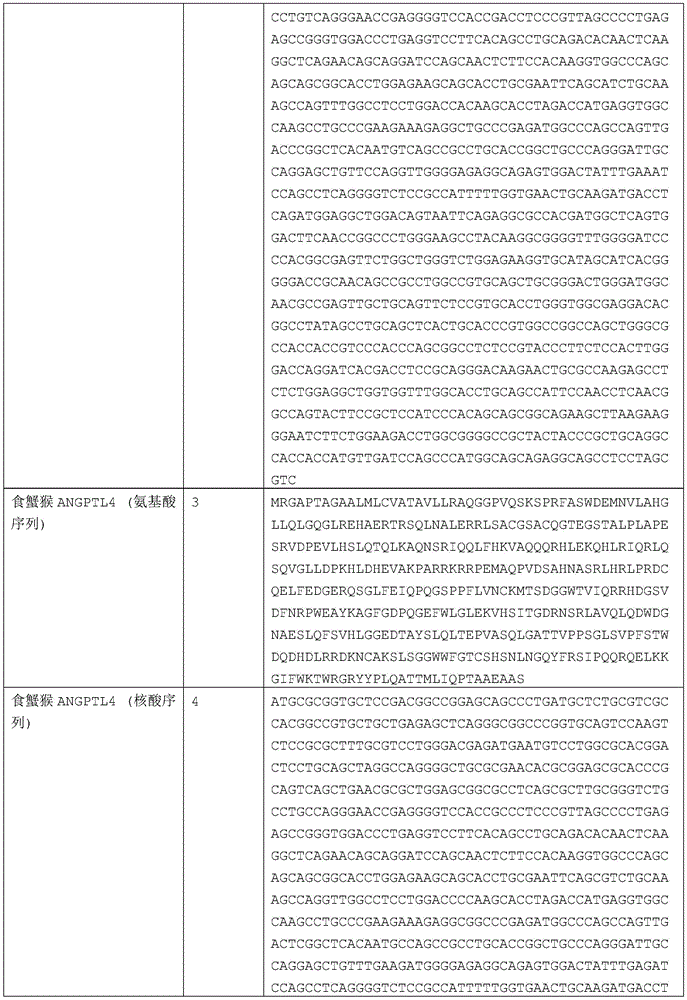


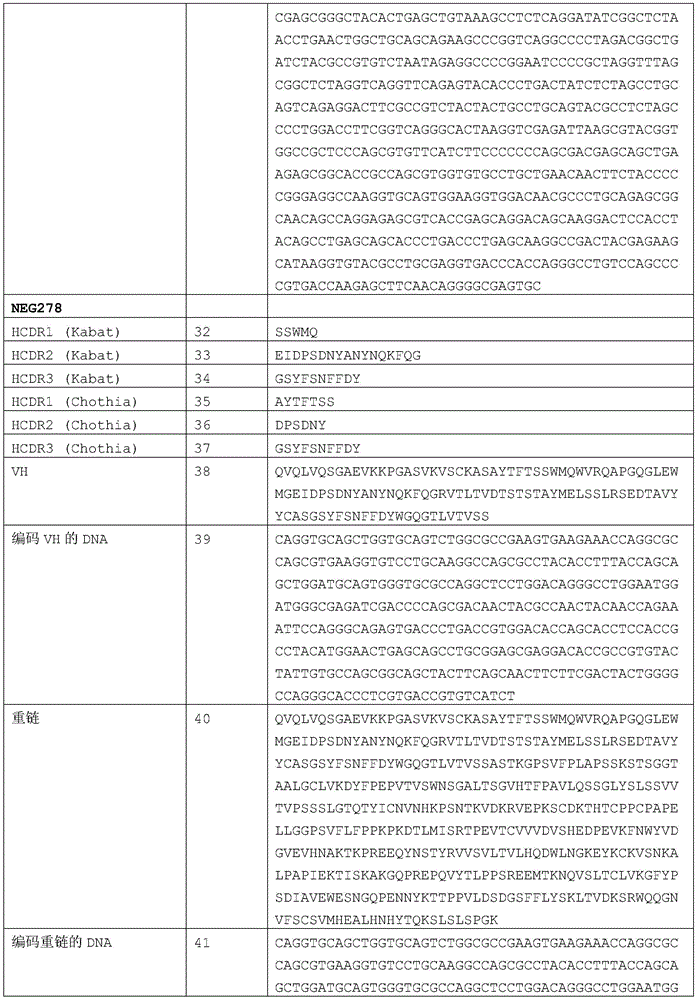


Other antibodies of the invention include those in which the amino acids or nucleic acids encoding the amino acids have been mutated, but still have at least 60%, 65%, 70%, 75%, 80%, 85%, 90% or 95% identity to the sequences described in table 1. Some embodiments include mutated amino acid sequences, wherein no more than 1,2, 3,4, or 5 amino acids have been mutated in the variable region when compared to the variable region as set forth in the sequences set forth in table 1, but retain substantially the same antigen binding activity.
As each of these antibodies can bind to ANGPTL4, the VH, VL, full-length light chain, and full-length heavy chain sequences (amino acid sequences and nucleotide sequences encoding the amino acid sequences) can be "mixed and matched" to produce other antibodies of the invention that bind to ANGPTL 4. Such "mixed and matched" antibodies that bind to ANGPTL4 can be tested using binding assays known in the art (e.g., ELISA, and other assays described in the examples section). In mixing and matching these chains, VH sequences from a particular VH/VL pairing should be replaced with structurally similar VH sequences. Likewise, the full-length heavy chain sequence from a particular full-length heavy chain/full-length light chain pairing should be replaced with a structurally similar full-length heavy chain sequence. Likewise, VL sequences from a particular VH/VL pairing should be replaced with structurally similar VL sequences. Likewise, the full-length light chain sequence from a particular full-length heavy chain/full-length light chain pairing should be replaced with a structurally similar full-length light chain sequence.
Accordingly, in one aspect, the invention provides an isolated antibody, or antigen-binding region thereof, having: a heavy chain variable domain comprising an amino acid sequence selected from the group consisting of SEQ ID NOs 13, 38, 58, 78, 98, 118, and 138; and a light chain variable domain comprising an amino acid sequence selected from the group consisting of SEQ ID NOs 23, 48, 68, 88, 108, 128, and 148; wherein the antibody specifically binds to Langptl4 (e.g., human ANGPTL 4).
More specifically, in certain aspects, the invention provides an isolated antibody or antigen binding region thereof having a heavy chain variable domain and a light chain variable domain comprising a heavy chain variable domain and a light chain variable domain selected from the group consisting of SEQ ID NOs 13 and 23; 38 and 48; 58 and 68; 78 and 88; 98 and 108, 118 and 128, or 138 and 148.
In another aspect, the invention provides (i) an isolated antibody having: a full length heavy chain comprising an amino acid sequence that has been optimized for expression in a mammalian cell, said amino acid sequence selected from the group consisting of SEQ ID NOs 15, 28, 40, 60, 80, 100, 120, and 140; and a full length light chain comprising an amino acid sequence that has been optimized for expression in a mammalian cell, said amino acid sequence selected from the group consisting of SEQ ID NOs 25, 50, 70, 90, 110, 130, and 150; or (ii) a functional protein comprising an antigen-binding portion thereof. More specifically, in certain aspects, the invention provides an isolated antibody, or antigen-binding region thereof, having a heavy chain and a light chain comprising an amino acid sequence selected from the group consisting of SEQ ID NOs 15 and 25; 28 and 25; 40 and 50; 60 and 70; 80 and 90; 100 and 110; 120 and 130; or a sequence of 140 and 150.
As used herein, the terms "complementarity determining regions" and "CDRs" refer to amino acid sequences that confer antigen specificity and binding affinity within the variable region of an antibody. Typically, there are three CDRs (HCDR1, HCDR2, HCDR3) in each heavy chain variable region and three CDRs (LCDR1, LCDR2, LCDR3) in each light chain variable region.
The precise amino acid sequence boundaries of a given CDR can be readily determined by using any of a variety of well-known protocols, including those described by Kabat et Al, (1991), "Sequences of Proteins of Immunological Interest", 5 th edition, Public Health Service, National Institutes of Health, Bethesda, MD ("Kabat" numbering scheme), Al-Lazikani et Al, (1997) JMB 273,927 948 ("Chothia" numbering scheme).
For example, the CDR amino acid residues of antibody FF1 in the heavy chain variable domain (VH) are numbered 31-35(HCDR1), 50-66(HCDR2) and 99-104(HCDR3) according to Kabat; and the CDR amino acid residues in the light chain variable domain (VL) are numbered 24-34(LCDR1), 50-55(LCDR2) and 89-97(LCDR 3). CDR amino acids in the VH were numbered 26-32(HCDR1), 52-57(HCDR2) and 99-104(HCDR3) according to Chothia; and amino acid residues in VL are numbered 26-32(LCDR1), 50-52(LCDR2) and 91-96(LCDR 3). By combining the CDR definitions of both Kabat and Chothia, the CDRs are composed of amino acid residues 26-35(HCDR1), 50-66(HCDR2) and 99-104(HCDR3) in the human VH and amino acid residues 24-34(LCDR1), 50-55(LCDR2) and 89-97(LCDR3) in the human VL.
In another aspect, the invention provides an antibody that binds to ANGPTL4, the antibody comprising the heavy and light chain CDRs 1, CDR2, and CDR3 described in table 1, or a combination thereof. The amino acid sequences of the VH CDR1 of these antibodies are shown in SEQ ID NOs 7, 32, 52, 72, 92, 112 and 132. The amino acid sequences of the VH CDR2 of these antibodies are shown in SEQ ID NOs 8, 33, 53,73, 93, 113 and 133. The amino acid sequence of the VH CDR3 of these antibodies is shown in SEQ ID NOs 9, 34, 54, 74, 94, 114 and 134. The amino acid sequence of VL CDR1 of these antibodies is shown in SEQ ID NOs 17, 42, 62, 82, 102, 122 and 142. The amino acid sequence of VL CDR2 of these antibodies is shown in SEQ ID NOs 18, 43, 63, 83, 103, 123 and 143. The amino acid sequence of VL CDR3 of these antibodies is shown in SEQ ID NOs 19, 44, 64, 84, 104, 124 and 144. These CDR regions are described using the Kabat system.
Alternatively, the amino acid sequence of the VH CDR1 of the antibody is shown in SEQ ID NOs 10, 35, 55, 75, 95, 115 and 135, as defined using the Chothia system (Al-Lazikani et Al, (1997) JMB 273, 927-948). The amino acid sequence of VH CDR2 of these antibodies is shown in SEQ ID NOs: 11, 36, 56, 76, 96, 116 and 136. The amino acid sequence of the VH CDR3 of these antibodies is shown in SEQ ID NOs 12, 37, 57, 77, 97, 117 and 137. The amino acid sequence of VL CDR1 of these antibodies is shown in SEQ ID NOS: 20, 45, 65, 85, 105, 125 and 145. The amino acid sequence of the VL CDR2 of these antibodies is shown in SEQ ID NOs: 21, 46, 66, 86, 106, 126 and 146. The amino acid sequence of VL CDR3 of these antibodies is shown in SEQ ID NOs: 22, 47, 67, 87, 107, 127 and 147.
Given that each of these antibodies can bind to ANGPTL4 and that antigen binding specificity is provided primarily by the CDR1, 2, and 3 regions, the VH CDR1, 2, and 3 sequences and VL CDR1, 2, and 3 sequences can be "mixed and matched" (i.e., CDRs from different antibodies can be mixed and matched, although each antibody preferably contains VH CDRs 1,2, and 3 and VL CDRs 1,2, and 3 to produce other molecules of the invention that bind to ANGPTL4 such "mixed and matched" antibodies that bind to ANGPTL4 can be tested using binding assays known in the art and those described in the examples (e.g., ELISA, SET, Biacore) The CDR2 and/or CDR3 sequences should be replaced with structurally similar CDR sequences. One of ordinary skill will readily appreciate that one or more VH and/or VL CDR region sequences may be substituted by structurally similar sequences from the CDR sequences shown herein for the monoclonal antibodies of the invention. In addition to the foregoing, in one embodiment, an antigen-binding fragment of an antibody described herein may comprise VH CDRs 1,2, and 3, or VL CDRs 1,2, and 3, wherein the fragment binds to ANGPTL4 as a single variable domain.
In certain embodiments of the invention, an antibody or antigen-binding fragment thereof may have the heavy and light chain sequences of a humanized antibody described in table 1. More specifically, the antibody or antigen-binding fragment thereof may have the heavy and light chain sequences of NEG276, NEG276-LALA, NEG278, NEG310, NEG313, NEG315, NEG318, and NEG 319.
In other embodiments of the invention, the antibody or antigen-binding fragment that specifically binds to ANGPTL4 comprises a heavy chain variable region CDR1, a heavy chain variable region CDR2, a heavy chain variable region CDR3, a light chain variable region CDR1, a light chain variable region CDR2, and a light chain variable region CDR3 as defined by Kabat and described in table 1. In further embodiments of the invention, the antibody or antigen-binding fragment that specifically binds to ANGPTL4 comprises heavy chain variable region CDR1, heavy chain variable region CDR2, heavy chain variable region CDR3, light chain variable region CDR1, light chain variable region CDR2, and light chain variable region CDR3 as defined by Chothia and described in table 1.
In a specific embodiment, the invention includes an antibody that specifically binds to ANGPTL4, the antibody comprising the heavy chain variable region CDR1 of SEQ ID NO: 7; the heavy chain variable region CDR2 of SEQ ID NO. 8; the heavy chain variable region CDR3 of SEQ ID NO. 9; 17, CDR1 from the light chain variable region of SEQ ID NO; 18, light chain variable region CDR 2; and the light chain variable region CDR3 of SEQ ID NO 19.
In another specific embodiment, the invention includes an antibody that specifically binds to ANGPTL4, the antibody comprising the heavy chain variable region CDR1 of SEQ ID NO: 32; 33, CDR2 of the heavy chain variable region of SEQ ID NO; the heavy chain variable region CDR3 of SEQ ID NO. 34; 42, light chain variable region CDR1 of SEQ ID NO; 43, CDR2 from the light chain variable region of SEQ ID NO; and the light chain variable region CDR3 of SEQ ID NO. 44.
In another specific embodiment, the invention includes an antibody that specifically binds to ANGPTL4, the antibody comprising the heavy chain variable region CDR1 of SEQ ID NO: 52; 53 heavy chain variable region CDR2 of SEQ ID NO; 54, CDR3 of the heavy chain variable region of SEQ ID NO; 62, the light chain variable region CDR1 of SEQ ID NO; 63, light chain variable region CDR2 of SEQ ID NO; and the light chain variable region CDR3 of SEQ ID NO 64.
In another specific embodiment, the invention includes an antibody that specifically binds to ANGPTL4, the antibody comprising the heavy chain variable region CDR1 of SEQ ID NO: 72; 73 in the heavy chain variable region CDR2 of SEQ ID NO; 74, CDR3 of the heavy chain variable region of SEQ ID NO; 82, CDR1 from the light chain variable region of SEQ ID NO; 83, CDR 2in the light chain variable region of SEQ ID NO; and the light chain variable region CDR3 of SEQ ID NO: 84.
In another specific embodiment, the invention includes an antibody that specifically binds to ANGPTL4, the antibody comprising the heavy chain variable region CDR1 of SEQ ID NO: 92; 93, CDR2 from the heavy chain variable region of SEQ ID NO; 94, CDR3 from the heavy chain variable region of SEQ ID NO; 102, light chain variable region CDR 1; 103 light chain variable region CDR 2; and the light chain variable region CDR3 of SEQ ID NO 104.
In another specific embodiment, the invention includes an antibody that specifically binds to ANGPTL4, the antibody comprising the heavy chain variable region CDR1 of SEQ ID NO: 112; 113, heavy chain variable region CDR2 of SEQ ID NO; 114, CDR3 of the heavy chain variable region of SEQ ID NO; 122, CDR1 from the light chain variable region of SEQ ID NO; 123 light chain variable region CDR2 of SEQ ID NO; and the light chain variable region CDR3 of SEQ ID NO: 124.
In another specific embodiment, the invention includes an antibody that specifically binds to ANGPTL4, the antibody comprising the heavy chain variable region CDR1 of SEQ ID NO: 132; 133, heavy chain variable region CDR 2; 134, CDR 3; 142, CDR1 of the light chain variable region of SEQ ID NO; 143, CDR2 from the light chain variable region of SEQ ID NO; and the light chain variable region CDR3 of SEQ ID NO: 144.
In another specific embodiment, the invention includes an antibody that specifically binds to ANGPTL4, the antibody comprising the heavy chain variable region CDR1 of SEQ ID NO: 10; the heavy chain variable region CDR2 of SEQ ID NO. 11; 12, CDR3 from the heavy chain variable region of SEQ ID NO; 20, light chain variable region CDR1 of SEQ ID NO; 21 light chain variable region CDR 2; and the light chain variable region CDR3 of SEQ ID NO. 22.
In another specific embodiment, the invention includes an antibody that specifically binds to ANGPTL4, the antibody comprising the heavy chain variable region CDR1 of SEQ ID NO: 35; the heavy chain variable region CDR2 of SEQ ID NO. 36; 37 from SEQ ID No. CDR 3; the light chain variable region CDR1 of SEQ ID NO. 45; 46, CDR2 from the light chain variable region of SEQ ID NO; and the light chain variable region CDR3 of SEQ ID NO. 47.
In another specific embodiment, the invention includes an antibody that specifically binds to ANGPTL4, the antibody comprising the heavy chain variable region CDR1 of SEQ ID NO: 55; 56 from SEQ ID NO: 2; 57, CDR3 of the heavy chain variable region of SEQ ID NO; 65 from SEQ ID NO: CDR 1; 66, CDR2 from the light chain variable region of SEQ ID NO; and the light chain variable region CDR3 of SEQ ID NO 67.
In another specific embodiment, the invention includes an antibody that specifically binds to ANGPTL4, the antibody comprising the heavy chain variable region CDR1 of SEQ ID NO: 75; 76, CDR 2in the heavy chain variable region of SEQ ID NO; heavy chain variable region CDR3 of SEQ ID NO. 77; 85 light chain variable region CDR1 of SEQ ID NO; 86, CDR2 from the light chain variable region of SEQ ID NO; and the light chain variable region CDR3 of SEQ ID NO: 87.
In another specific embodiment, the invention includes an antibody that specifically binds to ANGPTL4, the antibody comprising the heavy chain variable region CDR1 of SEQ ID NO: 95; 96 of the heavy chain variable region CDR 2; 97 heavy chain variable region CDR3 of SEQ ID NO; 105 light chain variable region CDR1 of SEQ ID NO; 106 light chain variable region CDR 2; and the light chain variable region CDR3 of SEQ ID NO: 107.
In another specific embodiment, the invention includes an antibody that specifically binds to ANGPTL4, the antibody comprising the heavy chain variable region CDR1 of SEQ ID NO: 115; 116, CDR2 of the heavy chain variable region of SEQ ID NO; the heavy chain variable region CDR3 of SEQ ID NO. 117; 125, CDR 1; 126, CDR2 of the light chain variable region of SEQ ID NO; and light chain variable region CDR3 of SEQ ID NO: 127.
In another specific embodiment, the invention includes an antibody that specifically binds to ANGPTL4, the antibody comprising the heavy chain variable region CDR1 of SEQ ID NO: 135; 136, CDR 2; 137, CDR 3; 145, CDR1 of the light chain variable region of SEQ ID NO; 146, light chain variable region CDR 2; and the light chain variable region CDR3 of SEQ ID NO: 147.
In certain embodiments, the invention includes an antibody or antigen-binding fragment that specifically binds to ANGPTL4 as described in table 1. In a preferred embodiment, the antibody or antigen-binding fragment that binds to ANGPTL4 is NEG276, NEG276-LALA, NEG278, NEG310, NEG313, NEG315, NEG318, NEG 319.
Homologous antibodies
In yet another embodiment, the invention provides an antibody or antigen-binding fragment thereof comprising an amino acid sequence that is homologous to a sequence described in table 1, wherein the antibody binds to an ANGPTL4 protein (e.g., human ANGPTL4 and cynomolgus ANGPTL4) and retains the desired functional characteristics of those antibodies described in table 1.
For example, the present invention provides an isolated antibody or functional antigen-binding fragment thereof comprising a heavy chain variable domain and a light chain variable domain, wherein the heavy chain variable domain comprises an amino acid sequence that is at least 80%, at least 90%, or at least 95% identical to an amino acid sequence selected from the group consisting of SEQ ID NOs 13, 38, 58, 78, 98, 118, and 138; the light chain variable domain comprises an amino acid sequence that is at least 80%, at least 90%, or at least 95% identical to an amino acid sequence selected from the group consisting of SEQ ID NOs 23, 48, 68, 88, 108, 128, 148; and the antibody specifically binds to ANGPTL4 (e.g., human ANGPTL4 and cynomolgus monkey ANGPTL 4). In certain aspects of the invention, the heavy and light chain sequences further comprise HCDR1, HCDR2, HCDR3, LCDR1, LCDR2 and LCDR3 sequences as defined by Kabat, for example comprising SEQ ID NOs 7,8, 9, 17, 18 and 19, respectively. In certain other aspects of the invention, the heavy and light chain sequences further comprise HCDR1, HCDR2, HCDR3, LCDR1, LCDR2 and LCDR3 sequences as defined by Chothia, for example comprising SEQ ID NOs 10, 11, 12, 20, 21 and 22, respectively.
In other embodiments, the VH and/or VL amino acid sequences may be 50%, 60%, 70%, 80%, 90%, 95%, 96%, 97%, 98%, or 99% identical to the sequences described in table 1. In other embodiments, the VH and/or VL amino acid sequences may be identical except for amino acid substitutions in no more than 1,2, 3,4, or 5 amino acid positions. Antibodies having VH and VL regions with high (i.e., 80% or greater) identity to those described in table 1 can be obtained by: mutagenesis (e.g., site-directed mutagenesis or PCR-mediated mutagenesis) of a nucleic acid molecule encoding SEQ ID NO:13, 38, 58, 78, 98, 118 or 138 and SEQ ID NO:23, 48, 68, 88, 108, 128 or 148, respectively, followed by testing the encoded altered antibody for retained function using the functional assays described herein.
In other embodiments, the full length heavy chain amino acid sequence and/or the full length light chain amino acid sequence may be 50%, 60%, 70%, 80%, 90%, 95%, 96%, 97%, 98%, or 99% identical to a sequence described in table 1.An antibody having a full-length heavy chain and a full-length light chain with high (i.e., 80% or greater) identity to the full-length heavy chain of any one of SEQ ID NOs 15, 28, 40, 60, 80, 100, 120, or 140 and the full-length light chain of any one of SEQ ID NOs 25, 50, 70, 90, 110, 130, or 150 can be obtained by: nucleic acid molecules encoding such polypeptides are mutagenized (e.g., site-directed mutagenesis or PCR-mediated mutagenesis) and the encoded altered antibodies are subsequently tested for retained function using the functional assays described herein.
In other embodiments, the full-length heavy chain nucleotide sequence and/or the full-length light chain nucleotide sequence may be 60%, 70%, 80%, 90%, 95%, 96%, 97%, 98%, or 99% identical to a sequence described in table 1.
In other embodiments, the heavy chain variable region nucleotide sequence and/or the light chain variable region nucleotide sequence may be 60%, 70%, 80%, 90%, 95%, 96%, 97%, 98% or 99% identical to the sequences set forth in table 1.
As used herein, the percent identity between two sequences is a function of the identity position common to the sequences (i.e.,% identity equals the number of identical positions/total number of positions x 100) taking into account the number of gaps that need to be introduced for optimal alignment of the two sequences and the length of each gap. Comparison of sequences and determination of percent identity between two sequences can be accomplished using a mathematical algorithm as described in the non-limiting examples below.
Additionally or alternatively, the nucleic acid sequences and protein sequences of the invention may further be used as "query sequences" to perform searches against public databases, for example to identify related sequences. Such searches can be performed, for example, using the BLAST program of Altschul et al, 1990J.mol.biol.215: 403-10.
Antibodies with conservative modifications
In certain embodiments, the antibodies of the invention have a heavy chain variable region comprising CDR1, CDR2, and CDR3 sequences, and a light chain variable region comprising CDR1, CDR2, and CDR3 sequences, wherein one or more of these CDR sequences has a specified amino acid sequence based on the antibodies described herein or a conservative modification thereof, and wherein the antibodies retain the desired functional properties of the antibodies of the invention that bind to ANGPTL 4.
Accordingly, the present invention provides an isolated antibody or antigen-binding fragment thereof consisting of a heavy chain variable region comprising the sequences of CDR1, CDR2 and CDR3 and a light chain variable region comprising the sequences of CDR1, CDR2 and CDR3, wherein: the amino acid sequence of CDR1 of the heavy chain variable region is selected from the group consisting of SEQ ID NOs 7, 32, 52, 72, 92, 112 and 132 and conservative modifications thereof; the amino acid sequence of CDR2 of the heavy chain variable region is selected from the group consisting of SEQ ID NOs 8, 33, 53,73, 93, 113 and 133 and conservative modifications thereof; the amino acid sequence of CDR3 of the heavy chain variable region is selected from the group consisting of SEQ ID NOs 9, 34, 54, 74, 94, 114 and 134 and conservative modifications thereof; the amino acid sequence of CDR1 of the light chain variable region is selected from SEQ ID NOs 17, 42, 62, 82, 102, 122 and 142 and conservative modifications thereof; the amino acid sequence of CDR 2in the variable region of the light chain is selected from the group consisting of SEQ ID NOs 18, 43, 63, 83, 103, 123 and 143 and conservative modifications thereof; the amino acid sequence of CDR3 of the light chain variable region is selected from SEQ ID NOs 19, 44, 64, 84, 104, 124 and 144 and conservative modifications thereof; and the antibody or antigen-binding fragment thereof specifically binds to ANGPTL 4.
In other embodiments, the antibodies of the invention are optimized for expression in mammalian cells, having a full-length heavy chain sequence and a full-length light chain sequence, wherein one or more of these sequences has a specified amino acid sequence based on the preferred antibodies described herein, or conservative modifications thereof, and wherein the antibodies retain the desired functional properties of the antibodies of the invention that bind to ANGPTL 4. Accordingly, the present invention provides an isolated antibody optimized for expression in a mammalian cell, said isolated antibody consisting of a full length heavy chain and a full length light chain, wherein said full length heavy chain has an amino acid sequence selected from the group consisting of SEQ ID NOs 15, 28, 40, 60, 80, 100, 120, and 140 and conservative modifications thereof; and the full length light chain has an amino acid sequence selected from the group consisting of SEQ ID NOs 25, 50, 70, 90, 110, 130, and 150 and conservative modifications thereof; and the antibody specifically binds to ANGPTL4 (e.g., human ANGPTL4 and cynomolgus monkey ANGPTL 4).
Antibodies binding to the same epitope
The present invention provides antibodies that bind to the same epitope as antibodies described in table 1 that bind to ANGPTL 4. Additional antibodies can thus be identified based on their ability to compete with (e.g., competitively inhibit the binding of) other antibodies of the invention in an ANGPTL4 binding assay (such as those described in the examples). The ability of the test antibody to inhibit binding of the antibody of the invention to ANGPTL4 protein indicates that the test antibody can compete for binding of the antibody to ANGPTL 4; according to a non-limiting theory, such an antibody may bind to the same or a related (e.g., structurally similar or spatially close) epitope on the ANGPTL4 protein with which it competes. In certain embodiments, an antibody that binds to the same epitope of an antibody of the invention on an ANGPTL4 protein is a humanized antibody. Such humanized antibodies can be prepared and isolated as described herein. As used herein, a competitive antibody "competes" for binding when it inhibits ANGPTL4 binding by more than 50% (e.g., 80%, 85%, 90%, 95%, 98%, or 99%) of an antibody or antigen-binding fragment of the invention in the presence of an equimolar concentration of the competitive antibody.
In other embodiments, the antibodies or antigen binding fragments of the invention bind to one or more epitopes of ANGPTL 4. In some embodiments, the epitope bound by the antibody or antigen binding fragment of the invention is a linear epitope. In other embodiments, the epitope bound by the antibody or antigen binding fragment of the invention is a non-linear conformational epitope.
Engineered and modified antibodies
Antibodies of the invention can also be prepared by engineering modified antibodies, which may have altered properties relative to the starting antibody, using antibodies having one or more of the VH and/or VL sequences set forth herein as starting materials. Antibodies can be engineered by modifying one or more residues within one or both variable regions (i.e., VH and/or VL), e.g., within one or more CDR regions and/or within one or more framework regions. Additionally or alternatively, antibodies may be engineered by modifying residues within the constant region, e.g., to alter the effector function of the antibody).
One type of variable region engineering that can be performed is CDR grafting. Antibodies interact with the target antigen predominantly through amino acid residues located within the six heavy and light chain Complementarity Determining Regions (CDRs). For this reason, the amino acid sequence inside the CDR is more diverse between the antibodies than outside the CDR. Because the CDR sequences are responsible for the majority of the antibody-antigen interactions, recombinant antibodies that mimic the properties of a naturally occurring particular antibody can be expressed by constructing expression vectors that contain CDR sequences from that naturally occurring particular antibody grafted onto framework sequences from different antibodies with different properties (see, e.g., Riechmann et al, 1998Nature 332: 323-327; Jones, P. et al, 1986Nature 321: 522-525; Queen, C. et al, 1989Proc. Natl. Acad., U.S. A.86: 10029-10033; U.S. Pat. No. 5,225,539 to Winter, and U.S. Pat. Nos. 5,530,101; 5,585,089; 5,693,762 and 6,180,370 to Queen et al).
Accordingly, another embodiment of the invention is directed to an isolated antibody or antigen-binding fragment thereof comprising a heavy chain variable region comprising a CDR 1sequence having an amino acid sequence selected from the group consisting of SEQ ID NOs 7, 32, 52, 72, 92, 112 and 132; a CDR2 sequence having an amino acid sequence selected from SEQ ID NOs 8, 33, 53,73, 93, 113 and 133; a CDR3 sequence having an amino acid sequence selected from SEQ ID NOs 9, 34, 54, 74, 94, 114 and 134, the light chain variable region comprising a CDR 1sequence having an amino acid sequence selected from SEQ ID NOs 17, 42, 62, 82, 102, 122 and 142, respectively; a CDR2 sequence having an amino acid sequence selected from SEQ ID NOs 18, 43, 63, 83, 103, 123 and 143; a CDR3 sequence having an amino acid sequence selected from the group consisting of SEQ ID NOs 19, 44, 64, 84, 104, 124 and 144. Thus, such antibodies contain the VH and VL CDR sequences of monoclonal antibodies, but may contain different framework sequences from these antibodies.
Such framework sequences can be obtained from public DNA databases or published references containing germline antibody gene sequences. For example, germline DNA Sequences for Human heavy and light chain variable region genes can be found in the "VBase" Human germline sequence database (available at the following web site on the world Wide Web: mrc-cpe.cam.ac.uk/VBase) and in Kabat, E.A. et al, 1991Sequences of Proteins of Immunological Interest, Fifth Edition, U.S. department of Health and Human Services, NIH published Nos. 91-3242; tomlinson, I.M. et al, 1992J.mol.biol.227: 776-798; and Cox, J.P.L.et al, 1994Eur.J Immunol.24: 827-836. The contents of each document are expressly incorporated herein by reference.
Examples of framework sequences for antibodies of the invention are those that are structurally similar to the framework sequences selected for use with antibodies of the invention (e.g., consensus sequences and/or framework sequences for use with monoclonal antibodies of the invention). The VH CDR1, 2 and 3 sequences and VL CDR1, 2 and 3 sequences can be grafted onto framework regions having sequences identical to those present in the germline immunoglobulin gene from which the framework sequences are derived, or the CDR sequences can be grafted onto framework regions containing one or more mutations compared to the germline sequences. For example, it has been found that in certain instances, mutating residues within the framework regions is beneficial to maintain or enhance the antigen binding ability of the antibody (see, e.g., U.S. Pat. Nos. 5,530,101; 5,585,089; 5,693,762 and 6,180,370 to Queen et al). Frameworks that can be utilized as scaffolds on which the antibodies and antigen-binding fragments described herein are constructed include, but are not limited to, VH1A, VH1B, VH3, Vk1, Vl2, and Vk 2. Additional frameworks are known in the art and can be found, for example, at the website vbase. Found in the vBase database at 1:1 ═ MMN _ position.
Accordingly, one embodiment of the invention is directed to an isolated antibody or antigen-binding fragment thereof that binds to ANGPTL4, comprising a heavy chain variable region comprising an amino acid sequence selected from SEQ ID NOs 13, 38, 58, 78, 98, 118, and 138, or having one, two, three, four, or five amino acid substitutions, deletions, or additions in the framework regions of such sequences, and further comprising a light chain variable region having an amino acid sequence selected from SEQ ID NOs 23, 48, 68, 88, 108, 128, and 148, or having one, two, three, four, or five amino acid substitutions, deletions, or additions in the framework regions of such sequences.
Another type of variable region modification is mutation of amino acid residues within the VH and/or VL CDR1, CDR2 and/or CDR3 regions to thereby improve one or more binding properties (e.g., affinity) of the antibody of interest, referred to as "affinity maturation". Site-directed mutagenesis or PCR-mediated mutagenesis can be performed to introduce mutations, and the effect on antibody binding or other functional property of interest can be evaluated in an in vitro or in an in vivo assay as described herein and provided in the examples. Conservative modifications (as discussed above) may be introduced. The mutation may be an amino acid substitution, addition or deletion. In addition, typically no more than 1,2, 3,4, 5 residues are altered within a CDR region.
Thus, in another embodiment, the invention provides an isolated antibody or antigen-binding fragment thereof that binds to ANGPTL4, consisting of a heavy chain variable region having: a VH CDR1 region having an amino acid sequence selected from SEQ ID NOs 7, 32, 52, 72, 92, 112 and 132 or an amino acid sequence containing 1,2, 3,4, 5 amino acid substitutions, deletions or additions as compared to SEQ ID NOs 7, 32, 52, 72, 92, 112 and 132; a VH CDR2 region having an amino acid sequence selected from SEQ ID NOs 8, 33, 53,73, 93, 113 and 133 or an amino acid sequence containing 1,2, 3,4, 5 amino acid substitutions, deletions or additions as compared to SEQ ID NOs 8, 33, 53,73, 93, 113 and 133; a VH CDR3 region having an amino acid sequence selected from SEQ ID NOs 9, 34, 54, 74, 94, 114 and 134 or an amino acid sequence containing 1,2, 3,4, 5 amino acid substitutions, deletions or additions as compared to SEQ ID NOs 9, 34, 54, 74, 94, 114 and 134; a VL CDR1 region having an amino acid sequence selected from SEQ ID NOs 17, 42, 62, 82, 102, 122 and 142 or an amino acid sequence comprising 1,2, 3,4, 5 amino acid substitutions, deletions or additions as compared to SEQ ID NOs 17, 42, 62, 82, 102, 122 and 142; a VL CDR2 region having an amino acid sequence selected from SEQ ID NOs 18, 43, 63, 83, 103, 123 and 143 or an amino acid sequence comprising 1,2, 3,4, 5 amino acid substitutions, deletions or additions as compared to SEQ ID NOs 18, 43, 63, 83, 103, 123 and 143; and a VL CDR3 region having an amino acid sequence selected from SEQ ID NOs 19, 44, 64, 84, 104, 124 and 144 or an amino acid sequence comprising 1,2, 3,4, 5 amino acid substitutions, deletions or additions as compared to SEQ ID NOs 19, 44, 64, 84, 104, 124 and 144.
Thus, in another embodiment, the invention provides an isolated antibody or antigen-binding fragment thereof that binds to ANGPTL4, consisting of a heavy chain variable region having: a VH CDR1 region having an amino acid sequence selected from SEQ ID NOs 10, 35, 55, 75, 95, 115 and 135 or an amino acid sequence containing 1,2, 3,4, 5 amino acid substitutions, deletions or additions as compared to SEQ ID NOs 10, 35, 55, 75, 95, 115 and 135; a VH CDR2 region having an amino acid sequence selected from SEQ ID NOs 11, 36, 56, 76, 96, 116 and 136 or an amino acid sequence containing 1,2, 3,4, 5 amino acid substitutions, deletions or additions as compared to SEQ ID NOs 11, 36, 56, 76, 96, 116 and 136; a VH CDR3 region having an amino acid sequence selected from SEQ ID NOs 12, 37, 57, 77, 97, 117 and 137 or an amino acid sequence containing 1,2, 3,4, 5 amino acid substitutions, deletions or additions as compared to SEQ ID NOs 12, 37, 57, 77, 97, 117 and 137; a VL CDR1 region having an amino acid sequence selected from SEQ ID NOs 20, 45, 65, 85, 105, 125 and 145 or an amino acid sequence comprising 1,2, 3,4, 5 amino acid substitutions, deletions or additions as compared to SEQ ID NOs 20, 45, 65, 85, 105, 125 and 145; a VL CDR2 region having an amino acid sequence selected from SEQ ID NOs 21, 46, 66, 86, 106, 126 and 146 or an amino acid sequence comprising 1,2, 3,4, 5 amino acid substitutions, deletions or additions as compared to SEQ ID NOs 21, 46, 66, 86, 106, 126 and 146; and a VL CDR3 region having an amino acid sequence selected from SEQ ID NOs 22, 47, 67, 87, 107, 127 and 147 or an amino acid sequence comprising 1,2, 3,4, 5 amino acid substitutions, deletions or additions as compared to SEQ ID NOs 22, 47, 67, 87, 107, 127 and 147.
Grafting antigen binding domains into alternative frameworks or scaffolds
A wide variety of antibody/immunoglobulin frameworks or scaffolds may be used, so long as the polypeptide produced comprises at least one binding region that specifically binds to ANGPTL 4. Such frameworks or scaffolds include 5 human immunoglobulins or fragments thereof of the major idiotype, and immunoglobulins of other animal species, preferably with humanization aspects. In this respect, single heavy chain antibodies, such as those identified in camelids (camelids), are of particular interest. New frameworks, scaffolds and fragments continue to be discovered and developed by those skilled in the art.
In one aspect, the invention relates to the production of non-immunoglobulin-based antibodies using non-immunoglobulin scaffolds onto which the CDRs of the invention can be grafted. Known or future non-immunoglobulin frameworks and scaffolds may be used, provided they comprise a binding region specific for the target ANGPTL4 protein. Known non-immunoglobulin frameworks or scaffolds include, but are not limited to, fibronectin (Compound Therapeutics, inc., Waltham, MA), ankyrin (Molecular Partners AG, Zurich, switzerland), domain antibodies (domanis, ltd., Cambridge, MA and Ablynx nv, zwijnaard, belgium), lipocalin (pierce protein AG, freesing, germany), small modular immunopharmaceuticals (trubius Pharmaceuticals inc., Seattle, WA), maxybodes (Avidia, inc., Mountain View, CA), protein a (Affibody AG, sweden), and affafilin (gamma-crystallin or ubiquitin) (Scil Proteins GmbH, hal, germany).
Fibronectin scaffolds are based on fibronectin type III domains (e.g., the tenth module of fibronectin type III (10Fn3 domain)). Fibronectin type III domain has 7 or 8 beta chains distributed between two beta sheets that are themselves stacked on top of each other to form the core of the protein, and also contains loops (similar to CDRs) that link the beta chains to each other and are exposed to the solvent. At least three such loops are present at each edge of the beta sheet sandwich, where the edge is the protein boundary perpendicular to the direction of the beta strands (see US 6818418). These fibronectin based scaffolds are not immunoglobulins, but the overall folding is closely related to the smallest functional antibody fragment (i.e. the heavy chain variable region) that contains the complete antigen recognition unit in camel and alpaca IgG. Due to this structure, non-immunoglobulin antibodies mimic antigen binding properties similar to antibodies in nature and affinity. These scaffolds can be used in an in vitro loop randomization and shuffling strategy that is similar to the affinity maturation process of antibodies in vivo. These fibronectin based molecules can be used as scaffolds in which the loop regions of the molecule are replaced with the CDRs of the invention using standard cloning techniques.
Ankyrin technology is based on the use of proteins with ankyrin-derived repeating modules as scaffolds carrying variable regions that can be used to bind different targets. The ankyrin repeat module is a 33 amino acid polypeptide consisting of two antiparallel alpha-helices and one beta turn. Binding of the variable regions is mostly optimized by using ribosome display.
Avimers are derived from native A-domain containing proteins such as LRP-1. These domains are used by nature for protein-protein interactions and in humans more than 250 proteins are structurally based on the a-domain. Avimers consist of a number of different "A-domain" monomers (2-10) linked by amino acid linkers. Using, for example, the teachings disclosed in U.S. patent application publication No. 20040175756; 20050053973, respectively; 20050048512, respectively; and 20060008844, can produce Avimers that can bind to the target antigen.
Affibody affinity ligands are small, simple proteins consisting of a triple helix bundle, based on a scaffold of one IgG binding domain of protein a. Protein a is a surface protein from the bacterium Staphylococcus aureus (Staphylococcus aureus). This scaffold domain consists of 58 amino acids, 13 of which are randomized to generate Affibody libraries with a large number of ligand variants (see, e.g., US 5831012). The Affinibody molecules mimic antibodies, which have a molecular weight of 6kDa compared to the molecular weight of 150kDa antibodies. Despite its small size, the binding site of Affibody molecules is similar to antibodies.
Anti-transporter protein (Anticalin) is a product developed by Pieris ProteoLab AG. They are derived from lipocalins, a widely distributed group of small and robust proteins that are commonly involved in physiological transport or storage of chemosensitive or insoluble compounds. Several natural lipocalins are present in human tissues or body fluids. The protein is constructed like an immunoglobulin with a hypervariable loop on top of a rigid framework. However, in contrast to antibodies or recombinant fragments thereof, lipocalins consist of a single polypeptide chain of 160 to 180 amino acid residues that is only slightly larger than a single immunoglobulin domain. The set of four rings that make up the binding pocket shows outstanding structural plasticity and bears a variety of side chains. The binding sites can thus be reshaped in a proprietary process aimed at recognizing target molecules of defined different shapes with high affinity and high specificity. One lipocalin family protein, the posterior bile pigment-binding protein (BBP) of Pieris brassicae (Pieris brassiccus), has been used to develop anti-transporter proteins (Anticalin) by mutagenesis of these four loop sets. An example of a patent application describing anti-transportan is in PCT publication No. WO 199916873.
Affilin molecules are small, non-immunoglobulin proteins that are designed for specific affinity for proteins and small molecules. The novel affilin molecules can be selected very rapidly from two libraries, each based on different scaffold proteins derived from humans. The Affilin molecules do not show any structural homology to immunoglobulins. Currently, two affilin scaffolds are used, one of which is gamma crystallin (human eye lens structural protein) and the other is a "ubiquitin" superfamily protein. Both human scaffolds are very small, exhibit a high degree of temperature stability and are almost resistant to pH changes and denaturants. This high stability is mainly due to the extended beta sheet structure of the protein. Examples of gamma crystallin-derived proteins are described in WO 200104144 and examples of "ubiquitin-like" proteins are described in WO 2004106368.
Protein Epitope Mimetics (PEMs) are medium-sized, cyclic peptide-like molecules (MW 1-2kDa) that mimic the protein β -hairpin secondary structure (the primary secondary structure involved in protein-protein interactions).
The present invention provides fully human antibodies that specifically bind to ANGPTL4 protein. The human antibodies of the invention that bind to ANGPTL4 have further reduced antigenicity when administered to a human subject as compared to the chimeric or humanized antibodies.
Camel antibodies
Antibody proteins obtained from camels and dromedary (Camelus bifidus (Camelus bactrianus) and dromedary (Calelus hydromaderius)) family members, including new world members such as alpaca species (alpaca (Lama paccos), alpaca managa (Lama glama), and alpaca minorca (Lama vicugna)) have been characterized for size, structural complexity, and antigenicity against human subjects. Certain IgG antibodies from this mammalian family, as found in nature, lack a light chain and are therefore structurally distinct from the common four-chain quaternary structure with two heavy chains and two light chains of antibodies from other animals. See PCT/EP93/02214 (WO 94/04678 published 3.3.1994).
A region of a camelid antibody (which is a small single variable region, identified as a VHH) can be obtained by genetic engineering to produce a small protein with high affinity for the target, resulting in a low molecular weight antibody protein known as a "camelid nanobody". See U.S. patent No. 5,759,808 issued on 6/2/1998; see also Stijlemans, B, et al, 2004J Biol Chem 279: 1256-1261; dumoulin, M. et al, 2003Nature 424: 783-; pleschberger, M. et al 2003Bioconjugate Chem 14: 440-448; cortex-Retamozo, V. et al 2002Int J Cancer 89: 456-62; and Lauwereys, M. et al 1998EMBO J17: 3512-. Engineered libraries of camelid antibodies and antibody fragments are commercially available, for example, from Ablynx, Ghent, Belgium. Like other non-human antibodies, the amino acid sequence of camelid antibodies can be recombinantly altered to obtain a sequence that more closely mimics a human sequence, i.e., the nanobody can be "humanized". Therefore, the natural low antigenicity of the camel antibody to human can be further reduced.
Camelid nanobodies have a molecular weight that is one tenth of that of human IgG molecules, and this protein has a physical diameter of only a few nanometers. One consequence of the small size is that camelid nanobodies are able to bind to functionally unrecognizable antigenic sites of larger antibody proteins, i.e., camelid nanobodies can be used as reagents to detect antigens that are hidden using classical immunological techniques and can be used as potential therapeutics. Thus yet another consequence of the small size is that camelid nanobodies may exert an inhibitory effect due to binding to specific sites in the groove or slit of the target protein, and thus may provide the ability to mimic the function of classical low molecular weight drugs more closely than classical antibodies.
The low molecular weight and compact size further result in camelid nanobodies with extreme thermal stability, stable to extreme pH and proteolytic digestion, and low antigenicity. Another result is that camelid nanobodies move easily from the circulatory system into the tissue and even cross the blood-brain barrier and can treat conditions that involve neural tissue. The nanobody may also facilitate transport of drugs across the blood brain barrier. See U.S. patent application 20040161738 published on 8/19/2004. These features, combined with low antigenicity in humans, indicate great therapeutic potential. In addition, these molecules can be expressed well in prokaryotic cells, such as E.coli (E.coli), and can be expressed as fusion proteins using phage and are functional.
Accordingly, one feature of the present invention is a camelid antibody or nanobody with high affinity for ANGPTL 4. In certain embodiments herein, camelid antibodies or nanobodies are produced naturally in camelids, i.e., from camelids after immunization with ANGPTL4 or peptide fragments thereof using the techniques described herein for other antibodies. Alternatively, camelid nanobodies that bind to ANGPTL4 are engineered (i.e., generated, for example, by a selection process) from a phage library displaying appropriately mutagenized camelid nanobody proteins using a panning approach targeting ANGPTL4, as described in the examples herein. Engineered nanobodies may also be tailored by genetic engineering to have a half-life of 45 minutes to 2 weeks in a recipient subject. In a specific embodiment, the camelid or nanobody is obtained by grafting the CDR sequences of the heavy or light chain of a human antibody of the invention into nanobody or single domain antibody framework sequences, as described for example in PCT/EP 93/02214.
Bispecific molecules and multivalent antibodies
In another aspect, the invention features a bispecific or multispecific molecule comprising an antibody or fragment thereof of the invention that binds ANGPTL 4. The antibody of the invention or antigen binding region thereof can be derivatized or linked to another functional molecule, such as another peptide or protein (e.g., another antibody or ligand to a receptor) to produce a bispecific molecule that binds to at least two different binding sites or target molecules. The antibodies of the invention may actually be derivatized or linked to more than one other functional molecule to produce multispecific molecules that bind to more than two different binding sites and/or target molecules; such multispecific molecules are also intended to be encompassed by the term "bispecific molecule" as used herein. To produce a bispecific molecule of the invention, an antibody of the invention can be functionally linked (e.g., by chemical coupling, genetic fusion, non-covalent binding, or otherwise) to one or more other binding molecules, such as another antibody, antibody fragment, peptide, or binding mimetic, thereby producing a bispecific molecule.
Accordingly, the present invention includes bispecific molecules comprising at least a first binding specificity for ANGPTL4 and a second binding specificity for a second target epitope. For example, the second target epitope is another ANGPTL4 epitope that is different from the first target epitope.
In addition, for the present invention wherein the bispecific molecule is multispecific, the molecule may further comprise a third binding specificity in addition to the first and second target epitopes.
In one embodiment, the bispecific molecules of the invention comprise as binding specificity at least one antibody or antibody fragment thereof, including, for example, Fab ', F (ab')2Fv, or single-chain Fv. The antibody may also beIs a light or heavy chain dimer or any minimal fragment thereof such as an Fv or a single chain construct such as an antibody described by Ladner et al in U.S. patent No. 4,946,778.
Diabodies (diabodies) are bivalent, bispecific molecules in which the VH and VL domains are expressed on a single polypeptide chain, connected by a linker that is too short to allow pairing between the two domains on the same chain. The VH and VL domains pair with complementary domains of the other chain, thus creating two antigen binding sites (see, e.g., Holliger et al, 1993Proc. Natl. Acad. Sci. USA 90: 6444-. Diabodies can be produced by expressing two polypeptide chains with the structures VHA-VLB and VHB-VLA (VH-VL configuration) or VLA-VHB and VLB-VHA (VL-VH configuration) inside the same cell. Most of them can be expressed in soluble form in bacteria. Single chain diabodies (scDb) are generated by linking two polypeptide chains forming a diabody with a linker of about 15 amino acid residues (see Holliger and Winter,1997Cancer immunol. Immunother.,45(3-4): 128-30; Wu et al, 1996Immunotechnology,2(1): 21-36). scDb can be expressed in bacteria as a soluble, active monomer (see Holliger and Winter,1997Cancer immunol., 45(34): 128-30; Wu et al, 1996 immunology, 2(1): 21-36; Pluckthun and Pack,1997 immunol., 3(2): 83-105; Ridgway et al, 1996Protein eng.,9(7): 617-21. diabodies can be fused to Fc to produce "double-diabodies" (see Lu et al, 2004j.biol. chem.,279(4): 2856-65).
Other antibodies that can be used in bispecific molecules of the invention are murine monoclonal antibodies, chimeric monoclonal antibodies and humanized monoclonal antibodies.
Bispecific molecules can be prepared by conjugating component binding specificities using methods known in the art. For example, each binding specificity of a bispecific molecule can be generated separately and subsequently conjugated to each other. When the binding specificity is a protein or peptide, a variety of coupling or crosslinking agents may be used for covalent conjugation. Examples of crosslinking agents include protein A, carbodiimide, N-succinimide-S-acetyl-thioacetate (SATA), 5' -dithiobis (2-nitrobenzoic acid) (DTNB), o-phenylenebismaleimide (oPDM), N-succinimide-3- (2-pyridyldithio) propionate (SPDP), and sulfosuccinimide-4- (N-maleimidomethyl) cyclohexane-1-carboxylate (sulfo-SMCC) (see, e.g., Karpovsky et al, 1984J. exp. Med.160: 1686; Liu, MA et al, 1985Proc Natl Acad Sci USA 82: 8648). Other methods include those described in Paulus,1985Behring ins. No.78, 118-132; brennan et al, 1985Science 229:81-83) and Glennie et al, 1987J. Immunol.139: 2367-. The conjugating agents were SATA and sulfo-SMCC, both available from Pierce Chemical Co. (Rockford, IL).
Where the binding specificity is an antibody, they may be conjugated by sulfhydryl bonding of the C-terminal hinge regions of the two heavy chains. In a particular embodiment, the hinge region is modified to contain an odd number of sulfhydryl residues, for example 1 sulfhydryl residue, prior to conjugation.
Alternatively, both binding specificities may be encoded in the same vector and expressed and assembled in the same host cell. This approach is particularly useful where the bispecific molecule is mAb x mAb, mAb x Fab, Fab x F (ab')2Or a ligand x Fab fusion protein. The bispecific molecule of the invention may be a single chain molecule comprising one single chain antibody and one binding determinant, or a single chain bispecific molecule comprising two binding determinants. A bispecific molecule can comprise at least two single chain molecules. Methods for making bispecific molecules are described, for example, in U.S. Pat. nos. 5,260,203; U.S. patent nos. 5,455,030; U.S. patent nos. 4,881,175; U.S. Pat. nos. 5,132,405; U.S. Pat. nos. 5,091,513; U.S. patent nos. 5,476,786; U.S. patent nos. 5,013,653; U.S. Pat. nos. 5,258,498; and U.S. patent No. 5,482,858.
Binding of a bispecific molecule to its specific target can be demonstrated by, for example, enzyme-linked immunosorbent assay (ELISA), Radioimmunoassay (REA), FACS analysis, bioassay (e.g., growth inhibition), or western blot assay. Each of these assays typically detects the presence of a particular protein-antibody complex of interest by using a labeled reagent (e.g., an antibody) specific for the complex.
In another aspect, the invention provides multivalent compounds comprising at least two identical or different antigen binding portions of an antibody of the invention that binds to ANGPTL 4. The antigen binding moieties may be linked together via protein fusion or covalent or non-covalent linkage. Alternatively, a ligation method for bispecific molecules has been described. For example, a tetravalent compound may be obtained by crosslinking an antibody of the invention with an antibody that binds to a constant region (e.g., an Fc or hinge region) of the antibody of the invention.
Trimerization domains are described, for example, in the Borean patent EP 1012280B 1. Pentameric modules are described, for example, in PCT/EP 97/05897.
Antibodies with extended half-life
The present invention provides antibodies that specifically bind to ANGPTL4 protein, which antibodies have an extended half-life in vivo.
Many factors may influence the in vivo half-life of a protein. For example, kidney filtration, metabolism in the liver, degradation by proteolytic enzymes (proteases) and immunogenic reactions (e.g., protein neutralization by antibodies and uptake by macrophages and dendritic cells). Various strategies can be used to extend the half-life of the antibodies of the invention. For example, by chemically linking polyethylene glycol (PEG), reCODE PEG, antibody scaffolds, polysialic acid (PSA), hydroxyethyl starch (HES), albumin binding ligands, and sugar protecting layers; genetic fusion by proteins that bind to and transfer serum proteins such as albumin, IgG, FcRn; by coupling (genetically or chemically) to other binding moieties that bind serum proteins, such as nanobodies, fabs, DARPins, avimers, affibodies and antiporters; by genetically fusing rPEG, albumin, domains of albumin, albumin binding protein, and Fc; or by incorporation into a nanocarrier, a sustained release formulation, or a medical device.
To prolong the in vivo serum circulation of antibodies, inert polymer molecules such as high molecular weight PEG can be attached to the antibody or via site-specific conjugation of PEG to the N-terminus or C-terminus of the antibody or via the epsilon-amino group present on lysine residues, with or without a linkerA fragment thereof. To pegylate an antibody, the antibody or fragment thereof is typically reacted with polyethylene glycol (PEG), such as an active ester or aldehyde derivative of PEG, under conditions in which one or more PEG groups become attached to the antibody or fragment thereof. Pegylation can be performed by acylation or alkylation with a reactive PEG molecule (or similar reactive water-soluble polymer). As used herein, the term "polyethylene glycol" is intended to include any form of PEG that has been used to derivatize other proteins, such as mono (C)1-C10) Alkoxy or aryloxy-polyethylene glycol or polyethylene glycol-maleimide. In certain embodiments, the antibody to be pegylated is an aglycosylated antibody. Straight or branched polymer derivatization with minimal loss of biological activity will be used. The degree of conjugation can be closely monitored by SDS-PAGE and mass spectrometry to ensure that the PEG molecule is correctly conjugated to the antibody. Unreacted PEG can be separated from the antibody-PEG conjugate by size exclusion chromatography or by ion exchange chromatography. PEG-derivatized antibodies can be tested for binding activity and in vivo efficacy using methods well known to those skilled in the art, for example, by immunoassay assays described herein. Methods of pegylating proteins are known in the art and can be applied to the antibodies of the present invention. See, for example, EP 0154316 to Nishimura et al and EP 0401384 to Ishikawa et al.
Other improved pegylation techniques include the restructuring of chemically orthogonal engineering techniques (ReCODE PEG) by incorporating chemically specified side chains into biosynthetic proteins via a restructuring system that includes tRNA synthetases and trnas. This technology makes it possible to incorporate more than 30 new amino acids into biosynthetic proteins in e.coli (e.coli), yeast and mammalian cells. the tRNA incorporates an unnatural amino acid at a position where an amber codon is present, which converts the amber codon from a stop codon to a codon signal that incorporates the chemically specified amino acid.
Recombinant pegylation technology (rPEG) can also be used for serum half-life extension. This technique involves the genetic fusion of a 300-600 amino acid unstructured protein tail to an existing pharmaceutical protein. Because the apparent molecular weight of this unstructured protein chain is about 15 times greater than its actual molecular weight, the serum half-life of this protein will be greatly increased. In contrast to conventional pegylation, which requires chemical conjugation and re-purification, the production process is greatly simplified and the product is homogeneous.
Polysialylation is another technique that uses the natural polymer polysialic acid (PSA) to extend the useful life and improve the stability of therapeutic peptides and proteins. PSA is a polymer of sialic acid, a sugar. When used for protein and therapeutic peptide drug delivery, polysialic acid provides a protective microenvironment for conjugation. This increases the effective life of the therapeutic protein in the circulation and prevents it from being recognized by the immune system. PSA polymers occur naturally in the human body. It is adopted by certain bacteria, which have evolved over millions of years to cover their cell walls with PSA. These naturally polysialylated bacteria are then able to defeat the body's defence system by molecular mimicry. PSA, the ultimate invisibility of nature, can be easily produced in huge amounts and with predetermined physical characteristics from such bacteria. Bacterial PSA is completely non-immunogenic, even when coupled to proteins, since it is chemically identical to PSA in humans.
Another technique involves the use of hydroxyethyl starch ("HES") derivatives linked to antibodies. HES is a modified natural polymer derived from waxy corn starch and can be metabolized by enzymes of the body. HES solutions are typically administered to replace insufficient blood volume and improve the rheological properties of the blood. By increasing the stability of the molecule, and by decreasing renal clearance, HES of the antibody makes it possible to prolong the circulatory half-life, resulting in increased biological activity. By varying different parameters, such as the molecular weight of HES, a wide variety of HES antibody conjugates can be customized.
One or more amino acid modifications (i.e., substitutions, insertions or deletions) may also be introduced into the IgG constant domain or FcRn binding fragment thereof, preferably an Fc or hinge Fc domain fragment, resulting in an antibody with increased in vivo half-life. See, for example, International publication Nos. WO 98/23289; international publication Nos. WO 97/34631; and U.S. patent No. 6277375.
Further, the antibody can be conjugated to albumin (e.g., human serum albumin; HSA) to make the antibody or antibody fragment more stable or have a longer in vivo half-life. Such techniques are well known in the art, see, for example, international publication nos. WO 93/15199, WO 93/15200, and WO 01/77137; and european patent No. EP 413,622. Furthermore, in the context of bispecific antibodies as described above, the specificity of the antibody may be designed such that one binding domain of the antibody binds to ANGPTL4, while the second binding domain of the antibody binds to serum albumin, preferably to HSA.
Strategies to increase half-life are particularly useful for nanobodies, fibronectin-based conjugates, and other antibodies or proteins where increased half-life in vivo is desired.
Antibody conjugates
The present disclosure provides antibodies or fragments thereof that specifically bind to ANGPTL4 protein recombinantly fused or chemically conjugated (including covalent and non-covalent conjugations) to a heterologous protein or polypeptide (or fragment thereof, preferably conjugated to a polypeptide of at least 10, at least 20, at least 30, at least 40, at least 50, at least 60, at least 70, at least 80, at least 90, or at least 100 amino acids) to produce a fusion protein. In particular, the invention provides fusion proteins comprising an antigen-binding fragment of an antibody described herein (e.g., a Fab fragment, a Fd fragment, a Fv fragment, F (ab))2A fragment, a VH domain, a VH CDR, a VL domain, or a VLCDR), and a heterologous protein, polypeptide, or peptide. Methods of fusion or conjugation of proteins, polypeptides or peptides to antibodies or antibody fragments are known in the art. See, for example, U.S. Pat. nos. 5,336,603, 5,622,929, 5,359,046, 5,349,053, 5,447,851, and 5,112,946; european patent nos. EP 307,434 and EP 367,166; international publication nos. WO 96/04388 and WO 91/06570; ashkenazi et al, 1991, Proc. Natl. Acad. Sci. USA 88: 10535-; ZHEN et al, 1995, J.Immunol.154: 5590-; and Vil et al, 1992, Proc.Natl.Acad.Sci.USA 89: 11337-.
Other fusion proteins can be produced by gene shuffling, motif shuffling, exon shuffling, and/or codon shuffling (collectively "DNA shuffling") techniques. DNA shuffling can be used to alter the activity of an antibody or fragment thereof of the invention (e.g., an antibody or fragment thereof with higher affinity and lower off-rate). See generally U.S. Pat. nos. 5,605,793, 5,811,238, 5,830,721, 5,834,252, and 5,837,458; patten et al, 1997, curr. opinion Biotechnol.8: 724-33; harayama,1998, Trends Biotechnol.16(2): 76-82; hansson et al, 1999, J.mol.biol.287: 265-76; and Lorenzo and Blasco,1998, Biotechniques 24(2):308-313 (each of these patents and publications is hereby incorporated by reference in its entirety). The antibody or fragment thereof or the encoded antibody or fragment thereof may be altered by undergoing random mutagenesis by error-prone PCR, random nucleotide insertion, or other methods prior to recombination. A polynucleotide encoding an antibody or fragment thereof that specifically binds to an ANGPTL4 protein may be recombined with one or more components, motifs, segments, parts, domains, fragments, etc. of one or more heterologous molecules.
In addition, the antibody or fragment thereof may be fused to a marker sequence (e.g., a peptide) to facilitate purification. In a preferred embodiment, the marker amino acid sequence is a hexa-histidine peptide, such as the tags provided in the pQE vector (QIAGEN, inc.,9259Eton Avenue, Chatsworth, CA,91311) and the like, many of which are commercially available. As described in Gentz et al, 1989, Proc.Natl.Acad.Sci.USA 86: 821-. Other peptide tags for purification include, but are not limited to, the hemagglutinin ("HA") tag, which corresponds to an epitope derived from the influenza hemagglutinin protein (Wilson et al, 1984, Cell 37:767) and the "flag" tag.
In other embodiments, the antibodies or fragments thereof of the invention are conjugated to a diagnostic or detectable agent. Such antibodies may be used as part of a clinical testing procedure (e.g., to determine the efficacy of a particular therapy) to monitor or predict the onset, development, progression and/or severity of a disease or disorder. Such diagnosis and detection may be achieved by coupling the antibody to a detectable substance, including but not limited to various enzymes, such as but not limited to horseradish peroxidase, alkaline phosphatase, beta-galactosidase, or acetylcholinesterase; prosthetic groups, such as but not limited to streptavidin/biotin and avidinWhite/biotin; fluorescent substances such as, but not limited to, umbelliferone, fluorescein isothiocyanate, rhodamine, dichlorotriazinylamine fluorescein, dansyl chloride, or phycoerythrin; luminescent materials such as, but not limited to, luminol; bioluminescent materials such as, but not limited to, luciferase, luciferin, and aequorin; radioactive substances, such as, but not limited to, iodine (A), (B), (C), (D), (131I、125I、123I and121I) carbon (C)14C) Sulfur (S), (S)35S), tritium (3H) Indium (I) and (II)115In、113In、112In and111in), technetium (99Tc), thallium (201Ti), gallium (68Ga、67Ga), palladium (103Pd), molybdenum (99Mo), xenon (133Xe), fluorine (18F)、153Sm、177Lu、159Gd、149Pm、140La、175Yb、166Ho、90Y、47Sc、186Re、188Re、142Pr、105Rh、97Ru、68Ge、57Co、65Zn、85Sr、32P、153Gd、169Yb、51Cr、54Mn、75Se、113Sn and117tin; and positron emitting metal and non-radioactive paramagnetic metal ions for use in various positron emission tomography procedures.
The invention also includes the use of an antibody or fragment thereof conjugated to a therapeutic moiety. The antibody or fragment thereof may be conjugated to a therapeutic moiety, such as a cytotoxin (e.g., cytostatic or cell killing agent), therapeutic agent or radioactive metal ion, e.g., an alpha emitter. The term "cytotoxin" or "cytotoxic agent" includes any substance that is harmful to cells.
In addition, the antibody or fragment thereof may be conjugated to a therapeutic or drug moiety that modulates a given biological response. The therapeutic moiety or drug moiety should not be construed as limited to classical chemotherapeutic agents. For example, the drug moiety may be a protein, peptide or polypeptide possessing a desired biological activity. Such proteins may include, for example, toxins such as abrin, ricin a, pseudomonas exotoxin, cholera toxin, or diphtheria toxin; proteins such as tumor necrosis factor, interferon-alpha, interferon-beta, nerve growth factor, platelet derived growth factor, tissue plasminogen activator, apoptotic agents, anti-angiogenic agents or biological response modifiers, for example lymphokines.
In addition, the antibody may be conjugated to a therapeutic moiety such as a radioactive metal ion, such as an alpha-emitter such as213Bi or can be used to emit metal ions (including but not limited to)131In、131LU、131Y、131Ho、131Sm) a macrocyclic chelator conjugated to a polypeptide. In certain embodiments, the macrocyclic chelator is 1,4,7, 10-tetraazacyclododecane-N, N ', N ", N'" -tetraacetic acid (DOTA), which can be attached to an antibody through a linker molecule. Such linker molecules are well known in the art and are described in Denadro et al, 1998, Clin Cancer Res.4(10): 2483-90; peterson et al, 1999, bioconjugate. chem.10(4): 553-7; and Zimmerman et al, 1999, Nucl. Med. biol.26(8):943-50, each of which is incorporated by reference in its entirety.
Techniques For conjugating therapeutic moieties to Antibodies are well known, see, e.g., Arnon et al, "Monoclonal Antibodies For Immunotargeting Of Drugs In Cancer Therapy", cited In Monoclonal Antibodies And Cancer Therapy, Reisfeld et al (eds.), pages 243-56 (an r. light, inc. 1985); hellstrom et al, "Antibodies For Drug Delivery", by Controlled Drug Delivery (2 nd edition), Robinson et al (eds.), pages 623-53 (Marcel Dekker, Inc. 1987); thorpe, "Antibodies Of cytotoxin Agents In Cancer Therapy: A Review", from Monoclonal Antibodies 84: Biological And Clinical Applications, Pinchera et al (eds.), page 475-; "Analysis, Results, And d Future productive Of The Therapeutic Use Of radioactive enhanced In Cancer Therapy", from Monoclonal Antibodies For Cancer Detection And Therapy, Baldwin et al (eds.), pp.303-16 (Academic Press 1985) And Thorpe et al, 1982, Immunol.Rev.62: 119-58.
The antibodies may also be attached to a solid support, which is particularly useful in immunoassays or purification of target antigens. Such solid supports include, but are not limited to, glass, cellulose, polyacrylamide, nylon, polystyrene, polyvinyl chloride, or polypropylene.
Methods of producing antibodies of the invention
Nucleic acids encoding antibodies
The present invention provides substantially purified nucleic acid molecules encoding polypeptides comprising a segment or domain of an antibody chain as described above that binds to ANGPTL 4. Some nucleic acids of the invention comprise a nucleotide sequence encoding the heavy chain variable region set forth in SEQ ID NO 13, 38, 58, 78, 98, 118, or 138 and/or a nucleotide sequence encoding the light chain variable region set forth in SEQ ID NO 23, 48, 68, 88, 108, 128, or 148. In a particular embodiment, the nucleic acid molecules are those identified in table 1. Some other nucleic acid molecules of the invention comprise nucleotide sequences that are substantially identical (e.g., at least 65%, 80%, 95%, or 99% identical) to the nucleotide sequences of those nucleic acid molecules identified in table 1. The polypeptides encoded by these polynucleotides are capable of exhibiting ANGPTL4 antigen binding ability when expressed from a suitable expression vector.
Also provided in the invention are polynucleotides encoding at least one CDR region and typically all three CDR regions from the heavy or light chain of an antibody that binds to ANGPTL4 described above. Some other polynucleotides encode all or substantially all of the variable region sequences of the heavy and/or light chains of an antibody that binds ANGPTL4, described above. Due to the degeneracy of the codons, each immunoglobulin amino acid sequence can be encoded by a variety of nucleic acid sequences.
The nucleic acid molecules of the invention are capable of encoding both the variable and constant regions of an antibody. Some nucleic acid sequences of the invention comprise nucleotides encoding a heavy chain sequence that is substantially identical (e.g., at least 80%, 90%, or 99% identical) to the heavy chain sequence set forth in SEQ ID NOS: 15, 28, 40, 60, 80, 100, 120, and 140. Some other nucleic acid sequences comprise nucleotides encoding a light chain sequence that is substantially identical (e.g., at least 80%, 90%, or 99% identical) to the light chain sequence set forth in SEQ ID NOS: 25, 50, 70, 90, 110, 130, and 150.
The polynucleotide sequence may be generated by de novo solid phase DNA synthesis or by PCR mutagenesis of an existing sequence (e.g., a sequence as described in the examples below) encoding an antibody or binding fragment thereof that binds to ANGPTL 4. Direct chemical synthesis of nucleic acids can be accomplished by methods known in the art, such as the phosphotriester method of Narang et al, 1979, meth.enzymol.68: 90; the phosphodiester method of Brown et al, meth.enzymol.68:109,1979; the diethylphosphoramidite method of Beaucage et al, tetra.lett.,22:1859,1981; and U.S. Pat. No. 4,458,066. Introduction of mutations into polynucleotide sequences by PCR can be as for example in PCR Technology: Principles and Applications for DNA Amplification, H.A.Erlich (eds.), Freeman Press, NY, NY, 1992; PCR Protocols A Guide to Methods and Applications, Innis et al (eds.), Academic Press, San Diego, CA, 1990; mattila et al, Nucleic Acids Res.19:967,1991; and Eckert et al, PCR Methods and Applications 1:17, 1991.
Also provided in the present invention are expression vectors and host cells for producing the antibodies described above that bind to ANGPTL 4. A variety of expression vectors can be used to express polynucleotides encoding antibody chains or binding fragments that bind to ANGPTL 4. Both viral-based and non-viral expression vectors can be used to produce antibodies in mammalian host cells. Non-viral vectors and systems include plasmids, episomal vectors, which typically contain expression cassettes for expression of proteins or RNA, and human artificial chromosomes (see, e.g., Harrington et al, Nat Genet 15:345,1997). For example, non-viral vectors that may be used to express the ANGPTL 4-binding polynucleotides and polypeptides in mammalian (e.g., human) cells include pThioHis a, B, and C, pcdna3.1/His, pEBVHis a, B, and C (Invitrogen, san diego, CA), MPSV vectors, and many other vectors known in the art for the expression of other proteins. Useful viral vectors include retroviral, adenoviral, adeno-associated viral, herpes virus based vectors, SV40, papilloma virus, HBP EB virus, vaccinia virus vectors and Semliki Forest Virus (SFV) based vectors. See, Brent et al, supra; smith, Annu. Rev. Microbiol.49:807,1995; and Rosenfeld et al, Cell 68:143,1992.
The choice of expression vector will depend on the intended host cell in which the vector is to be expressed. Typically, the expression vector contains a promoter and other regulatory sequences (e.g., enhancers) operably linked to a polynucleotide encoding an antibody chain or fragment that binds to ANGPTL 4. In some embodiments, an inducible promoter is used to prevent expression of the inserted sequence under conditions other than inducing conditions. Inducible promoters include, for example, the arabinose, lacZ, metallothionein promoter or heat shock promoter. Transformed biological cultures can be expanded under non-inducing conditions without deviating from the population of coding sequences whose expression products are better tolerated by the host cell. In addition to a promoter, other regulatory elements may also be required or desirable for efficient expression of antibody chains or fragments that bind to ANGPTL 4. These elements typically include the ATG initiation codon and adjacent ribosome binding sites or other sequences. In addition, the efficiency of expression can be enhanced by the inclusion of enhancers appropriate for the cell system used (see, e.g., Scharf et al, Results Probl. cell Differ.20:125,1994; and Bittner et al, meth.enzymol.,153:516, 1987). For example, the SV40 enhancer or the CMV enhancer may be used to increase expression in a mammalian host cell.
The expression vector may also provide a secretion signal sequence location to form a fusion protein containing a polypeptide encoded by the inserted antibody sequence that binds to ANGPTL 4. More often, the inserted antibody sequence that binds to ANGPTL4 is linked to a signal sequence prior to incorporation into the vector. Vectors to be used to receive sequences encoding antibody light and heavy chain variable domains that bind to ANGPTL4 also sometimes encode a constant region or portion thereof. Such vectors allow the expression of the variable regions as fusion proteins with the constant regions, thereby resulting in the production of whole antibodies or fragments thereof. Typically, such constant regions are human constant regions.
The host cell used to carry and express the antibody chain that binds to ANGPTL4 can be a prokaryotic or eukaryotic host cell. Coli is a prokaryotic host that can be used to clone and express the polynucleotides of the present invention. Other microbial hosts suitable for use include Bacillus species such as Bacillus subtilis, and other Enterobacter species such as Salmonella (Salmonella), Serratia (Serratia), and various Pseudomonas species. In these prokaryotic hosts, expression vectors typically containing expression control sequences (e.g., origins of replication) compatible with the host cell may also be produced. In addition, there will be any number of a variety of well-known promoters, such as the lactose promoter system, the tryptophan (trp) promoter system, the beta-lactamase promoter system, or a promoter system from bacteriophage lambda. Promoters generally control expression, optionally with operator sequences, and have ribosome binding site sequences and the like for initiating and completing transcription and translation. Other microorganisms, such as yeast, may also be used to express the polypeptides of the invention that bind to ANGPTL 4. Insect cells may also be used in combination with baculovirus vectors.
In some preferred embodiments, mammalian host cells are used to express and produce the polypeptides of the invention that bind to ANGPTL 4. For example, they may be hybridoma cell lines expressing endogenous immunoglobulin genes (e.g., 1d6.c9 myeloma hybridoma clones as described in the examples) or mammalian cell lines carrying exogenous expression vectors (e.g., SP2/0 myeloma cells exemplified below). These include any normal non-immortalized or normal or abnormal immortalized animal or human cell. For example, a variety of suitable host cell lines capable of secreting intact immunoglobulins have been developed, including CHO cell lines, various Cos cell lines, HeLa cells, myeloma cell lines, transformed B cells, and hybridomas. Expression of polypeptides using mammalian tissue cell cultures is generally discussed, for example, in Winnacker, FROM GENES TO CLONES, VCH Publishers, n.y., 1987. Expression vectors for use in mammalian host cells can include expression control sequences such as origins of replication, promoters and enhancers (see, e.g., Queen et al, Immunol. Rev.89:49-68,1986), and necessary processing information sites such as ribosome binding sites, RNA splice sites, polyadenylation sites, and transcription terminator sequences. These expression vectors typically contain promoters derived from mammalian genes or mammalian viruses. Suitable promoters may be constitutive, cell type specific, stage specific and/or regulated or controllable. Useful promoters include, but are not limited to, the metallothionein promoter, the constitutive adenovirus major late promoter, the dexamethasone-inducible MMTV promoter, the SV40 promoter, the MRP polIII promoter, the constitutive MPSV promoter, the tetracycline-inducible CMV promoter (e.g., the human CMV immediate early promoter), the constitutive CMV promoter, and promoter-enhancer combinations known in the art.
The method used to introduce the expression vector containing the polynucleotide sequence of interest varies depending on the type of cellular host. For example, calcium chloride transfection is commonly used for prokaryotic cells, while calcium phosphate treatment or electroporation may be used for other cellular hosts. (see generally Sambrook et al, supra). Other methods include, for example, electroporation, calcium phosphate treatment, liposome-mediated transformation, injection and microinjection, projectile, virosomal, immunoliposome, polycation: nucleic acid conjugate methods, naked DNA methods, artificial virion methods, herpes virus structural protein VP22 fusion methods (Elliot and O' Hare, Cell 88:223,1997), reagent-enhanced DNA uptake methods, and ex vivo transduction methods. For long-term high-yield production of recombinant proteins, stable expression is often desired. For example, cell lines stably expressing antibody chains or binding fragments that bind to ANGPTL4 can be prepared using expression vectors of the invention that contain a viral origin of replication or endogenous expression elements and a selectable marker gene. After introducing the vector, the cells may be allowed to grow in enriched medium for 1-2 days before switching them to selective medium. The purpose of the selectable marker is to confer resistance to selection, and its presence allows cells that successfully express the introduced sequence to grow in selective media. Resistant, stably transfected cells can be propagated using tissue culture techniques appropriate for the cell type.
Generation of monoclonal antibodies of the invention
Monoclonal antibodies (mAbs) can be produced by a variety of techniques including conventional monoclonal antibody methodologies such as, for example, standard somatic hybridization techniques of Kohler and Milstein,1975Nature 256: 495. Many techniques for producing monoclonal antibodies can be used, for example, viral or oncogenic transformation of B lymphocytes.
Animal systems for preparing hybridomas include murine, rat, and rabbit systems. The generation of hybridomas in mice is a well established method. Immune manipulation protocols and techniques for isolating immunized splenocytes for fusion are known in the art. Fusion partners (e.g., murine myeloma cells) and fusion methods are also known.
The chimeric antibody or humanized antibody of the present invention can be prepared based on the sequence of the murine monoclonal antibody prepared as described above. DNA encoding the heavy and light chain immunoglobulins can be obtained from a murine hybridoma of interest and engineered to contain non-murine (e.g., human) immunoglobulin sequences using standard molecular biology techniques. For example, to generate chimeric antibodies, murine variable regions can be joined to human constant regions using methods known in the art (see, e.g., U.S. Pat. No. 4,816,567 to Cabilly et al). To generate humanized antibodies, murine CDR regions can be inserted into human frameworks using methods known in the art. See, for example, U.S. patent No. 5225539 to Winter, and U.S. patent No. 5530101 to Queen et al; 5585089, respectively; 5693762, and 6180370.
In a certain embodiment, the antibody of the invention is a humanized antibody. Such humanized antibodies to ANGPTL4 can be generated using transgenic or transchromosomal mice carrying part of the human immune system rather than the mouse system. These transgenic and transchromosomal mice include mice referred to herein as HuMAb mice and KM mice, respectively, and are collectively referred to herein as "human Ig mice".
HuMAb (Medarex, Inc.) contains human immunoglobulin gene miniloci that encode unrearranged human heavy chain immunoglobulin sequences (μ and γ) and K light chain immunoglobulin sequences, as well as targeted mutations that inactivate endogenous μ and K chain loci (see, e.g., Lonberg et al, 1994Nature 368 (6)474):856-859). Thus, such mice show reduced mouse IgM or K expression, and in response to immunization, the introduced human heavy and light chain transgenes undergo class switching and somatic mutation to produce high affinity human IgGKMonoclonal (Lonberg, N.et al, 1994 supra; reviewed in Lonberg, N.1994 Handbook of Experimental Pharmacology 113: 49-101; Lonberg, N.and Huszar, D.1995 Intern.Rev.Immunol.13:65-93, and Harding, F. and Lonberg, N.N. 1995,1995Ann.N.Y.Acad.Sci.764: 536-546). Preparation and use of HuMAb mice and the genomic modifications carried by such mice are further described in Taylor, L. et al, 1992Nucleic Acids Research 20: 6287-; chen, J. et al, 1993International Immunology 5: 647-656; tuaillon et al, 1993Proc.Natl.Acad.Sci.USA 94: 3720-3724; choi et al, 1993Nature Genetics 4: 117-123; chen, J. et al, 1993EMBO J.12: 821-830; tuaillon et al, 1994J. Immunol.152: 2912-2920; taylor, L. et al, 1994International Immunology 579-; and Fishwild, D. et al, 1996Nature Biotechnology 14: 845-. See also U.S. Pat. nos. 5,545,806, all to Lonberg and Kay; 5,569,825; 5,625,126, respectively; 5,633,425, respectively; 5,789,650, respectively; 5,877,397, respectively; 5,661,016, respectively; 5,814, 318; 5,874,299, respectively; and 5,770,429; U.S. patent No. 5,545,807 to Surani et al; PCT publication Nos. WO 92103918, WO 93/12227, WO 94/25585, WO 97113852, WO 98/24884 and WO 99/45962, all to Lonberg and Kay; and PCT publication No. WO 01/14424 to Korman et al.
In another embodiment, the human antibodies of the invention can be produced using mice carrying human immunoglobulin sequences on transgenes and transchromosomes, such as mice carrying human heavy chain transgenes and human light chain transchromosomes. Such mice, referred to herein as "KM mice", are described in detail in PCT publication WO 02/43478 to Ishida et al.
In addition, alternative transgenic animal systems expressing human immunoglobulin genes are available in the art and can be used to generate antibodies of the invention that bind to ANGPTL 4. For example, an alternative transgene system known as xenolouse (Abgenix, Inc.). Such mice are described, for example, in U.S. Pat. nos. 5,939,598 to Kucherlapati et al; 6,075,181; 6,114,598, respectively; 6,150,584 and 6,162,963.
In addition, alternative transchromosomal animal systems expressing human immunoglobulin genes are available in the art and can be used to generate antibodies of the invention that bind to ANGPTL 4. For example, a mouse carrying both a human heavy chain transchromosome and a human light chain transchromosome, referred to as a "TC mouse," can be used; such mice are described in Tomizuka et al, 2000Proc. Natl. Acad. Sci. USA 97: 722-. Additionally, cows carrying human heavy and light chain transchromosomes have been described in the art (Kuroiwa et al, 2002Nature Biotechnology 20:889-894) and can be used to produce antibodies of the invention that bind to ANGPTL 4.
The humanized antibodies of the invention can also be prepared using phage display methods that screen human immunoglobulin gene libraries. Such phage display methods for isolating human antibodies are established in the art or described in the examples below. See, for example: U.S. Pat. Nos. 5,223,409 to Ladner et al; 5,403,484; and 5,571,698; U.S. Pat. Nos. 5,427,908 and 5,580,717 to Dower et al; U.S. patent numbers 5,969,108 and 6,172,197 to McCafferty et al; and U.S. patent No. 5,885,793 to Griffiths et al; 6,521,404; 6,544,731, respectively; 6,555,313, respectively; 6,582,915, and 6,593,081.
The humanized antibodies of the invention can also be prepared using SCID mice into which human immune cells have been reconstituted so that upon immunization a human antibody response can be generated. Such mice are described, for example, in U.S. patent nos. 5,476,996 and 5,698,767 to Wilson et al.
Framework or Fc engineering
Engineered antibodies of the invention include those in which framework residues within VH and/or VL have been modified, for example, to improve antibody properties. Typically, such framework modifications are made to reduce the immunogenicity of the antibody. For example, one approach is to "back-mutate" one or more framework residues into the corresponding germline sequence. More specifically, an antibody that has undergone somatic mutation may contain framework residues that differ from the germline sequence from which the antibody was derived. Such residues can be identified by comparing the antibody framework sequences to the germline sequence from which the antibody was derived. In order to restore the framework sequences to their germline configuration, somatic mutations can be "back-mutated" into germline sequences, for example by site-directed mutagenesis. Such "back-mutated" antibodies are also intended to be encompassed by the present invention.
Another type of framework modification involves mutating one or more residues within the framework regions, or even within one or more CDR regions, to remove T cell epitopes, thereby reducing the potential immunogenicity of the antibody. This method is also known as "deimmunization" and is described in further detail in U.S. patent publication No. 20030153043 to Carr et al.
In addition to modifications made within the framework or CDR regions, the antibodies of the invention may also or alternatively be engineered to include modifications within the Fc region, typically to alter one or more functional properties of the antibody, such as serum half-life, complement fixation, Fc receptor binding and/or antigen-dependent cellular cytotoxicity. In addition, the antibodies of the invention can be chemically modified (e.g., one or more chemical moieties can be attached to the antibody) or modified to alter glycosylation thereof, thereby altering one or more functional properties of the antibody. Each of these embodiments is described in further detail below. The numbering of residues in the Fc region is the EU index of Kabat.
In one embodiment, the hinge region of CH1 is modified such that the number of cysteine residues in the hinge region is altered (e.g., increased or decreased). This process is further described in U.S. Pat. No. 5,677,425 to Bodmer et al. The number of cysteine residues in the hinge region of CH1 is altered, for example to facilitate assembly of the light and heavy chains, or to increase or decrease the stability of the antibody.
In another embodiment, the Fc hinge region of an antibody is mutated to reduce the biological half-life of the antibody. More particularly, one or more amino acid mutations can be introduced into the CH2-CH3 domain interface region of the Fc hinge fragment such that the antibody has impaired staphylococcal protein a (SpA) binding relative to native Fc hinge domain SpA binding. This method is described in more detail in U.S. Pat. No. 6,165,745 to Ward et al.
In another embodiment, the antibody is modified to increase its biological half-life. A variety of methods may be used. For example, one or more of the following mutations may be introduced: T252L, T254S, T256F, as described in U.S. patent No. 6,277,375 to Ward. Alternatively, to increase biological half-life, antibodies can be altered within the CH1 or CL region to contain rescue receptor (salvage receptor) binding epitopes taken from both loops of the CH2 domain of the Fc region of IgG, as described in U.S. patent nos. 5,869,046 and 6,121,022 to Presta et al.
In still other embodiments, the Fc region is altered by replacing at least one amino acid residue with a different amino acid residue to alter the effector function of the antibody. For example, one or more amino acids may be replaced with a different amino acid residue such that the antibody has an altered affinity for the effector ligand, but retains the antigen binding ability of the parent antibody. The affinity-altering effector ligand may be, for example, an Fc receptor or the C1 component of complement. Such methods are described in further detail in U.S. Pat. Nos. 5,624,821 and 5,648,260 to Winter et al.
In another embodiment, one or more amino acids selected from the group consisting of amino acid residues may be replaced with a different amino acid residue such that the antibody has altered C1q binding and/or reduced or eliminated Complement Dependent Cytotoxicity (CDC). This method is described in further detail in U.S. Pat. No. 6,194,551 (Idusogene et al).
In another embodiment, one or more amino acid residues are altered, thereby altering the ability of the antibody to fix complement. This process is further described in PCT publication WO 94/29351 to Bodmer et al.
In yet another embodiment, the Fc region is modified to increase the ability of the antibody to mediate antibody-dependent cellular cytotoxicity (ADCC), and/or to increase the affinity of the antibody for the fey receptor by modifying one or more amino acids. This process is further described in PCT publication WO 00/42072 to Presta. In addition, the binding sites for Fc γ Rl, Fc γ RII, Fc γ RIII and FcRn on human IgG1 have been mapped and variants with improved binding have been described (see Shields, R.L. et al, 2001J.biol.Chen.276: 6591-6604).
In yet another embodiment, the glycosylation of the antibody is modified. For example, non-glycosylated antibodies (i.e., antibodies lacking glycosylation) can be produced. Glycosylation can be altered, for example, to increase the affinity of an antibody for an "antigen". Such sugar modifications can also be accomplished, for example, by altering one or more glycosylation sites within the antibody sequence. For example, one or more amino acid substitutions can be made that result in the elimination of one or more variable region framework glycosylation sites, thereby eliminating glycosylation at such sites. This aglycosylation may increase the affinity of the antibody for the antigen. Such methods are described in more detail in, for example, U.S. Pat. Nos. 5,714,350 and 6,350,861 to Co et al.
Additionally or alternatively, an antibody can be produced that has an altered glycosylation pattern, such as an antibody with low fucosylation with a reduced number of fucose residues or an antibody with an increased bisecting GlcNac structure. Such altered glycosylation patterns have been shown to increase the ADCC ability of antibodies. Such sugar modifications can be accomplished, for example, by expressing such antibodies in host cells with altered glycosylation machinery. Cells with altered glycosylation machinery have been described in the art and can be used as host cells for expression of recombinant antibodies of the invention, thereby producing antibodies with altered glycosylation. For example, EP 1,176,195 to Hang et al describes cell lines in which the FUT8 gene encoding fucosyltransferase is functionally disrupted, such that antibodies expressed in such cell lines exhibit hypofucosylation. PCT publication WO 03/035835 to Presta describes a variant CHO cell line (Lecl3 cells) with reduced ability to link fucose to Asn (297) linkage, which also results in hypofucosylation of antibodies expressed in such host cells (see also Shield, R.L. et al, 2002J.biol.chem.277: 26733-26740). PCT publication WO 99/54342 to Umana et al describes cell lines engineered to express glycoprotein-modifying glycosyltransferases, such as β (1,4) -N-acetylglucosaminyltransferase III (GnTIII), such that antibodies expressed in such engineered cell lines exhibit increased bisecting GlcNac structures, which results in increased ADCC activity of the antibody (see also Umana et al, 1999nat. Biotech.17: 176-180).
Methods of engineering altered antibodies
As discussed above, antibodies that bind to ANGPTL4 having the VH and VL sequences or full length heavy and light chain sequences set forth herein can be used to generate novel antibodies that bind to ANGPTL4 by modifying the full length heavy and/or light chain sequences, the VH and/or VL sequences, or the constant regions linked thereto. Thus, in another aspect of the invention, the structural features of an antibody of the invention that binds to ANGPTL4 are used to generate a structurally related antibody that binds to ANGPTL4 that retains at least one functional property of the antibody of the invention, such as binding to human ANGPTL4 and also inhibits one or more functional features of ANGPTL4 (e.g., inhibits binding of ANGPTL4 to an ANGPTL4 receptor, inhibits ANGPTL 4-dependent cell proliferation).
For example, one or more CDR regions of an antibody of the invention or a mutant thereof can be recombinantly combined with known framework regions and/or other CDRs to produce additional recombinantly engineered antibodies of the invention that bind to ANGPTL4, as discussed above. Other types of modifications include those described in the previous section. The starting material for the engineering method is one or more VH sequences and/or VL sequences or one or more CDR regions thereof provided herein. To produce an engineered antibody, it is not necessary to actually prepare (i.e., express as a protein) an antibody having one or more VH sequences and/or VL sequences provided herein or one or more CDR regions thereof. Rather, the information contained in the sequence is used as starting material to generate a "second generation" sequence derived from the original sequence and the "second generation" sequence is subsequently prepared and expressed as a protein.
Thus, in another embodiment, the invention provides a method for making an antibody that binds to ANGPTL4, the antibody that binds to ANGPTL4 consisting of a heavy chain variable region antibody sequence having a CDR 1sequence selected from SEQ ID NOs 7, 32, 52, 72, 92, 112, and 132, a CDR2 sequence selected from SEQ ID NOs 8, 33, 53,73, 93, 113, and 133, and/or a CDR3 sequence selected from SEQ ID NOs 9, 34, 54, 74, 94, 114, and 134; the light chain variable region antibody sequence has a CDR 1sequence selected from SEQ ID NOs 17, 42, 62, 82, 102, 122 and 142, a CDR2 sequence selected from SEQ ID NOs 18, 43, 63, 83, 103, 123 and 143 and/or a CDR3 sequence selected from SEQ ID NOs 19, 44, 64, 84, 104, 124 and 144; altering at least one amino acid residue within the heavy chain variable region antibody sequence and/or the light chain variable region antibody sequence to produce at least one altered antibody sequence; and expressing the altered antibody sequence as a protein.
Thus, in another embodiment, the invention provides a method for making an antibody that binds to ANGPTL4, the antibody that binds to ANGPTL4 consisting of a heavy chain variable region antibody sequence having a CDR 1sequence selected from SEQ ID NOs 10, 35, 55, 75, 95, 115, and 135, a CDR2 sequence selected from SEQ ID NOs 11, 36, 56, 76, 96, 116, and 136, and/or a CDR2 sequence selected from SEQ ID NOs 12, 37, 57, 77, 53997, 117, and 137; the light chain variable region antibody sequence comprises a CDR 1sequence selected from SEQ ID NOs 20, 45, 65, 85, 105, 125 and 145, a CDR2 sequence selected from SEQ ID NOs 21, 46, 66, 86, 106, 126 and 146 and/or a CDR3 sequence selected from SEQ ID NOs 22, 47, 67, 87, 107, 127 and 147; altering at least one amino acid residue within the heavy chain variable region antibody sequence and/or the light chain variable region antibody sequence to produce at least one altered antibody sequence; and expressing the altered antibody sequence as a protein.
Thus, in another embodiment, the invention provides a method for making an antibody that binds to ANGPTL4 optimized for expression in a mammalian cell, the antibody that binds to ANGPTL4 consisting of a full-length heavy chain antibody sequence having a sequence selected from the group consisting of SEQ ID NOs 15, 28, 40, 60, 80, 100, 120, and 140, and a full-length light chain antibody sequence; the full length light chain antibody sequence has a sequence selected from the group consisting of SEQ ID NOs 25, 50, 70, 90, 110, 130, and 150; altering at least one amino acid residue within a full-length heavy chain antibody sequence and/or a full-length light chain antibody sequence to produce at least one altered antibody sequence; and expressing the altered antibody sequence as a protein. In one embodiment, the alteration of the heavy or light chain is within a framework region of the heavy or light chain.
Altered antibody sequences can also be prepared by screening antibody libraries having fixed CDR3 sequences or minimal essential binding determinants as described in US 20050255552 and diversity in CDR1 and CDR2 sequences. Screening can be performed according to any screening technique suitable for screening antibodies from antibody libraries, such as phage display technology.
Altered antibody sequences can be prepared and expressed using standard molecular biology techniques. An antibody encoded by an altered antibody sequence is an antibody that retains one, some, or all of the functional characteristics of an antibody described herein that binds to ANGPTL4, including but not limited to specific binding to human, cynomolgus monkey, rat, and/or mouse ANGPTL 4; and the antibody inhibits ANGPTL 4-dependent cell proliferation in an F36E and/or Ba/F3-ANGPTL4R cell proliferation assay.
In certain embodiments of methods of engineering antibodies of the invention, mutations may be introduced randomly or selectively along all or part of the antibody coding sequence that binds to ANGPTL4, and the resulting modified antibodies that bind to ANGPTL4 may be screened for binding activity and/or other functional characteristics as described herein. Methods of mutagenesis have been described in the art. For example, PCT publication WO 02/092780 to Short describes methods for generating and screening antibody mutants using saturation mutagenesis, synthetic ligation assembly, or a combination thereof. Alternatively, PCT publication WO 03/074679 to Lazar et al describes a method for optimizing the physicochemical properties of antibodies using a computational screening method.
In certain embodiments of the invention, the antibody has been engineered to remove deamidation sites. Deamidation is known to cause structural and functional changes in peptides or proteins. Deamidation can result in reduced biological activity, as well as alterations in protein pharmacokinetics and antigenicity. (Anal chem.2005Mar 1; 77(5): 1432-9).
In certain embodiments of the invention, antibodies have been engineered to increase pI and improve their drug-like properties. The pI of a protein is a determinant of the overall biophysical properties of a molecule. Antibodies with low pI have been known to be less soluble, less stable and prone to aggregation. In addition, purification of antibodies with low pI is difficult and can be tricky, especially during scale-up for clinical use. Increasing the pI of an anti-ANGPTL 4 antibody or Fab of the invention improves its solubility, making it possible to formulate antibodies at higher concentrations (>100 mg/ml). Formulating antibodies at high concentrations (e.g., >100mg/ml) provides the following advantages: the ability to administer higher doses of antibody to the eye of a patient by intravitreal injection, which in turn can achieve reduced dosing frequency, is a distinct advantage for the treatment of chronic diseases, including cardiovascular diseases. Higher pI may also increase FcRn-mediated antibody recycling in the IgG format, thus making longer duration of drug persistence in the body possible, requiring fewer injections. Finally, overall stability of the antibody is significantly improved due to the higher pI resulting in longer shelf life and in vivo biological activity. Preferably, the pI is greater than or equal to 8.2.
The functional properties of the altered antibodies can be assessed using standard assays available in the art and/or described herein, such as those described in the examples (e.g., ELISA).
Prophylactic and therapeutic uses
For example, an antibody that binds to ANGPTL4 as described herein or can be used to treat a disease or disorder associated with increased levels and/or activity of ANGPTL4 by administering to a subject in need thereof an effective amount of an antibody or antigen-binding fragment of the invention at a therapeutically useful concentration. The invention also provides a method of treating an ANGPTL 4-associated cardiovascular disease by administering to a subject in need thereof an effective amount of an antibody of the invention. The invention also provides a method of treating an ANGPTL 4-associated cardiovascular disease by administering to a subject in need thereof an effective amount of an antibody of the invention.
The antibodies of the invention may be used, inter alia, to prevent, treat, prevent, and ameliorate ANGPTL 4-related conditions or disorders, including but not limited to any number of conditions or diseases in which ANGPTL4 protein levels are abnormally high and/or in which lowering ANGPTL4 protein levels is sought. These conditions include, but are not limited to, those conditions involving lipid metabolism, such as hyperlipidemia, hyperlipoproteinemia, and dyslipidemia, including atherosclerotic dyslipidemia, diabetic dyslipidemia, hypertriglyceridemia (e.g., severe hypertriglyceridemia (e.g., TG >1000mg/dL), hypertriglyceridemia associated with obesity, and type V hypertriglyceridemia), hypercholesterolemia, chylomicronemia, mixed dyslipidemia (obesity, metabolic syndrome, diabetes, etc.), lipodystrophy (lipodystrophy), lipoatrophy, and other conditions caused by, for example, reduced LPL activity and/or LPL deficiency, reduced LDL receptor activity and/or LDL receptor deficiency, altered ApoC2, e deficiency, increased ApoB, increased production of apo low density lipoprotein (VLDL) and/or decreased elimination thereof, certain drug therapies (e.g., dyslipidemia due to glucocorticoid treatment), any genetic predisposition, diet, lifestyle, etc.
Other ANGPTL 4-related diseases or disorders associated with or resulting from hyperlipidemia, hyperlipoproteinemia and/or dyslipidemia include, but are not limited to, cardiovascular diseases or disorders, such as atherosclerosis, hemangioma, hypertension, angina, stroke, cerebrovascular disease, congestive heart failure, coronary artery disease, myocardial infarction, peripheral vascular disease, and the like; acute pancreatitis; nonalcoholic steatohepatitis (NASH); blood glucose disorders such as diabetes; obesity, and the like.
The antibodies of the invention may also be used in combination with other drugs that prevent, treat or ameliorate ANGPTL 4-related disorders. For example, statin therapeutics may be used in combination with the ANGPTL4 antibodies and antigen-binding fragments of the invention to treat patients with triglyceride-related disorders.
Pharmaceutical composition
The present invention provides pharmaceutical compositions comprising an antibody (whole antibody or binding fragment thereof) that binds to ANGPTL4 formulated with a pharmaceutically acceptable carrier. The composition may additionally contain one or more other therapeutic agents suitable, for example, for the treatment or prevention of cardiovascular disease. Pharmaceutically acceptable carriers enhance or stabilize the composition, or may be used to facilitate preparation of the composition. Pharmaceutically acceptable carriers include physiologically compatible solvents, dispersion media, coatings, antibacterial and antifungal agents, isotonic and absorption delaying agents, and the like.
The pharmaceutical compositions of the present invention may be administered by a variety of methods known in the art. The route and/or mode of administration will vary depending on the desired result. Intravitreal, intravenous, intramuscular, intraabdominal, or subcutaneous administration or administration near a target site is preferred. The pharmaceutically acceptable carrier should be suitable for intravitreal, intravenous, intramuscular, subcutaneous, parenteral, spinal or epidermal administration (e.g., by injection or infusion). Depending on the route of administration, the active compounds (i.e., antibodies, bispecific and multispecific molecules) may be encapsulated in a material that protects the compound from acids and other natural conditions that might inactivate such compounds.
The composition should be sterile and flowable. Suitable fluidity can be maintained, for example, by the use of a coating such as lecithin, by the maintenance of the required particle size in the case of dispersions and by the use of surfactants. In many cases, it will be preferable to include isotonic agents, for example, sugars, polyalcohols such as mannitol or sorbitol and sodium chloride in the composition. Prolonged absorption of the injectable compositions can be brought about by including in the composition an agent which delays absorption, for example, aluminum monostearate or gelatin.
The pharmaceutical compositions of the present invention may be prepared according to methods well known and routinely practiced in the art. See, for example, Remington, The Science and Practice of Pharmacy, Mack Publishing Co., 20 th edition, 2000 and Sustainated and Controlled Release Drug Delivery Systems, J.R. Robinson, Marcel Dekker, Inc., New York, 1978. The pharmaceutical composition is preferably manufactured under GMP conditions. Generally, a therapeutically effective dose or an effective dose of an antibody that binds to ANGPTL4 is used in the pharmaceutical compositions of the invention. Antibodies that bind to ANGPTL4 are formulated into pharmaceutically acceptable dosage forms by conventional methods known to those skilled in the art. Dosage regimens are adjusted to provide the optimum desired response (e.g., therapeutic response). For example, a single bolus may be administered, several divided doses may be administered over time, or the dose may be proportionally reduced or increased as indicated by the criticality of the treatment situation. It is particularly advantageous to formulate parenteral compositions in dosage unit form for ease of administration and uniformity of dosage. Dosage unit form as used herein refers to physically discrete units suitable as unitary dosages for the subjects to be treated; each unit containing a predetermined amount of active compound calculated to produce the desired therapeutic effect in association with the required pharmaceutical carrier.
The actual dosage level of the active ingredient in the pharmaceutical compositions of the invention can be varied so as to obtain an amount of the active ingredient which is effective to achieve the desired therapeutic response for a particular patient, composition and mode of administration, without being toxic to the patient. The selected dosage level will depend upon a variety of pharmacokinetic factors including the activity of the particular composition of the invention or ester, salt or amide thereof employed, the route of administration, the time of administration, the rate of excretion of the compound being employed, the duration of the treatment, other drugs, compounds and/or materials used in conjunction with the particular composition employed, the age, sex, weight, condition, general health and prior medical history of the patient being treated, and like factors.
A physician or veterinarian can start the dosage of the antibody of the invention that binds to ANGPTL4 for use in a pharmaceutical composition at a level below that required to achieve the desired therapeutic effect and gradually increase the dosage until the desired effect is achieved. In general, the effective dosage of the compositions of the invention for treating the cardiovascular diseases described herein will vary depending upon a number of different factors, including the means of administration, the target site, the physiological state of the patient, whether the patient is human or animal, the other medication administered, and whether the treatment is prophylactic or therapeutic. Therapeutic doses require titration to optimize safety and efficacy. For systemic administration of the antibody, the dose is about 0.0001 to 100mg/kg and more commonly 0.01 to 15mg/kg of host body weight. For intravitreal administration of the antibody, the dose can be 0.1 mg/eye to 5 mg/eye. For example, 0.1mg/ml, 0.2mg/ml, 0.3mg/ml, 0.4mg/ml, 0.5mg/ml, 0.6mg/ml, 0.7mg/ml, 0.8mg/ml, 0.9mg/ml, 1.0mg/ml, 1.1mg/ml, 1.2mg/ml, 1.3mg/ml, 1.4mg/ml, 1.5mg/ml, 1.6mg/ml, 1.7mg/ml, 1.8mg/ml, 1.9mg/ml, 2.0mg/ml, 2.1mg/ml, 2.2mg/ml, 2.3mg/ml, 2.4mg/ml, 2.5mg/ml, 2.6mg/ml, 2.7mg/ml, 2.8mg/ml, 2.9mg/ml, 3.0mg/ml, 3.1mg/ml, 3.3mg/ml, 3.5mg/ml, 3.6mg/ml, 3mg/ml, 3.7mg/ml, 3.8mg/ml, 3mg/ml, 3.5mg/ml, 3mg/ml, 3.6mg/ml, 3, 3.8mg/ml, 3.9mg/ml, 4.0mg/ml, 4.1mg/ml, 4.2mg/ml, 4.3mg/ml, 4.4mg/ml, 4.5mg/ml, 4.6mg/ml, 4.7mg/ml, 4.8mg/ml, 4.9mg/ml or 5.0 mg/ml. One exemplary treatment regimen can be administered systemically once every two weeks or once a month or once every 3 to 6 months. One exemplary treatment regimen can be administered systemically, or on demand (PRN), once every two weeks or once a month or once every 3 to 6 months.
Antibodies are typically administered in a variety of situations. The time interval between individual doses may be weekly, monthly or yearly. Intervals may also be irregular, as indicated by measuring blood levels in the patient of antibodies that bind to ANGPTL 4. In addition, alternative dosing intervals may be determined by a physician and administered once a month or with an effect as desired. In some systemic methods of administration, the dose is adjusted to achieve a plasma antibody concentration of 1-1000 μ g/ml, and in some methods to achieve a plasma antibody concentration of 25-500 μ g/ml. Alternatively, the antibody may be administered as a sustained release form, in which case less frequent administration is required. The dose and frequency are varied according to the half-life of the antibody in the patient. Generally, humanized antibodies exhibit a longer half-life than chimeric and non-human antibodies. The dosage and frequency of administration can vary depending on whether the treatment is prophylactic or therapeutic. In prophylactic applications, relatively low doses are administered over a long time frame at relatively infrequent intervals. Some patients continue to receive treatment for the remainder of their lives. In therapeutic applications, it is sometimes desirable to reduce or stop the progression of the disease at relatively high doses over relatively short intervals, and preferably until the patient exhibits partial or complete amelioration of the symptoms of the disease. Thereafter, the patient may be administered on a prophylactic schedule.
Examples
The following examples are provided to further illustrate the invention, but not to limit its scope. Other variations of the invention will be readily apparent to those of ordinary skill in the art and are encompassed by the appended claims.
Example 1: preparation of purified recombinant human ANGPTL4 for use as antigen and in antibody characterization experiments
Nucleic acid sequences encoding the full-length human ANGPTL4 polypeptide (amino acids 26-406, matching NCBI sequence NM — 139314.2) and the N-terminal signal peptide (MKTFILLLWVLLLWVIFLLPGATA) (SEQ ID NO:152) and C-terminal FLAG epitope (DYKDDDDKH) (SEQ ID NO:153), hexahistidine purification tag (hhhhhhh) (SEQ ID NO:154) and Avi tag (i.e., BirA biotinylation sequence GGGLNDIFEAQKIEWHE) (SEQ ID NO:155) from human IgG- κ were subcloned into the mammalian cell expression vector pRS5a to generate an IKK signal sequence containing 20 amino acids followed by the amino acids 26-406 of human ANGPTL4 and the carboxy-terminal plasmid FLAG, 6HIS and Avi tags (table 2, SEQ ID NO:156) of prrs-IKK-hANGPTL 4(26-406) -FLAG-6 HIS-Avi.
For some preparations, the following procedure was used to express, purify, and biotinylate human ANGPTL4 protein (method 1): HEK293T cells adapted to suspension culture were cultured in serum-free FreeStyle 293 expression medium (Life Technologies, Cat. No. 12338-018) and transfected with plasmid pRS-Ikk-hANGPTL4(26-406) -FLAG-His6-Avi using polyethylenimine transfection reagent (Polysciences, Cat. No. 23966). 5 hours after transfection, heparin (Alfa Aesar, cat # A16198) was added to the medium to a final concentration of 0.5 mg/ml. The cells were then cultured for 72-96 hours and then the cell culture supernatant was harvested by centrifugation at 4 ℃ and sterile filtered using a 0.22 μm filter (Thermo, catalog No. 567-0010). The filtered cell culture supernatant was then concentrated to about 100ml by tangential flow filtration. The concentrated supernatant was diluted to 1 liter volume with TBS-glycerol buffer (50mM Tris-HCl, 150mM NaCl, and 15% glycerol, pH 7.4) and the sample was concentrated to about 200ml by tangential flow filtration. anti-Flag M2 agarose resin (Sigma, Cat. No. 220102-177) pre-equilibrated with TBS-glycerol buffer was then added to the samples and the resulting solutions were gently mixed for 1 hour at 4 ℃. The agarose resin was then washed 5 times with 25ml TBS-glycerol and the bound ANGPTL4 protein was eluted with 20ml TBS-glycerol containing 0.2mg/ml Flag peptide (Sigma, Cat. No. 220176-. Tween 20 without peroxide (AppliChem, cat # a1284,0025) was added to the eluted protein solution to a final concentration of 0.1% and the resulting solution was loaded onto a 5ml HiTrap heparin column (GE Lifesciences, cat # 17-0407-01) pre-equilibrated in TBS-glycerol (buffer a) containing 0.1% tween 20. The column was washed with 50ml of buffer A followed by 50ml of buffer A containing 300mM NaCl. The ANGPTL4 protein was then eluted with 20ml buffer A containing 600mM NaCl. The eluted protein was concentrated using a centrifugal concentrator (Amicon Ultra, catalog No. UFC903024) with a 30kD molecular weight cut-off. The purity of the purified ANGPTL4 protein was > 90% as assessed by SDS-PAGE.
For some applications, the ANGPTL4 protein was site-specific biotinylated on the C-terminal Avi tag using 10 μ g of purified biotin-protein ligase (BirA) (Avidity)/mg ANGPTL 4. The buffer was supplemented with 10mM ATP, 10mM magnesium acetate and 0.5M d-biotin at final concentrations. The reaction mixture was incubated at 30 ℃ for 2 hours and then at 4 ℃ overnight, then loaded on a HiLoad Superde x 200 column (26mm x 600mm) equilibrated with buffer A (GE Life sciences, Cat. No. 28-9893-36). Fractions from the Superde x 200 column were analyzed using SDS-PAGE, and fractions containing ANGPTL4 were pooled and concentrated using a centrifugal concentrator.
For other preparations, the following procedure was used to express, purify and biotinylate human ANGPTL4 protein (method 2): plasmid pRS-Ikk-hANGPTL4(26-406) C-Flag6HisAvi was transiently transfected into HEK293T cells using standard Polyethyleneimine (PEI) transfection procedures. Cells were propagated in suspension culture in Freestyle 293 expression medium and using multiple 1 liter flasks at 1x10 in 4 liters of medium6Transfection was performed at a final concentration of individual cells/ml of cells. 5 hours after transfection, heparin was added at a final concentration of 500. mu.g/ml. Cells were incubated at 37 ℃ and 5% CO2Incubate for 72 hours. The cells were then pelleted by centrifugation and the supernatant passed through a 0.22 μm sterile filter. The clarified supernatant was concentrated and buffer exchanged to buffer using Tangential Flow Filtration (TFF)Solution B (50mM Tris-HCl, 150mM NaCl, 10% glycerol, 10mM imidazole, pH 7.4). The concentrated sample was then passed over a 5ml Ni-NTA affinity column equilibrated with buffer C (50mM tris.hcl, 150mM NaCl, 10% glycerol, 10mM imidazole, 0.1% n-octyl- β -maltoside, pH 7.4). After loading the sample, the column was washed with the same buffer until absorbance at 280nm of baseline was reached. Bound ANGPTL4 protein was then eluted by using an imidazole gradient (10mM to 500 mM). The eluted fractions containing human ANGPTL4 were pooled, concentrated using an Amicon concentrator (molecular weight cut off 10kD), buffer exchanged to storage buffer (50mM Tris-HCl, 150mM NaCl, 15% glycerol, pH 7.4) using a PD-10 column, aliquoted, snap frozen in liquid nitrogen, and stored at-80 ℃. The purity of the purified human ANGPTL4 protein was as assessed by SDS-PAGE>90%。
For some applications, the purified ANGPTL4 protein prepared as described above was site-specifically biotinylated as follows: the purified protein at a final concentration of approximately 1mg/mL in 50mM Bicine pH 8.3 buffer was incubated in the presence of 10mM ATP, 10mM magnesium acetate, 0.1mM biotin and BirA biotin ligase (Avidity) for 1 hour at 30 ℃ and then overnight at 4 ℃. The protein was then concentrated using an Amicon concentrator (molecular weight cut off 10kD), buffer exchanged to storage buffer (50mM Tris-HCl, 150mM NaCl, 15% glycerol, pH 7.4) using a PD-10 column, aliquoted, snap frozen in liquid nitrogen, and stored at-80 ℃.
Example 2: preparation of purified recombinant human ANGPTL 4N-terminal coiled-coil domain protein for use in antibody characterization experiments
Expression, purification and biotinylation of the N-terminal coiled-coil domain (amino acids 26-161) of human ANGPTL4 were performed using essentially the same method described for human full-length human ANGPTL 4in example 1, method 2. The sequence of the purified human ANGPTL 4N-terminal domain protein is shown in Table 2 (SEQ ID NO: 157).
TABLE 2 amino acid sequence of human ANGPTL4(26-406) -FLAG-His6-Avi (signal peptide highlighted underlined and N-terminal QP sequence and C-terminal FLAG-His6-Avi sequence after signal peptide highlighted in italics)


Example 3: preparation and screening of monoclonal antibodies
Recombinant human ANGPTL4 protein was self-prepared as described in example 1 and used as an immunogen to generate anti-ANGPTL 4 hybridoma clones. Bcl-2 transgenic mice were immunized with recombinant human ANGPTL4 according to standard rapid immunization protocols. Hybridomas were generated by using standard methods based on electrofusion.
CHO-K1PD cells stably expressing human ANGPTL4 fused to a transmembrane domain were generated using standard methods. Due to the presence of the transmembrane domain, these cells display ANGPTL4 on the cell surface. Thus, binding of the antibody to ANGPTL4 on the surface of these cells can be detected using flow cytometry.
Hybridoma supernatants were screened by detecting the binding of antibodies present in the supernatants to human ANGPTL4 expressed on the surface of CHO-K1PD cells. Binding of the antibody to the cells was detected using a fluorescently labeled anti-mouse secondary antibody and flow cytometry. Parental CHO-K1PD cells that do not express ANGPTL4 were used as negative controls. For hybridomas that bind to ANGPTL4, the antibody was purified from the cell supernatant using standard methods, and the resulting enriched supernatants were tested in a flow cytometry assay with CHO-K1PD/ANGPTL4 and CHO-K1 PD-parental cells.
The ANGPTL4 antibody titer in hybridoma supernatants was determined by using a standard direct ELISA assay in which recombinant human ANGPTL4 protein was immobilized on the surface of an ELISA plate. Hybridomas that proved positive were subcloned and monoclonal antibodies produced by these hybridomas were sequenced using standard methods.
Monoclonal antibodies 14P18, 17B1, 19C16, and 37P1 were then shown to inhibit human ANGPTL 4-mediated inhibition of human lipoprotein lipase using the methods described in example 7 below. The nucleotide and amino acid sequences of the heavy and light chain variable regions of 14P18, 17B1, 19C16, and 37P1 were determined using standard methods.
Example 4: humanization of monoclonal antibodies
Humanization procedures are well described in the art (Jones et al, 1986; Queen et al, 1989; Riechmann et al, 1988; Verhoeyen, Milstein and Winter 1988). The term humanization is described as the transfer of the antigen-binding site of a non-human antibody (e.g., a murine-derived antibody) to a human acceptor framework, e.g., a human germline sequence (Retter et al, 2005). The main principle behind humanizing antibodies is to minimize the risk of developing an immunogenic response to the antibody when administered as a therapeutic agent in humans (Rebello et al, 1999).
The antigen binding site comprises Complementarity Determining Regions (CDRs) (Chothi and Lesk,1987, Kabat et al, 1991) and positions in the variable domains (VL and VH) that directly or indirectly affect binding. Framework residues that may directly affect binding may be present, for example, in the so-called "outer" loop region located between CDR2 and CDR 3. Residues which indirectly influence the binding are present, for example, in the so-called Vernier zone (Foote and Winter, 1992). They are thought to support CDR conformations. Those positions outside the CDRs are considered when selecting appropriate acceptor frameworks to minimize the number of final humanized antibody sequence deviations in the framework regions from the human germline acceptor.
Example 5: antibody sequence optimization and affinity maturation
Certain amino acid sequence motifs are known to undergo post-translational modifications (PTMs) such as glycosylation (e.g., NxS/T, where x is any amino acid except P), oxidation of the free cysteine, deamidation (e.g., deamidation of N in NG sequences), or isomerization (e.g., at DG sequences). If present in the CDR region, ideally through site directed mutagenesis to remove these motifs, to increase the product uniformity.
The process of affinity maturation is well described in the art. Among the many display systems, phage display (Smith,1985) and display on eukaryotic cells such as yeast (Boder and Wittrup,1997) are the most commonly used systems for selecting antibody-antigen interactions. Of such display systemsThe advantage is that they are suitable for a wide range of antigens and the stringency of selection can be easily adjusted. In phage display, scFv or Fab fragments can be displayed and in yeast display, scFv, Fab or full length IgG can be displayed. These commonly employed methods allow for diversity beyond 1x10⁷The larger library of (a) selects for the desired antibody variant. Libraries of smaller diversity (e.g., 1,000) can be screened by micro-expression and ELISA.
Non-targeted or random antibody variant libraries can be generated, for example, by error-prone PCR (Cadwell and Joyce,1994), and provide very simple, but sometimes limited, protocols. Another strategy is CDR-guided candidate antibody diversification. One or more positions in one or more CDRs may be specifically targeted using, for example, degenerate oligonucleotides (Thompson et al, 1996), trinucleotide mutagenesis (TRIM) (Kayushin et al, 1996), or any other scheme known in the art.
Example 6: expression and purification of humanized antibodies
DNA sequences encoding the humanized VL and VH domains were ordered at GeneArt (Life Technologies inc. renberg, germany) which included codons optimized for Homo Sapiens. The sequences encoding the VL and VH domains are subcloned from the GeneArt-derived vector into an expression vector suitable for expression and secretion by mammalian cells by cleavage and ligation. The heavy and light chains were cloned into separate expression vectors to allow co-transfection. Elements of the expression vector include a promoter (cytomegalovirus (CMV) enhancer-promoter), signal sequences to facilitate secretion, polyadenylation signals, and transcription terminator (from the Bovine Growth Hormone (BGH) gene), elements that allow episomal replication and replication in prokaryotes (e.g., SV40 origin of replication and ColE1 or other elements known in the art), and elements that allow selection (ampicillin resistance gene and bleomycin (zeocin) marker).
Human embryonic kidney cells (HEK293-T ATCC11268) constitutively expressing the SV40 large T antigen are one of the preferred host cell lines for transient expression of humanized and/or optimized IgG proteins. PEI (polyethyleneimine, molecular weight 25,000 linear, Polysciences, usa,catalog No. 23966) as a transfection reagent. PEI master batches were prepared by carefully dissolving 1g PEI in 900ml cell culture grade water at Room Temperature (RT). To facilitate dissolution of PEI, the solution was acidified by adding HCl to pH 3-5, followed by neutralization with NaOH to a final pH of 7.05. Finally, the volume was adjusted to 1L and the solution was filtered through a 0.22 μm filter, aliquoted and frozen at-80 ℃ until further use. HEK293T cells were cultured using noval patent serum-free medium for cell transfection and proliferation and using the excel VPRO serum-free medium (SAFC Biosciences, usa, catalog No. 245061C) as the production/feed medium. Cells prepared for transient transfection were cultured by suspension culture. For small scale of (<5L) transfection in 5% CO2The cells (seed bottles) were grown in Corning flasks (Corning, Tewksbury, Mass.) on a rotary shaker (100-. The cells in the seed culture should be maintained in an exponential growth phase (cell density at 5x 10)5mL and 3X10⁶between/mL) and for transfection, these cells showed>90% of activity. For small scale of (<5L) transfection, cell aliquots were removed from seed culture and adjusted to 1.4X10 in 36% final volume in Nowa serum-free medium6Individual cells/mL. DNA solutions were prepared by diluting DNA to 1mg/L (final volume) at 7% final culture volume followed by gentle mixing (solution 1:0.5mg heavy chain and 0.5mg light chain expression plasmids for 1L transfection). To prevent bacterial contamination, this solution is filtered using a 0.22 μm filter (e.g., Millipore Stericup). Subsequently 3mg/L (final volume) PEI solution was also diluted in 7% of the final culture volume and gently mixed (solution 2). Both solutions were incubated at Room Temperature (RT) for 5-10 minutes. Thereafter solution 2 was added to solution 1 with gentle mixing and incubated at room temperature for an additional 5-15 minutes. The transfection mixture was then added to the cells and incubation of the cells continued for 4 to 6 hours. Finally, by adding VPRO serum-free medium achieved the remaining 50% of the total production volume. After transfection, cell incubation was continued for 11 days.
By passingCentrifuging at 4500 rpm for 20 minutes at 4: ( Multifuge 3S-R, Thermo Scientific, Rockford, IL) to harvest the culture. The recovered cell supernatant was sterile filtered through Stericup filter (0.22 μm) and stored at 4 ℃ until further processing. Freshly purified (0.25M NaOH) HiTrap 5ml protein A was used
 SuRe column, at 4 ℃ in a Cooling Cabinet "
 Purification was performed on a 100Explorer Air "chromatography system. The column was equilibrated with 5 column volumes of phosphate buffered saline (PBS, Gibco, Life Technologies, Carlsbad, CA) and the sterile filtered supernatant was subsequently loaded at 4.0 ml/min. The column was washed with 13 column volumes of PBS. The antibody was then eluted with 5 column volumes of 50mM citrate, 70mM NaCl pH 3.2. The eluate was collected in 3ml fractions and adjusted to pH 7 with 1M Tris-HCl,
 pH 10. Antibody-containing fractions were pooled and sterile filtered (Millipore Steriflip, 0.22 μm), OD 280nm values were measured using a spectrophotometer (NanoDrop ND-1000), and protein concentrations were calculated from the OD 280nm values and molar extinction coefficients calculated based on protein sequence. The eluate was tested for aggregation by size exclusion chromatography in combination with a multi-angle light scattering detector (SEC-MALS), and purity was assessed by gel electrophoresis (SDS-PAGE), endotoxin assay (LAL) and Mass Spectrometry (MS). For the second purification step, the antibody from the first purification was loaded onto a freshly purified (0.5M NaOH) gel filtration column (Hi Load 16/60Superdex 200, 120mL, GE-Helthcare) if necessary. The column was equilibrated with PBS and run with PBS buffer at a flow rate of 1 ml/min. The eluate was collected in 1.2ml fractions. The antibody-containing proteins were pooled and the resulting purified antibodies were analyzed as described for the first purification step.
Using the methods described above, the following humanized antibodies were prepared, expressed and purified: NEG276, NEG276-LALA, NEG278, NEG310, NEG318-LALA, NEG319, NEG313 and NEG 315. The frameworks and parent antibodies of these humanized antibodies are shown in table 3, and the nucleotide sequences and amino acid sequences are shown in table 1. All humanized antibodies were prepared as human IgG1 antibodies, except NEG276-LALA and NEG318-LALA, which were prepared using a modified Fc region (human IgG1-LALA) in which the Leu234-Leu235 sequence in the heavy chain was replaced by Ala234-Ala 235. Human IgG1-LALA antibodies are known to have reduced antibody effector functions compared to wild-type human IgG1 antibodies.
TABLE 3 humanized ANGPTL4 antibodies of the invention

Example 7: human lipoprotein lipase assay
HEK293T cells cultured in FreeStyle expression medium (Invitrogen) were transfected with a mammalian expression plasmid encoding full length human lipoprotein lipase (LPL) polypeptide (matching NCBI sequence NM — 000237.2) using standard Polyethyleneimine (PEI) transfection methods. Heparin was added to the medium to a final concentration of 3U/ml 24 hours after transfection to enhance the release of secreted hLPL from the cell surface. At 60 hours post-transfection, the medium was collected, filtered using a 0.2 μm filter, and glycerol was added to a final concentration of 10% v/v. The resulting solution was loaded on a 5ml heparin sepharose HiTrap column (GE) which had been pre-equilibrated with buffer A (50mM Tris-HCl, 200mM NaCl, 10% v/v glycerol, pH 7.2). The column was washed with buffer a and subsequently the human LPL protein was eluted with a step gradient of 500mM NaCl, 1M NaCl and 2M NaCl in buffer a. The purest and most catalytically active human LPL eluted at 2M NaCl. Aliquots of purified human LPL were flash frozen and stored at-80 ℃ until use.
The following protocol was used to evaluate the ability of the antibodies of the invention to block ANGPTL4 inhibition of human lipoprotein lipase. The 384 well assay plates (Corning, Cat. No. 3573) and sample plates (Greiner Bio-one, Cat. No. 781201) were washed with 1% Bovine Serum Albumin (BSA) (0.1 ml/well) for 30 min at room temperature. The plates were then washed twice with 0.05% tween 20 solution.
100mM HEPES, ANGPTL4 antibody in pH 7.0 (20. mu.l/well, serial dilutions, final assay concentration range 0.02 to 500nM) was added to the sample plate followed by addition of assay buffer (100mM HEPES, 2mM MgCl2pH 7.0), and the plates were incubated at room temperature for 20 minutes with gentle shaking. Lipoprotein lipase (20 μ l) diluted in assay buffer was then added and the plates were incubated at room temperature for 10 minutes with gentle shaking.
A cocktail containing acyl-CoA oxidase (Sekisui Diagnostics, Cat. No. T-17), acyl-CoA synthetase (Sekisui Diagnostics, Cat. No. T-16), and horseradish peroxidase (Sekisui Diagnostics), ATP (Sigma, Cat. No. A7699) and coenzyme A (MP Biomedicals, Cat. No. 100493) was prepared in assay buffer. Catalase agarose beads (Sigma, catalog No. C9284) were added to the conjugated enzyme mixture, and the mixture was incubated at 4 ℃ for 30 minutes with shaking, and then the catalase agarose beads were removed by centrifugation.
Human VLDL (Millipore, catalog No. LP1) was diluted in assay buffer, treated with catalase agarose beads for 30 minutes, and the beads were removed from solution by centrifugation. Amplex Red (Invitrogen, catalog No. a12222) in assay buffer was added to a concentration of 33 μ M.
To the solution in the sample plate containing LPL, ANGPTL4, and ANGPTL4 antibodies was added a cocktail of coupling enzymes (20 μ Ι), and 54 μ Ι of the resulting solution was transferred to an assay plate. To initiate the lipoprotein lipase reaction, VLDL/Amplex Red solution (18. mu.l) was added and the resorufin fluorescence was continuously monitored for 30 min using an EnVision multiwell plate reader (Perkin Elmer). The final concentrations analyzed were: 9.4nM ANGPTL4, approximately 4nM human lipoprotein lipase, 2.3. mu.g/ml human VLDL, 0.75mM ATP, 90. mu.M coenzyme A, 0.5U/ml ACO, 1.25U/ml ACS, 1.2U/ml HRP, and 10. mu.M Amplex Red.
The resulting resorufin fluorescence versus time data was used to determine the lipoprotein lipase enzyme activity (initial rate) for each sample. No LPL (background control) or No ANGPTL4 or ANGPTControl samples of L4 antibody (LPL activity control) were used to normalize enzyme activity, which was expressed as a percentage of LPL control activity. The enzyme activity data for different ANGPTL4 antibody concentrations were plotted using GraphPad Prism software, and the data were fitted to generate an ANGPTL4 antibody-mediated increase in lipoprotein lipase enzyme activity EC50The value is obtained. Human ANGPTL4 at a concentration of 10nM generally inhibited LPL activity by 70-95% in this assay. The ANGPTL4 antibodies of the invention reverse LPL inhibition by ANGPTL 4in a dose-dependent manner. EC from this assay are shown in Table 450And (6) obtaining the result. Representative data for selected antibodies of the invention are shown in figure 1.
TABLE 4 blocking human ANGPTL4 inhibition of lipoprotein lipase (LPL) by ANGPTL4 antibodies of the invention

Example 8: preparation of cynomolgus, mouse and rat ANGPTL4 protein and human ANGPTL3 protein for antibody characterization
The sequence of cynomolgus monkey ANGPTL4 was determined by amplifying the gene sequence from a cynomolgus monkey liver cDNA library (Biochain, Cat. ID No. C1534149-Cy, batch No. B409051). Primers 5-UT-Cyno 5'-ATCCCCGCTCCCAGGCTAC-3' (SEQ ID NO:158) and 3-UT-Cyno 5 '-CAGCAAGGAGTGAAG-CTCCATGCC-3' (SEQ ID NO:159) were designed based on the 5 'and 3' untranslated regions of human ANGPTL4 cDNA (NCBI sequence NM-139314.2). The gel-purified PCR products were ligated into pCR4-Blunt-TOPO (Life Technologies, Cat. No. K2875-40) and sequenced. The cloned cynomolgus monkey ANGPTL4 cDNA encodes a 406 amino acid protein that is 95% homologous to human ANGPTL 4. The nucleic acid sequence encoding amino acids 26-406 of cynomolgus monkey ANGPTL4 was subcloned into the mammalian expression vector pRS5 to generate plasmid pRS-Ikk-cynomolgus ANGPTL4(26-406) -FLAG-6HIS-Avi having an Ikk signal sequence of 20 amino acids, amino acids 26-406 of cynomolgus monkey ANGPTL4, and carboxy terminal FLAG, 6HIS and Avi tags (SEQ ID NO:160 in Table 5).
The cynomolgus monkey ANGPTL4(26-406) -FLAG-6HIS-Avi protein was expressed and purified using a similar procedure as described for the human ANGPTL4(26-406) -FLAG-6HIS-Avi protein in example 1. For some applications, the purified cynomolgus monkey ANGPTL4 protein was site-specifically biotinylated using a similar method as described for the human ANGPTL4 protein in example 1. The purity of the purified cynomolgus ANGPTL4 protein was > 90% as assessed by SDS-PAGE.
Using a similar procedure, cynomolgus monkey ANGPTL4(26-161) -FLAG-6HIS-Avi protein was prepared. The sequence of the cynomolgus monkey ANGPTL4(26-161) protein encoded by its expression construct is shown in Table 5 (SEQ ID NO: 161).
Expression, purification and biotinylation of mouse ANGPTL4 (amino acids 26-410) and rat ANGPTL4 (amino acids 24-405) were performed using essentially the same methods described for human ANGPTL 4in method 2 of example 1. The sequences of mouse ANGPTL4 protein and rat ANGPTL4 protein encoded by the respective expression constructs are shown in Table 5 (SEQ ID NOS: 162 and 163, respectively). The purity of the purified mouse ANGPTL4 protein and rat ANGPTL4 protein was > 90% as assessed by SDS-PAGE.
ANGPTL3(SEQ ID NO:5, Table 1) is a human protein closely related to ANGPTL 4. To assess possible binding of the antibodies of the invention to ANGPTL3, expression, purification, and biotinylation of human ANGPTL3(14-460) -FLAG-His-Avi protein (SEQ ID NO:164, Table 5) were performed using a similar method to that described for human ANGPTL 4in method 2 of example 1.
TABLE 5 amino acid sequences of cynomolgus monkey ANGPTL4(26-406) -FLAG-His6-Avi, mouse ANGPTL4(26-410) -FLAG-His6-Avi, rat ANGPTL4(24-405) -FLAG-His6-Avi, and human ANGPTL3(17-460) -FLAG-His-Avi (signal peptide highlighted underlined, and N-terminal QP sequence and C-terminal FLAG-His6-Avi sequence after signal peptide highlighted in italics)


Example 9: characterization of antibody binding specificity by direct ELISA assay
Direct ELISA assays were performed to characterize the antibody binding specificity of selected antibodies of the invention. The assay was performed as follows. Plates were blocked by incubating 384-well streptavidin-coated Meso Scale Discovery (MSD) plates with 50 μ L blocking buffer (PBS, pH 7.4, 5% w/v bovine serum albumin)/well for 1 hour at 22 ℃ with constant shaking (600 rpm). Blocked MSD plates were then washed 3 times with wash buffer (PBS, pH 7.4 and 0.05% v/v Tween 20) using a plate washer (BioTek). After washing, the cells were diluted in assay buffer (CaCl-free)2Or MgCl2PBS, pH 7.4, 0.5% w/v fatty acid free bovine serum albumin and 0.02% v/v Tween 20) biotinylated human ANGPTL4 protein was immobilized on the surface at 1nM concentration (15. mu.L/well) at 22 ℃ for 1 hour incubation: full-length human ANGPTL4(hANGPTL4), human ANGPTL4 coiled-coil domain (hANGPTL4-CCD), and full-length human ANGPTL3(hANGPTL 3). The plates were then washed 3 times as previously described. Antibodies diluted to a concentration of 1nM in assay buffer were then applied to MSD plates (15 μ L/well) and the plates were incubated at 22 ℃ for 1 hour with constant shaking (600 rpm). Bound antibody was detected by adding 15 μ L/well of a sulfo-tagged goat anti-human IgG 1:500 dilution. The plates were then incubated for 1 hour with constant shaking (600 rpm). The plate was washed 3 times and then 15 μ L/well of 1x MSD read buffer T was added and the plate was developed using Sector Imager 6000(Meso Scale Discovery). Data were transferred to Microsoft Excel for analysis and plotted using GraphPad Prism v 6. These experiments showed that all antibodies of the invention tested in this assay bound to full-length human ANGPTL4 and to the N-terminal domain of human ANGPTL4, and did not bind to full-length human ANGPTL 3. An ANGPTL 3-specific reference antibody was used as a positive control for an ANGPTL3 binding assay (fig. 2).
Example 10: determination of antibody dissociation constants by Solution Equilibrium Titration (SET) assay
The SET assay was performed as follows. Constant concentrations of ANGPTL4 antibody (10pM) were combined with varying concentrations of non-biotinylated human, cynomolgus monkey, mouse or human in 96-well polypropylene platesRat full-length ANGPLT4 protein or human ANGPTL 4N-terminal domain protein (5-fold serial dilutions 0.01pM to 100 nM) in SET buffer (CaCl-free)2Or MgCl2PBS, pH 7.4, 0.5% w/v bovine serum albumin (no fat) and 0.02% v/v Tween 20). The final reaction volume was 80. mu.L. The plates were sealed with an adhesive film and incubated at 22 ℃ for 14 hours with constant shaking (300 rpm). During the same time period, the cells were incubated at 4 ℃ by incubating 384-well streptavidin-coated Meso Scale Discovery (MSD) plates with 50 μ L blocking buffer (PBS, pH 7.4, 5% w/v bovine serum albumin)/well. Blocked MSD plates were washed 3 times with wash buffer (PBS, pH 7.4 and 0.05% v/v Tween 20) using a plate washer (BioTek). Biotinylated ANGPTL4 (full-length human, cynomolgus, mouse or rat ANGPTL4, or human ANGPTL 4N-terminal domain) protein (1nM, 15 μ L/well) was immobilized on the surface of streptavidin-coated MSD plates by incubation at 22 ℃ for 1 hour with constant shaking (600 rpm). The plates were then washed 3 times as previously described.
An equilibrium binding reaction (15. mu.L/well) was applied to ANGPTL 4-immobilized MSD plates and incubated for 20 min at 22 ℃. Unbound material was removed by washing the plate 3 times with wash buffer and the captured antibody was detected by adding 15 μ Ι/well of a sulfo-tagged goat anti-human igg (meso Scale discovery)1:500 dilution. The plates were then incubated for 1 hour with constant shaking (600 rpm). The plate was washed 3 times and then 15 μ L/well of 1x MSD read buffer T was added and the plate was developed using Sector Imager 6000(Meso Scale Discovery). Data were transferred to Microsoft Excel for analysis and plotted using GraphPad Prism v 6. K was determined by fitting the data to the following equationDThe value: y ═ Bmax/(CAb/2))*((CAb/2)-((((((CAg+CAb)+KD)/2)-((((((CAg+CAb)+KD)^2)/4)-(CAg*CAb))^0.5))^2)/(2*CAb))),
Wherein B ismaxIs the signal in the absence of ANGPTL 4in solution, CAbIs a constant concentration of ANGPTL4 antibody, C in solutionAgIs dissolvedConcentration of ANGPTL 4in the liquid, and KDIs the equilibrium dissociation constant. The equilibrium dissociation constants determined using this method are shown in table 6.
TABLE 6 dissociation constant (K) for binding of the antibodies of the invention to ANGPTL4 protein as determined by Solution Equilibrium Titration (SET) assayD)

No binding signal was detected by the experimental conditions used, indicating KDValue of>500 pM. Determining K binding of ANGPTL4 reference antibody to rat ANGPTL4DThe value was 517 pM.
Example 11 determination of antibody binding kinetics and dissociation constants by Octet kinetic binding assay
Determination of dissociation constant (K) of selected antibodies of the invention by use of an octet (ForteBio) kinetic binding assayD). ForteBio 10 Xkinetic buffer (ForteBio, Cat. No. 18-5032) was diluted 10-fold with DPBS (Life Technologies, Cat. No. 14190-136) and the resulting solution (0.2 ml/well) was added to a 96-well plate (Greiner, Cat. No. 65520). The streptavidin sensor (ForteBio, Cat. No. 18-5020) was immersed in the solution and equilibrated at room temperature for at least 10 minutes. In a second 96-well plate (Greiner, catalog No. 65520), the sensors were washed in 1X kinetic buffer and subsequently immersed in 200ul of 25nM biotinylated human ANGPTL4 or biotinylated reference protein (for background subtraction) for 1000 seconds at room temperature. The sensor was then washed in 1 Xkinetic buffer for 120 seconds and submerged at various concentrations (2-fold serial dilution; maximum concentration 12.5nM or 25 nM; minimum concentration from 0.8 to 3.1 nM; minimum concentration for each K)DAssay, using 4-6 different antibody concentrations) was diluted in 200ul ANGPTL4 antibody in 1X kinetic buffer and antibody association was monitored for 480 seconds. The sensor was then transferred to wells containing 200ul 1X kinetic buffer and antibody dissociation was monitored for 1200 seconds. Association (k) was generated by global fitting of the background corrected association and dissociation curves by Octet software (ForteBio)a) Anddissociation (k)d) Rate constants which are then used to calculate the equilibrium dissociation constant (K)D). The resulting data for selected antibodies of the invention are shown in tables 7 and 8.
TABLE 7 dissociation constant (K) for human ANGPTL4(26-406) antibodies determined by ForteBio kinetic binding assayD)

Upper limit of reporting, since the off-rate is below the detection limit, which is about 5x10⁻⁶s-1。
TABLE 8 NEG276-LALA dissociation constant (K) determined by ForteBio kinetic binding assayD)

Upper limit reported because the off-rate was below the detection limit, which was about 5x10⁻⁶s-1. No binding was detected at the highest concentration of 25nM of tested antibodies.
Example 12: epitope mapping by hydrogen-deuterium exchange/mass spectrometry
Hydrogen-deuterium exchange (HD) joint Mass Spectrometry (MS) (Woods, 2001) was used to map the binding sites of antibodies NEG276 and NEG318 to the N-terminal domain of ANGPTL 4. At HDx, the interchangeable amide hydrogen of the protein is replaced by deuterium. This process is sensitive to protein structure/kinetics and solvent accessibility, and therefore ligand binding can be reported. The goal of these experiments was to identify the epitopes of NEG276 and NEG318 on ANGPTL 4.
Automated HDx/MS experiments were performed using methods similar to those described in those documents (Chalmers, 2006). These experiments were performed on a Waters HDx-MS platform including LEAP autosampler, nanoACQUITY UPLC system and synapset G2 mass spectrometer. The deuterium buffer used to label the protein backbone with deuterium was 50mM D-Tris-HCl (pH 7.4), 500mM NaCl, 15% glycerol and 0.1% n-octyl β -D-maltoside, the total percentage of deuterium in the solution being 82.5%. For the deuterium labeling assay of human ANGPTL4(26-161) in the absence of ANGPTL4 antibody, 300pmol of human ANGPTL4(26-161) (1.3. mu.l) was diluted with 100. mu.l deuterium buffer in ice-cooled tubes and incubated on a shaker at 4 ℃ for 25 minutes. The labeling reaction was then quenched on ice with 100. mu.l of ice-cold quenching buffer for 3 minutes. After three minutes, the quenched solution was injected onto an LC-MS system for automated pepsin digestion and peptide analysis. For the deuterium labeling experiment of human ANGPTL4(26-161) in the presence of bound ANGPTL4 antibody, 300pmol ANGPTL4 antibody was first immobilized on Thermo protein G Plus beads and crosslinked using disuccinimidyl suberate (DSS). For the labeling experiments, antibody beads (containing 300pmol antibody) were incubated with 300pmol human ANGPTL4(26-161) for 30 minutes at 4 ℃. After 30 min, the beads were washed with 200. mu.l TRIS buffer. Subsequently, 200. mu.l of ice-cold deuterium buffer was added and the complex was incubated at 4 ℃ for 25 minutes. After 25 min, the labeling reaction was quenched with 125 μ l of ice-cold quenching buffer on ice for 2.5 min. After centrifuging the sample in a centrifuge for 30 seconds, the quenched solution was injected onto an LC-MS system for automated pepsin digestion and peptide analysis.
All measurements were performed using triplicate replicates of a minimum of three assays. All deuterium exchange experiments were quenched using 0.5M TCEP and 3M urea (pH 2.5). After quenching, the exchanged antigens were subjected to on-line pepsin digestion at 12 ℃ using a Poroszyme immobilized pepsin column (2.1 × 30mm) and subsequently captured on a Waters Vanguard HSS T3 capture column. Peptides were eluted from the trap column using a binary 8 min gradient of 2% to 35% B (mobile phase A is 99.9% water and 0.1% formic acid; mobile phase B is 99.9% acetonitrile and 0.1% formic acid) and separated on a Waters CSH C181X 100mm column (maintained at 1 ℃) at a flow rate of 40. mu.l/min.
In these deuterium exchange experiments, peptides covering 87% of the sequence of the N-terminal domain of ANGPTL4 were detected. The reduction in deuterium incorporation for the peptides tested and for each peptide is shown in table 9. HDxMS mapping experiments identified three regions of the ANGPTL 4N-terminal domain that were significantly protected by both NEG276 and NEG 318: amino acids 26-35 (G)26PVQSKSPRF35) (SEQ ID NO:165), amino acids 42 to 68(N42VLAHGLLQLGQGLREHAERTRSQLSA68) (SEQ ID NO:174) and amino acids 69-95 (L)69ERRLSACGSACQTEGSTDLPLAPES95) (SEQ ID NO: 190). The observations that NEG276 and NEG318 protected multiple regions of the N-terminal domain of ANGPTL4 from deuterium incorporation are consistent with linear peptide epitope mapping results (see example 13), indicating that NEG276 and NEG318 have conformational epitopes rather than linear epitopes.
Table 9: effect of NEG276 and NEG318 binding on deuterium incorporation into human ANGPLT4 (26-161). For each peptide detected by mass spectrometry, it was shown that deuterium incorporation (in daltons) of the antibody/ANGPTL 4 complex was reduced relative to ANGPTL4 alone.


Example 13: epitope mapping by linear peptide binding
Selected antibodies of the invention, NEG276 and NEG318, were tested for their ability to bind to linear 15 amino acid peptides derived from the N-terminal coiled coil domain of human ANGPTL 4. A total of 43 peptides were synthesized and purified using standard methods; the sequences of the peptides are shown in table 10. Peptides were immobilized on a glass surface and NEG276 and NEG318 were evaluated for their ability to bind to the immobilized peptides using an experimental method optimized for linear Peptide epitope mapping in JPT Peptide Technologies (berlin, germany). Antibodies that do not bind to ANGPTL4 were used as non-specific binding controls. No specific binding of NEG276 or NEG318 to any of the 43 15 polypeptides was observed in these experiments. These results strongly suggest that the epitope for NEG276 and NEG318 is not a linear ANGPTL4 peptide, but a conformational epitope.
TABLE 10 sequence of linear ANGPTL 4-derived peptides used for peptide binding experiments.


Example 14: effect of the ANGPTL4 antibodies of the invention on plasma triglyceride concentration in human ANGPTL4 transgenic mice
A construct for expressing transgenic human ANGPTL 4in mice was generated by inserting the full-length human ANGPTL4 cDNA sequence into the polylinker region of the pLIVLE6 vector containing the human apolipoprotein E gene promoter and its hepatic control region. ANGPTL4 transgenic mice were generated on a C57BL/6J background and bred in Novartis (East Hanover, NJ). Transgenic mice were tailed at 7 days of age and DNA was extracted from the tail using the REDextract-N-Amp tissue PCR kit (Sigma-Aldrich; St. Louis, MO; Cat. XNATR). Human ANGPTL4 transgenes were detected by using a primer pair targeting pLIVLE6 vector and targeting ANGPTL4 c DNA. Mice were housed in solid bottom cages equipped with racks that automatically provided ad hoc water, maintained on a12 hour light/dark cycle (6 o 'clock early to 6 o' clock late), and given standard rodent chow (Harlan-Teklad; Frederick, MD; catalog No. 8604). The animal housing is maintained at a temperature of between 68-76 deg.F and a humidity of 30-70%. During the study, mice were housed with littermates and received food and water ad libitum, except for 4 hours of fasting prior to sample collection.
Animals were fasted for 4 hours and received brief anesthesia on mandibular bleeds to measure baseline plasma triglyceride concentrations. The mice were then injected intraperitoneally (i.p.) with 30mg/kg antibody (10mL/kg injection volume) diluted in PBS. Blood was collected after 4 hours fasting on days 1,2 and 5 post-dose to measure plasma triglyceride concentration and total human IgG concentration. Blood was collected into EDTA-containing BD Microtainer collection/separation tubes (Becton, Dickinson, and Company; Franklin Lakes, NJ, Cat. No. 365973). The samples were centrifuged at 20,817x g for 10 minutes and the plasma was transferred to 0.2mL Thermo calandria (Thermo-Scientific; Pittsburgh, PA; Cat. AB0451) and frozen and stored at-80 ℃.
Plasma triglyceride concentrations were measured using the triglyceride (GPO) liquid reagent kit (Point Scientific, Canton, MI, Cat. No. T7532-500). Briefly, 300 μ L of assay reagent pre-warmed to 37 ℃ was added to 5 μ L of plasma in a clear flat-bottomed 96-well plate (Thermo Scientific, cat # 269620). The plates were mixed on a shaker for 30 seconds and then placed in a 37 ℃ incubator for 5 minutes. After 20 seconds of mixing, the absorbance at 500nm was measured using a Molecular Devices SPECTRAmax PLUS reader. Triglyceride concentrations were calculated by using a standard curve generated with known amounts of triglyceride standards (Pointe Scientific, cat # T7531-STD).
When administered to human ANGPTL4 transgenic mice, both antibodies NEG276 and NEG318 reduced plasma triglyceride levels (fig. 3).
Example 15: effects of administration of an ANGPTL4 antibody of the invention to obese, diabetic, hypertriglyceridemic cynomolgus monkeys
To evaluate the pharmacokinetic profile and pharmacological effects of NEG276-LALA, we administered a single subcutaneous 3mg/kg dose to 4 hypertriglyceridemic cynomolgus monkeys. Monkeys used in this study had baseline plasma triglyceride levels ranging from 207mg/dL to 2438 mg/dL. Plasma samples were collected at various time points within the 5 week range following NEG276-LALA administration (blood samples were drawn from animals before feeding in the early morning, but animals did not fast overnight).
The total plasma NEG276-LALA concentration was determined by standard methods. NEG276-LALA reached a mean maximum plasma concentration (C) 3 days after administrationmax)15536 + -2281 ng/mL. On day 21 post-dose, the mean NEG276-LALA plasma concentration was 2663ng/mL (FIG. 4).
Plasma TG concentration, total cholesterol concentration, High Density Lipoprotein (HDL) concentration, cholesterol concentration, total apolipoprotein B (apoB) concentration, and apolipoprotein CIII (apoCIII) concentration were determined using a commercially available Assay kit (TG: triglyceride (GPO) liquid reagent set, Point Scientific, catalog number T7532-500; total cholesterol: cholesterol reagent set, Point Scientific, catalog number C7510-500; HDL: cholesterol precipitation reagent from manual HDL kit, Wako, catalog number 431-52501; total ApoB: K-Assay ApoB, Kamiya biological Company, catalog number KAI-004; ApoC-III: ApoC-III analytical reagent, Randox, catalog number LP-3865).
NEG276-LALA administration resulted in a significant decrease in plasma Triglyceride (TG) levels. Maximum reduction in plasma TG was observed on day 7 post-dose; at this time point, plasma TG concentrations were 58% lower than baseline plasma TG levels. After the maximum TG reduction occurred on day 7 post-dose, plasma TG concentrations remained inhibited by more than 40% relative to baseline concentrations until day 21 post-dose, followed by a return to baseline (fig. 5). In addition to its effect on plasma TG, NEG276-LALA administration reduced plasma total cholesterol concentrations by approximately 30% (fig. 6) and increased HDL cholesterol concentrations by more than 20% from baseline on day 7 until day 21 post-dose (fig. 7), relative to baseline. Furthermore, a decrease of approximately 30% in total plasma ApoB concentration was observed from day 7 until day 21 after administration (fig. 8), and a decrease of approximately 25% in plasma ApoC-III concentration from baseline was observed from day 7 until day 21 (fig. 9). We also evaluated the effect of NEG276-LALA administration on lipoprotein-related triglyceride and cholesterol levels by separating the lipoprotein fractions using standard size exclusion chromatography methods. Comparison of the lipoprotein profile data for the pre-dose (day 0) and post-dose day 7 samples showed that NEG276-LALA administration resulted in a significant decrease in triglyceride-rich lipoprotein (TRL) -associated cholesterol and triglyceride concentrations (results from one monkey are shown in fig. 10 and 11).
Is incorporated by reference
All references cited herein, including patents, patent applications, articles, texts, etc., and references cited therein, are hereby incorporated by reference in their entirety to the extent they have not yet been reached.
Equivalents of
The foregoing written description is considered to be sufficient to enable one skilled in the art to practice the invention. The foregoing description and examples detail certain preferred embodiments of the invention and describe the best mode contemplated by the inventors. However, it will be appreciated that no matter how detailed the foregoing appears in text, the invention can be practiced in many ways and the invention should be construed in accordance with the appended claims and any equivalents thereof.


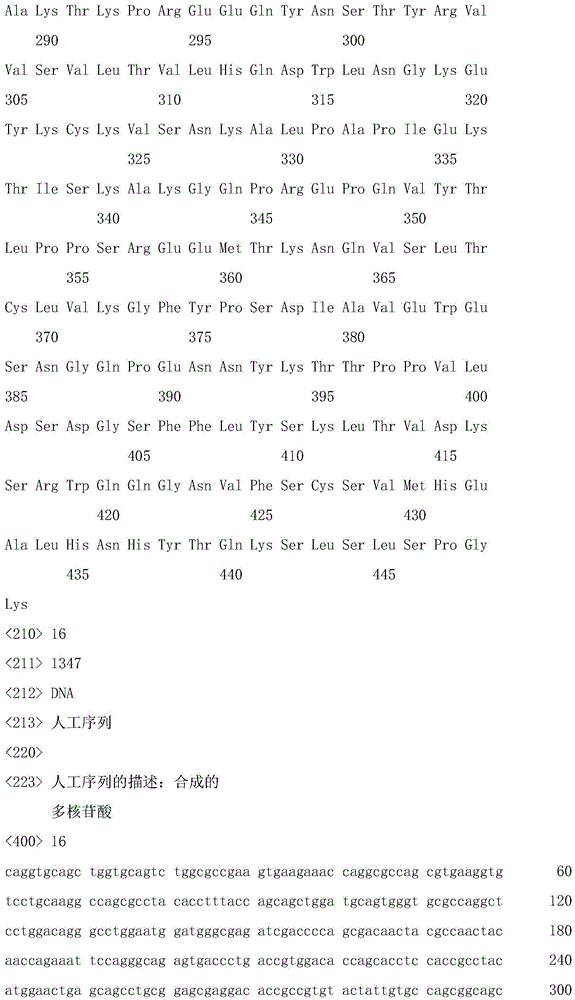


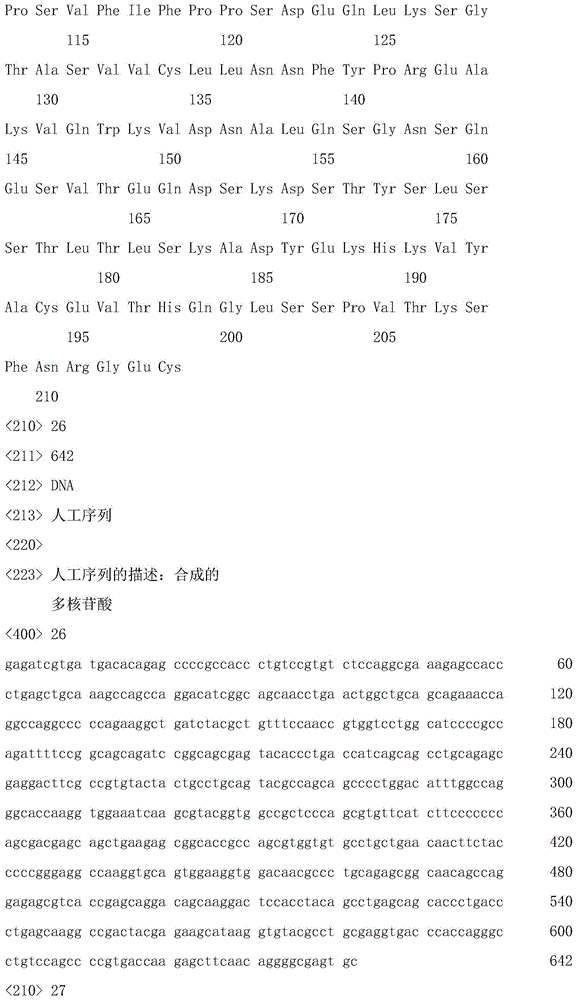
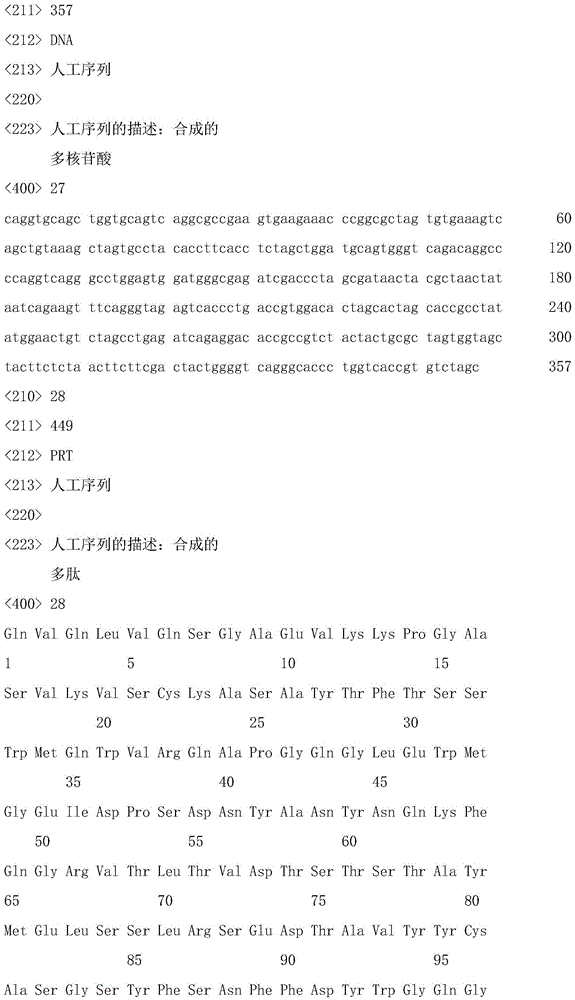


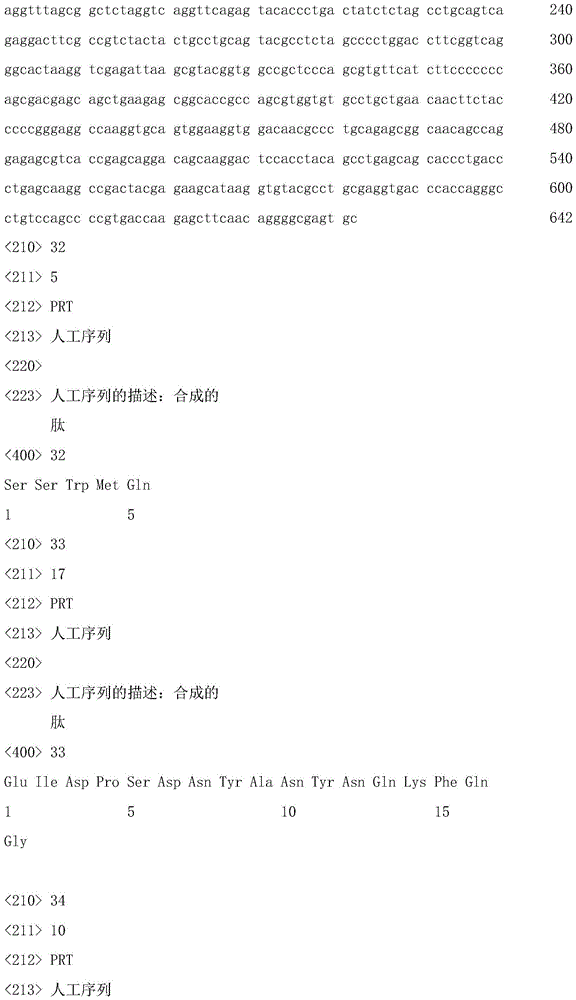


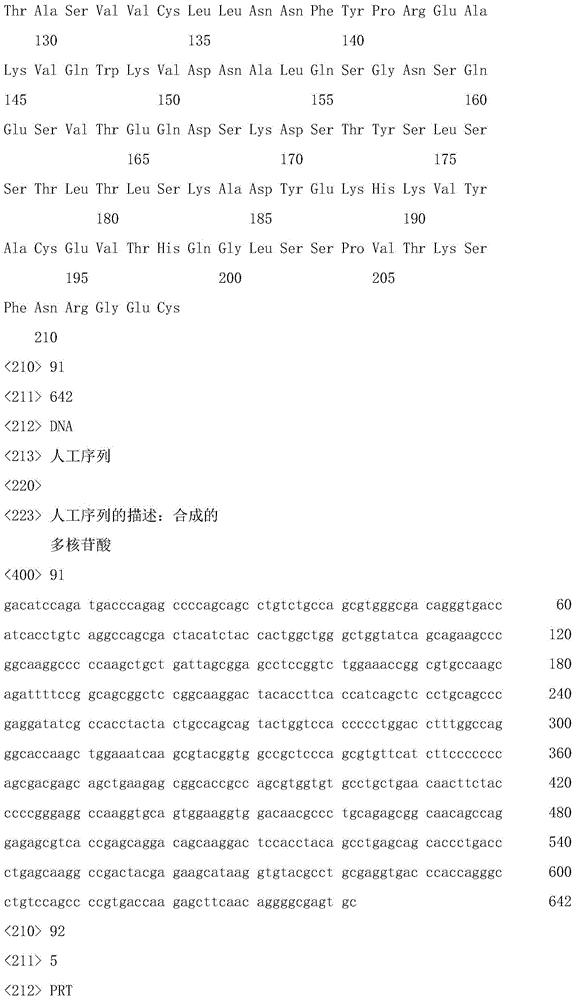


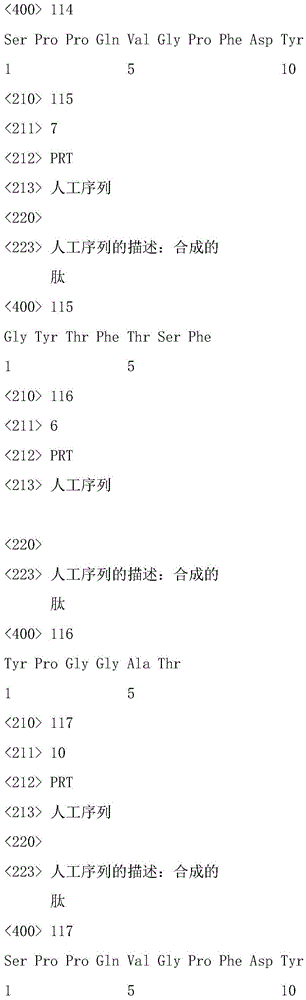
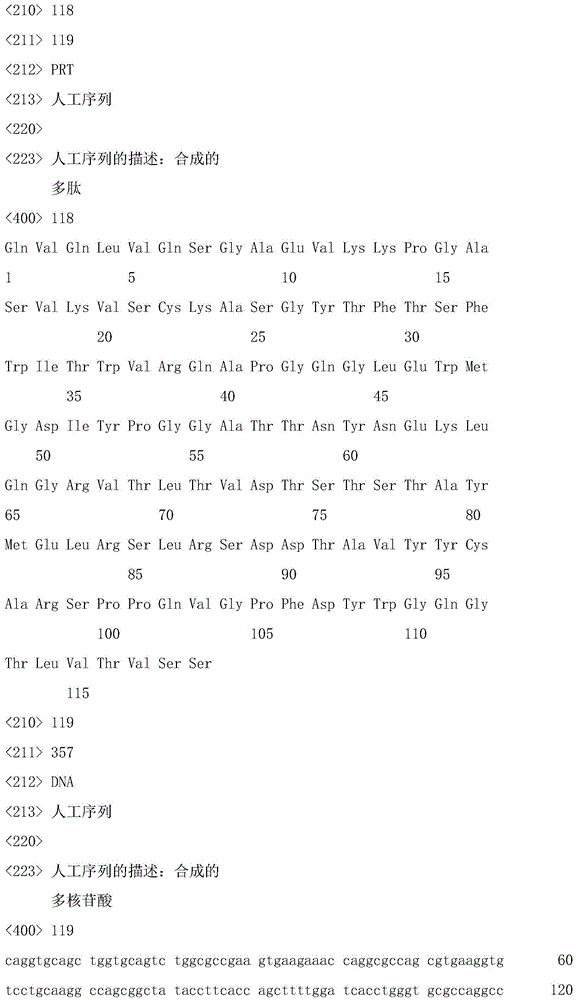


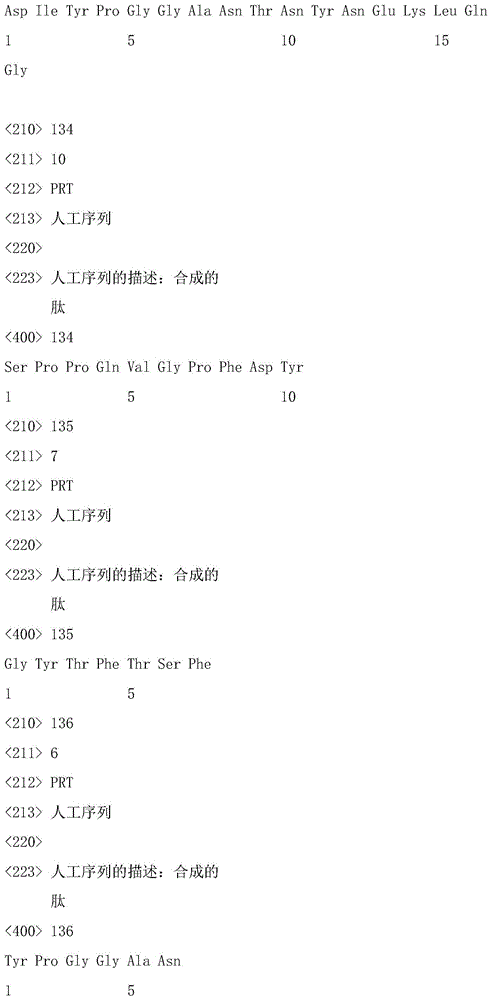


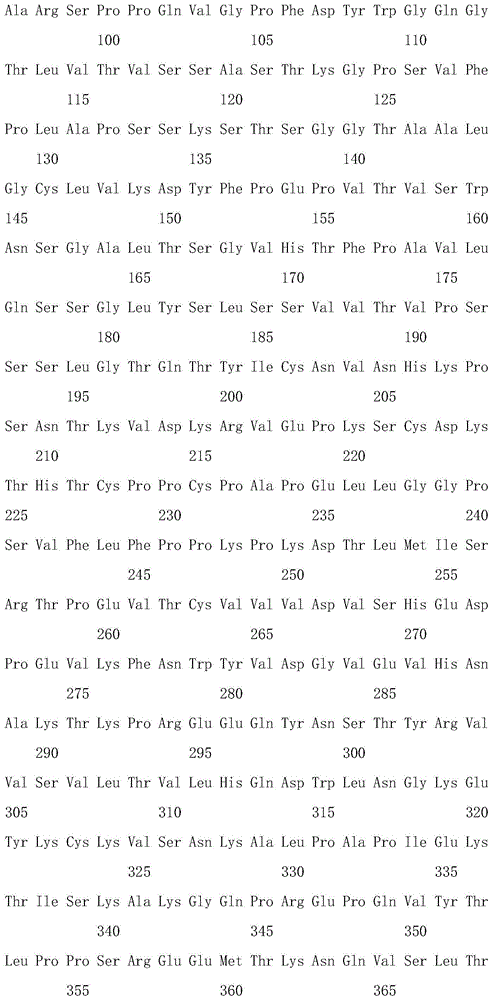


Claims (14)
1.An isolated anti-ANGPTL 4 antibody or antigen binding fragment thereof, comprising
(i) The heavy chain variable region complementarity determining region CDR1 of SEQ ID NO.7 as defined by the Kabat numbering scheme; CDR2 of SEQ ID NO. 8; and CDR3 of SEQ ID NO. 9; and the light chain variable region CDR1 of SEQ ID NO. 17; CDR2 of SEQ ID NO. 18; and CDR3 of SEQ ID NO. 19; or
(ii) The heavy chain variable region CDR1 of SEQ ID NO. 10 as defined by the Chothia numbering scheme; CDR2 of SEQ ID NO. 11; and CDR3 of SEQ ID NO. 12; and the light chain variable region CDR1 of SEQ ID NO. 20; CDR2 of SEQ ID NO. 21; and CDR3 of SEQ ID NO. 22.
2. The antibody or antigen-binding fragment thereof of claim 1, comprising a heavy chain variable region having an amino acid sequence at least 90% identical to SEQ ID No. 13 and a light chain variable region at least 90% identical to SEQ ID No. 23.
3. The antibody or antigen-binding fragment thereof of claim 1, comprising a heavy chain variable region having the sequence of SEQ ID NO. 13 and a light chain variable region having the sequence of SEQ ID NO. 23.
4. The antibody or antigen-binding fragment thereof of claim 1, comprising a heavy chain having a sequence at least 90% identical to SEQ ID No. 28 and a light chain having a sequence at least 90% identical to SEQ ID No. 25.
5. The antibody or antigen-binding fragment thereof of claim 4, comprising a heavy chain having the sequence of SEQ ID NO. 28 and a light chain having the sequence of SEQ ID NO. 25.
6. The antibody or antigen-binding fragment thereof of claim 1, comprising a heavy chain having a sequence at least 90% identical to SEQ ID No. 15 and a light chain having a sequence at least 90% identical to SEQ ID No. 25.
7. The antibody or antigen-binding fragment thereof of claim 6, comprising a heavy chain having the sequence of SEQ ID NO. 15 and a light chain having the sequence of SEQ ID NO. 25.
8. The antibody or antigen binding fragment thereof of any one of claims 1-7, which is a monoclonal antibody, a humanized antibody, a single chain antibody, a Fab fragment, a Fv fragment, a F (ab') 2 fragment, or a scFv fragment.
9. The antibody or antigen binding fragment thereof of claim 8, which is an IgG1 or IgG4 isotype.
10. A pharmaceutical composition comprising the antibody or antigen-binding fragment thereof of any one of claims 1-9 and a pharmaceutically acceptable carrier.
11. The pharmaceutical composition of claim 10 for use in treating an ANGPTL4 disease.
12. The pharmaceutical composition of claim 11, wherein the disease involves one or more of severe hypertriglyceridemia, hypertriglyceridemia associated with obesity, type V hypertriglyceridemia, and chylomicronemia.
13. The pharmaceutical composition of claim 12, wherein severe hypertriglyceridemia is severe hypertriglyceridemia with a plasma triglyceride concentration >500 mg/dL.
14. The pharmaceutical composition of claim 11, wherein the disease involves one or more of primary dyslipidemia, metabolic syndrome, and type 2 diabetes.
Applications Claiming Priority (3)
| Application Number | Priority Date | Filing Date | Title |
|---|---|---|---|
| US201462034409P | 2014-08-07 | 2014-08-07 | |
| US62/034,409 | 2014-08-07 | ||
| PCT/IB2015/055986 WO2016020880A2 (en) | 2014-08-07 | 2015-08-06 | Angiopoietin-like 4 antibodies and methods of use |
Publications (2)
| Publication Number | Publication Date |
|---|---|
| CN107148428A CN107148428A (en) | 2017-09-08 |
| CN107148428B true CN107148428B (en) | 2021-03-09 |
Family
ID=53836146
Family Applications (1)
| Application Number | Title | Priority Date | Filing Date |
|---|---|---|---|
| CN201580054216.9A Active CN107148428B (en) | 2014-08-07 | 2015-08-06 | Angiopoietin-like protein 4 antibodies and methods of use |
Country Status (31)
| Country | Link |
|---|---|
| US (5) | US9771417B2 (en) |
| EP (2) | EP3177642B1 (en) |
| JP (4) | JP6649358B2 (en) |
| KR (2) | KR20240056627A (en) |
| CN (1) | CN107148428B (en) |
| AP (1) | AP2017009721A0 (en) |
| AR (1) | AR101486A1 (en) |
| AU (1) | AU2015300685B2 (en) |
| BR (1) | BR112017002173B1 (en) |
| CL (1) | CL2017000212A1 (en) |
| CO (1) | CO2017001087A2 (en) |
| CR (1) | CR20170040A (en) |
| CU (1) | CU24453B1 (en) |
| DK (1) | DK3177642T3 (en) |
| EA (1) | EA201790336A1 (en) |
| EC (1) | ECSP17013904A (en) |
| ES (1) | ES2906216T3 (en) |
| IL (1) | IL250289B2 (en) |
| JO (1) | JO3565B1 (en) |
| MA (1) | MA40512A (en) |
| MX (2) | MX390418B (en) |
| NZ (1) | NZ728425A (en) |
| PE (1) | PE20170287A1 (en) |
| PH (1) | PH12017500156A1 (en) |
| PL (1) | PL3177642T3 (en) |
| PT (1) | PT3177642T (en) |
| SG (2) | SG11201700473QA (en) |
| TN (1) | TN2017000019A1 (en) |
| TW (1) | TWI675043B (en) |
| UY (1) | UY36262A (en) |
| WO (1) | WO2016020880A2 (en) |
Families Citing this family (8)
| Publication number | Priority date | Publication date | Assignee | Title |
|---|---|---|---|---|
| US9988443B2 (en) * | 2014-08-07 | 2018-06-05 | Novartis Ag | Angiopoetin-like 4 (ANGPTL4) antibodies and methods of use |
| DK3177642T3 (en) | 2014-08-07 | 2022-02-21 | Novartis Ag | ANGIOPOIETIN-LIKE 4 ANTIBODIES AND METHODS OF USING IT |
| GB2569144B (en) * | 2017-12-06 | 2021-06-16 | Proimmune Ltd | Method for screening the activity of mutated expressed polypeptides |
| EP3746477A1 (en) * | 2018-02-02 | 2020-12-09 | Bio-Techne Corporation | Compounds that modulate the interaction of vista and vsig3 and methods of making and using |
| BR112021019107A2 (en) * | 2019-03-26 | 2021-11-30 | Janssen Pharmaceutica Nv | Antibodies against amyloid-beta pyroglutamate and their uses |
| US20250163116A1 (en) * | 2022-03-16 | 2025-05-22 | INSERM (Institut National de la Santé et de la Recherche Médicale) | New method to treat infectious diseases |
| EP4518969A1 (en) * | 2022-05-02 | 2025-03-12 | Novo Nordisk A/S | Novel anti-angptl3 antibodies suitable for high concentration compositions and subcutaneous administration |
| WO2025166073A1 (en) * | 2024-01-31 | 2025-08-07 | Alector Llc | Compositions comprising anti-sortilin antibodies and uses thereof |
Citations (7)
| Publication number | Priority date | Publication date | Assignee | Title |
|---|---|---|---|---|
| WO2006074228A1 (en) * | 2005-01-07 | 2006-07-13 | Lexicon Pharmaceuticals, Inc. | Monoclonal antibodies against angiopoietin-like protein 4 (angptl4 ) |
| CN101044164A (en) * | 2004-07-20 | 2007-09-26 | 健泰科生物技术公司 | Angiopoietin-like 4 protein inhibitors, combinations, and uses thereof |
| WO2007109307A2 (en) * | 2006-03-20 | 2007-09-27 | Curagen Corporation | Antibodies directed to angiopoietin-like protein 4 and uses thereof |
| CN101080419A (en) * | 2004-07-20 | 2007-11-28 | 健泰科生物技术公司 | Compositions and methods of using angiopoietin-like 4 protein |
| WO2011079257A2 (en) * | 2009-12-24 | 2011-06-30 | Regeneron Pharmaceuticals, Inc. | Human antibodies to human angiopoietin-like protein 4 |
| CN102692500A (en) * | 2011-03-21 | 2012-09-26 | 上海市肿瘤研究所 | ANGPTL4 as a marker of liver cancer metastasis by serological detection and application thereof |
| CN103782177A (en) * | 2011-08-08 | 2014-05-07 | 南洋理工大学 | Angiopoietin-like 4 and its use in regulating cellular leakiness |
Family Cites Families (122)
| Publication number | Priority date | Publication date | Assignee | Title |
|---|---|---|---|---|
| US4458066A (en) | 1980-02-29 | 1984-07-03 | University Patents, Inc. | Process for preparing polynucleotides |
| US4816567A (en) | 1983-04-08 | 1989-03-28 | Genentech, Inc. | Recombinant immunoglobin preparations |
| DE3572982D1 (en) | 1984-03-06 | 1989-10-19 | Takeda Chemical Industries Ltd | Chemically modified lymphokine and production thereof |
| US5225539A (en) | 1986-03-27 | 1993-07-06 | Medical Research Council | Recombinant altered antibodies and methods of making altered antibodies |
| US4946778A (en) | 1987-09-21 | 1990-08-07 | Genex Corporation | Single polypeptide chain binding molecules |
| US5260203A (en) | 1986-09-02 | 1993-11-09 | Enzon, Inc. | Single polypeptide chain binding molecules |
| US4881175A (en) | 1986-09-02 | 1989-11-14 | Genex Corporation | Computer based system and method for determining and displaying possible chemical structures for converting double- or multiple-chain polypeptides to single-chain polypeptides |
| WO1988007089A1 (en) | 1987-03-18 | 1988-09-22 | Medical Research Council | Altered antibodies |
| US5013653A (en) | 1987-03-20 | 1991-05-07 | Creative Biomolecules, Inc. | Product and process for introduction of a hinge region into a fusion protein to facilitate cleavage |
| US5258498A (en) | 1987-05-21 | 1993-11-02 | Creative Biomolecules, Inc. | Polypeptide linkers for production of biosynthetic proteins |
| DE3853515T3 (en) | 1987-05-21 | 2005-08-25 | Micromet Ag | MULTIFUNCTIONAL PROTEINS WITH SPECIFIC OBJECTIVES. |
| US5091513A (en) | 1987-05-21 | 1992-02-25 | Creative Biomolecules, Inc. | Biosynthetic antibody binding sites |
| US5132405A (en) | 1987-05-21 | 1992-07-21 | Creative Biomolecules, Inc. | Biosynthetic antibody binding sites |
| US5677425A (en) | 1987-09-04 | 1997-10-14 | Celltech Therapeutics Limited | Recombinant antibody |
| US5336603A (en) | 1987-10-02 | 1994-08-09 | Genentech, Inc. | CD4 adheson variants |
| US5476996A (en) | 1988-06-14 | 1995-12-19 | Lidak Pharmaceuticals | Human immune system in non-human animal |
| US5223409A (en) | 1988-09-02 | 1993-06-29 | Protein Engineering Corp. | Directed evolution of novel binding proteins |
| GB8823869D0 (en) | 1988-10-12 | 1988-11-16 | Medical Res Council | Production of antibodies |
| KR900005995A (en) | 1988-10-31 | 1990-05-07 | 우메모또 요시마사 | Modified Interleukin-2 and Method of Making the Same |
| CA2006596C (en) | 1988-12-22 | 2000-09-05 | Rika Ishikawa | Chemically-modified g-csf |
| US5530101A (en) | 1988-12-28 | 1996-06-25 | Protein Design Labs, Inc. | Humanized immunoglobulins |
| US5112946A (en) | 1989-07-06 | 1992-05-12 | Repligen Corporation | Modified pf4 compositions and methods of use |
| FR2650598B1 (en) | 1989-08-03 | 1994-06-03 | Rhone Poulenc Sante | DERIVATIVES OF ALBUMIN WITH THERAPEUTIC FUNCTION |
| WO1991006570A1 (en) | 1989-10-25 | 1991-05-16 | The University Of Melbourne | HYBRID Fc RECEPTOR MOLECULES |
| US6673986B1 (en) | 1990-01-12 | 2004-01-06 | Abgenix, Inc. | Generation of xenogeneic antibodies |
| US6075181A (en) | 1990-01-12 | 2000-06-13 | Abgenix, Inc. | Human antibodies derived from immunized xenomice |
| DK0463151T3 (en) | 1990-01-12 | 1996-07-01 | Cell Genesys Inc | Generation of xenogenic antibodies |
| US6150584A (en) | 1990-01-12 | 2000-11-21 | Abgenix, Inc. | Human antibodies derived from immunized xenomice |
| US5427908A (en) | 1990-05-01 | 1995-06-27 | Affymax Technologies N.V. | Recombinant library screening methods |
| US5349053A (en) | 1990-06-01 | 1994-09-20 | Protein Design Labs, Inc. | Chimeric ligand/immunoglobulin molecules and their uses |
| US6172197B1 (en) | 1991-07-10 | 2001-01-09 | Medical Research Council | Methods for producing members of specific binding pairs |
| GB9015198D0 (en) | 1990-07-10 | 1990-08-29 | Brien Caroline J O | Binding substance |
| US5625126A (en) | 1990-08-29 | 1997-04-29 | Genpharm International, Inc. | Transgenic non-human animals for producing heterologous antibodies |
| US5789650A (en) | 1990-08-29 | 1998-08-04 | Genpharm International, Inc. | Transgenic non-human animals for producing heterologous antibodies |
| US6255458B1 (en) | 1990-08-29 | 2001-07-03 | Genpharm International | High affinity human antibodies and human antibodies against digoxin |
| US5814318A (en) | 1990-08-29 | 1998-09-29 | Genpharm International Inc. | Transgenic non-human animals for producing heterologous antibodies |
| US6300129B1 (en) | 1990-08-29 | 2001-10-09 | Genpharm International | Transgenic non-human animals for producing heterologous antibodies |
| US5545806A (en) | 1990-08-29 | 1996-08-13 | Genpharm International, Inc. | Ransgenic non-human animals for producing heterologous antibodies |
| WO1993012227A1 (en) | 1991-12-17 | 1993-06-24 | Genpharm International, Inc. | Transgenic non-human animals capable of producing heterologous antibodies |
| JP2938569B2 (en) | 1990-08-29 | 1999-08-23 | ジェンファーム インターナショナル,インコーポレイティド | Method for producing xenogeneic immunoglobulin and transgenic mouse |
| US5874299A (en) | 1990-08-29 | 1999-02-23 | Genpharm International, Inc. | Transgenic non-human animals capable of producing heterologous antibodies |
| US5877397A (en) | 1990-08-29 | 1999-03-02 | Genpharm International Inc. | Transgenic non-human animals capable of producing heterologous antibodies of various isotypes |
| US5661016A (en) | 1990-08-29 | 1997-08-26 | Genpharm International Inc. | Transgenic non-human animals capable of producing heterologous antibodies of various isotypes |
| US5633425A (en) | 1990-08-29 | 1997-05-27 | Genpharm International, Inc. | Transgenic non-human animals capable of producing heterologous antibodies |
| US5770429A (en) | 1990-08-29 | 1998-06-23 | Genpharm International, Inc. | Transgenic non-human animals capable of producing heterologous antibodies |
| KR100246529B1 (en) | 1990-12-14 | 2000-04-01 | 스티븐 에이. 서윈. 엠.디. | Chimeric Chains for Receptor-Related Signal Transduction Pathways |
| DE69233782D1 (en) | 1991-12-02 | 2010-05-20 | Medical Res Council | Preparation of Autoantibodies on Phage Surfaces Starting from Antibody Segment Libraries |
| CA2507749C (en) | 1991-12-13 | 2010-08-24 | Xoma Corporation | Methods and materials for preparation of modified antibody variable domains and therapeutic uses thereof |
| US5622929A (en) | 1992-01-23 | 1997-04-22 | Bristol-Myers Squibb Company | Thioether conjugates |
| FR2686901A1 (en) | 1992-01-31 | 1993-08-06 | Rhone Poulenc Rorer Sa | NOVEL ANTITHROMBOTIC POLYPEPTIDES, THEIR PREPARATION AND PHARMACEUTICAL COMPOSITIONS CONTAINING THEM. |
| FR2686899B1 (en) | 1992-01-31 | 1995-09-01 | Rhone Poulenc Rorer Sa | NOVEL BIOLOGICALLY ACTIVE POLYPEPTIDES, THEIR PREPARATION AND PHARMACEUTICAL COMPOSITIONS CONTAINING THEM. |
| US5714350A (en) | 1992-03-09 | 1998-02-03 | Protein Design Labs, Inc. | Increasing antibody affinity by altering glycosylation in the immunoglobulin variable region |
| US5447851B1 (en) | 1992-04-02 | 1999-07-06 | Univ Texas System Board Of | Dna encoding a chimeric polypeptide comprising the extracellular domain of tnf receptor fused to igg vectors and host cells |
| AU4116793A (en) | 1992-04-24 | 1993-11-29 | Board Of Regents, The University Of Texas System | Recombinant production of immunoglobulin-like domains in prokaryotic cells |
| ATE420178T1 (en) | 1992-08-21 | 2009-01-15 | Univ Bruxelles | IMMUNOGLOBULINS WITHOUT LIGHT CHAIN |
| CA2161351C (en) | 1993-04-26 | 2010-12-21 | Nils Lonberg | Transgenic non-human animals capable of producing heterologous antibodies |
| CA2163345A1 (en) | 1993-06-16 | 1994-12-22 | Susan Adrienne Morgan | Antibodies |
| WO1995017420A1 (en) | 1993-12-22 | 1995-06-29 | Temple University - Of The Commonwealth System Of Higher Education | Peptide analogs of the activated platelet binding site on factor xi |
| SE9400088D0 (en) | 1994-01-14 | 1994-01-14 | Kabi Pharmacia Ab | Bacterial receptor structures |
| US5605793A (en) | 1994-02-17 | 1997-02-25 | Affymax Technologies N.V. | Methods for in vitro recombination |
| US5834252A (en) | 1995-04-18 | 1998-11-10 | Glaxo Group Limited | End-complementary polymerase reaction |
| US5837458A (en) | 1994-02-17 | 1998-11-17 | Maxygen, Inc. | Methods and compositions for cellular and metabolic engineering |
| CN1117155C (en) | 1994-07-29 | 2003-08-06 | 史密丝克莱恩比彻姆有限公司 | Novel compounds |
| US5641870A (en) | 1995-04-20 | 1997-06-24 | Genentech, Inc. | Low pH hydrophobic interaction chromatography for antibody purification |
| US5869046A (en) | 1995-04-14 | 1999-02-09 | Genentech, Inc. | Altered polypeptides with increased half-life |
| US6121022A (en) | 1995-04-14 | 2000-09-19 | Genentech, Inc. | Altered polypeptides with increased half-life |
| MA24512A1 (en) | 1996-01-17 | 1998-12-31 | Univ Vermont And State Agrienl | PROCESS FOR THE PREPARATION OF ANTICOAGULATING AGENTS USEFUL IN THE TREATMENT OF THROMBOSIS |
| CA2249195A1 (en) | 1996-03-18 | 1997-09-25 | Board Of Regents, The University Of Texas System | Immunoglobin-like domains with increased half lives |
| WO1998023289A1 (en) | 1996-11-27 | 1998-06-04 | The General Hospital Corporation | MODULATION OF IgG BINDING TO FcRn |
| US6277375B1 (en) | 1997-03-03 | 2001-08-21 | Board Of Regents, The University Of Texas System | Immunoglobulin-like domains with increased half-lives |
| US7368531B2 (en) | 1997-03-07 | 2008-05-06 | Human Genome Sciences, Inc. | Human secreted proteins |
| ATE319745T1 (en) | 1997-05-21 | 2006-03-15 | Biovation Ltd | METHOD FOR PRODUCING NON-IMMUNOGENIC PROTEINS |
| ES2231991T3 (en) | 1997-06-11 | 2005-05-16 | Borean Pharma A/S | TRIMERIZATION MODULE. |
| DE69839147T2 (en) | 1997-06-12 | 2009-02-19 | Novartis International Pharmaceutical Ltd. | ARTIFICIAL ANTIBODY POLYPEPTIDE |
| US6030831A (en) | 1997-09-19 | 2000-02-29 | Genetech, Inc. | Tie ligand homologues |
| DE19742706B4 (en) | 1997-09-26 | 2013-07-25 | Pieris Proteolab Ag | lipocalin muteins |
| US6194551B1 (en) | 1998-04-02 | 2001-02-27 | Genentech, Inc. | Polypeptide variants |
| PT1071700E (en) | 1998-04-20 | 2010-04-23 | Glycart Biotechnology Ag | Glycosylation engineering of antibodies for improving antibody-dependent cellular cytotoxicity |
| US6818418B1 (en) | 1998-12-10 | 2004-11-16 | Compound Therapeutics, Inc. | Protein scaffolds for antibody mimics and other binding proteins |
| EP1141024B1 (en) | 1999-01-15 | 2018-08-08 | Genentech, Inc. | POLYPEPTIDE COMPRISING A VARIANT HUMAN IgG1 Fc REGION |
| WO2001077137A1 (en) | 2000-04-12 | 2001-10-18 | Human Genome Sciences, Inc. | Albumin fusion proteins |
| ES2601882T5 (en) | 1999-04-09 | 2021-06-07 | Kyowa Kirin Co Ltd | Procedure to monitor the activity of an immunofunctional molecule |
| DE19932688B4 (en) | 1999-07-13 | 2009-10-08 | Scil Proteins Gmbh | Design of beta-sheet proteins of gamma-II-crystalline antibody-like |
| US7001766B2 (en) | 1999-07-20 | 2006-02-21 | Curagen Corporation | Nucleic acid sequences encoding human angiopoietin-like polypeptides |
| ATE354655T1 (en) | 1999-08-24 | 2007-03-15 | Medarex Inc | HUMAN ANTIBODIES TO CTLA-4 AND THEIR USES |
| DK2857516T3 (en) | 2000-04-11 | 2017-08-07 | Genentech Inc | Multivalent antibodies and uses thereof |
| US7943129B2 (en) | 2000-05-26 | 2011-05-17 | National Research Council Of Canada | Single-domain brain-targeting antibody fragments derived from llama antibodies |
| EP1916303B1 (en) | 2000-11-30 | 2013-02-27 | Medarex, Inc. | Nucleic acids encoding rearranged human immunoglobulin sequences from transgenic transchromosomal mice |
| CA2442685A1 (en) | 2001-04-04 | 2002-10-17 | Edith Bonnelye | Estrogen receptor-related receptor alpha (err.alpha.) and cartilage formation |
| US20040175756A1 (en) | 2001-04-26 | 2004-09-09 | Avidia Research Institute | Methods for using combinatorial libraries of monomer domains |
| US20050053973A1 (en) | 2001-04-26 | 2005-03-10 | Avidia Research Institute | Novel proteins with targeted binding |
| US20050048512A1 (en) | 2001-04-26 | 2005-03-03 | Avidia Research Institute | Combinatorial libraries of monomer domains |
| EP1421203A4 (en) | 2001-05-17 | 2005-06-01 | Diversa Corp | Novel antigen binding molecules for therapeutic, diagnostic, prophylactic, enzymatic, industrial, and agricultural applications, and methods for generating and screening thereof |
| HUP0600342A3 (en) | 2001-10-25 | 2011-03-28 | Genentech Inc | Glycoprotein compositions |
| AU2003217912A1 (en) | 2002-03-01 | 2003-09-16 | Xencor | Antibody optimization |
| US20040180855A1 (en) | 2003-02-19 | 2004-09-16 | Schumacher William A. | Methods of treating thrombosis with reduced risk of increased bleeding times |
| US7217794B2 (en) | 2003-04-02 | 2007-05-15 | Daiamed, Inc. | Compounds and methods for treatment of thrombosis |
| DE10324447A1 (en) | 2003-05-28 | 2004-12-30 | Scil Proteins Gmbh | Generation of artificial binding proteins based on ubiquitin |
| AU2004263508A1 (en) | 2003-08-08 | 2005-02-17 | Transtech Pharma, Inc. | Aryl and heteroaryl compounds, compositions, and methods of use |
| JP4782700B2 (en) | 2004-01-20 | 2011-09-28 | カロバイオス ファーマシューティカルズ インコーポレイティッド | Transfer of antibody specificity using minimally required binding determinants |
| US20060008844A1 (en) | 2004-06-17 | 2006-01-12 | Avidia Research Institute | c-Met kinase binding proteins |
| US8604185B2 (en) | 2004-07-20 | 2013-12-10 | Genentech, Inc. | Inhibitors of angiopoietin-like 4 protein, combinations, and their use |
| WO2006012504A2 (en) | 2004-07-23 | 2006-02-02 | Daiamed, Inc. | Compounds and methods for treatment of thrombosis |
| CN101137412B (en) | 2005-01-13 | 2012-11-07 | 布里斯托尔-迈尔斯·斯奎布公司 | Substituted biaryl compounds as factor xia inhibitors |
| WO2006108039A2 (en) | 2005-04-04 | 2006-10-12 | Daiamed, Inc. | Substituted azetidinones |
| US20070041905A1 (en) | 2005-08-19 | 2007-02-22 | Hoffman Rebecca S | Method of treating depression using a TNF-alpha antibody |
| US7612181B2 (en) | 2005-08-19 | 2009-11-03 | Abbott Laboratories | Dual variable domain immunoglobulin and uses thereof |
| MY169746A (en) | 2005-08-19 | 2019-05-14 | Abbvie Inc | Dual variable domain immunoglobulin and uses thereof |
| JP5225098B2 (en) | 2005-12-14 | 2013-07-03 | ブリストル−マイヤーズ スクイブ カンパニー | Arylpropionamide, arylacrylamide, arylpropinamide, or arylmethylurea analogs as factor XIa inhibitors |
| HUE046564T2 (en) | 2007-11-21 | 2020-03-30 | Univ Oregon Health & Science | Anti-factor xi monoclonal antibodies and methods of use thereof |
| US8168586B1 (en) | 2007-11-21 | 2012-05-01 | Celera Corporation | Cancer targets and uses thereof |
| ATE543811T1 (en) | 2008-03-13 | 2012-02-15 | Bristol Myers Squibb Co | PYRIDAZINE DERIVATIVES AS FACTOR XIA INHIBITORS |
| US20110159006A1 (en) | 2008-06-19 | 2011-06-30 | Erik Hack | Use of anti-factor xi antibodies for prevention of thrombus formation |
| EP2379084B1 (en) | 2008-10-15 | 2017-11-22 | Ionis Pharmaceuticals, Inc. | Modulation of factor 11 expression |
| JP5823871B2 (en) | 2008-12-10 | 2015-11-25 | アブリンクス エン.ヴェー. | Amino acid sequences directed against the Angiopoietin / Tie system for the treatment of diseases and disorders associated with angiogenesis and polypeptides comprising the same |
| SG10201406420XA (en) | 2009-10-14 | 2014-11-27 | Univ Nanyang Tech | Antiproliferative agent |
| US20120201746A1 (en) | 2010-12-22 | 2012-08-09 | Abbott Laboratories | Half immunoglobulin binding proteins and uses thereof |
| AU2013245630A1 (en) | 2012-04-13 | 2014-10-30 | The Johns Hopkins University | Treatment of ischemic retinopathies |
| WO2013167669A1 (en) | 2012-05-10 | 2013-11-14 | Bayer Pharma Aktiengesellschaft | Antibodies capable of binding to the coagulation factor xi and/or its activated form factor xia and uses thereof |
| EP2885319B1 (en) | 2012-08-14 | 2019-10-09 | Nanyang Technological University | Angiopoietin-like 4 antibody and a method of its use in cancer treatment |
| US9988443B2 (en) | 2014-08-07 | 2018-06-05 | Novartis Ag | Angiopoetin-like 4 (ANGPTL4) antibodies and methods of use |
| DK3177642T3 (en) | 2014-08-07 | 2022-02-21 | Novartis Ag | ANGIOPOIETIN-LIKE 4 ANTIBODIES AND METHODS OF USING IT |
-
2015
- 2015-08-06 DK DK15750139.6T patent/DK3177642T3/en active
- 2015-08-06 WO PCT/IB2015/055986 patent/WO2016020880A2/en not_active Ceased
- 2015-08-06 TN TN2017000019A patent/TN2017000019A1/en unknown
- 2015-08-06 CN CN201580054216.9A patent/CN107148428B/en active Active
- 2015-08-06 ES ES15750139T patent/ES2906216T3/en active Active
- 2015-08-06 US US14/819,680 patent/US9771417B2/en active Active
- 2015-08-06 EP EP15750139.6A patent/EP3177642B1/en active Active
- 2015-08-06 SG SG11201700473QA patent/SG11201700473QA/en unknown
- 2015-08-06 EP EP21209923.8A patent/EP4122957A1/en active Pending
- 2015-08-06 MA MA040512A patent/MA40512A/en unknown
- 2015-08-06 MX MX2017001746A patent/MX390418B/en unknown
- 2015-08-06 PT PT157501396T patent/PT3177642T/en unknown
- 2015-08-06 PL PL15750139T patent/PL3177642T3/en unknown
- 2015-08-06 CU CU2017000012A patent/CU24453B1/en unknown
- 2015-08-06 AU AU2015300685A patent/AU2015300685B2/en active Active
- 2015-08-06 KR KR1020247012669A patent/KR20240056627A/en active Pending
- 2015-08-06 TW TW104125679A patent/TWI675043B/en active
- 2015-08-06 CR CR20170040A patent/CR20170040A/en unknown
- 2015-08-06 PE PE2017000181A patent/PE20170287A1/en unknown
- 2015-08-06 JP JP2017506693A patent/JP6649358B2/en active Active
- 2015-08-06 SG SG10201805646WA patent/SG10201805646WA/en unknown
- 2015-08-06 KR KR1020177005855A patent/KR102659872B1/en active Active
- 2015-08-06 AP AP2017009721A patent/AP2017009721A0/en unknown
- 2015-08-06 JO JOP/2015/0188A patent/JO3565B1/en active
- 2015-08-06 NZ NZ728425A patent/NZ728425A/en unknown
- 2015-08-06 EA EA201790336A patent/EA201790336A1/en unknown
- 2015-08-06 BR BR112017002173-0A patent/BR112017002173B1/en active IP Right Grant
- 2015-08-07 AR ARP150102561A patent/AR101486A1/en not_active Application Discontinuation
- 2015-08-07 UY UY0001036262A patent/UY36262A/en not_active Application Discontinuation
-
2017
- 2017-01-25 IL IL250289A patent/IL250289B2/en unknown
- 2017-01-25 PH PH12017500156A patent/PH12017500156A1/en unknown
- 2017-01-26 CL CL2017000212A patent/CL2017000212A1/en unknown
- 2017-02-06 CO CONC2017/0001087A patent/CO2017001087A2/en unknown
- 2017-02-07 MX MX2022002635A patent/MX2022002635A/en unknown
- 2017-03-06 EC ECIEPI201713904A patent/ECSP17013904A/en unknown
- 2017-08-25 US US15/686,454 patent/US10577411B2/en active Active
-
2020
- 2020-01-15 JP JP2020004261A patent/JP2020075929A/en active Pending
- 2020-01-23 US US16/750,462 patent/US20200392215A1/en not_active Abandoned
-
2022
- 2022-01-20 JP JP2022007104A patent/JP7397104B2/en active Active
- 2022-03-21 US US17/699,925 patent/US20220213181A1/en not_active Abandoned
-
2023
- 2023-11-30 JP JP2023202489A patent/JP7695330B2/en active Active
-
2024
- 2024-06-11 US US18/740,436 patent/US20250179156A1/en active Pending
Patent Citations (9)
| Publication number | Priority date | Publication date | Assignee | Title |
|---|---|---|---|---|
| CN101044164A (en) * | 2004-07-20 | 2007-09-26 | 健泰科生物技术公司 | Angiopoietin-like 4 protein inhibitors, combinations, and uses thereof |
| CN101080419A (en) * | 2004-07-20 | 2007-11-28 | 健泰科生物技术公司 | Compositions and methods of using angiopoietin-like 4 protein |
| WO2006074228A1 (en) * | 2005-01-07 | 2006-07-13 | Lexicon Pharmaceuticals, Inc. | Monoclonal antibodies against angiopoietin-like protein 4 (angptl4 ) |
| CN101128485A (en) * | 2005-01-07 | 2008-02-20 | 莱克康制药公司 | Monoclonal antibody against angiopoietin-like protein 4 (ANGPTL4) |
| WO2007109307A2 (en) * | 2006-03-20 | 2007-09-27 | Curagen Corporation | Antibodies directed to angiopoietin-like protein 4 and uses thereof |
| WO2011079257A2 (en) * | 2009-12-24 | 2011-06-30 | Regeneron Pharmaceuticals, Inc. | Human antibodies to human angiopoietin-like protein 4 |
| CN102741284A (en) * | 2009-12-24 | 2012-10-17 | 瑞泽恩制药公司 | Human antibodies to human angiopoietin-like protein 4 |
| CN102692500A (en) * | 2011-03-21 | 2012-09-26 | 上海市肿瘤研究所 | ANGPTL4 as a marker of liver cancer metastasis by serological detection and application thereof |
| CN103782177A (en) * | 2011-08-08 | 2014-05-07 | 南洋理工大学 | Angiopoietin-like 4 and its use in regulating cellular leakiness |
Non-Patent Citations (2)
| Title |
|---|
| Identification of a New Functional Domain in Angiopoietin-Like 3 (ANGPTL3) and Angiopoietin-Like 4 (ANGPTL4) Involved in Binding and Inhibition of Lipoprotein Lipase (LPL);E-Chiang Lee et al.;《THE JOURNAL OF BIOLOGICAL CHEMISTRY》;20090515;第284卷(第20期);第13735-13745页 * |
| Lipid-lowering Effects of Anti-Angiopoietin-Like 4 Antibody Recapitulate the Lipid Phenotype Found in Angiopoietin-Like 4 Knockout Mice;Urvi Desai et al.;《Proc Natl Acad Sci U S A.》;20070710;第104卷(第28期);第11766-11771页 * |
Also Published As
Similar Documents
| Publication | Publication Date | Title |
|---|---|---|
| CN107148428B (en) | Angiopoietin-like protein 4 antibodies and methods of use | |
| CN108350072B (en) | Methods of treating FGF 21-associated disorders | |
| CN105492462B (en) | Lectin-like oxidized LDL receptor 1 antibodies and methods of use | |
| JP2016523257A (en) | Lectin-like oxidized LDL receptor 1 antibody and methods of use | |
| EP3194437B1 (en) | Angiopoietin-like 4 (angptl4) antibodies and methods of use | |
| JP2020506728A (en) | FGF21 mimetic antibodies and uses thereof | |
| CA2957219C (en) | Angiopoietin-like 4 antibodies and methods of use | |
| HK40087646A (en) | Angiopoietin-like 4 antibodies and methods of use | |
| EA041397B1 (en) | ANTIBODIES TO ANGIOPOETIN LIKE PROTEIN 4 AND METHODS OF APPLICATION | |
| HK1234415B (en) | Angiopoietin-like 4 antibodies and methods of use |
Legal Events
| Date | Code | Title | Description |
|---|---|---|---|
| PB01 | Publication | ||
| PB01 | Publication | ||
| SE01 | Entry into force of request for substantive examination | ||
| SE01 | Entry into force of request for substantive examination | ||
| GR01 | Patent grant | ||
| GR01 | Patent grant | ||
| CB03 | Change of inventor or designer information | ||
| CB03 | Change of inventor or designer information |
Inventor after: J.Trauger Inventor after: A.I.voznesenski Inventor after: I.Sprowski Inventor after: R.Seibei Inventor before: J.Trauger Inventor before: A.I. voznesenski |