CN106034349B - Transmission power control method and device - Google Patents
Transmission power control method and device Download PDFInfo
- Publication number
- CN106034349B CN106034349B CN201510107458.1A CN201510107458A CN106034349B CN 106034349 B CN106034349 B CN 106034349B CN 201510107458 A CN201510107458 A CN 201510107458A CN 106034349 B CN106034349 B CN 106034349B
- Authority
- CN
- China
- Prior art keywords
- transmission power
- user group
- candidate
- cell
- power allocation
- Prior art date
- Legal status (The legal status is an assumption and is not a legal conclusion. Google has not performed a legal analysis and makes no representation as to the accuracy of the status listed.)
- Active
Links
Images


Classifications
-
- H—ELECTRICITY
- H04—ELECTRIC COMMUNICATION TECHNIQUE
- H04W—WIRELESS COMMUNICATION NETWORKS
- H04W52/00—Power management, e.g. Transmission Power Control [TPC] or power classes
- H04W52/04—Transmission power control [TPC]
- H04W52/30—Transmission power control [TPC] using constraints in the total amount of available transmission power
- H04W52/34—TPC management, i.e. sharing limited amount of power among users or channels or data types, e.g. cell loading
- H04W52/346—TPC management, i.e. sharing limited amount of power among users or channels or data types, e.g. cell loading distributing total power among users or channels
-
- H—ELECTRICITY
- H04—ELECTRIC COMMUNICATION TECHNIQUE
- H04W—WIRELESS COMMUNICATION NETWORKS
- H04W52/00—Power management, e.g. Transmission Power Control [TPC] or power classes
- H04W52/04—Transmission power control [TPC]
- H04W52/18—TPC being performed according to specific parameters
- H04W52/24—TPC being performed according to specific parameters using SIR [Signal to Interference Ratio] or other wireless path parameters
- H04W52/241—TPC being performed according to specific parameters using SIR [Signal to Interference Ratio] or other wireless path parameters taking into account channel quality metrics, e.g. SIR, SNR, CIR or Eb/lo
-
- H—ELECTRICITY
- H04—ELECTRIC COMMUNICATION TECHNIQUE
- H04W—WIRELESS COMMUNICATION NETWORKS
- H04W72/00—Local resource management
- H04W72/20—Control channels or signalling for resource management
-
- H—ELECTRICITY
- H04—ELECTRIC COMMUNICATION TECHNIQUE
- H04W—WIRELESS COMMUNICATION NETWORKS
- H04W52/00—Power management, e.g. Transmission Power Control [TPC] or power classes
- H04W52/04—Transmission power control [TPC]
- H04W52/06—TPC algorithms
- H04W52/14—Separate analysis of uplink or downlink
- H04W52/146—Uplink power control
-
- H—ELECTRICITY
- H04—ELECTRIC COMMUNICATION TECHNIQUE
- H04W—WIRELESS COMMUNICATION NETWORKS
- H04W52/00—Power management, e.g. Transmission Power Control [TPC] or power classes
- H04W52/04—Transmission power control [TPC]
- H04W52/18—TPC being performed according to specific parameters
- H04W52/26—TPC being performed according to specific parameters using transmission rate or quality of service QoS [Quality of Service]
- H04W52/262—TPC being performed according to specific parameters using transmission rate or quality of service QoS [Quality of Service] taking into account adaptive modulation and coding [AMC] scheme
Landscapes
- Engineering & Computer Science (AREA)
- Computer Networks & Wireless Communication (AREA)
- Signal Processing (AREA)
- Quality & Reliability (AREA)
- Mobile Radio Communication Systems (AREA)
Abstract
本发明公开了一种功率控制方法,包括:确定小区内所有用户终端(UE)的平均基础传输功率;以及根据小区内所有UE的平均基础传输功率,分别确定在每个子带上被调度的用户组及对应的传输功率分配因子。本发明还公开了一种执行上述方法的功率控制装置。通过本发明基站即可确定在每个子带上被调度的用户组及被调度用户组内各个用户的传输功率。
The invention discloses a power control method, comprising: determining the average basic transmission power of all user terminals (UEs) in a cell; and respectively determining the users scheduled on each subband according to the average basic transmission power of all UEs in the cell group and the corresponding transmit power allocation factor. The invention also discloses a power control device for executing the above method. The base station of the present invention can determine the user group scheduled on each subband and the transmission power of each user in the scheduled user group.
Description
技术领域technical field
本发明涉及无线通信系统,特别涉及非正交多址接入(NOMA)系统中的传输功率控制方法及装置。The present invention relates to a wireless communication system, and in particular, to a method and device for controlling transmission power in a non-orthogonal multiple access (NOMA) system.
背景技术Background technique
在频谱资源日趋紧缺的今天,能极大地提高频谱效率的非正交多址接入(NOMA)技术越来越受到人们的关注。NOMA的基本思想是在发送端采用非正交传输,主动引入干扰信息,在接收端通过串行干扰删除(SIC)技术实现正确解调。虽然采用SIC接收机会提高接收机的复杂度,但是可以很好地提高频谱效率。In today's increasingly scarce spectrum resources, the non-orthogonal multiple access (NOMA) technology, which can greatly improve the spectrum efficiency, has attracted more and more people's attention. The basic idea of NOMA is to adopt non-orthogonal transmission at the transmitting end, actively introduce interference information, and realize correct demodulation at the receiving end through serial interference cancellation (SIC) technology. Although the use of SIC receiver will increase the complexity of the receiver, but can improve the spectral efficiency very well.
发明内容SUMMARY OF THE INVENTION
有鉴于此,本发明实施例提供一种功率控制方法和装置,可以实现NOMA系统的功率控制。In view of this, embodiments of the present invention provide a power control method and apparatus, which can realize power control of a NOMA system.
本发明实施例所述的功率控制方法包括:确定小区内所有用户终端UE的平均基础传输功率;以及根据小区内所有UE的平均基础传输功率,分别确定在每个子带上被调度的用户组及对应的传输功率分配因子。The power control method according to the embodiment of the present invention includes: determining the average basic transmission power of all user terminals UE in the cell; and determining, according to the average basic transmission power of all UEs in the cell, the user group scheduled on each subband and the Corresponding transmission power allocation factor.
其中,确定小区内所有用户终端UE的平均基础传输功率包括:确定本小区内所有UE的基础传输功率;以及将本小区内各个UE的基础传输功率求和后除以本小区内的UE数,得到本小区内所有UE的平均基础传输功率。Wherein, determining the average basic transmission power of all user terminals UE in the cell includes: determining the basic transmission power of all UEs in the cell; and dividing the sum of the basic transmission power of each UE in the cell by the number of UEs in the cell, Obtain the average basic transmission power of all UEs in the cell.
其中,确定本小区内所有UE的基础传输功率包括:通过分数传输功率控制FTPC确定小区内所有UE的基础传输功率。Wherein, determining the basic transmission power of all UEs in the cell includes: determining the basic transmission power of all UEs in the cell through fractional transmission power control FTPC.
上述述确定在每个子带上被调度的用户组及其对应的传输功率分配因子包括:针对每个子带分别执行如下步骤:列举所有可能的UE组合作为候选用户组集合;根据本小区内所有UE的平均基础传输功率,分别计算候选用户组集合内每个候选用户组的总传输功率;针对候选用户组集合内每个候选用户组,分别列举所有可能的传输功率分配因子作为每个候选用户组对应的候选传输功率分配因子集合;对候选用户组和候选传输功率分配因子进行排列组合,得到全部候选用户组和候选传输功率分配因子组合;分别针对每种候选用户组和候选传输功率分配因子组合,按照候选传输功率分配因子对候选用户组内的UE进行功率分配;分别计算在各种功率分配下的候选用户组的调度度量;从中找到在当前子带上使用户组调度度量最大的候选用户组及其对应的候选传输功率分配因子,将该候选用户组及其对应的候选传输功率分配因子作为在当前子带上待调度的用户组及其传输功率分配因子;以及在分别确定每个子带上待调度的用户组及对应的传输功率分配因子后,对本小区内各个UE进行调度,保证每个UE被分配的子带是连续的。The above-mentioned determination of the user group scheduled on each subband and the corresponding transmission power allocation factor includes: respectively performing the following steps for each subband: enumerating all possible UE combinations as a candidate user group set; Calculate the total transmission power of each candidate user group in the candidate user group set; for each candidate user group in the candidate user group set, list all possible transmission power allocation factors as each candidate user group Corresponding set of candidate transmission power allocation factors; permutation and combination of candidate user groups and candidate transmission power allocation factors to obtain all candidate user groups and candidate transmission power allocation factor combinations; respectively for each candidate user group and candidate transmission power allocation factor combination , perform power allocation to the UEs in the candidate user group according to the candidate transmission power allocation factor; calculate the scheduling metrics of the candidate user groups under various power allocations respectively; find the candidate user that maximizes the scheduling metric of the user group on the current subband. group and its corresponding candidate transmission power allocation factor, take the candidate user group and its corresponding candidate transmission power allocation factor as the user group to be scheduled on the current subband and its transmission power allocation factor; and determine each subband separately After the user group to be scheduled and the corresponding transmission power allocation factor are listed, each UE in the cell is scheduled to ensure that the subbands allocated to each UE are continuous.
上述计算候选用户组集合内每个候选用户组的总传输功率包括:根据如下公式计算每个候选用户组的总传输功率Ptotal=Pavg×β×N,其中,N代表各个候选用户组所包含的UE数;β为一补偿系数;Pavg代表本小区内所有UE的平均基础传输功率。The above calculation of the total transmission power of each candidate user group in the candidate user group set includes: calculating the total transmission power of each candidate user group according to the following formula P total =P avg ×β×N, where N represents the total transmission power of each candidate user group. The number of UEs included; β is a compensation coefficient; P avg represents the average basic transmission power of all UEs in the cell.
上述述方法进一步包括:设定补偿系数β的初始值以及调整步长Δ;每经过一段预定时间,令β=β+Δ;测量本小区的总吞吐量;以及在本小区的吞吐量达到最大时确定本基站在确定每个子带的总传输功率时使用的补偿系数β。The above method further includes: setting an initial value of the compensation coefficient β and adjusting the step size Δ; setting β=β+Δ after a predetermined period of time; measuring the total throughput of the cell; and reaching the maximum throughput in the cell When determining the compensation coefficient β used by the base station in determining the total transmission power of each subband.
其中,分别针对每种候选用户组和候选传输功率分配因子组合,按照候选传输功率分配因子对候选用户组内的UE进行功率分配包括:根据当前候选用户组的总传输功率以及当前候选传输功率分配因子,确定当前候选用户组内每个UE的传输功率。Wherein, for each candidate user group and candidate transmission power allocation factor combination respectively, performing power allocation to the UEs in the candidate user group according to the candidate transmission power allocation factor includes: according to the total transmission power of the current candidate user group and the current candidate transmission power allocation factor to determine the transmission power of each UE in the current candidate user group.
上述分别计算在各种功率分配下的用户组的调度度量包括:针对每种候选用户组及候选传输功率因子组合,分别计算当前候选用户组内各个UE处理后的信噪比;以及根据当前候选用户组内每个UE的处理后信噪比分别计算在使用当前候选传输功率分配因子进行功率分配时,当前候选用户组的调度度量。The above calculation of the scheduling metrics of the user groups under various power allocations includes: for each candidate user group and candidate transmission power factor combination, respectively calculating the signal-to-noise ratio processed by each UE in the current candidate user group; and according to the current candidate user group. The post-processing signal-to-noise ratio of each UE in the user group is calculated separately for the scheduling metrics of the current candidate user group when power is allocated using the current candidate transmission power allocation factor.
其中,调度度量为比例公平调度度量、改进的比例公平调度度量或用户几何平均吞吐度量。The scheduling metric is a proportional fair scheduling metric, an improved proportional fair scheduling metric, or a user geometric average throughput metric.
上述方法进一步包括:A1,针对每个子带,为被调度的用户组内的各个UE选择调制编码方式MCS;以及A2,根据各个UE的MCS执行宽带TPC。The above method further includes: A1, for each subband, selecting a modulation and coding scheme MCS for each UE in the scheduled user group; and A2, performing wideband TPC according to the MCS of each UE.
上述方法还可以进一步包括:在执行步骤A2之后,返回执行步骤A1,直至前后两次选择MCS相同且前后两次选择的传输功率分配因子也相同。The above method may further include: after step A2 is performed, returning to step A1 until the MCS is the same for the first and second selections and the transmission power allocation factor for the first and second selections is also the same.
上述根据各个UE的MCS执行宽带TPC包括:针对每个子带分别执行如下步骤:根据本小区内所有UE的平均基础传输功率,计算在当前子带上待调度用户组的总传输功率;列举所有可能的传输功率分配因子作为所述待调度用户组对应的候选传输功率分配因子;分别按照每组候选传输功率分配因子对所述待调度用户组内的UE进行功率分配;分别计算在各种功率分配下待调度用户组的调度度量;以及从中找到在当前子带上使所述待调度用户组调度度量最大的候选传输功率分配因子,将该候选传输功率分配因子作为在当前子带上待调度用户组的传输功率分配因子。The above-mentioned performing broadband TPC according to the MCS of each UE includes: respectively performing the following steps for each subband: calculating the total transmission power of the user group to be scheduled on the current subband according to the average basic transmission power of all UEs in the cell; enumerating all possible The transmission power allocation factor is taken as the candidate transmission power allocation factor corresponding to the to-be-scheduled user group; power is allocated to the UEs in the to-be-scheduled user group according to each group of candidate transmission power allocation factors; lower the scheduling metric of the user group to be scheduled; and find a candidate transmission power allocation factor that maximizes the scheduling metric of the user group to be scheduled on the current subband, and use the candidate transmission power allocation factor as the user to be scheduled on the current subband Transmission power allocation factor for the group.
其中,为被调度的用户组内的各个UE选择MCS包括:针对每个子带,根据被调度用户组对应的传输功率分配因子,计算各个UE的处理后的SNR,针对各个UE,分别合并当前UE在为其连续分配的子带上的处理后的SNR作为当前UE的等效信干噪比SINR,以及分别根据各个UE的等效SINR选择适合的MCS作为各个UE的MCS。Wherein, selecting the MCS for each UE in the scheduled user group includes: for each subband, calculating the processed SNR of each UE according to the transmission power allocation factor corresponding to the scheduled user group, and combining the current UEs for each UE respectively The processed SNR on the subbands continuously allocated for it is taken as the equivalent signal-to-interference-to-noise ratio SINR of the current UE, and the appropriate MCS is selected as the MCS of each UE according to the equivalent SINR of each UE.
本发明实施例所述的功率控制装置包括:平均基础传输功率确定模块,用于确定本小区内所有用户设备UE的平均基础传输功率;以及调度模块,用于根据本小区内所有UE的平均基础传输功率,分别确定在每个子带上被调度的用户组及对应的传输功率分配因子。The power control apparatus according to the embodiment of the present invention includes: an average basic transmission power determining module, configured to determine the average basic transmission power of all user equipment UEs in the cell; and a scheduling module, configured to determine the average basic transmission power of all UEs in the cell according to the average basic transmission power The transmission power, respectively, determines the user group scheduled on each subband and the corresponding transmission power allocation factor.
上述装置进一步包括:预设单元,用于设定补偿系数β的初始值以及调整步长Δ;调整单元,每经过一段预定时间,令β=β+Δ;测量单元,用于测量本小区的总吞吐量;以及确定单元,用于在本小区的吞吐量达到最大时确定本基站在确定每个子带的总传输功率时使用的补偿系数β。The above device further includes: a preset unit for setting an initial value of the compensation coefficient β and an adjustment step Δ; an adjustment unit for setting β=β+Δ every time a predetermined period of time elapses; a measurement unit for measuring the a total throughput; and a determining unit, configured to determine the compensation coefficient β used by the current base station when determining the total transmission power of each subband when the throughput of the local cell reaches the maximum.
上述装置还可以进一步包括:宽带调制编码模式MCS模块,用于针对每个子带,为被调度的用户组内的各个UE选择MCS;以及宽带传输功率控制TPC模块,用于执行宽带TPC。The above apparatus may further include: a wideband modulation and coding mode MCS module for selecting MCS for each UE in the scheduled user group for each subband; and a wideband transmission power control TPC module for performing wideband TPC.
通过上述功率控制方法和装置,基站即可确定在每个子带上被调度的用户组及该用户组内各个用户的传输功率。此外,在本发明中,每个子带上的总的传输功率是根据整个小区内所有UE的平均基础传输功率、被调度的用户组内的用户数以及补偿系数确定的,因此,本实施例所提供的功率控制方法可以较好的控制各个子带上的总的传输功率的波动,避免出现总传输功率波动过大的情况。更进一步,在上述方法搜索每个子带上被调度的用户组以及对应的传输功率分配因子过程中,不仅考虑UE的信道条件以及UE之间信道的不同还能最大化被调度用户组的调度度量,因此,从整个系统来看可以达到较好的系统吞吐量性能。With the above power control method and device, the base station can determine the user group scheduled on each subband and the transmission power of each user in the user group. In addition, in the present invention, the total transmission power on each subband is determined according to the average basic transmission power of all UEs in the entire cell, the number of users in the scheduled user group, and the compensation coefficient. Therefore, in this embodiment, the The provided power control method can better control the fluctuation of the total transmission power on each sub-band, and avoid the situation that the total transmission power fluctuates too much. Further, in the process of searching for the scheduled user group on each subband and the corresponding transmission power allocation factor in the above method, not only the channel conditions of the UE and the difference of the channels between the UEs are considered, but also the scheduling metric of the scheduled user group can be maximized. , therefore, from the perspective of the entire system, better system throughput performance can be achieved.
附图说明Description of drawings
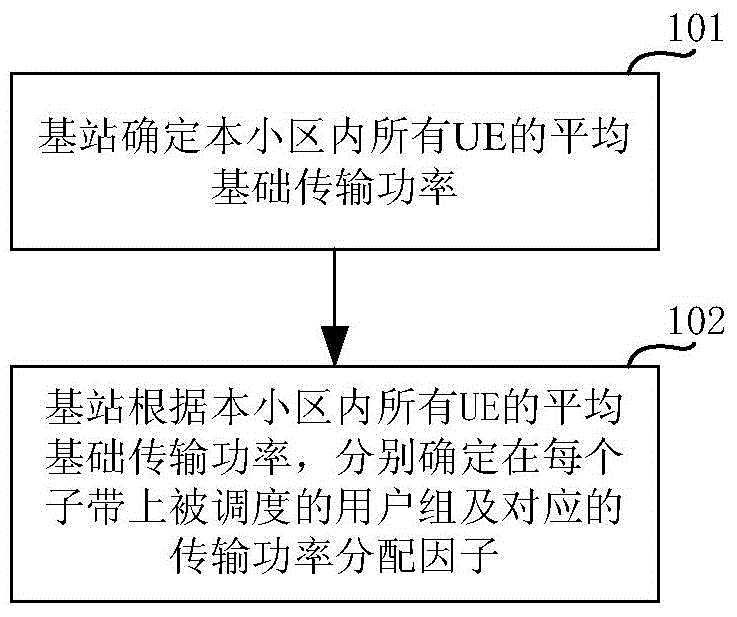
图1为本发明一个实施例所述的功率控制方法流程图;FIG. 1 is a flowchart of a power control method according to an embodiment of the present invention;
图2为图1所示功率控制方法中确定在每个子带上被调度的用户组及对应的传输功率分配因子的方法流程图;FIG. 2 is a flowchart of a method for determining a user group scheduled on each subband and a corresponding transmission power allocation factor in the power control method shown in FIG. 1;
图3为本发明另一个实施例所述的功率控制方法流程图;3 is a flowchart of a power control method according to another embodiment of the present invention;
图4为本发明又一个实施例所述的功率控制方法流程图;FIG. 4 is a flowchart of a power control method according to another embodiment of the present invention;
图5为本发明一个实施例所述的功率控制装置内部结构示意图;FIG. 5 is a schematic diagram of an internal structure of a power control device according to an embodiment of the present invention;
图6为本发明另一个实施例所述的功率控制装置内部结构示意图;6 is a schematic diagram of an internal structure of a power control device according to another embodiment of the present invention;
图7为本发明又一个实施例所述的功率控制装置内部结构示意图。FIG. 7 is a schematic diagram of an internal structure of a power control apparatus according to another embodiment of the present invention.
具体实施方式Detailed ways
如前所述,使用NOMA技术可以极大地提高频率效率,然而,NOMA系统如何进行传输功率控制是需要解决的关键问题之一。为此,本发明的实施例提出了传输功率控制方法和装置,该方法和装置可以适用于NOMA系统。As mentioned above, the use of NOMA technology can greatly improve the frequency efficiency, however, how the NOMA system performs transmission power control is one of the key issues that needs to be solved. To this end, embodiments of the present invention propose a transmission power control method and apparatus, which may be applicable to NOMA systems.
为使本发明的目的、技术方案及优点更加清楚明白,以下参照附图并举实施例,对本发明的实施例作进一步详细说明。In order to make the objectives, technical solutions and advantages of the present invention clearer, the embodiments of the present invention will be described in further detail below with reference to the accompanying drawings and embodiments.
图1显示了根据本发明一个实施例的传输功率控制方法流程图。该方法可以实现NOMA系统的上行传输功率控制。如图1所示,该上行传输功率控制方法,包括如下步骤:FIG. 1 shows a flowchart of a transmission power control method according to an embodiment of the present invention. The method can realize the uplink transmission power control of the NOMA system. As shown in Figure 1, the uplink transmission power control method includes the following steps:
步骤101,基站确定本小区内所有用户终端(UE)的平均基础传输功率Pavg。
具体而言,在本步骤中,基站可以采用多种方法确定本小区内所有UE的平均基础传输功率Pavg。Specifically, in this step, the base station may use various methods to determine the average basic transmission power P avg of all UEs in the cell.
例如,基站可以直接预先设定本小区内每个UE的平均基础传输功率Pavg。其中,平均基础传输功率Pavg可以根据基站统计的经验值或平均值设定。For example, the base station may directly preset the average basic transmission power P avg of each UE in the cell. Wherein, the average basic transmission power P avg may be set according to an empirical value or an average value of base station statistics.
又例如,根据本发明的一个实施例,可以通过如下方法实现上述步骤101:For another example, according to an embodiment of the present invention, the
步骤1011:基站确定本小区内所有UE的基础传输功率Pbasic。Step 1011: The base station determines the basic transmission power P basic of all UEs in the cell.
在本步骤中,基站可以使用长期演进系统/改进的长期演进系统(LTE/LTE-A)中的已提出的各种传统TPC方法确定小区内各个UE的基础传输功率。例如,可以采用LTE/LTE-A第8版本(Rel.8)协议规定的分数传输功率控制(FTPC)方法来确定小区内各个UE的基础传输功率。由于在LTE/LTE-A Rel.8中已经对FTPC的方法进行了详细描述,在这里基站采用FTPC方法确定本小区内所有UE的基础传输功率的具体过程就不再详述了。再例如,可以采用考虑邻小区干扰的功率控制方案确定小区内各个UE的基础传输功率。具体而言,可以设定小区内各个UE的基础传输功率,使得各个UE对所有邻小区的干扰功率都小于某个预定的门限值。In this step, the base station may determine the basic transmission power of each UE in the cell using various conventional TPC methods proposed in Long Term Evolution/Long Term Evolution-Advanced (LTE/LTE-A). For example, the fractional transmission power control (FTPC) method specified in the LTE/LTE-A Release 8 (Rel. 8) protocol may be used to determine the basic transmission power of each UE in the cell. Since the FTPC method has been described in detail in LTE/LTE-A Rel.8, the specific process that the base station uses the FTPC method to determine the basic transmission power of all UEs in the cell will not be described in detail here. For another example, the basic transmission power of each UE in the cell may be determined by adopting a power control scheme that considers interference from neighboring cells. Specifically, the basic transmission power of each UE in the cell can be set so that the interference power of each UE to all neighboring cells is less than a predetermined threshold value.
步骤1012,基站根据确定的本小区内各个UE的基础传输功率Pbasic计算本小区内所有UE的平均基础传输功率Pavg,也即将本小区内所有UE的基础传输功率Pbasic求和之后再除以本小区内的UE总数,得到本小区内所有UE的平均基础传输功率Pavg。Step 1012, the base station calculates the average basic transmission power P avg of all UEs in the cell according to the determined basic transmission power P basic of each UE in the cell, that is, divides the basic transmission power P basic of all UEs in the cell after summing up. Based on the total number of UEs in the cell, the average basic transmission power P avg of all UEs in the cell is obtained.
步骤102,基站根据本小区内所有UE的平均基础传输功率Pavg,分别确定在每个子带(subband)上被调度的NOMA用户组及对应的传输功率分配因子。
在本发明的实施例中,将在同一个子带上同时被调度的UE的集合称为NOMA用户组,在本文中直接简称为用户组。In the embodiment of the present invention, the set of UEs scheduled at the same time on the same subband is called a NOMA user group, which is simply referred to as a user group in this document.
具体而言,根据本发明的一个实施例,在本步骤中,基站在每个子带上分别通过执行如下图2所示的步骤确定在每个子带上被调度的用户组及对应的传输功率分配因子:Specifically, according to an embodiment of the present invention, in this step, the base station determines the user group scheduled on each subband and the corresponding transmission power allocation by executing the steps shown in FIG. 2 below, respectively, on each subband factor:
步骤1021,列举所有可能的UE组合作为候选用户组集合;
步骤1022,根据本小区内所有UE的平均基础传输功率Pavg,分别计算候选用户组集合内每个候选用户组的总传输功率;
在本步骤中,可以通过如下公式(1)计算每个候选用户组的总传输功率:In this step, the total transmission power of each candidate user group can be calculated by the following formula (1):
Ptotal=Pavg×β×N (1)P total =P avg ×β×N (1)
其中,N代表各个候选用户组所包含的UE数;β为一补偿系数,主要是为了折衷本小区吞吐量与本小区对邻小区干扰而设置的。在本发明的实施例中,β可以使用系统设定的经验值,例如设定为介于[0.5,1.2]之间的某个数值。Among them, N represents the number of UEs included in each candidate user group; β is a compensation coefficient, which is mainly set to compromise the throughput of this cell and the interference of this cell to neighboring cells. In the embodiment of the present invention, β may use an empirical value set by the system, for example, set to a certain value between [0.5, 1.2].
步骤1023,针对候选用户组集合内每个候选用户组,分别列举所有可能的传输功率分配因子作为每个候选用户组对应的候选传输功率分配因子集合。Step 1023: For each candidate user group in the candidate user group set, list all possible transmission power allocation factors respectively as a set of candidate transmission power allocation factors corresponding to each candidate user group.
在本发明的实施例中,候选传输功率分配因子集合中元素的数量与其所对应候选用户组的UE数量以及系统设定的传输功率分配因子的最小颗粒度有关。例如,如果当前候选用户组中UE的数量为2,系统设定的传输功率分配因子的最小颗粒度为0.1,则所有可能的传输功率分配因子包括:{0.1,0.9}、{0.2,0.8}、{0.3,0.7}、{0.4,0.6}、{0.5,0.5}、{0.6,0.4}、{0.7,0.3}、{0.8,0.2}以及{0.9,0.1}。In the embodiment of the present invention, the number of elements in the candidate transmission power allocation factor set is related to the number of UEs in the candidate user group to which it corresponds and the minimum granularity of the transmission power allocation factor set by the system. For example, if the number of UEs in the current candidate user group is 2, and the minimum granularity of the transmission power allocation factor set by the system is 0.1, all possible transmission power allocation factors include: {0.1, 0.9}, {0.2, 0.8} , {0.3, 0.7}, {0.4, 0.6}, {0.5, 0.5}, {0.6, 0.4}, {0.7, 0.3}, {0.8, 0.2}, and {0.9, 0.1}.
步骤1024:对候选用户组和候选传输功率分配因子进行排列组合,得到全部候选用户组和候选传输功率分配因子组合。Step 1024: Arrange and combine candidate user groups and candidate transmission power allocation factors to obtain all candidate user groups and candidate transmission power allocation factor combinations.
例如,假设在子带1上候选用户组有3个{UE1,UE2}、{UE1,UE3}以及{UE2,UE3},而每个候选用户组对应的候选传输功率分配因子都有9个:{0.1,0.9}、{0.2,0.8}、{0.3,0.7}、{0.4,0.6}、{0.5,0.5}、{0.6,0.4}、{0.7,0.3}、{0.8,0.2}以及{0.9,0.1}。在这种情况下,经过排列组合,共可以得到27种候选用户组和候选传输功率分配因子组合,也即可以得到27种功率分配方式。For example, suppose there are 3 candidate user groups {UE1, UE2}, {UE1, UE3} and {UE2, UE3} on subband 1, and each candidate user group has 9 candidate transmission power allocation factors: {0.1, 0.9}, {0.2, 0.8}, {0.3, 0.7}, {0.4, 0.6}, {0.5, 0.5}, {0.6, 0.4}, {0.7, 0.3}, {0.8, 0.2} and {0.9 , 0.1}. In this case, after permutation and combination, a total of 27 combinations of candidate user groups and candidate transmission power allocation factors can be obtained, that is, 27 power allocation methods can be obtained.
步骤1025,分别针对每种候选用户组和候选传输功率分配因子组合,按照候选用户组及其对应的候选传输功率分配因子对候选用户组内的UE进行功率分配。
在本步骤中,基站可以根据当前候选用户组的总传输功率以及当前候选传输功率分配因子,确定当前候选用户组内每个UE的传输功率。例如,在子带1上当前候选用户组为{UE1,UE2},当前的功率分配因子为{0.3,0.7},则UE1的传输功率为PUE1=0.3×Ptotal;UE2的传输功率为PUE1=0.7×Ptotal。In this step, the base station may determine the transmission power of each UE in the current candidate user group according to the total transmission power of the current candidate user group and the current candidate transmission power allocation factor. For example, on subband 1, the current candidate user group is {UE1, UE2}, and the current power allocation factor is {0.3, 0.7}, then the transmission power of UE1 is P UE1 =0.3×P total ; the transmission power of UE2 is P UE1 =0.7×P total .
步骤1026,分别计算在各种功率分配下候选用户组的调度度量,从中找到在每个子带上使调度度量最大的候选用户组及其对应的候选传输功率分配因子,将该候选用户组及对应的候选传输功率分配因子作为在当前子带上调度的用户组及传输功率分配因子。Step 1026: Calculate the scheduling metrics of the candidate user groups under various power allocations, find the candidate user group that maximizes the scheduling metric on each subband and its corresponding candidate transmission power allocation factor, and find the candidate user group and the corresponding candidate user group. The candidate transmission power allocation factor of is used as the user group scheduled on the current subband and the transmission power allocation factor.
接上例,在子带1上可以分别计算上述27种功率分配方案下候选用户组的调度度量,并从中找出使得调度度量最大的候选用户组及对应的候选传输功率分配因子,例如调度度量最大值对应的候选用户组是{UE1,UE3}及候选传输功率分配因子是{0.3,0.7}。则可以确定,在子带1上待调度的用户组为{UE1,UE3}及对应的传输功率分配因子{0.3,0.7}。Continuing from the previous example, on subband 1, the scheduling metrics of the candidate user groups under the above 27 power allocation schemes can be calculated respectively, and the candidate user group that maximizes the scheduling metric and the corresponding candidate transmission power allocation factor, such as the scheduling metric, can be found. The candidate user group corresponding to the maximum value is {UE1, UE3} and the candidate transmission power allocation factor is {0.3, 0.7}. Then it can be determined that the user groups to be scheduled on subband 1 are {UE1, UE3} and the corresponding transmission power allocation factors {0.3, 0.7}.
具体而言,上述步骤1026可以通过如下几个步骤实现:Specifically, the
步骤10261:针对每个候选用户组及其对应的候选传输功率因子集合中的每个候选传输功率分配因子,分别计算当前候选用户组内各个UE处理后的信噪比。Step 10261: For each candidate user group and each candidate transmission power allocation factor in the corresponding candidate transmission power factor set, calculate the processed signal-to-noise ratio of each UE in the current candidate user group respectively.
例如,如果当前的候选用户组包含两个用户UE1和UE2,且根据当前候选的传输功率分配因子确定的UE1和UE2的传输功率为{P1,P2},则UE1和UE2的处理后信噪比将如下公式(2)和(3)所示:For example, if the current candidate user group includes two users UE1 and UE2, and the transmission power of UE1 and UE2 determined according to the current candidate transmission power allocation factor is {P 1 , P 2 }, then the post-processing information of UE1 and UE2 The noise ratio will be given by equations (2) and (3) below:


其中,h1和h2分别代表UE1和UE2的信道函数;n代表噪声。Among them, h 1 and h 2 represent the channel functions of UE1 and UE2, respectively; n represents noise.
步骤10262:根据当前候选用户组内每个UE的处理后信噪比分别计算在使用当前候选传输功率分配因子时,当前候选用户组的调度度量。Step 10262: Calculate the scheduling metrics of the current candidate user group when the current candidate transmission power allocation factor is used according to the post-processing signal-to-noise ratio of each UE in the current candidate user group.
在本发明的实施例中,上述调度度量可以是比例公平(PF)调度度量、改进的比例公平调度度量或用户几何平均吞吐度量等。In the embodiment of the present invention, the above-mentioned scheduling metric may be a proportional fair (PF) scheduling metric, an improved proportional fair scheduling metric, or a user geometric mean throughput metric, or the like.
此外,在本步骤中,基站可以首先根据当前候选用户组内每个UE的处理后信噪比分别计算在使用当前候选传输功率分配因子时当前候选用户组内每个UE的瞬时吞吐量。In addition, in this step, the base station may first calculate the instantaneous throughput of each UE in the current candidate user group when using the current candidate transmission power allocation factor according to the processed signal-to-noise ratio of each UE in the current candidate user group.
例如,候选用户组内的第k个用户UEk可以通过如下公式(4)计算自身的瞬时吞吐量:For example, the kth user UE k in the candidate user group can calculate its own instantaneous throughput by the following formula (4):

其中,SNRk代表第k个用户的处理后信噪比;

在得到当前候选用户组内每个UE的瞬时吞吐量之后可以进一步计算当前候选用户组内每个UE的调度度量,并将当前候选用户组内每个UE的调度度量求和后得到当前候选用户组的调度度量。After obtaining the instantaneous throughput of each UE in the current candidate user group, the scheduling metric of each UE in the current candidate user group can be further calculated, and the current candidate user can be obtained by summing the scheduling metrics of each UE in the current candidate user group Scheduling metrics for the group.
具体而言,在上面的例子中,基站可以通过通过如下公式(5)计算一个候选用户组的调度度量:Specifically, in the above example, the base station can calculate the scheduling metric of a candidate user group by using the following formula (5):

其中,Ω代表当前的候选用户组;k代表当前的候选用户组中的第k个用户;Rk代表用户k的平均吞吐量。Among them, Ω represents the current candidate user group; k represents the kth user in the current candidate user group; R k represents the average throughput of user k.
步骤10263:比较使用不同候选传输功率分配因子时各个候选用户组的调度度量,选择其中具有最大调度度量候选用户组及对应候选传输功率分配因子,作为当前子带上待调度的用户组及对应的传输功率分配因子。Step 10263: Compare the scheduling metrics of each candidate user group when different candidate transmission power allocation factors are used, and select the candidate user group with the largest scheduling metric and the corresponding candidate transmission power allocation factor as the user group to be scheduled on the current subband and the corresponding candidate user group. Transmission power allocation factor.
步骤1027,在分别确定了每个子带上待调度的用户组之后,基站根据确定的每个子带上待调度的用户组及对应的传输功率分配因子对UE进行调度,保证每个UE被分配的子带是连续的。
在执行完上述步骤后,基站可以根据每个子带上被调度的用户组、对应的传输功率分配因子以及每个子带上的总传输功率确定被调度的用户组内各个UE的传输功率。然后,基站可以进一步确定用户的调度编码方式MCS,并将包括UE的传输功率、MCS以及被分配的子带等等在内的调度信息分别通知被调度的UE。此后,UE就可以按照调度信息在分配的子带上使用分配的传输功率以及MCS传输信号了。After performing the above steps, the base station may determine the transmission power of each UE in the scheduled user group according to the scheduled user group on each subband, the corresponding transmission power allocation factor, and the total transmission power on each subband. Then, the base station may further determine the scheduling coding mode MCS of the user, and respectively notify the scheduled UE of the scheduling information including the transmission power of the UE, the MCS, the allocated subband, and the like. After that, the UE can use the allocated transmission power and the MCS transmission signal on the allocated subband according to the scheduling information.
由此可以看出,通过上述方法,基站即可确定在每个子带上被调度的用户组及该用户组内各个用户的传输功率。也即通过上述方法不但确定了每个子带上的总的传输功率,还确定了每个子带上如何在用户组的UE之间进行功率分配。It can be seen from this that, through the above method, the base station can determine the user group scheduled on each subband and the transmission power of each user in the user group. That is, the above method not only determines the total transmission power on each subband, but also determines how the power is allocated among the UEs of the user group on each subband.
此外,从上述方法可以看出,在本实施例中,每个子带上的总的传输功率Ptotal是根据整个小区内所有UE的平均基础传输功率Pavg、被调度的用户组内的用户数以及补偿系数确定的,因此,本实施例所提供的功率控制方法可以较好的控制各个子带上的总的传输功率的波动,避免出现总传输功率波动过大的情况,例如,如果固定用户组内的用户数以及补偿系数,则各个子带上总的传输功率就是固定的。更进一步,在上述方法搜索每个子带上被调度的用户组以及对应的传输功率分配因子过程中,不仅考虑UE的信道条件以及UE之间信道的不同还能最大化被调度用户组的调度度量,因此,从整个系统来看可以达到较好的系统吞吐量性能。In addition, it can be seen from the above method that in this embodiment, the total transmission power P total on each subband is based on the average basic transmission power P avg of all UEs in the entire cell, the number of users in the scheduled user group and the compensation coefficient is determined. Therefore, the power control method provided in this embodiment can better control the fluctuation of the total transmission power on each subband, and avoid the situation that the total transmission power fluctuates too much. For example, if a fixed user The number of users in the group and the compensation coefficient, the total transmission power on each subband is fixed. Further, in the process of searching for the scheduled user group on each subband and the corresponding transmission power allocation factor in the above method, not only the channel conditions of the UE and the difference of the channels between the UEs are considered, but also the scheduling metric of the scheduled user group can be maximized. , therefore, from the perspective of the entire system, better system throughput performance can be achieved.
为了进一步优化上述功率控制方法,本发明的另一个实施例也提出了一种功率控制方法。在该实施例中,可以通过滑动窗机制动态调整各个子带上的总传输功率,最优化系统的吞吐量。In order to further optimize the above power control method, another embodiment of the present invention also proposes a power control method. In this embodiment, the total transmission power on each subband can be dynamically adjusted through a sliding window mechanism to optimize the throughput of the system.
下面通过附图将本实施例的方法具体描述如下。图3显示了本发明实施例所述的功率控制方法流程,如图3所示,该方法主要包括:The method of this embodiment will be specifically described below with reference to the accompanying drawings. FIG. 3 shows the flow of the power control method according to the embodiment of the present invention. As shown in FIG. 3 , the method mainly includes:
步骤301,设定补偿系数β的初始值以及调整步长Δ,其中β代表为折衷本小区吞吐率与本小区对邻小区干扰而设置的参数;
步骤302,每经过一段预定时间(滑动窗口的宽度),基站按照调整步长增加补偿系数,即令β=β+Δ;
步骤303,基站测量本小区的总吞吐量;
步骤304,基站在本小区的吞吐达到最大时确定本基站在每个子带的总传输功率时使用的补偿系数β。
在本发明的一个实施例中,上述方法可以由系统统一触发,也即系统内的所有基站同时执行上述方法。在本发明的另一个实施例中,也可以按照时间触发,也即每隔一定的时间,系统内的所有基站都同时执行上述方法。In an embodiment of the present invention, the above method may be triggered by the system in a unified manner, that is, all base stations in the system execute the above method at the same time. In another embodiment of the present invention, it can also be triggered according to time, that is, every certain time, all base stations in the system simultaneously execute the above method.
由于该方法是系统内的所有基站同时分别执行的,也即,本小区的总传输功率在增加时,相邻小区的总传输功率也在增加,因此,各个基站分别确定的补偿系数可以同时兼顾自身的吞吐量以及自身对相邻小区的干扰。也就是说,通过上述动态调整影响各个子带上总传输功率的补偿参数β的方法,可以在系统预定β值基础之上进一步优化每个子带上总传输功率值,从而在本小区吞吐量以及对相邻小区的干扰之间取得平衡,进一步优化系统的总吞吐量。Since this method is executed by all base stations in the system at the same time, that is, when the total transmission power of this cell increases, the total transmission power of adjacent cells also increases, so the compensation coefficients determined by each base station can be taken into account at the same time. Its own throughput and its own interference to neighboring cells. That is to say, through the above method of dynamically adjusting the compensation parameter β that affects the total transmission power of each subband, the total transmission power value of each subband can be further optimized on the basis of the predetermined β value of the system, so that the throughput and The interference to adjacent cells is balanced to further optimize the overall throughput of the system.
为了进一步优化上述功率控制方法,本发明的又一个实施例也提出了一种功率控制方法。在该实施例中,进一步优化各个子带上的传输功率分配因子以及调制编码方式(MCS),最优化系统的吞吐量。In order to further optimize the above power control method, another embodiment of the present invention also proposes a power control method. In this embodiment, the transmission power allocation factor and the modulation and coding scheme (MCS) on each subband are further optimized to optimize the throughput of the system.
下面通过附图将本实施例的方法具体描述如下。图4显示了本发明实施例所述的功率控制方法流程,如图4所示,该方法主要包括:The method of this embodiment will be specifically described below with reference to the accompanying drawings. FIG. 4 shows the flow of the power control method according to the embodiment of the present invention. As shown in FIG. 4 , the method mainly includes:
步骤101,基站确定本小区内所有UE的平均基础传输功率Pavg。
步骤102,基站根据本小区内所有UE的平均基础传输功率Pavg,分别确定在每个子带上被调度的用户组及对应的传输功率分配因子。
以上步骤101和102的具体实现方法可以参考前述实施例,在此就不再重复描述了。For the specific implementation methods of the
步骤103,针对每个子带,为被调度的用户组内的各个UE选择MCS。
在本步骤中,针对每个子带,根据被调度的用户组对应的传输功率分配因子,计算各个UE的处理后的SNR,针对各个UE,分别合并每个UE在为其连续分配的子带上的处理后的SNR作为该UE的等效信干噪比(SINR),并分别根据各个UE的等效SINR选择适合的MCS作为各个UE的MCS。In this step, for each subband, the processed SNR of each UE is calculated according to the transmission power allocation factor corresponding to the scheduled user group, and for each UE, the subbands continuously allocated by each UE are combined respectively. The processed SNR is taken as the equivalent signal-to-interference and noise ratio (SINR) of the UE, and an appropriate MCS is selected as the MCS of each UE according to the equivalent SINR of each UE.
关于上述合并可以采用如下公式(6)所示的方式或直接采用UE在为其连续分配的子带上的处理后SNR的线性平均:Regarding the above combination, the following formula (6) can be used, or the linear average of the post-processing SNR of the UE on the subbands continuously allocated to it can be directly used:

其中,RB表示分配到资源块的数目;n表示数据流的索引;W表示接收处理的MMSE权重;H表示包含预编码的等效信道响应。Among them, RB represents the number of allocated resource blocks; n represents the index of the data stream; W represents the MMSE weight of the receiving process; H represents the equivalent channel response including precoding.
步骤104,根据各个UE的MCS执行宽带TPC。
下面将详细描述宽带TPC的具体方法。The specific method of the broadband TPC will be described in detail below.
在上述步骤102中,UE的传输功率分配因子是在假设子带采用能达到最高频谱效率的MCS的基础上进行吞吐和调度度量的计算得到的。而由于步骤103中得到的MCS是宽带MCS,是按照所有分配到的子带的情况得到的将应用于所有被分配到的子带上,因此会不同于步骤102中的子带MCS。为了使得UE的性能最优,需要优化传输功率分配因子使其能最大化宽带MCS时的子带吞吐和调度度量。具体的,在本步骤中,假设UE的MCS为步骤103中得到的MCS,再次穷举所有候选传输功率分配因子,找出其中能最大化用户组调度度量的传输功率分配因子,作为子带的传输功率分配因子。具体而言,针对每个子带上述宽带TPC可以包括如下步骤:In the
步骤1041,根据本小区内所有UE的平均基础传输功率,计算在当前子带上待调度用户组的总传输功率。上述步骤1041的具体实现方法可以参考步骤1022。Step 1041: Calculate the total transmission power of the user group to be scheduled in the current subband according to the average basic transmission power of all UEs in the cell. For the specific implementation method of the above step 1041, reference may be made to the
步骤1042,列举所有可能的传输功率分配因子作为待调度用户组对应的候选传输功率分配因子。例如,当前子带上待调度用户组为UE1和UE2且系统设定的传输功率分配因子的最小颗粒度为0.1,则候选传输功率分配因子包括:{0.1,0.9}、{0.2,0.8}、{0.3,0.7}、{0.4,0.6}、{0.5,0.5}、{0.6,0.4}、{0.7,0.3}、{0.8,0.2}以及{0.9,0.1}。Step 1042: List all possible transmission power allocation factors as candidate transmission power allocation factors corresponding to the user group to be scheduled. For example, if the user groups to be scheduled on the current subband are UE1 and UE2 and the minimum granularity of the transmission power allocation factor set by the system is 0.1, the candidate transmission power allocation factors include: {0.1, 0.9}, {0.2, 0.8}, {0.3, 0.7}, {0.4, 0.6}, {0.5, 0.5}, {0.6, 0.4}, {0.7, 0.3}, {0.8, 0.2} and {0.9, 0.1}.
步骤1043,分别按照每组候选传输功率分配因子对所述待调度用户组内的UE进行功率分配。上述步骤1043的具体实现方法可以参考步骤1025。Step 1043: Perform power allocation to the UEs in the to-be-scheduled user group according to each group of candidate transmission power allocation factors. For the specific implementation method of the above step 1043, reference may be made to the
步骤1044,分别计算在各种功率分配下待调度用户组的调度度量。Step 1044: Calculate the scheduling metrics of the user groups to be scheduled under various power allocations, respectively.
本步骤在计算待调度用户组的调度度量时可以参考上述步骤1026所述的方法,但是需要说明的是,在本步骤中,假设UE的MCS为步骤103中得到的MCS而不是能达到最好频谱效率的MCS。例如,在本步骤中,可以通过如下公式(7)计算待调度用户组内第k个用户的瞬时吞吐量:In this step, the method described in

其中,

在得到待调度用户组内每个用户的瞬时吞吐量之后可以通过例如上述公式(5)得到待调度用户组的调度度量。After obtaining the instantaneous throughput of each user in the user group to be scheduled, the scheduling metric of the user group to be scheduled can be obtained by, for example, the above formula (5).
步骤1045,从中找到在当前子带上使所述待调度用户组调度度量最大的候选传输功率分配因子,将该候选传输功率分配因子作为在当前子带上待调度用户组的传输功率分配因子。Step 1045: Find a candidate transmission power allocation factor that maximizes the scheduling metric of the user group to be scheduled on the current subband, and use the candidate transmission power allocation factor as the transmission power allocation factor of the user group to be scheduled on the current subband.
为了实现进一步的优化,基站可以重复执行上述步骤103和104,直至收敛,即前后两次计算结果中,每个UE的MCS相同以及各个子带上的用户组的传输功率分配因子也相同。In order to achieve further optimization, the base station can repeatedly perform the
在执行上述步骤之后,基站可以根据每个子带上被调度的用户组、对应的传输功率分配因子以及每个子带上的总传输功率确定被调度的用户组内各个UE的传输功率,然后将调度信息分别通知被调度的UE。上述调度信息包括:UE被允许的传输功率、MCS以及被分配的子带等等。此后,UE就可以按照调度信息在分配的子带上使用分配的传输功率以及MCS传输信号了。After performing the above steps, the base station may determine the transmission power of each UE in the scheduled user group according to the scheduled user group on each subband, the corresponding transmission power allocation factor, and the total transmission power on each subband, and then schedule the The information is notified to the scheduled UEs respectively. The above-mentioned scheduling information includes: the transmission power allowed by the UE, the MCS, the allocated subband, and the like. After that, the UE can use the allocated transmission power and the MCS transmission signal on the allocated subband according to the scheduling information.
从上述方法可以看出,在本实施例的步骤103执行完毕后,MCS是在UE被分配的连续的多个子带上统一选择的,此时,之前在步骤102确定的每个子带上的功率分配因子则不能实现在每个子带上都具有最优的吞吐量,因此,在本实施例的步骤104,通过宽带TPC进一步调整传输功率分配因子,进一步优化系统的吞吐量。It can be seen from the above method that, after
对应上述实施例所述的传输功率控制方法,本发明的实施例还提出了执行上述方法的装置。Corresponding to the transmission power control method described in the foregoing embodiments, the embodiments of the present invention further provide an apparatus for executing the foregoing methods.
图5显示了根据本发明一个实施例的传输功率控制装置内部结构示意图。如图5所示,该装置主要包括如下部分:FIG. 5 shows a schematic diagram of the internal structure of a transmission power control apparatus according to an embodiment of the present invention. As shown in Figure 5, the device mainly includes the following parts:
平均基础传输功率确定模块501,用于确定本小区内所有UE的平均基础传输功率Pavg。The average basic transmission power determination module 501 is configured to determine the average basic transmission power P avg of all UEs in the cell.
如前所述,平均基础传输功率确定模块可以采用多种方法确定本小区内所有UE的平均基础传输功率Pavg。例如,可以直接预先设定本小区内所有UE的平均基础传输功率Pavg;或者可以根据上述步骤1011-1012的方法确定本小区内所有UE的平均基础传输功率Pavg。As mentioned above, the average basic transmission power determining module can use various methods to determine the average basic transmission power P avg of all UEs in the cell. For example, the average basic transmission power P avg of all UEs in the cell may be directly preset; or the average basic transmission power P avg of all UEs in the cell may be determined according to the methods of steps 1011-1012 above.
调度模块502,用于根据本小区内所有UE的平均基础传输功率Pavg,分别确定在每个子带上被调度的用户组及对应的传输功率分配因子。The
如前所述,根据本发明的一个实施例,上述调度模块可以通过上述步骤1021-1027所述的方法确定在每个子带上被调度的用户组及对应传输功率分配因子。As mentioned above, according to an embodiment of the present invention, the scheduling module may determine the user group scheduled on each subband and the corresponding transmission power allocation factor by using the method described in the above steps 1021-1027.
如前所述,为了进一步优化上述功率控制方法,本发明的另一个实施例也提出了一种功率控制装置。该装置的内部结构如图6所示,除了平均基础传输功率确定模块501以及调度模块502之外,还进一步包括动态调整模块503。As mentioned above, in order to further optimize the above power control method, another embodiment of the present invention also provides a power control apparatus. The internal structure of the apparatus is shown in FIG. 6 , in addition to the average basic transmission power determination module 501 and the
该动态调整模块503在收到系统的触发指令后启动工作或者定时启动工作,该动态调整模块503具体包括:The dynamic adjustment module 503 starts work or starts work periodically after receiving a trigger instruction from the system, and the dynamic adjustment module 503 specifically includes:
预设单元5031,用于设定补偿系数β的初始值以及调整步长Δ;The preset unit 5031 is used to set the initial value of the compensation coefficient β and the adjustment step Δ;
调整单元5032,每经过一段预定时间(滑动窗口的宽度),根据调整步长增加补偿系数,即令β=β+Δ;The adjustment unit 5032 increases the compensation coefficient according to the adjustment step size every time a predetermined period of time (the width of the sliding window) passes, that is, β=β+Δ;
测量单元5033,用于测量本小区的总吞吐量;以及a measuring unit 5033, configured to measure the total throughput of the cell; and
确定单元5034,用于在本小区的吞吐达到最大时确定本基站在确定每个子带的总传输功率时使用的补偿系数β。The determining unit 5034 is configured to determine the compensation coefficient β used by the local base station when determining the total transmission power of each subband when the throughput of the local cell reaches the maximum.
为了进一步优化上述功率控制方法,本发明的又一个实施例也提出了一种功率控制装置。该装置的内部结构如图7所示,除了平均基础传输功率确定模块501以及调度模块502之外,还进一步包括:In order to further optimize the above power control method, another embodiment of the present invention also provides a power control apparatus. The internal structure of the device is shown in FIG. 7 , in addition to the average basic transmission power determining module 501 and the
宽带MCS模块504,用于针对每个子带,为被调度的用户组内的各个UE选择MCS;以及a wideband MCS module 504 for selecting, for each subband, an MCS for each UE within the scheduled user group; and
宽带TPC模块505,用于执行宽带TPC。The broadband TPC module 505 is used for executing broadband TPC.
如前所述,上述宽带TPC模块505可以采用上述步骤1041-1045的方法执行宽带TPC。As mentioned above, the broadband TPC module 505 can perform the broadband TPC by using the method of the above steps 1041-1045.
为了实现进一步的优化,可以重复触发上述宽带MCS模块和宽带TPC模块工作,直至结果收敛,即前后两次计算结果中,每个UE的MCS相同以及各个子带上的用户组的传输功率分配因子也相同。In order to achieve further optimization, the above broadband MCS module and broadband TPC module can be triggered repeatedly until the results converge, that is, in the two calculation results before and after, the MCS of each UE is the same and the transmission power allocation factor of the user group on each subband is the same Also the same.
从上述功率控制方法和装置可以看出,本发明的实施例可以确定各个基站在每个子带上被调度的用户组及该用户组内各个用户的传输功率,提出了NOMA系统传输功率控制的解决方案,并且可以获得较优的系统吞吐量。It can be seen from the above power control method and device that the embodiments of the present invention can determine the user group scheduled by each base station in each subband and the transmission power of each user in the user group, and propose a solution for NOMA system transmission power control solution, and better system throughput can be obtained.
以上举较佳实施例,对本发明的目的、技术方案和优点进行了进一步详细说明,所应理解的是,以上所述仅为本发明的较佳实施例而已,并不用以限制本发明,凡在本发明的精神和原则之内,所作的任何修改、等同替换和改进等,均应包含在本发明的保护范围之内。The preferred embodiments are given above, and the purpose, technical solutions and advantages of the present invention are further described in detail. It should be understood that the above descriptions are only preferred embodiments of the present invention, and are not intended to limit the present invention. Within the spirit and principle of the present invention, any modifications, equivalent replacements and improvements, etc., should be included within the protection scope of the present invention.
Claims (13)
Priority Applications (4)
| Application Number | Priority Date | Filing Date | Title |
|---|---|---|---|
| CN201510107458.1A CN106034349B (en) | 2015-03-12 | 2015-03-12 | Transmission power control method and device |
| EP16159701.8A EP3068177B1 (en) | 2015-03-12 | 2016-03-10 | Method and apparatus for controlling power |
| JP2016048628A JP6635834B2 (en) | 2015-03-12 | 2016-03-11 | Power control method and device |
| US15/067,598 US10313987B2 (en) | 2015-03-12 | 2016-03-11 | Method and apparatus for controlling power |
Applications Claiming Priority (1)
| Application Number | Priority Date | Filing Date | Title |
|---|---|---|---|
| CN201510107458.1A CN106034349B (en) | 2015-03-12 | 2015-03-12 | Transmission power control method and device |
Publications (2)
| Publication Number | Publication Date |
|---|---|
| CN106034349A CN106034349A (en) | 2016-10-19 |
| CN106034349B true CN106034349B (en) | 2020-11-20 |
Family
ID=55527371
Family Applications (1)
| Application Number | Title | Priority Date | Filing Date |
|---|---|---|---|
| CN201510107458.1A Active CN106034349B (en) | 2015-03-12 | 2015-03-12 | Transmission power control method and device |
Country Status (4)
| Country | Link |
|---|---|
| US (1) | US10313987B2 (en) |
| EP (1) | EP3068177B1 (en) |
| JP (1) | JP6635834B2 (en) |
| CN (1) | CN106034349B (en) |
Families Citing this family (8)
| Publication number | Priority date | Publication date | Assignee | Title |
|---|---|---|---|---|
| EP3536056B1 (en) * | 2016-11-16 | 2021-02-24 | Huawei Technologies Duesseldorf GmbH | Radio device and radio cell with multiplexed data sequences with unequal power allocation |
| JP2018085682A (en) * | 2016-11-25 | 2018-05-31 | 日本電信電話株式会社 | Scheduling apparatus and method |
| JP6999702B2 (en) | 2017-05-24 | 2022-01-19 | テレフオンアクチーボラゲット エルエム エリクソン(パブル) | Wireless communication device scheduling |
| US10334534B2 (en) | 2017-09-19 | 2019-06-25 | Intel Corporation | Multiuser uplink power control with user grouping |
| EP3547573B1 (en) * | 2018-03-28 | 2021-05-26 | Institut Mines-Telecom | Method and apparatus for user distribution to sub-bands in multiple access communications systems |
| US11882525B2 (en) * | 2018-09-08 | 2024-01-23 | Telefonaktiebolaget Lm Ericsson (Publ) | Discrete power allocation for non-orthogonal multiple access systems |
| CN111194043B (en) * | 2020-03-17 | 2022-02-22 | 重庆邮电大学 | Power distribution method based on non-perfect serial interference elimination |
| CN114629757B (en) * | 2020-12-14 | 2023-03-21 | 中国科学院上海高等研究院 | Modulation strategy selection method, system, storage medium and terminal for non-orthogonal transmission |
Citations (4)
| Publication number | Priority date | Publication date | Assignee | Title |
|---|---|---|---|---|
| CN104158631A (en) * | 2014-08-27 | 2014-11-19 | 北京邮电大学 | Data stream transmitting method and device |
| WO2014208140A1 (en) * | 2013-06-28 | 2014-12-31 | 株式会社Nttドコモ | Wireless base station, user terminal and wireless communication method |
| WO2015025847A1 (en) * | 2013-08-23 | 2015-02-26 | 株式会社Nttドコモ | Wireless base station, relay station, and wireless communication method |
| WO2015029729A1 (en) * | 2013-08-30 | 2015-03-05 | 株式会社Nttドコモ | Radio base station, user terminal, and transmission power control method |
Family Cites Families (19)
| Publication number | Priority date | Publication date | Assignee | Title |
|---|---|---|---|---|
| US7039001B2 (en) * | 2002-10-29 | 2006-05-02 | Qualcomm, Incorporated | Channel estimation for OFDM communication systems |
| US6928062B2 (en) * | 2002-10-29 | 2005-08-09 | Qualcomm, Incorporated | Uplink pilot and signaling transmission in wireless communication systems |
| JP4334485B2 (en) * | 2005-02-04 | 2009-09-30 | シャープ株式会社 | Control station apparatus, terminal apparatus, and scheduling method |
| WO2007002032A2 (en) * | 2005-06-20 | 2007-01-04 | Texas Instruments Incorporated | Slow uplink power control |
| US20090161611A1 (en) * | 2005-10-17 | 2009-06-25 | Nec Corporation | Radio communication method, radio communication system, base station, and mobile station |
| GB2447439B (en) * | 2007-02-02 | 2012-01-25 | Ubiquisys Ltd | Access point power control |
| EP2186374B1 (en) * | 2007-08-07 | 2018-10-03 | BlackBerry Limited | Method and system for determining access during inter-technologies handoff |
| US8515430B2 (en) * | 2008-04-01 | 2013-08-20 | Nec Corporation | Wireless communication system, base station, wireless communication method, and program |
| US8467731B2 (en) * | 2009-10-26 | 2013-06-18 | Telecom Italia S.P.A. | Radio resource scheduling for intra-system interference coordination in wireless communication systems |
| US9363763B2 (en) * | 2010-01-13 | 2016-06-07 | Lg Electronics Inc. | User equipment that transmits an uplink signal in a multi-carrier supporting mobile communication system and a method therefor |
| KR101629519B1 (en) * | 2010-01-22 | 2016-06-14 | 삼성전자주식회사 | Method and apparatus for scheduling resource allocation to contorl inter-cell interference in a cellular communication system |
| US9198185B2 (en) * | 2010-02-10 | 2015-11-24 | Nokia Solutions And Networks Oy | Mechanism for aggregating uplink interference information for use in multi-carrier systems |
| GB2479060B (en) * | 2011-03-24 | 2012-05-02 | Reactive Technologies Ltd | Energy consumption management |
| JP5689029B2 (en) * | 2011-06-09 | 2015-03-25 | 株式会社日立製作所 | Distributed antenna system, distributed antenna allocation method, base station apparatus |
| US9107231B2 (en) * | 2012-05-17 | 2015-08-11 | Tait Limited | Multiuser scheduling for radio resource allocation |
| JP5875540B2 (en) * | 2013-02-12 | 2016-03-02 | 株式会社Nttドコモ | Wireless base station, user terminal, wireless communication system, and wireless communication method |
| US20150282185A1 (en) * | 2014-03-28 | 2015-10-01 | Futurewei Technologies, Inc. | Multi-user, multiple access, systems, methods, and devices |
| US20160073382A1 (en) * | 2014-09-05 | 2016-03-10 | Asustek Computer Inc. | Method and apparatus for improving downlink control information (dci) in a wireless communication system |
| JP2016066887A (en) * | 2014-09-24 | 2016-04-28 | 富士通株式会社 | Base station apparatus and resource allocation method |
-
2015
- 2015-03-12 CN CN201510107458.1A patent/CN106034349B/en active Active
-
2016
- 2016-03-10 EP EP16159701.8A patent/EP3068177B1/en active Active
- 2016-03-11 US US15/067,598 patent/US10313987B2/en active Active
- 2016-03-11 JP JP2016048628A patent/JP6635834B2/en active Active
Patent Citations (4)
| Publication number | Priority date | Publication date | Assignee | Title |
|---|---|---|---|---|
| WO2014208140A1 (en) * | 2013-06-28 | 2014-12-31 | 株式会社Nttドコモ | Wireless base station, user terminal and wireless communication method |
| WO2015025847A1 (en) * | 2013-08-23 | 2015-02-26 | 株式会社Nttドコモ | Wireless base station, relay station, and wireless communication method |
| WO2015029729A1 (en) * | 2013-08-30 | 2015-03-05 | 株式会社Nttドコモ | Radio base station, user terminal, and transmission power control method |
| CN104158631A (en) * | 2014-08-27 | 2014-11-19 | 北京邮电大学 | Data stream transmitting method and device |
Non-Patent Citations (4)
| Title |
|---|
| Minimum Power Multicast Beamforming With Superposition Coding for Multiresolution Broadcast and Application to NOMA Systems;Jinho Choi;《IEEE》;20150120;全文 * |
| Multi-User Proportional Fair Scheduling for Uplink Non-Orthogonal Multiple Access (NOMA);Xiaohang Chen等;《IEEE》;20150129;第2节-第3节,附图2 * |
| Uplink non-orthogonal access with MMSE-SIC in the presence of inter-cell interference;Yuki Endo 等;《IEEE》;20121025;第2节-第4节 * |
| 非正交自适应多址中继系统复数域网络编码方案性能分析与优化功率分配;蔡曦等;《电子与信息学报》;20121115;全文 * |
Also Published As
| Publication number | Publication date |
|---|---|
| US10313987B2 (en) | 2019-06-04 |
| JP2016171573A (en) | 2016-09-23 |
| EP3068177A1 (en) | 2016-09-14 |
| JP6635834B2 (en) | 2020-01-29 |
| CN106034349A (en) | 2016-10-19 |
| EP3068177B1 (en) | 2017-12-27 |
| US20160270005A1 (en) | 2016-09-15 |
Similar Documents
| Publication | Publication Date | Title |
|---|---|---|
| CN106034349B (en) | Transmission power control method and device | |
| JP5101246B2 (en) | Method for scheduling uplink resource in cellular communication system | |
| KR102043041B1 (en) | Method and apparatus for measuring interference in a wireless communication sysyem | |
| Li et al. | Uplink non-orthogonal multiple access (NOMA) with single-carrier frequency division multiple access (SC-FDMA) for 5G systems | |
| CN106899993B (en) | Network optimization method facing large-scale MIMO network and base station thereof | |
| US20160174230A1 (en) | Radio base station, user terminal and radio communication method | |
| Li et al. | A novel low computational complexity power assignment method for non-orthogonal multiple access systems | |
| Nain et al. | Low complexity user selection with optimal power allocation in downlink NOMA | |
| CN105745985B (en) | A kind of method and device of Adaptive Modulation and Coding | |
| CN103907390A (en) | Methods and apparatus for radio resource allocation | |
| CN102186256A (en) | Method for determining user priority order in long term evolution (LTE) scheduling | |
| WO2013185732A2 (en) | Method and base station for coordinated multi point data transmission | |
| He et al. | Design and optimization of scheduling and non-orthogonal multiple access algorithms with imperfect channel state information | |
| CN104321977B (en) | Method and apparatus for computing and reporting channel characteristics | |
| Biton et al. | Distributed inter-cell interference mitigation via joint scheduling and power control under noise rise constraints | |
| CN104170505B (en) | Dispatching method and dispatching device and base station | |
| CN116250193B (en) | Complete resource allocation | |
| CN103621171B (en) | Scheduling method, scheduling device and base station | |
| Luo et al. | Optimal joint water-filling for coordinated transmission over frequency-selective fading channels | |
| WO2014018539A1 (en) | Method and apparatus for inter-carrier load balancing | |
| CN101790228A (en) | Downlink transmission method of TD-SCDMA reinforcing evolution system | |
| JP6242387B2 (en) | Network-centric link adaptation for cooperative multipoint downlink transmission | |
| Cui et al. | A QoE-aware resource allocation strategy for multi-cell NOMA networks | |
| Klockar et al. | User-centric pre-selection and scheduling for coordinated multipoint systems | |
| JP2014135723A (en) | Power control method and device therefor |
Legal Events
| Date | Code | Title | Description |
|---|---|---|---|
| C06 | Publication | ||
| PB01 | Publication | ||
| SE01 | Entry into force of request for substantive examination | ||
| SE01 | Entry into force of request for substantive examination | ||
| GR01 | Patent grant | ||
| GR01 | Patent grant |