CN103715468A - Method and system for charging battery - Google Patents
Method and system for charging battery Download PDFInfo
- Publication number
- CN103715468A CN103715468A CN201310165791.9A CN201310165791A CN103715468A CN 103715468 A CN103715468 A CN 103715468A CN 201310165791 A CN201310165791 A CN 201310165791A CN 103715468 A CN103715468 A CN 103715468A
- Authority
- CN
- China
- Prior art keywords
- charging
- current
- battery
- period
- temperature
- Prior art date
- Legal status (The legal status is an assumption and is not a legal conclusion. Google has not performed a legal analysis and makes no representation as to the accuracy of the status listed.)
- Pending
Links
Images


Classifications
-
- H—ELECTRICITY
- H01—ELECTRIC ELEMENTS
- H01M—PROCESSES OR MEANS, e.g. BATTERIES, FOR THE DIRECT CONVERSION OF CHEMICAL ENERGY INTO ELECTRICAL ENERGY
- H01M10/00—Secondary cells; Manufacture thereof
- H01M10/42—Methods or arrangements for servicing or maintenance of secondary cells or secondary half-cells
- H01M10/46—Accumulators structurally combined with charging apparatus
-
- H—ELECTRICITY
- H01—ELECTRIC ELEMENTS
- H01M—PROCESSES OR MEANS, e.g. BATTERIES, FOR THE DIRECT CONVERSION OF CHEMICAL ENERGY INTO ELECTRICAL ENERGY
- H01M10/00—Secondary cells; Manufacture thereof
- H01M10/42—Methods or arrangements for servicing or maintenance of secondary cells or secondary half-cells
- H01M10/44—Methods for charging or discharging
- H01M10/446—Initial charging measures
-
- H02J7/94—
-
- H—ELECTRICITY
- H02—GENERATION; CONVERSION OR DISTRIBUTION OF ELECTRIC POWER
- H02J—CIRCUIT ARRANGEMENTS OR SYSTEMS FOR SUPPLYING OR DISTRIBUTING ELECTRIC POWER; SYSTEMS FOR STORING ELECTRIC ENERGY
- H02J7/00—Circuit arrangements for charging or depolarising batteries or for supplying loads from batteries
- H02J7/02—Circuit arrangements for charging or depolarising batteries or for supplying loads from batteries for charging batteries from AC mains by converters
- H02J7/04—Regulation of charging current or voltage
-
- H02J7/90—
-
- H02J7/975—
-
- H02J7/977—
-
- Y—GENERAL TAGGING OF NEW TECHNOLOGICAL DEVELOPMENTS; GENERAL TAGGING OF CROSS-SECTIONAL TECHNOLOGIES SPANNING OVER SEVERAL SECTIONS OF THE IPC; TECHNICAL SUBJECTS COVERED BY FORMER USPC CROSS-REFERENCE ART COLLECTIONS [XRACs] AND DIGESTS
- Y02—TECHNOLOGIES OR APPLICATIONS FOR MITIGATION OR ADAPTATION AGAINST CLIMATE CHANGE
- Y02E—REDUCTION OF GREENHOUSE GAS [GHG] EMISSIONS, RELATED TO ENERGY GENERATION, TRANSMISSION OR DISTRIBUTION
- Y02E60/00—Enabling technologies; Technologies with a potential or indirect contribution to GHG emissions mitigation
- Y02E60/10—Energy storage using batteries
Landscapes
- Engineering & Computer Science (AREA)
- Power Engineering (AREA)
- Manufacturing & Machinery (AREA)
- Chemical & Material Sciences (AREA)
- Chemical Kinetics & Catalysis (AREA)
- Electrochemistry (AREA)
- General Chemical & Material Sciences (AREA)
- Charge And Discharge Circuits For Batteries Or The Like (AREA)
- Secondary Cells (AREA)
Abstract
本发明提供了为包括至少一个单电池的电池充电的方法。该方法包括:提供第一电流以用于在第一充电时段内为电池充电;以及提供第二电流以用于在第二充电时段内为电池充电,其中,第二电流小于第一电流。该方法还包括:提供恒定电压以用于在设定的充电时段内为电池充电。
The present invention provides a method of charging a battery comprising at least one cell. The method includes: providing a first current for charging the battery during a first charging period; and providing a second current for charging the battery during a second charging period, wherein the second current is less than the first current. The method also includes providing a constant voltage for charging the battery for a set charging period.
Description
相关申请的交叉引用Cross References to Related Applications
本申请要求于2012年10月4日向韩国特许厅提交的韩国专利申请第10-2012-0110089号的优先权,其公开通过引用以其整体结合于此。This application claims priority from Korean Patent Application No. 10-2012-0110089 filed with the Korean Intellectual Property Office on Oct. 4, 2012, the disclosure of which is hereby incorporated by reference in its entirety.
技术领域technical field
本发明的一个或多个实施例涉及能够减少电池的充电时间的电池充电系统和方法。One or more embodiments of the present invention relate to a battery charging system and method capable of reducing the charging time of a battery.
背景技术Background technique
结合着诸如蜂窝式电话、笔记本计算机、摄像录像机、以及个人数字助理(PDA)的便携式电子设备的发展,正在对二次电池(secondary battery)进行积极的研究。In conjunction with the development of portable electronic devices such as cellular phones, notebook computers, camcorders, and personal digital assistants (PDAs), active research is being conducted on secondary batteries.
二次电池一般以包括电池和充电/放电电路的电池组(battery pack)的形式来制造,并且通过使用外部电源或外部负载经由电池组的外部端子对电池充电或放电。当电池组经由外部端子被连接到外部电源时,外部电力经由外部端子和充电/放电电路被充电到电池中。而且,当电池组经由外部端子被连接到外部负载时,电池的电力经由充电/放电电路和外部端子被放电到外部负载。充电/放电电路控制在外部端子和电池之间的电池的充电/放电操作。A secondary battery is generally manufactured in the form of a battery pack including a battery and a charging/discharging circuit, and the battery is charged or discharged via an external terminal of the battery pack by using an external power source or an external load. When the battery pack is connected to an external power source via the external terminal, external power is charged into the battery via the external terminal and the charging/discharging circuit. Also, when the battery pack is connected to an external load via the external terminal, the power of the battery is discharged to the external load via the charging/discharging circuit and the external terminal. The charging/discharging circuit controls the charging/discharging operation of the battery between the external terminal and the battery.
一般,通过以最大充电电流为电池充电直到电池的电压达到特定电压为止、并且在电池的电压达到特定电压之后逐渐地降低充电电流,来为电池进行充电。Generally, the battery is charged by charging the battery with a maximum charging current until the voltage of the battery reaches a certain voltage, and gradually reducing the charging current after the voltage of the battery reaches the certain voltage.
发明内容Contents of the invention
本发明的一个或多个实施例包括能够减少电池的充电时间的电池充电系统和方法。One or more embodiments of the invention include a battery charging system and method that can reduce the charging time of a battery.
另外的方面将在后面的描述中被部分地阐述,并且将部分地从描述中变得清晰,或者可以通过实践提供的实施例来习得。Additional aspects will be set forth in part in the description which follows and, in part, will be apparent from the description, or may be learned by practice of the examples provided.
根据本发明的一个或多个实施例,一种为电池充电的方法包括:提供第一电流以用于在第一充电时段内为电池充电,以及提供第二电流以用于在第二充电时段内为电池充电,其中,第二电流小于第一电流;以及提供电压以用于在设定的充电时段内为电池充电。According to one or more embodiments of the present invention, a method of charging a battery includes: providing a first current for charging a battery during a first charging period, and providing a second current for charging a battery during a second charging period charging the battery within a period of time, wherein the second current is less than the first current; and providing a voltage for charging the battery within a set charging period.
该方法还可以包括:如果电池被维持在小于第一电流或第二电流的电流,则确定电池具有剩余容量(capacity);以及以小于第二电流的第三电流为电池充电而不管设定的充电时段。The method may further include: determining that the battery has a remaining capacity if the battery is maintained at a current less than the first current or the second current; and charging the battery at a third current less than the second current regardless of the set charging period.
该方法还可以包括:如果电池的温度大于预定温度,则停止电池的充电操作;以及如果电池的温度下降到小于预定温度的温度,则重新开始电池的充电操作。The method may further include: stopping the charging operation of the battery if the temperature of the battery is greater than a predetermined temperature; and restarting the charging operation of the battery if the temperature of the battery drops to a temperature lower than the predetermined temperature.
该方法还可以包括:提供第三电流以用于在第三充电时段内为电池充电,其中,第三电流小于第二电流。The method may further include providing a third current for charging the battery during a third charging period, wherein the third current is less than the second current.
如果电池被维持在小于第一电流的电流达预定时段,则可以确定电池具有第一剩余容量,并且以第二电流为电池充电而不管第一充电时段。If the battery is maintained at a current less than the first current for a predetermined period, it may be determined that the battery has a first remaining capacity, and the battery is charged at the second current regardless of the first charging period.
如果电池被维持在小于第二电流的电流达预定时段,则可以确定电池具有第二剩余容量,并且以第三电流为电池充电而不管第二充电时段。If the battery is maintained at a current less than the second current for a predetermined period, it may be determined that the battery has a second remaining capacity, and the battery is charged at the third current regardless of the second charging period.
根据本发明的一个或多个实施例,一种用于为电池充电的系统包括:恒定电流充电单元,用于提供第一电流以用于在第一充电时段内为电池充电,并且提供第二电流以用于在第二充电时段内为电池充电,其中,第二电流小于第一电流;恒定电压充电单元,用于提供设定电压以用于在设定的充电时段内为电池充电;以及充电控制单元,用于监控电池的状态,并且控制恒定电流充电单元和恒定电压充电单元的操作。According to one or more embodiments of the present invention, a system for charging a battery includes: a constant current charging unit for providing a first current for charging a battery during a first charging period, and providing a second a current for charging the battery during the second charging period, wherein the second current is smaller than the first current; a constant voltage charging unit for providing a set voltage for charging the battery within the set charging period; and A charging control unit for monitoring the state of the battery and controlling the operations of the constant current charging unit and the constant voltage charging unit.
如果电池被维持在小于第一电流或第二电流的电流达预定时段,则充电控制单元可以确定电池具有剩余容量,并且充电控制单元可以以小于第二电流的第三电流为电池充电而不管第一或第二充电时段。If the battery is maintained at a current that is less than the first current or the second current for a predetermined period of time, the charging control unit may determine that the battery has a remaining capacity, and the charging control unit may charge the battery with a third current that is less than the second current regardless of the second current. One or two charging periods.
该系统还可以包括温度测量单元,用于测量电池的温度。The system may also include a temperature measuring unit for measuring the temperature of the battery.
如果电池的温度大于预定温度,则充电控制单元可以停止恒定电流充电单元的操作,并且如果电池的温度下降到小于预定温度的温度,则充电控制单元可以重新开始恒定电流充电单元的操作。The charging control unit may stop the operation of the constant current charging unit if the temperature of the battery is greater than a predetermined temperature, and restart the operation of the constant current charging unit if the temperature of the battery drops to a temperature lower than the predetermined temperature.
恒定电流充电单元可以提供:第一电流,以用于第一充电时段;小于第一电流的第二电流,以用于第二充电时段;以及小于第二电流的第三电流,以用于第三充电时段。The constant current charging unit may provide: a first current for the first charging period; a second current smaller than the first current for the second charging period; and a third current smaller than the second current for the second charging period. Three charging periods.
附图说明Description of drawings
这些和/或其它方面将从以下结合附图对实施例的描述中变得清晰和更加容易理解,附图中:These and/or other aspects will become clearer and easier to understand from the following description of the embodiments in conjunction with the accompanying drawings, in which:
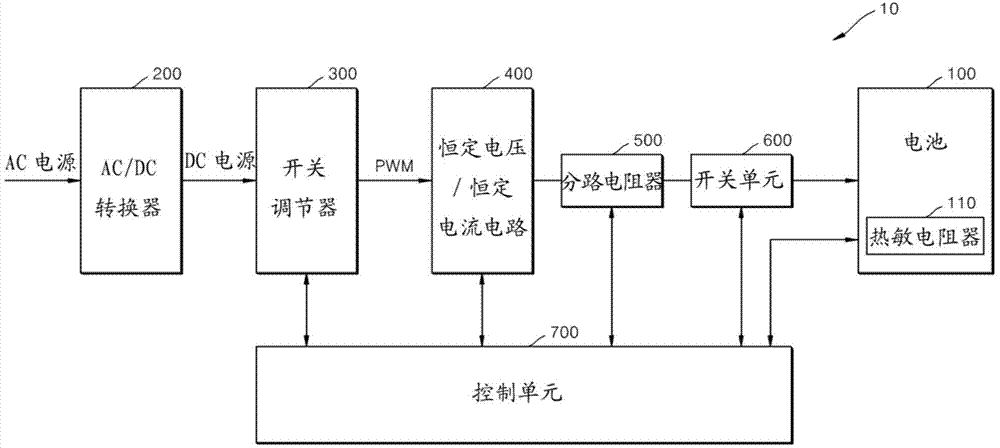
图1是根据本发明的实施例的电池充电装置的框图;1 is a block diagram of a battery charging device according to an embodiment of the present invention;
图2是图1中所示的用于为电池充电的控制单元的详细框图;Figure 2 is a detailed block diagram of the control unit shown in Figure 1 for charging the battery;
图3是显示图1中所示的电池的充电曲线的曲线图;FIG. 3 is a graph showing the charging curve of the battery shown in FIG. 1;
图4是根据本发明的实施例的电池充电方法的流程图;4 is a flowchart of a battery charging method according to an embodiment of the present invention;
图5是在图4中所示的方法中电池充电停止/重新开始操作的流程图;以及FIG. 5 is a flowchart of battery charging stop/restart operation in the method shown in FIG. 4; and
图6是图4中所示的方法的详细流程图。FIG. 6 is a detailed flowchart of the method shown in FIG. 4 .
具体实施方式Detailed ways
现在将详细参考实施例,在附图中示出了实施例的示例,附图中相似的参考标号一般始终指代相似的元件。关于这一点,提供的实施例可以具有不同的形式,而不应当被解释为限制于这里所阐述的描述。因此,通过参考附图如下描述实施例仅仅是为了解释本描述的各个方面。Reference will now be made in detail to the embodiments, examples of which are illustrated in the accompanying drawings, wherein like reference numerals generally refer to like elements throughout. In this regard, the provided embodiments may have different forms and should not be construed as limited to the descriptions set forth herein. Accordingly, the embodiments are merely described as follows, by referring to the figures, to explain aspects of the present description.
图1是根据本发明的实施例的电池充电系统10的框图。FIG. 1 is a block diagram of a
参考图1,电池充电系统10可以包括电池100、交流(AC)/直流(DC)转换器200、开关调节器300、恒定电压/恒定电流电路400、分路(shunt)电阻器500、开关单元600、以及控制单元700。1, a
电池100可以装载到电子设备中,向电子设备提供电力,并且可以用外部电源再充电。电池100可以包括至少一个单电池(battery cell)(未示出)。单电池可以是可再充电的二次电池,如镍镉电池、铅酸电池、镍金属氢化物(NiMH)电池、锂离子电池、锂聚合物电池,等等。The
AC电源将AC电压施加到电池充电系统10。AC电源可以包括用于生成AC电压的典型的电源,该AC电压的大小和方向随着时间流逝而周期性地改变。在一些实施例中,可以提供220V和60Hz的AC电压,并将其用作标准电压。在其它实施例中,AC电源不限于这样的配电电压。The AC power source applies an AC voltage to the
AC/DC转换器200在过滤出AC电压的噪声之后将AC电压转换为DC电压,所述噪声诸如例如来自电磁干扰(EMI)的噪声。为了这个目的,AC/DC转换器200包括AC EMI滤波器(未示出)。EMI是指由电子设备附带(subordinately)生成的电磁波影响该电子设备或其他电子设备的操作的现象。因此,EMI滤波器被用来降低EMI,并且EMI滤波器的示例包括X-电容器、Y-电容器、线滤波器,等等。The AC/
开关调节器(switching regulator)300将从AC/DC转换器200输入的DC电压调节为希望的DC电压。开关调节器300通过维持特定频率的脉冲信号并改变脉冲信号的占空比来改变开关晶体管的导通时间和截止时间之间的比率。开关调节器300还通过使用用于将平滑的输出电压的平均值控制为恒定的脉冲宽度调制(PWM),将输出电压调整为恒定。控制单元700可以通过输出用于改变开关调节器300的占空比的信号来调整输出电压。A switching regulator (switching regulator) 300 regulates the DC voltage input from the AC/
恒定电压/恒定电流电路400通过使用整流电路整流从开关调节器300输出的PWM电压信号,并输出特定的恒定电压信号和恒定电流信号。The constant voltage/constant
分路电阻器500检测从恒定电压/恒定电流电路400输出的电压和电流,并将电压和电流输出到控制单元700。控制单元700将所检测的电压和电流分别与参考电压和参考电流进行比较,并且如果所检测的电压和电流分别被确定为过电流(overcurrent)和过电压(overvoltage),则关断(turn off)开关单元600以停止充电操作。The
开关单元600将从恒定电压/恒定电流电路400输出的恒定电压和恒定电流切换到电池100,并在生成过电压或过电流时被断路以停止充电操作。当充电操作完成时,开关单元600也可以被断路以停止充电操作并保护电池100。The
控制单元700通过控制开关调节器300、恒定电压/恒定电流电路400、分路电阻器500、以及开关单元600的操作来控制电池100的恒定电流充电步骤和恒定电压充电步骤。控制单元700可以通过输出用于改变开关调节器300的占空比的信号来控制输出电压,并且可以通过使用由分路电阻器500检测的电压/电流来控制恒定电压/恒定电流电路400的输出电压/电流。并且,控制单元700可以通过使用由分路电阻器500检测的电压/电流来控制开关单元600的操作。此外,控制单元700可以通过使用包括在电池100中的热敏电阻器110的输出信号来感测电池100的温度,从而进行控制以停止和重新开始电池100的充电操作。在一些实施例中,热敏电阻器110可以形成在电池100外部。The
图2是图1中示出的用于为电池100充电的控制单元700的详细框图。参考图2,控制单元700可以包括恒定电流充电单元710、恒定电压充电单元720、以及用于控制恒定电流充电步骤和恒定电压充电步骤的充电控制单元730。FIG. 2 is a detailed block diagram of the
电池100一般在恒定电流/恒定电压(CC-CV)模式中充电。当充电开始时充电电流被维持恒定,并且当充电电平被增加到特定电平时充电电压被维持恒定。The
在一些实施例中,电池100的充电时间可以通过逐步降低电池100的恒定电流充电时段的充电电流而减少。In some embodiments, the charging time of the
恒定电流充电单元710在恒定电流充电时段逐步降低至少一个充电电流,并且在为每个步骤设定的充电时段内为电池100充电。例如,恒定电流充电单元710可以通过将充电电流和恒定电流充电时段设定为具有最高电流值的第一充电电流(例如,7A)和第一充电时段(例如,10分钟)、小于第一充电电流的第二充电电流(例如,6A)和小于第一充电时段的第二充电时段(例如,4分钟)、以及小于第二充电电流的第三充电电流(例如,5A)和小于第二充电时段的第三充电时段(例如,1分钟),来为电池100充电。虽然在上面的描述中恒定电流充电时段被分成第一充电时段到第三充电时段,但是当前实施例不限于此,并且恒定电流充电时段可以被分成两个、或四个或更多个充电时段。The constant
在恒定电流充电时段中,最初,恒定电流充电单元710执行在第一充电时段内以第一充电电流为电池100充电的第一恒定电流充电步骤。当第一恒定电流充电步骤完成时,恒定电流充电单元710执行在第二充电时段内以第二充电电流为电池100充电的第二恒定电流充电步骤。当第二恒定电流充电步骤完成时,恒定电流充电单元710执行在第三充电时段内以第三充电电流为电池100充电的第三恒定电流充电步骤。当第三恒定电流充电步骤完成时,执行在恒定电压充电时段中的恒定电压充电步骤。In the constant current charging period, initially, the constant
当电池100被完全放电时,执行第一到第三恒定电流充电步骤。然而,在实际情况中,即使在电池100具有剩余容量时也可能为电池100充电。现在将描述当电池100具有剩余容量时的恒定电流充电步骤。When the
恒定电流充电单元710开始第一恒定电流充电步骤,以便在第一充电时段内以第一充电电流为电池100充电。然而,如果电池100的充电电流维持在小于第一充电电流的电流(例如,小于6.9A的电流)达一特定时段(例如,10秒),则充电控制单元730确定电池100具有第一剩余容量并前进到第二恒定电流充电步骤,而不管第一充电电流和第一充电时段。这里,电池100的第一剩余容量是指电池100的容量大于为使用第一充电电流的第一恒定电流充电步骤设定的电池容量值的情况。The constant
然后,恒定电流充电单元710开始第二恒定电流充电步骤,以便在第二充电时段内以第二充电电流为电池100充电。然而,如果电池100的充电电流维持在小于第二充电电流的电流(例如,小于5.9A的电流)达一特定时段(例如,10秒),则充电控制单元730确定电池100具有第二剩余容量并前进到第三恒定电流充电步骤,而不管第二充电电流和第二充电时段。这里,电池100的第二剩余容量是指电池100的容量大于为使用第二充电电流的第二恒定电流充电步骤设定的电池容量值的情况。同时,在第二恒定电流充电步骤中的电池100的第二剩余容量可以大于在第一恒定电流充电步骤中的电池100的第一剩余容量。Then, the constant
如上所述,由于确定电池100具有剩余容量,因此如果电池100被以小于为每个步骤设定的充电电流的电流连续充电达一特定时段,然后不管设定的充电电流和充电时段,而以下一步骤的充电电流和充电时段对电池100充电,则可以减少电池100的充电时间。As described above, since it is determined that the
在恒定电流充电步骤中,充电控制单元730测量电池100的温度,并控制恒定电流充电单元710的充电操作。如果电池100的温度大于预定温度(例如,45°C),则充电控制单元730停止恒定电流充电单元710的充电操作。此后,如果电池100的温度下降到小于预定温度的温度,则重新开始恒定电流充电单元710的充电操作。In the constant current charging step, the charging
在第一恒定电流充电步骤中,如果电池100的温度大于预定温度,则充电控制单元730停止第一恒定电流充电步骤并待用(stand by),然后如果电池100的温度下降到小于预定温度的温度,则在剩余充电时段内再次执行第一恒定电流充电步骤。在第二恒定电流充电步骤中,如果电池100的温度大于预定温度,则充电控制单元730停止第二恒定电流充电步骤并待用,然后如果电池100的温度下降到小于预定温度的温度,则在剩余充电时段内再次执行第二恒定电流充电步骤。在第三恒定电流充电步骤中,如果电池100的温度大于预定温度,则充电控制单元730停止第三恒定电流充电步骤并待用,然后如果电池100的温度下降到小于预定温度的温度,则在剩余充电时段内再次执行第三恒定电流充电步骤。这样,由于上述根据电池100的温度的恒定电流充电停止/重新开始操作可以增加电池100的寿命。In the first constant current charging step, if the temperature of the
当第一到第三恒定电流充电步骤完成时,恒定电压充电单元720在恒定电压充电时段中,在一特定时段(例如,7分钟)内以一特定充电电压(例如,20.5V)为电池100充电。即使在恒定电压充电时段中,充电控制单元730也监控充电电流,并且如果充电电流小于一特定值(例如,1A)则停止电池100的充电操作。When the first to third constant current charging steps are completed, the constant
图3是示出图1中所示的电池100的充电曲线的曲线图。参考图3,在恒定电流充电时段中,通过逐步应用第一到第三充电电流和第一到第三充电时段为电池100充电。这样,可以减少电池100的充电时间。FIG. 3 is a graph showing a charging curve of the
图4是根据本发明实施例的电池充电方法的流程图。电池充电方法可以由控制单元700联合图1中示出的其它元件来执行。在下面的描述中,不再重复以上关于图1到图3提供的描述。FIG. 4 is a flowchart of a battery charging method according to an embodiment of the present invention. The battery charging method may be performed by the
参考图4,控制单元700执行用于逐步降低至少一个充电电流并在为每个步骤设定的充电时段内为电池100充电的恒定电流充电步骤(S410)。Referring to FIG. 4 , the
在完成恒定电流充电步骤之后,控制单元700执行用于在设定的充电时段内以设定的充电电压为电池100充电的恒定电压充电步骤(S420)。After the constant current charging step is completed, the
图5是在图4中示出的方法中电池充电停止/重新开始操作的流程图。在下面的描述中,不再重复以上关于图1到图4提供的描述。FIG. 5 is a flowchart of battery charging stop/restart operations in the method shown in FIG. 4 . In the following description, the description provided above with respect to FIGS. 1 to 4 will not be repeated.
参考图5,控制单元700感测电池100的温度,并且如果电池100的温度大于特定温度,则控制单元700停止电池100的充电操作(S411)。Referring to FIG. 5 , the
之后,如果电池100的温度被感测并下降到小于预定温度的温度,则控制单元700重新开始电池100的充电操作(S412)。After that, if the temperature of the
图6是在图4中示出的方法的详细流程图。在下面的描述中,不再重复以上关于图1到图5提供的描述。FIG. 6 is a detailed flowchart of the method shown in FIG. 4 . In the following description, the description provided above with respect to FIGS. 1 to 5 will not be repeated.
参考图6,在恒定电流充电时段中,控制单元700执行用于在第一充电时段内以第一充电电流为电池100充电的第一恒定电流充电步骤(S601)。Referring to FIG. 6 , in a constant current charging period, the
在第一恒定电流充电步骤期间,控制单元700确定电池100是否被维持在小于第一充电电流的电流达预定时段(S603)。During the first constant current charging step, the
如果确定电池100被维持在第一充电电流,则控制单元700确定第一恒定电流充电步骤是否完成(S605),并且如果第一恒定电流充电步骤没有完成则继续第一恒定电流充电步骤。If it is determined that the
然而,如果电池100被维持在小于第一充电电流的电流达预定时段,则控制单元700确定电池100具有第一剩余容量,并前进到第二恒定电流充电步骤,而不管第一充电时段(S607)。However, if the
如果第一恒定电流充电步骤完成,或者如果电池100被维持在小于第一充电电流的电流达预定时段,则在恒定电流充电时段中,控制单元700执行用于在第二充电时段内以第二充电电流为电池100充电的第二恒定电流充电步骤(S609)。If the first constant current charging step is completed, or if the
在第二恒定电流充电步骤期间,控制单元700确定电池100是否被维持在小于第二充电电流的电流达预定时段(S611)。During the second constant current charging step, the
如果确定电池100被维持在第二充电电流,则控制单元700确定第二恒定电流充电步骤是否完成(S613),并且如果第二恒定电流充电步骤没有完成则继续第二恒定电流充电步骤。If it is determined that the
然而,如果电池100被维持在小于第二充电电流的电流达预定时段,则控制单元700确定电池100具有第二剩余容量,并前进到第三恒定电流充电步骤而不管第二充电时段(S615)。However, if the
如果第二恒定电流充电步骤完成,或者如果电池100被维持在小于第二充电电流的电流达预定时段,则在恒定电流充电时段中,控制单元700执行用于在第三充电时段内以第三充电电流为电池100充电的第三恒定电流充电步骤(S617)。If the second constant current charging step is completed, or if the
然后,控制单元700确定第三恒定电流充电步骤是否完成(S619),并且如果第三恒定电流充电步骤没有完成则继续第三恒定电流充电步骤。Then, the
如果第三恒定电流充电步骤完成,则控制单元700执行用于在设定的充电时段内以设定的充电电压为电池100充电的恒定电压充电步骤(S621)。If the third constant current charging step is completed, the
其后,即使在恒定电压充电时段中,控制单元700也监控充电电流,并且如果充电电流小于预定值(例如,1A)则停止电池100的充电操作。Thereafter, even in the constant voltage charging period, the
如上所述,根据本发明的上述实施例中的一个或多个,通过逐步降低电池的恒定电流充电时段的充电电流,可以减少电池的充电时间。As described above, according to one or more of the above-described embodiments of the present invention, by gradually reducing the charging current of the battery during the constant current charging period, the charging time of the battery can be reduced.
应当理解,在这里描述的实施例应该仅仅被认为是描述意义的,而不是为了限制的目的。对每个实施例内的特征或方面的描述应当典型地被认为可用于其它实施例中的其它类似的特征或方面。It should be understood that the embodiments described herein should be considered in a descriptive sense only and not for purposes of limitation. Descriptions of features or aspects within each embodiment should typically be considered as available for other similar features or aspects in other embodiments.
Claims (11)
Applications Claiming Priority (2)
| Application Number | Priority Date | Filing Date | Title |
|---|---|---|---|
| KR10-2012-0110089 | 2012-10-04 | ||
| KR1020120110089A KR20140044105A (en) | 2012-10-04 | 2012-10-04 | Apparatus and method for charging battery |
Publications (1)
| Publication Number | Publication Date |
|---|---|
| CN103715468A true CN103715468A (en) | 2014-04-09 |
Family
ID=50408238
Family Applications (1)
| Application Number | Title | Priority Date | Filing Date |
|---|---|---|---|
| CN201310165791.9A Pending CN103715468A (en) | 2012-10-04 | 2013-05-08 | Method and system for charging battery |
Country Status (3)
| Country | Link |
|---|---|
| US (1) | US20140097788A1 (en) |
| KR (1) | KR20140044105A (en) |
| CN (1) | CN103715468A (en) |
Cited By (3)
| Publication number | Priority date | Publication date | Assignee | Title |
|---|---|---|---|---|
| CN113273050A (en) * | 2019-03-25 | 2021-08-17 | Oppo广东移动通信有限公司 | Battery charging method, device, equipment and readable storage medium |
| CN113544929A (en) * | 2019-05-06 | 2021-10-22 | Oppo广东移动通信有限公司 | Charging method and charging device |
| CN116901785A (en) * | 2023-09-01 | 2023-10-20 | 福星东联(北京)科技有限公司 | Storage battery charging protection method and system at high temperature |
Families Citing this family (11)
| Publication number | Priority date | Publication date | Assignee | Title |
|---|---|---|---|---|
| CN106253427B (en) * | 2014-01-28 | 2018-05-29 | 广东欧珀移动通信有限公司 | Terminal and its battery charging control device and method |
| CN103762691B (en) | 2014-01-28 | 2015-12-23 | 广东欧珀移动通信有限公司 | Battery charger and cell charge protection control method |
| KR102255130B1 (en) * | 2014-07-16 | 2021-05-24 | 삼성전자주식회사 | Electronic device and method for controlling charging of battery |
| KR102273766B1 (en) * | 2014-08-26 | 2021-07-06 | 삼성에스디아이 주식회사 | Battery charging method and battery pack using the method |
| KR101651991B1 (en) * | 2014-10-30 | 2016-08-30 | 주식회사 엘지화학 | Method and apparatus for fast charging of battery |
| US10345348B2 (en) * | 2014-11-04 | 2019-07-09 | Stmicroelectronics S.R.L. | Detection circuit for an active discharge circuit of an X-capacitor, related active discharge circuit, integrated circuit and method |
| KR102442187B1 (en) * | 2015-04-10 | 2022-09-07 | 삼성에스디아이 주식회사 | battery protection circuit |
| KR102502450B1 (en) | 2015-11-02 | 2023-02-22 | 삼성전자주식회사 | Method and apparatus of charging battery |
| CN111384456A (en) * | 2018-12-28 | 2020-07-07 | 中信国安盟固利动力科技有限公司 | Pre-charging formation method of lithium ion battery and lithium ion battery |
| KR20230024553A (en) | 2021-08-12 | 2023-02-21 | 삼성전자주식회사 | Electronic device for battery charging based on internal temperature |
| CN115189053A (en) * | 2022-06-06 | 2022-10-14 | 超威电源集团有限公司 | Quick charging method for lead-acid storage battery |
Citations (6)
| Publication number | Priority date | Publication date | Assignee | Title |
|---|---|---|---|---|
| CN101071887A (en) * | 2007-05-20 | 2007-11-14 | 张家港市华为电子有限公司 | Lead-acid battery charging method |
| CN101106283A (en) * | 2007-07-25 | 2008-01-16 | 中兴通讯股份有限公司 | Method for charging the battery of a portable handheld device |
| CN101316048A (en) * | 2007-05-29 | 2008-12-03 | 扬州福德电池有限公司 | Intelligent charging control method for Ni-MH battery pack |
| CN101685981A (en) * | 2008-09-28 | 2010-03-31 | 联想(北京)有限公司 | Battery charging method, portable mobile equipment and notebook computer |
| US20110285356A1 (en) * | 2010-05-21 | 2011-11-24 | Nadim Maluf | Method and Circuitry to Adaptively Charge a Battery/Cell |
| CN102377218A (en) * | 2010-08-12 | 2012-03-14 | Fdktwicell株式会社 | Battery charger and battery charging method |
Family Cites Families (4)
| Publication number | Priority date | Publication date | Assignee | Title |
|---|---|---|---|---|
| DE102004060359A1 (en) * | 2004-12-15 | 2006-07-06 | Austriamicrosystems Ag | Charge controller assembly and method for charging a battery |
| US7615968B2 (en) * | 2006-08-04 | 2009-11-10 | Nokia Corporation | Method and device for charging a battery at elevated temperatures |
| JP4966998B2 (en) * | 2009-06-18 | 2012-07-04 | パナソニック株式会社 | Charge control circuit, battery pack, and charging system |
| KR101080597B1 (en) * | 2010-07-20 | 2011-11-04 | 안창덕 | Battery charger |
-
2012
- 2012-10-04 KR KR1020120110089A patent/KR20140044105A/en not_active Ceased
-
2013
- 2013-03-06 US US13/786,864 patent/US20140097788A1/en not_active Abandoned
- 2013-05-08 CN CN201310165791.9A patent/CN103715468A/en active Pending
Patent Citations (6)
| Publication number | Priority date | Publication date | Assignee | Title |
|---|---|---|---|---|
| CN101071887A (en) * | 2007-05-20 | 2007-11-14 | 张家港市华为电子有限公司 | Lead-acid battery charging method |
| CN101316048A (en) * | 2007-05-29 | 2008-12-03 | 扬州福德电池有限公司 | Intelligent charging control method for Ni-MH battery pack |
| CN101106283A (en) * | 2007-07-25 | 2008-01-16 | 中兴通讯股份有限公司 | Method for charging the battery of a portable handheld device |
| CN101685981A (en) * | 2008-09-28 | 2010-03-31 | 联想(北京)有限公司 | Battery charging method, portable mobile equipment and notebook computer |
| US20110285356A1 (en) * | 2010-05-21 | 2011-11-24 | Nadim Maluf | Method and Circuitry to Adaptively Charge a Battery/Cell |
| CN102377218A (en) * | 2010-08-12 | 2012-03-14 | Fdktwicell株式会社 | Battery charger and battery charging method |
Cited By (4)
| Publication number | Priority date | Publication date | Assignee | Title |
|---|---|---|---|---|
| CN113273050A (en) * | 2019-03-25 | 2021-08-17 | Oppo广东移动通信有限公司 | Battery charging method, device, equipment and readable storage medium |
| CN113544929A (en) * | 2019-05-06 | 2021-10-22 | Oppo广东移动通信有限公司 | Charging method and charging device |
| CN113544929B (en) * | 2019-05-06 | 2024-09-06 | Oppo广东移动通信有限公司 | Charging method and charging device |
| CN116901785A (en) * | 2023-09-01 | 2023-10-20 | 福星东联(北京)科技有限公司 | Storage battery charging protection method and system at high temperature |
Also Published As
| Publication number | Publication date |
|---|---|
| KR20140044105A (en) | 2014-04-14 |
| US20140097788A1 (en) | 2014-04-10 |
Similar Documents
| Publication | Publication Date | Title |
|---|---|---|
| CN103715468A (en) | Method and system for charging battery | |
| TWI445277B (en) | A charging system, a charging method, and an information processing device | |
| US11290801B2 (en) | Headset charging system and headset charging method | |
| US9627719B2 (en) | Charging method of battery and battery charging system | |
| CN103036275B (en) | The method and apparatus charged to the battery of mobile device | |
| JP5839210B2 (en) | Battery charging apparatus and method | |
| JP5119307B2 (en) | Battery pack charge control method | |
| JP6231883B2 (en) | Electronic device and electronic device charging system | |
| CN106469931A (en) | Battery system | |
| CN101087032A (en) | Charging circuit, method of controlling operation of charging circuit, and power supply unit | |
| CN103683373A (en) | Cell balancing circuit and cell balancing method using the same | |
| JP2008228408A (en) | Battery pack, charger and charging method | |
| JP2008220149A (en) | Battery management system with controllable adapter output | |
| JP2010259321A (en) | Battery charger, and method for charging battery | |
| CN103430418A (en) | Power storage system and secondary battery control method | |
| JP2015208188A (en) | Power system, portable electronic equipment, and method for supplying power | |
| JP2009225632A (en) | Charging control circuit, battery pack, and charging system | |
| JP6053280B2 (en) | Charging circuit and electronic device using the same | |
| KR101177455B1 (en) | Battery charging apparatus, battery pack, battery charging system and battery charging method | |
| US9172253B2 (en) | Apparatus and method for charging a battery pack | |
| CN114614521A (en) | Method for prolonging service life of lithium battery | |
| US6653814B1 (en) | Method for determining power supply compatibility in a portable device | |
| JP2014036531A (en) | Battery power supply device and electronic apparatus | |
| JP2013017314A (en) | Charging device and method of controlling the same | |
| JPWO2015141003A1 (en) | Secondary battery charging system and secondary battery charging method |
Legal Events
| Date | Code | Title | Description |
|---|---|---|---|
| C06 | Publication | ||
| PB01 | Publication | ||
| EXSB | Decision made by sipo to initiate substantive examination | ||
| SE01 | Entry into force of request for substantive examination | ||
| RJ01 | Rejection of invention patent application after publication |
Application publication date: 20140409 |
|
| RJ01 | Rejection of invention patent application after publication |