CN102197163A - A new additive for inhibiting acid corrosion and method of using the new additive - Google Patents
A new additive for inhibiting acid corrosion and method of using the new additive Download PDFInfo
- Publication number
- CN102197163A CN102197163A CN2009801423551A CN200980142355A CN102197163A CN 102197163 A CN102197163 A CN 102197163A CN 2009801423551 A CN2009801423551 A CN 2009801423551A CN 200980142355 A CN200980142355 A CN 200980142355A CN 102197163 A CN102197163 A CN 102197163A
- Authority
- CN
- China
- Prior art keywords
- corrosion
- oxide
- additive
- glycol
- ethylene oxide
- Prior art date
- Legal status (The legal status is an assumption and is not a legal conclusion. Google has not performed a legal analysis and makes no representation as to the accuracy of the status listed.)
- Granted
Links
Classifications
-
- C—CHEMISTRY; METALLURGY
- C23—COATING METALLIC MATERIAL; COATING MATERIAL WITH METALLIC MATERIAL; CHEMICAL SURFACE TREATMENT; DIFFUSION TREATMENT OF METALLIC MATERIAL; COATING BY VACUUM EVAPORATION, BY SPUTTERING, BY ION IMPLANTATION OR BY CHEMICAL VAPOUR DEPOSITION, IN GENERAL; INHIBITING CORROSION OF METALLIC MATERIAL OR INCRUSTATION IN GENERAL
- C23F—NON-MECHANICAL REMOVAL OF METALLIC MATERIAL FROM SURFACE; INHIBITING CORROSION OF METALLIC MATERIAL OR INCRUSTATION IN GENERAL; MULTI-STEP PROCESSES FOR SURFACE TREATMENT OF METALLIC MATERIAL INVOLVING AT LEAST ONE PROCESS PROVIDED FOR IN CLASS C23 AND AT LEAST ONE PROCESS COVERED BY SUBCLASS C21D OR C22F OR CLASS C25
- C23F15/00—Other methods of preventing corrosion or incrustation
-
- C—CHEMISTRY; METALLURGY
- C10—PETROLEUM, GAS OR COKE INDUSTRIES; TECHNICAL GASES CONTAINING CARBON MONOXIDE; FUELS; LUBRICANTS; PEAT
- C10G—CRACKING HYDROCARBON OILS; PRODUCTION OF LIQUID HYDROCARBON MIXTURES, e.g. BY DESTRUCTIVE HYDROGENATION, OLIGOMERISATION, POLYMERISATION; RECOVERY OF HYDROCARBON OILS FROM OIL-SHALE, OIL-SAND, OR GASES; REFINING MIXTURES MAINLY CONSISTING OF HYDROCARBONS; REFORMING OF NAPHTHA; MINERAL WAXES
- C10G75/00—Inhibiting corrosion or fouling in apparatus for treatment or conversion of hydrocarbon oils, in general
- C10G75/02—Inhibiting corrosion or fouling in apparatus for treatment or conversion of hydrocarbon oils, in general by addition of corrosion inhibitors
-
- C—CHEMISTRY; METALLURGY
- C10—PETROLEUM, GAS OR COKE INDUSTRIES; TECHNICAL GASES CONTAINING CARBON MONOXIDE; FUELS; LUBRICANTS; PEAT
- C10G—CRACKING HYDROCARBON OILS; PRODUCTION OF LIQUID HYDROCARBON MIXTURES, e.g. BY DESTRUCTIVE HYDROGENATION, OLIGOMERISATION, POLYMERISATION; RECOVERY OF HYDROCARBON OILS FROM OIL-SHALE, OIL-SAND, OR GASES; REFINING MIXTURES MAINLY CONSISTING OF HYDROCARBONS; REFORMING OF NAPHTHA; MINERAL WAXES
- C10G7/00—Distillation of hydrocarbon oils
- C10G7/10—Inhibiting corrosion during distillation
-
- C—CHEMISTRY; METALLURGY
- C10—PETROLEUM, GAS OR COKE INDUSTRIES; TECHNICAL GASES CONTAINING CARBON MONOXIDE; FUELS; LUBRICANTS; PEAT
- C10G—CRACKING HYDROCARBON OILS; PRODUCTION OF LIQUID HYDROCARBON MIXTURES, e.g. BY DESTRUCTIVE HYDROGENATION, OLIGOMERISATION, POLYMERISATION; RECOVERY OF HYDROCARBON OILS FROM OIL-SHALE, OIL-SAND, OR GASES; REFINING MIXTURES MAINLY CONSISTING OF HYDROCARBONS; REFORMING OF NAPHTHA; MINERAL WAXES
- C10G9/00—Thermal non-catalytic cracking, in the absence of hydrogen, of hydrocarbon oils
- C10G9/14—Thermal non-catalytic cracking, in the absence of hydrogen, of hydrocarbon oils in pipes or coils with or without auxiliary means, e.g. digesters, soaking drums, expansion means
- C10G9/16—Preventing or removing incrustation
-
- C—CHEMISTRY; METALLURGY
- C10—PETROLEUM, GAS OR COKE INDUSTRIES; TECHNICAL GASES CONTAINING CARBON MONOXIDE; FUELS; LUBRICANTS; PEAT
- C10L—FUELS NOT OTHERWISE PROVIDED FOR; NATURAL GAS; SYNTHETIC NATURAL GAS OBTAINED BY PROCESSES NOT COVERED BY SUBCLASSES C10G OR C10K; LIQUIFIED PETROLEUM GAS; USE OF ADDITIVES TO FUELS OR FIRES; FIRE-LIGHTERS
- C10L1/00—Liquid carbonaceous fuels
- C10L1/10—Liquid carbonaceous fuels containing additives
- C10L1/14—Organic compounds
-
- C—CHEMISTRY; METALLURGY
- C10—PETROLEUM, GAS OR COKE INDUSTRIES; TECHNICAL GASES CONTAINING CARBON MONOXIDE; FUELS; LUBRICANTS; PEAT
- C10L—FUELS NOT OTHERWISE PROVIDED FOR; NATURAL GAS; SYNTHETIC NATURAL GAS OBTAINED BY PROCESSES NOT COVERED BY SUBCLASSES C10G OR C10K; LIQUIFIED PETROLEUM GAS; USE OF ADDITIVES TO FUELS OR FIRES; FIRE-LIGHTERS
- C10L1/00—Liquid carbonaceous fuels
- C10L1/10—Liquid carbonaceous fuels containing additives
- C10L1/14—Organic compounds
- C10L1/26—Organic compounds containing phosphorus
- C10L1/2666—Organic compounds containing phosphorus macromolecular compounds
- C10L1/2683—Organic compounds containing phosphorus macromolecular compounds obtained otherwise than by reactions only involving unsaturated carbon to carbon bonds
-
- C—CHEMISTRY; METALLURGY
- C10—PETROLEUM, GAS OR COKE INDUSTRIES; TECHNICAL GASES CONTAINING CARBON MONOXIDE; FUELS; LUBRICANTS; PEAT
- C10L—FUELS NOT OTHERWISE PROVIDED FOR; NATURAL GAS; SYNTHETIC NATURAL GAS OBTAINED BY PROCESSES NOT COVERED BY SUBCLASSES C10G OR C10K; LIQUIFIED PETROLEUM GAS; USE OF ADDITIVES TO FUELS OR FIRES; FIRE-LIGHTERS
- C10L10/00—Use of additives to fuels or fires for particular purposes
- C10L10/04—Use of additives to fuels or fires for particular purposes for minimising corrosion or incrustation
-
- C—CHEMISTRY; METALLURGY
- C10—PETROLEUM, GAS OR COKE INDUSTRIES; TECHNICAL GASES CONTAINING CARBON MONOXIDE; FUELS; LUBRICANTS; PEAT
- C10G—CRACKING HYDROCARBON OILS; PRODUCTION OF LIQUID HYDROCARBON MIXTURES, e.g. BY DESTRUCTIVE HYDROGENATION, OLIGOMERISATION, POLYMERISATION; RECOVERY OF HYDROCARBON OILS FROM OIL-SHALE, OIL-SAND, OR GASES; REFINING MIXTURES MAINLY CONSISTING OF HYDROCARBONS; REFORMING OF NAPHTHA; MINERAL WAXES
- C10G2300/00—Aspects relating to hydrocarbon processing covered by groups C10G1/00 - C10G99/00
- C10G2300/40—Characteristics of the process deviating from typical ways of processing
- C10G2300/4075—Limiting deterioration of equipment
Landscapes
- Chemical & Material Sciences (AREA)
- Oil, Petroleum & Natural Gas (AREA)
- Engineering & Computer Science (AREA)
- Organic Chemistry (AREA)
- Chemical Kinetics & Catalysis (AREA)
- General Chemical & Material Sciences (AREA)
- Combustion & Propulsion (AREA)
- Thermal Sciences (AREA)
- Physics & Mathematics (AREA)
- Materials Engineering (AREA)
- Mechanical Engineering (AREA)
- Metallurgy (AREA)
- Production Of Liquid Hydrocarbon Mixture For Refining Petroleum (AREA)
- Lubricants (AREA)
- Preventing Corrosion Or Incrustation Of Metals (AREA)
- Addition Polymer Or Copolymer, Post-Treatments, Or Chemical Modifications (AREA)
- Food Preservation Except Freezing, Refrigeration, And Drying (AREA)
- Organic Low-Molecular-Weight Compounds And Preparation Thereof (AREA)
Abstract
Description
技术领域technical field
本发明涉及热的酸性烃中金属腐蚀的抑制领域,特别涉及热的酸性烃中含铁金属腐蚀的抑制领域,尤其当酸性来自环烷酸时,本发明特别涉及一种起缓蚀作用的聚合添加剂及其使用方法。The present invention relates to the field of corrosion inhibition of metals in hot acidic hydrocarbons, and in particular to the field of corrosion inhibition of iron-containing metals in hot acidic hydrocarbons, especially when the acidity comes from naphthenic acid. Additives and methods of use.
背景技术Background technique
在本技术领域中,众所周知,由于环烷酸的腐蚀作用,原油及其各组分会对管道和其它相关设备造成损害。还会对用于蒸馏、萃取、运输和处理原油的设备造成腐蚀。一般而言,当被处理的原油中含有0.2以上的中和值或总酸数(TAN)时会产生环烷酸腐蚀,所述中和值或总酸数(TAN)表现为中和1克样品中含有的所有酸时所需要的氢氧化钾的毫克数。人们也知道,当含有烃类的环烷酸的温度处于约200~400°C(约400~750℉)时,以及当流体的速度很高或液体撞击处理表面如传输线、回流弯管和限流区域时,环烷酸的腐蚀很严重。It is well known in the art that crude oil and its components can cause damage to pipelines and other associated equipment due to the corrosive action of naphthenic acids. It can also cause corrosion to equipment used to distill, extract, transport and process crude oil. In general, naphthenic acid corrosion occurs when the crude being treated contains more than 0.2 neutralization value or total acid number (TAN), which is expressed as the neutralization of 1 g The number of milligrams of potassium hydroxide required for all acids contained in the sample. It is also known that naphthenic acids containing hydrocarbons are at temperatures of about 200 to 400°C (about 400 to 750°F), and when the fluid velocity is high or the liquid impinges on process surfaces such as transfer lines, return elbows, and containment The corrosion of naphthenic acid is very serious when it is in the flow area.
在石油精炼操作中有关原油中的环烷酸成分和含硫化合物的腐蚀问题多年前已为人所知。这种腐蚀在温度为400~790℉的常压或减压蒸馏装置中尤为严重。促成含有环烷酸的原油的腐蚀性的其它因素包括:存在的环烷酸的量、含硫化合物的浓度、装置中流体的速度和波动性以及在装置中的位置(例如,液/气界面)。Corrosion problems with naphthenic acid components and sulfur compounds in crude oils have been known for many years in petroleum refining operations. This corrosion is especially serious in atmospheric or vacuum distillation units with temperatures ranging from 400 to 790°F. Other factors that contribute to the corrosiveness of crude oils containing naphthenic acids include: the amount of naphthenic acid present, the concentration of sulfur-containing compounds, the velocity and volatility of the fluids in the unit, and the location in the unit (e.g., liquid/gas interface ).
通常,环烷酸是指各种原油中存在的某些有机酸的集合。虽然原油中还存在少量的其它有机酸,但应理解的是,原油中的大多数酸为环烷酸,即具有如下所示的饱和环结构的酸:In general, naphthenic acids refer to a collection of certain organic acids present in various crude oils. Although small amounts of other organic acids are also present in crude oil, it is understood that most of the acids in crude oil are naphthenic acids, ie, acids with saturated ring structures as shown below:

环烷酸的分子量可很大范围内变化。不过,大多数来自原油中的环烷酸均发现于瓦斯油和轻润滑油中。当含有这种环烷酸的烃与含铁金属接触时,尤其是在高温时接触,就会产生严重的腐蚀问题。The molecular weight of naphthenic acids can vary widely. However, most naphthenic acids from crude oil are found in gas oils and light lubricating oils. When hydrocarbons containing such naphthenic acids come into contact with ferrous metals, especially at elevated temperatures, serious corrosion problems can arise.
环烷酸腐蚀问题已经困扰了石油精炼工业好多年。这种腐蚀材料主要由沸程为350~650℉的单环或双环羧酸组成。这些酸趋向于集中在原油蒸馏产生的重组分中。因此,有些位置,比如炉管、传输线、分馏塔内部、塔的进料和回流段、热交换器、塔板底部和冷凝器,是受到环烷酸腐蚀的主要位置。另外,当人们对环烷酸含量很高的原油存货进行加工时,在碳钢或铁素体钢炉管和塔底会发生严重的腐蚀。近来在中国、印度、非洲和欧洲等国家和地区,人们已经开始研究怎样控制这种由于原油中存在环烷酸(如产自中国、印度、非洲和欧洲)而在烃加工装置中引起的腐蚀。The problem of naphthenic acid corrosion has plagued the petroleum refining industry for many years. This corrosive material consists mainly of monocyclic or bicyclic carboxylic acids with a boiling range of 350-650°F. These acids tend to concentrate in the heavy fractions produced by distillation of crude oil. Therefore, locations such as furnace tubes, transfer lines, fractionation column interiors, column feed and reflux sections, heat exchangers, tray bottoms, and condensers are prime locations for naphthenic acid corrosion. Additionally, when one processes crude oil stocks that are high in naphthenic acid, severe corrosion can occur in carbon or ferritic steel furnace tubes and tower bottoms. Recently in countries and regions such as China, India, Africa and Europe, people have begun to study how to control the corrosion caused by the presence of naphthenic acid in crude oil (such as produced in China, India, Africa and Europe) in hydrocarbon processing units .
原油是多种烃的混合物,这些烃的分子结构和物理性质分布在很大的范围内。所述多种烃的混合物中可能含有的环烷酸的物理性质也可随着分子量或者含有所述酸的石油的来源的变化而变化。因此,这些酸的特征和行为还没有被人们所完全了解。一种已知的用于对原油中的环烷酸浓度进行量化的方法为石油的氢氧化钾滴定法。用氢氧化钾(一种强碱)滴定石油,滴定终点时,样品中所有的酸均已被中和。这种滴定的计量单位是滴定每克样品所用的氢氧化钾的毫克数,称之为“总酸数”(TAN)或中和值。这两个词在使用时可互相替换。Crude oil is a mixture of various hydrocarbons, the molecular structure and physical properties of these hydrocarbons are distributed in a wide range. The physical properties of the naphthenic acids that may be present in the various hydrocarbon mixtures may also vary as a function of molecular weight or the source of the petroleum containing the acid. Therefore, the characteristics and behavior of these acids are not yet fully understood. One known method for quantifying the concentration of naphthenic acids in crude oil is the potassium hydroxide titration of petroleum. The petroleum is titrated with potassium hydroxide (a strong base), at which point all the acids in the sample have been neutralized. This titration is measured in milligrams of potassium hydroxide per gram of sample and is called the "Total Acid Number" (TAN) or Neutralization Number. These two words are used interchangeably.
通常使用的是TAN这个单位,因为不可能计算出以酸的摩尔数或其它酸含量分析术语表示的石油的酸度。炼油厂用TAN作为预测环烷酸腐蚀的通用指标。例如,许多炼油厂将其原油混合至TAN=0.5,认为此时不会发生环烷酸腐蚀。但是,这种做法在防止环烷酸腐蚀时并不成功。The unit of TAN is commonly used because it is not possible to calculate the acidity of petroleum expressed in moles of acid or other analytical terms for acid content. Refineries use TAN as a general indicator for predicting naphthenic acid corrosion. For example, many refiners blend their crudes to TAN = 0.5, believing that naphthenic acid corrosion will not occur at this point. However, this practice has not been successful in preventing naphthenic acid corrosion.
环烷酸腐蚀受温度的影响很大。通常对这种腐蚀而言可接受的温度范围为205~400℃(400~750℉)。这些酸在205℃以下的腐蚀作用还没有在公开文献中报道过。至于温度上限,数据表明腐蚀速率在600~700℉时达到最大,随后开始变小。Naphthenic acid corrosion is greatly affected by temperature. The generally acceptable temperature range for this type of corrosion is 205 to 400°C (400 to 750°F). The corrosive action of these acids below 205°C has not been reported in the open literature. As for the upper temperature limit, the data show that the corrosion rate reaches a maximum at 600-700°F and then starts to decrease.
所述酸/石油混合物的浓度和速度也是环烷酸腐蚀的重要影响因素。这一点已被受到环烷酸腐蚀的表面的外观所证实。腐蚀的方式可以从被腐蚀表面中的图案和颜色变化来推断。在有些情形下,金属表面均匀地被腐蚀变薄。当浓酸顺着容器壁流下时,也会产生变薄的区域。选择性地,存在环烷酸时,通常在管道中或焊接处会出现坑蚀现象、产生蚀坑。通常,蚀坑外的金属上覆盖有重的、黑色的硫化物膜,而蚀坑的表面为光亮金属或仅覆盖有一层薄的、灰黑色薄膜。此外,腐蚀的另一种模式是冲刷腐蚀,这种模式的特征是具有带锋利边缘的蚀沟。蚀沟的表面很干净,没有看得见的副产物。由于流体流与表面的接触的上升导致大量腐蚀发生,因此金属腐蚀的模式可用体系中的流体流来指示。这样,腐蚀模式提供与已发生的腐蚀方法有关的信息。另外,腐蚀越复杂(即:从均匀腐蚀到坑蚀到冲刷腐蚀,复杂程度渐渐上升),引发腐蚀行为的TAN值越低。The concentration and velocity of the acid/petroleum mixture are also important factors in naphthenic acid corrosion. This was confirmed by the appearance of the surface corroded by naphthenic acid. The pattern of corrosion can be inferred from pattern and color changes in the corroded surface. In some cases, the metal surface is uniformly thinned by corrosion. Thinned areas can also be created when concentrated acid runs down the walls of a container. Optionally, in the presence of naphthenic acid, pitting typically occurs in pipes or welds, producing pits. Usually, the metal outside the etch pit is covered with a heavy, black sulfide film, while the surface of the etch pit is bright metal or only covered with a thin, gray-black film. Furthermore, another mode of corrosion is erosion corrosion, which is characterized by trenches with sharp edges. The surface of the trench is clean with no visible by-products. The pattern of metal corrosion can be indicated by the fluid flow in the system, since the increased contact of the fluid flow with the surface causes substantial corrosion to occur. In this way, corrosion patterns provide information about the corrosion process that has occurred. In addition, the more complex the corrosion (ie: from uniform corrosion to pit corrosion to erosion corrosion, the complexity gradually increases), the lower the TAN value that triggers corrosion behavior.
腐蚀模式提供的信息可以表明环烷酸是否是腐蚀剂,或者腐蚀过程是否是由于硫的侵蚀而引起的。大部分原油中含有硫化氢,从而容易在碳钢上形成硫化铁膜。在实验室或本领域中观察到的所有情形中,金属表面均覆盖有某种膜。在存在硫化氢时,形成的膜总是硫化铁,而在少数无硫化氢情形下进行的试验中,金属被氧化铁覆盖,这是因为此时通常有足够的水或氧气存在,从而在金属片上生成氧化铁薄膜。Corrosion patterns provide information that can indicate whether naphthenic acid is the corrosive agent, or whether the corrosion process is due to sulfur attack. Most crude oil contains hydrogen sulfide, which easily forms an iron sulfide film on carbon steel. In all cases observed in the laboratory or in the field, the metal surface is covered with some kind of film. In the presence of hydrogen sulfide, the film formed was always iron sulfide, whereas in the few experiments carried out in the absence of hydrogen sulfide, the metal was covered with iron oxide because there was usually enough water or oxygen present to An iron oxide film is formed on the chip.
用于测定腐蚀程度的试验也可用于指示在特定的烃处理装置内发生的腐蚀的类型。可将金属片插入系统中。随着金属片被腐蚀,金属片的材料发生损失、导致失重。以mg/cm2为单位记录失重数据。然后,可用测得的失重数据确定腐蚀速率。接着计算腐蚀速率与腐蚀产物的比值(mpy/mg/cm2)。该比值是进一步的腐蚀过程类型指标,如果该比值小于10,则表明腐蚀过程中只有很少的环烷酸腐蚀或没有环烷酸腐蚀。但如果该比值大于10,则表明腐蚀过程中环烷酸起了很大的腐蚀作用。Tests used to determine the extent of corrosion can also be used to indicate the type of corrosion occurring within a particular hydrocarbon processing unit. Metal sheets can be inserted into the system. As the sheet metal corrodes, material loss occurs in the sheet metal, resulting in weightlessness. Weight loss data are reported in mg/ cm2 . The measured weight loss data can then be used to determine the corrosion rate. The ratio of corrosion rate to corrosion product (mpy/mg/cm 2 ) was then calculated. This ratio is a further indicator of the type of corrosion process, and if the ratio is less than 10, it indicates little or no naphthenic acid corrosion in the corrosion process. However, if the ratio is greater than 10, it indicates that naphthenic acid played a significant role in the corrosion process.
硫化腐蚀和环烷酸腐蚀之间的区别很重要,因为不同腐蚀剂造成的腐蚀需要不同的修补方法。通常,含硫化合物在高温下导致的腐蚀的延迟受到烃处理装置中使用的合金中铬含量上升的影响。合金中的铬含量可能处在1.25~12%之间,或者更高。但不幸的是,处在这种范围的铬含量对环烷酸腐蚀的抑制作用很小或者没有。为了补偿硫和环烷酸的腐蚀作用,必须使用含有至少2.5%的钼的奥氏体不锈钢。已知腐蚀问题会随着温度的升高(这对于石油精炼和裂解过程而言是必要的)及石油的酸度而加剧,所述石油的酸度主要是由原油中固有的高含量水平的环烷酸引起的。环烷酸在175~420℃范围内是腐蚀性的。当温度更高时,环烷酸为气态,而当温度更低时,腐蚀速率并不严重。当存在含硫化合物时,环烷酸的腐蚀性会变得异常严重,所述含硫化合物例如硫化氢、硫醇、单质硫、硫化物、二硫化物、聚硫化物和苯硫酚。含硫化合物引起的腐蚀在温度低至450℉时变得显著。人们已经确定,硫醇热分解催化产生硫化氢是导致硫腐蚀的原因。The distinction between sulfide corrosion and naphthenic acid corrosion is important because corrosion caused by different etchants requires different repair methods. Typically, the delay in corrosion induced by sulfur-containing compounds at high temperatures is affected by the increased chromium content in alloys used in hydrocarbon processing units. The chromium content in the alloy may be between 1.25 and 12%, or higher. Unfortunately, chromium levels in this range have little or no inhibitory effect on naphthenic acid corrosion. To compensate for the corrosive effects of sulfur and naphthenic acid, austenitic stainless steels containing at least 2.5% molybdenum must be used. Corrosion problems are known to be exacerbated by increasing temperature (which is necessary for petroleum refining and cracking processes) and the acidity of the petroleum, which is mainly caused by the inherently high levels of naphthenic caused by acid. Naphthenic acid is corrosive in the range of 175~420℃. At higher temperatures, naphthenic acids are gaseous, while at lower temperatures, the corrosion rate is not severe. The corrosivity of naphthenic acids becomes especially severe in the presence of sulfur-containing compounds, such as hydrogen sulfide, mercaptans, elemental sulfur, sulfides, disulfides, polysulfides, and thiophenols. Corrosion caused by sulfur compounds becomes significant at temperatures as low as 450°F. It has been established that the catalytic generation of hydrogen sulfide by thermal decomposition of mercaptans is responsible for sulfur corrosion.
原油中的硫(这些硫在较高的温度下会产生硫化氢)还加剧了腐蚀问题。这种类型的腐蚀发生的主要温度范围是约175~400℃,特别是约205~400℃。The sulfur in crude oil, which produces hydrogen sulfide at higher temperatures, also exacerbates corrosion problems. The main temperature range in which this type of corrosion occurs is about 175-400°C, especially about 205-400°C.
各种控制环烷酸腐蚀的方法包括:中和和/或除去被处理原油中的环烷酸;将低酸数石油与腐蚀性的高酸数石油混合、以降低整体的中和值;以及在管道和相关设备的结构中使用相对较贵的耐腐蚀合金。这些方法的缺点是:它们需要额外的处理过程和/或增加很多花费以对原油进行处理。作为选择,市场上也可以买到各种胺和酰胺基缓蚀剂,但这些缓蚀剂在环烷酸腐蚀的高温环境下通常是无效的。环烷酸腐蚀与常规的结垢问题很容易区分,所述结垢问题例如用石油基原料进行的乙烯裂解和其它烃处理反应中可能发生的焦沉积和聚合物沉积。环烷酸腐蚀在与腐蚀性流体接触的金属上形成特征性沟槽。与之对照,焦沉积一般由于渗碳、侵蚀和金属尘而具有腐蚀作用。Various methods of controlling naphthenic acid corrosion include: neutralizing and/or removing naphthenic acid from processed crude oils; blending low acid number oils with aggressive high acid number oils to reduce the overall neutralization value; and Relatively expensive corrosion-resistant alloys are used in the construction of piping and associated equipment. The disadvantage of these methods is that they require additional processing and/or add a lot of expense to process the crude oil. As an alternative, various amine and amide based corrosion inhibitors are commercially available, but these are generally ineffective in the high temperature environment of naphthenic acid corrosion. Naphthenic acid corrosion is easily distinguished from conventional fouling problems such as coke and polymer deposits that can occur in ethylene cracking and other hydrocarbon processing reactions with petroleum-based feedstocks. Naphthenic acid corrosion forms characteristic grooves in metals in contact with corrosive fluids. In contrast, coke deposits are generally corrosive due to carburization, erosion, and metal dust.
由于这些方法都不能完全令人满意,工业上采用的解决办法是用耐腐蚀金属来建造蒸馏装置或暴露于环烷酸/硫腐蚀下的部分,所述耐腐蚀金属如优质不锈钢,或者铬和钼含量更高的合金。耐腐蚀合金制成的装置非常昂贵,比如304和306不锈钢的价格是碳钢的好几倍。但是,在不是上述耐腐蚀材料建造的装置中,需要进行针对这种类型的腐蚀的缓蚀处理。现有技术中用于环烷酸环境的缓蚀剂包括氮基成膜型缓蚀剂。但这些缓蚀剂在高温下的环烷酸石油环境中相对无效。Since none of these methods is entirely satisfactory, the solution adopted by industry has been to construct distillation units or parts exposed to naphthenic acid/sulfur corrosion from corrosion-resistant metals such as high-quality stainless steel, or chromium and Alloys with higher molybdenum content. Devices made of corrosion-resistant alloys are very expensive, such as 304 and 306 stainless steel, which are several times more expensive than carbon steel. However, in installations constructed of materials other than those described above, corrosion inhibition against this type of corrosion is required. Corrosion inhibitors used in naphthenic acid environments in the prior art include nitrogen-based film-forming corrosion inhibitors. But these corrosion inhibitors are relatively ineffective in naphthenic oil environments at high temperatures.
虽然在各种不同领域中已知有各种不同的缓蚀剂,但任何特定缓蚀剂的功效和作用均取决于使用该缓蚀剂的特定环境。因此,在一类环境下的功效和作用常常并不表示在另一类环境下也有同样的功效和作用。这使得大量的缓蚀剂被开发出来,并根据被处理介质、易被腐蚀的表面的类型、所遇腐蚀的类型、以及所述介质暴露于其中的环境等将开发出来的缓蚀剂应用于各种不同的系统。例如,美国专利3,909,447公开了用于相对低温的含氧水系统中的防腐蚀处理的一些缓蚀剂,所述含氧水系统例如水驱、冷却塔、钻井泥浆、空气钻井和自动散热系统。该专利还指出,许多能够在无水系统和/或无氧系统中起作用的缓蚀剂在含水和/或氧的系统中表现均很差。反之亦然。在含氧水系统中已表现出防腐蚀功效的缓蚀剂不一定在烃中也会表现出这种功效。此外,在相对低温环境下能起防腐蚀作用的缓蚀剂不一定高温下也能起防腐蚀作用。实际上,那些在相对低温下非常有效的缓蚀剂常常在较高温度(例如石油精炼中为175~400℃)时变得无效。在这种温度下,腐蚀问题非常麻烦、难以对付。因此,美国专利3,909,447没有明示或暗示其缓蚀剂在无水系统如烃流体、特别是热的烃流体中也能起作用。该美国专利3,909,447中也没有任何地方表明其所公开的化合物可以在这种情形下起到抑制环烷酸腐蚀的作用。Although a variety of different corrosion inhibitors are known in various fields, the efficacy and effect of any particular corrosion inhibitor depends on the particular environment in which it is used. Therefore, efficacy and effect in one type of environment often does not imply the same efficacy and effect in another type of environment. This has led to the development of a large number of corrosion inhibitors, which are used in various applications depending on the medium being treated, the type of surface susceptible to corrosion, the type of corrosion encountered, and the environment to which the medium is exposed. various systems. For example, US Patent No. 3,909,447 discloses certain corrosion inhibitors for corrosion prevention treatment in relatively low temperature oxygenated water systems such as water flooding, cooling towers, drilling muds, air drilling and automatic cooling systems. The patent also states that many corrosion inhibitors that work in anhydrous and/or anaerobic systems perform poorly in aqueous and/or oxygen containing systems. vice versa. Corrosion inhibitors that have shown anti-corrosion efficacy in oxygenated water systems do not necessarily exhibit such efficacy in hydrocarbons. In addition, the corrosion inhibitors that can prevent corrosion in a relatively low temperature environment may not be able to prevent corrosion in a high temperature environment. In fact, those corrosion inhibitors that are very effective at relatively low temperatures often become ineffective at higher temperatures (eg, 175-400°C in petroleum refining). At this temperature, corrosion problems are very troublesome and difficult to deal with. Thus, US Patent No. 3,909,447 does not state or imply that its corrosion inhibitors will also work in anhydrous systems such as hydrocarbon fluids, especially hot hydrocarbon fluids. There is also nowhere in this US Patent 3,909,447 that the compounds disclosed therein act to inhibit naphthenic acid corrosion in this situation.
当处理某些原油时,常压和减压蒸馏系统会受到环烷酸腐蚀。当下常用的处理过程在使用温度下是热反应性的。当使用磷基缓蚀剂时,会导致产生金属磷酸盐表面膜。该表面膜对环烷酸腐蚀的抵抗能力大于钢基体。这些缓蚀剂相对不稳定,且表现出非常窄的镏程(distillation range)。根据温度范围,将这些缓蚀剂从高于或低于腐蚀点注入塔中。聚硫化物缓蚀剂分解成较高分子量和较低分子量的聚硫化物(也许还包括单质硫和硫醇)的复杂混合物。因此,其挥发性和所能提供的保护作用都难以预测。Atmospheric and vacuum distillation systems are subject to naphthenic acid corrosion when processing certain crude oils. Processes commonly used today are thermally reactive at service temperatures. When phosphorus-based corrosion inhibitors are used, a metal phosphate surface film can result. The surface film is more resistant to naphthenic acid corrosion than the steel substrate. These corrosion inhibitors are relatively unstable and exhibit a very narrow distillation range. Depending on the temperature range, these corrosion inhibitors are injected into the tower from above or below the corrosion point. Polysulfide corrosion inhibitors break down into complex mixtures of higher and lower molecular weight polysulfides (and perhaps elemental sulfur and mercaptans). Therefore, its volatility and the protection it can provide are difficult to predict.
现有技术文献中已描述了炼油厂中由环烷酸腐蚀导致的问题,以及解决这些问题的技术方案,下面列出了这些现有技术文献的典型代表:Problems caused by naphthenic acid corrosion in refineries and technical solutions to these problems have been described in prior art documents, typical representatives of these prior art documents are listed below:
Koszman申请的美国专利3,531,394,该专利公开了在石油蒸汽炉的裂解区使用含磷和/或含铋化合物,以抑制炉管壁上的生焦。US Patent 3,531,394 to Koszman discloses the use of phosphorus and/or bismuth-containing compounds in the cracking zone of a petroleum steam furnace to inhibit coking on the furnace tube walls.
Shell等人申请的美国专利4,024,049公开了用作炼油厂防垢剂的一些化合物。但该文献中只披露了将这些化合物作为防污材料使用,而迄今为止还没有人披露过将这种类型的材料以本申请中所公开的方式作为缓蚀剂使用。但该参考文献指出,在进料中加入硫代磷酸酯(例如本发明中所使用的那些硫代磷酸酯),由于酯材料的非挥发性,它们不会被蒸发到塔中保护塔、周围管道或者其它处理设备。专利文献报道了,加入所述硫代磷酸酯阻止蒸馏塔、泵送管道和相关设备环烷酸腐蚀的发生。US Patent 4,024,049 to Shell et al. discloses compounds useful as antiscalants in refineries. However, this document only discloses the use of these compounds as antifouling materials, and so far no one has disclosed the use of this type of materials as corrosion inhibitors in the manner disclosed in this application. However, the reference states that when phosphorothioates such as those used in this invention are added to the feed, they are not vaporized into the tower to protect the tower, surroundings, due to the non-volatility of the ester material. piping or other processing equipment. The patent literature reports that the addition of said phosphorothioate prevents the occurrence of naphthenic acid corrosion of distillation towers, pumping piping and related equipment.
Weinland的美国专利4,105,540公开了一些作为乙烯裂解炉中的防污剂的含磷化合物。所述含磷化合物为具有至少一个与胺络合的氢基团的膦酸单酯、膦酸二酯和亚磷酸化合物。US Patent 4,105,540 to Weinland discloses certain phosphorus-containing compounds as antifouling agents in ethylene cracking furnaces. The phosphorus-containing compounds are phosphonic acid monoesters, phosphonic acid diesters and phosphorous acid compounds having at least one hydrogen group complexed with an amine.
美国专利4,443,609公开了一些用作酸腐蚀的缓蚀剂的四氢噻唑磷酸和四氢噻唑磷酸酯。这些缓蚀剂可以通过一些2,5-二氢噻唑与二烷基磷酸反应制得。虽然这些四氢噻唑磷酸或磷酸酯具有好的缓蚀性能,但它们在高温下会分解、释放出令人讨厌的有毒物质。US Patent No. 4,443,609 discloses certain thiazole phosphates and thiazole phosphates as corrosion inhibitors for acid corrosion. These corrosion inhibitors can be prepared by reacting some 2,5-dihydrothiazoles with dialkyl phosphoric acids. Although these tetrahydrothiazole phosphoric acid or phosphoric acid esters have good corrosion inhibition properties, they decompose at high temperatures, releasing nasty toxic substances.
并且人们已经知道,含磷化合物会损害原油处理(例如固定床加氢器和氢化裂解装置)中使用的多种催化剂的功能。原油处理器常常会遇到这样的困境,但如果不使用亚磷酸稳定剂,烃内的铁会积聚到10~20ppm并损害催化剂的功能。虽然市面上能买到不含磷的缓蚀剂,但其功效要低于含磷缓蚀剂。And phosphorus-containing compounds are known to impair the function of many catalysts used in crude oil processing, such as fixed-bed hydrotreaters and hydrocrackers. Crude oil processors often face this dilemma, but without the use of phosphorous acid stabilizers, iron in the hydrocarbons can accumulate to 10-20ppm and impair catalyst function. Although phosphorus-free corrosion inhibitors are available on the market, their efficacy is lower than that of phosphorus-containing corrosion inhibitors.
Kaplan等人的美国专利4,542,253公开了利用石油给料来减少乙烯裂解炉中的污垢和腐蚀的改进方法,所述石油给料包括至少10ppm的水溶性、胺络合的磷酸盐、亚磷酸盐、硫代磷酸酯或硫代亚磷酸酯化合物,其中所述胺的分配系数大于1.0(在水和烃溶剂中的溶解度相同)。U.S. Patent 4,542,253 to Kaplan et al. discloses an improved process for reducing fouling and corrosion in ethylene cracking furnaces utilizing petroleum feedstocks comprising at least 10 ppm of water-soluble, amine-complexed phosphates, phosphites, Phosphorothioate or phosphorothioate compounds wherein the amine has a partition coefficient greater than 1.0 (equal solubility in water and hydrocarbon solvents).
Kaplan等人的美国专利4,842,716公开了一种用于减少污垢和腐蚀的改进方法,该方法使用至少10ppm的含磷防污剂和成膜缓蚀剂的结合。所述含磷防污剂为磷酸、亚磷酸、硫代磷酸或硫代亚磷酸的酯类化合物。所述成膜缓蚀剂为咪唑啉化合物。US Patent 4,842,716 to Kaplan et al. discloses an improved method for reducing fouling and corrosion using at least 10 ppm of a combination of phosphorus-containing antifouling agent and film-forming corrosion inhibitor. The phosphorus-containing antifouling agent is phosphoric acid, phosphorous acid, thiophosphoric acid or an ester compound of thiophosphorous acid. The film-forming corrosion inhibitor is an imidazoline compound.
Zetmeisl等人的美国专利4,941,994公开了一种环烷酸腐蚀的缓蚀剂,该缓蚀剂包括与可选噻唑啉结合的亚磷酸二烷基(或三烷基)酯。US Patent 4,941,994 to Zetmeisl et al. discloses a corrosion inhibitor for naphthenic acid corrosion comprising a dialkyl (or trialkyl) phosphite in combination with an optional thiazoline.
上述美国专利4,941,994报道了含磷环烷酸腐蚀缓蚀剂领域的一项重大改进。根据该专利公开的内容,在热的酸性液态烃中发生的金属腐蚀可通过添加一定量的带有可选噻唑啉的亚磷酸二烷基和/或三烷基酯缓蚀剂来加以抑制。The aforementioned US Patent 4,941,994 reports a major improvement in the field of phosphorous naphthenic acid corrosion inhibitors. According to the disclosure of this patent, the corrosion of metals that occurs in hot acidic liquid hydrocarbons can be inhibited by adding a certain amount of di- and/or tri-alkyl phosphite corrosion inhibitors with optional thiazolines.
虽然该美国专利4,941,994中公开的方法提供了大大超出现有技术的重大进步,但是,人们还是希望能够在提高缓蚀剂的缓蚀能力的同时,降低含磷化合物的用量,因为这些含磷化合物会损害原油炼制过程中使用的各种催化剂的功效,同时人们还希望用更低的成本或更容易获得的起始材料来制备所述缓蚀剂。Although the method disclosed in this U.S. Patent 4,941,994 provides a significant improvement over the prior art, it is still desirable to increase the corrosion inhibition ability of the corrosion inhibitor while reducing the amount of phosphorus-containing compounds, because these phosphorus-containing compounds It will impair the effectiveness of various catalysts used in the crude oil refining process, and it is also desired to prepare the corrosion inhibitor with lower cost or more easily available starting materials.
另一种防止环烷酸腐蚀的方法是采用一种化学试剂,以在原油与烃处理装置的设备之间形成障碍物。该障碍物或膜可以防止腐蚀剂到达金属表面,且该障碍物或膜通常为疏水材料。Gustavsen等人在1989年4月17~21日举行的世界腐蚀大会(NACE Corrosion 89 meeting)上发表的第449号论文中详细描述了一种好的成膜剂必须达到的条件。美国专利5,252,254公开了这样的一种成膜剂,磺化烷基取代的苯酚,该成膜剂可以有效地抑制环烷酸腐蚀。Another way to prevent naphthenic acid corrosion is to use a chemical agent that creates a barrier between the crude oil and the equipment in the hydrocarbon processing unit. The barrier or film prevents the corrosive agent from reaching the metal surface and is typically a hydrophobic material. Gustavsen et al. described in detail the conditions that a good film former must meet in paper No. 449 published at the NACE Corrosion 89 meeting held on April 17-21, 1989. US Patent No. 5,252,254 discloses such a film former, sulfonated alkyl-substituted phenol, which can effectively inhibit naphthenic acid corrosion.
Petersen等人于1993年1月26日授权的美国专利5,182,013公开了另一种抑制原油的环烷酸腐蚀的方法,包括向原油中引入有效量的有机聚硫化物。本文将引用该美国专利5,182,013所公开的内容。这是缓蚀性含硫化合物种类的另一个例子。上文中已经详述了硫化作用是一种腐蚀来源。虽然其作用机理尚不清楚,但人们已经确定,少量的硫虽然可以作为抗腐蚀剂有效使用,但当其浓度很高时,它就会变成一种腐蚀剂。US Patent 5,182,013 issued January 26, 1993 to Petersen et al. discloses another method of inhibiting naphthenic acid corrosion of crude oil, comprising introducing an effective amount of an organic polysulfide into the crude oil. The disclosure of that US Patent 5,182,013 is incorporated herein by reference. This is another example of the class of corrosion-inhibiting sulfur-containing compounds. Sulfidation has been detailed above as a source of corrosion. Although its mechanism of action is unknown, it has been established that sulfur, while effective as an anti-corrosion agent in small amounts, becomes a corrosive agent when its concentration is high.
虽然不含硫的含磷化合物可以形成抗腐蚀的有效障碍物,但是向含磷的过程流中加入硫化物能生成由既含磷又含硫的物质构成的薄膜。这样可以提高抗腐蚀性,同时又可以降低磷的需求。这个发明涉及在磷基材料被用于腐蚀控制时,将硫化物酌量添加到过程流中,以强化这种交互作用。While sulfur-free phosphorus-containing compounds can form effective barriers against corrosion, the addition of sulfides to phosphorus-containing process streams can create films composed of both phosphorus- and sulfur-containing species. This increases corrosion resistance while reducing phosphorus requirements. This invention involves the addition of sulfides to process streams to enhance this interaction when phosphorus-based materials are used for corrosion control.
硫代磷酸酯(Babaian-Kibala, 美国专利5,552,085)、有机亚磷酸酯(Zetlmeisl, 美国专利4,941,994)、和磷酸/亚磷酸酯(Babaian-Kibala, 美国专利5,630,964)已被公开为可在富烃相中抑制环烷酸腐蚀。但是,它们的高油溶性会招致由含磷化合物引起的蒸馏副产物污染风险。Phosphorothioates (Babaian-Kibala, U.S. Patent 5,552,085), organophosphites (Zetlmeisl, U.S. Patent 4,941,994), and phosphoric acid/phosphites (Babaian-Kibala, U.S. Patent 5,630,964) have been disclosed as Inhibits naphthenic acid corrosion. However, their high oil solubility introduces a risk of contamination by distillation by-products caused by phosphorus-containing compounds.
磷酸已主要应用于水相中,用于在钢材表面形成一层磷酸盐/铁复合膜,起抗腐蚀作用或其它作用(Coslett, 英国专利8,667, 美国专利3,132,975, 3,460,989 和 1,872,091)。磷酸在高温无水环境(石油)下作为防污剂的应用也有文献报道(美国专利3,145,886)。Phosphoric acid has been used primarily in the aqueous phase to form a phosphate/iron composite film on steel surfaces for corrosion resistance or other purposes (Coslett, UK Patent 8,667, US Patents 3,132,975, 3,460,989 and 1,872,091). The use of phosphoric acid as an antifouling agent in high temperature anhydrous environments (petroleum) has also been reported (US Patent 3,145,886).
本领域中还有进一步的需要,那就是开发出低成本的、能够降低酸性原油腐蚀性的可选方案。这对于炼制某些来源(例如源自欧洲、中国、或非洲、以及印度)的酸性原油时是非常必要的,这些来源的原油的炼制毛利很低,而可用性很高。本发明满足这种需求。There is a further need in the art to develop low cost alternatives for reducing the corrosivity of sour crude oils. This is necessary when refining sour crudes from sources such as those originating in Europe, China, or Africa, and India, where refining margins are low and availability is high. The present invention fulfills this need.
综上所述,需要提供一种替换的组合物,该组合物能够提供有效的高温环烷酸腐蚀缓蚀作用,同时所述组合物将克服现有技术中组合物的缺点。In summary, there is a need to provide an alternative composition capable of providing effective high temperature naphthenic acid corrosion inhibition while at the same time overcoming the disadvantages of prior art compositions.
发明内容Contents of the invention
本发明的目的和优点Objects and advantages of the invention
因此,本发明的一个目的是提供一种可替代的化学组合物,该组合物可以有效地抑制高温环烷酸腐蚀。It is therefore an object of the present invention to provide an alternative chemical composition which is effective in inhibiting high temperature naphthenic acid corrosion.
本发明的另一个目的是提供一种含有化学组合物的添加剂,该添加剂具有低磷含量、高热稳定性和低酸度。Another object of the present invention is to provide an additive comprising a chemical composition having a low phosphorus content, high thermal stability and low acidity.
通过本发明的详细描述,本发明的其它目的和优点会非常明显。Other objects and advantages of the invention will be apparent from the detailed description of the invention.
发明内容Contents of the invention
本发明包括一种新型、有效抑制酸腐蚀的聚硫代磷酸酯添加剂,所述添加剂可通过一种含有单羟基、双羟基或聚羟基聚合物与五硫化二磷反应制得,所述聚合物优选为端羟基聚合物,更优选为包括端羟基聚异丁烯或端羟基的聚丁烯。所述聚硫代磷酸酯进一步与氧化物反应,生成聚硫代磷酸酯的环氧乙烷衍生物。所述氧化物可选自环氧乙烷、氧化丁烯、环氧丙烷及其它氧化物,优选环氧乙烷。本发明对抑制蒸馏装置、蒸馏塔、塔板、填料和泵送管道的金属表面酸腐蚀十分有效。The present invention comprises a novel polythiophosphate additive which effectively inhibits acid corrosion, said additive being prepared by reacting a polymer containing mono-, di- or poly-hydroxyl groups with phosphorus pentasulfide, said polymer being preferably terminal The hydroxyl polymer, more preferably comprises hydroxyl terminated polyisobutylene or hydroxyl terminated polybutene. The polythiophosphate is further reacted with an oxide to generate ethylene oxide derivatives of the polythiophosphate. The oxide may be selected from ethylene oxide, butylene oxide, propylene oxide and other oxides, preferably ethylene oxide. The invention is very effective for suppressing the acid corrosion of the metal surface of the distillation device, distillation tower, tray, packing and pumping pipeline.
具体实施方式Detailed ways
本发明采用以下反应化合物作为抑制高温环烷酸腐蚀的缓蚀剂。这些作为有效缓蚀剂的反应化合物可通过一种聚合物与五硫化二磷反应制得,最终生成硫代磷酸酯,当使用的聚合物为聚异丁烯时,生成聚异丁烯硫代磷酸酯。所述聚合物具有单羟基、双羟基或聚羟基,优选为端羟基聚合物,更优选为端羟基聚异丁烯(PIB)化合物或端羟基聚丁烯化合物。The present invention uses the following reactive compounds as corrosion inhibitors for inhibiting high-temperature naphthenic acid corrosion. These reactive compounds, which are effective corrosion inhibitors, can be prepared by reacting a polymer with phosphorus pentasulfide, resulting in phosphorothioate or, when the polymer used is polyisobutylene, polyisobutylene phosphorothioate. The polymer has a single hydroxyl group, a double hydroxyl group or a polyhydroxyl group, preferably a hydroxyl-terminated polymer, more preferably a hydroxyl-terminated polyisobutylene (PIB) compound or a hydroxyl-terminated polybutene compound.
缓蚀能力可通过聚异丁烯硫代磷酸酯与氧化物进一步反应生成一种化合物而获得,该化合物优选为聚硫代磷酸酯的环氧乙烷衍生物,其中所述氧化物选自环氧乙烷、氧化丁烯和环氧丙烷。The corrosion inhibition ability can be obtained by further reacting polyisobutylene phosphorothioate with an oxide to form a compound, which is preferably an ethylene oxide derivative of polythiophosphate, wherein the oxide is selected from ethylene oxide alkanes, butylene oxides and propylene oxides.
常规的聚异丁烯和所谓高反应活性聚异丁烯(例如见文献EP-B-0565285)都适合用于本发明。“高反应性”在这里是指该聚异丁烯中,至少50%、优选70%或更多的末端烯烃双键为亚乙烯基形式,例如BASF公司出售的商品名为GLISSOPAL的产品。Both conventional polyisobutenes and so-called highly reactive polyisobutenes (see, for example, document EP-B-0565285) are suitable for use in the present invention. "High reactivity" here means that in the polyisobutene, at least 50%, preferably 70% or more, of the terminal olefinic double bonds are in the form of vinylidene, such as the product sold by BASF under the trade name GLISSOPAL.
一方面,用于制备端羟基聚合物的聚合物碳原子数为40~2000。In one aspect, the number of carbon atoms in the polymer used to prepare the hydroxyl-terminated polymer is 40-2000.
另一方面,上面提到的聚合物的分子量为500~10000,优选800~1600,更优选950~1300。On the other hand, the above-mentioned polymers have a molecular weight of 500-10000, preferably 800-1600, more preferably 950-1300.
五氧化二硫与端羟基聚合物的摩尔比优选为0.01~4:1。The molar ratio of disulfur pentoxide to hydroxyl-terminated polymer is preferably 0.01˜4:1.
五氧化二硫与端羟基聚异丁烯酯的摩尔比优选0.01~4:1。聚异丁烯可以是常规的或高反应活性的聚异丁烯。The molar ratio of disulfur pentoxide to hydroxyl-terminated polyisobutylene is preferably 0.01-4:1. The polyisobutene can be conventional or highly reactive polyisobutene.
本发明的发明人惊奇的发现:硫代磷酸酯基聚合物,具有低磷含量、低酸性和高热稳定性以及不结垢特性,可有效控制环烷酸腐蚀。The inventors of the present invention have surprisingly found that phosphorothioate-based polymers, having low phosphorus content, low acidity and high thermal stability and non-fouling properties, are effective in controlling naphthenic acid corrosion.
本发明的新型添加剂可按照四个基本步骤制得。The novel additives of the present invention can be prepared in four basic steps.
1. 高反应活性聚异丁烯(PIB)与马来酸酐反应制备聚异丁烯丁二酸酐(PIBSA)。1. Highly reactive polyisobutylene (PIB) reacts with maleic anhydride to prepare polyisobutylene succinic anhydride (PIBSA).
2. 第1步的反应产物进一步与乙二醇反应生成含有羟端基的聚合物,即端羟基的聚异丁烯丁二酸酯。2. The reaction product of step 1 is further reacted with ethylene glycol to generate a polymer containing hydroxyl end groups, that is, polyisobutylene succinate with hydroxyl end groups.
根据聚异丁烯丁二酸酐与乙二醇的摩尔比,会生成单酯或双酯,该单酯或双酯分别形成单端羟基聚合物和双端羟基聚合物。这两种化合物被发现在本发明中都是有用的。Depending on the molar ratio of polyisobutylene succinic anhydride to ethylene glycol, monoesters or diesters are produced, which form single-end hydroxyl polymers and double-end hydroxyl polymers, respectively. Both of these compounds were found to be useful in the present invention.
可用其它二醇或多元醇或聚合醇替代乙二醇。如可用的化合物有丙二醇、丁烷二醇、丁二醇、丁烯二醇、甘油、三羟甲基丙烷、三甘醇、季戊四醇、聚乙二醇、聚丙二醇或其它端羟基化合物(这是众多获得端羟基聚合物的途径之一)。Ethylene glycol may be replaced by other diols or polyols or polymeric alcohols. Examples of usable compounds are propylene glycol, butanediol, butylene glycol, butylene glycol, glycerol, trimethylolpropane, triethylene glycol, pentaerythritol, polyethylene glycol, polypropylene glycol, or other hydroxyl-terminated compounds (which are One of the many ways to obtain hydroxyl-terminated polymers).
3. 第2步的反应产物进一步与五硫化二磷反应。该反应可通过不同端羟基聚合物的摩尔比来实现,例如,步骤2的聚异丁烯丁二酸酯与五硫化二磷的摩尔比。反应步骤3完成后获得的反应产物是聚异丁烯丁二酸酯的硫代磷酸酯(该反应化合物在本发明中可有效抑制环烷酸腐蚀)。3. The reaction product of step 2 is further reacted with phosphorus pentasulfide. This reaction can be achieved with different molar ratios of hydroxyl-terminated polymers, for example, the molar ratio of polyisobutylene succinate to phosphorus pentasulfide in step 2. The reaction product obtained after completion of reaction step 3 is phosphorothioate of polyisobutylene succinate (this reaction compound can effectively inhibit naphthenic acid corrosion in the present invention).
4.第3步完成后,得到的反应产物进一步与氧化物(如环氧乙烷)反应。其它常用的氧化物如氧化丁烯或环氧丙烷也可用于替代环氧乙烷。反应第4步完成后,得到的反应产物是环氧乙烷处理的聚异丁烯丁二酸酯的衍生物。第4步的反应产物在本发明中也可有效抑制环烷酸腐蚀。4. After step 3 is completed, the obtained reaction product is further reacted with an oxide (such as ethylene oxide). Other commonly used oxides such as butylene oxide or propylene oxide can also be used in place of ethylene oxide. After completion of the fourth step of the reaction, the resulting reaction product is an ethylene oxide-treated derivative of polyisobutylene succinate. The reaction product of step 4 can also effectively inhibit naphthenic acid corrosion in the present invention.
应该指出的是:参考相应的实施例1、2、4和5能更好地理解上述反应步骤。It should be noted that the above reaction steps can be better understood with reference to the corresponding Examples 1, 2, 4 and 5.
上述反应步骤仅描述了本发明化合物制备方法的一个示例。这些步骤中所述的端羟基聚合物也可以通过其它合适的方法得到。The above reaction steps describe only one example of a method for preparing the compounds of the present invention. The hydroxyl-terminated polymers described in these steps can also be obtained by other suitable methods.
本发明涉及一种抑制处理装置金属表面腐蚀的方法,该处理装置用于处理例如含有环烷酸的原油和其组分等烃类。本发明以详细说明了当使用下面方法步骤处理在处理装置(如蒸馏装置)中的原油时,进行该方法步骤的最简单的形式。可将相同的步骤用于不同的处理装置,如泵送管道、热交换器和其它处理装置。The present invention relates to a method of inhibiting corrosion of metal surfaces in processing equipment for processing hydrocarbons such as naphthenic acid containing crude oil and components thereof. The present invention specifies the simplest form of carrying out the following process steps when using the following process steps to treat crude oil in a processing unit such as a distillation unit. The same procedure can be used for different processing devices such as pumping lines, heat exchangers and other processing devices.
这些方法步骤说明如下:These method steps are described below:
a) 加热含有环烷酸的烃,使其部分蒸发;a) Heating hydrocarbons containing naphthenic acids to partially vaporize them;
b)使烃蒸汽上升至蒸馏塔;b) raising the hydrocarbon vapors to the distillation column;
c)浓缩通过所述蒸馏塔的一部分烃蒸汽,以产生馏分;c) concentrating a portion of the hydrocarbon vapors passed through said distillation column to produce distillates;
d)向馏分中加入本发明所需的添加剂聚硫代磷酸酯或其氧化衍生物或二者的组合,添加浓度为1~2000ppm,优选2~200ppm;d) Adding the additive polythiophosphate required by the present invention or its oxidized derivatives or a combination thereof to the distillate at a concentration of 1-2000ppm, preferably 2-200ppm;
e)允许含有反应步骤d)的馏分与蒸馏装置的整个金属表面充分接触,在所述表面上形成保护膜,从而使所述表面具有抗腐蚀性。e) allowing the fraction containing reaction step d) to come into sufficient contact with the entire metal surface of the distillation apparatus, forming a protective film on said surface and thus rendering said surface corrosion-resistant.
当来自被蒸馏的烃流体的浓缩蒸汽与金属设备在高于200℃,优选400℃时接触时,可以对蒸馏塔、塔板、泵送管道和有关设备进行处理,以防止环烷酸腐蚀。通常将所述添加剂加入浓缩的馏分中,随着浓缩的馏分向下流过所述塔、流入蒸馏器的过程,让该馏分与蒸馏塔、填料、塔板、泵送管道和有关设备的金属表面接触。也可将所述馏分收集为产品。未即时反应的本发明缓蚀剂存在于收集到的最终产品中。Distillation columns, trays, pumping piping and associated equipment may be treated to prevent naphthenic acid corrosion when the condensed vapor from the hydrocarbon fluid being distilled contacts metal equipment above 200°C, preferably 400°C. The additives are usually added to the concentrated fraction, allowing the fraction to contact the metal surfaces of the distillation column, packing, trays, pumping piping and associated equipment as the concentrated fraction flows down through the column and into the still touch. The fractions can also be collected as product. The corrosion inhibitor of the present invention that does not react immediately is present in the collected final product.
在商业应用时,可将本发明添加剂加到馏分回收器中,以控制抽出塔板和塔填料内的腐蚀,而第二次注入的添加剂则被加入到位于所述抽出塔板之下的喷淋油回收器中,以保护位于所述抽出塔板下方的塔填料和塔板。可以指出,在哪里加入本发明的添加剂并不重要,只要将添加剂加入到馏分中就行,所述馏分随后回流到蒸馏器中,或与蒸馏塔、塔板、泵送管道和有关设备的金属内表面接触。In commercial applications, the additive of the present invention may be added to the fraction recoverer to control corrosion in the extraction tray and column packing, while a second injection of the additive is added to the injection nozzle located below the extraction tray. In the oil recovery device, to protect the column packing and trays located below the extraction tray. It can be pointed out that it is not important where the additive of the present invention is added, as long as the additive is added to the fraction which is then refluxed into the still, or in contact with the metal of the distillation column, trays, pumping piping and associated equipment. surface contact.
下面借助实施例和表格解释了使用本发明添加剂化合物用于抑制高温环烷酸腐蚀的方法。The method for inhibiting high-temperature naphthenic acid corrosion using the additive compounds according to the invention is explained below with the aid of examples and tables.
与现有技术相比,可见本发明用于缓蚀的添加剂化合物具有以下区别技术特征。Compared with the prior art, it can be seen that the additive compound for corrosion inhibition of the present invention has the following distinguishing technical features.
1)经过大量试验,本发明的发明人惊奇发现,发明人使用的添加剂化合物是聚合物添加剂,该添加剂在高温缓蚀中非常有效,见表1~7的试验结果。现有技术没有明示或暗示在环烷酸缓蚀、硫缓蚀或其它缓蚀中,使用聚硫代磷酸酯或其氧化处理衍生物添加剂。1) After a lot of tests, the inventors of the present invention surprisingly found that the additive compound used by the inventors is a polymer additive, which is very effective in high temperature corrosion inhibition, see the test results in Tables 1-7. The prior art does not express or imply the use of polythiophosphate or its oxidized derivative additives in naphthenic acid corrosion inhibition, sulfur corrosion inhibition or other corrosion inhibition.
2)本发明添加剂化合物的另一个区别技术特征是:与现有技术添加剂相比,由于本发明添加剂化合物的聚合性质,使其具有更高热稳定性。由于本发明添加剂化合物的高热稳定性,使其在高温环烷酸缓蚀或高温硫缓蚀中非常有效。2) Another distinguishing technical feature of the additive compound of the present invention is that compared with the prior art additive, the additive compound of the present invention has higher thermal stability due to its polymeric nature. Due to the high thermal stability of the additive compound of the present invention, it is very effective in high temperature naphthenic acid corrosion inhibition or high temperature sulfur corrosion inhibition.
3)本发明添加剂化合物的另一个区别技术特征是:与现有技术添加剂相比,本发明添加剂具有非常低酸度,如现有技术磷酸酯添加剂具有非常高的酸性。已知现有技术磷酸酯添加剂,即使在较低的温度,也有分解形成磷酸的趋势,该磷酸将随着烃流流动,并与蒸馏塔填料等设备的金属表面发生反应,生成固态磷酸铁或固态硫化铁。这些固体会塞住设备的孔,从而导致蒸馏塔结垢。3) Another distinguishing technical feature of the additive compound of the present invention is: compared with the additives of the prior art, the additive of the present invention has very low acidity, such as the phosphate ester additive of the prior art has very high acidity. It is known that prior art phosphate ester additives, even at lower temperatures, have a tendency to decompose to form phosphoric acid which will flow with the hydrocarbon stream and react with metal surfaces of equipment such as distillation column packing to form solid iron phosphate or Solid iron sulfide. These solids can plug the pores of the equipment, causing fouling of the distillation column.
本发明添加剂化合物没有这种缺陷。The additive compounds of the present invention do not have this drawback.
4)本发明的另一个区别技术特征是本发明添加剂是具有低磷含量的有效的缓蚀剂。4) Another distinguishing technical feature of the present invention is that the additive of the present invention is an effective corrosion inhibitor with low phosphorus content.
实施例1 聚异丁烯丁二酸酯的合成(聚异丁烯酯— 端羟基聚合物)Example 1 Synthesis of polyisobutylene succinate (polyisobutylene ester-hydroxyl-terminated polymer)
步骤1:聚异丁烯丁二酸酐Step 1: Polyisobutylene Succinic Anhydride
过程process
1. 将高反应活性聚异丁烯(HRPIB)装入一个带有氮气进口、搅拌器和温度计的洁净、干燥的四口烧瓶中。1. Charge highly reactive polyisobutylene (HRPIB) into a clean, dry four-neck flask with a nitrogen inlet, a stirrer, and a thermometer.
2. 升温至125℃。2. Heat up to 125°C.
3. 开始鼓入氮气,并持续10分钟。3. Start bubbling nitrogen gas and continue for 10 minutes.
4.减小氮气鼓入速度,带走样品中的水分。4. Reduce the blowing speed of nitrogen gas to take away the moisture in the sample.
5. 将马来酸酐加入到烧瓶中。5. Add maleic anhydride to the flask.
6. 加入马来酸酐后,升温至170℃,在氮气鼓入的条件下,保温反应2小时;6. After adding maleic anhydride, raise the temperature to 170°C, and keep it warm for 2 hours under the condition of nitrogen gas bubbling;
7. 完成步骤6后,继续升温至205℃,升温速率为3小时从170℃升温至205℃,即5℃/25min。7. After completing step 6, continue to heat up to 205°C at a heating rate of 3 hours from 170°C to 205°C, that is, 5°C/25min.
8. 将反应混合物维持在205℃反应6小时。8. Maintain the reaction mixture at 205°C for 6 hours.
9. 205℃下反应6小时后,将反应混合物降温至170℃。9. After reacting at 205°C for 6 hours, cool the reaction mixture to 170°C.
10. 缓慢抽真空,并升温至205℃。10. Slowly evacuate and heat up to 205°C.
11. 205℃时继续抽真空(真空度低于10mmHg)。2小时后取样1用于估计酸值和游离的马来酸,3小时后取样2用于估计酸值和游离的马来酸。11. Continue vacuuming at 205°C (vacuum degree below 10mmHg). Sample 1 was taken after 2 hours for the estimation of acid number and free maleic acid, and sample 2 was taken after 3 hours for the estimation of acid number and free maleic acid.
产物的酸值位于所需范围70~120KOH/g。The acid number of the product is in the desired range of 70-120 KOH/g.
步骤2:聚异丁烯酯Step 2: Polyisobutylene
过程process
1.用甲苯将步骤1得到的反应产物稀释至浓度为85%,将其与单乙二醇一起置于一个配备有氮气进口、搅拌棒和温度计的洁净、干燥的四口烧瓶中。1. Dilute the reaction product obtained in step 1 with toluene to a concentration of 85%, and place it together with monoethylene glycol in a clean, dry four-necked flask equipped with a nitrogen inlet, a stirring bar, and a thermometer.
2. 在通入氮气的条件下,升温至190℃(去除甲苯和水以达到该温度)。2. Under the condition of blowing nitrogen, raise the temperature to 190°C (remove toluene and water to reach this temperature).
3. 在190℃保持反应直到得到所需的酸值(所需的酸值应优选小于5 mg KOH/g)。3. Keep the reaction at 190°C until the desired acid value is obtained (the desired acid value should preferably be less than 5 mg KOH/g).
实施例2Example 2
聚硫代磷酸酯(本发明化合物)的合成可通过实施例1中步骤2的产物(各种摩尔比)与五硫化二磷(各种磷含量)反应得到。Polythiophosphates (compounds of the present invention) can be synthesized by reacting the products of step 2 in Example 1 (various molar ratios) with phosphorus pentasulfide (various phosphorus contents).
制备聚硫代磷酸酯的一般过程:General procedure for preparing polythiophosphates:
1. 将聚异丁烯酯装入一个带有氮气进口、搅拌器和温度计的洁净、干燥的四口烧瓶中,并在氮气鼓入的条件下,升温至90℃。1. Put the polyisobutylene ester into a clean and dry four-neck flask with nitrogen inlet, stirrer and thermometer, and raise the temperature to 90°C under the condition of nitrogen gas bubbling.
2. 90℃时,一次性缓慢加入五硫化二磷。2. At 90°C, add phosphorus pentasulfide slowly at one time.
3. 加入五硫化二磷后升温至120℃。3. After adding phosphorus pentasulfide, heat up to 120°C.
4. 120℃保温反应1小时。4. Incubate at 120°C for 1 hour.
5. 120℃反应1小时后,缓慢升温至140℃,保持反应1小时。接着冷却至90℃。5. After reacting at 120°C for 1 hour, slowly raise the temperature to 140°C and keep the reaction for 1 hour. This is followed by cooling to 90°C.
6. 测定的样品酸值为45.61mgKOH/g。6. The measured acid value of the sample is 45.61mgKOH/g.
7. 用甲苯对反应混合物进行1:1稀释。7. Dilute the reaction mixture 1:1 with toluene.
8. 升温至回流点,并开始鼓入氮气,持续6小时。8. Raise temperature to reflux point and start bubbling nitrogen for 6 hours.
9. 将反应混合物冷却,并在60℃用硅藻土(hyflow)进行过滤。9. The reaction mixture was cooled and filtered through hyflow at 60 °C.
10. 用溶剂将反应混合物稀释至50%(质量百分比)。10. Dilute the reaction mixture to 50% (mass percent) with solvent.
(2-A)聚异丁烯酯与五硫化二磷的反应(最终100%活性产物的磷含量为3.156%)(2-A) Reaction of polyisobutylene ester with phosphorus pentasulfide (final 100% active product has a phosphorus content of 3.156%)
(2-B)(最终100%活性产物的磷含量为4.47%)(2-B) (Phosphorus content of final 100% active product is 4.47%)
酸值在64~73mgKOH/g之间(通常情况下,酸值变化范围为40~190mg/g KOH)。The acid value is between 64~73mgKOH/g (usually, the acid value range is 40~190mg/g KOH).
(2-C)(最终100%活性产物的磷含量为7.715%)(2-C) (The final 100% active product has a phosphorus content of 7.715%)
酸值为109.65 mgKOH/g(通常情况下,酸值变化范围为90~190 mg KOH/g)。The acid value is 109.65 mgKOH/g (usually, the acid value ranges from 90 to 190 mg KOH/g).
实施例3Example 3
高温环烷酸腐蚀试验High temperature naphthenic acid corrosion test
在本实施例中,将含有50%实施例1至3中制得的组合物添加剂的各种不同用量进行缓蚀率试验,测试其用于含有环烷酸的热中性油中的钢片上时的缓蚀率。用失重钢片、浸泡试验来评估本发明化合物在290℃条件下对环烷酸腐蚀的抑制作用。用不同剂量如300、400和600ppm的本发明化合物制成50%活性溶液进行试验。In this example, various dosages of the composition additives prepared in Examples 1 to 3 containing 50% were tested for corrosion inhibition rate, and tested for use on steel sheets in heat-neutral oil containing naphthenic acid corrosion inhibition rate. The inhibitory effect of the compound of the present invention on naphthenic acid corrosion under the condition of 290° C. was evaluated by weight-loss steel sheet and immersion test. A 50% active solution was prepared with different doses of the compound of the present invention such as 300, 400 and 600 ppm for testing.
不用任何添加剂,在钢片上进行静态试验。该试验提供空白试验读数。Static tests were carried out on steel sheets without any additives. This test provides a blank test reading.
反应装置包括一个1升的四口圆底烧瓶,该烧瓶上配有水冷凝器、氮气吹扫仪管、有温度计和搅拌棒的温度计袋。将600g(大约750ml)石蜡烃油(D-130-高于2900C时的组分)装入所述烧瓶中。开始以100cm3/min的流速吹入氮气,并升温至100℃,将该温度保持30分钟。The reaction apparatus comprises a 1-liter four-neck round-bottomed flask equipped with a water condenser, a nitrogen purging instrument tube, a thermometer bag with a thermometer and a stirring rod. 600 g (approximately 750 ml) of paraffinic oil (D-130-composition above 290 ° C) was charged to the flask. Nitrogen gas was blown in at a flow rate of 100 cm 3 /min, and the temperature was raised to 100° C., and the temperature was maintained for 30 minutes.
将实施例2中的添加剂化合物(2-A)加到反应混合物中。将反应混合物在100℃的温度下搅拌15分钟。移去搅拌器后,使反应混合物升温至290℃。将预先已称重、尺寸为76mm×13mm×1.6mm的失重碳钢片CS 1010浸入混合物中。将这种状态保持1~1.5小时之后,向反应混合物中加入31g环烷酸(商业级环烷酸,酸值为230mg KOH/g)。收集1g反应混合物样品用于测定酸值,其酸值为11.7 mg KOH/g。将这种状态保持4小时后,移去金属片,冲洗掉剩下的油,去除金属表面的剩余腐蚀物。最后将所述金属片称重,以密耳/年(mil/year)为单位计算腐蚀速率。相似的测试方法用于实施例2的添加剂化合物(2-B)和(2-C),实施例4中的现有技术添加剂以及实施例2中(2-B)和(2-C)乙烯-氧化物-处理的添加剂。测定结果如表1~5-A所示。对实施例2中的乙烯-氧化物-处理添加剂进行了类似研究,其中钝化时间4小时,测试时间24小时。测定结果如表5-B所示。The additive compound (2-A) in Example 2 was added to the reaction mixture. The reaction mixture was stirred at a temperature of 100° C. for 15 minutes. After removing the stirrer, the reaction mixture was allowed to warm to 290°C. The pre-weighed, weightless carbon steel sheet CS 1010 with a size of 76mm×13mm×1.6mm was immersed in the mixture. After maintaining this state for 1-1.5 hours, 31 g of naphthenic acid (commercial grade naphthenic acid, acid number 230 mg KOH/g) was added to the reaction mixture. A 1 g sample of the reaction mixture was collected for acid value determination, which was 11.7 mg KOH/g. After maintaining this state for 4 hours, remove the metal piece, rinse off the remaining oil and remove the remaining corrosion on the metal surface. Finally the sheet metal was weighed and the corrosion rate was calculated in mil/year. Similar test methods were used for the additive compounds (2-B) and (2-C) in Example 2, the prior art additive in Example 4, and (2-B) and (2-C) ethylene in Example 2 - Oxide-treatment additives. The measurement results are shown in Tables 1 to 5-A. A similar study was carried out on the ethylene-oxide-treatment additive in Example 2 with a passivation time of 4 hours and a test time of 24 hours. The measurement results are shown in Table 5-B.
缓蚀率的计算Calculation of corrosion inhibition rate
下面讲述计算缓蚀率的方法。计算中,由添加剂化合物提供的缓蚀率通过比较由于添加剂引起的失重和空白试验片(没有任何添加剂)的失重来计算。The method for calculating the corrosion inhibition rate is described below. In the calculation, the corrosion inhibition rate provided by the additive compound was calculated by comparing the weight loss due to the additive with that of a blank test piece (without any additive).
以MPY(密耳/年)为单位,按下式计算腐蚀速率:In MPY (mils per year), the corrosion rate is calculated as follows:


计算数值填入下表的合适列中。Fill in the calculated values in the appropriate columns of the table below.
试验结果列于表1、表2和表3中。The test results are listed in Table 1, Table 2 and Table 3.
表1:磷含量P=3.145%(持续测试4小时)Table 1: Phosphorus content P=3.145% (continuous test for 4 hours)
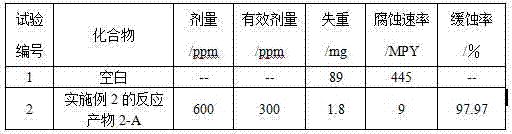
表2:磷含量P=4.47%(持续测试4小时)Table 2: Phosphorus content P=4.47% (continuous test for 4 hours)
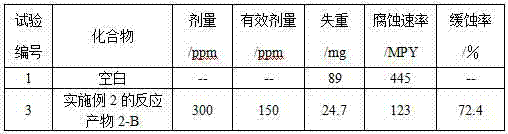
分别对实施例2中的具有不同磷含量的最终100%活性产物进行试验,结果列于表1~3。可以看出,磷含量为3.145%,缓蚀剂化合物有效剂量300ppm时的缓蚀率为97.97%,当磷含量升高至7.75%,缓蚀剂的有效剂量减至200ppm和150ppm时,所述缓蚀率分别为99.6%和95.84%。The final 100% active products with different phosphorus contents in Example 2 were tested respectively, and the results are listed in Tables 1-3. It can be seen that the phosphorus content is 3.145%, and the corrosion inhibition rate is 97.97% when the effective dosage of the corrosion inhibitor compound is 300ppm. When the phosphorus content increases to 7.75%, and the effective dosage of the corrosion inhibitor is reduced to 200ppm and 150ppm, the The corrosion inhibition rates are 99.6% and 95.84%, respectively.
表3:磷含量P=7.75%(持续测试4小时)Table 3: Phosphorus content P=7.75% (continuous test for 4 hours)
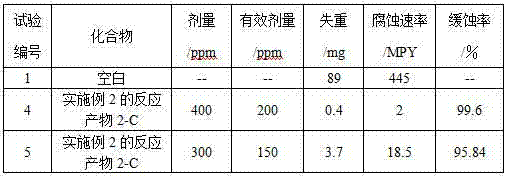
本发明化合物(未经环氧乙烷处理的聚硫代磷酸酯)对环烷酸缓蚀的影响。持续测试4小时。Effect of compounds of the invention (polythiophosphates not treated with ethylene oxide) on naphthenic acid corrosion inhibition. Continue testing for 4 hours.

使用表1,表3和表4中的不同有效剂量的添加剂的结果在上表中进行了比较。可清楚看出:在相同的有效剂量150ppm时,与现有技术化合物相比,本发明化合物(实施例2,上表中试验编号5,未经环氧乙烷处理的聚硫代磷酸酯)具有较低的总磷含量11.625ppm,可提供较高的缓蚀率95.84%,而现有技术化合物(辛基硫代磷酸酯—非聚合物添加剂,上表中的试验编号8)具有较高的总磷含量14.625ppm,提供的缓蚀率为89.88%。The results using different effective doses of the additives in Table 1, Table 3 and Table 4 are compared in the above table. It can be clearly seen that: at the same effective dose of 150ppm, compared with the prior art compound, the compound of the present invention (embodiment 2, test number 5 in the table above, polythiophosphate without ethylene oxide treatment) With a lower total phosphorus content of 11.625ppm, it can provide a higher corrosion inhibition rate of 95.84%, while the prior art compound (octyl thiophosphate - non-polymer additive, test number 8 in the above table) has a higher The total phosphorus content is 14.625ppm, and the corrosion inhibition rate provided is 89.88%.
将上述的本发明添加剂(上表中实施例2,试验编号2—聚硫代磷酸酯)的有效剂量翻倍至300ppm,仍然可观察到较高的缓蚀率97.97%,以及较低的总磷含量9.435ppm。Doubling the effective dose of the above-mentioned additive of the present invention (Example 2 in the above table, test number 2—polythiophosphate) to 300ppm, still can observe a higher corrosion inhibition rate of 97.97%, and a lower total Phosphorus content 9.435ppm.
本领域的技术人员已熟知:使用较高磷含量化合物作为缓蚀剂,会影响用于处理原油的各种催化剂的功能,例如固定床加氢净化和加氢裂化装置。这些高磷含量化合物也能使催化剂中毒。非聚合物添加剂的另一个缺点是高温时易分解,释放挥发性物质,污染其它烃流。It is well known to those skilled in the art that the use of higher phosphorus content compounds as corrosion inhibitors can affect the function of various catalysts used to process crude oil, such as fixed bed hydrocleaning and hydrocracking units. These high phosphorus content compounds can also poison catalysts. Another disadvantage of non-polymeric additives is that they tend to decompose at high temperatures, releasing volatile substances that contaminate other hydrocarbon streams.
上述讨论清晰展示了与现有技术化合物相比,使用本发明化合物进行环烷酸缓蚀的优点。The above discussion clearly demonstrates the advantages of using the compounds of the present invention for naphthenic acid corrosion inhibition compared to prior art compounds.
实施例4Example 4
现有技术抗腐蚀化合物辛基硫代磷酸酯(非聚硫代磷酸酯)的合成(美国专利5,552,085)Synthesis of prior art corrosion resistant compound octyl phosphorothioate (non-polyphosphorothioate) (US Patent 5,552,085)
干净的四口烧瓶配备有搅拌棒、氮气进口和冷凝器。称取N-正辛醇400g放入烧瓶中。称取五硫化二磷187g,分批加入到烧瓶中。接着将四口烧瓶升温至110℃。加入五硫化二磷后会产生硫化氢。1小时后,将烧瓶中的反应混合物升温至140℃且保温1小时。待样品冷却后用5微米过滤器过滤。将样品加热至90℃。吹入氮气5小时。生成的样品即化合物B2,通过分析发现其酸值为110~130mg/KOH。该化合物用于测试其环烷酸腐蚀效率。用实施例3中给定的任何一个方法计算缓蚀率,且试验结果列于表4中。A clean four-neck flask was equipped with a stir bar, nitrogen inlet and condenser. Weigh 400 g of N-n-octanol and put it into a flask. Weigh 187g of phosphorus pentasulfide and add it to the flask in batches. Next, the temperature of the four-necked flask was raised to 110°C. Hydrogen sulfide is produced when phosphorus pentasulfide is added. After 1 hour, the reaction mixture in the flask was warmed to 140°C and held there for 1 hour. Filter the sample with a 5 micron filter after cooling. The sample was heated to 90°C. Nitrogen was blown in for 5 hours. The produced sample is compound B2, and its acid value is found to be 110-130 mg/KOH through analysis. This compound was tested for its naphthenic acid corrosion efficiency. Calculate the corrosion inhibition rate with any method given in Example 3, and the test results are listed in Table 4.
表4 辛基硫代磷酸酯(非聚硫代磷酸酯)作为现有技术抗腐蚀化合物。磷含量P=9.75%(持续测试4小时)Table 4 Octyl phosphorothioate (non-polyphosphorothioate) as a prior art anticorrosion compound. Phosphorus content P=9.75% (continuous test for 4 hours)
实施例5Example 5
环氧乙烷衍生物的合成Synthesis of Ethylene Oxide Derivatives
聚异丁烯丁二酸酯的聚硫代磷酸酯的环氧乙烷衍生物可按以下过程制备:Ethylene oxide derivatives of polythiophosphates of polyisobutylene succinates can be prepared by the following process:
过程process
将添加剂化合物,即实施例2的反应产物2-C,转移至高压釜中,在60~70℃加入环氧乙烷,直到高压釜的压力保持恒定。反应混合物维持在此温度下2小时。冷却反应混合物,并向高压釜中通入氮气。生成的添加剂,即是用于环烷酸缓蚀的添加剂环氧乙烷处理的聚异丁烯丁二酸酯的硫代磷酸酯。使用实施例2的反应产物2-B也可完成类似的合成。下表中给出了2-B,2-C和环氧乙烷的质量百分比。The additive compound, ie the reaction product 2-C of Example 2, was transferred to an autoclave, and ethylene oxide was added at 60-70° C. until the pressure of the autoclave remained constant. The reaction mixture was maintained at this temperature for 2 hours. The reaction mixture was cooled and nitrogen was bubbled into the autoclave. The resulting additive is phosphorothioate of polyisobutylene succinate treated with ethylene oxide as an additive for naphthenic acid corrosion inhibition. A similar synthesis can also be accomplished using the reaction product 2-B of Example 2. The mass percentages of 2-B, 2-C and ethylene oxide are given in the table below.
实施例(5-A)实施例2的反应产物2-C的环氧乙烷衍生物The oxirane derivative of the reaction product 2-C of embodiment (5-A) embodiment 2
实施例(5-B)实施例2的反应产物2-B的环氧乙烷衍生物The ethylene oxide derivative of the reaction product 2-B of embodiment (5-B) embodiment 2
可以指出:用于上述合成过程的反应产物2-C的酸值为87.2mgKOH/gm,其中环氧乙烷反应产物的酸值为16mg/gKOH。相似地,用于上述合成过程的反应产物2-B的酸值为56.8mgKOH/gm,其中相应的环氧乙烷反应产物的酸值为3.98mgKOH/g。反应完成后,这两种合成实施例均达到了终产物的理想低酸度值。It can be noted that the acid value of the reaction product 2-C used in the above synthesis process is 87.2 mgKOH/gm, wherein the acid value of the ethylene oxide reaction product is 16 mg/gKOH. Similarly, the acid value of the reaction product 2-B used in the above synthesis process was 56.8 mgKOH/gm, wherein the acid value of the corresponding ethylene oxide reaction product was 3.98 mgKOH/g. After the reaction was complete, both synthesis examples achieved the ideal low acidity value of the final product.
这些合成添加剂产品的缓蚀试验可通过实施例3(4小时和24小时测试时间)给定的过程实现,测试结果分别列于表5-A和5-B中。The corrosion inhibition test of these synthetic additive products can be realized through the procedures given in Example 3 (4-hour and 24-hour test time), and the test results are listed in Tables 5-A and 5-B, respectively.
表5-A 持续测试4小时的缓蚀研究(静态)Table 5-A Corrosion inhibition study for 4 hours continuous test (static)

注释:由表5-A中结果可知,与表4中现有技术化合物相比,聚硫代磷酸酯的环氧乙烷衍生物也起到很好的酸缓蚀效果。Note: From the results in Table 5-A, it can be seen that compared with the prior art compounds in Table 4, the ethylene oxide derivatives of polythiophosphates also have a good acid corrosion inhibition effect.
表5-B 持续测试24小时的缓蚀研究(静态)Table 5-B Corrosion Inhibition Study of Continuous Test for 24 Hours (Static)

本发明化合物—聚硫代磷酸酯(经环氧乙烷处理和未经环氧乙烷处理)对环烷酸缓蚀的比较—持续测试24小时Comparison of naphthenic acid corrosion inhibition by the compound of the present invention—polythiophosphate (treated with and without ethylene oxide treatment)—continuous test for 24 hours

注释:可按照实施例2和实施例5中给出的步骤制备本发明化合物,即聚硫代磷酸酯。括号中的值表示本发明化合物的磷含量的百分比。Note: The compounds of the present invention, ie polythiophosphates, can be prepared following the procedure given in Example 2 and Example 5. The values in parentheses indicate the percentage of phosphorus content of the compounds of the invention.
上表中以总磷含量和缓蚀率的形式比较了实施例5中有效剂量的使用结果。In the table above, the results of the effective dosage in Example 5 are compared in the form of total phosphorus content and corrosion inhibition rate.
比较表5-B中的试验编号10、12和14的结果,可以清晰地看出,聚硫代磷酸酯的环氧乙烷衍生物具有惊人的技术效果:与缓蚀率58.5%和磷含量23.145ppm(环氧乙烷处理前)以及缓蚀率71.7%和磷含量29.25ppm(现有技术化合物)相比,该聚硫代磷酸酯的环氧乙烷衍生物具有较高的缓蚀率96.5%和较低的磷含量16.47ppm(环氧乙烷处理后)。Comparing the results of Test Nos. 10, 12 and 14 in Table 5-B, it can be clearly seen that the ethylene oxide derivatives of polythiophosphoric esters have a surprising technical effect: a corrosion inhibition rate of 58.5% and a phosphorus content of Compared with 23.145ppm (before ethylene oxide treatment) and 71.7% corrosion inhibition rate and phosphorus content of 29.25ppm (prior art compound), the ethylene oxide derivative of polythiophosphate has a higher corrosion inhibition rate 96.5% and a lower phosphorus content of 16.47ppm (after ethylene oxide treatment).
类似比较表5-B中的试验编号10、13和15,可以清晰地看出,聚硫代磷酸酯的环氧乙烷衍生物具有惊人的技术效果:与缓蚀率60.4%和磷含量13.14ppm(环氧乙烷处理前)以及缓蚀率71.7%和磷含量29.25ppm(现有技术化合物)相比,聚硫代磷酸酯的环氧乙烷衍生物具有较高的缓蚀率92.8%和较低的磷含量9.45ppm(环氧乙烷处理后)。Similar to the comparison of test numbers 10, 13 and 15 in Table 5-B, it can be clearly seen that the ethylene oxide derivatives of polythiophosphoric acid esters have amazing technical effects: with a corrosion inhibition rate of 60.4% and a phosphorus content of 13.14 ppm (before ethylene oxide treatment) and corrosion inhibition rate of 71.7% compared with phosphorus content of 29.25ppm (prior art compound), the ethylene oxide derivative of polythiophosphate has a higher corrosion inhibition rate of 92.8% and a lower phosphorus content of 9.45ppm (after ethylene oxide treatment).
本领域的技术人员应该意识到上述惊人的技术效果。Those skilled in the art should be aware of the surprising technical effects described above.
本领域的技术人员已熟知:使用较高磷含量化合物作为缓蚀剂,会影响用于处理原油的各种催化剂的功能,例如固定床加氢净化和加氢裂化装置。这些高磷含量化合物也能使催化剂中毒。非聚合物添加剂的另一个缺点是高温时易分解。It is well known to those skilled in the art that the use of higher phosphorus content compounds as corrosion inhibitors can affect the function of various catalysts used to process crude oil, such as fixed bed hydrocleaning and hydrocracking units. These high phosphorus content compounds can also poison catalysts. Another disadvantage of non-polymeric additives is their tendency to decompose at high temperatures.
上述讨论清晰展示了与现有技术化合物相比,使用本发明化合物进行环烷酸缓蚀的优点。The above discussion clearly demonstrates the advantages of using the compounds of the present invention for naphthenic acid corrosion inhibition compared to prior art compounds.
实施例6Example 6
高温环烷酸缓蚀(动态试验)High temperature naphthenic acid corrosion inhibition (dynamic test)
用设置在温度受控的高压釜内的旋转装置和钝化的钢片来进行动态试验。对钢片进行的一个动态试验不使用任何添加剂。该试验提供空白试验读数。该钝化程序如下所述:Dynamic tests are carried out with a rotating device and passivated steel sheets set in a temperature-controlled autoclave. A dynamic test was carried out on steel sheets without any additives. This test provides a blank test reading. The passivation procedure is as follows:
将400g石蜡烃油(D-130)装入高压釜中,将预先已称重、尺寸76mm×13mm×1.6mm的失重试片CS 1010固定在高压釜的搅拌器上,接着插入油中,吹入氮气。当在单独的动态试验中完成钢片的钝化时,在每一个单独试验中需向反应混合物中加入实施例2-B和实施例5-A的本发明化合物以及实施例4的现有技术添加剂中的一种(每个最终动态试验单独进行)。将反应混合物在100℃下搅拌15分钟。高压釜通入氮气以1 kg/cm2加压。将反应混合物升温。此条件下维持4小时后,冷却高压釜并取下钢片,冲洗掉钢片上剩余的油,并将钢片干燥。这就形成了预钝化的试片。接着再将干燥的试片固定在搅拌器上。Put 400g of paraffin oil (D-130) into the autoclave, fix the weight loss test piece CS 1010, which has been weighed in advance, with a size of 76mm×13mm×1.6mm, on the stirrer of the autoclave, then insert it into the oil, blow into nitrogen. When the passivation of the steel sheets is done in separate dynamic tests, the compounds according to the invention of Example 2-B and Example 5-A and the prior art of Example 4 need to be added to the reaction mixture in each separate test One of the additives (performed separately for each final dynamic test). The reaction mixture was stirred at 100°C for 15 minutes. The autoclave was fed with nitrogen to pressurize at 1 kg/cm 2 . The reaction mixture was warmed up. After maintaining this condition for 4 hours, the autoclave was cooled and the steel sheet was removed, the remaining oil on the steel sheet was rinsed off, and the steel sheet was dried. This forms the pre-passivated test strip. Then fix the dry test piece on the stirrer.
去除用于钝化的油,向高压釜中加入400g新油(含有6.2g商用环烷酸,其总酸值为230mgKOH/g)。该系统的最终的总酸值为3.5 mgKOH/g。将高压釜的温度升至315℃,此温度保持24小时。实施例1~3,进行了含有环烷酸的热油中钢片缓蚀率的动态试验。动态腐蚀试验中使用下述试验装置和材料:The oil used for passivation was removed, and 400 g of new oil (containing 6.2 g of commercial naphthenic acid with a total acid value of 230 mgKOH/g) was added to the autoclave. The final total acid number of the system was 3.5 mgKOH/g. The temperature of the autoclave was raised to 315°C and maintained at this temperature for 24 hours. In Examples 1 to 3, a dynamic test of the corrosion inhibition rate of steel sheets in hot oil containing naphthenic acid was carried out. The following test apparatus and materials are used in the dynamic corrosion test:
1. 可控温的高压釜;1. Temperature-controlled autoclave;
2. 预先称过重失重碳钢试片CS 1010,尺寸为76mm×13mm×1.6mm;2. Pre-weigh the weightless carbon steel test piece CS 1010, the size is 76mm×13mm×1.6mm;
3. 使试片旋转的装置,以提供超过3m/s的圆周速度。3. A device for rotating the test piece to provide a peripheral speed exceeding 3m/s.
测试结束后取出试片,清洗掉多余的油,从试片表面去除多余的腐蚀产物。接着将试片称重,以密耳/年为单位计算腐蚀速率。该动态试验的结果列于表6中。After the test, the test piece is taken out, excess oil is washed off, and excess corrosion products are removed from the surface of the test piece. The coupons were then weighed and the corrosion rate calculated in mils/year. The results of this dynamic test are listed in Table 6.
表6 高温环烷酸缓蚀(动态试验)Table 6 High temperature naphthenic acid corrosion inhibition (dynamic test)

实施例7Example 7
热分析thermal analysis
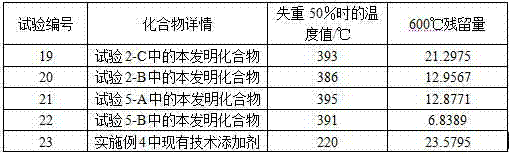
本发明化合物和现有技术化合物的热分析试验可由梅特勒托利多热重分析仪来完成。将已知重量的样品置于分析仪中以10℃/min的升温速率,在氮气保护下,从35℃升温至600℃。样品失重50%的温度作为样品热稳定性的代表。样品600℃时的残余量,以及失重50%时的温度列于表7中。该残余量表明了存放在设备的高温区域(如炉)的添加剂在适当时候的结垢趋势。Thermal analysis tests on compounds of the present invention and compounds of the prior art can be performed with a Mettler Toledo thermogravimetric analyzer. A sample of known weight was placed in the analyzer to raise the temperature from 35°C to 600°C at a rate of 10°C/min under nitrogen protection. The temperature at which the sample loses 50% of its weight is used as a representative of the thermal stability of the sample. The residual amount of the sample at 600°C and the temperature at which the weight loss was 50% are listed in Table 7. This residual level indicates the fouling tendency of additives stored in high temperature areas of equipment such as furnaces in due course.
表7热分析数据Table 7 thermal analysis data
热稳定性讨论Thermal Stability Discussion
由上表可看出,本发明化合物(试验编号19~22)失重50%时温度变化范围为386~395℃。上述表格中的本发明化合物包括未经环氧乙烷处理和环氧乙烷处理衍生物。这些值会远远高于现有添加剂的220℃。这些结果清楚地表明:与现有技术化合物相比,本发明化合物具有较高的热稳定性。本领域技术人员已熟知,具有较高的热稳定性的化合物是理想的添加剂,因为它们不会分解成为挥发性产物,导致结垢和污染其他液流。热稳定性化合物的另一个优点是在较高温度下仍然可以保持其缓蚀率。It can be seen from the above table that when the compounds of the present invention (test numbers 19-22) lose 50% of their weight, the temperature range is 386-395°C. The compounds of the present invention in the above table include non-ethylene oxide treated and ethylene oxide treated derivatives. These values would be much higher than the 220°C of existing additives. These results clearly show that the compounds of the present invention have higher thermal stability compared to the compounds of the prior art. It is well known to those skilled in the art that compounds with higher thermal stability are ideal additives because they do not decompose into volatile products that cause fouling and contamination of other liquid streams. Another advantage of thermally stable compounds is that they maintain their corrosion inhibition at higher temperatures.
由上表还可看出,进一步用环氧乙烷处理本发明化合物是有利的。经环氧乙烷处理可减少磷含量和600℃的残渣。由上表还可看出,本发明化合物600℃的残渣较低。本发明化合物(上表中的试验编号20~22)获得的残渣少于现有技术的23.5%(上表中试验编号23)。以上数据清楚地表明:本发明化合物在炉区具有最低的沉积趋势。It can also be seen from the above table that it is advantageous to further treat the compounds of the invention with ethylene oxide. Treatment with ethylene oxide can reduce phosphorus content and residue at 600°C. It can also be seen from the above table that the compound of the present invention has a relatively low residue at 600°C. The compounds of the present invention (Test Nos. 20-22 in the above table) gave 23.5% less residue than the prior art (Test No. 23 in the above table). The above data clearly show that the compounds of the present invention have the lowest deposition tendency in the furnace zone.
从上述讨论可知本发明包括以下各项:From the above discussion it can be seen that the present invention includes the following items:
1. 一种用于抑制酸腐蚀的新型添加剂,该添加剂包括聚硫代磷酸酯,该聚硫代磷酸酯可通过一种聚合物与五硫化二磷反应制得,所述聚合物含有单羟基、双羟基或多羟基,该聚合物优选为端羟基的聚合物,所述聚合物更优选为端羟基的聚异丁烯或端羟基的聚丁烯。1. A novel additive for inhibiting acid corrosion, the additive comprises polythiophosphate, which can be prepared by reacting a polymer with phosphorus pentasulfide, said polymer containing monohydroxyl, dihydroxyl Or polyhydroxyl, the polymer is preferably a hydroxyl-terminated polymer, more preferably a hydroxyl-terminated polyisobutylene or a hydroxyl-terminated polybutene.
2. 根据1所述的新型添加剂,其特征在于,其中所述聚硫代磷酸酯进一步与氧化物反应,生成所述的聚硫代磷酸酯的环氧乙烷衍生物,其中所述氧化物可选自环氧乙烷、环氧丁烷或环氧丙烷或其它氧化物,优选环氧乙烷。2. The novel additive according to 1, wherein the polythiophosphate is further reacted with an oxide to generate the ethylene oxide derivative of the polythiophosphate, wherein the oxide It may be selected from ethylene oxide, butylene oxide or propylene oxide or other oxides, preferably ethylene oxide.
3. 根据1和2所述的新型添加剂,其特征在于,其中所述聚合物的碳原子数为40~2000。3. The novel additive according to 1 and 2, wherein the polymer has 40-2000 carbon atoms.
4. 根据1和2所述的新型添加剂,其特征在于,所述聚合物的分子量为500~10000,优选800~1600,更优选950~1300。4. The novel additive according to 1 and 2, characterized in that the molecular weight of the polymer is 500-10000, preferably 800-1600, more preferably 950-1300.
5. 根据1和2所述的新型添加剂,其特征在于,所述五硫化二磷与所述端羟基聚合物的摩尔比优选0.01~4:1。5. The novel additive according to 1 and 2, characterized in that the molar ratio of the phosphorus pentasulfide to the hydroxyl-terminated polymer is preferably 0.01-4:1.
6. 根据1所述的新型添加剂,其特征在于,所述聚异丁烯可以是常规的或高活性的。6. according to the novel additive described in 1, it is characterized in that, described polyisobutylene can be conventional or highly reactive.
7. 根据1和2所述的新型添加剂,其特征在于,所述添加剂的有效剂量范围为1~2000ppm,优选2~200ppm。7. The novel additive according to 1 and 2, characterized in that the effective dosage range of the additive is 1-2000ppm, preferably 2-200ppm.
8. 一种用于抑制酸腐蚀的新型添加剂的制备方法,所述添加剂包括聚合的聚异丁烯硫代磷酸酯,包括以下步骤:8. A preparation method for a novel additive for inhibiting acid corrosion, said additive comprising polymerized polyisobutylene thiophosphate, comprising the following steps:
(a)将高反应活性聚异丁烯与马来酸酐反应,能生成聚异丁烯丁二酸酐;(a) reacting highly reactive polyisobutylene with maleic anhydride can generate polyisobutylene succinic anhydride;
(b)将所述步骤(a)的聚异丁烯丁二酸酐与二醇、多元醇和聚合醇反应,能生成端羟基聚异丁烯丁二酸酯。所述醇优选丙二醇、丁二仲醇、丁二醇、丁烯二醇、甘油、三羟甲基丙烷、聚乙二醇、聚丙二醇和聚丁二醇,更优选乙二醇;(b) reacting the polyisobutylene succinic anhydride in the step (a) with diol, polyalcohol and polymer alcohol to generate hydroxyl-terminated polyisobutylene succinate. The alcohol is preferably propylene glycol, butylene glycol, butylene glycol, butylene glycol, glycerin, trimethylolpropane, polyethylene glycol, polypropylene glycol and polytetramethylene glycol, more preferably ethylene glycol;
(c) 所述步骤(b)的反应产物与五硫化二磷以不同摩尔比反应,能生成聚异丁烯丁二酸酯的硫代磷酸酯,该聚合物为酸缓蚀添加剂;(c) The reaction product of the step (b) reacts with phosphorus pentasulfide in different molar ratios to generate phosphorothioate of polyisobutylene succinate, and the polymer is an acid corrosion inhibitor additive;
(d) 可选择的将所述步骤(c)的可选反应产物与氧化物反应,能生成聚异丁烯硫代磷酸酯的环氧乙烷处理衍生物,该聚合物为酸缓蚀添加剂,所述氧化物可选自包含环氧乙烷、氧化丁烯或环氧丙烷,优选环氧乙烷。(d) optionally reacting the optional reaction product of the step (c) with an oxide to generate an ethylene oxide-treated derivative of polyisobutylene phosphorothioate, the polymer is an acid corrosion inhibitor additive, and the The oxide may be selected from the group consisting of ethylene oxide, butylene oxide or propylene oxide, preferably ethylene oxide.
9.一种抑制酸腐蚀的新型添加剂的使用方法,包括以下步骤:9. A method for using a novel additive for inhibiting acid corrosion, comprising the following steps:
a.加热含有环烷酸的烃流,使其部分蒸发;a. Heating hydrocarbon streams containing naphthenic acids to partially vaporize them;
b.使烃蒸汽上升至蒸馏塔;b. causing hydrocarbon vapors to rise up the distillation column;
c.浓缩通过所述蒸馏塔的一部分烃蒸汽,以产生馏分;c. concentrating a portion of the hydrocarbon vapors passed through the distillation column to produce distillates;
d.向馏分中加入本发明所需的添加剂聚硫代磷酸酯或其氧化衍生物或二者的组合,添加浓度为1~2000ppm,优选2~200ppm;d. Adding the additive polythiophosphate required by the present invention or its oxidized derivatives or a combination of the two to the distillate, the added concentration is 1-2000ppm, preferably 2-200ppm;
e.使步骤d所生成之混合物与蒸馏塔的整个金属表面充分接触,在所述表面上形成保护膜,从而使所述表面具有抗腐蚀性。e. The mixture produced in step d is brought into sufficient contact with the entire metal surface of the distillation column to form a protective film on said surface, thereby rendering said surface corrosion-resistant.
虽然已参考若干优选实施例描述了本发明,但并不意味这本发明仅限于这些优选实施例。在没有偏离本发明精神的前提下,可对所述优选实施例进行变更。但是上述过程和组成仅仅是说明性的,在没有超出本发明范围的条件下,本发明的新颖性可以其它形式体现。While this invention has been described with reference to several preferred embodiments, it is not intended that the invention be limited to these preferred embodiments. Changes may be made to the described preferred embodiment without departing from the spirit of the invention. However, the above process and composition are only illustrative, and the novelty of the present invention can be embodied in other forms without departing from the scope of the present invention.
Claims (9)
Applications Claiming Priority (3)
| Application Number | Priority Date | Filing Date | Title |
|---|---|---|---|
| IN1790/MUM/2008 | 2008-08-26 | ||
| IN1790MU2008 | 2008-08-26 | ||
| PCT/IB2009/053726 WO2010023621A2 (en) | 2008-08-26 | 2009-08-25 | A new additive for inhibiting acid corrosion and method of using the new additive |
Publications (2)
| Publication Number | Publication Date |
|---|---|
| CN102197163A true CN102197163A (en) | 2011-09-21 |
| CN102197163B CN102197163B (en) | 2014-03-05 |
Family
ID=41402474
Family Applications (1)
| Application Number | Title | Priority Date | Filing Date |
|---|---|---|---|
| CN200980142355.1A Expired - Fee Related CN102197163B (en) | 2008-08-26 | 2009-08-25 | New additive for inhibiting acid corrosion and method of using new additive |
Country Status (19)
| Country | Link |
|---|---|
| US (1) | US9890339B2 (en) |
| EP (1) | EP2340296B1 (en) |
| JP (1) | JP5846911B2 (en) |
| KR (1) | KR101374609B1 (en) |
| CN (1) | CN102197163B (en) |
| AU (1) | AU2009286319B2 (en) |
| BR (1) | BRPI0913173B1 (en) |
| CA (1) | CA2736863C (en) |
| CL (1) | CL2011000422A1 (en) |
| CO (1) | CO6341647A2 (en) |
| DK (1) | DK2340296T3 (en) |
| ES (1) | ES2527525T3 (en) |
| HR (1) | HRP20150011T1 (en) |
| MX (1) | MX2011002155A (en) |
| MY (1) | MY172516A (en) |
| PE (1) | PE20110786A1 (en) |
| PL (1) | PL2340296T3 (en) |
| WO (1) | WO2010023621A2 (en) |
| ZA (1) | ZA201102106B (en) |
Cited By (4)
| Publication number | Priority date | Publication date | Assignee | Title |
|---|---|---|---|---|
| CN102941055A (en) * | 2012-11-16 | 2013-02-27 | 沈阳理工大学 | Composite filler of metallic framework-macromolecular material and production method thereof |
| CN107746462A (en) * | 2017-09-20 | 2018-03-02 | 中国科学技术大学 | Thio polyphosphate and its preparation method and application |
| CN113840945A (en) * | 2019-04-16 | 2021-12-24 | 埃科莱布美国股份有限公司 | Multi-charge cationic compounds derived from polyamines and use of compositions thereof for corrosion inhibition in aqueous systems |
| CN120699700A (en) * | 2025-06-24 | 2025-09-26 | 衢州恒顺化工有限公司 | A high-temperature chain oil detergent dispersant and preparation method thereof |
Families Citing this family (12)
| Publication number | Priority date | Publication date | Assignee | Title |
|---|---|---|---|---|
| HRP20191644T1 (en) | 2007-03-30 | 2019-12-13 | Dorf Ketal Chemicals I Private Ltd | High temperature naphthenic acid corrosion inhibition using organophosphorous sulphur compounds and combinations thereof |
| CN101688118B (en) | 2007-04-04 | 2014-10-29 | 多尔夫凯塔尔化学制品(I)私人有限公司 | Inhibition of naphthenic acid corrosion with new synergistic phosphorus-containing compounds |
| HRP20170161T1 (en) * | 2007-09-14 | 2017-03-24 | Dorf Ketal Chemicals (I) Private Limited | A novel additive for naphthenic acid corrosion inhibition and method of using the same |
| MX2011002155A (en) | 2008-08-26 | 2011-06-21 | Dorf Ketal Chemicals I Pvt Ltd | A new additive for inhibiting acid corrosion and method of using the new additive. |
| KR101314589B1 (en) * | 2008-08-26 | 2013-10-07 | 도르프 케탈 케미칼즈 (인디아) 프라이비트 리미티드 | An Effective Novel Polymeric Additive for Inhibiting Napthenic Acid Corrosion and Method of Using the Same |
| CA2863267A1 (en) * | 2012-01-31 | 2013-08-08 | Clariant Finance (Bvi) Limited | Process for reducing fouling in the processing of liquid hydrocarbons |
| SG11201502518QA (en) * | 2012-11-06 | 2015-05-28 | Exxonmobil Res & Eng Co | Method for identifying layers providing corrosion protection in crude oil fractions |
| GB201705088D0 (en) * | 2017-03-30 | 2017-05-17 | Innospec Ltd | Composition, method and use |
| WO2021021888A1 (en) | 2019-07-29 | 2021-02-04 | Ecolab USA, Inc. | Oil soluble molybdenum complexes as high temperature fouling inhibitors |
| MY207792A (en) | 2019-07-29 | 2025-03-19 | Ecolab Usa Inc | Oil soluble molybdenum complexes for inhibiting high temperature corrosion and related applications in petroleum refineries |
| US11999915B2 (en) | 2020-07-29 | 2024-06-04 | Ecolab Usa Inc. | Phosphorous-free oil soluble molybdenum complexes as high temperature fouling inhibitors |
| EP4189047A1 (en) | 2020-07-29 | 2023-06-07 | Ecolab USA, Inc. | Phophorous-free oil soluble molybdenum complexes for high temperature naphthenic acid corrosion inhibition |
Family Cites Families (63)
| Publication number | Priority date | Publication date | Assignee | Title |
|---|---|---|---|---|
| GB190708667A (en) | 1907-04-15 | 1908-04-02 | Cornelius John Sutton | Improvements in the Method of and Means for Packing Incandescent Gas Mantles. |
| US1872091A (en) | 1930-09-24 | 1932-08-16 | Gen Motors Res Corp | Process of cleaning metal |
| US1872092A (en) * | 1931-06-10 | 1932-08-16 | August W Neverman | Electric gas tank lock |
| US2316078A (en) | 1941-03-24 | 1943-04-06 | Standard Oil Co | Lubricant |
| US2316087A (en) | 1941-06-26 | 1943-04-06 | Standard Oil Co | Lubricant |
| BE581744A (en) | 1950-12-22 | |||
| FR1131205A (en) * | 1955-09-08 | 1957-02-19 | Exxon Standard Sa | Improved lubricating oil compositions |
| US2915517A (en) | 1957-05-08 | 1959-12-01 | Lubrizol Corp | Oil-soluble metal sulfonates and process for the preparation thereof |
| NL252277A (en) | 1959-06-04 | |||
| US3145886A (en) | 1962-04-10 | 1964-08-25 | Kenneth A Goodwin | Self-closing caps for collapsible tubes |
| US3201438A (en) | 1962-08-09 | 1965-08-17 | Texaco Inc | Method of producing a monoester of a hydrocarbyl thiophosphonic acid and a polyalkylene glycol |
| US3260622A (en) | 1962-09-05 | 1966-07-12 | Lubrizol Corp | Organic phosphate complexes |
| US3256190A (en) * | 1962-10-18 | 1966-06-14 | Texaco Inc | Thiophosphonoxyalkanes |
| US3281359A (en) * | 1964-08-27 | 1966-10-25 | Texaco Inc | Neopentyl polyol derivatives and lubricating compositions |
| US3460989A (en) | 1964-09-02 | 1969-08-12 | John H Rusch | Method of treating ferrous metal surfaces |
| GB1052380A (en) * | 1964-09-08 | |||
| US3324032A (en) * | 1964-12-22 | 1967-06-06 | Exxon Research Engineering Co | Reaction product of dithiophosphoric acid and dibasic acid anhydride |
| US3459662A (en) | 1967-01-31 | 1969-08-05 | Exxon Research Engineering Co | Phospho-sulfurized phosphite esters and hydrocarbon compositions containing the same |
| US3489682A (en) * | 1968-03-01 | 1970-01-13 | Lubrizol Corp | Metal salt compositions |
| US3531394A (en) | 1968-04-25 | 1970-09-29 | Exxon Research Engineering Co | Antifoulant additive for steam-cracking process |
| US3668237A (en) | 1969-06-24 | 1972-06-06 | Universal Oil Prod Co | Amine salts of phosphinic acid esters |
| US3663637A (en) | 1970-04-23 | 1972-05-16 | Monsanto Co | Start-up method for hydrogenation process |
| US3904535A (en) * | 1971-07-26 | 1975-09-09 | Chevron Res | Phosphosulfurized lubricating oil additives |
| US3909447A (en) | 1972-07-17 | 1975-09-30 | Petrolite Corp | Mixtures of thiophosphates, oxygen phosphates and pyrophosphates |
| US4024049A (en) | 1975-01-07 | 1977-05-17 | Nalco Chemical Company | Mono and di organophosphite esters as crude oil antifoulants |
| US4024050A (en) | 1975-01-07 | 1977-05-17 | Nalco Chemical Company | Phosphorous ester antifoulants in crude oil refining |
| US4105540A (en) | 1977-12-15 | 1978-08-08 | Nalco Chemical Company | Phosphorus containing compounds as antifoulants in ethylene cracking furnaces |
| US4443609A (en) | 1980-05-19 | 1984-04-17 | Petrolite Corporation | Tetrahydrothiazole phosphonic acids or esters thereof |
| IE52909B1 (en) * | 1981-04-28 | 1988-04-13 | Wyeth John & Brother Ltd | Oxazole derivatives |
| US4542253A (en) | 1983-08-11 | 1985-09-17 | Nalco Chemical Company | Use of phosphate and thiophosphate esters neutralized with water soluble amines as ethylene furnace anti-coking antifoulants |
| US4578178A (en) * | 1983-10-19 | 1986-03-25 | Betz Laboratories, Inc. | Method for controlling fouling deposit formation in a petroleum hydrocarbon or petrochemical |
| US4600518A (en) | 1985-07-15 | 1986-07-15 | Nalco Chemical Company | Choline for neutralizing naphthenic acid in fuel and lubricating oils |
| US4906391A (en) | 1986-09-15 | 1990-03-06 | Mobil Oil Corporation | Reaction products of olefins, sulfur and phosphorus pentasulfide and lubricant compositions thereof |
| US4927561A (en) * | 1986-12-18 | 1990-05-22 | Betz Laboratories, Inc. | Multifunctional antifoulant compositions |
| US4842716A (en) | 1987-08-13 | 1989-06-27 | Nalco Chemical Company | Ethylene furnace antifoulants |
| US4941994A (en) | 1989-07-18 | 1990-07-17 | Petrolite Corporation | Corrosion inhibitors for use in hot hydrocarbons |
| US5182013A (en) | 1990-12-21 | 1993-01-26 | Exxon Chemical Patents Inc. | Naphthenic acid corrosion inhibitors |
| GB9208034D0 (en) | 1992-04-10 | 1992-05-27 | Bp Chem Int Ltd | Fuel composition |
| MX9305120A (en) | 1992-09-04 | 1994-03-31 | Lubrizol Corp | SULFURATED OVERBASED COMPOSITIONS. |
| US5252254A (en) | 1992-12-30 | 1993-10-12 | Nalco Chemical Company | Naphthenic acid corrosion inhibitor |
| US5314643A (en) | 1993-03-29 | 1994-05-24 | Betz Laboratories, Inc. | High temperature corrosion inhibitor |
| US5500107A (en) | 1994-03-15 | 1996-03-19 | Betz Laboratories, Inc. | High temperature corrosion inhibitor |
| US5621154A (en) | 1994-04-19 | 1997-04-15 | Betzdearborn Inc. | Methods for reducing fouling deposit formation in jet engines |
| US5611991A (en) | 1994-05-24 | 1997-03-18 | Champion Technologies, Inc. | Corrosion inhibitor containing phosphate groups |
| US5552085A (en) * | 1994-08-31 | 1996-09-03 | Nalco Chemical Company | Phosphorus thioacid ester inhibitor for naphthenic acid corrosion |
| US5630964A (en) | 1995-05-10 | 1997-05-20 | Nalco/Exxon Energy Chemicals, L.P. | Use of sulfiding agents for enhancing the efficacy of phosphorus in controlling high temperature corrosion attack |
| ES2192677T3 (en) | 1996-05-30 | 2003-10-16 | Baker Hughes Inc | CORROSION CONTROL BY NAPTENIC ACID WITH THIOPHOSPHORUS COMPOUNDS. |
| US20050044778A1 (en) | 1997-12-08 | 2005-03-03 | Orr William C. | Fuel compositions employing catalyst combustion structure |
| US5919740A (en) * | 1998-05-29 | 1999-07-06 | Exxon Chemical Patents Inc | Alkylthiophosphate salts for lubricating oils |
| CA2308554A1 (en) | 1999-06-22 | 2000-12-22 | Scott D. Schwab | Phosphorylated thermal stability additives for distillate fuels |
| DE19951385A1 (en) | 1999-10-26 | 2001-05-03 | Budenheim Rud A Oetker Chemie | Process for the preparation of phosphoric acid esters or phosphoric acid ester mixtures of polyols and their use |
| JP2002180077A (en) | 2000-12-08 | 2002-06-26 | Ntn Corp | Lubricant composition and bearing |
| US6902662B2 (en) | 2002-04-29 | 2005-06-07 | Champion Technologies, Inc. | Method of reducing hydrolysis in hydrocarbon streams |
| DE10232747A1 (en) | 2002-07-18 | 2004-02-05 | Basf Ag | Use of polyisobutylene derivatives for the treatment of metal surfaces |
| US7122508B2 (en) | 2002-10-31 | 2006-10-17 | Chevron Oronite Company Llc | Methods and compositions for reducing wear in internal combustion engines lubricated with a low phosphorous content borate-containing lubricating oil |
| US20060091044A1 (en) | 2004-11-02 | 2006-05-04 | General Electric Company | High temperature corrosion inhibitor |
| US20070119747A1 (en) | 2005-11-30 | 2007-05-31 | Baker Hughes Incorporated | Corrosion inhibitor |
| US20080001125A1 (en) | 2006-06-30 | 2008-01-03 | Baker Hughes Incorporated | Method and compositions for inhibition of naphthenic acid induced corrosion |
| HRP20191644T1 (en) * | 2007-03-30 | 2019-12-13 | Dorf Ketal Chemicals I Private Ltd | High temperature naphthenic acid corrosion inhibition using organophosphorous sulphur compounds and combinations thereof |
| CN101688118B (en) | 2007-04-04 | 2014-10-29 | 多尔夫凯塔尔化学制品(I)私人有限公司 | Inhibition of naphthenic acid corrosion with new synergistic phosphorus-containing compounds |
| HRP20170161T1 (en) * | 2007-09-14 | 2017-03-24 | Dorf Ketal Chemicals (I) Private Limited | A novel additive for naphthenic acid corrosion inhibition and method of using the same |
| MX2011002155A (en) | 2008-08-26 | 2011-06-21 | Dorf Ketal Chemicals I Pvt Ltd | A new additive for inhibiting acid corrosion and method of using the new additive. |
| KR101314589B1 (en) | 2008-08-26 | 2013-10-07 | 도르프 케탈 케미칼즈 (인디아) 프라이비트 리미티드 | An Effective Novel Polymeric Additive for Inhibiting Napthenic Acid Corrosion and Method of Using the Same |
-
2009
- 2009-08-25 MX MX2011002155A patent/MX2011002155A/en active IP Right Grant
- 2009-08-25 CA CA2736863A patent/CA2736863C/en not_active Expired - Fee Related
- 2009-08-25 MY MYPI2011000864A patent/MY172516A/en unknown
- 2009-08-25 DK DK09787015.8T patent/DK2340296T3/en active
- 2009-08-25 JP JP2011524502A patent/JP5846911B2/en not_active Expired - Fee Related
- 2009-08-25 ES ES09787015.8T patent/ES2527525T3/en active Active
- 2009-08-25 US US13/060,819 patent/US9890339B2/en active Active
- 2009-08-25 KR KR1020117006887A patent/KR101374609B1/en active Active
- 2009-08-25 AU AU2009286319A patent/AU2009286319B2/en not_active Ceased
- 2009-08-25 PL PL09787015T patent/PL2340296T3/en unknown
- 2009-08-25 CN CN200980142355.1A patent/CN102197163B/en not_active Expired - Fee Related
- 2009-08-25 PE PE2011000201A patent/PE20110786A1/en active IP Right Grant
- 2009-08-25 BR BRPI0913173-6A patent/BRPI0913173B1/en active IP Right Grant
- 2009-08-25 WO PCT/IB2009/053726 patent/WO2010023621A2/en not_active Ceased
- 2009-08-25 EP EP09787015.8A patent/EP2340296B1/en active Active
- 2009-08-25 HR HRP20150011AT patent/HRP20150011T1/en unknown
-
2011
- 2011-02-25 CO CO11023156A patent/CO6341647A2/en active IP Right Grant
- 2011-02-25 CL CL2011000422A patent/CL2011000422A1/en unknown
- 2011-03-22 ZA ZA2011/02106A patent/ZA201102106B/en unknown
Cited By (6)
| Publication number | Priority date | Publication date | Assignee | Title |
|---|---|---|---|---|
| CN102941055A (en) * | 2012-11-16 | 2013-02-27 | 沈阳理工大学 | Composite filler of metallic framework-macromolecular material and production method thereof |
| CN107746462A (en) * | 2017-09-20 | 2018-03-02 | 中国科学技术大学 | Thio polyphosphate and its preparation method and application |
| CN113840945A (en) * | 2019-04-16 | 2021-12-24 | 埃科莱布美国股份有限公司 | Multi-charge cationic compounds derived from polyamines and use of compositions thereof for corrosion inhibition in aqueous systems |
| CN113840945B (en) * | 2019-04-16 | 2023-09-26 | 埃科莱布美国股份有限公司 | Use of multiply charged cationic compounds derived from polyamines and compositions thereof for corrosion inhibition in water systems |
| CN120699700A (en) * | 2025-06-24 | 2025-09-26 | 衢州恒顺化工有限公司 | A high-temperature chain oil detergent dispersant and preparation method thereof |
| CN120699700B (en) * | 2025-06-24 | 2026-01-27 | 衢州恒顺化工有限公司 | High-temperature chain oil detergent dispersant and preparation method thereof |
Also Published As
| Publication number | Publication date |
|---|---|
| CA2736863C (en) | 2014-12-02 |
| BRPI0913173A2 (en) | 2016-01-12 |
| WO2010023621A3 (en) | 2010-08-19 |
| JP5846911B2 (en) | 2016-01-20 |
| EP2340296A2 (en) | 2011-07-06 |
| JP2012500887A (en) | 2012-01-12 |
| PE20110786A1 (en) | 2011-10-31 |
| MY172516A (en) | 2019-11-28 |
| US20110214980A1 (en) | 2011-09-08 |
| HRP20150011T1 (en) | 2015-03-27 |
| PL2340296T3 (en) | 2015-03-31 |
| CA2736863A1 (en) | 2010-03-04 |
| CO6341647A2 (en) | 2011-11-21 |
| US9890339B2 (en) | 2018-02-13 |
| WO2010023621A2 (en) | 2010-03-04 |
| CL2011000422A1 (en) | 2011-07-15 |
| BRPI0913173B1 (en) | 2017-12-05 |
| AU2009286319B2 (en) | 2013-05-16 |
| MX2011002155A (en) | 2011-06-21 |
| ZA201102106B (en) | 2012-11-28 |
| CN102197163B (en) | 2014-03-05 |
| ES2527525T3 (en) | 2015-01-26 |
| KR20110049879A (en) | 2011-05-12 |
| AU2009286319A1 (en) | 2010-03-04 |
| KR101374609B1 (en) | 2014-03-17 |
| EP2340296B1 (en) | 2014-10-08 |
| DK2340296T3 (en) | 2015-01-19 |
Similar Documents
| Publication | Publication Date | Title |
|---|---|---|
| CN102197163B (en) | New additive for inhibiting acid corrosion and method of using new additive | |
| CN101688132B (en) | Inhibition of High Temperature Naphthenic Acid Corrosion Using Organophosphorous Sulfur Compounds | |
| CN101688118B (en) | Inhibition of naphthenic acid corrosion with new synergistic phosphorus-containing compounds | |
| CN101868514B (en) | An additive for inhibiting naphthenic acid corrosion and its application method | |
| CN102131834B (en) | An effective polymer additive for inhibiting naphthenic acid corrosion and method of use thereof | |
| CN102459521B (en) | For suppressing the effective non-polymer of high-temperature naphthenic acid erosion and the most dirty property additive and using method thereof |
Legal Events
| Date | Code | Title | Description |
|---|---|---|---|
| C06 | Publication | ||
| PB01 | Publication | ||
| C10 | Entry into substantive examination | ||
| SE01 | Entry into force of request for substantive examination | ||
| GR01 | Patent grant | ||
| GR01 | Patent grant | ||
| CF01 | Termination of patent right due to non-payment of annual fee | ||
| CF01 | Termination of patent right due to non-payment of annual fee |
Granted publication date: 20140305 Termination date: 20200825 |