Disclosure of Invention
The invention aims to provide a system and a method for avoiding startup and shutdown peak shaving by matching a cogeneration unit with a pure condensing thermal power unit, so that the condensing thermal power unit is prevented from being forced to start up and shut down peak shaving (also called 'two-shift peak shaving'), and energy conservation is realized.
One of the objects of the present invention is: the utility model provides a system for cogeneration unit cooperation straight condensing steam type thermal power generating unit avoids start-up and shut down peak regulation, it includes: a cogeneration unit for generating electric energy and heating heat energy; a pure condensing thermal power generating unit for generating electric energy; the air conditioner heat pump is connected with the cogeneration unit and the straight condensing thermal power generating unit in parallel through a power transmission line, and the air conditioner heat pump is driven by electric energy generated by the cogeneration unit and the straight condensing thermal power generating unit to generate heating heat energy; the electric energy meter comprises a first electric energy meter coupled with the air conditioner heat pump and a second electric energy meter coupled with other electric appliances of an end user, wherein the first electric energy meter is used for detecting power consumption data of heating of the air conditioner heat pump, and the second electric energy meter is used for obtaining power consumption data of non-heating power consumption; a radiator connected with the cogeneration unit through a heat supply pipeline, the radiator generating heating heat energy by flowing water or steam heated by the cogeneration unit into the radiator; the heat consumption meter is used for detecting heating and heat consumption data of the radiator; and a scheduling control device; the electric energy meter detects power consumption data, the heat consumption meter detects heating heat consumption data, the scheduling control device collects the power consumption data, the heating heat consumption data and all energy consumption of the straight condensing steam type thermal power unit for one time, then scheduling control signals are generated, and the scheduling control device sends the scheduling control signals to the cogeneration unit, the straight condensing steam type thermal power unit, the air conditioner heat pump and the radiator and controls the cogeneration unit, the straight condensing steam type thermal power unit, the air conditioner heat pump and the radiator to operate.
One of the objects of the present invention is: the method for avoiding the start-up and shutdown peak shaving by matching the cogeneration unit with the straight condensing thermal power generating unit comprises the following steps:
heating heat energy and electric energy are generated by the cogeneration unit;
under the mode that a terminal user only adopts a radiator to perform heating supply, heat energy generated by a cogeneration unit is provided for the radiator of the terminal user to perform heating, electric energy generated by the cogeneration unit is completely provided for a non-heating electric load of the terminal user, a total heating supply load is obtained through heating heat consumption data detected by a heat consumption meter, and a total non-heating electric load is obtained through power consumption data detected by an electric energy meter;
the scheduling control device acquires the obtained total heating load and non-heating power load and the total energy consumption of the pure condensing thermal power unit for one time of starting and stopping, and acquires a scheduling control signal in a parallel mode that a terminal user adopts a radiator for heating and an air conditioner heat pump for heating in a power load valley period, wherein in the parallel mode, heat energy generated by the cogeneration unit is provided for a radiator of the terminal user for heating, one part of electric energy generated by the cogeneration unit and one part of electric energy generated by the pure condensing thermal power unit are provided for the non-heating power load of the terminal user, and the other part of electric energy is provided for an air conditioner heat pump of the terminal user for heating;
the scheduling control device transmits the generated scheduling control signal to:
the pure condensing thermal power generating unit adjusts the fuel consumption of the pure condensing thermal power generating unit, and further controls the pure condensing thermal power generating unit to avoid the power generation output of stopping and peak regulation;
the cogeneration unit adjusts the fuel consumption of the cogeneration unit, and then controls the cogeneration unit to cooperate with the power generation output and the heating output of the pure condensing thermal power unit;
the air conditioner heat pump is used for starting heating control switches of heat pumps of air conditioning units of part of users corresponding to the air conditioner heat pump, and the air conditioner heat pump is driven to provide heating by using electric energy generated by a cogeneration unit and a pure condensing thermal power unit; and
and the radiators open the radiator switch valves of the corresponding part of the end users, so that heating hot water or steam generated by the cogeneration unit flows into the radiators through the heating heat supply pipelines to generate heating heat energy.
The invention has the beneficial effects that: the system provided by the invention adopts a cogeneration unit and a pure condensing thermal power unit to jointly generate power and provide electric energy for a terminal user. One part of the generated output is provided for the air conditioner heat pump of part of the end users to meet the heating power demand, and the other part of the generated output is provided for other electric appliances of the end users to meet the non-heating power demand. In addition, the heat generated by the cogeneration unit is provided to a heat sink for a portion of the end users. The system is also provided with a scheduling control device which can jointly control and schedule the condensing thermal power generating unit and the combined heat and power generating unit which originally and independently run, so that the system can control the optimal fuel consumption and power generation output of the pure condensing thermal power generating unit without stopping, the optimal fuel consumption, power generation output and heating and heat supply output of the cogeneration unit matched with the pure condensing thermal power generating unit, the power consumption of air conditioner heat pump heating of the terminal user and the heating and heat supply amount of a radiator of the terminal user according to the requirement of terminal load energy consumption in the low-ebb time period of the power load. The method avoids the forced start-up and shut-down peak shaving (also called 'two-shift peak shaving') of the condensing thermal power generating unit and reduces the loss of start-up and shut-down. Thereby avoiding wasting fuel resources and achieving the purpose of energy conservation.
The dispatching method can jointly dispatch the condensing thermal power generating unit and the combined heat and power generating unit which originally and independently operate. The method can control the optimal fuel consumption and the power generation output of the straight condensing thermal power generating unit without stopping, the fuel consumption, the power generation output and the heating and heat supply output of the cogeneration unit matched with the straight condensing thermal power generating unit, the power consumption of the heating of the air conditioner heat pump of the terminal user and the heating and heat supply of the radiator of the terminal user, thereby avoiding the condensing thermal power generating unit from being forced to start up and shut down and adjust peak (also called 'two-shift peak adjustment') and realizing the aim of energy conservation.
By adopting the system and the method for avoiding the peak load regulation during the start-up and shutdown of the cogeneration unit and the straight condensing thermal power unit, which are disclosed by the invention, to establish an urban comprehensive power supply network and a heat supply network, the heating and power supply provided by the cogeneration unit and the straight condensing thermal power unit can be comprehensively scheduled, so that the purposes of energy conservation and emission reduction are achieved.
Detailed Description
The following describes embodiments of the present invention with reference to the drawings.
Referring to fig. 2, a system for avoiding peak shaving during start-up and shutdown of a cogeneration unit in cooperation with a straight condensing thermal power unit includes the cogeneration unit a, the straight condensing thermal power unit B, an air conditioner heat pump 108, an electric energy meter 109, a radiator 110, a heat consumption meter 111, and a scheduling control device 100.
Referring to fig. 3, in an embodiment consistent with the present invention, the cogeneration unit a is configured to generate electric energy and heating heat energy. The cogeneration unit a includes a boiler 104, a turbine 105, a grid heater 106, and an alternator 107. Wherein the boiler 104 burns fuel to obtain heating heat energy to heat steam, and sends saturated hot steam to the turbine 105 through a steam pipeline to obtain mechanical energy, the mechanical energy drives the alternator 107 to generate electric energy, and the waste heat generated by the cogeneration unit is sent to the heat supply network heater 106 to produce hot water for heating. The heat engine adopts a steam Rankine cycle or a Brayton-Rankine thermodynamic combined cycle with the steam Rankine cycle as a bottom cycle, and the water supply temperature of the heat engine can be adjusted within the range of 65-80 ℃. The electrical energy generated by the alternator 107 is transmitted to the air conditioner heat pump 108 and other electrical devices of the end user via the transmission line 113. The air conditioner heat pump 108 at the end user location may be driven by electrical energy to provide heating for the end user using the air conditioner heat pump 108. The hot water for heating produced by the network heater 106 is delivered to the end user's radiator 110 via the heating line 114 to provide heating. The cogeneration unit A is also provided with a valve for inputting steam quantity, a valve for heating and supplying power and extracting steam quantity and a valve for generating steam quantity.
And the pure condensing thermal power generating unit B is used for generating electric energy. The pure condensing thermal power generating unit B comprises a boiler 101, a turbine 102 and an alternating current generator 103. The boiler 101 burns fuel to obtain heating heat energy, and the heating heat energy is sent to the turbine 102 through a pipeline to obtain mechanical energy, and the mechanical energy drives the alternator 103 to generate electric energy. The electrical power generated by the alternator 103 is transmitted to the air conditioner heat pump 108 and other electrical devices of the end user via the transmission line 113. Wherein the air conditioner heat pump 108 at the end user can provide heating for the air conditioner user under the driving of the electric energy. The pure condensing thermal power generating unit B also comprises a valve (IV) for controlling the amount of input steam.
The air conditioner heat pump 108 at the end user is connected with the cogeneration unit A and the straight condensing thermal power generating unit B in parallel through the power transmission line 113, and the air conditioner heat pump 108 can be driven by electric energy generated by the cogeneration unit A and the straight condensing thermal power generating unit B to generate heating heat energy, so that heating and heat supply are provided for the air conditioner user. The air conditioner heat pump 108 further includes a switching actuator (c).
Referring to fig. 4, the electric energy meter 109 includes a first electric energy meter coupled to the air conditioner heat pump 108 and a second electric energy meter coupled to other electric appliances of an end user. The first electric energy meter is connected with the air conditioner heat pump 108 through a conducting wire and used for detecting power consumption data of heating of the air conditioner heat pump 108. The second electric energy meter is connected with other electric appliances of the end user through wires, such as the lighting appliance, the power socket and the household appliance shown in fig. 4, but not limited thereto. And the second electric energy meter is used for detecting the power consumption data of the non-heating power consumption of the end user.
Referring to fig. 3, the radiator 110 is coupled to the cogeneration unit a through a heat supply pipeline 114, and heated water or steam generated by the cogeneration unit a flows into the radiator 110 to generate heating heat energy. The heat consumption meter 111 is coupled to the heat sink 110, and is configured to detect heat consumption data of the heat sink 110. The heat sink 110 is provided with a switch actuating device.
Referring to fig. 5, the scheduling control device 100 is configured to obtain an optimal power generation output for maintaining the straight condensing thermal power generating unit B without shutdown and a scheduling control signal of the cogeneration unit a cooperating with the straight condensing thermal power generating unit B according to the obtained power consumption data and the related heating thermal energy data, and control the cogeneration unit a, the straight condensing thermal power generating unit B, the air conditioner heat pump 108, and the radiator 110 to operate according to the scheduling control signal.
The scheduling control apparatus includes a scheduling control signal generating unit 115, scheduling control signal communication units 112 and 113, and a scheduling signal executing unit 118. The scheduling control signal generating unit 115 is configured to generate a scheduling control signal. The scheduling control signal communication units 112 and 113 are connected to the scheduling control signal generating unit 115, and configured to transmit the scheduling control signal. The scheduling control signal execution unit includes a cogeneration unit execution device, a straight condensing thermal power unit execution device, a switch execution device of the air conditioner heat pump 108, and a switch execution device of the radiator 110, and the scheduling control signal execution unit 118 controls the action of the scheduling object connected thereto according to the obtained scheduling control signal.
Referring to fig. 6, the scheduling control signal generating unit 115 includes a data receiving unit 201, a data decoder unit 202, a data memory unit 203, a scheduling control signal calculating unit 204, a signal conversion encoder 205, and a signal transceiving unit 206. The data receiving unit 201 is configured to receive the power consumption data and the heat consumption data. The data decoder unit 202 is configured to decode the received power consumption data and heat consumption data. The data memory unit 203 is configured to store the decoded power consumption data and heat consumption data. The signal transcoder 205 encodes the scheduling control signal. The signal transceiver unit 206 transmits the encoded scheduling control signal to the cogeneration unit a, the straight condensing thermal power unit B, the air conditioner heat pump 108, and the radiator 110.
The dispatching control signal communication unit comprises a remote meter reading device 112 and a power transmission line 113. The power transmission line 113 is a low-voltage power transmission line in this embodiment, and in other embodiments, the power transmission line may be replaced by a wired fixed network communication line or a wireless communication network. The power transmission line 113 is connected to the scheduling control signal generation unit 115, the cogeneration unit execution device 119 and the straight condensing thermal power unit execution device 120, and the scheduling control signal generation unit 115 sends the scheduling control signal to the cogeneration unit execution device 119 and the straight condensing thermal power unit execution device 120 through the power transmission line 113.
Referring to fig. 7, the remote meter reading device 112 includes a first electric energy meter pulse counter, a heating hot water flow pulse counter, a pulse signal code converter and a metering signal amplifying emitter, which are connected in sequence; and a control signal receiving encoder and a control signal remote control transmitter which are connected together. The first energy meter pulse counter is connected to the first energy meter 116, and is configured to receive and process power consumption data detected by the first energy meter 116. The heating hot water flow pulse counter is connected with the heat consumption meter 111 and is used for receiving and processing heat consumption data of the radiator 110 detected by the heat consumption meter 111. The power consumption data and the heat consumption data are processed by the pulse signal code converter and the metering signal amplifying transmitter and then transmitted to the scheduling control signal generating unit 115 through the power transmission line 113. In other embodiments, the power consumption data and the heating and heat consumption data may be further transmitted to the scheduling control signal generating unit 115 through a wireless data transmission device and method such as CDMA and GPRS after being processed by the pulse signal code converter and the measurement signal amplifying transmitter. In addition, the control signal receiving encoder and the control signal remote control transmitter transmit the scheduling control signal generated by the scheduling control signal generating unit 115 to the switch of the air conditioner heat pump 108 and the switch valve of the radiator 110.
Referring to fig. 3 and 5, the scheduling control signal executing unit 118 includes a cogeneration unit executing device 119, a straight condensing thermal power unit executing device 120, an air conditioner heat pump switch executing device 121, and a radiator switch executing device 122. The scheduling control signal executing unit 118 monitors the state of its connected scheduling object and controls the action of its connected scheduling object according to the obtained scheduling control signal. Wherein the scheduling object includes: the fuel input, heating output and power generation output of the cogeneration unit a controlled by the cogeneration unit actuator 119; the pure condensing thermal power generating unit B is controlled by the pure condensing thermal power generating unit executing device 120 to generate power; an air conditioner heat pump switch controlled by the air conditioner heat pump switch actuator 121 and located at an end user; and a radiator opening and closing valve at an end user controlled by the radiator opening and closing valve actuating device 122.
Referring to fig. 8, the co-generation unit actuator 119 is used to control fuel input, heating output and power output of the co-generation unit a. The cogeneration unit actuator 119 is connected to the scheduling control signal generating unit 115 through the power transmission line 301. The present embodiment uses a remote control device based on the power transmission line 301 to implement the data transmission function, but is not limited to this, and other methods may be used. Such as a wireless data transmission device and method of CDMA, GPRS, etc., or a data transmission method based on the Internet. The execution device 119 of the cogeneration unit comprises a scheduling control signal transceiving code memory 302, a driving circuit 303 and a mechanical gear control device 304, wherein the scheduling control signal is decoded by the scheduling control signal transceiving code memory 302 to generate a scheduling control instruction of the cogeneration unit, an electric drive signal output by the driving circuit 303 triggers the mechanical gear control device 304, and the mechanical gear control device 304 controls an input steam quantity valve of the cogeneration unit a to act, a heating and heating output steam extraction quantity valve to act and a power generation steam quantity valve to act. Thereby controlling the main steam flow, the heating purpose extraction steam flow and the power generation purpose steam flow of the cogeneration unit A.
Referring to fig. 9, the actuating device 120 of the straight condensing thermal power generating unit is configured to control fuel input of the straight condensing thermal power generating unit B, so as to control power generation output thereof. The straight condensing thermal power generating unit executing device 120 is connected with the scheduling control signal generating unit 115 through an electric power transmission line 401. The pure condensing thermal power generating unit execution device 120 comprises a scheduling control signal transceiving coding memory 402, a driving circuit 403 and a mechanical gear control device 404, wherein the scheduling control signal is decoded by the scheduling control signal transceiving coding memory 402 to generate a pure condensing thermal power generating unit scheduling control instruction, an electric dragging signal output by the driving circuit 403 triggers the mechanical gear control device 404, and the mechanical gear control device 404 controls an input steam quantity valve of the pure condensing thermal power generating unit B to act. Thereby controlling the generated output of the pure condensing thermal power generating unit B.
The invention relates to a method for avoiding startup and shutdown peak shaving by matching a cogeneration unit A with a straight condensing thermal power unit B, which comprises the following steps:
heating heat energy and electric energy are produced by the cogeneration unit A;
under the mode that a terminal user only adopts the radiator 110 to perform heating supply, the heat energy generated by the cogeneration unit A is provided for the radiator 110 of the terminal user to perform heating, the electric energy generated by the cogeneration unit A is completely provided for the non-heating electric load of the terminal user, the total heating supply load is obtained through the heating heat consumption data detected by the heat consumption meter 111, and the total non-heating electric load is obtained through the power consumption data detected by the electric energy meter 109;
the scheduling control device 100 acquires the total heating load and the non-heating power load, and the total energy consumption of the pure condensing thermal power unit B during one startup and shutdown, and acquires a scheduling control signal in a parallel mode in which an end user uses a radiator 110 for heating and an air conditioner heat pump 108 for heating in a power load off-peak period, wherein in the parallel mode, heat energy generated by the cogeneration unit a is provided for the radiator 110 of the end user for heating, part of electric energy generated by the cogeneration unit a and part of electric energy generated by the pure condensing thermal power unit B are provided for the non-heating power load of the end user, and the other part of electric energy is provided for the air conditioner heat pump 108 of the end user for heating;
the scheduling control device 100 transmits the generated scheduling control signal to the straight condensing thermal power generating unit B, the cogeneration unit a, the air conditioner heat pump 108 and the radiator 110;
the dispatching control device 100 controls the fuel consumption of the straight condensing thermal power generating unit B, and further controls the straight condensing thermal power generating unit B to avoid the power generation output of stopping and peak shaving;
the scheduling control device 100 adjusts the fuel consumption of the cogeneration unit a, and further controls the cogeneration unit a to cooperate with the power generation output and the heating output of the straight condensing thermal power unit B;
the scheduling control device 100 turns on a heating control switch (c) of the air conditioner heat pump 108 of a part of end users, and drives the air conditioner heat pump 108 to provide heating by using electric energy generated by the cogeneration unit a and the straight condensing thermal power unit B; and
the scheduling control device 100 opens the switching valve of the radiator 110 of a part of the end users, so that the heating hot water or steam generated by the cogeneration unit a flows into the radiator 110 through the heating heat supply pipeline 114 to generate heating heat energy.
Wherein, in the mode that the end user only adopts the radiator 110 to perform heating and heat supply, the step of obtaining the total heating and heat supply load and the total non-heating power load comprises the following steps:
sensing heating heat consumption of the
radiator 110 at the jth end user through the
heat consumption meter 111
Detecting the jth by the second power meter 117Non-heating power consumption of individual end user
Obtaining the total heating load according to the formula (1)
Obtaining the total non-heating power load according to the formula (2)
<math><mrow><msubsup><mi>H</mi><mi>sum</mi><mo>*</mo></msubsup><mo>=</mo><msubsup><mi>Σ</mi><mrow><mi>i</mi><mo>=</mo><mn>1</mn></mrow><mi>I</mi></msubsup><msubsup><mi>Q</mi><mi>i</mi><mo>*</mo></msubsup><mo>=</mo><msubsup><mi>Σ</mi><mrow><mi>j</mi><mo>=</mo><mn>1</mn></mrow><mi>J</mi></msubsup><msubsup><mi>q</mi><mi>j</mi><mo>*</mo></msubsup><mo>-</mo><mo>-</mo><mo>-</mo><mrow><mo>(</mo><mn>1</mn><mo>)</mo></mrow><mo>;</mo></mrow></math>
<math><mrow><msubsup><mi>P</mi><mi>sum</mi><mo>*</mo></msubsup><mo>=</mo><msubsup><mi>Σ</mi><mrow><mi>i</mi><mo>=</mo><mn>1</mn></mrow><mi>I</mi></msubsup><msubsup><mi>E</mi><mi>i</mi><mo>*</mo></msubsup><mo>=</mo><msubsup><mi>Σ</mi><mrow><mi>j</mi><mo>=</mo><mn>1</mn></mrow><mi>J</mi></msubsup><msubsup><mi>e</mi><mi>j</mi><mo>*</mo></msubsup><mo>-</mo><mo>-</mo><mo>-</mo><mrow><mo>(</mo><mn>2</mn><mo>)</mo></mrow><mo>;</mo></mrow></math>
Wherein,
representing the heating output of the ith cogeneration unit A;
represents the heating and heat supply output of the ith cogeneration unit A
The minimum generated output.
And the pure condensing thermal power generating unit B is started and stopped once and has all energy consumption LosssumThe method comprises the following steps: loss of coal consumptioncoalLoss of fuel consumptionoilAnd Loss of power consumptioneleAs shown in equation (3):
Losssum=Losscoal+Lossoil+Lossele (3)。
the acquiring of the scheduling control signal in the parallel mode of heating and heat supply by the radiator 110 and the air conditioner heat pump 108 at the end user of the power load valley period is performed by the scheduling control signal generating unit 115 of the scheduling control device 100, and includes the following steps:
the method comprises the following steps: aiming at the mode that the end user only adopts the
radiator 110 to carry out heating and heat supply, the fuel consumption of the ith cogeneration unit in unit time is obtained according to the formula (4)
And then the pure condensing thermal power generating unit B is started and stopped once to consume all energy Loss
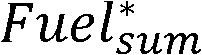
sumAnd a formula (5) for obtaining the total fuel consumption of the cogeneration unit A and the straight condensing thermal power unit B under the condition of stopping and peak shaving of the straight condensing thermal power unit B in the off-peak period of the power load
<math><mrow><msubsup><mi>Fuel</mi><mi>sum</mi><mo>*</mo></msubsup><mo>=</mo><mi>T</mi><mo>·</mo><msubsup><mi>Σ</mi><mrow><mi>i</mi><mo>=</mo><mn>1</mn></mrow><mi>I</mi></msubsup><msubsup><mi>F</mi><mi>i</mi><mo>*</mo></msubsup><mo>+</mo><msub><mi>Loss</mi><mi>sum</mi></msub><mo>-</mo><mo>-</mo><mo>-</mo><mrow><mo>(</mo><mn>5</mn><mo>)</mo></mrow><mo>;</mo></mrow></math>
Where T represents the grid power valley time,
representing the total fuel consumption of all the cogeneration units A during the power grid valley time period T;
step two: aiming at the parallel mode that the end user adopts the
radiator 110 for heating and the air
conditioner heat pump 108 for heating, the total heating load is obtained
Total non-heating power load
Detecting the heating coefficient of performance (COP) of the j-th end user's air
conditioner heat pump 108
jEstablishing heating output Q of the ith cogeneration unit A according to the formulas (6) to (15)
iGenerating output E
iAnd fuel consumption F
iPure condensing steam-fire electric machine set B avoids stopping and peak shaving generating output E
CONAnd the amount of fuel consumed per unit time G, the amount of power consumed by the jth end-user's air
conditioner heat pump 108
Heating load q of the jth end user's
radiator 110
jThe constraint relationship between:
<math><mrow><msub><mi>Q</mi><mi>i</mi></msub><mo>≤</mo><msubsup><mi>Q</mi><mi>i</mi><mo>*</mo></msubsup><mo>-</mo><mo>-</mo><mo>-</mo><mrow><mo>(</mo><mn>8</mn><mo>)</mo></mrow><mo>;</mo></mrow></math>
<math><mrow><msubsup><mi>E</mi><mi>i</mi><mi>min</mi></msubsup><mo>≤</mo><msub><mi>E</mi><mi>i</mi></msub><mo>≤</mo><msubsup><mi>E</mi><mi>i</mi><mi>max</mi></msubsup><mo>-</mo><mo>-</mo><mo>-</mo><mrow><mo>(</mo><mn>9</mn><mo>)</mo></mrow><mo>;</mo></mrow></math>
<math><mrow><msubsup><mi>Q</mi><mi>sum</mi><mo>*</mo></msubsup><mo>=</mo><msubsup><mi>Σ</mi><mrow><mi>i</mi><mo>=</mo><mn>1</mn></mrow><mi>I</mi></msubsup><msub><mi>Q</mi><mi>i</mi></msub><mo>+</mo><msubsup><mi>Σ</mi><mrow><mi>j</mi><mo>=</mo><mn>1</mn></mrow><mi>J</mi></msubsup><msub><mi>COP</mi><mi>j</mi></msub><mo>·</mo><msubsup><mi>e</mi><mi>j</mi><mi>EHP</mi></msubsup><mo>=</mo><msubsup><mi>Σ</mi><mrow><mi>j</mi><mo>=</mo><mn>1</mn></mrow><mi>I</mi></msubsup><msub><mi>q</mi><mi>j</mi></msub><mo>+</mo><msubsup><mi>Σ</mi><mrow><mi>j</mi><mo>=</mo><mn>1</mn></mrow><mi>J</mi></msubsup><msub><mi>COP</mi><mi>j</mi></msub><mo>·</mo><msubsup><mi>e</mi><mi>j</mi><mi>EHP</mi></msubsup><mo>-</mo><mo>-</mo><mo>-</mo><mrow><mo>(</mo><mn>10</mn><mo>)</mo></mrow><mo>;</mo></mrow></math>
<math><mrow><msubsup><mi>P</mi><mi>sum</mi><mo>*</mo></msubsup><mo>=</mo><msubsup><mi>Σ</mi><mrow><mi>i</mi><mo>=</mo><mn>1</mn></mrow><mi>I</mi></msubsup><msub><mi>E</mi><mi>i</mi></msub><mo>+</mo><msub><mi>E</mi><mi>CON</mi></msub><mo>-</mo><msubsup><mi>Σ</mi><mrow><mi>j</mi><mo>=</mo><mn>1</mn></mrow><mi>J</mi></msubsup><msubsup><mi>e</mi><mi>j</mi><mi>EHP</mi></msubsup><mo>-</mo><mo>-</mo><mo>-</mo><mrow><mo>(</mo><mn>11</mn><mo>)</mo></mrow><mo>;</mo></mrow></math>
Fi=fi(Qi,Ei) (12);
<math><mrow><msub><mi>F</mi><mi>sum</mi></msub><mo>=</mo><msubsup><mi>Σ</mi><mrow><mi>i</mi><mo>=</mo><mn>1</mn></mrow><mi>I</mi></msubsup><msub><mi>F</mi><mi>i</mi></msub><mo>=</mo><msubsup><mi>Σ</mi><mrow><mi>i</mi><mo>=</mo><mn>1</mn></mrow><mi>I</mi></msubsup><msub><mi>f</mi><mi>i</mi></msub><mrow><mo>(</mo><msub><mi>Q</mi><mi>i</mi></msub><mo>,</mo><msub><mi>E</mi><mi>i</mi></msub><mo>)</mo></mrow><mo>-</mo><mo>-</mo><mo>-</mo><mrow><mo>(</mo><mn>13</mn><mo>)</mo></mrow><mo>;</mo></mrow></math>
G=g(ECON) (14);
<math><mrow><msub><mi>Fuel</mi><mi>sum</mi></msub><mo>=</mo><mi>T</mi><mo>·</mo><mrow><mo>(</mo><msub><mi>F</mi><mi>sum</mi></msub><mo>+</mo><mi>G</mi><mo>)</mo></mrow><mo>=</mo><mi>T</mi><mo>·</mo><mrow><mo>(</mo><msubsup><mi>Σ</mi><mrow><mi>i</mi><mo>=</mo><mn>1</mn></mrow><mi>I</mi></msubsup><msub><mi>f</mi><mi>i</mi></msub><mrow><mo>(</mo><msub><mi>Q</mi><mi>i</mi></msub><mo>,</mo><msub><mi>E</mi><mi>i</mi></msub><mo>)</mo></mrow><mo>+</mo><mi>G</mi><mo>)</mo></mrow><mo>-</mo><mo>-</mo><mo>-</mo><mrow><mo>(</mo><mn>15</mn><mo>)</mo></mrow><mo>;</mo></mrow></math>
wherein
Respectively representing the maximum minimum power generation output and the heating output Q of the ith cogeneration unit
iMathematical functional relationship between;
respectively represents that the ith cogeneration unit A has certain heating output Q
iThe minimum and maximum power generation output;
representing the total heating output of all the cogeneration units A;
air
conditioner heat pump 108 heating load on behalf of all end users;
the heating load of the
radiators 110 representing all end users;
representing the power generation output of all the cogeneration units A;
the amount of heating power consumed by the air
conditioner heat pump 108 on behalf of all end users; f
sumRepresenting the total fuel consumption of all the combined heat and power generating units A in unit time; fuel (Fuel)
sumRepresenting the total fuel consumption of the cogeneration unit A and the straight condensing thermal power unit B in the power grid power valley time period T;
step three: to meet the total heating load
And total non-heating power load
Targeting the total fuel consumption obtained in step one
For comparison objects, the total fuel saving energy of a minimized objective function (16) is established, and an optimal scheduling control signal is obtained by solving by adopting a mixed integer nonlinear programming method: fuel consumption G and power generation output E per unit time for avoiding shutdown and peak shaving of pure condensing thermal power generating unit B
CONFuel consumption F of the ith cogeneration unit A
iGenerating output E
iAnd heating output Q
iPower consumption of the jth end user's air
conditioner heat pump 108
And heating load q of the jth end user's radiator 110
j:
Minimum: <math><mrow><mi>ΔFuel</mi><mo>=</mo><msub><mi>Fuel</mi><mi>sum</mi></msub><mo>-</mo><msubsup><mi>Fuel</mi><mi>sum</mi><mo>*</mo></msubsup><mo>-</mo><mo>-</mo><mo>-</mo><mrow><mo>(</mo><mn>16</mn><mo>)</mo></mrow><mo>;</mo></mrow></math>
Where Δ Fuel is the total Fuel saving. This value is negative, so the minimum value is found.
The scheduling control apparatus 100 transmits the generated scheduling control signal to: a cogeneration unit A, a pure condensing thermal power unit B, an air conditioner heat pump 108 and a radiator 110. The dispatching control signals of the cogeneration unit a and the straight condensing thermal power generating unit B are transmitted through a power transmission line 113 (power transmission line), and the dispatching control signals of the air conditioner heat pump 108 and the radiator 110 are transmitted through a remote meter reading device 112.
After receiving the scheduling control signal, the co-generation unit actuator 119 adjusts the fuel input of the co-generation unit a to control the power generation output and the heating output of the co-generation unit.
After the pure condensing thermal power generating unit executing device 120 receives the scheduling control signal, the fuel consumption of the pure condensing thermal power generating unit B is controlled, and then the power generation output of the pure condensing thermal power generating unit B avoiding shutdown and peak shaving is controlled.
After receiving the scheduling control signal, the air-conditioner heat pump executing device 121 turns on the heating control switch (c) of the air-conditioner heat pump 108 of a part of the end users, and drives the air-conditioner heat pump 108 to provide heating by using the electric energy generated by the cogeneration unit a and the straight condensing thermal power unit B.
After receiving the scheduling control signal, the radiator executing device 122 opens the corresponding radiator 110 switching valves of some end users, so that the heating hot water or steam generated by the cogeneration unit a flows into the radiator 110 through the heat supply pipeline to generate heating heat energy.
The invention adopts a combined heat and power generation unit A and a pure condensing thermal power unit B to jointly provide heating output and power generation output for terminal users, and is provided with a scheduling control device 100 which can jointly control and schedule the condensing thermal power unit B and the combined heat and power generation unit A which originally run independently, so that in the time period of low power load, the system can control the optimal fuel consumption and power generation output of the pure condensing thermal power unit B without stopping according to the requirement of the terminal load energy consumption, the optimal fuel consumption, power generation output and heating output of the combined heat and power generation unit A matched with the pure condensing thermal power unit, the power consumption of the heating of an air conditioner heat pump 108 of the terminal users and the heating output of a radiator 110 of the terminal users. The method avoids the forced start-up and shut-down peak shaving (also called 'two-shift peak shaving') of the condensing thermal power generating unit and reduces the loss of start-up and shut-down. Thereby avoiding wasting fuel resources and achieving the purpose of energy conservation.
The dispatching method can jointly dispatch the condensing thermal power generating unit B and the combined thermoelectric power generating unit A which originally run independently. The method can control the optimal fuel consumption and the power generation output of the pure condensing thermal power generating unit B without shutdown, the fuel consumption, the power generation output and the heating and heat supply output of the cogeneration unit A matched with the pure condensing thermal power generating unit B, the power consumption of the heating of the air conditioner heat pump 108 of the terminal user and the heating and heat supply of the radiator 110 of the terminal user, thereby avoiding the condensing thermal power generating unit from being forced to start up and shut down and adjust the peak (also called 'two-shift peak adjustment') and realizing the aim of energy conservation.
By adopting the system and the method for avoiding the peak load regulation during the start-up and shutdown of the cogeneration unit A and the straight condensing thermal power unit B, which are disclosed by the invention, an urban comprehensive power supply network and a heat supply network are established, and the heating and power supply provided by the cogeneration unit A and the straight condensing thermal power unit B can be comprehensively scheduled, so that the purposes of energy conservation and emission reduction are achieved.
The above specific embodiments are merely illustrative of the present invention and are not intended to limit the present invention.