CN101715483A - microfluidic and nanofluidic devices, systems, and applications - Google Patents
microfluidic and nanofluidic devices, systems, and applications Download PDFInfo
- Publication number
- CN101715483A CN101715483A CN200880003896A CN200880003896A CN101715483A CN 101715483 A CN101715483 A CN 101715483A CN 200880003896 A CN200880003896 A CN 200880003896A CN 200880003896 A CN200880003896 A CN 200880003896A CN 101715483 A CN101715483 A CN 101715483A
- Authority
- CN
- China
- Prior art keywords
- microfluidic
- microfluidic device
- channel
- layer
- valve
- Prior art date
- Legal status (The legal status is an assumption and is not a legal conclusion. Google has not performed a legal analysis and makes no representation as to the accuracy of the status listed.)
- Pending
Links
Images






Classifications
-
- G—PHYSICS
- G01—MEASURING; TESTING
- G01N—INVESTIGATING OR ANALYSING MATERIALS BY DETERMINING THEIR CHEMICAL OR PHYSICAL PROPERTIES
- G01N35/00—Automatic analysis not limited to methods or materials provided for in any single one of groups G01N1/00 - G01N33/00; Handling materials therefor
- G01N35/08—Automatic analysis not limited to methods or materials provided for in any single one of groups G01N1/00 - G01N33/00; Handling materials therefor using a stream of discrete samples flowing along a tube system, e.g. flow injection analysis
-
- B—PERFORMING OPERATIONS; TRANSPORTING
- B01—PHYSICAL OR CHEMICAL PROCESSES OR APPARATUS IN GENERAL
- B01L—CHEMICAL OR PHYSICAL LABORATORY APPARATUS FOR GENERAL USE
- B01L3/00—Containers or dishes for laboratory use, e.g. laboratory glassware; Droppers
- B01L3/50—Containers for the purpose of retaining a material to be analysed, e.g. test tubes
- B01L3/502—Containers for the purpose of retaining a material to be analysed, e.g. test tubes with fluid transport, e.g. in multi-compartment structures
- B01L3/5027—Containers for the purpose of retaining a material to be analysed, e.g. test tubes with fluid transport, e.g. in multi-compartment structures by integrated microfluidic structures, i.e. dimensions of channels and chambers are such that surface tension forces are important, e.g. lab-on-a-chip
- B01L3/502738—Containers for the purpose of retaining a material to be analysed, e.g. test tubes with fluid transport, e.g. in multi-compartment structures by integrated microfluidic structures, i.e. dimensions of channels and chambers are such that surface tension forces are important, e.g. lab-on-a-chip characterised by integrated valves
-
- C—CHEMISTRY; METALLURGY
- C12—BIOCHEMISTRY; BEER; SPIRITS; WINE; VINEGAR; MICROBIOLOGY; ENZYMOLOGY; MUTATION OR GENETIC ENGINEERING
- C12Q—MEASURING OR TESTING PROCESSES INVOLVING ENZYMES, NUCLEIC ACIDS OR MICROORGANISMS; COMPOSITIONS OR TEST PAPERS THEREFOR; PROCESSES OF PREPARING SUCH COMPOSITIONS; CONDITION-RESPONSIVE CONTROL IN MICROBIOLOGICAL OR ENZYMOLOGICAL PROCESSES
- C12Q1/00—Measuring or testing processes involving enzymes, nucleic acids or microorganisms; Compositions therefor; Processes of preparing such compositions
- C12Q1/68—Measuring or testing processes involving enzymes, nucleic acids or microorganisms; Compositions therefor; Processes of preparing such compositions involving nucleic acids
- C12Q1/6844—Nucleic acid amplification reactions
- C12Q1/686—Polymerase chain reaction [PCR]
-
- B—PERFORMING OPERATIONS; TRANSPORTING
- B01—PHYSICAL OR CHEMICAL PROCESSES OR APPARATUS IN GENERAL
- B01L—CHEMICAL OR PHYSICAL LABORATORY APPARATUS FOR GENERAL USE
- B01L3/00—Containers or dishes for laboratory use, e.g. laboratory glassware; Droppers
- B01L3/02—Burettes; Pipettes
-
- B—PERFORMING OPERATIONS; TRANSPORTING
- B01—PHYSICAL OR CHEMICAL PROCESSES OR APPARATUS IN GENERAL
- B01L—CHEMICAL OR PHYSICAL LABORATORY APPARATUS FOR GENERAL USE
- B01L3/00—Containers or dishes for laboratory use, e.g. laboratory glassware; Droppers
- B01L3/50—Containers for the purpose of retaining a material to be analysed, e.g. test tubes
- B01L3/502—Containers for the purpose of retaining a material to be analysed, e.g. test tubes with fluid transport, e.g. in multi-compartment structures
- B01L3/5027—Containers for the purpose of retaining a material to be analysed, e.g. test tubes with fluid transport, e.g. in multi-compartment structures by integrated microfluidic structures, i.e. dimensions of channels and chambers are such that surface tension forces are important, e.g. lab-on-a-chip
- B01L3/502715—Containers for the purpose of retaining a material to be analysed, e.g. test tubes with fluid transport, e.g. in multi-compartment structures by integrated microfluidic structures, i.e. dimensions of channels and chambers are such that surface tension forces are important, e.g. lab-on-a-chip characterised by interfacing components, e.g. fluidic, electrical, optical or mechanical interfaces
-
- B—PERFORMING OPERATIONS; TRANSPORTING
- B01—PHYSICAL OR CHEMICAL PROCESSES OR APPARATUS IN GENERAL
- B01L—CHEMICAL OR PHYSICAL LABORATORY APPARATUS FOR GENERAL USE
- B01L3/00—Containers or dishes for laboratory use, e.g. laboratory glassware; Droppers
- B01L3/50—Containers for the purpose of retaining a material to be analysed, e.g. test tubes
- B01L3/502—Containers for the purpose of retaining a material to be analysed, e.g. test tubes with fluid transport, e.g. in multi-compartment structures
- B01L3/5027—Containers for the purpose of retaining a material to be analysed, e.g. test tubes with fluid transport, e.g. in multi-compartment structures by integrated microfluidic structures, i.e. dimensions of channels and chambers are such that surface tension forces are important, e.g. lab-on-a-chip
- B01L3/50273—Containers for the purpose of retaining a material to be analysed, e.g. test tubes with fluid transport, e.g. in multi-compartment structures by integrated microfluidic structures, i.e. dimensions of channels and chambers are such that surface tension forces are important, e.g. lab-on-a-chip characterised by the means or forces applied to move the fluids
-
- B—PERFORMING OPERATIONS; TRANSPORTING
- B01—PHYSICAL OR CHEMICAL PROCESSES OR APPARATUS IN GENERAL
- B01L—CHEMICAL OR PHYSICAL LABORATORY APPARATUS FOR GENERAL USE
- B01L7/00—Heating or cooling apparatus; Heat insulating devices
- B01L7/52—Heating or cooling apparatus; Heat insulating devices with provision for submitting samples to a predetermined sequence of different temperatures, e.g. for treating nucleic acid samples
- B01L7/525—Heating or cooling apparatus; Heat insulating devices with provision for submitting samples to a predetermined sequence of different temperatures, e.g. for treating nucleic acid samples with physical movement of samples between temperature zones
-
- B—PERFORMING OPERATIONS; TRANSPORTING
- B82—NANOTECHNOLOGY
- B82Y—SPECIFIC USES OR APPLICATIONS OF NANOSTRUCTURES; MEASUREMENT OR ANALYSIS OF NANOSTRUCTURES; MANUFACTURE OR TREATMENT OF NANOSTRUCTURES
- B82Y30/00—Nanotechnology for materials or surface science, e.g. nanocomposites
-
- F—MECHANICAL ENGINEERING; LIGHTING; HEATING; WEAPONS; BLASTING
- F16—ENGINEERING ELEMENTS AND UNITS; GENERAL MEASURES FOR PRODUCING AND MAINTAINING EFFECTIVE FUNCTIONING OF MACHINES OR INSTALLATIONS; THERMAL INSULATION IN GENERAL
- F16K—VALVES; TAPS; COCKS; ACTUATING-FLOATS; DEVICES FOR VENTING OR AERATING
- F16K99/00—Subject matter not provided for in other groups of this subclass
- F16K99/0001—Microvalves
-
- G—PHYSICS
- G01—MEASURING; TESTING
- G01N—INVESTIGATING OR ANALYSING MATERIALS BY DETERMINING THEIR CHEMICAL OR PHYSICAL PROPERTIES
- G01N35/00—Automatic analysis not limited to methods or materials provided for in any single one of groups G01N1/00 - G01N33/00; Handling materials therefor
-
- B—PERFORMING OPERATIONS; TRANSPORTING
- B01—PHYSICAL OR CHEMICAL PROCESSES OR APPARATUS IN GENERAL
- B01L—CHEMICAL OR PHYSICAL LABORATORY APPARATUS FOR GENERAL USE
- B01L2200/00—Solutions for specific problems relating to chemical or physical laboratory apparatus
- B01L2200/02—Adapting objects or devices to another
- B01L2200/028—Modular arrangements
-
- B—PERFORMING OPERATIONS; TRANSPORTING
- B01—PHYSICAL OR CHEMICAL PROCESSES OR APPARATUS IN GENERAL
- B01L—CHEMICAL OR PHYSICAL LABORATORY APPARATUS FOR GENERAL USE
- B01L2200/00—Solutions for specific problems relating to chemical or physical laboratory apparatus
- B01L2200/06—Fluid handling related problems
- B01L2200/0647—Handling flowable solids, e.g. microscopic beads, cells, particles
- B01L2200/0668—Trapping microscopic beads
-
- B—PERFORMING OPERATIONS; TRANSPORTING
- B01—PHYSICAL OR CHEMICAL PROCESSES OR APPARATUS IN GENERAL
- B01L—CHEMICAL OR PHYSICAL LABORATORY APPARATUS FOR GENERAL USE
- B01L2200/00—Solutions for specific problems relating to chemical or physical laboratory apparatus
- B01L2200/10—Integrating sample preparation and analysis in single entity, e.g. lab-on-a-chip concept
-
- B—PERFORMING OPERATIONS; TRANSPORTING
- B01—PHYSICAL OR CHEMICAL PROCESSES OR APPARATUS IN GENERAL
- B01L—CHEMICAL OR PHYSICAL LABORATORY APPARATUS FOR GENERAL USE
- B01L2300/00—Additional constructional details
- B01L2300/08—Geometry, shape and general structure
- B01L2300/0809—Geometry, shape and general structure rectangular shaped
- B01L2300/0816—Cards, e.g. flat sample carriers usually with flow in two horizontal directions
-
- B—PERFORMING OPERATIONS; TRANSPORTING
- B01—PHYSICAL OR CHEMICAL PROCESSES OR APPARATUS IN GENERAL
- B01L—CHEMICAL OR PHYSICAL LABORATORY APPARATUS FOR GENERAL USE
- B01L2300/00—Additional constructional details
- B01L2300/08—Geometry, shape and general structure
- B01L2300/0861—Configuration of multiple channels and/or chambers in a single devices
- B01L2300/0867—Multiple inlets and one sample wells, e.g. mixing, dilution
-
- B—PERFORMING OPERATIONS; TRANSPORTING
- B01—PHYSICAL OR CHEMICAL PROCESSES OR APPARATUS IN GENERAL
- B01L—CHEMICAL OR PHYSICAL LABORATORY APPARATUS FOR GENERAL USE
- B01L2300/00—Additional constructional details
- B01L2300/08—Geometry, shape and general structure
- B01L2300/0861—Configuration of multiple channels and/or chambers in a single devices
- B01L2300/0874—Three dimensional network
-
- B—PERFORMING OPERATIONS; TRANSPORTING
- B01—PHYSICAL OR CHEMICAL PROCESSES OR APPARATUS IN GENERAL
- B01L—CHEMICAL OR PHYSICAL LABORATORY APPARATUS FOR GENERAL USE
- B01L2300/00—Additional constructional details
- B01L2300/08—Geometry, shape and general structure
- B01L2300/0861—Configuration of multiple channels and/or chambers in a single devices
- B01L2300/088—Channel loops
-
- B—PERFORMING OPERATIONS; TRANSPORTING
- B01—PHYSICAL OR CHEMICAL PROCESSES OR APPARATUS IN GENERAL
- B01L—CHEMICAL OR PHYSICAL LABORATORY APPARATUS FOR GENERAL USE
- B01L2300/00—Additional constructional details
- B01L2300/08—Geometry, shape and general structure
- B01L2300/0887—Laminated structure
-
- B—PERFORMING OPERATIONS; TRANSPORTING
- B01—PHYSICAL OR CHEMICAL PROCESSES OR APPARATUS IN GENERAL
- B01L—CHEMICAL OR PHYSICAL LABORATORY APPARATUS FOR GENERAL USE
- B01L2300/00—Additional constructional details
- B01L2300/08—Geometry, shape and general structure
- B01L2300/0896—Nanoscaled
-
- B—PERFORMING OPERATIONS; TRANSPORTING
- B01—PHYSICAL OR CHEMICAL PROCESSES OR APPARATUS IN GENERAL
- B01L—CHEMICAL OR PHYSICAL LABORATORY APPARATUS FOR GENERAL USE
- B01L2300/00—Additional constructional details
- B01L2300/18—Means for temperature control
- B01L2300/1805—Conductive heating, heat from thermostatted solids is conducted to receptacles, e.g. heating plates, blocks
- B01L2300/1827—Conductive heating, heat from thermostatted solids is conducted to receptacles, e.g. heating plates, blocks using resistive heater
-
- B—PERFORMING OPERATIONS; TRANSPORTING
- B01—PHYSICAL OR CHEMICAL PROCESSES OR APPARATUS IN GENERAL
- B01L—CHEMICAL OR PHYSICAL LABORATORY APPARATUS FOR GENERAL USE
- B01L2400/00—Moving or stopping fluids
- B01L2400/04—Moving fluids with specific forces or mechanical means
- B01L2400/0475—Moving fluids with specific forces or mechanical means specific mechanical means and fluid pressure
- B01L2400/0481—Moving fluids with specific forces or mechanical means specific mechanical means and fluid pressure squeezing of channels or chambers
-
- B—PERFORMING OPERATIONS; TRANSPORTING
- B01—PHYSICAL OR CHEMICAL PROCESSES OR APPARATUS IN GENERAL
- B01L—CHEMICAL OR PHYSICAL LABORATORY APPARATUS FOR GENERAL USE
- B01L2400/00—Moving or stopping fluids
- B01L2400/06—Valves, specific forms thereof
- B01L2400/0622—Valves, specific forms thereof distribution valves, valves having multiple inlets and/or outlets, e.g. metering valves, multi-way valves
-
- B—PERFORMING OPERATIONS; TRANSPORTING
- B01—PHYSICAL OR CHEMICAL PROCESSES OR APPARATUS IN GENERAL
- B01L—CHEMICAL OR PHYSICAL LABORATORY APPARATUS FOR GENERAL USE
- B01L2400/00—Moving or stopping fluids
- B01L2400/06—Valves, specific forms thereof
- B01L2400/0633—Valves, specific forms thereof with moving parts
- B01L2400/0655—Valves, specific forms thereof with moving parts pinch valves
-
- B—PERFORMING OPERATIONS; TRANSPORTING
- B01—PHYSICAL OR CHEMICAL PROCESSES OR APPARATUS IN GENERAL
- B01L—CHEMICAL OR PHYSICAL LABORATORY APPARATUS FOR GENERAL USE
- B01L3/00—Containers or dishes for laboratory use, e.g. laboratory glassware; Droppers
- B01L3/50—Containers for the purpose of retaining a material to be analysed, e.g. test tubes
- B01L3/502—Containers for the purpose of retaining a material to be analysed, e.g. test tubes with fluid transport, e.g. in multi-compartment structures
- B01L3/5027—Containers for the purpose of retaining a material to be analysed, e.g. test tubes with fluid transport, e.g. in multi-compartment structures by integrated microfluidic structures, i.e. dimensions of channels and chambers are such that surface tension forces are important, e.g. lab-on-a-chip
- B01L3/502761—Containers for the purpose of retaining a material to be analysed, e.g. test tubes with fluid transport, e.g. in multi-compartment structures by integrated microfluidic structures, i.e. dimensions of channels and chambers are such that surface tension forces are important, e.g. lab-on-a-chip specially adapted for handling suspended solids or molecules independently from the bulk fluid flow, e.g. for trapping or sorting beads, for physically stretching molecules
-
- B—PERFORMING OPERATIONS; TRANSPORTING
- B01—PHYSICAL OR CHEMICAL PROCESSES OR APPARATUS IN GENERAL
- B01L—CHEMICAL OR PHYSICAL LABORATORY APPARATUS FOR GENERAL USE
- B01L7/00—Heating or cooling apparatus; Heat insulating devices
- B01L7/52—Heating or cooling apparatus; Heat insulating devices with provision for submitting samples to a predetermined sequence of different temperatures, e.g. for treating nucleic acid samples
-
- B—PERFORMING OPERATIONS; TRANSPORTING
- B33—ADDITIVE MANUFACTURING TECHNOLOGY
- B33Y—ADDITIVE MANUFACTURING, i.e. MANUFACTURING OF THREE-DIMENSIONAL [3-D] OBJECTS BY ADDITIVE DEPOSITION, ADDITIVE AGGLOMERATION OR ADDITIVE LAYERING, e.g. BY 3-D PRINTING, STEREOLITHOGRAPHY OR SELECTIVE LASER SINTERING
- B33Y80/00—Products made by additive manufacturing
-
- B—PERFORMING OPERATIONS; TRANSPORTING
- B82—NANOTECHNOLOGY
- B82Y—SPECIFIC USES OR APPLICATIONS OF NANOSTRUCTURES; MEASUREMENT OR ANALYSIS OF NANOSTRUCTURES; MANUFACTURE OR TREATMENT OF NANOSTRUCTURES
- B82Y35/00—Methods or apparatus for measurement or analysis of nanostructures
Landscapes
- Chemical & Material Sciences (AREA)
- Health & Medical Sciences (AREA)
- Engineering & Computer Science (AREA)
- Chemical Kinetics & Catalysis (AREA)
- General Health & Medical Sciences (AREA)
- Clinical Laboratory Science (AREA)
- Analytical Chemistry (AREA)
- Life Sciences & Earth Sciences (AREA)
- Dispersion Chemistry (AREA)
- Biochemistry (AREA)
- General Engineering & Computer Science (AREA)
- Physics & Mathematics (AREA)
- Hematology (AREA)
- Nanotechnology (AREA)
- General Physics & Mathematics (AREA)
- Organic Chemistry (AREA)
- Molecular Biology (AREA)
- Immunology (AREA)
- Wood Science & Technology (AREA)
- Zoology (AREA)
- Proteomics, Peptides & Aminoacids (AREA)
- Condensed Matter Physics & Semiconductors (AREA)
- Pathology (AREA)
- Composite Materials (AREA)
- Materials Engineering (AREA)
- Crystallography & Structural Chemistry (AREA)
- Mechanical Engineering (AREA)
- Biophysics (AREA)
- Microbiology (AREA)
- Biotechnology (AREA)
- Bioinformatics & Cheminformatics (AREA)
- Genetics & Genomics (AREA)
- Apparatus Associated With Microorganisms And Enzymes (AREA)
- Automatic Analysis And Handling Materials Therefor (AREA)
- Physical Or Chemical Processes And Apparatus (AREA)
- Measuring Or Testing Involving Enzymes Or Micro-Organisms (AREA)
- Micromachines (AREA)
Abstract
Description
交叉参考cross reference
本申请要求2007年2月5日提交的美国临时申请号60/899,630“微流体和纳米流体装置、系统和应用(Microfluidic and nanofluidic devices,systems,andapplications)”的优先权,通过引用将该申请全文纳入本文。This application claims priority to U.S. Provisional Application No. 60/899,630 "Microfluidic and nanofluidic devices, systems, and applications," filed February 5, 2007, which is incorporated by reference in its entirety incorporated into this article.
有关联邦资助的研究的声明Statement Regarding Federally Funded Research
本发明在以下一项或多项政府资助下完成:国防部授予的计划号W911SR-04-P-0047、NIH授予的资助号5R01HG003583、HSARPA授予的合同号NBCHC050133、HSARPA授予的命令号TTA-1-0014(协议号W81XWH-04-9-0012)。政府享有本发明的某些权利。This invention was made with one or more of the following government support: Program No. W911SR-04-P-0047 awarded by the Department of Defense, Grant No. 5R01HG003583 awarded by the NIH, Contract No. NBCHC050133 awarded by HSARPA, Order No. TTA-1 awarded by HSARPA -0014 (protocol number W81XWH-04-9-0012). The government has certain rights in this invention.
发明背景Background of the invention
过去,已经开发了设计不同的各种微流体装置,其目的常常是降低生物分析方法中对样品体积的要求、将多个步骤整合成自动化的过程、整合样品制备和分析、以及将样品的整个体积和各个步骤联系起来。In the past, various microfluidic devices with different designs have been developed, often with the aim of reducing sample volume requirements in bioanalytical methods, integrating multiple steps into an automated process, integrating sample preparation and analysis, and integrating the entire sample volume. Volumes are associated with individual steps.
在没有按标准控制外形尺寸形状因素,上游和下游外部接口的特性,以及内部微流体通路的长度、横截面形状和直径的情况下,这类微流体装置常常互不相容,并且与现有的上游纯化和下游分析装置不相容。In the absence of standard control over the form factor of the form factor, the characteristics of the upstream and downstream external interfaces, and the length, cross-sectional shape, and diameter of the internal microfluidic pathways, such microfluidic devices are often mutually incompatible and inconsistent with existing The upstream purification and downstream analysis equipment are not compatible.
尽管显微制造技术取得的进展使得可能在微升,甚至纳升或皮升水平进行分析,但首先获得的许多生物和环境样品的体积远远高于现有微流体分析装置的分析水平。Although advances in microfabrication techniques have made possible analysis at the microliter, or even nanoliter or picoliter level, many biological and environmental samples are first obtained in volumes far beyond the analytical levels of existing microfluidic analysis devices.
模块化微流体技术可以将移动的样品结合到微芯片上。虽然微流体领域的焦点是将多种功能整合到单个装置,但已通过另一种在多个装置上模块化地整合多种功能的方法达到该目的。这种模块化的理念基于以下技术,即简单地将两个连接器插接在一起以连接毛细管阵列(美国专利号6,551,839;美国专利申请号11/229,065;美国专利号6,190,616;美国专利号6,423,536;美国专利申请号09/770,412;美国专利号6,870,185;美国专利申请号10/125,045;美国专利申请号10/540,658;美国专利申请号10/750,533;美国专利申请11/138,018;通过引用将它们全文纳入本文)。除产生连接器外,阵列间的接口也产生真正的死容积为零的阀和路由选择器。本申请提供如何连接和断开含流体线路的微芯片与其他毛细管微芯片或阵列的指南,开发包含两个、三个或多个微芯片的新型微芯片设计,提供新功能,包括组分收集、新应用和设备设计。这种新技术称为模块化纳米流体(nanofluidic)技术,在模块化纳米流体技术中使用微芯片则称为“模块化微流体微芯片”或“模块化微芯片”。Modular microfluidics can incorporate moving samples onto microchips. While the focus of the field of microfluidics has been the integration of multiple functions into a single device, this has been achieved through another approach of modularly integrating multiple functions on multiple devices. This modular concept is based on the technology of simply plugging two connectors together to connect capillary arrays (U.S. Patent No. 6,551,839; U.S. Patent Application No. 11/229,065; U.S. Patent No. 6,190,616; U.S. Patent No. 6,423,536; U.S. Patent Application No. 09/770,412; U.S. Patent Application No. 6,870,185; U.S. Patent Application No. 10/125,045; U.S. Patent Application No. 10/540,658; U.S. Patent Application No. 10/750,533; This article). In addition to creating connectors, inter-array interfaces also create true zero dead volume valves and routers. This application provides guidance on how to connect and disconnect microchips containing fluidic circuits to other capillary microchips or arrays to develop novel microchip designs containing two, three or more microchips that provide new functionality, including fraction collection , new applications and device designs. This new technology is called modular nanofluidic (nanofluidic) technology, and the use of microchips in modular nanofluidic technology is called "modular microfluidic microchip" or "modular microchip".
模块化微流体微芯片在生命科学和医学中具有许多应用。模块化微芯片产生的装置可进行单项功能或局部聚集的群组功能。通过停靠两个微型装置和转移经加工的样品产生更复杂的过程。例如,一个微型装置可进行PCR扩增并清除一系列靶DNA,第二微型装置可进行循环测序反应,并可连接于进行DNA序列分析的第三装置。相似地,在蛋白质组学应用中,一个装置可进行第一维度的分离,第二装置进行第二正交分离。以“即插即用”方式连接装置的能力允许以不同速率、循环次数或通量独立进行这些过程。可准备多组模块化微芯片并在酒店中培育(incubated in hotels)。当样品制备过程中的一个步骤完成时,可将下一步骤的模块化微芯片停靠、加载和(如果需要)移动到酒店,以便进行下一个步骤。当样品制备完成后,模块化微芯片可与高通量CAE微芯片、质谱仪、流式细胞仪或其他分析设备接口相连。Modular microfluidic microchips have many applications in life sciences and medicine. Devices generated by modular microchips can perform single functions or locally aggregated groups of functions. A more complex process is created by docking two microdevices and transferring the processed sample. For example, one microdevice can perform PCR amplification and remove a range of target DNA, a second microdevice can perform cycle sequencing reactions, and can be connected to a third device that performs DNA sequence analysis. Similarly, in proteomics applications, one device may perform a first-dimensional separation and a second device may perform a second, orthogonal separation. The ability to connect devices in a "plug and play" fashion allows these processes to be performed independently at different rates, cycle numbers, or throughputs. Sets of modular microchips can be prepared and incubated in hotels. When one step in the sample preparation process is complete, the modular microchip for the next step can be docked, loaded and (if required) moved to the hotel for the next step. When sample preparation is complete, the modular microchip can interface with high-throughput CAE microchips, mass spectrometers, flow cytometers, or other analytical devices.
模块化方法能够让大规模装置如自动化装置和机器人与纳米级样品制备和分析一同工作。现有机器人系统能够满足模块化操作的精确定位需求,这种精度需求远远低于微电子工业的需求。目前,分级(stage)和步进电动机目前的定位精度能够达到小于1μm,大于5μm的定位精度是相当常见的。模块化微芯片可影响广泛自动化能力,直接加速纳米装置的发展和使用。A modular approach enables large-scale devices such as automation and robotics to work with nanoscale sample preparation and analysis. Existing robotic systems are able to meet the precise positioning needs of modular operations, which are far below the needs of the microelectronics industry. At present, the positioning accuracy of stage and stepper motors can reach less than 1 μm, and positioning accuracy greater than 5 μm is quite common. Modular microchips could impact broad automation capabilities, directly accelerating the development and use of nanodevices.
模块化微流体方法可将基于微芯片的技术与自动化系统组合起来,产生完全自动化纳米样品制备方法并将其与许多类型的分析联系起来的技术平台。在本发明中,提供如何将本发明应用于开发DNA序列样品制备和分析、AFLP分析、PCR分析、MLVA分析、循环测序、用于基因分型的DNA片段分析和DNA测序的片段分析的例子。A modular microfluidic approach can combine microchip-based technologies with automated systems, resulting in a technology platform that fully automates nanoscale sample preparation methods and links them to many types of analyses. In the present invention, examples of how the invention can be applied to exploit DNA sequence sample preparation and analysis, AFLP analysis, PCR analysis, MLVA analysis, cycle sequencing, DNA fragment analysis for genotyping and fragment analysis for DNA sequencing are provided.
在本发明中,提供如何连接微量级和纳米级装置以及如何在微芯片上进行样品制备和分析的指南。我们也教导如何连接行使专门化功能的不同微芯片,这些功能包括微芯片阀、反应器、流体移动、混合、进行不同的生化反应和分析方法。In the present invention, guidance is provided on how to interface micro- and nanoscale devices and how to perform sample preparation and analysis on a microchip. We also teach how to connect different microchips that perform specialized functions such as microchip valves, reactors, fluid movement, mixing, performing different biochemical reactions and analytical methods.
发明内容Contents of the invention
一方面,本发明提供包含以下组件的微流体装置:微流体层、致动层和夹在它们中间的弹性体层,其中:所述微流体层包括至少三个微流体通道,它们在连接点(nexus)处汇合,并且被中断所述至少三个微流体通道中流体流动的间断面分隔开;致动层包括至少一个开口于阀室的致动通道,所述阀室位于所述连接点的反面;其中移动所述弹性膜能调节经过所述至少三个微流体通道的流体流动,从而形成隔膜阀。在一个实施方式中,所述弹性膜同时调节经过所述至少三个微流体通道的流体流动。在另一实施方式中,所述弹性膜防止经过所述至少三个微流体通道的流体流动。在另一实施方式中,所述弹性膜不完全抑制经过所述至少三个微流体通道的流体流动。在另一实施方式中,隔膜阀还包括通路层(vias layer)。在另一实施方式中,向所述至少一个致动通道施加压力或真空造成弹性膜调节经过所述间断面的流体流动,从而形成至少一个三通道阀。在另一实施方式中,该膜天然地关闭该阀,向该膜施加真空使该膜偏离阀座,从而打开该阀。在另一实施方式中,所述微流体层包括朝向该膜的表面,所述表面具有沟槽,按压该膜时,沟槽形成微流体通道。在另一实施方式中,所述微流体层包括内部微流体通道,这些通道与开口于连接点上的层中的孔相交。在另一实施方式中,所述致动层包括朝向该膜的表面,所述表面具有沟槽,按压该膜时,沟槽形成致动通道。在另一实施方式中,所述致动层包括开口于阀室上的内部致动通道。在另一实施方式中,至少三个微流体通道以Y形汇合在连接点上。在另一实施方式中,多个所述隔膜阀由一个致动通道致动。In one aspect, the present invention provides a microfluidic device comprising the following components: a microfluidic layer, an actuation layer, and an elastomeric layer sandwiched therebetween, wherein: the microfluidic layer includes at least three microfluidic channels, which are connected at connection points Confluence at (nexus) and separated by discontinuous surfaces interrupting fluid flow in the at least three microfluidic channels; the actuation layer includes at least one actuation channel opening to a valve chamber located at the connection Opposite point; wherein moving the elastic membrane regulates fluid flow through the at least three microfluidic channels, thereby forming a diaphragm valve. In one embodiment, the elastic membrane simultaneously regulates fluid flow through the at least three microfluidic channels. In another embodiment, the elastic membrane prevents fluid flow through the at least three microfluidic channels. In another embodiment, said elastic membrane does not completely inhibit fluid flow through said at least three microfluidic channels. In another embodiment, the diaphragm valve further includes a vias layer. In another embodiment, applying pressure or vacuum to said at least one actuation channel causes the elastic membrane to regulate fluid flow through said discontinuity, thereby forming at least one three-way valve. In another embodiment, the membrane naturally closes the valve, and application of vacuum to the membrane deflects the membrane from the valve seat, thereby opening the valve. In another embodiment, the microfluidic layer includes a surface facing the membrane, the surface having grooves that form microfluidic channels when the membrane is pressed. In another embodiment, the microfluidic layer includes internal microfluidic channels that intersect pores in the layer that open at the connection points. In another embodiment, said actuation layer comprises a surface facing the membrane, said surface having grooves forming actuation channels when the membrane is pressed. In another embodiment, the actuation layer includes internal actuation channels opening on the valve chamber. In another embodiment, at least three microfluidic channels meet at the connection point in a Y-shape. In another embodiment, a plurality of said diaphragm valves are actuated by one actuation channel.
另一方面,本发明提供包含以下组件的微流体装置:微流体层、致动层和夹在它们中间的弹性体层,其中:所述微流体层包括第一和第二微流体通道,它们在连接点处汇合,并且被中断所述第一和第二微流体通道之间但不沿所述第二通道的流体流动的间断面分隔开;致动层包括至少一个开口于阀室的致动通道,所述阀室位于所述连接点的反面;其中移动所述弹性膜能调节横跨所述至少三个微流体通道的流体流动,从而形成隔膜阀。在一个实施方式中,所述第二微流体通道中的流体流动不受所述弹性膜的调节。在另一实施方式中,弹性膜防止横跨至少一个微流体通道的流体流动。在另一实施方式中,弹性膜不完全抑制横跨至少一个微流体通道的流体流动。在另一实施方式中,所述隔膜阀还包括阀层。在另一实施方式中,向所述至少一个致动通道施加压力或真空造成所述弹性膜调节横跨至少一个间断面的流体流动。在另一实施方式中,至少两个微流体通道以T形汇合在连接点上。在另一实施方式中,多个隔膜阀由一个致动通道致动。在另一实施方式中,第二通道形成具有确定容积的环,并包括预定容积的容积式泵。在另一实施方式中,通过打开隔膜阀和用泵进行多次冲程将预定体积的液体泵送到微结构装置的第一通道中。In another aspect, the present invention provides a microfluidic device comprising: a microfluidic layer, an actuation layer, and an elastomeric layer sandwiched therebetween, wherein: the microfluidic layer includes first and second microfluidic channels, which Confluent at a connection point and separated by a discontinuity that interrupts fluid flow between the first and second microfluidic channels but not along the second channel; the actuation layer includes at least one valve opening to the valve chamber Actuating channels, the valve chambers are located opposite the connection points; wherein movement of the elastic membrane regulates fluid flow across the at least three microfluidic channels, thereby forming a diaphragm valve. In one embodiment, fluid flow in the second microfluidic channel is not regulated by the elastic membrane. In another embodiment, the elastic membrane prevents fluid flow across at least one microfluidic channel. In another embodiment, the elastic membrane does not completely inhibit fluid flow across at least one microfluidic channel. In another embodiment, the diaphragm valve further includes a valve layer. In another embodiment, applying pressure or vacuum to the at least one actuation channel causes the elastic membrane to regulate fluid flow across the at least one discontinuity. In another embodiment, at least two microfluidic channels meet at a connection point in a T-shape. In another embodiment, multiple diaphragm valves are actuated by one actuation channel. In another embodiment, the second channel forms a ring with a defined volume and comprises a positive displacement pump of predetermined volume. In another embodiment, a predetermined volume of liquid is pumped into the first channel of the microstructured device by opening a diaphragm valve and pumping multiple strokes.
另一方面,本发明提供包含以下组件的微流体装置:微流体层、致动层和夹在它们中间的弹性膜层,其中:所述微流体层包括微流体通道;所述致动层包括至少一个开口于阀室的致动通道,该阀室沿微流体通道排布;无论是否移动弹性膜,流体都会沿通道流动,但移动所述弹性膜能调节沿所述通道的流体流动,从而形成隔膜阀。在一个实施方式中,通过增加或减少所述至少一个微通道的横截面积,该弹性膜能调节流体流动。在另一实施方式中,该隔膜阀还包括通路层。在另一实施方式中,向至少一个致动通道施加压力或真空造成所述弹性膜调节横跨至少一个间断面的流体流动。在另一实施方式中,提供在隔膜阀处包含产生磁场的磁体的微流体装置。在另一实施方式中,所述磁体选自永磁体、电磁体或稀土磁体。在另一实施方式中,在邻近所述隔膜阀的地方,至少一个微通道的通路形成星形或嵌套星形。In another aspect, the present invention provides a microfluidic device comprising: a microfluidic layer, an actuation layer, and an elastic film layer sandwiched therebetween, wherein: the microfluidic layer includes microfluidic channels; the actuation layer includes at least one actuation channel opening into a valve chamber that lines the microfluidic channel; fluid flows along the channel regardless of movement of the elastic membrane, but moving the elastic membrane regulates fluid flow along the channel, thereby Form a diaphragm valve. In one embodiment, the elastic membrane is capable of regulating fluid flow by increasing or decreasing the cross-sectional area of said at least one microchannel. In another embodiment, the diaphragm valve further includes an access layer. In another embodiment, applying pressure or vacuum to at least one actuation channel causes the elastic membrane to regulate fluid flow across at least one discontinuity. In another embodiment, a microfluidic device comprising a magnet generating a magnetic field at a diaphragm valve is provided. In another embodiment, the magnets are selected from permanent magnets, electromagnets or rare earth magnets. In another embodiment, adjacent to said diaphragm valve, the access of at least one microchannel forms a star or nested star.
另一方面,本发明提供包含第一微流体装置和第二微流体装置的系统:第一微流体装置包含:包含入口、出口、泵和至少一个第一功能组件的第一微流体线路,所述第一功能组件选自反应器、捕获区、温度循环区、热区、冷区、分离通道、分析线路、混合器、珠加工单元或磁体,其中将泵构造成能够通过所述线路泵送流体;In another aspect, the present invention provides a system comprising a first microfluidic device and a second microfluidic device: the first microfluidic device comprises: a first microfluidic circuit comprising an inlet, an outlet, a pump and at least one first functional component, the Said first functional component is selected from a reactor, capture zone, temperature cycling zone, hot zone, cold zone, separation channel, analysis line, mixer, bead processing unit or magnet, wherein the pump is configured to pump through said line fluid;
第二微流体装置包含:多个各自含有入口和出口的第二微流体线路,和至少一个不同于第一功能组件的功能组件;其中所述第一和第二组件被构造成与多个位置配合,其中在每个位置上第一线路的出口与第二线路之一的入口相匹配,以便使流体从第一线路流动到匹配的第二线路中。在一个实施方式中,所述第一微流体装置还包括经构造能以电学方式移动流体、分子、化学物质或颗粒的电极。在另一实施方式中,所述第二微流体装置还包括分析区。在另一实施方式中,所述第二微流体装置还包括捕获区。在另一实施方式中,与所述第一微流体装置相比,所述第二微流体装置是可移动的。在另一实施方式中,所述第二微流体装置的流体输入将流体从所述第一微流体装置递送至多个微流体通道。在另一实施方式中,所述第一微流体装置的流体输出将流体从多个微流体通道递送至所述第二微流体装置的所述流体输入。在另一实施方式中,通过电泳方式将流体、分子、化学物质或颗粒从所述第一微流体装置的所述流体输出移动到所述第二微流体装置的所述流体输入。另一方面,本发明提供包括以下步骤的方法:a)在权利要求26的第一微流体装置的微流体线路中,对第一个样品进行第一项操作;b)配合权利要求26所述的第一和第二微流体装置以使所述第一线路的输出与所述第二微流体线路的第一个线路的入口相匹配;c)在操作后,将第一个样品从第一线路移动到第二线路的第一个线路中;d)在所述第二线路的第一个线路中对接受的第一个样品进行第二项操作;e)在所述第一微流体线路中对第二样品进行第一项操作;f)配合所述第一和第二微流体装置以使所述第一线路的输出与第二微流体线路的下一个不同线路的入口相匹配;g)在操作后,将第二个样品从所述第一线路移动到所述第二线路的下一个线路中;和h)在所述第二线路的第一个线路中对第一反应样品进行第二项操作。在一个实施方式中,提供包括在第一线路中再对至少一个样品重复进行步骤e)-h)的方法,其中将各样品移动到多个第二线路的下一个不同线路中。在另一实施方式中,第一项操作包括将样品与试剂混合。在另一实施方式中,在短于第二项操作的时间中进行第一项操作。The second microfluidic device comprises: a plurality of second microfluidic circuits each having an inlet and an outlet, and at least one functional component different from the first functional component; wherein the first and second components are configured to communicate with a plurality of positions fit, wherein at each position the outlet of the first line matches the inlet of one of the second lines to allow fluid to flow from the first line into the mating second line. In one embodiment, the first microfluidic device further comprises electrodes configured to electrically move fluids, molecules, chemicals or particles. In another embodiment, the second microfluidic device further comprises an analysis zone. In another embodiment, the second microfluidic device further comprises a capture zone. In another embodiment, said second microfluidic device is movable compared to said first microfluidic device. In another embodiment, the fluid input of the second microfluidic device delivers fluid from the first microfluidic device to a plurality of microfluidic channels. In another embodiment, the fluidic output of said first microfluidic device delivers fluid from a plurality of microfluidic channels to said fluidic input of said second microfluidic device. In another embodiment, fluids, molecules, chemicals or particles are moved electrophoretically from said fluid output of said first microfluidic device to said fluid input of said second microfluidic device. In another aspect, the present invention provides a method comprising the steps of: a) performing a first operation on a first sample in the microfluidic circuit of the first microfluidic device of
另一方面,本发明提供一种制备微流体装置的方法,所述方法包括:联结多层,形成多个微通道和隔膜阀;其中所述多层夹在一起;其中所述多层中的至少两层选自:弹性膜、致动层、微流体层;阀层、散热器、通路层、界面层和覆盖层。在一个实施方式中,所述多层中的至少一层是粘附层。在另一实施方式中,所述多层通过粘附层联结在一起。在另一实施方式中,所述多层通过至少一个夹具联结在一起。在另一实施方式中,通过降低阀处的压力或温度,将所述多层联结在一起,除了隔膜阀的位置。在另一实施方式中,在阀上选择性设置涂层,将所述多层联结在一起,除了隔膜阀的位置。在另一实施方式中,所述涂层可去除。In another aspect, the present invention provides a method of making a microfluidic device, the method comprising: joining multiple layers to form a plurality of microchannels and membrane valves; wherein the multiple layers are sandwiched together; wherein the multiple layers are At least two layers are selected from the group consisting of: elastic membrane, actuation layer, microfluidic layer; valve layer, heat sink, access layer, interface layer and cover layer. In one embodiment, at least one of the multiple layers is an adhesive layer. In another embodiment, the multiple layers are joined together by an adhesive layer. In another embodiment, the multiple layers are joined together by at least one clip. In another embodiment, the layers are joined together by reducing the pressure or temperature at the valve, except at the location of the diaphragm valve. In another embodiment, a coating is selectively placed on the valve, bonding the layers together, except at the location of the diaphragm valve. In another embodiment, the coating is removable.
另一方面,本发明提供包含以下组件的微流体装置:a)微流体通道;b)沿温度高于环境温度的通道布置的第一温度区;c)沿温度低于环境温度的通道布置的第二温度区;和d)沿通道布置并经构造将液体泵送到第一和第二温度区的容积式泵。在一个实施方式中,提供包含与至少一个温度区热偶合的微流体环的微流体装置。在另一实施方式中,在至少两个不同的温度区之间泵送至少一个微流体通道中的样品至少两次。在另一实施方式中,通过不能混溶的流体从所述至少一个三阀泵中分离样品。在另一实施方式中,至少一个隔膜阀安置在温度区。In another aspect, the present invention provides a microfluidic device comprising: a) a microfluidic channel; b) a first temperature zone disposed along the channel at a temperature above ambient temperature; c) a first temperature zone disposed along the channel at a temperature below ambient temperature a second temperature zone; and d) a positive displacement pump disposed along the channel and configured to pump liquid to the first and second temperature zones. In one embodiment, a microfluidic device comprising a microfluidic ring thermally coupled to at least one temperature zone is provided. In another embodiment, the sample in at least one microfluidic channel is pumped at least twice between at least two different temperature zones. In another embodiment, the sample is separated from said at least one three-valve pump by an immiscible fluid. In another embodiment, at least one diaphragm valve is arranged in the temperature zone.
另一方面,本发明提供分析样品的方法,所述方法包括:在权利要求41所述的微流体装置中加热或冷却核酸序列;分析所述核酸序列。在一个实施方式中,所述分析包括测序、连接或聚合酶链反应扩增、转录、翻译或偶联的转录和翻译。在另一实施方式中,核酸选自基因组DNA、线粒体DNA、mRNA、tRNA、rRNA、siRNA。在另一实施方式中,所述分析包括将至少一个衔接子与所述核酸序列连接。在另一实施方式中,所述衔接子包括独特的核酸序列标识物。在另一实施方式中,独特的核酸序列标识物用作内部质控标准。在另一实施方式中,所述分析包括连接于珠的单个核酸序列的结合。在另一实施方式中,提供包括扩增核酸序列的方法。In another aspect, the present invention provides a method for analyzing a sample, the method comprising: heating or cooling a nucleic acid sequence in the microfluidic device of claim 41; and analyzing the nucleic acid sequence. In one embodiment, the analysis comprises sequencing, ligation or polymerase chain reaction amplification, transcription, translation or coupled transcription and translation. In another embodiment, the nucleic acid is selected from genomic DNA, mitochondrial DNA, mRNA, tRNA, rRNA, siRNA. In another embodiment, said analyzing comprises ligating at least one adapter to said nucleic acid sequence. In another embodiment, the adapter includes a unique nucleic acid sequence identifier. In another embodiment, unique nucleic acid sequence identifiers are used as internal quality control standards. In another embodiment, the assay comprises the binding of a single nucleic acid sequence attached to a bead. In another embodiment, a method comprising amplifying a nucleic acid sequence is provided.
另一方面,本发明提供包含以下组件的微流体装置:包含微流体通道的微流体层,其中所述通道包括至少一个紧弯曲(tight bend),其包含两个互相连接并形成锐角的通道节段;和在紧弯曲区域产生磁场的磁场生成装置,其中流经该紧弯曲的顺磁性颗粒被磁场所阻滞。在一个实施方式中,提供包含多个紧弯曲的微流体装置。In another aspect, the present invention provides a microfluidic device comprising: a microfluidic layer comprising a microfluidic channel, wherein the channel comprises at least one tight bend comprising two interconnected channel segments forming an acute angle segment; and a magnetic field generating device for generating a magnetic field in a tightly curved region, wherein paramagnetic particles flowing through the tightly curved region are retarded by the magnetic field. In one embodiment, a microfluidic device comprising a plurality of tight bends is provided.
另一方面,本发明提供包含以下组件的微流体装置:包含微流体通道的微流体层,其中所述通道依次包括第一、第二和第三区域,其中所述第二区域的横截面面积大于所述第一和第三区域;和在所述第二区域产生磁场的磁场生成装置,其中流经所述第二区域的顺磁性颗粒被磁场所阻滞。In another aspect, the present invention provides a microfluidic device comprising: a microfluidic layer comprising a microfluidic channel, wherein the channel comprises first, second and third regions in sequence, wherein the second region has a cross-sectional area of greater than said first and third regions; and magnetic field generating means for generating a magnetic field in said second region, wherein paramagnetic particles flowing through said second region are arrested by the magnetic field.
另一方面,本发明提供在微流体装置上进行生物分子分析的方法,所述方法包括:在微流体装置上的第一反应室中混合生物分子和试剂,以产生第一反应混合物;将该反应混合物移动到所述装置上的反应区并进行反应,以产生产物混合物;将产物混合物移动到所述装置上的某区域并将产物捕获到该区域中的顺磁性捕获颗粒上;将所述颗粒和捕获产物移动到所述装置中施加磁场的捕获室中,以将捕获颗粒和产物保留在捕获室中;在捕获室中洗涤颗粒;将所述颗粒和产物移动到所述装置上的端口中,以便从所述装置取出产物。在一个实施方式中,生物分子选自核酸(DNA或RNA)、蛋白质、糖、细胞或脂质。在另一实施方式中,所述反应是核酸扩增反应。在另一实施方式中,所述扩增是等温扩增。在另一实施方式中,所述扩增包括对混合物进行热循环。在另一实施方式中,提供了包括在反应混合物或产物混合物上进行第二反应的方法。In another aspect, the present invention provides a method for biomolecule analysis on a microfluidic device, the method comprising: mixing a biomolecule and a reagent in a first reaction chamber on a microfluidic device to generate a first reaction mixture; moving the reaction mixture to a reaction zone on the device and reacting to produce a product mixture; moving the product mixture to a region on the device and trapping the product on paramagnetic capture particles in the region; moving particles and captured products into a capture chamber in the device to which a magnetic field is applied to retain captured particles and products in the capture chamber; washing particles in the capture chamber; moving the particles and products to ports on the device in order to remove the product from the device. In one embodiment, the biomolecules are selected from nucleic acids (DNA or RNA), proteins, sugars, cells or lipids. In another embodiment, the reaction is a nucleic acid amplification reaction. In another embodiment, said amplification is isothermal amplification. In another embodiment, said amplifying comprises thermal cycling the mixture. In another embodiment, a method comprising performing a second reaction on the reaction mixture or the product mixture is provided.
另一方面,本发明提供包含以下组件的微流体装置:a)多个微流体反应线路,各线路包括:至少两个经构造能接受样品或者可由其取出样品的端口;至少一个经构造能通过所述线路泵送流体的泵,至少一个包括进行化学或生化反应的装置的反应室;和至少一个包括捕获颗粒的装置的捕获室;b)至少一个与多个微流体线路流体连通并经构造能向各个线路递送样品或试剂流的分配端口;其中多个线路经构造能对递送至每个线路的端口之一的多种不同材料平行进行操作。在一个实施方式中,构造反应室,以便用热泵加热或冷却。在另一实施方式中,捕获室位于磁场中,磁场经构造能阻滞顺磁性颗粒在捕获室中的移动。在另一实施方式中,所述泵是容积式泵。In another aspect, the present invention provides a microfluidic device comprising: a) a plurality of microfluidic reaction circuits, each circuit comprising: at least two ports configured to accept or withdraw a sample; at least one port configured to pass through The circuit pumps fluid pumps, at least one reaction chamber comprising means for performing chemical or biochemical reactions; and at least one capture chamber comprising means for trapping particles; b) at least one fluidly connected to a plurality of microfluidic lines and configured Dispensing ports capable of delivering sample or reagent streams to individual lines; wherein the multiple lines are configured to operate in parallel on a plurality of different materials delivered to one of the ports of each line. In one embodiment, the reaction chamber is configured to be heated or cooled with a heat pump. In another embodiment, the capture chamber is located within a magnetic field configured to retard movement of paramagnetic particles within the capture chamber. In another embodiment, the pump is a positive displacement pump.
通过引用纳入本文。Incorporated herein by reference.
通过引用将本说明书中提到的所有发表物和专利申请纳入本文,就好像将各篇单独的发表物或专利申请特别和单独地通过引用纳入本文那样。All publications and patent applications mentioned in this specification are herein incorporated by reference as if each individual publication or patent application were specifically and individually indicated to be incorporated by reference.
附图说明Description of drawings
所附权利要求书中具体说明了本发明的新特征。可参考以下详述更好地理解本发明的特征和优点,这些详述包括利用本发明原理的说明性实施方式和附图:The novel features of the invention are set forth with particularity in the appended claims. A better understanding of the features and advantages of the present invention may be better understood by reference to the following detailed description, which includes an illustrative embodiment utilizing the principles of the invention, and the accompanying drawings:
图1显示泵在微芯片上,由输入区域至输出区域移动流体的应用。Figure 1 shows the application of a pump on a microchip to move fluid from an input area to an output area.
图2显示由气动装置致动的微量级片内阀(MOV)。Figure 2 shows a microscale on-chip valve (MOV) actuated by a pneumatic device.
图3中,上图显示自吸性MOV泵,中上图显示路由选择器,中下图显示混合器,下图显示在通道中捕获珠。In Figure 3, the upper image shows the self-priming MOV pump, the upper middle image shows the router, the lower middle image shows the mixer, and the lower image shows beads captured in the channel.
图4显示用五个阀制备流体线路的应用,微芯片上的两个泵共享一个阀。Figure 4 shows the application of making a fluidic circuit with five valves, one valve shared by two pumps on the microchip.
图5显示将微芯片上的两束流体混合并移动至反应器的可编程微流体线路。Figure 5 shows a programmable microfluidic circuit that mixes and moves two streams of fluid on a microchip to a reactor.
图6显示将两束液流混合并将混合的液流移动至边缘的可编程微流体线路,在边缘处该微芯片可与另一过程偶联。Figure 6 shows a programmable microfluidic circuit that mixes two streams and moves the combined stream to the edge where the microchip can be coupled to another process.
图7显示由边缘输入样品、随着液流进入微型阀而混合样品和将它们移动到反应器的可编程微流体线路,所述反应器可以是MOV阀。Figure 7 shows a programmable microfluidic circuit that inputs samples from the edge, mixes the samples as the flow enters the microvalve, and moves them to a reactor, which may be an MOV valve.
图8显示混合和加载连接于边缘的反应器的可编程微流体线路。Figure 8 shows a programmable microfluidic circuit for mixing and loading a reactor attached to the edge.
图9显示可以由两室向反应器移动样品,然后将样品或产物移动到边缘以便进一步加工或分析的可编程微流体线路。Figure 9 shows a programmable microfluidic circuit that can move samples from the two chambers to the reactor, and then move the sample or product to the edge for further processing or analysis.
图10显示由反应器向可能进行第二工序,如另一生化或化学反应的位置移动样品的可编程微流体线路。Figure 10 shows a programmable microfluidic circuit for moving a sample from a reactor to a location where a second process, such as another biochemical or chemical reaction, may be performed.
图11显示在各装置上进行不同功能的两个装置。Figure 11 shows two devices performing different functions on each device.
图12显示分析装置可通过模块化微流体连接偶联于样品制备微芯片的情况。Figure 12 shows how an analytical device can be coupled to a sample preparation microchip through a modular microfluidic connection.
图13显示使用模块化微流体连接的微芯片,其中一个或两个微芯片具有电极。Figure 13 shows microchips using modular microfluidic connections, where one or both microchips have electrodes.
图14显示一个装置上有捕获区,以便在该区域浓缩、纯化或捕获样品,并将其传递给第二装置。Figure 14 shows one device having a capture zone where a sample is concentrated, purified or captured and delivered to a second device.
图15显示各自具有捕获区的两个通道。Figure 15 shows two channels each with a capture zone.
显示具有捕获区的装置A,所述捕获区连接于具有多个分析通道的装置B。Device A is shown with a capture zone connected to device B with multiple analysis channels.
图17显示具有多个电极的装置,所述电极连接于具有捕获区的装置。Figure 17 shows a device with multiple electrodes connected to a device with a capture zone.
图18显示将图17的装置连接于具有两个或多个分离通道的装置。Figure 18 shows the connection of the device of Figure 17 to a device having two or more separate channels.
图19中,上图显示MBI-026微芯片上8通道线路中的一个线路,其包括基于MOV的混合、热循环反应和基于珠的样品清除;下图显示完整的玻璃MBI-026微芯片。In Figure 19, the top panel shows one of the 8-channel circuits on the MBI-026 microchip, which includes MOV-based mixing, thermal cycling reactions, and bead-based sample cleanup; the bottom panel shows the complete glass MBI-026 microchip.
图20显示MBI-026微芯片的阅读长度和信噪比。Figure 20 shows the read length and signal-to-noise ratio of the MBI-026 microchip.
图21显示自动化微芯片和微量滴定板。Figure 21 shows an automated microchip and microtiter plate.
图22显示一种装置,即使用免疫磁性分离(IMS)和压力驱动液流分配磁珠并将生物物质浓缩和纯化到珠上的样品捕获和纯化模块(SCPM)。Figure 22 shows a device, Sample Capture and Purification Module (SCPM) that uses Immunomagnetic Separation (IMS) and pressure-driven flow-distribution magnetic beads to concentrate and purify biological material onto the beads.
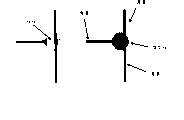
图23显示构建称为‘Y-阀’的MOV微型阀的改进方法,所述Y-阀具有三相连接。Figure 23 shows an improved method of constructing a MOV microvalve called a 'Y-valve' with a three-phase connection.
图24显示MOV流通阀,其中两束或多数液流可汇集在一起。Figure 24 shows a MOV flow-through valve where two or more streams can be brought together.
图25比较了微型阀不位于连接点的情况(左图)和通过如图24所示的流通阀与另一通道连接以消除死容积的实施方式。Figure 25 compares the case where the microvalve is not located at the connection point (left panel) to an embodiment where the dead volume is eliminated by connecting to another channel through a flow-through valve as shown in Figure 24.
图26显示使用具有改进的顺磁性颗粒捕集特征的微流体线路。Figure 26 shows the use of a microfluidic circuit with improved paramagnetic particle trapping characteristics.
图27显示改变微流体通道的横截面面积,以减慢流动并改进通过磁力、光学和其它方法进行的颗粒捕集。Figure 27 shows varying the cross-sectional area of a microfluidic channel to slow flow and improve particle capture by magnetic, optical, and other methods.
图28显示通过打开MOV微型阀改变微流体通道的横截面面积,以减慢流速和改善通过磁力、光学和其它方法进行的颗粒捕集。Figure 28 shows changing the cross-sectional area of a microfluidic channel by opening a MOV microvalve to slow flow rate and improve particle trapping by magnetic, optical and other methods.
图29显示用MOV Y联结件将储库和其它流体来源连接于多个通道。Figure 29 shows the use of MOV Y couplings to connect reservoirs and other fluid sources to multiple channels.
图30显示利用流通阀递送试剂或样品,以最大程度减小交叉点的死容积,在需要时通道在交叉点上可互不连通。Figure 30 shows the use of flow-through valves to deliver reagents or samples to minimize dead volume at junctions where channels can be disconnected if desired.
图31显示含有微型阀如MOV微型泵的环。Figure 31 shows a ring containing microvalves such as MOV micropumps.
图32显示在紧凑设计中集成多种功能的可编程微流体线路。Figure 32 shows a programmable microfluidic circuit integrating multiple functions in a compact design.
图33显示混合型塑料微芯片。Figure 33 shows a hybrid plastic microchip.
图34显示使用星形加工设计和检测器的紧凑设计中集成了多种功能的可编程微流体线路。Figure 34 shows a programmable microfluidic circuit integrating multiple functions in a compact design using star-shaped processing design and detectors.
图35显示机械夹紧的微芯片的设计。Figure 35 shows the design of a mechanically clamped microchip.
图36显示机械夹紧的微芯片的照片,上图从上方拍摄,下图从下方拍摄。Figure 36 shows photographs of a mechanically clamped microchip, taken from above in the upper image and from below in the lower image.
图37显示机械夹紧的微芯片的布局。Figure 37 shows the layout of a mechanically clamped microchip.
图38显示使用转移带或涂有粘合剂的材料的微芯片的组件。Figure 38 shows the assembly of a microchip using a transfer tape or adhesive coated material.
图39显示由粘合的层构成的微芯片。Figure 39 shows a microchip constructed of bonded layers.
图40显示阀与粘合的层的局部放大图。Figure 40 shows an enlarged partial view of the valve and bonded layers.
图41显示包含加热器和散热器的粘合剂层叠微芯片。Figure 41 shows an adhesive laminated microchip including a heater and heat sink.
图42显示塑料层叠微芯片,其包含可由可编程启动装置控制的通常关闭的阀。Figure 42 shows a plastic laminated microchip containing a normally closed valve controllable by a programmable activation device.
图43显示塑料层叠微芯片,其包含可由可编程启动装置控制的通常开通的阀。Figure 43 shows a plastic laminated microchip containing a normally open valve controllable by a programmable activation device.
图44显示四层阀。Figure 44 shows a four-layer valve.
图45显示为珠清除制造的掩模设计顶视图和塑料微芯片。Figure 45 shows a top view of the mask design and plastic microchip fabricated for bead removal.
图46显示可以用塑料或其它材料制造的微芯片上方的设计,下图是丙烯酸微芯片的照片。Figure 46 shows a design over a microchip that can be made of plastic or other materials, and the bottom image is a photo of an acrylic microchip.
图47显示使用MOV泵将样品在热区和冷区之间移动。Figure 47 shows the use of MOV pumps to move samples between hot and cold zones.
图48显示使用MOV泵将样品在三个温度区之间移动。Figure 48 shows the use of MOV pumps to move samples between three temperature zones.
图49显示在不通过泵的情况下,在热区和冷区之间移动样品。Figure 49 shows moving samples between hot and cold zones without going through a pump.
图50显示在多通道热循环装置中的温度区之间移动多种样品以提高通量。Figure 50 shows moving multiple samples between temperature zones in a multi-lane thermal cycler to increase throughput.
图51显示在具有清除通道的多通道热循环装置中的温度区之间移动多种样品以提高通量。Figure 51 shows moving multiple samples between temperature zones in a multi-channel thermal cycler with purge channels to increase throughput.
图52显示两个微型阀中的两种温度的循环。Figure 52 shows the cycling of two temperatures in two microvalves.
图53显示三个微型阀中的三种温度的循环。Figure 53 shows cycling of three temperatures in three microvalves.
图54显示微型阀中的三种温度的往复。Figure 54 shows the reciprocation of three temperatures in a microvalve.
图55显示NBP超级焦磷酸测序(NanoBioPrep SuperPyroSequencing)(NanoBioPrepSPS)过程的工作流和工艺的详细描述。Figure 55 shows a detailed description of the workflow and process of the NBP Super PyroSequencing (NanoBioPrep SuperPyroSequencing) (NanoBioPrep SPS ) process.
图56显示42个连接微芯片的NanoBioPrepSPS连接模块。Figure 56 shows 42 NanoBioPrep SPS connection modules connected to microchips.
图57显示96通道毛细管盒。Figure 57 shows a 96-channel capillary cartridge.
图58显示两个用于连接的可编程微流体线路。Figure 58 shows two programmable microfluidic circuits for connection.
图59显示使用可编程微流体线路的96个连接线路的微芯片。Figure 59 shows a microchip with 96 connected lines using programmable microfluidic circuits.
图60显示捕集在星形捕获区的磁珠。Figure 60 shows magnetic beads trapped in a star-shaped capture zone.
图61显示emPCR扩增的示意图。Figure 61 shows a schematic of emPCR amplification.
图62显示使用循环水的热循环器。Figure 62 shows a thermal cycler using circulating water.
图63显示多路闭锁微型阀装置。Figure 63 shows a multi-way lockout microvalve assembly.
图64显示在emPCR模块中进行的热循环。Figure 64 shows thermal cycling performed in the emPCR module.
发明详述Detailed description of the invention
一方面,本发明提供有关使用可编程微流体线路和装置加工生化或化学样品的指南。在一些实施方式中,微流体过程与毫升或厘升级的输入物或样品相联系。公开了其它化学或生化过程以及多种过程的集成。在一些实施方式中,教导了有关不同设计的微型阀的显微制造。In one aspect, the present invention provides guidelines for processing biochemical or chemical samples using programmable microfluidic circuits and devices. In some embodiments, microfluidic processes are associated with milliliters or centiliters of input or sample. Other chemical or biochemical processes and integration of processes are disclosed. In some embodiments, microfabrication of microvalves of different designs is taught.
在某些实施方式中,本发明微流体装置包括微流体层、致动层和夹在它们中间的弹性膜。流体层包括经调整能允许液体流动的流体通道。在某些实施方式中,流体通道位于接触弹性膜的微流体层的表面。在此实施方式中,可将开通通道、沟或槽蚀刻到该层表面内。在其它实施方式中,通道可以在该层的内部,例如是暗道、管道或管线的形式。内部通道可通过表面通向该通道的孔与该层表面连通。在一种制备方法中,两个或多个亚层可相互抹除,以便在两个亚层匹配时至少一个亚层包含形成封闭通道的沟槽。在此实施方式中,亚层之一包含开口于表面,如端口或连接点的孔,以允许横跨阀流动。本发明隔膜阀移动确定体积的液体。三个一组设置时,隔膜阀可用作隔膜泵,它用作容积式泵。本发明的模块化装置可包含使模块相互移动的器件(如步进电动机),以使它们配合和匹配横跨不同模块的流体通道(例如顺次设置的)。通过使快速活性的模块横跨较慢活性的模块移动,以使快速模块将样品递送至较慢模块的各线路中,从而协调快速活性和较慢活性。第一个单个样品可在许多较慢通道之间分配,或者可将许多不同样品递送至各个第二线路中。In certain embodiments, a microfluidic device of the present invention includes a microfluidic layer, an actuation layer, and an elastic membrane sandwiched therebetween. The fluid layer includes fluid channels adapted to allow fluid flow. In certain embodiments, the fluidic channels are located on the surface of the microfluidic layer that contacts the elastic membrane. In this embodiment, open channels, trenches or grooves may be etched into the surface of the layer. In other embodiments, the channels may be inside the layer, for example in the form of tunnels, ducts or pipelines. Internal channels may communicate with the surface of the layer through pores at the surface leading to the channels. In one method of manufacture, two or more sublayers are mutually erasable so that when the two sublayers are mated, at least one sublayer contains grooves that form closed channels. In this embodiment, one of the sublayers contains pores that open to a surface, such as a port or connection point, to allow flow across the valve. The diaphragm valve of the present invention moves a defined volume of liquid. Diaphragm valves can be used as diaphragm pumps when set up in triplets, which act as positive displacement pumps. The modular devices of the present invention may include means (such as stepper motors) for moving the modules relative to each other so that they engage and match the fluid channels (eg, sequentially) across the different modules. Fast activity and slower activity are coordinated by moving the fast activity module across the slower activity module so that the fast module delivers the sample into each line of the slower module. A first single sample can be divided among many slower lanes, or many different samples can be delivered into each of the second lines.
另一方面,利用微结构在微芯片上移动流体。在一些实施方式中,三个或多个阀可产生用于移动流体的泵(包括但不限于:4、5、6、7、8、9、10、11、12、13、14、15、16、17、18、19或20个阀)。在一个实施方式中,所述阀是隔膜阀。隔膜阀可通过致动可形变结构产生。在一些实施方式中,隔膜阀包括阀座。在一些实施方式中,隔膜阀可允许或阻止通道,如微通道中的流体流动。在其它实施方式中,产生的隔膜阀无阀座。在一些实施方式中,通过改变通道的横截面积,隔膜阀可控制流体通过微通道的流动速度。在另一实施方式中,隔膜阀不完全抑制流体流动,换言之,该阀在开通和关闭位置均允许一部分流体流动。图1显示在微芯片A上,泵由输入区域至输出区域移动流体的应用。On the other hand, microstructures are used to move fluids on microchips. In some embodiments, three or more valves can create a pump for moving fluid (including but not limited to: 4, 5, 6, 7, 8, 9, 10, 11, 12, 13, 14, 15, 16, 17, 18, 19 or 20 valves). In one embodiment, the valve is a diaphragm valve. A diaphragm valve can be created by actuating a deformable structure. In some embodiments, the diaphragm valve includes a valve seat. In some embodiments, a diaphragm valve can allow or prevent fluid flow in a channel, such as a microchannel. In other embodiments, the resulting diaphragm valve is seatless. In some embodiments, a diaphragm valve can control the flow rate of a fluid through a microchannel by varying the cross-sectional area of the channel. In another embodiment, the diaphragm valve does not completely inhibit fluid flow, in other words, the valve allows a portion of fluid flow in both the open and closed positions. Figure 1 shows the application of a pump moving fluid from an input area to an output area on a microchip A.
在另一实施方式中,利用微结构移动包含感兴趣分析物的流体。在一个实施方式中,分析物是颗粒。其中,颗粒包括蛋白质、肽、朊病毒、毒素、感染性生物体(包括但不限于:细菌、病毒、真菌)、细胞(包括但不限于:血细胞、白细胞、NK细胞、血小板、皮肤细胞、颊(cheek)细胞、精细胞、滋养层、巨噬细胞、粒细胞和肥大细胞)、核酸(如DNA和RNA,包括但不限于:mRNA、rRNA、tRNA、siRNA、线粒体DNA、染色体DNA、基因组DNA和质粒)、细胞成分(包括但不限于:核、染色体、核糖体、内体、线粒体、液泡、叶绿体和其他胞质片段)、糖(包括但不限于:多糖、纤维素或壳多糖)和脂质(包括但不限于:胆固醇、甘油三酯)。在另一实施方式中,利用微结构移动包含感兴趣分析物的流体,所述感兴趣分析物包括例如:分子或化学物质(包括但不限于:二氧芑、PCB、重金属、有机磷酸酯、雌激素模拟物、rBST、药物代谢物、致癌物或致畸物)。In another embodiment, microstructures are used to move a fluid containing an analyte of interest. In one embodiment, the analyte is a particle. Among them, particles include proteins, peptides, prions, toxins, infectious organisms (including but not limited to: bacteria, viruses, fungi), cells (including but not limited to: blood cells, white blood cells, NK cells, platelets, skin cells, buccal (cheek) cells, sperm cells, trophoblasts, macrophages, granulocytes, and mast cells), nucleic acids (such as DNA and RNA, including but not limited to: mRNA, rRNA, tRNA, siRNA, mitochondrial DNA, chromosomal DNA, genomic DNA and plasmids), cellular components (including but not limited to: nuclei, chromosomes, ribosomes, endosomes, mitochondria, vacuoles, chloroplasts, and other cytoplasmic fragments), sugars (including but not limited to: polysaccharides, cellulose, or chitin) and Lipids (including but not limited to: cholesterol, triglycerides). In another embodiment, microstructures are used to move fluids containing analytes of interest, including, for example, molecules or chemicals (including but not limited to: dioxins, PCBs, heavy metals, organophosphates, estrogen mimetics, rBST, drug metabolites, carcinogens or teratogens).
另一方面,将微结构用于样品捕获和纯化,例如显微分离、微型阀、微型泵和微型路由选择器,纳米流体控制和纳米级生化。在一个实施方式中,利用微结构使复杂工作流小型化和自动化(图2)。在一个实施方式中,微量级片内阀(MOV)阀、泵和路由选择器以及操作它们的设备包括纳米生物处理器(NanoBioProcesso.r)平台。在另一实施方式中,所述微芯片包括具有一个或多个功能组件的微结构,所述组件包括但不限于:反应器、捕获区、温度循环区、热区、冷区、分离通道、分析线路、混合器、珠加工单元、散热器、珀耳帖装置(peltier device)和磁体。在一些实施方式中,捕获区可包括连接于基材的结合部分,包括但不限于:抗体、Fc片段、Fab片段、凝集素、多糖、受体配体、DNA序列、PNA序列、siRNA序列或RNA序列。在另一实施方式中,微结构的一个或多个区域可包括珠,例如磁力反应性珠。在一些实施方式中,所述珠可包括结合部分,包括但不限于:抗体、Fc片段、Fab片段、凝集素、多糖、受体配体、DNA序列、PNA序列、siRNA序列或RNA序列。在一些实施方式中,磁力反应性珠的尺寸小于600nm,如590nm、580nm、570nm、560nm、550nm、540nm、530nm、520nm、510nm、500nm、490nm、480nm、470nm、460nm、450nm、440nm、430nm、420nm、410nm、400nm、390nm、380nm、370nm、360nm、350nm、340nm、330nm、320nm、310nm、300nm、290nm、280nm、270nm、260nm、250nm、240nm、230nm、220nm、210nm、200nm、190nm、180nm、170nm、160nm、150nm、140nm、130nm、120nm、110nm、100nm、90nm、80nm、70nm、60nm、50nm、40nm、30nm、20nm或10nm。在一些实施方式中,磁力反应性珠包含铁化合物。在一个实施方式中,磁力反应性珠是铁氧体珠。On the other hand, microstructures are used for sample capture and purification, such as microseparation, microvalves, micropumps, and microrouters, nanofluidic control, and nanoscale biochemistry. In one embodiment, microstructures are utilized to miniaturize and automate complex workflows (FIG. 2). In one embodiment, microscale on-chip valve (MOV) valves, pumps and routers, and devices for operating them comprise a NanoBioProcesso.r platform. In another embodiment, the microchip includes a microstructure having one or more functional components including, but not limited to: reactors, capture zones, temperature cycling zones, hot zones, cold zones, separation channels, Analyze lines, mixers, bead processing units, heat sinks, peltier devices and magnets. In some embodiments, the capture region can include a binding moiety attached to a substrate, including but not limited to: antibodies, Fc fragments, Fab fragments, lectins, polysaccharides, receptor ligands, DNA sequences, PNA sequences, siRNA sequences or RNA-seq. In another embodiment, one or more regions of the microstructure may comprise beads, such as magnetically responsive beads. In some embodiments, the beads can include binding moieties including, but not limited to: antibodies, Fc fragments, Fab fragments, lectins, polysaccharides, receptor ligands, DNA sequences, PNA sequences, siRNA sequences, or RNA sequences. In some embodiments, the size of the magnetically reactive beads is less than 600nm, such as 590nm, 580nm, 570nm, 560nm, 550nm, 540nm, 530nm, 520nm, 510nm, 500nm, 490nm, 480nm, 470nm, 460nm, 450nm, 440nm, 430nm, 420nm, 410nm, 400nm, 390nm, 380nm, 370nm, 360nm, 350nm, 340nm, 330nm, 320nm, 310nm, 300nm, 290nm, 280nm, 270nm, 260nm, 250nm, 240nm, 230nm, 220nm, 210nm, 200nm, 190nm, 180nm, 170nm, 160nm, 150nm, 140nm, 130nm, 120nm, 110nm, 100nm, 90nm, 80nm, 70nm, 60nm, 50nm, 40nm, 30nm, 20nm or 10nm. In some embodiments, the magnetically reactive beads comprise iron compounds. In one embodiment, the magnetically reactive beads are ferrite beads.
在一些实施方式中,磁珠的直径为10-1000nm、20-800nm、30-600nm、40-400nm或50-200nm。在一些实施方式中,磁珠的直径大于10nm、50nm、100nm、200nm、500nm、1000nm或5000nm。磁珠可以是干燥的或悬浮于液体中。可通过本领域已知的任何方式将流体样品与含磁珠的第二液体介质混合,这些方式包括2005年9月15日提交的题为“流体递送的方法和系统(Methods and Systems for Fluid Delivery)”的美国序列号[未指定]所述的方式。In some embodiments, the magnetic beads have a diameter of 10-1000 nm, 20-800 nm, 30-600 nm, 40-400 nm, or 50-200 nm. In some embodiments, the magnetic beads have a diameter greater than 10 nm, 50 nm, 100 nm, 200 nm, 500 nm, 1000 nm, or 5000 nm. Magnetic beads can be dry or suspended in liquid. The fluid sample can be mixed with the second liquid medium containing magnetic beads by any means known in the art, including methods and systems for Fluid Delivery, filed September 15, 2005 )” in the manner described in the U.S. serial number [unspecified].
在一些实施方式中,当样品中的分析物(如感兴趣或不感兴趣的分析物)是铁磁体或具有磁性时,可利用磁场将这类分析物与一种或多种其它分析物(如感兴趣或不感兴趣的分析物)或不含分析物的样品分隔或分离开。例如,将第一分析物偶联于特异性结合第一分析物的抗体,其中所述抗体也偶联于磁珠。当含有第一分析物-磁珠复合物和第二分析物的分析物混合物进入磁场时,捕获第一分析物-磁珠复合物,而其它细胞继续迁移通过该磁场。然后,可通过移除磁场释放第一分析物。In some embodiments, when an analyte in a sample (e.g., an analyte of interest or not) is ferromagnetic or magnetic, a magnetic field can be used to couple such analyte with one or more other analytes (e.g., analyte of interest or not) or analyte-free samples are separated or separated. For example, the first analyte is coupled to an antibody that specifically binds the first analyte, wherein the antibody is also coupled to magnetic beads. When the analyte mixture containing the first analyte-magnetic bead complex and the second analyte enters the magnetic field, the first analyte-magnetic bead complex is captured while other cells continue to migrate through the magnetic field. The first analyte can then be released by removing the magnetic field.
磁场可位于本文所述微结构的外部或内部。外部磁场是来源位于本文所述装置(如微芯片、隔膜阀、通道、阻挡物)以外的磁场。内部磁场是来源位于本文所述装置内部的磁场。在一些实施方式中,通过电磁体或永磁体,如稀土磁体产生磁场。在一些实施方式中,磁体是可移动的,并且可相对于微结构移动。The magnetic field can be located externally or internally to the microstructures described herein. An external magnetic field is a magnetic field whose source is located outside of the device described herein (eg, microchip, diaphragm valve, channel, barrier). An internal magnetic field is a magnetic field whose source is located inside the device described herein. In some embodiments, the magnetic field is generated by electromagnets or permanent magnets, such as rare earth magnets. In some embodiments, the magnet is movable and movable relative to the microstructure.
在一些实施方式中,当需要分离的分析物(如感兴趣或不感兴趣的分析物)不是铁磁体或不具有磁性时,可将磁珠偶联于选择性结合这类分析物的结合部分。结合部分的例子包括但不限于:凝集素、多肽、抗体、核酸等。在优选实施方式中,结合部分是选择性结合感兴趣分析物(如红细胞、癌细胞、精细胞、细胞核、染色体、白细胞、上皮细胞、细菌、病毒或真菌)的抗体或抗体片段(如Fab、Fc、sfv)。因此,在一些实施方式中,磁珠可用抗体(优选单克隆抗体)修饰。In some embodiments, when the analytes to be separated (eg, analytes of interest or not) are not ferromagnetic or magnetic, magnetic beads can be coupled to binding moieties that selectively bind such analytes. Examples of binding moieties include, but are not limited to: lectins, polypeptides, antibodies, nucleic acids, and the like. In preferred embodiments, the binding moiety is an antibody or antibody fragment (such as a Fab, Fc, sfv). Thus, in some embodiments, magnetic beads can be modified with antibodies, preferably monoclonal antibodies.
可在接触样品之前将磁性颗粒偶联于本文所述的任何一种或多种微结构,或可在将样品递送至装置前将磁珠与样品混合。Magnetic particles can be coupled to any one or more of the microstructures described herein prior to contacting the sample, or magnetic beads can be mixed with the sample prior to delivery of the sample to the device.
在一些实施方式中,本文所述系统包括含有能够改变捕获或未捕获的分析物的磁性的试剂(如磁珠)的储库。该储库优选流体偶联于本文所述的一种或多种微结构。例如,在一些实施方式中,磁性储库偶联于大小-微通道,在其它实施方式中,磁性储库偶联于捕获区。In some embodiments, the systems described herein include a reservoir containing reagents (eg, magnetic beads) capable of altering the magnetic properties of captured or uncaptured analytes. The reservoir is preferably fluidly coupled to one or more microstructures described herein. For example, in some embodiments, a magnetic reservoir is coupled to a size-microchannel, and in other embodiments, a magnetic reservoir is coupled to a capture zone.
试剂的确切性质取决于分析物的性质。示范性试剂包括氧化或还原过度金属的物质,氧化或还原血红蛋白的试剂,能够结合分析物的磁珠或能够螯合、氧化或结合铁或其它磁性材料或颗粒的试剂。所述试剂可用于改变分析物的磁性,以赋予或提高其磁场吸引性、赋予或提高其磁场排斥性、或消除磁性以使分析物不受磁场影响。The exact nature of the reagent will depend on the nature of the analyte. Exemplary reagents include substances that oxidize or reduce transition metals, reagents that oxidize or reduce hemoglobin, magnetic beads capable of binding analytes, or reagents capable of chelating, oxidizing or binding iron or other magnetic materials or particles. The reagents can be used to alter the magnetic properties of the analyte, to render or increase its magnetic field attraction, to render or increase its magnetic field repulsion, or to demagnetize the analyte so that it is not affected by the magnetic field.
对磁场作出反应的磁珠可用于本发明的装置和方法。所需颗粒是可通过化学反应、物理吸附、缠结或静电作用对其表面化学进行化学或物理修饰的颗粒。Magnetic beads that respond to magnetic fields can be used in the devices and methods of the invention. Desired particles are those whose surface chemistry can be chemically or physically modified by chemical reaction, physical adsorption, entanglement or electrostatic interaction.
在一些实施方式中,可通过本领域已知的任何方式将捕获部分结合于磁珠。例子包括化学反应、物理吸附、缠结或静电作用。结合于磁珠的捕获部分取决于目标分析物的性质。捕获部分的例子包括但不限于:蛋白质(如抗体、亲和素和细胞表面受体)、带电或不带电的聚合物(如多肽、核酸和合成聚合物)、疏水或亲水性聚合物、小分子(如生物素、受体配体和螯合剂)、糖和离子。可使用这类捕获部分特异性结合细胞(如,细菌、病原体、胎儿细胞、胎儿血细胞、精细胞、癌细胞和血细胞)、细胞器(如细胞核)、病毒、肽、蛋白质、糖、聚合物、核酸、超分子复合物、其它生物分子(如有机或无机分子)、小分子、离子,或它们的组合(嵌合物)或片段。In some embodiments, capture moieties can be bound to magnetic beads by any means known in the art. Examples include chemical reactions, physical adsorption, entanglement or electrostatic interactions. The capture moiety bound to the magnetic beads depends on the nature of the target analyte. Examples of capture moieties include, but are not limited to: proteins (such as antibodies, avidins, and cell surface receptors), charged or uncharged polymers (such as polypeptides, nucleic acids, and synthetic polymers), hydrophobic or hydrophilic polymers, Small molecules (such as biotin, receptor ligands, and chelators), sugars, and ions. Such capture moieties can be used to specifically bind cells (e.g., bacteria, pathogens, fetal cells, fetal blood cells, sperm cells, cancer cells, and blood cells), organelles (e.g., nuclei), viruses, peptides, proteins, sugars, polymers, nucleic acids , supramolecular complexes, other biomolecules (such as organic or inorganic molecules), small molecules, ions, or combinations (chimeras) or fragments thereof.
一旦改变分析物的磁性后,可用其相对于样品其它组分分离或富集分离物。分离或富集可包括利用磁场将所需分析物吸引至磁场而进行正选择、或可通过将不感兴趣的分析物吸引至磁场而进行负选择。在两种情况下,可收集含有所需分析物的分析物群体以便进行分析或进一步加工。Once the magnetic properties of an analyte have been altered, it can be used to separate or enrich the isolate relative to other components of the sample. Separation or enrichment can involve positive selection using a magnetic field to attract analytes of interest to a magnetic field, or negative selection can occur by attracting analytes of no interest to a magnetic field. In both cases, an analyte population containing the desired analyte can be collected for analysis or further processing.
在一些实施方式中,将微结构用于分析至少一种分子、颗粒或化学物质的分析方法。在一个例子中,分析核酸。分析包括但不限于:连接或聚合酶链反应扩增、转录、翻译、偶联的转录和翻译。在另一个例子中,标记的结合部分结合于目标分析物(如细胞、蛋白质、细胞片段或核酸)。其中,结合部分包括但不限于:抗体、抗体片段、受体、受体配体、凝集素、多糖或核酸。其中,标记包括但不限于:荧光标记(包括但不限于:FITC、PE、德克萨斯红(TexasRED)、赛博绿(Cyber Green)、JOE、FAM、HEX、TAMRA、ROX、阿莱克萨(Alexa)488、阿莱克萨532、阿莱克萨546、阿莱克萨405或其他荧光团)、放射性标记(包括但不限于:P32、H3或C14)、荧光蛋白(包括但不限于:GFP、RFP或YFP)、量子点、金颗粒、银颗粒、生物素、珠(包括但不限于磁珠或聚苯乙烯珠)。In some embodiments, the microstructure is used in an analytical method for analyzing at least one molecule, particle or chemical species. In one example, nucleic acids are analyzed. Assays include, but are not limited to: ligation or polymerase chain reaction amplification, transcription, translation, coupled transcription and translation. In another example, a labeled binding moiety binds to an analyte of interest (eg, a cell, protein, cell fragment, or nucleic acid). Wherein, the binding moiety includes but not limited to: antibody, antibody fragment, receptor, receptor ligand, lectin, polysaccharide or nucleic acid. Among them, the labels include but are not limited to: fluorescent labels (including but not limited to: FITC, PE, Texas Red (TexasRED), Cyber Green (Cyber Green), JOE, FAM, HEX, TAMRA, ROX, Alexa (Alexa) 488, Alexa 532, Alexa 546, Alexa 405 or other fluorophores), radioactive labels (including but not limited to: P 32 , H 3 or C 14 ), fluorescent proteins (including but not limited to : GFP, RFP or YFP), quantum dots, gold particles, silver particles, biotin, beads (including but not limited to magnetic beads or polystyrene beads).
在一些实施方式中,公开了转运、加工和分析样品的MOV泵、阀和路由选择器。外部致动的气动型片内阀、泵和路由选择器可在10nL至10μL的操作体积下控制流体流动,所述操作体积包括但不限于:10nl、11nl、12nl、13nl、14nl、15nl、16nl、17nl、18nl、19nl、20nl、21nl、22nl、23nl、24nl、25nl、26nl、27nl、28nl、29nl、30nl、35nl、40nl、45nl、50nl、55nl、60nl、65nl、70nl、75nl、80nl、85nl、90nl、95nl、100nl、110nl、120nl、130nl、140nl、150nl、160nl、170nl、180nl、190nl、200nl、250nl、300nl、350nl、400nl、450nl、500nl、550nl、600nl、650nl、700nl、750nl、800nl、850nl、900nl、950nl、1000nl、1.1μl、1.2μl、1.3μl、1.4μl、1.5μl、1.6μl、1.7μl、1.8μl、1.9μl、2.0μl、2.5μl、3.0μl、3.5μl、4.0μl、4.5μl、5.0μl、5.5μl、6.0μl、6.5μl、7.0μl、7.5μl、8.0μl、8.5μl、9.0μl、9.5μl、10.0μl(参见Grover,W.H.等,2003.Sensors and Actuators B89:315-323;美国专利申请号10/750,533;美国专利申请号10/540,658;通过引用将其全文纳入本文)。In some embodiments, MOV pumps, valves and routers for transporting, processing and analyzing samples are disclosed. Externally actuated pneumatically actuated on-chip valves, pumps, and routers control fluid flow at operating volumes from 10nL to 10μL, including but not limited to: 10nl, 11nl, 12nl, 13nl, 14nl, 15nl, 16nl , 17nl, 18nl, 19nl, 20nl, 21nl, 22nl, 23nl, 24nl, 25nl, 26nl, 27nl, 28nl, 29nl, 30nl, 35nl, 40nl, 45nl, 50nl, 55nl, 60nl, 65nl, 70nl, 75nl, 80nl, 85nl 、90nl、95nl、100nl、110nl、120nl、130nl、140nl、150nl、160nl、170nl、180nl、190nl、200nl、250nl、300nl、350nl、400nl、450nl、500nl、550nl、600nl、650nl、700nl、750nl、800nl , 850nl, 900nl, 950nl, 1000nl, 1.1μl, 1.2μl, 1.3μl, 1.4μl, 1.5μl, 1.6μl, 1.7μl, 1.8μl, 1.9μl, 2.0μl, 2.5μl, 3.0μl, 3.5μl, 4.0μl , 4.5 μl, 5.0 μl, 5.5 μl, 6.0 μl, 6.5 μl, 7.0 μl, 7.5 μl, 8.0 μl, 8.5 μl, 9.0 μl, 9.5 μl, 10.0 μl (see Grover, W.H. et al., 2003. Sensors and Actuators B89: 315-323; US Patent Application No. 10/750,533; US Patent Application No. 10/540,658; incorporated herein by reference in their entirety).
在一个实施方式中,MOV阀和泵将两个玻璃微流体层与与聚二甲基硅氧烷(PDMS)可形变膜层和气动层合并起来,聚二甲基硅氧烷(PDMS)可形变膜层能打开或关闭阀,气动层能使膜发生形变并致动阀(图2)。蚀刻在玻璃流体晶片上方的微流体通道是不连续的,通过“通路晶片”和微流体通道通向通常是关闭的阀座(图2,上图)。通过常规级真空和压力源将真空施加于气动移动室时,通常关闭的PDMS膜从阀座抬起以打开该阀(图2,中图)。图2的下图显示阀的顶视图,比例尺与上方二图相同。In one embodiment, the MOV valve and pump combine two glass microfluidic layers with a deformable membrane layer and a pneumatic layer of polydimethylsiloxane (PDMS), which can The deformable membrane layer opens or closes the valve, and the pneumatic layer deforms the membrane and actuates the valve (Figure 2). The microfluidic channel etched above the glass fluidic wafer is discontinuous through the "via wafer" and the microfluidic channel leads to the normally closed valve seat (Fig. 2, upper panel). When vacuum is applied to the pneumatic moving chamber by a conventional grade vacuum and pressure source, the normally closed PDMS membrane is lifted from the valve seat to open the valve (Figure 2, middle panel). The lower panel of Figure 2 shows a top view of the valve on the same scale as the upper two panels.
在另一实施方式中,自吸性MOV泵(图3,上图)通过协调三个或多个阀的操作产生,并可产生双向的流动。在另一实施方式中,路由选择器由三个或多个MOV阀制成(图3,中上图)。在另一实施方式中,MOV混合器(图3,中下图)能快速混合样品和试剂。在另一实施方式中,MOV装置精巧地与磁珠一起工作,以泵送或捕集珠组(图3,下图)。In another embodiment, a self-priming MOV pump (Fig. 3, upper panel) is created by coordinating the operation of three or more valves and can generate flow in both directions. In another embodiment, the router is made of three or more MOV valves (Fig. 3, upper middle panel). In another embodiment, a MOV mixer (Figure 3, bottom middle panel) enables rapid mixing of samples and reagents. In another embodiment, MOV devices work smartly with magnetic beads to pump or trap sets of beads (Figure 3, bottom panel).
通常关闭的MOV阀、泵和路由选择器持久耐用、容易制造、成本低、可用于密集阵列且具有较低的死容积。在微芯片,如纳米生物处理器微芯片上不难制造MOV阀、泵和路由选择器的阵列。在一个实施方式中,微芯片上的所有MOV阀、泵和路由选择器均可在利用单个膜的简单生产工艺中同时产生,所述膜包括例如如特氟龙、硅酮弹性体、聚二甲基硅氧烷(PDMS)、聚酰亚胺、迈拉、胶乳、氟化橡胶、聚碳酸酯、丙烯酸、伞塔橡胶(santaprene)、聚氨酯或丁钠橡胶的片层。这种技术能够在微芯片上产生复杂的微型和纳米流体线路。Normally closed MOV valves, pumps and routers are durable, easy to manufacture, low cost, can be used in dense arrays and have low dead volume. Arrays of MOV valves, pumps and routers are not difficult to fabricate on a microchip, such as a nanobioprocessor microchip. In one embodiment, all MOV valves, pumps and routers on a microchip can be produced simultaneously in a simple production process utilizing a single membrane including, for example, Teflon, silicone elastomer, poly Sheets of methylsiloxane (PDMS), polyimide, mylar, latex, viton, polycarbonate, acrylic, santaprene, polyurethane or buna. This technique enables the generation of complex micro- and nanofluidic circuits on microchips.
在制造方法的一方面,公开了微流体结构。在一个实施方式中,将多层材料夹在一起形成完整的微流体结构以制造该结构。在一个实施方式中,使用粘合剂将这些层结合在一起(图38-41)。在另一实施方式中,通过至少一个夹具,包括但不限于2、3、4、5、6、7、8、9、10、11、12、13、14、15、16、17、18、19、20、25、30、40、45或50个夹具将这些层结合在一起(图35和36)。在另一实施方式中,通过粘合剂和夹具或销的组合将这些层结合在一起。在一个实施方式中,所述夹在一起的多层材料包括选自下组的至少三层:顶层、微流体层、通路层、界面层、膜层、气动层、底层、散热器层、加热器层、致动层和阀层。在另一实施方式中,所述层由一个以上的基板组成。例如,可用于产生微型阀的基板包括但不限于:石英、玻璃(如硼硅玻璃,包括但不限于:派热克斯玻璃、硼浮玻璃(borofloat)、康宁(Corning)1737)、硅和塑料(包括但不限于:丙烯酸、聚碳酸酯、液晶聚合物、聚甲氧基丙烯酸甲酯(PMMA)、Zeonor、聚烯烃、聚丙烯和聚硫醇)。在另一例子中,可用作膜的基材包括但不限于:特氟龙、硅酮弹性体、聚二甲基硅氧烷(PDMS)、聚酰亚胺、迈拉、胶乳、氟化橡胶、聚碳酸酯、丙烯酸、伞塔橡胶、聚氨酯和丁钠橡胶。在另一例子中,可用作粘合剂的基材包括但不限于:转移带、涂有粘合剂的带,如硅酮基、丙烯酸或其他材料的薄片或薄膜。In one aspect of the method of fabrication, a microfluidic structure is disclosed. In one embodiment, multiple layers of material are sandwiched together to form a complete microfluidic structure to fabricate the structure. In one embodiment, an adhesive is used to hold the layers together (FIGS. 38-41). In another embodiment, through at least one clamp, including but not limited to 2, 3, 4, 5, 6, 7, 8, 9, 10, 11, 12, 13, 14, 15, 16, 17, 18, 19, 20, 25, 30, 40, 45 or 50 clamps hold the layers together (Figures 35 and 36). In another embodiment, the layers are bonded together by a combination of adhesive and clips or pins. In one embodiment, the sandwiched multilayer material comprises at least three layers selected from the group consisting of: top layer, microfluidic layer, access layer, interface layer, membrane layer, aerodynamic layer, bottom layer, heat sink layer, heating device layer, actuation layer and valve layer. In another embodiment, said layer consists of more than one substrate. For example, substrates that can be used to create microvalves include, but are not limited to, quartz, glass (such as borosilicate glass, including but not limited to: pyrex, borofloat, Corning 1737), silicon, and Plastics (including but not limited to: acrylic, polycarbonate, liquid crystal polymer, polymethylmethoxyacrylate (PMMA), Zeonor, polyolefin, polypropylene, and polythiol). In another example, substrates useful as membranes include, but are not limited to: Teflon, silicone elastomers, polydimethylsiloxane (PDMS), polyimide, Mylar, latex, fluorinated Rubber, polycarbonate, acrylic, berth, polyurethane, and buna. In another example, substrates that may be used as adhesives include, but are not limited to, transfer tapes, adhesive-coated tapes, such as sheets or films of silicone-based, acrylic, or other materials.
在一些实施方式中,所述微结构包括多个微通道。在一些实施方式中,所述微通道具有相同的宽度和深度。在其它实施方式中,所述微通道具有不同的宽度和深度。在一个实施方式中,微通道的特征是通道宽度大于递送至微结构的样品中感兴趣分析物的平均大小。在另一实施方式中,微通道的宽度等于或大于由样品分离的最大的分析物(如最大的细胞)。例如,在一些实施方式中,微结构中微通道的宽度大于50、60、70、80、90、100、110、120、130、140、150微米。在一些实施方式中,微通道的宽度小于100、90、80、70、60、50、40、30或20微米。在一些实施方式中,微结构中的微通道的深度大于50、60、70、80、90、100、110、120、130、140、150微米。在一些实施方式中,微通道的深度小于100、90、80、70、60、50、40、30或20微米。在一些实施方式中,微通道的侧壁互相平行。在另一些实施方式中,微通道的顶面和底面相互平行。在另一些实施方式中,微通道包括具有不同横截面的区域。在一些实施方式中,微通道的横截面形状为楔形(cheese wedge),其中楔形的尖端指向下游。In some embodiments, the microstructure includes a plurality of microchannels. In some embodiments, the microchannels have the same width and depth. In other embodiments, the microchannels have different widths and depths. In one embodiment, the microchannel is characterized by a channel width greater than the average size of the analyte of interest in the sample delivered to the microstructure. In another embodiment, the width of the microchannel is equal to or greater than the largest analyte (eg, largest cell) separated from the sample. For example, in some embodiments, the width of the microchannels in the microstructure is greater than 50, 60, 70, 80, 90, 100, 110, 120, 130, 140, 150 microns. In some embodiments, the width of the microchannel is less than 100, 90, 80, 70, 60, 50, 40, 30, or 20 microns. In some embodiments, the depth of the microchannels in the microstructure is greater than 50, 60, 70, 80, 90, 100, 110, 120, 130, 140, 150 microns. In some embodiments, the depth of the microchannels is less than 100, 90, 80, 70, 60, 50, 40, 30, or 20 microns. In some embodiments, the sidewalls of the microchannels are parallel to each other. In other embodiments, the top and bottom surfaces of the microchannels are parallel to each other. In other embodiments, a microchannel includes regions with different cross-sections. In some embodiments, the cross-sectional shape of the microchannel is a cheese wedge, with the tip of the wedge pointing downstream.
在一些实施方式中,微通道或微结构作为槽或沟蚀刻到基板中。在一些实施方式中,可以通过基板钻、镗、切或蚀刻出洞。在其它实施方式中,基板中形成的微通道是封闭在微芯片单层基板内的暗道或孔。In some embodiments, the microchannels or microstructures are etched into the substrate as grooves or trenches. In some embodiments, holes may be drilled, bored, cut or etched through the substrate. In other embodiments, the microchannels formed in the substrate are channels or holes enclosed within the single layer substrate of the microchip.
在一些实施方式中,用标准照相平版技术形成微结构。例如,可利用照相平版技术在绝缘体上的硅(SOI)晶片上产生有凸起的光刻胶图案。SOI晶片由500μm厚的Si(100)晶片上1μm厚的SiO2层之上的100μm厚的Si(100)层构成。为了优化光刻胶粘附,可在涂布光刻胶之前使SOI晶片接触六甲基二硅氮烷的高温蒸汽。UV敏感型光刻胶旋涂在晶片上,90℃烘烤30分钟,通过铬接触掩模接触UV光300秒,在显影器中显影5分钟,再于90℃烘烤30分钟。可根据光刻胶的特性和厚度改变工艺参数。铬接触掩模的图案转印到光刻胶上,并决定了微结构的几何形状。In some embodiments, the microstructures are formed using standard photolithographic techniques. For example, a raised photoresist pattern can be produced on a silicon-on-insulator (SOI) wafer using photolithography. The SOI wafer consisted of a 100 μm thick Si(100) layer on top of a 1 μm thick SiO2 layer on a 500 μm thick Si(100) wafer. To optimize photoresist adhesion, the SOI wafer can be exposed to high temperature vapor of hexamethyldisilazane prior to coating the photoresist. The UV-sensitive photoresist was spin-coated on the wafer, baked at 90°C for 30 minutes, exposed to UV light for 300 seconds through a chromium contact mask, developed in a developer for 5 minutes, and baked at 90°C for 30 minutes. Process parameters may vary depending on the properties and thickness of the photoresist. The pattern of the chromium contact mask is transferred to the photoresist and determines the geometry of the microstructure.
形成与微结构相同的光刻胶图案后,开始蚀刻。SiO2可用作蚀刻过程的终止剂。也可控制蚀刻在给定深度时停止,而不用终止剂层。在等离子体蚀刻机中,将光刻胶图案转移到100μm厚的Si层上。可利用多重深蚀刻实现一致的微结构。例如,使该基板接触富氟的等离子体流SF615秒,然后将该系统切换到富含碳氟化合物的等离子体流C4F810秒,以便在所有表面上涂上一层保护膜。在随后的蚀刻循环中,接触离子轰击优选清除水平表面上的聚合物,重复该循环多次,直到(例如)达到SiO2层。After forming the same photoresist pattern as the microstructure, etch begins. SiO2 can be used as a stopper for the etching process. It is also possible to control etching to stop at a given depth without using a stopper layer. In a plasma etcher, transfer the photoresist pattern onto the 100 μm thick Si layer. A consistent microstructure can be achieved using multiple deep etchs. For example, expose the substrate to a fluorine-rich plasma stream of SF6 for 15 seconds, then switch the system to a fluorocarbon-rich plasma stream of C4F8 for 10 seconds to coat all surfaces with a protective film . In subsequent etch cycles, contact ion bombardment preferably removes polymer on horizontal surfaces, and this cycle is repeated several times until, for example, a SiO2 layer is reached.
为了将结合部分与凸起表面偶联,可以使该基板接触氧等离子体,然后进行表面修饰产生二氧化硅层,将结合部分与其连接。然后,用蒸馏的去离子水冲洗该基板两次,空气干燥。将样品浸没在新鲜制备的2%v/v 3-[(2-氨基乙基)氨基]丙基三甲氧基硅烷的水溶液中30秒,以便将硅烷固定在暴露的玻璃上,然后再用蒸馏的去离子水洗涤。在氮气中干燥该基板并烘烤。接下来,将该基板浸入磷酸缓冲盐水配制的2.5%v/v戊二醛溶液中,室温下静置1小时。然后,再次冲洗该基板,并浸入蒸馏的去离子水配制的0.5mg/mL结合部分,如抗-CD71的溶液中,室温下静置15分钟,以便将结合物质偶联于凸起。然后,用蒸馏的去离子水冲洗该基板,在70%乙醇中浸没过夜以灭菌。To couple the binding moieties to the raised surface, the substrate can be exposed to an oxygen plasma followed by surface modification to produce a silicon dioxide layer to which the binding moieties are attached. Then, the substrate was rinsed twice with distilled deionized water and air dried. Submerge the sample in a freshly prepared 2% v/v solution of 3-[(2-aminoethyl)amino]propyltrimethoxysilane in water for 30 s to fix the silane on the exposed glass before distilling Wash with deionized water. The substrate was dried and baked under nitrogen. Next, the substrate was immersed in a 2.5% v/v glutaraldehyde solution prepared in phosphate-buffered saline, and allowed to stand at room temperature for 1 hour. Then, rinse the substrate again, and immerse in a 0.5 mg/mL solution of binding moieties, such as anti-CD71, prepared in distilled deionized water, and let stand at room temperature for 15 minutes to couple the binding substances to the protrusions. Then, the substrate was rinsed with distilled deionized water and sterilized by immersion in 70% ethanol overnight.
除上述方法以外,还可利用多种技术将结合部分固定在微结构的区域和装置表面上。出于简便和成本的考虑,可选择简单的物理吸附在表面上。另一种方法可使用以各种结合部分官能化的自身组装的单层(如金上的硫醇)。根据所结合的结合部分和用于制造该装置的材料,可采用其它方法。本领域已知表面修饰方法。此外,某些细胞可能优选结合未改变的材料表面。例如,一些细胞可以优选结合带正电、带负电或疏水性表面或某些聚合物中存在的化学基团。In addition to the methods described above, a variety of techniques can be used to immobilize binding moieties on microstructured regions and device surfaces. For simplicity and cost considerations, simple physical adsorption on the surface is an option. Another approach may use self-assembled monolayers functionalized with various binding moieties (eg, thiols on gold). Other methods may be used depending on the binding moieties incorporated and the materials used to fabricate the device. Surface modification methods are known in the art. Furthermore, certain cells may preferentially bind to unaltered material surfaces. For example, some cells may preferentially bind positively charged, negatively charged or hydrophobic surfaces or chemical groups present in certain polymers.
微结构装置可由不同材料构成,包括但不限于:派热克斯玻璃、硼浮玻璃、康宁1737、硅丙烯酸(silicon acrylic)、聚碳酸酯、液晶聚合物、聚甲氧基丙烯酸甲酯(PMMA)、Zeonor、聚烯烃、聚苯乙烯、聚丙烯和聚硫醇。根据材料的选择,可采用不同的制造技术。该装置可利用热模凹凸印刷技术由塑料,如聚苯乙烯制成。凸起和必需的其它结构凹凸印刷到塑料中,以产生底面。然后,可将顶层粘结于底层。注模是可用于产生这类装置的另一种方法。也可利用软印刷术由塑料产生整个室,或者可产生部分微结构,然后粘结成到玻璃基材上产生封闭的室。另一种方法包括使用环氧化物铸造技术,通过使用UV或温度可固化的环氧化物在具有所需结构的阴刻拷贝的主板上产生凸起。也可利用激光或其它类型的显微机械加工方法产生流动室。可用于制造该装置的其他合适的聚合物是聚碳酸酯、聚乙烯和聚(甲基丙烯酸甲酯)。此外,可利用诸如钢和镍等金属,通过(例如)传统金属机械加工方法制造本发明装置。可利用三维制造技术(如立体印刷术)制造单件形式的装置。本领域已知其他制造方法。Microstructured devices can be constructed from different materials, including but not limited to: Pyrex glass, boron float glass, Corning 1737, silicon acrylic, polycarbonate, liquid crystal polymer, polymethylmethoxyacrylate (PMMA ), Zeonor, polyolefins, polystyrene, polypropylene, and polythiols. Depending on the choice of material, different manufacturing techniques can be used. The device can be made of plastic, such as polystyrene, using thermal embossing techniques. The bumps and necessary other structures are embossed printed into the plastic to create the bottom surface. Then, the top layer can be bonded to the bottom layer. Injection molding is another method that can be used to produce such devices. Entire chambers can also be produced from plastic using soft printing, or partial microstructures can be produced and then bonded to a glass substrate to produce closed chambers. Another method involves using epoxy casting techniques to create bumps on a master with an intaglio copy of the desired structure by using UV or temperature curable epoxies. Flow chambers can also be created using lasers or other types of micromachining methods. Other suitable polymers that can be used to make the device are polycarbonate, polyethylene and poly(methyl methacrylate). In addition, the devices of the invention can be fabricated by, for example, conventional metal machining methods using metals such as steel and nickel. The device can be fabricated in a single piece using three-dimensional fabrication techniques such as stereolithography. Other methods of manufacture are known in the art.
混合流体mixed fluid
公开了在微芯片和毛细管上混合流体的能力。图4显示用五个阀制备流体线路的应用,一个阀为微芯片上的两个泵所共享。术语流体的含义包括但不限于只有一种组分的简单流体,混合物,含有珠、颗粒、凝胶和本领域技术人员已知的其他材料的液体,气体和其他基质。线路可由两个输入区域移动流体,混合它们并将混合物递送到微芯片A的输出区域。可通过包含两个或多个阀(包括MOV阀或其他阀)的泵移动单束液流。液流可含有样品、试剂、缓冲剂和其他组分。阀可以对可形变结构产生致动作用,改变温度和压力。可利用MOV和其他微型阀将两束(图3,中下图)或更多束液流(图3,中上图)合并。在一个实施方式中,MOV阀为自吸性并且在电脑控制下,它们可能在两个方向上驱动,可通过简单地运行这两个共同连接的泵将样品从标记为输出的区域移动到标记为输入的两个区域,利用同一线路将样品分成两束液流。The ability to mix fluids on microchips and capillaries is disclosed. Figure 4 shows the application of making a fluidic circuit with five valves, one shared by two pumps on a microchip. The meaning of the term fluid includes, but is not limited to, simple fluids of only one component, mixtures, liquids containing beads, particles, gels and other materials known to those skilled in the art, gases and other matrices. Circuits can move fluids from the two input areas, mix them and deliver the mixture to the output area of microchip A. A single stream of liquid may be moved by a pump comprising two or more valves, including MOV valves or other valves. The liquid stream may contain samples, reagents, buffers and other components. The valves can be actuated by deformable structures, changing temperature and pressure. MOVs and other microvalves can be used to combine two (Fig. 3, lower center panels) or more streams (Fig. 3, upper center panels). In one embodiment, the MOV valves are self-priming and under computer control, they may be actuated in both directions, and the sample can be moved from the area marked output to the marked output by simply running these two commonly connected pumps. For the two regions of input, the same line is used to split the sample into two streams.
图5显示在微芯片上混合两束液流和移动至反应器。在一些实施方式中,反应器可位于MOV阀内,以改善用于检测的光学距离、面积体积比、热控制和其他优点。在以下例子中,公开了用具有微型阀,如MOV阀、泵和路由选择器的微芯片进行反应的其它方法。Figure 5 shows mixing of two liquid streams on a microchip and movement to a reactor. In some embodiments, the reactor can be located within the MOV valve to improve optical distance for detection, area to volume ratio, thermal control, and other advantages. In the following examples, other methods of performing reactions using microchips with microvalves, such as MOV valves, pumps and routers, are disclosed.
图6说明两束液流的混合,以及混合的液流流动至边缘,并在边缘与另一过程偶联。可利用MOV阀完成混合。Figure 6 illustrates the mixing of two streams and the flow of the combined stream to the edge where it is coupled to another process. Mixing can be accomplished using MOV valves.
图7说明由边缘输入样品,随着液流在微型阀中混合而混合样品,将它们移动到可以是偏转膜产生的MOV阀或室的反应器,膜可以是,例如弹性膜,如聚二甲基硅氧烷(PDMS)。Figure 7 illustrates input of samples from the edge, mixing of the samples as the streams mix in the microvalve, moving them to the reactor which may be an MOV valve or chamber created by a deflecting membrane, which may be, for example, an elastic membrane such as poly Methylsiloxane (PDMS).
也可用MOV阀混合三束或多束液流(图3,中上图),并移动到反应器中(图8)。液流可含有液体、颗粒、磁珠、纳米颗粒、胶体、气体和其他材料。MOV阀能够容易地操作磁性和其它性质的珠和颗粒,以及流体。MOV valves can also be used to mix three or more streams (Figure 3, upper middle panel) and move them into the reactor (Figure 8). The fluid stream can contain liquids, particles, magnetic beads, nanoparticles, colloids, gases, and other materials. MOV valves are capable of easily manipulating magnetic and other beads and particles, as well as fluids.
微芯片上的反应Reactions on the microchip
一方面,可将样品移动至反应室(图8),它由蚀刻通道、微型阀、小瓶、流动室、毛细管、储库或本领域技术人员熟知的其它结构构成。可利用MOV阀产生包括两束或多数液流以进行不同生化反应的微芯片。然后,可在反应器中询问样品。这可包括但不限于:光学传感,如LIF、吸光度、化学发光、表面等离振子共振。In one aspect, the sample can be moved to a reaction chamber (FIG. 8) consisting of etched channels, microvalves, vials, flow chambers, capillaries, reservoirs, or other structures well known to those skilled in the art. MOV valves can be used to create microchips that include two or more fluid streams for different biochemical reactions. The sample can then be interrogated in the reactor. This may include, but is not limited to: optical sensing such as LIF, absorbance, chemiluminescence, surface plasmon resonance.
图9说明使用两个联接的泵将样品移动至反应器,然后将样品或产物移动至边缘,以便进行下述的进一步加工或分析。术语样品包括但不限于:含有感兴趣分析物的流体,由单个化合物或元素组成的材料,复杂样品如体液,气溶胶,混合物,生物或化学物质,包括DNA、RNA、微小RNA、蛋白质、脂质、多糖、细胞壁、小分子和生物样品的所有其它生物组分,含有微珠或颗粒的流体。另外,可将样品与一种或多种试剂混合,然后递送至微结构。Figure 9 illustrates the use of two coupled pumps to move the sample to the reactor and then move the sample or product to the edge for further processing or analysis as described below. The term sample includes, but is not limited to: fluids containing analytes of interest, materials composed of individual compounds or elements, complex samples such as body fluids, aerosols, mixtures, biological or chemical substances including DNA, RNA, microRNA, proteins, lipids substances, polysaccharides, cell walls, small molecules and all other biological components of biological samples, fluids containing beads or particles. Alternatively, the sample can be mixed with one or more reagents prior to delivery to the microstructure.
图10说明将两个样品从边缘移动至反应器,然后移动至可进行第二项过程,如另一生化或化学反应的位置。也可利用该位置输出样品,利用微流体装置将样品移动至进行吸取或其它动作的机器人。需要时,可利用珠,包括磁珠移动样品。Figure 10 illustrates the movement of two samples from the edge to the reactor and then to a location where a second process, such as another biochemical or chemical reaction, can take place. This location can also be used to output the sample, using the microfluidic device to move the sample to a robot for pipetting or other actions. Beads, including magnetic beads, can be used to move samples when desired.
两种或多种过程的集成Integration of two or more processes
在另一方面,模块化微流体停靠和移出延伸至使用两种或多种过程,其中一种或多种微芯片包含MOV阀、泵和路由选择器。图11显示装置A制备样品,然后由装置B分析的实施方式。在一个实施方式中,该装置可以是采用管线、管道或其它装置制备样品的微芯片或全尺寸装置。在另一优选实施方式中,装置B可以是毛细管、包含毛细管电泳系统或微芯片毛细管电泳的单独设备;多维凝胶和毛细管电泳;质谱,具有HPLC的多维质谱,ICP,拉曼光谱,颗粒,纳米颗粒和基于珠的检测,成像,包括荧光、IR、光学或本领域技术人员熟知的任何其它分析系统。如图6所示,在装置A上加工前,液流或流体可位于储库中,或如图11所示来自边缘或其它地方。以此方式,可利用具有样品制备功能如反应、路由选择、样品清除的微芯片,微芯片A,通过许多方式制备样品,这些方式包括PCR、循环测序、夹心试验、等温核酸扩增、等速电泳、等电聚焦、杂交、亲和捕获或本领域技术人员熟知的其它方法。然后,可将样品移动到装置B,装置B可以是可分析制备样品的微芯片、质谱仪、分析装置或包含分离装置的其它检测器。In another aspect, modular microfluidic docking and undocking extends to use two or more processes where one or more microchips contain MOV valves, pumps and routers. Figure 11 shows an embodiment in which a sample is prepared by device A and then analyzed by device B. In one embodiment, the device may be a microchip or a full-scale device that employs lines, tubing, or other means to prepare the sample. In another preferred embodiment, device B can be a capillary, a separate device comprising a capillary electrophoresis system or capillary electrophoresis on a microchip; multidimensional gel and capillary electrophoresis; mass spectrometry, multidimensional mass spectrometry with HPLC, ICP, Raman spectroscopy, particles, Nanoparticle and bead based detection, imaging, including fluorescence, IR, optical or any other analytical system well known to those skilled in the art. Prior to processing on device A, the stream or fluid may be located in a reservoir as shown in Figure 6, or from an edge or elsewhere as shown in Figure 11. In this way, a microchip with sample preparation functions such as reactions, routing, sample cleanup, Microchip A, can be used to prepare samples by many methods including PCR, cycle sequencing, sandwich assay, isothermal nucleic acid amplification, isokinetic Electrophoresis, isoelectric focusing, hybridization, affinity capture or other methods well known to those skilled in the art. The sample can then be moved to device B, which can be a microchip, mass spectrometer, analytical device, or other detector comprising a separation device that can analyze the prepared sample.
图12显示分析装置可通过模块化微流体连接偶联于样品制备微芯片的情况。然后,可通过MOV泵、外压泵、电渗流、磁性分离或其它方法将样品从装置A移动到装置B。Figure 12 shows how an analytical device can be coupled to a sample preparation microchip through a modular microfluidic connection. The sample can then be moved from device A to device B by MOV pumps, external pressure pumps, electroosmotic flow, magnetic separation, or other methods.
在一个实施方式中,可整合电极,以通过电位移动样品,如电泳。图13显示了一种构型。在一个实施方式中,以第一方向移动感兴趣的分析物。在另一实施方式中,以第二方向移动不感兴趣的分析物。在一些实施方式中,可使用多个电极。在一个例子中,可以在反应器中加工样品,然后泵入某区域,在该区域通过电位将样品从装置A移动到分析装置B中。当两个装置被移动到相近位置时,可包括直接物理接触、通过小缺口紧密接触或通过连接器或接口实现的远距离接触,可实现上述操作。可在装置B上使用一个或多个电极以完成该线路,从而产生电场,将样品或样品组分移动到装置B中。在另一实施方式中,连接于装置B的下游装置中存在其它电极。在另一实施方式中,连接于装置B的储库中存在一个或多个电极(图13)。In one embodiment, electrodes may be integrated to move the sample through electrical potential, such as electrophoresis. Figure 13 shows one configuration. In one embodiment, the analyte of interest is moved in a first direction. In another embodiment, analytes not of interest are moved in a second direction. In some embodiments, multiple electrodes may be used. In one example, a sample can be processed in a reactor and then pumped into a region where an electrical potential moves the sample from device A to analytical device B. This can be achieved when two devices are moved into close proximity, which can include direct physical contact, close contact through a small gap, or remote contact through a connector or interface. One or more electrodes may be used on device B to complete the circuit to generate an electric field to move the sample or sample components into device B. In another embodiment, there are other electrodes in downstream devices connected to device B. In another embodiment, one or more electrodes are present in a reservoir connected to device B (Figure 13).
在另一实施方式中,还可利用MOV微型泵或其它装置将样品移动到可能连接有捕获部分或结合部分的捕获区。在一些实施方式中,捕获区可用于诸如杂交、亲和捕获或本领域技术人员已知的其它方法。在另一实施方式中,捕获区可包括非特异性捕获手段,如疏水或亲水性质,固相提取、金属结合、吸附、非共价相互作用、共价作用、光诱导的结合或其它手段,以捕获感兴趣或不感兴趣的分析物(图14)。在一个实施方式中,微芯片A和装置B可作为模块化微流体装置一起移动。在一个实施方式中,捕获区可用作注射到分析装置,例如毛细管电泳(CE)设备、具有CE的微芯片、毛细管阵列电泳(CAE)的区域。然后,微芯片A可移动到微芯片B附近,微芯片B可具有以下功能,包括但不限于:毛细管阵列电泳(CAE)、质谱、HPLC、PCR、等温核酸扩增、等速电泳、等电聚焦、杂交、亲和捕获。在另一实施方式中,捕获区可用于浓缩样品或纯化样品,然后移动到第二装置,第二装置可进行其它样品制备或分析。In another embodiment, MOV micropumps or other devices can also be used to move the sample to the capture zone, where capture or binding moieties may be attached. In some embodiments, the capture region can be used in methods such as hybridization, affinity capture, or other methods known to those skilled in the art. In another embodiment, the capture zone may include non-specific capture means, such as hydrophobic or hydrophilic properties, solid phase extraction, metal binding, adsorption, non-covalent interactions, covalent interactions, light-induced binding, or other means, to capture analytes of interest or not (Figure 14). In one embodiment, microchip A and device B are movable together as a modular microfluidic device. In one embodiment, the capture region can be used as a region for injection into an analytical device, eg a capillary electrophoresis (CE) device, a microchip with CE, capillary array electrophoresis (CAE). Microchip A can then be moved into proximity to microchip B, which can perform functions including, but not limited to: capillary array electrophoresis (CAE), mass spectrometry, HPLC, PCR, isothermal nucleic acid amplification, isotachophoresis, isoelectric Focusing, hybridization, affinity capture. In another embodiment, the capture zone can be used to concentrate a sample or purify a sample and then move to a second device, which can perform additional sample preparation or analysis.
在一个例子中,两个装置,如微芯片相互接触或接近。图15显示各自具有捕获区的两个通道。然后,通道可将样品移动到装置B附近。接着可施加电位,以将样品从注射区移动到装置B中。在足够电压下,样品可‘跳过’缺口。如果需要,样品可定量地注射到装置B上。可调整通道数量,以使装置A所具有的通道数量远大于装置B并进行重复注射,或者装置A的通道数量可少于装置B。在优选实施方式中,装置B是包含CAE分离通道的微芯片。在一个实施方式中,装置B可包含分离毛细管,在一个实施方式中,分离毛细管可通过模块化微流体接口联接。在2D分离中,当第一维是装置A中的等电聚焦时,可重复去除装置B,可将微芯片A中的一部分样品注射到微芯片B上的多个微通道中。图16说明具有捕获区的装置A,捕获区连接于具有多个微通道的装置B,该装置可用于分析物的分析,如CAE、质谱、HPLC。In one example, two devices, such as microchips, are in contact with or in proximity to each other. Figure 15 shows two channels each with a capture zone. The channel can then move the sample into the vicinity of device B. An electrical potential can then be applied to move the sample from the injection zone into device B. At sufficient voltage, the sample can 'jump' over the gap. Samples can be quantitatively injected onto device B if desired. The number of channels can be adjusted so that Device A has a much greater number of channels than Device B and repeated injections are made, or Device A can have fewer channels than Device B. In a preferred embodiment, device B is a microchip comprising CAE separation channels. In one embodiment, device B may comprise a separation capillary, which in one embodiment may be coupled by a modular microfluidic interface. In 2D separation, when the first dimension is isoelectric focusing in device A, device B can be repeatedly removed and a portion of the sample in microchip A can be injected into multiple microchannels on microchip B. Figure 16 illustrates a device A with a capture zone connected to a device B with multiple microchannels, which can be used for analysis of analytes, such as CAE, mass spectrometry, HPLC.
在一个实施方式中,将样品注射到微芯片中使用“双T”注射器。虽然随着样品移动通过双T,双T确定了双T之间的小塞子,但随着样品从储库到废液的电泳,可发生分离。(Liu S,Ren H,Gao Q,Roach DJ,Loder RT Jr,Armstrong TM,Mao Q,Blaga I,Barker DL,Jovanovich SB.在多通道微芯片上进行的自动化平行DNA测序(Automated parallel DNA sequencing on multiplechannel microchips).Proc Natl Acad Sci USA.2000年5月9日;97(10):5369-74)。In one embodiment, a "double-T" syringe is used to inject the sample into the microchip. While the double T defines a small plug between the double Ts as the sample moves through the double T, separation can occur as the sample is electrophoresed from the reservoir to waste. (Liu S, Ren H, Gao Q, Roach DJ, Loder RT Jr, Armstrong TM, Mao Q, Blaga I, Barker DL, Jovanovich SB. Automated parallel DNA sequencing on multichannel microchips multiplechannel microchips). Proc Natl Acad Sci USA. 2000 May 9; 97(10):5369-74).
在另一实施方式中,在一个装置中构造分离通道,而在第二个装置上构造注射器。在一些实施方式中,可停靠和移出这两个装置。In another embodiment, the separation channel is configured in one device and the injector is configured in the second device. In some embodiments, both devices can be docked and removed.
在一个实施方式中,在单独的毛细管、微芯片或其它装置上将样品移动到捕获区。图17显示的装置可能是右侧具有捕获区的微芯片。首先,可通过MOV阀泵送移动样品,然后,施以电场以移动未捕获的分析物和纯化样品。在一个实施方式中,随后,将具有捕获区的微芯片移动到分离装置,如图18所示,解吸后,可注射全部样品。可通过改变温度、化学手段、光学解吸或本领域技术人员熟知的其它方法进行解吸。In one embodiment, the sample is moved to the capture zone on a separate capillary, microchip or other device. The device shown in Figure 17 may be a microchip with a capture zone on the right. First, the sample can be moved by pumping through the MOV valve, then an electric field is applied to move the untrapped analytes and purify the sample. In one embodiment, the microchip with the capture zone is then moved to the separation device, as shown in Figure 18, and after desorption, the entire sample can be injected. Desorption can be performed by temperature changes, chemical means, optical desorption, or other methods well known to those skilled in the art.
在微芯片上集成用于样品制备和清除的工艺Integrating processes for sample preparation and cleanup on a microchip
一方面,可将MOV技术应用于许多领域如DNA测序、生物防御、法医学、蛋白质组学和细胞生物学,进行基于微芯片的样品制备和分析。在一个实施方式中,可利用MOVE技术进行自动化的循环核酸测序和清除,例如桑格测序法(Sanger sequencing)。图19中,上图显示MBI-026微芯片上8通道线路中的一个线路,其包括基于MOV的混合、热循环反应和基于珠的样品清除;下图显示完整的玻璃微芯片。已经利用MBI-026在改良的MegaBACE DNA分析设备上证明Phred 15数据的1,000个碱基上的阅读长度(图20),其中利用片内集成的循环测序和清除,以制备Ready-to-InjectTM测序样品。通过在MBI-026微芯片上进行PowerPlex 16 STR反应,MBI能进行用于法医学的16-plex STRPCR扩增。MBI-026微芯片的许多元件,即MOV混合器、泵和阀均可用于各种应用。On the one hand, MOV technology can be applied in many fields such as DNA sequencing, biodefense, forensics, proteomics, and cell biology for microchip-based sample preparation and analysis. In one embodiment, automated circular nucleic acid sequencing and cleanup can be performed using MOVE technology, such as Sanger sequencing. In Figure 19, the top panel shows one of the 8-channel circuits on the MBI-026 microchip, which includes MOV-based mixing, thermocycling reactions, and bead-based sample cleanup; the bottom panel shows the complete glass microchip. Read lengths at 1,000 bases for Phred 15 data have been demonstrated using the MBI-026 on a modified MegaBACE DNA analysis device (Figure 20), utilizing on-chip integrated cycle sequencing and cleanup to prepare Ready-to-Inject ™ Sequencing samples. MBI enables 16-plex STR PCR amplification for forensic use by performing
一方面,采用纳米生物处理器技术的MBI-026微芯片的操作可使用一个或多个机器人实现自动化(图21)。在一个实施方式中,在软件控制下的机器人用固定的尖端或探针将样品从微量滴定板移动到接口装置中所含的微芯片(如MBI-026)上。在一个实施方式中,微芯片与可具有加热或冷却微芯片的功能的装置接口相连。加热装置可包括连接于微芯片的电阻加热器,如图19所示。在其它实施方式中,用位于微芯片以外的电阻加热器、使用不同温度的空气或气体、使用红外加热、珀耳帖/热电加热、与不同温度的流体相接触或通过其它方式加热微芯片。在一些实施方式中,用空气或其他气体(如制冷剂)、珀耳帖装置、与液体(如制冷剂)接触或本领域技术人员已知的其它方式冷却微芯片。In one aspect, the operation of the MBI-026 microchip using nanobioprocessor technology can be automated using one or more robots (FIG. 21). In one embodiment, a robot under software control moves a sample from a microtiter plate onto a microchip (eg, MBI-026) contained in an interface device with a fixed tip or probe. In one embodiment, the microchip interfaces with a device that may function to heat or cool the microchip. The heating means may comprise a resistive heater connected to the microchip, as shown in FIG. 19 . In other embodiments, the microchip is heated with a resistive heater located off the microchip, using air or gas at a different temperature, using infrared heating, Peltier/thermoelectric heating, contacting a fluid at a different temperature, or otherwise. In some embodiments, the microchip is cooled with air or other gas (eg, cryogen), a Peltier device, contact with a liquid (eg, cryogen), or other means known to those skilled in the art.
与大体积样品接口Interface with Large Volume Samples
一方面,微流体装置,如微芯片直接或间接连接于为微流体装置制备样品的装置。样品可以是浓缩和/或纯化的。In one aspect, a microfluidic device, such as a microchip, is directly or indirectly coupled to a device that prepares a sample for the microfluidic device. Samples may be concentrated and/or purified.
在一个实施方式中,用流体技术加工环境气溶胶,以制备样品进行进一步的微芯片样品制备和分析。图22显示一种装置,即使用免疫磁性分离(IMS)和压力驱动液流分配磁珠并将生物物质浓缩和纯化到珠上的样品捕获和纯化模块(SCPM)。在一个实施方式中,从珠上洗脱制备的样品,将洗脱液移动到下游装置如微芯片中,或者将珠移动到下游装置中。在一个实施方式中,可将珠引入微芯片以便进行小型化的实时PCR和/或微量级毛细管阵列电泳(μCAE)。在一些实施方式中,可振荡混合样品、试剂和珠的振荡混合器可用于微芯片(图22)。在另一实施方式中,通过致动作用移动磁体,以便在微结构中捕集和释放磁珠(如顺磁性珠)。In one embodiment, ambient aerosols are processed with fluidics to prepare samples for further microchip sample preparation and analysis. Figure 22 shows a device, Sample Capture and Purification Module (SCPM) that uses Immunomagnetic Separation (IMS) and pressure-driven flow-distribution magnetic beads to concentrate and purify biological material onto the beads. In one embodiment, the prepared sample is eluted from the beads, the eluate is moved to a downstream device, such as a microchip, or the beads are moved to a downstream device. In one embodiment, beads can be incorporated into microchips for miniaturized real-time PCR and/or microscale capillary array electrophoresis (μCAE). In some embodiments, an oscillating mixer that can oscillate to mix samples, reagents, and beads can be used with microchips (FIG. 22). In another embodiment, a magnet is moved by actuation to trap and release magnetic beads (eg, paramagnetic beads) in the microstructure.
在一个实施方式中,硬件可由软件,如MBI的DevLinkTM软件或嵌入软件操作。DevLink限定了一组标准化自动架构的通信和命令协议,与其它软件开发方法相比,它更简单、更有弹性且更快捷。In one embodiment, the hardware can be operated by software, such as MBI's DevLink ™ software or embedded software. DevLink defines a set of communication and command protocols for a standardized automation architecture that is simpler, more flexible and faster than other software development methods.
DevLink执行框架基于横跨多种操作系统、开发语言和通信协议的核心技术。软件驱动器将该系统的单个智能组件打包,大大缩短了从头开发系统软件一般所需的时间。集成基于COM或.NET的多系统模块(泵、阀、温度控制器、I/O控制器等)的操作是直接的。DevLink提供了通过产品发布和维护进行原型制作的专业质量软件开发系统。The DevLink execution framework is based on core technologies spanning multiple operating systems, development languages and communication protocols. Software drivers package the system's individual intelligent components, dramatically reducing the time typically required to develop system software from scratch. The operation of integrating COM or .NET based multi-system modules (pumps, valves, temperature controllers, I/O controllers, etc.) is straightforward. DevLink provides a professional quality software development system for prototyping through product releases and maintenance.
Y-阀Y-valve
在另一方面,可利用MOV技术产生可导向三个或更多个微通道的流体的阀。在一个实施方式中,路由选择器可使用具有或不具有阀座的微型阀。图23显示构建称为‘Y-阀’的MOV微型阀的方法,所述Y-阀具有三相连接。图23中,黑色代表流体,白色代表阀座。可通过本领域技术人员熟知的许多方法制造阀座,这些方法包括照相平版、凹凸印刷、注模和其它显微制造方法。当Y-阀出于关闭位置时,阀座将该阀内相交的三个通道分离开。开放式,该图中的三个通道互相连通。阀开放时阀室的体积增加,关闭时阀室的体积缩小。这种体积改变引起液体移动,有助于混合一起进入该阀的液体。在图23所示的实施方式中,可以存在两个流入液体的入口通道和一个出口通道,或者一个入口和两个出口。In another aspect, MOV technology can be utilized to create valves that can direct fluid into three or more microchannels. In one embodiment, the router may use a microvalve with or without a valve seat. Figure 23 shows a method of constructing a MOV microvalve called a 'Y-valve' with a three-phase connection. In Figure 23, black represents the fluid, and white represents the valve seat. Valve seats can be fabricated by a number of methods well known to those skilled in the art, including photolithography, relief printing, injection molding, and other microfabrication methods. When the Y-valve is in the closed position, the valve seat separates the three intersecting passages in the valve. Open, the three channels in this figure communicate with each other. The volume of the valve chamber increases when the valve is open and decreases when it is closed. This change in volume causes the fluid to move, helping to mix the fluids entering the valve together. In the embodiment shown in Figure 23, there may be two inlet channels and one outlet channel for the incoming liquid, or one inlet and two outlets.
流通阀flow valve
另一方面,可将如图2所示的MOV阀调整成两束或多束液体汇合的流通阀。图24所示的流通阀称为‘T-阀’,在该例子中,关闭时(如左图所示),允许液体由上至下流过垂直通道,而与水平通道隔离开。如图24的右图所示,该阀开放时,流体可从垂直通道移动到水平通道中或从水平通道移动到垂直通道中。On the other hand, the MOV valve as shown in Fig. 2 can be adjusted as a flow-through valve where two or more liquid streams merge. The flow-through valve shown in Figure 24 is called a 'T-valve' and in this example, when closed (as shown on the left), allows liquid to flow from top to bottom through the vertical channels, while isolating the horizontal channels. As shown in the right diagram of Figure 24, when the valve is open, fluid can move from the vertical channel to the horizontal channel or from the horizontal channel to the vertical channel.
图25说明连接三个通道的流体连接之间的差异。左侧,标准MOV阀位于三路连接的左边。右侧显示流通阀。常规MOV阀和流通阀均可用于调节流动或作为泵的一部分,但流通阀中死容积被消除,而常规MOV阀中,阀至通道交叉点的区域是死容积。Figure 25 illustrates the differences between the fluid connections connecting the three channels. On the left, the standard MOV valve is located to the left of the three-way connection. The flow valve is shown on the right. Both conventional MOV valves and flow-through valves can be used to regulate flow or as part of a pump, but dead volume is eliminated in flow-through valves, whereas in conventional MOV valves the area from the valve to the intersection of the channels is dead volume.
此种类型的阀中,通道数量也可能变化。图24所示的例子中显示,一个通道通过该阀,一个通道终止于该阀。在另一实施方式中,可设计包含多个使流体通过该阀的通道和/或多个终止于封闭阀的通道的微结构。In this type of valve, the number of channels may also vary. The example shown in Figure 24 shows one channel passing through the valve and one channel terminating at the valve. In another embodiment, a microstructure can be designed that includes multiple channels that allow fluid to pass through the valve and/or multiple channels that terminate in closed valves.
在微芯片和其它流体装置上操作磁珠Manipulating magnetic beads on microchips and other fluidic devices
星形和嵌套星形捕获装置Star and Nested Star Captures
另一方面,随着磁珠通过通道结构,将它们捕获。在一个实施方式中,在磁场边缘捕获磁珠最有效。在一个实施方式中,设计微通道结构,使通道多次通过磁场边缘,从而利用该特点。在图26中,粗线条代表通道结构,细线条代表磁体。在此实施方式中,该系统的捕获效率取决于多种因素,包括但不限于:流过通道的流体施加在珠上的剪切力和磁体施加的力。在一个实施方式中,流速较高时,在与磁体相交的每个通道区段中只能捕获一定数量的珠。通道中捕获珠后,它们占据固定体积的空间,显著减小了通道的横截面面积,从而提高流体速度和剪切力。达到或超过这种平衡时,其它珠沿着通道被推至下一个磁场边界。与具有单个磁场边界交叉的设计相比,具有多个磁场边界交叉的微通道设计能在通道中捕获更多的珠。On the other hand, magnetic beads are captured as they pass through the channel structure. In one embodiment, magnetic beads are most efficiently captured at the edge of the magnetic field. In one embodiment, the microchannel structure is designed to take advantage of this feature by passing the channel multiple times over the edge of the magnetic field. In Fig. 26, thick lines represent channel structures, and thin lines represent magnets. In this embodiment, the capture efficiency of the system depends on a variety of factors including, but not limited to: the shear force exerted on the beads by the fluid flowing through the channel and the force exerted by the magnet. In one embodiment, at higher flow rates, only a certain number of beads can be captured in each channel segment that intersects the magnet. Once the beads are trapped in the channel, they occupy a fixed volume of space, significantly reducing the cross-sectional area of the channel, thereby increasing fluid velocity and shear. When this equilibrium is reached or exceeded, other beads are pushed along the channel to the next magnetic field boundary. Microchannel designs with multiple magnetic field boundary crossings were able to trap more beads in the channel than designs with a single magnetic field boundary crossing.
在一些实施方式中,磁体可以是电磁体或永磁体,包括但不限于:稀土磁体、固定和可移动的磁体。In some embodiments, the magnets may be electromagnets or permanent magnets, including but not limited to: rare earth magnets, stationary and movable magnets.
在一个实施方式中,具有多个锐角的微通道设计可用于运行热循环。在另一实施方式中,具有多个锐角的结构长度可用于混合。当液体一起进入微流体系统时,层流可保持液体的分离。具有多个锐角和许多弯曲的结构使得能够通过扩散实现混合。将图26的左图中的线路压缩成右图中所示的嵌套星形或许多其他构型。嵌套星形占据的空间小于完整星形。In one embodiment, a microchannel design with multiple acute angles can be used to run thermal cycling. In another embodiment, structural lengths with multiple acute angles can be used for mixing. When liquids enter a microfluidic system together, laminar flow keeps the liquids separated. Structures with many acute angles and many bends enable mixing by diffusion. Compress the wires in the left diagram of Figure 26 into a nested star as shown in the right diagram or many other configurations. A nested star takes up less space than a full star.
通过改变微型阀的横截面面积捕获珠Trapping beads by varying the cross-sectional area of the microvalve
另一方面,可通过改变捕获区的几何形状以提高横截面积,而更有效地捕获珠,图27。竖直线代表通道,黑色圆圈代表磁体。随着通道流过磁场,可增加通道的宽度或深度。出于数种原因,横截面面积改变后能更有效地捕获珠。与正常通道截面积的给定流速相比,横截面面积增加导致流速下降。流速越慢,意味着将珠退出捕获区的力越小。除速度较慢以外,体积增加给予流体以路径,以环绕在此部分捕获的珠周围。具体形状可显著不同。它也可与星形和嵌套星形结构联合使用。横截面积增加也可实现许多不同功能,包括反应室或热循环室。On the other hand, beads can be captured more efficiently by changing the geometry of the capture zone to increase the cross-sectional area, FIG. 27 . Vertical lines represent channels and black circles represent magnets. The width or depth of the channel can be increased as the channel flows through the magnetic field. Varying the cross-sectional area allows for more efficient capture of beads for several reasons. An increase in cross-sectional area results in a decrease in flow rate compared to a given flow rate for a normal channel cross-sectional area. A slower flow rate means less force to push the beads out of the capture zone. In addition to being slower, the increase in volume gives the fluid a path to wrap around beads trapped in this section. The specific shape can vary considerably. It can also be used in conjunction with star and nested star structures. The increased cross-sectional area can also fulfill many different functions, including reaction chambers or thermal cycling chambers.
在阀中捕获珠trapping beads in the valve
另一方面,阀中的珠捕获(图28)利用与上述实例中通过增加通道横截面积进行捕获相同的构思。微型阀允许改变其通道横截面。关闭时,通道的横截面保持均一贯穿。阀开放时,阀处的通道横截面面积明显增加,实际上阀的开放在微流体通道中产生空间。随着磁性颗粒或顺磁性颗粒通过开口阀移动,液流减慢,磁体可捕集颗粒。适当地平衡磁力时,关闭该阀可释放顺磁性颗粒。可通过重复地开放和关闭该阀去除顺磁性颗粒。也可通过使与珠作用较佳的流体通过以提高曳力,或通过改变团块(bolus)中的空气和液体实现释放。On the other hand, bead trapping in valves (Fig. 28) utilizes the same concept as trapping by increasing channel cross-sectional area in the above example. A microvalve allows changing its channel cross-section. When closed, the cross-section of the channel remains uniform throughout. When the valve is opened, the cross-sectional area of the channel at the valve increases significantly, and in fact the opening of the valve creates a space in the microfluidic channel. As magnetic or paramagnetic particles move through the open valve, the flow slows and the magnet traps the particles. When the magnetic forces are properly balanced, closing the valve releases the paramagnetic particles. Paramagnetic particles can be removed by repeatedly opening and closing the valve. Release can also be achieved by passing a fluid that interacts better with the beads to increase drag, or by changing the air and liquid in the bolus.
试剂分布Reagent distribution
另一方面,宏观世界和微流体装置之间的接口常常是难以解决的问题之一。虽然微流体装置在试验中可使用只有纳升或皮升的试剂体积,但一般需要将大得多的体积连接于测定装置。在分离装置中,虽然只注射和加工纳升或皮升体积,但该装置可能需要接触较大体积的样品以加载此种较小体积。也优选最大程度降低通道中的试剂总量,以最大程度减小死容积。On the other hand, the interface between the macroscopic world and microfluidic devices is often one of the intractable problems. While microfluidic devices can be used in assays with only nanoliter or picoliter reagent volumes, much larger volumes typically need to be connected to the assay device. In a separation device, although only nanoliter or picoliter volumes are injected and processed, the device may need to access larger volumes of sample in order to load such smaller volumes. It is also preferred to minimize the total amount of reagents in the channel to minimize dead volume.
共同试剂储库Common Reagent Repository
在另一方面,图29显示了一种共同试剂储库,其中位于中央的储库提供两条通道。在这种情况下,刚好充满储库底部所需的最小体积在两条通道之间共享,因此供应两条通道所需的总体积小于两条通道连接于两个独立的储库的设计。在此例中,用y-阀将两条供应通道各自进一步分成两条通道。该y-阀分离进入它的三条通道。该分离帮助降低通道中可能由蒸发、毛细管作用或其他来源引起的不良流动引起的污染。在此实施方式中,覆盖孔底所需的单个无法使用的体积在四条通道中共享,从而降低此系统所需的流体总量。从单个孔中引出的通道数量和用交叉点或阀将通道分开的倍数基本上是无限的。In another aspect, Figure 29 shows a common reagent reservoir where the centrally located reservoir provides two channels. In this case, the minimum volume required to just fill the bottom of the reservoir is shared between the two channels, so the total volume required to supply both channels is less than a design where the two channels are connected to two separate reservoirs. In this example, the two supply channels are each further divided into two channels with a y-valve. The y-valve separates the three channels entering it. This separation helps reduce contamination in the channel that may be caused by poor flow from evaporation, capillary action, or other sources. In this embodiment, the single unusable volume required to cover the bottom of the well is shared among the four channels, reducing the total amount of fluid required for the system. The number of channels emanating from a single hole and the multiples of channels separated by intersections or valves are essentially unlimited.
该系统可以相反方向使用,以收集废液。在图29所示的例子中,如果液流朝向储库,四条通道可将废液移动到单个储库中。优点是需要清空的废液储库较少。该储库也可含有电极并将四条通道连接于电位,或含有真空以便通过y阀或其他阀调节的四条通道吸出材料。The system can be used in reverse to collect waste. In the example shown in Figure 29, four channels can move waste into a single reservoir if the flow is towards the reservoir. The advantage is that there are fewer waste reservoirs to empty. The reservoir may also contain electrodes and connect the four channels to electrical potential, or vacuum to draw material through the four channels regulated by y-valves or other valves.
试剂递送系统Reagent Delivery System
在另一方面,利用流通阀递送试剂或样品,以最大程度减小交叉点的死容积,在需要时通道在交叉点上可互不连通(图30)。这种安排的优点是用一组共有阀泵送链内的所有试剂。使用一组共有的泵送阀能降低改变不同泵送阀时引入的混合试剂比例的变化。In another aspect, flow-through valves are used to deliver reagents or samples to minimize dead volume at junctions where channels can be disconnected if desired (FIG. 30). The advantage of this arrangement is that all reagents in the chain are pumped with a common set of valves. The use of a common set of pumping valves reduces the variation in mixing reagent ratios introduced by changing different pumping valves.
试剂环Reagent ring
在另一方面,微结构包括试剂环中的三个阀以及第四个阀流通阀,试剂环中的三个阀用作微型泵以使流体在环内循环,而流通阀允许将额外材料移动到该环内或移出该环外(图31)。可使用多个流通阀。使用该环可连续循环最小体积。In another aspect, the microstructure includes three valves in the reagent ring that act as micropumps to circulate fluid within the ring, and a fourth valve, the flow-through valve, that allows additional material to be moved into the ring or out of the ring (Figure 31). Multiple flow-through valves can be used. Minimum volumes can be continuously circulated using this ring.
该系统也可用于洗脱掉样品。循环洗脱溶液以及捕获材料将为洗脱掉样品和捕获材料周围的高样品浓度区域扩散开提供更多时间,使得能够洗脱较高浓度。The system can also be used to elute out samples. Circulating the eluting solution as well as the capture material will provide more time for the eluted sample and the high sample concentration region around the capture material to diffuse away, enabling higher concentrations to be eluted.
集成设计integrated design
在另一方面,使用包含微结构的系统进行化学和生物反应。在一个实施方式中,对DNA测序、法医学和其他应用而言,如图32所示,在阀和试剂递送系统中将共用的试剂储库与珠捕获集成。可将三个样品加载到样品储库80中。然后,可通过检修阀10将来自共用试剂储库70的试剂泵送到流通阀20中。可通过使用,例如阀10、30、40和50或将外部压力用于微型阀10进行泵送,从而调节流动。流通阀20打开时,达到样品储库80的样品,并可将样品泵送到流通液流中,通过微型阀30和微型阀40进入反应室60。如果进行热循环,则可关闭微型阀40和50以分离反应室。图32显示的反应室为通道;反应室也可以在阀中,或者在阀或通道或其他流体组件之间移动。可使用装置内泵送或装置外泵送进行移动,在优选实施方式中,可对微型阀进行变成,以便以所需方式导向流动,以便集成生化反应,产生也可以是测定的反应。可以在装置上测定产物,或者可移动到另一个装置进行测定。In another aspect, chemical and biological reactions are performed using systems comprising microstructures. In one embodiment, for DNA sequencing, forensics and other applications, a common reagent reservoir is integrated with bead capture in the valve and reagent delivery system as shown in FIG. 32 . Three samples may be loaded into
然后,图32所示装置可进行第二个反应。在一个实施方式中,反应可以是进行生化或化学反应以进一步加工样品的珠基反应。可以在该装置上询问该反应,或将其移动到另一装置进行测定。The apparatus shown in Figure 32 can then carry out a second reaction. In one embodiment, the reaction may be a bead-based reaction that performs a biochemical or chemical reaction for further processing of the sample. The response can be interrogated on the device, or moved to another device for determination.
在另一实施方式中,对该装置变成,以集成用于DNA测序应用的多步反应。在共有的试剂储库70中装入循环测序试剂,与含有DNA的样品混合后装入样品储库80中,在一个实施方式中,样品是准备测序的PCR、质粒或其他核酸扩增产物。可通过可编程流体装置,用微型阀将含有样品和循环测序试剂的混合物移动到反应室60中,在此处用热循环进行循环测序反应。然后,可将循环测序产物移动到产物储库90中,以便从装置中移出进行进一步加工,或者在优选实施方式中,将循环测序产物移动到储库中,将珠如艾克(Agencourt)SPRI珠加入循环测序产物中,进行合适化学反应以使所需循环测序产物结合于珠,以便将产物与保留在溶液中的盐和未掺入染料标记的终止剂或引物分离。本领域技术人员可明显看出,与循环测序产物结合于珠不同的是,上述过程可反向进行,其中循环测序产物留在溶液中,盐和未掺入染料结合于珠。所用术语珠包括但不限于颗粒、顺磁性颗粒、纳米颗粒、凝胶、具有亲和捕获特性或非特异性特性的凝胶。如果储库80中包含珠和循环测序产物,则通过微型阀20和30将合并的混合物泵送到可能有开口并且附近具有固定或可移动的磁体的微型阀40中。随着液流在开通的微型阀中减慢,捕获顺磁性珠如SPRI珠,在磁场中捕获珠。可将流体如乙醇加入储库中,然后加工该珠并去除不良杂质,如盐和掺入染料标记的反应物。然后,可将珠泵送到产物储库90中。在循环测序中,易于在单独装置如具有分离功能的CAE或微芯片上分析产物。本领域技术人员明显了解,不同储库可具有其他构型,可将一种样品加入储库70中,可将多种试剂加入储库80中,以在一种样品上进行三种不同反应。In another embodiment, the device is adapted to integrate multi-step reactions for DNA sequencing applications. The cycle sequencing reagents are loaded into the
在另一实施方式中,利用该装置进行连接测序或合成测序。珠可保持在采用激光诱导的荧光、拉曼光谱、等离振子共振或其它方法的检测器可询问的构型中。在此实施方式中,珠可保持在反应室32中,通过微型泵移动的反应物经过珠,在此处发生荧光标记反应,并用检测器读出读数。然后,可通过泵送其它流体以洗涤珠,从而去除反应物,例如焦磷酸测序(pyrosequencing)、合成测序、连接测序或其它测序化学方法。然后,可利用装置上的微型泵去除试剂或利用微型阀调节试剂流动,加入下一试剂,以进行下一轮测序。可通过磁力、光学捕集或其它能量方法或通过物理限制捕集在围堰结构中,而保持珠。(美国专利号7,312,611,通过引用全文纳入本文)。在一个实施方式中,微结构包括能够利用一个或多个围堰结构在微型化水平有效交换或捕集珠的片内包装反应器床设计。在一个实施方式中,各珠可进行反应,或者如目前的焦磷酸测序中所用,一些珠可具有额外反应物。In another embodiment, the device is used for sequencing by ligation or sequencing by synthesis. Beads can be held in a detector-interrogable configuration using laser-induced fluorescence, Raman spectroscopy, plasmon resonance, or other methods. In this embodiment, the beads may be held in the reaction chamber 32, and reactants moved by the micropump pass over the beads where the fluorescent labeling reaction occurs and read by a detector. Reactants can then be removed by pumping other fluids to wash the beads, such as pyrosequencing, sequencing-by-synthesis, sequencing-by-ligation, or other sequencing chemistries. Then, the micropump on the device can be used to remove the reagent or the microvalve can be used to adjust the reagent flow, and the next reagent can be added for the next round of sequencing. Beads may be retained by magnetic force, optical trapping or other energetic methods or by physical confinement trapped in a dam structure. (US Patent No. 7,312,611, incorporated herein by reference in its entirety). In one embodiment, microstructures include a package-in-chip reactor bed design capable of efficiently exchanging or trapping beads at a miniaturized level using one or more dam structures. In one embodiment, individual beads can be reacted, or as currently used in pyrosequencing, some beads can have additional reactants.
在另一实施方式中,可保持珠,一些珠有意不进行反应以改进检测。通过物理稀释所需信号物理分离具有信号的珠与其它珠,以便光学分离具有待询问DNA样品的珠的信号,从而获得改进。这将通过控制来自其它珠的信号改进反应的信噪比,以便操纵通道或室中的串话。例如,如果每个具有DNA的珠中加入不含待测序的DNA样品的相同大小的100个珠,那么每100个珠有一个信号,这会改善串话。还可有其它稀释比例。In another embodiment, beads can be maintained, some intentionally unreactive to improve detection. Improvements are obtained by physically diluting the desired signal to physically separate the bead with the signal from the other beads in order to optically separate the signal from the bead with the DNA sample to be interrogated. This will improve the signal-to-noise ratio of the reaction by controlling the signal from other beads in order to manipulate cross-talk in the channel or chamber. For example, if each bead with DNA is filled with 100 beads of the same size without the DNA sample to be sequenced, there will be one signal per 100 beads, which improves crosstalk. Other dilution ratios are also possible.
在另一实施方式中(图33),将共有的试剂储库70、样品储库80和产物储库90以及微型阀10、20、30和40的元件重新排列,以使用星形捕获产生可进行反应的装置,然后用磁珠或其它珠或其它纯化方法清除反应产物。图33显示与图32不同的也可进行DNA测序的设计。可将样品加入储库180中,将循环测序试剂加入储库170中,通过微型阀110、115、120和130混合,移动到室160中进行循环测序或其它反应。可利用储库185将珠加入反应产物,然后将反应产物移动到星形捕获线路140中进行磁力捕获。可通过加入不同溶液,例如SPRI化学溶液或其它珠基化学溶液进行洗涤,将该溶液通过捕集的珠,以去除不良产物如盐或未掺入的染料。In another embodiment (FIG. 33), the
在另一实施方式中,集成设计能够运行各种过程。可以将两种试剂精确地混合在一起,对混合物进行反应,并清除该反应的产物。由于该系统能在两个储库之间主动泵送流体,所以可将额外试剂供应给该反应。这种设计非常紧凑,并且具有每个线路使用较小空间的优点,能够包装到微芯片中,以便切掉一部分以改进微芯片产率和性能。In another embodiment, the integrated design is capable of running various processes. Two reagents can be precisely mixed together, the mixture reacted, and the products of that reaction removed. Since the system can actively pump fluid between the two reservoirs, additional reagents can be supplied to the reaction. This design is very compact and has the advantage of using less space per line and can be packaged into a microchip so that a portion can be cut away to improve microchip yield and performance.
在另一实施方式中,图32和33说明生化和化学反应的偶联,如循环测序和化学反应所述,如SPRI清除。本领域技术人员可明显看出,可使用装置上的微型阀集成不同的生化和化学反应。在法医应用中,可以在包含可编程微型阀的装置上进行短串联重复(STR)反应,使用STR反应如PowerPlex 16以扩增DNA和珠清除来纯化反应物。In another embodiment, Figures 32 and 33 illustrate the coupling of biochemical and chemical reactions, as described for cycle sequencing and chemical reactions, such as SPRI clearance. It will be apparent to those skilled in the art that different biochemical and chemical reactions can be integrated using microvalves on the device. In forensic applications, short tandem repeat (STR) reactions can be performed on devices containing programmable microvalves, using STR reactions such as the
可以在可编程微流体线路中进行体外转录反应、翻译反应或偶联的转录和翻译翻译,以分别测定DNA或RNA。可用其测定加入的额外材料如微小RNA、抑制剂、候选药物、化学物质或待测其它材料的影响。可将其用于筛选所加材料对转录、翻译或偶联的转录和翻译翻译的影响。在一个实施方式中,偶联的转录和翻译翻译产生能量收集产物。在另一实施方式中,加入检测器105,以监测可编程微流体线路中的反应。In vitro transcription reactions, translation reactions, or coupled transcription and translation translation can be performed in programmable microfluidic circuits to assay DNA or RNA, respectively. It can be used to determine the effect of adding additional materials such as microRNAs, inhibitors, drug candidates, chemicals or other materials to be tested. It can be used to screen the effect of added material on transcription, translation, or coupled transcription and translation. In one embodiment, coupled transcription and translation translation produces an energy harvesting product. In another embodiment, a
用直线设计显示图32和33所示设计,但本领域技术人员应理解,也可采用其它设计如放射状设计。(“Roach,D.,R.Loder,T.Armstrong,D.Harris,S.Jovanovich和R.Johnston.机器人微通道生物分析装置(Roboticmicrochannel bioanalytical instrument).2003年9月30日,美国专利6,627,446”;“Roach,D.,R.Loder,T.Armstrong,D.Harris,S.Jovanovich和R.Johnston.机器人微通道生物分析装置(Robotic microchannel bioanalytical instrument).2004年7月20日,美国专利6,764,648”,“Roach,D.,R.Loder,T.Armstrong,D.Harris,S.Jovanovich和R.Johnston.填充和清洁用于生物分析的微芯片中的通道和进入端口的设备和方法(Apparatus and Method for Filling and CleaningChannels and Inlet Ports in Microchips Used for Biological Analysis),2004年9月7日,美国专利6,787,111”,将所有文献全文纳入本文)。在一个实施方式中,微型阀可利用化学或生化过程进行反应,以加工材料,由样品产生产物。该产物由化学或生化组合物构成,可产生能量、储存能量或使用储存图样以可控方式转化能量。The designs shown in Figures 32 and 33 are shown with a rectilinear design, but it will be understood by those skilled in the art that other designs, such as a radial design, may also be used. ("Roach, D., R. Loder, T. Armstrong, D. Harris, S. Jovanovich and R. Johnston. Robotic microchannel bioanalytical instrument. September 30, 2003, U.S. Patent 6,627,446" ; "Roach, D., R. Loder, T. Armstrong, D. Harris, S. Jovanovich and R. Johnston. Robotic microchannel bioanalytical instrument. July 20, 2004, U.S. Patent 6,764,648 ", "Roach, D., R. Loder, T. Armstrong, D. Harris, S. Jovanovich and R. Johnston. Apparatus and method for filling and cleaning channels and access ports in microchips for biological analysis (Apparatus and Method for Filling and Cleaning Channels and Inlet Ports in Microchips Used for Biological Analysis), September 7, 2004, U.S. Patent 6,787,111", all documents are incorporated herein in their entirety). In one embodiment, the microvalves can react using chemical or biochemical processes to process materials to produce products from samples. The product consists of a chemical or biochemical composition that generates energy, stores energy, or converts energy in a controlled manner using stored patterns.
公开了如何借助化学或生化过程的集成在反应或加入反应的材料中产生产物或测定组分,以测定一些材料属性。术语“材料”的含义包括但不限于物质或能量,在一个实施方式中,产生由荧光、发光或其它电磁波谱的其它变型组成的光线,以测定该反应。在一个例子中,可编程微流体线路可进行由检测器如激光诱导的荧光检测器检测核酸的反应,如实时PCR、质谱或本领域技术人员熟知的其它方式,或对蛋白质而言是可测定反应物催化的化学或生化转化的反应。在一个实施方式中,该装置可通过化学或生化方式将能量储存在物料(bulk)或图样中,以便以可用方式,如视觉或光学方式储存能量。该装置可以是被动的或可编程的,以改变其行为。可用其改变信号产生,其方式为通过化学或生化转化改变光学特性或其它特性。其可用作条件传感器,鉴定物理对象、转化物质和能量的报道物。It is disclosed how to determine some material properties by means of the integration of chemical or biochemical processes to generate products or determine components in a reaction or in a material added to a reaction. The meaning of the term "material" includes, but is not limited to, matter or energy, and in one embodiment, light consisting of fluorescence, luminescence, or other modification of the electromagnetic spectrum is produced to measure the reaction. In one example, a programmable microfluidic circuit can perform a reaction for detection of nucleic acids by a detector such as a laser-induced fluorescence detector, such as real-time PCR, mass spectrometry, or other means known to those skilled in the art, or for proteins. A chemical or biochemical transformation reaction catalyzed by reactants. In one embodiment, the device can chemically or biochemically store energy in a bulk or pattern to store energy in a usable manner, such as visually or optically. The device can be passive or programmable to change its behavior. It can be used to alter signal generation by changing optical or other properties through chemical or biochemical transformations. It can be used as a condition sensor, a reporter for identifying physical objects, transforming substances and energy.
可利用该储库将可编程微流体线路连接于其它上游或下游装置。可使用机器人吸取或转移流体,或者模块化微流体连接可直接连接于其它微流体装置。The reservoir can be used to connect programmable microfluidic circuits to other upstream or downstream devices. Fluids can be aspirated or transferred using robotics, or the modular microfluidic connections can be directly connected to other microfluidic devices.
微流体芯片组装法-热粘结的膜Microfluidic Chip Assembly Method - Thermally Bonded Membranes
在一个方面,微流体芯片(微芯片)由两层玻璃或塑料热粘结在一起形成。一些医学试验片使用粘合剂(一般是带形)将具有通道的塑料层与分成一个或多个塑料和/或粘合剂层的其它特征粘结起来形成。In one aspect, a microfluidic chip (microchip) is formed from two layers of glass or plastic thermally bonded together. Some medical test strips are formed using an adhesive (typically in the form of a tape) to bond a plastic layer with channels to other features divided into one or more layers of plastic and/or adhesive.
在一个实施方式中,可编程微流体线路可由芯片上的包含MOV微型阀的特征和相关特征制成。(下文中,我们使用“阀”指代任何这种类型的特征。)在图2所示的实施方式中,所用堆叠物包含具有蚀刻的微流体通道和钻孔的两个粘结玻璃层、PDMS膜层和其中蚀刻气动通道以便为隔膜提供致动压力的玻璃层。在这种结构中,PDMS适度地自身粘结于玻璃,但可在阀中与玻璃局部分离,经处理可降低其在阀中的粘性。也可能是三层结构。In one embodiment, programmable microfluidic circuits can be fabricated from features on a chip including MOV microvalves and related features. (Hereafter, we use "valve" to refer to any feature of this type.) In the embodiment shown in Figure 2, the stack used consists of two bonded glass layers with etched microfluidic channels and drilled holes, A PDMS membrane layer and a glass layer in which pneumatic channels are etched to provide actuation pressure to the diaphragm. In this configuration, the PDMS is moderately self-bonding to the glass, but can be partially detached from the glass in the valve and treated to reduce its stickiness in the valve. A three-tier structure is also possible.
在一个实施方式中,气动致动微型阀用塑料材质制造。随着微流体和气动层的材料改变为塑料,PDMS膜不再具有使用与玻璃相同结构时的足够粘性,必须开发一种新方法。In one embodiment, the pneumatically actuated microvalve is made of plastic. As the material of the microfluidic and pneumatic layers was changed to plastic, the PDMS membrane was no longer viscous enough when using the same structure as glass, and a new method had to be developed.
在一个实施方式中,用热和压力组装全塑料芯片,以便同时将微流体层、膜和气动层热粘结在一起。需要小心地控制这一过程,以保证在除阀区域以外的区域,层强烈粘结,在阀区域不施加压力以防止膜与微流体层粘结-如果时间、温度和压力正确。在整个芯片上获得均一粘结且在微型阀中不发生粘结可能是一项挑战。In one embodiment, an all-plastic chip is assembled using heat and pressure to simultaneously thermally bond the microfluidic, membrane, and pneumatic layers together. This process needs to be carefully controlled to ensure that the layers are strongly bonded in areas other than the valve region, where no pressure is applied to prevent the membrane from bonding to the microfluidic layer - if the time, temperature and pressure are correct. Obtaining uniform bonding across the chip without bonding in the microvalve can be a challenge.
图34说明混合塑料微芯片的一个例子。在本发明的另一实施方式中,用一种或多种方法使膜热粘结于微流体层。各方法通过将阀中的温度保持在粘结温度以下,而加热其余区域并压在微流体层上,而避免膜阀中粘结。辅助这种方法的一项因素是膜可以制备得相当薄(如25微米),而阀的直径一般为1-3mm。这使得能够使用将热施加于去除匹配阀图样的图案的加热板的方法。为了从侧边到达阀的中心,用于粘结的热必须经过相当于到达膜和微流体层界面的距离20倍或更多倍的距离。这使得可能在加热粘结区域的同时保持阀区域足够冷却,使其不发生粘结。不应粘结的阀座的相关区域也可以是用涂层,包括照相平版掩模、消减蚀刻(subtractive etch)、化学气相淀积法和本领域技术人员熟知的其它方法修饰的表面。也可通过局部冷却使不应粘结的阀座的相关区域保持不同温度,或者加热微流体和膜层的组件可去除阀区域,以使各阀的局部区域接受较少热量,从而无法达到其Tg且无法粘结。Figure 34 illustrates an example of a hybrid plastic microchip. In another embodiment of the invention, one or more methods are used to thermally bond the membrane to the microfluidic layer. Each method avoids sticking in the membrane valve by keeping the temperature in the valve below the sticking temperature, while heating the remaining area and pressing against the microfluidic layer. One factor aiding this approach is that the membranes can be made relatively thin (eg 25 microns), while the valves are typically 1-3 mm in diameter. This enables the use of a method of applying heat to a heating plate that removes a pattern matching the valve pattern. To reach the center of the valve from the sides, the heat used for bonding must travel a
在一个实施方式中,通过包括以下步骤的方法将膜粘附于微流体层:(1)使用切成所需形状的加热板或辊。以使其只在需要粘结的区域,一般是除阀区域以外的任何地方接触芯片组件;(2)使用激光选择性加热所需区域。在此方法中,可能需要一层能透过激光波长,而另一层无法透过激光波长。以此方式,使激光能量被材料之间的界面吸收,这正是我们最想要的。可使用额外的坚硬透明层向界面施加压力。或者,可使用“透明焊接”方法。在该方法中,用特殊化合物涂布界面,所述化合物经设计能吸收容易通过可能是全透明的新皮层的激光波长;(3)用高能IR光源,并用掩模遮蔽不需要粘结的区域。只加热暴露的区域;(4)超声焊接。根据所用材料,可通过将准备粘结(或不粘结)的表面选择性暴露于紫外光和/或等离子体以改变其粘结温度,而任选地改进这些加热方法。In one embodiment, the membrane is adhered to the microfluidic layer by a method comprising: (1) using a heated plate or roller cut into the desired shape. So that it only contacts the chip component in the area that needs to be bonded, generally anywhere except the valve area; (2) Use laser to selectively heat the required area. In this approach, it may be desirable to have one layer transparent to the laser wavelength and another layer not transparent to the laser wavelength. In this way, the laser energy is absorbed by the interface between the materials, which is what we most want. An additional hard transparent layer can be used to apply pressure to the interface. Alternatively, the "transparent welding" method can be used. In this method, the interface is coated with a special compound designed to absorb laser wavelengths that easily pass through the possibly fully transparent neoskin; (3) a high-energy IR light source is used, and a mask is used to mask areas that do not require bonding . Only heat the exposed area; (4) Ultrasonic welding. Depending on the materials used, these heating methods can optionally be modified by selectively exposing the surfaces to be bonded (or not) to UV light and/or plasma to alter their bonding temperature.
在另一实施方式中,可将气动致动构建到使用微芯片的设备中,在该设备中微芯片保持一定位置以便致动阀膜。该方法中如何制备和粘附气动层的方法有很大弹性。一些实施方式是(1)通过转移带或双面带(例如通过激光切割或冲切)切割气动通道,将带粘附于覆盖膜,然后将此组件粘附在微流体/膜组件上,或者首先将该带粘附在微流体/膜组件上,然后加上覆盖膜;(2)研磨、雕刻或注模形成塑料气动块,以使通道不完全一致。使用液体粘合剂将其粘结于微流体/膜组件;(3)通过带的粘合剂侧研磨或雕刻气动图案。(4)使用机械夹紧方法使微流体/膜组件靠在气动组件上。在这种情况下,气动组件可能是芯片的一部分或设备的一部分,正如所期望的那样;(5)将气动块热念介导微流体/膜组件上。需要注意,可为气动组件选择低熔点材料,以避免损伤微流体/膜组件。In another embodiment, pneumatic actuation can be built into a device using a microchip in which the microchip is held in position to actuate the valve membrane. There is a lot of flexibility in how the pneumatic layer is prepared and attached in this method. Some embodiments are (1) cutting pneumatic channels through transfer tape or double sided tape (e.g. by laser cutting or die cutting), adhering the tape to the cover film, and then adhering this assembly to the microfluidic/membrane assembly, or First adhere the tape to the microfluidic/membrane assembly, then add the cover film; (2) Grind, engrave or injection mold a plastic pneumatic block so that the channels are not perfectly consistent. Bond it to the microfluidic/membrane assembly using a liquid adhesive; (3) Grind or engrave an aerodynamic pattern through the adhesive side of the tape. (4) The microfluidic/membrane assembly rests against the pneumatic assembly using a mechanical clamping method. In this case, the pneumatic assembly could be part of the chip or part of the device, as desired; (5) Heat the pneumatic block onto the microfluidic/membrane assembly. Note that low melting point materials can be selected for pneumatic components to avoid damage to microfluidic/membrane components.
在一个例子中,提供制备塑料微流体芯片的手段。可选择材料,以使样品仅暴露于一种材料。如果支持板处于冷却温度,那么微流体层在粘结过程中可保持冷却,从而避免收缩。有一种产生所需热的方法可供选择。气动层的材料和粘附方法的选择有很大弹性。它并不昂贵。它不需要开发重大新技术。它保证沿微流体通道的良好粘结,即使在气动通道穿过处。在现有的三层同时粘结方法中,有可能在这些位置缺少压力而妨碍良好粘结,导致通道泄漏。In one example, a means of making a plastic microfluidic chip is provided. Materials can be selected such that the sample is exposed to only one material. If the support plate is at a cool temperature, the microfluidic layer can be kept cool during the bonding process, thereby avoiding shrinkage. There is a choice of methods for generating the required heat. There is great flexibility in the choice of material and adhesion method for the pneumatic layer. It's not expensive. It does not require the development of major new technologies. It guarantees good bonding along microfluidic channels, even where pneumatic channels cross. In existing three-layer simultaneous bonding methods, it is possible that a lack of pressure at these locations prevents a good bond, resulting in channel leaks.
机械夹紧的微芯片mechanically clamped microchip
在另一方面,通过机械粘结层以便在不结合的部分产生密封,从而制造微流体芯片。In another aspect, a microfluidic chip is fabricated by mechanically bonding the layer to create a seal where it is not bonded.
在一个实施方式中(图35),机械夹紧的芯片允许使用各种膜层,而无需发现各种材料的粘结技术。该实例含有具有不同特性需求的层。微流体和气动层均需要保持小特征的能力,膜层需要作为MOV阀操作,膜和微流体层必须与化学或生物测定相容。机械夹紧使得可能在不引入额外材料如粘合剂的情况下构建这一部分。对准不同层,并将它们机械夹紧在一起。图36显示以此方式制备的芯片的照片。In one embodiment (FIG. 35), mechanically clamped chips allow the use of various film layers without the need to discover bonding techniques for various materials. The instance contains layers with different property requirements. Both the microfluidic and pneumatic layers require the ability to hold small features, the membrane layer needs to operate as an MOV valve, and the membrane and microfluidic layers must be compatible with chemical or biological assays. Mechanical clamping makes it possible to construct this part without introducing additional materials such as adhesives. Align the different layers and clamp them together mechanically. Figure 36 shows a photograph of a chip prepared in this way.
降低对准需求的夹紧芯片Clamping Chips for Reduced Alignment Needs
在此实施方式中(图37),下述两层中含有需要对准的精细特征:气动层以及微流体和阀层。微流体层中的特征可通过许多方法粘结于密封层,因为它们均可由相同材料制成。可将特征,如脊和通道安置在微流体和气动层上,以帮助密封于膜层。气动层与膜机械夹紧到组装的微流体和阀层上。在此设计中需要夹紧的区域缩小降低了容差累积并简化了微芯片的制造。In this embodiment (FIG. 37), the fine features that need to be aligned are contained in two layers: the pneumatics layer and the microfluidics and valves layer. Features in the microfluidic layer can be bonded to the sealing layer by many methods since they can all be made of the same material. Features such as ridges and channels can be placed on the microfluidic and pneumatic layers to help seal to the membrane layer. The pneumatic layer and membrane are mechanically clamped to the assembled microfluidic and valve layers. The reduced area to clamp in this design reduces tolerance buildup and simplifies microchip fabrication.
粘合剂层叠微流体芯片Adhesive-laminated microfluidic chips
另一方面,公开了层叠微芯片。MOV微流体芯片一般含有隔膜阀和相关特征,如泵、路由选择器和可变容积室(下文中,我们使用“阀”指代任何这种类型的特征),其中使用玻璃制造刚性层,使用PDMS制造隔膜层的膜。将玻璃-玻璃界面热粘结,膜的固有特性能提供将其粘结于玻璃的足够粘合力,无须使用粘合剂。In another aspect, stacked microchips are disclosed. MOV microfluidic chips typically contain diaphragm valves and associated features such as pumps, routers, and variable volume chambers (hereafter, we use "valve" to refer to any feature of this type), where glass is used to make the rigid layer, and PDMS makes the membrane of the separator layer. Thermally bonding the glass-glass interface, the inherent properties of the film provide sufficient adhesion to bond it to the glass without the use of adhesives.
在许多应用中,可能需要用塑料替代玻璃以降低微流体芯片的成本。迄今为止,PDMS对塑料不具有足以耐受操作阀的压力的固有粘合力。另外,PDMS对气体的渗透性可能使保持关闭的阀中形成气泡。这些气泡可能对芯片的性能有害。In many applications, it may be desirable to replace glass with plastic to reduce the cost of microfluidic chips. To date, PDMS does not have an inherent adhesion to plastics sufficient to withstand the pressures of operating valves. Additionally, the permeability of PDMS to gases may allow the formation of air bubbles in valves that remain closed. These air bubbles can be detrimental to the chip's performance.
在一些实施方式中,用粘合剂粘结层,以制备微流体芯片(美国专利号6,803,019和美国专利号6,176,962,通过引用将其全文纳入本文)。In some embodiments, the layers are bonded with an adhesive to make a microfluidic chip (US Patent No. 6,803,019 and US Patent No. 6,176,962, which are hereby incorporated by reference in their entirety).
在一个实施方式中,微流体芯片中的不同层用粘合剂粘结,在一些实施方式中,在一些或所有粘合剂层中形成特征,如通道。与粘合剂-层叠微流体结构中其它工作的关键差异是包含阀特征和相关结构。该构思的实施方式的两个例子见图38和图39。在图38所示的第一个实施方式中,微流体层、界面层和气动层由转移带制成,转移带具有切通(例如通过激光切割)的合适的通道和孔。其他层被制成塑料薄片,它们也可具有切通的合适特征。因此,多个层可由转移带制成。In one embodiment, the different layers in the microfluidic chip are bonded with an adhesive, and in some embodiments, features, such as channels, are formed in some or all of the adhesive layers. A key difference from other work in adhesive-laminated microfluidic structures is the inclusion of valve features and associated structures. Two examples of implementations of this concept are shown in FIGS. 38 and 39 . In a first embodiment shown in Figure 38, the microfluidic, interface and pneumatic layers are made from a transfer tape with appropriate channels and holes cut through (for example by laser cutting). The other layers are made as plastic sheets, which may also have suitable features for cut-throughs. Thus, multiple layers can be made from the transfer tape.
在另一实施方式中(图39),在玻璃晶片中蚀刻通道,并将其热粘结于玻璃通路层,用两个粘合剂层以不同顺序组装,从而构建微芯片。使用可能是转移带的多个粘合剂层实现这种方式安排。微流体层可以是热粘结的塑料或用其他材料通过其他成型方法和/或其他粘结方法制成。In another embodiment (FIG. 39), vias are etched in a glass wafer and thermally bonded to a glass via layer, assembled with two adhesive layers in a different order to construct a microchip. This arrangement is achieved using multiple layers of adhesive, possibly a transfer tape. The microfluidic layer can be thermally bonded plastic or made of other materials by other molding methods and/or other bonding methods.
在另一实施方式中,图40说明通过粘合剂层叠构建的阀的局部放大图。通过气动层中的通道将压力施加于阀室时,膜变形,直到其压住两个通路,密封它们以防止一个微流体通道中的流体通过该阀流向其他通道。施加于阀室的真空将膜拖离通路开口,使流体从一个微流体通道流向另一个。In another embodiment, Figure 40 illustrates an enlarged partial view of a valve constructed by adhesive lamination. When pressure is applied to the valve chamber through the channels in the pneumatic layer, the membrane deforms until it presses against both channels, sealing them and preventing fluid from one microfluidic channel from flowing through the valve to the other channel. Vacuum applied to the valve chamber pulls the membrane away from the passage opening, allowing fluid to flow from one microfluidic channel to the other.
在另一实施方式中,粘合剂层叠方法能容许设计中出现较大的弹性。对于可集成到设计中的内容有少数限制。例如,图41说明内建加热器和散热器的粘合剂层叠芯片。不同实施方式加入电极、光学组件、其他温度控制组件,如热管或散热器、传感器、印刷标志。由于不需要加热或只需要适度加热以固化粘合剂,所以这些类型的添加物对其无损伤,但它们必须耐受或免受用于层叠工艺的压力。In another embodiment, the adhesive lamination method allows greater flexibility in the design. There are a few restrictions on what can be integrated into a design. For example, Figure 41 illustrates an adhesive laminated chip with a built-in heater and heat sink. Various embodiments incorporate electrodes, optical components, other temperature control components such as heat pipes or heat sinks, sensors, printed logos. These types of additives are not damaging to the adhesive since no or only moderate heat is required to cure the adhesive, but they must withstand or be protected from the stresses used in the lamination process.
粘合剂层叠构建是一种便宜的产生微流体芯片的方式。材料的选择有很大弹性。不难由库存购得许多种类的膜和转移带。该芯片可保持相当薄,以便于进行热控制。如果足够薄,它可能具有足够弹性以便以卷的形式储存。各层中的特征可以是激光切割的、喷水切割的或冲切的,视需要而定。它们都是快速和富有弹性的方法,因此可快速完成原型制作和少量生产。可以用较短的研制周期作出设计改变。存在实施该方法的必需技术,有多个供应商能够提供这种组件。可快速实现大规模生产。容易实施其中一层或多层由不同技术生产的混合构建。如果需要,界面粘合剂可制备得相对较厚,以形成通常完全开发的阀。这种阀不需要真空源。可用压力关闭它,撤去压力时该阀开放,膜回到最小应力位置(平坦)。容易加入额外的功能,如加入加热器、散热器、光学组件等。Adhesive stack construction is an inexpensive way to create microfluidic chips. There is great flexibility in the choice of materials. Many types of membranes and transfer tapes are readily available from stock. The chip can be kept fairly thin for thermal control. If thin enough, it might be elastic enough to store in a roll. Features in the layers can be laser cut, water jet cut, or die cut, as desired. They are both fast and resilient methods, so prototyping and low-volume production can be done quickly. Design changes can be made with shorter development cycles. The necessary technology to implement this method exists, and there are several suppliers that can provide such components. Mass production can be achieved quickly. It is easy to implement hybrid constructions in which one or more layers are produced by different technologies. The interfacial adhesive can be made relatively thick if desired to form a generally fully developed valve. This valve does not require a vacuum source. It can be closed with pressure, and when the pressure is removed the valve opens and the membrane returns to the position of least stress (flat). It is easy to add additional functions, such as adding heaters, heat sinks, optical components, etc.
集成到塑料微流体装置上的阀阵列Valve arrays integrated into plastic microfluidic devices
在本发明的一个方面,三层相同的塑料层叠获得微流体芯片。一个实施方式见图42。相同塑料的粘结参数是温度和压力。在正确条件下,除了发誓上的区域,膜将永久地粘结于上板(微流体)和下板(致动),当压力条件不同时,如果向阀室施加真空则塑料膜向下移动,向阀室施加压力则塑料膜向上移动。压力条件在阀区域不同,因为在该区域它不接触底面致动层,由于阀室该区域在层压或按压期间经受较小的压力。当恒定的温度施加于整个装置或组件时,对接触阀的材料施加的压力较小,在调节温度时这将防止粘结,因此只在压力转移至膜时发生粘结。这是通常关闭的阀。在另一实施方式中,通常开放的阀可通过在层压过程中调节微流体通道中的压力高于阀室而制成。如图43所示,在装置冷却后获得凹陷的膜。致动此阀只需要压力。在没有电能的情况下可获得压力,此阀在可携带设备中可能很有价值。对于这些三层结构,空气通道不能穿过两个以上的微流体通道,反之亦然,因为膜在通道下方不会粘结(此处无压力)。这可能妨碍多通道装置中联接阀。In one aspect of the invention, three identical layers of plastic are laminated to obtain a microfluidic chip. An embodiment is shown in FIG. 42 . The bonding parameters for identical plastics are temperature and pressure. Under the correct conditions, the membrane will be permanently bonded to the upper plate (microfluidics) and lower plate (actuation) except for the upper area of the swear, when the pressure conditions are different, the plastic membrane moves down if a vacuum is applied to the valve chamber , Apply pressure to the valve chamber and the plastic film moves upward. The pressure conditions are different in the valve area, since in this area it does not contact the bottom surface actuation layer, due to the valve chamber this area experiences less pressure during lamination or pressing. When a constant temperature is applied across the device or assembly, there is less pressure on the material contacting the valve, this prevents sticking when the temperature is adjusted so that sticking only occurs when the pressure is transferred to the membrane. This is the normally closed valve. In another embodiment, a normally open valve can be made by regulating the pressure in the microfluidic channel higher than the valve chamber during lamination. As shown in Figure 43, a depressed film was obtained after cooling of the device. Only pressure is required to actuate this valve. With pressure available without electrical power, this valve could be valuable in portable equipment. For these three-layer structures, air channels cannot pass through more than two microfluidic channels and vice versa because the membranes will not bond under the channels (no pressure here). This may prevent coupling valves in multi-channel devices.
在另一实施方式中,在四层结构中可使用相交的空气和微流体通道。图44显示这种结构的横截面。此阀通常是关闭的,需要压力和真空来致动。也可产生通常开放的阀,只需要压力来致动。In another embodiment, intersecting air and microfluidic channels can be used in a four-layer structure. Figure 44 shows a cross-section of such a structure. This valve is normally closed and requires pressure and vacuum to actuate. It is also possible to create normally open valves that require only pressure to actuate.
在另一实施方式中,提供可选择性沉积在阀座上、粘结完成后去除的可图案化材料,例如,与粘结温度相容的光刻胶如Shipley 1818、水溶性聚合物的丝网印刷、光敏化合物如UV活化的聚丙烯酰胺(ReproGel,GE健康护理公司(GE Healthcare))。另一实施方式通过改变修饰区域的熔化温度,例如通过在需要选择性粘结的区域UV激活塑料如聚碳酸酯,而修饰一些区域的表面特性。在另一实施方式中,通过液体如乙腈,优选包含聚乙二醇和丙二醇粘性液体,以破坏膜与阀座的粘结。In another embodiment, a patternable material that can be selectively deposited on the valve seat and removed after bonding is provided, for example, a photoresist compatible with the bonding temperature such as Shipley 1818, a filament of a water-soluble polymer, is provided. Screen printing, photosensitive compounds such as UV activated polyacrylamide (ReproGel, GE Healthcare). Another embodiment modifies the surface properties of some areas by changing the melting temperature of the modified areas, for example by UV activating a plastic such as polycarbonate in areas where selective bonding is desired. In another embodiment, the bond of the membrane to the valve seat is broken by a liquid such as acetonitrile, preferably a viscous liquid comprising polyethylene glycol and propylene glycol.
塑料微芯片中用于珠清除的线性阀阵列Linear Valve Arrays for Bead Removal in Plastic Microchips
在另一方面,为珠清除方案设计线性阀阵列。例如,图45的上图显示掩模设计,下图显示此种丙烯酸三层芯片的照片。装置由两块1.5mm厚的丙烯酸平版和0.04mm的丙烯酸薄膜构成。在各个1.5mm平板中铣削微流体通道(蓝色)和致动通道(红色)(0.25mm宽和0.1mm深)。在两块丙烯酸平板中钻出通导孔。将用于交叉点温度控制的特殊通道切成一块平板。对准丙烯酸夹心结构,放置在平坦化(planarizing)托盘上,盖上玻璃板,并用加热板按压。在100℃和1顿压力下进行层压。通过连续泵送检测该芯片3天。没有观察到泵失效。In another aspect, a linear valve array is designed for the bead removal protocol. For example, the top panel of Figure 45 shows the mask design and the bottom panel shows a photograph of such an acrylic three-layer chip. The device consisted of two 1.5 mm thick acrylic lithographic plates and a 0.04 mm acrylic film. Microfluidic channels (blue) and actuation channels (red) were milled in individual 1.5 mm slabs (0.25 mm wide and 0.1 mm deep). Drill via holes in the two slabs of acrylic. Cut special channels for cross-point temperature control into a slab. The acrylic sandwich was aligned, placed on a planarizing tray, covered with a glass plate, and pressed with a heating plate. Lamination was performed at 100°C and 1 ton pressure. The chip was tested by continuous pumping for 3 days. No pump failures were observed.
在图46中,提供用于法医应用的三层丙烯酸芯片的设计和照片。该芯片将样品与珠溶液混合,在大阀内使珠样品浓缩,将清洁样品与PCR试剂混合,进行PCR扩增和PCR后清除。芯片尺寸是30mm×30mm。该通道的宽度为0.25mm,深度为0.15mm。扩增通道可保持约1.5μL。微芯片的工作过程如下。气动线211致动微型阀210和220。气动线212致动微型阀215。气动线213致动微型阀250和255。气动线214致动微型阀276。气动线216致动微型阀240。气动线217致动微型阀230。气动线219致动微型阀246。将具有粘附于磁珠的材料的样品加载到储库280中,储库280连接于微型阀220。通过微型阀220、230和245泵送可将样品移动到微型阀240中,微型阀240是开放的并配有磁场以捕集珠。用加载到储库275中的洗涤缓冲液洗涤珠,这一过程由微型阀276控制,由微型阀276、230和245泵送,洗液进入废液池247。然后,可用洗脱剂充满储库275,纯化样品由珠洗脱到与下游过程相容并通过微型阀246泵送的缓冲液中。在微型阀255上,用微型阀210、215和255由储库270加入反应混合物,随着流入反应器260,与所述的洗脱样品混合。如果进行热循环过程,如PCR或循环测序,则可关闭阀250和255。反应后,将样品泵出到储库290中。In Figure 46, a design and photograph of a three-layer acrylic chip for forensic applications is provided. The chip mixes the sample with bead solution, concentrates the bead sample in a large valve, mixes the cleaned sample with PCR reagents, performs PCR amplification and post-PCR cleanup. The chip size is 30mm x 30mm. The channel has a width of 0.25 mm and a depth of 0.15 mm. The amplification channel can hold approximately 1.5 μL. The microchip works as follows.
根据各种样品制备方案,如样品浓缩、热循环(循环测序或PCR反应)、等温反应和样品纯化来设计这些实例。塑料多层层压可提供具有阀和泵的低成本的一次性复杂芯片。在许多应用领域,如法医学和分子诊断领域需要这些一次性芯片。一次性芯片可使该设备更简单,没有制备和清洁步骤。使用通常开放的阀不需要真空泵或压力泵。可通过加压筒提供致动压力,整个设备的动力要求可能相当低。These examples are designed according to various sample preparation schemes, such as sample concentration, thermal cycling (cycle sequencing or PCR reactions), isothermal reactions, and sample purification. Plastic multi-layer lamination provides low-cost disposable complex chips with valves and pumps. These single-use chips are required in many application areas such as forensics and molecular diagnostics. Disposable chips could make the device simpler, with no preparation and cleaning steps. Using a normally open valve does not require a vacuum or pressure pump. The actuation pressure can be provided by a pressurized cylinder and the power requirements of the overall device can be quite low.
在阀中快速移动流体和反应Rapidly moving fluids and reactions in valves
另一方面,微结构在两个或多个不同空间位置之间快速移动流体。有许多方法进行PCR、循环测序和其它目的的热循环反应。它们通常可分为两类。首先,反应组分位于温度随时间变化的小室内。其次,在两个或更多个位置上保持温度恒定,将反应组分从一个位置移动到另一个位置,在各位置上与温度平衡。我们可以将它们分别称为“时间”和“空间”循环。Microstructures, on the other hand, rapidly move fluids between two or more different spatial locations. There are many ways to perform thermal cycling reactions for PCR, cycle sequencing, and other purposes. They generally fall into two categories. First, the reacting components are located in a small chamber where the temperature varies with time. Second, holding the temperature constant at two or more locations, moving the reacting components from one location to another, equilibrating the temperature at each location. We may refer to them as the "temporal" and "spatial" loops, respectively.
迄今为止,在微流体应用中进行时,使用空间循环的那些通常提供曲折通过温度区的流体通道,它们通常以恒定速度强迫反应流体单向流过该通道。通常通过微流体结构外部的装置施加产生的压力而产生流动。To date, when performed in microfluidic applications, those using spatial circulation typically provide fluidic channels that meander through temperature zones, and they force the reactive fluid to flow unidirectionally through the channel, usually at a constant velocity. Flow is typically generated by the application of generated pressure by means external to the microfluidic structure.
在一个实施方式中,在单独步骤中,通过一个或多个泵在不同温度的区域之间移动反应组分以进行热循环。该泵可以位于外部,但在优选实施方式中,该泵位于对反应组分进行热循环的微流体芯片内部。一个实施方式见图47。在此方法中,利用我们的MOV泵之一在热区和冷区之间移动样品。为了简明起见,该图仅说明一个双温度系统。但本发明不限于此,很容易将该构思扩展到三个温度或更多温度。In one embodiment, thermal cycling is performed by moving the reaction components between zones of different temperatures in separate steps by one or more pumps. The pump can be external, but in a preferred embodiment the pump is internal to the microfluidic chip that thermally cycles the reaction components. An embodiment is shown in FIG. 47 . In this method, samples are moved between hot and cold zones using one of our MOV pumps. For simplicity, the figure only illustrates a two-temperature system. But the present invention is not limited thereto, and the concept can be easily extended to three temperatures or more.
例如,图48显示实施三温度循环的方式。在本文中,用芯片内泵通过三个温度区移动样品。在这种情况下,温度区在不同的通道体积上延伸。就恒速泵送而言,样品暴露于每种温度的时间与各区中通道的体积成正比。相反,就芯片内泵送而言,很容易在独立动作中移动样品。以此方式,可以将温度区制备得较小,恰好够包含样品即可。然后,仅对该泵致动较短时间,以将一个区域的样品移动到下一个区域,可通过泵致动动作之间的时间确定在各温度的停留时间。这使得温度循环概况的调整富有弹性,而不用重新设计通道或加热器。需要注意,样品可被不可混溶的流体包围,以放置其扩散开。因此,通过此种可编程微流体线路激活团块和微乳剂,可用检测器检测团块和微乳剂,以进行实时反应或终点反应,例如在团块和微乳剂中进行实时PCR。对于较高通量的系统,可能需要使用如图50所示的管线结构。For example, Figure 48 shows the manner in which three temperature cycles are performed. In this paper, an on-chip pump is used to move samples through three temperature zones. In this case, the temperature zones extend over different channel volumes. For constant rate pumping, the time the sample is exposed to each temperature is proportional to the volume of the channel in each zone. In contrast, with on-chip pumping, it is easy to move samples in independent actions. In this way, the temperature zone can be made small, just enough to contain the sample. The pump is then only activated for a short time to move the sample from one zone to the next, the dwell time at each temperature being determined by the time between pump actuations. This allows for flexible adjustment of the temperature cycling profile without redesigning channels or heaters. Note that the sample may be surrounded by an immiscible fluid to prevent it from diffusing. Therefore, by activating the clumps and microemulsions through such a programmable microfluidic circuit, the clumps and microemulsions can be detected with detectors for real-time or endpoint reactions, such as real-time PCR in the clumps and microemulsions. For higher throughput systems, it may be necessary to use a pipeline configuration as shown in Figure 50.
图49显示另一实施方式,其中在不通过泵的情况下在热区和冷区之间移动样品,从而消除与泵中材料的相互作用以及死容积引起的样品损失。再一次,不可混溶的流体可用于不同大小的样品,以帮助保持其不发生扩散。不一定具有如本文所示的两个完整的三室泵。Figure 49 shows another embodiment where the sample is moved between the hot and cold zones without going through the pump, thereby eliminating interaction with materials in the pump and loss of sample due to dead volume. Again, immiscible fluids can be used for different sized samples to help keep it from spreading. It is not necessary to have two complete three-chamber pumps as shown here.
如果需要再次使用这些特征,可能需要洗涤或冲洗后再次使用,以防止交叉污染。如图51所示的反应室的一部分,可为这些功能加入额外特征,以清洁室。If the features need to be used again, they may need to be washed or rinsed and reused to prevent cross-contamination. As part of the reaction chamber shown in Figure 51, additional features can be added for these functions to clean the chamber.
在另一实施方式中,如图52所示的双温度循环的阀和图53所示的三温度循环的阀,温度区位于与阀相同的位置。在此实施方式中,可通过关闭含有反应组分的阀同时打开目标温度区中的阀,将反应组分一起从一个区域转移到另一个区域。一部分反应组分将留在通道中,因此无法达到所需的温度,这是不想要发生的情况。但通过适当调节阀和通道的大小,可将该部分保持得很小。该实施方式的优点是样品不可能移动太多或太少,因此不能适当地位于温度区。阀中的反应可以在三层微型阀中进行,其中弹性体或阀膜变形产生空间,或者在四层微型阀中在通路中进行反应。In another embodiment, for a valve with two temperature cycles as shown in FIG. 52 and a valve for three temperature cycles as shown in FIG. 53 , the temperature zones are located at the same position as the valves. In this embodiment, the reacting components can be transferred together from one zone to another by closing the valve containing the reacting components while opening the valve in the target temperature zone. A portion of the reaction components will remain in the channel, so the desired temperature cannot be reached, which is an undesirable situation. But by properly sizing the valves and passages, this portion can be kept small. The advantage of this embodiment is that the sample is unlikely to move too much or too little and thus not be properly located in the temperature zone. The reaction in the valve can take place in a three-layer microvalve, where the elastomer or membrane deforms to create a space, or in a channel in a four-layer microvalve.
图54显示三室循环的另一实施方式。在这种实施方式中,用圆周旋转(circular rotation)泵送液体。这保证没有样品重复地停留在通道中,但相对于阀容积增加了通道容积。Figure 54 shows another embodiment of a three chamber cycle. In this embodiment, circular rotation is used to pump the liquid. This ensures that no sample is repeatedly lodged in the channel, but increases the channel volume relative to the valve volume.
在一些实施方式中,对温度区中的阀而言不一定需要实际产生密封。只有阀打开和关闭时的容积改变比较重要。一个选项是省去阀座,以使该通道允许通过热循环区域进行连续流动。这在开始充填芯片和反应组分移动到热循环区域的过程中有优势。在充填过程中,除一个阀以外,用必需的最小试剂体积使所有阀保持关闭。如果阀具有座,那它们应该开放以便充填。如果观察到反应组分到达循环区域的远端,则芯片充满。In some embodiments, it is not necessarily necessary for the valve in the temperature zone to actually create a seal. Only the change in volume when the valve opens and closes is important. One option is to omit the valve seat so that the channel allows continuous flow through the thermal circulation area. This is advantageous during the start of chip filling and movement of reaction components into thermal cycling areas. During filling, all but one valve were kept closed with the minimum reagent volume necessary. If the valves have seats, they should be open for filling. If reaction components are observed to reach the far end of the circulation area, the chip is full.
在一些实施方式中,需要在具有一项或多项以下特征的装置中进行热循环:快速温度转变;稳定、精确的温度;轻量小包装;一次性反应容器;小反应体积;低动力要求;自动混合样品和试剂;可编程地控制温度概况(温度和时间);可适应一系列样品大小(纳升和更大);可适应一系列样品数量(每个装置1个样品至几百个样品或更多样品);低操作成本;通过该装置移动反应组分的压力要求低。In some embodiments, it is desirable to perform thermal cycling in a device with one or more of the following characteristics: rapid temperature transitions; stable, precise temperature; lightweight, small packaging; disposable reaction vessels; small reaction volumes; low power requirements ; Automatic mixing of samples and reagents; Programmable control of temperature profiles (temperature and time); Accommodates a range of sample sizes (nanoliters and larger); Accommodates a range of sample quantities (1 sample to several hundred per device sample or more); low operating costs; and low pressure requirements to move reaction components through the device.
在一个实施方式中,微结构热循环是可移动或手持式的。在另一实施方式中,该微结构热循环器不是电池供电的。在一个实施方式中,用固定区域加热方法保持动力要求相当低,并用微型泵在温度区之间移动流体。在另一实施方式中,用微型阀控制含有分析物、颗粒、纳米颗粒、乳剂、微乳剂、试剂和其组合的流体。In one embodiment, the microstructure thermal cycler is mobile or hand-held. In another embodiment, the microstructured thermal cycler is not battery powered. In one embodiment, fixed zone heating is used to keep power requirements relatively low, and micropumps are used to move fluid between temperature zones. In another embodiment, microvalves are used to control fluids containing analytes, particles, nanoparticles, emulsions, microemulsions, reagents, and combinations thereof.
微芯片中的反应和它们在文库构建和分析中的应用Reactions in microchips and their use in library construction and analysis
传统桑格鸟枪测序法包括昂贵、费力、费时的体内克隆、选择、集落分离和扩增步骤。大的基因组研究中心已经用机器人自动化岛将许多这些过程自动化。目前正在开发或被一些公司,如ABI、Solexa和454早期应用的下一代技术可通过对小的分子集合体进行反应而提供成本明显较低的测序。同时,这些技术-以及其他技术如超级焦磷酸测序和单分子测序-将大大改变样品制备的要求和方法。Traditional Sanger shotgun sequencing methods include expensive, laborious, and time-consuming in vivo cloning, selection, colony isolation, and amplification steps. Large genomic research centers have automated many of these processes with robotic automation islands. Next-generation technologies, currently under development or early adopted by companies such as ABI, Solexa, and 454, can provide significantly lower-cost sequencing by reacting to small molecular ensembles. At the same time, these technologies—and others such as super-pyrosequencing and single-molecule sequencing—will dramatically change the requirements and methods of sample preparation.
454公司目前开发了用皮升反应对单个珠进行的小型化形式的焦磷酸测序法,该方法在“皮升滴定板(Picotiter plate)”中进行,通过乳液相PCR产生鸟枪模板(Margulies M,等,在显微制造的高密度皮升反应器中进行基因组测序(Genome sequencing in microfabricated high-density picolitre reactors).Nature,2005年9月15日;437(7057):376-80,电子公开2005年7月31日)。每个四小时运行在每轮测序中产生约25M碱基,平均阅读长度约为108。将支持各轮的样品制备方法与许多手工步骤联合。通过乳液PCR(emPCR),将DNA衔接子加入珠上的剪切的DNA文库、纯化的单链DNA和由单个分子扩增的DNA中。乳液PCR能够用常规热循环器在单个管道内产生几百万至几十亿单独区室。Dressman等已用乳液PCR产生附连于磁性颗粒的克隆的PCR扩增子(Dressman D,Yan H,Traverso G,Kinzler KW,Vogelstein B.将单个DNA分子转化到荧光磁性颗粒中以检测和列举遗传变异(Transforming single DNAmolecules into fluorescent magnetic particles for detection and enumeration ofgenetic variations),Proc Natl Acad Sci USA.2003年7月22日;100(15):8817-22.电子公开于2003年7月11日)和(Diehl F,Li M,He Y,Kinzler KW,VogelsteinB,Dressman D.BEAMing:在油包水乳液中的微粒上进行单分子PCR(BEAMing:single-molecule PCR on microparticles in water-in-oilemulsions),Nat Methods.2006年7月;3(7):551-9.)并开发了扩增复杂文库的方法(Williams R,Peisajovich SG,Miller OJ,Magdassi S,Tawfik DS,Griffiths AD.通过乳液PCR扩增复杂基因文库(Amplification of complex gene libraries byemulsion PCR),Nat Methods.2006年7月;3(7):545-5)。在珠上产生克隆文库的方法大约耗时2天,许多操作用专门设备进行,产生约375bp的珠。样品制备已成为G20通量的主要限速步骤。在没有完全自动化的情况下,每天不可能增加超过100倍以上的珠产量来测序人基因组。为了将454样品制备扩展到从头测序中,哺乳动物和其他复杂基因组需要快速分级克隆策略,并且每天需要加工成百上千个文库。可将相同的样品制备方法应用于通过连接进行的SOLiD测序。454 currently develops a miniaturized version of Pyrosequencing on individual beads using the picoliter reaction, performed in a "picotiter plate" to generate shotgun templates by emulsion phase PCR (Margulies M, pp. et al. Genome sequencing in microfabricated high-density picolitre reactors. Nature, September 15, 2005; 437(7057): 376-80, Electronic Publication 2005 31 July). Each four-hour run yielded approximately 25M bases per sequencing round, with an average read length of approximately 108. Combine round-by-round sample preparation methods with many manual steps. DNA adapters were added to sheared DNA libraries on beads, purified single-stranded DNA, and DNA amplified from single molecules by emulsion PCR (emPCR). Emulsion PCR is capable of generating millions to billions of individual compartments within a single pipeline using conventional thermal cyclers. have used emulsion PCR to generate clonal PCR amplicons attached to magnetic particles (Dressman D, Yan H, Traverso G, Kinzler KW, Vogelstein B. Transformation of single DNA molecules into fluorescent magnetic particles to detect and enumerate genetic Variation (Transforming single DNA molecules into fluorescent magnetic particles for detection and enumeration of genetic variations), Proc Natl Acad Sci USA. 2003 Jul 22; 100(15): 8817-22. Electronic published 2003 Jul 11) and (Diehl F, Li M, He Y, Kinzler KW, VogelsteinB, Dressman D. BEAMing: single-molecule PCR on microparticles in water-in-oilemulsions), Nat Methods. 2006 Jul;3(7):551-9.) and developed methods to amplify complex libraries (Williams R, Peisajovich SG, Miller OJ, Magdassi S, Tawfik DS, Griffiths AD. Amplification by emulsion PCR Amplification of complex gene libraries byemulsion PCR, Nat Methods. 2006 Jul;3(7):545-5). The method for generating a clone library on beads takes approximately 2 days, with many manipulations performed with specialized equipment, resulting in beads of approximately 375 bp. Sample preparation has become the main rate-limiting step for G20 throughput. It would not be possible to increase bead production by more than 100-fold per day to sequence the human genome without full automation. To scale 454 sample prep to de novo sequencing, mammalian and other complex genomes require rapid hierarchical cloning strategies and the processing of hundreds to thousands of libraries per day. The same sample preparation method can be applied to SOLiD sequencing by ligation.
在一个方面,利用小型化的样品制备方法,通过使用显微制造结构、微流体和磁性分离以及改进的emPCR使文库加工成珠文库的过程自动化。可构建需要激活自动化分级测序法的大致平行的珠文库。例如,用携带足够DNA模板进行焦磷酸测序的每个克隆微球,每45分钟可产生4,032个单个文库。在一些实施方式中,利用一个通道至能够加工多达一百万单个序列的成百上千个微通道构建装置。In one aspect, library processing into bead libraries is automated by using microfabricated structures, microfluidic and magnetic separation, and improved emPCR using miniaturized sample preparation methods. Roughly parallel bead libraries can be constructed requiring activation of automated hierarchical sequencing methods. For example, with each clonal bead carrying enough DNA template for pyrosequencing, 4,032 individual libraries can be generated every 45 minutes. In some embodiments, devices are constructed using one channel to hundreds to thousands of microchannels capable of processing up to one million individual sequences.
虽然实例描述DNA焦磷酸测序,但DNA分析法可以是其它反应,例如合成测序,如通过Solexa、Helicos、连接反应如艾克/应用生物系统(AppliedBiosystems)连接反应测序,以及其它DNA分析法。Although the examples describe DNA pyrosequencing, DNA analysis methods can be other reactions, such as sequencing by synthesis, such as by Solexa, Helicos, ligation reactions such as Ike/Applied Biosystems ligation reaction sequencing, and other DNA analysis methods.
除产生DNA测序文库以外,可进行相同方法以制备DNA文库或样品,用于其它DNA分析、RNA分析、蛋白质分析、糖分析、脂质分析和其他生物分子的分析。这些样品包括通过对体外DNA-RNA-蛋白质系统进行编程产生的样品,如偶联的转录-翻译系统、对生物分子进行修饰的系统和这些系统的产物。相似地,该方法可扩展至化学文库和合成的生物分子文库。In addition to generating DNA sequencing libraries, the same method can be performed to prepare DNA libraries or samples for other DNA analysis, RNA analysis, protein analysis, sugar analysis, lipid analysis, and analysis of other biomolecules. These samples include those produced by programming in vitro DNA-RNA-protein systems, such as coupled transcription-translation systems, systems that modify biomolecules, and the products of these systems. Similarly, this approach can be extended to chemical libraries and synthetic biomolecular libraries.
也可利用该方法在装置如微芯片上进行分子生物学反应。This method can also be used to perform molecular biology reactions on devices such as microchips.
在以下实施例中,将连接用于许多实施例。除连接反应外,本领域技术人员不难观察到,可进行所有生化和化学反应,例如,限制性(酶切反应)、DNA修饰、聚合、DNA-蛋白质结合和其它生化反应,以及加成、裂解、环化、缩合和其它化学反应。In the following examples, connections are used for a number of examples. In addition to the ligation reaction, it is easily observed by those skilled in the art that all biochemical and chemical reactions can be carried out, such as restriction (enzyme cleavage reaction), DNA modification, polymerization, DNA-protein binding and other biochemical reactions, as well as addition, Cleavage, cyclization, condensation and other chemical reactions.
在用于构建微珠基体外乳液相PCR文库的流体系统中自动化的珠基克隆和扩增Automated bead-based cloning and amplification in a fluidic system for construction of bead-based in vitro emulsion-phase PCR libraries
一方面,珠基克隆和扩增方法和实施可以基于自动化设备,以加速对大量序列的加工。例如,每天可将128,000个输入BAC或其它文库加工成250,000,000个珠,用于对人大小的基因组进行超级焦磷酸测序(SPS)。图55是对工作流和工艺的高水平描述。用术语“超级焦磷酸测序”描述NBPSPS(NanoBioPrepSPS)中产生的珠的读数,其中珠所含的DNA文库由单个模板拷贝制成。在其它实施方式中,可将不同的化学反应施加于额外的工作流,以便在团块、乳液和微乳液中进行实时PCR。也可能进行本发明所述的其它生化反应。NanoBioPrepSPS’平台是合并制备DNA测序应用样品的珠基化学反应的一个例子。在一些实施方式中,可使基因表达、蛋白质表达和其它实施方式适应珠基反应和流体反应(美国专利号6,190,616;美国专利号6,423,536;美国申请号09/770,412;美国专利号6,870,185;美国申请号10/125,045;美国申请号11/229,065;通过引用将其全文纳入本文)。在一些实施方式中,例如,在超级焦磷酸测序实例中分析不可混溶的流体或微乳液中的样品团块。这是教导如何将生化和化学过程偶联和用微流体装置进行多步反应的本发明的另一个例子。本领域技术人员明白,模块化微流体连接能够移动如本文所述产生的样品。On the one hand, bead-based cloning and amplification methods and implementations can be based on automated equipment to speed up the processing of large numbers of sequences. For example, 128,000 input BACs or other libraries can be processed into 250,000,000 beads per day for super pyrosequencing (SPS) of a human-sized genome. Figure 55 is a high level description of the workflow and process. The term "Super Pyrosequencing" is used to describe reads from beads generated in NBP SPS (NanoBioPrep SPS ), where the beads contain a DNA library made from a single copy of the template. In other embodiments, different chemical reactions can be applied to additional workflows for real-time PCR in pellets, emulsions, and microemulsions. It is also possible to perform other biochemical reactions described in the present invention. The NanoBioPrepSPS' platform is an example of the incorporation of bead-based chemistry to prepare samples for DNA sequencing applications. In some embodiments, gene expression, protein expression, and other embodiments can be adapted to bead-based and fluid responses (U.S. Patent No. 6,190,616; U.S. Patent No. 6,423,536; U.S. Application No. 09/770,412; U.S. Patent No. 6,870,185; U.S. Application No. 10/125,045; US Application No. 11/229,065; incorporated herein by reference in its entirety). In some embodiments, sample clumps in immiscible fluids or microemulsions are analyzed, for example, in the case of super pyrosequencing. This is another example of the present invention that teaches how to couple biochemical and chemical processes and perform multi-step reactions with microfluidic devices. Those skilled in the art will appreciate that modular microfluidic connections are capable of moving samples produced as described herein.
在一个实施方式中,NanoBioPrepSPS每45分钟可输入4,023个末端削平的文库,在连接模块中,在42个微芯片上进行4,023个纳米级单个连接以连接关键衔接子,每个芯片有96个通道。然后,连接模块汇集文库并将单个片段结合到单个珠上。emPCR模块使用乳液相PCR(emPCR)产生珠基DNA文库,用于超级焦磷酸测序。In one embodiment, the NanoBioPrepSPS can input 4,023 blunt-ended libraries every 45 minutes, and in the ligation module, 4,023 nanoscale single ligations are performed on 42 microchips to ligate critical adapters, with 96 lanes per chip . The ligation module then pools the library and binds individual fragments to individual beads. The emPCR module uses emulsion-phase PCR (emPCR) to generate bead-based DNA libraries for Super Pyrosequencing.
在一个实施方式中,单通道微芯片可进行连接,已开始开发规模可调的硬件微芯片和软件,以便将连接模块的微芯片部分完全自动化。如下所述的‘珠风暴(BeadStorm)’装置可重悬、混合、加工、结合和移动磁性和非磁性珠。在emPCR过程中,公开了用于单个emPCR通道的容纳至多和超过100mL emPCR反应和其它工作流部分的硬件;其它实施方式可采用额外通道,它们也属于本发明范围。可使用强大的全尺寸步骤来产生高质量的珠文库。In one embodiment, a single-channel microchip can be connected, and development of a scalable hardware microchip and software has begun to fully automate the microchip portion of the connection module. The 'BeadStorm' device described below resuspends, mixes, processes, binds and moves magnetic and non-magnetic beads. In the emPCR process, hardware is disclosed for a single emPCR lane to accommodate up to and in excess of 100 mL emPCR reactions and other workflow components; other embodiments may employ additional lanes and are within the scope of this invention. A robust full-scale step can be used to generate high-quality bead libraries.
在一个实施方式中,NanoBioPrep超级焦磷酸测序(NanoBioPrepSPS)过程(图55)将文库加工自动化,以连接衔接子、构建单链DNA文库和进行乳液相PCR(emPCR),从而产生具有DNA片段的克隆群体的珠、塑料、聚苯乙烯、玻璃或其他珠,所述DNA片段衍生自细菌人工染色体(BAC)、BAC-等效文库、逆转录产物、单个样品、全基因组扩增、汇集样品如环境样品,包括用于监测的气溶胶收集器,包括生物防御应用(统称为文库)。最终产物DNA珠文库能提供超级焦磷酸测序读出设备,以便在一天内完整地从头进行哺乳动物量级的基因组测序。In one embodiment, the NanoBioPrep Super Pyrosequencing (NanoBioPrepSPS) process (Figure 55) automates library processing to ligate adapters, construct single-stranded DNA libraries, and perform emulsion-phase PCR (emPCR) to generate clones with DNA fragments Beads of populations, plastic, polystyrene, glass or other beads, the DNA fragments are derived from bacterial artificial chromosomes (BAC), BAC-equivalent libraries, reverse transcription products, single samples, whole genome amplification, pooled samples such as environmental Samples, including aerosol collectors for monitoring, including biodefense applications (collectively referred to as libraries). The end-product DNA bead library provides a super-pyrosequencing readout facility for complete de novo mammalian-scale genome sequencing in a single day.
在本实施例中,NanoBioPrepSPS过程每轮、每45分钟从101/2 384孔微量滴定板输入4,032个单个文库,这些文库被预剪切至1,000碱基对左右的群体,进行末端削平和磷酸化。因此,NanoBioPrepSPS每天加工128,000个文库,产生至多250,000,000个珠。产生的珠数量可调。各珠将携带至多1,000bp的扩增子,每天足以产生60B碱基的序列数据-相当于每天覆盖10倍人类量级的基因组。NanoBioPrepSPS设备例教导了前端样品制备的有效和高效装置,它能产生用于超级焦磷酸测序的鸟枪文库,用于从头和再测序方案以及可与本发明所述的生化和化学过程结合的其它微珠和微乳剂过程。In this example, the NanoBioPrepSPS process inputs 4,032 individual libraries per round, every 45 minutes from 10 1/2 384-well microtiter plates, which are pre-cut to populations of approximately 1,000 base pairs, end-truncated and phosphorylated change. Thus, the NanoBioPrepSPS processes 128,000 libraries per day, generating up to 250,000,000 beads. The number of beads produced is adjustable. Each bead will carry up to 1,000bp of amplicons, enough to generate 60B bases of sequence data per day—equivalent to covering 10 times the human-scale genome per day. The NanoBioPrepSPS device example teaches an effective and efficient device for front-end sample preparation, which can generate shotgun libraries for super pyrosequencing, for de novo and resequencing protocols and other microbiological processes that can be combined with the biochemical and chemical processes described in the present invention. Bead and microemulsion processes.
在另一实施方式中,NanoBioPrepSPS设备集成两个模块,如图55所示。连接模块输入片段化、大小分级和末端削平的文库,(1)将独特衔接子结合于片段末端,(2)修复连接反应产生的3’缺口,和(3)变性以产生单链(SS)DNA文库,以便输入第二模块即乳液PCR(emPCR)模块。emPCR模块(1)在使单个DNA分子结合于单个珠的条件下用结合的捕获探针将SS文库退火到珠上,(2)进行emPCR以在珠上扩增DNA,(3)将双链DNA变性产生覆盖有SS扩增文库片段的玻璃珠,和(4)使用退火引物,通过另一磁珠捕获由空珠中富集含有DNA的珠。将最终SS珠文库送入超级焦磷酸测序设备中,以便进行测序和分析。In another embodiment, the NanoBioPrepSPS device integrates two modules, as shown in FIG. 55 . The ligation module imports fragmented, size-fractionated, and end-truncated libraries to (1) attach unique adapters to fragment ends, (2) repair 3' gaps created by ligation reactions, and (3) denature to generate single-stranded (SS) DNA library for input into the second module, the emulsion PCR (emPCR) module. The emPCR module (1) anneals the SS library to the bead with bound capture probes under conditions such that a single DNA molecule is bound to a single bead, (2) performs emPCR to amplify the DNA on the bead, (3) binds the double-stranded DNA denaturation produces glass beads covered with SS amplified library fragments, and (4) DNA-containing beads are enriched from empty beads by another magnetic bead capture using annealed primers. Send the final SS bead library into the Super Pyrosequencing device for sequencing and analysis.
NanoBioPrepSPS连接模块NanoBioPrep SPS Connection Module
在一个方面,提供包括基本平行的基于微芯片的设备的装置,所述设备利用MOV阀、泵和路由选择器将每轮4,032对不同的衔接子单独连接到4,032个不同的削平片段的文库的过程自动化,后续一起进行缺口修复和变性,产生钥匙编码的(key-coded)单链文库。NanoBioPrepSPS连接模块可由42个微芯片组成,各微芯片具有96条通道(图56)。通过在每个片段上连接两个衔接子,微芯片的各个通道具有单个片段文库。描述了一种NanoBioPrepSPS微芯片,它能同时为96个文库添加衔接子。In one aspect, an apparatus comprising a substantially parallel microchip-based device utilizing MOV valves, pumps, and routers to individually ligate each round of 4,032 different pairs of adapters to a library of 4,032 different truncated fragments is provided. The process is automated, followed by gap repair and denaturation together to generate a key-coded single-strand library. The NanoBioPrep SPS connection module can consist of 42 microchips, each with 96 channels (Figure 56). Each lane of the microchip has a single fragment library by ligating two adapters on each fragment. described a NanoBioPrepSPS microchip that enables simultaneous addition of adapters to 96 libraries.
将文库加载到微芯片上Load the library onto the microchip
在一个实施方式中,可使用间隔9mm的毛细转移管阵列,将微量滴定板,如384孔板中的文库转移到微芯片上,一次96个样品(图57),所述毛细转移管阵列称为毛细管盒。可采用较低和较高量的毛细管。图58显示用于反应的96通道毛细管盒的照片。在这个NanoBioPrepSPS例子中,毛细管的长度可刚好浸入微量滴定板孔中,其宽度刚好被毛细管作用充满。由微量滴定板充满后,通过机器人将转移毛细管盒转移到微芯片的96个输入孔中,其具有8×12形式的96个连接线路,间隔9mm。将毛细管盒简单清洁后,再用于充满下一个微芯片。我们以前已建立毛细管盒和清洁台。In one embodiment, a library in a microtiter plate, such as a 384-well plate, can be transferred to a microchip using an array of capillary transfer tubes spaced 9 mm apart, called 96 samples at a time ( FIG. 57 ). for capillary cartridges. Lower and higher amounts of capillaries can be used. Figure 58 shows a photograph of the 96-channel capillary cartridge used for the reaction. In this NanoBioPrepSPS example, the capillary is just long enough to dip into a microtiter plate well and just wide enough to be filled by capillary action. After being filled by the microtiter plate, the transfer capillary cassette was transferred by robot into the 96 input wells of the microchip, which had 96 connection lines in the form of 8 x 12, spaced 9 mm apart. After a brief cleaning of the capillary cassette, it is used to fill the next microchip. We have previously built capillary cartridges and clean benches.
衔接子连接反应adapter ligation reaction
在一个实施方式中,微芯片或其他装置可利用压力或真空,或电力驱动的离心或本领域技术人员熟知的其他力从毛细管阵列移动样品。例如,连接于输入孔的96各芯片内MOV泵可将文库泵送到微芯片中,如图59和60所示。在含有96种单独的连接混合物的MOV混合器中混合样品,并将样品泵送到纳米连接反应室中(图58),在其中培育,例如5分钟。这能产生连接于输入剪切的文库样品DNA的衔接子混合物。图58显示两个连接反应线路,而图59显示96通道NanoBioPrepSPS的掩模设计。In one embodiment, a microchip or other device can move samples from the capillary array using pressure or vacuum, or electrically driven centrifugation or other forces well known to those skilled in the art. For example, 96 on-chip MOV pumps connected to input wells can pump libraries into the microchip, as shown in FIGS. 59 and 60 . The samples are mixed in an MOV mixer containing 96 individual ligation mixes and pumped into the nano ligation reaction chamber (FIG. 58), where they are incubated, eg, for 5 minutes. This produces a mixture of adapters ligated to the input cleaved library sample DNA. Figure 58 shows two ligation reaction lines, and Figure 59 shows the mask design for the 96-channel NanoBioPrepSPS.
在一个实施方式中,各衔接子可具有钥匙(key),如用于在测序后鉴定文库的六个碱基(条件是4,032个文库中的每组单独用超级焦磷酸测序分析法进行分析,可通过简单地分开反应器进行)。衔接子含有巢式PCR和测序引物位点、3’钝端和5’突出端;每对中的一个衔接子的5’端具有生物素。由于6个碱基长度的序列产生4,096个单独的钥匙,并且42个具有96个通道的微芯片装置需要4,032个单独的钥匙,所以其余可用的64个钥匙在每个NanoBioPrepSPS运行中合并进行质量控制,以监测最优性能。连接后,各连接片段的一端含有PCR引发位点、测序引物位点和六个核苷酸长度的钥匙序列,另一端具有PCR和测序引发位点以及钥匙序列,连接片段中还含有削平的插入物基因组文库DNA。In one embodiment, each adapter can have a key, such as six bases, that is used to identify the library after sequencing (provided that each set of the 4,032 libraries is analyzed separately using Super Pyrosequencing analysis, can be performed by simply splitting the reactor). The adapters contained nested PCR and sequencing primer sites, 3' blunt ends, and 5' overhangs; one adapter in each pair had biotin at the 5' end. Since the 6-base-length sequence yielded 4,096 individual keys, and 42 microchip devices with 96 channels required 4,032 individual keys, the remaining 64 keys available were pooled in each NanoBioPrepSPS run for quality control , to monitor optimal performance. After ligation, one end of each ligated fragment contains a PCR priming site, a sequencing primer site, and a key sequence of six nucleotides in length, and the other end has a PCR and sequencing priming site and a key sequence, and the ligated fragment also contains a flattened insert Genomic library DNA.
在一个实施方式中,连接后,首先由一个微芯片收集96个独特编码的文库,然后收集所有42个微芯片,加入20个质量控制钥匙序列,一组是“正常”测序难度的十种对照序列,还有难度增加的五种对照序列,以及五种具有挑战性的对照序列,其中包括所有四个均聚物运行轮次。In one embodiment, after ligation, 96 uniquely encoded libraries are first collected from one microchip, then all 42 microchips are collected, 20 quality control key sequences are added, and a set of ten controls for "normal" sequencing difficulty sequence, as well as five control sequences of increasing difficulty, and five challenging control sequences, which included all four homopolymer run rounds.
在一个实施方式中,可使用诸如800nL的反应室,进行其他体积如400-200nL的反应。384通道微芯片将形成用42个微芯片每天可加工(例如)512,000个文库的连接模块,与额外的微芯片或设备成线性比例。In one embodiment, reactions of other volumes, such as 400-200 nL, can be performed using a reaction chamber such as 800 nL. A 384-channel microchip will form a connected module that can process (for example) 512,000 libraries per day with 42 microchips, scaling linearly with additional microchips or devices.
在一个实施方式中,一个衔接子通过,例如生物素-链霉亲和素连接与磁珠预结合将产生每个末端具有不同衔接子的珠结合片段,以便在连接后用磁力操纵4,032个反应。在微芯片中,MOV微型泵通常与珠一起使用,用磁体将珠捕获在通道中(图61)。In one embodiment, pre-binding of one adapter to magnetic beads by, for example, biotin-streptavidin ligation will generate bead-bound fragments with different adapters at each end to allow magnetic manipulation of 4,032 reactions after ligation . In microchips, MOV micropumps are often used with beads, which are captured in channels with magnets (Figure 61).
缺口修复Gap Repair
一个方面,连接后,可汇集装置中来自所有微芯片的珠(或文库),如果在珠上,则由磁场捕集在5mL修复反应器中。用于样品捕获和制备模块(为生物防御应用开发)的珠涡旋和磁珠致动装置产生称为珠风暴装置的装置,该装置在温度控制室中分配、混合和捕集磁珠悬浮液。所有连接的衔接子末端的缺口将由Bst DNA聚合酶修复。缺口修复后,如果DNA尚未连接于珠,则加入预先洗涤和平衡的链霉亲和素珠,修复的DNA通过结合于一组衔接子的生物素连接。洗涤珠,以去除未连接的片段和衔接子,加入碱变性的另一组8个有钥匙的单链QC序列。将释放的单链移动到emPCR模块中,弃去磁性微球。修复反应和变性步骤应花费约40分钟的时间,每轮以单一批次完成。上游连接模块微芯片被再生,在修复反应正在进行的过程中即可开始另一轮反应。In one aspect, after ligation, beads (or libraries) from all microchips in the device can be pooled and, if on beads, captured by a magnetic field in a 5 mL repair reactor. The bead vortex and magnetic bead actuation device used in the sample capture and preparation module (developed for biodefense applications) results in a device called a bead storm device that distributes, mixes and traps magnetic bead suspensions in a temperature-controlled chamber . Gaps at the ends of all ligated adapters will be repaired by Bst DNA polymerase. After nick repair, pre-washed and equilibrated streptavidin beads are added if the DNA is not already attached to beads, and the repaired DNA is attached via biotin bound to a set of adapters. Beads were washed to remove unligated fragments and adapters, and another set of 8 keyed single-stranded QC sequences that were base-denatured were added. Move the released single strands into the emPCR module and discard the magnetic beads. The fixation reaction and denaturation steps should take approximately 40 min and be done in a single batch per round. The upstream linker module microchip is regenerated and another round of reactions can begin while the repair reaction is in progress.
在一个实施方式中,可利用安捷伦(Agilent)2100或类似装置或者在NanoBioPrepSPS设备中评估文库的质量。自动化可产生均一文库,导致可省去此点上的质量检查。如果必要,可将单通道CE组件加入连接模块中。In one embodiment, library quality can be assessed using an Agilent 2100 or similar device or in a NanoBioPrep SPS device. Automation can generate a homogeneous library, resulting in the omission of quality checks at this point. If necessary, single-channel CE components can be added to the connection block.
NanoBioPrepSPS emPCR模块NanoBioPrep SPS emPCR Module
在一个方面,NanoBioPrepSPS emPCR模块将DNA结合于光学透明的捕获珠,以便检测下游测序反应,在至多100mL的体积内制备热循环乳液PCR(emPCR),使得到的扩增子变性,分离含有DNA的珠,如图61所示。In one aspect, the NanoBioPrepSPS emPCR module binds DNA to optically clear capture beads for detection of downstream sequencing reactions, prepares thermal cycling emulsion PCR (emPCR) in volumes up to 100 mL, denatures the resulting amplicons, and isolates DNA-containing beads, as shown in Figure 61.
结合于DNA捕获珠bound to DNA capture beads
在一个方面,连接模块中制备的连接有引物和钥匙序列的SS DNA将退火至含有互补DNA捕获引物的聚苯乙烯或其他珠。珠的制备独立于该装置。在25mL MBI珠风暴处理器中将溶液加热至80℃,然后以10度为单位逐步降低温度,从而使模板退火。逐步降温和保持时间可单独优化。在此步骤中可加入另外8个有钥匙的单链QC序列。In one aspect, ssDNA ligated with primers and key sequences prepared in the ligation module will anneal to polystyrene or other beads containing complementary DNA capture primers. Bead preparation is independent of the device. Anneal the template by heating the solution to 80 °C in a 25 mL MBI bead storm processor and then decreasing the temperature in steps of 10 °C. The ramp down and hold times can be optimized individually. Eight additional keyed single-stranded QC sequences can be added at this step.
乳液相PCR扩增emulsion phase PCR amplification
一个方面,emPCR反应是热循环反应,乳液被破坏,具有扩增的双链产物的珠被纯化。可以用约30mL PCR反应混合物按比例扩大至42个微芯片,每轮总体积为100mL。因为emPCR步骤的总时间约为6小时,这包括8个45分钟的运行轮次,所以需要9个平行的emPCR反应器,各自能够加工100mLemPCR反应以满足本实施例中的通量要求。In one aspect, the emPCR reaction is a thermal cycling reaction, the emulsion is disrupted and the beads with amplified double-stranded product are purified. Can be scaled up to 42 microchips with approximately 30 mL of PCR reaction mix, with a total volume of 100 mL per round. Since the total time for the emPCR step is approximately 6 hours, which includes eight runs of 45 minutes, nine parallel emPCR reactors, each capable of processing 100 mL of EmPCR reactions to meet the throughput requirements in this example, were required.
4,032个文库的各emPCR运行轮次的样品将流入100mL试管中,通过emPCR反应器运行;或者,也可在两个平板之间进行emPCR。一旦在预处理室中将聚合酶热激活,则将样品移动到共同反应室中,其将同时循环至多9个大体积的PCR反应。在此步骤中加入最终12个有钥匙的QC序列珠。Samples from each emPCR run of the 4,032 library are flowed into 100 mL tubes and run through the emPCR reactor; alternatively, emPCR can be performed between two plates. Once the polymerase is thermally activated in the pretreatment chamber, the samples are moved into the common reaction chamber, which will cycle up to 9 large-volume PCR reactions simultaneously. Add the final 12 keyed QC sequence beads at this step.
在一个实施方式中,emPCR最初可以在常规的96孔微量滴定板中进行,而设计了8个平行的emPCR反应器。在大体积热循环中,在一个实施方式中,三个具有选择阀的循环水浴可产生能够加工大体积且具有优秀的温度调节功能的热循环设备。以前已建立该设备(图62),它能够快速进行热循环-因为水的优异的传热性能-以便良好地适用于循环测序和PCR。软件可控制所述三个循环水浴,并操作选择循环的水和温度的全尺寸阀。乳液化学可产生足够体积的但分散乳液,每种微乳液产生1,000个碱基长度的片段。除使用三种循环水源外,可通过循环不同温度的空气或液体改变温度。在简单的实施方式中,主要可使用设置为三种不同温度的三个吹风机快速改变样品的温度。热空气可重复循环,通过运行恒定温度的加热器或吹风机保持固定温度。In one embodiment, emPCR can initially be performed in a conventional 96-well microtiter plate, and 8 parallel emPCR reactors are designed. In large volume thermal cycling, in one embodiment, three circulating water baths with selector valves result in a thermal cycling device capable of processing large volumes with excellent temperature regulation. This device has been previously established (Figure 62) and is capable of rapid thermal cycling - because of the excellent heat transfer properties of water - so that it is well suited for cycle sequencing and PCR. Software controls the three circulating water baths and operates full-scale valves that select the water and temperature to be circulated. Emulsion chemistry produces disperse emulsions of sufficient volume to produce fragments 1,000 bases in length per microemulsion. In addition to using three circulating water sources, the temperature can be changed by circulating air or liquid at different temperatures. In a simple embodiment, essentially three blowers set to three different temperatures can be used to quickly change the temperature of the sample. The hot air is recirculated to maintain a constant temperature by running a constant temperature heater or blower.
富集单链DNA珠Enriched ssDNA beads
在一个方面,可收集具有单链DNA的珠,然后用磁力拖拉(pull-up)富集,例如通过Margulies等所述的方法,该方法包括(1)用我们的定制装置替代MPC-S,(2)用沉降或过滤替代离心步骤,以改变缓冲液和洗涤珠,和(3)根据光学珠,而非琼脂糖珠的密度调节步骤。为了由乳液收集emPCR珠,可向PCR扩增的emPCR溶液中异丙醇,混合该溶液,用注射泵强迫该溶液通过筛分滤器。洗涤该滤器,移动到珠风暴中,其中加入含有0.1%吐温的退火缓冲液并对扩增的DNA进行碱变性。培育后,可通过沉降浓缩含有单链DNA的珠,去除上清液,加入退火缓冲液。洗涤后,加入磁力捕获珠,通过拉下操作(pull-down)纯化具有单链DNA的珠,去除上清液和未结合的珠,加入解链溶液以破坏杂交。捕集磁珠,同时去除包含具有单链模板DNA的富集珠的上清液。然后,NanoBioPrepSPS可输出汇集和有钥匙的纯化文库,该文库可立即用于超级焦磷酸测序。In one aspect, beads with single-stranded DNA can be collected and then enriched using magnetic pull-up, such as by the method described by Margulies et al., which involves (1) replacing the MPC-S with our custom device, (2) Substituting sedimentation or filtration for centrifugation steps to change buffer and wash beads, and (3) Density adjustment steps based on optical beads rather than agarose beads. To collect the emPCR beads from the emulsion, isopropanol was added to the PCR-amplified emPCR solution, the solution was mixed, and the solution was forced through a sieving filter with a syringe pump. The filter was washed and moved to a bead storm where annealing buffer containing 0.1% Tween was added and the amplified DNA was alkaline denatured. After incubation, beads containing single-stranded DNA can be concentrated by sedimentation, the supernatant removed, and annealing buffer added. After washing, magnetic capture beads are added, beads with single-stranded DNA are purified by pull-down, supernatant and unbound beads are removed, and melting solution is added to disrupt hybridization. Magnetic beads are captured while the supernatant containing enriched beads with single-stranded template DNA is removed. NanoBioPrepSPS can then output pooled and keyed purified libraries ready for Super Pyrosequencing.
42个微芯片的连接装置和emPCR模块和集成42-microchip connection set and emPCR module and integration
在一个方面,连接模块可由1个扩展至42个微芯片和自锁阀,自锁阀如下所述,用于设计42个微芯片的装置。在非集成工作流中,可使用单个微芯片连接模块和单个通道emPCR模块的工作流来处理人衍生的癌细胞系文库。单个连接模块微芯片和下游过程可与单通道流通的100mL emPCR热循环器集成,以制备每轮运行能够加工96个文库的自动化的集成原型。In one aspect, the connection module is scalable from 1 to 42 microchips and latching valves, as described below, are used to design a 42 microchip device. In a non-integrated workflow, human-derived cancer cell line libraries can be processed using a workflow of a single microchip connection module and a single-lane emPCR module. A single link module microchip and downstream process can be integrated with a single-lane flow-through 100mL emPCR thermocycler to create an automated integrated prototype capable of processing 96 libraries per run.
在一个实施方式中,为了完成NanoBioPrepSPS,可将42个微芯片的连接模块与9通道emPCR模块整合,如本发明所公开。微芯片连接模块可以通过物理途径或软件,在实验线路板上与单通道emPCR模块整合。完整的42微芯片连接模块可与9通道emPCR模块建造和整合在一起。可优化完全集成的NanoBioPrepSPS,并在超级焦磷酸测序装置上分析样品,以便通过(例如)焦磷酸测序、合成测序、连接测序或本领域技术人员已知的其它方法进行DNA测序,以获得能够在一天内完成人从头测序的系统。In one embodiment, to accomplish the NanoBioPrepSPS, a 42-microchip connection module can be integrated with a 9-channel emPCR module, as disclosed herein. The microchip connection module can be integrated with the single-channel emPCR module on the experimental circuit board by physical means or software. Complete 42-microchip connection modules can be built and integrated with 9-channel emPCR modules. The fully integrated NanoBioPrepSPS can be optimized and samples analyzed on a Super Pyrosequencing device for DNA sequencing by, for example, pyrosequencing, sequencing-by-synthesis, sequencing-by-ligation, or other methods known to those skilled in the art to obtain data capable of A system for de novo human sequencing in one day.
在一个实施方式中,连接模块可由1个微芯片扩展至42个微芯片。可使用自锁阀控制42个微芯片,并开始设计完整的系统硬件。在一个实施方式中,使用以芯片内气动多路分配器独立控制的自锁微流体阀结构(图63)。这些结构基于气动MOV阀并取决于其通常关闭的性质。短至120ms的真空或压力脉冲足以将这些自锁阀保持开放或关闭状态数分钟。此外,芯片内多路分配器只需要n个气动输入来控制2(n-1)个独立的自锁阀。已示范由三阀和四阀线路组成的自锁阀(W.H.Grover,R.H.C.Ivester,E.C.Jensen和R.A.Mathies.2006,用微流体逻辑结构对自锁气动阀进行开发和多路控制(Development andmultiplexed control of latching pneumatic valves using microfluidic logicalstructures),芯片实验室(Lab-on-a-chip).电子公开)。该技术将成排螺线管(banksof solenoid)有效移动到微芯片上,并降低成本和复杂性。In one embodiment, the connection module can be expanded from 1 microchip to 42 microchips. Control 42 microchips using latching valves and start designing complete system hardware. In one embodiment, a self-locking microfluidic valve structure independently controlled with an on-chip pneumatic demultiplexer is used (FIG. 63). These structures are based on pneumatic MOV valves and depend on their normally closed nature. Vacuum or pressure pulses as short as 120ms are sufficient to hold these latching valves open or closed for several minutes. Furthermore, the on-chip demultiplexer requires only n pneumatic inputs to control 2(n-1) independent latching valves. Self-locking valves consisting of three-valve and four-valve circuits have been demonstrated (W.H.Grover, R.H.C.Ivester, E.C.Jensen, and R.A.Mathies. 2006, Development and multiplexed control of self-locking pneumatic valves using microfluidic logic structures latching pneumatic valves using microfluidic logical structures), lab-on-a-chip (Lab-on-a-chip). Electronic disclosure). The technology efficiently moves banks of solenoids onto a microchip, reducing cost and complexity.
在一个实施方式中,可用自锁阀建立气动控制的NanoBioPrep微芯片,例如用于42个微芯片。毛细管盒转移机制将机器人系统与毛细管盒接口相连,以便用2,500个阀加载4个微芯片的装置。In one embodiment, a pneumatically controlled NanoBioPrep microchip can be built with latching valves, for example for 42 microchips. The capillary cassette transfer mechanism connects the robotic system to the capillary cassette interface to load a device of 4 microchips with 2,500 valves.
在一个实施方式中,例如,emPCR模块可在一个通道中处理100mL。可建立具有三个不同独立热循环区域的高容量循环热循环器(如图64所示)。需要9个单独的100mL emPCR反应器来共享主循环热循环器,它们将连续进行相同的循环方案。预处理室可适应与聚苯乙烯或其它珠的结合并制备乳液,然后调节温度以适应快速气动需要。后处理室能够满足后处理要求,例如破坏乳液和提取物。所有三个热循环室可共享大量循环水;加入4℃和其它所需温度的水;这只是另一个循环水浴和三个全尺寸COTS阀和螺线管。工程计算、研究和实验可确定循环均一性要求所容忍的反应的表面体积比和深度(mm)的影响,以确定反应器的最优形状,即长粗管状、卵形管状或平行板状,并用确定性能的科学实验加以验证。可以在珠风暴模块中分离携带扩增子的珠和空珠,作为超级焦磷酸测序或其它分析方法之前的最终步骤。可以在软件控制下整合实施装置的硬件。In one embodiment, for example, an emPCR module can process 100 mL in one lane. A high capacity cycling thermal cycler (as shown in Figure 64) can be set up with three distinct independent thermal cycling zones. Nine individual 100mL emPCR reactors are required to share the main loop thermal cycler, and they will perform the same cycling protocol consecutively. A pretreatment chamber can be adapted to bind polystyrene or other beads and prepare emulsions, then adjust temperature to accommodate fast pneumatics. The post-processing chamber is able to meet post-processing requirements such as breaking emulsions and extracts. All three thermocycling chambers share a large volume of circulating water; add water at 4°C and other desired temperatures; this is just another circulating water bath and three full size COTS valves and solenoids. Engineering calculations, studies and experiments can determine the effect of surface volume ratio and depth (mm) of the reaction tolerated by the cycle uniformity requirement to determine the optimal shape of the reactor, i.e. long thick tube, oval tube or parallel plate, It is verified by scientific experiments to determine performance. Beads carrying amplicons and empty beads can be separated in the Bead Storm module as a final step before Super Pyrosequencing or other analytical methods. The hardware of the implementing device can be integrated under software control.
例如,在非集成工作流中,可使用单个微芯片连接模块和单个通道emPCR模块加工人细胞系文库。可以用GS20试剂和步骤手工进行对照处理。For example, in a non-integrated workflow, a human cell line library can be processed using a single microchip connection module and a single lane emPCR module. Control treatments can be performed manually with GS20 reagents and procedures.
在另一实施方式中,可按比例增加NanoBioPrepSPS,完全整合连接模块和emPCR模块。可通过本领域熟知方式建立完整的42个微芯片的连接模块。例如,(1)可制造塔以保持微芯片,(2)建立能操作自锁的MOV阀、泵和路由选择器的微芯片控制器,(3)可显微制造和测试NanoBioPrep机器人平台和第一组42个微芯片,和(4)可整合和测试42个微芯片的连接模块。平行地,可改进珠风暴设计以加工汇集的样品。可扩展emPCR模块,以便由连接模块保持9个运行轮次。可利用454GS20和超级焦磷酸测序优化emPCR的性能。42微芯片连接模块可连接于完全扩展的emPCR模块,并根据已经开发的单微芯片-单通道装置优化过程。利用所述的NanoBioPrepSPS,可完成10%的完整人基因组或完整的人从头测序。In another embodiment, the NanoBioPrepSPS can be scaled up to fully integrate the ligation module and the emPCR module. A complete 42-microchip connection module can be built by means well known in the art. For example, (1) towers can be fabricated to hold microchips, (2) microchip controllers can be built to operate self-locking MOV valves, pumps, and routers, (3) the NanoBioPrep robotic platform and the first robotic platform can be microfabricated and tested. A set of 42 microchips, and (4) connectivity modules to integrate and test the 42 microchips. In parallel, the bead storm design can be improved to process pooled samples. The emPCR module can be extended to hold 9 run rounds by the connection module. The performance of emPCR can be optimized with 454GS20 and Super Pyrosequencing. The 42-microchip connection module can be connected to the fully expanded emPCR module and the process is optimized according to the already developed single-microchip-single-channel device. With the NanoBioPrepSPS described, 10% of the complete human genome or complete human de novo sequencing can be completed.
虽然本文介绍和描述了本发明的优选实施方式,但本领域技术人员可明显看出,这些实施方式仅以实例的方式提出。本领域技术人员在不背离本发明的情况下可以作出多种改变、变化和取代。应理解,本文所述的本发明实施方式的各种替代形式可用于实施本发明。所附权利要求书确定本发明范围,这些权利要求范围内的方法和结构以及其等同形式均为本发明所覆盖。While preferred embodiments of the present invention have been shown and described herein, it will be obvious to those skilled in the art that these embodiments are presented by way of example only. Various changes, changes and substitutions may be made by those skilled in the art without departing from the invention. It should be understood that various alternatives to the embodiments of the invention described herein may be employed in practicing the invention. The appended claims define the scope of the invention and methods and structures within the scope of these claims and their equivalents are intended to be covered by the invention.
Claims (75)
Applications Claiming Priority (3)
| Application Number | Priority Date | Filing Date | Title |
|---|---|---|---|
| US89963007P | 2007-02-05 | 2007-02-05 | |
| US60/899,630 | 2007-02-05 | ||
| PCT/US2008/053099 WO2008115626A2 (en) | 2007-02-05 | 2008-02-05 | Microfluidic and nanofluidic devices, systems, and applications |
Publications (1)
| Publication Number | Publication Date |
|---|---|
| CN101715483A true CN101715483A (en) | 2010-05-26 |
Family
ID=39766690
Family Applications (1)
| Application Number | Title | Priority Date | Filing Date |
|---|---|---|---|
| CN200880003896A Pending CN101715483A (en) | 2007-02-05 | 2008-02-05 | microfluidic and nanofluidic devices, systems, and applications |
Country Status (5)
| Country | Link |
|---|---|
| US (3) | US20110039303A1 (en) |
| EP (1) | EP2109666A4 (en) |
| KR (1) | KR20100028526A (en) |
| CN (1) | CN101715483A (en) |
| WO (1) | WO2008115626A2 (en) |
Cited By (21)
| Publication number | Priority date | Publication date | Assignee | Title |
|---|---|---|---|---|
| CN102862944A (en) * | 2011-07-07 | 2013-01-09 | 罗伯特·博世有限公司 | Microfluidic device, microfluidic system and method for transporting fluids |
| CN104568287A (en) * | 2014-12-24 | 2015-04-29 | 北京工业大学 | Device for directly measuring pressure inside micro-channel by the aid of deformation of PDMS (polydimethylsiloxane) film |
| CN105567548A (en) * | 2015-12-17 | 2016-05-11 | 青岛意诚融智生物仪器有限公司 | Micro-fluidic chip for quick multiple PCR (polymerase chain reaction) amplification and detection method |
| CN107209089A (en) * | 2015-01-21 | 2017-09-26 | 斯博特水色公司 | Microfluid grading analysis device |
| CN107349976A (en) * | 2016-05-10 | 2017-11-17 | 李榕生 | The controller used in syphilis diagnosis device that a kind of sample driving can be removed fast with adapter |
| CN108139241A (en) * | 2016-01-22 | 2018-06-08 | 惠普发展公司,有限责任合伙企业 | Fluid sensing with the control to the particle aggregation in sensing area |
| CN108217576A (en) * | 2016-12-21 | 2018-06-29 | 上海新微技术研发中心有限公司 | Diaphragm stop valve and manufacturing method thereof |
| CN108421566A (en) * | 2018-05-18 | 2018-08-21 | 福州大学 | A kind of paper substrate micro-fluidic chip array system and digitlization concurrency control method |
| CN109789411A (en) * | 2016-10-07 | 2019-05-21 | 勃林格殷格翰维特梅迪卡有限公司 | For testing the storage tube of especially biological sample |
| CN109843439A (en) * | 2016-10-18 | 2019-06-04 | 美纳里尼硅生物系统股份公司 | Microfluidic system |
| CN110438001A (en) * | 2016-01-07 | 2019-11-12 | 范德堡大学 | The interconnection of multiple perfusion engineered tissue buildings and Miniature biochemical analysis instrument, multiple miniature formula design modules and its application |
| TWI678536B (en) * | 2018-11-19 | 2019-12-01 | 長庚大學 | Microfluidic chip for automatic blood detection and use method thereof |
| CN111246943A (en) * | 2017-08-15 | 2020-06-05 | 通用医疗公司 | Method and system for integrated multiplexed modular light metering |
| CN111315485A (en) * | 2017-05-16 | 2020-06-19 | 凯恩生物科学股份有限公司 | Microfluidic-enabled multi-well cell culture apparatus and system for precision culture, control and monitoring of living cells |
| CN112399882A (en) * | 2018-04-16 | 2021-02-23 | 派特恩生物技术有限公司 | Method and apparatus for forming two-dimensional microdroplet arrays |
| CN112683753A (en) * | 2020-12-10 | 2021-04-20 | 华桥生物工程科技有限公司 | Automatic detector and system for microbial droplet aerosol |
| CN113074860A (en) * | 2021-03-17 | 2021-07-06 | 重庆大学 | Miniature pressure sensing device for blood vessel chip |
| CN113330114A (en) * | 2019-01-23 | 2021-08-31 | 哈普洛米奇科技私人有限公司 | Microfluidic device |
| CN114367319A (en) * | 2021-12-30 | 2022-04-19 | 江苏大学 | Particle control device and method based on low-frequency vibration probe |
| CN115703985A (en) * | 2021-08-06 | 2023-02-17 | 来富可得生物科技股份有限公司 | Microfluidic chip and method of use thereof |
| US12258551B2 (en) | 2018-11-16 | 2025-03-25 | Cairn Biosciences, Inc. | Methods for dynamic evolution and monitoring of characteristics in living cells using a microfluidic-enabled multi-well cell culture devices and systems |
Families Citing this family (156)
| Publication number | Priority date | Publication date | Assignee | Title |
|---|---|---|---|---|
| US6432290B1 (en) | 1999-11-26 | 2002-08-13 | The Governors Of The University Of Alberta | Apparatus and method for trapping bead based reagents within microfluidic analysis systems |
| EP1594694A4 (en) | 2002-12-30 | 2010-01-20 | Univ California | METHODS AND APPARATUS FOR DETECTION AND ANALYSIS OF PATHOGENIC AGENTS |
| US7799553B2 (en) * | 2004-06-01 | 2010-09-21 | The Regents Of The University Of California | Microfabricated integrated DNA analysis system |
| CN102759466A (en) | 2004-09-15 | 2012-10-31 | 英特基因有限公司 | Microfluidic devices |
| US7745207B2 (en) | 2006-02-03 | 2010-06-29 | IntegenX, Inc. | Microfluidic devices |
| GB0421529D0 (en) | 2004-09-28 | 2004-10-27 | Landegren Gene Technology Ab | Microfluidic structure |
| US7968287B2 (en) | 2004-10-08 | 2011-06-28 | Medical Research Council Harvard University | In vitro evolution in microfluidic systems |
| WO2007081386A2 (en) | 2006-01-11 | 2007-07-19 | Raindance Technologies, Inc. | Microfluidic devices and methods of use |
| US7766033B2 (en) | 2006-03-22 | 2010-08-03 | The Regents Of The University Of California | Multiplexed latching valves for microfluidic devices and processors |
| US9562837B2 (en) | 2006-05-11 | 2017-02-07 | Raindance Technologies, Inc. | Systems for handling microfludic droplets |
| EP2021113A2 (en) | 2006-05-11 | 2009-02-11 | Raindance Technologies, Inc. | Microfluidic devices |
| WO2008052138A2 (en) | 2006-10-25 | 2008-05-02 | The Regents Of The University Of California | Inline-injection microdevice and microfabricated integrated dna analysis system using same |
| CN101715483A (en) | 2007-02-05 | 2010-05-26 | 微芯片生物工艺学股份有限公司 | microfluidic and nanofluidic devices, systems, and applications |
| WO2008097559A2 (en) | 2007-02-06 | 2008-08-14 | Brandeis University | Manipulation of fluids and reactions in microfluidic systems |
| WO2008130623A1 (en) | 2007-04-19 | 2008-10-30 | Brandeis University | Manipulation of fluids, fluid components and reactions in microfluidic systems |
| WO2009015296A1 (en) * | 2007-07-24 | 2009-01-29 | The Regents Of The University Of California | Microfabricated dropley generator |
| WO2009078016A2 (en) | 2007-12-17 | 2009-06-25 | Yeda Research And Develompment Co. Ltd. | System and method for editing and manipulating dna |
| US20090253181A1 (en) | 2008-01-22 | 2009-10-08 | Microchip Biotechnologies, Inc. | Universal sample preparation system and use in an integrated analysis system |
| WO2009150631A2 (en) * | 2008-06-12 | 2009-12-17 | Yeda Research And Development Co. Ltd. | Single-molecule pcr for amplification from single strand polynucleotides |
| US12038438B2 (en) | 2008-07-18 | 2024-07-16 | Bio-Rad Laboratories, Inc. | Enzyme quantification |
| EP4047367A1 (en) | 2008-07-18 | 2022-08-24 | Bio-Rad Laboratories, Inc. | Method for detecting target analytes with droplet libraries |
| WO2010023596A1 (en) * | 2008-08-25 | 2010-03-04 | Koninklijke Philips Electronics N.V. | Reconfigurable microfluidic filter |
| KR20110111449A (en) | 2008-12-31 | 2011-10-11 | 인터젠엑스 인크. | Mechanisms with Microfluidic Chips |
| KR101786506B1 (en) | 2009-02-03 | 2017-10-18 | 네트바이오, 인코포레이티드 | Nucleic acid purification |
| EP3415235B1 (en) | 2009-03-23 | 2025-11-12 | Bio-Rad Laboratories, Inc. | Manipulation of microfluidic droplets |
| WO2010115123A2 (en) * | 2009-04-02 | 2010-10-07 | Purdue Research Foundation | Variable volume mixing and automatic fluid management for programmable microfluidics |
| CN102803943B (en) * | 2009-04-15 | 2016-03-16 | 纳诺米克斯公司 | Breathe condensed fluid sampler and detecting device and breathing/breathing condensed fluid sampler and detecting device |
| US8388908B2 (en) | 2009-06-02 | 2013-03-05 | Integenx Inc. | Fluidic devices with diaphragm valves |
| WO2010141131A1 (en) | 2009-06-04 | 2010-12-09 | Lockheed Martin Corporation | Multiple-sample microfluidic chip for dna analysis |
| WO2010141921A1 (en) * | 2009-06-05 | 2010-12-09 | Integenx Inc. | Universal sample preparation system and use in an integrated analysis system |
| US9855735B2 (en) | 2009-11-23 | 2018-01-02 | Cyvek, Inc. | Portable microfluidic assay devices and methods of manufacture and use |
| US10065403B2 (en) | 2009-11-23 | 2018-09-04 | Cyvek, Inc. | Microfluidic assay assemblies and methods of manufacture |
| US9651568B2 (en) | 2009-11-23 | 2017-05-16 | Cyvek, Inc. | Methods and systems for epi-fluorescent monitoring and scanning for microfluidic assays |
| US9759718B2 (en) | 2009-11-23 | 2017-09-12 | Cyvek, Inc. | PDMS membrane-confined nucleic acid and antibody/antigen-functionalized microlength tube capture elements, and systems employing them, and methods of their use |
| US9700889B2 (en) | 2009-11-23 | 2017-07-11 | Cyvek, Inc. | Methods and systems for manufacture of microarray assay systems, conducting microfluidic assays, and monitoring and scanning to obtain microfluidic assay results |
| WO2013134742A2 (en) | 2012-03-08 | 2013-09-12 | Cyvek, Inc | Micro-tube particles for microfluidic assays and methods of manufacture |
| ES2649559T3 (en) | 2009-11-23 | 2018-01-12 | Cyvek, Inc. | Method and apparatus for testing |
| US9500645B2 (en) | 2009-11-23 | 2016-11-22 | Cyvek, Inc. | Micro-tube particles for microfluidic assays and methods of manufacture |
| US8435415B2 (en) | 2009-11-24 | 2013-05-07 | The United States of America, as represented by the Secretary of Commerce, The National Institute of Standards and Technology | Nanofabrication process and nanodevice |
| US8584703B2 (en) * | 2009-12-01 | 2013-11-19 | Integenx Inc. | Device with diaphragm valve |
| IT1397819B1 (en) | 2009-12-17 | 2013-02-04 | Silicon Biosystems Spa | MICROFLUID SYSTEM |
| IT1398480B1 (en) | 2009-12-17 | 2013-03-01 | Silicon Biosystems Spa | MICROFLUID SYSTEM |
| IT1397820B1 (en) | 2009-12-17 | 2013-02-04 | Silicon Biosystems Spa | MICROFLUID SYSTEM |
| US10351905B2 (en) | 2010-02-12 | 2019-07-16 | Bio-Rad Laboratories, Inc. | Digital analyte analysis |
| US9399797B2 (en) | 2010-02-12 | 2016-07-26 | Raindance Technologies, Inc. | Digital analyte analysis |
| US9366632B2 (en) | 2010-02-12 | 2016-06-14 | Raindance Technologies, Inc. | Digital analyte analysis |
| JP5934657B2 (en) | 2010-02-12 | 2016-06-15 | レインダンス テクノロジーズ, インコーポレイテッド | Digital specimen analysis |
| MY154454A (en) * | 2010-04-19 | 2015-06-15 | Mimos Berhad | Planar micropump with integrated microvalves |
| ITTO20100319A1 (en) * | 2010-04-20 | 2011-10-21 | Eltek Spa | MICROFLUID AND / OR EQUIPMENT FOR MICROFLUID DEVICES |
| ITTO20100068U1 (en) * | 2010-04-20 | 2011-10-21 | Eltek Spa | MICROFLUID AND / OR EQUIPMENT DEVICES FOR MICROFLUID DEVICES |
| US8512538B2 (en) | 2010-05-28 | 2013-08-20 | Integenx Inc. | Capillary electrophoresis device |
| KR20110136629A (en) | 2010-06-15 | 2011-12-21 | 삼성전자주식회사 | Microfluidic device with micro valve |
| GB2481425A (en) | 2010-06-23 | 2011-12-28 | Iti Scotland Ltd | Method and device for assembling polynucleic acid sequences |
| KR20120015593A (en) * | 2010-08-12 | 2012-02-22 | 삼성전자주식회사 | Microfluidic device with micro valve |
| WO2012024657A1 (en) | 2010-08-20 | 2012-02-23 | IntegenX, Inc. | Microfluidic devices with mechanically-sealed diaphragm valves |
| EP2606154B1 (en) | 2010-08-20 | 2019-09-25 | Integenx Inc. | Integrated analysis system |
| EP2622103B2 (en) | 2010-09-30 | 2022-11-16 | Bio-Rad Laboratories, Inc. | Sandwich assays in droplets |
| AU2011315951B2 (en) | 2010-10-15 | 2015-03-19 | Lockheed Martin Corporation | Micro fluidic optic design |
| TWI532530B (en) * | 2010-10-29 | 2016-05-11 | 萬國商業機器公司 | Multilayer microfluidic probe head with immersion channels and fabrication thereof |
| EP3859011A1 (en) | 2011-02-11 | 2021-08-04 | Bio-Rad Laboratories, Inc. | Methods for forming mixed droplets |
| EP3736281A1 (en) | 2011-02-18 | 2020-11-11 | Bio-Rad Laboratories, Inc. | Compositions and methods for molecular labeling |
| WO2012129455A2 (en) | 2011-03-22 | 2012-09-27 | Cyvek, Inc | Microfluidic devices and methods of manufacture and use |
| KR101299438B1 (en) * | 2011-04-19 | 2013-08-29 | 손문탁 | method for manufacturing microvalve element mounted on lab-on-a-chip, and microvalve element produced thereby |
| WO2012144794A2 (en) * | 2011-04-19 | 2012-10-26 | 주식회사 바이오포커스 | Method for manufacturing a microvalve device mounted on a lab-on-a-chip, and microvalve device manufactured by same |
| US8841071B2 (en) * | 2011-06-02 | 2014-09-23 | Raindance Technologies, Inc. | Sample multiplexing |
| US9556470B2 (en) | 2011-06-02 | 2017-01-31 | Raindance Technologies, Inc. | Enzyme quantification |
| WO2013066418A1 (en) * | 2011-06-14 | 2013-05-10 | Corning Incorporated | Hybrid microfluidic assemblies |
| US8658430B2 (en) | 2011-07-20 | 2014-02-25 | Raindance Technologies, Inc. | Manipulating droplet size |
| JP6068850B2 (en) | 2011-07-25 | 2017-01-25 | 株式会社エンプラス | Fluid handling apparatus and fluid handling method |
| US8894946B2 (en) | 2011-10-21 | 2014-11-25 | Integenx Inc. | Sample preparation, processing and analysis systems |
| US20150136604A1 (en) | 2011-10-21 | 2015-05-21 | Integenx Inc. | Sample preparation, processing and analysis systems |
| US10865440B2 (en) | 2011-10-21 | 2020-12-15 | IntegenX, Inc. | Sample preparation, processing and analysis systems |
| DE102011085371B4 (en) * | 2011-10-28 | 2020-03-26 | Robert Bosch Gmbh | Lab-on-chip and manufacturing process for a lab-on-chip |
| US10222391B2 (en) | 2011-12-07 | 2019-03-05 | The Johns Hopkins University | System and method for screening a library of samples |
| US9637775B2 (en) | 2012-02-13 | 2017-05-02 | Neumodx Molecular, Inc. | System and method for processing biological samples |
| US11931740B2 (en) | 2012-02-13 | 2024-03-19 | Neumodx Molecular, Inc. | System and method for processing and detecting nucleic acids |
| US9050594B2 (en) | 2012-02-13 | 2015-06-09 | Neumodx Molecular, Inc. | System and method for processing and detecting nucleic acids |
| US9604213B2 (en) | 2012-02-13 | 2017-03-28 | Neumodx Molecular, Inc. | System and method for processing and detecting nucleic acids |
| US9322054B2 (en) | 2012-02-22 | 2016-04-26 | Lockheed Martin Corporation | Microfluidic cartridge |
| US9165097B2 (en) * | 2012-03-08 | 2015-10-20 | Purdue Research Foundation | Programmable microfluidic systems and related methods |
| WO2014018770A1 (en) | 2012-07-25 | 2014-01-30 | The Charles Stark Draper Laboratory, Inc. | Modular platform for multi-tissue integrated cell culture |
| CA2922537C (en) * | 2012-09-12 | 2022-03-22 | The Regents Of The University Of California | Accurate genome sequencing of single cells by single-stranded amplification and sequencing |
| DE102012217487A1 (en) * | 2012-09-26 | 2014-04-17 | Agilent Technologies, Inc. - A Delaware Corporation - | Fluid interface between fluid lines of different cross sections |
| JP6510978B2 (en) * | 2012-10-16 | 2019-05-08 | アボツト・モレキユラー・インコーポレイテツド | Method and apparatus for sequencing nucleic acids |
| US9192934B2 (en) * | 2012-10-25 | 2015-11-24 | General Electric Company | Insert assembly for a microfluidic device |
| DK2912174T3 (en) | 2012-10-25 | 2019-08-26 | Neumodx Molecular Inc | METHOD AND MATERIALS FOR INSULATING NUCLEIC ACID MATERIALS |
| CN105074426B (en) * | 2012-11-19 | 2019-04-30 | 通用医疗公司 | Systems and methods for integrating multiplexed photometric modules |
| US10215687B2 (en) | 2012-11-19 | 2019-02-26 | The General Hospital Corporation | Method and system for integrated mutliplexed photometry module |
| US9987576B2 (en) | 2012-12-10 | 2018-06-05 | University Of Virginia Patent Foundation | Frequency-based filtering of mechanical actuation using fluidic device |
| EP2951282B1 (en) * | 2013-01-29 | 2019-05-08 | The Charles Stark Draper Laboratory, Inc. | Modular platform for multi-tissue integrated cell culture |
| CN105452873B (en) * | 2013-03-15 | 2019-01-18 | 加利福尼亚大学董事会 | Microfluid droplet is generated and is manipulated high speed on demand |
| KR101404657B1 (en) * | 2013-04-26 | 2014-06-09 | 주식회사 바이오록스 | Manifold Package for Driving Lab-on-a-Chip That Can Supply Vacuum, Air Vent and Compressed Air |
| EP2848698A1 (en) * | 2013-08-26 | 2015-03-18 | F. Hoffmann-La Roche AG | System and method for automated nucleic acid amplification |
| CA2924522A1 (en) * | 2013-09-18 | 2015-06-11 | California Institute Of Technology | System and method for movement and timing control |
| US11901041B2 (en) | 2013-10-04 | 2024-02-13 | Bio-Rad Laboratories, Inc. | Digital analysis of nucleic acid modification |
| US10191071B2 (en) | 2013-11-18 | 2019-01-29 | IntegenX, Inc. | Cartridges and instruments for sample analysis |
| US9944977B2 (en) | 2013-12-12 | 2018-04-17 | Raindance Technologies, Inc. | Distinguishing rare variations in a nucleic acid sequence from a sample |
| US20150166956A1 (en) * | 2013-12-16 | 2015-06-18 | General Electric Company | Devices for separation of particulates, associated methods and systems |
| WO2015138343A1 (en) | 2014-03-10 | 2015-09-17 | Click Diagnostics, Inc. | Cartridge-based thermocycler |
| WO2015172255A1 (en) * | 2014-05-16 | 2015-11-19 | Qvella Corporation | Apparatus, system and method for performing automated centrifugal separation |
| WO2015179098A1 (en) | 2014-05-21 | 2015-11-26 | Integenx Inc. | Fluidic cartridge with valve mechanism |
| WO2016061125A1 (en) | 2014-10-15 | 2016-04-21 | California Institute Of Technology | Contact lens with metered liquid system |
| US10690627B2 (en) | 2014-10-22 | 2020-06-23 | IntegenX, Inc. | Systems and methods for sample preparation, processing and analysis |
| US10210410B2 (en) | 2014-10-22 | 2019-02-19 | Integenx Inc. | Systems and methods for biometric data collections |
| MX379999B (en) | 2014-12-31 | 2025-03-11 | Visby Medical Inc | DEVICES AND METHODS FOR MOLECULAR DIAGNOSTIC TESTING |
| EP3254008B1 (en) | 2015-02-04 | 2018-12-26 | The Charles Stark Draper Laboratory, Inc. | Actuated valve or pump for microfluidic devices |
| CA2974632A1 (en) * | 2015-02-04 | 2016-08-11 | The University Of British Columbia | Methods and devices for analyzing particles |
| US9868659B2 (en) | 2015-04-17 | 2018-01-16 | General Electric Company | Subsurface water purification method |
| US10233491B2 (en) | 2015-06-19 | 2019-03-19 | IntegenX, Inc. | Valved cartridge and system |
| US10519493B2 (en) | 2015-06-22 | 2019-12-31 | Fluxergy, Llc | Apparatus and method for image analysis of a fluid sample undergoing a polymerase chain reaction (PCR) |
| US11371091B2 (en) | 2015-06-22 | 2022-06-28 | Fluxergy, Inc. | Device for analyzing a fluid sample and use of test card with same |
| US10214772B2 (en) | 2015-06-22 | 2019-02-26 | Fluxergy, Llc | Test card for assay and method of manufacturing same |
| US10647981B1 (en) | 2015-09-08 | 2020-05-12 | Bio-Rad Laboratories, Inc. | Nucleic acid library generation methods and compositions |
| EP3349823B1 (en) | 2015-09-14 | 2022-01-26 | Medisieve Ltd | Magnetic filter apparatus |
| CN108431151B (en) | 2015-10-23 | 2021-01-12 | 加州理工学院 | Reliable deposition of thin parylene |
| US10228367B2 (en) | 2015-12-01 | 2019-03-12 | ProteinSimple | Segmented multi-use automated assay cartridge |
| US20170173623A1 (en) * | 2015-12-18 | 2017-06-22 | Matrix Sensors, Inc. | Device and method for producing coatings of porous coordination polymers by flow of reagents |
| WO2017185067A1 (en) | 2016-04-22 | 2017-10-26 | Click Diagnostics, Inc. | Printed circuit board heater for an amplification module |
| US10751685B2 (en) | 2016-05-02 | 2020-08-25 | Purdue Research Foundation | Systems and methods for producing a chemical product |
| WO2017197040A1 (en) | 2016-05-11 | 2017-11-16 | Click Diagnostics, Inc. | Devices and methods for nucleic acid extraction |
| CN110325652A (en) | 2016-06-29 | 2019-10-11 | 易捷仪器诊断股份有限公司 | Use the device and method of flow cell detection molecules |
| CA3031721A1 (en) | 2016-07-28 | 2018-02-01 | Medisieve Ltd. | Magnetic mixer and method |
| WO2018067976A1 (en) | 2016-10-06 | 2018-04-12 | The Regents Of The University Of California | Volumetric micro-injector for capillary electrophoresis |
| DE102016222032A1 (en) * | 2016-11-10 | 2018-05-17 | Robert Bosch Gmbh | Microfluidic device and method for analyzing nucleic acids |
| JP6884562B2 (en) * | 2016-11-30 | 2021-06-09 | シスメックス株式会社 | Specimen processing method and sample processing equipment |
| US11213824B2 (en) | 2017-03-29 | 2022-01-04 | The Research Foundation For The State University Of New York | Microfluidic device and methods |
| WO2018187013A1 (en) * | 2017-04-04 | 2018-10-11 | Omniome, Inc. | Fluidic apparatus and methods useful for chemical and biological reactions |
| WO2019089268A1 (en) * | 2017-10-23 | 2019-05-09 | Conservation X Labs, Inc. | Systems and methods relating to portable microfluidic devices for processing biomolecules |
| JP7239568B2 (en) | 2017-11-09 | 2023-03-14 | ビスビュー メディカル,インコーポレイテッド | Portable molecular diagnostic device and method for detecting target virus |
| GB201718917D0 (en) | 2017-11-16 | 2018-01-03 | Ge Healthcare Bioprocess R&D Ab | Method and system for manufacturing of biopharmaceutical products |
| KR102245674B1 (en) * | 2017-11-17 | 2021-04-27 | 주식회사 엘지화학 | A Micro device for Solid Phase Extraction |
| US11268132B2 (en) * | 2018-02-15 | 2022-03-08 | Thrive Earlier Detection Corp. | Barcoded molecular standards |
| DE102018204633A1 (en) * | 2018-03-27 | 2019-10-02 | Robert Bosch Gmbh | Microfluidic device and method for processing a fluid |
| US11075054B2 (en) * | 2018-04-12 | 2021-07-27 | Germán Sciaini | Nanofluidic cell system |
| WO2019203727A1 (en) | 2018-04-19 | 2019-10-24 | Nanyang Technological University | Microfluidic board and method of forming the same |
| DE102018111834A1 (en) * | 2018-05-16 | 2019-11-21 | Mildendo Gesellschaft für mikrofluidische Systeme mbH | Microfluidic device and method of using same for separating, purifying and concentrating components of fluidic media, |
| WO2019226682A1 (en) * | 2018-05-22 | 2019-11-28 | California Institute Of Technology | Miniature fixed and adjustable flow restrictor for the body |
| KR102220637B1 (en) * | 2018-05-31 | 2021-03-02 | 한국과학기술원 | Apparatus for Polymerase Chain Reaction and the Method for Polymerase Chain Reaction Using The Same |
| JP2021527460A (en) | 2018-06-11 | 2021-10-14 | カリフォルニア インスティチュート オブ テクノロジー | Ring-shaped eye treatment device |
| DE102018213027A1 (en) * | 2018-08-03 | 2020-02-06 | Robert Bosch Gmbh | Reaction mixture, method and kit for carrying out a quantitative real-time PCR |
| EP3846940A4 (en) | 2018-09-03 | 2022-07-27 | Visby Medical, Inc. | Devices and methods for antibiotic susceptibility testing |
| US10486155B1 (en) | 2018-10-22 | 2019-11-26 | Klaris Corporation | Vacuum-loaded, droplet-generating microfluidic chips and related methods |
| GB201819419D0 (en) * | 2018-11-29 | 2019-01-16 | Quantumdx Group Ltd | Improved microfluidic devices, systems and methods |
| WO2020223257A1 (en) | 2019-04-28 | 2020-11-05 | Visby Medical, Inc. | Molecular diagnostic devices with digital detection capability and wireless connectivity |
| WO2021030268A2 (en) | 2019-08-09 | 2021-02-18 | Nutcracker Therapeutics, Inc. | Microfluidic apparatus and methods of use thereof |
| WO2021138544A1 (en) | 2020-01-03 | 2021-07-08 | Visby Medical, Inc. | Devices and methods for antibiotic susceptibility testing |
| US10953404B1 (en) | 2020-04-24 | 2021-03-23 | Pattern Bioscience, Inc. | Apparatuses for contactless loading and imaging of microfluidic chips and related methods |
| EP3907006A1 (en) * | 2020-05-06 | 2021-11-10 | Kilobaser GmbH | Microfluidic valve |
| EP4185861A4 (en) * | 2020-06-23 | 2024-10-23 | The Brigham & Women's Hospital, Inc. | SINGLE MOLECULE ASSAYS FOR ULTRASENSITIVE DETECTION OF BIOMOLECULES |
| CN114471751B (en) * | 2020-10-27 | 2024-12-10 | 京东方科技集团股份有限公司 | Detection chip and its operation method, detection device |
| US20240316559A1 (en) * | 2021-07-15 | 2024-09-26 | Université de Liège | Microfluidic device for manipulating a discrete element |
| CN113750880B (en) * | 2021-09-23 | 2023-11-14 | 重庆大学 | Micromixer based on liquid crystal bypass cavitation and single-stage and multistage mixing system thereof |
| DE102022210371A1 (en) | 2022-09-30 | 2024-04-04 | Robert Bosch Gesellschaft mit beschränkter Haftung | Microfluidic cartridge, microfluidic device and method for its operation |
| CN116291372A (en) * | 2022-12-26 | 2023-06-23 | 西南石油大学 | A rotatable high-temperature and high-pressure microscopic visualization experimental device with no dead volume and easy disassembly |
| WO2025193635A1 (en) * | 2024-03-11 | 2025-09-18 | The Regents Of The University Of California | Wrkr-b: a gravitationally resilient automated molecular biology platform |
| WO2025229120A1 (en) * | 2024-04-30 | 2025-11-06 | Qiagen Gmbh | Digital polymerase chain reaction, pcr, device, microfluidic device, system, and method of heating a sample in a digital pcr device |
Family Cites Families (336)
| Publication number | Priority date | Publication date | Assignee | Title |
|---|---|---|---|---|
| US3190310A (en) | 1960-12-16 | 1965-06-22 | American Radiator & Standard | Gang valve arrangement |
| US3352643A (en) | 1964-09-02 | 1967-11-14 | Hitachi Ltd | Liquid chromatography and chromatographs |
| US3433257A (en) * | 1966-02-01 | 1969-03-18 | Ibm | Diaphragm type fluid logic latch |
| US3568692A (en) * | 1967-11-27 | 1971-03-09 | Bowles Eng Corp | Optical machining process |
| US3610274A (en) | 1969-10-08 | 1971-10-05 | Brown & Sharpe Mfg | Fluid logic circuit |
| US4113665A (en) | 1977-02-03 | 1978-09-12 | Ameron, Inc. | Coatings prepared from trialkoxysilanes |
| US4558845A (en) | 1982-09-22 | 1985-12-17 | Hunkapiller Michael W | Zero dead volume valve |
| US4703913A (en) | 1982-09-22 | 1987-11-03 | California Institute Of Technology | Diaphragm valve |
| US4963498A (en) | 1985-08-05 | 1990-10-16 | Biotrack | Capillary flow device |
| GB8523166D0 (en) | 1985-09-19 | 1985-10-23 | Yarsley Technical Centre Ltd | Scratch resistant coatings |
| US5085757A (en) * | 1987-11-25 | 1992-02-04 | Northeastern University | Integrated temperature control/alignment system for high performance capillary electrophoretic apparatus |
| US5523231A (en) | 1990-02-13 | 1996-06-04 | Amersham International Plc | Method to isolate macromolecules using magnetically attractable beads which do not specifically bind the macromolecules |
| US6176962B1 (en) * | 1990-02-28 | 2001-01-23 | Aclara Biosciences, Inc. | Methods for fabricating enclosed microchannel structures |
| US5770029A (en) | 1996-07-30 | 1998-06-23 | Soane Biosciences | Integrated electrophoretic microdevices |
| US5750015A (en) | 1990-02-28 | 1998-05-12 | Soane Biosciences | Method and device for moving molecules by the application of a plurality of electrical fields |
| US5935401A (en) | 1996-09-18 | 1999-08-10 | Aclara Biosciences | Surface modified electrophoretic chambers |
| US5387505A (en) * | 1990-05-04 | 1995-02-07 | Eastman Kodak Company | Preparation and isolation of single-stranded biotinylated nucleic acids by heat avidin-biotin cleavage |
| SE470347B (en) | 1990-05-10 | 1994-01-31 | Pharmacia Lkb Biotech | Microstructure for fluid flow systems and process for manufacturing such a system |
| EP0459241B1 (en) | 1990-05-29 | 1994-10-26 | Waters Investments Limited | Process and apparatus for effecting capillary electrophoresis |
| US5364759B2 (en) | 1991-01-31 | 1999-07-20 | Baylor College Medicine | Dna typing with short tandem repeat polymorphisms and identification of polymorphic short tandem repeats |
| US5304487A (en) | 1992-05-01 | 1994-04-19 | Trustees Of The University Of Pennsylvania | Fluid handling in mesoscale analytical devices |
| ATE140025T1 (en) | 1992-05-01 | 1996-07-15 | Univ Pennsylvania | MICRO-MADE DEVICES FOR SPERM HANDLING |
| US5587128A (en) | 1992-05-01 | 1996-12-24 | The Trustees Of The University Of Pennsylvania | Mesoscale polynucleotide amplification devices |
| US5726026A (en) * | 1992-05-01 | 1998-03-10 | Trustees Of The University Of Pennsylvania | Mesoscale sample preparation device and systems for determination and processing of analytes |
| US5637469A (en) | 1992-05-01 | 1997-06-10 | Trustees Of The University Of Pennsylvania | Methods and apparatus for the detection of an analyte utilizing mesoscale flow systems |
| US5275645A (en) * | 1992-11-24 | 1994-01-04 | Ameron, Inc. | Polysiloxane coating |
| US5482836A (en) * | 1993-01-14 | 1996-01-09 | The Regents Of The University Of California | DNA purification by triplex-affinity capture and affinity capture electrophoresis |
| DE69333601T2 (en) | 1993-04-15 | 2005-09-15 | Zeptosens Ag | Method of controlling sample introduction in microseparation techniques and sampling devices |
| US5482845A (en) | 1993-09-24 | 1996-01-09 | The Trustees Of Columbia University In The City Of New York | Method for construction of normalized cDNA libraries |
| US5776748A (en) | 1993-10-04 | 1998-07-07 | President And Fellows Of Harvard College | Method of formation of microstamped patterns on plates for adhesion of cells and other biological materials, devices and uses therefor |
| US5453163A (en) | 1993-10-29 | 1995-09-26 | Yan; Chao | Electrokinetic packing of capillary columns |
| US6129828A (en) | 1996-09-06 | 2000-10-10 | Nanogen, Inc. | Apparatus and methods for active biological sample preparation |
| US6358385B1 (en) * | 1993-12-17 | 2002-03-19 | The Perkin-Elmer Corporation | Polymers for separation of biomolecules by capillary electrophoresis |
| US5639428A (en) | 1994-07-19 | 1997-06-17 | Becton Dickinson And Company | Method and apparatus for fully automated nucleic acid amplification, nucleic acid assay and immunoassay |
| US6001229A (en) | 1994-08-01 | 1999-12-14 | Lockheed Martin Energy Systems, Inc. | Apparatus and method for performing microfluidic manipulations for chemical analysis |
| US5705628A (en) * | 1994-09-20 | 1998-01-06 | Whitehead Institute For Biomedical Research | DNA purification and isolation using magnetic particles |
| US5571410A (en) | 1994-10-19 | 1996-11-05 | Hewlett Packard Company | Fully integrated miniaturized planar liquid sample handling and analysis device |
| EP0739240B1 (en) | 1994-11-14 | 2004-06-16 | The Trustees Of The University Of Pennsylvania | Mesoscale sample preparation device and systems for determination and processing of analytes |
| US5775371A (en) | 1995-03-08 | 1998-07-07 | Abbott Laboratories | Valve control |
| US5741462A (en) * | 1995-04-25 | 1998-04-21 | Irori | Remotely programmable matrices with memories |
| US5589136A (en) * | 1995-06-20 | 1996-12-31 | Regents Of The University Of California | Silicon-based sleeve devices for chemical reactions |
| US6168948B1 (en) * | 1995-06-29 | 2001-01-02 | Affymetrix, Inc. | Miniaturized genetic analysis systems and methods |
| US5856174A (en) * | 1995-06-29 | 1999-01-05 | Affymetrix, Inc. | Integrated nucleic acid diagnostic device |
| US5872010A (en) | 1995-07-21 | 1999-02-16 | Northeastern University | Microscale fluid handling system |
| US20020068357A1 (en) | 1995-09-28 | 2002-06-06 | Mathies Richard A. | Miniaturized integrated nucleic acid processing and analysis device and method |
| US5705813A (en) * | 1995-11-01 | 1998-01-06 | Hewlett-Packard Company | Integrated planar liquid handling system for maldi-TOF MS |
| EP0779512B1 (en) | 1995-12-14 | 2001-10-31 | Hewlett-Packard Company, A Delaware Corporation | Column for capillary chromatographic separations |
| US5863502A (en) * | 1996-01-24 | 1999-01-26 | Sarnoff Corporation | Parallel reaction cassette and associated devices |
| US5948684A (en) | 1997-03-31 | 1999-09-07 | University Of Washington | Simultaneous analyte determination and reference balancing in reference T-sensor devices |
| US5942443A (en) | 1996-06-28 | 1999-08-24 | Caliper Technologies Corporation | High throughput screening assay systems in microscale fluidic devices |
| US5885470A (en) | 1997-04-14 | 1999-03-23 | Caliper Technologies Corporation | Controlled fluid transport in microfabricated polymeric substrates |
| US5994064A (en) | 1996-04-24 | 1999-11-30 | Identigene, Inc. | Simple and complex tandem repeats with DNA typing method |
| US6387707B1 (en) | 1996-04-25 | 2002-05-14 | Bioarray Solutions | Array Cytometry |
| AU3570797A (en) | 1996-06-14 | 1998-01-07 | University Of Washington | Absorption-enhanced differential extraction device |
| NZ333346A (en) | 1996-06-28 | 2000-03-27 | Caliper Techn Corp | High-throughput screening assay systems in microscale fluidic devices |
| US6074827A (en) | 1996-07-30 | 2000-06-13 | Aclara Biosciences, Inc. | Microfluidic method for nucleic acid purification and processing |
| US6136212A (en) | 1996-08-12 | 2000-10-24 | The Regents Of The University Of Michigan | Polymer-based micromachining for microfluidic devices |
| US6110343A (en) | 1996-10-04 | 2000-08-29 | Lockheed Martin Energy Research Corporation | Material transport method and apparatus |
| CA2276251A1 (en) * | 1996-11-20 | 1998-05-28 | The Regents Of The University Of Michigan | Microfabricated isothermal nucleic acid amplification devices and methods |
| US6306588B1 (en) * | 1997-02-07 | 2001-10-23 | Invitrogen Corporation | Polymerases for analyzing or typing polymorphic nucleic acid fragments and uses thereof |
| US6117634A (en) * | 1997-03-05 | 2000-09-12 | The Reagents Of The University Of Michigan | Nucleic acid sequencing and mapping |
| US6235471B1 (en) | 1997-04-04 | 2001-05-22 | Caliper Technologies Corp. | Closed-loop biochemical analyzers |
| CA2285918C (en) * | 1997-04-04 | 2007-07-03 | Biosite Diagnostics | Methods for concentrating ligands using magnetic particles |
| US6872527B2 (en) | 1997-04-16 | 2005-03-29 | Xtrana, Inc. | Nucleic acid archiving |
| US6632619B1 (en) | 1997-05-16 | 2003-10-14 | The Governors Of The University Of Alberta | Microfluidic system and methods of use |
| WO1998052691A1 (en) | 1997-05-16 | 1998-11-26 | Alberta Research Council | Microfluidic system and methods of use |
| EP0985142A4 (en) | 1997-05-23 | 2006-09-13 | Lynx Therapeutics Inc | System and apparaus for sequential processing of analytes |
| US5900130A (en) | 1997-06-18 | 1999-05-04 | Alcara Biosciences, Inc. | Method for sample injection in microchannel device |
| GB9713597D0 (en) * | 1997-06-28 | 1997-09-03 | Sec Dep Of The Home Department | Improvements in and relating to forensic identification |
| US6073482A (en) | 1997-07-21 | 2000-06-13 | Ysi Incorporated | Fluid flow module |
| US6190616B1 (en) | 1997-09-11 | 2001-02-20 | Molecular Dynamics, Inc. | Capillary valve, connector, and router |
| WO1999014368A2 (en) * | 1997-09-15 | 1999-03-25 | Whitehead Institute For Biomedical Research | Methods and apparatus for processing a sample of biomolecular analyte using a microfabricated device |
| US6007775A (en) | 1997-09-26 | 1999-12-28 | University Of Washington | Multiple analyte diffusion based chemical sensor |
| US5842787A (en) | 1997-10-09 | 1998-12-01 | Caliper Technologies Corporation | Microfluidic systems incorporating varied channel dimensions |
| CA2306126A1 (en) | 1997-10-15 | 1999-04-22 | Aclara Biosciences, Inc. | Laminate microstructure device and method for making same |
| US6120985A (en) | 1997-10-31 | 2000-09-19 | Bbi Bioseq, Inc. | Pressure-enhanced extraction and purification |
| US5860594A (en) * | 1997-12-19 | 1999-01-19 | Carrier Corporation | Method and apparatus for changing operational modes of a transport refrigeration system |
| US6200814B1 (en) | 1998-01-20 | 2001-03-13 | Biacore Ab | Method and device for laminar flow on a sensing surface |
| US6167910B1 (en) | 1998-01-20 | 2001-01-02 | Caliper Technologies Corp. | Multi-layer microfluidic devices |
| US6685809B1 (en) * | 1999-02-04 | 2004-02-03 | Ut-Battelle, Llc | Methods for forming small-volume electrical contacts and material manipulations with fluidic microchannels |
| US6251343B1 (en) | 1998-02-24 | 2001-06-26 | Caliper Technologies Corp. | Microfluidic devices and systems incorporating cover layers |
| EP1062510A2 (en) | 1998-03-10 | 2000-12-27 | Strategic Diagnostics Inc. | Integrated assay device and methods of production and use |
| US6979424B2 (en) * | 1998-03-17 | 2005-12-27 | Cepheid | Integrated sample analysis device |
| US6534262B1 (en) * | 1998-05-14 | 2003-03-18 | Whitehead Institute For Biomedical Research | Solid phase technique for selectively isolating nucleic acids |
| US6627446B1 (en) | 1998-07-02 | 2003-09-30 | Amersham Biosciences (Sv) Corp | Robotic microchannel bioanalytical instrument |
| US6787111B2 (en) | 1998-07-02 | 2004-09-07 | Amersham Biosciences (Sv) Corp. | Apparatus and method for filling and cleaning channels and inlet ports in microchips used for biological analysis |
| US6787308B2 (en) | 1998-07-30 | 2004-09-07 | Solexa Ltd. | Arrayed biomolecules and their use in sequencing |
| US6387234B1 (en) | 1998-08-31 | 2002-05-14 | Iowa State University Research Foundation, Inc. | Integrated multiplexed capillary electrophoresis system |
| US6103199A (en) | 1998-09-15 | 2000-08-15 | Aclara Biosciences, Inc. | Capillary electroflow apparatus and method |
| US6572830B1 (en) | 1998-10-09 | 2003-06-03 | Motorola, Inc. | Integrated multilayered microfludic devices and methods for making the same |
| GB9900298D0 (en) | 1999-01-07 | 1999-02-24 | Medical Res Council | Optical sorting method |
| EP1153303B1 (en) * | 1999-02-16 | 2006-09-27 | Applera Corporation | Bead dispensing system |
| ATE556149T1 (en) | 1999-02-23 | 2012-05-15 | Caliper Life Sciences Inc | MANIPULATION OF MICROPARTICLES IN MICROFLUIDIC SYSTEMS |
| ES2221841T3 (en) | 1999-02-26 | 2005-01-16 | Exact Sciences Corporation | BIOCHEMICAL PURIFICATION DEVICES WITH IMMOBILIZED CAPTURE PROBES AND ITS USE. |
| EP1411340A3 (en) | 1999-02-26 | 2004-05-19 | EXACT Sciences Corporation | Biochemical purification devices with immobilized capture probes and their uses |
| US6319476B1 (en) | 1999-03-02 | 2001-11-20 | Perseptive Biosystems, Inc. | Microfluidic connector |
| US7150994B2 (en) * | 1999-03-03 | 2006-12-19 | Symyx Technologies, Inc. | Parallel flow process optimization reactor |
| US6048100A (en) * | 1999-03-10 | 2000-04-11 | Industrial Label Corp. | Resealable closure for a bag |
| US6994986B2 (en) * | 1999-03-17 | 2006-02-07 | The Board Of Trustees Of The Leland Stanford University | In vitro synthesis of polypeptides by optimizing amino acid metabolism |
| WO2000060362A1 (en) | 1999-04-08 | 2000-10-12 | Chung Chang Young | Apparatus for fast preparation and analysis of nucleic acids |
| US6322683B1 (en) | 1999-04-14 | 2001-11-27 | Caliper Technologies Corp. | Alignment of multicomponent microfabricated structures |
| US20040053290A1 (en) * | 2000-01-11 | 2004-03-18 | Terbrueggen Robert Henry | Devices and methods for biochip multiplexing |
| WO2002043864A2 (en) | 2000-11-03 | 2002-06-06 | Clinical Micro Sensors, Inc. | Devices and methods for biochip multiplexing |
| US7056661B2 (en) | 1999-05-19 | 2006-06-06 | Cornell Research Foundation, Inc. | Method for sequencing nucleic acid molecules |
| NZ528967A (en) | 1999-06-22 | 2005-03-24 | Invitrogen Corp | Improved primers and methods for the amplification and discrimination of nucleic acids |
| US6899137B2 (en) | 1999-06-28 | 2005-05-31 | California Institute Of Technology | Microfabricated elastomeric valve and pump systems |
| EP1194693B1 (en) | 1999-06-28 | 2006-10-25 | California Institute Of Technology | Microfabricated elastomeric valve and pump systems |
| US6929030B2 (en) | 1999-06-28 | 2005-08-16 | California Institute Of Technology | Microfabricated elastomeric valve and pump systems |
| US6818395B1 (en) * | 1999-06-28 | 2004-11-16 | California Institute Of Technology | Methods and apparatus for analyzing polynucleotide sequences |
| US6533914B1 (en) * | 1999-07-08 | 2003-03-18 | Shaorong Liu | Microfabricated injector and capillary array assembly for high-resolution and high throughput separation |
| ATE419384T1 (en) * | 1999-07-28 | 2009-01-15 | Merck Serono Biodevelopment | FLOW MICROREACTOR IN WHICH LOCAL TEMPERATURE CYCLES ACTION ON A FLOWING SAMPLE |
| US6977145B2 (en) | 1999-07-28 | 2005-12-20 | Serono Genetics Institute S.A. | Method for carrying out a biochemical protocol in continuous flow in a microreactor |
| US6423536B1 (en) | 1999-08-02 | 2002-07-23 | Molecular Dynamics, Inc. | Low volume chemical and biochemical reaction system |
| US6524456B1 (en) * | 1999-08-12 | 2003-02-25 | Ut-Battelle, Llc | Microfluidic devices for the controlled manipulation of small volumes |
| US6824663B1 (en) | 1999-08-27 | 2004-11-30 | Aclara Biosciences, Inc. | Efficient compound distribution in microfluidic devices |
| US6846626B1 (en) | 1999-09-01 | 2005-01-25 | Genome Technologies, Llc | Method for amplifying sequences from unknown DNA |
| US6623945B1 (en) | 1999-09-16 | 2003-09-23 | Motorola, Inc. | System and method for microwave cell lysing of small samples |
| EP1218543A2 (en) | 1999-09-29 | 2002-07-03 | Solexa Ltd. | Polynucleotide sequencing |
| AU7747600A (en) | 1999-10-01 | 2002-05-15 | University Of California, The | Microfabricated liquid sample loading system |
| JP3896739B2 (en) * | 1999-10-29 | 2007-03-22 | 株式会社日立製作所 | Capillary electrophoresis device |
| AU1471001A (en) | 1999-11-04 | 2001-05-14 | California Institute Of Technology | Methods and apparatus for analyzing polynucleotide sequences |
| US6705345B1 (en) * | 1999-11-08 | 2004-03-16 | The Trustees Of Boston University | Micro valve arrays for fluid flow control |
| US6120184A (en) | 1999-11-17 | 2000-09-19 | Stone Container Corporation | Bag apparatus with reclosable pour spout |
| US6432290B1 (en) | 1999-11-26 | 2002-08-13 | The Governors Of The University Of Alberta | Apparatus and method for trapping bead based reagents within microfluidic analysis systems |
| CA2290731A1 (en) | 1999-11-26 | 2001-05-26 | D. Jed Harrison | Apparatus and method for trapping bead based reagents within microfluidic analysis system |
| CN1320670C (en) * | 1999-12-27 | 2007-06-06 | 株式会社东芝 | Hydrogen storage alloys, secondary batteries, hybrid vehicles and electric vehicles |
| WO2001055454A1 (en) | 2000-01-28 | 2001-08-02 | Althea Technologies, Inc. | Methods for analysis of gene expression |
| SE0000300D0 (en) * | 2000-01-30 | 2000-01-30 | Amersham Pharm Biotech Ab | Microfluidic assembly, covering method for the manufacture of the assembly and the use of the assembly |
| US6807490B1 (en) | 2000-02-15 | 2004-10-19 | Mark W. Perlin | Method for DNA mixture analysis |
| CA2401118A1 (en) | 2000-02-23 | 2001-08-30 | Zyomyx, Inc. | Microfluidic devices and methods |
| US6432191B2 (en) | 2000-02-28 | 2002-08-13 | John B. Schutt | Silane-based, coating compositions, coated articles obtained therefrom and methods of using same |
| CA2402116A1 (en) | 2000-03-07 | 2001-09-13 | Foret Frantisek | Parallel array of independent thermostats for column separations |
| US20020022587A1 (en) * | 2000-03-28 | 2002-02-21 | Ferguson Alastair V. | Methods for effecting neuroprotection |
| US7279146B2 (en) | 2003-04-17 | 2007-10-09 | Fluidigm Corporation | Crystal growth devices and systems, and methods for using same |
| SE0001768D0 (en) | 2000-05-12 | 2000-05-12 | Helen Andersson | Microfluidic flow cell for manipulation of particles |
| US6531282B1 (en) * | 2000-05-30 | 2003-03-11 | Oligotrail, Llc | Multiplex amplification and analysis of selected STR loci |
| US7351376B1 (en) | 2000-06-05 | 2008-04-01 | California Institute Of Technology | Integrated active flux microfluidic devices and methods |
| WO2002001184A1 (en) | 2000-06-23 | 2002-01-03 | Micronics, Inc. | Fluid mixing on (partially) covered sample slides |
| US6885982B2 (en) | 2000-06-27 | 2005-04-26 | Fluidigm Corporation | Object oriented microfluidic design method and system |
| WO2002000343A2 (en) | 2000-06-27 | 2002-01-03 | Fluidigm Corporation | A microfluidic design automation method and system |
| US6734401B2 (en) * | 2000-06-28 | 2004-05-11 | 3M Innovative Properties Company | Enhanced sample processing devices, systems and methods |
| US6531041B1 (en) * | 2000-07-20 | 2003-03-11 | Symyx Technologies, Inc. | Multiplexed capillary electrophoresis system with rotatable photodetector |
| US7004184B2 (en) * | 2000-07-24 | 2006-02-28 | The Reagents Of The University Of Michigan | Compositions and methods for liquid metering in microchannels |
| US7011943B2 (en) | 2000-09-06 | 2006-03-14 | Transnetyx, Inc. | Method for detecting a designated genetic sequence in murine genomic DNA |
| AU2001290879A1 (en) | 2000-09-15 | 2002-03-26 | California Institute Of Technology | Microfabricated crossflow devices and methods |
| EP1319716B1 (en) * | 2000-09-22 | 2013-07-03 | Hitachi, Ltd. | Method of analyzing nucleic acid |
| US7097809B2 (en) | 2000-10-03 | 2006-08-29 | California Institute Of Technology | Combinatorial synthesis system |
| WO2002029106A2 (en) | 2000-10-03 | 2002-04-11 | California Institute Of Technology | Microfluidic devices and methods of use |
| US6782746B1 (en) | 2000-10-24 | 2004-08-31 | Sandia National Laboratories | Mobile monolithic polymer elements for flow control in microfluidic devices |
| DE60001177T2 (en) | 2000-10-25 | 2003-10-23 | Bruker Biospin Gmbh | LC-NMR system containing a device for capturing at least one component of a chromatography flow |
| US6871476B2 (en) | 2000-11-13 | 2005-03-29 | Stefan Tobolka | Heat sealing and cutting mechanism and container forming apparatus incorporating the same |
| WO2002060582A2 (en) | 2000-11-16 | 2002-08-08 | Fluidigm Corporation | Microfluidic devices for introducing and dispensing fluids from microfluidic systems |
| US6521188B1 (en) * | 2000-11-22 | 2003-02-18 | Industrial Technology Research Institute | Microfluidic actuator |
| US6527003B1 (en) * | 2000-11-22 | 2003-03-04 | Industrial Technology Research | Micro valve actuator |
| GB0028647D0 (en) | 2000-11-24 | 2001-01-10 | Nextgen Sciences Ltd | Apparatus for chemical assays |
| SE0004351D0 (en) * | 2000-11-27 | 2000-11-27 | Helen Andersson | System and method for time-controlled liquid handling for reactions and processes in a microfluidic flow cell system |
| US20020123538A1 (en) * | 2000-12-29 | 2002-09-05 | Peiguang Zhou | Hot-melt adhesive based on blend of amorphous and crystalline polymers for multilayer bonding |
| JP4248238B2 (en) | 2001-01-08 | 2009-04-02 | プレジデント・アンド・フェローズ・オブ・ハーバード・カレッジ | Valves and pumps for microfluidic systems and methods for making microfluidic systems |
| US20020098097A1 (en) * | 2001-01-22 | 2002-07-25 | Angad Singh | Magnetically-actuated micropump |
| CA2450676C (en) * | 2001-03-09 | 2010-03-30 | Biomicro Systems, Inc. | Method and system for microfluidic interfacing to arrays |
| US6852287B2 (en) * | 2001-09-12 | 2005-02-08 | Handylab, Inc. | Microfluidic devices having a reduced number of input and output connections |
| US20020159920A1 (en) | 2001-04-03 | 2002-10-31 | Weigl Bernhard H. | Multiple redundant microfluidic structures cross reference to related applications |
| EP1384022A4 (en) | 2001-04-06 | 2004-08-04 | California Inst Of Techn | AMPLIFICATION OF NUCLEIC ACID USING MICROFLUIDIC DEVICES |
| US6802342B2 (en) | 2001-04-06 | 2004-10-12 | Fluidigm Corporation | Microfabricated fluidic circuit elements and applications |
| WO2002081183A1 (en) * | 2001-04-06 | 2002-10-17 | Fluidigm Corporation | Polymer surface modification |
| US6752922B2 (en) | 2001-04-06 | 2004-06-22 | Fluidigm Corporation | Microfluidic chromatography |
| JP4260627B2 (en) | 2001-04-25 | 2009-04-30 | コーネル リサーチ ファンデイション インコーポレイテッド | Device and method for cell culture system based on pharmacokinetics |
| JP2002370200A (en) | 2001-06-12 | 2002-12-24 | Kawamura Inst Of Chem Res | Method of manufacturing miniature valve mechanism |
| US6629820B2 (en) | 2001-06-26 | 2003-10-07 | Micralyne Inc. | Microfluidic flow control device |
| GB0119959D0 (en) * | 2001-08-16 | 2001-10-10 | Sec Dep Of The Home Department | Improvements in and relating to analysis |
| US20030095897A1 (en) | 2001-08-31 | 2003-05-22 | Grate Jay W. | Flow-controlled magnetic particle manipulation |
| US20040013536A1 (en) * | 2001-08-31 | 2004-01-22 | Hower Robert W | Micro-fluidic pump |
| JP3685119B2 (en) * | 2001-10-18 | 2005-08-17 | 株式会社日立製作所 | Biomolecule recovery method |
| JP4381670B2 (en) | 2001-10-30 | 2009-12-09 | 株式会社日立製作所 | Reactor |
| EP1442137A4 (en) * | 2001-11-07 | 2005-08-31 | Applera Corp | Universal nucleotides for nucleic acid analysis |
| US7691333B2 (en) | 2001-11-30 | 2010-04-06 | Fluidigm Corporation | Microfluidic device and methods of using same |
| JP4355210B2 (en) | 2001-11-30 | 2009-10-28 | フルイディグム コーポレイション | Microfluidic device and method of using microfluidic device |
| US6864480B2 (en) | 2001-12-19 | 2005-03-08 | Sau Lan Tang Staats | Interface members and holders for microfluidic array devices |
| US6532997B1 (en) * | 2001-12-28 | 2003-03-18 | 3M Innovative Properties Company | Sample processing device with integral electrophoresis channels |
| US6581441B1 (en) | 2002-02-01 | 2003-06-24 | Perseptive Biosystems, Inc. | Capillary column chromatography process and system |
| EP1474236B1 (en) | 2002-02-13 | 2006-01-04 | Nanostream, Inc. | Microfluidic separation column devices and fabrication methods |
| US6685442B2 (en) * | 2002-02-20 | 2004-02-03 | Sandia National Laboratories | Actuator device utilizing a conductive polymer gel |
| US7689366B2 (en) * | 2002-03-11 | 2010-03-30 | Athenix Corporation | Integrated system for high throughput capture of genetic diversity |
| US7312085B2 (en) * | 2002-04-01 | 2007-12-25 | Fluidigm Corporation | Microfluidic particle-analysis systems |
| EP2302389B1 (en) | 2002-05-09 | 2018-01-24 | The University of Chicago | Device and method for pressure-driven plug transport and reaction |
| US20030217923A1 (en) | 2002-05-24 | 2003-11-27 | Harrison D. Jed | Apparatus and method for trapping bead based reagents within microfluidic analysis systems |
| US7215640B2 (en) * | 2002-07-11 | 2007-05-08 | Hitachi, Ltd. | Method and apparatus for path configuration in networks |
| US20040101444A1 (en) | 2002-07-15 | 2004-05-27 | Xeotron Corporation | Apparatus and method for fluid delivery to a hybridization station |
| US6786708B2 (en) | 2002-07-18 | 2004-09-07 | The Regents Of The University Of Michigan | Laminated devices and methods of making same |
| US20040018611A1 (en) | 2002-07-23 | 2004-01-29 | Ward Michael Dennis | Microfluidic devices for high gradient magnetic separation |
| US7198759B2 (en) | 2002-07-26 | 2007-04-03 | Applera Corporation | Microfluidic devices, methods, and systems |
| EP1552013A1 (en) | 2002-07-26 | 2005-07-13 | Applera Corporation | Microfluidic device including purification column with excess diluent, and method |
| US7244961B2 (en) | 2002-08-02 | 2007-07-17 | Silicon Valley Scientific | Integrated system with modular microfluidic components |
| ATE358533T1 (en) * | 2002-08-02 | 2007-04-15 | Ge Healthcare Sv Corp | INTEGRATED MICROCHIP DESIGN |
| US20040038385A1 (en) * | 2002-08-26 | 2004-02-26 | Langlois Richard G. | System for autonomous monitoring of bioagents |
| US20040197845A1 (en) | 2002-08-30 | 2004-10-07 | Arjang Hassibi | Methods and apparatus for pathogen detection, identification and/or quantification |
| DE60312186T2 (en) * | 2002-09-06 | 2007-11-08 | Epigem Ltd. | MODULAR MICROFLUID SYSTEM |
| US7157228B2 (en) * | 2002-09-09 | 2007-01-02 | Bioarray Solutions Ltd. | Genetic analysis and authentication |
| JP3725109B2 (en) | 2002-09-19 | 2005-12-07 | 財団法人生産技術研究奨励会 | Microfluidic device |
| TW590982B (en) | 2002-09-27 | 2004-06-11 | Agnitio Science & Technology I | Micro-fluid driving device |
| WO2004040001A2 (en) * | 2002-10-02 | 2004-05-13 | California Institute Of Technology | Microfluidic nucleic acid analysis |
| US7217542B2 (en) | 2002-10-31 | 2007-05-15 | Hewlett-Packard Development Company, L.P. | Microfluidic system for analyzing nucleic acids |
| US20040086872A1 (en) | 2002-10-31 | 2004-05-06 | Childers Winthrop D. | Microfluidic system for analysis of nucleic acids |
| JP2004180594A (en) | 2002-12-04 | 2004-07-02 | Shimadzu Corp | Cell culture device |
| WO2004052540A2 (en) | 2002-12-05 | 2004-06-24 | Protasis Corporation | Configurable microfluidic substrate assembly |
| US7211388B2 (en) | 2002-12-13 | 2007-05-01 | Gene Codes Forensics, Inc. | Method for profiling and identifying persons by using data samples |
| US20050266582A1 (en) | 2002-12-16 | 2005-12-01 | Modlin Douglas N | Microfluidic system with integrated permeable membrane |
| EP1594694A4 (en) | 2002-12-30 | 2010-01-20 | Univ California | METHODS AND APPARATUS FOR DETECTION AND ANALYSIS OF PATHOGENIC AGENTS |
| US7049558B2 (en) | 2003-01-27 | 2006-05-23 | Arcturas Bioscience, Inc. | Apparatus and method for heating microfluidic volumes and moving fluids |
| US7575865B2 (en) | 2003-01-29 | 2009-08-18 | 454 Life Sciences Corporation | Methods of amplifying and sequencing nucleic acids |
| CA2513535C (en) * | 2003-01-29 | 2012-06-12 | 454 Corporation | Bead emulsion nucleic acid amplification |
| US7046357B2 (en) | 2003-01-30 | 2006-05-16 | Ciphergen Biosystems, Inc. | Apparatus for microfluidic processing and reading of biochip arrays |
| US7338637B2 (en) | 2003-01-31 | 2008-03-04 | Hewlett-Packard Development Company, L.P. | Microfluidic device with thin-film electronic devices |
| JP4119275B2 (en) | 2003-02-18 | 2008-07-16 | 忠弘 大見 | Diaphragm valve for vacuum exhaust system |
| US7476363B2 (en) | 2003-04-03 | 2009-01-13 | Fluidigm Corporation | Microfluidic devices and methods of using same |
| US7745116B2 (en) | 2003-04-08 | 2010-06-29 | Pacific Biosciences Of California, Inc. | Composition and method for nucleic acid sequencing |
| WO2004098757A2 (en) | 2003-05-06 | 2004-11-18 | New Jersey Institute Of Technology | Microfluidic mixing using flow pulsing |
| FR2855076B1 (en) | 2003-05-21 | 2006-09-08 | Inst Curie | MICROFLUIDIC DEVICE |
| US7063304B2 (en) | 2003-07-11 | 2006-06-20 | Entegris, Inc. | Extended stroke valve and diaphragm |
| US7943393B2 (en) * | 2003-07-14 | 2011-05-17 | Phynexus, Inc. | Method and device for extracting an analyte |
| US7357898B2 (en) | 2003-07-31 | 2008-04-15 | Agency For Science, Technology And Research | Microfluidics packages and methods of using same |
| US20050047967A1 (en) * | 2003-09-03 | 2005-03-03 | Industrial Technology Research Institute | Microfluidic component providing multi-directional fluid movement |
| AU2004276790A1 (en) | 2003-09-23 | 2005-04-07 | University Of Missouri | Methods of synthesizing polynucleotides using thermostable enzymes |
| TW200702660A (en) | 2003-11-21 | 2007-01-16 | Ebara Corp | Microfluidic treatment method and device |
| US7939249B2 (en) | 2003-12-24 | 2011-05-10 | 3M Innovative Properties Company | Methods for nucleic acid isolation and kits using a microfluidic device and concentration step |
| EP1711264B1 (en) | 2004-02-02 | 2010-03-31 | Silicon Valley Scientific, Inc. | Integrated system with modular microfluidic components |
| US8043849B2 (en) | 2004-02-24 | 2011-10-25 | Thermal Gradient | Thermal cycling device |
| US7803281B2 (en) | 2004-03-05 | 2010-09-28 | Microstaq, Inc. | Selective bonding for forming a microvalve |
| CA3198754A1 (en) | 2004-05-03 | 2005-11-17 | Handylab, Inc. | A microfluidic device and methods for processing polynucleotide-containing samples |
| JP4683538B2 (en) | 2004-05-06 | 2011-05-18 | セイコーインスツル株式会社 | Analysis system and analysis method including microchip for analysis |
| JP3952036B2 (en) | 2004-05-13 | 2007-08-01 | コニカミノルタセンシング株式会社 | Microfluidic device, test solution test method and test system |
| JP4372616B2 (en) | 2004-05-28 | 2009-11-25 | アイダエンジニアリング株式会社 | Microvalve, micropump and microchip incorporating them |
| US7799553B2 (en) * | 2004-06-01 | 2010-09-21 | The Regents Of The University Of California | Microfabricated integrated DNA analysis system |
| US20050272144A1 (en) | 2004-06-08 | 2005-12-08 | Konica Minolta Medical & Graphic, Inc. | Micro-reactor for improving efficiency of liquid mixing and reaction |
| US20060057209A1 (en) * | 2004-09-16 | 2006-03-16 | Predicant Biosciences, Inc. | Methods, compositions and devices, including microfluidic devices, comprising coated hydrophobic surfaces |
| US7585663B2 (en) | 2004-08-26 | 2009-09-08 | Applied Biosystems, Llc | Thermal device, system, and method, for fluid processing device |
| CN102759466A (en) | 2004-09-15 | 2012-10-31 | 英特基因有限公司 | Microfluidic devices |
| US7745207B2 (en) * | 2006-02-03 | 2010-06-29 | IntegenX, Inc. | Microfluidic devices |
| JP2006090386A (en) | 2004-09-22 | 2006-04-06 | Kitz Sct:Kk | Diaphragm valve |
| GB0421529D0 (en) | 2004-09-28 | 2004-10-27 | Landegren Gene Technology Ab | Microfluidic structure |
| US7832429B2 (en) * | 2004-10-13 | 2010-11-16 | Rheonix, Inc. | Microfluidic pump and valve structures and fabrication methods |
| US8056881B2 (en) | 2004-10-13 | 2011-11-15 | University Of Virginia Patent Foundation | Electrostatic actuation for management of flow in micro-total analysis systems (μ-TAS) and related method thereof |
| WO2006054689A1 (en) * | 2004-11-22 | 2006-05-26 | Nissui Pharmaceutical Co., Ltd. | Microchip |
| KR100634525B1 (en) | 2004-11-23 | 2006-10-16 | 삼성전자주식회사 | Microfluidic device comprising microchannels in which a plurality of electromagnets are arranged, a method of mixing a sample using the same, and a method of lysing cells |
| WO2006071470A2 (en) | 2004-12-03 | 2006-07-06 | California Institute Of Technology | Microfluidic devices with chemical reaction circuits |
| EP1871527B1 (en) | 2004-12-23 | 2017-09-27 | Abbott Point of Care Inc. | Molecular diagnostics system |
| US20060163143A1 (en) | 2005-01-26 | 2006-07-27 | Chirica Gabriela S | Microliter scale solid phase extraction devices |
| CA2496481A1 (en) | 2005-02-08 | 2006-08-09 | Mds Inc., Doing Business Through It's Mds Sciex Division | Method and apparatus for sample deposition |
| US7407757B2 (en) * | 2005-02-10 | 2008-08-05 | Population Genetics Technologies | Genetic analysis by sequence-specific sorting |
| WO2006085443A1 (en) * | 2005-02-10 | 2006-08-17 | Matsushita Electric Industrial Co., Ltd. | Fluid chip, control method for movement of fluid employing it, and chemical reactor |
| US20060210998A1 (en) * | 2005-03-18 | 2006-09-21 | Christiane Kettlitz | Determination of antibiotic resistance in staphylococcus aureus |
| US20070017812A1 (en) * | 2005-03-30 | 2007-01-25 | Luc Bousse | Optimized Sample Injection Structures in Microfluidic Separations |
| US20070015179A1 (en) | 2005-04-26 | 2007-01-18 | Trustees Of Boston University | Plastic microfluidic chip and methods for isolation of nucleic acids from biological samples |
| US8206974B2 (en) | 2005-05-19 | 2012-06-26 | Netbio, Inc. | Ruggedized apparatus for analysis of nucleic acid and proteins |
| US20060263789A1 (en) * | 2005-05-19 | 2006-11-23 | Robert Kincaid | Unique identifiers for indicating properties associated with entities to which they are attached, and methods for using |
| US20070020654A1 (en) * | 2005-05-19 | 2007-01-25 | Affymetrix, Inc. | Methods and kits for preparing nucleic acid samples |
| US7316766B2 (en) | 2005-05-27 | 2008-01-08 | Taidoc Technology Corporation | Electrochemical biosensor strip |
| WO2007002579A2 (en) * | 2005-06-23 | 2007-01-04 | Bioveris Corporation | Assay cartridges and methods for point of care instruments |
| US7817273B2 (en) | 2005-06-30 | 2010-10-19 | Life Technologies Corporation | Two-dimensional spectral imaging system |
| US20070031865A1 (en) * | 2005-07-07 | 2007-02-08 | David Willoughby | Novel Process for Construction of a DNA Library |
| US7428848B2 (en) * | 2005-08-09 | 2008-09-30 | Cfd Research Corporation | Electrostatic sampler and method |
| WO2007041619A2 (en) | 2005-09-30 | 2007-04-12 | Caliper Life Sciences, Inc. | Microfluidic device for purifying a biological component using magnetic beads |
| US7709544B2 (en) | 2005-10-25 | 2010-05-04 | Massachusetts Institute Of Technology | Microstructure synthesis by flow lithography and polymerization |
| US20080311585A1 (en) | 2005-11-02 | 2008-12-18 | Affymetrix, Inc. | System and method for multiplex liquid handling |
| US20070113908A1 (en) | 2005-11-18 | 2007-05-24 | The Ohio State University And Bioloc, Inc. | Valve for microfluidic chips |
| US20070122819A1 (en) | 2005-11-25 | 2007-05-31 | Industrial Technology Research Institute | Analyte assay structure in microfluidic chip for quantitative analysis and method for using the same |
| US20080179255A1 (en) | 2007-01-29 | 2008-07-31 | Searete Llc, A Limited Liability Corporation Of The State Of Delaware | Fluidic devices |
| US7763453B2 (en) | 2005-11-30 | 2010-07-27 | Micronics, Inc. | Microfluidic mixing and analytic apparatus |
| JP4593451B2 (en) | 2005-12-05 | 2010-12-08 | セイコーインスツル株式会社 | Microreactor system and liquid feeding method |
| US7976795B2 (en) | 2006-01-19 | 2011-07-12 | Rheonix, Inc. | Microfluidic systems |
| CN101004423B (en) | 2006-01-19 | 2011-12-28 | 博奥生物有限公司 | Card, kit system in use for analyzing sample of liquid |
| US7749365B2 (en) | 2006-02-01 | 2010-07-06 | IntegenX, Inc. | Optimized sample injection structures in microfluidic separations |
| AU2007225038B2 (en) | 2006-03-15 | 2013-08-29 | Revvity Health Sciences, Inc. | Integrated nucleic acid assays |
| US7766033B2 (en) | 2006-03-22 | 2010-08-03 | The Regents Of The University Of California | Multiplexed latching valves for microfluidic devices and processors |
| US9063132B2 (en) * | 2006-03-29 | 2015-06-23 | Inverness Medical Switzerland Gmbh | Assay device and method |
| KR100785010B1 (en) | 2006-04-06 | 2007-12-11 | 삼성전자주식회사 | Methods and Apparatus for Purifying Nucleic Acids on Hydrophilic Surfaces of Solid Supports Using Hydrogen Bonds |
| EP2021113A2 (en) * | 2006-05-11 | 2009-02-11 | Raindance Technologies, Inc. | Microfluidic devices |
| WO2007136840A2 (en) * | 2006-05-20 | 2007-11-29 | Codon Devices, Inc. | Nucleic acid library design and assembly |
| US8296088B2 (en) | 2006-06-02 | 2012-10-23 | Luminex Corporation | Systems and methods for performing measurements of one or more materials |
| US8137912B2 (en) | 2006-06-14 | 2012-03-20 | The General Hospital Corporation | Methods for the diagnosis of fetal abnormalities |
| AU2007265628B2 (en) | 2006-06-23 | 2012-12-06 | Revvity Health Sciences, Inc. | Methods and devices for microfluidic point-of-care immunoassays |
| US7629124B2 (en) | 2006-06-30 | 2009-12-08 | Canon U.S. Life Sciences, Inc. | Real-time PCR in micro-channels |
| CA2658533C (en) | 2006-07-28 | 2016-03-15 | Qiagen Gmbh | Device for processing samples |
| WO2008024319A2 (en) | 2006-08-20 | 2008-02-28 | Codon Devices, Inc. | Microfluidic devices for nucleic acid assembly |
| US20080131327A1 (en) | 2006-09-28 | 2008-06-05 | California Institute Of Technology | System and method for interfacing with a microfluidic chip |
| WO2008052138A2 (en) * | 2006-10-25 | 2008-05-02 | The Regents Of The University Of California | Inline-injection microdevice and microfabricated integrated dna analysis system using same |
| US20080242560A1 (en) | 2006-11-21 | 2008-10-02 | Gunderson Kevin L | Methods for generating amplified nucleic acid arrays |
| EP3285067B1 (en) | 2006-12-14 | 2022-06-22 | Life Technologies Corporation | Apparatus for measuring analytes using fet arrays |
| WO2008093098A2 (en) * | 2007-02-02 | 2008-08-07 | Illumina Cambridge Limited | Methods for indexing samples and sequencing multiple nucleotide templates |
| CN101715483A (en) | 2007-02-05 | 2010-05-26 | 微芯片生物工艺学股份有限公司 | microfluidic and nanofluidic devices, systems, and applications |
| US8877518B2 (en) * | 2007-02-06 | 2014-11-04 | The Trustees Of The University Of Pennsylvania | Multiplexed nanoscale electrochemical sensors for multi-analyte detection |
| EP3032251B1 (en) * | 2007-04-04 | 2018-05-23 | Ande Corporation | Plastic microfluidic separation and detection platforms |
| US8037903B2 (en) | 2007-04-04 | 2011-10-18 | Micropoint Bioscience, Inc. | Micromachined electrowetting microfluidic valve |
| US8702976B2 (en) | 2007-04-18 | 2014-04-22 | Ondavia, Inc. | Hand-held microfluidic testing device |
| US20080302732A1 (en) | 2007-05-24 | 2008-12-11 | Hyongsok Soh | Integrated fluidics devices with magnetic sorting |
| US20100111770A1 (en) | 2007-06-07 | 2010-05-06 | Samsung Electronics Co., Ltd. | Microfluidic Chip and Method of Fabricating The Same |
| ATE555836T1 (en) | 2007-06-29 | 2012-05-15 | Harvard College | DENSITY-BASED MATERIAL SEPARATION PROCESS, MONITORING SOLID-ASSISTED REACTIONS AND MEASUREMENT OF THE DENSITY OF SMALL LIQUID VOLUME AND SOLIDS |
| WO2009008236A1 (en) | 2007-07-10 | 2009-01-15 | Konica Minolta Medical & Graphic, Inc. | Method of mixing liquids in micro-inspection chip and inspection instrument |
| US9618139B2 (en) | 2007-07-13 | 2017-04-11 | Handylab, Inc. | Integrated heater and magnetic separator |
| WO2009015296A1 (en) | 2007-07-24 | 2009-01-29 | The Regents Of The University Of California | Microfabricated dropley generator |
| DE102007035721B4 (en) | 2007-07-30 | 2019-02-07 | Robert Bosch Gmbh | Microvalve, method of manufacturing a microvalve and micropump |
| WO2009020435A1 (en) | 2007-08-07 | 2009-02-12 | Agency For Science, Technology And Research | Integrated microfluidic device for gene synthesis |
| EP2178646A1 (en) * | 2007-08-23 | 2010-04-28 | Cynvenio Biosystems, LLC | Trapping magnetic sorting system for target species |
| WO2009068583A2 (en) * | 2007-11-26 | 2009-06-04 | Atonomics A/S | Separation and detection device with means for optimization of the capillary drag force |
| US20090253181A1 (en) | 2008-01-22 | 2009-10-08 | Microchip Biotechnologies, Inc. | Universal sample preparation system and use in an integrated analysis system |
| US20110127222A1 (en) | 2008-03-19 | 2011-06-02 | Cynvenio Biosystems, Inc. | Trapping magnetic cell sorting system |
| WO2009129415A1 (en) | 2008-04-16 | 2009-10-22 | Cynvenio Biosystems, Llc | Magnetic separation system with pre and post processing modules |
| US7867713B2 (en) * | 2008-04-21 | 2011-01-11 | Lawrence Livermore National Security, Llc | Polymerase chain reaction system using magnetic beads for analyzing a sample that includes nucleic acid |
| US20090269504A1 (en) | 2008-04-24 | 2009-10-29 | Momentive Performance Materials Inc. | Flexible hardcoats and substrates coated therewith |
| KR100960066B1 (en) | 2008-05-14 | 2010-05-31 | 삼성전자주식회사 | Microfluidic device storing lyophilized reagent and sample analysis method using the same |
| US8323568B2 (en) | 2008-06-13 | 2012-12-04 | Honeywell International Inc. | Magnetic bead assisted sample conditioning system |
| US8092761B2 (en) | 2008-06-20 | 2012-01-10 | Silverbrook Research Pty Ltd | Mechanically-actuated microfluidic diaphragm valve |
| US7976789B2 (en) | 2008-07-22 | 2011-07-12 | The Board Of Trustees Of The University Of Illinois | Microfluidic device for preparing mixtures |
| WO2010017210A1 (en) | 2008-08-07 | 2010-02-11 | Fluidigm Corporation | Microfluidic mixing and reaction systems for high efficiency screening |
| WO2010028366A2 (en) | 2008-09-05 | 2010-03-11 | Life Technologies Corporation | Methods and systems for nucleic acid sequencing validation, calibration and normalization |
| US8349274B2 (en) | 2008-10-06 | 2013-01-08 | Koninklijke Philips Electronic N.V. | Microfluidic device |
| WO2010042784A2 (en) | 2008-10-10 | 2010-04-15 | Massachusetts Institute Of Technology | Method of hydrolytically stable bonding of elastomers to substrates |
| EP2350652A2 (en) | 2008-10-10 | 2011-08-03 | Cnrs-Dae | Cell sorting device |
| WO2010054000A1 (en) | 2008-11-04 | 2010-05-14 | Richard Joseph | Methods, flow cells and systems for single cell analysis |
| KR20110111449A (en) | 2008-12-31 | 2011-10-11 | 인터젠엑스 인크. | Mechanisms with Microfluidic Chips |
| KR101786506B1 (en) | 2009-02-03 | 2017-10-18 | 네트바이오, 인코포레이티드 | Nucleic acid purification |
| EP2393943A2 (en) | 2009-02-09 | 2011-12-14 | Forensic Science Service Ltd | Improvements in and relating to performance |
| JP2012521558A (en) | 2009-03-23 | 2012-09-13 | コーニンクレッカ フィリップス エレクトロニクス エヌ ヴィ | Manipulation of magnetic particles in biological samples |
| US20100243916A1 (en) | 2009-03-30 | 2010-09-30 | Lockheed Martin Corporation | Modular optical diagnostic platform for chemical and biological target diagnosis and detection |
| WO2010129937A2 (en) * | 2009-05-08 | 2010-11-11 | Life Technologies Corporation | Methods for detecting genetic variations in dna samples |
| GB2473868A (en) | 2009-09-28 | 2011-03-30 | Invitrogen Dynal As | Apparatus and method of automated processing of biological samples |
| US8388908B2 (en) | 2009-06-02 | 2013-03-05 | Integenx Inc. | Fluidic devices with diaphragm valves |
| WO2010141131A1 (en) * | 2009-06-04 | 2010-12-09 | Lockheed Martin Corporation | Multiple-sample microfluidic chip for dna analysis |
| WO2010141921A1 (en) | 2009-06-05 | 2010-12-09 | Integenx Inc. | Universal sample preparation system and use in an integrated analysis system |
| WO2011003941A1 (en) | 2009-07-07 | 2011-01-13 | Fraunhofer-Gesellschaft zur Förderung der angewandten Forschung e.V. | Device for detection of biological agents |
| US8551787B2 (en) | 2009-07-23 | 2013-10-08 | Fluidigm Corporation | Microfluidic devices and methods for binary mixing |
| GB2472236A (en) | 2009-07-29 | 2011-02-02 | Iti Scotland Ltd | Apparatus for analysing microfluidic devices |
| ES2709123T3 (en) | 2009-09-21 | 2019-04-15 | Akonni Biosystems | Method and device for magnetic lysis |
| TWI421495B (en) | 2009-10-30 | 2014-01-01 | Univ Nat Cheng Kung | Microfluidic chip |
| EP2516669B1 (en) | 2009-12-21 | 2016-10-12 | Advanced Liquid Logic, Inc. | Enzyme assays on a droplet actuator |
| DK2539472T3 (en) | 2010-02-26 | 2015-08-24 | Hennessy Lori | QUICK PCR FOR STR GENOTYPE DETERMINATION |
-
2008
- 2008-02-05 CN CN200880003896A patent/CN101715483A/en active Pending
- 2008-02-05 WO PCT/US2008/053099 patent/WO2008115626A2/en not_active Ceased
- 2008-02-05 EP EP08799648A patent/EP2109666A4/en not_active Withdrawn
- 2008-02-05 US US12/526,015 patent/US20110039303A1/en not_active Abandoned
- 2008-02-05 KR KR1020097018397A patent/KR20100028526A/en not_active Withdrawn
-
2010
- 2010-07-28 US US12/845,650 patent/US8557518B2/en active Active
-
2013
- 2013-05-02 US US13/886,068 patent/US20140045704A1/en not_active Abandoned
Cited By (34)
| Publication number | Priority date | Publication date | Assignee | Title |
|---|---|---|---|---|
| CN102862944B (en) * | 2011-07-07 | 2017-04-12 | 罗伯特·博世有限公司 | Microfluidic device, microfluidic system and method for transporting fluids |
| CN102862944A (en) * | 2011-07-07 | 2013-01-09 | 罗伯特·博世有限公司 | Microfluidic device, microfluidic system and method for transporting fluids |
| CN104568287A (en) * | 2014-12-24 | 2015-04-29 | 北京工业大学 | Device for directly measuring pressure inside micro-channel by the aid of deformation of PDMS (polydimethylsiloxane) film |
| CN107209089A (en) * | 2015-01-21 | 2017-09-26 | 斯博特水色公司 | Microfluid grading analysis device |
| CN107209089B (en) * | 2015-01-21 | 2020-05-22 | 赛博泰仪器有限公司 | Microfluidic particle analysis device |
| CN105567548A (en) * | 2015-12-17 | 2016-05-11 | 青岛意诚融智生物仪器有限公司 | Micro-fluidic chip for quick multiple PCR (polymerase chain reaction) amplification and detection method |
| CN110438001A (en) * | 2016-01-07 | 2019-11-12 | 范德堡大学 | The interconnection of multiple perfusion engineered tissue buildings and Miniature biochemical analysis instrument, multiple miniature formula design modules and its application |
| CN110564614A (en) * | 2016-01-07 | 2019-12-13 | 范德堡大学 | Interconnection of multiple perfusion engineering tissue constructs and miniature biochemical analyzers, multiple miniature formulation design modules and applications thereof |
| CN110564614B (en) * | 2016-01-07 | 2023-03-24 | 范德堡大学 | Interconnection of multiple perfusion engineering tissue constructs and miniature biochemical analyzers, multiple miniature formulation design modules and applications thereof |
| CN108139241A (en) * | 2016-01-22 | 2018-06-08 | 惠普发展公司,有限责任合伙企业 | Fluid sensing with the control to the particle aggregation in sensing area |
| US10913065B2 (en) | 2016-01-22 | 2021-02-09 | Hewlett-Packard Development Company, L.P. | Fluid sensing with control of particle aggregation in sensing zone |
| CN108139241B (en) * | 2016-01-22 | 2020-02-14 | 惠普发展公司,有限责任合伙企业 | Fluid sensing with control of particle aggregation in the sensing region |
| CN107349976A (en) * | 2016-05-10 | 2017-11-17 | 李榕生 | The controller used in syphilis diagnosis device that a kind of sample driving can be removed fast with adapter |
| CN109789411A (en) * | 2016-10-07 | 2019-05-21 | 勃林格殷格翰维特梅迪卡有限公司 | For testing the storage tube of especially biological sample |
| US11077437B2 (en) | 2016-10-18 | 2021-08-03 | Menarini Silicon Biosystems S.P.A. | Microfluidic system |
| CN109843439A (en) * | 2016-10-18 | 2019-06-04 | 美纳里尼硅生物系统股份公司 | Microfluidic system |
| CN108217576A (en) * | 2016-12-21 | 2018-06-29 | 上海新微技术研发中心有限公司 | Diaphragm stop valve and manufacturing method thereof |
| CN108217576B (en) * | 2016-12-21 | 2020-05-22 | 上海傲睿科技有限公司 | Diaphragm stop valve and manufacturing method thereof |
| CN111315485A (en) * | 2017-05-16 | 2020-06-19 | 凯恩生物科学股份有限公司 | Microfluidic-enabled multi-well cell culture apparatus and system for precision culture, control and monitoring of living cells |
| US11946035B2 (en) | 2017-05-16 | 2024-04-02 | The Regents Of The University Of California | Microfluidic-enabled multiwell cell culture devices and systems for precision culture, control and monitoring of living cells |
| CN111246943A (en) * | 2017-08-15 | 2020-06-05 | 通用医疗公司 | Method and system for integrated multiplexed modular light metering |
| CN111246943B (en) * | 2017-08-15 | 2021-06-22 | 通用医疗公司 | Method and system for integrated multiplexed modular light metering |
| CN112399882B (en) * | 2018-04-16 | 2023-08-01 | 派特恩生物技术有限公司 | Method and apparatus for forming two-dimensional microdroplet arrays |
| CN112399882A (en) * | 2018-04-16 | 2021-02-23 | 派特恩生物技术有限公司 | Method and apparatus for forming two-dimensional microdroplet arrays |
| CN108421566A (en) * | 2018-05-18 | 2018-08-21 | 福州大学 | A kind of paper substrate micro-fluidic chip array system and digitlization concurrency control method |
| CN108421566B (en) * | 2018-05-18 | 2023-05-09 | 福州大学 | A paper-based microfluidic chip array system and digital parallel control method |
| US12258551B2 (en) | 2018-11-16 | 2025-03-25 | Cairn Biosciences, Inc. | Methods for dynamic evolution and monitoring of characteristics in living cells using a microfluidic-enabled multi-well cell culture devices and systems |
| TWI678536B (en) * | 2018-11-19 | 2019-12-01 | 長庚大學 | Microfluidic chip for automatic blood detection and use method thereof |
| CN113330114A (en) * | 2019-01-23 | 2021-08-31 | 哈普洛米奇科技私人有限公司 | Microfluidic device |
| CN112683753A (en) * | 2020-12-10 | 2021-04-20 | 华桥生物工程科技有限公司 | Automatic detector and system for microbial droplet aerosol |
| CN113074860A (en) * | 2021-03-17 | 2021-07-06 | 重庆大学 | Miniature pressure sensing device for blood vessel chip |
| CN115703985A (en) * | 2021-08-06 | 2023-02-17 | 来富可得生物科技股份有限公司 | Microfluidic chip and method of use thereof |
| CN114367319B (en) * | 2021-12-30 | 2023-10-10 | 江苏大学 | Particle control device and method based on low-frequency vibration probe |
| CN114367319A (en) * | 2021-12-30 | 2022-04-19 | 江苏大学 | Particle control device and method based on low-frequency vibration probe |
Also Published As
| Publication number | Publication date |
|---|---|
| US8557518B2 (en) | 2013-10-15 |
| US20120115189A1 (en) | 2012-05-10 |
| WO2008115626A3 (en) | 2008-11-20 |
| WO2008115626A2 (en) | 2008-09-25 |
| EP2109666A4 (en) | 2011-09-14 |
| EP2109666A2 (en) | 2009-10-21 |
| US20140045704A1 (en) | 2014-02-13 |
| US20110039303A1 (en) | 2011-02-17 |
| KR20100028526A (en) | 2010-03-12 |
Similar Documents
| Publication | Publication Date | Title |
|---|---|---|
| US8557518B2 (en) | Microfluidic and nanofluidic devices, systems, and applications | |
| CN101990516B (en) | Multiplex sample preparation system and the use in integrated analysis system thereof | |
| JP6698786B2 (en) | Single-Structure Biochip and Manufacturing Method Providing Process from Sample Introduction to Results Output | |
| KR101214780B1 (en) | Microfluidic devices | |
| US9752185B2 (en) | Microfluidic devices | |
| US8895292B2 (en) | Microfluidic chip devices and their use | |
| US20120077260A1 (en) | Reservoir-buffered mixers and remote valve switching for microfluidic devices | |
| KR20120051709A (en) | Microfluidic devices and uses thereof | |
| CA2512071A1 (en) | Methods and apparatus for pathogen detection and analysis | |
| WO2008127292A2 (en) | Screening molecular libraries using microfluidic devices | |
| Malic et al. | Current state of intellectual property in microfluidic nucleic acid analysis | |
| JP2023510961A (en) | Microfluidic Bead Trapping Devices and Methods for Next Generation Sequencing Library Preparation |
Legal Events
| Date | Code | Title | Description |
|---|---|---|---|
| C06 | Publication | ||
| PB01 | Publication | ||
| C10 | Entry into substantive examination | ||
| SE01 | Entry into force of request for substantive examination | ||
| C02 | Deemed withdrawal of patent application after publication (patent law 2001) | ||
| WD01 | Invention patent application deemed withdrawn after publication |
Application publication date: 20100526 |