CN101711203A - Security element having a magnified, three-dimensional mole image - Google Patents
Security element having a magnified, three-dimensional mole image Download PDFInfo
- Publication number
- CN101711203A CN101711203A CN200880021867A CN200880021867A CN101711203A CN 101711203 A CN101711203 A CN 101711203A CN 200880021867 A CN200880021867 A CN 200880021867A CN 200880021867 A CN200880021867 A CN 200880021867A CN 101711203 A CN101711203 A CN 101711203A
- Authority
- CN
- China
- Prior art keywords
- mtd
- msub
- mtr
- image
- mrow
- Prior art date
- Legal status (The legal status is an assumption and is not a legal conclusion. Google has not performed a legal analysis and makes no representation as to the accuracy of the status listed.)
- Granted
Links
- 230000033001 locomotion Effects 0.000 claims abstract description 45
- 210000004027 cell Anatomy 0.000 claims description 88
- 239000011159 matrix material Substances 0.000 claims description 51
- 239000010410 layer Substances 0.000 claims description 45
- 238000000034 method Methods 0.000 claims description 33
- 239000013598 vector Substances 0.000 claims description 17
- 238000004519 manufacturing process Methods 0.000 claims description 13
- 230000003321 amplification Effects 0.000 claims description 11
- 238000003199 nucleic acid amplification method Methods 0.000 claims description 11
- 230000003287 optical effect Effects 0.000 claims description 7
- 238000000926 separation method Methods 0.000 claims description 6
- 239000000758 substrate Substances 0.000 claims description 6
- 230000014509 gene expression Effects 0.000 claims description 5
- 239000011241 protective layer Substances 0.000 claims description 5
- 229920003023 plastic Polymers 0.000 claims description 4
- 238000006243 chemical reaction Methods 0.000 claims description 3
- 230000001419 dependent effect Effects 0.000 claims description 3
- 210000003850 cellular structure Anatomy 0.000 claims description 2
- 230000002265 prevention Effects 0.000 claims 1
- 230000000737 periodic effect Effects 0.000 abstract 4
- 230000000694 effects Effects 0.000 description 37
- 230000009466 transformation Effects 0.000 description 19
- 238000013461 design Methods 0.000 description 15
- 239000011888 foil Substances 0.000 description 10
- 238000006073 displacement reaction Methods 0.000 description 8
- 230000000007 visual effect Effects 0.000 description 8
- 230000008447 perception Effects 0.000 description 5
- 238000012546 transfer Methods 0.000 description 5
- 230000008094 contradictory effect Effects 0.000 description 4
- 239000007787 solid Substances 0.000 description 4
- 230000005540 biological transmission Effects 0.000 description 3
- 230000000873 masking effect Effects 0.000 description 3
- 230000035807 sensation Effects 0.000 description 3
- 230000008901 benefit Effects 0.000 description 2
- 239000000969 carrier Substances 0.000 description 2
- 230000008859 change Effects 0.000 description 2
- 239000011248 coating agent Substances 0.000 description 2
- 238000000576 coating method Methods 0.000 description 2
- 238000011161 development Methods 0.000 description 2
- 230000018109 developmental process Effects 0.000 description 2
- 230000001131 transforming effect Effects 0.000 description 2
- 230000009471 action Effects 0.000 description 1
- 230000015572 biosynthetic process Effects 0.000 description 1
- 210000004556 brain Anatomy 0.000 description 1
- 238000004364 calculation method Methods 0.000 description 1
- 238000004049 embossing Methods 0.000 description 1
- 230000007613 environmental effect Effects 0.000 description 1
- 238000003384 imaging method Methods 0.000 description 1
- 230000002045 lasting effect Effects 0.000 description 1
- 239000000463 material Substances 0.000 description 1
- 238000012067 mathematical method Methods 0.000 description 1
- 230000003278 mimic effect Effects 0.000 description 1
- 239000002086 nanomaterial Substances 0.000 description 1
- 230000001151 other effect Effects 0.000 description 1
- 239000005022 packaging material Substances 0.000 description 1
- 229920000728 polyester Polymers 0.000 description 1
- 230000008569 process Effects 0.000 description 1
- 238000000638 solvent extraction Methods 0.000 description 1
- 125000006850 spacer group Chemical group 0.000 description 1
- 238000013519 translation Methods 0.000 description 1
- 239000012780 transparent material Substances 0.000 description 1
Images


Classifications
-
- B—PERFORMING OPERATIONS; TRANSPORTING
- B42—BOOKBINDING; ALBUMS; FILES; SPECIAL PRINTED MATTER
- B42D—BOOKS; BOOK COVERS; LOOSE LEAVES; PRINTED MATTER CHARACTERISED BY IDENTIFICATION OR SECURITY FEATURES; PRINTED MATTER OF SPECIAL FORMAT OR STYLE NOT OTHERWISE PROVIDED FOR; DEVICES FOR USE THEREWITH AND NOT OTHERWISE PROVIDED FOR; MOVABLE-STRIP WRITING OR READING APPARATUS
- B42D25/00—Information-bearing cards or sheet-like structures characterised by identification or security features; Manufacture thereof
- B42D25/20—Information-bearing cards or sheet-like structures characterised by identification or security features; Manufacture thereof characterised by a particular use or purpose
- B42D25/29—Securities; Bank notes
-
- B—PERFORMING OPERATIONS; TRANSPORTING
- B42—BOOKBINDING; ALBUMS; FILES; SPECIAL PRINTED MATTER
- B42D—BOOKS; BOOK COVERS; LOOSE LEAVES; PRINTED MATTER CHARACTERISED BY IDENTIFICATION OR SECURITY FEATURES; PRINTED MATTER OF SPECIAL FORMAT OR STYLE NOT OTHERWISE PROVIDED FOR; DEVICES FOR USE THEREWITH AND NOT OTHERWISE PROVIDED FOR; MOVABLE-STRIP WRITING OR READING APPARATUS
- B42D25/00—Information-bearing cards or sheet-like structures characterised by identification or security features; Manufacture thereof
- B42D25/20—Information-bearing cards or sheet-like structures characterised by identification or security features; Manufacture thereof characterised by a particular use or purpose
- B42D25/23—Identity cards
-
- B—PERFORMING OPERATIONS; TRANSPORTING
- B42—BOOKBINDING; ALBUMS; FILES; SPECIAL PRINTED MATTER
- B42D—BOOKS; BOOK COVERS; LOOSE LEAVES; PRINTED MATTER CHARACTERISED BY IDENTIFICATION OR SECURITY FEATURES; PRINTED MATTER OF SPECIAL FORMAT OR STYLE NOT OTHERWISE PROVIDED FOR; DEVICES FOR USE THEREWITH AND NOT OTHERWISE PROVIDED FOR; MOVABLE-STRIP WRITING OR READING APPARATUS
- B42D25/00—Information-bearing cards or sheet-like structures characterised by identification or security features; Manufacture thereof
- B42D25/30—Identification or security features, e.g. for preventing forgery
- B42D25/324—Reliefs
-
- B—PERFORMING OPERATIONS; TRANSPORTING
- B42—BOOKBINDING; ALBUMS; FILES; SPECIAL PRINTED MATTER
- B42D—BOOKS; BOOK COVERS; LOOSE LEAVES; PRINTED MATTER CHARACTERISED BY IDENTIFICATION OR SECURITY FEATURES; PRINTED MATTER OF SPECIAL FORMAT OR STYLE NOT OTHERWISE PROVIDED FOR; DEVICES FOR USE THEREWITH AND NOT OTHERWISE PROVIDED FOR; MOVABLE-STRIP WRITING OR READING APPARATUS
- B42D25/00—Information-bearing cards or sheet-like structures characterised by identification or security features; Manufacture thereof
- B42D25/30—Identification or security features, e.g. for preventing forgery
- B42D25/342—Moiré effects
-
- B—PERFORMING OPERATIONS; TRANSPORTING
- B44—DECORATIVE ARTS
- B44F—SPECIAL DESIGNS OR PICTURES
- B44F1/00—Designs or pictures characterised by special or unusual light effects
- B44F1/08—Designs or pictures characterised by special or unusual light effects characterised by colour effects
- B44F1/10—Changing, amusing, or secret pictures
-
- B—PERFORMING OPERATIONS; TRANSPORTING
- B44—DECORATIVE ARTS
- B44F—SPECIAL DESIGNS OR PICTURES
- B44F7/00—Designs imitating three-dimensional effects
-
- B42D2035/20—
Landscapes
- Business, Economics & Management (AREA)
- Accounting & Taxation (AREA)
- Finance (AREA)
- Credit Cards Or The Like (AREA)
- Printing Methods (AREA)
- Controls And Circuits For Display Device (AREA)
- Processing Or Creating Images (AREA)
- Facsimile Scanning Arrangements (AREA)
- Holo Graphy (AREA)
- Stereoscopic And Panoramic Photography (AREA)
Abstract
The invention relates to a security element for security papers, value documents and the like, comprising a microoptical magnification system (30) of the mole type for representing a three-dimensional mole image (40) containing image components (42, 44) interspaced in one direction at a right angle to the mole magnification system in at least two mole image planes; ; a motif image that contains two or more periodic or at least locally periodic grid cell arrangements having different grid spacings and/or different grid orientations, that are associated with a respective mole image plane and that contain micro-motif image components for representing the image component (42, 44) of the associated mole image plane, a focusing element grid, interspaced from the motif image, for the mole-magnified viewing of the motif image, comprising a periodic or at least locally periodic arrangement of a plurality of grid cells having respective mcirofocusing elements, the magnified, three-dimensional mole image (40) moving, when the security element is tilted, in a mole direction of movement (formula II)) for almost any direction of tilting (formula I)).
Description
Technical Field
The invention relates to a security element for security papers, value documents or the like, having a micro-optical moir é magnification arrangement for representing a three-dimensional moir image.
Background
For protection purposes, data carriers, for example value or identification documents, or other valuable articles, such as brand goods, often have security elements which allow the authenticity of the data carrier to be verified and at the same time prevent unauthorized imitation thereof. For example, the security element can be developed as a security thread embedded in a banknote, as a cover foil for banknotes (with through-holes), as an application security strip, or as a self-supporting transfer element (transfer element) which can be used for value documents after production.
The security element is provided with visually variable elements which give the viewer a different image impression from different viewing angles and thus plays a particular role, since these visually variable elements cannot be reproduced by any high-quality colour copying machine. For this purpose, the security element can be provided with a security element in the form of a diffractive optically effective micro-or nanostructure, for example with a diffraction pattern of a conventional embossed hologram or other holographic pattern, as described in patent documents with publication numbers EP 0330733 a1 and EP 0064067 a 1.
In addition, using a lens system as a security element, for example, a security element that is a security thread composed of a transparent material on the surface of which an embossed grating composed of a plurality of parallel cylindrical lenses is pressed is disclosed in patent document No. EP 0238043 a 2. Wherein the thickness of the security thread is selected to substantially correspond to the focal length of the cylindrical lens. The printed images are arranged on opposite sides in perfect register printing, the design of the printed images taking into account the optical properties of the cylindrical lenses. Due to the cylindrical lens focusing effect and the positioning of the printed image in the focal plane, different sub-printed image areas are visible depending on the viewing angle. In this way, by appropriate design of the printed image, it is also possible to introduce information blocks which are only visible from a specific viewing angle. By appropriate development of the printed image, a "moving" photograph can also be produced. However, when the document is rotated about a central axis parallel to the cylindrical lens, the pattern can only be displaced approximately continuously from one position of the security thread to another.
The use of a moir é magnification device as a security element is disclosed in U.S. patent publication No. US 5712731A. The security device described therein comprises conventional components having substantially identical printed microscopic images up to 250 μm, and conventional two-dimensional components substantially identical to spherical microlenses. The microscopic features have substantially the same demarcation (division) as the microimage features. If the microimage components are viewed through the components of the microlens, then in the area where the two components are aligned, the viewer can see one or more magnified versions of the microimage.
The basic working principle of such a moir é magnification device is described in The article "The moir é magnifiers" author m.c. hutley, r.hunt, r.f. stevens and p.savander, Pure appl.opt.3(1994), pp.133-142. In summary, according to the article, moir é magnification refers to a phenomenon that occurs when a grid composed of identical image objects is viewed through a lens having approximately the same grid size. With each pair of similar grids, the molar pattern is shown in this case as: enlarged (if applicable) rotated images of the repeating elements of the image grid.
Disclosure of Invention
Based on this, the object of the present invention is to avoid the disadvantages of the background art and in particular to provide a security element with a micro-optical moir é magnification arrangement for representing three-dimensional moir images with impressive visual effects. The three-dimensional moir é images should be viewed as far as possible without any visual limitation and designed with all design variables by means of a computer.
The object of the invention is achieved by a security element having the features of the main claim. A method of producing such a security element, a security document and a data carrier with such a security element are all specified in the accompanying independent claims. Developments of the invention are the subject of the dependent claims.
According to the invention, a generic security element comprises a micro-optical moir é magnification arrangement for representing a three-dimensional moir image comprising image portions to be represented on at least two spatially separated moir image planes which are perpendicular to the moir magnification arrangement, the security element comprising:
-a graphic image comprising two or more periodically or at least partially periodically arranged cells having different grid periods and/or different grid directions, wherein each of said cells is assigned to a moir image plane and comprises a micro-graphic image portion for showing image elements assigned to the moir image plane;
-a focusing element grid arranged for a Moore-magnified view of the graphical image, the focusing element grid being arranged spaced apart from the graphical image and comprising a plurality of cells arranged periodically or at least partially periodically, wherein each of the cells has a micro-focusing element;
wherein for substantially all tilting directions, the magnified three-dimensional moir image moves in a moir motion direction when the security element is tilted, the moir motion direction being different from the tilting direction of the security element.
As detailed below, in such designs the spatial impression and the spatial impression from the tilting movement are mutually inconsistent or even contradictory, in some cases presenting an attractive, almost dazzling effect of high concern for viewing.
The image portions of the three-dimensional mole image to be represented here can be formed by individual image points, groups of image points, lines or partial areas. As detailed below, especially in more complex moir images, starting from a single image point of the three-dimensional moir image as the image section to be shown, and for each of the moir image points it is also advantageous to determine the associated micro-graphic image point and cell arrangement (for repeatedly arranging the micro-graphic image points in the graphic plane). However, in simpler moir images (in which easily described lines or equally large partial areas lie in the moir image plane), as described in the following exemplary embodiments 1 to 4, it is also possible to select these lines or partial areas as image sections to be shown and to determine the relevant micropattern image sections and their repeated arrangement in the graphic plane as a whole.
Here, when the security element is tilted, the moir image moves to a direction of moir motion different from the direction of tilt for almost all directions of tilt, which explains the fact that: there may be some particular direction of consistent tilt and moir é movement. Due to symmetry, there are typically exactly two such directions: i.e. if the direction of the molar movement And the direction of inclination
 By symmetrically transforming matrices
 Are connected with each other on the plane of the mole amplifying device,
 <math><mrow><mover><mi>v</mi><mo>→</mo></mover><mo>=</mo><mover><mi>M</mi><mo>↔</mo></mover><mo>·</mo><mover><mi>k</mi><mo>→</mo></mover><mo>,</mo></mrow></math> then the relation can be obtained <math><mrow><msub><mover><mi>v</mi><mo>→</mo></mover><mn>1</mn></msub><mo>=</mo><msub><mi>m</mi><mn>1</mn></msub><mo>·</mo><msub><mover><mi>k</mi><mo>→</mo></mover><mn>1</mn></msub></mrow></math> And <math><mrow><msub><mover><mi>v</mi><mo>→</mo></mover><mn>2</mn></msub><mo>=</mo><msub><mi>m</mi><mn>2</mn></msub><mo>·</mo><msub><mover><mi>k</mi><mo>→</mo></mover><mn>2</mn></msub><mo>,</mo></mrow></math> known transformation matrix m1And m2Eigenvalue and conversion matrix ofTwo eigenvalues, there are cases: for one of the tilting directions of the two characteristic values, the direction of movement and the tilting direction are consequently parallel, while they differ from all other tilting directions.
The three-dimensional moir é image is particularly advantageously shown floating at a first height or depth above or below the plane of the security element due to parallax to the observer when the security element is tilted, and also at a second height or degree above or below the plane of the security element due to eye separation in binocular vision, the first and second heights or depths being different for almost all viewing directions.
Here, the observation direction includes a direction in which the eyes of the observer are separated, in addition to the observation direction. The fact that the first and second heights or depths differ from almost all viewing directions is expressed here in that there may be some specific viewing directions matching the first and second heights or depths. In particular, these particular viewing directions may be exactly the same directions in which the security element is tilted and molar moved.
In an advantageous variant of the invention, both the cells of the moir pattern and the cells of the grid of focusing elements are arranged periodically. The period length here is in particular between 3 μm and 50 μm, preferably between 5 μm and 30 μm, particularly preferably approximately between 10 μm and 20 μm.
According to another variant of the invention the cells of the graphic image and the cells of the focusing elements are arranged locally periodically, the local period parameter changing only slowly with respect to the period length. For example, the local period parameter may be periodically adjusted to the size of the security element, the adjustment period being in particular not less than 20 times, preferably at least 50 times, particularly preferably at least 100 times, greater than the local period length. In this variant, the local period length is also in particular between 3 μm and 50 μm, preferably between 5 μm and 30 μm, particularly preferably approximately between 10 μm and 20 μm.
The cells of the graphic image and the cells of the focusing element each advantageously form at least partially a two-dimensional Bravais (Bravais) grid, preferably a Bravais grid with low symmetry, such as a parallelogram grid. The advantage of using a bravais grid with low symmetry is that moir é magnification devices with such bravais grids are difficult to mimic. Because, for accurately created images, the very difficult to analyze low symmetry of the device under observation must be accurately reproduced. Furthermore, the low symmetry creates a great freedom in choosing different grid parameters, which can thus be used as hidden markers. According to the invention, the hidden identifier is used to protect the product. Without the presence of the hidden mark, it is easily perceived in a moir é magnification image by a viewer. On the other hand, all attractive effects that can be achieved with a high symmetry moir é magnification arrangement can also be achieved with a preferred low symmetry moir magnification arrangement.
The micro-focusing elements preferably consist of non-cylindrical microlenses, in particular microlenses having a base surface defined by a circle or a polygon. In other embodiments, the micro-focusing elements can also consist of extended cylindrical lenses, the longitudinal dimension of which is more than 250 μm, preferably more than 300 μm, particularly preferably more than 500 μm, in particular more than 1 mm. In a further preferred design, the micro-focusing element consists of a circular, slit, circular or slit aperture provided with a mirror, aperture mirror, fresnel mirror, gradient index mirror, area plate, hologram mirror, concave mirror, fresnel mirror, area mirror or other element with a focusing or masking effect.
The total thickness of the security element is advantageously 50 μm or less, preferably 30 μm or less. The moir image to be shown preferably comprises a three-dimensional image with alphanumeric strings or logos. According to the present invention, the micro graphic image portion may be particularly present in the printed layer.
A second aspect of the invention comprises a commonly used security element having a micro-optical moir é image magnification arrangement to show a three-dimensional moir image comprising image portions to be shown on at least two spatially separated moir image planes perpendicular to the moir magnification arrangement, the security element comprising:
-a graphic image comprising a plurality of cell means arranged at different heights, two or more periods or at least partially periods, each cell element being assigned to a moir image plane and comprising a micropattern image portion for showing the image portion assigned to the moir image plane;
-a focusing element grid arranged for a Moore-magnified view of the graphical image, the focusing element grid being arranged spaced apart from the graphical image and comprising a plurality of cells arranged periodically or at least partially periodically, wherein each of the cells has a micro-focusing element;
wherein when the security element is tilted, the magnified three-dimensional moir é image moves in a direction of moir motion different from the direction of tilt for substantially all directions of tilt.
In this aspect of the invention, the cell elements of the graphic image preferably exhibit the same grid period and the same grid orientation so as to create different molar enlargements by micropattern image portions of different heights, thereby forming different spacings of micropattern image portions and focusing element grids. For this reason, the micropattern image portions are particularly advantageously present in relief layers of different relief heights.
According to the invention, the security element advantageously exhibits, in both of the above-mentioned aspects, an opaque covering to cover the moir é magnification means in certain areas. In this way, no moir é magnification effect is created in the covered area, so that the effect of visual change can be combined with conventional information segments or other effects. The cover layer advantageously appears in the form of a pattern, character or code and/or presents spaces in the form of a pattern, character or code.
In all the cited variants of the invention, the graphic image and the focusing element grid are preferably arranged on opposite sides of the optical splitting layer. The partitioning layer may comprise, for example, a plastic foil and/or a coating.
Furthermore, the micro-focusing element arrangement may be provided with a protective layer, the refractive index of which preferably differs from the refractive index of the micro-focusing elements by not less than 0.3, if a refractive lens is used as the micro-focusing element. In this case, the focal length of the lens changes due to the presence of the protective layer, which has to be taken into account when measuring the radius of the curvature of the lens and/or the thickness of the spacer layer. In addition to protecting it from environmental influences, such a protective layer also prevents the micro-focusing element arrangement from being easily counterfeited.
In both aspects of the invention, the security element itself preferably constitutes a security thread, a tear strip, a security strip, a patch or label applied to a security document, a value document or the like. In an advantageous embodiment, the security element can span a transparent or uncovered area of the data carrier. Different appearance features can be realized here on different sides of the data carrier.
The invention also comprises a method of manufacturing a security element having a micro-optical moir é magnification arrangement to show a three-dimensional moir image comprising image portions to be shown on at least two spatially separated moir image planes perpendicular to the moir magnification arrangement, wherein:
-generating a graphic image on a graphic plane, said graphic image comprising two or more periodically or at least partially periodically arranged cell elements having different cell periods and/or different cell directions, wherein each of said cells is assigned to a moir image plane and is provided with a micro-graphic image portion for showing the image portions assigned to the moir image plane;
-providing a focusing element grid for a Moore-magnified view of the graphical image, the focusing element grid being produced and arranged spaced apart from the graphical image and comprising a plurality of cells arranged periodically or at least partially periodically, wherein each of the cells has a micro-focusing element;
the cell arrangement, the micropattern image portion and the focusing element grid of the graphics plane are coordinated such that, for substantially all tilt directions, when the security element is tilted, the magnified three-dimensional moir image moves in a moir motion direction that is different from the tilt direction.
The image portions of the three-dimensional mole image to be represented can be formed here by individual image points, a group of image points, lines or partial areas, wherein, in particular in more complex mole images, it is appropriate to use individual image points as image portions to be represented.
According to another inventive method for producing a security element with a micro-optical moir é magnification arrangement for representing a three-dimensional moir image comprising image portions to be represented on at least two spatially separated moir image planes, which are perpendicular to the moir magnification arrangement, the method comprises:
-generating a graphics image on a graphics plane, the graphics image having two or more graphics planes provided with different heights, and each graphics plane comprising cell elements arranged periodically or at least partially periodically. Each of the cell elements is assigned to a moir image plane and is provided with a micro-graphic image portion for showing an image portion assigned to the moir image plane;
-a focusing element grid is produced for a moir é magnification view of the graphical image and is arranged spaced apart from the graphical image, the focusing element having a plurality of cells arranged periodically or at least partially periodically, each of the cells having a micro-focusing element;
the cell elements, the micro-graphic image portions and the focusing element grid of the graphic plane are coordinated such that for substantially all oblique directions, when the security element is tilted, the magnified three-dimensional moir image moves in a direction of moir motion that is different from the oblique direction.
More specifically, in a method for manufacturing a security element with a micro-optical moir é magnification arrangement for showing a three-dimensional moir image comprising image portions to be shown on at least two spatially separated moir image planes, which are perpendicular to the moir magnification arrangement, the method comprises:
a) defining a desired three-dimensional moir image visible when viewed as the target graphic;
b) defining periodically or at least partially periodically arranged micro-focusing elements as a grid of focusing elements;
c) defining a desired magnification level and a desired motion for the viewable three-dimensional moir é image as the moir é magnification device is tilted laterally and back and forth;
d) for each image portion to be represented, the associated micro-graphic image portion of the image portion for representing the three-dimensional moir é image and the associated cell element provided for arranging the micro-graphic image portion on the graphic plane can be calculated from the spacing of the moir é magnification means from the associated moir image plane, defined as a magnification level, a movement behavior and a focusing element grid, and
e) the micro-graphic image portions calculated for each image portion are combined to form a graphic image, which is arranged on a graphic plane according to the associated cell unit;
in many, in particular more complex, moir images, it is advantageous when the image portions are to be represented, starting from a single image point of the three-dimensional moir image, in step d) it is advantageous for each of these moir image points to determine the associated micro-graphic image point and a cell provided for the repetition of the micro-graphic image points on the graphic plane. The spacing between the relevant moir image plane and the moir é magnification device for a single moir image point can be given simply by the height of the moir image point above the moir magnification device. Even if there are a plurality or more of the molarity image points, which are located at the same height and at the same molarity plane, it is generally simpler and more advantageous for the calculation of the graphical image: according to step d), determining each molar image point separately; then, in step e) the graphical image is composed of the repeatedly arranged micropattern image points; and then, firstly combining the mole image points on the mole image plane, and then determining the combined image point set according to the step d).
Preferably, in step c), for a reference point of the three-dimensional moir é image, and thus the tilt direction γ (in which the parallax will be seen), the desired magnification level and movement behavior for this reference point and the designated tilt direction are also defined. For other points of the three-dimensional moir é image, the moir é magnification factor in step d) is based on a specified magnification factor relative to the reference point and a specified tilt direction.
The desired magnification level and the movement behavior are preferably defined in the form of a matrix element of transformation a with respect to a reference point, wherein, by a transformation matrix And the inclination direction gamma, using the relation <math><mrow><mi>v</mi><mo>=</mo><msqrt><msup><msub><mi>v</mi><mi>x</mi></msub><mn>2</mn></msup><mo>+</mo><msup><msub><mi>v</mi><mi>y</mi></msub><mn>2</mn></msup></msqrt><mo>=</mo><msqrt><msup><mrow><mo>(</mo><msub><mi>a</mi><mn>11</mn></msub><mi>cos</mi><mi>γ</mi><mo>+</mo><msub><mi>a</mi><mn>12</mn></msub><mi>sin</mi><mi>γ</mi><mo>)</mo></mrow><mn>2</mn></msup><mo>+</mo><msup><mrow><mo>(</mo><msub><mi>a</mi><mn>21</mn></msub><mi>cos</mi><mi>γ</mi><mo>+</mo><msub><mi>a</mi><mn>22</mn></msub><mi>sin</mi><mi>γ</mi><mo>)</mo></mrow><mn>2</mn></msup></msqrt></mrow></math> Can be calculated relative to the referenceThe magnification factor of the dot.
In step d), the relational expression is used <math><mrow><mfenced open='(' close=')'><mtable><mtr><mtd><msub><mi>X</mi><mi>i</mi></msub></mtd></mtr><mtr><mtd><msub><mi>Y</mi><mi>i</mi></msub></mtd></mtr><mtr><mtd><msub><mi>Z</mi><mi>i</mi></msub></mtd></mtr></mtable></mfenced><mo>=</mo><mfrac><msub><mi>v</mi><mi>i</mi></msub><mi>v</mi></mfrac><mo>·</mo><mfenced open='(' close=')'><mtable><mtr><mtd><msub><mi>a</mi><mn>11</mn></msub></mtd><mtd><msub><mi>a</mi><mn>12</mn></msub></mtd><mtd><mn>0</mn></mtd></mtr><mtr><mtd><msub><mi>a</mi><mn>21</mn></msub></mtd><mtd><msub><mi>a</mi><mn>22</mn></msub></mtd><mtd><mn>0</mn></mtd></mtr><mtr><mtd><mn>0</mn></mtd><mtd><mn>0</mn></mtd><mtd><mi>v</mi></mtd></mtr></mtable></mfenced><mo>·</mo><mfenced open='(' close=')'><mtable><mtr><mtd><msub><mi>x</mi><mi>i</mi></msub></mtd></mtr><mtr><mtd><msub><mi>y</mi><mi>i</mi></msub></mtd></mtr><mtr><mtd><mi>e</mi></mtd></mtr></mtable></mfenced></mrow></math> And inverse relation thereof <math><mrow><mfrac><msub><mi>v</mi><mi>i</mi></msub><mi>v</mi></mfrac><mfenced open='(' close=')'><mtable><mtr><mtd><msub><mi>x</mi><mi>i</mi></msub></mtd></mtr><mtr><mtd><msub><mi>y</mi><mi>i</mi></msub></mtd></mtr><mtr><mtd><mi>e</mi></mtd></mtr></mtable></mfenced><mo>=</mo><mfrac><mn>1</mn><mrow><mo>(</mo><msub><mi>a</mi><mn>11</mn></msub><msub><mi>a</mi><mn>22</mn></msub><mo>-</mo><msub><mi>a</mi><mn>12</mn></msub><msub><mi>a</mi><mn>21</mn></msub><mo>)</mo></mrow></mfrac><mo>·</mo><mfenced open='(' close=')'><mtable><mtr><mtd><msub><mi>a</mi><mn>22</mn></msub></mtd><mtd><mo>-</mo><msub><mi>a</mi><mn>12</mn></msub></mtd><mtd><mn>0</mn></mtd></mtr><mtr><mtd><msub><mrow><mo>-</mo><mi>a</mi></mrow><mn>21</mn></msub></mtd><mtd><msub><mi>a</mi><mn>11</mn></msub></mtd><mtd><mn>0</mn></mtd></mtr><mtr><mtd><mn>0</mn></mtd><mtd><mn>0</mn></mtd><mtd><mn>1</mn></mtd></mtr></mtable></mfenced><mo>·</mo><mfenced open='(' close=')'><mtable><mtr><mtd><msub><mi>X</mi><mi>i</mi></msub></mtd></mtr><mtr><mtd><msub><mi>Y</mi><mi>i</mi></msub></mtd></mtr><mtr><mtd><msub><mi>Z</mi><mi>i</mi></msub></mtd></mtr></mtable></mfenced><mo>,</mo></mrow></math> Further points (X) for the three-dimensional moir é image can advantageously be calculatedi,Yi,Zi) The amplification factor viAnd in the image plane (x)i,yi) Coordinates of the upper assigned point. Here, e represents the effective distance of the focusing element grid on the graphics plane.
In step b), the focusing element grid is properly defined in a grid matrix W. Then, in step d), belonging to the amplification factor viAre advantageously merged together to form a micropattern image section for which a pattern grid U is periodically or at least partially periodically arrangediCan use the relational expression <math><mrow><msub><mover><mi>U</mi><mo>↔</mo></mover><mi>i</mi></msub><mo>=</mo><mrow><mo>(</mo><mover><mi>I</mi><mo>↔</mo></mover><mo>-</mo><msubsup><mover><mi>A</mi><mo>↔</mo></mover><mi>i</mi><mrow><mo>-</mo><mn>1</mn></mrow></msubsup><mo>)</mo></mrow><mo>·</mo><mover><mi>W</mi><mo>↔</mo></mover></mrow></math> To calculate, convert matrix AiBy Is given by Representing its inverse matrix.
In one method variant, the focusing element grid is defined in step b) in the form of a two-dimensional bravais grid having a grid matrix <math><mrow><mover><mi>W</mi><mo>↔</mo></mover><mo>=</mo><mfenced open='(' close=')'><mtable><mtr><mtd><msub><mi>w</mi><mn>11</mn></msub></mtd><mtd><msub><mi>w</mi><mn>12</mn></msub></mtd></mtr><mtr><mtd><msub><mi>w</mi><mn>21</mn></msub></mtd><mtd><msub><mi>w</mi><mn>22</mn></msub></mtd></mtr></mtable></mfenced><mo>,</mo></mrow></math> w1i,w2iRepresenting cell vectorsWherein i is 1, 2.
According to another method variant, for the manufacture of cylindrical lens 3D moir é magnifier, a cylindrical lens grid is defined by a matrix W, <math><mrow><mi>W</mi><mo>=</mo><mfenced open='(' close=')'><mtable><mtr><mtd><mi>cos</mi><mi>φ</mi></mtd><mtd><mo>-</mo><mi>sin</mi></mtd></mtr><mtr><mtd><mi>sin</mi><mi>φ</mi></mtd><mtd><mi>cos</mi><mi>φ</mi></mtd></mtr></mtable></mfenced><mo>·</mo><mfenced open='(' close=')'><mtable><mtr><mtd><mi>D</mi></mtd><mtd><mn>0</mn></mtd></mtr><mtr><mtd><mn>0</mn></mtd><mtd><mo>∞</mo></mtd></mtr></mtable></mfenced></mrow></math> or <math><mrow><msup><mi>W</mi><mrow><mo>-</mo><mn>1</mn></mrow></msup><mo>=</mo><mfenced open='(' close=')'><mtable><mtr><mtd><mn>1</mn><mo>/</mo><mi>D</mi></mtd><mtd><mn>0</mn></mtd></mtr><mtr><mtd><mn>0</mn></mtd><mtd><mn>0</mn></mtd></mtr></mtable></mfenced><mo>·</mo><mfenced open='(' close=')'><mtable><mtr><mtd><mi>cos</mi><mi>φ</mi></mtd><mtd><mi>sin</mi><mi>φ</mi></mtd></mtr><mtr><mtd><mo>-</mo><mi>sin</mi><mi>φ</mi></mtd><mtd><mi>cos</mi><mi>φ</mi></mtd></mtr></mtable></mfenced></mrow></math>
Here, D represents a lens pitch and Φ represents a direction of the cylindrical lens.
In all aspects of the invention, the grid parameters of the bravais grid can be independently located. However, according to the invention, it is also possible to adjust the grid vectors of the graphic grid cells in a position-dependent manner And
And (or
(or And
And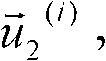 in a plurality of pattern grids UiIn the case of) and the cell vector of the focusing element grid
 Andlocal period parameter
 <math><mrow><mo>|</mo><msub><mover><mi>u</mi><mo>→</mo></mover><mn>1</mn></msub><mo>|</mo><mo>,</mo><mo>|</mo><msub><mover><mi>u</mi><mo>→</mo></mover><mn>2</mn></msub><mo>|</mo><mo>,</mo><mo>∠</mo><mrow><mo>(</mo><msub><mover><mi>u</mi><mo>→</mo></mover><mn>1</mn></msub><mo>,</mo><msub><mover><mi>u</mi><mo>→</mo></mover><mn>2</mn></msub><mo>)</mo></mrow></mrow></math> And <math><mrow><mo>|</mo><msub><mover><mi>w</mi><mo>→</mo></mover><mn>1</mn></msub><mo>|</mo><mo>,</mo><mo>|</mo><msub><mover><mi>w</mi><mo>→</mo></mover><mn>2</mn></msub><mo>|</mo><mo>,</mo><mo>∠</mo><mrow><mo>(</mo><msub><mover><mi>w</mi><mo>→</mo></mover><mn>1</mn></msub><mo>,</mo><msub><mover><mi>w</mi><mo>→</mo></mover><mn>2</mn></msub><mo>)</mo></mrow></mrow></math> only slowly with respect to the cycle length. In this way, it is believed that the device can always be reasonably described by means of a bravais grid.
Security documents for the production of security or value documents, such as banknotes, cheques, identity cards and the like, are preferably equipped with a security element of the type described above. The security document comprises in particular a base support consisting of paper or plastic.
The invention also encompasses data carriers, in particular nameplate articles, value documents, decorative articles, such as packaging materials, stamps, etc., having a security element of the type described above. The security element can be arranged here in the region of a window, i.e. a transparent or unpackaged region of the data carrier.
Drawings
Further exemplary embodiments of the invention and the advantages of the invention will be described in detail below with reference to the accompanying drawings. For clarity, scale and proportion are not shown in the drawings.
In the drawings:
figure 1 is a schematic view of a banknote with an embedded security thread and an attached transfer element.
Fig. 2 is a sectional view schematically showing the layer structure of the security element of the present invention.
Fig. 3 schematically shows the relationship for defining the variables that occur when viewing a moir é magnification device.
Fig. 4 is a further definition of the variables present in the moir é magnification device for illustrating a simple three-dimensional moir image.
Fig. 5 is a schematic view showing the relationship of different magnification effect realizations in the case of different image grids on the graphics plane when viewing the moir é magnification device.
A simple three-dimensional graphic, the letter "P", is shown in FIG. 6 (a); (b) shows a pattern formed by only two parallel image planes; (c) a figure formed by five parallel image planes is shown.
A graphical image constructed in accordance with the present invention is shown in fig. 7 (a); (b) schematically showing a partial three-dimensional moir é image produced when the graphic image from (a) is viewed with an appropriate hexagonal lens grid.
A graphical image constructed in accordance with the present invention, having orthogonal parallax motion behavior, is shown in fig. 8 (a); (b) schematically showing a partial three-dimensional moir é image produced when the graphic image from (a) is viewed with a suitable rectangular lens grid.
FIG. 9(a) shows a graphical image constructed in accordance with the present invention, the graphical image having diagonal motion behavior; (b) schematically showing a partial three-dimensional moir é image produced when the graphic image from (a) is viewed with a suitable rectangular lens grid.
Fig. 10 schematically shows the relationship between the different magnification effect realizations in the case of different heights d1, d2 of the graphics plane when viewing the moir é magnification device.
Detailed Description
The invention will now be described using a security element for banknotes as an example. Fig. 1 shows a schematic view of a banknote 10, the banknote 10 being provided with two security elements according to an exemplary embodiment of the present invention, namely a security element 12 and a security element 16. The first security element constitutes a security thread 12 which is present in a specific window area 14 of the surface of the banknote 10 and is embedded in the interior of the banknote 10. The second security element is formed by an attached transmission element 16 of arbitrary shape. The security element 16 can also be developed in the form of a cover foil which is arranged on a window area or on a through-hole of a banknote. The security element can be designed for overhead or full view, or a combination of both. Furthermore, a two-sided design in which a lens grid is disposed on both sides of the graphic image may also be used.
Both the security thread 12 and the transmission element 16 may comprise a moir é magnification device according to an exemplary embodiment of the present invention. The operating principle and the inventive manufacturing method for the above-described device will be described in detail below on the basis of the transfer element 16.
Fig. 2 shows a schematic cross section of the layer structure of the transmission element 16, wherein only the partial layer structure is depicted, which is necessary for explaining the operating principle thereof. The transfer element 16 comprises a substrate 20 in the form of a transparent plastic foil, in the exemplary embodiment a 20 μm thick polyester foil.
On top of said base foil a microlens arrangement 22 of the exact grid type is fitted, so that a two-dimensional bravais grid with pre-symmetry is formed on the surface of the base foil. The bravais grid may be, for example, a symmetrical hexagonal grid. However, other more general symmetrical shapes, such as a parallelogram grid, are also permissible.
The pitch of adjacent microlenses 22 is preferably as small as possible in order to ensure that the coverage is as high as possible, thereby achieving a high contrast display. The microlenses 22 are designed as spherical or aspherical surfaces with a diameter of between 5 μm and 50 μm, in particular a spherical or aspherical surface with a diameter of only between 10 μm and 35 μm, which is not perceptible to the naked eye. It should be understood that in other designs, larger or smaller dimensions may also be used. For example, in the case of the moir é magnifier mode, the diameter of the microlenses may be between 50 μm and 5mm for decorative purposes; however, in the decodable moir magnifier mode with only an magnifier and a microscope, a microlens having a diameter size of 5 μm or less can also be used.
On the bottom side of the substrate foil 20 a graphic layer 26 is provided, which graphic layer 26 comprises two or more identical cell elements of grid-like design having different grid periods and/or different grid orientations. Each cell element is formed by a plurality of cells 24, only one of which is shown in fig. 2 for clarity of description. Designs with multiple cell elements are shown, for example, in fig. 5, 7(a), 8(a) and 9 (a).
As described in more detail below, the moir é magnification arrangement of fig. 2 presents a three-dimensional moir image to a viewer, in other words, a moir image that includes image portions in two or more spatially separated moir image planes oriented perpendicular to the moir image plane of the moir image arrangement. To this end, each cell element of the graphic layer 26 is assigned in each case to a moir image plane, the cells 24 of which cell element comprise a micropattern image section 28, wherein the micropattern image section 28 serves to show the image section assigned precisely to the moir image plane.
In addition to the lenticular grid, the graphical grid also forms a two-dimensional bravais grid with preselected or calculated symmetry, again illustrated as a parallelogram. As shown in fig. 2, the bravais grid of cells 24 differs slightly from the bravais grid of microlenses 22 in symmetry and/or magnitude of its grid parameters by the offset of cells 24 relative to lenses 22 to produce the desired moir é magnification effect. Here, the grid period and the grid diameter of the cells 24 are of the same importance as those of the microlenses 22, preferably in the range of 5 μm to 50 μm, particularly preferably in the range of 10 μm to 35 μm, so that the micropattern image portions 28 are also not observable with the naked eye. In microlens designs having larger or smaller spots as described above, the cells 24 are of course expanded correspondingly larger or smaller.
The optical thickness of the base foil 20 and the focal length of the microlenses 22 are coordinated so that the graphics layer 26 is located approximately out of the focal length of the lenses. The base foil 20 thus forms an optical dividing layer ensuring a desired, constant separation of the microlenses 22 and the graphic layer with the graphic image portions 28.
Due to the slight differences in grid parameters, the sub-areas of the micro-graphic image portion 28 that each time a viewer sees when looking through the micro-lenses 22 from above are slightly different, so that overall, the plurality of micro-lenses 22 produce a magnified image of the micro-graphic. Wherein the molar magnification generated depends on the relative difference of the parameters of the bravais grid used. For example, if the grating periods of two hexagonal grids differ by 1%, the moir é magnification result would be 100 times. For a more detailed description of the operating principle and for the advantageous arrangement of the pattern grid and the microlens grid, reference is made to the german patent application 102005062132.5 and the international application PCT/EP2006/012374, the disclosures of which are hereby incorporated by reference.
The moir image device of the present application presents to a viewer not only a planar object that floats in front of or behind the plane of the device, but also a three-dimensional moir image with graphics that extend to a spatial perspective. Therefore, these moir é magnification devices are also referred to as 3D moir é amplifiers hereinafter.
In particular, according to the present invention, when the moir é magnification device is tilted, the three-dimensional moir image shows movement in a direction different from the tilted direction. As detailed below, in such designs the three-dimensional visual impression and the spatial impression from the tilting motion are mutually inconsistent or even contradictory, in some cases presenting an attractive, almost dazzling effect of high concern for viewing.
Furthermore, mathematical methods are introduced to describe all variants of the 3D mole amplifier and grinding is carried out with the aid of a computer for the production. Furthermore, the three-dimensional moir image generated by the 3D moir é magnifier should also be viewable without visual limitation.
Thus, in order to explain the method according to the invention, the necessary variables are first defined and briefly described with reference to fig. 3 and 4. For more precise illustration, see German patent application 102005062132.5 and International application PCT/EP2006/012374, the disclosures of which are incorporated herein by reference.
Fig. 3 and 4 schematically show a moir é magnification arrangement 30, wherein the scale (scale) of the arrangement is not shown. The device has a graphics plane 32 in which a graphics image with a micro-graphics image portion is arranged, and a lens plane 34 in which a grid of micro-lenses is arranged. The moir é magnification device 30 produces two or more moir image planes 36 and 36' (as shown in fig. 3) in which a magnified moir image 40 (fig. 4) viewed by an observer 38 is depicted.
The arrangement of the microimage portions in the graphics plane 32 can be described by a two-dimensional bravais grid or a three-dimensional bravais grid, the unit cells of which can be represented by vectors And
And to represent (with a component u11,u21And u12,u22). For clarity of presentation, one of these unit cells is selected for description in fig. 3.
The unit cells of the graphic grid can also be described by simple symbols in a graphic grid matrix To (hereinafter also often simply referred to as a graphics grid):
for two or more graphics grids on the graphics plane, the associated image grid matrix is hereinafter referred to by different coefficients U1,U2,..
The arrangement of microlenses in the lens plane 34 can also be described by a two-dimensional bravais grid, the basic elements of which can be represented by vectors And
And to represent (with component w)11,w21 and w12,w22)。
The unit cell in the molar image planes 36 and 36' may be represented by a vector And
And to (with component t)11,t21 and t12,t22). For a three-dimensional Moore image, besides two-dimensional points in the image plane, the Moore image plane where Moore image points are located also needs to be illustrated to completely describe the Moore image points. In the context of this description, this is achieved by specifying the Z-portion of the moir image point (in other words, observing the height at which the image point floats above or below the plane of the moir é magnification device, as shown in fig. 3 and 4).
In the following, the following description is given, <math><mrow><mover><mi>r</mi><mo>→</mo></mover><mo>=</mo><mfenced open='(' close=')'><mtable><mtr><mtd><mi>x</mi></mtd></mtr><mtr><mtd><mi>y</mi></mtd></mtr></mtable></mfenced></mrow></math> representing a conventional point in the graphics plane 32, <math><mrow><msup><mover><mi>R</mi><mo>→</mo></mover><mrow><mn>3</mn><mi>D</mi></mrow></msup><mo>=</mo><mfenced open='(' close=')'><mtable><mtr><mtd><mi>X</mi></mtd></mtr><mtr><mtd><mi>Y</mi></mtd></mtr><mtr><mtd><mi>Z</mi></mtd></mtr></mtable></mfenced></mrow></math> representing a conventional point in the molar image plane 36, 36'. Within each (two-dimensional) Moore image plane 36, the image points may be in two-dimensional coordinates <math><mrow><mover><mi>R</mi><mo>→</mo></mover><mo>=</mo><mfenced open='(' close=')'><mtable><mtr><mtd><mi>X</mi></mtd></mtr><mtr><mtd><mi>Y</mi></mtd></mtr></mtable></mfenced></mrow></math> To describe.
To be able to describe, in addition to the perpendicular viewing (viewing direction 35), a non-perpendicular viewing direction (for example the general direction 35') of the moir é magnification arrangement is also permissible, i.e. the presence between the lens plane 34 and the graphics plane 32 is determined by the displacement vector in the graphics plane 32 <math><mrow><msub><mover><mi>r</mi><mo>→</mo></mover><mn>0</mn></msub><mo>=</mo><mfenced open='(' close=')'><mtable><mtr><mtd><msub><mi>x</mi><mn>0</mn></msub></mtd></mtr><mtr><mtd><msub><mi>y</mi><mn>0</mn></msub></mtd></mtr></mtable></mfenced></mrow></math> The indicated displacement. Similar to a graphical grid matrix, the matrix <math><mrow><mover><mi>W</mi><mo>↔</mo></mover><mo>=</mo><mfenced open='(' close=')'><mtable><mtr><mtd><msub><mi>w</mi><mn>11</mn></msub></mtd><mtd><msub><mi>w</mi><mn>12</mn></msub></mtd></mtr><mtr><mtd><msub><mi>w</mi><mn>21</mn></msub></mtd><mtd><msub><mi>w</mi><mn>22</mn></msub></mtd></mtr></mtable></mfenced></mrow></math> (referring to the lens grid matrix or simply the lens grid) and <math><mrow><mover><mi>T</mi><mo>↔</mo></mover><mo>=</mo><mfenced open='(' close=')'><mtable><mtr><mtd><msub><mi>t</mi><mn>11</mn></msub></mtd><mtd><msub><mi>t</mi><mn>12</mn></msub></mtd></mtr><mtr><mtd><msub><mi>t</mi><mn>21</mn></msub></mtd><mtd><msub><mi>t</mi><mn>22</mn></msub></mtd></mtr></mtable></mfenced></mrow></math> are used to briefly describe the lens grid and the image grid.
For example, at the location of the lens 22 in the lens plane 34, a circular aperture can also be utilized in accordance with the principles of a pinhole camera. All other types of lenses and imaging systems, such as aspherical lenses, cylindrical lenses, slit apertures, circular or slit apertures with mirrors, fresnel lenses, refractive index lenses, area plates (diffractive lenses), holographic lenses, concave mirrors, fresnel mirrors, area mirrors and other elements with focusing or masking effects, can be used as micro-focusing elements in the focusing element grid.
In principle, elements with a masking effect (circular or slit-shaped apertures and reflecting surfaces behind the circular or slit-shaped apertures) can also be used as micro-focusing elements in the grid of focusing elements, in addition to elements with a focusing effect.
When using a concave mirror array, and with other grids of reflective focusing elements according to the present invention, the viewer's line of sight passes through the partially transparent pattern image of the mirror array behind the partially transparent moir é image, treating the bright or black spots, which consist of light or black spots, as a single small mirror. Here, the graphic image formation is generally so fine that it is only obscured. Without specific mention, the formula describing the relationship between the image to be shown and the moir image applies not only to lens gratings but also to mirror gratings. It will be appreciated that when a concave mirror is utilized in accordance with the present invention, the mirror focal length replaces the lens focal length.
If, according to the invention, a mirror array is used instead of a lens array, the viewing direction in fig. 2 is from below, the mirror array arrangements of planes 32 and 34 being interchanged in fig. 3. Further description of the invention is based on a lens grid, which typically represents all other focusing element grids according to the invention.
One of the mole image planes 36 and 36' is precisely assigned to each of the graphics grids and thus to each of the different cell components on the graphics plane 32. Distributing moir image planes to moir image grids Determined by the cell vectors of the graphics plane 32 and the lens plane 34, as shown in the following equation
 <math><mrow><mover><mi>T</mi><mo>↔</mo></mover><mo>=</mo><mover><mi>W</mi><mo>↔</mo></mover><mo>·</mo><msup><mrow><mo>(</mo><mover><mi>W</mi><mo>↔</mo></mover><mo>-</mo><mover><mi>U</mi><mo>↔</mo></mover><mo>)</mo></mrow><mrow><mo>-</mo><mn>1</mn></mrow></msup><mo>·</mo><mover><mi>U</mi><mo>↔</mo></mover></mrow></math>
The image points in the moir image plane 36 may be represented by the relational expression <math><mrow><mover><mi>R</mi><mo>→</mo></mover><mo>=</mo><mover><mi>W</mi><mo>↔</mo></mover><mo>·</mo><msup><mrow><mo>(</mo><mover><mi>W</mi><mo>↔</mo></mover><mo>-</mo><mover><mi>U</mi><mo>↔</mo></mover><mo>)</mo></mrow><mrow><mo>-</mo><mn>1</mn></mrow></msup><mo>·</mo><mrow><mo>(</mo><mover><mi>r</mi><mo>→</mo></mover><mo>-</mo><msub><mover><mi>r</mi><mo>→</mo></mover><mn>0</mn></msub><mo>)</mo></mrow></mrow></math> Is determined from the image points of the image plane 32. In contrast, the grid vector of the graphics plane 32 passes through two equations, i.e. <math><mrow><mover><mi>U</mi><mo>↔</mo></mover><mo>=</mo><mover><mi>W</mi><mo>↔</mo></mover><mo>·</mo><msup><mrow><mo>(</mo><mover><mi>T</mi><mo>↔</mo></mover><mo>+</mo><mover><mi>W</mi><mo>↔</mo></mover><mo>)</mo></mrow><mrow><mo>-</mo><mn>1</mn></mrow></msup><mo>·</mo><mover><mi>T</mi><mo>↔</mo></mover></mrow></math> And <math><mrow><mover><mi>r</mi><mo>→</mo></mover><mo>=</mo><mover><mi>W</mi><mo>↔</mo></mover><mo>·</mo><msup><mrow><mo>(</mo><mover><mi>T</mi><mo>↔</mo></mover><mo>+</mo><mover><mi>W</mi><mo>↔</mo></mover><mo>)</mo></mrow><mrow><mo>-</mo><mn>1</mn></mrow></msup><mo>·</mo><mover><mi>R</mi><mo>→</mo></mover><mo>+</mo><msub><mover><mi>r</mi><mo>→</mo></mover><mn>0</mn></msub><mo>,</mo></mrow></math> determined by the lens grid and the ideal moir image grid of the graphics plane 36.
If the matrix is converted <math><mrow><mover><mi>A</mi><mo>↔</mo></mover><mo>=</mo><mover><mi>W</mi><mo>↔</mo></mover><mo>·</mo><msup><mrow><mo>(</mo><mover><mi>W</mi><mo>↔</mo></mover><mo>-</mo><mover><mi>U</mi><mo>↔</mo></mover><mo>)</mo></mrow><mrow><mo>-</mo><mn>1</mn></mrow></msup></mrow></math> Defined as the coordinate concatenation of a point on the graphics plane 32 and a point on the moir image plane 36, <math><mrow><mover><mi>R</mi><mo>→</mo></mover><mo>=</mo><mover><mi>A</mi><mo>↔</mo></mover><mo>·</mo><mrow><mo>(</mo><mover><mi>r</mi><mo>→</mo></mover><mo>-</mo><msub><mover><mi>r</mi><mo>→</mo></mover><mn>0</mn></msub><mo>)</mo></mrow></mrow></math> and <math><mrow><mover><mi>r</mi><mo>→</mo></mover><mo>=</mo><msup><mover><mi>A</mi><mo>↔</mo></mover><mrow><mo>-</mo><mn>1</mn></mrow></msup><mo>·</mo><mover><mi>R</mi><mo>→</mo></mover><mo>+</mo><msub><mover><mi>r</mi><mo>→</mo></mover><mn>0</mn></msub><mo>,</mo></mrow></math>
then, four matrices are known Two of which, in each case, the other two can be calculated. In particular, it is possible to use, for example,
wherein, representing an identity matrix.
The transformation matrix is as detailed in the cited German patent application 102005062135 and in the international application PCT/EP2006/012374 Describing both the molar enlargement and the enlargement that is formed when the molar forming
 device 30 is movedThe motion of the large molar image resulting from the displacement of the graphics plane 32 relative to the lens plane 34.
The grid matrices T, U, W, identity matrix I and transformation matrix a are also often not double-headed in the following, if this is clearly understood from the context of the mention of matrices.
As mentioned above, in addition to these two-dimensional relationships, the expansion of the three-dimensional relationship of the mole image 40 shown is explained by the definition of another coordinate, which indicates that the mole image point appears in a space floating above or below the plane of the moir é magnification arrangement. If v represents the moir é magnification and e represents the effective distance between the lens plane 34 and the graphics plane 32, wherein, in addition to the physical space d, the refractive indices of the lens carrier and the compromise between the lens grid and the graphics grid are generally taken heuristically into account, then the Z component of the moir image point is given by equation (1).
Z=v*e (1)
Thus, according to equation (1), the three-dimensional molar image 40 (in other words, an image having different Z values) can be generated in two ways. In one aspect, the moir é magnification v may be a constant on the left, with different values of e (or with a uniform effective distance e) being achieved in the moir é magnifier, i.e., different moir magnifications may be produced by different graphical grids. The first-mentioned method will be described in more detail below with reference to fig. 10, and the last-mentioned method is based on the description of fig. 3 to 9 below.
Fig. 4 shows a simple three-dimensional moir image 40, and its exploded view broken down into image portions 42, 44 only on two spatially separated moir image planes 36, 36', which is sufficient to explain the basic design features of the present invention. In particular, for the portion of the image on the image plane 36 (the top layer 42 in the letter "P"), the Moore magnification v1By selecting an appropriate graphics grid U1To realize the operation; moore magnification v for the image portion on image plane 36' (bottom layer 44 of letter "P2By selecting an appropriate graphics grid U2This is done so that the two image planes 36, 36' have different Z-value generation if the effective distance is constant.
Z1=v1*e,Z2=v2*e,
To explain the effect of the principle, a special case of matrix a is first considered to describe a purely theoretical amplification, in other words, without rotation or twisting, <math><mrow><msub><mi>A</mi><mi>i</mi></msub><mo>=</mo><msub><mi>v</mi><mi>i</mi></msub><mo>·</mo><mi>I</mi><mo>=</mo><msub><mi>v</mi><mi>i</mi></msub><mfenced open='(' close=')'><mtable><mtr><mtd><mn>1</mn></mtd><mtd><mn>0</mn></mtd></mtr><mtr><mtd><mn>0</mn></mtd><mtd><mn>1</mn></mtd></mtr></mtable></mfenced><mo>,</mo></mrow></math> wherein i is 1, 2.
If the lens grid W is defined, the graphics grid U is defined by the relation (M2)1And U2Then, it follows: <math><mrow><msub><mi>U</mi><mn>1</mn></msub><mo>=</mo><mfenced open='(' close=')'><mtable><mtr><mtd><msub><msup><mi>u</mi><mrow><mo>(</mo><mn>1</mn><mo>)</mo></mrow></msup><mn>11</mn></msub></mtd><mtd><msub><msup><mi>u</mi><mrow><mo>(</mo><mn>1</mn><mo>)</mo></mrow></msup><mn>12</mn></msub></mtd></mtr><mtr><mtd><msub><msup><mi>u</mi><mrow><mo>(</mo><mn>1</mn><mo>)</mo></mrow></msup><mn>21</mn></msub></mtd><mtd><msub><msup><mi>u</mi><mrow><mo>(</mo><mn>1</mn><mo>)</mo></mrow></msup><mn>22</mn></msub></mtd></mtr></mtable></mfenced><mo>=</mo><mrow><mo>(</mo><mn>1</mn><mo>-</mo><mfrac><mn>1</mn><msub><mi>v</mi><mn>1</mn></msub></mfrac><mo>)</mo></mrow><mo>·</mo><mfenced open='(' close=')'><mtable><mtr><mtd><msub><mi>w</mi><mn>11</mn></msub></mtd><mtd><msub><mi>w</mi><mn>12</mn></msub></mtd></mtr><mtr><mtd><msub><mi>w</mi><mn>21</mn></msub></mtd><mtd><msub><mi>w</mi><mn>22</mn></msub></mtd></mtr></mtable></mfenced></mrow></math> and <math><mrow><msub><mi>U</mi><mn>2</mn></msub><mo>=</mo><mfenced open='(' close=')'><mtable><mtr><mtd><msub><msup><mi>u</mi><mrow><mo>(</mo><mn>2</mn><mo>)</mo></mrow></msup><mn>11</mn></msub></mtd><mtd><msub><msup><mi>u</mi><mrow><mo>(</mo><mn>2</mn><mo>)</mo></mrow></msup><mn>12</mn></msub></mtd></mtr><mtr><mtd><msub><msup><mi>u</mi><mrow><mo>(</mo><mn>2</mn><mo>)</mo></mrow></msup><mn>21</mn></msub></mtd><mtd><msub><msup><mi>u</mi><mrow><mo>(</mo><mn>2</mn><mo>)</mo></mrow></msup><mn>22</mn></msub></mtd></mtr></mtable></mfenced><mo>=</mo><mrow><mo>(</mo><mn>1</mn><mo>-</mo><mfrac><mn>1</mn><msub><mi>v</mi><mn>2</mn></msub></mfrac><mo>)</mo></mrow><mo>·</mo><mfenced open='(' close=')'><mtable><mtr><mtd><msub><mi>w</mi><mn>11</mn></msub></mtd><mtd><msub><mi>w</mi><mn>12</mn></msub></mtd></mtr><mtr><mtd><msub><mi>w</mi><mn>21</mn></msub></mtd><mtd><msub><mi>w</mi><mn>22</mn></msub></mtd></mtr></mtable></mfenced></mrow></math>
in fig. 5, which shows a different enlargement, in the graphics plane, the dashed arrow 50 as the first micropattern element is arranged with a grid period p1First pattern grid U1Performing the following steps; it is also shown that the solid arrows 52 as second micropattern elements are arranged at the same effective distance d from the lens plane 34 with a slightly larger grating period p2Second pattern grid U2In (1).
Due to different grating periods and different amplification factors v1And v2The resulting magnified moir images 54, 56 are based on equation (1) for different heights Z of the viewer 38 above the plane of the moir é magnification device1、Z2And (4) floating. Of course, different magnification factors must also be considered in the design of the micropattern elements 50, 52. For example, if the magnified arrow images 54 and 56 appear to be equally long, then the dashed arrow on the graphics plane 32 must be appropriately shortened as compared to the solid arrow 52 to compensate for the higher magnification factor in the moir é image.
For negative magnification factors, the depiction of FIG. 5 is valid, where the Moore image floats above the magnification device; for positive magnification factors, the viewer is correspondingly presented with a moir image floating below the moir é magnification device.
In general, for 3D Moir amplifiers, the conversion matrix AiIn each case comprising a matching section A' describing the rotation and distortion, and a different magnification factor v of the image planei:
Now by the formula <math><mrow><msubsup><mover><mi>R</mi><mo>→</mo></mover><mi>i</mi><mrow><mn>3</mn><mi>D</mi></mrow></msubsup><mo>=</mo><mfenced open='(' close=')'><mtable><mtr><mtd><msub><mi>X</mi><mi>i</mi></msub></mtd></mtr><mtr><mtd><msub><mi>Y</mi><mi>i</mi></msub></mtd></mtr><mtr><mtd><msub><mi>Z</mi><mi>i</mi></msub></mtd></mtr></mtable></mfenced><mo>=</mo><msub><mi>v</mi><mi>i</mi></msub><mo>·</mo><mfenced open='(' close=')'><mtable><mtr><mtd><msubsup><mi>a</mi><mn>11</mn><mo>′</mo></msubsup></mtd><mtd><msubsup><mi>a</mi><mn>12</mn><mo>′</mo></msubsup></mtd><mtd><mn>0</mn></mtd></mtr><mtr><mtd><msubsup><mi>a</mi><mn>21</mn><mo>′</mo></msubsup></mtd><mtd><msubsup><mi>a</mi><mn>22</mn><mo>′</mo></msubsup></mtd><mtd><mn>0</mn></mtd></mtr><mtr><mtd><mn>0</mn></mtd><mtd><mn>0</mn></mtd><mtd><mn>1</mn></mtd></mtr></mtable></mfenced><mo>·</mo><mfenced open='(' close=')'><mtable><mtr><mtd><msub><mi>x</mi><mi>i</mi></msub></mtd></mtr><mtr><mtd><msub><mi>y</mi><mi>i</mi></msub></mtd></mtr><mtr><mtd><mi>e</mi></mtd></mtr></mtable></mfenced><mo>-</mo><mo>-</mo><mo>-</mo><mrow><mo>(</mo><mn>2</mn><mi>a</mi><mo>)</mo></mrow></mrow></math>
Incorporating the principle equation of a 3D Moire Amplifier into the points of the Moire image plane 36, 36In (2), the mole image plane 36, 36' has coordinates of points on the graphics plane 32
Or vice versa
The special case of pure theoretical amplification without rotation or twisting, described above, is given as a special case by equation (2 a): <math><mrow><msubsup><mover><mi>R</mi><mo>→</mo></mover><mi>i</mi><mrow><mn>3</mn><mi>D</mi></mrow></msubsup><mo>=</mo><mfenced open='(' close=')'><mtable><mtr><mtd><msub><mi>X</mi><mi>i</mi></msub></mtd></mtr><mtr><mtd><msub><mi>Y</mi><mi>i</mi></msub></mtd></mtr><mtr><mtd><msub><mi>Z</mi><mi>i</mi></msub></mtd></mtr></mtable></mfenced><mo>=</mo><mfenced open='(' close=')'><mtable><mtr><mtd><msub><mi>v</mi><mi>i</mi></msub></mtd><mtd><mn>0</mn></mtd><mtd><mn>0</mn></mtd></mtr><mtr><mtd><mn>0</mn></mtd><mtd><msub><mi>v</mi><mi>i</mi></msub></mtd><mtd><mn>0</mn></mtd></mtr><mtr><mtd><mn>0</mn></mtd><mtd><mn>0</mn></mtd><mtd><msub><mi>v</mi><mi>i</mi></msub></mtd></mtr></mtable></mfenced><mo>·</mo><mfenced open='(' close=')'><mtable><mtr><mtd><msub><mi>x</mi><mi>i</mi></msub></mtd></mtr><mtr><mtd><msub><mi>y</mi><mi>i</mi></msub></mtd></mtr><mtr><mtd><mi>e</mi></mtd></mtr></mtable></mfenced><mo>.</mo><mo>-</mo><mo>-</mo><mo>-</mo><mrow><mo>(</mo><mn>2</mn><mi>c</mi><mo>)</mo></mrow></mrow></math>
based on the three-dimensional moir é image pattern to be represented, which is given by the set of points (X, Y, Z), and the desired movement behavior of the moir image, which is represented in the form of the matrix a' described in detail below, and the desired movement behavior of the moir image, the associated image point (X, Y) and the associated magnification factor v on the graphics plane can be calculated by means of the relation (2 b). According to relation (7), the relevant graphics grid U is determined, as shown below.
Here, the points of the three-dimensional moir é image pattern to be shown, which are located at the same height Z above or below the magnification device, can be merged, which points also require the same magnification factor v and the same pattern grid matrix, since Z ═ v · e. In other words, the parallel crossing point Z on the Moore image patterniThe corresponding graphic image points can be arranged on the corresponding graphic grid UiIn (2), the graphic grid UiAre created consistently.
For the viewer, two effects, now in particular called "binocular vision" and "movement behaviour", contribute to the production of a three-dimensional image effect.
According to the binocular visual effect, a moir é magnifier is applied to such an extent that lateral tilting of the device results in lateral displacement of the image points, the magnified moir image appearing to have a stereoscopic effect when viewed together by both eyes. In the case of a normal viewing distance of about 25cm, since the lateral "tilt angle" between the two eyes is about 15 °, the laterally displaced image points seen by the eyes are interpreted by the brain as: depending on the direction of its lateral displacement, as if the image point is located in front of or behind the actual substrate plane; depending on its displacement amplitude being more, less, higher or lower.
The "motor behavior" effect means: when the magnifier is tilted, the previously covered tail region of the pattern is visible so that the pattern is viewed stereoscopically. Wherein the magnifier is constructed such that lateral tilting of the device results in displacement of an image point.
If the two effects have similar effects, a continuous three-dimensional image effect is produced as in normal stereoscopic vision.
In a particular 3D mole amplifier designed specifically according to equation (2c), both effects have virtually similar effects, as described below. Such 3D moir é magnifier in this way conveys the usual, lasting three-dimensional image effect to the observer.
However, in 3D molar amplifiers constructed not according to the special case (2c) but according to the general equations (2a) and (2b), the two effects "binocular vision" and "movement behaviour" may lead to different or even contradictory visual effects. Different or even contradictory impressions may be created with such 3D molar amplifiers for the viewer, creating an attractive, almost dazzling effect with a high degree of attention for the viewer.
To achieve such visual effects, it is important to know and systematically control the motion behavior of the moir é magnification when tilting the moir magnification device.
The columns of the transformation matrix a can be interpreted as the following vectors: <math><mrow><msub><mover><mi>a</mi><mo>→</mo></mover><mn>1</mn></msub><mo>=</mo><mfenced open='(' close=')'><mtable><mtr><mtd><msub><mi>a</mi><mn>11</mn></msub></mtd></mtr><mtr><mtd><msub><mi>a</mi><mn>21</mn></msub></mtd></mtr></mtable></mfenced><mo>,</mo></mrow></math> <math><mrow><msub><mover><mi>a</mi><mo>→</mo></mover><mn>2</mn></msub><mo>=</mo><mfenced open='(' close=')'><mtable><mtr><mtd><msub><mi>a</mi><mn>12</mn></msub></mtd></mtr><mtr><mtd><msub><mi>a</mi><mn>22</mn></msub></mtd></mtr></mtable></mfenced><mo>.</mo></mrow></math>
(Vector) <math><mrow><msub><mover><mi>a</mi><mo>→</mo></mover><mn>1</mn></msub><mo>=</mo><mfenced open='(' close=')'><mtable><mtr><mtd><msub><mi>a</mi><mn>11</mn></msub></mtd></mtr><mtr><mtd><msub><mi>a</mi><mn>21</mn></msub></mtd></mtr></mtable></mfenced></mrow></math> represents: the direction of moir image movement occurs if the device of the pattern grid and the lens grid is tilted laterally. Vector quantity <math><mrow><msub><mover><mi>a</mi><mo>→</mo></mover><mn>2</mn></msub><mo>=</mo><mfenced open='(' close=')'><mtable><mtr><mtd><msub><mi>a</mi><mn>12</mn></msub></mtd></mtr><mtr><mtd><msub><mi>a</mi><mn>22</mn></msub></mtd></mtr></mtable></mfenced></mrow></math> Represents: the direction of moir image shift occurs if the arrangement of the pattern grid and the lens grid is tilted forward/backward. Here, the moving direction is defined as follows: the angle beta between the direction of motion of the moir é image and the horizontal if the device is tilted laterally1By the formula <math><mrow><msub><mrow><mi>tan</mi><mi>β</mi></mrow><mn>1</mn></msub><mo>=</mo><mfrac><msub><mi>a</mi><mn>21</mn></msub><msub><mi>a</mi><mn>11</mn></msub></mfrac></mrow></math> It is given. The angle β between the direction of motion of the moir é image and the horizontal line if the device is tilted forward/backward2By the formula <math><mrow><msub><mrow><mi>tan</mi><mi>β</mi></mrow><mn>2</mn></msub><mo>=</mo><mfrac><msub><mi>a</mi><mn>22</mn></msub><msub><mi>a</mi><mn>12</mn></msub></mfrac></mrow></math> It is given.
Returning to the description of FIG. 4, the displacement vector <math><mrow><mover><mi>v</mi><mo>→</mo></mover><mo>=</mo><mfenced open='(' close=')'><mtable><mtr><mtd><msub><mi>v</mi><mi>x</mi></msub></mtd></mtr><mtr><mtd><msub><mi>v</mi><mi>y</mi></msub></mtd></mtr></mtable></mfenced></mrow></math> Given by equation (3 a). The three-dimensional moir é image 40 is moved in a direction compared to a reference direction, for example, if the device is not moved in either of the preferred horizontal (0) or forward/backward (90) directions, but in a general direction To incline (that is, to orient)
 Making an angle y with the reference direction W), the level W is given by the following equation.
Thus, if the moir é magnification device is inclined at a general angle γ, the moving direction of the moir image 40 forms an angle β with the reference direction W3Given by equation (3 b).
The spacing of a pair of points lying in the gamma direction on the graphics plane 32 extends in an angular direction on the moir image plane 36, which is magnified by a factor v.
According to equation (1), the molar image 40 shown shows a Z-height or depth floating ("motional effect") in the 3D molar amplifier as shown in equation (4) above or below the substrate plane due to the parallax created when the device is tilted in the gamma direction; wherein the 3D moir é magnifier is constructed with a transformation matrix a having an effective distance e between the graphics plane 32 and the lens plane 34.
Zbinocular=vx·e=e·(a11cosγ+a12sinγ). (5)
On the other hand, when both eyes are looking in the direction of eye separation, i.e., not in the direction γ, only the parts in the direction of eye separation appear to be magnified in molar terms. If both eyes are adjacent to each other in the x-direction, then the depth effect is:
Zbinocular=vx·e=e·(a11cosγ+a12sinγ). (5)
by action of movement ZmovementProducing stereoscopic and binocular vision effects ZbinocularThe resulting stereoscopic impression is different for almost all eye separation directions. Thus, when the device is tilted in the gamma direction, the moir é image 40 appears to exhibit another stereoscopic impression to the eye, namely a stereoscopic depth ZbinocularRather than when leaningStereoscopic depth Z forming parallax in oblique timemovement。
Specific examples mentioned hereinbefore <math><mrow><mi>A</mi><mo>=</mo><mi>v</mi><mo>·</mo><mi>I</mi><mo>=</mo><mi>v</mi><mfenced open='(' close=')'><mtable><mtr><mtd><mn>1</mn></mtd><mtd><mn>0</mn></mtd></mtr><mtr><mtd><mn>0</mn></mtd><mtd><mn>1</mn></mtd></mtr></mtable></mfenced></mrow></math> In other words, a11=a22V and a21=a12=0,ZbinocularAnd ZmovementAre equal, so that the binocular vision effect and the parallax effect at tilt therein result in the same stereoscopic effect and continuous three-dimensional image effect.
The foregoing explanation first relates the relationship of a figure point, a set of figure points or a figure part with a simple solid part Z. According to the invention, in order to position the pattern points either at different heights Z1,Z2... graph parts, where different depth graph points or graph parts are arranged on the graph plane, and the transformation matrix A varies with the change1,A2... are placed into varying reticle spaces. Here, the magnification factor v of the different graphic parts is in each caseiMay be based on the amplification factor v in the tilt direction according to equation (3c) and the original transformation matrix
Wherein Z is1=v1·e,Z2=v2E, etc.
In the terminology already used hereinbefore, Ai=viA ', where a ' is a matching moiety, then a ' ═ a/v. Similar to equations (4a), (4b), the points on the moir image planes 36, 36' and the graphics plane 32 are related by the following equation,
Or by the following equation:
By means of the relation (M2), the respective graphics grid U1,U2,.. consisting of a lens grid W and a transformation matrix A1,A2.., determining, wherein:
Thus, in accordance with the present invention, the following method may be used to construct a graphical image into a specified three-dimensional Moore image.
For the reference points X, Y, Z of the desired three-dimensional moir é image, in addition to the lens grid W, the transformation matrix a and the tilt direction γ are defined, in which parallax is observed.
For these specification parameters, the amplification factor v can be calculated by means of equation (3 c). For more distant points of the Moore image, e.g. regular point Xi、Yi、ZiZ component ZiIs determined according to equation (6b) and the image plane x is determined according to equation (7)i,yiBy a given lens grid W, transformation matrix A and magnification factor viTo determine the relevant grid means Ui。
Here, since it depends on Xi,Yi,ZiWill produce different amplification factors viSo that the pattern part is on the pattern grid UiThere is also the possibility of an inappropriate situation in the cells of (2). In this case, the name "Security" filed concurrently with the present applicationThe german patent application DE 102007029203.3 to Element "teaches the assignment of a given graphic Element to a plurality of cells.
In this context, in particular, for producing a micro-optical moir é magnification arrangement for representing a moir image having one or more moir image elements, a graphic image having a plurality of cells which are periodically or at least partially periodically arranged with a micropattern image element is produced on a graphic surface; furthermore, a focusing element grid for a Moore-magnified view of a graphic image having a plurality of cells periodically or at least partially periodically arranged, each cell having a micro-focusing element, is produced and arranged spaced apart from the graphic image. The micropattern image features are developed such that each micropattern image feature of the plurality of spaced apart cells of the graphic image forms a micropattern element corresponding to a moir image element of the magnified moir image that is larger in size than a cell of the graphic image. For a more detailed description of the process, reference is made to the cited German patent application, the disclosure of which is incorporated herein by reference.
A moir magnifier with a cylindrical lens grid and/or with a pattern stretched in either direction is described in international application PCT/EP2006/012374, the disclosure of which is also incorporated herein by reference. Such a moir é magnifier may also be implemented as a 3D moir magnifier.
In the case of cylindrical lens 3D Moire amplifiers, to arrive at the sub-matrix (a) in equation (6a), as explained in PCT/EP2006/012374ij) The relation may be applied:
wherein D represents the pitch of the cylindrical lenses; phi represents the tilt angle of the cylindrical lens; u. ofijA matrix element representing a pattern grid matrix.
In the case of a 3D Moir Amplifier with an extended pattern, the submatrix (a) in equation (6a)ij) The requirements are satisfied: wherein, (u11,u21) Is the translation vector of the expanded graph.
Examples
For the purpose of illustrating the inventive method, some specific exemplary designs will now be shown. For this purpose, fig. 6(a) shows a simple three-dimensional figure 60, i.e. the letter "P" engraved on the plate. FIG. 6(b) shows a graphic formed by only two parallel image planes, including a top layer 62 and a bottom layer 64 of a three-dimensional letter graphic; fig. 6(c) shows a figure formed by five parallel image planes and a figure of a sectional image 66 having a five-letter figure.
According to the invention, three-dimensional graphics are shown only in two image planes, since all basic method steps have been clearly explained on the basis of these graphics, and an embodiment of these graphics is designed according to fig. 6 (b). However, it is not difficult for those skilled in the art to implement many image planes, such as according to FIG. 6(c), or according to the quasi-continuous image plane shown in FIG. 6 (a). In particular in the case of more complex moir images, it is advantageous not to start from an area portion, but rather from a single image point of the three-dimensional moir image as a graphic portion to be shown, as explained above approximately in equations (6a), (6b) and (7), for each of these moir image points the associated micropattern image point and the cell arrangement for the repeated positioning of the micropattern image points on the graphic plane are determined. In practice, the number of image planes utilized or the number used to show image points will also be based in particular on the complexity of the desired three-dimensional graph.
Example 1:
fig. 7 shows an exemplary embodiment in which a hexagonal lens grid W is defined. The O-ring is selected as the three-dimensional figure to be shown, which is depicted in two image planes formed by the top and bottom layers of letters, as shown in fig. 6 (b).
As a transformation matrix AiDefining a matrix <math><mrow><msub><mi>A</mi><mi>i</mi></msub><mo>=</mo><msub><mi>v</mi><mi>i</mi></msub><mo>·</mo><mfenced open='(' close=')'><mtable><mtr><mtd><mn>1</mn></mtd><mtd><mn>0</mn></mtd></mtr><mtr><mtd><mn>0</mn></mtd><mtd><mn>1</mn></mtd></mtr></mtable></mfenced></mrow></math> To describe purely theoretical amplification, where the magnification factor of the top layer area is v1The amplification factor of the bottom layer is v 162=19。
In this way, when the desired pattern size is 50mm, the effective distance of the lens image in the hexagonal lens grid is 4mm, and the lens pitch is 5mm, and by using the relational expressions (6b) and (7) of the pattern size in the pattern grid, the value of the top layer area is 50 mm/16-3.1 mm, and the value of the bottom layer area is 50 mm/19-2.63 mm.
The grid spacing dimension of the top layer region pattern grid is (1-1/16) × 5mm ═ 4.69mm, and the grid spacing dimension of the bottom layer region pattern grid is (1-1/19) × 5mm ═ 4.74 mm. The three-dimensional moir image has an appreciable thickness dimension of (19-16) × 4mm — 12 mm.
Fig. 7(a) shows a graphic image 70 constructed in this way, in which the different reticle spacings of the two micropattern elements "top circle" and "bottom circle" are clearly visible. If the graphical image 70 in fig. 7(a) is viewed through the referenced hexagonal lens grid, a three-dimensional moir image 72 is produced that floats below the moir é magnification device, with a partial image being schematically shown in fig. 7 (b).
In the moir image 72, a plurality of rings 74, 76 can be seen next to each other. If the device is viewed from the front right, the middle loop 74 is viewed from the front, and the surrounding loops 76 are viewed diagonally from the respective sides. If the device is tilted, the middle loop 74 can be seen diagonally from the side, and the surrounding adjacent loops 76 change their view accordingly.
Example 2:
fig. 8 shows an exemplary embodiment with orthogonal parallax motion, in which a rectangular lens grid W is selected. The letter "P" engraved from the face (panel) is used as a three-dimensional figure to be shown, as shown in fig. 6.
As a transformation matrix AiDefining a matrix <math><mrow><msub><mi>A</mi><mi>i</mi></msub><mo>=</mo><msub><mi>v</mi><mi>i</mi></msub><mo>·</mo><mfenced open='(' close=')'><mtable><mtr><mtd><mn>0</mn></mtd><mtd><mn>1</mn></mtd></mtr><mtr><mtd><mn>1</mn></mtd><mtd><mn>0</mn></mtd></mtr></mtable></mfenced></mrow></math> For description purposes other than by the coefficient viMagnification of the representation, and orthogonal parallax motion behavior when the moir é magnification device is tilted.
Thus, the formula (6a) is given as <math><mrow><mfenced open='(' close=')'><mtable><mtr><mtd><msub><mi>X</mi><mi>i</mi></msub></mtd></mtr><mtr><mtd><msub><mi>Y</mi><mi>i</mi></msub></mtd></mtr><mtr><mtd><msub><mi>Z</mi><mi>i</mi></msub></mtd></mtr></mtable></mfenced><mo>=</mo><mfenced open='(' close=')'><mtable><mtr><mtd><mn>0</mn></mtd><mtd><msub><mi>v</mi><mi>i</mi></msub></mtd><mtd><mn>0</mn></mtd></mtr><mtr><mtd><msub><mi>v</mi><mi>i</mi></msub></mtd><mtd><mn>0</mn></mtd><mtd><mn>0</mn></mtd></mtr><mtr><mtd><mn>0</mn></mtd><mtd><mn>0</mn></mtd><mtd><msub><mi>v</mi><mi>i</mi></msub></mtd></mtr></mtable></mfenced><mo>·</mo><mfenced open='(' close=')'><mtable><mtr><mtd><msub><mi>x</mi><mi>i</mi></msub></mtd></mtr><mtr><mtd><msub><mi>y</mi><mi>i</mi></msub></mtd></mtr><mtr><mtd><mi>e</mi></mtd></mtr></mtable></mfenced></mrow></math> Expressed by the formula (7) <math><mrow><msub><mi>U</mi><mi>i</mi></msub><mo>=</mo><mfenced open='(' close=')'><mtable><mtr><mtd><msub><msup><mi>u</mi><mrow><mo>(</mo><mi>i</mi><mo>)</mo></mrow></msup><mn>11</mn></msub></mtd><mtd><msub><msup><mi>u</mi><mrow><mo>(</mo><mi>i</mi><mo>)</mo></mrow></msup><mn>12</mn></msub></mtd></mtr><mtr><mtd><msub><msup><mi>u</mi><mrow><mo>(</mo><mi>i</mi><mo>)</mo></mrow></msup><mn>21</mn></msub></mtd><mtd><msub><msup><mi>u</mi><mrow><mo>(</mo><mi>i</mi><mo>)</mo></mrow></msup><mn>22</mn></msub></mtd></mtr></mtable></mfenced><mo>=</mo><mrow><mo>(</mo><mi>I</mi><mo>-</mo><msup><msub><mi>A</mi><mi>i</mi></msub><mrow><mo>-</mo><mn>1</mn></mrow></msup><mo>)</mo></mrow><mo>·</mo><mfenced open='(' close=')'><mtable><mtr><mtd><msub><mi>w</mi><mn>11</mn></msub></mtd><mtd><msub><mi>w</mi><mn>12</mn></msub></mtd></mtr><mtr><mtd><msub><mi>w</mi><mn>21</mn></msub></mtd><mtd><msub><mi>w</mi><mn>22</mn></msub></mtd></mtr></mtable></mfenced></mrow></math> Is shown in which <math><mrow><msup><msub><mi>A</mi><mi>i</mi></msub><mrow><mo>-</mo><mn>1</mn></mrow></msup><mo>=</mo><mfrac><mn>1</mn><msub><mi>v</mi><mi>i</mi></msub></mfrac><mo>·</mo><mfenced open='(' close=')'><mtable><mtr><mtd><mn>0</mn></mtd><mtd><mn>1</mn></mtd></mtr><mtr><mtd><mn>1</mn></mtd><mtd><mn>0</mn></mtd></mtr></mtable></mfenced><mo>.</mo></mrow></math>
In the present exemplary embodiment, the magnification factor of the top layer region is v18, the magnification factor of the underlying region is v 210. Assuming the desired pattern size (height of the letters) is 35mm, the effective distance of the lens from the image is again 4mm, and the pitch of the lenses in the rectangular lens grid is 5 mm.
Then, using the relations (6b) and (7), it can be concluded that the value of the pattern size in the pattern grid for the top layer area is 35 mm/8-4.375 mm; while the bottom layer has a value of 35mm/10 to 3.5 mm.
Graphic grid U of top layer1The result is Bottom pattern grid U2The result is
As usual, by transforming the matrix A-1The graphical elements employed in these grids are rotated and mirrored relative to the desired target pattern. The three-dimensional molar image had a visible thickness of (10-8) × 4mm ═ 8 mm.
Fig. 88(a) shows a graphic image 80 constructed in this way, in which two different graphic grids U of the two micropattern elements "top circle" and "bottom circle" are clearly visible1、U2. If the graphical image 80 in fig. 8(a) is viewed with the cited rectangular lens grid, a three-dimensional moir image 82 floating above the moir é magnification device is produced, a portion of which is schematically shown in fig. 8 (b).
If the moir é magnification device is tilted laterally (tilt direction 84), then the pattern is viewed from above or from below; if the device is tilted longitudinally (tilt direction 86), the graphics are viewed laterally, which results in graphics space stretch and stereoscopic perception.
However, with binocular vision, this stereoscopic impression is not confirmed because the graphics are still on the ground plane without the presence of the x-portion for lateral motion. This conflicting sensation is extremely noticeable, and thus has a high degree of attention and perception for the viewer.
Example 3:
like the exemplary embodiment in fig. 8, the exemplary embodiment in fig. 9 starts with the letter "P" inscribed by the panel as the three-dimensional figure to be shown. In this exemplary embodiment, the pattern moves diagonally when the moir image apparatus is tilted.
As a transformation matrix AiDefining a matrix <math><mrow><msub><mi>A</mi><mi>i</mi></msub><mo>=</mo><msub><mi>v</mi><mi>i</mi></msub><mo>·</mo><mfenced open='(' close=')'><mtable><mtr><mtd><mn>1</mn></mtd><mtd><mn>0</mn></mtd></mtr><mtr><mtd><mn>1</mn></mtd><mtd><mn>1</mn></mtd></mtr></mtable></mfenced></mrow></math> Description except for by coefficient viMagnification of the representation, and the behavior of the diagonal movement when the molar magnification device is tilted.
Thus, equation (6a) is expressed as <math><mrow><mfenced open='(' close=')'><mtable><mtr><mtd><msub><mi>X</mi><mi>i</mi></msub></mtd></mtr><mtr><mtd><msub><mi>Y</mi><mi>i</mi></msub></mtd></mtr><mtr><mtd><msub><mi>Z</mi><mi>i</mi></msub></mtd></mtr></mtable></mfenced><mo>=</mo><mfenced open='(' close=')'><mtable><mtr><mtd><msub><mi>v</mi><mi>i</mi></msub></mtd><mtd><mn>0</mn></mtd><mtd><mn>0</mn></mtd></mtr><mtr><mtd><msub><mi>v</mi><mi>i</mi></msub></mtd><mtd><msub><mi>v</mi><mi>i</mi></msub></mtd><mtd><mn>0</mn></mtd></mtr><mtr><mtd><mn>0</mn></mtd><mtd><mn>0</mn></mtd><mtd><msub><mi>v</mi><mi>i</mi></msub></mtd></mtr></mtable></mfenced><mo>·</mo><mfenced open='(' close=')'><mtable><mtr><mtd><msub><mi>x</mi><mi>i</mi></msub></mtd></mtr><mtr><mtd><msub><mi>y</mi><mi>i</mi></msub></mtd></mtr><mtr><mtd><mi>e</mi></mtd></mtr></mtable></mfenced><mo>,</mo></mrow></math> Equation (7) is expressed as <math><mrow><msub><mi>U</mi><mi>i</mi></msub><mo>=</mo><mfenced open='(' close=')'><mtable><mtr><mtd><msub><msup><mi>u</mi><mrow><mo>(</mo><mi>i</mi><mo>)</mo></mrow></msup><mn>11</mn></msub></mtd><mtd><msub><msup><mi>u</mi><mrow><mo>(</mo><mi>i</mi><mo>)</mo></mrow></msup><mn>12</mn></msub></mtd></mtr><mtr><mtd><msub><msup><mi>u</mi><mrow><mo>(</mo><mi>i</mi><mo>)</mo></mrow></msup><mn>21</mn></msub></mtd><mtd><msub><msup><mi>u</mi><mrow><mo>(</mo><mi>i</mi><mo>)</mo></mrow></msup><mn>22</mn></msub></mtd></mtr></mtable></mfenced><mo>=</mo><mrow><mo>(</mo><mi>I</mi><mo>-</mo><msup><msub><mi>A</mi><mi>i</mi></msub><mrow><mo>-</mo><mn>1</mn></mrow></msup><mo>)</mo></mrow><mo>·</mo><mfenced open='(' close=')'><mtable><mtr><mtd><msub><mi>w</mi><mn>11</mn></msub></mtd><mtd><msub><mi>w</mi><mn>12</mn></msub></mtd></mtr><mtr><mtd><msub><mi>w</mi><mn>21</mn></msub></mtd><mtd><msub><mi>w</mi><mn>22</mn></msub></mtd></mtr></mtable></mfenced><mo>,</mo></mrow></math> Wherein <math><mrow><msup><msub><mi>A</mi><mi>i</mi></msub><mrow><mo>-</mo><mn>1</mn></mrow></msup><mo>=</mo><mfrac><mn>1</mn><msub><mi>v</mi><mi>i</mi></msub></mfrac><mo>·</mo><mfenced open='(' close=')'><mtable><mtr><mtd><mn>1</mn></mtd><mtd><mn>0</mn></mtd></mtr><mtr><mtd><mo>-</mo><mn>1</mn></mtd><mtd><mn>1</mn></mtd></mtr></mtable></mfenced><mo>.</mo></mrow></math>
In the present exemplary embodiment, the magnification factor of the top layer region is v18, the magnification factor of the underlying region is v 210. Assuming that the desired pattern size (height of the letters) is 35mm, the effective distance of the lens from the image is 4mm, and the pitch of the lenses in the rectangular lens grid is 5 mm.
Then, using the relations (6b) and (7), it can be concluded that the value of the pattern size in the pattern grid for the top layer area is 35 mm/8-4.375 mm; and the bottom layer has a value of 35mm/10 to 3.5 mm.
Graphic grid U of top layer1The result is Bottom pattern grid U2The result is
As usual, the graphic elements employed in these grids are passed through a transformation matrix <math><mrow><msup><msub><mi>A</mi><mi>i</mi></msub><mrow><mo>-</mo><mn>1</mn></mrow></msup><mo>=</mo><mfrac><mn>1</mn><msub><mi>v</mi><mi>i</mi></msub></mfrac><mo>·</mo><mfenced open='(' close=')'><mtable><mtr><mtd><mn>1</mn></mtd><mtd><mn>0</mn></mtd></mtr><mtr><mtd><mo>-</mo><mn>1</mn></mtd><mtd><mn>1</mn></mtd></mtr></mtable></mfenced><mo>,</mo></mrow></math> Distorted relative to the desired target pattern. The three-dimensional molar image had a visible thickness of (10-8) × 4mm ═ 8 mm.
Fig. 9(a) shows a graphic image 90 constructed in this way, in which two different graphic grids U of the two micropattern elements "top circle" and "bottom circle" are clearly visible1、U2And distortion of the graphical elements.
If the graphical image 90 in fig. 9(a) is viewed through the cited rectangular lens grid, a three-dimensional moir image 92 is produced that floats above the moir é magnification device, with a partial image being schematically shown in fig. 9 (b).
If the molar magnification device is tilted laterally, the pattern is tilted from a 45 angle. If the device is tilted longitudinally, the graphics are viewed from above or below, resulting in a perception of spatial stretching and stereoscopic presence of the graphics. However, such stereoscopic sensation is not sufficiently confirmed by binocular vision. According to this stereoscopic effect, the graphics are not as noticeable as the stereoscopic effect when tilted, because for stereoscopic effect in the case of binocular vision only the x-part of the diagonal movement plays a role.
Example 4:
embodiment 4 is a modified version of embodiment 3, dimensioned such that it is particularly suitable for use as a security thread in a banknote.
Moore image (letter "P") and transformation matrix A used in example 4iCorresponding to the molar image and transformation matrix in example 3. However, in the present exemplary embodiment, the magnification factor of the top layer region is v 180, the magnification factor of the underlying region is v 2100; the figure size (height of the letters) was 3 mm. The effective distance of the lens from the image is 0.04mm, and the lens pitch in the rectangular lens grid is 0.04 mm.
In this way, again using the relations (6b) and (7), it can be concluded that the value of the pattern size in the pattern grid for the top layer area is 3mm/80 — 0.0375 mm; and the bottom layer has a value of 3mm/100 to 0.03 mm.
Graphic grid U of top layer1The result is Bottom pattern grid U2The result is
The graphic elements used in these grids are likewise passed through a transformation matrix <math><mrow><msup><msub><mi>A</mi><mi>i</mi></msub><mrow><mo>-</mo><mn>1</mn></mrow></msup><mo>=</mo><mfrac><mn>1</mn><msub><mi>v</mi><mi>i</mi></msub></mfrac><mo>·</mo><mfenced open='(' close=')'><mtable><mtr><mtd><mn>1</mn></mtd><mtd><mn>0</mn></mtd></mtr><mtr><mtd><mo>-</mo><mn>1</mn></mtd><mtd><mn>1</mn></mtd></mtr></mtable></mfenced></mrow></math> Distorted relative to the target graphic. The three-dimensional molar image has a visible thickness of (100-80) × 0.04mm ═ 0.8 mm.
If the user tilts the banknote, suitably provided with a security thread, laterally, it looks at the pattern obliquely from an angle of 45,
if the banknote is tilted longitudinally, the graphics are viewed from above or below, thereby creating a spatial stretch and perspective of the graphics. However, such stereoscopic sensation is not sufficiently confirmed by binocular vision. According to this stereoscopic effect, the graphics are not as noticeable as the stereoscopic effect when the tilt effect is simulated, because for stereoscopic effect in the case of binocular vision, only the x-part of the angular movement works.
This contradiction in stereoscopic perception is extremely significant, and thus, there is a high degree of attention and perception for the viewer.
As already mentioned in the description of fig. 4, different Z values can also be achieved in the three-dimensional moir image, wherein different values can be achieved for the effective distance e between the lens plane and the graphics plane in the case of a moir é magnification of a constant v.
Here, fig. 10 illustrates a different magnification implementation. In this figure it is shown that different depths d are provided1、d2Two pattern planes 32, 32' of the moir é magnification arrangement of (1). As a first micropattern element, dashed arrow 50 is on graphics plane 32; as a second micropattern element, solid arrow 52 is on the lower located graphic plane 32'. Both micro-graphic elements 50, 52 are disposed in the same graphic grid U with a grid period U.
Due to the matching grid periods, the resulting magnified moir images 54 and 56 thus appear to the viewer 38 to have the same magnification factor v, such that the arrows 50, 52 are formed to be equally long for the magnified arrow images 54 and 56.
In this embodiment, the floating heights Z above the plane of the moir é magnification device are different1Or Z2From different depths d1、d2And different effective distances e1、e2The effective distance is determined to be the effective distance between the lens plane 34 and the graphics plane 32 or 32':
Z1=v*e1,Z2=v*e2。
such a design can be achieved by the graphic elements 50, 52 being of different depths, for example by embossing in a corresponding pattern in the coating. Here, in each case the effective distance e to the flying height Z1、e2Can be separated by a physical distance d1,d2The diffraction indices of the optical dividing layer and the lens material and the lens focal length.
Similar to fig. 5, the description of fig. 10 is valid for negative magnification factors, where the moir image floats above the moir é magnification device; in the case of a positive magnification factor, the moir image appears to the viewer to float below the plane of the moir é magnification device.
Claims (40)
1. A security element for security papers, value documents or the like, having a micro-optical moir é magnification arrangement for showing a three-dimensional moir image comprising image portions to be shown on at least two spatially separated moir image planes, which are perpendicular to the moir magnification arrangement, the security element comprising:
-a graphic image comprising two or more periodically or at least partially periodically arranged cells having different grid periods and/or different grid orientations, wherein each of said cells is assigned to a moir image plane and comprises a micro-graphic image portion for showing the image portion assigned to the moir image plane;
-a focusing element grid arranged for a Moore-magnified view of the graphical image, the focusing element grid being arranged spaced apart from the graphical image and comprising a plurality of cells arranged periodically or at least partially periodically, wherein each of the cells has a micro-focusing element;
wherein for substantially all tilting directions, the magnified three-dimensional moir image moves in a moir motion direction when the security element is tilted, the moir motion direction being different from the tilting direction of the security element.
2. A security element as claimed in claim 1 in which the three dimensional moir é image appears to the viewer to float at a first height or depth above or below the plane of the security element due to parallax created when the security element is tilted, and the three dimensional image appears to float at a second height or depth above or below the plane of the security element due to separation of the eyes in binocular vision, and the first and second heights or depths are different for substantially all directions of vision.
3. A security element as claimed in claim 1 or 2, characterized in that the cells of the graphic image and the cells of the focusing element are arranged periodically.
4. A security element as claimed in claim 1 or 2, characterized in that the cells of the graphic image and the cells of the focusing element are arranged locally periodically, the local period parameter changing only slowly with respect to the period length.
5. Security element according to claim 3 or 4, characterised in that the period length or local period length is between 3 μm and 50 μm, preferably between 5 μm and 30 μm, particularly preferably between about 10 μm and 20 μm.
6. Security element according to at least one of claims 1 to 5, characterized in that the cell elements of the graphic image and each of the cells of the focusing element grid form at least partially a two-dimensional Bravais grid.
7. Security element according to at least one of claims 1 to 6, characterised in that the micro-focusing elements are formed by non-cylindrical lenses or concave micro-reflective parts, in particular by microlenses or concave micro-reflective parts of circular or polygonal basic areas.
8. Security element according to at least one of claims 1 to 6, characterised in that the micro-focusing elements are formed by long cylindrical lenses or concave micro-reflective components whose lengthwise dimension is greater than 250 μm, preferably greater than 300 μm, particularly preferably greater than 500 μm, especially preferably greater than 1 mm.
9. Security element according to at least one of claims 1 to 8, characterised in that the total thickness of the security element is less than 50 μm, preferably less than 30 μm.
10. Security element according to at least one of claims 1 to 9, characterized in that the graphic image comprises a three-dimensional description of an alphanumeric character string or a logo.
11. Security element according to at least one of claims 1 to 10, characterized in that the micropatterned image sections are provided in the form of a printed layer.
12. A security element for security papers, value documents or the like, having a micro-optical moir é magnification arrangement for showing a three-dimensional moir image comprising image portions to be shown on at least two spatially separated moir image planes, which are perpendicular to the moir magnification arrangement, the security element comprising:
-a graphic image comprising cells arranged at different heights, with two or more periods or at least partial periods, each of said cells being assigned to a moir image plane and comprising a micropattern image portion for showing the image portion assigned to a moir image plane;
-a focusing element grid arranged for a Moore-magnified view of the graphical image, the focusing element grid being arranged spaced apart from the graphical image and comprising a plurality of cells arranged periodically or at least partially periodically, wherein each of the cells has a micro-focusing element;
wherein for substantially all tilting directions, the magnified three-dimensional moir image moves in a moir motion direction when the security element is tilted, the moir motion direction being different from the tilting direction of the security element.
13. Security element according to claim 12, characterized in that the cell means of the graphic image exhibit the same grid period and the same grid direction.
14. A security element as claimed in claim 12 or 13 in which the micropattern image portions are provided in relief layers of different relief heights.
15. Security element according to at least one of claims 1 to 14, characterized in that the security element is an opaque cover layer to cover the moir é magnification means in certain areas.
16. Security element according to at least one of claims 1 to 15, characterized in that the graphic image and the grid of focusing elements are arranged on opposite sides of the optical sectioning layer.
17. Security element according to at least one of claims 1 to 16, characterized in that the focusing element grid has a protective layer with a refractive index which differs from the refractive index of the micro-focusing elements, preferably by at least 0.3.
18. Security element according to at least one of claims 1 to 17, characterized in that the security element is a security thread, a tear strip, a safety belt, a security strip, a patch or a label or the like for security documents, value documents or the like.
19. A method for manufacturing a security element with a micro-optical moir é magnification arrangement for showing a three-dimensional moir image comprising image portions to be shown on at least two spatially separated moir image planes perpendicular to the moir magnification arrangement, the method comprising:
-generating a graphic image on a graphic plane, said graphic image comprising two or more periodically or at least partially periodically arranged cells having different grid periods and/or different grid orientations, wherein each of said cells is assigned to a moir image plane and is provided with a micro-graphic image portion for showing the image portion assigned to the moir image plane;
-forming a focusing element grid for a moir é magnification view of the pattern image and arranged spaced apart from the pattern image, the focusing element grid having a plurality of cells arranged periodically or at least partially periodically, wherein each of the cells has a micro-focusing element;
the cell means of the graphics plane, the micro-graphic image portion and the focusing element grid cooperate with each other such that for almost all tilting directions, when the security element is tilted, the magnified three-dimensional moir image moves in a moir movement direction, which is different from the tilting direction of the security element.
20. A method for manufacturing a security element with a micro-optical moir é magnification arrangement for showing a three-dimensional moir image comprising image portions to be shown on at least two spatially separated moir image planes, which are perpendicular to the moir magnification arrangement, the method comprising:
-generating a graphic image on two or more graphic planes having different height settings, each of said graphic planes comprising a periodically or at least partially periodically arranged cell means, each of said cells being assigned to one mole image plane and being provided with a micro-graphic image portion for showing the image portions assigned to the mole image plane;
-forming a focusing element grid for a moir é magnification view of the pattern image and arranged spaced apart from the pattern image, the focusing element grid having a plurality of cells arranged periodically or at least partially periodically, wherein each of the cells has a micro-focusing element;
the cell means of the graphics plane, the micro-graphic image portion and the focusing element grid cooperate with each other such that for almost all tilting directions, when the security element is tilted, the magnified three-dimensional moir image moves towards a moir movement direction, which is different from the tilting direction of the security element.
21. The method of claim 20, wherein the cell means of the graphics plane are formed to have the same grating period and grating direction.
22. A method according to claim 20 or 21, wherein the graphic image is embossed to produce embossed image portions of different heights.
23. A method for manufacturing a security element with a micro-optical moir é magnification arrangement for showing a three-dimensional moir image comprising image portions to be shown on at least two spatially separated moir image planes perpendicular to the moir magnification arrangement, the method comprising:
a) defining a desired three-dimensional moir image visible when viewed as the target graphic;
b) defining periodically or at least partially periodically arranged micro-focusing elements as a grid of focusing elements;
c) defining a desired magnification level and a desired motion for the viewable three-dimensional moir é image as the moir é magnification device is tilted laterally and back and forth;
d) for each image portion to be represented, the associated microimage portion for representing the image portion of the three-dimensional moir image and the associated cell component arranged for the microimage at the image plane are calculated from the spacing of the associated moir image plane from the moir é magnification means, the defined magnification level and the movement behavior and the focusing element grid, and
e) the micro-graphic image portions calculated to show each image portion are combined to form a graphic image, which is disposed on the graphic plane according to the associated cell unit.
24. The method as claimed in claim 23, wherein in step c), with respect to the reference point for the three-dimensional moir é image, the tilt direction γ in which parallax can be seen, the desired magnification level and the motion behavior with respect to the reference point and the specified tilt direction are determined; and wherein the moir é magnification factor in step d) is based on a specified magnification factor relative to the reference point and a specified oblique direction for other points of the three-dimensional moir image.
25. The method of claim 24, wherein the desired magnification level and motion behavior relative to the reference point is transformed into a matrix Is limited in form; and the magnification factor with respect to the reference point is calculated from the conversion matrix a and the inclination direction γ using the following relation:
26. the method of claim 25, wherein in step d), the three-dimensional moir é images are further awayPoint (X) ofi,Yi,Zi) Amplification factor viAnd in the image plane (x)i,yi) The coordinates of the points assigned thereto can be calculated using the following relation,
or calculated using the inverse relationship:
where e represents the effective distance of the grid of focusing elements on the graphics plane.
27. The method of claim 26, wherein the focusing element grid is defined in step b) by a grid matrix W and in step d) is attributed to a magnification factor viAre merged together to form a micropattern image section, a pattern grid U being periodically or at least partially periodically arranged for the formed micropattern image sectioniUsing relational expressions <math><mrow><msub><mover><mi>U</mi><mo>↔</mo></mover><mi>i</mi></msub><mo>=</mo><mrow><mo>(</mo><mover><mi>I</mi><mo>↔</mo></mover><mo>-</mo><msup><mover><mi>A</mi><mo>↔</mo></mover><mrow><mo>-</mo><mn>1</mn></mrow></msup><mo>)</mo></mrow><mo>·</mo><mover><mi>W</mi><mo>↔</mo></mover></mrow></math> To calculate, convert matrix AiBy Is given in Represents AiThe inverse matrix of (c).
28. The method of claim 27, wherein the focusing element grid is defined in step b) in the form of a two-dimensional bravais grid having a grid matrix <math><mrow><mover><mi>W</mi><mo>↔</mo></mover><mo>=</mo><mfenced open='(' close=')'><mtable><mtr><mtd><msub><mi>w</mi><mn>11</mn></msub></mtd><mtd><msub><mi>w</mi><mn>12</mn></msub></mtd></mtr><mtr><mtd><msub><mi>w</mi><mn>21</mn></msub></mtd><mtd><msub><mi>w</mi><mn>22</mn></msub></mtd></mtr></mtable></mfenced><mo>,</mo></mrow></math> w1i,w2iRepresenting cell vectors Wherein i is 1, 2.
29. The method according to claim 27, wherein for manufacturing cylindrical lens 3D Moore amplifiers, in step b) a cylindrical lens grid is defined by a matrix W, <math><mrow><mi>W</mi><mo>=</mo><mfenced open='(' close=')'><mtable><mtr><mtd><mi>cos</mi><mi>φ</mi></mtd><mtd><mo>-</mo><mi>sin</mi><mi>φ</mi></mtd></mtr><mtr><mtd><mi>sin</mi><mi>φ</mi></mtd><mtd><mi>cos</mi><mi>φ</mi></mtd></mtr></mtable></mfenced><mo>·</mo><mfenced open='(' close=')'><mtable><mtr><mtd><mi>D</mi></mtd><mtd><mn>0</mn></mtd></mtr><mtr><mtd><mn>0</mn></mtd><mtd><mo>∞</mo></mtd></mtr></mtable></mfenced></mrow></math> or <math><mrow><msup><mi>W</mi><mrow><mo>-</mo><mn>1</mn></mrow></msup><mo>=</mo><mfenced open='(' close=')'><mtable><mtr><mtd><mn>1</mn><mo>/</mo><mi>D</mi></mtd><mtd><mn>0</mn></mtd></mtr><mtr><mtd><mn>0</mn></mtd><mtd><mn>0</mn></mtd></mtr></mtable></mfenced><mo>·</mo><mfenced open='(' close=')'><mtable><mtr><mtd><mi>cos</mi><mi>φ</mi></mtd><mtd><mi>sin</mi><mi>φ</mi></mtd></mtr><mtr><mtd><mo>-</mo><mi>sin</mi><mi>φ</mi></mtd><mtd><mi>cos</mi><mi>φ</mi></mtd></mtr></mtable></mfenced></mrow></math>
Where D represents the lens pitch and φ represents the orientation of the cylindrical lens.
30. The method of at least one of claims 19-29, wherein the graphics grid cells and focusing element grid cells use vectors And
And (or
(or And
And in a plurality of pattern grids UiIn case of (2)
 And
And are described and the vectors, as well as the local period parameters, can be adjusted in a position-dependent manner
 <math><mrow><mo>|</mo><msub><mover><mi>u</mi><mo>→</mo></mover><mn>1</mn></msub><mo>|</mo><mo>,</mo><mo>|</mo><msub><mover><mi>u</mi><mo>→</mo></mover><mn>2</mn></msub><mo>|</mo><mo>,</mo><mo>∠</mo><mrow><mo>(</mo><msub><mover><mi>u</mi><mo>→</mo></mover><mn>1</mn></msub><mo>,</mo><msub><mover><mi>u</mi><mo>→</mo></mover><mn>2</mn></msub><mo>)</mo></mrow></mrow></math> And <math><mrow><mo>|</mo><msub><mover><mi>w</mi><mo>→</mo></mover><mn>1</mn></msub><mo>|</mo><mo>,</mo><mo>|</mo><msub><mover><mi>w</mi><mo>→</mo></mover><mn>2</mn></msub><mo>|</mo><mo>,</mo><mo>∠</mo><mrow><mo>(</mo><msub><mover><mi>w</mi><mo>→</mo></mover><mn>1</mn></msub><mo>,</mo><msub><mover><mi>w</mi><mo>→</mo></mover><mn>2</mn></msub><mo>)</mo></mrow></mrow></math> only slowly with respect to the cycle length.
31. The method of at least one of claims 19-30, wherein the graphical image and the focusing element grid are disposed on opposite sides of an optical splitting layer.
32. The method according to at least one of the claims 19 to 31, wherein the focusing element grid is provided with a protective layer having a refractive index different from the refractive index of the micro-focusing elements, preferably by not less than 0.3.
33. The method according to at least one of claims 19 to 32, characterized in that a graphic image is printed on the substrate, the micro graphic elements formed by the micro graphic image portions constituting micro characters or micro patterns.
34. Method according to at least one of claims 19 to 33, characterized in that the security element is further provided with an opaque cover layer to cover the moir é magnification arrangement in certain areas.
35. Method according to at least one of claims 19 to 34, characterized in that the image parts of the three-dimensional moir é image to be represented are formed by individual image points, a group of image points, lines and part areas.
36. Security paper for producing security documents or documents of value, such as banknotes, cheques, identity cards, certificates, etc., provided with a security element according to at least one of claims 1 to 35.
37. A security document according to claim 36, wherein the security document comprises a carrier substrate composed of paper or plastic.
38. Data carrier, in particular a nameplate article, a value document, a decorative article or the like, having a security element according to one of claims 1 to 35.
39. A data carrier as claimed in claim 38, characterized in that the security element is arranged in a window area of the data carrier.
40. Use of a security element according to at least one of claims 1 to 35, a security document according to claim 36 or 37 or a data carrier according to claim 38 or 39 for the forgery prevention of any kind of security articles.
Applications Claiming Priority (3)
| Application Number | Priority Date | Filing Date | Title |
|---|---|---|---|
| DE102007029204A DE102007029204A1 (en) | 2007-06-25 | 2007-06-25 | security element |
| DE102007029204.1 | 2007-06-25 | ||
| PCT/EP2008/005174 WO2009000530A2 (en) | 2007-06-25 | 2008-06-25 | Security element having a magnified, three-dimensional moiré image |
Publications (2)
| Publication Number | Publication Date |
|---|---|
| CN101711203A true CN101711203A (en) | 2010-05-19 |
| CN101711203B CN101711203B (en) | 2013-03-13 |
Family
ID=39929951
Family Applications (2)
| Application Number | Title | Priority Date | Filing Date |
|---|---|---|---|
| CN2008800218663A Active CN101687427B (en) | 2007-06-25 | 2008-06-25 | Representation system |
| CN2008800218678A Active CN101711203B (en) | 2007-06-25 | 2008-06-25 | Security element with magnified 3D moiré image |
Family Applications Before (1)
| Application Number | Title | Priority Date | Filing Date |
|---|---|---|---|
| CN2008800218663A Active CN101687427B (en) | 2007-06-25 | 2008-06-25 | Representation system |
Country Status (7)
| Country | Link |
|---|---|
| US (2) | US8400495B2 (en) |
| EP (2) | EP2164713B1 (en) |
| CN (2) | CN101687427B (en) |
| AU (2) | AU2008267365B2 (en) |
| DE (1) | DE102007029204A1 (en) |
| RU (2) | RU2466030C2 (en) |
| WO (2) | WO2009000527A1 (en) |
Cited By (8)
| Publication number | Priority date | Publication date | Assignee | Title |
|---|---|---|---|---|
| CN103380006A (en) * | 2010-10-13 | 2013-10-30 | 联邦印刷有限公司 | Method for producing a security document with viewing angle-dependent security features and security document |
| CN104118236A (en) * | 2014-07-10 | 2014-10-29 | 中钞特种防伪科技有限公司 | Focusing micro reflection element array optical anti-counterfeiting element and valuable article |
| CN104191860A (en) * | 2014-08-27 | 2014-12-10 | 苏州大学 | Colored dynamic three-dimensional moire image thin film based on micro printing and preparation method thereof |
| CN104838304A (en) * | 2012-09-05 | 2015-08-12 | 卢门科有限责任公司 | Pixel mapping, arranging, and imaging for round and square-based micro lens arrays to achieve full volume 3D and multi-directional motion |
| CN105636797A (en) * | 2013-06-28 | 2016-06-01 | 联邦国营企业"Goznak" | Multi-layer product containing a protective element on the surface of a paper or polymer carrier, and product authenticity determination method |
| CN109153280A (en) * | 2016-06-24 | 2019-01-04 | 捷德货币技术有限责任公司 | Optically variable security element |
| CN110133847A (en) * | 2019-04-29 | 2019-08-16 | 中国科学院光电技术研究所 | A design method of non-array dynamic display anti-counterfeiting graphics based on microstructure |
| CN117677087A (en) * | 2022-08-25 | 2024-03-08 | 比亚迪股份有限公司 | Optical structure, terminal housing and terminal |
Families Citing this family (90)
| Publication number | Priority date | Publication date | Assignee | Title |
|---|---|---|---|---|
| US8867134B2 (en) | 2003-11-21 | 2014-10-21 | Visual Physics, Llc | Optical system demonstrating improved resistance to optically degrading external effects |
| DE102005022018A1 (en) * | 2005-05-12 | 2006-11-16 | Giesecke & Devrient Gmbh | Security paper and process for its production |
| DE102005061749A1 (en) | 2005-12-21 | 2007-07-05 | Giesecke & Devrient Gmbh | Optically variable security element for making valuable objects safe has an achromatic reflecting micro-structure taking the form of a mosaic made from achromatic reflecting mosaic elements |
| DE102006058513A1 (en) | 2006-12-12 | 2008-06-19 | Giesecke & Devrient Gmbh | Drainage screen and process for its production |
| DE102007029203A1 (en) | 2007-06-25 | 2009-01-08 | Giesecke & Devrient Gmbh | security element |
| DE102007029204A1 (en) | 2007-06-25 | 2009-01-08 | Giesecke & Devrient Gmbh | security element |
| DE102007034716A1 (en) | 2007-07-23 | 2009-01-29 | Giesecke & Devrient Gmbh | security element |
| DE102007039591A1 (en) | 2007-08-22 | 2009-02-26 | Giesecke & Devrient Gmbh | grid image |
| DE102007061827A1 (en) * | 2007-12-20 | 2009-06-25 | Giesecke & Devrient Gmbh | Security element and method for its production |
| DE102007061828A1 (en) * | 2007-12-20 | 2009-06-25 | Giesecke & Devrient Gmbh | Security element and method for its production |
| DE102007062089A1 (en) | 2007-12-21 | 2009-07-02 | Giesecke & Devrient Gmbh | Method for creating a microstructure |
| DE102007061979A1 (en) | 2007-12-21 | 2009-06-25 | Giesecke & Devrient Gmbh | security element |
| DE102008008685A1 (en) * | 2008-02-12 | 2009-08-13 | Giesecke & Devrient Gmbh | Security element and method for its production |
| DE102008009296A1 (en) * | 2008-02-15 | 2009-08-20 | Giesecke & Devrient Gmbh | Security element and method for its production |
| DE102008013167A1 (en) | 2008-03-07 | 2009-09-10 | Giesecke & Devrient Gmbh | Security element and method for its production |
| DE102008016795A1 (en) | 2008-04-02 | 2009-10-08 | Giesecke & Devrient Gmbh | Method for producing a micro-optical moiré magnification arrangement |
| DE102008027952A1 (en) * | 2008-06-12 | 2009-12-17 | Giesecke & Devrient Gmbh | Security element with screened layer of raster elements |
| DE102008028187A1 (en) * | 2008-06-12 | 2009-12-17 | Giesecke & Devrient Gmbh | Security element with optically variable element. |
| DE102008029638A1 (en) * | 2008-06-23 | 2009-12-24 | Giesecke & Devrient Gmbh | security element |
| DE102008031325A1 (en) | 2008-07-02 | 2010-01-07 | Giesecke & Devrient Gmbh | Security element and method for its production |
| DE102008032224A1 (en) * | 2008-07-09 | 2010-01-14 | Giesecke & Devrient Gmbh | security element |
| DE102008046511A1 (en) | 2008-09-10 | 2010-03-11 | Giesecke & Devrient Gmbh | representation arrangement |
| DE102008053099A1 (en) | 2008-10-24 | 2010-04-29 | Giesecke & Devrient Gmbh | Security element with pressure-sensitive appearance |
| DE102008062475A1 (en) | 2008-12-16 | 2010-06-17 | Giesecke & Devrient Gmbh | Security element and security paper |
| EP2233314A1 (en) * | 2009-03-26 | 2010-09-29 | CSEM Centre Suisse d'Electronique et de Microtechnique SA - Recherche et Développement | Authentication item and system for packaged articles and method for the manufacturing of the authentication item |
| DE102009033221A1 (en) * | 2009-07-14 | 2011-01-27 | Human Bios Gmbh | Security element for marking or identification of objects and living beings |
| DE102009035413A1 (en) | 2009-07-31 | 2011-02-03 | Giesecke & Devrient Gmbh | Identification document with a personalized visual identification and method for its production |
| WO2011015384A1 (en) | 2009-08-04 | 2011-02-10 | Giesecke & Devrient Gmbh | Security arrangement |
| ES2788023T3 (en) | 2009-08-12 | 2020-10-20 | Visual Physics Llc | Optical Tamper Indication Safety Device |
| DE102009041583A1 (en) | 2009-09-15 | 2011-03-17 | Giesecke & Devrient Gmbh | Thin-film element with interference layer structure |
| DE102009042022A1 (en) | 2009-09-21 | 2011-03-24 | Giesecke & Devrient Gmbh | Elongated security element with machine-readable magnetic areas |
| DE102010047250A1 (en) | 2009-12-04 | 2011-06-09 | Giesecke & Devrient Gmbh | Security element, value document with such a security element and manufacturing method of a security element |
| DE102009056934A1 (en) | 2009-12-04 | 2011-06-09 | Giesecke & Devrient Gmbh | Security element, value document with such a security element and manufacturing method of a security element |
| GB201003397D0 (en) | 2010-03-01 | 2010-04-14 | Rue De Int Ltd | Moire magnification security device |
| WO2011116425A1 (en) * | 2010-03-24 | 2011-09-29 | Securency International Pty Ltd | Security document with integrated security device and method of manufacture |
| DE102010019766A1 (en) | 2010-05-07 | 2011-11-10 | Giesecke & Devrient Gmbh | Method for producing a microstructure on a support |
| DE102010025775A1 (en) | 2010-07-01 | 2012-01-05 | Giesecke & Devrient Gmbh | Security element and value document with such a security element |
| DE102010048262A1 (en) | 2010-10-12 | 2012-04-12 | Giesecke & Devrient Gmbh | presentation element |
| KR20120053430A (en) * | 2010-11-17 | 2012-05-25 | 삼성전자주식회사 | Device and method for providing image effect in wireless terminal |
| DE102010055689A1 (en) | 2010-12-22 | 2012-06-28 | Giesecke & Devrient Gmbh | Micro-optical viewing arrangement |
| CH701875A3 (en) | 2011-01-18 | 2011-11-30 | Trueb Ag | Method for producing a multilayer data carrier and data carrier produced by this method. |
| BR112013018970A2 (en) | 2011-01-28 | 2017-03-28 | Crane & Co Inc | laser marking device. |
| DE102011010127A1 (en) | 2011-02-02 | 2012-08-02 | Giesecke & Devrient Gmbh | Authenticity assurance of value documents by means of photochromic dyes |
| DE102011101635A1 (en) * | 2011-05-16 | 2012-11-22 | Giesecke & Devrient Gmbh | Two-dimensionally periodic, color-filtering grid |
| JP2014528850A (en) | 2011-06-28 | 2014-10-30 | ビジュアル フィジクス エルエルシー | Low curl or no curl optical film-paper laminate |
| DE102011108242A1 (en) | 2011-07-21 | 2013-01-24 | Giesecke & Devrient Gmbh | Optically variable element, in particular security element |
| MX372840B (en) | 2011-08-19 | 2020-06-24 | Visual Physics Llc | OPTIONALLY TRANSFERABLE OPTICAL SYSTEM WITH REDUCED THICKNESS. |
| DE102011112554A1 (en) * | 2011-09-06 | 2013-03-07 | Giesecke & Devrient Gmbh | Method for producing a security paper and microlens thread |
| ES2555952T5 (en) | 2011-09-26 | 2023-06-19 | Crane Security Tech Inc | Method for producing a composite band and security devices prepared from the composite band |
| DE102011114750A1 (en) | 2011-09-29 | 2013-04-04 | Giesecke & Devrient Gmbh | Process for producing a microstructure support |
| DE102011115125B4 (en) | 2011-10-07 | 2021-10-07 | Giesecke+Devrient Currency Technology Gmbh | Manufacture of a micro-optical display arrangement |
| CH707318B1 (en) * | 2011-10-19 | 2017-07-14 | Innovia Security Pty Ltd | Optical safety device. |
| US9482792B2 (en) | 2012-04-25 | 2016-11-01 | Visual Physics, Llc | Security device for projecting a collection of synthetic images |
| DE102012008932A1 (en) | 2012-05-04 | 2013-11-07 | Giesecke & Devrient Gmbh | Value documents with protective coating and process for their production |
| WO2013188518A1 (en) | 2012-06-13 | 2013-12-19 | Visual Physics, Llc | Micro-optic material with improved abrasion resistance |
| MX375104B (en) | 2012-08-17 | 2025-03-06 | Visual Physics Llc | A PROCEDURE FOR THE TRANSFER OF MICROSTRUCTURES TO A FINAL SUBSTRATE. |
| JP6061552B2 (en) * | 2012-08-23 | 2017-01-18 | キヤノン株式会社 | Head-mounted image display device |
| NL2010045C2 (en) | 2012-12-21 | 2014-06-24 | Morpho B V | Identity document comprising a ghost image based on a two- dimensional image. |
| MX356366B (en) | 2013-03-15 | 2018-05-25 | Visual Physics Llc | Optical security device. |
| RU2510689C1 (en) * | 2013-04-04 | 2014-04-10 | Федеральное Государственное Унитарное Предприятие "Гознак" (Фгуп "Гознак") | Multilayer polymer material with raster structure |
| US9873281B2 (en) | 2013-06-13 | 2018-01-23 | Visual Physics, Llc | Single layer image projection film |
| RU2528252C1 (en) | 2013-07-08 | 2014-09-10 | Федеральное Государственное Унитарное Предприятие "Гознак" (Фгуп "Гознак") | Multilayer document on paper or polymer substrate and method of determining its authenticity |
| CN103862997A (en) * | 2014-01-26 | 2014-06-18 | 张靖 | Decorating part with dynamic image effect |
| EP2908341B1 (en) * | 2014-02-18 | 2018-07-11 | ams AG | Semiconductor device with surface integrated focusing element |
| RU2573879C2 (en) * | 2014-03-18 | 2016-01-27 | Федеральное Государственное Унитарное Предприятие "Гознак" (Фгуп "Гознак") | Counterfeit-protected multilayer data medium |
| EP3122572B1 (en) | 2014-03-27 | 2023-06-07 | Visual Physics, LLC | An optical device that produces flicker-like optical effects |
| US10766292B2 (en) | 2014-03-27 | 2020-09-08 | Crane & Co., Inc. | Optical device that provides flicker-like optical effects |
| KR102380371B1 (en) | 2014-07-17 | 2022-04-01 | 비쥬얼 피직스 엘엘씨 | An improved polymeric sheet material for use in making polymeric security documents such as banknotes |
| JP2017536563A (en) | 2014-09-16 | 2017-12-07 | クレイン セキュリティー テクノロジーズ インコーポレーテッド | Secure lens layer |
| RU2596948C2 (en) * | 2014-09-18 | 2016-09-10 | Общество с ограниченной ответственностью "Полиграф-защита СПб" | Raster-moire optical system |
| RU2596949C2 (en) * | 2014-09-18 | 2016-09-10 | Общество с ограниченной ответственностью "Полиграф-защита СПб" | Contact-droplet hgh printing method micro lenses on a flat information carrier and protective element on a flat carrier information |
| WO2016130822A1 (en) | 2015-02-11 | 2016-08-18 | Crane & Co., Inc. | Method for the surface application of a security device to a substrate |
| CN104773003B (en) * | 2015-04-17 | 2019-12-10 | 中钞油墨有限公司 | Printing stock printed with pattern for enhancing dynamic optical variation anti-counterfeiting effect and manufacturing method thereof |
| GB2549215B (en) * | 2015-06-10 | 2018-07-25 | De La Rue Int Ltd | Security devices and methods of manufacture thereof |
| MA42904A (en) | 2015-07-10 | 2018-05-16 | De La Rue Int Ltd | PROCESSES FOR MANUFACTURING SAFETY DOCUMENTS AND SAFETY DEVICES |
| DE102015218829B4 (en) * | 2015-09-30 | 2018-08-16 | Bayerische Motoren Werke Aktiengesellschaft | An image forming apparatus and method of making an array of imaging elements |
| US10189294B2 (en) | 2015-12-03 | 2019-01-29 | Lumenco, Llc | Arrays of individually oriented micro mirrors for use in imaging security devices for currency and brand authentication |
| CN109690664B (en) | 2016-06-14 | 2022-03-04 | 罗灵光学创新有限公司 | Composite image and method for producing same |
| GB201612290D0 (en) * | 2016-07-15 | 2016-08-31 | La Rue Int De Ltd | Methods of manufacturing a secuirty device |
| DE102016221918A1 (en) | 2016-11-09 | 2018-05-09 | Bayerische Motoren Werke Aktiengesellschaft | Lighting device, in particular for a motor vehicle |
| US11590791B2 (en) | 2017-02-10 | 2023-02-28 | Crane & Co., Inc. | Machine-readable optical security device |
| EA030058B1 (en) * | 2017-03-15 | 2018-06-29 | Общество С Ограниченной Ответственностью "Центр Компьютерной Голографии" | Microoptical system for formation of visual images with kinematic motion effects |
| DE102017004585A1 (en) * | 2017-05-12 | 2018-11-15 | Giesecke+Devrient Currency Technology Gmbh | Security element with micro-reflectors |
| JP6804389B2 (en) * | 2017-05-30 | 2020-12-23 | 株式会社ニューフレアテクノロジー | Drawing device and drawing method |
| DE102017006421A1 (en) * | 2017-07-07 | 2019-01-10 | Giesecke+Devrient Currency Technology Gmbh | Optically variable safety arrangement |
| EP3817928B1 (en) | 2018-07-03 | 2024-07-10 | Crane & Co., Inc. | Security document with attached security device which demonstrates increased harvesting resistance |
| RU188364U1 (en) * | 2018-08-01 | 2019-04-09 | Общество с Ограниченной Ответственностью (ООО) "МИДИ ПРИНТ" | STICKER |
| DE102018010078A1 (en) | 2018-12-20 | 2020-06-25 | Giesecke+Devrient Currency Technology Gmbh | Optically variable security element |
| EP3800060A1 (en) | 2019-10-03 | 2021-04-07 | Hueck Folien Gesellschaft m.b.H. | Security element with at least one colour change area |
| EP3800061A1 (en) | 2019-10-03 | 2021-04-07 | Hueck Folien Gesellschaft m.b.H. | Security element with an optical effect layer |
Family Cites Families (92)
| Publication number | Priority date | Publication date | Assignee | Title |
|---|---|---|---|---|
| US1475430A (en) | 1922-02-27 | 1923-11-27 | Curwen John Spedding | Advertising device or toy |
| JPH0338596B2 (en) | 1980-11-05 | 1991-06-11 | Suchiibun Hooru Matsuguruu | |
| ATE84751T1 (en) * | 1985-10-15 | 1993-02-15 | Gao Ges Automation Org | MEDIA WITH AN OPTICAL MARK OF AUTHENTICATION, METHODS OF MAKING AND VERIFYING THE MEDIA. |
| DE3602563C1 (en) | 1986-01-29 | 1987-04-16 | Deutsche Bundesbank | Security paper with optically active structures generating a moiré effect |
| DE3609090A1 (en) | 1986-03-18 | 1987-09-24 | Gao Ges Automation Org | SECURITY PAPER WITH SECURED THREAD STORED IN IT AND METHOD FOR THE PRODUCTION THEREOF |
| DE3887497D1 (en) | 1988-03-04 | 1994-03-10 | Gao Ges Automation Org | Security element in the form of a thread or tape for embedding in security documents and method for producing the same. |
| GB9309673D0 (en) | 1993-05-11 | 1993-06-23 | De La Rue Holographics Ltd | Security device |
| JP2761861B2 (en) * | 1996-02-06 | 1998-06-04 | 明和グラビア株式会社 | Decorative sheet |
| JP3338860B2 (en) * | 1996-07-17 | 2002-10-28 | ヤマックス株式会社 | Decorative pattern |
| US5772250A (en) | 1997-04-11 | 1998-06-30 | Eastman Kodak Company | Copy restrictive color-reversal documents |
| DE19739193B4 (en) | 1997-09-08 | 2006-08-03 | Giesecke & Devrient Gmbh | Method for producing security films for securities |
| JP3131771B2 (en) * | 1997-12-26 | 2001-02-05 | 明和グラビア株式会社 | Decorative sheet with three-dimensional effect |
| US6483644B1 (en) | 1998-08-07 | 2002-11-19 | Phil Gottfried | Integral image, method and device |
| JP3505617B2 (en) | 1999-06-09 | 2004-03-08 | ヤマックス株式会社 | Virtual image appearance decoration |
| DE19949542C2 (en) | 1999-10-14 | 2002-07-11 | Orga Kartensysteme Gmbh | Process for the production of micro-writing on data carriers, in particular plastic cards |
| US6288842B1 (en) | 2000-02-22 | 2001-09-11 | 3M Innovative Properties | Sheeting with composite image that floats |
| US7068434B2 (en) | 2000-02-22 | 2006-06-27 | 3M Innovative Properties Company | Sheeting with composite image that floats |
| GB2362493B (en) * | 2000-04-04 | 2004-05-12 | Floating Images Ltd | Advertising hoarding,billboard or poster with high visual impact |
| US6450540B1 (en) * | 2000-11-15 | 2002-09-17 | Technology Tree Co., Ltd | Printed matter displaying various colors according to view angle |
| JP2003039583A (en) * | 2001-07-27 | 2003-02-13 | Meiwa Gravure Co Ltd | Decorative sheet |
| JP2003120500A (en) | 2001-10-10 | 2003-04-23 | Maeda Seikan Kk | Wind mill with vertical axis having guide plate for small power |
| US7194105B2 (en) | 2002-10-16 | 2007-03-20 | Hersch Roger D | Authentication of documents and articles by moiré patterns |
| US7751608B2 (en) | 2004-06-30 | 2010-07-06 | Ecole Polytechnique Federale De Lausanne (Epfl) | Model-based synthesis of band moire images for authenticating security documents and valuable products |
| DE10254500B4 (en) * | 2002-11-22 | 2006-03-16 | Ovd Kinegram Ag | Optically variable element and its use |
| DE10325146A1 (en) | 2003-05-30 | 2004-12-16 | X3D Technologies Gmbh | Method and arrangement for spatial representation |
| CA2990275C (en) | 2003-11-21 | 2023-01-03 | Visual Physics, Llc | Micro-optic security and image presentation system |
| DE102004007379B3 (en) * | 2004-02-16 | 2005-09-01 | Ovd Kinegram Ag | Valuable object with moiré pattern |
| DE102004021247A1 (en) | 2004-04-30 | 2005-11-24 | Giesecke & Devrient Gmbh | Security element and method for its production |
| EA012512B1 (en) | 2004-04-30 | 2009-10-30 | Де Ля Рю Интернэшнл Лимитед | A security device and method of manufacturing thereof |
| DE102004039355A1 (en) | 2004-08-12 | 2006-02-23 | Giesecke & Devrient Gmbh | Security element and method for its production |
| US7808605B2 (en) | 2004-04-30 | 2010-10-05 | Giesecke & Devrient Gmbh | Sheeting and methods for the production thereof |
| DE102004021246A1 (en) | 2004-04-30 | 2005-11-24 | Giesecke & Devrient Gmbh | Security element and method for its production |
| US20070211238A1 (en) | 2004-04-30 | 2007-09-13 | Giesecke & Devrient Gmbh | Security Element and Methods for the Production Thereof |
| DE102004022079A1 (en) | 2004-05-05 | 2005-11-24 | Giesecke & Devrient Gmbh | Value document with serial number |
| DE102004022080A1 (en) | 2004-05-05 | 2005-11-24 | Giesecke & Devrient Gmbh | Value document with visually recognizable markings |
| DE102004031879B4 (en) | 2004-06-30 | 2017-11-02 | Ovd Kinegram Ag | Security document for RF identification |
| DE102004035979A1 (en) | 2004-07-14 | 2006-02-02 | Giesecke & Devrient Gmbh | Security element and method for its production |
| DE102004038542A1 (en) | 2004-08-06 | 2006-02-23 | Giesecke & Devrient Gmbh | Data carrier with security element and method for its production |
| ES2428360T5 (en) | 2004-08-12 | 2019-04-16 | Giesecke & Devrient Currency Technology Gmbh | Security element with support |
| DE102004044459B4 (en) * | 2004-09-15 | 2009-07-09 | Ovd Kinegram Ag | Security document with transparent windows |
| DE102004049118A1 (en) | 2004-10-07 | 2006-04-13 | Giesecke & Devrient Gmbh | Security element and method for its production |
| DE102004056553B4 (en) | 2004-11-23 | 2013-03-14 | Giesecke & Devrient Gmbh | Security arrangement for security documents and method for producing the security documents |
| DE102004059798A1 (en) | 2004-12-10 | 2006-06-29 | Ovd Kinegram Ag | Optically variable element with electrically active layer |
| DE102004063217A1 (en) | 2004-12-29 | 2006-07-13 | Giesecke & Devrient Gmbh | Security feature for value documents |
| DE102005028162A1 (en) | 2005-02-18 | 2006-12-28 | Giesecke & Devrient Gmbh | Security element for protecting valuable objects, e.g. documents, includes focusing components for enlarging views of microscopic structures as one of two authenication features |
| DE102005045566A1 (en) | 2005-03-23 | 2006-09-28 | Giesecke & Devrient Gmbh | Multi-layer security paper |
| DE102005022018A1 (en) | 2005-05-12 | 2006-11-16 | Giesecke & Devrient Gmbh | Security paper and process for its production |
| JP5527969B2 (en) * | 2005-05-18 | 2014-06-25 | ビジュアル フィジクス エルエルシー | Image display system and micro optical security system |
| DE102005025095A1 (en) | 2005-06-01 | 2006-12-07 | Giesecke & Devrient Gmbh | Data carrier and method for its production |
| JP4685101B2 (en) * | 2005-07-12 | 2011-05-18 | グラパックジャパン株式会社 | Stereoscopic sheet structure |
| DE102005032815A1 (en) | 2005-07-12 | 2007-01-18 | Giesecke & Devrient Gmbh | Method for producing a security paper, paper screen and forming element for paper screen |
| DE102005032997A1 (en) | 2005-07-14 | 2007-01-18 | Giesecke & Devrient Gmbh | Lattice image and method for its production |
| US7487915B2 (en) | 2005-09-09 | 2009-02-10 | Graphic Security Systems Corporation | Reflective decoders for use in decoding optically encoded images |
| DE102005052562A1 (en) | 2005-11-02 | 2007-05-03 | Giesecke & Devrient Gmbh | Method for production of safety element with optically variable structure, involves providing substrate with marking structure with many flat markings and relief structure with many reflex relief elements |
| DE102005061749A1 (en) | 2005-12-21 | 2007-07-05 | Giesecke & Devrient Gmbh | Optically variable security element for making valuable objects safe has an achromatic reflecting micro-structure taking the form of a mosaic made from achromatic reflecting mosaic elements |
| DE102005062132A1 (en) | 2005-12-23 | 2007-07-05 | Giesecke & Devrient Gmbh | Security unit e.g. seal, for e.g. valuable document, has motive image with planar periodic arrangement of micro motive units, and periodic arrangement of lens for moire magnified observation of motive units |
| DE102006005000B4 (en) | 2006-02-01 | 2016-05-04 | Ovd Kinegram Ag | Multi-layer body with microlens arrangement |
| DE102006006501A1 (en) | 2006-02-13 | 2007-08-16 | Giesecke & Devrient Gmbh | Security element with an optically variable structure |
| DE102006015023A1 (en) | 2006-03-31 | 2007-10-04 | Giesecke & Devrient Gmbh | Security element for security papers, value documents, has relief structure, which is formed on basis of cholesteric, liquid crystalline polymer material and top layer contains reflecting or high-refracting layer |
| DE102006023084B4 (en) | 2006-05-16 | 2019-07-18 | Leonhard Kurz Stiftung & Co. Kg | Value document with security element |
| DE102006029536B4 (en) | 2006-06-26 | 2011-05-05 | Ovd Kinegram Ag | Multi-layer body with microlenses and process for its preparation |
| DE102006029850A1 (en) | 2006-06-27 | 2008-01-03 | Giesecke & Devrient Gmbh | security element |
| DE102006029852A1 (en) | 2006-06-27 | 2008-01-03 | Giesecke & Devrient Gmbh | Method of applying a microstructure, mold and microstructured article |
| RU2478998C9 (en) | 2006-06-28 | 2013-08-20 | Визуал Физикс, Ллс. | Image reproducing system and microoptic security system |
| DE102006039305A1 (en) | 2006-07-21 | 2008-01-24 | Giesecke & Devrient Gmbh | Security thread with optically variable security feature |
| DE102006050047A1 (en) | 2006-10-24 | 2008-04-30 | Giesecke & Devrient Gmbh | Transparent security element for security papers, data carrier, particularly valuable documents such as bank note, identification card and for falsification of goods, has transparent substrate and marking layer applied on substrate |
| DE102006055680A1 (en) | 2006-11-23 | 2008-05-29 | Giesecke & Devrient Gmbh | Security element with metallization |
| DE102006058513A1 (en) | 2006-12-12 | 2008-06-19 | Giesecke & Devrient Gmbh | Drainage screen and process for its production |
| DE102007005414A1 (en) | 2007-01-30 | 2008-08-07 | Ovd Kinegram Ag | Security element for securing value documents |
| DE102007029203A1 (en) | 2007-06-25 | 2009-01-08 | Giesecke & Devrient Gmbh | security element |
| DE102007029204A1 (en) | 2007-06-25 | 2009-01-08 | Giesecke & Devrient Gmbh | security element |
| DE102007034716A1 (en) | 2007-07-23 | 2009-01-29 | Giesecke & Devrient Gmbh | security element |
| DE102007039591A1 (en) | 2007-08-22 | 2009-02-26 | Giesecke & Devrient Gmbh | grid image |
| CA2702654C (en) * | 2007-09-03 | 2017-03-14 | National Printing Bureau, Incorporated Administrative Agency | Anti-counterfeit printed matter |
| DE102007061827A1 (en) | 2007-12-20 | 2009-06-25 | Giesecke & Devrient Gmbh | Security element and method for its production |
| DE102007061828A1 (en) | 2007-12-20 | 2009-06-25 | Giesecke & Devrient Gmbh | Security element and method for its production |
| DE102007061979A1 (en) | 2007-12-21 | 2009-06-25 | Giesecke & Devrient Gmbh | security element |
| DE102007062089A1 (en) | 2007-12-21 | 2009-07-02 | Giesecke & Devrient Gmbh | Method for creating a microstructure |
| DE102008008685A1 (en) | 2008-02-12 | 2009-08-13 | Giesecke & Devrient Gmbh | Security element and method for its production |
| US8408353B2 (en) | 2008-02-12 | 2013-04-02 | Jtekt Corporation | Vehicle steering apparatus |
| DE102008009296A1 (en) | 2008-02-15 | 2009-08-20 | Giesecke & Devrient Gmbh | Security element and method for its production |
| DE102008013167A1 (en) | 2008-03-07 | 2009-09-10 | Giesecke & Devrient Gmbh | Security element and method for its production |
| DE102008016795A1 (en) | 2008-04-02 | 2009-10-08 | Giesecke & Devrient Gmbh | Method for producing a micro-optical moiré magnification arrangement |
| DE102008027952A1 (en) | 2008-06-12 | 2009-12-17 | Giesecke & Devrient Gmbh | Security element with screened layer of raster elements |
| DE102008028187A1 (en) | 2008-06-12 | 2009-12-17 | Giesecke & Devrient Gmbh | Security element with optically variable element. |
| DE102008029638A1 (en) | 2008-06-23 | 2009-12-24 | Giesecke & Devrient Gmbh | security element |
| DE102008031325A1 (en) | 2008-07-02 | 2010-01-07 | Giesecke & Devrient Gmbh | Security element and method for its production |
| DE102008032224A1 (en) | 2008-07-09 | 2010-01-14 | Giesecke & Devrient Gmbh | security element |
| DE102008046511A1 (en) | 2008-09-10 | 2010-03-11 | Giesecke & Devrient Gmbh | representation arrangement |
| DE102009035413A1 (en) | 2009-07-31 | 2011-02-03 | Giesecke & Devrient Gmbh | Identification document with a personalized visual identification and method for its production |
| DE102009041583A1 (en) | 2009-09-15 | 2011-03-17 | Giesecke & Devrient Gmbh | Thin-film element with interference layer structure |
| DE102009042022A1 (en) | 2009-09-21 | 2011-03-24 | Giesecke & Devrient Gmbh | Elongated security element with machine-readable magnetic areas |
-
2007
- 2007-06-25 DE DE102007029204A patent/DE102007029204A1/en not_active Withdrawn
-
2008
- 2008-06-25 WO PCT/EP2008/005171 patent/WO2009000527A1/en not_active Ceased
- 2008-06-25 US US12/665,834 patent/US8400495B2/en active Active
- 2008-06-25 EP EP08759342.2A patent/EP2164713B1/en active Active
- 2008-06-25 AU AU2008267365A patent/AU2008267365B2/en not_active Ceased
- 2008-06-25 CN CN2008800218663A patent/CN101687427B/en active Active
- 2008-06-25 CN CN2008800218678A patent/CN101711203B/en active Active
- 2008-06-25 AU AU2008267368A patent/AU2008267368B2/en not_active Ceased
- 2008-06-25 WO PCT/EP2008/005174 patent/WO2009000530A2/en not_active Ceased
- 2008-06-25 RU RU2010101423/12A patent/RU2466030C2/en active
- 2008-06-25 EP EP08759341.4A patent/EP2164711B1/en active Active
- 2008-06-25 US US12/665,843 patent/US8878844B2/en active Active
- 2008-06-25 RU RU2010101424/12A patent/RU2466875C2/en active
Cited By (10)
| Publication number | Priority date | Publication date | Assignee | Title |
|---|---|---|---|---|
| CN103380006A (en) * | 2010-10-13 | 2013-10-30 | 联邦印刷有限公司 | Method for producing a security document with viewing angle-dependent security features and security document |
| CN103380006B (en) * | 2010-10-13 | 2016-02-24 | 联邦印刷有限公司 | Method for making a security document with viewing angle-dependent security features |
| CN104838304A (en) * | 2012-09-05 | 2015-08-12 | 卢门科有限责任公司 | Pixel mapping, arranging, and imaging for round and square-based micro lens arrays to achieve full volume 3D and multi-directional motion |
| CN105636797A (en) * | 2013-06-28 | 2016-06-01 | 联邦国营企业"Goznak" | Multi-layer product containing a protective element on the surface of a paper or polymer carrier, and product authenticity determination method |
| CN104118236A (en) * | 2014-07-10 | 2014-10-29 | 中钞特种防伪科技有限公司 | Focusing micro reflection element array optical anti-counterfeiting element and valuable article |
| CN104191860A (en) * | 2014-08-27 | 2014-12-10 | 苏州大学 | Colored dynamic three-dimensional moire image thin film based on micro printing and preparation method thereof |
| CN109153280A (en) * | 2016-06-24 | 2019-01-04 | 捷德货币技术有限责任公司 | Optically variable security element |
| CN110133847A (en) * | 2019-04-29 | 2019-08-16 | 中国科学院光电技术研究所 | A design method of non-array dynamic display anti-counterfeiting graphics based on microstructure |
| CN110133847B (en) * | 2019-04-29 | 2020-10-16 | 中国科学院光电技术研究所 | A design method for non-array dynamic display anti-counterfeiting graphics based on microstructure |
| CN117677087A (en) * | 2022-08-25 | 2024-03-08 | 比亚迪股份有限公司 | Optical structure, terminal housing and terminal |
Also Published As
| Publication number | Publication date |
|---|---|
| EP2164711A1 (en) | 2010-03-24 |
| RU2010101424A (en) | 2011-07-27 |
| AU2008267365A1 (en) | 2008-12-31 |
| CN101687427A (en) | 2010-03-31 |
| EP2164713B1 (en) | 2016-04-06 |
| US20100177094A1 (en) | 2010-07-15 |
| WO2009000530A3 (en) | 2009-04-30 |
| AU2008267365B2 (en) | 2013-04-04 |
| US20100208036A1 (en) | 2010-08-19 |
| EP2164713A2 (en) | 2010-03-24 |
| DE102007029204A1 (en) | 2009-01-08 |
| CN101711203B (en) | 2013-03-13 |
| AU2008267368B2 (en) | 2013-04-18 |
| RU2466875C2 (en) | 2012-11-20 |
| RU2466030C2 (en) | 2012-11-10 |
| RU2010101423A (en) | 2011-07-27 |
| WO2009000527A1 (en) | 2008-12-31 |
| AU2008267368A1 (en) | 2008-12-31 |
| US8400495B2 (en) | 2013-03-19 |
| US8878844B2 (en) | 2014-11-04 |
| CN101687427B (en) | 2012-01-18 |
| WO2009000530A2 (en) | 2008-12-31 |
| EP2164711B1 (en) | 2016-06-01 |
Similar Documents
| Publication | Publication Date | Title |
|---|---|---|
| CN101711203A (en) | Security element having a magnified, three-dimensional mole image | |
| CN101687428B (en) | Representation system | |
| US11529822B2 (en) | Micro-optic device with integrated focusing element and image element structure | |
| CN101346244B (en) | Security element | |
| RU2666330C2 (en) | Security device and method of manufacture | |
| US8740095B2 (en) | Security element | |
| US9019613B2 (en) | Pixel mapping and printing for micro lens arrays to achieve dual-axis activation of images | |
| CN103068526B (en) | Security element and there is the value document of this Security element | |
| CN109476173A (en) | Method of making a safety device | |
| MX2012010057A (en) | Moire magnification device. | |
| KR20160068758A (en) | Pixel mapping and printing for micro lens arrays to achieve dual-axis activation of images | |
| ES2890476T3 (en) | Procedure for manufacturing a security element and a security element | |
| RU2430836C1 (en) | Multilayer protective element with alternate optical effect and counterfeit-proof document | |
| US20190176507A1 (en) | Security device and method of manufacture | |
| CN108883654A (en) | Micro-optic device with double sided optical effect | |
| CN107993561B (en) | Three-dimensional anti-counterfeiting microlens slice | |
| WO2021119754A1 (en) | A micro-optic device |
Legal Events
| Date | Code | Title | Description |
|---|---|---|---|
| C06 | Publication | ||
| PB01 | Publication | ||
| C10 | Entry into substantive examination | ||
| SE01 | Entry into force of request for substantive examination | ||
| C14 | Grant of patent or utility model | ||
| GR01 | Patent grant | ||
| TR01 | Transfer of patent right | ||
| TR01 | Transfer of patent right |
Effective date of registration: 20180309 Address after: Munich, Germany Patentee after: Jiejia German currency Technology Co., Ltd. Address before: Munich, Germany Patentee before: Giesecke & Devrient GmbH |