CN101490087A - Antibodies and immunoconjugates and uses thereof - Google Patents
Antibodies and immunoconjugates and uses thereof Download PDFInfo
- Publication number
- CN101490087A CN101490087A CNA2007800261175A CN200780026117A CN101490087A CN 101490087 A CN101490087 A CN 101490087A CN A2007800261175 A CNA2007800261175 A CN A2007800261175A CN 200780026117 A CN200780026117 A CN 200780026117A CN 101490087 A CN101490087 A CN 101490087A
- Authority
- CN
- China
- Prior art keywords
- antibody
- seq
- immunoconjugate
- amino acid
- cell
- Prior art date
- Legal status (The legal status is an assumption and is not a legal conclusion. Google has not performed a legal analysis and makes no representation as to the accuracy of the status listed.)
- Granted
Links
Images


Landscapes
- Peptides Or Proteins (AREA)
- Medicines Containing Antibodies Or Antigens For Use As Internal Diagnostic Agents (AREA)
- Preparation Of Compounds By Using Micro-Organisms (AREA)
Abstract
Description
本申请是依据37 CFR 1.53(b)款提交的非临时申请,依据35 USC 119(e)款要求2006年5月30日提交的美国临时申请流水号60/809,328、2007年3月29日提交的60/908,941和2007年4月13日提交的60/911,829的优先权,将这些申请的全部内容完整收入本文作为参考。This application is a non-provisional application filed pursuant to 37 CFR 1.53(b), U.S. Provisional Application Serial No. 60/809,328 filed May 30, 2006, filed March 29, 2007 under 35 USC 119(e) 60/908,941 and 60/911,829 filed April 13, 2007, the entire contents of which applications are hereby incorporated by reference.
发明领域 field of invention
本发明涉及抗CD22抗体及其免疫偶联物。本发明进一步涉及使用抗CD22抗体及其免疫偶联物的方法。The present invention relates to anti-CD22 antibody and immunoconjugate thereof. The invention further relates to methods of using anti-CD22 antibodies and immunoconjugates thereof.
发明背景Background of the invention
淋巴细胞是造血过程中在骨髓中生成的许多类型白血球之一。有两大类淋巴细胞:B淋巴细胞(B细胞)和T淋巴细胞(T细胞)。本文中特别感兴趣的淋巴细胞是B细胞。Lymphocytes are one of many types of white blood cells produced in the bone marrow during hematopoiesis. There are two major classes of lymphocytes: B lymphocytes (B cells) and T lymphocytes (T cells). Lymphocytes of particular interest herein are B cells.
B细胞在骨髓内成熟,然后离开骨髓并在其细胞表面上表达抗原结合抗体。当幼稚B细胞初次遭遇其膜结合抗体对之特异性的抗原时,该细胞开始快速分裂且其后代分化成记忆B细胞和称作“浆细胞”的效应细胞。记忆B细胞具有较长的寿命并继续表达与最初的亲本细胞具有相同特异性的膜结合抗体。浆细胞不生成膜结合抗体,但改为生成可分泌形式的抗体。分泌型抗体是体液免疫的主要效应分子。B cells mature within the bone marrow, then exit the bone marrow and express antigen-binding antibodies on their cell surface. When a naive B cell first encounters an antigen to which its membrane-bound antibody is specific, the cell begins to divide rapidly and its progeny differentiate into memory B cells and effector cells called "plasma cells". Memory B cells have a longer lifespan and continue to express membrane-bound antibodies with the same specificity as the original parental cells. Plasma cells do not produce membrane-bound antibodies, but instead produce a secretable form of antibodies. Secreted antibodies are the main effector molecules of humoral immunity.
B细胞相关病症包括但不限于恶性淋巴瘤(非何杰金氏淋巴瘤(Non-Hodgkin’s lymphomas,NHL))、多发性骨髓瘤和慢性淋巴细胞性白血病(CLL,B细胞白血病(CD5+B淋巴细胞))。非何杰金氏淋巴瘤(NHL)(主要源自B淋巴细胞的不同种类的一组癌症)代表所有新诊断癌症中的大约4%(Jemal,A.等,CA-Cancer J Clin,52:23-47,(2002))。攻击性NHL占据成人NHL的大约30-40%(Harris,N.L.等,Hematol.J.1:53-66(2001)),并包括弥散性大B细胞淋巴瘤(DLBCL)、套细胞淋巴瘤(MCL)、外周T细胞淋巴瘤和间变性大细胞淋巴瘤。一线组合化疗治愈不到一半的攻击性NHL患者,而大多数患者最终死于他们所患疾病(Fisher,R.I.,Semin.Oncol.27(suppl12):2-8(2000))。B-cell-related disorders include, but are not limited to, malignant lymphoma (Non-Hodgkin's lymphomas (NHL)), multiple myeloma, and chronic lymphocytic leukemia (CLL, B-cell leukemia (CD5+B lymphoma cell)). Non-Hodgkin's lymphomas (NHL), a diverse group of cancers primarily derived from B lymphocytes, represent approximately 4% of all newly diagnosed cancers (Jemal, A. et al., CA-Cancer J Clin, 52: 23-47, (2002)). Aggressive NHL accounts for approximately 30-40% of adult NHL (Harris, N.L. et al., Hematol. J. 1:53-66 (2001)), and includes diffuse large B-cell lymphoma (DLBCL), mantle cell lymphoma ( MCL), peripheral T-cell lymphoma, and anaplastic large cell lymphoma. First-line combination chemotherapy cures less than half of patients with aggressive NHL, and most patients eventually die from their disease (Fisher, R.I., Semin. Oncol. 27(suppl 12):2-8 (2000)).
B细胞相关病症还包括自身免疫性疾病。自身免疫性疾病仍然是临床上重要的人类疾病。顾名思义,自身免疫性疾病通过身体自己的免疫系统起作用。虽然自身免疫性疾病的各个类型间病理学机制不同,但是一种普遍的机制涉及某些抗体(本文中称为自身反应性抗体或自身抗体)对身体的内源性蛋白质的结合。内科医生和科学家已经鉴定了超过70种临床上不同的自身免疫性疾病,包括类风湿性关节炎、多发性硬化、血管炎、免疫介导的糖尿病、和狼疮(诸如系统性红斑狼疮)。虽然许多自身免疫性疾病是罕见的(影响不到200,000个体),总的来说,这些疾病折磨着数百万美国人(估计占5%的人口),其中大多数疾病不成比例地影响着妇女。这些疾病的慢性特性导致极大的社会和财政负担。B cell related disorders also include autoimmune diseases. Autoimmune diseases remain clinically important human diseases. As the name suggests, autoimmune diseases work through the body's own immune system. Although the pathological mechanisms vary among the various types of autoimmune diseases, one general mechanism involves the binding of certain antibodies (referred to herein as autoreactive antibodies or autoantibodies) to endogenous proteins of the body. Physicians and scientists have identified more than 70 clinically distinct autoimmune diseases, including rheumatoid arthritis, multiple sclerosis, vasculitis, immune-mediated diabetes, and lupus (such as systemic lupus erythematosus). While many autoimmune diseases are rare (affecting fewer than 200,000 individuals), collectively these diseases afflict millions of Americans (estimated at 5% of the population), with most disproportionately affecting women . The chronic nature of these diseases results in an enormous social and financial burden.
靶向B细胞表面抗原的细胞毒剂是B细胞相关癌症疗法的重要焦点。这样的一种B细胞表面抗原是CD20。利妥昔单抗(Rituximab)(Rituxan;Genentech,Inc.(South San Francisco,CA)和IDEC Pharmaceutical Corp.(SanDiego,CA))(一种嵌合(小鼠/人)抗CD20单克隆抗体)是由美国食品和药品管理局批准的第一种用于治疗复发性或顽固性低级或滤泡性NHL的治疗性抗体(Leonard,J.P.等,Clin.Canc.Res.10:5327-5334(2004))。Cytotoxic agents targeting B-cell surface antigens are an important focus of B-cell-associated cancer therapy. One such B cell surface antigen is CD20. Rituximab (Rituxan; Genentech, Inc. (South San Francisco, CA) and IDEC Pharmaceutical Corp. (San Diego, CA)) (a chimeric (mouse/human) anti-CD20 monoclonal antibody) It is the first therapeutic antibody approved by the US Food and Drug Administration for the treatment of relapsed or refractory low-grade or follicular NHL (Leonard, J.P. et al., Clin.Canc.Res.10:5327-5334 (2004 )).
其它B细胞抗原(诸如CD19、CD22和CD52)代表潜在用于治疗淋巴瘤的治疗剂的靶物(Grillo-Lopez A.J.等,Curr Pharm Biotechnol,2:301-11(2001))。CD22是仅在分化的成熟期在B细胞表面上表达的135kDaB细胞限定的(B-cell-restricted)唾液酸糖蛋白(Dorken,B.等,J.Immunol.136:4470-4479(1986))。CD22在人中的最主要形式是CD22β,其含有胞外结构域中的7个免疫球蛋白超家族结构域(图1)(Wilson,G.L.等,J.Exp.Med.173:137-146(1991))。一种变体形式即CD22α缺乏免疫球蛋白超家族结构域3和4(Stamenkovic,I.和Seed,B.,Nature 345:74-77(1990))。已经显示了对人CD22的配体结合与免疫球蛋白超家族结构域1和2(也称为表位1和2)有关(Engel,P.等,J.Exp.Med.181:1581-1586(1995))。Other B cell antigens, such as CD19, CD22, and CD52, represent potential targets for therapeutic agents for the treatment of lymphoma (Grillo-Lopez A.J. et al., Curr Pharm Biotechnol, 2:301-11 (2001)). CD22 is a 135 kDa B-cell-restricted sialoglycoprotein expressed on the surface of B cells only during the mature phase of differentiation (Dorken, B. et al., J. Immunol. 136:4470-4479 (1986)) . The most dominant form of CD22 in humans is CD22β, which contains seven immunoglobulin superfamily domains in the extracellular domain (Figure 1) (Wilson, G.L. et al., J. Exp. Med. 173:137-146( 1991)). A variant form, CD22α, lacks
在B细胞NHL中,CD22表达在攻击性和无痛性群体中的范围分别从91%至99%(Cesano,A.等,Blood 100:350a(2002))。CD22不仅可充当B细胞活化复合体的成分(Sato,S.等,Semin.Immunol.10:287-296(1998))还可充当粘着分子(Engel,P.等,J.Immunol.150:4719-4732(1993))。CD22缺陷小鼠的B细胞具有较短的寿命和增强的凋亡,这表明该抗原在B细胞存活中起关键作用(Otipoby,K.L.等,Nature(Lond)384:634-637(1996))。在与其天然配体或抗体结合后,CD22被快速地内在化,这在初级B细胞中提供有力的共刺激信号并在赘生性B细胞中提供促凋亡信号(proapoptotic signal)(Sato,S.等,Immunity5:551-562(1996))。In B-cell NHL, CD22 expression ranges from 91% to 99% in the aggressive and indolent populations, respectively (Cesano, A. et al., Blood 100:350a (2002)). CD22 can serve not only as a component of the B cell activation complex (Sato, S. et al., Semin. Immunol. 10:287-296 (1998)) but also as an adhesion molecule (Engel, P. et al., J. Immunol. 150:4719 -4732(1993)). B cells from CD22-deficient mice have a shorter lifespan and enhanced apoptosis, suggesting that this antigen plays a key role in B-cell survival (Otipoby, K.L. et al., Nature (Lond) 384:634-637 (1996)). Upon binding to its natural ligand or antibody, CD22 is rapidly internalized, which provides a potent co-stimulatory signal in primary B cells and a proapoptotic signal in neoplastic B cells (Sato, S. et al., Immunity 5:551-562 (1996)).
已经研究了抗CD22抗体作为用于B细胞癌症和其它B细胞增殖性疾病的潜在疗法。此类抗CD22抗体包括RFB4(Mansfield,E.等,Blood 90:2020-2026(1997))、CMC-544(DiJoseph,J.F.,Blood 103:1807-1814(2004))和LL2(Pawlak-Byczkowska,E.J.等,Cancer Res.49:4568-4577(1989))。LL2抗体(以前称为HPB-2)是针对CD22抗原的IgG2a小鼠单克隆抗体(Pawlak-Byczkowska,E.J.等(1989),见上文)。体外免疫组织学评估证明了LL2抗体对51个所测试的B细胞NHL标本中的50个有反应性,但对其它恶性肿瘤或正常非淋巴样组织没有反应性(Pawlak-Byczkowska(1989),见上文;Stein,R.等,Cancer Immunol.Immunother.37:293-298(1993))。Anti-CD22 antibodies have been investigated as potential therapies for B-cell cancers and other B-cell proliferative diseases. Such anti-CD22 antibodies include RFB4 (Mansfield, E. et al., Blood 90:2020-2026 (1997)), CMC-544 (DiJoseph, J.F., Blood 103:1807-1814 (2004)) and LL2 (Pawlak-Byczkowska, E.J. et al., Cancer Res. 49:4568-4577 (1989)). The LL2 antibody (formerly HPB-2) is an IgG2a mouse monoclonal antibody directed against the CD22 antigen (Pawlak-Byczkowska, E.J. et al. (1989), supra). In vitro immunohistological evaluation demonstrated LL2 antibody reactivity to 50 of 51 B-cell NHL specimens tested, but not to other malignancies or normal nonlymphoid tissues (Pawlak-Byczkowska (1989), see supra; Stein, R. et al., Cancer Immunol. Immunother. 37:293-298 (1993)).
抗体-药物偶联物用于局部投递细胞毒剂或细胞抑制剂(即在癌症治疗中杀死或抑制肿瘤细胞的药物)的应用(Syrigos和Epenetos(1999)AnticancerResearch 19:605-614;Niculescu-Duvaz和Springer(1997)Adv.Drg Del.Rev.26:151-172;美国专利4975278))容许将药物模块靶向投递至肿瘤并在其中进行胞内蓄积,在那里系统施用这些未偶联的药物可导致在试图消除肿瘤细胞的同时也对正常细胞产生了不可接受的毒性水平(Baldwin等(1986)Lancetpp.(Mar.15,1986):603-05;Thorpe,(1985)"Antibody Carriers Of CytotoxicAgents In Cancer Therapy:A Review",于Monoclonal Antibodies′84:BiologicalAnd Clinical Applications,A.Pinchera等编,pp.475-506)。由此寻求最高的功效与最低的毒性。已经报道多克隆抗体和单克隆抗体在这些策略中都是有用的(Rowland等(1986)Cancer Immunol.Immunother.,21:183-87)。用于这些方法的药物包括柔红霉素、多柔比星、甲氨蝶呤和长春地辛(Rowland等,CancerImmunol.Immunother.21:183-87(1986))。用于抗体-毒素偶联物的毒素包括细菌毒素(诸如白喉毒素)、植物毒素(诸如蓖麻毒蛋白)、小分子毒素(诸如格尔德霉素)(Kerr等(1997)Bioconjugate Chem.8(6):781-784;Mandler等(2000)Journal of the Nat.Cancer Inst.92(19):1573-1581;Mandler等(2000)Bioorganic & Med.Chem.Letters 10:1025-1028;Mandler等(2002)Bioconjugate Chem.13:786-791)、美登木素生物碱(EP 1391213;Liu等(1996)Proc.Natl.Acad.Sci.USA 93:8618-8623)和加利车霉素(Lode等(1998)CancerRes.58:2928;Hinman等(1993)Cancer Res.53:3336-3342)。毒素可以通过包括微管蛋白结合、DNA结合或拓扑异构酶抑制在内的机制实现其细胞毒性和细胞抑制性效果(Meyer,D.L.和Senter,P.D.,“Recent Advances in AntibodyDrug Conjugates for Cancer Therapy”,于Annual Reports in MedicinalChemistry,卷38(2003)章23,页229-237)。有些细胞毒性药物在偶联至大的抗体或蛋白质受体配体时趋于失活或活性降低。Use of antibody-drug conjugates for local delivery of cytotoxic or cytostatic agents (i.e. drugs that kill or inhibit tumor cells in cancer therapy) (Syrigos and Epenetos (1999) Anticancer Research 19:605-614; Niculescu-Duvaz and Springer (1997) Adv.Drg Del.Rev.26:151-172; US Patent 4975278)) allow the targeted delivery of drug moieties to tumors and intracellular accumulation therein, where the unconjugated drugs are administered systemically Can lead to unacceptable levels of toxicity to normal cells while attempting to eliminate tumor cells (Baldwin et al. In Cancer Therapy: A Review", in Monoclonal Antibodies '84: Biological And Clinical Applications, edited by A. Pinchera et al., pp. 475-506). The highest efficacy with the lowest toxicity is thus sought. Both polyclonal and monoclonal antibodies have been reported to be useful in these strategies (Rowland et al. (1986) Cancer Immunol. Immunother., 21:183-87). Drugs used in these methods include daunorubicin, doxorubicin, methotrexate, and vindesine (Rowland et al., Cancer Immunol. Immunother. 21:183-87 (1986)). Toxins for antibody-toxin conjugates include bacterial toxins such as diphtheria toxin, plant toxins such as ricin, small molecule toxins such as geldanamycin (Kerr et al. (1997) Bioconjugate Chem.8 (6): 781-784; Mandler et al. (2000) Journal of the Nat. Cancer Inst.92 (19): 1573-1581; Mandler et al. (2000) Bioorganic & Med.Chem.Letters 10: 1025-1028; Mandler et al. (2002) Bioconjugate Chem.13:786-791), maytansinoids (EP 1391213; Liu et al. (1996) Proc.Natl.Acad.Sci.USA 93:8618-8623) and calicheamicin ( Lode et al. (1998) Cancer Res. 58:2928; Hinman et al. (1993) Cancer Res. 53:3336-3342). Toxins can achieve their cytotoxic and cytostatic effects through mechanisms including tubulin binding, DNA binding, or topoisomerase inhibition (Meyer, D.L. and Senter, P.D., "Recent Advances in Antibody Drug Conjugates for Cancer Therapy", vol. In Annual Reports in Medicinal Chemistry, Vol. 38 (2003)

已经从海洋软体动物耳状截尾海兔(Dolabella auricularia)中分离出数种短肽化合物,并发现它们具有生物学活性(Pettit等(1993)Tetrahedron49:9151;Nakamura等(1995)Tetrahedron Letters 36:5059-5062;Sone等(1995)Journal Org Chem.60:4474)。还制备出这些化合物的类似物,并且发现有些具有生物学活性(对于综述,参见Pettit等(1998)Anti-Cancer Drug Design13:243-277)。例如,auristatin E(US 5635483)是海洋天然产物多拉司他汀10(一种通过结合至微管蛋白上与抗癌药长春新碱相同的位点来抑制微管蛋白聚合的药剂(G.R.Pettit(1997)Prog.Chem.Org.Nat.Prod.70:1-79))的合成类似物。多拉司他汀10、auristatin PE和auristatin E是具有四个氨基酸(其中三个对于多拉司他汀类化合物是独特的)和C末端酰胺的线性肽。Several short peptide compounds have been isolated from the marine mollusk Dolabella auricularia and found to be biologically active (Pettit et al. (1993) Tetrahedron 49: 9151; Nakamura et al. (1995) Tetrahedron Letters 36: 5059-5062; Sone et al. (1995) Journal Org Chem. 60:4474). Analogs of these compounds have also been prepared and some were found to be biologically active (for a review, see Pettit et al. (1998) Anti-Cancer Drug Design 13:243-277). For example, auristatin E (US 5635483) is a marine natural product dolastatin 10 (an agent that inhibits tubulin polymerization by binding to the same site on tubulin as the anticancer drug vincristine (G.R.Pettit( 1997) Synthetic analogs of Prog. Chem. Org. Nat. Prod. 70: 1-79)).
将auristatin肽,auristain E(AE)和monomethylauristatin(MMAE),多拉司他汀的合成类似物偶联至:(i)嵌合单克隆抗体cBR96(对癌瘤上的Lewis Y特异性的);(ii)对血液学恶性肿瘤上的CD30特异性的cAC10(Klussman等(2004),Bioconjugate Chemistry 15(4):765-773;Doronina等(2003)NatureBiotechnology 21(7):778-784;“Monomethylvaline Compounds Capable ofConjugation to Ligands”;Francisco等(2003)Blood 102(4):1458-1465;US2004/0018194);(iii)抗CD20抗体,诸如
已经报道monomethylauristatin MMAF(一种在C末端具有苯丙氨酸的auristatin E(MMAE)变体)(US 5767237;US 6124431)比MMAE具有更低的效力,但在偶联至单克隆抗体时具有更高的效力(Senter等,Proceedings of theAmerican Association for Cancer Research,卷45,摘要号623,2004年3月28日)。将Auristatin F苯二胺(AFP)(MMAE的一种苯丙氨酸变体)连接至抗CD70单克隆抗体1F6,经1F6的C末端通过苯二胺间隔物来实现(Law等,Proceedingsof the American Association for Cancer Research,卷45,摘要号625,2004年3月28日)。The monomethylauristatin MMAF (a variant of auristatin E (MMAE) with a phenylalanine at the C-terminus) (US 5767237; US 6124431) has been reported to be less potent than MMAE, but more potent when conjugated to monoclonal antibodies. High efficacy (Senter et al., Proceedings of the American Association for Cancer Research, Vol. 45, Abstract No. 623, March 28, 2004). Auristatin F phenylenediamine (AFP) (a phenylalanine variant of MMAE) was linked to anti-CD70 monoclonal antibody 1F6 via a phenylenediamine spacer via the C-terminus of 1F6 (Law et al., Proceedings of the American Association for Cancer Research,
还已经研究了抗CD22抗体-毒素偶联物作为潜在的治疗性化合物。例如,早期报道描述了针对抗CD22的含有篦麻毒蛋白A链的免疫毒素作为潜在的抗癌剂(May,R.D.等,Chemical Abstracts 106(21):168656x pages 35-36(1987);Ghetie,M.A.等,Cancer Research 48:2610-2617(1988);及Amlot,P.L.等,Blood82(9):2624-2633(1993))。若毒素是放射性同位素,Epratuzumab即LL2的人源化(CDR嫁接的)IgG1型式已经显示了放射性免疫偶联物的治疗活性的证据(Juweid,M.E.等,Clin.Cancer Res.5(Suppl 10):3292s-3303s(1999);Griffiths,G.L.等,J.Nucl.Med.44:77-84(2003);Linden,O.等,Clin.Cancer Res.5(suppl10):3287s-3291s(1999))。Anti-CD22 antibody-toxin conjugates have also been investigated as potential therapeutic compounds. For example, early reports described ricin A-chain-containing immunotoxins directed against CD22 as potential anticancer agents (May, R.D. et al., Chemical Abstracts 106(21): 168656x pages 35-36 (1987); Ghetie, M.A. et al., Cancer Research 48:2610-2617 (1988); and Amlot, P.L. et al., Blood 82(9):2624-2633 (1993)). If the toxin is a radioisotope, Epratuzumab, a humanized (CDR-grafted) IgG1 version of LL2, has shown evidence of therapeutic activity of radioimmunoconjugates (Juweid, M.E. et al., Clin. Cancer Res. 5 (Suppl 10): 3292s-3303s (1999); Griffiths, G.L. et al., J. Nucl. Med. 44: 77-84 (2003); Linden, O. et al., Clin. Cancer Res. 5 (suppl10): 3287s-3291s (1999)) .
本领域中需要别的药物以治疗各种B细胞相关癌症,诸如淋巴瘤,诸如非何杰金氏淋巴瘤和其它B细胞增殖性病症。对于该目的特别有用的药物包括靶向B细胞的抗CD22抗体-药物偶联物,其具有显著更低的毒性,但仍具有有用的治疗功效。本发明解决了过去的这些和其它限制和问题。There is a need in the art for additional agents for the treatment of various B-cell associated cancers, such as lymphomas, such as non-Hodgkin's lymphoma and other B-cell proliferative disorders. Particularly useful drugs for this purpose include anti-CD22 antibody-drug conjugates targeting B cells, which are significantly less toxic but still have useful therapeutic efficacy. The present invention addresses these and other limitations and problems of the past.
本申请中的任何参考文献的叙述不是承认该参考文献是本申请的现有技术。将本文中所引用的所有参考文献(包括专利、专利申请和出版物)完整收入本文作为参考。The citation of any reference in this application is not an admission that such reference is prior art to this application. All references cited herein, including patents, patent applications, and publications, are hereby incorporated by reference in their entirety.
发明概述Summary of the invention
本发明提供了抗CD22抗体及其使用方法。The present invention provides anti-CD22 antibodies and methods of use thereof.
在一个方面,提供了一种结合CD22的抗体,其中该抗体包含至少一种、两种、三种、四种、五种或六种HVR,其选自:In one aspect, an antibody that binds CD22 is provided, wherein the antibody comprises at least one, two, three, four, five or six HVRs selected from:
(1)HVR-H1,其包含SEQ ID NO:2的氨基酸序列;(1) HVR-H1, which comprises the amino acid sequence of SEQ ID NO: 2;
(2)HVR-H2,其包含SEQ ID NO:4的氨基酸序列;(2) HVR-H2, which comprises the amino acid sequence of SEQ ID NO: 4;
(3)HVR-H3,其包含SEQ ID NO:6的氨基酸序列;(3) HVR-H3, which comprises the amino acid sequence of SEQ ID NO: 6;
(4)HVR-L1,其包含SEQ ID NO:10的氨基酸序列;(4) HVR-L1, which comprises the amino acid sequence of SEQ ID NO: 10;
(5)HVR-L2,其包含SEQ ID NO:12的氨基酸序列;和(5) HVR-L2, which comprises the amino acid sequence of SEQ ID NO: 12; and
(6)HVR-L3,其包含SEQ ID NO:14的氨基酸序列。(6) HVR-L3, which comprises the amino acid sequence of SEQ ID NO: 14.
在另一个方面,结合CD22的抗体包含:(a)HVR-L1,其包含SEQ ID NO:10的氨基酸序列,和(b)至少一种、两种、三种、四种或五种HVR,其选自:In another aspect, the CD22-binding antibody comprises: (a) HVR-L1 comprising the amino acid sequence of SEQ ID NO: 10, and (b) at least one, two, three, four or five HVRs, It is selected from:
(1)HVR-H1,其包含SEQ ID NO:2的氨基酸序列;(1) HVR-H1, which comprises the amino acid sequence of SEQ ID NO: 2;
(2)HVR-H2,其包含SEQ ID NO:4的氨基酸序列;(2) HVR-H2, which comprises the amino acid sequence of SEQ ID NO: 4;
(3)HVR-H3,其包含SEQ ID NO:6的氨基酸序列;(3) HVR-H3, which comprises the amino acid sequence of SEQ ID NO: 6;
(4)HVR-L2,其包含SEQ ID NO:12的氨基酸序列;和(4) HVR-L2, which comprises the amino acid sequence of SEQ ID NO: 12; and
(5)HVR-L3,其包含SEQ ID NO:14的氨基酸序列。(5) HVR-L3, which comprises the amino acid sequence of SEQ ID NO: 14.
在另一个方面,结合CD22的抗体包含:(a)HVR-L1,其包含SEQ ID NO:9的氨基酸序列,和(b)至少一种、两种、三种、四种或五种HVR,其选自:In another aspect, the CD22-binding antibody comprises: (a) HVR-L1 comprising the amino acid sequence of SEQ ID NO: 9, and (b) at least one, two, three, four or five HVRs, It is selected from:
(1)HVR-H1,其包含SEQ ID NO:2的氨基酸序列;(1) HVR-H1, which comprises the amino acid sequence of SEQ ID NO: 2;
(2)HVR-H2,其包含SEQ ID NO:4的氨基酸序列;(2) HVR-H2, which comprises the amino acid sequence of SEQ ID NO: 4;
(3)HVR-H3,其包含SEQ ID NO:6的氨基酸序列;(3) HVR-H3, which comprises the amino acid sequence of SEQ ID NO: 6;
(4)HVR-L2,其包含SEQ ID NO:12的氨基酸序列;和(4) HVR-L2, which comprises the amino acid sequence of SEQ ID NO: 12; and
(5)HVR-L3,其包含SEQ ID NO:14的氨基酸序列。(5) HVR-L3, which comprises the amino acid sequence of SEQ ID NO: 14.
在另一个方面,结合CD22的抗体包含:(a)HVR-H3,其包含SEQ ID NO:6的氨基酸序列,和(b)至少一种、两种、三种、四种或五种HVR,其选自:In another aspect, the CD22-binding antibody comprises: (a) HVR-H3 comprising the amino acid sequence of SEQ ID NO: 6, and (b) at least one, two, three, four or five HVRs, It is selected from:
(1)HVR-H1,其包含SEQ ID NO:2的氨基酸序列;(1) HVR-H1, which comprises the amino acid sequence of SEQ ID NO: 2;
(2)HVR-H2,其包含SEQ ID NO:4的氨基酸序列;(2) HVR-H2, which comprises the amino acid sequence of SEQ ID NO: 4;
(3)HVR-L1,其包含SEQ ID NO:9的氨基酸序列;(3) HVR-L1, which comprises the amino acid sequence of SEQ ID NO: 9;
(4)HVR-L2,其包含SEQ ID NO:12的氨基酸序列;和(4) HVR-L2, which comprises the amino acid sequence of SEQ ID NO: 12; and
(5)HVR-L3,其包含SEQ ID NO:14的氨基酸序列。(5) HVR-L3, which comprises the amino acid sequence of SEQ ID NO: 14.
在另一个方面,结合CD22的抗体包含:(a)HVR-H3,其包含SEQ ID NO:6的氨基酸序列,和(b)至少一种、两种、三种、四种或五种HVR,其选自:In another aspect, the CD22-binding antibody comprises: (a) HVR-H3 comprising the amino acid sequence of SEQ ID NO: 6, and (b) at least one, two, three, four or five HVRs, It is selected from:
(1)HVR-H1,其包含SEQ ID NO:2的氨基酸序列;(1) HVR-H1, which comprises the amino acid sequence of SEQ ID NO: 2;
(2)HVR-H2,其包含SEQ ID NO:4的氨基酸序列;(2) HVR-H2, which comprises the amino acid sequence of SEQ ID NO: 4;
(3)HVR-L1,其包含SEQ ID NO:10的氨基酸序列;(3) HVR-L1, which comprises the amino acid sequence of SEQ ID NO: 10;
(4)HVR-L2,其包含SEQ ID NO:12的氨基酸序列;和(4) HVR-L2, which comprises the amino acid sequence of SEQ ID NO: 12; and
(5)HVR-L3,其包含SEQ ID NO:14的氨基酸序列。(5) HVR-L3, which comprises the amino acid sequence of SEQ ID NO: 14.
在一个实施方案中,该抗体包含HVR-L1,其包含SEQ ID NO:10的氨基酸序列。在一个实施方案中,该抗体进一步包含:HVR-H1,其包含SEQ IDNO:2的氨基酸序列;和HVR-H2,其包含SEQ ID NO:4的氨基酸序列。在一个实施方案中,该抗体进一步包含:HVR-L2,其包含SEQ NO:12的氨基酸序列;和HVR-L3,其包含SEQ ID NO:14的氨基酸序列。In one embodiment, the antibody comprises HVR-L1 comprising the amino acid sequence of SEQ ID NO: 10. In one embodiment, the antibody further comprises: HVR-H1 comprising the amino acid sequence of SEQ ID NO: 2; and HVR-H2 comprising the amino acid sequence of SEQ ID NO: 4. In one embodiment, the antibody further comprises: HVR-L2 comprising the amino acid sequence of SEQ NO: 12; and HVR-L3 comprising the amino acid sequence of SEQ ID NO: 14.
在某些实施方案中,任何上述抗体进一步包含至少一种框架,其选自VH亚组III共有框架和VL亚组I共有框架。In certain embodiments, any of the above antibodies further comprises at least one framework selected from a VH subgroup III consensus framework and a VL subgroup I consensus framework.
在一个方面,提供了一种结合CD22的抗体,其中该抗体包含重链可变域,其与SEQ ID NO:16的氨基酸序列具有至少90%、至少91%、至少92%、至少93%、至少94%、至少95%、至少96%、至少97%、至少98%、或至少99%的序列同一性。在一个实施方案中,该抗体包含SEQ ID NO:16的重链可变域。In one aspect, an antibody that binds CD22 is provided, wherein the antibody comprises a heavy chain variable domain that shares at least 90%, at least 91%, at least 92%, at least 93%, the amino acid sequence of SEQ ID NO: 16, At least 94%, at least 95%, at least 96%, at least 97%, at least 98%, or at least 99% sequence identity. In one embodiment, the antibody comprises the heavy chain variable domain of SEQ ID NO: 16.
在一个方面,该抗体进一步包含轻链可变域,其与SEQ ID NO:17的氨基酸序列具有至少90%、至少91%、至少92%、至少93%、至少94%、至少95%、至少96%、至少97%、至少98%、或至少99%的序列同一性。在一个实施方案中,该抗体包含SEQ ID NO:17的轻链可变域。In one aspect, the antibody further comprises a light chain variable domain having at least 90%, at least 91%, at least 92%, at least 93%, at least 94%, at least 95%, at least 96%, at least 97%, at least 98%, or at least 99% sequence identity. In one embodiment, the antibody comprises the light chain variable domain of SEQ ID NO: 17.
在一个方面,该抗体进一步包含轻链可变域,其与SEQ ID NO:18的氨基酸序列具有至少90%、至少91%、至少92%、至少93%、至少94%、至少95%、至少96%、至少97%、至少98%、或至少99%的序列同一性。在一个实施方案中,该抗体包含SEQ ID NO:18的轻链可变域。In one aspect, the antibody further comprises a light chain variable domain having at least 90%, at least 91%, at least 92%, at least 93%, at least 94%, at least 95%, at least 96%, at least 97%, at least 98%, or at least 99% sequence identity. In one embodiment, the antibody comprises the light chain variable domain of SEQ ID NO: 18.
在一个实施方案中,该抗体包含:重链可变域,其与SEQ ID NO:16的氨基酸序列具有至少90%、至少91%、至少92%、至少93%、至少94%、至少95%、至少96%、至少97%、至少98%、至少99%或100%的序列同一性;和轻链可变域,其与SEQ ID NO:17的氨基酸序列具有至少90%、至少91%、至少92%、至少93%、至少94%、至少95%、至少96%、至少97%、至少98%、至少99%或100%的序列同一性。在一个实施方案中,该抗体包含:重链可变域,其与SEQ ID NO:16的氨基酸序列具有至少90%、至少91%、至少92%、至少93%、至少94%、至少95%、至少96%、至少97%、至少98%、至少99%或100%的序列同一性;和轻链可变域,其与SEQ ID NO:18的氨基酸序列具有至少90%、至少91%、至少92%、至少93%、至少94%、至少95%、至少96%、至少97%、至少98%、至少99%或100%的序列同一性。在一个实施方案中,重链可变域包含SEQ ID NO:16的氨基酸序列,且轻链可变域包含SEQ ID NO:17的氨基酸序列。在一个实施方案中,重链可变域包含SEQ ID NO:16的氨基酸序列,且轻链可变域包含SEQ ID NO:18的氨基酸序列。In one embodiment, the antibody comprises: a heavy chain variable domain having at least 90%, at least 91%, at least 92%, at least 93%, at least 94%, at least 95% the amino acid sequence of SEQ ID NO: 16 , at least 96%, at least 97%, at least 98%, at least 99% or 100% sequence identity; and a light chain variable domain having at least 90%, at least 91%, the amino acid sequence of SEQ ID NO: 17, At least 92%, at least 93%, at least 94%, at least 95%, at least 96%, at least 97%, at least 98%, at least 99%, or 100% sequence identity. In one embodiment, the antibody comprises: a heavy chain variable domain having at least 90%, at least 91%, at least 92%, at least 93%, at least 94%, at least 95% the amino acid sequence of SEQ ID NO: 16 , at least 96%, at least 97%, at least 98%, at least 99% or 100% sequence identity; and a light chain variable domain having at least 90%, at least 91%, the amino acid sequence of SEQ ID NO: 18, At least 92%, at least 93%, at least 94%, at least 95%, at least 96%, at least 97%, at least 98%, at least 99%, or 100% sequence identity. In one embodiment, the heavy chain variable domain comprises the amino acid sequence of SEQ ID NO: 16 and the light chain variable domain comprises the amino acid sequence of SEQ ID NO: 17. In one embodiment, the heavy chain variable domain comprises the amino acid sequence of SEQ ID NO: 16 and the light chain variable domain comprises the amino acid sequence of SEQ ID NO: 18.
在某些实施方案中,提供了编码任何上述抗体的多核苷酸。在一个实施方案中,提供了包含该多核苷酸的载体。在一个实施方案中,提供了包含该载体的宿主细胞。在一个实施方案中,该宿主细胞是真核的。在一个实施方案中,该宿主细胞是中国仓鼠卵巢(CHO)细胞。在一个实施方案中,提供了制备抗CD22抗体的方法,其中该方法包括在适于表达编码该抗体的多核苷酸的条件下培养该宿主细胞,和分离该抗体。In certain embodiments, polynucleotides encoding any of the above antibodies are provided. In one embodiment, a vector comprising the polynucleotide is provided. In one embodiment, a host cell comprising the vector is provided. In one embodiment, the host cell is eukaryotic. In one embodiment, the host cell is a Chinese Hamster Ovary (CHO) cell. In one embodiment, a method of making an anti-CD22 antibody is provided, wherein the method comprises culturing the host cell under conditions suitable for expression of a polynucleotide encoding the antibody, and isolating the antibody.
在一个方面,提供了一种结合细胞表面上所表达的CD22的抗体。在一个实施方案中,该抗体结合人或鼠CD22中包含结构域1或结构域2或结构域1和2的区域内的表位。在一个实施方案中,该细胞是哺乳动物细胞。在一个实施方案中,该细胞是人细胞。在一个实施方案中,该细胞是癌细胞。在一个实施方案中,该细胞是B细胞。在一个实施方案中,该癌细胞是B细胞。In one aspect, an antibody that binds CD22 expressed on the surface of a cell is provided. In one embodiment, the antibody binds an epitope in human or murine CD22 within a
在某些实施方案中,任何上述抗体是单克隆抗体。在一个实施方案中,该抗体是抗体片段,其选自Fab、Fab’-SH、Fv、scFv或(Fab’)2片段。在一个实施方案中,该抗体是人源化的。在一个实施方案中,该抗体是人的。In certain embodiments, any of the aforementioned antibodies are monoclonal antibodies. In one embodiment, the antibody is an antibody fragment selected from a Fab, Fab'-SH, Fv, scFv or (Fab') 2 fragment. In one embodiment, the antibody is humanized. In one embodiment, the antibody is human.
在一个方面,提供了一种检测CD22在生物学样品中存在的方法,该方法包括将该生物学样品与任何上述抗体在容许该抗体结合CD22的条件下接触,和检测该抗体和CD22之间是否形成复合物。在一个实施方案中,该生物学样品包含B细胞。在一个实施方案中,该生物学样品来自经历或怀疑经历B细胞病症和/或B细胞增殖性病症的哺乳动物,该病症包括但不限于淋巴瘤、非何杰金氏淋巴瘤(NHL)、攻击性NHL、复发性攻击性NHL、复发性无痛性NHL、顽固性NHL、顽固性无痛性NHL、慢性淋巴细胞性白血病(CLL)、小淋巴细胞淋巴瘤、白血病、毛细胞白血病(HCL)、急性淋巴细胞性白血病(ALL)和套细胞淋巴瘤。In one aspect, there is provided a method of detecting the presence of CD22 in a biological sample, the method comprising contacting the biological sample with any of the above antibodies under conditions that allow the antibody to bind to CD22, and detecting the presence of CD22 between the antibody and CD22. whether to form a complex. In one embodiment, the biological sample comprises B cells. In one embodiment, the biological sample is from a mammal experiencing or suspected of experiencing a B-cell disorder and/or a B-cell proliferative disorder, including but not limited to lymphoma, non-Hodgkin's lymphoma (NHL), Aggressive NHL, relapsed aggressive NHL, relapsed indolent NHL, refractory NHL, refractory indolent NHL, chronic lymphocytic leukemia (CLL), small lymphocytic lymphoma, leukemia, hairy cell leukemia (HCL ), acute lymphoblastic leukemia (ALL), and mantle cell lymphoma.
在一个方面,提供了一种诊断与CD22表达升高有关的细胞增殖性病症的方法,该方法包括将测试细胞与任何上述抗体接触;通过检测该抗体对CD22的结合来测定CD22的表达水平;和比较该测试细胞的CD22表达水平和对照细胞的CD22表达水平,其中测试细胞的CD22表达水平高于对照细胞的CD22表达水平表明存在与CD22表达升高有关的细胞增殖性病症。在一个实施方案中,该测试细胞是来自怀疑患有细胞增殖性病症(诸如B细胞增殖性病症)的患者的细胞。在一个实施方案中,该细胞增殖性病症选自B细胞病症,包括但不限于淋巴瘤、非何杰金氏淋巴瘤(NHL)、攻击性NHL、复发性攻击性NHL、复发性无痛性NHL、顽固性NHL、顽固性无痛性NHL、慢性淋巴细胞性白血病(CLL)、小淋巴细胞淋巴瘤、白血病、毛细胞白血病(HCL)、急性淋巴细胞性白血病(ALL)和套细胞淋巴瘤。在一个实施方案中,该方法包括测定该测试细胞表面上的CD22表达水平,和比较测试细胞表面上的CD22表达水平与对照细胞表面上的CD22表达水平。In one aspect, there is provided a method of diagnosing a cell proliferative disorder associated with increased expression of CD22, the method comprising contacting a test cell with any of the above-mentioned antibodies; determining the expression level of CD22 by detecting the binding of the antibody to CD22; and comparing the CD22 expression level of the test cell to the CD22 expression level of a control cell, wherein a higher CD22 expression level of the test cell than the CD22 expression level of the control cell indicates the presence of a cell proliferative disorder associated with increased expression of CD22. In one embodiment, the test cell is a cell from a patient suspected of having a cell proliferative disorder, such as a B cell proliferative disorder. In one embodiment, the cell proliferative disorder is selected from B cell disorders including, but not limited to, lymphoma, non-Hodgkin's lymphoma (NHL), aggressive NHL, relapsed aggressive NHL, relapsed indolent NHL, refractory NHL, refractory indolent NHL, chronic lymphocytic leukemia (CLL), small lymphocytic lymphoma, leukemia, hairy cell leukemia (HCL), acute lymphoblastic leukemia (ALL), and mantle cell lymphoma . In one embodiment, the method comprises determining the level of expression of CD22 on the surface of the test cell, and comparing the level of expression of CD22 on the surface of the test cell to the level of expression of CD22 on the surface of a control cell.
在一个方面,提供了一种诊断与表达CD22的细胞(诸如B细胞)增加有关的细胞增殖性病症的方法,该方法包括将生物学样品中的测试细胞与任何上述抗体接触;通过检测该抗体对CD22的结合来测定结合至该样品中测试细胞的抗体的水平;和比较结合至对照样品中细胞的抗体的水平,其中将所结合的抗体的水平相对于测试和对照样品中表达CD22的细胞数进行标准化,且其中测试样品中所结合的抗体的水平高于对照样品中所结合的抗体的水平表明存在与表达CD22的细胞有关的细胞增殖性病症。In one aspect, there is provided a method of diagnosing a cell proliferative disorder associated with an increase in CD22-expressing cells, such as B cells, the method comprising contacting test cells in a biological sample with any of the above antibodies; by detecting the antibody binding to CD22 to determine the level of antibody bound to the test cells in the sample; and comparing the level of antibody bound to cells in the control sample, wherein the level of bound antibody is compared to the level of antibody expressing CD22 in the test and control samples The numbers are normalized and wherein a higher level of bound antibody in the test sample than in the control sample indicates the presence of a cell proliferative disorder associated with CD22-expressing cells.
在一个方面,提供了一种检测血液或血清中的可溶性CD22的方法,该方法包括将来自怀疑经历B细胞增殖性病症的哺乳动物的血液或血清测试样品与本发明的抗CD22抗体接触,和检测测试样品中可溶性CD22相对于来自正常哺乳动物的血液或血清的对照样品中可溶性CD22的升高。在一个实施方案中,该检测方法可用作一种诊断与哺乳动物血液或血清中可溶性CD22升高有关的B细胞增殖性病症的方法。In one aspect, there is provided a method of detecting soluble CD22 in blood or serum, the method comprising contacting a test sample of blood or serum from a mammal suspected of experiencing a B-cell proliferative disorder with an anti-CD22 antibody of the invention, and An increase in soluble CD22 in the test sample relative to a control sample of blood or serum from a normal mammal is detected. In one embodiment, the detection method is useful as a method for diagnosing a B-cell proliferative disorder associated with elevated soluble CD22 in the blood or serum of a mammal.
在一个方面,本发明的抗体包括半胱氨酸改造抗体,其中用游离半胱氨酸氨基酸替代亲本抗体的一个或多个氨基酸,正如WO2006/034488中所披露的(完整收入本文作为参考)。可以对任何形式的抗CD22抗体进行如此改造,即突变。例如,可以改造亲本Fab抗体片段以形成半胱氨酸改造的Fab,在本文中称为“ThioFab”。类似地,可以改造亲本单克隆抗体以形成“ThioMab”。应当注意,单位点突变在ThioFab中产生单个改造的半胱氨酸残基,而单位点突变在ThioMab中产生两个改造的半胱氨酸残基,由于IgG抗体的二聚体特性。本发明的半胱氨酸改造抗CD22抗体包括单克隆抗体,人源化的或嵌合的单克隆抗体,及抗体的抗原结合片段、融合多肽和类似物,其优先结合细胞相关CD22多肽(cell-associated CD22 polypeptide)。或者,半胱氨酸改造抗体可以包括下述抗体,其在抗体或Fab中在本文中所公开的位置包含半胱氨酸,该抗体由抗体的序列设计和/或选择产生,而不必改变亲本抗体,诸如通过噬菌体展示抗体设计和选择或经由轻链和/或重链框架序列和恒定区的重新设计。半胱氨酸改造抗体包含一个或多个游离半胱氨酸氨基酸,其具有范围为0.6至1.0;0.7至1.0;或0.8至1.0的硫醇反应性值。游离的半胱氨酸氨基酸指已经被改造入亲本抗体且不是二硫桥的一部分的半胱氨酸残基。半胱氨酸改造抗体可用于在改造的半胱氨酸位点附着细胞毒性化合物和/或成像化合物,例如经由马来酰亚胺或卤代乙酰基。Cys残基的硫醇官能度对马来酰亚胺基团的亲核反应性比蛋白质中任何其它氨基酸官能度(诸如赖氨酸残基的氨基或N末端氨基)高大约1000倍。碘代乙酰基和马来酰亚胺试剂中的硫醇特异性官能度可以与胺基团起反应,但需要较高的pH(>9.0)和较长的反应时间(Garman,1997,Non-Radioactive Labelling:A Practical Approach,Academic Press,London)。In one aspect, antibodies of the invention include cysteine engineered antibodies in which one or more amino acids of a parent antibody are replaced with a free cysteine amino acid as disclosed in WO2006/034488 (herein incorporated by reference in its entirety). Any form of anti-CD22 antibody can be so engineered, ie mutated. For example, a parental Fab antibody fragment can be engineered to form a cysteine engineered Fab, referred to herein as a "ThioFab". Similarly, a parental monoclonal antibody can be engineered to form a "ThioMab". It should be noted that a single point mutation produces a single engineered cysteine residue in ThioFab, whereas a single point mutation produces two engineered cysteine residues in ThioMab due to the dimeric nature of IgG antibodies. Cysteine engineered anti-CD22 antibodies of the present invention include monoclonal antibodies, humanized or chimeric monoclonal antibodies, and antigen-binding fragments of antibodies, fusion polypeptides, and analogs that preferentially bind to cell-associated CD22 polypeptides (cell -associated CD22 polypeptide). Alternatively, cysteine engineered antibodies may include antibodies comprising cysteines at positions disclosed herein in antibodies or Fabs that result from sequence design and/or selection of antibodies without necessarily altering the parent Antibodies, such as by phage display antibody design and selection or via redesign of light and/or heavy chain framework sequences and constant regions. Cysteine engineered antibodies comprise one or more free cysteine amino acids having a thiol reactivity value in the range of 0.6 to 1.0; 0.7 to 1.0; or 0.8 to 1.0. Free cysteine amino acids refer to cysteine residues that have been engineered into the parent antibody and are not part of a disulfide bridge. Cysteine engineered antibodies can be used to attach cytotoxic and/or imaging compounds at engineered cysteine sites, eg, via maleimide or haloacetyl groups. The thiol functionality of Cys residues is approximately 1000 times more nucleophilic to maleimide groups than any other amino acid functionality in proteins, such as the amino group or the N-terminal amino group of a lysine residue. The thiol-specific functionality in iodoacetyl and maleimide reagents can react with amine groups, but requires higher pH (>9.0) and longer reaction times (Garman, 1997, Non- Radioactive Labelling: A Practical Approach, Academic Press, London).
在一个实施方案中,本发明的半胱氨酸改造抗CD22抗体包含任何一个如下位置的改造的半胱氨酸,其中该位置是轻链中依照Kabat等的编号(参见Kabat等(1991)Sequences of Proteins of Immunological Interest,第5版,Public Health Service,National Institutes of Health,Bethesda,MD)和重链(包括Fc区)中依照EU编号方式(参见Kabat等(1991),见上文)的编号,其中通过在图17A中划下划线来描述的轻链恒定区开始于第108位(Kabat编号方式),且通过在图17B和17C中划下划线来描述的重链恒定区开始于第118位(EU编号方式)。该位置还可以通过其在图17A-17C中所示全长轻链或重链的氨基酸顺序编号方式中的位置来提到。依照本发明的一个实施方案,抗CD22抗体包含LC-V205C处的改造的半胱氨酸(Kabat编号:Val205;图17A中顺序编号210,在那个位置改造成Cys)。在图17A中以粗体、双下划线文本显示了轻链中改造的半胱氨酸。依照一个实施方案,抗CD22抗体包含HC-A118C处的改造的半胱氨酸(EU编号:Ala118;图17B中顺序编号121,在那个位置改造成Cys)。在图17B中以粗体、双下划线文本显示了重链中改造的半胱氨酸。依照一个实施方案,抗CD22抗体包含Fc-S400C处的改造的半胱氨酸(EU编号:Ser 400;图17C中顺序编号403,在那个位置改造成Cys)。在图17C中以粗体、双下划线文本显示了重链Fc区中的改造的半胱氨酸。在其它实施方案中,重链(包括Fc区)的改造的半胱氨酸位于任何一个下列位置(依照EU编号方式):41、88、116、118、120、171、282、375或400。如此,本发明的亲本抗CD22抗体在这些位置上的氨基酸改变是:A41C、A88C、S116C、A118C、T120C、A171C、V282C、S375C或S400C。在其它实施方案中,轻链的改造的半胱氨酸位于任何一个下列位置(依照Kabat编号方式):15、43、110、144、168、205。如此,本发明的亲本抗CD22抗体在这些位置上的氨基酸改变是:V15C、A43C、V110C、A144C、S168C或V205C。In one embodiment, a cysteine engineered anti-CD22 antibody of the invention comprises an engineered cysteine at any one of the positions in the light chain according to the numbering of Kabat et al. (see Kabat et al. (1991) Sequences of Proteins of Immunological Interest, 5th Edition, Public Health Service, National Institutes of Health, Bethesda, MD) and numbering according to EU numbering in the heavy chain (including the Fc region) (see Kabat et al. (1991), supra) , wherein the light chain constant region described by underlining in Figure 17A begins at position 108 (Kabat numbering), and the heavy chain constant region described by underlining in Figures 17B and 17C begins at position 118 ( EU numbering method). This position can also be referred to by its position in the amino acid sequence numbering of the full-length light or heavy chains shown in Figures 17A-17C. According to one embodiment of the present invention, the anti-CD22 antibody comprises an engineered cysteine at LC-V205C (Kabat number: Val205; sequence number 210 in Figure 17A, engineered to Cys at that position). The engineered cysteines in the light chain are shown in bold, double underlined text in Figure 17A. According to one embodiment, the anti-CD22 antibody comprises an engineered cysteine at HC-A118C (EU number: Ala118; sequence number 121 in Figure 17B, engineered to Cys at that position). The engineered cysteines in the heavy chain are shown in bold, double underlined text in Figure 17B. According to one embodiment, the anti-CD22 antibody comprises an engineered cysteine at Fc-S400C (EU number:
半胱氨酸改造抗CD22抗体包含一个或多个游离的半胱氨酸氨基酸,其中该半胱氨酸改造抗CD22抗体结合CD22多肽,且是通过包括用半胱氨酸替代亲本抗CD22抗体的一个或多个氨基酸残基的方法来制备的,其中该亲本抗体包含至少一种HVR序列,其选自:The cysteine engineered anti-CD22 antibody comprises one or more free cysteine amino acids, wherein the cysteine engineered anti-CD22 antibody binds a CD22 polypeptide by including a cysteine in place of the parent anti-CD22 antibody One or more amino acid residues are prepared, wherein the parent antibody comprises at least one HVR sequence selected from:
(a)HVR-L1序列RSSQSIVHSNGNTFLE(SEQ ID NO:9)或序列RSSQSIVHSVGNTFLE(SEQ ID NO:10)(图2B);(a) HVR-L1 sequence RSSQSIVHSNGNTFLE (SEQ ID NO: 9) or sequence RSSQSIVHSVGNTFLE (SEQ ID NO: 10) (Figure 2B);
(b)HVR-L2序列KVSNRFS(SEQ ID NO:12)(图2B);(b) HVR-L2 sequence KVSNRFS (SEQ ID NO: 12) (FIG. 2B);
(c)HVR-L3序列FQGSQFPYT(SEQ ID NO:14)(图2B);(c) HVR-L3 sequence FQGSQFPYT (SEQ ID NO: 14) (FIG. 2B);
(d)HVR-H1序列GYEFSRSWMN(SEQ ID NO:2)(图2A);(d) HVR-H1 sequence GYEFRSWMN (SEQ ID NO: 2) (FIG. 2A);
(e)HVR-H2序列GRIYPGDGDTNYSGKFKG(SEQ ID NO:4)(图2A);和(e) HVR-H2 sequence GRIYPGDGDTNYSGKFKG (SEQ ID NO: 4) (FIG. 2A); and
(f)HVR-H3序列DGSSWIDWYFDV(SEQ ID NO:6)(图2A)。(f) HVR-H3 sequence DGSSWIDWYFDV (SEQ ID NO: 6) (Fig. 2A).
在某个方面中,本发明涉及一种半胱氨酸改造抗CD22抗体,其包含与具有如本文中所公开的全长氨基酸序列的半胱氨酸改造抗体具有至少约80%氨基酸序列同一性,或者至少约81%、82%、83%、84%、85%、86%、87%、88%、89%、90%、91%、92%、93%、94%、95%、96%、97%、98%、99%或100%氨基酸序列同一性的氨基酸序列;或缺乏如本文中所公开的信号肽的半胱氨酸改造抗体。In a certain aspect, the invention relates to a cysteine engineered anti-CD22 antibody comprising at least about 80% amino acid sequence identity to a cysteine engineered antibody having a full-length amino acid sequence as disclosed herein , or at least about 81%, 82%, 83%, 84%, 85%, 86%, 87%, 88%, 89%, 90%, 91%, 92%, 93%, 94%, 95%, 96 %, 97%, 98%, 99% or 100% amino acid sequence identity; or a cysteine engineered antibody lacking a signal peptide as disclosed herein.
在又一个方面中,本发明涉及一种分离的半胱氨酸改造抗CD22抗体,其包含由如下核苷酸序列所编码的氨基酸序列,该核苷酸序列能与编码下列各项的DNA分子的互补链发生杂交:(a)半胱氨酸改造抗体,其具有如本文中所公开的全长氨基酸序列,(b)半胱氨酸改造抗体氨基酸序列,其缺乏如本文中所公开的信号肽,(c)跨膜的半胱氨酸改造抗体蛋白的胞外结构域,其带有或不带有如本文中所公开的信号肽,(d)由任何在本文中所公开的核酸序列所编码的氨基酸序列,或(e)如本文中所公开的全长的半胱氨酸改造抗体氨基酸序列的任何其它明确限定的片段。In yet another aspect, the invention relates to an isolated cysteine engineered anti-CD22 antibody comprising an amino acid sequence encoded by a nucleotide sequence capable of binding to a DNA molecule encoding Hybridization occurs between complementary strands of: (a) a cysteine engineered antibody having a full-length amino acid sequence as disclosed herein, (b) a cysteine engineered antibody amino acid sequence lacking a signal as disclosed herein Peptides, (c) transmembrane cysteine engineered extracellular domains of antibody proteins with or without signal peptides as disclosed herein, (d) represented by any of the nucleic acid sequences disclosed herein The encoded amino acid sequence, or (e) any other well-defined fragment of the full-length cysteine engineered antibody amino acid sequence as disclosed herein.
在一个具体的方面中,本发明提供了一种分离的半胱氨酸改造抗CD22抗体,其不带有N末端信号序列和/或不带有起始甲硫氨酸,并且是由编码如本文中所描述的氨基酸序列的核苷酸序列所编码的。其产生方法在本文中也有描述,其中那些方法包括在适于表达半胱氨酸改造抗体的条件下培养包含含有合适的编码核酸分子的载体的宿主细胞和从该细胞培养物中回收半胱氨酸改造抗体。In a specific aspect, the invention provides an isolated cysteine engineered anti-CD22 antibody without an N-terminal signal sequence and/or without an initial methionine, and is encoded by The amino acid sequences described herein are encoded by the nucleotide sequences. Methods for their production are also described herein, where those methods include culturing a host cell comprising a vector containing a suitable encoding nucleic acid molecule under conditions suitable for expression of the cysteine engineered antibody and recovering cysteine from the cell culture Acid-engineered antibodies.
本发明的另一个方面提供了一种分离的半胱氨酸改造抗CD22抗体,其或是跨膜结构域删除的或是跨膜结构域失活的。其产生方法在本文中也有描述,其中那些方法包括在适于表达半胱氨酸改造抗体的条件下培养包含含有合适的编码核酸分子的载体的宿主细胞和从该细胞培养物中回收半胱氨酸改造抗体。Another aspect of the invention provides an isolated cysteine engineered anti-CD22 antibody that has either a transmembrane domain deleted or a transmembrane domain inactivated. Methods for their production are also described herein, where those methods include culturing a host cell comprising a vector containing a suitable encoding nucleic acid molecule under conditions suitable for expression of the cysteine engineered antibody and recovering cysteine from the cell culture Acid-engineered antibodies.
在其它实施方案中,本发明提供了分离的抗CD22嵌合半胱氨酸改造抗体,其包含与异源(非CD22)多肽融合的任何本文所述半胱氨酸改造抗体。此类嵌合分子的例子包括与异源多肽(诸如例如表位标签序列或免疫球蛋白Fc区)融合的任何本文所述半胱氨酸改造抗体。In other embodiments, the invention provides isolated anti-CD22 chimeric cysteine engineered antibodies comprising any of the cysteine engineered antibodies described herein fused to a heterologous (non-CD22) polypeptide. Examples of such chimeric molecules include any of the cysteine engineered antibodies described herein fused to a heterologous polypeptide such as, for example, an epitope tag sequence or an immunoglobulin Fc region.
半胱氨酸改造抗CD22抗体可以是单克隆抗体、抗体片段、嵌合抗体、人源化抗体、单链抗体、或竞争性抑制抗CD22多肽抗体与其相应抗原表位结合的抗体。本发明的抗体可以任选地偶联至生长抑制剂或细胞毒剂,诸如毒素,包括例如auristatin、抗生素、放射性同位素、核溶酶等。本发明的抗体可以任选地在CHO细胞或细菌细胞中产生,且优选地抑制它们所结合的细胞的生长或增殖或诱导与它们所结合的细胞的死亡。为了诊断目的,本发明的抗体可以带上可检测标记物、附着至固体支持物、等等。The cysteine engineered anti-CD22 antibody can be a monoclonal antibody, antibody fragment, chimeric antibody, humanized antibody, single-chain antibody, or an antibody that competitively inhibits the binding of an anti-CD22 polypeptide antibody to its corresponding epitope. Antibodies of the invention may optionally be conjugated to growth inhibitory or cytotoxic agents, such as toxins, including, for example, auristatins, antibiotics, radioisotopes, nucleolysins, and the like. Antibodies of the invention may optionally be produced in CHO cells or bacterial cells, and preferably inhibit growth or proliferation or induce death of cells to which they bind. Antibodies of the invention may be detectably labeled, attached to a solid support, etc. for diagnostic purposes.
在本发明的其它实施方案中,本发明提供了包含编码任何本文所述抗CD22抗体和抗CD22半胱氨酸改造抗体的DNA的载体。还提供了包含任何此类载体的宿主细胞。举例而言,宿主细胞可以是CHO细胞、大肠杆菌细胞或酵母细胞。用于产生任何本文所述多肽的方法有进一步的提供,且包括在适于表达期望多肽的条件下培养宿主细胞和从该细胞培养物中回收期望多肽。In other embodiments of the invention, the invention provides vectors comprising DNA encoding any of the anti-CD22 antibodies and anti-CD22 cysteine engineered antibodies described herein. Host cells comprising any such vectors are also provided. For example, host cells can be CHO cells, E. coli cells or yeast cells. Methods for producing any of the polypeptides described herein are further provided and comprise culturing a host cell under conditions suitable for expression of the desired polypeptide and recovering the desired polypeptide from the cell culture.
半胱氨酸改造抗体可用于治疗癌症,并包括对细胞表面和跨膜受体及肿瘤相关抗原(TAA)特异性的抗体。此类抗体可以以裸抗体(未偶联至药物或标记物模块)或抗体-药物偶联物(ADC)的形式使用。本发明的半胱氨酸改造抗体可以位点特异性地且高效地偶联有硫醇反应性试剂。该硫醇反应性试剂可以是多功能接头试剂、捕获标记物试剂、荧光团试剂或药物-接头中间体。半胱氨酸改造抗体可以用可检测标记物标记,固定化在固相支持物上和/或与药物模块偶联。可以将硫醇反应性普及至任何抗体,其中可以用反应性半胱氨酸氨基酸进行氨基酸替代,这发生在轻链中选自下列氨基酸范围的范围内:L-10至L-20;L-38至L-48;L-105至L-115;L-139至L-149;L-163至L-173,及重链中选自下列氨基酸范围的范围内:H-35至H-45;H-83至H-93;H-114至H-127;和H-170至H-184,及Fc区中选自下组的范围内:H-268至H-291;H-319至H-344;H-370至H-380;和H-395至H-405,其中氨基酸位置的编号方式开始于Kabat编号系统(Kabat等(1991)Sequences of Proteins ofImmunological Interest,第5版,Public Health Service,National Institutes ofHealth,Bethesda,MD)的第1位并在其后顺序延续,正如WO2006034488中所披露的。还可以将硫醇反应性普及至抗体的某些结构域,诸如轻链恒定结构域(CL)和重链恒定结构域(CH1、CH2和CH3)。可以进行导致0.6和更高的硫醇反应性值的半胱氨酸替代,这分别发生在完整抗体:IgA、IgD、IgE、IgG和IgM(包括IgG亚类:IgG1、IgG2、IgG3、IgG4,IgA1和IgA2)的重链恒定域α、δ、ε、γ和μ中。此类抗体及其用途在WO2006/034488中有披露。Cysteine engineered antibodies are useful in the treatment of cancer and include antibodies specific for cell surface and transmembrane receptors and tumor associated antigens (TAAs). Such antibodies can be used as naked antibodies (not conjugated to a drug or label moiety) or as antibody-drug conjugates (ADCs). The cysteine engineered antibodies of the invention can be site-specifically and efficiently coupled with thiol-reactive reagents. The thiol-reactive reagent can be a multifunctional linker reagent, a capture label reagent, a fluorophore reagent, or a drug-linker intermediate. The cysteine engineered antibody can be labeled with a detectable label, immobilized on a solid support and/or conjugated to a drug moiety. Thiol reactivity can be generalized to any antibody in which amino acid substitutions can be made with reactive cysteine amino acids, which occur in the light chain in a range selected from the following amino acid ranges: L-10 to L-20; L- 38 to L-48; L-105 to L-115; L-139 to L-149; L-163 to L-173, and within the range of amino acids selected from the following amino acid ranges in the heavy chain: H-35 to H-45 H-83 to H-93; H-114 to H-127; and H-170 to H-184, and within the range selected from the group consisting of H-268 to H-291; H-319 to H-344; H-370 to H-380; and H-395 to H-405, where the numbering of amino acid positions begins with the Kabat numbering system (Kabat et al. (1991) Sequences of Proteins of Immunological Interest, 5th edition, Public Health Service, National Institutes of Health, Bethesda, MD) and sequentially thereafter, as disclosed in WO2006034488. Thiol reactivity can also be generalized to certain domains of antibodies, such as the light chain constant domain (CL) and the heavy chain constant domains (CH1, CH2 and CH3). Cysteine substitutions can be made that result in thiol reactivity values of 0.6 and higher, which occur in intact antibodies: IgA, IgD, IgE, IgG, and IgM, respectively (including IgG subclasses: IgG1, IgG2, IgG3, IgG4, In the heavy chain constant domains α, δ, ε, γ and μ of IgA1 and IgA2). Such antibodies and their uses are disclosed in WO2006/034488.
本发明的半胱氨酸改造抗体优选地保留它们野生型、亲本抗体对应物的抗原结合能力。如此,半胱氨酸改造抗体能够结合(优选特异性地)抗原。此类抗原包括例如肿瘤相关抗原(TAA)、细胞表面受体蛋白和其它细胞表面分子、跨膜蛋白、信号传导蛋白、细胞存活调节因子、细胞增殖调节因子、与组织发育或分化有关的(例如已知或怀疑在功能上促进的)分子、淋巴因子、细胞因子、牵涉细胞周期调控的分子、牵涉脉管发生(vasculogenesis)的分子、和与血管发生(angiogenesis)有关的(例如已知或怀疑在功能上促进的)分子。肿瘤相关抗原可以是簇分化因子(cluster differentiation factor)(即CD蛋白,包括但不限于CD22)。本发明的半胱氨酸改造抗CD22抗体保留它们亲本抗CD22抗体对应物的抗原结合能力。如此,本发明的半胱氨酸改造抗CD22抗体能够结合(优选特异性地)CD22抗原,包括人抗CD22同种型β和/或α,包括在细胞(包括但不限于B细胞)表面表达此类抗原时。The cysteine engineered antibodies of the invention preferably retain the antigen-binding ability of their wild-type, parental antibody counterparts. Thus, cysteine engineered antibodies are capable of binding (preferably specifically) to an antigen. Such antigens include, for example, tumor-associated antigens (TAAs), cell surface receptor proteins and other cell surface molecules, transmembrane proteins, signaling proteins, regulators of cell survival, regulators of cell proliferation, genes involved in tissue development or differentiation (e.g. molecules known or suspected to be functionally promoting), lymphokines, cytokines, molecules involved in cell cycle regulation, molecules involved in vasculogenesis, and molecules associated with angiogenesis (such as known or suspected Functionally facilitated) molecules. The tumor-associated antigen may be a cluster differentiation factor (ie, a CD protein, including but not limited to CD22). The cysteine engineered anti-CD22 antibodies of the invention retain the antigen binding ability of their parental anti-CD22 antibody counterparts. Thus, the cysteine engineered anti-CD22 antibodies of the invention are capable of binding (preferably specifically) to CD22 antigens, including human anti-CD22 isoforms beta and/or alpha, including those expressed on the surface of cells, including but not limited to B cells such antigens.
本发明的抗体可以偶联至其它硫醇反应性试剂,其中该反应性基团是例如马来酰亚胺、碘乙酰胺、吡啶基二硫化物(pyridyl disulfide)或其它硫醇反应性偶联配偶(Haugland,2003,Molecular Probes Handbook of FluorescentProbes and Research Chemicals,Molecular Probes,Inc.;Brinkley,1992,Bioconjugate Chem.3:2;Garman,1997,Non-Radioactive Labelling:A PracticalApproach,Academic Press,London;Means(1990)Bioconjugate Chem.1:2;Hermanson,G.于Bioconjugate Techniques(1996)Academic Press,San Diego,pp.40-55,643-671)。该配偶可以是细胞毒剂(例如毒素,诸如多柔比星或百日咳毒素)、荧光团(诸如荧光染料,像荧光素或罗丹明)、用于成像或放射性治疗金属的螯合剂、肽基或非肽基标记物或检测标签、或清除调节剂(clearance-modifying agent)(诸如聚乙二醇的各种异构体)、与第三成分结合的肽、或另一种碳水化合物或亲脂剂。Antibodies of the invention can be conjugated to other thiol-reactive reagents, wherein the reactive group is, for example, maleimide, iodoacetamide, pyridyl disulfide, or other thiol-reactive conjugation Spouse (Haugland, 2003, Molecular Probes Handbook of Fluorescent Probes and Research Chemicals, Molecular Probes, Inc.; Brinkley, 1992, Bioconjugate Chem.3: 2; Garman, 1997, Non-Radioactive Labeling: A Practical Approach, Academic Press, Means; (1990) Bioconjugate Chem. 1:2; Hermanson, G. in Bioconjugate Techniques (1996) Academic Press, San Diego, pp. 40-55, 643-671). The partner can be a cytotoxic agent (e.g. a toxin such as doxorubicin or pertussis toxin), a fluorophore (such as a fluorescent dye like fluorescein or rhodamine), a chelator of a metal for imaging or radiotherapy, a peptidyl or non- A peptidyl label or detection tag, or a clearance-modifying agent (such as various isomers of polyethylene glycol), a peptide conjugated to a third component, or another carbohydrate or lipophilic agent .
在一个方面,本发明的抗体可以与任何标记物模块偶联,所述标记物模块可以通过反应性模块、活化的模块或反应性半胱氨酸硫醇基团共价附着至抗体(Singh等(2002)Anal.Biochem.304:147-15;Harlow E.和Lane,D.(1999)Using Antibodies:A Laboratory Manual,Cold Springs Harbor Laboratory Press,Cold Spring Harbor,NY;Lundblad R.L.(1991)Chemical Reagents for ProteinModification,第2版,CRC Press,Boca Raton,FL)。所附着的标记物可以发挥下列功能:(i)提供可检测信号;(ii)与第二标记物相互作用以修饰由第一或第二标记物所提供的可检测信号,例如以给出FRET(荧光共振能量转移);(iii)稳定与抗原或配体的相互作用或提高与抗原或配体结合的亲和力;(iv)通过电荷、疏水性、形状或其它物理参数来影响迁移率,例如电泳迁移率或细胞通透性;或(v)提供捕获模块以调控配体亲和力、抗体/抗原结合或离子络合。In one aspect, antibodies of the invention can be conjugated to any label moiety that can be covalently attached to the antibody via a reactive moiety, an activated moiety, or a reactive cysteine thiol group (Singh et al. (2002) Anal. Biochem. 304:147-15; Harlow E. and Lane, D. (1999) Using Antibodies: A Laboratory Manual, Cold Springs Harbor Laboratory Press, Cold Spring Harbor, NY; Lundblad R.L. (1991) Chemical Reagents for Protein Modification, 2nd Edition, CRC Press, Boca Raton, FL). The attached label can perform the following functions: (i) provide a detectable signal; (ii) interact with a second label to modify the detectable signal provided by the first or second label, for example to give FRET (fluorescence resonance energy transfer); (iii) stabilize the interaction with antigens or ligands or increase the binding affinity with antigens or ligands; (iv) affect mobility by charge, hydrophobicity, shape or other physical parameters, such as electrophoretic mobility or cell permeability; or (v) providing capture modules to modulate ligand affinity, antibody/antigen binding or ion complexation.
经过标记的半胱氨酸改造抗体可以用于诊断测定法,例如用于在特定细胞、组织或血清中检测感兴趣抗原的表达。为了诊断应用,典型地用可检测模块标记抗体。许多标记物是可获得的,一般可将它们分组成下列种类:Labeled cysteine engineered antibodies can be used in diagnostic assays, eg, to detect expression of an antigen of interest in specific cells, tissues or serum. For diagnostic applications, antibodies are typically labeled with a detectable moiety. Many markers are available and they can generally be grouped into the following categories:
放射性同位素(放射性核素),诸如3H、11C、14C、18F、32P、35S、64Cu、68Ga、86Y、99Tc、111In、123I、124I、125I、131I、133Xe、177Lu、211At或213Bi。放射性同位素标记的抗体可用于受体靶向的成像实验。使用Current Protocols in Immunology,卷1和2,Coligen等编,Wiley-Interscience,New York,NY,Pubs.(1991)中记载的技术,可以用结合、螯合或以其它方式络合放射性同位素金属的配体试剂来标记该抗体,其中该试剂与该抗体的改造的半胱氨酸硫醇具有反应性。可以络合金属离子的螯合配体包括DOTA、DOTP、DOTMA、DTPA和TETA(Macrocyclics,Dallas,TX)。放射性核素可以通过与本发明的抗体-药物偶联物络合来靶向(Wu等(2005)NatureBiotechnology 23(9):1137-1146)。Radioactive isotopes (radionuclides) such as 3H, 11C, 14C, 18F, 32P, 35S, 64Cu, 68Ga, 86Y, 99Tc, 111In, 123I, 124I, 125I, 131I, 133Xe, 177Lu, 211At or 213Bi. Radioisotope-labeled antibodies can be used in receptor-targeted imaging experiments. Using the techniques described in Current Protocols in Immunology,
接头试剂,诸如DOTA-马来酰亚胺(4-马来酰亚氨基丁酰亚氨基苄基-DOTA)(4-maleimidobutyramidobenzyl-DOTA)可以通过氨基苄基-DOTA与用氯甲酸异丙酯(isopropylchloroformate)(Aldrich)活化的4-马来酰亚氨基丁酸(Fluka)反应来制备,其遵循Axworthy等(2000)Proc.Natl.Acad.Sci.USA97(4):1802-1807)的规程。DOTA-马来酰亚胺试剂与半胱氨酸改造抗体的游离半胱氨酸氨基酸起反应,并在该抗体上提供金属络合配体(Lewis等(1998)Bioconj.Chem.9:72-86)。螯合接头标记试剂,诸如DOTA-NHS(1,4,7,10-四氮杂环十二烷-1,4,7,10-四乙酸单(N-羟基琥珀酰亚胺酯))(1,4,7,10-tetraazacyclododecane-1,4,7,10-tetraacetic acid mono(N-hydroxysuccinimideester))是商品化的(Macrocyclics,Dallas,TX)。用放射性核素标记的抗体进行的受体靶物成像可以通过检测和定量抗体在肿瘤组织中的逐渐积累来提供途径活化的标志(Albert等(1998)Bioorg.Med.Chem.Lett.8:1207-1210)。在溶酶体降解后,所偶联的放射性金属可以保留在细胞内。Linker reagents, such as DOTA-maleimide (4-maleimidobutyrimidobenzyl-DOTA) (4-maleimidobutyramidobenzyl-DOTA) can be combined with isopropyl chloroformate ( isopropylchloroformate) (Aldrich) activated 4-maleiminobutyric acid (Fluka) reaction following the procedure of Axworthy et al. (2000) Proc. Natl. Acad. Sci. USA 97(4):1802-1807). The DOTA-maleimide reagent reacts with the free cysteine amino acid of a cysteine engineered antibody and provides a metal-complexing ligand on the antibody (Lewis et al. (1998) Bioconj. Chem. 9:72- 86). Chelating linker labeling reagents such as DOTA-NHS (1,4,7,10-tetraazacyclododecane-1,4,7,10-tetraacetic acid mono(N-hydroxysuccinimidyl ester)) ( 1,4,7,10-tetraazacyclododecane-1,4,7,10-tetraacetic acid mono (N-hydroxysuccinimideester)) is commercially available (Macrocyclics, Dallas, TX). Imaging of receptor targets with radionuclide-labeled antibodies can provide a marker of pathway activation by detecting and quantifying the progressive accumulation of antibodies in tumor tissue (Albert et al. (1998) Bioorg. Med. Chem. Lett. 8:1207 -1210). After lysosomal degradation, the conjugated radiometal can remain intracellularly.
适合作为用于成像实验的抗体标记物的金属-螯剂复合体披露于:US5342606;US 5428155;US 5316757;US 5480990;US 5462725;US 5428139;US 5385893;US 5739294;US 5750660;US 5834456;Hnatowich等(1983)J.Immunol.Methods65:147-157;Meares等(1984)Anal.Biochem.142:68-78;Mirzadeh等(1990)Bioconjugate Chem.1:59-65;Meares等(1990)J.Cancer 1990,Suppl.10:21-26;Izard等(1992)Bioconjugate Chem.3:346-350;Nikula等(1995)Nucl.Med.Biol.22:387-90;Camera等(1993)Nucl.Med.Biol.20:955-62;Kukis等(1998)J.Nucl.Med.39:2105-2110;Verel等(2003)J.Nucl.Med.44:1663-1670;Camera等(1994)J.Nucl.Med.21:640-646;Ruegg等(1990)Cancer Res.50:4221-4226;Verel等(2003)J.Nucl.Med.44:1663-1670;Lee等(2001)Cancer Res.61:4474-4482;Mitchell等(2003)J.Nucl.Med.44:1105-1112;Kobayashi等(1999)Bioconjugate Chem.10:103-111;Miederer等(2004)J.Nucl.Med.45:129-137;DeNardo等(1998)ClinicalCancer Research 4:2483-90;Blend等(2003)Cancer Biotherapy &Radiopharmaceuticals 18:355-363;Nikula等(1999)J.Nucl.Med.40:166-76;Kobayashi等(1998)J.Nucl.Med.39:829-36;Mardirossian等(1993)Nucl.Med.Biol.20:65-74;Roselli等(1999)Cancer Biotherapy &Radiopharmaceuticals,14:209-20。Metal-chelator complexes suitable as antibody labels for imaging experiments are disclosed in: US5342606; US 5428155; US 5316757; US 5480990; US 5462725; (1983) J.Immunol.Methods65:147-157; Meares et al. (1984) Anal.Biochem.142:68-78; Mirzadeh et al. (1990) Bioconjugate Chem.1:59-65; Meares et al. (1990) J. Cancer 1990, Suppl.10:21-26; Izard et al. (1992) Bioconjugate Chem.3:346-350; Nikula et al. (1995) Nucl.Med.Biol.22:387-90; Camera et al. (1993) Nucl.Med .Biol.20:955-62; Kukis et al. (1998) J.Nucl.Med.39:2105-2110; Verel et al. (2003) J.Nucl.Med.44:1663-1670; Camera et al. (1994) J. Nucl.Med.21:640-646; Ruegg et al. (1990) Cancer Res.50:4221-4226; Verel et al. (2003) J.Nucl.Med.44:1663-1670; Lee et al. (2001) Cancer Res.61 Mitchell et al. (2003) J.Nucl.Med.44:1105-1112; Kobayashi et al. (1999) Bioconjugate Chem.10:103-111; Miederer et al. (2004) J.Nucl.Med.45:129 -137; DeNardo et al. (1998) Clinical Cancer Research 4: 2483-90; Blend et al. (2003) Cancer Biotherapy & Radiopharmaceuticals 18: 355-363; Nikula et al. (1999) J.Nucl.Med.40: 166-76; Kobayashi et al. ( 1998) J.Nucl.Med.39:829-36; Mardirossian et al. (1993) Nucl.Med.Biol.20:65-74; Roselli et al. (1999) Cancer Biothe Rapy & Radiopharmaceuticals, 14:209-20.
(b)荧光标记物,诸如稀土螯合物,铕螯合物;荧光素类,包括FITC、5-羧基荧光素、6-羧基荧光素;罗丹明类,包括TAMRA;丹酰;丽丝胺;花青;藻红蛋白;德克萨斯红;和它们的类似物。使用例如Current Protocols inImmunology(见上文)中披露的技术,可以将荧光标记物偶联至抗体。荧光染料和荧光标记物试剂包括可购自Invitrogen/Molecular Probes(Eugene,OR)和Pierce Biotechnology,Inc.(Rockford,IL)的那些。(b) Fluorescent markers, such as rare earth chelates, europium chelates; fluoresceins, including FITC, 5-carboxyfluorescein, 6-carboxyfluorescein; rhodamines, including TAMRA; dansyl; Lissamine ; cyanine; phycoerythrin; Texas Red; and their analogs. Fluorescent labels can be conjugated to antibodies using techniques such as those disclosed in Current Protocols in Immunology (supra). Fluorescent dyes and fluorescent label reagents include those commercially available from Invitrogen/Molecular Probes (Eugene, OR) and Pierce Biotechnology, Inc. (Rockford, IL).
(c)各种酶-底物标记物是可获得的或有披露的(US 4275149)。该酶一般催化显色底物的化学改变,其可以采用各种技术来测量。例如,该酶可以催化底物的颜色变化,其可以用分光光度法来测量。或者,该酶可以改变底物的荧光或化学发光。用于定量荧光变化的技术在上文有描述。化学发光底物通过化学反应而成为电子激发的,然后可以发射可测量的光(例如使用化学发光计)或给荧光受体贡献能量。酶标记物的例子包括萤光素酶(例如萤火虫萤光素酶和细菌萤光素酶;US 4737456)、萤光素、2,3-二氢酞嗪二酮、苹果酸脱氢酶、脲酶、过氧化物酶,诸如辣根过氧化物酶(HRP)、碱性磷酸酶(AP)、β-半乳糖苷酶、葡糖淀粉酶、溶菌酶、糖氧化酶(例如葡萄糖氧化酶、半乳糖氧化酶和葡萄糖-6-磷酸脱氢酶)、杂环氧化酶(诸如尿酸酶和黄嘌呤氧化酶)、乳过氧化物酶、微过氧化物酶等。用于将酶偶联至抗体的技术披露于:O′Sullivan等(1981)“Methods for the Preparation of Enzyme-AntibodyConjugates for use in Enzyme Immunoassay”,于Methods in Enzym.(J.Langone和H.Van Vunakis编),Academic Press,New York,73:147-166。(c) Various enzyme-substrate labels are available or disclosed (US 4275149). The enzyme typically catalyzes a chemical alteration of a chromogenic substrate, which can be measured using a variety of techniques. For example, the enzyme can catalyze a color change of the substrate, which can be measured spectrophotometrically. Alternatively, the enzyme can alter the fluorescence or chemiluminescence of the substrate. Techniques for quantifying changes in fluorescence are described above. Chemiluminescent substrates become electronically excited by chemical reactions, which can then emit measurable light (eg, using a chemiluminescence meter) or donate energy to fluorescent acceptors. Examples of enzyme labels include luciferase (e.g. firefly luciferase and bacterial luciferase; US 4737456), luciferin, 2,3-dihydrophthalazinedione, malate dehydrogenase, urease , peroxidases, such as horseradish peroxidase (HRP), alkaline phosphatase (AP), β-galactosidase, glucoamylase, lysozyme, sugar oxidase (such as glucose oxidase, hemi lactose oxidase and glucose-6-phosphate dehydrogenase), heterocycle oxidases such as uricase and xanthine oxidase, lactoperoxidase, microperoxidase, and the like. Techniques for coupling enzymes to antibodies are disclosed in: O'Sullivan et al. (1981) "Methods for the Preparation of Enzyme-Antibody Conjugates for use in Enzyme Immunoassay", in Methods in Enzym. (J. Langone and H. Van Vunakis eds), Academic Press, New York, 73:147-166.
酶-底物组合的例子包括例如:Examples of enzyme-substrate combinations include, for example:
(i)辣根过氧化物酶(HRP)与作为底物的过氧化氢,其中该过氧化氢氧化染料前体(例如邻苯二胺(OPD)或3,3′,5,5′-四甲基联苯胺盐酸盐(TMB));(i) Horseradish peroxidase (HRP) with hydrogen peroxide as a substrate, wherein the hydrogen peroxide oxidizes dye precursors such as o-phenylenediamine (OPD) or 3,3',5,5'- Tetramethylbenzidine hydrochloride (TMB));
(ii)碱性磷酸酶(AP)与作为显色底物的对硝基苯基磷酸酯;和(ii) alkaline phosphatase (AP) with p-nitrophenyl phosphate as a chromogenic substrate; and
(iii)β-D-半乳糖苷酶(β-D-Gal)与显色底物(例如对硝基苯基-β-D-半乳糖苷酶)或荧光底物4-甲基伞形基-β-D-半乳糖苷)。(iii) β-D-galactosidase (β-D-Gal) with a chromogenic substrate (such as p-nitrophenyl-β-D-galactosidase) or a fluorescent substrate 4-methylumbelliferous base-β-D-galactoside).
许多其它的酶-底物组合对本领域技术人员而言是可获得的。一般综述参见US 4275149和US 4318980。Many other enzyme-substrate combinations are available to those skilled in the art. For general reviews see US 4275149 and US 4318980.
标记物可以间接地与氨基酸侧链、活化的氨基酸侧链、半胱氨酸改造抗体等偶联。例如,抗体可以与生物素偶联,并且任何上述三大类标记物可以与亲合素或链霉亲合素偶联,反之亦然。生物素选择性结合链霉亲合素,如此,标记物可以以该间接方式与抗体偶联。或者,为了实现标记物与多肽变体的间接偶联,多肽变体与小的半抗原(例如地高辛)偶联,并且上述不同类型的标记物之一与抗半抗原多肽变体(例如抗地高辛抗体)偶联。如此,可以实现标记物与多肽变体的间接偶联(Hermanson,G.(1996)于Bioconjugate Techniques Academic Press,San Diego)。Labels can be coupled indirectly to amino acid side chains, activated amino acid side chains, cysteine engineered antibodies, and the like. For example, an antibody can be conjugated to biotin, and any of the three broad categories of labels mentioned above can be conjugated to avidin or streptavidin, and vice versa. Biotin binds selectively to streptavidin, so a label can be coupled to the antibody in this indirect manner. Alternatively, to achieve indirect conjugation of a label to a polypeptide variant, the polypeptide variant is coupled to a small hapten (e.g. digoxin) and one of the different types of labels described above is combined with an anti-hapten polypeptide variant (e.g. anti-digoxigenin antibody). In this way, indirect conjugation of labels to polypeptide variants can be achieved (Hermanson, G. (1996) in Bioconjugate Techniques Academic Press, San Diego).
可以在任何已知的测定方法中使用本发明的抗体,诸如ELISA、竞争性结合测定法、直接和间接三明治式测定法或夹心式测定法、和免疫沉淀测定法(Zola,(1987)Monoclonal Antibodies:A Manual of Techniques,pp.147-158,CRC Press,Inc.)。Antibodies of the invention can be used in any known assay, such as ELISA, competitive binding assays, direct and indirect sandwich or sandwich assays, and immunoprecipitation assays (Zola, (1987) Monoclonal Antibodies : A Manual of Techniques, pp.147-158, CRC Press, Inc.).
检测标记物可用于对结合或识别事件进行定位、显现和定量。经过标记的本发明抗体可检测细胞表面受体。经过可检测标记的抗体的另一种用途是基于珠子的免疫捕获方法,其包括将珠子与荧光标记的抗体偶联,和在配体结合后检测荧光信号。类似的结合检测方法学利用表面等离振子共振(SPR)效应来测量和检测抗体-抗原相互作用。Detection labels can be used to localize, visualize and quantify binding or recognition events. Labeled antibodies of the invention can detect cell surface receptors. Another use of detectably labeled antibodies is a bead-based immunocapture method that involves coupling beads to fluorescently labeled antibodies and detecting the fluorescent signal upon ligand binding. Similar binding assay methodologies utilize the surface plasmon resonance (SPR) effect to measure and detect antibody-antigen interactions.
检测标记物(诸如荧光染料和化学发光染料)(Briggs等(1997)"Synthesisof Functionalised Fluorescent Dyes and Their Coupling to Amines and AminoAcids",J.Chem.Soc.,Perkin-Trans.1:1051-1058)提供可检测的信号,并且一般可用于标记抗体,优先具有下列性质:(i)经过标记的抗体应产生很高的信号但低的背景,使得在无细胞测定法和基于细胞的测定法中都能灵敏地检测出少量的抗体;和(ii)经过标记的抗体应是光稳定的,使得可以观察、监测和记录荧光信号,但没有显著的光漂白。对于涉及经标记抗体对膜或细胞表面(尤其是活细胞)的细胞表面结合的应用,标记物优选地(iii)具有优良的水溶性以实现有效的偶联物浓度和检测灵敏度,且(iv)对活细胞是无毒性的,免得破坏细胞的正常代谢过程或引起过早的细胞死亡。Detection labels such as fluorescent dyes and chemiluminescent dyes (Briggs et al. (1997) "Synthesis of Functionalised Fluorescent Dyes and Their Coupling to Amines and AminoAcids", J. Chem. Soc., Perkin-Trans. 1: 1051-1058) provide A detectable signal, and generally useful for labeling antibodies, preferably has the following properties: (i) the labeled antibody should give a very high signal but low background, enabling both cell-free and cell-based assays. Small amounts of antibody are sensitively detected; and (ii) the labeled antibody should be photostable so that the fluorescent signal can be observed, monitored and recorded without significant photobleaching. For applications involving cell surface binding of labeled antibodies to membranes or cell surfaces, especially living cells, the label preferably (iii) has excellent water solubility to achieve efficient conjugate concentration and detection sensitivity, and (iv ) is non-toxic to living cells so as not to disrupt the normal metabolic process of cells or cause premature cell death.
可以在用活细胞或珠子自动实施混合和读取(mix-and-read)、非放射性测定法的系统( 8100 HTS System,Applied Biosystems,Foster City,Calif.)上进行细胞荧光强度的直接定量和荧光标记事件(例如肽-染料偶联物的细胞表面结合)的点查(Miraglia,"Homogeneous cell-and bead-based assays forhigh throughput screening using fluorometric microvolume assay technology",(1999)J.of Biomolecular Screening 4:193-204)。经过标记的抗体的用途还包括细胞表面受体结合测定法、免疫捕获测定法、荧光连接的免疫吸附测定法(FLISA)、胱天蛋白酶切割(Zheng,"Caspase-3 controls both cytoplasmic andnuclear events associated with Fas-mediated apoptosis in vivo",(1998)Proc.Natl.Acad.Sci.USA 95:618-23;US 6372907)、凋亡(Vermes,"A novel assay forapoptosis.Flow cytometric detection of phosphatidylserine expression on earlyapoptotic cells using fluorescein labelled Annexin V"(1995)J.Immunol.Methods 184:39-51)和细胞毒性测定法。可以使用荧光计量微体积测定法(fluorometric microvolume assay)技术鉴定由靶向细胞表面的分子所引起的上调或下调(Swartzman,"A homogeneous and multiplexed immunoassay forhigh-throughput screening using fluorometric microvolume assay technology",(1999)Anal.Biochem.271:143-51)。Systems that can automate mix-and-read, non-radioactive assays with living cells or beads ( 8100 HTS System, Applied Biosystems, Foster City, Calif.) for direct quantification of cellular fluorescence intensity and enumeration of fluorescent labeling events (such as cell surface binding of peptide-dye conjugates) (Miraglia, "Homogeneous cell-and bead -based assays for high throughput screening using fluorometric microvolume assay technology", (1999) J. of Biomolecular Screening 4: 193-204). Uses of labeled antibodies also include cell surface receptor binding assays, immunocapture assays, fluorescence-linked immunosorbent assays (FLISA), caspase cleavage (Zheng, "Caspase-3 controls both cytoplasmic and nuclear events associated with Fas-mediated apoptosis in vivo", (1998) Proc.Natl.Acad.Sci.USA 95:618-23; US 6372907), apoptosis (Vermes, "A novel assay forapoptosis.Flow cytometric detection of phosphatidylserine expression on earlyapoptotic cells using fluorescein labeled Annexin V" (1995) J. Immunol. Methods 184:39-51) and cytotoxicity assays. Upregulation or downregulation by molecules targeting the cell surface can be identified using fluorometric microvolume assay technology (Swartzman, "A homogeneous and multiplexed immunoassay for high-throughput screening using fluorometric microvolume assay technology", (1999 ) Anal. Biochem. 271:143-51).
经过标记的本发明抗体可通过生物医学和分子成像的各种方法和技术用作成像生物标志物和探针,诸如:(i)MRI(磁共振成像);(ii)microCT(计算机化断层成像);(iii)SPECT(单光子发射计算机化断层成像);(iv)PET(正电子发射断层成像)Chen等(2004)Bioconjugate Chem.15:41-49;(v)生物发光;(vi)荧光;和(vii)超声。免疫闪烁照相术是一种成像规程,其中给动物或人患者施用用放射性物质标记的抗体,并拍摄身体中该抗体定位的部位的照片(US6528624)。可以将成像生物标志物作为正常生物学过程、病理学过程、或对治疗性干涉的药理学应答的指示客观地测量并评估。生物标志物可以是数种类型:类型0是疾病的天然历史标志物,并与已知临床指标(例如类风湿性关节炎中滑膜炎症的MRI评估)纵向相关;类型I标志物捕获依照作用机制(mechanism-of-action)的干涉效应,即使该机制可能与临床结果无关;类型II标志物充当代用终点(surrogate endpoint),其中该生物标志物的改变或来自该生物标志物的信号预示临床益处以“证实”靶向应答,诸如通过CT在类风湿性关节炎中测量到的骨侵蚀。如此,成像生物标志物可以提供关于下列各项的药效学(PD)治疗信息:(i)靶蛋白的表达,(ii)治疗剂对靶蛋白的结合,即选择性,和(iii)清除和半衰期药动学数据。体内成像生物标志物相对于基于实验室的生物标志物的优点包括:非侵入性处理(non-invasivetreatment),可定量,全身评估,重复定量给药和评估(即多个时间点),及从临床前结果(小动物)结果至临床结果(人)的潜在可转换效应。对于一些应用,生物成像代替或最少化临床前研究中动物实验的数目。Labeled antibodies of the invention can be used as imaging biomarkers and probes by various methods and techniques of biomedicine and molecular imaging, such as: (i) MRI (magnetic resonance imaging); (ii) microCT (computerized tomography) ); (iii) SPECT (single photon emission computerized tomography); (iv) PET (positron emission tomography) Chen et al. (2004) Bioconjugate Chem.15: 41-49; (v) bioluminescence; (vi) fluorescence; and (vii) ultrasound. Immunoscintigraphy is an imaging procedure in which an antibody labeled with a radioactive substance is administered to an animal or human patient and pictures are taken of the parts of the body where the antibody is localized (US6528624). Imaging biomarkers can be objectively measured and assessed as indicators of normal biological processes, pathological processes, or pharmacological responses to therapeutic interventions. Biomarkers can be of several types:
肽标记方法是公知的。参见Haugland,2003,Molecular Probes Handbookof Fluorescent Probes and Research Chemicals,Molecular Probes,Inc.;Brinkley,1992,Bioconjugate Chem.3:2;Garman,(1997)Non-Radioactive Labelling:APractical Approach,Academic Press,London;Means(1990)Bioconjugate Chem.1:2;Glazer等(1975)Chemical Modification of Proteins.Laboratory Techniquesin Biochemistry and Molecular Biology(T.S.Work和E.Work编)AmericanElsevier Publishing Co.,New York;Lundblad,R.L.和Noyes,C.M.(1984)Chemical Reagents for Protein Modification,卷I和II,CRC Press,New York;Pfleiderer,G.(1985)“Chemical Modification of Proteins”,Modern Methods inProtein Chemistry,H.Tschesche编,Walter DeGryter,Berlin和New York;及Wong(1991)Chemistry of Protein Conjugation and Cross-linking,CRC Press,Boca Raton,Fla.);De Leon-Rodriguez等(2004)Chem.Eur.J.10:1149-1155;Lewis等(2001)Bioconjugate Chem.12:320-324;Li等(2002)BioconjugateChem.13:110-115;Mier等(2005)Bioconjugate Chem.16:240-237。Peptide labeling methods are well known. See Haugland, 2003, Molecular Probes Handbook of Fluorescent Probes and Research Chemicals, Molecular Probes, Inc.; Brinkley, 1992, Bioconjugate Chem. 3:2; Garman, (1997) Non-Radioactive Labeling: APractical Approach, Academic Press, London; Means (1990) Bioconjugate Chem.1:2; Glazer et al. (1975) Chemical Modification of Proteins. Laboratory Techniques in Biochemistry and Molecular Biology (eds. T.S.Work and E.Work) American Elsevier Publishing Co., New York; Lundblad, R.L. and Noyes, C.M. (1984) Chemical Reagents for Protein Modification, Volumes I and II, CRC Press, New York; Pfleiderer, G. (1985) "Chemical Modification of Proteins", Modern Methods in Protein Chemistry, edited by H. Tschesche, Walter DeGryter, Berlin and New York; and Wong (1991) Chemistry of Protein Conjugation and Cross-linking, CRC Press, Boca Raton, Fla.); De Leon-Rodriguez et al (2004) Chem.Eur.J.10:1149-1155; Lewis et al (2001 ) Bioconjugate Chem. 12: 320-324; Li et al. (2002) Bioconjugate Chem. 13: 110-115; Mier et al. (2005) Bioconjugate Chem. 16: 240-237.
用两种模块即荧光报道物和淬灭剂标记的肽和蛋白质在足够接近时经历荧光共振能量转移(FRET)。报道物基团典型地是荧光染料,其由某个波长的光激发并转移能量给受体或淬灭剂基团,其具有合适的斯托克司频移(Stokes shift)以在最高亮度发光。荧光染料包括具有延伸芳香性的分子,诸如荧光素和罗丹明及其衍生物。荧光报道物可以由完整肽中的淬灭剂模块部分地或显著地淬灭。在肽酶或蛋白酶切割肽后,可以测量可检测的荧光增加(Knight,C.(1995)“Fluorimetric Assays of Proteolytic Enzymes”,Methods inEnzymology,Academic Press,248:18-34)。Peptides and proteins labeled with two moieties, a fluorescent reporter and a quencher, undergo fluorescence resonance energy transfer (FRET) when in close proximity. Reporter groups are typically fluorescent dyes that are excited by light of a certain wavelength and transfer energy to acceptor or quencher groups that have a suitable Stokes shift to emit light at maximum brightness. Fluorescent dyes include molecules with extended aromaticity, such as fluorescein and rhodamine and their derivatives. Fluorescent reporters can be partially or substantially quenched by quencher moieties in the intact peptide. Following cleavage of a peptide by a peptidase or protease, a detectable increase in fluorescence can be measured (Knight, C. (1995) "Fluorimetric Assays of Proteolytic Enzymes", Methods in Enzymology, Academic Press, 248:18-34).
经过标记的本发明抗体还可以用作亲和纯化剂。在该方法中,使用本领域公知的方法将经过标记的抗体固定化在固相(诸如Sephadex树脂或滤纸)上。使固定化的抗体与含有待纯化抗原的样品接触,其后用合适的溶剂清洗支持物,这会清除该样品中除待纯化抗原(其结合至固定化的多肽变体)以外的基本上所有材料。最后,用另一种合适的溶剂(诸如甘氨酸缓冲液,pH5.0)清洗支持物,这会从多肽变体中释放抗原。Labeled antibodies of the invention can also be used as affinity purification agents. In this method, labeled antibodies are immobilized on a solid phase such as Sephadex resin or filter paper using methods well known in the art. Contacting the immobilized antibody with a sample containing the antigen to be purified, followed by washing the support with a suitable solvent, removes substantially all of the sample except the antigen to be purified (which binds to the immobilized polypeptide variant). Material. Finally, the support is washed with another suitable solvent (such as glycine buffer, pH 5.0), which will release the antigen from the polypeptide variant.
标记试剂典型地具有反应性官能度,其可以(i)与半胱氨酸改造抗体的半胱氨酸硫醇直接反应以形成经过标记的抗体,(ii)与接头试剂反应以形成接头-标记物中间体,或(iii)与接头抗体反应以形成经过标记的抗体。标记试剂的反应性官能度包括:马来酰亚胺、卤乙酰基、碘乙酰胺琥珀酰亚氨基酯(例如NHS,N-羟基琥珀酰亚胺)、异硫氰酸、磺酰氯、2,6-二氯三嗪基、五氟苯基酯、和亚磷酰胺,尽管还可以使用其它官能团。Labeling reagents typically have reactive functionality that can (i) react directly with a cysteine thiol of a cysteine engineered antibody to form a labeled antibody, (ii) react with a linker reagent to form a linker-label intermediate, or (iii) reacted with a linker antibody to form a labeled antibody. Reactive functionalities for labeling reagents include: maleimide, haloacetyl, iodoacetamide succinimidyl ester (e.g. NHS, N-hydroxysuccinimide), isothiocyanate, sulfonyl chloride, 2, 6-dichlorotriazinyl, pentafluorophenyl ester, and phosphoramidite, although other functional groups can also be used.
例示性的反应性官能团是可检测标记物(例如生物素或荧光染料)的羧基取代基的N-羟基琥珀酰亚氨基酯(NHS)。可以预制、分离、纯化和/或表征该标记物的NHS酯,或者可以使其原位形成,并与抗体的亲核基团起反应。典型地,将羧基形式的标记物通过与碳二亚胺试剂(例如二环己基碳二亚胺、二异丙基碳二亚胺)、或脲阳离子试剂(例如TSTU(O-(N-琥珀酰亚氨基)-N,N,N’,N’-四甲基脲四氟化硼盐)、HBTU((O-苯并三唑-1-基)-N,N,N’,N’-四甲基脲六氟磷酸盐)或HATU((O-(7-氮杂苯并三唑-1-基)-N,N,N’,N’-四甲基脲六氟磷酸盐)、活化剂(诸如1-羟基苯并三唑(HOBt)和N-羟基琥珀酰亚胺)的一些组合起反应而活化以给出该标记物的NHS酯。在一些情况中,可以通过标记物的原位活化和与抗体反应来偶联标记物和抗体以在一个步骤中形成标记物-抗体偶联物。其它活化和偶联试剂包括TBTU(2-(1H-苯并三唑-1-基)-1-1,3,3-四甲基脲六氟磷酸盐)、TFFH(N,N’,N”,N”’-四甲基脲2-氟-六氟磷酸盐)、PyBOP(苯并三唑-1-基-氧代-三吡咯烷膦六氟磷酸盐)、EEDQ(2-乙氧基-1-乙氧羰基-1,2-二氢-喹啉)、DCC(二环己基碳二亚胺)、DIPCDI(二异丙基碳二亚胺)、MSNT(1-(均三甲基苯-2-磺酰)-3-硝基-1H-1,2,4-三唑和芳基磺酰卤化物,例如三异丙基苯磺酰氯。An exemplary reactive functional group is N-hydroxysuccinimidyl ester (NHS) of the carboxyl substituent of a detectable label such as biotin or a fluorescent dye. The NHS ester of the label can be prefabricated, isolated, purified and/or characterized, or it can be formed in situ and reacted with the nucleophilic group of the antibody. Typically, the carboxyl form of the label is reacted with a carbodiimide reagent (such as dicyclohexylcarbodiimide, diisopropylcarbodiimide), or a urea cationic reagent (such as TSTU (O-(N-succinate imido)-N,N,N',N'-tetramethylurea boron tetrafluoride), HBTU((O-benzotriazol-1-yl)-N,N,N',N' -tetramethyluronium hexafluorophosphate) or HATU ((O-(7-azabenzotriazol-1-yl)-N,N,N',N'-tetramethyluronium hexafluorophosphate) , some combinations of activators (such as 1-hydroxybenzotriazole (HOBt) and N-hydroxysuccinimide) are reacted to give the NHS ester of the label. In some cases, the label can be In situ activation and reaction with antibody to couple label and antibody to form label-antibody conjugate in one step. Other activation and conjugation reagents include TBTU (2-(1H-benzotriazole-1- base)-1-1,3,3-tetramethylurea hexafluorophosphate), TFFH (N, N', N", N"'-tetramethylurea 2-fluoro-hexafluorophosphate), PyBOP (Benzotriazol-1-yl-oxo-tripyrrolidinylphosphine hexafluorophosphate), EEDQ (2-ethoxy-1-ethoxycarbonyl-1,2-dihydro-quinoline), DCC ( Dicyclohexylcarbodiimide), DIPCDI (diisopropylcarbodiimide), MSNT (1-(3-trimethylbenzene-2-sulfonyl)-3-nitro-1H-1,2,4 - Triazoles and arylsulfonyl halides, such as triisopropylbenzenesulfonyl chloride.
本发明的清蛋白结合肽-Fab化合物Albumin Binding Peptide-Fab Compounds of the Invention
在一个方面,本发明的抗体融合至清蛋白结合蛋白。血浆蛋白结合可以是改善短命分子的药动学性质的有效手段。清蛋白是血浆中最丰富的蛋白质。血清清蛋白结合肽(ABP)可以改变所融合的活性结构域蛋白质的药效学,包括改变组织摄取、渗透和扩散。可以通过合适的血清清蛋白结合肽序列的具体选择来调控这些药效学参数(US 20040001827)。通过噬菌体展示筛选鉴定了一系列清蛋白结合肽(Dennis等(2002)“Albumin Binding As A GeneralStrategy For Improving The Pharmacokinetics Of Proteins”J Biol Chem.277:35035-35043;WO 01/45746)。本发明的化合物包括由下列文献所教导的ABP序列:(i)Dennis等(2002)J Biol Chem.277:35035-35043表III和IV,第35038页;(ii)US 20040001827段[0076]SEQ ID NOS:9-22;和(iii)WO01/45746,第12-13页,都收入本文作为参考。通过以1:1化学计量比(1 ABP/1 Fab)将清蛋白结合肽融合至Fab重链的C末端来改造清蛋白结合(ABP)-Fab。显示了这些ABP-Fab与清蛋白的结合使抗体在家兔和小鼠中的半衰期增加了25倍多。因此,可以将上述反应性Cys残基导入这些ABP-Fab,并用于与细胞毒性药物的位点特异性偶联,接着是体内动物研究。In one aspect, an antibody of the invention is fused to an albumin binding protein. Plasma protein binding can be an effective means to improve the pharmacokinetic properties of short-lived molecules. Albumin is the most abundant protein in plasma. Serum albumin-binding peptides (ABPs) can alter the pharmacodynamics of fused active domain proteins, including altering tissue uptake, penetration, and diffusion. These pharmacodynamic parameters can be modulated by specific selection of suitable serum albumin binding peptide sequences (US 20040001827). A series of albumin binding peptides were identified by phage display screening (Dennis et al. (2002) "Albumin Binding As A General Strategy For Improving The Pharmacokinetics Of Proteins" J Biol Chem. 277:35035-35043; WO 01/45746). Compounds of the present invention include ABP sequences taught by: (i) Dennis et al. (2002) J Biol Chem. 277:35035-35043 Tables III and IV, page 35038; (ii) US 20040001827 paragraph [0076] SEQ ID NOS: 9-22; and (iii) WO01/45746, pp. 12-13, both incorporated herein by reference. Albumin-binding (ABP)-Fab was engineered by fusing an albumin-binding peptide to the C-terminus of the Fab heavy chain in a 1:1 stoichiometric ratio (1 ABP/1 Fab). It was shown that binding of these ABP-Fabs to albumin increased the half-life of the antibody by more than 25-fold in rabbits and mice. Thus, the above-mentioned reactive Cys residues can be introduced into these ABP-Fabs and used for site-specific conjugation with cytotoxic drugs, followed by in vivo animal studies.
例示性的清蛋白结合肽序列包括但不限于SEQ ID NO:42-46中列出的氨基酸序列:Exemplary albumin binding peptide sequences include, but are not limited to, the amino acid sequences set forth in SEQ ID NOs: 42-46:
CDKTHTGGGSQRLMEDICLPRWGCLWEDDF SEQ ID NO:42CDKTHTGGGSQRLMEDICLPRWGCLWEDDF SEQ ID NO: 42
QRLMEDICLPRWGCLWEDDF SEQ ID NO:43QRLMEDICLPRWGCLWEDDF SEQ ID NO: 43
QRLIEDICLPRWGCLWEDDF SEQ ID NO:44QRLIEDICLPRWGCLWEDDF SEQ ID NO: 44
RLIEDICLPRWGCLWEDD SEQ ID NO:45RLIEDICLPRWGCLWEDD SEQ ID NO: 45
DICLPRWGCLW SEQ ID NO:46DICLPRWGCLW SEQ ID NO: 46
抗体-药物偶联物Antibody-Drug Conjugates
在另一个方面,本发明提供了包含偶联有细胞毒剂的抗体的免疫偶联物或抗体-药物偶联物(ADC),所述细胞毒剂诸如化疗剂、药物、生长抑制剂、毒素(例如细菌、真菌、植物或动物起源的酶活性毒素或其片段)或放射性同位素(即放射偶联物)。在另一个方面,本发明还提供了使用免疫偶联物的方法。在一个方面,免疫偶联物包含共价附着至细胞毒剂或可检测试剂的任何上述抗CD22抗体。In another aspect, the invention provides an immunoconjugate or antibody-drug conjugate (ADC) comprising an antibody conjugated to a cytotoxic agent, such as a chemotherapeutic agent, drug, growth inhibitor, toxin (e.g. Enzymatically active toxins or fragments thereof) or radioactive isotopes (i.e. radioconjugates) of bacterial, fungal, plant or animal origin. In another aspect, the invention also provides methods of using the immunoconjugates. In one aspect, an immunoconjugate comprises any of the anti-CD22 antibodies described above covalently attached to a cytotoxic or detectable agent.
抗体-药物偶联物在癌症治疗中用于局部投递细胞毒剂或细胞抑制剂(即杀死或抑制肿瘤细胞的药物)的用途(Syrigos和Epenetos(1999)Anticancer Research 19:605-614;Niculescu-Duvaz和Springer(1997)Adv.DrgDel.Rev.26:151-172;US 4,975,278)容许将药物模块靶向投递至肿瘤,并在那儿进行细胞内积累,而系统施用这些未经偶联的药物试剂在试图消除的肿瘤细胞以外可导致不可接受的对正常细胞的毒性水平(Baldwin等(1986)Lancet(Mar.15,1986):603-05;Thorpe(1985)"Antibody Carriers Of CytotoxicAgents In Cancer Therapy:A Review",于Monoclonal Antibodies′84:BiologicalAnd Clinical Applications(A.Pinchera等编)pp.475-506)。由此寻求最大功效及最小毒性。多克隆抗体和单克隆抗体皆有报道可用于这些策略(Rowland等(1986)Cancer Immunol.Immunother.21:183-87)。这些方法中所使用的药物包括道诺霉素(daunomycin)、多柔比星(doxorubicin)、甲氨蝶呤(methotrexate)和长春地辛(vindesine)(Rowland等(1986)见上文)。抗体-毒素偶联物中所使用的毒素包括细菌毒素诸如白喉毒素、植物毒素诸如蓖麻毒蛋白、小分子毒素诸如格尔德霉素(geldanamycin)(Mandler等(2000)Jour..of the Nat.CancerInst.92(19):1573-1581;Mandler等(2000)Bioorganic & Med.Chem.Letters10:1025-1028;Mandler等(2002)Bioconjugate Chem.13:786-791)、美登木素生物碱(EP 1391213;Liu等(1996)Proc.Natl.Acad.Sci.USA 93:8618-8623)、和加利车霉素(Lode等(1998)Cancer Res.58:2928;Hinman等(1993)CancerRes.53:3336-3342)。毒素可通过包括微管蛋白结合、DNA结合或拓扑异构酶抑制在内的机制发挥其细胞毒性和细胞抑制性效应。有些细胞毒性药物在与大的抗体或蛋白质受体配体偶联时趋于失活或活性降低。Use of antibody-drug conjugates for local delivery of cytotoxic or cytostatic agents (i.e. drugs that kill or inhibit tumor cells) in cancer therapy (Syrigos and Epenetos (1999) Anticancer Research 19:605-614; Niculescu- Duvaz and Springer (1997) Adv.DrgDel.Rev.26:151-172; US 4,975,278) allow targeted delivery of drug moieties to tumors, where they accumulate intracellularly, while systemic administration of these unconjugated pharmaceutical agents Can result in unacceptable levels of toxicity to normal cells other than the tumor cells that are being eliminated (Baldwin et al. (1986) Lancet (Mar. 15, 1986): 603-05; Thorpe (1985) "Antibody Carriers Of Cytotoxic Agents In Cancer Therapy: A Review", in Monoclonal Antibodies '84: Biological And Clinical Applications (eds. A. Pinchera et al.) pp. 475-506). Maximum efficacy and minimum toxicity are thus sought. Both polyclonal and monoclonal antibodies have been reported to be useful in these strategies (Rowland et al. (1986) Cancer Immunol. Immunother. 21:183-87). Drugs used in these methods include daunomycin, doxorubicin, methotrexate and vindesine (Rowland et al. (1986) supra). Toxins used in antibody-toxin conjugates include bacterial toxins such as diphtheria toxin, plant toxins such as ricin, small molecule toxins such as geldanamycin (Mandler et al. (2000) Jour..of the Nat .CancerInst.92(19):1573-1581; Mandler et al. (2000) Bioorganic &Med.Chem.Letters10:1025-1028; Mandler et al. (2002) Bioconjugate Chem.13:786-791), maytansinoids (EP 1391213; Liu et al. (1996) Proc.Natl.Acad.Sci.USA 93:8618-8623), and calicheamicin (Lode et al. (1998) Cancer Res.58:2928; Hinman et al. (1993) CancerRes .53:3336-3342). Toxins can exert their cytotoxic and cytostatic effects through mechanisms including tubulin binding, DNA binding, or topoisomerase inhibition. Some cytotoxic drugs tend to be inactive or less active when conjugated to large antibody or protein receptor ligands.

本文中描述了可用于生成免疫偶联物的化疗剂。可使用的酶活性毒素及其片段包括白喉毒素A链、白喉毒素的非结合活性片段、外毒素A链(来自铜绿假单胞菌(Pseudomonas aeruginosa))、蓖麻毒蛋白(ricin)A链、相思豆毒蛋白(abrin)A链、蒴莲根毒蛋白(modeccin)A链、α-帚曲霉素(sarcin)、油桐(Aleutites fordii)毒蛋白、香石竹(dianthin)毒蛋白、美洲商陆(Phytolacaamericana)毒蛋白(PAPI、PAPII和PAP-S)、苦瓜(Momordica charantia)抑制物、麻疯树毒蛋白(curcin)、巴豆毒蛋白(crotin)、肥皂草(sapaonaria officinalis)抑制物、白树毒蛋白(gelonin)、丝林霉素(mitogellin)、局限曲菌素(restrictocin)、酚霉素(phenomycin)、依诺霉素(enomycin)和单端孢菌素(trichothecenes)。参见例如1993年10月28日公布的WO 93/21232。多种放射性核素可用于生成放射偶联抗体。例子包括212Bi、131I、131In、90Y、和186Re。抗体和细胞毒剂的偶联物使用多种双功能蛋白质偶联剂来制备,诸如N-琥珀酰亚氨基3-(2-吡啶基二硫代)丙酸酯(SPDP),亚氨基硫烷(IT),亚氨酸酯(诸如盐酸己二酰亚氨酸二甲酯)、活性酯类(诸如辛二酸二琥珀酰亚氨基酯)、醛类(诸如戊二醛)、双叠氮化合物(诸如双(对-叠氮苯甲酰基)己二胺)、双重氮衍生物(诸如双(对-重氮苯甲酰基)-乙二胺)、二异硫氰酸酯(诸如甲苯2,6-二异氰酸酯)、和双活性氟化合物(诸如1,5-二氟-2,4-二硝基苯)的双功能衍生物。例如,可如Vitetta等(1987)Science,238:1098中所述制备蓖麻毒蛋白免疫毒素。碳-14标记的1-异硫氰酸苄基-3-甲基二亚乙基三胺五乙酸(MX-DTPA)是用于将放射性核苷酸与抗体偶联的例示性螯合剂(WO94/11026)。Chemotherapeutic agents that can be used to generate immunoconjugates are described herein. Enzyme active toxins and fragments thereof that can be used include diphtheria toxin A chain, non-binding active fragments of diphtheria toxin, exotoxin A chain (from Pseudomonas aeruginosa), ricin A chain, Acacia bean toxin (abrin) A chain, lotus root toxin (modeccin) A chain, α-sarcin (sarcin), oil tung (Aleutites fordii) toxin, carnation (dianthin) toxin, American commercial Phytolaca americana (PAPI, PAPII and PAP-S), Momordica charantia inhibitor, curcin, crotin, sapaonaria officinalis inhibitor, white gelonin, mitogellin, restrictocin, phenomycin, enomycin and trichothecenes. See eg WO 93/21232 published October 28,1993. A variety of radionuclides are available for the generation of radioconjugated antibodies. Examples include 212 Bi, 131 I, 131 In, 90 Y, and 186 Re. Conjugates of antibodies and cytotoxic agents are prepared using various bifunctional protein coupling reagents such as N-succinimidyl 3-(2-pyridyldithio)propionate (SPDP), iminosulfane ( IT), imidate esters (such as dimethyl adipimidate hydrochloride), active esters (such as disuccinimidyl suberate), aldehydes (such as glutaraldehyde), bisazides (such as bis(p-azidobenzoyl)hexamethylenediamine), dinitrogen derivatives (such as bis(p-diazobenzoyl)-ethylenediamine), diisothiocyanates (such as
本文还涵盖抗体和一种或多种小分子毒素(诸如加利车霉素(calicheamicin)、美登木素生物碱(maytansinoid)、多拉司他汀(dolastatin)、auristatin、单端孢霉素(trichothecene)和CC1065及这些毒素具有毒素活性的片段)的偶联物。Also contemplated herein are antibodies and one or more small molecule toxins (such as calicheamicin, maytansinoid, dolastatin, auristatin, trichothecene ( trichothecene) and CC1065 and fragments of these toxins with toxin activity).
(1)美登素和美登木素生物碱(1) Maytansine and maytansinoids
在有些实施方案中,免疫偶联物包含偶联有一个或多个美登木素生物碱分子的本发明抗体(全长抗体或抗体片段)。In some embodiments, an immunoconjugate comprises an antibody (full-length antibody or antibody fragment) of the invention conjugated to one or more maytansinoid molecules.
美登木素生物碱是通过抑制微管蛋白多聚化来发挥作用的有丝分裂抑制剂。美登素最初从东非灌木齿叶美登木(Maytenus serrata)分离得到(美国专利No.3,896,111)。随后发现某些微生物也生成美登木素生物碱,诸如美登醇和C-3美登醇酯(美国专利No.4,151,042)。例如下列美国专利公开了合成美登醇及其衍生物和类似物:4,137,230;4,248,870;4,256,746;4,260,608;4,265,814;4,294,757;4,307,016;4,308,268;4,308,269;4,309,428;4,313,946;4,315,929;4,317,821;4,322,348;4,331,598;4,361,650;4,364,866;4,424,219;4,450,254;4,362,663;及4,371,533。Maytansinoids are mitotic inhibitors that act by inhibiting tubulin polymerization. Maytansine was originally isolated from the East African shrub Maytenus serrata (US Patent No. 3,896,111). It was subsequently discovered that certain microorganisms also produce maytansinoids, such as maytansinol and C-3 maytansinoid esters (US Patent No. 4,151,042).例如下列美国专利公开了合成美登醇及其衍生物和类似物:4,137,230;4,248,870;4,256,746;4,260,608;4,265,814;4,294,757;4,307,016;4,308,268;4,308,269;4,309,428;4,313,946;4,315,929;4,317,821;4,322,348;4,331,598;4,361,650; 4,364,866; 4,424,219; 4,450,254; 4,362,663; and 4,371,533.
美登木素生物碱药物模块是有吸引力的抗体-药物偶联物中药物模块,因为它们:(i)相对易于通过发酵或发酵产物的化学修饰、衍生化来制备;(ii)易于用适于通过非二硫化物接头偶联抗体的官能团衍生化;(iii)在血浆中稳定;且(iv)有效针对多种肿瘤细胞系。Maytansinoid drug moieties are attractive drug moieties in antibody-drug conjugates because they are: (i) relatively easy to prepare by fermentation or chemical modification and derivatization of fermentation products; (ii) easy to use Functional group derivatization suitable for conjugation of antibodies via non-disulfide linkers; (iii) stable in plasma; and (iv) effective against a variety of tumor cell lines.
适于用作美登木素生物碱药物模块的美登素化合物是本领域公知的,而且可以依照已知方法从天然来源分离,使用遗传工程技术生产(参见Yu等(2002)PNAS 99:7968-7973),或者美登醇和美登醇类似物也可以依照已知方法合成制备。Maytansinoid compounds suitable for use as maytansinoid drug moieties are well known in the art and can be isolated from natural sources according to known methods and produced using genetic engineering techniques (see Yu et al. (2002) PNAS 99:7968 -7973), or maytansinol and maytansinol analogues can also be synthesized according to known methods.
例示性的美登木素生物碱药物模块包括那些具有修饰的芳香环的,诸如:C-19-脱氯(US 4256746)(通过安丝菌素(ansamytocin)P2的氢化铝锂还原来制备);C-20-羟基(或C-20-脱甲基)+/-C-19-脱氯(美国专利No.4361650和4307016)(通过使用链霉菌或放线菌的脱甲基化或使用LAH的脱氯化来制备);及C-20-脱甲氧基,C-20-酰氧基(-OCOR),+/-脱氯(美国专利No.4,294,757)(通过使用酰氯的酰化来制备),以及那些在其它位置具有修饰的。Exemplary maytansinoid drug moieties include those with modified aromatic rings such as: C-19-dechlorinated (US 4256746) (prepared by lithium aluminum hydride reduction of ansamytocin P2) ; C-20-hydroxyl (or C-20-demethylation) +/- C-19-dechlorination (US Patent Nos. 4361650 and 4307016) (by demethylation using Streptomyces or prepared by dechlorination of LAH); and C-20-demethoxy, C-20-acyloxy (-OCOR), +/- dechlorination (US Patent No. 4,294,757) (by acylation using acid chloride prepared), and those with modifications at other positions.
例示性的美登木素生物碱药物模块还包括那些具有修饰的,诸如:C-9-SH(US 4424219)(通过美登醇与H2S或P2S5的反应来制备);C-14-烷氧基甲基(脱甲氧基/CH2OR)(US 4331598);C-14-羟甲基或酰氧甲基(CH2OH或CH2OAc)(US 4450254)(自诺卡氏菌制备);C-15-羟基/酰氧基(US 4364866)(通过链霉菌对美登醇的转化来制备);C-15-甲氧基(美国专利No.4313946和4315929)(自Trewia nudlflora分离);C-18-N-脱甲基(美国专利No.4362663和4322348)(通过链霉菌对美登醇的脱甲基化来制备);及4,5-脱氧(US4371533)(通过美登醇的三氯化钛/LAH还原来制备)。Exemplary maytansinoid drug moieties also include those with modifications such as: C-9-SH (US 4424219) (prepared by reaction of maytansinoid with H2S or P2S5 ); C -14-alkoxymethyl (demethoxy/CH 2 OR) (US 4331598); C-14-hydroxymethyl or acyloxymethyl (CH 2 OH or CH 2 OAc) (US 4450254) (from Nocardia); C-15-hydroxy/acyloxy (US 4364866) (prepared by Streptomyces transformation of maytansinol); C-15-methoxy (US Patent Nos. 4313946 and 4315929) (isolated from Trewia nudlflora); C-18-N-demethylation (US Patent Nos. 4362663 and 4322348) (prepared by demethylation of maytansinol by Streptomyces); and 4,5-deoxy (US4371533 ) (prepared by titanium trichloride/LAH reduction of maytansinol).
美登木素生物碱药物模块的例示性实施方案包括具有如下结构的DM1、DM3和DM4:Exemplary embodiments of maytansinoid drug moieties include DM1, DM3, and DM4 having the following structures:


其中波形线指示药物的硫原子对抗体-药物偶联物的接头(L)的共价附着。
其它例示性的美登木素生物碱抗体-药物偶联物具有如下结构和缩写(其中Ab是抗体,而p是1到大约8):Other exemplary maytansinoid antibody-drug conjugates have the following structures and abbreviations (where Ab is an antibody and p is 1 to about 8):

其中DM1经BMPEO接头连接抗体硫醇基的例示性抗体-药物偶联物具有如下结构和缩写:Exemplary antibody-drug conjugates in which DM1 is linked to the thiol group of the antibody via a BMPEO linker have the following structures and abbreviations:

其中Ab是抗体;n是0、1、或2;而p是1、2、3、或4。wherein Ab is an antibody; n is 0, 1, or 2; and p is 1, 2, 3, or 4.
例如下列专利公开了包含美登木素生物碱的免疫偶联物及其制备方法和治疗用途:美国专利No.5,208,020;5,416,064;6,441,163;及欧洲专利EP0425 235 B1,明确将其公开内容收入本文作为参考。Liu等,Proc.Natl.Acad.Sci.USA 93:8618-8623(1996)记载了包含与针对人结肠直肠癌的单克隆抗体C242连接的称为DM1的美登木素生物碱的免疫偶联物。发现该偶联物具有针对培养的结肠癌细胞的高度细胞毒性,而且在体内肿瘤生长测定法中显示出抗肿瘤活性。Chari等,Cancer Research 52:127-131(1992)记载了其中美登木素生物碱经二硫化物接头与结合人结肠癌细胞系上抗原的鼠抗体A7或结合HER-2/neu癌基因的另一种鼠单克隆抗体TA.1偶联的免疫偶联物。在体外在人乳腺癌细胞系SK-BR-3上测试了TA.1-美登木素生物碱偶联物的细胞毒性,该细胞系每个细胞表达3 x 105个HER-2表面抗原。药物偶联物达到了程度与游离美登木素生物碱药物相似的细胞毒性,这可通过增加每个抗体分子所偶联的美登木素生物碱分子数目来提高。A7-美登木素生物碱偶联物在小鼠中显示低系统性细胞毒性。For example, the following patents disclose immunoconjugates comprising maytansinoids and their preparation and therapeutic use: U.S. Patent Nos. 5,208,020; 5,416,064; 6,441,163; and European Patent EP0425 235 B1, the disclosures of which are expressly incorporated herein as refer to. USA 93:8618-8623 (1996) describe an immunoconjugate comprising a maytansinoid called DM1 linked to the monoclonal antibody C242 against human colorectal cancer. thing. The conjugate was found to be highly cytotoxic against cultured colon cancer cells and exhibited antitumor activity in an in vivo tumor growth assay. Chari et al., Cancer Research 52: 127-131 (1992) describe a combination of maytansinoids via a disulfide linker with the murine antibody A7 that binds to an antigen on a human colon cancer cell line or that binds to the HER-2/neu oncogene. Another immunoconjugate conjugated to the murine monoclonal antibody TA.1. The cytotoxicity of the TA.1-maytansinoid conjugate was tested in vitro on the human breast cancer cell line SK-BR-3 expressing 3 x 10⁵ HER-2 surface antigens per cell . The drug conjugates achieved a degree of cytotoxicity similar to that of the free maytansinoid drug, which could be enhanced by increasing the number of maytansinoid molecules conjugated per antibody molecule. A7-maytansinoid conjugates show low systemic cytotoxicity in mice.
抗CD22抗体-美登木素生物碱偶联物通过将抗体与美登木素生物碱分子化学连接且不显著削弱抗体或美登木素生物碱分子的生物学活性来制备。参见例如美国专利No.5,208,020,明确将其公开内容收入本文作为参考。每个抗体分子偶联平均3-4个美登木素生物碱分子在增强针对靶细胞的细胞毒性中显示功效,且对抗体的功能或溶解度没有负面影响,尽管预计甚至每个抗体偶联一分子毒素也将较之裸抗体的使用增强细胞毒性。美登木素生物碱在本领域是众所周知的,而且可通过已知技术合成或从天然来源分离。例如美国专利No.5,208,020和上文提及的其它专利及非专利发表物中公开了合适的美登木素生物碱。优选的美登木素生物碱是美登醇和美登醇分子的芳香环或其它位置经过修饰的美登醇类似物,诸如各种美登醇酯。The anti-CD22 antibody-maytansinoid conjugate is prepared by chemically linking the antibody to a maytansinoid molecule without significantly impairing the biological activity of the antibody or the maytansinoid molecule. See, eg, US Patent No. 5,208,020, the disclosure of which is expressly incorporated herein by reference. Conjugation of an average of 3-4 maytansinoid molecules per antibody molecule has shown efficacy in enhancing cytotoxicity against target cells without negatively affecting antibody function or solubility, although even one per antibody conjugation is expected. Molecular toxins will also enhance cytotoxicity compared to the use of naked antibodies. Maytansinoids are well known in the art and can be synthesized by known techniques or isolated from natural sources. Suitable maytansinoids are disclosed, for example, in US Patent No. 5,208,020 and the other patents and non-patent publications mentioned above. Preferred maytansinoids are maytansinoids and maytansinoid analogs with modifications in the aromatic ring or other positions of the maytansinol molecule, such as various maytansinoid esters.
本领域知道许多连接基团可用于制备抗体-美登木素生物碱偶联物,包括例如美国专利No.5,208,020;6441163;或欧洲专利0 425 235 B1;Chari等,Cancer Research 52:127-131(1992);及US 2005/0169933 A1中所公开的,明确将其公开内容收入本文作为参考。包含接头构件SMCC的抗体-美登木素生物碱偶联物可以如2005年5月31日提交的美国专利申请No.11/141344,“Antibody Drug Conjugates and Methods”中所披露的来制备。接头基团包括二硫化物基团、硫醚基团、酸不稳定基团、光不稳定基团、肽酶不稳定基团、或酯酶不稳定基团,正如上文所述专利中所公开的。本文中描述和例示了别的接头基团。Many linking groups are known in the art that can be used to prepare antibody-maytansinoid conjugates, including, for example, U.S. Patent No. 5,208,020; 6441163; or
可使用多种双功能蛋白质偶联剂来制备抗体和美登木素生物碱的偶联物,诸如N-琥珀酰亚氨基3-(2-吡啶基二硫代)丙酸酯(SPDP),琥珀酰亚氨基-4-(N-马来酰亚氨基甲基)环己烷-1-羧酸酯(SMCC),亚氨基硫烷(IT),亚氨酸酯(诸如盐酸己二酰亚氨酸二甲酯)、活性酯类(诸如辛二酸二琥珀酰亚氨基酯)、醛类(诸如戊二醛)、双叠氮化合物(诸如双(对-叠氮苯甲酰基)己二胺)、双重氮衍生物(诸如双(对-重氮苯甲酰基)-乙二胺)、二异氰酸酯(诸如甲苯2,6-二异氰酸酯)、和双活性氟化合物(诸如1,5-二氟-2,4-二硝基苯)的双功能衍生物。特别优选的偶联剂包括N-琥珀酰亚氨基3-(2-吡啶基二硫代)丙酸酯(SPDP)(Carlsson等,Biochem.J.173:723-737(1978))和N-琥珀酰亚氨基4-(2-吡啶基硫代)戊酸酯(SPP),由此提供二硫键连接。Conjugates of antibody and maytansinoids can be prepared using a variety of bifunctional protein coupling agents, such as N-succinimidyl 3-(2-pyridyldithio)propionate (SPDP), succinimidyl Imino-4-(N-maleimidomethyl)cyclohexane-1-carboxylate (SMCC), iminosulfane (IT), imidate (such as adipimide hydrochloride dimethyl ester), active esters (such as disuccinimidyl suberate), aldehydes (such as glutaraldehyde), bisazides (such as bis(p-azidobenzoyl)hexamethylenediamine ), dinitrogen derivatives (such as bis(p-diazobenzoyl)-ethylenediamine), diisocyanates (such as
根据连接的类型,可将接头附着于美登木素生物碱分子的多个位置。例如,可使用常规偶联技术通过与羟基的反应来形成酯键。反应可发生在具有羟基的C-3位置、经羟甲基修饰的C-14位置、经羟基修饰的C-15位置、和具有羟基的C-20位置。在一个优选的实施方案中,在美登醇或美登醇类似物的C-3位置形成连接。Linkers can be attached to the maytansinoid molecule at various locations depending on the type of linkage. For example, ester linkages can be formed by reaction with hydroxyl groups using conventional coupling techniques. The reaction can occur at the C-3 position with a hydroxyl group, the C-14 position modified with a hydroxymethyl group, the C-15 position modified with a hydroxyl group, and the C-20 position with a hydroxyl group. In a preferred embodiment, the linkage is formed at the C-3 position of maytansinol or maytansinol analog.
在一个实施方案中,任何本发明抗体(全长抗体或抗体片段)偶联有一个或多个美登木素生物碱分子。在免疫偶联物的一个实施方案中,所述细胞毒剂D是美登木素生物碱DM1。在免疫偶联物的一个实施方案中,所述接头是SMCC。在一个实施方案中,所述抗体-接头-药物偶联物是经SMCC接头共价偶联的本文所披露的抗CD22抗体和DM1细胞毒剂。In one embodiment, any antibody of the invention (full-length antibody or antibody fragment) is conjugated to one or more maytansinoid molecules. In one embodiment of the immunoconjugate, the cytotoxic agent D is maytansinoid DM1. In one embodiment of the immunoconjugate, the linker is SMCC. In one embodiment, the antibody-linker-drug conjugate is an anti-CD22 antibody disclosed herein and a DM1 cytotoxic agent covalently coupled via an SMCC linker.
Auristatin和多拉司他汀Auristatin and dolastatin
在有些实施方案中,免疫偶联物包含与多拉司他汀(dolastatin)或多拉司他汀肽类似物和衍生物auristatin(美国专利No.5,635,483;5,780,588)偶联的本发明抗体。多拉司他汀和auristatin已经显示出干扰微管动力学、GTP水解、及核和细胞分裂(Woyke等(2001)Antimicrob.Agents and Chemother.45(12):3580-3584)且具有抗癌(US 5663149)和抗真菌活性(Pettit等(1998)Antimicrob.Agents Chemother.42:2961-2965)。多拉司他汀或auristatin药物模块可经由肽药物模块的N(氨基)末端或C(羧基)末端附着于抗体(WO02/088172)。In some embodiments, the immunoconjugate comprises an antibody of the invention conjugated to dolastatin or the dolastatin peptide analog and derivative auristatin (US Patent Nos. 5,635,483; 5,780,588). Dolastatin and auristatin have been shown to interfere with microtubule dynamics, GTP hydrolysis, and nuclear and cell division (Woyke et al. (2001) Antimicrob. Agents and Chemother. 45(12): 3580-3584) and have anticancer (US 5663149) and antifungal activity (Pettit et al. (1998) Antimicrob. Agents Chemother. 42:2961-2965). A dolastatin or auristatin drug moiety can be attached to the antibody via the N (amino) or C (carboxy) terminus of the peptide drug moiety (WO02/088172).
例示性的auristatin实施方案包括N-末端连接的单甲基auristatin药物模块DE和DF,披露于Senter等,Proceedings of the American Association for CancerResearch,卷45,摘要号623,2004年3月28日,明确将其公开内容完整收入本文作为参考。Exemplary auristatin embodiments include N-terminally linked monomethyl auristatin drug moieties DE and DF, disclosed in Senter et al., Proceedings of the American Association for Cancer Research,
一种例示性auristatin实施方案是MMAE,其中波形线指示共价附着至抗体-药物偶联物的接头(L):An exemplary auristatin embodiment is MMAE, where the wavy line indicates the linker (L) covalently attached to the antibody-drug conjugate:
另一种例示性auristatin实施方案是MMAF,其中波形线指示共价附着至抗体-药物偶联物的接头(L)(US 2005/0238649):Another exemplary auristatin embodiment is MMAF, wherein the wavy line indicates the linker (L) covalently attached to the antibody-drug conjugate (US 2005/0238649):
包含MMAE或MMAF及各种接头构件(本文有进一步描述)的别的例示性实施方案具有如下结构和缩写(其中Ab是抗体;而p是1到大约8):Further exemplary embodiments comprising MMAE or MMAF and various linker components (described further herein) have the following structures and abbreviations (where Ab is an antibody; and p is 1 to about 8):
典型的是,基于肽的药物模块可通过在两个或多个氨基酸和/或肽片段之间形成肽键来制备。此类肽键可依照例如肽化学领域众所周知的液相合成法来制备(参见E.
加利车霉素Calicheamicin
在其它实施方案中,免疫偶联物包含偶联有一个或多个加利车霉素分子的本发明抗体。加利车霉素抗生素家族能够在亚皮摩尔浓度生成双链DNA断裂。关于加利车霉素家族偶联物的制备参见美国专利5,712,374;5,714,586;5,739,116;5,767,285;5,770,701;5,770,710;5,773,001;5,877,296(都是美国Cyanamid公司的)。可用的加利车霉素结构类似物包括但不限于γ1 I、α2 I、α3 I、N-乙酰基-γ1 I、PSAG和θI 1(Hinman等,Cancer Research 53:3336-3342(1993);Lode等,Cancer Research 58:2925-2928(1998);及上述美国Cyanamid公司的美国专利)。可以与抗体偶联的另一种抗肿瘤药物是QFA,它是一种抗叶酸药物。加利车霉素和QFA都具有胞内作用位点,且不易穿过质膜。因此,这些试剂经由抗体介导的内在化的细胞摄取大大增强了它们的细胞毒效应。In other embodiments, the immunoconjugate comprises an antibody of the invention conjugated to one or more calicheamicin molecules. The calicheamicin antibiotic family is capable of generating double-strand DNA breaks at sub-picomolar concentrations. For the preparation of calicheamicin family conjugates, refer to US Patents 5,712,374; 5,714,586; 5,739,116; 5,767,285; 5,770,701; 5,770,710; Useful structural analogs of calicheamicin include, but are not limited to, γ 1 I , α 2 I , α 3 I , N-acetyl-γ 1 I , PSAG, and θ I 1 (Hinman et al., Cancer Research 53:3336- 3342 (1993); Lode et al., Cancer Research 58: 2925-2928 (1998); and the aforementioned US patent from Cyanamid Corporation, USA). Another antineoplastic drug that can be conjugated to the antibody is QFA, which is an antifolate drug. Both calicheamicin and QFA have intracellular sites of action and do not readily cross the plasma membrane. Thus, cellular uptake of these agents via antibody-mediated internalization greatly enhances their cytotoxic effects.
其它细胞毒剂other cytotoxic agents
可以与本发明抗体偶联的其它抗肿瘤剂包括BCNU、链佐星(streptozoicin)、长春新碱(vincristine)、5-氟尿嘧啶、美国专利5,053,394、5,770,710中记载的统称为LL-E33288复合物的试剂家族、及埃斯波霉素(esperamicin)(美国专利No.5,877,296)。Other antineoplastic agents that can be conjugated to the antibodies of the present invention include BCNU, streptozoicin, vincristine, 5-fluorouracil, agents collectively referred to as LL-E33288 complexes described in U.S. Patent Nos. 5,053,394, 5,770,710 family, and esperamicin (US Patent No. 5,877,296).
可用的酶活性毒素及其片段包括白喉毒素A链、白喉毒素的非结合活性片段、外毒素A链(来自铜绿假单胞菌(Pseudomonas aeruginosa))、蓖麻毒蛋白(ricin)A链、相思豆毒蛋白(abrin)A链、蒴莲根毒蛋白(modeccin)A链、α-帚曲霉素(sarcin)、油桐(Aleutites fordii)毒蛋白、香石竹(dianthin)毒蛋白、美洲商陆(Phytolaca americana)毒蛋白(PAPI、PAPII和PAP-S)、苦瓜(Momordicacharantia)抑制物、麻疯树毒蛋白(curcin)、巴豆毒蛋白(crotin)、肥皂草(sapaonaria officinalis)抑制物、白树毒蛋白(gelonin)、丝林霉素(mitogellin)、局限曲菌素(restrictocin)、酚霉素(phenomycin)、依诺霉素(enomycin)和单端孢菌素(trichothecenes)。参见例如1993年10月28日公布的WO93/21232。Enzyme-active toxins and fragments thereof that may be used include diphtheria toxin A chain, non-binding active fragment of diphtheria toxin, exotoxin A chain (from Pseudomonas aeruginosa), ricin A chain, acacia Abrin A chain, modeccin A chain, α-sarcin, Aleutites fordii toxin, dianthin toxin, pokeweed (Phytolaca americana) toxins (PAPI, PAPII, and PAP-S), Momordica charantia inhibitor, curcin, crotin, sapaonaria officinalis inhibitor, white tree gelonin, mitogellin, restrictocin, phenomycin, enomycin and trichothecenes. See eg WO93/21232 published October 28,1993.
本发明还涵盖抗体和具有核酸降解活性的化合物(例如核糖核酸酶或DNA内切核酸酶,诸如脱氧核糖核酸酶;DNA酶)之间形成的免疫偶联物。The invention also encompasses immunoconjugates formed between antibodies and compounds having nucleic acid degrading activity (eg, ribonucleases or DNA endonucleases, such as deoxyribonucleases; DNases).
为了选择性破坏肿瘤,抗体可包含高度放射性原子。多种放射性同位素可用于生成放射偶联抗体。例子包括At211、I131、I125、Y90、Re186、Re188、Sm153、Bi212、P32、Pb212和Lu的放射性同位素。在将偶联物用于检测时,可包含放射性原子用于闪烁照相研究,例如tc99m或I123,或是包含自旋标记物用于核磁共振(NMR)成像(也称为磁共振成像,MRI),诸如同样是碘-123、碘-131、铟-111、氟-19、碳-13、氮-15、氧-17、钆、锰或铁。To selectively destroy tumors, antibodies may contain highly radioactive atoms. A variety of radioactive isotopes are available for the production of radioconjugated antibodies. Examples include At 211 , I 131 , I 125 , Y 90 , Re 186 , Re 188 , Sm 153 , Bi 212 , P 32 , Pb 212 , and radioactive isotopes of Lu. When conjugates are used for detection, they may contain radioactive atoms for scintigraphic studies, such as tc 99m or I 123 , or spin labels for nuclear magnetic resonance (NMR) imaging (also known as magnetic resonance imaging, MRI), such as also iodine-123, iodine-131, indium-111, fluorine-19, carbon-13, nitrogen-15, oxygen-17, gadolinium, manganese or iron.
可以已知方式将放射性标记物或其它标记物掺入偶联物。例如,可生物合成肽,或是通过化学氨基酸合成法合成肽,其中使用涉及例如氟-19代替氢的合适氨基酸前体。可以经肽中的半胱氨酸残基来附着标记物,诸如tc99m或I123、Re186、Re188和In111。可以经赖氨酸残基来附着钇-90。IODOGEN法(Fraker等(1978)Biochem.Biophys.Res.Commun.80:49-57)可用于掺入碘-123。《Monoclonal Antibodies in Immunoscintigraphy》(Chatal,CRC Press,1989)详细记载了其它方法。Radiolabels or other labels can be incorporated into the conjugates in a known manner. For example, peptides can be synthesized biosynthetically, or by chemical amino acid synthesis using suitable amino acid precursors involving, for example, fluorine-19 in place of hydrogen. Labels such as tc 99m or I 123 , Re 186 , Re 188 and In 111 can be attached via cysteine residues in the peptide. Yttrium-90 can be attached via lysine residues. The IODOGEN method (Fraker et al. (1978) Biochem. Biophys. Res. Commun. 80:49-57) can be used to incorporate iodine-123. Other methods are described in detail in "Monoclonal Antibodies in Immunoscintigraphy" (Chatal, CRC Press, 1989).
可使用多种双功能蛋白质偶联剂来制备抗体和细胞毒剂的偶联物,诸如N-琥珀酰亚氨基3-(2-吡啶基二硫代)丙酸酯(SPDP),琥珀酰亚氨基-4-(N-马来酰亚氨基甲基)环己烷-1-羧酸酯(SMCC),亚氨基硫烷(IT),亚氨酸酯(诸如盐酸己二酰亚氨酸二甲酯)、活性酯类(诸如辛二酸二琥珀酰亚氨基酯)、醛类(诸如戊二醛)、双叠氮化合物(诸如双(对-叠氮苯甲酰基)己二胺)、双重氮衍生物(诸如双(对-重氮苯甲酰基)-乙二胺)、二异硫氰酸酯(诸如甲苯2,6-二异氰酸酯)、和双活性氟化合物(诸如1,5-二氟-2,4-二硝基苯)的双功能衍生物。例如,可以如Vitetta等,Science 238:1098(1987)中所述制备蓖麻毒蛋白免疫毒素。碳-14标记的1-异硫氰酸苄基-3-甲基二亚乙基三胺五乙酸(MX-DTPA)是用于将放射性核苷酸与抗体偶联的例示性螯合剂。参见WO94/11026。接头可以是便于在细胞中释放药物的“可切割接头”。例如,可使用酸不稳定接头、肽酶敏感性接头、光不稳定接头、二甲基接头、或含二硫化物接头(Chari等,Cancer Research 52:127-131(1992);美国专利No.5,208,020)。A variety of bifunctional protein coupling agents can be used to prepare conjugates of antibodies and cytotoxic agents, such as N-succinimidyl 3-(2-pyridyldithio)propionate (SPDP), succinimidyl -4-(N-maleimidomethyl)cyclohexane-1-carboxylate (SMCC), iminosulfane (IT), imidate (such as dimethyl adipimidate hydrochloride esters), active esters (such as disuccinimidyl suberate), aldehydes (such as glutaraldehyde), bis-azides (such as bis(p-azidobenzoyl)hexamethylenediamine), double Nitrogen derivatives (such as bis(p-diazobenzoyl)-ethylenediamine), diisothiocyanates (such as
本发明的化合物明确涵盖但不限于用如下交联试剂制备的ADC:BMPS、EMCS、GMBS、HBVS、LC-SMCC、MBS、MPBH、SBAP、SIA、SIAB、SMCC、SMPB、SMPH、sulfo-EMCS、sulfo-GMBS、sulfo-KMUS、sulfo-MBS、sulfo-SIAB、sulfo-SMCC、sulfo-SMPB、和SVSB(琥珀酰亚氨基-(4-乙烯基砜)苯甲酸酯),它们可通过商业途径获得(例如Pierce Biotechnology,Inc.,Rockford,IL.,U.S.A)。参见2003-2004年度应用手册和产品目录(2003-2004Applications Handbook and Catalog)第467-498页。Compounds of the invention specifically encompass, but are not limited to, ADCs prepared with the following crosslinking reagents: BMPS, EMCS, GMBS, HBVS, LC-SMCC, MBS, MPBH, SBAP, SIA, SIAB, SMCC, SMPB, SMPH, sulfo-EMCS, sulfo-GMBS, sulfo-KMUS, sulfo-MBS, sulfo-SIAB, sulfo-SMCC, sulfo-SMPB, and SVSB (succinimidyl-(4-vinylsulfone)benzoate), which are commercially available available from (e.g. Pierce Biotechnology, Inc., Rockford, IL., U.S.A). See pages 467-498 of the 2003-2004 Applications Handbook and Catalog (2003-2004 Applications Handbook and Catalog).
抗体-药物偶联物的制备Preparation of antibody-drug conjugates
在本发明的抗体-药物偶联物(ADC)中,抗体(Ab)经接头(L)偶联有一个或多个药物模块(D),例如大约1个到大约20个药物模块每个抗体。可以采用本领域技术人员知道的有机化学反应、条件和试剂通过数种路径来制备通式I的ADC,包括:(1)抗体的亲核基团经共价键与二价接头试剂反应形成Ab-L,接着与药物模块D反应;和(2)药物模块的亲核基团经共价键与二价接头试剂反应形成D-L,接着与抗体的亲核基团反应。本文中描述了用于制备ADC的别的方法。In the antibody-drug conjugate (ADC) of the present invention, the antibody (Ab) is coupled with one or more drug moieties (D) via a linker (L), for example about 1 to about 20 drug moieties per antibody . The ADC of general formula I can be prepared through several routes using organic chemical reactions, conditions and reagents known to those skilled in the art, including: (1) the nucleophilic group of the antibody reacts with a divalent linker reagent through a covalent bond to form an Ab -L, which then reacts with the drug moiety D; and (2) the nucleophilic group of the drug moiety reacts with a divalent linker reagent via a covalent bond to form D-L, which then reacts with the nucleophilic group of the antibody. Additional methods for preparing ADCs are described herein.
Ab-(L-D)p 式IAb-(LD) p Formula I
接头可以由一种或多种接头构件构成。例示性的接头构件包括6-马来酰亚氨基己酰基(“MC”)、马来酰亚氨基丙酰基(“MP”)、缬氨酸-瓜氨酸(“val-cit”)、丙氨酸-苯丙氨酸(“ala-phe”)、对氨基苄氧羰基(“PAB”)、N-琥珀酰亚氨基4-(2-吡啶基硫代)戊酸酯(“SPP”)、N-琥珀酰亚氨基4-(N-马来酰亚氨基甲基)环己烷-1羧酸酯(“SMCC”)、和N-琥珀酰亚氨基(4-碘-乙酰基)氨基苯甲酸酯(“SIAB”)。本领域知道别的接头构件,本文也描述了一些。A joint may consist of one or more joint components. Exemplary linker building blocks include 6-maleimidocaproyl ("MC"), maleimidopropionyl ("MP"), valine-citrulline ("val-cit"), propionyl Acid-phenylalanine (“ala-phe”), p-aminobenzyloxycarbonyl (“PAB”), N-succinimidyl 4-(2-pyridylthio)pentanoate (“SPP”) , N-succinimidyl 4-(N-maleimidomethyl)cyclohexane-1 carboxylate (“SMCC”), and N-succinimidyl (4-iodo-acetyl)amino Parabens ("SIABs"). Additional linker components are known in the art and some are described herein.
在有些实施方案中,接头可包含氨基酸残基。例示性的氨基酸接头构件包括二肽、三肽、四肽、或五肽。例示性的二肽包括:缬氨酸-瓜氨酸(vc或val-cit);丙氨酸-苯丙氨酸(af或ala-phe)。例示性的三肽包括:甘氨酸-缬氨酸-瓜氨酸(gly-val-cit)和甘氨酸-甘氨酸-甘氨酸(gly-gly-gly)。构成氨基酸接头构件的氨基酸残基可以包括天然存在的氨基酸残基,以及次要氨基酸和非天然存在氨基酸类似物,诸如瓜氨酸。氨基酸接头构件可以在它们对特定酶(例如肿瘤相关蛋白酶,组织蛋白酶B、C和D,或血浆蛋白酶)的酶促切割的选择性方面进行设计和优化。In some embodiments, linkers may comprise amino acid residues. Exemplary amino acid linker building blocks include dipeptides, tripeptides, tetrapeptides, or pentapeptides. Exemplary dipeptides include: valine-citrulline (vc or val-cit); alanine-phenylalanine (af or ala-phe). Exemplary tripeptides include: glycine-valine-citrulline (gly-val-cit) and glycine-glycine-glycine (gly-gly-gly). The amino acid residues that make up the amino acid linker building blocks can include naturally occurring amino acid residues, as well as minor amino acids and non-naturally occurring amino acid analogs, such as citrulline. Amino acid linker building blocks can be designed and optimized with respect to their selectivity for enzymatic cleavage by specific enzymes (eg, tumor-associated proteases, cathepsins B, C, and D, or plasma proteases).
例示性接头构件结构如下所示(其中波形线指示ADC其它构件共价附着的位点):Exemplary linker building block structures are shown below (where wavy lines indicate sites of covalent attachment of other ADC building blocks):
别的例示性接头构件和缩写包括(其中描绘了抗体(Ab)和接头,而p是1到大约8):Additional exemplary linker components and abbreviations include (where antibody (Ab) and linker are depicted and p is 1 to about 8):

抗体的亲核基团包括但不限于:(i)N末端胺基;(ii)侧链胺基,例如赖氨酸;(iii)侧链硫醇基,例如半胱氨酸;和(iv)糖基化抗体中糖的羟基或氨基。胺、硫醇、和羟基是亲核的,能够与接头模块上的亲电子基团反应而形成共价键,而接头试剂包括:(i)活性酯类,诸如NHS酯、HOBt酯、卤代甲酸酯、和酸性卤化物;(ii)烃基和苄基卤化物,诸如卤代乙酰胺;(iii)醛类、酮类、羧基和马来酰亚胺基团。某些抗体具有可还原的链间二硫键,即半胱氨酸桥。可通过还原剂诸如DTT(二硫苏糖醇)处理,从而具有与接头试剂偶联的反应性。每个半胱氨酸桥理论上将形成两个反应性硫醇亲核体。可将额外亲核基团引入抗体,经由使赖氨酸残基与2-亚氨基硫烷(Traut氏试剂)起反应,导致胺转变为硫醇。可以通过导入一个、两个、三个、四个、或更多个半胱氨酸残基(例如通过制备包含一个或多个非天然半胱氨酸氨基酸残基的突变型抗体)而将反应性硫醇基导入抗体(或其片段)。Nucleophilic groups of antibodies include, but are not limited to: (i) N-terminal amine groups; (ii) side chain amine groups, such as lysine; (iii) side chain thiol groups, such as cysteine; and (iv) ) glycosylated the hydroxyl group or amino group of the sugar in the antibody. Amines, thiols, and hydroxyls are nucleophilic and can react with electrophilic groups on linker modules to form covalent bonds, while linker reagents include: (i) active esters such as NHS esters, HOBt esters, halogenated Formate esters, and acid halides; (ii) hydrocarbyl and benzyl halides such as haloacetamides; (iii) aldehydes, ketones, carboxyl and maleimide groups. Certain antibodies have reducible interchain disulfide bonds, ie, cysteine bridges. Can be treated with a reducing agent such as DTT (dithiothreitol) to become reactive for conjugation with linker reagents. Each cysteine bridge will theoretically form two reactive thiol nucleophiles. Additional nucleophilic groups can be introduced into antibodies by reacting lysine residues with 2-iminothiolane (Traut's reagent), resulting in the conversion of amines to thiols. Reactions can be reacted by introducing one, two, three, four, or more cysteine residues (e.g., by making mutant antibodies comprising one or more non-natural cysteine amino acid residues). Sexual thiol groups are introduced into antibodies (or fragments thereof).
还可通过修饰抗体以导入能与接头试剂或药物上的亲核取代基起反应的亲电子模块来生成本发明的抗体-药物偶联物。可以用例如高碘酸盐氧化剂氧化糖基化抗体的糖,从而形成可与接头试剂或药物模块的胺基团反应的醛或酮基团。所得亚胺Schiff碱基可形成稳定的连接,或者可以用例如硼氢化物试剂还原而形成稳定的胺连接。在一个实施方案中,糖基化抗体的碳水化合物部分与半乳糖氧化酶或偏高碘酸钠的反应可以在蛋白质中生成羰基(醛和酮),它能与药物上的适宜基团反应(Hermanson,BioconjugateTechniques)。在另一个实施方案中,包含N-末端丝氨酸或苏氨酸残基的蛋白质可以与偏高碘酸钠反应,导致在第一个氨基酸处生成醛(Geoghegan和Stroh,(1992)Bioconjugate Chem.3:138-146;US5362852)。此类醛能与药物模块或接头亲核体反应。Antibody-drug conjugates of the invention can also be generated by modifying antibodies to introduce electrophilic moieties that react with nucleophilic substituents on linker reagents or drugs. Glycosylated antibody sugars can be oxidized with an oxidizing agent such as periodate to form aldehyde or ketone groups that can react with amine groups of linker reagents or drug moieties. The resulting imine Schiff base can form a stable linkage, or can be reduced with, for example, a borohydride reagent to form a stable amine linkage. In one embodiment, reaction of the carbohydrate moiety of a glycosylated antibody with galactose oxidase or sodium metaperiodate can generate carbonyl groups (aldehydes and ketones) in the protein that can react with appropriate groups on the drug ( Hermanson, Bioconjugate Techniques). In another embodiment, proteins comprising N-terminal serine or threonine residues can be reacted with sodium metaperiodate resulting in the formation of an aldehyde at the first amino acid (Geoghegan and Stroh, (1992) Bioconjugate Chem.3 : 138-146; US5362852). Such aldehydes are capable of reacting with drug moieties or linker nucleophiles.
类似的,药物模块上的亲核基团包括但不限于:胺、硫醇、羟基、酰肼、肟、肼、缩氨基硫脲、肼羧酸酯、和芳基酰肼基团,它们能够与接头模块上的亲电子基团反应而形成共价键,而接头试剂包括:(i)活性酯类,诸如NHS酯、HOBt酯、卤代甲酸酯、和酸性卤化物;(ii)烃基和苄基卤化物,诸如卤代乙酰胺;(iii)醛类、酮类、羧基、和马来酰亚胺基团。Similarly, nucleophilic groups on drug moieties include, but are not limited to, amine, thiol, hydroxyl, hydrazide, oxime, hydrazine, thiosemicarbazone, hydrazine carboxylate, and arylhydrazide groups, which can React with electrophilic groups on linker modules to form covalent bonds, and linker reagents include: (i) active esters, such as NHS esters, HOBt esters, haloformates, and acid halides; (ii) hydrocarbyl and benzyl halides, such as haloacetamides; (iii) aldehydes, ketones, carboxyl, and maleimide groups.
在又一个方面,抗体具有一个或多个赖氨酸残基,其可以化学修饰以引入一个或多个硫氢基。所述抗体单元与接头单元经硫氢基的硫原子成键。可用于修饰赖氨酸的试剂包括但不限于N-琥珀酰亚氨基S-乙酰基硫代乙酸酯(SATA)和盐酸2-亚氨基硫烷(Traut氏试剂)。In yet another aspect, the antibody has one or more lysine residues, which can be chemically modified to introduce one or more sulfhydryl groups. The antibody unit is bonded to the linker unit via the sulfur atom of the sulfhydryl group. Reagents that can be used to modify lysine include, but are not limited to, N-succinimidyl S-acetylthioacetate (SATA) and 2-iminosulfane hydrochloride (Traut's reagent).
在另一个实施方案中,抗体可以具有一个或多个碳水化合物基团,其可以化学修饰以具有一个或多个硫氢基。所述抗体单元与接头单元(诸如延伸物单元)经硫氢基的硫原子成键,如本文中所公开的。In another embodiment, an antibody may have one or more carbohydrate groups, which may be chemically modified to have one or more sulfhydryl groups. The Antibody unit is bonded to a Linker unit, such as a Stretcher unit, via the sulfur atom of a sulfhydryl group, as disclosed herein.
在又一个实施方案中,抗体可以具有一个或多个碳水化合物基团,其可以氧化以提供醛基(-CHO)(参见例如Laguzza,等,J.Med.Chem.1989,32(3),548-55)。相应的醛可以与延伸物上的反应性位点形成键。延伸物上可以与抗体上的羰基起反应的反应性位点包括但不限于肼和羟胺。用于修饰蛋白质以附着或结合药物单元的其它方案记载于Coligan等,Current Protocols inProtein Science,卷2,John Wiley & Sons(2002),收入本文作为参考。In yet another embodiment, the antibody may have one or more carbohydrate groups that can be oxidized to provide an aldehyde group (-CHO) (see e.g. Laguzza, et al., J. Med. Chem. 1989, 32(3), 548-55). The corresponding aldehyde can form a bond with the reactive site on the extender. Reactive sites on the extender that can react with carbonyl groups on the antibody include, but are not limited to, hydrazine and hydroxylamine. Additional protocols for modifying proteins to attach or bind drug units are described in Coligan et al., Current Protocols in Protein Science, Vol. 2, John Wiley & Sons (2002), incorporated herein by reference.
用于将接头-药物模块偶联至细胞靶向蛋白质(诸如抗体、免疫清蛋白或其片段)的方法可见于例如US5,208,020;US6,441,163;WO2005037992;WO2005081711;和WO2006/034488,都明确地完整收入本文作为参考。Methods for coupling linker-drug moieties to cell-targeting proteins such as antibodies, immunoalbumin or fragments thereof can be found in, for example, US5,208,020; US6,441,163; WO2005037992; WO2005081711; and WO2006/034488, all expressly This article is included in its entirety by reference.
或者,可通过例如重组技术或肽合成来制备包含抗体和细胞毒剂的融合蛋白。DNA的长度可以包含各自编码偶联物的两部分的区域,彼此或是毗邻或是由编码接头肽的区域分开,该接头肽不破坏偶联物的期望特性。Alternatively, a fusion protein comprising an antibody and a cytotoxic agent can be prepared, for example, by recombinant techniques or peptide synthesis. The length of DNA may comprise regions each encoding the two parts of the conjugate, either adjacent to each other or separated by a region encoding a linker peptide that does not destroy the desired properties of the conjugate.
在又一个实施方案中,可以将抗体与“受体”(诸如链霉亲合素)偶联从而用于肿瘤预先靶向,其中对患者施用抗体-受体偶联物,接着使用清除剂由循环中清除未结合的偶联物,然后施用与细胞毒剂(例如放射性核苷酸)偶联的“配体”(例如亲合素)。In yet another embodiment, antibodies can be conjugated to "receptors" such as streptavidin for pre-targeting of tumors, wherein the antibody-receptor conjugate is administered to the patient, followed by a clearing agent Unbound conjugate is cleared from the circulation, followed by administration of a "ligand" (eg, avidin) conjugated to a cytotoxic agent (eg, a radionucleotide).
在免疫偶联物的一个实施方案中,所述细胞毒剂D是式DE或DF的auristatinIn one embodiment of the immunoconjugate, the cytotoxic agent D is an auristatin of formula D E or D F

且其中R2和R6各自是甲基;R3和R4各自是异丙基;R7是仲丁基;各个R8独立地选自CH3、O-CH3、OH、和H;R9是H;R10是芳基;Z是-O-或-NH-;R11是H、C1-C8烃基、或-(CH2)2-O-(CH2)2-O-(CH2)2-O-CH3;且R18是-C(R8)2-C(R8)2-芳基;且and wherein R 2 and R 6 are each methyl; R 3 and R 4 are each isopropyl; R 7 is sec-butyl; each R 8 is independently selected from CH 3 , O—CH 3 , OH, and H; R 9 is H; R 10 is aryl; Z is -O- or -NH-; R 11 is H, C 1 -C 8 alkyl, or -(CH 2 ) 2 -O-(CH 2 ) 2 -O -(CH 2 ) 2 -O-CH 3 ; and R 18 is -C(R 8 ) 2 -C(R 8 ) 2 -aryl; and
(d)p的范围为大约1至8。(d) p ranges from about 1 to 8.
关于任何上述免疫偶联物,进一步提供了以下实施方案。在一个实施方案中,免疫偶联物具有体外或体内细胞杀伤活性。在一个实施方案中,所述接头经抗体上的硫醇基团附着于抗体。在一个实施方案中,所述接头是蛋白酶可切割的(即能够被蛋白酶切割的)。在一个实施方案中,所述接头包含val-cit二肽。在一个实施方案中,所述接头包含对氨基苄基单元。在一个实施方案中,所述对氨基苄基单元部署在药物与接头中的蛋白酶切割位点之间。在一个实施方案中,所述对氨基苄基单元是对氨基苄氧羰基(PAB)。在一个实施方案中,所述接头包含6-马来酰亚氨基己酰基。在一个实施方案中,所述6-马来酰亚氨基己酰基部署在抗体与接头中的蛋白酶切割位点之间。上述实施方案可以单独的或彼此任意组合的发生。With respect to any of the above immunoconjugates, the following embodiments are further provided. In one embodiment, the immunoconjugate has in vitro or in vivo cell killing activity. In one embodiment, the linker is attached to the antibody via a thiol group on the antibody. In one embodiment, the linker is protease cleavable (ie capable of being cleaved by a protease). In one embodiment, the linker comprises a val-cit dipeptide. In one embodiment, the linker comprises p-aminobenzyl units. In one embodiment, the p-aminobenzyl unit is deployed between the drug and the protease cleavage site in the linker. In one embodiment, the p-aminobenzyl unit is p-aminobenzyloxycarbonyl (PAB). In one embodiment, the linker comprises 6-maleimidocaproyl. In one embodiment, the 6-maleimidocaproyl group is disposed between the antibody and the protease cleavage site in the linker. The above-mentioned embodiments can occur alone or in any combination with one another.
在一个实施方案中,所述药物选自MMAE和MMAF。在一个实施方案中,所述免疫偶联物具有通式In one embodiment, the drug is selected from MMAE and MMAF. In one embodiment, the immunoconjugate has the general formula

其中Ab是任何上述抗CD22抗体,S是硫原子,而p的范围是自2至5。在一个实施方案中,所述免疫偶联物具有通式wherein Ab is any of the above anti-CD22 antibodies, S is a sulfur atom, and p ranges from 2 to 5. In one embodiment, the immunoconjugate has the general formula

其中Ab是任何上述抗CD22抗体,S是硫原子,而p的范围是自大约1至大约6、自大约2至大约5、自大约2至大约6、自大约2至大约4、自大约2至大约3、自大约3至大约4、自大约3至大约5、自大约3至大约6、或自大约4至大约6。wherein Ab is any of the above anti-CD22 antibodies, S is a sulfur atom, and p ranges from about 1 to about 6, from about 2 to about 5, from about 2 to about 6, from about 2 to about 4, from about 2 to about 3, from about 3 to about 4, from about 3 to about 5, from about 3 to about 6, or from about 4 to about 6.
经标记抗体成像方法Labeled Antibody Imaging Methods
在本发明的另一个实施方案中,可以用放射性核素、荧光染料、生物发光触发性底物模块、化学发光触发性底物模块、酶和其它检测标记物通过半胱氨酸硫醇来标记半胱氨酸改造抗体以用于具有诊断、药效学和治疗应用的成像实验。一般而言,通过注射、输注或口服摄入给活的生物体(例如人、啮齿类动物或其它小动物),灌注器官或组织样品施用经过标记的半胱氨酸改造抗体,即“生物标志物”或“探针”。在一段时间上检测探针的分布并由影像显示。In another embodiment of the invention, radionuclides, fluorescent dyes, bioluminescence-triggered substrate moieties, chemiluminescence-triggered substrate moieties, enzymes, and other detectable labels can be labeled via cysteine thiols Cysteine engineered antibodies for imaging experiments with diagnostic, pharmacodynamic and therapeutic applications. Generally, labeled cysteine-engineered antibodies, i.e., "biological markers” or “probes”. The distribution of probes is detected over a period of time and visualized by the image.
制品products
在本发明的另一个实施方案中,提供了包含可用于治疗上文所述病症的物质的制品或“试剂盒”。所述制品包括容器和容器上的或与容器相关的标签或包装插页。合适的容器包括例如药瓶、药管、注射器、泡罩包装、等。所述容器可以用多种材料制成,诸如玻璃或塑料。所述容器装有有效治疗所述疾患的抗体-药物偶联物(ADC)组合物,可以具有无菌存取口(例如所述容器可以是带有皮下注射针可刺穿的塞子的静脉内溶液袋或药瓶)。所述组合物中的至少一种活性药剂是ADC。标签或包装插页指明该组合物用于治疗所选疾患,诸如癌症。或者/另外,所述制品可进一步包括第二(或第三)容器,其中装有药学可接受的缓冲液,诸如注射用抑菌水(BWFI)、磷酸盐缓冲盐水、林格氏(Ringer)溶液和右旋糖溶液。它可进一步包括从商业和用户立场出发需要的其它物质,包括其它缓冲液、稀释剂、滤器、针头、和注射器。In another embodiment of the invention there is provided an article of manufacture or "kit" comprising materials useful in the treatment of the disorders described above. The articles of manufacture include containers and labels or package inserts on or associated with the containers. Suitable containers include, for example, vials, vials, syringes, blister packs, and the like. The container can be made of a variety of materials, such as glass or plastic. The container contains an antibody-drug conjugate (ADC) composition effective to treat the disorder and may have a sterile access port (e.g. the container may be an IV with a hypodermic needle pierceable stopper). solution bag or vial). At least one active agent in the composition is an ADC. The label or package insert indicates that the composition is used to treat the condition of choice, such as cancer. Alternatively, or additionally, the article of manufacture may further comprise a second (or third) container containing a pharmaceutically acceptable buffer, such as bacteriostatic water for injection (BWFI), phosphate-buffered saline, Ringer's solution and dextrose solution. It may further include other materials desirable from a commercial and user standpoint, including other buffers, diluents, filters, needles, and syringes.
药用组合物pharmaceutical composition
一方面,提供了包含任何上述免疫偶联物和药学可接受载体的药用组合物。一方面,提供了治疗B细胞增殖性病症的方法,其中所述方法包括给个体施用所述药用组合物。在一个实施方案中,所述B细胞增殖性病症选自淋巴瘤、非何杰金氏淋巴瘤(NHL)、攻击性NHL、复发性攻击性NHL、复发性无痛性NHL、顽固性NHL、顽固性无痛性NHL、慢性淋巴细胞性白血病(CLL)、小淋巴细胞性淋巴瘤、白血病、毛细胞白血病(HCL)、急性淋巴细胞性白血病(ALL)、和套细胞淋巴瘤。在一个实施方案中,所述细胞增殖性病症与细胞表面上CD22表达升高有关。In one aspect, there is provided a pharmaceutical composition comprising any of the above immunoconjugates and a pharmaceutically acceptable carrier. In one aspect, a method of treating a B-cell proliferative disorder is provided, wherein the method comprises administering the pharmaceutical composition to an individual. In one embodiment, the B-cell proliferative disorder is selected from the group consisting of lymphoma, non-Hodgkin's lymphoma (NHL), aggressive NHL, relapsed aggressive NHL, relapsed indolent NHL, refractory NHL, Refractory indolent NHL, chronic lymphocytic leukemia (CLL), small lymphocytic lymphoma, leukemia, hairy cell leukemia (HCL), acute lymphoblastic leukemia (ALL), and mantle cell lymphoma. In one embodiment, the cell proliferative disorder is associated with increased expression of CD22 on the cell surface.
一方面,提供了抑制细胞增殖的方法,其中所述方法包括在容许免疫偶联物结合CD22的条件下使细胞暴露于任何上述免疫偶联物。在一个实施方案中,所述B细胞是肿瘤细胞。在一个实施方案中,所述肿瘤细胞是发生或怀疑发生选自下组的B细胞增殖性病症的哺乳动物的B细胞:淋巴瘤、非何杰金氏淋巴瘤(NHL)、攻击性NHL、复发性攻击性NHL、复发性无痛性NHL、顽固性NHL、顽固性无痛性NHL、慢性淋巴细胞性白血病(CLL)、小淋巴细胞性淋巴瘤、白血病、毛细胞白血病(HCL)、急性淋巴细胞性白血病(ALL)、和套细胞淋巴瘤,所述细胞是异种移植物。在一个实施方案中,所述暴露发生于体外。在一个实施方案中,所述暴露发生于体内。In one aspect, there is provided a method of inhibiting the proliferation of a cell, wherein the method comprises exposing the cell to any of the above immunoconjugates under conditions permissive for the immunoconjugate to bind CD22. In one embodiment, the B cells are tumor cells. In one embodiment, the tumor cell is a B cell of a mammal suffering from or suspected of developing a B cell proliferative disorder selected from the group consisting of lymphoma, non-Hodgkin's lymphoma (NHL), aggressive NHL, Relapsed aggressive NHL, relapsed indolent NHL, refractory NHL, refractory indolent NHL, chronic lymphocytic leukemia (CLL), small lymphocytic lymphoma, leukemia, hairy cell leukemia (HCL), acute Lymphoblastic leukemia (ALL), and mantle cell lymphoma, the cells are xenografts. In one embodiment, said exposure occurs in vitro. In one embodiment, said exposure occurs in vivo.
一方面,提供了使用本发明的抗CD22抗体的方法,其用以测定发生白血病或淋巴瘤的哺乳动物中的血清可溶性CD22以诊断B细胞白血病或B细胞淋巴瘤、测量疾病的临床进展或消退、或评估肿瘤负荷或复发。此类方法披露于US 20050244828(Kreitman,R.J.等,将其完整内容收入本文作为参考),其中使用抗CD22RFB4抗体-PE38(假单胞菌外毒素A片段38)毒素偶联物(Kreitman,R.J.等,NEJM 345:241-247(2001))。In one aspect, methods of using the anti-CD22 antibodies of the invention are provided for determining serum soluble CD22 in a mammal with leukemia or lymphoma to diagnose B-cell leukemia or B-cell lymphoma, measure clinical progression or regression of the disease , or to assess tumor burden or recurrence. Such an approach is disclosed in US 20050244828 (Kreitman, R.J. et al., the entire contents of which are incorporated herein by reference) using an anti-CD22RFB4 antibody-PE38 (Pseudomonas exotoxin A fragment 38) toxin conjugate (Kreitman, R.J. et al. , NEJM 345: 241-247 (2001)).
附图简述Brief description of the drawings
图1A-1D:图1A是CD22的示图,其指明β同种型的胞外结构域的7个免疫球蛋白样结构域。α同种型缺乏结构域3和4。“TM”指跨膜结构域。图1B描绘了β形式的CD22的氨基酸序列(SEQ ID NO:27)。α形式的CD22缺乏以斜体所示的氨基酸(编码胞外结构域的结构域3和4)。该蛋白质成熟形式的胞外结构域划有下划线(SEQ ID NO:28)。氨基酸1-21描绘了从该成熟形式切除的信号序列。图1C是CD22α的氨基酸序列(SEQ ID NO:29)。CD22α的ECD划有下划线(SEQ ID NO:30)。图1D是来自猕猴(cyno)的CD22的氨基酸序列(SEQID NO:31)。猕猴CD22的最初19个氨基酸是信号序列。Figures 1A-1D: Figure 1A is a diagram of CD22 indicating the seven immunoglobulin-like domains of the extracellular domain of the beta isoform. The alpha isoform lacks
图2A-2B:图2A描绘了本发明的鼠10F4抗CD22抗体(h10F)与人源化10F4型式1抗体(h10F4v1)及人亚组III序列的重链可变域氨基酸序列比对。给HVR划上方框(HVR-H1、HVR-H2、HVR-H3)。包夹HVR的序列是框架序列(FR-H1至FR-H4)。依照Kabat编号方式给序列编号。关于划了方框的HVR指明了Kabat、Chothia和接触CDR。图2B描绘了本发明的鼠10F4抗CD22抗体(h10F4)与人源化10F4型式1抗体(h10F4v1)及人KI序列的轻链可变域氨基酸序列比对。人源化10F4抗体的型式2和3(h10F4v2和h10F4v3)在分泌的成熟形式上具有相同的氨基酸序列。抗体h10F4v2和h10F4v3与h10F4v1在HVR-L1的第28位氨基酸上不同(N28V)。给HVR划上方框。FR-L1、FR-L2、FR-L3和FR-L4序列包夹HVR(HVR-L1、HVR-L2、HVR-L3)。依照Kabat编号方式给序列编号。关于划了方框的HVR指明了Kabat、Chothia和接触CDR。Figures 2A-2B: Figure 2A depicts the amino acid sequence alignment of the heavy chain variable domains of the murine 10F4 anti-CD22 antibody of the invention (h10F) with the humanized
图3A和3B显示了用于实施本发明的例示性的受体人重链可变域(VH)共有框架序列,其具有如下序列标识符,其中按FR-H1、FR-H2、FR-H3、FR-H4的顺序列出了FR SEQ ID NO:Figures 3A and 3B show exemplary acceptor human heavy chain variable domain (VH) consensus framework sequences useful in the practice of the present invention, which have the following sequence identifiers, wherein FR-H1, FR-H2, FR-H3 , FR-H4 are listed in the order of FR SEQ ID NO:
-人VH亚组I共有框架“A”减去Kabat CDR(SEQ ID NO:26,47,48,7)。- Human VH subgroup I consensus framework "A" minus Kabat CDRs (SEQ ID NO: 26, 47, 48, 7).
-人VH亚组I共有框架“B”、“C”和“D”减去延伸的高变区(SEQ ID NO:50、51、52、7;SEQ ID NO:50、51、52、7;和SEQ ID NO:50、51、53、7)。- human VH subgroup I consensus framework "B", "C" and "D" minus extended hypervariable regions (SEQ ID NO:50, 51, 52, 7; SEQ ID NO: 50, 51, 52, 7 ; and SEQ ID NOs: 50, 51, 53, 7).
-人VH亚组II共有框架“A”减去Kabat CDR(SEQ ID NO:54、55、56、7)。- Human VH subgroup II consensus framework "A" minus Kabat CDRs (SEQ ID NO: 54, 55, 56, 7).
-人VH亚组II共有框架“B”、“C”和“D”减去延伸的高变区(SEQ ID NO:57、58、56、7;SEQ ID NOs:57、58、59、7;和SEQ ID NO:57、58、60、7)。- human VH subgroup II consensus framework "B", "C" and "D" minus extended hypervariable regions (SEQ ID NOs: 57, 58, 56, 7; SEQ ID NOs: 57, 58, 59, 7 ; and SEQ ID NO: 57, 58, 60, 7).
-人VH亚组III共有框架“A”减去Kabat CDR(SEQ ID NO:61、62、63、7)。- Human VH subgroup III consensus framework "A" minus Kabat CDRs (SEQ ID NO: 61, 62, 63, 7).
-人VH亚组III共有框架“B”、“C”和“D”减去延伸的高变区(SEQ ID NO:64、65、63、7;SEQ ID NO:64、65、66、7;和SEQ ID NO:64、65、67、7)。- human VH subgroup III consensus framework "B", "C" and "D" minus extended hypervariable regions (SEQ ID NO: 64, 65, 63, 7; SEQ ID NO: 64, 65, 66, 7 ; and SEQ ID NO: 64, 65, 67, 7).
-人VH受体1框架“A”减去Kabat CDR(SEQ ID NO:68、62、69、7)。-
-人VH受体框架“B”和“C”减去延伸的高变区(SEQ ID NO:64、65、69、7;和SEQ ID NO:64、65、70、7)。- Human VH acceptor framework "B" and "C" minus extended hypervariable regions (SEQ ID NO: 64, 65, 69, 7; and SEQ ID NO: 64, 65, 70, 7).
-人VH受体2框架“A”减去Kabat CDR(SEQ ID NO:68、62、71、7)。-
-人VH受体2框架“B”、“C”和“D”减去延伸的高变区(SEQ ID NO:64、65、71、7;SEQ ID NOs:64、65、72、7;和SEQ ID NO:64、65、73、7)。-
图4A和4B显示了用于实施本发明的例示性的受体人轻链可变域(VL)共有框架序列,其具有如下序列标识符:Figures 4A and 4B show exemplary acceptor human light chain variable domain (VL) consensus framework sequences useful in the practice of the invention, which have the following sequence identifiers:
-人VLκ亚组I-1共有框架(κv1-1):SEQ ID NO:74、75、76、77- Human VLκ subgroup 1-1 consensus framework (κv1-1): SEQ ID NO: 74, 75, 76, 77
-人VLκ亚组I共有框架(κv1):SEQ ID NO:74、78、76、77- Human VL kappa subgroup I consensus framework (kappa v1): SEQ ID NO: 74, 78, 76, 77
-人VLκ亚组II共有框架(κv2):SEQ ID NO:49、79、80、77- Human VL kappa subgroup II consensus framework (kappa v2): SEQ ID NO: 49, 79, 80, 77
-人VLκ亚组III共有框架(κv3):SEQ ID NO:81、82、83、77- Human VL kappa subgroup III consensus framework (kappa v3): SEQ ID NO: 81, 82, 83, 77
-人VLκ亚组IV共有框架(κv4):SEQ ID NO:84、85、86、77- Human VLκ subgroup IV consensus framework (κv4): SEQ ID NO: 84, 85, 86, 77
图5A和5B:图5A描绘了天然序列人IgG Fc区序列,人IgG1(非A同种异型,SEQ ID NO:38;和A同种异型,其中SEQ ID NO:38内的氨基酸序列SREEM变成SRDEL)、人IgG2(SEQ ID NO:39)、人IgG3(SEQ ID NO:40)和人IgG4(SEQ ID NO:41)的比对,其中用星号标示序列间差异。序列上方的数字代表EU编号系统。还显示了例示性的K恒定区。图5B描绘了人源化抗CD22抗体10F4v2,同种型IgG1的轻链和重链的全长氨基酸序列(可变区和恒定区)。划有下划线的部分描绘恒定域。Figures 5A and 5B: Figure 5A depicts the native sequence human IgG Fc region sequence, human IgG1 (non-A allotype, SEQ ID NO: 38; and A allotype, wherein the amino acid sequence within SEQ ID NO: 38 was changed to SREEM SRDEL), human IgG2 (SEQ ID NO: 39), human IgG3 (SEQ ID NO: 40) and human IgG4 (SEQ ID NO: 41), wherein the differences between the sequences are marked with an asterisk. The numbers above the sequence represent the EU numbering system. Exemplary kappa constant regions are also shown. Figure 5B depicts the full-length amino acid sequences (variable and constant regions) of the light and heavy chains of humanized anti-CD22 antibody 10F4v2, isotype IgGl. Underlined portions delineate constant domains.
图6A-6D显示了测量CD22 ADC在淋巴瘤细胞系中功效的各种决定因素的测定法的结果。图6A表明较高的细胞表面CD22水平与较低的抗CD22-MCC-DM1 IC50(较高的功效)相关。图6B表明抗CD22-MCC-DM1内在化增加与较低的抗CD22-MCC-DM1 IC50相关。图6C表明细胞对游离药物的内在敏感性增加与较低的抗CD22-MCC-DM1 IC50相关。图6D是显微照片,其显示荧光标记的抗CD22抗体在结合至细胞表面上的CD22后的内在化。Figures 6A-6D show the results of assays measuring various determinants of CD22 ADC efficacy in lymphoma cell lines. Figure 6A shows that higher cell surface CD22 levels are associated with lower anti-CD22-MCC-DM1 IC50 (higher potency). Figure 6B demonstrates that increased internalization of anti-CD22-MCC-DM1 was associated with lower anti-CD22-MCC-DM1 IC50. Figure 6C demonstrates that increased intrinsic sensitivity of cells to free drug was associated with lower anti-CD22-MCC-DM1 IC50. Figure 6D is a photomicrograph showing the internalization of fluorescently labeled anti-CD22 antibody upon binding to CD22 on the cell surface.
图7A-7B:图7A是异种移植物模型中体内肿瘤体积缩小的曲线图,其显示了给具有人B细胞肿瘤的SCID小鼠施用抗CD22抗体mu10F4-smcc-DM1和hu10F4v1-smcc-DM1显著降低了肿瘤体积。药物负载是大约4和4.6,参见表4。图7B是类似研究的曲线图,但药物负载略微低些,为大约2.9和3.0(参见表5),并且将mu10F4-smcc-DM1和hu10F4v2-smcc-DM1功效与对照抗体和未偶联的mu10F4进行了比较。图7C是异种移植物模型中体内肿瘤降低的曲线图,其中如表6中所示的那样施用抗CD22-spp-DM1。Figures 7A-7B: Figure 7A is a graph of tumor volume reduction in vivo in a xenograft model showing that administration of anti-CD22 antibodies mu10F4-smcc-DM1 and hu10F4v1-smcc-DM1 to SCID mice bearing human B cell tumors significantly Reduced tumor volume. Drug loads were approximately 4 and 4.6, see Table 4. Figure 7B is a graph of a similar study, but with slightly lower drug loads of approximately 2.9 and 3.0 (see Table 5), and compares mu10F4-smcc-DM1 and hu10F4v2-smcc-DM1 efficacy to control antibody and unconjugated mu10F4 A comparison was made. FIG. 7C is a graph of in vivo tumor reduction in a xenograft model in which anti-CD22-spp-DM1 was administered as indicated in Table 6. FIG.
图8A和8B:图8A是给Ramos细胞异种移植物施用的抗CD22抗体5E8.1.8-smcc-DM1和RFB4-smcc-DM1的曲线图。图8B是给BJAB-luc异种移植物施用的抗CD22抗体5E8.1.8-smcc-DM1和RFB4-smcc-DM1的曲线图。Figures 8A and 8B: Figure 8A is a graph of anti-CD22 antibodies 5E8.1.8-smcc-DM1 and RFB4-smcc-DM1 administered to Ramos cell xenografts. Figure 8B is a graph of anti-CD22 antibodies 5E8.1.8-smcc-DM1 and RFB4-smcc-DM1 administered to BJAB-luc xenografts.
图9的曲线图显示了在施用处于低的、中等的和高的药物负载的抗CD22(RFB4)-smcc-DM1后随时间对肿瘤体积的相对影响。Figure 9 is a graph showing the relative effect on tumor volume over time following administration of anti-CD22(RFB4)-smcc-DMl at low, medium and high drug loads.
图10的曲线图显示了在Ramos异种移植物中施用抗CD22(RFB4)-MC-vcPAB-MMAF或抗CD22(RFB4)-MC-MMAF后随时间对肿瘤体积的相对影响。Figure 10 is a graph showing the relative effect on tumor volume over time following administration of anti-CD22(RFB4)-MC-vcPAB-MMAF or anti-CD22(RFB4)-MC-MMAF in Ramos xenografts.
图11的曲线图显示了在施用抗CD22(RFB4)-smcc-DM1或-MCvcPAB-MMAE后随时间对肿瘤体积的相对影响。Figure 11 is a graph showing the relative effect on tumor volume over time following administration of anti-CD22(RFB4)-smcc-DM1 or -MCvcPAB-MMAE.
图12的曲线图显示了在施用MMAF或DM1免疫偶联物形式的人源化抗CD2210F4变体(如表12中所披露的)后随时间对肿瘤体积的相对影响。Figure 12 is a graph showing the relative effect on tumor volume over time following administration of humanized anti-CD2210F4 variants (as disclosed in Table 12) in the form of MMAF or DM1 immunoconjugates.
图13A-13C的曲线图显示了在不同B细胞淋巴瘤异种移植物模型:SuDHL-4(图13A)、DoHH2(图13B)和Granta-519(图13C)中施用抗CD22-smcc-DM1或抗CD22-MC-MMAF后随时间对肿瘤体积的相对影响。Figures 13A-13C are graphs showing administration of anti-CD22-smcc-DM1 or Relative effect of anti-CD22-MC-MMAF on tumor volume over time.
图14显示了为表位绘图而删除的CD22结构域的示图(如实施例中所述的)。将结构域编号为1-7。“TM”指跨膜结构域。Figure 14 shows a diagram of the CD22 domain deleted for epitope mapping (as described in the Examples). Domains are numbered 1-7. "TM" refers to the transmembrane domain.
图15显示了半胱氨酸改造抗CD22抗体-药物偶联物(ADC)的描绘,其中将药物模块附着至轻链(LC-ADC)、重链(HC-ADC)和Fc区(Fc-ADC)中改造的半胱氨酸基团。Figure 15 shows a depiction of a cysteine engineered anti-CD22 antibody-drug conjugate (ADC) in which the drug moiety is attached to the light chain (LC-ADC), heavy chain (HC-ADC) and Fc region (Fc-ADC). Modified cysteine group in ADC).
图16显示了下列步骤:(i)用还原剂TCEP(盐酸三(2-羧基乙基)膦)(tris(2-carboxyethyl)phosphine hydrochloride)还原半胱氨酸改造抗CD22抗体(ThioMab)中的半胱氨酸二硫化物加合物及链间和链内二硫化物;(ii)用dhAA(脱氢抗坏血酸)部分地氧化,即再氧化以再形成链间和链内二硫化物;和(iii)将再氧化后的抗体与药物-接头中间体偶联以形成半胱氨酸改造抗CD22抗体-药物偶联物(ADC)。Figure 16 shows the following steps: (i) reducing cysteine with reducing agent TCEP (tris(2-carboxyethyl)phosphine hydrochloride) to engineer anti-CD22 antibody (ThioMab) Cysteine disulfide adducts and interchain and intrachain disulfides; (ii) partial oxidation with dhAA (dehydroascorbic acid), i.e. reoxidation to reform the interchain and intrachain disulfides; and (iii) Conjugate the reoxidized antibody with a drug-linker intermediate to form a cysteine engineered anti-CD22 antibody-drug conjugate (ADC).
图17A-17C描绘了本发明抗CD22半胱氨酸改造抗体的氨基酸序列,其中改变轻链或重链或Fc区以在所选择的氨基酸位置上改造半胱氨酸。图17A描绘了抗CD22 10F4变体轻链的氨基酸序列,其中将Kabat第205位缬氨酸(顺序位置缬氨酸210)变为半胱氨酸。图17B描绘了抗CD22 10F4变体重链的氨基酸序列,其中将EU第118位丙氨酸(顺序位置丙氨酸121)变为半胱氨酸。图17C描绘了抗CD22 10F4变体Fc区的氨基酸序列,其中将EU第400位丝氨酸(顺序位置丝氨酸403)变为半胱氨酸。在各幅图中,以粗体文本与双下划线方式显示了改变的氨基酸。单下划线指出恒定区。可变区没有加下划线。Figures 17A-17C depict the amino acid sequence of an anti-CD22 cysteine engineered antibody of the invention wherein the light or heavy chain or Fc region is altered to engineer cysteines at selected amino acid positions. Figure 17A depicts the amino acid sequence of the anti-CD22 10F4 variant light chain in which Kabat valine 205 (sequential position valine 210) was changed to cysteine. Figure 17B depicts the amino acid sequence of the heavy chain of the anti-CD22 10F4 variant in which alanine at EU position 118 (sequential position alanine 121) was changed to cysteine. Figure 17C depicts the amino acid sequence of the anti-CD22 10F4 variant Fc region in which EU serine 400 (serial position serine 403) was changed to cysteine. In each figure, altered amino acids are shown in bold text and double underlined. Single underlines indicate constant regions. Variable regions are not underlined.
图18A-18E的FACS图示表明:对于LC、HC和Fc thiomab变体以及所示的不同药物偶联物,本发明抗CD22 thiomab药物偶联物(TDC)对BJAB-lucs细胞表面上所表达的CD22的结合是相似的。Figures 18A-18E are FACS graphical representations showing that anti-CD22 thiomab drug conjugates (TDC) of the present invention have no effect on BJAB-lucs expressed on the cell surface for the LC, HC and Fc thiomab variants and the different drug conjugates shown. Binding of CD22 is similar.
图19的曲线图标绘了用不同抗CD22 TDC处理的异种移植物模型中平均肿瘤体积随时间的变化,其由于改造的半胱氨酸的位置(LC、HC或Fc)和/或药物偶联物(MMAF或MMAE)而改变。用抗CD22 TDC即10F4-LC-V210C-MCvcPAB-MMAE和抗CD2210F4-HC-A121C-MCvcPAB-MMAE处理的异种移植物模型显示了研究期间肿瘤体积的下降。Figure 19 is a graph plotting mean tumor volume over time in xenograft models treated with different anti-CD22 TDCs due to engineered cysteine position (LC, HC or Fc) and/or drug conjugation. depending on the substance (MMAF or MMAE). Xenograft models treated with anti-CD22 TDCs, 10F4-LC-V210C-MCvcPAB-MMAE and anti-CD2210F4-HC-A121C-MCvcPAB-MMAE, showed a decrease in tumor volume during the study period.
图20A的曲线图标绘了CB17 SCID小鼠中人套细胞淋巴瘤Granta-519异种移植物中平均肿瘤体积随时间的改变,所述CB17 SCID小鼠用与不同接头药物模块偶联的重链A118C抗CD22 TDC处理和/或以不同剂量施用,如所示的。看来抗CD22 10F4-HC(A118C)-MCvcPAB-MMAE TDC是本实验的测试药剂中最有效的。图20B的曲线图标绘了CB17 SCID小鼠中滤泡性淋巴瘤DOHH2异种移植物中平均肿瘤体积随时间的改变,所述CB17 SCID小鼠用相同的重链A118C抗CD22 TDC处理,但在更高的剂量。看来抗CD2210F4-HC(A118C)-MCvcPAB-MMAE TDC是本实验的测试药剂中最有效的。图20C是来自DOHH2异种移植物研究的小鼠中百分比体重改变的图示,其显示本研究的最初14天期间体重没有显著的改变。Figure 20A is a graph plotting mean tumor volume over time in human mantle cell lymphoma Granta-519 xenografts in CB17 SCID mice treated with heavy chain A118C conjugated to different linker drug moieties Anti-CD22 TDCs were treated and/or administered at different doses as indicated. It appeared that anti-CD22 10F4-HC(A118C)-MCvcPAB-MMAE TDC was the most effective of the tested agents in this experiment. Figure 20B is a graph plotting the change in mean tumor volume over time in follicular lymphoma DOHH2 xenografts in CB17 SCID mice treated with the same heavy chain A118C anti-CD22 TDC but at a more high dose. It appeared that anti-CD2210F4-HC(A118C)-MCvcPAB-MMAE TDC was the most effective of the tested agents in this experiment. Figure 20C is a graphical representation of percent body weight change in mice from a DOHH2 xenograft study showing no significant change in body weight during the first 14 days of the study.
图21A和21B的柱状图显示了第0天和第5天血清ASTM(天冬氨酸转氨酶)(图21A)和血清嗜中性细胞(图21B)的变化,其中施用了包含可切割的和不可切割的接头的ADC。Figures 21A and 21B are histograms showing changes in serum ASTM (aspartate aminotransferase) (Figure 21A) and serum neutrophils (Figure 21B) on
图22A和22B的曲线图显示了服用10、20和30mg/kg抗CD22 MMAF(图22A)和抗CD22DM1(图22B)的猕猴中外周B细胞(CD20+细胞)的消减。Figures 22A and 22B are graphs showing depletion of peripheral B cells (CD20 + cells) in macaques dosed with 10, 20 and 30 mg/kg anti-CD22 MMAF (Figure 22A) and anti-CD22DM1 (Figure 22B).
图23A和23B的曲线图显示了在10、20和30mg/kg抗CD22 MMAF(图23A)和抗CD22 DM1(图23B)时,CD4+淋巴细胞没有显著的改变。Figures 23A and 23B are graphs showing no significant change in CD4 + lymphocytes at 10, 20 and 30 mg/kg anti-CD22 MMAF (Figure 23A) and anti-CD22 DM1 (Figure 23B).
图24A和24B显示了猕猴扁桃体的组织学样品,其中生发中心B细胞的消减(在媒介对照中是明显的)(图24A)在来自服用10mg/kghu10F4v3-SMCC-DM1的动物的扁桃体样品中消减了。Figures 24A and 24B show histological samples of macaque tonsils in which depletion of germinal center B cells (obvious in vehicle control) (Figure 24A) is depleted in tonsil samples from animals administered 10 mg/kghu10F4v3-SMCC-DM1 up.
图25A的图示指出从中为研究而采集的组织样品的脾滤泡区域,该组织样品显示了抗CD22 ADC使猕猴静息组织中的B细胞免于伤害(spare)。猕猴脾滤泡生发中心中正在分裂的细胞在来自服用10mg/kg hu10F4v3-MC-MMAF的动物的猕猴脾的正在分裂生发细胞中消减了(图25B和25C)。非分裂的幼稚B细胞在相同条件下没有消减(图25D和25E)。Figure 25A is a graphical representation indicating the splenic follicular region from which tissue samples were taken for the study showing that anti-CD22 ADCs spared B cells in resting tissues of macaques. Dividing cells in macaque splenic follicular germinal centers were abolished in dividing germinal cells in macaque spleens from animals dosed with 10 mg/kg hu10F4v3-MC-MMAF ( FIGS. 25B and 25C ). Non-dividing naive B cells were not depleted under the same conditions (Figures 25D and 25E).
本发明实施方案的详述Detailed Description of Embodiments of the Invention
提供了能结合CD22的分离的抗体。还提供了包含抗CD22抗体的免疫偶联物。还提供了经过半胱氨酸改造的抗CD22抗体及其免疫偶联物。本发明的抗体和免疫偶联物可用于例如与CD22表达改变(例如升高)有关的病症的诊断或治疗。在某些实施方案中,本发明的抗体或免疫偶联物可用于细胞增殖性病症(诸如肿瘤或癌症)的诊断或治疗。在某些实施方案中,本发明的抗体或免疫偶联物可用于CD22(例如细胞表面上所表达的CD22)的检测。Isolated antibodies capable of binding CD22 are provided. Immunoconjugates comprising anti-CD22 antibodies are also provided. Cysteine engineered anti-CD22 antibodies and immunoconjugates thereof are also provided. Antibodies and immunoconjugates of the invention are useful, for example, in the diagnosis or treatment of disorders associated with altered (eg elevated) expression of CD22. In certain embodiments, the antibodies or immunoconjugates of the invention are useful in the diagnosis or treatment of cell proliferative disorders such as tumors or cancer. In certain embodiments, the antibodies or immunoconjugates of the invention are useful for the detection of CD22 (eg, CD22 expressed on the surface of cells).
提供了编码抗CD22抗体的多核苷酸。提供了包含编码抗CD22抗体的多核苷酸的载体,并提供了包含此类载体的宿主细胞。还提供了包含本发明的多核苷酸、抗CD22抗体、或免疫偶联物中的任何一种或多种的组合物(包括药物配制剂)。Polynucleotides encoding anti-CD22 antibodies are provided. Vectors comprising polynucleotides encoding anti-CD22 antibodies are provided, and host cells comprising such vectors are provided. Compositions (including pharmaceutical formulations) comprising any one or more of the polynucleotides, anti-CD22 antibodies, or immunoconjugates of the invention are also provided.
通用技术common technology
本文中所描述或提到的技术和规程一般得到了本领域技术人员的充分理解,而且通常利用常规方法得以采用,诸如例如下列文献中所记载的广泛应用的方法:Sambrook等,Molecular Cloning:A Laboratory Manual第3版(2001)Cold Spring Harbor Laboratory Press,Cold SpringHarbor,N.Y.;Current Protocols in Molecular Biology(F.M.Ausubel等编,2003);丛书Methods in Enzymology(Academic Press,Inc.):PCR 2:A Practical Approach(M.J.MacPherson,B.D.Hames和G.R.Taylor编,1995),Harlow和Lane编(1988)Antibodies,A Laboratory Manual,and Animal Cell Culture(R.I.Freshney编,1987);Oligonucleotide Synthesis(M.J.Gait编,1984);Methods in Molecular Biology,Humana Press;Cell Biology:A Laboratory Notebook(J.E.Cellis编,1998)Academic Press;Animal Cell Culture(R.I.Freshney编,1987);Introduction to Celland Tissue Culture(J.P.Mather和P.E.Roherts 1998)Plenum Press;Cell and Tissue Culture:Laboratory Procedures(A.Doyle,J.B.Griffiths和D.G.Newell编,1993-8)J.Wiley and Sons;Handbook of Experimental Immunology(D.M.Weir和C.C.Blackwell编);Gene Transfer Vectors for Mammalian Cells(J.M.Miller和M.P.Calos编,1987);PCR:The Polymerase Chain Reaction,(Mullis等编,1994);Current Protocols in Immunology(J.E.Coligan等编,1991);Short Protocols in Molecular Biology(Wiley and Sons,1999);Immunobiology(C.A.Janeway和P.Travers,1997);Antibodies(P.Finch,1997);Antibodies:A Practical Approach(D.Catty编,IRLPress,1988-1989);Monoclonal Antibodies:A Practical Approach(P.Shepherd和C.Dean编,Oxford University Press,2000);Using Antibodies:A Laboratory Manual(E.Harlow和D.Lane(Cold Spring Harbor Laboratory Press,1999);The Antibodies(M.Zanetti和J.D.Capra编,Harwood Academic Publishers,1995);及Cancer:Principles and Practice of Oncology(V.T.DeVita等编,J.B.LippincottCompany,1993)。The techniques and procedures described or referred to herein are generally well understood by those skilled in the art, and are generally employed using routine methods, such as, for example, the widely used methods described in Sambrook et al., Molecular Cloning: A Laboratory Manual 3rd Edition (2001) Cold Spring Harbor Laboratory Press, Cold Spring Harbor, NY; Current Protocols in Molecular Biology (FMAusubel et al., 2003); Series Methods in Enzymology (Academic Press, Inc.): PCR 2: A Practical Approach (MJ MacPherson, BD Hames and GRTaylor eds., 1995), Harlow and Lane eds. (1988) Antibodies, A Laboratory Manual, and Animal Cell Culture (RI Freshney ed., 1987); Oligonucleotide Synthesis (MJ Gait ed., 1984); Methods in Molecular Biology , Humana Press; Cell Biology: A Laboratory Notebook (JECellis, 1998) Academic Press; Animal Cell Culture (RI Freshney, 1987); Introduction to Cell and Tissue Culture (JPMather and PERoherts 1998) Plenum Press; Cell and Tissue Culture: Laboratory Procedures (A .Doyle, JB Griffiths and DG Newell eds., 1993-8) J.Wiley and Sons; Handbook of Experimental Immunology (DM Weir and CC Blackwell eds.); Gene Transfer Vectors for Mammalian Cells (JM Miller and MP Calos eds., 1987); PCR: The Polymerase Chain Reaction , (Mullis et al., eds., 1994); Current Protocols in Immunology (JEColigan et al., 1991); Short Protocols in Molecular Biology (Wiley and Sons, 1999); Immunobiology (CA Janeway and P. Travers, 1997); Antibodies (P. Finch, 1997); Antibodies: A Practical Approach (D.Catty, IRL Press, 1988-1989); Monoclonal Antibodies: A Practical Approach (P.Shepherd and C.Dean, Oxford University Press, 2000); Using Antibodies: A Laboratory Manual (E.Harlow and D.Lane (Cold Spring Harbor Laboratory Press, 1999); The Antibodies (M. Zanetti and JD Capra, eds., Harwood Academic Publishers, 1995); and Cancer: Principles and Practice of Oncology (VT DeVita et al., JB Lippincott Company, 1993).
定义和缩写Definitions and Abbreviations
定义definition
“分离的”抗体指已经鉴定且自其天然环境的一种成分分开和/或回收的抗体。其天然环境的污染物成分指会干扰该抗体的研究、诊断或治疗用途的物质,可包括酶、激素、和其它蛋白质性质或非蛋白质性质的溶质。在有些实施方案中,将抗体纯化至(1)根据例如Lowry法的测定,抗体重量超过95%,而在有些实施方案中,重量超过99%,(2)足以通过使用例如转杯式测序仪获得至少15个残基的N-末端或内部氨基酸序列的程度,或(3)根据还原性或非还原性条件下的SDS-PAGE及使用例如考马斯蓝或银染色,达到同质。既然抗体天然环境的至少一种成分不会存在,那么分离的抗体包括重组细胞内的原位抗体。然而,分离的抗体通常将通过至少一个纯化步骤来制备。An "isolated" antibody refers to an antibody that has been identified and separated and/or recovered from a component of its natural environment. Pollutant components of its natural environment refer to substances that may interfere with the research, diagnosis or therapeutic use of the antibody, and may include enzymes, hormones, and other proteinaceous or non-proteinaceous solutes. In some embodiments, the antibody is purified to (1) greater than 95% by weight, and in some embodiments greater than 99% by weight, as determined by, e. The extent to which N-terminal or internal amino acid sequences of at least 15 residues are obtained, or (3) homogeneity by SDS-PAGE under reducing or non-reducing conditions and staining using eg Coomassie blue or silver. Isolated antibody includes the antibody in situ within recombinant cells since at least one component of the antibody's natural environment will not be present. Ordinarily, however, isolated antibody will be prepared by at least one purification step.
“分离的”核酸分子指与例如该核酸分子的天然来源中通常与之关联的至少一种其它核酸分子分开的核酸分子。分离的核酸分子进一步包括包含在正常情况下表达该核酸分子的细胞中的核酸分子,但是所述核酸分子是以染色体外形式存在的或在染色体上的定位不同于其天然染色体定位。An "isolated" nucleic acid molecule refers to a nucleic acid molecule that is separated from at least one other nucleic acid molecule with which it is ordinarily associated, eg, in its natural source. An isolated nucleic acid molecule further includes a nucleic acid molecule contained in cells that normally express the nucleic acid molecule, but which is present in an extrachromosomal form or in a chromosomal location other than its natural chromosomal location.
“纯化的”意味着分子以至少95%(以重量计)、或至少98%(以包含它的样品的重量计)的浓度存在于样品中。"Purified" means that the molecule is present in a sample at a concentration of at least 95% by weight, or at least 98% by weight of the sample comprising it.
短语“基本上相似”或“基本上相同”在用于本文时表示两个数值(例如,一个与本发明的抗体有关而另一个与参照/比较抗体有关)之间足够高的相似程度,以致本领域技术人员会认为在用所述数值(例如Kd值)所测量的生物学特性背景内两个数值之间的差异具有很小的或没有生物学和/或统计学显著性。作为参照/比较值的函数,所述两个数值之间的差异例如小于约50%,小于约40%,小于约30%,小于约20%,和/或小于约10%。The phrase "substantially similar" or "substantially the same" as used herein indicates a sufficiently high degree of similarity between two values (e.g., one relative to an antibody of the invention and the other to a reference/comparative antibody) such that One skilled in the art would recognize that a difference between two values has little or no biological and/or statistical significance within the context of the biological property measured by the value (eg, Kd value). As a function of the reference/comparison value, the difference between the two values is, for example, less than about 50%, less than about 40%, less than about 30%, less than about 20%, and/or less than about 10%.
短语“实质性降低”或“实质性不同”在用于本文时表示两个数值(通常一个与某分子有关而另一个与参照/比较分子有关)之间足够高的差异程度,以致本领域技术人员会认为在用所述数值(例如Kd值)所测量的生物学特性背景内两个数值之间的差异具有统计学显著性。作为参照/比较分子该数值的函数,所述两个数值之间的差异例如大于约10%,大于约20%,大于约30%,大于约40%,和/或大于约50%。The phrases "substantially lower" or "substantially different" as used herein mean a sufficiently high degree of difference between two values (usually one relative to a molecule and the other to a reference/comparator molecule) that one skilled in the art One would consider a difference between two values to be statistically significant within the context of the biological property measured by the value (eg, Kd value). As a function of the value of the reference/comparator molecule, the difference between the two values is, for example, greater than about 10%, greater than about 20%, greater than about 30%, greater than about 40%, and/or greater than about 50%.
术语“载体”在用于本文时意指能够运输与其连接的其它核酸的核酸分子。一类载体是“质粒”,指其中可连接别的DNA区段的环状双链DNA。另一类载体是噬菌体载体。另一类载体是病毒载体,其中可将别的DNA区段连接入病毒基因组。某些载体能够在其所导入的宿主细胞中自主复制(例如具有细菌复制起点的细菌载体和附加型哺乳动物载体)。其它载体(例如非附加型哺乳动物载体)可以在导入宿主细胞后整合入宿主细胞的基因组,由此随着宿主基因组一起复制。此外,某些载体能够指导与其可操作连接的基因表达。此类载体在本文中称为“重组表达载体”,或简称为“表达载体”。通常,在重组DNA技术中有用的表达载体常常是质粒形式。在本说明书中,“质粒”和“载体”可互换使用,因为质粒是载体的最常用形式。The term "vector" as used herein means a nucleic acid molecule capable of transporting other nucleic acids to which it has been linked. One type of vector is a "plasmid", which refers to a circular double-stranded DNA into which additional DNA segments can be ligated. Another type of vector is a phage vector. Another type of vector is a viral vector, in which additional DNA segments can be ligated into the viral genome. Certain vectors are capable of autonomous replication in the host cell into which they are introduced (eg bacterial vectors with a bacterial origin of replication and episomal mammalian vectors). Other vectors (eg, non-episomal mammalian vectors) can integrate into the genome of the host cell after introduction into the host cell, thereby replicating along with the host genome. In addition, certain vectors are capable of directing the expression of genes to which they are operably linked. Such vectors are referred to herein as "recombinant expression vectors," or simply "expression vectors." In general, expression vectors useful in recombinant DNA techniques are often in the form of plasmids. In this specification, "plasmid" and "vector" are used interchangeably, since plasmids are the most commonly used form of vectors.
“多核苷酸”或“核酸”在本文中可互换使用,指任何长度的核苷酸聚合物,包括DNA和RNA。核苷酸可以是脱氧核糖核苷酸、核糖核苷酸、经过修饰的核苷酸或碱基、和/或其类似物,或者是可通过DNA或RNA聚合酶或者通过合成反应掺入聚合物的任何底物。多核苷酸可包含经过修饰的核苷酸,诸如甲基化核苷酸及其类似物。如果有的话,对核苷酸结构的修饰可以在装配聚合物之前或之后进行。核苷酸序列可以由非核苷酸组分中断。多核苷酸可以在合成后包含修饰,诸如偶联至标记物。其它类型的修饰包括例如“帽”、将一个或多个天然存在的核苷酸用类似物替代、核苷酸间修饰诸如例如具有不带电荷连接(例如膦酸甲酯、磷酸三酯、磷酰胺酯(phosphoamidate)、氨基甲酸酯等)和具有带电荷连接(例如硫代磷酸酯、二硫代磷酸酯等)的修饰、含有悬垂模块(pendant moiety)诸如例如蛋白质(例如核酸酶、毒素、抗体、信号肽、聚L-赖氨酸等)的修饰、具有嵌入剂(例如吖啶、补骨脂素等)的修饰、含有螯合剂(例如金属、放射性金属、硼、氧化性金属等)的修饰、含有烷化剂的修饰、具有经修饰连接(例如α端基异构核酸(anomeric nucleic acid)等)的修饰、以及未修饰形式的多核苷酸。另外,通常存在于糖类中的任何羟基可以用例如膦酸(phosphonate)基团、磷酸(phosphate)基团替换,用标准保护基团保护,或活化以制备与别的核苷酸的别的连接,或者可偶联至固体或半固体支持物。5′和3′末端OH可磷酸化或者用胺或1-20个碳原子的有机加帽基团模块取代。其它羟基也可衍生成标准保护基团。多核苷酸还可含有本领域普遍知道的核糖或脱氧核糖糖类的类似物形式,包括例如2′-氧-甲基-、2′-氧-烯丙基-、2′-氟-或2′-叠氮-核糖,碳环糖类似物,α-端基异构糖,差向异构糖诸如阿拉伯糖、木糖或来苏糖、吡喃糖、呋喃糖、景天庚酮糖,无环类似物及碱性(basic)核苷类似物诸如甲基核糖核苷。可用备选连接基团替换一个或多个磷酸二酯连接。这些备选连接基团包括但不限于以下实施方案,其中磷酸酯用P(O)S(“硫代酸酯”(thioate))、P(S)S(“二硫代酸酯”(dithioate))、(O)NffiR2(“酰胺酯”(amidate))、P(O)R、P(O)OR′、CO或CH2(“甲缩醛”(formacetal))替代,其中R或R′各自独立为H或者取代或未取代的烃基(1-20个C),任选含有醚(-O-)连接、芳基、烯基、环烷基、环烯基或芳烃基(araldyl)。并非多核苷酸中的所有连接都必需是相同的。前述描述适用于本文中提及的所有多核苷酸,包括RNA和DNA。"Polynucleotide" or "nucleic acid" are used interchangeably herein to refer to polymers of nucleotides of any length, including DNA and RNA. Nucleotides can be deoxyribonucleotides, ribonucleotides, modified nucleotides or bases, and/or analogs thereof, or can be incorporated into polymers by DNA or RNA polymerases or by synthetic reactions any substrate. A polynucleotide may comprise modified nucleotides, such as methylated nucleotides and their analogs. Modifications to the nucleotide structure, if any, can be made before or after assembly of the polymer. A sequence of nucleotides may be interrupted by non-nucleotide components. A polynucleotide may contain modifications after synthesis, such as conjugation to labels. Other types of modifications include, for example, "caps", substitution of one or more naturally occurring nucleotides with analogs, internucleotide modifications such as, for example, having uncharged linkages (e.g., methyl phosphonate, phosphotriester, phosphate phosphoamidate, carbamate, etc.) and modifications with charged linkages (e.g. phosphorothioate, phosphorodithioate, etc.), containing pendant moieties such as, for example, proteins (e.g. nucleases, toxins , antibodies, signal peptides, poly-L-lysine, etc.), modifications with intercalators (such as acridine, psoralen, etc.), modifications containing chelating agents (such as metals, radioactive metals, boron, oxidizing metals, etc.) ), modifications containing an alkylating agent, modifications with modified linkages (eg, alpha anomeric nucleic acids, etc.), and unmodified forms of polynucleotides. In addition, any hydroxyl groups normally present in carbohydrates can be replaced with, for example, phosphonate groups, phosphate groups, protected with standard protecting groups, or activated to prepare other nucleotides with other nucleotides. Linked, or can be coupled to a solid or semi-solid support. The 5' and 3' terminal OH can be phosphorylated or substituted with amines or organic capping group moieties of 1-20 carbon atoms. Other hydroxyl groups can also be derivatized into standard protecting groups. Polynucleotides may also contain analog forms of ribose or deoxyribose sugars generally known in the art, including, for example, 2'-oxo-methyl-, 2'-oxo-allyl-, 2'-fluoro- or 2'- '-Azide-ribose, carbocyclic sugar analogs, α-anomeric sugars, epimeric sugars such as arabinose, xylose or lyxose, pyranose, furanose, sedoheptulose, Acyclic analogs and basic nucleoside analogs such as methyl ribonucleosides. One or more phosphodiester linkages may be replaced by alternative linking groups. These alternative linking groups include, but are not limited to, embodiments in which the phosphate is represented by P(O)S ("thioate"), P(S)S ("dithioate") )), (O)NffiR 2 ("amide ester" (amidate)), P(O)R, P(O)OR', CO or CH 2 ("formacetal" (formacetal)) substitution, wherein R or Each R' is independently H or a substituted or unsubstituted hydrocarbon group (1-20 C), optionally containing an ether (-O-) linkage, aryl, alkenyl, cycloalkyl, cycloalkenyl or aromatic hydrocarbon group (araldyl ). Not all linkages in a polynucleotide are necessarily the same. The foregoing description applies to all polynucleotides referred to herein, including RNA and DNA.
“寡核苷酸”在用于本文时一般指短的多核苷酸,一般是单链,一般是合成的,长度一般但不是必需小于约200个核苷酸。术语“寡核苷酸”与“多核苷酸”并不互相排斥。上文关于多核苷酸的描述平等且完全适用于寡核苷酸。"Oligonucleotide" as used herein generally refers to short polynucleotides, generally single-stranded, generally synthetic, usually but not necessarily less than about 200 nucleotides in length. The terms "oligonucleotide" and "polynucleotide" are not mutually exclusive. What has been said above for polynucleotides applies equally and fully to oligonucleotides.
关于参考多肽序列的“百分比(%)氨基酸序列同一性”定义为比对序列并在必要时引入缺口以获取最大百分比序列同一性后,且不将任何保守替代视为序列同一性的一部分时,候选序列中与参考多肽序列中的氨基酸残基相同的氨基酸残基的百分率。为测定百分比氨基酸序列同一性目的的比对可以本领域技术范围内的多种方式进行,例如使用公众可得到的计算机软件,诸如BLAST、BLAST-2、ALIGN或Megalign(DNASTAR)软件。本领域技术人员可决定用于比对序列的适宜参数,包括对所比较序列全长获得最大比对所需的任何算法。然而,为了本发明的目的,%氨基酸序列同一性值是使用序列比较计算机程序ALIGN-2获得的。ALIGN-2序列比较计算机程序由Genentech公司编写,源代码已经连同用户文档一起提交给美国版权局(USCopyright Office,Washington D.C.,20559),并以美国版权注册号TXU510087注册。公众可自Genentech公司(South San Francisco,California)得到ALIGN-2程序,或者可以自源代码编译。ALIGN2程序应当编译成在UNIX操作系统(优选数码UNIX V4.0D上)使用。所有序列比较参数由ALIGN-2程序设定且不变。"Percent (%) amino acid sequence identity" with respect to a reference polypeptide sequence is defined as after aligning the sequences and introducing gaps, if necessary, to obtain the maximum percent sequence identity, and when any conservative substitutions are not considered part of the sequence identity, The percentage of amino acid residues in the candidate sequence that are identical to those in the reference polypeptide sequence. Alignment for purposes of determining percent amino acid sequence identity can be performed in various ways that are within the skill in the art, for example, using publicly available computer software such as BLAST, BLAST-2, ALIGN or Megalign (DNASTAR) software. Those skilled in the art can determine appropriate parameters for aligning sequences, including any algorithms needed to achieve maximal alignment over the full length of the sequences being compared. However, for the purposes of the present invention, % amino acid sequence identity values are obtained using the sequence comparison computer program ALIGN-2. The ALIGN-2 sequence comparison computer program was written by Genentech, and the source code has been submitted to the United States Copyright Office (USCopyright Office, Washington D.C., 20559) together with the user documentation, and registered with the United States Copyright Registration No. TXU510087. The ALIGN-2 program is publicly available from Genentech Corporation (South San Francisco, California), or can be compiled from source. The ALIGN2 program should be compiled for use on a UNIX operating system (preferably digital UNIX V4.0D). All sequence comparison parameters are set by the ALIGN-2 program and do not change.
在采用ALIGN-2来比较氨基酸序列的情况中,给定氨基酸序列A相对于(to)、与(with)、或针对(against)给定氨基酸序列B的%氨基酸序列同一性(或者可表述为具有或包含相对于、与、或针对给定氨基酸序列B的某一%氨基酸序列同一性的给定氨基酸序列A)如下计算:In the case of comparing amino acid sequences using ALIGN-2, the % amino acid sequence identity of a given amino acid sequence A relative to (to), with (with), or against (against) a given amino acid sequence B (or can be expressed as A given amino acid sequence A) having or comprising a certain % amino acid sequence identity to, with, or for a given amino acid sequence B is calculated as follows:
分数X/Y乘100Fraction X/
其中X是由序列比对程序ALIGN-2在该程序的A和B比对中评分为相同匹配的氨基酸残基数,且其中Y是B中的氨基酸残基总数。可以领会,若氨基酸序列A的长度与氨基酸序列B的长度不相等,则A相对于B的%氨基酸序列同一性将不等于B相对于A的%氨基酸序列同一性。除非另有具体说明,本文中所使用的所有%氨基酸序列同一性值都是依照上一段所述,使用ALIGN-2计算机程序获得的。where X is the number of amino acid residues scored as identical matches in the alignment of A and B by the sequence alignment program ALIGN-2, and where Y is the total number of amino acid residues in B. It will be appreciated that the % amino acid sequence identity of A with respect to B will not be equal to the % amino acid sequence identity of B with respect to A if the length of amino acid sequence A is not equal to the length of amino acid sequence B. Unless specifically stated otherwise, all % amino acid sequence identity values used herein were obtained using the ALIGN-2 computer program as described in the preceding paragraph.
“B细胞表面标志物”或“B细胞表面抗原”在本文中指在B细胞表面上表达的抗原,可以用能结合它的拮抗剂来靶向它,所述拮抗剂包括但不限于针对B细胞表面抗原或可溶形式B细胞表面抗原、能够拮抗配体对天然存在B细胞抗原的结合的抗体。例示性的B细胞表面标志物包括CD10、CD19、CD20、CD21、CD22、CD23、CD24、CD37、CD40、CD53、CD72、CD73、CD74、CDw75、CDw76、CD77、CDw78、CD79a、CD79b、CD80、CD81、CD82、CD83、CDw84、CD85和CD86白细胞表面标志物(有关说明参见TheLeukocyte Antigen Facts Book,第2版,1997,Barclay等编,Academic Press,Harcourt Brace & Co.,New York)。其它B细胞表面标志物包括RP105、FcRH2、B细胞CR2、CCR6、P2X5、HLA-DOB、CXCR5、FCER2、BR3、BAFF、BLys、Btig、NAG14、SLGC16270、FcRH1、IRTA2、ATWD578、FcRH3、IRTA1、FcRH6、BCMA、和239287。特别感兴趣的B细胞表面标志物是在B细胞上较之哺乳动物的其它非B细胞组织优先表达的,而且可以是在前体B细胞和成熟B细胞二者上都表达的。"B cell surface marker" or "B cell surface antigen" refers herein to an antigen expressed on the surface of a B cell that can be targeted with an antagonist that binds it, including but not limited to Surface antigens or soluble forms of B cell surface antigens, antibodies capable of antagonizing ligand binding to naturally occurring B cell antigens. Exemplary B cell surface markers include CD10, CD19, CD20, CD21, CD22, CD23, CD24, CD37, CD40, CD53, CD72, CD73, CD74, CDw75, CDw76, CD77, CDw78, CD79a, CD79b, CD80, CD81 , CD82, CD83, CDw84, CD85, and CD86 leukocyte surface markers (see The Leukocyte Antigen Facts Book, 2nd Edition, 1997, edited by Barclay et al., Academic Press, Harcourt Brace & Co., New York for a description). Other B cell surface markers include RP105, FcRH2, B cell CR2, CCR6, P2X5, HLA-DOB, CXCR5, FCER2, BR3, BAFF, BLys, Btig, NAG14, SLGC16270, FcRH1, IRTA2, ATWD578, FcRH3, IRTA1, FcRH6 , BCMA, and 239287. B cell surface markers of particular interest are preferentially expressed on B cells over other non-B cell tissues of a mammal, and may be expressed on both precursor and mature B cells.
术语“CD22”在用于本文时指来自任何脊椎动物来源(包括哺乳动物,诸如灵长类动物(例如人类、猕猴(cyno))和啮齿类动物(例如小鼠和大鼠))的任何天然CD22,除非另有说明。该术语涵盖“全长的”、未加工的CD22,以及因细胞中的加工而产生的任何形式CD22。该术语还涵盖CD22的天然存在变体,例如剪接变体、等位变体和同等型(isoform)。CD22的主要同等型(CD22β)包含847个氨基酸且在胞外结构域中包含7个免疫球蛋白样区(参见Wilson,G.L.等,J.Exp.Med.173:137-146(1991))。次要同等型(CD22α)包含647个氨基酸且在胞外结构域中缺少免疫球蛋白样结构域3和4(参见Stamenkovic,I.和Seed,B.,Nature 345:74-77(1990)及Wilson等(1991),见上文)。CD22β的氨基酸序列描绘于图1B,其中标有下划线的部分是胞外结构域(ECD),而标为斜体的部分是从CD22α胞外结构域序列缺失的氨基酸。图1C描绘了CD22α的氨基酸序列,其中ECD标有下划线。自氨基酸1至氨基酸21的氨基酸序列代表从成熟形式蛋白质切除的信号序列。在一个实施方案中,CD22在细胞表面上表达,诸如在正常B细胞或肿瘤B细胞的表面上表达。图1D描绘了来自猕猴的CD22的氨基酸序列。The term "CD22" as used herein refers to any naturally occurring CD22 unless otherwise stated. The term encompasses "full length", unprocessed CD22, as well as any form of CD22 that results from processing in the cell. The term also encompasses naturally occurring variants of CD22, such as splice variants, allelic variants and isoforms. The major isoform of CD22 (CD22β) comprises 847 amino acids and contains seven immunoglobulin-like domains in the extracellular domain (see Wilson, G.L. et al., J. Exp. Med. 173:137-146 (1991 )). The minor isoform (CD22α) comprises 647 amino acids and lacks immunoglobulin-
“抗体”(Ab)和“免疫球蛋白”(Ig)是具有相似结构特征的糖蛋白。虽然抗体展现出对特定抗原的结合特异性,但是免疫球蛋白包括抗体和一般缺乏抗原特异性的其它抗体样分子二者。后一类多肽例如由淋巴系统以低水平生成而由骨髓瘤以升高的水平生成。"Antibody" (Ab) and "immunoglobulin" (Ig) are glycoproteins that share similar structural features. While antibodies exhibit binding specificity for a particular antigen, immunoglobulins include both antibodies and other antibody-like molecules that generally lack antigen specificity. Polypeptides of the latter class are produced, for example, at low levels by the lymphatic system and at elevated levels by myeloma.
术语“抗体”和“免疫球蛋白”以最广义互换使用,包括单克隆抗体(例如全长或完整单克隆抗体)、多克隆抗体、单价抗体、多价抗体、多特异性抗体(例如双特异性抗体,只要它们展现出期望的生物学活性),而且还可以包括某些抗体片段(如本文中更为详细描述的)。抗体可以是嵌合的、人的、人源化的和/或亲和力成熟的。The terms "antibody" and "immunoglobulin" are used interchangeably in the broadest sense and include monoclonal antibodies (e.g., full-length or intact monoclonal antibodies), polyclonal antibodies, monovalent antibodies, multivalent antibodies, multispecific antibodies (e.g., bis specific antibodies, so long as they exhibit the desired biological activity), and may also include certain antibody fragments (as described in more detail herein). Antibodies can be chimeric, human, humanized and/or affinity matured.
术语“抗CD22抗体”或“结合CD22的抗体”指能够以足够亲和力结合CD22,使得该抗体可用作靶向CD22的治疗剂和/或诊断剂的抗体。优选的是,抗CD22抗体结合无关、非CD22蛋白的程度小于抗体对CD22结合的约10%,根据例如放射免疫测定法(RIA)的测量。在某些实施方案中,结合CD22的抗体具有≤1μM、≤100nM、≤10nM、≤1nM、或≤0.1nM的解离常数(Kd)。在某些实施方案中,抗CD22抗体结合在来自不同物种的CD22间保守的CD22表位。The term "anti-CD22 antibody" or "antibody that binds CD22" refers to an antibody that is capable of binding CD22 with sufficient affinity such that the antibody is useful as a therapeutic and/or diagnostic agent targeting CD22. Preferably, the anti-CD22 antibody binds to an irrelevant, non-CD22 protein to an extent that is less than about 10% of the antibody's binding to CD22, as measured, eg, by a radioimmunoassay (RIA). In certain embodiments, the antibody that binds CD22 has a dissociation constant (Kd) < 1 μM, < 100 nM, < 10 nM, < 1 nM, or < 0.1 nM. In certain embodiments, an anti-CD22 antibody binds a CD22 epitope that is conserved among CD22 from different species.
抗体的“可变区”或“可变域”指抗体重链或轻链的氨基末端结构域。重链的可变域可以称为“VH”。轻链的可变域可以称为“VL”。这些结构域一般是抗体的最易变部分且包含抗原结合位点。A "variable region" or "variable domain" of an antibody refers to the amino-terminal domain of an antibody heavy or light chain. The variable domain of the heavy chain may be referred to as "VH". The variable domain of a light chain can be referred to as "VL". These domains are generally the most variable part of the antibody and comprise the antigen binding site.
术语“可变的”指可变域中的某些部分在抗体序列间差异广泛且用于每种特定抗体对其特定抗原的结合和特异性的实情。然而,变异性并非均匀分布于抗体的整个可变域。它集中于轻链和重链可变域中称作互补决定区(CDR)或高变区(HVR)的三个区段。可变域中更加高度保守的部分称作框架区(FR)。天然重链和轻链的可变域各自包含四个FR,它们大多采取β-折叠片构象,通过三个形成环状连接且在有些情况中形成β-折叠片结构一部分的CDR连接。每条链中的CDR通过FR非常接近的保持在一起,并与另一条链的CDR一起促成抗体的抗原结合位点的形成(参见Kabat等,Sequences ofProteins of Immunological Interest,第5版,National Institute of Health,Bethesda,MD.(1991))。恒定域不直接参与抗体与抗原的结合,但展现出多种效应器功能,诸如抗体依赖性细胞的细胞毒性中抗体的参与。The term "variable" refers to the fact that certain portions of the variable domains vary widely among antibody sequences and are responsible for the binding and specificity of each particular antibody for its particular antigen. However, the variability is not evenly distributed throughout the variable domains of antibodies. It is concentrated in three segments called complementarity determining regions (CDRs) or hypervariable regions (HVRs) in the light and heavy chain variable domains. The more highly conserved portions of variable domains are called the framework regions (FR). The variable domains of native heavy and light chains each comprise four FRs, mostly adopting a β-sheet conformation, connected by three CDRs that form loops connecting and in some cases forming part of the β-sheet structure. The CDRs in each chain are held together in close proximity by the FRs and together with the CDRs of the other chain contribute to the formation of the antibody's antigen-binding site (see Kabat et al., Sequences of Proteins of Immunological Interest, 5th ed., National Institute of Health, Bethesda, MD. (1991)). The constant domains are not directly involved in the binding of the antibody to the antigen, but exhibit various effector functions, such as the involvement of the antibody in antibody-dependent cellular cytotoxicity.
根据其恒定域的氨基酸序列,来自任何脊椎动物物种的抗体(免疫球蛋白)的“轻链”可归入两种截然不同的型中的一种,称作卡帕(κ)和拉姆达(λ)。The "light chains" of antibodies (immunoglobulins) from any vertebrate species can be assigned to one of two distinct types, called kappa (κ) and lambda, based on the amino acid sequence of their constant domains (λ).
根据其重链恒定域的氨基酸序列,抗体(免疫球蛋白)可归入不同的类。免疫球蛋白有五大类:IgA、IgD、IgE、IgG和IgM,其中有些可进一步分为亚类(同种型),例如IgG1、IgG2、IgG3、IgG4、IgA1和IgA2。将与不同类的免疫球蛋白对应的重链恒定域分别称作α、δ、ε、γ和μ。不同类别免疫球蛋白的亚基结构和三维构造是众所周知的,一般性描述于例如Abbas等,Cellularand Mol.Immunology,第4版(2000)。抗体可以是抗体与一种或多种其它蛋白质或肽共价或非共价关联而形成的更大融合分子的一部分。Depending on the amino acid sequence of the constant domain of their heavy chains, antibodies (immunoglobulins) can be assigned to different classes. There are five major classes of immunoglobulins: IgA, IgD, IgE, IgG, and IgM, some of which are further divided into subclasses (isotypes), such as IgG 1 , IgG 2 , IgG 3 , IgG 4 , IgA 1 , and IgA 2 . The heavy-chain constant domains that correspond to the different classes of immunoglobulins are called α, δ, ε, γ, and μ, respectively. The subunit structures and three-dimensional configurations of different classes of immunoglobulins are well known and described generally in eg Abbas et al., Cellular and Mol. Immunology, 4th edition (2000). An antibody may be part of a larger fusion molecule in which the antibody is associated covalently or non-covalently with one or more other proteins or peptides.
术语“全长抗体”和“完整抗体”在本文中可互换使用,指基本上完整形式的抗体而非如下文所定义的抗体片段。该术语具体指重链包含Fc区的抗体。The terms "full-length antibody" and "intact antibody" are used interchangeably herein to refer to an antibody in substantially intact form rather than an antibody fragment as defined below. The term specifically refers to antibodies whose heavy chains comprise an Fc region.
“抗体片段”只包含完整抗体的一部分,其中所述部分保留该部分存在于完整抗体中时通常与之有关的至少一项、多至大多数或所有功能。在一个实施方案中,抗体片段包含完整抗体的抗原结合位点,如此保留结合抗原的能力。在另一个实施方案中,抗体片段,例如包含Fc区的抗体片段,保留通常与Fc区存在于完整抗体中时通常与之有关的至少一项生物学功能,诸如FcRn结合、抗体半衰期调控、ADCC功能和补体结合。在一个实施方案中,抗体片段是体内半衰期与完整抗体基本上相似的单价抗体。例如,此类抗体片段可包含一个抗原结合臂且该抗原结合臂与能够赋予该片段以体内稳定性的Fc序列相连。An "antibody fragment" comprises only a portion of an intact antibody, wherein said portion retains at least one, up to most or all of the functions normally associated with that portion when present in the intact antibody. In one embodiment, an antibody fragment comprises the antigen binding site of an intact antibody such that the ability to bind antigen is retained. In another embodiment, the antibody fragment, e.g., an antibody fragment comprising an Fc region, retains at least one biological function normally associated with the Fc region when present in intact antibodies, such as FcRn binding, antibody half-life regulation, ADCC Function and complement fixation. In one embodiment, an antibody fragment is a monovalent antibody that has a half-life in vivo that is substantially similar to that of an intact antibody. For example, such antibody fragments may comprise an antigen binding arm linked to an Fc sequence capable of conferring stability to the fragment in vivo.
用木瓜蛋白酶消化抗体产生:两个相同的抗原结合片段,称为“Fab”片段,各自具有一个抗原结合位点;及一个剩余的“Fc”片段,其名称反映了它易于结晶的能力。胃蛋白酶处理产生一个F(ab′)2片段,它具有两个抗原结合位点且仍能够交联抗原。Digestion of antibodies with papain yields: two identical antigen-binding fragments, termed "Fab" fragments, each with an antigen-binding site; and a remaining "Fc" fragment, whose name reflects its ability to readily crystallize. Pepsin treatment yields an F(ab') 2 fragment that has two antigen combining sites and is still capable of cross-linking antigen.
“Fv”是包含完整抗原结合位点的最小抗体片段。在一个实施方案中,双链Fv种类由紧密、非共价结合的一个重链可变域和一个轻链可变域的二聚体组成。在单链Fv(scFv)种类中,一个重链可变域和一个轻链可变域可以通过柔性肽接头共价相连接,使得轻链和重链在与双链Fv种类类似的“二聚体”结构中相结合。正是在这种构造中,每个可变域的三个CDR相互作用而在VH-VL二聚体表面上限定了一个抗原结合位点。六个CDR一起赋予抗体以抗原结合特异性。然而,即使是单个可变域(或是只包含对抗原特异性的三个CDR的半个Fv)也具有识别和结合抗原的能力,只是亲和力低于完整结合位点。"Fv" is the smallest antibody fragment that contains the complete antigen binding site. In one embodiment, a two-chain Fv species consists of a dimer of one heavy chain variable domain and one light chain variable domain in tight, non-covalent association. In single-chain Fv (scFv) species, a heavy-chain variable domain and a light-chain variable domain can be covalently linked by a flexible peptide linker, allowing the light and heavy chains to "dimerize" in a similar manner to double-chain Fv species. combined in the "body" structure. It is in this configuration that the three CDRs of each variable domain interact to define an antigen-binding site on the surface of the VH - VL dimer. Together, the six CDRs confer antigen-binding specificity to the antibody. However, even a single variable domain (or half an Fv comprising only three CDRs specific for an antigen) has the ability to recognize and bind antigen, but with a lower affinity than the full binding site.
Fab片段包含重链可变域和轻链可变域,而且还包含轻链的恒定域和重链的第一恒定域(CH1)。Fab′片段与Fab片段的不同之处在于重链CH1结构域的羧基末端增加了少数残基,包括一个或多个来自抗体铰链区的半胱氨酸。Fab′-SH是本文中对其中恒定域半胱氨酸残基携带游离硫醇基的Fab′的称谓。F(ab′)2抗体片段最初是作为在成对Fab′片段之间有铰链半胱氨酸的成对Fab′片段生成的。还知道抗体片段的其它化学偶联形式。The Fab fragment comprises the variable domain of the heavy chain and the variable domain of the light chain, but also the constant domain of the light chain and the first constant domain (CH1) of the heavy chain. Fab' fragments differ from Fab fragments by the addition of a few residues at the carboxy-terminus of the CH1 domain of the heavy chain, including one or more cysteines from the antibody hinge region. Fab'-SH is the designation herein for a Fab' in which the cysteine residues of the constant domains bear a free thiol group. F(ab') 2 antibody fragments were originally produced as pairs of Fab' fragments with hinge cysteines between them. Other forms of chemical coupling of antibody fragments are also known.
“单链Fv”或“scFv”抗体片段包含抗体的VH和VL结构域,其中这些结构域存在于一条多肽链上。一般而言,scFv多肽在VH与VL结构域之间进一步包含多肽接头,其使得scFv能够形成结合抗原的期望结构。关于scFv的综述参见Pluckthun,于The Pharmacology of Monoclonal Antibodies,卷113,Rosenburg和Moore编,Springer-Verlag,New York,第269-315页,1994。A "single-chain Fv" or "scFv" antibody fragment comprises the VH and VL domains of an antibody, wherein these domains are present on one polypeptide chain. In general, scFv polypeptides further comprise a polypeptide linker between the VH and VL domains, which enables the scFv to form the desired structure for binding antigen. For a review of scFv see Pluckthun, in The Pharmacology of Monoclonal Antibodies, Vol. 113, Rosenburg and Moore eds., Springer-Verlag, New York, pp. 269-315, 1994.
术语“双抗体”指具有两个抗原结合位点的小型抗体片段,该片段在同一条多肽链(VH-VL)中包含相连的重链可变域(VH)和轻链可变域(VL)。通过使用过短的接头使得同一条链上的两个结构域之间不能配对,迫使这些结构域与另一条链的互补结构域配对,从而产生两个抗原结合位点。双抗体可以是二价的或双特异性的。双抗体更完整的记载于例如EP 404,097;WO93/1161;Hudson等(2003)Nat.Med.9:129-134;及Hollinger等,Proc.Natl.Acad.Sci.USA 90:6444-6448(1993)。三抗体(triabody)和四抗体(tetrabody)也记载于Hudson等(2003)Nat.Med.9:129-134。The term "diabody" refers to a small antibody fragment with two antigen-binding sites comprising a heavy chain variable domain (V H ) connected to a light chain variable domain in the same polypeptide chain (V H -V L ). domain (V L ). By using a linker that is too short to allow pairing between the two domains on the same chain, these domains are forced to pair with the complementary domains of the other chain, thereby creating two antigen-binding sites. Diabodies can be bivalent or bispecific. Diabodies are more fully described in, for example, EP 404,097; WO93/1161; Hudson et al. (2003) Nat. Med. 9: 129-134; and Hollinger et al., Proc. Natl. ). Triabodies and tetrabodies are also described in Hudson et al. (2003) Nat. Med. 9: 129-134.
术语“单克隆抗体”在用于本文时指从一群基本上同质的抗体获得的抗体,即构成群体的各个抗体相同,除了可能以极小量存在的可能的突变形式外,例如天然存在的突变形式。如此,修饰语“单克隆”表明抗体不是不同的抗体的混合物的特征。在某些实施方案中,此类单克隆抗体典型的包括包含结合靶物的多肽序列的抗体,其中靶物结合多肽序列是通过包括从众多多肽序列中选择单一靶物结合多肽序列在内的过程得到的。例如,选择过程可以是从众多克隆诸如杂交瘤克隆、噬菌体克隆或重组DNA克隆的集合中选择独特克隆。应当理解,所选择的靶物结合序列可进一步改变,例如为了提高对靶物的亲和力、将靶物结合序列人源化、提高其在细胞培养物中的产量、降低其在体内的免疫原性、创建多特异性抗体等,而且包含改变后的靶物结合序列的抗体也是本发明的单克隆抗体。与典型的包含针对不同决定簇(表位)的不同抗体的多克隆抗体制备物不同,单克隆抗体制备物的每种单克隆抗体针对抗原上的单一决定簇。在它们的特异性外,单克隆抗体制备物的优势在于它们通常未受到其它免疫球蛋白的污染。The term "monoclonal antibody" as used herein refers to an antibody obtained from a population of substantially homogeneous antibodies, i.e., the individual antibodies comprising the population are identical except for possible mutated forms that may be present in minimal amounts, such as naturally occurring mutant form. Thus, the modifier "monoclonal" indicates that the antibody is not characteristic of a mixture of different antibodies. In certain embodiments, such monoclonal antibodies typically include antibodies comprising a polypeptide sequence that binds a target by a process that includes selecting a single target-binding polypeptide sequence from among a plurality of polypeptide sequences. owned. For example, the selection process may be to select unique clones from a pool of clones such as hybridoma clones, phage clones or recombinant DNA clones. It will be appreciated that the selected target binding sequence may be further altered, e.g., to increase affinity for the target, humanize the target binding sequence, increase its production in cell culture, reduce its immunogenicity in vivo , creating multispecific antibodies, etc., and antibodies comprising altered target-binding sequences are also monoclonal antibodies of the present invention. Unlike typical polyclonal antibody preparations, which contain different antibodies directed against different determinants (epitopes), monoclonal antibody preparations have each monoclonal antibody directed against a single determinant on the antigen. In addition to their specificity, monoclonal antibody preparations have the advantage that they are generally not contaminated by other immunoglobulins.
修饰语“单克隆”表明抗体从基本上同质的抗体群获得的特征,不应解释为要求通过任何特定方法来生产抗体。例如,将依照本发明使用的单克隆抗体可通过多种技术来生成,包括例如杂交瘤法(例如Kohler等,Nature256:495(1975);Harlow等,Antibodies:A Laboratory Manual,Cold SpringHarbor Laboratory Press,第2版,1988;Hammerling等,于:MonoclonalAntibodies and T-Cell Hybridomas,563-681,Elsevier,N.Y.,1981)、重组DNA法(参见例如美国专利No.4,816,567)、噬菌体展示技术(参见例如Clackson等,Nature 352:624-628(1991);Marks等,J.Mol.Biol.222:581-597(1992);Sidhu等,J.Mol.Biol.338(2):299-310(2004);Lee等,J.Mol.Biol.340(5):1073-1093(2004);Fellouse,Proc.Nat.Acad.Sci.USA 101(34):12467-12472(2004);及Lee等,J.Immunol.Methods 284(1-2):119-132(2004))、及用于在具有部分或整个人免疫球蛋白基因座或编码人免疫球蛋白序列的基因的动物中生成人或人样抗体的技术(参见例如WO 98/24893;WO 96/34096;WO 96/33735;WO91/10741;Jakobovits等,Proc.Natl.Acad.Sci.USA 90:2551(1993);Jakobovits等,Nature 362:255-258(1993);Bruggemann等,Year in Immuno.7:33(1993);美国专利No.5,545,807;5,545,806;5,569,825;5,625,126;5,633,425;5,661,016;Marks等,Bio/Technology 10:779-783(1992);Lonberg等,Nature 368:856-859(1994);Morrison,Nature 368:812-813(1994);Fishwild等,Nature Biotechnol.14:845-851(1996);Neuberger,Nature Biotechnol.14:826(1996);及Lonberg和Huszar,Intern.Rev.Immunol.13:65-93(1995))。The modifier "monoclonal" indicates that the antibody has acquired characteristics from a substantially homogeneous population of antibodies and should not be construed as requiring that the antibody be produced by any particular method. For example, monoclonal antibodies to be used in accordance with the present invention can be produced by a variety of techniques including, for example, the hybridoma method (e.g., Kohler et al., Nature 256:495 (1975); Harlow et al., Antibodies: A Laboratory Manual, Cold Spring Harbor Laboratory Press, 2nd edition, 1988; Hammerling et al., in: Monoclonal Antibodies and T-Cell Hybridomas, 563-681, Elsevier, N.Y., 1981), recombinant DNA methods (see, for example, U.S. Patent No. 4,816,567), phage display technology (see, for example, Clackson et al. , Nature 352: 624-628 (1991); Marks et al., J. Mol. Biol. 222: 581-597 (1992); Sidhu et al., J. Mol. Biol. 338 (2): 299-310 (2004); Lee et al., J.Mol.Biol.340(5):1073-1093(2004); Fellouse, Proc.Nat.Acad.Sci.USA 101(34):12467-12472(2004); and Lee et al., J. Immunol.Methods 284(1-2):119-132(2004)), and for producing human or human-like antibodies in an animal having part or all of a human immunoglobulin locus or a gene encoding a human immunoglobulin sequence (see for example WO 98/24893; WO 96/34096; WO 96/33735; WO91/10741; Jakobovits et al., Proc. Natl. Acad. Sci. USA 90:2551 (1993); Jakobovits et al., Nature 362:255 -258 (1993); Bruggemann et al., Year in Immuno.7:33 (1993); U.S. Patent Nos. 5,545,807; 5,545,806; 5,569,825; 5,625,126; ; Lonberg et al., Nature 368:856-859 (1994); Morrison, Nature 368:812-813 (1994); Fishwild et al., Nature Biotechnol.14:845-851 (1996); Neuberger, Nature Biotechnol. 1.14:826 (1996); and Lonberg and Huszar, Intern. Rev. Immunol. 13:65-93 (1995)).
单克隆抗体在本文中明确包括“嵌合”抗体,其中重链和/或轻链的一部分与衍生自特定物种或属于特定抗体类别或亚类的抗体中的相应序列相同或同源,而链的剩余部分与衍生自另一物种或属于另一抗体类别或亚类的抗体中的相应序列相同或同源,以及此类抗体的片段,只要它们展现出期望的生物学活性(美国专利No.4,816,567及Morrison等,Proc.Natl.Acad.Sci.USA81:6851-6855(1984))。Monoclonal antibodies are expressly included herein as "chimeric" antibodies, in which a portion of the heavy and/or light chain is identical or homologous to the corresponding sequence in an antibody derived from a particular species or belonging to a particular antibody class or subclass, and the chain The remaining part is identical or homologous to the corresponding sequence in an antibody derived from another species or belonging to another antibody class or subclass, as well as fragments of such antibodies, so long as they exhibit the desired biological activity (U.S. Patent No. 4,816,567 and Morrison et al., Proc. Natl. Acad. Sci. USA 81:6851-6855 (1984)).
非人(例如鼠)抗体的“人源化”形式指最低限度包含衍生自非人免疫球蛋白的序列的嵌合抗体。在一个实施方案中,人源化抗体指人免疫球蛋白(受体抗体)中的高变区残基用具有期望特异性、亲和力和/或能力的非人物种(供体抗体)诸如小鼠、大鼠、家兔或非人灵长类动物的高变区残基替换的免疫球蛋白。在有些情况中,将人免疫球蛋白的框架区(FR)残基用相应的非人残基替换。此外,人源化抗体可包含在受体抗体或供体抗体中没有找到的残基。可以进行这些修饰以进一步改进抗体的性能。一般而言,人源化抗体将包含至少一个、通常两个基本上整个如下的可变域,其中所有或基本上所有高变环对应于非人免疫球蛋白的高变环,且所有或基本上所有FR是人免疫球蛋白序列的FR。人源化抗体任选还将包含至少部分免疫球蛋白恒定区(Fc),通常是人免疫球蛋白的恒定区。更多细节参见Jones等,Nature321:522-525(1986);Riechmann等,Nature 332:323-329(1988);及Presta,Curr.Op.Struct.Biol.2:593-596(1992)。还可参见以下综述及其引用的参考文献:Vaswani和Hamilton,Ann.Allergy,Asthma & Immunol.1:105-115(1998);Harris,Biochem.Soc.Transactions 23:1035-1038(1995);及Hurle和Gross,Curr.Op.Biotech.5:428-433(1994)。"Humanized" forms of non-human (eg, murine) antibodies are chimeric antibodies that contain minimal sequence derived from non-human immunoglobulin. In one embodiment, a humanized antibody is one in which hypervariable region residues in a human immunoglobulin (recipient antibody) are replaced with a non-human species (donor antibody) such as a mouse with the desired specificity, affinity and/or capacity. , rat, rabbit or non-human primate hypervariable region residues substituted immunoglobulin. In some instances, framework region (FR) residues of the human immunoglobulin are replaced with corresponding non-human residues. In addition, humanized antibodies may comprise residues which are not found in either the recipient antibody or the donor antibody. These modifications can be made to further refine antibody performance. In general, a humanized antibody will comprise at least one, usually two, variable domains substantially entirely in which all or substantially all hypervariable loops correspond to those of a non-human immunoglobulin, and in which all or substantially all All FRs above are FRs of human immunoglobulin sequences. The humanized antibody optionally will also comprise at least a portion of an immunoglobulin constant region (Fc), typically that of a human immunoglobulin. For more details see Jones et al., Nature 321:522-525 (1986); Riechmann et al., Nature 332:323-329 (1988); and Presta, Curr. Op. Struct. Biol. 2:593-596 (1992). See also the following reviews and their cited references: Vaswani and Hamilton, Ann. Allergy, Asthma & Immunol. 1: 105-115 (1998); Harris, Biochem. Soc. Transactions 23: 1035-1038 (1995); and Hurle and Gross, Curr. Op. Biotech. 5:428-433 (1994).
“人抗体”指拥有与由人生成的抗体的氨基酸序列对应的氨基酸序列和/或使用本文所公开的用于生成人抗体的任何技术生成的抗体。人抗体的这种定义明确排除包含非人抗原结合残基的人源化抗体。A "human antibody" refers to an antibody that possesses an amino acid sequence corresponding to that of an antibody produced by a human and/or has been produced using any of the techniques disclosed herein for the production of human antibodies. This definition of a human antibody specifically excludes humanized antibodies comprising non-human antigen-binding residues.
术语“高变区”、“HVR”或“HV”在用于本文时指抗体可变域中序列上高度可变和/或形成结构上定义的环的区域。通常,抗体包含六个高变区:三个在VH中(H1、H2、H3),三个在VL中(L1、L2、L3)。在天然抗体中,H3和L3展示这六个高变区的最大多样性,而且认为特别是H3在赋予抗体以精密特异性中发挥独特作用。Xu等(2000)Immunity13:37-45;Johnson和Wu(2003)于:Methods in Molecular Biology 248:1-25(Lo编,Human Press,Totowa,NJ)。事实上,仅由重链组成的天然存在camelid抗体在缺乏轻链时是有功能的且稳定的。Hamers-Casterman等(1993)Nature 363:446-448;Sheriff等(1996)Nature Struct.Biol.3:733-736。The terms "hypervariable region", "HVR" or "HV" as used herein refer to regions of an antibody variable domain that are hypervariable in sequence and/or form structurally defined loops. Typically, antibodies contain six hypervariable regions: three in the VH (H1, H2, H3) and three in the VL (L1, L2, L3). Among native antibodies, H3 and L3 display the greatest diversity of these six hypervariable regions, and H3 in particular is thought to play a unique role in conferring fine specificity to antibodies. Xu et al. (2000) Immunity 13: 37-45; Johnson and Wu (2003) in: Methods in Molecular Biology 248: 1-25 (Edited by Lo, Human Press, Totowa, NJ). In fact, naturally occurring camelid antibodies consisting only of heavy chains are functional and stable in the absence of light chains. Hamers-Casterman et al. (1993) Nature 363:446-448; Sheriff et al. (1996) Nature Struct. Biol. 3:733-736.
本文中使用且涵盖许多高变区的叙述。Kabat互补决定区(CDR)是以序列变异性为基础的,而且是最常用的(Kabat等,Sequences of Proteins ofImmunological Interest,第5版,Public Health Service,National Institutes ofHealth,Bethesda,MD.(1991))。Chothia改为指结构环的位置(Chothia和Lesk J.Mol.Biol.196:901-917(1987))。AbM高变区代表Kabat CDR与Chothia结构环之间的折衷,而且得到Oxford Molecular的AbM抗体建模软件的使用。“接触”高变区是以对可获得的复合物晶体结构的分析为基础的。下文记录了这些高变区中每一个的残基。The description of many hypervariable regions is used herein and encompasses. The Kabat complementarity determining regions (CDRs) are based on sequence variability and are the most commonly used (Kabat et al., Sequences of Proteins of Immunological Interest, 5th edition, Public Health Service, National Institutes of Health, Bethesda, MD. (1991) ). Chothia instead refers to the position of the structural loop (Chothia and Lesk J. Mol. Biol. 196:901-917 (1987)). AbM hypervariable regions represent a compromise between Kabat CDRs and Chothia structural loops, and are used by Oxford Molecular's AbM antibody modeling software. The "contact" hypervariable regions were based on analysis of the available crystal structures of the complexes. The residues of each of these hypervariable regions are reported below.
环 Kabat AbM Chothia 接触Ring Kabat AbM Chothia Contact
--- ---------- ----------- ----------- ------------- ---------- ----------- ----------- ----------
L1 L24-L34 L24-L34 L26-L32 L30-L36L1 L24-L34 L24-L34 L26-L32 L30-L36
L2 L50-L56 L50-L56 L50-L52 L46-L55L2 L50-L56 L50-L56 L50-L52 L46-L55
L3 L89-L97 L89-L97 L91-L96 L89-L96L3 L89-L97 L89-L97 L91-L96 L89-L96
H1 H31-H35B H26-H35B H26-H32 H30-H35BH1 H31-H35B H26-H35B H26-H32 H30-H35B
(Kabat编号方式)(Kabat numbering method)
H1 H31-H35 H26-H35 H26-H32 H30-H35H1 H31-H35 H26-H35 H26-H32 H30-H35
(Chothia编号方式)(Chothia numbering method)
H2 H50-H65 H50-H58 H53-H55 H47-H58H2 H50-H65 H50-H58 H53-H55 H47-H58
H3 H95-H102 H95-H102 H96-H101 H93-H101H3 H95-H102 H95-H102 H96-H101 H93-H101
高变区可包括如下“延伸的高变区”:VL中的24-36或24-34(L1)、46-56或50-56(L2)和89-97或89-96(L3)及VH中的26-35(H1)、50-65或49-65(H2)和93-102、94-102或95-102(H3)。对于这些定义中的每一个,可变域残基是依照Kabat等,见上文编号的。本发明的抗CD2210F4抗体的HVR-H1和HVR-H2高变区是使用Kabat编号方式的H26-H35和H49-H65。Hypervariable regions may include "extended hypervariable regions" as follows: 24-36 or 24-34 (L1), 46-56 or 50-56 (L2) and 89-97 or 89-96 (L3) in the VL and 26-35(H1), 50-65 or 49-65(H2) and 93-102, 94-102 or 95-102(H3) in VH. For each of these definitions, the variable domain residues are numbered according to Kabat et al., supra. The HVR-H1 and HVR-H2 hypervariable regions of the anti-CD2210F4 antibody of the present invention are H26-H35 and H49-H65 using Kabat numbering.
“框架”或“FR”残基指可变域中除本文中所定义的高变区残基外的那些残基。"Framework" or "FR" residues refer to those residues in a variable domain other than the hypervariable region residues as defined herein.
术语“如Kabat中的可变域残基编号方式”或“如Kabat中的氨基酸位置编号方式”及其变化形式指Kabat等,《Sequences of Proteins of ImmunologicalInterest》,第5版,Public Health Service,National Institutes of Health,Bethesda,MD(1991)中用于抗体重链可变域或轻链可变域编辑的编号系统。使用此编号系统,实际的线性氨基酸序列可以包含较少的或另外的氨基酸,对应于可变域FR或HVR的缩短或插入。例如,重链可变域可以包含H2残基52后的单一氨基酸插入(依照Kabat的残基52a)和重链FR残基82后的插入残基(例如依照Kabat的残基82a、82b和82c等)。给定抗体的Kabat残基编号方式可以通过将抗体序列与“标准”Kabat编号序列比对同源区来确定。The terms "variable domain residue numbering as in Kabat" or "amino acid position numbering as in Kabat" and variations thereof refer to Kabat et al., "Sequences of Proteins of Immunological Interest", 5th ed., Public Health Service, National The numbering system used in the Institutes of Health, Bethesda, MD (1991) for antibody heavy chain variable domain or light chain variable domain editing. Using this numbering system, the actual linear amino acid sequence may contain fewer or additional amino acids corresponding to shortenings or insertions of variable domain FRs or HVRs. For example, the heavy chain variable domain may comprise a single amino acid insertion after
“游离半胱氨酸”指已经工程改造入亲本抗体的、具有硫醇官能团(-SH)的、且没有配对或以其它方式成为分子内或分子间二硫桥一部分的半胱氨酸残基。"Free cysteine" refers to a cysteine residue that has been engineered into the parent antibody, has a thiol functional group (-SH), and is not paired or otherwise part of an intramolecular or intermolecular disulfide bridge .
术语“硫醇反应性值”是游离半胱氨酸氨基酸的反应性的定量表征。硫醇反应性值指经过半胱氨酸改造的抗体中与硫醇反应性试剂反应的游离半胱氨酸氨基酸的百分比,且换算成最大值1。例如,经过半胱氨酸改造的抗体上与硫醇反应性试剂(诸如生物素-马来酰亚胺试剂)以100%产率反应(以形成生物素标记的抗体)的游离半胱氨酸氨基酸具有1.0的硫醇反应性值。已工程改造入相同或不同亲本抗体、与硫醇反应性试剂以80%产率反应的另一个半胱氨酸氨基酸具有0.8的硫醇反应性值。已工程改造入相同或不同亲本抗体、完全不能与硫醇反应性试剂反应的另一个半胱氨酸氨基酸具有0的硫醇反应性值。特定半胱氨酸的硫醇反应性值的测定可以通过ELISA测定法、质谱、液相层析、放射自显影、或其它定量分析测试来进行。容许捕捉经过半胱氨酸改造的抗体及比较和定量半胱氨酸反应性的硫醇反应性试剂包括生物素-PEO-马来酰亚胺((+)-生物素基-3-马来酰亚氨基丙酰氨基-3,6-二噁辛烷二胺((+)-biotinyl-3-maleimidopropionamidyl-3,6-dioxaoctaine diamine),Oda等(2001)Nature Biotechnology 19:379-382,Pierce Biotechnology,Inc.)、生物素-BMCC、PEO-吲哚乙酰基生物素、吲哚乙酰基-LC-生物素、和生物素-HPDP(Pierce Biotechnology,Inc.)、及Nα-(3-马来酰亚氨基丙酰基)生物胞素(MPB,Molecular Probes,Eugene,OR)。生物素化、双功能和多功能接头试剂的其它商业来源包括Molecular Probes(Eugene,OR)和Sigma(St.Louis,MO)。The term "thiol reactivity value" is a quantitative characterization of the reactivity of free cysteine amino acids. Thiol reactivity values refer to the percentage of free cysteine amino acids in cysteine engineered antibodies that react with thiol-reactive reagents and are converted to a maximum value of 1. For example, free cysteines on cysteine-engineered antibodies react with thiol-reactive reagents, such as biotin-maleimide reagents, in 100% yield (to form biotin-labeled antibodies) Amino acids have a thiol reactivity value of 1.0. Another cysteine amino acid, engineered into the same or a different parent antibody, reacted with a thiol-reactive reagent in 80% yield with a thiol reactivity value of 0.8. Another cysteine amino acid that has been engineered into the same or a different parental antibody to be completely incapable of reacting with a thiol-reactive reagent has a thiol reactivity value of zero. Determination of thiol reactivity values for specific cysteines can be performed by ELISA assays, mass spectrometry, liquid chromatography, autoradiography, or other quantitative analytical tests. Thiol-reactive reagents that allow capture of cysteine-engineered antibodies and comparison and quantification of cysteine reactivity include biotin-PEO-maleimide ((+)-biotinyl-3-maleimide Iminopropionylamino-3,6-dioxoctanediamine ((+)-biotinyl-3-maleimidopropionamidyl-3,6-dioxaoctaine diamine), Oda et al. (2001) Nature Biotechnology 19:379-382, Pierce Biotechnology, Inc.), biotin-BMCC, PEO-indoleacetyl biotin, indoleacetyl-LC-biotin, and biotin-HPDP (Pierce Biotechnology, Inc.), and Nα-(3-horse Leimidopropionyl) biocytin (MPB, Molecular Probes, Eugene, OR). Other commercial sources of biotinylated, bifunctional, and multifunctional linker reagents include Molecular Probes (Eugene, OR) and Sigma (St. Louis, MO).
“亲本抗体”指包含其中一个或多个氨基酸残基有待用一个或多个半胱氨酸残基替换的氨基酸序列的抗体。亲本抗体可以包含天然的或野生型的序列。亲本抗体可具有相对于其它天然的、野生型的、或修饰形式的抗体而言的现有氨基酸序列修饰(诸如添加、删除和/或替代)。亲本抗体可以针对感兴趣的靶抗原,例如生物学重要的多肽。还涵盖针对非多肽抗原(诸如肿瘤相关糖脂抗原;参见US 5091178)的抗体。A "parent antibody" refers to an antibody comprising an amino acid sequence in which one or more amino acid residues are to be replaced with one or more cysteine residues. A parent antibody may comprise native or wild-type sequences. A parental antibody may have existing amino acid sequence modifications (such as additions, deletions, and/or substitutions) relative to other native, wild-type, or modified forms of the antibody. Parental antibodies may be directed against a target antigen of interest, such as a biologically important polypeptide. Antibodies directed against non-polypeptide antigens (such as tumor-associated glycolipid antigens; see US 5091178) are also contemplated.
下列缩写在本文中有使用,而且具有所规定的定义:BME指β-巯基乙醇,Boc指N-(叔丁氧羰基),cit指瓜氨酸(2-氨基-5-脲基戊酸),dap指dolaproine,DCC指1,3-二环己基碳二亚胺,DCM指二氯甲烷,DEA指二乙胺,DEAD指偶氮二羧酸二乙酯,DEPC指氰基磷酸二乙酯(diethylphosphorylcyanidate),DIAD指偶氮二羧酸二异丙酯,DIEA指N,N-二异丙基乙胺,dil指多拉异亮氨酸(dolaisoleucine),DMA指二甲基乙酰胺,DMAP指4-二甲基氨基吡啶,DME指乙二醇二甲醚(或1,2-二甲氧基乙烷),DMF指N,N-二甲基甲酰胺,DMSO指二甲亚砜,doe指dolaphenine,dov指N,N-二甲基缬氨酸,DTNB指5,5’-二硫代双(2-硝基苯甲酸),DTPA指二乙烯三胺五乙酸,DTT指二硫苏糖醇,EDCI指盐酸1-(3-二甲基氨基丙基)-3-乙基碳二亚胺,EEDQ指2-乙氧基-1-乙氧基羰基-1,2-二氢喹啉,ES-MS指电喷射质谱,EtOAc指乙酸乙酯,Fmoc指N-(9-芴基甲氧羰基),gly指甘氨酸,HATU指六氟磷酸O-(7-氮杂苯并三唑-1-基)-N,N,N’,N’-四甲基脲,HOBt指1-羟基苯并三唑,HPLC指高压液相层析,ile指异亮氨酸,lys指赖氨酸,MeCN(CH3CN)指乙腈,MeOH指甲醇,Mtr指4-茴香基二苯基甲基(或4-甲氧基三苯甲基),nor指(1S,2R)-(+)-去甲麻黄碱,PAB指对氨基苄基氨基甲酰基,PBS指磷酸盐缓冲盐水(pH 7),PEG指聚乙二醇,Ph指苯基,Pnp指对硝基苯基,MC指6-马来酰亚氨基己酰基,phe指L-苯丙氨酸,PyBrop指六氟磷酸溴tris-吡咯烷膦,SEC指大小排阻层析,Su指琥珀酰亚胺,TFA指三氟乙酸,TLC指薄层层析,UV指紫外线,而val指缬氨酸。The following abbreviations are used herein and have the defined definitions: BME means beta-mercaptoethanol, Boc means N-(tert-butoxycarbonyl), cit means citrulline (2-amino-5-ureidovaleric acid) , dap refers to dolaproine, DCC refers to 1,3-dicyclohexylcarbodiimide, DCM refers to dichloromethane, DEA refers to diethylamine, DEAD refers to diethyl azodicarboxylate, DEPC refers to diethyl cyanophosphate (diethylphosphorylcyanidate), DIAD refers to diisopropyl azodicarboxylate, DIEA refers to N, N-diisopropylethylamine, dil refers to dolaisoleucine (dolaisoleucine), DMA refers to dimethylacetamide, DMAP Refers to 4-dimethylaminopyridine, DME refers to ethylene glycol dimethyl ether (or 1,2-dimethoxyethane), DMF refers to N,N-dimethylformamide, DMSO refers to dimethyl sulfoxide, doe refers to dolaphenine, dov refers to N,N-dimethylvaline, DTNB refers to 5,5'-dithiobis(2-nitrobenzoic acid), DTPA refers to diethylenetriaminepentaacetic acid, DTT refers to disulfide Threitol, EDCI refers to 1-(3-dimethylaminopropyl)-3-ethylcarbodiimide hydrochloride, EEDQ refers to 2-ethoxy-1-ethoxycarbonyl-1,2-dihydro Quinoline, ES-MS refers to electrospray mass spectrometry, EtOAc refers to ethyl acetate, Fmoc refers to N-(9-fluorenylmethoxycarbonyl), gly refers to glycine, HATU refers to hexafluorophosphate O-(7-azabenzotri Azol-1-yl)-N, N, N', N'-tetramethylurea, HOBt refers to 1-hydroxybenzotriazole, HPLC refers to high pressure liquid chromatography, ile refers to isoleucine, lys refers to Amino acid, MeCN (CH 3 CN) refers to acetonitrile, MeOH refers to methanol, Mtr refers to 4-anisyl diphenylmethyl (or 4-methoxytrityl), nor refers to (1S, 2R)-(+ )-norephedrine, PAB refers to p-aminobenzylcarbamoyl, PBS refers to phosphate-buffered saline (pH 7), PEG refers to polyethylene glycol, Ph refers to phenyl, Pnp refers to p-nitrophenyl, MC refers to 6-Maleimidocaproyl, phe refers to L-phenylalanine, PyBrop refers to bromotris-pyrrolidinylphosphine hexafluorophosphate, SEC refers to size exclusion chromatography, Su refers to succinimide, TFA refers to trifluoro Acetic acid, TLC refers to thin layer chromatography, UV refers to ultraviolet light, and val refers to valine.
“亲和力成熟的”抗体指在抗体的一个或多个HVR中具有一处或多处改变、导致该抗体对抗原的亲和力与没有这些改变的亲本抗体相比有所改进的抗体。在一个实施方案,亲和力成熟的抗体具有纳摩尔或甚至皮摩尔量级的对靶抗原的亲和力。亲和力成熟的抗体可通过本领域已知规程来生成。Marks等,Bio/Technology 10:779-783(1992)记载了通过VH和VL结构域改组进行的亲和力成熟。以下文献记载了HVR和/或框架残基的随机诱变:Barbas等,Proc.Nat.Acad.Sci.USA 91:3809-3813(1994);Schier等,Gene 169:147-155(1995);Yelton等,J.Immunol.155:1994-2004(1995);Jackson等,J.Immunol.154(7):3310-9(1995);及Hawkins等,J.Mol.Biol.226:889-896(1992)。An "affinity matured" antibody is one that has one or more alterations in one or more of the antibody's HVRs that result in an improvement in the affinity of the antibody for antigen as compared to a parent antibody without these alterations. In one embodiment, an affinity matured antibody has nanomolar or even picomolar affinities for the target antigen. Affinity matured antibodies can be generated by procedures known in the art. Marks et al., Bio/Technology 10:779-783 (1992) describe affinity maturation by VH and VL domain shuffling. Random mutagenesis of HVR and/or framework residues is described in the following literature: Barbas et al., Proc. Nat. Acad. Sci. USA 91:3809-3813 (1994); Schier et al., Gene 169:147-155 (1995); Yelton et al., J. Immunol. 155: 1994-2004 (1995); Jackson et al., J. Immunol. 154(7): 3310-9 (1995); and Hawkins et al., J. Mol. Biol. 226: 889-896 (1992).
“阻断性”抗体或“拮抗性”抗体指抑制或降低其所结合的抗原的生物学活性的抗体。某些阻断性抗体或拮抗性抗体实质或完全抑制抗原的生物学活性。A "blocking" antibody or "antagonist" antibody refers to an antibody that inhibits or reduces the biological activity of the antigen to which it binds. Certain blocking or antagonistic antibodies substantially or completely inhibit the biological activity of the antigen.
“激动性抗体”在用于本文时指模拟感兴趣多肽的至少一项功能性活性的抗体。An "agonistic antibody" as used herein refers to an antibody that mimics at least one functional activity of a polypeptide of interest.
抗体“效应器功能”指那些可归于抗体Fc区(天然序列Fc区或氨基酸序列变体Fc区)且随抗体同种型而变化的生物学活性。抗体效应器功能的例子包括:Clq结合和补体依赖性细胞毒性;Fc受体结合;抗体依赖性细胞介导的细胞毒性(ADCC);吞噬作用;细胞表面受体(例如B细胞受体)下调;和B细胞活化。Antibody "effector functions" refer to those biological activities attributable to the Fc region of an antibody (either native sequence Fc region or amino acid sequence variant Fc region) and which vary with the antibody isotype. Examples of antibody effector functions include: Clq binding and complement-dependent cytotoxicity; Fc receptor binding; antibody-dependent cell-mediated cytotoxicity (ADCC); phagocytosis; ; and B cell activation.
“Fc受体”或“FcR”描述结合抗体Fc区的受体。在有些实施方案中,FcR是天然人FcR。在有些实施方案中,FcR是结合IgG抗体的FcR(γ受体),包括FcγRI、FcγRII和FcγRIII亚类的受体,包括这些受体的等位变体和可变剪接形式。FcγRII受体包括FcγRIIA(“活化受体”)和FcγRIIB(“抑制受体”),它们具有相似的氨基酸序列,区别主要在于其胞质结构域。活化受体FcγRIIA在其胞质结构域中包含免疫受体基于酪氨酸的活化基序(ITAM)。抑制受体FcγRIIB在其胞质结构域中包含免疫受体基于酪氨酸的抑制基序(ITIM)(参见
术语“Fc受体”或“FcR”还包括新生儿受体,FcRn,其负责将母体IgG转移给胎儿(Guyer等,J.Immunol.117:587(1976)及Kim等,J.Immunol.24:249(1994))和调节免疫球蛋白的体内稳态。测量对FcRn的结合的方法是已知的(参见例如Ghetie 1997,Hinton 2004)。可以测定人FcRn高亲和力结合多肽对人FcRn的体内结合和血清半衰期,例如在表达人FcRn的转基因小鼠或经转染人细胞系中,或者在施用了Fc变体多肽的灵长类动物中。The term "Fc receptor" or "FcR" also includes the neonatal receptor, FcRn, which is responsible for the transfer of maternal IgG to the fetus (Guyer et al., J. Immunol. 117:587 (1976) and Kim et al., J. Immunol. 24 : 249 (1994)) and regulation of immunoglobulin homeostasis. Methods for measuring binding to FcRn are known (see eg Ghetie 1997, Hinton 2004). In vivo binding and serum half-life of human FcRn high affinity binding polypeptides to human FcRn can be determined, for example, in transgenic mice or transfected human cell lines expressing human FcRn, or in primates administered an Fc variant polypeptide .
WO00/42072(Presta)记载了对FcR的结合得到改进或消除的抗体变体。将该专利出版物的内容明确收入本文作为参考。还可参见Shields等,J.Biol.Chem.9(2):6591-6604(2001)。WO 00/42072 (Presta) describes antibody variants with improved or abolished binding to FcRs. The contents of this patent publication are expressly incorporated herein by reference. See also Shields et al., J. Biol. Chem. 9(2):6591-6604 (2001).
“人效应细胞”指表达一种或多种FcR并行使效应器功能的白细胞。在某些实施方案中,该细胞至少表达FcγRIII并行使ADCC效应器功能。介导ADCC的人白细胞的例子包括外周血单个核细胞(PBMC)、天然杀伤(NK)细胞、单核细胞、细胞毒性T细胞和嗜中性细胞。效应细胞可以自其天然来源分离,例如血液。"Human effector cells" refer to leukocytes that express one or more FcRs and perform effector functions. In certain embodiments, the cell expresses at least FcyRIII and performs ADCC effector function. Examples of human leukocytes that mediate ADCC include peripheral blood mononuclear cells (PBMC), natural killer (NK) cells, monocytes, cytotoxic T cells, and neutrophils. Effector cells can be isolated from their natural source, such as blood.
“抗体依赖性细胞介导的细胞毒性”或“ADCC”指其中结合到某些细胞毒性细胞(例如天然杀伤(NK)细胞、嗜中性细胞和巨噬细胞)上存在的Fc受体(FcR)上的分泌型Ig使得这些细胞毒性效应细胞能够特异性结合携带抗原的靶细胞,随后用细胞毒素杀死靶细胞的细胞毒性形式。介导ADCC的主要细胞,NK细胞,只表达FcγRIII,而单核细胞表达FcγRI、FcγRII和FcγRIII。Ravetch和Kinet,Annu.Rev.Immunol.9:457-92(1991)第464页表3总结了造血细胞上的FcR表达。为了评估感兴趣分子的ADCC活性,可进行体外ADCC测定法,诸如美国专利No.5,500,362或5,821,337或Presta美国专利No.6,737,056中所记载的。可用于此类测定法的效应细胞包括外周血单个核细胞(PBMC)和天然杀伤(NK)细胞。或者/另外,可在体内评估感兴趣分子的ADCC活性,例如在动物模型中,诸如Clynes等,PNAS(USA)95:652-656(1998)中所披露的。"Antibody-dependent cell-mediated cytotoxicity" or "ADCC" refers to Fc receptors (FcR Secreted Ig on ) allows these cytotoxic effector cells to specifically bind antigen-bearing target cells, followed by the cytotoxic form of cytotoxic killing of target cells. The primary cells that mediate ADCC, NK cells, express FcγRIII only, whereas monocytes express FcγRI, FcγRII, and FcγRIII. FcR expression on hematopoietic cells is summarized in Table 3 on page 464 of Ravetch and Kinet, Annu. Rev. Immunol. 9:457-92 (1991). To assess ADCC activity of a molecule of interest, an in vitro ADCC assay, such as that described in US Patent No. 5,500,362 or 5,821,337 or Presta US Patent No. 6,737,056, can be performed. Useful effector cells for such assays include peripheral blood mononuclear cells (PBMC) and natural killer (NK) cells. Alternatively, or additionally, ADCC activity of a molecule of interest can be assessed in vivo, for example in an animal model such as that disclosed in Clynes et al., PNAS (USA) 95:652-656 (1998).
“补体依赖性细胞毒性”或“CDC”指存在补体时对靶细胞的溶解。经典补体途径的激活是由补体系统第一组分(Clq)与结合至关联抗原的抗体(适宜亚类的)结合起始的。为了评估补体激活,可进行CDC测定法,例如如Gazzano-Santoro等,J.Immunol.Methods 202:163(1996)中所记载的。"Complement-dependent cytotoxicity" or "CDC" refers to the lysis of target cells in the presence of complement. Activation of the classical complement pathway is initiated by the binding of the first component of the complement system (Clq) to antibodies (of the appropriate subclass) that bind to the cognate antigen. To assess complement activation, a CDC assay can be performed, eg, as described in Gazzano-Santoro et al., J. Immunol. Methods 202:163 (1996).
具有改变的Fc区氨基酸序列及提高的或降低的Clq结合能力的多肽变体记载于美国专利No.6,194,551B1和WO99/51642。将那些专利出版物的内容明确收入本文作为参考。还可参见Idusogie等,J.Immunol.164:4178-4184(2000)。Polypeptide variants with altered Fc region amino acid sequences and increased or decreased Clq binding ability are described in US Patent No. 6,194,551B1 and WO99/51642. The contents of those patent publications are expressly incorporated herein by reference. See also Idusogie et al., J. Immunol. 164:4178-4184 (2000).
术语“含Fc区多肽”指包含Fc区的多肽,诸如抗体或免疫粘附素。Fc区的C-末端赖氨酸(依照EU编号系统的残基447)可以消除,例如在纯化多肽的过程中或者通过重组改造编码多肽的核酸。因而,依照本发明包含具有Fc区的多肽的组合物可包含都具有K447的多肽、都消除了K447的多肽、或具有与没有K447残基的多肽的混合物。The term "Fc region-containing polypeptide" refers to a polypeptide comprising an Fc region, such as an antibody or an immunoadhesin. The C-terminal lysine (residue 447 according to the EU numbering system) of the Fc region may be eliminated, for example, during purification of the polypeptide or by recombinant engineering of the nucleic acid encoding the polypeptide. Thus, compositions according to the invention comprising a polypeptide having an Fc region may comprise polypeptides both having K447, both having K447 eliminated, or a mixture of polypeptides with and without the K447 residue.
就本文目的而言,“受体人框架”是包含衍生自人免疫球蛋白框架或人共有框架的VL或VH框架之氨基酸序列的框架。“衍生自”人免疫球蛋白框架或人共有框架的受体人框架可包含与之相同的氨基酸序列,或者可包含预先存在的氨基酸序列变化。在有些实施方案中,预先存在的氨基酸变化的数目是10个或更少、9个或更少、8个或更少、7个或更少、6个或更少、5个或更少、4个或更少、3个或更少、或者2个或更少。当VH中存在预先存在的氨基酸变化时,优选那些变化只存在于71H、73H和78H中的三个、两个或一个位置;例如,位于那些位置的氨基酸残基可以是71A、73T和/或78A。在一个实施方案中,VL受体人框架在序列上与VL人免疫球蛋白框架序列或人共有框架序列相同。For the purposes herein, an "acceptor human framework" is a framework comprising an amino acid sequence derived from a VL or VH framework of a human immunoglobulin framework or a human consensus framework. An acceptor human framework "derived from" a human immunoglobulin framework or a human consensus framework may comprise the same amino acid sequence therefrom, or may comprise pre-existing amino acid sequence changes. In some embodiments, the number of pre-existing amino acid changes is 10 or less, 9 or less, 8 or less, 7 or less, 6 or less, 5 or less, 4 or fewer, 3 or fewer, or 2 or fewer. When there are pre-existing amino acid changes in the VH, preferably those changes are present at only three, two or one of the 71H, 73H and 78H positions; for example, the amino acid residues at those positions may be 71A, 73T and/or 78A. In one embodiment, the VL acceptor human framework is identical in sequence to a VL human immunoglobulin framework sequence or a human consensus framework sequence.
“人共有框架”指代表人免疫球蛋白VL或VH框架序列选集中最常见的氨基酸残基的框架。通常,人免疫球蛋白VL或VH序列选集来自可变域序列亚组。通常,序列亚组是如Kabat等,Sequences of Proteins of ImmunologicalInterest,第5版,Public Health Service,National Institutes of Health,Bethesda,MD(1991)中的亚组。在一个实施方案中,对于VL,亚组是如Kabat等,见上文中的亚组κI。在一个实施方案中,对于VH,亚组是如Kabat等,见上文中的亚组III。"Human consensus framework" refers to a framework representing the most common amino acid residues in a selection of human immunoglobulin VL or VH framework sequences. Typically, the selection of human immunoglobulin VL or VH sequences is from a subgroup of variable domain sequences. Typically, a subgroup of sequences is a subgroup as in Kabat et al., Sequences of Proteins of Immunological Interest, 5th ed., Public Health Service, National Institutes of Health, Bethesda, MD (1991). In one embodiment, for VL, the subgroup is subgroup Kappa I as in Kabat et al., supra. In one embodiment, for VH, the subgroup is subgroup III as in Kabat et al., supra.
“VH亚组III共有框架”包含从Kabat等,见上文的可变重链亚组III中的氨基酸序列获得的共有序列。在一个实施方案中,VH亚组III共有框架氨基酸序列包含下列各序列的至少一部分或整个:A "VH subgroup III consensus framework" comprises the consensus sequence obtained from the amino acid sequences in variable heavy subgroup III of Kabat et al., supra. In one embodiment, the VH subgroup III consensus framework amino acid sequence comprises at least a part or all of the following sequences:
EVQLVESGGGLVQPGGSLRLSCAAS(FR-H1,SEQ ID NO:1)-HVR-H1-WVRQAPGKGLEWV(FR-H2,SEQ ID NO:3)-HVR-H2-RFTISADTSKNTAYLQMNSLRAEDTAVYYC(FR-H3,SEQ ID NO:5)-HVR-H3-WGQGTLVTVS S(FR-H4,SEQ ID NO:7)。EVQLVESGGGLVQPGGSLRLSCAAS (FR-H1, SEQ ID NO:1)-HVR-H1-WVRQAPGKGLEWV (FR-H2, SEQ ID NO:3)-HVR-H2-RFTISADTSKNTAYLQMNSLRAEDTAVYYC (FR-H3, SEQ ID NO:5)-HVR-H3 -WGQGTLVTVS S (FR-H4, SEQ ID NO: 7).
“VL亚组I共有框架”包含从Kabat等,见上文的可变轻链K亚组I中的氨基酸序列获得的共有序列。在一个实施方案中,VL亚组I共有框架氨基酸序列包含下列各序列的至少一部分或整个:A "VL subgroup I consensus framework" comprises the consensus sequence obtained from the amino acid sequences in variable light chain kappa subgroup I of Kabat et al., supra. In one embodiment, the VL subgroup I consensus framework amino acid sequence comprises at least a part or all of the following sequences:
DIQMTQSPSSLSASVGDRVTITC(FR-L1,SEQ ID NO:8)-HVR-L1-WYQQKPGKAPKLLIY(FR-L2,SEQ ID NO:11)-HVR-L2-GVPSRFSGSGSGTDFTLTISSLQPEDFATYYC(FR-L3,SEQ ID NO:13)-HVR-L3-FGQGTKVEIK(FR-L4,SEQ ID NO:15)。DIQMTQSPSSLSASVGDRVTITC (FR-L1, SEQ ID NO:8)-HVR-L1-WYQQKPGKAPKLLIY (FR-L2, SEQ ID NO:11)-HVR-L2-GVPSRFSGSGSGTDFTLTISSLQPEDFATYYC (FR-L3, SEQ ID NO:13)-HVR-L3 - FGQGTKVEIK (FR-L4, SEQ ID NO: 15).
“分泌信号序列”或“信号序列”指编码可用于指导新合成的感兴趣蛋白质穿过细胞膜的短信号肽的核酸序列,所述细胞膜通常指原核生物的内膜或者内膜和外膜二者。如此,感兴趣蛋白质诸如免疫球蛋白轻链或重链多肽分泌进入原核宿主细胞的周质或者进入培养基。由分泌信号序列编码的信号肽对宿主细胞可以是内源的,或者它们可以是外源的,包括对待表达多肽是天然的信号肽。分泌信号序列通常存在于待表达多肽的氨基末端,而且通常在多肽的生物合成和从细胞质分泌出去之间酶促切除。如此,信号肽通常不存在于成熟蛋白质产物中。"Secretion signal sequence" or "signal sequence" refers to a nucleic acid sequence that encodes a short signal peptide that can be used to direct a newly synthesized protein of interest across a cell membrane, typically the inner membrane or both the inner and outer membranes of prokaryotes . Thus, a protein of interest, such as an immunoglobulin light or heavy chain polypeptide, is secreted into the periplasm of the prokaryotic host cell or into the culture medium. The signal peptides encoded by the secretory signal sequence may be endogenous to the host cell, or they may be exogenous, including signal peptides native to the polypeptide to be expressed. Secretory signal sequences are usually present at the amino terminus of the polypeptide to be expressed and are usually enzymatically cleaved between biosynthesis and secretion of the polypeptide from the cytoplasm. As such, signal peptides are generally not present in mature protein products.
“结合亲和力”通常指分子(例如抗体)的单一结合位点与其结合配偶(例如抗原)之间全部非共价相互作用总和的强度。除非另有说明,在用于本文时,“结合亲和力”指反映结合对的成员(例如抗体与抗原)之间1:1相互作用的内在结合亲和力。分子X对其配偶Y的亲和力通常可用解离常数(Kd)来表述。亲和力可通过本领域知道的常用方法来测量,包括本文中所描述的。低亲和力抗体通常缓慢的结合抗原且趋于容易解离,而高亲和力抗体通常更快速的结合抗原且趋于保持更长时间的结合。本领域知道测量结合亲和力的多种方法,其中任一种都可用于本发明的目的。下文描述了具体的示例性实施方案。"Binding affinity" generally refers to the strength of the sum of all non-covalent interactions between a single binding site of a molecule (eg, an antibody) and its binding partner (eg, an antigen). As used herein, unless otherwise stated, "binding affinity" refers to intrinsic binding affinity that reflects a 1:1 interaction between members of a binding pair (eg, antibody and antigen). The affinity of a molecule X for its partner Y is usually expressed in terms of a dissociation constant (Kd). Affinity can be measured by common methods known in the art, including those described herein. Low-affinity antibodies generally bind antigen slowly and tend to dissociate readily, while high-affinity antibodies generally bind antigen more rapidly and tend to remain bound longer. Various methods of measuring binding affinity are known in the art, any of which can be used for the purposes of the present invention. Specific exemplary embodiments are described below.
在一个实施方案中,依照本发明的“Kd”或“Kd值”是通过如下测定法所述使用Fab型式的感兴趣抗体及其抗原进行的放射性标记抗原结合测定法(RIA)来测量的:通过在存在未标记抗原的滴定系列的条件下,用最小浓度的(125I)标记抗原平衡Fab,然后用抗Fab抗体包被的平板捕捉结合的抗原来测量Fab对抗原的溶液结合亲和力(Chen,等,J Mol Biol 293:865-881(1999))。为了确定测定条件,用50mM碳酸钠(pH 9.6)中的5μg/ml捕捉用抗Fab抗体(Cappel Labs)包被微量滴定板(Dynex)过夜,随后用PBS中的2%(w/v)牛血清清蛋白在室温(约23℃)封闭2-5小时。在非吸附平板(Nunc #269620)中,将100pM或26pM[125I]-抗原与连续稀释的感兴趣Fab混合(例如与Presta等,Cancer Res.57:4593-4599(1997)中抗VEGF抗体,Fab-12的评估一致)。然后将感兴趣Fab保温过夜;不过,保温可持续更长时间(例如约65个小时)以保证达到平衡。此后,将混合物转移至捕捉板以进行室温保温(例如1小时)。然后除去溶液,并用含0.1% Tween-20的PBS洗板8次。平板干燥后,加入150μl/孔闪烁液(MicroScint-20;Packard),然后在Topcount伽马计数器(Packard)上对平板计数10分钟。选择各Fab给出小于或等于最大结合之20%的浓度用于竞争性结合测定法。In one embodiment, "Kd" or "Kd value" according to the present invention is measured by a radiolabeled antigen binding assay (RIA) using a Fab format of the antibody of interest and its antigen as described in the following assay: The solution-binding affinity of the Fab for the antigen was measured by equilibrating the Fab with a minimal concentration of ( 125 I) labeled antigen in the presence of a titration series of unlabeled antigen, and then capturing the bound antigen on an anti-Fab antibody-coated plate (Chen , et al., J Mol Biol 293:865-881 (1999)). To determine assay conditions, microtiter plates (Dynex) were coated overnight with 5 μg/ml capture anti-Fab antibody (Cappel Labs) in 50 mM sodium carbonate (pH 9.6), followed by 2% (w/v) bovine in PBS. Serum albumin blocked for 2-5 hours at room temperature (about 23°C). In a non-absorbent plate (Nunc #269620), mix 100 pM or 26 pM [ 125 I]-antigen with serial dilutions of the Fab of interest (e.g. with anti-VEGF antibody in Presta et al., Cancer Res. 57:4593-4599 (1997) , consistent with the evaluation of Fab-12). The Fab of interest is then incubated overnight; however, the incubation can be continued for a longer period of time (eg, about 65 hours) to ensure equilibrium is reached. Thereafter, the mixture is transferred to a capture plate for room temperature incubation (eg, 1 hour). The solution was then removed and the plate was washed 8 times with PBS containing 0.1% Tween-20. After the plates had dried, 150 [mu]l/well scintillation fluid (MicroScint-20; Packard) was added and the plates were counted for 10 minutes on a Topcount gamma counter (Packard). Concentrations of each Fab giving less than or equal to 20% of maximal binding were selected for use in competitive binding assays.
依照另一实施方案,Kd或Kd值是通过表面等离振子共振测定法使用BIAcoreTM-2000或BIAcoreTM-3000(BIAcore,Inc.,Piscataway,NJ)在25℃使用固定化抗原CM5芯片在约10个响应单位(RU)测量的。简而言之,依照供应商的说明书用盐酸N-乙基-N’-(3-二甲基氨基丙基)-碳二亚胺(EDC)和N-羟基琥珀酰亚胺(NHS)活化羧甲基化右旋糖苷生物传感器芯片(CM5,BIAcoreInc.)。用10mM乙酸钠pH 4.8将抗原稀释至5μg/ml(约0.2μM),然后以5μl/分钟的流速注入至获得约10个响应单位(RU)的偶联蛋白质。注入抗原后,注入1M乙醇胺以封闭未反应基团。为了进行动力学测量,在25℃以约25μl/分钟的流速注入在含0.05% Tween-20的PBS(PBST)中两倍连续稀释的Fab(0.78nM至500nM)。使用简单一对一朗格缪尔(Langmuir)结合模型(BIAcoreEvaluation Software version 3.2)通过同时拟合结合和解离传感图来计算结合速率(kon)和解离速率(koff)。平衡解离常数(Kd)以比率koff/kon计算。参见例如Chen,Y.,等,J Mol Biol 293:865-881(1999)。如果根据上文表面等离振子共振测定法,结合速率超过106M-1s-1,那么结合速率可使用荧光淬灭技术来测定,即根据分光计诸如配备了断流装置的分光光度计(a stop-flow equippedspectrophometer)(Aviv Instruments)或8000系列SLM-Aminco分光光度计(ThermoSpectronic)中用搅拌比色杯的测量,在存在浓度渐增的抗原的条件下,测量PBS,pH 7.2中的20nM抗抗原抗体(Fab形式)在25℃的荧光发射强度(激发=295nm;发射=340nm,16nm带通)的升高或降低。According to another embodiment, the Kd or Kd value is determined by surface plasmon resonance using a BIAcore ™ -2000 or BIAcore ™ -3000 (BIAcore, Inc., Piscataway, NJ) at 25°C using an immobilized antigen CM5 chip at about Measured in 10 response units (RU). Briefly, activation with N-ethyl-N'-(3-dimethylaminopropyl)-carbodiimide hydrochloride (EDC) and N-hydroxysuccinimide (NHS) following the supplier's instructions Carboxymethylated dextran biosensor chip (CM5, BIAcore Inc.). Antigen was diluted to 5 μg/ml (approximately 0.2 μM) with 10 mM sodium acetate pH 4.8 and injected at a flow rate of 5 μl/min to obtain approximately 10 response units (RU) of coupled protein. After antigen injection, 1M ethanolamine was injected to block unreacted groups. For kinetic measurements, two-fold serial dilutions of Fab (0.78 nM to 500 nM) in PBS containing 0.05% Tween-20 (PBST) were injected at 25° C. at a flow rate of approximately 25 μl/min. Association rates (k on ) and dissociation rates (k off ) were calculated by simultaneously fitting association and dissociation sensorgrams using a simple one-to-one Langmuir binding model (BIAcoreEvaluation Software version 3.2). Equilibrium dissociation constants (Kd) were calculated as the ratio k off /k on . See, eg, Chen, Y., et al., J Mol Biol 293:865-881 (1999). If the incorporation rate exceeds 10 6 M -1 s -1 as determined by surface plasmon resonance above, then the incorporation rate can be determined using fluorescence quenching techniques, ie according to a spectrometer such as a spectrophotometer equipped with a flow shutoff (a stop-flow equipped spectrophometer) (Aviv Instruments) or 8000 series SLM-Aminco spectrophotometer (ThermoSpectronic) with stirring cuvette measurement, in the presence of increasing concentrations of antigen, measured in PBS, pH 7.2 Increase or decrease in fluorescence emission intensity (excitation=295nm; emission=340nm, 16nm bandpass) of 2OnM anti-antigen antibody (Fab format) at 25°C.
依照本发明的“结合速率”(on-rate,rate of association,association rate)或“kon”也可如上所述使用BIAcoreTM-2000或BIAcoreTM-3000系统(BIAcore,Inc.,Piscataway,NJ)来测定。The "on-rate, rate of association, association rate" or " kon " according to the present invention can also be used as described above using the BIAcore ™ -2000 or BIAcore ™ -3000 system (BIAcore, Inc., Piscataway, NJ ) to measure.
“病症”指任何会受益于使用本发明物质/分子或方法的治疗的疾患或疾病。这包括慢性和急性病症,包括那些使哺乳动物倾向于所讨论病症的病理状况。本文中待治疗的病症的非限制性例子包括癌性疾患,诸如B细胞增殖性病症和/或B细胞肿瘤,例如淋巴瘤、非何杰金氏淋巴瘤(NHL)、攻击性NHL、复发性攻击性NHL、复发性无痛性NHL、顽固性NHL、顽固性无痛性NHL、慢性淋巴细胞性白血病(CLL)、小淋巴细胞性淋巴瘤、白血病、毛细胞白血病(HCL)、急性淋巴细胞性白血病(ALL)、和套细胞淋巴瘤。"Disorder" refers to any condition or disease that would benefit from treatment with a substance/molecule or method of the invention. This includes chronic and acute disorders, including those pathological conditions that predispose the mammal to the disorder in question. Non-limiting examples of disorders to be treated herein include cancerous disorders, such as B-cell proliferative disorders and/or B-cell neoplasms, e.g., lymphoma, non-Hodgkin's lymphoma (NHL), aggressive NHL, relapsed Aggressive NHL, relapsed indolent NHL, refractory NHL, refractory indolent NHL, chronic lymphocytic leukemia (CLL), small lymphocytic lymphoma, leukemia, hairy cell leukemia (HCL), acute lymphocytic leukemia (ALL), and mantle cell lymphoma.
术语“细胞增殖性病症”和“增殖性病症”指与一定程度的异常细胞增殖有关的病症。在一个实施方案中,细胞增殖性病症指癌症。The terms "cell proliferative disorder" and "proliferative disorder" refer to a disorder associated with some degree of abnormal cell proliferation. In one embodiment, the cell proliferative disorder is cancer.
“肿瘤”在用于本文时指所有赘生性细胞生长和增殖,无论是恶性的还是良性的,及所有癌前(pre-cancerous)和癌性细胞和组织。术语“癌症”、“癌性”、“细胞增殖性病症”、“增殖性病症”和“肿瘤”在本文中提到时并不互相排斥。"Tumor" as used herein refers to all neoplastic cell growth and proliferation, whether malignant or benign, and to all pre-cancerous and cancerous cells and tissues. The terms "cancer", "cancerous", "cell proliferative disorder", "proliferative disorder" and "tumor" are not mutually exclusive when referred to herein.
术语“癌症”和“癌性”指向或描述哺乳动物中典型特征为细胞生长/增殖不受调控的生理疾患。癌症的例子包括但不限于癌性B细胞增殖性病症。B细胞增殖性病症,其选自淋巴瘤、非何杰金氏淋巴瘤(NHL)、攻击性NHL、复发性攻击性NHL、复发性无痛性NHL、顽固性NHL、顽固性无痛性NHL、慢性淋巴细胞性白血病(CLL)、小淋巴细胞性淋巴瘤、白血病、毛细胞白血病(HCL)、急性淋巴细胞性白血病(ALL)、和套细胞淋巴瘤。其它癌症疾患包括例如癌瘤、淋巴瘤(例如何杰金氏淋巴瘤和非何杰金氏淋巴瘤)、母细胞瘤、肉瘤和白血病。此类癌症的更具体例子包括鳞状细胞癌、小细胞肺癌、非小细胞肺癌、肺的腺癌、肺的鳞癌、腹膜癌、肝细胞癌、胃肠癌、胰腺癌、胶质瘤、宫颈癌、卵巢癌、肝癌(liver cancer)、膀胱癌、肝瘤(hepatoma)、乳腺癌、结肠癌、结肠直肠癌、子宫内膜癌或子宫癌、唾液腺癌、肾癌、前列腺癌、外阴癌、甲状腺癌、肝癌(hepatic carcinoma)、白血病和其它淋巴增殖性病症、及各种类型的头颈癌。The terms "cancer" and "cancerous" refer to or describe a physiological disorder in mammals that is typically characterized by unregulated cell growth/proliferation. Examples of cancer include, but are not limited to, cancerous B-cell proliferative disorders. B-cell proliferative disorder selected from lymphoma, non-Hodgkin's lymphoma (NHL), aggressive NHL, relapsed aggressive NHL, relapsed indolent NHL, refractory NHL, refractory indolent NHL , chronic lymphocytic leukemia (CLL), small lymphocytic lymphoma, leukemia, hairy cell leukemia (HCL), acute lymphoblastic leukemia (ALL), and mantle cell lymphoma. Other cancerous disorders include, for example, carcinoma, lymphoma (eg, Hodgkin's and non-Hodgkin's lymphoma), blastoma, sarcoma, and leukemia. More specific examples of such cancers include squamous cell carcinoma, small cell lung cancer, non-small cell lung cancer, adenocarcinoma of the lung, squamous cell carcinoma of the lung, peritoneal cancer, hepatocellular carcinoma, gastrointestinal cancer, pancreatic cancer, glioma, Cervical cancer, ovarian cancer, liver cancer, bladder cancer, hepatoma, breast cancer, colon cancer, colorectal cancer, endometrial or uterine cancer, salivary gland cancer, kidney cancer, prostate cancer, vulvar cancer , thyroid cancer, hepatic carcinoma, leukemia and other lymphoproliferative disorders, and various types of head and neck cancer.
“B细胞恶性肿瘤”在本文中包括非何杰金氏淋巴瘤(NHL),其包括低级/滤泡性NHL、小淋巴细胞性(SL)NHL、中级/滤泡性NHL、中级弥漫性NHL、高级成免疫细胞性NHL、高级成淋巴细胞性NHL、高级小无核裂细胞NHL、贮积病NHL、套细胞淋巴瘤、AIDS相关淋巴瘤、和瓦尔登斯特伦氏巨球蛋白血症(Waldenstrom’s Macroglobulinemia)、非何杰金氏淋巴瘤(NHL)、淋巴细胞为主型的何杰金氏病(LPHD)、小淋巴细胞性淋巴瘤(SLL)、慢性淋巴细胞性白血病(CLL)、无痛性NHL(包括复发性无痛性NHL和利妥昔单抗不应性无痛性NHL);白血病,其包括急性成淋巴细胞性白血病(ALL)、慢性淋巴细胞性白血病(CLL)、毛细胞白血病、慢性成髓细胞白血病;套细胞淋巴瘤;和其它血液学恶性肿瘤。此类恶性肿瘤可以用针对B细胞表面标志物(诸如CD22)的抗体来治疗。此类疾病涵盖在本文中,以通过施用针对B细胞表面标志物(诸如CD22)的抗体来治疗,包括施用未偶联的抗体(“裸抗体”)或偶联有细胞毒剂的抗体,正如本文中所公开的。此类疾病还涵盖在本文中,以通过包括本发明的抗CD22抗体或抗CD22抗体-药物偶联物联合另一抗体或抗体-药物偶联物、另一细胞毒剂、放射或其它治疗的联合疗法(同时施用或顺次施用)来治疗。在本发明的例示性治疗方法中,联合施用本发明的抗CD22抗体及抗CD20抗体、免疫球蛋白、或其CD20结合片段,或是一起施用或是顺次施用。所述抗CD20抗体可以是裸抗体或抗体-药物偶联物。在联合疗法的一个实施方案中,所述抗CD22抗体是本发明的抗体,而所述抗CD20抗体是
术语“非何杰金氏(Hodgkin)淋巴瘤”或“NHL”在用于本文时指何杰金氏淋巴瘤以外的淋巴系统癌症。通常可通过何杰金氏淋巴瘤中存在里-施(Reed-Sternberg)细胞而非何杰金氏淋巴瘤中不存在所述细胞将何杰金氏淋巴瘤与非何杰金氏淋巴瘤区分开来。非何杰金氏淋巴瘤在该术语用于本文时所涵盖的例子包括本领域技术人员(例如肿瘤学家或病理学家)依照本领域已知的分类表将鉴定为此类的任何淋巴瘤,诸如Color Atlas of ClinicalHematology,第3版,Victor A.Hoffbrand和John E.Pettit编,Harcourt PublishersLtd.,2000中记载的Revised European-American Lymphoma(REAL)scheme(欧美淋巴瘤修正表)。具体参见图11.57、11.58和11.59中的表。更具体例子包括但不限于复发性或顽固性NHL、前线(front line)低级NHL、阶段III/IV NHL、化疗耐受性NHL、前体B成淋巴细胞性白血病和/或淋巴瘤、小淋巴细胞性淋巴瘤、B细胞慢性淋巴细胞性白血病和/或前淋巴细胞性白血病和/或小淋巴细胞性淋巴瘤、B细胞前淋巴细胞性淋巴瘤、免疫细胞瘤和/或淋巴浆细胞性(lymphoplasmacytic)淋巴瘤、淋巴浆细胞性淋巴瘤、边缘区B细胞淋巴瘤、脾边缘区淋巴瘤、节外边缘区(extranodal marginal zone)-MALT淋巴瘤、节边缘区(nodal marginal zone)淋巴瘤、毛细胞白血病、浆细胞瘤和/或浆细胞骨髓瘤、低级/滤泡淋巴瘤、中级/滤泡NHL、套细胞淋巴瘤、滤泡中心淋巴瘤(滤泡的)、中级弥漫性NHL、弥漫性大B细胞淋巴瘤、攻击性(agressive)NHL(包括攻击性前线NHL和攻击性复发性NHL)、自体干细胞移植后复发性或顽固性NHL、原发性纵隔大B细胞淋巴瘤、原发性渗出性淋巴瘤、高级成免疫细胞NHL、高级成淋巴细胞NHL、高级小无核裂细胞NHL、贮积病(bulky disease)NHL、伯基特氏(Burkitt)淋巴瘤、前体(外周)大粒状淋巴细胞性白血病、蕈样肉芽肿病和/或塞扎里(Sezary)综合征、皮肤(表皮)淋巴瘤、间变性大细胞淋巴瘤、血管中心性淋巴瘤。The term "non-Hodgkin's lymphoma" or "NHL" as used herein refers to cancers of the lymphatic system other than Hodgkin's lymphoma. Hodgkin's lymphoma can usually be distinguished from non-Hodgkin's lymphoma by the presence of Reed-Sternberg cells in Hodgkin's lymphoma but not their absence in Hodgkin's lymphoma open. Examples of non-Hodgkin's lymphoma as the term is used herein include any lymphoma that would be identified as such by a person skilled in the art, such as an oncologist or pathologist, according to classification schemes known in the art , such as Color Atlas of Clinical Hematology, 3rd Edition, Victor A. Hoffbrand and John E. Pettit eds, Harcourt Publishers Ltd., 2000, recorded Revised European-American Lymphoma (REAL) scheme (European-American Lymphoma Revised Table). See the tables in Figures 11.57, 11.58, and 11.59 for details. More specific examples include, but are not limited to, relapsed or refractory NHL, front line low-grade NHL, stage III/IV NHL, chemotherapy-resistant NHL, precursor B lymphoblastic leukemia and/or lymphoma, small lymphoid Cellular lymphoma, B-cell chronic lymphocytic leukemia and/or prolymphocytic leukemia and/or small lymphocytic lymphoma, B-cell prolymphocytic lymphoma, immunocytoma and/or lymphoplasmacytic ( lymphoplasmacytic lymphoma, lymphoplasmacytic lymphoma, marginal zone B-cell lymphoma, splenic marginal zone lymphoma, extranodal marginal zone (MALT) lymphoma, nodal marginal zone (nodal marginal zone) lymphoma, Hairy cell leukemia, plasmacytoma and/or plasma cell myeloma, low-grade/follicular lymphoma, intermediate-grade/follicular NHL, mantle cell lymphoma, follicular center lymphoma (follicular), intermediate-grade diffuse NHL, diffuse aggressive large B-cell lymphoma, aggressive (aggressive) NHL (including aggressive frontline NHL and aggressive relapsed NHL), relapsed or refractory NHL after autologous stem cell transplantation, primary mediastinal large B-cell lymphoma, primary Exudative lymphoma, high-grade immunoblastic NHL, high-grade lymphoblastic NHL, high-grade small anucleate NHL, bulky disease NHL, Burkitt's lymphoma, precursor (peripheral ) large granular lymphocytic leukemia, mycosis fungoides and/or Sezary syndrome, cutaneous (epidermal) lymphoma, anaplastic large cell lymphoma, angiocentric lymphoma.
“自身免疫病”在本文中指源于且针对个体自身组织或器官的疾病或病症或其共分离(co-segregate)或表现或由其导致的状况。在这些自身免疫性和炎性病症的许多中,可以存在许多临床和实验室标志物,包括但不限于:高丙种球蛋白血症、高水平自身抗体、组织中抗原-抗体复合物沉积、得益于皮质类固醇或免疫抑制治疗、及受侵害组织中的淋巴样细胞集合体。不限于任意一种有关B细胞介导的自身免疫病的理论,认为B细胞通过众多机械论途径在人自身免疫病中表现出致病作用,包括自身抗体产生、免疫复合物形成、树突细胞和T细胞活化、细胞因子合成、直接趋化因子释放和提供用于异位新淋巴生成的巢。这些途径中的每一种可以以不同程度参与自身免疫病的病理学。"Autoimmune disease" refers herein to a disease or disorder originating in and directed against an individual's own tissues or organs or a co-segregate or manifestation thereof or a condition resulting therefrom. In many of these autoimmune and inflammatory disorders, a number of clinical and laboratory markers can be present, including but not limited to: hypergammaglobulinemia, high levels of autoantibodies, deposition of antigen-antibody complexes in tissues, acquired Benefit from corticosteroid or immunosuppressive therapy, and lymphoid cell aggregates in affected tissues. Without being limited to any one theory about B cell-mediated autoimmune diseases, B cells are believed to play a pathogenic role in human autoimmune diseases through a number of mechanistic pathways, including autoantibody production, immune complex formation, dendritic cell and T cell activation, cytokine synthesis, direct chemokine release and provide a niche for ectopic neolymphopoiesis. Each of these pathways may be involved to varying degrees in the pathology of autoimmune diseases.
自身免疫病可以为器官特异性疾病(即免疫应答特异性针对一种器官系统,诸如内分泌系统、造血系统、皮肤、心肺系统、胃肠和肝系统、肾系统、甲状腺、耳、神经肌肉系统、中枢神经系统等)或可以影响多器官系统的系统性疾病(例如系统性红斑狼疮(SLE)、类风湿性关节炎、多肌炎等)。优选的此类疾病包括自身免疫性风湿病学病症(诸如例如类风湿性关节炎、斯耶格伦氏综合征(
本文中所定义的其它自身免疫性疾病的具体例子(在有些情况中涵盖上文所列举的那些)包括但不限于关节炎(急性的和慢性的,类风湿性关节炎,包括幼发型类风湿性关节炎和关节炎的各个阶段诸如类风湿性滑膜炎、痛风或痛风性关节炎、急性免疫性关节炎、慢性炎性关节炎、退行性关节炎、II型胶原诱发的关节炎、感染性关节炎、莱姆(Lyme)关节炎、增生性关节炎、银屑病性关节炎、斯提耳氏(Still)病、脊椎关节炎、骨关节炎、慢性进行性关节炎、变形性关节炎、慢性原发性多关节炎、反应性关节炎、绝经期关节炎、雌激素消减性关节炎、和强直性脊柱炎/类风湿性脊椎炎),自身免疫性淋巴细胞增生性疾病,炎性过度增殖性皮肤病,银屑病诸如斑块状银屑病、滴状银屑病、脓疱性银屑病和指甲银屑病,特应性包括特应性疾病诸如干草热和乔布氏(Job)综合征,皮炎包括接触性皮炎、慢性接触性皮炎、剥脱性皮炎、变应性皮炎、变应性接触性皮炎、荨麻疹、疱疹样皮炎、钱币状皮炎、脂溢性皮炎、非特异性皮炎、原发性刺激性接触性皮炎和特应性皮炎,x连锁的高IgM综合征,变应性眼内炎性疾病,荨麻疹诸如慢性变应性荨麻疹和慢性特发性荨麻疹(包括慢性自身免疫性荨麻疹),肌炎,多肌炎/皮肌炎,青少年型皮肌炎,中毒性表皮坏死松解症,硬皮病(包括系统性硬皮病),硬化诸如系统性硬化、多发性硬化(MS)诸如脊髓-眼(spino-optical)MS、原发性进行性MS(PPMS)和复发性消退性(relapsing remitting)MS(RRMS)、进行性系统性硬化、动脉粥样硬化、动脉硬化、播散性硬化、共济失调性(ataxic)硬化,视神经脊髓炎(NMO),炎性肠病(IBD)(例如克罗恩氏(Crohn)病、自身免疫介导的胃肠病、胃肠炎症、结肠炎诸如溃疡性结肠炎(ulcerative colitis,colitis ulcerosa)、微观结肠炎、胶原性结肠炎、息肉状结肠炎、坏死性小肠结肠炎和透壁性结肠炎、和自身免疫性炎性肠病),肠炎,坏疽性脓皮症,结节性红斑,原发性硬化性胆管炎,呼吸窘迫综合征包括成人型或急性呼吸窘迫综合征(ARDS),脑膜炎,整个或部分葡萄膜的炎症,虹膜炎,脉络膜炎,自身免疫性血液学病症,移植物抗宿主疾病,血管性水肿诸如遗传性血管性水肿,脑神经损伤像脑膜炎中的,妊娠疱疹,妊娠性类天疱疮,阴囊瘙癣(pruritis scroti),自身免疫性早熟性卵巢衰竭,因自身免疫性疾患引起的突发性听觉丧失,IgE介导的疾病诸如过敏反应和变应性和特应性鼻炎,脑炎诸如拉斯默森氏(Rasmussen)脑炎和边缘系和/或脑干脑炎,葡萄膜炎(诸如前葡萄膜炎、急性前葡萄膜炎、肉芽肿性葡萄膜炎、非肉芽肿性葡萄膜炎、晶状体抗原性葡萄膜炎、后葡萄膜炎或自身免疫性葡萄膜炎,具有和没有肾病综合征的肾小球肾炎(GN)诸如慢性或急性肾小球肾炎诸如原发性GN、免疫介导的GN、膜性GN(膜性肾病)、特发性膜性GN或特发性膜性肾病、膜增殖性或膜性增殖性GN(MPGN)(包括I型和II型)、和急进性GN(RPGN),增殖性肾炎,自身免疫性多腺体内分泌衰竭,龟头炎包括浆细胞性局限性龟头炎,龟头包皮炎,离心性环状红斑,持久性色素异常性红斑,多形性红斑,环状肉芽肿,光泽苔藓,硬化萎缩性苔藓,慢性单纯苔藓,小棘苔藓,扁平苔藓,片层状鱼鳞癣,表皮松解性角化过度,恶变前角化,坏疽性脓皮症,变应性疾患和应答,食物过敏,药物过敏,昆虫过敏,罕见的过敏性病症诸如肥大细胞增生病,过敏反应,湿疹包括变应性或特应性湿疹、干性湿疹、汗疱和水泡性掌跖湿疹(vesicular palmoplantar eczema),哮喘诸如支气管哮喘(asthma bronchiale,bronchial asthma)和自身免疫性哮喘,涉及T细胞浸润和慢性炎性应答的疾患,针对外来抗原诸如妊娠期间胎儿A-B-O血型的免疫反应,慢性肺部炎性疾病,自身免疫性心肌炎,白细胞粘附缺陷,狼疮包括狼疮肾炎、狼疮脑炎、儿科狼疮、非肾狼疮、肾外狼疮、盘状狼疮和盘状红斑狼疮、狼疮脱发、SLE(诸如皮肤SLE或亚急性皮肤SLE)、新生儿狼疮综合征(NLE)、和播散性红斑狼疮,幼发型(I型)糖尿病包括儿科IDDM,成人期发作的糖尿病(II型糖尿病),自身免疫性糖尿病,特发性尿崩症,糖尿病视网膜病变,糖尿病肾病,糖尿病结肠炎,糖尿病大动脉病症,与细胞因子和T-淋巴细胞介导的急性和迟发型超敏感性有关的免疫应答,结核病,结节病,肉芽肿病包括淋巴瘤样肉芽肿病、粒细胞缺乏,血管炎病(包括大血管血管炎(诸如风湿性多肌痛和巨细胞(高安氏(Takayasu))动脉炎)、中血管血管炎(诸如川崎氏(Kawasaki)病和结节性多动脉炎/结节性动脉周围炎)、免疫血管炎、CNS血管炎、皮肤性血管炎、超敏感性血管炎、坏死性血管炎(诸如类纤维蛋白坏死性血管炎和系统性坏死性血管炎)、ANCA阴性血管炎、和ANCA相关血管炎诸如丘-施二氏(Churg-Strauss)综合征(CSS),韦格纳氏(Wegener)肉芽肿病、和微观多脉管炎),颞动脉炎,再生障碍性贫血,自身免疫性再生障碍性贫血,库姆斯(Coombs)阳性贫血,戴-布二氏(Diamond Blackfan)贫血,溶血性贫血或免疫性溶血性贫血包括自身免疫性溶血性贫血(AIHA),恶性贫血(pernicious anemia,anemia perniciosa),阿狄森氏(Addison)病,单纯红细胞性贫血或再生障碍(PRCA),因子VIII缺乏,血友病A,自身免疫性嗜中性粒细胞减少症,细胞减少症诸如全血细胞减少症,白细胞减少症,涉及白细胞渗出的疾病,CNS炎性病症,阿耳茨海默氏(Alzheimer)病,帕金森氏(Parkinson)病,多器官损伤综合征诸如那些脓毒症、外伤或出血继发的,抗原-抗体复合物介导的疾病,抗肾小球基底膜病,抗磷脂抗体综合征,运动神经炎,变应性神经炎,贝切特氏(Behcet)病/综合征,卡斯尔曼氏(Castleman)综合征,古德帕斯丘氏(Goodpasture)综合征,雷诺氏(Reynaud)综合征,斯耶格伦氏(
在用于本文时,“治疗”(及变化形式,诸如“处理”或“处置”)指试图改变所治疗个体或细胞的自然进程的临床干预,可以是为了预防或在临床病理学的进程中进行。治疗的期望效果包括预防疾病的发生或复发、缓解症状、削弱疾病的任何直接或间接病理学后果、预防转移、减缓疾病进展的速率、改善或减轻疾病状态、及免除或改善预后。在有些实施方案中,本发明的抗体用于延迟疾病或病症的发生,或用于减缓疾病或病症的进展。As used herein, "treatment" (and variations such as "treatment" or "disposition") refers to clinical intervention that seeks to alter the natural course of the individual or cell being treated, either for prophylaxis or during the course of clinical pathology conduct. Desired effects of treatment include prevention of occurrence or recurrence of disease, alleviation of symptoms, attenuation of any direct or indirect pathological consequences of disease, prevention of metastasis, slowing the rate of disease progression, amelioration or palliation of disease state, and remission or improved prognosis. In some embodiments, the antibodies of the invention are used to delay the onset of a disease or disorder, or to slow the progression of a disease or disorder.
“个体”指脊椎动物。在某些实施方案中,脊椎动物指哺乳动物。哺乳动物包括,但不限于,牲畜(诸如牛)、运动用动物、宠物(诸如猫、犬、和马)、灵长类动物、小鼠和大鼠。在某些实施方案中,哺乳动物指人。"Individual" refers to a vertebrate animal. In certain embodiments, a vertebrate is a mammal. Mammals include, but are not limited to, livestock (such as cattle), sport animals, pets (such as cats, dogs, and horses), primates, mice, and rats. In certain embodiments, a mammal is a human.
“有效量”指在必需的剂量和时间上有效实现期望的治疗或预防效果的量。An "effective amount" refers to an amount effective at dosages and for periods of time necessary to achieve the desired therapeutic or prophylactic effect.
本发明的物质/分子的“治疗有效量”可根据诸如个体的疾病状态、年龄、性别和体重及该物质/分子在个体中引发期望应答的能力等因素而变化。治疗有效量还涵盖该物质/分子的治疗有益效果胜过任何有毒或有害后果的量。A "therapeutically effective amount" of a substance/molecule of the invention may vary depending on factors such as the disease state, age, sex and weight of the individual and the ability of the substance/molecule to elicit a desired response in the individual. A therapeutically effective amount also encompasses an amount in which any toxic or detrimental consequences are outweighed by the therapeutically beneficial effects of the substance/molecule.
“预防有效量”指在必需的剂量和时间上有效实现期望的预防效果的量。通常而非必然,由于预防剂量是在疾病发作之前或在疾病的早期用于受试者的,因此预防有效量将低于治疗有效量。A "prophylactically effective amount" refers to an amount effective at dosages and for periods of time necessary to achieve the desired prophylactic effect. Usually, but not necessarily, a prophylactically effective amount will be less than a therapeutically effective amount because the prophylactic dose is administered to the subject before the onset of the disease or at an early stage of the disease.
术语“细胞毒剂”在用于本文时指抑制或防止细胞的功能和/或引起细胞死亡或破坏的物质。该术语意图包括:放射性同位素,例如At211、I131、I125、Y90、Re186、Re188、Sm153、Bi212、P32、Pb212和Lu的放射性同位素;化疗剂,例如甲氨蝶呤(methotrexate)、阿霉素(adriamycin)、长春花生物碱类(vincaalkaloids)(长春新碱(vincristine)、长春碱(vinblastine)、依托泊苷(etoposide))、多柔比星(doxorubicin)、美法仑(melphalan)、丝裂霉素(mitomycin)C、苯丁酸氮芥(chlorambucil)、柔红霉素(daunorubicin)或其它嵌入剂;酶及其片段,诸如核溶酶;抗生素;和毒素,诸如小分子毒素或者细菌、真菌、植物或动物起源的酶活毒素,包括其片段和/或变体;毒素;生长抑制剂;药物模块;及下文披露的各种抗肿瘤药或抗癌药。下文记载了其它细胞毒剂。杀肿瘤药引起肿瘤细胞的破坏。The term "cytotoxic agent" as used herein refers to a substance that inhibits or prevents the function of cells and/or causes cell death or destruction. The term is intended to include: radioisotopes such as those of At 211 , I 131 , I 125 , Y 90 , Re 186 , Re 188 , Sm 153 , Bi 212 , P 32 , Pb 212 and Lu; chemotherapeutic agents such as methylamine Methotrexate, adriamycin, vincaalkaloids (vincristine, vinblastine, etoposide), doxorubicin , melphalan, mitomycin C, chlorambucil, daunorubicin or other intercalating agents; enzymes and fragments thereof, such as nucleolysin; antibiotics; and toxins, such as small molecule toxins or enzymatic toxins of bacterial, fungal, plant or animal origin, including fragments and/or variants thereof; toxins; growth inhibitors; drug moieties; cancer drugs. Other cytotoxic agents are described below. Tumoricidal drugs cause the destruction of tumor cells.
“毒素”指能够对细胞的生长或增殖产生有害效果的任何物质。"Toxin" refers to any substance capable of having deleterious effects on the growth or proliferation of cells.
“化疗剂”指可用于治疗癌症的化学化合物。化疗剂的例子包括烷化剂类(alkylating agents),诸如塞替派(thiotepa)和环磷酰胺(cyclophosphamide);磺酸烷基酯类(alkyl sulfonates),诸如白消安(busulfan)、英丙舒凡(improsulfan)和哌泊舒凡(piposulfan);氮丙啶类(aziridines),诸如苯佐替派(benzodepa)、卡波醌(carboquone)、美妥替派(meturedepa)和乌瑞替派(uredepa);乙撑亚胺类(ethylenimines)和甲基蜜胺类(methylamelamines),包括六甲蜜胺(altretamine)、三乙撑蜜胺(triethylenemelamine)、三乙撑磷酰胺(triethylenephosphoramide)、三乙撑硫代磷酰胺(triethylenethiophosphoramide)和三羟甲蜜胺(trimethylolomelamine);番荔枝内酯类(acetogenin)(尤其是布拉他辛(bullatacin)和布拉他辛酮(bullatacinone));δ-9-四氢大麻酚(tetrahydrocannabinol)(屈大麻酚(dronabinol),





该定义还包括起调节、降低、阻断或抑制可促进癌生长的激素效果作用的抗激素剂,且常常是系统或全身治疗的形式。它们自身可以是激素。例子包括抗雌激素类和选择性雌激素受体调节剂类(SERM),包括例如他莫昔芬(tamoxifen)(包括



“生长抑制剂”在用于本文时指在体外或在体内抑制细胞(诸如表达CD22的细胞)生长的化合物或组合物。因此,生长抑制剂可以是显著降低处于S期的细胞(诸如表达CD22的细胞)百分比的药剂。生长抑制剂的例子包括阻断细胞周期行进(处于S期以外的位置)的药剂,诸如诱导G1停滞和M期停滞的药剂。经典的M期阻断剂包括长春药类(vincas)(长春新碱(vincristine)和长春碱(vinblastine))、紫杉烷类(taxanes)、和拓扑异构酶II抑制剂诸如多柔比星(doxorubicin)、表柔比星(epirubicin)、柔红霉素(daunorubicin)、依托泊苷(etoposide)和博来霉素(bleomycin)。那些阻滞G1的药剂也溢出进入S期停滞,例如DNA烷化剂类诸如他莫昔芬(tamoxifen)、泼尼松(prednisone)、达卡巴嗪(dacarbazine)、双氯乙基甲胺(mechlorethamine)、顺铂(cisplatin)、甲氨蝶呤(methotrexate)、5-氟尿嘧啶(5-fluorouracil)和ara-C。更多信息可参见TheMolecular Basis of Cancer,Mendelsohn和Israel编,第1章,题为“Cell cycleregulation,oncogenes,and antieioplastic drugs”,Murakaini等,WB Saunders,Philadelphia,1995,尤其是第13页。紫杉烷类(帕利他塞(paclitaxel)和多西他赛(docetaxel))是衍生自紫杉树的抗癌药。衍生自欧洲紫杉的多西他赛(
术语“胞内代谢物”指由细胞内对抗体-药物偶联物(ADC)的代谢过程或反应产生的化合物。所述代谢过程或反应可以是酶促过程,诸如ADC的肽接头的蛋白水解切割、或官能团诸如腙、酯或酰胺的水解。胞内代谢物包括但不限于在进入、扩散、摄取或转运进入细胞后经历胞内切割的抗体和游离药物。The term "intracellular metabolite" refers to a compound produced by a metabolic process or reaction to an antibody-drug conjugate (ADC) within a cell. The metabolic process or reaction may be an enzymatic process, such as proteolytic cleavage of a peptide linker of an ADC, or hydrolysis of a functional group such as a hydrazone, ester or amide. Intracellular metabolites include, but are not limited to, antibodies and free drugs that undergo intracellular cleavage upon entry, diffusion, uptake, or transport into cells.
术语“胞内切割的”和“胞内切割”指细胞内对抗体-药物偶联物(ADC)的代谢过程或反应,由此药物模块(D)与抗体(Ab)之间的共价附着,即接头被打断,导致细胞内游离药物与抗体解离。ADC被切割的模块因而是胞内代谢物。The terms "intracellular cleaved" and "intracellular cleavage" refer to the intracellular metabolic process or response to an antibody-drug conjugate (ADC), whereby the covalent attachment between the drug moiety (D) and the antibody (Ab) , that is, the linker is broken, resulting in the dissociation of free drug and antibody in the cell. The cleaved module of the ADC is thus an intracellular metabolite.
术语“生物利用度”指施用于患者的给定量的药物的系统利用度(即血液/血浆水平)。生物利用度是表明药物从所施用的剂量形式到达大循环的时间(速率)和总量(程度)二者度量的绝对项。The term "bioavailability" refers to the systemic availability (ie, blood/plasma levels) of a given amount of a drug administered to a patient. Bioavailability is an absolute measure indicating both the time (rate) and the total amount (extent) of a drug from an administered dosage form to reach the general circulation.
术语“细胞毒活性”指抗体-药物偶联物或抗体-药物偶联物的胞内代谢物的细胞杀伤、细胞抑制、或生长抑制效果。细胞毒活性可以表述为IC50值,即半数细胞存活时每单位体积的浓度(摩尔或质量)。The term "cytotoxic activity" refers to the cell-killing, cytostatic, or growth-inhibitory effects of an antibody-drug conjugate or an intracellular metabolite of the antibody-drug conjugate. Cytotoxic activity can be expressed as an IC50 value, the concentration (molar or mass) per unit volume at which half of the cells survive.
“烃基”或“烷基”指含正、仲、叔或环碳原子的C1-C18烃(碳氢化合物)。例子有甲基(Me,-CH3)、乙基(Et,-CH2CH3)、1-丙基(n-Pr,正丙基,-CH2CH2CH3)、2-丙基(i-Pr,异丙基,-CH(CH3)2)、1-丁基(n-Bu,正丁基,-CH2CH2CH2CH3)、2-甲基-1-丙基(i-Bu,异丁基,-CH2CH(CH3)2)、2-丁基(s-Bu,仲丁基,-CH(CH3)CH2CH3)、2-甲基-2-丙基(t-Bu,叔丁基,-C(CH3)3)、1-戊基(n-戊基,-CH2CH2CH2CH2CH3)、2-戊基(-CH(CH3)CH2CH2CH3)、3-戊基(-CH(CH2CH3)2)、2-甲基-2-丁基(-C(CH3)2CH2CH3)、3-甲基-2-丁基(-CH(CH3)CH(CH3)2)、3-甲基-1-丁基(-CH2CH2CH(CH3)2)、2-甲基-1-丁基(-CH2CH(CH3)CH2CH3)、1-己基(-CH2CH2CH2CH2CH2CH3)、2-己基(-CH(CH3)CH2CH2CH2CH3)、3-己基(-CH(CH2CH3)(CH2CH2CH3))、2-甲基-2-戊基(-C(CH3)2CH2CH2CH3)、3-甲基-2-戊基(-CH(CH3)CH(CH3)CH2CH3)、4-甲基-2-戊基(-CH(CH3)CH2CH(CH3)2)、3-甲基-3-戊基(-C(CH3)(CH2CH3)2)、2-甲基-3-戊基(-CH(CH2CH3)CH(CH3)2)、2,3-二甲基-2-丁基(-C(CH3)2CH(CH3)2)、3,3-二甲基-2-丁基(-CH(CH3)C(CH3)3。"Hydrocarbyl" or "alkyl" refers to C1-C18 hydrocarbons (hydrocarbons) containing normal, secondary, tertiary or ring carbon atoms. Examples are methyl (Me, -CH 3 ), ethyl (Et, -CH 2 CH 3 ), 1-propyl (n-Pr, n-propyl, -CH 2 CH 2 CH 3 ), 2-propyl (i-Pr, isopropyl, -CH(CH 3 ) 2 ), 1-butyl (n-Bu, n-butyl, -CH 2 CH 2 CH 2 CH 3 ), 2-methyl-1-propane radical (i-Bu, isobutyl, -CH 2 CH(CH 3 ) 2 ), 2-butyl (s-Bu, sec-butyl, -CH(CH 3 )CH 2 CH 3 ), 2-methyl -2-propyl (t-Bu, tert-butyl, -C(CH 3 ) 3 ), 1-pentyl (n-pentyl, -CH 2 CH 2 CH 2 CH 2 CH 3 ), 2-pentyl (-CH(CH 3 )CH 2 CH 2 CH 3 ), 3-pentyl (-CH(CH 2 CH 3 ) 2 ), 2-methyl-2-butyl (-C(CH 3 ) 2 CH 2 CH 3 ), 3-methyl-2-butyl (-CH(CH 3 )CH(CH 3 ) 2 ), 3-methyl-1-butyl (-CH 2 CH 2 CH(CH 3 ) 2 ) , 2-methyl-1-butyl (-CH 2 CH(CH 3 )CH 2 CH 3 ), 1-hexyl (-CH 2 CH 2 CH 2 CH 2 CH 2 CH 3 ), 2-hexyl (-CH (CH 3 )CH 2 CH 2 CH 2 CH 3 ), 3-hexyl (-CH(CH 2 CH 3 )(CH 2 CH 2 CH 3 )), 2-methyl-2-pentyl (-C(CH 3 ) 2 CH 2 CH 2 CH 3 ), 3-methyl-2-pentyl (-CH(CH 3 )CH(CH 3 )CH 2 CH 3 ), 4-methyl-2-pentyl (-CH (CH 3 )CH 2 CH(CH 3 ) 2 ), 3-methyl-3-pentyl (-C(CH 3 )(CH 2 CH 3 ) 2 ), 2-methyl-3-pentyl (- CH(CH 2 CH 3 )CH(CH 3 ) 2 ), 2,3-dimethyl-2-butyl (-C(CH 3 ) 2 CH(CH 3 ) 2 ), 3,3-dimethyl -2-Butyl(-CH(CH 3 )C(CH 3 ) 3 .
术语“C1-C8烃基”在用于本文时指具有1-8个碳原子的直链或分支的、饱和的或不饱和的烃。代表性的“C1-C8烃基”包括但不限于-甲基、-乙基、-正丙基、-正丁基、-正戊基、-正己基、-正庚基、-正辛基、-正壬基和-正癸基;而分支的C1-C8烃基包括但不限于-异丙基、-仲丁基、-异丁基、-叔丁基、-异戊基、2-甲基丁基,不饱和的C1-C8烃基包括但不限于-乙烯基、-丙烯基、-1-丁烯基、-2-丁烯基、-异丁烯基、-1-戊烯基、-2-戊烯基、-3-甲基-1-丁烯基、-2-甲基-2-丁烯基、-2,3-二甲基-2-丁烯基、1-己烯基、2-己烯基、3-己烯基、-乙炔基、-丙炔基、-1-丁炔基、-2-丁炔基、-1-戊炔基、-2-戊炔基、-3-甲基-1-丁炔基。甲基、乙基、丙基、异丙基、正丁基、异丁基、仲丁基、叔丁基、正戊基、异戊基、新戊基、正己基、异己基、2-甲基戊基、3-甲基戊基、2,2-二甲基丁基、2,3-二甲基丁基、2,2-二甲基戊基、2,3-二甲基戊基、3,3-二甲基戊基、2,3,4-三甲基戊基、3-甲基己基、2,2-二甲基己基、2,4-二甲基己基、2,5-二甲基己基、3,5-二甲基己基、2,4-二甲基戊基、2-甲基庚基、3-甲基庚基、正庚基、异庚基、正辛基、和异辛基。C1-C8烃基基团可以是未取代的,或者是被一个或多个下述基团取代的,包括但不限于-C1-C8烃基、-O-(C1-C8烃基)、-芳基、-C(O)R’、-OC(O)R’、-C(O)OR’、-C(O)NH2、-C(O)NHR’、-C(O)N(R’)2、-NHC(O)R’、-SO3R’、-S(O)2R’、-S(O)R’、-OH、-卤素、-N3、-NH2、-NH(R’)、-N(R’)2和-CN;其中每个R’独立选自H、-C1-C8烃基和芳基。The term "C 1 -C 8 hydrocarbyl" as used herein refers to a straight or branched, saturated or unsaturated hydrocarbon having 1 to 8 carbon atoms. Representative "C 1 -C 8 hydrocarbyl" include, but are not limited to -methyl, -ethyl, -n-propyl, -n-butyl, -n-pentyl, -n-hexyl, -n-heptyl, -n-octyl Base, -n-nonyl and -n-decyl; and branched C 1 -C 8 hydrocarbon groups include but are not limited to -isopropyl, -sec-butyl, -isobutyl, -tert-butyl, -isopentyl, 2-Methylbutyl, unsaturated C 1 -C 8 hydrocarbon groups including but not limited to -vinyl, -propenyl, -1-butenyl, -2-butenyl, -isobutenyl, -1-pentenyl Alkenyl, -2-pentenyl, -3-methyl-1-butenyl, -2-methyl-2-butenyl, -2,3-dimethyl-2-butenyl, 1 -Hexenyl, 2-hexenyl, 3-hexenyl, -ethynyl, -propynyl, -1-butynyl, -2-butynyl, -1-pentynyl, -2- pentynyl, -3-methyl-1-butynyl. Methyl, ethyl, propyl, isopropyl, n-butyl, isobutyl, sec-butyl, tert-butyl, n-pentyl, isopentyl, neopentyl, n-hexyl, isohexyl, 2-methyl Amylpentyl, 3-methylpentyl, 2,2-dimethylbutyl, 2,3-dimethylbutyl, 2,2-dimethylpentyl, 2,3-dimethylpentyl , 3,3-dimethylpentyl, 2,3,4-trimethylpentyl, 3-methylhexyl, 2,2-dimethylhexyl, 2,4-dimethylhexyl, 2,5 -Dimethylhexyl, 3,5-dimethylhexyl, 2,4-dimethylpentyl, 2-methylheptyl, 3-methylheptyl, n-heptyl, isoheptyl, n-octyl , and isooctyl. The C 1 -C 8 hydrocarbyl group may be unsubstituted or substituted by one or more of the following groups, including but not limited to -C 1 -C 8 hydrocarbyl, -O-(C 1 -C 8 hydrocarbyl ), -aryl, -C(O)R', -OC(O)R', -C(O)OR', -C(O)NH 2 , -C(O)NHR', -C(O) )N(R') 2 , -NHC(O)R', -SO 3 R', -S(O) 2 R', -S(O)R', -OH, -halogen, -N 3 , - NH 2 , -NH(R'), -N(R') 2 and -CN; wherein each R' is independently selected from H, -C 1 -C 8 hydrocarbyl and aryl.
“烯基”指有至少一个不饱和位点即碳-碳,sp2双键的含正、仲、叔或环碳原子的C2-C18烃。例子包括但不限于:次乙基或乙烯基(-CH=CH2)、丙烯基(-CH2CH=CH2)、环戊烯基(-C5H7)、和5-己烯基(-CH2CH2CH2CH2CH=CH2)。"Alkenyl" refers to a C2-C18 hydrocarbon containing normal, secondary, tertiary or ring carbon atoms having at least one site of unsaturation, ie carbon-carbon, sp 2 double bond. Examples include, but are not limited to: ethylene or vinyl (-CH=CH 2 ), propenyl (-CH 2 CH=CH 2 ), cyclopentenyl (-C 5 H 7 ), and 5-hexenyl ( -CH2CH2CH2CH2CH = CH2 ) .
“炔基”指有至少一个不饱和位点即碳-碳,sp三键的含正、仲、叔或环碳原子的C2-C18烃。例子包括但不限于:乙炔基(-C≡CH)和丙炔基(-CH2C≡CH)。"Alkynyl" refers to a C2-C18 hydrocarbon containing normal, secondary, tertiary or ring carbon atoms having at least one site of unsaturation, ie carbon-carbon, sp triple bond. Examples include, but are not limited to, ethynyl (-C≡CH) and propynyl ( -CH2C≡CH ).
“亚烷基(Alkylene)”指1-18个碳原子且具有两个单价基心(radical center)(通过从亲本烷烃的同一碳原子或两个不同碳原子除去两个氢原子而衍生的)的饱和的、分支的或直链的或环状的烃基。典型的亚烃基包括但不限于:亚甲基(-CH2-)、1,2-乙基(-CH2CH2-)、1,3-丙基(-CH2CH2CH2-)、1,4-丁基(-CH2CH2CH2CH2-)等等。"Alkylene" means 1 to 18 carbon atoms and has two radical centers (derived by removal of two hydrogen atoms from the same carbon atom or two different carbon atoms of a parent alkane) Saturated, branched or linear or cyclic hydrocarbon groups. Typical alkylene groups include, but are not limited to: methylene (-CH 2 -), 1,2-ethyl (-CH 2 CH 2 -), 1,3-propyl (-CH 2 CH 2 CH 2 -) , 1,4-butyl (-CH 2 CH 2 CH 2 CH 2 -) and the like.
“C1-C10亚烷基”指通式-(CH2)1-10-的直链、饱和烃基。C1-C10亚烷基的例子包括亚甲基、亚乙基、亚丙基、亚丁基、亚戊基、亚己基、亚庚基、亚辛基、亚壬基和亚癸基。"C 1 -C 10 alkylene" refers to a straight-chain, saturated hydrocarbon group of the general formula -(CH 2 ) 1-10- . Examples of the C 1 -C 10 alkylene group include methylene, ethylene, propylene, butylene, pentylene, hexylene, heptylene, octylene, nonylene and decylene.
“亚烯基”指2-18个碳原子且具有两个单价基心(radical center)(通过从亲本烯烃的同一碳原子或两个不同碳原子除去两个氢原子而衍生的)的不饱和的、分支的或直链的或环状的烃基。典型的亚烯基包括但不限于:1,2-亚乙烯基(-CH=CH-)。"Alkenylene" means an unsaturated group of 2 to 18 carbon atoms and having two radical centers (derived by removal of two hydrogen atoms from the same carbon atom or two different carbon atoms of the parent alkene) branched or linear or cyclic hydrocarbon groups. Typical alkenylene groups include, but are not limited to, 1,2-ethenylene (-CH=CH-).
“亚炔基”指2-18个碳原子且具有两个单价基心(radical center)(通过从亲本炔烃的同一碳原子或两个不同碳原子除去两个氢原子而衍生的)的不饱和的、分支的或直链的或环状的烃基。典型的亚炔基包括但不限于:亚乙炔基(-C≡C-)、亚丙炔基(-CH2C≡C-)、和亚4-戊炔基(-CH2CH2CH2C≡C-)。"Alkynylene" refers to a radical of 2 to 18 carbon atoms and having two radical centers (derived by the removal of two hydrogen atoms from the same carbon atom or two different carbon atoms of a parent alkyne). Saturated, branched or linear or cyclic hydrocarbon groups. Typical alkynylene groups include, but are not limited to, ethynylene (-C≡C-), propynylene (-CH 2 C≡C-), and 4-pentynylene (-CH 2 CH 2 CH 2 C≡C-).
“芳基”指碳环芳基。芳基的例子包括但不限于苯基、萘基、和蒽基。碳环芳基或杂环芳基可以是未取代的,或者是被一个或多个下述基团取代的,包括但不限于-C1-C8烃基、-O-(C1-C8烃基)、-芳基、-C(O)R’、-OC(O)R’、-C(O)OR’、-C(O)NH2、-C(O)NHR’、-C(O)N(R’)2、-NHC(O)R’、-S(O)2R’、-S(O)R’、-OH、-卤素、-N3、-NH2、-NH(R’)、-N(R’)2和-CN;其中每个R’独立选自H、-C1-C8烃基和芳基。"Aryl" refers to a carbocyclic aryl group. Examples of aryl groups include, but are not limited to, phenyl, naphthyl, and anthracenyl. The carbocyclic aryl or heterocyclic aryl group may be unsubstituted or substituted by one or more of the following groups, including but not limited to -C 1 -C 8 alkyl, -O-(C 1 -C 8 Hydrocarbyl), -aryl, -C(O)R', -OC(O)R', -C(O)OR', -C(O)NH 2 , -C(O)NHR', -C( O)N(R') 2 , -NHC(O)R', -S(O) 2 R', -S(O)R', -OH, -halogen, -N 3 , -NH 2 , -NH (R'), -N(R') 2 and -CN; wherein each R' is independently selected from H, -C 1 -C 8 hydrocarbyl and aryl.
“亚芳基”指具有两个共价键且可以是邻位、间位或对位构型的芳基,如下述结构所示:"Arylene" refers to an aryl group having two covalent bonds and which may be in the ortho, meta, or para configuration, as shown in the following structure:

其中苯基可以是未取代的,或者是被至多四个下述基团取代的,包括但不限于-C1-C8烃基、-O-(C1-C8烃基)、-芳基、-C(O)R’、-OC(O)R’、-C(O)OR’、-C(O)NH2、-C(O)NHR’、-C(O)N(R’)2、-NHC(O)R’、-S(O)2R’、-S(O)R’、-OH、-卤素、-N3、-NH2、-NH(R’)、-N(R’)2和-CN;其中每个R’独立选自H、-C1-C8烃基和芳基。wherein the phenyl group can be unsubstituted or substituted by up to four of the following groups, including but not limited to -C 1 -C 8 alkyl, -O-(C 1 -C 8 alkyl), -aryl, -C(O)R', -OC(O)R', -C(O)OR', -C(O)NH 2 , -C(O)NHR', -C(O)N(R') 2. -NHC(O)R', -S(O) 2 R', -S(O)R', -OH, -halogen, -N 3 , -NH 2 , -NH(R'), -N (R') 2 and -CN; wherein each R' is independently selected from H, -C 1 -C 8 hydrocarbyl and aryl.
“芳基烃基”指键合至碳原子(通常是末端或sp3碳原子)的氢原子之一被芳基取代的非环烃基。典型的芳基烃基包括但不限于苄基、2-苯基乙烷-1-基、2-苯基乙烯-1-基、萘基甲基、2-萘基乙烷-1-基、2-萘基乙烯-1-基、萘并苄基、2-萘并苯基乙烷-1-基等等。芳基烃基包含6-20个碳原子,例如芳基烃基的烃基模块(包括烷基、烯基或炔基)是1-6个碳原子,芳基模块是5-14个碳原子。"Arylalkyl" refers to an acyclic hydrocarbon group in which one of the hydrogen atoms bonded to a carbon atom (usually a terminal or sp 3 carbon atom) is replaced by an aryl group. Typical arylhydrocarbyl groups include, but are not limited to, benzyl, 2-phenylethan-1-yl, 2-phenylethen-1-yl, naphthylmethyl, 2-naphthylethan-1-yl, 2- -naphthylvin-1-yl, naphthobenzyl, 2-naphthophenylethan-1-yl and the like. The arylhydrocarbyl group contains 6-20 carbon atoms, eg the hydrocarbyl moiety of the arylhydrocarbyl group (including alkyl, alkenyl or alkynyl) is 1-6 carbon atoms and the aryl moiety is 5-14 carbon atoms.
“杂芳基烃基”指键合至碳原子(通常是末端或sp3碳原子)的氢原子之一被杂芳基取代的非环烃基。典型的杂芳基烃基包括但不限于2-苯并咪唑基甲基、2-呋喃基乙基等等。杂芳基烃基包含6-20个碳原子,例如杂芳基烃基的烃基模块(包括烷基、烯基或炔基)是1-6个碳原子,杂芳基模块是5-14个碳原子和1-3个选自N、O、P和S的杂原子。杂芳基烃基的杂芳基模块可以是具有3-7个环成员(2-6个碳原子和1-3个选自N、O、P和S的杂原子)的单环或具有7-10个环成员(4-9个碳原子和1-3个选自N、O、P和S的杂原子)的双环,例如双环[4,5]、[5,5]、[5,6]或[6,6]体系。"Heteroarylalkyl" refers to an acyclic hydrocarbon group in which one of the hydrogen atoms bonded to a carbon atom (usually a terminal or sp 3 carbon atom) is replaced by a heteroaryl group. Typical heteroarylalkyl groups include, but are not limited to, 2-benzimidazolylmethyl, 2-furylethyl, and the like. The heteroarylhydrocarbyl group contains 6-20 carbon atoms, for example the hydrocarbyl moiety (including alkyl, alkenyl or alkynyl) of the heteroaryl hydrocarbyl group is 1-6 carbon atoms, the heteroaryl moiety is 5-14 carbon atoms and 1-3 heteroatoms selected from N, O, P and S. The heteroaryl moiety of the heteroarylalkyl group can be a monocyclic ring with 3-7 ring members (2-6 carbon atoms and 1-3 heteroatoms selected from N, O, P and S) or a 7- Bicycles of 10 ring members (4-9 carbon atoms and 1-3 heteroatoms selected from N, O, P and S), e.g. bicycles [4,5], [5,5], [5,6 ] or [6,6] system.
“取代的烃基”、“取代的芳基”、和“取代的芳基烃基”分别指其中一个或多个氢原子各自独立被取代基取代的烃基、芳基、和芳基烃基。典型的取代基包括但不限于-X、-R、-O-、-OR、-SR、-S-、-NR2、-NR3、=NR、-CX3、-CN、-OCN、-SCN、-N=C=O、-NCS、-NO、-NO2、=N2、-N3、NC(=O)R、-C(=O)R、-C(=O)NR2、-SO3 -、-SO3H、-S(=O)2R、-OS(=O)2OR、-S(=O)2NR、-S(=O)R、-OP(=O)(OR)2、-P(=O)(OR)2、-PO- 3、-PO3H2、-C(=O)R、-C(=O)X、-C(=S)R、-CO2R、-CO2 -、-C(=S)OR、-C(=O)SR、-C(=S)SR、-C(=O)NR2、-C(=S)NR2、-C(=NR)NR2,其中每个X独立为卤素:F、Cl、Br、或I;且每个R独立为-H、C2-C18烃基、C6-C20芳基、C3-C14杂环、保护基团或前体药物模块。上文所述亚烃基/亚烷基、亚烯基、和亚炔基也可以被类似的取代。"Substituted hydrocarbyl", "substituted aryl", and "substituted arylhydrocarbyl" refer to hydrocarbyl, aryl, and arylhydrocarbyl groups, respectively, in which one or more hydrogen atoms are each independently replaced by a substituent. Typical substituents include but are not limited to -X, -R, -O - , -OR, -SR, -S - , -NR 2 , -NR 3 , =NR, -CX 3 , -CN, -OCN, - SCN, -N=C=O, -NCS, -NO, -NO 2 , =N 2 , -N 3 , NC(=O)R, -C(=O)R, -C(=O)NR 2 , -SO 3 - , -SO 3 H, -S(=O) 2 R, -OS(=O) 2 OR, -S(=O) 2 NR, -S(=O)R, -OP(= O)(OR) 2 , -P(=O)(OR) 2 , -PO - 3 , -PO 3 H 2 , -C(=O)R, -C(=O)X, -C(=S )R, -CO 2 R, -CO 2 - , -C(=S)OR, -C(=O)SR, -C(=S)SR, -C(=O)NR 2 , -C(= S) NR 2 , -C(=NR)NR 2 , wherein each X is independently halogen: F, Cl, Br, or I; and each R is independently -H, C 2 -C 18 hydrocarbyl, C 6 - C 20 aryl, C 3 -C 14 heterocycle, protecting group or prodrug moiety. The hydrocarbylene/alkylene, alkenylene, and alkynylene groups described above may also be similarly substituted.
“杂芳基”和“杂环”指其中一个或多个环原子是杂原子(例如氮、氧和硫)的环体系。杂环基包含1-20个碳原子和1-3个选自N、O、P和S的杂原子。杂环可以是具有3-7个环成员(2-6个碳原子和1-3个选自N、O、P和S的杂原子)的单环或具有7-10个环成员(4-9个碳原子和1-3个选自N、O、P和S的杂原子)的双环,例如双环[4,5]、[5,5]、[5,6]或[6,6]体系。"Heteroaryl" and "heterocycle" refer to ring systems in which one or more ring atoms are heteroatoms such as nitrogen, oxygen and sulfur. The heterocyclyl group contains 1-20 carbon atoms and 1-3 heteroatoms selected from N, O, P and S. The heterocycle can be monocyclic with 3-7 ring members (2-6 carbon atoms and 1-3 heteroatoms selected from N, O, P and S) or have 7-10 ring members (4- 9 carbon atoms and 1-3 heteroatoms selected from N, O, P and S), such as bicyclic [4,5], [5,5], [5,6] or [6,6] system.
杂环记载于Paquette,Leo A.;"Principles of Modern HeterocyclicChemistry"(W.A.Benjamin,New York,1968),特别是第1,3,4,6,7,和9章;"The Chemistry of Heterocyclic Compounds,A series of Monographs"(JohnWiley & Sons,New York,1950至今),特别是第13,14,16,19和28卷;及J.Am.Chem.Soc.(1960)82:5566。Heterocycles are described in Paquette, Leo A.; "Principles of Modern Heterocyclic Chemistry" (W.A. Benjamin, New York, 1968), especially
举例而言,杂环的例子包括但不限于吡啶基、二氢吡啶基、四氢吡啶基(哌啶基)、噻唑基、四氢噻吩基(tetrahydrothiophenyl)、硫氧化的四氢噻吩基、嘧啶基、呋喃基、噻吩基、吡咯基、吡唑基、咪唑基、四唑基、苯并呋喃基、硫萘基(thianaphthalenyl)、吲哚基、indolenyl、喹啉基、异喹啉基、苯并咪唑基、哌啶基、4-哌啶酮基、吡咯烷基、2-吡咯烷酮基、吡咯啉基、四氢呋喃基、双-四氢呋喃基、四氢吡喃基、双-四氢吡喃基、四氢喹啉基、四氢异喹啉基、十氢喹啉基、八氢异喹啉基、吖辛因基(azocinyl)、三嗪基、6H-1,2,5-噻二嗪基、2H,6H-1,5,2-二噻嗪基、噻吩基、噻蒽基、吡喃基、异苯并呋喃基、色烯基、呫吨基、酚噁噻基(phenoxathinyl)、2H-吡咯基、异噻唑基、异噁唑基、吡嗪基、哒嗪基、吲嗪基、异吲哚基、3H-吲哚基、1H-吲唑基、嘌呤基(purinyl)、4H-喹嗪基、酞嗪基、萘啶基、喹喔啉基、喹唑啉基、噌啉基、喋啶基、4aH-咔唑基、咔唑基、β-咔啉基、菲啶基、吖啶基、嘧啶基、菲咯啉基、酚嗪基、酚噻嗪基、呋咱基、酚噁嗪基、异色满基、色满基、咪唑烷基、咪唑啉基、吡唑烷基、吡唑啉基、哌嗪基、二氢吲哚基、异二氢吲哚基、奎宁环基、吗啉基、噁唑烷基、苯并三唑基、苯并异噁唑基、羟吲哚基、苯并噁唑啉基、和靛红酰基(isatinoyl)。For example, examples of heterocycles include, but are not limited to, pyridyl, dihydropyridyl, tetrahydropyridyl (piperidyl), thiazolyl, tetrahydrothiophenyl, sulfur-oxidized tetrahydrothiophenyl, pyrimidine Base, furyl, thienyl, pyrrolyl, pyrazolyl, imidazolyl, tetrazolyl, benzofuryl, thianaphthalenyl, indolyl, indolenyl, quinolinyl, isoquinolyl, benzene Imidazolyl, piperidinyl, 4-piperidinyl, pyrrolidinyl, 2-pyrrolidinyl, pyrrolinyl, tetrahydrofuranyl, bis-tetrahydrofuranyl, tetrahydropyranyl, bis-tetrahydropyranyl, Tetrahydroquinolyl, tetrahydroisoquinolyl, decahydroquinolyl, octahydroisoquinolyl, azocinyl, triazinyl, 6H-1,2,5-thiadiazinyl , 2H, 6H-1,5,2-dithiazinyl, thienyl, thienthyl, pyranyl, isobenzofuryl, chromenyl, xanthenyl, phenoxathinyl, 2H -pyrrolyl, isothiazolyl, isoxazolyl, pyrazinyl, pyridazinyl, indolyl, isoindolyl, 3H-indolyl, 1H-indazolyl, purinyl (purinyl), 4H- Quinazinyl, phthalazinyl, naphthyridinyl, quinoxalinyl, quinazolinyl, cinnolinyl, pteridinyl, 4aH-carbazolyl, carbazolyl, β-carbolinyl, phenanthridinyl, Acridyl, pyrimidinyl, phenanthrolinyl, phenazinyl, phenothiazinyl, furazanyl, phenoxazinyl, isochromanyl, chromanyl, imidazolidinyl, imidazolinyl, pyrazolidine Base, pyrazolinyl, piperazinyl, indolinyl, isoindolinyl, quinuclidinyl, morpholinyl, oxazolidinyl, benzotriazolyl, benzisoxazolyl , oxindolyl, benzoxazolinyl, and isatinoyl.
举例而言而非限制,碳键合的杂环键合于吡啶的2、3、4、5、或6位,哒嗪的3、4、5、或6位,嘧啶的2、4、5、或6位,吡嗪的2、3、5、或6位,呋喃、四氢呋喃、噻吩(thiofuran)、噻吩(thiophene)、吡咯或四氢吡咯的2、3、4、或5位,噁唑、咪唑或噻唑的2、4、或5位,异噁唑、吡唑或异噻唑的3、4、或5位,吖丙啶的2或3位,吖丁啶的2、3、或4位,喹啉的2、3、4、5、6、7、或8位,或异喹啉的1、3、4、5、6、7、或8位。还要更典型的是,碳键合的杂环包括2-吡啶基、3-吡啶基、4-吡啶基、5-吡啶基、6-吡啶基、3-哒嗪基、4-哒嗪基、5-哒嗪基、6-哒嗪基、2-嘧啶基、4-嘧啶基、5-嘧啶基、6-嘧啶基、2-吡嗪基、3-吡嗪基、5-吡嗪基、6-吡嗪基、2-噻唑基、4-噻唑基、或5-噻唑基。By way of example and not limitation, a carbon-bonded heterocycle is bonded to the 2, 3, 4, 5, or 6 positions of pyridine, the 3, 4, 5, or 6 positions of pyridazine, the 2, 4, 5 positions of pyrimidine , or 6-position, 2, 3, 5, or 6-position of pyrazine, 2, 3, 4, or 5-position of furan, tetrahydrofuran, thiofuran, thiophene, pyrrole or tetrahydropyrrole, oxazole , 2, 4, or 5 positions of imidazole or thiazole, 3, 4, or 5 positions of isoxazole, pyrazole or isothiazole, 2 or 3 positions of aziridine, 2, 3, or 4 of azetidine Position, 2, 3, 4, 5, 6, 7, or 8 positions of quinoline, or 1, 3, 4, 5, 6, 7, or 8 positions of isoquinoline. Still more typically, carbon-bonded heterocycles include 2-pyridyl, 3-pyridyl, 4-pyridyl, 5-pyridyl, 6-pyridyl, 3-pyridazinyl, 4-pyridazinyl , 5-pyridazinyl, 6-pyridazinyl, 2-pyrimidinyl, 4-pyrimidinyl, 5-pyrimidinyl, 6-pyrimidinyl, 2-pyrazinyl, 3-pyrazinyl, 5-pyrazinyl , 6-pyrazinyl, 2-thiazolyl, 4-thiazolyl, or 5-thiazolyl.
举例而言而非限制,氮键合的杂环键合于吖丙啶、吖丁啶、吡咯、吡咯烷、2-吡咯啉、3-吡咯啉、咪唑、咪唑啉、2-咪唑啉、3-咪唑啉、吡唑、吡唑啉、2-吡唑啉、3-吡唑啉、哌啶、哌嗪、吲哚、二氢吲哚、1H-吲唑的1位,异吲哚或异二氢吲哚的2位,吗啉的4位,及咔唑或β-咔啉的9位。还要更典型的是,氮键合的杂环包括1-aziridyl、1-azetedyl、1-吡咯基、1-咪唑基、1-吡唑基、和1-哌啶基。By way of example and not limitation, nitrogen-bonded heterocycles bonded to aziridine, azetidine, pyrrole, pyrrolidine, 2-pyrroline, 3-pyrroline, imidazole, imidazoline, 2-imidazoline, 3 -1-position of imidazoline, pyrazole, pyrazoline, 2-pyrazoline, 3-pyrazoline, piperidine, piperazine, indole, indoline, 1H-indazole, isoindole or iso The 2-position of indoline, the 4-position of morpholine, and the 9-position of carbazole or β-carboline. Still more typically, nitrogen-bonded heterocycles include 1-aziridyl, 1-azetedyl, 1-pyrrolyl, 1-imidazolyl, 1-pyrazolyl, and 1-piperidinyl.
“C3-C8杂环”指其中1-4个环碳原子独立地被选自O、S和N的杂原子取代的芳香族或非芳香族C3-C8碳环。C3-C8杂环的代表性例子包括但不限于苯并呋喃基、苯并噻吩(benzothiophene)、吲哚基、苯并吡唑基、香豆素基、异喹啉基、吡咯基、硫苯基、呋喃基、噻唑基、咪唑基、吡唑基、三唑基、喹啉基、嘧啶基、吡啶基、吡啶酮基、吡嗪基、哒嗪基、异噻唑基、异噁唑基、和四唑基。C3-C8杂环可以是未取代的,或者是被至多7个下述基团取代的,包括但不限于-C1-C8烃基、-O-(C1-C8烃基)、-芳基、-C(O)R’、-OC(O)R’、-C(O)OR’、-C(O)NH2、-C(O)NHR’、-C(O)N(R’)2、-NHC(O)R’、-S(O)2R’、-S(O)R’、-OH、-卤素、-N3、-NH2、-NH(R’)、-N(R’)2和-CN;其中每个R’独立选自H、-C1-C8烃基和芳基。"C 3 -C 8 heterocycle" refers to an aromatic or non-aromatic C 3 -C 8 carbocycle in which 1-4 ring carbon atoms are independently substituted with heteroatoms selected from O, S and N. Representative examples of C 3 -C 8 heterocycles include, but are not limited to, benzofuryl, benzothiophene, indolyl, benzopyrazolyl, coumarinyl, isoquinolyl, pyrrolyl, Thiophenyl, furyl, thiazolyl, imidazolyl, pyrazolyl, triazolyl, quinolinyl, pyrimidinyl, pyridyl, pyridinyl, pyrazinyl, pyridazinyl, isothiazolyl, isoxazole base, and tetrazolyl. The C 3 -C 8 heterocycle can be unsubstituted or substituted by up to 7 of the following groups, including but not limited to -C 1 -C 8 hydrocarbyl, -O-(C 1 -C 8 hydrocarbyl), -Aryl, -C(O)R', -OC(O)R', -C(O)OR', -C(O)NH 2 , -C(O)NHR', -C(O)N (R') 2 , -NHC(O)R', -S(O) 2 R', -S(O)R', -OH, -halogen, -N 3 , -NH 2 , -NH(R' ), -N(R') 2 and -CN; wherein each R' is independently selected from H, -C 1 -C 8 hydrocarbyl and aryl.
“C3-C8杂环基/C3-C8杂环并”指其中杂环基团的氢原子之一被键取代的上文定义的C3-C8杂环基团。C3-C8杂环基可以是未取代的,或者是被至多6个下述基团取代的,包括但不限于-C1-C8烃基、-O-(C1-C8烃基)、-芳基、-C(O)R’、-OC(O)R’、-C(O)OR’、-C(O)NH2、-C(O)NHR’、-C(O)N(R’)2、-NHC(O)R’、-S(O)2R’、-S(O)R’、-OH、-卤素、-N3、-NH2、-NH(R’)、-N(R’)2和-CN;其中每个R’独立选自H、-C1-C8烃基和芳基。"C 3 -C 8 heterocyclyl/C 3 -C 8 heterocyclyl" refers to a C 3 -C 8 heterocyclic group as defined above in which one of the hydrogen atoms of the heterocyclic group is replaced by a bond. C 3 -C 8 heterocyclyl can be unsubstituted, or substituted by up to 6 of the following groups, including but not limited to -C 1 -C 8 hydrocarbyl, -O-(C 1 -C 8 hydrocarbyl) , -aryl, -C(O)R', -OC(O)R', -C(O)OR', -C(O)NH 2 , -C(O)NHR', -C(O) N(R') 2 , -NHC(O)R', -S(O) 2 R', -S(O)R', -OH, -halogen, -N 3 , -NH 2 , -NH(R '), -N(R') 2 and -CN; wherein each R' is independently selected from H, -C 1 -C 8 hydrocarbyl and aryl.
“碳环”指饱和的或不饱和的环,作为单环具有3-7个碳原子,作为双环具有7-12个碳原子。单环碳环具有3-6个环原子,还要更典型的是5或6个环原子。双环碳环具有7-12个环原子,例如排列成双环[4,5]、[5,5]、[5,6]或[6,6]体系,或者具有9或10个环原子,排列成双环[5,6]或[6,6]体系。单环碳环的例子包括环丙基、环丁基、环戊基、1-环戊-1-烯基、1-环戊-2-烯基、1-环戊-3-烯基、环己基、1-环己-1-烯基、1-环己-2-烯基、1-环己-3-烯基、环庚基、和环辛基。"Carbocycle" means a saturated or unsaturated ring having 3-7 carbon atoms as a monocycle and 7-12 carbon atoms as a bicycle. Monocyclic carbocycles have 3-6 ring atoms, still more typically 5 or 6 ring atoms. Bicyclic carbocycles have 7-12 ring atoms, for example arranged in a bicyclic [4,5], [5,5], [5,6] or [6,6] system, or have 9 or 10 ring atoms, arranged Into a bicyclic [5,6] or [6,6] system. Examples of monocyclic carbocycles include cyclopropyl, cyclobutyl, cyclopentyl, 1-cyclopent-1-enyl, 1-cyclopent-2-enyl, 1-cyclopent-3-enyl, cyclo Hexyl, 1-cyclohex-1-enyl, 1-cyclohex-2-enyl, 1-cyclohex-3-enyl, cycloheptyl, and cyclooctyl.
“C3-C8碳环”指3、4、5、6、7或8个成员的饱和的或不饱和的非芳香族碳环。代表性的C3-C8碳环包括但不限于-环丙基、-环丁基、-环戊基、-环戊二烯基、-环己基、-环己烯基、-1,3-环己二烯基、-1,4-环己二烯基、-环庚基、-1,3-环庚二烯基、-1,3,5-环庚三烯基、-环辛基、和-环辛二烯基。C3-C8碳环基团可以是未取代的,或者是被一个或多个下述基团取代的,包括但不限于-C1-C8烃基、-O-(C1-C8烃基)、-芳基、-C(O)R’、-OC(O)R’、-C(O)OR’、-C(O)NH2、-C(O)NHR’、-C(O)N(R’)2、-NHC(O)R’、-S(O)2R’、-S(O)R’、-OH、-卤素、-N3、-NH2、-NH(R’)、-N(R’)2和-CN;其中每个R’独立选自H、-C1-C8烃基和芳基。"C 3 -C 8 carbocycle" refers to a saturated or unsaturated non-aromatic carbocycle of 3, 4, 5, 6, 7 or 8 members. Representative C 3 -C 8 carbocycles include, but are not limited to, -cyclopropyl, -cyclobutyl, -cyclopentyl, -cyclopentadienyl, -cyclohexyl, -cyclohexenyl, -1,3 -Cyclohexadienyl, -1,4-Cyclohexadienyl, -Cycloheptyl, -1,3-Cycloheptadienyl, -1,3,5-Cycloheptatrienyl, -Cyclooctyl base, and -cyclooctadienyl. The C 3 -C 8 carbocyclic group may be unsubstituted or substituted by one or more of the following groups, including but not limited to -C 1 -C 8 alkyl, -O-(C 1 -C 8 Hydrocarbyl), -aryl, -C(O)R', -OC(O)R', -C(O)OR', -C(O)NH 2 , -C(O)NHR', -C( O)N(R') 2 , -NHC(O)R', -S(O) 2 R', -S(O)R', -OH, -halogen, -N 3 , -NH 2 , -NH (R'), -N(R') 2 and -CN; wherein each R' is independently selected from H, -C 1 -C 8 hydrocarbyl and aryl.
“C3-C8碳环基/C3-C8碳环并”指其中碳环基团的氢原子之一被键取代的上文定义的C3-C8碳环基团。"C 3 -C 8 carbocyclyl/C 3 -C 8 carbocyclo" refers to a C 3 -C 8 carbocyclic group as defined above in which one of the hydrogen atoms of the carbocyclic group is replaced by a bond.
“接头”指包含使抗体共价附着于药物模块的共价键或原子链的化学模块。在各个实施方案中,接头包括:二价基,诸如亚烃基(alkyldiyl)、亚芳基、亚杂芳基,诸如-(CR2)nO(CR2)n-、烃氧基重复单元(例如聚亚乙基氧基(polyethyleneoxy)、PEG、聚亚甲基氧基(polymethyleneoxy))和烃氨基(例如聚乙烯氨基,JeffamineTM)等模块;及二酸酯和酰胺类,包括琥珀酸酯、琥珀酰胺、二乙醇酸酯、丙二酸酯和己酰胺。"Linker" refers to a chemical moiety comprising a covalent bond or chain of atoms that covalently attaches an antibody to a drug moiety. In various embodiments, linkers include: divalent groups, such as alkyldiyl, arylene, heteroarylene, such as -(CR 2 ) n O(CR 2 ) n -, alkoxy repeating units ( Such as polyethyleneoxy (polyethyleneoxy), PEG, polymethyleneoxy (polymethyleneoxy) and hydrocarbon amino (such as polyethylene amino, Jeffamine TM ) and other modules; and diacid esters and amides, including succinate , Succinamide, Diglycolate, Malonate and Caproamide.
术语“手性”指分子具有镜像对映体不可重叠的特性,而术语“非手性”指分子可重叠于其镜像对映体上。The term "chiral" means that the molecule has the property that its mirror image is non-superimposable, while the term "achiral" means that the molecule is superimposed on its mirror image.
术语“立体异构体”指具有相同的化学结构,但是在原子或基团的空间排列方面有所不同的化合物。The term "stereoisomers" refers to compounds that have identical chemical structures, but differ in the arrangement of the atoms or groups in space.
“非对映异构体”指具有两个或多个手性中心且其分子彼此不为镜像对映体的空间异构体。非对映体具有不同的物理特性,例如熔点、沸点、光谱特征、和反应性。非对映异构体的混合物可以在高分辨力的分析规程下分开,诸如电泳和层析。"Diastereoisomers" refer to spatial isomers that have two or more chiral centers and whose molecules are not mirror-image enantiomers of each other. Diastereomers have different physical properties, such as melting points, boiling points, spectral characteristics, and reactivity. Diastereomeric mixtures can be separated under high resolution analytical procedures such as electrophoresis and chromatography.
“对映异构体”指化合物的彼此为不可重叠镜像的两种空间异构体。"Enantiomers" refer to two spatial isomers of a compound that are non-superimposable mirror images of each other.
本文中使用的立体化学的定义和规则一般遵循S.P.Parker编,McGraw-Hill Dictionary of Chemical Terms(1984)McGraw-Hill BookCompany,New York;及Eliel,E.和Wilen,S.,Stereochemistry of OrganicCompunds(1994)John Wiley & Sons,Inc.,New York。许多有机化合物以旋光形式存在,即它们有能力旋转平面偏振光的平面。在描述旋光化合物时,前缀D和L或R和S用于表示分子关于其手性中心的绝对构型。前缀d和l或(+)和(-)用于表示化合物对平面偏振光的旋转的标记,其中(-)或1指化合物是左旋的。以(+)或d为前缀的化合物是右旋的。对于指定的化学结构,这些立体异构体是相同的,只是它们互为镜像。特定的立体异构体还可称作对映体,此类异构体的混合物通常称作对映混合物。对映体的50:50混合物称作外消旋混合物或外消旋物,它们可以在没有立体选择性或立体特异性的化学反应或方法中存在。术语“外消旋混合物”和“外消旋物”指两种对映体等摩尔混合从而没有旋光性的混合物。The definitions and rules of stereochemistry used herein generally follow S.P. Parker ed., McGraw-Hill Dictionary of Chemical Terms (1984) McGraw-Hill Book Company, New York; and Eliel, E. and Wilen, S., Stereochemistry of Organic Compounds (1994 ) John Wiley & Sons, Inc., New York. Many organic compounds exist in optically active forms, that is, they have the ability to rotate the plane of plane-polarized light. When describing optically active compounds, the prefixes D and L or R and S are used to denote the absolute configuration of the molecule with respect to its chiral centers. The prefixes d and 1 or (+) and (-) are used in the designation to denote the rotation of the compound for plane polarized light, where (-) or 1 means that the compound is levorotatory. Compounds prefixed with (+) or d are dextrorotatory. For a given chemical structure, these stereoisomers are identical except that they are mirror images of each other. Specific stereoisomers may also be referred to as enantiomers, and mixtures of such isomers are often referred to as enantiomeric mixtures. A 50:50 mixture of enantiomers, known as a racemic mixture or racemate, may exist in a chemical reaction or process without stereoselectivity or stereospecificity. The terms "racemic mixture" and "racemate" refer to an equimolar mixture of two enantiomers such that they are optically inactive.
“离去基团”指可以被另一官能团取代的官能团。某些离去基团是本领域公知的,例子包括但不限于卤化物(例如氯化物、溴化物、碘化物)、甲基磺酰基(甲磺酰基)、对甲苯磺酰基(甲苯磺酰基)、三氟甲基磺酰基(triflate)、和三氟甲基磺酸根。"Leaving group" refers to a functional group that can be replaced by another functional group. Certain leaving groups are well known in the art, examples include, but are not limited to, halides (e.g., chloride, bromide, iodide), methylsulfonyl (methylsulfonyl), p-toluenesulfonyl (tosyl) , trifluoromethylsulfonyl (triflate), and trifluoromethylsulfonate.
缩写abbreviation
接头组件:Connector components:
MC=6-马来酰亚氨基己酰基MC=6-maleimidocaproyl
Val-Cit或“vc”=缬氨酸-瓜氨酸(蛋白酶可切割接头中的例示二肽)Val-Cit or "vc" = valine-citrulline (an exemplary dipeptide in a protease cleavable linker)
瓜氨酸=2-氨基-5-脲基戊酸Citrulline = 2-Amino-5-ureidopentanoic acid
PAB=对氨基苄氧羰基(“自我牺牲”接头组件的例示)PAB = p-aminobenzyloxycarbonyl (exemplary of a "self-sacrificing" linker component)
Me-Val-Cit=N-甲基-缬氨酸-瓜氨酸(其中接头肽键已经修饰以防止其受到组织蛋白酶B的切割)Me-Val-Cit = N-methyl-valine-citrulline (wherein the linker peptide bond has been modified to prevent its cleavage by cathepsin B)
MC(PEG)6-OH=马来酰亚氨基己酰基-聚乙二醇(可附着于抗体半胱氨酸)MC(PEG)6-OH = maleimidocaproyl-polyethylene glycol (can be attached to antibody cysteine)
SPP=N-琥珀酰亚氨基4-(2-吡啶基硫代)戊酸酯SPP = N-succinimidyl 4-(2-pyridylthio)pentanoate
SPDP=N-琥珀酰亚氨基3-(2-吡啶基二硫代)丙酸酯SPDP = N-succinimidyl 3-(2-pyridyldithio)propionate
SMCC=琥珀酰亚氨基-4-(N-马来酰亚氨基甲基)环己烷-1-羧酸酯SMCC = succinimidyl-4-(N-maleimidomethyl)cyclohexane-1-carboxylate
IT=亚氨基硫烷IT = iminothiolane
细胞毒性药物:Cytotoxic drugs:
MMAE=单甲基auristatin E(MW 718)MMAE=Monomethyl auristatin E (MW 718)
MMAF=auristatin E(MMAE)的变体,其在药物的C-末端处有苯丙氨酸(MW731.5)MMAF = variant of auristatin E (MMAE) with phenylalanine at the C-terminus of the drug (MW731.5)
MMAF-DMAEA=有DMAEA(二甲基氨基乙胺)以酰胺连接至C-末端苯丙氨酸的MMAF(MW 801.5)MMAF-DMAEA = MMAF (MW 801.5) with DMAEA (dimethylaminoethylamine) amide-linked to the C-terminal phenylalanine
MMAF-TEG=有四乙二醇酯化至苯丙氨酸的MMAFMMAF-TEG = MMAF with tetraethylene glycol esterified to phenylalanine
MMAF-NtBu=N-叔丁基作为酰胺附着于MMAF的C-末端MMAF-NtBu = N-tert-butyl group attached to the C-terminus of MMAF as an amide
DM1=N(2′)-脱乙酰基-N(2′)-(3-巯基-1-氧丙基)-美登素DM1=N(2′)-deacetyl-N(2′)-(3-mercapto-1-oxypropyl)-maytansine
DM3=N(2′)-脱乙酰基-N2-(4-巯基-1-氧戊基)-美登素DM3=N(2′)-deacetyl-N2-(4-mercapto-1-oxopentyl)-maytansine
DM4=N(2′)-脱乙酰基-N2-(4-巯基-4-甲基-1-氧戊基)-美登素DM4=N(2′)-deacetyl-N2-(4-mercapto-4-methyl-1-oxopentyl)-maytansine
别的缩写如下:AE指auristatin E;Boc指N-(叔丁氧羰基);cit指瓜氨酸;dap指dolaproine;DCC指1,3-二环己基碳二亚胺;DCM指二氯甲烷;DEA指二乙胺;DEAD指偶氮二羧酸二乙酯;DEPC指氰基磷酸二乙酯;DIAD指偶氮二羧酸二异丙酯;DIEA指N,N-二异丙基乙胺;dil指dolaisoleucine;DMA指二甲基乙酰胺;DMAP指4-二甲基氨基吡啶;DME指乙二醇二甲基醚(或1,2-二甲氧基乙烷);DMF指N,N-二甲基甲酰胺;DMSO指二甲基亚砜;doe指dolaphenine;dov指N,N-二甲基缬氨酸;DTNB指5,5’-二硫双(2-硝基苯甲酸);DTPA指二乙烯三胺五乙酸;DTT指二硫苏糖醇;EDCI指盐酸1-(3-二甲基氨基丙基)-3-乙基碳二亚胺;EEDQ指2-乙氧基-1-乙氧羰基-1,2-二氢喹啉;ES-MS指电喷雾质谱;EtOAc指乙酸乙酯;Fmoc指N-(9-芴基甲氧羰基);gly指甘氨酸;HATU指O-(7-氮杂苯并三唑-1-基)-N,N,N’,N’-四甲基脲六氟磷酸酯;HOBt指1-羟基苯并三唑;HPLC指高压液相层析;ile指异亮氨酸;lys指赖氨酸;MeCN(CH3CN)指乙腈;MeOH指甲醇;Mtr指4-茴香基联苯基甲基(或4-甲氧基三苯甲基);nor指(1S;2R)-(+)-去甲麻黄碱;PBS指磷酸盐缓冲盐水(pH7.4);PEG指聚乙二醇;Ph指苯基;Pnp指对硝基苯基;MC指6-马来酰亚氨基己酰基;phe指L-苯丙氨酸;PyBrop指溴三吡咯烷膦六氟磷酸酯;SEC指大小排阻层析;Su指琥珀酰亚胺;TFA指三氟乙酸;TLC指薄层层析;UV指紫外线;而val指缬氨酸。Other abbreviations are as follows: AE refers to auristatin E; Boc refers to N-(tert-butoxycarbonyl); cit refers to citrulline; dap refers to dolaproine; DCC refers to 1,3-dicyclohexylcarbodiimide; DCM refers to dichloromethane ; DEA refers to diethylamine; DEAD refers to diethyl azodicarboxylate; DEPC refers to diethyl cyanophosphate; DIAD refers to diisopropyl azodicarboxylate; DIEA refers to N, N-diisopropyl ethyl Amine; dil refers to dolaisoleucine; DMA refers to dimethylacetamide; DMAP refers to 4-dimethylaminopyridine; DME refers to ethylene glycol dimethyl ether (or 1,2-dimethoxyethane); DMF refers to N , N-dimethylformamide; DMSO refers to dimethyl sulfoxide; doe refers to dolaphenine; dov refers to N, N-dimethylvaline; DTNB refers to 5,5'-dithiobis(2-nitrophenyl formic acid); DTPA refers to diethylenetriaminepentaacetic acid; DTT refers to dithiothreitol; EDCI refers to 1-(3-dimethylaminopropyl)-3-ethylcarbodiimide hydrochloride; EEDQ refers to 2-ethyl Oxygen-1-ethoxycarbonyl-1,2-dihydroquinoline; ES-MS refers to electrospray mass spectrometry; EtOAc refers to ethyl acetate; Fmoc refers to N-(9-fluorenylmethoxycarbonyl); gly refers to glycine; HATU refers to O-(7-azabenzotriazol-1-yl)-N,N,N',N'-tetramethyluronium hexafluorophosphate; HOBt refers to 1-hydroxybenzotriazole; HPLC refers to High pressure liquid chromatography; ile refers to isoleucine; lys refers to lysine; MeCN (CH 3 CN) refers to acetonitrile; MeOH refers to methanol; Mtr refers to 4-anisylbiphenylmethyl (or 4-methoxy trityl); nor refers to (1S; 2R)-(+)-norephedrine; PBS refers to phosphate-buffered saline (pH7.4); PEG refers to polyethylene glycol; Ph refers to phenyl; Nitrophenyl; MC refers to 6-maleimidocaproyl; phe refers to L-phenylalanine; PyBrop refers to bromotripyrrolidinephosphine hexafluorophosphate; SEC refers to size exclusion chromatography; Su refers to succinyl Imine; TFA refers to trifluoroacetic acid; TLC refers to thin layer chromatography; UV refers to ultraviolet light; and val refers to valine.
组合物及其制备方法Compositions and methods for their preparation
提供了结合CD22的抗体。提供了包含抗CD22抗体的免疫偶联物。本发明的抗体和免疫偶联物对于例如与CD22表达改变(例如升高)有关的病症的诊断或治疗是有用的。在某些实施方案中,本发明的抗体或免疫偶联物对于细胞增殖性病症(诸如癌症)的诊断或治疗是有用的。Antibodies that bind CD22 are provided. Immunoconjugates comprising anti-CD22 antibodies are provided. Antibodies and immunoconjugates of the invention are useful, for example, in the diagnosis or treatment of disorders associated with altered (eg elevated) expression of CD22. In certain embodiments, the antibodies or immunoconjugates of the invention are useful for the diagnosis or treatment of cell proliferative disorders, such as cancer.
抗CD22抗体anti-CD22 antibody
一方面,本发明提供了结合CD22的抗体。在有些实施方案中,提供了结合成熟形式的人和猕猴(cyno)CD22的抗体。在一个此类实施方案中,成熟形式的人CD22具有SEQ ID NO:27的氨基酸序列。成熟的、主要的人同等型(isoform)具有如下的胞外结构域,其包含七个Ig样结构域和SEQ ID NO:28的氨基酸序列。在另一个实施方案中,次要的人CD22同等型缺少胞外结构域3和4,且具有SEQ ID NO:29的氨基酸序列。次要同等型的胞外结构域的氨基酸序列为SEQ ID NO:30。猕猴CD22具有SEQ ID NO:31的氨基酸序列。在有些实施方案中,针对CD22的抗体结合在细胞表面上表达的成熟形式的CD22。在有些实施方案中,结合在细胞表面上表达的成熟形式的CD22的抗体抑制细胞的生长。在有些实施方案中,抗CD22抗体结合在细胞表面上表达的成熟形式的CD22且抑制细胞增殖。在某些实施方案中,抗CD22抗体结合在细胞表面上表达的成熟形式的CD22且诱导细胞死亡。在有些实施方案中,抗CD22抗体结合在癌细胞表面上表达的成熟形式的CD22。在有些实施方案中,抗CD22抗体结合在癌细胞表面上相对于同一组织起源的正常细胞过表达的成熟形式的CD22。在有些实施方案中,抗CD22抗体偶联至细胞毒素或可检测标记物且结合细胞表面上的CD22。在有些实施方案中,抗体-毒素偶联物抑制细胞的生长。在有些实施方案中,抗体-可检测标记物偶联物使得在其表面上表达CD22的细胞在体外或在体内可检测。In one aspect, the invention provides antibodies that bind CD22. In some embodiments, antibodies that bind mature forms of human and cynomolgus (cyno) CD22 are provided. In one such embodiment, the mature form of human CD22 has the amino acid sequence of SEQ ID NO: 27. The mature, predominantly human isoform has an extracellular domain comprising seven Ig-like domains and the amino acid sequence of SEQ ID NO:28. In another embodiment, the minor isoform of human CD22 lacks
一方面,抗CD22抗体是单克隆抗体。一方面,抗CD22抗体是抗体片段,例如Fab、Fab’-SH、Fv、scFv、或(Fab’)2片段。一方面,抗CD22抗体是嵌合抗体、人源化抗体、或人抗体。一方面,任何本文所述抗CD22抗体是纯化的。In one aspect, the anti-CD22 antibody is a monoclonal antibody. In one aspect, the anti-CD22 antibody is an antibody fragment, such as a Fab, Fab'-SH, Fv, scFv, or (Fab') 2 fragment. In one aspect, the anti-CD22 antibody is a chimeric antibody, a humanized antibody, or a human antibody. In one aspect, any anti-CD22 antibody described herein is purified.
本文中提供了例示性的衍生自噬菌体文库的单克隆抗体。用于筛选文库的抗原是具有SEQ ID NO:28或SEQ ID NO:30的氨基酸序列的多肽,所述氨基酸序列对应于CD22β和α的胞外结构域(ECD)。源自文库筛选的抗体是亲和力成熟的。Exemplary monoclonal antibodies derived from phage libraries are provided herein. The antigen used to screen the library was a polypeptide having the amino acid sequence of SEQ ID NO: 28 or SEQ ID NO: 30, which corresponds to the extracellular domain (ECD) of CD22β and α. Antibodies derived from library screening are affinity matured.
一方面,提供了与鼠10F4.4.1、人源化10F4v1和v3、及鼠5E8.1.8竞争CD22结合的单克隆抗体。还提供了与鼠10F4.4.1、人源化10F4v1和v3、及鼠5E8.1.8结合相同表位的单克隆抗体。In one aspect, monoclonal antibodies that compete with murine 10F4.4.1, humanized 10F4v1 and v3, and murine 5E8.1.8 for CD22 binding are provided. Monoclonal antibodies that bind to the same epitope as murine 10F4.4.1, humanized 10F4v1 and v3, and murine 5E8.1.8 are also provided.
在本发明的一个方面,提供了编码抗CD22抗体的多核苷酸。在某些实施方案中,提供了包含编码抗CD22抗体的多核苷酸的载体。在某些实施方案中,提供了包含此类载体的宿主细胞。在本发明的另一个方面,提供了包含抗CD22抗体或编码抗CD22抗体的多核苷酸的组合物。在某些实施方案中,本发明的组合物是用于治疗细胞增殖性病症(诸如本文所列举的那些)的药物配制剂。In one aspect of the invention, polynucleotides encoding anti-CD22 antibodies are provided. In certain embodiments, vectors comprising a polynucleotide encoding an anti-CD22 antibody are provided. In certain embodiments, host cells comprising such vectors are provided. In another aspect of the invention, compositions comprising an anti-CD22 antibody or a polynucleotide encoding an anti-CD22 antibody are provided. In certain embodiments, compositions of the invention are pharmaceutical formulations for the treatment of cell proliferative disorders, such as those enumerated herein.
抗体施用和配制剂Antibody Administration and Formulation
在一个实施方案中,本发明的抗CD22抗体或抗CD22抗体-药物偶联物(包括但不限于本发明的抗CD22 thiomab-药物偶联物)与B细胞表面抗原的拮抗剂联合施用。与一种或多种别的治疗剂“联合”施用包括同时(并发)和任意次序的序贯施用。在一个实施方案中,所述施用是序贯的或顺次的。在另一个实施方案中,所述施用是在同一配制剂中一起的、并发的、或同时的。在一个实施方案中,所述B细胞表面抗原拮抗剂是抗体或其抗原结合片段。在一个实施方案中,所述B细胞表面拮抗剂是抗体-药物偶联物。In one embodiment, the anti-CD22 antibody or anti-CD22 antibody-drug conjugate of the present invention (including but not limited to the anti-CD22 thiomab-drug conjugate of the present invention) is administered in combination with an antagonist of a B cell surface antigen. Administration "in conjunction" with one or more additional therapeutic agents includes both simultaneous (concurrent) and sequential administration in any order. In one embodiment, the administration is sequential or sequential. In another embodiment, said administrations are together, concurrent, or simultaneous in the same formulation. In one embodiment, the B cell surface antigen antagonist is an antibody or antigen-binding fragment thereof. In one embodiment, the B cell surface antagonist is an antibody-drug conjugate.
本文中的配制剂可含有所治疗具体适应症所必需的超过一种活性化合物,优选那些活性互补且彼此没有不利影响的。例如,在抗CD22抗体、抗CD22抗体-药物偶联物或CD22结合寡肽之外,可能希望在一种配制剂中包含别的抗体,例如结合CD22多肽上不同表位的第二抗CD22抗体、或结合不同B细胞表面抗原的第二抗体、或针对一些其它靶物(诸如影响特定癌症生长的生长因子)的抗体。或者/另外,所述组合物可进一步包含化疗剂、细胞毒剂、细胞因子、生长抑制剂、抗激素剂、和/或心脏保护剂。合适的是,此类分子以对于预定目的有效的量组合存在。The formulations herein may contain more than one active compound as necessary for the particular indication to be treated, preferably those with complementary activities that do not adversely affect each other. For example, in addition to anti-CD22 antibodies, anti-CD22 antibody-drug conjugates, or CD22-binding oligopeptides, it may be desirable to include additional antibodies in one formulation, such as a second anti-CD22 antibody that binds to a different epitope on the CD22 polypeptide , or a second antibody that binds to a different B cell surface antigen, or an antibody against some other target, such as a growth factor that affects the growth of a particular cancer. Alternatively, or additionally, the composition may further comprise a chemotherapeutic, cytotoxic, cytokine, growth inhibitory, antihormonal, and/or cardioprotective agent. Suitably such molecules are present in combination in amounts effective for the intended purpose.
现在,根据癌症的分级,癌症的治疗牵涉下列疗法中的一种或组合:手术去除癌性组织,放疗和化疗。抗CD22抗体、抗CD22抗体-药物偶联物或寡肽疗法对于不能很好承受化疗的毒性和副作用的老年患者和放疗具有有限效用的转移性疾病可能是尤其想要的。本发明的靶向肿瘤的抗CD22抗体、抗CD22抗体-药物偶联物或寡肽可用于在疾病的最初诊断时或在复发期间减轻表达CD22的癌症。对于治疗性应用,可单独使用抗CD22抗体、抗CD22抗体-药物偶联物或寡肽,或者用于与例如激素、抗血管发生原(antiangiogen)或放射性标记的化合物,或者与手术、冷冻疗法和/或放疗的联合疗法。抗CD22抗体、抗CD22抗体-药物偶联物或寡肽的治疗可与其它形式的常规疗法联合施用,与常规疗法连续、在之前或之后。在本发明治疗或减轻癌症的方法中,可给癌症患者施用抗CD22抗体、抗CD22抗体-药物偶联物或寡肽并联合一种或多种前述化疗剂的治疗。将抗CD22抗体、抗CD22抗体-药物偶联物或寡肽与治疗有效剂量的化疗剂一起施用。在另一个实施方案中,联合化疗施用抗CD22抗体、抗CD22抗体-药物偶联物或寡肽以提高化疗剂的活性和功效。Physicians′Desk Reference(PDR)公开了已经在多种癌症的治疗中使用的这些药剂的剂量。这些前述化疗药物在治疗上有效的剂量给药方案和剂量将取决于所治疗的具体癌症、疾病的程度、及有本领域技术的内科医师所熟悉的其它因素,且可以由内科医师确定。Now, depending on the stage of cancer, cancer treatment involves one or a combination of the following therapies: surgery to remove cancerous tissue, radiation therapy, and chemotherapy. Anti-CD22 antibody, anti-CD22 antibody-drug conjugate or oligopeptide therapy may be especially desirable for elderly patients who do not well tolerate the toxicity and side effects of chemotherapy and for metastatic disease where radiotherapy has limited utility. The tumor-targeting anti-CD22 antibodies, anti-CD22 antibody-drug conjugates or oligopeptides of the present invention can be used to alleviate CD22-expressing cancers at the initial diagnosis of the disease or during relapse. For therapeutic applications, anti-CD22 antibodies, anti-CD22 antibody-drug conjugates or oligopeptides can be used alone or in combination with e.g. hormones, antiangiogen or radiolabeled compounds, or in combination with surgery, cryotherapy and/or radiation therapy. Treatment with anti-CD22 antibodies, anti-CD22 antibody-drug conjugates or oligopeptides may be administered in conjunction with other forms of conventional therapy, sequentially, before or after conventional therapy. In the method of treating or alleviating cancer of the present invention, anti-CD22 antibody, anti-CD22 antibody-drug conjugate or oligopeptide can be administered to cancer patients in combination with one or more of the aforementioned chemotherapeutic agents. The anti-CD22 antibody, anti-CD22 antibody-drug conjugate or oligopeptide is administered with a therapeutically effective dose of a chemotherapeutic agent. In another embodiment, the anti-CD22 antibody, anti-CD22 antibody-drug conjugate or oligopeptide is administered in combination with chemotherapy to enhance the activity and efficacy of the chemotherapeutic agent. The Physicians' Desk Reference (PDR) discloses the dosages of these agents that have been used in the treatment of various cancers. Therapeutically effective dosing regimens and amounts of these aforementioned chemotherapeutic agents will depend on the particular cancer being treated, the extent of the disease, and other factors familiar to the physician skilled in the art, and can be determined by the physician.
在一个具体的实施方案中,将包含与细胞毒剂偶联的抗CD22抗体、抗CD22抗体-药物偶联物或寡肽的偶联物施用于患者。优选的是,与CD22蛋白质结合的免疫偶联物由细胞内在化,导致免疫偶联物在杀死其所结合的癌细胞方面的治疗功效提高。在一个实施方案中,细胞毒剂靶向或干扰癌细胞中的核酸。细胞毒剂的例子上文已有描述,包括auristatin、美登木素生物碱、加利车霉素、核糖核酸酶和DNA内切核酸酶、或其生物学活性衍生物。In a specific embodiment, a conjugate comprising an anti-CD22 antibody, anti-CD22 antibody-drug conjugate or oligopeptide conjugated to a cytotoxic agent is administered to a patient. Preferably, the immunoconjugate bound to the CD22 protein is internalized by the cell, resulting in increased therapeutic efficacy of the immunoconjugate in killing cancer cells to which it binds. In one embodiment, the cytotoxic agent targets or interferes with nucleic acids in cancer cells. Examples of cytotoxic agents are described above and include auristatins, maytansinoids, calicheamicins, ribonucleases and DNA endonucleases, or biologically active derivatives thereof.
将抗CD22抗体、抗CD22抗体-药物偶联物或寡肽或其毒素偶联物依照已知方法施用给人类患者,诸如静脉内施用,例如作为推注或一段时间的连续输注,通过肌肉内、腹膜内、脑脊髓内、皮下、关节内、滑膜内、鞘内、口服、局部或吸入路径。优选静脉内或皮下施用抗体、抗CD22抗体-药物偶联物或寡肽。Anti-CD22 antibodies, anti-CD22 antibody-drug conjugates or oligopeptides or toxin conjugates thereof are administered to human patients according to known methods, such as intravenous administration, for example, as a bolus injection or continuous infusion over a period of time, by intramuscular Intra-, intra-peritoneal, intra-cerebrospinal, subcutaneous, intra-articular, intra-synovial, intrathecal, oral, topical, or inhalation routes. Preferably, the antibody, anti-CD22 antibody-drug conjugate or oligopeptide is administered intravenously or subcutaneously.
抗CD22抗体、抗CD22抗体-药物偶联物或寡肽的施用可联合其它治疗方案。联合施用包括使用分开的配制剂或单一的药用配制剂的共施用,及任意次序的序贯施用,其中优选有一段时间所有两种(或多种)活性剂同时发挥其生物学活性。优选的是,此类联合疗法导致协同治疗效果。Administration of anti-CD22 antibodies, anti-CD22 antibody-drug conjugates or oligopeptides can be combined with other treatment regimens. Joint administration includes co-administration using separate formulations or a single pharmaceutical formulation, as well as sequential administration in any order, wherein there is preferably a period of time when all two (or more) active agents exert their biological activity simultaneously. Preferably, such combination therapy results in a synergistic therapeutic effect.
可能还期望将一种或多种抗CD22抗体、抗CD22抗体-药物偶联物或寡肽的施用与针对与特定癌症有关的另一种肿瘤抗原或B细胞表面抗原的抗体的施用联合。It may also be desirable to combine administration of one or more anti-CD22 antibodies, anti-CD22 antibody-drug conjugates or oligopeptides with administration of an antibody directed against another tumor antigen or B cell surface antigen associated with a particular cancer.
在另一个实施方案中,本发明的治疗性处理方法牵涉(一种或多种)抗CD22抗体、抗CD22抗体-药物偶联物或寡肽与一种或多种化疗剂或生长抑制剂的联合施用,包括不同化疗剂的鸡尾酒或混合物(cocktail)的共施用。化疗剂包括磷酸雌莫司汀(estramustine phosphate)、泼尼莫司汀(prednimustine)、顺铂、5-氟尿嘧啶、美法仑(melphalan)、环磷酰胺、羟脲和羟脲紫杉烷(hydroxyureataxane)(诸如帕利他塞(paclitaxel)和多西他塞(doxetaxel))和/或蒽环类(anthracycline)抗生素,以及药剂组合,诸如但不限于CHOP或FOLFOX。此类化疗剂的制剂和剂量给药方案可依照制造商的说明书使用或由熟练从业人员凭经验确定。此类化疗的准备和剂量给药方案还可参阅Chemotherapy Service,M.C.Perry编,Williams & Wilkins,Baltimore,MD(1992)。In another embodiment, the therapeutic treatment methods of the invention involve the combination of anti-CD22 antibody(s), anti-CD22 antibody-drug conjugates or oligopeptides with one or more chemotherapeutic agents or growth inhibitory agents. Combination administration includes co-administration of a cocktail or cocktail of different chemotherapeutic agents. Chemotherapy agents include estramustine phosphate, prednimustine, cisplatin, 5-fluorouracil, melphalan, cyclophosphamide, hydroxyurea, and hydroxyureataxane ) (such as paclitaxel and doxetaxel) and/or anthracycline antibiotics, and combinations of agents such as but not limited to CHOP or FOLFOX. Formulation and dosing regimens for such chemotherapeutic agents can be used according to manufacturer's instructions or determined empirically by the skilled practitioner. Preparation and dosing regimens for such chemotherapy can also be found in Chemotherapy Service, Ed. M.C. Perry, Williams & Wilkins, Baltimore, MD (1992).
所述抗体以任何合适方式施用,包括胃肠外、表面、皮下、腹膜内、肺内、鼻内和/或损伤内施用。胃肠外输注包括肌肉内、静脉内、动脉内、腹膜内或皮下施用。还涵盖膜内或鞘内施用(参阅例如美国专利申请No.2002/0009444,Grillo-Lopez,A,关于CD20抗体的鞘内投递)。优选的是,静脉内或皮下给予剂量给药。The antibodies are administered in any suitable manner, including parenteral, topical, subcutaneous, intraperitoneal, intrapulmonary, intranasal and/or intralesional administration. Parenteral infusions include intramuscular, intravenous, intraarterial, intraperitoneal or subcutaneous administration. Intrathecal or intrathecal administration is also contemplated (see eg, US Patent Application No. 2002/0009444, Grillo-Lopez, A, for intrathecal delivery of CD20 antibodies). Preferably, dosing is administered intravenously or subcutaneously.
可以与治疗性抗体或免疫粘附素的初始暴露和/或后续暴露一起施用第二药物,此类联合施用包括使用分开的配制剂或单一的药用配制剂的共施用,及任意顺序的序贯施用,其中优选有一段时间所有两种(或多种)活性剂同时发挥其生物学活性。The second agent may be administered with the initial exposure and/or subsequent exposure of the therapeutic antibody or immunoadhesin, such combined administration includes co-administration using separate formulations or a single pharmaceutical formulation, and sequence in any order. Consecutive administration, wherein there is preferably a period of time when all two (or more) active agents exert their biological activity simultaneously.
尽管治疗性抗CD22抗体、抗CD22抗体-药物偶联物、免疫粘附素或其它生物制品可以作为单一药剂施用以治疗自身免疫病,一般而言,所述治疗性抗体或免疫粘附素会联合一种或多种第二药物。例如,对于RA和其它自身免疫病,所述抗体、免疫粘附素、或其它生物制品药物优选联合任一种或多种上文定义部分所列举的免疫抑制剂、化疗剂、BAFF拮抗剂、整联蛋白拮抗剂或抗体、和/或细胞因子;任一种或多种减轻病情的抗风湿药(DMARD),诸如羟氯喹(hydroxycloroquine)、柳氮磺吡啶、甲氨蝶呤、来氟米特、硫唑嘌呤、D-青霉胺、金(口服)、金(肌肉内)、米诺环素、环孢霉素;葡萄球菌蛋白A免疫吸附;静脉内免疫球蛋白(IVIG);非类固醇抗炎药(NSAID);糖皮质激素(例如经关节注射);皮质类固醇(例如甲泼尼龙和/或泼尼松);叶酸;抗肿瘤坏死因子(TNF)拮抗剂,例如依那西普/ENBRELTM、英夫利昔单抗/REMICADETM、D2E7(Knoll)或CDP-870(Celltech);IL-1R拮抗剂(例如Kineret);1L-10拮抗剂(例如伊洛白介素(Ilodecakin));血液凝结调控物(例如WinRho);IL-6拮抗剂/抗TNF(CBP 1011);CD40拮抗剂(例如IDEC 131);Ig-Fc受体拮抗剂(MDX33);免疫调控物(例如沙利度胺或ImmuDyn);抗CD5抗体(例如H5g1.1);巨噬细胞抑制剂(例如MDX 33);共刺激性阻断物(costimulatory blocker)(例如BMS 188667或Tolerimab);补体抑制剂(例如h5G1.1、3E10或抗衰变加速因子(DAF)抗体);IL-2拮抗剂(zxSMART);EGFR抑制剂(见上文定义);酪氨酸激酶抑制剂(见上文定义);抗血管发生剂(例如VEGF抗体,诸如贝伐单抗);CD22抗体,诸如LL2或依帕珠单抗(epratuzumab,


例示性抗CD22抗体的详细描述如下:A detailed description of exemplary anti-CD22 antibodies follows:
1.抗CD22抗体的具体实施方案1. Specific embodiments of anti-CD22 antibody
一方面,本发明提供了包含至少一种、两种、三种、四种、五种、或六种选自下组的HVR的抗体:(a)包含SEQ ID NO:2的氨基酸序列的HVR-H1;(b)包含SEQ ID NO:4的氨基酸序列的HVR-H2;(c)包含SEQ ID NO:6的氨基酸序列的HVR-H3;(d)包含SEQ ID NO:9、10、19、20、21、22、23之任一的氨基酸序列的HVR-L1;(e)包含SEQ ID NO:12的氨基酸序列的HVR-L2;和(f)包含SEQ ID NO:14的氨基酸序列的HVR-L3。In one aspect, the invention provides an antibody comprising at least one, two, three, four, five, or six HVRs selected from the group consisting of: (a) an HVR comprising the amino acid sequence of SEQ ID NO:2 -H1; (b) HVR-H2 comprising the amino acid sequence of SEQ ID NO: 4; (c) HVR-H3 comprising the amino acid sequence of SEQ ID NO: 6; (d) comprising SEQ ID NO: 9, 10, 19 , 20, 21, 22, 23 of any one of the amino acid sequences of HVR-L1; (e) comprising the HVR-L2 of the amino acid sequence of SEQ ID NO: 12; and (f) comprising the amino acid sequence of SEQ ID NO: 14 HVR-L3.
一方面,本发明提供了包含至少一种、至少两种、或所有三种选自下组的VH HVR序列的抗CD22抗体:(a)包含SEQ ID NO:2的氨基酸序列的HVR-H1;(b)包含SEQ ID NO:4的氨基酸序列的HVR-H2;(c)包含SEQ IDNO:6的氨基酸序列的HVR-H3。一方面,本发明提供了所含HVR-H1包含SEQID NO:2的氨基酸序列的抗CD22抗体。一方面,本发明提供了所含HVR-H2包含SEQ ID NO:4的氨基酸序列的抗CD22抗体。一方面,本发明提供了所含HVR-H3包含SEQ ID NO:6的氨基酸序列的抗CD22抗体。In one aspect, the present invention provides an anti-CD22 antibody comprising at least one, at least two, or all three VH HVR sequences selected from the group consisting of: (a) HVR-H1 comprising the amino acid sequence of SEQ ID NO: 2; (b) HVR-H2 comprising the amino acid sequence of SEQ ID NO: 4; (c) HVR-H3 comprising the amino acid sequence of SEQ ID NO: 6. In one aspect, the present invention provides an anti-CD22 antibody comprising HVR-H1 comprising the amino acid sequence of SEQ ID NO:2. In one aspect, the invention provides an anti-CD22 antibody comprising HVR-H2 comprising the amino acid sequence of SEQ ID NO:4. In one aspect, the present invention provides an anti-CD22 antibody comprising HVR-H3 comprising the amino acid sequence of SEQ ID NO:6.
一方面,本发明提供了所含HVR-H3包含选自SEQ ID NO:6的氨基酸序列且所含HVR-H1包含选自SEQ ID NO:2的氨基酸序列的抗CD22抗体。In one aspect, the invention provides an anti-CD22 antibody comprising HVR-H3 comprising an amino acid sequence selected from SEQ ID NO:6 and comprising HVR-H1 comprising an amino acid sequence selected from SEQ ID NO:2.
一方面,本发明提供了所含HVR-H3包含选自SEQ ID NO:6的氨基酸序列且所含HVR-H2包含选自SEQ ID NO:4的氨基酸序列的抗CD22抗体。In one aspect, the invention provides an anti-CD22 antibody comprising HVR-H3 comprising an amino acid sequence selected from SEQ ID NO:6 and comprising HVR-H2 comprising an amino acid sequence selected from SEQ ID NO:4.
一方面,本发明提供了所含HVR-H1包含SEQ ID NO:2的氨基酸序列且所含HVR-H2包含SEQ ID NO:4的氨基酸序列的抗CD22抗体。In one aspect, the invention provides an anti-CD22 antibody comprising HVR-H1 comprising the amino acid sequence of SEQ ID NO:2 and comprising HVR-H2 comprising the amino acid sequence of SEQ ID NO:4.
一方面,本发明提供了所含HVR-H1包含SEQ ID NO:2的氨基酸序列、所含HVR-H2包含SEQ ID NO:4的氨基酸序列、且所含HVR-H3包含SEQ IDNO:6的氨基酸序列的抗CD22抗体。In one aspect, the invention provides that the HVR-H1 comprises the amino acid sequence of SEQ ID NO: 2, the HVR-H2 comprises the amino acid sequence of SEQ ID NO: 4, and the HVR-H3 comprises the amino acid sequence of SEQ ID NO: 6 Sequence of anti-CD22 antibody.
一方面,本发明提供了包含至少一种、至少两种、或所有三种选自下组的VL HVR序列的抗CD22抗体:(a)包含SEQ ID NO:9或SEQ ID NO:10的氨基酸序列的HVR-L1;(b)包含SEQ ID NO:12的氨基酸序列的HVR-L2;和(c)包含SEQ ID NO:14的氨基酸序列的HVR-L3。一方面,本发明提供了所含HVR-L1包含选自SEQ ID NO:9的氨基酸序列的抗CD22抗体。一方面,本发明提供了所含HVR-L1包含选自SEQ ID NO:10的氨基酸序列的抗CD22抗体。一方面,本发明提供了所含HVR-L1包含选自SEQ ID NO:19-23的氨基酸序列的抗CD22抗体。一方面,所述HVR-L1包含SEQ ID NO:9的氨基酸序列,其中N28用V替换(N28V氨基酸变化,生成SEQ ID NO:10)。一方面,所述HVR-L1包含SEQ ID NO:9的氨基酸序列,其中N28用A替换(N28A氨基酸变化,生成SEQ ID NO:19)。一方面,所述HVR-L1包含SEQ ID NO:9的氨基酸序列,其中N28用Q替换(N28Q氨基酸变化,生成SEQ ID NO:20)。一方面,所述HVR-L1包含SEQ ID NO:9的氨基酸序列,其中N28用S替换(N28S氨基酸变化,生成SEQ ID NO:21)。一方面,所述HVR-L1包含SEQ ID NO:9的氨基酸序列,其中N28用D替换(N28D氨基酸变化,生成SEQ ID NO:22)。一方面,所述HVR-L1包含SEQ ID NO:9的氨基酸序列,其中N28用I替换(N28I氨基酸变化,生成SEQ ID NO:23)。一方面,本发明提供了所含HVR-L1包含SEQ ID NO:9、10、19、20、21、22、23之任一的氨基酸序列的抗CD22抗体。一方面,所述HVR-L1是SEQ ID NO:9、10、19、20、21、22、或23之任一,且氨基酸位置N30(第30位天冬酰胺)用A替换(N30A氨基酸变化)。一方面,所述HVR-L1是SEQ ID NO:9、10、19、20、21、22、或23之任一,且氨基酸位置N30(第30位天冬酰胺)用Q替换(N30Q氨基酸变化)。In one aspect, the invention provides an anti-CD22 antibody comprising at least one, at least two, or all three VL HVR sequences selected from the group consisting of (a) amino acids comprising SEQ ID NO: 9 or SEQ ID NO: 10 (b) HVR-L2 comprising the amino acid sequence of SEQ ID NO: 12; and (c) HVR-L3 comprising the amino acid sequence of SEQ ID NO: 14. In one aspect, the invention provides an anti-CD22 antibody comprising HVR-L1 comprising an amino acid sequence selected from SEQ ID NO:9. In one aspect, the invention provides an anti-CD22 antibody comprising HVR-L1 comprising an amino acid sequence selected from SEQ ID NO: 10. In one aspect, the invention provides an anti-CD22 antibody comprising HVR-L1 comprising an amino acid sequence selected from SEQ ID NO: 19-23. In one aspect, the HVR-L1 comprises the amino acid sequence of SEQ ID NO: 9, wherein N28 is replaced with V (N28V amino acid change, generating SEQ ID NO: 10). In one aspect, the HVR-L1 comprises the amino acid sequence of SEQ ID NO: 9, wherein N28 is replaced with A (N28A amino acid change, generating SEQ ID NO: 19). In one aspect, the HVR-L1 comprises the amino acid sequence of SEQ ID NO: 9, wherein N28 is replaced with Q (N28Q amino acid change, generating SEQ ID NO: 20). In one aspect, the HVR-L1 comprises the amino acid sequence of SEQ ID NO: 9, wherein N28 is replaced with an S (N28S amino acid change, generating SEQ ID NO: 21). In one aspect, the HVR-L1 comprises the amino acid sequence of SEQ ID NO: 9, wherein N28 is replaced with D (N28D amino acid change, generating SEQ ID NO: 22). In one aspect, the HVR-L1 comprises the amino acid sequence of SEQ ID NO: 9, wherein N28 is replaced with I (N28I amino acid change, generating SEQ ID NO: 23). In one aspect, the present invention provides an anti-CD22 antibody comprising HVR-L1 comprising any amino acid sequence of SEQ ID NO: 9, 10, 19, 20, 21, 22, or 23. In one aspect, the HVR-L1 is any one of SEQ ID NO: 9, 10, 19, 20, 21, 22, or 23, and amino acid position N30 (asparagine at position 30) is replaced with A (N30A amino acid change ). In one aspect, the HVR-L1 is any one of SEQ ID NO: 9, 10, 19, 20, 21, 22, or 23, and the amino acid position N30 (the 30th asparagine) is replaced by Q (N30Q amino acid change ).
一方面,本发明提供了(a)所含HVR-H3包含SEQ ID NO:6的氨基酸序列且(b)所含HVR-L3包含SEQ ID NO:14的氨基酸序列的抗CD22抗体。在有些实施方案中,所述CD22抗体进一步包含(a)包含SEQ ID NO:2的HVR-H1和包含SEQ ID NO:4的HVR-H2。In one aspect, the present invention provides an anti-CD22 antibody comprising (a) HVR-H3 comprising the amino acid sequence of SEQ ID NO: 6 and (b) comprising HVR-L3 comprising the amino acid sequence of SEQ ID NO: 14. In some embodiments, the CD22 antibody further comprises (a) HVR-H1 comprising SEQ ID NO:2 and HVR-H2 comprising SEQ ID NO:4.
一方面,本发明提供了(a)所含HVR-H3包含SEQ ID NO:6的氨基酸序列且(b)所含HVR-L2包含SEQ ID NO:12的氨基酸序列的抗CD22抗体。在有些实施方案中,所述CD22抗体进一步包含(a)包含SEQ ID NO:2的HVR-H1和包含SEQ ID NO:4的HVR-H2。In one aspect, the present invention provides an anti-CD22 antibody comprising (a) HVR-H3 comprising the amino acid sequence of SEQ ID NO: 6 and (b) comprising HVR-L2 comprising the amino acid sequence of SEQ ID NO: 12. In some embodiments, the CD22 antibody further comprises (a) HVR-H1 comprising SEQ ID NO:2 and HVR-H2 comprising SEQ ID NO:4.
一方面,本发明提供了(a)所含HVR-H3包含SEQ ID NO:6的氨基酸序列且(b)所含HVR-L1包含选自SEQ ID NO:9、10、19、20、21、22、和23的氨基酸序列的抗CD22抗体。在有些实施方案中,所述CD22抗体进一步包含(a)包含SEQ ID NO:2的HVR-H1和包含SEQ ID NO:4的HVR-H2。在有些实施方案中,SEQ ID NO:9、10、19、20、21、22、或23的氨基酸序列包含N30A或N30Q氨基酸变化。在有些实施方案中,所述CD22抗体进一步包含包含SEQID NO:12的氨基酸序列的HVR-L2。在有些实施方案中,所述CD22抗体进一步包含包含SEQ ID NO:14的氨基酸序列的HVR-L3。In one aspect, the present invention provides (a) the HVR-H3 comprising the amino acid sequence of SEQ ID NO: 6 and (b) the HVR-L1 comprising the amino acid sequence selected from SEQ ID NO: 9, 10, 19, 20, 21, 22, and 23 amino acid sequences of anti-CD22 antibodies. In some embodiments, the CD22 antibody further comprises (a) HVR-H1 comprising SEQ ID NO:2 and HVR-H2 comprising SEQ ID NO:4. In some embodiments, the amino acid sequence of SEQ ID NO: 9, 10, 19, 20, 21, 22, or 23 comprises an N30A or N30Q amino acid change. In some embodiments, the CD22 antibody further comprises HVR-L2 comprising the amino acid sequence of SEQ ID NO: 12. In some embodiments, the CD22 antibody further comprises HVR-L3 comprising the amino acid sequence of SEQ ID NO: 14.
一方面,本发明提供了(a)所含HVR-H1包含SEQ ID NO:2的氨基酸序列;(b)所含HVR-H2包含SEQ ID NO:4的氨基酸序列;(c)所含HVR-H3包含SEQ ID NO:6的氨基酸序列;(d)所含HVR-L1包含选自SEQ ID NO:9、10、19、20、21、22、23的氨基酸序列;(e)所含HVR-L2包含SEQ ID NO:12的氨基酸序列;和(f)所含HVR-L3包含SEQ ID NO:14的氨基酸序列的抗CD22抗体。在有些实施方案中,本发明进一步提供了选作HVR-L1的氨基酸序列SEQ ID NO:9、10、19、20、21、22、或23通过N30A或N30Q氨基酸变化得到修饰。In one aspect, the present invention provides (a) contained HVR-H1 comprises the amino acid sequence of SEQ ID NO: 2; (b) contained HVR-H2 comprises the amino acid sequence of SEQ ID NO: 4; (c) contained HVR- H3 comprises the amino acid sequence of SEQ ID NO: 6; (d) contained HVR-L1 comprises the amino acid sequence selected from SEQ ID NO: 9,10,19,20,21,22,23; (e) contained HVR- L2 comprises the amino acid sequence of SEQ ID NO: 12; and (f) an anti-CD22 antibody comprising HVR-L3 comprising the amino acid sequence of SEQ ID NO: 14. In some embodiments, the present invention further provides that the amino acid sequence of SEQ ID NO: 9, 10, 19, 20, 21, 22, or 23 selected as HVR-L1 is modified by N30A or N30Q amino acid changes.
一方面,本发明提供了所含重链可变域包含SEQ ID NO:16的抗CD22抗体(见图2A,h10F4v1)。一方面,本发明提供了所含轻链可变域包含SEQ IDNO:17的抗CD22抗体(见图2B,h10F4v1)。一方面,本发明提供了所含轻链可变域包含SEQ ID NO:18的抗CD22抗体(见图2B,h10F4v3)。In one aspect, the invention provides an anti-CD22 antibody comprising a heavy chain variable domain comprising SEQ ID NO: 16 (see Figure 2A, h10F4v1). In one aspect, the invention provides an anti-CD22 antibody comprising a light chain variable domain comprising SEQ ID NO: 17 (see Figure 2B, h10F4v1). In one aspect, the invention provides an anti-CD22 antibody comprising a light chain variable domain comprising SEQ ID NO: 18 (see Figure 2B, h10F4v3).
一方面,本发明提供了所含重链包含SEQ ID NO:34的抗CD22抗体(见图2A,m10F4)。一方面,本发明提供了所含轻链包含SEQ ID NO:35的抗CD22抗体(见图2B,m10F4)。In one aspect, the invention provides an anti-CD22 antibody comprising a heavy chain comprising SEQ ID NO: 34 (see Figure 2A, m10F4). In one aspect, the invention provides an anti-CD22 antibody comprising a light chain comprising SEQ ID NO: 35 (see Figure 2B, m10F4).
一方面,本发明提供了包含保藏于ATCC且编号PTA-7621的杂交瘤所生成的抗体10F4.4.1的1、2、3、4、5、或6种HVR序列的抗CD22抗体。In one aspect, the present invention provides an anti-CD22 antibody comprising 1, 2, 3, 4, 5, or 6 HVR sequences of the antibody 10F4.4.1 produced by the hybridoma deposited with ATCC and numbered PTA-7621.
一方面,本发明提供了包含保藏于ATCC且编号PTA-7620的杂交瘤所生成的抗体5E8.1.8的1、2、3、4、5、或6种HVR序列的抗CD22抗体。In one aspect, the present invention provides an anti-CD22 antibody comprising 1, 2, 3, 4, 5, or 6 HVR sequences of the antibody 5E8.1.8 produced by the hybridoma deposited with ATCC and numbered PTA-7620.
抗CD22抗体可包含任何合适的框架可变域序列,只要该抗体保留结合CD22的能力。例如,在有些实施方案中,本发明的抗CD22抗体包含人亚组III重链框架共有序列。在这些抗体的一个实施方案中,所述重链框架共有序列包含第71、73和/或78位的替代。在这些抗体的一个实施方案中,第71位是A,第73位是T,和/或第78位是A。在一个实施方案中,这些抗体包含huMAb4D5-8的重链可变域框架序列,例如SEQ ID NO:1、3、5、7(分别是FR-H1、FR-H2、FR-H3、FR-H4)。huMAb4D5-8在商业上称为抗HER2抗体(Genentech,Inc.,South San Francisco,CA,USA);在美国专利No.6,407,213 & 5,821,337及Lee等,J.Mol.Biol.(2004),340(5):1073-93中也有提到。在一个此类实施方案中,这些抗体进一步包含人(κ)I轻链框架共有序列。在一个此类实施方案中,这些抗体包含huMAb4D5-8的轻链可变域框架序列,例如SEQ ID NO:8、1、13、15(分别是FR-L1、FR-L2、FR-L3、FR-L4)。Anti-CD22 antibodies may comprise any suitable framework variable domain sequences so long as the antibody retains the ability to bind CD22. For example, in some embodiments, an anti-CD22 antibody of the invention comprises a human subgroup III heavy chain framework consensus sequence. In one embodiment of these antibodies, the heavy chain framework consensus sequence comprises substitutions at
在一个实施方案中,抗CD22抗体包含包含框架序列和高变区的重链可变域,其中所述框架序列包含分别为SEQ ID NO:1、3、5、和7的FR-H1至FR-H4序列;所述HVR H1包含SEQ ID NO:2的氨基酸序列;所述HVR-H2包含SEQID NO:4的氨基酸序列;而所述HVR-H3包含选自SEQ ID NO:6的氨基酸序列。在一个实施方案中,抗CD22抗体包含包含框架序列和高变区的轻链可变域,其中所述框架序列包含分别为SEQ ID NO:8、11、13、和15的FR-L1至FR-L4;所述HVR-L1包含选自SEQ ID NO:9、10、19、20、21、22、和23的氨基酸序列,其中SEQ ID NO:9-10或19-23之任一可包含N30A或N30Q氨基酸变化;所述HVR-L2包含SEQ ID NO:12的氨基酸序列;而所述HVR-L3包含选自SEQ ID NO:14的氨基酸序列。在这些抗体的一个实施方案中,所述重链可变域包含SEQ ID NO:16且所述轻链可变域包含SEQ ID NO:17或18。In one embodiment, an anti-CD22 antibody comprises a heavy chain variable domain comprising a framework sequence and a hypervariable region, wherein the framework sequence comprises FR-H1 to FR of SEQ ID NO: 1, 3, 5, and 7, respectively -H4 sequence; the HVR H1 comprises the amino acid sequence of SEQ ID NO:2; the HVR-H2 comprises the amino acid sequence of SEQ ID NO:4; and the HVR-H3 comprises the amino acid sequence selected from SEQ ID NO:6. In one embodiment, an anti-CD22 antibody comprises a light chain variable domain comprising a framework sequence and a hypervariable region, wherein said framework sequence comprises FR-L1 to FR of SEQ ID NO: 8, 11, 13, and 15, respectively -L4; the HVR-L1 comprises an amino acid sequence selected from SEQ ID NO: 9, 10, 19, 20, 21, 22, and 23, wherein any of SEQ ID NO: 9-10 or 19-23 may comprise N30A or N30Q amino acid changes; the HVR-L2 comprises the amino acid sequence of SEQ ID NO: 12; and the HVR-L3 comprises the amino acid sequence selected from SEQ ID NO: 14. In one embodiment of these antibodies, said heavy chain variable domain comprises SEQ ID NO: 16 and said light chain variable domain comprises SEQ ID NO: 17 or 18.
在有些实施方案中,本发明提供了所含重链可变域包含与SEQ ID NO:16的氨基酸序列具有至少90%、91%、92%、93%、94%、95%、96%、97%、98%、或99%序列同一性的氨基酸序列的抗CD22抗体。在有些实施方案中,具有至少90%、91%、92%、93%、94%、95%、96%、97%、98%、或99%序列同一性的氨基酸序列相对于参比序列包含替代、插入、或删除,但是包含该氨基酸序列的抗体保留结合CD22的能力。在有些实施方案中,在序列SEQ ID NO:16中替代、插入、或删除了总共1-10个氨基酸。在有些实施方案中,所述替代、插入、或删除存在于HVR以外的区域(即在FR中)。在有些实施方案中,抗CD22抗体包含包含选自SEQ ID NO:16的氨基酸序列的重链可变域。In some embodiments, the invention provides that the heavy chain variable domain comprises at least 90%, 91%, 92%, 93%, 94%, 95%, 96%, Anti-CD22 antibodies with amino acid sequences of 97%, 98%, or 99% sequence identity. In some embodiments, an amino acid sequence having at least 90%, 91%, 92%, 93%, 94%, 95%, 96%, 97%, 98%, or 99% sequence identity relative to a reference sequence comprises Substitutions, insertions, or deletions, but antibodies comprising this amino acid sequence retain the ability to bind CD22. In some embodiments, a total of 1-10 amino acids are substituted, inserted, or deleted in the sequence of SEQ ID NO:16. In some embodiments, the substitution, insertion, or deletion occurs in a region outside the HVR (ie, in a FR). In some embodiments, an anti-CD22 antibody comprises a heavy chain variable domain comprising an amino acid sequence selected from SEQ ID NO: 16.
在有些实施方案中,本发明提供了包含如下所示重链可变域的抗CD22抗体。In some embodiments, the invention provides anti-CD22 antibodies comprising a heavy chain variable domain as shown below.
1 Glu Val Gln Leu Val Glu Ser Gly Gly Gly Leu Val Gln Pro Gly Gly Ser Leu1 Glu Val Gln Leu Val Glu Ser Gly Gly Gly Leu Val Gln Pro Gly Gly Ser Leu
Arg Leu Ser Cys Ala Ala Ser Gly Tyr Glu Phe Ser Arg Ser Trp Met Asn Trp ValArg Leu Ser Cys Ala Ala Ser Gly Tyr Glu Phe Ser Arg Ser Trp Met Asn Trp Val
Arg Gln Ala Pro Gly Lys Gly Leu Glu Trp Val Gly Arg Ile Tyr Pro Gly Asp Gly Arg Gln Ala Pro Gly Lys Gly Leu Glu Trp Val Gly Arg Ile Tyr Pro Gly Asp Gly
Asp Thr Asn Tyr Ser Gly Lys Phe Lys Gly Lys Ala Thr Leu Thr Ala Asp Lys Ser Asp Thr Asn Tyr Ser Gly Lys Phe Lys Gly Lys Ala Thr Leu Thr Ala Asp Lys Ser
Ser Ser Thr Ala Tyr Leu Gln Met Asn Ser Leu Arg Ala Glu Asp Thr Ala ValTyrSer Ser Thr Ala Tyr Leu Gln Met Asn Ser Leu Arg Ala Glu Asp Thr Ala Val Tyr
Tyr Cys Ala Arg Asp Gly Ser Ser Trp Asp Trp Tyr Phe Asp Tyr Trp Gly Gln GlyTyr Cys Ala Arg Asp Gly Ser Ser Trp Asp Trp Tyr Phe Asp Tyr Trp Gly Gln Gly
Thr Leu Val Thr Val Ser Ser 113(SEQ ID NO:16)(HVR残基标有下划线)。Thr Leu Val Thr Val Ser Ser 113 (SEQ ID NO: 16) (HVR residues are underlined).
在有些实施方案中,所述重链HVR和FR序列包含如下序列:In some embodiments, the heavy chain HVR and FR sequences comprise the following sequences:
HVR-H1(Gly Tyr Glu Phe Ser Arg Ser Trp Met Asn,SEQ ID NO:2)HVR-H1 (Gly Tyr Glu Phe Ser Arg Ser Trp Met Asn, SEQ ID NO: 2)
HVR-H2(Gly Arg Ile Tyr Pro Gly Asp Gly Asp Thr Asn Tyr Ser Gly Lys Phe LysGly,SEQ ID NO:4)HVR-H2 (Gly Arg Ile Tyr Pro Gly Asp Gly Asp Thr Asn Tyr Ser Gly Lys Phe LysGly, SEQ ID NO: 4)
HVR-H3(Asp Gly Ser Ser Trp Asp Try Tyr Phe Asp Tyr,SEQ ID NO:6)HVR-H3 (Asp Gly Ser Ser Trp Asp Try Tyr Phe Asp Tyr, SEQ ID NO: 6)
FR-H1(Glu Val Gln Leu Val Glu Ser Gly Gly Gly Leu Val Gln Pro Gly Gly SerLeu Arg Leu Ser Cys Ala Ala Ser,SEQ ID NO:1)FR-H1 (Glu Val Gln Leu Val Glu Ser Gly Gly Gly Leu Val Gln Pro Gly Gly SerLeu Arg Leu Ser Cys Ala Ala Ser, SEQ ID NO: 1)
FR-H2(Trp Val Arg Gln Ala Pro Gly Lys Gly Leu Glu Trp Val,SEQ ID NO:3)FR-H2 (Trp Val Arg Gln Ala Pro Gly Lys Gly Leu Glu Trp Val, SEQ ID NO: 3)
FR-H3(Lys Ala Thr Leu Thr Ala Asp Lys Ser Ser Ser Thr Ala Tyr Leu Gln MetAsn Ser Leu Arg Ala Glu Asp Thr Ala Val Tyr Tyr Cys Ala Arg,SEQ IDNO:5)FR-H3 (Lys Ala Thr Leu Thr Ala Asp Lys Ser Ser Ser Thr Ala Tyr Leu Gln MetAsn Ser Leu Arg Ala Glu Asp Thr Ala Val Tyr Tyr Cys Ala Arg, SEQ ID NO: 5)
FR-H4(Trp Gly Gln Gly Thr Leu Val Thr Val Ser Ser,SEQ ID NO:7)。FR-H4 (Trp Gly Gln Gly Thr Leu Val Thr Val Ser Ser, SEQ ID NO: 7).
在有些实施方案中,本发明提供了包含如下所示轻链可变域的抗CD22抗体。In some embodiments, the invention provides anti-CD22 antibodies comprising a light chain variable domain as shown below.
1 Asp Ile Gln Met Thr Gln Ser Pro Ser Ser Leu Ser Ala Ser ValGly Asp Arg Val1 Asp Ile Gln Met Thr Gln Ser Pro Ser Ser Leu Ser Ala Ser ValGly Asp Arg Val
Thr Ile Thr Cys Arg Ser Ser Gln Ser Ile Val His Ser Asn Gly Asn Thr Phe Leu Thr Ile Thr Cys Arg Ser Ser Gln Ser Ile Val His Ser Asn Gly Asn Thr Phe Leu
Glu Trp Tyr Gln Gln Lys Pro Gly Lys Ala Pro Lys Leu Leu Ile Tyr Lys Val Ser Glu Trp Tyr Gln Gln Lys Pro Gly Lys Ala Pro Lys Leu Leu Ile Tyr Lys Val Ser
Asn Arg Phe Ser Gly Val Pro Ser Arg Phe Ser Gly Ser Arg Ser Gly Thr Asp Phe Asn Arg Phe Ser Gly Val Pro Ser Arg Phe Ser Gly Ser Arg Ser Gly Thr Asp Phe
Thr Leu Thr Ile Ser Ser Leu Gln Pro Glu Asp Phe Ala Thr Tyr Tyr Cys Phe Gln Thr Leu Thr Ile Ser Ser Leu Gln Pro Glu Asp Phe Ala Thr Tyr Tyr Cys Phe Gln
Gly Ser Gln Phe Pro Tyr Thr Phe Gly Gln Gly Thr Lys Val Glu Ile Lys Arg 108 Gly Ser Gln Phe Pro Tyr Thr Phe Gly Gln Gly Thr Lys Val Glu
(SEQ ID NO:17)(HVR残基标有下划线,而且位置N28以粗体标示)(SEQ ID NO: 17) (HVR residues are underlined and position N28 is in bold)
或or
1 Asp Ile Gln Met Thr Gln Ser Pro Ser Ser Leu Ser Ala Ser Val Gly Asp Arg Val1 Asp Ile Gln Met Thr Gln Ser Pro Ser Ser Leu Ser Ala Ser Val Gly Asp Arg Val
Thr Ile Thr Cys Arg Ser Ser Gln Ser Ile Val His Ser Val Gly Asn Thr Phe Leu Glu Thr Ile Thr Cys Arg Ser Ser Gln Ser Ile Val His Ser Val Gly Asn Thr Phe Leu Glu
Trp Tyr Gln Gln Lys Pro Gly Lys Ala Pro Lys Leu Leu Ile Tyr Lys Val Ser Asn Trp Tyr Gln Gln Lys Pro Gly Lys Ala Pro Lys Leu Leu Ile Tyr Lys Val Ser Asn
Arg Phe Ser Gly Val Pro Ser Arg Phe Ser Gly Ser Arg Ser Gly Thr Asp Phe Thr Arg Phe Ser Gly Val Pro Ser Arg Phe Ser Gly Ser Arg Ser Gly Thr Asp Phe Thr
Leu Thr Ile Ser Ser Leu Gln Pro Glu Asp Phe Ala Thr Tyr Tyr Cys Phe Gln Gly Leu Thr Ile Ser Ser Leu Gln Pro Glu Asp Phe Ala Thr Tyr Tyr Cys Phe Gln Gly
Ser Gln Phe Pro Tyr Thr Phe Gly Gln Gly Thr Lys Val Glu Ile Lys Arg 108 Ser Gln Phe Pro Tyr Thr Phe Gly Gln Gly Thr Lys Val Glu
(SEQ ID NO:18)(HVR残基标有下划线,而且位置N28V以粗体标示)。(SEQ ID NO: 18) (HVR residues are underlined and position N28V is in bold).
在有些实施方案中,所述轻链HVR序列包含如下序列:In some embodiments, the light chain HVR sequence comprises the following sequence:
HVR-L1(Arg Ser Ser Gln Ser Ile Val His Ser Asn Gly Asn Thr Phe Leu Glu,SEQ ID NO:9)HVR-L1 (Arg Ser Ser Gln Ser Ile Val His Ser Asn Gly Asn Thr Phe Leu Glu, SEQ ID NO: 9)
HVR-L1(Arg Ser Ser Gln Ser Ile Val His Ser Val Gly Asn Thr Phe Leu Glu,SEQID NO:10)HVR-L1 (Arg Ser Ser Gln Ser Ile Val His Ser Val Gly Asn Thr Phe Leu Glu, SEQID NO: 10)
HVR-L1(Arg Ser Ser Gln Ser Ile Val His Ser Ala Gly Asn Thr Phe Leu Glu,SEQ ID NO:19)HVR-L1 (Arg Ser Ser Gln Ser Ile Val His Ser Ala Gly Asn Thr Phe Leu Glu, SEQ ID NO: 19)
HVR-L1(Arg Ser Ser Gln Ser Ile Val His Ser Gln Gly Asn Thr Phe Leu Glu,SEQ ID NO:20)HVR-L1 (Arg Ser Ser Gln Ser Ile Val His Ser Gln Gly Asn Thr Phe Leu Glu, SEQ ID NO: 20)
HVR-L1(Arg Ser Ser Gln Ser Ile Val His Ser Ser Gly Asn Thr Phe Leu Glu,SEQID NO:21)HVR-L1 (Arg Ser Ser Gln Ser Ile Val His Ser Ser Gly Asn Thr Phe Leu Glu, SEQID NO: 21)
HVR-L1(Arg Ser Ser Gln Ser Ile Val His Ser Asp Gly Asn Thr Phe Leu Glu,SEQ ID NO:22)HVR-L1 (Arg Ser Ser Gln Ser Ile Val His Ser Asp Gly Asn Thr Phe Leu Glu, SEQ ID NO: 22)
HVR-L1(Arg Ser Ser Gln Ser Ile ValHis Ser Ile Gly Asn Thr Phe Leu Glu,SEQID NO:23)HVR-L1 (Arg Ser Ser Gln Ser Ile ValHis Ser Ile Gly Asn Thr Phe Leu Glu, SEQID NO: 23)
HVR-L1(Arg Ser Ser Gln Ser Ile Val His Ser Ile Gly Ala Thr Phe Leu Glu,SEQID NO:32)HVR-L1 (Arg Ser Ser Gln Ser Ile Val His Ser Ile Gly Ala Thr Phe Leu Glu, SEQID NO: 32)
HVR-L1(Arg Ser Ser Gln Ser Ile Val His Ser Ile Gly Gln Thr Phe Leu Glu,SEQID NO:33)HVR-L1 (Arg Ser Ser Gln Ser Ile Val His Ser Ile Gly Gln Thr Phe Leu Glu, SEQ ID NO: 33)
HVR-L2(Lys Val Ser Asn Arg Phe Ser,SEQ ID NO:12)HVR-L2 (Lys Val Ser Asn Arg Phe Ser, SEQ ID NO: 12)
HVR-L3(Phe Gln Gly Ser Gln Phe Pro Tyr Thr,SEQ ID NO:14)。HVR-L3 (Phe Gln Gly Ser Gln Phe Pro Tyr Thr, SEQ ID NO: 14).
在有些实施方案中,所述轻链FR序列包含如下序列:In some embodiments, the light chain FR sequence comprises the following sequence:
FR-L1(Asp Ile Gln Met Thr Gln Ser Pro Ser Ser Leu Ser Ala Ser Val Gly AspArg Val Thr Ile Thr Cys,SEQ ID NO:8)FR-L1 (Asp Ile Gln Met Thr Gln Ser Pro Ser Ser Ser Leu Ser Ala Ser Val Gly AspArg Val Thr Ile Thr Cys, SEQ ID NO: 8)
FR-L2(Trp Tyr Gln Gln Lys Pro Gly Lys Ala Pro Lys Leu Leu Ile Tyr,SEQ IDNO:11)FR-L2 (Trp Tyr Gln Gln Lys Pro Gly Lys Ala Pro Lys Leu Leu Ile Tyr, SEQ ID NO: 11)
FR-L3(Gly Val Pro Ser Arg Phe Ser Gly Ser Arg Ser Gly Thr Asp Phe Thr LeuThr Ile Ser Ser Leu Gln Pro Glu Asp Phe Ala Thr Tyr Tyr Cys,SEQ IDNO:13)FR-L3 (Gly Val Pro Ser Arg Phe Ser Gly Ser Arg Ser Gly Thr Asp Phe Thr LeuThr Ile Ser Ser Leu Gln Pro Glu Asp Phe Ala Thr Tyr Tyr Cys, SEQ ID NO: 13)
FR-L4(Phe Gly Gln Gly Thr Lys Val Glu Ile Lys Arg,SEQ ID NO:15)。FR-L4 (Phe Gly Gln Gly Thr Lys Val Glu Ile Lys Arg, SEQ ID NO: 15).
一方面,本发明提供了所含轻链可变域包含与选自SEQ ID NO:17或18的氨基酸序列具有至少90%、91%、92%、93%、94%、95%、96%、97%、98%、或99%序列同一性的氨基酸序列的抗CD22抗体。在有些实施方案中,具有至少90%、91%、92%、93%、94%、95%、96%、97%、98%、或99%序列同一性的氨基酸序列相对于参比序列包含替代、添加、或删除,但是包含该氨基酸序列的抗体保留结合CD22的能力。在有些实施方案中,在选自SEQ ID NO:17或18的序列中替代、插入、或删除了总共1-10个氨基酸。在有些实施方案中,所述替代、插入、或删除存在于HVR以外的区域(即在FR中)。在有些实施方案中,抗CD22抗体包含包含选自SEQ ID NO:17或18的氨基酸序列的轻链可变域。In one aspect, the invention provides that the light chain variable domain comprises at least 90%, 91%, 92%, 93%, 94%, 95%, 96% of the amino acid sequence selected from SEQ ID NO: 17 or 18 , 97%, 98%, or 99% sequence identity of the amino acid sequence of the anti-CD22 antibody. In some embodiments, an amino acid sequence having at least 90%, 91%, 92%, 93%, 94%, 95%, 96%, 97%, 98%, or 99% sequence identity relative to a reference sequence comprises Substitutions, additions, or deletions, but antibodies comprising the amino acid sequence retain the ability to bind CD22. In some embodiments, a total of 1-10 amino acids are substituted, inserted, or deleted in a sequence selected from SEQ ID NO: 17 or 18. In some embodiments, the substitution, insertion, or deletion occurs in a region outside the HVR (ie, in a FR). In some embodiments, an anti-CD22 antibody comprises a light chain variable domain comprising an amino acid sequence selected from SEQ ID NO: 17 or 18.
一方面,本发明提供了(a)所含重链可变域包含与选自SEQ ID NO:16的氨基酸序列具有至少90%、91%、92%、93%、94%、95%、96%、97%、98%、或99%序列同一性的氨基酸序列;且(b)所含轻链可变域包含与选自SEQ IDNO:17或18的氨基酸序列具有至少90%、91%、92%、93%、94%、95%、96%、97%、98%、或99%序列同一性的氨基酸序列的抗CD22抗体。在有些实施方案中,具有至少90%、91%、92%、93%、94%、95%、96%、97%、98%、或99%序列同一性的氨基酸序列相对于参比序列包含替代、添加、或删除,但是包含该氨基酸序列的抗体保留结合CD22的能力。在有些实施方案中,在参比序列中替代、插入、或删除了总共1-10个氨基酸。在有些实施方案中,所述替代、插入、或删除存在于HVR以外的区域(即在FR中)。在有些实施方案中,抗CD22抗体包含包含SEQ ID NO:16的氨基酸序列的重链可变域和包含选自SEQ ID NO:18的氨基酸序列的轻链可变域。In one aspect, the invention provides (a) the heavy chain variable domain comprising the amino acid sequence selected from SEQ ID NO: 16 having at least 90%, 91%, 92%, 93%, 94%, 95%, 96 %, 97%, 98%, or an amino acid sequence of 99% sequence identity; and (b) the light chain variable domain contained comprises at least 90%, 91%, 91%, or An anti-CD22 antibody having an amino acid sequence of 92%, 93%, 94%, 95%, 96%, 97%, 98%, or 99% sequence identity. In some embodiments, an amino acid sequence having at least 90%, 91%, 92%, 93%, 94%, 95%, 96%, 97%, 98%, or 99% sequence identity relative to a reference sequence comprises Substitutions, additions, or deletions, but antibodies comprising the amino acid sequence retain the ability to bind CD22. In some embodiments, a total of 1-10 amino acids are substituted, inserted, or deleted in the reference sequence. In some embodiments, the substitution, insertion, or deletion occurs in a region outside the HVR (ie, in a FR). In some embodiments, an anti-CD22 antibody comprises a heavy chain variable domain comprising the amino acid sequence of SEQ ID NO: 16 and a light chain variable domain comprising an amino acid sequence selected from SEQ ID NO: 18.
一方面,本发明提供了包含(a)一种、两种、或三种选自图2A所示VH VHR的VH HVR和/或(b)一种、两种、或三种选自图2B所示VL VHR的VL HVR的抗CD22抗体。一方面,本发明提供了包含选自图2A所示重链可变域的重链可变域和选自图2B所示轻链可变域的轻链可变域的抗CD22抗体。In one aspect, the present invention provides (a) one, two, or three VH HVRs selected from the VH VHRs shown in Figure 2A and/or (b) one, two, or three selected from the VH VHRs shown in Figure 2B Anti-CD22 antibodies to the VL HVR of the indicated VL VHR. In one aspect, the invention provides an anti-CD22 antibody comprising a heavy chain variable domain selected from the heavy chain variable domains shown in Figure 2A and a light chain variable domain selected from the light chain variable domains shown in Figure 2B.
一方面,本发明的抗CD22抗体包含保藏于ATCC且编号PTA-7620的杂交瘤所生成的5E8.1.8抗体的1、2、3、4、5、或6种高变区。In one aspect, the anti-CD22 antibody of the present invention comprises 1, 2, 3, 4, 5, or 6 hypervariable regions of the 5E8.1.8 antibody produced by the hybridoma deposited with ATCC and numbered PTA-7620.
2.抗体片段2. Antibody fragments
本发明涵盖抗体片段。抗体片段可以通过传统手段来生成,诸如酶促消化,或者通过重组技术来生成。在某些情况中,使用抗体片段有优势,而不是完整抗体。片段的较小尺寸容许快速清除,而且可导致更易于接近实体瘤。某些抗体片段的综述参见Hudson等(2003)Nat.Med.9:129-134。The invention encompasses antibody fragments. Antibody fragments can be produced by traditional means, such as enzymatic digestion, or by recombinant techniques. In some cases, it may be advantageous to use antibody fragments rather than whole antibodies. The smaller size of the fragments allows rapid clearance and may result in greater access to solid tumors. For a review of certain antibody fragments see Hudson et al. (2003) Nat. Med. 9: 129-134.
已经开发了用于生成抗体片段的多种技术。传统上,通过蛋白水解消化完整抗体来衍生这些片段(参见例如Morimoto等,Journal of Biochemical andBiophysical Methods 24:107-117(1992);及Brennan等,Science 229:81(1985))。然而,现在可直接由重组宿主细胞生成这些片段。Fab、Fv和scFv抗体片段都可在大肠杆菌中表达及由大肠杆菌分泌,如此容许容易的生成大量的这些片段。可从上文讨论的噬菌体抗体库中分离抗体片段。或者,可直接从大肠杆菌回收Fab′-SH片段并化学偶联以形成F(ab′)2片段(Carter等,Bio/Technology 10:163-167(1992))。依照另一种方法,可直接从重组宿主细胞培养物分离F(ab′)2片段。包含补救受体结合表位残基、具有延长的体内半衰期的Fab和F(ab′)2片段记载于美国专利No.5,869,046。用于生成抗体片段的其它技术对于熟练从业人员将是显而易见的。在某些实施方案中,抗体是单链Fv片段(scFv)。参见WO 93/16185;美国专利No.5,571,894;及5,587,458。Fv和scFv是具有完整结合位点、缺少恒定区的唯一类型;如此,它们可能适于在体内使用时降低非特异性结合。可构建scFv融合蛋白以生成效应器蛋白质在scFv的氨基或羧基末端的融合。参见Antibody Engineering,Borrebaeck编,见上文。抗体片段还可以是“线性抗体”,例如如美国专利No.5,641,870中所记载的。此类线性抗体可以是单特异性的或双特异性的。Various techniques have been developed for generating antibody fragments. Traditionally, these fragments have been derived by proteolytic digestion of intact antibodies (see, eg, Morimoto et al., Journal of Biochemical and Biophysical Methods 24:107-117 (1992); and Brennan et al., Science 229:81 (1985)). However, these fragments can now be produced directly by recombinant host cells. Fab, Fv and scFv antibody fragments can all be expressed in and secreted from E. coli, thus allowing easy production of large quantities of these fragments. Antibody fragments can be isolated from the phage antibody libraries discussed above. Alternatively, Fab'-SH fragments can be directly recovered from E. coli and chemically coupled to form F(ab') 2 fragments (Carter et al., Bio/Technology 10:163-167 (1992)). According to another approach, F(ab') 2 fragments can be isolated directly from recombinant host cell culture. Fab and F(ab') 2 fragments comprising salvage receptor binding epitope residues with prolonged in vivo half-lives are described in US Patent No. 5,869,046. Other techniques for generating antibody fragments will be apparent to the skilled practitioner. In certain embodiments, the antibody is a single chain Fv fragment (scFv). See WO 93/16185; US Patent Nos. 5,571,894; and 5,587,458. Fv and scFv are the only types that have complete binding sites, lacking constant regions; as such, they may be suitable for reduced non-specific binding when used in vivo. scFv fusion proteins can be constructed to generate fusions of effector proteins at the amino or carboxyl termini of the scFv. See Antibody Engineering, ed. Borrebaeck, supra. Antibody fragments can also be "linear antibodies," as described, for example, in US Patent No. 5,641,870. Such linear antibodies can be monospecific or bispecific.
3.人源化抗体3. Humanized Antibody
本发明涵盖人源化抗体。本领域知道用于人源化非人抗体的多种方法。例如,人源化抗体可具有一个或多个从非人来源引入的氨基酸残基。这些非人氨基酸残基常常称为“输入”残基,它们通常取自“输入”可变域。基本上可遵循Winter及其同事的方法进行人源化(Jones等,Nature 321:522-525(1986);Riechmann等,Nature 332:323-327(1988);Verhoeyen等,Science 239:1534-1536(1988)),即用(非人)高变区序列替代人抗体的对应序列。因此,此类“人源化”抗体是嵌合抗体(美国专利No.4,816,567),其中显著少于完整的人可变域用非人物种的相应序列替代。在实践中,人源化抗体通常是如下人抗体,其中有些高变区残基和可能的有些FR残基用啮齿类抗体类似位点的残基替代。The invention encompasses humanized antibodies. Various methods are known in the art for humanizing non-human antibodies. For example, a humanized antibody may have one or more amino acid residues that have been introduced from a source that is non-human. These non-human amino acid residues are often referred to as "import" residues, which are usually taken from an "import" variable domain. Humanization can basically follow the method of Winter and colleagues (Jones et al., Nature 321:522-525 (1986); Riechmann et al., Nature 332:323-327 (1988); Verhoeyen et al., Science 239:1534-1536 (1988)), that is, substituting (non-human) hypervariable region sequences for the corresponding sequences of human antibodies. Thus, such "humanized" antibodies are chimeric antibodies (US Patent No. 4,816,567) in which substantially less than an intact human variable domain is substituted with the corresponding sequence from a non-human species. In practice, humanized antibodies are typically human antibodies in which some hypervariable region residues and possibly some FR residues are substituted by residues from analogous sites in rodent antibodies.
用于制备人源化抗体的人轻链和重链可变域的选择对于降低抗原性可能是重要的。依照所谓的“最适(best-fit)”方法,用啮齿类抗体的可变域序列对已知人可变域序列的整个文库进行筛选。然后选择与啮齿类最接近的人序列作为人源化抗体的人框架(Sims等,J.Immunol.151:2296(1993);Chothia等,J.Mol.Biol.196:901(1987))。另一种方法使用由特定轻链或重链亚组的所有人抗体的共有序列衍生的特定框架。相同框架可用于数种不同的人源化抗体(Carter等,Proc.Natl.Acad.Sci.USA 89:4285(1992);Presta等,J.Immunol.151:2623(1993))。The choice of human light and heavy chain variable domains used to make the humanized antibodies may be important in reducing antigenicity. According to the so-called "best-fit" method, the variable domain sequences of rodent antibodies are screened against the entire library of known human variable domain sequences. The human sequence closest to the rodent is then selected as the human framework for the humanized antibody (Sims et al., J. Immunol. 151:2296 (1993); Chothia et al., J. Mol. Biol. 196:901 (1987)). Another method uses a particular framework derived from the consensus sequence of all human antibodies of a particular subgroup of light or heavy chains. The same framework can be used for several different humanized antibodies (Carter et al., Proc. Natl. Acad. Sci. USA 89:4285 (1992); Presta et al., J. Immunol. 151:2623 (1993)).
一般还希望的是,抗体在人源化后保留对抗原的高亲和力和其它有利的生物学特性。为了达到此目的,依照一种方法,通过使用亲本序列和人源化序列的三维模型分析亲本序列和各种概念性人源化产物的过程来制备人源化抗体。通常可获得免疫球蛋白三维模型,这是本领域技术人员所熟悉的。还可获得图解和显示所选候选免疫球蛋白序列的可能三维构象结构的计算机程序。通过检查这些显示图像能分析残基在候选免疫球蛋白序列发挥功能中的可能作用,即分析影响候选免疫球蛋白结合其抗原的能力的残基。这样,可以从受体序列和输入序列中选出FR残基并组合,从而得到期望的抗体特征,诸如对靶抗原的亲和力升高。一般而言,高变区残基直接且最实质的涉及对抗原结合的影响。It is also generally desirable that antibodies retain high affinity for antigen and other favorable biological properties after humanization. To this end, according to one method, humanized antibodies are prepared by a process of analyzing the parental sequences and various conceptual humanized products using three-dimensional models of the parental and humanized sequences. Three-dimensional models of immunoglobulins are commonly available and are familiar to those skilled in the art. Computer programs are also available which illustrate and display probable three-dimensional conformational structures of selected candidate immunoglobulin sequences. Examination of these displays enables the analysis of the likely role of the residues in the functioning of the candidate immunoglobulin sequence, ie the analysis of residues that affect the ability of the candidate immunoglobulin to bind its antigen. In this way, FR residues can be selected and combined from the recipient and import sequences so that the desired antibody characteristic, such as increased affinity for the target antigen(s), is achieved. In general, the hypervariable region residues are directly and most substantially involved in affecting antigen binding.
4.人抗体4. Human Antibody
本发明的人抗CD22抗体可以通过如上所述联合选自人衍生噬菌体展示库的Fv克隆可变域序列与已知的人恒定域序列来构建。或者,可以通过杂交瘤方法来生成本发明的人单克隆抗CD22抗体。用于生成人单克隆抗体的人骨髓瘤和小鼠-人异源骨髓瘤细胞系已有记载,例如Kozbor,J.Immunol.,133:3001(1984);Brodeur等,Monoclonal Antibody Production Techniques andApplications,pp.51-63(Marcel Dekker,Inc.,New York,1987);及Boerner等,J.Immunol.,147:86(1991).Human anti-CD22 antibodies of the present invention can be constructed by combining variable domain sequences of Fv clones selected from human-derived phage display libraries with known human constant domain sequences as described above. Alternatively, the human monoclonal anti-CD22 antibodies of the invention can be produced by the hybridoma method. Human myeloma and mouse-human heteromyeloma cell lines for the production of human monoclonal antibodies have been described, e.g., Kozbor, J. Immunol., 133:3001 (1984); Brodeur et al., Monoclonal Antibody Production Techniques and Applications, pp.51-63 (Marcel Dekker, Inc., New York, 1987); and Boerner et al., J. Immunol., 147:86 (1991).
例如,现在有可能生成在缺乏内源免疫球蛋白生成的情况下能够在免疫后生成人抗体完整全集的转基因动物(例如小鼠)。例如,已经记载了嵌合和种系突变小鼠中抗体重链连接区(JH)基因的纯合删除导致内源抗体生成的完全抑制。在此类种系突变小鼠中转移大量人种系免疫球蛋白基因将导致在抗原攻击后生成人抗体。参见例如Jakobovits等,Proc.Natl.Acad.Sci.USA90:2551(1993);Jakobovits等,Nature 362:255-258(1993);Bruggermann等,Year in Immunol.7:33(1993)。For example, it is now possible to generate transgenic animals (eg, mice) capable of producing a complete repertoire of human antibodies following immunization in the absence of endogenous immunoglobulin production. For example, it has been documented that homozygous deletion of the antibody heavy-chain joining region (JH) gene in chimeric and germline mutant mice results in complete inhibition of endogenous antibody production. Transfer of large numbers of human germline immunoglobulin genes in such germline mutant mice will result in the production of human antibodies following antigen challenge. See, eg, Jakobovits et al., Proc. Natl. Acad. Sci. USA 90:2551 (1993); Jakobovits et al., Nature 362:255-258 (1993); Bruggermann et al., Year in Immunol. 7:33 (1993).
基因改组也可用于自非人(例如啮齿类)抗体衍生人抗体,其中人抗体具有与起始非人抗体相似的亲和力和特异性。依照此方法,它也称为“表位印记”(epitope imprinting),如本文所述通过噬菌体展示技术得到的非人抗体片段的重链或轻链可变域用人V结构域基因全集替换,产生非人链/人链scFv或Fab嵌合物群。用抗原进行的选择导致如下非人链/人链嵌合scFv或Fab的分离,其中人链在一级噬菌体展示克隆中消除相应的非人链后恢复了抗原结合位点,即表位决定(印记,imprint)人链配偶的选择。在重复该过程以替换剩余非人链时,得到人抗体(参见PCT WO 93/06213,公布于1993年4月1日)。与传统的通过CDR移植进行的非人抗体的人源化不同,此技术提供完全人的抗体,它们不含非人起源的FR或CDR残基。Gene shuffling can also be used to derive human antibodies from non-human (eg, rodent) antibodies, where the human antibody has similar affinities and specificities to the starting non-human antibody. According to this method, which is also called "epitope imprinting", the heavy or light chain variable domains of non-human antibody fragments obtained by phage display technology as described herein are replaced with human V domain gene repertoires to generate Non-human chain/human chain scFv or Fab chimera population. Selection with antigen results in the isolation of non-human chain/human chain chimeric scFv or Fab in which the human chain restores the antigen-binding site, i.e., epitope determination ( Imprint, imprint) the selection of human chain mates. When the process is repeated to replace the remaining non-human chains, human antibodies are obtained (see PCT WO 93/06213, published April 1, 1993). Unlike traditional humanization of nonhuman antibodies by CDR grafting, this technique provides fully human antibodies that contain no FR or CDR residues of nonhuman origin.
5.双特异性抗体5. Bispecific Antibodies
双特异性抗体指对至少两种不同抗原具有结合特异性的单克隆抗体。在某些实施方案中,双特异性抗体是人抗体或人源化抗体。在某些实施方案中,结合特异性之一针对CD22,结合特异性之另一针对任何其它抗原。在某些实施方案中,双特异性抗体可结合CD22的两种不同表位。双特异性抗体还可用于将细胞毒剂定位于表达CD22的细胞。这些抗体拥有CD22结合臂和结合细胞毒剂(诸如例如肥皂草毒蛋白、抗干扰素-α、长春花生物碱类、蓖麻毒蛋白A链、甲氨蝶呤或放射性同位素半抗原)的臂。可将双特异性抗体制备成全长抗体或抗体片段(例如F(ab′)2双特异性抗体)。Bispecific antibodies refer to monoclonal antibodies that have binding specificities for at least two different antigens. In certain embodiments, bispecific antibodies are human or humanized antibodies. In certain embodiments, one of the binding specificities is for CD22 and the other of the binding specificities is for any other antigen. In certain embodiments, bispecific antibodies bind two different epitopes of CD22. Bispecific antibodies can also be used to localize cytotoxic agents to CD22-expressing cells. These antibodies possess a CD22-binding arm and an arm that binds a cytotoxic agent such as, for example, saporin, anti-interferon-alpha, vinca alkaloids, ricin A chain, methotrexate, or a radioisotope hapten. Bispecific antibodies can be prepared as full-length antibodies or antibody fragments (eg, F(ab') 2 bispecific antibodies).
用于构建双特异性抗体的方法是本领域已知的。在传统上,双特异性抗体的重组生产基于两对免疫球蛋白重链-轻链的共表达,其中两种重链具有不同的特异性(Millstein和Cuello,Nature 305:537(1983))。由于免疫球蛋白重链和轻链的随机分配,这些杂交瘤(四源杂交瘤(quadroma))生成10种不同抗体分子的潜在混合物,其中只有一种具有正确的双特异性结构。通常通过亲和层析步骤进行的正确分子的纯化相当麻烦且产物产量低。类似的规程披露于WO 93/08829,公布于1993年5月13日及Traunecker等,EMBO J.10:3655(1991)。Methods for constructing bispecific antibodies are known in the art. Traditionally, the recombinant production of bispecific antibodies is based on the co-expression of two immunoglobulin heavy chain-light chain pairs, where the two heavy chains have different specificities (Millstein and Cuello, Nature 305:537 (1983)). Due to the random assortment of immunoglobulin heavy and light chains, these hybridomas (quadromas) produce a potential mixture of 10 different antibody molecules, only one of which has the correct bispecific structure. Purification of the correct molecule, usually by an affinity chromatography step, is rather cumbersome and yields low product. Similar procedures are disclosed in WO 93/08829, published May 13, 1993 and Traunecker et al., EMBO J. 10:3655 (1991).
依照一种不同的方法,将具有期望结合特异性(抗体-抗原结合位点)的抗体可变域与免疫球蛋白恒定域序列融合。例如,与包含至少部分铰链、CH2和CH3区的免疫球蛋白重链恒定域进行融合。在某些实施方案中,在至少一种融合物中存在包含轻链结合所必需的位点的第一重链恒定区(CH1)。将编码免疫球蛋白重链融合物和,在需要时,免疫球蛋白轻链的DNA插入分开的表达载体,并共转染入合适的宿主生物体。在用于构建的三种多肽链比例不等时提供最佳产量的实施方案中,这为调整三种多肽片段的相互比例提供了极大的灵活性。然而,在至少两种多肽链以相同比例表达导致高产量时或在该比例没有特别意义时,有可能将两种或所有三种多肽链的编码序列插入一个表达载体。According to a different approach, antibody variable domains with the desired binding specificity (antibody-antigen combining site) are fused to immunoglobulin constant domain sequences. For example, the fusion is to an immunoglobulin heavy chain constant domain comprising at least part of the hinge, CH2 and CH3 regions. In certain embodiments, the first heavy chain constant region (CH1 ) comprising the site necessary for light chain association is present in at least one fusion. DNA encoding the immunoglobulin heavy chain fusion and, if desired, the immunoglobulin light chain is inserted into separate expression vectors and co-transfected into a suitable host organism. This allows great flexibility in adjusting the relative ratios of the three polypeptide fragments in embodiments where unequal ratios of the three polypeptide chains are used for construction to provide optimal yields. However, it is possible to insert the coding sequences for two or all three polypeptide chains into one expression vector when expression of at least two polypeptide chains in equal ratios results in high yields or when the ratios are of no particular significance.
在该方法的一个实施方案中,双特异性抗体由一个臂上具有第一结合特异性的杂合免疫球蛋白重链,和另一个臂上的杂合免疫球蛋白重链-轻链对(提供第二结合特异性)构成。由于免疫球蛋白轻链仅在半个双特异性分子中的存在提供了便利的分离途径,因此发现这种不对称结构便于将期望的双特异性化合物与不想要的免疫球蛋白链组合分开。该方法披露于WO94/04690。关于生成双特异性抗体的进一步详情参见例如Suresh等,Methodsin Enzymology 121:210(1986)。In one embodiment of this method, the bispecific antibody is composed of a hybrid immunoglobulin heavy chain with a first binding specificity on one arm, and a hybrid immunoglobulin heavy chain-light chain pair on the other arm ( providing a second binding specificity) composition. Since the presence of immunoglobulin light chains in only half of the bispecific molecule provides a convenient separation route, this asymmetric structure was found to facilitate the separation of desired bispecific compounds from unwanted immunoglobulin chain combinations. This method is disclosed in WO94/04690. For further details on the generation of bispecific antibodies see, eg, Suresh et al., Methods in Enzymology 121:210 (1986).
依照另一种方法,可改造一对抗体分子间的界面,以将从重组细胞培养物回收的异二聚体的百分比最大化。界面包含至少部分抗体恒定域CH3结构域。在该方法中,将第一抗体分子界面的一个或多个小氨基酸侧链用较大侧链(例如酪氨酸或色氨酸)替换。通过将大氨基酸侧链用较小氨基酸侧链(例如丙氨酸或苏氨酸)替换,在第二抗体分子的界面上产生与大侧链相同或相似大小的补偿性“空腔”。这提供了较之其它不想要的终产物诸如同二聚体提高异二聚体产量的机制。According to another approach, the interface between a pair of antibody molecules can be engineered to maximize the percentage of heterodimers recovered from recombinant cell culture. The interface comprises at least part of the antibody constant domain CH3 domain. In this method, one or more small amino acid side chains at the interface of the first antibody molecule are replaced with larger side chains (eg, tyrosine or tryptophan). Compensatory "cavities" of identical or similar size to the large side chains are created on the interface of the second antibody molecule by replacing large amino acid side chains with smaller amino acid side chains (eg alanine or threonine). This provides a mechanism to increase the yield of heterodimers compared to other unwanted end products such as homodimers.
双特异性抗体包括交联或“异源偶联”抗体。例如,异源偶联物中的一种抗体可以与亲合素偶联,另一种抗体与生物素偶联。例如,此类抗体已经建议用于将免疫系统细胞靶向不想要的细胞(美国专利No.4,676,980),及用于治疗HIV感染(WO 91/00360,WO 92/00373和EP 03089)。可使用任何便利的交联方法来制备异源偶联抗体。合适的交联剂是本领域众所周知的,连同许多交联技术一起披露于美国专利No.4,676,980。Bispecific antibodies include cross-linked or "heteroconjugated" antibodies. For example, one antibody in the heteroconjugate can be conjugated to avidin and the other to biotin. For example, such antibodies have been suggested for targeting immune system cells to unwanted cells (US Patent No. 4,676,980), and for the treatment of HIV infection (WO 91/00360, WO 92/00373 and EP 03089). Heteroconjugate antibodies can be prepared using any convenient cross-linking method. Suitable crosslinking agents are well known in the art and are disclosed in US Patent No. 4,676,980, along with a number of crosslinking techniques.
文献中还记载了由抗体片段生成双特异性抗体的技术。例如,可使用化学连接来制备双特异性抗体。Brennan等,Science 229:81(1985)记载了通过蛋白水解切割完整抗体以生成F(ab′)2片段的规程。将这些片段在存在二硫醇络合剂亚砷酸钠的情况下(用以稳定邻近的二硫醇和防止分子间二硫键的形成)还原。然后将产生的Fab’片段转变为硫代硝基苯甲酸酯(TNB)衍生物。然后将Fab′-TNB衍生物之一通过巯基乙胺的还原重新恢复成Fab′-硫醇,并与等摩尔量的另一种Fab′-TNB衍生物混合,以形成双特异性抗体。产生的双特异性抗体可用作酶的选择性固定化试剂。Techniques for generating bispecific antibodies from antibody fragments are also described in the literature. For example, chemical linkage can be used to prepare bispecific antibodies. Brennan et al., Science 229:81 (1985) describe a procedure for proteolytic cleavage of intact antibodies to generate F(ab') 2 fragments. These fragments were reduced in the presence of the dithiol complexing agent sodium arsenite (to stabilize adjacent dithiols and prevent intermolecular disulfide bond formation). The resulting Fab' fragments are then converted to thionitrobenzoate (TNB) derivatives. One of the Fab'-TNB derivatives was then reconverted to the Fab'-thiol by reduction with mercaptoethylamine and mixed with an equimolar amount of the other Fab'-TNB derivative to form a bispecific antibody. The resulting bispecific antibodies can be used as selective immobilization reagents for enzymes.
最新的进展便于从大肠杆菌直接回收Fab′-SH片段,这些片段可化学偶联以形成双特异性抗体。Shalaby等,J.Exp.Med.175:217-225(1992)记载了完全人源化的双特异性抗体F(ab′)2分子的生成。由大肠杆菌分开分泌每种Fab′片段,并在体外进行定向化学偶联以形成双特异性抗体。如此形成的双特异性抗体能够结合过表达HER2受体的细胞和正常人T细胞,以及触发人细胞毒性淋巴细胞针对人乳腺肿瘤靶物的溶解活性。Recent advances facilitate the direct recovery of Fab'-SH fragments from E. coli, which can be chemically coupled to form bispecific antibodies. Shalaby et al., J. Exp. Med. 175:217-225 (1992) describe the generation of fully humanized bispecific antibody F(ab') 2 molecules. Each Fab' fragment was secreted separately from E. coli and subjected to directed chemical coupling in vitro to form bispecific antibodies. The bispecific antibody thus formed was able to bind cells overexpressing the HER2 receptor and normal human T cells, as well as trigger the lytic activity of human cytotoxic lymphocytes against human breast tumor targets.
还记载了从重组细胞培养物直接生成和分离双特异性抗体片段的多种技术。例如,已使用亮氨酸拉链生成双特异性抗体。Kostelny等,J.Immunol.148(5):1547-1553(1992)。将来自Fos和Jun蛋白的亮氨酸拉链肽通过基因融合与两种不同抗体的Fab′部分连接。抗体同二聚体在铰链区还原以形成单体,然后重新氧化以形成抗体异二聚体。这种方法也可用于生成抗体同二聚体。Hollinger等,Proc.Natl.Acad.Sci.USA 90:6444-6448(1993)记载的“双抗体”技术提供了构建双特异性抗体片段的替代机制。该片段包含通过接头相连的重链恒定域(VH)和轻链恒定域(VL),所述接头太短使得同一条链上的两个结构域之间不能配对。因此,迫使一个片段上的VH和VL结构域与另一个片段上的互补VL和VH结构域配对,由此形成两个抗原结合位点。还报道了通过使用单链Fv(sFv)二聚体构建双特异性抗体片段的另一种策略。参见Gruber等,J.Immunol.152:5368(1994)。Various techniques for the direct production and isolation of bispecific antibody fragments from recombinant cell culture have also been described. For example, bispecific antibodies have been generated using leucine zippers. Kostelny et al., J. Immunol. 148(5):1547-1553 (1992). Leucine zipper peptides from the Fos and Jun proteins were linked by gene fusion to the Fab' portions of two different antibodies. Antibody homodimers are reduced at the hinge region to form monomers and then reoxidized to form antibody heterodimers. This method can also be used to generate antibody homodimers. The "diabody" technique described by Hollinger et al., Proc. Natl. Acad. Sci. USA 90:6444-6448 (1993) provides an alternative mechanism for the construction of bispecific antibody fragments. This fragment comprises a heavy chain constant domain ( VH ) and a light chain constant domain ( VL ) connected by a linker that is too short to allow pairing between the two domains on the same chain. Thus, the VH and VL domains on one fragment are forced to pair with the complementary VL and VH domains on the other fragment, thereby forming two antigen-binding sites. Another strategy for constructing bispecific antibody fragments by using single-chain Fv (sFv) dimers has also been reported. See Gruber et al., J. Immunol. 152:5368 (1994).
涵盖具有超过两个效价的抗体。例如,可制备三特异性抗体。Tutt等,J.Immunol.147:60(1991)。Antibodies with more than two valences are contemplated. For example, trispecific antibodies can be prepared. Tutt et al., J. Immunol. 147:60 (1991).
6.多价抗体6. Multivalent Antibody
多价抗体可以比二价抗体更快的受到表达该抗体所结合抗原的细胞的内在化(和/或异化)。本发明的抗体可以是可容易地通过编码抗体多肽链的核酸的重组表达而生成的、具有三个或更多抗原结合位点(例如四价抗体)的多价抗体(IgM类别以外的)。多价抗体可包含二聚化结构域和三个或更多抗原结合位点。在某些实施方案中,二聚化结构域包含(或由其组成)Fc区或铰链区。在这种情况中,抗体将包含Fc区及Fc区氨基末端的三个或更多抗原结合位点。在某些实施方案中,多价抗体包含(或由其组成)三个至大约八个抗原结合位点。在一个这样的实施方案中,多价抗体包含(或由其组成)四个抗原结合位点。多价抗体包含至少一条多肽链(例如两条多肽链),其中所述多肽链包含两个或更多可变域。例如,多肽链可包含VD1-(X1)n-VD2-(X2)n-Fc,其中VD1是第一可变域,VD2是第二可变域,Fc是Fc区的一条多肽链,X1和X2代表氨基酸或多肽,而n是0或1。例如,多肽链可包含:VH-CH1-柔性接头-VH-CH1-Fc区链;或VH-CH1-VH-CH1-Fc区链。本文中的多价抗体可进一步包含至少两条(例如四条)轻链可变域多肽。本文中的多价抗体可包含例如约两条至约八条轻链可变域多肽。本文所涵盖的轻链可变域多肽包含轻链可变域,且任选进一步包含CL结构域。Multivalent antibodies can be internalized (and/or catabolic) faster than bivalent antibodies by cells expressing the antigen to which the antibody binds. Antibodies of the invention may be multivalent antibodies (other than the IgM class) having three or more antigen binding sites (eg, tetravalent antibodies) readily produced by recombinant expression of nucleic acids encoding antibody polypeptide chains. A multivalent antibody may comprise a dimerization domain and three or more antigen binding sites. In certain embodiments, a dimerization domain comprises (or consists of) an Fc region or a hinge region. In such cases, the antibody will comprise an Fc region and three or more antigen binding sites amino-terminal to the Fc region. In certain embodiments, a multivalent antibody comprises (or consists of) three to about eight antigen binding sites. In one such embodiment, the multivalent antibody comprises (or consists of) four antigen binding sites. A multivalent antibody comprises at least one polypeptide chain (eg, two polypeptide chains), wherein the polypeptide chains comprise two or more variable domains. For example, the polypeptide chain may comprise VD1-(X1)n-VD2-(X2)n-Fc, wherein VD1 is the first variable domain, VD2 is the second variable domain, Fc is a polypeptide chain of the Fc region, X1 and X2 represents amino acid or polypeptide, and n is 0 or 1. For example, the polypeptide chain may comprise: VH-CH1-flexible linker-VH-CH1-Fc region chain; or VH-CH1-VH-CH1-Fc region chain. The multivalent antibody herein may further comprise at least two (eg, four) light chain variable domain polypeptides. A multivalent antibody herein can comprise, for example, about two to about eight light chain variable domain polypeptides. Light chain variable domain polypeptides contemplated herein comprise a light chain variable domain, and optionally further comprise a CL domain.
7.单域抗体7. Single Domain Antibody
在有些实施方案中,本发明的抗体是单域抗体(single-domain antibody)。单域抗体是包含抗体的整个或部分重链可变域或者整个或部分轻链可变域的单一多肽链。在某些实施方案中,单域抗体是人单域抗体(Domantis,Inc.,Waltham,MA;参见例如美国专利No.6,248,516 B1)。在一个实施方案中,单域抗体由抗体的整个或部分重链可变域组成。In some embodiments, antibodies of the invention are single-domain antibodies. A single domain antibody is a single polypeptide chain comprising all or part of the heavy chain variable domain or all or part of the light chain variable domain of an antibody. In certain embodiments, the single domain antibody is a human single domain antibody (Domantis, Inc., Waltham, MA; see eg, US Patent No. 6,248,516 B1). In one embodiment, a single domain antibody consists of all or part of the heavy chain variable domain of an antibody.
8.抗体变体8. Antibody variants
在有些实施方案中,涵盖本文所述抗体的氨基酸序列修饰。例如,可能希望改进抗体的结合亲和力和/或其它生物学特性。抗体的氨基酸序列变体可以是通过将适宜的变化引入编码抗体的核苷酸序列或通过肽合成制备的。此类修饰包括例如抗体氨基酸序列内的残基删除和/或插入和/或替代。可进行任何删除、插入和替代组合以获得最终的构建物,倘若最终的构建物具有期望的特征。可在制备序列时将氨基酸改变引入受试抗体的氨基酸序列。In some embodiments, amino acid sequence modifications of the antibodies described herein are contemplated. For example, it may be desirable to improve the binding affinity and/or other biological properties of the antibody. Amino acid sequence variants of antibodies can be prepared by introducing appropriate changes into the nucleotide sequence encoding the antibody or by peptide synthesis. Such modifications include, for example, deletions and/or insertions and/or substitutions of residues within the antibody amino acid sequence. Any combination of deletions, insertions and substitutions can be made to arrive at the final construct, provided the final construct has the desired characteristics. Amino acid changes can be introduced into the amino acid sequence of the test antibody at the time of preparation of the sequence.
可用于鉴定抗体中作为优选诱变位置的某些残基或区域的方法有“丙氨酸扫描诱变”,如Cunningham和Wells,Science 244:1081-1085(1989)中所述。这里,鉴定一个残基或一组靶残基(例如带电荷的残基,诸如arg、asp、his、lys、和glu)并用中性或带负电荷的氨基酸(例如丙氨酸或多丙氨酸)替代,以影响氨基酸与抗原的相互作用。然后通过在或对替代位点引入更多或其它变体,推敲对替代展示功能敏感性的氨基酸位置。由此,尽管用于引入氨基酸序列变异的位点是预先决定的,然而突变本身的本质不必预先决定。例如,为了分析指定位点处突变的后果,在靶密码子或区域进行丙氨酸扫描或随机诱变,并对所表达的免疫球蛋白筛选期望的活性。A useful method for identifying certain residues or regions of an antibody that are preferred locations for mutagenesis is "alanine scanning mutagenesis" as described in Cunningham and Wells, Science 244:1081-1085 (1989). Here, a residue or a group of target residues (e.g., charged residues such as arg, asp, his, lys, and glu) are identified and neutral or negatively charged amino acids (e.g., alanine or polyalanine) are identified. Acid) substitution to affect the interaction of amino acid with antigen. Amino acid positions exhibiting functional sensitivity to the substitution are then refined by introducing further or other variants at or to the site of substitution. Thus, although the sites for introducing amino acid sequence variations are predetermined, the nature of the mutation itself need not be predetermined. For example, to analyze the consequences of a mutation at a given site, alanine scanning or random mutagenesis is performed at the target codon or region, and the expressed immunoglobulin is screened for the desired activity.
氨基酸序列插入包括氨基和/或羧基末端的融合,长度范围由一个残基至包含一百或更多残基的多肽,以及单个或多个氨基酸残基的序列内插入。末端插入的例子包括具有N端甲硫氨酰残基的抗体。抗体分子的其它插入变体包括将抗体的N或C端与酶(例如用于ADEPT)或延长抗体血清半衰期的多肽融合。Amino acid sequence insertions include amino and/or carboxyl terminal fusions ranging in length from one residue to polypeptides containing a hundred or more residues, as well as intrasequence insertions of single or multiple amino acid residues. Examples of terminal insertions include antibodies with an N-terminal methionyl residue. Other insertional variants of antibody molecules include fusing the N- or C-terminus of the antibody to an enzyme (eg, for ADEPT) or a polypeptide that extends the serum half-life of the antibody.
在某些实施方案中,本发明的抗体发生了改变以提高或降低抗体糖基化的程度。多肽的糖基化典型的或是N-连接的或是O-连接的。N-连接指碳水化合物模块附着于天冬酰胺残基的侧链。三肽序列天冬酰胺-X-丝氨酸和天冬酰胺-X-苏氨酸(其中X是除脯氨酸外的任何氨基酸)是将碳水化合物模块酶促附着于天冬酰胺侧链的识别序列。如此,多肽中这两种三肽序列任一的存在产生了潜在的糖基化位点。O-连接的糖基化指将糖类N-乙酰半乳糖胺、半乳糖或木糖之一附着于羟基氨基酸,最常见的是丝氨酸或苏氨酸,但也可使用5-羟脯氨酸或5-羟赖氨酸。In certain embodiments, the antibodies of the invention are altered to increase or decrease the degree of glycosylation of the antibody. Glycosylation of polypeptides is typically either N-linked or O-linked. N-linked refers to the attachment of the carbohydrate moiety to the side chain of an asparagine residue. The tripeptide sequences asparagine-X-serine and asparagine-X-threonine (where X is any amino acid except proline) are the recognition sequences for enzymatic attachment of the carbohydrate module to the asparagine side chain . Thus, the presence of either of these two tripeptide sequences in a polypeptide creates a potential glycosylation site. O-linked glycosylation refers to the attachment of one of the sugars N-acetylgalactosamine, galactose, or xylose to a hydroxyamino acid, most commonly serine or threonine, but 5-hydroxyproline can also be used or 5-hydroxylysine.
向抗体中添加或删除糖基化位点可通过改变氨基酸序列从而创建或消除一个或多个上述三肽序列而便利地完成(用于N-连接的糖基化位点)。所述改变还可通过向原始抗体的序列中添加、删除、或替代一个或多个丝氨酸或苏氨酸残基来进行(用于O-连接的糖基化位点)。Adding or deleting glycosylation sites to an antibody is conveniently accomplished by altering the amino acid sequence to create or eliminate one or more of the above-mentioned tripeptide sequences (for N-linked glycosylation sites). The alteration can also be made by adding, deleting, or substituting one or more serine or threonine residues (for O-linked glycosylation sites) to the sequence of the original antibody.
若抗体包含Fc区,则可改变附着其上的碳水化合物。例如,美国专利申请号US 2003/0157108(Presta,L.)中记载了有缺乏岩藻糖的成熟碳水化合物结构附着于抗体Fc区的抗体。还可参见US 2004/0093621(Kyowa Hakko KogyoCo.,Ltd.)。WO 2003/011878(Jean-Mairet等)和美国专利No.6,602,684(Umana等)中提到了在附着于抗体Fc区的碳水化合物中有等分N-乙酰葡糖胺(GlcNAc)的抗体。WO 1997/30087(Patel等)中报告了在附着于抗体Fc区的寡糖中有至少一个半乳糖残基的抗体。关于有更改碳水化合物附着于其Fc区的抗体还可参见WO 1998/58964(Raju,S.)和WO 1999/22764(Raju,S.)。关于具有改良糖基化的抗原结合分子还可参见US 2005/0123546(Umana等)。If the antibody comprises an Fc region, the carbohydrates attached to it can be altered. For example, US Patent Application No. US 2003/0157108 (Presta, L.) describes antibodies having mature carbohydrate structures lacking fucose attached to the Fc region of the antibody. See also US 2004/0093621 (Kyowa Hakko Kogyo Co., Ltd.). Antibodies with bisected N-acetylglucosamine (GlcNAc) in the carbohydrate attached to the Fc region of the antibody are mentioned in WO 2003/011878 (Jean-Mairet et al.) and US Patent No. 6,602,684 (Umana et al.). Antibodies having at least one galactose residue in the oligosaccharide attached to the Fc region of the antibody are reported in WO 1997/30087 (Patel et al.). See also WO 1998/58964 (Raju, S.) and WO 1999/22764 (Raju, S.) for antibodies with altered carbohydrates attached to their Fc regions. See also US 2005/0123546 (Umana et al.) for antigen binding molecules with improved glycosylation.
在某些实施方案中,糖基化变体包含Fc区,其中附着于Fc区的碳水化合物结构缺乏岩藻糖。此类变体具有改进的ADCC功能。任选的是,Fc区还包含进一步改进ADCC的一个或多个氨基酸替代,例如Fc区位置298、333和/或334处的替代(Eu残基编号方式)。涉及“脱岩藻糖型”或“岩藻糖缺乏型”抗体的出版物的例子包括:US 2003/0157108;WO 2000/61739;WO2001/29246;US 2003/0115614;US 2002/0164328;US 2004/0093621;US2004/0132140;US 2004/0110704;US 2004/0110282;US 2004/0109865;WO2003/085119;WO 2003/084570;WO 2005/035586;WO 2005/035778;WO2005/053742;Okazaki等J.Mol.Biol.336:1239-1249(2004);Yamane-Ohnuki等Biotech.Bioeng.87:614(2004)。生成脱岩藻糖化抗体的细胞系的例子包括蛋白质岩藻糖化缺陷的Lec13 CHO细胞(Ripka等Arch.Biochem.Biophys.249:533-545(1986);美国专利申请号US 2003/0157108 A1,Presta,L;及WO2004/056312 A1,Adams等,尤其是实施例11)和敲除细胞系,诸如α-1,6-岩藻糖转移酶基因FUT8敲除的CHO细胞(Yamane-Ohnuki等Biotech.Bioeng.87:614(2004))。In certain embodiments, the glycosylation variant comprises an Fc region, wherein the carbohydrate structure attached to the Fc region lacks fucose. Such variants have improved ADCC functionality. Optionally, the Fc region further comprises one or more amino acid substitutions to further improve ADCC, such as substitutions at positions 298, 333 and/or 334 of the Fc region (Eu numbering of residues). Examples of publications dealing with "fucosylated" or "fucosylated" antibodies include: US 2003/0157108; WO 2000/61739; WO2001/29246; US 2003/0115614; US 2002/0164328; US 2004 /0093621; US2004/0132140; US 2004/0110704; US 2004/0110282; US 2004/0109865; WO2003/085119; WO 2003/084570; . Biol. 336: 1239-1249 (2004); Yamane-Ohnuki et al. Biotech. Bioeng. 87: 614 (2004). Examples of cell lines that produce defucosylated antibodies include Lec13 CHO cells deficient in protein fucosylation (Ripka et al. Arch. Biochem. Biophys. 249:533-545 (1986); U.S. Patent Application No. , L; and WO2004/056312 A1, Adams et al., especially Example 11) and knockout cell lines, such as α-1,6-fucosyltransferase gene FUT8 knockout CHO cells (Biotech. Bioeng. 87:614 (2004)).
在一个实施方案中,抗体进行了改变以改进其血清半衰期。为了延长抗体的血清本申请,可以将补救受体结合位点掺入抗体(尤其是抗体片段),如例如US 5739277中所记载的。在用于本文时,术语“补救受体结合表位”指IgG分子(例如IgG1、IgG2、IgG3、或IgG4)Fc区中负责延长IgG分子体内血清半衰期的表位(US 2003/0190311;US6821505;US 6165745;US5624821;US 5648260;US 6165745;US 5834597)。In one embodiment, the antibody is altered to improve its serum half-life. To prolong the serum application of antibodies, salvage receptor binding sites can be incorporated into antibodies (especially antibody fragments), as described, for example, in US 5,739,277. As used herein, the term "salvage receptor binding epitope" refers to an epitope in the Fc region of an IgG molecule (e.g., IgG1, IgG2, IgG3, or IgG4) that is responsible for prolonging the serum half-life of the IgG molecule in vivo (US 2003/0190311; US6821505; US 6165745; US5624821; US 5648260; US 6165745; US 5834597).
另一类变体是氨基酸替代变体。这些变体在抗体分子中有至少一个氨基酸残基用不同残基替代。进行替代诱变的感兴趣位点包括高变区,但是也涵盖FR改变。表1中“优选替代”栏显示了保守替代。如果此类替代导致期望的生物学活性变化,那么可导入表1中称为“例示替代”的更实质变化,或如下文参照氨基酸分类进一步所述,并筛选产物。Another class of variants are amino acid substitution variants. These variants have at least one amino acid residue in the antibody molecule replaced by a different residue. Sites of interest for substitution mutagenesis included hypervariable regions, but also encompassed FR changes. The column "Preferred Substitutions" in Table 1 shows conservative substitutions. If such substitutions result in a desired change in biological activity, more substantial changes, termed "exemplary substitutions" in Table 1, or as further described below with reference to amino acid classes, can be introduced and the products screened.
表1Table 1
对抗体生物学特性的实质性修饰可通过选择对维持以下方面的效果差异显著的替代来实现:(a)替代区域中多肽主链的结构,例如(折叠)片或螺旋构象,(b)靶位点处分子的电荷或疏水性,或(c)侧链的体积。根据其侧链特性的相似性,可将氨基酸如下分组(A.L.Lehninger,于Biochemistry,第2版,pp.73-75,Worth Publishers,New York(1975)):Substantial modifications to the biological properties of an antibody can be achieved by selecting substitutions that differ significantly in their effect on maintaining (a) the structure of the polypeptide backbone, such as (sheet) or helical conformation, in (b) the target region in the substituted region. The charge or hydrophobicity of the molecule at the site, or (c) the volume of the side chain. According to the similarity of their side chain properties, amino acids can be grouped as follows (A.L. Lehninger, in Biochemistry, 2nd edition, pp.73-75, Worth Publishers, New York (1975)):
(1)非极性的:Ala(A)、Val(V)、Leu(L)、Ile(I)、Pro(P)、Phe(F)、Trp(W)、Met(M)(1) Non-polar: Ala(A), Val(V), Leu(L), Ile(I), Pro(P), Phe(F), Trp(W), Met(M)
(2)不带电荷的、极性的:Gly(G)、Ser(S)、Thr(T)、Cys(C)、Tyr(Y)、Asn(N)、Gln(Q)(2) Uncharged, polar: Gly(G), Ser(S), Thr(T), Cys(C), Tyr(Y), Asn(N), Gln(Q)
(3)酸性的:Asp(D)、Glu(E)(3) Acidic: Asp(D), Glu(E)
(4)碱性的:Lys(K)、Arg(R)、His(H)(4) Basic: Lys(K), Arg(R), His(H)
或者,根据共同的侧链特性,天然存在残基可如下分组:Alternatively, naturally occurring residues can be grouped according to common side chain properties as follows:
(1)疏水性的:正亮氨酸、Met、Ala、Val、Leu、Ile;(1) Hydrophobic: norleucine, Met, Ala, Val, Leu, Ile;
(2)中性、亲水性的:Cys、Ser、Thr、Asn、Gln;(2) Neutral and hydrophilic: Cys, Ser, Thr, Asn, Gln;
(3)酸性的:Asp、Glu;(3) acidic: Asp, Glu;
(4)碱性的:His、Lys、Arg;(4) Basic: His, Lys, Arg;
(5)影响链取向的残基:Gly、Pro;(5) Residues affecting chain orientation: Gly, Pro;
(6)芳香族的:Trp、Tyr、Phe。(6) Aromatic: Trp, Tyr, Phe.
非保守替代需要用这些类别之一的成员替换另一个类别的。此类替代残基还可以导入保守替代位点,或导入剩余(非保守)位点。Non-conservative substitutions entail the substitution of a member of one of these classes for another. Such replacement residues may also introduce conservative substitution sites, or introduce remaining (non-conserved) sites.
一类替代变体涉及替代亲本抗体(例如人源化或人抗体)的一个或多个高变区残基。通常,选择用于进一步开发的所得变体相对于产生它们的亲本抗体将具有改变的(例如改进的)生物学特性。用于生成此类替代变体的一种便利方法涉及使用噬菌体展示的亲和力成熟。简而言之,将数个高变区位点(例如6-7个位点)突变,在各个位点产生所有可能的氨基酸替代。如此生成的抗体展示在丝状噬菌体颗粒上,作为与各个颗粒内包装的噬菌体外壳蛋白(例如M13基因III产物)至少一部分的融合物。然后对噬菌体展示的变体筛选其生物学活性(例如结合亲和力)。为了鉴定用于修饰的候选高变区位点,可进行扫描诱变(例如丙氨酸扫描)以鉴定对抗原结合具有重要贡献的高变区残基。或者/另外,分析抗原-抗体复合物的晶体结构以鉴定抗体和抗原之间的接触点可能是有益的。此类接触残基及邻近残基是依照本领域已知的技术(包括本文详述的技术)进行替代的候选位点。一旦产生这样的变体,使用本领域已知的技术(包括本文所述的技术)对该组变体进行筛选,可选择在一种或多种相关测定法中具有优良特性的抗体用于进一步的开发。One type of substitutional variant involves substituting one or more hypervariable region residues of a parent antibody (eg, a humanized or human antibody). Generally, the resulting variants selected for further development will have altered (eg improved) biological properties relative to the parent antibody from which they were generated. A convenient method for generating such substitutional variants involves affinity maturation using phage display. Briefly, several hypervariable region positions (eg, 6-7 positions) are mutated, making all possible amino acid substitutions at each position. The antibodies so generated are displayed on filamentous phage particles as fusions to at least a portion of a phage coat protein (eg, M13 gene III product) packaged within each particle. The phage-displayed variants are then screened for biological activity (eg, binding affinity). To identify candidate hypervariable region sites for modification, scanning mutagenesis (eg, alanine scanning) can be performed to identify hypervariable region residues that contribute significantly to antigen binding. Alternatively, or additionally, it may be beneficial to analyze the crystal structure of the antigen-antibody complex to identify contact points between antibody and antigen. Such contact residues and neighboring residues are candidates for substitution according to techniques known in the art, including those detailed herein. Once such variants are generated, the panel of variants is screened using techniques known in the art, including those described herein, and antibodies with superior properties in one or more relevant assays can be selected for further development.
编码抗体氨基酸序列变体的核酸分子可通过本领域知道的多种方法来制备。这些方法包括但不限于从天然来源分离(在天然存在氨基酸序列变体的情况中),或者通过对较早制备的变体或非变体型式的抗体进行寡核苷酸介导的(或定点)诱变、PCR诱变和盒式诱变来制备。Nucleic acid molecules encoding antibody amino acid sequence variants can be prepared by a variety of methods known in the art. These methods include, but are not limited to, isolation from natural sources (in the case of naturally occurring amino acid sequence variants), or by oligonucleotide-mediated (or site-directed) analysis of earlier prepared variant or non-variant versions of the antibody. ) mutagenesis, PCR mutagenesis and cassette mutagenesis.
可能希望在本发明抗体的Fc区中引入一处或多处氨基酸修饰,由此生成Fc区变体。Fc区变体可包括在一个或多个氨基酸位置(包括铰链半胱氨酸)包含氨基酸修饰(例如替代)的人Fc区序列(例如人IgGl、IgG2、IgG3或IgG4Fc区)。It may be desirable to introduce one or more amino acid modifications in the Fc region of an antibody of the invention, thereby generating Fc region variants. Fc region variants may include human Fc region sequences (eg, human IgG1, IgG2, IgG3, or IgG4 Fc regions) comprising amino acid modifications (eg, substitutions) at one or more amino acid positions, including hinge cysteines.
依照此描述和本领域的教导,涵盖在有些实施方案中,本发明的抗体与野生型对应抗体相比可在例如Fc区中包含一处或多处改变。与它们的野生型对应物相比,这些抗体仍将基本上保留治疗功效所需要的相同特性。例如,认为可以在Fc区中进行会导致Clq结合和/或补体依赖性细胞毒性(CDC)改变(即或是增强或是削弱)的某些改变,例如WO99/51642中所述。还可参见关注Fc区变体其它例子的Duncan和Winter,Nature 322:738-40(1988);美国专利No.5,648,260;美国专利No.5,624,821;及WO94/29351。WO00/42072(Presta)和WO 2004/056312(Lowman)记载了对FcR的结合提高或降低的抗体变体。在此明确收入这些专利出版物的内容作为参考。还可参见Shields等J.Biol.Chem.9(2):6591-6604(2001)。半衰期延长且对新生儿Fc受体(FcRn)(它负责将母体IgG转移给胎儿)(Guyer等,J.Immunol.117:587(1976)及Kim等,J.Immunol.24:249(1994))的结合改良的抗体记载于US2005/0014934A1(Hinton等)。这些抗体包含具有一处或多处改进Fc区与FcRn结合的替代的Fc。具有改变的Fc区氨基酸序列且Clq结合能力升高或降低的多肽变体记载于美国专利No.6,194,551B1,WO99/51642。在此明确收入这些专利出版物的内容作为参考。还可参见Idusogie等J.Immunol.164:4178-4184(2000)。In light of this description and teachings in the art, it is contemplated that in some embodiments, an antibody of the invention may comprise one or more alterations, eg, in the Fc region, compared to a wild-type counterpart. These antibodies will still retain essentially the same properties required for therapeutic efficacy compared to their wild-type counterparts. For example, it is believed that certain changes can be made in the Fc region which result in altered (ie either enhanced or impaired) Clq binding and/or complement dependent cytotoxicity (CDC), as described eg in WO99/51642. See also Duncan and Winter, Nature 322:738-40 (1988); US Patent No. 5,648,260; US Patent No. 5,624,821; and WO 94/29351, for other examples of Fc region variants. WO 00/42072 (Presta) and WO 2004/056312 (Lowman) describe antibody variants with increased or decreased binding to FcRs. The contents of these patent publications are expressly incorporated herein by reference. See also Shields et al. J. Biol. Chem. 9(2):6591-6604 (2001). Prolonged half-life and effects on the neonatal Fc receptor (FcRn), which is responsible for the transfer of maternal IgG to the fetus (Guyer et al., J. Immunol. 117:587 (1976) and Kim et al., J. Immunol. 24:249 (1994) ) binding improved antibodies are described in US2005/0014934A1 (Hinton et al.). These antibodies comprise a substituted Fc with one or more substituted Fc regions that improve binding of the Fc region to FcRn. Polypeptide variants with altered Fc region amino acid sequences and increased or decreased Clq binding ability are described in US Patent No. 6,194,551B1, WO99/51642. The contents of these patent publications are expressly incorporated herein by reference. See also Idusogie et al. J. Immunol. 164:4178-4184 (2000).
一方面,本发明提供了在包含Fc区的Fc多肽的界面中包含修饰的抗体,其中所述修饰便于和/或促进二聚化。这些修饰包括在第一Fc多肽中导入隆起(protuberance)和在第二Fc多肽中导入空腔(cavity),其中所述隆起可位于所述空腔中,从而促进第一与第二Fc多肽的复合。生成具有这些修饰的抗体的方法是本领域已知的,例如记载于美国专利No.5,731,168。In one aspect, the invention provides antibodies comprising modifications in the interface of the Fc polypeptide comprising the Fc region, wherein the modifications facilitate and/or promote dimerization. These modifications include introducing a protuberance into the first Fc polypeptide and a cavity into the second Fc polypeptide, wherein the protuberance can be located in the cavity, thereby facilitating the interaction of the first and second Fc polypeptides. complex. Methods for producing antibodies with these modifications are known in the art, eg, described in US Patent No. 5,731,168.
9.抗体衍生物9. Antibody Derivatives
可进一步修饰本发明的抗体以包含本领域知道的且易于获得的额外非蛋白质性质模块。优选的是,适于抗体衍生化的模块是水溶性聚合物。水溶性聚合物的非限制性例子包括但不限于聚乙二醇(PEG)、乙二醇/丙二醇共聚物、羧甲基纤维素、右旋糖苷、聚乙烯醇、聚乙烯吡咯烷酮、聚-1,3-二氧戊环、聚-l,3,6-三噁烷、乙烯/马来酸酐共聚物、聚氨基酸(均聚物或随机共聚物)、右旋糖苷或聚(n-乙烯吡咯烷酮)聚乙二醇、丙二醇均聚物、环氧丙烷/环氧乙烷共聚物、聚氧乙烯化多元醇(如甘油)、聚乙烯醇、及其混合物。由于其在水中的稳定性,聚乙二醇丙醛在生产中可能具有优势。聚合物可以是任何分子量,而且可以是分支的或不分支的。附着于抗体的聚合物数目可以变化,而且如果附着了超过一个聚合物,那么它们可以是相同或不同的分子。一般而言,可根据下列考虑来确定用于衍生化的聚合物的数目和/或类型,包括但不限于待改进抗体的具体特性或功能、抗体衍生物是否将用于指定条件下的治疗等。Antibodies of the invention can be further modified to include additional non-proteinaceous moieties known in the art and readily available. Preferably, the moieties suitable for antibody derivatization are water soluble polymers. Non-limiting examples of water-soluble polymers include, but are not limited to, polyethylene glycol (PEG), ethylene glycol/propylene glycol copolymer, carboxymethylcellulose, dextran, polyvinyl alcohol, polyvinylpyrrolidone, poly-1 , 3-dioxolane, poly-l,3,6-trioxane, ethylene/maleic anhydride copolymer, polyamino acid (homopolymer or random copolymer), dextran or poly(n-vinylpyrrolidone ) polyethylene glycol, propylene glycol homopolymer, propylene oxide/ethylene oxide copolymer, polyoxyethylated polyols (such as glycerin), polyvinyl alcohol, and mixtures thereof. Polyethylene glycol propionaldehyde may have advantages in production due to its stability in water. The polymers can be of any molecular weight and can be branched or unbranched. The number of polymers attached to the antibody can vary, and if more than one polymer is attached, they can be the same or different molecules. In general, the number and/or type of polymers used for derivatization can be determined based on considerations including, but not limited to, the specific properties or functions of the antibody to be improved, whether the antibody derivative will be used therapeutically under a given condition, etc. .
在另一个实施方案中,提供了抗体与可通过暴露于辐射而选择性加热的非蛋白质性质模块的偶联物。在一个实施方案中,该非蛋白质性质模块是碳纳米管(Kam等,Proc.Natl.Acad.Sci.102:11600-11605(2005))。辐射可以是任何波长的,包括但不限于对普通细胞无害但将非蛋白质性质模块加热至接近抗体-非蛋白质性质模块的细胞被杀死的温度的波长。In another embodiment, conjugates of antibodies to non-proteinaceous moieties that are selectively heatable by exposure to radiation are provided. In one embodiment, the non-proteinaceous moieties are carbon nanotubes (Kam et al., Proc. Natl. Acad. Sci. 102:11600-11605 (2005)). The radiation can be of any wavelength including, but not limited to, wavelengths that are not harmful to normal cells but heat the non-proteinaceous moiety to a temperature close to that at which the antibody-nonproteinaceous moiety's cells are killed.
制备抗体的某些方法Some methods of making antibodies
1.某些基于杂交瘤的方法1. Certain hybridoma-based methods
本发明的抗CD22单克隆抗体可使用最初由Kohler等,Nature 256:495(1975)记载的杂交瘤方法来制备,或者可以通过重组DNA方法(美国专利No.4,816,567)来制备。Anti-CD22 monoclonal antibodies of the invention can be prepared using the hybridoma method originally described by Kohler et al., Nature 256:495 (1975), or can be prepared by recombinant DNA methods (US Patent No. 4,816,567).
在杂交瘤方法中,免疫小鼠或其它适宜的宿主动物,诸如仓鼠,以引发生成或能够生成如下抗体的淋巴细胞,所述抗体将特异性结合用于免疫的蛋白质。针对CD22的抗体一般通过在动物中多次皮下(sc)或腹膜内(ip)注射CD22和佐剂来生成。CD22可以使用本领域众所周知的方法来制备,其中有些方法在本文中有进一步描述。例如,CD22可以重组生产。在一个实施方案中,将动物用包含CD22胞外部分且其融合至免疫球蛋白重链Fc部分的CD22衍生物免疫。在一个实施方案中,将动物用CD22-IgG1融合蛋白免疫。在一个实施方案中,将动物用在单磷酰脂质A(MPL)/海藻糖dicrynomycolate(TDM)(Ribi Immunochem.Research,Inc.,Hamilton,MT)的溶液中的CD22免疫原性衍生物进行免疫,溶液皮内注射于多个部位。2周后,对动物进行加强免疫。7-14天后,对动物采血,并对血清测定抗CD22滴度。对动物进行加强免疫,直到滴度达到平台(plateaus)。In the hybridoma approach, a mouse or other suitable host animal, such as a hamster, is immunized to elicit lymphocytes that produce or are capable of producing antibodies that will specifically bind the protein used for immunization. Antibodies against CD22 are generally generated by multiple subcutaneous (sc) or intraperitoneal (ip) injections of CD22 and an adjuvant in animals. CD22 can be prepared using methods well known in the art, some of which are further described herein. For example, CD22 can be produced recombinantly. In one embodiment, an animal is immunized with a CD22 derivative comprising the extracellular portion of CD22 fused to the Fc portion of an immunoglobulin heavy chain. In one embodiment, animals are immunized with a CD22-IgG1 fusion protein. In one embodiment, animals are treated with immunogenic derivatives of CD22 in a solution of monophosphoryl lipid A (MPL)/trehalose dicrynomycolate (TDM) (Ribi Immunochem. Research, Inc., Hamilton, MT). For immunization, the solution is injected intradermally at multiple sites. After 2 weeks, the animals were boosted. After 7-14 days, animals were bled and serum was assayed for anti-CD22 titers. Animals were boosted until titers plateaued.
或者,可以在体外免疫淋巴细胞。然后,使用合适的融合剂诸如聚乙二醇将淋巴细胞与骨髓瘤细胞融合,以形成杂交瘤细胞(Goding,MonoclonalAntibodies:Principles and Practice,pp.59-103,Academic Press,1986)。Alternatively, lymphocytes can be immunized in vitro. Lymphocytes are then fused with myeloma cells using a suitable fusion agent such as polyethylene glycol to form hybridoma cells (Goding, Monoclonal Antibodies: Principles and Practice, pp. 59-103, Academic Press, 1986).
将如此制备的杂交瘤细胞在合适的培养基中接种和培养,例如含有抑制未融合的亲本骨髓瘤细胞生长或存活的一种或多种物质的培养基。例如,若亲本骨髓瘤细胞缺乏酶次黄嘌呤鸟嘌呤磷酸核糖转移酶(HGPRT或HPRT),则用于杂交瘤的培养基典型的将含有次黄嘌呤、氨基喋呤和胸苷(HAT培养基),这些物质阻止HGPRT缺陷细胞生长。The hybridoma cells thus prepared are seeded and cultured in a suitable medium, eg, medium containing one or more substances that inhibit the growth or survival of the unfused parental myeloma cells. For example, if the parental myeloma cells lack the enzyme hypoxanthine-guanine phosphoribosyltransferase (HGPRT or HPRT), the culture medium for the hybridomas will typically contain hypoxanthine, aminopterin, and thymidine (HAT medium ), which prevent the growth of HGPRT-deficient cells.
在某些实施方案中,骨髓瘤细胞是那些高效融合、支持所选抗体生成细胞稳定的高水平生成抗体、并对诸如HAT培养基的培养基敏感的。例示性的骨髓瘤细胞包括但不限于鼠骨髓瘤系,诸如那些可从索尔克研究所细胞分配中心(Salk Institute Cell Distribution Center,San Diego,California,USA)获得的MOPC-21和MPC-11小鼠肿瘤及可从美国典型培养物保藏中心(AmericanType Culture Collection,Rockville,Maryland,USA)获得的SP-2或X63-Ag8-653细胞所衍生的。人骨髓瘤和小鼠-人异源骨髓瘤细胞系也已记载用于生成人单克隆抗体(Kozbor,J.Immunol.133:3001(1984);Brodeur等,Monoclonal Antibody Production Techniques and Applications,pp.51-63,Marcel Dekker,Inc.,New York,1987)。In certain embodiments, the myeloma cells are those that fuse efficiently, support stable high-level production of antibodies by the selected antibody-producing cells, and are sensitive to a medium such as HAT medium. Exemplary myeloma cells include, but are not limited to, murine myeloma lines such as those available from the Salk Institute Cell Distribution Center (Salk Institute Cell Distribution Center, San Diego, California, USA) MOPC-21 and MPC-11 Mouse tumors and derived from SP-2 or X63-Ag8-653 cells available from the American Type Culture Collection, Rockville, Maryland, USA. Human myeloma and mouse-human heteromyeloma cell lines have also been described for the production of human monoclonal antibodies (Kozbor, J. Immunol. 133:3001 (1984); Brodeur et al., Monoclonal Antibody Production Techniques and Applications, pp. 51-63, Marcel Dekker, Inc., New York, 1987).
可对杂交瘤细胞正在其中生长的培养液测定结合CD22的单克隆抗体的生成。优选的是,通过免疫沉淀或通过体外结合测定法,诸如放射免疫测定法(RIA)或酶联免疫吸附测定法(ELISA),测定由杂交瘤细胞生成的单克隆抗体的结合特异性。单克隆抗体的结合亲和力可通过例如Munson等,Anal.Biochem.107:220(1980)的Scatchard分析来测定。Production of monoclonal antibodies that bind CD22 can be assayed in culture medium in which hybridoma cells are growing. Preferably, the binding specificity of monoclonal antibodies produced by hybridoma cells is determined by immunoprecipitation or by an in vitro binding assay, such as radioimmunoassay (RIA) or enzyme-linked immunosorbent assay (ELISA). The binding affinity of monoclonal antibodies can be determined, for example, by the Scatchard analysis of Munson et al., Anal. Biochem. 107:220 (1980).
在鉴定得到生成具有期望特异性、亲和力和/或活性的抗体的杂交瘤细胞后,该克隆可通过有限稀释规程进行亚克隆并通过标准方法进行培养(Goding,Monoclonal Antibodies:Principles and Practice,pp.59-103,AcademicPress,1986)。适于这一目的的培养基包括例如D-MEM或RPMI-1640培养基。另外,杂交瘤细胞可以在动物中作为腹水瘤进行体内培养。可通过常规免疫球蛋白纯化规程,诸如例如蛋白A-Sepharose、羟磷灰石层析、凝胶电泳、透析或亲和层析,将亚克隆分泌的单克隆抗体与培养液、腹水或血清适当分开。After identification of a hybridoma producing an antibody with the desired specificity, affinity, and/or activity, the clone can be subcloned by limiting dilution procedures and cultured by standard methods (Goding, Monoclonal Antibodies: Principles and Practice, pp. 59-103, Academic Press, 1986). Media suitable for this purpose include, for example, D-MEM or RPMI-1640 medium. Alternatively, hybridoma cells can be cultured in vivo in animals as ascites tumors. Monoclonal antibodies secreted by subclones can be properly mixed with culture medium, ascitic fluid or serum by conventional immunoglobulin purification procedures such as, for example, protein A-Sepharose, hydroxyapatite chromatography, gel electrophoresis, dialysis or affinity chromatography. separate.
2.某些文库筛选方法2. Certain library screening methods
本发明的抗CD22抗体可以通过使用组合库筛选具有期望活性的抗体来创建。例如,本领域知道用于构建噬菌体展示库及对此类文库筛选具有期望的结合特性的抗体的多种方法。此类方法一般记载于Hoogenboom等(2001)于:Methods in Molecular Biology 178:1-37(O’Brien等编,Human Press,Totowa,NJ),在某些实施方案中是Lee等(2004)J.Mol.Biol.340:1073-1093。Anti-CD22 antibodies of the invention can be created by using combinatorial libraries to screen for antibodies with the desired activity. For example, various methods are known in the art for constructing phage display libraries and screening such libraries for antibodies with desired binding properties. Such methods are generally described in Hoogenboom et al. (2001) in: Methods in Molecular Biology 178:1-37 (eds. O'Brien et al., Human Press, Totowa, NJ), and in certain embodiments by Lee et al. (2004) J .Mol.Biol.340:1073-1093.
在原理上,通过筛选噬菌体文库来选择合成抗体克隆,所述噬菌体文库含有展示融合至噬菌体外壳蛋白的各种抗体可变区(Fv)片段的噬菌体。通过针对所需抗原的亲和层析来淘选此类噬菌体文库。表达能够结合所需抗原的Fv片段的克隆被吸附至抗原,从而与文库中不结合的克隆分开。然后将结合的克隆从抗原上洗脱,而且可以通过额外的抗原吸附/洗脱循环进一步富集。本发明的任何抗CD22抗体可以如下获得,即设计合适的抗原筛选规程来选择感兴趣的噬菌体克隆,接着使用来自感兴趣的噬菌体克隆的Fv序列和Kabat等,Sequences of Proteins of Immunological Interest,第5版,NIHPublication 91-3242,Bethesda MD(1991),卷1-3中记载的合适的恒定区(Fc)序列来构建全长抗CD22抗体克隆。In principle, synthetic antibody clones are selected by screening phage libraries containing phage displaying various antibody variable region (Fv) fragments fused to phage coat proteins. Such phage libraries are panned by affinity chromatography against the desired antigen. Clones expressing Fv fragments capable of binding the desired antigen are adsorbed to the antigen and thus separated from non-binding clones in the library. Bound clones are then eluted from the antigen and can be further enriched by additional antigen adsorption/elution cycles. Any anti-CD22 antibody of the invention can be obtained by designing a suitable antigen screening protocol to select the phage clone of interest, followed by the use of the Fv sequence from the phage clone of interest and Kabat et al., Sequences of Proteins of Immunological Interest, pp. 5 Edition, NIH Publication 91-3242, Bethesda MD (1991), volumes 1-3, of appropriate constant region (Fc) sequences to construct full-length anti-CD22 antibody clones.
在某些实施方案中,抗体的抗原结合域由两个约110个氨基酸的可变(V)区形成,分别来自轻链(VL)和重链(VH),都呈现三个高变环(HVR)或互补决定区(CDR)。可变域可以功能性的展示在噬菌体上,或是作为单链Fv(scFv)片段(其中VH和VL通过短的、柔性的接头共价相连),或者作为Fab片段(其中它们各自与恒定域融合且非共价相互作用),如Winter等,Ann.Rev.Immunol.,12:433-455(1994)所述。在用于本文时,编码scFv的噬菌体克隆和编码Fab的噬菌体克隆统称为“Fv噬菌体克隆”或“Fv克隆”。In certain embodiments, the antigen-binding domain of an antibody is formed by two variable (V) regions of about 110 amino acids, derived from a light chain (VL) and a heavy chain (VH), respectively, each exhibiting three hypervariable loops ( HVR) or complementarity determining regions (CDRs). Variable domains can be displayed functionally on phage, either as single-chain Fv (scFv) fragments (in which VH and VL are covalently linked by short, flexible linkers), or as Fab fragments (in which they are each linked to a constant domain fusion and non-covalent interaction) as described by Winter et al., Ann. Rev. Immunol., 12:433-455 (1994). As used herein, scFv-encoding phage clones and Fab-encoding phage clones are collectively referred to as "Fv phage clones" or "Fv clones".
VH和VL基因的全集可以通过聚合酶链式反应(PCR)分开克隆,并在噬菌体文库中随机重组,然后可以搜索抗原结合克隆,如Winter等,Ann.Rev.Immunol.,12:433-455(1994)所述。来自经免疫来源的文库能提供对免疫原有高亲和力的抗体,无需构建杂交瘤。或者,可以克隆未免疫的全集,用于为广泛的非自身的及自身的抗原提供单一人抗体来源,无需任何免疫,如Griffiths等,EMBO J,12:725-734(1993)所述。最后,未免疫的文库还可以以合成方式来构建,即从干细胞克隆未重排的V基因,并使用包含随机序列的PCR引物来编码高度可变的CDR3区及用来在体外实现重排,如Hoogenboom和Winter,J.Mol.Biol.,227:381-388(1992)所述。Repertoires of VH and VL genes can be cloned separately by polymerase chain reaction (PCR) and randomly recombined in phage libraries, and antigen-binding clones can then be searched, as in Winter et al., Ann. Rev. Immunol., 12: 433-455 (1994) described. Libraries from immunized sources provide high affinity antibodies to the immunogen without the need for hybridoma construction. Alternatively, naive repertoires can be cloned and used to provide a single source of human antibodies to a wide range of non-self and self antigens without any immunization as described by Griffiths et al., EMBO J, 12:725-734 (1993). Finally, naive libraries can also be constructed synthetically by cloning unrearranged V genes from stem cells and using PCR primers containing random sequences to encode the highly variable CDR3 region and to achieve rearrangement in vitro, As described by Hoogenboom and Winter, J. Mol. Biol., 227:381-388 (1992).
在某些实施方案中,通过与次要外壳蛋白pIII融合,使用丝状噬菌体来展示抗体片段。抗体片段可以展示为单链Fv片段,其中VH与VL结构域通过柔性多肽间隔物在同一多肽链上相连,例如如Marks等,J.Mol.Biol.,222:581-597(1991)所述,或者展示为Fab片段,其中一条链与pIII融合,另一条链分泌入细菌宿主细胞周质,在此装配Fab-外壳蛋白结构,其通过替换一些野生型外壳蛋白而展示在噬菌体表面上,例如如Hoogenboom等,Nucl.AcidsRes.,19:4133-4137(1991)所述。In certain embodiments, filamentous phage are used to display antibody fragments by fusion to the minor coat protein pill. Antibody fragments can be displayed as single-chain Fv fragments in which the VH and VL domains are linked on the same polypeptide chain by a flexible polypeptide spacer, e.g. as described in Marks et al., J. Mol. Biol., 222:581-597 (1991) , or displayed as a Fab fragment in which one chain is fused to pIII and the other chain is secreted into the periplasm of the bacterial host cell, where a Fab-coat protein structure is assembled, which is displayed on the phage surface by replacing some of the wild-type coat protein, e.g. As described by Hoogenboom et al., Nucl. Acids Res., 19:4133-4137 (1991).
一般而言,从收获自人或动物的免疫细胞获得编码抗体基因片段的核酸。如果希望文库偏向抗CD22克隆,那么可以给受试者免疫CD22以产生抗体应答,并回收脾细胞和/或循环B细胞或其它外周血淋巴细胞(PBL)用于文库构建。在一个优选的实施方案中,如下得到了偏向抗CD22克隆的人抗体基因片段文库,即在携带功能性人免疫球蛋白基因阵列(且缺乏功能性内源抗体生成系统)的转基因小鼠中产生抗CD22抗体应答,使得CD22免疫产生生成针对CD22的人抗体的B细胞。生成人抗体的转基因小鼠的生成在下文中有描述。Generally, nucleic acids encoding antibody gene fragments are obtained from immune cells harvested from humans or animals. If the library is desired to be biased towards anti-CD22 clones, the subject can be immunized with CD22 to generate an antibody response and splenocytes and/or circulating B cells or other peripheral blood lymphocytes (PBL) recovered for library construction. In a preferred embodiment, a library of human antibody gene fragments biased towards anti-CD22 clones is generated in transgenic mice carrying functional human immunoglobulin gene arrays (and lacking a functional endogenous antibody production system) The anti-CD22 antibody response allows CD22 immunization to generate B cells that produce human antibodies against CD22. Generation of transgenic mice that produce human antibodies is described below.
可以如下获得抗CD22反应性细胞群的进一步富集,即使用合适的筛选规程来分离表达CD22特异性膜结合抗体的B细胞,例如通过使用CD22亲和层析进行的细胞分离或者细胞对荧光染料标记的CD22的吸附及后续的荧光激活细胞分选(FACS)。Further enrichment of the anti-CD22 reactive cell population can be obtained by isolating B cells expressing CD22-specific membrane-bound antibodies using an appropriate screening procedure, such as by cell isolation using CD22 affinity chromatography or by pairing cells with fluorescent dyes Adsorption of labeled CD22 and subsequent fluorescence activated cell sorting (FACS).
或者,来自未免疫供体的脾细胞和/或B细胞或其它PBL的使用提供了可能的抗体全集的更佳展现,而且还容许使用CD22在其中没有抗原性的任何动物(人或非人的)物种构建抗体文库。对于构建体外掺入抗体基因的文库,从受试者收获干细胞以提供编码未重排抗体基因区段的核酸。可以从多种动物物种(诸如人、小鼠、大鼠、兔类、luprine、犬、猫、猪、牛、马、和禽类等)获得感兴趣的免疫细胞。Alternatively, the use of splenocytes and/or B cells or other PBLs from naive donors provides a better display of the possible antibody repertoire and also allows the use of any animal (human or non-human) in which CD22 is not antigenic ) species to construct an antibody library. For construction of libraries incorporating antibody genes in vitro, stem cells are harvested from the subject to provide nucleic acid encoding unrearranged antibody gene segments. Immune cells of interest can be obtained from a variety of animal species such as human, mouse, rat, lagomorph, luprine, canine, feline, porcine, bovine, equine, and avian, among others.
从感兴趣的细胞回收编码抗体可变基因区段(包括VH和VL区段)的核酸并扩增。就重排的VH和VL基因文库而言,可以如下获得所需DNA,即从淋巴细胞分离基因组DNA或mRNA,接着用与重排的VH和VL基因的5′和3′末端匹配的引物进行聚合酶链式反应(PCR),如Orlandi等,Proc.Natl.Acad.Sci.(USA),86:3833-3837(1989)所述,由此构建多样性V基因全集供表达。可以从cDNA和基因组DNA扩增V基因,反向引物位于编码成熟V结构域的外显子的5′末端,正向引物基于J区段内部,如Orlandi等(1989)和Ward等,Nature,341:544-546(1989)所述。然而,为了从cDNA进行扩增,反向引物还可基于前导外显子内,如Jones等,Biotechnol.,9:88-89(1991)所述,正向引物基于恒定区内,如Sastry等,Proc.Natl.Acad.Sci.(USA),86:5728-5732(1989)所述。为了使互补性最大化,引物中可以掺入简并性,如Orlandi等(1989)或Sastry等(1989)所述。在某些实施方案中,如下将文库多样性最大化,即使用靶向每个V基因家族的PCR引物来扩增免疫细胞核酸样品中存在的所有可获得的VH和VL重排,例如如Marks等,J.Mol.Biol.,222:581-597(1991)或Orum等,Nucleic Acids Res.,21:4491-4498(1993)所述。为了将所扩增的DNA克隆入表达载体,可以在PCR引物的一端引入罕见的限制性位点作为标签,如Orlandi等(1989)所述,或者用带标签的引物进行进一步的PCR扩增,如Clackson等,Nature,352:624-628(1991)所述。Nucleic acid encoding antibody variable gene segments, including VH and VL segments, is recovered from the cells of interest and amplified. In the case of rearranged VH and VL gene libraries, the desired DNA can be obtained by isolating genomic DNA or mRNA from lymphocytes followed by primers matching the 5' and 3' ends of the rearranged VH and VL genes. Polymerase chain reaction (PCR), as described by Orlandi et al., Proc. Natl. Acad. Sci. (USA), 86:3833-3837 (1989), thereby constructs a repertoire of diverse V genes for expression. The V gene can be amplified from cDNA and genomic DNA, the reverse primer is located at the 5' end of the exon encoding the mature V domain, and the forward primer is based on the interior of the J segment, such as Orlandi et al. (1989) and Ward et al., Nature, 341:544-546 (1989). However, for amplification from cDNA, the reverse primer can also be based within the leader exon, as described by Jones et al., Biotechnol., 9:88-89 (1991), and the forward primer based within the constant region, as described by Sastry et al. , Proc. Natl. Acad. Sci. (USA), 86:5728-5732 (1989). To maximize complementarity, primers can incorporate degeneracy as described by Orlandi et al. (1989) or Sastry et al. (1989). In certain embodiments, library diversity is maximized by amplifying all available VH and VL rearrangements present in an immune cell nucleic acid sample using PCR primers targeting each V gene family, e.g., as described in Marks et al., J. Mol. Biol., 222:581-597 (1991) or Orum et al., Nucleic Acids Res., 21:4491-4498 (1993). To clone the amplified DNA into an expression vector, a rare restriction site can be introduced as a tag at one end of the PCR primer, as described by Orlandi et al. (1989), or a tagged primer can be used for further PCR amplification, As described by Clackson et al., Nature, 352:624-628 (1991).
合成重排的V基因全集可以在体外从V基因区段衍生。大多数人VH基因区段已经克隆和测序(Tomlinson等,J.Mol.Biol.,227:776-798(1992)),并定位(Matsuda等,Nature Genet.,3:88-94(1993));这些克隆的区段(包括H1和H2环的所有主要构造)可用于生成多样性VH基因全集,用到编码序列和长度多样性的H3环的PCR引物,如Hoogenboom和Winter,J.Mol.Biol.,227:381-388(1992)所述。VH全集还可如下生成,所有序列多样性集中于单一长度的长H3环,如Barbas等,Proc.Natl.Acad.Sci.USA,89:4457-4461(1992)所述。人Vκ和Vλ区段已经克隆和测序(Williams和Winter,Eur.J.Immunol.,23:1456-1461(1993)),而且可用于生成合成轻链全集。基于一系列VH和VL折叠结构及L3和H3长度的合成V基因全集将编码具有可观结构多样性的抗体。扩增编码V基因的DNA后,依照Hoogenboom和Winter,J.Mol.Biol.,227:381-388(1992)的方法,可以在体外重排种系V基因区段。Synthetic rearranged V gene repertoires can be derived in vitro from V gene segments. Most human VH gene segments have been cloned and sequenced (Tomlinson et al., J.Mol.Biol., 227:776-798 (1992)), and mapped (Matsuda et al., Nature Genet., 3:88-94 (1993) ); segments of these clones (including all major configurations of the H1 and H2 loops) can be used to generate a repertoire of diverse VH genes using PCR primers for the H3 loops of coding sequence and length diversity, such as Hoogenboom and Winter, J.Mol . Biol., 227:381-388 (1992). The VH repertoire can also be generated by focusing all sequence diversity into a single length long H3 loop as described by Barbas et al., Proc. Natl. Acad. Sci. USA, 89:4457-4461 (1992). Human VK and Vλ segments have been cloned and sequenced (Williams and Winter, Eur. J. Immunol., 23:1456-1461 (1993)) and can be used to generate synthetic light chain repertoires. A synthetic V gene repertoire based on a range of VH and VL fold structures and L3 and H3 lengths will encode antibodies with considerable structural diversity. After amplification of the DNA encoding the V genes, germline V gene segments can be rearranged in vitro according to the method of Hoogenboom and Winter, J. Mol. Biol., 227:381-388 (1992).
抗体片段全集可以如下构建,即以数种方式将VH与VL基因全集联合在一起。可以在不同载体中创建各个全集,并在体外重组载体,例如如Hogrefe等,Gene,128:119-126(1993)所述,或者在体外通过组合感染来重组载体,例如Waterhouse等,Nucl.Acids Res.,21:2265-2266(1993)中记载的loxP系统。体内重组方法利用Fab片段的双链性质来克服因大肠杆菌转化效率施加的库容量限制。分开克隆未免疫的VH和VL全集,一个克隆入噬菌粒,另一个克隆入噬菌体载体。然后通过用噬菌体感染含噬菌粒的细菌使得每个细胞包含一种不同组合来联合两个文库,库容量只受细胞存在数的限制(约1012个克隆)。两种载体都包含体内重组信号,使得VH与VL基因重组到单一复制子上,并共包装成噬菌体病毒粒。这些巨型文库提供了大量的具有优良亲和力(Kd-1为约10-8M)的多样性抗体。Repertoires of antibody fragments can be constructed by combining VH and VL gene repertoires in several ways. Repertoires can be created in different vectors and the vectors recombined in vitro, e.g., as described by Hogrefe et al., Gene, 128:119-126 (1993), or by combinatorial infections in vitro, e.g., Waterhouse et al., Nucl. Acids The loxP system described in Res., 21: 2265-2266 (1993). In vivo recombination methods exploit the double-stranded nature of Fab fragments to overcome library capacity limitations imposed by E. coli transformation efficiency. Unimmunized VH and VL repertoires were cloned separately, one into phagemid and the other into phage vector. The two libraries are then combined by infecting phagemid-containing bacteria with phage such that each cell contains a different combination, with library capacity limited only by the number of cells present (approximately 1012 clones). Both vectors contain in vivo recombination signals that allow the VH and VL genes to recombine into a single replicon and co-package into phage virions. These huge libraries provide a large number of diverse antibodies with excellent affinity (Kd -1 about 10 -8 M).
或者,可以将全集依次克隆入同一载体,例如如Barbas等,Proc.Natl.Acad.Sci.USA,88:7978-7982(1991)所述,或者通过PCR装配到一起,然后克隆,如Clackson等,Nature,352:624-628(1991)所述。PCR装配还可用于将VH和VL DNA与编码柔性肽间隔物的DNA连接以形成单链Fv(scFv)全集。在另一种技术中,“细胞内PCR装配”用于通过PCR在淋巴细胞内联合VH与VL基因,然后克隆所连接基因的全集,如Embleton等,Nucl.Acids Res.,20:3831-3837(1992)所述。Alternatively, the repertoire can be cloned sequentially into the same vector, e.g. as described by Barbas et al., Proc. , Nature, 352:624-628 (1991). PCR assembly can also be used to join VH and VL DNA with DNA encoding a flexible peptide spacer to form single-chain Fv (scFv) repertoires. In another technique, "in-cell PCR assembly" is used to combine VH and VL genes in lymphocytes by PCR and then clone the repertoire of the linked genes, as in Embleton et al., Nucl. Acids Res., 20:3831-3837 (1992).
未免疫文库(naive library)(天然的或合成的)生成的抗体可具有中等亲和力(Kd-1为约106-107M-1),但还可以如下在体外模拟亲和力成熟,即构建和再次选择次生文库,如Winter等(1994),见上文所述。例如,在Hawkins等,J.Mol.Biol.,226:889-896(1992)的方法或Gram等,Proc.Natl.Acad.SciUSA,89:3576-3580(1992)的方法中,使用易错聚合酶在体外随机引入突变(Leung等,Technique,1:11-15(1989))。另外,可以通过随机突变一个或多个CDR来进行亲和力成熟,例如在选定的个别Fv克隆中使用携带跨越感兴趣CDR的随机序列的引物进行PCR并筛选更高亲和力的克隆。WO 9607754(公布于1996年3月14日)记载了用于在免疫球蛋白轻链的互补决定区中诱导诱变以创建轻链基因文库的方法。另一种高效方法是将通过噬菌体展示选出的VH或VL结构域与得自未免疫供体的天然存在V结构域变体全集组合,并在数轮链改组中筛选更高亲和力,如Marks等,Biotechnol.,10:779-783(1992)所述。此技术容许生成亲和力约10-9M或更低的抗体和抗体片段。Antibodies generated from naive libraries (natural or synthetic) can have moderate affinity (Kd -1 of about 10 6 -10 7 M -1 ), but affinity maturation can also be simulated in vitro by constructing and Secondary libraries were again selected as described by Winter et al. (1994), supra. For example, in the method of Hawkins et al., J. Mol. Biol., 226:889-896 (1992) or the method of Gram et al., Proc. Natl. Acad. Sci USA, 89: 3576-3580 (1992), the use of error Polymerases introduce mutations randomly in vitro (Leung et al., Technique, 1:11-15 (1989)). Alternatively, affinity maturation can be performed by randomly mutating one or more CDRs, for example in selected individual Fv clones by performing PCR with primers carrying random sequences spanning the CDRs of interest and screening for higher affinity clones. WO 9607754 (published March 14, 1996) describes a method for inducing mutagenesis in the complementarity determining regions of immunoglobulin light chains to create light chain gene libraries. Another highly efficient approach is to combine VH or VL domains selected by phage display with repertoires of naturally occurring V domain variants obtained from unimmunized donors and screen for higher affinity in several rounds of chain shuffling, such as Marks et al., Biotechnol., 10:779-783 (1992). This technique allows the production of antibodies and antibody fragments with affinities of about 10 -9 M or lower.
文库的筛选可通过本领域已知的多种技术来实现。例如,CD22可用于包被吸附板的孔,在附着至吸附板的宿主细胞上表达,或用于细胞分选,或者偶联至生物素以用链霉亲合素包被的珠捕捉,或者用于淘选噬菌体展示库的任何其它方法。Screening of libraries can be accomplished by a variety of techniques known in the art. For example, CD22 can be used to coat the wells of an adsorption plate, expressed on host cells attached to the adsorption plate, or used for cell sorting, or conjugated to biotin for capture with streptavidin-coated beads, or Any other method for panning phage display libraries.
在适于至少部分噬菌体颗粒结合吸附剂的条件下,使噬菌体文库样品接触固定化的CD22。正常情况下,选择包括pH、离子强度、温度等等的条件来模拟生理学条件。结合至固相的噬菌体进行清洗,然后用酸洗脱,例如如Barbas等,Proc.Natl.Acad.Sci USA,88:7978-7982(1991)所述,或者用碱洗脱,例如如Marks等,J.Mol.Biol.,222:581-597(1991)所述,或者通过CD22抗原竞争洗脱,例如在与Clackson等,Nature,352:624-628(1991)的抗原竞争法类似的规程中。噬菌体在单轮选择中可以富集20-1,000倍。此外,富集的噬菌体可以在细菌培养物中进行培养,并进行更多轮选择。The phage library sample is contacted with immobilized CD22 under conditions suitable for binding at least a portion of the phage particles to the adsorbent. Normally, conditions including pH, ionic strength, temperature, etc. are chosen to simulate physiological conditions. Phage bound to the solid phase are washed and then eluted with acid, e.g. as described by Barbas et al., Proc. Natl. Acad. Sci USA, 88:7978-7982 (1991 ), or with base, e.g. , J.Mol.Biol., 222:581-597 (1991), or by CD22 antigen competition elution, for example in a similar procedure to the antigen competition method of Clackson et al., Nature, 352:624-628 (1991) middle. Phage can be enriched 20-1,000-fold in a single round of selection. Additionally, enriched phages can be grown in bacterial culture and subjected to further rounds of selection.
选择的效率取决于许多因素,包括清洗过程中解离的动力学,及单个噬菌体上的多个抗体片段是否能同时结合抗原。具有较快解离动力学(和弱结合亲和力)的抗体可以通过使用短时间的清洗、多价噬菌体展示、及固相中的高抗原包被密度来保留。高密度不仅通过多价相互作用而稳定了噬菌体,而且有利于已解离的噬菌体的再结合。具有较慢解离动力学(和强结合亲和力)的抗体的选择可以通过使用长时间的清洗和单价噬菌体展示(如Bass等,Proteins,8:309-314(1990)和WO 92/09690所述)及低抗原包被密度(如Marks等,Biotechnol.,10:779-783(1992)所述)来促进。The efficiency of selection depends on many factors, including the kinetics of dissociation during washing and whether multiple antibody fragments on a single phage can bind antigen simultaneously. Antibodies with faster dissociation kinetics (and weak binding affinities) can be retained by using short washes, multivalent phage display, and high antigen coating densities on solid phase. High density not only stabilizes phage through multivalent interactions, but also facilitates reassociation of dissociated phage. Selection of antibodies with slower dissociation kinetics (and strong binding affinities) can be achieved by using prolonged washes and monovalent phage display (as described in Bass et al., Proteins, 8:309-314 (1990) and WO 92/09690. ) and low antigen coating density (as described by Marks et al., Biotechnol., 10:779-783 (1992)).
有可能在对CD22具有不同亲和力的噬菌体抗体之间进行选择,甚至是亲和力略有差异的。然而,选定抗体的随机突变(例如如有些亲和力成熟技术进行)有可能产生许多突变体,多数结合抗原,少数具有更高的亲和力。通过限制CD22,罕见的高亲和力噬菌体能竞争胜出。为了保留所有较高亲和力的突变体,可以将噬菌体与过量的生物素化CD22一起温育,但是生物素化CD22的浓度低于CD22的目标摩尔亲和常数。然后用链霉亲合素包被的顺磁珠捕捉高亲和力的结合噬菌体。此类“平衡捕捉”容许依照结合亲和力来选择抗体,其灵敏性容许从大大过量的低亲和力噬菌体中分离出亲和力只有原值2倍的突变体克隆。还可以操作清洗结合至固相的噬菌体的条件来进行基于解离动力学的区分。It is possible to select between phage antibodies with different, even slightly different, affinities for CD22. However, random mutation of selected antibodies (eg, as performed by some affinity maturation techniques) has the potential to generate many mutants, many binding the antigen and a few with higher affinity. By restricting CD22, rare high-affinity phages outcompeted. To retain all higher affinity mutants, phage can be incubated with excess biotinylated CD22, but at a concentration below the target molar affinity constant for CD22. High-affinity bound phages were then captured using streptavidin-coated paramagnetic beads. Such "balanced capture" allows selection of antibodies according to binding affinity, and its sensitivity allows isolation of mutant clones with only 2-fold affinity from a large excess of low-affinity phage. Conditions for washing phage bound to the solid phase can also be manipulated to allow for discrimination based on dissociation kinetics.
抗CD22克隆可以基于活性进行选择。在某些实施方案中,本发明提供了结合天然表达CD22的活细胞的抗CD22抗体。在一个实施方案中,本发明提供了阻断CD22配体与CD22之间的结合但不阻断CD22配体与第二蛋白质结合的抗CD22抗体。对应于此类抗CD22抗体的Fv克隆可以如下选出:(1)如上所述从噬菌体文库分离抗CD22克隆,并任选通过在合适的细菌宿主中培养来扩增所分离的噬菌体克隆群;(2)选出分别想阻断和不阻断其活性的CD22和第二蛋白质;(3)使抗CD22噬菌体克隆吸附至固定化的CD22;(4)使用过量的第二蛋白质来洗脱任何不想要的、识别CD22结合决定簇(其与第二蛋白质的结合决定簇交叠或共享)的克隆;并(5)洗脱在步骤(4)后仍然吸附的克隆。任选的是,具有期望的阻断/不阻断特性的克隆可以通过一次或多次重复本文所述选择规程来进一步富集。Anti-CD22 clones can be selected based on activity. In certain embodiments, the invention provides anti-CD22 antibodies that bind to live cells that naturally express CD22. In one embodiment, the invention provides an anti-CD22 antibody that blocks the binding between a CD22 ligand and CD22 but does not block the binding of the CD22 ligand to a second protein. Fv clones corresponding to such anti-CD22 antibodies can be selected by (1) isolating anti-CD22 clones from a phage library as described above, and optionally amplifying the isolated population of phage clones by culturing in a suitable bacterial host; (2) Select CD22 and the second protein whose activity you want to block and not block, respectively; (3) Adsorb the anti-CD22 phage clone to the immobilized CD22; (4) Use an excess of the second protein to elute any Unwanted, clones recognizing CD22 binding determinants that overlap or are shared with those of the second protein; and (5) elution of clones still adsorbed after step (4). Optionally, clones with the desired blocking/non-blocking properties can be further enriched by one or more repetitions of the selection procedures described herein.
编码本发明杂交瘤衍生单克隆抗体或噬菌体展示Fv克隆的DNA易于使用常规规程分离和测序(例如通过使用设计成自杂交瘤或噬菌体DNA模板特异性扩增感兴趣的重链和轻链编码区的寡核苷酸引物)。一旦分离,可将DNA置于表达载体中,然后将该表达载体转染入原本不生成免疫球蛋白蛋白质的宿主细胞,诸如大肠杆菌细胞、猿COS细胞、中国仓鼠卵巢(CHO)细胞或骨髓瘤细胞,以在重组宿主细胞中获得所需单克隆抗体的合成。关于编码抗体的DNA在细菌中的重组表达的综述性论文包括Skerra等,Curr.Opinion inImmunol.,5:256(1993)及Pluckthun,Immunol.Revs,130:151(1992)。DNA encoding the hybridoma-derived monoclonal antibodies or phage-displayed Fv clones of the invention is readily isolated and sequenced using routine procedures (e.g., by using DNA templates designed to specifically amplify the heavy and light chain coding regions of interest from hybridoma or phage DNA templates). oligonucleotide primers). Once isolated, the DNA can be placed into an expression vector that is then transfected into host cells that do not otherwise produce immunoglobulin proteins, such as E. coli cells, simian COS cells, Chinese Hamster Ovary (CHO) cells, or myeloma cells to obtain the desired monoclonal antibody synthesis in recombinant host cells. Review papers on recombinant expression in bacteria of antibody-encoding DNA include Skerra et al., Curr. Opinion in Immunol., 5:256 (1993) and Pluckthun, Immunol. Revs, 130:151 (1992).
编码本发明Fv克隆的DNA可以联合编码重链和/或轻链恒定区的已知DNA序列(例如适宜的DNA序列可得自Kabat等,见上文)以形成编码全长或部分重链和/或轻链的克隆。应当领会,任何同种型的恒定区都可用于此目的,包括IgG、IgM、IgA、IgD和IgE恒定区,而且此类恒定区可以得自任何人或动物物种。衍生自一种动物(诸如人)物种的可变域DNA,然后与另一动物物种的恒定区DNA融合以形成“杂合的”全长重链和/或轻链的编码序列的Fv克隆包括在本文所用“嵌合”和“杂合”抗体的定义中。在某些实施方案中,衍生自人可变DNA的Fv克隆与人恒定区DNA融合以形成全长或部分人重链和/或轻链的编码序列。The DNA encoding the Fv clones of the invention may be combined with known DNA sequences encoding heavy and/or light chain constant regions (e.g. suitable DNA sequences are available from Kabat et al., supra) to form sequences encoding full-length or part of the heavy and/or light chains. /or cloning of the light chain. It will be appreciated that constant regions of any isotype may be used for this purpose, including IgG, IgM, IgA, IgD and IgE constant regions, and that such constant regions may be obtained from any human or animal species. Fv clones derived from variable domain DNA from one animal (such as human) species and then fused to constant region DNA from another animal species to form "hybrid" full-length heavy and/or light chain coding sequences include Within the definition of "chimeric" and "hybrid" antibodies as used herein. In certain embodiments, Fv clones derived from human variable DNA are fused to human constant region DNA to form coding sequences for full-length or partial human heavy and/or light chains.
还可以修饰编码衍生自本发明杂交瘤的抗CD22抗体的DNA,例如通过替代,即用人重链和轻链恒定域的编码序列替换衍生自杂交瘤克隆的同源鼠源序列(例如如Morrison等,Proc.Natl.Acad.Sci.USA,81:6851-6855(1984)中的方法)。可以进一步修饰编码杂交瘤或Fv克隆衍生抗体或片段的DNA,通过共价接合免疫球蛋白编码序列和非免疫球蛋白多肽的整个或部分编码序列。可以以该方式制备具有本发明的Fv克隆或杂交瘤克隆衍生抗体的结合特异性的“嵌合”或“杂合”抗体。The DNA encoding the anti-CD22 antibodies derived from the hybridomas of the invention can also be modified, for example by substitution, i.e. by replacing the coding sequences for the human heavy and light chain constant domains with the homologous murine sequences derived from the hybridoma clones (e.g. as described in Morrison et al. , Proc. Natl. Acad. Sci. USA, 81: 6851-6855 (1984)). DNA encoding hybridoma or Fv clone derived antibodies or fragments may be further modified by covalently joining immunoglobulin coding sequences to all or part of the coding sequences of non-immunoglobulin polypeptides. "Chimeric" or "hybrid" antibodies having the binding specificities of the Fv clone- or hybridoma clone-derived antibodies of the invention can be prepared in this manner.
3.载体、宿主细胞和重组方法3. Vectors, host cells and recombination methods
为了重组生产本发明的抗体,分离编码它的核酸,并将其插入可复制载体,用于进一步克隆(DNA扩增)或表达。可使用常规规程容易的分离编码抗体的DNA并测序(例如使用能够与编码抗体重链和轻链的基因特异性结合的寡核苷酸探针)。可利用许多载体。载体的选择部分取决于将要使用的宿主细胞。一般而言,宿主细胞或是原核或是真核(通常是哺乳动物)起源的。应当领会,任何同种型的恒定区可用于此目的,包括IgG、IgM、IgA、IgD和IgE恒定区,而且此类恒定区可以从任何人或动物物种获得。For recombinant production of an antibody of the invention, the nucleic acid encoding it is isolated and inserted into a replicable vector for further cloning (DNA amplification) or expression. DNA encoding the antibody can be readily isolated and sequenced using conventional procedures (eg, using oligonucleotide probes that are capable of binding specifically to genes encoding the heavy and light chains of the antibody). Many vectors are available. The choice of vector depends in part on the host cell to be used. In general, host cells are either prokaryotic or eukaryotic (usually mammalian) in origin. It will be appreciated that constant regions of any isotype may be used for this purpose, including IgG, IgM, IgA, IgD and IgE constant regions, and that such constant regions may be obtained from any human or animal species.
使用原核宿主细胞生成抗体:To generate antibodies using prokaryotic host cells:
载体构建vector construction
可使用标准重组技术来获得编码本发明抗体多肽构件的多核苷酸序列。可以从抗体生成细胞诸如杂交瘤细胞分离期望的多核苷酸序列并测序。或者,可使用核苷酸合成仪或PCR技术合成多核苷酸。一旦得到,将编码多肽的序列插入能够在原核宿主中复制并表达异源多核苷酸的重组载体。为了本发明目的,可使用本领域可获得的且知道的许多载体。适宜载体的选择将主要取决于将要插入载体的核酸的大小和将要用载体转化的具体宿主细胞。根据其功能(扩增或表达异源多核苷酸,或二者兼之)及其与它在其中驻留的具体宿主细胞的相容性,每种载体含有多种构件。载体构件通常包括但不限于复制起点、选择标志基因、启动子、核糖体结合位点(RBS)、信号序列、异源核酸插入物、和转录终止序列。Polynucleotide sequences encoding antibody polypeptide components of the invention can be obtained using standard recombinant techniques. Desired polynucleotide sequences can be isolated from antibody producing cells such as hybridoma cells and sequenced. Alternatively, polynucleotides can be synthesized using nucleotide synthesizers or PCR techniques. Once obtained, the sequence encoding the polypeptide is inserted into a recombinant vector capable of replicating and expressing the heterologous polynucleotide in a prokaryotic host. For the purposes of the present invention, many vectors available and known in the art can be used. Selection of an appropriate vector will depend primarily on the size of the nucleic acid to be inserted into the vector and the particular host cell to be transformed with the vector. Each vector contains various building blocks depending on its function (amplification or expression of a heterologous polynucleotide, or both) and its compatibility with the particular host cell in which it resides. Vector components typically include, but are not limited to, an origin of replication, a selectable marker gene, a promoter, a ribosome binding site (RBS), a signal sequence, a heterologous nucleic acid insert, and a transcription termination sequence.
一般而言,与宿主细胞一起使用包含衍生自与这些宿主相容物种的复制子和控制序列的质粒载体。载体通常携带复制位点,以及能够在转化细胞中提供表型选择的标志序列。例如,通常用衍生自大肠杆菌物种的质粒pBR322转化大肠杆菌。pBR322包含编码氨苄青霉素(Amp)和四环素(Tet)抗性的基因,由此提供轻松鉴定转化细胞的手段。pBR322、其衍生物、或其它微生物质粒或噬菌体还可包含或经修饰而包含可被微生物生物体用于表达内源蛋白质的启动子。Carter等,美国专利No.5,648,237中详细记载了用于表达特定抗体的pBR322衍生物的例子。In general, plasmid vectors comprising replicon and control sequences derived from species compatible with these hosts are used with host cells. Vectors typically carry replication sites, as well as marker sequences that provide phenotypic selection in transformed cells. For example, E. coli is commonly transformed with the plasmid pBR322 derived from an E. coli species. pBR322 contains genes encoding ampicillin (Amp) and tetracycline (Tet) resistance, thereby providing a means for easy identification of transformed cells. pBR322, derivatives thereof, or other microbial plasmids or phage may also contain or be modified to contain promoters that can be used by the microbial organism to express endogenous proteins. Examples of pBR322 derivatives useful for expressing specific antibodies are described in detail in Carter et al., US Patent No. 5,648,237.
另外,可以将包含与宿主微生物相容的复制子和控制序列的噬菌体载体用作这些宿主的转化载体。例如,可使用噬菌体诸如λGEM.TM.-11来构建可用于转化易感宿主细胞诸如大肠杆菌LE392的重组载体。In addition, phage vectors containing replicons and control sequences compatible with the host microorganism can be used as transformation vectors for these hosts. For example, a phage such as λGEM.TM.-11 can be used to construct a recombinant vector that can be used to transform susceptible host cells such as E. coli LE392.
本发明的表达载体可包含两种或更多启动子-顺反子对,它们编码每一种多肽构件。启动子是位于顺反子上游(5′)的非翻译调控序列,它调控顺反子的表达。原核启动子通常分成两类,诱导型的和组成性的。诱导型启动子指响应培养条件的变化(例如营养物的存在与否或温度变化)而启动受其控制的顺反子的升高水平转录的启动子。Expression vectors of the invention may contain two or more promoter-cistronic pairs that encode each of the polypeptide components. A promoter is an untranslated regulatory sequence located upstream (5') of a cistron that regulates the expression of the cistron. Prokaryotic promoters are generally divided into two categories, inducible and constitutive. An inducible promoter refers to a promoter that initiates increased levels of transcription of cistrons under its control in response to changes in culture conditions, such as the presence or absence of nutrients or changes in temperature.
众所周知受到多种潜在宿主细胞识别的大量启动子。通过限制酶消化切下源DNA中的启动子并将分离的启动子序列插入本发明的载体,由此可以将选择的启动子与编码轻链或重链的顺反子DNA可操作连接。天然启动子序列和许多异源启动子都可用于指导靶基因的扩增和/或表达。在有些实施方案中,使用异源启动子,因为与天然靶多肽启动子相比,它们通常容许所表达靶基因的更高转录和更高产量。A large number of promoters recognized by a variety of potential host cells are well known. The promoter of choice can be operably linked to the cistron DNA encoding the light or heavy chain by excising the promoter from the source DNA by restriction enzyme digestion and inserting the isolated promoter sequence into the vector of the invention. Both native promoter sequences and many heterologous promoters are available to direct the amplification and/or expression of the target gene. In some embodiments, heterologous promoters are used because they generally allow higher transcription and higher yields of expressed target genes than native target polypeptide promoters.
适用于原核宿主的启动子包括PhoA启动子、β-半乳糖苷酶和乳糖启动子系统、色氨酸(trp)启动子系统、和杂合启动子诸如tac或trc启动子。然而,在细菌中有功能的其它启动子(诸如其它已知的细菌或噬菌体启动子)也是合适的。它们的核苷酸序列已经发表,由此熟练工作人员能够使用提供任何所需限制性位点的接头或衔接头将它们与编码靶轻链和重链的顺反子可操作连接(Siebenlist等,Cell 20:269(1980))。Promoters suitable for prokaryotic hosts include the PhoA promoter, the beta-galactosidase and lactose promoter systems, the tryptophan (trp) promoter system, and hybrid promoters such as the tac or trc promoters. However, other promoters that are functional in bacteria, such as other known bacterial or phage promoters, are also suitable. Their nucleotide sequences have been published, whereby skilled workers can operably link them to cistrons encoding the target light and heavy chains using linkers or adapters providing any desired restriction sites (Siebenlist et al., Cell 20: 269 (1980)).
在本发明的一个方面,重组载体内的每个顺反子都包含指导所表达多肽穿膜转运的分泌信号序列构件。一般而言,信号序列可以是载体的构件,或者它可以是插入载体的靶多肽DNA的一部分。为了本发明目的而选择的信号序列应当是受到宿主细胞识别并加工(即被信号肽酶切除)的信号序列。对于不识别并加工异源多肽的天然信号序列的原核宿主细胞,将信号序列用选自例如下组的原核信号序列替代:碱性磷酸酶、青霉素酶、Ipp、或热稳定的肠毒素II(STII)前导序列、LamB、PhoE、PelB、OmpA和MBP。在本发明的一个实施方案中,表达系统的两个顺反子中都使用的信号序列是STII信号序列或其变体。In one aspect of the invention, each cistron within the recombinant vector contains a secretion signal sequence component that directs transmembrane transport of the expressed polypeptide. In general, the signal sequence can be a building block of the vector, or it can be part of the target polypeptide DNA inserted into the vector. The signal sequence selected for the purposes of the present invention should be one that is recognized and processed (ie, cleaved by a signal peptidase) by the host cell. For prokaryotic host cells that do not recognize and process the native signal sequence of the heterologous polypeptide, the signal sequence is replaced with a prokaryotic signal sequence selected from, for example, the group consisting of alkaline phosphatase, penicillinase, Ipp, or thermostable enterotoxin II ( STII) leader, LamB, PhoE, PelB, OmpA and MBP. In one embodiment of the invention, the signal sequence used in both cistrons of the expression system is the STII signal sequence or a variant thereof.
在另一方面,依照本发明的免疫球蛋白的生成可以在宿主细胞的细胞质中发生,因此不需要在每个顺反子内存在分泌信号序列。在那点上,免疫球蛋白轻链和重链在细胞质内表达、折叠和装配而形成功能性免疫球蛋白。某些宿主菌株(例如大肠杆菌trxB-菌株)提供有利于二硫键形成的细胞质条件,从而容许所表达蛋白质亚基的正确折叠和装配。Proba和Pluckthun,Gene 159:203(1995))。In another aspect, the production of immunoglobulins according to the invention can take place in the cytoplasm of the host cell, thus not requiring the presence of a secretion signal sequence within each cistron. At that point, immunoglobulin light and heavy chains are expressed, folded and assembled within the cytoplasm to form functional immunoglobulins. Certain host strains (eg, E. coli trxB-strain) provide cytoplasmic conditions favorable for disulfide bond formation, thereby allowing proper folding and assembly of expressed protein subunits. Proba and Pluckthun, Gene 159:203 (1995)).
本发明的抗体可使用如下表达系统来生成,其中所表达多肽构件的数量比率可以受到调控,从而将分泌且正确装配的本发明抗体的产量最大化。此类调控是至少部分通过同时调控多肽构件的翻译强度而实现的。Antibodies of the invention can be produced using expression systems in which the quantitative ratios of the expressed polypeptide building blocks can be regulated to maximize the yield of secreted and properly assembled antibodies of the invention. Such modulation is achieved at least in part by simultaneously modulating the translational strength of the polypeptide building blocks.
Simmons等,美国专利No.5,840,523中公开了用于调控翻译强度的一种技术。它在顺反子内利用翻译起始区(TIR)的变体。对于指定的TIR,可创建具有一定范围翻译强度的一系列氨基酸或核酸序列变体,由此提供针对特定链的期望表达水平调节此因素的方便手段。可通过常规诱变技术导致能改变氨基酸序列的密码子变化来生成TIR变体。在某些实施方案中,核苷酸序列中的变化是沉默的。TIR中的改变可包括例如Shine-Dalgarno序列的数目或间距的改变,及信号序列中的改变。用于生成突变型信号序列的一种方法是在编码序列的开始端生成不改变信号序列氨基酸序列的“密码子库”(即变化是沉默的)。这可通过改变每个密码子的第三个核苷酸位置来实现;另外,有些氨基酸,诸如亮氨酸、丝氨酸、和精氨酸,具有多种第一个和第二个位置,这可在建库中增加复杂性。Yansura等,METHODS:A Companion toMethods in Enzymol.4:151-158(1992)中详细记载了这种诱变方法。One technique for modulating translational strength is disclosed in Simmons et al., US Patent No. 5,840,523. It utilizes a variant of the translation initiation region (TIR) within the cistron. For a given TIR, a series of amino acid or nucleic acid sequence variants can be created with a range of translational strengths, thereby providing a convenient means of tuning this factor for the desired expression level of a particular chain. TIR variants can be generated by conventional mutagenesis techniques resulting in codon changes that alter the amino acid sequence. In certain embodiments, changes in nucleotide sequence are silent. Alterations in the TIR can include, for example, changes in the number or spacing of Shine-Dalgarno sequences, and changes in the signal sequence. One method for generating mutant signal sequences is to generate a "codon bank" at the beginning of the coding sequence that does not alter the amino acid sequence of the signal sequence (ie, the changes are silent). This can be accomplished by changing the third nucleotide position of each codon; in addition, some amino acids, such as leucine, serine, and arginine, have multiple first and second positions, which can Adds complexity to building a library. This method of mutagenesis is described in detail in Yansura et al., METHODS: A Companion to Methods in Enzymol. 4:151-158 (1992).
在一个实施方案中,对于载体中的每个顺反子,生成具有一定范围TIR强度的一组载体。这个有限集合提供了每条链的表达水平以及期望抗体产物的产量在各种TIR强度组合下的比较。可通过量化报道基因的表达水平来测定TIR强度,Simmons等,美国专利No.5,840,523中有详细描述。根据翻译强度的比较,选择期望的个别TIR在本发明的表达载体构建物中进行组合。In one embodiment, for each cistron in the vector, a set of vectors is generated with a range of TIR intensities. This limited set provides a comparison of the expression levels of each chain and the yield of the desired antibody product under various combinations of TIR intensities. TIR intensity can be determined by quantifying the expression level of a reporter gene as described in detail in Simmons et al., US Patent No. 5,840,523. Based on the comparison of translation strengths, desired individual TIRs are selected for combination in the expression vector constructs of the present invention.
适于表达本发明抗体的原核宿主细胞包括古细菌(Archaebacteria)和真细菌(Eubacteria),诸如革兰氏阴性或阳性生物体。有用细菌的例子包括埃希氏菌属(Escherichia)(如大肠埃希氏菌E.coli)、芽孢杆菌属(Bacillus)(如枯草芽孢杆菌B.subtilis)、肠杆菌属(Enterobacteria)、假单胞菌属(Pseudomonas)(如铜绿假单胞菌P.aeruginosa)物种、鼠伤寒沙门氏菌(Salmonella typhimurium)、粘质沙雷氏菌(Serratia marcescans)、克雷伯氏菌属(Klebsiella)、变形菌属(Proteus)、志贺氏菌属(Shigella)、根瘤菌属(Rhizobium)、透明颤菌属(Vitreoscilla)、或副球菌属(Paracoccus)。在一个实施方案中,使用革兰氏阴性细胞。在一个实施方案中,使用大肠杆菌细胞作为本发明的宿主。大肠杆菌菌株的例子包括菌株W3110(Bachmann,Cellular and Molecular Biology,卷2,Washington,D.C.,美国微生物学学会,1987,第1190-1219页;ATCC保藏号27,325)及其衍生物,包括具有基因型W3110 ΔfhuA(ΔtonA)ptr3 lac Iq lacL8 ΔompTΔ(nmpc-fepE)degP41kanR的菌株33D3(美国专利No.5,639,635)。其它菌株及其衍生物,诸如大肠杆菌294(ATCC 31,446)、大肠杆菌B、大肠杆菌λ1776(ATCC 31,537)和大肠杆菌RV308(ATCC 31,608)也是合适的。这些例子只是例示而非限制。本领域知道用于构建具有指定基因型的任何上述细菌衍生物的方法,参见例如Bass等,Proteins 8:309-314(1990)。通常必需考虑复制子在细菌细胞中的可复制性来选择适宜的细菌。例如,在使用众所周知的质粒诸如pBR322、pBR325、pACYC177或pKN410来提供复制子时,大肠杆菌、沙雷氏菌属、或沙门氏菌属物种可能适于用作宿主。通常,宿主细胞应当分泌最小量的蛋白水解酶,而且可能希望在细胞培养中掺入额外的蛋白酶抑制剂。Prokaryotic host cells suitable for expressing antibodies of the invention include Archaebacteria and Eubacteria, such as Gram-negative or positive organisms. Examples of useful bacteria include Escherichia (such as Escherichia coli E.coli), Bacillus (such as Bacillus subtilis B.subtilis), Enterobacteria (Enterobacteria), Pseudomonas Pseudomonas (eg, P. aeruginosa) species, Salmonella typhimurium, Serratia marcescans, Klebsiella, Proteus Proteus, Shigella, Rhizobium, Vitreoscilla, or Paracoccus. In one embodiment, Gram-negative cells are used. In one embodiment, E. coli cells are used as hosts of the present invention. Examples of Escherichia coli strains include strain W3110 (Bachmann, Cellular and Molecular Biology,
抗体生成Antibody production
用上述表达载体转化宿主细胞,并在为了诱导启动子、选择转化子或扩增编码期望序列的基因而适当改动的常规营养培养基中进行培养。Host cells are transformed with the above-mentioned expression vectors and cultured in conventional nutrient media appropriately modified for the induction of promoters, selection of transformants, or amplification of genes encoding desired sequences.
转化即将DNA导入原核宿主,使得DNA能够进行复制,或是作为染色体外元件或是通过染色体成分。根据所用宿主细胞,使用适于此类细胞的标准技术进行转化。采用氯化钙的钙处理通常用于具有坚固细胞壁屏障的细菌细胞。另一种转化方法采用聚乙二醇/DMSO。使用的还有一种技术是电穿孔。Transformation is the introduction of DNA into a prokaryotic host so that the DNA can be replicated, either as an extrachromosomal element or through a chromosomal component. Depending on the host cell used, transformation is performed using standard techniques appropriate for such cells. Calcium treatment with calcium chloride is typically used for bacterial cells with a strong cell wall barrier. Another transformation method employs polyethylene glycol/DMSO. Another technique used is electroporation.
在本领域知道的且适于培养选定宿主细胞的培养基中培养用于生成本发明多肽的原核细胞。合适培养基的例子包括添加了必需营养补充物的LB培养基(Luria broth)。在有些实施方案中,培养基还含有根据表达载体的构建而选择的选择剂,以选择性容许包含表达载体的原核细胞生长。例如,向用于培养表达氨苄青霉素抗性基因的细胞的培养基中添加氨苄青霉素。Prokaryotic cells for production of the polypeptides of the invention are cultured in media known in the art and suitable for the culture of the host cell of choice. Examples of suitable media include LB media (Luria broth) supplemented with necessary nutritional supplements. In some embodiments, the medium also contains a selection agent selected based on the construction of the expression vector to selectively allow the growth of prokaryotic cells comprising the expression vector. For example, ampicillin is added to a medium for culturing cells expressing an ampicillin resistance gene.
在碳源、氮源、和无机磷酸盐源以外,还可含有适当浓度的任何必需补充物,或是单独加入或是作为与另一种补充物或培养基的混合物,诸如复合氮源。任选的是,培养基可含有一种或多种选自下组的还原剂:谷胱甘肽、半胱氨酸、胱胺、巯基乙酸盐/酯、二硫赤藓糖醇和二硫苏糖醇。In addition to the carbon source, nitrogen source, and inorganic phosphate source, any necessary supplements may also be included at appropriate concentrations, either alone or as a mixture with another supplement or medium, such as a complex nitrogen source. Optionally, the culture medium may contain one or more reducing agents selected from the group consisting of glutathione, cysteine, cystamine, thioglycolate, dithioerythritol and disulfide Threitol.
在合适的温度培养原核宿主细胞。在某些实施方案中,对于培养大肠杆菌,培养温度的范围为约20℃至约39℃、约25℃至约37℃、或约30℃。主要取决于宿主生物体,培养基的pH可以是范围为约5至约9的任何pH。在某些实施方案中,对于大肠杆菌,pH是约6.8至约7.4、或约7.0。Prokaryotic host cells are grown at a suitable temperature. In certain embodiments, for culturing E. coli, the culturing temperature ranges from about 20°C to about 39°C, from about 25°C to about 37°C, or about 30°C. The pH of the culture medium can be any pH in the range of about 5 to about 9, mainly depending on the host organism. In certain embodiments, for E. coli, the pH is about 6.8 to about 7.4, or about 7.0.
如果本发明的表达载体中使用诱导型启动子,那么在适于激活启动子的条件下诱导蛋白质表达。在本发明的一个方面,使用PhoA启动子来控制多肽的转录。因此,为了诱导,在磷酸盐限制培养基中培养经过转化的宿主细胞。在某些实施方案中,磷酸盐限制培养基是C.R.A.P培养基(参见例如Simmons等,J.Immunol.Methods 263:133-147(2002))。根据所采用的载体构建物,可采用多种其它诱导物,正如本领域所知道的。If an inducible promoter is used in the expression vector of the present invention, protein expression is induced under conditions suitable for activation of the promoter. In one aspect of the invention, the PhoA promoter is used to control transcription of the polypeptide. Therefore, for induction, transformed host cells are cultured in phosphate-limiting medium. In certain embodiments, the phosphate-limiting medium is C.R.A.P medium (see, eg, Simmons et al., J. Immunol. Methods 263:133-147 (2002)). Depending on the vector construct employed, a variety of other inducers may be employed, as known in the art.
在一个实施方案中,所表达的本发明多肽分泌入宿主细胞的周质并从中回收。蛋白质回收通常涉及破坏微生物,通常通过诸如渗压震扰(osmoticshock)、超声处理或裂解等手段。一旦细胞遭到破坏,可通过离心或过滤清除细胞碎片或整个细胞。可以通过例如亲和树脂层析进一步纯化蛋白质。或者,蛋白质可以转运入培养液并从中分离。可以从培养液清除细胞,并将培养物上清液过滤和浓缩,用于进一步纯化所生成蛋白质。可使用普遍知道的方法诸如聚丙烯酰胺凝胶电泳(PAGE)和Western印迹分析进一步分离和鉴定所表达蛋白质。In one embodiment, the expressed polypeptide of the invention is secreted into and recovered from the periplasm of the host cell. Protein recovery typically involves disruption of microorganisms, usually by means such as osmotic shock, sonication or lysis. Once cells are disrupted, cell debris or whole cells can be removed by centrifugation or filtration. Proteins can be further purified, for example, by affinity resin chromatography. Alternatively, the protein can be transported into the culture medium and isolated therefrom. Cells can be cleared from the culture, and the culture supernatant filtered and concentrated for further purification of the protein produced. Expressed proteins can be further isolated and identified using commonly known methods such as polyacrylamide gel electrophoresis (PAGE) and Western blot analysis.
在本发明的一个方面,通过发酵过程大量进行抗体生产。多种大规模补料-分批发酵规程可用于生产重组蛋白。大规模发酵具有至少1000升的容量,在某些实施方案中是约1,000至100,000升的容量。这些发酵罐使用搅拌器叶轮来分配氧和养分,尤其是葡萄糖(优选的碳源/能源)。小规模发酵通常指在体积容量不超过约100升的发酵罐中进行的发酵,范围可以是约1升至约100升。In one aspect of the invention, antibody production is performed in bulk by a fermentation process. A variety of large-scale fed-batch fermentation protocols are available for the production of recombinant proteins. Large scale fermentations have a capacity of at least 1000 liters, and in certain embodiments about 1,000 to 100,000 liters. These fermenters use agitator impellers to distribute oxygen and nutrients, especially glucose (the preferred carbon/energy source). Small-scale fermentation generally refers to fermentations performed in fermenters with a volumetric capacity of no more than about 100 liters, which can range from about 1 liter to about 100 liters.
在发酵过程中,通常在将细胞在合适条件下培养至期望密度(例如OD550约180-220,在此阶段细胞处于早期稳定期)后启动蛋白质表达的诱导。根据所采用的载体构建物,可使用多种诱导物,正如本领域知道的和上文描述的。可以在诱导前将细胞培养更短的时间。通常将细胞诱导约12-50小时,但是可使用更长或更短的诱导时间。In the fermentation process, the induction of protein expression is usually initiated after the cells are cultured under suitable conditions to a desired density (eg, OD550 of about 180-220, at which stage the cells are in an early stationary phase). Depending on the vector construct employed, a variety of inducers may be used, as known in the art and described above. Cells can be cultured for shorter periods of time prior to induction. Typically cells are induced for about 12-50 hours, although longer or shorter induction times can be used.
为了提高本发明多肽的产量和质量,可修改多项发酵条件。例如,为了改善所分泌抗体多肽的正确装配和折叠,可使用过表达伴侣蛋白诸如Dsb蛋白(DsbA、DsbB、DsbC、DsbD和/或DsbG)或FkpA(具有伴侣活性的一种肽基脯氨酰-顺式,反式-异构酶)的额外载体来共转化宿主原核细胞。已经证明伴侣蛋白促进在细菌宿主细胞中生成的异源蛋白质的正确折叠和溶解度。Chen等,J.Biol.Chem.274:19601-19605(1999);Georgiou等,美国专利No.6,083,715;Georgiou等,美国专利No.6,027,888;Bothmann和Pluckthun,J.Biol.Chem.275:17100-17105(2000);Ramm和Pluckthun,J.Biol.Chem.275:17106-17113(2000);Arie等,Mol.Microbiol.39:199-210(2001))。In order to improve the yield and quality of the polypeptide of the present invention, various fermentation conditions can be modified. For example, in order to improve the correct assembly and folding of secreted antibody polypeptides, overexpression of chaperone proteins such as Dsb proteins (DsbA, DsbB, DsbC, DsbD and/or DsbG) or FkpA (a peptidyl prolyl protein with chaperone activity) can be used. -cis, trans-isomerase) additional vectors to co-transform host prokaryotic cells. Chaperones have been shown to promote proper folding and solubility of heterologous proteins produced in bacterial host cells. Chen et al., J.Biol.Chem.274:19601-19605 (1999); Georgiou et al., U.S. Patent No. 6,083,715; Georgiou et al., U.S. Patent No. 6,027,888; Bothmann and Pluckthun, J.Biol.Chem.275:17100- 17105 (2000); Ramm and Pluckthun, J. Biol. Chem. 275: 17106-17113 (2000); Arie et al., Mol. Microbiol. 39: 199-210 (2001)).
为了将所表达异源蛋白质(尤其是对蛋白水解敏感的异源蛋白质)的蛋白水解降至最低,可以将蛋白水解酶缺陷的某些宿主菌株用于本发明。例如,可修饰宿主细胞菌株,在编码已知细菌蛋白酶的基因中进行遗传突变,诸如蛋白酶III、OmpT、DegP、Tsp、蛋白酶I、蛋白酶Mi、蛋白酶V、蛋白酶VI及其组合。可以获得有些大肠杆菌蛋白酶缺陷菌株,参见例如Joly等(1998)见上文;Georgiou等,美国专利No.5,264,365;Georgiou等,美国专利No.5,508,192;Hara等,Microbial Drug Resistance 2:63-72(1996)。To minimize proteolysis of expressed heterologous proteins, especially those that are proteolytically sensitive, certain host strains deficient in proteolytic enzymes may be used in the present invention. For example, host cell strains can be modified with genetic mutations in genes encoding known bacterial proteases, such as Protease III, OmpT, DegP, Tsp, Protease I, Protease Mi, Protease V, Protease VI, and combinations thereof. Some E. coli protease-deficient strains are available, see, e.g., Joly et al. (1998) supra; Georgiou et al., U.S. Patent No. 5,264,365; Georgiou et al., U.S. Patent No. 5,508,192; Hara et al., Microbial Drug Resistance 2:63-72( 1996).
在一个实施方案中,在本发明的表达系统中使用蛋白水解酶缺陷且经过过表达一种或多种伴侣蛋白的质粒转化的大肠杆菌菌株作为宿主细胞。In one embodiment, a proteolytic enzyme-deficient E. coli strain transformed with a plasmid overexpressing one or more chaperone proteins is used as a host cell in the expression system of the present invention.
抗体纯化Antibody purification
在一个实施方案中,进一步纯化本文中生成的抗体蛋白质以获得基本上同质的制品,用于进一步的测定和使用。可采用本领域知道的标准蛋白质纯化方法。下面的规程是合适纯化规程的例示:免疫亲和或离子交换柱上的分级、乙醇沉淀、反相HPLC、硅土或阳离子交换树脂诸如DEAE上的层析、层析聚焦、SDS-PAGE、硫酸铵沉淀、和使用例如Sephadex G-75的凝胶过滤。In one embodiment, the antibody protein produced herein is further purified to obtain a substantially homogeneous preparation for further assay and use. Standard protein purification methods known in the art can be employed. The following procedures are exemplary of suitable purification procedures: fractionation on immunoaffinity or ion exchange columns, ethanol precipitation, reverse phase HPLC, chromatography on silica or cation exchange resins such as DEAE, chromatofocusing, SDS-PAGE, sulfuric acid Ammonium precipitation, and gel filtration using eg Sephadex G-75.
在一个方面,将固定化在固相上的蛋白A用于本发明抗体产物的免疫亲和纯化。蛋白A是来自金黄色葡萄球菌(Staphylococcus aureas)的41kD细胞壁蛋白质,它以高亲和力结合抗体Fc区。Lindmark等,J.Immunol.Meth.62:1-13(1983))。蛋白A固定化其上的固相可以是具有玻璃或石英表面的柱子,或者可控孔径玻璃柱或硅酸柱。在有些应用中,柱子以诸如甘油等试剂包被,用以有可能防止污染物的非特异粘附。In one aspect, Protein A immobilized on a solid phase is used for immunoaffinity purification of antibody products of the invention. Protein A is a 41 kD cell wall protein from Staphylococcus aureas that binds antibody Fc regions with high affinity. Lindmark et al., J. Immunol. Meth. 62:1-13 (1983)). The solid phase on which protein A is immobilized may be a column with a glass or quartz surface, or a controlled pore glass column or a silicic acid column. In some applications, the column is coated with a reagent such as glycerol to possibly prevent non-specific adhesion of contaminants.
作为纯化的第一步,可以将衍生自如上所述细胞培养物的制备物施加到蛋白A固定化固相上,使得感兴趣抗体特异性结合蛋白A。然后清洗固相以清除与固相非特异性结合的污染物。最后通过洗脱从固相回收感兴趣抗体。As a first step of purification, a preparation derived from cell culture as described above can be applied to a protein A immobilized solid phase such that the antibody of interest binds protein A specifically. The solid phase is then washed to remove contaminants that bind non-specifically to the solid phase. Finally the antibody of interest is recovered from the solid phase by elution.
使用真核宿主细胞生成抗体:To generate antibodies using eukaryotic host cells:
在真核宿主细胞中使用的载体通常包含一种或多种下列非限制性构件:信号序列、复制起点、一种或多种标志基因、增强子元件、启动子、和转录终止序列。Vectors for use in eukaryotic host cells typically comprise one or more of the following non-limiting components: a signal sequence, an origin of replication, one or more marker genes, an enhancer element, a promoter, and a transcription termination sequence.
信号序列构件signal sequence building block
在真核宿主细胞中使用的载体还可在感兴趣成熟蛋白质或多肽的N端包含信号序列或具有特异性切割位点的其它多肽。可以选择受到宿主细胞识别并加工(即被信号肽酶切除)的异源信号序列。在哺乳动物细胞表达中,可利用哺乳动物信号序列以及病毒分泌前导,例如单纯疱疹病毒gD信号。将此类前体区的DNA连接到编码抗体的DNA的读码框中。Vectors for use in eukaryotic host cells may also contain a signal sequence or other polypeptide with a specific cleavage site at the N-terminus of the mature protein or polypeptide of interest. A heterologous signal sequence can be chosen that is recognized and processed (ie, cleaved by a signal peptidase) by the host cell. In mammalian cell expression, mammalian signal sequences are available, as well as viral secretory leaders, such as the herpes simplex virus gD signal. The DNA for such precursor regions is ligated in frame with the DNA encoding the antibody.
复制起点origin of replication
通常,哺乳动物表达载体不需要复制起点构件。例如,SV40起点通常可能只因包含早期启动子才使用。In general, mammalian expression vectors do not require an origin of replication component. For example, the SV40 origin may generally only be used because it contains an early promoter.
选择基因构件selection of genetic components
表达和克隆载体可包含选择基因,也称为选择标志。典型的选择基因编码如下蛋白质:(a)赋予对抗生素或其它毒素的抗性,例如氨苄青霉素、新霉素、甲氨蝶呤或四环素;(b)补足相应的营养缺陷;或(c)提供不能从复合培养基获得的关键营养物。Expression and cloning vectors can contain a selectable gene, also known as a selectable marker. Typical selection genes encode proteins that: (a) confer resistance to antibiotics or other toxins, such as ampicillin, neomycin, methotrexate, or tetracycline; (b) complement the corresponding auxotrophy; or (c) provide Key nutrients not available from complex media.
选择方案的一个例子利用药物来阻滞宿主细胞的生长。经异源基因成功转化的那些细胞生成赋予药物抗性的蛋白质,因而幸免于选择方案。此类显性选择的例子使用药物新霉素、霉酚酸和潮霉素。One example of a selection protocol utilizes drugs to arrest the growth of host cells. Those cells successfully transformed with the heterologous gene produce a protein that confers drug resistance and thus survive the selection regime. Examples of such dominant selection use the drugs neomycin, mycophenolic acid and hygromycin.
适于哺乳动物细胞的选择标志的另一个例子是能够鉴定有能力摄取抗体核酸的细胞的选择标志,诸如DHFR、胸苷激酶、金属硫蛋白I和II(优选灵长类金属硫蛋白基因)、腺苷脱氨酶、鸟氨酸脱羧酶等。Another example of a selectable marker suitable for mammalian cells is one that enables the identification of cells capable of taking up antibody nucleic acid, such as DHFR, thymidine kinase, metallothionein I and II (preferably the primate metallothionein gene), Adenosine deaminase, ornithine decarboxylase, etc.
例如,在有些实施方案中,可以首先通过将所有转化子在含有甲氨蝶呤(Mtx,DHFR的一种竞争性拮抗剂)的培养基中进行培养来鉴定经DHFR选择基因转化的细胞。在有些实施方案中,在采用野生型DHFR时,适宜的宿主细胞是DHFR活性缺陷的中国仓鼠卵巢(CHO)细胞系(例如ATCCCRL-9096)。For example, in some embodiments, cells transformed with a DHFR selection gene can be first identified by culturing all transformants in medium containing methotrexate (Mtx, a competitive antagonist of DHFR). In some embodiments, where wild-type DHFR is employed, a suitable host cell is a Chinese Hamster Ovary (CHO) cell line deficient in DHFR activity (eg, ATCCCRL-9096).
或者,可通过在含有针对选择标志的选择剂诸如氨基糖苷抗生素例如卡那霉素、新霉素或G418的培养基中培养细胞来选择经编码抗体、野生型DHFR蛋白、和另一种选择标志诸如氨基糖苷3′-磷酸转移酶(APH)的DNA序列转化或共转化的宿主细胞(特别是包含内源DHFR的野生型宿主)。参见美国专利No.4,965,199。Alternatively, the encoded antibody, wild-type DHFR protein, and another selectable marker can be selected by culturing the cells in media containing a selection agent for the selectable marker, such as an aminoglycoside antibiotic, e.g., kanamycin, neomycin, or G418 A DNA sequence such as aminoglycoside 3'-phosphotransferase (APH) transforms or co-transforms host cells (particularly wild-type hosts containing endogenous DHFR). See US Patent No. 4,965,199.
启动子构件promoter component
表达和克隆载体通常包含受到宿主生物体识别的启动子,且与编码感兴趣多肽(例如抗体)的核酸可操作连接。已知真核细胞的启动子序列。例如,事实上所有真核基因都具有富含AT区,它位于起始转录的位点上游约25至30个碱基处。在许多基因的转录起点上游70至80个碱基处发现的另一种序列是CNCAAT区,其中N可以是任何核苷酸。在大多数真核基因的3′端是AATAAA序列,它可能是向编码序列的3′端添加聚腺苷酸(polyA)尾的信号。在某些实施方案中,任何或所有这些序列可以合适的插入真核表达载体。Expression and cloning vectors typically contain a promoter recognized by the host organism and operably linked to a nucleic acid encoding a polypeptide of interest (eg, antibody). Promoter sequences for eukaryotic cells are known. For example, virtually all eukaryotic genes have an AT-rich region located about 25 to 30 bases upstream from the site where transcription is initiated. Another sequence found 70 to 80 bases upstream from the start of transcription of many genes is the CNCAAT region, where N can be any nucleotide. At the 3' end of most eukaryotic genes is the AATAAA sequence, which may signal the addition of a polyadenylic acid (polyA) tail to the 3' end of the coding sequence. In certain embodiments, any or all of these sequences can be suitably inserted into eukaryotic expression vectors.
在哺乳动物宿主细胞中由载体转录受到例如从病毒(诸如多瘤病毒、禽痘病毒、腺病毒(诸如2型腺病毒)、牛乳头瘤病毒、禽类肉瘤病毒、巨细胞病毒、逆转录病毒、乙肝病毒、和猿病毒40(SV40))基因组获得的、来自异源哺乳动物启动子(例如肌动蛋白启动子或免疫球蛋白启动子)的、来自热休克启动子的启动子的控制,倘若此类启动子与宿主细胞系统相容的话。Transcription from vectors in mammalian host cells is protected, for example, from viruses such as polyoma virus, fowl pox virus, adenovirus (such as adenovirus type 2), bovine papilloma virus, avian sarcoma virus, cytomegalovirus, retrovirus, Hepatitis B virus, and simian virus 40 (SV40)) genome-derived control of promoters from heterologous mammalian promoters (such as actin promoters or immunoglobulin promoters), derived from heat shock promoters, provided Such promoters are compatible with the host cell system.
方便的以SV40限制性片段的形式获得SV40病毒的早期和晚期启动子,该片段还包含SV40病毒复制起点。方便的以HindIIIE限制性片段的形式获得人巨细胞病毒的立即早期启动子。美国专利No.4,419,446中公开了使用牛乳头瘤病毒作为载体在哺乳动物宿主中表达DNA的系统。美国专利No.4,601,978中记载了该系统的一种修改。还可参见Reyes等,Nature 297:598-601(1982),其记载了在小鼠细胞中在来自单纯疱疹病毒的胸苷激酶启动子的控制下表达人β-干扰素cDNA。或者,可使用劳氏肉瘤病毒长末端重复序列作为启动子。The early and late promoters of the SV40 virus are conveniently obtained as an SV40 restriction fragment which also contains the SV40 viral origin of replication. The immediate early promoter of human cytomegalovirus is conveniently obtained as a HindIIIE restriction fragment. A system for expressing DNA in a mammalian host using bovine papilloma virus as a vector is disclosed in US Patent No. 4,419,446. A modification of this system is described in US Patent No. 4,601,978. See also Reyes et al., Nature 297:598-601 (1982), who describe the expression of human beta-interferon cDNA in mouse cells under the control of the thymidine kinase promoter from herpes simplex virus. Alternatively, the Rous sarcoma virus long terminal repeat can be used as a promoter.
增强子元件构件enhancer element building block
常常通过在载体中插入增强子序列来提高高等真核细胞对编码本发明抗体的DNA的转录。现在知道来自哺乳动物基因(球蛋白、弹性蛋白酶、清蛋白、甲胎蛋白和胰岛素)的许多增强子序列。然而,通常使用来自真核细胞病毒的增强子。例子包括SV40复制起点晚期侧的增强子(bp 100-270)、巨细胞病毒早期启动子增强子、多瘤病毒复制起点晚期侧的增强子、和腺病毒增强子。还可参见Yaniv,Nature 297:17-18(1982),其记载了激活真核启动子的增强子元件。增强子可剪接入载体,位于抗体多肽编码序列的5′或3′位置,但是一般位于启动子的5′位点。Transcription of DNA encoding an antibody of the invention by higher eukaryotes is often increased by inserting an enhancer sequence into the vector. Many enhancer sequences are now known from mammalian genes (globin, elastase, albumin, alpha-fetoprotein and insulin). Typically, however, enhancers from eukaryotic viruses are used. Examples include the SV40 enhancer on the late side of the replication origin (bp 100-270), the cytomegalovirus early promoter enhancer, the polyoma virus enhancer on the late side of the replication origin, and the adenovirus enhancer. See also Yaniv, Nature 297:17-18 (1982), which describes enhancer elements that activate eukaryotic promoters. The enhancer can be spliced into the vector and is located 5' or 3' to the antibody polypeptide coding sequence, but is generally located 5' to the promoter.
转录终止构件transcription termination member
在真核宿主细胞中使用的表达载体可以还包含终止转录和稳定mRNA所必需的序列。此类序列通常可从真核或病毒DNA或cDNA非翻译区的5′端和偶尔的3′端获得。这些区域包含编码抗体的mRNA的非翻译区中转录成聚腺苷酸化片段的核苷酸区段。一种有用的转录终止构件是牛生长激素聚腺苷酸化区。参见WO94/11026及其中公开的表达载体。Expression vectors for use in eukaryotic host cells may also contain sequences necessary to terminate transcription and stabilize mRNA. Such sequences are generally available from the 5' and occasionally 3' untranslated regions of eukaryotic or viral DNAs or cDNAs. These regions comprise nucleotide segments transcribed as polyadenylated fragments in the untranslated region of the antibody-encoding mRNA. One useful transcription termination member is the bovine growth hormone polyadenylation region. See WO94/11026 and the expression vectors disclosed therein.
宿主细胞的选择和转化Host cell selection and transformation
适于克隆或表达本文载体中的DNA的宿主细胞包括本文描述的高等真核细胞,包括脊椎动物宿主细胞。脊椎动物细胞在培养(组织培养)中的繁殖已经成为常规规程。有用哺乳动物宿主细胞系的例子有经SV40转化的猴肾CV1系(COS-7,ATCC CRL 1651)、人胚肾系(293细胞或为悬浮培养而亚克隆的293细胞,Graham等,J.Gen.Virol.36:59(1977))、幼仓鼠肾细胞(BHK,ATCC CCL 10)、中国仓鼠卵巢细胞/-DHFR(CHO,Urlaub等,Proc.Natl.Acad.Sci.USA 77:4216(1980))、小鼠塞托利(Sertoli)细胞(TM4,Mather,Biol.Reprod.23:243-251(1980))、猴肾细胞(CV1,ATCC CCL 70)、非洲绿猴肾细胞(VERO-76,ATCC CRL 1587)、人宫颈癌细胞(HELA,ATCC CCL2)、犬肾细胞(MDCK,ATCC CCL 34)、牛鼠(buffalo rat)肝细胞(BRL 3A,ATCC CRL 1442)、人肺细胞(W138,ATCC CCL 75)、人肝细胞(Hep G2,HB 8065)、小鼠乳瘤(MMT 060562,ATCC CCL 51)、TRI细胞(Mather等,Annals N.Y.Acad.Sci.383:44-68(1982))、MRC 5细胞、FS4细胞和人肝瘤(hepatoma)系(Hep G2)。Suitable host cells for cloning or expressing the DNA in the vectors herein include the higher eukaryotic cells described herein, including vertebrate host cells. Propagation of vertebrate cells in culture (tissue culture) has become routine practice. Examples of useful mammalian host cell lines are the SV40-transformed monkey kidney CV1 line (COS-7, ATCC CRL 1651), the human embryonic kidney line (293 cells or 293 cells subcloned for suspension culture, Graham et al., J. Gen.Virol.36:59 (1977)), baby hamster kidney cell (BHK, ATCC CCL 10), Chinese hamster ovary cell/-DHFR (CHO, Urlaub etc., Proc.Natl.Acad.Sci.USA 77:4216 ( 1980)), mouse Sertoli (Sertoli) cells (TM4, Mather, Biol.Reprod.23: 243-251 (1980)), monkey kidney cells (CV1, ATCC CCL 70), African green monkey kidney cells (VERO -76, ATCC CRL 1587), human cervical cancer cells (HELA, ATCC CCL2), canine kidney cells (MDCK, ATCC CCL 34), cow mouse (buffalor rat) liver cells (BRL 3A, ATCC CRL 1442), human lung cells (W138, ATCC CCL 75), human hepatocytes (Hep G2, HB 8065), mouse mammary tumor (MMT 060562, ATCC CCL 51), TRI cells (Mather et al., Annals N.Y.Acad.Sci.383:44-68( 1982)), MRC 5 cells, FS4 cells and human liver tumor (hepatoma) line (Hep G2).
为了生成抗体,用上文所述表达或克隆载体转化宿主细胞,并在为了诱导启动子、选择转化子或扩增编码期望序列的基因而适当改动的常规营养培养基中进行培养。For antibody production, host cells are transformed with the expression or cloning vectors described above and cultured in conventional nutrient media modified as appropriate for the induction of promoters, selection of transformants, or amplification of genes encoding desired sequences.
宿主细胞的培养Culture of host cells
可在多种培养基中培养用于生成本发明抗体的宿主细胞。商品化培养基诸如Ham氏F10(Sigma)、极限必需培养基(MEM,Sigma)、RPMI-1640(Sigma)、和Dulbecco氏改良Eagle氏培养基(DMEM,Sigma)适于培养宿主细胞。另外,可使用下列文献中记载的任何培养基作为宿主细胞的培养基:Ham等,Meth.Enz.58:44(1979);Barnes等,Anal.Biochem.102:255(1980);美国专利No.4,767,704;4,657,866;4,927,762;4,560,655;5,122,469;WO90/03430;WO 87/00195;或美国专利Re.30,985。任何这些培养基可根据需要补充激素和/或其它生长因子(诸如胰岛素、运铁蛋白或表皮生长因子)、盐(诸如氯化钠、钙、镁和磷酸盐)、缓冲剂(诸如HEPES)、核苷酸(诸如腺苷和胸苷)、抗生素(诸如GENTAMYCINTM药物)、痕量元素(定义为通常以微摩尔范围的终浓度存在的无机化合物)、和葡萄糖或等效能源。还可以适宜浓度含有本领域技术人员知道的任何其它补充物。培养条件诸如温度、pH等即为表达而选择的宿主细胞先前所用的,这对于普通技术人员是显然的。Host cells used to produce antibodies of the invention can be cultured in a variety of media. Commercially available media such as Ham's F10 (Sigma), Minimal Essential Medium (MEM, Sigma), RPMI-1640 (Sigma), and Dulbecco's Modified Eagle's Medium (DMEM, Sigma) are suitable for culturing host cells. In addition, any medium described in the following documents can be used as a medium for host cells: Ham et al., Meth. Enz. 58: 44 (1979); Barnes et al., Anal. Biochem. 102: 255 (1980); 4,767,704; 4,657,866; 4,927,762; 4,560,655; 5,122,469; WO 90/03430; WO 87/00195; or US Patent Re.30,985. Any of these media may be supplemented as needed with hormones and/or other growth factors (such as insulin, transferrin, or epidermal growth factor), salts (such as sodium chloride, calcium, magnesium, and phosphate), buffers (such as HEPES), Nucleotides (such as adenosine and thymidine), antibiotics (such as the drug GENTAMYCIN ™ ), trace elements (defined as inorganic compounds usually present in final concentrations in the micromolar range), and glucose or an equivalent energy source. Any other supplements known to those skilled in the art may also be included at appropriate concentrations. It will be apparent to those of ordinary skill that the culture conditions, such as temperature, pH, etc., are those previously used with the host cell selected for expression.
抗体的纯化Antibody purification
在使用重组技术时,可以在细胞内生成抗体,或者直接分泌入培养基。如果在细胞内生成抗体,那么首先可以通过例如离心或超滤清除微粒碎片,或是宿主细胞或是裂解片段。如果抗体分泌入培养基,那么可以首先使用商品化蛋白质浓缩滤器(例如Amicon或Millipore Pellicon超滤单元)浓缩来自此类表达系统的上清液。可以在任何上述步骤中包括蛋白酶抑制剂诸如PMSF以抑制蛋白水解,而且可包括抗生素以防止外来污染物的生长。When recombinant techniques are used, antibodies can be produced intracellularly, or secreted directly into the culture medium. If the antibody is produced intracellularly, the particulate debris, either host cells or lysed fragments, can first be removed by eg centrifugation or ultrafiltration. If the antibody is secreted into the culture medium, supernatants from such expression systems can first be concentrated using commercially available protein concentration filters such as Amicon or Millipore Pellicon ultrafiltration units. Protease inhibitors such as PMSF may be included in any of the above steps to inhibit proteolysis, and antibiotics may be included to prevent the growth of adventitious contaminants.
可使用例如羟磷灰石层析、凝胶电泳、透析和亲和层析(亲和层析是一种便利的技术)来纯化从细胞制备的抗体组合物。蛋白A作为亲和配体的适宜性取决于抗体中存在的任何免疫球蛋白Fc结构域的种类和同种型。蛋白A可用于纯化基于人γ1、γ2、或γ4重链的抗体(Lindmark等,J.Immunol.Methods62:1-13(1983))。蛋白G推荐用于所有小鼠同种型和人γ3(Guss等,EMBO J.5:1567-1575(1986))。亲和配体所附着的基质可以是琼脂糖,但是可使用其它基质。物理稳定的基质诸如可控孔径玻璃或聚(苯乙烯二乙烯)苯能获得比琼脂糖更快的流速和更短的加工时间。若抗体包含CH3结构域,则可使用Bakerbond ABXTM树脂(J.T.Baker,Phillipsburg,NJ)进行纯化。根据待回收的抗体,也可使用其它蛋白质纯化技术诸如离子交换柱上的分级、乙醇沉淀、反相HPLC、硅土上的层析、肝素SEPHAROSETM上的层析、阴离子或阳离子交换树脂(诸如聚天冬氨酸柱)上的层析、层析聚焦、SDS-PAGE和硫酸铵沉淀。Antibody compositions prepared from cells can be purified using, for example, hydroxyapatite chromatography, gel electrophoresis, dialysis and affinity chromatography, which is a convenient technique. The suitability of protein A as an affinity ligand depends on the species and isotype of any immunoglobulin Fc domains present in the antibody. Protein A can be used to purify antibodies based on human γ1, γ2, or γ4 heavy chains (Lindmark et al., J. Immunol. Methods 62:1-13 (1983)). Protein G is recommended for all mouse isotypes and human γ3 (Guss et al., EMBO J. 5:1567-1575 (1986)). The matrix to which the affinity ligand is attached may be agarose, but other matrices may be used. Physically stable matrices such as controlled pore glass or poly(styrenedivinyl)benzene allow for faster flow rates and shorter processing times than agarose. If the antibody contains a CH3 domain, it can be purified using Bakerbond ABX ™ resin (JT Baker, Phillipsburg, NJ). Depending on the antibody to be recovered, other protein purification techniques such as fractionation on ion exchange columns, ethanol precipitation, reverse phase HPLC, chromatography on silica, chromatography on heparin SEPHAROSE ™ , anion or cation exchange resins such as Chromatography on a polyaspartic acid column), chromatofocusing, SDS-PAGE and ammonium sulfate precipitation.
在任何初步纯化步骤之后,可以将含有感兴趣抗体和污染物的混合物进行进一步的纯化,例如低pH疏水相互作用层析,使用pH约2.5-4.5的洗脱缓冲液,优选在低盐浓度(例如约0-0.25M盐)进行。After any initial purification steps, the mixture containing the antibody of interest and contaminants can be subjected to further purification, such as low pH hydrophobic interaction chromatography, using an elution buffer at a pH of about 2.5-4.5, preferably at a low salt concentration ( For example about 0-0.25M salt).
一般而言,用于制备供研究、测试和临床使用的抗体的各种方法是本领域已完善建立的,与上文所述方法是一致的和/或本领域技术人员认为对于特定的感兴趣抗体是适宜的。In general, various methods for preparing antibodies for research, testing, and clinical use are well established in the art, consistent with the methods described above and/or considered by those of skill in the art to be of particular interest Antibodies are suitable.
免疫偶联物Immunoconjugate
本发明还提供了包含偶联有一种或多种细胞毒剂的本发明任何抗CD22抗体的免疫偶联物(可互换的称为“抗体-药物偶联物”或“ADC”),所述细胞毒剂诸如化疗剂、药物、生长抑制剂、毒素(例如细菌、真菌、植物或动物起源的酶活性毒素或其片段)或放射性同位素(即放射偶联物)。The invention also provides immunoconjugates (interchangeably referred to as "antibody-drug conjugates" or "ADCs") comprising any of the anti-CD22 antibodies of the invention conjugated to one or more cytotoxic agents, said Cytotoxic agents such as chemotherapeutics, drugs, growth inhibitors, toxins (eg enzymatically active toxins or fragments thereof of bacterial, fungal, plant or animal origin) or radioisotopes (ie radioconjugates).
在某些实施方案中,免疫偶联物包含抗CD22抗体和化疗剂或其它毒素。本文中(上文)描述了可用于生成免疫偶联物的化疗剂。也可使用酶活性毒素及其片段,这些酶活性毒素及其片段已在说明书中描述。In certain embodiments, an immunoconjugate comprises an anti-CD22 antibody and a chemotherapeutic agent or other toxin. Chemotherapeutic agents that can be used to generate immunoconjugates are described herein (above). Enzymatic toxins and fragments thereof may also be used, which are described in the specification.
在某些实施方案中,免疫偶联物包含抗CD22抗体和一种或多种小分子毒素,包括但不限于小分子药物,诸如加利车霉素(calicheamicin)、美登木素生物碱(maytansinoids)、多拉司他汀(dolastatin)、auristatin、单端孢霉素(trichothecene)和CC1065及这些药物具有细胞毒活性的片段。此类免疫偶联物的例子在下文中有更为详细的讨论。In certain embodiments, the immunoconjugate comprises an anti-CD22 antibody and one or more small molecule toxins, including but not limited to small molecule drugs such as calicheamicin, maytansinoids ( maytansinoids), dolastatin, auristatin, trichothecene and CC1065 and fragments of these drugs with cytotoxic activity. Examples of such immunoconjugates are discussed in more detail below.
1.例示性的免疫偶联物-抗体-药物偶联物1. Exemplary immunoconjugates-antibody-drug conjugates
本发明的免疫偶联物(或“抗体-药物偶联物”(“ADC”))可以是下文通式I,其中抗CD22抗体经任选的接头(L)与一个或多个药物模块(D)偶联(即共价附着)。Immunoconjugates (or "antibody-drug conjugates" ("ADCs")) of the present invention may be of the general formula I below, wherein an anti-CD22 antibody is linked to one or more drug moieties via an optional linker (L) ( D) Coupling (ie covalent attachment).
Ab-(L-D)p 通式IAb-(LD) p general formula I
因而,抗CD22抗体可直接地或经接头地偶联至药物。在通式I中,p是每个抗体的平均药物模块数,其范围可以是例如每个抗体约1个到约20个药物模块,在某些实施方案中是每个抗体1个到约8个药物模块。Thus, the anti-CD22 antibody can be coupled to the drug directly or via a linker. In Formula I, p is the average number of drug moieties per antibody, which can range, for example, from about 1 to about 20 drug moieties per antibody, and in certain embodiments from 1 to about 8 per antibody drug module.
例示性的接头Exemplary linker
本文中披露了例示性的接头和药物模块。接头可以包含一种或多种接头构件。例示性的接头构件包括6-马来酰亚氨基己酰基(“MC”)、马来酰亚氨基丙酰基(“MP”)、缬氨酸-瓜氨酸(“val-cit”或“vc”)、丙氨酸-苯丙氨酸(“ala-phe”)、对氨基苄氧羰基(“PAB”)、N-琥珀酰亚氨基4-(2-吡啶基硫代)戊酸酯(“SPP”)、N-琥珀酰亚氨基4-(N-马来酰亚氨基甲基)环己烷-1羧酸酯(“SMCC”)、和N-琥珀酰亚氨基(4-碘-乙酰基)氨基苯甲酸酯(“SIAB”)。本领域知道多种接头构件,下文也描述了一些。Exemplary linkers and drug moieties are disclosed herein. A joint may comprise one or more joint components. Exemplary linker building blocks include 6-maleimidocaproyl ("MC"), maleimidopropionyl ("MP"), valine-citrulline ("val-cit" or "vc") ”), alanine-phenylalanine (“ala-phe”), p-aminobenzyloxycarbonyl (“PAB”), N-succinimidyl 4-(2-pyridylthio)pentanoate ( "SPP"), N-succinimidyl 4-(N-maleimidomethyl)cyclohexane-1 carboxylate ("SMCC"), and N-succinimidyl (4-iodo- Acetyl) aminobenzoate ("SIAB"). A variety of linker components are known in the art, some of which are also described below.
接头可以是便于在细胞中释放药物的“可切割接头”。例如,可使用酸不稳定接头(例如腙)、蛋白酶敏感(例如肽酶敏感)接头、光不稳定接头、二甲基接头、或含二硫化物接头(Chari等,Cancer Research 52:127-131(1992);美国专利No.5,208,020)。The linker can be a "cleavable linker" that facilitates release of the drug in the cell. For example, acid-labile (e.g., hydrazone), protease-sensitive (e.g., peptidase-sensitive) linkers, photolabile, dimethyl, or disulfide-containing linkers can be used (Chari et al., Cancer Research 52:127-131 (1992); US Patent No. 5,208,020).
在有些实施方案中,接头构件可以包含将抗体连接至另一接头构件或药物模块的“延伸物单元”(stretcher unit)。例示性的延伸物单元显示于下文(其中波形线指示共价附着至抗体的位点):In some embodiments, a linker member may comprise a "stretcher unit" that links the antibody to another linker member or drug moiety. Exemplary Stretcher units are shown below (where wavy lines indicate sites of covalent attachment to the antibody):

在有些实施方案中,接头构件可以包含氨基酸单元。在一个这样的实施方案中,氨基酸单元容许蛋白酶切割接头,由此便于在暴露于胞内蛋白酶(诸如溶酶体酶)后从免疫偶联物释放药物。参见例如Doronina等(2003)Nat.Biotechnol.21:778-784。例示性的氨基酸单元包括但不限于二肽、三肽、四肽、和五肽。例示性的二肽包括:缬氨酸-瓜氨酸(vc或val-cit);丙氨酸-苯丙氨酸(af或ala-phe);苯丙氨酸-赖氨酸(fk或phe-lys);或N-甲基-缬氨酸-瓜氨酸(Me-val-cit)。例示性的三肽包括:甘氨酸-缬氨酸-瓜氨酸(gly-val-cit)和甘氨酸-甘氨酸-甘氨酸(gly-gly-gly)。氨基酸单元可以包含天然存在的氨基酸残基,以及次要氨基酸和非天然存在氨基酸类似物,诸如瓜氨酸。氨基酸单元可以在它们对特定酶(例如肿瘤相关蛋白酶,组织蛋白酶B、C和D,或血浆蛋白酶)的酶促切割的选择性方面进行设计和优化。In some embodiments, linker building blocks may comprise amino acid units. In one such embodiment, the amino acid unit permits cleavage of the linker by a protease, thereby facilitating drug release from the immunoconjugate following exposure to an intracellular protease, such as a lysosomal enzyme. See, eg, Doronina et al. (2003) Nat. Biotechnol. 21:778-784. Exemplary amino acid units include, but are not limited to, dipeptides, tripeptides, tetrapeptides, and pentapeptides. Exemplary dipeptides include: valine-citrulline (vc or val-cit); alanine-phenylalanine (af or ala-phe); phenylalanine-lysine (fk or phe -lys); or N-methyl-valine-citrulline (Me-val-cit). Exemplary tripeptides include: glycine-valine-citrulline (gly-val-cit) and glycine-glycine-glycine (gly-gly-gly). Amino acid units may comprise naturally occurring amino acid residues, as well as minor amino acids and non-naturally occurring amino acid analogs, such as citrulline. Amino acid units can be designed and optimized with respect to their selectivity for enzymatic cleavage by specific enzymes (eg, tumor-associated proteases, cathepsins B, C, and D, or plasma proteases).
在有些实施方案中,接头构件可以包含将抗体连接(或是直接的或是通过延伸物单元和/或氨基酸单元)至药物模块的“间隔物”单元。间隔物单元可以是“自我牺牲的”(self-immolative)或“非自我牺牲的”。“非自我牺牲的”间隔物单元指间隔物单元的部分或整体在ADC的酶促(蛋白水解)切割后保持结合于药物模块的间隔物单元。非自我牺牲的间隔物单元的例子包括但不限于甘氨酸间隔物单元和甘氨酸-甘氨酸间隔物单元。还涵盖对序列特异性酶促切割易感的肽间隔物的其它组合。例如,肿瘤细胞相关蛋白酶对含甘氨酸-甘氨酸间隔物单元的ADC的酶促切割将导致甘氨酸-甘氨酸-药物模块从ADC的剩余部分释放。在一个这样的实施方案中,甘氨酸-甘氨酸-药物模块然后在肿瘤细胞中进行分开的水解步骤,如此从药物模块切割甘氨酸-甘氨酸间隔物单元。In some embodiments, a linker member may comprise a "spacer" unit that links the antibody (either directly or through a Stretcher unit and/or an amino acid unit) to the Drug moiety. A spacer unit can be "self-immolative" or "non-immolative". A "non-self-sacrificing" Spacer unit refers to a Spacer unit in which part or all of the Spacer unit remains bound to the Drug moiety after enzymatic (proteolytic) cleavage of the ADC. Examples of non-self-sacrificing spacer units include, but are not limited to, glycine spacer units and glycine-glycine spacer units. Other combinations of peptide spacers susceptible to sequence-specific enzymatic cleavage are also contemplated. For example, enzymatic cleavage of an ADC containing a glycine-glycine spacer unit by a tumor cell-associated protease will result in the release of the glycine-glycine-drug moiety from the remainder of the ADC. In one such embodiment, the glycine-glycine-drug moiety is then subjected to a separate hydrolysis step in the tumor cell, thus cleaving the glycine-glycine spacer unit from the drug moiety.
“自我牺牲的”间隔物单元容许释放药物模块而没有分开的水解步骤。在某些实施方案中,接头的间隔物单元包含对氨基苄基单元。在一个这样的实施方案中,将对氨基苯甲醇经酰胺键附着至氨基酸单元,并且在苯甲醇与细胞毒剂之间生成氨基甲酸酯、甲基氨基甲酸酯、或碳酸酯。参见例如Hamann等(2005)Expert Opin.Ther.Patents(2005)15:1087-1103。在一个实施方案中,间隔物单元是对氨基苄氧羰基(PAB)。在某些实施方案中,对氨基苄基单元的亚苯基部分是用Qm取代的,其中Q是-C1-C8烃基、-O-(C1-C8烃基)、-卤素、-硝基、或-氰基;而m是范围为0-4的整数。自我牺牲的间隔物单元的例子进一步包括但不限于在电子上与对氨基苯甲醇相似的芳香族化合物(参见例如US 2005/0256030 A1),诸如2-氨基咪唑-5-甲醇衍生物(Hay等(1999)Bioorg.Med.Chem.Lett.9:2237)和邻位或对位氨基苄基乙缩醛。可以使用在酰胺键水解后发生环化的间隔物,诸如取代的和未取代的4-氨基丁酸酰胺(Rodrigues等,Chemistry Biology,1995,2,223);适当取代的双环[2.2.1]和双环[2.2.2]环体系(Storm,等,J.Amer.Chem.Soc.,1972,94,5815);及2-氨基苯基丙酸酰胺(Amsberry等,J.Org.Chem.,1990,55,5867)。消除在甘氨酸a位取代的含胺药物(Kingsbury等,J.Med.Chem.,1984,27,1447)也是可用于ADC的自我牺牲的间隔物的例子。A "self-sacrificing" spacer unit allows release of the drug moiety without a separate hydrolysis step. In certain embodiments, the spacer unit of the linker comprises a p-aminobenzyl unit. In one such embodiment, p-aminobenzyl alcohol is attached to the amino acid unit via an amide bond, and a carbamate, methyl carbamate, or carbonate is formed between the benzyl alcohol and the cytotoxic agent. See eg Hamann et al. (2005) Expert Opin. Ther. Patents (2005) 15:1087-1103. In one embodiment, the spacer unit is p-aminobenzyloxycarbonyl (PAB). In certain embodiments, the phenylene moiety of the p-aminobenzyl unit is substituted with Q, wherein Q is -C 1 -C 8 alkyl, -O-(C 1 -C 8 alkyl), -halogen, - nitro, or -cyano; and m is an integer ranging from 0-4. Examples of self-sacrificing spacer units further include, but are not limited to, aromatic compounds electronically similar to p-aminobenzyl alcohol (see e.g. US 2005/0256030 A1), such as 2-aminoimidazole-5-methanol derivatives (Hay et al. (1999) Bioorg. Med. Chem. Lett. 9:2237) and ortho or para aminobenzyl acetals. Spacers that undergo cyclization upon hydrolysis of the amide bond can be used, such as substituted and unsubstituted 4-aminobutyric acid amides (Rodrigues et al., Chemistry Biology, 1995, 2, 223); appropriately substituted bicyclic [2.2.1] and bicyclic [2.2.2] Ring system (Storm, et al., J.Amer.Chem.Soc., 1972, 94, 5815); and 2-aminophenylpropionic acid amide (Amsberry et al., J.Org.Chem., 1990, 55, 5867). Elimination of amine-containing drugs substituted at the alpha position of glycine (Kingsbury et al., J. Med. Chem., 1984, 27, 1447) is also an example of a self-sacrificing spacer that can be used in ADCs.
在一个实施方案中,间隔物单元是下文所示分支的双(羟甲基)苯乙烯(BHMS)单元,其可用于掺入和释放多个药物。In one embodiment, the spacer unit is a branched bis(hydroxymethyl)styrene (BHMS) unit shown below, which can be used to incorporate and release multiple drugs.

其中Q是-C1-C8烃基、-O-(C1-C8烃基)、-卤素、硝基、或氰基;m是范围为0-4的整数;n是0或1;而p的范围是1到约20。Wherein Q is -C 1 -C 8 alkyl, -O-(C 1 -C 8 alkyl), -halogen, nitro, or cyano; m is an integer ranging from 0 to 4; n is 0 or 1; and p ranges from 1 to about 20.
接头可以包含任何一种或多种上述接头化合物。在某些实施方案中,接头在下述ADC通式II中显示在方括号内Linkers may comprise any one or more of the linker compounds described above. In certain embodiments, the linker is shown within square brackets in ADC Formula II below
Ab-([Aa-Ww-Yy]-D)p 通式IIAb-([Aa-Ww-Yy]-D) p general formula II
其中A是延伸物单元,而a是0到1的整数;W是氨基酸单元,而w是0到12的整数;Y是间隔物单元,而y是0、1、或2;且Ab、D、和p如上文通式I的定义。此类接头的例示性实施方案记载于US 2005-0238649 A1,明确收入本文作为参考。wherein A is a stretcher unit, and a is an integer from 0 to 1; W is an amino acid unit, and w is an integer from 0 to 12; Y is a spacer unit, and y is 0, 1, or 2; and Ab, D , and p are as defined for general formula I above. Exemplary embodiments of such linkers are described in US 2005-0238649 A1, expressly incorporated herein by reference.
显示了下文通式II的ADC背景中的例示性接头构件及其组合:Exemplary linker components and combinations thereof in the context of ADCs of Formula II below are shown:

接头构件,包括延伸物、间隔物、和氨基酸单元,可以通过本领域已知方法合成,诸如US 2005-0238649 A1中所记载的。Linker building blocks, including stretchers, spacers, and amino acid units, can be synthesized by methods known in the art, such as described in US 2005-0238649 A1.
例示性的药物模块Exemplary Drug Module
美登素和美登木素生物碱Maytansine and maytansinoids
在有些实施方案中,免疫偶联物包含偶联有一个或多个美登木素生物碱分子的本发明抗体。美登木素生物碱是通过抑制微管蛋白多聚化来发挥作用的有丝分裂抑制剂。美登素最初从东非灌木齿叶美登木(Maytenus serrata)分离得到(美国专利No.3,896,111)。随后发现某些微生物也生成美登木素生物碱,诸如美登醇和C-3美登醇酯(美国专利No.4,151,042)。例如下列美国专利公开了合成美登醇及其衍生物和类似物:4,137,230;4,248,870;4,256,746;4,260,608;4,265,814;4,294,757;4,307,016;4,308,268;4,308,269;4,309,428;4,313,946;4,315,929;4,317,821;4,322,348;4,331,598;4,361,650;4,364,866;4,424,219;4,450,254;4,362,663;及4,371,533。In some embodiments, an immunoconjugate comprises an antibody of the invention conjugated to one or more maytansinoid molecules. Maytansinoids are mitotic inhibitors that act by inhibiting tubulin polymerization. Maytansine was originally isolated from the East African shrub Maytenus serrata (US Patent No. 3,896,111). It was subsequently discovered that certain microorganisms also produce maytansinoids, such as maytansinol and C-3 maytansinoid esters (US Patent No. 4,151,042).例如下列美国专利公开了合成美登醇及其衍生物和类似物:4,137,230;4,248,870;4,256,746;4,260,608;4,265,814;4,294,757;4,307,016;4,308,268;4,308,269;4,309,428;4,313,946;4,315,929;4,317,821;4,322,348;4,331,598;4,361,650; 4,364,866; 4,424,219; 4,450,254; 4,362,663; and 4,371,533.
美登木素生物碱药物模块在抗体-药物偶联物中是有吸引力的药物模块,因为它们:(i)相对易于通过发酵或发酵产物的化学修饰或衍生化来制备;(ii)易于用适于通过非二硫化物接头偶联至抗体的官能团衍生化;(iii)在血浆中稳定;且(iv)有效针对多种肿瘤细胞系。Maytansinoid drug moieties are attractive drug moieties in antibody-drug conjugates because they are: (i) relatively easy to prepare by fermentation or chemical modification or derivatization of fermentation products; (ii) easily Derivatized with functional groups suitable for conjugation to antibodies via non-disulfide linkers; (iii) stable in plasma; and (iv) effective against a variety of tumor cell lines.
适于用作美登木素生物碱药物模块的美登素化合物是本领域公知的,而且可以依照已知方法从天然来源分离,或是使用遗传工程技术生产(参见Yu等(2002)PNAS 99:7968-7973)。美登醇和美登醇类似物也可以依照已知方法合成制备。Maytansinoid compounds suitable for use as maytansinoid drug moieties are well known in the art and can be isolated from natural sources according to known methods or produced using genetic engineering techniques (see Yu et al. (2002) PNAS 99 :7968-7973). Maytansinol and maytansinol analogues can also be synthesized according to known methods.
美登木素生物碱药物模块的例示性实施方案包括:DM1;DM3;和DM4,正如本文中所公开的。Exemplary embodiments of maytansinoid drug moieties include: DM1; DM3; and DM4, as disclosed herein.
Auristatin和多拉司他汀Auristatin and dolastatin
在有些实施方案中,免疫偶联物包含与多拉司他汀(dolastatin)或多拉司他汀肽类似物或衍生物(例如auristatin)(美国专利No.5,635,483;5,780,588)偶联的本发明抗体。多拉司他汀和auristatin已经显示出干扰微管动力学、GTP水解、及核和细胞分裂(Woyke等(2001)Antimicrob.Agents and Chemother.45(12):3580-3584)且具有抗癌(美国专利No.5663149)和抗真菌活性(Pettit等(1998)Antimicrob.Agents Chemother.42:2961-2965)。多拉司他汀或auristatin药物模块可经由肽药物模块的N(氨基)末端或C(羧基)末端附着于抗体(WO02/088172)。In some embodiments, the immunoconjugate comprises an antibody of the invention conjugated to dolastatin or a dolastatin peptide analog or derivative (eg, auristatin) (US Patent Nos. 5,635,483; 5,780,588). Dolastatin and auristatin have been shown to interfere with microtubule dynamics, GTP hydrolysis, and nuclear and cell division (Woyke et al. (2001) Antimicrob. Agents and Chemother. 45(12): 3580-3584) and are anticancer (US Patent No. 5663149) and antifungal activity (Pettit et al. (1998) Antimicrob. Agents Chemother. 42: 2961-2965). A dolastatin or auristatin drug moiety can be attached to the antibody via the N (amino) or C (carboxy) terminus of the peptide drug moiety (WO02/088172).
例示性的auristatin实施方案包括N-末端连接的单甲基auristatin药物模块DE和DF,披露于Senter等,Proceedings of the American Association for CancerResearch,卷45,摘要号623,2004年3月28日,明确将其公开内容完整收入本文作为参考。Exemplary auristatin embodiments include N-terminally linked monomethyl auristatin drug moieties DE and DF, disclosed in Senter et al., Proceedings of the American Association for Cancer Research,
肽药物模块可以选自下文通式DE和DF:The peptide drug moiety can be selected from the general formulas DE and DF below:

其中DE和DF的波形线指示抗体或抗体-接头构件的共价附着位点,且每个位置是独立的where the wavy lines in DE and DF indicate the covalent attachment sites of the antibody or antibody-linker member, and each position is independently
R2选自H和C1-C8烃基;R 2 is selected from H and C 1 -C 8 hydrocarbon groups;
R3选自H、C1-C8烃基、C3-C8碳环、芳基、C1-C8烃基-芳基、C1-C8烃基-(C3-C8碳环)、C3-C8杂环和C1-C8烃基-(C3-C8杂环);R 3 is selected from H, C 1 -C 8 hydrocarbyl, C 3 -C 8 carbocycle, aryl, C 1 -C 8 hydrocarbyl-aryl, C 1 -C 8 hydrocarbyl-(C 3 -C 8 carbocycle) , C 3 -C 8 heterocycle and C 1 -C 8 hydrocarbyl-(C 3 -C 8 heterocycle);
R4选自H、C1-C8烃基、C3-C8碳环、芳基、C1-C8烃基-芳基、C1-C8烃基-(C3-C8碳环)、C3-C8杂环和C1-C8烃基-(C3-C8杂环);R 4 is selected from H, C 1 -C 8 hydrocarbyl, C 3 -C 8 carbocycle, aryl, C 1 -C 8 hydrocarbyl-aryl, C 1 -C 8 hydrocarbyl-(C 3 -C 8 carbocycle) , C 3 -C 8 heterocycle and C 1 -C 8 hydrocarbyl-(C 3 -C 8 heterocycle);
R5选自H和甲基; R is selected from H and methyl;
或者R4与R5一起形成碳环且具有通式-(CRaRb)n-,其中Ra和Rb独立地选自H、C1-C8烃基和C3-C8碳环,而n选自2、3、4、5和6;Or R 4 and R 5 together form a carbocycle and have the general formula -(CR a R b ) n -, wherein R a and R b are independently selected from H, C 1 -C 8 hydrocarbon groups and C 3 -C 8 carbocycles , and n is selected from 2, 3, 4, 5 and 6;
R6选自H和C1-C8烃基;R 6 is selected from H and C 1 -C 8 hydrocarbon groups;
R7选自H、C1-C8烃基、C3-C8碳环、芳基、C1-C8烃基-芳基、C1-C8烃基-(C3-C8碳环)、C3-C8杂环和C1-C8烃基-(C3-C8杂环);R 7 is selected from H, C 1 -C 8 hydrocarbyl, C 3 -C 8 carbocycle, aryl, C 1 -C 8 hydrocarbyl-aryl, C 1 -C 8 hydrocarbyl-(C 3 -C 8 carbocycle) , C 3 -C 8 heterocycle and C 1 -C 8 hydrocarbyl-(C 3 -C 8 heterocycle);
每个R8独立地选自H、OH、C1-C8烃基、C3-C8碳环和O-(C1-C8烃基);Each R 8 is independently selected from H, OH, C 1 -C 8 hydrocarbyl, C 3 -C 8 carbocycle and O-(C 1 -C 8 hydrocarbyl);
R9选自H和C1-C8烃基;R 9 is selected from H and C 1 -C 8 hydrocarbon groups;
R10选自芳基或C3-C8杂环;R 10 is selected from aryl or C 3 -C 8 heterocycle;
Z为O、S、NH或NR12,其中R12为C1-C8烃基;Z is O, S, NH or NR 12 , wherein R 12 is C 1 -C 8 hydrocarbon group;
R11选自H、C1-C20烃基、芳基、C3-C8杂环、-(R12O)m-R14或-(R13O)m-CH(R15)2;R 11 is selected from H, C 1 -C 20 hydrocarbon group, aryl, C 3 -C 8 heterocycle, -(R 12 O) m -R 14 or -(R 13 O) m -CH(R 15 ) 2 ;
m是范围为1-1000的整数;m is an integer ranging from 1-1000;
R13为C2-C8烃基;R 13 is C 2 -C 8 hydrocarbon group;
R14为H或C1-C8烃基;R 14 is H or C 1 -C 8 hydrocarbon group;
R15每次出现独立为H、COOH、-(CH2)n-N(R16)2、-(CH2)n-SO3H或-(CH2)n-SO3-C1-C8烃基;Each occurrence of R 15 is independently H, COOH, -(CH 2 ) n -N(R 16 ) 2 , -(CH 2 ) n -SO 3 H, or -(CH 2 ) n -SO 3 -C 1 -C 8 hydrocarbyl;
R16每次出现独立为H、C1-C8烃基或-(CH2)n-COOH;Each occurrence of R 16 is independently H, C 1 -C 8 hydrocarbon group or -(CH 2 ) n -COOH;
R18选自-C(R8)2-C(R8)2-芳基、-C(R8)2-C(R8)2-(C3-C8杂环)和-C(R8)2-C(R8)2-(C3-C8碳环);且R 18 is selected from -C(R 8 ) 2 -C(R 8 ) 2 -aryl, -C(R 8 ) 2 -C(R 8 ) 2 -(C 3 -C 8 heterocycle) and -C( R 8 ) 2 -C(R 8 ) 2 -(C 3 -C 8 carbocycle); and
n是范围为0到6的整数。n is an integer ranging from 0 to 6.
在一个实施方案中,R3、R4和R7独立为异丙基或仲丁基,而R5为-H或甲基。在一个例示性的实施方案中,R3和R4各自为异丙基,R5为-H,而R7为仲丁基。In one embodiment, R3 , R4 and R7 are independently isopropyl or sec-butyl, and R5 is -H or methyl. In an exemplary embodiment, R3 and R4 are each isopropyl, R5 is -H, and R7 is sec-butyl.
在又一个实施方案中,R2和R6各自为甲基,而R9为-H。In yet another embodiment, R2 and R6 are each methyl, and R9 is -H.
在又一个实施方案中,R8每次出现为-OCH3。In yet another embodiment, each occurrence of R8 is -OCH3 .
在一个例示性的实施方案中,R3和R4各自为异丙基,R2和R6各自为甲基,R5为-H,R7为仲丁基,R8每次出现为-OCH3,而R9为-H。In an exemplary embodiment, R and R are each isopropyl, R and R are each methyl, R is -H, R is sec-butyl, and each occurrence of R is - OCH 3 , and R 9 is -H.
在一个实施方案中,Z为-O-或-NH-。In one embodiment, Z is -O- or -NH-.
在一个实施方案中,R10为芳基。In one embodiment, R 10 is aryl.
在一个例示性的实施方案中,R10为-苯基。In an exemplary embodiment, R 10 is -phenyl.
在一个例示性的实施方案中,若Z为-O-,则R11为-H、甲基或叔丁基。In an exemplary embodiment, if Z is -O-, then R 11 is -H, methyl or tert-butyl.
在一个实施方案中,若Z为-NH,则R11为-CH(R15)2,其中R15为-(CH2)n-N(R16)2,而R16为-C1-C8烃基或-(CH2)n-COOH。In one embodiment, if Z is -NH, then R 11 is -CH(R 15 ) 2 , wherein R 15 is -(CH 2 ) n -N(R 16 ) 2 , and R 16 is -C 1 - C 8 hydrocarbon group or -(CH 2 ) n -COOH.
在另一个实施方案中,若Z为-NH,则R11为-CH(R15)2,其中R15为-(CH2)n-SO3H。In another embodiment, if Z is -NH, then R11 is -CH( R15 ) 2 , wherein R15 is -( CH2 ) n - SO3H .
通式DE的一种例示性auristatin实施方案是MMAE,其中波形线指示共价附着至抗体-药物偶联物的接头(L):An exemplary auristatin embodiment of formula DE is MMAE, wherein the wavy line indicates the linker (L) covalently attached to the antibody-drug conjugate:

通式DF的一种例示性auristatin实施方案是MMAF,其中波形线指示共价附着至抗体-药物偶联物的接头(L)(参见US 2005/0238649及Doronina等(2006)Bioconjugate Chem.17:114-124):An exemplary auristatin embodiment of general formula DF is MMAF, wherein the wavy line indicates the linker (L) covalently attached to the antibody-drug conjugate (see US 2005/0238649 and Doronina et al. (2006) Bioconjugate Chem. 17 :114-124):

其它药物模块包括以下MMAF衍生物,其中波形线指示共价附着至抗体-药物偶联物的接头(L):Other drug moieties include the following MMAF derivatives, where the wavy line indicates a linker (L) covalently attached to the antibody-drug conjugate:


一方面,可以将亲水性基团在R11处附着于药物模块,所述亲水性基团包括但不限于三乙二醇酯(triethylene glycol ester,TEG),如上所述。不限于任何特定理论,所述亲水性基团有助于药物模块的内在化和不聚集(non-agglomeration)。In one aspect, a hydrophilic group including but not limited to triethylene glycol ester (TEG), as described above, can be attached to the drug moiety at R 11 . Without being bound by any particular theory, the hydrophilic group facilitates internalization and non-agglomeration of the drug moiety.
包含auristatin/多拉司他汀或其衍生物的通式I ADC的例示性实施方案记载于US 2005-0238649 A1及Doronina等(2006)Bioconjugate Chem.17:114-124,明确收入本文作为参考。包含MMAE或MMAF及各种接头构件的通式I ADC的例示性实施方案具有如下结构和缩写(其中“Ab”是抗体;p是1到约8;“Val-Cit”是缬氨酸-瓜氨酸二肽;而“S”是硫原子):Exemplary embodiments of ADCs of general formula I comprising auristatin/dolastatin or derivatives thereof are described in US 2005-0238649 A1 and Doronina et al. (2006) Bioconjugate Chem. 17: 114-124, expressly incorporated herein by reference. Exemplary embodiments of ADCs of Formula I comprising MMAE or MMAF and various linker components have the following structures and abbreviations (wherein "Ab" is an antibody; p is 1 to about 8; "Val-Cit" is valine-citrulline amino acid dipeptide; and "S" is a sulfur atom):


包含MMAF及各种接头构件的通式I ADC的例示性实施方案进一步包括Ab-MC-PAB-MMAF和Ab-PAB-MMAF。有趣的是,包含经不可蛋白水解切割的接头附着于抗体的MMAF的免疫偶联物显示出具有与包含经可蛋白水解切割的接头附着于抗体的MMAF的免疫偶联物相当的活性。参见Doronina等(2006)Bioconjugate Chem.17:114-124。在这种情况中,认为药物释放是由细胞中的抗体降解来实现的。同上。Exemplary embodiments of ADCs of Formula I comprising MMAF and various linker components further include Ab-MC-PAB-MMAF and Ab-PAB-MMAF. Interestingly, immunoconjugates comprising MMAF attached to the antibody via a non-proteolytically cleavable linker were shown to have comparable activity to immunoconjugates comprising MMAF attached to the antibody via a proteolytically cleavable linker. See Doronina et al. (2006) Bioconjugate Chem. 17:114-124. In this case, drug release is believed to be achieved by antibody degradation in cells. Ditto.
典型的是,基于肽的药物模块可通过在两个或更多氨基酸和/或肽片段之间形成肽键来制备。此类肽键可依照例如肽化学领域众所周知的液相合成法来制备(参见E.
具体而言,通式DF的auristatin/多拉司他汀药物模块诸如MMAF及其衍生物可以使用US 2005-0238649 A1及Doronina等(2006)Biocornjugate Chem.17:114-124中记载的方法来制备。通式DE的auristatin/多拉司他汀药物模块诸如MMAE及其衍生物可以使用Doronina等(2003)Nat.Biotech.21:778-784中记载的方法来制备。可以通过常规方法方便地合成药物-接头模块MC-MMAF、MC-MMAE、MC-vc-PAB-MMAF、和MC-vc-PAB-MMAE,例如Doronina等(2003)Nat.Biotech.21:778-784及美国专利申请公开号US2005/0238649 A1中所记载的,然后将它们偶联至感兴趣的抗体。Specifically, auristatin/dolastatin drug moieties of general formula D F such as MMAF and its derivatives can be prepared using the methods described in US 2005-0238649 A1 and Doronina et al. (2006) Biocornjugate Chem.17: 114-124 . Auristatin/dolastatin drug moieties of general formula DE such as MMAE and its derivatives can be prepared using the method described in Doronina et al. (2003) Nat. Biotech. 21:778-784. The drug-linker modules MC-MMAF, MC-MMAE, MC-vc-PAB-MMAF, and MC-vc-PAB-MMAE can be conveniently synthesized by conventional methods, for example Doronina et al. (2003) Nat.Biotech.21:778- 784 and US Patent Application Publication No. US2005/0238649 Al, which are then conjugated to the antibody of interest.
药物载荷drug load
药物载荷(loading)由p表示,即通式I的分子中每个抗体的平均药物模块数。药物载荷的范围可以为每个抗体1-20个药物模块(D)。通式I的ADC包括偶联有一定范围(1-20个)药物模块的抗体的集合。来自偶联反应的ADC制备物中每个抗体的平均药物模块数可以通过常规手段来表征,诸如质谱、ELISA测定法、和HPLC。还可以测定ADC在p方面的定量分布。在有些情况中,将p为某数值的同质ADC从具有其它药物载荷的ADC中分离、纯化、和表征可以通过诸如反相HPLC或电泳的手段来实现。Drug loading is represented by p, the average number of drug moieties per antibody in the molecule of general formula I. Drug loading can range from 1-20 drug moieties per antibody (D). ADCs of general formula I include collections of antibodies conjugated to a range (1-20) of drug moieties. The average number of drug moieties per antibody in ADC preparations from conjugation reactions can be characterized by conventional means, such as mass spectrometry, ELISA assays, and HPLC. The quantitative distribution of the ADC in terms of p can also be determined. In some cases, isolation, purification, and characterization of homogeneous ADCs with a certain p value from ADCs with other drug loadings can be accomplished by means such as reverse phase HPLC or electrophoresis.
对于有些抗体-药物偶联物,p可能受到抗体上附着位点数目的限制。例如,若附着是半胱氨酸硫醇,正如上文例示性实施方案中的那样,则抗体可能只有一个或数个半胱氨酸硫醇基,或者可能只有一个或数个有足够反应性的硫醇基,可附着接头。在某些实施方案中,较高的药物载荷,例如p>5,可引起某些抗体-药物偶联物的聚集、不溶性、毒性、或丧失细胞通透性。在某些实施方案中,本发明ADC的药物载荷的范围为1到约8;约2到约6;约3到约5;约3到约4;约3.1到约3.9;约3.2到约3.8;约3.2到约3.7;约3.2到约3.6;约3.3到约3.8;或约3.3到约3.7。事实上,对于某些ADC已经显示了每个抗体药物模块的最佳比率可以为小于8,可以为约2到约5。参见US2005-0238649 A1(完整收入本文作为参考)。For some antibody-drug conjugates, p may be limited by the number of attachment sites on the antibody. For example, if the attachment is a cysteine thiol group, as in the exemplary embodiments above, the antibody may have only one or a few cysteine thiol groups, or may only have one or a few sufficiently reactive The thiol group can attach the linker. In certain embodiments, higher drug loading, eg, p>5, can cause aggregation, insolubility, toxicity, or loss of cell permeability of certain antibody-drug conjugates. In certain embodiments, the drug loading of the ADCs of the invention ranges from 1 to about 8; from about 2 to about 6; from about 3 to about 5; from about 3 to about 4; from about 3.1 to about 3.9; about 3.2 to about 3.7; about 3.2 to about 3.6; about 3.3 to about 3.8; or about 3.3 to about 3.7. In fact, it has been shown for some ADCs that the optimal ratio per antibody drug moiety can be less than 8, and can be from about 2 to about 5. See US2005-0238649 A1 (completely included in this article as a reference).
在某些实施方案中,在偶联反应中将少于理论最大值的药物模块偶联至抗体。抗体可包含例如赖氨酸残基,其不与药物-接头中间物或接头试剂起反应,如下文所讨论的。只有最具反应性的赖氨酸基团可以与胺反应性接头试剂起反应。一般而言,抗体不包含许多游离的和反应性的半胱氨酸硫醇基,其可连接药物模块;事实上,抗体中的大多数半胱氨酸硫醇基以二硫桥形式存在。在某些实施方案中,可以在部分或完全还原性条件下用还原剂诸如二硫苏糖醇(DTT)或三羰基乙基膦(TCEP)还原抗体以产生反应性半胱氨酸硫醇基。在某些实施方案中,将抗体置于变性条件以暴露反应性亲核基团,诸如赖氨酸或半胱氨酸。In certain embodiments, less than the theoretical maximum of the Drug Moiety is coupled to the antibody in the conjugation reaction. Antibodies may comprise, for example, lysine residues that are unreactive with drug-linker intermediates or linker reagents, as discussed below. Only the most reactive lysine groups can react with amine-reactive linker reagents. In general, antibodies do not contain many free and reactive cysteine thiol groups to which drug moieties can be attached; in fact, most cysteine thiol groups in antibodies exist as disulfide bridges. In certain embodiments, antibodies can be reduced with a reducing agent such as dithiothreitol (DTT) or tricarbonylethylphosphine (TCEP) under partially or fully reducing conditions to generate reactive cysteine thiol groups . In certain embodiments, the antibody is subjected to denaturing conditions to expose reactive nucleophilic groups, such as lysine or cysteine.
ADC的载荷(药物/抗体比率)可以以不同方式来控制,例如通过:(i)限制药物-接头中间物或接头试剂相对于抗体的摩尔过量,(ii)限制偶联反应的时间或温度,(iii)半胱氨酸硫醇修饰的部分或限制还原性条件,(iv)通过重组技术对抗体的氨基酸序列进行工程改造,使得半胱氨酸残基的数目和位置为了控制接头-药物附着的数目和/或位置而进行改变(诸如如本文中和WO2006/034488(完整收入本文作为参考)中所述而制备的thioMab或thioFab)。The loading (drug/antibody ratio) of the ADC can be controlled in different ways, for example by: (i) limiting the molar excess of the drug-linker intermediate or linker reagent relative to the antibody, (ii) limiting the time or temperature of the conjugation reaction, (iii) partial or limited reductive conditions for cysteine thiol modification, (iv) engineering of the amino acid sequence of the antibody by recombinant techniques such that the number and position of cysteine residues are in order to control linker-drug attachment (such as a thioMab or thioFab prepared as described herein and in WO2006/034488 (herein incorporated by reference in its entirety)).
应当理解,若超过一个亲核基团与药物-接头中间物或者与接头试剂和接下来的药物模块试剂起反应,则所得产物是具有一个或多个药物模块附着于抗体之分布的ADC化合物混合物。可以通过对抗体特异性的和对药物特异性的双重ELISA抗体测定法自混合物计算每个抗体的平均药物数。混合物中的各种ADC分子可以通过质谱来鉴定,并通过HPLC来分离,例如疏水相互作用层析(参见例如Hamblett,K.J.等,“Effect of drug loading on thepharmacology,pharmacokinetics,and toxicity of an anti-CD30 antibody-drugconjugate,”Abstract No.624,American Association for Cancer Research,2004Annual Meeting,March 27-31,2004,Proceedings of the AACR,卷45,March2004;Alley,S.C.等,“Controlling the location of drug attachment inantibody-drug conjugates,”Abstract No.627,American Association for CancerResearch,2004 Annual Meeting,March 27-31,2004,Proceedings of the AACR,卷45,March 2004)。在某些实施方案中,可以通过电泳或层析从偶联混合物中分离具有单一载荷值的同质ADC。It should be understood that if more than one nucleophilic group is reacted with the drug-linker intermediate or with the linker reagent and subsequent drug moiety reagents, the resulting product is a mixture of ADC compounds with distribution of one or more drug moieties attached to the antibody . The average number of drugs per antibody can be calculated from the mixture by antibody-specific and drug-specific double ELISA antibody assays. The individual ADC molecules in the mixture can be identified by mass spectrometry and separated by HPLC, such as hydrophobic interaction chromatography (see, e.g., Hamblett, K.J. et al., "Effect of drug loading on thepharmacology, pharmacokinetics, and toxicity of an anti-CD30 Antibody-drug conjugate," Abstract No.624, American Association for Cancer Research, 2004Annual Meeting, March 27-31, 2004, Proceedings of the AACR,
制备免疫偶联物的某些方法Certain methods for preparing immunoconjugates
可以采用本领域技术人员知道的有机化学反应、条件和试剂通过数种路径来制备通式I的ADC,包括:(1)抗体的亲核基团经共价键与二价接头试剂反应形成Ab-L,接着与药物模块D反应;和(2)药物模块的亲核基团经共价键与二价接头试剂反应形成D-L,接着与抗体的亲核基团反应。经后一种路径制备通式I的ADC的例示性方法记载于US 2005-0238649 A1,明确收入本文作为参考。The ADC of general formula I can be prepared through several routes using organic chemical reactions, conditions and reagents known to those skilled in the art, including: (1) the nucleophilic group of the antibody reacts with a divalent linker reagent through a covalent bond to form an Ab -L, which then reacts with the drug moiety D; and (2) the nucleophilic group of the drug moiety reacts with a divalent linker reagent via a covalent bond to form D-L, which then reacts with the nucleophilic group of the antibody. An exemplary method for preparing ADCs of general formula I via the latter route is described in US 2005-0238649 A1, expressly incorporated herein by reference.
抗体的亲核基团包括但不限于:(i)N末端胺基;(ii)侧链胺基,例如赖氨酸;(iii)侧链硫醇基,例如半胱氨酸;和(iv)糖基化抗体中糖的羟基或氨基。胺、硫醇、和羟基是亲核的,能够与接头模块上的亲电子基团反应而形成共价键,而接头试剂包括:(i)活性酯类,诸如NHS酯、HOBt酯、卤代甲酸酯、和酸性卤化物;(ii)烃基和苄基卤化物,诸如卤代乙酰胺;(iii)醛、酮、羧基和马来酰亚胺基团。某些抗体具有可还原的链间二硫化物,即半胱氨酸桥。可通过还原剂诸如DTT(二硫苏糖醇)或三羰基乙基膦(TCEP)处理使抗体完全或部分还原,从而具有与接头试剂偶联的反应性。每个半胱氨酸桥理论上将形成两个反应性硫醇亲核体。或者,可经由赖氨酸残基的修饰将硫氢基引入抗体,例如通过使赖氨酸残基与2-亚氨基硫烷(Traut氏试剂)起反应,导致胺转变为硫醇。可以通过导入一个、两个、三个、四个、或更多个半胱氨酸残基(例如通过制备包含一个或多个非天然半胱氨酸氨基酸残基的变体抗体)而将反应性硫醇基导入抗体。Nucleophilic groups of antibodies include, but are not limited to: (i) N-terminal amine groups; (ii) side chain amine groups, such as lysine; (iii) side chain thiol groups, such as cysteine; and (iv) ) glycosylated the hydroxyl group or amino group of the sugar in the antibody. Amines, thiols, and hydroxyls are nucleophilic and can react with electrophilic groups on linker modules to form covalent bonds, while linker reagents include: (i) active esters such as NHS esters, HOBt esters, halogenated Formate esters, and acid halides; (ii) hydrocarbyl and benzyl halides, such as haloacetamides; (iii) aldehyde, ketone, carboxyl, and maleimide groups. Certain antibodies have reducible interchain disulfides, ie, cysteine bridges. Antibodies can be fully or partially reduced by treatment with a reducing agent such as DTT (dithiothreitol) or tricarbonylethylphosphine (TCEP) to become reactive for conjugation with linker reagents. Each cysteine bridge will theoretically form two reactive thiol nucleophiles. Alternatively, sulfhydryl groups can be introduced into antibodies via modification of lysine residues, eg, by reacting the lysine residues with 2-iminothiolane (Traut's reagent), resulting in the conversion of the amine to a thiol. Reactions can be reacted by introducing one, two, three, four, or more cysteine residues (e.g., by making variant antibodies comprising one or more non-natural cysteine amino acid residues). Sexual thiol group import antibody.
还可通过抗体上的亲电子基团(诸如醛或酮羰基)与接头试剂或药物上的亲核基团之间的反应来生成本发明的抗体-药物偶联物。接头试剂上的有用亲核基团包括但不限于酰肼(hydrazide)、肟(oxime)、氨基(amino)、肼(hydrazine)、缩氨基硫脲(thiosemicarbazone)、肼羧酸酯(hydrazine carboxylate)、和芳基酰肼(arylhydrazide)。在一个实施方案中,修饰抗体以导入能够与接头试剂或药物上的亲核取代基起反应的亲电子模块。在另一个实施方案中,可以用例如高碘酸盐氧化剂氧化糖基化抗体的糖,从而形成可与接头试剂或药物模块的胺基团反应的醛或酮基团。所得亚胺Schiff碱基可形成稳定的连接,或者可以用例如硼氢化物试剂还原而形成稳定的胺连接。在一个实施方案中,糖基化抗体的碳水化合物部分与半乳糖氧化酶或偏高碘酸钠的反应可以在抗体中生成羰基(醛基和酮基),它可与药物上的适宜基团反应(Hermanson,Bioconiugate Techniques)。在另一个实施方案中,包含N-末端丝氨酸或苏氨酸残基的抗体可以与偏高碘酸钠反应,导致在第一个氨基酸处生成醛(Geoghegan和Stroh,(1992)Bioconjugate Chem.3:138-146;US 5362852)。这样的醛可与药物模块或接头亲核体反应。Antibody-drug conjugates of the invention can also be generated by the reaction between an electrophilic group on the antibody, such as an aldehyde or ketone carbonyl, and a nucleophilic group on a linker reagent or drug. Useful nucleophilic groups on linker reagents include, but are not limited to, hydrazide, oxime, amino, hydrazine, thiosemicarbazone, hydrazine carboxylate , and arylhydrazide. In one embodiment, the antibody is modified to introduce an electrophilic moiety capable of reacting with a nucleophilic substituent on a linker reagent or drug. In another embodiment, the sugar of a glycosylated antibody can be oxidized with an oxidizing agent such as periodate to form an aldehyde or ketone group that can react with an amine group of a linker reagent or drug moiety. The resulting imine Schiff base can form a stable linkage, or can be reduced with, for example, a borohydride reagent to form a stable amine linkage. In one embodiment, reaction of the carbohydrate moiety of a glycosylated antibody with galactose oxidase or sodium metaperiodate can generate carbonyl groups (aldehyde and ketone) in the antibody, which can react with appropriate groups on the drug reaction (Hermanson, Bioconiugate Techniques). In another embodiment, antibodies comprising N-terminal serine or threonine residues can react with sodium metaperiodate resulting in the formation of an aldehyde at the first amino acid (Geoghegan and Stroh, (1992) Bioconjugate Chem. 3 : 138-146; US 5362852). Such aldehydes can react with drug moieties or linker nucleophiles.
药物模块上的亲核基团包括但不限于:胺、硫醇、羟基、酰肼、肟、肼、缩氨基硫脲、肼羧酸酯、和芳基酰肼基团,它们能够与接头模块上的亲电子基团反应而形成共价键,而接头试剂包括:(i)活性酯类,诸如NHS酯、HOBt酯、卤代甲酸酯、和酸性卤化物;(ii)烃基和苄基卤化物,诸如卤代乙酰胺;(iii)醛、酮、羧基、和马来酰亚胺基团。Nucleophilic groups on drug moieties include, but are not limited to, amine, thiol, hydroxyl, hydrazide, oxime, hydrazine, thiosemicarbazone, hydrazine carboxylate, and arylhydrazide groups, which are capable of interacting with linker moieties The electrophilic group on the reaction to form a covalent bond, while linker reagents include: (i) active esters, such as NHS esters, HOBt esters, haloformates, and acid halides; (ii) hydrocarbyl and benzyl Halides, such as haloacetamides; (iii) aldehyde, ketone, carboxyl, and maleimide groups.
本发明的化合物明确涵盖但不限于用如下交联试剂制备的ADC:BMPS、EMCS、GMBS、HBVS、LC-SMCC、MBS、MPBH、SBAP、SIA、SIAB、SMCC、SMPB、SMPH、sulfo-EMCS、sulfo-GMBS、sulfo-KMUS、sulfo-MBS、sulfo-SIAB、sulfo-SMCC和sulfo-SMPB、及SVSB(琥珀酰亚氨基-(4-乙烯基砜)苯甲酸酯),它们可通过商业途径获得(例如Pierce Biotechnology,Inc.,Rockford,IL.,U.S.A;参见2003-2004年度应用手册和产品目录(2003-2004Applications Handbook and Catalog)第467-498页)。Compounds of the invention specifically encompass, but are not limited to, ADCs prepared with the following crosslinking reagents: BMPS, EMCS, GMBS, HBVS, LC-SMCC, MBS, MPBH, SBAP, SIA, SIAB, SMCC, SMPB, SMPH, sulfo-EMCS, sulfo-GMBS, sulfo-KMUS, sulfo-MBS, sulfo-SIAB, sulfo-SMCC, and sulfo-SMPB, and SVSB (succinimidyl-(4-vinylsulfone)benzoate), which are commercially available Obtain (for example Pierce Biotechnology, Inc., Rockford, IL., U.S.A; see 2003-2004 Applications Handbook and Product Catalog (2003-2004 Applications Handbook and Catalog) pp. 467-498).
还可使用多种双功能蛋白质偶联剂来制备包含抗体和细胞毒剂的免疫偶联物,诸如N-琥珀酰亚氨基3-(2-吡啶基二硫代)丙酸酯(SPDP),琥珀酰亚氨基-4-(N-马来酰亚氨基甲基)环己烷-1-羧酸酯(SMCC),亚氨基硫烷(IT),亚氨酸酯(诸如盐酸己二酰亚氨酸二甲酯)、活性酯类(诸如辛二酸二琥珀酰亚氨基酯)、醛类(诸如戊二醛)、双叠氮化合物(诸如双(对-叠氮苯甲酰基)己二胺)、双重氮衍生物(诸如双(对-重氮苯甲酰基)-乙二胺)、二异硫氰酸酯(诸如甲苯2,6-二异氰酸酯)、和双活性氟化合物(诸如1,5-二氟-2,4-二硝基苯)的双功能衍生物。例如,可以如Vitetta等,Science 238:1098(1987)中所述制备蓖麻毒蛋白免疫毒素。碳-14标记的1-异硫氰酸苄基-3-甲基二亚乙基三胺五乙酸(MX-DTPA)是用于将放射性核苷酸与抗体偶联的例示性螯合剂。参见WO94/11026。Immunoconjugates comprising antibodies and cytotoxic agents can also be prepared using a variety of bifunctional protein coupling reagents, such as N-succinimidyl 3-(2-pyridyldithio)propionate (SPDP), succinimidyl Imino-4-(N-maleimidomethyl)cyclohexane-1-carboxylate (SMCC), iminosulfane (IT), imidate (such as adipimide hydrochloride dimethyl ester), active esters (such as disuccinimidyl suberate), aldehydes (such as glutaraldehyde), bisazides (such as bis(p-azidobenzoyl)hexamethylenediamine ), dinitrogen derivatives (such as bis(p-diazobenzoyl)-ethylenediamine), diisothiocyanates (such as
或者,可通过例如重组技术或肽合成来制备包含抗体和细胞毒剂的融合蛋白。重组DNA分子可以包含各自编码偶联物的抗体和细胞毒部分的区域,彼此或是毗邻或是由编码接头肽的区域分开,该接头肽不破坏偶联物的期望特性。Alternatively, a fusion protein comprising an antibody and a cytotoxic agent can be prepared, for example, by recombinant techniques or peptide synthesis. The recombinant DNA molecule may comprise regions each encoding the antibody and cytotoxic portions of the conjugate, either adjacent to each other or separated by a region encoding a linker peptide that does not destroy the desired properties of the conjugate.
在又一个实施方案中,可以将抗体与“受体”(诸如链霉亲合素)偶联从而用于肿瘤预先靶向,其中对患者施用抗体-受体偶联物,接着使用清除剂由循环中清除未结合的偶联物,然后施用与细胞毒剂(例如放射性核苷酸)偶联的“配体”(例如亲合素)。In yet another embodiment, antibodies can be conjugated to "receptors" such as streptavidin for pre-targeting of tumors, wherein the antibody-receptor conjugate is administered to the patient, followed by a clearing agent Unbound conjugate is cleared from the circulation, followed by administration of a "ligand" (eg, avidin) conjugated to a cytotoxic agent (eg, a radionucleotide).
2.例示性的偶联物-硫醇抗体-药物偶联物2. Exemplary Conjugates-Thiol Antibody-Drug Conjugates
半胱氨酸改造抗CD22抗体的制备Preparation of anti-CD22 antibody modified by cysteine
可通过多种方法制备编码本发明的亲本抗CD22抗体和半胱氨酸改造抗CD22抗体的氨基酸序列变体的DNA,包括但不限于自天然来源分离(在天然存在的氨基酸序列变体的情况中)、通过定点诱变(或寡核苷酸介导的诱变)(Carter等(1985)Nucleic Acids Res.13:4431-4443;Ho等(1989)Gene(Amst.)77:51-59;Kunkel等(1987)Proc.Natl.Acad.Sci.USA 82:488;Liu等(1998)J.Biol.Chem.273:20252-20260)、PCR诱变(Higuchi,(1990)于PCRProtocols,pp.177-183,Academic Press;Ito等(1991)Gene 102:67-70;Bernhard等(1994)Bioconjugate Chem.5:126-132;及Vallette等(1989)Nuc.Acids Res.17:723-733)和对较早制备的编码多肽的DNA的盒式诱变(Wells等(1985)Gene 34:315-323)来制备。诱变方案、试剂盒和试剂可通过商业途径获得,例如
噬菌体展示技术(McCafferty等,(1990)Nature 348:552-553)可用于在体外从来自未免疫供体的免疫球蛋白可变域(V)基因全集生成抗CD22人抗体和抗体片段。依照这种技术,将抗体可变域基因以符合读码框的方式克隆入丝状噬菌体诸如M13或fd的主要或次要外壳蛋白基因,并在噬菌体颗粒表面上展示为功能性抗体片段。因为丝状噬菌体颗粒包含噬菌体基因组的单链DNA拷贝,以抗体的功能特性为基础进行的选择也导致编码展示那些特性的抗体的基因得到选择。如此,噬菌体模拟B细胞的一些特性(Johnson等(1993)Current Opinion in Structural Biology 3:564-571;Clackson等(1991)Nature,352:624-628;Marks等(1991)J.Mol.Biol.222:581-597;Griffith等(1993)EMBO J.12:725-734;US 5565332;US 5573905;US 5567610;US 5229275)。Phage display technology (McCafferty et al., (1990) Nature 348:552-553) can be used to generate anti-CD22 human antibodies and antibody fragments in vitro from immunoglobulin variable domain (V) gene repertoires from unimmunized donors. According to this technique, antibody variable domain genes are cloned in frame into the major or minor coat protein gene of a filamentous bacteriophage such as M13 or fd and displayed as functional antibody fragments on the surface of the phage particle. Because filamentous phage particles contain single-stranded DNA copies of the phage genome, selection based on the functional properties of antibodies also results in selection for genes encoding antibodies exhibiting those properties. Thus, phages mimic some properties of B cells (Johnson et al. (1993) Current Opinion in Structural Biology 3:564-571; Clackson et al. (1991) Nature, 352:624-628; Marks et al. (1991) J.Mol.Biol. 222:581-597; Griffith et al. (1993) EMBO J. 12:725-734; US 5565332; US 5573905; US 5567610; US 5229275).
抗CD22抗体可以使用已知的寡肽合成方法来化学合成,或者可以使用重组技术来制备和纯化。适宜的氨基酸序列或其部分可以使用固相技术通过直接肽合成来生成(Stewart等,Solid-Phase Peptide Synthesis,(1969)W.H.Freeman Co.,San Francisco,CA;Merrifield,(1963)J.Am.Chem.Soc.,85:2149-2154)。体外蛋白质合成可以使用手动技术或通过自动化来进行。自动化固相合成可以例如采用受t-BOC或Fmoc保护的氨基酸并使用AppliedBiosystems肽合成仪(Foster City,CA)依照制造商的说明书来进行。抗CD22抗体或CD22多肽的各个部分可以分开地化学合成,并使用化学或酶促方法联合以生成期望的抗CD22抗体或CD22多肽。Anti-CD22 antibodies can be chemically synthesized using known oligopeptide synthesis methods, or can be prepared and purified using recombinant techniques. Suitable amino acid sequences, or portions thereof, can be generated by direct peptide synthesis using solid-phase techniques (Stewart et al., Solid-Phase Peptide Synthesis , (1969) WH Freeman Co., San Francisco, CA; Merrifield, (1963) J. Am. Chem. .Soc., 85:2149-2154). In vitro protein synthesis can be performed using manual techniques or by automation. Automated solid phase synthesis can be performed, for example, using t-BOC or Fmoc protected amino acids and using an Applied Biosystems peptide synthesizer (Foster City, CA) according to the manufacturer's instructions. Various portions of an anti-CD22 antibody or CD22 polypeptide can be chemically synthesized separately and combined using chemical or enzymatic methods to produce the desired anti-CD22 antibody or CD22 polypeptide.
已经开发了用于生成抗体片段的多种技术。传统上,通过蛋白水解消化完整抗体来衍生这些片段(Morimoto等(1992)Journal of Biochemical andBiophysical Methods 24:107-117;及Brennan等(1985)Science,229:81),或者直接由重组宿主细胞生成这些片段。Fab、Fv和scFv抗CD22抗体片段都可在大肠杆菌中表达及由大肠杆菌分泌,如此容许容易的生成大量的这些片段。可以从上文讨论的噬菌体抗体库中分离抗体片段。或者,可以直接从大肠杆菌回收Fab′-SH片段并化学偶联以形成F(ab′)2片段(Carter等(1992)Bio/Technology 10:163-167),或者,直接从重组宿主细胞培养物分离F(ab′)2片段。抗CD22抗体可以是单链Fv片段(scFv)(WO 93/16185;US 5571894;US5587458)。抗CD22抗体片段还可以是“线性抗体”(US 5,641,870)。此类线性抗体片段可以是单特异性的或双特异性的。Various techniques have been developed for generating antibody fragments. Traditionally, these fragments have been derived by proteolytic digestion of intact antibodies (Morimoto et al. (1992) Journal of Biochemical and Biophysical Methods 24:107-117; and Brennan et al. (1985) Science, 229:81), or produced directly by recombinant host cells these fragments. Fab, Fv and scFv anti-CD22 antibody fragments can all be expressed in and secreted from E. coli, thus allowing easy production of large quantities of these fragments. Antibody fragments can be isolated from the phage antibody libraries discussed above. Alternatively, Fab'-SH fragments can be recovered directly from E. coli and chemically coupled to form F(ab') 2 fragments (Carter et al. (1992) Bio/Technology 10:163-167), or, directly from recombinant host cell culture to isolate the F(ab') 2 fragment. Anti-CD22 antibodies may be single chain Fv fragments (scFv) (WO 93/16185; US 5571894; US5587458). Anti-CD22 antibody fragments may also be "linear antibodies" (US 5,641,870). Such linear antibody fragments may be monospecific or bispecific.
下文描述主要涉及通过培养经包含抗CD22抗体编码核酸的载体转化或转染的细胞来生成抗CD22抗体。编码抗CD22抗体的DNA可以得自自认为具有抗CD22抗体mRNA且以可检测水平表达之的组织制备的cDNA文库。因而,人抗CD22抗体或CD22多肽DNA可以方便地得自自人组织制备地cDNA文库。抗CD22抗体编码基因还可以得自基因组文库或已知的合成规程(例如自动化核酸合成)。The following description primarily relates to the production of anti-CD22 antibodies by culturing cells transformed or transfected with a vector comprising an anti-CD22 antibody-encoding nucleic acid. DNA encoding anti-CD22 antibodies can be obtained from cDNA libraries prepared from tissues believed to have anti-CD22 antibody mRNA and express it at detectable levels. Thus, human anti-CD22 antibody or CD22 polypeptide DNA can be conveniently obtained from cDNA libraries prepared from human tissues. Anti-CD22 antibody encoding genes can also be obtained from genomic libraries or known synthetic procedures (eg, automated nucleic acid synthesis).
本发明的设计、选择和制备方法能够得到具有亲电子官能度反应性的半胱氨酸改造抗CD22抗体。这些方法进一步能够获得抗体偶联物化合物,诸如在指定的、设计的、选择性的位点上具有药物分子的抗体-药物偶联物(ADC)化合物。抗体表面上的反应性半胱氨酸残基容许通过硫醇反应性基团,诸如马来酰亚胺或卤代乙酰基特异性地偶联药物模块。Cys残基的硫醇官能度与马来酰亚胺基团的亲核反应性高于蛋白质中任何其它氨基酸官能度,诸如赖氨酸残基的氨基或N-末端氨基约1000倍。碘乙酰和马来酰亚胺试剂中的硫醇特异性官能度可以与胺基团反应,但需要更高的pH(>9.0)和更长的反应时间(Garman,1997,Non-Radioactive Labelling:A Practical Approach,AcademicPress,London)。可以通过标准Ellman测定法来估计蛋白质中游离硫醇的量。免疫球蛋白M为二硫化物连接的五聚体的例子,而免疫球蛋白G为内部二硫桥将各亚基键合在一起的蛋白质的例子。在诸如这种蛋白质中,用诸如二硫苏糖醇(DTT)或硒醇还原二硫键(Singh等(2002)Anal.Biochem.304:147-156)是产生反应性游离硫醇所需的。这种方法可以导致抗体的三级结构和抗原结合特异性丧失。The design, selection and preparation methods of the present invention enable cysteine engineered anti-CD22 antibodies with electrophilic functionality reactivity. These methods further enable access to antibody conjugate compounds, such as antibody-drug conjugate (ADC) compounds with drug molecules at designated, designed, selective sites. Reactive cysteine residues on the antibody surface allow specific conjugation of drug moieties via thiol-reactive groups, such as maleimide or haloacetyl groups. The thiol functionality of Cys residues is about 1000 times more nucleophilicly reactive with maleimide groups than any other amino acid functionality in proteins, such as the amino or N-terminal amino groups of lysine residues. The thiol-specific functionality in iodoacetyl and maleimide reagents can react with amine groups, but requires higher pH (>9.0) and longer reaction times (Garman, 1997, Non-Radioactive Labeling: A Practical Approach, Academic Press, London). The amount of free thiols in a protein can be estimated by the standard Ellman assay. Immunoglobulin M is an example of a disulfide-linked pentamer, while immunoglobulin G is an example of a protein in which internal disulfide bridges bond the individual subunits together. In proteins such as this, reduction of disulfide bonds with, for example, dithiothreitol (DTT) or selenol (Singh et al. (2002) Anal. Biochem. 304:147-156) is required to generate reactive free thiols . This approach can lead to loss of antibody tertiary structure and antigen-binding specificity.
PHESELECTOR(用于选择反应性硫醇的噬菌体ELISA)测定法任选以ELISA噬菌体形式检测抗体中反应性半胱氨酸基团,由此辅助半胱氨酸改造抗体的设计(WO 2006/034488)。在孔表面上包被半胱氨酸改造抗体,随后与噬菌体颗粒一起温育,添加HRP标记的二抗,并检测吸光度。可以以快速、有力和高流通量方式筛选噬菌体上展示的突变蛋白。可以使用与从抗体或其它蛋白的随机蛋白质-噬菌体文库鉴定游离Cys掺入的适当反应性位点相同的方法生成半胱氨酸改造抗体的文库并且进行结合选择。这项技术包括使噬菌体上展示的半胱氨酸突变蛋白与也为硫醇反应性的亲和试剂或报告基团反应。PHESELECTOR (phage ELISA for selection of reactive thiols) assay optionally detects reactive cysteine groups in antibodies in ELISA phage format, thereby aiding in the design of cysteine engineered antibodies (WO 2006/034488) . Cysteine-engineered antibodies were coated on the well surface, followed by incubation with phage particles, adding HRP-labeled secondary antibodies, and detecting absorbance. Mutant proteins displayed on phage can be screened in a rapid, robust, and high-throughput manner. Libraries of cysteine engineered antibodies can be generated and selected for binding using the same approach as identifying appropriate reactive sites for free Cys incorporation from random protein-phage libraries of antibodies or other proteins. This technique involves reacting a cysteine mutein displayed on phage with an affinity reagent or reporter group that is also thiol-reactive.
PHESELECTOR测定法任选筛选抗体中的反应性硫醇基团。通过该方法鉴定A121C变体是例示性的。可以高效地搜索整个Fab分子以鉴定更多的带有反应性硫醇基团的ThioFab变体。采用参数,表面可及分数(fractional surfaceaccessibility)来鉴定和定量溶剂与多肽中的氨基酸残基的可及性。将表面可及性表述为可以由溶剂分子,例如水接触的表面积

AREAIMOL和SURFACE报导了绝对可及性,即平方埃
编码半胱氨酸改造抗体的DNA易于使用常规规程来分离和测序(例如通过使用能够与编码鼠抗体重链和轻链的基因特异性结合的寡核苷酸探针)。杂交瘤细胞充当此类DNA的来源。一旦分离,可以将DNA置入表达载体,然后转染入原本不生成抗体蛋白的宿主细胞,诸如大肠杆菌细胞、猿COS细胞、中国仓鼠卵巢(CHO)细胞、或其它哺乳动物宿主细胞,诸如骨髓瘤细胞(US 5807715;US 2005/0048572;US 2004/0229310),以获得单克隆抗体在重组宿主细胞中的合成。DNA encoding the cysteine engineered antibodies is readily isolated and sequenced using conventional procedures (eg, by using oligonucleotide probes that are capable of binding specifically to genes encoding the heavy and light chains of the murine antibody). Hybridoma cells serve as a source of such DNA. Once isolated, the DNA can be placed into an expression vector and then transfected into host cells that do not otherwise produce the antibody protein, such as E. coli cells, simian COS cells, Chinese hamster ovary (CHO) cells, or other mammalian host cells, such as bone marrow Tumor cells (US 5807715; US 2005/0048572; US 2004/0229310) to obtain monoclonal antibody synthesis in recombinant host cells.
在设计和选择后,可如下生成具有改造的、高度反应性的未配对的Cys残基的半胱氨酸改造抗体,例如ThioFab:(i)在细菌例如大肠杆菌系统(Skerra等(1993)Curr.Opinion in Immunol.5:256-262;Plückthun(1992)Immunol.Revs.130:151-188)或哺乳动物细胞培养物系统(WO01/00245)例如中国仓鼠卵巢细胞(CHO)中表达;和(ii)使用常用的蛋白质纯化技术纯化(Lowman等(1991)J.Biol.Chem.266(17):10982-10988)。After design and selection, cysteine engineered antibodies with engineered, highly reactive unpaired Cys residues, such as ThioFab, can be generated as follows: (i) in bacteria such as E. coli systems (Skerra et al. (1993) Curr .Opinion in Immunol.5:256-262; Plückthun (1992) Immunol.Revs.130:151-188) or mammalian cell culture system (WO01/00245) such as Chinese hamster ovary cells (CHO) expression; and ( ii) Purified using commonly used protein purification techniques (Lowman et al. (1991) J. Biol. Chem. 266(17): 10982-10988).
改造的Cys硫醇基团与亲电子的接头试剂和药物-接头中间体起反应而形成半胱氨酸改造抗体-药物偶联物和其它经标记的半胱氨酸改造抗体。半胱氨酸改造抗体的和存在于亲本抗体中的、配对并形成链间和链内二硫键的Cys残基不具有任何反应性硫醇基团(除非用还原剂处理)且不与亲电子的接头试剂或药物-接头中间体起反应。新近改造的Cys残基可以保持不配对,而且能够与亲电子的接头试剂或药物-接头中间体(诸如药物-马来酰亚胺)起反应(即偶联)。例示性的药物-接头中间体包括:MC-MMAE、MC-MMAF、MC-vc-PAB-MMAE、和MC-vc-PAB-MMAF。重链和轻链中经改造的Cys残基的结构位置依照连续编号系统来编号。此连续编号系统与自N末端起始的Kabat编号系统(Kabat等(1991)Sequences of Proteins of ImmunologicalInterest,第5版,Public Health Service,National Institutes of Health,Bethesda,MD)有关,与Kabat编号方案(底行)的区别在于标示为a、b、c的插入。使用Kabat编号系统,实际的线性氨基酸序列可包含更多或更少的氨基酸,对应于可变域FR或CDR中的缩短或插入。经半胱氨酸改造的重链变体位点通过连续编号方式和Kabat编号方案来标示。The engineered Cys thiol groups react with electrophilic linker reagents and drug-linker intermediates to form cysteine engineered antibody-drug conjugates and other labeled cysteine engineered antibodies. The Cys residues of the cysteine engineered antibody and those present in the parental antibody that pair and form inter-chain and intra-chain disulfide bonds do not have any reactive thiol groups (unless treated with a reducing agent) and do not interact with the parental antibody. Electronic linker reagents or drug-linker intermediates react. The newly engineered Cys residues can remain unpaired and can react (ie couple) with electrophilic linker reagents or drug-linker intermediates such as drug-maleimide. Exemplary drug-linker intermediates include: MC-MMAE, MC-MMAF, MC-vc-PAB-MMAE, and MC-vc-PAB-MMAF. The structural positions of engineered Cys residues in the heavy and light chains are numbered according to a sequential numbering system. This sequential numbering system is related to the Kabat numbering system (Kabat et al. (1991) Sequences of Proteins of Immunological Interest, 5th edition, Public Health Service, National Institutes of Health, Bethesda, MD) starting from the N-terminus, and the Kabat numbering scheme ( Bottom row) differ by the insertions labeled a, b, c. Using the Kabat numbering system, the actual linear amino acid sequence may contain more or fewer amino acids corresponding to shortenings or insertions in the FRs or CDRs of the variable domains. Cysteine engineered heavy chain variant positions are indicated by sequential numbering and the Kabat numbering scheme.
在一个实施方案中,通过包括下列步骤的方法来制备半胱氨酸改造抗CD22抗体:In one embodiment, a cysteine engineered anti-CD22 antibody is prepared by a method comprising the steps of:
(a)用半胱氨酸替换亲本抗CD22抗体的一个或多个氨基酸残基;并(a) replacing one or more amino acid residues of the parental anti-CD22 antibody with cysteine; and
(b)通过使半胱氨酸改造抗体与硫醇反应性试剂起反应来测定半胱氨酸改造抗CD22抗体的硫醇反应性。(b) Determination of thiol reactivity of cysteine engineered anti-CD22 antibodies by reacting cysteine engineered antibodies with a thiol-reactive reagent.
半胱氨酸改造抗体可以比亲代抗体更具与硫醇反应性试剂的反应性。Cysteine engineered antibodies may be more reactive with thiol-reactive reagents than the parent antibody.
游离半胱氨酸氨基酸残基可以位于重链或轻链中或者恒定域或可变域中。还可以通过用一个或多个半胱氨酸氨基酸替换抗体片段的氨基酸来改造抗体片段,例如Fab,以形成半胱氨酸改造抗体片段。Free cysteine amino acid residues can be located in the heavy or light chains or in the constant or variable domains. Antibody fragments, such as Fabs, can also be engineered by replacing amino acids of the antibody fragment with one or more cysteine amino acids to form cysteine engineered antibody fragments.
本发明的另一个实施方案提供了制备(生成)半胱氨酸改造抗CD22抗体的方法,包括:Another embodiment of the present invention provides a method for preparing (generating) a cysteine engineered anti-CD22 antibody, comprising:
(a)将一个或多个半胱氨酸氨基酸引入亲本抗CD22抗体以生成半胱氨酸改造抗CD22抗体;并(a) introducing one or more cysteine amino acids into the parental anti-CD22 antibody to generate a cysteine engineered anti-CD22 antibody; and
(b)测定半胱氨酸改造抗体与硫醇反应性试剂的硫醇反应性;(b) determining the thiol reactivity of the cysteine engineered antibody with a thiol-reactive reagent;
其中半胱氨酸改造抗体比亲代抗体更具与硫醇反应性试剂的反应性。Wherein the cysteine engineered antibody is more reactive with thiol-reactive reagents than the parental antibody.
制备半胱氨酸改造抗体的方法的步骤(a)可以包括:Step (a) of the method for preparing a cysteine engineered antibody may comprise:
(i)诱变编码半胱氨酸改造抗体的核酸序列;(i) mutagenizing the nucleic acid sequence encoding the cysteine engineered antibody;
(ii)表达半胱氨酸改造抗体;和(ii) expressing a cysteine engineered antibody; and
(iii)分离和纯化半胱氨酸改造抗体。(iii) Isolation and purification of the cysteine engineered antibody.
制备半胱氨酸改造抗体的方法的步骤(b)可以包括在选自噬菌体或噬菌粒颗粒的病毒颗粒上表达半胱氨酸改造抗体。Step (b) of the method of preparing a cysteine engineered antibody may comprise expressing the cysteine engineered antibody on a virus particle selected from phage or phagemid particles.
制备半胱氨酸改造抗体的方法的步骤(b)还可以包括:The step (b) of the method for preparing a cysteine engineered antibody may also include:
(i)使半胱氨酸改造抗体与硫醇反应性亲和试剂反应以生成亲和标记的半胱氨酸改造抗体;和(i) reacting the cysteine engineered antibody with a thiol-reactive affinity reagent to generate an affinity-tagged cysteine engineered antibody; and
(ii)测量亲和标记的半胱氨酸改造抗体与俘获介质的结合。(ii) Measuring the binding of the affinity-labeled cysteine engineered antibody to the capture medium.
本发明的另一个实施方案是对带有高反应性的未配对的半胱氨酸氨基酸的半胱氨酸改造抗体筛选硫醇反应性的方法,包括:Another embodiment of the invention is a method of screening cysteine engineered antibodies with highly reactive unpaired cysteine amino acids for thiol reactivity comprising:
(a)将一个或多个半胱氨酸氨基酸引入亲本抗体以生成半胱氨酸改造抗体;(a) introducing one or more cysteine amino acids into the parent antibody to generate a cysteine engineered antibody;
(b)使半胱氨酸改造抗体与硫醇反应性亲和试剂反应以生成亲和标记的半胱氨酸改造抗体;和(b) reacting the cysteine engineered antibody with a thiol-reactive affinity reagent to generate an affinity-tagged cysteine engineered antibody; and
(c)测量亲和标记的半胱氨酸改造抗体与俘获介质的结合;和(c) measuring the binding of the affinity-labeled cysteine engineered antibody to the capture medium; and
(d)测定半胱氨酸改造抗体与硫醇反应性试剂的硫醇反应性。(d) Determining the thiol reactivity of the cysteine engineered antibody with a thiol-reactive reagent.
筛选半胱氨酸改造抗体的方法的步骤(a)可以包括:Step (a) of the method of screening cysteine engineered antibodies may comprise:
(i)诱变编码半胱氨酸改造抗体的核酸序列;(i) mutagenizing the nucleic acid sequence encoding the cysteine engineered antibody;
(ii)表达半胱氨酸改造抗体;和(ii) expressing a cysteine engineered antibody; and
(iii)分离和纯化半胱氨酸改造抗体。(iii) Isolation and purification of the cysteine engineered antibody.
筛选半胱氨酸改造抗体的方法的步骤(b)可以包括在选自噬菌体或噬菌粒颗粒的病毒颗粒上表达半胱氨酸改造抗体。Step (b) of the method of screening cysteine engineered antibodies may comprise expressing cysteine engineered antibodies on viral particles selected from phage or phagemid particles.
筛选半胱氨酸改造抗体的方法的步骤(b)还可以包括:Step (b) of the method for screening cysteine engineered antibodies may also include:
(i)使半胱氨酸改造抗体与硫醇反应性亲和试剂反应以生成亲和标记的半胱氨酸改造抗体;和(i) reacting the cysteine engineered antibody with a thiol-reactive affinity reagent to generate an affinity-tagged cysteine engineered antibody; and
(ii)测量亲和标记的半胱氨酸改造抗体与俘获介质的结合。(ii) Measuring the binding of the affinity-labeled cysteine engineered antibody to the capture medium.
抗CD22 10F4 IgG变体的半胱氨酸改造Cysteine engineering of anti-CD22 10F4 IgG variants
通过本文所述半胱氨酸改造方法,将半胱氨酸引入全长嵌合亲本单克隆抗CD22抗体,在重链118(EU编号方式)(相当于重链第121位,连续编号方式)位点。Cysteine was introduced into the full-length chimeric parental monoclonal anti-CD22 antibody through the cysteine engineering method described in this article, at 118 of the heavy chain (EU numbering) (equivalent to position 121 of the heavy chain, consecutive numbering) location.
将亲本抗体,即“std抗CD22 Hu 10F4v3 Fc”(重链序列:SEQ ID NO:88,轻链序列:SEQ ID NO:87,图5B)进行半胱氨酸改造以产生“A118C thio hu抗CD22 10F4v3”(重链序列:SEQ ID NO:92,轻链序列:SEQ ID NO:91,图17)、“S400C thio hu抗CD22 10F4v3”(重链序列:SEQ ID NO:93,轻链序列:SEQ ID NO:91,图17)、或“V205C thio抗CD22 10F4v3”(重链序列:SEQ ID NO:88,轻链序列:SEQ ID NO:91,图5B和17)。The parental antibody, namely "std anti-CD22 Hu 10F4v3 Fc" (heavy chain sequence: SEQ ID NO: 88, light chain sequence: SEQ ID NO: 87, Figure 5B) was subjected to cysteine modification to generate "A118C thio hu anti- CD22 10F4v3" (heavy chain sequence: SEQ ID NO: 92, light chain sequence: SEQ ID NO: 91, Figure 17), "S400C thio hu anti-CD22 10F4v3" (heavy chain sequence: SEQ ID NO: 93, light chain sequence : SEQ ID NO: 91, Figure 17), or "V205C thio anti-CD22 10F4v3" (heavy chain sequence: SEQ ID NO: 88, light chain sequence: SEQ ID NO: 91, Figures 5B and 17).
通过在含有1mM半胱氨酸的培养基中瞬时发酵在CHO(中国仓鼠卵巢)细胞中表达这些半胱氨酸改造的单克隆抗体。These cysteine engineered monoclonal antibodies were expressed in CHO (Chinese Hamster Ovary) cells by transient fermentation in media containing 1 mM cysteine.
经过标记的半胱氨酸改造抗CD22抗体Anti-CD22 antibody engineered with labeled cysteine
半胱氨酸改造抗CD22抗体可以位点特异性地和高效地与硫醇反应性试剂偶联。硫醇反应性试剂可以为多功能接头试剂;俘获物,即亲和、标记物试剂(例如生物素-接头试剂);检测标记物(例如荧光团试剂);固相固定化试剂(例如SEPHAROSETM、聚苯乙烯或玻璃)或药物-接头中间体。硫醇反应性试剂的一个例子为N-乙基马来酰亚胺(NEM)。在一个例示性的实施方案中,ThioFab与生物素-接头试剂的反应得到了生物素化的ThioFab,由此可以检测和测量改造的半胱氨酸残基的存在和反应性。ThioFab与多功能接头试剂反应得到了带有可以与药物模块试剂或其它标记物进一步反应的官能化接头的ThioFab。ThioFab与药物-接头中间体的反应得到了ThioFab-药物偶联物。Cysteine engineered anti-CD22 antibodies can be site-specifically and efficiently conjugated to thiol-reactive reagents. Thiol-reactive reagents can be multifunctional linker reagents; capture, i.e. affinity, label reagents (e.g. biotin-linker reagents); detection labels (e.g. fluorophore reagents); solid phase immobilization reagents (e.g. SEPHAROSE ™ , polystyrene or glass) or drug-linker intermediates. An example of a thiol-reactive reagent is N-ethylmaleimide (NEM). In an exemplary embodiment, reaction of the ThioFab with a biotin-linker reagent results in a biotinylated ThioFab whereby the presence and reactivity of the engineered cysteine residues can be detected and measured. Reaction of ThioFabs with multifunctional linker reagents yields ThioFabs with functionalized linkers that can be further reacted with drug moiety reagents or other labels. Reaction of ThioFab with a drug-linker intermediate yields a ThioFab-drug conjugate.
本文所述的例示性方法一般可以应用于鉴定和生产抗体,并且更一般地通过应用本文所述的设计和筛选步骤用于其它蛋白质。The exemplary methods described herein can be applied to identify and produce antibodies generally, and more generally to other proteins by applying the design and screening procedures described herein.
此类方法可以应用于其它硫醇反应性试剂的偶联,其中反应性基团为例如马来酰亚胺、碘乙酰胺、吡啶基二硫化物或其它硫醇反应性偶联配偶(Haugland,2003,Molecular Probes Handbook of Fluorescent Probes andResearch Chemicals,Molecular Probes,Inc.;Brinkley,1992,Bioconjugate Chem.3:2;Garman,1997,Non-Radioactive Labelling:A Practical Approach,AcademicPress,London;Means(1990)Bioconjugate Chem.1:2;Hermanson,G.,于Bioconjugate Techniques(1996)Academic Press,San Diego,pp.40-55,643-671)。硫醇反应性试剂可以为药物模块;荧光团,诸如荧光染料,像荧光素或罗丹明;用于成像或放射性治疗金属的螯合剂;肽基或非肽基标记物或检测标签;或清除改性剂(clearance-modifying agent),诸如聚乙二醇的各种异构体;结合第三组分的肽;或另一种碳水化合物或亲脂剂。Such methods can be applied to the coupling of other thiol-reactive reagents, where the reactive group is, for example, maleimide, iodoacetamide, pyridyl disulfide, or other thiol-reactive coupling partners (Haugland, 2003, Molecular Probes Handbook of Fluorescent Probes and Research Chemicals, Molecular Probes, Inc.; Brinkley, 1992, Bioconjugate Chem.3: 2; Garman, 1997, Non-Radioactive Labeling: A Practical Approach, Academic Press, London; Chem. 1:2; Hermanson, G., in Bioconjugate Techniques (1996) Academic Press, San Diego, pp.40-55, 643-671). Thiol-reactive reagents can be drug moieties; fluorophores, such as fluorescent dyes like fluorescein or rhodamine; chelators for imaging or radiotherapy metals; peptidyl or non-peptidyl labels or detection tags; A clearance-modifying agent, such as various isomers of polyethylene glycol; a peptide that binds the third component; or another carbohydrate or lipophilic agent.
半胱氨酸改造抗CD22抗体的用途Use of Cysteine Modified Anti-CD22 Antibody
半胱氨酸改造抗CD22抗体及其偶联物可用作治疗剂和/或诊断剂。本发明还提供了预防、控制、治疗或改善一种或多种与B细胞相关病症有关的症状的方法。具体而言,本发明提供了预防、控制、治疗或改善一种或多种与细胞增殖性病症有关的症状的方法,所述细胞增殖性病症诸如癌症,例如淋巴瘤、非何杰金氏淋巴瘤(NHL)、攻击性NHL、复发性攻击性NHL、复发性无痛性NHL、顽固性NHL、顽固性无痛性NHL、慢性淋巴细胞性白血病(CLL)、小淋巴细胞性淋巴瘤、白血病、毛细胞白血病(HCL)、急性淋巴细胞性白血病(ALL)、和套细胞淋巴瘤。本发明还提供了用于诊断CD22相关病症或发生此类病症的素因的方法,以及用于鉴定优先结合B细胞相关CD22多肽的抗体及其抗原结合片段的方法。Cysteine engineered anti-CD22 antibodies and conjugates thereof are useful as therapeutic and/or diagnostic agents. The present invention also provides methods of preventing, controlling, treating or ameliorating one or more symptoms associated with a B cell-associated disorder. In particular, the invention provides methods of preventing, controlling, treating or ameliorating one or more symptoms associated with a cell proliferative disorder, such as cancer, e.g., lymphoma, non-Hodgkin's lymphoma, NHL, aggressive NHL, relapsed aggressive NHL, relapsed indolent NHL, refractory NHL, refractory indolent NHL, chronic lymphocytic leukemia (CLL), small lymphocytic lymphoma, leukemia , hairy cell leukemia (HCL), acute lymphoblastic leukemia (ALL), and mantle cell lymphoma. The invention also provides methods for diagnosing CD22-associated disorders or predisposing factors for such disorders, and methods for identifying antibodies and antigen-binding fragments thereof that preferentially bind B-cell-associated CD22 polypeptides.
本发明的另一个实施方案致力于半胱氨酸改造抗CD22抗体用于制备药物的用途,所述药物可用于治疗对于B细胞相关病症是响应性的疾患。Another embodiment of the present invention is directed to the use of cysteine engineered anti-CD22 antibodies for the manufacture of medicaments useful for the treatment of disorders responsive to B cell related disorders.
半胱氨酸改造抗体-药物偶联物(硫醇抗体-药物偶联物)Cysteine engineered antibody-drug conjugates (thiol antibody-drug conjugates)
本发明的另一方面是包含半胱氨酸改造抗CD22抗体(Ab)和auristatin药物模块(D)的抗体-药物偶联物化合物,其中所述半胱氨酸改造抗体通过接头模块(L)经由一个或多个游离半胱氨酸氨基酸附着至D;该化合物具有通式I:Another aspect of the invention is an antibody-drug conjugate compound comprising a cysteine engineered anti-CD22 antibody (Ab) and an auristatin drug moiety (D), wherein the cysteine engineered antibody passes through a linker moiety (L) Attached to D via one or more free cysteine amino acids; this compound has the general formula I:
Ab-(L-D)p IAb-(LD) p I
其中p为1、2、3或4;且其中半胱氨酸改造抗体通过如下过程来制备,所述过程包括将亲本抗CD22多肽的一个或多个氨基酸残基用一个或多个游离半胱氨酸替换。wherein p is 1, 2, 3 or 4; and wherein the cysteine engineered antibody is produced by a process comprising replacing one or more amino acid residues of a parental anti-CD22 polypeptide with one or more free cysteine amino acid replacement.
图10显示了半胱氨酸改造抗CD22抗体-药物偶联物(ADC)的实施方案,其中auristatin药物模块附着至轻链(LC-ADC)、重链(HC-ADC)、和Fc区(Fc-ADC)中经改造的半胱氨酸基团。Figure 10 shows an embodiment of a cysteine engineered anti-CD22 antibody-drug conjugate (ADC), wherein the auristatin drug moiety is attached to the light chain (LC-ADC), heavy chain (HC-ADC), and Fc region ( engineered cysteine group in Fc-ADC).
半胱氨酸改造抗CD22抗体-药物偶联物的潜在优点包括安全性改善(治疗指数更大)、PK参数改进、抗体的链间二硫键保留(其可稳定偶联物并保持其活性结合构象)、药物偶联位点确定、和自半胱氨酸改造抗体与药物-接头试剂的偶联而制备半胱氨酸改造抗体-药物偶联物导致更均一的产物。Potential advantages of cysteine-engineered anti-CD22 antibody-drug conjugates include improved safety (greater therapeutic index), improved PK parameters, retention of interchain disulfide bonds of the antibody (which stabilize the conjugate and preserve its activity). binding conformation), drug conjugation site determination, and preparation of cysteine engineered antibody-drug conjugates from conjugation of cysteine engineered antibodies to drug-linker reagents resulted in more uniform products.
接头connector
“接头”、“接头单元”、或“连接”指包含使抗体共价附着于药物模块的共价键或原子链的化学模块。在各个实施方案中,接头以L表示。“接头”(L)为可用于连接一个或多个药物模块(D)和抗体单元(Ab)而形成通式I的抗体-药物偶联物(ADC)的双功能或多功能模块。可以使用具有供结合药物和抗体用的反应性官能度的接头而便利地制备抗体-药物偶联物(ADC)。半胱氨酸改造抗体(Ab)的半胱氨酸硫醇可以与接头试剂、药物模块或药物-接头中间体的亲电子官能团形成键。"Linker", "linker unit", or "linkage" refers to a chemical moiety comprising a covalent bond or chain of atoms that covalently attaches an antibody to a drug moiety. In various embodiments, the linker is represented by L. A "linker" (L) is a bifunctional or multifunctional moiety that can be used to connect one or more drug moieties (D) and antibody units (Ab) to form an antibody-drug conjugate (ADC) of general formula I. Antibody-drug conjugates (ADCs) can be conveniently prepared using linkers with reactive functionality for conjugating the drug and antibody. The cysteine thiol of the cysteine engineered antibody (Ab) can form a bond with an electrophilic functional group of a linker reagent, drug moiety or drug-linker intermediate.
一方面,接头具有反应性位点,该位点具有与存在于抗体上的亲核半胱氨酸具有反应性的亲电子基团。抗体的半胱氨酸硫醇与接头上的亲电子基团具有反应性并且与接头形成共价键。有用的亲电子基团包括但不限于马来酰亚胺和卤代乙酰胺基团。In one aspect, the linker has a reactive site with an electrophilic group reactive with a nucleophilic cysteine present on the antibody. The cysteine thiol of the antibody is reactive with the electrophilic group on the linker and forms a covalent bond with the linker. Useful electrophilic groups include, but are not limited to, maleimide and haloacetamide groups.
接头包括:二价基,诸如亚烃基(alkyldiyl)、亚芳基、亚杂芳基;模块,诸如-(CR2)nO(CR2)n-、烃氧基重复单元(例如聚亚乙基氧基(polyethylenoxy)、PEG、聚亚甲基氧基(polymethyleneoxy))和烃氨基(例如聚乙烯氨基,JeffamineTM);及二酸酯和酰胺,包括琥珀酸酯、琥珀酰胺、二乙醇酸酯、丙二酸酯和己酰胺。Linkers include: divalent groups such as alkyldiyl, arylene, heteroarylene; modules such as -(CR 2 ) n O(CR 2 ) n -, alkoxy repeating units (eg polyethylene polyethylenoxy, PEG, polymethyleneoxy) and hydrocarbon amino (e.g. polyvinylamino, Jeffamine TM ); and diacid esters and amides, including succinate, succinamide, diglycolic acid esters, malonates and caproamides.
半胱氨酸改造抗体与接头试剂或药物-接头中间体,与亲电子官能团诸如马来酰亚胺或α-卤代羰基依照Klussman等(2004)Bioconjugate Chemistry15(4):765-773,766页上的偶联方法和依照实施例x的方案起反应。Cysteine engineered antibodies with linker reagents or drug-linker intermediates, with electrophilic functional groups such as maleimide or α-halocarbonyl according to Klussman et al. (2004) Bioconjugate Chemistry 15(4): 765-773, page 766 The coupling method above and react according to the scheme of example x.
接头可以由一种或多种接头构件构成。例示性的接头构件包括6-马来酰亚氨基己酰基(“MC”)、马来酰亚氨基丙酰基(“MP”)、缬氨酸-瓜氨酸(“val-cit”或“vc”)、丙氨酸-苯丙氨酸(“ala-phe”或“af”)、对氨基苄氧羰基(“PAB”)、N-琥珀酰亚氨基4-(2-吡啶基硫代)戊酸酯(“SPP”)、N-琥珀酰亚氨基4-(N-马来酰亚氨基甲基)环己烷-1羧酸酯(“SMCC”)、和N-琥珀酰亚氨基(4-碘-乙酰基)氨基苯甲酸酯(“SLAB”)、亚乙基氧基-CH2CH2O-作为一个或多个重复单元(“EO”或“PEO”)。本领域知道别的接头构件,本文中也描述了一些。A joint may consist of one or more joint components. Exemplary linker building blocks include 6-maleimidocaproyl ("MC"), maleimidopropionyl ("MP"), valine-citrulline ("val-cit" or "vc") ”), alanine-phenylalanine (“ala-phe” or “af”), p-aminobenzyloxycarbonyl (“PAB”), N-succinimidyl 4-(2-pyridylthio) valerate (“SPP”), N-succinimidyl 4-(N-maleimidomethyl)cyclohexane-1 carboxylate (“SMCC”), and N-succinimidyl ( 4-iodo-acetyl)aminobenzoate ("SLAB"), ethyleneoxy - CH2CH2O- as one or more repeating units ("EO" or "PEO"). Additional linker components are known in the art and some are described herein.
在一个实施方案中,ADC的接头L具有通式:In one embodiment, the linker L of the ADC has the general formula:
—Aa—Ww—Yy-—A a —W w —Y y —
其中:in:
-A-为共价附着于抗体(Ab)半胱氨酸硫醇的延伸物单元;-A- is a Stretcher unit covalently attached to an antibody (Ab) cysteine thiol;
a为0或1;a is 0 or 1;
每个-W-独立为氨基酸单元;Each -W- is independently an amino acid unit;
w独立为0-12的整数;w is independently an integer of 0-12;
-Y-为共价附着于药物模块的间隔基单元;且-Y- is a spacer unit covalently attached to the drug moiety; and
y为0、1或2。y is 0, 1 or 2.
延伸物单元extension unit
当存在时,延伸物单元(-A-)能够连接抗体单元与氨基酸单元(-W-)。在这方面,抗体(Ab)具有可以与延伸物的官能团形成键的官能团。抗体中可以存在的有用官能团(或是天然的或是经化学操作的)包括但不限于硫氢基(-SH)、氨基、羟基、羰基(carboxy)、碳水化合物的异头(anomeric)羟基、和羧基。一方面,抗体官能团是硫氢基或氨基。硫氢基可以通过还原抗体上的分子内二硫键来生成。或者,硫氢基可以通过抗体赖氨酸模块的氨基使用2-亚氨基硫烷(Traut氏试剂)或另一种硫氢基生成试剂的反应来生成。在一个实施方案中,抗体(Ab)具有能与延伸物单元的亲电子官能团形成键的游离半胱氨酸硫醇基团。式II和III描绘了式I中的例示性延伸物单元,其中Ab-、-W-、-Y-、-D、w和y如上文所定义且R17为选自下列的二价基:(CH2)r、C3-C8碳环基、O-(CH2)r、亚芳基、(CH2)r-亚芳基、-亚芳基-(CH2)r-、(CH2)r-(C3-C8碳环基)、(C3-C8碳环基)-(CH2)r、C3-C8杂环基、(CH2)r-(C3-C8杂环基)、-(C3-C8杂环基)-(CH2)r-、-(CH2)rC(O)NRb(CH2)r-、-(CH2CH2O)r-、-(CH2CH2O)r-CH2-、-(CH2)rC(O)NRb(CH2CH2O)r-、-(CH2)rC(O)NRb(CH2CH2O)r-CH2-、-(CH2CH2O)rC(O)NRb(CH2CH2O)r-、-(CH2CH2O)rC(O)NRb(CH2CH2O)r-CH2-和-(CH2CH2O)rC(O)NRb(CH2)r-;其中Rb为H、C1-C6烃基、苯基或苄基;且r独立为1-10的整数。When present, the Stretcher unit (-A-) is capable of linking the Antibody unit to the Amino Acid unit (-W-). In this regard, the antibody (Ab) has a functional group that can form a bond with the functional group of the Extender. Useful functional groups (either natural or chemically manipulated) that may be present in antibodies include, but are not limited to, sulfhydryl (-SH), amino, hydroxyl, carboxy, anomeric hydroxyl of carbohydrates, and carboxyl. In one aspect, the antibody functional group is a sulfhydryl or amino group. Sulfhydryl groups can be generated by reducing intramolecular disulfide bonds on antibodies. Alternatively, sulfhydryl groups can be generated by reaction of the amino groups of antibody lysine moieties using 2-iminothiolane (Traut's reagent) or another sulfhydryl generating reagent. In one embodiment, the antibody (Ab) has a free cysteine thiol group capable of forming a bond with the electrophilic functional group of the Stretcher unit. Formulas II and III depict exemplary Stretcher units in Formula I, wherein Ab-, -W-, -Y-, -D, w and y are as defined above and R is a divalent radical selected from: (CH 2 ) r , C 3 -C 8 carbocyclyl, O-(CH 2 ) r , arylene, (CH 2 ) r -arylene, -arylene-(CH 2 ) r -, ( CH 2 ) r -(C 3 -C 8 carbocyclyl), (C 3 -C 8 carbocyclyl)-(CH 2 ) r , C 3 -C 8 heterocyclyl, (CH 2 ) r -(C 3 -C 8 heterocyclyl), -(C 3 -C 8 heterocyclyl)-(CH 2 ) r -, -(CH 2 ) r C(O)NR b (CH 2 ) r -, -(CH 2 CH 2 O) r -, -(CH 2 CH 2 O) r -CH 2 -, -(CH 2 ) r C(O)NR b (CH 2 CH 2 O) r -, -(CH 2 ) r C(O)NR b (CH 2 CH 2 O) r -CH 2 -, -(CH 2 CH 2 O) r C(O)NR b (CH 2 CH 2 O) r -, -(CH 2 CH 2 O) r C(O)NR b (CH 2 CH 2 O) r -CH 2 - and -(CH 2 CH 2 O) r C(O)NR b (CH 2 ) r -; where R b is H, C 1 -C 6 hydrocarbyl, phenyl or benzyl; and r is independently an integer of 1-10.
亚芳基包括通过从芳族环体系中除去两个氢原子而衍生的6-20个碳原子的二价芳族烃基。典型的亚芳基包括但不限于衍生自苯、取代的苯、萘、蒽、联苯等的基团。Arylene includes divalent aromatic hydrocarbon groups of 6 to 20 carbon atoms derived by removing two hydrogen atoms from an aromatic ring system. Typical arylene groups include, but are not limited to, groups derived from benzene, substituted benzenes, naphthalene, anthracene, biphenyl, and the like.
杂环基包括一个或多个环原子为杂原子(例如氮、氧和硫)的环体系。杂环基包含1-20个碳原子和1-3个选自N、O、P和S的杂原子。杂环可以为具有3-7个环成员的单环(2-6个碳原子和1-3个选自N、O、P和S的杂原子)或具有7-10个环成员的双环(4-9个碳原子和1-3个选自N、O、P和S的杂原子),例如:双环[4,5],[5,5],[5,6]或[6,6]体系。杂环记载于Paquette,Leo A.;“Principles of Modern Heterocyclic Chemistry”,W.A.Benjamin,New York,1968,特别是1,3,4,6,7,和9章;“The Chemistry of Heterocyclic Compound,Aseries of Monographs”,John Wiley & Sons,New York,1950至今,特别是卷13,14,16,19,和28;及J.Am.Chem.Soc.(1960)82:5566。Heterocyclyl includes ring systems in which one or more ring atoms are heteroatoms such as nitrogen, oxygen and sulfur. The heterocyclyl group contains 1-20 carbon atoms and 1-3 heteroatoms selected from N, O, P and S. The heterocycle can be monocyclic (2-6 carbon atoms and 1-3 heteroatoms selected from N, O, P and S) with 3-7 ring members or bicyclic ( 4-9 carbon atoms and 1-3 heteroatoms selected from N, O, P and S), for example: bicyclic [4,5], [5,5], [5,6] or [6,6 ]system. Heterocycles are described in Paquette, Leo A.; "Principles of Modern Heterocyclic Chemistry", W.A. Benjamin, New York, 1968, especially
举例而言而非限制,杂环的例子包括:吡啶基、二氢吡啶基、四氢吡啶基(哌啶基)、噻唑基、四氢噻吩基(tetrahydrothiophenyl)、硫氧化的四氢噻吩基、嘧啶基、呋喃基、噻吩基(thienyl)、吡咯基、吡唑基、咪唑基、四唑基、苯并呋喃基、硫杂萘基(thianaphthalenyl)、吲哚基、indolenyl、喹啉基、异喹啉基、苯并咪唑基、哌啶基、4-哌啶酮基、吡咯烷基、2-吡咯烷酮基、吡咯啉基、四氢呋喃基、双-四氢呋喃基(bis-tetrahydrofuranyl)、四氢吡喃基、双-四氢吡喃基(bis-tetrahydropyranyl)、四氢喹啉基、四氢异喹啉基、十氢喹啉基、八氢喹啉基、吖辛因基(azocinyl)、三嗪基、6H-1,2,5-噻二嗪基、2H,6H-1,5,2-二噻嗪基、噻吩基、噻蒽基、吡喃基、异苯并呋喃基、色烯基、呫吨基、酚噁噻基(phenoxathinyl)、2H-吡咯基、异噻唑基、异噁唑基、吡嗪基、哒嗪基、吲嗪基、异吲哚基、3H-吲哚基、1H-吲唑基、嘌呤基、4H-喹嗪基、酞嗪基、萘啶基、喹喔啉基、喹唑啉基、噌啉基、蝶啶基、4Ah-咔唑基、咔唑基、β-咔啉基、菲啶基、吖啶基、嘧啶基、菲咯啉基、吩嗪基、吩噻嗪基、呋咱基、吩噁嗪基、异色满基、色满基、咪唑烷基、咪唑啉基、吡唑烷基、吡唑啉基、哌嗪基、二氢吲哚基、异二氢吲哚基、奎宁环基、吗啉基、噁唑烷基、苯并三唑基、苯并异噁唑基、羟吲哚基、苯并噁唑啉基和靛红酰基(isatinoyl)。By way of illustration and not limitation, examples of heterocyclic rings include: pyridyl, dihydropyridyl, tetrahydropyridyl (piperidyl), thiazolyl, tetrahydrothiophenyl, sulfur-oxidized tetrahydrothiophenyl, Pyrimidinyl, furyl, thienyl, pyrrolyl, pyrazolyl, imidazolyl, tetrazolyl, benzofuryl, thianaphthalenyl, indolyl, indolenyl, quinolinyl, iso Quinolinyl, benzimidazolyl, piperidinyl, 4-piperidinonyl, pyrrolidinyl, 2-pyrrolidonyl, pyrrolinyl, tetrahydrofuranyl, bis-tetrahydrofuranyl, tetrahydropyranyl base, bis-tetrahydropyranyl (bis-tetrahydropyranyl), tetrahydroquinolyl, tetrahydroisoquinolyl, decahydroquinolyl, octahydroquinolyl, azocinyl (azocinyl), triazine Base, 6H-1,2,5-thiadiazinyl, 2H,6H-1,5,2-dithiazinyl, thienyl, thienthyl, pyryl, isobenzofuryl, chromenyl , Xanthenyl, phenoxathinyl (phenoxathinyl), 2H-pyrrolyl, isothiazolyl, isoxazolyl, pyrazinyl, pyridazinyl, indolyl, isoindolyl, 3H-indolyl, 1H-indazolyl, purinyl, 4H-quinazinyl, phthalazinyl, naphthyridinyl, quinoxalinyl, quinazolinyl, cinnolinyl, pteridinyl, 4Ah-carbazolyl, carbazolyl , β-carbolinyl, phenanthridinyl, acridinyl, pyrimidinyl, phenanthrolinyl, phenazinyl, phenothiazinyl, furazanyl, phenoxazinyl, isochroman, chroman, imidazolidinyl, imidazolinyl, pyrazolidinyl, pyrazolinyl, piperazinyl, indolinyl, isoindolinyl, quinuclidinyl, morpholinyl, oxazolidinyl, benzene Triazolyl, benzisoxazolyl, oxindolyl, benzoxazolinyl and isatinoyl.
碳环基包括具有3-7个碳原子(作为单环)或7-12个碳原子(作为双环)的饱和或不饱和环。单环碳环具有3-6个环原子,更通常地为5或6个环原子。双环碳环具有7-12个环原子,例如排列成双环[4,5],[5,5],[5,6]或[6,6]体系,或者9或10个环原子,排列成双环[5,6]或[6,6]体系。单环碳环的例子包括环丙基、环丁基、环戊基、1-环戊-1-烯基、1-环戊-2-烯基、1-环戊-3-烯基、环己基、1-环己-1-烯基、1-环己-2-烯基、1-环己-3-烯基、环庚基和环辛基。Carbocyclyl includes saturated or unsaturated rings having 3-7 carbon atoms (as a monocycle) or 7-12 carbon atoms (as a bicycle). Monocyclic carbocycles have 3-6 ring atoms, more usually 5 or 6 ring atoms. Bicyclic carbocycles have 7-12 ring atoms, for example arranged in the bicyclic [4,5], [5,5], [5,6] or [6,6] system, or 9 or 10 ring atoms, arranged in the Bicyclic [5,6] or [6,6] system. Examples of monocyclic carbocycles include cyclopropyl, cyclobutyl, cyclopentyl, 1-cyclopent-1-enyl, 1-cyclopent-2-enyl, 1-cyclopent-3-enyl, cyclo Hexyl, 1-cyclohex-1-enyl, 1-cyclohex-2-enyl, 1-cyclohex-3-enyl, cycloheptyl and cyclooctyl.
根据式I ADC的所有例示性实施方案诸如II-VI应当理解,即使在未明确表述的情况中,有1-4个药物模块与抗体连接(p=1-4),这取决于改造的半胱氨酸残基的数目。According to all exemplary embodiments of ADCs of Formula I such as II-VI it is understood that, even in cases not expressly stated, there are 1-4 drug moieties attached to the antibody (p=1-4), depending on the engineered half Number of cystine residues.

例示性式II延伸物单元衍生自马来酰亚氨基-己酰基(MC),其中R17为-(CH2)5-:Exemplary Stretcher units of formula II are derived from maleimido-caproyl (MC), where R 17 is -(CH 2 ) 5 -:

例示性式II延伸物单元衍生自马来酰亚氨基-丙酰基(MP),其中R17为-(CH2)2-:Exemplary Stretcher units of formula II are derived from maleimido-propionyl (MP), where R 17 is -(CH 2 ) 2 -:
另一种例示性式II延伸物单元,其中R17为-(CH2CH2O)r-CH2-且r为2:Another exemplary Stretcher unit of formula II, wherein R 17 is -(CH 2 CH 2 O) r -CH 2 - and r is 2:

另一种例示性式II延伸物单元,其中R17为-(CH2)rC(O)NRb(CH2CH2O)r-CH2-,其中Rb为H和每个r为2:Another exemplary Stretcher unit of formula II, wherein R 17 is -(CH 2 ) r C(O)NR b (CH 2 CH 2 O) r -CH 2 -, wherein R b is H and each r is 2:
另一种例示性式III延伸物单元,其中R17为-(CH2)5-:Another exemplary Stretcher unit of formula III, wherein R 17 is -(CH 2 ) 5 -:

在另一个实施方案中,延伸物单元通过抗体的改造半胱氨酸的硫原子与延伸物单元的硫原子之间的二硫键与半胱氨酸改造抗CD22抗体连接。该实施方案的代表性延伸物单元以式IV描绘,其中R17、Ab-、-W-、-Y-、-D、w和y如上文所定义。In another embodiment, the Stretcher unit is linked to the cysteine engineered anti-CD22 antibody through a disulfide bond between the sulfur atom of the engineered cysteine of the antibody and the sulfur atom of the Stretcher unit. A representative Stretcher unit of this embodiment is depicted by Formula IV, wherein R17 , Ab-, -W-, -Y-, -D, w and y are as defined above.

在又一个实施方案中,延伸物的反应性基团含有可以与抗体的游离半胱氨酸硫醇形成键的硫醇反应性官能团。硫醇反应性官能团的例子包括但不限于:马来酰亚胺;α-卤代乙酰基;活化的酯类,诸如琥珀酰亚胺酯、4-硝基苯基酯、五氟苯基酯、四氟苯基酯;酸酐类;酸性氯化物或酰基氯类(acidchloride);磺酰氯类;异氰酸酯类和异硫氰酸酯类。该实施方案的代表性延伸物单元以式Va和Vb描绘,其中-R17-、Ab-、-W-、-Y-、-D、w和y如上文所定义。In yet another embodiment, the reactive group of the extender contains a thiol-reactive functional group that can form a bond with a free cysteine thiol of the antibody. Examples of thiol-reactive functional groups include, but are not limited to: maleimide; α-haloacetyl; activated esters such as succinimide ester, 4-nitrophenyl ester, pentafluorophenyl ester , tetrafluorophenyl esters; acid anhydrides; acid chlorides or acid chlorides (acidchloride); sulfuryl chlorides; isocyanates and isothiocyanates. Representative Stretcher units of this embodiment are depicted by Formulas Va and Vb, wherein -R17- , Ab-, -W-, -Y-, -D, w, and y are as defined above.

在另一个实施方案中,接头可以为树状类型接头(dendritic type linker),其用于通过分支的多功能接头模块将超过一个药物模块共价附着于抗体(Sun等(2002)Bioorganic & Medicinal Chemistry Letters 12:2213-2215;Sun等(2003)Bioorganic & Medicinal Chemistry 11:1761-1768;King(2002)Tetrahedron Letters 43:1987-1990)。树状接头可以增加药物与抗体的摩尔比,即载荷,它与ADC的效能相关。如此,如果半胱氨酸改造抗体仅携带一个反应性半胱氨酸硫醇基团,那么可以通过树状接头附着众多药物模块。In another embodiment, the linker may be a dendritic type linker, which is used to covalently attach more than one drug moiety to the antibody via a branched multifunctional linker module (Sun et al. (2002) Bioorganic & Medicinal Chemistry Letters 12: 2213-2215; Sun et al. (2003) Bioorganic & Medicinal Chemistry 11: 1761-1768; King (2002) Tetrahedron Letters 43: 1987-1990). Dendritic linkers can increase the molar ratio of drug to antibody, ie, the loading, which correlates with the potency of the ADC. Thus, if a cysteine engineered antibody carries only one reactive cysteine thiol group, numerous drug moieties can be attached via dendritic linkers.
氨基酸单元amino acid unit
接头可以包含氨基酸残基。如果存在,那么氨基酸单元(-Ww-)使本发明的半胱氨酸改造抗体-药物偶联物(ADC)的抗体(Ab)与药物模块(D)连接。Linkers may comprise amino acid residues. If present, the amino acid unit ( -Ww- ) links the antibody (Ab) of the cysteine engineered antibody-drug conjugate (ADC) of the invention to the drug moiety (D).
-Ww-为二肽、三肽、四肽、五肽、六肽、七肽、八肽、九肽、十肽、十一肽或十二肽单元。包含氨基酸单元的氨基酸残基包括那些天然存在的以及次要的氨基酸和非天然存在的氨基酸类似物,诸如瓜氨酸。各个-W-单元独立地具有如下所示的方括号内的通式,且w为0-12的整数:-W w -is a dipeptide, tripeptide, tetrapeptide, pentapeptide, hexapeptide, heptapeptide, octapeptide, nonapeptide, decapeptide, undecapeptide or dodecapeptide unit. Amino acid residues comprising amino acid units include those naturally occurring as well as minor amino acids and non-naturally occurring amino acid analogs, such as citrulline. Each -W- unit independently has a general formula in square brackets as shown below, and w is an integer of 0-12:

其中R19为氢、甲基、异丙基、异丁基、仲丁基、苄基、对羟基苄基、-CH2OH、-CH(OH)CH3、-CH2CH2SCH3、-CH2CONH2、-CH2COOH、-CH2CH2CONH2、-CH2CH2COOH、-(CH2)3NHC(=NH)NH2、-(CH2)3NH2、-(CH2)3NHCOCH3、-(CH2)3NHCHO、-(CH2)4NHC(=NH)NH2、-(CH2)4NH2、-(CH2)4NHCOCH3、-(CH2)4NHCHO、-(CH2)3NHCONH2、-(CH2)4NHCONH2、-CH2CH2CH(OH)CH2NH2、2-吡啶基甲基-、3-吡啶基甲基-、4-吡啶基甲基-、苯基、环己基、Wherein R 19 is hydrogen, methyl, isopropyl, isobutyl, sec-butyl, benzyl, p-hydroxybenzyl, -CH 2 OH, -CH(OH)CH 3 , -CH 2 CH 2 SCH 3 , -CH 2 CONH 2 , -CH 2 COOH, -CH 2 CH 2 CONH 2 , -CH 2 CH 2 COOH, -(CH 2 ) 3 NHC(=NH)NH 2 , -(CH 2 ) 3 NH 2 , - (CH 2 ) 3 NHCOCH 3 , -(CH 2 ) 3 NHCHO, -(CH 2 ) 4 NHC(=NH)NH 2 , -(CH 2 ) 4 NH 2 , -(CH 2 ) 4 NHCOCH 3 , -( CH 2 ) 4 NHCHO, -(CH 2 ) 3 NHCONH 2 , -(CH 2 ) 4 NHCONH 2 , -CH 2 CH 2 CH(OH)CH 2 NH 2 , 2-pyridylmethyl-, 3-pyridyl Methyl-, 4-pyridylmethyl-, phenyl, cyclohexyl,
当R19不为氢时,R19所附着的碳原子为手性的。R19所附着的各个碳原子独立地以(S)或(R)构型或外消旋混合物附着。氨基酸单元如此可以为对映体方面纯的、外消旋的或非对映异构体的。When R19 is not hydrogen, the carbon atom to which R19 is attached is chiral. Each carbon atom to which R 19 is attached is independently attached in the (S) or (R) configuration or a racemic mixture. The amino acid units may thus be enantiomerically pure, racemic or diastereomeric.
例示性的-Ww-氨基酸单元包括二肽、三肽、四肽或五肽。例示性的二肽包括:缬氨酸-瓜氨酸(vc或val-cit)、丙氨酸-苯丙氨酸(af或ala-phe)。例示性的三肽包括:甘氨酸-缬氨酸-瓜氨酸(gly-val-cit)和甘氨酸-甘氨酸-甘氨酸(gly-gly-gly)。构成氨基酸接头构件的氨基酸残基包括天然存在的氨基酸,以及次要氨基酸和非天然存在的氨基酸类似物,诸如瓜氨酸。Exemplary -Ww -amino acid units include dipeptides, tripeptides, tetrapeptides or pentapeptides. Exemplary dipeptides include: valine-citrulline (vc or val-cit), alanine-phenylalanine (af or ala-phe). Exemplary tripeptides include: glycine-valine-citrulline (gly-val-cit) and glycine-glycine-glycine (gly-gly-gly). The amino acid residues that make up the building blocks of the amino acid linker include naturally occurring amino acids, as well as minor amino acids and non-naturally occurring amino acid analogs, such as citrulline.
可以用一种或多种酶(包括肿瘤相关蛋白酶)酶促切割氨基酸单元,以释放药物模块(-D),其在一个实施方案中在体内释放时被质子化以提供药物(D)。可以在特定酶(例如肿瘤相关蛋白酶,组织蛋白酶B、C和D,或纤溶酶蛋白酶)的酶促切割的选择性方面设计和优化氨基酸接头构件。The amino acid unit can be enzymatically cleaved with one or more enzymes, including tumor-associated proteases, to release the drug moiety (-D), which in one embodiment is protonated upon release in vivo to provide drug (D). Amino acid linker building blocks can be designed and optimized with respect to selectivity for enzymatic cleavage by specific enzymes (eg, tumor-associated proteases, cathepsins B, C, and D, or plasmin proteases).
间隔物单元spacer unit
在氨基酸单元存在时(w=1-12),间隔物单元(-Yy-)(在存在时,y=1或2)使氨基酸单元(-Ww-)与药物模块(D)连接。或者,在氨基酸单元不存在时,间隔物单元使延伸物单元与药物模块连接。在氨基酸单元和延伸物单元都不存在时(w,y=0),间隔物单元还使药物模块与抗体单元连接。间隔物单元有两大类:自我牺牲(self-immolative)和非自我牺牲的。非自我牺牲的间隔物单元为部分或所有间隔物单元在从抗体-药物偶联物或药物模块-接头切割(特别是酶促切割)氨基酸单元后保持与药物模块结合的间隔物单元。当含有甘氨酸-甘氨酸间隔物单元或甘氨酸间隔物单元的ADC通过肿瘤细胞相关蛋白酶、癌细胞相关蛋白酶或淋巴细胞相关蛋白酶进行酶促切割时,甘氨酸-甘氨酸-药物模块或甘氨酸-药物模块从Ab-Aa-Ww-上切割下来。在一个实施方案中,在靶细胞内发生独立的水解反应,其切割甘氨酸-药物模块的键并释放药物。When an amino acid unit is present (w=1-12), a spacer unit ( -Yy- ) (y=1 or 2 when present) links the amino acid unit ( -Ww- ) to the drug moiety (D). Alternatively, the Spacer unit links the Stretcher unit to the Drug moiety in the absence of the Amino Acid unit. The Spacer unit also links the Drug moiety to the Antibody unit when neither the Amino Acid unit nor the Stretcher unit is present (w,y=0). There are two broad classes of spacer units: self-immolative and non-immolative. A non-self-sacrificing spacer unit is one in which some or all of the spacer unit remains bound to the drug moiety after cleavage (especially enzymatic cleavage) of the amino acid unit from the antibody-drug conjugate or drug moiety-linker. When an ADC containing a glycine-glycine spacer unit or a glycine spacer unit is enzymatically cleaved by a tumor cell-associated protease, a cancer cell-associated protease, or a lymphocyte-associated protease, the glycine-glycine-drug moiety or glycine-drug moiety is converted from the Ab- Aa-Ww-cut up and down. In one embodiment, a separate hydrolysis reaction occurs within the target cell, which cleaves the bond of the glycine-drug moiety and releases the drug.
在另一个实施方案中,-Yy-为对氨基苄基氨基甲酰基(PAB)单元,其亚苯基部分被Qm取代,其中Q为-C1-C8烃基、-O-(C1-C8烃基)、-卤素、-硝基或-氰基;且m为0-4的整数。In another embodiment, -Y y - is a p-aminobenzylcarbamoyl (PAB) unit whose phenylene moiety is substituted by Q m , wherein Q is -C 1 -C 8 alkyl, -O-(C 1 -C 8 hydrocarbyl), -halogen, -nitro or -cyano; and m is an integer of 0-4.
非自我牺牲的间隔物单元(-Y-)的例示性实施方案为:-Gly-Gly-;-Gly-;-Ala-Phe-;-Val-Cit-。Exemplary embodiments of non-self-sacrificing spacer units (-Y-) are: -Gly-Gly-; -Gly-; -Ala-Phe-; -Val-Cit-.
在一个实施方案中,提供了药物模块-接头或ADC或其药学可接受的盐或溶剂化物,其中间隔物单元不存在(y=0)。In one embodiment, there is provided a Drug Moiety-Linker or ADC, or a pharmaceutically acceptable salt or solvate thereof, wherein the Spacer unit is absent (y=0).
或者,含有自我牺牲的间隔物单元的ADC可以释放-D。在一个实施方案中,-Y-为通过PAB基团的氨基氮原子连接至-Ww-且通过碳酸酯、氨基甲酸酯或醚基团直接连接至-D的PAB基团,其中ADC具有如下例示性结构:Alternatively, ADCs containing self-sacrificing spacer units can release -D. In one embodiment, -Y- is a PAB group linked to -Ww- through the amino nitrogen atom of the PAB group and directly linked to -D through a carbonate, carbamate, or ether group, wherein ADC has Exemplary structure:

其中Q为-C1-C8烃基、-O-(C1-C8烃基)、-卤素、-硝基或-氰基;m为0-4的整数;且p为1-4。Wherein Q is -C 1 -C 8 alkyl, -O-(C 1 -C 8 alkyl), -halogen, -nitro or -cyano; m is an integer of 0-4; and p is 1-4.
自我牺牲的间隔物的其它例子包括但不限于在电子方面与PAB基团类似的芳族化合物,诸如2-氨基咪唑-5-甲醇衍生物(Hay等(1999)Bioorg.Med.Chem.Lett.9:2237)、杂环PAB类似物(US 2005/0256030)、β-葡糖苷酸(WO2007/011968)、和邻位或对位氨基苄基乙缩醛。可以使用在酰胺键水解时进行环化的间隔物,诸如取代和未取代的4-氨基丁酸酰胺类(Rodrigues等(1995)Chemistry Biology 2:223)、适当取代的双环[2.2.1]和双环[2.2.2]环体系(Storm等(1972)J.Amer.Chem.Soc.94:5815)和2-氨基苯基丙酸酰胺类(Amsberry等(1990)J.Org.Chem.55:5867)。消去在甘氨酸上取代的含胺药物(Kingsbury等(1984)J.Med.Chem.27:1447)也是可用于ADC的自我牺牲的间隔物的例子。Other examples of self-sacrificing spacers include, but are not limited to, aromatic compounds that are electronically similar to the PAB group, such as 2-aminoimidazole-5-methanol derivatives (Hay et al. (1999) Bioorg. Med. Chem. Lett. 9:2237), heterocyclic PAB analogs (US 2005/0256030), β-glucuronide (WO2007/011968), and ortho or para aminobenzyl acetals. Spacers that undergo cyclization upon hydrolysis of the amide bond can be used, such as substituted and unsubstituted 4-aminobutyric acid amides (Rodrigues et al. (1995) Chemistry Biology 2:223), appropriately substituted bicyclics [2.2.1] and Bicyclo[2.2.2] ring systems (Storm et al. (1972) J.Amer.Chem.Soc. 94:5815) and 2-aminophenylpropionic acid amides (Amsberry et al. (1990) J.Org.Chem.55: 5867). Elimination of amine-containing drugs substituted on glycine (Kingsbury et al. (1984) J. Med. Chem. 27:1447) is also an example of a self-sacrificing spacer that can be used in ADCs.
例示性的间隔物单元(-Yy-)以式X-XII表示:Exemplary spacer units (-Yy-) are represented by formulas X-XII:

树状接头tree joint
在另一个实施方案中,接头L可以为树状类型接头(dendritic type linker),其用于通过分支的多功能接头模块将超过一个药物模块共价附着于抗体(Sun等(2002)Bioorganic & Medicinal Chemistry Letters 12:2213-2215;Sun等(2003)Bioorganic & Medicinal Chemistry 11:1761-1768)。树状接头可以增加药物与抗体的摩尔比,即载荷,它与ADC的效能相关。如此,如果半胱氨酸改造抗体仅携带一个反应性半胱氨酸硫醇基团,那么可以通过树状接头附着众多药物模块。分支的树状接头的例示性实施方案包括2,6-双(羟甲基)-对甲酚和2,4,6-三(羟甲基)-酚树状聚物单元(WO 2004/01993;Szalai等(2003)J.Amer.Chem.Soc.125:15688-15689;Shamis等(2004)J.Amer.Chem.Soc.126:1726-1731;Amir等(2003)Angew.Chem.Int.Ed.42:4494-4499)。In another embodiment, the linker L may be a dendritic type linker, which is used to covalently attach more than one drug moiety to the antibody via a branched multifunctional linker module (Sun et al. (2002) Bioorganic & Medicinal Chemistry Letters 12:2213-2215; Sun et al. (2003) Bioorganic & Medicinal Chemistry 11:1761-1768). Dendritic linkers can increase the molar ratio of drug to antibody, ie, the loading, which correlates with the potency of the ADC. Thus, if a cysteine engineered antibody carries only one reactive cysteine thiol group, numerous drug moieties can be attached via dendritic linkers. Exemplary embodiments of branched dendritic linkers include 2,6-bis(hydroxymethyl)-p-cresol and 2,4,6-tris(hydroxymethyl)-phenol dendrimer units (WO 2004/01993 ; Szalai et al. (2003) J.Amer.Chem.Soc.125:15688-15689; Shamis et al. (2004) J.Amer.Chem.Soc.126:1726-1731; Amir et al. (2003) Angew.Chem.Int. Ed. 42:4494-4499).
在一个实施方案中,间隔物单元为分支的双(羟甲基)苯乙烯(BHMS),它可以用于掺入和释放众多药物,其具有如下结构:In one embodiment, the spacer unit is branched bis(hydroxymethyl)styrene (BHMS), which can be used for incorporation and release of numerous drugs, which has the following structure:

其包含2-(4-氨基亚苄基)丙烷-1,3-二醇树状聚物单元(WO 2004/043493;deGroot等(2003)Angew.Chem.Int.Ed.42:4490-4494),其中Q为-C1-C8烃基,-O-(C1-C8烃基)、-卤素、-硝基或-氰基;m为0-4的整数;n为0或1;且p为1-4。It comprises 2-(4-aminobenzylidene)propane-1,3-diol dendrimer units (WO 2004/043493; deGroot et al. (2003) Angew. Chem. Int. Ed. 42:4490-4494) , wherein Q is -C 1 -C 8 hydrocarbon group, -O-(C 1 -C 8 hydrocarbon group), -halogen, -nitro or -cyano; m is an integer of 0-4; n is 0 or 1; and p is 1-4.
式I抗体-药物偶联物化合物的例示性实施方案包括XIIIa(MC)、XIIIb(val-cit)、XIIIc(MC-val-cit)、和XIIId(MC-val-cit-PAB):Exemplary embodiments of Formula I antibody-drug conjugate compounds include XIIIa (MC), XIIIb (val-cit), XIIIc (MC-val-cit), and XIIId (MC-val-cit-PAB):

式Ia抗体-药物偶联物化合物的其它例示性实施方案包括XIVa-e:Other exemplary embodiments of Antibody-Drug Conjugate Compounds of Formula Ia include XIVa-e:

其中X为:where X is:

Y为:Y is:

且R独立为H或C1-C6烃基;且n为1-12。And R is independently H or C 1 -C 6 hydrocarbon group; and n is 1-12.
在另一个实施方案中,接头具有反应性官能团,该反应性官能团具有与存在于抗体上的亲电子基团具有反应性的亲核基团。抗体上有用的亲电子基团包括但不限于醛和酮羰基。接头的亲核基团的杂原子可以与抗体上的亲电子基团反应并且与抗体单元形成共价键。接头上有用的亲核基团包括但不限于酰肼、肟、氨基、肼、缩氨基硫脲(thiosemicarbazone)、肼羧酸酯和芳基酰肼。抗体上的亲电子基团提供了用于附着接头的便利位点。In another embodiment, the linker has a reactive functional group with a nucleophilic group reactive with an electrophilic group present on the antibody. Useful electrophilic groups on antibodies include, but are not limited to, aldehyde and ketone carbonyls. A heteroatom of the nucleophilic group of the linker can react with the electrophilic group on the antibody and form a covalent bond with the antibody unit. Useful nucleophilic groups on linkers include, but are not limited to, hydrazides, oximes, amino groups, hydrazines, thiosemicarbazones, hydrazine carboxylates, and arylhydrazides. Electrophilic groups on antibodies provide convenient sites for attachment of linkers.
典型地,可以通过在两个或更多氨基酸和/或肽片段之间形成肽键来制备肽类型的接头。例如,可以按照肽化学领域众所周知的液相合成法(E.
在另一个实施方案中,接头可以用调节溶解性或反应性的基团取代。例如,带电荷的取代基,诸如磺酸根(-SO3 -)或铵可以增加试剂的水溶性并且有利于接头试剂与抗体或药物模块的偶联反应,或有利于Ab-L(抗体-接头中间体)与D的偶联反应或D-L(药物-接头中间体)与Ab的偶联反应,这取决于用于制备ADC的合成途径。In another embodiment, linkers can be substituted with groups that modify solubility or reactivity. For example, charged substituents such as sulfonate (-SO 3 - ) or ammonium can increase the water solubility of reagents and facilitate conjugation of linker reagents to antibody or drug moieties, or facilitate Ab-L (antibody-linker intermediate) with D or DL (drug-linker intermediate) with Ab, depending on the synthetic route used to prepare the ADC.
接头试剂Linker Reagent
可以使用多种双功能接头试剂来制备包含抗体和auristatin的偶联物,诸如N-琥珀酰亚氨基3-(2-吡啶基二硫代)丙酸酯(SPDP),琥珀酰亚氨基-4-(N-马来酰亚氨基甲基)环己烷-1-羧酸酯(SMCC),亚氨基硫烷(IT),亚氨酸酯(诸如盐酸己二酰亚氨酸二甲酯)、活性酯类(诸如辛二酸二琥珀酰亚氨基酯)、醛类(诸如戊二醛)、双叠氮化合物(诸如双(对-叠氮苯甲酰基)己二胺)、双重氮衍生物(诸如双(对-重氮苯甲酰基)-乙二胺)、二异硫氰酸酯(诸如甲苯2,6-二异氰酸酯)、和双活性氟化合物(诸如1,5-二氟-2,4-二硝基苯)的双功能衍生物。A variety of bifunctional linker reagents can be used to prepare conjugates comprising antibody and auristatin, such as N-succinimidyl 3-(2-pyridyldithio)propionate (SPDP), succinimidyl-4 -(N-Maleimidomethyl)cyclohexane-1-carboxylate (SMCC), iminothiolane (IT), imidate (such as dimethyl adipimidate hydrochloride) , active esters (such as disuccinimidyl suberate), aldehydes (such as glutaraldehyde), bis-azides (such as bis(p-azidobenzoyl) hexamethylenediamine), double nitrogen derivatives compounds (such as bis(p-diazobenzoyl)-ethylenediamine), diisothiocyanates (such as
也可以用如下接头试剂来制备抗体-药物偶联物:BMPEO、BMPS、EMCS、GMBS、HBVS、LC-SMCC、MBS、MPBH、SBAP、SIA、SIAB、SMPB、SMPH、sulfo-EMCS、sulfo-GMBS、sulfo-KMUS、sulfo-MBS、sulfo-SIAB、sulfo-SMCC和sulfo-SMPB、及SVSB(琥珀酰亚氨基-(4-乙烯基砜)苯甲酸酯);并且包括双马来酰亚胺试剂:DTME、BMB、BMDB、BMH、BMOE、BM(PEO)3和BM(PEO)4,它们可购自Pierce Biotechnology,Inc.,Customer Service Department,P.O.Box 117,Rockford,IL.61105 U.S.A,U.S.A1-800-874-3723,International+815-968-0747。双马来酰亚胺试剂任选将半胱氨酸改造抗体的硫醇基团按照依次或同时的方式附着至含硫醇药物模块、标记物或接头中间体。除马来酰亚胺外的其它与半胱氨酸改造抗体、药物模块、标记物或接头中间体的硫醇基团具有反应性的官能团包括碘乙酰胺、溴乙酰胺、乙烯基吡啶、二硫化物、吡啶基二硫化物、异氰酸根和异硫氰酸根。The following linker reagents can also be used to prepare antibody-drug conjugates: BMPEO, BMPS, EMCS, GMBS, HBVS, LC-SMCC, MBS, MPBH, SBAP, SIA, SIAB, SMPB, SMPH, sulfo-EMCS, sulfo-GMBS , sulfo-KMUS, sulfo-MBS, sulfo-SIAB, sulfo-SMCC, and sulfo-SMPB, and SVSB (succinimidyl-(4-vinylsulfone)benzoate); and includes bismaleimide Reagents: DTME, BMB, BMDB, BMH, BMOE, BM(PEO) 3 and BM(PEO) 4 , which can be purchased from Pierce Biotechnology, Inc., Customer Service Department, POBox 117, Rockford, IL.61105 USA, USA1- 800-874-3723, International +815-968-0747. The bismaleimide reagent optionally attaches the thiol group of the cysteine engineered antibody to the thiol-containing drug moiety, label, or linker intermediate in a sequential or simultaneous manner. Functional groups other than maleimide that are reactive with thiol groups of cysteine engineered antibodies, drug moieties, labels, or linker intermediates include iodoacetamide, bromoacetamide, vinylpyridine, Sulfides, pyridyl disulfides, isocyanates, and isothiocyanates.

还可以通过其它商业来源,诸如Molecular Biosciences Inc.(Boulder,CO)获得或按照下列文献中所述的规程合成有用的接头试剂:Toki等(2002)J.Org.Chem.67:1866-1872;Walker,M.A.(1995)J.Org.Chem.60:5352-5355;Frisch等(1996)Bioconjugate Chem.7:180-186;US 6214345;WO 02/088172;US 2003130189;US2003096743;WO 03/026577;WO 03/043583;和WO04/032828。Useful linker reagents can also be obtained from other commercial sources such as Molecular Biosciences Inc. (Boulder, CO) or synthesized following the procedures described in: Toki et al. (2002) J. Org. Chem. 67: 1866-1872; Walker, M.A. (1995) J.Org.Chem.60:5352-5355; Frisch et al. (1996) Bioconjugate Chem.7:180-186; US 6214345; WO 02/088172; US 2003130189; WO 03/043583; and WO 04/032828.
可以通过使下列接头试剂与氨基酸单元的N-末端反应将式(IIIa)的延伸物引入接头:The extension of formula (IIIa) can be introduced into the linker by reacting the following linker reagents with the N-terminus of the amino acid unit:

其中n为1-10的整数且T为-H或-SO3Na;Wherein n is an integer of 1-10 and T is -H or -SO 3 Na;

其中n为0-3的整数;Where n is an integer of 0-3;

可以通过使下列双功能试剂与氨基酸单元的N-末端反应将延伸物单元引入接头:Stretcher units can be introduced into linkers by reacting the following bifunctional reagents with the N-terminus of the amino acid units:

其中X为Br或I。Wherein X is Br or I.
还可以通过使下列双功能试剂与氨基酸单元的N-末端反应将式中的延伸物单元引入接头:A Stretcher unit of the formula can also be introduced into the linker by reacting the following bifunctional reagents with the N-terminus of the amino acid unit:

具有马来酰亚胺延伸物和对氨基苄基氨基甲酰基(PAB)自我牺牲间隔物的例示性缬氨酸-瓜氨酸(val-cit或vc)二肽接头试剂具有如下结构:An exemplary valine-citrulline (val-cit or vc) dipeptide linker reagent with a maleimide extension and a p-aminobenzylcarbamoyl (PAB) self-sacrificing spacer has the following structure:

具有马来酰亚胺延伸物单元和PAB自我牺牲间隔物单元的例示性phe-lys(Mtr,单-4-甲氧基三苯甲基)二肽接头试剂可以按照Dubowchik等(1997)Tetrahedron Letters,38:5257-60所述制备且具有如下结构:An exemplary phe-lys (Mtr, mono-4-methoxytrityl) dipeptide linker reagent having a maleimide extender unit and a PAB self-sacrificing spacer unit can be obtained according to Dubowchik et al. (1997) Tetrahedron Letters , 38:5257-60 and has the following structure:

本发明的例示性抗体-药物偶联物化合物包括:Exemplary antibody-drug conjugate compounds of the invention include:

其中Val为缬氨酸;Cit为瓜氨酸;p为1、2、3或4;且Ab为半胱氨酸改造抗CD22抗体。Wherein Val is valine; Cit is citrulline; p is 1, 2, 3 or 4; and Ab is cysteine modified anti-CD22 antibody.
半胱氨酸改造抗CD22抗体-药物偶联物的制备Preparation of cysteine modified anti-CD22 antibody-drug conjugate
可以通过数种途径,采用本领域技术人员公知的有机化学反应、条件和试剂来制备式I的ADC,包括:(1)使半胱氨酸改造抗体的半胱氨酸基团与接头试剂反应,从而通过共价键形成抗体-接头中间体Ab-L,随后与活化的药物模块D反应;和(2)使药物模块的亲核基团与接头试剂反应,从而通过共价键形成药物-接头中间体D-L,随后与半胱氨酸改造抗体的半胱氨酸基团反应。偶联方法(1)和(2)可以与各种半胱氨酸改造抗体、药物模块和接头一起使用以制备式I的抗体-药物偶联物。ADCs of formula I can be prepared in several ways using organic chemistry reactions, conditions and reagents well known to those skilled in the art, including: (1) reacting the cysteine group of the cysteine engineered antibody with a linker reagent , thereby forming the antibody-linker intermediate Ab-L through a covalent bond, which is subsequently reacted with the activated drug moiety D; and (2) reacting the nucleophilic group of the drug moiety with the linker reagent, thereby forming the drug- The linker intermediate, D-L, is subsequently reacted with the cysteine group of the cysteine engineered antibody. Conjugation methods (1) and (2) can be used with various cysteine engineered antibodies, drug moieties and linkers to prepare antibody-drug conjugates of Formula I.
抗体半胱氨酸硫醇基团为亲核性的并且能够与接头试剂和药物-接头中间体上的亲电子基团反应而形成共价键,所述亲电子基团包括:(i)活性酯类,诸如NHS酯类、HOBt酯类、卤代甲酸酯类和酸性氯化物类;(ii)烃基和苄基卤化物,诸如卤代乙酰胺类;(iii)醛类、酮类、羧基和马来酰亚胺基团;和(iv)通过硫化物交换的二硫化物,包括吡啶基二硫化物。药物模块上的亲核基团包括但不限于:胺、硫醇、羟基、酰肼、肟、肼、缩氨基硫脲、肼羧酸酯和芳基酰肼基团,它们能够与接头模块和接头试剂上的亲电子基团反应而形成共价键。Antibody cysteine thiol groups are nucleophilic and are capable of reacting with electrophilic groups on linker reagents and drug-linker intermediates to form covalent bonds, including: (i) active Esters such as NHS esters, HOBt esters, haloformates and acid chlorides; (ii) hydrocarbyl and benzyl halides such as haloacetamides; (iii) aldehydes, ketones, carboxyl and maleimide groups; and (iv) disulfides by sulfide exchange, including pyridyl disulfides. Nucleophilic groups on drug moieties include, but are not limited to, amine, thiol, hydroxyl, hydrazide, oxime, hydrazine, thiosemicarbazone, hydrazine carboxylate, and arylhydrazide groups, which are capable of interacting with linker moieties and The electrophilic group on the linker reagent reacts to form a covalent bond.
可以如下使半胱氨酸改造抗体变成反应性的以便偶联接头试剂,即用还原剂,诸如DTT(Cleland氏试剂,二硫苏糖醇)或TCEP(三(2-羧乙基)膦盐酸盐)处理(Getz等(1999)Anal.Biochem.273:73-80;Soltec Ventures,Beverly,MA),接着再氧化以再形成链间和链内二硫键(实施例x)。例如,在37℃用约50倍过量的TCEP将在CHO细胞中表达的全长半胱氨酸改造的单克隆抗体(ThioMab)还原3小时以还原的半胱氨酸加合物的二硫键,其可以在新引入的半胱氨酸残基与存在于培养基中的半胱氨酸之间形成。用10mM乙酸钠,pH5稀释还原后的ThioMab并且加载至10mM乙酸钠,pH 5中的HiTrap S柱上并且用含有0.3M氯化钠的PBS洗脱。在室温用稀(200nM)硫酸铜(CuSO4)水溶液重新建立亲本Mab中存在的半胱氨酸残基之间的二硫键过夜。或者,脱氢抗坏血酸(DHAA)是有效的氧化剂,用于在半胱氨酸加合物的还原性切割之后重新建立半胱氨酸改造抗体的链内二硫化物基团。可以使用本领域公知的其它氧化剂,即氧化性试剂和氧化性条件。环境空气氧化也是有效的。这种温和的部分再氧化步骤有效地高保真度地形成链内二硫键并保护新引入的半胱氨酸残基的硫醇基团。加入约10倍过量的药物-接头中间体,例如MC-vc-PAB-MMAE,混合并且在室温放置约1小时,以进行偶联并形成10F4v3抗CD22抗体-药物偶联物。将偶联混合物进行凝胶过滤、加载和通过HiTrap S柱洗脱以除去过量的药物-接头中间体和其它杂质。Cysteine engineered antibodies can be made reactive for coupling to linker reagents by using a reducing agent such as DTT (Cleland's reagent, dithiothreitol) or TCEP (tris(2-carboxyethyl)phosphine hydrochloride) treatment (Getz et al. (1999) Anal. Biochem. 273: 73-80; Soltec Ventures, Beverly, MA), followed by reoxidation to reform interchain and intrachain disulfide bonds (Example x). For example, a full-length cysteine-engineered monoclonal antibody (ThioMab) expressed in CHO cells was reduced with approximately 50-fold excess of TCEP for 3 hours at 37°C to reduce the disulfide bond of the cysteine adduct , which can form between the newly introduced cysteine residue and the cysteine present in the medium. The reduced ThioMab was diluted with 10 mM sodium acetate,
附图12显示了制备由细胞培养物表达的用于偶联的半胱氨酸改造抗体的一般方法。当细胞培养基含有半胱氨酸时,可以在新引入的半胱氨酸氨基酸和培养基中的半胱氨酸之间形成二硫化物加合物。必须将这些半胱氨酸加合物(描绘为图12中的例示性ThioMab(左)中的环)还原以生成具有偶联反应性的半胱氨酸改造抗体。将半胱氨酸加合物和可能的各个链间二硫键用还原剂诸如TCEP还原性切割以产生还原形式的抗体。在部分氧化条件下,用硫酸铜、DHAA、或暴露于环境氧而重新形成配对半胱氨酸残基之间的链间二硫键。新引入的、改造的和未配对的半胱氨酸残基仍然可用于与接头试剂或药物-接头中间体反应而形成本发明的抗体偶联物。哺乳动物细胞系中表达的ThioMabs通过-S-S-键形成产生外部偶联至改造的Cys的Cys加合物。因此,纯化的ThioMabs如实施例x所述通过还原和再氧化规程处理以产生反应性ThioMabs。这些ThioMabs用于偶联含有马来酰亚胺的细胞毒性药物、荧光团和其它标记物。Figure 12 shows a general method for preparing cysteine engineered antibodies expressed in cell culture for conjugation. When the cell culture medium contains cysteine, disulfide adducts can form between the newly introduced cysteine amino acid and the cysteine in the medium. These cysteine adducts (depicted as loops in the exemplary ThioMab (left) in Figure 12) must be reduced to generate conjugation-reactive cysteine engineered antibodies. Cysteine adducts and possibly individual interchain disulfide bonds are reductively cleaved with a reducing agent such as TCEP to produce a reduced form of the antibody. Interchain disulfide bonds between paired cysteine residues are reformed under partial oxidation conditions with copper sulfate, DHAA, or exposure to ambient oxygen. Newly introduced, engineered and unpaired cysteine residues are still available for reaction with linker reagents or drug-linker intermediates to form antibody conjugates of the invention. ThioMabs expressed in mammalian cell lines generate Cys adducts externally coupled to engineered Cys via -S-S-bond formation. Accordingly, purified ThioMabs were treated by reduction and reoxidation procedures as described in Example x to generate reactive ThioMabs. These ThioMabs are used for conjugation of maleimide-containing cytotoxic drugs, fluorophores, and other labels.
筛选方法screening method
本发明的又一个实施方案致力于测定怀疑含有CD22多肽的样品中CD22多肽的存在的方法,其中该方法包括使所述样品暴露于结合CD22多肽的半胱氨酸改造抗CD22抗体或其抗体-药物偶联物,并测定半胱氨酸改造抗CD22抗体或其抗体-药物偶联物与样品中CD22多肽的结合,其中存在有所述结合表明样品中存在CD22多肽。任选地,所述样品可包含怀疑表达CD22多肽的细胞(其可以是癌细胞)。所述方法中所采用的半胱氨酸改造抗CD22抗体或其抗体-药物偶联物可任选地可检测地标记、附着至固体支持物、等等。Yet another embodiment of the present invention is directed to a method of determining the presence of a CD22 polypeptide in a sample suspected of containing a CD22 polypeptide, wherein the method comprises exposing said sample to a cysteine engineered anti-CD22 antibody that binds a CD22 polypeptide or an antibody- drug conjugate, and determine the binding of the cysteine engineered anti-CD22 antibody or its antibody-drug conjugate to the CD22 polypeptide in the sample, wherein the presence of the binding indicates the presence of the CD22 polypeptide in the sample. Optionally, the sample may comprise cells (which may be cancer cells) suspected of expressing a CD22 polypeptide. The cysteine engineered anti-CD22 antibodies or antibody-drug conjugates thereof employed in the methods can optionally be detectably labeled, attached to a solid support, and the like.
本发明的另一个实施方案致力于诊断哺乳动物中肿瘤的存在的方法,其中该方法包括:(a)使包含得自哺乳动物的组织细胞的测试样品接触结合CD22多肽的半胱氨酸改造抗CD22抗体或其抗体-药物偶联物,并(b)检测半胱氨酸改造抗CD22抗体或其抗体-药物偶联物与测试样品中的CD22多肽之间复合物的形成,其中形成了复合物表明哺乳动物中存在肿瘤。任选地,半胱氨酸改造抗CD22抗体或其抗体-药物偶联物是可检测地标记的、附着至固体支持物的、等等,和/或组织细胞的测试样品得自怀疑具有癌性肿瘤的个体。Another embodiment of the present invention is directed to a method of diagnosing the presence of a tumor in a mammal, wherein the method comprises: (a) contacting a test sample comprising tissue cells obtained from a mammal with a cysteine engineered antibody that binds a CD22 polypeptide; CD22 antibody or antibody-drug conjugate thereof, and (b) detecting the formation of a complex between the cysteine engineered anti-CD22 antibody or antibody-drug conjugate thereof and the CD22 polypeptide in the test sample, wherein the complex is formed objects that indicate the presence of tumors in mammals. Optionally, the cysteine engineered anti-CD22 antibody or antibody-drug conjugate thereof is detectably labeled, attached to a solid support, etc., and/or a test sample of tissue cells is obtained from cells suspected of having cancer individuals with tumors.
抗体-药物偶联物的代谢物Metabolites of antibody-drug conjugates
本文所述ADC化合物的体内代谢产物也落在本发明的范围内,就此类产物相对于现有技术为新的且非显而易见的而言。此类产物可能源自例如所施用化合物的氧化、还原、水解、酰胺化、酯化、酶促切割、等等。因而,本发明包括通过如下方法产生的新的和非显而易见的化合物,所述方法包括使本发明的化合物与哺乳动物接触足以产生其代谢产物的一段时间。In vivo metabolites of the ADC compounds described herein also fall within the scope of the invention insofar as such products are novel and non-obvious relative to the prior art. Such products may arise, for example, from oxidation, reduction, hydrolysis, amidation, esterification, enzymatic cleavage, etc. of the administered compound. Thus, the present invention includes novel and non-obvious compounds produced by a process comprising contacting a compound of the present invention with a mammal for a period of time sufficient to produce a metabolite thereof.
一般如下鉴定代谢产物,即制备放射性标记的(例如14C或3H)ADC,将其以可检测剂量(例如大于约0.5mg/kg)胃肠外施用于动物(诸如大鼠、小鼠、豚鼠、猪、猴)或人,允许足够时间让代谢发生(通常约30秒到30小时),及从尿液、血液或其它生物学样品分离其转化产物。这些产物易于分离,因为它们是经过标记的(其它的通过使用能够结合在代谢物中幸存的结合表位的抗体来分离)。按照常规方式,例如通过MS、LC/MS或NMR分析来测定代谢物结构。一般而言,按照与本领域技术人员众所周知的常规药物代谢研究相同的方式对代谢物进行分析。转化产物,只要没在其它情况中在体内发现它们,即可用于诊断测定法以用于本发明ADC化合物的治疗性剂量给药。Metabolites are generally identified by preparing radiolabeled ( e.g.14C or3H ) ADCs and administering them parenterally to animals (such as rats, mice, guinea pigs, pigs, monkeys) or humans, sufficient time is allowed for metabolism to occur (usually about 30 seconds to 30 hours), and its conversion products are isolated from urine, blood or other biological samples. These products are easily isolated because they are labeled (others are isolated by using antibodies capable of binding binding epitopes that survive metabolites). Metabolite structures are determined in a conventional manner, for example by MS, LC/MS or NMR analysis. In general, metabolites are analyzed in the same manner as conventional drug metabolism studies well known to those skilled in the art. The conversion products, so long as they are not otherwise found in vivo, can be used in diagnostic assays for therapeutic dosing of the ADC compounds of the invention.
药物组合物pharmaceutical composition
抗体-药物偶联物(包括硫醇抗体-药物偶联物)的施用Administration of antibody-drug conjugates (including thiol antibody-drug conjugates)
可以通过适合于待治疗疾患的任何途径来施用本发明的抗体-药物偶联物(ADC),包括硫醇抗体-药物偶联物(TDC)。典型地,胃肠外施用ADC,即输注、皮下、肌肉内、静脉内、真皮内、鞘内和硬膜外。The antibody-drug conjugates (ADCs) of the invention, including thiol antibody-drug conjugates (TDCs), can be administered by any route appropriate for the condition to be treated. Typically, ADCs are administered parenterally, ie, infusion, subcutaneous, intramuscular, intravenous, intradermal, intrathecal and epidural.
为了治疗这些癌症,在一个实施方案中,抗体-药物偶联物经静脉内输注来施用。经输注而施用的剂量范围为大约1μg/m2至大约10,000μg/m2每剂,一般是每周一剂,总共一剂、两剂、三剂或四剂。或者,剂量范围是大约1μg/m2至大约1000μg/m2、大约1μg/m2至大约800μg/m2、大约1μg/m2至大约600μg/m2、大约1μg/m2至大约400μg/m2、大约10μg/m2至大约500μg/m2、大约10μg/m2至大约300μg/m2、大约10μg/m2至大约200μg/m2、和大约1μg/m2至大约200μg/m2。剂量给药可以每天一次、每周一次、每周多次但少于每天一次、每月多次但少于每天一次、每月多次但少于每周一次、每月一次或间歇地施用以减轻或缓和疾病的症状。施用可以以任何已公开的间隔持续进行,直至所治疗的白血病、淋巴瘤的症状或肿瘤消退。施用可以在实现症状消退或减轻后继续进行,其中所述消退或减轻因所述继续施用而延长。For the treatment of these cancers, in one embodiment, the antibody-drug conjugate is administered by intravenous infusion. Dosages administered by infusion range from about 1 μg/ m2 to about 10,000 μg/ m2 per dose, typically once a week for a total of one, two, three or four doses. Alternatively, the dosage range is about 1 μg/m 2 to about 1000 μg/m 2 , about 1 μg/m 2 to about 800 μg/m 2 , about 1 μg/m 2 to about 600 μg/m 2 , about 1 μg/m 2 to about 400 μg/m 2 m 2 , about 10 μg/m 2 to about 500 μg/m 2 , about 10 μg/m 2 to about 300 μg/m 2 , about 10 μg/m 2 to about 200 μg/m 2 , and about 1 μg/m 2 to about 200 μg/m 2 . Dosing can be administered daily, weekly, multiple times per week but less than once per day, multiple times per month but less than once per day, multiple times per month but less than once per week, monthly, or intermittently. Alleviate or alleviate the symptoms of the disease. Administration can be continued at any of the disclosed intervals until the symptoms of the leukemia, lymphoma or tumor being treated regress. Administration may continue after resolution or relief of symptoms is achieved, wherein said regression or relief is prolonged by said continued administration.
本发明还提供了减轻自身免疫性疾病的方法,包括给患有自身免疫性疾病的患者施用治疗有效量的任一前述实施方案的人源化10F4抗体-药物偶联物。在优选的实施方案中,所述抗体静脉内或皮下施用。所述抗体-药物偶联物以大约1μg/m2至大约100mg/m2每剂的剂量范围静脉内施用,在一个具体的实施方案中,剂量是1μg/m2至大约500μg/m2。剂量给药可以每天一次、每周一次、每周多次但少于每天一次、每月多次但少于每天一次、每月多次但少于每周一次、每月一次或间歇地施用以减轻或缓和疾病的症状。施用可以以任何已公开的间隔持续进行,直至所治疗的自身免疫性疾病的症状减轻或缓和。施用可以在实现症状减轻或缓和后继续进行,其中所述减轻或缓和因所述继续施用而延长。The present invention also provides a method of alleviating an autoimmune disease, comprising administering a therapeutically effective amount of the humanized 10F4 antibody-drug conjugate of any one of the preceding embodiments to a patient suffering from the autoimmune disease. In preferred embodiments, the antibody is administered intravenously or subcutaneously. The antibody-drug conjugate is administered intravenously at a dose ranging from about 1 μg/m 2 to about 100 mg/m 2 per dose, in a specific embodiment, the dose is 1 μg/m 2 to about 500 μg/m 2 . Dosing can be administered daily, weekly, multiple times per week but less than once per day, multiple times per month but less than once per day, multiple times per month but less than once per week, monthly, or intermittently. Alleviate or alleviate the symptoms of the disease. Administration can be continued at any of the disclosed intervals until symptoms of the autoimmune disease being treated are alleviated or alleviated. Administration may continue after reduction or remission of symptoms is achieved, wherein said reduction or remission is prolonged by said continued administration.
本发明还提供了治疗B细胞病症的方法,包括给患有B细胞病症(诸如B细胞增殖性病症,包括但不限于淋巴瘤和白血病)或自身免疫性疾病的患者施用治疗有效量的任一前述实施方案的人源化10F4抗体,该抗体未偶联至细胞毒性分子或可检测分子。该抗体通常在大约1μg/m2至大约1000mg/m2的剂量范围内施用。The present invention also provides a method of treating a B-cell disorder comprising administering a therapeutically effective amount of any of The humanized 10F4 antibody of the preceding embodiments, which antibody is not conjugated to a cytotoxic or detectable molecule. The antibody is typically administered in a dosage range of about 1 μg/m 2 to about 1000 mg/m 2 .
一方面,本发明还提供了包含至少一种本发明抗CD22抗体和/或至少一种其免疫偶联物和/或至少一种本发明抗CD22抗体-药物偶联物的药物配制剂。在有些实施方案中,药物配制剂包含:1)抗CD22抗体和/或抗CD22抗体-药物偶联物和/或其免疫偶联物,和2)药学可接受载体。在有些实施方案中,药物配制剂包含:1)抗CD22抗体和/或其免疫偶联物,和任选的2)至少一种别的治疗剂。In one aspect, the present invention also provides a pharmaceutical formulation comprising at least one anti-CD22 antibody of the invention and/or at least one immunoconjugate thereof and/or at least one anti-CD22 antibody-drug conjugate of the invention. In some embodiments, the pharmaceutical formulation comprises: 1) an anti-CD22 antibody and/or an anti-CD22 antibody-drug conjugate and/or an immunoconjugate thereof, and 2) a pharmaceutically acceptable carrier. In some embodiments, the pharmaceutical formulation comprises: 1) an anti-CD22 antibody and/or immunoconjugate thereof, and optionally 2) at least one additional therapeutic agent.
包含本发明抗体或免疫偶联物或本发明抗体-药物偶联物的药物配制剂通过将具有期望纯度的抗体或抗体-药物偶联物与任选的生理学可接受载体、赋形剂或稳定剂(《Remington′s Pharmaceutical Sciences》,第16版,Osol,A.编,1980)混合来制备成水溶液或冻干剂型或其它干燥剂型的形式供贮存。可接受的载体、赋形剂或稳定剂在所采用的剂量和浓度对接受者是无毒的,并且包括:缓冲剂,诸如磷酸盐、柠檬酸盐、组氨酸和其它有机酸;抗氧化剂,包括抗坏血酸和甲硫氨酸;防腐剂(诸如氯化十八烷基二甲基苄基铵;氯己双铵;苯扎氯铵、苄索氯铵;酚、丁醇或苄醇;对羟基苯甲酸烷基酯,诸如对羟基苯甲酸甲酯或对羟基苯甲酸丙酯;邻苯二酚;间苯二酚;环己醇;3-戊醇;和间甲酚);低分子量(少于约10个残基)多肽;蛋白质,诸如血清清蛋白、明胶或免疫球蛋白;亲水性聚合物,诸如聚乙烯吡咯烷酮;氨基酸,诸如甘氨酸、谷氨酰胺、天冬酰胺、组氨酸、精氨酸或赖氨酸;单糖、二糖和其它碳水化合物,包括葡萄糖、甘露糖或糊精;螯合剂,诸如EDTA;糖类,诸如蔗糖、甘露醇、海藻糖或山梨醇;成盐抗衡离子,诸如钠;金属复合物(例如Zn-蛋白质复合物);和/或非离子表面活性剂,诸如TWEENTM、PLURONICSTM或聚乙二醇(PEG)。用于体内施用的药物配制剂一般是无菌的。这易于通过无菌滤膜过滤来实现。The pharmaceutical formulation comprising the antibody or immunoconjugate of the present invention or the antibody-drug conjugate of the present invention is obtained by combining an antibody or antibody-drug conjugate of desired purity with an optional physiologically acceptable carrier, excipient or stabilizing ("Remington's Pharmaceutical Sciences", 16th edition, Osol, A. Ed., 1980) mixed to prepare an aqueous solution or freeze-dried dosage form or other dry dosage form for storage. Acceptable carriers, excipients, or stabilizers are nontoxic to recipients at the dosages and concentrations employed, and include: buffers, such as phosphates, citrates, histidine, and other organic acids; antioxidants; , including ascorbic acid and methionine; preservatives (such as stearyldimethylbenzyl ammonium chloride; hexadimonium chloride; benzalkonium chloride, benzethonium chloride; phenol, butanol or benzyl alcohol; Alkyl hydroxybenzoates such as methyl or propyl paraben; catechol; resorcinol; cyclohexanol; 3-pentanol; and m-cresol); low molecular weight ( less than about 10 residues) polypeptides; proteins, such as serum albumin, gelatin, or immunoglobulins; hydrophilic polymers, such as polyvinylpyrrolidone; amino acids, such as glycine, glutamine, asparagine, histidine , arginine, or lysine; monosaccharides, disaccharides, and other carbohydrates, including glucose, mannose, or dextrin; chelating agents, such as EDTA; sugars, such as sucrose, mannitol, trehalose, or sorbitol; Salt counterions, such as sodium; metal complexes (eg, Zn-protein complexes); and/or nonionic surfactants, such as TWEEN ™ , PLURONICS ™ , or polyethylene glycol (PEG). Pharmaceutical formulations for in vivo administration are generally sterile. This is readily accomplished by filtration through sterile membrane filters.
活性成分还可包载于例如通过凝聚技术或通过界面聚合制备的微胶囊中(例如分别是羟甲基纤维素或明胶微胶囊和聚(甲基丙烯酸甲酯)微胶囊)、在胶状药物投递系统中(例如脂质体、清蛋白微球体、微乳剂、纳米颗粒和纳米胶囊)、或在粗滴乳状液中。此类技术公开于Remington′s PharmaceuticalSciences,第16版,Osol,A.编(1980)。The active ingredient can also be entrapped, for example, in microcapsules prepared by agglomeration techniques or by interfacial polymerization (such as hydroxymethylcellulose or gelatin microcapsules and poly(methyl methacrylate) microcapsules, respectively), in jelly-like pharmaceuticals In delivery systems (eg, liposomes, albumin microspheres, microemulsions, nanoparticles, and nanocapsules), or in macroemulsions. Such techniques are disclosed in Remington's Pharmaceutical Sciences, 16th Edition, Osol, A. Ed. (1980).
可以制备持续释放制剂。持续释放制剂的合适例子包括含有本发明抗体或免疫偶联物的固体疏水聚合物的半透性基质,该基质是定型产品的形式,例如薄膜或微胶囊。持续释放基质的例子包括聚酯、水凝胶(例如聚(2-羟乙基-甲基丙烯酸酯)或聚(乙烯醇))、聚交酯(美国专利No.3,773,919)、L-谷氨酸和L-谷氨酸γ-乙酯的共聚物、不可降解的乙烯-乙酸乙烯、可降解的乳酸-乙醇酸共聚物诸如LUPRON DEPOTTM(由乳酸-乙醇酸共聚物和醋酸亮丙瑞林构成的可注射微球体)及聚-D-(-)-3-羟基丁酸。虽然诸如乙烯-乙酸乙烯和乳酸-乙醇酸等聚合物能够释放分子达100天以上,但是某些水凝胶释放蛋白质的时间较短。当所封装的抗体或免疫偶联物在体内长时间维持时,它们可能由于暴露于37℃的潮湿环境而变性或聚集,导致生物学活性损失和免疫原性可能改变。可以根据相关机制来设计合理的稳定化策略。例如,如果发现聚集机制是经由硫醇-二硫化物互换的分子间S-S键形成,那么可通过修饰巯基残基、自酸性溶液冻干、控制含水量、采用适宜添加剂和开发特定聚合物基质组合物来实现稳定化。Sustained release formulations can be prepared. Suitable examples of sustained release formulations include semipermeable matrices of solid hydrophobic polymers containing the antibodies or immunoconjugates of the invention in the form of shaped products such as films or microcapsules. Examples of sustained release matrices include polyesters, hydrogels (such as poly(2-hydroxyethyl-methacrylate) or poly(vinyl alcohol)), polylactide (U.S. Patent No. 3,773,919), L-glutamine Copolymers of acid and γ-ethyl L-glutamate, non-degradable ethylene-vinyl acetate, degradable lactic acid-glycolic acid copolymers such as LUPRON DEPOT TM (composed of lactic acid-glycolic acid copolymer and leuprolide acetate Injectable microspheres composed of) and poly-D-(-)-3-hydroxybutyric acid. While polymers such as ethylene-vinyl acetate and lactic acid-glycolic acid are capable of releasing molecules for more than 100 days, certain hydrogels release proteins for a shorter period of time. When encapsulated antibodies or immunoconjugates are maintained in vivo for prolonged periods of time, they may denature or aggregate due to exposure to humidity at 37°C, resulting in loss of biological activity and possible changes in immunogenicity. Rational stabilization strategies can be designed according to the relevant mechanisms. For example, if the mechanism of aggregation is found to be intermolecular SS bond formation via thiol-disulfide interchange, then modification of sulfhydryl residues, lyophilization from acidic solutions, control of water content, use of appropriate additives, and development of specific polymer matrices can composition for stabilization.
抗体-药物偶联物治疗Antibody-Drug Conjugate Therapy
涵盖本发明的抗体-药物偶联物(ADC)可以用于治疗各种疾病或病症,例如其特征在于肿瘤抗原过表达的疾病或病症。例示性的疾患或过度增殖性病症包括良性或恶性肿瘤;白血病和淋巴样恶性肿瘤。其它病症包括神经元、神经胶质、星形胶质细胞、下丘脑、腺体、巨噬细胞、上皮、基质(stromal)、囊胚腔、炎性、血管发生性和免疫学病症,包括自身免疫性病症。Antibody-drug conjugates (ADCs) encompassing the invention may be used in the treatment of various diseases or conditions, eg, those characterized by overexpression of tumor antigens. Exemplary diseases or hyperproliferative disorders include benign or malignant tumors; leukemias and lymphoid malignancies. Other disorders include neuronal, glial, astrocyte, hypothalamic, glandular, macrophage, epithelial, stromal, blastocoel, inflammatory, angiogenic and immunological disorders, including autologous immune disorders.
可以在携带肿瘤的高级灵长类和人体临床试验中进一步测试在动物模型和基于细胞的测定法中鉴定的ADC化合物。可以设计人体临床试验以测试本发明的抗CD22单克隆抗体或免疫偶联物在发生B细胞增殖性病症的患者中的功效,所述B细胞增殖性病症包括但不限于淋巴瘤、非何杰金氏淋巴瘤(NHL)、攻击性NHL、复发性攻击性NHL、复发性无痛性NHL、顽固性NHL、顽固性无痛性NHL、慢性淋巴细胞性白血病(CLL)、小淋巴细胞性淋巴瘤、白血病、毛细胞白血病(HCL)、急性淋巴细胞性白血病(ALL)、和套细胞淋巴瘤。可以设计临床试验以评价ADC与已知治疗方案的组合的功效,所述的已知治疗方案诸如牵涉已知化疗剂和/或细胞毒性剂的化疗和/或放疗。ADC compounds identified in animal models and cell-based assays can be further tested in tumor-bearing senior primate and human clinical trials. Human clinical trials can be designed to test the efficacy of the anti-CD22 monoclonal antibodies or immunoconjugates of the invention in patients developing B-cell proliferative disorders including, but not limited to, lymphoma, non-Hodgkin King's Lymphoma (NHL), Aggressive NHL, Relapsed Aggressive NHL, Relapsed Indolent NHL, Refractory NHL, Refractory Indolent NHL, Chronic Lymphocytic Leukemia (CLL), Small Lymphocytic Lymphoid leukemia, hairy cell leukemia (HCL), acute lymphoblastic leukemia (ALL), and mantle cell lymphoma. Clinical trials can be designed to evaluate the efficacy of ADCs in combination with known treatment regimens, such as chemotherapy and/or radiotherapy involving known chemotherapeutic and/or cytotoxic agents.
一般地,待治疗的疾病或病症为过度增殖性疾病,诸如B细胞增殖性病症和/或B细胞癌症。本文中待治疗的癌症的例子包括但不限于选自下组的B细胞增殖性病症:淋巴瘤、非何杰金氏淋巴瘤(NHL)、攻击性NHL、复发性攻击性NHL、复发性无痛性NHL、顽固性NHL、顽固性无痛性NHL、慢性淋巴细胞性白血病(CLL)、小淋巴细胞性淋巴瘤、白血病、毛细胞白血病(HCL)、急性淋巴细胞性白血病(ALL)、和套细胞淋巴瘤。Typically, the disease or disorder to be treated is a hyperproliferative disorder, such as a B cell proliferative disorder and/or a B cell cancer. Examples of cancers to be treated herein include, but are not limited to, B-cell proliferative disorders selected from the group consisting of lymphoma, non-Hodgkin's lymphoma (NHL), aggressive NHL, relapsed aggressive NHL, relapsed Painful NHL, refractory NHL, refractory indolent NHL, chronic lymphocytic leukemia (CLL), small lymphocytic lymphoma, leukemia, hairy cell leukemia (HCL), acute lymphoblastic leukemia (ALL), and Mantle cell lymphoma.
癌症可以包含表达CD22的细胞,使得本发明的ADC能够结合癌细胞。为了测定癌症中的CD22表达,可以利用各种诊断/预后测定法。在一个实施方案中,可以通过IHC来分析CD22过表达。可以对来自肿瘤活检的石蜡包埋的组织切片进行IHC测定法并根据染色程度和所检查肿瘤细胞中的比例而给予(accord)CD22蛋白质染色强度标准。Cancers may comprise cells expressing CD22, enabling the ADCs of the invention to bind cancer cells. To determine CD22 expression in cancer, various diagnostic/prognostic assays are available. In one embodiment, CD22 overexpression can be analyzed by IHC. The IHC assay can be performed on paraffin-embedded tissue sections from tumor biopsies and accords CD22 protein staining intensity criteria according to the degree of staining and proportion in the tumor cells examined.
为了预防或治疗疾病,ADC的适当剂量取决于上文所定义的待治疗疾病的类型、疾病的严重程度和进程、施用所述分子是为了预防还是为了治疗目的、先前的疗法、患者的临床史和对抗体的应答、及主治医师的判定。一次性地或在一系列治疗中将所述分子适当施用于患者。根据疾病的类型和严重程度,对患者施用的初始候选剂量为大约1μg/kg至15mg/kg(例如0.1-20mg/kg)的分子,例如,或是通过一次或多次分开的施用,或是通过连续输注。典型的每日剂量范围可以为大约1μg/kg至100mg/kg或更大,这取决于上文所述因素。对患者施用的例示性ADC剂量范围为大约0.1至大约10mg/kg患者体重。For the prophylaxis or treatment of a disease, the appropriate dose of ADC depends on the type of disease to be treated, the severity and course of the disease, whether the molecule is administered for prophylactic or therapeutic purposes, previous therapy, the patient's clinical history, as defined above And the response to the antibody, and the judgment of the attending physician. The molecule is suitably administered to the patient at one time or over a series of treatments. Depending on the type and severity of the disease, an initial candidate dose of about 1 μg/kg to 15 mg/kg (e.g. 0.1-20 mg/kg) of the molecule is administered to the patient, for example, either in one or more divided administrations, or by continuous infusion. A typical daily dosage might range from about 1 μg/kg to 100 mg/kg or more, depending on the factors mentioned above. Exemplary ADC doses administered to a patient range from about 0.1 to about 10 mg/kg of patient body weight.
对于持续数天或更长时间的反复施用,根据状况,持续治疗,直至发生对疾病症状的期望抑制。例示性的剂量给药方案包括施用大约4mg/kg的初始加载剂量,随后施用大约2mg/kg抗ErbB2抗体的每周维持剂量。其它剂量方案也是有用的。该疗法的进展易于通过常规技术和测定法来监测。For repeated administration over several days or longer, depending on the condition, the treatment is continued until the desired suppression of disease symptoms occurs. An exemplary dosing regimen includes administering an initial loading dose of about 4 mg/kg, followed by a weekly maintenance dose of about 2 mg/kg of anti-ErbB2 antibody. Other dosage regimens are also useful. The progress of this therapy is readily monitored by conventional techniques and assays.
联合疗法combination therapy
可以将本发明的抗体-药物偶联物(ADC)与具有抗癌特性的第二种化合物在药物组合配制剂中联合或作为联合疗法的给药方案。药物组合配制剂或给药方案中的第二种化合物优选具有对组合中的ADC的补充活性,使得它们彼此不会产生不利影响。An antibody-drug conjugate (ADC) of the invention may be combined with a second compound having anticancer properties in a pharmaceutical combination formulation or as a dosing regimen for combination therapy. The second compound in the pharmaceutical combination formulation or dosing regimen preferably has complementary activities to the ADCs in the combination such that they do not adversely affect each other.
第二种化合物可以为化疗剂、细胞毒剂、细胞因子、生长抑制剂、抗激素剂和/或心脏保护剂。此类分子以对指定目的有效的量适当地联合存在。含有本发明ADC的药物组合物还可以具有治疗有效量的化疗剂,诸如微管蛋白形成抑制剂、拓扑异构酶抑制剂或DNA结合剂。The second compound may be a chemotherapeutic, cytotoxic, cytokine, growth inhibitory, antihormonal and/or cardioprotective agent. Such molecules are suitably present in combination in amounts effective for the intended purpose. Pharmaceutical compositions containing the ADCs of the invention may also have a therapeutically effective amount of a chemotherapeutic agent, such as a tubulin formation inhibitor, a topoisomerase inhibitor, or a DNA binding agent.
一方面,所述第一化合物是本发明的抗CD22ADC,而所述第二化合物是抗CD20抗体(或是裸抗体或是ADC)。在一个实施方案中,所述第二化合物是抗CD20抗体利妥昔单抗(rituximab,

可以将其它治疗方案与依照本发明所鉴定的抗癌药联合施用,包括但不限于放疗和/或骨髓和外周血移植、和/或细胞毒剂、化疗剂、或生长抑制剂。在这样的一个实施方案中,化疗剂是诸如例如下列药剂或药剂组合:环磷酰胺、羟基柔红霉素、阿霉素、多柔比星(doxorubincin)、长春新碱(OncovinTM)、泼尼松龙、CHOP、CVP、或COP、或免疫治疗剂诸如抗CD20(例如

在一个实施方案中,使用ADC的治疗牵涉联合施用本文中所鉴定的抗癌药和一种或多种化疗剂或生长抑制剂,包括共施用不同化疗剂鸡尾酒或混合物。化疗剂包括紫杉烷类(诸如帕利他塞(paclitaxel)和多西他赛(docetaxel))和/或蒽环类抗生素。本领域技术人员可以按照制造商的说明书或凭经验确定的使用此类化疗剂的制备物和剂量给药方案。此类化疗剂的制备物和剂量给药方案还记载于“Chemotherapy Service”,(1992)M.C.Perry编,Williams &Wilkins,Baltimore,Md。In one embodiment, treatment with an ADC involves co-administration of an anticancer agent identified herein and one or more chemotherapeutic or growth inhibitory agents, including co-administration of a cocktail or mixture of different chemotherapeutic agents. Chemotherapeutic agents include taxanes (such as paclitaxel and docetaxel) and/or anthracyclines. Preparations and dosing regimens for such chemotherapeutic agents can be used by those skilled in the art according to manufacturer's instructions or as empirically determined. Preparations and dosing regimens for such chemotherapeutic agents are also described in "Chemotherapy Service", (1992) M.C. Perry, ed., Williams & Wilkins, Baltimore, Md.
任何上述共施用的药剂的合适剂量就是那些当前使用的剂量,而且可以由于新鉴定的药剂和其它化疗剂或治疗的联合作用(协同作用)而降低。Suitable dosages of any of the above co-administered agents are those currently used, and may be lowered due to the combined effect (synergy) of the newly identified agent and other chemotherapeutic agents or treatments.
联合疗法可以提供“协同作用”并且证实是“协同性”的,即当一起使用活性组分时所实现的效果大于分开使用所述化合物时所产生的效应之和。当活性组分为如下情况时可以获得协同效应:(1)共同配制和施用或在合并的单位剂量配制剂中同时投递;(2)作为分开的配制剂交替或平行投递;或(3)通过一些其它方案。当在交替疗法中投递时,在序贯施用或投递所述化合物时,例如通过不同注射器中的不同注射,可以获得协同效应。一般而言,在交替疗法中,序贯地,即依序地施用每种活性组分的有效剂量,而在联合疗法中,一起施用两种或更多活性组分的有效剂量。Combination therapy may provide "synergy" and be demonstrated to be "synergistic", ie, the effect achieved when the active ingredients are used together is greater than the sum of the effects produced when the compounds are used separately. A synergistic effect may be obtained when the active ingredients are: (1) co-formulated and administered or delivered simultaneously in a combined unit dosage formulation; (2) delivered alternately or in parallel as separate formulations; or (3) via some other options. When delivered in alternation therapy, a synergistic effect may be obtained when the compounds are administered or delivered sequentially, for example by different injections in different syringes. In general, in alternation therapy, an effective dose of each active ingredient is administered sequentially, ie sequentially, while in combination therapy, effective doses of two or more active ingredients are administered together.
抗体-药物偶联物的代谢物Metabolites of antibody-drug conjugates
本文所述ADC化合物的体内代谢产物也落在本发明的范围内,就此类产物相对于现有技术为新的且非显而易见的而言。此类产物可能源自例如所施用化合物的氧化、还原、水解、酰胺化、酯化、酶促切割、等等。因而,本发明包括通过如下方法产生的新的和非显而易见的化合物,所述方法包括使本发明的化合物与哺乳动物接触足以产生其代谢产物的一段时间。In vivo metabolites of the ADC compounds described herein also fall within the scope of the invention insofar as such products are novel and non-obvious relative to the prior art. Such products may arise, for example, from oxidation, reduction, hydrolysis, amidation, esterification, enzymatic cleavage, etc. of the administered compound. Thus, the present invention includes novel and non-obvious compounds produced by a process comprising contacting a compound of the present invention with a mammal for a period of time sufficient to produce a metabolite thereof.
一般如下鉴定代谢产物,即制备放射性标记的(例如14C或3H)ADC,将其以可检测剂量(例如大于约0.5mg/kg)胃肠外施用于动物(诸如大鼠、小鼠、豚鼠、猪、猴)或人,允许足够时间让代谢发生(通常约30秒到30小时),及从尿液、血液或其它生物学样品分离其转化产物。这些产物易于分离,因为它们是经过标记的(其它的通过使用能够结合在代谢物中幸存的结合表位的抗体来分离)。按照常规方式,例如通过MS、LC/MS或NMR分析来测定代谢物结构。一般而言,按照与本领域技术人员众所周知的常规药物代谢研究相同的方式对代谢物进行分析。转化产物,只要没在其它情况中在体内发现它们,即可用于诊断测定法以用于本发明ADC化合物的治疗性剂量给药。Metabolites are generally identified by preparing radiolabeled ( e.g.14C or3H ) ADCs and administering them parenterally to animals (such as rats, mice, guinea pigs, pigs, monkeys) or humans, sufficient time is allowed for metabolism to occur (usually about 30 seconds to 30 hours), and its conversion products are isolated from urine, blood or other biological samples. These products are easily isolated because they are labeled (others are isolated by using antibodies capable of binding binding epitopes that survive metabolites). Metabolite structures are determined in a conventional manner, for example by MS, LC/MS or NMR analysis. In general, metabolites are analyzed in the same manner as conventional drug metabolism studies well known to those skilled in the art. The conversion products, so long as they are not otherwise found in vivo, can be used in diagnostic assays for therapeutic dosing of the ADC compounds of the invention.
使用抗CD22抗体和免疫偶联物的其它方法Other Methods Using Anti-CD22 Antibodies and Immunoconjugates
诊断方法和检测方法Diagnostic methods and detection methods
一方面,本发明的抗CD22抗体和免疫偶联物可用于检测生物学样品中CD22的存在。术语“检测”在用于本文时涵盖定量或定性检测。在某些实施方案中,生物学样品包含细胞或组织。在某些实施方案中,此类组织包括相对于其它组织以更高水平表达CD22的正常的和/或癌性的组织,例如B细胞和/或B细胞相关组织。In one aspect, the anti-CD22 antibodies and immunoconjugates of the invention can be used to detect the presence of CD22 in a biological sample. The term "detection" as used herein encompasses quantitative or qualitative detection. In certain embodiments, a biological sample comprises cells or tissues. In certain embodiments, such tissues include normal and/or cancerous tissues, such as B-cell and/or B-cell-associated tissues, that express CD22 at higher levels relative to other tissues.
一方面,本发明提供了检测生物学样品中CD22的存在的方法。在某些实施方案中,所述方法包括在容许抗CD22抗体结合CD22的条件下使生物学样品接触抗CD22抗体,并检测在抗CD22抗体与CD22之间是否形成复合物。In one aspect, the invention provides methods for detecting the presence of CD22 in a biological sample. In certain embodiments, the methods comprise contacting the biological sample with the anti-CD22 antibody under conditions permissive for binding of the anti-CD22 antibody to CD22, and detecting whether a complex is formed between the anti-CD22 antibody and CD22.
一方面,本发明提供了诊断与CD22表达升高有关的病症的方法。在某些实施方案中,所述方法包括使测试细胞接触抗CD22抗体;通过检测抗CD22抗体对CD22的结合来测定测试细胞的CD22表达水平(或是定量的或是定性的);并比较测试细胞的CD22表达水平与对照细胞(例如与测试细胞相同组织起源的正常细胞或以与这样的正常细胞相当的水平表达CD22的细胞)的CD22表达水平,其中测试细胞的CD22表达水平比对照细胞高指示存在与CD22表达升高有关的病症。在某些实施方案中,测试细胞得自怀疑患有与CD22表达升高有关的病症的患者。在某些实施方案中,所述病症是细胞增殖性病症,诸如癌症或肿瘤。In one aspect, the invention provides methods of diagnosing disorders associated with elevated expression of CD22. In certain embodiments, the method comprises contacting the test cells with an anti-CD22 antibody; determining the level of CD22 expression (either quantitative or qualitative) of the test cells by detecting the binding of the anti-CD22 antibody to CD22; and comparing the test The CD22 expression level of the cell is compared to the CD22 expression level of a control cell (e.g., a normal cell of the same tissue origin as the test cell or a cell expressing CD22 at a level comparable to such a normal cell), wherein the test cell has a higher CD22 expression level than the control cell Indicates the presence of a condition associated with elevated expression of CD22. In certain embodiments, the test cells are obtained from a patient suspected of having a disorder associated with increased expression of CD22. In certain embodiments, the disorder is a cell proliferative disorder, such as cancer or tumor.
可以使用本发明的抗体诊断的例示性细胞增殖性病症包括B细胞病症和/或B细胞增殖性病症,包括但不限于淋巴瘤、非何杰金氏淋巴瘤(NHL)、攻击性NHL、复发性攻击性NHL、复发性无痛性NHL、顽固性NHL、顽固性无痛性NHL、慢性淋巴细胞性白血病(CLL)、小淋巴细胞性淋巴瘤、白血病、毛细胞白血病(HCL)、急性淋巴细胞性白血病(ALL)、和套细胞淋巴瘤。Exemplary cell proliferative disorders that can be diagnosed using the antibodies of the invention include B cell disorders and/or B cell proliferative disorders including, but not limited to, lymphoma, non-Hodgkin's lymphoma (NHL), aggressive NHL, relapsed Aggressive NHL, relapsed indolent NHL, refractory NHL, refractory indolent NHL, chronic lymphocytic leukemia (CLL), small lymphocytic lymphoma, leukemia, hairy cell leukemia (HCL), acute lymphoblastic Leukemia (ALL), and Mantle Cell Lymphoma.
在某些实施方案中,诊断或检测方法,诸如上文所述,包括检测抗CD22抗体对在细胞表面上表达的CD22或在得自在其表面上表达CD22的细胞的膜制备物中的CD22的结合。在某些实施方案中,所述方法包括在容许抗CD22抗体结合CD22的条件下使细胞接触抗CD22抗体,并检测在抗CD22抗体与细胞表面上的CD22之间是否形成复合物。用于检测抗CD22抗体对在细胞表面上表达的CD22的结合的例示性测定法是“FACS”测定法。In certain embodiments, a diagnostic or detection method, such as described above, comprises detecting the effect of an anti-CD22 antibody on CD22 expressed on the surface of a cell or in a membrane preparation obtained from a cell expressing CD22 on its surface. combined. In certain embodiments, the method comprises contacting the cell with an anti-CD22 antibody under conditions permissive for binding of the anti-CD22 antibody to CD22, and detecting whether a complex forms between the anti-CD22 antibody and CD22 on the surface of the cell. An exemplary assay for detecting the binding of an anti-CD22 antibody to CD22 expressed on the surface of a cell is a "FACS" assay.
可以使用某些其它方法来检测抗CD22抗体对CD22的结合。此类方法包括但不限于本领域公知的抗原结合测定法,诸如Western印迹、放射免疫测定法、ELISA(酶联免疫吸附测定法)、“三明治/夹心式”免疫测定法、免疫沉淀测定法、荧光免疫测定法、蛋白A免疫测定法、和免疫组化(IHC)。Certain other methods can be used to detect binding of anti-CD22 antibodies to CD22. Such methods include, but are not limited to, antigen binding assays known in the art, such as Western blot, radioimmunoassay, ELISA (enzyme-linked immunosorbent assay), "sandwich" immunoassay, immunoprecipitation assay, Fluorescence immunoassay, protein A immunoassay, and immunohistochemistry (IHC).
在某些实施方案中,抗CD22抗体是经过标记的。标记物包括但不限于直接检测的标记物或模块(诸如荧光、显色、电子密度、化学发光、和放射性标记物),以及间接检测的模块,诸如酶或配体,例如通过酶促反应或分子相互作用。例示性的标记物包括但不限于放射性同位素32P、14C、125I、3H、和131I,荧光团诸如稀土螯合物或荧光素及其衍生物,罗丹明及其衍生物,丹酰,伞形酮,萤光素酶例如萤火虫萤光素酶和细菌萤光素酶(美国专利No.4,737,456),萤光素,2,3-二氢萘嗪二酮,辣根过氧化物酶(HRP),碱性磷酸酶,β-半乳糖苷酶,葡糖淀粉酶,溶菌酶,糖氧化酶例如葡萄糖氧化酶、半乳糖氧化酶、和葡萄糖-6-磷酸脱氢酶,杂环氧化酶诸如尿酸酶和黄嘌呤氧化酶,偶联利用过氧化氢氧化染料前体的酶诸如HRP、乳过氧化物酶、或微过氧化物酶,生物素/亲合素,自旋标记物,噬菌体标记物,稳定自由基等等。In certain embodiments, the anti-CD22 antibody is labeled. Labels include, but are not limited to, labels or moieties of direct detection (such as fluorescent, chromogenic, electron density, chemiluminescent, and radioactive labels), as well as moieties of indirect detection, such as enzymes or ligands, e.g., by enzymatic reactions or Molecular interactions. Exemplary labels include, but are not limited to, radioactive isotopes 32 P, 14 C, 125 I, 3 H, and 131 I, fluorophores such as rare earth chelates or fluorescein and its derivatives, rhodamine and its derivatives, dan Acyl, umbelliferone, luciferases such as firefly luciferase and bacterial luciferase (US Patent No. 4,737,456), luciferin, 2,3-dihydronaphthazinedione, horseradish peroxide Enzymes (HRP), alkaline phosphatase, β-galactosidase, glucoamylase, lysozyme, sugar oxidases such as glucose oxidase, galactose oxidase, and glucose-6-phosphate dehydrogenase, heterocyclic Oxidative enzymes such as uricase and xanthine oxidase, conjugated enzymes such as HRP, lactoperoxidase, or microperoxidase that utilize hydrogen peroxide to oxidize dye precursors, biotin/avidin, spin labeling substances, phage markers, stable free radicals, etc.
在某些实施方案中,抗CD22抗体是固定化在不溶性基质上的。固定化能够将抗CD22抗体与仍然在溶液中游离的任何CD22分开。这可以如下常规进行:或是通过在测定规程之前使抗CD22抗体不溶解,即通过吸附至水不溶性基质或表面(Bennich等,U.S.3,720,760)或通过共价偶联(例如使用戊二醛交联);或者通过在抗CD22抗体与CD22之间形成复合物之后使抗CD22抗体不溶解,即例如通过免疫沉淀。In certain embodiments, the anti-CD22 antibody is immobilized on an insoluble matrix. Immobilization is able to separate the anti-CD22 antibody from any CD22 that is still free in solution. This can be done routinely either by insolubilizing the anti-CD22 antibody prior to the assay procedure, i.e. by adsorption to a water-insoluble matrix or surface (Bennich et al., U.S. 3,720,760) or by covalent coupling (e.g., using glutaraldehyde crosslinking). ); or by insolubilizing the anti-CD22 antibody after complex formation between the anti-CD22 antibody and CD22, ie, for example, by immunoprecipitation.
可以使用本发明的免疫偶联物来实施诊断或检测的任何上述实施方案,或是用所述免疫偶联物替换抗CD22抗体或是所述免疫偶联物与抗CD22抗体一起使用。Any of the above embodiments of diagnosis or detection can be performed using the immunoconjugates of the invention, either in place of or in conjunction with anti-CD22 antibodies.
治疗方法treatment method
本发明的抗体或免疫偶联物可用于例如体外、回体(ex vivo)、和体内治疗方法。一方面,本发明提供了在体内或在体外抑制细胞生长或增殖的方法,所述方法包括在容许免疫偶联物结合CD22的条件下使细胞暴露于抗CD22抗体或其免疫偶联物。“抑制细胞生长或增殖”意味着将细胞的生长或增殖降低至少10%、20%、30%、40%、50%、60%、70%、80%、90%、95%、或100%,而且包括诱导细胞死亡。在某些实施方案中,所述细胞是肿瘤细胞。在某些实施方案中,所述细胞是B细胞。在某些实施方案中,所述细胞是异种移植物,例如本文中所例示的。Antibodies or immunoconjugates of the invention can be used, for example, in in vitro, ex vivo, and in vivo therapeutic methods. In one aspect, the invention provides a method of inhibiting cell growth or proliferation in vivo or in vitro, the method comprising exposing the cell to an anti-CD22 antibody or immunoconjugate thereof under conditions that permit binding of the immunoconjugate to CD22. "Inhibiting cell growth or proliferation" means reducing the growth or proliferation of cells by at least 10%, 20%, 30%, 40%, 50%, 60%, 70%, 80%, 90%, 95%, or 100% , but also induces cell death. In certain embodiments, the cells are tumor cells. In certain embodiments, the cells are B cells. In certain embodiments, the cells are xenografts, such as exemplified herein.
一方面,本发明的抗体或免疫偶联物可用于治疗或预防B细胞增殖性病症。在某些实施方案中,所述细胞增殖性病症与CD22的表达和/或活性升高有关。例如,在某些实施方案中,所述B细胞增殖性病症与B细胞表面上的CD22表达升高有关。在某些实施方案中,所述B细胞增殖性病症是肿瘤或癌症。有待用本发明的抗体或免疫偶联物治疗的B细胞增殖性病症的例子包括但不限于淋巴瘤、非何杰金氏淋巴瘤(NHL)、攻击性NHL、复发性攻击性NHL、复发性无痛性NHL、顽固性NHL、顽固性无痛性NHL、慢性淋巴细胞性白血病(CLL)、小淋巴细胞性淋巴瘤、白血病、毛细胞白血病(HCL)、急性淋巴细胞性白血病(ALL)、和套细胞淋巴瘤。In one aspect, the antibodies or immunoconjugates of the invention can be used to treat or prevent B cell proliferative disorders. In certain embodiments, the cell proliferative disorder is associated with increased expression and/or activity of CD22. For example, in certain embodiments, the B cell proliferative disorder is associated with increased expression of CD22 on the surface of B cells. In certain embodiments, the B cell proliferative disorder is a tumor or cancer. Examples of B cell proliferative disorders to be treated with the antibodies or immunoconjugates of the invention include, but are not limited to, lymphoma, non-Hodgkin's lymphoma (NHL), aggressive NHL, relapsed aggressive NHL, relapsed Indolent NHL, refractory NHL, refractory indolent NHL, chronic lymphocytic leukemia (CLL), small lymphocytic lymphoma, leukemia, hairy cell leukemia (HCL), acute lymphocytic leukemia (ALL), and mantle cell lymphoma.
一方面,本发明提供了治疗B细胞增殖性病症的方法,包括给个体施用有效量的抗CD22抗体或其免疫偶联物。在某些实施方案中,用于治疗B细胞增殖性病症的方法包括给个体施用有效量的药物配制剂,其包含抗CD22抗体或抗CD22免疫偶联物和任选的至少一种别的治疗剂,诸如下文所提供的。在某些实施方案中,用于治疗细胞增殖性病症的方法包括给个体施用有效量的药物配制剂,其包含1)包含抗CD22抗体与细胞毒剂的免疫偶联物;和任选地2)至少一种别的治疗剂,诸如下文所提供的。In one aspect, the invention provides a method of treating a B cell proliferative disorder comprising administering to an individual an effective amount of an anti-CD22 antibody or immunoconjugate thereof. In certain embodiments, methods for treating a B-cell proliferative disorder comprise administering to an individual an effective amount of a pharmaceutical formulation comprising an anti-CD22 antibody or an anti-CD22 immunoconjugate and optionally at least one additional therapeutic agents, such as those provided below. In certain embodiments, methods for treating a cell proliferative disorder comprise administering to an individual an effective amount of a pharmaceutical formulation comprising 1) an immunoconjugate comprising an anti-CD22 antibody and a cytotoxic agent; and optionally 2) At least one additional therapeutic agent, such as provided below.
一方面,本发明的至少有些抗体或免疫偶联物可结合来自人以外物种的CD22。因而,本发明的抗体或免疫偶联物可用于结合例如包含CD22的细胞培养物中的、人中的、或具有本发明抗体或免疫偶联物与其交叉反应的CD22的其它哺乳动物(例如黑猩猩、狒狒、狨、猕猴和恒河猴,猪或小鼠)中的CD22。在一个实施方案中,抗CD22抗体或免疫偶联物可用于靶向B细胞上的CD22,其通过使所述抗体或免疫偶联物接触CD22以形成抗体或免疫偶联物-抗原复合物使得免疫偶联物中所偶联的细胞毒素到达细胞内部来实现。在一个实施方案中,所述CD22是人CD22。In one aspect, at least some of the antibodies or immunoconjugates of the invention bind CD22 from a species other than human. Thus, the antibodies or immunoconjugates of the invention can be used to bind CD22, e.g., in cell culture comprising CD22, in humans, or other mammalian (e.g., chimpanzee) CD22 with which the antibodies or immunoconjugates of the invention cross-react. , baboons, marmosets, macaques and rhesus monkeys, pigs or mice). In one embodiment, an anti-CD22 antibody or immunoconjugate can be used to target CD22 on B cells by contacting the antibody or immunoconjugate with CD22 to form an antibody or immunoconjugate-antigen complex such that This is achieved by the cytotoxin conjugated in the immunoconjugate reaching the interior of the cell. In one embodiment, the CD22 is human CD22.
在一个实施方案中,抗CD22抗体或免疫偶联物可用于结合患有与CD22表达和/或活性升高有关的病症的个体中的CD22的方法,所述方法包括给个体施用抗体或免疫偶联物使得个体中的CD22得到结合。在一个实施方案中,所结合的抗体或免疫偶联物内在化入表达CD22的B细胞。在一个实施方案中,所述CD22是ACD22,所述个体是人个体。或者,所述个体可以是表达抗CD22抗体与其结合的CD22的哺乳动物。还有,所述个体可以是导入了CD22的个体(例如通过施用CD22或通过表达编码CD22的转基因)。In one embodiment, an anti-CD22 antibody or immunoconjugate can be used in a method of binding CD22 in an individual suffering from a disorder associated with increased expression and/or activity of CD22, the method comprising administering the antibody or immunoconjugate to the individual. The conjugate allows CD22 in the individual to be bound. In one embodiment, the bound antibody or immunoconjugate is internalized into CD22 expressing B cells. In one embodiment, said CD22 is ACD22 and said individual is a human individual. Alternatively, the individual may be a mammal expressing CD22 to which the anti-CD22 antibody binds. Also, the individual may be one into which CD22 has been introduced (eg, by administration of CD22 or by expression of a transgene encoding CD22).
可以出于治疗目的将抗CD22抗体或免疫偶联物施用于人。此外,可以出于兽医目的或作为人类疾病的动物模型将抗CD22抗体或免疫偶联物施用于表达抗体与其交叉反应的CD22的非人哺乳动物(例如灵长类动物、猪、大鼠、或小鼠)。关于后者,此类动物模型可用于评估本发明抗体或免疫偶联物的治疗功效(例如测试施用的剂量和时间进程)。Anti-CD22 antibodies or immunoconjugates can be administered to humans for therapeutic purposes. In addition, anti-CD22 antibodies or immunoconjugates can be administered to non-human mammals expressing CD22 with which the antibodies cross-react (e.g., primates, pigs, rats, or mice). With regard to the latter, such animal models can be used to assess the therapeutic efficacy of the antibodies or immunoconjugates of the invention (eg, to test the dose and time course of administration).
本发明的抗体或免疫偶联物可以在治疗中单独使用或联合其它组合物使用。例如,本发明的抗体或免疫偶联物可以与至少一种别的治疗剂和/或佐剂共施用。在某些实施方案中,别的治疗剂是细胞毒剂、化疗剂、或生长抑制剂。在这样一个实施方案中,化疗剂是诸如例如下列药剂或药剂组合,环磷酰胺、羟基柔红霉素、阿霉素、多柔比星(doxorubincin)、长春新碱(OncovinTM)、泼尼松龙、CHOP、CVP、或COP、或免疫治疗剂诸如抗CD20(例如

上文所述此类联合疗法涵盖联合施用(其中两种或更多治疗剂包含在同一配制剂中或分开的配制剂中)和分开施用,其中本发明抗体或免疫偶联物的施用可以在别的治疗剂和/或佐剂的施用之前、同时、和/或之后进行。本发明的抗体或免疫偶联物还可以与放疗联合。Such combination therapy as described above encompasses combined administration (where two or more therapeutic agents are contained in the same formulation or in separate formulations) and separate administration, wherein the administration of an antibody or immunoconjugate of the invention can be at Administration of the additional therapeutic agent and/or adjuvant occurs before, simultaneously with, and/or after. Antibodies or immunoconjugates of the invention may also be combined with radiation therapy.
本发明的抗体或免疫偶联物(及任何别的治疗剂或佐剂)可以通过任何合适的手段来施用,包括胃肠外、皮下、腹膜内、肺内、和鼻内,及损伤内施用(如果希望局部治疗的话)。胃肠外输注包括肌肉内、静脉内、动脉内、腹膜内、或皮下施用。另外,通过脉冲输注来施用抗体或免疫偶联物是合适的,特别是使用递减剂量的抗体或免疫偶联物。剂量给药可以通过任何合适的路径,例如通过注射,诸如静脉内或皮下注射,这部分取决于施用是短暂的还是长时间的。The antibodies or immunoconjugates of the invention (and any other therapeutic agent or adjuvant) can be administered by any suitable means, including parenteral, subcutaneous, intraperitoneal, intrapulmonary, and intranasal, and intralesional administration (if local treatment is desired). Parenteral infusions include intramuscular, intravenous, intraarterial, intraperitoneal, or subcutaneous administration. Additionally, administration of the antibody or immunoconjugate by pulse infusion is suitable, particularly with decreasing doses of the antibody or immunoconjugate. Dosing may be by any suitable route, for example by injection, such as intravenous or subcutaneous injection, depending in part on whether the administration is brief or prolonged.
可以与优良医学实践一致的方式配制、剂量给药和施用本发明的抗体或免疫偶联物。在此内容中考虑的因素包括所治疗的具体病症、所治疗的具体哺乳动物、患者个体的临床状况、病症的起因、投递药剂的部位、施药的方法、施药的日程安排、和医学从业人员知道的其它因素。不是必需而是任选将抗体或免疫偶联物与目前用于预防或治疗所讨论病症的一种或多种药剂一起配制。此类其它药剂的有效量取决于配制剂中存在的抗体或免疫偶联物的量、病症或治疗的类型、和上文讨论的其它因素。这些通常是以与本文所用相同的剂量和施用路径使用,或是本文所述剂量的大约1-99%,或是凭经验/在临床上确定为适宜的任何剂量和任何路径。Antibodies or immunoconjugates of the invention can be formulated, dosed, and administered in a manner consistent with good medical practice. Factors considered in this context include the particular condition being treated, the particular mammal being treated, the clinical condition of the individual patient, the cause of the condition, the site of delivery of the agent, the method of administration, the schedule of administration, and the medical practice. Other factors known to personnel. It is not necessary, but optional, to formulate the antibody or immunoconjugate with one or more agents currently used to prevent or treat the disorder in question. The effective amount of such other agents depends on the amount of antibody or immunoconjugate present in the formulation, the type of disorder or treatment, and other factors discussed above. These are generally used at the same dosages and routes of administration as used herein, or about 1-99% of the dosages described herein, or any dosage and any route as empirically/clinically determined to be appropriate.
对于疾病的预防或治疗,本发明抗体或免疫偶联物的适宜剂量(在单独使用或联合一种或多种其它别的治疗剂诸如化疗剂时)将取决于待治疗疾病的类型、抗体或免疫偶联物的类型、疾病的严重程度和进程、施用抗体或免疫偶联物是出于预防还是治疗目的、先前的疗法、患者的临床史和对抗体或免疫偶联物的响应、及主治医师的判断。合适的是,一次性或通过一系列治疗将抗体或免疫偶联物施用于患者。根据疾病的类型和严重程度,施用于患者的初始候选剂量可以是约1μg/kg至100mg/kg(例如0.1mg/kg-20mg/kg)抗体或免疫偶联物,例如或是通过一次或多次分开施药或是通过连续输注。根据上文所述因素,典型日剂量的范围可以是约1μg/kg至100mg/kg或更多。对于持续数天或更长的重复施药,根据状况,通常持续治疗直至疾病症状发生期望的抑制。抗体或免疫偶联物的例示剂量的范围可以是约0.05mg/kg至约10mg/kg。如此,可以对患者施用一剂或多剂约0.5mg/kg、2.0mg/kg、4.0mg/kg或10mg/kg(或其任意组合)的抗体或免疫偶联物。此类剂量可间歇施用,例如每周或每三周(例如使得患者接受约2剂至约20剂,例如约6剂抗体或免疫偶联物)。可施用一剂较高的初始加载剂量,后续一剂或多剂较低剂量。例示性剂量给药方案包括施用一剂约4mg/kg抗体的初始加载剂量,后续每周一剂约2mg/kg抗体的维持剂量。然而,其它剂量方案也可能是有用的。这种疗法的进程易于通过常规技术和测定法来监测。For the prevention or treatment of disease, the appropriate dose of the antibody or immunoconjugate of the invention (when used alone or in combination with one or more other therapeutic agents such as chemotherapeutic agents) will depend on the type of disease to be treated, the antibody or Type of immunoconjugate, severity and course of the disease, whether the antibody or immunoconjugate is being administered for prophylactic or therapeutic purposes, previous therapy, the patient's clinical history and response to the antibody or immunoconjugate, and the attending physician teacher's judgment. Suitably, the antibody or immunoconjugate is administered to the patient at one time or over a series of treatments. Depending on the type and severity of the disease, the initial candidate dose administered to the patient may be about 1 μg/kg to 100 mg/kg (e.g., 0.1 mg/kg-20 mg/kg) of the antibody or immunoconjugate, e.g., or via one or more administered in divided doses or by continuous infusion. A typical daily dosage may range from about 1 μg/kg to 100 mg/kg or more, depending on the factors mentioned above. For repeated administrations over several days or longer, depending on the condition, the treatment is generally continued until the desired suppression of disease symptoms occurs. Exemplary dosages of antibodies or immunoconjugates may range from about 0.05 mg/kg to about 10 mg/kg. Thus, one or more doses of about 0.5 mg/kg, 2.0 mg/kg, 4.0 mg/kg, or 10 mg/kg (or any combination thereof) of the antibody or immunoconjugate may be administered to the patient. Such doses may be administered intermittently, eg, every week or every three weeks (eg, such that the patient receives from about 2 to about 20, eg, about 6 doses of the antibody or immunoconjugate). An initial higher loading dose followed by one or more lower doses may be administered. An exemplary dosing regimen includes administering an initial loading dose of about 4 mg/kg of antibody, followed by a weekly maintenance dose of about 2 mg/kg of antibody. However, other dosage regimens may also be useful. The progress of such therapy is readily monitored by conventional techniques and assays.
测定法Assay
本发明的抗CD22抗体和免疫偶联物可以通过本领域知道的各种测定法来表征其物理/化学特性和/或生物学活性。The anti-CD22 antibodies and immunoconjugates of the invention can be characterized for their physical/chemical properties and/or biological activity by various assays known in the art.
活性测定法activity assay
一方面,提供了用于鉴定具有生物学活性的抗CD22抗体或其免疫偶联物的方法。生物学活性可以包括例如抑制细胞生长或增殖的能力(例如“细胞杀伤”活性)、或诱导细胞死亡(包括程序性细胞死亡(凋亡))的能力。还提供了在体内和/或在体外具有此类生物学活性的抗体或免疫偶联物。In one aspect, methods for identifying biologically active anti-CD22 antibodies or immunoconjugates thereof are provided. Biological activity can include, for example, the ability to inhibit cell growth or proliferation (eg, "cell killing" activity), or the ability to induce cell death, including programmed cell death (apoptosis). Antibodies or immunoconjugates having such biological activity in vivo and/or in vitro are also provided.
在某些实施方案中,测试抗CD22抗体或其免疫偶联物在体外抑制细胞生长或增殖的能力。抑制细胞生长或增殖的测定法是本领域公知的。细胞增殖的某些测定法,以本文所述“细胞杀伤”测定法为例,测量细胞存活力(viability)。这样的一种测定法是CellTiter-GloTM发光细胞存活力测定法,其可购自Promega(Madison,WI)。该测定法基于存在的ATP(有代谢活性的细胞的一项指标)的定量来测定培养物中的可存活细胞数。参见Crouch等(1993)J.Immunol.Meth.160:81-88;美国专利No.6602677。该测定法可以以96孔或384孔形式进行,使之适应自动化高通量筛选(HTS)。参见Cree等(1995)AntiCancer Drugs6:398-404。该测定法规程牵涉直接向培养细胞添加单一试剂(CellTiter-
细胞增殖的另一种测定法是“MTT”测定法,一种测量3-(4,5-二甲基噻唑-2-基)-2,5-二苯基四唑氮溴化物被线粒体还原酶氧化成甲
一方面,测试抗CD22抗体在体外诱导细胞死亡的能力。诱导细胞死亡的测定法是本领域公知的。在有些实施方案中,此类测定法测量例如膜完整性的丧失,其通过碘化丙啶(PI)、锥虫蓝(参见Moore等(1995)Cytotechnology,17:1-11)、或7AAD的摄取来指示。在一种例示性PI摄取测定法中,将细胞在补充有10%热灭活FBS(Hyclone)和2mM L-谷氨酰胺的Dulbecco氏改良Eagle培养基(D-MEM):Ham氏F-12(50:50)中培养。如此,该测定法在缺乏补体和免疫效应细胞时进行。将细胞以3 x 10⁶个/盘的密度接种入100 x 20mm盘,并容许附着过夜。除去培养基,并用单独的新鲜培养基或含有各种浓度抗体或免疫偶联物的培养基更换。将细胞温育3天时间段。处理后,将细胞单层用PBS清洗,并通过胰蛋白酶处理而脱离。然后将细胞于4℃以1200rpm离心5分钟,将沉淀物重悬于3ml冷的Ca2+结合缓冲液(10mM Hepes,pH 7.4,140mM NaCl,2.5mM CaCl2),并等分入35mm盖有滤网(strainer-capped)的12 x 75mm管(1ml/管,3管/处理组)以除去细胞团块。然后向管中加入PI(10μg/ml)。使用FACSCANTM流式细胞仪和FACSCONVERTTM CellQuest软件(BectonDickinson)分析样品。根据PI摄取的测定诱导统计学显著水平的细胞死亡的抗体或免疫偶联物如此得到鉴定。In one aspect, anti-CD22 antibodies are tested for their ability to induce cell death in vitro. Assays for inducing cell death are well known in the art. In some embodiments, such assays measure, for example, the loss of membrane integrity as measured by propidium iodide (PI), trypan blue (see Moore et al. (1995) Cytotechnology, 17:1-11), or 7AAD. Ingest to indicate. In an exemplary PI uptake assay, cells were cultured in Dulbecco's Modified Eagle's Medium (D-MEM): Ham's F-12 supplemented with 10% heat-inactivated FBS (Hyclone) and 2 mM L-glutamine. (50:50) in culture. As such, the assay is performed in the absence of complement and immune effector cells. Cells were seeded into 100 x 20mm dishes at a density of 3 x 10⁶ /dish and allowed to attach overnight. Media was removed and replaced with fresh media alone or media containing various concentrations of antibodies or immunoconjugates. Cells were incubated for a period of 3 days. After treatment, cell monolayers were washed with PBS and detached by trypsinization. The cells were then centrifuged at 1200 rpm for 5 min at 4°C, the pellet was resuspended in 3 ml of cold Ca 2+ binding buffer (10 mM Hepes, pH 7.4, 140 mM NaCl, 2.5 mM CaCl 2 ), and aliquoted into 35 mm capped 12 x 75mm tubes (1 ml/tube, 3 tubes/treatment group) were strainer-capped to remove cell clumps. PI (10 μg/ml) was then added to the tube. Samples were analyzed using a FACSCAN ™ flow cytometer and FACSCONVERT ™ CellQuest software (Becton Dickinson). Antibodies or immunoconjugates that induce statistically significant levels of cell death as measured by PI uptake are thus identified.
一方面,测试抗CD22抗体或免疫偶联物在体外诱导凋亡(程序性细胞死亡)的能力。诱导凋亡的抗体或免疫偶联物的一种例示性测定法是膜联蛋白结合测定法。在一种例示性的膜联蛋白结合测定法中,将细胞如上一段所述培养并接种入盘。除去培养基,并用单独的新鲜培养基或含有0.001-10μg/ml抗体或免疫偶联物的培养基更换。3天温育期后,将细胞单层用PBS清洗,并通过胰蛋白酶处理脱离。然后将细胞如上一段所述离心,重悬于Ca2+结合缓冲液,并等分入管。然后向管中加入经过标记的膜联蛋白(例如膜联蛋白V-FITC)(1μg/ml)。使用FACSCANTM流式细胞仪和FACSCONVERTTM CellQuest软件(Becton Dickinson)分析样品。相对于对照诱导统计学显著水平的膜联蛋白结合的抗体或免疫偶联物如此得到鉴定。诱导凋亡的抗体或免疫偶联物的另一种例示性测定法是组蛋白DNA ELISA比色测定法,其用于检测基因组DNA的核小体间降解。此类测定法可使用例如细胞死亡检测ELISA试剂盒(Roche,Palo Alto,CA)来进行。In one aspect, anti-CD22 antibodies or immunoconjugates are tested for their ability to induce apoptosis (programmed cell death) in vitro. An exemplary assay for an apoptosis-inducing antibody or immunoconjugate is an annexin binding assay. In an exemplary annexin binding assay, cells are grown and plated as described in the previous paragraph. Media was removed and replaced with fresh media alone or media containing 0.001-10 μg/ml antibody or immunoconjugate. After a 3-day incubation period, cell monolayers were washed with PBS and detached by trypsinization. Cells were then centrifuged as described in the previous paragraph, resuspended in Ca binding buffer, and aliquoted into tubes. Labeled annexin (eg Annexin V-FITC) (1 μg/ml) is then added to the tube. Samples were analyzed using a FACSCAN ™ flow cytometer and FACSCONVERT ™ CellQuest software (Becton Dickinson). Antibodies or immunoconjugates that induce statistically significant levels of annexin binding relative to controls are thus identified. Another exemplary assay for apoptosis-inducing antibodies or immunoconjugates is the histone DNA ELISA colorimetric assay, which is used to detect internucleosomal degradation of genomic DNA. Such assays can be performed using, for example, a cell death detection ELISA kit (Roche, Palo Alto, CA).
可用于任何上述体外测定法的细胞包括天然表达CD22或经改造而表达CD22的细胞或细胞系。此类细胞包括相对于同一组织起源的正常细胞过表达CD22的肿瘤细胞。此类细胞还包括表达CD22的细胞系(包括肿瘤细胞系)和在正常情况下不表达CD22但经CD22编码核酸转染的细胞系。Cells that can be used in any of the above in vitro assays include cells or cell lines that naturally express CD22 or have been engineered to express CD22. Such cells include tumor cells that overexpress CD22 relative to normal cells of the same tissue origin. Such cells also include cell lines expressing CD22 (including tumor cell lines) and cell lines that do not normally express CD22 but have been transfected with a CD22-encoding nucleic acid.
一方面,测试抗CD22抗体或其免疫偶联物在体内抑制细胞生长或增殖的能力。在某些实施方案中,测试抗CD22抗体或其免疫偶联物在体内抑制肿瘤生长的能力。体内模型系统,诸如异种移植物模型,可用于此类测试。在一种例示性异种移植物系统中,将人肿瘤细胞导入适当免疫受损的非人动物,例如SCID小鼠。将本发明的抗体或免疫偶联物施用于所述动物。测量抗体或免疫偶联物抑制或降低肿瘤生长的能力。在上述异种移植物系统的某些实施方案中,所述人肿瘤细胞是来自人类患者的肿瘤细胞。可用于制备异种移植物模型的此类细胞包括人白血病和淋巴瘤细胞系,包括但不限于BJAB-luc细胞(经萤光素酶报告基因转染的EBV阴性伯基特氏淋巴瘤细胞系、Ramos细胞(ATCC,Manassas,VA,CRL-1923)、Raji细胞(ATCC,Manassas,VA,CCL-86)、SuDHL-4细胞(DSMZ,Braunschweig,Germany,AAC495)、DoHH2细胞(参见Kluin-Neilemans,H.C.等,Leukemia5:221-224(1991)及Kluin-Neilemans,H.C.等,Leukemia8:1385-1391(1994))、Granta-519细胞(参见Jadayel,D.M.等,Leukemia11(1):64-72(1997))。在某些实施方案中,通过皮下注射或通过移植入合适的位点(诸如乳房脂肪垫),将人肿瘤细胞导入适当免疫受损的非人动物。In one aspect, the ability of an anti-CD22 antibody or immunoconjugate thereof to inhibit cell growth or proliferation in vivo is tested. In certain embodiments, anti-CD22 antibodies or immunoconjugates thereof are tested for their ability to inhibit tumor growth in vivo. In vivo model systems, such as xenograft models, can be used for such testing. In one exemplary xenograft system, human tumor cells are introduced into an appropriately immunocompromised non-human animal, such as a SCID mouse. An antibody or immunoconjugate of the invention is administered to the animal. The ability of the antibody or immunoconjugate to inhibit or reduce tumor growth is measured. In certain embodiments of the aforementioned xenograft systems, the human tumor cells are tumor cells from a human patient. Such cells that can be used to prepare xenograft models include human leukemia and lymphoma cell lines, including but not limited to BJAB-luc cells (EBV-negative Burkitt's lymphoma cell line transfected with a luciferase reporter gene, Ramos cells (ATCC, Manassas, VA, CRL-1923), Raji cells (ATCC, Manassas, VA, CCL-86), SuDHL-4 cells (DSMZ, Braunschweig, Germany, AAC495), DoHH2 cells (see Kluin-Neilemans, H.C. et al., Leukemia 5:221-224 (1991) and Kluin-Neilemans, H.C. et al., Leukemia 8:1385-1391 (1994)), Granta-519 cells (see Jadayel, D.M. et al., Leukemia 11 (1): 64-72 (1997 )).In certain embodiments, human tumor cells are introduced into an appropriately immunocompromised non-human animal by subcutaneous injection or by transplantation into a suitable site, such as the mammary fat pad.
结合测定法和其它测定法Binding Assays and Other Assays
一方面,对抗CD22抗体测试其抗原结合活性。例如,在某些实施方案中,对抗CD22抗体测试其结合在细胞表面上表达的CD22的能力。可以将FACS测定法用于此类测试。In one aspect, anti-CD22 antibodies are tested for antigen binding activity. For example, in certain embodiments, anti-CD22 antibodies are tested for their ability to bind CD22 expressed on the surface of cells. FACS assays can be used for such tests.
一方面,可以将竞争测定法用于鉴定与鼠10F4.4.1抗体、人源化10F4v1抗体、人源化10F4v3抗体和/或鼠5E8.1.8抗体竞争结合CD22的单克隆抗体。在某些实施方案中,此类竞争性抗体与鼠10F4.4.1抗体、人源化10F4v1抗体、人源化10F4v3抗体和/或鼠5E8.1.8抗体结合相同的表位(例如线性表位或构象表位)。例示性的竞争测定法包括但不限于常规测定法,诸如Harlow和Lane(1988)Antibodies:A Laboratory Manual,14章(Cold Spring Harbor Laboratory,Cold Spring Harbor,NY)中所提供的。定位抗体所结合表位的详细的例示性方法见Morris(1996)“Epitope Mapping Protocols,”于Methods in MolecularBiology卷66(Humana Press,Totowa,NJ)。若两种抗体各自阻断彼此50%或更多的结合,则说这两种抗体结合相同表位。In one aspect, competition assays can be used to identify monoclonal antibodies that compete with murine 10F4.4.1 antibody, humanized 10F4v1 antibody, humanized 10F4v3 antibody, and/or murine 5E8.1.8 antibody for binding to CD22. In certain embodiments, such competing antibodies bind to the same epitope (e.g., linear epitope or conformation gauge). Exemplary competition assays include, but are not limited to, conventional assays such as those provided in Harlow and Lane (1988) Antibodies: A Laboratory Manual, Chapter 14 (Cold Spring Harbor Laboratory, Cold Spring Harbor, NY). Detailed exemplary methods for mapping epitopes bound by antibodies are found in Morris (1996) "Epitope Mapping Protocols," in Methods in Molecular Biology vol. 66 (Humana Press, Totowa, NJ). Two antibodies are said to bind the same epitope if they each block 50% or more of the binding of the other.
在一种例示性的竞争测定法中,将固定化的CD22在包含结合CD22的第一经标记抗体(例如鼠10F4.4.1抗体、人源化10F4v1抗体、人源化10F4v3抗体和/或鼠5E8.1.8抗体)和要测试其与第一抗体竞争结合CD22的第二未标记抗体的溶液中温育。所述第二抗体可以存在于杂交瘤上清液中。作为对照,将固定化的CD22在包含第一经标记抗体但没有第二未标记抗体的溶液中温育。在容许第一抗体结合CD22的条件下温育后,除去过量的未结合抗体,并测量与固定化的CD22结合的标记物的量。如果测试样品中与固定化CD22结合的标记物的量相对于对照样品有实质性降低,那么这指示所述第二抗体与所述第一抗体竞争结合CD22。在某些实施方案中,固定化的CD22存在于细胞表面上或得自在其表面上表达CD22的细胞的膜制备物中。In an exemplary competition assay, immobilized CD22 is incubated with a primary labeled antibody that binds CD22 (e.g., murine 10F4.4.1 antibody, humanized 10F4v1 antibody, humanized 10F4v3 antibody, and/or murine 5E8 antibody). .1.8 antibody) and a second unlabeled antibody to be tested to compete with the primary antibody for binding to CD22. The second antibody may be present in the hybridoma supernatant. As a control, immobilized CD22 was incubated in a solution containing the first labeled antibody but no second unlabeled antibody. After incubation under conditions permissive for binding of the primary antibody to CD22, excess unbound antibody is removed and the amount of label bound to immobilized CD22 is measured. If there is a substantial decrease in the amount of label bound to immobilized CD22 in the test sample relative to the control sample, this indicates that the second antibody competes with the first antibody for binding to CD22. In certain embodiments, the immobilized CD22 is present on the surface of a cell or in a membrane preparation obtained from a cell expressing CD22 on its surface.
一方面,纯化的抗CD22抗体可以通过一系列测定法进一步表征,包括但不限于N-末端测序、氨基酸分析、非变性大小排阻、高压液相层析(HPLC)、质谱、离子交换层析、和木瓜蛋白酶消化。In one aspect, purified anti-CD22 antibodies can be further characterized by a range of assays including, but not limited to, N-terminal sequencing, amino acid analysis, native size exclusion, high pressure liquid chromatography (HPLC), mass spectrometry, ion exchange chromatography , and papain digestion.
在一个实施方案中,本发明涵盖改良的抗体,其具有一些但非所有效应器功能,这使之成为如下许多应用的期望候选物,其中抗体的体内半衰期是重要的,但某些效应器功能(诸如补体和ADCC)不是必需的或有害的。在某些实施方案中,测量抗体的Fc活性以确保只保留了期望的特性。可进行体外和/或体内细胞毒性测定法来证实CDC和/或ADCC活性的降低/消除。例如,可以进行Fc受体(FcR)结合测定法来确认抗体缺乏FcγR结合(从此有可能缺乏ADCC活性),但保留FcRn结合能力。介导ADCC的主要细胞,NK细胞,只表达FcγRIII,而单核细胞表达FcγRI、FcγRII和FcγRIII。Ravetch和Kinet,Annu.Rev.Immunol.9:457-92(1991)第464页表3总结了造血细胞上的FcR表达。美国专利No.5,500,362或5,821,337中记载了评估感兴趣分子的ADCC活性的体外测定法的例子。可用于此类测定法的效应细胞包括外周血单个核细胞(PBMC)和天然杀伤(NK)细胞。或者/另外,可以在体内评估感兴趣分子的ADCC活性,例如在动物模型中,诸如Clynes等PNAS(USA)95:652-656(1998)中所披露的。还可以进行C1q结合测定法来证实抗体不能结合C1q及从此缺乏CDC活性。为了评估补体激活,可进行CDC测定法,例如如Gazzano-Santoro等,J.Immunol.Methods 202:163(1996)中所记载的。还可以使用本领域知道的方法进行FcRn结合和体内清除/半衰期测定。In one embodiment, the invention encompasses improved antibodies that possess some but not all effector functions, making them desirable candidates for many applications where the in vivo half-life of the antibody is important but certain effector functions (such as complement and ADCC) are not necessary or detrimental. In certain embodiments, the Fc activity of antibodies is measured to ensure that only desired properties are retained. In vitro and/or in vivo cytotoxicity assays can be performed to demonstrate reduction/elimination of CDC and/or ADCC activity. For example, Fc receptor (FcR) binding assays can be performed to confirm that the antibody lacks FcγR binding (and thus likely lacks ADCC activity), but retains FcRn binding ability. The primary cells that mediate ADCC, NK cells, express FcγRIII only, whereas monocytes express FcγRI, FcγRII, and FcγRIII. FcR expression on hematopoietic cells is summarized in Table 3 on page 464 of Ravetch and Kinet, Annu. Rev. Immunol. 9:457-92 (1991). Examples of in vitro assays for assessing ADCC activity of a molecule of interest are described in US Patent No. 5,500,362 or 5,821,337. Useful effector cells for such assays include peripheral blood mononuclear cells (PBMC) and natural killer (NK) cells. Alternatively, or additionally, ADCC activity of a molecule of interest can be assessed in vivo, for example in an animal model such as that disclosed in Clynes et al. PNAS (USA) 95:652-656 (1998). Clq binding assays can also be performed to confirm that the antibody is unable to bind Clq and hence lacks CDC activity. To assess complement activation, a CDC assay can be performed, eg, as described in Gazzano-Santoro et al., J. Immunol. Methods 202:163 (1996). FcRn binding and in vivo clearance/half-life assays can also be performed using methods known in the art.
实施例 Example
下文是本发明方法和组合物的实施例。应当理解,根据上文提供的全面描述,可以实施各种其它的实施方案。The following are examples of methods and compositions of the invention. It is understood that various other embodiments can be practiced, given the full description provided above.
实施例1:鼠抗人CD22单克隆抗体的制备Example 1: Preparation of mouse anti-human CD22 monoclonal antibody
制备了能够特异性结合人CD22的鼠单克隆抗体。对六周龄BALB/c雌性小鼠在它们的爪垫中免疫接种Ribi氏佐剂中纯化后的缺乏结构域3和4的人CD22加his-8标签的胞外结构域(SEQ ID NO:30(ECD)在C末端加序列GRAHHHHHHHH)或者包含结构域1-7的CD22加his-8标签的胞外结构域(SEQ ID NO:28(ECD)加上述His序列标签)。在初始免疫接种后一周和三周,以同样的方式实施后续的注射。在最终注射后三天,将腹股沟和腘淋巴结去除并合并,并通过将组织经过钢丝网(steel gauze)来制备单细胞悬液。将该细胞与小鼠骨髓瘤,诸如P3X63-Ag8.653(ATCC CRL 1580)以4:1比率在含50%w/v聚乙二醇4000的高葡萄糖(DMEM)中融合。然后以2 x 105每孔的密度将融合后的细胞铺于96孔组织培养板中。24小时后,添加HAT选择性培养基(次黄嘌呤/氨基喋呤/胸苷,Sigma,#H0262)。融合后14天,使用酶联免疫吸附测定法(ELISA)对正在生长的细胞的上清液测试人CD22特异性抗体的存在。A murine monoclonal antibody capable of specifically binding to human CD22 was prepared. Six-week-old BALB/c female mice were immunized in their paw pads with purified human CD22 plus his-8-tagged extracellular
根据显示抗体特异性结合人CD22的基于细胞的测定法和平板测定法,选择鼠抗人CD22 10F4.4.1(mu10F4)和5E8.1.8(mu5E8)单克隆抗体,用于进一步研究。所述测定法在后续段落中有描述。Murine anti-human CD22 10F4.4.1 (mu10F4) and 5E8.1.8 (mu5E8) monoclonal antibodies were selected for further studies based on cell-based and plate assays showing that the antibodies specifically bind to human CD22. The assay is described in the following paragraphs.
基于ELISA的测定法:如下实施通过ELISA的抗CD22抗体筛选,且于室温完成所有温育。将测试平板(Nunc Immunoplate)用50nM碳酸钠缓冲液(pH9.6)中纯化后的CD22包被2小时,然后用磷酸盐缓冲盐水(PBS)中0.5%牛血清清蛋白封闭30分钟,然后用含0.05% Tween 20的PBS(PBST)清洗4次。添加测试抗体上清液,并以摇动方式温育2小时,然后用PBST清洗4次。通过添加100μl/孔溶液(在25ml磷酸盐柠檬酸盐缓冲液(pH5.0)中含有10mg二盐酸邻苯二胺(Sigma,#P8287)和10μl 30%过氧化氢溶液)并温育15分钟来对所述平板显色。通过添加100μl/孔2.5M硫酸停止该反应。通过用自动化ELISA读板仪在490nm吸光度读取该平板来获得数据。ELISA based assay: Anti-CD22 antibody screening by ELISA was performed as follows and all incubations were done at room temperature. The test plate (Nunc Immunoplate) was coated with purified CD22 in 50nM sodium carbonate buffer (pH9.6) for 2 hours, then blocked with 0.5% bovine serum albumin in phosphate buffered saline (PBS) for 30 minutes, and then used
实施例2:用于分析抗人CD22单克隆抗体(MAb)的基于FACS的测定法Example 2: FACS-based assay for the analysis of anti-human CD22 monoclonal antibodies (MAbs)
将在其表面上表达人CD22的CHO细胞与100μl FACS缓冲液(PBS,pH7.4中的0.1% BSA,10mM叠氮化钠)中抗CD22杂交瘤上清液在4℃温育30分钟,接着用FACS缓冲液清洗一次。如下测定抗CD22结合的量:将抗体/细胞混合物的等分试样与多克隆的FITC偶联的山羊或家兔抗小鼠IgG(AccurateChem.Co.,Westbury,NY)(用于鼠测试抗体)或者山羊或家兔抗人IgG(用于人源化抗体)在4℃温育30分钟,接着用FACS缓冲液清洗三次。CHO cells expressing human CD22 on their surface were incubated with anti-CD22 hybridoma supernatant in 100 μl FACS buffer (0.1% BSA in PBS, pH 7.4, 10 mM sodium azide) at 4° C. for 30 minutes, Then wash once with FACS buffer. The amount of anti-CD22 binding was determined by aliquots of the antibody/cell mixture with polyclonal FITC-conjugated goat or rabbit anti-mouse IgG (AccurateChem. Co., Westbury, NY) (for murine test antibody ) or goat or rabbit anti-human IgG (for humanized antibodies) were incubated at 4°C for 30 minutes, followed by three washes with FACS buffer.
实施例3:人源化抗CD22抗体的制备Example 3: Preparation of humanized anti-CD22 antibody
产生了人源化10F4抗体,其中通过定点诱变(Kunkel等,Methods Enzymol.(1987),154:367-382)修饰高变区(HVR)氨基酸残基(可互换地称为互补性决定区或CDR)以得到两种变体,即人源化10F4v1和人源化10F4v2(本文中还分别称为“10F4v1”或“hu10F4v1”或者“10F4v2”或“hu10F4v2”)。本文中所披露的一些研究中所使用的第三种型式,即人源化10F4v3(“10F4v3”或“hu10Fv3”)具有与hu10F4v2相同的成熟蛋白质轻链和重链氨基酸序列,但在用于蛋白质表达的载体中包含不同的信号序列。A humanized 10F4 antibody was generated in which hypervariable region (HVR) amino acid residues (interchangeably referred to as complementarity determining region or CDR) to obtain two variants, humanized 10F4v1 and humanized 10F4v2 (also referred to herein as "10F4v1" or "hu10F4v1" or "10F4v2" or "hu10F4v2", respectively). A third version, humanized 10F4v3 ("10F4v3" or "hu10Fv3") used in some of the studies disclosed herein, has the same mature protein light and heavy chain amino acid sequences as The expression vectors contain different signal sequences.
如本文中所公开的实施鼠10F4抗体的人源化。简言之,将鼠10F4的轻链和重链高变区克隆入修饰后的共有框架序列,以产生图2A和2B中所示的轻链和重链可变区氨基酸序列。图3和图4中显示了可用作本发明抗体的框架序列的备选轻链和重链框架序列。Humanization of the murine 10F4 antibody was performed as disclosed herein. Briefly, the light and heavy chain hypervariable regions of murine 10F4 were cloned into the modified consensus framework sequence to generate the light and heavy chain variable region amino acid sequences shown in Figures 2A and 2B. Alternative light and heavy chain framework sequences useful as framework sequences for antibodies of the invention are shown in Figures 3 and 4.
将基本上如Lee等,J.Mol.Biol.340:1073-93(2004)所述,具有两个在phoA启动子控制下的可读框的单价Fab-g3展示载体(pV0350-2B)噬菌粒用于10F4抗体的人源化。第一个可读框包含用于蛋白质分泌的大肠杆菌热稳定STII信号序列,其与受体轻链序列的VL和CH1结构域融合。第二个可读框包含STII信号序列,其与受体重链序列的VH和CH1结构域接着截短的次要噬菌体外壳蛋白P3融合。A monovalent Fab-g3 display vector (pV0350-2B) with two open reading frames under the control of the phoA promoter was phagocytized essentially as described by Lee et al., J. Mol. Biol. 340:1073-93 (2004). The bacterium was used for humanization of the 10F4 antibody. The first open reading frame contains the E. coli thermostable STII signal sequence for protein secretion fused to the VL and CH1 domains of the acceptor light chain sequence. The second open reading frame contains the STII signal sequence fused to the VH and CH1 domains of the acceptor heavy chain sequence followed by a truncated minor phage coat protein P3.
将来自鼠10F4的VH和VL结构域(分别为SEQ ID NO:89和90)分别与人亚组III共有VH(huIII)结构域(SEQ ID NO:24)和人共有κI(huK1)结构域(SEQID NO:25)比对。将鼠抗人CD22单抗10F4的高变区(HVR,可互换地称为互补性决定区(CDR))氨基酸序列如下插入共有框架序列。将mu10F4抗体的轻链HVR(HVR-L1(Kabat位置24-34)、HVR-L2(Kabat位置50-56)和HVR-L3(Kabat位置89-97))改造入人κI(huK1)共有序列抗体框架,以生成人源化10F4v1轻链(SEQ ID NO:17,图2B)。将mu10F4抗体的重链HVR(HVR-H1(Kabat位置26-35)、HVR-H2(Kabat位置49-65)和HVR-H3(Kabat位置95-102))改造入修饰后的人亚组III(humIII)共有VH结构域(其在三个位置上不同于humIII序列:使用了R71A、N73T和L78A(参见Carter等,Proc.Natl.Acad.Sci.USA89:4285(1992)),以生成人源化10F4v1重链可变区(SEQ ID NO:16,图2A)。通过使用针对各个高变区的分开的寡核苷酸的Kunkel诱变来实施HVR进入受体框架的遗传工程。通过标准DNA测序技术来测定每个克隆的序列。依照Kabat编号方式(Kabat等(1991),见上文)对图2A和2B中所示高变区和框架区编号。对轻链和重链测序,并在图2A和2B中显示了huKI、humIII、鼠10F4、人源化10F4v1和人源化10F4v2的可变域(包括HVR和框架区(FR))氨基酸序列。人源化10F4v3抗体具有与10F4v2同样的氨基酸序列。The VH and VL domains (SEQ ID NO:89 and 90, respectively) from murine 10F4 were shared with the human subgroup III consensus VH (huIII) domain (SEQ ID NO:24) and the human consensus kappa I (huK1) domain, respectively (SEQ ID NO: 25) alignment. The amino acid sequence of the hypervariable region (HVR, interchangeably referred to as complementarity determining region (CDR)) of the mouse anti-human CD22 mAb 10F4 was inserted into the consensus framework sequence as follows. The light chain HVRs (HVR-L1 (Kabat positions 24-34), HVR-L2 (Kabat positions 50-56) and HVR-L3 (Kabat positions 89-97)) of the mu10F4 antibody were engineered into the human kappa I (huK1) consensus sequence Antibody framework to generate humanized 10F4v1 light chain (SEQ ID NO: 17, Figure 2B). Engineering of the heavy chain HVRs (HVR-H1 (Kabat positions 26-35), HVR-H2 (Kabat positions 49-65) and HVR-H3 (Kabat positions 95-102)) of the mu10F4 antibody into modified human subgroup III (humIII) consensus VH domain (which differs from the humIII sequence at three positions: R71A, N73T and L78A are used (see Carter et al., Proc. Natl. Acad. Sci. USA89:4285 (1992)), to generate human The 10F4v1 heavy chain variable region (SEQ ID NO: 16, Fig. 2A) was derivatized. The genetic engineering of HVR into the acceptor framework was carried out by using Kunkel mutagenesis of separate oligonucleotides for each hypervariable region. Passed standard DNA sequencing technology was used to determine the sequence of each clone. According to the Kabat numbering system (Kabat et al. (1991), see above), the hypervariable regions and framework regions shown in Figures 2A and 2B were numbered. To the light chain and heavy chain sequencing, And in Fig. 2A and 2B, show the variable domain (including HVR and framework region (FR)) aminoacid sequence of huKI, humIII, murine 10F4, humanization 10F4v1 and humanization 10F4v2.Humanization 10F4v3 antibody has the same as 10F4v2 same amino acid sequence.
通过本领域已知的多种方法制备了编码抗体、抗体片段、VL结构域或VH结构域的氨基酸序列变体的核酸分子。这些方法包括但不限于从天然来源(在天然存在的氨基酸序列变体的情况中)分离或通过对早期制备的变体或非变体型式的抗体、抗体片段、VL结构域或VH结构域进行寡核苷酸介导的诱变(或定点诱变)、PCR诱变和盒式诱变来制备。例如,可以使用Kunkel的方法通过寻找(targeting)VH中和任选的一个或多个CDR中VL可及氨基酸位置并用变体氨基酸进行氨基酸替代来创建文库。参见例如Kunkel等,Methods Enzymol.(1987),154:367-382和本文中的实施例。下文实施例中还描述了随机化序列的产生。Nucleic acid molecules encoding amino acid sequence variants of antibodies, antibody fragments, VL domains or VH domains are prepared by a variety of methods known in the art. These methods include, but are not limited to, isolation from natural sources (in the case of naturally-occurring amino acid sequence variants) or by performing variant or non-variant versions of antibodies, antibody fragments, VL domains or VH domains produced earlier. Oligonucleotide-mediated mutagenesis (or site-directed mutagenesis), PCR mutagenesis and cassette mutagenesis. For example, the method of Kunkel can be used to create a library by targeting VL accessible amino acid positions in the VH and optionally in one or more CDRs and making amino acid substitutions with variant amino acids. See, eg, Kunkel et al., Methods Enzymol. (1987), 154:367-382 and the Examples therein. The generation of randomization sequences is also described in the Examples below.
寡核苷酸的序列对于本发明多肽的CDR(HVR)或FR区中的特定位置包括一种或多种经设计的密码子集合(codon set)。密码子集合是用于编码期望变体氨基酸的一套不同的核苷酸三联体序列。依照IUB代码,可使用符号来代表密码子集合以指明特定核苷酸或核苷酸等摩尔混合物,正如下文所示。The sequence of the oligonucleotide includes one or more codon sets designed for specific positions in the CDR (HVR) or FR regions of the polypeptides of the invention. A codon set is a set of different nucleotide triplet sequences used to encode desired variant amino acids. According to the IUB code, symbols can be used to represent sets of codons to designate specific nucleotides or equimolar mixtures of nucleotides, as shown below.
IUB代码IUB code
G 鸟嘌呤G Guanine
A 腺嘌呤A adenine
T 胸腺嘧啶T Thymine
C 胞嘧啶C Cytosine
R (A或G)R (A or G)
Y (C或T)Y (C or T)
M (A或C)M (A or C)
K (G或T)K (G or T)
S (C或G)S (C or G)
W (A或T)W (A or T)
H (A或C或T)H (A or C or T)
B (C或G或T)B (C or G or T)
V (A或C或G)V (A or C or G)
D (A或G或T)D (A or G or T)
N (A或C或G或T)N (A or C or G or T)
例如,在密码子集合DVK中,D可以是核苷酸A或G或T;V可以是A或G或C;而K可以是G或T。该密码子集合可以表示18种不同的密码子,且可以编码氨基酸Ala、Trp、Tyr、Lys、Thr、Asn、Lys、Ser、Arg、Asp、Glu、Gly和Cys。For example, in the codon set DVK, D can be the nucleotide A or G or T; V can be A or G or C; and K can be G or T. This codon set can represent 18 different codons and can encode the amino acids Ala, Trp, Tyr, Lys, Thr, Asn, Lys, Ser, Arg, Asp, Glu, Gly and Cys.
可以使用标准方法来合成寡核苷酸或引物集合。可以合成(例如通过固相合成)含下列序列的一套寡核苷酸,所述序列代表由该密码子集合所提供的核苷酸三联体的所有可能组合,且其会编码期望的一组氨基酸。在某些位置上具有选定核苷酸“简并性”的寡核苷酸的合成是那一领域中公知的。具有某些密码子集合的此类核苷酸集合可以使用商品化的核酸合成仪(可购自例如Applied Biosystems,Foster City,CA)合成,或者可以商购(例如购自Life Technologies,Rockville,MD)。因此,具有特定密码子集合的一套合成寡核苷酸会典型地包括具有不同序列的多个寡核苷酸,其差异由全序列内的密码子集合来确立。在依照本发明使用时,寡核苷酸具有容许杂交至可变域核酸模板的序列,且还可以包括用于克隆目的的限制酶位点。Oligonucleotides or primer sets can be synthesized using standard methods. A set of oligonucleotides can be synthesized (e.g., by solid phase synthesis) containing sequences that represent all possible combinations of nucleotide triplets provided by the set of codons and that will encode the desired set of amino acid. The synthesis of oligonucleotides with selected nucleotide "degeneracy" at certain positions is well known in that art. Such sets of nucleotides having certain sets of codons can be synthesized using commercial nucleic acid synthesizers (available, e.g., from Applied Biosystems, Foster City, CA), or can be purchased commercially (e.g., from Life Technologies, Rockville, MD). ). Thus, a set of synthetic oligonucleotides having a particular codon set will typically include multiple oligonucleotides with different sequences, the differences being established by the codon set within the full sequence. When used in accordance with the present invention, oligonucleotides have sequences that permit hybridization to variable domain nucleic acid templates, and may also include restriction enzyme sites for cloning purposes.
在一种方法中,可通过寡核苷酸介导的诱变产生编码变体氨基酸的核酸序列。该技术是本领域公知的,如Zoller等,1987,Nucleic Acids Res.10:6487-6504所记载。简言之,通过将编码期望密码子集合的寡核苷酸集合杂交至DNA模板来产生编码变体氨基酸的核酸序列,其中该模板是含有可变区核酸模板序列的单链形式质粒。杂交后,使用DNA聚合酶合成该模板的整个第二条互补链,因而其会掺入寡核苷酸引物,并会含有寡核苷酸集合所提供的密码子集合。In one approach, nucleic acid sequences encoding variant amino acids can be generated by oligonucleotide-mediated mutagenesis. This technique is well known in the art as described by Zoller et al., 1987, Nucleic Acids Res. 10:6487-6504. Briefly, a nucleic acid sequence encoding a variant amino acid is generated by hybridizing a set of oligonucleotides encoding a desired set of codons to a DNA template that is a single-stranded form of a plasmid containing the variable region nucleic acid template sequence. After hybridization, DNA polymerase is used to synthesize the entire second complementary strand of the template so that it will incorporate the oligonucleotide primer and will contain the set of codons provided by the set of oligonucleotides.
一般地,使用长度至少为25个核苷酸的寡核苷酸。最优的寡核苷酸会具有12至15个核苷酸,其与编码一个或多个突变的一个或多个核苷酸的任一侧上的模板完全互补。这确保该寡核苷酸会正确杂交至单链DNA模板分子。使用本领域已知的技术,诸如Crea等,Proc.Nat′l.Acad.Sci.USA,75:5765(1978)所记载的,轻易地合成该寡核苷酸。Generally, oligonucleotides of at least 25 nucleotides in length are used. Optimal oligonucleotides will have 12 to 15 nucleotides that are fully complementary to the template on either side of the nucleotide(s) encoding the mutation(s). This ensures that the oligonucleotide will properly hybridize to the single-stranded DNA template molecule. The oligonucleotides are readily synthesized using techniques known in the art, such as that described by Crea et al., Proc. Nat'l. Acad. Sci. USA, 75:5765 (1978).
通过载体产生DNA模板,所述载体或是那些衍生自噬菌体M13载体的(商品化的M13mp18和M13mp19载体是适合的),或是那些含有单链噬菌体复制起点的,如Viera等,Meth.Enzymol.,153:3(1987)所述。如此,可将待突变的DNA插入这些载体之一以产生单链模板。单链模板的生成记载于Sambrook等(见上文)第4.21-4.41节。DNA templates are generated by vectors, either those derived from phage M13 vectors (commercially available M13mp18 and M13mp19 vectors are suitable), or those containing a single-stranded phage origin of replication, such as Viera et al., Meth. Enzymol. , 153:3 (1987). Thus, the DNA to be mutated can be inserted into one of these vectors to generate a single-stranded template. The generation of single-stranded templates is described in Sections 4.21-4.41 of Sambrook et al. (supra).
为了改变天然DNA序列,将寡核苷酸在合适的杂交条件下杂交至单链模板。然后添加DNA聚合酶(通常是T7DNA聚合酶或DNA聚合酶I的Klenow片段)以合成该模板的互补链,其中使用该寡核苷酸作为用于合成的引物。如此,形成异源双链体分子,使得DNA的一条链编码基因1的突变形式,而另一条链(原始模板)编码基因1的天然的、未改变的序列。然后将该异源双链体分子转化入合适的宿主细胞,通常是原核细胞,诸如大肠杆菌JM101。在培养该细胞后,将它们铺在琼脂糖平板上,并使用经32-磷酸盐放射性标记的寡核苷酸引物来筛选以鉴定含突变型DNA的细菌菌落。To alter the native DNA sequence, an oligonucleotide is hybridized to a single-stranded template under appropriate hybridization conditions. A DNA polymerase (usually T7 DNA polymerase or the Klenow fragment of DNA polymerase I) is then added to synthesize the complementary strand of the template, using the oligonucleotide as a primer for synthesis. In this way, a heteroduplex molecule is formed such that one strand of DNA encodes the mutated form of
可以修改上文刚刚描述的方法,使得产生同源双链体分子,其中质粒的两条链都含有一个或多个突变。所述修改如下:将单链寡核苷酸退火至上文所述单链模板。将三种脱氧核糖核苷酸即脱氧核糖腺苷酸(deoxyriboadenosine)(dATP)、脱氧核糖鸟苷酸(deoxyriboguanosine)(dGTP)和脱氧核糖胸苷酸(deoxyribothymidine)(dTT))的混合物与称为dCTP-(aS)的经修饰硫醇脱氧核糖胞苷酸(thiodeoxyribocytosine)(其可获自Amersham)混合。将该混合物添加至模板-寡核苷酸复合物。在将DNA聚合酶添加至该混合物后,产生在突变碱基之外与模板同样的DNA链。另外,该DNA新链会含有替代dCTP的dCTP-(aS),其发挥保护该DNA新链免受限制性内切核酸酶消化的作用。在用合适的限制酶使双链异源双链体的模板链产生缺刻后,可以用ExoIII核酸酶或另一种合适的核酸酶消化该模板链,越过含有待诱变位点的区域。然后停止该反应以使分子仅是部分为单链。然后在存在所有四种脱氧核糖核苷酸三磷酸、ATP和DNA连接酶时,使用DNA聚合酶来形成完整的双链DNA同源双链体。然后可以将该同源双链体分子转化入合适的宿主细胞。The method described immediately above can be modified so that a homoduplex molecule is generated in which both strands of the plasmid contain one or more mutations. The modification is as follows: the single-stranded oligonucleotide is annealed to the single-stranded template described above. A mixture of three deoxyribonucleotides, deoxyriboadenosine (dATP), deoxyriboguanosine (dGTP) and deoxyribothymidine (dTT) A modified thiodeoxyribocytosine (available from Amersham) of dCTP-(aS) was mixed. This mixture is added to the template-oligonucleotide complex. After DNA polymerase is added to the mixture, a DNA strand identical to the template is produced except for the mutated base. In addition, the new DNA strand will contain dCTP-(aS) instead of dCTP, which acts to protect the new DNA strand from restriction endonuclease digestion. After nicking the template strand of the double-stranded heteroduplex with a suitable restriction enzyme, the template strand can be digested with ExoIII nuclease or another suitable nuclease, past the region containing the site to be mutagenized. The reaction is then stopped so that the molecule is only partially single-stranded. DNA polymerase is then used to form complete double-stranded DNA homoduplexes in the presence of all four deoxyribonucleotide triphosphates, ATP and DNA ligase. The homoduplex molecule can then be transformed into a suitable host cell.
如之前所指出,寡核苷酸集合的序列长度对于杂交至模板核酸是足够的,但不是必需含有限制性位点。通过载体产生DNA模板,所述载体或是那些衍生自噬菌体M13载体的,或是含有单链噬菌体复制起点的,如Viera等Meth.Enzymol.,153:3(1987)所述。如此,必须将待突变的DNA插入这些载体之一以产生单链模板。单链模板的产生记载于Sambrook等(见上文)第4.21-4.41节。As noted previously, the sequence length of the set of oligonucleotides is sufficient to hybridize to the template nucleic acid, but need not necessarily contain restriction sites. DNA templates are generated by vectors, either those derived from phage M13 vectors, or containing single-stranded phage origins of replication, as described by Viera et al. Meth. Enzymol., 153:3 (1987). As such, the DNA to be mutated must be inserted into one of these vectors to generate a single-stranded template. The generation of single-stranded templates is described in Sections 4.21-4.41 of Sambrook et al. (supra).
依照另一种方法,可以如下产生文库,即提供上游和下游寡核苷酸集合,每个集合具有众多寡核苷酸,其具有不同的序列,所述不同序列由寡核苷酸序列内提供的密码子集合所确立。可以在聚合酶链式反应中使用上游和下游寡核苷酸集合,以及可变域模板核酸序列以产生PCR产物“文库”。该PCR产物可以称为“核酸盒”,因为它们可以与其它有关的或无关的核酸序列(例如病毒外壳蛋白和二聚化结构域)融合,其使用已确立的分子生物学技术。According to another method, a library can be generated by providing upstream and downstream oligonucleotide collections, each collection having a plurality of oligonucleotides with different sequences provided by the oligonucleotide sequences within established by the set of codons. Pools of upstream and downstream oligonucleotides, as well as variable domain template nucleic acid sequences, can be used in a polymerase chain reaction to generate a "library" of PCR products. The PCR products can be referred to as "nucleic acid cassettes" because they can be fused to other related or unrelated nucleic acid sequences (such as viral coat proteins and dimerization domains) using established molecular biology techniques.
可以在使用可变域核酸模板序列作为模板的聚合酶链式反应中使用寡核苷酸集合以产生核酸盒。该可变域核酸模板序列可以是含有靶核酸序列(即编码有待替代的氨基酸的核酸序列)的免疫球蛋白重链任何部分。该可变区核酸模板序列是具有第一条核酸链和互补的第二条核酸链的双链DNA分子的一部分。该可变域核酸模板序列含有可变域的至少一部分,并具有至少一个CDR。在有些情况中,该可变域核酸模板序列含有超过一个CDR。上游寡核苷酸集合和下游寡核苷酸集合的成员的杂交可以以可变域核酸模板序列的上游部分和下游部分为靶物。The pool of oligonucleotides can be used in a polymerase chain reaction using the variable domain nucleic acid template sequence as a template to generate a nucleic acid cassette. The variable domain nucleic acid template sequence may be any part of an immunoglobulin heavy chain containing a target nucleic acid sequence (ie, a nucleic acid sequence encoding an amino acid to be substituted). The variable region nucleic acid template sequence is part of a double stranded DNA molecule having a first nucleic acid strand and a complementary second nucleic acid strand. The variable domain nucleic acid template sequence contains at least a portion of a variable domain and has at least one CDR. In some cases, the variable domain nucleic acid template sequence contains more than one CDR. Hybridization of members of the upstream oligonucleotide set and the downstream oligonucleotide set can target the upstream and downstream portions of the variable domain nucleic acid template sequence.
上游引物集合的第一个寡核苷酸可以杂交至第一条核酸链,而下游引物集合的第二个寡核苷酸可以杂交至第二条核酸链。寡核苷酸引物可包括一个或多个密码子集合,并设计成杂交至可变区核酸模板序列的一部分。在PCR之后,这些寡核苷酸的使用可以将两个或更多个密码子集合引入PCR产物(即核酸盒)。杂交至核酸序列中编码抗体可变域的区域的寡核苷酸引物包括编码CDR残基(其作为氨基酸替代的靶物)的部分。The first oligonucleotide of the upstream primer set can hybridize to the first nucleic acid strand, while the second oligonucleotide of the downstream primer set can hybridize to the second nucleic acid strand. Oligonucleotide primers may include one or more codon sets and are designed to hybridize to a portion of the variable region nucleic acid template sequence. The use of these oligonucleotides can introduce two or more sets of codons into the PCR product (ie nucleic acid cassette) following PCR. Oligonucleotide primers that hybridize to regions of the nucleic acid sequence encoding antibody variable domains include portions encoding the CDR residues that are targeted for amino acid substitutions.
还可以合成上游和下游寡核苷酸集合以包括寡核苷酸序列内的限制性位点。这些限制性位点可以便于核酸盒(即PCR反应产物)插入具有别的抗体序列的表达载体。在一个实施方案中,将限制性位点设计成便于核酸盒的克隆,而不导入额外核酸序列或消除最初的CDR或框架核酸序列。Pools of upstream and downstream oligonucleotides can also be synthesized to include restriction sites within the oligonucleotide sequence. These restriction sites facilitate insertion of the nucleic acid cassette (ie, PCR reaction product) into an expression vector with additional antibody sequences. In one embodiment, restriction sites are designed to facilitate cloning of nucleic acid cassettes without introducing additional nucleic acid sequences or eliminating original CDR or framework nucleic acid sequences.
可以将核酸盒克隆入任何适于表达部分或完整的轻链或重链序列的载体,其含有经PCR反应产生的目标氨基酸替代。依照本发明中详述的方法,将该核酸盒克隆入容许生成与整个或部分病毒外壳蛋白融合的部分或完整轻链或重链序列(即产生融合蛋白)的载体并展示在颗粒或细胞的表面上。虽然数种类型的载体是可获得的,并可用于实施本发明,但噬菌粒载体是用于此处的优选载体,因为它们可以相对容易地构建,而且可以轻易地扩增。一般地,噬菌粒载体含有多种构件,包括启动子、信号序列、表型选择基因、复制起点、和本领域普通技术人员知道的其它必需构件。The nucleic acid cassette can be cloned into any vector suitable for expression of partial or complete light or heavy chain sequences containing desired amino acid substitutions by PCR reactions. According to the methods detailed in the present invention, the nucleic acid cassette is cloned into a vector that allows the generation of partial or complete light chain or heavy chain sequences fused to all or part of the viral coat protein (i.e. to generate a fusion protein) and displayed on the surface of particles or cells. On the surface. Although several types of vectors are available and can be used in the practice of the present invention, phagemid vectors are the preferred vectors for use herein because they can be constructed with relative ease and can be easily amplified. Typically, phagemid vectors contain various components including promoters, signal sequences, phenotypic selection genes, origins of replication, and other necessary components known to those of ordinary skill in the art.
在要表达特定变体氨基酸组合时,核酸盒含有能够编码整个或部分重链或轻链可变域且能够编码变体氨基酸组合的序列。为了生成含有这些变体氨基酸或变体氨基酸组合的抗体,像在文库中,可以将核酸盒插入含有别的抗体序列(例如轻链和重链可变区的整个或部分可变域或恒定域)的表达载体。还可以将这些别的抗体序列与其它核酸序列(诸如编码病毒外壳蛋白的序列)融合,并因此容许生成融合蛋白。Where a particular combination of variant amino acids is to be expressed, the nucleic acid cassette contains a sequence capable of encoding all or part of a heavy or light chain variable domain and capable of encoding the combination of variant amino acids. To generate antibodies containing these variant amino acids or combinations of variant amino acids, as in libraries, nucleic acid cassettes can be inserted containing additional antibody sequences (e.g., all or part of the variable or constant domains of the light and heavy chain variable regions). ) expression vector. These additional antibody sequences may also be fused to other nucleic acid sequences, such as sequences encoding viral coat proteins, and thus allow for the generation of fusion proteins.
实施例4:可变区序列测定Example 4: Determination of variable region sequences
通过标准规程测定了鼠的和人源化的10F4单克隆抗体的核酸和氨基酸序列。使用
在HVR-L1的第28位处进一步修饰人源化10F4v1(SEQ ID NO:9)(参见图2B)。用缬氨酸残基替代那个位置上的天冬酰胺残基(N28V)以产生HVR-L1(SEQ ID NO:10),用于hu10F4v2和hu10F4v3变体,其显示了改进的结合亲和力。这些变体包含与成熟抗体相同的可变域和恒定域序列,而仅在本发明成熟抗体中没有找到的信号序列上不同。Humanized 10F4v1 (SEQ ID NO:9) was further modified at
在hu10F4v1 HVR-L1高变区(参见图2B)的氨基酸Asn28(N28)和/或Asn30(N30)之一或两者上产生别的氨基酸序列修饰。因为N28和N30是可能用于脱氨基作用的位点,因此测试了在这些位点上的氨基酸改变。例如,择一地用A、Q、S、D、V或I替代第28位天冬酰胺(N28),且择一地用A或Q替代第30位天冬酰胺(N30)。表2中提供了依照本发明的HVR-L1结构域中的氨基酸序列改变以及它们的结合亲和力,其使用标准规程以噬菌体ELISA测定法形式的竞争分析(IC50)来测试。Additional amino acid sequence modifications were made at one or both of amino acids Asn28 (N28) and/or Asn30 (N30) of the hu10F4v1 HVR-L1 hypervariable region (see Figure 2B). Because N28 and N30 are possible sites for deamination, amino acid changes at these positions were tested. For example, alternatively A, Q, S, D, V or I is substituted for asparagine at position 28 (N28), and alternatively A or Q is substituted for asparagine at position 30 (N30). Amino acid sequence changes in the HVR-L1 domain according to the invention and their binding affinities, tested in a competition assay (IC50) in the form of a phage ELISA assay using standard procedures, are provided in Table 2.
表2:hu10F4v1抗体的替代变体Table 2: Alternative variants of the hu10F4v1 antibody
为了产生人源化10F4抗体的全长人IgG1型式,将重链和轻链分开地亚克隆入先前所述的pRK质粒(Gorman,C.M.等(1990),DNA Protein Eng.Tech.2:3)。使用高效规程(Graham等,见上文和Gorman,C.M.,Science 221:551),将合适的重链和轻链质粒(依赖于期望的序列改变)共转染入经腺病毒转化的人胚肾细胞系(称为293(Graham,F.L等(1977),J.Gen.Virol.36:59))。将培养基更换成无血清的,并每天收获,多至5天。使用蛋白A-Sepharose CL-4B(Pharmacia)从合并的上清液中纯化抗体。将洗脱的抗体通过G25凝胶过滤更换缓冲液入PBS,使用Centriprep-30或Centricon-100(Millipore)通过超滤作用浓缩,并存储在4℃。使用总IgG结合ELISA测定抗体浓度。To generate the full-length human IgG1 version of the humanized 10F4 antibody, the heavy and light chains were subcloned separately into the pRK plasmid previously described (Gorman, C.M. et al. (1990), DNA Protein Eng. Tech. 2:3) . Co-transfect the appropriate heavy and light chain plasmids (depending on the desired sequence changes) into adenovirus-transformed human embryonic kidneys using high-efficiency protocols (Graham et al., supra and Gorman, C.M., Science 221:551) cell line (termed 293 (Graham, F.L et al. (1977), J. Gen. Virol. 36:59)). Medium was changed to serum-free and harvested daily for up to 5 days. Antibodies were purified from pooled supernatants using Protein A-Sepharose CL-4B (Pharmacia). Eluted antibodies were buffer exchanged into PBS by G25 gel filtration, concentrated by ultrafiltration using Centriprep-30 or Centricon-100 (Millipore), and stored at 4°C. Antibody concentrations were determined using a total IgG binding ELISA.
依照本发明的例示性重链IgG1恒定域在图5A中有描述。例示性人轻链κ恒定域包含例如Exemplary heavy chain IgGl constant domains according to the invention are depicted in Figure 5A. Exemplary human light chain kappa constant domains include, for example
RTVAAPSVFIFPPSDEQLKSGTASVVCLLNNFYPREAKVQWKVDNALQSGNSQESVTEQDSKDSTYSLSSTLTLSKADYEKHDVYACEVTHQGLSSPVTKSFNRGEC(SEQ ID NO:37)。h10F4v2的全长氨基酸序列显示在图5B中,其中通过划下划线指出轻链和重链的恒定区。h10F4v1、v2和v3抗体是IgG1同种性。RTVAAPSVFIFPPSDEQLKSGTASVVCLLNNFYPREAKVQWKVDNALQSGNSQESVTEQDSKDSTYSLSSTLTLSKADYEKHDVYACEVTHQGLSSPVTKSFNRGEC (SEQ ID NO: 37). The full-length amino acid sequence of h10F4v2 is shown in Figure 5B, where the constant regions of the light and heavy chains are indicated by underlining. The h10F4v1, v2 and v3 antibodies are of the IgG1 isotype.
抗CD22抗体的表征Characterization of anti-CD22 antibodies
实施例5:表位作图Example 5: Epitope Mapping
依照如下规程确定了10F4.4.1和5E8.1.8抗体结合的CD22表位。将缺乏CD22主要同等型(CD22β)的7个免疫球蛋白样结构域之任一个或多个的CD22序列克隆并转化入细胞,用于稳定表达。例如,将缺乏结构域1(Δ1)、结构域2(Δ2)、或结构域3和4(Δ3,4)的CD22变体克隆、转化入CHO细胞,并在该细胞上表达。对照细胞表达CD22β。使用Stratagene QuikChange XLTM试剂盒实施删除。通过删除第22-138位氨基酸来实施结构域1的删除;通过删除第139-242位氨基酸来实施结构域2的删除;且删除的结构域3和4可用作次要同等型CD22α(删除第241-417位氨基酸)。所有的氨基酸数值指Wilson,G.L.等(参见Wilson,G.L.等,J.Exp.Med.173:137-146(1991)中的图1)的全长前体CD22β的编号方式。图14是删除的结构域的图示。使用同种型对照通过流式细胞术测定结合。使用山羊抗小鼠IgG Alexa 488检测10F4.4.1的结合。使用生物素化山羊抗小鼠IgG加链霉亲合素PE来检测5E8.1.8的结合。在不存在特定ECD结构域时对鼠10F4.4.1或鼠5E8.1.8抗体结合的不利影响表明该抗体结合那些结构域。鼠10F4.4.1和5E8.1.8在这些条件下显示相同的结合特征。两者都不结合缺乏结构域1或结构域2的CD22,而都结合包含结构域1和2但缺乏结构域3和4的CD22。使用该方法,确定了10F4.4.1和5E8.1.8结合人CD22的结构域1和2,在SEQ ID NO:27第22位氨基酸至第240位氨基酸的序列内(参见Wilson,G.L.等(1991)见上文)。The CD22 epitopes bound by the 10F4.4.1 and 5E8.1.8 antibodies were determined according to the following protocol. CD22 sequences lacking any one or more of the seven immunoglobulin-like domains of the major isoform of CD22 (CD22β) were cloned and transformed into cells for stable expression. For example, CD22 variants lacking domain 1 (Δ1), domain 2 (Δ2), or
实施例6:对可溶性抗原的结合亲和力的表征Example 6: Characterization of Binding Affinity to Soluble Antigens
使用系统(Biacore,Inc.,Piscataway,NJ)通过表面等离振子共振测量测定了鼠和人源化10F4抗体对可溶性CD22胞外结构域(ECD)的结合亲和力。简言之,将羧甲基化的右旋糖苷生物传感器芯片(CM5,BiacoreInc.)用盐酸N-乙基-N’-(3-二甲基氨基丙基)-碳二亚胺(EDC)和N-羟基琥珀酰亚胺(NHS)依照供应商的说明书来活化。用以10mM乙酸钠pH 4.8稀释至5μg/ml的抗CD22IgG1抗体10F4(鼠的或人源化的)包被这些经活化的芯片,之后,以5μl/分钟的流速注射偶联抗体以达到大约500应答单位(RU)。继而,注射1M乙醇胺以封闭未反应的基团。对于动力学测量,在25℃以30μl/分钟的流速注射人CD22β-ECD-His标签的可溶性抗原在含0.05% Tween 20的PBS中的二倍连续稀释物(大约500nM至大约7.8nM)。使用简单一对一朗格缪尔(Langmuir)结合模型(BIAevaluation软件3.2版)计算结合速率(kon)和解离速率(koff)。以比率koff/kon计算平衡解离常数(Kd)。使用抗CD22抗体RFB4作为对照(Chemicon International,Inc.,Temecula,CA,产品目录No.CBL147)。该实验结果显示在下文表2中。use Systems (Biacore, Inc., Piscataway, NJ) determined the binding affinity of murine and humanized 10F4 antibodies to the soluble CD22 extracellular domain (ECD) by surface plasmon resonance measurements. Briefly, carboxymethylated dextran biosensor chips (CM5, Biacore Inc.) were treated with N-ethyl-N'-(3-dimethylaminopropyl)-carbodiimide (EDC) hydrochloride and N-hydroxysuccinimide (NHS) according to the supplier's instructions. These activated chips were coated with anti-CD22 IgG1 antibody 10F4 (murine or humanized) diluted to 5 μg/ml in 10 mM sodium acetate pH 4.8, after which the conjugated antibody was injected at a flow rate of 5 μl/min to reach approximately 500 μg/ml. Response Unit (RU). Next, 1M ethanolamine was injected to block unreacted groups. For kinetic measurements, two-fold serial dilutions (approximately 500 nM to approximately 7.8 nM) of human CD22β-ECD-His-tagged soluble antigen in PBS containing 0.05
表2:抗CD22对可溶性人CD22的结合亲和力(
实施例7:对细胞表面抗原的结合亲和力的表征Example 7: Characterization of Binding Affinity to Cell Surface Antigens
使用竞争测定法检查了鼠10F4.4.1和人源化10F4v1和10F4v2对CHO细胞表面上表达的人和猕猴(cyno)CD22的结合亲和力。简言之,CHO细胞稳定地表达全长人CD22(SEQ ID NO:27)或猕猴(cyno)CD22(SEQ ID NO:31)。将抗CD22抗体(鼠或人源化10F4v1或v2)用
表3:对人和猕猴CD22的10F4单抗结合亲和力Table 3: Binding affinity of 10F4 mAb to human and macaque CD22
该结果表明鼠和人源化10F4以近似相等的亲和力结合CHO细胞表面上表达的人和猕猴CD22。This result indicates that murine and humanized 10F4 bind with approximately equal affinity to human and macaque CD22 expressed on the surface of CHO cells.
实施例8:抗CD22抗体-药物偶联物的生成Example 8: Generation of anti-CD22 antibody-drug conjugates
如下生成抗CD22ADC,即将抗CD22抗体RFB4、鼠5E8、鼠10F4、人源化10F4v1、人源化thioMab 10F4v1(thio-10F4v1)、人源化10F4v2和人源化10F4v3与下列药物-接头模块偶联:spp-DM1、smcc-DM1、MC-vc-PAB-MMAE、MC-vc-PAB-MMAF、MC-MMAE和MC-MMAF,这些药物和接头模块披露于本文以及2004年2月5日公布的WO2004/010957和2005年9月9日公布的WO2006/034488(将每一篇专利申请都完整收入本文作为参考)。在偶联前,使用依照WO 2004/010957中记载的方法学的标准方法,用TCEP部分地还原该抗体。使用依照在Doronina等(2003)Nat.Biotechnol.21:778-784和US 2005/0238649 A1中记载的方法学的标准方法,将部分还原的抗体与上述药物-接头模块偶联。简言之,将部分还原的抗体与药物接头模块结合以容许该模块与半胱氨酸残基偶联。淬灭该偶联反应,并纯化ADC。通过HPLC测定每种ADC的药物载荷(每个抗体的药物模块平均数)。用于制备ADC的其它有用的接头包括但不限于BMPEO、BMPS、EMCS、GMBS、HBVS、LC-SMCC、MBS、MPBH、SBAP、SIA、SIAB、SMPB、SMPH、thio-EMCS、thio-GMBS、thio-KMUS、thio-MBS、thio-SIAB、thio-SMCC、和thio-SMPB、和SVSB(琥珀酰亚氨基-(4-乙烯基砜)苯甲酸酯),并包括双马来酰亚胺试剂:DTME、BMB、BMDB、BMH、BMOE、BM(PEO)3和BM(PEO)4。Anti-CD22 ADCs were generated by coupling anti-CD22 antibodies RFB4, murine 5E8, murine 10F4, humanized 10F4v1, humanized thioMab 10F4v1 (thio-10F4v1), humanized 10F4v2 and humanized 10F4v3 to the following drug-linker modules : spp-DM1, smcc-DM1, MC-vc-PAB-MMAE, MC-vc-PAB-MMAF, MC-MMAE and MC-MMAF, these drugs and linker modules are disclosed herein and published on February 5, 2004 WO2004/010957 and WO2006/034488 published September 9, 2005 (each of which is incorporated herein by reference in its entirety). Prior to conjugation, the antibody was partially reduced with TCEP using standard methods according to the methodology described in WO 2004/010957. The partially reduced antibody was coupled to the drug-linker moiety described above using standard methods following the methodology described in Doronina et al. (2003) Nat. Biotechnol. 21:778-784 and US 2005/0238649 Al. Briefly, partially reduced antibodies were conjugated to a drug linker moiety to allow conjugation of this moiety to cysteine residues. The coupling reaction was quenched, and the ADC was purified. The drug loading (mean number of drug moieties per antibody) of each ADC was determined by HPLC. Other useful linkers for making ADCs include, but are not limited to, BMPEO, BMPS, EMCS, GMBS, HBVS, LC-SMCC, MBS, MPBH, SBAP, SIA, SIAB, SMPB, SMPH, thio-EMCS, thio-GMBS, thio - KMUS, thio-MBS, thio-SIAB, thio-SMCC, and thio-SMPB, and SVSB (succinimidyl-(4-vinylsulfone)benzoate), and include bismaleimide reagents : DTME, BMB, BMDB, BMH, BMOE, BM(PEO) 3 and BM(PEO) 4 .
还通过与抗体的赖氨酸残基偶联来生成抗CD22ADC。将抗体的赖氨酸转化成硫氢基团,使用例如如本文中所公开的Traut氏试剂(Pierce ChemicalCo.)。所得硫氢基团具有与用于制备ADC的接头或接头药物分子的反应性。或者,如下生成ADC,即将抗CD22抗体上的赖氨酸与接头SPP(N-琥珀酰亚氨基4-(2’-吡啶基硫代)戊酸酯)起反应,所述接头可以是已经附着至药物分子的或者可以随后与药物分子(诸如美登木素生物碱)起反应。例如,如下修饰抗体,即与SPP起反应,接着与f偶联,如Wang,L.等,Protein Science14:2436-2446(2005)中所披露的(完整收入本文作为参考)。还可以将抗CD22抗体上的赖氨酸残基与接头SMCC(Pierce Chemical Co.)在pH7-9起反应,使得SMCC的胺反应性N-羟基琥珀酰亚胺(NHS酯)与该抗体形成稳定的酰胺键。将SMCC的硫氢基反应性马来酰亚胺基团与DM1的硫氢基团在pH 6.5-7.5起反应(参见Pierce Chemical Co.,piercenet.com)以形成ADC。将赖氨酸或半胱氨酸残基与接头-药物起反应以生成ADC,其包含大约1-8个接头药物分子每个抗体,或者1-6、1-4、1-3或1-2个接头药物分子每个抗体的平均药物载荷。Anti-CD22 ADCs were also generated by conjugation to lysine residues of antibodies. Lysines of antibodies are converted to sulfhydryl groups using, for example, Traut's reagent (Pierce Chemical Co.) as disclosed herein. The resulting sulfhydryl group is reactive with the linker or linker drug molecule used to make the ADC. Alternatively, an ADC is generated by reacting a lysine on an anti-CD22 antibody with a linker SPP (N-succinimidyl 4-(2'-pyridylthio)pentanoate), which can be already attached to a drug molecule or can subsequently react with a drug molecule such as a maytansinoid. For example, antibodies are modified to react with SPP followed by conjugation to f as disclosed in Wang, L. et al., Protein Science 14:2436-2446 (2005) (herein incorporated by reference in its entirety). Lysine residues on an anti-CD22 antibody can also be reacted with the linker SMCC (Pierce Chemical Co.) at pH 7-9, allowing the amine-reactive N-hydroxysuccinimide (NHS ester) of SMCC to form with the antibody Stable amide bonds. The sulfhydryl-reactive maleimide group of SMCC was reacted with the sulfhydryl group of DM1 at pH 6.5-7.5 (see Pierce Chemical Co., piercenet.com) to form ADC. Reaction of lysine or cysteine residues with linker-drugs to generate ADCs containing approximately 1-8 linker drug molecules per antibody, or 1-6, 1-4, 1-3, or 1- Average drug loading per antibody for 2 linker drug molecules.
依照该方法制备ADC抗CD22(RFB4)-SMCC-DM1和抗GP120-SMCC-DM1,其中制备了低(1.95)、中等(3.7)、高(6.75)药物载荷的RFB4-smcc-DM1。制备了高(6.1)药物载荷的抗GP120-smcc-DM1。显示了这些ADC在体内是有效的,正如下文实施例9和表9中所显示的。÷ADCs anti-CD22(RFB4)-SMCC-DM1 and anti-GP120-SMCC-DM1 were prepared according to this method, wherein RFB4-smcc-DM1 with low (1.95), medium (3.7), and high (6.75) drug loadings were prepared. A high (6.1) drug loading of anti-GP120-smcc-DM1 was prepared. These ADCs were shown to be effective in vivo, as shown in Example 9 and Table 9 below. ÷
实施例9:抗CD22抗体-药物偶联物的功效Example 9: Efficacy of anti-CD22 antibody-drug conjugates
功效决定因素的体外研究In Vitro Studies of Efficacy Determinants
确定了淋巴瘤细胞系中抗CD22 ADC(或TDC)功效的决定因素。已知在B细胞表面上表达的CD22在结合其配体或抗体后被内在化(Sato,S.等,Immunity 5:551-562(1996))。为了测试CD22的B细胞表面表达水平和/或CD22的内在化水平是否和如何影响功效,实施了下列体外研究。Determinants of anti-CD22 ADC (or TDC) efficacy in lymphoma cell lines were identified. CD22 expressed on the surface of B cells is known to be internalized upon binding of its ligand or antibody (Sato, S. et al., Immunity 5:551-562 (1996)). To test whether and how the level of B cell surface expression of CD22 and/or the level of internalization of CD22 affects efficacy, the following in vitro studies were performed.
人CD22在多种淋巴瘤细胞系上的表面表达Surface expression of human CD22 on various lymphoma cell lines
将19种在其表面上表达不同量的CD22的淋巴瘤细胞系培养,并在对数生长期收获。将细胞在含有100μg/ml各种正常小鼠IgG和正常人IgG的FACS洗涤缓冲液(PBS;0.5%牛血清清蛋白;0.1%叠氮化钠)中重悬,并保持在冰上。用抗huCD22 APC(mIgG1,克隆RFB4,Southern Biotech #9361-11)或鼠IgG1 APC同种型(BD Pharmingen #555751)对大约1 x 10⁶个细胞/100μl在冰上染色30分钟。用7-AAD(BD Pharmingen #559925)对死亡的细胞染色。在BDFacsCaliburTM流式细胞仪上获得数据,并用FlowJoTM软件分析数据。如下测定hu10F4v3-SMCC-DM1或每种游离药物(DM1、MMAF或MMAE)的IC50测定,即如上培养淋巴瘤细胞,在对数期收获培养的细胞,并在96孔板中每孔90μl培养基中接种5,000个细胞。在检测范围内连续稀释ADC和游离药物(对于ADC从300μg/ml开始或对于游离药物从90nM开始,并稀释至基本上没有测定靶物)。将10μl稀释的ADC或游离药物的等分试样添加至含有细胞的重复孔,并在37℃温育3天。将100μl CellTiter GloTM添加至每个孔,并温育30分钟。检测化学发光,并使用PrismTM软件分析数据。该结果显示在图6A中,其中高的表面CD22水平与hu10F4v3-SMCC-DM1的低IC50(更高的功效)相关。图6C表明细胞对游离药物的内在敏感性和ADC的IC50之间存在更强的相关性。Nineteen lymphoma cell lines expressing varying amounts of CD22 on their surface were cultured and harvested in log phase. Cells were resuspended in FACS wash buffer (PBS; 0.5% bovine serum albumin; 0.1% sodium azide) containing 100 μg/ml of each normal mouse IgG and normal human IgG and kept on ice. Approximately 1 x 10⁶ cells/100 μl were stained with anti-huCD22 APC (mlgG1, clone RFB4, Southern Biotech #9361-11) or murine IgG1 APC isotype (BD Pharmingen #555751) for 30 minutes on ice. Dead cells were stained with 7-AAD (BD Pharmingen #559925). Data were acquired on a BD FacsCalibur ™ flow cytometer and analyzed with FlowJo ™ software. IC50 assays for hu10F4v3-SMCC-DM1 or each free drug (DM1, MMAF, or MMAE) were determined by culturing lymphoma cells as above, harvesting the cultured cells in log phase, and dispensing 90 μl medium per well in a 96-well plate 5,000 cells were seeded in . ADC and free drug were serially diluted over the assay range (start at 300 μg/ml for ADC or 90 nM for free drug and dilute to essentially no assay target). Aliquots of 10 μl of diluted ADC or free drug were added to replicate wells containing cells and incubated at 37°C for 3 days. 100 μl CellTiter Glo ™ was added to each well and incubated for 30 minutes. Chemiluminescence was detected and data analyzed using Prism ™ software. The results are shown in Figure 6A, where high surface CD22 levels correlated with a low IC50 (higher potency) of hu10F4v3-SMCC-DM1. Figure 6C demonstrates a stronger correlation between the intrinsic sensitivity of cells to free drug and the IC50 of the ADC.
通过FACS测定法测定hu10F4v3-SMCC-DM1的内在化。Internalization of hu10F4v3-SMCC-DM1 was determined by FACS assay.
简言之,通过标准FACS技术,在存在hu10F4v3-SMCC-DM1时用CD22-FITC(RFB4)对淋巴瘤细胞染色,并在冰上温育20-30分钟。为了在初始染色后测定细胞表面上的CD22水平,将细胞在冷RPMI/10%FBS培养基中清洗,并添加200μl预热的RPMI/10%FBS,且在37℃温育15分钟。添加80μl染色缓冲液和20μl热灭活的正常小鼠血清(HI NMS),接着在冰上温育15分钟。添加抗DM1-Alexa-647,在冰上温育20-30分钟并清洗细胞,并用200μlPBS/1%低聚甲醇固定,之后进行FACS分析。为了在初始染色后测定CD22的表面和内部染色,用冷RPMI/10%FBS清洗细胞,添加预热的RPMI/10%FBS,并将细胞在37℃温育15分钟。然后将细胞用FACS洗液清洗,并用固定剂A(DakoTM#k2311)在室温固定15分钟,并用固定剂B(DakoTM)重复该步骤。添加染色缓冲液和HI NMS,并将细胞混合物在冰上温育15分钟。添加固定剂B,接着添加抗DM1-Alexa-647,并在室温温育20-30分钟。将细胞在FACS洗液中清洗,并在PBS/1%低聚甲醇中固定。使用BD FacsCaliburTM流式细胞仪对每个细胞混合物实施FACS分析(表面染色、内在化后表面染色和内部染色),并用FlowJoTM软件分析结果。该结果显示于图6B(其中大量的内在化DM1与低IC50(高功效)相关)和图6D(其中通过荧光显微术使内在化的DM1显现)。Briefly, lymphoma cells were stained with CD22-FITC (RFB4) in the presence of hu10F4v3-SMCC-DM1 by standard FACS techniques and incubated on ice for 20-30 minutes. To measure CD22 levels on the cell surface after initial staining, cells were washed in cold RPMI/10% FBS medium and 200 μl of pre-warmed RPMI/10% FBS was added and incubated at 37°C for 15 minutes. 80 μl of staining buffer and 20 μl of heat-inactivated normal mouse serum (HI NMS) were added, followed by incubation on ice for 15 minutes. Anti-DM1-Alexa-647 was added, incubated on ice for 20-30 minutes and cells were washed and fixed with 200 μl PBS/1% paramethanol before FACS analysis. To measure surface and internal staining of CD22 after initial staining, cells were washed with cold RPMI/10% FBS, pre-warmed RPMI/10% FBS was added, and cells were incubated at 37°C for 15 minutes. Cells were then washed with FACS wash and fixed with fixative A (Dako ™ #k2311) for 15 minutes at room temperature and repeated with fixative B (Dako ™ ). Staining buffer and HI NMS were added, and the cell mixture was incubated on ice for 15 min. Fixative B was added, followed by anti-DM1-Alexa-647, and incubated at room temperature for 20-30 minutes. Cells were washed in FACS wash and fixed in PBS/1% paramethanol. FACS analysis (surface staining, surface staining after internalization, and internal staining) was performed on each cell mixture using a BD FacsCalibur ™ flow cytometer, and the results were analyzed with FlowJo ™ software. The results are shown in Figure 6B (where a large amount of internalized DM1 correlates with a low IC50 (high efficacy)) and Figure 6D (where internalized DM1 was visualized by fluorescence microscopy).
体内功效研究In Vivo Efficacy Studies
为了测试偶联或未偶联毒素的抗CD22单克隆抗体在体内降低肿瘤体积能力方面的功效,采用了如下方案。To test the efficacy of anti-CD22 monoclonal antibodies conjugated or not toxin-conjugated in their ability to reduce tumor volume in vivo, the following protocol was employed.
给每只SCID小鼠在体侧皮下接种2 x 10⁷个人B细胞淋巴瘤细胞系。人细胞系包括人伯基特氏淋巴瘤细胞系Daudi、Ramos和Raji细胞(可获自美国典型培养物保藏中心,Manassas,VA,USA),和其它B细胞系,包括U-698-M细胞和Su-DHL-4细胞(可获自DSMZ,Braunschweig,Germany;Su-DHL-4细胞是经过萤光素酶报告基因转染的)、DoHH2细胞(Kluin-Neilemarns,H.C.(1991),见上文)、和Granta-519(套细胞淋巴瘤细胞,Jadayel,D.M.等,Leukemia 11(1):64-72(1997))、和BJAB-luc细胞(表达报告基因萤光素酶的BJAB人B细胞成淋巴细胞样细胞系)。在肿瘤达到介于100-200mm3之间的平均肿瘤体积时,将小鼠分组,并在第0天通过静脉内注射偶联或未偶联毒素的抗体处理(如下表4-16中所显示的)。Each SCID mouse was subcutaneously inoculated with 2 x 10⁷ human B-cell lymphoma cell line in the flank. Human cell lines include the human Burkitt's lymphoma cell lines Daudi, Ramos, and Raji cells (available from the American Type Culture Collection, Manassas, VA, USA), and other B cell lines, including U-698-M cells and Su-DHL-4 cells (available from DSMZ, Braunschweig, Germany; Su-DHL-4 cells are transfected with a luciferase reporter gene), DoHH2 cells (Kluin-Neilemarns, HC (1991), see above text), and Granta-519 (mantle cell lymphoma cells, Jadayel, DM et al., Leukemia 11(1):64-72 (1997)), and BJAB-luc cells (BJAB human B cells in a lymphoblastoid cell line). When tumors reached an average tumor volume between 100-200 mm , mice were grouped and treated on
抗CD22-美登素药物偶联物降低B细胞肿瘤体积Anti-CD22-maytansinoid drug conjugate reduces B cell tumor volume
给65只SCID小鼠在体侧皮下注射0.2ml体积每只小鼠中的2 x 10⁷个BJAB-luc细胞。在HBSS中悬浮细胞。在平均肿瘤大小达到100-200mm3时,将小鼠随机分成各9只小鼠的4组,并给予下文表4中指明的抗CD22或对照抗体的单一I.V.处理(通过尾静脉)。Sixty-five SCID mice were injected subcutaneously with 2 x 10⁷ BJAB-luc cells per mouse in a volume of 0.2 ml in the side. Suspend cells in HBSS. When the average tumor size reached 100-200 mm, mice were randomized into 4 groups of 9 mice each and given a single IV treatment (via tail vein) of anti-CD22 or control antibody indicated in Table 4 below.
表4Table 4
体内肿瘤体积缩小Tumor size shrinks in vivo
抗体施用antibody administration

在注射抗体后,对每个处理组中的平均肿瘤体积监测32天。用游标卡尺量取肿瘤的测量值。通过与对照和未偶联抗体比较来测定偶联毒素的抗CD22抗体的功效。结果显示于图7A。相对于未偶联的抗CD22抗体和非特异性对照抗体,鼠和人源化10F4v1-smcc-DM1单克隆抗体显著地减缓了肿瘤生长。The mean tumor volume in each treatment group was monitored for 32 days after antibody injection. Tumor measurements were taken with a vernier caliper. The efficacy of toxin-conjugated anti-CD22 antibodies was determined by comparison to control and unconjugated antibodies. The results are shown in Figure 7A. Murine and humanized 10F4v1-smcc-DM1 mAbs significantly slowed tumor growth relative to unconjugated anti-CD22 antibodies and non-specific control antibodies.
使用与上文相同的方案,实施测定法来比较偶联毒素的人源化10F4v2与下文表5中所指出的偶联毒素的鼠抗体和裸人源化抗体。Using the same protocol as above, an assay was performed to compare toxin-conjugated humanized 10F4v2 with the toxin-conjugated murine and naked humanized antibodies indicated in Table 5 below.
表5table 5
体内肿瘤体积缩小Tumor size shrinks in vivo
抗体施用antibody administration


在注射抗体后,对每个处理组中的平均肿瘤体积监测32天。用游标卡尺量取肿瘤的测量值。通过与对照和未偶联抗体比较来测定偶联毒素的抗CD22抗体的功效。结构显示于图7B。相对于未偶联的抗CD22抗体和非特异性对照抗体,鼠10F4-smcc-DM1和人源化10F4v2-smcc-DM1单克隆抗体显著地减缓了肿瘤生长。The mean tumor volume in each treatment group was monitored for 32 days after antibody injection. Tumor measurements were taken with a vernier caliper. The efficacy of toxin-conjugated anti-CD22 antibodies was determined by comparison to control and unconjugated antibodies. The structure is shown in Figure 7B. Murine 10F4-smcc-DM1 and humanized 10F4v2-smcc-DM1 mAbs significantly slowed tumor growth relative to unconjugated anti-CD22 antibody and non-specific control antibody.
依照本文中所公开的偶联方法,将抗CD22抗体通过spp接头或smcc接头偶联至DM1。将裸抗CD20抗体用作阳性对照,而将毒素偶联物抗HER2-spp-DM1和抗HER2-smcc-DM1用作阴性对照。给80只SCID小鼠在体侧皮下注射0.2ml体积每只小鼠中的2 x 10⁷个BJAB-luc细胞。在HBSS中悬浮细胞。在平均肿瘤大小达到100-200mm3时,将小鼠随机分成各10只小鼠的6组,并实施测试抗体或对照抗体的静脉内注射。每周一次重复剂量给药,共3剂。参见表6。According to the conjugation method disclosed herein, anti-CD22 antibody was conjugated to DM1 through spp linker or smcc linker. Naked anti-CD20 antibody was used as positive control, while toxin conjugates anti-HER2-spp-DM1 and anti-HER2-smcc-DM1 were used as negative controls. Eighty SCID mice were injected subcutaneously with 2 x 10⁷ BJAB-luc cells per mouse in a volume of 0.2 ml in the side of the body. Suspend cells in HBSS. When the average tumor size reached 100-200 mm3 , mice were randomly divided into 6 groups of 10 mice each, and intravenous injections of test antibody or control antibody were performed. Dosing was repeated once a week for a total of 3 doses. See Table 6.
表6Table 6
体内肿瘤体积缩小Tumor size shrinks in vivo
抗体施用antibody administration

对平均肿瘤体积每周两次地监测3周,然后每周一次地监测共8周。肿瘤体积随时间的改变(图7C)显示,以214和107μg/m2DM1服用的抗CD22-spp-DM1和以405μg/m2服用的抗CD22-smcc-DM1在BJAB-luc异种移植物肿瘤中显示了强的且相当的抗肿瘤活性。所有抗CD22ADC组显示完全应答。Mean tumor volume was monitored twice weekly for 3 weeks and then weekly for 8 weeks. Tumor volume changes over time (Fig. 7C) showed that anti-CD22-spp- DM1 administered at 214 and 107 μg/m 2 DM1 and anti-CD22-smcc-DM1 administered at 405 μg/
依照本文中所公开的偶联方法,将抗CD22抗体RFB4、5E8和7A2经smcc接头偶联至DM1。使用毒素偶联物抗HER2-smcc-DM1(其在本文中可互换地称为HER-smcc-DM1或HER2-smcc-DM1)作为阴性对照。Anti-CD22 antibodies RFB4, 5E8 and 7A2 were coupled to DM1 via the smcc linker according to the conjugation method disclosed herein. Toxin conjugate anti-HER2-smcc-DM1 (which is referred to herein interchangeably as HER-smcc-DM1 or HER2-smcc-DM1) was used as a negative control.
检查了这些抗体降低SCID小鼠中各种异种移植物中的肿瘤体积的能力。用于在小鼠中产生异种移植物肿瘤的人B细胞淋巴瘤细胞系是Ramos细胞和BJAB-luc细胞。对于每种异种移植物,给SCID小鼠在体侧皮下注射0.1ml体积/小鼠中的5 x 106个B细胞淋巴瘤Ramos细胞(或0.2ml中的2 x 10⁷个BJAB-luc细胞)。在HBSS中悬浮细胞。在平均肿瘤大小达到100-200mm3时,将小鼠随机分成各8-10只小鼠的组,并给每只小鼠测试抗体或对照抗体的单一静脉内注射。使每组的DM1药物加载标准化至200μg/m2以提供所施用DM1的剂量。每周两次地监测平均肿瘤体积4周。结果分别显示于下文表7和8并绘图于图8A和8B。The ability of these antibodies to reduce tumor volume in various xenografts in SCID mice was examined. The human B-cell lymphoma cell lines used to generate xenograft tumors in mice were Ramos cells and BJAB-luc cells. For each xenograft, SCID mice were injected subcutaneously in the side with 5 x 10⁶ B-cell lymphoma Ramos cells in a volume of 0.1ml/mouse (or 2 x 10⁷ BJAB-luc cells in 0.2ml ). Suspend cells in HBSS. When the average tumor size reached 100-200 mm3, mice were randomly divided into groups of 8-10 mice each, and each mouse was given a single intravenous injection of test antibody or control antibody. The DM1 drug loading for each group was normalized to 200 μg/ m2 to provide the dose of DM1 administered. The mean tumor volume was monitored twice weekly for 4 weeks. The results are shown in Tables 7 and 8 below and plotted in Figures 8A and 8B, respectively.
表7Table 7
体内肿瘤体积缩小,Ramos异种移植物Tumor size shrinks in vivo, Ramos xenografts
抗体施用antibody administration
表8Table 8
体内肿瘤体积缩小,BJAB-luc异种移植物Tumor size reduction in vivo, BJAB-luc xenografts
抗体施用antibody administration
这些结果显示,抗CD22-smcc-DM1抗体-药物偶联物相对于对照抗体或裸抗CD22抗体显著地降低了BJAB-luc异种移植物和Ramos中的B细胞肿瘤体积。These results show that anti-CD22-smcc-DM1 antibody-drug conjugates significantly reduced B cell tumor volume in BJAB-luc xenografts and Ramos relative to control antibody or naked anti-CD22 antibody.
检查了抗体药物载荷(一群抗体中每个抗体所偶联的药物分子的平均数)对抗CD22-smcc-DM1抗体-药物偶联物降低BJAB-luc SCID小鼠异种移植物中肿瘤体积的能力的影响。给140只SCID小鼠在体侧皮下注射0.2ml体积每只小鼠中的2 x 10⁷个BJAB-luc细胞。在HBSS中悬浮细胞。在平均肿瘤大小达到100-200mm3时,将小鼠随机分成各8-10只小鼠的组,并给每只小鼠测试抗体或对照抗体的单一静脉内注射。施用具有相对低的、中等的或高的药物负载的抗CD22(RFB4)-smcc-DM1群(平均药物心载荷分别为每个抗体偶联了1.95、3.7或6.75个DM1分子)作为测试抗体。裸RFB4抗体和抗GP120-smcc-DM1(高的药物载荷)是对照。将抗体-药物偶联物(测试和对照)的剂量标准化至5mg/kg蛋白质水平的剂量。接头偶联物附着至抗体是通过赖氨酸残基实现的。参见表9。Antibody drug loading (the average number of drug molecules conjugated to each antibody in a population) was examined for the ability of anti-CD22-smcc-DM1 antibody-drug conjugates to reduce tumor volume in BJAB-luc SCID mouse xenografts Influence. 140 SCID mice were injected subcutaneously with 2 x 10⁷ BJAB-luc cells per mouse in a volume of 0.2 ml in the side. Suspend cells in HBSS. When the average tumor size reached 100-200mm3 , mice were randomly divided into groups of 8-10 mice each, and each mouse was given a single intravenous injection of test antibody or control antibody. Anti-CD22(RFB4)-smcc-DM1 populations with relatively low, medium or high drug loading (average drug loading of 1.95, 3.7 or 6.75 DM1 molecules conjugated per antibody, respectively) were administered as test antibodies. Naked RFB4 antibody and anti-GP120-smcc-DM1 (high drug loading) were controls. Doses of antibody-drug conjugates (test and control) were normalized to a dose at the protein level of 5 mg/kg. Attachment of the linker conjugate to the antibody is through lysine residues. See Table 9.
表9Table 9
体内肿瘤体积缩小,BJAB-luc异种移植物Tumor size reduction in vivo, BJAB-luc xenografts
抗CD22(RFB4)-smcc-DM1施用Anti-CD22(RFB4)-smcc-DM1 administration
在以匹配的蛋白质水平(5mg/kg)服用时,以高药物载荷(6.75个DM1分子每个抗体分子)加载的抗CD22(RFB4)-smcc-DM1比具有3.7中等载荷的抗体-药物偶联物略微更多地缩小了肿瘤体积,然而具有低药物载荷的抗体-药物偶联物的影响与对照偶联物或裸抗体没有差异。结果绘制于图9。Anti-CD22(RFB4)-smcc-DM1 loaded with a high drug load (6.75 DM1 molecules per antibody molecule) compared to an antibody-drug conjugate with a moderate load of 3.7 when dosed at matching protein levels (5 mg/kg) The antibody-drug conjugates reduced tumor volume slightly more, whereas the effect of antibody-drug conjugates with low drug loading was not different from control conjugates or naked antibodies. The results are plotted in Figure 9.
抗CD22-auristatin药物偶联物缩小B细胞肿瘤体积Anti-CD22-auristatin drug conjugate shrinks B cell tumor volume
检查了抗CD22-auristatin MMAF药物偶联物对小鼠异种移植物中肿瘤体积的影响。依照本文中所公开的方法,将抗CD22(RFB4)和对照抗体抗GP120通过MC-vcPAB接头或MC接头偶联至MMAF。给SCID小鼠在体侧皮下注射0.2ml体积每只小鼠中的5 x 10⁶个Ramos细胞。在HBSS中悬浮细胞。在平均肿瘤大小达到100-200mm3时,将小鼠随机分成各8-10只小鼠的组,并给每只小鼠测试抗体或对照抗体的单一静脉内注射。给小鼠施用的药物剂量、药物载荷(药物比率)和抗体剂量显示于表10。The effect of anti-CD22-auristatin MMAF drug conjugate on tumor volume in mouse xenografts was examined. Anti-CD22 (RFB4) and control antibody anti-GP120 were coupled to MMAF via MC-vcPAB linker or MC linker according to the methods disclosed herein. SCID mice were injected subcutaneously with 5 x 10⁶ Ramos cells per mouse in a volume of 0.2 ml in the side. Suspend cells in HBSS. When the average tumor size reached 100-200mm3 , mice were randomly divided into groups of 8-10 mice each, and each mouse was given a single intravenous injection of test antibody or control antibody. The drug dose, drug loading (drug ratio) and antibody dose administered to the mice are shown in Table 10.
表10Table 10
体内肿瘤体积缩小,Ramos异种移植物Tumor size shrinks in vivo, Ramos xenografts
抗CD22(RFB4)-MMAF偶联物施用Anti-CD22(RFB4)-MMAF conjugate administration
在RamosRA1异种移植物中,抗CD22-MC-MMAF与抗CD22-MC-vc-PAB-MMAF相比显示了相当的活性。结果绘制于图10。Anti-CD22-MC-MMAF showed comparable activity compared to anti-CD22-MC-vc-PAB-MMAF in RamosRA1 xenografts. The results are plotted in Figure 10.
检查了抗CD22-auristatin MMAE和DM1药物偶联物对小鼠异种移植物中肿瘤体积的影响。依照本文中所公开的方法,将抗CD22(RFB4)和对照抗体抗GP120通过MC-vcPAB接头或MC接头偶联至MMAE,或通过smcc接头偶联至DM1。给SCID小鼠在体侧皮下注射0.1ml体积每只小鼠中的5 x 10⁶个Ramos细胞。在HBSS中悬浮细胞。施用PBS作为对照。在平均肿瘤大小达到100-200mm3时,将小鼠随机分成各8-10只小鼠的组,并给每只小鼠测试抗体或对照抗体的单一静脉内注射。给小鼠施用的药物剂量、药物载荷(药物比率)和抗体剂量显示于表11。The effect of anti-CD22-auristatin MMAE and DM1 drug conjugate on tumor volume in mouse xenografts was examined. Anti-CD22 (RFB4) and control antibody anti-GP120 were coupled to MMAE via MC-vcPAB linker or MC linker, or to DM1 via smcc linker according to the methods disclosed herein. SCID mice were injected subcutaneously with 5 x 10⁶ Ramos cells per mouse in a volume of 0.1 ml in the side. Suspend cells in HBSS. PBS was administered as a control. When the average tumor size reached 100-200mm3 , mice were randomly divided into groups of 8-10 mice each, and each mouse was given a single intravenous injection of test antibody or control antibody. The drug doses, drug loadings (drug ratios) and antibody doses administered to the mice are shown in Table 11.
表11Table 11
体内肿瘤体积缩小,Ramos异种移植物Tumor size shrinks in vivo, Ramos xenografts
抗CD22(RFB4)-MMAE和DM1偶联物施用Anti-CD22(RFB4)-MMAE and DM1 conjugate administration
抗CD22-MCvcPAB-MMAE在Ramos RA1异种移植物中显示了有力的抗肿瘤活性。与抗CD22-smcc-DM1相比,抗CD22-MCvcPAB-MMAE显示了优越的活性。结果绘制于图11。Anti-CD22-MCvcPAB-MMAE showed potent antitumor activity in Ramos RA1 xenografts. Anti-CD22-MCvcPAB-MMAE showed superior activity compared to anti-CD22-smcc-DM1. The results are plotted in Figure 11.
检查了抗CD22-auristatin MMAF和DM1药物偶联物对小鼠异种移植物中肿瘤体积的影响。施用抗CD22 hu10F4v2-MC-MMAF、hu10F4v2-smcc-DM1和thio-10F4v1-MC-MMAF,并关于对肿瘤体积的影响进行比较。对照抗体是抗Her2-MC-MMAF和抗Her2-smcc-DM1。给SCID小鼠在体侧皮下注射0.2ml体积每只小鼠中的2 x 10⁷个BJAB-luc细胞。在HBSS中悬浮细胞。在平均肿瘤大小达到100-200mm3时,将小鼠随机分成各8-10只小鼠的组,并给每只小鼠测试抗体或对照抗体的单一静脉内注射。“Thio”指thioMab,如本文中所公开,其中将接头-药物模块通过抗体上的半胱氨酸改造位点偶联至抗体。给小鼠施用的药物剂量、药物负载(药物比率)和抗体剂量显示于表12。The effect of anti-CD22-auristatin MMAF and DM1 drug conjugate on tumor volume in mouse xenografts was examined. Anti-CD22 hu10F4v2-MC-MMAF, hu10F4v2-smcc-DM1 and thio-10F4v1-MC-MMAF were administered and compared regarding the effect on tumor volume. Control antibodies were anti-Her2-MC-MMAF and anti-Her2-smcc-DM1. SCID mice were injected subcutaneously in the side with 2 x 10⁷ BJAB-luc cells per mouse in a volume of 0.2 ml. Suspend cells in HBSS. When the average tumor size reached 100-200mm3 , mice were randomly divided into groups of 8-10 mice each, and each mouse was given a single intravenous injection of test antibody or control antibody. "Thio" refers to a thioMab, as disclosed herein, wherein a linker-drug moiety is coupled to an antibody through a cysteine engineered site on the antibody. The drug doses, drug loading (drug ratios) and antibody doses administered to the mice are shown in Table 12.
表12Table 12
体内肿瘤体积缩小,BJAB-luc异种移植物Tumor size reduction in vivo, BJAB-luc xenografts
Hu10F4MMAF和DM1偶联物施用Hu10F4MMAF and DM1 conjugate administration
Hu10F4v2 ADC在BJAB-luc异种移植物中显示了有力的抗肿瘤活性。结果绘制于图12。Hu10F4v2 ADC showed potent antitumor activity in BJAB-luc xenografts. The results are plotted in Figure 12.
使用上文实验中所公开的规程,检查了不同剂量的hu10F4v3-smcc-DM1和-MC-MMAF ADC在不同异种移植物中的功效。如上文所公开的那样制备SuDHL4-luc的异种移植物、DoHH2和Granta-519异种移植物。在平均肿瘤大小达到100-200mm3时,将小鼠随机分成各8-10只小鼠的组,并给每只小鼠测试抗体或对照抗体的单一静脉内注射。给小鼠施用的药物剂量、药物载荷(药物比率)和抗体剂量显示于表13A-13C,且结果显示于图13A-13C。Using the protocol disclosed in the experiments above, the efficacy of different doses of hu10F4v3-smcc-DM1 and -MC-MMAF ADCs in different xenografts was examined. SuDHL4-luc xenografts, DoHH2 and Granta-519 xenografts were prepared as disclosed above. When the average tumor size reached 100-200mm3 , mice were randomly divided into groups of 8-10 mice each, and each mouse was given a single intravenous injection of test antibody or control antibody. Drug doses, drug loadings (drug ratios) and antibody doses administered to mice are shown in Tables 13A-13C, and the results are shown in Figures 13A-13C.
表13ATable 13A
体内肿瘤体积缩小,In vivo tumor volume shrinks,
Hu10F4v3-MMAF和DM1偶联物施用Hu10F4v3-MMAF and DM1 conjugate administration
在SuDHL-4-luc异种移植物中In SuDHL-4-luc xenografts
表13BTable 13B
体内肿瘤体积缩小,In vivo tumor volume shrinks,
Hu10F4v3-MMAF和DM1偶联物施用Hu10F4v3-MMAF and DM1 conjugate administration
在DoHH2异种移植物中In DoHH2 xenografts
表13CTable 13C
体内肿瘤体积缩小,In vivo tumor volume shrinks,
Hu10F4v3-MMAF和DM1偶联物施用Hu10F4v3-MMAF and DM1 conjugate administration
在Granta-519异种移植物中In Granta-519 xenografts
抗CD22 hu10F4v3-smcc-DM1和-MC-MMAF ADC在所有测试的异种移植物模型中显示了有力的肿瘤缩小。Anti-CD22 hu10F4v3-smcc-DM1 and -MC-MMAF ADCs showed robust tumor shrinkage in all xenograft models tested.
实施例10:半胱氨酸改造抗CD22抗体的制备Example 10: Preparation of cysteine modified anti-CD22 antibody
如本文中所公开的那样实施半胱氨酸改造抗CD22抗体的制备。通过本文中所公开的方法对编码10F4v3抗体(其具有与10F4v2(轻链,SEQ IDNO:87;和重链,SEQ ID NO:88,图5B)相同的可变区和恒定区序列)的DNA进行诱变以修饰轻链、重链或重链Fc区。对编码轻链的DNA进行诱变以用半胱氨酸替代如图17A中所显示的轻链(人源化抗体10F4v3 thiomab的轻链SEQID NO:91)中的Kabat第205位(顺序第210位)缬氨酸。对编码重链的DNA进行诱变以用半胱氨酸替代如图17B中所显示的重链(人源化抗体10F4v3thiomab的重链SEQ ID NO:92)中的EU第118位(顺序第121位)丙氨酸。对Fc区进行诱变以用半胱氨酸替代如图17C中所显示的重链Fc区(重链SEQ IDNO:93)中的EU第400位(顺序第403位)丝氨酸。Production of cysteine engineered anti-CD22 antibodies was performed as disclosed herein. DNA encoding the 10F4v3 antibody (which has the same variable and constant region sequences as 10F4v2 (light chain, SEQ ID NO: 87; and heavy chain, SEQ ID NO: 88, Figure 5B)) was analyzed by the methods disclosed herein. Mutagenesis is performed to modify the light chain, heavy chain or heavy chain Fc region. The DNA encoding the light chain was mutagenized to replace Kabat position 205 (sequence 210) in the light chain (light chain SEQID NO: 91 of the light chain of humanized antibody 10F4v3 thiomab) as shown in Figure 17A with cysteine. bit) valine. The DNA encoding the heavy chain was mutagenized to replace EU position 118 (sequence 121) in the heavy chain (heavy chain SEQ ID NO: 92 of the humanized antibody 10F4v3thiomab) as shown in Figure 17B with cysteine. position) alanine. The Fc region was mutagenized to replace the EU 400 (sequence 403) serine in the heavy chain Fc region (heavy chain SEQ ID NO: 93) with cysteine as shown in Figure 17C.
制备半胱氨酸改造抗CD22抗体,用于通过还原和再氧化进行的偶联Preparation of Cysteine Engineered Anti-CD22 Antibody for Conjugation by Reduction and Reoxidation
将CHO细胞中所表达的全长的、半胱氨酸改造的抗CD22单克隆抗体(ThioMab)溶解于约pH8.0的500mM硼酸钠和500mM氯化钠,并用约50-100倍过量的1mM TCEP(盐酸三(2-羧乙基)膦;Getz等(1999)Anal.Biochem.273:73-80;Soltec Ventures,Beverly,MA)在37℃还原大约1-2小时。将还原后的ThioMab稀释并加载到10mM乙酸钠pH 5中的HiTrap S柱上,并用含0.3M氯化钠的PBS洗脱。将洗脱的还原后ThioMab用2mM脱氢抗坏血酸(dhAA)在pH7处理3小时,或用2mM硫酸铜(CuSO4)水溶液在室温处理过夜。环境空气氧化作用也可能是有效的。通过Sephadex G25树脂上的洗脱来更换缓冲液,并用含1mM DTPA的PBS洗脱。如下检查硫醇/Ab值,即根据溶液在280nm的吸光度测定还原抗体浓度,并通过与DTNB(Aldrich,Milwaukee,WI)的反应并测定412nm吸光度来测定硫醇浓度。The full-length, cysteine-engineered anti-CD22 monoclonal antibody (ThioMab) expressed in CHO cells was dissolved in 500 mM sodium borate and 500 mM sodium chloride at about pH 8.0, and treated with about 50-100 fold excess of 1 mM TCEP (tris(2-carboxyethyl)phosphine hydrochloride; Getz et al. (1999) Anal. Biochem. 273:73-80; Soltec Ventures, Beverly, MA) was reduced at 37°C for approximately 1-2 hours. The reduced ThioMab was diluted and loaded onto a HiTrap S column in 10 mM
实施例11:通过半胱氨酸改造抗CD22抗体和药物-接头中间体的偶联来制备半胱氨酸改造抗CD22抗体-药物偶联物Example 11: Preparation of Cysteine Modified Anti-CD22 Antibody-Drug Conjugate by Conjugating Cysteine Modified Anti-CD22 Antibody and Drug-Linker Intermediate
在实施例10的还原和再氧化规程后,将半胱氨酸改造抗CD22抗体溶解于PBS(磷酸盐缓冲盐水)缓冲液,并在冰上冷却。将相对于改造的半胱氨酸每个抗体大约1.5摩尔当量的auristatin药物-接头中间体(诸如MC-MMAE(马来酰亚氨基乙酰基-单甲基auristatin E)、MC-MMAF、MC-val-cit-PAB-MMAE或MC-val-cit-PAB-MMAF)(其具有硫醇反应性官能团(诸如马来酰亚胺))溶解于DMSO,在乙腈和水中稀释,并添加至PBS中冷却的、还原的、再氧化的抗体。在大约1小时后,添加过量的马来酰亚胺以淬灭反应,并给任何未反应的抗体硫醇基团加帽。通过离心超滤来浓缩反应混合物,并将半胱氨酸改造抗CD22抗体-药物偶联物纯化,并通过经过PBS中G25树脂的洗脱来脱盐,在无菌条件下通过0.2μm滤器过滤,并冷冻用于贮存。Following the reduction and reoxidation procedure of Example 10, the cysteine engineered anti-CD22 antibody was dissolved in PBS (phosphate buffered saline) buffer and cooled on ice. Approximately 1.5 molar equivalents of auristatin drug-linker intermediates (such as MC-MMAE (maleimidoacetyl-monomethyl auristatin E), MC-MMAF, MC- val-cit-PAB-MMAE or MC-val-cit-PAB-MMAF) (which has a thiol-reactive functional group such as maleimide) was dissolved in DMSO, diluted in acetonitrile and water, and added to PBS Chilled, reduced, reoxidized antibodies. After approximately 1 hour, excess maleimide was added to quench the reaction and cap any unreacted antibody thiol groups. The reaction mixture was concentrated by centrifugal ultrafiltration and the cysteine engineered anti-CD22 antibody-drug conjugate was purified and desalted by elution through G25 resin in PBS, filtered through a 0.2 μm filter under sterile conditions, and frozen for storage.
如下实施hu 10F4v3 HC(A118C)thiomab-BMPEO-DM1的制备。通过双马来酰亚胺试剂BM(PEO)4(Pierce Chemical)修饰hu 10F4v3 HC(A118C)thiomab上的游离半胱氨酸,在抗体表面上留下未反应的马来酰亚胺基团。这是如下实现的,即将BM(PEO)4溶解于50%乙醇/水混合物中至10mM浓度,并将10倍摩尔过量的BM(PEO)4添加至在磷酸盐缓冲盐水中含大约1.6mg/ml(10微摩尔)浓度的hu4D5Fabv8-(V110C)ThioFab的溶液,并容许其反应1小时。通过含150mM NaCl的30mM柠檬酸盐pH 6缓冲液中的凝胶过滤(HiTrap柱,Pharmacia)除去过量的BM(PEO)4。将溶解于二甲基乙酰胺(DMA)的大约10倍摩尔过量的DM1添加至hu4D5Fabv8-(V110C)ThioFab-BMPEO中间体。还可以采用二甲基甲酰胺(DMF)来溶解药物模块试剂。容许反应混合物反应过夜,之后凝胶过滤或透析入PBS以除去未反应的药物。使用PBS中S200柱上的凝胶过滤来除去高分子量聚集体,并提供纯化后的hu 10F4v3 HC(A118C)thiomab-BMPEO-DM1。Preparation of hu 10F4v3 HC(A118C) thiomab-BMPEO-DM1 was carried out as follows. Free cysteines on hu 10F4v3 HC(A118C) thiomab were modified by the bismaleimide reagent BM(PEO) 4 (Pierce Chemical), leaving unreacted maleimide groups on the antibody surface. This was achieved by dissolving BM(PEO) 4 in a 50% ethanol/water mixture to a concentration of 10 mM and adding a 10-fold molar excess of BM(PEO) 4 to a concentration of approximately 1.6 mg/mL in phosphate-buffered saline. ml (10 micromolar) concentration of hu4D5Fabv8-(V110C)ThioFab and allowed to react for 1 hour. Excess BM(PEO) 4 was removed by gel filtration (HiTrap column, Pharmacia) in 30
通过相同的方案,制备了对照HC(A118C)MAb-MC-MMAF、对照HCThioMab-MC-MMAF、对照HC ThioMab-MCvcPAB-MMAE和对照HCThioMab-BMPEO-DM1。By the same protocol, control HC(A118C)MAb-MC-MMAF, control HCThioMab-MC-MMAF, control HC ThioMab-MCvcPAB-MMAE and control HCThioMab-BMPEO-DM1 were prepared.
通过上文规程,制备并测试了下列半胱氨酸改造抗CD22抗体-药物偶联物:By the above protocol, the following cysteine engineered anti-CD22 antibody-drug conjugates were prepared and tested:
通过A118C thio hu 10F4v3和MC-MMAF的偶联而获得的thio huthio-HC-10F4v3-MC-MMAF;thio huthio-HC-10F4v3-MC-MMAF obtained through the coupling of A118C thio hu 10F4v3 and MC-MMAF;
通过A118C thio hu 10F4v3和MC-val-cit-PAB-MMAE的偶联而获得的thio huthio-HC-10F4v3-MC-val-cit-PAB-MMAE;thio huthio-HC-10F4v3-MC-val-cit-PAB-MMAE obtained through coupling of A118C thio hu 10F4v3 and MC-val-cit-PAB-MMAE;
通过A118C thio hu HC-10F4v3和bmpeo-DM1的偶联而获得的thio huHC-10F4v3-bmpeo-DM1;thio huHC-10F4v3-bmpeo-DM1 obtained by coupling A118C thio hu HC-10F4v3 and bmpeo-DM1;
通过V205C thio hu LC-10F4v3和MC-val-cit-PAB-MMAE的偶联而获得的thiohu LC-10F4v3-MC-val-cit-PAB-MMAE;和thiohu LC-10F4v3-MC-val-cit-PAB-MMAE obtained by coupling of V205C thiohu LC-10F4v3 and MC-val-cit-PAB-MMAE; and
通过S400C thio hu Fc-10F4v3和MC-val-cit-PAB-MMAE的偶联而获得的thiohu Fc-10F4v3-MC-val-cit-PAB-MMAE。thiohu Fc-10F4v3-MC-val-cit-PAB-MMAE obtained by coupling S400C thiohu Fc-10F4v3 and MC-val-cit-PAB-MMAE.
实施例12:半胱氨酸改造的ThioMab-药物偶联物对细胞表面抗原的结合亲和力的表征Example 12: Characterization of the binding affinity of cysteine engineered ThioMab-drug conjugates to cell surface antigens
通过FACS分析测定了thio hu 10F4v3-药物偶联物对BJAB-lucs细胞上所表达的CD22的结合亲和力。简言之,使100μl中大约1 x 10⁶个细胞与不同量的下列抗CD22 ThioMab-药物偶联物之一接触:thio hu LC(V205C)10F4v3-MCvcPAB-MMAE、thio hu Fc(S400C)10F4v3-MCvcPAB-MMAE、thiohu HC(A118C)10F4v3-MCvcPAB-MMAE、thio hu HC(A118C)10F4v3-MC-MMAF或thio hu HC(A118C)10F4v3-BMPEO-DM1(分别参见图18A-18E)。使用生物素化的山羊抗huFc加链霉亲合素-PE检测结合至细胞表面的抗CD22抗体。图18A-18E的图示表明抗原结合对所有测试的thiomab-药物偶联物是近似相同的。The binding affinity of thio hu 10F4v3-drug conjugates to CD22 expressed on BJAB-lucs cells was determined by FACS analysis. Briefly, approximately 1 x 10⁶ cells in 100 μl were contacted with varying amounts of one of the following anti-CD22 ThioMab-drug conjugates: thio hu LC(V205C)10F4v3-MCvcPAB-MMAE, thio hu Fc(S400C)10F4v3 - MCvcPAB-MMAE, thiohu HC(A118C)10F4v3-MCvcPAB-MMAE, thiohu HC(A118C)10F4v3-MC-MMAF or thiohu HC(A118C)10F4v3-BMPEO-DM1 (see Figures 18A-18E, respectively). Anti-CD22 antibody bound to the cell surface was detected using biotinylated goat anti-huFc plus streptavidin-PE. The graphical representations of Figures 18A-18E demonstrate that antigen binding is approximately the same for all thiomab-drug conjugates tested.
实施例13:抗CD22ThioMab-药物偶联物的体内肿瘤体积缩小的测定法Example 13: Assay for In Vivo Tumor Size Reduction of Anti-CD22 ThioMab-Drug Conjugates
依照本文实施例9中所公开的规程,测试了依照实施例11制备的thiomab-药物偶联物缩小异种移植物模型中B细胞肿瘤体积的能力。对具有Granta-519细胞异种移植物肿瘤的SCID小鼠在第0天以下文表14中所示剂量施用对照和抗CD22人源化10F4v3 thiomab-药物偶联物。对照HC(A118C)thiomab是抗HER2 4D5抗体。Following the protocol disclosed in Example 9 herein, the ability of the thiomab-drug conjugate prepared according to Example 11 to reduce the volume of B cell tumors in a xenograft model was tested. SCID mice bearing Granta-519 cell xenograft tumors were administered control and anti-CD22 humanized 10F4v3 thiomab-drug conjugates on
表14Table 14
体内肿瘤体积缩小,In vivo tumor volume shrinks,
Thio Hu10F4v3 MMAE和MMAF偶联物施用Thio Hu10F4v3 MMAE and MMAF conjugate administration
在Granta-519异种移植物中In Granta-519 xenografts
该实验的结果显示于图19。施用表14中所示剂量的thio10F4v3-LC-(V205C)-MCvcPAB-MMAE和thio10F4v3-HC(A118C)-MCvcPAB-MMAE thiomab-药物偶联物引起平均肿瘤体积在研究期间缩小。The results of this experiment are shown in FIG. 19 . Administration of the thio10F4v3-LC-(V205C)-MCvcPAB-MMAE and thio10F4v3-HC(A118C)-MCvcPAB-MMAE thioomab-drug conjugates at the doses indicated in Table 14 resulted in a reduction in mean tumor volume over the study period.
使用相同的方案,在CB17 SCID小鼠中的Granta-519异种移植物中测试了别的thiomab-药物偶联物,只是测试了不同的药物剂量。对照抗体或对照thiomab是抗HER2 4D5抗体或HC(A118C)thiomab。结果显示于下文表15。Using the same protocol, additional thiomab-drug conjugates were tested in Granta-519 xenografts in CB17 SCID mice, but at different drug doses. Control antibody or control thiomab is anti-HER2 4D5 antibody or HC(A118C) thiomab. The results are shown in Table 15 below.
表15Table 15
体内肿瘤体积缩小,In vivo tumor volume shrinks,
Thio Hu10F4v3-MMAE、MMAF和DM1偶联物施用Thio Hu10F4v3-MMAE, MMAF and DM1 conjugate administration
在Granta-519异种移植物中In Granta-519 xenografts
该实验的结果显示于图20A。施用150和75μg/m2的thio10F4v3-HC(A118C)-MCvcPAB-MMAE thiomab-药物偶联物引起平均肿瘤体积在研究期间缩小。在相同的研究中,在各剂量组中测定了前7天的百分比体重变化。绘制于图20B的结果表明这些thiomab-药物偶联物的施用在此期间没有引起重量减轻。The results of this experiment are shown in Figure 20A. Administration of thio10F4v3-HC(A118C)-MCvcPAB-MMAE thioomab-drug conjugate at 150 and 75 μg/m 2 caused mean tumor volume to shrink over the study period. In the same study, the percent body weight change over the first 7 days was determined in each dose group. The results plotted in Figure 20B indicate that administration of these thiomab-drug conjugates did not result in weight loss during this period.
在类似的研究中,使用与上文实施例中所公开的相同的异种移植物研究方案,改变施用的TDC和剂量,研究了TDC在CB17 SCID小鼠中的滤泡性淋巴瘤DOHH2异种移植物中的功效。TDC和剂量显示于下文表16。In a similar study, follicular lymphoma DOHH2 xenografts with TDC were studied in CB17 SCID mice using the same xenograft study protocol as disclosed in the Examples above, varying the TDC administered and dose in the effect. TDC and doses are shown in Table 16 below.
表16Table 16
体内肿瘤体积缩小,In vivo tumor volume shrinks,
Thio Hu10F4v3-MMAE、MMAF和DM1偶联物施用Thio Hu10F4v3-MMAE, MMAF and DM1 conjugate administration
在DOHH2异种移植物中In DOHH2 xenografts
图20C的曲线图绘制了用相同的重链A118C抗CD22 TDC,但以如图16所示的更高剂量处理的CB17SCID小鼠中的滤泡性淋巴瘤DOHH2异种移植物中平均肿瘤体积随时间的变化。抗CD2210F4v3-HC(A118C)-MCvcPAB-MMAE TDC似乎是该研究中的测试药剂中最有效的。然而,在该实验中升高的剂量水平,注意到抗HER2-HC(A118C)-MCvcPAB-MMAE对照有一些功效。该活性可能归因于药物自循环中ADC的释放。抗CD22 hu10F4-HC(A118C)-MC-MMAF和-BMPEO-DM1测试剂显示了中等的功效,而且与这些接头升高的稳定性一致,非结合性抗HER2对照显示出很小的活性。图20D是来自DOHH2异种移植物研究的小鼠中百分比重量变化的曲线图,其显示了在本研究的前14天期间重量没有显著变化。Figure 20C is a graph plotting mean tumor volume in follicular lymphoma DOHH2 xenografts over time in CB17SCID mice treated with the same heavy chain A118C anti-CD22 TDC but at higher doses as shown in Figure 16 The change. Anti-CD2210F4v3-HC(A118C)-MCvcPAB-MMAE TDC appeared to be the most effective of the tested agents in this study. However, at increasing dose levels in this experiment, some efficacy was noted for the anti-HER2-HC(A118C)-MCvcPAB-MMAE control. This activity may be due to the release of drug from the ADC in circulation. Anti-CD22 hu10F4-HC(A118C)-MC-MMAF and -BMPEO-DM1 test agents showed moderate efficacy, and consistent with the increased stability of these linkers, non-binding anti-HER2 controls showed little activity. Figure 20D is a graph of percent weight change in mice from a DOHH2 xenograft study showing no significant change in weight during the first 14 days of the study.
实施例14:抗CD22-药物偶联物在大鼠和猕猴中的安全性Example 14: Safety of anti-CD22-drug conjugates in rats and macaques
hu10F4抗CD22抗体与猕猴(cyno)CD22交叉反应,其亲和力等同于人CD22。hu10F4抗CD22抗体不与大鼠CD22交叉反应。结果,分别在大鼠和猕猴中评估了抗CD22-药物偶联物的靶物不依赖性和靶物依赖性的安全性和毒性。The hu10F4 anti-CD22 antibody cross-reacts with macaque (cyno) CD22 with an affinity equivalent to human CD22. The hu10F4 anti-CD22 antibody does not cross-react with rat CD22. As a result, the target-independent and target-dependent safety and toxicity of anti-CD22-drug conjugates were evaluated in rats and macaques, respectively.
在大鼠中的安全性和毒性Safety and Toxicity in Rats
对于大鼠中的安全性和毒性研究,实施了两项研究。在一项研究中,第1天给大鼠静脉内剂量给药hu10F4v3-SMCC-DM1、-SPP-DM1、-MC-vc-PAB-MMAE或-MC-MMAF偶联物,其中经可切割的(-vc-或-spp-)或不可切割的(MC或SMCC(也称为MCC))接头连接药物。施用媒介作为对照。在第5天(供药动学分析用)和第12天(在尸检时)收集血液样品。每周至少三次地进行临床观察和体重记录。监测血清AST(天冬氨酸氨基转移酶),作为毒性的指示。在服用20mg/kg包含可切割接头的hu10F4v3-vcMMAE和hu10F4v3-SPP-DM1的大鼠中,血清AST水平在第5天相对于第0天升高了(图21A)。在服用20mg/kg hu10F4v3-MC-MMAF或hu10F4v3-MCC-DM1(不可切割的接头,图21B)的大鼠中,嗜中性粒细胞水平在第5天相对于第0天升高了。在服用hu10F4v3-vc-MMAE或hu10F4v3-SPP-DM1的大鼠中,嗜中性粒细胞水平在第5天相对于第0天降低了。在服用包含可切割接头的ADC的大鼠中,升高的血清AST和降低的嗜中性粒细胞表明此类ADC的毒性升高。For safety and toxicity studies in rats, two studies were performed. In one study, rats were dosed intravenously with hu10F4v3-SMCC-DM1, -SPP-DM1, -MC-vc-PAB-MMAE, or -MC-MMAF conjugates on
在相同的大鼠研究中,第一天给每组六只动物服用20、40或60mg/kghu10F4v3-MC-MMAF或hu10F4v3-SMCC-DM1,并监测12天。在服用hu10F4v3-MC-MMAF的动物中,没有观察到下列指标:体重减轻、血清肝酶升高、血小板减少、或嗜中性粒细胞减少。在服用hu10F4v3-SMCC-DM1的大鼠中,在40和60mg/kg的剂量水平观察到体重的可逆减轻和血清肝酶的可逆升高,而在60mg/kg剂量观察到嗜中性粒细胞的可逆减少和血小板的瞬时减少。In the same rat study, groups of six animals were dosed with 20, 40 or 60 mg/kg hu10F4v3-MC-MMAF or hu10F4v3-SMCC-DM1 on
在猕猴中的安全性和毒性。Safety and toxicity in rhesus monkeys.
为了评估抗CD22 ADC在灵长类模型中的安全性和毒性,将30只猕猴分配至下列处理组:媒介对照(6只动物),2、4和6mg/m2药物剂量的hu10F4v3-SMCC-DM1(等同于0、10、20和30mg/kg抗体剂量;4只动物每剂量组),和2、4、6mg/m2剂量的hu10F4v3-MC-MMAF(4只动物每剂量组)。第1天和第22天给动物静脉内剂量服药。在体重变化、食物消耗和病理学指标方面评价动物。收集并测定血液样品以评估毒理学效应、药效学效应和抗药物抗体效应。每组中半数动物在第25天和第43天中的一天实施安乐死,并收集组织样品。To assess the safety and toxicity of anti-CD22 ADCs in a primate model, 30 macaques were assigned to the following treatment groups: vehicle control (6 animals), 2, 4 and 6 mg/ m drug doses of hu10F4v3-SMCC- DM1 (equivalent to 0, 10, 20 and 30 mg/kg antibody doses; 4 animals per dose group), and 2, 4, 6 mg/ m2 doses of hu10F4v3-MC-MMAF (4 animals per dose group). Animals were dosed intravenously on
在任一ADC组中,没有发现明显的体重变化。依照相关领域中公知的标准方法测定血清肝酶AST(天冬氨酸氨基转移酶)、ALT(氨基转移酶)和GGT(γ-谷氨酰转肽酶)的水平。在服用30mg/kg任一ADC的动物中观察到血清肝酶的可逆升高,尽管ALT在DM1组中升高了,而AST和GGT在MMAF组中升高了。在DM1组中,在服用20mg/kg剂量的4只动物中的2只和服用30mg/kg剂量的4只动物中的4只中坐骨神经变性是最低限度的至中等的。在MMAF组中,在服用30mg/kg剂量的4只动物中的1只中坐骨神经变性是最低限度的。显微镜检查来自各种器官的组织。30mg/kg MMAF组4只动物中的2只具有意义不明的肺损害,而在DM1组中没有观察到。In either ADC group, no significant body weight changes were found. The levels of serum liver enzymes AST (aspartate aminotransferase), ALT (aminotransferase) and GGT (gamma-glutamyl transpeptidase) were determined according to standard methods known in the related art. A reversible increase in serum liver enzymes was observed in animals given 30 mg/kg of either ADC, although ALT was elevated in the DM1 group and AST and GGT were elevated in the MMAF group. In the DM1 group, sciatic nerve degeneration was minimal to moderate in 2 of 4 animals dosed at 20 mg/kg and in 4 of 4 animals dosed at 30 mg/kg. In the MMAF group, sciatic nerve degeneration was minimal in 1 of 4 animals given the 30 mg/kg dose. Microscopic examination of tissue from various organs. Two of four animals in the 30 mg/kg MMAF group had lung lesions of undetermined significance, which were not observed in the DM1 group.
通过测量第0天和第22天服药的猕猴中43天里血液CD20+细胞水平,测定了hu10F4v3-MC-MMAF和-SMCC-DM1 ADC对外周B细胞的消减。使用荧光标记的抗CD20抗体通过FACS测定了研究期间定期收集的血液。抗CD22MMAF和DM1 ADC消减猕猴外周B细胞,正如图22A(MMAF组)和图22B(DM1组)所示。观察到MMAF或DM1 ADC对其它淋巴细胞群没有显著影响,如图23A和23B所示,其中显示了相同时间段里没有显著消减CD4+细胞。Depletion of peripheral B cells by hu10F4v3-MC-MMAF and -SMCC-DM1 ADCs was determined by measuring blood CD20 + cell levels over 43 days in macaques dosed on
Hu10F4v3-SMCC-DM1相对于对照消减了猕猴扁导体样品中的生发中心B细胞,正如图24A和24B中的显微照片所示。在图24A中圈出了例示性的生发中心。在10mg/kg剂量水平观察到生发中心B细胞的完全消除,正如图24B所示。在相同条件下施用hu10F4v3-MC-MMAF ADC后获得了相同的结果。Hu10F4v3-SMCC-DM1 depleted germinal center B cells in rhesus macaque platysiform samples relative to controls, as shown in the photomicrographs in Figures 24A and 24B. An exemplary germinal center is circled in Figure 24A. Complete depletion of germinal center B cells was observed at the 10 mg/kg dose level, as shown in Figure 24B. The same results were obtained after administration of hu10F4v3-MC-MMAF ADC under the same conditions.
服用10mg/kg Hu10F4v3-MC-MMAF自猕猴的脾滤泡性生发中心消减了正在分裂的B细胞。参见图25A中的示图及图25B和25C中的组织显微照片。在相同条件下测试hu10F4v3-SMCC-DM1 ADC时获得了相同的结果。生发中心在使用Ki-67染色的图25B中为暗区域,而在图25D中用可检测标记的抗IgD染色时为由暗区域围绕的未染色区域。图25C和25E中显示了生发中心的丢失,这是由于抗10F4v3-MC-MMAF消减了生发中心B细胞。如此,这些抗有丝分裂药物对正在增殖的B细胞群体有影响。Administration of 10 mg/kg Hu10F4v3-MC-MMAF depletes dividing B cells from splenic follicular germinal centers of rhesus monkeys. See diagram in Figure 25A and tissue micrographs in Figures 25B and 25C. The same results were obtained when testing the hu10F4v3-SMCC-DM1 ADC under the same conditions. Germinal centers are dark areas in Figure 25B stained with Ki-67, and unstained areas surrounded by dark areas when stained with detectably labeled anti-IgD in Figure 25D. Loss of germinal centers is shown in Figures 25C and 25E due to depletion of germinal center B cells by anti-10F4v3-MC-MMAF. Thus, these antimitotic drugs have an effect on the proliferating B cell population.
下列杂交瘤已经保藏于美国典型培养物保藏中心(American Type CultureCollection,PO Box 1549,Manassas,VA,20108,USA(ATCC)):The following hybridomas have been deposited with the American Type Culture Collection (PO Box 1549, Manassas, VA, 20108, USA (ATCC)):
细胞系 ATCC编号 保藏日期Cell Line ATCC No. Date of Deposit
杂交瘤10F4.4.1 PTA-7621 2006年5月26日Hybridoma 10F4.4.1 PTA-7621 May 26, 2006
杂交瘤5E8.1.8 PTA-7620 2006年5月26日Hybridoma 5E8.1.8 PTA-7620 May 26, 2006
这些保藏是依据国际承认用于专利程序的微生物保藏布达佩斯条约(Budapest Treaty)及其(布达佩斯条约)实施细则的规定进行的。这保证了自保藏之日起保存存活保藏物30年。这些细胞系可根据布达佩斯条约的条款通过ATCC获得,并服从Genentech公司与ATCC之间的协议,它保证了在有关美国专利授权后或者在任何美国或外国专利申请向公众公开后,以两者中居先者为准,公众可永久且不受限制的获得所述细胞系,而且保证了依据35USC§122及依照它的管理章程(包括37 CFR§1.14,特别要提及886 OG 638)由美国专利和商标局长批准的个人将有资格获得所述细胞系。These deposits were made pursuant to the Budapest Treaty on the International Recognition of the Deposit of Microorganisms for the Purposes of Patent Procedure (Budapest Treaty) and its (Budapest Treaty) Regulations. This guarantees preservation of viable deposits for 30 years from the date of deposit. These cell lines are available through the ATCC under the terms of the Budapest Treaty and are subject to an agreement between Genentech Corporation and the ATCC which guarantees neutrality between the two upon grant of the relevant U.S. patent or upon disclosure of any U.S. or foreign patent application to the public. Whichever comes first, the public has permanent and unrestricted access to said cell line, and guarantees that it is protected by US patents pursuant to 35 USC § 122 and in accordance with its governing regulations (including 37 CFR § 1.14, with particular reference to 886 OG 638). Individuals approved by the Registrar of Trademarks will be eligible for the cell line.
本申请的受让人已同意,若保藏的细胞系在合适条件下培养时丢失或遭到破坏,则他将在接到通知后迅速用同一细胞系的存活样本更换。所保藏细胞系的可获得性并不解释为对违反任何政府的机构依据其专利法所授予的权利实施本发明的许可。The assignee of the present application has agreed that if a deposited cell line is lost or destroyed when cultured under suitable conditions, he will promptly upon notice replace it with a viable sample of the same cell line. The availability of the deposited cell lines is not to be construed as a license to practice the invention in violation of any rights granted by any governmental agency under its patent laws.
尽管为了清楚理解的目的已经通过举例说明的方式较为详细的描述了上述发明,说明书和实施例不应解释为限制发明范围。明确将本申请中所引用的所有专利和科学文献的公开内容完整收入本文作为参考。Although the foregoing invention has been described in some detail by way of illustration for purposes of clarity of understanding, the description and examples should not be construed as limiting the scope of the invention. The disclosures of all patent and scientific literature cited in this application are expressly incorporated herein by reference in their entirety.
序列表sequence listing
<110>健泰科生物技术公司(Genentech,Inc.)等<110>Genentech, Inc., etc.
<120>抗体和免疫偶联物及其用途<120> Antibodies and immunoconjugates and their uses
<130>P2262R1<130>P2262R1
<150>US 60/911,829<150>
<151>2007-04-13<151>2007-04-13
<150>US 60/908,941<150>
<151>2007-03-29<151>2007-03-29
<150>US 60/809,328<150>
<151>2006-05-30<151>2006-05-30
<160>93<160>93
<210>1<210>1
<211>25<211>25
<212>PRT<212>PRT
<213>人工序列<213> Artificial sequence
<220><220>
<223>此序列是合成的<223> This sequence is synthetic
<400>1<400>1

<210>2<210>2
<211>10<211>10
<212>PRT<212>PRT
<213>人工序列<213> Artificial sequence
<220><220>
<223>此序列是合成的<223> This sequence is synthetic
<400>2<400>2

<210>3<210>3
<211>13<211>13
<212>PRT<212>PRT
<213>人工序列<213> Artificial sequence
<220><220>
<223>此序列是合成的<223> This sequence is synthetic
<400>3<400>3

<210>4<210>4
<211>18<211>18
<212>PRT<212>PRT
<213>人工序列<213> Artificial sequence
<220><220>
<223>此序列是合成的<223> This sequence is synthetic
<400>4<400>4

<210>5<210>5
<211>30<211>30
<212>PRT<212>PRT
<213>人工序列<213> Artificial sequence
<220><220>
<223>此序列是合成的<223> This sequence is synthetic
<400>5<400>5

<210>6<210>6
<211>11<211>11
<212>PRT<212>PRT
<213>人工序列<213> Artificial sequence
<220><220>
<223>此序列是合成的<223> This sequence is synthetic
<400>6<400>6
<210>7<210>7
<211>11<211>11
<212>PRT<212>PRT
<213>人工序列<213> Artificial sequence
<220><220>
<223>此序列是合成的<223> This sequence is synthetic
<400>7<400>7

<210>8<210>8
<211>23<211>23
<212>PRT<212>PRT
<213>人工序列<213> Artificial sequence
<220><220>
<223>此序列是合成的<223> This sequence is synthetic
<400>8<400>8

<210>9<210>9
<211>16<211>16
<212>PRT<212>PRT
<213>人工序列<213> Artificial sequence
<220><220>
<223>此序列是合成的<223> This sequence is synthetic
<400>9<400>9

<210>10<210>10
<211>16<211>16
<212>PRT<212>PRT
<213>人工序列<213> Artificial sequence
<220><220>
<223>此序列是合成的<223> This sequence is synthetic
<400>10<400>10

<210>11<210>11
<211>15<211>15
<212>PRT<212>PRT
<213>人工序列<213> Artificial sequence
<220><220>
<223>此序列是合成的<223> This sequence is synthetic
<400>11<400>11

<210>12<210>12
<211>7<211>7
<212>PRT<212>PRT
<213>人工序列<213> Artificial sequence
<220><220>
<223>此序列是合成的<223> This sequence is synthetic
<400>12<400>12

<210>13<210>13
<211>32<211>32
<212>PRT<212>PRT
<213>人工序列<213> Artificial sequence
<220><220>
<223>此序列是合成的<223> This sequence is synthetic
<400>13<400>13

<210>14<210>14
<211>9<211>9
<212>PRT<212>PRT
<213>人工序列<213> Artificial sequence
<220><220>
<223>此序列是合成的<223> This sequence is synthetic
<400>14<400>14
<210>15<210>15
<211>10<211>10
<212>PRT<212>PRT
<213>人工序列<213> Artificial sequence
<220><220>
<223>此序列是合成的<223> This sequence is synthetic
<400>15<400>15
<210>16<210>16
<211>120<211>120
<212>PRT<212>PRT
<213>人工序列<213> Artificial sequence
<220><220>
<223>此序列是合成的<223> This sequence is synthetic
<400>16<400>16

<210>17<210>17
<211>113<211>113
<212>PRT<212>PRT
<213>人工序列<213> Artificial sequence
<220><220>
<223>此序列是合成的<223> This sequence is synthetic
<400>17<400>17

<210>18<210>18
<211>113<211>113
<212>PRT<212>PRT
<213>人工序列<213> Artificial sequence
<220><220>
<223>此序列是合成的<223> This sequence is synthetic
<400>18<400>18
<210>19<210>19
<211>16<211>16
<212>PRT<212>PRT
<213>人工序列<213> Artificial sequence
<220><220>
<223>此序列是合成的<223> This sequence is synthetic
<400>19<400>19

<210>20<210>20
<211>16<211>16
<212>PRT<212>PRT
<213>人工序列<213> Artificial sequence
<220><220>
<223>此序列是合成的<223> This sequence is synthetic
<400>20<400>20

<210>21<210>21
<211>16<211>16
<212>PRT<212>PRT
<213>人工序列<213> Artificial sequence
<220><220>
<223>此序列是合成的<223> This sequence is synthetic
<400>21<400>21
<210>22<210>22
<211>16<211>16
<212>PRT<212>PRT
<213>人工序列<213> Artificial sequence
<220><220>
<223>此序列是合成的<223> This sequence is synthetic
<400>22<400>22

<210>23<210>23
<211>16<211>16
<212>PRT<212>PRT
<213>人工序列<213> Artificial sequence
<220><220>
<223>此序列是合成的<223> This sequence is synthetic
<400>23<400>23

<210>24<210>24
<211>113<211>113
<212>PRT<212>PRT
<213>人工序列<213> Artificial sequence
<220><220>
<223>此序列是合成的<223> This sequence is synthetic
<400>24<400>24

<210>25<210>25
<211>107<211>107
<212>PRT<212>PRT
<213>人工序列<213> Artificial sequence
<220><220>
<223>此序列是合成的<223> This sequence is synthetic
<400>25<400>25

<210>26<210>26
<211>30<211>30
<212>PRT<212>PRT
<213>人工序列<213> Artificial sequence
<220><220>
<223>此序列是合成的<223> This sequence is synthetic
<400>26<400>26

<210>27<210>27
<211>847<211>847
<212>PRT<212>PRT
<213>人类(Homo sapiens)<213> Human (Homo sapiens)
<400>27<400>27


<210>28<210>28
<211>660<211>660
<212>PRT<212>PRT
<213>人类(Homo sapiens)<213> Human (Homo sapiens)
<400>28<400>28


<210>29<210>29
<211>647<211>647
<212>PRT<212>PRT
<213>人类(Homo sapiens)<213> Human (Homo sapiens)
<400>29<400>29

<210>30<210>30
<211>483<211>483
<212>PRT<212>PRT
<213>人类(Homo sapiens)<213> Human (Homo sapiens)
<400>30<400>30


<210>31<210>31
<211>846<211>846
<212>PRT<212>PRT
<213>黑猩猩(Pan troglodytes)<213> Chimpanzee (Pan troglodytes)
<400>31<400>31


<210>32<210>32
<211>16<211>16
<212>PRT<212>PRT
<213>人工序列<213> Artificial sequence
<220><220>
<223>此序列是合成的<223> This sequence is synthetic
<400>32<400>32

<210>33<210>33
<211>16<211>16
<212>PRT<212>PRT
<213>人工序列<213> Artificial sequence
<220><220>
<223>此序列是合成的<223> This sequence is synthetic
<400>33<400>33

<210>34<210>34
<211>120<211>120
<212>PRT<212>PRT
<213>人工序列<213> Artificial sequence
<220><220>
<223>此序列是合成的<223> This sequence is synthetic
<400>34<400>34

<210>35<210>35
<211>112<211>112
<212>PRT<212>PRT
<213>人工序列<213> Artificial sequence
<220><220>
<223>此序列是合成的<223> This sequence is synthetic
<400>35<400>35


<210>36<210>36
<211>847<211>847
<212>PRT<212>PRT
<213>人类(Homo sapiens)<213> Human (Homo sapiens)
<400>36<400>36


<210>37<210>37
<211>42<211>42
<212>PRT<212>PRT
<213>人类(Homo sapiens)<213> Human (Homo sapiens)
<400>37<400>37

<210>38<210>38
<211>218<211>218
<212>PRT<212>PRT
<213>人类(Homo sapiens)<213> Human (Homo sapiens)
<400>38<400>38

<210>39<210>39
<211>217<211>217
<212>PRT<212>PRT
<213>人类(Homo sapiens)<213> Human (Homo sapiens)
<400>39<400>39


<210>40<210>40
<211>217<211>217
<212>PRT<212>PRT
<213>人类(Homo sapiens)<213> Human (Homo sapiens)
<400>40<400>40

<210>41<210>41
<211>218<211>218
<212>PRT<212>PRT
<213>人类(Homo sapiens)<213> Human (Homo sapiens)
<400>41<400>41
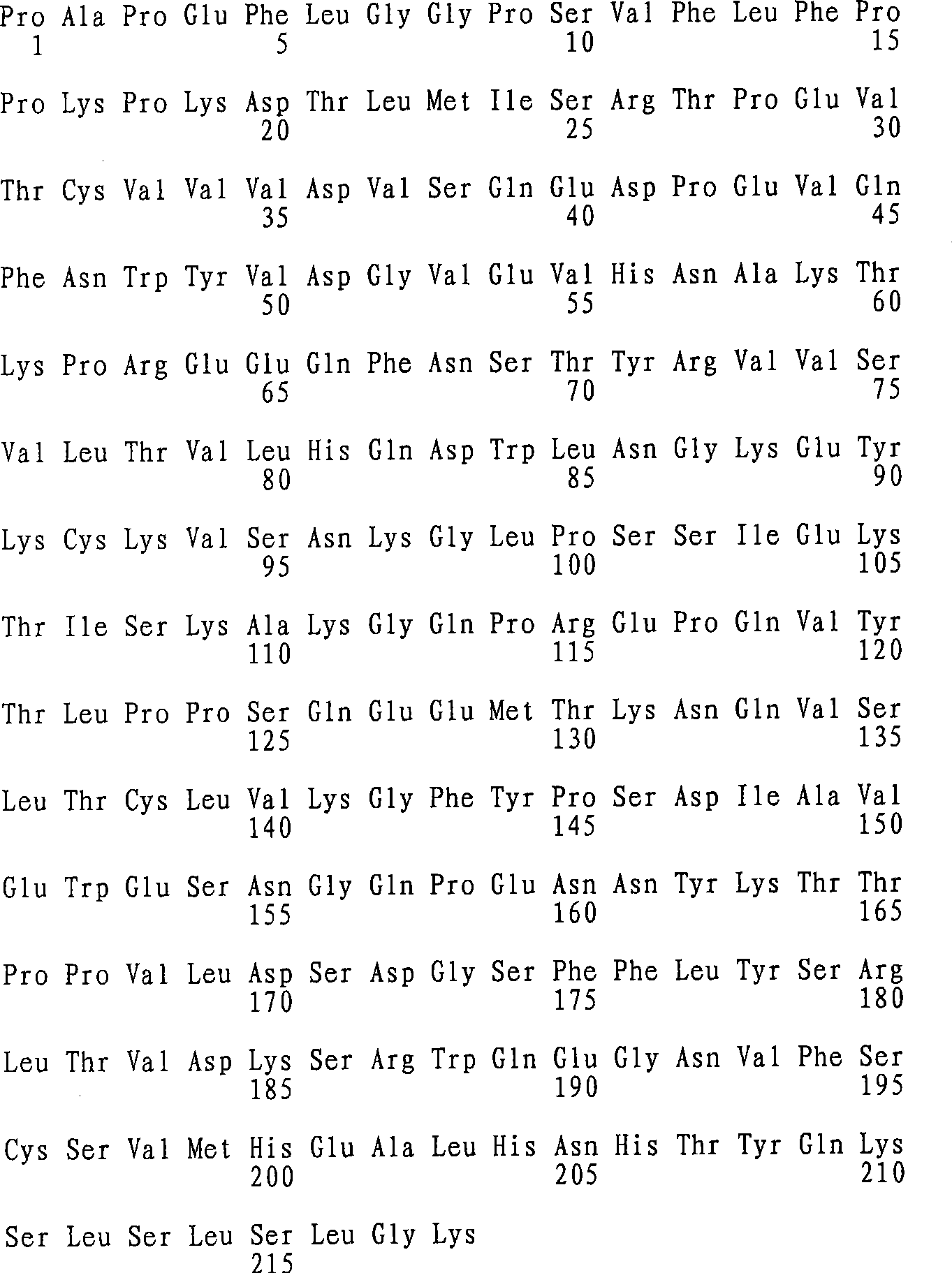
<210>42<210>42
<211>30<211>30
<212>PRT<212>PRT
<213>人工序列<213> Artificial sequence
<220><220>
<223>此序列是合成的<223> This sequence is synthetic
<400>42<400>42
<210>43<210>43
<211>20<211>20
<212>PRT<212>PRT
<213>人工序列<213> Artificial sequence
<220><220>
<223>此序列是合成的<223> This sequence is synthetic
<400>43<400>43

<210>44<210>44
<211>20<211>20
<212>PRT<212>PRT
<213>人工序列<213> Artificial sequence
<220><220>
<223>此序列是合成的<223> This sequence is synthetic
<400>44<400>44

<210>45<210>45
<211>18<211>18
<212>PRT<212>PRT
<213>人工序列<213> Artificial sequence
<220><220>
<223>此序列是合成的<223> This sequence is synthetic
<400>45<400>45

<210>46<210>46
<211>11<211>11
<212>PRT<212>PRT
<213>人工序列<213> Artificial sequence
<220><220>
<223>此序列是合成的<223> This sequence is synthetic
<400>46<400>46

<210>47<210>47
<211>14<211>14
<212>PRT<212>PRT
<213>人类(Homo sapiens)<213> Human (Homo sapiens)
<400>47<400>47

<210>48<210>48
<211>32<211>32
<212>PRT<212>PRT
<213>人类(Homo sapiens)<213> Human (Homo sapiens)
<400>48<400>48

<210>49<210>49
<211>23<211>23
<212>PRT<212>PRT
<213>人类(Homo sapiens)<213> Human (Homo sapiens)
<400>49<400>49

<210>50<210>50
<211>25<211>25
<212>PRT<212>PRT
<213>人类(Homo sapiens)<213> Human (Homo sapiens)
<400>50<400>50

<210>51<210>51
<211>13<211>13
<212>PRT<212>PRT
<213>人类(Homo sapiens)<213> Human (Homo sapiens)
<400>51<400>51

<210>52<210>52
<211>31<211>31
<212>PRT<212>PRT
<213>人类(Homo sapiens)<213> Human (Homo sapiens)
<400>52<400>52

<210>53<210>53
<211>30<211>30
<212>PRT<212>PRT
<213>人类(Homo sapiens)<213> Human (Homo sapiens)
<400>53<400>53

<210>54<210>54
<211>30<211>30
<212>PRT<212>PRT
<213>人类(Homo sapiens)<213> Human (Homo sapiens)
<400>54<400>54


<210>55<210>55
<211>14<211>14
<212>PRT<212>PRT
<213>人类(Homo sapiens)<213> Human (Homo sapiens)
<400>55<400>55

<210>56<210>56
<211>32<211>32
<212>PRT<212>PRT
<213>人类(Homo sapiens)<213> Human (Homo sapiens)
<400>56<400>56

<210>57<210>57
<211>25<211>25
<212>PRT<212>PRT
<213>人类(Homo sapiens)<213> Human (Homo sapiens)
<400>57<400>57

<210>58<210>58
<211>13<211>13
<212>PRT<212>PRT
<213>人类(Homo sapiens)<213> Human (Homo sapiens)
<400>58<400>58
<210>59<210>59
<211>31<211>31
<212>PRT<212>PRT
<213>人类(Homo sapiens)<213> Human (Homo sapiens)
<400>59<400>59

<210>60<210>60
<211>30<211>30
<212>PRT<212>PRT
<213>人类(Homo sapiens)<213> Human (Homo sapiens)
<400>60<400>60


<210>61<210>61
<211>30<211>30
<212>PRT<212>PRT
<213>人类(Homo sapiens)<213> Human (Homo sapiens)
<400>61<400>61

<210>62<210>62
<211>14<211>14
<212>PRT<212>PRT
<213>人类(Homo sapiens)<213> Human (Homo sapiens)
<400>62<400>62

<210>63<210>63
<211>32<211>32
<212>PRT<212>PRT
<213>人类(Homo sapiens)<213> Human (Homo sapiens)
<400>63<400>63

<210>64<210>64
<211>25<211>25
<212>PRT<212>PRT
<213>人类(Homo sapiens)<213> Human (Homo sapiens)
<400>64<400>64

<210>65<210>65
<211>13<211>13
<212>PRT<212>PRT
<213>人类(Homo sapiens)<213> Human (Homo sapiens)
<400>65<400>65
<210>66<210>66
<211>31<211>31
<212>PRT<212>PRT
<213>人类(Homo sapiens)<213> Human (Homo sapiens)
<400>66<400>66

<210>67<210>67
<211>30<211>30
<212>PRT<212>PRT
<213>人类(Homo sapiens)<213> Human (Homo sapiens)
<400>67<400>67
<210>68<210>68
<211>30<211>30
<212>PRT<212>PRT
<213>人类(Homo sapiens)<213> Human (Homo sapiens)
<400>68<400>68

<210>69<210>69
<211>32<211>32
<212>PRT<212>PRT
<213>人类(Homo sapiens)<213> Human (Homo sapiens)
<400>69<400>69

<210>70<210>70
<211>31<211>31
<212>PRT<212>PRT
<213>人类(Homo sapiens)<213> Human (Homo sapiens)
<400>70<400>70

<210>71<210>71
<211>32<211>32
<212>PRT<212>PRT
<213>人类(Homo sapiens)<213> Human (Homo sapiens)
<400>71<400>71
<210>72<210>72
<211>31<211>31
<212>PRT<212>PRT
<213>人类(Homo sapiens)<213> Human (Homo sapiens)
<400>72<400>72

<210>73<210>73
<211>30<211>30
<212>PRT<212>PRT
<213>人类(Homo sapiens)<213> Human (Homo sapiens)
<400>73<400>73

<210>74<210>74
<211>23<211>23
<212>PRT<212>PRT
<213>人类(Homo sapiens)<213> Human (Homo sapiens)
<400>74<400>74

<210>75<210>75
<211>15<211>15
<212>PRT<212>PRT
<213>人类(Homo sapiens)<213> Human (Homo sapiens)
<400>75<400>75
<210>76<210>76
<211>32<211>32
<212>PRT<212>PRT
<213>人类(Homo sapiens)<213> Human (Homo sapiens)
<400>76<400>76

<210>77<210>77
<211>10<211>10
<212>PRT<212>PRT
<213>人类(Homo sapiens)<213> Human (Homo sapiens)
<400>77<400>77

<210>78<210>78
<211>14<211>14
<212>PRT<212>PRT
<213>人类(Homo sapiens)<213> Human (Homo sapiens)
<400>78<400>78

<210>79<210>79
<211>15<211>15
<212>PRT<212>PRT
<213>人类(Homo sapiens)<213> Human (Homo sapiens)
<400>79<400>79

<210>80<210>80
<211>32<211>32
<212>PRT<212>PRT
<213>人类(Homo sapiens)<213> Human (Homo sapiens)
<400>80<400>80

<210>81<210>81
<211>23<211>23
<212>PRT<212>PRT
<213>人类(Homo sapiens)<213> Human (Homo sapiens)
<400>81<400>81

<210>82<210>82
<211>15<211>15
<212>PRT<212>PRT
<213>人类(Homo sapiens)<213> Human (Homo sapiens)
<400>82<400>82

<210>83<210>83
<211>32<211>32
<212>PRT<212>PRT
<213>人类(Homo sapiens)<213> Human (Homo sapiens)
<400>83<400>83

<210>84<210>84
<211>23<211>23
<212>PRT<212>PRT
<213>人类(Homo sapiens)<213> Human (Homo sapiens)
<400>84<400>84

<210>85<210>85
<211>15<211>15
<212>PRT<212>PRT
<213>人类(Homo sapiens)<213> Human (Homo sapiens)
<400>85<400>85
<210>86<210>86
<211>32<211>32
<212>PRT<212>PRT
<213>人类(Homo sapiens)<213> Human (Homo sapiens)
<400>86<400>86

<210>87<210>87
<211>219<211>219
<212>PRT<212>PRT
<213>人工序列<213> Artificial sequence
<220><220>
<223>此序列是合成的<223> This sequence is synthetic
<400>87<400>87

<210>88<210>88
<211>450<211>450
<212>PRT<212>PRT
<213>人工序列<213> Artificial sequence
<220><220>
<223>此序列是合成的<223> This sequence is synthetic
<400>88<400>88

<210>89<210>89
<211>120<211>120
<212>PRT<212>PRT
<213>人工序列<213> Artificial sequence
<220><220>
<223>此序列是合成的<223> This sequence is synthetic
<400>89<400>89


<210>90<210>90
<211>112<211>112
<212>PRT<212>PRT
<213>人工序列<213> Artificial sequence
<220><220>
<223>此序列是合成的<223> This sequence is synthetic
<400>90<400>90

<210>91<210>91
<211>219<211>219
<212>PRT<212>PRT
<213>人工序列<213> Artificial sequence
<220><220>
<223>此序列是合成的<223> This sequence is synthetic
<400>91<400>91


<210>92<210>92
<211>450<211>450
<212>PRT<212>PRT
<213>人工序列<213> Artificial sequence
<220><220>
<223>此序列是合成的<223> This sequence is synthetic
<400>92<400>92

<210>93<210>93
<211>450<211>450
<212>PRT<212>PRT
<213>人工序列<213> Artificial sequence
<220><220>
<223>此序列是合成的<223> This sequence is synthetic
<400>93<400>93


Claims (238)


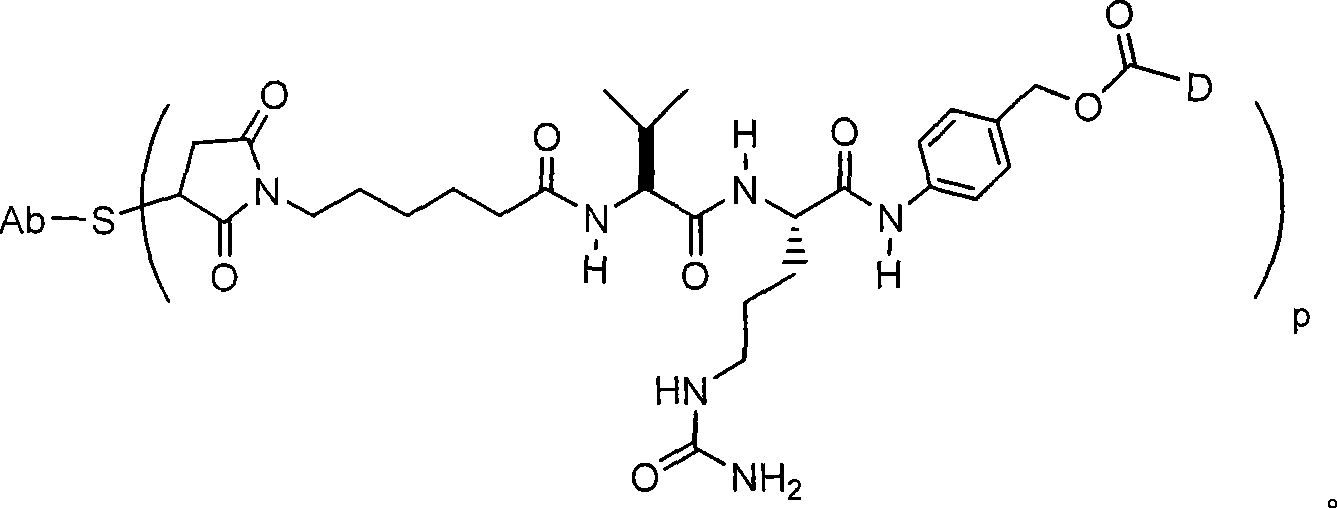


Priority Applications (1)
| Application Number | Priority Date | Filing Date | Title |
|---|---|---|---|
| CN201210528217.0A CN103030696B (en) | 2006-05-30 | 2007-05-29 | Antibody and immune conjugate and application thereof |
Applications Claiming Priority (7)
| Application Number | Priority Date | Filing Date | Title |
|---|---|---|---|
| US80932806P | 2006-05-30 | 2006-05-30 | |
| US60/809,328 | 2006-05-30 | ||
| US90894107P | 2007-03-29 | 2007-03-29 | |
| US60/908,941 | 2007-03-29 | ||
| US91182907P | 2007-04-13 | 2007-04-13 | |
| US60/911,829 | 2007-04-13 | ||
| PCT/US2007/069889 WO2007140371A2 (en) | 2006-05-30 | 2007-05-29 | Antibodies and immunoconjugates and uses therefor |
Related Child Applications (1)
| Application Number | Title | Priority Date | Filing Date |
|---|---|---|---|
| CN201210528217.0A Division CN103030696B (en) | 2006-05-30 | 2007-05-29 | Antibody and immune conjugate and application thereof |
Publications (2)
| Publication Number | Publication Date |
|---|---|
| CN101490087A true CN101490087A (en) | 2009-07-22 |
| CN101490087B CN101490087B (en) | 2013-11-06 |
Family
ID=40892057
Family Applications (1)
| Application Number | Title | Priority Date | Filing Date |
|---|---|---|---|
| CN2007800261175A Expired - Fee Related CN101490087B (en) | 2006-05-30 | 2007-05-29 | Antibodies and immunoconjugates and uses thereof |
Country Status (4)
| Country | Link |
|---|---|
| CN (1) | CN101490087B (en) |
| SI (1) | SI2032606T1 (en) |
| UA (1) | UA95958C2 (en) |
| ZA (1) | ZA200809776B (en) |
Cited By (35)
| Publication number | Priority date | Publication date | Assignee | Title |
|---|---|---|---|---|
| CN102574920A (en) * | 2009-09-18 | 2012-07-11 | Ucb医药有限公司 | Treatment of autoimmune and inflammatory diseases with epratuzumab |
| CN104411337A (en) * | 2012-07-09 | 2015-03-11 | 基因泰克公司 | Immunoconjugates comprising anti-cd79b antibodies |
| CN104428007A (en) * | 2012-07-09 | 2015-03-18 | 基因泰克公司 | Immunoconjugates comprising anti-cd22 antibodies |
| CN104540524A (en) * | 2012-07-09 | 2015-04-22 | 基因泰克公司 | Immunoconjugates comprising anti-CD22 antibodies |
| CN104755494A (en) * | 2012-10-11 | 2015-07-01 | 第一三共株式会社 | Antibody-Drug Conjugates |
| CN105592859A (en) * | 2013-07-11 | 2016-05-18 | 图尔大学 | Novel antibody-drug conjugates and the use of same in therapy |
| CN106467575A (en) * | 2015-08-18 | 2017-03-01 | 四川百利药业有限责任公司 | Cysteine engineered Antibody-toxin conjugate |
| CN106661123A (en) * | 2014-06-20 | 2017-05-10 | 荷商台医(有限合伙)公司 | Anti-Cd22 Antibody-Drug Conjugates And Methods Of Using Thereof |
| CN107001446A (en) * | 2014-12-17 | 2017-08-01 | 豪夫迈·罗氏有限公司 | Using the double conjugation of polypeptides enzymatic one pot reactions of the single stage of sorting enzyme |
| US9850312B2 (en) | 2013-12-25 | 2017-12-26 | Daiichi Sankyo Company, Limited | Anti-TROP2 antibody-drug conjugate |
| US9872924B2 (en) | 2012-10-19 | 2018-01-23 | Daiichi Sankyo Company, Limited | Antibody-drug conjugate produced by binding through linker having hydrophilic structure |
| CN107973856A (en) * | 2012-07-04 | 2018-05-01 | 弗·哈夫曼-拉罗切有限公司 | The Ag-Ab conjugate of covalent attachment |
| CN108452318A (en) * | 2017-02-17 | 2018-08-28 | 浙江特瑞思药业股份有限公司 | Antibody-conjugated drug targeting CD20, preparation method and use thereof |
| CN108463226A (en) * | 2015-11-09 | 2018-08-28 | R.P.谢勒技术有限责任公司 | Anti-CD22 antibody-maytenin conjugate and its application method |
| CN108727499A (en) * | 2018-04-24 | 2018-11-02 | 四川百利药业有限责任公司 | Cysteine engineered Antibody-toxin conjugate |
| US10155821B2 (en) | 2014-01-31 | 2018-12-18 | Daiichi Sankyo Company, Limited | Anti-HER2 antibody-drug conjugate |
| US10233212B2 (en) | 2015-11-03 | 2019-03-19 | Industrial Technology Research Institute | Compounds, linker-drugs and ligand-drug conjugates |
| CN109824759A (en) * | 2019-03-08 | 2019-05-31 | 联宁(苏州)生物制药有限公司 | A kind of Preparation Method And Their Intermediate of the drug-linker MC-MMAF for antibody drug conjugates |
| US10383878B2 (en) | 2014-04-10 | 2019-08-20 | Daiichi Sankyo Company, Limited | Anti-HER3 antibody-drug conjugate |
| CN110420333A (en) * | 2013-03-14 | 2019-11-08 | 斯克利普斯研究所 | Targeting agent antibody coupling matter and application thereof |
| CN110950955A (en) * | 2012-12-20 | 2020-04-03 | 米迪缪尼有限公司 | Method for producing immunoconjugates |
| CN111712511A (en) * | 2017-11-30 | 2020-09-25 | 森托瑞恩生物制药公司 | Albumin-bound products of Auristatin E derivatives |
| CN111885914A (en) * | 2017-10-27 | 2020-11-03 | 投资健康有限责任公司 | Compositions and methods for producing expanded hematopoietic stem cells using fluorene derivatives |
| US10906974B2 (en) | 2017-01-17 | 2021-02-02 | Daiichi Sankyo Company, Limited | Anti-GPR20 antibody and anti-GPR20 antibody-drug conjugate |
| CN112924665A (en) * | 2021-02-19 | 2021-06-08 | 山东莱博生物科技有限公司 | Antibody horseradish peroxidase marker and preparation and application thereof |
| US11077202B2 (en) | 2017-05-15 | 2021-08-03 | Daiichi Sankyo Company, Limited | Anti-CDH6 antibody and anti-CDH6 antibody-drug conjugate |
| US11173213B2 (en) | 2015-06-29 | 2021-11-16 | Daiichi Sankyo Company, Limited | Method for selectively manufacturing antibody-drug conjugate |
| US11185594B2 (en) | 2014-04-10 | 2021-11-30 | Daiichi Sankyo Company, Limited | (Anti-HER2 antibody)-drug conjugate |
| WO2021249228A1 (en) * | 2020-06-08 | 2021-12-16 | 四川百利药业有限责任公司 | Camptothecin drug having high-stability hydrophilic connecting unit and conjugate thereof |
| US11318212B2 (en) | 2017-08-31 | 2022-05-03 | Daiichi Sankyo Company, Limited | Method for producing antibody-drug conjugate |
| US11872289B2 (en) | 2018-05-18 | 2024-01-16 | Daiichi Sankyo Co., Ltd. | Anti-MUC1 antibody-drug conjugate |
| US11945882B2 (en) | 2017-08-31 | 2024-04-02 | Daiichi Sankyo Company, Limited | Method for producing antibody-drug conjugate |
| US12220604B2 (en) | 2018-07-31 | 2025-02-11 | Daiichi Sankyo Company, Limited | Treatment of metastatic brain tumor by administration of an antibody-drug conjugate |
| US12358999B2 (en) | 2018-07-27 | 2025-07-15 | Daiichi Sankyo Company, Limited | Protein recognizing drug moiety of antibody-drug conjugate |
| US12497417B2 (en) | 2015-06-19 | 2025-12-16 | Ladrx Corporation | Delivery systems for controlled drug release |
Families Citing this family (1)
| Publication number | Priority date | Publication date | Assignee | Title |
|---|---|---|---|---|
| JP6618539B2 (en) * | 2014-12-17 | 2019-12-11 | エフ.ホフマン−ラ ロシュ アーゲーF. Hoffmann−La Roche Aktiengesellschaft | Method for enzyme-mediated polypeptide conjugation using sortase |
-
2007
- 2007-05-29 UA UAA200815084A patent/UA95958C2/en unknown
- 2007-05-29 SI SI200731382T patent/SI2032606T1/en unknown
- 2007-05-29 ZA ZA200809776A patent/ZA200809776B/en unknown
- 2007-05-29 CN CN2007800261175A patent/CN101490087B/en not_active Expired - Fee Related
Cited By (76)
| Publication number | Priority date | Publication date | Assignee | Title |
|---|---|---|---|---|
| CN102574920A (en) * | 2009-09-18 | 2012-07-11 | Ucb医药有限公司 | Treatment of autoimmune and inflammatory diseases with epratuzumab |
| US12023378B2 (en) | 2012-07-04 | 2024-07-02 | Hoffmann-La Roche Inc. | Covalently linked antigen-antibody conjugates |
| CN107973856A (en) * | 2012-07-04 | 2018-05-01 | 弗·哈夫曼-拉罗切有限公司 | The Ag-Ab conjugate of covalent attachment |
| CN104411337A (en) * | 2012-07-09 | 2015-03-11 | 基因泰克公司 | Immunoconjugates comprising anti-cd79b antibodies |
| CN104428007A (en) * | 2012-07-09 | 2015-03-18 | 基因泰克公司 | Immunoconjugates comprising anti-cd22 antibodies |
| CN104540524A (en) * | 2012-07-09 | 2015-04-22 | 基因泰克公司 | Immunoconjugates comprising anti-CD22 antibodies |
| CN104428007B (en) * | 2012-07-09 | 2018-03-16 | 基因泰克公司 | Immunoconjugates comprising anti-CD22 antibody |
| US12186310B2 (en) | 2012-10-11 | 2025-01-07 | Daiichi Sankyo Company, Limited | Antibody-drug conjugate |
| CN109081871A (en) * | 2012-10-11 | 2018-12-25 | 第三共株式会社 | Antibody-drug conjugates |
| CN113929738B (en) * | 2012-10-11 | 2024-05-17 | 第一三共株式会社 | Antibody-drug conjugates |
| US9808537B2 (en) | 2012-10-11 | 2017-11-07 | Daiichi Sankyo Company, Limited | Antibody-drug conjugate |
| CN109081871B (en) * | 2012-10-11 | 2023-07-14 | 第一三共株式会社 | Antibody-Drug Conjugates |
| CN104755494A (en) * | 2012-10-11 | 2015-07-01 | 第一三共株式会社 | Antibody-Drug Conjugates |
| CN113929738A (en) * | 2012-10-11 | 2022-01-14 | 第一三共株式会社 | Antibody-drug conjugates |
| US20150297748A1 (en) | 2012-10-11 | 2015-10-22 | Daiichi Sankyo Company, Limited | Antibody-drug conjugate |
| US11633493B2 (en) | 2012-10-11 | 2023-04-25 | Daiichi Sankyo Company, Limited | Antibody-drug conjugate |
| CN115960111A (en) * | 2012-10-11 | 2023-04-14 | 第一三共株式会社 | Antibody-drug conjugates |
| CN104755494B (en) * | 2012-10-11 | 2018-09-07 | 第一三共株式会社 | antibody-drug conjugates |
| AU2020200548B2 (en) * | 2012-10-11 | 2022-08-25 | Daiichi Sankyo Company, Limited | Antibody-drug conjugate |
| US10195288B2 (en) | 2012-10-11 | 2019-02-05 | Daiichi Sankyo Company, Limited | Antibody-drug conjugate |
| US10973924B2 (en) | 2012-10-11 | 2021-04-13 | Daiichi Sankyo Company, Limited | Antibody-drug conjugate |
| US10729782B2 (en) | 2012-10-19 | 2020-08-04 | Daiichi Sankyo Company, Limited | Antibody-drug conjugate produced by binding through linker having hydrophilic structure |
| US9872924B2 (en) | 2012-10-19 | 2018-01-23 | Daiichi Sankyo Company, Limited | Antibody-drug conjugate produced by binding through linker having hydrophilic structure |
| CN110950955A (en) * | 2012-12-20 | 2020-04-03 | 米迪缪尼有限公司 | Method for producing immunoconjugates |
| CN110420333A (en) * | 2013-03-14 | 2019-11-08 | 斯克利普斯研究所 | Targeting agent antibody coupling matter and application thereof |
| CN105592859A (en) * | 2013-07-11 | 2016-05-18 | 图尔大学 | Novel antibody-drug conjugates and the use of same in therapy |
| US10307488B2 (en) | 2013-07-11 | 2019-06-04 | Universite Francois Rabelais | Antibody-drug conjugates and the use of same in therapy |
| CN105592859B (en) * | 2013-07-11 | 2021-08-20 | Mcsaf公司 | Antibody-drug conjugates and their use in therapy |
| US11278627B2 (en) | 2013-07-11 | 2022-03-22 | Mc Saf | Antibody-drug conjugates and the use of same in therapy |
| US11008398B2 (en) | 2013-12-25 | 2021-05-18 | Daiichi Sankyo Company, Limited | Anti-TROP2 antibody-drug conjugate |
| US9850312B2 (en) | 2013-12-25 | 2017-12-26 | Daiichi Sankyo Company, Limited | Anti-TROP2 antibody-drug conjugate |
| US10227417B2 (en) | 2013-12-25 | 2019-03-12 | Daiichi Sankyo Company, Limited | Anti-TROP2 antibody-drug conjugate |
| US11584800B2 (en) | 2014-01-31 | 2023-02-21 | Daiichi Sankyo Company, Limited | Method of treating cancer comprising administration of anti-HER2 antibody-drug conjugate |
| US10155821B2 (en) | 2014-01-31 | 2018-12-18 | Daiichi Sankyo Company, Limited | Anti-HER2 antibody-drug conjugate |
| US11795236B2 (en) | 2014-01-31 | 2023-10-24 | Daiichi Sankyo Company, Limited | Method for treating cancer comprising administration of anti-HER2 antibody-drug conjugate |
| US11185594B2 (en) | 2014-04-10 | 2021-11-30 | Daiichi Sankyo Company, Limited | (Anti-HER2 antibody)-drug conjugate |
| US10383878B2 (en) | 2014-04-10 | 2019-08-20 | Daiichi Sankyo Company, Limited | Anti-HER3 antibody-drug conjugate |
| US11298359B2 (en) | 2014-04-10 | 2022-04-12 | Daiichi Sankyo Company, Limited | Anti-HER3 antibody-drug conjugate |
| CN106661123A (en) * | 2014-06-20 | 2017-05-10 | 荷商台医(有限合伙)公司 | Anti-Cd22 Antibody-Drug Conjugates And Methods Of Using Thereof |
| CN107001446A (en) * | 2014-12-17 | 2017-08-01 | 豪夫迈·罗氏有限公司 | Using the double conjugation of polypeptides enzymatic one pot reactions of the single stage of sorting enzyme |
| US12497417B2 (en) | 2015-06-19 | 2025-12-16 | Ladrx Corporation | Delivery systems for controlled drug release |
| US11173213B2 (en) | 2015-06-29 | 2021-11-16 | Daiichi Sankyo Company, Limited | Method for selectively manufacturing antibody-drug conjugate |
| CN106467575A (en) * | 2015-08-18 | 2017-03-01 | 四川百利药业有限责任公司 | Cysteine engineered Antibody-toxin conjugate |
| CN106467575B (en) * | 2015-08-18 | 2020-07-31 | 四川百利药业有限责任公司 | Cysteine engineered antibody-toxin conjugates |
| US10618935B2 (en) | 2015-11-03 | 2020-04-14 | Industrial Technology Research Institute | Antibody-drug conjugate (ADC) and method for forming the same |
| TWI660741B (en) * | 2015-11-03 | 2019-06-01 | 財團法人工業技術研究院 | Antibody-drug conjugate (adc) and method for forming the same |
| US10233212B2 (en) | 2015-11-03 | 2019-03-19 | Industrial Technology Research Institute | Compounds, linker-drugs and ligand-drug conjugates |
| US10683327B2 (en) | 2015-11-03 | 2020-06-16 | Industrial Technology Research Institute | Compounds, linker-drugs and ligand-drug conjugates |
| CN108463226B (en) * | 2015-11-09 | 2022-04-15 | R.P.谢勒技术有限责任公司 | anti-CD 22 antibody-maytansinoid conjugates and methods of use thereof |
| CN108463226A (en) * | 2015-11-09 | 2018-08-28 | R.P.谢勒技术有限责任公司 | Anti-CD22 antibody-maytenin conjugate and its application method |
| US10906974B2 (en) | 2017-01-17 | 2021-02-02 | Daiichi Sankyo Company, Limited | Anti-GPR20 antibody and anti-GPR20 antibody-drug conjugate |
| US11434289B2 (en) | 2017-01-17 | 2022-09-06 | Daiichi Sankyo Company, Limited | Anti-GPR20 antibody and anti-GPR20 antibody-drug conjugate |
| CN108452318A (en) * | 2017-02-17 | 2018-08-28 | 浙江特瑞思药业股份有限公司 | Antibody-conjugated drug targeting CD20, preparation method and use thereof |
| CN108452318B (en) * | 2017-02-17 | 2023-05-26 | 浙江特瑞思药业股份有限公司 | Antibody-coupled drug targeting CD20, preparation method and use thereof |
| US11077202B2 (en) | 2017-05-15 | 2021-08-03 | Daiichi Sankyo Company, Limited | Anti-CDH6 antibody and anti-CDH6 antibody-drug conjugate |
| US12233155B2 (en) | 2017-05-15 | 2025-02-25 | Daiichi Sankyo Company, Limited | Polynucleotides encoding antibodies which bind the EC3 domain of cadherin-6 (CDH6) and possess internalization ability |
| US11446386B2 (en) | 2017-05-15 | 2022-09-20 | Daiichi Sankyo Company, Limited | Anti-CDH6 antibody and method of producing an anti-CDH6 antibody-drug conjugate |
| US11945882B2 (en) | 2017-08-31 | 2024-04-02 | Daiichi Sankyo Company, Limited | Method for producing antibody-drug conjugate |
| US11318212B2 (en) | 2017-08-31 | 2022-05-03 | Daiichi Sankyo Company, Limited | Method for producing antibody-drug conjugate |
| US12503489B2 (en) | 2017-08-31 | 2025-12-23 | Daiichi Sankyo Company, Limited | Method for producing antibody-drug conjugate |
| CN111885914A (en) * | 2017-10-27 | 2020-11-03 | 投资健康有限责任公司 | Compositions and methods for producing expanded hematopoietic stem cells using fluorene derivatives |
| CN111712511B (en) * | 2017-11-30 | 2024-07-16 | 拉德克斯公司 | Albumin-binding products of auristatin E derivatives |
| CN111712511A (en) * | 2017-11-30 | 2020-09-25 | 森托瑞恩生物制药公司 | Albumin-bound products of Auristatin E derivatives |
| CN108727499B (en) * | 2018-04-24 | 2021-12-31 | 四川百利药业有限责任公司 | Cysteine engineered antibody-toxin conjugates |
| CN108727499A (en) * | 2018-04-24 | 2018-11-02 | 四川百利药业有限责任公司 | Cysteine engineered Antibody-toxin conjugate |
| US11872289B2 (en) | 2018-05-18 | 2024-01-16 | Daiichi Sankyo Co., Ltd. | Anti-MUC1 antibody-drug conjugate |
| US12291577B2 (en) | 2018-05-18 | 2025-05-06 | Daiichi Sankyo Co., Ltd. | Anti-MUC1 antibody-drug conjugate |
| US12297289B2 (en) | 2018-05-18 | 2025-05-13 | Glycotope Gmbh | Anti-MUC1 antibody |
| US12479926B2 (en) | 2018-05-18 | 2025-11-25 | Daiichi Sankyo Co., Ltd. | Anti-MUC1 antibody-drug conjugate |
| US12358999B2 (en) | 2018-07-27 | 2025-07-15 | Daiichi Sankyo Company, Limited | Protein recognizing drug moiety of antibody-drug conjugate |
| US12220604B2 (en) | 2018-07-31 | 2025-02-11 | Daiichi Sankyo Company, Limited | Treatment of metastatic brain tumor by administration of an antibody-drug conjugate |
| CN109824759A (en) * | 2019-03-08 | 2019-05-31 | 联宁(苏州)生物制药有限公司 | A kind of Preparation Method And Their Intermediate of the drug-linker MC-MMAF for antibody drug conjugates |
| WO2021249228A1 (en) * | 2020-06-08 | 2021-12-16 | 四川百利药业有限责任公司 | Camptothecin drug having high-stability hydrophilic connecting unit and conjugate thereof |
| CN113827736A (en) * | 2020-06-08 | 2021-12-24 | 四川百利药业有限责任公司 | A kind of camptothecin drug and its conjugate with high stability hydrophilic linking unit |
| CN112924665A (en) * | 2021-02-19 | 2021-06-08 | 山东莱博生物科技有限公司 | Antibody horseradish peroxidase marker and preparation and application thereof |
| CN112924665B (en) * | 2021-02-19 | 2023-10-03 | 山东莱博生物科技有限公司 | Antibody horseradish peroxidase marker and preparation and application thereof |
Also Published As
| Publication number | Publication date |
|---|---|
| CN101490087B (en) | 2013-11-06 |
| UA95958C2 (en) | 2011-09-26 |
| ZA200809776B (en) | 2010-03-31 |
| SI2032606T1 (en) | 2014-02-28 |
Similar Documents
| Publication | Publication Date | Title |
|---|---|---|
| CN101490087B (en) | Antibodies and immunoconjugates and uses thereof | |
| CN103030696B (en) | Antibody and immune conjugate and application thereof | |
| AU2011202920B2 (en) | Antibodies and immunoconjugates and uses therefor | |
| HK1182721B (en) | Antibodies and immunoconjugates and uses therefor | |
| HK1169805B (en) | Anti-cd22 antibodies, their immunoconjugates and uses thereof | |
| HK1127926B (en) | Antibodies and immunoconjugates and uses therefor | |
| HK1165438B (en) | Anti-cd22 antibodies, their immunoconjugates and uses thereof |
Legal Events
| Date | Code | Title | Description |
|---|---|---|---|
| C06 | Publication | ||
| PB01 | Publication | ||
| C10 | Entry into substantive examination | ||
| SE01 | Entry into force of request for substantive examination | ||
| C14 | Grant of patent or utility model | ||
| GR01 | Patent grant | ||
| CF01 | Termination of patent right due to non-payment of annual fee | ||
| CF01 | Termination of patent right due to non-payment of annual fee |
Granted publication date: 20131106 |