CN101340928B - Modified proteases that inhibit complement activation - Google Patents
Modified proteases that inhibit complement activation Download PDFInfo
- Publication number
- CN101340928B CN101340928B CN2006800479005A CN200680047900A CN101340928B CN 101340928 B CN101340928 B CN 101340928B CN 2006800479005 A CN2006800479005 A CN 2006800479005A CN 200680047900 A CN200680047900 A CN 200680047900A CN 101340928 B CN101340928 B CN 101340928B
- Authority
- CN
- China
- Prior art keywords
- complement
- protease
- proteases
- catalytic activity
- modification
- Prior art date
- Legal status (The legal status is an assumption and is not a legal conclusion. Google has not performed a legal analysis and makes no representation as to the accuracy of the status listed.)
- Expired - Fee Related
Links
Images

Classifications
-
- A—HUMAN NECESSITIES
- A61—MEDICAL OR VETERINARY SCIENCE; HYGIENE
- A61K—PREPARATIONS FOR MEDICAL, DENTAL OR TOILETRY PURPOSES
- A61K38/00—Medicinal preparations containing peptides
- A61K38/16—Peptides having more than 20 amino acids; Gastrins; Somatostatins; Melanotropins; Derivatives thereof
- A61K38/43—Enzymes; Proenzymes; Derivatives thereof
- A61K38/46—Hydrolases (3)
- A61K38/48—Hydrolases (3) acting on peptide bonds (3.4)
-
- A—HUMAN NECESSITIES
- A61—MEDICAL OR VETERINARY SCIENCE; HYGIENE
- A61K—PREPARATIONS FOR MEDICAL, DENTAL OR TOILETRY PURPOSES
- A61K38/00—Medicinal preparations containing peptides
- A61K38/16—Peptides having more than 20 amino acids; Gastrins; Somatostatins; Melanotropins; Derivatives thereof
- A61K38/43—Enzymes; Proenzymes; Derivatives thereof
- A61K38/46—Hydrolases (3)
- A61K38/48—Hydrolases (3) acting on peptide bonds (3.4)
- A61K38/482—Serine endopeptidases (3.4.21)
-
- A—HUMAN NECESSITIES
- A61—MEDICAL OR VETERINARY SCIENCE; HYGIENE
- A61K—PREPARATIONS FOR MEDICAL, DENTAL OR TOILETRY PURPOSES
- A61K38/00—Medicinal preparations containing peptides
- A61K38/16—Peptides having more than 20 amino acids; Gastrins; Somatostatins; Melanotropins; Derivatives thereof
- A61K38/43—Enzymes; Proenzymes; Derivatives thereof
-
- A—HUMAN NECESSITIES
- A61—MEDICAL OR VETERINARY SCIENCE; HYGIENE
- A61K—PREPARATIONS FOR MEDICAL, DENTAL OR TOILETRY PURPOSES
- A61K38/00—Medicinal preparations containing peptides
- A61K38/16—Peptides having more than 20 amino acids; Gastrins; Somatostatins; Melanotropins; Derivatives thereof
- A61K38/43—Enzymes; Proenzymes; Derivatives thereof
- A61K38/46—Hydrolases (3)
- A61K38/48—Hydrolases (3) acting on peptide bonds (3.4)
- A61K38/49—Urokinase; Tissue plasminogen activator
-
- A—HUMAN NECESSITIES
- A61—MEDICAL OR VETERINARY SCIENCE; HYGIENE
- A61P—SPECIFIC THERAPEUTIC ACTIVITY OF CHEMICAL COMPOUNDS OR MEDICINAL PREPARATIONS
- A61P1/00—Drugs for disorders of the alimentary tract or the digestive system
-
- A—HUMAN NECESSITIES
- A61—MEDICAL OR VETERINARY SCIENCE; HYGIENE
- A61P—SPECIFIC THERAPEUTIC ACTIVITY OF CHEMICAL COMPOUNDS OR MEDICINAL PREPARATIONS
- A61P1/00—Drugs for disorders of the alimentary tract or the digestive system
- A61P1/04—Drugs for disorders of the alimentary tract or the digestive system for ulcers, gastritis or reflux esophagitis, e.g. antacids, inhibitors of acid secretion, mucosal protectants
-
- A—HUMAN NECESSITIES
- A61—MEDICAL OR VETERINARY SCIENCE; HYGIENE
- A61P—SPECIFIC THERAPEUTIC ACTIVITY OF CHEMICAL COMPOUNDS OR MEDICINAL PREPARATIONS
- A61P11/00—Drugs for disorders of the respiratory system
- A61P11/06—Antiasthmatics
-
- A—HUMAN NECESSITIES
- A61—MEDICAL OR VETERINARY SCIENCE; HYGIENE
- A61P—SPECIFIC THERAPEUTIC ACTIVITY OF CHEMICAL COMPOUNDS OR MEDICINAL PREPARATIONS
- A61P13/00—Drugs for disorders of the urinary system
- A61P13/12—Drugs for disorders of the urinary system of the kidneys
-
- A—HUMAN NECESSITIES
- A61—MEDICAL OR VETERINARY SCIENCE; HYGIENE
- A61P—SPECIFIC THERAPEUTIC ACTIVITY OF CHEMICAL COMPOUNDS OR MEDICINAL PREPARATIONS
- A61P19/00—Drugs for skeletal disorders
- A61P19/02—Drugs for skeletal disorders for joint disorders, e.g. arthritis, arthrosis
-
- A—HUMAN NECESSITIES
- A61—MEDICAL OR VETERINARY SCIENCE; HYGIENE
- A61P—SPECIFIC THERAPEUTIC ACTIVITY OF CHEMICAL COMPOUNDS OR MEDICINAL PREPARATIONS
- A61P21/00—Drugs for disorders of the muscular or neuromuscular system
- A61P21/04—Drugs for disorders of the muscular or neuromuscular system for myasthenia gravis
-
- A—HUMAN NECESSITIES
- A61—MEDICAL OR VETERINARY SCIENCE; HYGIENE
- A61P—SPECIFIC THERAPEUTIC ACTIVITY OF CHEMICAL COMPOUNDS OR MEDICINAL PREPARATIONS
- A61P25/00—Drugs for disorders of the nervous system
-
- A—HUMAN NECESSITIES
- A61—MEDICAL OR VETERINARY SCIENCE; HYGIENE
- A61P—SPECIFIC THERAPEUTIC ACTIVITY OF CHEMICAL COMPOUNDS OR MEDICINAL PREPARATIONS
- A61P25/00—Drugs for disorders of the nervous system
- A61P25/28—Drugs for disorders of the nervous system for treating neurodegenerative disorders of the central nervous system, e.g. nootropic agents, cognition enhancers, drugs for treating Alzheimer's disease or other forms of dementia
-
- A—HUMAN NECESSITIES
- A61—MEDICAL OR VETERINARY SCIENCE; HYGIENE
- A61P—SPECIFIC THERAPEUTIC ACTIVITY OF CHEMICAL COMPOUNDS OR MEDICINAL PREPARATIONS
- A61P29/00—Non-central analgesic, antipyretic or antiinflammatory agents, e.g. antirheumatic agents; Non-steroidal antiinflammatory drugs [NSAID]
-
- A—HUMAN NECESSITIES
- A61—MEDICAL OR VETERINARY SCIENCE; HYGIENE
- A61P—SPECIFIC THERAPEUTIC ACTIVITY OF CHEMICAL COMPOUNDS OR MEDICINAL PREPARATIONS
- A61P31/00—Antiinfectives, i.e. antibiotics, antiseptics, chemotherapeutics
-
- A—HUMAN NECESSITIES
- A61—MEDICAL OR VETERINARY SCIENCE; HYGIENE
- A61P—SPECIFIC THERAPEUTIC ACTIVITY OF CHEMICAL COMPOUNDS OR MEDICINAL PREPARATIONS
- A61P31/00—Antiinfectives, i.e. antibiotics, antiseptics, chemotherapeutics
- A61P31/04—Antibacterial agents
-
- A—HUMAN NECESSITIES
- A61—MEDICAL OR VETERINARY SCIENCE; HYGIENE
- A61P—SPECIFIC THERAPEUTIC ACTIVITY OF CHEMICAL COMPOUNDS OR MEDICINAL PREPARATIONS
- A61P37/00—Drugs for immunological or allergic disorders
-
- A—HUMAN NECESSITIES
- A61—MEDICAL OR VETERINARY SCIENCE; HYGIENE
- A61P—SPECIFIC THERAPEUTIC ACTIVITY OF CHEMICAL COMPOUNDS OR MEDICINAL PREPARATIONS
- A61P37/00—Drugs for immunological or allergic disorders
- A61P37/02—Immunomodulators
-
- A—HUMAN NECESSITIES
- A61—MEDICAL OR VETERINARY SCIENCE; HYGIENE
- A61P—SPECIFIC THERAPEUTIC ACTIVITY OF CHEMICAL COMPOUNDS OR MEDICINAL PREPARATIONS
- A61P9/00—Drugs for disorders of the cardiovascular system
-
- A—HUMAN NECESSITIES
- A61—MEDICAL OR VETERINARY SCIENCE; HYGIENE
- A61P—SPECIFIC THERAPEUTIC ACTIVITY OF CHEMICAL COMPOUNDS OR MEDICINAL PREPARATIONS
- A61P9/00—Drugs for disorders of the cardiovascular system
- A61P9/10—Drugs for disorders of the cardiovascular system for treating ischaemic or atherosclerotic diseases, e.g. antianginal drugs, coronary vasodilators, drugs for myocardial infarction, retinopathy, cerebrovascula insufficiency, renal arteriosclerosis
-
- C—CHEMISTRY; METALLURGY
- C12—BIOCHEMISTRY; BEER; SPIRITS; WINE; VINEGAR; MICROBIOLOGY; ENZYMOLOGY; MUTATION OR GENETIC ENGINEERING
- C12N—MICROORGANISMS OR ENZYMES; COMPOSITIONS THEREOF; PROPAGATING, PRESERVING, OR MAINTAINING MICROORGANISMS; MUTATION OR GENETIC ENGINEERING; CULTURE MEDIA
- C12N15/00—Mutation or genetic engineering; DNA or RNA concerning genetic engineering, vectors, e.g. plasmids, or their isolation, preparation or purification; Use of hosts therefor
- C12N15/09—Recombinant DNA-technology
- C12N15/11—DNA or RNA fragments; Modified forms thereof; Non-coding nucleic acids having a biological activity
- C12N15/62—DNA sequences coding for fusion proteins
-
- C—CHEMISTRY; METALLURGY
- C12—BIOCHEMISTRY; BEER; SPIRITS; WINE; VINEGAR; MICROBIOLOGY; ENZYMOLOGY; MUTATION OR GENETIC ENGINEERING
- C12N—MICROORGANISMS OR ENZYMES; COMPOSITIONS THEREOF; PROPAGATING, PRESERVING, OR MAINTAINING MICROORGANISMS; MUTATION OR GENETIC ENGINEERING; CULTURE MEDIA
- C12N9/00—Enzymes; Proenzymes; Compositions thereof; Processes for preparing, activating, inhibiting, separating or purifying enzymes
- C12N9/14—Hydrolases (3)
- C12N9/48—Hydrolases (3) acting on peptide bonds (3.4)
- C12N9/50—Proteinases, e.g. Endopeptidases (3.4.21-3.4.25)
- C12N9/64—Proteinases, e.g. Endopeptidases (3.4.21-3.4.25) derived from animal tissue
-
- C—CHEMISTRY; METALLURGY
- C12—BIOCHEMISTRY; BEER; SPIRITS; WINE; VINEGAR; MICROBIOLOGY; ENZYMOLOGY; MUTATION OR GENETIC ENGINEERING
- C12N—MICROORGANISMS OR ENZYMES; COMPOSITIONS THEREOF; PROPAGATING, PRESERVING, OR MAINTAINING MICROORGANISMS; MUTATION OR GENETIC ENGINEERING; CULTURE MEDIA
- C12N9/00—Enzymes; Proenzymes; Compositions thereof; Processes for preparing, activating, inhibiting, separating or purifying enzymes
- C12N9/14—Hydrolases (3)
- C12N9/48—Hydrolases (3) acting on peptide bonds (3.4)
- C12N9/50—Proteinases, e.g. Endopeptidases (3.4.21-3.4.25)
- C12N9/64—Proteinases, e.g. Endopeptidases (3.4.21-3.4.25) derived from animal tissue
- C12N9/6421—Proteinases, e.g. Endopeptidases (3.4.21-3.4.25) derived from animal tissue from mammals
-
- C—CHEMISTRY; METALLURGY
- C12—BIOCHEMISTRY; BEER; SPIRITS; WINE; VINEGAR; MICROBIOLOGY; ENZYMOLOGY; MUTATION OR GENETIC ENGINEERING
- C12N—MICROORGANISMS OR ENZYMES; COMPOSITIONS THEREOF; PROPAGATING, PRESERVING, OR MAINTAINING MICROORGANISMS; MUTATION OR GENETIC ENGINEERING; CULTURE MEDIA
- C12N9/00—Enzymes; Proenzymes; Compositions thereof; Processes for preparing, activating, inhibiting, separating or purifying enzymes
- C12N9/14—Hydrolases (3)
- C12N9/48—Hydrolases (3) acting on peptide bonds (3.4)
- C12N9/50—Proteinases, e.g. Endopeptidases (3.4.21-3.4.25)
- C12N9/64—Proteinases, e.g. Endopeptidases (3.4.21-3.4.25) derived from animal tissue
- C12N9/6421—Proteinases, e.g. Endopeptidases (3.4.21-3.4.25) derived from animal tissue from mammals
- C12N9/6424—Serine endopeptidases (3.4.21)
-
- C—CHEMISTRY; METALLURGY
- C12—BIOCHEMISTRY; BEER; SPIRITS; WINE; VINEGAR; MICROBIOLOGY; ENZYMOLOGY; MUTATION OR GENETIC ENGINEERING
- C12N—MICROORGANISMS OR ENZYMES; COMPOSITIONS THEREOF; PROPAGATING, PRESERVING, OR MAINTAINING MICROORGANISMS; MUTATION OR GENETIC ENGINEERING; CULTURE MEDIA
- C12N9/00—Enzymes; Proenzymes; Compositions thereof; Processes for preparing, activating, inhibiting, separating or purifying enzymes
- C12N9/14—Hydrolases (3)
- C12N9/48—Hydrolases (3) acting on peptide bonds (3.4)
- C12N9/50—Proteinases, e.g. Endopeptidases (3.4.21-3.4.25)
- C12N9/64—Proteinases, e.g. Endopeptidases (3.4.21-3.4.25) derived from animal tissue
- C12N9/6421—Proteinases, e.g. Endopeptidases (3.4.21-3.4.25) derived from animal tissue from mammals
- C12N9/6424—Serine endopeptidases (3.4.21)
- C12N9/6467—Granzymes, e.g. granzyme A (3.4.21.78); granzyme B (3.4.21.79)
-
- C—CHEMISTRY; METALLURGY
- C07—ORGANIC CHEMISTRY
- C07K—PEPTIDES
- C07K2319/00—Fusion polypeptide
-
- C—CHEMISTRY; METALLURGY
- C12—BIOCHEMISTRY; BEER; SPIRITS; WINE; VINEGAR; MICROBIOLOGY; ENZYMOLOGY; MUTATION OR GENETIC ENGINEERING
- C12Y—ENZYMES
- C12Y304/00—Hydrolases acting on peptide bonds, i.e. peptidases (3.4)
- C12Y304/21—Serine endopeptidases (3.4.21)
- C12Y304/21109—Matriptase (3.4.21.109)
Landscapes
- Health & Medical Sciences (AREA)
- Life Sciences & Earth Sciences (AREA)
- Engineering & Computer Science (AREA)
- Chemical & Material Sciences (AREA)
- Bioinformatics & Cheminformatics (AREA)
- Organic Chemistry (AREA)
- General Health & Medical Sciences (AREA)
- Medicinal Chemistry (AREA)
- Biomedical Technology (AREA)
- Veterinary Medicine (AREA)
- Pharmacology & Pharmacy (AREA)
- Animal Behavior & Ethology (AREA)
- Public Health (AREA)
- Genetics & Genomics (AREA)
- Zoology (AREA)
- Wood Science & Technology (AREA)
- Chemical Kinetics & Catalysis (AREA)
- Nuclear Medicine, Radiotherapy & Molecular Imaging (AREA)
- General Chemical & Material Sciences (AREA)
- Immunology (AREA)
- Molecular Biology (AREA)
- General Engineering & Computer Science (AREA)
- Biotechnology (AREA)
- Biochemistry (AREA)
- Microbiology (AREA)
- Epidemiology (AREA)
- Gastroenterology & Hepatology (AREA)
- Proteomics, Peptides & Aminoacids (AREA)
- Neurology (AREA)
- Neurosurgery (AREA)
- Orthopedic Medicine & Surgery (AREA)
- Physical Education & Sports Medicine (AREA)
- Oncology (AREA)
- Pulmonology (AREA)
- Cardiology (AREA)
- Urology & Nephrology (AREA)
- Heart & Thoracic Surgery (AREA)
- Rheumatology (AREA)
- Communicable Diseases (AREA)
- Pain & Pain Management (AREA)
Abstract
本发明提供了调节补体系统的方法和化合物。特别地,本发明提供了抑制补体激活的化合物及促进补体激活的化合物。所述化合物通过其对补体系统的作用而是治疗剂。因此,抑制补体激活的化合物可用于治疗缺血-再灌注疾病,包括心肌梗塞和中风、脓毒症、自身免疫疾病、炎症疾病及具有炎症成分的疾病,包括阿尔茨海默病及其它神经变性疾病。The present invention provides methods and compounds for modulating the complement system. In particular, the present invention provides compounds that inhibit complement activation and compounds that promote complement activation. These compounds are therapeutic agents through their effects on the complement system. Thus, compounds that inhibit complement activation can be used to treat ischemia-reperfusion disorders, including myocardial infarction and stroke, sepsis, autoimmune diseases, inflammatory diseases, and diseases with an inflammatory component, including Alzheimer's disease and other neurodegenerative diseases.
Description
相关申请 related applications
本申请要求Edwin Madison于2005年10月21日提交的、题为“MODIFIED PROTEASES THAT INHIBIT COMPLEMENT ACTIVATION”的美国临时申请Serial No.60/729,817的优先权。当允许时,这一申请的主题全文引入本文。 This application claims priority to US Provisional Application Serial No. 60/729,817, filed October 21, 2005, entitled "MODIFIED PROTEASES THAT INHIBIT COMPLEMENT ACTIVATION," by Edwin Madison. Where allowed, the subject matter of this application is incorporated herein in its entirety. the
本申请与也要求了美国临时申请Serial No.60/729,817的优先权的、Edwin Madison,Jack Nguyen,Sandra Waugh Ruggles和Christopher Thanos于2006年10月20日提交的、题为“MODIFIED PROTEASES THAT INHIBITCOMPLEMENT ACTIVATION”的美国专利申请Serial No.(代理案卷号19049-003001/4903)相关。 This application is related to Edwin Madison, Jack Nguyen, Sandra Waugh Ruggles and Christopher Thanos, filed October 20, 2006, entitled "MODIFIED PROTEASES THAT INHIBITCOMPLEMENT ACTIVATION "U.S. Patent Application Serial No. (Attorney Docket No. 19049-003001/4903) related. the
本申请还与如下申请相关:2003年10月2日提交的、题为Methods ofGenerating and Screening for proteases with Altered Specificity的美国申请Serial No.10/677,977;2005年4月12日提交的、题为Cleavage of VEGF andVEGF Receptor by Wild-Type and Mutant MTSP-1的美国申请Serial No.11/104,110;2005年4月12日提交的、题为Cleavage of VEGF and VEGFReceptor by Wild-Type and Mutant protease的美国申请Serial No.11/104,111。 This application is also related to U.S. Application Serial No. 10/677,977, filed October 2, 2003, entitled Methods of Generating and Screening for proteases with Altered Specificity; and filed April 12, 2005, entitled Cleavage U.S. Application Serial No. 11/104,110 of VEGF and VEGF Receptor by Wild-Type and Mutant MTSP-1; U.S. Application Serial entitled Cleavage of VEGF and VEGF Receptor by Wild-Type and Mutant protease, filed April 12, 2005 No. 11/104,111. the
当允许时,每一上述申请的主题均全文引入本文。 Where permitted, the subject matter of each of the above applications is incorporated herein in its entirety. the
发明领域 field of invention
本发明提供了调节补体系统的方法及化合物。本发明特别提供了抑制补体激活的化合物及促进补体激活的化合物。所述化合物由于其对于补体系统的作用而是治疗剂。因此,抑制补体激活的化合物可用于治疗缺血性和再灌注疾病,包括心肌梗塞和中风、脓毒症、自身免疫疾病、炎症疾病及具有炎症成分的疾病,包括阿尔茨海默病及其它神经变性疾病。 The invention provides methods and compounds for modulating the complement system. In particular, the present invention provides compounds that inhibit complement activation and compounds that promote complement activation. The compounds are therapeutic agents due to their effects on the complement system. Compounds that inhibit complement activation are therefore useful in the treatment of ischemic and reperfusion diseases, including myocardial infarction and stroke, sepsis, autoimmune diseases, inflammatory diseases and diseases with an inflammatory component, including Alzheimer's disease and other neurological degenerative disease. the
背景 background
补体(C)系统是免疫系统的一部分,在消除侵入的病原体和引发炎症应答中起作用。人及其它哺乳动物的补体系统包括30种以上的可溶和膜结合的蛋白质,参与一系列顺序反应,导致补体激活。血液补体系统具有与广谱宿主防御机制相关的众多功能,包括抗微生物和抗病毒作用。衍生自C成分激活的产物包括非自身识别分子C3b、C4b和C5b,以及影响多种细胞免疫应答的过敏毒素C3a、C4a和C5a。这些过敏毒素也发挥促炎剂作用。 The complement (C) system is part of the immune system that plays a role in eliminating invading pathogens and initiating inflammatory responses. The complement system of humans and other mammals includes more than 30 soluble and membrane-bound proteins involved in a series of sequential reactions leading to complement activation. The blood complement system has numerous functions associated with broad-spectrum host defense mechanisms, including antimicrobial and antiviral effects. Products derived from activation of C components include the nonself-recognition molecules C3b, C4b, and C5b, and the anaphylatoxins C3a, C4a, and C5a that affect various cellular immune responses. These anaphylatoxins also act as pro-inflammatory agents. the
补体系统由一系列酶和非酶蛋白质及受体组成。补体激活是通过已知的“经典”途径、“旁路”途径和“凝集素”途径的三种主要模式之一而发生的(见图1)。这些途径可以通过引发补体激活的过程而区分。经典途径是通过抗体-抗原复合物或者聚集形式的免疫球蛋白而引发的;旁路途径是通过微生物和细胞表面上的结构识别而引发的;凝集素途径是抗体非依赖性途径,通过甘露聚糖结合凝集素(MBL,也称作甘露糖结合蛋白)与碳水化合物如细菌或病毒表面上展示的那些碳水化合物的结合而引发的。该级联反应的激活导致产生参与蛋白酶解或细胞裂解的复合物以及参与调理作用、过敏反应和趋化性的肽。 The complement system consists of a series of enzymatic and non-enzymatic proteins and receptors. Complement activation occurs through one of three major modes known to be the "classical" pathway, the "alternative" pathway, and the "lectin" pathway (see Figure 1). These pathways can be distinguished by the process that triggers complement activation. The classical pathway is triggered by antibody-antigen complexes or immunoglobulins in aggregated form; the alternative pathway is triggered by the recognition of structures on the surface of microorganisms and cells; the lectin pathway is antibody-independent Initiated by the binding of sugar-binding lectin (MBL, also known as mannose-binding protein) to carbohydrates such as those displayed on the surface of bacteria or viruses. Activation of this cascade results in the production of complexes involved in proteolysis or cell lysis as well as peptides involved in opsonization, hypersensitivity responses and chemotaxis. the
补体级联反应是动物免疫应答的重要成分,是不可逆的级联。许多蛋白质辅因子调节该过程。不适当的调节、典型是不适当的激活该过程是包含不适当的炎症应答(如在急性和慢性炎症疾病中观测到的那些应答)的多种病变的一方面或者可以发生这样的病变。这些疾病和病症包括自身免疫疾病,如类风湿性关节炎和狼疮,心血管疾病及其它炎症疾病,如脓毒症和缺血-再灌注损伤。 The complement cascade is an important component of animal immune response and is an irreversible cascade. A number of protein cofactors regulate this process. Inappropriate regulation, typically inappropriate activation of this process is an aspect of or can occur in a variety of pathologies involving inappropriate inflammatory responses such as those observed in acute and chronic inflammatory diseases. These diseases and conditions include autoimmune diseases such as rheumatoid arthritis and lupus, cardiovascular disease and other inflammatory diseases such as sepsis and ischemia-reperfusion injury. the
由于补体途径参与许多疾病和病症,因此补体途径的成分是治疗干预的靶位,特别是抑制该途径的靶位。这种治疗的例子包括合成的和天然的小分子治疗剂,抗体抑制剂,及重组可溶形式的膜补体调节蛋白。制备这种治疗剂的策略受到许多限制。小分子在体内具有短的半寿期,需要持续注入以保持补体抑制作用,从而限制了其作用、尤其在慢性疾病中的作用。治疗性抗体在对象中产生免疫应答,并因此可以在治疗特别是在调节免疫应答的治疗中引起并发症。因此,还需要用于治疗补体介导的疾病及其中补体激活起作用的疾病的治疗剂。这些疾病包括急性和慢性炎症疾病。因此,本发明的一个目的是提供靶向补体级联激活的这种治疗剂及提供治疗疾病的治疗剂和方法。 Since the complement pathway is involved in many diseases and disorders, components of the complement pathway are targets for therapeutic intervention, particularly inhibition of the pathway. Examples of such treatments include synthetic and natural small molecule therapeutics, antibody inhibitors, and recombinant soluble forms of membrane complement regulatory proteins. Strategies for preparing such therapeutics suffer from a number of limitations. Small molecules have a short half-life in the body and require continuous infusion to maintain complement inhibition, limiting their effects, especially in chronic diseases. Therapeutic antibodies generate an immune response in a subject and thus can cause complications in therapy, particularly in modulating the immune response. Accordingly, there is also a need for therapeutic agents for the treatment of complement-mediated diseases and diseases in which complement activation plays a role. These diseases include acute and chronic inflammatory diseases. Accordingly, it is an object of the present invention to provide such therapeutic agents targeting the activation of the complement cascade and to provide therapeutic agents and methods for treating diseases. the
概述 overview
本发明提供了靶向补体级联激活的治疗剂和方法及治疗疾病包括急性和慢性炎症疾病的方法。所述治疗剂是靶向补体途径底物的非补体蛋白酶。所述非补体蛋白酶包括未修饰的蛋白酶,其裂解其天然底物以及补体底物,及修饰的蛋白酶,其对于靶底物具有增加的选择性或底物特异性。所述修饰的蛋白酶对于其天然底物可呈现降低或改变的活性。 The present invention provides therapeutic agents and methods targeting activation of the complement cascade and methods of treating diseases including acute and chronic inflammatory diseases. The therapeutic agent is a non-complement protease that targets a complement pathway substrate. Such non-complement proteases include unmodified proteases, which cleave their native substrates as well as complement substrates, and modified proteases, which have increased selectivity or substrate specificity for a target substrate. The modified protease may exhibit reduced or altered activity towards its native substrate. the
本发明提供的方法是调节补体激活的方法,所述方法是将非补体蛋白酶与补体途径的任一或多种如2、3、4、5、6、7、8、9、10、11、12、13、14、15、20、25、30或更多种靶底物接触,从而靶底物蛋白质被裂解,由此改变包含所述靶底物的途径中的补体激活。本发明还提供了蛋白酶在治疗和/或配制药物中的应用。这些方法及本文提供的任何方法和应用中的靶底物是补体蛋白质,包括:C1q、C2、C3、iC3、C4、iC4、C5、C6、C7、C8、C9、MBL、因子B、因子D、因子P、MASP-1、MASP-2、C1r、C1s、C4b、C4a、C2b、C2a、C3b、C3a、Ba、Bb和纤维胶凝蛋白(ficolin)。所述接触可以是离体(ex vivo)、在体外和/或在体内进行。示例的靶位包括具有SEQ ID NO:298、299、300、302、304、305、306、311、312、313、314、315、316、317、318、319、320、321、322、326、328、330、332、334、335、338、340、344、660-662任一所示氨基酸序列的那些靶位,及呈现补体途径活性的任何靶位片段,或者其等位基因或物种变体,或者具有60、70、80、85、90、95、96、97、98、99%或更高序列相同性的多肽。 The method provided by the present invention is a method for regulating complement activation, and the method is to combine non-complement proteases with any or more of complement pathways such as 2, 3, 4, 5, 6, 7, 8, 9, 10, 11, 12, 13, 14, 15, 20, 25, 30 or more target substrates are contacted such that the target substrate protein is cleaved thereby altering complement activation in the pathway comprising said target substrate. The present invention also provides the use of protease in therapy and/or preparation of medicine. The target substrates in these methods and any of the methods and uses provided herein are complement proteins, including: C1q, C2, C3, iC3, C4, iC4, C5, C6, C7, C8, C9, MBL, Factor B, Factor D , Factor P, MASP-1, MASP-2, Clr, Cls, C4b, C4a, C2b, C2a, C3b, C3a, Ba, Bb and ficolin. The contacting can be performed ex vivo, in vitro and/or in vivo. Exemplary targets include those having SEQ ID NO: 298, 299, 300, 302, 304, 305, 306, 311, 312, 313, 314, 315, 316, 317, 318, 319, 320, 321, 322, 326, Those targets of any of the amino acid sequences shown at 328, 330, 332, 334, 335, 338, 340, 344, 660-662, and any target fragment exhibiting complement pathway activity, or allelic or species variants thereof , or polypeptides having 60, 70, 80, 85, 90, 95, 96, 97, 98, 99% or more sequence identity. the
对于本文提供的所有方法和应用而言,所述靶底物可以存在于体液或者组织样品中,或者可以是靶底物的集合或者含有这种底物的任何其他组合物。根据靶底物,补体激活可以被抑制或激活。所述方法靶向一或多个补体途径。因此,调节的补体途径可以选自补体的经典途径、旁路途径和凝集素途径的一或多个。非补体蛋白酶与未修饰的蛋白酶或支架蛋白酶相比在任一或多个氨基酸残基如1、2、3、4、5、6、7、8、9、10、12、15、20、25、30、35或更多个残基含有修饰。修饰的氨基酸残基增加了对于靶底物的特异性或者对于靶底物的活性之一或者二者。未修饰的蛋白酶或支架蛋白酶的例子包括任一种丝氨酸蛋白酶、半胱氨酸蛋白酶、天冬氨酸蛋白酶、苏氨酸蛋白酶和金属蛋白酶,例如粒酶B、粒酶A、粒酶M、组织 蛋白酶G、MT-SP1、嗜中性粒细胞弹性蛋白酶、糜酶(chymase)、α-类胰蛋白酶、β-类胰蛋白酶I或II、糜蛋白酶、胶原酶、因子XII、因子XI、因子CII、因子X、凝血酶、蛋白质C、u-纤溶酶原激活物(u-PA)、t-纤解酶原激活物(t-PA)、纤溶酶、血浆激肽释放酶、糜蛋白酶、胰蛋白酶、组织蛋白酶、木瓜蛋白酶、克鲁蛋白酶(cruzain)、金属蛋白酶及其等位基因变体、同工型和催化活性部分。例如,所述支架蛋白酶包含如下任一氨基酸序列或其催化活性部分、其等位基因和物种变体及具有60、70、80、85、90、95、96、97、98、99%或更高序列相同性的多肽:SEQ ID NO:2、4、8、77、79、83、85、87、89、93、99、117、119、121、123、132、134、138、142、144、146、148、162、166、168、170、172、174、176、178、180、182、190、192、194、196、198、200、202、204、206、208、218、220、222、224、226、238、248、250、260、262、280、282、373、375、377、379、381、383、385、387、547、549及551。MT-SP1或其片段,如SEQ ID NO:2和10分别所示的多肽序列,是一种支架蛋白酶实例。补体途径的C2或C3蛋白质是MT-SP1蛋白酶、修饰的MT-SP1蛋白酶或其催化活性部分的示例靶底物。 For all methods and uses provided herein, the target substrate may be present in a bodily fluid or tissue sample, or may be a collection of target substrates or any other composition containing such substrates. Depending on the target substrate, complement activation can be inhibited or activated. The methods target one or more complement pathways. Thus, the regulated complement pathway may be selected from one or more of the classical, alternative and lectin pathways of complement. Non-complement proteases are compared with unmodified proteases or scaffold proteases at any one or more amino acid residues such as 1, 2, 3, 4, 5, 6, 7, 8, 9, 10, 12, 15, 20, 25, 30, 35 or more residues contain modifications. Modified amino acid residues increase either or both specificity for a target substrate or activity for a target substrate. Examples of unmodified proteases or scaffold proteases include any of serine proteases, cysteine proteases, aspartic proteases, threonine proteases, and metalloproteases, such as granzyme B, granzyme A, granzyme M, tissue Proteinase G, MT-SP1, neutrophil elastase, chymase, alpha-tryptase, beta-tryptase I or II, chymotrypsin, collagenase, factor XII, factor XI, factor CII , factor X, thrombin, protein C, u-plasminogen activator (u-PA), t-plasminogen activator (t-PA), plasmin, plasma kallikrein, chymotrypsin , trypsin, cathepsin, papain, cruzain, metalloproteases and allelic variants, isoforms and catalytically active portions thereof. For example, the scaffold protease comprises any of the following amino acid sequences or its catalytically active portion, its allelic and species variants and has 60, 70, 80, 85, 90, 95, 96, 97, 98, 99% or more Polypeptides with high sequence identity: SEQ ID NO: 2, 4, 8, 77, 79, 83, 85, 87, 89, 93, 99, 117, 119, 121, 123, 132, 134, 138, 142, 144 ,146,148,162,166,168,170,172,174,176,178,180,182,190,192,194,196,198,200,202,204,206,208,218,220,222 , 224, 226, 238, 248, 250, 260, 262, 280, 282, 373, 375, 377, 379, 381, 383, 385, 387, 547, 549 and 551. MT-SP1 or fragments thereof, such as the polypeptide sequences shown in SEQ ID NO: 2 and 10, respectively, are examples of scaffold proteases. The C2 or C3 protein of the complement pathway is an exemplary target substrate for MT-SP1 protease, modified MT-SP1 protease, or a catalytically active portion thereof. the
MT-SP1蛋白酶或其催化活性部分的修饰包括在第146、224、41和/或151位的修饰(基于糜蛋白酶编号)。这种修饰的MT-SP1蛋白酶包括具有基于糜蛋白酶编号如下任一修饰的那些蛋白酶:I41T/Y146D/G151L/K224F、I41T/Y146D/G151L/Q175D/K224F、 I41T/Y146D/G151L/Q175D/K224L、I41T/Y146D/G151L/Q175D/K224R、及I41T/Y146D/G151L/Q175D/K224N、I41T/Y146D/G151L/K224N、Y146D/G151L/K224N、I41T/Y146D/G151L/Q175K/K224F、I41T/Y146D/G151L/Q175R/K224F、I41T/Y146D/G151L/Q175H/K224F、I41T/Y146D/G151L/Q175Y/K224F、I41T/Y146D/G151L/Q175K/K224N、I41T/Y146D/G151L/Q175R/K224N、I41T/Y146D/G151L/Q175H/K224N及I41T/Y146D/G151L/Q175Y/K224N。特别地,修饰的MT-SP1含有氨基酸修饰I41T/Y146D/G151L/K224F。 Modifications of the MT-SP1 protease or a catalytically active portion thereof include modifications at positions 146, 224, 41 and/or 151 (based on chymotrypsin numbering). Such modified MT-SP1 proteases include those with any of the following modifications based on chymotrypsin numbering: I41T/Y146D/G151L/K224F, I41T/Y146D/G151L/Q175D/K224F, I41T/Y146D/G151L/Q175D/K224L, I41T/Y146D/G151L/Q175D/K224R, and I41T/Y146D/G151L/Q175D/K224N, I41T/Y146D/G151L/K224N, Y146D/G151L/K224N, I41T/Y146D/G151L/G145L/F175L/Y/451T /Q175R/K224F, I41T/Y146D/G151L/Q175H/K224F, I41T/Y146D/G151L/Q175Y/K224F, I41T/Y146D/G151L/Q175K/K224N, I41T/Y146D/G151L/G175L/Y175D/451T /Q175H/K224N and I41T/Y146D/G151L/Q175Y/K224N. In particular, the modified MT-SP1 contains amino acid modifications I41T/Y146D/G151L/K224F. the
所述修饰可以是在有助于扩展的底物特异性或者相互作用的二级位点的任一或多个氨基酸中,例如,基于糜蛋白酶编号在相应于MT-SP1蛋白酶的97、146、192和224任一或多个氨基酸位置的MT-SP1蛋白酶或其催化活性部分中的修饰。这种修饰的例子是基于糜蛋白酶编号的MT-SP1蛋 白酶的一或多个F97、Y146、Q192和K224的修饰,如F97D、F97E、F97A、F97W、Y146N、Y146D、Y146E、Y146A、Y146W、Y146R、Q192R、Q192V、K224A和K224F。这种修饰的MT-SP1蛋白酶的例子包括具有SEQ ID NO:16、18、20、22、24、26、28、30、32、34、36、14、38和40及405-418所示任一氨基酸序列的那些多肽。修饰的MT-SP1蛋白酶或其催化活性部分的其它例子包括氨基酸修饰Y146D/K224F或Y146E,如相应于具有SEQID NO:12、404、28或412所示氨基酸序列的修饰的MT-SP1多肽的那些蛋白酶。 The modification may be in any one or more amino acids that contribute to extended substrate specificity or secondary sites of interaction, for example, at 97, 146, Modifications in the MT-SP1 protease or a catalytically active portion thereof at any one or more of amino acid positions 192 and 224. Examples of such modifications are modifications based on one or more of F97, Y146, Q192 and K224 of the MT-SP1 protease by chymotrypsin numbering, such as F97D, F97E, F97A, F97W, Y146N, Y146D, Y146E, Y146A, Y146W , Y146R, Q192R, Q192V, K224A and K224F. Examples of such modified MT-SP1 proteases include those having SEQ ID NO: 16, 18, 20, 22, 24, 26, 28, 30, 32, 34, 36, 14, 38, and 40 and any of the following: 405-418. Those polypeptides of an amino acid sequence. Other examples of modified MT-SP1 proteases or catalytically active portions thereof include amino acid modifications Y146D/K224F or Y146E, such as those corresponding to modified MT-SP1 polypeptides having the amino acid sequence set forth in SEQ ID NO: 12, 404, 28 or 412 Protease. the
MT-SP1蛋白酶及其催化活性部分包括含有基于糜蛋白酶编号如下一或多种修饰的多肽:F97N、F97D、F97E、F99Y、F99V、F99W、D217A、D217V、F97A、F97W、F99A、Y146N、Y146D、Y146E、Y146A、Y146W、Y146R、W215F、W215Y、Q192V、Q192R、Q192F、K224A、K224F、M180E、Y146D/K224F、D96A、Y146E/K224N、I41T/Y146E/Q175D/K224R、I41T/Y146D/K224F、I41T/Y146E/Q175D/K224N、I41T/Y146E/G151L/Q175D/K224L、Y146E/Q221aE/K224F、I41T/Y146E/G151L/Q175D/K224R、I41T/Y146E/G151L/Q175D/K224N、Q221aD、Y146E/K224R、Y146E/Q175DD/K224N、Y146D/K224R、I41T/Y146E/G151L/Q175D/K224F、Y146E/Q175D/K224R、Y146E/L224L、G147E、Y146D/Q175D/K224R、Y146D/Q175L/K224L、Y146D/Q175L/K224L、Y146D/Q175W/K224L、Y146D/K224L、Y146E/Q221aE/K224R、Y146E/K224A、Y146D/Q175H/K224L、Y146D/Q175Y/K224L、Y146E/K224Y、Y146D/Q175F/K224L、Y146D/Q175F/K225L、Y146D/Q221aL/K224S、I41E/Y146D/K224L、Y146D/D217F/K224L、Y146D/D217F/K224L、H143V/V146D/K224F、Y146E/K224F、Y146A/K224F、Y146E/K224T、I41T/Y146E/K224L、I41F/Y14D/K224F、I41L/Y146D/K224F、I41T/Y146D/G151L/K224F、I41A/Y146D/K224F、I41E/Y146D/K224F、I41D/Y146D/K224L、I41D/Y146D/K224F、Y146N/K224F、I41T/Y146D/Q175D/K224F、Q192F/K224F、Y146D/Q192A/K224F、Q192V/K224F、I41T/Y146D/Q175D/K224L、I41T/Y146D/Q175D/K224R、I41T/Y146D/Q175D/K224N、I41T/Y146D/G151L/Q175D/K224F、I41T/Y146D/G151L/Q175D/K224L、I41T/Y146D/G151L/Q175D/K24R、 I41T/Y146D/G151L/Q175D/K224N、I41T/Y146E/Q175D/K224F、I41T/Y146E/Q175D/K224L、I41T/Y146D/G151L/K224N、Y146D/Q175D/K224N、Y146D/Q175D/K224N、Y146D/G151L/K224N、Y146D/Q175R/K224N、Y146D/Q175K/K224N、Y146D/Q175H/K224N、I41T/Y146D/G151L/Q175K/K224F、I41T/Y146D/G151L/Q175R/K224F、I41T/Y146D/G151L/Q175H/K224F、I41T/Y146D/G151L/Q175Y/K224F、I41T/Y146D/G151L/Q175K/K224N、I41T/Y146D/G151L/Q175R/K224N、I41T/Y146D/G151L/Q175H/K224N和I41T/Y146D/G151L/Q175Y/K224N。这种修饰的MT-SP1蛋白酶或其催化活性部分的例子包括具有SEQ ID NO:12、14、16、18、20、22、24、26、28、30、32、34、36、38、40-69、404-418、419-447、524-533、552-659或663-710所示任一氨基酸序列的那些多肽。特别地,修饰的MT-SP1蛋白酶或其催化活性部分是具有SEQ ID NO:596或650所示氨基酸序列的一种。 MT-SP1 protease and catalytically active portions thereof include polypeptides containing one or more of the following modifications based on chymotrypsin numbering: F97N, F97D, F97E, F99Y, F99V, F99W, D217A, D217V, F97A, F97W, F99A, Y146N, Y146D, Y146E, Y146A, Y146W, Y146R, W215F, W215Y, Q192V, Q192R, Q192F, K224A, K224F, M180E, Y146D/K224F, D96A, Y146E/K224N, I41T/Y146E/Q175D/K224T/Y44R, I46 Y146E/Q175D/K224N、I41T/Y146E/G151L/Q175D/K224L、Y146E/Q221aE/K224F、I41T/Y146E/G151L/Q175D/K224R、I41T/Y146E/G151L/Q175D/K224N、Q221aD、Y146E/K224R、Y146E/ Q175DD/K224N、Y146D/K224R、I41T/Y146E/G151L/Q175D/K224F、Y146E/Q175D/K224R、Y146E/L224L、G147E、Y146D/Q175D/K224R、Y146D/Q175L/K224L、Y146D/Q175L/K224L、Y146D/ Q175W/K224L、Y146D/K224L、Y146E/Q221aE/K224R、Y146E/K224A、Y146D/Q175H/K224L、Y146D/Q175Y/K224L、Y146E/K224Y、Y146D/Q175F/K224L、Y146D/Q175F/K225L、Y146D/Q221aL/ K224S, I41E/Y146D/K224L, Y146D/D217F/K224L, Y146D/D217F/K224L, H143V/V146D/K224F, Y146E/K224F, Y146A/K224F, Y146E/K224T, I41T, F146E/LY, 4I46E/4K22 I41L/Y146D/K224F, I41T/Y146D/G151L/K224F, I41A/Y146D/K224F, I41E/Y146D/K224F, I41D/Y146D/K224L, I41D/Y146D/K224F, Y146N/K224F, 451D/Q1712 Q192 F/K224F, Y146D/Q192A/K224F, Q192V/K224F, I41T/Y146D/Q175D/K224L, I41T/Y146D/Q175D/K224R, I41T/Y146D/Q175D/K224N, I41T/Y146D/G151D/T, I41T/Y146D/G151D/T, I4K227 Y146D/G151L/Q175D/K224L, I41T/Y146D/G151L/Q175D/K24R, I41T/Y146D/G151L/Q175D/K224N, I41T/Y146E/Q175D/K224F, I41T/Y146E/Q151D/I75D/K224 K224N, Y146D/Q175D/K224N, Y146D/Q175D/K224N, Y146D/G151L/K224N, Y146D/Q175R/K224N, Y146D/Q175K/K224N, Y146D/Q175H/K224N, IF41T/Y141T/L/I412K/Q2 Y146D/G151L/Q175R/K224F, I41T/Y146D/G151L/Q175H/K224F, I41T/Y146D/G151L/Q175Y/K224F, I41T/Y146D/G151L/Q175K/K224N, I41T/Y146D/K2T/G1751L Y146D/G151L/Q175H/K224N and I41T/Y146D/G151L/Q175Y/K224N. Examples of such modified MT-SP1 proteases or catalytically active portions thereof include those having SEQ ID NO: 12, 14, 16, 18, 20, 22, 24, 26, 28, 30, 32, 34, 36, 38, 40 - those polypeptides of any one of the amino acid sequences shown in 69, 404-418, 419-447, 524-533, 552-659 or 663-710. Particularly, the modified MT-SP1 protease or its catalytically active part is one having the amino acid sequence shown in SEQ ID NO: 596 or 650. the
对于本文提供的所有方法和应用而言,可以选择修饰以便所述修饰的蛋白酶如MT-SP1裂解靶底物的底物识别位点。靶底物是任一的上述补体途径多肽并且为本领域技术人员所已知,包括例如C2和/或C3。例如,在靶底物是C2的情况中,所述底物识别位点包括氨基酸序列SLGR(SEQ IDNO:392)。 For all methods and uses provided herein, modifications can be selected such that the modified protease, such as MT-SP1, cleaves the substrate recognition site of the target substrate. Target substrates are any of the complement pathway polypeptides described above and are known to those of skill in the art, including, for example, C2 and/or C3. For example, where the target substrate is C2, the substrate recognition site includes the amino acid sequence SLGR (SEQ ID NO: 392). the
本文提供的方法和应用中靶向的其它识别位点包括因子I底物识别位点,如LPSR(SEQ ID NO:388)、SLLR(SEQ ID NO:389)或HRGR(SEQ IDNO:390)。MT-SP1蛋白酶或其催化活性部分中的修饰可以相应于基于糜蛋白酶编号的MT-SP1蛋白酶第174、217、96、192、146或99位的任一或多个氨基酸位置,如基于糜蛋白酶编号MT-SP1蛋白酶的Q174、D217、D96、Q192、Y146和F99的任一或多个氨基酸。这种修饰的例子是选自如下的一或多种修饰:Q174H、D217Q、D217N、D217H、D96A、D96V、D96F、D96S、D96T、Q192L、Q192I、Q192F、Y146F、F99A、F99V、F99S及F99G(见例如具有SEQ ID NO:41-57或419-435所示任一氨基酸序列的多肽)。 Other recognition sites targeted in the methods and applications provided herein include Factor I substrate recognition sites such as LPSR (SEQ ID NO: 388), SLLR (SEQ ID NO: 389) or HRGR (SEQ ID NO: 390). The modification in MT-SP1 protease or its catalytically active part may correspond to any one or more amino acid positions at positions 174, 217, 96, 192, 146 or 99 of MT-SP1 protease based on chymotrypsin numbering, such as based on chymotrypsin Any one or more amino acids of Q174, D217, D96, Q192, Y146 and F99 of MT-SP1 protease are numbered. Examples of such modifications are one or more modifications selected from the group consisting of Q174H, D217Q, D217N, D217H, D96A, D96V, D96F, D96S, D96T, Q192L, Q192I, Q192F, Y146F, F99A, F99V, F99S and F99G ( See, e.g., polypeptides having any of the amino acid sequences shown in SEQ ID NOs: 41-57 or 419-435). the
另一识别位点包括氨基酸序列LPSR。针对其识别而加以修饰的修饰的蛋白酶的例子是:在相应于基于糜蛋白酶编号的MT-SP1蛋白酶的第174、180、215、192或99位的任一或多个氨基酸例如基于糜蛋白酶编号在MT-SP1蛋白酶的Q174、M180、W215、Q192或F99的任一或多个氨基酸 位置的位点具有修饰的MT-SP1蛋白酶或其催化活性部分。这种修饰的例子是任一或多个Q174F、Q174V、Q174L、Q174Y、M180E、W215F、W215Y、Q192K、Q192R、Q192Y及F99Y(见例如具有SEQ ID NO:36、58、59、61、62、69、416、436、437、439、440、447或524-533所示任一氨基酸序列的修饰的MT-SP1多肽)。 Another recognition site includes the amino acid sequence LPSR. An example of a modified protease modified for its recognition is: at any one or more amino acids corresponding to position 174, 180, 215, 192 or 99 of the MT-SP1 protease based on chymotrypsin numbering, e.g. based on chymotrypsin numbering There is a modified MT-SP1 protease or a catalytically active portion thereof at any one or more of the amino acid positions of Q174, M180, W215, Q192 or F99 of the MT-SP1 protease. Examples of such modifications are any one or more of Q174F, Q174V, Q174L, Q174Y, M180E, W215F, W215Y, Q192K, Q192R, Q192Y, and F99Y (see, e.g., those having SEQ ID NOs: 36, 58, 59, 61, 62, 69, 416, 436, 437, 439, 440, 447 or any modified MT-SP1 polypeptide of the amino acid sequence shown in 524-533). the
用于本发明方法中的另一底物识别位点包括氨基酸序列HRGR。具有识别这种位点的修饰的蛋白酶的例子是具有以下修饰的MT-SP1蛋白酶或其催化活性部分,所述修饰是在相应于基于糜蛋白酶编号的MT-SP1蛋白酶的第215、174、217、192和99位例如基于糜蛋白酶编号在MT-SP1蛋白酶的W215、Q174、D217、Q192和F99的任一或多个氨基酸位置的修饰。所述修饰的例子是选自任一或多个W215F、W215Y、Q174A、Q174V、Q174F、Q174R、Q174K、D217A、D217V、Q192E、F99W和F99Y(例如相应于含有SEQ ID NO:58-69和436-447所示任一氨基酸序列的修饰的MT-SP1多肽的MT-SP1蛋白酶或其催化活性部分)。 Another substrate recognition site useful in the methods of the invention includes the amino acid sequence HRGR. An example of a protease having a modification that recognizes such a site is MT-SP1 protease or a catalytically active portion thereof having the modification at positions 215, 174, 217 corresponding to MT-SP1 protease based on chymotrypsin numbering , 192, and 99, for example, based on chymotrypsin numbering at any one or more of amino acid positions W215, Q174, D217, Q192, and F99 of MT-SP1 protease. Examples of said modifications are selected from any one or more of W215F, W215Y, Q174A, Q174V, Q174F, Q174R, Q174K, D217A, D217V, Q192E, F99W and F99Y (e.g., corresponding to those containing SEQ ID NO: 58-69 and 436 MT-SP1 protease or catalytically active portion thereof of a modified MT-SP1 polypeptide of any amino acid sequence shown in -447). the
本发明提供了治疗补体介导的疾病和其症状通过调节补体途径而改善的疾病的方法,所述补体途径包括经典、旁路和凝集素途径的一或多个途径。在实施本发明的方法中,将一或多种非补体蛋白酶与一或多种靶底物接触,如通过在体外、体内或离体给予,从而所述非补体蛋白酶裂解补体途径的任一或多种靶底物,由此包含所述靶底物的途径中的补体激活被改变。本发明还提供了非补体蛋白酶在治疗这类疾病和病变和/或配制进行这种治疗的药物中的应用。调节包括抑制或增强(增加)补体激活。补体激活的抑制可以导致与补体介导的病变相关的炎症症状的减少。炎症疾病的例子是神经变性疾病和心血管疾病,例如但非限于脓毒症、类风湿性关节炎(RA)、膜性增生性肾小球肾炎(MPGN)、多发性硬化(MS)、重症肌无力(MG)、哮喘、炎症性肠病、免疫复合物(IC)-介导的急性炎症性组织损伤、阿尔茨海默病(AD)、缺血-再灌注损伤和Guillan-Barre综合征。补体介导的疾病可以是对对象进行的治疗所导致。缺血-再灌注损伤可以是选自如下的事件或治疗所引起的:心肌梗塞(MI)、中风、血管成形术、冠状动脉旁路搭桥术、心肺转流术(CPB)及血液透析。 The present invention provides methods of treating complement-mediated diseases and diseases whose symptoms are ameliorated by modulating complement pathways, including one or more of the classical, alternative, and lectin pathways. In practicing the methods of the invention, one or more non-complement proteases are contacted with one or more target substrates, such as by administration in vitro, in vivo or ex vivo, such that the non-complement proteases cleave any or all of the complement pathways. A plurality of target substrates whereby complement activation in the pathway comprising said target substrate is altered. The invention also provides the use of non-complement proteases in the treatment of such diseases and conditions and/or in the formulation of a medicament for such treatment. Modulation includes inhibiting or enhancing (increasing) complement activation. Inhibition of complement activation can lead to a reduction in inflammatory symptoms associated with complement-mediated pathology. Examples of inflammatory diseases are neurodegenerative and cardiovascular diseases such as but not limited to sepsis, rheumatoid arthritis (RA), membranous proliferative glomerulonephritis (MPGN), multiple sclerosis (MS), severe Myasthenia gravis (MG), asthma, inflammatory bowel disease, immune complex (IC)-mediated acute inflammatory tissue injury, Alzheimer's disease (AD), ischemia-reperfusion injury, and Guillan-Barre syndrome . A complement-mediated disease can result from treatment of a subject. Ischemia-reperfusion injury may be caused by an event or treatment selected from the group consisting of myocardial infarction (MI), stroke, angioplasty, coronary artery bypass surgery, cardiopulmonary bypass (CPB), and hemodialysis. the
本发明提供的治疗方法可以通过在治疗对象明显病变之前给予对象非补体蛋白酶而实现。正如所指出的,可以通过将体液或者组织样品在体外、 离体或在体内与非补体蛋白酶接触而实现给予。补体介导的缺血-再灌注损伤是这种病变的一个例子。导致这种病变的治疗是血管成形术或冠状动脉旁路搭桥术。 The treatment method provided by the present invention can be realized by administering non-complement proteases to the subject before treating the subject's obvious disease. As noted, administration can be accomplished by contacting a bodily fluid or tissue sample with non-complement proteases in vitro, ex vivo or in vivo. Complement-mediated ischemia-reperfusion injury is an example of such a pathology. The treatment that causes this lesion is angioplasty or coronary artery bypass grafting. the
正如上文所述,在本文提供的任何方法和应用中,靶底物包括一或多种C1q、C2、C3、iC3、C4、iC4、C5、C6、C7、C8、C9、MBL、因子B、因子D、因子P、MASP-1、MASP-2、C1r、C1s、C4b、C4a、C2b、C2a、C3b、C3a、Ba、Bb和纤维胶凝蛋白,如含有SEQ ID NO:298、299、300、302、304、305、306、311、312、313、314、315、316、317、318、319、320、321、322、326、328、330、332、334、335、338、340或344所示任一氨基酸序列或其呈现补体活性的片段的底物。 As noted above, in any of the methods and uses provided herein, the target substrate includes one or more of C1q, C2, C3, iC3, C4, iC4, C5, C6, C7, C8, C9, MBL, Factor B , Factor D, Factor P, MASP-1, MASP-2, C1r, C1s, C4b, C4a, C2b, C2a, C3b, C3a, Ba, Bb and ficolin, such as containing SEQ ID NO: 298, 299, or Substrate for any amino acid sequence shown in 344 or a fragment thereof exhibiting complement activity. the
在这些方法和应用及本文提供的所有方法和应用中,所述非补体蛋白酶与未修饰的蛋白酶或支架蛋白酶相比较可包括在任一或多个氨基酸残基的修饰,其中修饰的氨基酸残基增加对于靶底物的特异性或者对于靶底物的活性或者这二者。未修饰的蛋白酶或支架蛋白酶包括任一种丝氨酸蛋白酶、半胱氨酸蛋白酶、天冬氨酸蛋白酶、苏氨酸蛋白酶或金属蛋白酶,如粒酶B、粒酶A、粒酶M、组织蛋白酶G、MT-SP1、嗜中性粒细胞弹性蛋白酶、糜酶、α-类胰蛋白酶、β-类胰蛋白酶I或II、糜蛋白酶、胶原酶、因子XII、因子XI、因子CII、因子X、凝血酶、蛋白质C、u-纤溶酶原激活物(u-PA)、t-纤溶酶原激活物(t-PA)、纤溶酶、血浆激肽释放酶、糜蛋白酶、胰蛋白酶、组织蛋白酶、木瓜蛋白酶、克鲁蛋白酶、金属蛋白酶及其等位基因变体、同工型和催化活性部分。例子是含有或具有如下任一氨基酸序列的那些蛋白酶:SEQ ID NO:2、4、8、77、79、83、85、87、89、93、99、117、119、121、123、132、134、138、142、144、146、148、162、166、168、170、172、174、176、178、180、182、190、192、194、196、198、200、202、204、206、208、218、220、222、224、226、238、248、250、260、262、280、282、373、375、377、379、381、383、385、387、547、549和551及其催化活性部分。MT-SP1是本发明提供的一种支架蛋白酶实例并如上文描述。裂解可靶向于上述识别序列。本文描述的任何修饰的MT-SP1包括如上述任何MT-SP1可用于治疗方法中。用于本文提供的治疗中的修饰的MT-SP1多肽或其催化活性部分的例子包括具有SEQ IDNO:12、14、16、18、20、22、24、26、28、30、32、34、36、38、40-69、 404-418、419-447、524-533、552-659或663-710所示任一氨基酸序列的任何多肽或其催化活性部分。特别地,用于本文提供的治疗中的MT-SP1多肽或其催化活性部分具有SEQ ID NO:596或650所示氨基酸序列。 In these methods and uses, and all methods and uses provided herein, the non-complement protease may comprise a modification at any one or more amino acid residues, wherein the modified amino acid residue is increased compared to the unmodified protease or scaffold protease Specificity for a target substrate or activity for a target substrate or both. Unmodified proteases or scaffold proteases include any of the serine, cysteine, aspartic, threonine, or metalloproteases such as granzyme B, granzyme A, granzyme M, cathepsin G , MT-SP1, neutrophil elastase, chymase, alpha-tryptase, beta-tryptase I or II, chymotrypsin, collagenase, factor XII, factor XI, factor CII, factor X, coagulation Enzyme, protein C, u-plasminogen activator (u-PA), t-plasminogen activator (t-PA), plasmin, plasma kallikrein, chymotrypsin, trypsin, tissue Proteases, papain, kruprotease, metalloproteases and their allelic variants, isoforms and catalytically active portions. Examples are those proteases that contain or have any of the following amino acid sequences: 134, 138, 142, 144, 146, 148, 162, 166, 168, 170, 172, 174, 176, 178, 180, 182, 190, 192, 194, 196, 198, 200, 202, 204, 206, 208, 218, 220, 222, 224, 226, 238, 248, 250, 260, 262, 280, 282, 373, 375, 377, 379, 381, 383, 385, 387, 547, 549 and 551 and their catalysis active part. MT-SP1 is an example of a scaffold protease provided by the present invention and described above. Cleavage can be targeted to the recognition sequence described above. Any modified MT-SP1 described herein, including any MT-SP1 as described above, can be used in a method of treatment. Examples of modified MT-SP1 polypeptides or catalytically active portions thereof for use in the treatments provided herein include those having SEQ ID NO: 12, 14, 16, 18, 20, 22, 24, 26, 28, 30, 32, 34, Any polypeptide of any amino acid sequence shown in 36, 38, 40-69, 404-418, 419-447, 524-533, 552-659 or 663-710 or a catalytically active part thereof. In particular, MT-SP1 polypeptides or catalytically active portions thereof for use in the treatments provided herein have the amino acid sequence set forth in SEQ ID NO: 596 or 650. the
在本文提供的任何或所有方法和应用中,非补体蛋白酶或其催化活性部分可以与治疗补体介导的疾病或任何其它疾病的另一种药物或治疗组合给予。所述另一种药物或治疗可以与所述非补体蛋白酶同时、相继、或交替给予。所述另一种药物可以作为单独的组合物或者与所述非补体蛋白酶于同一组合物中给予。另一种药物的例子是抗炎剂和抗凝血剂,例如但非限于任一或多种NSAID、抗代谢物、皮质类固醇、镇痛药、胞毒剂、促炎细胞因子抑制剂、抗炎细胞因子、B细胞靶向剂、靶向T抗原的化合物、粘附分子阻断剂、趋化因子受体拮抗剂、激酶抑制剂、PPAR-γ配体、补体抑制剂、肝素、华法林、醋硝香豆素(acenocoumarol)、苯茚二酮、EDTA、柠檬酸盐、草酸盐、阿加曲班(argatroban)、来匹卢定(lepirudin)、比伐卢定(bivalirudin)和希美加群(ximelagatran)。 In any or all of the methods and uses provided herein, a non-complement protease, or catalytically active portion thereof, may be administered in combination with another drug or treatment for the treatment of a complement-mediated disease or any other disease. The other drug or treatment may be administered simultaneously, sequentially, or alternately with the non-complement protease. The other agent may be administered as a separate composition or in the same composition as the non-complement protease. Examples of another drug are anti-inflammatory and anticoagulant agents such as, but not limited to, any one or more of NSAIDs, antimetabolites, corticosteroids, analgesics, cytotoxic agents, pro-inflammatory cytokine inhibitors, anti-inflammatory Cytokines, B cell targeting agents, compounds targeting T antigens, adhesion molecule blockers, chemokine receptor antagonists, kinase inhibitors, PPAR-γ ligands, complement inhibitors, heparin, warfarin , acenocoumarol, phenindione, EDTA, citrate, oxalate, argatroban, lepirudin, bivalirudin, and ximega group (ximelagatran). the
本发明还提供了非补体蛋白酶及其它成分的组合物,如试剂、另一些药物,及给予所述蛋白酶和/或药剂及任何其它成分的装置和容器。所述组合物可以实施或实现本文提供的方法和应用。因此本发明提供的组合物成分例如包括:(a)裂解补体途径的任一或多种补体靶底物的非补体蛋白酶,由此包含所述靶底物的途径中的补体激活被改变;及(b)治疗补体介导的疾病的另一种药物,例如但非限于抗炎剂或抗凝剂,例如任一或多种NSAID、抗代谢物、皮质类固醇、镇痛药、胞毒剂、促炎细胞因子抑制剂、抗炎细胞因子、B细胞靶向剂、靶向T抗原的化合物、粘附分子阻断剂、趋化因子受体拮抗剂、激酶抑制剂、PPAR-γ配体、补体抑制剂、肝素、华法林、醋硝香豆素、苯茚二酮、EDTA、柠檬酸盐、草酸盐、阿加曲班、来匹卢定、比伐卢定和希美加群。 The invention also provides compositions of non-complement proteases and other components, such as reagents, additional drugs, and devices and containers for administering said proteases and/or pharmaceutical agents and any other components. The compositions can practice or enable the methods and uses provided herein. Thus provided herein are compositions of which, for example, include: (a) a non-complement protease that cleaves any one or more complement target substrates of the complement pathway, whereby complement activation in the pathway comprising the target substrate is altered; and (b) Another drug to treat a complement-mediated disease, such as, but not limited to, an anti-inflammatory or anticoagulant, such as any or more of an NSAID, an antimetabolite, a corticosteroid, an analgesic, a cytotoxic agent, a promotor Inflammatory cytokine inhibitors, anti-inflammatory cytokines, B cell targeting agents, compounds targeting T antigen, adhesion molecule blockers, chemokine receptor antagonists, kinase inhibitors, PPAR-γ ligands, complement Inhibitors, heparin, warfarin, acenocoumarol, phenindione, EDTA, citrate, oxalate, argatroban, lepirudin, bivalirudin, and ximelagatran. the
正如所指出的,所述组合物用于实施或实现本文所述调节补体途径的任何方法,所述补体途径如补体的经典途径、旁路途径或凝集素途径的一或多个。靶底物和支架蛋白酶包括上述那些任何靶底物和支架蛋白酶。例如,支架蛋白酶包括表14所示任何蛋白酶及表14所示蛋白酶的等位基因变体、同工型和催化活性部分。这种蛋白酶的例子包括具有或含有如下所示任一氨基酸序列或其催化活性部分或其等位基因或物种变体的任何蛋白 酶:SEQ ID NO:2、4、8、71、73、75、77、79、81、83、85、87、89、91、93、95、97、99、101、103、105、107、109、111、113、115、117、119、121、123、125、127、128、130、132、134、136、138、140、142、144、146、148、150、152、154、156、158、160、162、164、166、168、170、172、174、176、178、180、182、184、186、188、190、192、194、196、198、200、202、204、206、208、210、212、214、216、218、220、222、224、226、228、230、232、234、236、238、240、242、244、246、248、250、252、254、256、258、260、262、264、266、268、269、270、272、274、276、278、280、282、284、286、287、289、291、293、295、297、373、375、377、379、381、383、385、387、544、545、547、549和551。在一些实例中,所述组合物中使用的蛋白酶是MT-SP1或其催化活性部分,如SEQ ID NO:2或10所示MT-SP1,及上述变体。正如上文所述,MT-SP1蛋白酶及其催化活性部分包括含有基于糜蛋白酶编号的如下一或多种修饰的多肽:F97N、F97D、F97E、F99Y、F99V、F99W、D217A、D217V、F97A、F97W、F99A、Y146N、Y146D、Y146E、Y146A、Y146W、Y146R、W215F、W215Y、Q192V、Q192R、Q192F、K224A、K224F、M180E、Y146D/K224F、D96A、Y146E/K224N、I41T/Y146E/Q175D/K224R、I41T/T146D/K224F、I41T/Y146E/Q175D/K224N、I41T/Y146E/G151L/Q175D/K224L、Y146E/Q221aE/K224F、I41T/T146E/G151L/Q175D/K224R、I41T/Y146E/G151L/Q175D/K224N、Q221aD、Y146E/K224R、Y146E/Q175D/K224N、Y146D/K224R、I41T/Y146E/G151L/Q175D/K224F、Y146E/Q175D/K224R、Y146E/L224L、G147E、Y146D/Q175D/K224R、Y146D/Q175L/K224L、Y146D/Q175L/K224L、Y146D/Q175W/K224L、Y146D/K224L、Y146E/Q221aE/K224R、Y146E/K224A、Y146D/Q175H/K224L、Y146D/Q175Y/K224L、Y146E/K224Y、Y146D/Q175F/K224L、Y146D/Q175F/K225L、Y146D/Q221aL/K224S、I41E/Y146D/K224L、Y146D/D217F/K224L、Y146D/D217F/K224L、H143V/Y146D/K224F、Y146E/K224F、Y146A/K224F、Y146E/K224T、I41T/Y146E/K224L、I41F/Y146D/K224F、I41L/Y146D/K224F、I41T/Y146D/G151L/K224F、I41A/Y146D/K224F、I41E/Y14D/K224F、I41D/Y146D/K224L、I41D/Y146D/K224F、Y146N/K224F、I41T/Y146D/Q175D/K224F、Q192F/K224F、Y146D/Q192A/K224F、Q192V/K224F、 I41T/Y146D/Q175D/K224L、I41T/Y146D/Q175D/K224R、I41T/Y146D/Q175D/K224N、I41T/Y146D/G151L/Q175D/K224F、I41T/Y146D/G151L/Q175D/K224L、I41T/Y146D/G151L/Q175D/K224R、I41T/Y146D/G151L/Q175D/K224N、I41T/Y146E/Q175D/K224F、I41T/Y146E/Q175D/K224L、I41T/Y146D/G151L/K224N、Y146D/Q175D/K224N、Y146D/Q175D/K224N、Y146D/G151L/K224N、Y146D/Q175R/K224N、Y146D/Q175K/K224N、Y146D/Q175H/K224N、I41T/Y146D/G151L/Q175K/K224F、I41T/Y146D/G151L/Q175R/K224F、I41T/Y146D/G151L/Q175H/K224F、I41T/Y146D/G151L/Q175Y/K224F、I41T/Y146D/G151L/Q175K/K224N、I41T/Y146D/G151L/Q175R/K224N、I41T/Y146D/G151L/Q175H/K224N和I41T/Y146D/G151L/Q175Y/K224N。这种修饰的MT-SP1蛋白酶或其催化活性部分的例子包括具有SEQ ID NO:12、14、16、18、20、22、24、26、28、30、32、34、36、38、40-69、404-418、419-447、524-533、552-659或663-710所示任一氨基酸序列的那些多肽。特别地,修饰的MT-SP1蛋白酶或其催化活性部分具有SEQ ID NO:596或650所示氨基酸序列。在一些情况中,MT-SP1蛋白酶或其催化活性部分中的修饰包括有助于扩展的底物特异性或相互作用二级位点的任一或多个氨基酸的修饰。这种修饰的例子包括但非限于在相应于基于糜蛋白酶编号的MT-SP1蛋白酶第97、146、192和224位的任一或多个氨基酸位置的修饰。这种修饰的例子是基于糜蛋白酶编号在MT-SP1蛋白酶F97、Y146、Q192和K224的任一或多个氨基酸中的修饰,如MT-SP1蛋白酶或其催化活性部分中的修饰选自任一或多个F97D、F97E、F97A、F97W、Y146N、Y146D、Y146E、Y146A、Y146W、Y146R、Q192R、Q192V、K224A、和K224F(例如MT-SP1蛋白酶或其催化活性部分相应于具有SEQ ID NO:16、18、20、22、24、26、28、30、32、34、36、14、38和40及405-418所示任一氨基酸序列的修饰的MT-SP1多肽和/或在Y146D和K224F或Y146E位置具有修饰的MT-SP1蛋白酶或其催化活性部分,如具有SEQ ID NO:12、404、28或412所示氨基酸序列的那些修饰的MT-SP1多肽)。 As noted, the compositions are useful in practicing or achieving any of the methods described herein for modulating a complement pathway, such as one or more of the classical, alternative, or lectin pathways of complement. Target substrate and scaffold proteases include any of those target substrate and scaffold proteases described above. For example, scaffold proteases include any of the proteases shown in Table 14 and allelic variants, isoforms, and catalytically active portions of the proteases shown in Table 14. Examples of such proteases include any protease having or containing any of the amino acid sequences shown below, or a catalytically active portion thereof, or an allelic or species variant thereof: SEQ ID NO: 2, 4, 8, 71, 73, 75 ,77,79,81,83,85,87,89,91,93,95,97,99,101,103,105,107,109,111,113,115,117,119,121,123,125 ,127,128,130,132,134,136,138,140,142,144,146,148,150,152,154,156,158,160,162,164,166,168,170,172,174 ,176,178,180,182,184,186,188,190,192,194,196,198,200,202,204,206,208,210,212,214,216,218,220,222,224 ,226,228,230,232,234,236,238,240,242,244,246,248,250,252,254,256,258,260,262,264,266,268,269,270,272 , 274, 276, 278, 280, 282, 284, 286, 287, 289, 291, 293, 295, 297, 373, 375, 377, 379, 381, 383, 385, 387, 544, 545, 547, 549 and 551. In some examples, the protease used in the composition is MT-SP1 or a catalytically active portion thereof, such as MT-SP1 shown in SEQ ID NO: 2 or 10, and variants described above. As noted above, MT-SP1 protease and catalytically active portions thereof include polypeptides containing one or more of the following modifications based on chymotrypsin numbering: F97N, F97D, F97E, F99Y, F99V, F99W, D217A, D217V, F97A, F97W , F99A, Y146N, Y146D, Y146E, Y146A, Y146W, Y146R, W215F, W215Y, Q192V, Q192R, Q192F, K224A, K224F, M180E, Y146D/K224F, D96A, Y146E/K224N, I46T/Q1712 /T146D/K224F, I41T/Y146E/Q175D/K224N, I41T/Y146E/G151L/Q175D/K224L, Y146E/Q221aE/K224F, I41T/T146E/G151L/Q175D/K224R, I41T/Y145N/Q146E/QG125 、Y146E/K224R、Y146E/Q175D/K224N、Y146D/K224R、I41T/Y146E/G151L/Q175D/K224F、Y146E/Q175D/K224R、Y146E/L224L、G147E、Y146D/Q175D/K224R、Y146D/Q175L/K224L、Y146D /Q175L/K224L、Y146D/Q175W/K224L、Y146D/K224L、Y146E/Q221aE/K224R、Y146E/K224A、Y146D/Q175H/K224L、Y146D/Q175Y/K224L、Y146E/K224Y、Y146D/Q175F/K224L、Y146D/Q175F /K225L、Y146D/Q221aL/K224S、I41E/Y146D/K224L、Y146D/D217F/K224L、Y146D/D217F/K224L、H143V/Y146D/K224F、Y146E/K224F、Y146A/K224F、Y146E/K224T、I41T/Y146E/K224L , I41F/Y146D/K224F, I41L/Y146D/K224F, I41T/Y146D/G151L/K224F, I41A/Y146D/K224F, I41E/Y14D/K224F, I41D/Y146D/K224L, I41D/Y146D/K246NF /Y146D/Q175D/K22 4F, Q192F/K224F, Y146D/Q192A/K224F, Q192V/K224F, I41T/Y146D/Q175D/K224L, I41T/Y146D/Q175D/K224R, I41T/Y146D/Q175D/K224N, I41T/KG2F/Y175D/K224N, I41T/KG175D/Y1751D/ I41T/Y146D/G151L/Q175D/K224L, I41T/Y146D/G151L/Q175D/K224R, I41T/Y146D/G151L/Q175D/K224N, I41T/Y146E/Q175D/K224F, I41T/Y146E/46T/Y1275D G151L/K224N、Y146D/Q175D/K224N、Y146D/Q175D/K224N、Y146D/G151L/K224N、Y146D/Q175R/K224N、Y146D/Q175K/K224N、Y146D/Q175H/K224N、I41T/Y146D/G151L/Q175K/K224F、 I41T/Y146D/G151L/Q175R/K224F, I41T/Y146D/G151L/Q175H/K224F, I41T/Y146D/G151L/Q175Y/K224F, I41T/Y146D/G151L/Q175K/K224N, I41T/Y15N/Y171R/Y171R/ I41T/Y146D/G151L/Q175H/K224N and I41T/Y146D/G151L/Q175Y/K224N. Examples of such modified MT-SP1 proteases or catalytically active portions thereof include those having SEQ ID NO: 12, 14, 16, 18, 20, 22, 24, 26, 28, 30, 32, 34, 36, 38, 40 - those polypeptides of any one of the amino acid sequences shown in 69, 404-418, 419-447, 524-533, 552-659 or 663-710. Particularly, the modified MT-SP1 protease or its catalytically active part has the amino acid sequence shown in SEQ ID NO: 596 or 650. In some cases, modifications in the MT-SP1 protease, or catalytically active portion thereof, include modifications of any one or more amino acids that facilitate extended substrate specificity or secondary site interactions. Examples of such modifications include, but are not limited to, modifications at any one or more of amino acid positions corresponding to positions 97, 146, 192, and 224 of the MT-SP1 protease based on chymotrypsin numbering. Examples of such modifications are modifications in any one or more of amino acids of MT-SP1 protease F97, Y146, Q192, and K224 based on chymotrypsin numbering, such as modifications in MT-SP1 protease or a catalytically active portion thereof selected from any or a plurality of F97D, F97E, F97A, F97W, Y146N, Y146D, Y146E, Y146A, Y146W, Y146R, Q192R, Q192V, K224A, and K224F (e.g., MT-SP1 protease or its catalytically active portion corresponding to a protein having SEQ ID NO: 16 , 18, 20, 22, 24, 26, 28, 30, 32, 34, 36, 14, 38 and 40 and any amino acid sequence shown in 405-418 modified MT-SP1 polypeptide and/or in Y146D and K224F Or the Y146E position has a modified MT-SP1 protease or a catalytically active portion thereof, such as those modified MT-SP1 polypeptides having the amino acid sequence shown in SEQ ID NO: 12, 404, 28 or 412). the
在本发明提供的组合物和方法及应用中,所述非补体蛋白酶可裂解靶底物的底物识别位点。识别位点的例子如上文所述。 In the compositions, methods and applications provided by the present invention, the non-complement protease can cleave the substrate recognition site of the target substrate. Examples of recognition sites are described above. the
本发明还提供了特殊修饰的非补体蛋白酶。例如本发明提供了在支架 蛋白酶的任一或多个氨基酸中含有修饰的非补体蛋白酶,其中所述修饰的氨基酸残基增加对于靶底物的特异性或对于靶底物的活性或者这二者,其中所述靶底物是补体蛋白质,如上述任何靶底物或其混合物及其原料。所述修饰的非补体蛋白酶包括上述任何合适的支架,如支架蛋白酶选自粒酶B、粒酶A、粒酶M、组织蛋白酶G、MT-SP1、嗜中性粒细胞弹性蛋白酶、糜酶、α-类胰蛋白酶、β-类胰蛋白酶I或II、糜蛋白酶、胶原酶、因子XII、因子XI、因子CII、因子X、凝血酶、蛋白质C、u-纤溶酶原激活物(u-PA)、t-纤溶酶原激活物(t-PA)、纤溶酶、血浆激肽释放酶、糜蛋白酶、胰蛋白酶、组织蛋白酶、木瓜蛋白酶、克鲁蛋白酶、金属蛋白酶及其等位基因变体、同工型和催化活性部分。靶底物包括上述任何靶底物,例如但非限于C2和/或C3。 The invention also provides specifically modified non-complement proteases. For example, the invention provides non-complement proteases containing modifications in any one or more amino acids of the scaffold protease, wherein the modified amino acid residues increase specificity for a target substrate or activity for a target substrate, or both , wherein the target substrate is a complement protein, such as any of the above target substrates or mixtures thereof and starting materials thereof. The modified non-complement protease includes any suitable scaffold mentioned above, such as a scaffold protease selected from granzyme B, granzyme A, granzyme M, cathepsin G, MT-SP1, neutrophil elastase, chymase, α-tryptase, β-tryptase I or II, chymotrypsin, collagenase, factor XII, factor XI, factor CII, factor X, thrombin, protein C, u-plasminogen activator (u- PA), t-plasminogen activator (t-PA), plasmin, plasma kallikrein, chymotrypsin, trypsin, cathepsin, papain, kruprotease, metalloprotease and their alleles Variants, isoforms and catalytically active portions. Target substrates include any of the target substrates described above, such as, but not limited to, C2 and/or C3. the
修饰的非补体蛋白酶的例子包括基于MT-SP1支架(全长或其催化活性部分)的那些蛋白酶。所述MT-SP1支架包括一个或者至少两或多个修饰,其中基于糜蛋白酶编号,一个修饰是在第146位,另一个修饰在第224位,条件是: Examples of modified non-complement proteases include those based on the MT-SP1 scaffold (full length or a catalytically active portion thereof). The MT-SP1 scaffold comprises one or at least two or more modifications, wherein one modification is at position 146 and the other modification is at position 224 based on chymotrypsin numbering, provided that:
(i)在蛋白酶仅包括两个修饰的情况中,所述蛋白酶不包括Y146D和K224F作为这两个修饰;及(ii)在蛋白酶含有三个修饰的情况中,所述蛋白酶不包括F99V或I或L或T与Y146D和K224F。例如,这种修饰的非补体蛋白酶可含有至少两或多个修饰,基于糜蛋白酶编号,其中一个修饰在第146位,另一个修饰在第224位,条件是:(i)在蛋白酶仅包括两个修饰的情况中,所述蛋白酶不包括Y146D和K224F作为这两个修饰;及(ii)在蛋白酶含有三个修饰的情况中,所述蛋白酶不包括F99V或I或L或T与Y146D和K224F。MT-SP1蛋白酶或其催化活性部分也包括在第141位和/或第41位含有一个或者至少两或多个修饰的修饰的蛋白质。上述任何修饰的MT-SP1蛋白酶或其催化活性部分的例子包括含有基于糜蛋白酶编号的如下任何修饰的修饰的MT-SP1:I41T/Y146D/G151L/K224F、I41T/Y146D/G151L/Q175D/K224F、I41T/Y146D/G151L/Q175D/K224L、I41T/Y146D/G151L/Q175D/K224R、和I41T/Y146D/G151L/Q175D/K224N、I41T/Y146D/G151L/K224N、Y146D/G151L/K224N、I41T/Y146D/G151L/Q175K/K224F、I41T/Y146D/G151L/Q175R/K224F、I41T/Y146D/G151L/Q175H/K224F、I41T/Y146D/G151L/Q175Y/K224F、 I41T/Y146D/G151L/Q175K/K224N、I41T/Y146D/G151L/Q175R/K224N、I41T/Y146D/G151L/Q175H/K224N和I41T/Y146D/G151L/Q175Y/K224N。 (i) where the protease includes only two modifications, the protease does not include Y146D and K224F as the two modifications; and (ii) where the protease contains three modifications, the protease does not include F99V or I Or L or T with Y146D and K224F. For example, such a modified non-complement protease may contain at least two or more modifications, based on chymotrypsin numbering, with one modification at position 146 and another modification at position 224, provided that: (i) the protease includes only two In the case of two modifications, the protease does not include Y146D and K224F as the two modifications; and (ii) in the case of the protease containing three modifications, the protease does not include F99V or I or L or T with Y146D and K224F . MT-SP1 protease or a catalytically active portion thereof also includes modified proteins containing one or at least two or more modifications at position 141 and/or position 41. Examples of any of the above modified MT-SP1 proteases or catalytically active portions thereof include modified MT-SP1 containing any of the following modifications based on chymotrypsin numbering: I41T/Y146D/G151L/K224F, I41T/Y146D/G151L/Q175D/K224F, I41T/Y146D/G151L/Q175D/K224L, I41T/Y146D/G151L/Q175D/K224R, and I41T/Y146D/G151L/Q175D/K224N, I41T/Y146D/G151L/K224N, Y146D/G1D/Y151L/4K22 /Q175K/K224F, I41T/Y146D/G151L/Q175R/K224F, I41T/Y146D/G151L/Q175H/K224F, I41T/Y146D/G151L/Q175Y/K224F, I41T/Y146D/G151L/Q175T/N15L/K221 /Q175R/K224N, I41T/Y146D/G151L/Q175H/K224N, and I41T/Y146D/G151L/Q175Y/K224N. the
这种修饰的蛋白酶的例子包括具有选自如下基于糜蛋白酶编号的任一或多个修饰的MT-SP1蛋白酶或其催化活性部分:D96A、D96V、D96F、D96F、D96S、D96T、F99S、F99G、Q174H、Q174A、Q174V、Q174F、Q174R、Q174K、Q174L、Q174Y、Q192L、Q192I、Q192E、Q192K、Q192Y、D217Q、D217N、D217H、K224A。例子是含有或具有SEQ ID NO:41-51、56、57、60-64、67、419-429、431、434、435、438-442或445所示任一氨基酸序列的MT-SP1蛋白酶。 Examples of such modified proteases include MT-SP1 proteases or catalytically active portions thereof having any one or more modifications selected from the group consisting of D96A, D96V, D96F, D96F, D96S, D96T, F99S, F99G, Q174H, Q174A, Q174V, Q174F, Q174R, Q174K, Q174L, Q174Y, Q192L, Q192I, Q192E, Q192K, Q192Y, D217Q, D217N, D217H, K224A. Examples are MT-SP1 proteases containing or having any of the amino acid sequences set forth in SEQ ID NO: 41-51, 56, 57, 60-64, 67, 419-429, 431, 434, 435, 438-442 or 445. the
修饰的MT-SP1蛋白酶或其催化活性部分的例子还包括具有基于糜蛋白酶编号的如下任一修饰的任何MT-SP1蛋白酶或其催化活性部分:Y146E/K224N、I41T/Y146E/Q175D/K224R、I41T/Y146D/K224F、I41T/Y146E/Q175D/K224N、I41T/Y146E/G151L/Q175D/K224L、Y146E/Q221aE/K224F、I41T/Y146E/G151L/Q175D/K224R、I41T/Y146E/G151L/Q175D/K224N、Q221aD、Y146E/K224R、Y146E/Q175D/K224N、Y146D/K224R、I41T/Y146E/G151L/Q175D/K224F、Y146E/Q175D/K224R、Y146E/L224L、G147E、Y146D/Q175D/K224R、Y146D/Q175L/K224L、Y146D/Q175L/K224L、Y146D/Q175W/K224L、Y146D/K224L、Y146E/Q221aE/K224R、Y146E/K224A、Y146D/Q175H/K224L、Y146D/Q175Y/K224L、Y146E/K224Y、Y146D/Q175F/K224L、Y146D/Q175F/K225L、Y146D/Q221aL/K224S、I41E/Y146D/K224L、Y146D/D217F/K224L、Y146D/D217F/K224L、H143V/Y146D/K224F、Y146E/K224F、Y146A/K224F、Y146E/K224T、I41T/Y146E/K224L、I41F/Y146D/K224F、I41L/Y146D/K224F、I41T/Y146D/G151L/K224F、I41A/Y146D/K224F、I41E/Y146D/K224F、I41D/Y146D/K224L、I41D/Y146D/K224F、Y146N/K224F、I41T/Y146D/Q175D/K224F、Q192F/K224F、Y146D/Q192A/K224F、Q192V/K224F、I41T/Y146D/Q175D/K224L、I41T/Y146D/Q175D/K224R、I41T/Y146D/Q175D/K224N、I41T/Y146D/G151L/Q175D/K224F、I41T/Y146D/G151L/Q175D/K224L、I41T/Y146D/G151L/Q175D/K224R 、I41T/Y146D/G151L/Q175D/K224N、I41T/Y146E/Q175D/K224F、及I41T/Y146E/Q175D/K224L、I41T/Y146D/G151L/K224N、Y146D/Q175D/K224N、 Y146D/Q175D/K224N、Y146D/G151L/K224N、Y146D/Q175R/K224N、Y146D/Q175K/K224N、Y146D/Q175H/K224N、I41T/Y146D/G151L/Q175K/K224F、I41T/Y146D/G151L/Q175R/K224F、I41T/Y146D/G151L/Q175H/K224F、I41T/Y146D/G151L/Q175Y/K224F、I41T/Y146D/G151L/Q175K/K224N、I41T/Y146D/G151L/Q175R/K224N、I41T/Y146D/G151L/Q175H/K224N及I41T/Y146D/G151L/Q175Y/K224N。这种蛋白酶的例子是具有如下所示任一氨基酸序列的任何蛋白酶:SEQ ID NO:41-51、56、57、60-64、67、69、419-429、431、434、435、438-442、445、524、525、527-530、532、533、552-659或663-710。特别地,修饰的MT-SP1蛋白酶或其催化活性部分具有SEQ IDNO:596或650所示氨基酸序列。本发明提供的修饰的MT-SP1蛋白酶或其催化活性部分是裂解靶底物、典型在靶底物的底物识别位点裂解靶底物的那些MT-SP1蛋白酶或其催化活性部分。靶底物的例子包括C2或C3。C2的裂解可以在C2中的底物识别位点SLGR(SEQ ID NO:392)处。 Examples of modified MT-SP1 proteases or catalytically active portions thereof also include any MT-SP1 proteases or catalytically active portions thereof having any of the following modifications based on chymotrypsin numbering: Y146E/K224N, I41T/Y146E/Q175D/K224R, I41T /Y146D/K224F, I41T/Y146E/Q175D/K224N, I41T/Y146E/G151L/Q175D/K224L, Y146E/Q221aE/K224F, I41T/Y146E/G151L/Q175D/K224R, I41T/Y141D/Y141D/Q175D/QG125 、Y146E/K224R、Y146E/Q175D/K224N、Y146D/K224R、I41T/Y146E/G151L/Q175D/K224F、Y146E/Q175D/K224R、Y146E/L224L、G147E、Y146D/Q175D/K224R、Y146D/Q175L/K224L、Y146D /Q175L/K224L、Y146D/Q175W/K224L、Y146D/K224L、Y146E/Q221aE/K224R、Y146E/K224A、Y146D/Q175H/K224L、Y146D/Q175Y/K224L、Y146E/K224Y、Y146D/Q175F/K224L、Y146D/Q175F /K225L、Y146D/Q221aL/K224S、I41E/Y146D/K224L、Y146D/D217F/K224L、Y146D/D217F/K224L、H143V/Y146D/K224F、Y146E/K224F、Y146A/K224F、Y146E/K224T、I41T/Y146E/K224L , I41F/Y146D/K224F, I41L/Y146D/K224F, I41T/Y146D/G151L/K224F, I41A/Y146D/K224F, I41E/Y146D/K224F, I41D/Y146D/K224L, I41D/Y146D/K246F/K2464F, /Y146D/Q175D/K224F, Q192F/K224F, Y146D/Q192A/K224F, Q192V/K224F, I41T/Y146D/Q175D/K224L, I41T/Y146D/Q175D/K224R, I41T/Y146D/Q146D/Y175D/N15D/I412 /Q175D/K224F , I41T/Y146D/G151L/Q175D/K224L, I41T/Y146D/G151L/Q175D/K224R , I41T/Y146D/G151L/Q175D/K224N, I41T/Y146E/Q175D/K224F, and I41T/Y146D/K224F, and I41T/Y146D/K246E/Q Y146D/G151L/K224N、Y146D/Q175D/K224N、 Y146D/Q175D/K224N、Y146D/G151L/K224N、Y146D/Q175R/K224N、Y146D/Q175K/K224N、Y146D/Q175H/K224N、I41T/Y146D/G151L/Q175K/ K224F, I41T/Y146D/G151L/Q175R/K224F, I41T/Y146D/G151L/Q175H/K224F, I41T/Y146D/G151L/Q175Y/K224F, I41T/Y146D/G151L/Q175K/K224Y175L/Q141D/ K224N, I41T/Y146D/G151L/Q175H/K224N and I41T/Y146D/G151L/Q175Y/K224N. An example of such a protease is any protease having any of the amino acid sequences shown below: 442, 445, 524, 525, 527-530, 532, 533, 552-659, or 663-710. In particular, the modified MT-SP1 protease or its catalytically active part has the amino acid sequence shown in SEQ ID NO: 596 or 650. Modified MT-SP1 proteases or catalytically active portions thereof provided herein are those MT-SP1 proteases or catalytically active portions thereof that cleave a target substrate, typically at its substrate recognition site. Examples of target substrates include C2 or C3. Cleavage of C2 can be at the substrate recognition site SLGR (SEQ ID NO: 392) in C2. the
在支架蛋白酶的任一或多个氨基酸中含有修饰的经修饰的非补体蛋白酶中,所述修饰的氨基酸残基增加对于靶底物的特异性或者低于靶底物的活性或者这二者,其中所述靶底物是一种补体蛋白质,与不具有修饰的相对比,这种具有修饰的修饰的非补体蛋白酶不裂解VEGF或VEGFR或者呈现VEGF或VEGFR的裂解活性降低或者呈现对于靶底物如补体蛋白质较对VEGF或VEGFR更高的底物特异性或活性。例如,所述非补体蛋白酶裂解补体蛋白质较其裂解VEGF或VEGFR具有至少或大约1倍、1.5倍、2倍、5倍、10倍、20倍、50倍、100倍、200倍、500倍、1000倍或更高的特异性或活性。所述靶底物包括补体蛋白质,例如但非限于任一或多种C1q、C2、C3、iC3、C4、iC4、C5、C6、C7、C8、C9、MBL、因子B、因子D、因子P、MASP-1、MASP-2、C1r、C1s、C4b、C4a、C2b、C2a、C3b、C3a、Ba、Bb和纤维胶凝蛋白。靶底物的例子包括但非限于含有如下所示任一个氨基酸序列或其呈现补体活性的片段的靶底物:SEQ ID NO:298、299、300、302、304、305、306、311、312、313、314、315、316、317、318、319、320、321、322、326、328、330、332、334、335、338、340和344。 In the modified non-complement protease containing a modification in any one or more amino acids of the scaffold protease, said modified amino acid residue increases specificity for the target substrate or is less active than the target substrate or both, Wherein the target substrate is a complement protein, the modified non-complement protease with the modification does not cleave VEGF or VEGFR or exhibits reduced cleavage activity of VEGF or VEGFR or exhibits reduced cleavage activity for the target substrate compared to the non-modified For example, complement proteins have higher substrate specificity or activity than VEGF or VEGFR. For example, the non-complement protease cleaves the complement protein at least or about 1-fold, 1.5-fold, 2-fold, 5-fold, 10-fold, 20-fold, 50-fold, 100-fold, 200-fold, 500-fold, 1000-fold or greater specificity or activity. The target substrates include complement proteins such as, but not limited to, any one or more of C1q, C2, C3, iC3, C4, iC4, C5, C6, C7, C8, C9, MBL, Factor B, Factor D, Factor P , MASP-1, MASP-2, C1r, C1s, C4b, C4a, C2b, C2a, C3b, C3a, Ba, Bb and ficolin. Examples of target substrates include, but are not limited to, target substrates containing any one of the amino acid sequences shown below or fragments thereof that exhibit complement activity: SEQ ID NO: 298, 299, 300, 302, 304, 305, 306, 311, 312 , 313, 314, 315, 316, 317, 318, 319, 320, 321, 322, 326, 328, 330, 332, 334, 335, 338, 340, and 344. the
支架蛋白酶包括任何蛋白酶,包括丝氨酸蛋白酶、半胱氨酸蛋白酶、天冬氨酸蛋白酶、苏氨酸蛋白酶或者金属蛋白酶,如表14列出的任何蛋白酶,及其等位基因和物种变体、同工型和催化活性部分,及其与本文表中 或别处提供的任何蛋白酶具有60、65、70、75、80、85、90、95、96、97、98、99%或更高序列相同性的修饰的形式,如含有如下所示任一氨基酸序列的支架蛋白酶或其催化活性部分:SEQ ID NO:2、4、8、71、73、75、77、79、81、83、85、87、89、91、93、95、97、99、101、103、105、107、109、111、113、115、117、119、121、123、125、127、128、130、132、134、136、138、140、142、144、146、148、150、152、154、156、158、160、162、164、166、168、170、172、174、176、178、180、182、184、186、188、190、192、194、196、198、200、202、204、206、208、210、212、214、216、218、220、222、224、226、228、230、232、234、236、238、240、242、244、246、248、250、252、254、256、258、260、262、264、266、268、269、270、272、274、276、278、280、282、284、286、287、289、291、293、295、297、373、375、377、379、381、383、385、387、544、545、547、549和551。所述支架可用于制备修饰的蛋白酶及用于本文所述任何方法或应用中。如上文所述,MT-SP1或其催化活性片段是这种蛋白酶的一个实例。MT-SP1蛋白酶或其一部分的一个例子具有SEQ IDNO:2或10所示氨基酸序列。修饰包括改变底物特异性或选择性的任何修饰,特别是增加底物对于补体蛋白质的特异性或选择性的那些修饰。这种修饰的例子是具有基于糜蛋白酶编号的如下任何修饰的MT-SP1蛋白酶或其催化活性部分:D96A、D96V、D96F、D96F、D96S、D96T、F97D、F97E、F97A、F97W、F99A、F99S、F99G、F99W、F99Y、Y146N、Y146D、Y146E、Y146A、Y146W、Y146R、Q174H、Q174A、Q174V、Q174F、Q174R、Q174K、Q174L、Q174Y、M180E、Q192R、Q192V、Q192L、Q192I、Q192F、Q192E、Q192K、Q192Y、W215F、W215Y、D217Q、D217N、D217H、D217A、D217V、K224A、Y146E/K224N、I41T/Y146E/Q175D/K224R、I41T/Y146D/K224F、I41T/Y146E/Q175D/K224N、I41T/Y146E/G151L/Q175D/K224L、Y146E/Q221aE/K224F、I41T/Y146E/G151L/Q175D/K224R、I41T/Y146E/G151L/Q175D/K224N、Q221aD、Y146E/K224R、Y146E/Q175D/K224N、Y146D/K224R、I41T/Y146E/G151L/Q175D/K224F、Y146E/Q175D/K224R、Y146E/L224L、G147E、Y146D/Q175D/K224R、Y146D/Q175L/K224L、Y146D/Q175L/K224L、Y146D/Q175W/K224L、Y146D/K224L、 Y146E/Q221aE/K224R、Y146E/K224A、Y146D/Q175H/K224L、Y146D/Q175Y/K224L、Y146E/K224Y、Y146D/Q175F/K224L、Y146D/Q175F/K225L、Y146D/Q221aL/K224S、I41E/Y146D/K224L、Y146D/D217F/K224L、Y146D/D217F/K224L、H143V/Y146D/K224F、Y146E/K224F、Y146A/K224F、Y146E/K224T、I41T/Y146E/K224L、I41F/Y146D/K224F、I41L/Y146D/K224F、I41T/Y146D/G151L/K224F、I41A/Y146D/K224F、I41E/Y146D/K224F、I41D/Y146D/K224L、I41D/Y146D/K224F、Y146N/K224F、I41T/Y146D/Q175D/K224F、Q192F/K224F、Y146D/Q192A/K224F、Q192V/K224F、I41T/Y146D/Q175D/K224L、I41T/Y146D/Q175D/K224R、I41T/Y146D/Q175D/K224N、I41T/Y146D/G151L/Q175D/K224F、I41T/Y146D/G151L/Q175D/K224L、I41T/Y146D/G151L/Q175D/K224R、I41T/Y146D/G151L/Q175D/K224N、I41T/Y146E/Q175D/K224F和I41T/Y146E/Q175D/K224L、I41T/Y146D/G151L/K224N、Y146D/Q175D/K224N、Y146D/Q175D/K224N、Y146D/G151L/K224N、Y146D/Q175R/K224N、Y146D/Q175K/K224N、Y146D/Q175H/K224N、I41T/Y146D/G151L/Q175K/K224F、I41T/Y146D/G151L/Q175R/K224F、I41T/Y146D/G151L/Q175H/K224F、I41T/Y146D/G151L/Q175Y/K224F、I41T/Y146D/G151L/Q175K/K224N、I41T/Y146D/G151L/Q175R/K224N、I41T/Y146D/G151L/Q175H/K224N和I41T/Y146D/G151L/Q175Y/K224N,及其等位基因和物种变体和同工型及与其具有60、65、70、75、80、85、90、95、96、97、98、99%或更高序列相同性及包括相应修饰的变体。例如,修饰的MT-SP1多肽含有SEQ ID NOS:41-51、56、57、60-64、67、69、419-429、431、434、435、438-442、445、524、525、527-530、532、533、552-659、或663-710所示任一氨基酸序列。 Scaffold proteases include any protease, including serine, cysteine, aspartic, threonine, or metalloprotease, such as any protease listed in Table 14, and allelic and species variants thereof, as well as allelic and species variants thereof. Form and catalytically active portion thereof, and any protease having 60, 65, 70, 75, 80, 85, 90, 95, 96, 97, 98, 99% or more sequence identity to any of the proteases provided in the tables herein or elsewhere Modified forms of scaffold proteases or catalytically active portions thereof, such as scaffold proteases containing any of the amino acid sequences shown below: SEQ ID NO: 2, 4, 8, 71, 73, 75, 77, 79, 81, 83, 85, 87 ,89,91,93,95,97,99,101,103,105,107,109,111,113,115,117,119,121,123,125,127,128,130,132,134,136 ,138,140,142,144,146,148,150,152,154,156,158,160,162,164,166,168,170,172,174,176,178,180,182,184,186 ,188,190,192,194,196,198,200,202,204,206,208,210,212,214,216,218,220,222,224,226,228,230,232,234,236 ,238,240,242,244,246,248,250,252,254,256,258,260,262,264,266,268,269,270,272,274,276,278,280,282,284 , 286, 287, 289, 291, 293, 295, 297, 373, 375, 377, 379, 381, 383, 385, 387, 544, 545, 547, 549, and 551. The scaffolds can be used to prepare modified proteases and for use in any of the methods or applications described herein. As mentioned above, MT-SP1 or a catalytically active fragment thereof is an example of such a protease. An example of the MT-SP1 protease or a portion thereof has the amino acid sequence set forth in SEQ ID NO: 2 or 10. Modifications include any modification that alters substrate specificity or selectivity, particularly those that increase substrate specificity or selectivity for complement proteins. An example of such a modification is MT-SP1 protease or a catalytically active portion thereof having any of the following modifications based on chymotrypsin numbering: D96A, D96V, D96F, D96F, D96S, D96T, F97D, F97E, F97A, F97W, F99A, F99S, F99G, F99W, F99Y, Y146N, Y146D, Y146E, Y146A, Y146W, Y146R, Q174H, Q174A, Q174V, Q174F, Q174R, Q174K, Q174L, Q174Y, M180E, Q192R, Q192V, IF, Q192E, Q192K, Q192K Q192Y, W215F, W215Y, D217Q, D217N, D217H, D217A, D217V, K224A, Y146E/K224N, I41T/Y146E/Q175D/K224R, I41T/Y146D/K224F, I41T/Y146E/G146E/G175D/451T Q175D/K224L、Y146E/Q221aE/K224F、I41T/Y146E/G151L/Q175D/K224R、I41T/Y146E/G151L/Q175D/K224N、Q221aD、Y146E/K224R、Y146E/Q175D/K224N、Y146D/K224R、I41T/Y146E/ G151L/Q175D/K224F、Y146E/Q175D/K224R、Y146E/L224L、G147E、Y146D/Q175D/K224R、Y146D/Q175L/K224L、Y146D/Q175L/K224L、Y146D/Q175W/K224L、Y146D/K224L、 Y146E/Q221aE/ K224R、Y146E/K224A、Y146D/Q175H/K224L、Y146D/Q175Y/K224L、Y146E/K224Y、Y146D/Q175F/K224L、Y146D/Q175F/K225L、Y146D/Q221aL/K224S、I41E/Y146D/K224L、Y146D/D217F/ K224L, Y146D/D217F/K224L, H143V/Y146D/K224F, Y146E/K224F, Y146A/K224F, Y146E/K224T, I41T/Y146E/K224L, I41F/Y146D/K224F, I41L/G146D/Y, I41T/461T K224F, I41A/Y146D/K224F, I41E/Y146D/K224F, I41D/Y146D/K224L, I41D/Y146D/K224F, Y146N/K224F, I41T/Y146D/Q175D/K224F, Q192F/K224F, Y146D/K2FV, Q146D/K2FV, Q146D/K2292F/ I41T/Y146D/Q175D/K224L, I41T/Y146D/Q175D/K224R, I41T/Y146D/Q175D/K224N, I41T/Y146D/G151L/Q175D/K224F, I41T/Y146D/G151L5/Q175D1/41D/G/Y, Q175D/K224R, I41T/Y146D/G151L/Q175D/K224N, I41T/Y146E/Q175D/K224F and I41T/Y146E/Q175D/K224L, I41T/Y146D/G151L/K224N, Y146D/Q2N/K175D/K25D/K224N Y146D/G151L/K224N, Y146D/Q175R/K224N, Y146D/Q175K/K224N, Y146D/Q175H/K224N, I41T/Y146D/G151L/Q175K/K224F, I41T/Y146D/G151L/F14D/Y/L/I461 Q175H/K224F, I41T/Y146D/G151L/Q175Y/K224F, I41T/Y146D/G151L/Q175K/K224N, I41T/Y146D/G151L/Q175R/K224N, I41T/Y146D/G151L/Q175H/I41D/LY and 461T/NY Q175Y/K224N, allelic and species variants and isoforms thereof and having 60, 65, 70, 75, 80, 85, 90, 95, 96, 97, 98, 99% or higher sequence identity thereto and variants including corresponding modifications. For example, the modified MT-SP1 polypeptide comprises SEQ ID NOS: 41-51, 56, 57, 60-64, 67, 69, 419-429, 431, 434, 435, 438-442, 445, 524, 525, 527 - any amino acid sequence shown in 530, 532, 533, 552-659, or 663-710. the
本发明还提供了含有本发明提供的任何修饰的非补体蛋白酶或组合成分的药物组合物。如果需要,则所述药物组合物包括药物可接受的赋形剂及其它成分。根据任何希望的或合适的给予途径配制所述组合物,所述给予途径包括但非限于全身给予、口服、经鼻、肺、局部(local)或表面(topical)给予。 The present invention also provides pharmaceutical compositions comprising any of the modified non-complement proteases or compositional components provided herein. The pharmaceutical compositions include pharmaceutically acceptable excipients and other ingredients, if desired. The compositions are formulated according to any desired or suitable route of administration including, but not limited to, systemic, oral, nasal, pulmonary, local or topical administration. the
本发明提供了试剂盒。所述试剂盒可用于实施本发明方法。本发明提供了含有组合物的试剂盒。本发明还提供了含有药物组合物的试剂盒。所 述试剂盒也可以含有给予所述组合物和/或蛋白酶的装置,及任选给药说明书及用于所述方法中的其它试剂和产品。 The invention provides kits. The kits can be used to practice the methods of the invention. The invention provides kits containing the compositions. The invention also provides a kit containing the pharmaceutical composition. The kit may also contain means for administering the composition and/or protease, and optionally instructions for administration and other reagents and products used in the methods. the
本发明还提供了编码任何修饰的非补体蛋白酶的核酸分子。这些核酸分子是编码或者在中等或高度严格条件下与编码SEQ ID NO:12、14、16、18、20、22、24、26、28、30、32、34、36、38、40-69、404-418、419-447、524-533、552-659或663-710所示任何多肽的任何核酸杂交的核酸分子。这些核酸分子还包括选自如下的那些核酸分子: The invention also provides nucleic acid molecules encoding any of the modified non-complement proteases. These nucleic acid molecules are encoded or under medium or highly stringent conditions with encoding SEQ ID NO: 12, 14, 16, 18, 20, 22, 24, 26, 28, 30, 32, 34, 36, 38, 40-69 , 404-418, 419-447, 524-533, 552-659 or 663-710 any nucleic acid hybridization nucleic acid molecule of any polypeptide. These nucleic acid molecules also include those nucleic acid molecules selected from the group consisting of:
a)包含SEQ ID NOS:11、13、15、17、19、21、23、25、27、29、31、33、35、37、451-455、457-462、464-479和534-538所示任一核苷酸序列的核酸分子; a) comprising SEQ ID NOS: 11, 13, 15, 17, 19, 21, 23, 25, 27, 29, 31, 33, 35, 37, 451-455, 457-462, 464-479 and 534-538 A nucleic acid molecule of any of the nucleotide sequences shown;
b)包含与SEQ ID NO:11、13、15、17、19、21、23、25、27、29、31、33、35、37、451-455、457-462、464-479、534-538所示核苷酸序列具有至少60、65、70、75、80、85、90、91、92、93、94、95、96、97、98、99%序列相同性的核酸分子; b) contains the same as SEQ ID NO: 11, 13, 15, 17, 19, 21, 23, 25, 27, 29, 31, 33, 35, 37, 451-455, 457-462, 464-479, 534- Nucleotide molecules having at least 60, 65, 70, 75, 80, 85, 90, 91, 92, 93, 94, 95, 96, 97, 98, 99% sequence identity in the nucleotide sequence shown in 538;
c)在中等或高度严格条件下其全长的至少70%与包含SEQ ID NOS:11、13、15、17、19、21、23、25、27、29、31、33、35、37、451-455、457-462、464-479、534-538所示任何核苷酸序列的核酸分子杂交的核酸; c) at least 70% of its full length under moderate or highly stringent conditions is the same as that comprising SEQ ID NOS: 11, 13, 15, 17, 19, 21, 23, 25, 27, 29, 31, 33, 35, 37, Nucleic acid hybridized with nucleic acid molecules of any nucleotide sequence shown in 451-455, 457-462, 464-479, 534-538;
d)包含a)、b)或c)的简并密码子的核酸分子;或者 d) a nucleic acid molecule comprising the degenerate codons of a), b) or c); or
e)包含SEQ ID NO:11、13、15、17、19、21、23、25、27、29、31、33、35、37、451-455、457-462、464-479、534-538或者a)-d)任一的剪接变体或等位基因变体的核酸分子,或者 e) comprising SEQ ID NO: 11, 13, 15, 17, 19, 21, 23, 25, 27, 29, 31, 33, 35, 37, 451-455, 457-462, 464-479, 534-538 or a nucleic acid molecule of any of a)-d) a splice variant or an allelic variant, or
核酸分子选自如下之中: The nucleic acid molecule is selected from the group consisting of:
a)包含SEQ ID NO:480-493、495-499、501-506、508-523、539-543所示任何核苷酸序列的核酸分子; A) a nucleic acid molecule comprising any nucleotide sequence shown in SEQ ID NO: 480-493, 495-499, 501-506, 508-523, 539-543;
b)包含与SEQ ID NO:480-493、495-499、501-506、508-523、539-543所示核苷酸序列具有至少60、65、70、75、80、85、90、91、92、93、94、95、96、97、98、99%序列相同性的核酸分子; b) comprising at least 60, 65, 70, 75, 80, 85, 90, 91 of the nucleotide sequence shown in SEQ ID NO: 480-493, 495-499, 501-506, 508-523, 539-543 , 92, 93, 94, 95, 96, 97, 98, 99% sequence identity nucleic acid molecules;
c)在中等或高度严格条件下其全长的至少70%与包含SEQ ID NO:480-493、495-499、501-506、508-523、539-543所示任何核苷酸序列的核酸分子杂交的核酸; c) at least 70% of its full length under medium or highly stringent conditions is compatible with nucleic acid comprising any nucleotide sequence shown in SEQ ID NO: 480-493, 495-499, 501-506, 508-523, 539-543 Molecularly hybridized nucleic acids;
d)包含a)、b)或c)的简并密码子的核酸分子;或者 d) a nucleic acid molecule comprising the degenerate codons of a), b) or c); or
e)包含SEQ ID NO:480-493、495-499、501-506、508-523、539-543或者a)-d)任一的剪接变体或等位基因变体的核酸分子。 E) comprise the nucleic acid molecule of SEQ ID NO:480-493, 495-499, 501-506, 508-523, 539-543 or any splice variant or allelic variant of a)-d). the
含有所述核酸分子的载体。载体包括真核表达载体和原核表达载体,包括哺乳动物和酵母载体。本发明还提供了含有所述核酸分子和/或载体的细胞。表达载体的例子包括但非限于:腺病毒载体、腺伴随病毒载体、EBV、SV40、巨细胞病毒载体、痘苗病毒载体、疱疹病毒载体、逆转录病毒载体、慢病毒载体和人工染色体。本文还提供了产生或制备编码的非补体蛋白酶的方法。所述载体或核酸分子被导入细胞中并在一定条件下培养,从而表达所述蛋白酶。所述核酸分子可包括编码指导表达的蛋白酶交通(trafficking)的信号序列例如分泌信号序列的序列。可以通过本领域技术人员已知的常规方法纯化表达的蛋白酶。 A vector containing said nucleic acid molecule. Vectors include eukaryotic expression vectors and prokaryotic expression vectors, including mammalian and yeast vectors. The present invention also provides cells containing said nucleic acid molecule and/or vector. Examples of expression vectors include, but are not limited to, adenoviral vectors, adeno-associated viral vectors, EBV, SV40, cytomegalovirus vectors, vaccinia virus vectors, herpesvirus vectors, retroviral vectors, lentiviral vectors, and artificial chromosomes. Also provided herein are methods of producing or preparing encoded non-complement proteases. The vector or nucleic acid molecule is introduced into cells and cultured under certain conditions, thereby expressing the protease. The nucleic acid molecule may include a sequence encoding a signal sequence that directs the protease trafficking of expression, eg, a secretion signal sequence. Expressed proteases can be purified by conventional methods known to those skilled in the art. the
本发明提供了通过给予对象核酸分子、载体或细胞的治疗方法。所治疗的疾病包括由补体蛋白质或者补体途径介导或参与的任何疾病,如具有潜在炎症成分或病理学的疾病。载体包括整合进宿主细胞染色体的表达载体或者保留附加体的载体。给予可以是体内给予或离体给予。离体治疗包括将所述核酸在体外给予细胞,随后将所述细胞给予对象。所述细胞可以来自合适的(相容的)供体或者来自治疗对象如人。 The present invention provides methods of treatment by administering nucleic acid molecules, vectors or cells to a subject. Diseases to be treated include any disease mediated or involved by complement proteins or the complement pathway, such as a disease with an underlying inflammatory component or pathology. Vectors include expression vectors that integrate into the host cell chromosome or vectors that remain episomal. Administration can be in vivo or ex vivo. Ex vivo therapy involves administering the nucleic acid to cells in vitro, and subsequently administering the cells to a subject. The cells may be from a suitable (compatible) donor or from a subject such as a human. the
本发明还提供了融合蛋白,其含有与非蛋白酶多肽融合的任何非补体蛋白酶的催化活性部分。融合可以通过在任一末端插入非蛋白酶多肽或键而实现。 The invention also provides fusion proteins comprising the catalytically active portion of any non-complement protease fused to a non-protease polypeptide. Fusions can be achieved by insertion of non-protease polypeptides or linkages at either end. the
附图简述 Brief description of the drawings
图1描述了经典、凝集素和旁路补体途径及终末补体复合物膜攻击复合物(MAC)的激活。图中特别示出参与补体级联的30种以上的蛋白质、它们在该级联中的作用及在合适情况中它们在补体途径中的会聚点(points ofconvergence)。例如,这三个途径集中于C3转变酶的产生,其裂解C3形成C5转变酶,导致MAC复合物形成。图中还描述了许多补体裂解产物的产生。所述途径中描述的所有蛋白质均可作为靶底物。 Figure 1 depicts activation of the classical, lectin, and alternative complement pathways and the membrane attack complex (MAC) of the terminal complement complex. Specifically shown are the more than 30 proteins involved in the complement cascade, their role in this cascade and where appropriate their points of convergence in the complement pathway. For example, these three pathways focus on the production of C3 convertase, which cleaves C3 to form C5 convertase, leading to the formation of the MAC complex. The figure also depicts the production of a number of complement cleavage products. All proteins described in the pathway can serve as target substrates. the
详细描述 A detailed description
概述 overview
A.定义 A. Definition
B.靶:补体 B. Target: Complement
1.命名法 1. Nomenclature
2.补体开始途径 2. Complement initiation pathway
a.经典途径 a. Classic approach
b.旁路途径 b. Bypass route
c.凝集素途径 c. Lectin pathway
3.补体介导的效应功能 3. Complement-mediated effector functions
a.补体介导的裂解:膜攻击复合物 a. Complement-mediated lysis: membrane attack complex
b.炎症 b. Inflammation
c.趋化性 c. Chemotaxis
d.调理作用 d. Conditioning effect
e.体液免疫应答的激活 e. Activation of the humoral immune response
4.补体受体 4. Complement receptors
5.补体调节 5. Complement regulation
a.因子I a.Factor I
6.补体介导的疾病 6. Complement-mediated diseases
a.由补体激活介导的疾病 a. Diseases mediated by complement activation
i.类风湿性关节炎 i. Rheumatoid arthritis
ii.脓毒症 ii. Sepsis
iii.多发性硬化 iii. Multiple sclerosis
iv.阿尔茨海默病 iv. Alzheimer's disease
v.缺血-再灌注损伤 v. Ischemia-reperfusion injury
b.由补体缺陷介导的疾病 b. Diseases mediated by complement deficiency
C.蛋白酶 C. Protease
1.蛋白酶的分类 1. Classification of proteases
a.丝氨酸蛋白酶 a. Serine protease
i.MT-SP1 i.MT-SP1
ii.粒酶B ii. Granzyme B
b.半胱氨酸蛋白酶 b. Cysteine protease
c.天冬氨酸蛋白酶 c. Aspartic protease
d.金属蛋白酶 d. Metalloproteinases
e.苏氨酸蛋白酶 e. Threonine protease
D.支架蛋白酶 D. Scaffold protease
1.修饰的支架蛋白酶 1. Modified Scaffold Protease
a.合理修饰 a. Reasonable modification
i.位置扫描库的合成及使用荧光筛选 i. Synthesis of position scanning library and screening using fluorescence
b.经验修饰 b. Experience modification
2.评估特异性的方法 2. Methods for Assessing Specificity
3.蛋白酶多肽 3. Protease polypeptide
a.MT-SP1多肽 a.MT-SP1 polypeptide
E.评估或监测修饰的蛋白酶对补体介导的功能的活性的分析方法 E. Assays for Assessing or Monitoring the Activity of Modified Proteases on Complement-Mediated Functions
a.蛋白质检测 a. Protein detection
i.SDS-PAGE i.SDS-PAGE
ii.酶免疫测定 ii. Enzyme immunoassay
iii.放射免疫扩散法(RID) iii. Radiation immunodiffusion (RID)
b.溶血反应 b. Hemolytic reaction
F.产生编码修饰的蛋白酶的核酸的方法及产生修饰的蛋白酶多肽的方法 F. Methods of Producing Nucleic Acids Encoding Modified Proteases and Methods of Producing Modified Protease Polypeptides
1.载体和细胞 1. Vectors and Cells
2.表达 2. Express
a.原核生物 a. Prokaryotes
b.酵母 b.yeast
c.昆虫细胞 c. Insect cells
d.哺乳动物细胞 d. Mammalian cells
e.植物 e. Plants
3.纯化技术 3. Purification technology
4.融合蛋白 4. Fusion protein
5.核苷酸序列 5. Nucleotide sequence
G.使用方法:配制/包装/给予 G. Method of use: preparation/packaging/administration
1.修饰的蛋白酶多肽的给予 1. Administration of Modified Protease Polypeptides
2.编码修饰的蛋白酶多肽的核酸的给予(基因治疗) 2. Administration of Nucleic Acids Encoding Modified Protease Polypeptides (Gene Therapy)
H.治疗应用 H. Therapeutic Applications
1.免疫介导的炎症疾病 1. Immune-mediated inflammatory diseases
2.神经变性疾病 2. Neurodegenerative diseases
3.心血管疾病 3. Cardiovascular disease
I.组合治疗 I. Combination therapy
J.实施例 J. Example
A.定义 A. Definition
除非特别指出,则本文的所有技术和科学术语均具有本发明所属技术领域技术人员通常理解的相同含义。除非特别指出,则本文提及的所有专利、专利申请、公布的申请和出版物、Genbank序列、数据库、网站及其它公开的材料均以其全部内容并入作参考。在文中的术语有多种含义的情况中,在本文中使用其常用含义。当引用URL或其他标识符或地址时,应理解这种标识符可能改变并且因特网上特定信息可能变来变去,但是相同信息可以通过搜索因特网发现。这种引用证实了这种信息的可获得性和公开传播。 Unless defined otherwise, all technical and scientific terms used herein have the same meaning as commonly understood by one of ordinary skill in the art to which this invention belongs. All patents, patent applications, published applications and publications, Genbank sequences, databases, websites and other published materials mentioned herein are hereby incorporated by reference in their entirety unless otherwise indicated. Where a term herein has multiple meanings, its ordinary meaning is used herein. When referring to a URL or other identifier or address, it is understood that such identifiers may change and specific information on the Internet may come and go, but the same information may be found by searching the Internet. Such citations attest to the availability and public dissemination of such information. the
如本文所用,MBL(甘露糖结合凝集素)也称作甘露糖结合蛋白(MBP)。 As used herein, MBL (mannose-binding lectin) is also referred to as mannose-binding protein (MBP). the
如本文所用,补体激活是指由多种激活物包括例如抗原-抗体复合物、脂多糖或者微生物多糖引发的血清成分C1至C9的相继激活,通过任何途径而产生炎症应答。 As used herein, complement activation refers to the sequential activation of serum components C1 to C9 triggered by various activators including, for example, antigen-antibody complexes, lipopolysaccharides, or microbial polysaccharides, to generate an inflammatory response through any pathway. the
如本文所用,“补体蛋白”或者“补体成分”是补体系统蛋白质,其在对抗感染和炎症过程的宿主防御中发挥作用。补体蛋白构成本文提供的蛋白酶及修饰的蛋白酶的靶底物。 As used herein, "complement proteins" or "complement components" are complement system proteins that play a role in host defense against infection and inflammatory processes. Complement proteins constitute target substrates for the proteases and modified proteases provided herein. the
补体蛋白是在所有脊椎动物中发现的一组相互作用血液蛋白质和糖蛋白。除了结合补体反应产物及在炎症细胞和免疫系统细胞上出现的细胞表面受体之外,有至少30种可溶的血浆蛋白质。另外,还具有保护宿主细胞免于意外补体攻击的调节性膜蛋白。补体蛋白包括在经典途径中发挥作用的那些蛋白质,例如C2;在旁路途径中发挥作用的那些蛋白质,例如因子B;及在凝集素途径中发挥作用的那些蛋白质,例如MASP-1。在这些补体蛋白质中是蛋白酶参与补体途径。另外,如本文所用,补体蛋白包括任何“裂解产物”(也称作“片段”),其是基于补体级联的激活而形成。补体蛋 白还包括无活性或改变形式的补体蛋白,如iC3和C3a-desArg。 Complement proteins are a group of interacting blood proteins and glycoproteins found in all vertebrates. In addition to binding complement response products and cell surface receptors present on inflammatory cells and cells of the immune system, there are at least 30 soluble plasma proteins. In addition, there are regulatory membrane proteins that protect host cells from unintended complement attack. Complement proteins include those that function in the classical pathway, such as C2; those that function in the alternative pathway, such as Factor B; and those that function in the lectin pathway, such as MASP-1. Among these complement proteins are proteases involved in the complement pathway. Additionally, as used herein, complement proteins include any "cleavage products" (also referred to as "fragments") that are formed upon activation of the complement cascade. Complement proteins also include inactive or altered forms of complement proteins such as iC3 and C3a-desArg. the
因此,补体蛋白包括但非限于:C1q、C1r、C1s、C2、C3、C3a、C3b、C3c、C3dg、C3g、C3d、C3f、iC3、C3a-desArg、C4、C4a、C4b、iC4、C4a-desArg、C5、C5a、C5a-des-Arg、C6、C7、C8、C9、MASP-1、MASP-2、MBL、因子B、因子D、因子H、因子I、CR1、CR2、CR3、CR4、备解素、C1Inh、C4bp、MCP、DAF、CD59(MIRL)、簇蛋白和HRF及任何补体蛋白的等位基因变体和物种变体。 Thus, complement proteins include, but are not limited to: C1q, C1r, C1s, C2, C3, C3a, C3b, C3c, C3dg, C3g, C3d, C3f, iC3, C3a-desArg, C4, C4a, C4b, iC4, C4a-desArg , C5, C5a, C5a-des-Arg, C6, C7, C8, C9, MASP-1, MASP-2, MBL, Factor B, Factor D, Factor H, Factor I, CR1, CR2, CR3, CR4, spare Allelic and species variants of Cylin, C1Inh, C4bp, MCP, DAF, CD59 (MIRL), Clusterin and HRF, and any complement protein. the
如本文所用,“天然”形式的补体蛋白是在不存在补体激活的条件下可分离自生物体如脊椎动物的补体蛋白,其未在实验室中人为有意修饰。天然补体蛋白的例子包括C1q、C1r、C1s、C2、C3、C4、因子B、因子D、备解素、C5、C6、C7、C6和C9。 As used herein, a "native" form of a complement protein is a complement protein that is isolatable from an organism, such as a vertebrate, in the absence of complement activation, and which has not been intentionally modified by man in the laboratory. Examples of native complement proteins include C1q, C1r, C1s, C2, C3, C4, Factor B, Factor D, properdin, C5, C6, C7, C6 and C9. the
通常地,天然补体蛋白是无活性的,在激活的基础上获得活性。激活可需要活化裂解、成熟裂解和/或与其它蛋白质的复合物形成。一个例外是因子I和因子D,在其天然形式就具有酶活性。在一些实例中,天然补体蛋白的激活在蛋白质裂解后发生。例如,补体酶原如C2和因子B是通过蛋白酶裂解自身激活的蛋白酶,如此C2由蛋白酶C1s裂解产生C2b,C2b与C4b结合形成具有蛋白酶解活性的C4b2b(C3转变酶),蛋白酶因子D裂解因子B产生Bb,其与C3b结合形成蛋白酶解活性的另一种C3转变酶,C3bBb。在另一个实例中,无活性的天然补体蛋白的裂解导致蛋白质的结构稳定性改变,导致该蛋白质激活。例如,C3和C4含有内部硫酯键,其在天然蛋白质中是稳定的,但是在蛋白质裂解所致构象变化之后可以变为高度反应性和活性的。因此,C3和C4的裂解产物是生物学活性的。C3和C4的激活也可在无裂解的情况中自发发生。这是天然C3中硫酯键的自发转化,这是补体旁路途径的引发事件。在其它实例中,天然补体蛋白的激活在释放出抑制其它活性天然补体蛋白的活性的复合调节分子之后发生。例如,C1inh结合并失活C1s和C1r,除非它们与C1q复合。 Normally, native complement proteins are inactive and gain activity upon activation. Activation may require activation cleavage, maturation cleavage, and/or complex formation with other proteins. An exception is Factor I and Factor D, which are enzymatically active in their native form. In some instances, activation of native complement proteins occurs following protein cleavage. For example, complement zymogens such as C2 and Factor B are proteases that activate themselves by protease cleavage, such that C2 is cleaved by protease C1s to produce C2b, C2b combines with C4b to form C4b2b (C3 convertase) with proteolytic activity, and protease Factor D cleaves factor B produces Bb, which binds to C3b to form another C3 convertase with proteolytic activity, C3bBb. In another example, cleavage of an inactive native complement protein results in a change in the protein's structural stability, resulting in activation of the protein. For example, C3 and C4 contain internal thioester bonds that are stable in native proteins but can become highly reactive and active following conformational changes caused by protein cleavage. Therefore, the cleavage products of C3 and C4 are biologically active. Activation of C3 and C4 can also occur spontaneously in the absence of cleavage. This is the spontaneous conversion of the thioester bond in native C3, which is the initiating event of the alternative complement pathway. In other examples, activation of native complement proteins occurs following release of complex regulatory molecules that inhibit the activity of other active native complement proteins. For example, C1inh binds and inactivates C1s and C1r unless they are complexed with C1q. the
如本文所用,成熟裂解是指酶原激活所需的任何裂解的统称。其包括导致构象变化而产生活性的裂解(即活化裂解)。其还包括其中关键的结合位点被暴露或者位阻被暴露或者抑制性节段被除去或移动的裂解。 As used herein, mature cleavage refers collectively to any cleavage required for zymogen activation. It includes cleavage that results in a conformational change leading to activity (ie, activation cleavage). It also includes cleavage in which critical binding sites are exposed or steric hindrance is exposed or inhibitory segments are removed or displaced. the
如本文所用,改变形式的补体蛋白是指以对其分子结构进行修饰获得的非天然形式存在的补体蛋白。例如,硫酯与水的C3反应可以在无转变酶 裂解的条件下发生,产生称作iC3和iC4的水解无活性形式的C3和C4。在另一个实例中,过敏毒素(包括C3a、C5a和C4a)可以通过羧肽酶N脱精氨酸化(desarginated)为更稳定、更低活性形式。 As used herein, an altered form of a complement protein refers to a complement protein that exists in a non-native form obtained by modifying its molecular structure. For example, the C3 reaction of thioesters with water can occur without invertase cleavage, yielding hydrolytically inactive forms of C3 and C4 called iC3 and iC4. In another example, anaphylatoxins (including C3a, C5a and C4a) can be desarginated by carboxypeptidase N into more stable, less active forms. the
如本文所用,补体蛋白的“片段”或“裂解产物”是含有天然补体蛋白多肽序列一部分的补体蛋白亚组(subset)。补体蛋白的片段通常在任一或多个如1、2或3个补体级联激活之后获得。通常,片段得自天然补体蛋白的蛋白酶解裂解。例如,因子B由因子D酶解,产生两个片段:组成B的N末端部分的Ba,组成C末端部分并含有丝氨酸蛋白酶位点的Bb。补体蛋白的片段也得自补体蛋白另一片段的蛋白酶解。例如,C3b是由C3裂解产生的片段,其由因子I裂解产生片段iC3b和C3f。通常补体蛋白的裂解产物是生物学活性产物,发挥裂解补体系统效应分子的作用。因此,补体蛋白的片段或一部分包括补体蛋白的裂解产物,也包括保留或呈现至少一种活性的蛋白质的部分。 As used herein, a "fragment" or "cleavage product" of a complement protein is a subset of a complement protein that contains a portion of the polypeptide sequence of a native complement protein. Fragments of complement proteins are typically obtained following activation of any one or more, such as 1, 2 or 3, of the complement cascade. Typically, fragments are obtained from the proteolytic cleavage of native complement proteins. For example, factor B is digested by factor D to yield two fragments: Ba, which constitutes the N-terminal portion of B, and Bb, which constitutes the C-terminal portion and contains a serine protease site. A fragment of a complement protein is also obtained from the proteolysis of another fragment of a complement protein. For example, C3b is a fragment produced by cleavage of C3, which is cleaved by Factor I to produce fragments iC3b and C3f. Usually, the cleavage products of complement proteins are biologically active products that play the role of cleaving the effector molecules of the complement system. Thus, a fragment or portion of a complement protein includes cleavage products of a complement protein, as well as portions of the protein that retain or exhibit at least one activity. the
如本文所用,“裂解效应分子”或者“裂解效应蛋白”是指由于补体系统的触发的酶级联的结果而产生的活性裂解产物。裂解效应分子、得自补体激活的片段或裂解产物可助于任一或多种补体介导的功能或活性,包括调理作用、过敏反应、细胞裂解和炎症。裂解或效应分子的例子包括但非限于C3a、C3b、C4a、C4b、C5a、C5b-9和Bb。补体系统的裂解效应分子依靠参与级联而呈现活性,包括刺激炎症、促进抗原吞噬和直接裂解一些细胞。补体裂解产物促进或参与补体途径的激活。 As used herein, "lytic effector molecule" or "lytic effector protein" refers to an active cleavage product produced as a result of a triggered enzymatic cascade of the complement system. Cleavage effector molecules, fragments or cleavage products resulting from complement activation may contribute to any one or more complement-mediated functions or activities, including opsonization, hypersensitivity responses, cell lysis and inflammation. Examples of cleavage or effector molecules include, but are not limited to, C3a, C3b, C4a, C4b, C5a, C5b-9, and Bb. Lytic effector molecules of the complement system are active by participating in cascades that include stimulation of inflammation, promotion of antigen phagocytosis, and direct lysis of some cells. Complement cleavage products promote or participate in the activation of the complement pathway. the
如本文所用,过敏毒素(例如C3a、C4a或C5a)是触发参与炎症应答特别是作为防御寄生虫的一部分的肥大细胞或嗜碱性粒细胞脱粒(从中释放物质)的裂解效应蛋白。如果脱粒太强,则其可导致过敏反应。过敏毒素也间接介导平滑肌细胞痉挛(如支气管痉挛),增加毛细血管的通透性和趋化性。 As used herein, an anaphylatoxin (eg, C3a, C4a, or C5a) is a lytic effector protein that triggers degranulation (release of substances therefrom) of mast cells or basophils involved in inflammatory responses, particularly as part of defense against parasites. If degranulation is too strong, it can lead to allergic reactions. Anaphylatoxins also indirectly mediate smooth muscle cell spasms (eg, bronchospasm), increasing capillary permeability and chemotaxis. the
如本文所用,趋化性是指受体介导的白细胞向化学引诱物方向运动,典型是其浓度增加的方向,如过敏毒素浓度增加的方向。 As used herein, chemotaxis refers to the receptor-mediated movement of leukocytes towards a chemoattractant, typically the direction of increasing concentration thereof, such as the direction of increasing concentration of an anaphylatoxin. the
如本文所用,调理作用是指病原体或其它颗粒的表面的改变,由此其被吞噬细胞吞噬。结合或改变病原体表面的蛋白质被称作调理素。抗体和补体蛋白使胞外细菌易受调理素的作用,以被吞噬细胞如嗜中性粒细胞和巨噬细胞摄取和破坏。 As used herein, opsonization refers to the alteration of the surface of a pathogen or other particle whereby it is phagocytized by phagocytes. Proteins that bind or alter the surface of pathogens are called opsonins. Antibodies and complement proteins render extracellular bacteria susceptible to opsonization for uptake and destruction by phagocytes such as neutrophils and macrophages. the
如本文所用,细胞裂解是指通过破坏细胞壁或细胞膜而分裂细胞。红 细胞溶血是细胞裂解的一个测量标准。 As used herein, cell lysis refers to the division of cells by disrupting the cell wall or membrane. Red blood cell hemolysis is a measure of cell lysis. the
如本文所用,“蛋白酶”和“肽酶”可互换用于描述催化共价肽键水解的酶。这些名称包括其酶原形式及激活的单链、双链和多链形式。为清晰而见,提及蛋白酶是指所有形式。蛋白酶包括例如丝氨酸蛋白酶、半胱氨酸蛋白酶、天冬氨酸蛋白酶、苏氨酸蛋白酶和金属蛋白酶,根据其活性位点的催化活性和裂解靶底物的肽键的机制而定。 As used herein, "protease" and "peptidase" are used interchangeably to describe enzymes that catalyze the hydrolysis of covalent peptide bonds. These designations include its proenzyme form as well as its activated single-, double-, and multi-chain forms. For clarity, references to proteases refer to all forms. Proteases include, for example, serine proteases, cysteine proteases, aspartic proteases, threonine proteases, and metalloproteases, depending on the catalytic activity of their active sites and the mechanism by which they cleave peptide bonds of target substrates. the
如本文所用,酶原是指通过蛋白酶解激活的蛋白酶,所述蛋白酶解包括成熟裂解如活化裂解和/或与其它蛋白质和/或辅因子的复合物形成。酶原是蛋白酶解酶的无活性前体。这种前体通常比活性形式更大,尽管非必需更大。对于丝氨酸蛋白酶,通过特异性裂解包括催化和自身催化裂解或者通过结合激活辅因子而产生活性酶,酶原被转变为活性酶。因此,酶原是一种酶无活性的蛋白质,通过激活物的作用而被转变为蛋白酶解酶。裂解可以是自身催化实现的。许多补体蛋白是酶原,它们是无活性的,但是基于感染后补体系统引发而变为裂解和激活的。酶原通常是无活性的,通过对酶原的前区(proregion)进行催化或者自身催化裂解而可被转变为成熟活性多肽。 As used herein, a zymogen refers to a protease that is activated by proteolysis, including maturation cleavage, such as activation cleavage, and/or complex formation with other proteins and/or cofactors. Zymogens are inactive precursors of proteolytic enzymes. This precursor is usually larger than the active form, although not necessarily larger. For serine proteases, zymogens are converted to active enzymes by specific cleavage, including catalytic and autocatalytic cleavage, or by binding of activating cofactors to produce active enzymes. Thus, a zymogen is an enzymatically inactive protein that is converted into a proteolytic enzyme by the action of an activator. Cleavage can be achieved autocatalytically. Many complement proteins are zymogens that are inactive but become cleaved and activated upon initiation of the complement system following infection. Zymogens are generally inactive and can be converted into mature active polypeptides by catalytic or autocatalytic cleavage of the proregion of the zymogen. the
如本文所用,“前区”、“前肽(propeptide)”或“前序列(pro sequence)”是指被裂解产生成熟蛋白质的区域或节段。这可以包括通过掩蔽催化机制并因此阻止催化中间物形成(即通过空间位阻底物结合位点)而发挥抑制酶活性功能的节段。前区是位于成熟的生物学活性多肽的氨基末端的氨基酸序列,可以小如几个氨基酸或者可以是多结构域结构。 As used herein, "proregion", "propeptide" or "pro sequence" refers to a region or segment that is cleaved to produce a mature protein. This may include segments that function to inhibit enzyme activity by masking the catalytic mechanism and thus preventing the formation of catalytic intermediates (ie by sterically hindering the substrate binding site). A proregion is an amino acid sequence located at the amino terminus of a mature biologically active polypeptide and can be as small as a few amino acids or can be a multi-domain structure. the
如本文所用,活化序列是指酶原中为形成活性蛋白酶所需活化裂解或成熟裂解的部位的氨基酸序列。活化序列的裂解可以是自身催化裂解或者通过激活配偶体而裂解。 As used herein, an activation sequence refers to the amino acid sequence in a zymogen at the site of activation cleavage or mature cleavage required for the formation of an active protease. Cleavage of the activating sequence can be autocatalytic or by activating a partner. the
活化裂解是一种成熟裂解,其中发生为活性所需的构象改变。这是一种经典的活化途径,例如,对于丝氨酸蛋白酶,其中裂解产生新的N末端,其与催化机构的保守区如催化残基相互作用,诱导为活性所需的构象改变。活化可以导致多链形式的蛋白酶产生。在一些情况中,单链形式的蛋白酶可呈现与单链相同的蛋白酶解活性。 Activation cleavage is a mature cleavage in which a conformational change required for activity occurs. This is a classical activation pathway, for example, for serine proteases, where cleavage generates a new N-terminus that interacts with conserved regions of the catalytic machinery such as catalytic residues, inducing the conformational change required for activity. Activation can result in the production of multi-chain forms of the protease. In some cases, the single chain form of the protease may exhibit the same proteolytic activity as the single chain. the
如本文所用,结构域是指分子如蛋白质或编码核酸的一部分,其与所述分子的其它部分在结构上和/或功能上不同,是可鉴别的。 As used herein, a domain refers to a portion of a molecule, such as a protein or an encoding nucleic acid, that is identifiable structurally and/or functionally distinct from other portions of the molecule. the
如本文所用,蛋白酶结构域是蛋白酶的催化活性部分。提及的蛋白酶的蛋白酶结构域包括任何这些蛋白质的单链、双链和多链形式。蛋白质的蛋白酶结构域含有所有该蛋白质蛋白酶解活性所需的所有必需性质,例如其催化中心。 As used herein, a protease domain is the catalytically active portion of a protease. Reference to the protease domain of a protease includes single-chain, double-chain and multi-chain forms of any of these proteins. The protease domain of a protein contains all the essential properties required for the proteolytic activity of that protein, such as its catalytic center. the
如本文所用,蛋白酶的催化活性部分是指保留蛋白酶活性的蛋白酶结构域或其任何片段或一部分。显然,至少在体外,所述单链形式的蛋白酶及其催化结构域或蛋白酶解活性部分(典型C末端截短)呈现蛋白酶活性。 As used herein, a catalytically active portion of a protease refers to a protease domain or any fragment or portion thereof that retains protease activity. Apparently, at least in vitro, the single chain form of the protease and its catalytic domain or proteolytically active portion (typically a C-terminal truncation) exhibits protease activity. the
如本文所用,“编码蛋白酶结构域或其催化活性部分的核酸”是指仅编码所述单链蛋白酶结构域或其活性部分而不编码该蛋白酶其它邻近部分作为连续序列的核酸。 As used herein, "nucleic acid encoding a protease domain or its catalytically active part" refers to a nucleic acid encoding only said single-chain protease domain or its active part but not other adjacent parts of the protease as a continuous sequence. the
如本文所用,基本上由蛋白酶结构域组成的多肽是指所述多肽的仅一部分是蛋白酶结构域或其催化活性部分。所述多肽可任选及通常包括例外的非蛋白酶衍生的氨基酸序列。 As used herein, a polypeptide consisting essentially of a protease domain means that only a portion of said polypeptide is a protease domain or a catalytically active portion thereof. Such polypeptides can optionally and usually include exceptional non-protease-derived amino acid sequences. the
如本文所用,“S1-S4”是指形成底物的P1-P4残基的结合位点的氨基酸残基(见例如Schecter and Berger(1967)Biochem Biophys Res Commun27:157-162)。S1-S4的每一个均含有1、2或多个残基,其可以是不连续的。这些位点从是识别位点N末端至蛋白酶解位点相继编号,称作易断裂键。 As used herein, "S1-S4" refers to the amino acid residues that form the binding site for the P1-P4 residues of a substrate (see, e.g., Schecter and Berger (1967) Biochem Biophys Res Commun 27:157-162). Each of S1-S4 contains 1, 2 or more residues, which may be non-contiguous. These sites are numbered sequentially from the N-terminus of the recognition site to the proteolysis site, and are called scissile bonds. the
如本文所用,术语“P1-P4”和“P1’-P4’”是指底物肽中分别与S1-S4和S1’-S4’残基特异性相互作用及被所述蛋白酶裂解的残基。P1-P4是指位于裂解位点N末端侧的残基位置;P1’-P4’是指位于裂解位点C末端侧的残基位置。氨基酸残基从多肽底物的N末端至C末端标记(Pi,...,P3,P2,P1,P1′,P2′,P3′,...,Pj)。标示出各自的结合亚位点(Si,...,S3,S2,S1,S1′,S2′,S3′,...,Sj)。所述裂解是在P1与P1’之间催化。 As used herein, the terms "P1-P4" and "P1'-P4'" refer to the residues in the substrate peptide that specifically interact with and are cleaved by the S1-S4 and S1'-S4' residues, respectively . P1-P4 refers to the residue positions on the N-terminal side of the cleavage site; P1'-P4' refers to the residue positions on the C-terminal side of the cleavage site. Amino acid residues are labeled from the N-terminus to the C-terminus of the polypeptide substrate (Pi, ..., P3, P2, P1, P1', P2', P3', ..., Pj). The respective binding subsites (Si, ..., S3, S2, S1, S1', S2', S3', ..., Sj) are indicated. The cleavage is catalyzed between P1 and P1'. the
如本文所用,“结合口袋”是指与底物上一或多个特定氨基酸相互作用的一或多个残基。“特异性口袋”是较其它口袋提供更多能量的结合口袋(最重要的或者占优势的结合口袋)。典型地,所述结合步骤在为发生催化过程必需的过渡状态形成之前。S1-S4和S1’-S4’氨基酸组成底物序列结合口袋并通过分别与肽、多肽或蛋白质底物的P1-P4和P1’-P4’氨基酸相互作用而促进底物识别。蛋白酶是否与底物相互作用是S1-S4和S1’-S4’位置中的氨基酸的函数。如果任一或多个S1、S2、S3、S4、S1’、S2’、S3’和S4’亚位点中的氨基酸与底物中P1、P2、P3、P4、P1’、P2’、P3’和P4’位点中 的任一或多个氨基酸相互作用或识别其,则所述蛋白酶可裂解该底物。结合口袋将靶氨基酸与蛋白酶定位在一起,以便实现肽键的催化和底物的裂解。例如,丝氨酸蛋白酶典型识别底物中P4-P2’位点;其它蛋白酶可具有超过P4-P2’的扩展识别。 As used herein, "binding pocket" refers to one or more residues that interact with one or more specific amino acids on a substrate. A "specificity pocket" is a binding pocket that contributes more energy than other pockets (the most important or dominant binding pocket). Typically, the binding step is preceded by the formation of the transition state necessary for the catalytic process to occur. The S1-S4 and S1'-S4' amino acids constitute the substrate sequence binding pocket and facilitate substrate recognition by interacting with the P1-P4 and P1'-P4' amino acids of the peptide, polypeptide or protein substrate, respectively. Whether a protease interacts with a substrate is a function of the amino acids in the S1-S4 and S1'-S4' positions. If any one or more of the amino acids in the S1, S2, S3, S4, S1', S2', S3' and S4' subsites are compatible with the P1, P2, P3, P4, P1', P2', P3 in the substrate If any one or more amino acids in the ' and P4' sites interact or recognize it, the protease can cleave the substrate. The binding pocket positions the target amino acid with the protease for catalysis of the peptide bond and cleavage of the substrate. For example, serine proteases typically recognize the P4-P2' site in a substrate; other proteases may have extended recognition beyond P4-P2'. the
如本文所用,“有助于扩展底物特异性”的氨基酸是指除了特异性口袋之外在活性位点裂缝中的那些残基。这些氨基酸包括蛋白酶中的S1-S4、S1’-S4’残基。 As used herein, amino acids that "help to extend substrate specificity" refer to those residues in the active site cleft other than the specificity pocket. These amino acids include S1-S4, S1'-S4' residues in proteases. the
如本文所用,相互作用的二级位点在活性位点裂缝之外。这些可有助于底物识别和催化作用。这些氨基酸包括可有助于与底物的第二和第三层相互作用的氨基酸。例如,S1-S4周围的蛋白酶结构中的环。S1’-S4’氨基酸在底物中定位P1-P4、P1’-P4’氨基酸中起作用,从而指示蛋白酶活性位点中的易断裂的键。 As used herein, the secondary site of interaction is outside the active site cleft. These can aid in substrate recognition and catalysis. These amino acids include amino acids that may contribute to the interaction with the second and third layers of the substrate. For example, the loop in the protease structure around S1-S4. S1'-S4' amino acids play a role in positioning P1-P4, P1'-P4' amino acids in the substrate, thereby indicating scissile bonds in the protease active site. the
如本文所用,蛋白酶的活性位点是指其中发生底物催化作用的底物结合位点。活性位点的结构和化学性质允许识别和结合底物及随后水解和裂解底物中的易断裂键。蛋白酶的活性位点含有有助于肽裂解的催化机制的氨基酸以及有助于底物序列识别的氨基酸,如有助于扩展底物结合特异性的氨基酸。 As used herein, the active site of a protease refers to the substrate binding site where substrate catalysis occurs. The structure and chemistry of the active site allow for recognition and binding of substrates and subsequent hydrolysis and cleavage of scissile bonds in the substrates. The active site of a protease contains amino acids that contribute to the catalytic mechanism of peptide cleavage as well as amino acids that contribute to substrate sequence recognition, such as amino acids that contribute to extending substrate binding specificity. the
如本文所用,丝氨酸或半胱氨酸蛋白酶的催化三元体(triad)是指丝氨酸或半胱氨酸蛋白酶的活性位点中的并有助于肽裂解的催化机制的三个氨基酸组合。通常地,催化三元体在丝氨酸蛋白酶中发现,提供了活性亲核试剂和酸/碱催化作用。所述丝氨酸蛋白酶的催化三元体含有三个氨基酸,在糜蛋白酶中是Asp102、His57和Ser195。这些残基对于丝氨酸蛋白酶的催化效力是关键的。 As used herein, a catalytic triad of a serine or cysteine protease refers to a combination of three amino acids in the active site of a serine or cysteine protease that contributes to the catalytic mechanism of peptide cleavage. Typically, catalytic triads are found in serine proteases, providing active nucleophiles and acid/base catalysis. The catalytic triad of the serine protease contains three amino acids, in chymotrypsin Asp 102 , His 57 and Ser 195 . These residues are critical for the catalytic efficiency of serine proteases.
如本文所用,“底物识别位点”或“裂解序列”是指由蛋白酶裂解的蛋白酶的活性位点识别的序列。典型地,例如对于丝氨酸蛋白酶而言,裂解序列由底物中的P1-P4和P1’-P4’氨基酸组成,其中在P1位置后发生裂解。典型地,丝氨酸蛋白酶的裂解序列的长度为6个残基以匹配许多蛋白酶的扩展的底物特异性,但是根据蛋白酶而可以更长或较短。例如,为自身催化所需的MT-SP1的底物识别位点或裂解序列是RQARW,其中R在P4位置,Q在P3位置,A在P2位置,R在P1位置。MT-SP1中的裂解发生在位置R后,后面是序列VVGG。 As used herein, "substrate recognition site" or "cleavage sequence" refers to a sequence recognized by the active site of a protease that is cleaved by a protease. Typically, eg for serine proteases, the cleavage sequence consists of P1-P4 and P1'-P4' amino acids in the substrate, with cleavage occurring after the P1 position. Typically, the cleavage sequence of a serine protease is 6 residues in length to match the extended substrate specificity of many proteases, but can be longer or shorter depending on the protease. For example, the substrate recognition site or cleavage sequence of MT-SP1 required for autocatalysis is RQARW, where R is at the P4 position, Q is at the P3 position, A is at the P2 position, and R is at the P1 position. Cleavage in MT-SP1 occurs after position R followed by the sequence VVGG. the
如本文所用,靶底物是指由蛋白酶裂解的底物。典型地,靶底物是由蛋白酶在其底物识别位点裂解。靶底物最低限度地包括组成裂解序列的氨基酸。任选地,靶底物包括含有所述裂解序列及任何其它氨基酸的肽。含有蛋白酶识别的裂解序列的全长蛋白质、其等位基因变体、同工型或其任何部分是该蛋白酶的靶底物。例如,对于本发明补体失活之目的而言,靶底物是含有由蛋白酶识别的裂解序列的任一或多种如1、2、3、4、5、6、7、8、9、10、20、30、40或更多种补体蛋白,或者其任何部分或片段。这种靶底物可以是纯化的蛋白质,或者可以存在于混合物中,如在体外的混合物或在体内的混合物。混合物可包括例如血液或血清或者其它组织液。另外,靶底物包括含有不影响蛋白酶对底物的裂解的其它部分的肽或蛋白质。例如,靶底物可包括与荧光部分连接的四个氨基酸的肽或者全长蛋白质。所述蛋白酶可以被修饰为呈现对于靶底物的更高的底物特异性。 As used herein, target substrate refers to a substrate that is cleaved by a protease. Typically, the target substrate is cleaved by a protease at its substrate recognition site. Target substrates minimally include the amino acids that make up the cleavage sequence. Optionally, the target substrate includes a peptide comprising the cleavage sequence and any other amino acids. A full-length protein, an allelic variant, an isoform, or any portion thereof that contains a cleavage sequence recognized by a protease is a target substrate for the protease. For example, for the purpose of complement inactivation in the present invention, the target substrate is any one or more of 1, 2, 3, 4, 5, 6, 7, 8, 9, 10 containing a cleavage sequence recognized by a protease. , 20, 30, 40 or more complement proteins, or any part or fragment thereof. Such target substrates may be purified proteins, or may be present in admixture, such as an in vitro admixture or an in vivo admixture. The mixture may include, for example, blood or serum or other interstitial fluids. Additionally, target substrates include peptides or proteins that contain other moieties that do not interfere with cleavage of the substrate by a protease. For example, a target substrate can include a four amino acid peptide or a full-length protein linked to a fluorescent moiety. The protease can be modified to exhibit higher substrate specificity for the target substrate. the
如本文所用,裂解是指蛋白酶对肽键的破坏。蛋白酶的裂解位点基序包括易断裂键的N和C末端残基(分别为unprimed和primed侧,蛋白酶的裂解位点称作...P3-P2-P1-P1′-P2′-P3′...,裂解在P1与P1’残基之间发生)。典型地,底物的裂解是活化裂解或抑制性裂解。活化裂解是指多肽从无活性形式至活性形式的裂解。这种裂解包括例如酶原至活性酶的裂解,和/或前生长因子至活性生长因子的裂解。例如,MT-SP1可以通过在RQAR的P1-P4序列裂解靶底物而自身激活。活化裂解也是其中蛋白质被裂解为一或多个自身具有活性的蛋白质的裂解。例如,补体系统是不可逆的蛋白酶解事件级联,其最终导致刺激炎症、促进抗原吞噬作用及直接裂解一些细胞的多种效应物分子的形成。因此,C3由转变酶裂解为C3a和C3b是活化裂解。 As used herein, cleavage refers to the destruction of peptide bonds by proteases. The cleavage site motif for proteases includes the N- and C-terminal residues of the scissile bond (unprimed and primed sides, respectively, the cleavage site for proteases is called ...P3-P2-P1-P1′-P2′-P3′ ..., cleavage occurs between P1 and P1' residues). Typically, cleavage of the substrate is either activating or inhibitory cleavage. Activation cleavage refers to the cleavage of a polypeptide from an inactive form to an active form. Such cleavage includes, for example, cleavage of a proenzyme to an active enzyme, and/or cleavage of a pro-growth factor to an active growth factor. For example, MT-SP1 can be self-activated by cleaving target substrates at the P1-P4 sequence of RQAR. Activation cleavage is also cleavage in which a protein is cleaved into one or more proteins that are themselves active. For example, the complement system is an irreversible cascade of proteolytic events that ultimately leads to the formation of a variety of effector molecules that stimulate inflammation, promote phagocytosis of antigens, and directly lyse some cells. Thus, cleavage of C3 by convertase to C3a and C3b is an activation cleavage. the
如本文所用,抑制性裂解是蛋白质裂解为一或多个无功能的降解产物的裂解。抑制性裂解导致蛋白质活性的降低或减少。典型地,蛋白质活性的降低减少了该蛋白质参与的途径或过程。在一个实例中,是抑制性裂解的任一或多种补体蛋白的裂解导致补体的经典途径、凝集素途径或旁路功能性途径的任一或多种途径的伴随减少或抑制。抑制性是指与天然形式的蛋白质相比,所述裂解使得活性降低至少大约10%、20%、30%、40%、50%、60%、70%、80%、90%、95%、99.9%或更高。为抑制性裂解所需的蛋白质裂解百分比根据蛋白质而不同,但是可以通过分析蛋白质的活性而确定。 As used herein, inhibitory cleavage is cleavage of a protein into one or more non-functional degradation products. Inhibitory cleavage results in a reduction or decrease in protein activity. Typically, a decrease in the activity of a protein reduces the pathway or process in which the protein is involved. In one example, cleavage of any one or more complement proteins that are inhibitory cleavages results in a concomitant reduction or inhibition of any one or more of the classical, lectin, or alternative functional pathways of complement. Inhibitory means that the cleavage reduces the activity by at least about 10%, 20%, 30%, 40%, 50%, 60%, 70%, 80%, 90%, 95%, compared to the native form of the protein. 99.9% or better. The percent protein cleavage required for inhibitory cleavage varies by protein, but can be determined by assaying the activity of the protein. the
如本文所用,裂解VEGF或VEGFR的蛋白酶是指经修饰为裂解VEGF或VEGFR或者以其天然形式裂解VEGF或VEGFR的蛋白酶,从而降低或者失活VEGF或VEGFR复合物的信号化,特别是可以表明如血管发生、特别是不希望的血管发生的生物学作用的细胞增殖信号化。VEGF或VEGFR由蛋白酶的裂解可以通过使用本领域技术人员已知的评价VEGF或VEGFR功能的方法和检验分析VEGF或VEGFR的活性而确定。 As used herein, a protease that cleaves VEGF or VEGFR refers to a protease that is modified to cleave VEGF or VEGFR or cleaves VEGF or VEGFR in its native form, thereby reducing or inactivating signaling of the VEGF or VEGFR complex, particularly as indicated by Cell proliferation signaling of angiogenesis, especially the biological effects of undesired angiogenesis. Cleavage of VEGF or VEGFR by proteases can be determined by analyzing the activity of VEGF or VEGFR using methods and assays known to those skilled in the art to assess VEGF or VEGFR function. the
如本文所用,不裂解VEGF或VEGFR的蛋白酶(修饰或未修饰的)是指不降低或失活VEGF或VEGFR复合物的信号化的蛋白酶。特别地,在本文中所述蛋白酶与含有相应裂解序列(即RRVR)的VEGF或VEGFR蛋白或者肽底物相比具有对于靶底物(即补体蛋白)更高的底物特异性或活性,例如大约1倍、1.5倍、2倍、5倍、10倍、20倍、50倍、100倍、200倍、300倍、400倍或更高倍数。对于本发明,补体蛋白与VEGF或VEGFR蛋白或肽底物的裂解对比是在与蛋白酶裂解补体蛋白的相同反应条件下进行。 As used herein, a protease (modified or unmodified) that does not cleave VEGF or VEGFR refers to a protease that does not reduce or inactivate signaling of the VEGF or VEGFR complex. In particular, the proteases described herein have higher substrate specificity or activity for target substrates (i.e. complement proteins) than VEGF or VEGFR protein or peptide substrates containing corresponding cleavage sequences (i.e. RRVR), e.g. About 1 times, 1.5 times, 2 times, 5 times, 10 times, 20 times, 50 times, 100 times, 200 times, 300 times, 400 times or higher multiples. For the present invention, comparison of cleavage of complement proteins with VEGF or VEGFR protein or peptide substrates is performed under the same reaction conditions as proteases cleavage of complement proteins. the
如本文所用,“支架”或“蛋白酶支架”是指可以加以修饰以改变其靶特异性的原型蛋白酶。支架包括野生型蛋白酶,其等位基因变体和同工型。它们可以作为修饰的起始物,以产生具有靶向特异性的蛋白酶。 As used herein, "scaffold" or "protease scaffold" refers to a prototype protease that can be modified to alter its target specificity. Scaffolds include wild-type proteases, their allelic variants and isoforms. They can serve as starting materials for modification to generate proteases with target specificity. the
如本文所用,“修饰的蛋白质”或者“突变蛋白酶”是指与支架蛋白酶相比在一级序列中具有一或多个修饰的蛋白酶多肽(蛋白质)。所述一或多个突变可以是一或多个氨基酸置换(取代)、插入、缺失及其任何组合。修饰的蛋白酶多肽包括具有1、2、3、4、5、6、7、8、9、10、11、12、13、14、15、16、17、18、19、20或更多个修饰位置的那些蛋白酶。修饰的蛋白酶可以是全长支架蛋白酶,或者可以是修饰的全长支架蛋白酶的催化活性部分以及在改变蛋白酶活性或底物特异性区域含有修饰的蛋白酶及所述蛋日酶是蛋白酶解活性的。通常地,这些突变改变了支架蛋白酶裂解任一或多个补体蛋白的特异性和活性。除了含有改变蛋白酶的底物特异性的区域中的修饰之外,修饰的蛋白酶也可容许为蛋白酶的底物特异性非必需的区域中的其它修饰。因此,修饰的蛋白酶与相应的野生型或支架蛋白酶的氨基酸序列典型具有60%、70%、80%、85%、90%、91%、92%、93%、94%、95%、96%、97%、98%、99%或更高的序列相同性。修饰的蛋白酶的修饰的全长蛋白酶或其催化活性部分可包括作为融合蛋白的蛋白酶,只要所述融合自身不改变蛋白酶的底物特异性即可。 As used herein, a "modified protein" or "mutant protease" refers to a protease polypeptide (protein) that has one or more modifications in primary sequence compared to a scaffold protease. The one or more mutations may be one or more amino acid substitutions (substitutions), insertions, deletions, and any combination thereof. Modified protease polypeptides include those having 1, 2, 3, 4, 5, 6, 7, 8, 9, 10, 11, 12, 13, 14, 15, 16, 17, 18, 19, 20 or more modifications position of those proteases. The modified protease may be a full-length scaffold protease, or may be a catalytically active portion of a modified full-length scaffold protease and contain modifications in regions of altered protease activity or substrate specificity and the protease is proteolytically active. Typically, these mutations alter the specificity and activity of the scaffold protease to cleave any one or more of the complement proteins. In addition to containing modifications in regions that alter the substrate specificity of the protease, modified proteases may also tolerate other modifications in regions that are not essential for the substrate specificity of the protease. Thus, a modified protease typically has 60%, 70%, 80%, 85%, 90%, 91%, 92%, 93%, 94%, 95%, 96% of the amino acid sequence of the corresponding wild-type or scaffold protease , 97%, 98%, 99% or higher sequence identity. Modified Proteases A modified full-length protease, or a catalytically active portion thereof, may comprise the protease as a fusion protein, so long as the fusion does not itself alter the substrate specificity of the protease. the
如本文所用,糜蛋白酶编号是指SEQ ID NO:8所示成熟糜蛋白酶多肽的氨基酸编号。可以用糜蛋白酶产生另一种蛋白酶的蛋白酶结构域排列,例如MT-SP1蛋白酶结构域。在这种情况中,相应于糜蛋白酶的氨基酸的MT-SP1氨基酸并给予糜蛋白酶氨基酸的编号。本领域技术人员使用人工排列或者使用众多可利用的排列程序(例如BLASTP)通过这种排列可以确定相应位置。相应位置也可以基于结构排列,例如使用蛋白质结构的计算机模拟排列。相应于揭示的序列中的氨基酸的多肽的氨基酸是指基于使用标准排列算法如GAP算法,排列具有所述揭示的序列的多肽以最大化相同性或同源性(其中排列对比保守的氨基酸)时鉴别的氨基酸。例如,基于MT-SP1(SEQ ID NO:10)丝氨酸蛋白酶结构域与成熟糜蛋白酶的排列对比,在MT-SP1中第1位的V在糜蛋白酶中编号为V16。由此对随后的氨基酸进行编号。在一个实例中,在全长MT-SP1(SEQ ID NO:2)第708氨基酸位置或者在MT-SP1(SEQ ID NO:10)的蛋白酶结构域的第94位置的的F基于糜蛋白酶编号相应于F99。在一个残基在蛋白酶中存在而在糜蛋白酶中不存在的情况中,所述氨基酸残基以字母符号表示。例如,糜蛋白酶中是具有第60位(基于糜蛋白酶编号)氨基酸的环的一部分但插入MT-SP1序列中的残基例如称作Asp60b或Arg60c。
As used herein, the chymotrypsin number refers to the amino acid number of the mature chymotrypsin polypeptide shown in SEQ ID NO:8. Chymotrypsin can be used to generate protease domain arrays of another protease, such as the MT-SP1 protease domain. In this case, the MT-SP1 amino acid corresponds to the amino acid of chymotrypsin and the number of the chymotrypsin amino acid is given. Corresponding positions can be determined by those skilled in the art using such an alignment, either manually or using one of the numerous alignment programs available (eg, BLASTP). Corresponding positions can also be based on structural alignments, for example using computer simulated alignments of protein structures. Amino acids of a polypeptide corresponding to amino acids in a disclosed sequence refer to when polypeptides having said disclosed sequence are aligned to maximize identity or homology (where conserved amino acids are aligned) using standard alignment algorithms such as the GAP algorithm identified amino acids. For example, based on the alignment of the serine protease domain of MT-SP1 (SEQ ID NO: 10) with mature chymotrypsin, the V at
如本文所用,“抑制补体激活”或者“补体失活”是指通过蛋白酶减少或降低任一或多个补体途径补体介导的功能或活性,或者补体途径中任何蛋白质的活性减少和降低。补体的功能或活性可以在体外或体内发生。在本文可以检验和描述的补体的功能的例子包括溶血反应及测量任一或多种补体效应物分子的检验,如通过SDS PAGE及随后的Western印迹或者考马斯亮蓝染色或者通过ELISA进行。蛋白酶可以抑制补体激活5%、10%、20%、30%、40%、50%、60%、70%、80%、90%或更多。在其它实施方案中,与不存在蛋白酶的条件下补体的活性相比,补体激活被蛋白酶抑制40%、50%、60%、70%、80%、85%、90%、95%或99.9%。 As used herein, "inhibiting complement activation" or "complement inactivation" refers to the reduction or reduction of any one or more complement pathway complement-mediated functions or activities by proteases, or the reduction or decrease in the activity of any protein in the complement pathway. The function or activity of complement can occur in vitro or in vivo. Examples of complement functions that can be tested and described herein include hemolytic reactions and assays that measure any one or more complement effector molecules, such as by SDS PAGE followed by Western blotting or Coomassie brilliant blue staining or by ELISA. Proteases can inhibit complement activation by 5%, 10%, 20%, 30%, 40%, 50%, 60%, 70%, 80%, 90% or more. In other embodiments, complement activation is inhibited by 40%, 50%, 60%, 70%, 80%, 85%, 90%, 95%, or 99.9% by a protease as compared to the activity of complement in the absence of the protease . the
如本文所用,对于靶底物的特异性是指蛋白酶对于靶底物较另一底物(非靶底物)优先裂解。特异性以特异性常数表示(kcat/Km),,是蛋白酶对于其底物的亲和性和该酶的效力的一种测量标准。 As used herein, specificity for a target substrate refers to the preferential cleavage of a protease for a target substrate over another substrate (non-target substrate). Specificity, expressed as the specificity constant (k cat /K m ), is a measure of the affinity of a protease for its substrate and the potency of the enzyme.
如本文所用,裂解的特异性常数为(kcat/Km),其中Km是Michaelis-Menton常数(一半Vmax时的[S]),kcat是Vmax/[ET],,其中ET是最 终酶浓度。参数kcat、Km和kcat/Km可以根据底物浓度倒数相对于底物裂解速度倒数的曲线图计算,拟合为Lineweaver-Burk等式(1/速率=(Km/Vmax)(1/[S])+1/Vmax;其中Vmax=[ET]kcat)。可以使用确定在存在不同浓度底物的条件下随着时间出现的裂解增加的速度的任何方法计算特异性常数。例如,将底物与基于蛋白酶裂解而被释放的荧光部分连接。通过确定在不同酶浓度下裂解的速度,可以对于特定的蛋白酶确定kcat。特异性常数可用于确定蛋白酶的任一或多个S1-S4口袋中的氨基酸较底物中伴随的P1-P4氨基酸的位点特异性优选性,这使用本领域标准方法进行,如位置扫描组合库(positional scanning combinatorial library,PS-SCL)。另外,特异性常数也可以用于确定蛋白酶对于一种底物相对于另一底物的优选性。 As used herein, the specificity constant for cleavage is (k cat /K m ), where K m is the Michaelis-Menton constant ([S] at half V max ), and k cat is V max /[E T ], where ET is the final enzyme concentration. The parameters k cat , K m and k cat /K m can be calculated from the graph of the reciprocal of the substrate concentration versus the reciprocal of the substrate cleavage rate, fitted to the Lineweaver-Burk equation (1/rate = (K m /V max ) (1/[S])+1/V max ; where V max =[E T ]k cat ). Specificity constants can be calculated using any method that determines the rate of increase in cleavage over time in the presence of different concentrations of substrate. For example, the substrate is linked to a fluorescent moiety that is released upon protease cleavage. k cat can be determined for a particular protease by determining the rate of cleavage at different enzyme concentrations. Specificity constants can be used to determine the site-specific preference of amino acids in any one or more of the S1-S4 pockets of a protease over the concomitant P1-P4 amino acids in the substrate, using standard methods in the art, such as position-scanning combinations Library (positional scanning combinatorial library, PS-SCL). In addition, specificity constants can also be used to determine the preference of a protease for one substrate over another.
如本文所用,底物特异性是指蛋白酶对于一种底物相对于另一底物的优选性。底物特异性可以作为特异性常数的比率(ration)进行测量。 As used herein, substrate specificity refers to the preference of a protease for one substrate over another. Substrate specificity can be measured as a ratio of specificity constants. the
如本文所用,底物特异性比率是特异性常数的比率,可用于比较两或多种蛋白酶或者蛋白酶对于两或多种底物的特异性。例如,蛋白酶对于竞争底物的底物特异性或者竞争蛋白酶对于底物的底物特异性可以通过比较kcat/Km而进行对比。例如,对于靶底物具有2×106M-1sec-1特异性常数及对于非靶底物具有2×104M-1sec-1特异性常数的蛋白酶对于所述靶底物更具特异性。使用上述特异性常数,所述蛋白酶对于靶蛋白酶具有100的底物特异性比率。 As used herein, a substrate specificity ratio is a ratio of specificity constants that can be used to compare two or more proteases or the specificity of proteases for two or more substrates. For example, the substrate specificity of a protease for a competing substrate or the substrate specificity of a competing protease for a substrate can be compared by comparing kcat / Km . For example, a protease with a specificity constant of 2×10 6 M −1 sec −1 for a target substrate and 2×10 4 M −1 sec −1 for a non-target substrate is more favorable for the target substrate specificity. Using the above specificity constants, the protease has a substrate specificity ratio of 100 for the target protease.
如本文所用,对于靶底物的优选性或底物特异性可以底物特异性比率表示。反映优选性的特定比值是底物与有争议的蛋白酶的函数。大于1的底物特异性比率表示对于靶底物的优选性,底物特异性小于1表示对于非靶底物的优选性。通常地,至少或大约为1的比率反映被考虑作为候选治疗剂的蛋白酶的显著差异。 As used herein, preference or substrate specificity for a target substrate can be expressed in terms of substrate specificity ratios. The specific ratio reflecting preference is a function of the substrate and protease in question. A substrate specificity ratio greater than 1 indicates preference for the target substrate, and a substrate specificity of less than 1 indicates preference for non-target substrates. Typically, a ratio of at least or about 1 reflects significant differences in proteases being considered as candidate therapeutics. the
如本文所用,改变的特异性是指与起始的支架蛋白酶相比,修饰的蛋白酶的底物特异性的改变。通常地,特异性的改变反映与支架蛋白酶的野生型底物(在本文称作非靶底物)相比,修饰的蛋白酶对于靶底物的优选性的改变。典型地,本发明提供的修饰的蛋白酶与支架蛋白酶的底物特异性相比呈现对于任一或多种补体蛋白的底物特异性增加。例如,对于靶底物和非靶底物的底物特异性比率为100的修饰的蛋白酶与底物特异性比率为10的支架蛋白酶相比呈现特异性增加10倍。在另一个实例中,底物特异性比 率为1的修饰的蛋白酶与比率为0.1的相比呈现底物特异性增加10倍。为与支架蛋白酶相比呈现增加的特异性,修饰的蛋白酶对于任一或多种补体蛋白具有1.5倍、2倍、5倍、10倍、50倍、100倍、200倍、300倍、400倍、500倍或更高的底物特异性。 As used herein, altered specificity refers to an alteration in the substrate specificity of the modified protease compared to the starting scaffold protease. Typically, the change in specificity reflects a change in the preference of the modified protease for the target substrate compared to the scaffold protease's wild-type substrate (referred to herein as the non-target substrate). Typically, the modified proteases provided herein exhibit increased substrate specificity for any one or more complement proteins compared to the substrate specificity of the scaffold protease. For example, a modified protease with a substrate specificity ratio of 100 for target and non-target substrates exhibits a 10-fold increase in specificity compared to a scaffolded protease with a substrate specificity ratio of 10. In another example, a modified protease with a substrate specificity ratio of 1 exhibits a 10-fold increase in substrate specificity compared to a ratio of 0.1. To exhibit increased specificity compared to a scaffold protease, the modified protease has 1.5-fold, 2-fold, 5-fold, 10-fold, 50-fold, 100-fold, 200-fold, 300-fold, 400-fold for any one or more of the complement proteins , 500-fold or higher substrate specificity. the
如本文所用,当描述蛋白酶从竞争底物的混合物中选择及裂解一种靶底物时,“选择性”可以与特异性互换应用。可以确定蛋白酶对于一种靶底物较任何其它一或多种靶底物的选择性增加,例如通过比较蛋白酶对靶底物裂解的特异性常数而确定。例如,如果蛋白酶对于一种靶底物的裂解特异性常数为2×10⁶M-1sec-1及对于任何其它一种底物的特异性常数为2×10⁴M-1sec-1,则所述蛋白酶对于前者靶底物更具选择性。 As used herein, "selectivity" can be used interchangeably with specificity when describing the selection and cleavage of a target substrate by a protease from a mixture of competing substrates. The increased selectivity of a protease for one target substrate over any other target substrate or substrates can be determined, for example, by comparing the specificity constants of the proteases for cleavage of the target substrates. For example, if a protease has a specificity constant for cleavage of 2×10 6 M −1 sec −1 for one target substrate and 2×10 4 M −1 sec −1 for any other substrate, The protease is then more selective for the former target substrate.
如本文所用,活性是指与全长(竞争)蛋白质相关的多肽或其一部分的功能活性或活性。功能活性包括但非限于生物学活性、催化或酶活性、抗原性(结合或与多肽竞争抗多肽抗体结合的能力)、免疫原性、形成多聚体的能力,及特异性结合多肽的受体或配体的能力。 As used herein, activity refers to the functional activity or activity of a polypeptide, or a portion thereof, relative to the full-length (competing) protein. Functional activity includes, but is not limited to, biological activity, catalytic or enzymatic activity, antigenicity (the ability to bind to or compete with the polypeptide for binding of anti-polypeptide antibodies), immunogenicity, the ability to form multimers, and specific binding receptors for the polypeptide or ligand capacity. the
如本文所用,补体蛋白的功能活性是指补体介导的功能,包括但非限于过敏反应、调理作用、趋化性或者细胞裂解。检测补体活性的非限制性的检验方法包括红细胞溶血反应,及通过ELISA或SDS-PAGE检测补体效应物分子。 As used herein, the functional activity of a complement protein refers to a complement-mediated function including, but not limited to, hypersensitivity, opsonization, chemotaxis, or cell lysis. Non-limiting assays for detecting complement activity include erythrocyte hemolysis, and detection of complement effector molecules by ELISA or SDS-PAGE. the
如本文所用,催化活性或裂解活性是指检测选择的底物的蛋白酶解的体外蛋白酶解分析中评价的蛋白酶活性。裂解活性可以通过评价蛋白酶的催化效力而测定。 As used herein, catalytic activity or cleavage activity refers to protease activity assessed in an in vitro proteolysis assay that detects proteolysis of a selected substrate. Cleavage activity can be determined by evaluating the catalytic potency of a protease. the
如本文所用,对于靶底物的活性是指蛋白酶对于靶底物的裂解活性和/或功能活性,或者反应蛋白酶活性的其它测量法。蛋白酶对于补体蛋白靶底物的功能活性可以通过在补体分析中评价IC50而测量,所述补体分析例如是红细胞裂解反应或者本领域技术人员已知的或者本发明提供的评价补体活性的其它这种分析。裂解活性可以通过评价蛋白酶的催化效力而测量。对于本发明而言,如果与不存在所述蛋白酶的条件下相比,蛋白酶呈现较高的蛋白酶解或裂解靶底物活性和/或调节(即激活或抑制)补体蛋白的功能活性,则表示活性增加。 As used herein, activity on a target substrate refers to the cleavage and/or functional activity of a protease on a target substrate, or other measures reflecting protease activity. The functional activity of a protease against a complement protein target substrate can be measured by assessing the IC50 in a complement assay, such as the erythrocyte lysis reaction or other such assays known to those skilled in the art or provided herein to assess complement activity. analyze. Cleavage activity can be measured by evaluating the catalytic potency of a protease. For the purposes of the present invention, if a protease exhibits higher proteolytic or cleavage target substrate activity and/or modulates (i.e. activates or inhibits) the functional activity of a complement protein compared to the condition in the absence of said protease, it means Increased activity. the
如本文所用,丝氨酸蛋白酶或丝氨酸内肽酶是指一类肽酶,其特征在于在所述酶的活性中心存在丝氨酸残基。丝氨酸蛋白酶参与机体多种功能, 包括凝血和炎症,以及在原核生物和真核生物中作为消化酶。丝氨酸蛋白酶的裂解机制基于丝氨酸对靶向的肽键的亲核攻击。半胱氨酸、苏氨酸或与天冬氨酸或金属结合的水分子也可发挥这种作用。丝氨酸、组氨酸和天冬氨酸的侧链排列在一起形成大多数丝氨酸蛋白酶共有的催化三元体。丝氨酸蛋白酶的活性位点形成所述多肽底物结合的裂缝。 As used herein, serine protease or serine endopeptidase refers to a class of peptidases characterized by the presence of a serine residue in the active center of the enzyme. Serine proteases are involved in a variety of functions in the body, including blood coagulation and inflammation, and in prokaryotes and eukaryotes as digestive enzymes. The cleavage mechanism of serine proteases is based on the nucleophilic attack of serine on targeted peptide bonds. Cysteine, threonine, or water molecules bound to aspartic acid or metals can also play this role. The side chains of serine, histidine, and aspartic acid line up to form a catalytic triad common to most serine proteases. The active site of the serine protease forms the cleft for substrate binding of the polypeptide. the
如本文所用,补体蛋白酶是指参与任何途径途径中补体级联反应的产生和扩大的蛋白酶。这些蛋白酶包括丝氨酸蛋白酶因子I、因子D、MBL-相关丝氨酸蛋白酶(MASP)-2、MASP-1、C1s、C1r、因子B、C2及转变酶,及在补体途径中出现的影响补体激活的任何其它蛋白酶。特别地,补体蛋白酶是任何未修饰的补体蛋白酶,包括因子I、因子D、MASP-2、MASP-1、C1s、C1r、因子B和C2。 As used herein, a complement protease refers to a protease involved in the creation and amplification of the complement cascade in any pathway. These proteases include serine proteases factor I, factor D, MBL-associated serine protease (MASP)-2, MASP-1, C1s, C1r, factor B, C2, and convertase, as well as any of the enzymes present in the complement pathway that affect complement activation. other proteases. In particular, the complement protease is any unmodified complement protease, including Factor I, Factor D, MASP-2, MASP-1, C1s, C1r, Factor B and C2. the
如本文所用,非补体蛋白酶是任一或多个补体途径中非正常一部分的任何蛋白酶。 As used herein, a non-complement protease is any protease that is not a normal part of any one or more of the complement pathways. the
如本文所用,MT-SP1是指丝氨酸蛋白酶,基于Ser、His和Lys活性位点残基的位置是丝氨酸蛋白酶的S1肽酶家族的一部分(也含有胰蛋白酶和糜蛋白酶)。MT-SP1特征在于一个跨膜结构域、两个CUB结构域、四个LDLR重复及一个丝氨酸蛋白酶结构域(或肽酶S1结构域),所述丝氨酸蛋白酶结构域在丝氨酸蛋白酶的肽酶S1家族的所有成员中是高度保守的,例如糜蛋白酶。示例的MT-SP1的序列示于SEQ ID NO:2。所述蛋白酶结构域在第615-854位氨基酸之间发生。 As used herein, MT-SP1 refers to a serine protease that is part of the S1 peptidase family of serine proteases (also containing trypsin and chymotrypsin) based on the position of the Ser, His and Lys active site residues. MT-SP1 is characterized by a transmembrane domain, two CUB domains, four LDLR repeats, and a serine protease domain (or peptidase S1 domain) in the peptidase S1 family of serine proteases It is highly conserved among all members of , such as chymotrypsin. The sequence of an exemplary MT-SP1 is shown in SEQ ID NO:2. The protease domain occurs between amino acids 615-854. the
MT-SP1蛋白酶包括全长MT-SP1或其任何催化活性部分,包括等位基因变体和物种变体及由剪接变体编码的变体。MT-SP1蛋白酶作为单链酶原及作为激活的双链多肽发生。所述MT-SP1包括其活性的单链和双链形式。特别感兴趣的是哺乳动物包括人源的MT-SP1蛋白酶。MT-SP1蛋白酶也可包括大鼠或小鼠来源的那些。本领域技术人员通常意识到多肽的非必需区域中的单一氨基酸取代基本上不改变生物学活性(见例如Watson et al.Molecular Biology of the Gene,4th Edition,1987,The Benjamin/CummingsPub.co.,p.224)。人源MT-SP1蛋白酶和/或其催化活性结构域的编码核酸分子的序列及编码的氨基酸序列示于SEQ ID NO:1、2、9和10。非人源的MT-SP1多肽是具有如小鼠(Mus musculus,SEQ ID NO:449)和大鼠(Rattusnorvegicus,SEQ ID NO:450)中氨基酸序列的那些多肽。在本发明中, MT-SP1蛋白酶可以是支架MT-SP1。 MT-SP1 proteases include full-length MT-SP1 or any catalytically active portion thereof, including allelic and species variants and variants encoded by splice variants. MT-SP1 protease occurs as a single-chain zymogen and as an activated two-chain polypeptide. The MT-SP1 includes its active single-chain and double-chain forms. Of particular interest are mammalian, including human, MT-SP1 proteases. MT-SP1 proteases may also include those of rat or mouse origin. Those skilled in the art are generally aware that single amino acid substitutions in non-essential regions of a polypeptide do not substantially alter biological activity (see, e.g., Watson et al. Molecular Biology of the Gene, 4th Edition, 1987, The Benjamin/CummingsPub.co., p.224). The coding nucleic acid molecule sequence and encoded amino acid sequence of human source MT-SP1 protease and/or its catalytic activity domain are shown in SEQ ID NO: 1, 2, 9 and 10. Non-human MT-SP1 polypeptides are those having amino acid sequences such as those in mouse (Mus musculus, SEQ ID NO: 449) and rat (Rattusnorvegicus, SEQ ID NO: 450). In the present invention, the MT-SP1 protease may be scaffold MT-SP1. the
如本文所用,MT-SP1蛋白酶的“催化活性部分”是指保留蛋白酶活性的蛋白酶结构域或者其任何片段或一部分。例如MT-SP1的催化活性部分可以是MT-SP1蛋白酶结构域,包括分离的单链形式蛋白酶结构域或活化的双链形式。 As used herein, a "catalytically active portion" of MT-SP1 protease refers to the protease domain or any fragment or portion thereof that retains protease activity. For example, the catalytically active portion of MT-SP1 may be an MT-SP1 protease domain, including an isolated single-chain form of the protease domain or an activated two-chain form. the
如本文所用,修饰的MT-SP1蛋白酶是指与支架或未修饰的形式相比呈现改变的活性如改变的底物特异性的蛋白酶。这种蛋白酶与支架MT-SP1相比包括1、2、3、4、5、6、7、8、9、10、11、12、13、14、15、16、17、18、19、20或更多个修饰(即氨基酸变化),由此MT-SP1蛋白酶裂解补体蛋白的活性如底物特异性或选择性被改变。修饰的MT-SP1可以是全长支架MT-SP1,或者可以是全长支架蛋白酶的一部分,只要所述修饰的蛋白酶在一些区域中含有改变所述蛋白酶的活性或底物特异性的修饰及所述蛋白酶是蛋白酶解活性的即可。修饰的MT-SP1蛋白酶也可以在一些区域中包括不影响所述蛋白酶的底物特异性的其它修饰。因此,修饰的MT-SP1蛋白酶典型地与野生型或支架MT-SP1的相应氨基酸序列具有60%、70%、80%、85%、90%、91%、92%、93%、94%、95%、96%、97%、98%、99%或更高的序列相同性。修饰的全长MT-SP1蛋白酶或其催化活性部分可包括是融合蛋白的蛋白酶,只要所述融合蛋白具有所述靶特异性即可。 As used herein, a modified MT-SP1 protease refers to a protease that exhibits altered activity, such as altered substrate specificity, compared to the scaffold or unmodified form. This protease compared to scaffold MT-SP1 includes 1, 2, 3, 4, 5, 6, 7, 8, 9, 10, 11, 12, 13, 14, 15, 16, 17, 18, 19, 20 or more modifications (ie, amino acid changes), whereby the activity of the MT-SP1 protease to cleave complement proteins, such as substrate specificity or selectivity, is altered. The modified MT-SP1 may be a full-length scaffold MT-SP1, or may be a part of a full-length scaffold protease, as long as the modified protease contains modifications in some regions that change the activity or substrate specificity of the protease and the It is sufficient that the protease is proteolytically active. A modified MT-SP1 protease may also include other modifications in some regions that do not affect the substrate specificity of the protease. Thus, a modified MT-SP1 protease typically has 60%, 70%, 80%, 85%, 90%, 91%, 92%, 93%, 94%, 92%, 93%, 94%, 95%, 96%, 97%, 98%, 99% or higher sequence identity. Modified full-length MT-SP1 proteases or catalytically active portions thereof may include proteases that are fusion proteins, so long as the fusion protein has the target specificity. the
如本文所用,人蛋白质是由人基因组中存在的核酸分子如DNA编码的一种蛋白质,包括其所有等位基因变体和保守变体。如果所述修饰基于人蛋白质的野生型或主流(prominent)序列,则蛋白质的变体或修饰物是一种人蛋白质。 As used herein, a human protein is a protein encoded by a nucleic acid molecule such as DNA present in the human genome, including all allelic and conservative variants thereof. A variant or modification of a protein is a human protein if the modification is based on the wild-type or prominent sequence of the human protein. the
如本文所用,天然发生的α-氨基酸的残基是自然发现的那些20种α-氨基酸的残基,通过具有其人体中同源mRNA密码子的荷电的tRNA分子的特异性识别而被掺入蛋白质中。 As used herein, naturally occurring α-amino acid residues are those 20 α-amino acid residues found in nature that are incorporated by the specific recognition of charged tRNA molecules with their cognate mRNA codons in humans into the protein. the
如本文所用,非天然发生的氨基酸是指不是遗传编码的氨基酸。 As used herein, a non-naturally occurring amino acid refers to an amino acid that is not genetically encoded. the
如本文所用,核酸包括DNA、RNA及其类似物,包括肽核酸(PNA)及其混合物。核酸可以是单链或双链的。当是指探针或引物时,其任选被标记,如用可检测的标记物如荧光或放射性标记物标记,预期是单链分子。这种分子典型是其靶位在统计学上是唯一的这样的长度或者拷贝数较低(典型为少于5个,通常少于3个)以探查或引发(priming)文库。探针和引物 通常含有与感兴趣的基因互补或相同的至少14、16或30个连续核苷酸的序列。探针和引物的长度可以是10、20、30、50、100或更多个核酸。 As used herein, nucleic acid includes DNA, RNA, and analogs thereof, including peptide nucleic acid (PNA) and mixtures thereof. Nucleic acids can be single-stranded or double-stranded. When referring to probes or primers, which are optionally labeled, eg, with a detectable label, such as a fluorescent or radioactive label, single-stranded molecules are contemplated. Such molecules are typically of such length that their targets are statistically unique or of low copy number (typically less than 5, usually less than 3) to probe or prime the library. Probes and primers typically contain a sequence of at least 14, 16 or 30 contiguous nucleotides that are complementary or identical to the gene of interest. Probes and primers can be 10, 20, 30, 50, 100 or more nucleic acids in length. the
如本文所用,肽是指长度为2至40个氨基酸的多肽。 As used herein, a peptide refers to a polypeptide that is 2 to 40 amino acids in length. the
如本文所用,在本发明提供的各个氨基酸序列中出现的氨基酸根据其已知的三个字母或一个字母的缩写标示(表1)。在各个核酸片段中出现的核苷酸根据本领域通用的标准单字母命名法命名。 As used herein, amino acids appearing in each of the amino acid sequences provided herein are designated according to their known three-letter or one-letter abbreviations (Table 1). Nucleotides occurring in individual nucleic acid fragments are designated according to standard single-letter nomenclature commonly used in the art. the
如本文所用,“氨基酸”是含有氨基基团和羧酸基团的一种有机化合物。多肽含有两或多个氨基酸。对于本发明而言,氨基酸包括20种天然发生的氨基酸、非天然氨基酸及氨基酸类似物(即其中α-碳具有侧链的氨基酸)。 As used herein, an "amino acid" is an organic compound containing an amino group and a carboxylic acid group. Polypeptides contain two or more amino acids. For purposes of the present invention, amino acids include the 20 naturally occurring amino acids, unnatural amino acids, and amino acid analogs (ie, amino acids in which the alpha-carbon has a side chain). the
如本文所用,在本文出现的各个氨基酸序列中出现的“氨基酸”是根据其熟知的三字母或单字母缩写标示的(见表1)。在各个DNA片段中出现的核苷酸以本领域通用的标准单字母命名法命名。 As used herein, an "amino acid" appearing in each amino acid sequence presented herein is designated according to its well-known three-letter or one-letter abbreviation (see Table 1). Nucleotides occurring in individual DNA fragments are designated by standard single-letter nomenclature commonly used in the art. the
如本文所用,“氨基酸残基”是指基于多肽在其肽键处的化学消化(水解)而形成的氨基酸。本文描述的氨基酸残基假定是“L”异构体形式。也如此命名的“D”异构体形式的残基可以取代任何L-氨基酸残基,只要保留所述多肽希望的功能性质即可。NH2是指在多肽的氨基末端存在的游离氨基基团。COOH是指在多肽的羧基末端存在的游离羧基基团。与J.Biol.Chem.,243:3552-3559(1969)及采用的37 C.F.R.§§1.821-1.822中描述的标准多肽命名法一致,氨基酸残基的缩写示于表1。 As used herein, "amino acid residue" refers to an amino acid formed upon chemical digestion (hydrolysis) of a polypeptide at its peptide bonds. The amino acid residues described herein assume the "L" isomeric form. Residues in the "D" isomeric form, also so named, may be substituted for any L-amino acid residue so long as the desired functional properties of the polypeptide are retained. NH2 refers to the free amino group present at the amino terminus of a polypeptide. COOH refers to the free carboxyl group present at the carboxyl terminus of a polypeptide. Abbreviations for amino acid residues are shown in Table 1, consistent with the standard polypeptide nomenclature described in J. Biol. Chem., 243:3552-3559 (1969) and adopted at 37 CFR §§1.821-1.822.
表1-对应表 Table 1 - Correspondence table


应注意本文以结构式描述的所有氨基酸残基序列均从左至右是氨基末端至羧基末端的常规方向。另外,短语“氨基酸残基”泛指包括表1中列出的氨基酸及修饰的和非常规氨基酸,如在此并入作参考的37 C.F.R.§§1.821-1.822中描述的那些氨基酸。另外,应注意在氨基酸残基序列的起始处或末端的破折号表示与另一个一或多个氨基酸残基的序列、氨基末端基团如NH2或者羧基末端基团如COOH的肽键。 It should be noted that all amino acid residue sequences described herein by structural formulas are from left to right in the conventional direction from amino terminus to carboxy terminus. Additionally, the phrase "amino acid residue" is broadly intended to include the amino acids listed in Table 1 as well as modified and unconventional amino acids, such as those described in 37 CFR §§1.821-1.822, which is hereby incorporated by reference. In addition, it should be noted that a dash at the beginning or end of an amino acid residue sequence indicates a peptide bond to another sequence of one or more amino acid residues, an amino terminal group such as NH2, or a carboxy terminal group such as COOH.
如本文所用,“天然发生的氨基酸”是指在多肽中出现的20种L-氨基酸。 As used herein, "naturally occurring amino acid" refers to the 20 L-amino acids that occur in polypeptides. the
如本文所用,“非天然氨基酸”是指具有与天然氨基酸相似的结构但已经在结构上被修饰以模拟天然氨基酸的结构和反应性的有机化合物。非天然氨基酸因此包括例如除了所述20种天然氨基酸之外的氨基酸或氨基酸类似物,包括但非限于氨基酸的D-立体异构体。非天然氨基酸的例子在本文中描述并为本领域技术人员所已知。 As used herein, "unnatural amino acid" refers to an organic compound that has a structure similar to a natural amino acid but has been structurally modified to mimic the structure and reactivity of a natural amino acid. Unnatural amino acids thus include, for example, amino acids or amino acid analogs other than the 20 natural amino acids, including but not limited to the D-stereoisomers of amino acids. Examples of unnatural amino acids are described herein and known to those skilled in the art. the
如本文所用,等动力混合物是其中氨基酸的摩尔比率已经基于其报道的反应速度而加以调整的混合物(见例如Ostresh et al.,(1994)Biopolymers34:1681)。 As used herein, an isokinetic mixture is one in which the molar ratios of amino acids have been adjusted based on their reported reaction rates (see, e.g., Ostresh et al., (1994) Biopolymers 34:1681). the
如本文所用,DNA构建体是一种单链或双链的线性或环形DNA分子, 其含有以自然中未发现的方式组合和并列的DNA节段。DNA构建体以人工操纵的结果而存在,包括人工处理的分子的克隆和其它拷贝。 As used herein, a DNA construct is a single- or double-stranded linear or circular DNA molecule containing DNA segments combined and juxtaposed in a manner not found in nature. DNA constructs exist as a result of artificial manipulation, including clones and other copies of artificially manipulated molecules. the
如本文所用,DNA节段是具有特定性质的较大DNA分子的一部分。例如,编码特定多肽的DNA节段是较长的DNA分子的一部分,如质粒或质粒片段,当从5’至3’方向读取时,编码所述特定多肽的氨基酸序列。 As used herein, a DNA segment is a portion of a larger DNA molecule that has specific properties. For example, a DNA segment encoding a particular polypeptide is a portion of a longer DNA molecule, such as a plasmid or plasmid fragment, which, when read from the 5' to 3' direction, encodes the amino acid sequence of the particular polypeptide. the
如本文所用,术语直向同源物是指得自一个物种的多肽或蛋白质,其是得自一不同物种的多肽或蛋白质的功能对等物(counterpart)。直向同源物之中的序列差异是物种形成的结果。 As used herein, the term ortholog refers to a polypeptide or protein from one species that is the functional counterpart of a polypeptide or protein from a different species. Sequence differences among orthologs are the result of speciation. the
如本文所用,术语多核苷酸是指从5’至3’末端读取的脱氧核糖核苷酸或核糖核苷酸碱基的单链或双链聚合物。多核苷酸包括RNA和DNA,可以分离自天然来源、在体外合成,或者从天然和合成的分子组合中制备。在本文多核苷酸分子的长度根据核苷酸(缩写为nt)或碱基对(缩写为bp)而指定。根据上下文的内容允许,术语核苷酸用于描述单链和双链分子。当该术语用于描述双链分子时,其用于表示全长并且理解为等同于术语碱基对。本领域技术人员意识到双链多核苷酸的两个链的长度可略微不同,其末端可以是错列的;因此双链多核苷酸分子内的所有核苷酸可以不是配对的。这种未配对的末端的长度通常不超过20个核苷酸。 As used herein, the term polynucleotide refers to a single- or double-stranded polymer of deoxyribonucleotide or ribonucleotide bases read from the 5' to the 3' end. Polynucleotides include RNA and DNA, and can be isolated from natural sources, synthesized in vitro, or prepared from a combination of natural and synthetic molecules. The length of a polynucleotide molecule is specified herein in terms of nucleotides (abbreviated nt) or base pairs (abbreviated bp). The term nucleotide is used to describe both single- and double-stranded molecules as the context permits. When the term is used to describe double-stranded molecules, it is used to denote full length and is understood to be equivalent to the term base pair. Those skilled in the art recognize that the two strands of a double-stranded polynucleotide may be of slightly different lengths and that their ends may be staggered; thus all nucleotides within a double-stranded polynucleotide molecule may not be paired. Such unpaired ends are usually no more than 20 nucleotides in length. the
如本文所用,蛋白酶多肽是具有相应于本文描述的任一支架或修饰的蛋白酶的氨基酸序列的多肽。 As used herein, a protease polypeptide is a polypeptide having an amino acid sequence corresponding to any of the scaffolds or modified proteases described herein. the
如本文所用,两个蛋白质或核酸之间的“相似性”是指蛋白质的氨基酸序列或者核酸的核苷酸序列之间的关联性。相似性可以基于残基序列及其中包含的残基的相同性和/或同源性程度。评价蛋白质或核酸之间相似性程度的方法为本领域技术人员所已知。例如,在一种评价序列相似性的方法中,将两个氨基酸或核苷酸序列以产生序列之间最大水平相同性的方式排列。“相同性”是指氨基酸或核苷酸序列的不变程度。氨基酸序列及在一些程度上的核苷酸序列的排列也可考虑到氨基酸(或核苷酸)中的保守差异和/或频繁取代。保守差异是保持所包含的残基的物理-化学性质的那些差异。排列可以是整体排列(全长序列包括所有残基的序列对比排列)或者局部排列(仅包括最相似的区域的一部分序列的排列对比)。 As used herein, "similarity" between two proteins or nucleic acids refers to the relatedness between the amino acid sequences of proteins or the nucleotide sequences of nucleic acids. Similarity can be based on the degree of identity and/or homology of residue sequences and the residues contained therein. Methods for assessing the degree of similarity between proteins or nucleic acids are known to those skilled in the art. For example, in one method of assessing sequence similarity, two amino acid or nucleotide sequences are aligned in such a way as to produce the greatest level of identity between the sequences. "Identity"refers to the degree of invariance of amino acid or nucleotide sequences. The arrangement of amino acid sequences, and to some extent nucleotide sequences, may also take into account conservative differences and/or frequent substitutions in amino acids (or nucleotides). Conserved differences are those that preserve the physico-chemical properties of the residues involved. Alignments can be global alignments (alignment of the full-length sequence including all residues) or local alignments (alignment of a portion of the sequence including only the most similar regions). the
“相同性”具有本领域公认的含义,可以使用公开的技术计算(见例如Computational Molecular Biology,Lesk,A.M.,ed.,Oxford University Press, New York,1988;Biocomputing:Informatics and Genome Projects,Smith,D.W.,ed.,Academic Press,New York,1993;Computer Analysis of SequenceData,Part I,Griffin,A.M.,and Griffin,H.G.,eds.,Humana Press,New Jersey,1994;Sequence Analysis in Molecular Biology,von Heinje,G.,AcademicPress,1987;and Sequence Analysis Primer,Gribskov,M.and Devereux,J.,eds.,M Stockton Press,New York,1991)。有许多方法测量两个多核苷酸或多肽之间的相同性,术语“相同性”为本领域技术人员所熟知(Carrillo,H.&Lipman,D.,SIAM J Applied Math 48:1073(1988))。 "Identity" has an art-recognized meaning and can be calculated using published techniques (see for example Computational Molecular Biology, Lesk, A.M., ed., Oxford University Press, New York, 1988; Biocomputing: Informatics and Genome Projects, Smith, D.W. , ed., Academic Press, New York, 1993; Computer Analysis of SequenceData, Part I, Griffin, A.M., and Griffin, H.G., eds., Humana Press, New Jersey, 1994; Sequence Analysis in Molecular Biology, von Heinje, G ., Academic Press, 1987; and Sequence Analysis Primer, Gribskov, M. and Devereux, J., eds., M Stockton Press, New York, 1991). There are many ways to measure the identity between two polynucleotides or polypeptides, and the term "identity" is well known to those skilled in the art (Carrillo, H. & Lipman, D., SIAM J Applied Math 48:1073 (1988)) . the
如本文所用,同源性(关于核酸和/或氨基酸序列)是指大约高于或等于25%的序列同源性,典型为高于或等于25%、40%、60%、70%、80%、85%、90%或95%序列同源性;如果需要可以指定精确的百分比。对于本发明而言,除非特别指出,术语“同源性”和“相同性”通常互换应用。通常地,为了确定同源性或相同性百分比,排列序列以获得最高级别的匹配(见例如Computational Molecular Biology,Lesk,A.M.,ed.,Oxford University Press,New York,1988;Biocomputing:Informatics and Genome Projects,Smith,D.W.,ed.,Academic Press,New York,1993;Computer Analysis of SequenceData,Part I,Griffin,A.M.,and Griffin,H.G.,eds.,Humana Press,New Jersey,1994;Sequence Analysis in Molecular Biology,von Heinje,G.,Academic Press,1987;and Sequence Analysis Primer,Gribskov,M.and Devereux,J.,eds.,MStockton Press,New York,1991;Carrillo et al.(1988)SIAM J Applied Math48:1073)。对于序列同源性而言,保守的氨基酸的数目通过标准排列比对算法程序确定,可以使用每个供应商制定的默认缺口罚分(gap penalties)。基本上同源的核酸分子典型在中等严格或者在高度严格条件下均与感兴趣的核酸的长度杂交。本发明也涉及含有简并密码子代替杂交核酸分子中的密码子的核酸分子。 As used herein, homology (with respect to nucleic acid and/or amino acid sequences) refers to sequence homology of about greater than or equal to 25%, typically greater than or equal to 25%, 40%, 60%, 70%, 80% %, 85%, 90% or 95% sequence identity; exact percentages can be specified if desired. For purposes of the present invention, the terms "homology" and "identity" are generally used interchangeably unless otherwise indicated. Typically, to determine percent homology or identity, sequences are aligned for the highest level of matching (see e.g. Computational Molecular Biology, Lesk, A.M., ed., Oxford University Press, New York, 1988; Biocomputing: Informatics and Genome Projects , Smith, D.W., ed., Academic Press, New York, 1993; Computer Analysis of SequenceData, Part I, Griffin, A.M., and Griffin, H.G., eds., Humana Press, New Jersey, 1994; Sequence Analysis in Molecular Biology, von Heinje, G., Academic Press, 1987; and Sequence Analysis Primer, Gribskov, M. and Devereux, J., eds., MStockton Press, New York, 1991; Carrillo et al. (1988) SIAM J Applied Math 48: 1073 ). For sequence homology, the number of conserved amino acids is determined by standard alignment algorithm programs, using default gap penalties established by each vendor. Substantially homologous nucleic acid molecules typically both hybridize to the length of nucleic acid of interest under moderately stringent or high stringent conditions. The invention also relates to nucleic acid molecules containing degenerate codons in place of codons in hybrid nucleic acid molecules. the
任两个分子是否具有至少60%、70%、80%、85%、90%、95%、96%、97%、98%或99%“相同”或“同源”的核苷酸序列或氨基酸序列,可以使用已知的计算机算法如FASTA程序确定,使用例如Pearson et al.(1988)Proc.Natl.Acad.Sci.USA 85:2444所述的默认参数进行(其它程序包括GCG程序包(Devereux,J.,et al.,Nucleic Acids Research 12(I):387(1984))、BLASTP、BLASTN、FASTA(Altschul,S.F.,et al.,J Molec Biol 215:403 (1990);Guide to Huge Compnters,Martin J.Bishop,ed.,Academic Press,SanDiego,1994,and Carrillo et al.(1988)SIAM J Applied Math 48:1073)。例如,可以使用国立生物技术信息中心数据库的BLAST功能确定相同性。其它可商购或公共可获得的程序包括DNAStar″MegAlign″程序(Madison,WI)和Wisconsin大学遗传学计算机小组(UWG)的Gap程序(Madison WI))。蛋白质和/或核酸分子的同源性或相同性百分比可以例如通过使用GAP计算机程序对比序列信息而确定(例如Needleman et al.(1970)J.Mol.Biol.48:443所述,由Smith and Waterman(1981)Adv.Appl.Math.2:482修定)。简而言之,所述GAP程序阐述了相似性为相似的排列符号(即核苷酸或氨基酸)的数目除以两个序列的较短序列的符号总数。GAP程序的默认参数可包括:(1)一元比较矩阵(值1为相同性,0为非相同性)和Gribskov et al.(1986)Nucl.Acids Res.14:6745所述加权比较矩阵,如Schwartz and Dayhoff,eds.,ATLASOF PROTEIN SEQUENCE AND STRUCTURE,National BiomedicalResearch Foundation,pp.353-358(1979)描述;(2)每一缺口罚分3.0并且每一缺口中的每一符号另外罚分0.10;(3)末端缺口无罚分。
whether any two molecules have at least 60%, 70%, 80%, 85%, 90%, 95%, 96%, 97%, 98% or 99% "identical" or "homologous" nucleotide sequences or Amino acid sequences can be determined using known computer algorithms such as the FASTA program, using default parameters such as those described by Pearson et al. (1988) Proc. Natl. Acad. Sci. USA 85: 2444 (other programs include the GCG package ( Devereux, J., et al., Nucleic Acids Research 12 (I): 387 (1984)), BLASTP, BLASTN, FASTA (Altschul, S.F., et al., J Molec Biol 215: 403 (1990); Guide to Huge Compnters, Martin J. Bishop, ed., Academic Press, San Diego, 1994, and Carrillo et al. (1988) SIAM J Applied Math 48: 1073). For example, identity can be determined using the BLAST function of the National Center for Biotechnology Information database Other commercially or publicly available programs include the DNAStar "MegAlign" program (Madison, WI) and the University of Wisconsin Genetics Computer Group (UWG) Gap program (Madison WI)). Homology or percent identity of proteins and/or nucleic acid molecules can be determined, for example, by comparing sequence information using the GAP computer program (for example as described by Needleman et al. (1970) J. Mol. Biol. 48:443, by Smith and Waterman (1981) Adv. Appl. Math. 2: Rev. 482). Briefly, the GAP program states similarity as the number of aligned symbols (ie, nucleotides or amino acids) that are similar divided by the total number of symbols in the shorter of the two sequences. The default parameters of the GAP program can include: (1) unary comparison matrix (
因此,如本文所用,术语“相同性”或“同源性”表示测试与参考多肽或多核苷酸之间的对比。如本文所用,术语“至少90%相同”是指与参考多肽核酸或氨基酸序列从90%至99.99%的相同性百分比。90%或更高水平的相同性表示这样的事实,即为了举例目的,假定对比长度为100个氨基酸的测试多肽和参考多肽,测试多肽中不超过10%(即10/100)的氨基酸与参考多肽的氨基酸不同。相似性对比可以在测试和参考多核苷酸之间进行。这种差异可以随机分布于多肽全长的点突变表示,或者可以群聚于不同长度直至容许的最大程度的一或多个位置,例如10/100氨基酸差异(大约90%相同性)。差异以核酸或氨基酸取代、插入或缺失表示。在大约85-90%以上的同源性或相同性水平,结果应独立于程序和缺口参数设置;这种高水平的相同性可易于通过人工排列对比而不依靠软件进行评价。 Thus, as used herein, the term "identity" or "homology" means a comparison between a test and a reference polypeptide or polynucleotide. As used herein, the term "at least 90% identical" refers to a percent identity with a reference polypeptide nucleic acid or amino acid sequence of from 90% to 99.99%. A level of identity of 90% or greater indicates the fact that, for example purposes, assuming a comparison of a test polypeptide and a reference polypeptide having a length of 100 amino acids, no more than 10% (i.e., 10/100) of the amino acids in the test polypeptide are identical to the reference polypeptide. Polypeptides differ in their amino acids. Similarity comparisons can be made between test and reference polynucleotides. Such differences may be represented by point mutations randomly distributed over the entire length of the polypeptide, or may be clustered at one or more positions of varying length up to the maximum allowed, eg, 10/100 amino acid differences (approximately 90% identity). Differences are expressed as nucleic acid or amino acid substitutions, insertions or deletions. At levels of homology or identity above about 85-90%, the results should be independent of program and gap parameter settings; such high levels of identity can be readily evaluated by manual alignment without relying on software. the
如本文所用,排列的序列是指利用同源性(相似性和/或相同性)排列核苷酸或氨基酸序列中的相应位置。典型地,排列对比具有50%或更高相同性的两或多个序列。序列的排列组是指在相应位置排列对比的两或多个序列,可包括与基因组DNA序列排列的衍生自RNA的排列序列,如EST及其它cDNA。 As used herein, aligned sequence refers to aligning corresponding positions in a nucleotide or amino acid sequence using homology (similarity and/or identity). Typically, two or more sequences having 50% or greater identity are aligned. An array of sequences refers to two or more sequences that are aligned at corresponding positions, and may include arrays derived from RNA aligned with genomic DNA sequences, such as ESTs and other cDNAs. the
如本文所用,“引物”是指在合适条件下(例如在存在四种不同的三磷酸核苷和聚合剂如DNA聚合酶、RNA聚合酶或逆转录酶的条件下)在合适的缓冲液及在适当温度下可作为模板指导的DNA合成的起始点的核酸分子。应意识到某些核酸分子可作为“探针”及作为“引物”。然而,引物具有3’羟基基团以进行延伸。引物可用于各种方法中,包括例如聚合酶链反应(PCR)、逆转录酶(RT)-PCR、RNA PCR、LCR、多重PCR、panhandle PCR、捕获PCR、表达PCR、3′和5′RACE、原位PCR、连接介导的PCR及其它扩增方案。 As used herein, "primer" refers to a primer in a suitable buffer and primer under suitable conditions (for example, in the presence of four different nucleoside triphosphates and a polymerizing agent such as DNA polymerase, RNA polymerase or reverse transcriptase). A nucleic acid molecule that, at an appropriate temperature, serves as the starting point for template-directed DNA synthesis. It will be appreciated that certain nucleic acid molecules can serve as "probes" as well as "primers". However, the primer has a 3' hydroxyl group for extension. Primers can be used in a variety of methods including, for example, polymerase chain reaction (PCR), reverse transcriptase (RT)-PCR, RNA PCR, LCR, multiplex PCR, panhandle PCR, capture PCR, expression PCR, 3' and 5' RACE , in situ PCR, ligation-mediated PCR, and other amplification protocols. the
如本文所用,“引物对”是指一组引物,包括与被扩增(例如通过PCR)的序列的5’末端杂交的5’(上游)引物及与被扩增的序列的3’末端的互补体杂交的3’(下游)引物。 As used herein, "primer pair" refers to a set of primers comprising a 5' (upstream) primer that hybridizes to the 5' end of the sequence being amplified (e.g., by PCR) and a primer that hybridizes to the 3' end of the sequence being amplified. 3' (downstream) primer for complement hybridization. the
如本文所用,“特异性杂交”是指核酸分子(例如寡核苷酸)通过互补碱基配对与靶核酸分子退火。本领域技术人员熟知影响特异性杂交的体外和体内参数,如特定分子的长度和组成。与体外杂交特别相关的参数进一步包括退火和洗涤温度、缓冲液组成和盐浓度。除去高度严格条件下非特异性结合的核酸分子的洗涤条件的例子是0.1xSSPE、0.1%SDS、65℃,中等严格条件下的洗涤条件是0.2xSSPE、0.1%SDS、50℃。本领域已知等同的严格条件。技术人员可易于调整这些参数以实现核酸分子与适于特定应用的靶核酸分子的特异性杂交。 As used herein, "specific hybridization" refers to the annealing of a nucleic acid molecule (eg, an oligonucleotide) to a target nucleic acid molecule through complementary base pairing. In vitro and in vivo parameters that affect specific hybridization, such as the length and composition of a particular molecule, are well known to those skilled in the art. Parameters particularly relevant to in vitro hybridization further include annealing and washing temperatures, buffer composition and salt concentration. Examples of washing conditions for removing non-specifically bound nucleic acid molecules under high stringency conditions are 0.1xSSPE, 0.1% SDS, 65°C, and washing conditions under moderate stringency conditions are 0.2xSSPE, 0.1% SDS, 50°C. Equivalent stringent conditions are known in the art. A skilled artisan can readily adjust these parameters to achieve specific hybridization of nucleic acid molecules to target nucleic acid molecules appropriate for a particular application. the
如本文所用,与产物基本相同是指足够的相似性,以便感兴趣的性质未明显改变,由此基本相同的产物可用于代替所述产物。 As used herein, substantially identical to a product refers to sufficient similarity that the property of interest is not appreciably altered, whereby a substantially identical product can be used in place of said product. the
如本文所用,本领域技术人员理解术语“基本相同”或“相似”根据上下文的内容可不同含义。 As used herein, those skilled in the art understand that the term "substantially the same" or "similar" may have different meanings depending on the context. the
如本文所用,等位基因变体是指占据相同染色体基因座的任两或多种可选形式的基因。等位基因变体通过突变自然产生,可导致群体中表型多态性。基因突变可以是沉默突变(编码的多肽中无变化)或者可以编码具有改变的氨基酸序列的多肽。术语“等位基因变体”在本文也用于描述由基因的等位基因变体编码的蛋白质。典型地,所述参考形式的基因编码一个群体或一个物种的一个成员的野生型和/或显性形式的多肽。典型地,等位基因变体,包括物种之间和之中的变体,与相同物种的野生型或显性形式具有至少80%、90%或更高的氨基酸相同性;相同性的程度依赖于基因及对 比是否是种间还是种内的。通常地,种内等位基因变体与野生型和/或显性形式具有至少大约80%、85%、90%或95%或更高的相同性,包括与多肽的野生型和/或显性形式具有96%、97%、98%、99%或更高的相同性。 As used herein, an allelic variant refers to any two or more alternative forms of a gene occupying the same chromosomal locus. Allelic variants arise naturally through mutation and can lead to phenotypic polymorphism in populations. Gene mutations may be silent mutations (no change in the encoded polypeptide) or may encode polypeptides with altered amino acid sequences. The term "allelic variant" is also used herein to describe a protein encoded by an allelic variant of a gene. Typically, the reference form of the gene encodes a wild-type and/or dominant form of a polypeptide of a member of a population or a species. Typically, allelic variants, including variants between and within species, have at least 80%, 90% or more amino acid identity to the wild-type or dominant form of the same species; the degree of identity depends on Depending on the gene and whether the comparison is between or within species. Typically, intraspecific allelic variants are at least about 80%, 85%, 90%, or 95% or more identical to wild-type and/or dominant forms, including wild-type and/or dominant forms of polypeptides. The sexual forms are 96%, 97%, 98%, 99% or more identical. the
如本文所用,在本文与“等位基因”可互换应用的术语“等位基因”是指基因或其一部分的另外的形式。等位基因占据同源染色体上相同基因座或位置。当对象具有基因的两个相同的等位基因时,称该对象对于所述基因或等位基因是纯合的。当对象具有基因的两个不同等位基因时,称所述对象对于该基因是杂合的。特定基因的等位基因在一个核苷酸或几个核苷酸中彼此可不同,可以包括核苷酸的取代、缺失和插入。基因的等位基因可是是含有突变的基因形式。 As used herein, the term "allele" used herein interchangeably with "allele" refers to an alternate form of a gene or a portion thereof. Alleles occupy the same locus or position on homologous chromosomes. A subject is said to be homozygous for a gene or allele when the subject has two identical alleles for that gene or allele. A subject is said to be heterozygous for a gene when the subject has two different alleles for that gene. Alleles of a particular gene may differ from each other in one nucleotide or several nucleotides, and may include substitutions, deletions, and insertions of nucleotides. An allele of a gene is a form of the gene that contains a mutation. the
如本文所用,剪接变体是指通过基因组DNA的初级转录的差异处理而产生的变体,产生一种以上类型的mRNA。 As used herein, splice variants refer to variants produced by differential processing of primary transcription of genomic DNA, resulting in more than one type of mRNA. the
如本文所用,修饰是指多肽的氨基酸序列或者核酸分子中的核苷酸序列的修饰,包括缺失、插入及分别的氨基酸和核苷酸置换。 As used herein, modification refers to modification of the amino acid sequence of a polypeptide or the nucleotide sequence in a nucleic acid molecule, including deletions, insertions, and substitutions of amino acids and nucleotides, respectively. the
对于本发明而言,氨基酸取代、缺失和/或插入可以在任何蛋白酶及其蛋白酶结构域中产生,条件是所得蛋白质呈现蛋白酶活性或其它活性(或者如果需要,则这种改变可以是消除活性)。修饰可以通过产生保守氨基酸取代也可以通过非保守氨基酸取代产生。例如,可以产生希望的或有利地改变蛋白质性质的氨基酸取代。在一个实施方案中,可以产生防止多肽降解的突变。许多蛋白酶在碱性残基如R和K之后裂解,因此为了消除这种裂解,所述碱性残基由非碱性残基置换。通过在抑制剂与蛋白酶的相互作用部位进行非保守改变,可以阻断蛋白酶与抑制剂之间的相互作用而同时保留催化活性。其它活性也可以被改变。例如可以改变受体结合而不改变催化活性。 For purposes of the present invention, amino acid substitutions, deletions and/or insertions may be made in any protease and its protease domain, provided that the resulting protein exhibits protease activity or other activity (or if desired, such alteration may be an abrogation of activity) . Modifications can be made by making conservative or non-conservative amino acid substitutions. For example, amino acid substitutions can be made that desirably or advantageously alter the properties of the protein. In one embodiment, mutations can be made that prevent degradation of the polypeptide. Many proteases cleave after basic residues such as R and K, so to eliminate this cleavage, the basic residues are replaced by non-basic residues. By making non-conservative changes at the site of interaction between the inhibitor and the protease, the interaction between the protease and the inhibitor can be blocked while retaining catalytic activity. Other activities may also be altered. For example, receptor binding can be altered without altering catalytic activity. the
所述氨基酸取代包括保守取代,如表2所示那些取代,其不消除蛋白酶解活性。如本文所描述,本发明也涉及改变蛋白质性质的取代,如除去裂解位点及其它这种位点;这种取代通常是非保守的,但可易于由本领域技术人员完成。 The amino acid substitutions include conservative substitutions, such as those shown in Table 2, which do not abolish proteolytic activity. As described herein, the present invention also contemplates substitutions that alter the properties of the protein, such as the removal of cleavage sites and other such sites; such substitutions are generally non-conservative, but can readily be made by those skilled in the art. the
合适的氨基酸保守取代为本领域技术人员所已知,通常可以不同改变所得分子的生物学活性例如酶活性而产生。本领域技术人员意识到在多肽的非必需区域中的一个氨基酸取代通常基本上不改变生物学活性(见例如 Watson et al.Molecular Biology of the Gene,4th Edition,1987,TheBenjamin/Cummings Pub.co.,p.224)。该定义也包括丝氨酸蛋白酶的催化活性片段、特别是单链蛋白酶部分。例如根据下表2所示进行保守氨基酸取代。 Suitable amino acid conservative substitutions are known to those skilled in the art and can generally be made to alter the biological activity of the resulting molecule, such as enzymatic activity. Those skilled in the art realize that an amino acid substitution in a non-essential region of a polypeptide generally does not substantially alter biological activity (see, e.g., Watson et al. Molecular Biology of the Gene, 4th Edition, 1987, TheBenjamin/Cummings Pub.co. , p.224). This definition also includes catalytically active fragments of serine proteases, especially single-chain protease portions. Conservative amino acid substitutions are made, for example, as shown in Table 2 below. the
表2 Table 2
原始残基 保守取代 Original Residue Conservative Substitution
Ala(A) Gly;Ser;Abu Ala(A) Gly; Ser; Abu
Arg(R) Lys;orn Arg(R) Lys; orn
Asn(N) Gln;His Asn(N) Gln; His
Cys(C) Ser Cys(C) Ser
Gln(Q) Asn Gln(Q) Asn
Glu(E) Asp Glu(E) Asp
Gly(G) Ala;Pro Gly(G) Ala; Pro
His(H) Asn;Gln His(H) Asn; Gln
Ile(I) Leu;Val Ile(I) Leu; Val
Leu(L) Ile;Val Leu(L) Ile; Val
Lys(K) Arg;Gln;Glu Lys(K) Arg; Gln; Glu
Met(M) Leu;Tyr;Ile Met(M) Leu; Tyr; Ile
鸟氨酸 Lys;Arg Ornithine Lys; Arg
Phe(F) Met;Leu;Tyr Phe(F) Met; Leu; Tyr
Ser(S) Thr Ser(S) Thr
Thr(T) Ser Thr(T) Ser
Trp(W) Tyr Trp(W) Tyr
Tyr(Y) Trp;Phe Tyr(Y) Trp; Phe
Val(V) Ile;Leu;Met Val(V) Ile; Leu; Met
也可以允许其它取代,可根据经验确定或者根据本领域已知的保守取代确定。 Other substitutions may also be tolerated and may be determined empirically or by conservative substitutions known in the art. the
如本文所用,术语启动子是指含有提供结合RNA聚合酶及转录起始的DNA序列的基因的一部分。启动子序列通常但不总是在基因的5’非编码区中发现。 As used herein, the term promoter refers to a portion of a gene that contains a DNA sequence that provides for binding of RNA polymerase and initiation of transcription. Promoter sequences are often, but not always, found in the 5' noncoding region of a gene. the
如本文所用,分离的或纯化的多肽或蛋白质或其生物学活性部分是基本上没有来自从中衍生所述蛋白质的组织细胞的细胞材料或其它污染蛋白质,或者当化学合成时基本上没有化合物前体或其它化合物。如果通过本领域技术人员用于评价纯度的标准分析方法如薄层层析(TLC)、凝胶电泳和高效液相层析(HPLC)确定所述制品看起来没有易于可检测的杂质,则可以确定该制品是基本上没有杂质或者充分纯的,由此进一步的纯化不明显改变所述物质的物理和化学性质,如酶和生物学活性。本领域技术人员已知 产生基本上化学纯的化合物纯化方法。然而,基本上化学纯的化合物可以是立体异构体的混合物。在这种情况中,进一步纯化可增加化合物的特异性活性。 As used herein, an isolated or purified polypeptide or protein, or biologically active portion thereof, is substantially free of cellular material or other contaminating proteins from the tissue cells from which the protein is derived, or, when chemically synthesized, substantially free of precursor compounds or other compounds. If the preparation appears to be free of readily detectable impurities, as determined by standard analytical methods used by those skilled in the art to assess purity, such as thin layer chromatography (TLC), gel electrophoresis, and high performance liquid chromatography (HPLC), it may be The preparation is determined to be substantially free of impurities or sufficiently pure such that further purification does not appreciably alter the physical and chemical properties of the material, such as enzymatic and biological activity. Purification methods that result in substantially chemically pure compounds are known to those skilled in the art. A substantially chemically pure compound may, however, be a mixture of stereoisomers. In such cases, further purification may increase the specific activity of the compound. the
术语基本上没有细胞材料包括这样的蛋白质制品,即其中蛋白质从其分离或重组产生自其中的细胞成分中分离出。在一个实施方案中,术语基本没有细胞材料包括蛋白酶制品,其具有少于大约30%(干重)的非蛋白酶蛋白质(在本文也称作污染蛋白),通常少于大约20%的非蛋白酶蛋白质或者10%的非蛋白酶蛋白质或者少于大约5%的非蛋白酶蛋白质。在所述蛋白酶蛋白或其活性部分是重组产生的情况中,其基本上没有培养基,即存在的培养基少于大约或等于20%、10%或5%体积的蛋白酶蛋白质制品。 The term substantially free of cellular material includes preparations of protein in which the protein is separated from the cellular components from which it was isolated or recombinantly produced. In one embodiment, the term substantially free of cellular material includes protease preparations having less than about 30% (dry weight) non-protease protein (also referred to herein as contaminating protein), typically less than about 20% non-protease protein Either 10% non-protease protein or less than about 5% non-protease protein. Where the protease protein, or active portion thereof, is recombinantly produced, it is substantially free of culture medium, ie, culture medium is present at less than about or equal to 20%, 10%, or 5% by volume of the protease protein preparation. the
如本文所用,术语基本上没有化合物前体或其它化合物包括这样的蛋白酶制品,其中蛋白质从参与所述蛋白质的合成的化合物前体或其它化合物中分离。该术语包括具有少于大约30%(干重)、20%、10%、5%或更少的化合物前体或非蛋白酶化合物或成分的蛋白酶制品。 As used herein, the term substantially free of precursors or other compounds includes preparations of proteases in which a protein is separated from precursors or other compounds involved in the synthesis of said protein. The term includes protease preparations having less than about 30% (dry weight), 20%, 10%, 5% or less of compound precursors or non-protease compounds or components. the
如本文所用,使用重组DNA方法通过重组方式产生是指使用熟知的分子生物学方法表达克隆的DNA编码的蛋白质。 As used herein, recombinantly produced using recombinant DNA methods refers to the expression of proteins encoded by cloned DNA using well known molecular biology methods. the
如本文所用,载体(或质粒)是指用于将异源核酸导入细胞中以表达或复制的分立的元件。载体典型保留附加体,但是可以被设计为使得基因或其一部分整合进基因组的染色体中。本发明还设计人工染色体载体,如酵母人工染色体和哺乳动物人工染色体。这种载体的选择和应用为本领域技术人员所熟知。 As used herein, a vector (or plasmid) refers to a discrete element used to introduce a heterologous nucleic acid into a cell for expression or replication. Vectors typically remain episomal, but can be designed so that the gene, or a portion thereof, integrates into the chromosome of the genome. The present invention also designs artificial chromosome vectors, such as yeast artificial chromosomes and mammalian artificial chromosomes. The selection and use of such vectors are well known to those skilled in the art. the
如本文所用,表达载体包括能表达DNA的载体,所述DNA与能影响这种DNA片段表达的调节序列如启动子区域可操纵地连接。这种另外的节段可包括启动子和终止子序列,任选可包括一或多个复制起点、一或多个可选择标记、增强子、聚腺苷酸化信号等。表达载体通常衍生自质粒或病毒DNA,或者可以含有这两种元件。因此,表达载体是指重组DNA或RNA构建体,如质粒、噬菌体、重组病毒或其它载体,在导入合适的宿主细胞中时导致克隆的DNA的表达。合适的表达载体为本领域技术人员所熟知,包括在原核细胞和/或真核细胞中可复制的那些载体,及保留附加体的那些载体或者整合进宿主细胞基因组中的那些载体。 As used herein, expression vectors include vectors capable of expressing DNA operably linked to regulatory sequences, such as promoter regions, capable of affecting the expression of such DNA fragments. Such additional segments may include promoter and terminator sequences, and optionally may include one or more origins of replication, one or more selectable markers, enhancers, polyadenylation signals, and the like. Expression vectors are usually derived from plasmid or viral DNA, or can contain elements of both. Thus, an expression vector refers to a recombinant DNA or RNA construct, such as a plasmid, bacteriophage, recombinant virus or other vector, which when introduced into a suitable host cell results in the expression of cloned DNA. Suitable expression vectors are well known to those skilled in the art and include those vectors that are replicable in prokaryotic cells and/or eukaryotic cells, and those vectors that remain episomal or that integrate into the host cell genome. the
如本文所用,载体也包括“病毒载体”。病毒载体是与外源基因可操 纵地连接以将所述外源基因转移(作为运载体或穿梭体)进细胞中的工程化的病毒。 As used herein, vectors also include "viral vectors". Viral vectors are engineered viruses that are operably linked to foreign genes to transfer them (as vehicles or shuttles) into cells. the
如本文所用,腺病毒是指任一组含有DNA的病毒,其在人体内导致结膜炎和上呼吸道感染。如本文所用,裸DNA是指无组蛋白的DNA,其可用于疫苗和基因治疗。裸DNA是在称作转化的基因转移过程期间在细胞至细胞之间传送的遗传物质。在转化中,纯化的或裸DNA由受体细胞接收,为该受体细胞提供新的特征或表型。 As used herein, adenovirus refers to any group of DNA-containing viruses that cause conjunctivitis and upper respiratory tract infections in humans. As used herein, naked DNA refers to DNA without histones, which can be used in vaccines and gene therapy. Naked DNA is the genetic material that is passed from cell to cell during a gene transfer process called transformation. In transformation, purified or naked DNA is received by a recipient cell, conferring a new characteristic or phenotype to the recipient cell. the
如本文所用,当描述DNA节段时,可操纵地或可操纵地连接是指排列所述节段以便其功能与指定目的一致,例如启动子中转录起始及通过编码节段至终止子的继续。 As used herein, when describing a segment of DNA, operably or operatively linked means that the segment is arranged so that its function is consistent with its intended purpose, such as initiation of transcription in a promoter and transition of the segment through a coding segment to a terminator. continue. the
如本文所用,蛋白质结合序列是指能特异性结合其它蛋白质或肽序列的蛋白质或肽序列,通常特异性结合一组蛋白质或肽序列或者特定的蛋白质或肽序列。 As used herein, a protein-binding sequence refers to a protein or peptide sequence that is capable of specifically binding to other protein or peptide sequences, typically specifically binding to a group of protein or peptide sequences or to a specific protein or peptide sequence. the
如本文所用,表位标记是指相应于表位的一段较短的氨基酸残基,以促进随后进行的表位标记的蛋白质或肽的生物化学和免疫学分析。标记表位通过将所述表位标记的序列于合适的表达载体中加入蛋白酶编码序列中而实现。表位标记的蛋白质可以通过该标记的高度特异性抗体亲和纯化。 As used herein, an epitope tag refers to a short stretch of amino acid residues corresponding to an epitope to facilitate subsequent biochemical and immunological analysis of the epitope-tagged protein or peptide. Epitope tagging is achieved by adding the sequence of the epitope tag to the protease coding sequence in a suitable expression vector. Epitope-tagged proteins can be affinity purified by highly specific antibodies against the tag. the
如本文所用,金属结合序列是指能特异性结合金属离子的蛋白质或肽序列,通常特异性结合一组金属离子或特定的金属离子。 As used herein, a metal binding sequence refers to a protein or peptide sequence that is capable of specifically binding a metal ion, typically a group of metal ions or a specific metal ion. the
如本文所用,术语评价是指包括定量和定性确定获得样品中存在的蛋白酶或其结构域的活性的绝对值,及获得表示活性水平的指数、比率、百分比、图像或其它数值。评价可以直接或间接进行,实际检测的化合物种类当然不需要是蛋白酶解产物自身,可以例如是其衍生物或一些进一步的物质。例如,通过SDS-PAGE及考马斯蓝进行蛋白质染色检测补体蛋白的裂解产物。 As used herein, the term evaluation is meant to include quantitative and qualitative determinations to obtain absolute values of the activity of proteases or domains thereof present in a sample, as well as to obtain indices, ratios, percentages, graphs or other values indicative of activity levels. The evaluation can be carried out directly or indirectly, and of course the compound species actually detected need not be the proteolysis product itself, but can be, for example, a derivative thereof or some further substance. For example, cleavage products of complement proteins are detected by SDS-PAGE and protein staining with Coomassie blue. the
如本文所用,生物学活性是指化合物的体内活性或者基于体内给予化合物、组合物或其它混合物产生的生理学应答。因此,生物学活性包含这种化合物、组合物及混合物的治疗效果和药物活性。生物学活性可以在设计为测试或应用这种活性的体外系统中观测到。因此,对于本发明而言,蛋白酶的生物学活性是其催化活性,其中多肽被水解。 As used herein, biological activity refers to the in vivo activity of a compound or the physiological response based on in vivo administration of a compound, composition or other mixture. Biological activity therefore encompasses the therapeutic effect and pharmaceutical activity of such compounds, compositions and mixtures. Biological activity can be observed in in vitro systems designed to test or use such activity. Thus, for the purposes of the present invention, the biological activity of a protease is its catalytic activity, in which a polypeptide is hydrolyzed. the
如本文所用,当描述核酸的两个序列时,等价物是指所述两个序列编 码相同的氨基酸序列或等价的蛋白质。当等价物用于描述两种蛋白质或肽时,意味着这两种蛋白质或肽具有基本相同的氨基酸序列,仅具有基本上不改变所述蛋白质或肽的活性或功能的少量氨基酸取代(例如但非限于保守改变,如上表2所示)。当等价物用于描述性质时,该性质不需要以相同程度存在(例如两种肽可以呈现不同等级的相同类型酶活性),但是活性通常是基本相同的。当用于描述连个核苷酸序列时,互补是指这两个核苷酸序列能杂交,在相反的核苷酸之间典型具有低于25%、15%或5%的错配。如果需要,则指定互补百分比。典型地,对这两种分子加以选择以使其在高度严格条件下杂交。 As used herein, when describing two sequences of nucleic acids, equivalent means that the two sequences encode the same amino acid sequence or an equivalent protein. When equivalent is used to describe two proteins or peptides, it means that the two proteins or peptides have essentially the same amino acid sequence, with only minor amino acid substitutions that do not substantially alter the activity or function of the proteins or peptides (such as but not limited to conservative changes, as indicated in Table 2 above). When equivalents are used to describe a property, the property need not be present to the same degree (eg two peptides may exhibit different degrees of the same type of enzymatic activity), but the activities are usually substantially the same. Complementary, when used to describe two nucleotide sequences, means that the two nucleotide sequences are capable of hybridizing, typically with less than 25%, 15% or 5% mismatches between opposing nucleotides. Specify a complementary percentage, if desired. Typically, the two molecules are selected so that they hybridize under highly stringent conditions. the
如本文所用,调节蛋白质活性或者基因或核酸表达的物质以一些方式正调节或负调节或者另外改变细胞中所述核酸的表达而降低或增加或者另外改变所述蛋白质的活性。 As used herein, an agent that modulates the activity of a protein or the expression of a gene or nucleic acid positively or negatively regulates or otherwise alters the expression of the nucleic acid in a cell in some manner to decrease or increase or otherwise alter the activity of the protein. the
如本文所用,“嵌合蛋白”或“融合蛋白”蛋白酶是指与不同多肽可操纵地连接的多肽。本发明提供的嵌合蛋白或融合蛋白可包括一或多种蛋白酶或其一部分,如其单链蛋白酶结构域,及针对任一或多种转录/翻译控制信号的一或多种其它多肽、信号序列、定位标记、纯化标记、免疫球蛋白G的结构域的一部分,和/或靶向剂。这些嵌合或融合蛋白包括通过重组方式以融合蛋白形式产生的那些蛋白质,通过化学方式如通过化学偶联例如通过与巯基基团偶联而产生的那些蛋白质,及通过其它方法产生的那些蛋白质,其中至少一种蛋白酶或其一部分通过接头与另一多肽直接或间接连接。 As used herein, a "chimeric protein" or "fusion protein" protease refers to a polypeptide operably linked to a different polypeptide. The chimeric protein or fusion protein provided by the present invention may include one or more proteases or a part thereof, such as its single-chain protease domain, and one or more other polypeptides and signal sequences for any one or more transcription/translation control signals , a localization marker, a purification marker, a portion of a domain of immunoglobulin G, and/or a targeting agent. These chimeric or fusion proteins include those produced by recombinant means as fusion proteins, those produced by chemical means, such as by chemical conjugation, e.g., by conjugation with sulfhydryl groups, and those produced by other methods, Wherein at least one protease or a part thereof is directly or indirectly linked to another polypeptide through a linker. the
如本文所用,当用于描述融合蛋白时,可操纵地连接是指蛋白酶多肽与非蛋白酶多肽符合读框地彼此融合。非蛋白酶多肽可以与蛋白酶多肽的N末端或C末端融合。 As used herein, when used to describe a fusion protein, operably linked means that a protease polypeptide and a non-protease polypeptide are fused to each other in-frame. A non-protease polypeptide can be fused to the N- or C-terminus of a protease polypeptide. the
如本文所用,靶向剂是使得缀合物与细胞表面受体特异性结合的任何成分,例如蛋白质或其有效部分,在一些情况中可使结合的缀合物或其一部分内在化。靶向剂也可以是促进或便于例如所述缀合物的亲和分离或纯化、所述缀合物与表面的附着、或者所述缀合物或含有所述缀合物的复合物的检测的物质。 As used herein, a targeting agent is any moiety, such as a protein or effective portion thereof, that enables specific binding of a conjugate to a cell surface receptor, which in some cases may internalize the bound conjugate or a portion thereof. A targeting agent can also be one that facilitates or facilitates, for example, affinity isolation or purification of the conjugate, attachment of the conjugate to a surface, or detection of the conjugate or a complex containing the conjugate. substance. the
如本文所用,抗体缀合物是指其中靶向剂是抗体的缀合物。 As used herein, antibody conjugate refers to a conjugate wherein the targeting agent is an antibody. the
如本文所用,分子的衍生物或类似物是指衍生自所述分子的一部分或 者修饰形式的分子。 As used herein, a derivative or analog of a molecule refers to a molecule derived from a portion or a modified form of said molecule. the
如本文所用,“疾病或病变”是指生物体中由如下原因或状况所致的病理学状况,所述原因和状况包括但非限于感染、获得性疾病、遗传疾病,及特征在于可确认的症状。本发明感兴趣的疾病或病变是参与补体激活的那些疾病,包括由补体激活介导的那些疾病及其中补体激活在病因学或病理学中起作用的那些疾病。疾病或病变也包括由于缺少如免疫缺陷蛋白引起的那些疾病,本发明感兴趣的疾病是其中由于补体蛋白的缺陷而不发生补体激活的那些病变。 As used herein, "disease or condition" refers to a pathological condition in an organism resulting from causes or conditions including, but not limited to, infection, acquired disease, genetic disease, and characterized by identifiable symptom. Diseases or disorders of interest in the present invention are those in which complement activation is involved, including those mediated by complement activation and those in which complement activation plays a role in the etiology or pathology. Diseases or disorders also include those caused by the absence of eg immunodeficiency proteins, diseases of interest in the present invention are those disorders in which complement activation does not occur due to a deficiency in complement proteins. the
如本文所用,补体介导的疾病是其中任一或多种补体蛋白在所述疾病中起作用、由于该蛋白质的缺少或存在而引起的任何病变。补体介导的疾病是由于补体蛋白缺乏所致疾病。补体介导的疾病也可以是由于任一或多种补体蛋白的存在及补体途径的持续激活所致疾病。 As used herein, a complement-mediated disease is any disorder in which any one or more complement proteins play a role in the disease, due to the absence or presence of that protein. Complement-mediated diseases are diseases caused by the deficiency of complement proteins. A complement-mediated disease can also be a disease due to the presence of any one or more complement proteins and the continued activation of the complement pathway. the
如本文所用,“治疗”患病对象是指所述对象的症状在治疗后部分或全部减轻或者保持不变。因此,治疗涵盖了预防、治疗和/或治愈。预防是指防止潜在疾病发生和/或防止症状恶化或疾病进展。治疗也涵盖了本发明提供的修饰的干扰素和组合物的任何药物学应用。 As used herein, "treating" a diseased subject means that the subject's symptoms are partially or fully alleviated or remain unchanged after treatment. Thus, treatment encompasses prevention, treatment and/or cure. Prevention refers to preventing an underlying disease from occurring and/or preventing worsening of symptoms or progression of the disease. Treatment also encompasses any pharmaceutical use of the modified interferons and compositions provided herein. the
如本文所用,治疗剂、治疗方案、辐射防护剂或者化疗是指常规的药物和药物治疗,包括疫苗,这些为本领域技术人员所已知。放疗剂为本领域所熟知。 As used herein, therapeutic agent, treatment regimen, radioprotectant or chemotherapy refers to conventional drugs and drug treatments, including vaccines, which are known to those skilled in the art. Radiotherapeutic agents are well known in the art. the
如本文所用,治疗是指症状、病变或疾病的症状的改善或者另外有益地改变的任何方式。治疗也包含本发明提供的组合物的任何药物学应用。 As used herein, treatment refers to any means of ameliorating or otherwise beneficially altering a symptom, condition, or disease. Treatment also encompasses any pharmaceutical use of the compositions provided herein. the
如本文所用,通过治疗如通过给予药物组合物或其它治疗剂得以改善特定疾病或病变的症状是指归因于或与给予所述组合物或治疗剂相关的症状的无论永久或暂时、持久或瞬时的任何减轻。 As used herein, amelioration of the symptoms of a particular disease or condition by treatment, such as by administration of a pharmaceutical composition or other therapeutic agent, refers to symptoms, whether permanent or temporary, persistent or Any relief is instantaneous. the
如本文所用,防止或预防是指降低疾病或病变发生的危险的方法。 As used herein, preventing or preventing refers to methods of reducing the risk of a disease or condition occurring. the
如本文所用,治疗特定疾病的化合物或组合物的有效量是足以改善或以一些方式减少与疾病相关症状的量。这种量可以单一剂量给予或者根据治疗方案给予,从而达到有效。所述有效量可以治愈疾病,但典型是为了改善疾病症状而给予。典型地,需要重复给予以达到希望的改善症状。 As used herein, an effective amount of a compound or composition to treat a particular disease is an amount sufficient to ameliorate or in some way reduce symptoms associated with the disease. Such amounts can be administered in a single dose or according to a treatment regimen so as to be effective. The effective amount is curative of the disease, but is typically administered to ameliorate the symptoms of the disease. Typically, repeated administrations are required to achieve the desired amelioration of symptoms. the
如本文所用,“治疗有效量”或者“治疗有效剂量”是指至少足以产生治疗作用的药物、化合物、材料或含有化合物的组合物的量。有效量是 为预防、治愈、改善、阻止或部分阻止疾病或病变的症状必需的治疗剂数量。 As used herein, "therapeutically effective amount" or "therapeutically effective dose" refers to an amount of a drug, compound, material, or composition containing a compound that is at least sufficient to produce a therapeutic effect. An effective amount is the amount of therapeutic agent necessary to prevent, cure, ameliorate, arrest or partially arrest the symptoms of a disease or condition. the
如本文所用,非补体蛋白酶如修饰的非补体蛋白酶的给予是指将所述非补体蛋白酶与其底物接触的任何方法。给予可以在体内或离体或者在体外实现。例如,对于离体给予而言,从对象中取体液如血液,将其在机体外与修饰的非补体蛋白酶接触。对于体内给予而言,修饰的非补体蛋白酶可以导入机体中,例如通过局部、表面、全身和/或其它导入途径导入。体外给予包含如细胞培养方法。 As used herein, administration of a non-complement protease, such as a modified non-complement protease, refers to any method of contacting the non-complement protease with its substrate. Administration can be accomplished in vivo or ex vivo or in vitro. For example, for ex vivo administration, a body fluid, such as blood, is taken from a subject and contacted outside the body with a modified non-complement protease. For in vivo administration, the modified non-complement proteases can be introduced into the body, eg, by local, topical, systemic and/or other routes of introduction. In vitro administration includes, for example, cell culture methods. the
如本文所用,抗凝血剂是一种帮助血液凝聚(凝固)的药物。这些药物用于预防新的凝血块形成或者现有凝血块扩大。 As used herein, an anticoagulant is a drug that helps blood coagulate (clot). These medicines are used to prevent new clots from forming or existing clots from widening. the
如本文所用,单位剂量形式是指适于人和动物对象的分立单位,如本领域所已知地单独包装。 Unit dosage form as used herein refers to discrete units suitable for human and animal subjects and packaged individually as is known in the art. the
如本文所用,治疗的“患者”或“对象”包括人或非人动物。哺乳动物包括:灵长类动物如人、黑猩猩、大猩猩和猴;驯养动物如狗、马、猫、猪、山羊、牛;啮齿类动物如小鼠、大鼠、仓鼠和沙鼠。 As used herein, a "patient" or "subject" of treatment includes a human or non-human animal. Mammals include: primates such as humans, chimpanzees, gorillas and monkeys; domesticated animals such as dogs, horses, cats, pigs, goats, cattle; rodents such as mice, rats, hamsters and gerbils. the
如本文所用,组合是指两或多个项目的任何关联。所述关联可以是空间关联或者是指为了共同的目的两或多个项目的应用。 As used herein, a combination refers to any association of two or more items. The association may be a spatial association or refer to the application of two or more items for a common purpose. the
如本文所用,组合物是指两或多种产物或化合物(包括药物、调节物、调整物等)的任何混合物。其可以是溶液、悬浮液、液体、粉末、糊、水或非水配制品或者其任何组合。 As used herein, a composition refers to any mixture of two or more products or compounds (including drugs, modulators, modulators, etc.). It may be a solution, suspension, liquid, powder, paste, aqueous or non-aqueous formulation, or any combination thereof. the
如本文所用,“制品”是生产贩卖的产物。如本申请书中所应用,该术语是指包含包装物中含有的修饰的蛋白酶多肽及核酸。 As used herein, an "article of manufacture" is a product that is produced and sold. As used in this application, the term is meant to encompass modified protease polypeptides and nucleic acids contained in the package. the
如本文所用,液体是指可以流动的任何组合物。液体因此包含半固体形式、糊状、溶液、水溶液混合物、凝胶、洗液、乳液及其它这种组合物。 As used herein, liquid refers to any composition that can flow. Liquids thus include semi-solid forms, pastes, solutions, aqueous mixtures, gels, lotions, emulsions and other such compositions. the
如本文所用,“试剂盒”是指经包装的组合,任选包括试剂及其它产品和/或成分以使用该组合成分进行本发明的方法。例如,本发明提供了含有本发明提供的修饰的蛋白酶多肽或核酸分子及另一种成分的试剂盒,以用于包括但非限于给予、诊断和评价生物学活性或性质之目的。试剂盒任选包含使用说明书。 As used herein, "kit" refers to a packaged combination, optionally including reagents and other products and/or components, for carrying out the methods of the invention using the combination. For example, the invention provides kits comprising a modified protease polypeptide or nucleic acid molecule provided herein and another component for purposes including, but not limited to, administration, diagnosis, and evaluation of a biological activity or property. The kit optionally includes instructions for use. the
如本文所用,细胞提取物是指从溶解或破坏的细胞中制成的制品或馏分。 As used herein, cell extract refers to a preparation or fraction made from lysed or disrupted cells. the
如本文所用,当不考虑涉及单独的蛋白质或与其相关底物、结合配偶体和/或其它成分结合的特异序列而随机选择物质时,称该物质是随机选择的。随机选择的物质的一个例子是利用化学库或肽组合库,或者生物体的生长肉汤或条件培养基。 As used herein, an agent is said to be randomly selected when it is randomly selected regardless of the specific sequence involved in binding the individual protein or its associated substrate, binding partner, and/or other component. An example of a randomly selected substance is the use of chemical or peptide combinatorial libraries, or the growth broth or conditioned medium of an organism. the
如本文所用,前体药物是一种化合物,体内给予时产生代谢变化或者另外转变为生物学、药物学或者治疗活性形式的化合物。为了产生前体药物,对药物学活性化合物进行修饰,由此通过代谢过程再生活性化合物。所述前体药物可以设计为改变药物代谢稳定性或者转运特性、掩饰副作用或毒性、改善药物的味道或者改变药物的其它特性或性质。根据体内药效和药物代谢方面的知识,本领域技术人员一旦已知一种药物学活性化合物,则可以设计该化合物的前体药物(见例如Nogrady(1985)MedicinalChemistry A Biochemical Approach,Oxford University Press,New York,pages388-392)。 As used herein, a prodrug is a compound that, when administered in vivo, is metabolically altered or otherwise converted into a biologically, pharmaceutically or therapeutically active form. To produce prodrugs, pharmaceutically active compounds are modified, whereby the active compound is regenerated by metabolic processes. The prodrugs can be designed to alter the metabolic stability or transport properties of the drug, mask side effects or toxicity, improve the taste of the drug, or alter other characteristics or properties of the drug. Once a pharmaceutically active compound is known, a person skilled in the art can design prodrugs of the compound based on knowledge of in vivo pharmacodynamics and drug metabolism (see for example Nogrady (1985) Medicinal Chemistry A Biochemical Approach, Oxford University Press, New York, pages 388-392). the
如本文所用,肽模拟物是模拟生物学活性形式特定肽的构象和某些立体化学特点的化合物。通常地,肽模拟物设计为模拟某些希望性质的化合物,而不是不希望的性质如导致生物学活性构象损失和键破坏的柔性。肽模拟物可以从生物学活性化合物中通过用生物电子等排体置换引起不希望的性质的某些基团或键而制备。生物电子等排体为本领域技术人员所已知。例如亚甲基生物电子等排体CH2S已经在脑啡肽类似物中用作酰胺置换物(见例如Spatola(1983)pp.267-357in Chemistry and Biochemistry of AminoAcids,Peptides,and Proteins,Weinstein,Ed.volume 7,Marcel Dekker,NewYork)。吗啡可以经口腔给予,是内啡肽的肽模拟物。对于本发明而言,其中形成多肽主链的一或多个肽键由生物电子等排体置换的多肽是肽模拟物。 As used herein, a peptidomimetic is a compound that mimics the conformation and certain stereochemistry of a biologically active form of a particular peptide. Generally, peptidomimetics are designed to mimic certain desirable properties of compounds rather than undesired properties such as flexibility leading to loss of biologically active conformation and bond disruption. Peptidomimetics can be prepared from biologically active compounds by replacing certain groups or bonds that cause undesired properties with bioisosteres. Bioisosteres are known to those skilled in the art. For example the methylene bioisostere CH2S has been used as an amide substitute in enkephalin analogs (see e.g. Spatola (1983) pp. 267-357 in Chemistry and Biochemistry of AminoAcids, Peptides, and Proteins, Weinstein, Ed. volume 7, Marcel Dekker, New York). Morphine can be given orally and is a peptide mimetic of endorphins. For purposes of the present invention, a polypeptide in which one or more peptide bonds forming the polypeptide backbone is replaced by a bioisostere is a peptidomimetic. the
如本文所用,抗体包括抗体片段,如Fab片段,其由轻链及重链的可变区组成。 As used herein, antibodies include antibody fragments, such as Fab fragments, which consist of the light chain and the variable regions of the heavy chain. the
如本文所用,受体是指对于特定配体具有亲和性的分子。受体可以是天然发生或合成的分子。在本领域受体也可以称作抗配体。 As used herein, a receptor refers to a molecule that has an affinity for a particular ligand. Receptors can be naturally occurring or synthetic molecules. Receptors may also be referred to in the art as anti-ligands. the
如本文所用,引物是指含有两或多个(典型不超过三个)脱氧核糖核苷酸或核糖核苷酸的寡核苷酸,从中可以起始引物延伸产物的合成。有益于合成的实验条件包括存在三磷酸核苷及聚合和延伸剂,如DNA聚合酶,合适 的缓冲液、温度和pH。 As used herein, a primer refers to an oligonucleotide containing two or more (typically no more than three) deoxyribonucleotides or ribonucleotides from which synthesis of a primer extension product can be initiated. Experimental conditions favorable for synthesis include the presence of nucleoside triphosphates and polymerization and elongation agents, such as DNA polymerase, appropriate buffers, temperature and pH. the
如本文所用,动物包括任何动物,例如但非限于灵长类动物包括人、大猩猩和猴;啮齿类动物如小鼠和大鼠;禽类如鸡;反刍动物如山羊、牛、鹿、绵羊;绵羊如猪,及其它动物。非人动物除外人作为预期动物。本发明提供的蛋白酶来自任何来源,动物、植物、原核生物和真菌。大多数蛋白酶是动物源的,包括哺乳动物源。 As used herein, animal includes any animal such as, but not limited to, primates including humans, gorillas and monkeys; rodents such as mice and rats; birds such as chickens; ruminants such as goats, cattle, deer, sheep; Sheep such as pigs, and other animals. Non-human animals except humans are intended animals. The proteases provided by the invention are from any source, animal, plant, prokaryotic and fungal. Most proteases are of animal origin, including mammalian origin. the
如本文所用,遗传治疗或基因治疗包括异源核酸如DNA转移进还有尝试进行这种治疗的疾病或病变的哺乳动物特别是人的某些细胞中、靶细胞中。所述核酸如DNA以一定方式直接或于载体或其它输送载体中导入选择的靶细胞中,由此异源核酸如DNA被表达并因此产生编码的治疗产物。或者,异源核酸如DNA可以一些方式介导编码治疗产物的DNA的表达,或者其可编码一种产物如肽或RNA,以一些方式直接或间接介导治疗产物的表达。遗传治疗也可用于输送编码基因产物的核酸,代替有缺陷的基因或者补充哺乳动物或导入其中的细胞产生的基因产物。导入的核酸可以编码一种治疗化合物,如蛋白酶或修饰的蛋白酶,其在哺乳动物宿主体内非自然产生或者不以治疗有效量或者在治疗有益时间产生。可以对编码治疗产物的异源核酸如DNA加以修饰,之后导入患病宿主的细胞中,以增强或另外改变所述产物或其表达。遗传治疗也可包含基因表达的抑制剂或阻抑物或其它调节物的输送。 As used herein, genetic therapy or gene therapy involves the transfer of heterologous nucleic acid, such as DNA, into certain cells, target cells, of a mammal, especially a human, of the disease or condition for which such treatment is being attempted. The nucleic acid, such as DNA, is introduced into selected target cells directly or in a vector or other delivery vehicle in such a manner that the heterologous nucleic acid, such as DNA, is expressed and thus produces an encoded therapeutic product. Alternatively, a heterologous nucleic acid, such as DNA, may mediate expression of DNA encoding a therapeutic product in some manner, or it may encode a product, such as a peptide or RNA, mediating expression of a therapeutic product, directly or indirectly, in some manner. Genetic therapy can also be used to deliver nucleic acid encoding a gene product that replaces a defective gene or supplements a gene product produced by a mammal or a cell into which it is introduced. The introduced nucleic acid may encode a therapeutic compound, such as a protease or modified protease, which is not naturally produced in the mammalian host or is not produced in a therapeutically effective amount or at a therapeutically beneficial time. A heterologous nucleic acid, such as DNA, encoding a therapeutic product may be modified prior to introduction into cells of a diseased host to enhance or otherwise alter the product or its expression. Genetic therapy may also involve the delivery of inhibitors or repressors or other modulators of gene expression. the
如本文所用,异源核酸是不由表达其的细胞在体内自然产生的核酸,或者是由所述细胞产生、但是在不同基因座或者不同表达或者介导或编码通过影响转录、翻译或其它可调节的生物化学过程改变内源核酸如DNA的表达的介导物的核酸。异源核酸对于其被导入的细胞通常不是内源的,但是已经从另外的细胞获得或者合成制备。异源核酸可以是内源的,但是从不同基因座表达的核酸或其表达被改变。通常地,尽管非必需,这种核酸编码不是由细胞正常产生的或者在细胞中表达的RNA和蛋白质。异源核酸如DNA也可以称作外源核酸,如DNA。因此,异源核酸或外源核酸包括在配对核酸分子的精确方向或位置不存在的核酸分子如DNA,在基因组中发现。其也可以是指来自另一生物体或物种的核酸分子(即外源的)。 As used herein, a heterologous nucleic acid is a nucleic acid that is not naturally produced in vivo by the cell in which it is expressed, or is produced by said cell, but is expressed at a different locus or differently or mediated or encoded by affecting transcription, translation or other regulatable A biochemical process that alters a nucleic acid that is a mediator of the expression of an endogenous nucleic acid such as DNA. A heterologous nucleic acid is generally not endogenous to the cell into which it is introduced, but has been obtained from another cell or has been prepared synthetically. Heterologous nucleic acid may be endogenous, but nucleic acid expressed from a different locus or whose expression has been altered. Typically, though not necessarily, such nucleic acids encode RNA and proteins not normally produced by or expressed in the cell. Heterologous nucleic acid, such as DNA, may also be referred to as exogenous nucleic acid, such as DNA. Thus, heterologous or exogenous nucleic acid includes a nucleic acid molecule, such as DNA, that is not present in the precise orientation or position of a counterpart nucleic acid molecule, found in a genome. It can also refer to a nucleic acid molecule from another organism or species (ie, exogenous). the
在本文异源核酸包含本领域技术人员识别或认为对于核酸在其中表达的细胞而言是异源或外源的任何核酸如DNA;异源核酸包括外源加入的也 内源表达的核酸。异源核酸的例子包括但非限于编码可追踪的标记蛋白如授予药物抗性的蛋白质的核酸,编码治疗有效物质的核酸如抗癌剂、酶和激素,及编码其它类型蛋白质如抗体的核酸如DNA。由异源核酸编码的抗体可以在已经导入异源核酸的细胞的表面上分泌或表达。 Heterologous nucleic acid herein includes any nucleic acid, such as DNA, that is recognized or considered by those skilled in the art to be heterologous or foreign to the cell in which the nucleic acid is expressed; heterologous nucleic acid includes exogenously added nucleic acid that is also endogenously expressed. Examples of heterologous nucleic acids include, but are not limited to, nucleic acids encoding traceable marker proteins such as proteins that confer drug resistance, nucleic acids encoding therapeutically effective substances such as anticancer agents, enzymes, and hormones, and nucleic acids encoding other types of proteins such as antibodies such as DNA. Antibodies encoded by heterologous nucleic acid can be secreted or expressed on the surface of cells into which the heterologous nucleic acid has been introduced. the
如本文所用,对于基因治疗而言治疗有效的产物是由异源核酸典型为DNA编码的产物,当所述核酸被导入宿主中,表达一种改善或消除遗传或获得性疾病的症状、临床表现或者治愈所述疾病的产物。治疗有效产物也包括生物学活性核酸分子,如RNAi和反义核酸。 As used herein, a therapeutically effective product for gene therapy is a product encoded by a heterologous nucleic acid, typically DNA, which, when introduced into a host, expresses an amelioration or elimination of the symptoms, clinical manifestations of an inherited or acquired disease. Or a product that cures said disease. Therapeutically effective products also include biologically active nucleic acid molecules, such as RNAi and antisense nucleic acids. the
如本文所用,对照是指与测试样品基本相同,但是不是用测试参数处理的样品,或者如果其是血浆样品,其可以来自未感染感兴趣的疾病的正常志愿者。对照物也可以是内在对照。 As used herein, a control refers to a sample that is substantially the same as the test sample, but is not treated with the test parameters, or if it is a plasma sample, it can be from a normal volunteer not infected with the disease of interest. A control can also be an internal control. the
如本文所用,基本上由所述氨基酸序列组成的多肽是指全长多肽的所述部分或片段。所述多肽可任选及通常包括来自另一来源的额外的氨基酸,或者可以插入另一多肽中。例如,对于本发明而言,基本由蛋白酶结构域组成的多肽是指多肽的唯一部分是蛋白酶结构域或其催化活性部分。所述多肽可任选及通常包括另外的非蛋白酶衍生的氨基酸序列。 As used herein, a polypeptide consisting essentially of said amino acid sequence refers to said portion or fragment of a full-length polypeptide. The polypeptide may optionally and usually includes additional amino acids from another source, or may be inserted into another polypeptide. For example, for purposes of the present invention, a polypeptide consisting essentially of a protease domain means that the only portion of the polypeptide is the protease domain or a catalytically active portion thereof. The polypeptides may optionally and usually include additional non-protease-derived amino acid sequences. the
如本文所用,除非特别指出,则任何保护基团、氨基酸及其它化合物的缩写均根据其常规用法、公认的缩写方式或者IUPAC-IUB Commission onBiochemical Nomenclature(see,(1972)Biochem.11:1726)。 As used herein, unless otherwise indicated, any abbreviations for protecting groups, amino acids, and other compounds are according to their conventional usage, accepted abbreviations, or the IUPAC-IUB Commission on Biochemical Nomenclature (see, (1972) Biochem . 11 :1726).
B.靶:补体 B. Target: Complement
补体系统及其成分是本发明提供的修饰的蛋白酶的靶底物。所述蛋白酶经修饰或选择或鉴别以裂解所述系统的一或多种成分,及因此提供了调节所述系统活性的方式。这种蛋白酶可作为治疗剂或候选治疗剂以调节补体系统的活性。 The complement system and its components are target substrates for the modified proteases provided herein. The proteases are modified or selected or identified to cleave one or more components of the system, and thus provide a means of modulating the activity of the system. Such proteases are useful as therapeutic agents or candidate therapeutic agents to modulate the activity of the complement system. the
补体系统是免疫系统的一部分,在消除入侵的外源生物体及引起炎症应答中起作用。有超过30种的可溶及细胞膜蛋白质是补体系统的一部分。这些蛋白质不仅在抗体介导的免疫应答中起作用,在识别和杀死病原体如细菌、病毒感染的细胞和寄生虫的先天免疫应答中也起作用。补体蛋白是由巨噬细胞和肝细胞组成性产生的,以无活性分子形式存在于循环中。一些补体蛋白是酶原蛋白酶(称作酶原),其通过蛋白酶解而自身激活变成效应蛋白酶,切断其它补体蛋白中的肽键使其激活。由于每个激活的蛋白酶可 激活一些底物分子,因此初始的激活迅速扩大产生数百万的效应分子(级联)。补体系统组成蛋白酶解的不可逆级联,其终止导致多种效应分子形成,刺激炎症、促进抗原吞噬作用及直接裂解一些细胞,并因此可作为治疗呈现共同的病理学或者在病因学和病理学包括这个系统的多种疾病的干预治疗点。 The complement system is the part of the immune system that plays a role in eliminating invading foreign organisms and eliciting an inflammatory response. There are more than 30 soluble and membrane proteins that are part of the complement system. These proteins play a role not only in antibody-mediated immune responses, but also in innate immune responses that recognize and kill pathogens such as bacteria, virus-infected cells, and parasites. Complement proteins are produced constitutively by macrophages and hepatocytes and exist in circulation as inactive molecules. Some complement proteins are zymogen proteases (called zymogens) that activate themselves by proteolysis to become effector proteases that cleave peptide bonds in other complement proteins to activate them. Since each activated protease activates some substrate molecules, the initial activation is rapidly scaled up to generate millions of effector molecules (cascade). The complement system constitutes an irreversible cascade of proteolysis, the termination of which leads to the formation of various effector molecules, stimulates inflammation, promotes phagocytosis of antigens, and directly lyses some cells, and thus can be used as a therapy presenting common pathologies or in etiology and pathology including This system is the point of intervention for a variety of diseases. the
有三种独特的途径,补体通过这些途径可以在病原体表面上激活:经典途径、旁路途径和凝集素途径。这些途径特征在于途径起始需要的成分不同,但是所述途径最后均产生相同的效应分子(见例如图1)。另外,每个途径的早期事件均由触发的酶级联这种相似机制控制,其中无活性的补体酶原被裂解产生两个片段,较大的片段是活性的丝氨酸蛋白酶。所述活性的蛋白酶保留在病原体表面上,以便随后的补体酶原被裂解及激活,以持续进行补体激活的蛋白酶解级联。基于酶原裂解产生的另一个片段是较小的肽片段,其可作为补体的可溶介导物发挥调理素或促炎介导物的作用。 There are three unique pathways by which complement can be activated on the surface of pathogens: the classical pathway, the alternative pathway and the lectin pathway. These pathways are characterized in that different components are required for the initiation of the pathway, but the pathways all end up producing the same effector molecule (see eg Figure 1). In addition, the early events of each pathway are controlled by a similar mechanism of triggered enzymatic cascades in which the inactive complement zymogen is cleaved to generate two fragments, the larger fragment being the active serine protease. The active protease remains on the surface of the pathogen so that the subsequent complement zymogen is cleaved and activated to continue the proteolytic cascade of complement activation. Another fragment produced based on zymogen cleavage is a smaller peptide fragment that acts as an opsonin or pro-inflammatory mediator as a soluble mediator of complement. the
1.命名法 1. Nomenclature
补体途径含有超过30种的可溶介导物(见表3),其中一些是从无活性的蛋白酶原裂解产生两个片段而产生的。表3示出了天然补体蛋白的例子并提供了对其多肽序列的描述,包括编码的补体片段在多肽中的位置描述。例如,SEQ ID NO:315编码C5补体蛋白,也编码补体蛋白的C5a片段,由C5的第678-751位残基编码,在C5转变酶对C5进行裂解之后而产生的基础上呈现补体活性。天然的补体成分以C及后面的数字命名,如C1、C2等。补体成分的编号基于其发现的顺序而不是补体级联中反应序列的顺序。补体级联的反应序列是C1、C4、C2、C3、C5、C6、C7、C8和C9。在活化后,裂解反应的产物通过加上小写字母而命名,较大的片段通常称作b,较小的片段称作a(即C4裂解产生C4b和C4a)。在一些情况中,C2a被称作较大的裂解产物,但更通常是C2b被认为是较大的裂解产物。因此,C3转变酶C3b2b有时被称作C3b2a。无活性的裂解产物用i命名(即iC3b)。特异于补体旁路途径的蛋白酶原成分不以C命名,基于裂解变成Bb或Ba而以不同大写字母命名如因子B。凝集素途径的两种初始蛋白酶原称作MASP-1和MASP-2。 The complement pathway contains more than 30 soluble mediators (see Table 3), some of which arise from cleavage of an inactive proteaseogen into two fragments. Table 3 shows examples of native complement proteins and provides a description of their polypeptide sequences, including a description of the position of the encoded complement fragment within the polypeptide. For example, SEQ ID NO: 315 encodes the C5 complement protein, and also encodes the C5a fragment of the complement protein, encoded by residues 678-751 of C5, which exhibits complement activity on the basis of the cleavage of C5 by C5 convertase. Natural complement components are named after C and subsequent numbers, such as C1, C2 and so on. The numbering of complement components is based on the order in which they are discovered rather than the order of reactive sequences in the complement cascade. The reactive sequences of the complement cascade are C1, C4, C2, C3, C5, C6, C7, C8 and C9. After activation, the products of the cleavage reaction are designated by adding a lower case letter, the larger fragment is usually referred to as b and the smaller fragment as a (ie, cleavage of C4 yields C4b and C4a). In some cases, C2a is referred to as the larger cleavage product, but more commonly C2b is considered the larger cleavage product. Accordingly, the C3 convertase C3b2b is sometimes referred to as C3b2a. The inactive cleavage product is designated with an i (ie iC3b). Protease components specific to the alternative pathway of complement are not named with a C, but are named with a different capital letter such as factor B based on cleavage to become Bb or Ba. The two initial proteaseogens of the lectin pathway are called MASP-1 and MASP-2. the
表3:补体蛋白 Table 3: Complement Proteins
2.补体起始途径 2. Complement initiation pathway
补体途径特征在于其起始依赖于不同分子和机制,但是所述途径的相似处是趋于产生相同系列的效应分子。C途径的趋向点是C3由C3转变酶(C3激活酶)裂解。转变酶是用于将无活性的补体蛋白转化为活性状态的补体酶的总称。例如,C3转变酶将C3转化为活性的C3a和C3b。不同的酶复合物具有C3转变酶活性。例如,在经典途径中,C4b2b作为C3转变酶; 而在旁路途径中,C3bBb是C3转变酶(见表4)。C3裂解产生C3b和C3a,C3b作为调理素及作为补体系统的主要效应分子进行随后的补体反应,C3a是炎症的肽介导物。每个C3转变酶中加入C3b形成C5转变酶以产生C5a和C5b。C5a与C3一样,是炎症的肽介导物。C5b介导补体激活的“晚期”事件,起始最后产生膜攻击复合物(MAC)的系列反应。尽管三种途径产生不同的C3和C5转变酶,但是所有途径均产生C3和C5的剪接产物及形成MAC。 The complement pathway is characterized by its reliance on different molecules and mechanisms for initiation, but similarities in the pathways tend to result in the same set of effector molecules. The tropism point of the C pathway is the cleavage of C3 by a C3 convertase (C3 activating enzyme). Convertase is a general term for complement enzymes used to convert inactive complement proteins into active states. For example, C3 convertase converts C3 into active C3a and C3b. Different enzyme complexes have C3 convertase activity. For example, in the classical pathway, C4b2b acts as a C3 convertase; while in the alternative pathway, C3bBb is a C3 convertase (see Table 4). Cleavage of C3 produces C3b, which acts as an opsonin and the major effector molecule of the complement system for the subsequent complement response, and C3a, which is a peptide mediator of inflammation. Addition of C3b to each C3 convertase forms a C5 convertase to produce C5a and C5b. C5a, like C3, is a peptide mediator of inflammation. C5b mediates the "late" event of complement activation, initiating a series of reactions culminating in the generation of the membrane attack complex (MAC). Although the three pathways produce different C3 and C5 convertases, all pathways produce spliced products of C3 and C5 and form MAC. the
表4 Table 4
a.经典途径 a. Classic way
C1q是补体经典途径的第一种成分。C1q是钙依赖性结合蛋白,由于全面呈现结构同源而与蛋白质的胶原凝集素家族相关(Malhotra R et al.,ClinExp Immunol.1994,97(2):4-9;Holmskov et al.Immunol Today.1994,15(2):67-74)。甘露糖结合凝集素(MBL)是凝集素途径的第一种成分,其也是胶原凝集素家族的一个成员。胶原凝集素是由于其含有胶原样及凝集素结构域而命名。胶原凝集素结构的氨基末端胶原样区域与细胞表面受体相互作用,并赋予蛋白质结构稳定性。胶原凝集素结构的羧基末端区域具有钙依赖性凝集素活性。凝集素结构域由于对病原体表面上的碳水化合物的识别而介导胶原凝集素与多种病原体的相互作用。胶原凝集素通常被称作模式识别分子,一般作为靶病原体的调理素,通过免疫细胞发挥吞噬作用。与常规的胶原凝集素如MBL相反,C1q的羧基末端的球状识别结构域不具有凝集素活性,但是由于其球状结构域的静电表面电势的显著不同而可作为“荷电的”模式识别分子(Gaboriaud et al.J.Biol.Chem.,2003,278(47): 46974-46982)。 C1q is the first component of the classical pathway of complement. C1q is a calcium-dependent binding protein related to the collagen lectin family of proteins due to comprehensive structural homology (Malhotra R et al., ClinExp Immunol. 1994, 97(2):4-9; Holmskov et al. Immunol Today .1994, 15(2):67-74). Mannose-binding lectin (MBL) is the first component of the lectin pathway, which is also a member of the collagen lectin family. Collagen lectins are named for their collagen-like and lectin domains. The amino-terminal collagen-like region of the collagen lectin structure interacts with cell surface receptors and confers structural stability to the protein. The carboxy-terminal region of the collagen lectin structure has calcium-dependent lectin activity. The lectin domain mediates the interaction of collagen lectins with a variety of pathogens due to the recognition of carbohydrates on the pathogen surface. Collagen lectins are often referred to as pattern recognition molecules, and generally act as opsonins for target pathogens, which are phagocytized by immune cells. In contrast to conventional collagen lectins such as MBL, the carboxy-terminal globular recognition domain of C1q does not have lectin activity, but acts as a "charged" pattern recognition molecule due to the significant difference in the electrostatic surface potential of its globular domain ( Gaboriaud et al. J. Biol. Chem., 2003, 278(47): 46974-46982). the
C1q以两种不同方式起始补体经典途径。首先,经典途径由C1q与免疫复合物(即抗原-抗体复合物或者聚集的IgG或IgM抗体)的相互作用而激活,因此将补体激活与引起抗体介导的体液免疫应答联系起来。当IgM或IgG的Fab部分(可变区)结合抗原时,Fc(恒定)区的构象被改变,使得C1q结合。C1q必须结合至少两个被激活的Fc区域,因此其利用两个IgG分子激活C1q。血清IgM是具有5个Fc区域的5个IgM分子的五聚体,因此IgM最有效地激活补体。IgA、IgE和IgD不结合C1q及不能激活补体。然而,C1q在没有抗体的情况中也能激活补体,从而在针对感染的先天或立即免疫应答中起作用。除了抗体之外,补体激活也可以通过C1q与非免疫分子如聚阴离子(细菌脂多糖、DNA和RNA)、某些小多糖、病毒膜、C反应蛋白(CRP)、血清淀粉样P成分(SAP)及细菌、真菌和病毒膜成分的相互作用而实现。 C1q initiates the classical pathway of complement in two different ways. First, the classical pathway is activated by the interaction of C1q with immune complexes (ie, antigen-antibody complexes or aggregated IgG or IgM antibodies), thus linking complement activation to eliciting antibody-mediated humoral immune responses. When the Fab portion (variable region) of an IgM or IgG binds an antigen, the conformation of the Fc (constant) region is altered allowing CIq to bind. CIq must bind at least two Fc regions to be activated, so it utilizes two IgG molecules to activate CIq. Serum IgM is a pentamer of 5 IgM molecules with 5 Fc regions, so IgM activates complement most efficiently. IgA, IgE and IgD do not bind C1q and cannot activate complement. However, C1q can also activate complement in the absence of antibodies, thereby playing a role in the innate or immediate immune response to infection. In addition to antibodies, complement activation can also be achieved through C1q interaction with non-immune molecules such as polyanions (bacterial lipopolysaccharides, DNA and RNA), certain small polysaccharides, viral membranes, C-reactive protein (CRP), serum amyloid P component (SAP) and the interaction of membrane components of bacteria, fungi and viruses. the
C1q是C1复合物的一部分,其含有与每种C1r和C1s酶原的两个分子结合的单一C1q分子。一个以上的C1q球状结构域与靶表面(如聚集的抗体或病原体)的结合导致(C1r:C1s)2复合物中构象变化,这样使得C1r蛋白酶激活以裂解C1s而产生活性的丝氨酸蛋白酶。活性的C1s随后裂解补体成分C4和C2,产生C4b和C2b,其一起形成经典途径的C3转变酶。C3转变酶将C3裂解为C3b和C3a,C3b共价附着于病原体表面并作为调理素而起作用,C3a刺激炎症。一些C3b分子与C4b2b复合物结合产生C4b2b3b,后者是经典途径级联C5转变酶。表5总结了参与补体经典途径的蛋白质。 C1q is part of the C1 complex, which contains a single C1q molecule bound to two molecules of each C1r and C1s zymogen. Binding of more than one C1q globular domain to a target surface (e.g., aggregated antibody or pathogen) results in a conformational change in the (C1r:C1s) 2 complex such that C1r proteases are activated to cleave C1s to generate active serine proteases. Active C1s then cleaves complement components C4 and C2, yielding C4b and C2b, which together form the C3 convertase of the classical pathway. C3 convertase cleaves C3 into C3b, which is covalently attached to the pathogen surface and functions as an opsonin, and C3a, which stimulates inflammation. Some C3b molecules associate with the C4b2b complex to generate C4b2b3b, a classical pathway cascade C5 convertase. Table 5 summarizes the proteins involved in the classical pathway of complement.
表5 table 5
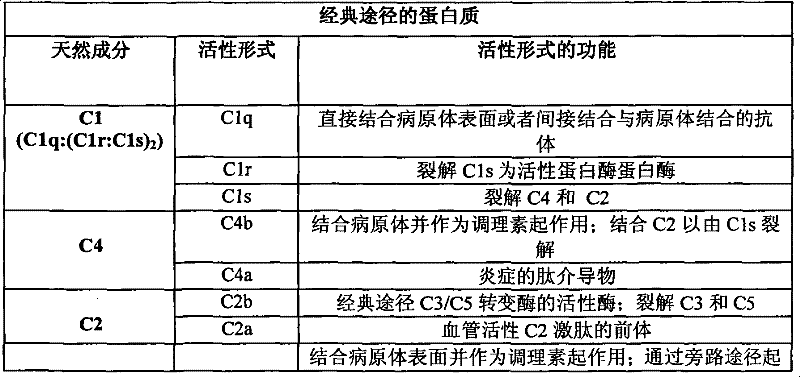

b.旁路途径 b. Bypass route
旁路途径是由外源病原体在不存在抗体的条件下起始的。补体旁路途径的起始是通过C3自然水解为C3b而发生的。由于血清和组织蛋白酶活性导致体液中总是存在少量的C3b。宿主自身细胞通常含有高水平的膜硅酸,如果结合C3b则使其失活,但是细菌含有低水平的外在硅酸,从而结合C3b而不使其失活。病原体表面上的C3b由蛋白酶酶原因子B识别。因子B由因子D裂解。因子D是C系统唯一的活性蛋白酶,其作为活性酶而不是作为酶原循环,但是由于因子B是因子D的唯一底物,因此正常血清中存在低水平的活性蛋白酶对于宿主通常是安全的。因子B由因子D裂解产生活性产物Bb,其可与C3b结合形成C3bBb,这是旁路途径的C3转变酶。与经典途径相似,C3转变酶从C3中产生更多的C3b和C3a。C3b共价附着于病原体表面并作为调理素起作用,而C3a刺激炎症。一些C3b结合所述复合物形成C3bBb3b,这是旁路途径C5转变酶。C3bBb3b由血浆蛋白备解素或因子P稳定,其结合微生物表面并稳定转变酶。表6总结了参与补体旁路途径的蛋白质。 The alternative pathway is initiated by exogenous pathogens in the absence of antibodies. Initiation of the alternative complement pathway occurs through the natural hydrolysis of C3 to C3b. Small amounts of C3b are always present in body fluids due to serum and cathepsin activity. The host's own cells typically contain high levels of membrane silicic acid, which if bound to C3b inactivates it, but bacteria contain low levels of extrinsic silicic acid, which binds C3b without inactivating it. C3b on the surface of pathogens is recognized by the protease zymogen factor B. Factor B is cleaved by Factor D. Factor D is the only active protease of the C system and it circulates as an active enzyme rather than as a zymogen, but since factor B is the only substrate of factor D, the presence of low levels of active protease in normal serum is generally safe for the host. Cleavage of factor B by factor D yields the active product Bb, which can bind to C3b to form C3bBb, the C3 convertase of the alternative pathway. Similar to the classical pathway, C3 convertases generate more C3b and C3a from C3. C3b attaches covalently to the surface of pathogens and functions as an opsonin, while C3a stimulates inflammation. Some C3b bind the complex to form C3bBb3b, which is the alternative pathway C5 convertase. C3bBb3b is stabilized by the plasma protein properdin, or factor P, which binds to microbial surfaces and stabilizes the convertase. Table 6 summarizes the proteins involved in the alternative complement pathway. the
表6 Table 6
c.凝集素途径 c. Lectin pathway
凝集素途径(也称作MBL途径)是在凝集素蛋白识别并结合病原体相关分子模式(PAMPs,即碳水化合物部分)之后起始的。激活补体凝集素途径的凝集素蛋白的例子包括甘露糖结合凝集素(MBL)和纤维胶凝蛋白(即L-纤维胶凝蛋白、M-纤维胶凝蛋白和H-纤维胶凝蛋白)。如上所述,MBL是蛋白质胶原凝集素家族的一个成员,以由相同多肽链组成的亚基的寡聚体形式存在,每条多肽链均含有半胱氨酸富集的、胶原样、颈状及碳水化合物识 别或凝集素结构域。MBL作为模式识别分子通过其球状凝集素结构域以钙依赖性方式识别病原体表面上的碳水化合物部分,特别是中性糖如甘露糖或N-乙酰葡糖胺(GlcNAc)。除了在补体系统中的作用之外,MBL还作为调理素促进吞噬细胞对细菌、病毒和真菌病原体的吞噬作用。另外,凝集素途径的其它起始物包括纤维胶凝蛋白,包括L-纤维胶凝蛋白、M-纤维胶凝蛋白和H-纤维胶凝蛋白(见例如Liu et al.(2005)J Immunol.,175:3150-6)。与MBL相似,纤维胶凝蛋白识别碳水化合物部分,例如N-乙酰葡糖胺和甘露糖结构。 The lectin pathway (also known as the MBL pathway) is initiated after the recognition and binding of pathogen-associated molecular patterns (PAMPs, ie carbohydrate moieties) by lectin proteins. Examples of lectin proteins that activate the complement lectin pathway include mannose-binding lectin (MBL) and ficolins (ie, L-ficolin, M-ficolin, and H-ficolin). As mentioned above, MBL is a member of the collagen lectin family of proteins and exists as an oligomer of subunits composed of identical polypeptide chains, each containing a cysteine-rich, collagen-like, neck-like and carbohydrate recognition or lectin domains. MBL as a pattern recognition molecule recognizes carbohydrate moieties on the surface of pathogens, especially neutral sugars such as mannose or N-acetylglucosamine (GlcNAc), through its globular lectin domain in a calcium-dependent manner. In addition to its role in the complement system, MBL acts as an opsonin to facilitate phagocytosis of bacterial, viral and fungal pathogens by phagocytes. Additionally, other initiators of the lectin pathway include ficolins, including L-ficolin, M-ficolin, and H-ficolin (see, e.g., Liu et al. (2005) J Immunol. , 175:3150-6). Similar to MBL, ficolin recognizes carbohydrate moieties such as N-acetylglucosamine and mannose structures. the
MBL或纤维胶凝蛋白对旁路途径的激活与C1q对经典途径的激活类似,即单一的凝集素分子与两种蛋白酶酶原相互作用。在凝集素蛋白质的情况中,酶原是MBL-相关丝氨酸蛋白酶MASP-1和MASP-2,其与经典途径的C1r和C1s酶原密切同源。基于凝集素蛋白对PAMP的识别,例如通过与病原体表面结合,MASP-1和MASP-2被激活,从而裂解C4和C2形成MBL级联C3转变酶。然后C3b与该复合物结合形成MBL级联C5转变酶。MASP活化不仅参与对微生物的应答,而且参与涉及暴露中性糖的任何应答,包括但非限于组织损伤,如在器官移植中观测到的组织损伤。与旁路级联一样,MBL级联不依赖于抗体而激活;与经典途径一样,MBL级联利用C4和C2形成C3转变酶。表7总结了参与补体凝集素途径的蛋白质。 Activation of the alternative pathway by MBL or ficolin is similar to activation of the classical pathway by C1q, in that a single lectin molecule interacts with two protease zymogens. In the case of lectin proteins, the zymogens are the MBL-related serine proteases MASP-1 and MASP-2, which are closely homologous to the C1r and C1s zymogens of the classical pathway. Based on the recognition of PAMPs by lectin proteins, for example by binding to the pathogen surface, MASP-1 and MASP-2 are activated, thereby cleaving C4 and C2 to form the MBL cascade C3 convertase. C3b then associates with this complex to form the MBL cascade C5 convertase. MASP activation is involved not only in response to microorganisms, but in any response involving exposure to neutral sugars, including but not limited to tissue damage such as that observed in organ transplantation. Like the alternative cascade, the MBL cascade is activated independently of antibodies; like the classical pathway, the MBL cascade utilizes C4 and C2 to form a C3 convertase. Table 7 summarizes the proteins involved in the complement lectin pathway. the
表7 Table 7

3.补体介导的效应物功能 3. Complement-mediated effector functions
无论应用的起始途径如何,最终的结果均是激活的补体蛋白片段形成(例如C3a、C4a和C5a过敏毒素及C5b-9膜攻击复合物)。这些片段介导一些功能,包括白细胞趋化性、巨噬细胞的激活、血管通透性和细胞裂解(Frank, M.和Fries,L.Complement.In Paul,W.(ed.)Fundamental Immunology,RavenPress,1989)。补体产物的一些效应物功能在表8中概括示出。 Regardless of the initial pathway applied, the end result is the formation of activated complement protein fragments (eg, C3a, C4a, and C5a anaphylatoxins and the C5b-9 membrane attack complex). These fragments mediate several functions including leukocyte chemotaxis, activation of macrophages, vascular permeability and cell lysis (Frank, M. and Fries, L. Complement. In Paul, W. (ed.) Fundamental Immunology, Raven Press, 1989). Some effector functions of complement products are summarized in Table 8. the
表8:补体效应物分子与功能 Table 8: Complement Effector Molecules and Functions
a.补体介导的裂解:膜攻击复合物 a. Complement-mediated lysis: membrane attack complex
所有三种补体途径的补体级联的最后步骤均是膜攻击复合物(MAC)形成(图1)。C5可以由任何C5转变酶裂解为C5a和C5b。C5b与C6和C7于溶液中组合,C5b67复合物通过C7上的疏水位点与病原体脂质膜结合。C8与也具有疏水位点的C9的一些分子结合形成膜攻击复合物,也称作C5b6789或C5b-9。C5b-9形成膜上的孔,水和溶解物可以通过其,使得细胞渗透性裂解和细胞死亡。如果补体在没有C5b67可附着的脂质膜的抗原上激活,则C5b67复合物可结合附近的细胞并起始周围细胞溶解。单一的MAC可裂解红细胞,但是除非存在大量MAC,则有核的细胞可以胞吞MAC及修复损伤。革兰氏阴性细菌及其暴露的外膜和包膜的病毒通常对于补体介导的裂解敏感。敏感性较低的是革兰氏阳性细菌,其浆膜由其较厚的肽聚糖层保护,细胞壁周围有荚膜或粘液层的细菌或者无脂质包膜的病毒。另外,MAC在插入膜之前可以被与复合物结合的蛋白质破坏,如补体的链球菌抑制剂(SIC)和簇蛋白。典型地,MAC帮助破坏革兰氏阴性菌以及呈现外源抗原的人细胞(病毒感染的细胞、肿瘤细胞等),通过导致其裂解及也可破坏包膜病毒的包膜进行破坏。 The final step in the complement cascade of all three complement pathways is membrane attack complex (MAC) formation (Figure 1). C5 can be cleaved into C5a and C5b by any C5 convertase. C5b combines with C6 and C7 in solution, and the C5b67 complex binds to the pathogen lipid membrane through the hydrophobic site on C7. C8 associates with some molecules of C9, which also has a hydrophobic site, to form a membrane attack complex, also known as C5b6789 or C5b-9. C5b-9 forms pores in the membrane through which water and lysates can pass, allowing osmotic lysis of the cell and cell death. If complement is activated on an antigen without a lipid membrane to which C5b67 can attach, the C5b67 complex can bind nearby cells and initiate surrounding cell lysis. A single MAC can lyse erythrocytes, but unless a large amount of MAC is present, nucleated cells can endocytose the MAC and repair the damage. Gram-negative bacteria and their exposed outer membranes and enveloped viruses are generally susceptible to complement-mediated lysis. Less susceptible are Gram-positive bacteria whose serosa is protected by their thicker peptidoglycan layer, bacteria with a capsule or mucus layer around the cell wall, or viruses without a lipid envelope. In addition, the MAC can be disrupted by proteins associated with the complex, such as streptococcal inhibitor of complement (SIC) and clusterin, before insertion into the membrane. Typically, MACs help destroy Gram-negative bacteria as well as human cells presenting foreign antigens (virus-infected cells, tumor cells, etc.) by causing their lysis and may also disrupt the envelope of enveloped viruses. the
b.炎症 b. Inflammation
炎症是血管膨胀及变得更通透、因此使得机体防御细胞和防御化合物离开血液及进入组织的过程。补体激活导致一些促炎介导物如C3a、C4a和C5a形成。血清或血浆中完整的过敏毒素通过羧肽酶N的作用而迅速转变为更稳定的、活性较低的C3a-desArg、C4a-desArg、或C5a-desArg形式。C3a、C4a和C5a及较低程度的其desArg衍生物,是强有效的生物活性多 肽,由于其炎症活性而被称作过敏毒素。过敏毒素结合各种类型细胞上的受体,刺激平滑肌收缩、增加血管通透性、及激活肥大细胞释放炎症介导物。在三种过敏毒素中,C5a是最强有效的。C5a主要作用于白细胞,特别是中性粒细胞。C5a刺激白细胞粘附于血管壁的感染部位,通过刺激粘附分子的表达增加使得白细胞可以从血管中挤出及进入组织中,这是称作血细胞渗出的过程。C5a也刺激中性粒细胞产生具有胞外杀伤力的活性氧、蛋白酶解酶和白三烯。C5a也通过诱导趋化因子、细胞因子及其它促炎介导物的产生而间接地进一步增强炎症过程。C5a也与肥大细胞相互作用,释放血管扩张剂如组胺以使得血管更加通透。C3a也与血细胞相互作用,主要作用于嗜酸性粒细胞,提示C3a在变态反应性炎症中的作用。C3a诱导平滑肌收缩、增强血管通透性,及导致嗜碱性粒细胞脱粒和组胺及其它血管活性物的释放。C2a可以转化为C2激肽,其通过使得血管膨胀而调节血压。 Inflammation is the process by which blood vessels dilate and become more permeable, thereby allowing the body's defense cells and defense compounds to leave the blood and enter tissues. Activation of complement leads to the formation of some pro-inflammatory mediators such as C3a, C4a and C5a. Intact anaphylatoxins in serum or plasma are rapidly converted by the action of carboxypeptidase N to the more stable, less active C3a-desArg, C4a-desArg, or C5a-desArg forms. C3a, C4a and C5a, and to a lesser extent their desArg derivatives, are potent bioactive polypeptides known as anaphylatoxins due to their inflammatory activity. Anaphylatoxins bind to receptors on various cell types, stimulating smooth muscle contraction, increasing vascular permeability, and activating mast cells to release inflammatory mediators. Of the three anaphylatoxins, C5a is the most potent. C5a mainly acts on white blood cells, especially neutrophils. C5a stimulates leukocytes to adhere to infected sites in blood vessel walls by stimulating increased expression of adhesion molecules that allow leukocytes to squeeze out of blood vessels and into tissues, a process known as hematopoiesis. C5a also stimulates neutrophils to produce extracellular reactive oxygen species, proteolytic enzymes and leukotrienes. C5a also indirectly further enhances the inflammatory process by inducing the production of chemokines, cytokines and other pro-inflammatory mediators. C5a also interacts with mast cells, releasing vasodilators such as histamine to make blood vessels more permeable. C3a also interacts with blood cells, mainly on eosinophils, suggesting a role for C3a in allergic inflammation. C3a induces smooth muscle contraction, enhances vascular permeability, and causes degranulation of basophils and release of histamine and other vasoactive substances. C2a can be converted to C2 kinin, which regulates blood pressure by dilating blood vessels. the
尽管在学术上不认为过敏毒素iC3b(C3b的无活性衍生物)诱导白细胞粘附于血管内皮及通过结合其细胞表面诱整联蛋白受体而诱导促炎细胞因子IL-1的产生。C5b-9也间接刺激白细胞粘附、活化和趋化,通过诱导细胞粘附分子如E-选择素的表达及诱导白细胞介素-8分泌而实现(Bhole et al.(2003)Crit Care Med 31(1):97-104)。C5b-9也刺激引起炎症的二级介导物的释放,例如前列腺素E2、白三烯B4和血栓烷。 Although it is not considered academically that anaphylatoxin iC3b (an inactive derivative of C3b) induces leukocyte adhesion to vascular endothelium and induces the production of pro-inflammatory cytokine IL-1 by binding to its cell surface to induce integrin receptors. C5b-9 also indirectly stimulates leukocyte adhesion, activation and chemotaxis by inducing the expression of cell adhesion molecules such as E-selectin and inducing the secretion of interleukin-8 (Bhole et al. (2003) Crit Care Med 31 (1): 97-104). C5b-9 also stimulates the release of secondary mediators that cause inflammation, such as prostaglandin E2 , leukotrienes B4 , and thromboxanes.
人补体成分C3和C5向产生其各自的过敏毒素产物的转化涉及某些天然发生的病理状态,包括:自身免疫疾病如系统性红斑狼疮、类风湿性关节炎、恶性肿瘤、心肌梗塞、Purtscher′s视网膜病、脓毒症及成人呼吸窘迫综合征。另外,在与如下医源性补体激活相关的某些病变中检测到C3a和C5a的循环水平增加:心肺旁路术、肾脏透析、及尼龙纤维白细胞去除术(nylon fiber leukaphoresis)。C4a过敏毒素水平的增高与上述自身免疫疾病相关。 Conversion of human complement components C3 and C5 to produce their respective anaphylatoxin products is involved in certain naturally occurring pathological conditions including: autoimmune diseases such as systemic lupus erythematosus, rheumatoid arthritis, malignancies, myocardial infarction, Purtscher' s retinopathy, sepsis and adult respiratory distress syndrome. Additionally, increased circulating levels of C3a and C5a have been detected in certain lesions associated with iatrogenic complement activation such as cardiopulmonary bypass surgery, renal dialysis, and nylon fiber leukaphoresis. Increased levels of the C4a anaphylatoxin are associated with the aforementioned autoimmune diseases. the
c.趋化性 c. Chemotaxis
趋化性是细胞应答其环境中的化合物而定向迁移的过程。在免疫应答中,多种趋化因子指导细胞如吞噬细胞的运动至感染部位。例如,C5a是循环中的中性粒细胞的主要趋化因子,但也可以诱导单核细胞的趋化性。吞噬细胞朝向C5a浓度增加的方向运动,随后通过其CR1受体而附着于与抗原附着的C3b分子。用嗜碱性粒细胞、嗜酸性粒细胞、中性粒细胞及单核吞噬细胞观测到的C5a的趋化作用在低如10-10M的浓度是活性的。 Chemotaxis is the process of directed migration of cells in response to compounds in their environment. In the immune response, various chemokines direct the movement of cells, such as phagocytes, to the site of infection. For example, C5a is a major chemokine for circulating neutrophils but can also induce monocyte chemotaxis. Phagocytes move towards increasing concentrations of C5a and subsequently attach via their CR1 receptors to antigen-attached C3b molecules. The chemotaxis of C5a observed with basophils, eosinophils, neutrophils and mononuclear phagocytes is active at concentrations as low as 10 -10 M.
d.调理作用 d. Conditioning effect
补体的一个重要作用是促进吞噬细胞对病原体的摄取和破坏。这是通 过称作调理作用的过程发生的,其中结合靶细菌的补体成分与吞噬细胞如中性粒细胞或巨噬细胞表面上的补体受体相互作用。在这种情况中,补体效应分子称作调理素。病原体的调理作用是C3b和C4b的主要功能。iC3b也作为调理素起作用。C3a和C5a增加吞噬细胞上C3b受体的表达及增加其代谢活性。 An important role of complement is to facilitate the uptake and destruction of pathogens by phagocytes. This occurs through a process called opsonization, in which complement components that bind target bacteria interact with complement receptors on the surface of phagocytes, such as neutrophils or macrophages. In this case, the complement effector molecules are called opsonins. Pathogen opsonization is a major function of C3b and C4b. iC3b also functions as an opsonin. C3a and C5a increase the expression and metabolic activity of C3b receptors on phagocytes. the
C3b及较低程度的C4b帮助从机体中除去有害的免疫复合物。C3b和C4b使得免疫复合物附着于红细胞上的CR1受体。然后红细胞输送该复合物至脾和肝内的固定巨噬细胞进行破坏。免疫复合物可导致有害的III型超敏性。 C3b and to a lesser extent C4b help remove harmful immune complexes from the body. C3b and C4b allow the immune complex to attach to the CR1 receptor on red blood cells. Red blood cells then transport the complex to fixed macrophages in the spleen and liver for destruction. Immune complexes can lead to deleterious type III hypersensitivity. the
e.体液免疫应答的激活 e. Activation of the humoral immune response
B细胞的激活需要B细胞受体(BCR)与抗原的连接。然而已经示出补体在降低B细胞对抗原的应答阈值中起作用,降低直至1000倍。这通过自C3的破坏片段中产生的补体产物C3d或C3dg与可与BCR共连接的B淋巴细胞上的CR2受体的结合而发生。当用C3d调理的抗原颗粒例如免疫复合物通过C3d结合CR2受体以及通过抗原结合BCR时发生共连接。当C3d结合抗原增强抗原呈递细胞如树突细胞对抗原的摄取时,抗原复合物的共连接也可以发生,其然后可将抗原呈递给B细胞以增强抗体应答。CR2缺陷的小鼠呈现B细胞功能缺陷,导致天然抗体的水平降低及体液免疫应答削弱。 Activation of B cells requires the ligation of the B cell receptor (BCR) to an antigen. Complement has however been shown to play a role in lowering the threshold of B cell responses to antigens by up to 1000-fold. This occurs through the binding of the complement product C3d or C3dg produced from the disrupted fragment of C3 to the CR2 receptor on B lymphocytes that can co-link with the BCR. Co-ligation occurs when an antigenic particle opsonized with C3d, such as an immune complex, binds to the CR2 receptor through C3d and through antigen binding to the BCR. Co-ligation of antigen complexes can also occur when C3d binding to antigen enhances the uptake of antigen by antigen-presenting cells such as dendritic cells, which can then present the antigen to B cells to enhance the antibody response. CR2-deficient mice exhibit defective B-cell function, resulting in reduced levels of natural antibodies and impaired humoral immune responses. the
4.补体受体 4. Complement receptors
细胞对补体效应分子的识别以起始效应物功能如趋化性和调理作用是由不同的补体受体介导的。补体受体分布于广泛的细胞类型上,包括红细胞、巨噬细胞、B细胞、嗜中性粒细胞和肥大细胞。基于补体成分与受体的结合,受体起始胞内信号级联,产生细胞应答如刺激对细菌的吞噬作用及从细胞中分泌炎症分子。例如,补体受体CR1和CR2识别C3b、C4b,其产物对于刺激趋化性是重要的。CR3(CD11b/CD18)和CR4(CD11c/CD18)是整联蛋白,其在吞噬作用应答中的重要性相似,但是在应答iC3b的白细胞粘附和迁移中起作用。C5a和C3a受体是G蛋白偶联受体,在C5a和C3a过敏毒素的许多促炎介导的功能中起作用。例如,C3a受体C3aR存在于肥大细胞、嗜酸性粒细胞、嗜中性粒细胞、嗜碱性粒细胞及单核细胞上并直接参与C3a的促炎作用。 Cellular recognition of complement effector molecules to initiate effector functions such as chemotaxis and opsonization is mediated by different complement receptors. Complement receptors are distributed on a wide range of cell types, including erythrocytes, macrophages, B cells, neutrophils, and mast cells. Upon binding of complement components to the receptors, the receptors initiate intracellular signaling cascades resulting in cellular responses such as stimulation of phagocytosis of bacteria and secretion of inflammatory molecules from the cell. For example, complement receptors CR1 and CR2 recognize C3b, C4b, the products of which are important for stimulating chemotaxis. CR3 (CD11b/CD18) and CR4 (CD11c/CD18) are integrins that are of similar importance in the phagocytosis response but play a role in leukocyte adhesion and migration in response to iC3b. The C5a and C3a receptors are G protein-coupled receptors that play a role in many proinflammatory-mediated functions of C5a and C3a anaphylatoxins. For example, the C3a receptor C3aR is present on mast cells, eosinophils, neutrophils, basophils, and monocytes and is directly involved in the pro-inflammatory effects of C3a. the
5.补体调节 5. Complement regulation
尽管补体系统通过对抗外源病原体的保护作用而有益于宿主,但是炎症介导物的产生可以是毒性及有害的,导致如下文论述的多种炎症疾病。 另外,尽管补体系统的大多数活性蛋白酶是仅基于裂解才变为局部活性的酶原,但是几乎所有补体成分在血清中均低速自然活化,因此需要将其活性最小化。因此,已经鉴别了补体系统的调节蛋白。其主要功能是调节补体激活分子的活性以防止过量的补体激活和宿主组织的自溶性破坏。这些补体调节物是可溶的血浆蛋白或者在多种类型细胞上表达的完整膜蛋白。前者包括C4b结合蛋白(C4bp)和因子H。后者包括C3b/C4b受体(补体受体1,CR1,CD35)、膜辅因子蛋白(MCP,CD46)及衰变加速因子(DAF,CD55)。这些蛋白质具有许多结构相似性。每种蛋白质均由多个长度为大约60个氨基酸的具有保守的半胱氨酸、甘氨酸和脯氨酸残基的短共有重复序列(SCR)组成。编码这些蛋白质的基因已经定位于1号染色体,统称为补体激活调节物(RCA)基因簇(Hourcade et al.(1989)Adv.Immunol.45:381)。
Although the complement system benefits the host through protection against exogenous pathogens, the production of inflammatory mediators can be toxic and deleterious, leading to a variety of inflammatory diseases as discussed below. In addition, although most active proteases of the complement system are zymogens that become locally active only upon cleavage, nearly all complement components are naturally activated at low rates in serum and thus need to be minimized. Accordingly, regulatory proteins of the complement system have been identified. Its main function is to regulate the activity of complement activating molecules to prevent excessive complement activation and autolytic destruction of host tissues. These complement regulators are either soluble plasma proteins or integral membrane proteins expressed on various cell types. The former include C4b-binding protein (C4bp) and Factor H. The latter include C3b/C4b receptors (complement
C1抑制剂(C1INH)是一种丝氨酸蛋白酶抑制剂,其使得激活的C1r和C1s与C1q解离,限制该复合物的活性时间。C1INH还阻断血浆蛋白酶对C1的自发激活。C1INH的缺乏与称作血管神经性水肿的严重突发性水肿(肿胀)相关。一些抑制性蛋白质使得C3与C5转变酶解离,及通过因子I(一种血浆蛋白酶)促进C4b和C3b降解。因子I以活性形式循环,但是其仅能裂解与辅因子蛋白结合的C3b和C4b。因子I裂解C3b导致iC3b、C3c、C3d、C3f和C3dg产生,从而永久失活C3b,尽管降解产物可作为效应物分子,例如iC3b作为调理素。C4b当裂解为C4c和C4d时而失活。作为因子I的辅因子的抑制蛋白包括解离经典途径C3转变酶的血浆蛋白C4结合蛋白,及解离旁路途径C3转变酶的因子H,及膜蛋白补体受体1(CR1),衰变加速因子(DAF)及膜辅因子蛋白(MCP),其抑制这两种途径的活性。因子I的辅因子调节其活性。例如人细胞产生因子H,其结合C3b并使得因子I失活C3b。另一方面,一些物质如不表达因子辅因子的细菌细胞上的LPS促进因子B与C3b的结合,这样保护C3b免于被因子I失活。 C1 inhibitor (C1INH) is a serine protease inhibitor that dissociates activated C1r and C1s from C1q, limiting the time that this complex is active. C1INH also blocks the spontaneous activation of C1 by plasma proteases. Deficiency of C1INH is associated with a severe flare-up of edema (swelling) called angioedema. Some inhibitory proteins dissociate C3 from C5 convertases and promote C4b and C3b degradation by factor I, a plasma protease. Factor I circulates in an active form, but it is only able to cleave C3b and C4b bound to cofactor proteins. Cleavage of C3b by factor I results in the production of iC3b, C3c, C3d, C3f, and C3dg, thereby permanently inactivating C3b, although degradation products can act as effector molecules, such as iC3b as an opsonin. C4b is inactivated when cleaved into C4c and C4d. Inhibitory proteins that act as cofactors for factor I include the plasma protein C4-binding protein that dissociates the classical pathway C3 convertase, factor H that dissociates the alternative pathway C3 convertase, and the membrane protein complement receptor 1 (CR1), decay-accelerated factor (DAF) and membrane cofactor protein (MCP), which inhibit the activity of these two pathways. Cofactors for factor I regulate its activity. For example, human cells produce Factor H, which binds C3b and causes Factor I to inactivate C3b. On the other hand, substances such as LPS on bacterial cells that do not express the factor cofactor promote the binding of factor B to C3b, thus protecting C3b from inactivation by factor I. the
其它膜和血浆蛋白阻断宿主细胞上MAC形成,以防止MAC不适当地插入膜中。一些血浆蛋白如可溶蛋白C8β结合C5b67复合物并抑制其插入细胞膜中。宿主细胞膜也含有称作HRF的膜结合蛋白(CD59,保护素(protectin)),其抑制C9与C5b678的结合,防止自体或同种异体细胞上膜攻击复合物的形成。 Other membrane and plasma proteins block MAC formation on host cells to prevent inappropriate insertion of MAC into membranes. Some plasma proteins such as the soluble protein C8β bind the C5b67 complex and inhibit its insertion into the cell membrane. Host cell membranes also contain a membrane-bound protein called HRF (CD59, protectin), which inhibits the binding of C9 to C5b678, preventing the formation of membrane attack complexes on autologous or allogeneic cells. the
因子I Factor I
因子I(fI)是在补体级联反应的产生和扩大中起作用的补体系统中几种丝氨酸蛋白酶(也包括因子D,MBL-相关丝氨酸蛋白酶(MASP)-2,C1s,C1r,因子B和C2)之一。所有补体丝氨酸蛋白酶具有与胰蛋白酶家族的结构域 同源性,及共有可以确定底物特异性的一些结构特征。因子I的C末端由胰蛋白酶样丝氨酸蛋白酶轻链组成,其基于与其它丝氨酸蛋白酶的同源性,含有形成His-Asp-Ser催化三元体的残基。另外,存在一些残基限定了特异性口袋(D501)和扩展的底物结合位点S527、W528和G529(在无信号肽的情况中基于成熟蛋白质的编号,见例如Tsiftsoglou et al.,(2005)Biochemistry44:6239)。 Factor I (fI) is one of several serine proteases in the complement system (also factor D, MBL-associated serine protease (MASP)-2, C1s, C1r, factor B and One of C2). All complement serine proteases share domain homology with the trypsin family and share some structural features that may determine substrate specificity. The C-terminus of Factor I consists of a trypsin-like serine protease light chain that, based on homology to other serine proteases, contains residues that form the His-Asp-Ser catalytic triad. Additionally, there are residues that define a specificity pocket (D 501 ) and an extended substrate binding site S 527 , W 528 and G 529 (numbering based on mature protein in the absence of signal peptide, see e.g. Tsiftsoglou et al. ., (2005) Biochemistry 44:6239).
因子I通过裂解经典、旁路和凝集素途径中C3转变酶的成分C3b和C4b而在调节补体激活中起作用,从而使所述途径失活。fI底物C3b和C4b的裂解需要通过硫酯键的形成而引起的底物构象改变。例如,C3由转变酶经蛋白酶解活化为C3b,导致构象从由潜伏形式转变为导致分子内硫酯与亲核体如水反应的C3b形式,从而使得C3b对于fI裂解敏感(Ogata et al.,(1998)J Immunol 161:4785)。硫酯与水的反应可以在无转变酶裂解的条件下发生,产生称作iC3和iC4的水解失活形式的C3和C4。例如,iC3是C3b的模拟物;iC3对fI裂解敏感,可以取代C3和C5转变酶中的C3b。通常地,因子I对C3b和C4b底物的裂解需要与辅因子蛋白质的三元复合物形成,所述辅因子蛋白如因子H或C4结合蛋白及MCP。然而,合成底物由因子I的裂解不需要存在辅因子(Tsiftsoglou et al.,(2004)J Immunol173:367-375)。由fI的裂解限于底物中精氨酰键的裂解。C3中的fI裂解位点是LPSR(SEQ ID NO:388)和SLLR(SEQ ID NO:389),C4中的裂解位点是HRGR(SEQ ID NO:390)。 Factor I plays a role in regulating complement activation by cleaving components C3b and C4b of C3 convertases in the classical, alternative, and lectin pathways, thereby inactivating the pathways. Cleavage of fI substrates C3b and C4b requires a conformational change of the substrates via thioester bond formation. For example, proteolytic activation of C3 by convertase to C3b results in a conformational shift from a latent form to a C3b form that causes an intramolecular thioester to react with a nucleophile such as water, thereby rendering C3b susceptible to fI cleavage (Ogata et al., ( 1998) J Immunol 161:4785). The reaction of thioesters with water can occur without invertase cleavage, yielding hydrolytically inactive forms of C3 and C4 called iC3 and iC4. For example, iC3 is a mimic of C3b; iC3 is sensitive to fI cleavage and can replace C3b in C3 and C5 convertases. Typically, cleavage of C3b and C4b substrates by Factor I requires ternary complex formation with cofactor proteins such as Factor H or C4 binding protein and MCP. However, cleavage of synthetic substrates by Factor I does not require the presence of cofactors (Tsiftsoglou et al., (2004) J Immunol 173:367-375). Cleavage by fI is limited to the cleavage of the arginyl bond in the substrate. The fI cleavage sites in C3 are LPSR (SEQ ID NO:388) and SLLR (SEQ ID NO:389), and the cleavage site in C4 is HRGR (SEQ ID NO:390). the
6.补体介导的疾病和病变 6. Complement-mediated diseases and lesions
根据疾病和病变的病因学中补体系统的关键作用,补体系统在这种疾病和病变中可作为治疗干预点。本发明提供的蛋白酶靶向这个系统并可以对其加以调节。 Based on the critical role of the complement system in the etiology of diseases and lesions, the complement system may serve as a point of therapeutic intervention in such diseases and lesions. The proteases provided by the invention target this system and can regulate it. the
本领域技术人员已知补体系统在疾病过程中的作用及了解许多这样的疾病。下文描述了一些疾病的例子及补体系统在其病因学和病理学中的作用。本发明提供的蛋白质对补体系统的调节可用来治疗这种疾病。疾病可包含补体的活化或抑制。 Those skilled in the art are aware of the role of the complement system in disease processes and understand many such diseases. Some examples of diseases and the role of the complement system in their etiology and pathology are described below. Modulation of the complement system by the proteins provided by this invention can be used to treat this disease. Diseases can involve activation or inhibition of complement. the
a.由补体激活介导的疾病 a. Diseases mediated by complement activation
补体级联是双刃剑,通过促进针对细菌和病毒入侵的吞噬作用和炎症起到保护作用。相反,甚至当补体正常发挥功能时,通过促进局部炎症和对组织的损害而导致疾病的发生。因此,负责补体保护性作用的同一介导物可介导致病作用。例如,过敏性和趋化性肽C5a通过募集和激活嗜中性粒细胞驱动炎症,C3a可导致其它吞噬细胞的病理性激活,及膜攻击复合物 可杀死或损伤细胞。在一个实例中,如在自身免疫疾病中,补体由于在不适当的环境中如被宿主组织的抗体激活而产生组织损伤。在其它情况中,补体可以被正常激活,如败血症;但是仍引起疾病进展,如在呼吸窘迫综合征中。在病理学方面,如果对其未进行充分控制,补体可以导致对血管(脉管炎)、肾基底膜及附着的内皮和上皮细胞(肾炎)、关节滑膜(关节炎)和红细胞(溶血)的实质损害。 The complement cascade is a double-edged sword, protecting by promoting phagocytosis and inflammation against bacterial and viral invasion. Instead, even when complement is functioning normally, disease occurs by promoting local inflammation and damage to tissues. Thus, the same mediators responsible for the protective effects of complement can mediate the pathogenic effects. For example, the allergic and chemotactic peptide C5a drives inflammation by recruiting and activating neutrophils, C3a can lead to pathological activation of other phagocytes, and the membrane attack complex can kill or damage cells. In one example, as in autoimmune diseases, complement results in tissue damage due to activation in inappropriate circumstances, such as by antibodies from host tissues. In other situations, complement can be activated normally, as in sepsis; but still causes disease progression, as in respiratory distress syndrome. Pathologically, if not adequately controlled, complement can lead to damage to blood vessels (vasculitis), renal basement membrane and attached endothelial and epithelial cells (nephritis), joint synovium (arthritis), and red blood cells (hemolysis) material damage. the
补体在许多疾病的免疫-发病机制中起作用,所述疾病包括自身免疫疾病如类风湿性关节炎(见例如Wang et al.(1995)Proc.Natl.Acad.Sci.U.S.A.92:8955-8959;Moxley et al.(1987)Arthritis & Rheumatism 30:1097-1104)、红斑狼疮(Wang et al.(1996)Proc.Natl.Acad.Sci.U.S.A.90:8563-8568;及Buyon et al.(1992)Arthritis Rheum.35:1028-1037)和急性肾小球肾炎(Couseret al.(1995)J Am Soc Nephrol.5:1888-1894)。其中涉及补体系统活化的其它病变包括脓毒症(见例如Stove et al.(1996)Clin Diag Lab Immunol3:175-183;Hack et al.(1989)Am.J.Med.86:20-26)、呼吸窘迫综合征(见例如Zilow et al.(1990)Clin.Exp.Immunol.79:151-157;及Stevens et al.(1986)J.Clin.Invest.77:1812-1816)、多器官衰竭(见例如Hecke et al.(1997)Shock7:74;及Heideman et al.(1984)J.Trauma 24:1038-1043)及缺血-再灌注损伤如在心血管疾病如中风或心肌梗塞中发生(Austen WG et al.(2003)Int JImmunopathol Pharm 16(1):1-8)。一些补体介导的疾病的例子在下文描述。 Complement plays a role in the immune-pathogenesis of many diseases, including autoimmune diseases such as rheumatoid arthritis (see, e.g., Wang et al. (1995) Proc. Natl. Acad. Sci. U.S.A. 92:8955-8959 ; Moxley et al. (1987) Arthritis & Rheumatism 30:1097-1104), lupus erythematosus (Wang et al. (1996) Proc.Natl.Acad.Sci.U.S.A.90:8563-8568; and Buyon et al. (1992 ) Arthritis Rheum.35:1028-1037) and acute glomerulonephritis (Couser et al. (1995) J Am Soc Nephrol.5:1888-1894). Other conditions in which activation of the complement system is implicated include sepsis (see e.g. Stove et al. (1996) Clin Diag Lab Immunol 3:175-183; Hack et al. (1989) Am.J.Med.86:20-26) , respiratory distress syndrome (see eg Zilow et al. (1990) Clin. Exp. Immunol. 79: 151-157; and Stevens et al. (1986) J. Clin. Invest. 77: 1812-1816), multiorgan Failure (see e.g. Hecke et al. (1997) Shock 7:74; and Heideman et al. (1984) J. Trauma 24:1038-1043) and ischemia-reperfusion injury as occurs in cardiovascular disease such as stroke or myocardial infarction (Austen WG et al. (2003) Int J Immunopathol Pharm 16(1): 1-8). Some examples of complement-mediated diseases are described below. the
i.类风湿性关节炎 i. Rheumatoid arthritis
类风湿性关节炎(RA)是一种慢性炎症疾病,是一种自身免疫疾病,其中免疫系统将正常组织当作入侵的病原体一样进行攻击。与类风湿性关节炎相关的炎症主要攻击关节内层。内衬血管、心和肺的膜也可能发炎。RA特征在于发炎滑膜及确定的疾病淋巴滤泡和生发中心存在激活的B细胞和血浆细胞。这样导致滑膜及关节软骨相关部位的局部产生高水平的免疫球蛋白及免疫复合物包括IgG和IgM类风湿因子的沉积,作为补体级联的起始物。在发炎的类风湿性关节中已经发现增高水平的补体成分,如C3a、C5a和C5b-9。这些补体成分通过诱导许多促炎活性如改变血管通透性、白细胞趋化性及多种类型细胞的活化和裂解,可加剧与RA相关的炎症。 Rheumatoid arthritis (RA), a chronic inflammatory disease, is an autoimmune disease in which the immune system attacks normal tissues as if they were invading pathogens. The inflammation associated with rheumatoid arthritis primarily attacks the lining of the joints. The membranes that line blood vessels, the heart, and lungs may also become inflamed. RA is characterized by the presence of activated B cells and plasma cells in the inflamed synovium and in defined diseased lymphoid follicles and germinal centers. This results in local production of high levels of immunoglobulins and deposition of immune complexes including IgG and IgM rheumatoid factor in the synovium and associated sites of articular cartilage, which serve as initiators of the complement cascade. Increased levels of complement components such as C3a, C5a and C5b-9 have been found in inflamed rheumatoid joints. These complement components exacerbate RA-associated inflammation by inducing a number of pro-inflammatory activities such as altering vascular permeability, leukocyte chemotaxis, and activation and lysis of various cell types. the
ii.脓毒症 ii. Sepsis
脓毒症是由严重感染如细菌感染引起的疾病,导致全身性炎症反应。尽管其它细菌、病毒和真菌感染也可刺激脓毒症状,但是细菌细胞壁成分脂多糖通常与脓毒症相关。如果机体天然免疫系统不能防御入侵的微生物则通常导致感染性休克,例如免疫应答的促炎结果是对宿主组织的损害。 脓毒症的早期症状特征在于过量的补体激活,导致产生的补体过敏毒素如C3a、C4a和C5a增多,其可导致血管通透性增加、刺激嗜中性粒细胞中过氧化物产生及刺激组胺释放。C5a的作用可以有助于对细菌感染的生产性免疫应答,但是如果未做调节,C5a也可以具有严重损害。在大肠杆菌(E.coli)诱导的炎症模型中,对C5a的阻断通过限制了可导致嗜中性粒细胞介导的组织损伤的C5a介导的嗜中性粒细胞活化而改善了脓毒症动物的结果。 Sepsis is a disease caused by a serious infection, such as a bacterial infection, that results in a systemic inflammatory response. Lipopolysaccharide, a component of bacterial cell walls, is often associated with sepsis, although other bacterial, viral, and fungal infections can also stimulate sepsis symptoms. Septic shock typically results when the body's natural immune system fails to defend against invading microorganisms, ie, a pro-inflammatory outcome of the immune response results in damage to host tissues. Early symptoms of sepsis are characterized by excessive complement activation, resulting in increased production of complement anaphylatoxins such as C3a, C4a, and C5a, which can lead to increased vascular permeability, stimulate superoxide production in neutrophils, and stimulate tissue Amine release. The action of C5a can contribute to a productive immune response to bacterial infection, but if left unregulated, C5a can also be severely damaging. Blockade of C5a ameliorated sepsis by limiting C5a-mediated neutrophil activation leading to neutrophil-mediated tissue damage in an E. coli-induced inflammation model results in diseased animals. the
对于细菌感染的先天性免疫应答的持续损伤通常导致慢性脓毒症或感染性休克,其可以危及生命。在脓毒症的晚期,嗜中性粒细胞处于“静止”活性,与在早期出现的超活性相反,导致疾病进一步发展。在晚期阶段,嗜中性粒细胞的主要功能包括趋化性、呼吸爆发活性及细菌杀灭能力均降低。补体、特别是C5a在脓毒症的晚期也起作用。在脓毒症期间C5a的过量产生与血液嗜中性粒细胞的“失活”相关,这个失活过程与C5a诱导的嗜中性粒细胞上其自身受体C5aR的负调节相关(Guo et al.(2003)FASEB J13:1889)。嗜中性粒细胞上C5aR水平的降低与血液嗜中性粒细胞结合C5a的能力降低,受损的趋化应答,丧失过氧化物产生及受损的杀菌活性相关。然而,C5aR水平在脓毒症的晚期可开始“恢复”并与有益的疾病结果相关。 Persistent impairment of the innate immune response to bacterial infection often results in chronic sepsis or septic shock, which can be life-threatening. In late stages of sepsis, neutrophils are "quiescent" active, in contrast to the hyperactivity seen earlier, leading to further disease progression. In late stages, major neutrophil functions, including chemotaxis, respiratory burst activity, and bacterial killing, are reduced. Complement, especially C5a, also plays a role in late stages of sepsis. Overproduction of C5a during sepsis is associated with "deactivation" of blood neutrophils, a process associated with C5a-induced downregulation of its autoreceptor C5aR on neutrophils (Guo et al . (2003) FASEB J13: 1889). Reduced levels of C5aR on neutrophils were associated with reduced ability of blood neutrophils to bind C5a, impaired chemotactic responses, loss of superoxide production, and impaired bactericidal activity. However, C5aR levels can begin to "recover" late in sepsis and correlate with beneficial disease outcome. the
iii.多发性硬化 iii. Multiple sclerosis
多发性硬化(MS)及其动物模型实验性变态反应性脑脊髓炎(EAE)是中枢神经系统(CNS)的炎症性脱髓鞘疾病。在MS中,神经组织的炎症导致髓磷脂丧失,这是作为脑和脊髓中神经纤维的保护性绝缘体的一种脂肪物质。脱髓鞘产生沿着神经细胞覆盖物的多个部位的疤痕组织(硬化),这破坏了神经向脑部及从脑部传导电刺激的能力,产生MS的各种症状。MS由激活的淋巴细胞、巨噬细胞/小胶质细胞及补体系统介导。补体激活通过其双重作用有助于这些疾病的发病机制,所述双重作用为:激活的终末复合物C5b-9促进脱髓鞘的能力及亚溶解的C5b-9保护少突胶质细胞(OLG)凋亡的能力。 Multiple sclerosis (MS) and its animal model Experimental allergic encephalomyelitis (EAE) is an inflammatory demyelinating disease of the central nervous system (CNS). In MS, inflammation of nerve tissue leads to loss of myelin, a fatty substance that acts as a protective insulation for nerve fibers in the brain and spinal cord. Demyelination produces scar tissue (sclerosis) at multiple sites along the nerve cell covering, which disrupts the ability of the nerves to conduct electrical stimulation to and from the brain, producing the various symptoms of MS. MS is mediated by activated lymphocytes, macrophages/microglia, and the complement system. Complement activation contributes to the pathogenesis of these diseases through its dual role: the ability of activated terminal complex C5b-9 to promote demyelination and sublytic C5b-9 to protect oligodendrocytes ( OLG) apoptosis ability. the
iv.阿尔茨海默病 iv. Alzheimer's disease
阿尔茨海默病(AD)特征在于脑内的神经纤维缠结(tangles)(蛋白质τ的异常配对的螺旋纤丝,其通常结合微管)和斑块(主要由β淀粉样蛋白质组成的胞外沉积物)。尽管不完全明了AD的精确发生原因,但是AD患者脑中受影响区域的慢性神经炎症提示促炎介导物可起作用。AD患者脑内神经纤维缠结和斑块是激活的补体片段的沉积,例如C4d和C3d。另外,AD患者脑中营养不良的神经突可以被MAC免疫染色,表明AD中这些神经突的自身催化性攻击及伴随神经突丧失。AD中补体的活化是由于聚集的β淀粉样蛋白质诱导的抗体非依赖性机制而发生的。另外,补体级联可以通过在 AD中均被正调节的正五聚蛋白、C反应蛋白(CRP)和淀粉样P物质(AP)激活(McGeer et al.,(2002)Trends Mol Med 8:519)。AD中补体的活化以补体介导物增多为标示,不足以为补体调节蛋白如CD59的补偿性正调节所控制。因此,补体激活的促炎结果加剧了AD病进展,并很可能导致神经突破坏。 Alzheimer's disease (AD) is characterized by neurofibrillary tangles (abnormally paired helical filaments of the protein tau, which normally bind microtubules) and plaques (cellular structures composed primarily of amyloid beta) in the brain. external deposits). Although the precise cause of AD is not fully understood, chronic neuroinflammation in affected areas of the brain in AD patients suggests that pro-inflammatory mediators may play a role. Neurofibrillary tangles and plaques in the brain of AD patients are deposits of activated complement fragments, such as C4d and C3d. In addition, dystrophic neurites in AD patient brains can be immunostained by MAC, indicating autocatalytic attack of these neurites and concomitant neurite loss in AD. Activation of complement in AD occurs due to an antibody-independent mechanism induced by aggregated amyloid-beta. Additionally, the complement cascade can be activated by pentraxin, C-reactive protein (CRP), and amyloid substance P (AP), all of which are upregulated in AD (McGeer et al., (2002) Trends Mol Med 8:519 ). Complement activation in AD is marked by an increase in complement mediators and is insufficiently controlled by compensatory upregulation of complement regulatory proteins such as CD59. Thus, the proinflammatory consequences of complement activation exacerbate AD disease progression and likely lead to neurite destruction. the
v.缺血-再灌注损伤 v. Ischemia-reperfusion injury
缺血-再灌注损伤是在缺血事件及随后的血流恢复之后发生的损伤,得自对于缺氧损伤后的炎症应答。缺血-再灌注损伤在心脏手术期间例如心脏直视手术或血管成形术中可以是急性的,或者在充血性心力衰竭或闭塞性心血管疾病中是慢性的。可导致缺血-再灌注损伤的例子包括心肌梗塞(MI)和中风。炎症应答的起始很可能是由于组织氧水平增加所致,组织氧水平的增加与再灌注及伴随的可产生免疫刺激性的氧自由基的代谢物积聚相关。其与多种事件相关,包括心肌梗塞、脑缺血、肠缺血的严重性及血管手术、心脏手术、外伤和移植的许多方面。损伤通过将新改变的组织作为非自身组织应答的先天免疫系统的炎症事件而证明,特别是补体系统的激活。这种缺血-再灌注损伤特征在于血管通透性增加所致组织水肿及多形核白细胞的流入所致急性炎症性细胞侵润。 Ischemia-reperfusion injury is injury that occurs after an ischemic event followed by restoration of blood flow, resulting from an inflammatory response to hypoxic injury. Ischemia-reperfusion injury can be acute during cardiac surgery such as open heart surgery or angioplasty, or chronic in congestive heart failure or occlusive cardiovascular disease. Examples that can lead to ischemia-reperfusion injury include myocardial infarction (MI) and stroke. The initiation of the inflammatory response is likely due to increased tissue oxygen levels associated with reperfusion and the concomitant accumulation of metabolites that can generate immunostimulatory oxygen free radicals. It is associated with a variety of events including myocardial infarction, cerebral ischemia, severity of intestinal ischemia and many aspects of vascular surgery, cardiac surgery, trauma and transplantation. Injury is evidenced by inflammatory events of the innate immune system that respond to newly altered tissues as non-self, particularly activation of the complement system. This ischemia-reperfusion injury is characterized by tissue edema due to increased vascular permeability and acute inflammatory cell infiltration due to an influx of polymorphonuclear leukocytes. the
补体系统的活化在缺血-再灌注损伤的炎症事件中起作用。缺血损伤导致细胞膜改变,影响脂质、碳水化合物或者外表面的蛋白质,由此这些暴露的表位被改变及可作为新抗原(修饰的自身抗原)而起作用。循环中的IgM识别并结合所述新抗原,在损伤的细胞表面上形成免疫复合物。所形成的抗原-抗体复合物是补体经典途径的经典激活物,尽管所有途径很可能均以一些方式参与损伤的加剧。补体经典途径参与缺血-再灌注损伤通过小鼠C3或C4遗传缺陷模型证明,该模型显示对小鼠后肢局部损伤和损伤动物模型的相同保护作用(Austen et al.(2003)Int J Immunopath Pharm 16:1)。相反,在缺血性损伤的肾脏模型中,C3-、C5-和C6-缺陷的小鼠被保护,而C4-缺陷的小鼠则否,提示旁路补体途径的重要性(Guo et al.(2005)Ann RevImmunol 23:821)。基于补体激活诱导的介导物起始针对细胞膜局部损伤部位的炎症应答。 Activation of the complement system plays a role in the inflammatory event of ischemia-reperfusion injury. Ischemic injury results in changes in the cell membrane, affecting lipids, carbohydrates or proteins on the outer surface, whereby these exposed epitopes are altered and can function as neoantigens (modified autoantigens). Circulating IgM recognizes and binds the neoantigens, forming immune complexes on the surface of damaged cells. The antigen-antibody complexes formed are classical activators of the classical pathway of complement, although it is likely that all pathways are involved in some way in the exacerbation of injury. Involvement of the classical complement pathway in ischemia-reperfusion injury was demonstrated by a mouse model of genetic deficiency of C3 or C4, which showed the same protective effect on mouse hindlimb focal injury and injury animal models (Austen et al. (2003) Int J Immunopath Pharm 16:1). In contrast, in a kidney model of ischemic injury, C3-, C5-, and C6-deficient mice were protected, but C4-deficient mice were not, suggesting the importance of the alternative complement pathway (Guo et al. (2005) Ann Rev Immunol 23:821). Induced mediators based on complement activation initiate an inflammatory response against sites of local injury to the cell membrane. the
缺血-再灌注损伤中补体的主要效应物机制是由于补体成分如C5a导致嗜中性粒细胞流入发炎组织及活化。嗜中性粒细胞的活化导致局部损伤的器官中产生的活性氧增多及溶酶体酶释放,最后导致细胞凋亡、坏死或器官功能丧失。缺血-再灌注损伤中最终MAC、C5b-9的产生也引起局部组织损伤。 The major effector mechanism of complement in ischemia-reperfusion injury is the influx and activation of neutrophils to inflamed tissue due to complement components such as C5a. Activation of neutrophils leads to increased production of reactive oxygen species and release of lysosomal enzymes in locally damaged organs, eventually leading to apoptosis, necrosis or loss of organ function. The generation of the final MAC, C5b-9 in ischemia-reperfusion injury also causes local tissue damage. the
b.由补体缺陷介导的疾病 b. Diseases mediated by complement deficiency
疾病的发生也可以是由于缺乏对于控制感染重要的补体成分而引起。补体缺陷与频繁的感染及免疫复合物疾病相关。在除了C9之外的所有补体因子中鉴别了缺陷,包括因子D和备解素。缺陷也在补体调节蛋白C1INH、因子I、因子H、DAF和HRF中鉴别。 Disease can also occur due to a deficiency of complement components important for controlling infection. Complement deficiency is associated with frequent infections and immune complex disease. Defects were identified in all complement factors except C9, including factor D and properdin. Defects were also identified in the complement regulatory proteins C1INH, Factor I, Factor H, DAF, and HRF. the
通常地,补体成分的缺陷由于调理作用和吞噬作用降低而导致细菌感染增加。典型地,作为调理素而起作用的补体成分如C3b的缺陷导致对于感染的易感性增加。例如,尽管任何晚期补体成分缺陷的个体相对不受影响,但是缺少C3或者催化C3b沉积的任何分子的个体示出对于广泛的胞外细菌感染的易感性增加。另外,MBL(通常作为传统的调理素及识别外源病原体后作为补体凝集素途径的起始物)缺陷的人群通常对于感染的易感性增加,特别是在儿童早期。晚期补体成分包括参与膜攻击复合物的形成的C5-C9的缺陷对于细菌感染的作用更有限。C5-C9的缺陷仅示出与奈瑟氏球菌(Neisseria)感染的易感性相关,该细菌导致淋病和细菌性脑膜炎。 In general, deficiencies in complement components lead to increased bacterial infection due to decreased opsonization and phagocytosis. Typically, deficiencies in complement components that function as opsonins, such as C3b, lead to increased susceptibility to infection. For example, individuals lacking C3 or any molecule that catalyzes deposition of C3b showed increased susceptibility to widespread extracellular bacterial infection, although individuals deficient in any late complement component were relatively unaffected. In addition, persons deficient in MBL (which normally acts as a traditional opsonin and as the initiator of the complement lectin pathway following recognition of foreign pathogens) often have an increased susceptibility to infection, especially in early childhood. Defects in late complement components including C5-C9 involved in the formation of the membrane attack complex have a more limited effect on bacterial infection. Deficiencies in C5-C9 have only been shown to be associated with susceptibility to Neisseria infection, the bacterium that causes gonorrhea and bacterial meningitis. the
补体缺陷的另一结果是免疫复合物疾病。免疫复合物疾病是由应答循环血液和组织中现存抗原-抗体复合物的补体介导的炎症所致疾病。由于补体经典途径的早期成分起始补体应答抗原-抗体复合物的识别,因此这些早期成分如C1q的缺陷可导致自身免疫疾病如系统性红斑狼疮。 Another consequence of complement deficiency is immune complex disease. Immune complex diseases are diseases caused by complement-mediated inflammation in response to antigen-antibody complexes present in circulating blood and tissues. Since early components of the classical complement pathway initiate recognition of complement response antigen-antibody complexes, defects in these early components, such as C1q, can lead to autoimmune diseases such as systemic lupus erythematosus. the
补体调节蛋白如因子H、DAF和HRF的缺陷也可导致补体介导的疾病。例如,未受控制的补体活化可导致补体蛋白的耗尽,导致细菌、特别是遍在的化脓菌的感染增加。这是遗传因子I缺陷的一种情况,其中因子I不存在及不能抑制C3转变酶的激活。其它例子包括补体调节蛋白DAF或HRF,其通常保护人体自身细胞表面免于补体激活的影响,但是当其缺陷时导致宿主红细胞破坏而引起突发性夜间血红蛋白尿。C1抑制剂的缺陷引起遗传性血管神经性水肿,这是丝氨酸蛋白酶包括补体成分C1r和C1s以及其它丝氨酸蛋白酶如因子XIIa和激肽释放酶的未受调节的活性所致。这些丝氨酸蛋白酶的未受调节的活性的结果是产生各种血管活性介导物,如通过C1s和C2a的活性产生的C2激肽,其导致组织和会厌部位液体积聚肿胀,而可导致窒息。 Defects in complement regulatory proteins such as factor H, DAF and HRF can also lead to complement-mediated diseases. For example, uncontrolled complement activation can lead to depletion of complement proteins, leading to increased infection by bacteria, particularly ubiquitous pyogenic bacteria. This is a condition of genetic factor I deficiency in which factor I is absent and unable to inhibit the activation of C3 convertase. Other examples include the complement regulatory proteins DAF or HRF, which normally protect the body's own cell surfaces from complement activation, but when defective cause the destruction of host red blood cells causing paroxysmal nocturnal hemoglobinuria. Deficiency in C1 inhibitors causes hereditary angioedema due to unregulated activity of serine proteases, including complement components C1r and C1s, as well as other serine proteases such as factor XIIa and kallikrein. The unregulated activity of these serine proteases results in the production of various mediators of vasoactivity, such as C2 kinin, through the activity of C1s and C2a, which leads to swelling of tissues and fluid accumulation in the epiglottis, which can lead to asphyxia. the
C.蛋白酶 C. Protease
本发明提供了蛋白酶及使用所述蛋白酶裂解(从而失活)参与疾病过程的蛋白质的方法。典型地,本发明提供的蛋白酶是非补体蛋白酶,其通常不参与补体途径。本发明提供的示例蛋白质裂解补体途径的任一或多种蛋白质或成分及其等位基因变体。补体蛋白的裂解可以是激活裂解,从而补体途径的活性被增强,例如酶原被裂解成为活性形式蛋白酶或者补体蛋白被 裂解成为其裂解效应物分子。补体蛋白的裂解也可以是抑制性裂解,从而补体蛋白的活性被降低。本发明提供了这样的蛋白酶,其以抑制性方式裂解补体蛋白,从而抑制任一或多个补体途径的补体激活。本发明提供的蛋白酶可用于调节补体激活。本发明提供的蛋白酶可在体外或体内裂解任一或多种补体蛋白,从而在体外或体内影响补体激活。 The present invention provides proteases and methods of using the proteases to cleave (and thereby inactivate) proteins involved in disease processes. Typically, the proteases provided herein are non-complement proteases that are not normally involved in the complement pathway. Any one or more proteins or components of the exemplary proteolytic complement pathway and allelic variants thereof are provided herein. Cleavage of complement proteins may be activating cleavage whereby the activity of the complement pathway is enhanced, for example zymogens are cleaved into active form proteases or complement proteins are cleaved into their cleaved effector molecules. Cleavage of complement proteins can also be inhibitory cleavage whereby the activity of complement proteins is reduced. The invention provides proteases that cleave complement proteins in an inhibitory manner, thereby inhibiting complement activation by any one or more of the complement pathways. The proteases provided herein can be used to modulate complement activation. The protease provided by the invention can cleave any one or more complement proteins in vitro or in vivo, thereby affecting complement activation in vitro or in vivo. the
蛋白酶可以是全长蛋白酶的任何部分,只要蛋白酶的该部分保留蛋白酶解活性即可。例如,蛋白酶可仅包括多肽的蛋白酶结构域或其任何催化活性部分。所述蛋白酶结构域可包括其单链蛋白酶结构域,可以是融合蛋白或缀合物,只要所得融合蛋白或缀合物保留蛋白酶解活性即可。 The protease can be any portion of a full-length protease so long as the portion of the protease retains proteolytic activity. For example, a protease may include only the protease domain of a polypeptide or any catalytically active portion thereof. The protease domain may include its single-chain protease domain, and may be a fusion protein or a conjugate as long as the resulting fusion protein or conjugate retains proteolytic activity. the
如果蛋白酶或其一部分识别靶蛋白例如补体蛋白内的底物序列,(i)其通过基于催化肽键水解而失活靶蛋白质,从而改变功能,(ii)靶蛋白质是特定疾病的分子干预点,工程化的蛋白质通过蛋白酶解介导的失活事件而具有治疗作用。可以改变的补体活性包括但非限于红细胞的溶血和/或效应物补体裂解产物例如但非限于C3a、C3b、C4a、C5a、C5b-9和Bb的产生。补体的生物学活性可以在体外或体内改变。通常地,与没有蛋白酶相比,补体活性由蛋白酶改变至少0.1、0.5、1、2、3、4、5或10倍。典型地,生物学活性与不存在蛋白酶的条件下的活性相比改变10、20、50、100或1000倍或更多倍。对于本发明的补体活性而言,蛋白酶调节补体激活或补体介导的活性。 If a protease or a portion thereof recognizes a substrate sequence within a target protein, such as a complement protein, (i) it alters function by inactivating the target protein based on hydrolysis of catalyzed peptide bonds, (ii) the target protein is a molecular intervention point for a particular disease, Engineered proteins are therapeutically active through proteolytically mediated inactivation events. Complement activities that may be altered include, but are not limited to, hemolysis of red blood cells and/or production of effector complement cleavage products such as, but not limited to, C3a, C3b, C4a, C5a, C5b-9, and Bb. The biological activity of complement can be altered in vitro or in vivo. Typically, complement activity is altered by at least 0.1, 0.5, 1, 2, 3, 4, 5, or 10-fold with a protease compared to without the protease. Typically, the biological activity is altered by 10, 20, 50, 100 or 1000-fold or more compared to the activity in the absence of the protease. For complement activity of the invention, proteases modulate complement activation or complement-mediated activity. the
本发明提供的蛋白酶可以来自任一或多个丝氨酸、半胱氨酸、天冬氨酸、金属-或苏氨酸类别或蛋白酶。可以对蛋白酶进行检测以确定其是否裂解任一或多种补体蛋白和/或可用作支架以在任一或多个氨基酸残基中进行修饰以调节对于靶底物的特异性和/或调节靶底物活性。促成底物特异性的蛋白酶和氨基酸决定簇的类别的例子在下文描述。 The proteases provided herein may be from any one or more of the serine, cysteine, aspartate, metallo- or threonine classes or proteases. Proteases can be assayed to determine if they cleave any one or more complement proteins and/or can be used as scaffolds to make modifications in any one or more amino acid residues to modulate specificity for a target substrate and/or modulate target Substrate activity. Examples of classes of protease and amino acid determinants that contribute to substrate specificity are described below. the
1.蛋白酶的类别 1. Types of proteases
蛋白酶(也称作蛋白酶或肽酶)是识别靶蛋白内氨基酸或多肽底物序列的蛋白质降解酶。基于对底物氨基酸序列的识别,蛋白酶催化靶蛋白内肽键的水解和裂解。依赖于全长靶序列内肽键的位置,靶蛋白的这种水解可以失活靶蛋白。 Proteases (also known as proteases or peptidases) are protein degrading enzymes that recognize amino acid or polypeptide substrate sequences within target proteins. Based on recognition of the amino acid sequence of a substrate, proteases catalyze the hydrolysis and cleavage of peptide bonds within target proteins. Depending on the position of the peptide bond within the full-length target sequence, this hydrolysis of the target protein can inactivate the target protein. the
蛋白酶基于其攻击蛋白质的方式而分类,外切或内切蛋白酶。蛋白酶或内切肽酶攻击蛋白质内部,产生较大的肽。肽酶或外切肽酶攻击蛋白质的末端或片段,产生小肽和氨基酸。肽酶基于其作用模式而分类:氨基肽酶从氨基末端裂解氨基酸;羧肽酶从羧基末端裂解氨基酸;二肽基肽酶裂解两个氨基酸;二肽酶裂解二肽;三肽酶从三肽中裂解氨基酸。大多数蛋 白酶分子量小,为21,000-45,000道尔顿。许多蛋白酶是以称作酶原的无活性形式合成和分泌的,随后通过蛋白酶解激活。这样改变了酶活性位点的结构。 Proteases are classified based on the way they attack proteins, exo or endo proteases. Proteases or endopeptidases attack the interior of proteins, producing larger peptides. Peptidases or exopeptidases attack protein ends or fragments, producing small peptides and amino acids. Peptidases are classified based on their mode of action: aminopeptidases cleave amino acids from the amino terminus; carboxypeptidases cleave amino acids from the carboxyl terminus; dipeptidyl peptidases cleave two amino acids; dipeptidases cleave dipeptides; cleavage of amino acids. Most proteases have a small molecular weight of 21,000-45,000 Daltons. Many proteases are synthesized and secreted in inactive forms called zymogens, which are subsequently activated by proteolysis. This changes the structure of the enzyme's active site. the
蛋白酶利用一些独特类型的催化机制(Barret et al.(1994)Meth.Enzymol.244:18-61;Barret et al.(1994)Meth.Enzymol 244:461-486;Barretet al.(1994)Meth.Enzymol.248:105-120;Barret et al.(1994)Meth.Enzymol.248:183-228)。基于其催化机制,羧基肽酶再分为丝氨酸-、金属和半胱氨酸-型羧肽酶,内切肽酶再分为丝氨酸-、半胱氨酸-、天冬氨酸-、苏氨酸-和金属内切肽酶。丝氨酸肽酶在活性中心包含丝氨酸残基,天冬氨酸型肽酶在催化中心具有两个天冬氨酸,半胱氨酸型肽酶具有半胱氨酸残基,苏氨酸型肽酶具有苏氨酸残基,金属肽酶在催化机制中使用金属离子。通常地,蛋白酶可以基于其催化活性分类,由此蛋白酶的类别可包括丝氨酸-、半胱氨酸-、天冬氨酸-、苏氨酸-或金属蛋白酶。蛋白酶的催化活性为裂解靶底物所需。因此,修饰蛋白酶以改变蛋白酶的催化活性可影响(即增强特异性/选择性)蛋白酶裂解底物的能力。 Proteases utilize some unique types of catalytic mechanisms (Barret et al. (1994) Meth. Enzymol. 244: 18-61; Barret et al. (1994) Meth. Enzymol 244: 461-486; Barret et al. (1994) Meth. Enzymol. 248: 105-120; Barret et al. (1994) Meth. Enzymol. 248: 183-228). Based on their catalytic mechanism, carboxypeptidases are subdivided into serine-, metallo-, and cysteine-type carboxypeptidases, and endopeptidases are subdivided into serine-, cysteine-, aspartic acid-, threonine Acid- and metallo-endopeptidases. Serine peptidases contain a serine residue in the active center, aspartic-type peptidases have two aspartic acids in the catalytic center, cysteine-type peptidases have a cysteine residue, threonine-type peptidases With a threonine residue, metallopeptidases use metal ions in their catalytic mechanism. Generally, proteases can be classified based on their catalytic activity, whereby classes of proteases can include serine-, cysteine-, aspartate-, threonine- or metalloproteases. The catalytic activity of proteases is required for cleaving target substrates. Thus, modifying a protease to alter the catalytic activity of the protease can affect (ie enhance specificity/selectivity) the ability of the protease to cleave a substrate. the
每种蛋白酶均具有一系列氨基酸,其排列成活性位点口袋及使得与底物直接接触。肽酶的晶体结构示出活性位点通常位于相邻结构域之间分子表面上的沟中,底物特异性由沿着催化位点一或两侧上所述沟排列的结合位点的性质显示,催化位点负责易断裂键的水解。因此,肽酶的特异性通过每个亚位点容纳单一氨基酸残基的侧链的能力而描述。所述位点从催化位点开始编号,S1、S2...Sn朝向底物的N末端,S1′、S2′...Sn′朝向C末端。它们容纳的残基分别编号为P1、P2...Pn和P1′、P2′...Pn′。靶蛋白的裂解在P1和P1’之间被催化,其中从多肽底物的N末端至C末端的氨基酸残基被标记(Pi、...、P3、P2、P1、P1′、P2′、P3′、...、Pj)及标记了蛋白酶上其相应的结合识别口袋(Si、...、S3、S2、S1、S1′、S2′、S3′、...、Sj)(Schecter和Berger(1967)Biochem Biophys Res Commun 27:157-162)。因此,P2与S2相互作用,P1与S1相互作用,P1’与S1’相互作用等。结果,蛋白酶的底物特异性来自活性位点中的S1-S4位置,蛋白酶与肽底物序列的P1-P4残基接触。在一些情况中,活性位点的S1-S4口袋之间有较少(如果有的话)的相互作用,由此每个口袋看起来识别和结合独立于其它口袋的肽底物序列上相应残基。因此,一个口袋中的特异性决定簇可以改变而不影响其它口袋的特异性。 Each protease has a series of amino acids that line the active site pocket and allow direct contact with the substrate. The crystal structure of a peptidase shows that the active site is usually located in a groove on the surface of the molecule between adjacent domains, and that the substrate specificity is determined by the nature of the binding sites aligned along one or both sides of the catalytic site. showed that the catalytic site is responsible for the hydrolysis of scissile bonds. Thus, the specificity of a peptidase is described by the ability of each subsite to accommodate the side chain of a single amino acid residue. The sites are numbered from the catalytic site, S1, S2...Sn towards the N-terminus of the substrate, S1', S2'...Sn' towards the C-terminus. The residues they accommodate are numbered P1, P2...Pn and P1', P2'...Pn', respectively. Cleavage of the target protein is catalyzed between P1 and P1', where the amino acid residues from the N-terminus to the C-terminus of the polypeptide substrate are labeled (Pi, ..., P3, P2, P1, P1', P2', P3', ..., Pj) and their corresponding binding recognition pockets (Si, ..., S3, S2, S1, S1', S2', S3', ..., Sj) on the labeled protease (Schecter and Berger (1967) Biochem Biophys Res Commun 27:157-162). Thus, P2 interacts with S2, P1 interacts with S1, P1' interacts with S1', etc. As a result, the substrate specificity of the protease arises from the S1-S4 position in the active site, with the protease making contact with the P1-P4 residues of the peptide substrate sequence. In some cases, there are few, if any, interactions between the S1-S4 pockets of the active site, whereby each pocket appears to recognize and bind the corresponding residue on the peptide substrate sequence independently of the other pockets. base. Thus, specificity determinants in one pocket can be altered without affecting the specificity of other pockets. the
基于家族成员的多种结构和模型,对于许多蛋白酶包括丝氨酸蛋白酶、半胱氨酸蛋白酶、天冬氨酸蛋白酶、金属蛋白酶和苏氨酸蛋白酶家族已经 确定了有助于扩展的底物特异性及与底物的其它二级相互作用的表面残基(见例如Wang et al.,(2001)Biochemistry 40(34):10038-46;Hopfner et al.,(1999)Structure Fold Des.7(8):989-96;Friedrich et al.(2002)J Biol Chem.277(3):2160-8;Waugh et al.,(2000)Nat Struct Biol.7(9):762-5;Cameron etal.,(1993)J Biol Chem.268:11711;Cameron et al.,(1994)J Biol Chem.269:11170)。可以对蛋白酶加以检测以确定其是否裂解任一或多种补体蛋白和/或可用作支架以在任一或多个氨基酸中进行修饰以调节对于补体蛋白靶底物的特异性和/或调节补体蛋白靶底物的活性。为了产生具有改变的底物识别谱(profile)的修饰的蛋白酶,可以针对有助于底物选择性(特异性决定簇)的三维结构中的氨基酸进行诱变。蛋白酶的例子包括但非限于任何蛋白酶,如下文描述和本发明提供的丝氨酸蛋白酶、半胱氨酸蛋白酶、天冬氨酸蛋白酶、金属蛋白酶或苏氨酸蛋白酶。 Based on multiple structures and models of family members, substrate specificities and Surface residues for other secondary interactions with substrates (see e.g. Wang et al., (2001) Biochemistry 40(34):10038-46; Hopfner et al., (1999) Structure Fold Des.7(8) : 989-96; Friedrich et al. (2002) J Biol Chem.277 (3): 2160-8; Waugh et al., (2000) Nat Struct Biol. 7 (9): 762-5; Cameron et al., (1993) J Biol Chem. 268: 11711; Cameron et al., (1994) J Biol Chem. 269: 11170). Proteases can be tested to determine whether they cleave any one or more complement proteins and/or can be used as scaffolds to make modifications in any one or more amino acids to modulate specificity for a complement protein target substrate and/or to modulate complement Activity of protein target substrates. To generate modified proteases with altered substrate recognition profiles, mutagenesis can be performed against amino acids in the three-dimensional structure that contribute to substrate selectivity (specificity determinants). Examples of proteases include, but are not limited to, any protease, such as a serine protease, cysteine protease, aspartic protease, metalloprotease, or threonine protease, as described below and provided herein. the
a.丝氨酸蛋白酶 a. Serine protease
丝氨酸蛋白酶(SP),包括胞质贮存细胞器分泌的酶和隐藏的酶,具有许多生理学作用,包括在血液凝固、伤口愈合、消化、免疫应答和肿瘤侵润和转移中起作用。例如,糜蛋白酶、胰蛋白酶和弹性蛋白酶在消化道中起作用;因子10、因子11、凝血酶和纤溶酶参与凝血和伤口愈合;C1r、C1s和C3转变酶如上述在补体激活中起作用。 Serine proteases (SPs), including secreted and secreted enzymes by cytosolic storage organelles, have many physiological roles, including roles in blood coagulation, wound healing, digestion, immune response, and tumor invasion and metastasis. For example, chymotrypsin, trypsin, and elastase play a role in the digestive tract; factor 10, factor 11, thrombin, and plasmin are involved in coagulation and wound healing; and C1r, C1s, and C3 convertases play a role in complement activation as described above. the
一类称作II型跨膜丝氨酸蛋白酶的细胞表面蛋白是这样的蛋白酶,其是具有胞外结构域的膜锚定蛋白质。作为细胞表面蛋白,它们在胞内信号转导和介导细胞表面蛋白酶解中起作用。其它丝氨酸蛋白酶是膜结合蛋白酶,并以相似方式起作用。另外的蛋白酶是分泌的蛋白酶。许多丝氨酸蛋白酶基于结合细胞表面受体而发挥其活性,并因此作用于细胞表面。细胞表面蛋白酶解是产生介导多种细胞功能的生物学活性蛋白质的机制。 A class of cell surface proteins known as type II transmembrane serine proteases are proteases that are membrane-anchored proteins with an extracellular domain. As cell surface proteins, they function in intracellular signal transduction and mediate cell surface proteolysis. Other serine proteases are membrane bound proteases and function in a similar manner. Additional proteases are secreted proteases. Many serine proteases exert their activity based on binding to cell surface receptors and thus act on the cell surface. Cell surface proteolysis is the mechanism by which biologically active proteins mediate a variety of cellular functions. the
丝氨酸蛋白酶,包括分泌的和跨膜的丝氨酸蛋白酶,参与包括肿瘤发生和进展的过程。虽然这些蛋白酶的精确作用还未充分阐述,但是丝氨酸蛋白酶及其抑制剂参与控制许多胞内和胞外生理学过程,包括在癌细胞侵润和转移传播中的降解作用及参与肿瘤进展的肿瘤的新血管化。蛋白酶参与胞外基质(ECM)的降解和重塑(remodeling)及有助于组织重塑,为癌症侵润和转移所必需。一些蛋白酶的活性和/或表达已经示出与肿瘤进展或发生相关。 Serine proteases, both secreted and transmembrane, are involved in processes including tumorigenesis and progression. Although the precise roles of these proteases have not been fully elucidated, serine proteases and their inhibitors are involved in the control of many intracellular and extracellular physiological processes, including degradation in cancer cell invasion and metastatic dissemination and involvement in tumor progression in new tumors. Vascularization. Proteases are involved in the degradation and remodeling of the extracellular matrix (ECM) and contribute to tissue remodeling, necessary for cancer invasion and metastasis. The activity and/or expression of some proteases has been shown to correlate with tumor progression or development. the
丝氨酸蛋白酶家族中蛋白酶的活性依赖于形成其活性位点的一组氨基酸残基。一种残基总是丝氨酸;因此将其称作丝氨酸蛋白酶。例如,糜蛋白酶、胰蛋白酶和弹性蛋白酶呈现相似的结构,其活性丝氨酸残基在所有 这三种蛋白酶中位于相同位置(Ser-195)。尽管其具有相似性,但是它们具有不同的底物特异性;它们在蛋白质消化期间裂解不同的肽键。例如,糜蛋白酶优选残基上芳香侧链,其羰基碳是被裂解的肽键的一部分(下文蓝色R组)。胰蛋白酶优选这个位置的荷正电荷的Lys或Arg残基。丝氨酸蛋白酶的底物识别性质显著不同:一些是高度特异性的(即蛋白酶参与血液凝固和免疫补体系统);一些仅是部分特异性的(即哺乳动物消化性蛋白酶胰蛋白酶和糜蛋白酶);另一些蛋白酶如枯草杆菌蛋白酶(一种细菌蛋白酶)是完全非特异性的。尽管特异性中存在这些差异,但是丝氨酸蛋白酶的催化机制是充分保守的。 The activity of proteases in the serine protease family is dependent on a set of amino acid residues that form their active site. One residue is always serine; therefore it is called a serine protease. For example, chymotrypsin, trypsin, and elastase exhibit similar structures, with the active serine residue located at the same position (Ser-195) in all three proteases. Despite their similarities, they have different substrate specificities; they cleave different peptide bonds during protein digestion. For example, chymotrypsin prefers aromatic side chains on residues whose carbonyl carbon is part of the peptide bond to be cleaved (blue R groups below). Trypsin prefers positively charged Lys or Arg residues at this position. The substrate recognition properties of serine proteases vary considerably: some are highly specific (ie, proteases involved in blood coagulation and the immune complement system); some are only partially specific (ie, the mammalian digestive proteases trypsin and chymotrypsin); others Some proteases such as subtilisin (a bacterial protease) are completely non-specific. Despite these differences in specificity, the catalytic mechanisms of serine proteases are well conserved. the
丝氨酸蛋白酶对靶蛋白的裂解机制基于丝氨酸对靶向肽键的亲核攻击。半胱氨酸、苏氨酸或者与天冬氨酸或金属结合的水分子也可起这种作用。在许多情况中,这组蛋白酶的亲核性质通过组氨酸的存在得以改善,通过天冬氨酸保持“质子受体状态”。丝氨酸、组氨酸和天冬氨酸的排列的侧链组成大多数丝氨酸蛋白酶的催化三元体。例如,糜蛋白酶和是与糜蛋白酶相同家族成员的丝氨酸蛋白酶例如MT-SP1的活性位点残基是Asp102、His57和Ser195。在已经鉴别的超过20个丝氨酸蛋白酶家族中(以S1-S27表示),基于结构相似性和其它功能特点被分为6个集团(clan)(SA、SB、SC、SE、SF和SG)(Rawlings ND et al.(1994)Meth.Enzymol.244:19-61)。一些丝氨酸肽酶的反应机制存在相似性。糜蛋白酶、枯草杆菌蛋白酶和羧肽酶C集团通常具有丝氨酸、天冬氨酸和组氨酸催化三元体:丝氨酸作为亲核体,天冬氨酸作为亲电体,组氨酸作为碱基。催化残基的几何方向在家族中是相似的,尽管有一些不同的蛋白质折叠。催化残基的线性排列通常反映集团关系。例如糜蛋白酶集团(SA)中的催化三元体是有顺序的HDS,但是枯草杆菌蛋白酶集团(SB)中是有顺序的DHS,羧肽酶集团(SC)中是有顺序的SDH。 The mechanism of cleavage of target proteins by serine proteases is based on the nucleophilic attack of serines on the targeted peptide bonds. Cysteine, threonine, or water molecules bound to aspartic acid or metals can also play this role. In many cases, the nucleophilic properties of this group of proteases are improved by the presence of histidine, and the "proton acceptor state" is maintained by aspartate. The aligned side chains of serine, histidine and aspartic acid make up the catalytic triad of most serine proteases. For example, the active site residues of chymotrypsin and serine proteases such as MT-SP1 which are members of the same family as chymotrypsin are Asp102, His57 and Ser195. Among the more than 20 serine protease families (represented by S1-S27) that have been identified, they are divided into six groups (clan) (SA, SB, SC, SE, SF and SG) based on structural similarity and other functional characteristics ( Rawlings ND et al. (1994) Meth. Enzymol. 244:19-61). There are similarities in the reaction mechanisms of some serine peptidases. Chymotrypsin, subtilisin, and carboxypeptidase C groups typically have a serine, aspartate, and histidine catalytic triad: serine as the nucleophile, aspartate as the electrophile, and histidine as the base . The geometric orientation of the catalytic residues is similar within the family despite some differences in protein folding. The linear arrangement of catalytic residues often reflects group relationships. For example, the catalytic triad in the chymotrypsin group (SA) is the sequenced HDS, but in the subtilisin group (SB) is the sequence DHS, and in the carboxypeptidase group (SC) is the sequence SDH. the
在丝氨酸蛋白酶的糜蛋白酶家族中,底物与酶之间的主链相互作用完全保守,但是侧链相互作用变化显著。含有活性位点S1-S4口袋的氨基酸的相同性决定了该特定口袋的底物特异性。将一个丝氨酸蛋白酶的氨基酸与相同折叠的另一蛋白酶的氨基酸嫁接,使特异性从一方修饰为另一方特异性。典型地,含有S1-S4口袋的蛋白酶的氨基酸是底物中具有4-5埃侧链的那些氨基酸。这些氨基酸与蛋白酶底物的相互作用通常称作“第一层(first shell)”相互作用,因为其直接接触底物。然而,可以有“第二层”和“第三层”相互作用,最终位于第一层氨基酸。第一层和第二层底物结合作用主要通过β-桶结构域之间的环决定。因为这些环不是蛋白质的核心元 件,折叠的完整性保持,而具有新底物特异性的环变体可以在进化期间加以选择以达到分子水平必需的代谢或调节小环境(niche)。典型地对于丝氨酸蛋白酶而言,如下一级序列中基于糜蛋白酶编号的氨基酸是特异性的决定簇:195、102、57(催化三元体);189、190、191、192和226(S1);57,58和64之间的环和99(S2);192、217、218(S3);Cys168和Cys180之间的环、215和97至100(S4);41和151(S2’),其中S1位置中的氨基酸影响P1特异性,S2位置中的氨基酸影响P2特异性,S3位置中的氨基酸影响P3特异性,及S4位置中的氨基酸影响P4特异性。丝氨酸蛋白酶中第189位残基是掩藏在口袋底部的决定S1特异性的残基。各种丝氨酸蛋白酶的结构决定簇列于表9,基于成熟糜蛋白酶编号,每个命名的蛋白酶的蛋白酶结构域与糜蛋白酶的蛋白酶结构域排列对比。Cys168-Cys182和60’s环列标题下面的数字表示两个氨基酸之间的环中和环中氨基酸的数目。在Cys191-Cys220列标题下的“是/否”名称表示蛋白酶中是否存在二硫键。这些区域在糜蛋白酶样丝氨酸蛋白酶家族中是可变的,代表其自身结构决定簇。对蛋白酶进行修饰改变S1-S4口袋中的任一或多个氨基酸影响蛋白酶对于靶底物的特异性或选择性。
In the chymotrypsin family of serine proteases, the backbone interactions between the substrate and the enzyme are completely conserved, but the side-chain interactions vary considerably. The identity of the amino acids containing the active site S1-S4 pocket determines the substrate specificity of that particular pocket. Grafting amino acids from one serine protease to amino acids from another protease of the same fold modifies specificity from one to the other. Typically, the amino acids of a protease containing the S1-S4 pocket are those with side chains of 4-5 angstroms in the substrate. Interactions of these amino acids with protease substrates are often referred to as "first shell" interactions because of their direct contact with the substrate. However, there can be "second layer" and "third layer" interactions that end up in the first layer of amino acids.
表9:各种丝氨酸蛋白酶的结构决定簇 Table 9: Structural determinants of various serine proteases


i.MT-SP1 i.MT-SP1
预期用于调节补体激活或者作为支架进行进一步修饰以增加其调节补体途径的活性的支架蛋白酶的例子是膜型丝氨酸蛋白酶MT-SP1(也称作matriptase,TADG-15,致瘤性阻抑物14,ST14);见SEQ ID NO:1、2及GenBank Accession Nos:AF118224和AAD42765;(1999)J.Biol.Chem.274:18231-18236;美国专利No.5,792,616;也见Takeuchi(1999)Proc.Natl.Acad.Sci,U.S.A.96:11054-1161所述。在本文中称作支架的蛋白质例如是855个氨基酸的MT-SP1蛋白酶(见SEQ ID NO:1和2)。其序列如SEQ IDNO:1(也见Genbank AF118224)所示的核酸分子编码855个氨基酸的MT-SP1(SEQ ID NO:2,GenBank AAD42765)。 An example of a scaffold protease expected to modulate complement activation or to serve as a scaffold for further modification to increase its activity in modulating the complement pathway is the membrane-type serine protease MT-SP1 (also known as matriptase, TADG-15, suppressor of tumorigenicity 14 , ST14); see SEQ ID NO: 1, 2 and GenBank Accession Nos: AF118224 and AAD42765; (1999) J.Biol.Chem.274:18231-18236; U.S. Patent No. 5,792,616; see also Takeuchi (1999) Proc. Natl. Acad. Sci, U.S.A. 96:11054-1161. A protein referred to herein as a scaffold is, for example, the 855 amino acid MT-SP1 protease (see SEQ ID NO: 1 and 2). The nucleic acid molecule whose sequence is shown in SEQ ID NO: 1 (see also Genbank AF118224) encodes 855 amino acids of MT-SP1 (SEQ ID NO: 2, GenBank AAD42765). the
其是具有C末端丝氨酸蛋白酶结构域的多结构域蛋白酶(Friedrich et al.(2002)J Biol Chem 277(3):2160)。已经分离了所述蛋白酶的一个由683个氨基酸的变体,但是这个蛋白质看起来是截短形式或胞外结构域形式。 It is a multidomain protease with a C-terminal serine protease domain (Friedrich et al. (2002) J Biol Chem 277(3):2160). A 683 amino acid variant of the protease has been isolated, but this protein appears to be in a truncated or extracellular domain form. the
MT-SP1在前列腺癌、乳腺癌和结肠直肠癌中是高度表达或活性的,其在乳腺癌和前列腺癌的转移中也起作用。MT-SP1也在多种上皮组织中高活性水平表达和/或在人胃肠道和前列腺中表达。已知其它物种的MT-SP1。例如,已经鉴别了MT-SP1的小鼠同源物,称作epithin。 MT-SP1 is highly expressed or active in prostate, breast and colorectal cancers, and it also plays a role in the metastasis of breast and prostate cancers. MT-SP1 is also expressed at high active levels in various epithelial tissues and/or in the human gastrointestinal tract and prostate. MT-SP1 is known from other species. For example, a mouse homologue of MT-SP1, called the epithin, has been identified. the
MT-SP1在第615-854位氨基酸之间含有一个跨膜结构域、两个CUB结构域、四个LDLR重复及一个丝氨酸蛋白酶结构域(或者肽酶S1结构域)(如SEQ ID NO:9和10所示),其在丝氨酸蛋白酶的肽酶S1家族的所有成员中是高度保守的,例如糜蛋白酶(SEQ ID NO:7和8)。MT-SP1是以酶原形式合成的,通过裂解形成双链形式而激活。另外,单独的单链蛋白酶解结构域即具有催化活性和功能性。 MT-SP1 contains a transmembrane domain, two CUB domains, four LDLR repeats and a serine protease domain (or peptidase S1 domain) between amino acids 615-854 (such as SEQ ID NO: 9 and 10), which are highly conserved among all members of the peptidase S1 family of serine proteases, such as chymotrypsin (SEQ ID NO: 7 and 8). MT-SP1 is synthesized as a zymogen and is activated by cleavage to form a double-stranded form. In addition, the single-chain proteolytic domain is catalytically active and functional. the
MT-SP1属于丝氨酸蛋白酶的肽酶S1家族(也称作糜蛋白酶家族),其还包括糜蛋白酶和胰蛋白酶。通常地,糜蛋白酶家族成员与糜蛋白酶具有 序列和结构同源性。MT-SP1在本文根据成熟糜蛋白酶的编号而编号,其蛋白酶结构域与糜蛋白酶的蛋白酶结构域排列并因此编号其残基。基于糜蛋白酶编号,活性位点残基是Asp102、His57和Ser195。根据糜蛋白酶的β折叠,所述线性氨基酸序列可与糜蛋白酶的氨基酸序列排列并编号。在β折叠之间的环中发生插入和缺失,但是在所有结构家族中,核心折叠是保守的。丝氨酸蛋白酶以保守的β折叠方式与底物相互作用。在底物与酶之间可产生至多6个保守氢键。糜蛋白酶家族的所有丝氨酸蛋白酶在其蛋白酶结构域的N末端均具有保守区域,是其催化活性必需的(即IIGG、VVGG或IVGG,该四元体中第一个氨基酸是根据糜蛋白酶编号进行编号的,命名为Ile16。这个编号不反映前体序列的长度)。 MT-SP1 belongs to the peptidase S1 family of serine proteases (also known as the chymotrypsin family), which also includes chymotrypsin and trypsin. In general, members of the chymotrypsin family share sequence and structural homology to chymotrypsin. MT-SP1 is numbered herein according to that of the mature chymotrypsin, its protease domain aligns with that of chymotrypsin and its residues are numbered accordingly. Based on chymotrypsin numbering, the active site residues are Asp102, His57 and Ser195. According to the beta sheet of chymotrypsin, the linear amino acid sequence can be aligned with the amino acid sequence of chymotrypsin and numbered. Insertions and deletions occur in the loops between beta sheets, but the core sheet is conserved in all structural families. Serine proteases interact with substrates in a conserved β-sheet manner. Up to 6 conserved hydrogen bonds can be created between the substrate and the enzyme. All serine proteases of the chymotrypsin family have a conserved region at the N-terminus of their protease domain that is essential for their catalytic activity (i.e. IIGG, VVGG or IVGG, the first amino acid in this quadruplet is numbered according to the chymotrypsin numbering , named Ile16. This numbering does not reflect the length of the precursor sequence). the
已经使用位置扫描合成组合库和底物噬菌体展示方法对蛋白酶结构域中MT-SP1的底物特异性进行绘图(Takeuchi et al.(2000)J Biol Chem 275:26333)。底物中由MT-SP1识别的裂解残基含有在P4的Arg/Lys及在P3的碱性残基或Gln,在P2的小残基,在P1的Arg或Lys及在P1’的Ala。有效的底物在P4至P1位点分别含有Lys-Arg-Ser-Arg。通常地,MT-SP1的底物特异性示出这样的倾向,即如果P3是碱性的,则P4趋于是非碱性的;如果P4是碱性的,则P3趋于是非碱性的。MT-SP1的已知底物,包括例如蛋白酶激活的受体-2(PAR-2)、单链uPA(sc-uPA),MT-SP1的原形式(proform)及肝细胞生长因子(HGF),符合MT-SP1特异性底物的裂解序列。 The substrate specificity of MT-SP1 in the protease domain has been mapped using position scanning synthetic combinatorial libraries and substrate phage display methods (Takeuchi et al. (2000) J Biol Chem 275:26333). Cleavage residues in substrates recognized by MT-SP1 include Arg/Lys at P4 and basic residues or Gln at P3, small residues at P2, Arg or Lys at P1 and Ala at P1'. Efficient substrates contain Lys-Arg-Ser-Arg at the P4 to P1 positions, respectively. In general, the substrate specificity of MT-SP1 shows a tendency that if P3 is basic, P4 tends to be non-basic; if P4 is basic, P3 tends to be non-basic. Known substrates of MT-SP1 including, for example, protease-activated receptor-2 (PAR-2), single-chain uPA (sc-uPA), the proform of MT-SP1, and hepatocyte growth factor (HGF) , consistent with the cleavage sequence of MT-SP1-specific substrates. the
MT-SP1可以与胰蛋白酶同样有效地裂解选择的合成底物,但是呈现较胰蛋白酶更有限的底物特异性。MT-SP1的催化结构域具有(糜)胰蛋白酶样丝氨酸蛋白酶的整体结构折叠,但是展示独特的性质如疏水性/酸性S2/S4亚位点和一个暴露的60环。相似地,MT-SP1不是不加选择地在易受影响的Lys或Arg残基裂解肽底物,而是需要识别易断裂肽键周围的其它残基。这个延伸的一级序列的必要条件突出了MT-SP1对其底物的特异性。例如,尽管MT-SP1裂解蛋白酶激活的受体2(PAR-2)(表现为P4至P1靶序列为Ser-Lys-Gly-Arg),但该酶不激活与这个底物密切关联的蛋白质,如PAR-1、PAR-3和PAR-4,其未显示出在易断裂键附近匹配延伸的MT-SP1特异性的靶序列(见Friedrich et al.(2002)J Biol Chem 277:2160)。 MT-SP1 can cleave selected synthetic substrates as efficiently as trypsin, but exhibits more limited substrate specificity than trypsin. The catalytic domain of MT-SP1 has the overall structural fold of a (chymo)trypsin-like serine protease, but exhibits unique properties such as hydrophobic/acidic S2/S4 subsites and an exposed 60-loop. Similarly, rather than cleaving peptide substrates indiscriminately at susceptible Lys or Arg residues, MT-SP1 is required to recognize other residues surrounding the scissile peptide bond. This extended primary sequence requirement underscores the specificity of MT-SP1 for its substrates. For example, although MT-SP1 cleaves protease-activated receptor 2 (PAR-2) (expressed as the P4 to P1 target sequence Ser-Lys-Gly-Arg), the enzyme does not activate proteins closely associated with this substrate, Like PAR-1, PAR-3, and PAR-4, which do not appear to match extended MT-SP1-specific target sequences near scissile bonds (see Friedrich et al. (2002) J Biol Chem 277:2160). the
MT-SP1的蛋白酶结构域(见例如SEQ ID NO:9和10所示)由前区和催化结构域组成。多肽的催化活性部分起自于在成熟蛋白质的第611位氨基酸残基的自身活化位点之后(见例如SEQ ID NO:1和2,在RQAR之后是残基VVGG)。MT-SP1与胰蛋白酶的S1口袋对于Lys以及Arg P1残基具有相似的良好互补性,从而在胰蛋白酶对底物的裂解中造成一些相似性。 P1-Lys残基的容纳性是由Ser190介导的,其侧链提供了另一氢键受体以稳定掩藏的α-铵基团(见Friedrich et al.(2002)J Biol Chem 277:2160)。S2口袋被定形为容纳小至中等大小的P2氨基酸的疏水侧链,通常在P2位置接受大范围的氨基酸。基于底物结合,S2亚位点不是刚性的,通过Phe99苯甲基基团的旋转而证实。在P3位置(Gln或碱性残基)和P4位置(Arg或Lys残基)的底物氨基酸的结合看起来是通过在S3和S4口袋中与Asp-217和/或Asp-96的酸性侧链的静电相互作用而介导的,其可有利于预先确定特异性碱性肽底物接近酶活性位点裂缝的方向。P3残基的侧链也能与Gln192的羧基酰胺基团形成氢键,或者P3侧链可伸入S4亚位点与Phe97形成氢键,从而削弱与Gly216的主链间氢键。在任一构象中,碱性P3侧链均能与MT-SP1S4口袋的负电势有利地相互作用。来自相同S4位点的相互电荷补偿和排斥解释了在良好的MT-SP1底物中在P3和P4同时具有Arg/Lys的低可能性。通常地,有助于扩展底物结合特异性的MT-SP1的氨基酸位置包括(基于糜蛋白酶编号):146和151(S1’);189、190、191、192、216、226(S1);57、58、59、60、61、62、63、64、99(S2);192、217、218、146(S3);96、97、98、99、100、168、169、170、170A、171、172、173、174、175、176、178.179、180、215、217、224(S4)。表10总结了MT-SP1残基中对于与靶底物特异性相互作用重要的一些氨基酸位置。典型地,对MT-SP1蛋白酶进行修饰以改变扩展的特异性结合口袋中或者相互作用的其它二级位点中的任一或多个氨基酸,影响蛋白酶对于靶底物的特异性或选择性。 The protease domain of MT-SP1 (see, eg, SEQ ID NO: 9 and 10) consists of a proregion and a catalytic domain. The catalytically active portion of the polypeptide arises after the autoactivation site at amino acid residue 611 of the mature protein (see eg SEQ ID NO: 1 and 2, residue VVGG after RQAR). MT-SP1 has similarly good complementarity to the S1 pocket of trypsin for Lys as well as Arg P1 residues, resulting in some similarity in the cleavage of substrates by trypsin. The accommodation of P1-Lys residues is mediated by Ser 190 , whose side chain provides another hydrogen bond acceptor to stabilize the buried α-ammonium group (see Friedrich et al. (2002) J Biol Chem 277: 2160). The S2 pocket is shaped to accommodate the hydrophobic side chains of small to moderately sized P2 amino acids, often accepting a large range of amino acids at the P2 position. Based on substrate binding, the S2 subsite is not rigid, as evidenced by the rotation of the Phe 99 benzyl group. Binding of substrate amino acids at the P3 position (Gln or basic residues) and the P4 position (Arg or Lys residues) appears to be via the acidic side of Asp-217 and/or Asp-96 in the S3 and S4 pockets mediated by electrostatic interactions of the chains, which can facilitate the pre-determined orientation of specific basic peptide substrates approaching the cleft of the enzyme's active site. The side chain of the P3 residue can also form a hydrogen bond with the carboxylamide group of Gln 192 , or the P3 side chain can extend into the S4 subsite to form a hydrogen bond with Phe 97 , thus weakening the hydrogen bond between the main chain and Gly 216 . In either conformation, the basic P3 side chain can interact favorably with the negative potential of the MT-SP1S4 pocket. Mutual charge compensation and repulsion from the same S4 site explains the low probability of having both Arg/Lys at P3 and P4 in a good MT-SP1 substrate. Typically, amino acid positions of MT-SP1 that contribute to extending substrate binding specificity include (based on chymotrypsin numbering): 146 and 151 (S1'); 189, 190, 191, 192, 216, 226 (S1); 57, 58, 59, 60, 61, 62, 63, 64, 99 (S2); 192, 217, 218, 146 (S3); 96, 97, 98, 99, 100, 168, 169, 170, 170A, 171, 172, 173, 174, 175, 176, 178.179, 180, 215, 217, 224 (S4). Table 10 summarizes some of the amino acid positions in MT-SP1 residues that are important for specific interactions with target substrates. Typically, the MT-SP1 protease is modified to alter any one or more amino acids in the expanded specific binding pocket or in other secondary sites of interaction, affecting the specificity or selectivity of the protease for the target substrate.
表10:MT-SP1底物裂解的结构决定簇 Table 10: Structural determinants of MT-SP1 substrate cleavage

ii.粒酶B ii. Granzyme B
粒酶B也是预期用于调节补体激活或者进一步修饰以增加其调节补体途径的活性的一个支架蛋白酶例子。粒酶B是一种丝氨酸蛋白酶(S1型),为细胞介导的免疫应答中靶细胞裂解所必需。粒酶B与胱天蛋白酶(天冬氨酸特异性半胱氨酸蛋白酶)激活级联相关联,负责细胞凋亡并裂解胱天蛋白酶-3、胱天蛋白酶-7、胱天蛋白酶-9和胱天蛋白酶-10产生活性酶介导细胞凋亡。粒酶B(SEQ ID NO:3,GenBank#:M17016)编码247个氨基酸的多肽(SEQ ID NO:4,GenBank#:P10144)。前体粒酶B多肽在第1-20位氨基酸具有一个信号序列和前肽激活肽。成熟的粒酶B蛋白特征在于在第21-245位 氨基酸的肽酶S1或蛋白酶结构域。 Granzyme B is also an example of a scaffold protease that is expected to modulate complement activation or be further modified to increase its activity in modulating the complement pathway. Granzyme B is a serine protease (S1 type) required for lysis of target cells in cell-mediated immune responses. Granzyme B is associated with the caspase (caspase-specific cysteine protease) activation cascade responsible for apoptosis and cleaves caspase-3, caspase-7, caspase-9 and Caspase-10 produces an active enzyme that mediates apoptosis. Granzyme B (SEQ ID NO: 3, GenBank #: M17016) encodes a 247 amino acid polypeptide (SEQ ID NO: 4, GenBank #: P10144). The precursor granzyme B polypeptide has a signal sequence and a propeptide activation peptide at amino acids 1-20. The mature granzyme B protein is characterized by a peptidase S1 or protease domain at amino acids 21-245. the
粒酶B是糜蛋白酶折叠丝氨酸蛋白酶家族的一个成员,与粒酶家族其它成员包括粒酶C-G、组织蛋白酶G和大鼠肥大细胞蛋白酶II具有高于50%的相同性。该蛋白质是由两层6个链的反平行β桶状结构域及与一个短α螺旋连接构成的夹心结构。 Granzyme B is a member of the chymotrypsin-folded serine protease family with greater than 50% identity to other members of the granzyme family including granzymes C-G, cathepsin G and rat mast cell protease II. The protein is a sandwich structure composed of two layers of 6-chain antiparallel β-barrel domains connected with a short α-helix. the
野生型粒酶B的底物裂解位点具有一个共有识别位点I/V(P4)-E/Q/M(P3)-P/T(P2)-D(P1)。这些氨基酸顺着底物的P1-P4口袋排列以被粒酶B识别和裂解。通常地,粒酶B在其共有识别位点中Asp之后具有裂解优选性。 The substrate cleavage site of wild-type granzyme B has a consensus recognition site I/V(P4)-E/Q/M(P3)-P/T(P2)-D(P1). These amino acids align along the P1-P4 pocket of the substrate for recognition and cleavage by granzyme B. In general, granzyme B has a cleavage preference after Asp in its consensus recognition site. the
粒酶B底物裂解的结构决定簇已经通过大鼠粒酶B(SEQ ID NO:5和6)与大肠杆菌素(IEPD,具有底物样结合环的大分子抑制剂)复合的三维结构鉴别(Waugh et al.,(2000)Nature Struct.Biol 7:762)。催化三元体由Asp102、His57和Ser195组成。表面环根据与α-糜蛋白酶相比较的添加和缺失进行编号,代表这个结构家族的大多数可变区。特异性的其它结构决定簇包括Lys 41、Ile99、Arg192、Asn218、Tyr215、Tyr174、Leu172、Arg226和Tyr151(基于糜蛋白酶编号)。丝氨酸蛋白酶的粒酶家族的其它成员与粒酶B仅共有这些氨基酸中的两个。它们是Tyr215和Leu172,与全部的结构家族很少交叉的两个残基。这表明虽然粒酶的序列相同性较高,但是其底物特异性非常不同。粒酶B底物特异性的结构决定簇基于糜蛋白酶编号列于表11中。典型地,对粒酶B蛋白酶进行修饰以改变扩展的特异性结合口袋中或者相互作用的其它二级位点中任一或多个氨基酸,影响蛋白酶对于靶底物包括补体蛋白靶底物的特异性或选择性。 Structural determinants of granzyme B substrate cleavage have been identified by the three-dimensional structure of rat granzyme B (SEQ ID NO:5 and 6) in complex with colibactin (IEPD, a macromolecular inhibitor with a substrate-like binding loop) (Waugh et al., (2000) Nature Struct. Biol 7:762). The catalytic triad consists of Asp102, His57 and Ser195. Surface loops are numbered according to additions and deletions compared to α-chymotrypsin and represent the majority of variable regions in this structural family. Other structural determinants of specificity include Lys41, Ile99, Arg192, Asn218, Tyr215, Tyr174, Leu172, Arg226 and Tyr151 (based on chymotrypsin numbering). Other members of the granzyme family of serine proteases share only two of these amino acids with granzyme B. These are Tyr215 and Leu172, two residues that rarely overlap with the overall structural family. This indicates that although the sequence identity of the granzymes is high, their substrate specificities are very different. Structural determinants of granzyme B substrate specificity are listed in Table 11 based on chymotrypsin numbering. Typically, granzyme B proteases are modified to alter any one or more amino acids in the extended specific binding pocket or in other secondary sites of interaction, affecting the specificity of the protease for target substrates, including complement protein target substrates. sex or selectivity. the
表11:粒酶B底物裂解的结构决定簇 Table 11: Structural determinants of granzyme B substrate cleavage

粒酶B结构决定簇对于特异性的重要性已经通过使用组合底物库确定突变对于扩展的特异性的作用而证实。Ile99、Arg192、Asn218和Tyr174突变为丙氨酸已经示出Ile99有助于P2特异性,Asn218和Arg192有助于P3特异性,Tyr174有助于P4特异性。由于蛋白酶的P1特异性代表其主要的特异性,因此这种修饰不破坏粒酶B对于P1天冬氨酸的独特特异性,但是调节扩展的P2至P4位点的特异性。对于P3和P4亚位点,在Tyr174、Arg192和Asn218的突变不明显影响特异性。Y174A增加对在P4的Leu活 性,但是剩余的氨基酸持续很少被选择。R192A和N218A均扩大在P3的特异性。代替强烈优选的谷氨酸,在修饰的蛋白酶中导入Ala、Ser、Glu和Gln。对于理想的野生型底物N-乙酰-Ile-Glu-Pro-Asp-AMC(7-氨基-4-甲基香豆素)(Ac-IEPD-AMC),突变体的整体活性(kcat/Km)较野生型活性低不到10%。在P2亚位点观测到较大的作用。在野生型粒酶B中,对于Pro残基的略微优选扩宽了优选性。I99A缩窄了对于Phe和Tyr残基的P2特异性。Phe较在这个位置的其它氨基酸的平均活性使得特异性缩窄了接近5倍。在丝氨酸蛋白酶的糜蛋白酶家族中,超过一打的蛋白酶在这个结构位点具有小残基,如天冬酰胺、丝氨酸、苏氨酸、丙氨酸或甘氨酸。从这个组中,使用组合底物库已经鉴别了两种蛋白酶(血浆激肽释放酶和纤溶酶),其均示出对于Phe和Tyr的强优选性。这两个结果提示在第99位被突变为Asn、Ser、Thr、Gly或Ala的任何丝氨酸蛋白酶均示出在血浆激肽释放酶、纤溶酶和I99A粒酶B突变体中发现的相同疏水性特异性。 The importance of granzyme B structural determinants for specificity has been demonstrated by using combinatorial substrate libraries to determine the effect of mutations on expanded specificity. Mutations of Ile99, Arg192, Asn218 and Tyr174 to alanine have been shown to contribute to P2 specificity for Ile99, P3 specificity for Asn218 and Arg192 and P4 specificity for Tyr174. Since the P1 specificity of the protease represents its primary specificity, this modification does not destroy the unique specificity of granzyme B for the P1 aspartic acid, but modulates the specificity of the extended P2 to P4 site. For the P3 and P4 subsites, mutations at Tyr174, Arg192 and Asn218 did not significantly affect specificity. Y174A increases activity towards Leu at P4, but the remaining amino acids remain poorly selected. Both R192A and N218A expanded specificity at P3. Instead of the strongly preferred glutamic acid, Ala, Ser, Glu and Gln were introduced in the modified protease. The overall activity of the mutants (k cat / K m ) was less than 10% less active than wild type. A larger effect was observed at the P2 subsite. In wild-type granzyme B, a slight preference for Pro residues broadened the preference. I99A narrows the P2 specificity for Phe and Tyr residues. The average activity of Phe compared to other amino acids at this position narrowed the specificity by nearly 5-fold. In the chymotrypsin family of serine proteases, more than a dozen proteases have small residues at this structural site, such as asparagine, serine, threonine, alanine, or glycine. From this group, two proteases (plasma kallikrein and plasmin) have been identified using a combinatorial substrate library, both showing a strong preference for Phe and Tyr. These two results suggest that any serine protease mutated to Asn, Ser, Thr, Gly, or Ala at position 99 shows the same hydrophobicity found in plasma kallikrein, plasmin, and the I99A granzyme B mutant. Sex specificity.
P2特异性决定簇可以扩展为相反的突变和底物优选性。例如,接近两打的糜蛋白酶折叠丝氨酸蛋白酶在第99位具有芳香族氨基酸。这些蛋白酶中有四种蛋白酶已经使用组合底物库鉴别:人粒酶B、组织型纤溶酶原激活物、尿激酶型纤溶酶原激活物及膜型丝氨酸蛋白酶1。除了粒酶B之外对在底物P2位置的丝氨酸、甘氨酸和丙氨酸均具有优选性。
P2-specificity determinants can be expanded for opposite mutations and substrate preferences. For example, nearly two dozen chymotrypsin fold serine proteases have an aromatic amino acid at position 99. Four of these proteases have been identified using combinatorial substrate libraries: human granzyme B, tissue-type plasminogen activator, urokinase-type plasminogen activator, and membrane-
b.半胱氨酸蛋白酶 b. Cysteine protease
半胱氨酸蛋白酶具有包含半胱氨酸巯基基团的催化机制。相邻组氨酸残基对半胱氨酸巯基的去质子化作用是通过对肽羰基碳上半胱氨酸的亲核攻击引起的。连接新的羧基末端与半胱氨酸硫醇的硫酯是所述反应的中间产物(与丝氨酸蛋白酶的酰基酶中间产物相当)。半胱氨酸蛋白酶包括木瓜蛋白酶、组织蛋白酶、胱天蛋白酶和钙蛋白酶。 Cysteine proteases have a catalytic mechanism involving cysteine sulfhydryl groups. Deprotonation of the cysteine sulfhydryl group by adjacent histidine residues is caused by nucleophilic attack on the cysteine at the carbonyl carbon of the peptide. The thioester linking the new carboxyl terminus to the cysteine thiol is an intermediate of the reaction (comparable to the acylase intermediate of serine proteases). Cysteine proteases include papain, cathepsins, caspases and calpains. the
木瓜蛋白酶样半胱氨酸蛋白酶是与木瓜蛋白酶结构相似性相关的硫醇依赖性内肽酶家族。它们形成具有标示为R和L(右和左)的结构域的两结构域蛋白质,来自这两个结构域的环形成底物识别裂缝。它们具有由氨基酸Cys25、His159和Asn175组成的催化三元体。与基于底物的β折叠构象识别和蛋白酶解靶肽的丝氨酸蛋白酶不同,这个家族的蛋白酶不具有经充分阐述的底物识别口袋。主要的底物识别发生在P2氨基酸(与丝氨酸蛋白酶中P1残基相比)。 Papain-like cysteine proteases are a family of thiol-dependent endopeptidases related to papain structural similarities. They form two-domain proteins with domains labeled R and L (right and left), the loops from which form the substrate recognition cleft. They possess a catalytic triad consisting of amino acids Cys25, His159 and Asn175. Unlike serine proteases, which recognize and proteolytically cleave target peptides based on the β-sheet conformation of the substrate, proteases of this family do not possess a well-described substrate recognition pocket. The major substrate recognition occurs at the P2 amino acid (compared to the P1 residue in serine proteases). the
使用完全不同位置扫描合成组合库(PS-SCL)已经确定了许多半胱氨酸蛋白酶(人组织蛋白酶L、V、K、S、F、B、木瓜蛋白酶和克鲁蛋白酶)的底物特异性。所述完全库含有P1、P2、P3和P4四肽底物,其中一个位置保 持固定,其它三个位置随机为20种可能的氨基酸的等摩尔混合物,产生共~160,000种不同的四肽序列。 The substrate specificity of a number of cysteine proteases (human cathepsins L, V, K, S, F, B, papain, and klupsin) has been determined using disparate position scanning synthetic combinatorial libraries (PS-SCL) . The complete library contains P1, P2, P3, and P4 tetrapeptide substrates, with one position held fixed and the other three positions randomized to an equimolar mixture of 20 possible amino acids, resulting in a total of ~160,000 different tetrapeptide sequences . the
总之,组织蛋白酶之间P1特异性几乎相同,Arg和Lys显然优选,而小的脂肪族氨基酸耐受。大量的选择性在P2位置发现,其中人组织蛋白酶严格限于疏水性氨基酸选择。令人感兴趣地,P2对于疏水性残基的特异性在芳香族氨基酸如Phe、Tyr和Trp(组织蛋白酶L,V)与大脂肪族氨基酸如Val或Leu(组织蛋白酶K、S、F)之间有分歧。与P2位置相比较,在P3位置的选择性显然严格性较低。然而,一些蛋白酶对于脯氨酸(组织蛋白酶V、S和木瓜蛋白酶)、亮氨酸(组织蛋白酶B)或精氨酸(组织蛋白酶S、克鲁蛋白酶)具有独特的优选性。所述蛋白酶示出在P4位置的广泛特异性,因为无一氨基酸相对于其他氨基酸被选出。 In conclusion, P1 specificity is nearly identical among cathepsins, Arg and Lys are clearly preferred, while small aliphatic amino acids are tolerated. Substantial selectivity is found at the P2 position, where human cathepsins are strictly limited to hydrophobic amino acid selection. Interestingly, the specificity of P2 for hydrophobic residues differs significantly between aromatic amino acids such as Phe, Tyr and Trp (cathepsin L, V) and large aliphatic amino acids such as Val or Leu (cathepsin K, S, F). There are differences between. The selectivity at the P3 position is clearly less stringent compared to the P2 position. However, some proteases have a unique preference for proline (cathepsin V, S and papain), leucine (cathepsin B) or arginine (cathepsin S, kruins). The protease showed broad specificity at the P4 position, since no amino acid was selected over the others. the
S2口袋是蛋白酶底物识别位点的最具选择性的及最好特征化的。其通过如下空间位置的氨基酸限定(木瓜蛋白酶编号):66、67、68、133、157、160和205。205位与丝氨酸蛋白酶中第189位起相似作用,这是掩藏在口袋底部决定特异性的残基。其它特异性决定簇包括如下氨基酸(根据木瓜蛋白酶编号):61和66(S3);19,20和158(S1)。各种半胱氨酸蛋白酶的结构决定簇在表12中列出。典型地,对半胱氨酸蛋白酶例如木瓜蛋白酶进行修饰改变扩展的特异性结合口袋或相互作用的其它二级位点中的任一或多个氨基酸,影响蛋白酶对于靶底物包括补体蛋白靶底物的特异性或选择性。 The S2 pocket is the most selective and best characterized of the protease substrate recognition sites. It is defined by the amino acids at the following spatial positions (papain numbering): 66, 67, 68, 133, 157, 160, and 205. Position 205 plays a similar role to position 189 in serine proteases, which is buried at the bottom of the pocket to determine specificity residues. Other specificity determinants include the following amino acids (numbering according to papain): 61 and 66 (S3); 19, 20 and 158 (S1). The structural determinants of various cysteine proteases are listed in Table 12. Typically, modifications to cysteine proteases such as papain alter any one or more amino acids in the expanded specific binding pocket or other secondary sites of interaction, affecting the protease's ability to target substrates, including complement protein target substrates. substance specificity or selectivity. the
表12:各种半胱氨酸蛋白酶的结构决定簇 Table 12: Structural determinants of various cysteine proteases

c.天冬氨酸蛋白酶 c. Aspartic protease
天冬氨酸蛋白酶包括消化酶胃蛋白酶、一些在溶酶体中发现的蛋白酶、 肾脏酶肾素及HIV-蛋白酶。两种天冬氨酸残基参与活性位点的酸/碱催化作用。在最初的反应中,一个天冬氨酸接受来自活性位点H2O的质子,其攻击肽键的羰基碳。同时,另一天冬氨酸为肽羰基基团的氧贡献质子。它们可呈现不同的特异性,但是均典型在两个疏水性氨基酸之间裂解。经充分阐述的底物的氨基酸侧链的S4、S3、S2、S1、S1’、S2’、S3’和S4’亚位点口袋是这些酶的特点(见例如Brinkworth et al.,(2001)J Biol Chem276:38844)。 Aspartic proteases include the digestive enzyme pepsin, some proteases found in lysosomes, the renal enzyme renin, and HIV-protease. Two aspartic acid residues are involved in acid/base catalysis in the active site. In the initial reaction, one aspartic acid accepts a proton from the active site H2O , which attacks the carbonyl carbon of the peptide bond. At the same time, another aspartic acid donates a proton to the oxygen of the peptide carbonyl group. They can exhibit varying specificities, but all typically cleave between two hydrophobic amino acids. The S4, S3, S2, S1, S1', S2', S3' and S4' subsite pockets of the amino acid side chains of the well-described substrates are characteristic of these enzymes (see e.g. Brinkworth et al., (2001) J Biol Chem 276:38844).
天冬氨酸蛋白酶的例子包括逆转录病毒蛋白酶,如人免疫缺陷病毒1型(HIV-1)PR或者禽成髓细胞瘤病毒/Rous肉瘤病毒(AMV/RSV)PR(Cameron et al.,(1993)J Biol Chem.268:11711)。所述PR具有底物结合口袋,含有与底物的7个氨基酸(P4-P3’)相互作用的至少7个亚位点(S4-S3’)(Cameron et al.,(1993)J Biol Chem.268:11711;Cameron et al.,(1994)J Biol Chem.269:11170)。有助于AMV/RSV PR的底物特异性的残基包括:P62、I42、M73、R105’、H7’、Q63、R10’、D41、I64(S4);H65、V104’、R105’、G106’、Q63、R10’、L35’、D37’、G39、D41、G66、I67、I108’、R111(S3);I42、I44、H65、M73、A100、A40、D41、I64、G66、I67’、I108(S2);H65、V104’、R105’、G106’、S107’、R10’、L35’、D37’、D37、G39、G66、I67、I108’(S1);H65’、V104、R105、G106、S107、R10、L35、D37、D37’、G39’、G66’、I67’、I108(S1’)、I42’、I44’、H65’、M73’、A100’、V104’、A40’、D41’、I64’、G66’、I67、I108’(S2’);及S38’、H65’、V104、R105、G106、Q63’、R10、L35、G39’、D41’、I64’、G66’、I67’、I108、R111’(S3’),其中二聚体的第二亚单位中的氨基酸残基以’表示。有助于HIV-1 PR的底物特异性的残基包括:D30、V56、P81’、R8’、D29、I47(S4);G48、T80’、P81’V82’、R8’、L23’、D25’、G27、D29、G49、I50、I84’、R87(S3);D30、V32、G48、V56、L76、A28、D29、I47、G49、I50’、I84(S2);G48、T80’、P81’、V82’、N83’、R8’、L23’、D25’、D25、G27、G49、I50、I84’(S1);G48’、T80、P81、V82、N83、R8、L23、D25、D25’、G27’、G49’、I50’、I84(S1’);D30’、V32’、G48’、V56’、L76’、T80’(S2’);和R8、L23、G27’、D29’、I47’、G49’、I50’、I84、R87’(S3’),其中二聚体的第二亚单位中的氨基酸残基以’表示。典型地,对天冬氨酸蛋白酶例如逆转录病毒蛋白酶进行修饰以改变扩展的特异性结合口袋中或相互作用的其它二级位点中的任一或多个氨基酸,影响蛋白酶对于靶底物包括补体蛋白靶底物的特异性或选择性。 Examples of aspartic proteases include retroviral proteases such as human immunodeficiency virus type 1 (HIV-1) PR or avian myeloblastosis virus/Rous sarcoma virus (AMV/RSV) PR (Cameron et al., ( 1993) J Biol Chem. 268:11711). The PR has a substrate binding pocket containing at least 7 subsites (S4-S3') that interact with 7 amino acids (P4-P3') of the substrate (Cameron et al., (1993) J Biol Chem .268:11711; Cameron et al., (1994) J Biol Chem. 269:11170). Residues that contribute to the substrate specificity of AMV/RSV PR include: P62, I42, M73, R105', H7', Q63, R10', D41, I64(S4); H65, V104', R105', G106 ', Q63, R10', L35', D37', G39, D41, G66, I67, I108', R111(S3); I42, I44, H65, M73, A100, A40, D41, I64, G66, I67', I108(S2); H65, V104', R105', G106', S107', R10', L35', D37', D37, G39, G66, I67, I108'(S1); H65', V104, R105, G106 , S107, R10, L35, D37, D37', G39', G66', I67', I108(S1'), I42', I44', H65', M73', A100', V104', A40', D41' , I64', G66', I67, I108'(S2'); and S38', H65', V104, R105, G106, Q63', R10, L35, G39', D41', I64', G66', I67' , I108, R111'(S3'), wherein the amino acid residues in the second subunit of the dimer are represented by '. Residues that contribute to the substrate specificity of HIV-1 PR include: D30, V56, P81', R8', D29, I47(S4); G48, T80', P81'V82', R8', L23', D25', G27, D29, G49, I50, I84', R87(S3); D30, V32, G48, V56, L76, A28, D29, I47, G49, I50', I84(S2); G48, T80', P81', V82', N83', R8', L23', D25', D25, G27, G49, I50, I84'(S1); G48', T80, P81, V82, N83, R8, L23, D25, D25 ', G27', G49', I50', I84 (S1'); D30', V32', G48', V56', L76', T80' (S2'); and R8, L23, G27', D29', I47', G49', I50', I84, R87' (S3'), wherein the amino acid residues in the second subunit of the dimer are represented by '. Typically, aspartic proteases, such as retroviral proteases, are modified to alter any one or more amino acids in the extended specific binding pocket or in other secondary sites of interaction, affecting the protease's response to target substrates including Specificity or selectivity of complement protein target substrates. the
d.金属蛋白酶 d. Metalloproteinases
金属蛋白酶(也称作锌蛋白酶)包括消化酶羧肽酶、由细胞分泌的各种基质金属蛋白酶(MMP)、ADAM(去整合素和金属蛋白酶结构域)及溶酶体蛋白酶。这些酶包括ADAM和MMP,在胚胎发育、细胞生长和增殖、炎症应答、伤口修复、多发性硬化症、关节炎和癌症进展及转移中起作用(Manzettiet al.,(2003)J of Computer-Aided Mol.Design,17:551)。一些MMP(例如胶原酶)在组织重塑期间参与胞外基质的降解。例如,许多这些酶可裂解基底膜和胞外基质的成分。一些MMP在细胞信号化中起作用,涉及其通过膜结合的前蛋白的裂解而从细胞表面释放细胞因子或生长因子如TNFα、TGFβ和白细胞介素的能力。 Metalloproteases (also known as zinc proteases) include the digestive enzymes carboxypeptidases, various matrix metalloproteases (MMPs) secreted by cells, ADAMs (disintegrin and metalloprotease domains), and lysosomal proteases. These enzymes include ADAMs and MMPs, which play a role in embryonic development, cell growth and proliferation, inflammatory responses, wound repair, multiple sclerosis, arthritis, and cancer progression and metastasis (Manzetti et al., (2003) J of Computer-Aided Mol. Design, 17:551). Some MMPs, such as collagenases, are involved in the degradation of extracellular matrix during tissue remodeling. For example, many of these enzymes cleave components of the basement membrane and extracellular matrix. Some MMPs play a role in cell signaling involving their ability to release cytokines or growth factors such as TNFα, TGFβ and interleukins from the cell surface through cleavage of membrane-bound preproteins. the
金属蛋白酶的活性位点的锌结合基序包括两个组氨酸残基,其咪唑侧链是Zn++的配体。在催化期间,Zn++在活性位点促进水分子中的氧原子对羰基碳的亲核攻击。活性位点的碱基(羧肽酶中的谷氨酸残基)通过从攻击中的水分子中提取质子而促进这个反应。通常地,这些酶在其活性位点具有一个共同的锌结合基序(HExxHxxGxxH)和在活性位点之后的一个保守的甲硫氨酸转角。任一组氨酸的突变均消除催化活性。金属蛋白酶之间活性位点特异性不同以容纳易断裂键周围的底物的不同的肽主链。MMP底物特异性的一个关键的分子决定簇是在P1’位置的氨基酸的侧链。因此,S1’亚位点在决定裂解的肽键优选性中起重要作用。例如,MMP-1和MMP-7的小S1’口袋促进对于小疏水性残基的优选性,而其它MMP具有大S1’口袋(Overall et al.,(2002)Mol Biotech 22:51)。S2位置也是特异性的分子决定簇。例如,在MMP-2与MMP-9之间,S2亚位点是MMP的催化裂缝之间少许不同之一,其中MMP-2中Glu412对应MMP-9中Asp410的存在在改变底物特异性中起重要作用。事实上,在较大的MMP家族中,Glu412位置是高度可变的,可由酸性残基、大的疏水性残基及甚至由甘氨酸占据。相反,所有MMP中的S2亚位点周围的大多数残基均是严格保守的(Chen et al.,(2003)J Biol Chem 278:17158)。特异性的其它分子决定簇在下表13中描述(见例如Manzetti et al.,(2003)J Computer-Aided Mol Design 17:551)。典型地,对金属蛋白酶例如MMP或ADAM蛋白酶进行修饰以改变扩展的特异性结合口袋中或者相互作用的其它二级位点中的任一或多个氨基酸,影响蛋白酶对于靶底物包括补体蛋白靶底物的特异性或选择性。 The zinc-binding motif of the active site of metalloproteases includes two histidine residues whose imidazole side chains are ligands for Zn ++ . During catalysis, Zn ++ facilitates the nucleophilic attack of the oxygen atom in the water molecule on the carbonyl carbon at the active site. The base in the active site (the glutamic acid residue in carboxypeptidases) facilitates this reaction by abstracting protons from the attacking water molecules. Generally, these enzymes have a common zinc-binding motif (HExxHxxGxxH) in their active sites and a conserved methionine turn after the active site. Mutation of either histidine abolishes catalytic activity. Active site specificity varies between metalloproteases to accommodate different peptide backbones of the substrate around scissile bonds. A key molecular determinant of MMP substrate specificity is the side chain of the amino acid at the P1' position. Thus, the S1' subsite plays an important role in determining the peptide bond preference for cleavage. For example, the small S1' pockets of MMP-1 and MMP-7 promote a preference for small hydrophobic residues, whereas other MMPs have large S1' pockets (Overall et al., (2002) Mol Biotech 22:51). The S2 position is also a molecular determinant of specificity. For example, the S2 subsite is one of the few differences between the catalytic cleft of MMPs between MMP-2 and MMP-9, where the presence of Glu 412 in MMP-2 versus Asp 410 in MMP-9 alters substrate specificity. important role in sex. In fact, within the larger MMP family, the Glu 412 position is highly variable and can be occupied by acidic residues, large hydrophobic residues and even by glycine. In contrast, most residues around the S2 subsite are strictly conserved in all MMPs (Chen et al., (2003) J Biol Chem 278:17158). Specific additional molecular determinants are described in Table 13 below (see eg Manzetti et al., (2003) J Computer-Aided Mol Design 17:551). Typically, metalloproteases such as MMP or ADAM proteases are modified to alter any one or more amino acids in the extended specific binding pocket or in other secondary sites of interaction, affecting the ability of the protease to target substrates, including complement protein targets. Substrate specificity or selectivity.
表13:各种金属蛋白酶的结构决定簇 Table 13: Structural determinants of various metalloproteases
e.苏氨酸 e. Threonine
苏氨酸蛋白酶包括蛋白酶体水解酶。蛋白酶体是由α和β亚基组成的大桶形蛋白质复合物。β亚基提供在复合物的两个中心环中发现的催化机制。典型地,催化活性的β亚基的催化机制包括在每个活性位点的保守的N-末端苏氨酸。当该N末端被裂解除去时,使得苏氨酸成为N末端残基,由此催化的苏氨酸暴露在腔表面,使得所述β亚基激活。水解是通过催化机制上羟基亲核体对酰胺键的攻击而起始。所述蛋白酶体的β亚基的特异性结构决定簇已经确定,例如通过使用蛋白酶体的基于肽的共价抑制剂库进行(见例如Groll et al.,(2002)Chem Biol 9:655;Zhang et al.,(2003)EMBO J,22:1488)。 Threonine proteases include proteasomal hydrolases. The proteasome is a large barrel-shaped protein complex composed of α and β subunits. The β subunit provides the catalytic mechanism found in the two central loops of the complex. Typically, the catalytic mechanism of the catalytically active β subunit includes a conserved N-terminal threonine at each active site. When this N-terminus is cleaved away, making threonine the N-terminal residue, the catalytic threonine is thus exposed on the luminal surface, enabling activation of the beta subunit. Hydrolysis is initiated by attack of the amide bond by a hydroxyl nucleophile on a catalytic mechanism. The specific structural determinants of the β subunit of the proteasome have been determined, for example by using a library of peptide-based covalent inhibitors of the proteasome (see e.g. Groll et al., (2002) Chem Biol 9:655; Zhang et al., (2003) EMBO J, 22:1488). the
D.支架蛋白 D. Scaffold protein
本发明提供了支架蛋白。支架蛋白包括任何野生型蛋白酶,只要其是非补体蛋白酶即可,也包括其等位基因或物种变体或者其催化活性部分。支架蛋白酶可用于靶向(即裂解)任一或多个补体途径底物。典型地,这种裂解导致补体途径失活。在一些情况中,这种裂解可导致补体激活。因此,这种支架蛋白酶可用作治疗剂,通过靶向补体途径底物以例如抑制与各种疾病或病变的病因学相关的补体激活。支架蛋白也是可以被修饰以裂解靶底物的任何蛋白质。在这些支架蛋白酶中,其靶底物特异性可以被修饰。支架蛋白,包括蛋白酶,可以被修饰任一或多个氨基酸,由此获得的蛋白酶显示对于补体途径的任一或多种蛋白质成分改变的特异性和选择性,和/或调节补体蛋白质或途径的活性。例如,修饰的蛋白酶可具有改变的底物特异性,由此修饰的蛋白酶相对于非靶底物例如野生型支架蛋白酶的天然底物优先裂解补体途径的靶底物成分。在一个实施方案中,对于靶底物的特异性与野生型或支架蛋白酶的特异性相比增加。在另一个实施例中,修饰的蛋白酶可以呈现对于补体成分的选择性,由此修饰的蛋白酶裂解特定底物的能力高于裂解所述修饰的蛋白酶对其也可表现特异性的任何其它靶底物。另外,修饰的蛋白酶可裂解靶底物,例如补体途径的任一或多种蛋白质,及调节补体途径的活性。 The present invention provides scaffold proteins. Scaffold proteins include any wild-type protease so long as it is a non-complement protease, and also allelic or species variants thereof or catalytically active portions thereof. Scaffold proteases can be used to target (ie, cleave) any one or more complement pathway substrates. Typically, this cleavage results in inactivation of the complement pathway. In some instances, this cleavage can lead to complement activation. Thus, such scaffold proteases can be used as therapeutic agents by targeting complement pathway substrates to, for example, inhibit complement activation associated with the etiology of various diseases or disorders. A scaffold protein is also any protein that can be modified to cleave a target substrate. Among these scaffold proteases, their target substrate specificity can be modified. Scaffold proteins, including proteases, can be modified at any one or more amino acids, whereby the resulting protease exhibits altered specificity and selectivity for any one or more protein components of the complement pathway, and/or modulates the complement protein or pathway active. For example, a modified protease may have an altered substrate specificity whereby the modified protease preferentially cleaves a target substrate component of the complement pathway relative to a non-target substrate such as the native substrate of a wild-type scaffold protease. In one embodiment, the specificity for the target substrate is increased compared to the specificity of the wild-type or scaffold protease. In another example, the modified protease may exhibit selectivity for complement components whereby the modified protease cleaves a particular substrate more than any other target substrate for which the modified protease may also exhibit specificity. thing. In addition, the modified protease can cleave a target substrate, such as any one or more proteins of the complement pathway, and modulate the activity of the complement pathway. the
本文描述了可用于裂解任一或多种补体蛋白或者可用作模板对该蛋白酶进行修饰以提高底物特异性或对于任一或多种补体蛋白质的活性的支架蛋白酶的例子。支架蛋白酶包括任何非补体蛋白酶,其是丝氨酸、半胱氨酸、天冬氨酸、金属或苏氨酸类蛋白酶中的任一种。支架蛋白酶的例子在表14中列出及在本文描述。蛋白酶支架包括任一种蛋白质的等位基因变体和同工型,包括如下所示支架蛋白酶多肽:SEQ ID NO:2、4、8、71、73、75、77、79、81、83、85、87、89、91、93、95、97、99、101、103、105、107、109、111、113、115、117、119、121、123、125、127、128、130、132、134、136、138、140、142、144、146、148、150、152、154、156、158、160、162、164、166、168、170、172、174、176、178、180、182、184、186、188、190、192、194、196、198、200、202、204、206、208、210、212、214、216、218、220、222、224、226、228、230、232、234、236、238、240、242、244、246、248、250、252、254、256、258、260、262、264、266、268、269、270、272、274、276、278、280、282、284、286、287、289、291、293、295、297、373、375、377、379、381、383、385、387、544、545、547、549和551。 Examples of scaffold proteases that can be used to cleave any one or more complement proteins or that can be used as templates to modify the protease to increase substrate specificity or activity for any one or more complement proteins are described herein. Scaffold proteases include any non-complement protease that is any of the serine, cysteine, aspartate, metallo or threonine class of proteases. Examples of scaffold proteases are listed in Table 14 and described herein. Protease scaffolds include allelic variants and isoforms of any protein, including scaffold protease polypeptides as shown below: SEQ ID NO: 2, 4, 8, 71, 73, 75, 77, 79, 81, 83, 85, 87, 89, 91, 93, 95, 97, 99, 101, 103, 105, 107, 109, 111, 113, 115, 117, 119, 121, 123, 125, 127, 128, 130, 132, 134, 136, 138, 140, 142, 144, 146, 148, 150, 152, 154, 156, 158, 160, 162, 164, 166, 168, 170, 172, 174, 176, 178, 180, 182, 184, 186, 188, 190, 192, 194, 196, 198, 200, 202, 204, 206, 208, 210, 212, 214, 216, 218, 220, 222, 224, 226, 228, 230, 232, 234, 236, 238, 240, 242, 244, 246, 248, 250, 252, 254, 256, 258, 260, 262, 264, 266, 268, 269, 270, 272, 274, 276, 278, 280, 282, 284, 286, 287, 289, 291, 293, 295, 297, 373, 375, 377, 379, 381, 383, 385, 387, 544, 545, 547, 549, and 551. the
支架蛋白或支架蛋白酶可以通过本领域已知的任何方法产生或分离,包括从天然来源中分离、在细胞、组织和生物体中重组产生的蛋白质的分离,及通过重组方法和包括在计算机上(in silico)步骤的方法、合成方法及本领域技术人员已知的任何方法进行。表14示出了支架蛋白酶的例子(也见例如www.merops.sanger.ac.uk所述)。每个候选蛋白酶的核苷酸序列及编码的氨基酸前体序列的序列标识符(SEQ ID NO)在表中示出。表中也示出了相应于信号肽或前肽序列以产生成熟蛋白质的编码的氨基酸。另外,表中也示出了蛋白酶结构域(即肽酶单位)的氨基酸,是组成例如各个蛋白酶的催化三元体的活性位点残基。由于相互作用是动态的,因此所述氨基酸位置仅供参考和例证。所述位置表示在该位置可变化2、3、4、5或更多个氨基酸。在等位基因变体和物种变体中也存在变化。本领域技术人员通过目测对比或其它对比方法包括易于利用的算法和软件可以鉴别相应序列。 Scaffold proteins or scaffold proteases can be produced or isolated by any method known in the art, including isolation from natural sources, isolation of recombinantly produced proteins in cells, tissues, and organisms, and by recombinant methods and including in silico ( in silico) step method, synthetic method and any method known to those skilled in the art. Table 14 shows examples of scaffold proteases (see also eg www.merops.sanger.ac.uk ). The nucleotide sequence and the sequence identifier (SEQ ID NO) of the encoded amino acid precursor sequence for each candidate protease are shown in the table. Also shown in the table are the encoded amino acids corresponding to the signal peptide or propeptide sequence to generate the mature protein. In addition, the table also shows the amino acids of the protease domain (ie, the peptidase unit), which are the active site residues that make up, for example, the catalytic triad of each protease. Since the interaction is dynamic, the amino acid positions stated are for reference and illustration only. Said position indicates that 2, 3, 4, 5 or more amino acids may vary at that position. Variations also exist in allelic variants and species variants. Corresponding sequences can be identified by those skilled in the art by visual comparison or other comparison methods including readily available algorithms and software.
表14:支架蛋白酶的实例 Table 14: Examples of Scaffold Proteases
在一些实施方案中,蛋白酶支架是粒酶B、粒酶A、粒酶M、组织蛋白酶G、MT-SP1、嗜中性粒细胞弹性蛋白酶、糜酶、α-类胰蛋白酶、β-类胰蛋白酶I或II、糜蛋白酶、胶原酶、因子XII、因子XI、因子CII、因子X、凝血酶、蛋白质C、u-纤溶酶原激活物(u-PA)、t-纤溶酶原激活物(t-PA)、 纤溶酶、血浆激肽释放酶、糜蛋白酶、胰蛋白酶、组织蛋白酶、木瓜蛋白酶、克鲁蛋白酶、金属蛋白酶及其等位基因变体、同工型和催化活性部分。这种蛋白酶可用于本发明提供的方法中,靶向补体途径的一或多种靶底物。也可以对这种蛋白酶进行修饰以改变其对于补体途径的任一或多种蛋白质成分的特异性或选择性和/或调节补体蛋白或途径的活性。所述蛋白酶或修饰的蛋白酶可用于本发明提供的方法中以调节补体激活,及因此可用作治疗剂以治疗任何补体介导的疾病或病变。在一些实施方案中,所述蛋白酶支架是MT-SP1。可以对MT-SP1中的氨基酸进行修饰以改变其对于补体蛋白靶底物的特异性和/或选择性。 In some embodiments, the protease scaffold is granzyme B, granzyme A, granzyme M, cathepsin G, MT-SP1, neutrophil elastase, chymase, alpha-tryptase, beta-tryptase Protease I or II, chymotrypsin, collagenase, factor XII, factor XI, factor CII, factor X, thrombin, protein C, u-plasminogen activator (u-PA), t-plasminogen activation (t-PA), plasmin, plasma kallikrein, chymotrypsin, trypsin, cathepsin, papain, kruprotease, metalloproteases and their allelic variants, isoforms and catalytically active fractions . Such proteases can be used in the methods provided herein to target one or more target substrates of the complement pathway. Such proteases may also be modified to alter their specificity or selectivity for any one or more protein components of the complement pathway and/or to modulate the activity of a complement protein or pathway. The proteases or modified proteases can be used in the methods provided herein to modulate complement activation, and thus can be used as therapeutic agents to treat any complement-mediated disease or condition. In some embodiments, the protease scaffold is MT-SP1. Amino acid modifications in MT-SP1 can be made to alter its specificity and/or selectivity for complement protein target substrates. the
1.修饰的支架蛋白酶 1. Modified Scaffold Protease
事实上蛋白酶的每个方面均可以被工程化,包括酶底物序列特异性、热稳定性、pH谱、催化效力、氧化稳定性及催化功能。本发明提供了修饰的蛋白酶,其与支架蛋白酶相比表现为对于任一或多种补体蛋白的特异性和/或选择性增加。可以使用本领域已知的任何修饰蛋白质的方法修饰蛋白酶。这些方法包括位点定向和随机诱变。可以使用本发明提供的及本领域已知的分析补体激活的生物学功能的方法评价修饰的蛋白酶的生物学功能,以确定所述修饰的蛋白酶是否靶向底物进行裂解和失活。本文提供了鉴别蛋白酶和修饰的蛋白酶的方法的实例。 Virtually every aspect of a protease can be engineered, including enzyme substrate sequence specificity, thermostability, pH profile, catalytic potency, oxidative stability, and catalytic function. The invention provides modified proteases that exhibit increased specificity and/or selectivity for any one or more complement proteins as compared to scaffold proteases. Proteases can be modified using any method known in the art for modifying proteins. These methods include site-directed and random mutagenesis. The biological function of the modified protease can be evaluated using methods provided by the present invention and known in the art for analyzing the biological function of complement activation to determine whether the modified protease targets a substrate for cleavage and inactivation. Examples of methods for identifying proteases and modified proteases are provided herein. the
例如,可以利用基于诱变的多种蛋白质定向进化(protein-directedevolution)方法之任一种。在这些方法中,可以单独或组合应用所述方法修饰多肽如蛋白酶,以改变其对于靶底物的特异性和/或选择性。这些方法包括随机诱变方法,其中起始蛋白质序列中的氨基酸在同一分子上不同氨基酸位置同时被所有(或一组)20个氨基酸单一或多重置换。另一种方法是限制随机诱变方法(restricted random mutagenesis),导入所有或一部分20个氨基酸或DNA偏向(DNA-biased)残基。所述偏向基于预先已知参与“进化的”生物学活性的蛋白质的限制或预定区域内的DNA序列,非基于分别以随机或半随机方式中蛋白质的序列。产生修饰的蛋白酶的方法的实例在美国专利申请No.10/677,977中描述,以其全部内容并入本文作参考。另外,可以使用本领域已知的任何方法修饰或改变蛋白酶多肽序列。 For example, any of a variety of mutagenesis-based methods of protein-directed evolution can be utilized. In these methods, the methods can be used alone or in combination to modify a polypeptide, such as a protease, to alter its specificity and/or selectivity for a target substrate. These methods include random mutagenesis methods in which amino acids in the starting protein sequence are simultaneously replaced by all (or a set of) 20 amino acids in single or multiple replacements at different amino acid positions on the same molecule. Another method is the restricted random mutagenesis method (restricted random mutagenesis), which introduces all or part of the 20 amino acids or DNA biased (DNA-biased) residues. The bias is based on DNA sequences within restricted or predetermined regions of proteins known in advance to be involved in "evolving" biological activities, not on sequences of proteins in a random or semi-random manner, respectively. Examples of methods for producing modified proteases are described in US Patent Application No. 10/677,977, which is incorporated herein by reference in its entirety. Additionally, a protease polypeptide sequence can be modified or altered using any method known in the art. the
本发明提供的修饰的多肽是与支架蛋白酶相比具有一或多个修饰的蛋白酶。修饰的蛋白酶多肽包括具有1、2、3、4、5、6、7、8、9、10、11、12、13、14、15、16、17、18、19、20或更多个修饰位置的那些蛋白酶。本发明提供的蛋白酶保留其蛋白酶活性,但是表现出对于任一或多种补体蛋白靶底物与该蛋白酶的天然底物相比改变的(即增强的)特异性,和/或表 现出对于补体系统的任一或多种蛋白质的改变的选择性。特异于任一或多种补体蛋白的修饰的蛋白酶可以根据理论或者根据经验产生:(a)根据理论靶向互补由已知蛋白酶如补体因子I识别的靶补体底物的裂解序列的位点,或者(b)在补体级联失活的功能分析中根据经验测试修饰的蛋白酶库。 A modified polypeptide provided herein is a protease having one or more modifications compared to a scaffold protease. Modified protease polypeptides include those having 1, 2, 3, 4, 5, 6, 7, 8, 9, 10, 11, 12, 13, 14, 15, 16, 17, 18, 19, 20 or more modifications position of those proteases. The proteases provided herein retain their protease activity, but exhibit altered (i.e., enhanced) specificity for any one or more complement protein target substrates compared to the protease's native substrate, and/or exhibit Altered selectivity of any one or more proteins of the complement system. Modified proteases specific for any one or more complement proteins can be generated theoretically or empirically: (a) theoretically targeting a site complementary to the cleavage sequence of a target complement substrate recognized by a known protease, such as complement factor I, Or (b) empirically test the modified protease library in functional assays for complement cascade inactivation. the
a.理论修饰 a. Theoretical modification
被发明提供了根据理论修饰蛋白酶以增加其对于靶底物如任一或多种补体蛋白的特异性和/或选择性的方法。在这种方法中,已知靶底物的裂解序列。靶蛋白质内的裂解位点通过如下标准鉴别:1)其位于所述蛋白质的暴露的表面上;2)其位于没有二级结构的区域内(即不在P折叠或螺旋内),通过原子结构或结构预测算法确定(这些区域在蛋白质的表面上趋于是环形的,或者在细胞表面受体上是杆状的);3)其位于基于其已知功能而可能失活蛋白质的部位。裂解序列是例如长度为四个残基,以匹配许多蛋白酶的扩展的底物特异性,但是可以较长或较短。 It is invented to provide methods for modifying proteases theoretically to increase their specificity and/or selectivity for a target substrate, such as any one or more complement proteins. In this method, the cleavage sequence of the target substrate is known. A cleavage site within a target protein is identified by the following criteria: 1) it is located on an exposed surface of the protein; 2) it is located in a region without secondary structure (i.e. not within a P-sheet or helix), either by atomic structure or Structure prediction algorithms determine (these regions tend to be circular on the surface of the protein, or rod-shaped on cell surface receptors); 3) they are located at sites that may inactivate the protein based on its known function. The cleavage sequence is, for example, four residues in length to match the extended substrate specificity of many proteases, but can be longer or shorter. the
因子I是一种丝氨酸蛋白酶,其通过裂解C3b和C4b而发挥补体激活的天然调节物功能。因子I在由C3和C4上的转变酶激活后分别裂解并失活C3b和C4b,并释放C3a和C4a。由因子I识别的肽裂解序列包括C3中的LPSR(SEQ ID NO:388)和SLLR(SEQ ID NO:389)及C4中的HRGR(SEQ ID NO:390)(见例如Davis et al.,(1982)Biochemistry 21:5745);Harrison et al.,(1980)Mol.Immunology 17:9;Kai et al.,(1980)J Immunol.125:2409所述)。本发明提供了根据理论设计蛋白酶的特异性结合口袋以识别和特异性裂解因子I底物包括C3和C4以及iC3、C3b、iC4和C4b,从而抑制补体激活的方法。本发明提供了裂解因子I底物的产物。 Factor I is a serine protease that functions as a natural regulator of complement activation by cleaving C3b and C4b. Factor I, upon activation by convertases on C3 and C4, cleaves and inactivates C3b and C4b, respectively, and releases C3a and C4a. Peptide cleavage sequences recognized by Factor I include LPSR (SEQ ID NO: 388) and SLLR (SEQ ID NO: 389) in C3 and HRGR (SEQ ID NO: 390) in C4 (see, e.g., Davis et al., ( 1982) Biochemistry 21:5745); Harrison et al., (1980) Mol. Immunology 17:9; Kai et al., (1980) J Immunol. 125:2409). The invention provides a method for theoretically designing a specific binding pocket of protease to recognize and specifically cleave factor I substrates including C3 and C4 and iC3, C3b, iC4 and C4b, thereby inhibiting complement activation. The present invention provides products of the cleavage of Factor I substrates. the
例如,具有对于因子I靶序列改变的特异性的修饰的蛋白酶是通过基于结构的设计方案产生的。每个蛋白酶均具有一系列氨基酸,其沿着活性位点口袋排列并与底物直接接触。沿着蛋白酶的活性位点口袋排列的氨基酸称作S1-S4,其各自的底物接触位点称作P1-P4。含有活性位点的S1-S4口袋的氨基酸的相同性决定了该特定口袋的底物特异性。本文描述了形成例证的蛋白酶的底物结合口袋的氨基酸。通常地,蛋白酶的底物特异性可以通过例如基于蛋白酶和底物复合物的三维结构的分子建模而获知或确定(见例如,Wang et al.,(2001)Biochemistry 40(34):10038;Hopfner et al.,StructureFold Des.19997(8):989;Friedrich et al.,(2002)J Biol Chem 277(3):2160;Waugh et al.,(2000)Nat Struct Biol.7(9):762)所述)。在一个实例中,参与MT-SP1的S1-S4底物结合口袋的氨基酸如下所示(基于糜蛋白酶编号):189、190、191、192、216和226(S1);57、58、59、60、61、62、63、64、 99(S2);146、192、217、218(S3);96、97、98、99、100、168、169、170、170A、171、172、173、174、175、176、178、179、180、215、217、224(S4)。在另一个实例中,木瓜蛋白酶家族蛋白酶中有助于P2(标准木瓜蛋白酶编号)特异性的氨基酸包括:66-68、133、157、160和/或215。对组成蛋白酶的S1-S4活性位点的任一或多个氨基酸进行修饰将改变该蛋白酶的底物特异性。例如,丝氨酸蛋白酶例如MT-SP1蛋白酶的S2口袋中第99位氨基酸突变为较小的氨基酸,赋予P2底物位置对于较大的疏水性残基的优选性。使用这种选择性诱变方法,可以产生对于因子I裂解序列具有底物特异性的蛋白酶。 For example, modified proteases with altered specificity for Factor I target sequences were generated by structure-based design schemes. Each protease has a series of amino acids that line the active site pocket and make direct contact with the substrate. The amino acids lining the protease's active site pocket are called S1-S4, and their respective substrate contact sites are called P1-P4. The identity of the amino acids of the S1-S4 pocket containing the active site determines the substrate specificity of that particular pocket. Amino acids that form the substrate-binding pocket of exemplary proteases are described herein. Typically, the substrate specificity of a protease can be known or determined, for example, by molecular modeling based on the three-dimensional structure of the protease and substrate complex (see, e.g., Wang et al., (2001) Biochemistry 40(34):10038; Hopfner et al., Structure Fold Des.19997(8): 989; Friedrich et al., (2002) J Biol Chem 277(3): 2160; Waugh et al., (2000) Nat Struct Biol.7(9): 762)). In one example, the amino acids involved in the S1-S4 substrate binding pocket of MT-SP1 are as follows (based on chymotrypsin numbering): 189, 190, 191, 192, 216, and 226 (S1); 57, 58, 59, 60, 61, 62, 63, 64, 99(S2); 146, 192, 217, 218(S3); 96, 97, 98, 99, 100, 168, 169, 170, 170A, 171, 172, 173, 174, 175, 176, 178, 179, 180, 215, 217, 224 (S4). In another example, amino acids contributing to P2 (standard papain numbering) specificity in the papain family of proteases include: 66-68, 133, 157, 160 and/or 215. Modifications to any one or more of the amino acids that make up the S1-S4 active site of a protease will alter the substrate specificity of the protease. For example, mutation of amino acid position 99 in the S2 pocket of a serine protease such as MT-SP1 protease to a smaller amino acid confers a preference for the P2 substrate position over the larger hydrophobic residue. Using this selective mutagenesis approach, it is possible to generate proteases with substrate specificity for the Factor I cleavage sequence. the
在一个实施方案中,可以在组成蛋白酶的特异性结合口袋的氨基酸中、特别是在组成P1-P4底物特异性的任一或多个S1-S4氨基酸残基中进行点突变。通常地,组成蛋白酶的P1-P4特异性的氨基酸残基可以根据理论加以置换,以便产生由因子I识别的靶底物裂解位点。在一个实例中,蛋白酶可以被修饰为识别靶裂解序列LPSR/KI,其中S4位置中的任一或多个氨基酸可以被修饰为识别在P4位置的亮氨酸,在S3位置的任一或多个氨基酸可以被修饰为识别在P3位置的脯氨酸,在S2位置的任一或多个氨基酸可以被修饰为识别在P2位置的丝氨酸,及在S1位置的任一或多个氨基酸可以被修饰为识别在P1位置的精氨酸。在另一个实施例中,蛋白酶可以被修饰以识别靶裂解序列SLLR/SE,其中在S4位置的任一或多个氨基酸可以被修饰为识别在P4位置的丝氨酸,在S3位置的任一或多个氨基酸可以被修饰为识别在P3位置的亮氨酸,在S2位置的任一或多个氨基酸可以被修饰为识别在P2位置的亮氨酸,及在S1位置的任一或多个氨基酸可以被修饰为识别在P1位置的精氨酸。在另一个实例中,蛋白酶可以被修饰以识别靶裂解序列HRGR/TL,其中在S4位置的任一或多个氨基酸可以被修饰为识别在P4位置的组氨酸,在S3位置的任一或多个氨基酸可以被修饰为识别在P3位置的精氨酸,在S2位置的任一或多个氨基酸可以被修饰为识别在P2位置的甘氨酸,及在S1位置的任一或多个氨基酸可以被修饰为识别在P1位置的精氨酸。在一些情况中,丝氨酸蛋白酶中的突变已经示出形成活性位点(S1-S4)的每个亚位点彼此不相互依赖地发挥功能,由此在一个亚位点的特异性修饰对相邻亚位点的特异性几乎没有影响。因此,遍及扩展的结合位点中的工程化底物特异性和/或选择性可以逐步实现。 In one embodiment, point mutations may be made in the amino acids constituting the specific binding pocket of the protease, particularly in any one or more of the S1-S4 amino acid residues constituting the P1-P4 substrate specificity. In general, amino acid residues constituting the P1-P4 specificity of a protease can be theoretically substituted in order to create a target substrate cleavage site recognized by Factor I. In one example, the protease can be modified to recognize the target cleavage sequence LPSR/KI, wherein any one or more amino acids in the S4 position can be modified to recognize a leucine in the P4 position, any one or more amino acids in the S3 position amino acids can be modified to recognize a proline at the P3 position, any one or more amino acids at the S2 position can be modified to recognize a serine at the P2 position, and any one or more amino acids at the S1 position can be modified To identify the arginine at the P1 position. In another embodiment, the protease can be modified to recognize the target cleavage sequence SLLR/SE, wherein any one or more amino acids at the S4 position can be modified to recognize a serine at the P4 position, any one or more amino acids at the S3 position amino acids can be modified to recognize leucine at position P3, any one or more amino acids at position S2 can be modified to recognize leucine at position P2, and any one or more amino acids at position S1 can be modified Modified to recognize arginine at the P1 position. In another example, the protease can be modified to recognize the target cleavage sequence HRGR/TL, wherein any one or more amino acids at the S4 position can be modified to recognize a histidine at the P4 position, any one or more of the amino acids at the S3 position Multiple amino acids can be modified to recognize an arginine at the P3 position, any one or more amino acids at the S2 position can be modified to recognize a glycine at the P2 position, and any one or more amino acids at the S1 position can be modified Modified to recognize an arginine at the P1 position. In some cases, mutations in serine proteases have been shown to form each subsite of the active site (S1-S4) to function independently of each other, whereby a specific modification at one subsite has no effect on adjacent Subsite specificity had little effect. Thus, engineered substrate specificity and/or selectivity throughout the expanded binding site can be achieved stepwise. the
例如,对于特定结合位点的残基或者对于特定序列具有低特异性的蛋白酶通过在底物序列结合口袋中产生点突变可以改变其特异性。在一些情况中,所得突变体较野生型在一个位点对于特定序列的特异性增加大于1.5、 2、5、8、10倍或更高。在另一个实施方案中,所得突变体较野生型在一个位点对于特定序列的特异性增加大于100倍。在另一个实施方案中,所得突变体较野生型在一个位点对于特定序列的特异性增加1000倍以上。 For example, a protease with low specificity for a particular binding site residue or for a particular sequence can have its specificity altered by making point mutations in the substrate sequence binding pocket. In some cases, the resulting mutant has a greater than 1.5, 2, 5, 8, 10-fold or greater increase in specificity for a particular sequence at a site than the wild-type. In another embodiment, the resulting mutant has a greater than 100-fold increase in specificity for a particular sequence at one site compared to the wild type. In another embodiment, the resulting mutant has more than 1000-fold increase in specificity for a specific sequence at a site compared to the wild type. the
在一个例证的实施方案中,可以对野生型MT-SP1蛋白酶进行修饰,以便MT-SP1蛋白酶识别因子I裂解序列LPSR、SLLR或HRGR,所述野生型MT-SP1蛋白酶具有P1-P4优选性,在P4位优选靶裂解序列Arg/Lys,在P3位优选碱性残基或Gln,在P2位优选小残基,在P1位优选Arg或Lys(见表15)。在这个实例中,修饰的MT-SP1的S1位置未改变,因为在P1位的精氨酸残基在MT-SP1的靶底物裂解位点与因子I裂解位点之间是保守的。MT-SP1的S2-S4亚位点中的任一或多个亚位点中的氨基酸残基可以被单独或者组合修饰,以增加对于因子I裂解序列的特异性和/或选择性。例如,为了修饰SEQ ID NO:2或10所示MT-SP1以增加其对于C3b中SLLR因子I裂解序列的特异性和/或选择性,识别底物P4位置中丝氨酸的MT-SP1的S4位置中的修饰可包括氨基酸修饰Q174H、D217Q、D217N、D217H、D96A、D96V、D96F、D96S和/或D96T(基于糜蛋白酶编号);识别底物P3位置中的亮氨酸的MT-SP1的S3位置中的修饰可包括氨基酸修饰Q192L、Q192I、Q192F和/或Y146F(基于糜蛋白酶编号);和/或识别底物P2位置中亮氨酸的MT-SP1的S2位置中的修饰可包括氨基酸修饰F99A、F99V、F99S和/或F99G(基于糜蛋白酶编号)。在另一个实例中,为了修饰SEQ ID NO:2或10所示MT-SP1以增加其对于C3b中LPSR因子I裂解序列的特异性和/或选择性,识别底物P4位置中亮氨酸的MT-SP1的S4位置中的修饰可包括氨基酸修饰W215F、W215Y、Q174F、Q174V、Q174L、Q174Y和/或M180E(基于糜蛋白酶编号);识别底物P3位置中的脯氨酸的MT-SP1的S3位置中的修饰可包括氨基酸修饰Q192K、Q192R、Q192R(基于糜蛋白酶编号);和/或识别底物P2位置中丝氨酸的MT-SP1的S2位置中的修饰可包括氨基酸修饰F99Y(基于糜蛋白酶编号)。在另一个实例中,为了修饰SEQ IDNO:2或10所示MT-SP1以增加其对于C4b中HRGR因子I裂解序列的特异性和/或选择性,识别底物P4位置中组氨酸的MT-SP1的S4位置中的修饰可包括氨基酸修饰W215F、W215Y、Q174A、Q174V、Q174F、Q174R和/或Q174K(基于糜蛋白酶编号);识别底物P3位置中的精氨酸的MT-SP1的S3位置中的修饰可包括氨基酸修饰D217A、D217V和/或Q192E(基于糜蛋白酶编号);和/或识别底物P2位置中甘氨酸的MT-SP1的S2位置中的修饰可包括氨基酸修饰F99W、F99Y和F99D(基于糜蛋白酶编号)。MT-SP1蛋白酶支架的修饰的例子在表15中示出。本发明也包含所述位置的修饰组 合。可以应用本领域已知的在靶蛋白质中进行任一或多个氨基酸突变的任何方法。所述方法包括编码核酸分子的标准位点定向诱变方法(使用例如可得自Stratagene的QuikChange试剂盒),或者通过固相多肽合成方法。 In an exemplary embodiment, the wild-type MT-SP1 protease, which has a P1-P4 preference, can be modified so that the MT-SP1 protease recognizes the Factor I cleavage sequence LPSR, SLLR or HRGR, The target cleavage sequence Arg/Lys is preferred at the P4 position, the basic residue or Gln is preferred at the P3 position, the small residue is preferred at the P2 position, and Arg or Lys is preferred at the P1 position (see Table 15). In this example, the S1 position of the modified MT-SP1 was unchanged because the arginine residue at the P1 position is conserved between the target substrate cleavage site of MT-SP1 and the Factor I cleavage site. Amino acid residues in any one or more of the S2-S4 subsites of MT-SP1 may be modified individually or in combination to increase specificity and/or selectivity for Factor I cleavage sequences. For example, in order to modify MT-SP1 shown in SEQ ID NO: 2 or 10 to increase its specificity and/or selectivity for the SLLR factor I cleavage sequence in C3b, the S4 position of MT-SP1 that recognizes serine in the P4 position of the substrate Modifications in may include amino acid modifications Q174H, D217Q, D217N, D217H, D96A, D96V, D96F, D96S, and/or D96T (based on chymotrypsin numbering); S3 position of MT-SP1 that recognizes leucine in the P3 position of the substrate Modifications in may include amino acid modifications Q192L, Q192I, Q192F, and/or Y146F (based on chymotrypsin numbering); and/or modifications in the S2 position of MT-SP1 that recognizes leucine in the P2 position of the substrate may include amino acid modification F99A , F99V, F99S and/or F99G (numbering based on chymotrypsin). In another example, in order to modify MT-SP1 shown in SEQ ID NO: 2 or 10 to increase its specificity and/or selectivity for the LPSR Factor I cleavage sequence in C3b, recognition of the leucine in the P4 position of the substrate Modifications in the S4 position of MT-SP1 may include amino acid modifications W215F, W215Y, Q174F, Q174V, Q174L, Q174Y, and/or M180E (based on chymotrypsin numbering); MT-SP1 that recognizes a proline in the P3 position of the substrate Modifications in the S3 position may include amino acid modifications Q192K, Q192R, Q192R (based on chymotrypsin numbering); and/or modifications in the S2 position of MT-SP1 that recognizes a serine in the substrate P2 position may include amino acid modifications F99Y (based on chymotrypsin serial number). In another example, in order to modify MT-SP1 shown in SEQ ID NO: 2 or 10 to increase its specificity and/or selectivity for the HRGR Factor I cleavage sequence in C4b, the MT that recognizes histidine in the P4 position of the substrate - Modifications in position S4 of SP1 may include amino acid modifications W215F, W215Y, Q174A, Q174V, Q174F, Q174R and/or Q174K (based on chymotrypsin numbering); S3 of MT-SP1 that recognizes arginine in position P3 of the substrate Modifications in positions may include amino acid modifications D217A, D217V, and/or Q192E (based on chymotrypsin numbering); and/or modifications in the S2 position of MT-SP1 that recognizes glycine in the substrate P2 position may include amino acid modifications F99W, F99Y, and F99D (numbering based on chymotrypsin). Examples of modifications of the MT-SP1 protease scaffold are shown in Table 15. Modified combinations of said positions are also encompassed by the invention. Any method known in the art for making any one or more amino acid mutations in a target protein can be used. Such methods include standard site-directed mutagenesis of the encoding nucleic acid molecule (using, for example, the QuikChange kit available from Stratagene), or by solid phase polypeptide synthesis. the
表15:MT-SP1中改变对于因子I裂解序列的靶特异性的修饰实例 Table 15: Examples of modifications in MT-SP1 that alter target specificity for Factor I cleavage sequences

i.位置扫描库的合成及使用荧光筛选 i. Synthesis of position scanning library and screening using fluorescence
可以对在S1-S4任一或多个亚位点进行修饰的蛋白酶检验其在任何指定亚位点对于P1-P4底物特异性,使用含有组合荧光底物库(combinatorialfluorogenic substrate library)的位置扫描合成组合库(positional scanningsynthetic combinatorial library,PS-SCL)进行(Harris et al.,(2000)PNAS97:7754;US 2004/0175777;US 2004/0146938)。PS-SCL策略可以快速及容易地确定在任一或多个S1-S4活性位点亚位点的蛋白酶解底物特异性。PS-SCL策略包括使用肽库,其中所述库中一个位置保持恒定,而剩余的位置由用于制备该库的所有氨基酸组合组成。使用组合荧光肽底物库例如7-氨基-4-甲基香豆素(AMC)荧光肽底物或者7-氨基-4-氨基甲酰甲基香豆素(ACC)荧光肽底物可用于分析修饰的蛋白酶的活性,其中荧光部分基于蛋白酶的作用而从肽底物中释放。本领域技术人员意识到这些方法提供了多种多样的可供选择的库形式。在一个实例中,蛋白酶可以用P1多样性库做谱(profiled)。P1-多样性四肽库含有ACC-或AMC-荧光四肽,其中P1位置系统地保持恒定,而P2、P3和P4位置含有20个氨基酸的任一或多个氨基酸的等摩尔混合物。ACC P1-固定的库可以核实任一种修饰的蛋白酶的P4、P3和P2特异性。在另一个实例中,将P2位固定为大的疏水性氨基酸可以防止被木瓜蛋白酶折叠蛋白酶优选内部裂解,导致底物序列的正确记录(register)。确定和考虑关于任何特定酶的特殊限制或底物序列特异性确定的方法在本领域技术人员的能力范围内。 Proteases modified at any one or more subsites S1-S4 can be tested for substrate specificity at any given subsite P1-P4 using a position scan containing a combinatorial fluorogenic substrate library A positional scanning synthetic combinatorial library (PS-SCL) was performed (Harris et al., (2000) PNAS97:7754; US 2004/0175777; US 2004/0146938). The PS-SCL strategy allows for quick and easy determination of proteolytic substrate specificity at any or multiple S1-S4 active site subsites. The PS-SCL strategy involves the use of a peptide library in which one position is kept constant while the remaining position consists of all amino acid combinations used to prepare the library. Use combinatorial fluorescent peptide substrate libraries such as 7-amino-4-methylcoumarin (AMC) fluorescent peptide substrate or 7-amino-4-carbamoylmethylcoumarin (ACC) fluorescent peptide substrate for The activity of the modified protease is assayed, wherein the fluorescent moiety is released from the peptide substrate upon the action of the protease. Those skilled in the art realize that these methods offer a wide variety of library formats to choose from. In one example, proteases can be profiled with the P1 diversity library. The P1-diverse tetrapeptide library contains ACC- or AMC-fluorescent tetrapeptides, where the P1 position is systematically held constant, while the P2, P3, and P4 positions contain an equimolar mixture of any one or more of the 20 amino acids. The ACC P1-fixed library allows verification of the P4, P3 and P2 specificity of any one of the modified proteases. In another example, fixing the P2 position as a large hydrophobic amino acid prevents preferential internal cleavage by the papain fold protease, leading to correct registration of the substrate sequence. It is within the ability of those skilled in the art to determine and take into account the particular limitations or substrate sequence specificity determinations for any particular enzyme. the
本领域技术人员已知现有许多制备肽的方法。在一个例证的实施方案中,通过将荧光标记底物附着于固体支持物而筛选底物库。在一个实例中,来自底物肽的荧光离去基团是通过将N-Fmoc香豆素衍生物缩合至酸不稳定的Rink接头以产生ACC树脂而合成(Backes et al.,(2000)Nat Biotechnol.18:187)。除去Fmoc-产生游离胺。天然、非天然和修饰的氨基酸可以与胺 偶联,其可以偶联更多的氨基酸。在另一个实施方案中,荧光离去基团可以是7-氨基-4-甲基香豆素(AMC)(Harris et al.,(2000)PNAS 97:7754)。在完成肽的合成之后,肽-荧光部分缀合物可以从所述固体支持物裂解下来,或者所述缀合物可以保持连接在该固体支持物上。 There are many methods for preparing peptides known to those skilled in the art. In an exemplary embodiment, a library of substrates is screened by attaching fluorescently labeled substrates to a solid support. In one example, a fluorescent leaving group from a substrate peptide was synthesized by condensing an N-Fmoc coumarin derivative to an acid-labile Rink linker to produce an ACC resin (Backes et al., (2000) Nat Biotechnol. 18:187). Removal of Fmoc- yields free amine. Natural, unnatural and modified amino acids can be coupled with amines, which can couple more amino acids. In another embodiment, the fluorescent leaving group may be 7-amino-4-methylcoumarin (AMC) (Harris et al., (2000) PNAS 97:7754). After peptide synthesis is complete, the peptide-fluorescent moiety conjugate can be cleaved from the solid support, or the conjugate can remain attached to the solid support. the
典型地,一种制备荧光肽或包含荧光肽的材料的方法包括(a)提供与固体支持物共价结合的含有荧光部分的第一种缀合物;(b)将所述第一种缀合物与第一种保护的氨基酸部分和激活剂接触,从而在羧基与第一种缀合物的胺氮之间形成肽键;(c)去保护,从而形成具有活性胺部分的第二种缀合物;(d)将第二种缀合物与第二种保护的氨基酸及激活剂接触,从而在羧基与所述活性胺部分之间形成肽键;及(e)去保护,从而形成具有活性胺部分的第三种缀合物。在一个例证的实施方案中,所述方法进一步包括:(f)将第三种缀合物与第三种保护的氨基酸和激活剂接触,从而在羧基与活性胺部分之间形成肽键;及(e)去保护,从而形成具有活性胺部分的第四种缀合物。 Typically, a method of preparing a fluorescent peptide or a material comprising a fluorescent peptide comprises (a) providing a first conjugate comprising a fluorescent moiety covalently bound to a solid support; (b) placing the first conjugate (c) contacting the first protected amino acid moiety with an activator, thereby forming a peptide bond between the carboxyl group and the amine nitrogen of the first conjugate; (c) deprotecting, thereby forming a second conjugate with an active amine moiety conjugate; (d) contacting a second conjugate with a second protected amino acid and an activator, thereby forming a peptide bond between the carboxyl group and the active amine moiety; and (e) deprotecting, thereby forming A third conjugate with a reactive amine moiety. In an exemplary embodiment, the method further comprises: (f) contacting a third conjugate with a third protected amino acid and an activator, thereby forming a peptide bond between the carboxyl group and the active amine moiety; and (e) Deprotection, thereby forming a fourth conjugate with a reactive amine moiety. the
对于难以偶联的氨基酸而言(例如Ile、Val等),游离的未反应的胺可以保留在支持物上,使得随后的合成和分析操作变得复杂。一种应用DMF中乙酸的3-硝基三唑活性酯的专门加帽步骤有效地酰化剩余的苯胺。可以存在于未纯化的底物序列溶液中的所得乙酸加帽香豆素通常不是蛋白酶底物序列。 For amino acids that are difficult to couple (eg Ile, Val, etc.), free unreacted amines can remain on the support, complicating subsequent synthetic and analytical operations. A dedicated capping step employing the 3-nitrotriazole active ester of acetic acid in DMF efficiently acylates the remaining aniline. The resulting acetate-capped coumarins that can be present in solutions of unpurified substrate sequences are generally not protease substrate sequences. the
固相肽合成方法是制备本发明提供的多肽的肽主链的方法实例,其中将序列的C末端氨基酸附着于不可溶的支持物,随后相继加入序列中剩余的氨基酸。固相合成技术在由Narany和Merrifield,Solid-Phase PeptideSynthesis;pp.3-284 in The Peptides:Analysis,Synthesis,Biology.Vol.2;Special Methods in Peptide Synthesis,Part A.,Gross和Meienhofer,eds.Academic press,N.Y.,(1980);及Stewart et al.,(1984)Solid Phase PeptideSynthesis,2nd etd.Pierce Chem.Co.,Rockford,Ill描述。固相合成方法应用可商购的肽合成仪利用Fmoc或t-BOC化学是最易于完成的。 Solid phase peptide synthesis is an example of a method for preparing the peptide backbone of a polypeptide provided herein, wherein the C-terminal amino acid of the sequence is attached to an insoluble support, followed by sequential addition of the remaining amino acids in the sequence. Solid-phase synthesis technology in by Narany and Merrifield, Solid-Phase Peptide Synthesis; pp.3-284 in The Peptides: Analysis, Synthesis, Biology.Vol.2; Special Methods in Peptide Synthesis, Part A., Gross and Meienhofer, eds. Academic press, NY, (1980); and Stewart et al., (1984) Solid Phase Peptide Synthesis, 2nd etd . Pierce Chem. Co., Rockford, Ill described. Solid phase synthesis methods are most readily accomplished using Fmoc or t-BOC chemistry using commercially available peptide synthesizers.
例如,肽合成方法可使用熟知的Fmoc合成化学进行。例如,使用叔丁基保护Asp、Ser、Thr和Tyr的侧链,使用S-三苯甲基和S-叔丁基硫保护Cys残基的侧链,使用t-Boc、Fmoc和4-甲基三苯甲基保护Lys残基。适当保护的氨基酸试剂可商购,或者可以使用本领域已知的方法制备。多个保护基团的应用可以使荧光团与任何特别希望的侧链选择性去封闭和偶联。因此,例如,t-Boc去保护是使用于二氯甲烷中的TFA实现的。Fmoc去保护是使用例如于DMF或N-甲基吡咯烷酮中的哌啶实现的,4-甲基三苯甲基 去保护是使用例如于水中1-5%(v/v)TFA或1%TFA和于DCM中5%三异丙基硅烷实现的。A-叔丁基硫去保护是使用例如巯基乙醇水溶液(10%)实现的。叔丁基、t-boc和S-三苯甲基基团的除去是使用例如TFA∶苯酚∶水∶thioaniso∶ethanedithio(85∶5∶5∶2.5∶2.5)或者TFA∶苯酚∶水(95∶5∶5)实现的。 For example, peptide synthesis methods can be performed using well-known Fmoc synthetic chemistry. For example, protect the side chains of Asp, Ser, Thr, and Tyr with tert-butyl, protect the side chains of Cys residues with S-trityl and S-tert-butylsulfide, protect the side chains of Cys residues with t-Boc, Fmoc, and 4-methyl Trityl protected Lys residues. Suitably protected amino acid reagents are commercially available or can be prepared using methods known in the art. The use of multiple protecting groups allows selective deblocking and coupling of fluorophores to any particularly desired side chain. Thus, for example, t-Boc deprotection is achieved using TFA in dichloromethane. Fmoc deprotection is achieved using e.g. piperidine in DMF or N-methylpyrrolidone, 4-methyltrityl deprotection is achieved using e.g. 1-5% (v/v) TFA or 1% TFA in water and achieved in 5% triisopropylsilane in DCM. Deprotection of A-tert-butylsulfide is achieved using eg aqueous mercaptoethanol (10%). Removal of tert-butyl, t-boc and S-trityl groups is accomplished using, for example, TFA:phenol:water:thioaniso:ethanedithio (85:5:5:2.5:2.5) or TFA:phenol:water (95: 5:5) realized. the
在任何特定位置或位置组合的多样性可以使用至少2、6、12、20或更多个氨基酸的混合物生长肽链而引入。氨基酸的混合物可包括任何有用量的特定氨基酸组合任何有用量的一或多种不同氨基酸。在一个实施方案中,所述混合物是氨基酸的等动力混合物(适当比率的混合物以使得所有成分的摩尔活性相等)。 Diversity at any particular position or combination of positions can be introduced using growing peptide chains of mixtures of at least 2, 6, 12, 20 or more amino acids. A mixture of amino acids can include any useful amount of a particular amino acid in combination with any useful amount of one or more different amino acids. In one embodiment, the mixture is an isokinetic mixture of amino acids (a mixture in appropriate ratios such that the molar activities of all components are equal). the
可以组合修饰的蛋白酶以达到多重修饰的蛋白酶的特异性。在支架的一个残基的突变在一个位点产生特异性,将其在相同的蛋白酶内组合在支架的另一位点的另一突变,以产生组合特异性蛋白酶。在相同支架的分离的位点的任何数目的突变可用于产生组合特异性蛋白酶。 Modified proteases can be combined to achieve multiple modified protease specificities. A mutation at one residue of the scaffold creates specificity at one site, which is combined within the same protease with another mutation at another site of the scaffold to create a combined specificity protease. Any number of mutations at separate sites on the same scaffold can be used to generate combinatorial specificity proteases. the
然后可以使用相应于希望的裂解序列的各个荧光肽底物,分析匹配希望的特异性谱的修饰的蛋白酶例如修饰的MT-SP1蛋白酶。一种分析可裂解任一或多种因子I裂解序列的修饰的蛋白酶的方法包括:(a)将肽荧光样品(含有因子I裂解序列)与蛋白酶接触,以这种方式基于蛋白酶的作用,荧光部分从肽底物序列中释放,从而产生荧光部分;及(b)观测所述样品是否经历可检测的荧光变化,所述可检测的变化是样品中存在酶活性蛋白酶的指征。在这个实例中,可以产生ACC-或AMC-四肽如Ac-SLLR-AMC或Ac-HRGR-AMC,将其与修饰的蛋白酶一起保温,通过分析荧光部分的释放可评价蛋白酶的活性。 Modified proteases matching the desired specificity profile, such as the modified MT-SP1 protease, can then be assayed using respective fluorescent peptide substrates corresponding to the desired cleavage sequence. A method of assaying for a modified protease that cleaves any one or more Factor I cleavage sequences comprises: (a) contacting a peptide fluorescent sample (containing a Factor I cleavage sequence) with the protease in such a way that based on the action of the protease, the fluorescence a moiety is released from the peptide substrate sequence, thereby producing a fluorescent moiety; and (b) observing whether the sample undergoes a detectable change in fluorescence that is indicative of the presence of an enzymatically active protease in the sample. In this example, an ACC- or AMC-tetrapeptide such as Ac-SLLR-AMC or Ac-HRGR-AMC can be produced, incubated with the modified protease, and protease activity can be assessed by assaying for the release of the fluorescent moiety. the
在溶液中分析蛋白酶仅需要向荧光蛋白酶指示肽中加入一定量的蛋白酶原液,及测量随后的荧光增加或者吸收光谱中激发带的降低。也可以组合所述溶液和荧光指示剂及在使蛋白酶的活性最佳的“消化缓冲液”中进行分析。适于分析蛋白酶活性的缓冲液为本领域技术人员所熟知。通常地,选择缓冲液的pH相应于特定蛋白酶最佳pH。例如,特别适于分析弹性蛋白酶活性的缓冲液含有50mM磷酸钠、1mM EDTA,pH 8.9。利用荧光计非常便于进行所述测量,所述荧光计是提供荧光团“激发”光源及随后测量在特定波长发射的光的一种装置。与没有所述蛋白酶的对照指示溶液对比提供了蛋白酶活性的测量方法。所述活性水平可以通过产生蛋白酶/指示剂组合的标准曲线而精确定量,其中确定由已知活性的蛋白酶溶液产生的荧光变化的速率。 Analyzing proteases in solution requires only adding a certain amount of protease stock solution to the fluorescent protease indicator peptide and measuring the subsequent increase in fluorescence or decrease in the excitation band in the absorbance spectrum. It is also possible to combine the solution with a fluorescent indicator and perform the assay in a "digestion buffer" that optimizes the activity of the protease. Buffers suitable for assaying protease activity are well known to those skilled in the art. In general, the pH of the buffer is selected to correspond to the optimum pH for the particular protease. For example, a particularly suitable buffer for assaying elastase activity contains 50 mM sodium phosphate, 1 mM EDTA, pH 8.9. This measurement is most conveniently performed using a fluorometer, which is a device that provides a light source for "excitation" of a fluorophore and subsequently measures the light emitted at a specific wavelength. Comparison to a control indicator solution without the protease provides a measure of protease activity. The level of activity can be accurately quantified by generating a standard curve of the protease/indicator combination in which the rate of change in fluorescence produced by a solution of a protease of known activity is determined. the
虽然可以使用荧光计检测荧光化合物,但是也可以通过本领域技术人 员熟知的各种其它方法进行检测。因此,例如当荧光团以可见波长发射时,可以简便地通过目测应答光源激发的荧光进行检测。检测也可以利用通过界面连接在数字化仪或其它图像获得系统上的摄像机通过图像分析系统进行。检测也可以通过在荧光显微镜下通过滤光器观测而进行。该显微镜可提供由操作者简便观测到的信号。或者,该信号可以记录在照相底片上或者使用视频分析系统记录。信号也可以使用图像分析系统或光度计实时简便定量。 While fluorescent compounds can be detected using a fluorometer, detection can also be performed by a variety of other methods well known to those skilled in the art. Thus, for example, when a fluorophore emits at a visible wavelength, it can be easily detected by visual inspection in response to fluorescence excited by a light source. Detection can also be performed by an image analysis system using a camera interfaced to a digitizer or other image acquisition system. Detection can also be performed by viewing through filters under a fluorescence microscope. The microscope provides signals that are easily observed by the operator. Alternatively, the signal can be recorded on photographic film or using a video analysis system. The signal can also be easily quantified in real time using an image analysis system or a photometer. the
因此,例如,一种样品的蛋白酶活性的基本分析方法包括将样品悬浮或溶解于缓冲液中(在被分析的特定蛋白酶的最佳pH),向缓冲液中加入荧光蛋白酶肽指示剂,使用如Harris et al.,(1998)J Biol Chem 273:27364所示荧光分光光度计监测荧光变化。所述荧光分光光度计是在荧光团激发波长发射荧光团的装置。所述荧光蛋白酶指示剂是蛋白酶的底物序列,由于蛋白酶裂解所述指示剂而发生荧光改变。 Thus, for example, a basic assay for the protease activity of a sample involves suspending or dissolving the sample in a buffer (at the optimum pH for the particular protease being analyzed), adding a fluorescent protease peptide indicator to the buffer, and using e.g. Fluorescence changes were monitored with a spectrofluorometer as shown in Harris et al., (1998) J Biol Chem 273:27364. The spectrofluorometer is a device that emits a fluorophore at the wavelength at which the fluorophore is excited. The fluorescent protease indicator is a substrate sequence for a protease that undergoes a change in fluorescence as a result of protease cleavage of the indicator. the
对修饰的蛋白酶进行分析,以确定当其以全长蛋白质形式呈现时将裂解希望的序列。含有因子I裂解位点的靶底物蛋白质于C3和C4序列中,特别是于在经转变酶激活后分别从C3和C4中产生的C3b和C4b中。因子I也裂解iC3和iC4,其是C3和C4的经改变的物种形式。评价靶蛋白裂解的方法在本文描述和/或为本领域技术人员所熟知。在一个实例中,可以将纯化的补体蛋白C3b、C4b、iC3或iC4在有或无修饰的蛋白酶的条件下保温,裂解事件可以通过SDS-PAGE及随后蛋白质的考马斯亮蓝染色进行监测,使用光密度测定法分析裂解产物。使用本文描述的方法或本领域熟知的方法在例如溶血测定中分析靶蛋白质的活性,以核实其功能已经被裂解事件破坏。 The modified protease is analyzed to determine that it will cleave the desired sequence when presented as the full-length protein. Target substrate proteins containing Factor I cleavage sites are in the C3 and C4 sequences, particularly in C3b and C4b which arise from C3 and C4, respectively, upon activation by convertase. Factor I also cleaves iC3 and iC4, which are altered species forms of C3 and C4. Methods of assessing target protein cleavage are described herein and/or are known to those skilled in the art. In one example, purified complement proteins C3b, C4b, iC3, or iC4 can be incubated with or without modified proteases, and cleavage events can be monitored by SDS-PAGE followed by Coomassie brilliant blue staining of the proteins using light The cleavage products were analyzed by densitometry. The activity of the target protein is analyzed, eg, in a hemolytic assay, using methods described herein or methods well known in the art, to verify that its function has been disrupted by a cleavage event. the
b.经验修饰 b. Experience modification
修饰的蛋白酶库可以通过使用本领域已知的任何方法突变蛋白酶的任一或多个氨基酸残基而产生(见公布的U.S.Appln.No.2004/0146938)。修饰的蛋白酶库可以在补体激活功能分析中进行检测,以确定其是否是抑制补体激活的“目标(Hit)”。可以鉴别修饰的蛋白酶的靶补体底物,及可以确定肽裂解序列。 Libraries of modified proteases can be generated by mutating any one or more amino acid residues of a protease using any method known in the art (see published U.S. Appln. No. 2004/0146938). The modified protease repertoire can be tested in a complement activation functional assay to determine if it is a "Hit" for inhibition of complement activation. Target complement substrates of the modified proteases can be identified, and peptide cleavage sequences can be determined. the
在一个实例中,使用任何标准的位点定向诱变试剂盒例如QuikChange(Stratagene)突变蛋白酶的任一或多个氨基酸。在另一个实例中,通过活性位点残基的饱和诱变突变蛋白酶的任一或多个氨基酸。在这个实例中,形成蛋白酶的S1-S4口袋的残基(其中蛋白酶与肽底物的P1-P4残基接触)和/或已经示出是特异性的重要决定簇的残基被单独或组合突变为每一种可能的氨 基酸。在一些情况中,活性位点的S1-S4口袋之间有少许(如果有的话)相互作用,因此每个口袋似乎均独立于其它口袋而识别及结合肽底物序列上的相应残基。因此,通常可以改变一个口袋中的特异性决定簇不影响其它口袋的特异性。在一个例证的实施方案中,应用饱和诱变技术,其中沿着口袋的残基被突变为20种可能的氨基酸的每一个氨基酸(见例如Kunkle方法,Current Protocols in Molecular Biology,John Wiley and Sons,Inc.,MediaPa.)。在这种技术中,合成诱变寡核苷酸引物,其在希望的密码子含有随机化的NNS或NNK。引物与单链DNA模板退火,加入DNA聚合酶以合成该模板的互补链。在连接后,双链DNA模板转化进大肠杆菌中进行扩增。 In one example, any standard site-directed mutagenesis kit such as QuikChange (Stratagene) is used to mutate any one or more amino acids of a protease. In another example, any one or more amino acids of a protease are mutated by saturation mutagenesis of active site residues. In this example, the residues that form the S1-S4 pocket of the protease (where the protease makes contact with the P1-P4 residues of the peptide substrate) and/or residues that have been shown to be important determinants of specificity are used alone or in combination. Mutate to every possible amino acid. In some cases, there is little, if any, interaction between the S1-S4 pockets of the active site, so that each pocket appears to recognize and bind the corresponding residue on the peptide substrate sequence independently of the other pockets. Thus, it is often possible to alter the specificity determinant in one pocket without affecting the specificity of the other pockets. In an exemplary embodiment, saturation mutagenesis techniques are used, wherein residues along the pocket are mutated to each of the 20 possible amino acids (see, e.g., the Kunkle method, Current Protocols in Molecular Biology, John Wiley and Sons, Inc., MediaPa.). In this technique, mutagenic oligonucleotide primers are synthesized that contain randomized NNS or NNK at desired codons. The primers anneal to the single-stranded DNA template, and DNA polymerase is added to synthesize the complementary strand of the template. After ligation, the double-stranded DNA template was transformed into E. coli for amplification. the
本文描述了形成例证的蛋白酶的扩展的底物结合口袋的氨基酸。通常地,例如通过基于蛋白酶和底物的复合物的三维结构进行分子建模,已知蛋白酶的底物特异性(见例如Wang et al.,(2001)Biochemistry 40(34):10038;Hopfner et al.,Structure Fold Des.19997(8):989;Friedrich et al.,(2002)J BiolChem 277(3):2160;Waugh et al.,(2000)Nat Struct Biol.7(9):762所述)。在一个实例中,MT-SP1的突变可以在有助于底物特异性的任一或多个残基,包括(基于糜蛋白酶编号):195、102、57(催化三元体);189、190、191、192、216和226(S1);57、58、59、60、61、62、63、64、99(S2);146、192、217、218(S3);96、97、98、99、100、168、169、170、170A、171、172、173、174、175、176、178、179、180、215、217、224(S4)。在另一个实例中,木瓜蛋白酶家族蛋白酶中氨基酸残基的突变可以在影响P2特异性(标准木瓜蛋白酶编号)的任一或多个残基,包括第66-68、133、157、160和/或215。另外,不直接接触蛋白酶底物、但影响接触残基(例如上述那些残基)的位置和/或构象的残基也可以被突变,以改变蛋白酶支架的特异性。 Amino acids that form the extended substrate-binding pocket of exemplary proteases are described herein. Typically, the substrate specificity of a protease is known, e.g. by molecular modeling based on the three-dimensional structure of the complex of the protease and substrate (see e.g. Wang et al., (2001) Biochemistry 40(34): 10038; Hopfner et al. al., Structure Fold Des.19997(8): 989; Friedrich et al., (2002) J BiolChem 277(3): 2160; Waugh et al., (2000) Nat Struct Biol.7(9): 762 described). In one example, mutations in MT-SP1 can be at any one or more residues that contribute to substrate specificity, including (based on chymotrypsin numbering): 195, 102, 57 (catalytic triad); 189, 190, 191, 192, 216, and 226 (S1); 57, 58, 59, 60, 61, 62, 63, 64, 99 (S2); 146, 192, 217, 218 (S3); 96, 97, 98 , 99, 100, 168, 169, 170, 170A, 171, 172, 173, 174, 175, 176, 178, 179, 180, 215, 217, 224 (S4). In another example, mutations of amino acid residues in papain family proteases may be at any one or more residues that affect P2 specificity (standard papain numbering), including residues 66-68, 133, 157, 160 and/or or 215. In addition, residues that do not directly contact the protease substrate, but affect the position and/or conformation of contacting residues, such as those described above, can also be mutated to alter the specificity of the protease scaffold. the
为了鉴别靶向任一或多种补体蛋白的那些修饰的蛋白酶,在补体激活的功能分析中检验从蛋白酶支架如MT-SP1支架中产生的修饰的蛋白酶库。本文描述了补体激活测定,其可包括任一或多种溶血测定和/或检测一或多个补体级联的激活产物的测定。例如,可以应用酶免疫测定或ELISA检测补体激活的裂解产物例如C4a、C5a、C3b、C3d和C5-b9的存在。抑制补体激活(例如通过溶血测定确定增加CH50水平或者降低补体激活裂解产物的检测)的修饰的蛋白酶可被鉴别为“目标”。在一个实施方案中,可以产生“目标”组合以进一步增加蛋白酶抑制补体激活的特异性和/或选择性。 To identify those modified proteases that target any one or more complement proteins, libraries of modified proteases generated from protease scaffolds such as the MT-SP1 scaffold are tested in functional assays of complement activation. Complement activation assays are described herein, which may include any one or more hemolytic assays and/or assays that detect one or more activation products of the complement cascade. For example, enzyme immunoassays or ELISAs can be used to detect the presence of complement activation cleavage products such as C4a, C5a, C3b, C3d and C5-b9. Modified proteases that inhibit complement activation (eg, increase CH50 levels or decrease detection of complement activation cleavage products as determined by hemolytic assays) can be identified as "targets." In one embodiment, "target" combinations can be created to further increase the specificity and/or selectivity of protease inhibition of complement activation. the
可以筛选在功能分析中鉴别为抑制补体激活的“目标”的修饰的蛋白酶如修饰的MT-SP1,以确定补体蛋白靶底物。本文描述了检测补体蛋白裂解的分析方法。在一个实例中,纯化的补体蛋白可以在有或无修饰的蛋白 酶的条件下保温,在SDS-PAGE凝胶上进行测定和分辨,蛋白质裂解产物在经例如考马斯亮蓝蛋白质染色后可进行检测。裂解产物可以被切断,肽裂解序列可以通过N末端测序确定。使用根据经验对修饰的蛋白酶库进行测试而确定的被鉴别的肽裂解序列,使用上述针对因子I裂解序列的理论方法可以鉴别和产生进一步修饰的蛋白酶。 Modified proteases, such as modified MT-SP1, identified in functional assays as "targets" for inhibiting complement activation can be screened to identify complement protein target substrates. This article describes an assay to detect cleavage of complement proteins. In one example, purified complement proteins can be incubated with or without modified proteases, assayed and resolved on SDS-PAGE gels, and protein cleavage products can be detected after protein staining with, for example, Coomassie brilliant blue . Cleavage products can be cleaved and peptide cleavage sequences can be determined by N-terminal sequencing. Using the identified peptide cleavage sequences determined empirically from testing libraries of modified proteases, further modified proteases can be identified and generated using the theoretical approach described above for Factor I cleavage sequences. the
2.分析特异性的方法 2. Methods of Analyzing Specificity
本发明提供了评价所得支架或修饰的蛋白酶的底物特异性的方法。在一个实施方案中,S1-S4任一或多个亚位点的特异性可以使用如上述ACC或AMC位置扫描库确定。在另一个实施方案中,与非靶底物相比,支架或修饰的蛋白酶对于靶底物的特异性可以使用单一底物动力学分析确定,见例如Harris,et al.(2000)PNAS,97:7754所述。在特定的实施方案中,靶蛋白酶与支架蛋白酶的特异性的对比可用于确定修饰的蛋白酶与支架蛋白酶相比是否呈现改变的例如增加的特异性。 The present invention provides methods for evaluating the substrate specificity of the resulting scaffolds or modified proteases. In one embodiment, the specificity of any one or more of the subsites S1-S4 can be determined using the ACC or AMC position scanning library as described above. In another embodiment, the specificity of a scaffold or modified protease for a target substrate compared to a non-target substrate can be determined using single substrate kinetic analysis, see, e.g., Harris, et al. (2000) PNAS, 97 :7754 described. In particular embodiments, comparison of the specificity of a target protease to a scaffold protease can be used to determine whether a modified protease exhibits an altered, eg increased, specificity compared to a scaffold protease. the
蛋白酶对于靶底物的特异性可以通过观测在指定活性修饰的蛋白酶较支架蛋白酶裂解多少完全不同的序列而测量。如果修饰的蛋白酶较野生型蛋白酶裂解更少的靶底物,则该修饰的蛋白酶较支架蛋白酶对于那些靶底物具有更高的特异性。蛋白酶对于靶底物的特异性可以从裂解靶底物较非靶底物(即蛋白酶的天然野生型底物序列)的特异性常数中确定。可以产生修饰的蛋白酶对于靶底物及非靶底物的特异性常数比率,以确定蛋白酶的裂解效力比率。对比修饰的蛋白酶与支架蛋白酶之间裂解效力的比率可用于评价对于靶底物的特异性变化倍数。倍数变化是修饰的蛋白酶与支架蛋白酶相比对于靶底物的特异性的增加,其足以实现补体激活或补体介导活性的预定改变。当与支架蛋白对于靶底物及非靶底物的特异性对比时,特异性可以是至少2、4、5、6、7、8、9、10、20、30、40、50、60、70、80、90、100、200、300、400、500、600、700、800、900、1000倍或更多倍。 The specificity of a protease for a target substrate can be measured by observing how much a distinct sequence is cleaved by the modified protease at a given activity compared to the scaffold protease. If the modified protease cleaves fewer target substrates than the wild-type protease, then the modified protease has higher specificity for those target substrates than the scaffold protease. The specificity of a protease for a target substrate can be determined from the specificity constant for cleaving a target substrate compared to a non-target substrate (ie, the protease's native wild-type substrate sequence). Ratios of the specificity constants of the modified protease for target and non-target substrates can be generated to determine the ratio of cleavage potency of the protease. Comparing the ratio of cleavage potency between the modified protease and the scaffold protease can be used to assess the fold change in specificity for the target substrate. A fold change is an increase in specificity for a target substrate of a modified protease compared to a scaffold protease sufficient to achieve a predetermined change in complement activation or complement-mediated activity. When compared to the specificity of the scaffolding protein for target and non-target substrates, the specificity may be at least 2, 4, 5, 6, 7, 8, 9, 10, 20, 30, 40, 50, 60, 70, 80, 90, 100, 200, 300, 400, 500, 600, 700, 800, 900, 1000 times or more times. the
在一个实例中,可以对通过使用位置扫描底物库确定的匹配希望的特异性谱的修饰的蛋白酶进行分析,使用与非靶底物裂解序列相比相应于希望的靶裂解序列的各个肽底物确定特异性的程度和变化。在一个实施方案中,所述各个肽裂解序列可以附着于荧光标记的底物如在本文描述的ACC或AMC荧光离去基团,荧光部分的释放可以通过测量蛋白酶对于肽裂解序列的特异性而确定。非靶底物裂解序列或靶裂解序列荧光的增加率可以通过例如使用荧光分光光度计测量。荧光的增加率可以随时间测量。通过标准动力学方法确定Michaelis-Menton动力学常数。动力学常数kcat、Km 和kcat/Km可以通过对底物浓度的倒数与底物裂解速度的倒数绘图而计算, 拟合为Lineweaver-Burk等式(1/速度=(Km/Vmax)(1/[S])+1/Vmax,其中Vmax=[ET]kcat)。特异性常数(kcat/Km)是底物被特定蛋白酶裂解的情况的测量手段。 In one example, modified proteases that match a desired specificity profile as determined by position scanning a library of substrates can be analyzed using individual peptide substrates that correspond to the desired target cleavage sequence compared to non-target substrate cleavage sequences. Species determine the degree and variation of specificity. In one embodiment, the respective peptide cleavage sequence can be attached to a fluorescently labeled substrate such as the ACC or AMC fluorescent leaving groups described herein, and release of the fluorescent moiety can be determined by measuring the specificity of the protease for the peptide cleavage sequence. Sure. The rate of increase in fluorescence of a non-target substrate cleavage sequence or a target cleavage sequence can be measured, for example, by using a fluorescence spectrophotometer. The rate of increase in fluorescence can be measured over time. Michaelis-Menton kinetic constants were determined by standard kinetic methods. The kinetic constants k cat , K m and k cat /K m can be calculated by plotting the reciprocal of the substrate concentration versus the reciprocal of the substrate cleavage rate, fitting to the Lineweaver-Burk equation (1/speed = (K m / V max )(1/[S])+1/V max , where V max =[ET]k cat ). The specificity constant (k cat /K m ) is a measure of how well a substrate is cleaved by a particular protease.
在一个实施方案中,非靶底物裂解序列可以是天然的底物裂解序列,如由野生型MT-SP1识别的裂解序列。例如,MT-SP1的有效自身活化引起对Arg-Gln-Ala-Arg P4-P1靶序列的识别和裂解。MT-SP1也可有效地激活蛋白酶激活受体(PAR2)、单链uPA及肝细胞生长因子/分散因子(scatterfactor)。这些位于胞外表面的蛋白质分别显示P4-P1靶序列Ser-Lys-Gly-Arg、Pro-Arg-Phe-Lys和Lys-Gln-Gly-Arg,其与针对小肽底物观测到的MT-SP1裂解特异性要求非常匹配。在一个实施方案中,荧光标记的四肽RQAR(SEQ ID NO:401)或SLGR(SEQ ID NO:392)或PRFK(SEQID NO:402)或KQGR(SEQ ID NO:403)可以用作非靶底物裂解序列。 In one embodiment, the non-target substrate cleavage sequence may be a native substrate cleavage sequence, such as the cleavage sequence recognized by wild-type MT-SP1. For example, efficient self-activation of MT-SP1 results in recognition and cleavage of the Arg-Gln-Ala-Arg P4-P1 target sequence. MT-SP1 can also effectively activate protease-activated receptor (PAR2), single-chain uPA and hepatocyte growth factor/scatterfactor (scatterfactor). These proteins located on the extracellular surface display the P4-P1 target sequences Ser-Lys-Gly-Arg, Pro-Arg-Phe-Lys and Lys-Gln-Gly-Arg, respectively, which are consistent with the MT- The specificity requirements for SP1 cleavage are well matched. In one embodiment, fluorescently labeled tetrapeptide RQAR (SEQ ID NO:401) or SLGR (SEQ ID NO:392) or PRFK (SEQ ID NO:402) or KQGR (SEQ ID NO:403) can be used as non-target Substrate cleavage sequence. the
在另一个实施方案中,可以确定补体蛋白的任一或多个裂解序列并用作希望的靶裂解序列。例如,任一或多个因子I裂解序列例如SLLR(SEQ IDNO:389)、LPSR(SEQ ID NO:388)及HRGR(SEQ ID NO:390)可用作荧光标记的四肽靶裂解序列。在另一个实例中,由任一或多种野生型或修饰的蛋白酶靶向的补体蛋白中希望的裂解序列可以通过基于蛋白酶对任一或多种补体蛋白的裂解由N末端测序裂解产物而经验确定。在这种实例中,可以使用经鉴别为本发明提供的蛋白酶的靶裂解序列的任一或多个裂解序列,包括实施例3中描述的那些。因此,例如如下所示荧光标记的四肽可用作靶底物裂解序列:GATR(SEQ ID NO:391)、SLGR(SEQ ID NO:392)、VFAK(SEQ ID NO:393)、REFK(SEQ ID NO:394)、QHAR(SEQ ID NO:398)、GLAR(SEQ ID NO:395)、RLGR(SEQ ID NO:396)、AEGK(SEQ ID NO:397)或HRGR(SEQ ID NO:390)。 In another embodiment, any one or more cleavage sequences for complement proteins can be determined and used as desired target cleavage sequences. For example, any one or more of Factor I cleavage sequences such as SLLR (SEQ ID NO: 389), LPSR (SEQ ID NO: 388), and HRGR (SEQ ID NO: 390) can be used as fluorescently labeled tetrapeptide target cleavage sequences. In another example, desired cleavage sequences in complement proteins targeted by any one or more wild-type or modified proteases can be empirically determined by sequencing cleavage products from the N-terminus based on cleavage of any one or more complement proteins by proteases. Sure. In such examples, any one or more of the cleavage sequences identified as target cleavage sequences for the proteases provided herein, including those described in Example 3, may be used. Thus, for example, fluorescently labeled tetrapeptides as shown below can be used as target substrate cleavage sequences: GATR (SEQ ID NO: 391), SLGR (SEQ ID NO: 392), VFAK (SEQ ID NO: 393), REFK (SEQ ID NO: 393), REFK (SEQ ID NO: 394), QHAR (SEQ ID NO: 398), GLAR (SEQ ID NO: 395), RLGR (SEQ ID NO: 396), AEGK (SEQ ID NO: 397) or HRGR (SEQ ID NO: 390) . the
在另一个实施方案中,全长补体蛋白可用作靶底物以分析与蛋白酶的全长天然靶底物相比蛋白酶的特异性。再者,全长补体蛋白可用于评价蛋白酶对于全长靶底物及对靶底物内含有的四氨基酸P1-P4底物裂解序列的底物特异性和裂解之间的关系。在一个实例中,全长C2蛋白可用作任一或多种蛋白酶的希望的裂解靶以评价特异性。在这个实例中,可以将修饰的或支架蛋白酶对C2的裂解与对另一全长底物的裂解进行对比,或者可以将该裂解与C2的荧光四肽裂解序列如实施例11中描述的那些序列(即GATR、SLGR或VFAK)对比。全长蛋白质由蛋白酶裂解的特异性常数可以通过使用凝胶光密度分析法确定,以评价在存在蛋白酶的条件下在光密度测定法中保温的全长靶底物带随着时间的改变。 In another embodiment, full-length complement proteins can be used as target substrates to analyze the specificity of a protease compared to its full-length native target substrate. Furthermore, full-length complement proteins can be used to evaluate the relationship between substrate specificity and cleavage of proteases for full-length target substrates and for the four amino acid P1-P4 substrate cleavage sequences contained within the target substrate. In one example, the full length C2 protein can be used as a desired cleavage target for any one or more proteases to assess specificity. In this example, cleavage of C2 by the modified or scaffold protease can be compared to cleavage of another full-length substrate, or the cleavage can be compared to fluorescent tetrapeptide cleavage sequences of C2 such as those described in Example 11 Sequence (ie GATR, SLGR or VFAK) alignment. The specificity constant for cleavage of a full-length protein by a protease can be determined by using gel densitometry to evaluate the change over time of the full-length target substrate band incubated in the densitometry in the presence of the protease. the
3.蛋白酶多肽 3. Protease polypeptide
使用本文描述的方法,提供了裂解任一或多种补体蛋白的蛋白酶,其中补体蛋白的裂解抑制补体激活。正如本发明所提供,裂解任一或多种补体蛋白的蛋白酶多肽是非补体蛋白酶。蛋白酶多肽可包括支架蛋白酶的氨基酸序列,其序列在本文中提供,例如如下任一序列:SEQ ID NO:2、4、8、71、73、75、77、79、81、83、85、87、89、91、93、95、97、99、101、103、105、107、109、111、113、115、117、119、121、123、125、127、128、130、132、134、136、138、140、142、144、146、148、150、152、154、156、158、160、162、164、166、168、170、172、174、176、178、180、182、184、186、188、190、192、194、196、198、200、202、204、206、208、210、212、214、216、218、220、222、224、226、228、230、232、234、236、238、240、242、244、246、248、250、252、254、256、258、260、262、264、266、268、269、270、272、274、276、278、280、282、284、286、287、289、291、293、295、297、373、375、377、379、381、383、385、387、544、545、547、549和551或其催化活性部分。例如,支架蛋白酶可以是野生型或主流形式的蛋白酶。在另一个实施方案中,支架蛋白酶可以是蛋白酶的等位基因变体。所述支架蛋白酶是哺乳动物来源的,特别是人源的,但是所述支架蛋白酶多肽序列也可以是如下任一或多种来源的:仓鼠、小鼠、大鼠、牛、猴、猩猩、狒狒、黑猩猩、短尾猿、长臂猿或大猩猩。在其它实施方案中,所述支架蛋白酶可以来自非哺乳动物来源,如来自植物或寄生虫。 Using the methods described herein, proteases are provided that cleave any one or more complement proteins, wherein cleavage of the complement protein inhibits complement activation. As provided herein, protease polypeptides that cleave any one or more complement proteins are non-complement proteases. The protease polypeptide may comprise the amino acid sequence of a scaffold protease, the sequence of which is provided herein, for example any of the following: SEQ ID NO: 2, 4, 8, 71, 73, 75, 77, 79, 81, 83, 85, 87 ,89,91,93,95,97,99,101,103,105,107,109,111,113,115,117,119,121,123,125,127,128,130,132,134,136 ,138,140,142,144,146,148,150,152,154,156,158,160,162,164,166,168,170,172,174,176,178,180,182,184,186 ,188,190,192,194,196,198,200,202,204,206,208,210,212,214,216,218,220,222,224,226,228,230,232,234,236 ,238,240,242,244,246,248,250,252,254,256,258,260,262,264,266,268,269,270,272,274,276,278,280,282,284 , 286, 287, 289, 291, 293, 295, 297, 373, 375, 377, 379, 381, 383, 385, 387, 544, 545, 547, 549, and 551 or catalytically active portions thereof. For example, a scaffold protease can be a wild-type or mainstream form of protease. In another embodiment, the scaffold protease may be an allelic variant of the protease. The scaffold protease is of mammalian origin, especially of human origin, but the scaffold protease polypeptide sequence can also be of any or more of the following origins: hamster, mouse, rat, cow, monkey, orangutan, baboon , chimpanzee, macaque, gibbon or gorilla. In other embodiments, the scaffold protease may be from a non-mammalian source, such as from a plant or a parasite. the
在一个实施方案中,蛋白酶支架被修饰为与支架蛋白酶相比对于任一或多种补体蛋白的特异性和/或选择性增加,同时仍编码保持其蛋白酶活性的蛋白质。修饰的蛋白酶多肽包括具有1、2、3、4、5、6、7、8、9、10、11、12、13、14、15、16、17、18、19、20或更多个修饰部位的多肽。通常地,修饰的蛋白酶包括其中在特定位置的残基已经由其它氨基酸取代的、及进一步包括可能在野生型蛋白酶蛋白质的两个残基之间插入额外的残基以及可能缺失一或多个野生型蛋白酶序列的一或多个残基的任何变体。本文提供了野生型蛋白酶序列的任何氨基酸取代、插入或缺失。 In one embodiment, the protease scaffold is modified to have increased specificity and/or selectivity for any one or more complement proteins compared to the scaffold protease, while still encoding a protein that retains its protease activity. Modified protease polypeptides include those having 1, 2, 3, 4, 5, 6, 7, 8, 9, 10, 11, 12, 13, 14, 15, 16, 17, 18, 19, 20 or more modifications parts of the polypeptide. Typically, modified proteases include those in which residues at specific positions have been substituted by other amino acids, and further include the possibility of inserting additional residues between two residues of a wild-type protease protein and the possible deletion of one or more wild-type protease proteins. Any variant of one or more residues of the protease sequence. Any amino acid substitutions, insertions or deletions of the wild-type protease sequence are provided herein. the
本发明提供了修饰的多肽,其含有支架蛋白酶的全长序列,但是还含有有助于底物特异性和/或选择性的任一或多个氨基酸的修饰。在一个实施方案中,本发明提供的修饰的蛋白酶多肽与支架蛋白酶相比对于任一或多种补体蛋白具有增加的底物特异性和/或选择性,其中补体蛋白的裂解抑制补体激活。在另一个实施方案中,修饰的蛋白酶多肽对于补体蛋白较对于 VEGF或VEGFR的裂解具有更高的特异性。在另一个实施方案中,本发明提供的修饰的蛋白酶不裂解VEGF或VEGFR。另外,本发明提供的含有有助于底物特异性和/或选择性的任一或多个氨基酸修饰的修饰的蛋白酶多肽也可以含有在蛋白酶的底物特异性非必需的区域中的其它修饰。 The invention provides modified polypeptides that contain the full-length sequence of a scaffold protease, but also contain any one or more amino acid modifications that facilitate substrate specificity and/or selectivity. In one embodiment, the modified protease polypeptides provided herein have increased substrate specificity and/or selectivity for any one or more complement proteins as compared to a scaffold protease, wherein cleavage of the complement protein inhibits complement activation. In another embodiment, the modified protease polypeptide has a higher specificity for the cleavage of complement proteins than for VEGF or VEGFR. In another embodiment, the modified proteases provided herein do not cleave VEGF or VEGFR. In addition, the modified protease polypeptides provided herein that contain any one or more amino acid modifications that contribute to substrate specificity and/or selectivity may also contain other modifications in regions of the protease that are not essential for substrate specificity . the
本发明提供的修饰的蛋白酶多肽也可以含有全长支架或未修饰的蛋白酶的催化活性部分。当所述多肽包括催化活性部分时,其可以包括除此之外的其它非蛋白酶部分,只要所得多肽呈现所述全长多肽的至少1%、2%、5%、10%、20%、50%、100%或更多的蛋白酶活性即可。另外,所述催化活性部分比全长序列少至少一个氨基酸,并可少于全长蛋白酶结构域,只要保留蛋白酶活性即可。含有有助于底物特异性的任一或多个氨基酸修饰的蛋白酶的催化活性部分可以是活性的单链或双链形式的支架蛋白酶。在一些实施方案中,修饰的蛋白酶可以在N或C末端由另一多肽取代,如在融合蛋白中。在另外的实施方案中,可以插入修饰的多肽蛋白酶例如修饰的蛋白酶的催化活性部分以置换另一蛋白酶中的蛋白酶结构域。 The modified protease polypeptides provided herein may also contain a full-length scaffold or the catalytically active portion of an unmodified protease. When the polypeptide includes a catalytically active portion, it may include other non-protease moieties as long as the resulting polypeptide represents at least 1%, 2%, 5%, 10%, 20%, 50% of the full-length polypeptide %, 100% or more protease activity is sufficient. In addition, the catalytically active portion is at least one amino acid less than the full-length sequence, and may be less than the full-length protease domain, so long as protease activity is retained. The catalytically active portion of the protease containing any one or more amino acid modifications that contribute to substrate specificity may be an active single-chain or double-chain form of the scaffold protease. In some embodiments, a modified protease may be substituted at the N- or C-terminus by another polypeptide, such as in a fusion protein. In additional embodiments, a modified polypeptide protease, eg, a catalytically active portion of a modified protease, can be inserted to replace a protease domain in another protease. the
本发明提供了对于任一或多种补体蛋白具有增加的特异性和/或选择性的蛋白酶,所述补体蛋白具有如下所示任一氨基酸序列或其呈现补体活性的片段:SEQ ID NO:298、299、300、302、304、305、306、311、312、313、314、315、316、317、318、319、320、321、322、326、328、330、332、334、335、338、340、344、660-662。 The present invention provides proteases with increased specificity and/or selectivity for any one or more complement proteins having any of the amino acid sequences shown below or fragments thereof exhibiting complement activity: SEQ ID NO: 298 ,299,300,302,304,305,306,311,312,313,314,315,316,317,318,319,320,321,322,326,328,330,332,334,335,338 , 340, 344, 660-662. the
a.MT-SP1多肽 a.MT-SP1 polypeptide
本发明提供了裂解任一或多种补体蛋白的MT-SP1多肽,其中补体蛋白的裂解抑制补体激活。本发明提供的MT-SP1多肽可以是全长MT-SP1多肽(SEQ ID NO:2)或者可以是呈现催化活性的全长MT-SP1的片段或部分序列。在一个实例中,MT-SP1多肽可以是MT-SP1的单链蛋白酶结构域(SEQ ID NO:10)。在另一个实施方案中,MT-SP1多肽可以是如SEQ IDNO:448所示MT-SP1的任一或多种等位基因变体。 The invention provides MT-SP1 polypeptides that cleave any one or more complement proteins, wherein cleavage of the complement protein inhibits complement activation. The MT-SP1 polypeptide provided by the present invention may be a full-length MT-SP1 polypeptide (SEQ ID NO: 2) or may be a fragment or partial sequence of a full-length MT-SP1 exhibiting catalytic activity. In one example, the MT-SP1 polypeptide can be the single-chain protease domain of MT-SP1 (SEQ ID NO: 10). In another embodiment, the MT-SP1 polypeptide can be any one or more allelic variants of MT-SP1 as set forth in SEQ ID NO:448. the
本发明还提供了修饰的MT-SP1多肽,其含有使用本发明描述的任一种方法产生的支架MT-SP1多肽的任一或多个氨基酸修饰。在一个实施方案中,所述修饰可以在SEQ ID NO:2所示支架MT-SP1中产生,或者可以在野生型MT-SP1的等位基因变体如SEQ ID NO:448所示任一等位基因变体中产生。本发明提供的修饰的MT-SP1多肽可以组成MT-SP1支架的全长序列,或者可以组成全长MT-SP1支架蛋白酶的催化活性部分。修饰的MT-SP1与MT-SP1支架相比表现为对任一或多种补体蛋白的特异性和/或选择性增加,其中所述蛋白质的裂解抑制补体激活。 The invention also provides modified MT-SP1 polypeptides comprising any one or more amino acid modifications of scaffold MT-SP1 polypeptides produced using any of the methods described herein. In one embodiment, the modification can be produced in the scaffold MT-SP1 shown in SEQ ID NO: 2, or can be in an allelic variant of wild-type MT-SP1 as shown in SEQ ID NO: 448, etc. produced in genetic variants. The modified MT-SP1 polypeptide provided by the present invention may constitute the full-length sequence of the MT-SP1 scaffold, or may constitute the catalytically active part of the full-length MT-SP1 scaffold protease. The modified MT-SP1 exhibits increased specificity and/or selectivity for any one or more complement proteins, the cleavage of which inhibits complement activation, compared to the MT-SP1 scaffold. the
本发明提供了具有1、2、3、4、5、6、7、8、9、10、11、12、13、14、15、16、17、18、19、20或更多修饰位置的修饰的MT-SP1多肽。在一个实施方案中,修饰的MT-SP1多肽包括在MT-SP1的扩展的底物结合口袋中的任一或多个氨基酸的突变,包括例如如下任一或多噶氨基酸残基的修饰(基于糜蛋白酶编号):195,102,57(催化三元体);189、190、191、192、216和226(S1);57、58、59、60、61、62、63、64、99(S2);146、192、217、218(S3);96、97、98、99、100、168、169、170、170A、171、172、173、174、175、176、178、179、180、215、217、224(S4)。改变底物特异性和/或选择性的MT-SP1的蛋白酶结构域中的修饰也包括任一或多个41、60c、143、147、151或221a位(基于糜蛋白酶编号)氨基酸残基的修饰。 The invention provides 1, 2, 3, 4, 5, 6, 7, 8, 9, 10, 11, 12, 13, 14, 15, 16, 17, 18, 19, 20 or more modified positions Modified MT-SP1 polypeptides. In one embodiment, the modified MT-SP1 polypeptide comprises a mutation of any one or more amino acids in the extended substrate binding pocket of MT-SP1, including, for example, modification of any one or more of the following amino acid residues (based on chymotrypsin number): 195, 102, 57 (catalytic triad); 189, 190, 191, 192, 216 and 226 (S1); 57, 58, 59, 60, 61, 62, 63, 64, 99 ( S2);146,192,217,218(S3);96,97,98,99,100,168,169,170,170A,171,172,173,174,175,176,178,179,180, 215, 217, 224 (S4). Modifications in the protease domain of MT-SP1 that alter substrate specificity and/or selectivity also include any one or more of amino acid residues at positions 41, 60c, 143, 147, 151 or 221a (based on chymotrypsin numbering). grooming. the
本发明提供了修饰的MT-SP1多肽,其中如下氨基酸残基经鉴别在MT-SP1的蛋白酶结构域中增加裂解任一或多种补体蛋白的特异性和/或选择性,从而抑制补体激活:41、60c、97、143、146、147、151、172、175、192、217、221a和224(基于糜蛋白酶编号)。修饰的MT-SP1多肽与SEQ IDNO:2所示野生型MT-SP1或SEQ ID NO:10所示其催化活性部分相比呈现对于任一或多种补体成分的特异性和/或选择性增加。因此,本发明提供了修饰的MT-SP1多肽,其对于任一或多种补体成分呈现增加的特异性和/或选择性,其在相应于选自如下的任一或多个氨基酸残基的氨基酸位置具有修饰:SEQ ID NO:2或SEQ ID NO:10所示的MT-SP1中的I41、R60C、F97、H143、Y146、G147、G151、L172、Q175、Q192、D217、Q221a或K224(基于糜蛋白酶编号)。在一个实施方案中,氨基酸置换相应于在如下任何位置置换:MT-SP1的蛋白酶结构域的I41T、I41A、I41L、I41F、I41D、I41E、R60CD、R60CW、F97D、F97E、F97A、F97W、H143V、Y146N、Y146D、Y146E、Y146A、Y146W、Y146R、Y146F、G147E、G151L、L172N、Q175D、Q175E、Q175H、Q175L、Q175F、Q175W、Q175Y、Q175R、Q175K、Q192A、Q192R、Q192V、Q192F、D217F、Q221aD、Q221aL、Q221aE、K224A、K224L、K224R、K224N、K224T、K224Y、K224S及K224F(基于糜蛋白酶编号)。表16提供了增加对于任一或多种补体蛋白的特异性和/或选择性的氨基酸置换的非限制性例子,包括例证的多肽序列的SEQ ID NO及编码核酸序列。 The invention provides modified MT-SP1 polypeptides in which the following amino acid residues are identified in the protease domain of MT-SP1 to increase the specificity and/or selectivity of cleavage of any one or more complement proteins, thereby inhibiting complement activation: 41, 60c, 97, 143, 146, 147, 151, 172, 175, 192, 217, 221a and 224 (numbering based on chymotrypsin). The modified MT-SP1 polypeptide exhibits increased specificity and/or selectivity for any one or more complement components compared to wild-type MT-SP1 set forth in SEQ ID NO: 2 or a catalytically active portion thereof set forth in SEQ ID NO: 10 . Accordingly, the invention provides modified MT-SP1 polypeptides that exhibit increased specificity and/or selectivity for any one or more complement components at the amino acid residues corresponding to any one or more of the following: The amino acid position has modification: I41, R60 C , F97, H143, Y146, G147, G151, L172, Q175, Q192, D217, Q221 a or K224 (numbering based on chymotrypsin). In one embodiment, the amino acid substitution corresponds to a substitution at any of the following positions: I41T, I41A, I41L, I41F, I41D, I41E, R60 CD, R60 C W , F97D, F97E, F97A, F97W、H143V、Y146N、Y146D、Y146E、Y146A、Y146W、Y146R、Y146F、G147E、G151L、L172N、Q175D、Q175E、Q175H、Q175L、Q175F、Q175W、Q175Y、Q175R、Q175K、Q192A、Q192R、Q192V、Q192F、 D217F, Q221 a D, Q221 a L, Q221 a E, K224A, K224L, K224R, K224N, K224T, K224Y, K224S, and K224F (numbering based on chymotrypsin). Table 16 provides non-limiting examples of amino acid substitutions that increase specificity and/or selectivity for any one or more complement proteins, including SEQ ID NOs of exemplary polypeptide sequences and encoding nucleic acid sequences.
表16 Table 16
本发明还提供了修饰的MT-SP1多肽,其中如下氨基酸残基在MT-SP1的底物结合位点S1-S4中经鉴别为增加含有SLLR/SE因子I裂解序列的任一或多种补体蛋白的裂解特异性和/或选择性,从而抑制补体激活:96、174、217、146、192和99(基于糜蛋白酶编号)。修饰的MT-SP1多肽与SEQ ID NO:2所示野生型MT-SP1的天然靶底物或者SEQ ID NO:10所示其催化活性部分相比呈现出对于C3b或iC3补体蛋白底物的特异性和/或选择性增加。在一个实施方案中,氨基酸置换相应于在如下任何位置置换:MT-SP1的蛋白酶结构域的D96A、D96V、D96F、D96S、D96T、Q174H、D217Q、D217N、D217H、Q192L、Q192I、Q192F、F99A、F99V、F99S或F99G(基于糜蛋白酶编号)。表17提供了增加对于任一或多种补体蛋白的特异性和/或选择性的氨基酸置换的非限制性例子,包括例证的多肽序列的SEQ ID NO及编码核酸序列。 The invention also provides modified MT-SP1 polypeptides in which the following amino acid residues are identified in the substrate binding site S1-S4 of MT-SP1 to augment any one or more complement containing SLLR/SE Factor I cleavage sequences Cleavage specificity and/or selectivity of proteins, thereby inhibiting complement activation: 96, 174, 217, 146, 192 and 99 (numbering based on chymotrypsin). The modified MT-SP1 polypeptide exhibits specificity for C3b or iC3 complement protein substrates compared to the natural target substrate of wild-type MT-SP1 set forth in SEQ ID NO: 2 or the catalytically active portion thereof set forth in SEQ ID NO: 10 Sexuality and/or selectivity increases. In one embodiment, the amino acid substitution corresponds to a substitution at any of the following positions: D96A, D96V, D96F, D96S, D96T, Q174H, D217Q, D217N, D217H, Q192L, Q192I, Q192F, F99A, F99V, F99S or F99G (numbering based on chymotrypsin). Table 17 provides non-limiting examples of amino acid substitutions that increase specificity and/or selectivity for any one or more complement proteins, including SEQ ID NOs of exemplary polypeptide sequences and encoding nucleic acid sequences. the
表17 Table 17
本发明还提供了修饰的MT-SP1多肽,其中经鉴别在MT-SP1的底物结合位点S1-S4中如下氨基酸残基增加含有LPSR/KI因子I裂解序列的任一或多种补体蛋白的裂解特异性和/或选择性,从而抑制补体激活:174、180、215、192和99(基于糜蛋白酶编号)。修饰的MT-SP1多肽与SEQ ID NO:2所示野生型MT-SP1的天然靶底物或者SEQ ID NO:10所示其催化活性部分相比呈现对于C3b或iC3补体蛋白底物增加的特异性和/或选择性。在一个实施方案中,氨基酸置换相应于在如下任何位置置换:MT-SP1的蛋白酶结构域的Q174F、Q174V、Q174L、Q174Y、M180E、W215F、W215Y、Q192K、Q192R、Q192Y或F99Y(基于糜蛋白酶编号)。表18提供了增加对于任一或多种补体蛋白的特异性和/或选择性的氨基酸置换的非限制性例子,包括例证的多肽序列的SEQ ID NO及编码核酸序列。 The present invention also provides modified MT-SP1 polypeptides wherein the following amino acid residues are identified in the substrate binding site S1-S4 of MT-SP1 to augment any one or more complement proteins containing the LPSR/KI Factor I cleavage sequence Specificity and/or selectivity for cleavage, thereby inhibiting complement activation: 174, 180, 215, 192 and 99 (based on chymotrypsin numbering). The modified MT-SP1 polypeptide exhibits increased specificity for C3b or iC3 complement protein substrates compared to the natural target substrate of wild-type MT-SP1 set forth in SEQ ID NO: 2 or the catalytically active portion thereof set forth in SEQ ID NO: 10 and/or optionality. In one embodiment, the amino acid substitution corresponds to a substitution at any of the following positions: Q174F, Q174V, Q174L, Q174Y, M180E, W215F, W215Y, Q192K, Q192R, Q192Y or F99Y (based on chymotrypsin numbering) of the protease domain of MT-SP1 ). Table 18 provides non-limiting examples of amino acid substitutions that increase specificity and/or selectivity for any one or more complement proteins, including SEQ ID NOs of exemplary polypeptide sequences and encoding nucleic acid sequences. the
表18 Table 18
本发明还提供了修饰的MT-SP1多肽,其中经鉴别在MT-SP1的底物结合位点S1-S4中如下氨基酸残基增加含有因子HRGR/TL因子I裂解序列的任一或多种补体蛋白的裂解特异性和/或选择性,从而抑制补体激活:174、215、192、217和99(基于糜蛋白酶编号)。修饰的MT-SP1多肽与SEQ ID NO:2所示野生型MT-SP1的天然靶底物或者SEQ ID NO:10所示其催化活性部分相比呈现对于C4b或iC4补体蛋白底物增加的特异性和/或选择性。在一个实施方案中,氨基酸置换相应于在如下任何位置置换:MT-SP1的蛋白酶结构域的W215F、W215Y、Q174A、Q174V、Q174F、Q174R、Q174K、D217A、D217V、Q192E、F99W和F99Y(基于糜蛋白酶编号)。表19提供了增加对于任一或多种补体蛋白的特异性和/或选择性的氨基酸置换的非限制性例子,包括例证的多肽序列的SEQ ID NO及编码核酸序列。 The invention also provides modified MT-SP1 polypeptides in which the following amino acid residues are identified in the substrate binding site S1-S4 of MT-SP1 to increase any one or more complements containing the factor HRGR/TL factor I cleavage sequence Cleavage specificity and/or selectivity of proteins, thereby inhibiting complement activation: 174, 215, 192, 217 and 99 (numbering based on chymotrypsin). The modified MT-SP1 polypeptide exhibits increased specificity for C4b or iC4 complement protein substrates compared to the natural target substrate of wild-type MT-SP1 set forth in SEQ ID NO: 2 or the catalytically active portion thereof set forth in SEQ ID NO: 10 and/or optionality. In one embodiment, the amino acid substitution corresponds to a substitution at any of the following positions: W215F, W215Y, Q174A, Q174V, Q174F, Q174R, Q174K, D217A, D217V, Q192E, F99W, and F99Y of the protease domain of MT-SP1 (based on protease number). Table 19 provides non-limiting examples of amino acid substitutions that increase specificity and/or selectivity for any one or more complement proteins, including SEQ ID NOs of exemplary polypeptide sequences and encoding nucleic acid sequences. the
表19 Table 19
在一个实施方案中,可以组合修饰的蛋白酶以例如获得多蛋白酶特异性。在蛋白酶支架的一个残基的突变在底物序列的一个位点产生特异性,可以将此突变在相同蛋白酶中与蛋白酶支架序列的另一位点的突变组合,以产生组合特异性蛋白酶。在相同蛋白酶支架上不同位点的任何数目的突变均可用于产生组合特异性蛋白酶。通过组合经鉴别为是有助于蛋白酶的底物特异性和/或选择性的任两或多个突变,修饰的蛋白酶可含有2、3、4、5、6、7、8、9、10、11、12、13、14、15、16、17、18、19、20或更多个突变。 In one embodiment, modified proteases can be combined, eg, to obtain polyprotease specificity. A mutation of one residue in the protease scaffold to create specificity at one position in the substrate sequence can be combined in the same protease with a mutation at another position in the protease scaffold sequence to generate a combined specificity protease. Any number of mutations at different sites on the same protease scaffold can be used to generate combinatorial specificity proteases. By combining any two or more mutations identified as contributing to the substrate specificity and/or selectivity of the protease, the modified protease may contain 2, 3, 4, 5, 6, 7, 8, 9, 10 , 11, 12, 13, 14, 15, 16, 17, 18, 19, 20 or more mutations. the
例如,修饰的MT-SP1蛋白酶可含有任两或多个突变,如上述任两或多个突变,以产生组合蛋白酶。本发明提供了修饰的MT-SP1多肽,其具有相应于如下任何位置的两或多个修饰:41、60c、96、97、99、143、146、147、151、172、174、175、192、215、217、221a和224(基于糜蛋白酶编 号)。修饰的MT-SP1多肽与SEQ ID NO:2所示支架或野生型MT-SP1或SEQ ID NO:10所示其催化活性部分相比呈现对于任一或多种补体成分增加的特异性和/或选择性。因此,本发明提供了修饰的MT-SP1多肽,其呈现对于任一或多种补体成分增加的特异性和/或选择性,所述补体成分在相应于选自如下的任两或多个氨基酸残基的氨基酸位置具有两或多个修饰:SEQ ID NO:2或SEQ ID NO:10所示MT-SP1中I41、R60C、D96、F97、F99、H143、Y146、G147、G151、L172、Q174、Q175、Q192、W215、D217、Q221a或K224(基于糜蛋白酶编号)。在一些实例中,含有两或多个修饰的修饰的MT-SP1在Y146或K224位或者这两个位置含有修饰。在另一个实例中,含有两或多个修饰的修饰的MT-SP1在G151位含有修饰。修饰的MT-SP1多肽可以使用本文揭示的任何方法产生。表20提供了增加对于任一或多种补体蛋白的特异性和/或选择性的氨基酸置换的非限制性例子,包括例证的多肽序列的SEQ ID NO及编码核酸序列。 For example, a modified MT-SP1 protease may contain any two or more mutations, such as any two or more mutations described above, to produce a combined protease. The invention provides modified MT-SP1 polypeptides having two or more modifications corresponding to any of the following positions: 41, 60c, 96, 97, 99, 143, 146, 147, 151, 172, 174, 175, 192 , 215, 217, 221a and 224 (numbering based on chymotrypsin). The modified MT-SP1 polypeptide exhibits increased specificity for any one or more complement components and/or compared to the scaffold set forth in SEQ ID NO: 2 or wild-type MT-SP1 or a catalytically active portion thereof set forth in SEQ ID NO: 10 or optional. Accordingly, the invention provides modified MT-SP1 polypeptides that exhibit increased specificity and/or selectivity for any one or more complement components corresponding to any two or more amino acids selected from The amino acid position of the residue has two or more modifications: I41, R60 C , D96, F97, F99, H143, Y146, G147, G151, L172, Q174, Q175, Q192, W215, D217, Q221 a or K224 (numbering based on chymotrypsin). In some examples, the modified MT-SP1 containing two or more modifications contains modifications at Y146 or K224, or both. In another example, the modified MT-SP1 containing two or more modifications contains a modification at position G151. Modified MT-SP1 polypeptides can be produced using any of the methods disclosed herein. Table 20 provides non-limiting examples of amino acid substitutions that increase specificity and/or selectivity for any one or more complement proteins, including SEQ ID NOs of exemplary polypeptide sequences and encoding nucleic acid sequences.
表20: Table 20:
本发明提供了修饰的MT-SP1多肽,其中在具有SEQ ID NO:2所示氨基酸序列的MT-SP1多肽支架中进行置换,修饰的MT-SP1多肽与未修饰的蛋白质相比呈现对于任一或多种补体成分增加的特异性和/或选择性。本发明还提供了在具有SEQ ID NO:10所示氨基酸序列的MT-SP1支架中含有修饰的修饰的MT-SP1多肽,修饰的MT-SP1多肽与未修饰的蛋白质相比呈现对于任一或多种补体成分增加的特异性和/或选择性。这种MT-SP1支架多肽是MT-SP1多肽的催化活性部分。本发明提供的含有全长MT-SP支架的催化活性部分中的修饰的示例性修饰的MT-SP1多肽具有如下所示任一氨 基酸序列:SEQ ID NO:12、14、16、18、20、22、24、26、28、30、32、34、36、38、40-69、524-528、552-605、672-680或者696-710。本发明提供的含有全长MT-SP1支架修饰的修饰的MT-SP1多肽具有如下所示任一氨基酸序列:SEQ ID NO:404-418-447、529-533、606-659、663-671或681-695。E.评价或监测修饰的蛋白酶对于补体介导的功能的活性的测定 The present invention provides a modified MT-SP1 polypeptide, wherein substitutions are made in the MT-SP1 polypeptide scaffold having the amino acid sequence shown in SEQ ID NO: 2, and the modified MT-SP1 polypeptide exhibits a relative or increased specificity and/or selectivity of multiple complement components. The present invention also provides a modified MT-SP1 polypeptide containing a modification in the MT-SP1 scaffold having the amino acid sequence shown in SEQ ID NO: 10, and the modified MT-SP1 polypeptide exhibits a significant effect on either or Increased specificity and/or selectivity of various complement components. This MT-SP1 scaffold polypeptide is the catalytically active portion of the MT-SP1 polypeptide. The exemplary modified MT-SP1 polypeptides provided by the invention that contain modifications in the catalytically active portion of the full-length MT-SP scaffold have any of the amino acid sequences shown below: SEQ ID NO: 12, 14, 16, 18, 20, 22, 24, 26, 28, 30, 32, 34, 36, 38, 40-69, 524-528, 552-605, 672-680, or 696-710. The modified MT-SP1 polypeptide containing the modification of the full-length MT-SP1 scaffold provided by the present invention has any amino acid sequence as shown below: SEQ ID NO: 404-418-447, 529-533, 606-659, 663-671 or 681-695. E. Assays to Evaluate or Monitor the Activity of Modified Proteases for Complement-Mediated Functions
修饰的蛋白酶与相应全长、支架或野生型形式的补体蛋白相比可以呈现出对于任一或多种补体蛋白改变的特异性和/或选择性,从而失活任一或多种补体蛋白。修饰的蛋白酶保留其蛋白酶活性,但可以呈现对于任一或多种补体蛋白增加的特异性和/或选择性。示例蛋白酶特异裂解任一或多种补体蛋白及从而改变补体蛋白的活性。对于任一或多种补体蛋白具有增加的特异性和/或选择性的所有这种支架或修饰的蛋白酶均是候选治疗剂。 A modified protease may exhibit altered specificity and/or selectivity for any one or more complement proteins, thereby inactivating any one or more complement proteins, compared to the corresponding full-length, scaffold, or wild-type form of the complement protein. A modified protease retains its protease activity, but may exhibit increased specificity and/or selectivity for any one or more complement proteins. Exemplary proteases specifically cleave any one or more complement proteins and thereby alter the activity of the complement proteins. All such scaffolds or modified proteases with increased specificity and/or selectivity for any one or more complement proteins are candidate therapeutic agents. the
在蛋白酶对于任一或多种补体蛋白呈现出增加的特异性和/或选择性的情况中,可以使用体外和体内测定以监测或筛选对补体介导的功能起作用的蛋白酶。这种测定为本领域技术人员所熟知。本领域技术人员可以检测裂解任一或多种补体蛋白的特殊支架或修饰的蛋白酶和/或测试评价与在没有蛋白酶的情况相比蛋白酶对于补体介导的活性的作用的任何变化。本文例证一些这样的测定。 In cases where proteases exhibit increased specificity and/or selectivity for any one or more complement proteins, in vitro and in vivo assays can be used to monitor or screen for proteases contributing to complement-mediated functions. Such assays are well known to those skilled in the art. One skilled in the art can detect specific scaffold or modified proteases that cleave any one or more complement proteins and/or test to evaluate any changes in the effect of the protease on complement-mediated activity compared to the absence of the protease. Some such assays are exemplified herein. the
本文提供了体外和体内测定的实例以对比支架或修饰的蛋白酶对于任一或多种靶向的补体蛋白功能的活性。许多测定可用于其它蛋白酶和修饰的蛋白酶。另外,许多测定如测量补体激活的测定为本领域技术人员所已知。补体活性的测定包括但非限于测量补体激活的活化产物例如C5b-9MAC复合物及任一或多种补体裂解产物如C4a、C5a、C3b和C3d的产生的测定。测量补体激活的测定也包括功能测定,其测量补体途径的特殊成分的功能活性,例如溶血测定用于测量经典、凝集素或旁路途径任一的激活。评价蛋白酶和修饰的蛋白酶对于补体蛋白和/或补体介导的功能的作用的测定包括但非限于SDS分析及随后的Western印迹或考马斯亮蓝染色,酶免疫测定和溶血测定。在一个实例中,可以使用纯化的补体蛋白进行体外测定。在另一个实例中,可通过检测包括哺乳动物或人物种的血清进行体内分析补体的功能性活化。下文描述了一些测定实例。 Examples of in vitro and in vivo assays are provided herein to compare the activity of scaffolds or modified proteases for any one or more targeted complement protein functions. Many assays are available for other proteases and modified proteases. Additionally, many assays, such as assays that measure complement activation, are known to those of skill in the art. Assays of complement activity include, but are not limited to, assays that measure the production of activation products of complement activation, such as the C5b-9MAC complex, and any one or more complement cleavage products, such as C4a, C5a, C3b, and C3d. Assays that measure complement activation also include functional assays that measure the functional activity of specific components of the complement pathway, eg, hemolytic assays that measure activation of either the classical, lectin, or alternative pathways. Assays to evaluate the effect of proteases and modified proteases on complement proteins and/or complement-mediated functions include, but are not limited to, SDS analysis followed by Western blotting or Coomassie brilliant blue staining, enzyme immunoassays and hemolytic assays. In one example, purified complement proteins can be used for in vitro assays. In another example, functional activation of complement can be assayed in vivo by testing sera from species including mammals or humans. Some examples of assays are described below. the
a.蛋白质检测 a. Protein detection
蛋白质检测是一种测量样品中各个补体成分的方法。可以对补体蛋白进行检测以直接评价支架或修饰的蛋白酶对于蛋白质裂解的作用,或者对补体蛋白进行测量可以作为评价补体激活的手段。可以通过如下任一或多种分析对在有或无支架或修饰的蛋白酶的条件下处理的补体蛋白进行分 析:SDS-PAGE及随后的考马斯蓝染色或者Western印迹,酶免疫测定,免疫组织化学,流式细胞计量术,浊度测定法,琼脂凝胶扩散,或放射免疫扩散。下文描述了进行蛋白质检测的测定实例。 Protein testing is a method of measuring individual complement components in a sample. Complement proteins can be detected to directly assess the effect of scaffolds or modified proteases on protein cleavage, or can be measured as a means to assess complement activation. Complement proteins treated with or without scaffolds or modified proteases can be analyzed by any or more of the following assays: SDS-PAGE followed by Coomassie blue staining or Western blotting, enzyme immunoassay, immunoassay Histochemistry, flow cytometry, nephelometry, agar gel diffusion, or radioimmunodiffusion. Examples of assays for protein detection are described below. the
i.SDS-PAGE分析 i.SDS-PAGE analysis
在有或无增加浓度的支架或修饰的蛋白酶的条件下对补体蛋白的分析可以通过在SDS-PAGE上分析蛋白质及随后检测这些蛋白质而进行。在这种实例中,补体蛋白可以通过例如考马斯亮蓝染色、银染色或者通过本领域技术人员已知的任何其它方法进行总蛋白质染色而检测,或者通过使用特异于特定蛋白质的多克隆或单克隆抗体进行Western印迹而检测。典型地,纯化的补体蛋白例如参与补体途径的任一或多种蛋白质可以在有或无支架或修饰的蛋白酶的条件下保温。经处理的补体蛋白可以在SDS-PAGE凝胶上分辨,随后通过例如考马斯亮蓝染色检测凝胶中的蛋白质。可以将经处理的蛋白质与其同源全长蛋白质进行比较,确定蛋白酶对蛋白质裂解形成的降解产物。 Analysis of complement proteins with or without increasing concentrations of scaffolds or modified proteases can be performed by analysis of proteins on SDS-PAGE and subsequent detection of these proteins. In such instances, complement proteins can be detected by, for example, Coomassie brilliant blue staining, silver staining, or total protein staining by any other method known to those skilled in the art, or by using polyclonal or monoclonal proteins specific for a particular protein. Antibodies were detected by Western blotting. Typically, purified complement proteins, eg, any one or more proteins involved in the complement pathway, can be incubated with or without scaffolds or modified proteases. The processed complement proteins can be resolved on an SDS-PAGE gel, followed by detection of the proteins in the gel by, for example, Coomassie brilliant blue staining. The processed protein can be compared to its cognate full-length protein to identify degradation products formed by protease cleavage of the protein. the
在另一个实施方案中,可以将样品例如人血清或血浆在有或无支架或修饰的蛋白酶的条件下处理,或者可以在用或不用蛋白酶处理动物或人后收集样品。可以在SDS-PAGE上分析经蛋白酶处理的样品,及可以使用该蛋白质的单克隆或多克隆抗体通过Western印迹检测特殊的补体蛋白如C1q、MBL、C2、C3、C4、C5或因子B。可以将所述补体蛋白的裂解与未经蛋白酶处理的样品进行对比。另外,可以刺激样品以起始补体激活,例如通过与刺激经典途径的IgG一起保温或者通过刺激旁路途径激活的LPS进行刺激。样品可以通过SDS-PAGE检测任一或多种天然补体蛋白以确定与未经蛋白酶处理的样品相比指定蛋白质的裂解产物的存在与否而分辨。在这种实例中,也可以使用单克隆和多克隆抗体通过Western印迹分析天然补体蛋白的裂解效应分子,以评价一或多个途径的激活。补体效应分子的例子可包括但非限于C3a、C3d、iC3b、C4d、Bb和C5-b9。例如,样品中C4d的表达降低可表明支架或修饰的蛋白酶抑制一或多个补体经典途径或凝集素途径的激活。在另一个实例中,样品中Bb表达降低可表明支架或修饰的蛋白酶抑制补体旁路途径的激活。也可以确定所述效应分子的裂解产物以评价支架或修饰的蛋白酶浓度增加对于补体效应分子自身裂解的作用。 In another embodiment, a sample such as human serum or plasma can be treated with or without a scaffold or modified protease, or the sample can be collected after treatment of the animal or human with or without a protease. Protease-treated samples can be analyzed on SDS-PAGE, and specific complement proteins such as C1q, MBL, C2, C3, C4, C5 or Factor B can be detected by Western blot using monoclonal or polyclonal antibodies to the protein. Cleavage of the complement proteins can be compared to samples not treated with proteases. Additionally, the sample can be stimulated to initiate complement activation, for example by incubation with IgG that stimulates the classical pathway or by stimulating LPS that activates the alternative pathway. Samples can be resolved by SDS-PAGE for any one or more native complement proteins to determine the presence or absence of cleavage products of the indicated protein compared to samples not treated with proteases. In such examples, the activation of one or more pathways can also be assessed by Western blot analysis of lytic effector molecules of native complement proteins using monoclonal and polyclonal antibodies. Examples of complement effector molecules may include, but are not limited to, C3a, C3d, iC3b, C4d, Bb, and C5-b9. For example, decreased expression of C4d in a sample can indicate that the scaffold or modified protease inhibits activation of one or more classical or lectin pathways of complement. In another example, decreased expression of Bb in a sample can indicate that the scaffold or modified protease inhibits activation of the alternative complement pathway. Cleavage products of the effector molecules can also be determined to assess the effect of increasing concentrations of scaffolds or modified proteases on the cleavage of the complement effector molecules themselves. the
ii.酶免疫测定 ii. Enzyme immunoassay
酶免疫测定(EIA,也称作酶联免疫吸附测定ELISA)是用于测定样品中蛋白质存在的一种分析方法。典型地,蛋白质的测定是通过蛋白质与抗体 的结合进行间接测定,所述抗体自身用可检测的底物如酶或荧光化合物标记。EIA分析可用于测定支架或修饰的蛋白酶对于补体激活的作用,通过测定在补体激活后产生的补体效应分子的存在而测定。在这种实例中,样品如人血清或血浆可以在有或无增加浓度的支架或修饰的蛋白酶的条件下预处理,随后通过与起始分子保温进行激活以诱导补体激活,或者可以在用蛋白酶处理动物或人之后收集。例如,经典途径可以通过与IgG保温而激活,旁路途径可以通过将样品与LPS保温而激活。特异于凝集素途径的补体激活分析需要补体的经典途径被抑制,因为凝集素途径的C4/C2裂解活性与补体的经典途径共享。经典途径的抑制可以使用抑制C1q与免疫复合物的结合及破坏C1复合物的高离子强度缓冲液实现,其中高离子强度缓冲液不影响MBL的碳水化合物结合活性。因此,凝集素途径的激活可以通过将样品如人血清或血浆与甘露聚糖包被的表面在存在1M NaCl的条件下保温而诱导。 Enzyme immunoassay (EIA, also known as enzyme-linked immunosorbent assay ELISA) is an analytical method used to determine the presence of proteins in a sample. Typically, protein detection is indirect via binding of the protein to an antibody that is itself labeled with a detectable substrate such as an enzyme or a fluorescent compound. EIA analysis can be used to determine the effect of scaffolds or modified proteases on complement activation by measuring the presence of complement effector molecules produced following complement activation. In such examples, samples such as human serum or plasma can be pretreated with or without increasing concentrations of scaffolds or modified proteases, followed by activation by incubation with the starting molecule to induce complement activation, or can be treated with a protease Collect after handling animals or people. For example, the classical pathway can be activated by incubation with IgG and the alternative pathway can be activated by incubation of the sample with LPS. Complement activation assays specific to the lectin pathway require that the classical pathway of complement be inhibited because the C4/C2 cleavage activity of the lectin pathway is shared with the classical pathway of complement. Inhibition of the classical pathway can be achieved using a high ionic strength buffer that inhibits the binding of C1q to immune complexes and disrupts the C1 complex, wherein the high ionic strength buffer does not affect the carbohydrate binding activity of MBL. Thus, activation of the lectin pathway can be induced by incubating a sample, such as human serum or plasma, with a mannan-coated surface in the presence of 1M NaCl. the
在激活后,加入Pefabloc(Roche)和EDTA淬灭样品,以使得途径的持续激活最小化。可以通过EIA或ELISA分析样品中补体效应分子的存在。测定补体蛋白的EIA和ELISA分析为本领域技术人员所熟知。可以评价任何补体激活产物。用于测量补体激活的补体激活产物的例子包括iC3b、Bb、C4d、C5b-9、C3a、C3a-desArg、C4a-desArg和C5a-desArg。激活的补体途径可以根据测量的补体激活产物而确定。例如,Bb裂解产物的测量是旁路途径的独特标志物。 After activation, samples were quenched by addition of Pefabloc (Roche) and EDTA to minimize continued activation of the pathway. Samples can be analyzed for the presence of complement effector molecules by EIA or ELISA. EIA and ELISA assays to measure complement proteins are well known to those skilled in the art. Any complement activation products can be assessed. Examples of complement activation products for measuring complement activation include iC3b, Bb, C4d, C5b-9, C3a, C3a-desArg, C4a-desArg, and C5a-desArg. The activated complement pathway can be determined based on the measured complement activation products. For example, measurement of Bb cleavage products is a unique marker of the alternative pathway. the
在一些实例中,通过SDS-PAGE及随后的Western印迹分析方法分析蛋白酶处理的补体刺激的样品,EIA可以与裂解的补体蛋白的检测方法配合进行,以鉴别特异的补体成分。使用光密度测定法软件,可以将补体产物的裂解与在分析中裂解的全长补体成分对比,可以确定所有主要降解产物的表观及裂解百分比。 In some instances, protease-treated complement-stimulated samples are analyzed by SDS-PAGE followed by Western blot analysis, and EIA can be performed in conjunction with detection of cleaved complement proteins to identify specific complement components. Using densitometry software, cleavage of complement products can be compared to the full-length complement components cleaved in the assay, and the apparent and percent cleavage of all major degradation products can be determined. the
iii.放射免疫扩散(RID) iii.Radioimmune Diffusion (RID)
放射免疫扩散(RID)是一种依赖于在掺入琼脂糖凝胶中的抗体与测试样品中存在的抗原之间形成的免疫复合物的沉淀导致在样品孔周围形成环状沉淀素带(precipitin line)的技术。沉淀素环的直径与测试样品中存在的抗体(或抗原)的浓度成比例。通过测试样品沉淀素环与已知标准进行对比,可以获得对特异性抗体或抗原浓度的相对粗略的估算。RID可用于测量样品中补体蛋白的量。例如,可以在有或无增加浓度的支架或修饰的蛋白酶的条件下处理样品如人血清或血浆。可以将经蛋白酶处理的样品加入已经掺入任一补体蛋白如包括但非限于C1q、C1r、C1s、C2、C3、C4、C5、C6、 C7、C9或因子B的多克隆或单克隆抗体的琼脂糖凝胶孔中。在通过暴露于0.15M NaCl而除去未沉淀的蛋白质之后,可以通过用蛋白质染料例如考马斯亮蓝染色或Crowles双重染色分析沉淀的蛋白质环。 Radiation immunodiffusion (RID) is a precipitation that relies on the formation of immune complexes between antibodies incorporated into an agarose gel and antigens present in a test sample resulting in the formation of a ring-shaped band of precipitin around the well of the sample. line) technology. The diameter of the precipitin ring is proportional to the concentration of antibody (or antigen) present in the test sample. Relatively rough estimates of specific antibody or antigen concentrations can be obtained by comparing the test sample precipitin rings to known standards. RID can be used to measure the amount of complement proteins in a sample. For example, samples such as human serum or plasma can be treated with or without increasing concentrations of scaffolds or modified proteases. Protease-treated samples can be added to polyclonal or monoclonal antibodies that have incorporated any complement protein, including but not limited to C1q, C1r, C1s, C2, C3, C4, C5, C6, C7, C9, or Factor B. wells of the agarose gel. After removal of unprecipitated protein by exposure to 0.15M NaCl, precipitated protein rings can be analyzed by staining with protein dyes such as Coomassie brilliant blue or Crowles double staining. the
b.溶血测定 b. Hemolysis assay
功能性溶血测定提供了关于补体功能的总体信息。这种类型的分析使用抗体致敏或未致敏的绵羊红细胞。溶血测定包括总溶血补体分析(totalhemolytic complement assay,CH50),其测量经典途径及MAC裂解绵羊RBC的能力。其依赖于经典途径成分(C1-C9)的相继激活以裂解绵羊红细胞,所述绵羊红细胞已经用最佳量的兔抗绵羊红细胞抗体致敏以产生细胞抗原-抗体复合物。溶血测定也可包括旁路途径CH50分析(兔CH50或APCH50),其测量旁路途径和MAC裂解兔RBC的能力。1个CH50和/或APCH50单位定义为在测试中裂解50%的红细胞需要的血清的量或稀释度。典型地,为了评价补体激活,可以将样品例如人血清或人血浆在有或无增加浓度的支架或修饰的蛋白酶的条件下处理,或者在有或无蛋白酶的条件下处理动物或人之后收集样品。所述蛋白酶处理的样品随后可以与已经用IgG激活或致敏的绵羊红细胞混合。仅是水的样品与绵羊红细胞混合可以用作总裂解对照以准确评价被分析的样品的裂解百分比。可以向样品中加入0.15MNaCl以终止裂解反应。由补体途径最终成分激活而诱导的红细胞裂解可以通过测量血红蛋白的释放而评价。可以使用分光光度计在OD415nm读数样品光密度(OD)进行测量。 Functional hemolysis assays provide general information on complement function. This type of analysis uses antibody-sensitized or non-sensitized sheep red blood cells. Hemolytic assays included a total hemolytic complement assay (CH50), which measures the classical pathway and the ability of MAC to lyse sheep RBCs. It relies on the sequential activation of classical pathway components (C1-C9) to lyse sheep erythrocytes that have been sensitized with an optimal amount of rabbit anti-sheep erythrocyte antibody to generate cellular antigen-antibody complexes. Hemolysis assays may also include an alternative pathway CH50 assay (rabbit CH50 or APCH50), which measures the ability of the alternative pathway and MAC to lyse rabbit RBCs. One CH50 and/or APCH50 unit is defined as the amount or dilution of serum required to lyse 50% of the red blood cells in the assay. Typically, to assess complement activation, samples such as human serum or human plasma can be treated with or without increasing concentrations of scaffolds or modified proteases, or samples can be collected after treatment of animals or humans with or without proteases . The protease-treated sample can then be mixed with sheep erythrocytes that have been activated or sensitized with IgG. A water-only sample mixed with sheep red blood cells can be used as a total lysis control to accurately assess the percent lysis of the sample being analyzed. The cleavage reaction can be terminated by adding 0.15M NaCl to the sample. Erythrocyte lysis induced by activation of the final components of the complement pathway can be assessed by measuring the release of hemoglobin. Measurements can be made by reading the sample optical density (OD) at OD415nm using a spectrophotometer. the
在一个实施方案中,可以使用限制稀释溶血测定(limiting dilutionhemolytic assay)测量每个途径的特异性成分的功能活性。在这种分析中,使用在样品中具有过量的所有补体成分、但是缺少被测定的一种的血清来源,即培养基或血清来源对于特异的蛋白质是补体耗竭的。溶血程度因此依赖于测试样品中被测量成分的存在。在这种分析中,可以将纯化的补体蛋白如任一种天然补体蛋白包括但非限于C1q、MBL、C2、C3、C4或C5在有或无增加浓度的支架或修饰的蛋白酶的条件下保温。然后将经蛋白酶处理的纯化的补体蛋白与补体耗竭的培养基或血浆及IgG激活的绵羊红细胞混合,如上述评价样品的溶血情况。在另一个实施方案中,通过分析蛋白酶处理的样品的溶血活性,随后在SDS-PAGE凝胶上分析样品及随后用蛋白质染料例如考马斯蓝染色,可以将蛋白酶裂解与补体激活相关联。可以评价用蛋白酶处理的纯化的补体蛋白的裂解,及可以计算在分析中裂解的全长补体成分的百分比及主要降解产物的表观。或者,可以通过Western印迹分析蛋白酶处理的补体蛋白。 In one embodiment, the functional activity of specific components of each pathway can be measured using a limiting dilution hemolytic assay. In this assay, a serum source is used that has excess of all complement components in the sample, but lacks the one being assayed, ie, the culture medium or serum source is complement depleted for the specific protein. The degree of hemolysis is thus dependent on the presence of the measured component in the test sample. In such assays, purified complement proteins such as any of the native complement proteins including, but not limited to, C1q, MBL, C2, C3, C4, or C5 can be incubated with or without increasing concentrations of scaffolds or modified proteases . Protease-treated purified complement proteins were then mixed with complement-depleted medium or plasma and IgG-activated sheep erythrocytes, and samples were evaluated for hemolysis as described above. In another embodiment, protease cleavage can be correlated with complement activation by analyzing protease-treated samples for hemolytic activity, followed by analysis of the samples on an SDS-PAGE gel and subsequent staining with a protein dye, such as Coomassie blue. Cleavage of protease-treated purified complement proteins can be assessed, and the percentage of full-length complement components cleaved in the assay and the appearance of major degradation products can be calculated. Alternatively, protease-treated complement proteins can be analyzed by Western blot. the
除了溶血测定之外,可以使用称作脂质体免疫测定(LIA)的方法评价经典途径的激活。LIA(Waco Chemicals USA,Richmond,Va.)利用二硝基苯基(DNP)-包被的脂质体,其含有葡萄糖-6-磷酸脱氢酶。当血清与脂质体及含有抗DNP抗体的底物、葡萄糖-6-磷酸及烟酰胺腺嘌呤二核苷酸混合时,激活的脂质体裂解,酶生色反应发生,其与总经典途径补体活性成比例。 In addition to hemolytic assays, activation of the classical pathway can be assessed using a method called liposome immunoassay (LIA). LIA (Waco Chemicals USA, Richmond, Va.) utilizes dinitrophenyl (DNP)-coated liposomes, which contain glucose-6-phosphate dehydrogenase. When serum is mixed with liposomes and substrates containing anti-DNP antibodies, glucose-6-phosphate, and nicotinamide adenine dinucleotide, the activated liposomes are lysed and an enzymatic chromogenic reaction occurs, which is associated with the total classical pathway Complement activity is proportional. the
F.产生编码蛋白酶的核酸的方法及产生蛋白酶多肽的方法 F. Methods of Producing Nucleic Acids Encoding Proteases and Methods of Producing Protease Polypeptides
蛋白酶多肽、包括修饰的MT-SP1多肽或其结构域可以通过本领域熟知的蛋白质纯化和重组蛋白质表达方法获得。可以使用本领域技术人员已知的鉴别编码希望的基因的核酸的任何方法。可以使用本领域可利用的任何方法获得全长(即包含全部编码区)cDNA或者编码蛋白酶蛋白质的基因组DNA克隆,如来自细胞或组织。可以如本文所述从支架或野生型蛋白酶中对修饰的蛋白酶工程化,如通过位点定向诱变技术。 Protease polypeptides, including modified MT-SP1 polypeptides or domains thereof, can be obtained by protein purification and recombinant protein expression methods well known in the art. Any method known to those skilled in the art to identify nucleic acid encoding a desired gene can be used. A full-length (ie, comprising the entire coding region) cDNA or a genomic DNA clone encoding a protease protein, such as from a cell or tissue, can be obtained using any method available in the art. Modified proteases can be engineered from scaffolds or wild-type proteases as described herein, such as by site-directed mutagenesis techniques. the
可以使用本领域可利用的克隆和分离核酸分子的任何方法克隆或分离蛋白酶。这种方法包括核酸的PCR扩增及文库筛选,包括核酸杂交筛选、基于抗体的筛选和基于活性的筛选。 Proteases can be cloned or isolated using any method available in the art for cloning and isolating nucleic acid molecules. Such methods include PCR amplification of nucleic acids and library screening, including nucleic acid hybridization screening, antibody-based screening, and activity-based screening. the
可以使用核酸扩增方法分离编码蛋白酶的核酸分子,包括使用例如聚合酶链反应(PCR)方法。含有核酸的材料可用作起始材料,从中可以分离编码蛋白酶的核酸分子。例如,扩增方法中可以使用DNA和mRNA制备物、细胞提取物、组织提取物、体液样品(例如血液、血清、唾液)、来自健康和/或患病对象的样品。核酸文库也可以用作起始材料的来源。引物可以设计为扩增蛋白酶。例如,引物可以基于从中产生蛋白酶的表达的序列而设计。引物可以基于蛋白酶氨基酸序列的回译(back-translation)而设计。可以对通过扩增产生的核酸分子进行测序,证实其编码蛋白酶。 Nucleic acid molecules encoding proteases can be isolated using nucleic acid amplification methods, including using, for example, polymerase chain reaction (PCR) methods. Nucleic acid-containing materials can be used as starting material from which nucleic acid molecules encoding proteases can be isolated. For example, DNA and mRNA preparations, cell extracts, tissue extracts, bodily fluid samples (eg, blood, serum, saliva), samples from healthy and/or diseased subjects can be used in amplification methods. Nucleic acid libraries can also be used as a source of starting material. Primers can be designed to amplify proteases. For example, primers can be designed based on the expressed sequence from which the protease is produced. Primers can be designed based on back-translation of the protease amino acid sequence. Nucleic acid molecules produced by amplification can be sequenced and confirmed to encode a protease. the
另外的核苷酸序列可以与编码蛋白酶的核酸分子结合,所述另外的序列包括含有限制性核酸内切酶位点以将合成的基因克隆进载体中的接头序列,所述载体例如是蛋白质表达载体或者设计为扩增编码核心蛋白的DNA序列的载体。另外,可以将代表功能性DNA元件的另外的核苷酸序列与编码蛋白酶的核酸分子可操纵地连接。这种序列的例子包括但非限于设计为促进胞内蛋白质表达的启动子序列及设计为促进蛋白质分泌的分泌序列。另外的核苷酸序列如代表蛋白质结合区的序列也可以与编码蛋白酶的核酸分子连接。这种区域包括但非限于促进蛋白酶由特定靶细胞摄取的序列,或者另外增强合成基因的药动学的序列。 Additional nucleotide sequences may be associated with the protease-encoding nucleic acid molecule, the additional sequences including linker sequences containing restriction endonuclease sites for cloning the synthetic gene into a vector such as a protein expression Vectors or vectors designed to amplify the DNA sequence encoding the core protein. Additionally, additional nucleotide sequences representing functional DNA elements can be operably linked to the protease-encoding nucleic acid molecule. Examples of such sequences include, but are not limited to, promoter sequences designed to promote intracellular protein expression and secretory sequences designed to promote protein secretion. Additional nucleotide sequences, such as sequences representing protein binding domains, may also be linked to the protease-encoding nucleic acid molecule. Such regions include, but are not limited to, sequences that facilitate the uptake of the protease by a particular target cell, or otherwise enhance the pharmacokinetics of the synthetic gene. the
然后可以将经鉴别和分离的核酸插入合适的克隆载体中。可以使用本领域已知的大量载体-宿主系统。可能的载体包括但非限于质粒或修饰的病 毒,但是载体系统必须与所用宿主细胞相容。这种载体内包括但非限于噬菌体如λ衍生物,或者质粒如pBR322或pUC质粒衍生物或者Bluescript载体(Stratagene,La Jolla,CA)。插入克隆载体中可以例如通过将DNA片段连接进具有互补粘着端的克隆载体而实现。插入可以使用TOPO克隆载体(INVITROGEN,Carlsbad,CA)实现。如果克隆载体中不存在用于使DNA成为片段的互补限制位点,则可以对DNA分子的末端用酶进行修饰。或者,可以通过将核苷酸序列(接头)与DNA末端连接而产生任何希望的位点;这些连接的接头可含有经特殊化学合成的编码限制性核酸内切酶识别序列的寡核苷酸。在另一种方法中,可以对裂解的载体和蛋白酶蛋白基因通过同聚物加尾进行修饰。重组分子可以通过例如转化、转染、感染、电穿孔和超声方法导入宿主细胞中,以产生基因序列的多个拷贝。 The identified and isolated nucleic acid can then be inserted into a suitable cloning vector. A large number of vector-host systems known in the art can be used. Possible vectors include, but are not limited to, plasmids or modified viruses, but the vector system must be compatible with the host cell used. Such vectors include, but are not limited to, phages such as lambda derivatives, or plasmids such as pBR322 or pUC plasmid derivatives or Bluescript vectors (Stratagene, La Jolla, CA). Insertion into a cloning vector can be achieved, for example, by ligating the DNA fragments into the cloning vector with complementary cohesive ends. Insertion can be achieved using TOPO cloning vectors (INVITROGEN, Carlsbad, CA). If complementary restriction sites for fragmenting the DNA are not present in the cloning vector, the ends of the DNA molecule can be modified with enzymes. Alternatively, any desired site may be created by ligating nucleotide sequences (linkers) to the DNA ends; these ligated linkers may contain specially chemically synthesized oligonucleotides encoding restriction endonuclease recognition sequences. In another approach, the cleaved vector and protease protein genes can be modified by homopolymer tailing. Recombinant molecules can be introduced into host cells by methods such as transformation, transfection, infection, electroporation and sonication to produce multiple copies of the gene sequence. the
在特殊的实施方案中,用掺入分离的蛋白酶蛋白基因、cDNA或合成的DNA序列的重组DNA分子转化宿主细胞可以产生这个基因的多个拷贝。因此,该基因可以通过生长转化体、从转化体中分离重组DNA分子及当需要时从分离的重组DNA中重新获得插入的基因而大量获得。 In particular embodiments, transformation of a host cell with a recombinant DNA molecule incorporating an isolated protease protein gene, cDNA or synthetic DNA sequence can produce multiple copies of this gene. Thus, the gene can be obtained in large quantities by growing transformants, isolating recombinant DNA molecules from the transformants and, when desired, recovering the inserted gene from the isolated recombinant DNA. the
1.载体和细胞 1. Vectors and Cells
为了重组表达一或多种蛋白酶蛋白质,可以将含有编码所述蛋白酶的全部或部分核苷酸序列的核酸插入合适的表达载体中,即含有转录和翻译插入的蛋白质编码序列必需的元件的载体。必需的转录和翻译信号也可以由蛋白酶基因的天然启动子和/或其侧翼区域提供。 For recombinant expression of one or more protease proteins, a nucleic acid containing all or part of the nucleotide sequence encoding the protease may be inserted into a suitable expression vector, ie, a vector containing the elements necessary for the transcription and translation of the inserted protein coding sequence. The necessary transcriptional and translational signals may also be provided by the native promoter of the protease gene and/or its flanking regions. the
本发明还提供了含有编码所述蛋白酶或修饰的蛋白酶的核酸的载体。本发明也提供了含有所述载体的细胞。所述细胞包括真核细胞和原核细胞,所述载体是适于应用其中的任何载体。 The present invention also provides a vector comprising a nucleic acid encoding said protease or modified protease. The present invention also provides cells containing the vector. The cells include eukaryotic cells and prokaryotic cells, and the vector is any vector suitable for use therein. the
本发明提供了含有所述载体的原核细胞和真核细胞,包括内皮细胞。这种细胞包括细菌细胞、酵母细胞、真菌细胞、Archea、植物细胞、昆虫细胞和动物细胞。所述细胞用于产生蛋白酶或者其修饰的蛋白酶,通过将上述细胞在一定条件下生长,从而编码的蛋白酶蛋白质由该细胞表达,回收所述表达的蛋白酶蛋白质。对于本发明而言,所述蛋白酶可以分泌进培养基中。 The invention provides prokaryotic and eukaryotic cells, including endothelial cells, containing the vector. Such cells include bacterial cells, yeast cells, fungal cells, Archea, plant cells, insect cells and animal cells. The cells are used to produce protease or its modified protease, and the encoded protease protein is expressed by the cell by growing the above cell under certain conditions, and recovering the expressed protease protein. For the purposes of the present invention, the protease may be secreted into the culture medium. the
在一个实施方案中,提供了含有编码具有蛋白酶活性的多肽及含有全部或部分蛋白酶结构域的核苷酸序列或其多个拷贝的载体。本发明还提供了含有编码蛋白酶结构域及蛋白酶蛋白质的其它部分直至包括全长蛋白酶蛋白质的核苷酸序列以及其多个拷贝的载体。根据支架或修饰的蛋白酶蛋白或者其蛋白酶结构域在细胞中的表达、或者蛋白酶蛋白以分泌的蛋白质 表达的情况选择载体。当蛋白酶结构域被表达时,所述核酸与编码分泌信号的核酸连接,如酿酒酵母(Saccharomyces cerevisiae)α-交配因子信号序列或其一部分,或者天然信号序列。 In one embodiment, a vector containing a nucleotide sequence encoding a polypeptide having protease activity and containing all or part of a protease domain or multiple copies thereof is provided. The present invention also provides a vector containing the nucleotide sequence encoding the protease domain and other parts of the protease protein up to and including the full-length protease protein and multiple copies thereof. The vector is selected based on the expression of the scaffold or modified protease protein or its protease domain in the cell, or the expression of the protease protein as a secreted protein. When the protease domain is expressed, the nucleic acid is linked to a nucleic acid encoding a secretion signal, such as the Saccharomyces cerevisiae alpha-mating factor signal sequence or a portion thereof, or the native signal sequence. the
可以使用各种宿主-载体系统表达蛋白质编码序列。这些系统包括但非限于病毒(例如痘苗病毒、腺病毒及其它病毒)感染的哺乳动物细胞系统;病毒(例如杆状病毒)感染的昆虫细胞系统;微生物如含有酵母载体的酵母;或者用噬菌体、DNA、质粒DNA或者粘粒DNA转化的细菌。载体的表达元件的强度和特异性不同。根据所用的宿主-载体系统,可以使用任一种合适的转录和翻译元件。 Protein coding sequences can be expressed using a variety of host-vector systems. These systems include, but are not limited to, mammalian cell systems infected by viruses (e.g., vaccinia virus, adenovirus, and others); insect cell systems infected by viruses (e.g., baculovirus); microorganisms such as yeast containing yeast vectors; DNA, plasmid DNA or cosmid DNA transformed bacteria. Vectors vary in the strength and specificity of the expression elements. Depending on the host-vector system employed, any suitable transcription and translation element may be used. the
可以使用本领域技术人员已知的将DNA片段插入载体中的任何方法构建含有嵌合基因的表达载体,所述嵌合基因含有合适的转录/翻译控制信号和蛋白质编码序列。这些方法可包括体外重组DNA及合成技术及体内重组技术(遗传重组)。编码支架或修饰的蛋白酶的核酸序列或其结构域、衍生物、片段或同源物的表达可以由第二种核酸序列调节,由此基因或其片段在用重组DNA分子转化的宿主中表达。例如,蛋白质的表达可以由本领域已知的任何启动子/增强子控制。在一个特殊的实施方案中,所述启动子对于蛋白酶蛋白的基因而言不是天然的。可以使用的启动子包括但非限于SV40早期启动子(Bernoist and Chambon,Nature 290:304-310(1981))、包含在Rous肉瘤病毒的3’长末端重复中的启动子(Yamamoto et al.Cell22:787-797(1980))、疱疹病毒胸苷激酶启动子(Wagner et al.,Proc.Natl.Acad.Sci.USA 78:1441-1445(1981))、金属硫蛋白基因的调节序列(Brinster et al.,Nature 296:39-42(1982));原核表达载体如β-内酰胺酶启动子(Jay et al.,(1981)Proc.Natl.Acad.Sci.USA 78:5543)或者tac启动子(DeBoer et al.,Proc.Natl.Acad.Sci.USA 80:21-25(1983));也见于“Useful Proteins fromRecombinant Bacteria”:in Scientific American 242:79-94(1980))所述;含有胭脂碱合成酶启动子(Herrar-Estrella et al.,Nature 303:209-213(1984))或者花椰菜花叶病毒35S RNA启动子(Garder et al.,Nucleic Acids Res.9:2871(1981))及光合作用酶核酮糖二磷酸羧化酶的启动子(Herrera-Estrella et al.,Nature 310:115-120(1984))的植物表达载体;来自酵母及其它真菌的启动子元件如Gal4启动子、醇脱氢酶启动子、磷酸甘油激酶启动子、碱性磷酸酶启动子,及如下呈现组织特异性并已经用于转基因动物中的动物转录控制区:弹性蛋白酶I基因控制区,其在胰腺腺泡细胞中是活性的(Swift et al.,Cell 38:639-646(1984);Ornitz et al.,Cold Spring Harbor Symp.Quant.Biol.50:399-409(1986);MacDonald,Hepatology 7:425-515(1987));胰岛素基因 控制区,其在胰腺β细胞中是活性的(Hanahan et al.,Nature 315:115-122(1985));免疫球蛋白基因控制区,其在淋巴细胞中是活性的(Grosschedl et al.,Cell 38:647-658(1984);Adams et al.,Nature 318:533-538(1985);Alexander etal.,Mol.Cell Biol.7:1436-1444(1987));小鼠乳癌病毒控制区,其在睾丸、乳腺、淋巴和肥大细胞中是活性的(Leder et al.,Cell 45:485-495(1986));白蛋白基因控制区,其在肝中是活性的(Pinckert et al.,Genes and Devel.1:268-276(1987));甲胎蛋白基因控制区,其在肝中是活性的(Krumlauf et al.,Mol.Cell.Biol.5:1639-1648(1985);Hammer et al.,Science 235:53-58 1987));α-1抗胰蛋白酶基因控制区,其在肝中是活性的(Kelsey et al.,Genes andDevel.1:161-171(1987));β球蛋白基因控制区,其在骨髓细胞中是活性的(Mogram et al.,Nature 315:338-340(1985);Kollias et al.,Cell 46:89-94(1986));髓鞘碱性蛋白基因控制区,其在脑的少突胶质细胞中是活性的(Readhead et al.,Cell 48:703-712(1987));肌球蛋白轻链-2基因控制区,其在骨骼肌中是活性的(Sani,Nature 314:283-286(1985));及促性腺激素释放激素基因控制区,其在下丘脑的促性腺激素细胞中是活性的(Mason et al.,Science 234:1372-1378(1986))。 Expression vectors containing chimeric genes containing appropriate transcriptional/translational control signals and protein coding sequences can be constructed using any method known to those skilled in the art for inserting DNA fragments into vectors. These methods may include recombinant DNA and synthetic techniques in vitro and recombinant techniques in vivo (genetic recombination). Expression of a nucleic acid sequence encoding a scaffold or modified protease or a domain, derivative, fragment or homologue thereof may be regulated by a second nucleic acid sequence whereby the gene or fragment thereof is expressed in a host transformed with the recombinant DNA molecule. For example, protein expression can be controlled by any promoter/enhancer known in the art. In a particular embodiment, said promoter is not native to the gene for the protease protein. Promoters that can be used include, but are not limited to, the SV40 early promoter (Bernoist and Chambon, Nature 290:304-310 (1981)), the promoter contained in the 3' long terminal repeat of Rous sarcoma virus (Yamamoto et al. Cell22 : 787-797 (1980)), herpes virus thymidine kinase promoter (Wagner et al., Proc. Natl. Acad. Sci. USA 78: 1441-1445 (1981)), the regulatory sequence of metallothionein gene (Brinster et al., Nature 296:39-42 (1982)); prokaryotic expression vectors such as β-lactamase promoter (Jay et al., (1981) Proc.Natl.Acad.Sci.USA 78:5543) or tac Promoter (DeBoer et al., Proc. Natl. Acad. Sci. USA 80:21-25 (1983)); also described in "Useful Proteins from Recombinant Bacteria": in Scientific American 242:79-94 (1980)) ; containing the nopaline synthase promoter (Herrar-Estrella et al., Nature 303: 209-213 (1984)) or the cauliflower mosaic virus 35S RNA promoter (Garder et al., Nucleic Acids Res. 9: 2871 (1981 )) and the plant expression vector of the promoter (Herrera-Estrella et al., Nature 310:115-120 (1984)) of the photosynthetic enzyme ribulose bisphosphate carboxylase; promoter elements from yeast and other fungi such as Gal4 promoter, alcohol dehydrogenase promoter, phosphoglycerol kinase promoter, alkaline phosphatase promoter, and the following animal transcriptional control regions that exhibit tissue specificity and have been used in transgenic animals: elastase I gene control region, It is active in pancreatic acinar cells (Swift et al., Cell 38:639-646 (1984); Ornitz et al., Cold Spring Harbor Symp. Quant. Biol. 50:399-409 (1986); MacDonald , Hepatology 7: 425-515 (1987)); Insulin gene control region, which is active in pancreatic beta cells (Hanahan et al., Nature 315: 115-122 (1985)); Immunoglobulin gene control region, its in lymphocytes is active (Grosschedl et al., Cell 38: 647-658 (1984); Adams et al., Nature 318: 533-538 (1985); Alexander et al., Mol. Cell Biol. 7: 1436-1444 (1987 )); mouse mammary cancer virus control region, which is active in testis, mammary gland, lymphoid and mast cells (Leder et al., Cell 45:485-495 (1986)); albumin gene control region, which is active in liver is active in (Pinckert et al., Genes and Devel.1:268-276 (1987)); the alpha-fetoprotein gene control region, which is active in liver (Krumlauf et al., Mol. Cell. Biol. 5:1639-1648 (1985); Hammer et al., Science 235:53-58 1987)); the alpha-1 antitrypsin gene control region, which is active in the liver (Kelsey et al., Genes and Devel. 1:161-171 (1987)); the beta globin gene control region, which is active in myeloid cells (Mogram et al., Nature 315:338-340 (1985); Kollias et al., Cell 46:89 -94 (1986)); myelin basic protein gene control region, which is active in oligodendrocytes of the brain (Readhead et al., Cell 48:703-712 (1987)); myosin light Chain-2 gene control region, which is active in skeletal muscle (Sani, Nature 314:283-286 (1985)); and gonadotropin-releasing hormone gene control region, which is active in gonadotroph cells of the hypothalamus (Mason et al., Science 234:1372-1378 (1986)). the
在一个特殊的实施方案中,使用含有与编码支架或修饰的蛋白酶蛋白质或其结构域、片段、衍生物或同源物的核酸可操纵地连接的启动子,一或多个复制起点及任选一或多个选择标记(例如抗生素抗性基因)的载体。用于表达蛋白酶蛋白的蛋白酶结构域的载体和系统包括熟知的毕赤氏酵母(Pichia)载体(例如可得自Invitrogen,San Diego,CA),特别是针对编码的蛋白质分泌而设计的那些载体。用于转化大肠杆菌细胞的质粒载体的例子包括例如pQE表达载体(得自Qiagen,Valencia,CA;也见于Qiagen描述该系统的出版文献所述)。pQE载体具有噬菌体T5启动子(由大肠杆菌RNA聚合酶识别)及一个双重lac操纵基因阻抑模块以提供重组蛋白在大肠杆菌中紧密调节的高水平表达,合成的核糖体结合位点(RBS II)以有效翻译,6×His标记编码序列,t0和T1转录终止子,ColE1复制起点,β内酰胺酶基因以赋予氨苄青霉素抗性。pQE载体使得可以在重组蛋白质的N末端或C末端放置一个6xHis标记。这种质粒包括pQE 32(SEQ ID NO:345)、pQE 30和pQE 31,其为所有三个读框提供了多克隆位点及提供了N末端6xHis-标记蛋白的表达。用于转化大肠杆菌细胞的质粒载体的其它例子包括例如pET表达载体(见美国专利4,952,496所述;可得自NOVAGEN,Madison,WI;也见于Novagen描述该系统的出版文献所述)。这种质粒包括pET 11a,其含有T7lac启动子、T7终止子、可诱导的大肠杆菌lac操纵基因、及lac阻抑 基因;pET 12a-c,其含有T7启动子、T7终止子及大肠杆菌ompT分泌信号;以及pET 15b和pET19b(NOVAGEN,Madison,WI),其含有用于使用His柱纯化的His-TagTM前导序列以及允许在经所述柱纯化后裂解的凝血酶裂解位点,T7-lac启动子区域和T7终止子。 In a particular embodiment, a promoter comprising a promoter operably linked to a nucleic acid encoding a scaffold or modified protease protein, or a domain, fragment, derivative or homologue thereof, one or more origins of replication and optionally A vector of one or more selectable markers (eg, antibiotic resistance genes). Vectors and systems for expressing protease domains of protease proteins include the well-known Pichia vectors (eg, available from Invitrogen, San Diego, CA), especially those designed for secretion of the encoded protein. Examples of plasmid vectors for transformation of E. coli cells include, eg, the pQE expression vector (obtained from Qiagen, Valencia, CA; see also Qiagen publication describing this system). The pQE vector has a phage T5 promoter (recognized by E. coli RNA polymerase) and a double lac operator repression module to provide tightly regulated high-level expression of recombinant proteins in E. coli, a synthetic ribosome binding site (RBS II ) for efficient translation, 6×His tag coding sequence, t 0 and T1 transcription terminators, ColE1 origin of replication, β-lactamase gene to confer ampicillin resistance. The pQE vector allows placing a 6xHis tag at the N- or C-terminus of the recombinant protein. Such plasmids include pQE 32 (SEQ ID NO: 345), pQE 30 and pQE 31, which provide multiple cloning sites for all three reading frames and expression of N-terminal 6xHis-tagged proteins. Other examples of plasmid vectors for transformation of E. coli cells include, eg, pET expression vectors (described in US Patent 4,952,496; available from NOVAGEN, Madison, WI; also in Novagen publications describing this system). Such plasmids include pET 11a, which contains the T7lac promoter, T7 terminator, inducible E. coli lac operator, and lac repressor; pET 12a-c, which contains the T7 promoter, T7 terminator, and E. coli ompT secretion signal; and pET 15b and pET19b (NOVAGEN, Madison, WI), which contain a His-Tag ™ leader sequence for purification using a His column and a thrombin cleavage site that allows cleavage after purification through the column, T7- lac promoter region and T7 terminator.
2.表达 2. Express
修饰的蛋白酶可以通过本领域技术人员已知的任何方法产生,包括体内和体外方法。修饰的蛋白酶可以在适于产生需要量和形式的施用和治疗所需的修饰的蛋白酶的任何生物体中表达。表达宿主包括原核生物和真核生物,如大肠杆菌、酵母、植物、昆虫细胞、哺乳动物细胞包括人细胞系及转基因动物。表达宿主在其蛋白质产生水平以及在表达的蛋白质上呈现的翻译后修饰的类型方面可有所不同。表达宿主的选择可以基于这些及其它因素,如管理和安全考虑、生产成本及需求以及纯化方法等。 Modified proteases can be produced by any method known to those skilled in the art, including in vivo and in vitro methods. The modified protease can be expressed in any organism suitable to produce the modified protease in the required amount and form required for administration and therapy. Expression hosts include prokaryotes and eukaryotes, such as Escherichia coli, yeast, plants, insect cells, mammalian cells including human cell lines and transgenic animals. Expression hosts can vary in their level of protein production and the type of post-translational modifications exhibited on the expressed protein. The choice of expression host can be based on these and other factors, such as regulatory and safety considerations, production costs and requirements, and purification methods, among others. the
本领域技术人员可利用及已知许多表达载体,这些载体可用于表达修饰的蛋白酶。表达载体的选择受宿主表达系统的选择的影响。通常地,表达载体可包括转录启动子及任选增强子、翻译信号,及转录和翻译终止信号。用于稳定转化的表达载体典型具有可选择的标记,可以选择及维持转化的细胞。在一些情况中,可以使用复制起点扩增载体的拷贝数。 Many expression vectors are available and known to those skilled in the art, which can be used to express modified proteases. The choice of expression vector is influenced by the choice of host expression system. In general, expression vectors can include a transcriptional promoter and optionally an enhancer, translational signals, and transcriptional and translational termination signals. Expression vectors used for stable transformation typically have a selectable marker that allows selection and maintenance of transformed cells. In some cases, an origin of replication can be used to amplify the copy number of the vector. the
修饰的蛋白酶也可以用作或表达为融合蛋白。例如,可以产生蛋白酶融合体以为蛋白酶加入额外的功能。蛋白酶融合蛋白的例子包括但非限于信号序列、标记如定位标记例如his6标记或myc标记或者纯化标记及指导蛋白酶分泌和/或膜结合的序列的融合体,例如GST融合蛋白。 Modified proteases can also be used or expressed as fusion proteins. For example, protease fusions can be created to add additional functionality to the protease. Examples of protease fusion proteins include, but are not limited to, fusions of a signal sequence, a tag such as a localization tag such as a his 6 tag or a myc tag, or a purification tag and a sequence directing protease secretion and/or membrane binding, such as a GST fusion protein.
在一个实施方案中,所述蛋白酶可以活性形式表达。在另一个实施方案中,所述蛋白酶以无活性的酶原形式表达。 In one embodiment, the protease can be expressed in an active form. In another embodiment, the protease is expressed as an inactive zymogen. the
a.原核生物 a. Prokaryotes
原核生物、尤其是大肠杆菌提供了产生大量蛋白质如蛋白酶或修饰的蛋白酶的系统。大肠杆菌转化是本领域技术人员熟知的一种简便和快速的技术。大肠杆菌的表达载体可含有可诱导的启动子,这种启动子用于诱导高水平的蛋白质表达及用于表达对宿主细胞有一些毒性的蛋白质。可诱导的启动子的例子包括lac启动子、trp启动子、杂种tac启动子、T7和SP6 RNA启动子及温度调节的λPL启动子。 Prokaryotes, especially E. coli, provide systems for producing large quantities of proteins such as proteases or modified proteases. E. coli transformation is a simple and rapid technique well known to those skilled in the art. Expression vectors for E. coli may contain inducible promoters for inducing high levels of protein expression and for expressing proteins that are somewhat toxic to the host cell. Examples of inducible promoters include the lac promoter, the trp promoter, the hybrid tac promoter, the T7 and SP6 RNA promoters, and the temperature-regulated lambda PL promoter. the
修饰的蛋白酶可以在大肠杆菌的胞质环境中表达。胞质是还原环境,而且对于一些分子而言这可导致不可溶包涵体的形成。还原剂如二硫苏糖醇和β-巯基乙醇及变性剂如盐酸胍和脲可用于再增溶蛋白质。另一种方法是修饰的蛋白酶在细菌的周质空间中表达,这个空间提供了氧化环境、陪 伴蛋白样(chaperonin-like)及二硫键异构酶,可以引起可溶蛋白质的产生。典型地,将前导序列与被表达的蛋白质融合可引导蛋白质至周质。然后通过周质内部的信号肽酶除去该前导序列。靶向周质的前导序列的例子包括来自果胶酸裂合酶基因的pelB前导序列及衍生自碱性磷酸酶基因的前导序列。在一些情况中,周质表达使得表达的蛋白质渗入培养基中。蛋白质的分泌使得可以从培养上清中快速及简便地纯化。非分泌的蛋白质可以通过渗透性裂解从周质中获得。与胞质表达相似,在一些情况中蛋白质可成为不可溶的,可以使用变性剂和还原剂以促进溶解和再折叠。诱导和生长温度可影响表达水平和溶解性,典型使用在25℃-37℃之间的温度。典型地,细菌产生无糖基化的蛋白质。因此,如果蛋白质需要糖基化以发挥其功能,可以在从宿主细胞中纯化后在体外进行糖基化。 The modified protease can be expressed in the cytoplasmic environment of E. coli. The cytoplasm is a reducing environment and for some molecules this can lead to the formation of insoluble inclusion bodies. Reducing agents such as dithiothreitol and β-mercaptoethanol and denaturants such as guanidine hydrochloride and urea can be used to resolubilize proteins. Another approach is the expression of modified proteases in the periplasmic space of the bacteria, which provides an oxidative environment, chaperonin-like and disulfide isomerases, which can lead to the production of soluble proteins. Typically, fusion of a leader sequence to the expressed protein directs the protein to the periplasm. The leader sequence is then removed by a signal peptidase inside the periplasm. Examples of periplasmic targeting leaders include the pelB leader from the pectate lyase gene and the leader derived from the alkaline phosphatase gene. In some cases, periplasmic expression allows the infiltration of the expressed protein into the culture medium. The secretion of the protein allows fast and easy purification from the culture supernatant. Non-secreted proteins can be obtained from the periplasm by osmotic lysis. Similar to cytoplasmic expression, in some cases proteins can become insoluble and denaturants and reducing agents can be used to facilitate dissolution and refolding. Induction and growth temperatures can affect expression levels and solubility, and temperatures between 25°C and 37°C are typically used. Typically, bacteria produce aglycosylated proteins. Therefore, if a protein requires glycosylation for its function, glycosylation can be performed in vitro after purification from host cells. the
b.酵母 b.yeast
酵母如酿酒酵母、粟酒裂殖糖酵母(Schizosaccharomyces pombe)、Yarrowia lipolytica、乳克鲁维氏酵母(Kluyveromyces lactis)和巴斯德毕赤氏酵母(Pichia pastoris)是熟知的酵母表达宿主,可用于产生修饰的蛋白酶。酵母可以用附加型复制载体转化或者通过同源重组进行稳定染色体整合而转化。典型地,可诱导的启动子用于调节基因表达。这种启动子的例子包括GAL1、GAL7和GAL5及金属硫蛋白启动子,如CUP1、AOX1或其它毕赤氏酵母或其它酵母启动子。表达载体通常包括一个可选择标记如LEU2、TRP1、HIS3和URA3以选择和维持转化的DNA。在酵母中表达的蛋白质通常是可溶的。与陪伴蛋白如Bip及蛋白质二硫键异构酶的共表达可改善表达水平和溶解性。另外,可以使用分泌信号肽融合体融合体指导在酵母中表达的蛋白质分泌,如来自酿酒酵母的酵母交配型α因子分泌信号,及与酵母细胞表面蛋白如Aga2p交配粘附受体或者Arxula adeninivorans葡糖淀粉酶的融合体。蛋白酶裂解位点如Kex-2蛋白酶可以被工程化为在表达的多肽退出分泌途径时从其中除去融合序列。酵母也能在Asn-X-Ser/Thr基序糖基化。 Yeasts such as Saccharomyces cerevisiae, Schizosaccharomyces pombe, Yarrowia lipolytica, Kluyveromyces lactis, and Pichia pastoris are well-known yeast expression hosts that can be used for A modified protease is produced. Yeast can be transformed with episomally replicating vectors or by stable chromosomal integration by homologous recombination. Typically, inducible promoters are used to regulate gene expression. Examples of such promoters include GAL1, GAL7 and GAL5 and metallothionein promoters such as CUP1, AOX1 or other Pichia or other yeast promoters. Expression vectors usually include a selectable marker such as LEU2, TRP1, HIS3, and URA3 to select and maintain transformed DNA. Proteins expressed in yeast are usually soluble. Co-expression with chaperones such as Bip and protein disulfide isomerase improves expression levels and solubility. In addition, fusions of secretion signal peptide fusions can be used to direct the secretion of proteins expressed in yeast, such as the yeast mating-type alpha factor secretion signal from S. A fusion of glycoamylases. A protease cleavage site such as the Kex-2 protease can be engineered to remove the fusion sequence from the expressed polypeptide as it exits the secretory pathway. Yeast can also glycosylate at the Asn-X-Ser/Thr motif. the
c.昆虫细胞 c. Insect cells
昆虫细胞、特别是使用杆状病毒表达,用于表达多肽如修饰的蛋白酶。昆虫细胞表达高水平的蛋白质,大多数翻译后修饰能为高等真核生物所利用。杆状病毒具有有限的宿主范围,其改善了真核细胞表达的安全性及降低了管理限制。典型的表达载体使用启动子以高水平表达,如杆状病毒的多角体蛋白启动子。常用的杆状病毒系统包括杆状病毒例如苜蓿尺蠖(Autographa californica)核型多角体病病毒(AcNPV),家蚕(Bombyx mori) 核型多角体病病毒(BmNPV)及昆虫细胞系如衍生自草地贪夜蛾(Spodopterafrugiperda)、一星粘虫(Pseudaletia unipuncta)(A7S)和君主斑蝶(Danausplexippus)(DpN1)的Sf9。为高水平表达,将被表达的分子的核苷酸序列与病毒的多角体蛋白起始密码子的立即下游融合。在昆虫细胞中精确加工哺乳动物分泌信号,可用于将表达的蛋白质分泌进培养基中。另外,细胞系一星粘虫(A7S)和君主斑蝶(DpN1)产生与哺乳动物细胞系统相似的具有糖基化模式的蛋白质。 Insect cells, especially using baculovirus expression, are used to express polypeptides such as modified proteases. Insect cells express high levels of proteins, and most post-translational modifications are exploited by higher eukaryotes. Baculoviruses have a limited host range, which improves the safety of expression in eukaryotic cells and reduces regulatory constraints. Typical expression vectors use a promoter for high level expression, such as the polyhedrin promoter of baculovirus. Commonly used baculovirus systems include baculoviruses such as alfalfa inchworm (Autographa californica) nuclear polyhedrosis virus (AcNPV), silkworm (Bombyx mori) nuclear polyhedrosis virus (BmNPV) and insect cell lines such as those derived from grasshoppers. Sf9 of Spodoptera frugiperda, Pseudaletia unipuncta (A7S) and monarch butterfly (Danaus plexippus) (DpN1). For high level expression, the nucleotide sequence of the expressed molecule is fused to the virus immediately downstream of the polyhedrin start codon. Mammalian secretion signals are precisely processed in insect cells and can be used to secrete expressed proteins into the culture medium. In addition, the cell lines Astromysia (A7S) and Monarch butterfly (DpN1) produce proteins with glycosylation patterns similar to mammalian cell systems. the
昆虫细胞中另一表达系统是使用稳定转化的细胞。细胞系如Schnieder 2(S2)和Kc细胞(黑腹果蝇(Drosophila melanogaster))及C7细胞(白纹伊蚊(Aedes albopictus))可用于表达。果蝇金属硫蛋白启动子可用于在存在重金属用镉或铜诱导的条件下诱导高水平的表达。表达载体典型通过使用可选择的标记如新霉素和潮霉素加以维持。 Another expression system in insect cells uses stably transformed cells. Cell lines such as Schnieder 2 (S2) and Kc cells (Drosophila melanogaster) and C7 cells (Aedes albopictus) can be used for expression. The Drosophila metallothionein promoter can be used to induce high levels of expression in the presence of heavy metals induced by cadmium or copper. Expression vectors are typically maintained through the use of selectable markers such as neomycin and hygromycin. the
d.哺乳动物细胞 d. Mammalian cells
哺乳动物表达系统可用于表达修饰的蛋白酶。表达构建体可以通过如下方式转移至哺乳动物细胞中:通过病毒感染如腺病毒或者通过直接DNA转移如脂质体、磷酸钙、DEAE-葡聚糖及通过物理方式如电穿孔和显微注射。哺乳动物细胞的表达载体典型包括一个mRNA帽位点、一个TATA框、一个翻译起始序列(Kozak共有序列)及聚腺苷酸化元件。这种载体通常包括转录启动子-增强子以高水平表达,例如SV40启动子-增强子、人巨细胞病毒(CMV)启动子及Rous肉瘤病毒(RSV)的长末端重复。这些启动子-增强子在许多类型的细胞中是活性的。组织和细胞类型启动子和增强子区域也可用于表达。启动子/增强子区域的例子包括但非限于来自基因如弹性蛋白酶I、胰岛素、免疫球蛋白、小鼠乳癌病毒、白蛋白、甲胎蛋白、α-1抗胰蛋白酶、β球蛋白、髓鞘碱性蛋白、肌球蛋白轻链2及促性腺激素释放激素基因控制区的那些。可选择的标记可用于选择和维持具有表达构建体的细胞。可选择的标记基因的例子包括但非限于潮霉素B磷酸转移酶、腺苷脱氨酶、黄嘌呤-鸟嘌呤磷酸核糖转移酶、氨基糖苷磷酸转移酶、二氢叶酸还原酶和胸苷激酶。与细胞表面信号分子如TCR-ζ和FcεRI-γ的融合可指导蛋白质以活性状态在细胞表面上表达。
Mammalian expression systems can be used to express modified proteases. Expression constructs can be transferred into mammalian cells by viral infection such as adenovirus or by direct DNA transfer such as liposomes, calcium phosphate, DEAE-dextran and by physical means such as electroporation and microinjection. Expression vectors for mammalian cells typically include an mRNA cap site, a TATA box, a translation initiation sequence (Kozak consensus sequence), and polyadenylation elements. Such vectors typically include transcriptional promoter-enhancers for high-level expression, such as the SV40 promoter-enhancer, the human cytomegalovirus (CMV) promoter, and the long terminal repeat of Rous sarcoma virus (RSV). These promoter-enhancers are active in many types of cells. Tissue and cell type promoter and enhancer regions can also be used for expression. Examples of promoter/enhancer regions include, but are not limited to, those from genes such as elastase I, insulin, immunoglobulin, mouse mammary cancer virus, albumin, alpha-fetoprotein, alpha-1 antitrypsin, beta globulin, myelin Those of the basic protein,
许多细胞系可用于哺乳动物表达,包括小鼠、大鼠、人、猴、鸡和仓鼠细胞。所述细胞系的例子包括但非限于CHO、Balb/3T3、HeLa、MT2、小鼠NS0(非分泌的)及其它骨髓瘤细胞系、杂交瘤细胞系和异种杂交瘤细胞系、淋巴细胞、成纤维细胞、Sp2/0、COS、NIH3T3、HEK293、293S、2B8及HKB细胞。细胞系也可以用于适应无血清培养基,其有利于分泌的蛋白 质从细胞培养基中纯化。一种这样的实例是无血清EBNA-1细胞系(Pham etal.,(2003)Biotechnol.Bioeng.84:332-42.)。 Many cell lines are available for mammalian expression, including mouse, rat, human, monkey, chicken, and hamster cells. Examples of such cell lines include, but are not limited to, CHO, Balb/3T3, HeLa, MT2, mouse NSO (non-secreting) and other myeloma, hybridoma and heterohybridoma cell lines, lymphocytes, adult Fibroblasts, Sp2/0, COS, NIH3T3, HEK293, 293S, 2B8 and HKB cells. Cell lines can also be adapted to serum-free media, which facilitates purification of secreted proteins from cell culture media. One such example is the serum-free EBNA-1 cell line (Pham et al., (2003) Biotechnol. Bioeng. 84:332-42.). the
e.植物 e. Plants
转基因植物细胞和植物可以表达修饰的蛋白酶。使用直接DNA转移如显微注射轰击和PEG介导的转移进原生质体中及通过农杆菌介导的转化将表达构建体典型地转移至植物中。表达载体可包括启动子和增强子序列、转录终止元件和翻译控制元件。表达载体和转化技术在双子叶宿主如拟南芥属(Arabidopsis)和烟草与在单子叶宿主如玉米和水稻之间通常是有分歧的。用于表达的植物启动子的例子包括花椰菜花叶病毒启动子、胭脂碱合成酶启动子、核糖二磷酸羧化酶启动子及遍在蛋白和UBQ3启动子。可选择的标记如潮霉素、磷酸甘露糖异构酶和新霉素磷酸转移酶通常用于促进转化的细胞的选择和维持。转化的植物细胞可以在培养物中维持作为细胞、聚集体(愈伤组织)或者再生为完整植物。转基因植物细胞也可包括工程化为产生蛋白酶或修饰的蛋白酶的藻类(见例如Mayfield et al.(2003)PNAS100:438-442)。因为植物具有与哺乳动物细胞不同的糖基化模式,因此这可以影响在这些宿主中产生的蛋白酶或修饰的蛋白酶的选择。 Transgenic plant cells and plants can express modified proteases. Expression constructs are typically transferred to plants using direct DNA transfer such as microinjection bombardment and PEG-mediated transfer into protoplasts and by Agrobacterium-mediated transformation. Expression vectors can include promoter and enhancer sequences, transcription termination elements, and translation control elements. Expression vectors and transformation techniques are generally divergent between dicot hosts such as Arabidopsis and tobacco and monocot hosts such as maize and rice. Examples of plant promoters for expression include the cauliflower mosaic virus promoter, the nopaline synthase promoter, the ribose bisphosphate carboxylase promoter, and the ubiquitin and UBQ3 promoters. Selectable markers such as hygromycin, phosphomannose isomerase and neomycin phosphotransferase are often used to facilitate selection and maintenance of transformed cells. Transformed plant cells can be maintained in culture as cells, aggregates (callus) or regenerated as whole plants. Transgenic plant cells can also include algae engineered to produce proteases or modified proteases (see, eg, Mayfield et al. (2003) PNAS 100:438-442). Since plants have different glycosylation patterns than mammalian cells, this can affect the choice of proteases or modified proteases produced in these hosts. the
3.纯化技术 3. Purification technology
从宿主细胞中纯化蛋白酶多肽的方法依赖于选择的宿主细胞和表达系统。对于分泌的分子,蛋白质通常是在除去细胞之后从培养基中纯化。对于胞内表达,可以将细胞裂解及从其提取物中纯化蛋白质。当转基因生物体如转基因植物和动物用于表达时,组织或器官可用作起始材料制备裂解细胞提取物。另外,转基因动物生产可包括在可以收集的乳汁和卵中生产多肽,如果需要则可以使用本领域的标准方法提取蛋白质及进一步纯化。 Methods for purifying protease polypeptides from host cells depend on the host cell and expression system chosen. For secreted molecules, the protein is usually purified from the culture medium after removal of the cells. For intracellular expression, cells can be lysed and proteins purified from their extracts. When transgenic organisms such as transgenic plants and animals are used for expression, tissues or organs can be used as starting material for the preparation of lysed cell extracts. Additionally, transgenic animal production can include production of polypeptides in milk and eggs that can be collected, and the protein can be extracted and further purified, if desired, using standard methods in the art. the
所述蛋白酶可以无活性形式(酶原)表达和纯化,或者表达的蛋白酶可以通过自身催化除去前区而纯化为活性形式。典型地,所述自身活化在纯化过程例如在室温保温24-72小时期间发生。活化的速度和程度依赖于蛋白质浓度和特异修饰的蛋白酶,由此例如更加稀释的样品可需要在室温保温更长一段时间。活化可以通过SDS-PAGE(3千道尔顿迁移)和通过酶活性(荧光底物的裂解)监测。典型地,蛋白酶在纯化之前可达到>75%活化。 The protease can be expressed and purified in an inactive form (zymogen), or the expressed protease can be purified to an active form by autocatalytic removal of the prodomain. Typically, said self-activation occurs during the purification process, eg, incubation at room temperature for 24-72 hours. The speed and extent of activation is dependent on the protein concentration and the specifically modified protease, whereby for example more diluted samples may require incubation at room temperature for longer periods of time. Activation can be monitored by SDS-PAGE (3 kilodalton migration) and by enzymatic activity (cleavage of fluorescent substrate). Typically, proteases achieve >75% activation prior to purification. the
可以使用本领域已知的标准蛋白质纯化技术纯化蛋白酶,所述技术包括但非限于SDS-PAGE、大小分级和大小排阻层析、硫酸铵沉淀和离子交换层析如阴离子交换层析。也可以利用亲和性纯化技术改善制品的效力和纯度。例如,结合蛋白酶的抗体、受体及其它分子可用于亲和性纯化中。表达构建体也可以被工程化为给蛋白质加入亲和性标记例如myc表位、GST 融合体或His6,亲和性分别用myc抗体、谷胱甘肽树脂和Ni-树脂纯化。可以通过本领域已知的任何方法包括凝胶电泳和染色及分光光度分析技术评价纯度。 Proteases can be purified using standard protein purification techniques known in the art, including but not limited to SDS-PAGE, size fractionation and size exclusion chromatography, ammonium sulfate precipitation, and ion exchange chromatography such as anion exchange chromatography. Affinity purification techniques can also be used to improve the potency and purity of the preparation. For example, antibodies, receptors, and other molecules that bind proteases can be used in affinity purification. Expression constructs can also be engineered to add affinity tags to proteins such as myc epitopes, GST fusions or His6 , affinity purified with myc antibody, glutathione resin and Ni-resin, respectively. Purity can be assessed by any method known in the art, including gel electrophoresis and staining and spectrophotometric techniques.
4.融合蛋白酶 4. Fusion protease
本发明还提供了含有蛋白酶及一或多种其它多肽的融合蛋白。本发明提供了配制为通过合适途径给予的含有这种融合蛋白的药物组合物。融合蛋白是通过以任何顺序连接支架或修饰的蛋白酶与另一种多肽如抗体或其片段、生长因子、受体、配体及其它这种用于促进蛋白酶的纯化、通过将所述蛋白酶指向靶细胞或组织而改变蛋白酶的药物动力学性质、和/或增加蛋白酶的表达或分泌的物质而形成的。在蛋白酶融合蛋白中,所述蛋白酶多肽可相应于野生型或支架蛋白酶蛋白的全部或其催化活性部分。在一些实施方案中,所述蛋白酶或其催化活性部分是修饰的蛋白酶。本发明提供的融合蛋白基本保留其对于任一或多种补体蛋白的所有特异性和/或选择性。通常地,蛋白酶融合多肽与非融合蛋白酶相比保留至少大约30%、40%、50%、60%、70%、80%、85%、90%或95%的底物特异性和/或选择性,包括与非融合蛋白酶相比包括96%、97%、98%、99%或更高的底物特异性。 The invention also provides a fusion protein comprising a protease and one or more other polypeptides. The invention provides pharmaceutical compositions containing such fusion proteins formulated for administration by a suitable route. Fusion proteins are obtained by linking a scaffold or modified protease to another polypeptide such as an antibody or fragment thereof, growth factor, receptor, ligand, and other such proteins in any order to facilitate purification of the protease, by directing the protease to the target Cells or tissues that change the pharmacokinetic properties of proteases, and/or increase the expression or secretion of proteases. In a protease fusion protein, the protease polypeptide may correspond to all or a catalytically active portion of a wild-type or scaffold protease protein. In some embodiments, the protease, or catalytically active portion thereof, is a modified protease. The fusion proteins provided herein retain substantially all of their specificity and/or selectivity for any one or more complement proteins. Typically, protease fusion polypeptides retain at least about 30%, 40%, 50%, 60%, 70%, 80%, 85%, 90%, or 95% of their substrate specificity and/or selectivity compared to a non-fusion protease properties, including substrate specificity of 96%, 97%, 98%, 99% or higher compared to non-fusion proteases. the
蛋白酶多肽与另一种多肽的连接可以直接或者通过接头间接连接。在一个实例中,连接可以是通过化学连接,例如通过异(基)双功能试剂或者硫醇键或者其它这种键。蛋白酶与另一种多肽的融合可以在蛋白酶多肽的N或C末端。可用于与本发明提供的蛋白酶形成融合蛋白的多肽的非限制性例子包括例如GST(谷胱甘肽S转移酶)多肽、免疫球蛋白G的Fc结构域或者异源信号序列。所述融合蛋白可含有额外的成分,例如大肠杆菌麦芽糖结合蛋白(MBP),其有助于细胞对蛋白质的摄取(见国际PCT申请No.WO01/32711)。 Linkage of a protease polypeptide to another polypeptide can be direct or indirect via a linker. In one example, linkage can be through chemical linkage, eg, through a hetero(yl)bifunctional reagent or a thiol linkage or other such linkage. Fusion of a protease to another polypeptide can be at the N- or C-terminus of the protease polypeptide. Non-limiting examples of polypeptides that can be used to form fusion proteins with the proteases provided herein include, for example, GST (glutathione S-transferase) polypeptides, Fc domains of immunoglobulin G, or heterologous signal sequences. The fusion protein may contain additional components such as E. coli maltose binding protein (MBP), which facilitates the uptake of the protein by cells (see International PCT Application No. WO01/32711). the
蛋白酶融合蛋白可以通过标准重组技术产生。例如利用常规技术可以将编码不同多肽序列的DNA片段符合读框地连接在一起,例如通过应用平端或交错末端进行连接,进行限制酶消化以提供合适的末端,充填合适的粘性末端,经碱性磷酸酶处理以避免不希望的结合,利用酶进行连接。在另一个实施方案中,融合体基因可以通过常规技术包括自动DNA合成仪合成。或者,可以使用锚引物对基因片段进行PCR扩增,所述锚引物使得在两个连续的基因片段之间形成互补突出端,其随后经退火和再扩增产生嵌合基因序列(见例如Ausubel et al.(eds.)CURRENT PROTOCOLS INMOLECULAR BIOLOGY,John Wiley & Sons,1992)。另外,可以商购许多编码融合体部分(例如GST多肽)的表达载体。编码蛋白酶的核酸可以克隆 进这种表达载体中,由此所述融合部分与所述蛋白酶蛋白符合读框地连接。 Protease fusion proteins can be produced by standard recombinant techniques. For example, DNA fragments encoding different polypeptide sequences can be ligated together in-frame using conventional techniques, such as ligation using blunt or staggered ends, restriction enzyme digestion to provide suitable ends, filling of suitable cohesive ends, and alkaline Phosphatase treatment to avoid undesired conjugation, using enzymes for ligation. In another embodiment, the fusion gene can be synthesized by conventional techniques including automatic DNA synthesizers. Alternatively, gene fragments can be PCR amplified using anchor primers that allow the formation of complementary overhangs between two contiguous gene fragments, which are subsequently annealed and reamplified to generate chimeric gene sequences (see e.g. Ausubel et al. (eds.) CURRENT PROTOCOLS INMOLECULAR BIOLOGY, John Wiley & Sons, 1992). In addition, a number of expression vectors encoding fusion moieties (eg, GST polypeptides) are commercially available. A nucleic acid encoding a protease can be cloned into such an expression vector whereby the fusion moiety is linked in-frame with the protease protein. the
5.核苷酸序列 5. Nucleotide sequence
本发明提供了编码支架或修饰的蛋白酶的核酸分子。核酸分子包括任何编码的支架蛋白酶或其催化活性部分的等位基因变体或剪接变体。在一个实施方案中,本发明提供的核酸分子与编码支架蛋白酶或其催化活性部分的任何核酸全长具有至少50、60、65、70、75、80、85、90、91、92、93、94、95或99%序列相同性或者在中等或高度严格条件下与所述全长核酸的至少70%杂交。在另一个实施方案中,核酸分子可包括具有任何支架蛋白酶或其催化活性部分的简并密码子序列的那些核酸分子,如本文提供的。编码支架或修饰的蛋白酶或其催化活性部分的核酸分子的例子具有如下所示核苷酸序列:SEQ ID NO:11、13、15、17、19、21、23、25、27、29、31、33、35、37、39、451-523及534-543。 The invention provides nucleic acid molecules encoding scaffolds or modified proteases. Nucleic acid molecules include allelic or splice variants of any encoded scaffold protease or a catalytically active portion thereof. In one embodiment, the nucleic acid molecule provided by the invention has at least 50, 60, 65, 70, 75, 80, 85, 90, 91, 92, 93, 94, 95 or 99% sequence identity or hybridizes to at least 70% of the full-length nucleic acid under conditions of medium or high stringency. In another embodiment, nucleic acid molecules can include those nucleic acid molecules having the degenerate codon sequence of any scaffold protease, or catalytically active portion thereof, as provided herein. An example of a nucleic acid molecule encoding a scaffold or modified protease or a catalytically active portion thereof has the nucleotide sequence shown below: SEQ ID NO: 11, 13, 15, 17, 19, 21, 23, 25, 27, 29, 31 , 33, 35, 37, 39, 451-523 and 534-543. the
本发明还提供了与启动子可操纵地连接的核酸分子,或者含有核酸分子的催化活性部分的融合蛋白,所述启动子例如是为了在哺乳动物细胞中表达的可诱导的启动子。这种启动子包括但非限于CMV和SV40启动子;腺病毒启动子如E2基因启动子,其应答HPV E7癌蛋白质;PV启动子如PBV p89启动子,其应答PV E2蛋白;及由HIV或PV或癌基因激活的其它启动子。 The invention also provides nucleic acid molecules operably linked to a promoter, such as an inducible promoter for expression in mammalian cells, or a fusion protein comprising a catalytically active portion of the nucleic acid molecule. Such promoters include, but are not limited to, the CMV and SV40 promoters; adenoviral promoters such as the E2 gene promoter, which respond to the HPV E7 oncoprotein; PV promoters such as the PBV p89 promoter, which respond to the PV E2 protein; Other promoters activated by PV or oncogenes. the
本发明提供的支架或修饰的蛋白酶也可以在基因转移载体中输送至细胞。所述转移载体也可编码治疗疾病或病变的其它治疗剂,如给予所述蛋白酶的类风湿性关节炎或心血管疾病。编码蛋白酶的转移载体可以通过给予对象所述核酸而全身性应用。例如,转移载体可以是病毒载体,如腺病毒载体。编码蛋白酶的载体也可以掺入干细胞中,将这种干细胞通过在治疗部位移植或嫁接而给予对象。例如,间充质干细胞(MSC)可以被工程化为表达蛋白酶,将这种MSC嫁接在用于治疗的肿瘤部位。 The scaffolds or modified proteases provided by the present invention can also be delivered to cells in gene transfer vectors. The transfer vector may also encode other therapeutic agents for the treatment of a disease or condition, such as rheumatoid arthritis or cardiovascular disease to which the protease is administered. A transfer vector encoding a protease can be applied systemically by administering the nucleic acid to a subject. For example, the transfer vector can be a viral vector, such as an adenoviral vector. Vectors encoding proteases can also be incorporated into stem cells, which are administered to a subject by transplantation or engraftment at the treatment site. For example, mesenchymal stem cells (MSCs) can be engineered to express proteases and such MSCs engrafted at the tumor site for therapy. the
G.使用方法:配制/包装/给药 G. Method of use: preparation/packaging/administration
本发明药物组合物含有蛋白酶或修饰的蛋白酶,包括MT-SP1(修饰的)多肽、修饰的蛋白酶融合蛋白或编码核酸分子,其可以通过任何常规方式配制,通过将选择量的多肽与一或多种生理学可接受的载体或赋形剂混合而制备。载体或赋形剂的选择为本领域技术人员所熟知,可以根据许多参数加以选择。这些包括例如给药模式(即全身性给药、口服、经鼻、肺、局部、表面或任何其它模式)及所治疗的疾病。本发明提供的药物组合物可以配制为单剂量(直接)给予或者进行稀释或其它修饰。配方中化合物的浓度是有效给予量,即给予时其对于指定治疗是有效的。典型地,所述组合物以 单剂量给予形式配制。为了配制组合物,将化合物或其混合物的重量级分以有效浓度溶解、悬浮、分散或另外混合于选择的运载体中,由此减轻或改善所治疗的疾病。适于给予本发明提供的化合物的药物学载体或运载体包括本领域技术人员已知适于特定给药模式的的任何这种载体。 The pharmaceutical compositions of the present invention contain proteases or modified proteases, including MT-SP1 (modified) polypeptides, modified protease fusion proteins, or encoding nucleic acid molecules, which can be formulated in any conventional manner by combining a selected amount of the polypeptide with one or more It is prepared by mixing a physiologically acceptable carrier or excipient. The choice of carrier or excipient is well known to those skilled in the art and can be chosen according to a number of parameters. These include, for example, the mode of administration (ie systemic, oral, nasal, pulmonary, topical, topical or any other mode) and the disease being treated. The pharmaceutical compositions provided herein may be formulated for single dose (direct) administration or for dilution or other modification. The concentration of the compound in the formulation is an administered effective amount, ie, when administered, it is effective for the indicated treatment. Typically, the composition is formulated for single dosage administration. To formulate compositions, weight fractions of the compounds or mixtures thereof are dissolved, suspended, dispersed or otherwise mixed in the vehicle of choice at concentrations effective to thereby alleviate or ameliorate the condition to be treated. Pharmaceutical carriers or vehicles suitable for administering the compounds provided herein include any such carriers known to those skilled in the art to be suitable for a particular mode of administration. the
1.修饰的蛋白酶多肽的给予 1. Administration of Modified Protease Polypeptides
所述多肽在所述引物组合物中可以配制为唯一的药物学活性成分,或者可以组合其它活性成分。所述多肽可通过与靶向剂如抗体缀合而靶向输送。包括靶向组织的脂质体的脂质体悬浮液也可适于作为药物学可接受的载体。根据本领域技术人员已知的方法制备这些。例如,脂质体配制品可以如美国专利No.4,522,811所述制备。脂质体输送也可以包括缓释配制品,包括药物学基质如纤连蛋白修饰的胶原凝胶和脂质体(见例如Weiner et al.(1985)J Pharm Sci.74(9):922-5)。 The polypeptide may be formulated as the sole pharmaceutically active ingredient in the primer composition, or may be combined with other active ingredients. The polypeptide can be targeted for delivery by conjugation to a targeting agent, such as an antibody. Liposomal suspensions, including tissue-targeted liposomes, may also be suitable as pharmaceutically acceptable carriers. These are prepared according to methods known to those skilled in the art. For example, liposomal formulations can be prepared as described in US Patent No. 4,522,811. Liposome delivery can also include sustained release formulations, including pharmaceutical matrices such as fibronectin-modified collagen gels and liposomes (see, e.g., Weiner et al. (1985) J Pharm Sci. 74(9):922- 5). the
所述活性化合物以对治疗对象足以发挥有效的治疗作用而无不希望的副作用的量包含在药物学可接受的载体中。治疗有效浓度可以通过在已知的体外和体内系统如本发明提供的分析中检测所述化合物而根据经验加以确定。 The active compound is contained in a pharmaceutically acceptable carrier in an amount sufficient to exert an effective therapeutic effect on the subject without undesired side effects. Therapeutically effective concentrations can be determined empirically by testing the compound in known in vitro and in vivo systems, such as the assays provided herein. the
本发明提供的多肽(即活性化合物)可以在体外、离体或在体内给予,通过将混合物如体液或其它组织样品与本发明提供的蛋白酶多肽包括任何修饰的MT-SP1蛋白酶接触。例如,当离体给予化合物时,可以将对象的体液或组织样品与包被在试管和滤膜例如旁路分流术装置的管或滤膜上的蛋白酶多肽接触。当在体内给予时,活性化合物可以通过任何合适途径例如经口、鼻、肺、肠道外、静脉内、皮内、皮下或表面途径以液体、半液体或固体形式给予,以适于每种给予途径的方式配制。 The polypeptides provided herein (ie, active compounds) can be administered in vitro, ex vivo or in vivo by contacting a mixture such as body fluid or other tissue samples with the protease polypeptides provided herein, including any modified MT-SP1 protease. For example, when administering a compound ex vivo, a body fluid or tissue sample from a subject can be contacted with protease polypeptides coated on test tubes and filters, eg, tubes or filters of bypass shunt devices. When administered in vivo, the active compounds may be administered by any suitable route, such as oral, nasal, pulmonary, parenteral, intravenous, intradermal, subcutaneous or topical, in liquid, semi-liquid or solid form, as is appropriate for each administration. Configured in a way. the
所述修饰的蛋白酶及生理学可接受的盐和溶剂合物可以配制为通过吸入(通过口或鼻)、口服、经皮肤、肺、肠道外或直肠途径给药的形式。对于经吸入给药,所述修饰的蛋白酶可以气雾剂形式利用合适的推进器从压缩包装或喷雾器中输送,所述压缩气体例如是二氯二氟甲烷、三氯氟甲烷、二氯四氟乙烷、二氧化碳或者其它合适气体。在加压气雾剂情况中,剂量单位可以通过阀控制以定量给予。用于吸入器或吹药器中的凝胶胶囊和cartridges可以配制为治疗化合物与合适粉末基质如乳糖或淀粉的粉末混合物。 The modified proteases and physiologically acceptable salts and solvates may be formulated for administration by inhalation (orally or nasally), orally, dermally, pulmonary, parenterally or rectally. For administration by inhalation, the modified protease can be delivered in aerosol form from a compressed pack or nebulizer using a suitable propeller, such as dichlorodifluoromethane, trichlorofluoromethane, dichlorotetrafluoromethane, Ethane, carbon dioxide or other suitable gases. In the case of a pressurized aerosol, the dosage unit may be metered by valve control. Gel capsules and cartridges for use in an inhaler or insufflator may be formulated as a powder mix of the therapeutic compound and a suitable powder base such as lactose or starch. the
对于肺部给药,所述修饰的蛋白酶可以利用合适的推进剂以气雾剂形式从喷雾器、turbonebulizer或者微处理器控制的计量经口吸入器中输送。通常地,气雾剂的粒子大小较小,如在0.5-5微米范围。在以肺部给药而配 制的药物组合物中,不一定使用洗涤剂表面活性剂。肺部给药输送是一种有前景的非侵入性全身性给药方法。肺部表现为是一种对于药物输送有吸引力的途径,主要是由于其具有较大的吸收表面积、薄肺泡上皮、广泛血管化、无首次经肝脏代谢过程及相对缓慢的代谢活性。 For pulmonary administration, the modified protease can be delivered in aerosol form from a nebulizer, turbonebulizer or microprocessor controlled metered dose oral inhaler using a suitable propellant. Typically, the particle size of the aerosol is relatively small, such as in the range of 0.5-5 microns. In pharmaceutical compositions formulated for pulmonary administration, it is not necessary to use detergent surfactants. Pulmonary drug delivery is a promising method for non-invasive systemic drug delivery. The lung appears to be an attractive route for drug delivery due to its large absorptive surface area, thin alveolar epithelium, extensive vascularization, absence of first-pass hepatic metabolism, and relatively slow metabolic activity. the
对于口服给药,所述药物组合物可以是例如片剂、丸剂、液体悬浮液或者胶囊,通过常规方法与药物学可接受的赋形剂一起配制,所述赋形剂例如是结合剂(例如预凝胶化的玉米淀粉、聚乙烯吡咯烷酮或者羟丙基甲基纤维素)、充填剂(例如乳糖、微晶纤维素或者磷酸氢钙)、润滑剂(例如硬脂酸镁、滑石或硅石)、分解质(例如马铃薯淀粉或者羟乙酸淀粉钠)、或者增湿剂(例如十二烷基硫酸钠)。可以通过本领域熟知的方法对药片进行包被。经口服给药的液体制品可以采取例如溶液、糖浆或悬浮液形式,或者可以是干品及在使用之前与水或其它合适的运载体建立(constituion)的形式。这种液体制品可以通过常规方式与药物学可接受的添加剂一起制备,所述添加剂例如是悬浮剂(例如山梨糖醇糖浆、纤维素衍生物或者氢化食用油脂)、乳化剂(例如卵磷脂或阿拉伯树胶)、非水溶液运载体(例如杏仁油、油脂、乙醇或分馏的植物油)及防腐剂(例如甲基或丙基-p-羟基苯甲酸酯或山梨酸)。所述制品也可以适当地含有缓冲盐、调味剂、色素和甜味剂。 For oral administration, the pharmaceutical composition can be, for example, tablets, pills, liquid suspensions or capsules, formulated by conventional methods together with pharmaceutically acceptable excipients, such as binding agents (such as pregelatinized cornstarch, polyvinylpyrrolidone, or hydroxypropylmethylcellulose), fillers (such as lactose, microcrystalline cellulose, or dibasic calcium phosphate), lubricants (such as magnesium stearate, talc, or silica) , decomposers (such as potato starch or sodium starch glycolate), or moisturizers (such as sodium lauryl sulfate). Tablets may be coated by methods well known in the art. Liquid preparations for oral administration may take the form of, for example, solutions, syrups or suspensions, or may be presented dry and constituted with water or other suitable vehicle before use. Such liquid preparations can be prepared in a conventional manner together with pharmaceutically acceptable additives such as suspending agents (such as sorbitol syrup, cellulose derivatives or hydrogenated edible fats), emulsifiers (such as lecithin or arabic gums), nonaqueous vehicles (such as almond oil, fats, ethanol, or fractionated vegetable oils), and preservatives (such as methyl or propyl-p-hydroxybenzoate or sorbic acid). The preparations may also contain buffer salts, flavouring, coloring and sweetening agents as appropriate. the
口服给药制品可以配制为活性化合物控制释放的形式。对于经口腔给药途径,所述组合物可以采取常规方式的片剂或锭剂形式。 Preparations for oral administration may be formulated to provide controlled release of the active compound. For the buccal route of administration, the compositions may take the form of tablets or lozenges in conventional manner. the
所述修饰的蛋白酶多肽可以配制为贮存库(depot)制品形式。这种长效配制品可以通过植入(例如皮下或肌内植入)或肌内注射方式给予。因此,例如所述治疗化合物可以与合适的聚合物或疏水性材料(例如形成于可接受的油中的乳状液)或者离子交换树脂一起配制,或者配制为略微溶解的衍生物例如略微溶解的盐形式。 The modified protease polypeptides can be formulated as a depot preparation. Such long-acting formulations may be administered by implantation (eg, subcutaneously or intramuscularly) or by intramuscular injection. Thus, for example, the therapeutic compound may be formulated with a suitable polymeric or hydrophobic material (e.g. as an emulsion in an acceptable oil) or ion exchange resin, or as a slightly soluble derivative such as a slightly soluble salt form. the
所述修饰的蛋白酶可以配制为通过注射(例如通过推注或持续输注)以肠道外给药形式。供注射的配制品可以具有添加的防腐剂的单位剂量形式存在(例如于安瓿中或者于多剂量容器中)。所述组合物可采取于油相或水相运载体中的悬浮液、溶液或乳状液形式,可以含有配制剂如悬浮剂、稳定剂和/或分散剂。或者,所述活性成分可以是冻干的粉末形式,在使用之前与合适的运载体例如无菌无热原水建立。 The modified protease can be formulated for parenteral administration by injection (eg, by bolus injection or continuous infusion). Formulations for injection may be presented in unit dosage form (eg, in ampoules or in multi-dose containers), with an added preservative. The compositions may take such forms as suspensions, solutions or emulsions in oily or aqueous vehicles, and may contain formulatory agents such as suspending, stabilizing and/or dispersing agents. Alternatively, the active ingredient may be in lyophilized powder form for constitution with a suitable vehicle, eg sterile pyrogen-free water, before use. the
所述药物组合物可以配制为以凝胶、乳液和洗剂形式用于局部或表面应用如表面应用于皮肤(经皮)和粘膜如眼中,及应用于眼或用于池内(intracisternal)或脊柱内应用。这种溶液、特别是眼部应用的溶液,可以配制成具有适当盐的0.01%-10%的等渗溶液,pH为大约5-7。所述化合物 可以配制成气雾剂以表面应用例如通过吸入(见例如美国专利Nos.4,044,126、4,414,209和4,364,923所述,其描述了输送类固醇用于治疗炎症疾病特别是哮喘的气雾剂)。 The pharmaceutical compositions may be formulated for topical or topical application such as topical application to the skin (transdermal) and mucous membranes such as in the eye, and application to the eye or for intracisternal or spinal application in the form of gels, emulsions and lotions. within the application. Such solutions, particularly for ophthalmic use, may be formulated as 0.01%-10% isotonic solutions, pH about 5-7, with appropriate salts. The compounds can be formulated as aerosols for topical application, such as by inhalation (see, e.g., U.S. Patent Nos. 4,044,126, 4,414,209, and 4,364,923, which describe aerosols for the delivery of steroids for the treatment of inflammatory diseases, particularly asthma). the
药物组合物中的活性化合物的浓度依赖于所述活性化合物的吸收、失活和排泄速度、给药时间表及给予量以及本领域技术人员已知的其它因素。如本文进一步阐述,通过对比修饰的蛋白酶与未修饰的和/或天然蛋白酶的性质和活性(例如对一或多种补体蛋白的裂解)可以根据经验确定给药剂量。 The concentration of the active compound in the pharmaceutical composition depends on the rate of absorption, inactivation and excretion of the active compound, the schedule and amount of administration and other factors known to those skilled in the art. Dosages to be administered can be determined empirically by comparing the properties and activities (eg, cleavage of one or more complement proteins) of the modified protease with unmodified and/or native proteases, as further described herein. the
如果需要,所述组合物可以存在于可含有活性成分的一或多种单位剂量形式的包装、试剂盒或分散装置中。在一些实例中,所述组合物可以包被在设备上,例如旁路装置的管或滤膜上。所述包装例如含有金属或塑料箔,例如泡状包装(blister pack)。所述包装或分散装置可附有给药说明书。含有所述活性剂的组合物可以包装为这样的物品,其含有包装材料、本发明提供的物质及标示该物质适应症的标签。 The compositions may, if desired, be presented in packs, kits or dispenser devices which may contain one or more unit dosage forms of the active ingredient. In some examples, the composition can be coated on a device, such as a tubing or filter of a bypass device. Said packs, for example, contain metal or plastic foils, such as blister packs. The pack or dispenser device may be accompanied by instructions for administration. Compositions containing the active agent may be packaged as an article comprising packaging material, the substance provided by the invention and a label indicating the indication for the substance. the
本发明还提供了适于基因治疗的编码所述蛋白酶多肽的核酸分子及编码其的表达载体的组合物。与输送蛋白质不同,核酸可以在体内例如全身性给予,或者通过其它途径或者离体给予,例如通过除去细胞包括淋巴细胞、向其中导入核酸及再导入进宿主或相容受体中。 The present invention also provides the composition of the nucleic acid molecule encoding the protease polypeptide and the expression vector encoding it, which are suitable for gene therapy. Instead of delivering proteins, nucleic acids can be administered in vivo, eg, systemically, or by other routes, or ex vivo, eg, by removal of cells, including lymphocytes, introduction of the nucleic acid into them, and reintroduction into a host or compatible recipient. the
2.编码修饰的蛋白酶多肽的核酸的给予(基因治疗) 2. Administration of Nucleic Acids Encoding Modified Protease Polypeptides (Gene Therapy)
蛋白酶多肽可以通过核酸分子的表达而输送至细胞和组织。蛋白酶多肽可以作为编码蛋白酶多肽的核酸分子给予,包括离体技术和直接在体内表达而给予。可以通过本领域技术人员已知的任何方法将核酸输送至细胞和组织。分离的核酸可以掺入载体中以进一步操纵。核酸的例子是编码或者在中等或高度严格条件下与编码支架或修饰的蛋白酶或其具有如下任一氨基酸序列的催化活性部分的核酸杂交的任何核酸:SEQ ID NO:12、14、16、18、20、22、24、26、28、30、32、34、36、38、40-69、404-418、419-447、524-533、552-659或者663-710。编码支架或修饰的蛋白酶或其催化活性部分的核酸分子的例子具有如下所示任一核苷酸序列:SEQ ID NO:11、13、15、17、19、21、23、25、27、29、31、33、35、37、39、451-523及534-543。 Protease polypeptides can be delivered to cells and tissues through the expression of nucleic acid molecules. Protease polypeptides can be administered as nucleic acid molecules encoding protease polypeptides, including ex vivo techniques and direct in vivo expression. Nucleic acids can be delivered to cells and tissues by any method known to those skilled in the art. Isolated nucleic acids can be incorporated into vectors for further manipulation. An example of a nucleic acid is any nucleic acid that encodes or hybridizes under conditions of medium or high stringency to a nucleic acid encoding a scaffold or modified protease or a catalytically active portion thereof having any of the following amino acid sequences: SEQ ID NO: 12, 14, 16, 18 , 20, 22, 24, 26, 28, 30, 32, 34, 36, 38, 40-69, 404-418, 419-447, 524-533, 552-659, or 663-710. Examples of nucleic acid molecules encoding scaffolds or modified proteases or catalytically active portions thereof have any of the nucleotide sequences shown below: SEQ ID NO: 11, 13, 15, 17, 19, 21, 23, 25, 27, 29 , 31, 33, 35, 37, 39, 451-523 and 534-543. the
通过编码核酸分子的表达给予蛋白酶多肽的方法包括给予重组载体。所述载体可以设计为例如通过包含复制起点而保留附加体,或者可是设计为整合进细胞染色体中。蛋白酶多肽也可以用于使用载体进行的离体基因表达治疗。例如,细胞可以被工程化为表达蛋白酶多肽,由此通过将编码蛋白酶多肽的核酸整合进基因组位置中,与调节序列可操纵地连接或者置于与基因组位置中的调节序列可操纵地连接。这种细胞可以局部或全身性 给予对象,例如给予需要治疗的患者。进行体内和离体基因治疗的载体的例子包括病毒载体,及非病毒载体如脂质体或人工染色体。 Methods of administering protease polypeptides by expression of encoding nucleic acid molecules include administration of recombinant vectors. The vector may be designed to remain episomal, for example by including an origin of replication, or may be designed to integrate into the cell chromosome. Protease polypeptides can also be used in ex vivo gene expression therapy using vectors. For example, a cell can be engineered to express a protease polypeptide by integrating a nucleic acid encoding a protease polypeptide into a genomic location operably linked to or placed in operably linked regulatory sequences at a genomic location. Such cells can be administered locally or systemically to a subject, for example, to a patient in need of treatment. Examples of vectors for in vivo and ex vivo gene therapy include viral vectors, and non-viral vectors such as liposomes or artificial chromosomes. the
可以应用病毒载体,包括例如腺病毒、疱疹病毒、逆转录病毒EBV、SV40、巨细胞病毒载体、痘苗病毒载体,及为基因治疗设计的其它载体。所述载体可保留附加体,或者可以整合进治疗对象的染色体中。蛋白酶多肽可以由给予需要治疗的对象的病毒表达。适于基因治疗的病毒载体包括腺病毒、腺伴随病毒、逆转录病毒、慢病毒及上述其它病毒。例如,腺病毒表达技术为本领域所熟知,腺病毒的产生及给予方法也为本领域所熟知。腺病毒血清型可例如得自美国典型培养物保藏中心(ATCC,Rockville,MD)。腺病毒可以离体应用,例如从需要治疗的患者体内分离细胞,及用表达蛋白酶多肽的腺病毒载体转导。在经过适当时期的培养之后,将转导的细胞经局部和/或全身性给予对象。或者,分离表达蛋白酶多肽的腺病毒颗粒,于药物可接受的载体中配制以治疗有效量地给予对象以预防、治疗或减轻所述对象所患疾病或病变。在一个实施方案中,被治疗的疾病是由于补体激活引起的。典型地,腺病毒颗粒以1-1014个颗粒/kg体重的剂量输送,通常为106或108至1012个颗粒/kg体重。 Viral vectors can be used, including, for example, adenovirus, herpes virus, retrovirus EBV, SV40, cytomegalovirus vectors, vaccinia virus vectors, and others designed for gene therapy. The vector may remain episomal, or may integrate into the chromosome of the subject being treated. Protease polypeptides can be expressed by viruses administered to a subject in need of treatment. Viral vectors suitable for gene therapy include adenoviruses, adeno-associated viruses, retroviruses, lentiviruses, and others mentioned above. For example, adenovirus expression technology is well known in the art, and methods for producing and administering adenovirus are also well known in the art. Adenovirus serotypes can be obtained, for example, from the American Type Culture Collection (ATCC, Rockville, MD). Adenoviruses can be used ex vivo, eg, by isolating cells from a patient in need of treatment and transducing them with an adenoviral vector expressing a protease polypeptide. After an appropriate period of culture, the transduced cells are administered locally and/or systemically to the subject. Alternatively, the adenoviral particles expressing the protease polypeptide are isolated, formulated in a pharmaceutically acceptable carrier, and administered to a subject in a therapeutically effective amount to prevent, treat or alleviate the disease or lesion suffered by the subject. In one embodiment, the disease being treated is due to complement activation. Typically, adenoviral particles are delivered at a dose of 1-1014 particles/kg body weight, usually 106 or 108 to 1012 particles/kg body weight. the
所述核酸分子可以导入人工染色体及其它非病毒载体中。人工染色体如ACES(见Lindenbaum et al.Nucleic Acids Res.2004 Dec 7;32(21):e172)可以被工程化为编码和表达所述蛋白酶或修饰的蛋白酶。简而言之,哺乳动物人工染色体(MAC)提供了一种将大量有效荷载的遗传信息以自主复制、非整合形式导入细胞中的方式。在MAC中独特的基于哺乳动物卫星DNA的人工染色体表达系统(ACES)可以在不同物种的细胞系中可再生地重新产生及易于从宿主细胞的染色体中纯化。然后纯化的哺乳动物ACE可以被再次导入多种受体细胞系中,在此其已经在无选择压力的条件下使用ACE系统被稳定保持一定时间。使用这种方法,在LMTK(-)和CHO细胞中已经实现一或两个基因靶的特异性荷载。 The nucleic acid molecules can be introduced into artificial chromosomes and other non-viral vectors. Artificial chromosomes such as ACES (see Lindenbaum et al. Nucleic Acids Res. 2004 Dec 7;32(21):e172) can be engineered to encode and express the protease or a modified protease. In brief, mammalian artificial chromosomes (MACs) provide a means of introducing large payloads of genetic information into cells in an autonomously replicating, non-integrating form. The unique Mammalian Satellite DNA-based Artificial Chromosome Expression System (ACES) in MAC can be reproducibly regenerated in cell lines of different species and easily purified from the host cell chromosome. Purified mammalian ACE can then be reintroduced into various recipient cell lines where it has been stably maintained for a period of time under conditions free of selection pressure using the ACE system. Using this approach, specific loading of one or two gene targets has been achieved in LMTK(-) and CHO cells. the
另一种导入编码修饰的蛋白酶多肽的核酸的方法是在酵母中进行的两步基因置换技术,使用克隆进酵母人工染色体(YAC)的完整腺病毒基因组(Ad2;Ketner et al.(1994)Proc.Natl.Acad.Sci.USA 91:6186-6190)和含有靶向YAC克隆中的特异区域的腺病毒序列、感兴趣基因的表达盒及阳性和阴性可选择标记的质粒开始。YAC是特别感兴趣的,因为它们允许掺入较大的基因。这种方法可用于构建携带编码任何所述修饰的蛋白酶多肽的核酸的基于腺病毒的载体,以将基因转移进哺乳动物细胞或完整的动物中。 Another method for introducing nucleic acids encoding modified protease polypeptides is a two-step gene replacement technique in yeast using the complete adenoviral genome (Ad2; Ketner et al. (1994) Proc. USA 91:6186-6190) and a plasmid containing an adenoviral sequence targeting a specific region in the YAC clone, an expression cassette for the gene of interest, and positive and negative selectable markers. YACs are of particular interest because they allow the incorporation of larger genes. This method can be used to construct adenovirus-based vectors carrying nucleic acids encoding any of the described modified protease polypeptides for gene transfer into mammalian cells or whole animals. the
所述核酸可以包囊于运载体如脂质体中,或者导入细胞如细菌细胞、 特别是弱化的细菌或者导入病毒载体中。例如,当应用脂质体时,结合与胞吞作用相关的细胞表面膜蛋白的蛋白质可用于靶向和/或促进摄取,例如特定细胞类型的衣壳蛋白或其片段、在循环中内在化的蛋白质抗体及靶向胞内定位及增强胞内半衰期的蛋白质。 The nucleic acid may be encapsulated in a carrier, such as a liposome, or introduced into a cell, such as a bacterial cell, especially a weakened bacterium, or into a viral vector. For example, when liposomes are used, proteins that bind cell surface membrane proteins associated with endocytosis can be used to target and/or facilitate uptake, such as cell type-specific capsid proteins or fragments thereof, internalized in the circulation, Protein antibodies and proteins that target intracellular localization and enhance intracellular half-life. the
在一些情况中,需要提供具有靶向细胞的物质如特异于细胞表面膜蛋白或靶细胞的抗体或靶细胞上受体的配体的物质的核酸来源。本发明提供的多核苷酸和表达载体可以通过任何合适的方法产生。本发明进一步提供了含有上述核酸分子的核酸载体。本发明进一步提供了含有上述核酸分子的核酸载体及含有这些载体的细胞。 In some cases, it is desirable to provide a nucleic acid source with a cell-targeting substance, such as an antibody specific for a cell surface membrane protein or a target cell, or a ligand for a receptor on a target cell. The polynucleotides and expression vectors provided herein can be produced by any suitable method. The present invention further provides nucleic acid vectors containing the above nucleic acid molecules. The present invention further provides nucleic acid vectors containing the above nucleic acid molecules and cells containing these vectors. the
对于离体和体内方法,将编码蛋白酶多肽的核酸分子导入来自合适供体或治疗对象的细胞中。其中可导入核酸以进行治疗的细胞包括例如适于所治疗的疾病或病变的任何希望的、可利用的细胞类型,包括但非限于上皮细胞、内皮细胞、角质形成细胞、成纤维细胞、肌细胞、肝细胞;血细胞如T淋巴细胞、B淋巴细胞、单核细胞、巨噬细胞、嗜中性粒细胞、嗜酸性粒细胞、巨核细胞、粒细胞;各种干细胞或祖细胞,特别是造血干细胞或祖细胞,例如得自骨髓、脐带血、外周血、胎儿肝脏、及其它来源的干细胞。 For ex vivo and in vivo methods, a nucleic acid molecule encoding a protease polypeptide is introduced into cells from a suitable donor or subject. Cells into which nucleic acids may be introduced for treatment include, for example, any desired, available cell type appropriate for the disease or condition being treated, including, but not limited to, epithelial cells, endothelial cells, keratinocytes, fibroblasts, myocytes , liver cells; blood cells such as T lymphocytes, B lymphocytes, monocytes, macrophages, neutrophils, eosinophils, megakaryocytes, granulocytes; various stem cells or progenitor cells, especially hematopoietic stem cells Or progenitor cells, such as stem cells from bone marrow, cord blood, peripheral blood, fetal liver, and other sources. the
对于离体治疗,移除来自与治疗对象相容的供体的细胞或者治疗对象的细胞,将所述核酸导入这些分离的细胞中,将所述修饰的细胞给予所述对象。治疗包括直接给予例如于有孔膜内包囊化,其可植入患者体内(见例如美国专利Nos.4,892,538和5,283,187)。适于将核酸在体外转移进哺乳动物细胞中的技术包括使用脂质体和阳离子脂质(例如DOTMA、DOPE及DC-Chol)电穿孔、显微注射、细胞融合、DEAE-葡聚糖、及磷酸钙沉淀方法。DNA输送方法可用于在体内表达蛋白酶多肽。这种方法包括核酸的脂质体输送及裸DNA输送,包括局部或全身性输送,例如使用电穿孔、超声及磷酸钙输送方法。其它技术包括显微注射、细胞融合、染色体介导的基因转移、微细胞介导的基因转移和原生质球融合。 For ex vivo therapy, cells from a donor compatible with the subject or cells of the subject are removed, the nucleic acid is introduced into these isolated cells, and the modified cells are administered to the subject. Treatment includes direct administration such as encapsulation within a porous membrane, which can be implanted in the patient (see, eg, US Patent Nos. 4,892,538 and 5,283,187). Techniques suitable for transferring nucleic acids into mammalian cells in vitro include electroporation using liposomes and cationic lipids (such as DOTMA, DOPE, and DC-Chol), microinjection, cell fusion, DEAE-dextran, and Calcium Phosphate Precipitation Method. DNA delivery methods can be used to express protease polypeptides in vivo. Such methods include liposomal delivery of nucleic acids and delivery of naked DNA, including local or systemic delivery using, for example, electroporation, ultrasound and calcium phosphate delivery methods. Other techniques include microinjection, cell fusion, chromosome-mediated gene transfer, minicell-mediated gene transfer, and spheroplast fusion. the
蛋白酶多肽的体内表达可以与其它分子的表达联合。例如,蛋白酶多肽的表达可以与胞毒性产物的表达联合,例如在工程化的病毒或者在胞毒性病毒中表达。这种病毒可靶向于是治疗效应靶位的特定细胞类型。表达的蛋白酶多肽可用于增强所述病毒的胞毒性。 In vivo expression of protease polypeptides can be combined with expression of other molecules. For example, expression of a protease polypeptide can be coupled with expression of a cytotoxic product, eg, in an engineered virus or in a cytotoxic virus. Such viruses can be targeted to specific cell types that are targets of therapeutic effectors. The expressed protease polypeptide can be used to enhance the cytotoxicity of the virus. the
蛋白酶多肽的体内表达可包括编码蛋白酶多肽的核酸分子与特异的调节序列如细胞特异性或组织特异性启动子可操纵地连接。蛋白酶多肽也可以从载体中表达,所述载体特异性感染靶细胞类型和/或组织和/或在其中复 制。可诱导的启动子可用于选择性调节蛋白酶多肽表达。 In vivo expression of a protease polypeptide may involve operably linking a nucleic acid molecule encoding a protease polypeptide to specific regulatory sequences, such as a cell-specific or tissue-specific promoter. Protease polypeptides can also be expressed from vectors that specifically infect and/or replicate in target cell types and/or tissues. Inducible promoters can be used to selectively regulate protease polypeptide expression. the
核酸分子,如裸核酸或者于载体、人工染色体、脂质体及其它运载体中的核酸分子可以通过全身性、表面、局部及其它给予途径给予所述对象。当全身性和体内给予时,所述核酸分子或含有所述核酸分子的运载体可以靶向于细胞。 Nucleic acid molecules, such as naked nucleic acid or nucleic acid molecules in vectors, artificial chromosomes, liposomes and other vehicles, can be administered to the subject by systemic, topical, topical and other routes of administration. When administered systemically and in vivo, the nucleic acid molecule or a vehicle containing the nucleic acid molecule can be targeted to cells. the
给予也可以是直接给予,例如典型靶向细胞或组织的载体或细胞。例如,肿瘤细胞和增殖的细胞可以是蛋白酶多肽体内表达的靶细胞。用于蛋白酶多肽的体内表达的细胞也可包括患者的自体细胞。这种细胞可以从患者获得,导入表达蛋白酶多肽的核酸,然后通过例如注射或移植给予患者。 Administration may also be direct, such as with vectors or cells typically targeted to cells or tissues. For example, tumor cells and proliferating cells can be target cells for in vivo expression of protease polypeptides. Cells for in vivo expression of a protease polypeptide can also include autologous cells of the patient. Such cells can be obtained from a patient, introduced with a nucleic acid expressing a protease polypeptide, and then administered to the patient by, for example, injection or transplantation. the
H.治疗应用 H. Therapeutic Applications
治疗性蛋白酶较传统的治疗方法具有许多潜在的优势。最主要的优势是其以催化方式失活疾病靶位(即一至多个化学计量)。另外的分化优势包括(1)不可逆的失活,(2)低给药剂量,(3)小分子大小,(4)靶向翻译后修饰的能力,(5)中和高靶浓度的能力及(6)靶向远离活性位点的能力。作为治疗剂,蛋白酶必须表现如下特性:(1)进入分子靶位(胞外),(2)具有对于疾病关键的靶位足够严格的特异性。本发明提供的蛋白酶多肽可用于疾病治疗。 Therapeutic proteases have many potential advantages over traditional treatments. The main advantage is that it catalytically inactivates disease targets (ie one to multiple stoichiometric amounts). Additional differentiation advantages include (1) irreversible inactivation, (2) low dose administration, (3) small molecule size, (4) ability to target post-translational modifications, (5) ability to neutralize high target concentrations and (6) Ability to target away from the active site. As therapeutic agents, proteases must exhibit the following properties: (1) access to molecular targets (extracellular), (2) have sufficiently stringent specificity for disease-critical targets. The protease polypeptide provided by the invention can be used for disease treatment. the
本发明的蛋白酶多肽和核酸分子可用于治疗补体途径活化参与的任何病变,特别是炎症病变包括急性炎症病变如感染性休克,及慢性炎症病变如类风湿性关节炎(RA)。急性炎症可以被证明是免疫介导的疾病,例如免疫复合物介导的炎症引起的自身免疫疾病或组织损伤。补体介导的炎症病变也可以被证明是具有炎症成分的神经变性疾病或心血管疾病。这个章节提供了蛋白酶的应用方法和给予方法的例子。这些描述的治疗方法是蛋白酶使用方法的例子,非限制其应用范围。这种方法包括但非限于治疗下文描述和列出的生理学状况和临床病变。这种方法包括但非限于治疗脓毒症、类风湿性关节炎(RA)、膜性增生性肾小球肾炎(MPGN)、红斑狼疮、多发性硬化(MS)、重症肌无力(MG)、哮喘、炎症性肠病、呼吸窘迫综合症、免疫复合物(IC)-介导的急性炎症性组织损伤、多器官衰竭、阿尔茨海默病(AD)、缺血-再灌注损伤和Guillan-Barre综合征,缺血-再灌注损伤可以是选自如下的事件或治疗所引起的:心肌梗塞(MI)、中风、心肺转流术(CPB)或冠状动脉旁路搭桥术、血管成形术或者血液透析。 The protease polypeptides and nucleic acid molecules of the present invention can be used to treat any disease involving the activation of complement pathway, especially inflammatory diseases including acute inflammatory diseases such as septic shock and chronic inflammatory diseases such as rheumatoid arthritis (RA). Acute inflammation can be demonstrated as an immune-mediated disease, such as autoimmune disease or tissue damage caused by immune complex-mediated inflammation. Complement-mediated inflammatory lesions can also be demonstrated as neurodegenerative or cardiovascular diseases with an inflammatory component. This section provides examples of methods of use and methods of administration of proteases. These described methods of treatment are examples of methods of use of proteases and are not intended to limit the scope of their application. Such methods include, but are not limited to, the treatment of physiological conditions and clinical conditions described and listed below. Such approaches include, but are not limited to, treatment of sepsis, rheumatoid arthritis (RA), membranous proliferative glomerulonephritis (MPGN), lupus erythematosus, multiple sclerosis (MS), myasthenia gravis (MG), Asthma, inflammatory bowel disease, respiratory distress syndrome, immune complex (IC)-mediated acute inflammatory tissue injury, multiorgan failure, Alzheimer's disease (AD), ischemia-reperfusion injury, and Guillan- Barre syndrome, ischemia-reperfusion injury may be caused by an event or treatment selected from the group consisting of: myocardial infarction (MI), stroke, cardiopulmonary bypass (CPB) or coronary artery bypass surgery, angioplasty, or hemodialysis. the
使用蛋白酶对疾病或病变的治疗可以通过任何合适的给予途径、使用如本文所述合适的配制品而实现,包括但非限于通过皮下注射、口服或经皮肤给药。如果需要,可以根据经验确定或推断特定的给药剂量和持续时间及治疗方案。例如,重组和天然蛋白酶多肽的示例剂量可用作起始点以 确定合适的剂量。较野生型或支架蛋白酶更具特异性和/或选择性的修饰的蛋白酶可以在降低的剂量或频率是有效的。剂量水平可以基于多种因素而决定,例如个体体重、一般健康状况、年龄、应用的特异性化合物的活性、性别、饮食、给予时间、排泄速度、药物组合、疾病的严重性和进程,及患者疾病的倾向和主治医生的判断。可以与载体材料组合产生单剂量形式的活性成分的量根据治疗宿主和给予的特定模式而有所不同。 Treatment of a disease or condition with a protease can be accomplished by any suitable route of administration, using suitable formulations as described herein, including, but not limited to, by subcutaneous injection, oral or transdermal administration. The particular dosage and duration of administration and treatment regimen can be empirically determined or extrapolated, if necessary. For example, exemplary dosages of recombinant and native protease polypeptides can be used as starting points to determine appropriate dosages. Modified proteases that are more specific and/or selective than wild-type or scaffold proteases may be effective at reduced doses or frequencies. Dosage levels can be determined based on various factors, such as individual body weight, general health, age, activity of the specific compound employed, sex, diet, time of administration, rate of excretion, drug combination, severity and course of the disease, and patient Disease predisposition and judgment of the attending physician. The amount of active ingredient which may be combined with a carrier material to produce a single dosage form will vary depending upon the host treated and the particular mode of administration. the
基于患者病变的改善,如果需要,可以给予维持量的化合物或组合物;对给予剂量、剂量形式或给予频率或其组合可以加以修改。在一些情况中,基于疾病症状的复发,对象可需要长期的间歇治疗。 Based on the improvement of the patient's condition, a maintenance amount of the compound or composition can be administered if necessary; the dosage, dosage form or frequency of administration or a combination thereof can be modified. In some instances, a subject may require intermittent treatment on a long-term basis based on recurrence of disease symptoms. the
1.免疫介导的炎症疾病 1. Immune-mediated inflammatory diseases
本发明所述的蛋白酶及修饰的蛋白酶包括但非限于修饰的MT-SP1蛋白酶,可用于治疗炎症疾病。可以用蛋白酶治疗的炎症疾病包括急性和慢性炎症疾病。炎症疾病的例子包括中枢神经系统疾病(CNS)、自身免疫疾病、呼吸道超反应性病变如哮喘、类风湿性关节炎、炎症性肠病及免疫复合物(IC)介导的急性炎症性组织损伤。 The proteases and modified proteases of the present invention include but not limited to modified MT-SP1 proteases, which can be used to treat inflammatory diseases. Inflammatory diseases that can be treated with proteases include acute and chronic inflammatory diseases. Examples of inflammatory diseases include central nervous system disorders (CNS), autoimmune diseases, respiratory hyperresponsiveness such as asthma, rheumatoid arthritis, inflammatory bowel disease, and immune complex (IC)-mediated acute inflammatory tissue damage . the
实验性自身免疫性脑脊髓炎(EAE)可作为多发性硬化(MS)的模型(Piddlesden et al.,(1994)J Immunol 152:5477)。EAE可以在许多遗传易感的物种中通过用髓磷脂和髓磷脂成分如髓鞘碱性蛋白、蛋白脂质蛋白及髓鞘少突胶质细胞糖蛋白(MOG)免疫而诱导。例如,MOG诱导的EAE重演了人MS的基本特点,包括慢性、复发性临床疾病过程,炎症的病理组织学三联征、反应性神经胶质增生,及大的汇合脱髓鞘斑形成。蛋白酶及修饰的蛋白酶可以在EAE动物模型中评价。通过例如每日腹膜内注射给予蛋白酶,监测疾病进程和症状进展,与对照动物对比。也可以测量可使疾病恶化的炎症性补体成分的水平,通过在溶血测定中分析血清补体活性及分析补体成分例如C1、C3和C9的沉积进行测量。 Experimental autoimmune encephalomyelitis (EAE) serves as a model for multiple sclerosis (MS) (Piddlesden et al., (1994) J Immunol 152:5477). EAE can be induced in many genetically susceptible species by immunization with myelin and myelin components such as myelin basic protein, proteolipid protein, and myelin oligodendrocyte glycoprotein (MOG). For example, MOG-induced EAE recapitulates essential features of human MS, including a chronic, relapsing clinical disease course, a histopathological triad of inflammation, reactive gliosis, and formation of large confluent demyelinating plaques. Proteases and modified proteases can be evaluated in animal models of EAE. The protease is administered, eg, by daily intraperitoneal injection, and the disease course and progression of symptoms are monitored, compared to control animals. Levels of inflammatory complement components that can exacerbate disease can also be measured by analyzing serum complement activity in a hemolytic assay and by analyzing the deposition of complement components such as C1, C3 and C9. the
补体激活调节如类风湿性关节炎(RA)等疾病中的炎症((Wang et al.,(1995)PNAS 92:8955)。蛋白酶及修饰的蛋白酶包括修饰的MT-SP1多肽可用于治疗RA。例如,可以局部或全身性注射蛋白酶。蛋白酶可以每日或每周给予。PEG化的蛋白酶可以用于降低免疫原性。在一个实施例中,可以在小鼠中诱导II型胶原诱导的关节炎(CIA)作为自身免疫炎症性关节疾病的模型,该模型与RA在组织学方面相似,特征在于炎症性滑膜炎、血管翳形成及软骨和骨侵蚀。为了诱导CIA,可以在存在完全Freund’s佐剂下在尾根部皮内注射牛II型胶原(B-CII)。21天后,使用相同方案对小鼠再次免疫。为了检验蛋白酶或修饰的蛋白酶包括MT-SP1多肽的作用,在开始用B-CII 攻击3周后,每周两次经腹膜内给予蛋白酶或对照物,共3周。在开始免疫接种后7周处死小鼠,进行组织学分析。为了评价蛋白酶对于确定的疾病的治疗作用,可以在一或多个肢体出现临床关节炎症状之后每日给予蛋白酶,共10天。最初受影响的关节的肿胀程度可以通过使用测径器测量脚掌厚度进行监测。在这两个模型中,可以从小鼠抽取血清进行溶血测定,及测量补体激活标记例如C5a和C5b-9。在另一个实例中,可利用灵长类动物模型进行RA治疗。可以监测用蛋白酶多肽和对照物处理的对象中触痛和肿胀关节的应答,以评价蛋白酶治疗效果。 Complement activation regulates inflammation in diseases such as rheumatoid arthritis (RA) ((Wang et al., (1995) PNAS 92:8955). Proteases and modified proteases including modified MT-SP1 polypeptides are useful in the treatment of RA. For example, protease can be injected locally or systemically. Protease can be given daily or weekly. PEGylated protease can be used to reduce immunogenicity. In one example, type II collagen-induced arthritis can be induced in mice (CIA) as a model of autoimmune inflammatory joint disease, which is histologically similar to RA and characterized by inflammatory synovitis, pannus formation, and cartilage and bone erosion. To induce CIA, it can be induced in the presence of complete Freund's adjuvant Bovine type II collagen (B-CII) was injected intradermally at the base of the tail under the dose. After 21 days, the mice were immunized again using the same scheme. In order to test the effect of proteases or modified proteases including MT-SP1 polypeptides, B-CII was used at the beginning After 3 weeks of CII challenge, protease or control was administered intraperitoneally twice a week for 3 weeks. Mice were sacrificed 7 weeks after the start of immunization for histological analysis. In order to evaluate the therapeutic effect of protease on established diseases, The protease can be given daily for 10 days after the onset of clinical arthritic symptoms in one or more limbs. The degree of swelling in the initially affected joints can be monitored by measuring the thickness of the sole of the foot using calipers. In both models, the Serum was drawn from mice for hemolysis assays and to measure complement activation markers such as C5a and C5b-9. In another example, a primate model can be utilized for RA treatment. Contact can be monitored in subjects treated with protease polypeptides and controls The response of painful and swollen joints to evaluate the effect of protease therapy.
蛋白酶或修饰的蛋白酶包括但非限于MT-SP1多肽可用于治疗免疫复合物(IC)介导的急性炎症性组织损伤。IC介导的损伤是由于针对组织中IC沉积引起的局部炎症应答所致。继发的炎症应答特征在于水肿、neutrophila、出血及最终的组织坏死。IC介导的组织损伤可以在体内Arthus(RPA)反应中进行研究。简而言之,在RPA反应中,将过量的抗体(例如兔抗IgG抗鸡卵白蛋白)注射进预先通过静脉内注入相应抗原(即鸡卵白蛋白)的动物例如大鼠或豚鼠的皮肤中(Szalai et al.,(2000)J Immunol 164:463)。在马上开始RPA反应之前,可以在经右侧股静脉静脉内注射相应抗原的同时给予蛋白酶或推注对照物。或者,可以在RPA反应初始期间给予蛋白酶,在注射抗原之后及就在经皮肤注射抗体之前立即开始。蛋白酶对于产生补体依赖性IC介导的组织损伤的作用可以在开始RPA之后的不同时间评价,通过收集血液以确定血清溶血活性及通过收集感染部位皮肤量化损伤大小而评价。 Proteases or modified proteases including but not limited to MT-SP1 polypeptides are useful in the treatment of immune complex (IC) mediated acute inflammatory tissue damage. IC-mediated injury results from a local inflammatory response against IC deposition in tissues. The secondary inflammatory response is characterized by edema, neutrophila, hemorrhage and eventually tissue necrosis. IC-mediated tissue damage can be studied in vivo in the Arthus (RPA) response. Briefly, in the RPA reaction, an excess of antibody (e.g., rabbit anti-IgG anti-chicken ovalbumin) is injected into the skin of an animal, such as a rat or guinea pig, that has previously been infused with the corresponding antigen (i.e., chicken ovalbumin) intravenously ( Szalai et al., (2000) J Immunol 164:463). Protease or bolus control can be administered concurrently with the corresponding antigen intravenously via the right femoral vein immediately prior to initiation of the RPA response. Alternatively, the protease can be administered during the initial period of the RPA response, beginning immediately after injection of the antigen and just before transdermal injection of the antibody. The role of proteases in producing complement-dependent IC-mediated tissue damage can be assessed at various times after initiation of RPA by collecting blood to determine serum hemolytic activity and by collecting skin from the site of infection to quantify lesion size. the
治疗性蛋白酶如本文描述的那些蛋白酶包括MT-SP1多肽,可用于治疗脓毒症及可导致致命性休克的严重脓毒症。补体介导的致命性休克的模型可用于测试蛋白酶作为治疗剂的效果。在一个这样的实例中,可以用微量的脂多糖(LPS)致敏大鼠,随后给予补体膜抑制剂的单克隆抗体(抗-Crry)(Mizuno M et al.,(2002)Int Arch Allergy Immunol 127:55)。蛋白酶或对照物可以在开始致命性休克期间的任何时间给予,例如在LPS致敏之前、在LPS致敏之后,或者在给予抗Crry后给予,评价大鼠从致命性休克中的拯救情况。 Therapeutic proteases, such as those described herein, including MT-SP1 polypeptides, are useful in the treatment of sepsis and severe sepsis that can lead to fatal shock. A model of complement-mediated lethal shock can be used to test the effect of proteases as therapeutic agents. In one such example, rats can be sensitized with trace amounts of lipopolysaccharide (LPS), followed by administration of a monoclonal antibody (anti-Crry) to a complement membrane inhibitor (Mizuno M et al., (2002) Int Arch Allergy Immunol 127:55). Protease or control can be administered at any time during the initiation of lethal shock, eg, before LPS sensitization, after LPS sensitization, or after administration of anti-Crry to assess rescue of rats from lethal shock. the
2.神经变性疾病 2. Neurodegenerative diseases
补体激活使阿尔茨海默病(AD)的进展恶化并且造成AD脑中神经突丧失。本文描述的蛋白酶及修饰的蛋白酶包括但非限于修饰的MT-SP1多肽可用于治疗AD。模拟AD的一些神经病理学和行为特征的小鼠模型可用于评价蛋白酶的治疗作用。转基因小鼠模型的例子包括将具有产生疾病的突变的人淀粉样前体蛋白(APP)或者早老素1(presenilin 1,PS1)蛋白在强启动 子的控制下导入小鼠中。这些小鼠发生AD的特征,包括β淀粉样斑块和营养不良的神经突增加。用APP和PS1突变蛋白双重转基因小鼠产生更大量的纤维状β淀粉样斑块,并示出与所述斑块相关的激活的神经胶质和补体因子。蛋白酶可以例如每日经腹膜内或静脉内注射给予,监测疾病进程和症状进展,与对照动物进行对比。 Complement activation worsens the progression of Alzheimer's disease (AD) and causes neurite loss in the AD brain. The proteases and modified proteases described herein, including but not limited to modified MT-SP1 polypeptides, are useful in the treatment of AD. A mouse model that mimics some of the neuropathological and behavioral features of AD can be used to evaluate the therapeutic effects of proteases. Examples of transgenic mouse models include the introduction of human amyloid precursor protein (APP) or presenilin 1 (PS1) protein with disease-producing mutations into mice under the control of a strong promoter. These mice developed hallmarks of AD, including increased beta-amyloid plaques and dystrophic neurites. Mice double transgenic with APP and the PS1 mutein produced greater amounts of fibrillar amyloid-beta plaques and showed activated glial and complement factors associated with the plaques. The protease can be administered, eg, daily by intraperitoneal or intravenous injection, and the disease course and progression of symptoms monitored, compared to control animals. the
3.心血管疾病 3. Cardiovascular disease
本文描述的蛋白酶及修饰的蛋白酶包括但非限于修饰的MT-SP1蛋白酶可用于治疗心血管疾病。可以使用蛋白酶治疗的心血管疾病包括得自中风、心肌梗塞、心肺旁路分流术、冠状动脉旁路搭桥术、血管成形术或血液透析的缺血-再灌注损伤。蛋白酶也可以用于治疗可造成组织损伤的与心肺旁路分流术相关的炎症反应。通常地,蛋白酶可以在诱导补体介导的缺血再灌注损伤的治疗之前、同时或随后给予。在一个实例中,蛋白酶可以在通过补体介导的缺血-再灌注损伤诱导事件例如血管成形术的冠状动脉旁路搭桥术治疗对象之前给予对象。 The proteases and modified proteases described herein, including but not limited to modified MT-SP1 proteases, are useful in the treatment of cardiovascular disease. Cardiovascular diseases that may be treated with proteases include ischemia-reperfusion injury resulting from stroke, myocardial infarction, cardiopulmonary bypass, coronary artery bypass graft, angioplasty, or hemodialysis. Proteases may also be used to treat the inflammatory response associated with cardiopulmonary bypass surgery that can cause tissue damage. Typically, the protease may be administered prior to, simultaneously with, or subsequent to the treatment to induce complement-mediated ischemia-reperfusion injury. In one example, the protease can be administered to the subject prior to treatment of the subject by a complement-mediated ischemia-reperfusion injury inducing event, such as coronary artery bypass grafting of angioplasty. the
蛋白酶对于治疗缺血-再灌注损伤的作用可以在所述损伤的动物模型中评价。在一个这样的模型中,在兔中诱导心肌缺血,在其前心包做一切口,在距离冠状动脉左前降支(LAD)根部5-8mm处放置3-0丝线,系紧结扎,以便该血管完全闭塞(Buerke et al.,(2001)J Immunol 167:5375)。在冠状动脉闭塞后55分钟(即再灌注之前5分钟)经静脉内推注给予增加剂量的蛋白酶例如修饰的MT-SP1多肽或者对照运载体如盐水。5分钟后(即在缺血共60分钟后),松开LAD结扎线,缺血的心肌可以再灌注3小时。在再灌注结束时,系紧环绕LAD的结扎线。蛋白酶对于缺血损伤的作用可以通过评价对于心肌坏死、血浆肌酸激酶水平和嗜中性粒细胞激活标志物例如髓过氧化物酶活性和过氧化物自由基释放情况而进行分析。 The effect of proteases in the treatment of ischemia-reperfusion injury can be assessed in animal models of said injury. In one such model, myocardial ischemia is induced in rabbits, an incision is made in the anterior pericardium, a 3-0 silk suture is placed 5-8 mm from the root of the left anterior descending coronary artery (LAD), and the ligation is tightened so that the Total vessel occlusion (Buerke et al., (2001) J Immunol 167:5375). Increasing doses of a protease such as a modified MT-SP1 polypeptide or a control vehicle such as saline are given as an intravenous bolus 55 minutes after coronary occlusion (ie, 5 minutes before reperfusion). After 5 minutes (ie, after a total of 60 minutes of ischemia), the LAD ligature was released, and the ischemic myocardium could be reperfused for 3 hours. At the end of reperfusion, tie the ligature around the LAD. The role of proteases in ischemic injury can be assessed by assessing myocardial necrosis, plasma creatine kinase levels, and neutrophil activation markers such as myeloperoxidase activity and superoxide radical release. the
在基于用含有6%人血浆的Krebs-Henseleit缓冲液灌注分离的小鼠心脏维持的补体介导的心肌损伤的另一模型中,蛋白酶或修饰的蛋白酶处理可用于限制心脏的组织损伤。在这种实例中,用于灌注心脏的缓冲液可以补加不同剂量的蛋白酶,例如但非限于修饰的蛋白酶包括MT-SP1多肽。可以分析灌注的心脏的人C3和C5b-9的沉积、冠状动脉灌注压、舒张末期压及心率。 In another model of complement-mediated myocardial injury based on perfusion of isolated mouse hearts with Krebs-Henseleit buffer containing 6% human plasma, protease or modified protease treatment can be used to limit tissue damage in the heart. In this example, the buffer used to perfuse the heart may be supplemented with different doses of proteases, such as but not limited to modified proteases including MT-SP1 polypeptides. Perfused hearts can be analyzed for deposition of human C3 and C5b-9, coronary perfusion pressure, end-diastolic pressure, and heart rate. the
蛋白酶及修饰的蛋白酶例如MT-SP1多肽可以在心肺旁路分流术(CPB)或者冠状动脉旁路搭桥术之前或之后用作治疗剂,以抑制通常在旁路分流术后发生的及可造成组织损伤的炎症性免疫应答。全血在体外的旁路循环中的体外再循环可用于刺激血小板和白细胞改变及由CPB诱导的补 体激活(Rinder et al.(1995)J.Clin.Invest.96:1564)。在这个模型中,可以向已经含有来自健康供体的血液和猪肝素的传输包(transfer pack)中加入各种剂量的蛋白酶或修饰的蛋白酶或对照缓冲液,就在将血液加入体外循环之前加入。可以在再循环后5、15、30、45、60、75和90分钟抽取血液样品,进行补体研究测定;例如溶血测定和/或补体激活测定,以测量C5a、C3a和/或sC5b-9。在加入体外循环之前抽取的预处理血液样品可用作对照。对血样可进行流式细胞计量术,以确定血液中循环白细胞(即嗜中性粒细胞)群上粘附分子的水平,例如CD11b和P-选择蛋白水平。 Proteases and modified proteases such as MT-SP1 polypeptides can be used as therapeutic agents before or after cardiopulmonary bypass (CPB) or coronary artery bypass surgery to inhibit the tissue damage that typically occurs after bypass surgery and can cause tissue damage. Impaired inflammatory immune response. Extracorporeal recirculation of whole blood in an extracorporeal bypass circuit can be used to stimulate platelet and leukocyte changes and complement activation induced by CPB (Rinder et al. (1995) J. Clin. Invest. 96:1564). In this model, various doses of protease or modified protease or control buffer can be added to a transfer pack already containing blood from a healthy donor and porcine heparin, just before the blood is added to the extracorporeal circuit . Blood samples can be drawn at 5, 15, 30, 45, 60, 75, and 90 minutes after recirculation for assays for complement studies; for example, hemolysis assays and/or complement activation assays to measure C5a, C3a, and/or sC5b-9. A pretreated blood sample drawn before addition to extracorporeal circulation can be used as a control. Flow cytometry can be performed on blood samples to determine the levels of adhesion molecules, such as CD11b and P-selectin levels, on the population of circulating leukocytes (ie, neutrophils) in the blood. the
I.组合治疗 I. Combination therapy
野生型和修饰的蛋白酶可与其它现有药物和治疗剂组合治疗疾病和病变。如本发明所述,许多蛋白酶可用于治疗急性和慢性炎症病变和疾病。这种治疗可以与其它抗炎引物和/或治疗剂联合进行。用于组合治疗的抗炎药物和物质的例子包括非类固醇抗炎药物(NSAIDs),包括水杨酸盐如阿司匹林,传统的NSAIDs如布洛芬(ibuprofen)、萘普生(naproxen)、ketroprofen、萘丁美酮(nabumetone)、吡罗昔康(piroxicam)、双氯芬酸(diclofenac)或者吲哚美辛(indomethacin),及Cox-2选择性抑制剂如塞来考昔(celecoxib,Celebrex


野生型和修饰的蛋白酶也可以与治疗心血管疾病的药物组合使用,和/或与在治疗心血管疾病例如本文描述的造成补体介导的缺血-再灌注损伤相关的炎症疾病的那些疾病期间给予的药物组合应用。例如,本发明提供的蛋白酶例如支架蛋白酶或修饰的蛋白酶可以与抗凝剂组合给予。抗凝剂的例子包括但非限于肝素、华法林、醋硝香豆素、苯茚二酮、EDTA、柠檬酸 盐、草酸盐,及直接的凝血酶抑制剂如阿加曲班、来匹卢定、比伐卢定、希美加群。 Wild-type and modified proteases may also be used in combination with drugs for the treatment of cardiovascular disease, and/or during the treatment of cardiovascular disease, such as those described herein that cause inflammatory diseases associated with complement-mediated ischemia-reperfusion injury Administered drug combinations. For example, a protease provided herein, such as a scaffold protease or a modified protease, can be administered in combination with an anticoagulant. Examples of anticoagulants include, but are not limited to, heparin, warfarin, acenocoumarol, phenindione, EDTA, citrate, oxalate, and direct thrombin inhibitors such as argatroban, Pirudin, bivalirudin, ximelagatran. the
其它药剂如其它补体抑制剂可用作抗炎药物与本发明所述蛋白酶及修饰的蛋白酶组合治疗。这种其它补体抑制剂的例子包括眼镜蛇毒因子(CVF)、聚阴离子分子如肝素、硫酸葡聚糖、聚乙烯基硫酸盐、聚赖氨酸、或者苏拉明,天然分子如K-76COOH、迷迭香酸,或者中草药麻黄提取物,合成的分子如afamastat mesilate(FUT-175),合成的C1s抑制剂(C1s-INH-248),或者C1s和fD(BCX-1470)的抑制剂,肽抑制剂如compstatin,补体的抗体抑制剂如抗C5(N19-8),人源化抗C5(h5G1.1),抗C6或者抗C8抗体,及可溶形式膜补体调节剂如可溶的CR1(sCR1)、可溶的DAF(sDAF)、可溶的MCP(sMCF)或者可溶的CD59(sCD59)(Morgan et al.,(2003)MolImmunol.40:159)。 Other agents such as other complement inhibitors can be used as anti-inflammatory drugs in combination therapy with the proteases and modified proteases described herein. Examples of such other complement inhibitors include cobra venom factor (CVF), polyanionic molecules such as heparin, dextran sulfate, polyvinyl sulfate, polylysine, or suramin, natural molecules such as K-76COOH, Rosmarinic acid, or herbal ephedra extract, synthetic molecules such as afamastat mesilate (FUT-175), synthetic C1s inhibitor (C1s-INH-248), or inhibitors of C1s and fD (BCX-1470), peptides Inhibitors such as compstatin, antibody inhibitors of complement such as anti-C5 (N19-8), humanized anti-C5 (h5G1.1), anti-C6 or anti-C8 antibodies, and soluble forms of membrane complement modulators such as soluble CR1 (sCR1), soluble DAF (sDAF), soluble MCP (sMCF) or soluble CD59 (sCD59) (Morgan et al., (2003) Mol Immunol. 40:159). the
含有本发明所述蛋白酶或修饰的蛋白酶的药物组合物可用于治疗由补体激活介导的任一或多种炎症性疾病或病变。本发明还提供了蛋白酶或修饰的蛋白酶与另一种治疗或化合物的组合以治疗炎症疾病或病变。所述蛋白酶或修饰的蛋白酶及抗炎剂可以作为单独的组合物进行包装,一起或相继或间歇给予。或者,它们可以作为单一组合物进行给予,或者作为两种组合物以单一组合物形式给予。所述组合可以包装成为试剂盒,任选具有其它试剂、使用说明书,小瓶或其它容器、注射器及使用修饰的蛋白酶的其它物品。 The pharmaceutical composition containing the protease or modified protease of the present invention can be used to treat any one or more inflammatory diseases or diseases mediated by complement activation. The present invention also provides proteases or modified proteases in combination with another therapy or compound for the treatment of inflammatory diseases or conditions. The protease or modified protease and anti-inflammatory agent can be packaged as separate compositions and administered together or sequentially or intermittently. Alternatively, they may be administered as a single composition, or as two compositions in a single composition. The combination can be packaged as a kit, optionally with other reagents, instructions for use, vials or other containers, syringes, and other items for use with the modified protease. the
J.实施例 J. Example
下述实施例仅仅出于举例目的,而不限制本文提供的实施方案的范围。 The following examples are for illustration purposes only and do not limit the scope of the embodiments provided herein. the
实施例1 Example 1
MT-SP1的克隆和诱变 Cloning and mutagenesis of MT-SP1
用BamHI和HindIII限制位点将野生型MT-SP1克隆进pQE32细菌表达载体(Qiagen,SEQ ID NO:345),位于6组氨酸标记的C末端。所述构建体包括前区、激活序列和蛋白酶结构域,并且含有由Takeuchi et al.(1999)PNAS 96:11054公布的序列和SEQ ID NO:2的598至C末端的残基(即相应于SEQ ID NO:2的氨基酸序列的598-855位残基)。通过Quikchange定点诱变(Stratagene)产生突变体。简而言之,建立一个PCR样品反应,其含有作为模板的野生型MT-SP1和设计含有希望的突变的寡核苷酸引物(见表21)。PCR反应在50μl总反应体积中如下进行:5μl 10X反应缓冲液,1μl MT-SP1 DNA模板(100ng/μl),0.5μl 50μM正向引物,0.5μl 50μM反向引物,1.0μl dNTP,41.0μl H2O和1.0μl Pfu Ultra(2.5单位/μl)。还进行了缺少 正向或反向引物的对照反应。PCR反应条件如下:95℃30秒,随后18个循环的95℃30s、55℃60s和72℃8分钟24秒。在72℃延伸10分钟终止反应,随后在4℃保温。每一反应产物用DpnI在37℃消化1-2小时。将1.0ml产物转化进XL-1 Blue超感受态细胞中并以2.0μl和20.0μl涂布在含有50μg/ml羧苄青霉素的选择性琼脂板上。 Wild-type MT-SP1 was cloned into the pQE32 bacterial expression vector (Qiagen, SEQ ID NO: 345) using BamHI and HindIII restriction sites at the C-terminus of the 6-histidine tag. The construct includes a proregion, an activation sequence and a protease domain, and contains the sequence published by Takeuchi et al. (1999) PNAS 96: 11054 and residues from 598 to the C-terminus of SEQ ID NO: 2 (i.e. corresponding to 598-855 residues of the amino acid sequence of SEQ ID NO: 2). Mutants were generated by Quikchange site-directed mutagenesis (Stratagene). Briefly, a PCR sample reaction was set up containing wild-type MT-SP1 as template and oligonucleotide primers designed to contain the desired mutation (see Table 21). PCR reactions were performed in a total reaction volume of 50 μl as follows: 5 μl 10X reaction buffer, 1 μl MT-SP1 DNA template (100 ng/μl), 0.5 μl 50 μM forward primer, 0.5 μl 50 μM reverse primer, 1.0 μl dNTP, 41.0 μl HO 2 O and 1.0 μl Pfu Ultra (2.5 units/μl). Control reactions lacking the forward or reverse primers were also performed. The PCR reaction conditions were as follows: 95°C for 30 seconds, followed by 18 cycles of 95°C for 30 s, 55°C for 60 s and 72°C for 8 minutes and 24 seconds. The reaction was terminated by a 10 minute extension at 72°C, followed by an incubation at 4°C. Each reaction product was digested with DpnI at 37°C for 1-2 hours. 1.0 ml of the product was transformed into XL-1 Blue supercompetent cells and plated at 2.0 μl and 20.0 μl on selective agar plates containing 50 μg/ml carbenicillin.
I表21:诱变引物 I Table 21: Mutagenesis primers
CB编号命名的每一个克隆的蛋白酶结构域MT-SP1突变体的序列在SEQ ID NO:10,12,14,16,18,20,22,24,26,28,30,32,34,36,38,40,552-605,或672-680的任一序列中示出。 The sequence of each cloned protease domain MT-SP1 mutant named by CB numbering is in SEQ ID NO: 10, 12, 14, 16, 18, 20, 22, 24, 26, 28, 30, 32, 34, 36 , 38, 40, 552-605, or any of the sequences 672-680 are shown. the
实施例2 Example 2
MT-SP1的表达和纯化 Expression and purification of MT-SP1
野生型和修饰的MT-SP1被克隆进实施例1中所述的含有N-末端6组氨酸标记、前区和蛋白酶结构域的pQE32细菌表达载体(Qiagen,SEQ IDNO:345)中,所得构建体被转化进BL-21大肠杆菌细胞中。细胞在100ml培养物中生长至OD为0.6,通过加入IPTG至终浓度为1mM诱导在包涵体中蛋白酶的表达。4-6小时后,离心沉淀细菌并将沉淀重悬于50mM Tris pH 8,500mM KCl和10%甘油(缓冲液A)中。细胞经超声裂解并在6000xg离心沉淀。沉淀重悬于50mM Tris pH 8,6M脲,100mM NaCl和1%2-巯基己醇(缓冲液B)中。通过在10,000xg离心沉淀膜和细胞器,上清流过镍NTA柱(Qiagen)。柱用50mM Tris pH8,6M脲,100mM NaCl,20mM咪唑,1%2-巯基乙醇和0.01%Tween 20(缓冲液D)洗涤。柱再次用不含Tween 20的缓冲液D洗涤。然后用50mM Tris pH 8,6M脲,100mM NaCl,1%2-巯基乙醇和250mM咪唑(缓冲液E)从柱中洗脱蛋白酶。然后将蛋白酶浓缩至~1mL体积,然后在1升的50mM Tris pH8,3M脲,100mM NaCl,1%2-巯基乙醇和10%甘油中于4℃透析过夜。最后,在4℃将蛋白酶过夜透析进50mM Tris pH8,100mM NaCl和10%甘油中。在最后的透析步骤中,蛋白酶通过在前结构域(prodomain)和蛋白酶结构域交界处的序列RQAR/VVGG处自我裂解而自身活化,导致除去6组氨酸标记和前结构域。 The wild-type and modified MT-SP1 were cloned into the pQE32 bacterial expression vector (Qiagen, SEQ ID NO: 345) containing the N-terminal 6-histidine tag, pro-region and protease domain described in Example 1, resulting in The constructs were transformed into BL-21 E. coli cells. Cells were grown in 100 ml cultures to an OD of 0.6 and protease expression in inclusion bodies was induced by adding IPTG to a final concentration of 1 mM. After 4-6 hours, the bacteria were pelleted by centrifugation and the pellet was resuspended in 50mM Tris pH 8, 500mM KCl and 10% glycerol (buffer A). Cells were lysed by sonication and pelleted by centrifugation at 6000xg. The pellet was resuspended in 50 mM Tris pH 8, 6 M urea, 100 mM NaCl and 1% 2-mercaptohexanol (buffer B). Membranes and organelles were pelleted by centrifugation at 10,000 xg and the supernatant was passed through a nickel NTA column (Qiagen). The column was washed with 50mM Tris pH8, 6M urea, 100mM NaCl, 20mM imidazole, 1% 2-mercaptoethanol and 0.01% Tween 20 (buffer D). The column was washed again with buffer D without Tween 20. The protease was then eluted from the column with 50 mM Tris pH 8, 6M urea, 100 mM NaCl, 1% 2-mercaptoethanol and 250 mM imidazole (buffer E). The protease was then concentrated to ~1 mL volume and then dialyzed overnight at 4°C against 1 liter of 50 mM Tris pH 8, 3M urea, 100 mM NaCl, 1% 2-mercaptoethanol and 10% glycerol. Finally, the protease was dialyzed into 50 mM Tris pH 8, 100 mM NaCl and 10% glycerol overnight at 4°C. In the final dialysis step, the protease activates itself by self-cleavage at the sequence RQAR/VVGG at the junction of the prodomain and protease domain, resulting in the removal of the 6-histidine tag and the prodomain. the
实施例3 Example 3
在摇瓶中表达和纯化修饰的MT-SP1 CB155 Expression and purification of modified MT-SP1 CB155 in shake flasks
如实施例1和2所述克隆CB155和相关重组人丝氨酸蛋白酶突变体和野生型MT-SP1蛋白酶并在大肠杆菌中作为包涵体表达。使MT-SP1或突变体的生产适应于实验室规模,所述适应是集合多达30个1L摇瓶以用于随后分离包涵体沉淀以增溶并重折叠。简而言之,将MT-SP1突变体CB155质粒构建体转化进XL-1 Blue超感受态细胞中,挑取1个新鲜菌落并在25ml含有50μg/ml羧苄青霉素的luria肉汤(LB;Difco LB Broth Lennox,大概配方每升:10.0g胰胨,10.0g酵母提取物,5.0g氯化钠)于37℃过夜生长。将10ml过夜培养物稀释进在Ultra Yield瓶(2.5L)中的1L LB中并在37℃振荡至OD600约为0.6至约0.7(即在37℃振荡约2小时)。向培养物中加入IPTG(Dioxane Free;Calbiochem)1.0M至终浓度为1mM以诱导蛋白酶在包涵体中表达,并将培养物在37℃继续振荡4小时。在Sorvall转子#SLC4000中于6000rpm离心20分钟收获培养物。 CB155 and related recombinant human serine protease mutants and wild-type MT-SP1 protease were cloned and expressed as inclusion bodies in E. coli as described in Examples 1 and 2. Production of MT-SP1 or mutants was adapted to laboratory scale by pooling up to 30 1 L shake flasks for subsequent isolation of inclusion body pellets for solubilization and refolding. Briefly, the MT-SP1 mutant CB155 plasmid construct was transformed into XL-1 Blue supercompetent cells, 1 fresh colony was picked and cultured in 25 ml luria broth (LB; Difco LB Broth Lennox, approximate formula per liter: 10.0g tryptone, 10.0g yeast extract, 5.0g sodium chloride) grow overnight at 37°C. Dilute 10 ml of the overnight culture into 1 L of LB in an Ultra Yield bottle (2.5 L) and shake at 37°C to an OD600 of about 0.6 to about 0.7 (ie shake at 37°C for about 2 hours). IPTG (Dioxane Free; Calbiochem) 1.0 M was added to the culture to a final concentration of 1 mM to induce protease expression in inclusion bodies, and the culture was continued shaking at 37°C for 4 hours. Cultures were harvested by centrifugation at 6000 rpm for 20 minutes in a Sorvall rotor #SLC4000. the
将来自1L培养物的细胞沉淀重悬在50ml洗涤缓冲液II(300mM氯化钠,50mM磷酸钾pH 7.4)中并转移至莲座细胞进行超声处理。如下经超声裂解细胞:20-50ml溶液,2分钟,30%工作期,输出=5-6,冰上,重复3次;100+ml溶液,2分钟,60%工作期,输出=8,冰上,重复6次。超声裂解物在4℃以7000rpm离心20分钟。弃去上清并用刮铲将沉淀以每约2.0g包涵体重悬于40ml洗涤缓冲液I(300mM氯化钠,50mM磷酸钾pH7.4,0.5%LDAO)并涡旋。在4℃以9000rpm离心包涵体15分钟,并在洗涤缓冲液I中总共 洗涤3次。在洗涤缓冲液II中重复离心和洗涤步骤2次。洗涤的包涵体每约2.0g包涵体悬浮在20ml变性缓冲液(6M盐酸胍,100mM Tris HCL pH8.0,20mM二硫苏糖醇),悬浮是用刮铲弄碎沉淀并在室温振荡30分钟直至沉淀溶解或大部分溶解。在Sorvall SLA600TC转子中以9000rpm离心除去任何不溶材料,随后重悬于20ml缓冲液中。将样品缓慢滴入含有100X体积的重折叠缓冲液(100mM Tris HCL pH 8.0,150mM NaCl,5mM还原型谷胱甘肽,0.05M氧化型谷胱甘肽,1.5M L-精氨酸单盐酸盐)的烧杯中并在4℃缓慢搅拌72小时。将样品稀释至于50mM Tris pH 8.0/50mM NaCl的1M终浓度的精氨酸-HCL中,然后用交叉流过滤浓缩至约700ml。然后将样品转移至VivaFlow(Sartorius,Edgewood NY)并进一步浓缩至终体积约300ml。样品过夜透析进50mM Tris pH 8.0/50mM NaCl(8L)。出现了一些样品沉淀。在9000rpm离心样品以除去沉淀。
Cell pellets from 1 L of culture were resuspended in 50 ml of wash buffer II (300 mM sodium chloride, 50 mM potassium phosphate pH 7.4) and transferred to rosette cells for sonication. Cells were lysed by sonication as follows: 20-50 ml solution, 2 minutes, 30% working period, output=5-6, on ice, repeated 3 times; 100+ml solution, 2 minutes, 60% working period, output=8, ice On, repeat 6 times. The sonicated lysate was centrifuged at 7000 rpm for 20 minutes at 4°C. The supernatant was discarded and the pellet was suspended with a spatula in 40 ml wash buffer I (300 mM sodium chloride, 50 mM potassium phosphate pH 7.4, 0.5% LDAO) per approximately 2.0 g inclusion body and vortexed. Inclusion bodies were centrifuged at 9000 rpm for 15 minutes at 4°C and washed a total of 3 times in wash buffer I. Repeat the centrifugation and
在室温保温样品直至通过裂解前区释放成熟酶而发生蛋白酶的自身活化。自身活化发生在纯化过程中。用SDS-PAGE监测活性(3kDa迁移)。还通过裂解产荧光底物而评价的酶活性来监测活性。为了测量酶活性,在测定缓冲液中将蛋白酶从1∶20倍稀释至1∶100倍,所述测定缓冲液含有50mM Tris pH 8.0,50mM NaCl和0.01%Tween-20。将5μl稀释的蛋白酶与50μl的100μM Ac-RQAR-AMC底物混合,在荧光分光光度计(MolecularDevices Gemini XPS)中以激发波长380nm、发射波长450nm、截断值滤镜435nm测量荧光。随着样品在室温保温约24-72小时而随时间测量活性,直至活性稳定。对于更稀释的样品,可能需要更长的时间。典型地,在经阴离子交换纯化之前使蛋白酶达到>75%活化。 Samples are incubated at room temperature until autoactivation of the protease occurs by release of the mature enzyme from the cleavage prozone. Autoactivation occurs during purification. Activity (3 kDa shift) was monitored by SDS-PAGE. Activity was also monitored by enzymatic activity assessed by cleavage of the fluorogenic substrate. To measure enzyme activity, protease was diluted from 1:20 to 1:100 in assay buffer containing 50 mM Tris pH 8.0, 50 mM NaCl and 0.01% Tween-20. 5 μl of diluted protease was mixed with 50 μl of 100 μM Ac-RQAR-AMC substrate, and the fluorescence was measured in a fluorescence spectrophotometer (Molecular Devices Gemini XPS) with an excitation wavelength of 380 nm, an emission wavelength of 450 nm, and a cutoff filter of 435 nm. Activity was measured over time as samples were incubated at room temperature for about 24-72 hours until activity stabilized. For more dilute samples, it may take longer. Typically, proteases are brought to >75% activation prior to anion exchange purification. the
一旦活性稳定,将样品过夜透析进50mM Hepes pH6.5(8L)。过滤样品并上样于SourceQ柱。在上样于SourceQ柱后,用3柱体积的缓冲液A(50mMHepes pH6.5)洗样品,并用10柱体积的0-20%的缓冲液B(50mM Hepes pH6.5/1M NaCl)梯度洗脱。测量每一级分的活性,合并活性级分并过夜透析进PBS。蛋白质样品被浓缩至约5ml并加入苯甲脒至终浓度为20mM以抑制CB155的自身裂解。CB155的总收率典型地约15-20mg CB155/1L细胞培养物。在摇瓶规模生产CB155实现了22mg/升细胞培养物的收率。从包涵体到天然蛋白质的总收率典型地少于10%。在摇瓶中实现了发酵效价高达3g/L。 Once activity stabilized, samples were dialyzed overnight into 50 mM Hepes pH 6.5 (8 L). Samples were filtered and loaded on a SourceQ column. After loading on the SourceQ column, the sample was washed with 3 column volumes of buffer A (50mM Hepes pH6.5) and washed with 10 column volumes of 0-20% buffer B (50mM Hepes pH6.5/1M NaCl) take off. The activity of each fraction was measured and the active fractions were pooled and dialyzed into PBS overnight. Protein samples were concentrated to approximately 5 ml and benzamidine was added to a final concentration of 20 mM to inhibit autocleavage of CB155. The total yield of CB155 is typically about 15-20 mg CB155/1L of cell culture. Production of CB155 at shake flask scale achieved a yield of 22 mg/liter of cell culture. The overall yield from inclusion bodies to native protein is typically less than 10%. Fermentation titers as high as 3 g/L were achieved in shake flasks. the
测定了纯化的蛋白质的比活性、纯度和内毒素水平。通过活性位点滴定测定了每一制备物中活性蛋白酶的比活性或量,活性位点滴定是与各种浓度的功能蛋白酶的活性位点结合的抑制剂保温、随后加入产荧光底物以 测量底物蛋白酶解而进行的。活性酶的量是从残余蛋白酶活性对抑制剂浓度的图而计算的,图中截距相应于活性蛋白酶的浓度。简而言之,用Harriset al.(JBC,1988,273:27354-73)的方法用大肠杆菌素M84R滴定纯化的蛋白质,即用4-甲基伞形基对胍基苯甲酸酯(4-methylumbelliferylp-guandinobenzoate,MUGB)滴定胰蛋白酶原液,然后用所述胰蛋白酶滴定M84R大肠杆菌素原液。最后用所述M84R大肠杆菌素原液滴定纯化的蛋白酶。在每种情况下,蛋白酶均与浓度为预期蛋白酶浓度的0.1-2倍浓度的抑制剂在30℃保温30分钟。使用30%-90%未被抑制的蛋白酶活性的残余活性进行数据作图。在Gemini XPS光谱荧光计(激发:380nm;发射:450nm;截断:435mn)上,在含有50mM Tris pH 8.0,50mM NaCl和0.01%Tween-20(对于胰蛋白酶活性,加入10mM CaCl2)的测定缓冲液中在40μMAc-RQAR-AMC存在下于30℃监测酶活性。蛋白制备物的纯度通过在SDS-PAGE上分辨蛋白质产物并用考马斯蓝染色而评价。成熟蛋白酶电泳为一条25kD的单带。每一制备物中的内毒素水平用Liumlus AmebocyteLysate Chromo-LAL测定(Associated of Cape Cod)根据厂商方案经下列修改而测定。蛋白酶在LAL Reagent Water(LRW)中稀释100倍,分成两管。向一管中加入100内毒素单位(EU)/mL的攻击,向另一管中加入LRW。然后,将样品稀释2倍成原液,从而反应含有终浓度为5mM的甲苯磺酰基-赖氨酰-氯甲基酮(TLCK)和10mM的Tris pH8.0。每一样品在37℃保温2小时以失活蛋白酶活性。样品被进一步稀释50倍并根据厂商指导测定。如果内毒素攻击的恢复在理论值的50-150%之间则认为结果是有效的。最终纯化的CB 155典型地具有>95%的经SDS-PAGE测定的纯度、>90%的比活性并含有大约50-500EU/ml的内毒素。 The specific activity, purity and endotoxin level of the purified protein were determined. The specific activity or amount of active protease in each preparation was determined by active site titration by incubation with various concentrations of inhibitors bound to the active site of the functional protease followed by the addition of a fluorogenic substrate to measure by proteolysis of the substrate. The amount of active enzyme was calculated from a plot of residual protease activity versus inhibitor concentration, with the intercept corresponding to the concentration of active protease. Briefly, the purified protein was titrated with colicin M84R using the method of Harris et al. (JBC, 1988, 273: 27354-73), i.e., with 4-methylumbelliferyl p-guanidinobenzoate (4 -methylumbelliferylp-guandinobenzoate, MUGB) to titrate the trypsin stock solution, and then use the trypsin to titrate the M84R colicin stock solution. Finally, the purified protease was titrated with the M84R colicin stock solution. In each case, the protease was incubated for 30 minutes at 30°C with an inhibitor at a concentration 0.1-2 times the concentration of the expected protease. Data were plotted using the residual activity of 30%-90% of uninhibited protease activity. On a Gemini XPS spectrofluorometer (excitation: 380nm; emission: 450nm; cutoff: 435nm) in assay buffer containing 50mM Tris pH 8.0, 50mM NaCl and 0.01% Tween-20 (for trypsin activity, add 10mM CaCl2) Enzyme activity was monitored at 30°C in the presence of 40 μM Ac-RQAR-AMC. The purity of protein preparations was assessed by resolving protein products on SDS-PAGE and staining with Coomassie blue. Mature protease electrophoresis showed a single band of 25kD. Endotoxin levels in each preparation were determined using the Liumlus Amebocyte Lysate Chromo-LAL assay (Associated of Cape Cod) according to the manufacturer's protocol with the following modifications. Protease was diluted 100-fold in LAL Reagent Water (LRW) and divided into two tubes. Add a challenge of 100 endotoxin units (EU)/mL to one tube and LRW to the other tube. Then, the sample was diluted 2-fold into a stock solution, so that the reaction contained a final concentration of 5 mM tosyl-lysyl-chloromethyl ketone (TLCK) and 10 mM Tris pH8.0. Each sample was incubated at 37°C for 2 hours to inactivate protease activity. Samples were further diluted 50-fold and assayed according to manufacturer's instructions. Results were considered valid if recovery from endotoxin challenge was between 50-150% of theoretical. Final purified CB 155 typically has >95% purity by SDS-PAGE, >90% specific activity and contains approximately 50-500 EU/ml of endotoxin. the
实施例4 Example 4
MT-SP1和突变体的大规模发酵 Large-scale fermentation of MT-SP1 and mutants
进行了基于实施例3所述方案的MT-SP1突变体的大规模发酵。选定的用突变体MT-SP1转化的大肠杆菌菌落的2升培养物在LB培养基(Difco)中过夜生长。将该过夜培养物接种到50L发酵液中并在37℃振荡培养约5小时直至OD600吸收值达到对数期。通过加入IPTG至终浓度为700μM而诱导蛋白酶在包涵体中的表达,以补料分批模式继续发酵4小时。离心收获培养物,得到约750g-1680g的湿重细胞沉淀。以每1g细胞沉淀10ml缓冲液在50mM Tris,pH8.0,0.5M KCl,10%甘油,1mM β-巯基乙醇中重悬细胞沉淀并超声处理。超声条件为脉冲开:4s,脉冲关:6s,700W,30分钟。超声 裂解物在4℃以7000rpm离心30分钟。弃去上清并用刮铲以每1g包涵体在10ml缓冲液中将沉淀重悬于洗涤缓冲液I(50mM Tris pH8.0,0.5M KCl,10%甘油,1mM β-巯基乙醇,0.01%Tween 20)并振荡。离心包涵体并洗涤2次。包涵体收率约为176-506克。 Large-scale fermentations of MT-SP1 mutants based on the protocol described in Example 3 were performed. A 2-liter culture of selected E. coli colonies transformed with mutant MT-SP1 was grown overnight in LB medium (Difco). The overnight culture was inoculated into 50 L of fermentation broth and cultured with shaking at 37° C. for about 5 hours until the OD600 absorbance value reached the logarithmic phase. Protease expression in inclusion bodies was induced by adding IPTG to a final concentration of 700 μΜ and fermentation was continued for 4 hours in fed-batch mode. The culture was harvested by centrifugation to obtain a wet weight cell pellet of approximately 750 g-1680 g. Resuspend the cell pellet in 10ml of buffer per 1g of cell pellet in 50mM Tris, pH 8.0, 0.5M KCl, 10% glycerol, 1mM β-mercaptoethanol and sonicate. Ultrasound conditions are pulse on: 4s, pulse off: 6s, 700W, 30 minutes. The sonicated lysate was centrifuged at 7000 rpm for 30 minutes at 4°C. Discard the supernatant and resuspend the pellet with a spatula in 10 ml of buffer per 1 g of inclusion bodies in Wash Buffer I (50 mM Tris pH 8.0, 0.5 M KCl, 10% glycerol, 1 mM β-mercaptoethanol, 0.01% Tween 20) and oscillate. Inclusion bodies were centrifuged and washed 2 times. The inclusion body yield was about 176-506 grams. the
实施例5 Example 5
在巴斯德毕赤氏酵母中生产MT-SP1 Production of MT-SP1 in Pichia pastoris
用SMD1168/pPIC9K:MTSP1 Sac SCI克隆(Friedrich et al.(2002)J.Biol.Chem.,277:2160-2168)在配有3.3L容积的生物反应器的BioFlo 3000发酵罐(New Brunswick Scientific,NJ)中发酵生产多毫克量的MT-SP1蛋白酶结构域。用100ml巴斯德毕赤氏酵母转化体的过夜培养物接种ZA001复合培养基(10g/L酵母提取物,20g/L蛋白胨,40g/L甘油,5g/L硫酸铵,0.2g/L无水硫酸钙,2g/L七水硫酸镁,2g/L硫酸钾,25g/L六偏磷酸钠,4.35ml/L PTM1)。培养物通过补料分批阶段补加50%甘油并用控制在0.025%的甲醇诱导18-24小时。 Use SMD1168/pPIC9K: MTSP1 Sac SCI clone (Friedrich et al. (2002) J.Biol.Chem., 277: 2160-2168) in a BioFlo 3000 fermenter (New Brunswick Scientific, New Brunswick Scientific, NJ) to produce multi-mg quantities of the MT-SP1 protease domain by fermentation. Inoculate ZA001 complex medium (10g/L yeast extract, 20g/L peptone, 40g/L glycerol, 5g/L ammonium sulfate, 0.2g/L anhydrous Calcium sulfate, 2g/L magnesium sulfate heptahydrate, 2g/L potassium sulfate, 25g/L sodium hexametaphosphate, 4.35ml/L PTM1). Cultures were fed-batch phase supplemented with 50% glycerol and induced with methanol controlled at 0.025% for 18-24 hours. the
为了纯化分泌进培养基中的重组MT-SP1,在5000g离心30分钟除去细胞和细胞碎片。轻轻倒出所得的上清,用10N NaOH调节至pH8.0,并通过SartoBran 300 0.45+0.2μM胶囊(capsule)(Sartorius)过滤。用10kDa超滤筒(配有AG/Technologies UFP-10-C-5A滤膜的NC SRT UF系统)经超滤将上清浓缩至1升,通过交叉流过滤将缓冲液交换成缓冲液A(50mM tris-HCl,50mM NaCl,0.05%tween-80,pH 8.0)。用1L缓冲液A洗过滤装置1次,与浓缩液合并。 To purify recombinant MT-SP1 secreted into the medium, cells and cell debris were removed by centrifugation at 5000g for 30 minutes. The resulting supernatant was decanted, adjusted to pH 8.0 with 10N NaOH, and filtered through a SartoBran 300 0.45+0.2 μΜ capsule (Sartorius). The supernatant was concentrated to 1 L by ultrafiltration using a 10 kDa ultrafiltration cartridge (NC SRT UF system equipped with AG/Technologies UFP-10-C-5A membrane), and the buffer was exchanged to buffer A by cross-flow filtration ( 50mM tris-HCl, 50mM NaCl, 0.05% tween-80, pH 8.0). Wash the filter device once with 1 L of buffer A, and combine with the concentrate. the
以8ml/分钟的流速将浓缩的含MT-SP1的溶液加到已经用缓冲液A平衡的150ml苯甲脒柱上。柱用3柱体积的缓冲液B(50mM tris-HCl,1.0M NaCl,0.05%tween-80,pH 8.0)洗并用3柱体积的缓冲液C(50mM tris-HCl,1.0M L-精氨酸,0.05%tween-80,pH8.0)洗脱。合并含有MT-SP1活性的级分并用JumboSep浓缩器(Pall Gelman)和10kDa截断膜浓缩至10ml。浓缩至10ml,将缓冲液更换成缓冲液D(50mM Na2HPO4,125mM NaCl,pH 5.5),并将体积调整至5-10ml。除去保留物,用缓冲液D洗浓缩器,并加入到浓缩物中。总样品体积被调整至15ml。 The concentrated MT-SP1-containing solution was applied to a 150 ml column of benzamidine equilibrated with buffer A at a flow rate of 8 ml/min. The column was washed with 3 column volumes of buffer B (50 mM tris-HCl, 1.0 M NaCl, 0.05% tween-80, pH 8.0) and washed with 3 column volumes of buffer C (50 mM tris-HCl, 1.0 M L-arginine , 0.05% tween-80, pH8.0) elution. Fractions containing MT-SP1 activity were pooled and concentrated to 10 ml using a JumboSep concentrator (Pall Gelman) and a 10 kDa cut-off membrane. Concentrate to 10 ml, buffer exchange to buffer D (50 mM Na 2 HPO 4 , 125 mM NaCl, pH 5.5), and adjust the volume to 5-10 ml. Remove the retentate, wash the concentrator with buffer D, and add to the concentrate. The total sample volume was adjusted to 15ml.
使来自苯甲脒柱的部分纯化的MT-SP1流过用15ml缓冲液D预平衡的5ml Q-sepharose Fast Flow HiTrap柱(Amersham-Pharmacia Biotech)。收集流经液,通过OD280测量确定蛋白质浓度(使用2.012mg/OD280消光系数)。然后将纯化的MT-SP1去糖基化,通过每mg蛋白质添加0.1μl内切糖苷酶 H(ProZyme,5U/ml)并在温和涡流下于4℃保温过夜进行,随后进行阴离子交换纯化步骤(CB155 MT-SP1突变体不需要)。 Partially purified MT-SP1 from the benzamidine column was passed over a 5 ml Q-sepharose Fast Flow HiTrap column (Amersham-Pharmacia Biotech) pre-equilibrated with 15 ml buffer D. The flow through was collected and the protein concentration was determined by OD280 measurement (using an extinction coefficient of 2.012 mg/OD280). Purified MT-SP1 was then deglycosylated by adding 0.1 μl endoglycosidase H (ProZyme, 5 U/ml) per mg protein and incubating overnight at 4°C under gentle vortexing, followed by an anion exchange purification step ( CB155 MT-SP1 mutants are not required). the
用Nanopure H2O将去糖基化的集合物的电导率调整至2.0-3.0mS/cm并将pH调整至6.5(约200-300ml终体积)。然后通过直接上样至Pharmacia AktaExplorer系统而用7ml Source 15Q阴离子交换柱(Amersham-PharmaciaBiotech)经阴离子交换层析进一步纯化MT-SP1。以6ml/min流速用10柱体积的含有50mM HEPES,pH 6.5和0-0.33M NaCl梯度的缓冲液洗脱蛋白质。合并含有蛋白质的级分,加入苯甲脒至用OD280测量和使用2.012mg/OD280的理论消光系数确定的终浓度。 The conductivity of the deglycosylated pool was adjusted to 2.0-3.0 mS/cm and the pH to 6.5 with Nanopure H2O (approximately 200-300 ml final volume). MT-SP1 was then further purified by anion exchange chromatography on a 7ml Source 15Q anion exchange column (Amersham-PharmaciaBiotech) by loading directly onto the Pharmacia AktaExplorer system. The protein was eluted with 10 column volumes of buffer containing 50 mM HEPES, pH 6.5 and a gradient of 0-0.33 M NaCl at a flow rate of 6 ml/min. Fractions containing protein were pooled and benzamidine was added to a final concentration measured with OD280 and determined using a theoretical extinction coefficient of 2.012 mg/OD280.
实施例6 Example 6
评价血浆活性 Evaluate plasma activity
通过裂解包括MT-SP1自身活化位点的肽底物Ac-RQAR-AMC而测定野生型或修饰的蛋白酶的血浆活性。将1微升10μM蛋白酶原液稀释进9μlPBST或9μl集合的人柠檬酸化血浆(Innovative Research;Sarasota,Florida)(最终1μM)。反应在37℃保温5分钟。在保温结束时,将1μl保温的蛋白酶混合物稀释进250μl测定缓冲液中(50mM Tris,pH8.0,50mM NaCl,0.01%Tween-20)。向Nunc black微滴板的每一孔中加入1μl Ac-RQAR-AMC底物(6.25mM于DMSO中),并向孔中加入50μl所述稀释的保温的蛋白酶混合物。用Spectromax荧光读板器通过激发波长为380nm和发射波长为450nm的动力学测量监测底物的裂解。蛋白酶的活性分数(Fractional activity)计算为血浆中的蛋白酶活性除以PBST中的活性的比率。 Plasma activity of wild-type or modified proteases was determined by cleavage of the peptide substrate Ac-RQAR-AMC including the MT-SP1 self-activation site. One microliter of 10 μM protease stock solution was diluted into 9 μl of PBST or 9 μl of pooled human citrated plasma (Innovative Research; Sarasota, Florida) (final 1 μM). The reaction was incubated at 37°C for 5 minutes. At the end of the incubation, 1 μl of the incubated protease mix was diluted into 250 μl of assay buffer (50 mM Tris, pH 8.0, 50 mM NaCl, 0.01% Tween-20). 1 μl of Ac-RQAR-AMC substrate (6.25 mM in DMSO) was added to each well of a Nunc black microtiter plate, and 50 μl of the diluted incubated protease mix was added to the wells. Cleavage of the substrate was monitored by kinetic measurements with an excitation wavelength of 380 nm and an emission wavelength of 450 nm using a Spectromax fluorescence plate reader. Fractional activity of proteases was calculated as the ratio of protease activity in plasma divided by activity in PBST. the
在溶血测定(见下述实施例7)中评价蛋白酶而平行测定野生型MT-SP1和一组MT-SP1突变体的血浆活性。结果见下表23。 The protease was evaluated in a hemolytic assay (see Example 7 below) while the plasma activity of wild-type MT-SP1 and a panel of MT-SP1 mutants were assayed in parallel. The results are shown in Table 23 below. the
实施例7 Example 7
通过检测红血细胞的补体诱导的溶血而筛选和滴定蛋白酶活性的溶血测定 Hemolytic assay to screen and titrate protease activity by detecting complement-induced hemolysis of red blood cells
补体系统的功能活性可以用传统的溶血测定进行评价,所述溶血测定通过测定样品裂解红细胞的能力而筛选总补体途径的功能。将待分析的样品的系列稀释液与抗体致敏的绵羊红细胞在预定的温度保温。溶解的红细胞数用所释放的血红蛋白的分光光度吸光度确定,其在50%裂解范围内与补体蛋白水平有线性关系。结果通常以产生50%裂解所需的样品稀释度的倒数表示。因此,当评价经典途径的成分的活性时,可以确定CH50值。评价旁路途径的功能活性以确定AH50(发生50%溶血时的效价)的测试使用豚鼠、兔或鸡红细胞作为靶细胞。经典途径的激活通过向旁路途径溶血测定 中添加EGTA和Mg而阻断。 The functional activity of the complement system can be assessed using traditional hemolytic assays, which screen the function of the total complement pathway by measuring the ability of a sample to lyse red blood cells. Serial dilutions of the sample to be analyzed are incubated with antibody-sensitized sheep erythrocytes at a predetermined temperature. The number of lysed erythrocytes was determined by the spectrophotometric absorbance of released hemoglobin, which is linear with complement protein levels over the range of 50% lysis. Results are usually expressed as the reciprocal of the sample dilution required to produce 50% lysis. Thus, when evaluating the activity of components of the classical pathway, CH50 values can be determined. Tests to assess the functional activity of the alternative pathway to determine the AH50 (titer at which 50% hemolysis occurs) use guinea pig, rabbit or chicken erythrocytes as target cells. Activation of the classical pathway was blocked by adding EGTA and Mg to the alternative pathway hemolysis assay.
可以修改溶血测定以确定给定蛋白酶对补体激活的作用。在与红细胞共保温之前将蛋白酶与血浆保温。补体产物被蛋白酶的裂解将导致补体活性降低。通过将血浆与蛋白酶的系列稀释液保温,可以确定IC50,其是达到50%补体活性抑制的蛋白酶浓度。 Hemolytic assays can be modified to determine the effect of a given protease on complement activation. Proteases were incubated with plasma prior to co-incubation with erythrocytes. Cleavage of complement products by proteases will result in decreased complement activity. By incubating plasma with serial dilutions of the protease, the IC50 , which is the concentration of protease that achieves 50% inhibition of complement activity, can be determined.
A.经典溶血测定 A. Classical hemolysis assay
1.经典溶血测定:与20%血浆预保温 1. Classical hemolysis assay: Pre-incubation with 20% plasma
a.为评价用蛋白酶处理后的补体激活,在添加稀释至终浓度为0-1μM的野生型MT-SP1、CB155或CB42之前,将用柠檬酸钠作为抗凝剂的人类血浆(Innovative Research,Inc.)在PBST中稀释至终浓度为20%(10μl血浆于40μlPBST中)。反应在37℃保温1小时。在用IgG激活的绵羊红细胞的溶液中将所述血浆溶液进一步稀释至终浓度为0.5%(6.25μl血浆溶液于250μl绵羊红细胞溶液中,Diamedix(Miami,FL))。将所述溶液在室温振荡保温45分钟。在2000rpm离心2分钟沉淀细胞并取100μl上清置于干净的96孔微滴定板中。在415nm读取光密度(OD)来检测从裂解的红细胞释放的血红蛋白。野生型MT-SP1、CB155和CB42的溶血IC50(nM)分别是131nM、94nM和67nM。 a. To evaluate complement activation following protease treatment, human plasma (Innovative Research, Inc.) was diluted in PBST to a final concentration of 20% (10 μl plasma in 40 μl PBST). The reaction was incubated at 37°C for 1 hour. The plasma solution was further diluted to a final concentration of 0.5% in a solution of sheep erythrocytes activated with IgG (6.25 μl plasma solution in 250 μl sheep erythrocyte solution, Diamedix (Miami, FL)). The solution was incubated with shaking at room temperature for 45 minutes. Cells were pelleted by centrifugation at 2000 rpm for 2 minutes and 100 μl of the supernatant was taken into a clean 96-well microtiter plate. Optical density (OD) was read at 415 nm to detect hemoglobin released from lysed red blood cells. The hemolytic IC 50 (nM) of wild-type MT-SP1, CB155 and CB42 were 131 nM, 94 nM and 67 nM, respectively.
测试了一组MT-SP1修饰的蛋白酶的溶血抑制。含有柠檬酸钠作为抗凝剂的稀释的人血浆与200nM的野生型MT-SP1、CB12、CB13、CB31、CB32、CB40、CB41、CB42、CB43、CB44、CB45、CB64、CB66、CB67和CB155保温。反应在37℃保温1小时。所述血浆溶液在用IgG激活的绵羊红细胞溶液中进一步稀释至终浓度为0.5%并如上所述测定溶血。测定了CH50值。溶血分数通过比较野生型或修饰的蛋白酶的CH50值和不含添加的蛋白酶的样品(阳性对照)而确定,其中阳性对照的溶血分数设为1.00。表22示出了原始溶血分数值。数据表明所有测试的蛋白酶与阳性对照相比均抑制溶血至少50%,其中在CB42存在下溶血完全被抑制。 A panel of MT-SP1 modified proteases were tested for hemolytic inhibition. Diluted human plasma containing sodium citrate as an anticoagulant was incubated with 200 nM of wild-type MT-SP1, CB12, CB13, CB31, CB32, CB40, CB41, CB42, CB43, CB44, CB45, CB64, CB66, CB67, and CB155 . The reaction was incubated at 37°C for 1 hour. The plasma solution was further diluted to a final concentration of 0.5% in a solution of sheep erythrocytes activated with IgG and hemolysis was assayed as described above. The CH50 value was determined. The hemolytic fraction was determined by comparing the CH50 values of the wild-type or modified protease with a sample without added protease (positive control), where the hemolytic fraction of the positive control was set at 1.00. Table 22 shows the raw hemolysis fraction values. The data indicated that all tested proteases inhibited hemolysis by at least 50% compared to the positive control, where hemolysis was completely inhibited in the presence of CB42. the
表22:一组MT-SP1变体对溶血的抑制 Table 22: Inhibition of hemolysis by a panel of MT-SP1 variants
b.在另一个实验中,为了评价用蛋白酶处理后经典补体激活,将蛋白酶在PBST中最初稀释至浓度为5.0μM以用于筛选方案,而从50μM至0.390μM的蛋白酶系列稀释液用于确定IC50的方案。MT-SP1或修饰的蛋白酶在0.2ml试管中通过组合2μl稀释的蛋白酶溶液、10μl人血浆(以柠檬酸钠作为抗凝剂;Innovative Research,Inc.)和38μl PBST而与终浓度为20%的血浆预保温。这导致蛋白酶的进一步稀释以获得终浓度为200nM的蛋白酶用于筛选方案,以及2.0μM至0.0156μM的蛋白酶用于IC50方案。在这些测定中还包括无蛋白酶对照(10μl血浆和40μl PBST)和背景对照(仅50μl PBST)。反应在37℃保温1小时。以每孔120μl的体积向聚丙烯96孔板中加入致敏的绵羊红细胞(Diamdex,Miami,FL),并且在每孔中混合3μl血浆/蛋白酶溶液以给出0.5%的最终血浆浓度。所述溶液在室温振荡下保温45分钟。在Sorvall台式离心机中以2000rpm离心5分钟沉淀细胞以沉淀未破裂的细胞,取100μl上清置于干净的96孔微滴定板中。在415nm读取光密度(OD)检测裂解的红细胞释放的血红蛋白。通过从所有孔中减去背景对照然后将实验样品除以无蛋白酶对照(阳性对照)而计算溶血分数,其中阳性对照的溶血分数设为1.00。蛋白酶所致溶血的IC50(nM)通过将溶血分数对蛋白 酶浓度在4参数对数曲线拟合(SoftMax Pro software,Molecular Devices,CA)上作图而测定。 b. In another experiment, to evaluate classical complement activation after treatment with proteases, proteases were initially diluted in PBST to a concentration of 5.0 μM for the screening protocol, while serial dilutions of proteases from 50 μM to 0.390 μM were used to determine IC 50 scheme. MT-SP1 or modified protease was prepared in a 0.2 ml test tube at a final concentration of 20% by combining 2 μl of diluted protease solution, 10 μl of human plasma (with sodium citrate as an anticoagulant; Innovative Research, Inc.) and 38 μl of PBST. Plasma pre-incubation. This resulted in further dilution of the protease to obtain a final concentration of 200 nM of the protease for the screening protocol, and 2.0 μM to 0.0156 μM of the protease for the IC50 protocol. No protease controls (10 μl plasma and 40 μl PBST) and background controls (50 μl PBST only) were also included in these assays. The reaction was incubated at 37°C for 1 hour. Sensitized sheep erythrocytes (Diamdex, Miami, FL) were added to polypropylene 96-well plates in a volume of 120 μl per well, and 3 μl of plasma/protease solution were mixed in each well to give a final plasma concentration of 0.5%. The solution was incubated at room temperature for 45 minutes with shaking. Cells were pelleted by centrifugation at 2000 rpm for 5 minutes in a Sorvall benchtop centrifuge to pellet unbroken cells, and 100 μl of the supernatant was placed in a clean 96-well microtiter plate. Hemoglobin released from lysed red blood cells was detected by reading optical density (OD) at 415 nm. The hemolytic fraction was calculated by subtracting the background control from all wells and then dividing the experimental samples by the no protease control (positive control), where the hemolytic fraction of the positive control was set at 1.00. IC50 (nM) for protease-induced hemolysis was determined by plotting fraction hemolysis versus protease concentration on a 4-parameter logarithmic curve fit (SoftMax Pro software, Molecular Devices, CA).
测试一组MT-SP1修饰的蛋白酶通过裂解经典补体途径的一或多个成分而对溶血的抑制。含有柠檬酸钠作为抗凝剂的稀释的人血浆与野生型MT-SP1(CB200)、CB12、CB16、CB17、CB20、CB21、CB42、CB43、CB44、CB45、CB66、CB80、CB82、CB155、CB212、CB213、CB214、CB216、CB218、CB219、CB232、CB235、CB238、CB244、CB245、CB251、CB252、CB255、CB257、CB268、CB274、CB331、CB332、CB349、CB350、CB351、CB353、CB357、CB367、CB373、CB377、CB381、CB383、CB385、CB387、CB388、CB403、CB409、CB412、CB413、CB421、CB422、CB423、CB450、CB451、CB458、CB464、CB486、CB487、CB488、CB489和CB490的200nM或从2.0μM至0.0156μM的系列稀释液保温。反应在37℃保温1小时。蛋白酶/血浆溶液进一步在致敏的绵羊红细胞中稀释并如上所述测定溶血。测定了溶血分数和ID50。表23描述了每一蛋白酶(20%血浆预保温)在200nM的溶血分数(经典200nM溶血)和IC50。 A panel of MT-SP1 modified proteases was tested for inhibition of hemolysis by cleaving one or more components of the classical complement pathway. Diluted human plasma containing sodium citrate as anticoagulant with wild-type MT-SP1 (CB200), CB12, CB16, CB17, CB20, CB21, CB42, CB43, CB44, CB45, CB66, CB80, CB82, CB155, CB212 、CB213、CB214、CB216、CB218、CB219、CB232、CB235、CB238、CB244、CB245、CB251、CB252、CB255、CB257、CB268、CB274、CB331、CB332、CB349、CB350、CB351、CB353、CB357、CB367、CB373 , CB377, CB381, CB383, CB385, CB387, CB388, CB403, CB409, CB412, CB413, CB421, CB422, CB423, CB450, CB451, CB458, CB464, CB486, CB487, CB408, CB4089 from 20nM or 20nM Incubate serial dilutions to 0.0156 μM. The reaction was incubated at 37°C for 1 hour. The protease/plasma solution was further diluted in sensitized sheep erythrocytes and hemolysis was assayed as described above. Hemolytic fraction and ID50 were determined. Table 23 depicts the fraction of hemolysis (classic 200 nM hemolysis) and IC50 at 200 nM for each protease (20% plasma pre-incubation).
2.经典溶血测定:与90%血浆预保温 2. Classical hemolysis assay: pre-incubation with 90% plasma
修饰的经典溶血测定可通过调节血浆和蛋白酶浓度而进一步适应于测量在更加生理学条件下的蛋白酶的抑制活性。蛋白酶最初在PBST中稀释至50μM浓度用于筛选方案,而从200μM至1.56μM的蛋白酶系列稀释液用于确定IC50的方案。MT-SP1或修饰的蛋白酶在0.2ml试管中通过组合2μl稀释的蛋白酶溶液、18μl人血浆(以柠檬酸钠作为抗凝剂;InnovativeResearch,Inc.)而与终浓度为90%的血浆预保温。这导致蛋白酶的进一步稀释以得到终浓度为5.0μM的蛋白酶用于筛选方案,以及20μM至0.156μM的蛋白酶用于IC50方案。在这些测定中还包括了无蛋白酶对照(18μl血浆和2μl PBST)和背景对照(仅20μl PBST)。反应在37℃保温1小时。通过添加70μl PBST而将反应混合物进一步稀释至20%血浆。通过3.0ml等份、除去2.7ml缓冲液并将细胞沉淀重悬于剩余的0.3ml缓冲液中而将致敏的绵羊红细胞(Diamdex,Miami,FL)浓缩10倍。浓缩的致敏的红细胞以每孔12μl的体积被加入到聚丙烯96孔板中。将6μl或60μl的预保温的蛋白酶/血浆混合物加入到红细胞中以分别给出终浓度为1%或10%血浆,终体积为120μl(加入PBST至终体积)。室温振荡下将所述溶液保温45分钟。2000rpm离心细胞5分钟以沉淀未破裂细胞,并取100μl上清置于干净的96孔微滴定 板中。在415nm读取光密度(OD)检测裂解的红细胞释放的血红蛋白。通过从所有孔中减去背景对照然后将实验样品除以无蛋白酶对照(阳性对照)而计算溶血分数,其中阳性对照的溶血分数设为1.00。蛋白酶所致溶血的IC50(nM)通过将溶血分数对蛋白酶浓度在4参数对数曲线拟合(SoftMax Prosoftware,Molecular Devices,CA)上作图而测定。 A modified classical hemolytic assay can be further adapted to measure protease inhibitory activity under more physiological conditions by adjusting plasma and protease concentrations. Proteases were initially diluted in PBST to a concentration of 50 μM for the screening protocol, while serial dilutions of the protease from 200 μM to 1.56 μM were used for the protocol to determine the IC50 . MT-SP1 or modified protease was pre-incubated with plasma at a final concentration of 90% by combining 2 μl of diluted protease solution, 18 μl of human plasma (sodium citrate as anticoagulant; Innovative Research, Inc.) in a 0.2 ml tube. This resulted in further dilution of the protease to give a final concentration of 5.0 μM protease for the screening protocol and 20 μM to 0.156 μM for the IC50 protocol. No protease controls (18 μl plasma and 2 μl PBST) and background controls (20 μl PBST only) were also included in these assays. The reaction was incubated at 37°C for 1 hour. The reaction mixture was further diluted to 20% plasma by adding 70 μl PBST. Sensitized sheep erythrocytes (Diamdex, Miami, FL) were concentrated 10-fold by aliquoting 3.0 ml, removing 2.7 ml buffer, and resuspending the cell pellet in the remaining 0.3 ml buffer. Concentrated sensitized erythrocytes were added to polypropylene 96-well plates in a volume of 12 μl per well. 6 μl or 60 μl of the pre-incubated protease/plasma mixture was added to erythrocytes to give a final concentration of 1% or 10% plasma, respectively, in a final volume of 120 μl (PBST was added to final volume). The solution was incubated at room temperature for 45 minutes with shaking. Cells were centrifuged at 2000 rpm for 5 minutes to pellet unruptured cells, and 100 μl of the supernatant was placed in a clean 96-well microtiter plate. Hemoglobin released from lysed red blood cells was detected by reading optical density (OD) at 415 nm. The hemolytic fraction was calculated by subtracting the background control from all wells and then dividing the experimental samples by the no protease control (positive control), where the hemolytic fraction of the positive control was set at 1.00. IC50 (nM) for protease-induced hemolysis was determined by plotting fraction hemolysis versus protease concentration on a 4-parameter logarithmic curve fit (SoftMax Prosoftware, Molecular Devices, CA).
测试了野生型MT-SP1(CB200)和MT-SP1突变体CB252和CB377在与90%血浆预保温后对溶血的抑制。预保温的蛋白酶/血浆混合物(终浓度为20nM至2000nM蛋白酶)与致敏的红细胞在10%最终血浆浓度保温,并如上所述评价了溶血。如上所述测定了溶血的IC50。CB200、CB252和CB377的IC50分别是967nM、379nM和205nM。 Wild-type MT-SP1 (CB200) and MT-SP1 mutants CB252 and CB377 were tested for inhibition of hemolysis after pre-incubation with 90% plasma. Pre-incubated protease/plasma mixtures (20 nM to 2000 nM protease final concentration) were incubated with sensitized erythrocytes at 10% final plasma concentration and hemolysis was assessed as described above. IC50 for hemolysis was determined as described above. The IC50s of CB200, CB252 and CB377 were 967nM, 379nM and 205nM, respectively.
还评价了修饰的MT-SP1CB450在与90%预保温后的体外经典途径诱导的溶血。预保温的蛋白酶/血浆混合物(终浓度为20nM至2000nM蛋白酶)与致敏的红细胞在1%和10%的最终血浆浓度保温并如上所述评价溶血。结果显示CB450剂量依赖性地降低了由1%或10%血浆诱导的溶血,其中观察到由1%血浆诱导时溶血抑制略高。例如,在存在100nM或更高的CB450时在1%血浆中诱导时未观察到可检测的溶血,而在10%血浆中诱导需要更高的蛋白酶收率以实现溶血的完全抑制(即约750nM或更高的CB450蛋白酶)。 Hemolysis induced by the modified MT-SP1CB450 after pre-incubation with 90% in vitro classical pathway was also evaluated. Pre-incubated protease/plasma mixtures (final concentrations of 20 nM to 2000 nM protease) were incubated with sensitized erythrocytes at final plasma concentrations of 1% and 10% and hemolysis was assessed as described above. The results showed that CB450 dose-dependently reduced hemolysis induced by 1% or 10% plasma, with slightly higher inhibition of hemolysis observed when induced by 1% plasma. For example, no detectable hemolysis was observed upon induction in 1% plasma in the presence of 100 nM or higher CB450, whereas induction in 10% plasma required higher protease yields to achieve complete inhibition of hemolysis (i.e., about 750 nM or higher CB450 protease). the
B.旁路溶血测定 B. Bypass Hemolysis Assay
1.旁路溶血测定:与20%血浆预保温 1. Bypass hemolysis assay: pre-incubation with 20% plasma
为评价用蛋白酶处理后旁路补体激活,将蛋白酶最初在GVB/Mg/EGTA缓冲液中稀释,所述缓冲液含有明胶维罗那缓冲液(GVB;Comptech)以及10mM MgCl2和8mM EGTA。蛋白酶被稀释至7.5μM浓度用于筛选方案,而从30μM至0.2344μM的蛋白酶系列稀释液用于确定IC50的方案。MT-SP1或修饰的蛋白酶在96孔聚丙烯板中通过组合5μl稀释的蛋白酶溶液、15μl人血浆(以柠檬酸钠为抗凝剂;Innovative Research,Inc.)和55μl的GVB/Mg/EGTA缓冲液而与终浓度为20%的血浆预保温。这产生蛋白酶的进一步稀释液以产生终浓度为500nM的蛋白酶用于筛选方案,以及2.0μM至0.0156μM的蛋白酶用于IC50方案。在测定中还包括了无蛋白酶对照(15μl血浆和60μl GVB/Mg/EGTA)和背景对照(仅75μl GVB/Mg/EGTA)。反应在室温保温1小时。保温后,将5μl GVB/Mg/EGTA加入到保温混合物中,随后加入20μl洗涤的鸡Alsevers(鸡全血和alsevers溶液的50%混合物,其含 有抗凝剂;Colorado Serum Company,CO)给出最终血浆浓度为15%。在加入之前,鸡Alsevers如以下实施例19所述进行致敏,离心细胞并在冷PBS中洗3次,重悬于10ml GVB/Mg/EGTA中并在冰上储存直至使用。将平板在37℃振荡1小时。以2000rpm离心细胞5分钟以沉淀未破裂的细胞,取100μl上清置于干净的96孔微滴定板。在415nm读取光密度(OD)监测裂解的红细胞释放的血红蛋白。通过从所有孔中减去背景对照然后将实验样品除以无蛋白酶对照(阳性对照)而计算溶血分数,其中阳性对照的溶血分数设为1.00。蛋白酶所致溶血的IC50(nM)通过将溶血分数对蛋白酶浓度在4参数对数曲线拟合(SoftMax Pro software,Molecular Devices,CA)上作图而测定。 To assess alternative complement activation following treatment with proteases, proteases were initially diluted in GVB/Mg/EGTA buffer containing gelatin verona buffer (GVB; Comptech) with 10 mM MgCl2 and 8 mM EGTA. The protease was diluted to a concentration of 7.5 μM for the screening protocol, while serial dilutions of the protease from 30 μM to 0.2344 μM were used for the protocol to determine the IC50 . MT-SP1 or modified protease was prepared in a 96-well polypropylene plate by combining 5 μl of diluted protease solution, 15 μl of human plasma (with sodium citrate as anticoagulant; Innovative Research, Inc.) and 55 μl of GVB/Mg/EGTA buffer solution and pre-incubated with plasma at a final concentration of 20%. This produced further dilutions of the protease to yield a final concentration of 500 nM protease for the screening protocol, and 2.0 μM to 0.0156 μM protease for the IC 50 protocol. A no protease control (15 μl plasma and 60 μl GVB/Mg/EGTA) and a background control (75 μl GVB/Mg/EGTA only) were also included in the assay. The reaction was incubated at room temperature for 1 hour. After incubation, 5 μl of GVB/Mg/EGTA was added to the incubation mixture, followed by 20 μl of washed chicken Alsevers (a 50% mixture of chicken whole blood and alsevers solution containing anticoagulant; Colorado Serum Company, CO) to give the final The plasma concentration is 15%. Before addition, chicken Alsevers were sensitized as described in Example 19 below, cells were centrifuged and washed 3 times in cold PBS, resuspended in 10 ml GVB/Mg/EGTA and stored on ice until use. The plate was shaken at 37°C for 1 hour. Cells were centrifuged at 2000 rpm for 5 minutes to pellet unbroken cells, and 100 μl of the supernatant was placed in a clean 96-well microtiter plate. Hemoglobin released from lysed red blood cells was monitored by reading optical density (OD) at 415 nm. The hemolytic fraction was calculated by subtracting the background control from all wells and then dividing the experimental samples by the no protease control (positive control), where the hemolytic fraction of the positive control was set at 1.00. IC50 (nM) for protease-induced hemolysis was determined by plotting fraction hemolysis versus protease concentration on a 4-parameter logarithmic curve fit (SoftMax Pro software, Molecular Devices, CA).
测试了一组MT-SP1修饰的蛋白酶通过裂解旁路补体途径的一或多个成分而对溶血的抑制。含有柠檬酸钠作为抗凝剂的人血浆与野生型MT-SP1(CB200)、CB12、CB16、CB17、CB20、CB21、CB42、CB43、CB44、CB45、CB66、CB80、CB82、CB155、CB212、CB213、CB214、CB216、CB218、CB219、CB232、CB235、CB238、CB244、CB245、CB251、CB252、CB255、CB257、CB268、CB274、CB331、CB332、CB349、CB350、CB351、CB353、CB0357、CB367、CB373、CB377、CB381、CB383、CB385、CB387、CB388、CB403、CB409、CB412、CB413、CB421、CB422、CB423、CB450、CB451、CB458、CB464、CB486、CB487、CB488、CB489和CB490的500nM或2.0μM至0.0156μM的系列稀释液保温。反应在室温保温1小时。如上所述将蛋白酶/血浆溶液在鸡红细胞中进一步稀释并测定溶血。确定了溶血分数和ID50。表23描述了每一蛋白酶(20%血浆预保温)在500nM的溶血分数(旁路500nM溶血)和IC50。 A panel of MT-SP1 modified proteases was tested for inhibition of hemolysis by cleaving one or more components of the alternative complement pathway. Human plasma containing sodium citrate as anticoagulant with wild-type MT-SP1 (CB200), CB12, CB16, CB17, CB20, CB21, CB42, CB43, CB44, CB45, CB66, CB80, CB82, CB155, CB212, CB213 、CB214、CB216、CB218、CB219、CB232、CB235、CB238、CB244、CB245、CB251、CB252、CB255、CB257、CB268、CB274、CB331、CB332、CB349、CB350、CB351、CB353、CB0357、CB367、CB373、CB377 , CB381, CB383, CB385, CB387, CB388, CB403, CB409, CB412, CB413, CB421, CB422, CB423, CB450, CB451, CB458, CB464, CB486, CB487, CB488, CB489 and CB49 from 25.0nM to 05μM The serial dilutions were kept warm. The reaction was incubated at room temperature for 1 hour. The protease/plasma solution was further diluted in chicken erythrocytes and assayed for hemolysis as described above. The hemolytic fraction and ID50 were determined. Table 23 depicts the hemolytic fraction (bypass 500 nM hemolysis) and IC50 at 500 nM for each protease (20% plasma pre-incubation).
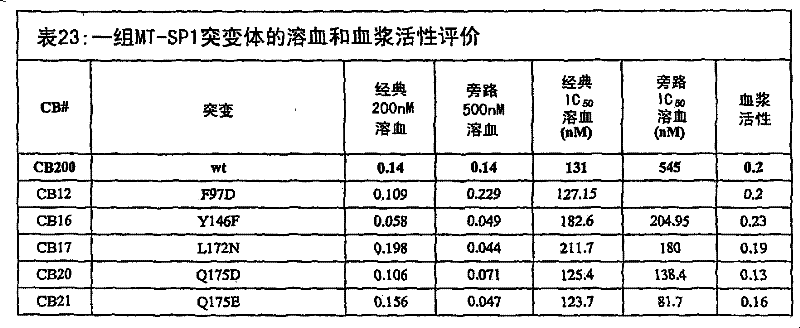


2.旁路溶血测定:与90%血浆预保温 2. Bypass hemolysis assay: pre-incubation with 90% plasma
修饰的旁路溶血测定可通过调节血浆和蛋白酶浓度而被进一步适应于测量蛋白酶例如具有低活性的蛋白酶的抑制活性。蛋白酶最初在GVB/Mg/EGTA中稀释至50μM浓度用于筛选方案,而从200μM至1.56μM的蛋白酶系列稀释液用于确定IC50的方案。MT-SP1或修饰的蛋白酶在96孔聚丙烯板中通过组合2μl稀释的蛋白酶溶液和18μl人血浆(以柠檬酸钠作为抗凝剂;Innovative Research,Inc.)而与终浓度为90%的血浆预保温。这导致蛋白酶的进一步稀释以得到终浓度为5.0μM的蛋白酶用于筛选方案,以及20μM至0.156μM的蛋白酶用于IC50方案。在这些测定中还包括了无蛋白酶对照(18μl血浆和2μl GVB/Mg/EGTA)和背景对照(仅20μlGVB/Mg/EGTA)。反应在室温保温1小时。保温后,将80μl GVB/Mg/EGTA加入到保温的血浆/蛋白酶混合物中,随后加入20μl洗涤的鸡细胞(上述),得到最终血浆浓度为15%。平板在37℃振荡1小时。以2000rpm离心细胞5分钟以沉淀未破裂的细胞,取100μl上清置于干净的96孔微滴定板。在415nm读取光密度(OD)监测裂解的红细胞释放的血红蛋白。通过从所有孔中减去背景对照然后将实验样品除以无蛋白酶对照而计算溶血分数,其中阳性对照的溶血分数设为1.00。蛋白酶所致溶血的IC50(nM)通过将溶血分数对蛋白酶浓度在4参数对数曲线拟合(SoftMax Pro software,MolecularDevices,CA)上作图而测定。 The modified alternative hemolysis assay can be further adapted to measure the inhibitory activity of proteases, eg, proteases with low activity, by adjusting the plasma and protease concentrations. The protease was initially diluted in GVB/Mg/EGTA to a concentration of 50 μM for the screening protocol, while serial dilutions of the protease from 200 μM to 1.56 μM were used for the protocol to determine the IC50 . MT-SP1 or modified protease was prepared in a 96-well polypropylene plate with a final concentration of 90% plasma by combining 2 μl of diluted protease solution and 18 μl of human plasma (with sodium citrate as an anticoagulant; Innovative Research, Inc.). Pre-insulated. This resulted in further dilution of the protease to give a final concentration of 5.0 μM protease for the screening protocol and 20 μM to 0.156 μM for the IC50 protocol. No protease controls (18 μl plasma and 2 μl GVB/Mg/EGTA) and background controls (20 μl GVB/Mg/EGTA only) were also included in these assays. The reaction was incubated at room temperature for 1 hour. After incubation, 80 μl of GVB/Mg/EGTA was added to the incubated plasma/protease mixture, followed by 20 μl of washed chicken cells (above) to give a final plasma concentration of 15%. Plates were shaken at 37°C for 1 hour. Cells were centrifuged at 2000 rpm for 5 minutes to pellet unbroken cells, and 100 μl of the supernatant was placed in a clean 96-well microtiter plate. Hemoglobin released from lysed red blood cells was monitored by reading optical density (OD) at 415 nm. The hemolytic fraction was calculated by subtracting the background control from all wells and then dividing the experimental samples by the no protease control, with the hemolytic fraction of the positive control set at 1.00. IC50 (nM) for protease-induced hemolysis was determined by plotting fraction hemolysis versus protease concentration on a 4-parameter logarithmic curve fit (SoftMax Pro software, Molecular Devices, CA).
还评价了修饰的MT-SP1 CB450在与90%预保温后的体外旁路途径诱导的溶血。预保温的蛋白酶/血浆混合物(终浓度为20nM至2000nM蛋白 酶)与鸡细胞在15%的最终血浆浓度保温并如上所述评价溶血。结果表明CB450剂量依赖性地降低了15%血浆诱导的溶血,而在约500nM或更高的CB450蛋白酶时未观察到可检测的红细胞溶血。 The in vitro alternative pathway induced hemolysis of modified MT-SP1 CB450 after pre-incubation with 90% was also evaluated. Pre-incubated protease/plasma mixtures (20 nM to 2000 nM protease final concentration) were incubated with chicken cells at a final plasma concentration of 15% and evaluated for hemolysis as described above. The results indicated that CB450 dose-dependently reduced plasma-induced hemolysis by 15%, while no detectable erythrocyte hemolysis was observed at about 500 nM or higher of CB450 protease. the
实施例8 Example 8
用补体耗竭血清(Complement-Depleted Sera)检测红细胞的补体诱导溶血 Detection of complement-induced hemolysis of red blood cells using complement-depleted serum (Complement-Depleted Sera)
a.为评价在存在或不存在野生型MT-SP1、CB155或CB42蛋白酶时处理的纯化补体因子导致的补体激活,纯化的补体因子C2、C3、C4和C5以及C2-、C3-、C4-和C5-补体耗竭培养基购自Quidel。纯化的补体蛋白(C2,C3,C4或C5)与100nM野生型MT-SP1、CB155或CB42蛋白酶在37℃保温3小时。反应中使用的纯化的蛋白质的浓度是5μM。将1微升反应与1μl合适的补体耗竭血清加入到100μl致敏的绵羊红细胞中并如实施例7所述测定溶血活性。确定溶血的CH50值。样品的溶血分数通过比较样品的CH50值和设为1.00的不含添加的蛋白酶的含C2血清的样品而确定。表24描述了原始溶血分数值。根据溶血抑制测得,野生型MT-SP1、CB155和CB42蛋白酶失活C2和C3,但不失活C4和C5。 a. To evaluate complement activation by purified complement factors treated in the presence or absence of wild-type MT-SP1, CB155 or CB42 proteases, purified complement factors C2, C3, C4 and C5 and C2-, C3-, C4- and C5-complement depleted medium were purchased from Quidel. Purified complement proteins (C2, C3, C4 or C5) were incubated with 100 nM wild-type MT-SP1, CB155 or CB42 protease for 3 hours at 37°C. The concentration of purified protein used in the reaction was 5 μM. 1 μl of the reaction was added to 100 μl of sensitized sheep erythrocytes with 1 μl of the appropriate complement depleted serum and the hemolytic activity was determined as described in Example 7. Determine the CH50 value for hemolysis. The hemolytic fraction of a sample was determined by comparing the CH50 value of the sample to a sample containing C2 serum without added protease set at 1.00. Table 24 describes the raw hemolysis fraction values. Wild-type MT-SP1, CB155, and CB42 proteases inactivated C2 and C3, but not C4 and C5, as measured by hemolytic inhibition. the
表24:加回到补体耗竭血清中的与蛋白酶保温的补体蛋白的溶血 Table 24: Hemolysis of protease-incubated complement proteins added back to complement-depleted serum
b.在另一个实验中,一组补体蛋白在MT-SP1(CB200)、CB252和CB377的存在或不存在下被处理以评价蛋白酶失活纯化的补体蛋白的后果。纯化的补体蛋白(全部购自Quidel;San Diego,CA)在它们的生理学血清浓度(C1q:180μg/ml;C2:25μg/ml;C3:1000μg/ml;C4:500μg/ml;C5:75μg/ml;C6:70μg/ml;C8:80μg/ml;C9:60μg/ml)下于PBST中与25nM CB200、CB252或CB377蛋白酶保温。在存在1μl被耗竭相应补体因子的血清的情况下(所有耗竭血清均购自Quidel),将1μl反应物加入到100μl致敏的绵羊红细胞中。作为对照,在反应中包括无蛋白酶对照、仅耗竭血清和仅正常血清。样品在室温振荡下在96孔板的孔中保温1小时。离心细胞以沉淀未破裂的细胞,并取85μl上清转移至干净的96孔微滴定板中。在415nm读取光密度(OD)监测裂解的红细胞释放的血红蛋白。结果表明在不存在添加的相应纯化的补体蛋白时对照耗竭血清由OD415读数评价几乎不显示溶血,而对照正常血清由OD415评价显示约为0.4的溶血。对于相应的纯化补体蛋白被加回耗竭的血清的每个反应(无蛋白酶对照),OD415读数与用正常血清观察到的相当。补体蛋C1q,C3,C4,C5,C6,C7,C8或C9与CB200,CB252或CB377的预保温显示与正常血清或无蛋白酶对照相比没有降低的溶血。相反,C2与CB200,CB252或CB377的预保温导致溶血抑制,这由OD415吸光度降低到与耗竭血清对照相当的水平而得出结论。 b. In another experiment, a panel of complement proteins was treated in the presence or absence of MT-SP1 (CB200), CB252 and CB377 to evaluate the consequences of protease inactivation of purified complement proteins. Purified complement proteins (all purchased from Quidel; San Diego, CA) were tested at their physiological serum concentrations (C1q: 180 μg/ml; C2: 25 μg/ml; C3: 1000 μg/ml; C4: 500 μg/ml; C5: 75 μg/ml). ml; C6: 70 μg/ml; C8: 80 μg/ml; C9: 60 μg/ml) were incubated with 25 nM CB200, CB252 or CB377 protease in PBST. 1 μl of the reaction was added to 100 μl of sensitized sheep erythrocytes in the presence of 1 μl of serum depleted of the corresponding complement factors (all depleted sera were purchased from Quidel). As controls, no protease control, depleted serum only, and normal serum only were included in the reactions. Samples were incubated in wells of a 96-well plate for 1 hour at room temperature with shaking. Centrifuge cells to pellet unbroken cells and transfer 85 μl of supernatant to a clean 96-well microtiter plate. Hemoglobin released from lysed red blood cells was monitored by reading optical density (OD) at 415 nm. The results indicated that the control depleted serum showed little hemolysis as assessed by OD415 reading in the absence of added corresponding purified complement proteins, while the control normal serum showed approximately 0.4 hemolysis as assessed by OD415. For each reaction in which the corresponding purified complement protein was added back to depleted serum (no protease control), OD415 readings were comparable to those observed with normal serum. Pre-incubation of complement proteins C1q, C3, C4, C5, C6, C7, C8 or C9 with CB200, CB252 or CB377 showed no reduced hemolysis compared to normal serum or no protease controls. In contrast, pre-incubation of C2 with CB200, CB252 or CB377 resulted in inhibition of hemolysis, as concluded by a decrease in OD415 absorbance to levels comparable to depleted serum controls. the
实施例9 Example 9
由Western印迹显示人血浆中补体成分C2的蛋白酶解 Proteolysis of complement component C2 in human plasma shown by Western blot
a.为了显现蛋白酶解产物,将人血浆在40μl PBST中稀释至5%并加入纯化的CB155,CB200或CB42至终浓度在0到500nM之间。样品在37℃保温1小时。用Novex Mini-Cell Surelock装置(Invitrogen)在4-12%Tris-甘氨酸凝胶上以200V经SDS-PAGE分离20微升反应物或作为对照的纯化的补体C2(CompTech)35分钟,然后用Biorad Transblot SD半干转移池转移至PVDF膜(Invitrogen)。膜用5%在TBST(含1%Tween 20的tris缓冲盐水)中的奶粉封闭1小时,随后洗涤并与在5%奶粉/TBST中的1∶3000稀释度的山羊抗人C2抗血清(Quidel)在4℃保温过夜。膜再在TBST中洗3次,每次10分钟,并与在5%奶粉/TBST中的1∶10000HRP缀合的兔抗山羊抗体(Invitrogen,Carlsbad,CA)于室温保温1小时。滤膜在TBST中洗3次,每次10分钟,用ECL Plus Western印迹检测系统(Amersham Biosciences)根据 厂商指导显色在血浆中的C2及其裂解产物。在FluorChem成像系统(AlphaInnotech Corp.)上使用AlphaEase FC Fluorchem 8800软件,版本3.1.2(AlphaInnotech Corp.)进行光密度测定。使用光密度测定确定未裂解产物与裂解产物的比率。测得裂解C2的蛋白酶的IC50如下:CB200:15.7nM;CB155:18.4nM;CB42:11.9nM。 a. To visualize proteolytic products, human plasma was diluted to 5% in 40 μl PBST and purified CB155, CB200 or CB42 was added to a final concentration between 0 and 500 nM. Samples were incubated at 37°C for 1 hour. 20 microliters of the reaction or purified complement C2 (CompTech) as a control were separated by SDS-PAGE at 200V on a 4-12% Tris-glycine gel with Novex Mini-Cell Surelock apparatus (Invitrogen) for 35 minutes, and then analyzed with Biorad Transblot SD semi-dry transfer pools were transferred to PVDF membranes (Invitrogen). The membrane was blocked with 5% milk powder in TBST (tris-buffered saline containing 1% Tween 20) for 1 hour, then washed and incubated with goat anti-human C2 antiserum (Quidel®) at a dilution of 1:3000 in 5% milk powder/TBST ) at 4°C overnight. Membranes were then washed 3 times in TBST for 10 minutes each and incubated with 1:10000 HRP-conjugated rabbit anti-goat antibody (Invitrogen, Carlsbad, CA) in 5% milk powder/TBST for 1 hour at room temperature. The filters were washed 3 times in TBST for 10 minutes each, and C2 and its cleavage products in plasma were developed using the ECL Plus Western Blotting Detection System (Amersham Biosciences) according to the manufacturer's instructions. Densitometry was performed on a FluorChem imaging system (AlphaInnotech Corp.) using AlphaEase FC Fluorchem 8800 software, version 3.1.2 (AlphaInnotech Corp.). Densitometry was used to determine the ratio of uncleaved product to cleaved product. The measured IC 50 of the protease that cleaves C2 is as follows: CB200: 15.7nM; CB155: 18.4nM; CB42: 11.9nM.
b.在另一个实验中,比较了野生型MT-SP1(CB200)和突变体MT-SP1CB252和CB377对C2和C3的裂解。将9微升人柠檬酸化血浆(InnovativeResearch)与1μl蛋白酶保温以得到终浓度为0-2000nM的蛋白酶。在37℃保温1小时。将1微升预保温的蛋白酶/血浆反应物与10μl(用于评价C2)或1000μl(用于评价C3)NuPAGE LDS相同缓冲液和样品还原试剂(Invitrogen,Carlsbad,CA)合并并煮沸5分钟。平行地,将10μl煮沸样品上样至4-12%NuPAGE Bis-Tris梯度凝胶(Invitrogen)上并用用于蛋白质分离的NovexMini-Cell Surelock装置(Invitrogen)在200V电泳35分钟,随后用BioradTransblot SD半干转移池转移至PVDF滤膜(Invitrogen)。膜用5%在TBST(含1%Tween 20的tris缓冲盐水)中的奶粉(Biorad,Hercules,CA)封闭1小时。然后膜与1∶2000在5%奶粉/TBST中的山羊抗人C2(Quidel)或山羊抗人C3在4℃保温过夜。膜在TBST中洗3次10分钟,然后与在5%奶粉/TBST中的1∶2000 HRP缀合的抗山羊二抗(Zymed;San Francisco,CA)于室温保温1小时。膜在TBST中洗3次10分钟,并用ECL Plus Western印迹检测系统(Amersham Biosciences;Piscataway,NJ)显色。在FluorChem成像系统(Alpha Innotech Corp;San Leandro,CA)上使用AlphaEase FC Fluorchem 8800软件,版本3.1.2(Alpha Innotech Corp.)进行光密度测定。结果显示CB200,CB252和CB377均以剂量依赖方式裂解人血浆中的C2,而与无蛋白酶对照相比,即使在最高的蛋白酶浓度(2000nM),所测试的蛋白酶也无一裂解人血浆中的C3。在500nM每种测试的蛋白酶下由Western印迹观察C2的降解,在1000nM下几乎无可检测到的C2,在2000nM测试的蛋白酶下观察到C2完全降解。 b. In another experiment, the cleavage of C2 and C3 by wild type MT-SP1 (CB200) and mutant MT-SP1 CB252 and CB377 was compared. 9 microliters of human citrated plasma (Innovative Research) was incubated with 1 microliter of protease to give a final concentration of protease between 0-2000 nM. Incubate at 37°C for 1 hour. One microliter of the pre-incubated protease/plasma reaction was combined with 10 μl (for evaluation of C2) or 1000 μl (for evaluation of C3) of NuPAGE LDS same buffer and sample reducing reagent (Invitrogen, Carlsbad, CA) and boiled for 5 minutes. In parallel, 10 μl of the boiled sample was loaded onto a 4-12% NuPAGE Bis-Tris gradient gel (Invitrogen) and electrophoresed at 200V for 35 minutes using a Novex Mini-Cell Surelock device (Invitrogen) for protein separation, followed by a Biorad Transblot SD half Dry transfer cells were transferred to PVDF filters (Invitrogen). Membranes were blocked with 5% milk powder (Biorad, Hercules, CA) in TBST (tris-buffered saline with 1% Tween 20) for 1 hour. Membranes were then incubated with goat anti-human C2 (Quidel) or goat anti-human C3 1:2000 in 5% milk powder/TBST overnight at 4°C. Membranes were washed 3 times for 10 minutes in TBST and then incubated with 1:2000 HRP-conjugated anti-goat secondary antibody (Zymed; San Francisco, CA) in 5% milk powder/TBST for 1 hour at room temperature. Membranes were washed three times for 10 min in TBST and developed with the ECL Plus Western Blotting Detection System (Amersham Biosciences; Piscataway, NJ). Densitometry was performed on a FluorChem imaging system (Alpha Innotech Corp; San Leandro, CA) using AlphaEase FC Fluorchem 8800 software, version 3.1.2 (Alpha Innotech Corp.). The results showed that CB200, CB252 and CB377 all cleaved C2 in human plasma in a dose-dependent manner, while none of the tested proteases cleaved C3 in human plasma even at the highest protease concentration (2000nM) compared to no protease control . Degradation of C2 was observed by Western blot at 500 nM of each protease tested, almost no detectable C2 at 1000 nM and complete degradation of C2 was observed at 2000 nM of the protease tested. the
实施例10 Example 10
旁路和经典溶血以及与人血浆中补体成分C3的蛋白酶解相关性的评价 Evaluation of alternative and classical hemolysis and its association with the proteolysis of complement component C3 in human plasma
在如实施例7的A.1和B.1所述与人血浆预保温后,分别筛选了一组终浓度分别为200nM(经典)或500nM(旁路)的蛋白酶对于经典溶血或旁 路溶血的作用。所测试的该组蛋白酶包括野生型(CB200),CB238,CB331,CB349,CB357,CB367,CB377和CB387。CB200,CB357,CB367和CB387抑制经典和旁路溶血至不同程度。CB238和CB377显示极少的旁路溶血抑制,但确实显示对经典溶血的实质抑制。CB331和CB349显示极少的经典溶血抑制,但确实显示对旁路溶血的抑制。结果显示相比于经典途径,CB331,CB349和CB387对于裂解旁路途径是选择性的。 After preincubation with human plasma as described in A.1 and B.1 of Example 7, a group of proteases with a final concentration of 200 nM (classical) or 500 nM (bypass) were screened for classical hemolysis or bypass hemolysis, respectively. role. The group of proteases tested included wild type (CB200), CB238, CB331 , CB349, CB357, CB367, CB377 and CB387. CB200, CB357, CB367 and CB387 inhibit classical and alternative pathway hemolysis to varying degrees. CB238 and CB377 showed little inhibition of alternative pathway hemolysis, but did show substantial inhibition of classical hemolysis. CB331 and CB349 showed little inhibition of classical hemolysis, but did show inhibition of alternative pathway hemolysis. The results show that CB331, CB349 and CB387 are selective for the lytic alternative pathway compared to the classical pathway. the
将溶血结果与在蛋白酶存在或不存在下观察C3得到的血浆中的C3裂解相关联。还如实施例9所述对于C3用Western印迹检查了来自旁路溶血测定的样品。与旁路溶血结果一致,结果表明CB331,CB349和CB387裂解C3,这是根据与无蛋白酶处理的血浆样品相比C3产物降低而表明的。 Hemolysis results were correlated with C3 cleavage in plasma observed for C3 in the presence or absence of proteases. Samples from the alternative hemolysis assay were also examined by Western blot as described in Example 9 for C3. Consistent with the bypass hemolysis results, the results indicated that CB331, CB349 and CB387 cleaved C3, as indicated by a decrease in C3 production compared with protease-free treated plasma samples. the
实施例11 Example 11
纯化的补体成分的裂解和裂解位点的鉴别 Cleavage of purified complement components and identification of cleavage sites
为确定与支架或野生型蛋白酶相比修饰的蛋白酶对靶蛋白增加的特异性,纯化的补体因子C2,iC3和iC4购自Quidel Corporation(San Diego,CA)。在PBST中将5μg每种蛋白稀释至终浓度为5μM。加入MT-SP1,CB155或因子I至终浓度为100nM,并将反应在37℃保温5小时。通过变性蛋白质并用PNGaseF根据厂商指导处理(New England BioLabs,Ipswich,MA)而除去N-联糖基化。靶蛋白在4-12%Tris-甘氨酸梯度凝胶(Invitrogen,Carlsbad,CA)上经SDS-PAGE分离后转移至PVDF膜。所得的膜用考马斯亮蓝R-250染料(TekNova,Hollister,CA)染色,用50%甲醇洗涤直至蛋白带被分辨,空气干燥。由UC Davis Molecular Structure Facility根据Edmans方案测序蛋白酶解片段而确定裂解序列。下表25描述了人C2、C3和C4的蛋白酶裂解序列。显示了当发生裂解时,由裂解产物的测序鉴别的C2、C3和C4上天然蛋白酶因子I、组织蛋白酶K、MT-SP1和修饰的MT-SP1(CB155)的各自裂解位点。相应的SEQ ID NO在序列后的括号中示出。 To determine the increased specificity of the modified proteases for target proteins compared to scaffold or wild-type proteases, purified complement factors C2, iC3 and iC4 were purchased from Quidel Corporation (San Diego, CA). Dilute 5 μg of each protein to a final concentration of 5 μM in PBST. MT-SP1, CB155 or Factor I was added to a final concentration of 100 nM and the reaction was incubated at 37°C for 5 hours. N-linked glycosylation was removed by denaturing the protein and treating it with PNGaseF according to the manufacturer's instructions (New England BioLabs, Ipswich, MA). Target proteins were separated by SDS-PAGE on 4-12% Tris-glycine gradient gels (Invitrogen, Carlsbad, CA) and transferred to PVDF membranes. The resulting membrane was stained with Coomassie Brilliant Blue R-250 dye (TekNova, Hollister, CA), washed with 50% methanol until protein bands were resolved, and air dried. Cleavage sequences were determined by sequencing proteolytic fragments at the UC Davis Molecular Structure Facility according to the Edmans protocol. Table 25 below describes the protease cleavage sequences for human C2, C3 and C4. When cleavage occurs, the respective cleavage sites of native protease Factor I, Cathepsin K, MT-SP1 and modified MT-SP1 (CB155) on C2, C3 and C4 identified by sequencing of the cleavage products are shown. The corresponding SEQ ID NO is shown in brackets after the sequence. the
表25:蛋白酶裂解序列 Table 25: Protease Cleavage Sequences

实施例12 Example 12
C2裂解与补体失活的相关性:评价C3转变酶的形成和溶血 Correlation between C2 cleavage and complement inactivation: evaluation of C3 convertase formation and hemolysis
C3转变酶是通过用C4和C2失活C1复合物而形成的。C1复合物中的C1r蛋白酶的激活裂解C1s,产生活性C1s蛋白酶。C4是C1s的敏感底物,由此导致C4裂解成C4a和C4b。活性C4b的产生提供了针对C2的结合位点,C2是C1s的第二个底物。C2的裂解导致形成片段C2a和C2b。由C1s裂解后,C4b和C2b片段结合在一起形成经典途径的C3转变酶。C2中存在的SLGR裂解位点是C2裂解的天然激活位点,产生C2a和C2b,而C2中的VFAK裂解序列存在于该分子C2a部分中的C2蛋白酶结构域中。为了评价C2中的裂解序列被野生型或修饰的MT-SP1的裂解是否影响C2的激活和C3转变酶的形成,评价了裂解并且在体外重构细胞表面溶血模型中确定了裂解的功能性后果。 C3 convertase is formed by inactivating the C1 complex with C4 and C2. Activation of the C1r protease in the C1 complex cleaves C1s, producing active C1s protease. C4 is a sensitive substrate for C1s, resulting in the cleavage of C4 into C4a and C4b. Generation of active C4b provides a binding site for C2, a second substrate for C1s. Cleavage of C2 results in the formation of fragments C2a and C2b. After cleavage by C1s, the C4b and C2b fragments join together to form the C3 convertase of the classical pathway. The SLGR cleavage site present in C2 is the natural activation site for C2 cleavage, resulting in C2a and C2b, while the VFAK cleavage sequence in C2 is present in the C2 protease domain in the C2a portion of the molecule. To assess whether cleavage of the cleavage sequence in C2 by wild-type or modified MT-SP1 affects C2 activation and C3 convertase formation, cleavage was evaluated and the functional consequences of cleavage determined in an in vitro reconstituted cell surface hemolysis model . the
A.C2裂解 A. C2 cracking
在用野生型MT-SP1(CB200),CB252或CB377裂解纯化的C2之后评价了C2a和C2b裂解产物的存在。为了评价纯化的C2与蛋白酶保温后的裂解产物,将5μg纯化的C2(Quidel)在37℃单独保温1小时或与终浓度为100nM的CB200,CB252或CB377蛋白酶在37℃保温1小时。在4-12%Tris-甘氨酸梯度凝胶(Invitrogen,Carlsbad,CA)上经SDS-PAGE分离整个反应物,之后转移到PVDF膜上。所得膜用考马斯亮蓝R-250染料(TekNova,Hollister,CA)染色,用50%甲醇洗涤直至蛋白条带被分辨,空气干燥。结果表明在存在100nM CB200,CB252或CB377时,C2几乎被完全降解,产生约70kD和23kD的裂解产物,分别相应于C2a和C2b。另外,在存在CB200时观察到约35kD的第三个裂解产物。 The presence of C2a and C2b cleavage products was evaluated after cleavage of purified C2 with wild-type MT-SP1 (CB200), CB252 or CB377. To evaluate cleavage products of purified C2 incubated with proteases, 5 μg of purified C2 (Quidel) was incubated at 37°C for 1 hour alone or with CB200, CB252 or CB377 proteases at a final concentration of 100 nM for 1 hour at 37°C. The entire reaction was separated by SDS-PAGE on a 4-12% Tris-glycine gradient gel (Invitrogen, Carlsbad, CA) and transferred to a PVDF membrane. The resulting membrane was stained with Coomassie Brilliant Blue R-250 dye (TekNova, Hollister, CA), washed with 50% methanol until protein bands were resolved, and air dried. The results showed that in the presence of 100 nM CB200, CB252 or CB377, C2 was almost completely degraded to produce cleavage products of about 70 kD and 23 kD, corresponding to C2a and C2b, respectively. Additionally, a third cleavage product of approximately 35 kD was observed in the presence of CB200. the
B.细胞表面溶解模型 B. Cell Surface Lysis Model
MT-SP1或修饰的蛋白酶对C2蛋白的活性通过在补体激活的中间阶段分离细胞并将它们暴露于用蛋白酶处理的血浆或蛋白质而特异性测定。简而言之,用Nagaki et al的方法(1974,A New Method for the Preparation ofEAC14 cell with Human or Guinea-Pig Serum.Journal of ImmunologicalMethods 5:307-317.)将激活的红细胞终止在C1/C4b复合物阶段。购买的激活的红细胞(Diamedix Corp)如下洗涤3次,在2000rpm沉淀细胞,之后重悬于GGVB-TTHA(50%GVB0(Diamedix Corp.)+5%葡萄糖+5mM Ca-TTHA(等份的100mM CaCl2和100mM TTHA(Sigma)),并且在最后洗涤后以5×10⁸细胞/mL重悬并储存于冰上。细胞与2.5体积的10%正常人血清(NHS;在GGVB-TTHA中制备并在30℃保温15分钟以保证Mg2+螯合)混合并在30℃保温5分钟。混合物用GGVB-TTHA洗2次,用GGVB-Ca(50%GVB0+5%葡萄糖+0.3mM CaCl2)洗2次,并用GGVB++(50%GVB0+5%葡萄糖+1mMMgCl2+0.15mM CaCl2)洗2次。在最后洗涤后,将细胞混合物在37℃保温2小时,每30分钟混合一次以避免细胞的过量沉积。保温的细胞混合物在GGVB++中洗1次并以1.5×10⁸细胞/mL重悬。悬浮液在4℃储存直至1周。
The activity of MT-SP1 or modified proteases on C2 proteins was specifically assayed by isolating cells at an intermediate stage of complement activation and exposing them to protease-treated plasma or protein. Briefly, activated erythrocytes were terminated at C1/C4b complex by the method of Nagaki et al (1974, A New Method for the Preparation of EAC14 cell with Human or Guinea-Pig Serum. Journal of Immunological Methods 5:307-317.) object stage. The purchased activated erythrocytes (Diamedix Corp.) were washed 3 times as follows, the cells were pelleted at 2000 rpm, and then resuspended in GGVB-TTHA (50% GVB 0 (Diamedix Corp.) + 5% glucose + 5 mM Ca-TTHA (an aliquot of 100 mM CaCl 2 and 100 mM TTHA (Sigma)), and after the final wash, resuspend at 5×10 8 cells/mL and store on ice. Cells were mixed with 2.5 volumes of 10% normal human serum (NHS; prepared in GGVB-TTHA and incubated at 30°C for 15 minutes to ensure Mg 2+ chelation) mixed and incubated at 30°C for 5 minutes. The mixture was washed twice with GGVB-TTHA, washed with GGVB-Ca (50% GVB 0 +5% glucose +0.3mM CaCl 2 )
在补体激活过程中,需要C1/C4b复合物裂解C2产生C3转变酶,并且所得的补体级联的其余部分的激活导致形成膜攻击复合物(MAC)和细胞裂解。为了评价蛋白酶对C2裂解的后果,将CB200,CB252,CB377任一的2X蛋白酶溶液系列稀释,这是将蛋白酶原液在GGVB++中稀释至2μM并在一不透明96孔测定板(Nunc)的11个孔中以1∶2系列稀释这一原液至最终蛋白酶浓度为0.2nM至2000nM。GGVB++缓冲液单独被加入到第12个孔中作为背景对照。用GGVB++稀释液制备C3耗竭血清(Sigma)的40%溶液。5微升系列稀释的2X蛋白酶(来自上述)与5μL稀释的C3耗竭血清混合并在37℃保温1小时。反应用GGVB++稀释至50μL并且加入50μL EAC14b细胞(1.5×10⁸细胞/mL)。混合物在30℃保温6分钟以预形成C2复合物。向每孔中加入150μL在GGVB-EDTA(50%GVB0+5%葡萄糖+10mM EDTA)中1∶100稀释的C2耗竭血清。样品在温和振荡下于37℃保温1小时。2000rpm离心平板以沉淀细胞并将100μl上清转移至干净的96孔测定板中。在415nm读取光密度(OD)监测裂解的红细胞释放的血 红蛋白。 During complement activation, the C1/C4b complex is required to cleavage C2 to generate C3 convertase, and the resulting activation of the rest of the complement cascade leads to the formation of the membrane attack complex (MAC) and cell lysis. In order to evaluate the consequences of protease cleavage on C2, serially dilute any 2X protease solution of CB200, CB252, CB377, which is to dilute the protease stock solution to 2 μM in GGVB++ and in 11 wells of an opaque 96-well assay plate (Nunc) This stock solution was serially diluted 1:2 in 1.0 to a final protease concentration ranging from 0.2 nM to 2000 nM. GGVB++ buffer alone was added to the 12th well as a background control. A 40% solution of C3-depleted serum (Sigma) was prepared with GGVB++ dilution. 5 μL of serially diluted 2X protease (from above) was mixed with 5 μL of diluted C3-depleted serum and incubated at 37°C for 1 hour. The reaction was diluted to 50 μL with GGVB++ and 50 μL of EAC14b cells (1.5×10 8 cells/mL) was added. The mixture was incubated at 30°C for 6 minutes to preform the C2 complex. 150 [mu]L of C2-depleted serum diluted 1:100 in GGVB-EDTA (50% GVB 0 + 5% glucose + 10 mM EDTA) was added to each well. Samples were incubated at 37°C for 1 hour with gentle shaking. The plate was centrifuged at 2000 rpm to pellet the cells and 100 μl of the supernatant was transferred to a clean 96-well assay plate. Hemoglobin released from lysed red blood cells was monitored by reading optical density (OD) at 415 nm.
结果表明与增加浓度的蛋白酶(CB200,CB252或CB377)预保温的C3耗竭血清当被加入以耗竭C2血清时导致含有预形成的C1/C4b的红细胞的溶血降低。每种测试的蛋白酶的影响是剂量依赖性的,在蛋白酶浓度为0.2nM至10nM时几乎无明显抑制,在增加蛋白酶浓度时发生相继抑制,在蛋白酶浓度为800nM或更高时几乎未观察到溶血。这些结果提示在蛋白酶存在下预保温含C2的血清不模拟补体激活和细胞裂解所需的由C1/C4b对C2的裂解。 The results indicate that C3 depleted serum preincubated with increasing concentrations of proteases (CB200, CB252 or CB377) when added to deplete C2 serum resulted in reduced hemolysis of erythrocytes containing preformed C1/C4b. The effect of each protease tested was dose-dependent, with little to no apparent inhibition at protease concentrations from 0.2 nM to 10 nM, sequential inhibition at increasing protease concentrations, and little hemolysis observed at protease concentrations of 800 nM or higher . These results suggest that pre-incubation of C2-containing serum in the presence of proteases does not mimic the cleavage of C2 by C1/C4b required for complement activation and cell lysis. the
实施例13 Example 13
通过配对SDS-PAGE和溶血测定确定抑制性裂解位点 Determination of inhibitory cleavage sites by paired SDS-PAGE and hemolytic assays
为了将补体成分的蛋白酶裂解与补体激活的抑制相关联,从Quidel和CompTech购买了纯化的补体因子。在PBST中将5μg每种蛋白质稀释至终浓度为5μM。支架或修饰的蛋白酶稀释至终浓度在0到500nM之间。样品在37℃保温1小时。取出0.5至1μg处理的补体成分并用PBST稀释至终体积为10μl。这一反应与250μl IgG激活的绵羊红细胞和5μl耗竭相应待测补体因子的培养基混合。溶液在室温保温45分钟。5000rpm离心细胞2分钟并将200μl上清转移至96孔微滴定板中,在415nm测量吸光度以确定从裂解的红细胞释放的血红蛋白。 To correlate proteolytic cleavage of complement components with inhibition of complement activation, purified complement factors were purchased from Quidel and CompTech. Dilute 5 μg of each protein to a final concentration of 5 μM in PBST. Scaffolds or modified proteases were diluted to a final concentration between 0 and 500 nM. Samples were incubated at 37°C for 1 hour. 0.5 to 1 μg of the treated complement components were removed and diluted with PBST to a final volume of 10 μl. This reaction was mixed with 250 μl of IgG-activated sheep erythrocytes and 5 μl of medium depleted of the corresponding complement factor to be tested. The solution was incubated at room temperature for 45 minutes. Cells were centrifuged at 5000 rpm for 2 minutes and 200 μl of the supernatant was transferred to a 96-well microtiter plate and the absorbance was measured at 415 nm to determine the hemoglobin released from the lysed erythrocytes. the
根据针对PNGaseF的厂商方案(New England BioLabs)对剩余的4-4.5μg反应样品去糖基化。样品在4-12%Tris-甘氨酸梯度凝胶上经SDS-PAGE分离,之后用考马斯亮蓝染料染色。使用在Alpha Innotech成像仪上的光密度分析特征,确定每条带的面积并用于计算在整个分析过程中裂解的全长补体成分的百分比和所有主要降解产物的表观。 The remaining 4-4.5 μg of the reaction sample was deglycosylated according to the manufacturer's protocol for PNGaseF (New England BioLabs). Samples were separated by SDS-PAGE on a 4-12% Tris-glycine gradient gel followed by staining with Coomassie brilliant blue dye. Using the densitometry profile on an Alpha Innotech imager, the area of each band was determined and used to calculate the percentage of full-length complement components cleaved and the appearance of all major degradation products throughout the assay. the
实施例14 Example 14
通过在C2耗竭血清中溶血评价的C2裂解与补体失活的相关性 Correlation of C2 cleavage and complement inactivation assessed by hemolysis in C2-depleted serum
补体介导溶血的C2裂解的功能性结果在如实施例13所述的配对SDS-PAGE和溶血测定中评价。为了评价纯化补体因子导致的补体激活,从Quidel购买了纯化的C2和C2耗竭培养基。将0.5-1μg纯化的C2与10-500nM CB155蛋白酶在总体积10μl PBST中于37℃保温1小时。将完整反应与5μl耗竭待测C2补体因子的血浆一起加入到250μl IgG激活的绵羊红细胞中。将溶液置于室温45分钟。5000rpm离心细胞2分钟并将200μl 上清转移到96孔微滴定板中,测定在415nm的吸光度以确定从裂解的红细胞释放的血红蛋白。 The functional consequences of C2 cleavage of complement-mediated hemolysis were assessed in paired SDS-PAGE and hemolysis assays as described in Example 13. To evaluate complement activation by purified complement factors, purified C2 and C2-depleted medium were purchased from Quidel. Incubate 0.5-1 μg of purified C2 with 10-500 nM CB155 protease in a total volume of 10 μl PBST at 37°C for 1 hour. The complete reaction was added to 250 μl of IgG-activated sheep erythrocytes along with 5 μl of plasma depleted of the C2 complement factor to be tested. The solution was left at room temperature for 45 minutes. Cells were centrifuged at 5000 rpm for 2 minutes and 200 μl of the supernatant was transferred to a 96-well microtiter plate, and the absorbance at 415 nm was measured to determine the release of hemoglobin from the lysed erythrocytes. the
为了显现蛋白酶解产物,在4-12%Tris-甘氨酸凝胶上经SDS-PAGE分离20微升反应物或作为对照的纯化的补体C2(CompTech),用考马斯蓝根据厂商方案染色凝胶而显现总蛋白。用凝胶光密度测定比较C2的裂解。C2的裂解以剂量依赖性方式发生,在500nM蛋白酶时C2发生几乎完全裂解。另外,溶血百分比随着蛋白酶浓度增加而降低。基于C2裂解产物的凝胶光密度分析得到的CB155的IC50是2.2nM。CB155在补加蛋白酶处理的C2的C2耗竭血清中的溶血的IC50是17nM。在体外,纯化的C2的完全降解是溶血中功能性降低所需的。 To visualize proteolytic products, 20 microliters of the reaction or purified complement C2 (CompTech) as a control were separated by SDS-PAGE on a 4-12% Tris-glycine gel and the gel was stained with Coomassie blue according to the manufacturer's protocol And show the total protein. Cleavage of C2 was compared using gel densitometry. Cleavage of C2 occurs in a dose-dependent manner, with almost complete cleavage of C2 occurring at 500 nM protease. Additionally, percent hemolysis decreased with increasing protease concentration. The IC50 for CB155 based on gel densitometric analysis of the C2 cleavage product was 2.2 nM. The IC50 for hemolysis of CB155 in C2-depleted serum supplemented with protease-treated C2 was 17 nM. In vitro, complete degradation of purified C2 is required for functional reduction in hemolysis.
实施例15 Example 15
通过ELISA检测C5b-9(膜攻击复合物)及MT-SP1或突变体对补体激活的作用 Effects of C5b-9 (membrane attack complex) and MT-SP1 or mutants on complement activation detected by ELISA
A.C5b-9ELISA A.C5b-9ELISA
根据厂商方案进行C5b-9的ELISA(Quidel)。简而言之,在室温用SuperBlock(Pierce,Rockford,IL)再水合化用捕获抗体包被的微滴定板30分钟。在PBST中洗板,并且将20μl来自上述用80μl SuperBlock稀释的蛋白酶处理的补体刺激的血清溶液加入到微滴定板的孔中。板在室温保温1小时,然后在PBST中洗涤。加入100μl检测抗体-HRP缀合物溶液并保温平板1小时,然后在PBST中洗涤。最后,加入100μl底物溶液并且在室温保温平板15分钟以显色。为了终止显色反应,向每孔中加入100μl终止溶液,根据厂商方案测量450/650nm的吸收值。 ELISA for C5b-9 (Quidel) was performed according to the manufacturer's protocol. Briefly, microtiter plates coated with capture antibody were rehydrated with a SuperBlock (Pierce, Rockford, IL) for 30 minutes at room temperature. Plates were washed in PBST and 20 μl of the protease-treated complement-stimulated serum solution from above diluted with 80 μl SuperBlock was added to the wells of the microtiter plate. Plates were incubated for 1 hour at room temperature and then washed in PBST. 100 [mu]l detection antibody-HRP conjugate solution was added and the plate was incubated for 1 hour, then washed in PBST. Finally, 100 [mu]l of substrate solution was added and the plate was incubated for 15 minutes at room temperature to develop the color. To stop the color reaction, 100 μl of stop solution was added to each well and the absorbance at 450/650 nm was measured according to the manufacturer's protocol. the
B.野生型MT-SP1(CB200),CB155或CB42对补体激活的作用 B. Effect of wild-type MT-SP1 (CB200), CB155 or CB42 on complement activation
为了检测补体激活,将用柠檬酸钠作为抗凝剂的人血浆(InnovativeResearch,Inc.,Southfield,MI)在含0.05%Tween 20的PBS(PBST)中稀释至终浓度为20%(10μl血清于40μl PBST中),向其中加入野生型MT-SP1,CB155或CB42至终浓度为0-5μM。溶液在37℃保温15分钟。经典途径的激活和旁路途径的激活通过添加脂多糖(IgG或LPS,各为1mg/ml终浓度,Sigma)而起始。反应在37℃保温30分钟。通过添加Pefabloc(Roche)至终浓度为1mg/ml和EDTA至终浓度为50mM而猝灭反应。用20μl所述终溶液进行后续ELISA。如上述部分A进行ELISA。 To detect complement activation, human plasma (InnovativeResearch, Inc., Southfield, MI) with sodium citrate as an anticoagulant was diluted in PBS (PBST) containing 0.05% Tween 20 to a final concentration of 20% (10 μl of serum in 40 μl PBST), to which wild-type MT-SP1, CB155 or CB42 was added to a final concentration of 0-5 μM. The solution was incubated at 37°C for 15 minutes. Activation of the classical pathway and activation of the alternative pathway were initiated by the addition of lipopolysaccharide (IgG or LPS, each at a final concentration of 1 mg/ml, Sigma). The reaction was incubated at 37°C for 30 minutes. The reaction was quenched by adding Pefabloc (Roche) to a final concentration of 1 mg/ml and EDTA to a final concentration of 50 mM. Subsequent ELISAs were performed with 20 μl of the final solution. ELISA was performed as in Section A above. the
测定了每种蛋白酶的C5b-9生成的IC50。对于野生型MT-SP1、CB155和CB42测定的经典途径激活后的IC50分别是103nm、47nm和23nm。对于野生型MT-SP1、CB155和CB42旁路途径激活后的IC50测定分别为195nm、84nm和41nm。 The IC50 for C5b-9 production was determined for each protease. The IC50 after classical pathway activation determined for wild-type MT-SP1, CB155 and CB42 were 103nm, 47nm and 23nm, respectively. IC50 determinations for wild-type MT-SP1, CB155 and CB42 after alternative pathway activation were 195nm, 84nm and 41nm, respectively.
实施例16 Example 16
在总补体系统筛选中野生型MT-SP1(CB200),CB252或CB377对补体激活的作用 Effect of wild-type MT-SP1(CB200), CB252 or CB377 on complement activation in a total complement system screen
为了评价MT-SP1或突变体MT-SP1蛋白酶对经典、MBL或旁路补体途径的影响,将9μl人柠檬酸化血浆(Innovative Research)与1μl CB200,CB252或CB377蛋白酶在37℃保温1小时,蛋白酶终浓度为1μM。用TotalComplement System Screen Classical,Lectin,Alternative Pathways根据厂商方案(WiesLab;Sweden)评价了每个反应的补体激活作用。在这一测定中,由厂商提供的微滴定条的孔用经典、旁路或MBL(凝集素)途径的特异激活物包被。反应在由厂商提供的合适缓冲液中稀释以获得针对每一途径的血浆浓度,反应如厂商规定进行保温。对于经典途径,血浆样品在稀释剂CP中稀释并在分析前置于室温最多60分钟。对于凝集素途径,血浆样品在稀释剂LP中稀释并在分析前在室温保温超过15分钟但低于60分钟。对于旁路途径,血浆样品在稀释剂AP中保温并在分析前置于室温最多60分钟。向微滴定板中以100μl/孔一式二份加入样品。平板在37℃保温60-70分钟。在血清保温后,将微滴定板的孔用300μl洗涤溶液洗3次。在最后一次洗涤后,通过将平板在吸收性纸巾上轻叩而除去过量的洗涤缓冲液。通过检测C5b-9评价每一样品中的补体激活。将100μl含有碱性磷酸酶标记的C5b-9抗体的缀合物加入到每孔中并且将平板在室温保温30分钟。为了显色反应,将100μl底物溶液加入到每孔中并将平板在室温保温30分钟。反应通过以100μl/孔加入5mM EDTA而终止。用微滴定板读数器在405nm读取吸光度。通过比较样品的OD405值和无蛋白酶对照样品而确定产生的sC5b-9级分。 To evaluate the effect of MT-SP1 or mutant MT-SP1 proteases on the classical, MBL or alternative complement pathways, 9 μl of human citrated plasma (Innovative Research) was incubated with 1 μl of CB200, CB252 or CB377 protease at 37°C for 1 hour, protease The final concentration was 1 μM. Complement activation was assessed for each reaction using the Total Complement System Screen Classical, Lectin, Alternative Pathways according to the manufacturer's protocol (WiesLab; Sweden). In this assay, wells of microtiter strips provided by the manufacturer are coated with specific activators of the classical, alternative or MBL (lectin) pathways. Reactions were diluted in the appropriate buffer provided by the manufacturer to obtain plasma concentrations for each pathway and reactions were incubated as specified by the manufacturer. For the classical route, plasma samples were diluted in Diluent CP and brought to room temperature for a maximum of 60 minutes prior to analysis. For the lectin pathway, plasma samples were diluted in Diluent LP and incubated at room temperature for more than 15 minutes but less than 60 minutes before analysis. For the alternative route, plasma samples were incubated in diluent AP and brought to room temperature for a maximum of 60 minutes prior to analysis. Samples were added in duplicate at 100 μl/well to microtiter plates. Plates were incubated at 37°C for 60-70 minutes. After serum incubation, the wells of the microtiter plate were washed 3 times with 300 µl of wash solution. After the last wash, excess wash buffer was removed by tapping the plate on absorbent paper towels. Complement activation in each sample was assessed by detection of C5b-9. 100 [mu]l of conjugate containing alkaline phosphatase-labeled C5b-9 antibody was added to each well and the plate was incubated at room temperature for 30 minutes. For the color reaction, 100 [mu]l of substrate solution was added to each well and the plate was incubated at room temperature for 30 minutes. The reaction was terminated by adding 5 mM EDTA at 100 μl/well. Absorbance was read at 405 nm with a microtiter plate reader. The sC5b-9 fraction produced was determined by comparing the OD405 values of the samples to the no protease control sample. the
结果表明在由经典和MBL途径诱导的补体激活时产生的C5b-9级分在所测试的每种蛋白酶(CB200,CB252或CB377)的存在下几乎被完全抑制。相反,当补体激活由旁路途径诱导时,观察到C5b-9生成几乎不被所测试的任何蛋白酶抑制。由于经典和MBL途径需要C2,但是旁路途径不需要, 因此这些结果提示经典和MBL途径的抑制是由于C2裂解所致。这一结果与观察到当每种测试的蛋白酶(CB200,CB252和CB377)与C2预保温时抑制溶血(见实施例8.b)一致。 The results indicated that the C5b-9 fraction produced upon complement activation induced by the classical and MBL pathways was almost completely inhibited in the presence of each protease tested (CB200, CB252 or CB377). In contrast, when complement activation was induced by the alternative pathway, little inhibition of C5b-9 production by any of the proteases tested was observed. Since C2 is required for the canonical and MBL pathways, but not the alternative pathway, these results suggest that inhibition of the canonical and MBL pathways is due to C2 cleavage. This result is consistent with the observation that hemolysis was inhibited when each of the tested proteases (CB200, CB252 and CB377) were pre-incubated with C2 (see Example 8.b). the
实施例17 Example 17
SLGR或GLAR相对于RQAR底物的优先裂解的筛选 Screening for preferential cleavage of SLGR or GLAR relative to RQAR substrates
用相应于所希望裂解序列的各个肽底物测定了与由底物文库确定的匹配所希望特异性谱的修饰的蛋白酶以确定特异性的量级变化。设计了一个天然靶底物:Ac-RQAR-AMC,其包括MT-SP1自身活化位点;设计了两个希望的底物裂解序列:Ac-SLGR-AMC(C2裂解位点)和Ac-GLAR-AMC(C3裂解位点)。 Modified proteases matching the desired specificity profile determined from the substrate library were assayed with individual peptide substrates corresponding to the desired cleavage sequence to determine magnitude changes in specificity. One natural target substrate was designed: Ac-RQAR-AMC, which includes the MT-SP1 self-activation site; two desired substrate cleavage sequences were designed: Ac-SLGR-AMC (C2 cleavage site) and Ac-GLAR - AMC (C3 cleavage site). the
在Costar 96 well black half-area测定板中的孔中,底物在50μl总体积的MT-SP1活性缓冲液中被稀释成1mM和2μM之间的一系列12个浓度。将溶液加热至30℃5分钟,向测定孔中加入50μl蛋白酶溶液(野生型MT-SP1,CB42或CB 155)。在荧光分光光度计(Molecular Devices Gemini XPS)中以激发波长380nm、发射波长450nm和使用435nm截断值滤镜测量荧光。荧光增加速率在30分钟内测量,以30秒间隔取读数。通过底物浓度倒数针对底物裂解速率倒数作图并拟合于Lineweaver-Burk等式(1/速率=(Km/Vmax)(1/[S])+1/Vmax;其中Vmax=[E]*kcat)而计算动力学常数kcat,Km和kcat/Km(特异性常数)。野生型MT-SP1(CB200),CB42和CB155蛋白酶分别以1.9×106,1.8×106和9.1×104M-1s-1切割Ac-RQAR-AMC底物。野生型MT-SP1(CB200),CB42和CB155蛋白酶分别以2.0×104,5.9×104,3.7×103M-1s-1切割Ac-SLGR-AMC底物。野生型MT-SP1(CB200),CB42和CB155蛋白酶分别以6.4×104,6.3×104和3.5×103M-1s-1切割Ac-GLAR-AMC底物。 Substrate was diluted in a series of 12 concentrations between 1 mM and 2 μM in wells in Costar 96 well black half-area assay plates in MT-SP1 activity buffer in a total volume of 50 μl. The solution was heated to 30° C. for 5 minutes, and 50 μl of protease solution (wild-type MT-SP1, CB42 or CB155) was added to the assay wells. Fluorescence was measured in a fluorescence spectrophotometer (Molecular Devices Gemini XPS) at an excitation wavelength of 380 nm, an emission wavelength of 450 nm and using a 435 nm cut-off filter. The rate of fluorescence increase was measured over 30 minutes, with readings taken at 30 second intervals. Plot the reciprocal substrate cleavage rate by the reciprocal substrate concentration and fit to the Lineweaver-Burk equation (1/rate=( Km / Vmax )(1/[S])+1/ Vmax ; where Vmax =[E]*k cat ) to calculate kinetic constants k cat , K m and k cat /K m (specificity constants). The wild-type MT-SP1(CB200), CB42 and CB155 proteases cleave the Ac-RQAR-AMC substrate at 1.9×10 6 , 1.8×10 6 and 9.1×10 4 M -1 s -1 , respectively. The wild-type MT-SP1 (CB200), CB42 and CB155 proteases cleave the Ac-SLGR-AMC substrate at 2.0×10 4 , 5.9×10 4 , and 3.7×10 3 M -1 s -1 , respectively. Wild-type MT-SP1 (CB200), CB42 and CB155 proteases cleave Ac-GLAR-AMC substrate at 6.4×10 4 , 6.3×10 4 and 3.5×10 3 M -1 s -1 , respectively.
实施例18 Example 18
各个底物对全长蛋白的裂解筛选 Cleavage screening of full-length proteins by each substrate
通过比较特异性常数(kcat/km)确定了野生型或修饰的蛋白酶对底物裂解序列和全长补体蛋白的特异性以测量底物被特定蛋白切割的程度。设计了含有C2裂解序列的肽底物裂解序列:Ac-SLGR-AMC。如实施例17所述通过将底物裂解序列与蛋白酶(野生型MT-SP1(CB200),CB42或CB155)保温而确定裂解的特异性常数(kcat/Km)并且确定了荧光增加的速率。 The specificity of wild-type or modified proteases for substrate cleavage sequences and full-length complement proteins was determined by comparing the specificity constant (k cat / km ) to measure the extent of substrate cleavage by a particular protein. A peptide substrate cleavage sequence containing a C2 cleavage sequence was designed: Ac-SLGR-AMC. The specificity constant for cleavage (k cat /K m ) was determined and the rate of fluorescence increase was determined by incubating the substrate cleavage sequence with a protease (wild-type MT-SP1 (CB200), CB42 or CB155) as described in Example 17 .
在凝胶中用动力学确定靶补体蛋白C2的特异性常数。C2靶蛋白的裂解动力学通过在存在少量蛋白酶时随时间经SDS-PAGE检测靶耗竭而测定。为进行这一测定,在MTSP活性缓冲液中将5mM C2与10nM蛋白酶(野生型MT-SP1(CB200),CB42或CB155)在37℃保温5小时。在0、10、20、40、60、100、200和300分钟取等份并立即在还原剂中稀释和煮沸。样品用PNGase F(New England BioLabs)处理,经SDS-PAGE分离并用考马斯亮蓝染色。全长蛋白带的密度用Alpha Innotech Gel成像仪确定。特异性常数kcat/Km通过用等式:密度=exp(-1*时间*[酶]*kcat/Km)非线性拟合由积分密度值对时间作图产生的曲线而确定。 Specificity constants for the target complement protein C2 were determined kinetically in a gel. Cleavage kinetics of C2 target proteins were determined by detecting target depletion by SDS-PAGE over time in the presence of small amounts of protease. For this assay, 5 mM C2 was incubated with 10 nM protease (wild-type MT-SP1 (CB200), CB42 or CB155) in MTSP activity buffer for 5 hours at 37°C. Aliquots were taken at 0, 10, 20, 40, 60, 100, 200 and 300 minutes and immediately diluted in reducing agent and boiled. Samples were treated with PNGase F (New England BioLabs), separated by SDS-PAGE and stained with Coomassie brilliant blue. The density of full-length protein bands was determined using an Alpha Innotech Gel imager. The specificity constant kcat / Km was determined by nonlinear fitting the curve generated by plotting the integrated density values against time with the equation: density=exp(-1*time*[enzyme]*kcat/Km).
结果显示底物肽序列和全长蛋白质被蛋白酶裂解的特异性常数呈现类似的模式。CB200野生型MT-SP1显示出几乎相同的底物肽序列和C2全长蛋白的裂解的特异性常数,而CB42和CB155在它们的特异性常数中显示出轻微的差异。由CB200,CB42和CB155裂解Ac-SLGR-AMC底物序列的特异性常数分别是2.0×104,5.9×104和3,7×10³M-1s-1。由CB200,CB42和CB155裂解C2蛋白的特异性常数分别是1.95×104,3.60×104和7.20×10⁴M-1s-1。 The results showed a similar pattern of specificity constants for substrate peptide sequences and full-length proteins cleaved by proteases. CB200 wild-type MT-SP1 showed almost identical substrate peptide sequences and specificity constants for cleavage of the C2 full-length protein, while CB42 and CB155 showed slight differences in their specificity constants. The specificity constants for cleavage of the Ac-SLGR-AMC substrate sequence by CB200, CB42 and CB155 were 2.0×10 4 , 5.9×10 4 and 3,7×10 3 M -1 s -1 , respectively. The specificity constants for cleavage of C2 protein by CB200, CB42 and CB155 were 1.95×10 4 , 3.60×10 4 and 7.20×10 4 M -1 s -1 , respectively.
实施例19 Example 19
猕猴溶血方案 Rhesus monkey hemolysis protocol
猕猴补体系统在蛋白酶处理后的功能活性也可以用修改的溶血测定评价。 The functional activity of the rhesus monkey complement system after protease treatment can also be assessed with a modified hemolytic assay. the
A.鸡红细胞的致敏 A. Sensitization of chicken erythrocytes
鸡红细胞分离自鸡Alsevers(来自鸡的全血与alsevers溶液的50%混合物,其含有抗凝剂,Colorado Serum Company,CO)。通过温和上下吸取重悬细胞直至无可见细胞沉淀并将50μl细胞稀释进1ml GVB++缓冲液。根据每一实验所需放大细胞体积,假定每孔10μl最终的1ml悬液需要加到每孔中从而50μl细胞的稀释液足够用于一个平板。通过在台式离心机中以2500rpm在4℃离心细胞1分钟,弃去上清,并通过温和上下吸取将细胞重悬于1ml GVB++中而洗涤细胞。洗涤步骤再重复2次或直至上清在最后一次离心后完全澄清。将1μl抗鸡红细胞抗体(Fitzgerald industries)加入以致敏细胞。在抗体-细胞悬液混合后,将溶液在冰上保温最少15分钟,然后在台式离心机中在4℃以2000rpm离心2分钟。弃去上清并将致敏的细胞重悬于 1mL GVB++中,通过在2000rpm离心1分钟而洗涤细胞2次直至上清澄清。在最后洗涤后,将细胞沉淀重悬于终体积1ml GVB++中并将细胞以10∶50在GVB++中稀释(即1ml重悬的致敏细胞和5mL GVB++总体积为6ml)。鸡细胞用抗体的致敏在实验当天新鲜进行。致敏的细胞不保存过夜。
Chicken erythrocytes were isolated from chicken Alsevers (50% mixture of whole blood from chickens and alsevers solution with anticoagulant, Colorado Serum Company, CO). Resuspend cells by gentle pipetting up and down until no cell pellet is visible and dilute 50 μl cells into 1 ml GVB++ buffer. Depending on the scaled-up cell volume required for each experiment, it was assumed that 10 μl per well of the final 1 ml suspension needed to be added to each well so that 50 μl of the cell dilution was sufficient for one plate. Cells were washed by centrifuging cells at 2500 rpm in a tabletop centrifuge for 1 min at 4°C, discarding the supernatant, and resuspending cells in 1 ml GVB++ by gentle pipetting up and down. The washing step was repeated 2 more times or until the supernatant was completely clear after the last centrifugation. 1 μl of anti-chicken erythrocyte antibody (Fitzgerald industries) was added to sensitize the cells. After the antibody-cell suspension was mixed, the solution was incubated on ice for a minimum of 15 minutes and then centrifuged at 2000 rpm for 2 minutes at 4°C in a benchtop centrifuge. The supernatant was discarded and the sensitized cells were resuspended in 1 mL of GVB++, and the cells were washed 2 times by centrifugation at 2000 rpm for 1 min until the supernatant was clear. After the final wash, the cell pellet was resuspended in a final volume of 1 ml GVB++ and the cells were diluted 10:50 in GVB++ (
B.来自体内药物动力学(PD)实验的溶血测定 B. Hemolysis assays from in vivo pharmacokinetic (PD) experiments
对于得自在致敏红细胞存在下蛋白酶处理的动物或载体对照(无蛋白酶)处理的动物的每一血浆样品建立终浓度为1%、2.5%和10%血浆的溶血反应。对于每一样品还平行设立了不含添加的浓缩致敏红细胞的吸光度对照。所有反应均在具有point divots的不透明平板中建立。对于1%血浆样品,用10μl致敏的红细胞,89μl GVB++和1μl来自蛋白酶或无蛋白酶处理的动物的血浆建立溶血样品(一式二份);并且用99μl GVB++和1μl来自蛋白酶处理的动物的血浆建立相应的吸光度对照。对于2.5%血浆样品,用10μl致敏红细胞,87μl GVB++和2.5μl来自蛋白酶或无蛋白酶处理的动物的血浆建立溶血样品(一式二份);并且用97μl GVB++和2.5μl来自蛋白酶处理的动物的血浆建立相应的吸光度对照。对于10%血浆样品,用10μl致敏红细胞,80μl GVB ++和10μl来自蛋白酶或无蛋白酶处理的动物的血浆建立溶血样品(一式二份);并且用90μl GVB++和10μl来自蛋白酶处理的动物的血浆建立相应的吸光度对照。平板在振荡下于37℃保温30分钟。以2000rpm离心细胞5分钟以沉淀未破裂的细胞,并取80μl上清置于干净的96孔圆底微滴定板中。要小心操作因为样品有时是凝胶状的。标注呈凝胶状的样品。上清转移的平板在2500rpm离心5分钟以除去气泡。重复离心直至无气泡存在或者用18G针挑破剩余气泡。通过在Biorad Microplate Reader Model680上读取415nm的吸光度而监测从裂解的红细胞释放的血红蛋白。如果吸光度大于1,则样品在GVB++中1∶3稀释并再次读数(即20μl加入到40μlGVB++中)。溶血分数如下计算:从相应的溶血孔中减去来自吸光度对照样品的吸光度,然后用实验样品除以无蛋白酶载体对照样品。通过以OD415nm值作为蛋白酶浓度的函数作图而确定ED50值。 Hemolysis reactions were established at final concentrations of 1%, 2.5% and 10% plasma for each plasma sample obtained from protease-treated animals in the presence of sensitized erythrocytes or vehicle control (protease-free)-treated animals. An absorbance control without added concentrated sensitized erythrocytes was also set up in parallel for each sample. All reactions were set up in opaque plates with point divots. For 1% plasma samples, set up hemolyzed samples (in duplicate) with 10 μl sensitized red blood cells, 89 μl GVB++, and 1 μl plasma from protease- or protease-free animals; and set up with 99 μl GVB++ and 1 μl plasma from protease-treated animals Corresponding absorbance controls. For 2.5% plasma samples, set up hemolyzed samples (in duplicate) with 10 μl sensitized red blood cells, 87 μl GVB++, and 2.5 μl plasma from protease- or protease-free animals; and use 97 μl GVB++ and 2.5 μl plasma from protease-treated animals Establish corresponding absorbance controls. For 10% plasma samples, set up hemolyzed samples (in duplicate) with 10 μl sensitized red blood cells, 80 μl GVB++, and 10 μl plasma from protease- or protease-free animals; and use 90 μl GVB++ and 10 μl plasma from protease-treated animals Establish corresponding absorbance controls. The plates were incubated at 37°C for 30 minutes with shaking. Cells were centrifuged at 2000 rpm for 5 minutes to pellet unbroken cells, and 80 μl of the supernatant was taken into a clean 96-well round bottom microtiter plate. Handle with care as samples are sometimes gelatinous. Label samples that are gel-like. The plate from which the supernatant was transferred was centrifuged at 2500 rpm for 5 minutes to remove air bubbles. Repeat centrifugation until no air bubbles exist or use an 18G needle to pierce remaining air bubbles. Hemoglobin released from lysed red blood cells was monitored by reading absorbance at 415 nm on a Biorad Microplate Reader Model 680. If the absorbance was greater than 1, the sample was diluted 1:3 in GVB++ and read again (ie 20 μl added to 40 μl GVB++). The fraction hemolysis was calculated by subtracting the absorbance from the absorbance control sample from the corresponding hemolysis well, then dividing the experimental sample by the no protease vehicle control sample. ED50 values were determined by plotting OD415nm values as a function of protease concentration. the
C.体外滴定溶血测定 C. In Vitro Titration Hemolysis Assay
为进行用猕猴血浆体外滴定蛋白酶,将终反应体积为10%的蛋白酶与购买的猕猴血浆保温(即在聚丙烯96孔板中,将2μl蛋白酶溶液加入到18μl猕猴血浆中)以给出范围为20μM至0.156μM的最终蛋白酶浓度用于IC50 滴定方案以及90%血浆浓度。无蛋白酶(18μl血浆和2μl GVB/Mg/EGTA)以及背景(仅20μl GVB/Mg/EGTA)对照也包括在测定中。反应在室温保温1小时。蛋白酶与90%血浆预保温后,如上述B部分进行溶血。在体外溶血滴定中未包括吸光度对照。 For in vitro protease titration with macaque plasma, a final reaction volume of 10% of protease was incubated with purchased macaque plasma (i.e., 2 μl of protease solution was added to 18 μl of macaque plasma in a polypropylene 96-well plate) to give a range of Final protease concentrations from 20 μM to 0.156 μM were used for the IC50 titration protocol as well as 90% plasma concentration. No protease (18 μl plasma and 2 μl GVB/Mg/EGTA) and background (20 μl GVB/Mg/EGTA only) controls were also included in the assay. The reaction was incubated at room temperature for 1 hour. After protease pre-incubation with 90% plasma, hemolysis was performed as in Part B above. Absorbance controls were not included in the in vitro hemolytic titrations.
实施例20 Example 20
小鼠溶血方案 Mouse Hemolysis Protocol
A.来自体内药物动力学(PD)实验的溶血测定 A. Hemolysis assays from in vivo pharmacokinetic (PD) experiments
蛋白酶处理后小鼠补体系统的功能活性也可以用修改的溶血测定评价。用于小鼠溶血方案中的红细胞也是如实施例19、A部分所述致敏的鸡红细胞。对于得自在致敏红细胞存在下蛋白酶处理的动物或载体对照(无蛋白酶)处理的动物的每一血浆样品,建立终浓度为40%血浆的溶血反应。对于血浆浓度一半(20%血浆)的每一样品平行建立无添加的浓缩致敏红细胞的吸光度对照,从而在如下分析中从溶血值中减去吸光度对照值2次。通过向每孔加入60μl浓缩致敏红细胞和40μl来自蛋白酶或无蛋白酶处理的动物的血浆而在具有divots的不透明平板中一式二份(如果足够血浆允许)建立溶血样品。通过向每孔中加入80μl GVB++和20μl来自蛋白酶或无蛋白酶处理的动物的小鼠血浆而建立相应的吸光度对照。平板在振荡下于37℃保温1小时。细胞在2000rpm离心5分钟以沉淀未破裂的细胞,取50μl上清置于干净的96孔圆底微滴定板中。要小心操作因为样品有时是凝胶状的。标注呈凝胶状的样品。上清转移的平板在2500rpm离心5分钟以除去气泡。重复离心直至无气泡存在或者用18G针挑破剩余气泡。通过读取415nm的吸光度而监测从裂解红细胞释放的血红蛋白。如果吸光度大于1,则样品在GVB++中1∶3稀释并再次读数(即20μl样品加入到40μl GVB++中)。溶血分数如下计算:从相应的溶血孔中减去2倍的来自吸光度对照样品的吸光度,然后用实验样品除以无蛋白酶载体对照。通过以OD415nm值作为蛋白酶浓度的函数作图而确定ED50值。 The functional activity of the mouse complement system after protease treatment can also be assessed with a modified hemolytic assay. The erythrocytes used in the mouse hemolysis protocol were also chicken erythrocytes sensitized as described in Example 19, Part A. For each plasma sample obtained from protease-treated animals in the presence of sensitized erythrocytes or vehicle control (protease-free) treated animals, a hemolytic reaction was established at a final concentration of 40% plasma. An absorbance control with no added concentrated sensitized erythrocytes was established in parallel for each sample at half the plasma concentration (20% plasma) so that the absorbance control value was subtracted twice from the hemolysis value in the following analysis. Hemolyzed samples were set up in duplicate (if sufficient plasma allowed) in opaque plates with divots by adding 60 μl of concentrated sensitized erythrocytes and 40 μl of plasma from protease or protease-free treated animals per well. Corresponding absorbance controls were established by adding 80 μl GVB++ and 20 μl mouse plasma from protease or protease-free treated animals to each well. The plates were incubated for 1 hour at 37°C with shaking. Cells were centrifuged at 2000 rpm for 5 minutes to pellet unbroken cells, and 50 μl of the supernatant was placed in a clean 96-well round-bottom microtiter plate. Handle with care as samples are sometimes gelatinous. Label samples that are gel-like. The plate from which the supernatant was transferred was centrifuged at 2500 rpm for 5 minutes to remove air bubbles. Repeat centrifugation until no air bubbles exist or use an 18G needle to pierce remaining air bubbles. Hemoglobin released from lysed red blood cells was monitored by reading absorbance at 415 nm. If the absorbance is greater than 1, the sample is diluted 1:3 in GVB++ and read again (ie 20 μl sample added to 40 μl GVB++). The hemolysis fraction was calculated by subtracting 2-fold the absorbance from the absorbance control sample from the corresponding hemolysis well, then dividing the experimental sample by the no protease vehicle control. ED50 values were determined by plotting OD415nm values as a function of protease concentration. the
B.体外滴定溶血测定 B. In Vitro Titration Hemolysis Assay
为用小鼠血浆体外滴定蛋白酶,将终反应体积为10%的蛋白酶与购买的小鼠血浆或内部(in-house)对照血浆保温(即在聚丙烯96孔板中,将2μl蛋白酶溶液加入到18μl血浆中)以给出范围为20μM至0.156μM的最终蛋白酶浓度用于IC50滴定方案以及90%血浆浓度。无蛋白酶(18μl血浆和 2μl GVB/Mg/EGTA)以及背景(仅20μl GVB/Mg/EGTA)对照也包括在测定中。反应在室温保温1小时。蛋白酶与90%血浆预保温后,如上述A部分进行溶血。在体外溶血滴定中未包括吸光度对照。 For in vitro titration of protease with mouse plasma, a final reaction volume of 10% of protease was incubated with purchased mouse plasma or in-house control plasma (i.e., in a polypropylene 96-well plate, 2 μl of protease solution was added to 18 μl plasma) for the IC50 titration protocol and 90% plasma concentration to give final protease concentrations ranging from 20 μM to 0.156 μM. No protease (18 μl plasma and 2 μl GVB/Mg/EGTA) and background (20 μl GVB/Mg/EGTA only) controls were also included in the assay. The reaction was incubated at room temperature for 1 hour. After protease pre-incubation with 90% plasma, hemolysis was performed as in Part A above. Absorbance controls were not included in the in vitro hemolytic titrations.
实施例21 Example 21
经典C3b沉积ELISA Classic C3b deposition ELISA
为检测和定量C3b沉积,96孔Maxisorp板(Nunc)用100μl/孔0.5%卵白蛋白在37℃包被2小时或在4℃包被过夜。用Molecular DevicesSkanWasher 300 Version B用250μl PBST洗板3次。板用100μl/孔在PBS中1∶1000稀释的兔抗鸡卵白蛋白抗体(MP Biomedicals)包被。板在室温保温1小时或在4℃保温过夜,之后用PBST洗3次。板用200μl封闭缓冲液(30%BSA溶液;Serologicals)封闭,并在室温振荡板1小时。在用PBST洗3次后,将100μl在GVB++(维罗那(巴比妥)-缓冲盐水,pH 7.4,含有142mM NaCl,4.9mM维罗那钠,0.1%明胶,0.15mM CaCl2和1mM MgCl2;Comptech)中稀释至希望的百分比(即1%,10%)的血浆样品加到每孔中,板在室温振荡30分钟。用PBST洗孔3次。在封闭缓冲液中1∶4000稀释的山羊抗人C3b抗体(Quidel)以100μl体积加入到孔中,板在室温振荡1小时。用PBST洗涤后,100μl在封闭缓冲液中1∶8000稀释的HRP-兔抗山羊缀合抗体(Zymed)被加入到孔中并在室温振荡保温1小时。孔用PBST洗涤,根据厂商指导通过加入100μl TMB底物(Pierce)而显色ELISA。加入100μl 2M H2SO4终止反应并在SpectraMax M5平板读数器(Molecular Devices)上读405nm吸光度。
For detection and quantification of C3b deposition, 96-well Maxisorp plates (Nunc) were coated with 100 μl/well 0.5% ovalbumin for 2 hours at 37°C or overnight at 4°C. Plates were washed 3 times with 250 [mu]l PBST using Molecular Devices SkanWasher 300 Version B. Plates were coated with 100 [mu]l/well rabbit anti-chicken ovalbumin antibody (MP Biomedicals) diluted 1:1000 in PBS. Plates were incubated for 1 hour at room temperature or overnight at 4°C before being washed 3 times with PBST. Plates were blocked with 200 [mu]l blocking buffer (30% BSA solution; Serologicals) and the plates were shaken for 1 hour at room temperature. After washing 3 times with PBST, 100 μl was dissolved in GVB++ (Verona (barbital)-buffered saline, pH 7.4, containing 142 mM NaCl, 4.9 mM Verona sodium, 0.1% gelatin, 0.15 mM CaCl and 1 mM MgCl 2 ; Comptech) plasma samples diluted to the desired percentage (
实施例22 Example 22
蛋白酶的小鼠药物动力学(PD)分析 Mouse Pharmacokinetic (PD) Analysis of Proteases
A.CB450的药物动力学 A. Pharmacokinetics of CB450
小鼠(每剂n=6)被静脉注射各种剂量范围的CB450(0mg/kg,2.5mg/kg,5mg/kg,10mg/kg和15mg/kg)注射剂(bolus)。在注射5分钟后经心脏穿刺从处理的小鼠收集血浆。来自不同处理组的血浆样品的补体活性通过实施例20所述的溶血测定或通过由实施例21所述的C3b ELISA确定的C3b沉积而测试。 Mice (n=6 per dose) were injected intravenously with various dose ranges of CB450 (0 mg/kg, 2.5 mg/kg, 5 mg/kg, 10 mg/kg and 15 mg/kg) bolus. Plasma was collected from treated mice via cardiac puncture 5 minutes after injection. Plasma samples from the different treatment groups were tested for complement activity by the hemolytic assay described in Example 20 or by C3b deposition as determined by the C3b ELISA described in Example 21. the
溶血实验结果显示,如由415nm的吸光度水平所确定的,来自CB450处理的小鼠的小鼠血浆诱导剂量依赖性的红细胞溶血降低。在这一测定中,来自无蛋白酶处理的小鼠的血浆样品诱导溶血,415nm吸光度约为0.23, 在2.5mg/kg CB450处理组降至约0.1,在来自5,20或15mg/kg CB450处理的小鼠的样品中几乎无可检测到的吸光度信号。 The results of the hemolysis experiments showed that mouse plasma from CB450-treated mice induced a dose-dependent decrease in erythrocyte hemolysis as determined by the absorbance level at 415 nm. In this assay, plasma samples from protease-free treated mice induced hemolysis, with an absorbance at 415 nm of approximately 0.23, which decreased to approximately 0.1 in the 2.5 mg/kg CB450-treated group and decreased to approximately 0.1 in the 5, 20 or 15 mg/kg CB450-treated group. There was almost no detectable absorbance signal in the mouse samples. the
C3b ELISA用来自每个处理组的1%或10%血浆进行。来自无蛋白酶处理样品的溶血分数设为1.0,由此确定所有实验样品的溶血分数。因此,对于用无蛋白酶处理的小鼠的1%和10%血浆样品,C3b沉积分数测定为1。在10%血浆样品上的C3b ELISA结果表明来自用增加剂量的CB450处理的小鼠的血浆在2.5,5或10mg/kg的CB450剂量与无蛋白酶处理样品相比C3b水平无可测量差异,但是用15mg/kg处理的小鼠显示C3b沉积分数降低,其测得为约0.40。在1%血浆样品上的C3b ELISA的结果显示来自用CB450处理的小鼠的血浆与无蛋白酶处理的血浆样品相比在C3b沉积分数中有剂量依赖性降低,这与溶血实验中观察到的结果一致。来自用2.5mg/kg CB450处理的小鼠的血浆样品显示降低的C3b沉积,其测量为约0.40,而来自用5,20或15mg/kg CB450处理的小鼠的血浆显示几乎无可检测的C3b。 C3b ELISA was performed with 1% or 10% plasma from each treatment group. The hemolytic fraction from the protease-free treated sample was set at 1.0, from which the hemolytic fraction was determined for all experimental samples. Thus, the C3b deposition fraction was determined to be 1 for 1% and 10% plasma samples from mice treated with no protease. C3b ELISA results on 10% plasma samples showed no measurable difference in C3b levels in plasma from mice treated with increasing doses of CB450 at doses of CB450 of 2.5, 5 or 10 mg/kg compared with no protease treated samples, but with Mice treated at 15 mg/kg showed a decrease in C3b deposition fraction, which was measured to be about 0.40. The results of the C3b ELISA on 1% plasma samples showed a dose-dependent decrease in the C3b deposition fraction in plasma from mice treated with CB450 compared to protease-free plasma samples, which is consistent with the results observed in the hemolysis experiments unanimous. Plasma samples from mice treated with 2.5 mg/kg CB450 showed reduced C3b deposition measured at approximately 0.40, while plasma from mice treated with 5, 20 or 15 mg/kg CB450 showed virtually no detectable C3b . the
B.一组MT-SP1蛋白酶突变体的药物动力学 B. Pharmacokinetics of a Panel of MT-SP1 Protease Mutants
小鼠用增加浓度的一组MT-SP1突变体注射剂静脉注射,所述组包括CB200(野生型),CB238,CB245,CB252,CB255,CB257,CB268,CB351,CB377,CB409,CB422,CB450,CB464和CB473。在注射5分钟后经心脏穿刺从处理的小鼠收集血浆。来自不同处理组的血浆样品的补体活性通过实施例19所述的溶血测定或通过由实施例20所述的C3b ELISA(在1%和10%血浆中测得)确定的C3b沉积测试。结果作为蛋白酶浓度的函数作图以确定ED50值。结果的总结见表26。该表还示出了蛋白酶的最大耐受剂量(MTD)以及作为MTD与ED50之比计算的治疗指数(TI)。结果显示出一些测试的蛋白酶的体内效力的差异。 Mice were injected intravenously with increasing concentrations of a panel of MT-SP1 mutant injections consisting of CB200 (wild type), CB238, CB245, CB252, CB255, CB257, CB268, CB351, CB377, CB409, CB422, CB450, CB464 and CB473. Plasma was collected from treated mice via cardiac puncture 5 minutes after injection. Plasma samples from the different treatment groups were tested for complement activity by the hemolytic assay described in Example 19 or by C3b deposition determined by the C3b ELISA described in Example 20 (measured in 1% and 10% plasma). Results were plotted as a function of protease concentration to determine ED50 values. The results are summarized in Table 26. The table also shows the maximum tolerated dose (MTD) of the protease and the therapeutic index (TI) calculated as the ratio of the MTD to the ED50. The results showed differences in the in vivo potency of some of the proteases tested. the


实施例23 Example 23
蛋白酶的大鼠药物动力学(PD)分析 Rat pharmacokinetic (PD) analysis of protease
A.CB252和CB377 A.CB252 and CB377
用CB252(23mg/kg)注射剂静脉注射大鼠随后以3.3mg/kg/hr输注1小时,或者用CB377(18mg/kg)注射剂静脉注射大鼠随后以1.8mg/kg/hr输注1小时。本研究中还包括用载体对照处理的大鼠。在注射后不同时间点收集血浆(其中t=0是注射前;即0,5,15,30,60或120分钟),并如实施例9所述通过Western印迹测定C2裂解(例外是仅使用1.5μl血浆)来分析补体活性以及使用如实施例19所述的猕猴溶血方案用1%或10%大鼠血浆分析溶血。 Rats were injected intravenously with CB252 (23 mg/kg) followed by a 1-hour infusion at 3.3 mg/kg/hr, or rats were injected intravenously with CB377 (18 mg/kg) followed by a 1-hour infusion at 1.8 mg/kg/hr . Rats treated with vehicle control were also included in this study. Plasma was collected at various time points post-injection (where t=0 is pre-injection; i.e. 0, 5, 15, 30, 60 or 120 minutes) and C2 cleavage was determined by Western blot as described in Example 9 (except that only using 1.5 μl plasma) to analyze complement activity and 1% or 10% rat plasma to analyze hemolysis using the rhesus monkey hemolysis protocol as described in Example 19. the
结果表明在来自CB252和CB377处理的大鼠的血浆中C2裂解增加。CB252显示更高的C2裂解,因为甚至在注射后仅5分钟通过Western印迹评价血浆样品中几乎没有可检测到的C2,在注射后60或120分钟无可检测到的C2存在。CB377也在早期时间点显示了与载体对照相比减少的C2水平,但是到60分钟和120分钟,C2水平与来自载体对照样品的水平相当。 The results demonstrate increased C2 cleavage in plasma from CB252 and CB377 treated rats. CB252 showed higher C2 cleavage as there was little detectable C2 in plasma samples evaluated by Western blot even at only 5 min post injection and no detectable C2 was present at 60 or 120 min post injection. CB377 also showed reduced C2 levels at early time points compared to the vehicle control, but by 60 minutes and 120 minutes, C2 levels were comparable to those from the vehicle control samples. the
由来自处理的大鼠的10%血浆诱导的溶血结果显示来自CB377的血浆与载体对照相比对溶血抑制无作用,而来自CB252的血浆显示出明显的溶血抑制。在注射后5、15、30和60分钟收集的来自用CB252处理的大鼠的血浆样品显示几乎无可检测到的溶血。在后面的时间点(即到90分钟和120分钟)溶血被来自CB252处理的小鼠的血浆增加至与载体对照相当的水平。当溶血被来自每种处理的大鼠的1%血浆诱导时,CB252和CB377的作用更显著。被来自载体对照大鼠的1%血浆诱导的溶血分数(针对t-=0时间点载体对照样品设为1.0)在所测试的时间点无变化并且总是在约1.0附近。来自用CB252处理的大鼠的血浆在任何收集的时间点均不诱导可检测的溶血。来自CB377处理的大鼠的血浆在全部时间点也显示与来自载体对照处 理的动物的血浆相比降低的溶血,但是比来自CB252处理的大鼠的血浆程度低。与血浆对照处理的小鼠相比,在注射CB377后15分钟收集的血浆中溶血被降低至最大程度,报道的溶血分数约为0.2,并且在注射后更长时间点稳定增加至在注射后120分钟约为0.6。 The results of hemolysis induced by 10% plasma from treated rats showed that plasma from CB377 had no effect on inhibition of hemolysis compared to vehicle control, whereas plasma from CB252 showed significant inhibition of hemolysis. Plasma samples from rats treated with CB252 collected at 5, 15, 30 and 60 minutes post-injection showed little detectable hemolysis. At later time points (ie by 90 min and 120 min) hemolysis was increased by plasma from CB252-treated mice to levels comparable to vehicle controls. The effects of CB252 and CB377 were more pronounced when hemolysis was induced by 1% plasma from each treated rat. The fraction of hemolysis induced by 1% plasma from vehicle control rats (set to 1.0 for the t-=0 time point vehicle control samples) was unchanged at the time points tested and was always around 1.0. Plasma from rats treated with CB252 did not induce detectable hemolysis at any time point collected. Plasma from CB377-treated rats also showed reduced hemolysis at all time points compared to plasma from vehicle control-treated animals, but to a lesser extent than plasma from CB252-treated rats. Compared to plasma control-treated mice, hemolysis was reduced to a maximal extent in plasma collected 15 minutes after injection of CB377, with a reported hemolysis fraction of approximately 0.2 and a steady increase at longer time points after injection to 120 after injection. Minutes is about 0.6. the
B.CB200,CB155和CB42的比较 B. Comparison of CB200, CB155 and CB42
大鼠被静脉注射2mg/kg,10mg/kg和25mg/kg的CB200(野生型),CB155和CB42注射剂。在注射后各时间点收集血浆(其中t=0是注射前)直至注射后约1380分钟,并用实施例19所述的猕猴溶血方案用1%血浆测定溶血而分析补体活性。结果表明来自用2mg/kg和10mg/kg CB200或CB42处理的大鼠的血浆展现与在注射蛋白酶前t=0时观察到的水平相当的溶血水平。来自用25mg/kg CB200或CB42处理的大鼠的血浆在早期时间点诱导降低的红细胞溶血,在注射蛋白酶后直至约60分钟的时间点观察到几乎无溶血。从注射CB200或CB42后1380分钟收集的血浆样品的溶血增加至与t=0注射蛋白酶前的溶血相当的水平。然而,来自CB155处理的大鼠的血浆在所有测试的剂量均显示降低的溶血。与t=0注射蛋白酶前相比,用2mg/kg或10mg/kg处理大鼠显示出由在早期时间点收集的血浆诱导的稍稍但可再现的降低的溶血。与t=0(无蛋白酶)血浆样品的约0.45相比,在大鼠接受2mg/kg或10mg/kg剂量的CB155后约30分钟收集的血浆样品导致观察到的溶血OD415分别为约0.3或0.25。在注射2mg/kg和10mg/kg CB155后240分钟或更长时间收集的血浆诱导的溶血水平与从t=0处理的动物观察到的水平相当。来自用25mg/kg CB155处理的大鼠的血浆在早期时间点诱导降低的红细胞溶血,到蛋白酶注射后直至约240分钟的时间点几乎未观察到溶血。在注射CB155后1380分钟收集的血浆样品中溶血增加至与t=0蛋白酶注射前的溶血相当的水平。这些结果表明CB155对补体失活的体内药物动力学功效比这一实验中评价的CB200和CB42要高。 Rats were intravenously injected with 2 mg/kg, 10 mg/kg and 25 mg/kg of CB200 (wild type), CB155 and CB42 injections. Plasma was collected at various time points post-injection (where t=0 is pre-injection) up to approximately 1380 minutes post-injection and assayed for complement activity using the rhesus monkey hemolysis protocol described in Example 19 using 1% plasma for hemolysis. The results indicated that plasma from rats treated with 2 mg/kg and 10 mg/kg CB200 or CB42 exhibited a level of hemolysis comparable to that observed at t=0 prior to protease injection. Plasma from rats treated with 25 mg/kg CB200 or CB42 induced reduced erythrocyte hemolysis at early time points, with little hemolysis observed up to a time point of approximately 60 minutes after protease injection. Hemolysis of plasma samples collected from 1380 min after injection of CB200 or CB42 increased to a level comparable to hemolysis before protease injection at t=0. However, plasma from CB155-treated rats showed reduced hemolysis at all doses tested. Treatment of rats with 2 mg/kg or 10 mg/kg showed a slight but reproducible reduction in hemolysis induced by plasma collected at earlier time points compared to pre-protease injection at t=0. Plasma samples collected approximately 30 minutes after rats received a 2 mg/kg or 10 mg/kg dose of CB155 resulted in an observed hemolytic OD415 of approximately 0.3 or 0.25 compared to approximately 0.45 for t=0 (protease-free) plasma samples . Plasma collected 240 min or more after injection of 2 mg/kg and 10 mg/kg CB155 induced levels of hemolysis comparable to those observed from t=0 treated animals. Plasma from rats treated with 25 mg/kg CB155 induced reduced erythrocyte hemolysis at early time points, with little hemolysis observed up to a time point of approximately 240 minutes after protease injection. Hemolysis increased in plasma samples collected 1380 minutes after CB155 injection to a level comparable to that before t=0 protease injection. These results indicate that the in vivo pharmacokinetic efficacy of CB155 on complement inactivation is higher than that of CB200 and CB42 evaluated in this experiment. the
实施例24 Example 24
蛋白酶的猕猴药物动力学(PD)分析 Rhesus monkey pharmacokinetic (PD) analysis of protease
A.CB252猕猴离体补体抑制 A. CB252 Cynomolgus Complement Inhibition Ex vivo
2只未进行过实验的雄性猕猴和2只未进行过实验的雌性猕猴(处理开始时约2.2-4.4kg,年龄为2-4岁)被分配到一个处理组。每只动物用独特的身份编号永久纹身并在给药前进行14天驯化期。研究动物被静脉给予1 和3mg/ml剂量的体积为5mg/kg的CB252。用于离体药物动力学分析的血样在规定的时间点收集(注射前,即t=0;注射后5分钟、30分钟和60分钟)。从受限制的有意识动物的周围静脉经静脉穿刺收集血液。从剩下的动物收集血样用作基线值。将约1ml血液转移至用肝素锂处理的试管中,置于冰上,然后在收集30分钟内以2000g于4℃离心15分钟。获得的血浆被分成大致相等的两等份,然后转移至在干冰上冷冻的冻存管(cyrovials)中。样品在融化分析前在约-60℃或更冷温度储存。如下测试了血浆样品对补体激活的作用,经Western印迹测定C2裂解,在1%和10%血浆浓度经ELISA测定C3b沉积,以及通过在1%,2.5%和10%血浆的致敏鸡红细胞溶血测定。 2 naive male macaques and 2 naive female macaques (approximately 2.2-4.4 kg at the start of treatment, aged 2-4 years) were assigned to a treatment group. Each animal was permanently tattooed with a unique identification number and underwent a 14-day acclimatization period prior to dosing. Study animals were administered intravenously with 1 and 3 mg/ml doses of CB252 in a volume of 5 mg/kg. Blood samples for ex vivo pharmacokinetic analysis were collected at defined time points (before injection, ie t=0; 5 min, 30 min and 60 min post injection). Blood was collected via venipuncture from the peripheral veins of restrained conscious animals. Blood samples were collected from the remaining animals for baseline values. Approximately 1 ml of blood was transferred to lithium heparinized tubes, placed on ice, and then centrifuged at 2000 g for 15 minutes at 4° C. within 30 minutes of collection. The obtained plasma was divided into two approximately equal aliquots and transferred to cyrovials frozen on dry ice. Samples were stored at approximately -60°C or colder prior to thawing for analysis. The effect of plasma samples on complement activation was tested by C2 lysis by Western blot, C3b deposition by ELISA at 1% and 10% plasma concentrations, and hemolysis by sensitized chicken erythrocytes at 1%, 2.5% and 10% plasma Determination. the
1.C2裂解 1. C2 cracking
如实施例9所述经Western印迹评价血浆样品中的C2裂解,做如下修改:分析中使用1μl血浆,所述血浆与NuPAGE LDS样品缓冲液和样品还原剂(Invitrogen)煮沸5分钟;山羊抗人C2在5%奶粉/TBST中1∶2000稀释;HRP缀合的抗山羊二抗在5%奶粉/TBST中1∶4000稀释。结果表明来自用1或3mg/kg CB252静脉内推注给药的猕猴的离体血浆仅在3mg/kg产生C2的部分裂解。来自用1mg/kg CB252处理的猴的血浆没有可分辨的C2裂解。从用3mg/kg CB252处理的猴收集的血浆对于所有三个提供血浆样品的动物均观察到显著的C2裂解。由C2 Western印迹的光密度分析确定的C2降解的平均程度在5分钟是60%降解,在30分钟是50%降解,在60分钟是40%降解。由来自用3mg/kg CB252处理的所有动物的血浆中的C2裂解评价的补体抑制百分比见下表27。 C2 cleavage in plasma samples was evaluated by Western blot as described in Example 9, with the following modifications: 1 μl of plasma was used in the analysis, which was boiled for 5 minutes with NuPAGE LDS sample buffer and sample reducing agent (Invitrogen); goat anti-human C2 was diluted 1:2000 in 5% milk powder/TBST; HRP-conjugated anti-goat secondary antibody was diluted 1:4000 in 5% milk powder/TBST. The results indicated that isolated plasma from rhesus monkeys dosed with 1 or 3 mg/kg CB252 iv bolus produced partial lysis of C2 only at 3 mg/kg. Plasma from monkeys treated with 1 mg/kg CB252 had no discernible C2 cleavage. Significant C2 cleavage was observed for all three animals that provided plasma samples in plasma collected from monkeys treated with 3 mg/kg CB252. The average degree of C2 degradation determined by densitometric analysis of C2 Western blots was 60% degradation at 5 minutes, 50% degradation at 30 minutes, and 40% degradation at 60 minutes. The percent complement inhibition as assessed by C2 cleavage in plasma from all animals treated with 3 mg/kg CB252 is shown in Table 27 below. the
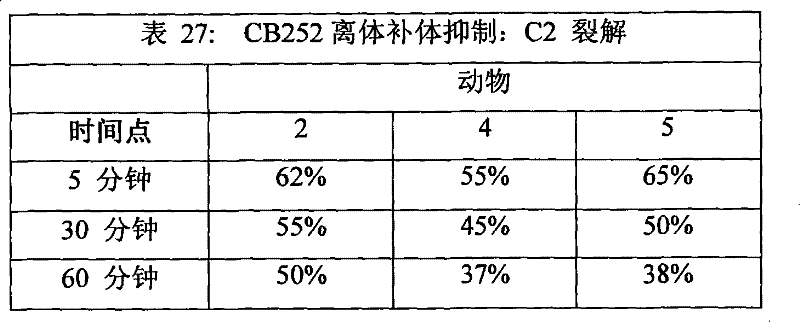
2.C3b沉积 2. C3b deposition
血浆样品中的C3b沉积如实施例21所述经ELISA评价。在C3b沉积测定中,在任何测定时间点对于任何动物,在来自用1mg/kg CB252给药的猴的血浆样品中未观察到明显补体抑制。在3mg/kg剂量的CB252,在10%血浆,在5分钟时间点C3b沉积平均被抑制约50%,在30分钟时间点为30%,在60分钟为15%。当在1%血浆中测量时观察到被CB252抑制的水平更高。对3mg/kg剂量的CB252,在1%血浆,在5分钟C3b沉积平均被抑制约70%,在30分钟为55%,在60分钟为50%。由在来自用3mg/kg CB252处理的所有动物的血浆中的C3b沉积评价的补体抑制百分比见下表28。 C3b deposition in plasma samples was assessed by ELISA as described in Example 21. In the C3b deposition assay, no significant complement inhibition was observed in plasma samples from monkeys dosed with 1 mg/kg CB252 for any animal at any assay time point. At the 3 mg/kg dose of CB252, in 10% plasma, C3b deposition was inhibited on average by approximately 50% at the 5 minute time point, 30% at the 30 minute time point, and 15% at the 60 minute time point. Higher levels of inhibition by CB252 were observed when measured in 1% plasma. For the 3 mg/kg dose of CB252, in 1% plasma, C3b deposition was inhibited on average by about 70% at 5 minutes, 55% at 30 minutes, and 50% at 60 minutes. The percent complement inhibition assessed by C3b deposition in plasma from all animals treated with 3 mg/kg CB252 is shown in Table 28 below. the
3.溶血 3. Hemolysis
在实施例19所述的致敏鸡红细胞(RBC)溶血测定中评价了溶血。结果表明,对于任何动物、任何测定时间点,来自用1mg/kg剂量的CB252处理的猴的血浆不显示对致敏鸡RBC的溶血具有可观察到的作用。来自用3mg/kg CB252处理的猴的血浆样品在各种测定时间点均显示显著的溶血抑制,在1%,2.5%和10%血浆观察到抑制。在10%血浆中,来自用3mg/kgCB252处理的猴的血浆在5分钟显示平均80%的溶血抑制,在30分钟为45%抑制,在60分钟为25%抑制。在2.5%血浆中,来自用3mg/kg CB252处理的猴的血浆在5分钟显示平均92%的溶血抑制,在30分钟为80%抑制,在60分钟为65%抑制。在1%血浆中,来自用3mg/kg CB252处理的猴的血浆在5分钟显示平均99%的溶血抑制,在30分钟为98%抑制,在60分钟为90%抑制。由在来自用3mg/kg CB252处理的所有动物的血浆导致的鸡RBC溶血评价的补体抑制百分比见下表29。 Hemolysis was evaluated in the sensitized chicken red blood cell (RBC) hemolysis assay described in Example 19. The results indicated that plasma from monkeys treated with a dose of 1 mg/kg of CB252 showed no observable effect on hemolysis of sensitized chicken RBCs for any animal, at any time point assayed. Plasma samples from monkeys treated with 3 mg/kg CB252 showed significant inhibition of hemolysis at various assay time points, with inhibition observed at 1%, 2.5% and 10% plasma. In 10% plasma, plasma from monkeys treated with 3 mg/kg CB252 showed an average of 80% inhibition of hemolysis at 5 minutes, 45% inhibition at 30 minutes, and 25% inhibition at 60 minutes. In 2.5% plasma, plasma from monkeys treated with 3 mg/kg CB252 showed an average of 92% inhibition of hemolysis at 5 minutes, 80% inhibition at 30 minutes, and 65% inhibition at 60 minutes. In 1% plasma, plasma from monkeys treated with 3 mg/kg CB252 showed an average of 99% inhibition of hemolysis at 5 minutes, 98% inhibition at 30 minutes, and 90% inhibition at 60 minutes. The percent complement inhibition evaluated from chicken RBC hemolysis in plasma from all animals treated with 3 mg/kg CB252 is shown in Table 29 below. the
ND:未测定 ND: not determined
总之,通过C2降解、C3b沉积ELISA或致敏鸡红细胞的溶血测量,来自用单次静脉推注1mg/kg CB252处理的猴的猕猴血浆不显示显著的补体抑制。来自用单次静脉推注3mg/kg CB252处理的猴的猕猴血浆确实显示在5分钟和30分钟时间点的所有离体补体测定的显著抑制。在最不严格的测定水平,1%血浆于C3b沉积ELISA和1%溶血,显著抑制持续至60分钟时间点。 In conclusion, rhesus monkey plasma from monkeys treated with a single iv bolus of 1 mg/kg CB252 did not show significant complement inhibition as measured by C2 degradation, C3b deposition ELISA, or hemolysis of sensitized chicken erythrocytes. Cynomolgus monkey plasma from monkeys treated with a single iv bolus of 3 mg/kg CB252 did show significant inhibition of all ex vivo complement assays at the 5 and 30 minute time points. At the least stringent assay levels, 1% plasma for C3b deposition ELISA and 1% hemolysis, significant inhibition persisted to the 60 min time point. the
B.在猕猴中CB252与其它MT-SP1突变体相比的药物动力学功效 B. Pharmacokinetic efficacy of CB252 compared to other MT-SP1 mutants in macaques
以1mg/kg和3mg/kg蛋白酶静脉推注CB252或CB377给猴。在注射后各个时间点收集血浆(其中t=0是注射前;即0,5,30和60分钟),并如实施例9所述通过Western印迹测定C2裂解来分析补体活性以及用实施例19所述的猕猴溶血方案用1%、2.5%或10%猴血浆分析溶血。 CB252 or CB377 was administered to monkeys intravenously at 1 mg/kg and 3 mg/kg protease. Plasma was collected at various time points post-injection (where t=0 is pre-injection; i.e. 0, 5, 30 and 60 min) and analyzed for complement activity by Western blot assay for C2 cleavage as described in Example 9 and as described in Example 19 The rhesus monkey hemolysis protocol described was used to analyze hemolysis with 1%, 2.5% or 10% monkey plasma. the
结果表明在用3mg/ml蛋白酶处理后,在来自CB252和CB377处理的猴的血浆中C2裂解增加,但用1mg/kg蛋白酶处理后则不是。从用3mg/kgCB252和CB377蛋白酶处理的猴收集的血浆显示时间依赖性C2裂解,最大C2裂解发生在蛋白酶处理后5分钟从猴收集的血浆中,在后来的时间点裂解降低。结果还显示在所有测试的时间点与CB377处理的猴相比在从CB252处理的猴收集的血浆中发生更高的C2裂解。 The results indicated that C2 cleavage was increased in plasma from CB252 and CB377 treated monkeys after treatment with 3 mg/ml protease but not after treatment with 1 mg/kg protease. Plasma collected from monkeys treated with 3 mg/kg CB252 and CB377 protease showed time-dependent C2 cleavage, with maximal C2 cleavage occurring 5 min after protease treatment in plasma collected from monkeys and cleavage decreasing at later time points. The results also showed that higher C2 cleavage occurred in plasma collected from CB252-treated monkeys compared to CB377-treated monkeys at all time points tested. the
溶血实验结果与C2裂解结果相关,因为与由来自未用蛋白酶处理的猴的血浆诱导的溶血相比(即t=0),在任何收集的时间点在由来自用1mg/kgCB252或CB377蛋白酶处理的猴的2.5%血浆或10%血浆诱导的溶血中没有观察到差异。结果还表明用来自用3mg/kg CB252或CB377处理的猴的2.5%或10%血浆观察到的溶血是类似的。在这些测定条件下,来自用3mg/kgCB377处理的猴的血浆与来自t=0的血浆相比仅显示红细胞溶血的轻微降 低。在t=0时的溶血分数设为1.0,来自CB377处理的猴的血浆观察到的溶血分数在所有测试的时间点均为约0.7。在这一实验中CB252比CB377显著更强效。在注射后5分钟收集的来自用3mg/kg CB252处理的猴的血浆未诱导可检测到的红细胞溶血,观察到的溶血分数为0或接近0。CB252对溶血的作用是时间依赖性的,因为从来自用3mg/kg CB252处理的猴的血浆诱导的溶血分数在分别于30分钟和60分钟收集自CB252处理的猴的血浆中增加至约0.4和约0.7。 Hemolysis assay results correlate with C2 cleavage results, as compared to hemolysis induced by plasma from monkeys not treated with protease (i.e. t=0), at any time point collected in the plasma obtained from protease treatment with 1 mg/kg CB252 or CB377 No difference was observed in hemolysis induced by 2.5% plasma or 10% plasma in monkeys. The results also indicated that the hemolysis observed with 2.5% or 10% plasma from monkeys treated with 3 mg/kg CB252 or CB377 was similar. Under these assay conditions, plasma from monkeys treated with 3 mg/kg CB377 showed only a slight decrease in erythrocyte hemolysis compared to plasma from t=0. The hemolytic fraction at t=0 was set at 1.0 and the observed hemolytic fraction for plasma from CB377-treated monkeys was approximately 0.7 at all time points tested. CB252 was significantly more potent than CB377 in this experiment. Plasma from monkeys treated with 3 mg/kg CB252 collected 5 minutes after injection did not induce detectable hemolysis of erythrocytes, with fractional hemolysis at or near zero observed. The effect of CB252 on hemolysis was time-dependent, as the fraction of hemolysis induced from plasma from monkeys treated with 3 mg/kg CB252 increased to about 0.4 and about 0.7. the
在另一个实验中,在给予猕猴时比较了蛋白酶CB238、CB252和CB377的药物动力学功效。用每种蛋白酶最大耐受剂量(MTD)(即分别为2mg/kg,3mg/kg和3mg/kg)给猴静脉推注CB238,CB252或CB377。在注射后各时间点收集血浆(其中t=0是注射前;即0,5,30和60分钟),并如下分析补体活性,用实施例19描述的猕猴溶血方案使用2.5%或10%猴血浆测定支持鸡红细胞溶血的能力。通过与收集自t=0猴的2.5%或10%血浆诱导的溶血相比确定%溶血抑制。结果见下表30。
In another experiment, the pharmacokinetic efficacy of proteases CB238, CB252 and CB377 was compared when administered to rhesus monkeys. CB238, CB252 or CB377 were administered intravenously to monkeys with the maximum tolerated dose (MTD) of each protease (
实施例25 Example 25
在兔心脏中离体检查蛋白酶的补体介导的心血管作用 Ex vivo examination of the complement-mediated cardiovascular effects of proteases in the rabbit heart
用Langendorff测定检查兔心脏中的心脏损伤而离体评价了蛋白酶对于补体介导的损伤的作用。对于分离心脏的研究使得能同时观察化合物的血液动力学、心电图和电生理学作用。新西兰白兔被用于这项研究因为兔Iκr 通道的氨基酸序列与人Iκr通道序列有99%同源性(Wymore et al.(1997)Circ Res.,80:261-268)。兔已被广泛用于心血管研究并且是模拟对人心脏的潜在作用的合适物种,因为兔心脏动作电位(类似于人类心脏动作电位)似乎由Iκr强驱动(Weirich et al.(1998)Basic Res Cardiol.,93:125-132;Carmeliet et al.(1992)J Pharmacol Exp Ther.,262:809-817)。另外,人血浆与兔心脏组织之间的相互作用在先前已经被鉴定并且已经示出主要是补体介 导的(Kilgore et al.(1998)J Pharmacol Exp.Ther.,285:987-94)。例如,人血浆与外源兔心脏表面的接触激活补体,补体随后介导对心肌的损害,最终导致无收缩。因此,这一模型适于确定补体抑制剂如靶向一或多个补体成分的蛋白酶或修饰的蛋白酶的功效。 The effect of proteases on complement-mediated damage was assessed ex vivo using the Langendorff assay to examine cardiac injury in rabbit hearts. Studies of isolated hearts allow simultaneous observation of hemodynamic, electrocardiographic and electrophysiological effects of compounds. New Zealand white rabbits were used in this study because the amino acid sequence of the rabbit Iκr channel is 99% homologous to the human Iκr channel sequence (Wymore et al. (1997) Circ Res., 80:261-268). Rabbits have been used extensively in cardiovascular research and are a suitable species to model potential effects on the human heart because rabbit cardiac action potentials (similar to human cardiac action potentials) appear to be strongly driven by Iκr (Weirich et al. (1998) Basic Res Cardiol., 93:125-132; Carmeliet et al. (1992) J Pharmacol Exp Ther., 262:809-817). Additionally, the interaction between human plasma and rabbit heart tissue has been previously identified and has been shown to be primarily complement-mediated (Kilgore et al. (1998) J Pharmacol Exp. Ther., 285:987-94). For example, contact of human plasma with the surface of exogenous rabbit hearts activates complement, which then mediates damage to the myocardium, ultimately leading to atrophy. Thus, this model is suitable for determining the efficacy of complement inhibitors, such as proteases or modified proteases that target one or more complement components.
A.实验设计和方法 A. Experimental Design and Methods
兔经击昏进行安乐死,随后进行心脏切除术。快速取出心脏,置于Langendorff装置上,用改良的并加氧的Krebs-Henseleit缓冲液灌注(37C;Krebs-Henseleit缓冲液:118.1mM NaCl,4.7mM KCl,1.17mM MgSO4,1.18mM KH2PO4,11.1mM d-葡萄糖,2.5mM CaCl2,24.8mM NaHCO3和2.0mM丙酮酸;通过添加2.5g牛血清白蛋白/1000ml灌注介质而改良;经压缩氧气/二氧化碳(95%/5%)而加氧)。用在心耳的荷包缝合术将心室引流和充液乳胶气囊绑定在左心室。绑定肺动脉引流。通过置于右心房上的起搏电极起搏心脏。如果在整个平衡期间心脏显示出可接受的血液动力学参数(例如,dP/dT>1000mm Hg/sec),则视作这些心脏可用于这项研究。 Rabbits were euthanized by stunning, followed by cardiac resection. The heart was quickly removed, placed on a Langendorff apparatus, and perfused with modified and oxygenated Krebs-Henseleit buffer (37C; Krebs-Henseleit buffer: 118.1 mM NaCl, 4.7 mM KCl, 1.17 mM MgSO 4 , 1.18 mM KH 2 PO 4 , 11.1 mM d-glucose, 2.5 mM CaCl 2 , 24.8 mM NaHCO 3 and 2.0 mM pyruvate; modified by addition of 2.5 g bovine serum albumin/1000 ml perfusion medium; compressed oxygen/carbon dioxide (95%/5%) And add oxygen). Ventricular drains and a fluid-filled latex balloon were attached to the left ventricle with a purse-string suture over the atrial appendage. Bind the pulmonary artery drainage. The heart is paced through pacing electrodes placed over the right atrium. Hearts were considered eligible for this study if they showed acceptable hemodynamic parameters (eg, dP/dT > 1000 mm Hg/sec) throughout the equilibration period.
蛋白酶测试化合物(终浓度为1μM)与保温介质(含有在灌注缓冲液中稀释至50%的人血浆;即12ml人血浆稀释进12ml灌注介质)在37℃保温1小时。保温后,将测试化合物混合物加入到实验灌注介质中,重循环,以给出在300ml总体积中最终血清浓度约为4-6%。先用灌注介质平衡10-15分钟随后收集基线测量值10分钟的分离的兔心脏被暴露于含有保温的测试化合物混合物的灌注介质约1小时,如下所述连续收集测量值。如果发生不可逆心室纤颤则终止实验。如果在启动90秒内心脏不自发恢复则认为心室纤颤是不可逆的。在暴露于测试化合物后,将心脏在O.C.T.固定,在干冰上冷冻,然后在冰箱中于-80℃储存用于免疫组织化学评价。 Protease test compounds (1 μΜ final concentration) were incubated with incubation medium (containing human plasma diluted to 50% in perfusion buffer; ie 12 ml human plasma diluted into 12 ml perfusion medium) for 1 hour at 37°C. After incubation, the test compound mixture was added to the experimental perfusion medium and recirculated to give a final serum concentration of approximately 4-6% in a total volume of 300 ml. Isolated rabbit hearts equilibrated with perfusion medium for 10-15 minutes followed by collection of baseline measurements for 10 minutes were exposed to perfusion medium containing the incubated test compound mixture for approximately 1 hour and measurements were collected continuously as described below. The experiment was terminated if irreversible ventricular fibrillation occurred. Ventricular fibrillation was considered irreversible if the heart did not recover spontaneously within 90 seconds of initiation. After exposure to test compounds, hearts were fixed at O.C.T., frozen on dry ice, and then stored in a freezer at -80°C for immunohistochemical evaluation. the
1.血液动力学测量 1. Hemodynamic measurement
将左心室(LV)中的乳胶气囊用水扩大以达到约5mmHg的LV舒张期末压(LVEDP)。用管线将气囊与压力传感器连接以测量LEPD,LV舒张压(LVDP)和LV收缩压(LVSP)。用连接至主动脉插管的侧臂端口(side-armport)的压力传感器测量冠状动脉灌注。用Notocord HEM(Kalamazoo,MI)v3.5数据捕获系统连续监测血液动力学测量。用数字标识器指示测试化合物暴露时间。LVDP被定义为LVEDP和LVSP之间的差异。测量LV压的最大增加速率(+dP/dt)和LV压的最小降低速率(-dP/dt),以分别作为LVEDP 至LVSP和LVSP至LVEDP的时间的一阶导数。还测量了冠状动脉灌注压(CPP)。 A latex balloon in the left ventricle (LV) was inflated with water to achieve an LV end-diastolic pressure (LVEDP) of approximately 5 mmHg. The balloon is connected to a pressure transducer with tubing to measure LEPD, LV diastolic pressure (LVDP) and LV systolic pressure (LVSP). Coronary perfusion was measured with a pressure transducer connected to the side-armport of the aortic cannula. Hemodynamic measurements were continuously monitored with a Notocord HEM (Kalamazoo, MI) v3.5 data capture system. The test compound exposure time is indicated by a digital marker. LVDP is defined as the difference between LVEDP and LVSP. The maximum rate of increase in LV pressure (+dP/dt) and the minimum rate of decrease in LV pressure (-dP/dt) were measured as the first derivative of the time from LVEDP to LVSP and LVSP to LVEDP, respectively. Coronary perfusion pressure (CPP) was also measured. the
来自平衡期最后一分钟(0分钟)和测试化合物暴露的那个小时期间内每15分钟期间的最后1分钟(即15分钟、30分钟、45分钟、60分钟)中的血液动力学测量被评价并用于确定测试化合物的作用。取自未被异位心博干扰打断的5个连续心动周期的平均值被用于分析血液动力学参数。来自每个个体心脏的值被合并以确定各个浓度下每个变量的平均值。基线和每一浓度之间每一变量的平均变化百分比也被测定。使用重复测量方差分析(ANOVA)及随后的当证实后用于组比较的post-hoc检验而检查每一测试化合物对血液动力学参数作用的统计学显著性。p<0.05被认为是统计学显著的。数据以平均值±SEM表示或当合适时以基线变化百分比表示。 Hemodynamic measurements from the last minute of the equilibration period (0 minutes) and the last 1 minute of each 15-minute period (i.e., 15 minutes, 30 minutes, 45 minutes, 60 minutes) during that hour of test compound exposure were evaluated and analyzed using To determine the effect of the test compound. Average values from 5 consecutive cardiac cycles not interrupted by ectopic cardiac disturbances were used to analyze hemodynamic parameters. Values from each individual heart were combined to determine the mean for each variable at each concentration. The mean percent change for each variable between baseline and each concentration was also determined. The statistical significance of the effect of each test compound on hemodynamic parameters was examined using repeated measures analysis of variance (ANOVA) followed by post-hoc tests for group comparisons when confirmed. p<0.05 was considered statistically significant. Data are presented as mean ± SEM or as percent change from baseline when appropriate. the
2.肌酸激酶浓度分析 2. Creatine kinase concentration analysis
在每个15分钟测试期间即将结束前收集来自肺动脉引流的约2.0ml灌注介质。在实验早期终止(例如由于心室纤颤所致)之前,取样进行分析。样品在干冰上冷冻,然后-80℃储存在冰箱中留待分析。 Approximately 2.0 ml of perfusion medium from the pulmonary artery drainage was collected shortly before the end of each 15 minute test session. Before the experiment is terminated early (eg due to ventricular fibrillation), samples are taken for analysis. Samples were frozen on dry ice and then stored in a freezer at -80°C until analysis. the
B.实验结果 B. Experimental results
1微摩尔CB200,CB155或CB42与在灌注介质中稀释至50%的人血浆在37℃预保温1小时。然后将蛋白酶测试化合物混合物稀释至终浓度为6%血浆并灌注到分离的兔心脏上以诱导补体激活,基于血液动力学测量确定蛋白酶对补体激活的作用。用热失活血浆灌注心脏作为阴性对照。LV压最大增加速率(+dP/dt)在基线(0分钟)和用测试化合物蛋白酶灌注后15、30、45和60分钟测定。结果显示血浆单独诱导了LV压增加速率下降,表明对心肌的损害。+dP/dt从基线值降低了约5倍,并且在所有测试时间点均是相似的。相反,先被热失活的血浆显示与在基线观察到的相比+dP/dt值无变化,表明无补体激活。用蛋白酶测试化合物灌注兔心脏保护心脏免于补体介导的损伤。CB42和CB155给出对心脏功能的完全保护,这由在所有测量的时间点+dP/dt值与基线水平相当而表明。然而,CB200(野生型)在这一模型中仅给出对心脏功能的部分保护。在用CB200灌注后15分钟,观察到的心脏功能表明几乎完全的保护,其中+dP/dt值与基线水平相当。到30分钟时,CB200显示出对心脏功能几乎无保护,观察到+dP/dt值降低高过3倍,接近仅用血浆处理兔心脏所观察到的水平。在CB200存在下灌注的 兔中的LV压水平的增加速率在45和60分钟仍很低,表明在这些时间点的心脏损害。 1 micromole of CB200, CB155 or CB42 was pre-incubated with human plasma diluted to 50% in perfusion medium for 1 hour at 37°C. The protease test compound mixture was then diluted to a final concentration of 6% plasma and perfused onto isolated rabbit hearts to induce complement activation, and the effect of proteases on complement activation was determined based on hemodynamic measurements. Hearts were perfused with heat-inactivated plasma as a negative control. Maximum rate of increase in LV pressure (+dP/dt) was determined at baseline (0 min) and 15, 30, 45 and 60 min after perfusion with test compound protease. The results showed that plasma alone induced a decrease in the rate of increase in LV pressure, indicating damage to the myocardium. +dP/dt decreased approximately 5-fold from baseline and was similar at all time points tested. In contrast, plasma that was first heat inactivated showed no change in +dP/dt values from that observed at baseline, indicating no complement activation. Perfusion of rabbit hearts with protease test compounds protects the heart from complement-mediated damage. CB42 and CB155 gave complete protection of cardiac function as indicated by +dP/dt values comparable to baseline levels at all measured time points. However, CB200 (wild type) gave only partial protection of cardiac function in this model. At 15 minutes after perfusion with CB200, observed cardiac function indicated almost complete protection with +dP/dt values comparable to baseline levels. By 30 minutes, CB200 showed little protection of cardiac function, with more than 3-fold reduction in +dP/dt values observed, approaching the levels observed in rabbit hearts treated with plasma alone. The rate of increase in LV pressure levels in rabbits perfused in the presence of CB200 remained low at 45 and 60 minutes, suggesting cardiac damage at these time points. the
实施例26 Example 26
修饰的MT-SP1 CB238在摇瓶中的表达和纯化 Expression and purification of modified MT-SP1 CB238 in shake flasks
如实施例1和2所述克隆CB238和相关重组MT-SP1突变体或野生型MT-SP1并在大肠杆菌中作为包涵体表达。通过优化MT-SP1突变体CB238的生产而使MT-SP1或突变体的生产适应于实验室规模,优化是集合约44个1L摇瓶以用于随后分离包涵体沉淀以增溶并重折叠。简而言之,将1μl 质粒DNA(来自DNA微量制备纯化)与50μl BL-21细胞混合。细胞与质粒DNA在冰上保温30分钟,然后在42℃热休克45秒。之后将细胞在冰上保温2分钟以恢复。向细胞加入500μl LB(LB;Difco LB Broth Lennox,大概配方每升:10.0g胰胨,10.0g酵母提取物,5.0g氯化钠),培养物在37℃于振荡下保温1小时。然后将50μl细胞在含有用于选择的50μg/ml羧苄青霉素的琼脂板上铺板。平板在37℃保温16-18小时。 CB238 and related recombinant MT-SP1 mutants or wild-type MT-SP1 were cloned and expressed as inclusion bodies in E. coli as described in Examples 1 and 2. Production of MT-SP1 or mutants was adapted to laboratory scale by optimizing production of the MT-SP1 mutant CB238 by pooling approximately 44 1 L shake flasks for subsequent isolation of inclusion body pellets for solubilization and refolding. Briefly, 1 μl of plasmid DNA (purified from DNA minipreps) was mixed with 50 μl of BL-21 cells. Cells were incubated with plasmid DNA for 30 minutes on ice and then heat-shocked at 42°C for 45 seconds. Cells were then incubated on ice for 2 minutes to recover. Add 500 μl LB (LB; Difco LB Broth Lennox, approximate formula per liter: 10.0 g tryptone, 10.0 g yeast extract, 5.0 g sodium chloride) to the cells, and the culture is incubated at 37° C. for 1 hour with shaking. 50 μl of cells were then plated on agar plates containing 50 μg/ml carbenicillin for selection. Plates were incubated at 37°C for 16-18 hours. the
25ml含有50μg/ml羧苄青霉素的LB被接种一个单菌落并生长直至完全铺满。将0.5ml所述种子培养物加入到800ml含有10μg/ml羧苄青霉素的2XYT中并培养过夜(~12-16小时,约44个摇瓶)。在Sorvall转子#SLC4000中于6,000xg离心收获细胞。集合细胞沉淀并称重。从35.2L大肠杆菌培养物中获得了320g湿细胞沉淀。将600ml含有50mM磷酸钾(KPO4)pH 7.4和300mM氯化钠(NaCl)的缓冲液加入到细胞沉淀中。细胞完全重悬后,将细胞分成2份,每份在冰上的玻璃容器中超声处理。超声仪设定为60%工作期,输出水平8,4分钟。每一样品的超声程序重复2次。所得超声样品在4℃于16,900xg离心20分钟。倾倒上清并用~300ml新鲜缓冲液置换,所述新鲜缓冲液含有50mM KPO4 pH7.4,300mM NaCl和0.5%月桂基二甲基胺氧化物(LDAO)体积/体积。用刮铲重悬包涵体并搅拌溶液直至均质。搅拌的样品然后再次离心并倾倒上清。总共进行三次LDAO洗涤,随后用不含LDAO的含有50M KPO4 pH 7.4,300mM NaCl的缓冲液洗3轮。 25 ml of LB containing 50 μg/ml carbenicillin was inoculated with a single colony and grown until completely confluent. 0.5 ml of the seed culture was added to 800 ml of 2XYT containing 10 [mu]g/ml carbenicillin and grown overnight (~12-16 hours, about 44 shake flasks). Cells were harvested by centrifugation at 6,000 xg in a Sorvall rotor #SLC4000. Cell pellets were pooled and weighed. 320 g of wet cell pellet was obtained from 35.2 L of E. coli culture. 600 ml of a buffer containing 50 mM potassium phosphate (KPO 4 ) pH 7.4 and 300 mM sodium chloride (NaCl) was added to the cell pellet. After the cells were fully resuspended, the cells were divided into 2 aliquots and each aliquot was sonicated in a glass vessel on ice. The sonicator was set at 60% duty cycle, output level 8, for 4 minutes. The sonication procedure was repeated 2 times for each sample. The resulting sonicated samples were centrifuged at 16,900 xg for 20 minutes at 4°C. The supernatant was decanted and replaced with -300ml fresh buffer containing 50mM KPO4 pH 7.4 , 300mM NaCl and 0.5% lauryldimethylamine oxide (LDAO) v/v. Resuspend the inclusion bodies with a spatula and stir the solution until homogeneous. Stirred samples were then centrifuged again and the supernatant decanted. A total of three LDAO washes were performed followed by 3 rounds of LDAO-free buffer containing 50M KPO4 pH 7.4 , 300mM NaCl.
将70g纯化的湿包涵体中加入700ml变性缓冲液(6M胍HCl于100mMTris pH 8.0中,20mM二硫苏糖醇(DTT)),溶解蛋白质。然后将样品在22℃于20,400xg离心30分钟,收集上清。然后将蛋白质溶液在强搅拌下缓慢滴进35升重折叠溶液(100mM Tris pH 8.0,150mM NaCl,1.5M精氨酸,5mM还原型谷胱甘肽,0.05mM氧化型谷胱甘肽)中。将该蛋白质溶液置于4℃下 72小时。 Add 700ml of denaturing buffer (6M guanidine HCl in 100mM Tris pH 8.0, 20mM dithiothreitol (DTT)) to 70g of purified wet inclusion bodies to dissolve the protein. The samples were then centrifuged at 20,400 xg for 30 minutes at 22°C and the supernatant collected. Then the protein solution was slowly dropped into 35 liters of refolding solution (100mM Tris pH 8.0, 150mM NaCl, 1.5M arginine, 5mM reduced glutathione, 0.05mM oxidized glutathione) under strong stirring. The protein solution was placed at 4°C for 72 hours. the
所得蛋白质溶液通过中空过滤至~1-2L浓缩然后在4℃过夜透析进16L含有50mM Tris pH 8.0,50mM NaCl的缓冲液。在第二天早晨将缓冲液更换为新鲜缓冲液,样品再透析8小时。然后从透析管中取出蛋白酶样品并在室温保温直至通过裂解前区释放成熟酶而发生蛋白酶自身活化。如实施例3所述用产荧光RQAR-AMC底物和SDS-PAGE监测活性。在完全活化后,将样品于4℃过夜透析进含有50mM HEPES pH 6.5的缓冲液。 The resulting protein solution was concentrated by cannula filtration to ~1-2 L and then dialyzed overnight at 4°C into 16 L of buffer containing 50 mM Tris pH 8.0, 50 mM NaCl. The buffer was exchanged for fresh buffer the next morning and the samples were dialyzed for an additional 8 hours. Protease samples are then removed from the dialysis tubing and incubated at room temperature until protease autoactivation occurs through the release of the mature enzyme from the pro-cleavage zone. Activity was monitored using fluorogenic RQAR-AMC substrate and SDS-PAGE as described in Example 3. After full activation, samples were dialyzed overnight at 4°C into a buffer containing 50 mM HEPES pH 6.5. the
然后将蛋白质溶液上样到Source 15S柱(Amersham)上并用从50mMHEPES pH 6.5到含有0.15M NaCl的50mM HEPES pH 6.5的缓冲液梯度洗脱。在所有层析步骤之前,每个柱用0.5N NaOH逆向洗涤,然后用水冲洗。合并活性级分。加入等柱体积的含有2M(NH4)2SO4于50mM PO4 pH7.0中的缓冲液,所得溶液上样到用含有50mM PO4 pH7.0,1M(NH4)2SO4的缓冲液预平衡的Phenyl Sepharose HP柱上。活性蛋白质用从50mM PO4 pH7.0,1M(NH4)2SO4到50mM PO4 pH7.0的缓冲液梯度洗脱。合并活性级分并将缓冲液交换至50mM HEPES pH6.5。样品然后如第一个层析步骤中一样重新上样至Source 15Q并纯化。然后合并活性级分,用搅拌池将缓冲液交换至PBS,并浓缩至~10mg/ml。取样测量蛋白质浓度,A280。然后向剩余样品中加入苯甲脒至终浓度为20mM,之后用0.2uM注射器式过滤器过滤蛋白质样品。蛋白质溶液在液氮中冷冻并保存在-80℃。最终收率为~800mg纯蛋白(~20mg蛋白酶/升培养物)。如实施例3所述测定纯化的蛋白质的比活性、纯度和内毒素水平。 The protein solution was then loaded onto a Source 15S column (Amersham) and eluted with a buffer gradient from 50 mM HEPES pH 6.5 to 50 mM HEPES pH 6.5 containing 0.15 M NaCl. Before all chromatography steps, each column was backwashed with 0.5N NaOH and then rinsed with water. Active fractions were pooled. Add an equal column volume of a buffer containing 2M (NH 4 ) 2 SO 4 in 50 mM PO 4 pH7.0, and the resulting solution is loaded on a buffer containing 50 mM PO 4 pH 7.0, 1M (NH 4 ) 2 SO 4 Liquid pre-equilibrated Phenyl Sepharose HP column. Active protein was eluted with a buffer gradient from 50 mM PO 4 pH 7.0, 1 M (NH 4 ) 2 SO 4 to 50 mM PO 4 pH 7.0. Active fractions were pooled and buffer exchanged to 50 mM HEPES pH 6.5. Samples were then reloaded on Source 15Q and purified as in the first chromatography step. Active fractions were then pooled, buffer exchanged into PBS using a stirred cell, and concentrated to ~10 mg/ml. Samples were taken to measure protein concentration, A280. Benzamidine was then added to the remaining sample to a final concentration of 20 mM, after which the protein sample was filtered with a 0.2 uM syringe filter. Protein solutions were frozen in liquid nitrogen and stored at -80°C. The final yield was -800 mg pure protein (-20 mg protease/liter culture). Specific activity, purity and endotoxin levels of the purified protein were determined as described in Example 3.
对于其它MT-SP1突变体或野生型MT-SP1也采用类似策略。根据具体突变体对该方案进行修改。对于在Phenyl Sepharose上纯化不良的突变体,采用Benzamidine Sepharose。例如,MT-SP突变体CB450在苯甲脒柱上纯化。 A similar strategy was employed for other MT-SP1 mutants or wild-type MT-SP1. The protocol was modified according to the specific mutant. For mutants that do not purify poorly on Phenyl Sepharose, use Benzamidine Sepharose. For example, MT-SP mutant CB450 was purified on a benzamidine column. the
实施例27 Example 27
通过一组MT-SP1突变体评价溶血和血浆活性 Evaluation of hemolysis and plasma activity by a panel of MT-SP1 mutants
如实施例7的A.1.b部分和实施例7的B.1部分所述,测试了一组蛋白酶在与20%血浆预保温后支持经典溶血或旁路溶血的能力。另外,如实施例6所述测试了这些蛋白酶的血浆活性。表31描述了在200nM的经典溶血分数、在500nM的旁路溶血分数和每一蛋白酶对经典和旁路溶血的IC50。 As described in Example 7, Section A.1.b and Example 7, Section B.1, a panel of proteases was tested for their ability to support classical or alternative hemolysis after preincubation with 20% plasma. In addition, the plasma activity of these proteases was tested as described in Example 6. Table 31 depicts the fraction of classical hemolysis at 200 nM, the fraction of alternative hemolysis at 500 nM and the IC50 of each protease for classical and alternative hemolysis. the
另外,还测定了未被α-2巨球蛋白(a2M)结合的蛋白酶百分比。α-2巨 球蛋白对蛋白酶的失活是将蛋白酶捕获在一复合体中,在复合体中蛋白酶仍可转化小的荧光底物,但是不能接触到大的蛋白质底物。α-2巨球蛋白的这一性质使得评价血浆中的蛋白酶活性更为复杂。为了测定血浆中游离的未复合的蛋白酶的实际活性,需要两步测定。首先,测定样品对荧光底物的活性。其次,加入大分子抑制剂以结合所有游离的蛋白酶(ATIII或M84R大肠杆菌素),并测量捕获在α-2巨球蛋白中的(并因此被保护而免于抑制的)蛋白酶活性。未被α-2巨球蛋白结合的活性的百分比是通过添加大肠杆菌素被抑制的血浆残留活性的百分比。简而言之,在一个0.2mL PCR管中,将1μL 10X蛋白酶与9μL于柠檬酸盐中的人血浆(Innovative Research)混合。还制备了未被抑制的对照,其含有与9μL PBST混合的1μL 10X蛋白酶。混合物在37℃保温5分钟。样品在PBST中稀释250倍并在冰上储存。将每一样品的两个50μL 等份转移到含有2μL PBST或2μL 520nM M84R大肠杆菌素的不透明分析平板(Costar#3694)。将平板在室温保温10分钟。加入5微升0.4mM Ac-RQAR-AMC底物并用SpectraMax M5荧光分光光度计(Molecular Devices)在30℃随时间测量荧光,该SpectraMax M5荧光分光光度计已被设置成每20秒读数1次,共30分钟(Ex:380nm,EM:450nm,Cut-off:435nm)。用下式计算未被α-2巨球蛋白结合的百分比:(1-([(血浆中的蛋白酶/PBST中的蛋白酶)-(血浆+大肠杆菌素中的蛋白酶/PBST中的蛋白酶)]/(血浆中的蛋白酶/PBST中的蛋白酶)))*100。所测试的一组蛋白酶的%未结合的α-2巨球蛋白的结果见下表31。 In addition, the percentage of protease not bound by alpha-2 macroglobulin (a2M) was also determined. The inactivation of protease by α-2 macroglobulin traps the protease in a complex in which the protease can still convert small fluorescent substrates, but cannot access large protein substrates. This property of alpha-2 macroglobulin complicates the evaluation of protease activity in plasma. To determine the actual activity of free, uncomplexed protease in plasma, a two-step assay was required. First, the activity of the sample against a fluorogenic substrate is determined. Second, a macromolecular inhibitor is added to bind all free proteases (ATIII or M84R colicin) and the activity of proteases trapped in (and thus protected from inhibition) trapped in α-2 macroglobulin is measured. The percentage of activity not bound by α-2 macroglobulin is the percentage of plasma residual activity inhibited by addition of colibactin. Briefly, in a 0.2 mL PCR tube, 1 μL of 10X protease was mixed with 9 μL of human plasma (Innovative Research) in citrate. An uninhibited control containing 1 μL of 10X protease mixed with 9 μL of PBST was also prepared. The mixture was incubated at 37°C for 5 minutes. Samples were diluted 250-fold in PBST and stored on ice. Two 50 μL aliquots of each sample were transferred to opaque assay plates (Costar #3694) containing 2 μL PBST or 2 μL 520 nM M84R colicin. Plates were incubated at room temperature for 10 minutes. 5 microliters of 0.4 mM Ac-RQAR-AMC substrate was added and fluorescence was measured over time at 30°C with a SpectraMax M5 spectrofluorometer (Molecular Devices) which had been set to read every 20 seconds, A total of 30 minutes (Ex: 380nm, EM: 450nm, Cut-off: 435nm). The percentage not bound by α-2 macroglobulin was calculated using the following formula: (1-([(Protease in plasma/Protease in PBST)-(Protease in plasma+colicin/Protease in PBST)]/ (Protease in plasma/Protease in PBST)))*100. The results for % unbound alpha-2 macroglobulin for the panel of proteases tested are shown in Table 31 below. the
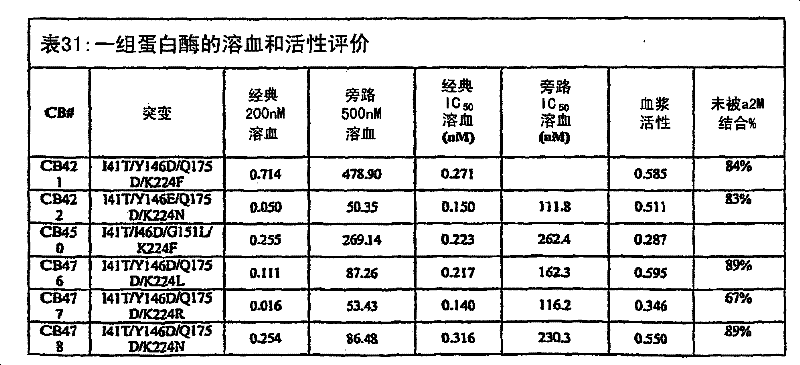
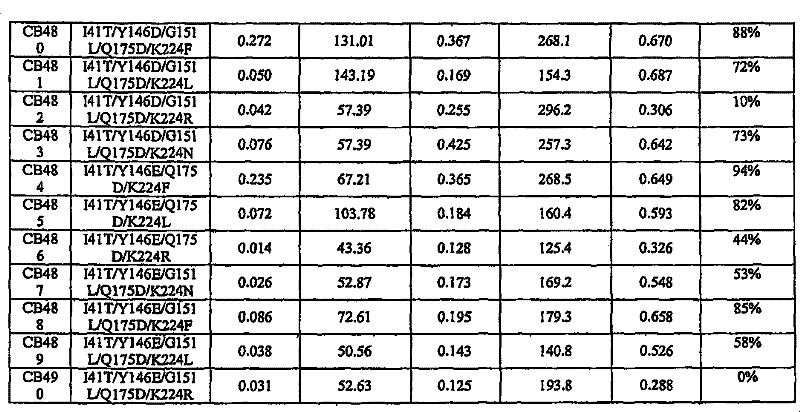
实施例28 Example 28
其它突变体 other mutants
如本文所述制备其它突变体。这些突变体包括但不限于表32所列的那些。 Other mutants were prepared as described herein. These mutants include, but are not limited to, those listed in Table 32. the
Claims (59)
Priority Applications (1)
| Application Number | Priority Date | Filing Date | Title |
|---|---|---|---|
| CN201110327286.0A CN102430117B (en) | 2005-10-21 | 2006-10-20 | Inhibit the protease of the modification of complement activation |
Applications Claiming Priority (3)
| Application Number | Priority Date | Filing Date | Title |
|---|---|---|---|
| US72981705P | 2005-10-21 | 2005-10-21 | |
| US60/729,817 | 2005-10-21 | ||
| PCT/US2006/041165 WO2007047995A2 (en) | 2005-10-21 | 2006-10-20 | Modified proteases that inhibit complement activation |
Related Child Applications (1)
| Application Number | Title | Priority Date | Filing Date |
|---|---|---|---|
| CN201110327286.0A Division CN102430117B (en) | 2005-10-21 | 2006-10-20 | Inhibit the protease of the modification of complement activation |
Publications (2)
| Publication Number | Publication Date |
|---|---|
| CN101340928A CN101340928A (en) | 2009-01-07 |
| CN101340928B true CN101340928B (en) | 2011-12-21 |
Family
ID=37686157
Family Applications (2)
| Application Number | Title | Priority Date | Filing Date |
|---|---|---|---|
| CN201110327286.0A Active CN102430117B (en) | 2005-10-21 | 2006-10-20 | Inhibit the protease of the modification of complement activation |
| CN2006800479005A Expired - Fee Related CN101340928B (en) | 2005-10-21 | 2006-10-20 | Modified proteases that inhibit complement activation |
Family Applications Before (1)
| Application Number | Title | Priority Date | Filing Date |
|---|---|---|---|
| CN201110327286.0A Active CN102430117B (en) | 2005-10-21 | 2006-10-20 | Inhibit the protease of the modification of complement activation |
Country Status (15)
| Country | Link |
|---|---|
| US (3) | US20070093443A1 (en) |
| EP (3) | EP2428218A1 (en) |
| JP (2) | JP5219819B2 (en) |
| KR (3) | KR101691692B1 (en) |
| CN (2) | CN102430117B (en) |
| AU (1) | AU2006304804B2 (en) |
| CA (1) | CA2626356C (en) |
| ES (2) | ES2611608T3 (en) |
| IL (1) | IL190954A (en) |
| MX (1) | MX2008004693A (en) |
| NO (1) | NO20081755L (en) |
| NZ (2) | NZ606504A (en) |
| SI (1) | SI1940457T1 (en) |
| WO (1) | WO2007047995A2 (en) |
| ZA (1) | ZA200803384B (en) |
Families Citing this family (94)
| Publication number | Priority date | Publication date | Assignee | Title |
|---|---|---|---|---|
| US7700341B2 (en) | 2000-02-03 | 2010-04-20 | Dendreon Corporation | Nucleic acid molecules encoding transmembrane serine proteases, the encoded proteins and methods based thereon |
| CN104630192A (en) * | 2002-10-02 | 2015-05-20 | 催化剂生物科学有限公司 | Methods of generating and screenign for porteases with altered specificity |
| US7939304B2 (en) * | 2002-10-02 | 2011-05-10 | Catalyst Biosciences, Inc. | Mutant MT-SP1 proteases with altered substrate specificity or activity |
| US20060024289A1 (en) * | 2002-10-02 | 2006-02-02 | Ruggles Sandra W | Cleavage of VEGF and VEGF receptor by wild-type and mutant proteases |
| DE10303974A1 (en) | 2003-01-31 | 2004-08-05 | Abbott Gmbh & Co. Kg | Amyloid β (1-42) oligomers, process for their preparation and their use |
| DK1735439T3 (en) * | 2004-04-12 | 2012-02-06 | Catalyst Biosciences Inc | Cleavage of VEGF and VEGF receptor by wild-type and mutant MT-SP1 |
| US7947436B2 (en) * | 2004-12-13 | 2011-05-24 | Alethia Biotherapeutics Inc. | Polynucleotides and polypeptide sequences involved in the process of bone remodeling |
| WO2006090389A2 (en) | 2005-02-24 | 2006-08-31 | Compugen Ltd. | Novel diagnostic markers, especially for in vivo imaging, and assays and methods of use thereof |
| WO2007030930A1 (en) | 2005-09-13 | 2007-03-22 | National Research Council Of Canada | Methods and compositions for modulating tumor cell activity |
| EP2428218A1 (en) | 2005-10-21 | 2012-03-14 | Catalyst Biosciences, Inc. | Modified proteases that inhibit complement activation |
| JP5475994B2 (en) | 2005-11-30 | 2014-04-16 | アッヴィ・インコーポレイテッド | Anti-Aβ globulomer antibody, antigen-binding portion thereof, corresponding hybridoma, nucleic acid, vector, host cell, method for producing said antibody, composition comprising said antibody, use of said antibody and method of using said antibody. |
| KR101439828B1 (en) | 2005-11-30 | 2014-09-17 | 애브비 인코포레이티드 | Monoclonal antibodies against amyloid beta protein and uses thereof |
| WO2007141004A1 (en) * | 2006-06-09 | 2007-12-13 | Bayer Healthcare Ag | Use of adipsin (adn) as a therapeutic or diagnostic target |
| US8383388B2 (en) | 2006-06-19 | 2013-02-26 | Catalyst Biosciences, Inc. | Modified coagulation factor IX polypeptides and use thereof for treatment |
| KR20140072201A (en) | 2006-07-05 | 2014-06-12 | 카탈리스트 바이오사이언시즈, 인코포레이티드 | Protease screening methods and proteases identified thereby |
| LT3028716T (en) | 2006-10-10 | 2020-12-10 | Regenesance B.V. | Complement inhibition for improved nerve regeneration |
| US8455626B2 (en) | 2006-11-30 | 2013-06-04 | Abbott Laboratories | Aβ conformer selective anti-aβ globulomer monoclonal antibodies |
| WO2008104386A2 (en) | 2007-02-27 | 2008-09-04 | Abbott Gmbh & Co. Kg | Method for the treatment of amyloidoses |
| AU2008221287A1 (en) * | 2007-03-01 | 2008-09-04 | Wellstat Immunotherapeutics, Llc | Treatment of diseases characterized by inflammation |
| CA2683443A1 (en) * | 2007-04-13 | 2008-10-23 | Catalyst Biosciences, Inc. | Modified factor vii polypeptides and uses thereof |
| WO2008131359A1 (en) * | 2007-04-20 | 2008-10-30 | Waltham Technologies Inc. | Genetically modified biological cells |
| DK2252317T3 (en) * | 2008-02-15 | 2014-07-14 | Univ Tufts | TREATMENT OF MACULA GENERATION |
| WO2009120760A1 (en) * | 2008-03-28 | 2009-10-01 | The Cleveland Clinic Foundation | Corin for treating obesity and diabetes |
| TWI538916B (en) | 2008-04-11 | 2016-06-21 | 介控生化科技公司 | Modified Factor VII polypeptide and use thereof |
| JP5683455B2 (en) | 2008-05-29 | 2015-03-11 | アルマ マータ ステューディオラム — ユニバーシタ ディ ボローニャ | Herpes simplex virus (HSV) with modified affinity, methods of use and preparation thereof |
| EP2331113A4 (en) * | 2008-08-20 | 2012-03-14 | Univ Pennsylvania | COMPLEMENTARY INHIBITORS FOR THE TREATMENT OF INTRACEREBRAL HEMORRHAGE DAMAGE |
| DK3581650T3 (en) | 2008-09-15 | 2023-03-13 | Uniqure Biopharma B V | FACTOR IX POLYPEPTIDE MUTANT, USE THEREOF AND A PROCEDURE FOR MANUFACTURE THEREOF |
| US20100099731A1 (en) * | 2008-10-01 | 2010-04-22 | Texas Tech University System | Use of Endothelial Interrupters in the Treatment of Neurodegenerative Diseases |
| NZ591913A (en) * | 2008-10-21 | 2012-08-31 | Johnson & Johnson Pharmaceutical Res & Dev L L C | High-throughput assay for evaluating dipeptidyl peptidase i (ddpi) activity |
| IT1392551B1 (en) | 2008-11-25 | 2012-03-09 | Bioindustry Park Del Canavese S P A | BIOMARCERS FOR DIAGNOSIS AND TO DETECT THE PROGRESSION OF NEURODEGENERATIVE DISEASES, IN PARTICULAR OF AMIOTROPHIC LATERAL SCLEROSIS |
| IT1392567B1 (en) | 2008-12-24 | 2012-03-09 | Bioindustry Park Del Canavese S P A | USE OF A PEPTIDE DERIVED FROM ER-ALPHA FOR THE RESTORATION OF SENSITIVITY TO ANTIESTROGENIC COMPOUNDS IN MAMMARY TUMOR CELLS |
| JP2010271078A (en) | 2009-05-19 | 2010-12-02 | Mcbi:Kk | Biomarker for mental illness including cognitive dysfunction disease and method for detecting mental illness including cognitive dysfunction disease using the biomarker |
| CA2767755C (en) * | 2009-07-17 | 2021-10-12 | Rigshospitalet | Inhibitors of complement activation |
| CN102666585B (en) | 2009-11-24 | 2015-02-18 | 阿莱斯亚生物疗法股份有限公司 | Anti-clusterin antibodies and antigen binding fragments and their use to reduce tumor volume |
| US9815876B2 (en) | 2010-03-05 | 2017-11-14 | Omeros Corporation | Chimeric inhibitor molecules of complement activation |
| ES2684475T3 (en) | 2010-04-15 | 2018-10-03 | Abbvie Inc. | Proteins that bind to beta amyloid |
| WO2012021891A2 (en) * | 2010-08-13 | 2012-02-16 | Tufts University | Compositions, kits and methods for treatment of complement-related disorders |
| EP3533803B1 (en) | 2010-08-14 | 2021-10-27 | AbbVie Inc. | Anti-amyloid-beta antibodies |
| TWI557135B (en) | 2010-11-03 | 2016-11-11 | 介控生化科技公司 | Modified ninth factor multi-peptide and use thereof |
| CN103813810B (en) * | 2011-03-29 | 2021-08-03 | 阿尔尼拉姆医药品有限公司 | Compositions and methods for inhibiting TMPRSS6 gene expression |
| ES2823998T3 (en) * | 2011-09-08 | 2021-05-11 | Inst Nat Sante Rech Med | New mutated tissue plasminogen activators and their uses |
| BR112014013205A2 (en) * | 2011-12-01 | 2020-10-27 | Protevobio, Inc. | fusion protein, its use and production method, pharmaceutical composition, nucleic acid, and kit |
| CA2862739A1 (en) | 2012-02-22 | 2013-08-29 | Alethia Biotherapeutics Inc. | Co-use of a clusterin inhibitor with an egfr inhibitor to treat cancer |
| US20130309753A1 (en) * | 2012-05-16 | 2013-11-21 | Saint Louis University | Recombinant auto-activating protease precursors |
| BR112014031522A2 (en) * | 2012-06-18 | 2017-08-01 | Omeros Corp | methods for inhibiting masp-3 dependent complement activation, for inhibiting masp-2 dependent complement activation, and for manufacturing a medicament |
| NZ703148A (en) | 2012-07-25 | 2016-08-26 | Catalyst Biosciences Inc | Modified factor x polypeptides and uses thereof |
| CA3124553A1 (en) | 2012-10-25 | 2014-05-01 | Bioverativ Usa Inc. | Anti-complement c1s antibodies and uses thereof |
| CN116063483A (en) | 2012-11-02 | 2023-05-05 | 美国比奥维拉迪维股份有限公司 | Anti-complement C1s antibodies and uses thereof |
| RU2502998C1 (en) * | 2012-11-13 | 2013-12-27 | Федеральное государственное бюджетное учреждение науки Институт физиологии природных адаптаций Уральского отделения Российской академии наук | Method for detecting t-lymphocyte hyperactivity |
| GB201303876D0 (en) * | 2013-01-29 | 2013-04-17 | Verenium Corp | Animal feed enzyme extraction |
| KR20210021146A (en) | 2013-03-15 | 2021-02-24 | 샤이어 바이로파마 인코포레이티드 | C1-inh compositions and methods for the prevention and treatment of disorders associated with c1 esterase inhibitor deficency |
| SG10202103166XA (en) | 2013-05-22 | 2021-04-29 | Alnylam Pharmaceuticals Inc | Tmprss6 irna compositions and methods of use thereof |
| US10254288B2 (en) * | 2013-08-16 | 2019-04-09 | Quidel Corporation | Method for species-independent measurement of complement activation in animals |
| CN114106099B (en) * | 2014-01-31 | 2024-05-24 | 西托姆克斯治疗公司 | Substrates and other cleavable moieties for proteolytic enzymes and U-shaped plasminogen activators and methods of use thereof |
| US9622483B2 (en) | 2014-02-19 | 2017-04-18 | Corning Incorporated | Antimicrobial glass compositions, glasses and polymeric articles incorporating the same |
| US11039620B2 (en) | 2014-02-19 | 2021-06-22 | Corning Incorporated | Antimicrobial glass compositions, glasses and polymeric articles incorporating the same |
| US11039621B2 (en) | 2014-02-19 | 2021-06-22 | Corning Incorporated | Antimicrobial glass compositions, glasses and polymeric articles incorporating the same |
| WO2016085852A1 (en) | 2014-11-24 | 2016-06-02 | Alnylam Pharmaceuticals, Inc. | Tmprss6 irna compositions and methods of use thereof |
| EP3237910B1 (en) * | 2014-12-23 | 2019-04-17 | Siemens Healthcare Diagnostics Inc. | Proteolytic digestion and determination of cardiac troponin |
| MA41374A (en) | 2015-01-20 | 2017-11-28 | Cytomx Therapeutics Inc | MATRIX METALLOPROTEASE CLIVABLE AND SERINE PROTEASE CLIVABLE SUBSTRATES AND METHODS OF USE THEREOF |
| PT3280440T (en) | 2015-04-06 | 2023-02-14 | Bioverativ Usa Inc | HUMANIZED ANTI-C1S ANTIBODIES AND METHODS OF THEIR USE |
| GB201519086D0 (en) * | 2015-10-28 | 2015-12-09 | Syncona Partners Llp | Gene Therapy |
| GB2553252B (en) | 2016-01-20 | 2019-07-31 | Vitrisa Therapeutics Inc | Aptamers that block the catalytic cleft of complement Factor D |
| US10213894B2 (en) | 2016-02-26 | 2019-02-26 | Applied Materials, Inc. | Method of placing window in thin polishing pad |
| WO2018071676A1 (en) | 2016-10-12 | 2018-04-19 | Bioverativ Usa Inc. | Anti-c1s antibodies and methods of use thereof |
| WO2018136827A1 (en) | 2017-01-20 | 2018-07-26 | Vitrisa Therapeutics, Inc. | Stem-loop compositions and methods for inhibiting factor d |
| GB201704071D0 (en) * | 2017-03-14 | 2017-04-26 | Univ Newcastle | Recombinant mature complement factor 1 |
| SG10202110500TA (en) | 2017-06-22 | 2021-11-29 | Catalyst Biosciences Inc | Modified membrane type serine protease 1 (mtsp-1) polypeptides and methods of use |
| CN111465857A (en) * | 2017-08-08 | 2020-07-28 | 昆士兰科技大学 | Method for diagnosing early heart failure |
| US11612681B2 (en) * | 2017-09-06 | 2023-03-28 | The Research Foundation For The State University Of New York | Compositions and devices for removal of endotoxins and cytokines from fluids |
| GB201800620D0 (en) | 2018-01-15 | 2018-02-28 | Univ Manchester | C3b Binding Polypeptide |
| US11913960B2 (en) * | 2018-05-11 | 2024-02-27 | The University Of Toledo | ELISA assay for measuring function of properdin and kits for conducting ELISA assays using anti-properdin antibodies |
| CN108665111B (en) * | 2018-05-16 | 2021-08-13 | 陈孟禹 | Prediction method of control period of Populus euphratica based on the relationship between insect development and temperature |
| CN109001455B (en) * | 2018-06-15 | 2021-09-10 | 天津一瑞生物科技股份有限公司 | Alveolar lavage fluid sample treatment fluid and treatment detection method |
| KR102107214B1 (en) | 2018-07-20 | 2020-05-13 | 경북대학교 산학협력단 | Composition for treating neuroinflammatory disease comprising complement component 8 gamma or fragment thereof |
| WO2020086735A1 (en) * | 2018-10-23 | 2020-04-30 | Gemini Therapeutics Inc. | Compositions and methods for treating age-related macular degeneration and other diseases |
| MY205459A (en) | 2018-12-06 | 2024-10-22 | Cytomx Therapeutics Inc | Matrix metalloprotease-cleavable and serine or cysteine protease-cleavable substrates and methods of use thereof |
| MX2021007843A (en) | 2018-12-28 | 2021-08-11 | Vertex Pharma | Modified urokinase-type plasminogen activator polypeptides and methods of use. |
| US11613744B2 (en) | 2018-12-28 | 2023-03-28 | Vertex Pharmaceuticals Incorporated | Modified urokinase-type plasminogen activator polypeptides and methods of use |
| IT201900002321A1 (en) * | 2019-02-18 | 2020-08-18 | Univ Degli Studi Padova | PEPTIDES WITH ANTI-TUMOR ACTIVITY |
| EP3833381B1 (en) | 2019-08-15 | 2022-08-03 | Catalyst Biosciences, Inc. | Modified factor vii polypeptides for subcutaneous administration |
| EP4149486A1 (en) * | 2020-05-11 | 2023-03-22 | Genentech, Inc. | Complement component c1s inhibitors for treating a neurological disease, and related compositions, systems and methods of using same |
| US20230203108A1 (en) * | 2020-05-28 | 2023-06-29 | Chugai Seiyaku Kabushiki Kaisha | Improved granzyme b variant |
| MX2023001764A (en) * | 2020-08-14 | 2023-04-25 | Orchard Therapeutics Europe Ltd | Compositions and methods for treating or preventing hereditary angioedema. |
| EP4211468A4 (en) | 2020-09-11 | 2024-10-09 | Glympse Bio, Inc. | EX-VIVO PROTEASE ACTIVITY DETECTION FOR DISEASE DETECTION/DIAGNOSTICS, CLASSIFICATION, MONITORING AND TREATMENT |
| EP4000596A1 (en) * | 2020-11-17 | 2022-05-25 | The Boots Company plc | Tetrapeptide and compositions comprising tetrapeptides |
| EP4000595A1 (en) * | 2020-11-17 | 2022-05-25 | The Boots Company plc | Tetrapeptide and compositions comprising tetrapeptides |
| CA3204445A1 (en) * | 2021-01-08 | 2022-07-14 | Mikhail Popkov | Factor b proteases |
| CA3216106A1 (en) | 2021-04-26 | 2022-11-03 | Alnylam Pharmaceuticals, Inc. | Transmembrane protease, serine 6 (tmprss6) irna compositions and methods of use thereof |
| WO2022236176A2 (en) * | 2021-05-07 | 2022-11-10 | City Of Hope | Fxa protein for treating and/or preventing covid-19 |
| CN115541568B (en) * | 2021-06-29 | 2025-07-11 | 厦门红观生物科技有限公司 | A method for extracting and quantitatively detecting ApoJ on tear test paper, a kit and application thereof |
| US20250197917A1 (en) * | 2022-03-09 | 2025-06-19 | Glympse Bio, Inc. | Method of protease detection |
| CN118147232B (en) * | 2024-05-09 | 2024-07-19 | 中国人民解放军联勤保障部队第九二〇医院 | Construction method and application of over-expressed TPS1 mesenchymal stem cells |
| CN120913639A (en) * | 2025-07-29 | 2025-11-07 | 中国医学科学院医学实验动物研究所 | IAPP-based computer-aided drug screening method, system and equipment |
Citations (7)
| Publication number | Priority date | Publication date | Assignee | Title |
|---|---|---|---|---|
| WO1999043840A1 (en) * | 1998-02-27 | 1999-09-02 | Boehringer Ingelheim Pharmaceuticals, Inc. | Self-regulated apoptosis of inflammatory cells by gene therapy |
| WO2000053232A1 (en) * | 1999-03-12 | 2000-09-14 | Georgetown University | Matriptase, a serine protease and its applications |
| WO2001080880A2 (en) * | 2000-04-22 | 2001-11-01 | Stefan Barth | Apoptotic agents |
| WO2001091798A2 (en) * | 2000-06-01 | 2001-12-06 | Universite Catholique De Louvain | Tumor activated prodrug compounds |
| WO2002008392A2 (en) * | 2000-07-25 | 2002-01-31 | Bayer Aktiengesellschaft | Regulation of human matriptase-like serine protease |
| WO2004031733A2 (en) * | 2002-10-02 | 2004-04-15 | Catalyst Biosciences | Methods of generating and screenign for porteases with altered specificity |
| WO2005110453A2 (en) * | 2004-04-12 | 2005-11-24 | Catalyst Biosciences, Inc. | Cleavage of vegf and vegf receptor by wildtype and mutant mt-sp1 |
Family Cites Families (73)
| Publication number | Priority date | Publication date | Assignee | Title |
|---|---|---|---|---|
| GB1429184A (en) * | 1972-04-20 | 1976-03-24 | Allen & Hanburys Ltd | Physically anti-inflammatory steroids for use in aerosols |
| US4044126A (en) | 1972-04-20 | 1977-08-23 | Allen & Hanburys Limited | Steroidal aerosol compositions and process for the preparation thereof |
| GR78180B (en) * | 1982-04-15 | 1984-09-26 | Genentech Inc | |
| US4522811A (en) | 1982-07-08 | 1985-06-11 | Syntex (U.S.A.) Inc. | Serial injection of muramyldipeptides and liposomes enhances the anti-infective activity of muramyldipeptides |
| US4624846A (en) | 1983-07-29 | 1986-11-25 | Immunomedics, Inc. | Method for enhancing target specificity of antibody localization and clearance of non-target diagnostic and therapeutic principles |
| US4952496A (en) | 1984-03-30 | 1990-08-28 | Associated Universities, Inc. | Cloning and expression of the gene for bacteriophage T7 RNA polymerase |
| EP0238473A3 (en) | 1986-03-18 | 1989-06-07 | Monsanto Company | Serine protease inhibitors |
| FI100106B (en) * | 1986-12-05 | 1997-09-30 | Novartis Ag | Process for producing a single-stranded hybrid plasminogen activator |
| AU1893988A (en) * | 1987-07-13 | 1989-01-19 | Collaborative Research Inc. | Nonglycosylated plasminogen activator and method of preparation |
| US4892538A (en) * | 1987-11-17 | 1990-01-09 | Brown University Research Foundation | In vivo delivery of neurotransmitters by implanted, encapsulated cells |
| US5283187A (en) * | 1987-11-17 | 1994-02-01 | Brown University Research Foundation | Cell culture-containing tubular capsule produced by co-extrusion |
| US5304482A (en) | 1989-03-06 | 1994-04-19 | The Board Of Regents Of The University Of Texas System | Serine protease mutants of the chymotrypsin superfamily resistant to inhibition by their cognate inhibitors |
| US6271012B1 (en) * | 1989-10-11 | 2001-08-07 | Genencor International, Inc. | Protease muteins and their use in detergents |
| US5256643A (en) * | 1990-05-29 | 1993-10-26 | The Government Of The United States | Human cripto protein |
| US5869615A (en) * | 1994-01-03 | 1999-02-09 | Washington University | Modified complement proteases |
| GB9618960D0 (en) * | 1996-09-11 | 1996-10-23 | Medical Science Sys Inc | Proteases |
| US7083786B2 (en) * | 1997-04-03 | 2006-08-01 | Jensenius Jens Chr | MASP-2, a complement-fixing enzyme, and uses for it |
| EP1017828A1 (en) * | 1997-09-24 | 2000-07-12 | Regents Of The University Of Minnesota | HUMAN COMPLEMENT C3-DEGRADING PROTEINASE FROM $i(STREPTOCOCCUS PNEUMONIAE) |
| DE19743683A1 (en) | 1997-10-02 | 1999-04-08 | Basf Ag | Procedure for changing the substrate specificity of enzymes |
| US6902918B1 (en) | 1998-05-21 | 2005-06-07 | California Institute Of Technology | Oxygenase enzymes and screening method |
| JP2002526082A (en) | 1998-09-24 | 2002-08-20 | リージェンツ オブ ザ ユニバーシティ オブ ミネソタ | Human complement C3 degrading polypeptide from Streptococcus pneumoniae |
| EP1129184A1 (en) | 1998-11-10 | 2001-09-05 | Maxygen, Inc. | Modified adp-glucose pyrophosphorylase for improvement and optimation of plant phenotypes |
| US7273925B1 (en) * | 1998-12-15 | 2007-09-25 | Brigham And Women's Hospital, Inc. | Methods and products for regulating lectin complement pathway associated complement activation |
| US20030186329A1 (en) * | 1999-03-22 | 2003-10-02 | The Scripps Research Institute | Use of substrate subtraction libraries to distinguish enzyme specificities |
| WO2000068247A2 (en) | 1999-05-07 | 2000-11-16 | Human Genome Sciences, Inc. | Serine proteases |
| DE19943177C2 (en) * | 1999-09-09 | 2002-10-24 | Dieter Jenne | Process for the production of active series proteases and inactive variants |
| AU7476900A (en) | 1999-09-09 | 2001-04-10 | Millennium Pharmaceuticals, Inc. | 26176, a novel calpain protease and uses thereof |
| US7030231B1 (en) | 1999-09-30 | 2006-04-18 | Catalyst Biosciences, Inc. | Membrane type serine protease 1 (MT-SP1) and uses thereof |
| WO2001032711A2 (en) | 1999-10-21 | 2001-05-10 | Board Of Trustees Of The University Of Arkansas | Adeno-associated virus aav rep78 major regulatory protein, mutants thereof and uses thereof |
| GB9929061D0 (en) | 1999-12-08 | 2000-02-02 | Medical Res Council | Methods of producing novel enzymes |
| EP1252300B1 (en) | 2000-02-03 | 2011-01-19 | Dendreon Corporation | Nucleic acid molecules encoding transmembrane serine proteases, the encoded proteins and methods based thereon |
| US7700341B2 (en) * | 2000-02-03 | 2010-04-20 | Dendreon Corporation | Nucleic acid molecules encoding transmembrane serine proteases, the encoded proteins and methods based thereon |
| US6797504B1 (en) | 2000-09-08 | 2004-09-28 | Dendreon San Diego Llc | Inhibitors of serine protease activity of matriptase or MTSP1 |
| US20020031801A1 (en) | 2000-03-24 | 2002-03-14 | Millennium Pharmaceuticals, Inc. | 18806, a novel trypsin serine protease-like molecule and uses thereof |
| WO2001094332A1 (en) | 2000-06-02 | 2001-12-13 | Regents Of The University Of California | Profiling of protease specificity using combinatorial fluorogenic substrate libraries |
| US7157596B2 (en) | 2000-09-08 | 2007-01-02 | Dendreon Corporation | Inhibitors of serine protease activity of matriptase or MTSP1 |
| WO2002072786A2 (en) | 2001-03-13 | 2002-09-19 | Corvas International, Inc. | Nucleic acid molecules encoding a transmembrane serine protease 7, the encoded polypeptides and methods based thereon |
| WO2002077263A2 (en) | 2001-03-22 | 2002-10-03 | Dendreon San Diego Llc | Nucleic acid molecules encoding serine protease cvsp14, the encoded polypeptides and methods based thereon |
| US7105333B2 (en) | 2001-03-27 | 2006-09-12 | Deadreon Corporation | Nucleic acid molecules encoding a transmembrane serine protease 9, the encoded polypeptides and methods based thereon |
| WO2002092841A2 (en) | 2001-05-14 | 2002-11-21 | Dendreon San Diego Llc | Nucleic acid molecules encoding a transmembrane serine protease 10, the encoded polypeptides and methods based thereon |
| JP2005518332A (en) | 2001-05-23 | 2005-06-23 | デンドレオン コーポレイション | Conjugates activated by cell surface proteases and their therapeutic use |
| WO2003004681A2 (en) | 2001-07-03 | 2003-01-16 | Dendreon San Diego Llc | Nucleic acid molecules encoding a transmembrane serine protease 20, the encoded polypeptides and methods based thereon |
| JP2004535202A (en) * | 2001-07-17 | 2004-11-25 | リサーチ ディベロップメント ファンデーション | Therapeutic agents containing pro-apoptotic proteins |
| US20030143219A1 (en) * | 2001-10-09 | 2003-07-31 | Madison Edwin L | Nucleic acid molecules encoding a transmembrane serine protease 25, the encoded polypeptides and methods based thereon |
| AU2002357004A1 (en) * | 2001-11-20 | 2003-06-10 | Dendreon San Diego Llc | Nucleic acid molecules encoding serine protease 17, the encoded polypeptides and methods based thereon |
| US20040072276A1 (en) * | 2002-05-10 | 2004-04-15 | Direvo BioTech AG. | Process for generating sequence-specific proteases by directed evolution and use thereof |
| EP1361284A1 (en) | 2002-05-10 | 2003-11-12 | Direvo Biotech AG | Process for generating sequence-specific proteases by directed evolution and use thereof |
| AU2003269880A1 (en) | 2002-05-21 | 2003-12-22 | Dendreon Corporation | Nucleic acid molecules encoding a transmembrane serine protease 12, the encoded polypeptides and methods based thereon |
| US20040001801A1 (en) * | 2002-05-23 | 2004-01-01 | Corvas International, Inc. | Conjugates activated by cell surface proteases and therapeutic uses thereof |
| AU2003247776A1 (en) | 2002-07-02 | 2004-01-23 | Dendreon Corporation | Serine protease 16 |
| US7666627B2 (en) | 2002-08-08 | 2010-02-23 | Targetex Kft. | Folded recombinant catalytic fragments of multidomain serine proteases, preparation and uses thereof |
| US7939304B2 (en) * | 2002-10-02 | 2011-05-10 | Catalyst Biosciences, Inc. | Mutant MT-SP1 proteases with altered substrate specificity or activity |
| US20060024289A1 (en) * | 2002-10-02 | 2006-02-02 | Ruggles Sandra W | Cleavage of VEGF and VEGF receptor by wild-type and mutant proteases |
| US20040115727A1 (en) | 2002-12-11 | 2004-06-17 | Allergan, Inc., A Corporation | Evolved clostridial toxins with altered protease specificity |
| CA2426115A1 (en) * | 2003-04-18 | 2004-10-18 | Victor Gurewich | Methods, devices, and compositions for lysis of occlusive blood clots while sparing wound sealing clots |
| US7070958B2 (en) * | 2003-04-18 | 2006-07-04 | Thrombolytic Science, Inc. | Methods of making pro-urokinase mutants |
| WO2004113522A1 (en) | 2003-06-18 | 2004-12-29 | Direvo Biotech Ag | New biological entities and the pharmaceutical or diagnostic use thereof |
| EP1633865B1 (en) | 2003-06-18 | 2011-09-28 | Bayer Pharma Aktiengesellschaft | New biological entities and the use thereof |
| IL156566A0 (en) * | 2003-06-19 | 2004-01-04 | Hadasit Med Res Service | Urokinase plasminogen activator derived octapeptide in the treatment of multiple sclerosis |
| JP4505416B2 (en) * | 2003-12-18 | 2010-07-21 | ユストゥス−リービッヒ−ウニベルズィテート ギーセン | Novel chimeric plasminogen activator and its pharmaceutical use |
| WO2005100556A2 (en) | 2004-04-12 | 2005-10-27 | Catalyst Biosciences | Cleavage of vegf and vegf receptor by wild-type and mutant proteases |
| US20060029590A1 (en) * | 2004-06-10 | 2006-02-09 | Christopher Thanos | Administration of neutral endopeptidase to treat inflammatory bowel disease |
| AU2005319404B2 (en) * | 2004-12-20 | 2011-10-20 | Amgen Fremont Inc. | Binding proteins specific for human Matriptase |
| EP1827486A2 (en) | 2004-12-22 | 2007-09-05 | Direvo Biotech AG | Targeted use of engineered enzymes |
| EP1726643A1 (en) | 2005-05-27 | 2006-11-29 | Direvo Biotech AG | Method for the provision, identification and selection of proteases with altered sensitivity to activity-modulating substances |
| EP2428218A1 (en) | 2005-10-21 | 2012-03-14 | Catalyst Biosciences, Inc. | Modified proteases that inhibit complement activation |
| US8383388B2 (en) * | 2006-06-19 | 2013-02-26 | Catalyst Biosciences, Inc. | Modified coagulation factor IX polypeptides and use thereof for treatment |
| KR20140072201A (en) | 2006-07-05 | 2014-06-12 | 카탈리스트 바이오사이언시즈, 인코포레이티드 | Protease screening methods and proteases identified thereby |
| CA2683443A1 (en) | 2007-04-13 | 2008-10-23 | Catalyst Biosciences, Inc. | Modified factor vii polypeptides and uses thereof |
| TWI538916B (en) | 2008-04-11 | 2016-06-21 | 介控生化科技公司 | Modified Factor VII polypeptide and use thereof |
| TWI557135B (en) | 2010-11-03 | 2016-11-11 | 介控生化科技公司 | Modified ninth factor multi-peptide and use thereof |
| NZ703148A (en) | 2012-07-25 | 2016-08-26 | Catalyst Biosciences Inc | Modified factor x polypeptides and uses thereof |
| US10411005B2 (en) | 2017-11-15 | 2019-09-10 | Taiwan Semiconductor Manufacturing Co., Ltd. | Intelligent diode structures |
-
2006
- 2006-10-20 EP EP11169346A patent/EP2428218A1/en not_active Withdrawn
- 2006-10-20 MX MX2008004693A patent/MX2008004693A/en active IP Right Grant
- 2006-10-20 EP EP11169348.7A patent/EP2433642B1/en active Active
- 2006-10-20 EP EP06817259A patent/EP1940457B1/en active Active
- 2006-10-20 AU AU2006304804A patent/AU2006304804B2/en active Active
- 2006-10-20 CN CN201110327286.0A patent/CN102430117B/en active Active
- 2006-10-20 NZ NZ606504A patent/NZ606504A/en not_active IP Right Cessation
- 2006-10-20 ES ES11169348.7T patent/ES2611608T3/en active Active
- 2006-10-20 KR KR1020137034742A patent/KR101691692B1/en not_active Expired - Fee Related
- 2006-10-20 WO PCT/US2006/041165 patent/WO2007047995A2/en not_active Ceased
- 2006-10-20 SI SI200631548T patent/SI1940457T1/en unknown
- 2006-10-20 KR KR1020087011682A patent/KR101126423B1/en not_active Expired - Fee Related
- 2006-10-20 NZ NZ595193A patent/NZ595193A/en unknown
- 2006-10-20 CN CN2006800479005A patent/CN101340928B/en not_active Expired - Fee Related
- 2006-10-20 CA CA2626356A patent/CA2626356C/en active Active
- 2006-10-20 ES ES06817259T patent/ES2400306T3/en active Active
- 2006-10-20 KR KR1020117006136A patent/KR101393946B1/en active Active
- 2006-10-20 US US11/584,776 patent/US20070093443A1/en not_active Abandoned
- 2006-10-20 JP JP2008536847A patent/JP5219819B2/en not_active Expired - Fee Related
-
2008
- 2008-04-10 NO NO20081755A patent/NO20081755L/en not_active Application Discontinuation
- 2008-04-16 ZA ZA200803384A patent/ZA200803384B/en unknown
- 2008-04-17 IL IL190954A patent/IL190954A/en active IP Right Grant
-
2012
- 2012-04-30 US US13/506,603 patent/US20120244139A1/en not_active Abandoned
- 2012-10-05 JP JP2012223555A patent/JP5860789B2/en not_active Expired - Fee Related
-
2014
- 2014-05-12 US US14/275,772 patent/US9795655B2/en not_active Expired - Fee Related
Patent Citations (7)
| Publication number | Priority date | Publication date | Assignee | Title |
|---|---|---|---|---|
| WO1999043840A1 (en) * | 1998-02-27 | 1999-09-02 | Boehringer Ingelheim Pharmaceuticals, Inc. | Self-regulated apoptosis of inflammatory cells by gene therapy |
| WO2000053232A1 (en) * | 1999-03-12 | 2000-09-14 | Georgetown University | Matriptase, a serine protease and its applications |
| WO2001080880A2 (en) * | 2000-04-22 | 2001-11-01 | Stefan Barth | Apoptotic agents |
| WO2001091798A2 (en) * | 2000-06-01 | 2001-12-06 | Universite Catholique De Louvain | Tumor activated prodrug compounds |
| WO2002008392A2 (en) * | 2000-07-25 | 2002-01-31 | Bayer Aktiengesellschaft | Regulation of human matriptase-like serine protease |
| WO2004031733A2 (en) * | 2002-10-02 | 2004-04-15 | Catalyst Biosciences | Methods of generating and screenign for porteases with altered specificity |
| WO2005110453A2 (en) * | 2004-04-12 | 2005-11-24 | Catalyst Biosciences, Inc. | Cleavage of vegf and vegf receptor by wildtype and mutant mt-sp1 |
Non-Patent Citations (9)
Also Published As
Similar Documents
| Publication | Publication Date | Title |
|---|---|---|
| CN101340928B (en) | Modified proteases that inhibit complement activation | |
| AU2022201445B2 (en) | Modified membrane type serine protease 1 (mtsp-1) polypeptides and methods of use | |
| AU2010290077B2 (en) | Coagulation factor IX compositions and methods of making and using same | |
| AU2013293573B2 (en) | Modified Factor X polypeptides and uses thereof | |
| US12331334B2 (en) | Modified urokinase-type plasminogen activator polypeptides and methods of use | |
| AU2011218753B2 (en) | Modified proteases that inhibit complement activation | |
| HK1168763B (en) | Modified proteases that inhibit complement activation | |
| HK1168763A (en) | Modified proteases that inhibit complement activation | |
| HK1168762A (en) | Modified proteases that inhibit complement activation | |
| HK1115815B (en) | Modified proteases that inhibit complement activation |
Legal Events
| Date | Code | Title | Description |
|---|---|---|---|
| C06 | Publication | ||
| PB01 | Publication | ||
| C10 | Entry into substantive examination | ||
| SE01 | Entry into force of request for substantive examination | ||
| C14 | Grant of patent or utility model | ||
| GR01 | Patent grant | ||
| CF01 | Termination of patent right due to non-payment of annual fee |
Granted publication date: 20111221 Termination date: 20141020 |
|
| EXPY | Termination of patent right or utility model |