CN101048855B - Light-emitting device process - Google Patents
Light-emitting device process Download PDFInfo
- Publication number
- CN101048855B CN101048855B CN2005800317256A CN200580031725A CN101048855B CN 101048855 B CN101048855 B CN 101048855B CN 2005800317256 A CN2005800317256 A CN 2005800317256A CN 200580031725 A CN200580031725 A CN 200580031725A CN 101048855 B CN101048855 B CN 101048855B
- Authority
- CN
- China
- Prior art keywords
- mesas
- layer
- semiconductor layer
- led
- light
- Prior art date
- Legal status (The legal status is an assumption and is not a legal conclusion. Google has not performed a legal analysis and makes no representation as to the accuracy of the status listed.)
- Expired - Fee Related
Links
Images


Classifications
-
- H10P90/1914—
-
- H—ELECTRICITY
- H10—SEMICONDUCTOR DEVICES; ELECTRIC SOLID-STATE DEVICES NOT OTHERWISE PROVIDED FOR
- H10H—INORGANIC LIGHT-EMITTING SEMICONDUCTOR DEVICES HAVING POTENTIAL BARRIERS
- H10H20/00—Individual inorganic light-emitting semiconductor devices having potential barriers, e.g. light-emitting diodes [LED]
- H10H20/01—Manufacture or treatment
- H10H20/011—Manufacture or treatment of bodies, e.g. forming semiconductor layers
- H10H20/018—Bonding of wafers
Landscapes
- Led Devices (AREA)
- Led Device Packages (AREA)
- Planar Illumination Modules (AREA)
Abstract
揭露了形成发光装置的方法,包括将发光堆叠(2002、2004、2006)刻画入台面结构、通过结合层2040将该结构结合至子基座2042,以及去除该生长基底。此外,揭露了刻画发光装置台面(2006)的方法,所述方法通过使用模具来压印抗蚀材料,或者通过将自组装纳米颗粒用作掩膜而达成。

A method for forming a light-emitting device is disclosed, comprising carving a light-emitting stack (2002, 2004, 2006) into a mesa structure, bonding the structure to a submount 2042 via a bonding layer 2040, and removing the growth substrate. Furthermore, a method for carving the light-emitting device mesa (2006) is disclosed, the method being achieved by using a mold to imprint a resist material or by using self-assembled nanoparticles as a mask.
Description
通过引用的合并incorporation by reference
本申请通过引用的方式合并下列美国临时专利中请:于2003年4月15日提交的第60/462,889号;于2003年5月29日提交的第60/474,199号;于2003年6月4日提交的第60/475,682号;于2003年9月17日提交的第60/503,653号;于2003年9月17日提交的第60/503,654号;于2003年9月17日提交的第60/503,661号;于2003年9月17日提交的第60/503,671号;于2003年9月17日提交的第60/503,672号;于2003年10月23日提交的第60/513,807号;于2003年10月27日的第60/514,764号;以及于2004年3月16日提交的第60/553,894号。本申请亦通过引用的方式合并下列美国专利申请:于2003年11月26日提交的、名称为“发光装置(Light Emitting Devices)”的第USSN 10/723,987号;于2003年11月26日提交的、名称为“发光装置(LightEmitting Devices)”的第USSN 10/724,004号;于2003年11月26日提交的、名称为“发光装置(Light Emitting Devices)”的第USSN 10/724,033号;于2003年11月26日提交的、名称为“发光装置(Light Emitting Devices)”的第USSN 10/724,006号;于2003年11月26日、名称为“发光装置(LightEmitting Devices)”的第USSN 10/724,029号;于2003年11月26日提交的、名称为“发光装置(Light Emitting Devices)”的第USSN 10/724,015号;于2003年11月26日提交的、名称为“发光装置(Light Emitting Devices)”的第USSN 10/724,005号;于2003年12月12日提交的、名称为“发光系统(Light Emitting System)”的第USSN 10/735,498号;于2004年3月5日提交的、名称为“发光装置方法(Light Emitting Device Methods)”的第USSN 10/794,244号;于2004年3月5日提交的、名称为“发光装置方法(LightEmitting Device Methods)”的第USSN 10/794,452号;于2004年6月18日提交的、名称为“光显系统及方法(Optical Display System and Methods)”的第USSN 10/872,335号;于2004年6月18日提交的、名称为“电子装置接触部结构(Electronic Device Contact Structure)”的第USSN 10/871,877号;以及于2004年6月18日提交的、名称为“发光二极管系统(ElectronicDevi ce Contact Structure)”的第USSN 10/872,336号。This application incorporates by reference the following U.S. Provisional Patent Applications: 60/462,889, filed April 15, 2003; 60/474,199, filed May 29, 2003; 60/475,682, filed on 17 September 2003; 60/503,653, filed 17 September 2003; 60/503,654, filed 17 September 2003; 60/503,654, filed 17 September 2003 60/503,671, filed September 17, 2003; 60/503,672, filed September 17, 2003; 60/513,807, filed October 23, 2003; 60/514,764 of October 27, 2003; and 60/553,894 of March 16, 2004. This application also incorporates by reference the following U.S. Patent Application: USSN 10/723,987, filed November 26, 2003, entitled "Light Emitting Devices"; filed November 26, 2003 USSN 10/724,004, entitled "Light Emitting Devices"; USSN 10/724,033, filed November 26, 2003, entitled "Light Emitting Devices"; USSN 10/724,006, filed November 26, 2003, entitled "Light Emitting Devices"; USSN 10, filed November 26, 2003, entitled "Light Emitting Devices" /724,029; USSN 10/724,015, filed November 26, 2003, entitled "Light Emitting Devices"; Emitting Devices)" USSN 10/724,005; USSN 10/735,498, filed December 12, 2003, entitled "Light Emitting System"; filed March 5, 2004 , USSN 10/794,244, entitled "Light Emitting Device Methods"; USSN 10/794,452, filed March 5, 2004, entitled "Light Emitting Device Methods" No. USSN 10/872,335, filed June 18, 2004, entitled "Optical Display System and Methods"; filed June 18, 2004, entitled "Electronic USSN 10/871,877, "Electronic Device Contact Structure"; and USSN 10/872,336, filed June 18, 2004, entitled "Electronic Device Contact Structure" .
技术领域 technical field
本发明涉及发光装置,以及相关组件、工艺、系统及方法。The present invention relates to light emitting devices, and related components, processes, systems and methods.
技术背景technical background
较之白炽光源和/或荧光源,发光二极管(LED)通常以更高效的方式提供光照。与LED相关的相对高的能效驱使人们在各种照明应用中使用LED来代替现有光源。例如,有时将LED用作交通灯,以及用来照亮移动电话键盘及显示屏。Light emitting diodes (LEDs) generally provide light in a more efficient manner than incandescent and/or fluorescent sources. The relatively high energy efficiency associated with LEDs has driven the use of LEDs to replace existing light sources in a variety of lighting applications. For example, LEDs are sometimes used as traffic lights and to illuminate mobile phone keypads and displays.
LED通常由多层构成,这些层中至少有一些是由不同材料构成的。选作这些层的材料及厚度通常决定了该LED所发光的波长。此外,为了相对有效地转换为光能,可对这些层的化学组合物做出选择以试图阻止注入电荷载流子进入某些区域(通常称为量子阱)。一般,生长有量子阱的结的一侧上的层掺杂有形成高电子浓度的施主原子(通常称这些层为n型层),并且相对侧上的层掺杂有形成相对高的空穴浓度的受主原子(通常称这些层为p型层)。LEDs are typically constructed of multiple layers, at least some of which are composed of different materials. The materials and thicknesses chosen for these layers generally determine the wavelength of light emitted by the LED. Furthermore, for relatively efficient conversion to light energy, the chemical composition of these layers can be chosen in an attempt to prevent the injection of charge carriers into certain regions (commonly referred to as quantum wells). Typically, the layers on one side of the junction where the quantum wells are grown are doped with donor atoms forming a high electron concentration (these layers are often referred to as n-type layers), and the layers on the opposite side are doped with donor atoms forming a relatively high concentration of holes. Concentration of acceptor atoms (these layers are usually called p-type layers).
制备LED的常见方法例如下。以晶片(wafer)的形式制备这些材料层。一般,通过使用外延沉积技术而形成这些层,例如金属有机物化学气相沉积(MOCVD),初始沉积层形成于生长基底上。然后对这些层进行多种蚀刻及金属化技术以形成用于电流注入的接触部,随后将该晶片分成单个的LED芯片(chip)。通常对所述LED芯片进行封装。Examples of common methods for preparing LEDs are as follows. These material layers are prepared in wafer form. Typically, these layers are formed by using epitaxial deposition techniques, such as metalorganic chemical vapor deposition (MOCVD), with the initially deposited layer formed on a growth substrate. These layers are then subjected to various etching and metallization techniques to form contacts for current injection, and the wafer is subsequently separated into individual LED chips. The LED chip is usually packaged.
使用时,通常将电能注入LED,然后被转换为电磁辐射(光),从该LED提取部分的所述电磁辐射。In use, electrical energy is typically injected into the LED, which is then converted into electromagnetic radiation (light), part of which is extracted from the LED.
发明内容 Contents of the invention
本发明涉及发光装置,以及相关组件、系统及方法。The present invention relates to light emitting devices, and related components, systems and methods.
在一个方面,本发明的特征在于一种方法,所述方法包括设置包括基底、半导体层及量子阱包含区域的多层堆叠。所述方法亦包括蚀刻所述量子阱包含区域的至少一部分以设置已蚀刻多层堆叠,所述多层堆叠包括多个由所述基底支撑的台面。所述方法还包括将所述已蚀刻多层堆叠结合至子基座以及移除所述基底。In one aspect, the invention features a method that includes providing a multilayer stack including a substrate, a semiconductor layer, and a quantum well containing region. The method also includes etching at least a portion of the quantum well containing region to provide an etched multilayer stack including a plurality of mesas supported by the substrate. The method also includes bonding the etched multilayer stack to a submount and removing the substrate.
在另一个方面,本发明的特征在于一种方法,所述方法包括设置支撑多个台面的子基座。至少一些所述台面包括量子阱包含区域。该方法亦包括对至少一些所述台面的取向(orientation)进行映射(mapping)以提供已映射的取向。所述方法还包括根据所述已映射的取向对至少一个所述台面的表面刻图以及从至少一个所述台面形成至少一个发光装置。In another aspect, the invention features a method that includes providing a submount supporting a plurality of decks. At least some of the mesas include quantum well containing regions. The method also includes mapping the orientation of at least some of the mesas to provide a mapped orientation. The method also includes patterning a surface of at least one of the mesas according to the mapped orientation and forming at least one light emitting device from at least one of the mesas.
在再一个方面,本发明的特征在于一种方法,所述方法包括设置支撑多个台面的子基座。至少一些所述台面包括量子阱包含区域。所述方法亦包括平整所述多个台面中的至少一些台面以使所述已平整台面基本具有平的表面以及从至少一个所述台面形成至少一个发光装置。In yet another aspect, the invention features a method that includes providing a submount supporting a plurality of decks. At least some of the mesas include quantum well containing regions. The method also includes flattening at least some of the plurality of mesas such that the flattened mesas have substantially planar surfaces and forming at least one light emitting device from at least one of the mesas.
在又一个方面,本发明的特征在于一种方法,所述方法包括设置支撑多个台面的子基座。至少一些所述台面包括量子阱包含区域。所述方法亦包括在所述多个台面中的至少一些台面上沉积阻挡材料以及处理所述阻挡材料以形成平的表面。所述方法还包括对至少一个所述台面的表面刻图及从至少一个所述台面形成发光装置。In yet another aspect, the invention features a method that includes providing a submount supporting a plurality of decks. At least some of the mesas include quantum well containing regions. The method also includes depositing a barrier material on at least some of the plurality of mesas and treating the barrier material to form a planar surface. The method also includes patterning a surface of at least one of the mesas and forming a light emitting device from at least one of the mesas.
在一个方面,本发明的特征在于一种方法,所述方法包括设置支撑多个台面的晶片形式的子基座。至少一些所述台面包括量子阱包含区域及阻挡层。所述阻挡层在整个所述晶圆的所述表面基本为平的。所述方法亦包括对至少个所述台面的表面刻图及从至少一个所述台面形成发光装置。In one aspect, the invention features a method that includes providing a submount in the form of a wafer supporting a plurality of mesas. At least some of the mesas include quantum well containing regions and barrier layers. The barrier layer is substantially planar across the surface of the wafer. The method also includes patterning the surface of at least one of the mesas and forming a light emitting device from at least one of the mesas.
在另一个方面,本发明的特征在于一种方法,所述方法包括设置通过半导体层及多个台面连接至基底的子基座。至少一些所述台面包括量子阱包含区域。所述方法亦包括以台面接台面的基础至少部分地分解所述半导体层的一些部分。In another aspect, the invention features a method that includes providing a submount connected to a substrate through a semiconductor layer and a plurality of mesas. At least some of the mesas include quantum well containing regions. The method also includes at least partially decomposing portions of the semiconductor layer on a mesa-by-mesa basis.
在再一个方面,本发明的特征在于一种制造发光装置的方法。所述方法包括设置包括多个由基底支撑的台面的已蚀刻多层堆叠。至少一些所述台面包括半导体层及量子阱包含区域。所述方法亦包括将所述已蚀刻多层堆叠结合至子基座、移除所述基底,以及从至少一个所述台面形成至少一个发光装置。In yet another aspect, the invention features a method of making a light emitting device. The method includes providing an etched multilayer stack including a plurality of mesas supported by a substrate. At least some of the mesas include semiconductor layers and quantum well containing regions. The method also includes bonding the etched multilayer stack to a submount, removing the substrate, and forming at least one light emitting device from at least one of the mesas.
在又一个方面,本发明的特征在于一种方法,所述方法包括平整所述多个台面中的至少一些台面以使所述已平整台面具有基本平的表面。所述多个台面中的至少一些台面包括由子基座支撑的量子阱包含区域。所述方法亦包括从至少一个所述台面形成至少一个发光装置。In yet another aspect, the invention features a method that includes smoothing at least some of the plurality of mesas such that the leveled mesa has a substantially planar surface. At least some of the plurality of mesas include quantum well containing regions supported by submounts. The method also includes forming at least one light emitting device from at least one of the mesas.
在一个方面,本发明的特征在于一种方法,所述方法包括设置包括基底的第一物件,所述基底支撑多个台面;以及从所述第一物件形成第二物件,其中所述第二物件包括支撑所述多个台面中的至少一些台面的子基座。In one aspect, the invention features a method comprising providing a first article comprising a substrate supporting a plurality of mesas; and forming a second article from the first article, wherein the second The article includes a sub-base supporting at least some of the plurality of decks.
在另一个方面,本发明的特征在于一种方法,所述方法包括设置包括基底及半导体层的多层堆叠。所述方法亦包括蚀刻至少一部分的所述多层堆叠以设置包括多个气体积聚区的已蚀刻多层堆叠,以及将所述已蚀刻多层堆叠结合至子基座。本方法还包括将所述半导体层曝露于电磁辐射以部分地分解所述半导体层。将所述半导体层曝露于电磁辐射生成气体且所述气体积聚于所述气体积聚区中。In another aspect, the invention features a method that includes providing a multilayer stack including a substrate and a semiconductor layer. The method also includes etching at least a portion of the multilayer stack to provide an etched multilayer stack including a plurality of gas accumulation regions, and bonding the etched multilayer stack to a submount. The method also includes exposing the semiconductor layer to electromagnetic radiation to partially decompose the semiconductor layer. Exposure of the semiconducting layer to electromagnetic radiation generates a gas and the gas accumulates in the gas accumulation region.
在再一个方面,本发明的特征在于一种方法,所述方法包括设置包括基底、半导体层及结合层的多层堆叠。所述方法亦包括蚀刻至少一部分的所述结合层以设置已蚀刻多层堆叠以及将所述已蚀刻多层堆叠结合至子基座。In yet another aspect, the invention features a method that includes providing a multilayer stack including a substrate, a semiconductor layer, and a bonding layer. The method also includes etching at least a portion of the bonding layer to provide an etched multilayer stack and bonding the etched multilayer stack to a submount.
在还有一个方面,本发明的特征在于一种方法,所述方法包括设置支撑多个台面的子基座。至少一些所述台面包括量子阱包含区域。所述方法亦包括对多个所述台面分组以形成裸芯(die)以及在所述裸芯中的所述多个台面之间的区域中沉积材料。所述方法还包括对至少一个台面的表面刻图及从所述裸芯中的台面形成至少一个发光装置。In yet another aspect, the invention features a method that includes providing a submount supporting a plurality of decks. At least some of the mesas include quantum well containing regions. The method also includes grouping a plurality of the mesas to form a die and depositing material in the die in regions between the plurality of mesas. The method also includes patterning the surface of at least one mesa and forming at least one light emitting device from the mesa in the die.
在一个方面,本发明的特征在于一种将多层堆叠结合至子基座的方法。所述方法包括设置包括基底、半导体层、及结合层的多层堆叠。所述方法亦包括确定所述多层堆叠中存在的非平面性的量、确定将所述非平面性减少至预定水平所需的蚀刻量以及根据所述已确定的蚀刻量蚀刻所述多层堆叠。In one aspect, the invention features a method of bonding a multilayer stack to a submount. The method includes providing a multilayer stack including a substrate, a semiconductor layer, and a bonding layer. The method also includes determining an amount of non-planarity present in the multilayer stack, determining an amount of etching required to reduce the non-planarity to a predetermined level, and etching the multilayer according to the determined amount of etching stack.
说明书、附图及权利要求书中记载了本发明的特征及优点。Features and advantages of the invention are described in the description, drawings and claims.
附图说明 Description of drawings
图1为发光系统的示意图;Fig. 1 is the schematic diagram of lighting system;
图2A-2D为光显系统的示意图;2A-2D are schematic diagrams of light display systems;
图3为光显系统的示意图;Fig. 3 is the schematic diagram of light display system;
图4A为LED的俯视图的示意图;4A is a schematic diagram of a top view of an LED;
图4B为光显系统的示意图;4B is a schematic diagram of the light display system;
图5为光显系统的示意图;Fig. 5 is the schematic diagram of light display system;
图6为光显系统的示意图;Fig. 6 is the schematic diagram of light display system;
图7为光显系统的示意图;Fig. 7 is the schematic diagram of light display system;
图8A及8B为光显系统的示意图;8A and 8B are schematic diagrams of a light display system;
图9为光显系统的示意图;9 is a schematic diagram of the light display system;
图10为光显系统的示意图;Figure 10 is a schematic diagram of the light display system;
图11为光显系统的示意图;Figure 11 is a schematic diagram of the light display system;
图12为具有已刻图表面的LED的剖视图;Figure 12 is a cross-sectional view of an LED with a patterned surface;
图13为图2的LED的已刻图表面的俯视图;13 is a top view of the patterned surface of the LED of FIG. 2;
图14为作为具已刻图表面的LED的提取效率与失谐参数的关系的曲线图;Figure 14 is a graph of extraction efficiency as a function of detuning parameter for LEDs with a patterned surface;
图15为LED的已刻图表面的傅立叶变换的示意图;Figure 15 is a schematic diagram of the Fourier transform of the patterned surface of the LED;
图16为具已刻图表面的LED的提取效率与最近邻距离的关系的曲线图;Figure 16 is a graph of extraction efficiency versus nearest neighbor distance for LEDs with patterned surfaces;
图17为具已刻图表面的LED的提取效率与填充因子的关系的曲线图;Figure 17 is a graph of extraction efficiency versus fill factor for LEDs with patterned surfaces;
图18为LED的已刻图表面的俯视图;Figure 18 is a top view of a patterned surface of an LED;
图19为具有不同表面图形的LED的提取效率的曲线图;Figure 19 is a graph of the extraction efficiency of LEDs with different surface patterns;
图20为具有不同表面图形的LED的提取效率的曲线图;Figure 20 is a graph of the extraction efficiency of LEDs with different surface patterns;
图21为具有不同表面图形的LED的提取效率的曲线图;Figure 21 is a graph of the extraction efficiency of LEDs with different surface patterns;
图22为具有不同表面图形的LED的提取效率的曲线图;Figure 22 is a graph of the extraction efficiency of LEDs with different surface patterns;
图23为两个具有不同已刻图表面的LED的傅立叶转换与这些LED的辐射发射谱相比较的示意图;Figure 23 is a schematic diagram of the Fourier transform of two LEDs with different patterned surfaces compared to the radiative emission spectra of these LEDs;
图24为具不同表面图形的LED的提取效率与角度的关系的曲线图;24 is a graph of extraction efficiency versus angle for LEDs with different surface patterns;
图25为具有已刻图表面以及已刻图表面上的磷层的LED的侧视图;25 is a side view of an LED with a patterned surface and a phosphor layer on the patterned surface;
图26为多层堆叠的剖视图;Figure 26 is a cross-sectional view of a multilayer stack;
图27为多层堆叠的剖视图;Figure 27 is a cross-sectional view of a multilayer stack;
图28为多层堆叠的剖视图;Figure 28 is a cross-sectional view of a multilayer stack;
图29为多层堆叠的剖视图;Figure 29 is a cross-sectional view of a multilayer stack;
图30为基底移除工艺的侧视图;Figure 30 is a side view of a substrate removal process;
图31为多层堆叠的局部剖视图;Figure 31 is a partial cross-sectional view of a multilayer stack;
图32为多层堆叠的局部剖视图;Figure 32 is a partial cross-sectional view of a multilayer stack;
图33为多层堆叠的局部剖视图;Figure 33 is a partial cross-sectional view of a multilayer stack;
图34为多层堆叠的局部剖视图;Figure 34 is a partial cross-sectional view of a multilayer stack;
图35为多层堆叠的局部剖视图;Figure 35 is a partial cross-sectional view of a multilayer stack;
图36为多层堆叠的局部剖视图;Figure 36 is a partial cross-sectional view of a multilayer stack;
图37为多层堆叠的局部剖视图;Figure 37 is a partial cross-sectional view of a multilayer stack;
图38为多层堆叠的局部剖视图;Figure 38 is a partial cross-sectional view of a multilayer stack;
图39为多层堆叠的局部剖视图;Figure 39 is a partial cross-sectional view of a multilayer stack;
图40为多层堆叠的局部剖视图;Figure 40 is a partial cross-sectional view of a multilayer stack;
图41为多层堆叠的局部剖视图;Figure 41 is a partial cross-sectional view of a multilayer stack;
图42为多层堆叠的局部剖视图;Figure 42 is a partial cross-sectional view of a multilayer stack;
图43为多层堆叠的局部剖视图;Figure 43 is a partial cross-sectional view of a multilayer stack;
图44为多层堆叠的局部剖视图;Figure 44 is a partial cross-sectional view of a multilayer stack;
图45为多层堆叠的局部剖视图;Figure 45 is a partial cross-sectional view of a multilayer stack;
图46为多层堆叠的局部剖视图;Figure 46 is a partial cross-sectional view of a multilayer stack;
图47为多层堆叠的局部剖视图;Figure 47 is a partial cross-sectional view of a multilayer stack;
图48为多层堆叠的局部剖视图;Figure 48 is a partial cross-sectional view of a multilayer stack;
图49为多层堆叠的局部剖视图;Figure 49 is a partial cross-sectional view of a multilayer stack;
图50为多层堆叠的局部剖视图;Figure 50 is a partial cross-sectional view of a multilayer stack;
图51为多层堆叠的局部剖视图;Figure 51 is a partial cross-sectional view of a multilayer stack;
图52为多层堆叠的局部剖视图;Figure 52 is a partial cross-sectional view of a multilayer stack;
图53为多层堆叠的局部剖视图;Figure 53 is a partial cross-sectional view of a multilayer stack;
图54为多层堆叠的局部剖视图;Figure 54 is a partial cross-sectional view of a multilayer stack;
图55为多层堆叠的局部剖视图;Figure 55 is a partial cross-sectional view of a multilayer stack;
图56为多层堆叠的局部剖视图;Figure 56 is a partial cross-sectional view of a multilayer stack;
图57为多层堆叠的局部剖视图;Figure 57 is a partial cross-sectional view of a multilayer stack;
图58为多层堆叠的局部剖视图;Figure 58 is a partial cross-sectional view of a multilayer stack;
图59为多层堆叠的局部剖视图;Figure 59 is a partial cross-sectional view of a multilayer stack;
图60为多层堆叠的局部剖视图;Figure 60 is a partial cross-sectional view of a multilayer stack;
图61为多层堆叠的局部剖视图;Figure 61 is a partial cross-sectional view of a multilayer stack;
图62为多层堆叠的局部剖视图;Figure 62 is a partial cross-sectional view of a multilayer stack;
图63为多层堆叠的局部剖视图;Figure 63 is a partial cross-sectional view of a multilayer stack;
图64为多层堆叠的局部剖视图;Figure 64 is a partial cross-sectional view of a multilayer stack;
图65为多层堆叠的局部剖视图;Figure 65 is a partial cross-sectional view of a multilayer stack;
图66为多层堆叠的局部剖视图;Figure 66 is a partial cross-sectional view of a multilayer stack;
图67为多层堆叠的局部剖视图;Figure 67 is a partial cross-sectional view of a multilayer stack;
图68为多层堆叠的局部剖视图;Figure 68 is a partial cross-sectional view of a multilayer stack;
图69为多层堆叠的局部剖视图;Figure 69 is a partial cross-sectional view of a multilayer stack;
图70为多层堆叠的局部剖视图;Figure 70 is a partial cross-sectional view of a multilayer stack;
图71为多层堆叠的局部剖视图;Figure 71 is a partial cross-sectional view of a multilayer stack;
图72为多层堆叠的局部剖视图;Figure 72 is a partial cross-sectional view of a multilayer stack;
图73为多层堆叠的局部剖视图;Figure 73 is a partial cross-sectional view of a multilayer stack;
图74为多层堆叠的局部剖视图;Figure 74 is a partial cross-sectional view of a multilayer stack;
图75为晶片的立体图;Figure 75 is a perspective view of a wafer;
图76为晶片的立体图;Figure 76 is a perspective view of a wafer;
图77A为LED的立体图;Figure 77A is a perspective view of an LED;
图77B为LED的俯视图;Figure 77B is a top view of the LED;
图78A为LED的俯视图;Figure 78A is a top view of an LED;
图78B为LED的局部剖视图;Figure 78B is a partial cross-sectional view of an LED;
图78C为等效电路图;Figure 78C is an equivalent circuit diagram;
图79A为LED的俯视图;Figure 79A is a top view of an LED;
图79B为等效电路图;Figure 79B is an equivalent circuit diagram;
图80A为LED的俯视图;Figure 80A is a top view of an LED;
图80B为等效电路图;Figure 80B is an equivalent circuit diagram;
图81A为LED的俯视图;Figure 81A is a top view of an LED;
图81B为LED的局部剖视图;Figure 81B is a partial cross-sectional view of an LED;
图81C为LED的局部剖视图;Figure 81C is a partial cross-sectional view of an LED;
图82为结电流密度的曲线图;Figure 82 is a graph of junction current density;
图83A为多层堆叠的俯视图;Figure 83A is a top view of a multilayer stack;
图83B为LED的局部剖视图;Figure 83B is a partial cross-sectional view of an LED;
图84为接触部的视图;Figure 84 is a view of the contact portion;
图85为封装LED的视图;Figure 85 is a view of a packaged LED;
图86为封装LED及散热器的视图;Figure 86 is a view of packaged LED and radiator;
图87为电阻的曲线图;Figure 87 is a graph of resistance;
图88为结温的曲线图。Figure 88 is a graph of junction temperature.
各附图中的相同的标号表示相同的元件。The same reference numerals in the various drawings denote the same elements.
具体实施方式 Detailed ways
图1为其中合并有LED100的阵列60的发光系统50的示意图。配置阵列60以致在使用时,从LED100出射的光经由表面55从系统50出射。1 is a schematic diagram of a
发光系统的实例包括投影仪(例如背投(rear projection)投影仪、正投(front projection)投影仪)、便携电子设备(例如移动电话、个人数字助理、膝上型电脑)、计算机监视器、大面积标志(例如公路标志)、车辆内部照明(例如仪表盘照明)、车辆外部照明(例如车辆前灯,包括可变色前灯)、通用照明(例如办公室天花板照明设备)、高亮度照明(例如街灯)、照相机闪光灯、医用装置(例如内窥镜)、电信(例如用于短程数据传输的塑料光纤)、安全传感(例如生物测量)、集成光电(例如片外及片内光互连及光计时)、军事领域通信(例如点对点通信)、生物传感(例如有机或无机物质的光检测)、光动力疗法(例如皮肤治疗)、夜视镜、太阳能交通照明、紧急照明、机场跑道照明、航线照明、手术镜、可穿用光源(例如救生衣)。背投投影仪的实例有背投电视机。正投投影仪的实例有用于在表面(例如屏幕或墙)上显示的投影仪。在一些实施例中,膝上型电脑可包括正投投影仪。Examples of lighting systems include projectors (e.g., rear projection projectors, front projection projectors), portable electronic devices (e.g., mobile phones, personal digital assistants, laptops), computer monitors, Large area signage (e.g. highway signs), vehicle interior lighting (e.g. dashboard lighting), vehicle exterior lighting (e.g. vehicle headlights, including color-changing headlights), general lighting (e.g. office ceiling lighting), high intensity lighting (e.g. street lights), camera flashes, medical devices (such as endoscopes), telecommunications (such as plastic optical fibers for short-range data transmission), security sensing (such as biometrics), integrated optoelectronics (such as off-chip and on-chip optical interconnects and phototiming), military field communication (e.g. point-to-point communication), biosensing (e.g. light detection of organic or inorganic substances), photodynamic therapy (e.g. skin treatment), night vision goggles, solar traffic lighting, emergency lighting, airport runway lighting , flight line lighting, surgical mirrors, wearable light sources (such as life jackets). An example of a rear projection projector is a rear projection television. Examples of front projection projectors are projectors for display on a surface such as a screen or a wall. In some embodiments, the laptop computer may include a front projection projector.
表面55通常由这样一种材料构成,所述材料对从LED100出射且射到表面55的光的至少约20%(例如至少约30%、至少约40%、至少约50%、至少约60%、至少约70%、至少约80%、至少约90%、至少约95%)进行传输。可构成表面55的材料的例子包括玻璃、硅石、石英、塑料及聚合物。
一些实施例中,可以期望从各LED100出射的光(例如总光强、作为波长函数的光强和/或峰值发射波长)基本相同。一个实例为显示应用(例如实现鲜明的纯色显示)中的基木单色的光源(例如LED)的时序控制。另一实例为实施于电信中,该例有利于光系统中特定波长的光从光源行进至光导(lightguide),且从光导行进至检测器。再一实施例为使用颜色指示信令的车辆照明。另外的实施例为医疗应用中(例如光敏药物活化或生物传感应用,其中波长或颜色响应是有益处的)。In some embodiments, it may be desirable for the light (eg, total light intensity, light intensity as a function of wavelength, and/or peak emission wavelength) to be substantially the same from each
在某些实施例中,可以期望从至少一些LED100出射的光(例如总光强、作为波长函数的光强和/或峰值发射波长)与从其他LED100出射的光(例如总光强、作为波长函数的光强和/或峰值发射波长)是不相同的。一个实例为在通用照明中(例如多波长可增进显色指数(CRI)的情况)。CRI是当发光系统照射时物体颜色与当在可比相关温度的参照发光系统(例如日光)下观看相同物体时比较出的颜色的色差量的度量。另一实施例为照相机闪光灯(例如需要用于被照相物体或对象的真实表现的基本为高的CRI,如基本与正午阳光的CRI接近)。再一实例为医用设备(例如对组织、器官、流体等的鉴别和/或鉴定所需的实质恒定的CRI是有利的)。另外的实施例为背光显示器(例如对人眼通常较舒适或自然的某种CRI的白光)。In some embodiments, it may be desirable for the light emitted from at least some LEDs 100 (e.g., total intensity, intensity as a function of wavelength, and/or peak emission wavelength) to be consistent with the light emitted from other LEDs 100 (e.g., total intensity, as a function of wavelength). function of light intensity and/or peak emission wavelength) are different. One example is in general lighting (eg where multiple wavelengths can improve the color rendering index (CRI)). CRI is a measure of the amount of color difference between an object's color when illuminated by a luminous system and the color compared when the same object is viewed under a reference luminous system of comparable relevant temperature (eg daylight). Another example is a camera flash (eg, requiring a substantially high CRI for a realistic representation of the object or objects being photographed, such as substantially approaching the CRI of midday sunlight). Yet another example is a medical device (eg, a substantially constant CRI is advantageous for identification and/or identification of tissues, organs, fluids, etc.). Another example is a backlit display (eg white light of some CRI that is generally more comfortable or natural to the human eye).
尽管图1以阵列的形式示出,但LED100可为不同的配置。例如,在一些实施例中,系统50包括单个LED100。又如,在某些实施例中,可将阵列设置为弧形以帮助来自多个光源的光以不同角度指向同一点(例如光学的点,如透镜)。再如,在一些实施例中,可将该装置阵列布置为六角形以容许紧密封装(close-packing)及高效表面亮度。还如,在某些实施例中,可使这些装置分布在镜子(如二色镜(dichroic mirror))的周围,所述镜子将来自阵列中LED的光进行组合或反射。Although FIG. 1 is shown in an array,
在图1中,从LED100出射的光显示为从LED100直接行进至表面55。然而在一些实施例中,从LED100出射的光可由间接路径从LED行进至表面55。例如,在一些实施例中,系统50包括单个LED100。又如,在某些实施例中,来自LED100的光聚焦于微显示器上(例如聚焦于诸如数字光处理器(DLP)或液晶显示器(LCD)的光阀上)。再如,在一些实施例中,通过多种光学镜、镜子或偏振镜(polarizer)(例如用于LCD)来引导光。还如,在某些实施例中,通过主镜或从镜投射光,例如,一片透镜或一组透镜。In FIG. 1 ,
图2A示出了包括非朗伯(non-Lambertian)LED1110(参见下文的描述)、透镜1120及微显示器1130的光显系统1100(参见上文的描述)。LED1110与透镜1120相距距离L1,而微显示器1130与透镜1120相距距离L2。选择距离L1及L2,使得对于LED1110所发出的射到透镜1120的光,透镜1120的像面与微显示器1130的其上射有该LED所发光的表面重合。FIG. 2A shows a light display system 1100 (see description above) including a non-Lambertian LED 1110 (see description below), a
对于这一结构,系统1100可利用LED1110所发光以相对有效地照亮该微显示器1130的表面,发出光的LED1110的表面形状与由该LED1110所发光照亮的微显示器1130的表面形状基本相同。例如,在一些实施例中,LED1110的纵横比(aspect ratio)与微显示器1130的纵横比之比为约0.5至约2(例如从约9/16至约16/9,从约3/4至约4/3,约1)。例如,该微显示器1130的纵横比可为1920x1080、640x480、800x600、1024x700、1024x768、1024x720、1280x720、1280x768、1280x960或1280x1064。For this configuration, the
一般,微显示器1130的表面和/或LED1110的表面可具有任何所需的形状。这些形状的实例包括正方形、圆形、矩形,三角形、梯形及六角形。In general, the surface of
在一些实施例中,光显系统可相对有效地照亮微显示器1130的表面而无需LED1110与微显示器1130之间的透镜,同时发光的LED1110的表面形状与由该LED1110所发光照亮的微显示器1130的表面形状基本相同的。例如,图2B示出了系统1102,其中可使正方形LED1110成像于正方形微显示器1130上而无需LED1110与微显示器1130之间没有透镜的。又如,图2C示出了光显系统1104,其中使矩形LED1110成像于矩形微显示器1130(具有相似比例的纵横比)而无需LED1110与微显示器1130之间的透镜。In some embodiments, the light display system can relatively efficiently illuminate the surface of the
在某些实施例中,LED1110与微显示器1130之间可置有变形透镜(anamorphic lens)。例如,这在当LED1110的纵横比与微显示器1130的纵横比基本不同时是需要的。例如,图2D示出了系统1106,它包括基本正方形表面的LED1110、基本矩形表面的微显示器1130(例如纵横比为约16∶9或约4∶3)以及置于LED1110与微显示器1130之间的变形镜1120。在此实例中,变形镜1120可用于将LED1110所发光的形状转换为与微显示器1130的表面形状基本相配。通过增加LED1110表面所发的、射到微显示器1130表面的光的量来增进了该系统的效率。In some embodiments, an anamorphic lens may be disposed between the
图3示出了包括LED1110、透镜1120及微显示器1130的光显系统1200。LED1110的发光表面具有连接电导线1115的接触区域(参见下文的描述)。LED1110与透镜1120相距距离L3,而微显示器1130与透镜1120相距距离L4。电导线1115阻止光从LED1110的接触区域发出。若其上射有LED1110所发光的微显示器1130的表面的平面与透镜1120的像面重合,微显示器1130的这一表面上会出现与LED1110的发光表面的接触区域相对应的一组黑点1202。为了减少由黑点覆盖的微显示器1130的这一表面的面积,选择距离L3及L4,使得对于LED1110所发出的射到透镜1120的光,透镜1120的像面与其上射有LED1110所发光的微显示器1130的表面平面不重合(即,在透镜1120的像面与其上射有该LED1110所发光的微显示器1130的表面的平面之间存在距离ΔL)。对于这一结构,来自LED1110的光在其上射有LED1110所发光的微显示器1130的表面平面中散焦,而且与透镜1120的像面相比,该微显示器1130的这一表面上的结果光强更均匀。LED与微显示器1130之间的总距离可表示为LED1110与像面1120之间的距离(L5)加上距离ΔL。一般,由于增加LED1110与微显示器1130之间的距离而使得ΔL增加,该黑点的强度减少,但LED所发的射到微显示器1130表面的光的强度减少。或者,当移动微显示器以使LED1110与微显示器1130之间的距离减少时,强度大于像面处的强度,但仅部分地照亮微显示器。在一些实施例中,ΔL/L5的绝对值为从约0.00001至约1(例如从约0.00001至约0.1,从约0.00001至约0.01,从约0.00001至约0.001,或从约0.00001至约0.0001)。在一些实施例中,可使用多个LED来照亮单个微显示器(例如LED的3x3矩阵)。该种系统是需要的,因为当布置多个LED来照亮单个微显示器时,若一个LED失效,则该系统仍然可用(尽管由于缺失来自特定LED的光而存在黑点)。若使用多个LED来照亮单个微显示器,可配置该光系统使得微显示器的表面上不显示黑点。例如,可将该微显示器移至像面外以使这些LED之间的区域不会导致黑点。FIG. 3 shows a light display system 1200 including
在一些实施例中,可通过适当地设置LED1110表面的接触区域来减少微显示器1130表面上的黑点的强度。例如,图4A示出了沿LED1110周边设置有接触区域的LED1110的俯视图。对于这一结构,不论是否存在透镜(散焦或不散焦),光显系统可设置为(例如适当确定微显示器1130表面面积的大小)使得表面1130上由LED1110表面的接触区域造成的黑点的强度相对较小。这一方法可运用于包括多个LED(例如LED的3x3矩阵)的系统。In some embodiments, the intensity of black spots on the surface of the
又如,图4B示出了包括LED1110及微显示器1130的光显系统300。LED1110包括由导线1115形成的接触区域,选择所述导线1115使得黑点1102出现在微显示器1130表面上不成像的区域中。在本实例中,微显示器1130的表面可位于透镜1120的像面,因为黑点落在透镜1120像面处成像于微显示器1130的区域之外。若LED1110的形状与微显示器1130的形状相配,则可,例如,将导线1115绕LED1100的周边设置于其表面上。在本实例中,表面1110的接触区域的内部面积与微显示器1130的表面相配(例如纵横比相似)。这一方法可运用于包括多个LED(如LED的3x3矩阵)的系统。As another example, FIG. 4B shows a
再如,图5示出了包括LED1110及微显示器1130的光显系统1700。LED1110亦包括由导线1115形成的接触区域以及将LED1110所发的光导向透镜1120的均光器(Homogenizer)1720(亦称为光隧道(light tunnel)或光管(lightpipe))。从均光器1702的内表面折回的LED1110所发光的全内反射可生成基本均匀的光输出分布并且能够减少由导线1115造成的黑点的显现以使得微显示器1130基本可通过LED1110均匀地照亮(例如生成于像面1131中的图像基本是均匀的)。For another example, FIG. 5 shows a
视需要,系统1700可包括一或多个附加光组件。例如,在一些实施例中,光显系统1700亦可包括透镜以将光聚焦入该均光器,所述透镜置于该均光器之前的光路中。在某些实施例中,均光器1702的孔的纵横比与LED1110的纵横比相配以使得当LED1110贴着均光器1720安装时,无需附加透镜,或者以使得能够利用均光器1720前的透镜更有效地将光耦合入均光器1720。
还如,图6示出了包括LED1110及微显示器1130的光显系统1710。LED1110亦包括由导线1115形成的接触区域以及置于LED1110与透镜1120之间的一组多个透镜1712。透镜1712可为多种尺寸、形状及数量。例如,透镜1712的数量及尺寸可与LED1110的截面积成比例。在一些实施例中,透镜1712包括一组透镜,所述透镜的尺寸例如为在1mm至10cm之间、数量为在约1个至约100个之间。LED1110所发的光进入透镜1712且被折射。由于透镜1712的表面呈弧形,该光以不同的角度折射使得从透镜1712出射的光束交叠。光束的交叠减少了由导线1115所造成黑点的显现以使LED1110基本均匀地照亮微显示器1130(例如生成于像面1131中的图像基本是均匀的)。As another example, FIG. 6 shows a
尽管光显系统描述为包括单个透镜,但在一些实施例中,可使用多个透镜。此外,在某些实施例中,除透镜之外亦可使用一个或多个其他光组件。这些光组件的实例包括镜子、反射镜(reflector)、准直器(collimator)、分束器(beam splitter)、合束器(beam combiner)、二色镜、滤光器(filter)、偏振镜、偏振分束器、棱镜、全内反射棱镜、光纤、光导及均束器(beamhomogenizer)。适当光组件的选择以及在系统内光组件的相应排列对于本技术领域中技术人员是公知的。Although the light display system is described as including a single lens, in some embodiments, multiple lenses may be used. Additionally, in some embodiments, one or more other light components may be used in addition to a lens. Examples of these optical components include mirrors, reflectors, collimators, beam splitters, beam combiners, dichroic mirrors, filters, polarizers , polarizing beam splitters, prisms, total internal reflection prisms, optical fibers, light guides, and beamhomogenizers. The selection of suitable light components and the corresponding arrangement of light components within a system are well known to those skilled in the art.
此外,尽管已描述光显系统为包括一个非朗伯LED,但在一些实施例中,可使用一个以上的非朗伯LED来照亮微显示器1130。例如,图7示出了系统1500,它包括与该微显示器1130的表面光连通的蓝色LED1410(主输出波长从约450到约480nm的LED)、绿色LED1420(主输出波长从约500到约550nm的LED)及红色LED1430(主输出波长从约610到约650nm的LED)。可将LED1410、1420及1430设置为同时激活、顺序激活,或两者。在其他实施例中,这些LED中的至少一些与独立的微显示器表面光连通。Additionally, although the light display system has been described as including one non-Lambertian LED, in some embodiments, more than one non-Lambertian LED may be used to illuminate the
在一些实施例中,顺序激活LED1410、1420及1430。在这些实施例中,观察者的眼睛通常会保留且混合由这些LED 的多个色彩生成的图像。例如,若一帧画面的特定像素(或一组像素)或微显示器(或部分的微显示器)欲显示为紫色,则可在刷新周期的适当部分以红色LED1430及蓝色LED1410照亮该微显示器的表面。观察者的眼睛混合红色及蓝色并且“看见”紫色的微显示器。为了使人无法察觉这些LED是顺序照亮的,可使用适当频率(如大于120Hz的刷新率)的刷新周期。In some embodiments,
LED1410、1420及1430可有多种强度及亮度。例如,绿色LED1420的效率可能低于红色LED1430或蓝色LED1410。由于特定的LED(例如绿色LED1420)的效率较低,其很难用足够高的亮度来照亮该微显示器的表面,所述亮度为该相对低效率LED(例如LED1420)所发光的颜色(例如绿色)的亮度。为了补偿效率的不一致(生成不因光亮度的不同而失真的图像),可对多个LED的激活周期进行调整。例如,可把比效率更高的LED的激活时间更长的激活时间分配给效率最低的LED(即打开较长的时间段)。在特定实例中,对于红/绿/蓝投影系统,将占空因数(duty cycle)分配之比为1/6∶2/3∶1/6(红:绿:蓝),而不是1/3∶1/3∶1/3。在另一实例中,占空因数之比可为0.25∶0.45∶0.30(红:绿:蓝)。在其他实例中,可进一步增加专用于激活绿色LED的占空因数。例如,专用于对绿色LED1420成像的占空因数可大于约40%(例如大于约45%、如大于约50%、大于约60%、大于约70%、大于约80%、大于约90%)。一些实施例中,各LED的占空因数不同。例如,红色LED1430的占空因数可大于蓝色LED1410的占空因数。尽管已描述了根据LED的强度和/或亮度来选择LED激活周期的系统,但在一些实施例中,可根据一或多个其他参数来选择LED的激活时间。在一些实施例中,效率最低发光装置的激活时间为另一发光装置激活时间的至少约1.25倍(例如,至少约1.5倍、至少约2倍、至少约3倍)。
图8A示出了基于液晶显示器(LCD)的光显系统1720的实施例,其包括与相关LCD面板1728、1730及1732的表面光连通的蓝色LED1410、绿色LED1420及红色LED1430(例如,如上所述的)。光显系统1720亦包括在LED1410、1420及1430与相关LCD面板1728、1730及1732之间相应光路中的透镜1722、1724及1726。透镜1722、1724及1726将光聚焦在相关LCD面板1728、1730及1732上。光显系统1720进一步包括装置1734(例如分光合色棱镜(x-cube)),所述装置1734将多束来自LCD面板1728、1730及1732的光合并为可导向投影镜1735或其他显示器的单束光1736(以箭头示出)。视需要,光显系统1720可包括在传输所需偏振(例如‘p’偏振)的同时反射另一偏振(例如‘s’偏振)的偏振镜。该偏振镜可置于LED1410、1420及1430与相关透镜1722、1724及1726之间、透镜1722、1724及1726与相关LCD面板1728、1730及1732之间,或者沿光路的其他位置。如图8B所示,在一些实施例中,如上所述,LED(例如LED1430)的纵横比可与微显示器(例如微显示器1732)的纵横比相配。8A illustrates an embodiment of a liquid crystal display (LCD)-based
图9示出了基于数字光处理器(DLP)的光显系统1750的实施例,它包括各个都与相关透镜1722、1724、1726光连通(如上所述)的蓝色LED1410、绿色LED1420及红色LED1430(如上所述)。LED1410、1420及1430所发的光穿过相关透镜1722、1724及1726并且由装置1734(例如分光合色棱镜)收集,所述装置1734将LED1410、1420及1430所发的多束光合并为可导向全内反射(TIR)棱镜1752的单束光。例如,可通过镜子1754或诸如光导的其他装置将从分光合色棱镜1734出射的光导向TIR棱镜1752。TIR棱镜1752反射光且将该光导向DLP面板1756。DLP面板1756包括可激励而生成特定图像的多面镜子。例如,特定镜子既可反射光1760(以箭头示)以把光导向投影镜1755,也可使得该光从投影镜1755反射。LED1410、1420及1430与DLP面板1756的结合能够更佳地控制信号。例如,可通过打开或关闭LED1410、1420及1430以及这些DLP面板1756中的镜子可减少送至DLP面板1756的数据量。例如,若特定图像中不需要红色,则可关闭红色LED1430,无需向DLP面板1756发送信号来切换相关的镜子。例如,调节这些LED的能力可增进颜色质量、图像质量及对比度。9 shows an embodiment of a digital light processor (DLP) based
图10示出了基于硅基液晶(LCOS)的光显系统1770的特定实施例,该系统包括各个都与相关偏振分束器1774、1778及1782光连通的蓝色LED1410、绿色LED1420及红色LED1430(如上所述)。LED1410、1420及1430所发的光穿过相关的偏振分束器1774、1778及1782并且投影在相关的LCOS面板1772、1776或1780上。由于LCOS面板1772、1776及1780并不是对所有的光偏振都敏感的,所以偏振分束器1774、1778及1782根据LCOS面板1772、1776及1780的灵敏度将光偏振为特定偏振(例如通过在传输所需偏振(例如该‘p’偏振)的同时反射另一偏振(例如该‘s’偏振),阻碍一些光的偏振且通过其他偏振)。利用装置1734(例如分光合色棱镜)收集从LCOS面板1772、1776及1780反射的光,所述装置1734将多束来自LCOS面板1772、1776及1780的光合并以生成导向投影镜1795的光束1790(通过箭头表示)。10 illustrates a particular embodiment of a liquid crystal on silicon (LCOS) based
尽管在上述实例中,光显系统包括红色、绿色及蓝色发光装置,但其他颜色或组合亦是可行的。例如,该系统不必仅包括三种颜色。亦可包括如黄色等其他颜色且分配占空因数的一部分。或者,可将具有不同主波长的多个LED进行光组合以产生合成色。例如,可将蓝-绿LED (例如主波长为在蓝色与绿色的波长之间的LED)与黄色LED组合以产生“绿色”光。一般,可根据需要选择LED的数量及各LED的颜色。亦可包括附加微显示器。Although in the examples above, the light display system includes red, green and blue light emitting devices, other colors or combinations are also possible. For example, the system need not include only three colors. Other colors such as yellow may also be included and assigned a portion of the duty cycle. Alternatively, multiple LEDs with different dominant wavelengths can be optically combined to produce a composite color. For example, a blue-green LED (eg, an LED with a dominant wavelength between blue and green wavelengths) can be combined with a yellow LED to produce "green" light. Generally, the number of LEDs and the color of each LED can be selected according to needs. Additional microdisplays may also be included.
在一些实施例中,可通过多种数据压缩技术及算法来增加该较低效率LED(例如绿色)的占空因数。例如,仅发送图像信息中与前图像的不同而不是发送重构各图像所需的所有信息可使数据率得到增加。使用这种方法仅需发送较少数据,对于给定刷新周期的补色,允许更高的数据率和减少的占空因数。In some embodiments, the duty cycle of the lower efficiency LED (eg, green) can be increased through various data compression techniques and algorithms. For example, the data rate can be increased by sending only the differences in image information from the previous image instead of all the information needed to reconstruct each image. Less data needs to be sent using this method, allowing higher data rates and reduced duty cycles for complementary colors for a given refresh period.
在使用多个LED来照亮给定微显示器的实施例中,在沿一个或多个LED与微显示器之间的光路上可设置或可不设置光组件。例如,可使用分光合色棱镜或一组二色镜来将来自多个LED的光合并在单个微显示器上。在沿光路设置光组件的实施中,各LED可使用不同的光组件(例如,若这些LED表面的尺寸或形状不同),或相同的光组件可用于不止一个的LED。In embodiments where multiple LEDs are used to illuminate a given microdisplay, light components may or may not be provided along the light path between one or more LEDs and the microdisplay. For example, a dichroic prism or a set of dichroic mirrors can be used to combine light from multiple LEDs on a single microdisplay. In implementations where light components are placed along the light path, different light components may be used for each LED (eg, if the LED surfaces are of different sizes or shapes), or the same light component may be used for more than one LED.
在一些实施例中,通过对显示器照亮一段时间(如分配给该特定LED的激活时间中的一部分)来获得基于图像的所需色度的特定颜色的不同亮度。例如,为了获得深蓝(intense blue),可激活该蓝色LED达整个激活时间,对于较浅蓝(1ess intense blue),可仅在总分配激活时间的一部分中激活该蓝色LED。例如,可以通过一组镜子来调节用于照亮显示器的激活时间的部分,可以设置镜子组使之把光传送到微显示器或从微显示器反射光。In some embodiments, the different brightness of a particular color based on the desired chromaticity of the image is obtained by illuminating the display for a period of time (eg, a fraction of the activation time allotted to that particular LED). For example, for an intense blue, the blue LED may be activated for the entire activation time, and for a less intense blue, the blue LED may be activated only for a portion of the total allocated activation time. For example, the portion of the activation time used to illuminate the display can be adjusted by a set of mirrors that can be arranged to transmit light to or reflect light from the microdisplay.
在某些实施例中,可激励可移动微显示器(例如可移动镜)阵列来生成需要的强度。例如,各微镜可代表一像素,且可通过对该微显示器的定位来确定该像素的强度。例如,微镜可处于打开或关闭状态,并且在特定颜色的LED的激活时间期间,打开状态所占时间的比例决定图像的强度。In some embodiments, an array of movable microdisplays (eg, movable mirrors) can be actuated to generate the desired intensity. For example, each micromirror can represent a pixel, and the intensity of that pixel can be determined by positioning the microdisplay. For example, a micromirror can be on or off, and during the activation time of a particular color of LED, the proportion of time that is on determines the intensity of the image.
一般,在使用多个LED的实施例中,一或多个LED(例如各LED)所具有的纵横比关系如上相对于微显示器1130的纵横比所描述。Generally, in embodiments using multiple LEDs, one or more LEDs (eg, each LED) have an aspect ratio relationship as described above with respect to the aspect ratio of the
图11示出了包括LED1110、微显示器1130、冷却系统1510以及传感器1520的光显系统1600,所述传感器1520与LED1110热连通且与冷却系统1510电连通,以使得在系统1600使用期间,可使用传感器1520及冷却系统1510来调节LED1110的温度。例如,当LED1110为相对较大的LED(参见下文的描述)时需要这样,因为这种LED可产生巨大的热量。对于如图11所示的结构,通过使用传感器1520及冷却系统1510来冷却LED1110可增加LED1110的功率输入量(主要的,更高驱动电流带来的增加的工作效率)的同时减少LED1110损坏的危险。冷却系统的实例包括热电冷却器、风扇、热管及液体冷却系统。传感器1520,例如,可为手动控制或电脑控制的。在一些实施例中,该系统可不包括传感器(例如,始终开启或者手动控制冷却系统)。使用冷却系统具有多种好处,如减少由过热造成的LED的损坏可能性以及增加更高驱动电流下LED的效率。该冷却系统亦可减少由温度诱导的波长变化。11 shows a
在一些实施例中,非朗伯LED的使用导致光的不均匀角分布。在这些实施中,可将该微显示器移出像面以减少角度不均匀的显现。在某些实施例中,可使用电或光连接来获得送至微显示器的信息流。在某些实例中,使用光连接可增加信息流率。In some embodiments, the use of non-Lambertian LEDs results in a non-uniform angular distribution of light. In these implementations, the microdisplay can be moved out of the image plane to reduce the appearance of angular non-uniformities. In some embodiments, electrical or optical connections may be used to obtain the flow of information to the microdisplay. In some instances, the use of optical connections can increase the rate of information flow.
在一些实施例中,可增大PLLED或其他非朗伯源的尺寸,而且可以较小的角度来收集光。这可增大显示器上图像的亮度。In some embodiments, the size of a PLLED or other non-Lambertian source can be increased and light can be collected at a smaller angle. This increases the brightness of the image on the display.
图12示出了封装裸芯形式的LED100的侧视图。LED100包括置于子基座120上的多层堆叠122。多层堆叠122包括320nm厚掺杂硅(n掺杂)的GaN层134,所述层134的顶表面110上具有开口150的图形。多层堆叠122亦包括结合层124、100nm厚银层126、40nm厚掺杂镁(p掺杂)的GaN层128、由多个InGaN/GaN量子阱形成的120nm厚光生成区130及AlGaN层132。n侧接触垫136置于层1344上,且p侧接触垫138置于层126上。层134与盖板140及支架142之间有灌封材料(折射指数为1.5的环氧树脂(epoxy))144。层144并不延伸入开口150。FIG. 12 shows a side view of
LED100以如下方式生成光。p侧接触垫138相对n侧接触垫136处于正电位,导致电流注入LED100。随着电流通过光生成区130,来自n掺杂层134的电子与来自p掺杂层128的空穴在区域130中结合,使得区域130发光。光生成区130含有在区域130内发光(例如全向)的大量的点偶极辐射源,具有构成该光生成区130的材料的波长特性的光谱。对于InGaN/GaN量子阱,由区域130所生成光的波长的光谱具有约445纳米(nm)的峰值波长,以及约30nm的半幅值处的全宽(FWHM)。LED100 generates light as follows. P-
应注意,与n掺杂层134的电荷载流子相比,p掺杂层126的电荷载流子的迁移率相对较低。结果,沿p掺杂层128的表面放置银层(它是导电的)126可增强从接触垫138注入p掺杂层128及光生成区130的电荷的均匀性。这亦可降低装置100的电阻和/或增大装置100的注入效率。由于n掺杂层134的电荷载流子的迁移率相对较高,电子可相对快速地从n侧接触垫136扩散至整个层132及134,以致光生成区130内的电流密度在整个区域内基本是均匀的。亦应注意,银层126具有相对高的热传导性,使得层126用作LED100的散热器(heat sink)(以将热量垂直地从多层堆叠122转移至子基座120)。It should be noted that the mobility of the charge carriers of the p-doped
把由区域130所生成光中的至少一些导向银层126。层126反射这一光,且经由表面110从LED100出射,或者层126反射该光,然后LED100中的半导体材料吸收该光以产生可在区域130内复合的电子-空穴对,使得区域130生成光。类似地,把由区域130所生成光中的至少一些导向垫136。垫136的底面由可对由区域130所生成光中的至少一些进行反射的材料(例如Ti/Al/Ni/Au合金)构成。因此,垫136可反射导向垫136的光,且随后经由表面110从LED100出射(例如从银层126反射),或者垫136可反射导向垫136的光,然后LED100中的半导体材料吸收该光以产生可在区域130内复合的电子-空穴对,使得区域130生成光(例如由或不由银层126反射)。At least some of the light generated by
如图12及13所示,LED100的表面不是平的,而是由修正的三角形图形的开口150形成的。一般,可以选择各种值作为开口150的深度、开口150的直径,以及可以改变开口150中最近邻的间隔。除非另行说明,对于下文显示数值计算结果的附图,开口150具有等于约280nm的深度146、约160nm的非零直径、约220nm的最近邻间隔以及等于1.0的折射指数。对三角形图形进行失谐处理以使图形150中的最近邻的中心至中心(Center-to-center)距离的值在(a-Δa)与(a+Δa)之间,其中“a”为理想三角形图形的晶格常数,“Δa”是具有长度量纲的失谐参数,并且在随机方向上发生失谐。为了加强从LED100的光提取(参见下文的描述),失谐参数Δa通常至少为理想晶格常数a的约1%(例如至少约2%、至少约3%、至少约4%、至少约5%),和/或至多为理想晶格常数a的约25%(例如至多约20%、至多约15%、至多约10%)。在一些实施例中,最近邻间隔实质上在在(a-Δa)与(a+Δa)之间之间随机变化,以致图形150基本是随机失谐的。As shown in Figures 12 and 13, the surface of the
对于开口150的修正三角图形,发现非零的失谐参数增加了LED100的提取效率。对于上述的LED100,随着失谐参数Δa从零增大至约0.15a,LED100中的电磁场的数值模型(下文中描述)显示出装置的提取效率从约0.60增大至约0.70,如图14所示。For the modified triangular pattern of
图14所示的提取效率数据是通过使用三维时域有限差分(FDTD)方法来计算以逼近LED100内或外的光的麦氏(Maxwell’s)方程的解。参见,例如K.S.Kunz和RJ.Luebbers,The Finite-Difference Time-Domain Methods(CRC,BocaRaton,FL,1993);A.Taflove,Computational Electrodynamics:TheFinite-Difference Time-Domain Method(Artech House,London,1995),上述两者通过引用合并在此。为了表示具特定图形150的LED100的光学性能,FDTD计算中的输入参数包括光生成区130中点偶极辐射源所发光的中心频率及带宽,多层堆叠122中的层的尺寸及介电特性,以及直径、深度及图形150中的开口之间的最近邻距离(NND)。The extraction efficiency data shown in FIG. 14 was calculated by using the three-dimensional finite-difference time-domain (FDTD) method to approximate the solution of Maxwell's equation for light inside or outside the
在某些实施例中,使用如下的FDTD方法来计算LED100的提取效率数据。FDTD方法用来解全矢量时间相关(time dependent)麦氏方程:In certain embodiments, the extraction efficiency data for
其中极化率
其中极化相应于介电常数where the polarization corresponds to the permittivity
为了便于数值计算,仅考虑灌封剂144、银层126以及灌封剂144与银层126之间的各层。这一近似估计是基于假设灌封剂1444及层126足够厚,使得周围层不影响LED100的光学性能。假设银层126及光生成区130为具频率相关介电常数的LED100内相关结构。假设LED100内其他相关结构不具有频率相关介电常数。应注意,在LED100包括灌封剂144与银层126之间的附加金属层的实施例中,各附加金属层具有相应的频率相关介电常数。亦应注意,银层126(及LED100内的任何其他层)具有束缚电子与自由电子两者的频率相关项,然而,光生成区130具有束缚电子的频率相关项但不具有自由电子的频率相关项。在某些实施例中,当对介电常数的频率相关性(frequency dependence)进行建模时,可包括其他项。这些项可包括,例如,电子声子交互作用、原子极化、离子极化和/或分子极化。For the convenience of numerical calculation, only the
通过结合光发生区130内的多个随机放置的恒流偶极源来对光生成区130的量子阱发出的光进行建模,各个俱发出与实际量子阱光谱宽度相等的短高斯脉冲,各具有随机初相及起始时间。The light emitted by the quantum wells of the
为了处理LED100的表面110的开口150的图形,可使用侧向的较大的超元胞(supercell)以及周期性边界条件。这有助于对相对大的(例如在边沿上大于0.01mm)装置尺寸进行仿真。在所有偶极源发出其能量的长时间之后直至系统中没有保留能量,及时解出全演化方程。在仿真期间,对总发出能量、经由顶表面110提取的能量流以及量子阱和n掺杂层吸收的能量进行监视。通过时间及空间傅立叶变换来获得提取流的频率及角度解析数据,因此可以计算角度与频率解析提取效率。通过将总发出能量与光生成区130的实验已知发光进行匹配,获得对于给定电输入的单位为流明/每立体角(solid angle)/每单芯片面积的绝对角度解析提取。To handle the pattern of
不希望受理论的束缚,认为由于开口150建立了根据图形150而在层134中空间变化的介电函数,失谐图形150可提高光生成区130所生成的经由表面110从LED100出射的光的效率。亦认为这一结果改变了LED100内的辐射模态(即从表面110出射的光模态)及导引模态(即限制于多层堆叠内的光模态)的浓度,并且认为LED内辐射模态及导引模态的浓度的这一改变导致了本来在没有图形150的情况下会被发射入导引模态的光被散射(例如布拉格(Bragg)散射)入可泄漏至辐射模态的模态中。在某些实施例中,认为图形150(例如上述图形,或下述图形之一)可消除LED100内的所有导引模态。Without wishing to be bound by theory, it is believed that
认为通过考虑具有点散射部位的晶体的布拉格散射,可以理解晶格的失谐效应。对于在以距离d间隔的晶格平面中的完美晶格,根据布拉格条件,nλ=2dsinθ,波长为λ的单色光通过角度θ进行散射,其中n为表示散射阶数的整数。然而,认为对于光谱带宽为Δλ/λ且以立体角度ΔΘ射入的光源而言,通过失谐参数Δa使晶格格点之间的间隔失谐而可放宽布拉格条件。认为在源的频谱带宽和空间发射分布方面,晶格的失谐提高了图形的散射效力和角度可接受性。It is believed that lattice detuning effects can be understood by considering Bragg scattering in crystals with point scattering sites. For a perfect lattice in lattice planes spaced by distance d, according to the Bragg condition, nλ = 2dsinθ, monochromatic light of wavelength λ is scattered through angle θ, where n is an integer representing the order of scattering. However, it is believed that for a light source with a spectral bandwidth of Δλ/λ and incident at a solid angle ΔΘ, the Bragg condition can be relaxed by detuning the spacing between lattice points by the detuning parameter Δa. It is believed that the detuning of the lattice improves the scattering efficacy and angular acceptability of the pattern in terms of the spectral bandwidth of the source and the spatial emission distribution.
尽管将具有非零失谐参数Δa的修正三角形图形150描述为可增加从LED100的光提取,然而其他图形亦可用于增加从LED100的光提取。当判断给定图形是否增加了从LED100的光提取和/或何种开口图形可用于增加从LED100的光提取时,在进行这些数值计算之前,可首先使用物理图像(physicalinsight)来近似估计可增加光提取的基本图形。Although a modified
通过考虑根据图形150而空间变化的介电函数的傅立叶变换可进一步理解(如弱散射条件中)LED100的提取效率。图15示出了理想三角形晶格的傅立叶变换。进入具有面内波矢量k’的特定方向的光的提取与进入具有面内波矢量k’的所有这些模式的源发射Sk。,有相耳的关连(即,平行于图形150),其中,通过加上或减去倒晶格矢量G,面内波矢量k’可与k兼容,即,k=k'±G。提取效率与如下的介电函数εG。的相应傅立叶分量(Fk)的级数(magnitude)成比例The extraction efficiency of
由于材料中的光传播一般满足方程k2(面内)+k2(法向)=ε(ω/c)2,所考虑的最大G由光牛成区130发射的频率(ω)及光生成区的介电常数所固定。如图15所示,在通常称为光线(light line)的倒晶格空间中定义了一个环。由于光生成区的带宽有限,光线为环状结构,但为了清楚起见,以单色光源的光线来说明。类似地,灌封剂内的光传播亦受光线(图15中的内圆)的限制。因此,通过增加灌封剂光线中所有方向的k的Fk以及增加材料光线内的G点的散射强度εG可以提高提取效率,其中,灌封剂光线的数量用于增加灌封剂光线中的G点的数量。当选择可以提高提取效率的图形时,可使用该物理图像。Since light propagation in materials generally satisfies the equation k 2 (in-plane)+k 2 (normal direction)=ε(ω/c) 2 , the considered maximum G is the frequency (ω) emitted by the
例如,图16示山了增加理想三角形图形的晶格常数的效果。图l6所示的数据是使用图12中所示LEDl00的给定参数计算得到的,除了射出光的峰值波长为450nm,以及在分别为1.27a、0.72a及1.27a+40nm的最近邻距离“a”时,孔的深度,孔的直径,以及n掺杂层134的厚度之外。增加品格常数则增加了灌封剂的光线内的G点的浓度。观察到具有NND的提取效率的清晰趋势。认为NND近似等于真空中的光的波长时,发生最人的提取效率。获得最大值的原因在于当NND变得比光的波长大得多时,由于材料变得更均匀,所以降低了散射效。For example, Figure 16 shows the effect of increasing the lattice constant of an ideal triangular figure. The data shown in Figure 16 were calculated using the given parameters of the LED100 shown in Figure 12, except that the peak wavelength of the emitted light is 450nm, and the nearest neighbor distances are 1.27a, 0.72a, and 1.27a+40nm, respectively" a", the depth of the hole, the diameter of the hole, and the thickness of the n-doped
又如,图17示出了增加孔尺寸或填充因子的效应。由(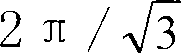
尽管将修正三角形表述为其失谐参数与图形中开口相对于理想三角形晶格的定位有关,但在保持理想三角形图形位置的中心的同时,通过修正理想三角形图形中的孔,亦可获得修正(失谐)的三角形图形。图18示出了如此图形的实施例。对于具有图18所示图形的发光装置,光提取的增加、执行相应数值汁算的方法及所增加的光提取的物理解释基本与上述方法一致。在一些实施例中,修正(失谐)图形可具有从理想位置位移的开口以及处于理想位置处但有不同直径的开口。Although expressing the modified triangle as its detuning parameter is related to the positioning of the openings in the pattern relative to the ideal triangular lattice, the correction can also be obtained by correcting the holes in the ideal triangular pattern while maintaining the center of the position of the ideal triangular pattern ( detuned) triangle shape. Figure 18 shows an example of such a graph. For a lighting device having the pattern shown in FIG. 18, the increase in light extraction, the method of performing the corresponding numerical calculations, and the physical interpretation of the increased light extraction are substantially consistent with the methods described above. In some embodiments, the modified (detuned) pattern may have openings displaced from the ideal position and openings at the ideal position but with different diameters.
在其他实施例中,可通过使用不同类型的图形来获得发光装置的增加的光提取,不同类型的图形包括,例如,复杂周期图形及非周期图形。如在此所述的,复杂周期图形是指这样一种图形,该图形在以周期方式进行重复的各单元体(unit cell)中具有一个以上的特征。复杂周期性图形的例子包括蜂巢图形、蜂巢基底图形、(2x2)基底图形、环形图形及阿基米德(Archimidean)图形。如下文所述,在一些实施例中,复杂周期图形的一些孔可以具有一种直径,而另一些孔可以具有较小的直径。如在此所述的,非周期图形是指这样一种图形,该图形在具有长度的单元体中不具有平移对称性,所述长度至少为区域130所产生的光的峰值波长的50倍。非周期图形的例子包括不规则(aperiodic)图形、准晶图形、罗宾逊(Robinson)图形及安曼(Amman)图形。In other embodiments, increased light extraction of light emitting devices may be obtained by using different types of patterns, including, for example, complex periodic patterns and aperiodic patterns. As described herein, a complex periodic pattern refers to a pattern that has more than one feature in each unit cell that repeats in a periodic manner. Examples of complex periodic patterns include honeycomb patterns, honeycomb-based patterns, (2x2)-based patterns, ring patterns, and Archimedean patterns. As described below, in some embodiments, some holes of the complex periodic pattern may have one diameter while other holes may have a smaller diameter. As used herein, an aperiodic pattern refers to a pattern that has no translational symmetry in a unit cell having a length that is at least 50 times the peak wavelength of light generated by
图19示出了两种不同复杂周期图形的LED100的数值计算,在所述图形中,图形中的一些开口具有特定直径,而图形中的其他开口具有较小的直径。图19所表示的数值计算显示了较小孔(dR)的直径从0nm变化到95nm时提取效率(具有80nm直径的较大孔)的性能。图17所示的数据是使用图12中所示LED100的给定参数计算的,除了根据该图的x轴给定的填充因子改变开口的直径之外。不希望受理论的束缚,多种孔尺寸允许从图形中的多种周期性进行散射,从而增加了图形的角度可接受性及光谱有效性。对于具有图19所示图形的发光装置,光提取的增加、执行相应数值计算的方法及所增加的光提取的物理解释基本与上述方法一致。Figure 19 shows numerical calculations of
图20示出了具有不同环形图形(复杂周期图形)的LED100的数值计算。对于不同的环形图形,围绕中心孔的第一环中的孔的数量是不同的(6个、8个或10个)。图20所示的数据是使用图12中所示LED100的给定参数计算的,除了所发光具有450nm的峰值波长之外。图20所代表的数值计算示出了当重复跨越单元体的每单元体的环形图形的数量从2变化至4时LED100的提取效率。对于具有图20所示图形的发光装置,光提取的增加、执行相应数值计算的方法及所增加的光提取的物理解释基本与上述方法一致。FIG. 20 shows numerical calculations for
图21示出了具有阿基米德图形的LED100的数值计算。阿基米德图形A7是由六角形单元体230构成的,单元体具有以最近邻距离a相等间隔的7个孔在单元体230内,以正六边形的形状排列有6个孔,且第7个孔位于六边形的中心。然后以单元体之间中心至中心间隔为
图22示出了具有准晶图形的LED100的数值计算。准晶图形,例如,描述于M.Senechal的“Quasicrystals and Geometry”(Cambridge University Press,Cambridge,England 1996),该文通过引用合并在此。数值计算显示了随基于8重准周期结构的类变化的提取效率性能。认为由于该结构允许较高的面内旋转对称性,因此准晶图形呈现了较高的提取效率。对于具有图22所示图形的发光装置,光提取的增加、执行相应数值计算的方法及所增加的光提取的物理解释基本与上述方法一致。图22所示的FDTD计算结果表明准晶结构的提取效率可达约82%。图22所示的数据是使用图12中所示LED100的给定参数计算的,除了所发光具有450nm的峰值波长,和除了NND是根据单个单元体内的开口之间的距离定义的。Figure 22 shows numerical calculations for an
尽管在此描述了某些图形的实例,但认为若其他图形满足上述基本原理,则亦可增加LED100的光提取。例如,认为增加对准晶或复杂周期结构的失谐可以增加提取效率。Although examples of certain patterns are described here, it is believed that other patterns can also increase the light extraction of
在一些实施例中,由光生成区130生成的、从LED100发出的光的总量的至少约45%(例如至少约50%、至少约55%、至少约60%、至少约70%、至少约80%、至少约90%、至少约95%)经由表面110出射。In some embodiments, at least about 45% (e.g., at least about 50%, at least about 55%, at least about 60%, at least about 70%, at least About 80%, at least about 90%, at least about 95%) exit through
在某些实施例中,LED100截面积可相对较大,同时仍然呈现LED100的有效光提取。例如,LED100的一个或多个边沿可为至少约1毫米(例如至少约1.5毫米、至少约2毫米、至少约2.5毫米、至少约3毫米),并且由光生成区130生成的、从LED100发出的光的总量的至少约45%(例如至少约50%、至少约55%、至少约60%、至少约70%、至少约80%、至少约90%、至少约95%)经由表面110出射。这使得LED在呈现良好功率转换效率的同时具有相对大的截面积(至少约1毫米x至少约1毫米)。In certain embodiments,
在某些实施例中,具有LED100设计的LED的提取效率基本与LED边沿的长度无关。例如,具有LED100设计的LED且具有长度为约0.25毫米的一个或多个边沿的LED的提取效率与具有LED100设计的LED且具有长度为约1毫米的一个或多个边沿的LED的提取效率之间的差别可小于约10%(例如小于约8%、小于约5%、小于约3%)。如在此所述的,LED的提取效率是指LED所发光与装置所生成光的量之比(可根据能量或光子来测量)。这使得LED在呈现良好功率转换效率的同时具有相对大的截面积(至少约1毫米x至少约1毫米)。In certain embodiments, the extraction efficiency of LEDs having the design of
在某些实施例中,具有LED100设计的LED的量子效率基本与LED边沿的长度无关。例如,具有LED100设计的LED 且具有长度为约0.25毫米的一个或多个边沿的LED的量子效率与具有LED100设计的LED且具有长度为约1毫米的一或多个边沿的LED的量子效率之间的差别可小于约10%(例如小于约8%、小于约5%、小于约3%)。如在此所述的,LED的量子效率是指LED所生成的光子数量与装置中所发生的电子-空穴复合的数量之比。这使得LED在呈现良好性能的同时具有相对大的截面积(至少约1毫米x至少约1毫米)。In certain embodiments, the quantum efficiency of LEDs having the design of
在某些实施例中,具有LED100设计的LED的插座效率(wall plugefficiency)基本与LED边沿的长度无关。例如,具有LED100设计的LED且具有长度为约0.25毫米的一个或多个边沿的LED的插座效率与具有LED100设计的LED且具有长度为约1毫米的一个或多个边沿的LED的插座效率之间的差别可小于约10%(例如小于约8%、小于约5%、小于约3%)。如在此所述的,LED的插座效率是指LED的注入效率(注入装置的载流子的数量与在装置的光发生区中复合的载流子的数量之比)、LED的辐射效率(在辐射事件中产生的电子空穴复合的数量与电子空穴复合的总数量之比)、以及LED的提取效率(从LED提取的光子与所生成光子的总数量之比)的乘积。这使得LED在呈现良好性能的同时具有相对大的截面积(至少约1毫米x至少约1毫米)。In certain embodiments, the wall plug efficiency of LEDs having the design of
在一些实施例中,需要操控经由表面110从LED出射的光的角度分布。为了增加进入给定立体角(例如,进入围绕表面110的法线方向的立体角)的提取效率,检查根据图形150(如前所述)进行空间变化的介电函数的傅立叶变换。图23示出了晶格常数不同的两个理想三角形晶格的傅立叶变换构造。为了提高提取效率,寻求增加灌封剂光线内的G点数量以及材料光线中G点的散射强度(εG)。这暗示增加NND从而得到图16所示的效果。然而,在此关心的是进入以法线方向为中心的立体角的提取效率。因此,亦希望通过减少灌封剂光线的半径来限制高阶G点的引入,这样G的级数大于(ε(ne))/c。通过减少灌封剂的折射指数(最低需求是将所有灌封剂移除),可允许较大的NND,因而增加了材料光线内G点的数量,所述材料光线有助于在法线方向(Fk=0)的提取,同时避免进入灌封剂中高阶(倾斜角)的衍射。图24示出了上述趋势,该图显示了进入立体角(由图中的集合半角给出)的提取效率。图24所示的数据是使用图12中所示LED100的给定参数计算的,除了所发光具有530nm的峰值波长和34nm的带宽,灌封剂的折射指数为1.0,p掺杂层的厚度为6nm,光生成区为30nm厚,图24示出三条曲线的NND(a),以及a分别为1.27a、0.72a及1.27a+40nm时的深度,孔的直径以及n掺杂层的厚度。随着晶格常数的增加,窄角度的提取效率以及进入所有角度的总提取效率亦增加。然而,对于即使较大的晶格常数,即使进入所有角度的总提取效率增加,灌封剂中进入较高阶模式的衍射限制了窄角度的提取效率。对于460nm的晶格常数,计算得出进入30度的集合半角的提取效率大于25%。即,仅在立体角上半球的约13.4%内收集所提取光的约一半,呈现了图形的准直效应(collimation effect)。认为可以增加材料光线内G点数量同时将灌封剂内的G点数量限制为k=0时的G点的任何图形都可以改善进入以法线为中心的立体角的提取效率。In some embodiments, it is desirable to manipulate the angular distribution of light exiting the LED via
上述方法尤其可应用于降低被认为与n2成比例的源扩散(sourceetendue),其中n为周围材料(例如灌封剂)的折射指数。因此,认为降低LED100的灌封层的折射指数可以导致更为准直的发射、较低源扩散,且因此导致较高的表面亮度(在此定义为进入源扩散所提取的总流明)。在一些实施例中,使用空气的灌封剂可以在增加进入以法线方向为中心的给定收集角度的提取效率的同时降低源扩散。The method described above is particularly applicable to reducing source etendue which is considered to be proportional to n2, where n is the refractive index of the surrounding material (eg potting agent). Therefore, it is believed that lowering the refractive index of the encapsulation layer of
在某些实施例中,当区域130所生成的光经由表面110从LED100出射时,光的分布较朗伯分布更准直。例如,在一些实施例中,当区域30所产生的光经由表面110从LED出射时,经由介电层的表面出射的光的至少约40%(例如至少约50%、至少约70%、至少约90%)以与表面110的法向成至多约30度(例如至多约25度、至多约20度、至多约15度)之内的角度出射。In some embodiments, when the light generated by
在所需的角度下提取相对高百分比的光线的能力本身,或者其与相对高的光提取相结合,可以允许在给定的晶圆上制备相对高密度的LED。例如,在一些实施例中,每平方厘米的晶片上至少具有约5个LED(例如至少约25个LED、至少约50个LED)。The ability, by itself, or in combination with relatively high light extraction, to extract a relatively high percentage of light at a desired angle can allow a relatively high density of LEDs to be fabricated on a given wafer. For example, in some embodiments, there are at least about 5 LEDs (eg, at least about 25 LEDs, at least about 50 LEDs) per square centimeter of wafer.
在一些实施例中,可能需要相对于光生成区130所生成光的波长来修正从封装的LED100出射的光的波长。例如,如图25所示,可将具有含磷材料的层180的LED300放置于表面110上。磷材料可在由区域130所生成的波长处与光进行交互作用,以提供所需波长的光。在一些实施例中,期望从封装的LED出射的光基本为白光。在这些实施例中,层180中的磷材料可由,例如,(Y,Gd)(Al,Ga)G:Ce3+或“YAG”(钇、铝、石榴石)磷构成。当由光生成区130所发出的蓝光激发(pumped)时,层180中的磷材料被激活且发出(例如全向地)具有以黄色波长为中心的宽光谱的光。对于从封装的LED100出射的总光谱的观察者可以看见黄色磷宽光谱发射以及蓝光InGaN窄光谱发射,且通常将两种光谱混合以感知到白光。In some embodiments, it may be desirable to correct the wavelength of light exiting packaged
在某些实施例中,层180基本可均匀地置于表面110上。例如,整个表面110中图形150的顶部151与层180的顶部181之间的距离的变化小于约20%(例如小于约10%、小于约5%、小于约2%)。In certain embodiments, layer 180 may be disposed substantially uniformly on
一般,层180的厚度小于LED100的表面130的截面积,截面积一般为1毫米x1毫米。由于层180基本均匀地沉积于表面110上,层180中的磷材料基本可由经由表面110出射的光来均匀地激发。较之LED100的表面110的尺寸,磷层180相对较薄,这样光生成区130所发的光在大致均匀地在LED100的整个表面110上的磷层180内被转换成较短波长的光。由此,相对薄的、均匀的磷层180产生LED100所发的均匀光谱的白光,作为表面位置的函数。Typically, the thickness of layer 180 is less than the cross-sectional area of
一般,可按需制造LED100。通常,LED100的制造涉及多种沉积、激光处理、光刻(lithography)及蚀刻步骤。Generally,
例如,图26示出了LED晶片500,该LED晶片500含有沉积在基底(例如蓝宝石、化合物半导体、氧化锌、碳化硅、硅)502上的材料的LED层堆叠。这些晶片为市售的。供应商例如包括晶元光电公司(Epistar Corporation)、华上光电公司(Arima Optoelectronics Corporation)及元砷光电公司(SouthEpitaxy Corporation)。在基底502上连续放置缓冲层504(例如含氮层,诸如GaN层、A1N层、AlGaN层)、n掺杂半导体层506(例如n掺杂Si:GaN)、电流扩散层508(如AlGaN/GaN异质结(heterojunction)或超晶格)、发光区510(例如InGaN/GaN多量子阱区域)及半导体层512(例如p掺杂Mg:GaN层)。晶片500的直径一般至少为约2英寸(例如从约2英寸至约12英寸、从约2英寸至约6英寸,从约2英寸至约4英寸,从约2英寸至约3英寸)。For example, FIG. 26 shows an
图27示出了包括层502、504、506、508、510和512以及层520、522、524及526的多层堆叠550,其一般由能够进行如下所述的加压结合或热结合的材料构成。例如,层520可为镍层(例如已电子束蒸镀)、层522可为银层(例如已电子束蒸镀)、层524可为镍层(例如已电子束蒸镀),以及层526可为金层(例如已电子束蒸镀)。在一些实施例中,层520相对较薄,而层524相对较厚。层524例如可作为扩散阻挡层(difusion barrier)以减少杂质(例如金)扩散进入层520、522和/或层524本身。层520、522、524及526沉积后,可对多层堆叠550进行处理以实现欧姆接触。例如,可在适当的气体环境下(例如氮气、氧气、空气、成型气体)对堆叠550进行一段时间(例如从约30秒至约300秒)的退火处理(例如在约400℃至约600℃的温度下)。Figure 27 shows a
图28示出了包括其上沉积有层604、606、608及610的子基座(例如锗(诸如多晶锗)、硅(诸如多晶硅)、碳化硅、铜、钨铜、金刚石、镍-钻)602的多层堆叠600。子基座602例如可通过溅射或电铸形成。层604为接触层且可例如由铝(例如已电子蒸镀)来形成。层606为扩散阻挡层且可例如由Ni(例如已电子束蒸镀)来形成。层608可为金层(例如已电子束蒸镀),且层610可为层608上的AuSn结合层(例如已热蒸镀、已溅射)。层604、606、608及610沉积后,可对多层堆叠600进行处理以实现欧姆接触。例如,可在适当的气体环境下(例如氮气、氧气、空气、成型气体)对堆叠550进行一段时间(例如从约30秒至约300秒)的退火处理(例如在约350℃至约500℃的温度)。28 shows a
图29示出了由相互结合层526及610(例如使用焊接结合、使用共晶结合、使用包晶结合)形成的多层堆叠650。层526及610可例如由使用热机械按压(thermal-mechanical pressing)来结合。例如,使层526与610接触后,可将多层堆叠650放在压力下受压(例如使用多至约5MPa的压力,多至约2MPa的压力)加热(例如至从约200℃至约400℃的温度)。然后可以使堆叠650冷却(例如至室温)且解除受压。FIG. 29 shows a
然后从堆叠650至少部分地移除基底502及缓冲层504。一般,这可使用任何所需的方法来实现。例如,如图30所示,在一些实施例中,通过将堆叠650曝露于(例如经由基底502的表面501)适当波长的电磁辐射中以部分地分解层504从而移除基底502。认为这导致了层504的局部加热,导致了靠近层504与基底502的介面的层504的材料的部分分解,从而允许从堆叠650移除基底502(参见下文的描述)。例如,在层504是由氮化镓构成的实施例中,认为形成了包括镓及氮气的要素。在一些实施例中,可在将表面501曝露于电磁辐射(例如以减少堆叠650内的应力)期间对堆叠650加热。例如可通过将堆叠650置于热板(hot plate)上和/或通过将堆叠650曝露于附加激光源(例如CO2激光)来加热堆叠650。例如,在表面501曝露于电磁辐射期间对堆叠650加热可减少(例如,防止)液态镓再固化。这可以减少堆叠650内在镓的再固化时发生的应力的聚集。
在某些实施例中,在曝露于电磁辐射后,有残留镓且残留镓将基底502结合在堆叠650内。在这些实施例中,可对堆叠650加热至超过镓的熔化温度以允许从堆叠移除基底502。在某些实施例中,可将堆叠650曝露于蚀刻剂(例如化学蚀刻剂,诸如HCL)以蚀刻残留镓且移除基底502。亦可使用其他移除残留镓的方法(例如物理方法)。In certain embodiments, after exposure to electromagnetic radiation, there is residual gallium and the residual
例如,在某些实施例中,将表面501曝露于包括层504的吸收波长(例如约248纳米,约355纳米)的激光辐射。例如,激光辐射揭露于第6,420,242及6,071,795号美国专利中,其通过引用合并在此。然后将多层堆叠加热至超过镓的熔点,在该点上通过向基底502施加横向力(例如使用棉花棒(cottonswab))使基底502及缓冲层504从基底502移除。For example, in some embodiments,
在一些实施例中,表面501的多个部分同时曝露于电磁辐射。在某些实施例中,表面501的多个部分顺序地曝露于电磁辐射。可使用同时曝露与顺序曝露的结合。此外,可以图形(例如蛇形图形、圆形图形、螺旋形图形、网格(grid)、栅格(grating)、三角形图形、基本(elementary)图形、随机图形、复杂图形、周期图形、非周期图形)的形式将电磁辐射曝露于表面501。在一些实施例中,电磁辐射可扫过(raster)表面501的一个或多个部分。在某些实施例中,表面501曝露于电磁辐射的交叠场(overlappingfields)。In some embodiments, multiple portions of
在一些实施例中,电磁辐射在到达表面501之前穿过掩膜(mask)。例如,电磁辐射在到达表面501前可穿过包括掩膜(例如高导热掩膜,诸如钼掩膜、铜-铍掩膜)的光系统。在一些实施例中,掩膜为孔(例如对光束进行截割(truncating)或整形(shaping))。例如,光系统可包括至少两个透镜,所述透镜之间置有掩膜。又如,可把掩膜形成为表面501上材料的图形,掩膜使表面501的某些部分曝露而表面501的一些部分未曝露。例如,掩膜可通过光刻工艺形成。在一些实施例中,电磁辐射可扫过掩膜的一个或多个部分。In some embodiments, the electromagnetic radiation passes through a mask before reaching
不希望受理论的束缚,认为在表面501的给定面积内减少曝露于电磁辐射的表面501上的区域的至少一个尺寸可以限制不需的裂纹传播(crackpropagation),如基底502的移除期间进入层504、层506或堆叠650的其他层的裂纹传播,而仍允许基底502与缓冲层504的介面处的裂纹传播。认为,若表面501上的电磁辐射的特征太强,于是形成气泡(例如氮泡),会生成可导致非所需裂纹的局部压力。例如,在表面501曝露于在表面501上形成一点或一条线的电磁辐射的实施例中,点或线的至少一个尺寸的最大值可为至多约1毫米(例如至多约500微米、至多约100微米、至多约25微米、至多约10微米)。在一些实施例中,点的尺寸为从约5微米至约1毫米(例如从约5微米至约100微米、从约5微米至约25微米、从约5微米至约10微米)。Without wishing to be bound by theory, it is believed that reducing at least one dimension of the area on the
在某些实施例中,堆叠650在表面501曝露于电磁辐射时会振动。不希望受理论的束缚,认为曝露于电磁辐射时振动的堆叠650会加剧沿层504与基底502之间的介面的裂纹传播。一般,选择条件来限制进入层504的裂纹传播(例如以使基本没有进入层504、506及堆叠650的其余层的裂纹传播)。In some embodiments, stack 650 vibrates when
移除基底502后,层506表面的至少一部分上一般留有缓冲层504的一部分。缓冲层504的留有部分和/或层506的表面上可有基底502的材料残留(例如含铝和/或氧)。一般需要将缓冲层504的留有部分及基底502的任何残留移除,以使层506的表面曝露,以及清洁层506的曝露表面,因为层506(一般由n掺杂半导体材料构成)显示了用于随后形成电接触部的良好电特性(例如所要求的接触电阻)。通常使用一步或多步工艺步骤来移除任何存在的残留和/或缓冲层504的留有部分,以及来清洁层506的表面(例如移除杂质,诸如有机物和/或颗粒)。可利用多种技术和/或技术的结合来执行这些工艺。例子包括化学-机械抛光、机械抛光、反应离子蚀刻(例如具有基本化学性的蚀刻组分)、物理性蚀刻及湿蚀刻。例如,这些方法揭露于Ghandhi,S.,VLSIFabrication Principles:Silicon&Gallium Arsenide(1994),通过引用合并在此。在某些实施例中,不完全移除缓冲层504。而是,在这些实施例中,可使用这些工艺仅移除与随后放置电导线的位置相应的缓冲层504上的一些部分(例如,通过使用自对准工艺)。After
通常,当移除基底502时,可改变堆叠650内的应力量(例如由于晶格的失配和/或堆叠650内层之间的热失配)。例如,若减少堆叠650内的应力量,则可改变(例如增大)区域510的峰值输出波长。又如,若增大堆叠650内的应力量,则可改变(例如减小)区域510的峰值输出波长。In general, when
为了限制基底502移除期间非所需的裂纹,在一些实施例中,需考虑基底502的热膨胀系数及子基座602的热膨胀系数、层504、506、508、510及512的组合厚度,和/或层504、506、508、510及512中的一层或多层的热膨胀系数。例如,在一些实施例中,选择基底502及子基座602使得子基座602的热膨胀系数比基底502的热膨胀系数小约15%(例如小约10%、小约5%)。又如,在某些实施例中,选择基底502及子基座602使得子基座602的厚度实质上大于基底502的厚度。再如,在一些实施例中,选择半导体层504、506、508、510及512以及子基座602使得子基座602的热膨胀系数比层504、506、608、510及512中的一层或多层的热膨胀系数小约15%(例如小约10%、小约5%)。To limit undesired cracking during
一般,基底502及子基座602可具有任何所需的厚度。在一些实施例中,基底502为至多约5毫米(例如至多约3毫米、至多约1毫米、至多约0.5毫米)厚。在某些实施例中,子基座602为至多约10毫米(例如至多约5毫米、至多约1毫米、至多约0.5毫米)厚。在一些实施例中,子基座602比基底502厚,以及,在某些实施例中,基底502比子基座602厚。In general,
移除缓存层504及曝露/清洁层506的表面后,可将层506的厚度减少至所需的用于发光装置的最终厚度。例如,这可通过单独使用机械蚀刻工艺,或者与一蚀刻工艺一起使用来实现。在一些实施例中,在蚀刻/清洁层506的曝露表面后,506层的表面具有相对高的平直度(例如按所使用的光刻标线(reticle)的比例的相对高的平直度)。例如,在一些实施例中,在蚀刻/清洁层506的曝露表面后,层506的表面的平直度为至多约每6.25平方厘米10微米(例如至多约每6.25平方厘米5微米、至多约每6.25平方厘米1微米)。又如,在某些实施例中,在蚀刻/清洁层506的曝露表面后,层506的表面的平直度为至多约每平方厘米10微米(例如至多约每平方厘米5微米、至多约每平方厘米1微米)。在某些实施例中,在蚀刻/清洁层506的曝露表面后,层506的表面的RMS粗糙度为至多约50纳米(例如至多约25纳米、至多约10纳米、至多约5纳米、至多约1纳米)。After removing the
在一些实施例中,在形成根据层506的表面中的图形而空间变化的介电函数之前,对于使用纳米光刻来形成具有足够精度和/或再现性的图形来说,层506的曝露表面可能太粗糙和/或不够平。为了增加精确地和/或可再现地形成层506中的图形的能力,纳米光刻工艺可包括在层506的表面沉积平整层并且在平整层的表面沉积光刻层。例如,图31示出了平整层702置于层506的表面且光刻层704置于层702的表面的实施例,在清洁/蚀刻层506后,层506的曝露表面505可相当粗糙(例如RMS粗糙度为约10纳米或更大)。在一些实施例中,平整层702由顺序沉积的多个层(例如相同材料的)构成。In some embodiments, prior to forming a dielectric function that varies spatially according to the pattern in the surface of
平整层702可选择的材料包括聚合物(例如布鲁尔科技公司(BrewerSciences)的DUV-30J、防反射涂料、高粘性可成型聚合物),光刻层704可选择的材料包括UV固化聚合物(例如分子压印公司(Molecular Imprints Inc.)的低粘性MonoMatTM)。可使用任何所需的技术来形成层702及704,例如,旋涂、气相沉积,及类似者。Optional materials for the
例如,层702可为至少约100纳米厚(例如至少约500纳米厚)和/或至多约5微米厚(例如至多约1微米厚)。例如,层704可为至少约1纳米厚(例如至少约10纳米厚)和/或至多约1微米厚(例如至多约0.5微米厚)。For example,
然后将确定所需图形的一部分的模型压印(pressed)入光刻层(一般对模具和/或层704加热或UV固化),且以一部分接一部分(portion by portion)的方式越过(stepped across)层704的表面以形成层704中与层506的表面中所需图形相应的锯齿。在一些实施例中,单个步骤覆盖整个晶片(例如全晶片纳米光刻技术)。然后蚀刻层704(例如使用反应离子蚀刻、湿蚀刻)以曝露层702的表面与层74的锯齿部分相应的部分(图33)。例如,这种压印/蚀刻技术揭露于第5,722,905号美国专利以及张等人的Applied Physics Letters,Vo1.83,No.8,pp.1632-34,两者皆通过引用合并在此。一般地,层704中的图形亦留有一些区域,用于在后续工艺步骤沉积n接触部。在替代实施例中,可使用其他技术(例如x射线光刻、深紫外光刻、超紫外光刻、沉浸光刻、干扰光刻、电子束光刻、照相平板术(photolithography)、微接触印刷、自组装技术)来生成层704中的图形。A pattern defining a portion of the desired pattern is then pressed (pressed) into the photoresist layer (typically by heating or UV curing the mold and/or layer 704) and stepped across (portion by portion) ) surface of
如图34所示,将已刻图的层704用作掩膜以将图形转移至平整层702(例如干蚀刻、湿蚀刻)。反应离子蚀刻是干蚀刻方法的一个例子。参见图35,顺序将层702及704用作掩膜以将图形转移入层506的表面(例如使用干蚀刻、湿蚀刻)。如图36所示,在蚀刻层506之后,将层702及704移除(例如使用氧基反应离子蚀刻、湿溶剂蚀刻)。As shown in FIG. 34, the patterned
参见图37,在一些实施例中,工艺可包括将材料708(例如金属,诸如铝、镍、钛、钨)置于层702及704的蚀刻部分(例如通过蒸镀)以及层704的表面。如图38所示,然后蚀刻(例如使用反应离子蚀刻、湿蚀刻)层702及704,将防蚀刻材料708留在层506的表面上,它可用作掩膜将图形蚀刻到层506的表面(图39)。参见图40,然后移除防蚀刻材料708(例如使用干蚀刻、湿蚀刻)。Referring to FIG. 37 , in some embodiments, the process may include placing a material 708 (eg, a metal such as aluminum, nickel, titanium, tungsten) on the etched portions of
在一些实施例中,工艺包括,在层704中形成锯齿后,将防蚀刻材料(例如Si掺杂聚合物)710放置(例如旋涂)于层704的表面上以及层704中的锯齿中,然后将材料710回蚀(etch back)(例如使用干蚀刻)以使得层704的表面曝露同时将防蚀刻材料保持在层704的锯齿内(图41)。如图42所示,然后蚀刻层702及704的部分(例如使用反应离子蚀刻,干蚀刻、湿蚀刻),留有防蚀刻材料708以及材料708下的层702及704的部分,用作用于将图形蚀刻入层506表面的掩膜(图43)。参见图44,然后可移除层702及704的剩余部分以及防蚀刻材料(例如使用反应离子蚀刻、干蚀刻、湿蚀刻)。在一些实施例中,层708的移除可包括使用等离子体工艺(如氟等离子体工艺)。In some embodiments, the process includes, after forming the serrations in
当图形被转移至n掺杂层506后,可视需要将一层磷材料放置(例如旋涂)于n掺杂层506的已刻图的表面。在一些实施例中,磷可共形地涂布已刻图的表面(沿已刻图的表面的底部及侧壁以基本不具空隙的方式涂布)。或者,可将一层灌封材料置于已刻图的n掺杂层506的表面上(例如通过CVD、溅射、通过随后蒸镀的液态粘结剂悬浮)。在一些实施例中,灌封剂可含有一种或多种磷材料。在一些实施例中,可将磷压缩以获得小于磷的平均厚的约20%、约15%、约10%、约5%、约2%的厚度均匀性。在一些实施例中,含磷灌封剂可共形地涂布已刻图的表面。After the pattern is transferred to the n-doped
在n掺杂层506中生成介电函数图形之后,从晶片切割出单个LED裸芯。一旦完成晶片处理和晶片测试,就分离及制备单个LED裸芯以用于封装及测试。可使用侧壁钝化(sidewall passivation)步骤及预分离深斜角蚀刻步骤来降低在晶片切割过程中发生的对已刻图LED的电和/或光特性的潜在损害。单个LED的尺寸可为最大至晶片本身尺寸的任何尺寸,但单个LED一般是正方形或矩形的,其侧边长度为约0.5mm至5mm之间。为了形成裸芯,可使用标准光刻来限定晶片上为装置提供能量的接触垫的位置,并且将欧姆接触部蒸镀(例如使用电子束蒸镀)至所需的位置上。After the dielectric function pattern is generated in the n-doped
尽管描述了制造LED100的某些实施例,但亦可使用其他制造方法。例如,在一些实施例中,可将LED100形成在单个台面(mesa)上(例如与包括其他LED或其他装置的其他台面隔开)。Although certain embodiments for fabricating
图45示出了包括多层堆叠的LED晶片2000,所述多层堆叠包括基底2008、层2006、层2004及层2002。基底2008一般可为如上文所述的基底500,且层2006、2004及2002一般可分别为如上文所述的层506、510及512。FIG. 45 shows an
图46示出了包括层2002、2004、2006及基底2008的多层堆叠2010,如上所述。多层堆叠2010亦包括已刻图阻挡层2012。已刻图阻挡层2012提供用于选择性材料沉积(例如金属沉积)的掩膜。已刻图阻挡层2012可形成决定从台面形成的LED的结果横截面形状的重复图形(例如正方形、矩形、圆形、六角形或其他限制图形)。Figure 46 shows a
图47显示了包括多层堆叠2010以及层2018及2020的多层堆叠2016。例如,层2018及2020可为沉积于多层堆叠2010的上表面的金属层。层2018及2020一般选择为能够形成与p掺杂GaN层2002接触以及能够结合。例如,可选择层2020为形成接触且包括p接触金属层(例如由Ni、氧化锡铟(Indium-TinOxide,ITO)、Ag、Al、Ti、Cu、Rh、Pt或它们的合金构成的层)以及镜层(例如由Ag、Al、ITO、Cu、W、Pt、TiN或为它们的合金构成的层)。此外,亦可包括扩散层(例如Pt或Ti-N)来防止或限制分层堆叠中任何金属的扩散或化学反应。例如,扩散层可防止Sn相对快速地从结合层扩散。此外,可沉积多种黏着层(adhesion layer)(例如,Ti)以帮助多层堆叠的不同层之间的粘合。层2018一般可根据结合特性来选择且用作结合介面层。例如,层2018可包括Ag、AgSn、Au-Sn、Pb-Sn、Pd-In或Au-Ge。可使用多种金属沉积工艺(例如电子束、溅射、热/电阻蒸镀或电镀)来沉积层2018及2020。在一些实施例中,使用溅射工艺来沉积层2018且使用电子束工艺来沉积层2020。此外,可包括扩散层(例如Pt或Ti-N)。扩散层可防止或限制分层堆叠中这些金属的扩散或化学反应。此外,可设置多种黏着层(例如Ti)以帮助多层堆叠的不同层之间的粘合。FIG. 47 shows
图48示出了多层堆叠2024,其通过在多层堆叠2016上执行剥离(liftoff)工艺以移除已刻图阻挡层2012及通过已刻图阻挡层2012来支撑的层2018及2020的区域(例如阻挡层置于层2020与层2002之间的区域)而构成。保留沉积于不具阻挡层以使金属沉积于层2022上的区域(例如在沉积层2018及2020之前阻挡层已刻图或已移除的区域)的金属层2018及2020。由此,金属层2018及2020在多层堆叠2024的表面形成阻挡图形的负像(negative image)。48 shows multilayer stack 2024 by performing a liftoff process on
图49示出了通过在多层堆叠2024的区域上沉积阻挡层2028而形成的多层堆叠2026。阻挡层2028可延伸通过金属层2018及2020的边沿且在后续的蚀刻过程中屏蔽金属层2018及2020。FIG. 49 shows
图50示出了包括由基底2008支撑的台面2032的多层堆叠2030。例如,可通过对多层堆叠2026的层2002、2004及2006进行蚀刻以将金属层2018及2020的图形转移入多层堆叠2026而形成台面2032。例如,可利用包括C12、Ar、BC13或SiC14的氯基蚀刻来蚀刻台面2032。台面2032的高度是由起始多层堆叠2000及沉积层2018及2020的厚度决定的。例如,台面2032可为至少约1mm高(例如至少约2mm高、至少约3mm高、至少约4mm高、至少约5mm高、至少约6mm高、至少约7mm高、至少约8mm高、至少约9mm高、至少约10mm高)。形成台面2032的层2002、2004及2006的蚀刻可增加包括多层堆叠2030及台面2032在内的晶片的挠性。晶片挠性的增加有利于如下所述地将多层堆叠2030结合至子基座。形成台面2032的层2002、2004及2006的蚀刻可形成包括多层堆叠2030及台面2032在内的晶片内的通道的连接网络。晶片内通道的连接网络有利于如下所述地将多层堆叠2030结合至子基座。FIG. 50 shows a
图51示出了包括由基底2008支撑的台面2035的多层堆叠2036。台面2035是通过从台面2032移除阻挡层2028而形成的。可对层2018的上表面进行结合制备工艺。例如,层2018的表面可经化学清洁、机械清洁,或者以等离子体、化学物质或气体处理以准备层的结合。FIG. 51 shows a
图52示出了多层堆叠2038,其包括具有沉积结合层2040的子基座2042。多层堆叠2038可包括与图28所示的多层堆叠600中的层类似的层,且可使用与上述工艺类似的工艺形成。FIG. 52 shows a
图53示出了通过将多层堆叠2036的层2018与多层堆叠2038的层2040结合形成的多层堆叠2046。例如可利用热机械按压工艺来结合层2018及2036。如根据图29中所示工艺所描述的,可选择多种温度及压力。由于台面2035而增加的晶片的挠性允许更大程度的晶片翘曲容差及被结合的晶片的平面性的程度。台面2035之间的空间允许聚积于结合介面的气体扩散到台面2035之间的蚀刻通道,由此,可能减少由结合层所聚集的气体而造成的结合层的空间(void formation)。不希望受理论的束缚,认为空间的形成可以减少结合层的热传导性和降低发光设备的效率。FIG. 53 shows a
图54及55示出了将结合的多层堆叠2046曝露于电磁辐射(由箭头2048表示)以及将基底2008移除。曝露于电磁辐射2048及基底2008的移除与上述工艺类似。尽管未示于图45-54示出,但是在一些实施例中,可在基底2008与层2006之间放置半导体层(例如与上文中关于层504所描述的相似)。在这些实施例中,曝露于电磁辐射2048,至少部分地分解基底2008与层2006之间的半导体层以致可移除基底2008。在某些实施例中,层2006与基底2008之间不放置半导体层,并且通过辐射2048分解层2006的一部分。54 and 55 illustrate exposure of the bonded
曝露于电磁辐射期间的半导体材料的分解可在多层堆叠内产生应力。此外,可形成气体(例如氮气)作为分解的产物。这气体,特别是若聚集在经分解的层中,则可产生应力,并且,若应力足够大,则可发生裂纹或其他非所需的结果。台面2035之间存在的区域允许气体从台面2035扩散且积聚在台面2035之间的蚀刻通道或至间中(亦称为气体积聚层)。本来聚集的气体的扩散及逸出减少半导体层的沉积过程中多层堆叠中的应力。在一些实施例中,台面2035之问的通道形成遍及晶片的通道网络,允许气体从通道经由延伸至晶片边沿的开口逸出。Decomposition of semiconductor material during exposure to electromagnetic radiation can create stress within the multilayer stack. In addition, gases such as nitrogen may be formed as decomposition products. This gas, especially if accumulated in the decomposed layer, can generate stress and, if the stress is great enough, cracking or other undesired results can occur. The region that exists between the
半导体材料分解后,移除基底2008,从而形成包括支撑已转移台面2053的子基座的多层堆叠2050(图55)。台面从基底2008转移至子基座2040后,层2006中包括的n掺杂区域临近台面2053的顶部。移除子基座2008或子基座2008的一部分后,残留物2052仍留在台面2053上(见上文根据图31及32的描述)。如图56所示,可使用一或多步步骤来移除层2052以及清洁层2006的表面,形成台面2055。已根据图31及32描述了移除残留物2052的方法。接着,可对台面2055的层2006的上表面进行刻画以从台面2055的总数量的至少约10%(例如至少约20%、至少约30%、至少约40%、至少约50%、至少约60%、至少约70%、至少约80%、至少约90%)形成LED。或者,可对晶片上的所有台面进行刻画。一些实施例中,LED形成工艺与上文所述工艺类似且可包括上述工艺中的多种变换。一般的,在台面2005上沉积或生长有至少一硬掩膜层2060(例如低温氧化物(LTO)、SiO2、氧化物、SiNx、Ni、铬)。在至少一硬掩膜层2060上沉积阻挡层2058一形成如图57所示的多层堆叠2056。使用如上文所述的压印工艺将图形压印入阻挡层2058。压印工艺可为台面接台面(mesa-by-mesa)工艺(例如将图形压印入一个台面,然后将模型2062移至不同的台面且将图形压印入不同的台面)。若使用台面接台面工艺,可将模型2062与台面2062对齐(registered)或对准(aligned)以在压印前决定台面2063的取向及高度。或者,可使用其他光刻技术来刻画表面的图形。After decomposition of the semiconductor material, the
尽管所描述的实施例使用刚性模型2062,但在图形刻图过程中可使用与台面特征一致的挠性掩膜或模型作为代替。共形掩膜可包括诸如膜或其他挠性材料的层。例如,可使用厚度为约0.5mm至100mm之间的Ni层。使用挠性模型刻层2058的图形过程中,模型与台面的表面一致且将图形转移入一个或多个台面的层2058的表面。例如,挠性模型可大于晶片且可在单个步骤中对所有台面进行刻图。由于模型的挠性,可适应整个晶片中的台面高度不同而无需要求掩膜与单个台面对齐。此外,子基座2042可由诸如金属(例如CuW)的挠性材料构成以允许包括台面2055的子基座2042以及模型两者俱可以在压印过程中弯曲或相一致。Although the described embodiment uses a
例如使用上文所述的方法(图60)将阻挡层2058中的图形(图59所示)转移入至少一个硬掩膜层2060及层2006的一部分。可使用如上文所述的多种图形来刻层2006的图形。The pattern in barrier layer 2058 (shown in FIG. 59 ) is transferred into at least one
可移除层2058及2060的剩余部分,并且随后沉积接触层。图61示出了包括层2006的已刻图表面以及沉积接触层2068及2070的多层堆叠2066。可如上文所述地沉积接触层2068及2070。接触层2070便于与层2006的欧姆接触。在一些实施例中,接触层2070共形地涂布层2006中的图形。层2006(例如由Al、Ti、Ni、氧化锡铟(ITO)、Ag、Cu、Rh、Pt或它们的合金)亦可包括一层或多层黏着层(例如Ti)和/或一层或多层扩散阻挡层(例如Ni、TiN、Pt)。不希望受理论的束缚,认为接触层(例如Au、Al、Ag)便于电流扩散以及减少沿接触层的欧姆发热。或者,可在上述关于图57-59描述的刻图步骤之前沉积接触层。在刻图前沉积接触层的实施例中,层2006的已刻图区域与接触区域隔开。在一些实施例中,欧姆接触沉积以及刻图步骤为自对齐的。The remaining portions of
图62示出了通过划片(scribing)及分裂(cleaving)艺、裸芯切割(Die Saw)工艺、激光划片工艺或其他分离技术,与由子基座2042支撑的其他装置分离的单独装置2072a及2072b。可封装单独装置2072a及2072b。单独装置2072a及2072b的封装包括形成从封装的金属接触区域(例如Au、Al、Ag)延伸至金属垫或印制线(例如Au、Al、Au)的引线结合(wire bond)以形成至LED的电接触(例如球结合、楔结合)。单独装置2072a及2072b的封装亦包括将装置焊接(soldering)(例如裸芯粘接工艺(die-attach process))至封装内的适当位置。例如,裸芯粘接工艺中使用的焊料可为AuSn、PbSn、Au-Ge、AgSn或其他焊料材料。封装亦可包括防反射涂布窗2068以允许LED所发光更有效地从封装逸出。FIG. 62 shows an
尽管上文图45-62中所描述的工艺包括对台面2063的表面进行曝露及刻图以在一个台面接一个台面的基础上形成LED,但其他实施例可包括同时对多个台面进行刻图。例如,如图63所示,可将平整层2073(例如阻挡层、聚酰亚胺层、聚合物层或氧化物层)沉积至支撑台面2055的子基座2042上。如图64所示,对平整层2073进行平整以与台面2055大致一般齐(例如与层2006的顶表面一般齐或水平)。用于平整平整层2073的技术一般根据层2073所选材料的不同而不同。例如,若平整层2073包括阻挡层,则可机械或热-机械按压阻挡层以形成平坦表面。又如,若平整层2073包括氧化物,则可抛光(例如通过CMP工艺)氧化物以平整表面且使层2006的上表面曝露。While the process described above in FIGS. 45-62 includes exposing and patterning the surface of the
基本平坦的表面形成后,将硬掩膜层2076及阻挡层2075沉积在多层堆叠2074上。使用上述技术之一将阻挡层2075刻成如图66及67所示的图形。这一工艺将图形转移至晶片的实质部分。例如,若掩膜2077大于晶片,则在单个步骤中对整个晶片刻图。若掩膜2077没有覆盖整个晶片,则掩膜2077越过晶片以便将图形转移入阻挡层2075。随后使用上文所述的蚀刻工艺将在阻挡层2075中曝露的图形转移入至少一个硬掩膜层2076及层2006。对层2006刻图后,移除硬掩膜层2076及平整层2073以形成图68所示的多层堆叠2077。例如,可使用氧气等离子体蚀刻、溶剂清洗或化学蚀刻来移除平整层2073。After the substantially planar surface is formed, a
尽管上文图45-68所描述的工艺包括使用光刻技术对台面2063的表面进行曝露及刻图,以在一个台面接一个台面的基础上形成LED,其他实施例包括使用其他技术来对台面的表面刻图。例如,如图69-74所示,可使用颗粒的自组装单层来对台面2055的表面刻图。多层堆叠2056(图69)浸入包括微米级胶质颗粒或珠粒2092的球壳的溶液2091中(图70)。微米级胶质颗粒包括聚合物珠粒(例如聚苯乙烯珠粒)及介电珠粒(例如,氧化物或蓝宝石珠粒)。或者,可在旋涂工艺中将液体分配于多层堆叠的表面。颗粒在滴状物的表面上自组装以使总介面能量最小(图71)。随着溶液从台面2055的表面蒸发,珠粒2092的单层剩余在台面的表面上。珠粒的自组装阵列的排序可根据多个因素而改变,例如包括温度、溶液2091中珠粒2092的百分比、湿度、干燥速率及基底或表面的拓扑结构。亦可使用多种尺寸的珠粒以形成多种超晶格图形。此外,根据干燥技术,自组装可生成具有无序晶界的有序晶粒。在一些实施例中,非均衡干燥条件可致使纳米颗粒自组装为复杂周期图形、非周期图形、准晶图形或轻微无序的周期图形。不希望受理论的束缚,认为这些图形可便于有效的光提取。在台面2055的表面上形成珠粒2092的自组装阵列之后,在台面2055的表面或如Si02层的另一硬掩膜层上沉积材料2093薄层(例如诸如Ni、Ti、W或铬的金属层)(图72)。例如,使用蚀刻工艺或剥离工艺来移除珠粒2092以及层2093的由珠粒2092支撑的部分。层2093的由珠粒2092支撑的部分的移除在层2093的剩余部分生成珠粒排列的负像。随后可将层2093用作掩膜层来蚀刻层2006。将图形转移入层2066后,可移除层2093以形成如图74所示的多层堆叠2096。尽管上文描述了球形珠粒,一般的,球形珠粒可指代类似自组装工艺所使用的任何类型的纳米颗粒。一般,纳米颗粒可描述为一维长度为至少约0.01mm(例如至少约0.1mm、至少约0.5mm、至少约1mm、至少约2mm、至少约5mm、至少约10mm)的颗粒。尽管如上所述的颗粒是球形的,但是可以使用其他形状的颗粒。While the process described above with respect to FIGS. 45-68 includes using photolithographic techniques to expose and pattern the surface of the
如上文所示,可通过使多层堆叠2046中的一层曝露于电磁辐射来分解该层从而从台面2032移除基底2008。在一些实施例中,根据台面2055的形状来选择电磁辐射束的形状。例如,如图75所示,可选择电磁辐射束2090以交叠在一个台面的至少一条边沿(例如一个台面的至少两条边沿、一个台面的至少一条边沿以及另一台面的另一条边沿)上。在这一实例中,细长光束扫过以顺序地照射台面的一些部分(例如部分2080a-d)。在另一实例中,如图76所示,光束的形状与台面的横截面匹配或基本匹配。在这一实例中,光束覆盖台面2055的实质部分或与台面交叠及在一个台面接一个台面的基础上照射台面。As indicated above,
在一些实施例中,整个晶片表面的台面2055高度可不同。例如,由于起始多层堆叠2000或其他沉积层(例如,层2018及2020)的非均匀沉积厚度而使高度不同。台面2055的高度亦可因非均匀平整而不同。此外,由于晶片中的翘曲,整个晶片中的台面2055的高度及取向可不同。在一些实施例中,在对台面2055的表面刻图以形成LED之前映射台面2055的高度。考虑到整个晶片上台面2055的高度及取向的不同而对光刻进行补偿。例如,系统可映射整个晶片上的总厚度变化、卷曲(warp)、焦点平面偏差,或局部厚度变化,并且可根据测量结果来调整光刻。In some embodiments, the height of the
在一些实施例中,起始多层堆叠2000中的翘曲量使得难以将多层堆叠2000结合至子基座。在该实例中,在将多层堆叠结合至子基座2042之前将晶片中的翘曲减少为可接收量是有利的。当蚀刻多层堆叠以形成晶片上的台面时,沉积层(例如层2002、2004及2006)内的应力减少且晶片2000的挠性增加。由于晶片的挠性增加,晶片的翘曲降低。由此,为了将翘曲减少至可接收水平,可选择多个台面且将这些台面蚀刻入晶片,或者至蚀刻深度(可能伸入基底2008)使得翘曲实质减少。晶片形成台面并且减少晶片的非平面性的晶片2000的选择性蚀刻可为迭代工艺(iterative process)。例如,晶片2000的一部分可专用于翘曲减少但不用于LED形成,且可将多个蚀刻通道迭代地蚀刻入晶片2000的专用部分直至足够地减少晶片2000中翘曲。在其他实施例中,晶片2000的一些部分中用以去除曲度的台面隔离蚀刻可与其他区域中用以去除翘曲的台面隔离蚀刻不同(例如不同的深度)。In some embodiments, the amount of warping in the starting
尽管在上述的一些实施例中,对从单个台面形成的LED进行封装。亦可对多个台面分组且分隔为一组以使一个封装装置中可包括多个从不同邻近台面形成的LED。这提供了冗余的好处,使得若一些台面没有形成功能性装置或在使用时失效,则封装装置仍能够发光。此外,这一技术可用于小于最终LED尺寸的网格(例如0.5mm)以构建多种矩形几何(例如16比9、4比3及1比1)的较大LED。此外,可将多个能够发不同颜色(例如红色、绿色、蓝色)或波长的光的LED封装入相同的封装。Although in some of the embodiments described above, LEDs formed from a single mesa are packaged. Multiple mesas can also be grouped and separated into groups so that multiple LEDs formed from different adjacent mesas can be included in one packaged device. This provides the benefit of redundancy so that if some mesas do not form a functional device or fail in use, the packaged device can still emit light. Furthermore, this technique can be used with grids smaller than the final LED size (eg 0.5 mm) to build larger LEDs in various rectangular geometries (
尽管在上述的一些实施例中,转移多个起始由基底(例如基底2008)支撑的台面以使台面通过单个子基座(例如子基座2042)支撑,或者可将台面转移至多个不同的子基座或放置于另一基底或装置上的所需位置。While in some of the embodiments described above, multiple mesas initially supported by a base (e.g., base 2008) are transferred such that the mesas are supported by a single submount (e.g., submount 2042), or the mesas may be transferred to a plurality of different The sub-base may be placed at the desired location on another substrate or device.
在一些实施例中,可将台面的形状选择为与微显示器的形状相匹配或接近匹配。例如,台面的纵横比可选择为16比9或4比3以匹配类似的成比例微显示器、例如投影微显示器。In some embodiments, the shape of the mesa can be selected to match or closely match the shape of the microdisplay. For example, the aspect ratio of the mesa may be chosen to be 16 to 9 or 4 to 3 to match a similarly scaled microdisplay, such as a projection microdisplay.
在一些实施例中,各台面可以这样一种形式定位在电网络中,即各LED代表显示器(例如投影显示器)中的一个像素。In some embodiments, the mesas may be positioned in the electrical network in such a way that each LED represents a pixel in a display (eg, a projection display).
尽管在上述实施例中,蚀刻由基底支撑的沉积层以形成台面,但是在一些实施例中,亦可蚀刻基底的一部分。这可进一步增加晶片的挠性。Although in the above-described embodiments, the deposition layer supported by the substrate is etched to form the mesas, in some embodiments, a portion of the substrate may also be etched. This can further increase the flexibility of the wafer.
在一些实施例中,如图77A所示,LED1802的接触部布局包括两个导电垫1804a及1804b以及从导电垫1804a及1804b向LED1802的中心区域延伸的导电条(或指)1806。与导电垫1804a及1804b连接的引线结合(未示出)向LED1802提供电流及电压。导电条1806将电流从导电垫1804a及1804b扩散至LED1802的顶表面1808。条1806允许在有足够的扩散电流穿过顶表面1080同时限制被接触部覆盖的表面1808的量。In some embodiments, as shown in FIG. 77A , the contact layout of
图77B示出了包括导电垫1804a及1804b以及导电条1806的LED1802的俯视图。在一些实施例中,导电垫1804a及1804b的宽度可大于导电条1806的宽度。垫1804a及1804b的较大宽的允许垫1804a及1804b用作电源总线并且将较大量的电能沿总线扩散至条1806。垫1804a及1804b以及条1806的宽度可与LED1802的尺寸相关和/或根据其他因素,如光刻及工艺参数。FIG. 77B shows a top view of
例如,LED的尺寸范围为一侧约0.5mm至1cm。如上所述,LED1802的纵横比可不同。导电垫1804a及1804b的宽度例如可为约50um至约500um,且条1806的宽度例如可为约lum至50um。例如,导电垫1804a及1804b的高度可根据馈给至该LED的电流及电能或者根据沉积及工艺参数而变化。例如,导电垫1804a及1804b以及条1806的高度可为约0.1um到约10um。For example, LEDs range in size from about 0.5 mm to 1 cm on a side. As noted above, the aspect ratios of
一般,条1806的长度及形状可随需改变。如图77B所示,条1806可为矩形且从导电垫1804a及1804b向LED 1802的中心区域延伸。或者,条1806可为不同的形状,如正方形、三角形或梯形。In general, the length and shape of the
图78A至78C示出了接触部结构的另一实例。在该实例中,多个条1812穿过LED1810的整个长度,从而将导电垫1804a与导电垫1804b连接。接触条1812具有关联电阻率rm、厚度tb及长度1。通过将该结构简化为如图78C所示的等效电路模型可以估算基于导电垫1804a及1804b以及接触条的LED 1810的电流分布特性。78A to 78C show another example of the contact structure. In this example, a plurality of
LED1810的纵横比可影响该系统的电流损耗。可根据下列方程来计算LED1810的纵横比‘L’:The aspect ratio of the LED1810 can affect the current consumption of the system. The aspect ratio 'L' of the LED 1810 can be calculated according to the following equation:
其中,A为裸芯的表面积(例如长度乘以宽度)且a及b为裸芯的纵横比。例如对于纵横比为16×9的LED,a=16,b=9。where A is the surface area of the die (eg, length times width) and a and b are the aspect ratios of the die. For example, for an LED with an aspect ratio of 16×9, a=16, b=9.
如前所述,为了使得LED所发光可以经由表面发出,接触条1812不覆盖LED1810的整个表面。由于接触部仅覆盖LED1810表面的一部分,将接触电阻除以表面覆盖比f,如下列方程所示:As previously mentioned, the
ρn-c→ρn-c/fρ nc →ρ nc /f
可根据下列方程来估算结的电流密度:The junction current density can be estimated from the following equation:
其中J0为结饱和电流且T为绝对温度。上述估算忽略了横向电流扩散中的n型材料的贡献量。然而,一般,由于接触部的导电率n型材料的导电率大得多,电流扩散绝大部分发生于金属接触部。例如,接触部导电率与n型材料的导电率之比可在约100至约500的范围内。where J0 is the junction saturation current and T is the absolute temperature. The above estimates ignore the contribution of n-type material in the lateral current spreading. In general, however, due to the much greater conductivity of the n-type material at the contact, current spreading occurs predominantly at the metal contact. For example, the ratio of the conductivity of the contact to the conductivity of the n-type material may be in the range of about 100 to about 500.
在类似系统中(但这些垫之间有无穷的隔离(infinite separation)),若处于正向偏置(例如Vj>>kT/e)中执行计算,且若串联电阻的电压降比kT/e(例如,
其中J1为垫之下的电流密度,x为相距垫的距离,且Ls为如下方程所示的电流扩散长度:where J1 is the current density under the pad, x is the distance from the pad, and Ls is the current spreading length as shown in the following equation:
这一估算假设这些垫之间有无穷隔离。然而,对于具有非无穷隔离的线性近似,可将单个垫的解相加在一起。上述过程引入接近裸芯中心的误差,但不认为其会显著地改变物理趋势。This estimate assumes infinite isolation between the pads. However, for linear approximations with non-infinite isolation, the solutions for the individual pads can be added together. The above process introduces an error close to the center of the die, but it is not believed to change the physical trend significantly.
在装置的中心x=L/2处出现最小电流密度,并且可根据下列方程估算The minimum current density occurs at the center of the device at x = L/2 and can be estimated from the following equation
其中用如下方程估算均匀因子(uniformity factor)where the uniformity factor is estimated by the following equation
对于具有相同表面积的裸芯,正方形形状变为接触条沿着较小一则的、纵横比为a,b的矩形形状,最小电流密度增大而以下列方程修正均匀因子For a die with the same surface area, the square shape changes to the contact strip along a smaller rectangular shape with aspect ratio a, b, the minimum current density increases and the uniformity factor is modified by the following equation
由此,以下列方程估算均匀增大因子From this, the uniform increase factor is estimated by the following equation
例如,在正方形(例如a=b)情况下的均匀增大因子‘S’的最小值为S=1。对于16x9的矩形,设下列值:ρm=2.2·10-6Ωcm(金),ρp-c=1.0·10-3Ωcm2,ρp=5.0Ωcm,ρn-c=1.0·10-4Ωcm2,ρn=5.0·10-3Ωcm,n接触表面覆盖率10%,且p、n及金属的厚度为0.3μm、3.0μm及2μm(10%覆盖率)。则Ls等于1.4mm。若裸芯表面积为A=25mm2。在正方形情况下,U=0.325,而16x9的情况下,U’=0.5,或者均匀增大因子S=1.54,即电流均匀性增大54%。For example, the minimum value of the uniform increase factor 'S' in the case of a square (eg a=b) is S=1. For a 16x9 rectangle, set the following values: ρ m =2.2·10 -6 Ωcm (gold), ρ pc =1.0·10 -3 Ωcm 2 , ρ p =5.0Ωcm, ρ nc =1.0·10 -4 Ωcm 2 , ρ n =5.0·10 −3 Ωcm, the n contact surface coverage is 10%, and the p, n and metal thicknesses are 0.3 μm, 3.0 μm and 2 μm (10% coverage). Then L s is equal to 1.4mm. If the surface area of the bare core is A=25mm 2 . In the case of a square, U=0.325, and in the case of 16x9, U'=0.5, or a uniformity increase factor S=1.54, ie a 54% increase in current uniformity.
由此,不希望受理论的束缚,认为使用矩形形状的LED有利于电流扩散。代替地或附加地,通过在接触部的一部分下面设置绝缘层1820(例如氧化物层,图79A)可以改变接触电阻率以增进电流扩散。如图79A及47B所示,条1812的一部分之下包括绝缘层1820(以虚线示出)。Thus, without wishing to be bound by theory, it is believed that the use of rectangular shaped LEDs facilitates current spreading. Alternatively or additionally, contact resistivity may be altered to enhance current spreading by disposing an insulating layer 1820 (eg, an oxide layer, FIG. 79A ) under a portion of the contact. As shown in Figures 79A and 47B, a portion of
绝缘层1820在条的顶部处(例如靠近垫1804处)宽度较宽,且朝着裸片的中心区域变窄。图79B示出了等效电路图。The insulating
接触电阻率一般与接触面积成比例。例如,如下列公式所示,随着接触面积减小,接触电阻率增大,Contact resistivity is generally proportional to the contact area. For example, as shown in the following formula, as the contact area decreases, the contact resistivity increases,
其中W为条的重复率(例如每单位面积的条的数量)。由于下层的绝缘层1820,接触部面积在最接近垫1804a及1804b的接触部边沿处较小,且随着距垫1804a及1804b的距离增大而增大。由于接触面积不同,靠近垫1804a及1804b处的接触电阻率较高且朝着LED的中心处逐步降低。接触电阻率的不同迫使电流进一步行进,减少了电流集聚(current crowding)、增大了经由表面所发出光的均匀性,及减小了性能降级。可根据下列方程来估算电流扩散长度:where W is the repetition rate of the strips (eg, the number of strips per unit area). Due to the underlying insulating
可根据下列方程来估算沿裸片的结电流密度The junction current density along the die can be estimated from the following equation
最小电流在装置的中心x=L/2处,可根据下列方程估算The minimum current is at the center of the device x=L/2, which can be estimated according to the following equation
可根据下列方程来估算图79B所示结构的电流均匀因子The current uniformity factor of the structure shown in Figure 79B can be estimated according to the following equation
如上文所述,氧化物层1820可迫使电流流向接触部的端部(例如朝裸芯的中心区域)从而增加了电流扩散。氧化物层1820亦可减少吸光接触部下的光生成从而允许更大百分比的所生成光从LED的表面出射。As noted above, the
图80A及80B示出了垫1804a及1804b、接触部1830及氧化物层1820(由虚线表示且置于接触部1830的一部分之下)的另一结构。此处的接触部1830亦为锥形。尽管图80A所示为线性锥形,亦可使用其他锥形。线性锥形保持与图79A所示接触部1812的接触面积相近的总接触面积,裸芯中心处的接触宽度大致为条1812(图79A)宽度的一半,而垫处的接触宽度为图79A所示宽度的3倍。可使氧化物的锥形角度更大以使接触电阻在垫处最大且在裸芯中心处最小。接触电阻朝着裸芯中心减少,且条的接触电阻越接近垫越小。使接触部及绝缘层为锥形有助于迫使电流流向裸芯中心。可根据下列方程估算局部扩散长度。80A and 80B illustrate another structure of
可使用上文所述的电流分布的类似的积分公式来估算图80A及80B所示结构的电流分布。The current distribution for the structure shown in Figures 80A and 80B can be estimated using similar integral formulas for the current distribution described above.
图81A示出了补充接触部结构1801的俯视图,81B及81C示出了补充接触部结构1801的剖视图。导电接触部1836朝着裸芯的中心延伸,但并不连续地覆盖条1804a与1804b之间的LED的上表面。绝缘层1834位于接触部内部的LED的顶部与金属接触部之间位置。接触部1836及绝缘层1834两者俱为锥形。箭头1837代表从金属接触部1836进入裸芯表面的电流扩散。81A shows a top view of the
图82示出了估算归一化结电流密度的曲线图1850,其为多种根据前述方程的接触部及裸芯结构的条1804a与1804b之间的归一化距离的函数。线1856代表具有矩形条且没有氧化物的正方形裸芯的电流密度,线1858代表具有矩形条且没有氧化物的矩形裸芯的电流密度,线1860代表具有矩形条以及锥形氧化物的矩形裸芯的电流密度,且线1862代表具有锥形条以及锥形氧化物的矩形裸芯的电流密度。曲线图1850示出了接触部的一部分之下矩形芯片(chip)及氧化物层两者的电流密度分布的改进。FIG. 82 shows a
图83A示出了补充接触部结构1803的俯视图,图83B示出了补充接触部结构1803的剖视图。绝缘层1805a及1805b分别位于LED的顶部与金属垫1804a及1804b之间。绝缘层1805a及1805b分别位于金属垫1804a及1804b的一部分之下,且朝着裸芯的边缘,以使金属垫1804a及1804b的一部分分别由绝缘层1805a及1805b支撑,且金属垫1804a及1804b的一部分分别由发光二极管的顶表面支撑。氧化物层1805a及1805b减少了吸光金属垫1804a及1804b之下的光生成从而允许更大百分比的所生成光从LED的表面出射。FIG. 83A shows a top view of the supplementary contact structure 1803 , and FIG. 83B shows a cross-sectional view of the supplementary contact structure 1803 . Insulating layers 1805a and 1805b are located between the top of the LED and
尽管上述实施例包括从金属垫1804a及1804b延伸的单组的接触部,但亦可使用多组接触部。例如,第二组接触部可从与金属垫1804连接的接触部的组延伸等等。此外,尽管所述的为氧化物,但一般,亦可使用任何适当的电绝缘材料(例如氮化物)来构成层。Although the embodiments described above include a single set of contacts extending from
图84示出了接触部实例1899的实例的尺寸,可用于估算n接触部内的电传输。设接触部1899在接触段(period)D 1870内分布均匀电流密度J0。可以下列方程估算接触部所载送的总电流Figure 84 shows the dimensions of an instance of a
Imax=J0DLI max = J 0 DL
这一最大电流在接触部的顶部(在垫处)流动,与由下列方程估算的电流密度相对应This maximum current flows at the top of the contact (at the pad), corresponding to the current density estimated by the equation
在离条端部的任意距离x处,可由下列公式估算电流密度At any distance x from the end of the bar, the current density can be estimated by
可由下列公式估算单位长度的电压降The voltage drop per unit length can be estimated by the following formula
并且可由下列公式估算单位长度的发热量And the calorific value per unit length can be estimated by the following formula
求上述方程的积分,可由下列方程估算总电压降Integrating the above equations, the total voltage drop can be estimated from the following equation
并且下列公式估算条内的总发热量and the following formula estimates the total calorific value within the bar
当总发热量显著时,由于装置的性能(例如装置过热)而破坏了均匀电流假设。因此,将最大电流密度(电流密度一般与长度成线性比例)、电压降(电压降一般与长度的平方成比例)、和/或所发热量(热量一般与长度的立方成比例)减至最小是理想的。基于上述关系,具有更多但更短条的9x16的矩形裸芯具有分别减少至3/4、9/16及27/64的a、b及c。由于条的数量增大至4/3,认为总发热量可减少至9/16。When the total heat generation is significant, the uniform current assumption is violated due to the performance of the device (eg, device overheating). Thus, minimizing maximum current density (current density generally scales linearly with length), voltage drop (voltage drop generally scales with length squared), and/or heat generation (heat generally scales with length cubed) is ideal. Based on the above relationship, a 9x16 rectangular die with more but shorter bars has a, b, and c reduced to 3/4, 9/16, and 27/64, respectively. Since the number of bars is increased to 4/3, it is believed that the total calorific value can be reduced to 9/16.
图85示出了封装LED装置1890。一般,封装应能够在便于光收集的同时亦提供裸芯的机械及环境保护且允许驱散裸芯内所生成的热。如上所述,LED1890包括导电垫1804a及1804b以允许电流扩散至多个接触指1812且驱散至LED的表面。多个引线结合1892提供LED与封装之间的电流通路。引线结合1892可由多种导电材料构成,诸如金、铝、银、铂、铜和其他金属或金属合金。封装还可包括多个堡形部(castellation)1894以将电流从封装的底表面传输至封装的顶表面以方便电路板上的表面安装。堡形部1894包括中心区及电镀层。中心区可由例如钨的难熔金属构成,且可为相对较厚(例如约100um至约1mm)。可以诸如金的导电材料来电镀中心区。电镀的厚度范围可为约0.5um至约10um且提供支持相对高功率电平的电流通路。此外,封装包括封装在LED裸芯上的透明盖板1896以在不使用灌封剂时保护已刻图表面506(图36)。例如使用熔化于熔炉的玻璃粉料(glassy frit)来将透明盖板1896附接至封装。或者,例如可使用盖面焊接(cap weld)或环氧树脂来连接盖板1896。透明盖板1896可进一步涂布一种或多种防反射涂料以增进光传输。不希望受理论的束缚,认为,没有灌封剂层,允许已刻图表面LED100中单位面积的容许功率负载较高。灌封剂的降级通常是标准LED的共有失效机理,且可以不使用灌封剂层来避免。封装装置1890可安装于电路板,或其他装置上,或者直接安装于散热器上。FIG. 85 shows a packaged
图86示出了置于散热器装置上的封装装置1890的散热模型。封装装置1890由芯板1900支持,所述芯板包括附接至散热器的绝缘及导电区域(例如使用诸如Al或Cu等金属的导电区域)。例如,可使用焊料(焊料的例子包括AuSn焊料、PbSn焊料、NiSn焊料、InSn焊料、InAgSn焊料及PbSnAg焊料)或使用导电环氧树脂(例如填银环氧树脂)将封装装置1890附接至芯板1900。芯板1900由散热器金属层1902及散热器翅片1904支撑。例如,可使用焊料(焊料的例子包括AuSn焊料、PbSn焊料、NiSn焊料、InSn焊料、InAgSn焊料及PbSnAg焊料)或使用环氧树脂(例如填银环氧树脂)将芯板1900附接至散热器金属层1902。在此模型中,假设随着热朝着散热器消散而热从封装装置1890扩散。扩散角1906代表热从封装装置1890散出的角度。扩散角1906一般根据系统的材料特性及垂直布局而不同。散热器中不同层的扩散角1906不同。可由下列方程估算厚度为dx的片的热阻Figure 86 shows a thermal model of a packaged
其中K0为导热率而S’为元件顶部的导热前沿(heat front)的尺寸。积分得到阻率方程where K 0 is the thermal conductivity and S' is the size of the heat front at the top of the component. Integrate to get the resistivity equation
对于矩形的情况,计算这一阻率得到图87所示的结果。图87示出了厚度较大和扩散角为45度的系统的Rth_rectangle/Rthsquare(其中Rth为热阻)计算比。热阻随纵横比的增大而减小。例如,若正方形裸芯系统的热阻为20℃/W 且需消散3W的功率,那么结温(设室温为50℃)可为25+20*3=85℃C。然而,面积相同且所散热相同的矩形裸芯的结温一般较低。图88示出了作为纵横比函数的结温的曲线图。认为较低的结温有利于减少波长移动以及有利于较高的装置效率。Calculating this resistivity yields the results shown in Figure 87 for the rectangular case. Figure 87 shows the calculated ratio of Rth_rectangle / Rthsquare (where Rth is the thermal resistance) for a system with a larger thickness and a 45 degree spread angle. Thermal resistance decreases with increasing aspect ratio. For example, if a square die system has a thermal resistance of 20°C/W and needs to dissipate 3W of power, then the junction temperature (assuming room temperature is 50°C) can be 25+20*3=85°C. However, a rectangular die with the same area and the same amount of heat dissipated generally has a lower junction temperature. Figure 88 shows a graph of junction temperature as a function of aspect ratio. Lower junction temperatures are believed to be beneficial for reduced wavelength shift and for higher device efficiency.
如上所述,使用矩形形状的LED可提供某些优点。这些优点包括下列中的一或多个。矩形LED可允许单位面积中更多的引线结合,增加了可输入LED的功率。可选择矩形形状以与像素或微显示器的特定纵横比相匹配,由此,无需使用复杂的光束整形光学设备。矩形形状亦可增进LED的散热以减少由装置过热而导致失效的可能性。As noted above, the use of rectangular shaped LEDs may provide certain advantages. These advantages include one or more of the following. Rectangular LEDs allow for more wire bonds per unit area, increasing the power that can be input to the LED. The rectangular shape can be chosen to match the specific aspect ratio of the pixel or microdisplay, thereby eliminating the need for complex beam shaping optics. The rectangular shape also improves the heat dissipation of the LED to reduce the possibility of failure due to overheating of the device.
由于从晶片上切割的单独LED的横截面仅比LED的发光面积稍大,可将多个单独的且独立定位的LED互相紧密地封装入阵列。若一个LED不起作用(例如由于较大缺陷),则其不会明显地损害阵列的性能,因为这些单独装置是紧密地封装在一起的。Since the cross-section of an individual LED cut from a wafer is only slightly larger than the light emitting area of the LED, multiple individual and independently positioned LEDs can be tightly packed into an array with each other. If one LED fails (eg due to a large defect), it does not significantly impair the performance of the array because the individual devices are tightly packed together.
尽管已描述了某些实施例,但其他实施例也是可行的。While certain embodiments have been described, other embodiments are possible.
例如,尽管上文描述了发光装置及相光层的某些厚度,其他厚的也是可行的。总之,发光装置可为任何所需的厚度,并且发光装置内的单独层亦可为任何所需的厚度。一般,多层堆叠122内的这些层的厚度可选择为增加光生成区130的光学模式的空间重叠,以增加区域130中所生成光的输出。发光装置中的某些层的示例厚度包括如下。在一些实施例中,层134的厚度为至少约100nm(例如至少约200nm、至少约300nm、至少约400nm、至少约500nm)和/或至多约10微米(例如至多约5微米、至多约3微米、至多约1微米)。在某些实施例中,层128的厚度为至少约10nm(例如至少约25nm、至少约40nm)和/或至多约1微米(例如至多约500nm、至多约100nm)。在某些实施例中,层126的厚度为至少约10nm(例如至少约50nm、至少约100nm)和/或至多约1微米(例如至多约500nm、至多约250nm)。在某些实施例中,光生成区130的厚度为至少约10nm(例如至少约50nm、至少约100nm)和/或至多约500nm(例如至多约250nm、至多约150nm)。For example, although certain thicknesses for the light emitting device and photoactive layer are described above, other thicknesses are possible. In general, the light emitting device can be any desired thickness, and the individual layers within the light emitting device can also be any desired thickness. In general, the thicknesses of the layers within
例如,尽管描述了发光二极管,亦可使用具有上述特征(例如图形、工艺)的其他发光装置。这种发光装置包括激光器及光学放大器。For example, while light emitting diodes are described, other light emitting devices having the features (eg, patterns, processes) described above may also be used. This light emitting device includes a laser and an optical amplifier.
又如,尽管将电流扩散层描述为独立于n掺杂层134的单独层,但在一些实施例中,可将电流扩散层整合入(例如一部分的)层134。在这种实施例中,电流扩散层可为层134的浓度相对高的n掺杂部分或其间的异质结(例如AlGaN/GaN)以形成二维电子气。As another example, although the current spreading layer is described as a separate layer from n-doped
再如,尽管描述了某些半导体材料,亦可使用其他半导体材料。总之,可使用任何可用于发光装置的任何半导体材料(例如III-V半导体材料、有机半导体材料、硅)。其他发光材料的例子包括InGaAsP、AlInGaN、AlGaAs、InGaAlP。有机发光材料包括诸如三-8-羟基-羟基喹啉铝(Alq3,tris-8-hydroxyquinoline)的小分子及诸如聚[2-甲氧基5(2-乙基己氧基)-1,4亚乙烯基亚苯基]([2-methoxy-5-(2ethylhexy]loxy)1,4-vinylenephenylene])或MEH-PPV的共轭聚合物。As another example, although certain semiconductor materials are described, other semiconductor materials may also be used. In general, any semiconductor material (eg III-V semiconductor material, organic semiconductor material, silicon) that can be used in a light emitting device can be used. Examples of other light emitting materials include InGaAsP, AlInGaN, AlGaAs, InGaAlP. Organic luminescent materials include small molecules such as tris-8-hydroxyquinoline aluminum (Alq3, tris-8-hydroxyquinoline) and poly[2-methoxy 5(2-ethylhexyloxy)-1,4 [2-methoxy-5-(2ethylhexy]loxy)1,4-vinylenephenylene]) or a conjugated polymer of MEH-PPV.
又如,尽管描述了较大面积的LED,LED亦可为小面积LED(例如,边沿比标准小约300微米的LED)。As another example, although larger area LEDs are described, the LEDs can also be small area LEDs (eg, LEDs with edges that are about 300 microns smaller than standard).
还如,尽管描述了根据图形空间变化的介电函数,其中所述图形由孔形成,但图形亦可以其他方法形成。例如,可在适当的层中由连续的脉纹(vein)和/或不连续的脉纹来形成图形。此外,可不使用孔或脉纹而获得不同介电函数的图形。例如,可在适当层上对具有不同介电函数的材料刻图。亦可使用这些图形的组合。Also for example, although a spatially varying dielectric function according to a pattern formed by holes has been described, the pattern may be formed by other methods. For example, the pattern may be formed of continuous veins and/or discontinuous veins in the appropriate layer. Furthermore, patterns of different dielectric functions can be obtained without the use of holes or veins. For example, materials with different dielectric functions can be patterned on appropriate layers. Combinations of these graphics can also be used.
又如,尽管将层126描述为由银构成,亦可使用其他材料。一些实施例中,层126由可反射光生成区所生成的、撞击反射材料层的光的至少约50%的材料构成,反射材料层在支撑件与材料的多层堆叠之间。这种材料的例子包括分布式布拉格反射镜堆叠及诸如铝、及含铝合金的多种金属及合金。As another example, although
再如,支撑件120可由多种材料构成。可构成支撑件120的材料的例子包括铜、铜-钨、氮化铝、碳化硅、氧化铍、金刚石、TEC及铝。For another example, the
还如,尽管将层126描述为由散热材料构成,但在一些实施例中,发光装置可包括用作散热器的独立层(例如置于层126与子基座120之间)。在这种实施例中,层126可由或者不由用作散热器的材料构成。Also for example, although
再如,尽管描述了除了利用整个光生成区之外,介电函数中的变化图形仅延伸入n掺杂层134(其实质上减小了表面重组合载流子损失的可能性),在一些实施例中,介电函数中的变化图形可穿过n掺杂层(例如进入电流扩散层132、光生成区130和/或p掺杂层128)。As another example, although it is described that in addition to utilizing the entire light-generating region, the change pattern in the dielectric function only extends into n-doped layer 134 (which substantially reduces the possibility of surface recombination carrier losses), in In some embodiments, the changing pattern in the dielectric function can pass through the n-doped layer (eg, into the current spreading
又如,尽管描述将空气置于表面110与盖板片140之间,在一些实施例中,可在表面110与盖板片140之间放置不同于空气或除空气外的其他材料。一般,这种材料的折射指数为至少约1及小于约1.5(例如小于约1.4、小于约1.3、小于约1.2、小于约1.1)。这些材料的例子包括氮气、空气或一些高热导气体。在这些实施例中,可对或不对表面220刻图。例如表面110可为不刻图的,但是是粗糙的(即具有小于λ/5的多种尺寸及形状随机分布特征)。As another example, although air is described as being placed between
再如,尽管描述了涉及平整层与光刻层的沉积与蚀刻的实施例,但在一些实施例中,可将预先刻图的蚀刻掩膜铺在n掺杂半导体层的表面上。As another example, although embodiments have been described involving the deposition and etching of a planarization layer and a photoresist layer, in some embodiments, a pre-patterned etch mask may be laid over the surface of the n-doped semiconductor layer.
又如,在一些实施例中,蚀刻掩膜层可置于n掺杂半导体层与平整层之间。在这些实施例中,方法可包括移除蚀刻掩膜层的至少一部分(例如在与n掺杂半导体层中的图形相应的蚀刻终止层中形成图形)。As another example, in some embodiments, an etch mask layer may be placed between the n-doped semiconductor layer and the planarization layer. In these embodiments, the method can include removing at least a portion of the etch mask layer (eg, forming a pattern in the etch stop layer corresponding to the pattern in the n-doped semiconductor layer).
还如,尽管揭示了表面110是已刻图且平滑的实施例,但在有些实施例中,表面110可为已刻图的且粗糙的(即具有小于λ/5、小于入/2、小于λ的多种尺寸及形状的随机分布特征)。此外,在某些实施例中,无论表面110是否粗糙,开口的侧壁可为粗糙的(即具有小于λ/5、小于λ/2、小于λ的多种尺寸及形状的随机分布特征)。再者,在一些实施例中,开口150的底表面可为粗糙的(即具有小于λ/5、小于λ/2、小于λ的多种尺寸及形状的随机分布特征)。例如可通过蚀刻(例如,湿蚀刻、干蚀刻、反应离子蚀刻)来使表面110、开口150的侧壁和/或开口150的底表面变粗糙。不希望受理论的束缚,认为相对原子平滑表面,变粗糙的表面110和/或开口150的侧壁可增大光线最终以小于斯涅尔定律(Snell’s Law)给出的临界角的角度照射且被提取的概率。Also for example, although embodiments are disclosed in which surface 110 is patterned and smooth, in some embodiments surface 110 may be patterned and rough (i.e., have a value less than λ/5, less than λ/2, less than Random distribution characteristics of various sizes and shapes of λ). Additionally, in some embodiments, regardless of whether the
又如,在一些实施例中,可将子基座加工为包括弹簧状结构。不希望受理论的束缚,认为这种弹簧状结构可减少移除基底期间的开裂。As another example, in some embodiments, the submount can be machined to include a spring-like structure. Without wishing to be bound by theory, it is believed that this spring-like structure may reduce cracking during removal of the substrate.
再如,在一些实施例中,子基座可由声学吸收平台(例如聚合物、金属泡沫)支撑。不希望受理论的束缚,认为这种声学吸收结构可减少移除基底期间的开裂。As another example, in some embodiments, the submount may be supported by an acoustically absorbing platform (eg, polymer, metal foam). Without wishing to be bound by theory, it is believed that such an acoustically absorbing structure may reduce cracking during removal of the substrate.
还如,在一些实施例中,在移除基底前对基底进行处理(例如蚀刻、磨光(grinded)、喷沙)。在某些实施例中,在移除基底前对基底进行刻图。在一些实施例中,这些层的厚度选择为使得,在移除基底及缓冲层前,多层堆叠的中性机械轴(neutral mechanical axis)基本靠近(例如小于约500微米、小于约100微米、小于约10微米、小于约5微米)p掺杂半导体层与结合层之间的介面。在某些实施例中,单独移除基底的几个部分(例如为了减少开裂的可能性)。Also for example, in some embodiments, the substrate is treated (eg, etched, grounded, sandblasted) prior to removal. In some embodiments, the substrate is patterned prior to removing the substrate. In some embodiments, the thicknesses of these layers are selected such that, prior to removal of the substrate and buffer layer, the neutral mechanical axis of the multilayer stack is substantially close (eg, less than about 500 microns, less than about 100 microns, less than about 10 microns, less than about 5 microns) the interface between the p-doped semiconductor layer and the bonding layer. In certain embodiments, several portions of the substrate are removed individually (eg, to reduce the likelihood of cracking).
又如,尽管描述了缓冲层独立于n掺杂半导体层(例如基底上生长有缓冲层,而缓冲层上独立地生长有n掺杂半导体层)的实施例,但在一些实施例中,可用单个层来替代。例如,可通过首先在基底上沉积相对低浓度掺杂(例如未掺杂)的半导体层,然后(在一工艺中)沉积相对高浓度掺杂(n掺杂)的半导体层而形成单个层。As another example, although an embodiment in which the buffer layer is independent of the n-doped semiconductor layer (for example, a buffer layer is grown on the substrate and an n-doped semiconductor layer is independently grown on the buffer layer) is described, in some embodiments, it can be used A single layer is used instead. For example, a single layer may be formed by first depositing a relatively lightly doped (eg, undoped) semiconductor layer on a substrate and then (in one process) depositing a relatively highly doped (n-doped) semiconductor layer.
还如,尽管描述了由包括将基底的表面曝露于电磁辐射(例如激光)的工艺来移除基底的实施例,但在一些实施例中,可使用其他方法来移除基底。例如,基底的移除可包括蚀刻和/或研磨(1apping)基底。在某些实施例中,蚀刻和/或研磨基底,随之将基底曝露于电磁辐射(例如激光)。Also for example, while embodiments are described in which the substrate is removed by a process that includes exposing the surface of the substrate to electromagnetic radiation, such as a laser, in some embodiments other methods may be used to remove the substrate. For example, removal of the substrate may include etching and/or lapping the substrate. In certain embodiments, the substrate is etched and/or abraded followed by exposure of the substrate to electromagnetic radiation (eg, laser light).
还如,在一些实施例中,在沉积平整层之后但沉积光刻层之前,可使平整层的上表面变平。例如,将诸如平镜的平的物体置于平整层的上表面的同时对平整层加热(例如用热板)。在一些实施例中,可施加压力(例如使用物理重量或按压)以帮助变平工艺。Also for example, in some embodiments, the top surface of the planarization layer may be flattened after depositing the planarization layer but before depositing the photoresist layer. For example, heating the leveling layer (eg, with a hot plate) while placing a flat object such as a flat mirror on the upper surface of the leveling layer. In some embodiments, pressure may be applied (eg, using physical weights or pressing) to aid in the flattening process.
再如,在一些实施例中,可在移除基底前处理基底。例如,可对基底进行蚀刻、抛光、磨光、及喷沙等工艺中的一种或多种。在某些实施例中,处理基底包括对基底刻图。在一些实施例中,处理基底包括在基底上沉积防反射涂料。这种防反射涂料例如可在使用涉及将基底曝露于电磁辐射的移除工艺时,允许移除基底的相对大的区域,因为涂料可减少电磁辐射的反射。在某些实施例中,亦可使用基底的表面上的图形来实现防反射效应。As another example, in some embodiments, the substrate may be treated prior to removal. For example, the substrate may be subjected to one or more of etching, polishing, buffing, and sandblasting. In some embodiments, processing the substrate includes patterning the substrate. In some embodiments, treating the substrate includes depositing an anti-reflective coating on the substrate. Such anti-reflective coatings may, for example, allow removal of relatively large areas of a substrate when using removal processes involving exposure of the substrate to electromagnetic radiation, since the coating reduces the reflection of electromagnetic radiation. In some embodiments, patterns on the surface of the substrate can also be used to achieve an anti-reflection effect.
在一些实施例中,发光装置可包括涂布于表面110上的磷材料层、盖板层140及支撑件142。In some embodiments, the light emitting device may include a phosphor material layer coated on the
在某些实施例中,发光装置可包括其中置有磷材料的盖板层140。在这种实施例中,可对或不对表面110刻图。In some embodiments, the light emitting device may include a
在代替实施例中,光生成区130所发光为UV(或紫、或蓝)且磷层180包括红磷材料(例如L2O2S:Eu3+)、绿磷材料(例如ZnS:Cu,Al,Mn)及蓝磷材料(例如(Sr,Ca,Ba,Mg)10(PO4)6Cl:Eu2+)的混合物。In an alternative embodiment, the light emitted by the light-generating
权利要求书中有其他实施例。Other embodiments are in the claims.
Claims (105)
Applications Claiming Priority (3)
| Application Number | Priority Date | Filing Date | Title |
|---|---|---|---|
| US10/896,606 | 2004-07-22 | ||
| US10/896,606 US7344903B2 (en) | 2003-09-17 | 2004-07-22 | Light emitting device processes |
| PCT/US2005/023199 WO2006023088A2 (en) | 2004-07-22 | 2005-06-28 | Light emitting device processes |
Related Child Applications (1)
| Application Number | Title | Priority Date | Filing Date |
|---|---|---|---|
| CN201210078578XA Division CN102610721A (en) | 2004-07-22 | 2005-06-28 | Light emitting device processes |
Publications (2)
| Publication Number | Publication Date |
|---|---|
| CN101048855A CN101048855A (en) | 2007-10-03 |
| CN101048855B true CN101048855B (en) | 2012-05-23 |
Family
ID=35968019
Family Applications (2)
| Application Number | Title | Priority Date | Filing Date |
|---|---|---|---|
| CN201210078578XA Pending CN102610721A (en) | 2004-07-22 | 2005-06-28 | Light emitting device processes |
| CN2005800317256A Expired - Fee Related CN101048855B (en) | 2004-07-22 | 2005-06-28 | Light-emitting device process |
Family Applications Before (1)
| Application Number | Title | Priority Date | Filing Date |
|---|---|---|---|
| CN201210078578XA Pending CN102610721A (en) | 2004-07-22 | 2005-06-28 | Light emitting device processes |
Country Status (4)
| Country | Link |
|---|---|
| US (2) | US7344903B2 (en) |
| CN (2) | CN102610721A (en) |
| TW (2) | TW201214748A (en) |
| WO (1) | WO2006023088A2 (en) |
Families Citing this family (65)
| Publication number | Priority date | Publication date | Assignee | Title |
|---|---|---|---|---|
| US7166871B2 (en) * | 2003-04-15 | 2007-01-23 | Luminus Devices, Inc. | Light emitting systems |
| US7667238B2 (en) * | 2003-04-15 | 2010-02-23 | Luminus Devices, Inc. | Light emitting devices for liquid crystal displays |
| US6831302B2 (en) | 2003-04-15 | 2004-12-14 | Luminus Devices, Inc. | Light emitting devices with improved extraction efficiency |
| US7262550B2 (en) * | 2003-04-15 | 2007-08-28 | Luminus Devices, Inc. | Light emitting diode utilizing a physical pattern |
| US7211831B2 (en) | 2003-04-15 | 2007-05-01 | Luminus Devices, Inc. | Light emitting device with patterned surfaces |
| US7105861B2 (en) * | 2003-04-15 | 2006-09-12 | Luminus Devices, Inc. | Electronic device contact structures |
| US7084434B2 (en) * | 2003-04-15 | 2006-08-01 | Luminus Devices, Inc. | Uniform color phosphor-coated light-emitting diode |
| US7521854B2 (en) * | 2003-04-15 | 2009-04-21 | Luminus Devices, Inc. | Patterned light emitting devices and extraction efficiencies related to the same |
| US7098589B2 (en) * | 2003-04-15 | 2006-08-29 | Luminus Devices, Inc. | Light emitting devices with high light collimation |
| US7083993B2 (en) * | 2003-04-15 | 2006-08-01 | Luminus Devices, Inc. | Methods of making multi-layer light emitting devices |
| US7074631B2 (en) * | 2003-04-15 | 2006-07-11 | Luminus Devices, Inc. | Light emitting device methods |
| US7274043B2 (en) * | 2003-04-15 | 2007-09-25 | Luminus Devices, Inc. | Light emitting diode systems |
| US20040259279A1 (en) * | 2003-04-15 | 2004-12-23 | Erchak Alexei A. | Light emitting device methods |
| US7344903B2 (en) * | 2003-09-17 | 2008-03-18 | Luminus Devices, Inc. | Light emitting device processes |
| US7450311B2 (en) * | 2003-12-12 | 2008-11-11 | Luminus Devices, Inc. | Optical display systems and methods |
| US7255805B2 (en) * | 2004-01-12 | 2007-08-14 | Hewlett-Packard Development Company, L.P. | Photonic structures, devices, and methods |
| DE102005016592A1 (en) * | 2004-04-14 | 2005-11-24 | Osram Opto Semiconductors Gmbh | LED chip |
| US20090023239A1 (en) * | 2004-07-22 | 2009-01-22 | Luminus Devices, Inc. | Light emitting device processes |
| US20060038188A1 (en) | 2004-08-20 | 2006-02-23 | Erchak Alexei A | Light emitting diode systems |
| US20060043400A1 (en) * | 2004-08-31 | 2006-03-02 | Erchak Alexei A | Polarized light emitting device |
| US7170100B2 (en) | 2005-01-21 | 2007-01-30 | Luminus Devices, Inc. | Packaging designs for LEDs |
| US7692207B2 (en) * | 2005-01-21 | 2010-04-06 | Luminus Devices, Inc. | Packaging designs for LEDs |
| US10374120B2 (en) * | 2005-02-18 | 2019-08-06 | Koninklijke Philips N.V. | High efficiency solar cells utilizing wafer bonding and layer transfer to integrate non-lattice matched materials |
| US20070045640A1 (en) * | 2005-08-23 | 2007-03-01 | Erchak Alexei A | Light emitting devices for liquid crystal displays |
| US8101498B2 (en) * | 2005-04-21 | 2012-01-24 | Pinnington Thomas Henry | Bonded intermediate substrate and method of making same |
| US7670951B2 (en) | 2005-06-27 | 2010-03-02 | Intel Corporation | Grid array connection device and method |
| JP5066836B2 (en) * | 2005-08-11 | 2012-11-07 | セイコーエプソン株式会社 | Electro-optical device and electronic apparatus |
| JP4696796B2 (en) * | 2005-09-07 | 2011-06-08 | 株式会社豊田自動織機 | Method for manufacturing organic electroluminescence device |
| US20080099777A1 (en) * | 2005-10-19 | 2008-05-01 | Luminus Devices, Inc. | Light-emitting devices and related systems |
| US20070243703A1 (en) * | 2006-04-14 | 2007-10-18 | Aonex Technololgies, Inc. | Processes and structures for epitaxial growth on laminate substrates |
| US7655957B2 (en) * | 2006-04-27 | 2010-02-02 | Cree, Inc. | Submounts for semiconductor light emitting device packages and semiconductor light emitting device packages including the same |
| US7376303B2 (en) * | 2006-07-20 | 2008-05-20 | Hewlett-Packard Development Company, L.P. | Optical coupling assembly |
| US20080038913A1 (en) * | 2006-08-10 | 2008-02-14 | International Business Machines Corporation | Methods of forming aluminum-free wire bond pad and pad so formed |
| TWI398015B (en) * | 2006-12-26 | 2013-06-01 | Method for manufacturing light-emitting diode | |
| US8110425B2 (en) | 2007-03-20 | 2012-02-07 | Luminus Devices, Inc. | Laser liftoff structure and related methods |
| US7732301B1 (en) | 2007-04-20 | 2010-06-08 | Pinnington Thomas Henry | Bonded intermediate substrate and method of making same |
| US8278190B2 (en) * | 2007-05-30 | 2012-10-02 | Luminus Devices, Inc. | Methods of forming light-emitting structures |
| US7551826B2 (en) * | 2007-06-26 | 2009-06-23 | The University Of Connecticut | Integrated circuit employing low loss spot-size converter |
| KR100872678B1 (en) * | 2007-07-23 | 2008-12-10 | 엘지이노텍 주식회사 | Manufacturing method of semiconductor light emitting device |
| US20090278233A1 (en) * | 2007-07-26 | 2009-11-12 | Pinnington Thomas Henry | Bonded intermediate substrate and method of making same |
| KR20110059788A (en) * | 2008-09-24 | 2011-06-03 | 루미너스 디바이시즈, 아이엔씨. | Light-emitting device comprising independently electrically addressable compartments |
| US20100149815A1 (en) * | 2008-10-17 | 2010-06-17 | Luminus Devices, Inc. | Remote lighting assemblies and methods |
| CN101740331B (en) * | 2008-11-07 | 2012-01-25 | 东莞市中镓半导体科技有限公司 | Method for nondestructive stripping of GaN and sapphire substrate by using solid laser |
| KR101257572B1 (en) * | 2008-12-15 | 2013-04-23 | 도요타 고세이 가부시키가이샤 | Semiconductor light emission element |
| JP2010223715A (en) * | 2009-03-23 | 2010-10-07 | Shiro Sakai | Photodetector and spectrum detector |
| CN107591394A (en) * | 2009-10-01 | 2018-01-16 | 发光装置公司 | Luminescent system |
| US9558954B2 (en) | 2010-04-22 | 2017-01-31 | Luminus Devices, Inc. | Selective wet etching and textured surface planarization processes |
| US9055688B2 (en) | 2010-08-20 | 2015-06-09 | Rockwell Automation Technologies, Inc. | Input/output circuits having status indicators aligned with respective terminals |
| US8563334B2 (en) * | 2010-09-14 | 2013-10-22 | Tsmc Solid State Lighting Ltd. | Method to remove sapphire substrate |
| CN102130285B (en) * | 2010-11-03 | 2012-12-26 | 映瑞光电科技(上海)有限公司 | Light emitting diode and manufacturing method thereof |
| JP5404596B2 (en) * | 2010-12-27 | 2014-02-05 | 株式会社東芝 | LIGHT EMITTING ELEMENT AND MANUFACTURING METHOD THEREOF |
| US20140191194A1 (en) * | 2011-08-09 | 2014-07-10 | Samsung Electronics Co., Ltd. | Nitride semiconductor light-emitting element |
| TWI500886B (en) * | 2012-06-25 | 2015-09-21 | Lextar Electronics Corp | Led illumination device |
| KR101552994B1 (en) | 2012-08-31 | 2015-09-15 | 엘지디스플레이 주식회사 | Organic Emitting Display Device and Method for Manufacturing the Same |
| TWI585911B (en) * | 2015-08-12 | 2017-06-01 | 精材科技股份有限公司 | Inductor package and method of manufacturing same |
| KR20180090494A (en) | 2017-02-03 | 2018-08-13 | 삼성전자주식회사 | Method for fabricating substrate structure |
| CA3049688C (en) | 2017-02-09 | 2021-08-10 | Polyone Corporation | Thermally conductive polyvinyl halide |
| US10468552B2 (en) | 2018-03-30 | 2019-11-05 | Facebook Technologies, Llc | High-efficiency micro-LEDs |
| US10622519B2 (en) | 2018-03-30 | 2020-04-14 | Facebook Technologies, Llc | Reduction of surface recombination losses in micro-LEDs |
| TWI708104B (en) * | 2018-05-16 | 2020-10-21 | 財團法人工業技術研究院 | Display array |
| CN110504281A (en) | 2018-05-16 | 2019-11-26 | 财团法人工业技术研究院 | The manufacturing method of array of display |
| CN111048638A (en) * | 2019-04-25 | 2020-04-21 | 深圳第三代半导体研究院 | Vertical integrated unit diode chip |
| CN110454612B (en) * | 2019-08-27 | 2024-03-12 | 佛山职业技术学院 | Bacteria scanning tap |
| US11309464B2 (en) | 2019-10-14 | 2022-04-19 | Facebook Technologies, Llc | Micro-LED design for chief ray walk-off compensation |
| TWI805457B (en) * | 2022-07-22 | 2023-06-11 | 鴻海精密工業股份有限公司 | Light emitting device and method of manufacturing thereof |
Citations (4)
| Publication number | Priority date | Publication date | Assignee | Title |
|---|---|---|---|---|
| US6403985B1 (en) * | 1991-01-18 | 2002-06-11 | Kopin Corporation | Method of making light emitting diode displays |
| US6448102B1 (en) * | 1998-12-30 | 2002-09-10 | Xerox Corporation | Method for nitride based laser diode with growth substrate removed |
| CN1423346A (en) * | 2001-12-07 | 2003-06-11 | 洲磊科技股份有限公司 | Formation of semiconductor elements with metal substrates |
| CN1447958A (en) * | 2000-07-18 | 2003-10-08 | 索尼株式会社 | Image display unit and prodn. method for image display unit |
Family Cites Families (135)
| Publication number | Priority date | Publication date | Assignee | Title |
|---|---|---|---|---|
| US3293513A (en) | 1962-08-08 | 1966-12-20 | Texas Instruments Inc | Semiconductor radiant diode |
| US3922706A (en) | 1965-07-31 | 1975-11-25 | Telefunken Patent | Transistor having emitter with high circumference-surface area ratio |
| US3739217A (en) | 1969-06-23 | 1973-06-12 | Bell Telephone Labor Inc | Surface roughening of electroluminescent diodes |
| US4864370A (en) | 1987-11-16 | 1989-09-05 | Motorola, Inc. | Electrical contact for an LED |
| US5246657A (en) * | 1987-12-03 | 1993-09-21 | Mitsui Petrochemical Industries, Ltd. | Process of making polyolefin fiber |
| US5126231A (en) | 1990-02-26 | 1992-06-30 | Applied Materials, Inc. | Process for multi-layer photoresist etching with minimal feature undercut and unchanging photoresist load during etch |
| JPH0442582A (en) | 1990-06-08 | 1992-02-13 | Eastman Kodak Japan Kk | light emitting diode array |
| US5073041A (en) | 1990-11-13 | 1991-12-17 | Bell Communications Research, Inc. | Integrated assembly comprising vertical cavity surface-emitting laser array with Fresnel microlenses |
| JPH04264781A (en) | 1991-02-20 | 1992-09-21 | Eastman Kodak Japan Kk | light emitting diode array |
| US5724062A (en) | 1992-08-05 | 1998-03-03 | Cree Research, Inc. | High resolution, high brightness light emitting diode display and method and producing the same |
| US5359345A (en) | 1992-08-05 | 1994-10-25 | Cree Research, Inc. | Shuttered and cycled light emitting diode display and method of producing the same |
| US5363009A (en) | 1992-08-10 | 1994-11-08 | Mark Monto | Incandescent light with parallel grooves encompassing a bulbous portion |
| JPH07506174A (en) * | 1992-09-09 | 1995-07-06 | マサチューセッツ・インスティテュート・オブ・テクノロジー | In-situ replicated internal viscous shear dampers for mechanical structures and components |
| DE69405427T2 (en) | 1993-03-04 | 1998-04-02 | At & T Corp | Device with focusing surface-emitting semiconductor laser |
| US5376580A (en) | 1993-03-19 | 1994-12-27 | Hewlett-Packard Company | Wafer bonding of light emitting diode layers |
| JPH06338630A (en) | 1993-05-28 | 1994-12-06 | Omron Corp | Semiconductor light-emitting element, and optical detector, optical information processor, optical coupler and light-emitting device using the light-emitting element |
| TW253999B (en) | 1993-06-30 | 1995-08-11 | Hitachi Cable | |
| US5366140A (en) * | 1993-09-30 | 1994-11-22 | Minnesota Mining And Manufacturing Company | Patterned array of uniform metal microbeads |
| JP3311116B2 (en) | 1993-10-28 | 2002-08-05 | 株式会社東芝 | Semiconductor manufacturing equipment |
| US5600483A (en) | 1994-05-10 | 1997-02-04 | Massachusetts Institute Of Technology | Three-dimensional periodic dielectric structures having photonic bandgaps |
| US5631190A (en) | 1994-10-07 | 1997-05-20 | Cree Research, Inc. | Method for producing high efficiency light-emitting diodes and resulting diode structures |
| US5633527A (en) | 1995-02-06 | 1997-05-27 | Sandia Corporation | Unitary lens semiconductor device |
| US5814839A (en) | 1995-02-16 | 1998-09-29 | Sharp Kabushiki Kaisha | Semiconductor light-emitting device having a current adjusting layer and a uneven shape light emitting region, and method for producing same |
| DE19629920B4 (en) | 1995-08-10 | 2006-02-02 | LumiLeds Lighting, U.S., LLC, San Jose | Light-emitting diode with a non-absorbing distributed Bragg reflector |
| US5779924A (en) | 1996-03-22 | 1998-07-14 | Hewlett-Packard Company | Ordered interface texturing for a light emitting device |
| EP1341009B1 (en) | 1996-09-24 | 2006-04-19 | Seiko Epson Corporation | Illumination device and display device using it |
| DE19640594B4 (en) | 1996-10-01 | 2016-08-04 | Osram Gmbh | module |
| US5834331A (en) | 1996-10-17 | 1998-11-10 | Northwestern University | Method for making III-Nitride laser and detection device |
| US5955749A (en) | 1996-12-02 | 1999-09-21 | Massachusetts Institute Of Technology | Light emitting device utilizing a periodic dielectric structure |
| FR2758890B1 (en) | 1997-01-29 | 1999-02-26 | Thomson Multimedia Sa | OPTICAL POLARIZATION DEVICE |
| US6388264B1 (en) | 1997-03-28 | 2002-05-14 | Benedict G Pace | Optocoupler package being hermetically sealed |
| GB9710062D0 (en) | 1997-05-16 | 1997-07-09 | British Tech Group | Optical devices and methods of fabrication thereof |
| US6784463B2 (en) | 1997-06-03 | 2004-08-31 | Lumileds Lighting U.S., Llc | III-Phospide and III-Arsenide flip chip light-emitting devices |
| US6340824B1 (en) | 1997-09-01 | 2002-01-22 | Kabushiki Kaisha Toshiba | Semiconductor light emitting device including a fluorescent material |
| US6071795A (en) | 1998-01-23 | 2000-06-06 | The Regents Of The University Of California | Separation of thin films from transparent substrates by selective optical processing |
| US6265820B1 (en) | 1998-01-29 | 2001-07-24 | Emagin Corporation | Heat removal system for use in organic light emitting diode displays having high brightness |
| US6091085A (en) | 1998-02-19 | 2000-07-18 | Agilent Technologies, Inc. | GaN LEDs with improved output coupling efficiency |
| US6504180B1 (en) | 1998-07-28 | 2003-01-07 | Imec Vzw And Vrije Universiteit | Method of manufacturing surface textured high-efficiency radiating devices and devices obtained therefrom |
| US6335548B1 (en) | 1999-03-15 | 2002-01-01 | Gentex Corporation | Semiconductor radiation emitter package |
| JP3525061B2 (en) | 1998-09-25 | 2004-05-10 | 株式会社東芝 | Method for manufacturing semiconductor light emitting device |
| US6307218B1 (en) | 1998-11-20 | 2001-10-23 | Lumileds Lighting, U.S., Llc | Electrode structures for light emitting devices |
| US6429583B1 (en) | 1998-11-30 | 2002-08-06 | General Electric Company | Light emitting device with ba2mgsi2o7:eu2+, ba2sio4:eu2+, or (srxcay ba1-x-y)(a1zga1-z)2sr:eu2+phosphors |
| JP3469484B2 (en) * | 1998-12-24 | 2003-11-25 | 株式会社東芝 | Semiconductor light emitting device and method of manufacturing the same |
| US20010042866A1 (en) | 1999-02-05 | 2001-11-22 | Carrie Carter Coman | Inxalygazn optical emitters fabricated via substrate removal |
| JP2000323797A (en) | 1999-05-10 | 2000-11-24 | Pioneer Electronic Corp | Nitride semiconductor laser and method of manufacturing the same |
| US6222207B1 (en) | 1999-05-24 | 2001-04-24 | Lumileds Lighting, U.S. Llc | Diffusion barrier for increased mirror reflectivity in reflective solderable contacts on high power LED chip |
| TW437104B (en) | 1999-05-25 | 2001-05-28 | Wang Tien Yang | Semiconductor light-emitting device and method for manufacturing the same |
| US6122103A (en) | 1999-06-22 | 2000-09-19 | Moxtech | Broadband wire grid polarizer for the visible spectrum |
| US6288840B1 (en) | 1999-06-22 | 2001-09-11 | Moxtek | Imbedded wire grid polarizer for the visible spectrum |
| US6534798B1 (en) | 1999-09-08 | 2003-03-18 | California Institute Of Technology | Surface plasmon enhanced light emitting diode and method of operation for the same |
| US6517995B1 (en) | 1999-09-14 | 2003-02-11 | Massachusetts Institute Of Technology | Fabrication of finely featured devices by liquid embossing |
| US6500694B1 (en) | 2000-03-22 | 2002-12-31 | Ziptronix, Inc. | Three dimensional device integration method and integrated device |
| US6287882B1 (en) | 1999-10-04 | 2001-09-11 | Visual Photonics Epitaxy Co., Ltd. | Light emitting diode with a metal-coated reflective permanent substrate and the method for manufacturing the same |
| US6614056B1 (en) | 1999-12-01 | 2003-09-02 | Cree Lighting Company | Scalable led with improved current spreading structures |
| US6410942B1 (en) | 1999-12-03 | 2002-06-25 | Cree Lighting Company | Enhanced light extraction through the use of micro-LED arrays |
| EP2270883A3 (en) | 1999-12-03 | 2015-09-30 | Cree, Inc. | Enhanced light extraction in LEDs through the use of internal and external optical elements |
| JP2001177145A (en) | 1999-12-21 | 2001-06-29 | Toshiba Electronic Engineering Corp | Semiconductor light emitting device and method of manufacturing the same |
| US6573537B1 (en) | 1999-12-22 | 2003-06-03 | Lumileds Lighting, U.S., Llc | Highly reflective ohmic contacts to III-nitride flip-chip LEDs |
| US6885035B2 (en) * | 1999-12-22 | 2005-04-26 | Lumileds Lighting U.S., Llc | Multi-chip semiconductor LED assembly |
| WO2001064481A2 (en) | 2000-03-02 | 2001-09-07 | Donnelly Corporation | Video mirror systems incorporating an accessory module |
| JP4060511B2 (en) | 2000-03-28 | 2008-03-12 | パイオニア株式会社 | Method for separating nitride semiconductor device |
| JP4643794B2 (en) | 2000-04-21 | 2011-03-02 | 富士通株式会社 | Semiconductor light emitting device |
| DE10051465A1 (en) | 2000-10-17 | 2002-05-02 | Osram Opto Semiconductors Gmbh | Method for producing a GaN-based semiconductor component |
| GB0011749D0 (en) | 2000-05-17 | 2000-07-05 | Cambridge Display Tech Ltd | Light-eminating devices |
| JP3934851B2 (en) | 2000-05-23 | 2007-06-20 | 日本食品化工株式会社 | Novel cyclodextrin gluconotransferase, method for producing the same, and method for producing cyclodextrin using the enzyme |
| US6853663B2 (en) | 2000-06-02 | 2005-02-08 | Agilent Technologies, Inc. | Efficiency GaN-based light emitting devices |
| JP4024994B2 (en) | 2000-06-30 | 2007-12-19 | 株式会社東芝 | Semiconductor light emitting device |
| TW445507B (en) | 2000-07-20 | 2001-07-11 | United Epitaxy Co Ltd | Roughened interface of light emitting device |
| US6661028B2 (en) | 2000-08-01 | 2003-12-09 | United Epitaxy Company, Ltd. | Interface texturing for light-emitting device |
| US6998281B2 (en) | 2000-10-12 | 2006-02-14 | General Electric Company | Solid state lighting device with reduced form factor including LED with directional emission and package with microoptics |
| US6650044B1 (en) * | 2000-10-13 | 2003-11-18 | Lumileds Lighting U.S., Llc | Stenciling phosphor layers on light emitting diodes |
| US7023022B2 (en) | 2000-11-16 | 2006-04-04 | Emcore Corporation | Microelectronic package having improved light extraction |
| TW579608B (en) | 2000-11-24 | 2004-03-11 | High Link Technology Corp | Method and structure of forming electrode for light emitting device |
| JP4461616B2 (en) * | 2000-12-14 | 2010-05-12 | ソニー株式会社 | Element transfer method, element holding substrate forming method, and element holding substrate |
| JP5110744B2 (en) | 2000-12-21 | 2012-12-26 | フィリップス ルミレッズ ライティング カンパニー リミテッド ライアビリティ カンパニー | Light emitting device and manufacturing method thereof |
| JP2002280607A (en) | 2001-01-10 | 2002-09-27 | Toyoda Gosei Co Ltd | Light emitting device |
| US6703780B2 (en) | 2001-01-16 | 2004-03-09 | General Electric Company | Organic electroluminescent device with a ceramic output coupler and method of making the same |
| US6791119B2 (en) | 2001-02-01 | 2004-09-14 | Cree, Inc. | Light emitting diodes including modifications for light extraction |
| US6794684B2 (en) | 2001-02-01 | 2004-09-21 | Cree, Inc. | Reflective ohmic contacts for silicon carbide including a layer consisting essentially of nickel, methods of fabricating same, and light emitting devices including the same |
| TW490863B (en) * | 2001-02-12 | 2002-06-11 | Arima Optoelectronics Corp | Manufacturing method of LED with uniform color temperature |
| WO2002071450A2 (en) | 2001-03-06 | 2002-09-12 | Emcore Corporation | Led lead for improved light extraction |
| US6468824B2 (en) | 2001-03-22 | 2002-10-22 | Uni Light Technology Inc. | Method for forming a semiconductor device having a metallic substrate |
| US6746889B1 (en) * | 2001-03-27 | 2004-06-08 | Emcore Corporation | Optoelectronic device with improved light extraction |
| US6522063B2 (en) | 2001-03-28 | 2003-02-18 | Epitech Corporation | Light emitting diode |
| KR100853410B1 (en) | 2001-04-11 | 2008-08-21 | 소니 가부시키가이샤 | Method of transferring element, method of arranging element using same, method of manufacturing image display device |
| EP1398839B1 (en) | 2001-04-23 | 2012-03-28 | Panasonic Corporation | Light emitting device comprising light emitting diode chip |
| US6574383B1 (en) | 2001-04-30 | 2003-06-03 | Massachusetts Institute Of Technology | Input light coupler using a pattern of dielectric contrast distributed in at least two dimensions |
| US6709929B2 (en) | 2001-06-25 | 2004-03-23 | North Carolina State University | Methods of forming nano-scale electronic and optoelectronic devices using non-photolithographically defined nano-channel templates |
| JP2003017751A (en) | 2001-06-28 | 2003-01-17 | Toyoda Gosei Co Ltd | Light emitting diode |
| US6740906B2 (en) | 2001-07-23 | 2004-05-25 | Cree, Inc. | Light emitting diodes including modifications for submount bonding |
| US6692979B2 (en) | 2001-08-13 | 2004-02-17 | Optoic Technology, Inc. | Methods of fabricating optoelectronic IC modules |
| DE10147887C2 (en) | 2001-09-28 | 2003-10-23 | Osram Opto Semiconductors Gmbh | Radiation-emitting semiconductor component with a contact, which comprises a plurality of spaced-apart contact points |
| US6812503B2 (en) | 2001-11-29 | 2004-11-02 | Highlink Technology Corporation | Light-emitting device with improved reliability |
| DE10158754A1 (en) | 2001-11-30 | 2003-06-18 | Osram Opto Semiconductors Gmbh | Light emitting semiconductor component, uses conductive adhesive material for joining semiconductor body electrically and thermally to carrier |
| TW576864B (en) | 2001-12-28 | 2004-02-21 | Toshiba Corp | Method for manufacturing a light-emitting device |
| JP3802424B2 (en) | 2002-01-15 | 2006-07-26 | 株式会社東芝 | Semiconductor light emitting device and manufacturing method thereof |
| US7279718B2 (en) * | 2002-01-28 | 2007-10-09 | Philips Lumileds Lighting Company, Llc | LED including photonic crystal structure |
| EP2262008B1 (en) | 2002-01-28 | 2015-12-16 | Nichia Corporation | Nitride semiconductor element with supporting substrate and method for producing nitride semiconductor element |
| US20030141563A1 (en) | 2002-01-28 | 2003-07-31 | Bily Wang | Light emitting diode package with fluorescent cover |
| US6869820B2 (en) | 2002-01-30 | 2005-03-22 | United Epitaxy Co., Ltd. | High efficiency light emitting diode and method of making the same |
| US6833667B2 (en) | 2002-02-27 | 2004-12-21 | Matsushita Electric Industrial Co., Ltd. | Organic electroluminescence element and image forming apparatus or portable terminal unit using thereof |
| US6943379B2 (en) | 2002-04-04 | 2005-09-13 | Toyoda Gosei Co., Ltd. | Light emitting diode |
| US6849558B2 (en) | 2002-05-22 | 2005-02-01 | The Board Of Trustees Of The Leland Stanford Junior University | Replication and transfer of microstructures and nanostructures |
| US20030222263A1 (en) | 2002-06-04 | 2003-12-04 | Kopin Corporation | High-efficiency light-emitting diodes |
| US20040140474A1 (en) * | 2002-06-25 | 2004-07-22 | Matsushita Electric Industrial Co., Ltd. | Semiconductor light-emitting device, method for fabricating the same and method for bonding the same |
| US6878969B2 (en) | 2002-07-29 | 2005-04-12 | Matsushita Electric Works, Ltd. | Light emitting device |
| US6649437B1 (en) | 2002-08-20 | 2003-11-18 | United Epitaxy Company, Ltd. | Method of manufacturing high-power light emitting diodes |
| TW541732B (en) | 2002-08-28 | 2003-07-11 | Arima Optoelectronics Corp | Manufacturing method of LED having transparent substrate |
| US6762069B2 (en) | 2002-11-19 | 2004-07-13 | United Epitaxy Company, Ltd. | Method for manufacturing light-emitting element on non-transparent substrate |
| US7750059B2 (en) | 2002-12-04 | 2010-07-06 | Hewlett-Packard Development Company, L.P. | Polymer solution for nanoimprint lithography to reduce imprint temperature and pressure |
| US20040130263A1 (en) | 2003-01-02 | 2004-07-08 | Ray-Hua Horng | High brightness led and method for producing the same |
| US7141828B2 (en) | 2003-03-19 | 2006-11-28 | Gelcore, Llc | Flip-chip light emitting diode with a thermally stable multiple layer reflective p-type contact |
| US20050191419A1 (en) * | 2003-04-11 | 2005-09-01 | Helt James M. | Fabrication of nanostructures |
| US7084434B2 (en) | 2003-04-15 | 2006-08-01 | Luminus Devices, Inc. | Uniform color phosphor-coated light-emitting diode |
| US6831302B2 (en) | 2003-04-15 | 2004-12-14 | Luminus Devices, Inc. | Light emitting devices with improved extraction efficiency |
| US7166871B2 (en) | 2003-04-15 | 2007-01-23 | Luminus Devices, Inc. | Light emitting systems |
| US7074631B2 (en) | 2003-04-15 | 2006-07-11 | Luminus Devices, Inc. | Light emitting device methods |
| US7262550B2 (en) | 2003-04-15 | 2007-08-28 | Luminus Devices, Inc. | Light emitting diode utilizing a physical pattern |
| US7105861B2 (en) | 2003-04-15 | 2006-09-12 | Luminus Devices, Inc. | Electronic device contact structures |
| US7083993B2 (en) | 2003-04-15 | 2006-08-01 | Luminus Devices, Inc. | Methods of making multi-layer light emitting devices |
| US7098589B2 (en) | 2003-04-15 | 2006-08-29 | Luminus Devices, Inc. | Light emitting devices with high light collimation |
| US7274043B2 (en) | 2003-04-15 | 2007-09-25 | Luminus Devices, Inc. | Light emitting diode systems |
| US7521854B2 (en) | 2003-04-15 | 2009-04-21 | Luminus Devices, Inc. | Patterned light emitting devices and extraction efficiencies related to the same |
| US7211831B2 (en) | 2003-04-15 | 2007-05-01 | Luminus Devices, Inc. | Light emitting device with patterned surfaces |
| US20040259279A1 (en) | 2003-04-15 | 2004-12-23 | Erchak Alexei A. | Light emitting device methods |
| KR100483049B1 (en) * | 2003-06-03 | 2005-04-15 | 삼성전기주식회사 | A METHOD OF PRODUCING VERTICAL GaN LIGHT EMITTING DIODES |
| JP2007525016A (en) * | 2003-07-14 | 2007-08-30 | アリージス・テクノロジーズ・インコーポレーテッド | Method for treating gallium nitride |
| US6847057B1 (en) | 2003-08-01 | 2005-01-25 | Lumileds Lighting U.S., Llc | Semiconductor light emitting devices |
| US6958494B2 (en) | 2003-08-14 | 2005-10-25 | Dicon Fiberoptics, Inc. | Light emitting diodes with current spreading layer |
| US7344903B2 (en) * | 2003-09-17 | 2008-03-18 | Luminus Devices, Inc. | Light emitting device processes |
| US7341880B2 (en) | 2003-09-17 | 2008-03-11 | Luminus Devices, Inc. | Light emitting device processes |
| US7012279B2 (en) | 2003-10-21 | 2006-03-14 | Lumileds Lighting U.S., Llc | Photonic crystal light emitting device |
| WO2005064666A1 (en) * | 2003-12-09 | 2005-07-14 | The Regents Of The University Of California | Highly efficient gallium nitride based light emitting diodes via surface roughening |
| US7450311B2 (en) | 2003-12-12 | 2008-11-11 | Luminus Devices, Inc. | Optical display systems and methods |
| US20050205883A1 (en) | 2004-03-19 | 2005-09-22 | Wierer Jonathan J Jr | Photonic crystal light emitting device |
-
2004
- 2004-07-22 US US10/896,606 patent/US7344903B2/en not_active Expired - Lifetime
-
2005
- 2005-06-28 CN CN201210078578XA patent/CN102610721A/en active Pending
- 2005-06-28 CN CN2005800317256A patent/CN101048855B/en not_active Expired - Fee Related
- 2005-06-28 WO PCT/US2005/023199 patent/WO2006023088A2/en not_active Ceased
- 2005-07-01 TW TW100139915A patent/TW201214748A/en unknown
- 2005-07-01 TW TW094122358A patent/TWI361496B/en not_active IP Right Cessation
-
2008
- 2008-03-17 US US12/049,702 patent/US20080248602A1/en not_active Abandoned
Patent Citations (4)
| Publication number | Priority date | Publication date | Assignee | Title |
|---|---|---|---|---|
| US6403985B1 (en) * | 1991-01-18 | 2002-06-11 | Kopin Corporation | Method of making light emitting diode displays |
| US6448102B1 (en) * | 1998-12-30 | 2002-09-10 | Xerox Corporation | Method for nitride based laser diode with growth substrate removed |
| CN1447958A (en) * | 2000-07-18 | 2003-10-08 | 索尼株式会社 | Image display unit and prodn. method for image display unit |
| CN1423346A (en) * | 2001-12-07 | 2003-06-11 | 洲磊科技股份有限公司 | Formation of semiconductor elements with metal substrates |
Non-Patent Citations (1)
| Title |
|---|
| 同上. |
Also Published As
| Publication number | Publication date |
|---|---|
| CN102610721A (en) | 2012-07-25 |
| US20080248602A1 (en) | 2008-10-09 |
| WO2006023088A2 (en) | 2006-03-02 |
| TW200605416A (en) | 2006-02-01 |
| CN101048855A (en) | 2007-10-03 |
| TWI361496B (en) | 2012-04-01 |
| US7344903B2 (en) | 2008-03-18 |
| US20050059179A1 (en) | 2005-03-17 |
| TW201214748A (en) | 2012-04-01 |
| WO2006023088A3 (en) | 2007-03-15 |
Similar Documents
| Publication | Publication Date | Title |
|---|---|---|
| CN101048855B (en) | Light-emitting device process | |
| US7341880B2 (en) | Light emitting device processes | |
| US8162526B2 (en) | Light-emitting devices for liquid crystal displays | |
| US7667238B2 (en) | Light emitting devices for liquid crystal displays | |
| US7737450B2 (en) | Light emitting diode systems | |
| US8217415B2 (en) | Electronic device contact structures | |
| US8426872B2 (en) | Light emitting diode systems including optical display systems having a microdisplay | |
| US20060043400A1 (en) | Polarized light emitting device | |
| US8251520B2 (en) | Optical display systems and methods | |
| CN101490604B (en) | Light emitting devices for liquid crystal displays | |
| US20090023239A1 (en) | Light emitting device processes |
Legal Events
| Date | Code | Title | Description |
|---|---|---|---|
| C06 | Publication | ||
| PB01 | Publication | ||
| C10 | Entry into substantive examination | ||
| SE01 | Entry into force of request for substantive examination | ||
| C14 | Grant of patent or utility model | ||
| GR01 | Patent grant | ||
| C17 | Cessation of patent right | ||
| CF01 | Termination of patent right due to non-payment of annual fee |
Granted publication date: 20120523 Termination date: 20120628 |