CN100533145C - Array and artificial receptor comprising structural units, method for the production thereof, and structural units - Google Patents
Array and artificial receptor comprising structural units, method for the production thereof, and structural units Download PDFInfo
- Publication number
- CN100533145C CN100533145C CN03809930.6A CN03809930A CN100533145C CN 100533145 C CN100533145 C CN 100533145C CN 03809930 A CN03809930 A CN 03809930A CN 100533145 C CN100533145 C CN 100533145C
- Authority
- CN
- China
- Prior art keywords
- amino
- methyl
- phenoxy
- ethylcarbamoyl
- butyric acid
- Prior art date
- Legal status (The legal status is an assumption and is not a legal conclusion. Google has not performed a legal analysis and makes no representation as to the accuracy of the status listed.)
- Expired - Fee Related
Links
Images




Classifications
-
- G—PHYSICS
- G01—MEASURING; TESTING
- G01N—INVESTIGATING OR ANALYSING MATERIALS BY DETERMINING THEIR CHEMICAL OR PHYSICAL PROPERTIES
- G01N33/00—Investigating or analysing materials by specific methods not covered by groups G01N1/00 - G01N31/00
- G01N33/48—Biological material, e.g. blood, urine; Haemocytometers
- G01N33/50—Chemical analysis of biological material, e.g. blood, urine; Testing involving biospecific ligand binding methods; Immunological testing
- G01N33/53—Immunoassay; Biospecific binding assay; Materials therefor
- G01N33/566—Immunoassay; Biospecific binding assay; Materials therefor using specific carrier or receptor proteins as ligand binding reagents where possible specific carrier or receptor proteins are classified with their target compounds
-
- B—PERFORMING OPERATIONS; TRANSPORTING
- B01—PHYSICAL OR CHEMICAL PROCESSES OR APPARATUS IN GENERAL
- B01J—CHEMICAL OR PHYSICAL PROCESSES, e.g. CATALYSIS OR COLLOID CHEMISTRY; THEIR RELEVANT APPARATUS
- B01J19/00—Chemical, physical or physico-chemical processes in general; Their relevant apparatus
- B01J19/0046—Sequential or parallel reactions, e.g. for the synthesis of polypeptides or polynucleotides; Apparatus and devices for combinatorial chemistry or for making molecular arrays
-
- B—PERFORMING OPERATIONS; TRANSPORTING
- B01—PHYSICAL OR CHEMICAL PROCESSES OR APPARATUS IN GENERAL
- B01J—CHEMICAL OR PHYSICAL PROCESSES, e.g. CATALYSIS OR COLLOID CHEMISTRY; THEIR RELEVANT APPARATUS
- B01J2219/00—Chemical, physical or physico-chemical processes in general; Their relevant apparatus
- B01J2219/00274—Sequential or parallel reactions; Apparatus and devices for combinatorial chemistry or for making arrays; Chemical library technology
- B01J2219/00277—Apparatus
- B01J2219/00351—Means for dispensing and evacuation of reagents
- B01J2219/00387—Applications using probes
-
- B—PERFORMING OPERATIONS; TRANSPORTING
- B01—PHYSICAL OR CHEMICAL PROCESSES OR APPARATUS IN GENERAL
- B01J—CHEMICAL OR PHYSICAL PROCESSES, e.g. CATALYSIS OR COLLOID CHEMISTRY; THEIR RELEVANT APPARATUS
- B01J2219/00—Chemical, physical or physico-chemical processes in general; Their relevant apparatus
- B01J2219/00274—Sequential or parallel reactions; Apparatus and devices for combinatorial chemistry or for making arrays; Chemical library technology
- B01J2219/00277—Apparatus
- B01J2219/00497—Features relating to the solid phase supports
- B01J2219/00527—Sheets
-
- B—PERFORMING OPERATIONS; TRANSPORTING
- B01—PHYSICAL OR CHEMICAL PROCESSES OR APPARATUS IN GENERAL
- B01J—CHEMICAL OR PHYSICAL PROCESSES, e.g. CATALYSIS OR COLLOID CHEMISTRY; THEIR RELEVANT APPARATUS
- B01J2219/00—Chemical, physical or physico-chemical processes in general; Their relevant apparatus
- B01J2219/00274—Sequential or parallel reactions; Apparatus and devices for combinatorial chemistry or for making arrays; Chemical library technology
- B01J2219/00277—Apparatus
- B01J2219/0054—Means for coding or tagging the apparatus or the reagents
- B01J2219/00572—Chemical means
- B01J2219/00576—Chemical means fluorophore
-
- B—PERFORMING OPERATIONS; TRANSPORTING
- B01—PHYSICAL OR CHEMICAL PROCESSES OR APPARATUS IN GENERAL
- B01J—CHEMICAL OR PHYSICAL PROCESSES, e.g. CATALYSIS OR COLLOID CHEMISTRY; THEIR RELEVANT APPARATUS
- B01J2219/00—Chemical, physical or physico-chemical processes in general; Their relevant apparatus
- B01J2219/00274—Sequential or parallel reactions; Apparatus and devices for combinatorial chemistry or for making arrays; Chemical library technology
- B01J2219/00583—Features relative to the processes being carried out
- B01J2219/00603—Making arrays on substantially continuous surfaces
- B01J2219/00605—Making arrays on substantially continuous surfaces the compounds being directly bound or immobilised to solid supports
-
- B—PERFORMING OPERATIONS; TRANSPORTING
- B01—PHYSICAL OR CHEMICAL PROCESSES OR APPARATUS IN GENERAL
- B01J—CHEMICAL OR PHYSICAL PROCESSES, e.g. CATALYSIS OR COLLOID CHEMISTRY; THEIR RELEVANT APPARATUS
- B01J2219/00—Chemical, physical or physico-chemical processes in general; Their relevant apparatus
- B01J2219/00274—Sequential or parallel reactions; Apparatus and devices for combinatorial chemistry or for making arrays; Chemical library technology
- B01J2219/00583—Features relative to the processes being carried out
- B01J2219/00603—Making arrays on substantially continuous surfaces
- B01J2219/00605—Making arrays on substantially continuous surfaces the compounds being directly bound or immobilised to solid supports
- B01J2219/0061—The surface being organic
-
- B—PERFORMING OPERATIONS; TRANSPORTING
- B01—PHYSICAL OR CHEMICAL PROCESSES OR APPARATUS IN GENERAL
- B01J—CHEMICAL OR PHYSICAL PROCESSES, e.g. CATALYSIS OR COLLOID CHEMISTRY; THEIR RELEVANT APPARATUS
- B01J2219/00—Chemical, physical or physico-chemical processes in general; Their relevant apparatus
- B01J2219/00274—Sequential or parallel reactions; Apparatus and devices for combinatorial chemistry or for making arrays; Chemical library technology
- B01J2219/00583—Features relative to the processes being carried out
- B01J2219/00603—Making arrays on substantially continuous surfaces
- B01J2219/00605—Making arrays on substantially continuous surfaces the compounds being directly bound or immobilised to solid supports
- B01J2219/00612—Making arrays on substantially continuous surfaces the compounds being directly bound or immobilised to solid supports the surface being inorganic
-
- B—PERFORMING OPERATIONS; TRANSPORTING
- B01—PHYSICAL OR CHEMICAL PROCESSES OR APPARATUS IN GENERAL
- B01J—CHEMICAL OR PHYSICAL PROCESSES, e.g. CATALYSIS OR COLLOID CHEMISTRY; THEIR RELEVANT APPARATUS
- B01J2219/00—Chemical, physical or physico-chemical processes in general; Their relevant apparatus
- B01J2219/00274—Sequential or parallel reactions; Apparatus and devices for combinatorial chemistry or for making arrays; Chemical library technology
- B01J2219/00583—Features relative to the processes being carried out
- B01J2219/00603—Making arrays on substantially continuous surfaces
- B01J2219/00605—Making arrays on substantially continuous surfaces the compounds being directly bound or immobilised to solid supports
- B01J2219/00623—Immobilisation or binding
- B01J2219/00626—Covalent
-
- B—PERFORMING OPERATIONS; TRANSPORTING
- B01—PHYSICAL OR CHEMICAL PROCESSES OR APPARATUS IN GENERAL
- B01J—CHEMICAL OR PHYSICAL PROCESSES, e.g. CATALYSIS OR COLLOID CHEMISTRY; THEIR RELEVANT APPARATUS
- B01J2219/00—Chemical, physical or physico-chemical processes in general; Their relevant apparatus
- B01J2219/00274—Sequential or parallel reactions; Apparatus and devices for combinatorial chemistry or for making arrays; Chemical library technology
- B01J2219/00583—Features relative to the processes being carried out
- B01J2219/00603—Making arrays on substantially continuous surfaces
- B01J2219/00605—Making arrays on substantially continuous surfaces the compounds being directly bound or immobilised to solid supports
- B01J2219/00632—Introduction of reactive groups to the surface
- B01J2219/00637—Introduction of reactive groups to the surface by coating it with another layer
-
- B—PERFORMING OPERATIONS; TRANSPORTING
- B01—PHYSICAL OR CHEMICAL PROCESSES OR APPARATUS IN GENERAL
- B01J—CHEMICAL OR PHYSICAL PROCESSES, e.g. CATALYSIS OR COLLOID CHEMISTRY; THEIR RELEVANT APPARATUS
- B01J2219/00—Chemical, physical or physico-chemical processes in general; Their relevant apparatus
- B01J2219/00274—Sequential or parallel reactions; Apparatus and devices for combinatorial chemistry or for making arrays; Chemical library technology
- B01J2219/00583—Features relative to the processes being carried out
- B01J2219/00603—Making arrays on substantially continuous surfaces
- B01J2219/00659—Two-dimensional arrays
-
- B—PERFORMING OPERATIONS; TRANSPORTING
- B01—PHYSICAL OR CHEMICAL PROCESSES OR APPARATUS IN GENERAL
- B01J—CHEMICAL OR PHYSICAL PROCESSES, e.g. CATALYSIS OR COLLOID CHEMISTRY; THEIR RELEVANT APPARATUS
- B01J2219/00—Chemical, physical or physico-chemical processes in general; Their relevant apparatus
- B01J2219/00274—Sequential or parallel reactions; Apparatus and devices for combinatorial chemistry or for making arrays; Chemical library technology
- B01J2219/00583—Features relative to the processes being carried out
- B01J2219/00603—Making arrays on substantially continuous surfaces
- B01J2219/00659—Two-dimensional arrays
- B01J2219/00662—Two-dimensional arrays within two-dimensional arrays
-
- B—PERFORMING OPERATIONS; TRANSPORTING
- B01—PHYSICAL OR CHEMICAL PROCESSES OR APPARATUS IN GENERAL
- B01J—CHEMICAL OR PHYSICAL PROCESSES, e.g. CATALYSIS OR COLLOID CHEMISTRY; THEIR RELEVANT APPARATUS
- B01J2219/00—Chemical, physical or physico-chemical processes in general; Their relevant apparatus
- B01J2219/00274—Sequential or parallel reactions; Apparatus and devices for combinatorial chemistry or for making arrays; Chemical library technology
- B01J2219/00718—Type of compounds synthesised
- B01J2219/0072—Organic compounds
-
- C—CHEMISTRY; METALLURGY
- C40—COMBINATORIAL TECHNOLOGY
- C40B—COMBINATORIAL CHEMISTRY; LIBRARIES, e.g. CHEMICAL LIBRARIES
- C40B60/00—Apparatus specially adapted for use in combinatorial chemistry or with libraries
- C40B60/14—Apparatus specially adapted for use in combinatorial chemistry or with libraries for creating libraries
-
- G—PHYSICS
- G01—MEASURING; TESTING
- G01N—INVESTIGATING OR ANALYSING MATERIALS BY DETERMINING THEIR CHEMICAL OR PHYSICAL PROPERTIES
- G01N2600/00—Assays involving molecular imprinted polymers/polymers created around a molecular template
-
- Y—GENERAL TAGGING OF NEW TECHNOLOGICAL DEVELOPMENTS; GENERAL TAGGING OF CROSS-SECTIONAL TECHNOLOGIES SPANNING OVER SEVERAL SECTIONS OF THE IPC; TECHNICAL SUBJECTS COVERED BY FORMER USPC CROSS-REFERENCE ART COLLECTIONS [XRACs] AND DIGESTS
- Y10—TECHNICAL SUBJECTS COVERED BY FORMER USPC
- Y10T—TECHNICAL SUBJECTS COVERED BY FORMER US CLASSIFICATION
- Y10T436/00—Chemistry: analytical and immunological testing
- Y10T436/25—Chemistry: analytical and immunological testing including sample preparation
- Y10T436/2575—Volumetric liquid transfer
Landscapes
- Chemical & Material Sciences (AREA)
- Health & Medical Sciences (AREA)
- Life Sciences & Earth Sciences (AREA)
- Immunology (AREA)
- Engineering & Computer Science (AREA)
- Hematology (AREA)
- Organic Chemistry (AREA)
- Biomedical Technology (AREA)
- Urology & Nephrology (AREA)
- Molecular Biology (AREA)
- Food Science & Technology (AREA)
- Pathology (AREA)
- Cell Biology (AREA)
- Biotechnology (AREA)
- Chemical Kinetics & Catalysis (AREA)
- Medicinal Chemistry (AREA)
- Physics & Mathematics (AREA)
- Analytical Chemistry (AREA)
- Biochemistry (AREA)
- General Health & Medical Sciences (AREA)
- General Physics & Mathematics (AREA)
- Microbiology (AREA)
- Acyclic And Carbocyclic Compounds In Medicinal Compositions (AREA)
- Organic Low-Molecular-Weight Compounds And Preparation Thereof (AREA)
- Pyridine Compounds (AREA)
- Steroid Compounds (AREA)
- Pyrrole Compounds (AREA)
- Peptides Or Proteins (AREA)
- Physical Or Chemical Processes And Apparatus (AREA)
- Materials For Medical Uses (AREA)
- Prostheses (AREA)
Abstract
本发明涉及人工受体和和人工受体的阵列或微阵列或候选人工受体。阵列的每个成员包括多个结构单元化合物,其典型地固定在载体的点中。本发明还包括结构单元,结构单元的组合,结构单元的阵列,和由这些结构单元和载体一起构建的受体。本发明还包括制备和使用这些阵列及受体的方法。

The present invention relates to artificial receptors and arrays or microarrays of artificial receptors or candidate artificial receptors. Each member of the array comprises a plurality of building block compounds, typically immobilized in spots on a support. The invention also includes building blocks, combinations of building blocks, arrays of building blocks, and receptors constructed from these building blocks and supports. The invention also includes methods of making and using these arrays and receptors.
Description
技术领域 technical field
本发明涉及包括结构单元的阵列和人工受体、制备阵列和人工受体的方法、和结构单元。The present invention relates to arrays and artificial receptors comprising building blocks, methods of making the arrays and artificial receptors, and building blocks.
背景技术 Background technique
本申请是在2003年2月19日,以受体有限责任公司(一家美国国营公司)作为除了美国以外的所有国家指定申请人,和美国公民Robert E.Carlson作为仅对美国指定的申请人的名义提出的PCT国际专利申请。This application was filed on February 19, 2003 with Recipient LLC (a U.S. state corporation) as applicant for all countries except the United States, and Robert E. Carlson, a U.S. citizen, as applicant for U.S. designation only PCT international patent application filed in the name of
本发明涉及人工受体,制备它们的方法和组合物,和使用它们的方法。受体为配体提供结合位点并与配体结合。例如,在基本水平上,受体经常显示具有表示为锁(lock)或位点的结合位点,钥匙(key)或配体配合在所述锁或位点中。结合位点沿着例如提供与配体良好相互作用的疏水或官能团排列。The present invention relates to artificial receptors, methods and compositions for making them, and methods of using them. Receptors provide binding sites for and bind ligands. For example, at a basic level, receptors often exhibit binding sites represented as locks or sites into which a key or ligand fits. Binding sites are arranged along eg hydrophobic or functional groups that provide good interaction with the ligand.
本发明提供开发提供与所选配体良好相互作用的分子的组合物和方法。本发明组合物和方法产生广泛多样的分子结构,其中一种或多种良好地与所选配体相互作用。结构单元(building block)分子的异质(heterogeneous)和固定组合形成分子结构的多样性。例如,彼此邻近固定在载体上的2,3,4,或5种不同结构单元分子的组合提供用作候选物和工作人工受体的分子结构。图1用示意图举例说明在微阵列的点中使用4种不同结构单元以制备配体结合位点的实施方案。该图举例说明在形成单元格子(unit cell)的正方形的各角上的4结构单元组。4结构单元组可以想象为任何四边形上的顶点。图1举例说明在该举例说明的正方形单元格子中可以想象为多单元格子的结构单元的点或区域。在载体上也可以形成其它四边形的四结构单元的单元格子组。The present invention provides compositions and methods for developing molecules that provide good interactions with selected ligands. The compositions and methods of the invention generate a wide variety of molecular structures, one or more of which interact favorably with a selected ligand. The heterogeneous and fixed combinations of building block molecules form the diversity of molecular structures. For example, combinations of 2, 3, 4, or 5 different building block molecules immobilized on a support adjacent to each other provide molecular structures useful as candidate and working artificial receptors. Figure 1 schematically illustrates an embodiment of using 4 different building blocks in the spots of a microarray to make ligand binding sites. The figure illustrates groups of 4 structural units on each corner of a square forming a unit cell. Groups of 4 structural units can be imagined as vertices on any quadrilateral. FIG. 1 illustrates points or areas in the illustrated square unit lattice that can be imagined as structural units of a multi-unit lattice. Other quadrangular cell subgroups of four structural units can also be formed on the carrier.
每个固定的结构单元分子可以提供一个或多个从“构架”伸展的“臂”,并且每个可以包括与配体或与另一固定结构单元部分相互作用的基团。图2举例说明每个包括具有两条臂(称为“识别元件”)的构架的四结构单元的组合,其提供形成结合配体位点的结构单元的分子构型。通过诸如下面例举的那些的结构单元结合的该位点可以结合小分子,如药物,代谢产物,污染物等,和/或可以结合大配体如大分子或微生物。Each immobilized building block molecule may provide one or more "arms" extending from the "framework", and each may include a group that interacts with a ligand or with another immobilized building block moiety. Figure 2 illustrates the combination of four building blocks each comprising a framework with two arms (referred to as "recognition elements") that provide the molecular configuration of the building blocks that form the binding ligand site. The sites bound by building blocks such as those exemplified below can bind small molecules, such as drugs, metabolites, pollutants, etc., and/or can bind large ligands, such as macromolecules or microorganisms.
高灵敏和特异性地结合配体的人工受体的制备是研究的活跃领域,所述配体如蛋白质,肽,糖类,微生物,污染物,药物等。常规方法中没有一种特别成功;主要由于低结合亲和力导致仅实现适度的灵敏性和特异性。The preparation of artificial receptors that bind ligands, such as proteins, peptides, carbohydrates, microorganisms, pollutants, drugs, etc., with high sensitivity and specificity is an active area of research. None of the conventional methods have been particularly successful; only modest sensitivity and specificity have been achieved mainly due to low binding affinities.
抗体,酶,和天然受体通常具有108-1012的结合常数,其导致纳摩尔的灵敏性和靶向特异性。相反,常规人工受体典型地具有约103-105的结合常数,可预测的结果为毫摩尔的灵敏性和有限的特异性。Antibodies, enzymes, and natural receptors typically have binding constants of 10 8 -10 12 , which result in nanomolar sensitivity and target specificity. In contrast, conventional artificial receptors typically have association constants of about 103-105 , with predictable results of millimolar sensitivity and limited specificity.
为了努力获得高灵敏和特异性的人工受体,正在推行几种常规方法。这些方法包括例如亲和力分离,分子印记,及合成的或半合成受体的理性和/或组合设计和合成。In an effort to obtain highly sensitive and specific artificial receptors, several conventional approaches are being pursued. These methods include, for example, affinity separation, molecular imprinting, and rational and/or combinatorial design and synthesis of synthetic or semi-synthetic receptors.
这些理性或组合方法已经受较少数量的评估受体和或它们对仅集中在一种结构单元上的设计策略,均匀设计策略的依赖的限制。常规组合方法在标准显微镜载玻片上形成包括10,000或100,000个分离的点的微阵列。然而,这些用于组合合成的常规方法每个点提供单个分子。在每个点使用单个结构单元每个点仅提供单个可能的受体。制备数千个可能的受体将需要合成数千个结构单元。These rational or combinatorial approaches have been limited by the small number of receptors evaluated and or their reliance on design strategies focused on only one building block, homogeneous design strategies. Conventional combinatorial methods form microarrays comprising 10,000 or 100,000 discrete spots on standard microscope slides. However, these conventional methods for combinatorial synthesis provide a single molecule per point. Using a single building block at each point provides only a single possible receptor per point. Making thousands of possible receptors would require the synthesis of thousands of building blocks.
另外,当前导致有效结合原理的有限理解和受体的大量可能结构阻碍了这些常规方法,使该方法有问题。Additionally, the current limited understanding of the principles leading to efficient binding and the large number of possible structures of receptors hamper these conventional approaches, making the approach problematic.
仍需要制备人工受体的方法和材料,人工受体结合定向合成的效率,微阵列的空间分辨率和组合展示的指数幂(exponential power)。Methods and materials for preparing artificial receptors, efficiency of artificial receptor binding-directed synthesis, spatial resolution of microarrays and exponential power of combinatorial display are still needed.
发明内容 Contents of the invention
本发明涉及人工受体,人工受体或候选人工受体的阵列或微阵列,和制备它们的方法。阵列的每个成员包括多个典型地固定在载体的点中的结构单元化合物。本发明还包括结构单元,结构单元的组合,结构单元的阵列,和由这些结构单元与载体一起构建的受体。本发明还包括使用这些阵列和受体的方法。The present invention relates to artificial receptors, arrays or microarrays of artificial receptors or candidate artificial receptors, and methods of making them. Each member of the array comprises a plurality of building block compounds typically immobilized in spots on the support. The present invention also includes structural units, combinations of structural units, arrays of structural units, and receptors constructed from these structural units together with carriers. The invention also includes methods of using these arrays and receptors.
本发明包括和使用组合微阵列显示格式的小的所选结构单元组的组合以便提供候选人工受体。在一个实施方案中,本发明使用高达约4种结构单元以制备候选人工受体。这些结构单元的组合可以以适于结合配体的构型定位于基底上,所述配体如蛋白质,肽,糖类,污染物,药物,化学战剂,微生物等。The present invention encompasses and uses the combination of small groups of selected building blocks in a combinatorial microarray display format to provide candidate artificial receptors. In one embodiment, the present invention uses up to about 4 building blocks to prepare candidate artificial receptors. Combinations of these building blocks can be positioned on a substrate in a configuration suitable for binding ligands, such as proteins, peptides, carbohydrates, pollutants, drugs, chemical warfare agents, microorganisms, and the like.
本发明人工受体可以通过包括聚焦(focused)组合合成和定向筛选阵列的方法制备。本发明组合物和方法可以结合受体聚焦合成和高通量评估的优点以迅速鉴定和生产实用的目标特异性人工受体。The present artificial receptors can be prepared by methods including focused combinatorial synthesis and directed screening arrays. The compositions and methods of the invention can combine the advantages of receptor-focused synthesis and high-throughput evaluation to rapidly identify and produce practical target-specific artificial receptors.
在一个实施方案中,本发明包括制备异质结构单元阵列的方法。该方法包括在固体载体上形成多个点,所述点包括多个结构单元,并在点中将多个结构单元与固体载体偶联。In one embodiment, the invention includes a method of making an array of heterostructural units. The method includes forming a plurality of spots on a solid support, the spots including a plurality of structural units, and coupling the plurality of structural units to the solid support in the spots.
在一个实施方案中,本发明包括使用人工受体的方法。该方法包括将异质结构单元阵列与试验受体接触,检测试验受体与阵列中一个或多个点的结合,选择一个或多个结合点作为人工受体。人工受体可以是先导或工作人工受体。该方法还可以包括测试多个结构单元阵列。In one embodiment, the invention includes methods using artificial receptors. The method includes contacting the array of heterogeneous building blocks with a test receptor, detecting the binding of the test receptor to one or more spots in the array, and selecting the one or more binding spots as artificial receptors. Artificial receptors can be lead or working artificial receptors. The method can also include testing a plurality of arrays of building blocks.
在一个实施方案中,本发明包括组合物,其包括载体,载体的一部分包括多个结构单元。结构单元与载体偶联。组合物可以包括或可以是人工受体,异质结构单元阵列,或包括表面和表面上区域的组合物。In one embodiment, the invention includes compositions comprising a carrier, a portion of which includes a plurality of structural units. The building blocks are coupled to the carrier. A composition may comprise or be an artificial receptor, an array of heterogeneous building blocks, or a composition comprising a surface and regions on a surface.
在一个实施方案中,本发明包括人工受体,其包括与载体偶联的多个结构单元。In one embodiment, the invention includes an artificial receptor comprising multiple building blocks coupled to a carrier.
在一个实施方案中,本发明包括异质结构单元阵列。该阵列包括载体和载体上的多个点。这些点包括多个结构单元。结构单元与载体偶联。In one embodiment, the invention includes heterogeneous structural cell arrays. The array includes a carrier and a plurality of spots on the carrier. These points consist of multiple structural units. The building blocks are coupled to the carrier.
在一个实施方案中,本发明包括组合物,其包括表面和表面上的区域。该区域包括多个结构单元,结构单元与载体偶联。In one embodiment, the invention includes compositions comprising a surface and a region on the surface. This region includes a plurality of structural units, and the structural units are coupled to the carrier.
在一个实施方案中,本发明包括包含多个结构单元的物质的组合物。In one embodiment, the invention includes compositions of matter comprising multiple structural units.
在一个实施方案中,结构单元包括构架,接头,第一识别元件,和第二识别元件或具有下式接头-构架-(第一识别元件)(第二识别元件)。构架可以是氨基酸。结构单元可以具有下式结构:In one embodiment, the building block comprises a framework, a linker, a first recognition element, and a second recognition element or has the formula linker-framework-(first recognition element)(second recognition element). The framework can be amino acids. A structural unit can have the following structure:
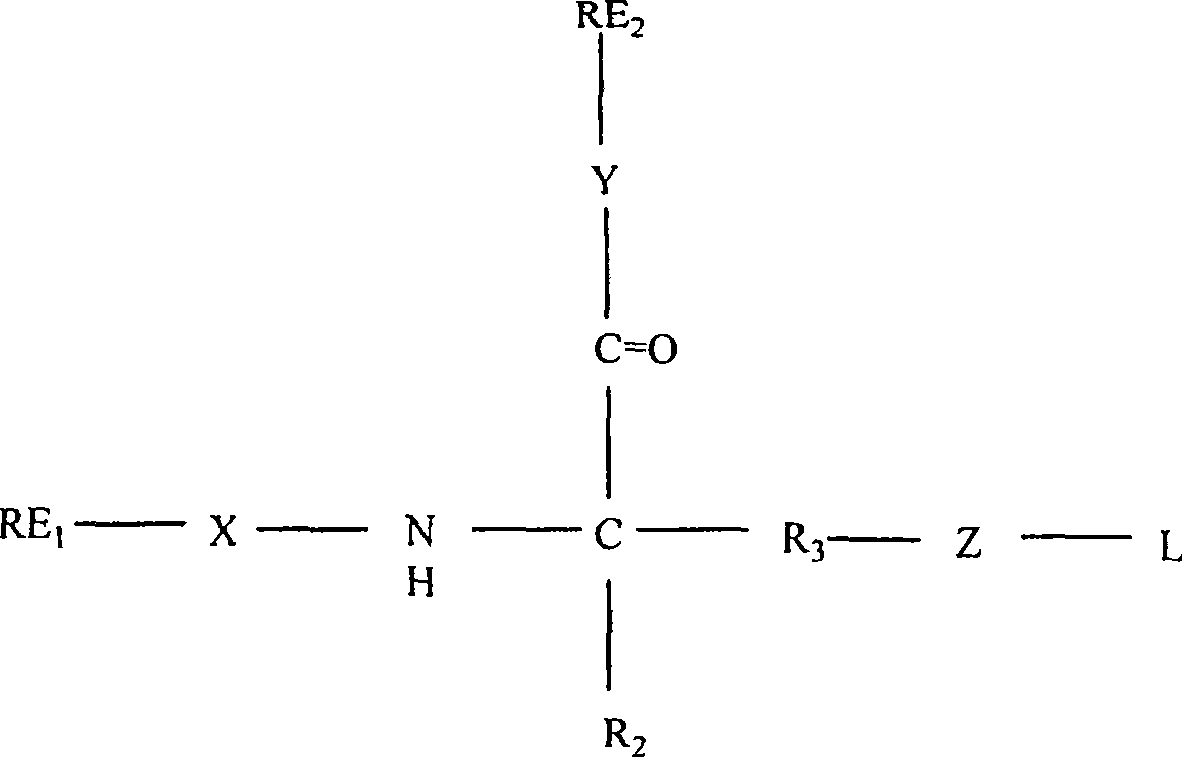
其中:X,Y,Z,R2,R3,RE1,RE2和L如下文所述。where: X, Y, Z, R 2 , R 3 , RE 1 , RE 2 and L are as described below.
附图说明 Description of drawings
图1用示意图举例说明按照本发明使用4种不同结构单元制备配体结合位点的受体的一个实施方案的二维表示。Figure 1 schematically illustrates a two-dimensional representation of one embodiment of a receptor according to the invention using four different building blocks to make a ligand binding site.
图2用示意图举例说明4结构单元的分子构型实施方案的二维和三维表示,每个结构单元包括识别元件,构架,和与载体偶联的接头(固定/锚定)。Figure 2 schematically illustrates two-dimensional and three-dimensional representations of an embodiment of the molecular configuration of four building blocks, each building block comprising a recognition element, a framework, and a linker coupled to a carrier (immobilization/anchoring).
图3A用示意图举例说明在载体表面上按照本发明的载体底面和结构单元的代表性结构。FIG. 3A schematically illustrates a representative structure of a carrier base and structural elements according to the invention on a carrier surface.
图3B用示意图举例说明与信号元件,结构单元,和修饰的底面元件偶联的载体。Figure 3B schematically illustrates a carrier coupled to a signaling element, a building block, and a modified floor element.
图4用示意图举例说明按照本发明的候选人工受体的代表性的汇集(filing)结构,其包括胺底面和四结构单元受体。Figure 4 schematically illustrates a representative filing structure of a candidate artificial receptor according to the invention, including an amine base and a four-block receptor.
图5用示意图举例说明包括悬垂的胺或酰胺结构的玻璃载体。Figure 5 schematically illustrates a glass support comprising pendant amine or amide structures.
图6用示意图举例说明从候选人工受体中鉴定先导人工受体。Figure 6 schematically illustrates the identification of lead artificial receptors from candidate artificial receptors.
图7用示意图举例说明使用连续子集(subset)的可用结构单元来开发先导或工作人工受体。Figure 7 schematically illustrates the use of successive subsets of available building blocks to develop lead or working artificial receptors.
图8用示意图举例说明4结构单元(A,B,C,和D)组合在四边形顶点的位置异构物,和在支架上的这些异构体。支架上的位置异构体的表示包括构架A,B,C,和D和表示所关心的配体的球。Figure 8 schematically illustrates positional isomers of 4 structural units (A, B, C, and D) combined at the vertices of a quadrilateral, and these isomers on a scaffold. The representation of positional isomers on the scaffold includes frameworks A, B, C, and D and a ball representing the ligand of interest.
图9用示意图举例说明作为结构单元构架的丝氨酸和衍生结构单元以增加识别元件的反应。Figure 9 schematically illustrates serine as a building block framework and derivatizing building blocks to increase the response of recognition elements.
图10用示意图举例说明其中识别元件,接头,和手性元件可以与丝氨酸构架偶联的构型。Figure 10 schematically illustrates configurations in which recognition elements, linkers, and chiral elements can be coupled to the serine framework.
图11用示意图举例说明本发明结构单元的实施方案,所述结构单元形成含有适于结合试验配体的区域的候选人工受体。Figure 11 schematically illustrates an embodiment of the building blocks of the invention forming a candidate artificial receptor containing a region suitable for binding a test ligand.
图12用示意图举例说明本发明结构单元的实施方案,所述结构单元形成含有大分子足迹的候选人工受体。Figure 12 schematically illustrates embodiments of building blocks of the invention that form candidate artificial receptors that contain a macromolecular footprint.
图13用示意图举例说明本发明结构单元的实施方案,所述结构单元形成显示适于结合具有腔的试验配体的候选人工受体。Figure 13 schematically illustrates an embodiment of the building block of the invention forming a candidate artificial receptor shown to be suitable for binding a test ligand having a cavity.
图14用示意图举例说明用于本发明方法的HRP(式H1),HRP衍生物(式H2和H3),和试验配体和HRP偶联物的实施方案。式H4表示HRP与称为34K的氯代芳族化合物的偶联物。式H5表示HRP与称为ETU的亚乙基硫脲的偶联物。ETU包括芳基和杂环部分。式H5表示HRP与称为TCDD的多环氯化二氧杂环己烷的偶联物。Figure 14 schematically illustrates embodiments of HRP (Formula H1), HRP derivatives (Formulas H2 and H3), and test ligands and HRP conjugates useful in the methods of the present invention. Formula H4 represents a conjugate of HRP with a chlorinated aromatic compound known as 34K. Formula H5 represents the conjugate of HRP with ethylenethiourea known as ETU. ETU includes aryl and heterocyclic moieties. Formula H5 represents a conjugate of HRP with a polycyclic chlorinated dioxane known as TCDD.
图15A举例说明图15B-20和22的条形图的钥匙(key)。该钥匙鉴定对于氨基玻璃,对于乙酰化的氨基玻璃,对于同质固定的结构单元TyrA2B2(22),TyrA4B4(44),和TyrA6B6(66)中的每一个,和对于候选人工受体TyrA2B2加上TyrA4B4(22/44);TyrA2B2加上TyrA6B6(22/66);TyrA4B4加上TyrA6B6(44/66); 和TyrA2B2,TyrA4B4,加上TyrA6B6(22/44/66)的条棒。包括两个结构单元的人工受体的每个条棒表示为2个相邻垂直条带或片段。包括3个结构单元的人工受体的条棒表示为3个相邻垂直条带或片段。Figure 15A illustrates the keys of the bar graphs of Figures 15B-20 and 22. This key identifies for aminoglasses, for acetylated aminoglasses, for each of the homogeneously immobilized building blocks TyrA2B2 (22), TyrA4B4 (44), and TyrA6B6 (66), and for the candidate artificial acceptor TyrA2B2 plus TyrA4B4 (22/44); TyrA2B2 plus TyrA6B6 (22/66); TyrA4B4 plus TyrA6B6 (44/66); and TyrA2B2, TyrA4B4, plus TyrA6B6 (22/44/66) bars. Each bar of an artificial receptor comprising two structural units is represented as 2 adjacent vertical strips or segments. Bars for artificial receptors comprising 3 building blocks are represented as 3 adjacent vertical strips or segments.
图15B举例说明天然HRP,乙酰化的氨基-HRP,和氨基-HRP的TCDD衍生物的结合模式比较的条形图。该图举例说明该试验配体和这些对照衍生物与下列各项的结合:氨基玻璃,乙酰化氨基玻璃,同质固定的结构单元TyrA2B2,TyrA4B4,和TyrA6B6中的每一个,和候选人工受体TyrA2B2加上TyrA4B4;TyrA2B2加上TyrA6B6;TyrA4B4加上TyrA6B6;和TyrA2B2,TyrA4B4,加上TyrA6B6。包括接头,酪氨酸构架,和识别元件AxBy的结构单元的缩写为TyrAxBy。Figure 15B illustrates a bar graph comparing the binding modes of native HRP, acetylated amino-HRP, and TCDD derivatives of amino-HRP. The figure illustrates the binding of the test ligand and these control derivatives to: aminoglass, acetylated aminoglass, each of the homogeneously immobilized building blocks TyrA2B2, TyrA4B4, and TyrA6B6, and candidate artificial receptors TyrA2B2 plus TyrA4B4; TyrA2B2 plus TyrA6B6; TyrA4B4 plus TyrA6B6; and TyrA2B2, TyrA4B4, plus TyrA6B6. The abbreviation for the structural unit comprising linker, tyrosine framework, and recognition element AxBy is TyrAxBy.
图16举例说明显示氨基-HRP与下列各项的结合模式的再现性的条形图:氨基玻璃,乙酰化氨基玻璃,同质固定的结构单元TyrA2B2,TyrA4B4,和TyrA6B6中的每一个,和候选人工受体TyrA2B2加上TyrA4B4;TyrA2B2加上TyrA6B6;TyrA4B4加上TyrA6B6;和TyrA2B2,TyrA4B4,加上TyrA6B6。Figure 16 illustrates a bar graph showing the reproducibility of the binding mode of amino-HRP to: aminoglass, acetylated aminoglass, each of the homogeneously immobilized building blocks TyrA2B2, TyrA4B4, and TyrA6B6, and candidate Artificial receptors TyrA2B2 plus TyrA4B4; TyrA2B2 plus TyrA6B6; TyrA4B4 plus TyrA6B6; and TyrA2B2, TyrA4B4, plus TyrA6B6.
图17举例说明以下各项的结合模式比较的条形图:天然HRP(式H1),氨基-HRP(式H2),乙酰化的氨基-HRP(式H3),氨基-HRp的34K衍生物(式H4),氨基-HRP的TCDD衍生物(式H6),和氨基-HRP的ETU衍生物(式H5)。该图举例说明这些试验配体偶联物和这些对照衍生物与下列各项的结合:氨基玻璃,乙酰化氨基玻璃,同质固定的结构单元TyrA2B2,TyrA4B4,和TyrA6B6中的每一个,和候选人工受体TyrA2B2加上TyrA4B4;TyrA2B2加上TyrA6B6;TyrA4B4加上TyrA6B6;和TyrA2B2,TyrA4B4,加上TyrA6B6。Figure 17 illustrates a bar graph comparing the binding modes of: native HRP (Formula H1), Amino-HRP (Formula H2), acetylated Amino-HRP (Formula H3), 34K derivatives of Amino-HRp ( Formula H4), TCDD derivatives of amino-HRP (Formula H6), and ETU derivatives of amino-HRP (Formula H5). This figure illustrates the binding of these test ligand conjugates and these control derivatives to: aminoglass, acetylated aminoglass, each of the homogeneously immobilized building blocks TyrA2B2, TyrA4B4, and TyrA6B6, and candidate Artificial receptors TyrA2B2 plus TyrA4B4; TyrA2B2 plus TyrA6B6; TyrA4B4 plus TyrA6B6; and TyrA2B2, TyrA4B4, plus TyrA6B6.
图18举例说明使用测定结合的动力学和热力学方案,氨基-HRP的ETU衍生物(式H2)的结合模式比较的条形图。该图举例说明该试验配体偶联物与以下各项的结合:氨基玻璃,乙酰化氨基玻璃,同质固定的结构单元TyrA2B2,TyrA4B4,和TyrA6B6中的每一个,和候选人工受体TyrA2B2加上TyrA4B4;TyrA2B2加上TyrA6B6;TyrA4B4加上TyrA6B6;和TyrA2B2,TyrA4B4,加上TyrA6B6。Figure 18 illustrates a bar graph comparing the binding modes of the ETU derivative of amino-HRP (Formula H2) using a kinetic and thermodynamic protocol for determining binding. The figure illustrates the binding of this assay ligand conjugate to: aminoglass, acetylated aminoglass, each of the homogeneously immobilized building blocks TyrA2B2, TyrA4B4, and TyrA6B6, and the candidate artificial receptor TyrA2B2 plus On TyrA4B4; TyrA2B2 plus TyrA6B6; TyrA4B4 plus TyrA6B6; and TyrA2B2, TyrA4B4, plus TyrA6B6.
图19举例说明使用类似于图18的实验所用的那些,氨基-HRP的ETU衍生物(式H5)的结合模式比较的条形图。在本发明中,将管温育1,2,4,10,和24小时。Figure 19 illustrates a bar graph comparing the binding modes of the ETU derivative of amino-HRP (Formula H5) using experiments similar to those used in Figure 18. In the present invention, tubes were incubated for 1, 2, 4, 10, and 24 hours.
图20举例说明3个条形图(基于图16所示数据)以及试验配体的LogP数据。Figure 20 illustrates 3 bar graphs (based on the data shown in Figure 16) along with LogP data for test ligands.
图21举例说明0.1μg/ml HRP--试验配体偶联物的OD数据对试验配体偶联物的LogP的图表。图21的上图绘制对于n=1,同质结构单元的值。下图绘制对于候选受体的值。在该图中,和贯穿本申请,TyrAB结构单元可以进一步缩写仅为A和B的编号。例如,TyrA4B4可以缩写[44]。包括多个结构单元的候选受体可以类似地缩写。例如,包括TyrA4B4加上TyrA6B6的候选受体可以被缩写[44/66]。Figure 21 illustrates a graph of OD data for 0.1 μg/ml HRP--test ligand conjugates versus LogP for test ligand conjugates. The upper panel of Figure 21 plots the values of the homogeneous structural unit for n=1. The lower graph plots the values for candidate receptors. In this figure, and throughout this application, the TyrAB building blocks may be further abbreviated with only A and B numbers. For example, TyrA4B4 can be abbreviated [44]. Candidate receptors comprising multiple building blocks can be abbreviated similarly. For example, candidate receptors comprising TyrA4B4 plus TyrA6B6 can be abbreviated [44/66].
图22举例说明比较含有2种和3种结构单元组合的候选受体的数据的条形图,所述结构单元结合乙酰化的氨基HRP对照和三种34K,TCDD和ETU试验配体偶联物。Figure 22 illustrates a bar graph comparing data for candidate receptors containing combinations of 2 and 3 building blocks that bind an acetylated amino HRP control and three 34K, TCDD and ETU test ligand conjugates .
图23用示意图举例说明乙酰化的氨基HRP与衍生化的玻璃,同质固定结构单元,和候选受体的结合。候选受体包括2,3,和4组合的5种结构单元。表9列出在图23和24中结果出现的顺序,其是关于底管,固定结构单元,2个结构单元组合的候选受体,3个结构单元组合的候选受体,和4个结构单元组合的候选受体。Figure 23 schematically illustrates the binding of acetylated amino-HRP to derivatized glass, homogeneous immobilization building blocks, and candidate receptors. Candidate receptors include 5 building blocks in combinations of 2, 3, and 4. Table 9 lists the order in which the results appear in Figures 23 and 24 for bottom tubes, fixed building blocks, candidate receptors for combinations of 2 building blocks, candidate receptors for combinations of 3 building blocks, and 4 building blocks Combination candidate receptors.
图24用示意图举例说明氨基-HRP-34K试验配体偶联物(式H4)与衍生化玻璃,同质固定结构单元,和在表9中鉴定的候选受体的结合。候选受体包括2,3,和4组合的5种结构单元。24 schematically illustrates the binding of amino-HRP-34K test ligand conjugate (Formula H4) to derivatized glass, homogeneous immobilized building blocks, and candidate receptors identified in Table 9. FIG. Candidate receptors include 5 building blocks in combinations of 2, 3, and 4.
图25用示意图举例说明定性分成4个象限的结合空间,所述象限-大的亲水性的,大的疏水性的,小的亲水性的,和小的亲脂性的。Figure 25 schematically illustrates the qualitative division of the binding space into 4 quadrants - large hydrophilic, large hydrophobic, small hydrophilic, and small lipophilic.
图26举例说明体积对81种结构单元的logP的图表,所述结构单元包括9A和9B识别元件中的每一个。Figure 26 illustrates a plot of volume versus logP for 81 building blocks comprising each of the 9A and 9B recognition elements.
图27A和27B举例说明体积对结构单元组合logP的图表,所述结构单元含有形成候选人工受体的A和B识别元件。图27B表示图27A的详图。该详图举例说明候选人工受体均匀地填充结合空间。Figures 27A and 27B illustrate plots of volume versus logP for combinations of building blocks containing A and B recognition elements that form candidate artificial receptors. Figure 27B shows a detail view of Figure 27A. This detailed diagram illustrates that the candidate artificial receptor uniformly fills the binding space.
图28举例说明由结构单元组成的候选人工受体能够按照它们最近的邻居(neighbor),由一个或多个相同结构单元组成的其它候选人工受体分类和评估。Figure 28 illustrates that candidate artificial receptors composed of building blocks can be sorted and evaluated according to their nearest neighbors, other candidate artificial receptors composed of one or more of the same building blocks.
具体实施方式 Detailed ways
定义definition
固定在例如载体上的结构单元组合可以是候选人工受体,先导人工受体,或工作人工受体。即,载玻片上的异质结构单元点或包被在管或孔上的多个结构单元可以是候选人工受体,先导人工受体,或工作人工受体。候选人工受体可以变成人工受体,其可以变成工作人工受体。A combination of building blocks immobilized on, for example, a support can be a candidate artificial receptor, a lead artificial receptor, or a working artificial receptor. That is, a heterogeneous building block spot on a glass slide or multiple building blocks coated on a tube or well can be a candidate artificial receptor, lead artificial receptor, or working artificial receptor. A candidate artificial receptor can become an artificial receptor, which can become a working artificial receptor.
如本文所用短语“候选人工受体”是指固定的结构单元组合,其可以试验来确定特定试验配体是否与该组合结合。在一个实施方案中,候选人工受体可以是载玻片上的异质结构单元点或管或孔上包被的多个结构单元。The phrase "candidate artificial receptor" as used herein refers to a fixed combination of building blocks that can be tested to determine whether a particular test ligand binds to the combination. In one embodiment, candidate artificial receptors may be heterogeneous building block spots on a glass slide or multiple building blocks coated on a tube or well.
如本文所用短语“先导人工受体”是指与预定浓度的试验配体,例如10,1,0.1,或0.01μg/ml,或1,0.1,或0.01ng/ml的试验配体结合的固定结构单元组合。在一个实施方案中,先导人工受体可以是载玻片上的异质结构单元点或管或孔上包被的多个结构单元。The phrase "lead artificial receptor" as used herein refers to an immobilized receptor that binds to a predetermined concentration of the test ligand, such as 10, 1, 0.1, or 0.01 μg/ml, or 1, 0.1, or 0.01 ng/ml of the test ligand. Combination of structural units. In one embodiment, the lead artificial receptor can be a heterogeneous building block spot on a glass slide or a plurality of building blocks coated on a tube or well.
如本文所用短语“工作人工受体”是指具有有效分类或鉴定试验配体的选择性和/或灵敏性的结构单元组合。即,与该结构单元组合结合描述试验配体是属于一类试验配体或是特定的试验配体。工作人工受体可以典型地结合浓度为例如100,10,1,0.1,0.01,或0.001ng/ml的配体。在一个实施方案中,工作人工受体可以是载玻片上的异质结构单元点或管,孔,载玻片,或其它载体上或支架上包被的多个结构单元。The phrase "working artificial receptor" as used herein refers to a combination of building blocks having selectivity and/or sensitivity effective for classifying or identifying a test ligand. That is, in combination with the structural unit, it is described whether the test ligand belongs to a class of test ligands or a specific test ligand. A working artificial receptor can typically bind ligand at a concentration of, for example, 100, 10, 1, 0.1, 0.01, or 0.001 ng/ml. In one embodiment, the working artificial receptors may be heterogeneous building block spots on a glass slide or multiple building blocks coated on a tube, well, glass slide, or other support or scaffold.
如本文所用短语“工作人工受体复合体”是指多个人工受体,每个为结构单元的组合,其以有效分类或鉴定试验配体的选择性和/或灵敏性的模式结合试验配体。即,与复合体的几个受体结合描述试验配体是属于一类试验配体或是特定的试验配体。复合体的单个受体可以各自与不同浓度或不同亲和力的配体结合。典型地,复合体中的单独受体各自与浓度为100,10,1,0.1,0.01,或0.001ng/ml的配体结合。在一个实施方案中,工作人工受体复合体可以是载玻片上的多个异质结构单元点或区域;多个孔,每个包被有不同的结构单元组合;或多个管,每个包被有不同的结构单元组合。The phrase "working artificial receptor complex" as used herein refers to a plurality of artificial receptors, each as a combination of structural units, which bind a test ligand in a pattern effective for classifying or identifying the selectivity and/or sensitivity of the test ligand. body. That is, binding to several receptors of the complex describes whether the test ligand belongs to a class of test ligands or to a specific test ligand. The individual receptors of the complex may each bind ligands at different concentrations or with different affinities. Typically, individual receptors in the complex are each bound to ligand at a concentration of 100, 10, 1, 0.1, 0.01, or 0.001 ng/ml. In one embodiment, the working artificial receptor complex can be multiple heterogeneous building block spots or regions on a glass slide; multiple wells, each coated with a different combination of building blocks; or multiple tubes, each Coats have different combinations of structural units.
如本文所用,术语“结构单元”是指人工受体的分子元件,该人工受体包括可以想象为或包括一个或多个接头,一个或多个构架,和一个或多个识别元件的部分。在一个实施方案中,结构单元包括接头,构架,和一个或多个识别元件。结构单元与配体相互作用。As used herein, the term "structural unit" refers to a molecular element of an artificial receptor comprising portions that can be imagined as or include one or more linkers, one or more frameworks, and one or more recognition elements. In one embodiment, a building block includes a linker, a framework, and one or more recognition elements. The building block interacts with the ligand.
如本文所用,术语“接头”是指结构单元的一部分或官能团,其用于载体或者例如通过共价键或静电相互作用将结构单元与载体偶联。As used herein, the term "linker" refers to a part or functional group of a structural unit, which is used in a carrier or couples a structural unit to a carrier, eg, by covalent bonds or electrostatic interactions.
如本文所用,术语“构架”是指包括接头或与接头偶联和与一个或多个识别元件偶联的结构单元的一部分。As used herein, the term "framework" refers to a portion of a structural unit comprising a linker or coupled to a linker and coupled to one or more recognition elements.
如本文所用,术语“识别元件”是指与构架偶联但不与载体共价偶联的结构单元的一部分。尽管不对本发明限制,识别元件典型地提供或形成一个或多个与配体相互作用的基团,表面,或空间。As used herein, the term "recognition element" refers to a portion of a structural unit that is coupled to a framework but not covalently coupled to a carrier. Although not limiting of the invention, a recognition element typically provides or forms one or more groups, surfaces, or spaces for interaction with a ligand.
如本文所用,短语“多个结构单元”是指在混合物,试剂盒中,或在载体或支架上的两个或多个结构不同的结构单元。每个结构单元具有特定结构,复合结构单元,或多个结构单元的使用是指多于一种的这些特定结构。结构单元或多个结构单元不是意指每个具有相同结构的多个分子。As used herein, the phrase "a plurality of structural units" refers to two or more structural units of different structures in a mixture, in a kit, or on a carrier or scaffold. Each structural unit has a specific structure, a composite structural unit, or the use of multiple structural units refers to more than one of these specific structures. A structural unit or multiple structural units does not mean a plurality of molecules each having the same structure.
如本文所用,短语“结构单元组合”是指一起在点,区域中的多个结构单元,或候选物,先导,或工作人工受体。结构单元组合可以是一组结构单元的子集。例如,结构单元组合可以是一组N(例如N=10-200)个结构单元中的2,3,4,5,或6个结构单元的可能组合中的一种。As used herein, the phrase "building block combination" refers to multiple building blocks together in a spot, region, or candidate, lead, or working artificial receptor. A combination of structural units may be a subset of a set of structural units. For example, the combination of structural units may be one of the possible combinations of 2, 3, 4, 5, or 6 structural units in a set of N (eg, N=10-200) structural units.
如本文所用,短语“同质固定结构单元”和“多个同质固定结构单元”是指其上或内部已经固定一种结构单元的载体或点。As used herein, the phrases "homogeneous immobilization structural unit" and "homogeneous immobilization structural unit" refer to a support or point on or in which a structural unit has been immobilized.
如本文所用,短语“活化结构单元”是指例如在载体上活化使其容易与官能团形成共价键的结构单元。可以将包括羧基的结构单元转化为包括活化酯基的结构单元,其为活化结构单元。包括活化酯基的活化结构单元可以例如与胺反应形成共价键。As used herein, the phrase "activated structural unit" refers to a structural unit that is activated, for example, on a support to facilitate the formation of a covalent bond with a functional group. A structural unit comprising a carboxyl group can be converted into a structural unit comprising an activated ester group, which is an activated structural unit. An activated structural unit comprising an activated ester group can, for example, be reacted with an amine to form a covalent bond.
如本文所用,关于与载体偶联的结构单元所用的术语“固定的”是指被稳定定位在载体上以致它们在载体上不迁移的结构单元。可以通过共价偶联,通过离子相互作用,或通过静电相互作用,如离子配对将结构单元固定。As used herein, the term "immobilized" as used with respect to structural units coupled to a support refers to structural units that are stably positioned on the support such that they do not migrate on the support. Building blocks can be immobilized by covalent coupling, by ionic interactions, or by electrostatic interactions such as ion pairing.
如本文所用载体,管,孔,或表面的“区域”是指载体,管,孔,或表面的连续部分。与区域偶联的结构单元典型地是指在该区域彼此接近的结构单元。A "region" of a support, tube, well, or surface as used herein refers to a continuous portion of the support, tube, well, or surface. Structural units coupled to a region typically refer to structural units that are close to each other in that region.
如本文所用,分子上的“大(bulky)”基团大于包括7或8个碳原子的部分。As used herein, a "bulky" group on a molecule is larger than a moiety comprising 7 or 8 carbon atoms.
如本文所用,分子上的“小”基团是氢,甲基,或另一小于包括4个碳原子的部分的基团。As used herein, a "small" group on a molecule is hydrogen, methyl, or another group smaller than a moiety comprising 4 carbon atoms.
如本文所用,术语“平层(lawn)”是指载体上官能团的层,点,或区域,典型地密度为足以将偶联的结构单元彼此接近地放置。As used herein, the term "lawn" refers to a layer, spot, or region of functional groups on a support, typically at a density sufficient to place coupled structural units in close proximity to each other.
如本文所用,术语“烷基”是指饱和脂族基团,包括直链烷基,支链烷基,环烷(脂环)基,烷基取代的环烷基,和环烷基取代的烷基。在某些实施方案中,直链或支链烷基在它的主链中含有30个或更少的碳原子(例如对于直链C1-C12,对于支链C1-C6),同样,环烷基在它们的环状结构中典型地含有3-10个碳原子,优选含有5,6,或7个碳。As used herein, the term "alkyl" refers to a saturated aliphatic group, including straight-chain alkyl, branched-chain alkyl, cycloalkane (alicyclic) group, alkyl-substituted cycloalkyl, and cycloalkyl-substituted alkyl. In certain embodiments, a straight or branched chain alkyl group contains 30 or fewer carbon atoms in its backbone (e.g., for straight chain C 1 -C 12 , for branched chain C 1 -C 6 ), Likewise, cycloalkyl groups typically contain 3-10 carbon atoms, preferably 5, 6, or 7 carbons in their ring structure.
本文所用的术语“烷基”是指“未取代的烷基”和“取代的烷基”,后者是指含有取代基的烷基部分,该取代基替代烃主链的一个或多个碳上的氢。这些取代基可以包括例如卤素,羟基,羰基(例如羧基,酯,或甲酰基,或酮),硫代羰基(如硫酯,硫代乙酸酯,或硫代甲酸酯),烷氧基,磷酰基,磷酸酯,亚膦酸酯,氨基,酰氨基,脒,亚胺,氰基,硝基,叠氮基,巯基,烷硫基,硫酸酯,磺酸酯,氨磺酰基,亚磺酰氨基,磺酰基,杂环基,芳烷基,或芳族或杂芳族部分。如果合适,在烃链上取代的部分本身可以被取代。例如,取代烷基的取代基可以包括取代和未取代形式的上面所列的基团。The term "alkyl" as used herein refers to both "unsubstituted alkyl" and "substituted alkyl", the latter of which refers to an alkyl moiety containing substituents replacing one or more carbons of the hydrocarbon backbone on the hydrogen. These substituents may include, for example, halogen, hydroxy, carbonyl (such as carboxyl, ester, or formyl, or ketone), thiocarbonyl (such as thioester, thioacetate, or thioformate), alkoxy , phosphoryl, phosphate, phosphonite, amino, amido, amidine, imine, cyano, nitro, azido, mercapto, alkylthio, sulfate, sulfonate, sulfamoyl, sulfonyl Sulfonylamino, sulfonyl, heterocyclyl, aralkyl, or an aromatic or heteroaromatic moiety. Moieties substituted on the hydrocarbon chain may themselves be substituted, if appropriate. For example, substituents for substituted alkyl groups may include both substituted and unsubstituted forms of the groups listed above.
如本文所用,术语“芳烷基”是指用芳基(例如芳基或杂芳基)取代的烷基。As used herein, the term "aralkyl" refers to an alkyl group substituted with an aryl group (eg, aryl or heteroaryl).
如本文所用,术语“链烯基”和“炔基”是指不饱和脂族基,其长度类似并且任选为上述烷基取代,但分别包含至少一个双键或三键。As used herein, the terms "alkenyl" and "alkynyl" refer to unsaturated aliphatic groups of similar length and optionally substituted with an alkyl group as described above, but containing at least one double or triple bond, respectively.
本文所用的术语“芳基”包括5-,6-和7-元单环芳基,其可以包括0-4个杂原子,例如苯,吡咯,呋喃,噻吩,咪唑,噁唑,噻唑,三唑,吡唑,吡啶,吡嗪,哒嗪和嘧啶等。这些在环状结构中含有杂原子的芳基也可以称为“芳杂环化合物”或“杂芳族化合物”。芳环可以在一个或多个环位点被诸如上述关于烷基的这些取代基所取代。术语“芳基”还包括含有两个或多个环状环的多核环系统,其中两个碳为两个邻接环所共有(环为“稠合环”),其中至少一个环是芳环,例如,另一环状环可以是环烷基,环烯基,环炔基,芳基核/或杂环基。The term "aryl" as used herein includes 5-, 6- and 7-membered monocyclic aromatic groups which may contain 0-4 heteroatoms, such as benzene, pyrrole, furan, thiophene, imidazole, oxazole, thiazole, tri Azole, pyrazole, pyridine, pyrazine, pyridazine and pyrimidine etc. These aryl groups containing heteroatoms in the ring structure may also be referred to as "heteroaromatic compounds" or "heteroaromatic compounds". Aryl rings may be substituted at one or more ring sites by substituents such as those described above for alkyl groups. The term "aryl" also includes polynuclear ring systems containing two or more cyclic rings in which two carbons are shared by two adjacent rings (the rings are "fused rings"), at least one of which is aromatic, For example, another cyclic ring can be a cycloalkyl, cycloalkenyl, cycloalkynyl, aryl nucleus and/or heterocyclyl.
如本文所用,术语“杂环”或“杂环基”是指3-12元环状结构,更优选3-7元环,其环状结构包括1-4个杂原子。杂环基包括例如噻吩,噻蒽,呋喃,吡喃,异苯并呋喃,苯并吡喃,呫吨,吩氧硫杂环己二烯,吡咯,咪唑,吡唑,异噻唑,异噁唑,吡啶,吡嗪,嘧啶,哒嗪,中氮茚,异吲哚,吲哚,吲唑,嘌呤,喹嗪,异喹啉,喹啉,酞嗪,1,5-二氮杂萘,喹喔啉,喹唑啉,噌啉,蝶啶,咔唑,咔啉,菲啶,吖啶,嘧啶,菲咯啉,吩嗪,吩吡嗪,吩噻嗪,呋咱,吩噁嗪,吡咯烷,oxolane,thiolane,噁唑,哌啶,哌嗪,吗啉,内酯,内酰胺如β-丙内酰胺和吡咯烷酮,磺内酰胺,磺酸内酯等。杂环可以在一个或多个位点被诸如关于烷基所述的这些取代基取代。As used herein, the term "heterocycle" or "heterocyclyl" refers to a 3-12 membered ring structure, more preferably a 3-7 membered ring, which ring structure includes 1-4 heteroatoms. Heterocyclic groups include, for example, thiophene, thianthracene, furan, pyran, isobenzofuran, benzopyran, xanthene, phenoxythiine, pyrrole, imidazole, pyrazole, isothiazole, isoxazole , pyridine, pyrazine, pyrimidine, pyridazine, indolizine, isoindole, indole, indazole, purine, quinozine, isoquinoline, quinoline, phthalazine, 1,5-naphthyridine, quinone Oxaline, quinazoline, cinnoline, pteridine, carbazole, carboline, phenanthridine, acridine, pyrimidine, phenanthroline, phenazine, phenanthrazine, phenothiazine, furoxan, phenoxazine, pyrrole Alkane, oxolane, thiolane, oxazole, piperidine, piperazine, morpholine, lactone, lactam such as β-propiolactam and pyrrolidone, sultone, sultone, etc. Heterocycles may be substituted at one or more positions by substituents such as those described for alkyl groups.
如本文所用,此处所用的术语“杂原子”是指除了碳或氢以外的任何元素的原子,如氮,氧,硫和磷。As used herein, the term "heteroatom" as used herein refers to an atom of any element other than carbon or hydrogen, such as nitrogen, oxygen, sulfur and phosphorus.
制备和使用人工受体的方法Methods of making and using artificial receptors
制备人工受体Preparation of artificial receptors
本发明涉及制备人工受体或候选人工受体的方法。在一个实施方案中,该方法包括在载体上制备点或区域,该点或区域包括多个固定在载体上的结构单元。该方法可以包括在固体载体上形成多个点,每点包括多个结构单元,和在每点中将多个结构单元与固体载体偶联。在一个实施方案中,这些点的阵列被称为异质结构单元阵列。The present invention relates to methods of making artificial receptors or candidate artificial receptors. In one embodiment, the method comprises preparing a spot or area on the support, the spot or area comprising a plurality of structural units immobilized on the support. The method may include forming a plurality of spots on a solid support, each spot comprising a plurality of building blocks, and coupling the plurality of building blocks to the solid support in each spot. In one embodiment, the array of dots is referred to as a heterogeneous building block array.
可以活化结构单元以与载体上的官能团反应。偶联可以在形成结构单元或活化的结构单元的点之后自发发生。该方法可以包括混合多个活化结构单元和将混合物用于形成点。备选地,该方法可以包括将单独的活化结构单元点在载体上。The building blocks can be activated to react with functional groups on the support. Coupling can occur spontaneously following the formation of building blocks or points of activated building blocks. The method may include mixing a plurality of activated building blocks and using the mixture to form dots. Alternatively, the method may comprise spotting individual activation building blocks onto a support.
通过诸如针点样仪(spotter)(有时称为印刷机)的方法和装置可以实现在载体上形成点,其例如可以在显微镜载玻片上点加10,000个至多于100,000个的点。其它点样仪包括压电点样仪(类似喷墨打印机)和电磁点样仪,其也可以在显微镜载玻片上点加10,000个至多于100,000个的点。在点样前可以使用常规的混合阀或歧管来混合活化的结构单元。这些阀门或歧管可以在常规基于微处理器的控制器的控制下以选择结构单元和试剂的量。备选地,可以作为混合物提供活化结构单元,所述混合物例如通过机器人系统在微孔板中大量制备。Spotting on the support can be achieved by methods and devices such as a spotter (sometimes called a printer), which can spot, for example, 10,000 to more than 100,000 spots on a microscope slide. Other spotters include piezoelectric spotters (like inkjet printers) and electromagnetic spotters, which can also spot from 10,000 to more than 100,000 spots on microscope slides. Conventional mixing valves or manifolds can be used to mix activated building blocks prior to application. These valves or manifolds can be under the control of conventional microprocessor-based controllers to select the quantities of building blocks and reagents. Alternatively, the activated building blocks can be provided as a mixture prepared in large quantities in microwell plates, for example by robotic systems.
该点样产生结构单元异质组合的点的微阵列,其每一个可以是候选人工受体。微阵列中的每点包括统计学显著量的每个结构单元。例如,尽管不对本发明限制,认为每个大小足够小可以在显微镜载玻片上装配100,000个的微点可以包括约320兆簇的4结构单元。This spotting produces a microarray of spots of a heterogeneous combination of building blocks, each of which can be a candidate artificial receptor. Each spot in the microarray includes a statistically significant amount of each building block. For example, while not limiting the invention, it is believed that microdots each of a size small enough to fit 100,000 on a microscope slide may comprise approximately 320 megaclusters of 4 building blocks.
在一个实施方案中,本发明方法包括制备受体表面。制备受体表面可以包括在固体载体上形成区域,该区域包括多个结构单元,和在区域内将多个结构单元与固体载体偶联。方法可以包括混合多个活化结构单元和将混合物用于形成一个或多个区域。备选地,方法可以包括将单独的活化结构单元用于载体上的区域。例如通过用结构单元溶液浸渍载体的一部分可以完成在载体上形成区域。In one embodiment, the method of the invention comprises preparing a receptor surface. Preparing the receptor surface may include forming a domain on a solid support, the domain comprising a plurality of structural units, and coupling the plurality of structural units to the solid support within the domain. Methods can include mixing a plurality of activated building blocks and using the mixture to form one or more regions. Alternatively, the method may comprise the use of separate activation building blocks for regions on the support. Forming the domains on the support can be accomplished, for example, by impregnating a portion of the support with a solution of the building blocks.
在一个实施方案中,包被载体基底的管或孔可以填充活化的结构单元(例如包含活化结构单元的溶液),其与载体基底偶联。例如,载体可以是包被多个结构单元的玻璃管或孔。玻璃管或孔的表面可以包被多个结构单元成为共价结合的涂层(coating)。产生的包括结构单元的涂层可以称为包括异质结构单元。In one embodiment, a tube or well coated with a carrier substrate can be filled with an activated building block (eg, a solution comprising the activated building block), which is coupled to the carrier substrate. For example, the support may be a glass tube or well coated with a plurality of structural units. The surface of the glass tube or well can be coated with multiple structural units as a covalently bonded coating. The resulting coating comprising structural units may be said to comprise heterogeneous structural units.
优选地,该方法产生表面或涂层,其结构单元密度足以提供多于一个结构单元与配体相互作用。即,结构单元可以彼此邻近。不同结构单元的邻近可以通过测定试验配体与仅包括一个结构单元的表面或多个表面相比,与包括多个结构单元的表面的不同(优选更多)结合来检测。Preferably, the method produces a surface or coating with a density of building blocks sufficient to provide for more than one building block to interact with the ligand. That is, the structural units may be adjacent to each other. Proximity of different building blocks can be detected by determining different (preferably more) binding of a test ligand to a surface comprising multiple building blocks compared to a surface or surfaces comprising only one building block.
该方法可以以2,3,4,或更多结构单元的组合将结构单元加在或点在载体上。对于使用大容量管或孔的实施方案,易管理的结构单元组提供优选提供少于数百或数千种结构单元组合。例如,例如,在本文中,4,5,或6结构单元组提供易管理量的2,3,或4结构单元组合。在一个实施方案中,可以将方法用于生产多个管,每管在其表面上已经固定结构单元的异质组合。In this method, the structural units can be added or spotted on the carrier in a combination of 2, 3, 4, or more structural units. For embodiments using large volume tubes or wells, a manageable set of building blocks provides preferably fewer than hundreds or thousands of building block combinations. For example, herein, for example, groups of 4, 5, or 6 building blocks provide manageable amounts of 2, 3, or 4 building block combinations. In one embodiment, the method can be used to produce a plurality of tubes, each tube having a heterogeneous combination of structural units immobilized on its surface.
在一个实施方案中,本发明方法可以用于生产固体载体,其表面上具有多个区域或点,每个区域或点包括多个结构单元。例如,方法可以包括将载玻片点样多个点,每点包括多个结构单元。该点可以称为包括异质结构单元。In one embodiment, the method of the invention can be used to produce a solid support having a plurality of regions or spots on its surface, each region or spot comprising a plurality of structural units. For example, a method may include spotting a slide at a plurality of spots, each spot comprising a plurality of structural units. This point can be said to include heterogeneous structural units.
每个点可以包括密度足以提供多于一个结构单元与配体相互作用的结构单元。这些相互作用可以通过如上关于区域所述测定。方法典型地包括点样结构单元以使每点与其它分离。多个结构单元点在此处被称为点阵列。Each spot may include building blocks in a density sufficient to provide more than one building block for interaction with the ligand. These interactions can be determined as described above for regions. Methods typically include spotting building blocks to separate each spot from the others. A plurality of structural unit points is referred to herein as a point array.
在一个实施方案中,该方法以2,3,4,或更多的组合将结构单元点样。该方法在载玻片上可以形成高达100,000个或更多的点。因此,在方法的该实施方案中,易管理的结构单元组可以提供数百万种的结构单元组合。例如,在本文中,81种结构单元的组提供易管理量(1.66兆)的4结构单元组合。为了便于限定该方法中使用的载玻片的数量,在该实施方案中,一组包括多达200个结构单元,优选50-100个,优选大约80个(例如81个)结构单元。In one embodiment, the method spots building blocks in combinations of 2, 3, 4, or more. This method can form up to 100,000 or more spots on a slide. Thus, in this embodiment of the method, a manageable set of building blocks can provide millions of combinations of building blocks. For example, here, the set of 81 building blocks provides a manageable amount (1.66 trillion) of 4 building block combinations. In order to facilitate limiting the number of slides used in the method, in this embodiment a set comprises up to 200 building blocks, preferably 50-100, preferably about 80 (eg 81) building blocks.
在一个实施方案中,该方法包括在每点形成异质点的阵列,所述点从全部结构单元的子集和/或结构单元的更小组的组合制备。即,方法形成仅包括例如2或3个而不是4或5个结构单元的点。例如,方法可以从全组结构单元(例如81种或一组81种)的组合中以2和/或3个的组形成点。例如,方法可以从结构单元子集(例如81种的组中的25种)的组合中以4和/或5个的组形成点。例如,方法可以从结构单元子集(例如81种的组中的25种)的组合中以2和/或3个的组形成点。该方法可以包括形成另外的结合结构单元,先导人工受体,或结构类似结构单元的阵列。In one embodiment, the method comprises forming at each point an array of heterogeneous dots prepared from a subset of all building blocks and/or combinations of smaller groups of building blocks. That is, the method forms spots comprising only, for example, 2 or 3 structural units instead of 4 or 5. For example, methods may form points in groups of 2 and/or 3 from a combination of a full set of building blocks (eg, 81 or a set of 81). For example, methods may form points in groups of 4 and/or 5 from combinations of a subset of building blocks (eg 25 out of a group of 81). For example, methods may form points in groups of 2 and/or 3 from combinations of a subset of building blocks (eg 25 out of a group of 81). The method can include forming an array of additional binding building blocks, lead artificial receptors, or structurally similar building blocks.
在一个实施方案中,该方法包括形成包括一个或多个用作确认或评估与本发明人工受体结合的对照的点的阵列。在一个实施方案中,方法包括形成一个或多个区域,管,或孔,其用作确认或评估与本发明人工受体结合的对照。该对照点,区域,管,或孔可以不包括结构单元,仅包括单个结构单元,仅包括官能化(functionalized)的平层,或包括其组合。In one embodiment, the method comprises forming an array comprising one or more spots for use as controls for confirming or assessing binding to an artificial receptor of the invention. In one embodiment, the method includes forming one or more regions, tubes, or wells that serve as controls for confirming or assessing binding to the artificial receptors of the invention. The control spots, regions, tubes, or wells can include no structural elements, only individual structural elements, only functionalized flat layers, or combinations thereof.
该方法可以使用活化用作结构单元类型的化合物和将它们与载体偶联的已知方法将结构单元与载体偶联。共价偶联可以生产足够耐用而在数月期间内重复使用的人工受体。该方法可以使用包括活化酯的结构单元并将它们与包括胺官能团的载体偶联。该方法可以包括通过衍生活化结构单元上的羧基以形成活化酯。通过另外的实例,该方法可以将包括胺官能团的结构单元与包括羧基的载体偶联。按照该方法可以在结构单元和载体上使用的官能团对包括亲核体/亲电体对,如胺和羧基(或活化的羧基),硫醇和顺丁烯二酰亚胺,醇和羧基(或活化的羧基),其混合物等。This method can couple the building blocks to the support using known methods of activating the compounds used as the building block type and coupling them to the support. Covalent coupling can produce artificial receptors that are durable enough to be reused over a period of months. This approach can take structural units comprising activated esters and couple them to supports comprising amine functional groups. The method may include activating a carboxyl group on the structural unit by derivatization to form an activated ester. By way of further example, this method can couple structural units comprising amine functional groups to supports comprising carboxyl groups. Functional group pairs that can be used on building blocks and supports according to this method include nucleophile/electrophile pairs such as amine and carboxyl (or activated carboxyl), thiol and maleimide, alcohol and carboxyl (or activated carboxyl), mixtures thereof, etc.
载体可以包括适于与结构单元形成共价键的任何官能团。载体或结构单元可以包括官能团如醇,酚,硫醇,胺,羰基,或类似基团。载体或结构单元可以包括羧基,醇,酚,硫醇,胺,羰基,顺丁烯二酰亚胺,或可以与载体或结构单元反应的或被活化与载体或结构单元反应的类似基团。载体可以包括一种或多种这些基团。多个结构单元可以包括多个这些基团。The carrier may comprise any functional group suitable for forming a covalent bond with the structural unit. Carriers or building blocks may include functional groups such as alcohols, phenols, thiols, amines, carbonyls, or similar groups. The support or building block can include carboxyl, alcohol, phenol, thiol, amine, carbonyl, maleimide, or similar groups that can react with or be activated to react with the support or building block. A carrier may include one or more of these groups. A plurality of structural units may include a plurality of these groups.
载体或结构单元可以包括与例如烷基或芳基结合的良好的离去基团。在载体或结构单元上离去基团“良好”足以被醇,酚,硫醇,胺,羰基,或类似基团所置换。该载体或结构单元可以包括由下式表示的部分:R-X,其中X是离去基团如卤素(例如,-Cl,-Br,或-I),甲苯磺酸盐,甲磺酸盐,三氟甲磺酸酯(triflate),和R是烷基,取代的烷基,环烷基,杂环基,取代的杂环基,芳烷基,芳基,杂芳基,或杂芳基烷基。载体可以包括一种或多种这些基团。多个结构单元可以包括多个这些基团。A carrier or structural unit may include a good leaving group in combination with, for example, an alkyl or aryl group. A leaving group is sufficiently "good" to be displaced by an alcohol, phenol, thiol, amine, carbonyl, or similar group on a support or building block. The support or structural unit may comprise a moiety represented by the formula: R-X, where X is a leaving group such as a halogen (e.g., -Cl, -Br, or -I), tosylate, mesylate, tris triflate, and R is alkyl, substituted alkyl, cycloalkyl, heterocyclyl, substituted heterocyclyl, aralkyl, aryl, heteroaryl, or heteroarylalkane base. A carrier may include one or more of these groups. A plurality of structural units may include a plurality of these groups.
该方法可以使用用于组合或合成化学的多种已知载体中的任何一种(例如,显微镜载玻片,珠,树脂,凝胶等)。适当的配体包括官能化的玻璃,如官能化的载玻片或管,玻璃显微镜载玻片,玻璃板,玻璃盖玻片,玻璃珠,多微孔玻璃珠,多微孔聚合物珠(例如以商品名StratospheresTM出售的那些),硅胶载体等。The method can use any of a variety of known supports used in combinatorial or synthetic chemistry (eg, microscope slides, beads, resins, gels, etc.). Suitable ligands include functionalized glass, such as functionalized glass slides or tubes, glass microscope slides, glass plates, glass coverslips, glass beads, microporous glass beads, microporous polymer beads ( such as those sold under the tradename Stratospheres (TM ), silica gel supports, and the like.
载体典型地包括含有适于与结构单元偶联的官能团的化合物或化合物的混合物的载体基底。载体基底可以例如是显微镜载玻片上的涂层或珠,凝胶,或树脂上的官能团。已知载体基底可商购和/或包括含有官能团的接头,其为偶联的珠,凝胶,或树脂。载体基底官能团可以以1个(例如作为胺平层,另一官能团的平层,或官能团的混合物层)或例如2,3,4,5,6,或7个基团从载体上悬垂。从载体悬垂的多个官能团的基团可以想象为或可以是从载体悬垂的支架分子。A support typically comprises a support substrate comprising a compound or mixture of compounds suitable for coupling to a structural unit with a functional group. The carrier substrate can be, for example, a coating or beads on a microscope slide, a gel, or functional groups on a resin. Known carrier substrates are commercially available and/or include linkers containing functional groups, bead coupled, gels, or resins. The support substrate functional groups can be pendant from the support in 1 (eg, as a flat layer of amine, a flat layer of another functional group, or a mixture of functional groups) or, for example, 2, 3, 4, 5, 6, or 7 groups. The group of multiple functional groups pendant from the support can conceivably be or can be a scaffold molecule pendant from the support.
载体表面可以想象为包括底面和结构单元(图3A,3B,和4)。如图3A所示,将结构单元加入胺平层可以通过胺反应形成结构单元的酰胺来进行,一些胺残余在载体或候选人工受体的底面上。因此,底面可以认为是候选人工受体的特征。底面或修饰底面可以作为人工受体一部分与配体相互作用。底面上的亲核或亲电基团可以在人工受体中留下不反应,或者可以修饰它们。可以用改变底面识别性能的小基团修饰底面(图3B)。可以用当试验配体与受体结合时产生可检测信号的信号元件修饰底面(图3B)。例如,信号元件可以是荧光分子,其通过与人工受体结合淬灭。例如,信号分子可以是仅当结合发生时发荧光的分子。可以用多种底面改性剂修饰底面。例如,底面可以用信号元件和改变底面识别性能的小分子修饰。The carrier surface can be imagined as comprising a bottom surface and structural units (FIGS. 3A, 3B, and 4). As shown in Figure 3A, incorporation of building blocks into the amine flat layer can be performed by reaction of amines to form amides of the building blocks, some of which remain on the bottom surface of the support or candidate artificial receptor. Therefore, the bottom surface can be considered as a characteristic of candidate artificial receptors. The bottom surface or the modified bottom surface can interact with the ligand as part of the artificial receptor. Nucleophilic or electrophilic groups on the bottom surface can be left unreactive in artificial receptors, or they can be modified. The underside can be modified with small groups that alter the recognition properties of the underside (Fig. 3B). The bottom surface can be modified with signaling elements that generate a detectable signal when the test ligand binds to the receptor (Fig. 3B). For example, a signaling element may be a fluorescent molecule that is quenched by binding to an artificial receptor. For example, a signaling molecule may be a molecule that fluoresces only when binding occurs. The sole can be modified with a variety of sole modifiers. For example, the bottom surface can be modified with signaling elements and small molecules that alter the recognition properties of the bottom surface.
在一个实施方案中,候选人工受体可以包括结构单元和未改性的底面胺。该候选人工受体具有胺/铵底面。在一个实施方案中,候选人工受体可以包括结构单元和底面的修饰胺。例如,底面胺可以通过胺的最简单的酰胺修饰改性而形成乙酰胺(例如通过与乙酐或乙酰氯反应)。备选地,可以通过与琥珀酐,苯甲酰氯等反应修饰底面胺。In one embodiment, a candidate artificial acceptor may comprise a building block and an unmodified bottom amine. This candidate artificial acceptor has an amine/ammonium base. In one embodiment, a candidate artificial receptor can include a building block and a modified amine on the underside. For example, bottom amines can be modified by the simplest amide modification of the amine to form acetamide (eg, by reaction with acetic anhydride or acetyl chloride). Alternatively, the bottom amine can be modified by reaction with succinic anhydride, benzoyl chloride, etc.
平层(lawn)或其它官能团涂层能够通过将平层暴露于数当量的活化结构单元用最大密度的结构单元衍生化。典型地,10或更多当量对于载体上适当密度的结构单元足够以观察配体结构单元依赖性的结合。例如通过与活化羧基衍生物反应以与平层形成酰胺键,胺修饰的玻璃表面能够用结构单元功能化。A lawn or other functional coating can be derivatized with a maximum density of building blocks by exposing the lawn to several equivalents of activated building blocks. Typically, 10 or more equivalents are sufficient for an appropriate density of building blocks on the support to observe ligand building block dependent binding. Amine-modified glass surfaces can be functionalized with building blocks, for example by reacting with activated carboxyl derivatives to form amide bonds with flat layers.
例如,结构单元接头羧基可以通过在磺基N-羟基琥珀酰亚胺的存在下在二甲基亚胺水溶液中将结构单元与碳二亚胺反应活化。活化结构单元可以与玻璃载体上的胺(此后氨基玻璃)直接反应。图3A举例说明载体上仅部分胺基衍生可以有效用于生产候选人工受体。尽管不对本发明限制,认为加样在玻璃上的胺超过候选人工受体制备所需。包括结构单元组合的表面的制备可以通过例如在加入氨基管之前预混活化结构单元或在管中顺序混合偶联溶液来完成。For example, the building block linker carboxyl group can be activated by reacting the building block with carbodiimide in aqueous dimethylimide in the presence of sulfo N-hydroxysuccinimide. Activated building blocks can react directly with amines on glass supports (hereafter aminoglass). Figure 3A illustrates that only partial derivatization of amine groups on a support can be effectively used to produce candidate artificial receptors. While not limiting the invention, it is believed that more amines are loaded onto the glass than are required for the preparation of candidate artificial receptors. Preparation of surfaces comprising combinations of building blocks can be accomplished, for example, by premixing the activated building blocks prior to adding the amino tubes or sequentially mixing coupling solutions in the tubes.
可以制备可商购的玻璃载体用于通过将载体基底加至载体表面偶联结构单元。载体基底提供与结构单元偶联的官能团。适当的载体基底包括硅烷化剂(silanating agent)。例如,通过将玻璃与硅烷化剂如3-氨丙基三乙氧基硅烷反应形成胺层,可以包被玻璃管(例如来自VWR的12 x 75mm硼硅玻璃管)。通过将结构单元活化的酯与胺玻璃反应形成酰胺结合的结构单元,可以将包括活化酯的结构单元与该涂层结合。从可商购的载玻片,来自Corning的氨基功能化的载玻片开始,通过该相同反应可以将包括活化酯的结构单元点样在和共价结合于微阵列中的载玻片。该衍生在图5中用示意图举例说明。Commercially available glass supports can be prepared for coupling building blocks by adding the support substrate to the support surface. The carrier substrate provides the functional groups to which the building blocks are coupled. Suitable carrier substrates include silanating agents. For example, glass tubing (eg 12 x 75mm borosilicate glass tubing from VWR) can be coated by reacting the glass with a silylating agent such as 3-aminopropyltriethoxysilane to form an amine layer. A building block comprising an activated ester can be incorporated into the coating by reacting the building block activated ester with an amine glass to form an amide bonded building block. Starting from a commercially available slide, amino-functionalized slides from Corning, building blocks including activated esters can be spotted and covalently bound to slides in microarrays by this same reaction. This derivation is illustrated schematically in FIG. 5 .
使用人工受体use of artificial receptors
本发明包括使用人工受体的方法。本发明包括筛选候选人工受体以发现结合特定试验配体的先导人工受体的方法。使用检测与载玻片上的阵列或与包被的管或孔结合的已知方法可以完成检测与候选人工受体结合的试验配体。典型地,方法使用用可检测标记标记的试验配体,该标记如荧光团或产生可检测产物的酶。备选地,方法可以使用对于试验配体特异性的和包括可检测标记的抗体(或其它结合剂)。选择一个或多个被试验配体标记或更加或最强烈地被试验配体标记的点作为先导人工受体。通过评估来自标记的信号强度可以评估标记的程度。典型地,信号的量与标记的量和结合成正比。图6提供该方法实施方案的示意图。The invention includes methods using artificial receptors. The present invention includes methods of screening candidate artificial receptors to find lead artificial receptors that bind a particular test ligand. Detection of test ligands bound to candidate artificial receptors can be accomplished using known methods of detecting binding to arrays on glass slides or to coated tubes or wells. Typically, methods use a test ligand labeled with a detectable label, such as a fluorophore or an enzyme that produces a detectable product. Alternatively, the method may employ antibodies (or other binding agents) specific for the test ligand and comprising a detectable label. One or more spots labeled or more or most strongly labeled with the test ligand are selected as lead artificial receptors. The extent of labeling can be assessed by assessing the signal intensity from the label. Typically, the amount of signal is directly proportional to the amount and binding of label. Figure 6 provides a schematic of an embodiment of the method.
与候选受体阵列的结合可以以多种曲线图,图表,或例图中的任何一种来显示。例如,候选受体的二维阵列可以以信号强度为第三维来显示。该阵列显示可以表示为条形图,阵列每点的柱高表示信号强度。该表示可以例如对于定位阵列中显示大大超过其它候选受体的信号强度的那些候选受体有效。Binding to candidate receptor arrays can be shown in any of a variety of graphs, graphs, or illustrations. For example, a two-dimensional array of candidate receptors can be displayed with signal intensity as the third dimension. The array display can be represented as a bar graph, with the height of the bar at each point of the array representing the signal strength. This representation can be valid, for example, for mapping those candidate receptors in the array that show signal intensities that greatly exceed other candidate receptors.
候选受体也可以在将结合信号强度与受体和/或它的组成结构单元的一种或多种性能关联的图表中表示。例如,在它的结构单元体积对它的亲油性/疏水性的曲线图上可以定位每种候选受体(参考,例如图25-27B)。再次,信号强度可以表示为第三维。然后可以发现那些显示最大结合的候选受体并相对于具有类似性能(例如体积和亲油性/疏水性)的候选受体评估。Candidate receptors can also be represented in a graph that correlates binding signal strength to one or more properties of the receptor and/or its constituent building blocks. For example, each candidate receptor can be positioned on a plot of its building block volume versus its lipophilicity/hydrophobicity (see, eg, Figures 25-27B). Again, signal strength can be represented as a third dimension. Those candidate receptors showing the greatest binding can then be found and evaluated against candidate receptors with similar properties such as bulk and lipophilicity/hydrophobicity.
在与包括相同结构单元的其它候选受体比较结合强度的图表中也可以显示候选受体。例如,在其中候选受体按照它们包含的结构单元分组的图表上可以定位每种候选受体(参见例如图28)。再次,信号强度可以表示为第三维。然后可以发现那些显示最大结合的候选受体并相对于包括相同结构单元的候选受体评估。Candidate receptors can also be displayed in a graph comparing binding strength to other candidate receptors comprising the same building block. For example, each candidate receptor can be located on a diagram in which the candidate receptors are grouped by the structural units they comprise (see, eg, Figure 28). Again, signal strength can be represented as a third dimension. Those candidate receptors showing the greatest binding can then be found and evaluated against candidate receptors comprising the same building block.
按照本发明方法,对试验配体筛选候选人工受体可以产生一种或多种先导人工受体。一种或多种人工受体可以是工作人工受体。即,一种或多种人工受体可以原样用于检测所关心的配体。方法于是可以使用一种或多种人工受体作为用于监视或检测试验配体的工作人工受体。备选地,一种或多种先导人工受体可以用于开发工作人工受体的方法中。例如,一种或多种先导人工受体可以提供用于设计或筛选改善的先导人工受体或工作人工受体的结构或其它信息。该设计或筛选可以包括制备和检测另外的候选人工受体,其包括结构单元子集,不同的结构单元组,或不同数量的结构单元的组合。Screening of candidate artificial receptors against test ligands according to the methods of the invention can result in one or more lead artificial receptors. One or more artificial receptors may be working artificial receptors. That is, one or more artificial receptors can be used as such to detect the ligand of interest. The method can then use one or more artificial receptors as working artificial receptors for monitoring or detecting test ligands. Alternatively, one or more lead artificial receptors can be used in the method of developing a working artificial receptor. For example, one or more lead artificial receptors can provide structural or other information useful in designing or screening improved lead artificial receptors or working artificial receptors. The design or screening can include making and testing additional candidate artificial receptors comprising subsets of building blocks, different groups of building blocks, or combinations of different numbers of building blocks.
在某些实施方案中,本发明的方法可以使用通过全部结构单元子集和/或结构单元较小组的组合形成的较少量的点。例如,本发明方法可以使用81种结构单元的组合以2个和/或3个的组形成的阵列。然后试验化合物结合指示的较少量的结构单元,例如36种结构单元可以在具有包括较大组,例如4结构单元组的点的微阵列中试验。每组微阵列可以使用不同的载体基底,平层,或官能华的平层。该方法在图7中用示意图举例说明。In certain embodiments, the methods of the invention may use a smaller number of spots formed by combining subsets of all building blocks and/or smaller groups of building blocks. For example, the method of the present invention may use combinations of 81 building blocks in groups of 2 and/or 3 arrays. A smaller number of building blocks as indicated by test compound binding, eg 36 building blocks, can then be tested in a microarray with spots comprising a larger set, eg 4 building block sets. Each set of microarrays can use a different carrier substrate, flat layer, or functionalized layer. The method is illustrated schematically in FIG. 7 .
例如,图7举例说明具有从一组81种结构单元生产的3,240种2结构单元组合的单个载玻片可以用于定义结构单元的子集。该例如25种结构单元的子集(其可以来源于使用2结构单元组合结果的5x5矩阵)可以用于生产另外2,300种3结构单元组合和/或12,650种4结构单元组合。可以筛选这些来自子集的组合以确定最佳受体构型。该方法还可以包括使用点中不同比率的结构单元组合。For example, FIG. 7 illustrates that a single slide with 3,240 2-building block combinations produced from a set of 81 building blocks can be used to define a subset of building blocks. This subset of eg 25 building blocks (which can be derived from a 5x5 matrix using the 2 building block combination results) can be used to produce an additional 2,300 3 building block combinations and/or 12,650 4 building block combinations. These combinations from subsets can be screened to determine the optimal receptor configuration. The method may also include using different ratios of building block combinations in the dots.
在宏观尺度上,表示为包括多个受体的点或区域的人工受体含有在整个点或区域内随机分布的多个结构单元。在分子尺度上,分布可能不是随机和均匀的。例如,任何所选仅2-10个结构单元的组可以包括相对彼此更大量的特定结构单元或特定排列的结构单元。具有随机分布的点或区域构成按照本发明的有效的人工受体。在随机分布中发现的特定种类的结构单元也可以构成有效人工受体。On a macroscopic scale, an artificial receptor represented as a point or region comprising multiple receptors contains multiple building blocks randomly distributed throughout the point or region. At the molecular scale, the distribution may not be random and uniform. For example, any selected group of only 2-10 building blocks may comprise a greater amount of a particular building block or a particular arrangement of building blocks relative to each other. Points or regions with a random distribution constitute effective artificial receptors according to the invention. Specific classes of building blocks found in random distributions can also constitute effective artificial receptors.
人工受体可以包括特定种类的2个,3个,4个或更多结构单元的组合。该种类也可以视为载体表面上的占据位点。2个,3个,4个或更多结构单元的组合可以相对于彼此在不同位点含有各种不同的结构单元。例如,结构单元1可以与结构单元2,3,或4中任何一个相邻。这可以通过考虑多边形顶点的结构单元说明。例如,图8举例说明4种不同结构单元在四边形顶点的位置异构体。Artificial receptors may comprise combinations of 2, 3, 4 or more building blocks of a particular class. This species can also be considered as an occupied site on the surface of the carrier. Combinations of 2, 3, 4 or more building blocks may contain various different building blocks at different positions relative to each other. For example,
在方法的实施方案中,通过制备一种或多种位置异构体和测定它结合所关心试验配体的能力,可以优化候选人工受体为优选的先导或工作人工受体。有利地,可以在支架上制备位置异构体(图8)。例如在具有多个能够通过正交化学保护和脱保护的官能团的支架上可以制备支架位置异构体的人工受体。通过适于评估配体与支架受体结合的多种方法中任何一种可以评估支架位置异构体的先导人工受体。例如,可以将支架先导人工受体对固定试验配体色谱分离。In an embodiment of the method, a candidate artificial receptor can be optimized as a preferred lead or working artificial receptor by preparing one or more positional isomers and determining its ability to bind a test ligand of interest. Advantageously, positional isomers can be produced on scaffolds (Figure 8). For example, artificial receptors that are positional isomers of the scaffold can be prepared on scaffolds with multiple functional groups that can be protected and deprotected by orthogonal chemistry. Lead artificial receptors for scaffold regioisomers can be assessed by any of a variety of methods suitable for assessing ligand binding to scaffold receptors. For example, scaffold-lead artificial receptors can be chromatographically separated against immobilized test ligands.
在一个实施方案中,使用人工受体的方法包括将第一异质分子阵列与试验配体接触。阵列可以包括载体和多个附着于载体的结构单元的点。在阵列中,每个结构单元点可以包括多个结构单元,每个结构单元与载体偶联。方法包括检测试验配体与一个或多个点的结合;并选择一个或多个结合点作为人工受体。In one embodiment, a method of using an artificial receptor comprises contacting a first heterogeneous molecular array with a test ligand. An array may comprise a carrier and a plurality of points of structural units attached to the carrier. In an array, each building block spot may comprise a plurality of building blocks, each building block coupled to a carrier. The method includes detecting binding of a test ligand to one or more sites; and selecting the one or more binding sites as artificial receptors.
在该实施方案中,阵列中的结构单元可以确定第一组结构单元,每个结合点中的多个结构单元确定一个或多个所选结合的结构单元组合。第一组结构单元可以包括或是一组较大的结构单元组。在一个实施方案中,结构单元点可以包括2,3,或4个结构单元。使用第一载体基底,第一平层,或第一功能化的平层可以固定第一组。In this embodiment, the building blocks in the array may define a first set of building blocks, and the plurality of building blocks in each binding site define one or more selected combinations of building blocks. The first set of building blocks may comprise or be a set of larger sets of building blocks. In one embodiment, a building block site can include 2, 3, or 4 building blocks. The first group can be secured using the first carrier substrate, the first flat layer, or the first functionalized flat layer.
在该方法中,人工受体可以包括或是一种或多种先导人工受体。在该方法中,人工受体可以包括或是一种或多种工作人工受体。In this method, the artificial receptor can comprise or be one or more lead artificial receptors. In this method, the artificial receptor can comprise or be one or more working artificial receptors.
该方法的该实施方案也可以包括在一个或多个结合点测定结构单元组合。这些组合可以用作开发一种或多种开发的结构单元组合的基础,所述开发的结构单元组合不同于一个或多个所选结构单元组合中的那些。该实施方案继续将试验配体与第二异质分子阵列接触,所述阵列包含多个点,每点包含开发的结构单元组合;检测试验配体与第二异质分子阵列的一个或多个点的结合;并选择第二异质分子阵列的一个或多个点作为人工受体。使用不同于第一组所用那些的第二载体基底,第二平层,或第二功能化的平层可以固定第二组。This embodiment of the method may also comprise determining a combination of building blocks at one or more binding sites. These combinations can be used as a basis for developing one or more developed combinations of building blocks that are different from those in the one or more selected combinations of building blocks. This embodiment continues with contacting the test ligand with a second heterogeneous molecular array, said array comprising a plurality of spots each comprising a developed combination of building blocks; detecting the test ligand with one or more of the second heterogeneous molecular array binding of spots; and selecting one or more spots of the second heterogeneous molecular array as artificial receptors. The second set may be secured using a second carrier substrate, second flat layer, or second functionalized flat layer different from those used for the first set.
在该实施方案中,第二异质分子阵列中的结构单元确定第二组结构单元。第一组结构单元可以包括或者是一组较大的结构单元组和/或第二组结构单元可以包括或确定所述较大结构单元组的子集。有利地,第一子集不等于第二子集。在一个实施方案中,第二异质分子阵列的点可以包括3个,4个,或5个结构单元,和/或第二异质分子阵列的点可以包括比结合点更多的结构单元。In this embodiment, the building blocks in the second heterogeneous molecular array define a second set of building blocks. The first set of building blocks may comprise or be a larger set of building blocks and/or the second set of building blocks may comprise or define a subset of said larger set of building blocks. Advantageously, the first subset is not equal to the second subset. In one embodiment, the spots of the second heterogeneous molecular array can include 3, 4, or 5 building blocks, and/or the spots of the second heterogeneous molecular array can include more building blocks than binding spots.
人工受体可以包括或是先导人工受体。人工受体可以包括或是一种或多种工作人工受体。方法还可以包括改变先导人工受体的结构以提高试验配体的结合速度或结合亲和力。Artificial receptors can include or lead artificial receptors. An artificial receptor may comprise or be one or more working artificial receptors. Methods may also include altering the structure of the lead artificial receptor to increase the binding rate or binding affinity of the test ligand.
在一个实施方案中,该方法包括鉴定组成人工受体的多个结构单元。鉴定的多个结构单元然后可以与支架分子偶联以制备支架人工受体。可以评估该支架人工受体与试验受体的结合。在一个实施方案中,将鉴定的多个结构单元与支架偶联可以包括在支架上制备多个结构单元的位置异构体。评估支架人工受体然后可以包括比较多个支架位置异构体的人工受体。在该实施方案中,可以选择一个或多个支架位置异构体的人工受体作为一个或多个先导或工作人工受体。In one embodiment, the method includes identifying a plurality of building blocks that make up the artificial receptor. The identified multiple building blocks can then be coupled to scaffold molecules to make scaffold artificial receptors. Binding of the scaffold artificial receptor to a test receptor can be assessed. In one embodiment, coupling the identified plurality of building blocks to the scaffold may comprise making positional isomers of the plurality of building blocks on the scaffold. Evaluating the scaffold artificial receptors may then include comparing the artificial receptors of multiple scaffold positional isomers. In this embodiment, artificial receptors of one or more scaffold positional isomers can be selected as one or more lead or working artificial receptors.
在一个实施方案中,该方法包括对阵列筛选试验配体,所述阵列包括用作证实或评估与本发明人工受体结合的对照的一个或多个点。在一个实施方案中,该方法包括对一个或多个区域,管,或孔筛选试验配体,所述区域,管,或孔用作证实或评估与本发明人工受体结合的对照。该对照点,区域,管,或孔可以不包括结构单元,仅单个结构单元,仅功能化的平层,或其组合。In one embodiment, the method comprises screening a test ligand against an array comprising one or more spots that serve as controls for demonstrating or assessing binding to an artificial receptor of the invention. In one embodiment, the method includes screening for a test ligand against one or more regions, tubes, or wells that serve as controls for demonstrating or assessing binding to the artificial receptors of the invention. The control spots, regions, tubes, or wells can include no building blocks, only a single building block, only functionalized flat layers, or combinations thereof.
人工受体的实施方案Embodiments of artificial receptors
候选人工受体,先导人工受体,或工作人工受体包括固定在例如载体上的结构单元的组合。单独的人工受体可以是载玻片上的异质结构单元点或者管或孔上的多个结构单元。A candidate artificial receptor, lead artificial receptor, or working artificial receptor comprises a combination of building blocks immobilized, eg, on a support. Individual artificial receptors can be heterogeneous building block spots on a glass slide or multiple building blocks on a tube or well.
候选人工受体的阵列可以是商品,其售于对使用候选人工受体作为开发所关心试验配体的受体的工具感兴趣的团体。在一个实施方案中,有用的人工受体阵列包括多个载玻片,该载玻片包括一组结构单元成员的所有组合的点,每个组合包括预定量的结构单元。在一个实施方案中,有用的候选人工受体组包括多个管或孔,每个具有多个固定结构单元的涂层。Arrays of candidate artificial receptors may be commercially available, sold to groups interested in using candidate artificial receptors as a tool for developing receptors for test ligands of interest. In one embodiment, useful artificial receptor arrays comprise a plurality of slides comprising spots of all combinations of members of a set of building blocks, each combination comprising a predetermined amount of building blocks. In one embodiment, a useful set of candidate artificial receptors comprises a plurality of tubes or wells, each having a coating of multiple immobilized building blocks.
从多个候选人工受体可以开发一种或多种先导人工受体。在一个实施方案中,先导人工受体包括结构单元组合和经暴露于例如下列各项后结合可检测量的试验配体:数皮摩尔试验配体,浓度为1,0.1,或0.01μg/ml,或1,0.1,或0.01ng/ml试验配体;浓度为0.01μg/ml,或1,0.1,或0.01ng/ml的试验配体;或浓度为1,0.1,或0.01ng/ml的试验配体。One or more lead artificial receptors can be developed from a plurality of candidate artificial receptors. In one embodiment, a lead artificial receptor comprises a combination of building blocks and binds a detectable amount of a test ligand upon exposure to, for example, picomolar test ligand at a concentration of 1, 0.1, or 0.01 μg/ml , or 1, 0.1, or 0.01ng/ml test ligand; concentration of 0.01μg/ml, or 1, 0.1, or 0.01ng/ml test ligand; or concentration of 1, 0.1, or 0.01ng/ml test ligand.
人工受体,特别是候选或先导人工受体,可以是人工受体的阵列形式。该阵列可以包括例如1.66兆个点,每点包括来自81种结构单元的一个4结构单元组合。每点是候选人工受体和结构单元的组合。还可以构建阵列以包括先导人工受体。例如,人工受体的阵列可以包括更少结构单元和/或结构单元子集的组合。Artificial receptors, particularly candidate or lead artificial receptors, can be in the form of an array of artificial receptors. The array may include, for example, 1.66 million points, each point comprising a combination of 4 building blocks from 81 building blocks. Each point is a combination of a candidate artificial receptor and a building block. Arrays can also be constructed to include lead artificial receptors. For example, an array of artificial receptors can include combinations of fewer building blocks and/or subsets of building blocks.
在一个实施方案中,候选人工受体的阵列包括通式2(以下显示)的结构单元,RE1为B1,B2,B3,B4,B5,B6,B7,B8,或B9(以下显示),RE2为A1,A2,A3,A4,A5,A6,A7,A8,或A9(以下显示)。优选构架是酪氨酸。In one embodiment, the array of candidate artificial receptors comprises structural elements of Formula 2 (shown below), RE1 is B1, B2, B3, B4, B5, B6, B7, B8, or B9 (shown below), RE 2 is A1, A2, A3, A4, A5, A6, A7, A8, or A9 (shown below). A preferred framework is tyrosine.
可以从一种或多种先导人工受体开发一种或多种工作人工受体。在一个实施方案中,工作人工受体包括结构单元组合并且经暴露于例如下列各项后结合分类或鉴定试验配体的量:数皮摩尔试验配体,浓度为100,10,1,0.1,0.01,或0.001ng/ml的试验配体;浓度为10,1,0.1,0.01,或0.001ng/ml的试验配体;或浓度为1,0.1,0.01,或0.001ng/ml的试验配体。One or more working artificial receptors can be developed from one or more lead artificial receptors. In one embodiment, a working artificial receptor comprises a combination of building blocks and binds an amount of a test ligand for classification or identification after exposure to, for example, picomolar test ligand at a concentration of 100, 10, 1, 0.1, 0.01, or 0.001ng/ml of test ligand; concentration of 10, 1, 0.1, 0.01, or 0.001ng/ml of test ligand; or concentration of 1, 0.1, 0.01, or 0.001ng/ml of test ligand .
在一个实施方案中,本发明的人工受体包括多个与载体偶联的结构单元。在一个实施方案中,多个结构单元可以包括或者是式2(下示)的结构单元。在一个实施方案中,多个结构单元可以包括或是式TyrA2B2和/或TyrA4B4(下示;包括接头,酪氨酸构架,和识别元件AxBy的结构单元的缩写为TyrAxBy)的结构单元。在一个实施方案中,多个结构单元可以包括或是式TyrA4B2和/或TyrA4B4(下示)的结构单元。在一个实施方案中,多个结构单元可以包括或是式TyrA2B2,TyrA4B2,TyrA4B4,和/或TyrA6B6(下示)结构单元。In one embodiment, the artificial receptors of the present invention comprise a plurality of building blocks coupled to a carrier. In one embodiment, the plurality of structural units may comprise or be structural units of Formula 2 (shown below). In one embodiment, the plurality of building blocks may comprise or be building blocks of the formula TyrA2B2 and/or TyrA4B4 (shown below; abbreviated TyrAxBy for a building block comprising a linker, tyrosine framework, and recognition element AxBy). In one embodiment, a plurality of structural units may comprise or be structural units of formula TyrA4B2 and/or TyrA4B4 (shown below). In one embodiment, the plurality of structural units may comprise or be structural units of the formulas TyrA2B2, TyrA4B2, TyrA4B4, and/or TyrA6B6 (shown below).
在一个实施方案中,候选人工受体可以包括式TyrA2B2,TyrA4B4,或TyrA6B6结构单元组合。在一个实施方案中,候选人工受体可以包括式TyrA2B2,TyrA4B4,TyrA6B6,TyrA4B2,或TyrA4B6的结构单元组合。在一个实施方案中,候选人工受体可以包括式TyrA2B2,TyrA2B4,TyrA4B2,TyrA4B4,TyrA4B6,TyrA6B4,TyrA6B6,TyrA6B8,TyrA8B6,或TyrA8B8的结构单元组合。在一个实施方案中,候选人工受体可以包括式TyrA1B1,TyrA2B2,TyrA2B4,TyrA2B6,TyrA2B8,TyrA4B2,TyrA4B4,TyrA4B6,TyrA4B8,TyrA6B2,TyrA6B4,TyrA6B6,TyrA6B8,TyrA8B2,TyrA8B4,TyrA8B6,TyrA8B8,或TyrA9B9的结构单元组合。In one embodiment, a candidate artificial receptor may comprise a combination of building blocks of formula TyrA2B2, TyrA4B4, or TyrA6B6. In one embodiment, a candidate artificial receptor may comprise a combination of building blocks of formula TyrA2B2, TyrA4B4, TyrA6B6, TyrA4B2, or TyrA4B6. In one embodiment, a candidate artificial receptor can comprise a combination of building blocks of the formula TyrA2B2, TyrA2B4, TyrA4B2, TyrA4B4, TyrA4B6, TyrA6B4, TyrA6B6, TyrA6B8, TyrA8B6, or TyrA8B8.在一个实施方案中,候选人工受体可以包括式TyrA1B1,TyrA2B2,TyrA2B4,TyrA2B6,TyrA2B8,TyrA4B2,TyrA4B4,TyrA4B6,TyrA4B8,TyrA6B2,TyrA6B4,TyrA6B6,TyrA6B8,TyrA8B2,TyrA8B4,TyrA8B6,TyrA8B8,或TyrA9B9的Combination of structural units.
工作受体系统working receptor system
在一个实施方案中,工作人工受体或工作人工受体复合体可以结合到用于检测所关心配体的系统或装置中。所关心的配体与工作人工受体或复合体的结合可以例如通过诸如散射,吸收或发射光,产生或淬灭荧光或发光,产生或淬灭电信号等的机理和性能产生可检测的信号。光谱检测方法包括使用标记或酶产生光以通过光学传感器或光学传感器阵列检测。光可以是紫外光,可见光,或红外光,其可以通过荧光,荧光偏振,化学发光,生物发光,或化学生物发光产生和/或检测。检测电导和电导变化的系统和方法包括椭圆光度法,表面等离子共振,电容,电导测定法,表面声波,石英晶体微量天平,勒夫波(love-wave),红外衰减波,电化学检测的酶标记,纳米线(nanowire)场效应晶体管,MOSFETS-金属氧化物半导体场效应晶体管,CHEMFETS-有机膜金属氧化物半导体场效应晶体管,ICP-内导聚合物,FRET-荧光共振能量转移。In one embodiment, a working artificial receptor or working artificial receptor complex can be incorporated into a system or device for detecting a ligand of interest. Binding of a ligand of interest to a working artificial receptor or complex can generate a detectable signal, for example, by mechanisms and properties such as scattering, absorbing or emitting light, generating or quenching fluorescence or luminescence, generating or quenching an electrical signal, etc. . Spectral detection methods include the use of labels or enzymes to generate light for detection by an optical sensor or array of optical sensors. The light can be ultraviolet light, visible light, or infrared light, which can be generated and/or detected by fluorescence, fluorescence polarization, chemiluminescence, bioluminescence, or chemibioluminescence. Systems and methods for detecting conductance and conductance changes include ellipsometry, surface plasmon resonance, capacitance, conductimetry, surface acoustic waves, quartz crystal microbalances, love-waves, infrared evanescent waves, enzymes for electrochemical detection Mark, nanowire (nanowire) field effect transistor, MOSFETS-metal oxide semiconductor field effect transistor, CHEMFETS-organic film metal oxide semiconductor field effect transistor, ICP-internal conduction polymer, FRET-fluorescence resonance energy transfer.
可以检测人工受体或复合体的这种结合或信号的装置包括UV,可见光或红外分光计,荧光或发光分光计,表面等离子共振,表面声波或石英晶体微量天平检测器,pH,伏安法或电流分析法测量计,放射性同位素检测器等。Devices that can detect such binding or signaling of artificial receptors or complexes include UV, visible or infrared spectrometers, fluorescence or luminescence spectrometers, surface plasmon resonance, surface acoustic wave or quartz crystal microbalance detectors, pH, voltammetry Or amperometric meter, radioisotope detector, etc.
在该装置中,工作人工受体或复合体可以位于光纤上以提供可检测信号,如透射光,反射光,荧光,发光等的增加或减少。可检测信号可以来源于例如结合于工作受体或复合体的信号部分或加入工作人工受体的信号部分。信号还可以是工作人工受体或所关心配体所固有的。信号可以来自例如所关心的配体与工作人工受体的相互作用,所关心配体与已经结合到工作人工受体中,光纤中,光纤上的信号部分的相互作用。In this device, working artificial receptors or complexes can be located on an optical fiber to provide a detectable signal, such as an increase or decrease in transmitted light, reflected light, fluorescence, luminescence, or the like. A detectable signal can be derived, for example, from a signaling moiety that binds to a working receptor or complex or that is incorporated into a working artificial receptor. A signal can also be intrinsic to a working artificial receptor or ligand of interest. The signal can arise, for example, from the interaction of the ligand of interest with the working artificial receptor, the interaction of the ligand of interest with the signaling moiety already incorporated into the working artificial receptor, in the optical fiber, on the optical fiber.
在该系统的实施方案中,多于一种人工受体,其作为阵列中的点或区域排列,位于载体如玻璃板的表面上。将配体或所关心的配体或怀疑包含配体或所关心配体的样品(例如,含有DNA区段或片段,蛋白质或蛋白质片段,糖或糖片段等的混合物的样品)与工作人工受体或阵列接触。通过加入配体或所关心的配体或怀疑包含配体或所关心配体的样品的溶液可以实现接触。通过结合到工作人工受体中的信号部分或加入配体或所关心配体或怀疑包含配体或所关心配体的样品的信号部分可以产生可检测的荧光信号。荧光部分对阵列中的每个工作人工受体产生信号,其产生所关心样品组成特征的信号响应模式。In an embodiment of the system, more than one artificial receptor, arranged as spots or areas in an array, is located on the surface of a support, such as a glass plate. The ligand or ligand of interest or a sample suspected of containing the ligand or ligand of interest (for example, a sample containing a mixture of DNA segments or fragments, proteins or protein fragments, sugars or sugar fragments, etc.) body or array contacts. Contacting may be accomplished by adding the ligand or ligand of interest or a solution of a sample suspected of containing the ligand or ligand of interest. A detectable fluorescent signal can be generated by binding to a signaling moiety in a working artificial receptor or adding a ligand or a ligand of interest or a signaling moiety of a sample suspected of containing a ligand or a ligand of interest. A fluorescent moiety generates a signal to each working artificial receptor in the array, which produces a signal response pattern characteristic of the composition of the sample of interest.
在该系统的一个实施方案中,多于一种工作人工受体,其作为阵列中的点或区域排列,位于载体如玻璃或塑料表面上。表面可以结合到-个或多个表面等离子共振检测器的信号表面上。将所关心的配体或怀疑包含所关心配体的样品(例如,含有DNA区段或片段,蛋白质或蛋白质片段,糖或糖片段等的混合物的样品)与工作人工受体或阵列接触。通过加入所关心的配体或怀疑包含所关心配体的样品的溶液可以实现接触。通过所关心配体与表面等离子共振检测器的表面上的工作人工受体阵列的结合,可以产生可检测的电信号。这些检测器对阵列中的每个工作人工受体产生信号,产生所关心样品组成特征的信号响应模式。In one embodiment of the system, more than one working artificial receptor, arranged as spots or areas in an array, is located on a support such as a glass or plastic surface. The surface can be bound to the signal surface of one or more surface plasmon resonance detectors. A ligand of interest or a sample suspected of containing a ligand of interest (eg, a sample containing a DNA segment or fragment, a protein or a mixture of protein fragments, a sugar or sugar fragment, etc.) is contacted with a working artificial receptor or array. Contacting can be accomplished by adding the ligand of interest or a solution of a sample suspected of containing the ligand of interest. A detectable electrical signal can be generated by binding of the ligand of interest to the array of working artificial receptors on the surface of the surface plasmon resonance detector. These detectors generate a signal for each working artificial receptor in the array, producing a signal response pattern characteristic of the composition of the sample of interest.
在该系统的一个实施方案中,工作人工受体位于载体上,如试管,微孔,毛细管,微孔道等的内表面。通过加入含有所关心配体或怀疑包含所关心配体的样品的溶液,将所关心的配体或怀疑包含所关心配体的样品与工作人工受体或复合体接触。通过比色,酶,荧光团,放射性同位素,金属离子等,所关心配体的标记化合物或偶联物产生可检测的比色,荧光,放射性等的信号。该标记部分可以与含有所关心配体或怀疑包含所关心配体的样品的溶液竞争,与工作人工受体或复合体反应。In one embodiment of the system, the working artificial receptors are located on a support, such as the inner surface of a test tube, microwell, capillary, microchannel, or the like. The ligand of interest or the sample suspected of containing the ligand of interest is contacted with the working artificial receptor or complex by adding a solution containing the ligand of interest or the sample suspected of containing the ligand of interest. Labeled compounds or conjugates of ligands of interest produce detectable colorimetric, fluorescent, radioactive, etc. signals by colorimetric, enzyme, fluorophore, radioisotope, metal ion, etc. The labeled moiety can compete with a solution of a sample containing a ligand of interest, or suspected of containing a ligand of interest, to react with a working artificial receptor or complex.
在该系统的一个实施方案中,工作人工受体在载体上,所述载体如表面声波或石英晶体微量天平或表面等离子共振检测器的表面。通过暴露于气流,气溶胶,或含有所关心配体或怀疑包含所关心配体的样品的溶液,可以将所关心配体或怀疑包含所关心配体的样品与工作人工受体或复合体接触。通过所关心配体与工作人工受体或复合体相互作用可以产生可检测的电信号,所述工作人工受体或复合体位于表面声波或石英晶体微量天平或表面等离子共振检测器的活性表面上。In one embodiment of the system, the working artificial receptors are on a support such as the surface of a surface acoustic wave or quartz crystal microbalance or a surface plasmon resonance detector. A ligand of interest or a sample suspected of containing a ligand of interest may be contacted with a working artificial receptor or complex by exposure to a gas stream, an aerosol, or a solution containing the ligand of interest or a sample suspected of containing a ligand of interest . A detectable electrical signal can be generated by the interaction of the ligand of interest with a working artificial receptor or complex on the active surface of a surface acoustic wave or quartz crystal microbalance or surface plasmon resonance detector .
在该系统的一个实施方案中,多于一种工作人工受体,其排列为一系列离散的区域或点或区带等,位于光纤的表面上。通过暴露于气流,气溶胶,或含有所关心配体或怀疑包含所关心配体的样品的溶液,可以将所关心配体或怀疑包含所关心配体的样品与工作人工受体或复合体接触。通过结合到光纤表面的标记可以产生可检测的比色,荧光,等信号。比色或荧光团信号可以是配体所固有的,或者可以是在配体与工作人工受体结合时产生的内在的比色或荧光团信号。In one embodiment of the system, more than one working artificial receptor, arranged as a series of discrete regions or spots or zones, etc., is located on the surface of the optical fiber. A ligand of interest or a sample suspected of containing a ligand of interest may be contacted with a working artificial receptor or complex by exposure to a gas stream, an aerosol, or a solution containing the ligand of interest or a sample suspected of containing a ligand of interest . Detectable colorimetric, fluorescent, etc. signals can be generated by labeling on the fiber surface. The colorimetric or fluorophore signal may be intrinsic to the ligand, or may be an intrinsic colorimetric or fluorophore signal generated upon binding of the ligand to the working artificial receptor.
该系统的一个实施方案,将人工受体和纳米技术衍生的纳米装置结合以提供装置结合(“看”),结合和整合(“吃”),或修饰(“制备使用”)靶物的能力。在系统的一个实施方案中,工作人工受体结合于纳米装置中或在其上。通过将纳米装置加入空气或水或土壤或生物流体或细胞或生物组织或生物机体等,可以将所关心配体或怀疑含有所关心配体的样品与工作人工受体的纳米装置接触。通过纳米装置上适当的传感器可以产生可检测信号,并且通过纳米装置响应所关心配体产生期望的作用,如无线电信号或化学反应或机械运动等。One embodiment of this system combines artificial receptors with nanotechnology-derived nanodevices to provide the ability for the device to bind (“see”), bind and integrate (“eat”), or modify (“make use”) targets . In one embodiment of the system, the working artificial receptor is incorporated in or on the nanodevice. A ligand of interest or a sample suspected of containing a ligand of interest can be contacted with a nanodevice of a working artificial receptor by adding the nanodevice to air or water or soil or biological fluid or cell or biological tissue or organism etc. Detectable signals can be generated by appropriate sensors on the nanodevice, and desired actions, such as radio signals or chemical reactions or mechanical movements, can be produced by the nanodevice in response to the ligand of interest.
本发明的人工受体可以是用于以下各项的产品的一部分:分析基因组和/或蛋白质组;药物开发;任何试验配体的检测器;滥用药物诊断或治疗;有害废物分析或补救(remediation);化学战警报或干预;疾病诊断或治疗;癌症诊断或治疗;生物战警报或干预;食物链污染分析或补救;等。The artificial receptors of the present invention may be part of a product for analysis of the genome and/or proteome; drug development; detectors for any test ligand; drug of abuse diagnosis or treatment; hazardous waste analysis or remediation ); chemical warfare alert or intervention; disease diagnosis or treatment; cancer diagnosis or treatment; biological warfare alert or intervention; food chain contamination analysis or remediation; etc.
更具体地,本发明人工受体可以用于以下各项的产品中:鉴定序列特异性先导小分子;蛋白质分离和鉴定;蛋白质与蛋白质相互作用的鉴定;检测食物或食品中的污染物;食物污染物的临床分析;前列腺特异性抗原的临床分析;可卡因的临床和野外或临床分析;其它滥用药物的临床和野外或临床分析;其它临床分析系统,家用测试系统,或野外分析系统;生物恐怖主义或化学战剂的监视器或警报系统;等等。More specifically, the artificial receptors of the present invention can be used in products for: identification of sequence-specific lead small molecules; protein isolation and identification; identification of protein-protein interactions; detection of contaminants in food or food products; Clinical analysis of contaminants; clinical analysis of prostate specific antigen; clinical and field or clinical analysis of cocaine; clinical and field or clinical analysis of other drugs of abuse; other clinical analysis systems, home testing systems, or field analysis systems; bioterrorism monitors or alarm systems for terrorism or chemical warfare agents; etc.
在一个实施方案中,本发明人工受体可以用于蛋白质组的研究中。在该实施方案中,候选或工作人工受体的阵列可以与肽,多肽,和/或蛋白质的混合物接触。每种混合物可以产生与阵列结合的特征指纹。另外,对于目标肽,多肽,和/或蛋白质的特异性受体环境的鉴定可以用于分离和分析目标。即,在还有的另一实施方案中,可以将特定受体表面用于亲和纯化方法,例如亲和层析。In one embodiment, the present artificial receptors can be used in the study of the proteome. In this embodiment, an array of candidate or working artificial receptors can be contacted with a mixture of peptides, polypeptides, and/or proteins. Each mixture can produce a characteristic fingerprint bound to the array. Additionally, identification of specific receptor environments for target peptides, polypeptides, and/or proteins can be used to isolate and analyze the target. That is, in yet another embodiment, specific receptor surfaces can be used in affinity purification methods, such as affinity chromatography.
在一个实施方案中,本发明的人工受体可以用于形成生物活性表面。例如,受体表面可以用于特异性地结合抗体或酶。In one embodiment, the artificial receptors of the invention can be used to form bioactive surfaces. For example, receptor surfaces can be used to specifically bind antibodies or enzymes.
在一个实施方案中,本发明的候选人工受体可以用于发现单个DNA或RNA序列的非核苷酸人工受体。In one embodiment, the candidate artificial receptors of the present invention can be used to discover non-nucleotide artificial receptors of single DNA or RNA sequences.
在一个实施方案中,本发明的候选人工受体可以用于发现以优选构型或定向结合蛋白质的受体表面。许多蛋白质(例如抗体,酶,受体)是在特性环境下稳定的和/或活性的。限定的受体表面可以用于产生为了最大稳定性和/或活性选择性地保留或定向蛋白质的结合环境。In one embodiment, candidate artificial receptors of the invention can be used to discover receptor surfaces that bind proteins in a preferred configuration or orientation. Many proteins (eg, antibodies, enzymes, receptors) are stable and/or active under specific circumstances. Defined receptor surfaces can be used to create binding environments that selectively retain or orient proteins for maximum stability and/or activity.
在一个实施方案中,本发明候选人工受体可以用于发现不结合所选分子或组合物或显示低的摩擦的人工受体。例如,可以测量候选人工受体的阵列以发现不与复杂生物混合物如血清结合的人工受体。通过用所选人工受体包被可以制备非结合表面。例如,可以制备抗生膜(filming)或具有抗微生物性能的表面。In one embodiment, the candidate artificial receptors of the present invention can be used to find artificial receptors that do not bind a selected molecule or composition or exhibit low friction. For example, an array of candidate artificial receptors can be measured to find artificial receptors that do not bind to complex biological mixtures such as serum. Non-binding surfaces can be prepared by coating with artificial receptors of choice. For example, anti-filming or surfaces with anti-microbial properties can be prepared.
在一个实施方案中,本发明候选人工受体可以用于发现为立体有择反应提供空间定向的结合表面的受体表面。例如,人工受体表面可以将小分子与暴露于环境的特定小分子结合,其它被受体遮掩。该人工受体表面可以用于包括手性引入的合成。例如,底物(例如类固醇)可以立体特异性地与人工受体结合,并提供特定部分/亚结构/“面”以与溶液中的试剂反应。类似地,人工受体表面可以作为保护基团,其中通过与受体表面结合分子的活性部分被“保护”以使具有类似反应性的不同部分可以被转化。In one embodiment, the candidate artificial receptors of the present invention can be used to discover receptor surfaces that provide spatially oriented binding surfaces for stereospecific reactions. For example, artificial receptor surfaces can bind small molecules to certain small molecules exposed to the environment, while others are masked by the receptor. This artificial receptor surface can be used in syntheses involving chiral introduction. For example, a substrate (eg, a steroid) can stereospecifically bind to an artificial receptor and provide specific moieties/substructures/"faces" to react with reagents in solution. Similarly, artificial receptor surfaces can serve as protecting groups, wherein the active part of the molecule is "protected" by binding to the receptor surface so that a different part with similar reactivity can be converted.
在一个实施方案中,本发明候选人工受体可以用于发现用作人工酶的人工受体或受体表面。例如,该受体表面可以用作辅助因子来发现催化中心和/或将底物定向以反应。In one embodiment, the artificial receptor candidates of the present invention can be used to discover artificial receptors or receptor surfaces for use as artificial enzymes. For example, the acceptor surface can be used as a cofactor to find a catalytic center and/or orient a substrate for a reaction.
在一个实施方案中,本发明人工受体可以用于形成选择性膜。该选择性膜可以基于包括人工受体表面的分子门控(molecular gate)。例如,人工受体表面可以将孔壁排列在膜中并允许或阻止靶分子通过孔。例如,人工受体表面可以将孔壁排列在膜中,并作为例如微悬臂/分子悬臂上的“看门人(gatekeeper)”允许门控开放或关闭靶的结合。In one embodiment, the present artificial receptors can be used to form selective membranes. The selective membrane can be based on molecular gates comprising artificial receptor surfaces. For example, artificial receptor surfaces can align pore walls in the membrane and allow or prevent target molecules from passing through the pores. For example, an artificial receptor surface can line the pore walls in a membrane and act as a "gatekeeper" eg on a microcantilever/molecular cantilever allowing gating on or off for target binding.
在一个实施方案中,可以使用本发明的候选人工受体来发现用于作为智能材料的表面的人工受体。例如,人工受体表面可以用作分子电子开关。在该开关中,靶的结合可以作为电子或离子流的开/关阀门,该靶可以是有机或无机部分。In one embodiment, the candidate artificial receptors of the present invention can be used to discover artificial receptors for surfaces that are smart materials. For example, artificial receptor surfaces can be used as molecular electronic switches. In this switch, the incorporation of a target, which can be an organic or inorganic moiety, can act as an on/off valve for the flow of electrons or ions.
试验配体test ligand
试验配体可以是与阵列或表面的结合可以被检测的任何配体。试验配体可以是纯化合物,混合物,或包含天然产物或污染物的“脏”混合物。这些脏混合物可以是组织匀浆,生物流体,土壤样品,水样等。The test ligand can be any ligand whose binding to the array or surface can be detected. Test ligands can be pure compounds, mixtures, or "dirty" mixtures containing natural products or contaminants. These dirty mixtures can be tissue homogenates, biological fluids, soil samples, water samples, etc.
试验配体包括前列腺特异性抗原,其它癌症标记,胰岛素,华法林,其它抗凝剂,可卡因,其它滥用药,大肠杆菌(E.coli)标记,沙门氏菌属(Salmonella sp.)标记,其它食媒(food-borne)毒素标记,食媒毒素,天花病毒标记,炭疽标记,其它可能的生物恐怖试剂的标记,药物和药品,污染物和有害废物的化学物,污染物,生物学上重要的阳离子(例如,钾或钙离子),肽,碳水化合物,酶,细菌,病毒等。Test ligands include prostate specific antigen, other cancer markers, insulin, warfarin, other anticoagulants, cocaine, other drugs of abuse, E. coli markers, Salmonella sp. markers, other food Food-borne toxin markers, food-borne toxins, smallpox virus markers, anthrax markers, markers of other possible bioterrorism agents, drugs and pharmaceuticals, pollutants and hazardous waste chemicals, pollutants, biologically important Cations (eg, potassium or calcium ions), peptides, carbohydrates, enzymes, bacteria, viruses, etc.
结构单元Structural units
本发明涉及制备和形成候选人工受体的结构单元。设计,制备和选择结构单元以在少量化合物之间提供多种结构特性。结构单元可以提供一种或多种结构特性,如正电荷,负电荷,酸,碱,电子受体,电子供体,氢键供体,氢键受体,自由电子对,π电子,电荷极化,亲水性,疏水性等。结构单元可以是庞大的或者它可以是小的。The present invention relates to the preparation and formation of building blocks for candidate artificial receptors. Design, prepare and select building blocks to provide a wide variety of structural properties between a small number of compounds. Structural units can provide one or more structural properties, such as positive charge, negative charge, acid, base, electron acceptor, electron donor, hydrogen bond donor, hydrogen bond acceptor, free electron pair, π electron, charge pole Chemical, hydrophilic, hydrophobic, etc. A structural unit can be bulky or it can be small.
结构单元可以视为包括数个元件,如一个或多个构架,一个或多个接头,和/或一个或多个识别元件。构架可以与其它结构单元元件中的每一个共价偶联。接头可以与构架和载体共价偶联。识别元件可以与构架共价偶联。在一个实施方案中,结构单元包括构架,接头,和两个识别元件。结构单元包括构架,接头,和一个或多个识别元件,可以用示意图表示为:A building block can be considered to comprise several elements, such as one or more frameworks, one or more linkers, and/or one or more recognition elements. The framework can be covalently coupled to each of the other building block elements. Linkers can be covalently coupled to frameworks and supports. Recognition elements can be covalently coupled to the framework. In one embodiment, a building block includes a framework, a linker, and two recognition elements. A structural unit includes a framework, joints, and one or more recognition elements, and can be represented schematically as:
图解1Diagram 1
构架framework
构架可以选自提供与识别部分偶联和与连接部分偶联或为连接部分的官能团。构架作为人工受体的一部分与配体相互作用。典型地,构架包括多个反应位点,具有正交和可靠的官能团及可控立体化学。具有正交和可靠化学的适当官能团包括例如,羧基,胺,羟基,酚,羰基,和硫醇基,其可以单独被保护,脱保护,和衍生化。典型地,构架含有两个,三个,或四个具有正交和可靠化学的官能团。The framework can be selected from functional groups that provide for coupling to the recognition moiety and to the linking moiety or are the linking moiety. The framework interacts with the ligand as part of the artificial receptor. Typically, the framework includes multiple reactive sites with orthogonal and reliable functional groups and controllable stereochemistry. Suitable functional groups with orthogonal and reliable chemistry include, for example, carboxyl, amine, hydroxyl, phenol, carbonyl, and thiol groups, which can be individually protected, deprotected, and derivatized. Typically, the framework contains two, three, or four functional groups with orthogonal and reliable chemistry.
包括三个适于正交和可靠化学的位点的构架可以用示意图表示为:A framework comprising three sites suitable for orthogonal and reliable chemistry can be represented schematically as:

图解2Diagram 2
三个官能团可以独立地例如选自羧基,胺,羟基,酚,羰基,或硫醇基。构架可以包括烷基,取代烷基,环烷基,杂环,取代的杂环,芳烷基,芳基,杂芳基,杂芳烷基,和类似部分。The three functional groups can be independently, for example, selected from carboxyl, amine, hydroxyl, phenol, carbonyl, or thiol groups. The framework can include alkyl, substituted alkyl, cycloalkyl, heterocycle, substituted heterocycle, aralkyl, aryl, heteroaryl, heteroaralkyl, and the like.
含有三个官能团的构架的通用结构可以由式1a表示:The general structure of a framework containing three functional groups can be represented by Formula 1a:
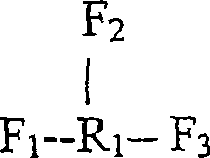
含有四个官能团的构架的通用结构可以由式1b表示:The general structure of a framework containing four functional groups can be represented by Formula 1b:

在这些通用结构中:R1可以是1-12,优选1-6,优选1-4个碳的烷基,取代烷基,环烷基,杂环,取代的杂环,芳烷基,芳基,杂芳基,杂芳烷基,和类似基团;而F1,F2,F3,或F4可以独立地为羧基,胺,羟基,酚,羰基,或硫醇基。F1,F2,F3,或F4可以独立地为1-12,优选1-6,优选1-4个碳的烷基,取代烷基,环烷基,杂环,取代的杂环,芳烷基,芳基,杂芳基,杂芳烷基,或被羧基,胺,羟基,酚,羰基或硫醇基取代的无机基团。F3和/或F4可以不存在。In these general structures: R can be alkyl of 1-12, preferably 1-6, preferably 1-4 carbons, substituted alkyl, cycloalkyl, heterocycle, substituted heterocycle, aralkyl, aryl radical, heteroaryl, heteroaralkyl, and similar groups; while F 1 , F 2 , F 3 , or F 4 can independently be carboxyl, amine, hydroxyl, phenol, carbonyl, or thiol. F 1 , F 2 , F 3 , or F 4 can be independently 1-12, preferably 1-6, preferably 1-4 carbon alkyl, substituted alkyl, cycloalkyl, heterocycle, substituted heterocycle , aralkyl, aryl, heteroaryl, heteroaralkyl, or inorganic groups substituted with carboxyl, amine, hydroxyl, phenol, carbonyl, or thiol groups. F 3 and/or F 4 may be absent.
多种化合物符合描述构架的图解和公式,包括氨基酸,和天然存在或合成的包括例如氧和硫官能团的化合物。化合物可以是外消旋的或旋光的。例如,化合物可以是天然或合成的氨基酸,α-羟酸,硫代酸等。A variety of compounds fit the schemes and formulas describing the framework, including amino acids, and naturally occurring or synthetic compounds including, for example, oxygen and sulfur functional groups. Compounds may be racemic or optically active. For example, the compound can be a natural or synthetic amino acid, an alpha-hydroxy acid, a thioacid, and the like.
适于用作构架的分子包括天然或合成的氨基酸,特别是在其侧链上含有官能团(例如第三个官能团)的氨基酸。氨基酸包括羧基和胺官能团。对于天然氨基酸,侧链官能团可以包括胺(例如烷基胺,杂芳基胺),羟基,酚,羧基,硫醇,硫醚,或脒基。适于用作构架的天然氨基酸包括例如丝氨酸,苏氨酸,酪氨酸,天冬氨酸,谷氨酸,天冬酰胺,谷氨酰胺,半胱氨酸,赖氨酸,精氨酸,组氨酸。合成的氨基酸可以包括天然存在的侧链官能团或合成的侧链官能团,其修饰或延伸天然氨基酸,该天然氨基酸含有作为构架的烷基,取代烷基,环烷基,杂环,取代的杂环,芳烷基,芳基,杂芳基,杂芳烷基和类似部分,和含有羧基,胺,羟基,酚,羰基或硫醇官能团。优选的合成氨基酸包括β-氨基酸和天然氨基酸的同型或β类似物。Molecules suitable for use as frameworks include natural or synthetic amino acids, especially amino acids containing functional groups (eg, third functional groups) on their side chains. Amino acids include carboxyl and amine functional groups. For natural amino acids, side chain functional groups may include amines (eg, alkylamines, heteroarylamines), hydroxyls, phenols, carboxyls, thiols, thioethers, or amidinos. Natural amino acids suitable for use as framework include, for example, serine, threonine, tyrosine, aspartic acid, glutamic acid, asparagine, glutamine, cysteine, lysine, arginine, histidine. Synthetic amino acids may include naturally occurring side chain functional groups or synthetic side chain functional groups that modify or extend natural amino acids that contain as a framework an alkyl, substituted alkyl, cycloalkyl, heterocycle, substituted heterocycle , aralkyl, aryl, heteroaryl, heteroaralkyl and similar moieties, and containing carboxyl, amine, hydroxyl, phenol, carbonyl or thiol functional groups. Preferred synthetic amino acids include beta-amino acids and isotypes or beta analogs of natural amino acids.
优选构架氨基酸包括丝氨酸,苏氨酸,或酪氨酸,优选丝氨酸或酪氨酸,优选酪氨酸。图9举例说明了作为结构单元构架的丝氨酸和由丝氨酸,酪氨酸和其它氨基酸形成结构单元的反应。苏氨酸和酪氨酸典型地显示类似于丝氨酸的反应性。有利地,丝氨酸,苏氨酸和酪氨酸包括:1)多个,正交的充分表征的反应位点,2)作为组合构架应用的已知方法和反应,3)亚结构和结构域的多样性,其可以通过羧基,α-胺,和羟基功能性结合,4)多个反应位点在四面体碳构架周围的紧密分配,和5)用于形成接头和/或识别元件的试剂的容易的可商购性。Preferred framework amino acids include serine, threonine, or tyrosine, preferably serine or tyrosine, preferably tyrosine. Figure 9 illustrates the reaction of serine as a building block framework and building blocks formed from serine, tyrosine and other amino acids. Threonine and tyrosine typically show similar reactivity to serine. Advantageously, serine, threonine, and tyrosine include: 1) multiple, orthogonal, well-characterized reaction sites, 2) known methods and reactions applied as combinatorial frameworks, 3) substructure and domain Diversity, which can be attached via carboxyl, α-amine, and hydroxyl functionalities, 4) tight distribution of multiple reactive sites around the tetrahedral carbon framework, and 5) availability of reagents for forming linkers and/or recognition elements Easy commercial availability.
图10举例说明其中识别元件,接头和手性元件可以与酪氨酸构架偶联的构型。苏氨酸和丝氨酸可以形成类似的构型。手性元件是取代基,其使得其连接的碳原子成为手性中心。当一个或多个不同识别元件也是在手性中心上或与其偶联的取代基,识别元件可以采取两种或多种对映异构体构型。这些对映异构体可以有利地用于提供结构单元之间的多样性。Figure 10 illustrates configurations in which recognition elements, linkers and chiral elements can be coupled to the tyrosine framework. Threonine and serine can form similar configurations. A chiral element is a substituent that renders the carbon atom to which it is attached a chiral center. When one or more different recognition elements are also substituents on or coupled to a chiral center, the recognition elements may adopt two or more enantiomeric configurations. These enantiomers can advantageously be used to provide diversity between structural units.
尽管不对本发明限制,构架氨基酸如丝氨酸,苏氨酸,或酪氨酸,与接头和两个识别元件可以视为相对于构架延伸的碳链,在悬垂的方向具有一个识别元件,在平伏的方向具有另一个识别元件。Although not limiting to the invention, a framework amino acid such as serine, threonine, or tyrosine, with a linker and two recognition elements can be considered as a carbon chain extending relative to the framework, with one recognition element in the overhanging direction and one recognition element in the flat Direction has another identifying element.
尽管不对本发明限制,本发明的结构单元构架可以包括:1)构架反应位点的多样性以最大化潜在受体功能性的结合,2)可靠的反应和保护化学,3)紧密结构,4)多种亚结构的结合,5)适合的接头元件结合的平台,和/或6)非等效多样性结构域的发展以最大化受体结构单元中的冗余度,同时最大化结合于小文库中的官能团和亚结构的数量。典型地,构架包括多个具有紧密形式的反应位点。紧密形式对于提供在载体上装配适当密度的结构单元是有利的。Although not limiting to the present invention, the building block framework of the present invention may include: 1) diversity of framework reaction sites to maximize binding of potential receptor functionality, 2) reliable reaction and protection chemistry, 3) compact structure, 4 ) combination of multiple substructures, 5) suitable platforms for linker element binding, and/or 6) development of non-equivalent diversity domains to maximize redundancy in receptor building blocks while maximizing binding to Number of functional groups and substructures in small libraries. Typically, the framework includes multiple reactive sites in a compact form. A compact form is advantageous to provide a suitable density of structural units assembled on the carrier.
所有天然存在和许多合成的氨基酸是可商购的。另外,这些氨基酸衍生化或保护以适于与识别元件和/或接头偶联反应的形式可以购买或通过已知方法制备(参见例如,Green,TW;Wuts,PGM(1999),Protective Groups in Organic Synthesis Third Edition,Wiley-Interscience,纽约,第779页;Bodanszky,M.;Bodanszky,A.(1994),The Practice of Peptide Synthesis第二版,Springer-Verlag,纽约,第217页)。All naturally occurring and many synthetic amino acids are commercially available. Alternatively, these amino acid derivatizations or protections can be purchased or prepared by known methods in a form suitable for conjugation with recognition elements and/or linkers (see, e.g., Green, TW; Wuts, PGM (1999), Protective Groups in Organic Synthesis Third Edition , Wiley-Interscience, New York, p. 779; Bodanszky, M.; Bodanszky, A. (1994), The Practice of Peptide Synthesis Second Edition, Springer-Verlag, New York, p. 217).
优选的制备氨基酸的反应路线包括在本发明实施例中提供的那些,这些氨基酸用于形成按照本发明的结构单元的反应。Preferred reaction schemes for the preparation of amino acids for reactions to form building blocks according to the invention include those provided in the examples herein.
识别元件Identification element
可以选择识别元件以便为结构单元提供一种或多种结构特性。结构单元作为人工受体一部分可以与配体相互作用。例如,识别元件可以提供一种或多种结构特性,如正电荷,负电荷,酸,碱,电子受体,电子供体,氢键供体,氢键受体,自由电子对,π电子,电荷极化,亲水性,疏水性等。识别元件可以是小基团或者它可以是庞大的。Identification elements can be selected to provide one or more structural properties to the structural unit. The building block acts as part of the artificial receptor to interact with the ligand. For example, a recognition element may provide one or more structural properties such as positive charge, negative charge, acid, base, electron acceptor, electron donor, hydrogen bond donor, hydrogen bond acceptor, free electron pair, π electrons, Charge polarization, hydrophilicity, hydrophobicity, etc. A recognition element can be a small group or it can be bulky.
在一个实施方案中,识别元件可以是1-12,优选1-6,优选1-4个碳的烷基,取代烷基,环烷基,杂环,取代的杂环,芳烷基,芳基,杂芳基,杂芳烷基等。该识别元件可以被包括或赋予正电荷,负电荷,酸,碱,电子受体,电子供体,氢键供体,氢键受体,自由电子对,π电子,电荷极化,亲水性,疏水性等的基团取代。In one embodiment, the recognition element may be an alkyl group of 1-12, preferably 1-6, preferably 1-4 carbons, substituted alkyl, cycloalkyl, heterocycle, substituted heterocycle, aralkyl, aryl radical, heteroaryl, heteroarylalkyl, etc. The recognition element can be comprised or endowed with positive charge, negative charge, acid, base, electron acceptor, electron donor, hydrogen bond donor, hydrogen bond acceptor, free electron pairs, π electrons, charge polarization, hydrophilicity , group substitution for hydrophobicity, etc.
(例如在水性组合物中的中性pH下)具有正电荷的识别元件包括胺类,季铵部分,二茂铁等。适当的胺包括烷基胺,烷基二胺,杂烷基胺,芳基胺,杂芳基胺,芳烷基胺,吡啶,杂环基胺(饱和或不饱和,环中有氮或无氮),脒类,肼等。烷基胺通常含有1-12个碳,优选1-8个,环可以含有3-12个碳,优选3-8个。适当的烷基胺包括式B9的烷基胺。适当的杂环基或烷基杂环基胺包括式A9的那些。适当的吡啶包括式A5和B5的那些。任何一种胺可以用作季铵化合物。另外的适当的季铵部分包括三甲基烷基季铵部分,二甲基乙基烷基季铵部分,二甲基烷基季铵部分,芳烷基季铵部分,吡啶季铵部分等。Recognition elements that have a positive charge (eg, at neutral pH in an aqueous composition) include amines, quaternary ammonium moieties, ferrocenes, and the like. Suitable amines include alkylamines, alkyldiamines, heteroalkylamines, arylamines, heteroarylamines, aralkylamines, pyridines, heterocyclylamines (saturated or unsaturated, with or without nitrogen in the ring). Nitrogen), amidines, hydrazine, etc. Alkylamines generally contain 1-12 carbons, preferably 1-8, and rings may contain 3-12 carbons, preferably 3-8. Suitable alkylamines include those of formula B9. Suitable heterocyclyl or alkylheterocyclylamines include those of formula A9. Suitable pyridines include those of formulas A5 and B5. Any amine can be used as the quaternary ammonium compound. Additional suitable quaternary ammonium moieties include trimethylalkylquat moieties, dimethylethylalkylquat moieties, dimethylalkylquat moieties, aralkylquat moieties, pyridinequat moieties, and the like.
(例如在水性组合物中的中性pH下)具有负电荷的识别元件包括羧酸酯,被强吸电子基团取代的酚类(例如,取代的四氯酚),磷酸酯,膦酸酯,亚膦酸酯,硫酸酯,磺酸酯,硫代羧酸酯和异羟肟酸。适当的羧酸酯包括羧酸烷基酯,羧酸芳基酯,和羧酸芳烷基酯。适当的磷酸酯包括磷酸单,二和三酯,磷酸单,二和三酰胺。适当的膦酸酯包括膦酸单和二酯,和膦酸单和二酰胺(例如膦酸酰胺)。适当的亚膦酸酯包括亚磷酸酯和酰胺。Negatively charged recognition elements (e.g. at neutral pH in aqueous compositions) include carboxylates, phenols substituted with strong electron-withdrawing groups (e.g., substituted tetrachlorophenols), phosphates, phosphonates , phosphonites, sulfates, sulfonates, thiocarboxylates and hydroxamic acids. Suitable carboxylates include alkyl carboxylates, aryl carboxylates, and aralkyl carboxylates. Suitable phosphate esters include phosphate mono-, di- and triesters, phosphate mono-, di- and triamides. Suitable phosphonates include phosphonic acid mono- and diesters, and phosphonic acid mono- and diamides (eg, phosphonic acid amides). Suitable phosphonites include phosphites and amides.
(例如在水性组合物中的中性pH下)具有负电荷和正电荷的识别元件包括亚砜,甜菜碱,和氧化胺。Negatively and positively charged recognition elements (eg, at neutral pH in an aqueous composition) include sulfoxides, betaines, and amine oxides.
酸性识别元件可以包括羧酸酯,磷酸酯,硫酸酯,和酚类。适当的酸性羧酸酯包括硫代羧酸酯。适当的酸性磷酸酯包括以上所列磷酸酯。Acidic recognition elements can include carboxylates, phosphates, sulfates, and phenols. Suitable acidic carboxylates include thiocarboxylates. Suitable acidic phosphates include the phosphates listed above.
碱性识别元件包括胺类。适当的碱性胺类包括烷基胺,芳基胺,芳烷基胺,吡啶,杂环基胺(饱和或不饱和,环中有氮或无氮),脒类,和以上所列的任何另外的胺。适当的烷基胺包括式B9的烷基胺。适当的杂环基或烷基杂环基胺包括式A9的那些。适当的吡啶包括式A5和B5的那些。Basic recognition elements include amines. Suitable basic amines include alkylamines, arylamines, aralkylamines, pyridines, heterocyclylamines (saturated or unsaturated, with or without nitrogen in the ring), amidines, and any of the above-listed Additional amines. Suitable alkylamines include those of formula B9. Suitable heterocyclyl or alkylheterocyclylamines include those of formula A9. Suitable pyridines include those of formulas A5 and B5.
包括氢键供体的识别元件包括胺类,酰胺,羧基,质子化的磷酸酯,质子化的膦酸酯,质子化的亚膦酸酯,质子化的硫酸酯,质子化的亚磺酸酯,醇类和硫醇类。适当的胺包括烷基胺,芳基胺,芳烷基胺,吡啶,杂环基胺(饱和或不饱和,环中有氮或无氮),脒类,脲和以上所列的任何其它胺。适当的烷基胺包括式B9的那些。适当的杂环基或烷基杂环基胺包括式A9的那些。适当的吡啶包括式A5和B5的那些。适当的质子化的羧酸酯,质子化的磷酸酯包括以上所列那些。适当的酰胺包括式A8和B8的那些。适当的醇包括伯醇,仲醇,叔醇,和芳香醇(例如酚类)。适当的醇包括式A7(伯醇)和B7(仲醇)的那些。Recognition elements that include hydrogen bond donors include amines, amides, carboxyl groups, protonated phosphates, protonated phosphonates, protonated phosphonites, protonated sulfates, protonated sulfinates , alcohols and thiols. Suitable amines include alkylamines, arylamines, aralkylamines, pyridines, heterocyclylamines (saturated or unsaturated, with or without nitrogen in the ring), amidines, ureas and any other amines listed above . Suitable alkylamines include those of formula B9. Suitable heterocyclyl or alkylheterocyclylamines include those of formula A9. Suitable pyridines include those of formulas A5 and B5. Suitable protonated carboxylates, protonated phosphates include those listed above. Suitable amides include those of formulas A8 and B8. Suitable alcohols include primary alcohols, secondary alcohols, tertiary alcohols, and aromatic alcohols (such as phenols). Suitable alcohols include those of formula A7 (primary alcohol) and B7 (secondary alcohol).
包括氢键受体或一个或多个自由电子对的识别元件包括胺类,酰胺,羧酸酯,羧基,磷酸酯,膦酸酯,亚膦酸酯,硫酸酯,磺酸酯,醇类,酯类,硫醇类和硫醚。适当的胺包括烷基胺,芳基胺,芳烷基胺,吡啶,杂环基胺(饱和或不饱和,环中有氮或无氮),脒类,脲和以上所列胺。适当的烷基胺包括式B9的那些。适当的杂环基或烷基杂环基胺包括式A9的那些。适当的吡啶包括式A5和B5的那些。适当的羧酸酯包括以上所列那些。适当的酰胺包括式A8和B8的那些。适当的磷酸酯,膦酸酯和亚膦酸酯包括以上所列的那些。适当的醇包括伯醇,仲醇,叔醇,和芳香醇,和以上所列的那些。适当的醇包括式A7(伯醇)和B7(仲醇)的那些。适当的醚包括烷基醚和芳烷基醚。适当的烷基醚包括式A6的那些。适当的芳烷基醚包括式A4的那些。适当的硫醚包括式B6的那些。Recognition elements that include hydrogen bond acceptors or one or more free electron pairs include amines, amides, carboxylates, carboxyls, phosphates, phosphonates, phosphonites, sulfates, sulfonates, alcohols, Esters, mercaptans and thioethers. Suitable amines include alkylamines, arylamines, aralkylamines, pyridines, heterocyclylamines (saturated or unsaturated, with or without nitrogen in the ring), amidines, ureas and the amines listed above. Suitable alkylamines include those of formula B9. Suitable heterocyclyl or alkylheterocyclylamines include those of formula A9. Suitable pyridines include those of formulas A5 and B5. Suitable carboxylates include those listed above. Suitable amides include those of formulas A8 and B8. Suitable phosphates, phosphonates and phosphonites include those listed above. Suitable alcohols include primary, secondary, tertiary, and aromatic alcohols, and those listed above. Suitable alcohols include those of formula A7 (primary alcohol) and B7 (secondary alcohol). Suitable ethers include alkyl ethers and aralkyl ethers. Suitable alkyl ethers include those of formula A6. Suitable aralkyl ethers include those of formula A4. Suitable thioethers include those of formula B6.
包括不带电的极性或亲水基团的识别元件包括酰胺类,醇类,醚类,硫醇类,硫醚类,酯类,硫酯类,硼烷类,硼酸盐,和金属络合物。适当的酰胺包括式A8和B8的那些。适当的醇包括伯醇,仲醇,叔醇,和芳香醇,和以上所列的那些。适当的醇包括式A7(伯醇)和B7(仲醇)的那些。适当的醚包括上述所列的那些。适当的醚包括式A6的那些。适当的芳烷基醚包括式A4的那些。Recognition elements that include uncharged polar or hydrophilic groups include amides, alcohols, ethers, thiols, thioethers, esters, thioesters, boranes, borates, and metal complexes compound. Suitable amides include those of formulas A8 and B8. Suitable alcohols include primary, secondary, tertiary, and aromatic alcohols, and those listed above. Suitable alcohols include those of formula A7 (primary alcohol) and B7 (secondary alcohol). Suitable ethers include those listed above. Suitable ethers include those of formula A6. Suitable aralkyl ethers include those of formula A4.
包括不带电的疏水基团的识别元件包括烷基(取代和未取代的),链烯烃(共轭和非共轭),炔烃(共轭和非共轭),芳香族。适当的烷基包括低级烷基,取代烷基,环烷基,芳烷基,和杂芳烷基。适当的低级烷基包括式A1,A3,和B1的那些。适当的芳烷基包括式A3,A4,B3,和B4的那些。适当的烷基环烷基包括式B2的那些。适当的链烯基包括低级链烯基和芳基链烯基。适当的芳基链烯基包括式B4的那些。适当的芳族基团包括未取代的芳基,杂芳基,取代的芳基,芳烷基,杂芳烷基,烷基取代的芳基,和多芳香烃。适当的芳烷基包括式A3和B4的那些。适当的烷基杂芳基包括式A5和B5的那些。Recognition elements comprising uncharged hydrophobic groups include alkyls (substituted and unsubstituted), alkenes (conjugated and unconjugated), alkynes (conjugated and unconjugated), aromatics. Suitable alkyl groups include lower alkyl, substituted alkyl, cycloalkyl, aralkyl, and heteroaralkyl. Suitable lower alkyl groups include those of formulas A1, A3, and B1. Suitable aralkyl groups include those of formulas A3, A4, B3, and B4. Suitable alkylcycloalkyl groups include those of formula B2. Suitable alkenyl groups include lower alkenyl and arylalkenyl. Suitable arylalkenyl groups include those of formula B4. Suitable aromatic groups include unsubstituted aryl, heteroaryl, substituted aryl, aralkyl, heteroaralkyl, alkyl substituted aryl, and polyaromatic hydrocarbons. Suitable aralkyl groups include those of formulas A3 and B4. Suitable alkylheteroaryl groups include those of formulas A5 and B5.
间隔识别元件包括氢,甲基,乙基等。大体积的识别元件包括7个或更多碳或杂原子。Spacer recognition elements include hydrogen, methyl, ethyl, and the like. Bulk recognition elements include 7 or more carbon or heteroatoms.
式A1-A9和B1-B9为:Formulas A1-A9 and B1-B9 are:
CH2CH3 A1CH 2 CH 3 A1
CH2CH(CH3)2 A2CH 2 CH(CH 3 ) 2 A2


CH2CH2-O-CH3 A6 CH2CH2 - O- CH3A6
CH2CH2-OH A7CH 2 CH 2 -OH A7
CH2CH2-NH-C(O)CH3 A8CH 2 CH 2 -NH-C(O)CH 3 A8
CH3 B1CH 3 B1


CH2-S-CH3 B6CH 2 -S-CH 3 B6
CH2CH(OH)CH3 B7 CH2CH (OH) CH3B7
CH2CH2C(O)-NH2 B8 CH2CH2C ( O) -NH2B8
CH2CH2CH2-N-(CH3)2 B9CH 2 CH 2 CH 2 -N-(CH 3 ) 2 B9
按照标准参考,这些A和B识别元件可以称为以下各项的衍生物:A1,乙胺;A2,异丁胺;A3,苯乙胺;A4,4-甲氧基苯乙胺;A5,2-(2-氨乙基)吡啶;A6,3-甲氧基乙胺;A7,乙醇胺;A8,N-乙酰基乙二胺;A9,1-(2-氨乙基)吡咯烷;B1,乙酸,B2,环戊基丙酸;B3,3-氯苯乙酸;B4,肉桂酸;B5,3-吡啶丙酸;B6,(甲硫基)乙酸;B7,3-羟丁酸;B8,琥珀酰胺酸;和B9,4-(二甲氨基)丁酸。Following standard references, these A and B recognition elements may be referred to as derivatives of: A1, ethylamine; A2, isobutylamine; A3, phenethylamine; A4, 4-methoxyphenethylamine; A5, 2-(2-aminoethyl)pyridine; A6, 3-methoxyethylamine; A7, ethanolamine; A8, N-acetylethylenediamine; A9, 1-(2-aminoethyl)pyrrolidine; B1 , acetic acid, B2, cyclopentylpropionic acid; B3, 3-chlorophenylacetic acid; B4, cinnamic acid; B5, 3-pyridinepropionic acid; B6, (methylthio)acetic acid; B7, 3-hydroxybutyric acid; B8 , succinamic acid; and B9, 4-(dimethylamino)butyric acid.
在一个实施方案中,识别元件包括一种或多种由式A1,A2,A3,A4,A5,A6,A7,A8,和/或A9(A识别元件)和/或B1,B2,B3,B4,B5,B6,B7,B8,和/或B9(B识别元件)的结构。在一个实施方案中,每个结构单元包括A识别元件和B识别元件。在一个实施方案中,一组81个这种结构单元包括81种A识别元件与B识别元件独特的组合。在一个实施方案中,A识别元件在悬垂位置与构架连接。在一个实施方案中,B识别元件在平伏(equatorial)位置与构架连接。在一个实施方案中,A识别元件在悬垂位置与构架连接,B识别元件在平伏位置与构架连接。In one embodiment, the recognition element comprises one or more of the formulas A1, A2, A3, A4, A5, A6, A7, A8, and/or A9 (A recognition element) and/or B1, B2, B3, Structures of B4, B5, B6, B7, B8, and/or B9 (B recognition elements). In one embodiment, each building block includes an A recognition element and a B recognition element. In one embodiment, a set of 81 such building blocks includes 81 unique combinations of A recognition elements and B recognition elements. In one embodiment, the A recognition element is attached to the framework in an overhanging position. In one embodiment, the B recognition element is linked to the framework at an equatorial position. In one embodiment, the A recognition element is attached to the framework in a pendent position and the B recognition element is attached to the framework in a prostrate position.
尽管不对本发明限制,认为A和B识别元件代表多肽受体所采用的官能团和几何构型的分类。尽管不对本发明限制,认为A识别元件代表6个有利的官能团或构型,将官能团增加至数个芳基增加了可能的结合相互作用的范围。尽管不对本发明限制,认为B识别元件代表6个有利的官能团,但处于不同于A识别元件所采用的构型。尽管不对本发明限制,另外认为这增加了结合相互作用的范围和进一步扩展了结构单元分子构型所用的官能团和构型的范围。Although not limiting of the invention, the A and B recognition elements are considered to represent the classification of functional groups and geometric configurations adopted by polypeptide receptors. While not limiting the invention, the A recognition element is believed to represent six advantageous functional groups or configurations, increasing the functional groups to several aryl groups increases the range of possible binding interactions. While not limiting the invention, it is believed that the B recognition element represents six advantageous functional groups, but in a different configuration than that employed by the A recognition element. While not limiting the invention, it is additionally believed that this increases the range of binding interactions and further expands the range of functional groups and configurations available for building block molecular configuration.
在一个实施方案中,包括A和B识别元件的结构单元可以视为占有由亲油性/亲水性和体积限定的结合空间。对于每个包括不同A和B识别元件的结构单元可以(使用已知方法)计算体积。对于包括不同A和B识别元件的每个结构单元可以(使用已知方法)计算亲油性/亲水性(logP)的大小。LogP负值显示对水的亲和力优于非极性有机溶剂,显示亲水的性质。然后将体积对logP作图可以显示结构单元在整个由大小和亲油性/亲水性限定的结合空间内的分布。In one embodiment, a building block comprising both A and B recognition elements can be considered to occupy a binding space defined by lipophilicity/hydrophilicity and volume. Volumes can be calculated (using known methods) for each structural unit comprising different A and B recognition elements. The magnitude of lipophilicity/hydrophilicity (logP) can be calculated (using known methods) for each structural unit comprising different A and B recognition elements. The negative value of LogP shows that the affinity for water is better than that of non-polar organic solvents, showing the nature of hydrophilicity. Plotting volume versus logP can then show the distribution of building blocks throughout the binding space defined by size and lipophilicity/hydrophilicity.
图25用示意图举例说明结合空间,其定性分成4个象限-大的亲水性,大的疏水性,小的亲水性,和小的亲油性。图25表示大的亲水性象限的小三角形为极大和高度亲水性。图25表示小亲油性象限的小三角形为极小和高度亲油性。Figure 25 schematically illustrates the binding space, which is qualitatively divided into 4 quadrants - large hydrophilic, large hydrophobic, small hydrophilic, and small lipophilic. Figure 25 represents the large hydrophilic quadrant with the small triangles being extremely and highly hydrophilic. Figure 25 shows the small triangles in the small lipophilic quadrant as very small and highly lipophilic.
图26举例说明了对于81个结构单元的体积对logP的图表,这些结构单元包括9个A和9个B识别元件中的每一个。该图表说明81个含有A和B识别元件的结构单元充满相当部分的由体积和亲油性/亲水性限定的结合空间。由81个结构单元充满的空间粗略地以A1B1,A2B2,...A9B9结构单元为边界(图26)。具有A和B识别元件的81个结构单元充满该结合空间的大部分,仅除表示极大和高度亲水性的部分及表示极小和高度亲油性的部分以外。Figure 26 illustrates a plot of volume versus logP for 81 building blocks comprising each of the 9 A and 9 B recognition elements. The diagram illustrates that 81 building blocks containing both A and B recognition elements fill a substantial portion of the binding space defined by volume and lipophilicity/hydrophilicity. The space filled by 81 structural units is roughly bounded by A1B1, A2B2, ... A9B9 structural units (Fig. 26). The 81 building blocks with A and B recognition elements fill the majority of this binding space, except for a portion representing extremely and highly hydrophilic and a portion representing extremely small and highly lipophilic.
图27A和27B举例说明了关于形成候选人工受体的具有A和B识别元件的结构单元组合的体积对logP的图表。这些人工受体的体积和logP值通常充满由单个结构单元占据的空间。图27B表示图27A的详图。该详图说明候选人工受体均匀地充满结合空间。由具有A和B识别元件的结构单元制备的候选人工受体包括具有广泛范围大小和广泛范围亲油性/亲水性的受体。Figures 27A and 27B illustrate plots of volume versus logP for combinations of building blocks with A and B recognition elements forming candidate artificial receptors. The volume and logP values of these artificial receptors usually fill the space occupied by a single structural unit. Figure 27B shows a detail view of Figure 27A. This detail shows that the candidate artificial receptor uniformly fills the binding space. Candidate artificial receptors prepared from building blocks with A and B recognition elements include receptors with a wide range of sizes and a wide range of lipophilicity/hydrophilicity.
图28举例说明了由结构单元组成的候选人工受体可以根据它们最近的邻居(neighbor)分类和评估,所述邻居为由一个或多个相同结构单元组成的其它候选人工受体。在一个实施方案中,最近的邻居可以由形成本发明候选人工受体的结构单元子集组成。例如,如图28所示,由TyrA3B3/TyrA4B4/TyrA5B5/TyrA6B6组成的候选人工受体在其最邻近的邻居之中具有候选人工受体TyrA4B4/TyrA5B5/TyrA6B6,TyrA3B3/TyrA5B5/TyrA6B6,TyrA3B3/TyrA4B4/TyrA6B6,和TyrA3B3/TyrA4B4/TyrA5B5。这些候选人工受体又具有另外的最近的邻居。候选受体和/或识别元件也可以基于亲油性/亲水性,大小,电荷,或另外的物理或化学性质分组为邻居。Figure 28 illustrates that candidate artificial receptors composed of building blocks can be sorted and evaluated based on their nearest neighbors, which are other candidate artificial receptors composed of one or more of the same building blocks. In one embodiment, the nearest neighbors may consist of a subset of building blocks that form a candidate artificial receptor of the invention. For example, as shown in Figure 28, a candidate artificial receptor consisting of TyrA3B3/TyrA4B4/TyrA5B5/TyrA6B6 has among its nearest neighbors candidate artificial receptors TyrA4B4/TyrA5B5/TyrA6B6, TyrA3B3/TyrA5B5/TyrA6B6, TyrA3B3/TyrA4B4 /TyrA6B6, and TyrA3B3/TyrA4B4/TyrA5B5. These candidate artificial receptors in turn have additional nearest neighbors. Candidate receptors and/or recognition elements can also be grouped into neighbors based on lipophilicity/hydrophilicity, size, charge, or another physical or chemical property.
形成许多识别元件的试剂可商购。例如,形成识别元件A1,A2,A3,A4,A5,A6,A7,A8,A9,B1,B2,B3,B4,B5,B6,B7,B8,和B9的试剂可商购。Reagents that form a number of recognition elements are commercially available. For example, reagents that form recognition elements Al, A2, A3, A4, A5, A6, A7, A8, A9, Bl, B2, B3, B4, B5, B6, B7, B8, and B9 are commercially available.
接头connector
选择接头以提供结构单元与载体的适当共价连接。构架作为人工受体一部分可以与配体相互作用。接头还可以为结构单元提供体积、与载体的距离、疏水性、亲水性和类似的结构性质。优选地,接头与构架上的官能团形成共价键。优选地,在与载体连接之前,接头还包括可以激活与和将与载体上官能团反应的官能团。优选地,一旦连接到载体上,接头与载体和构架形成共价键。Linkers are chosen to provide for appropriate covalent attachment of the building blocks to the carrier. The framework acts as part of the artificial receptor to interact with the ligand. Linkers can also provide bulk, distance from support, hydrophobicity, hydrophilicity, and similar structural properties to the building blocks. Preferably, the linker forms a covalent bond with a functional group on the framework. Preferably, before linking with the carrier, the linker also includes a functional group that can activate and react with the functional group on the carrier. Preferably, once attached to the support, the linker forms a covalent bond with the support and framework.
接头优选与构架上的醇,酚,硫醇,胺,羰基或类似基团形成或可以视为形成共价键。接头可以包括羧基,醇,酚,硫醇,胺,羰基,马来酰亚胺,或可以与载体反应或活化与载体反应的类似基团。在与结构单元的键和通过与载体连接形成的基团之间,接头可以包括烷基,取代的烷基,环烷基,杂环基,取代的杂环基,芳烷基,芳基,杂芳基,杂芳基烷基,取代的杂环基,芳烷基,芳基,杂芳基,杂芳基烷基,乙氧基或丙氧基低聚物,糖苷,或类似部分。Linkers preferably form or can be considered to form covalent bonds with alcohols, phenols, thiols, amines, carbonyls or similar groups on the framework. Linkers can include carboxyl groups, alcohols, phenols, thiols, amines, carbonyls, maleimides, or similar groups that can react or be activated to react with a support. Between the bond with the structural unit and the group formed by linking with the carrier, the linker can include alkyl, substituted alkyl, cycloalkyl, heterocyclyl, substituted heterocyclyl, aralkyl, aryl, Heteroaryl, heteroarylalkyl, substituted heterocyclyl, aralkyl, aryl, heteroaryl, heteroarylalkyl, ethoxy or propoxy oligomer, glycoside, or similar moieties.
接头可以包括良好的离去基团,其例如与烷基或芳基结合。离去基团足够“良好”而被构架上的醇,酚,硫醇,胺,羰基,或类似基团所替代。该接头可以包括由式:R-X表示的部分,其中X为离去基团,如卤素(例如,-Cl,-Br或-I),甲苯磺酸盐,甲磺酸盐,三氟甲磺酸酯,且R为烷基,取代的烷基,环烷基,杂环基,取代的杂环基,芳烷基,芳基,杂芳基,杂芳烷基,乙氧基或丙氧基低聚物,糖苷,或类似部分。A linker may include a good leaving group that binds to an alkyl or aryl group, for example. The leaving group is "good enough" to be replaced by an alcohol, phenol, thiol, amine, carbonyl, or similar group on the framework. The linker may comprise a moiety represented by the formula: R-X, where X is a leaving group such as a halogen (e.g., -Cl, -Br or -I), tosylate, mesylate, trifluoromethanesulfonate ester, and R is alkyl, substituted alkyl, cycloalkyl, heterocyclyl, substituted heterocyclyl, aralkyl, aryl, heteroaryl, heteroaralkyl, ethoxy, or propoxy oligomers, glycosides, or similar moieties.
优选的接头基团包括式:(CH2)nCOOH的那些,n=1-16,优选n=2-8,优选n=2-6,优选n=3。形成适当接头的试剂可商购并包括多种具有正交功能型的试剂中的任何一种。Preferred linker groups include those of the formula: (CH 2 ) n COOH, n=1-16, preferably n=2-8, preferably n=2-6, preferably n=3. Reagents to form appropriate linkers are commercially available and include any of a variety of reagents with orthogonal functional types.
结构单元的实施方案Embodiment of the structural unit
在一个实施方案中,结构单元可以通过式2表示:In one embodiment, the structural unit can be represented by Formula 2:

其中:RE1是识别元件1,RE2是识别元件2,和L为接头。X为不存在,C=O,CH2,NR,NR2,NH,NHCONH,SCONH,CH=N,或OCH2NH。优选X为不存在或C=O。Y为不存在,NH,O,CH2,或NRCO。优选Y为NH或O。优选Y为NH。Z为CH2,O,NH,S,CO,NR,NR2,NHCONH,SCONH,CH=N,或OCH2NH。优选Z为O。R2为H,CH3,或另外的赋予结构单元手性和具有类似或小于甲基大小的基团。R3为CH2;CH2-苯基;CHCH3;(CH2)n,n=2-3;或含有3-8个碳原子,优选5-6个碳原子的环烷基,苯基,萘基。优选R3为CH2或CH2-苯基。Where: RE 1 is
RE1为B1,B2,B3,B4,B5,B6,B7,B8,B9,A1,A2,A3,A4,A5,A6,A7,A8,或A9。优选RE1为B1,B2,B3,B4,B5,B6,B7,B8,或B9。RE2为A1,A2,A3,A4,A5,A6,A7,A8,A9,B1,B2,B3,B4,B5,B6,B7,B8,或B9。优选RE2为A1,A2,A3,A4,A5,A6,A7,A8,或A9。在一个实施方案中,RE1可以是B2,B4,或B6并且RE2可以是A2,A4,或A6。在一个实施方案中,RE1可以是B1,B3,B6,或B8并且RE2可以是A2,A4,A5,或A9。在一个实施方案中,RE1可以是B2,B4,B6,或B8并且RE2可以是A2,A4,A6,或A8。在一个实施方案中,RE1可以是B1,B2,B4,B6,或B8并且RE2可以是A1,A2,A4,A6,或A8。在一个实施方案中,RE1可以是B1,B2,B4,B6,B8,或B9并且RE2可以是A1,A2,A4,A6,A8,或A9。RE 1 is B1, B2, B3, B4, B5, B6, B7, B8, B9, A1, A2, A3, A4, A5, A6, A7, A8, or A9. Preferably RE 1 is B1, B2, B3, B4, B5, B6, B7, B8, or B9. RE 2 is A1, A2, A3, A4, A5, A6, A7, A8, A9, B1, B2, B3, B4, B5, B6, B7, B8, or B9. Preferably RE2 is A1, A2, A3, A4, A5, A6, A7, A8, or A9. In one embodiment, RE 1 may be B2, B4, or B6 and RE 2 may be A2, A4, or A6. In one embodiment, RE 1 may be B1, B3, B6, or B8 and RE 2 may be A2, A4, A5, or A9. In one embodiment, RE 1 may be B2, B4, B6, or B8 and RE 2 may be A2, A4, A6, or A8. In one embodiment, RE 1 may be B1, B2, B4, B6, or B8 and RE 2 may be A1, A2, A4, A6, or A8. In one embodiment, RE 1 can be B1, B2, B4, B6, B8, or B9 and RE 2 can be A1, A2, A4, A6, A8, or A9.
L为(CH2)nCOOH,n=1-16,优选n=2-8,优选n=4-6,优选n=3。L is (CH 2 ) n COOH, n=1-16, preferably n=2-8, preferably n=4-6, preferably n=3.
这些结构单元的实施方案包括:Embodiments of these structural units include:
4-{4-[(乙酰氨基-乙基氨基甲酰基-甲基)-氨基]-苯氧基}-丁酸;4-{4-[(Acetamido-ethylcarbamoyl-methyl)-amino]-phenoxy}-butanoic acid;
4-(4-{[(3-环戊基-丙酰氨基)-乙基氨基甲酰基-甲基]-氨基}-苯氧基)-丁酸;4-(4-{[(3-cyclopentyl-propionylamino)-ethylcarbamoyl-methyl]-amino}-phenoxy)-butanoic acid;
4-[4-({[2-(3-氯-苯基)-乙酰氨基]-乙基氨基甲酰基-甲基}-氨基)-苯氧基]-丁酸;4-[4-({[2-(3-Chloro-phenyl)-acetylamino]-ethylcarbamoyl-methyl}-amino)-phenoxy]-butanoic acid;
4-(4-{[乙基氨基甲酰基-(3-苯基-丙烯酰氨基)-甲基]-氨基}-苯氧基)-丁酸;4-(4-{[Ethylcarbamoyl-(3-phenyl-acrylamido)-methyl]-amino}-phenoxy)-butyric acid;
4-(4-{[乙基氨基甲酰基-(3-吡啶-3-基-丙酰氨基)-甲基]-氨基}-苯氧基)-丁酸;4-(4-{[Ethylcarbamoyl-(3-pyridin-3-yl-propionylamino)-methyl]-amino}-phenoxy)-butyric acid;
4-(4-{[乙基氨基甲酰基-(2-甲基硫烷基-乙酰氨基)-甲基]-氨基}-苯氧基)-丁酸;4-(4-{[Ethylcarbamoyl-(2-methylsulfanyl-acetylamino)-methyl]-amino}-phenoxy)-butyric acid;
4-(4-{[乙基氨基甲酰基-(3-羟基-丁酰氨基)-甲基]-氨基}-苯氧基)-丁酸;4-(4-{[Ethylcarbamoyl-(3-hydroxy-butyrylamino)-methyl]-amino}-phenoxy)-butyric acid;
4-(4-{[(3-氨基甲酰基-丙酰氨基)-乙基氨基甲酰基-甲基]-氨基}-苯氧基)-丁酸;4-(4-{[(3-carbamoyl-propionylamino)-ethylcarbamoyl-methyl]-amino}-phenoxy)-butyric acid;
4-(4-{[(4-二甲基氨基-丁酰氨基)-乙基氨基甲酰基-甲基]-氨基}-苯氧基)-丁酸;4-(4-{[(4-Dimethylamino-butyrylamino)-ethylcarbamoyl-methyl]-amino}-phenoxy)-butyric acid;
4-{4-[(乙酰氨基-异丁基氨基甲酰基-甲基)-氨基]-苯氧基}-丁酸;4-{4-[(Acetamido-isobutylcarbamoyl-methyl)-amino]-phenoxy}-butanoic acid;
4-(4-{[3-环戊基-丙酰氨基]-异丁基氨基甲酰基-甲基}-氨基)-苯氧基)-丁酸;4-(4-{[3-cyclopentyl-propionylamino]-isobutylcarbamoyl-methyl}-amino)-phenoxy)-butyric acid;
4-[4-({[2-(3-氯-苯基)-乙酰氨基]-异丁基氨基甲酰基-甲基}-氨基)-苯氧基]-丁酸;4-[4-({[2-(3-Chloro-phenyl)-acetylamino]-isobutylcarbamoyl-methyl}-amino)-phenoxy]-butanoic acid;
4-(4-{[异丁基氨基甲酰基-(3-苯基-丙烯酰氨基)-甲基]-氨基}-苯氧基)-丁酸;4-(4-{[isobutylcarbamoyl-(3-phenyl-acrylamido)-methyl]-amino}-phenoxy)-butyric acid;
4-(4-{[异丁基氨基甲酰基-(3-吡啶-3-基-丙酰氨基)-甲基]-氨基}-苯氧基)-丁酸;4-(4-{[isobutylcarbamoyl-(3-pyridin-3-yl-propionylamino)-methyl]-amino}-phenoxy)-butyric acid;
4-(4-{[异丁基氨基甲酰基-(2-甲基硫烷基-乙酰氨基)-甲基]-氨基}-苯氧基)-丁酸;4-(4-{[isobutylcarbamoyl-(2-methylsulfanyl-acetylamino)-methyl]-amino}-phenoxy)-butyric acid;
4-(4-{[(3-羟基-丁酰氨基)-异丁基氨基甲酰基-甲基]-氨基}-苯氧基)-丁酸;4-(4-{[(3-Hydroxy-butyrylamino)-isobutylcarbamoyl-methyl]-amino}-phenoxy)-butyric acid;
4-(3-{[(3-氨基甲酰基-丙酰氨基)-异丁基氨基甲酰基-甲基]-氨基}-苯氧基)-丁酸;4-(3-{[(3-carbamoyl-propionylamino)-isobutylcarbamoyl-methyl]-amino}-phenoxy)-butyric acid;
4-(4-{[(4-二甲基氨基-丁酰氨基)-异丁基氨基甲酰基-甲基]-氨基}-苯氧基)-丁酸;4-(4-{[(4-Dimethylamino-butyrylamino)-isobutylcarbamoyl-methyl]-amino}-phenoxy)-butyric acid;
4-{4-[(乙酰氨基-苯乙基氨基甲酰基-甲基)-氨基]-苯氧基}-丁酸;4-{4-[(Acetamido-phenethylcarbamoyl-methyl)-amino]-phenoxy}-butanoic acid;
4-(4-{[(3-环戊基-丙酰氨基)-苯乙基氨基甲酰基-甲基]-氨基}-苯氧基)-丁酸;4-(4-{[(3-Cyclopentyl-propionylamino)-phenethylcarbamoyl-methyl]-amino}-phenoxy)-butyric acid;
4-[4-({[2-(3-氯-苯基)-乙酰氨基]-苯乙基氨基甲酰基-甲基}-氨基)-苯氧基]-丁酸;4-[4-({[2-(3-Chloro-phenyl)-acetylamino]-phenethylcarbamoyl-methyl}-amino)-phenoxy]-butyric acid;
4-(4-{[苯乙基氨基甲酰基-(3-苯基-丙烯酰氨基)-甲基]-氨基}-苯氧基)-丁酸;4-(4-{[Phenylethylcarbamoyl-(3-phenyl-acrylamido)-methyl]-amino}-phenoxy)-butyric acid;
4-(4-{[苯乙基氨基甲酰基-(3-吡啶-3-基-丙酰氨基)-甲基]-氨基}-苯氧基)-丁酸;4-(4-{[Phenylethylcarbamoyl-(3-pyridin-3-yl-propionylamino)-methyl]-amino}-phenoxy)-butyric acid;
4-(4-{[(2-甲基硫烷基-乙酰氨基)-苯乙基氨基甲酰基-甲基]-氨基}-苯氧基)-丁酸;4-(4-{[(2-Methylsulfanyl-acetylamino)-phenethylcarbamoyl-methyl]-amino}-phenoxy)-butyric acid;
4-(4-{[(3-羟基-丁酰氨基)-苯乙基氨基甲酰基-甲基]-氨基}-苯氧基)-丁酸;4-(4-{[(3-Hydroxy-butyrylamino)-phenethylcarbamoyl-methyl]-amino}-phenoxy)-butyric acid;
4-(4-{[(3-氨基甲酰基-丙酰氨基)-苯乙基氨基甲酰基-甲基]-氨基}-苯氧基)-丁酸;4-(4-{[(3-carbamoyl-propionylamino)-phenethylcarbamoyl-methyl]-amino}-phenoxy)-butyric acid;
4-(4-{[(4-二甲基氨基-丁酰氨基)-苯乙基氨基甲酰基-甲基]-氨基}-苯氧基)-丁酸;4-(4-{[(4-Dimethylamino-butyrylamino)-phenethylcarbamoyl-methyl]-amino}-phenoxy)-butyric acid;
4-[4-({乙酰氨基-[2-(4-甲氧基-苯基)-乙基氨基甲酰基]-甲基}-氨基)-苯氧基]-丁酸;4-[4-({Acetamido-[2-(4-methoxy-phenyl)-ethylcarbamoyl]-methyl}-amino)-phenoxy]-butanoic acid;
4-[4-({(3-环戊基-丙酰氨基)-[2-(4-甲氧基-苯基)-乙基氨基甲酰基]-甲基}-氨基)-苯氧基]-丁酸;4-[4-({(3-cyclopentyl-propionylamino)-[2-(4-methoxy-phenyl)-ethylcarbamoyl]-methyl}-amino)-phenoxy ]-butyric acid;
4-[4-({[2-(3-氯-苯基)-乙酰氨基]-[2-(4-甲氧基-苯基)-乙基氨基甲酰基]-甲基}-氨基)-苯氧基]-丁酸;4-[4-({[2-(3-Chloro-phenyl)-acetylamino]-[2-(4-methoxy-phenyl)-ethylcarbamoyl]-methyl}-amino) -phenoxy]-butyric acid;
4-(4-{[[2-(4-甲氧基-苯基)-乙基氨基甲酰基]-(3-苯基-丙烯酰氨基)-甲基]-氨基}-苯氧基)-丁酸;4-(4-{[[2-(4-Methoxy-phenyl)-ethylcarbamoyl]-(3-phenyl-acrylamido)-methyl]-amino}-phenoxy) - Butyric acid;
4-(4-{[[2-(4-甲氧基-苯基)-乙基氨基甲酰基]-(3-吡啶-3-基-丙酰氨基)-甲基]-氨基}-苯氧基)-丁酸;4-(4-{[[2-(4-Methoxy-phenyl)-ethylcarbamoyl]-(3-pyridin-3-yl-propionylamino)-methyl]-amino}-benzene Oxy)-butyric acid;
4-(4-{[[2-(4-甲氧基-苯基)-乙基氨基甲酰基]-(2-甲基硫烷基-乙酰氨基)-甲基]-氨基}-苯氧基)-丁酸;4-(4-{[[2-(4-Methoxy-phenyl)-ethylcarbamoyl]-(2-methylsulfanyl-acetylamino)-methyl]-amino}-phenoxy base)-butyric acid;
4-[4-({(3-羟基-丁酰氨基)-[2-(4-甲氧基-苯基)-乙基氨基甲酰基]-甲基}-氨基)-苯氧基]-丁酸;4-[4-({(3-Hydroxy-butyrylamino)-[2-(4-methoxy-phenyl)-ethylcarbamoyl]-methyl}-amino)-phenoxy]- butyric acid;
4-[4-({(3-氨基甲酰基-丙酰氨基)-[2-(4-甲氧基-苯基)-乙基氨基甲酰基]-甲基}-氨基)-苯氧基]-丁酸;4-[4-({(3-carbamoyl-propionylamino)-[2-(4-methoxy-phenyl)-ethylcarbamoyl]-methyl}-amino)-phenoxy ]-butyric acid;
4-[4-({(4-二甲基氨基-丁酰氨基)-[2-(4-甲氧基-苯基)-乙基氨基甲酰基]-甲基}-氨基)-苯氧基]-丁酸;4-[4-({(4-Dimethylamino-butyrylamino)-[2-(4-methoxy-phenyl)-ethylcarbamoyl]-methyl}-amino)-phenoxy base]-butyric acid;
4-(4-{[乙酰氨基-(2-吡啶-2-基-乙基氨基甲酰基)-甲基]-氨基}-苯氧基)-丁酸;4-(4-{[Acetamido-(2-pyridin-2-yl-ethylcarbamoyl)-methyl]-amino}-phenoxy)-butanoic acid;
4-(4-{[(3-环戊基-丙酰氨基)-(2-吡啶-2-基-乙基氨基甲酰基)-甲基]-氨基}-苯氧基)-丁酸;4-(4-{[(3-cyclopentyl-propionylamino)-(2-pyridin-2-yl-ethylcarbamoyl)-methyl]-amino}-phenoxy)-butanoic acid;
4-(4-{[[2-(3-氯-苯基)-乙酰氨基]-(2-吡啶-2-基-乙基氨基甲酰基)-甲基]-氨基}-苯氧基)-丁酸;4-(4-{[[2-(3-Chloro-phenyl)-acetylamino]-(2-pyridin-2-yl-ethylcarbamoyl)-methyl]-amino}-phenoxy) - Butyric acid;
4-(4-{[(3-苯基-丙烯酰氨基)-(2-吡啶-2-基-乙基氨基甲酰基)-甲基]-氨基}-苯氧基)-丁酸;4-(4-{[(3-Phenyl-acrylamido)-(2-pyridin-2-yl-ethylcarbamoyl)-methyl]-amino}-phenoxy)-butanoic acid;
4-(4-{[(2-吡啶-2-基-乙基氨基甲酰基)-(3-吡啶-3-基-丙酰氨基)-甲基]-氨基}-苯氧基)-丁酸;4-(4-{[(2-pyridin-2-yl-ethylcarbamoyl)-(3-pyridin-3-yl-propionylamino)-methyl]-amino}-phenoxy)-butan acid;
4-(4-{[(2-甲基硫烷基-乙酰氨基)-(2-吡啶-2-基-乙基氨基甲酰基)-甲基]-氨基}-苯氧基)-丁酸;4-(4-{[(2-Methylsulfanyl-acetylamino)-(2-pyridin-2-yl-ethylcarbamoyl)-methyl]-amino}-phenoxy)-butanoic acid ;
4-(4-{[(3-羟基-丁酰氨基)-(2-吡啶-2-基-乙基氨基甲酰基)-甲基]-氨基}-苯氧基)-丁酸;4-(4-{[(3-Hydroxy-butyrylamino)-(2-pyridin-2-yl-ethylcarbamoyl)-methyl]-amino}-phenoxy)-butyric acid;
4-(4-{[(3-氨基甲酰基-丙酰氨基)-(2-吡啶-2-基-乙基氨基甲酰基)-甲基]-氨基}-苯氧基)-丁酸;4-(4-{[(3-carbamoyl-propionylamino)-(2-pyridin-2-yl-ethylcarbamoyl)-methyl]-amino}-phenoxy)-butanoic acid;
4-(4-{[(4-二甲基氨基-丁酰氨基)-(2-吡啶-2-基-乙基氨基甲酰基)-甲基]-氨基}-苯氧基)-丁酸;4-(4-{[(4-Dimethylamino-butyrylamino)-(2-pyridin-2-yl-ethylcarbamoyl)-methyl]-amino}-phenoxy)-butyric acid ;
4-(4-{[乙酰氨基-(2-甲氧基-乙基氨基甲酰基)-甲基]-氨基}-苯氧基)-丁酸;4-(4-{[Acetamido-(2-methoxy-ethylcarbamoyl)-methyl]-amino}-phenoxy)-butyric acid;
4-(4-{[(3-环戊基-丙酰氨基)-(2-甲氧基-乙基氨基甲酰基)-甲基]-氨基}-苯氧基)-丁酸;4-(4-{[(3-cyclopentyl-propionylamino)-(2-methoxy-ethylcarbamoyl)-methyl]-amino}-phenoxy)-butanoic acid;
4-(4-{[[2-(3-氯-苯基)-乙酰氨基]-(2-甲氧基-乙基氨基甲酰基)-甲基]-氨基}-苯氧基}-丁酸;4-(4-{[[2-(3-Chloro-phenyl)-acetylamino]-(2-methoxy-ethylcarbamoyl)-methyl]-amino}-phenoxy}-butyl acid;
4-(4-{[(2-甲氧基-乙基氨基甲酰基)-(3-苯基-丙烯酰氨基)-甲基]-氨基}-苯氧基)-丁酸;4-(4-{[(2-Methoxy-ethylcarbamoyl)-(3-phenyl-acrylamido)-methyl]-amino}-phenoxy)-butanoic acid;
4-(4-{[(2-甲氧基-乙基氨基甲酰基)-(3-吡啶-3-基-丙酰氨基)-甲基]-氨基}-苯氧基)-丁酸;4-(4-{[(2-Methoxy-ethylcarbamoyl)-(3-pyridin-3-yl-propionylamino)-methyl]-amino}-phenoxy)-butanoic acid;
4-(4-{[(2-甲氧基-乙基氨基甲酰基)-(2-甲基硫烷基-乙酰氨基)-甲基]-氨基}-苯氧基)-丁酸;4-(4-{[(2-Methoxy-ethylcarbamoyl)-(2-methylsulfanyl-acetylamino)-methyl]-amino}-phenoxy)-butanoic acid;
4-(4-{[(3-羟基-丁酰氨基)-(2-甲氧基-乙基氨基甲酰基)-甲基]-氨基}-苯氧基)-丁酸;4-(4-{[(3-Hydroxy-butyrylamino)-(2-methoxy-ethylcarbamoyl)-methyl]-amino}-phenoxy)-butyric acid;
4-(3-{[(3-氨基甲酰基-丙酰氨基)-(2-甲氧基-乙基氨基甲酰基)-甲基]-氨基}-苯氧基)-丁酸;4-(3-{[(3-carbamoyl-propionylamino)-(2-methoxy-ethylcarbamoyl)-methyl]-amino}-phenoxy)-butanoic acid;
4-(4-{[(4-二甲基氨基-丁酰氨基)-(2-甲氧基-乙基氨基甲酰基)-甲基]-氨基}-苯氧基)-丁酸;4-(4-{[(4-Dimethylamino-butyrylamino)-(2-methoxy-ethylcarbamoyl)-methyl]-amino}-phenoxy)-butyric acid;
4-(4-{[乙酰氨基-(2-羟基-乙基氨基甲酰基)-甲基]-氨基}-苯氧基)-丁酸;4-(4-{[Acetamido-(2-hydroxy-ethylcarbamoyl)-methyl]-amino}-phenoxy)-butyric acid;
4-(4-{[(3-环戊基-丙酰氨基)-(2-羟基-乙基氨基甲酰基)-甲基]-氨基}-苯氧基)-丁酸;4-(4-{[(3-cyclopentyl-propionylamino)-(2-hydroxy-ethylcarbamoyl)-methyl]-amino}-phenoxy)-butyric acid;
4-(4-{[[2-(3-氯-苯基)-乙酰氨基]-(2-羟基-乙基氨基甲酰基)-甲基]-氨基}-苯氧基)-丁酸;4-(4-{[[2-(3-Chloro-phenyl)-acetylamino]-(2-hydroxy-ethylcarbamoyl)-methyl]-amino}-phenoxy)-butyric acid;
4-(4-{[(2-羟基-乙基氨基甲酰基)-(3-苯基-丙烯酰氨基)-甲基]-氨基}-苯氧基)-丁酸;4-(4-{[(2-Hydroxy-ethylcarbamoyl)-(3-phenyl-acrylamido)-methyl]-amino}-phenoxy)-butyric acid;
4-(4-{[(2-羟基-乙基氨基甲酰基)-(3-吡啶-3-基-丙酰氨基)-甲基]-氨基}-苯氧基)-丁酸;4-(4-{[(2-Hydroxy-ethylcarbamoyl)-(3-pyridin-3-yl-propionylamino)-methyl]-amino}-phenoxy)-butanoic acid;
4-(4-{[(2-羟基-乙基氨基甲酰基)-(2-甲基硫烷基-乙酰氨基)-甲基]-氨基}-苯氧基)-丁酸;4-(4-{[(2-Hydroxy-ethylcarbamoyl)-(2-methylsulfanyl-acetylamino)-methyl]-amino}-phenoxy)-butyric acid;
4-(4-{[(3-羟基-丁酰氨基)-(2-羟基-乙基氨基甲酰基)-甲基]-氨基}-苯氧基)-丁酸;4-(4-{[(3-Hydroxy-butyrylamino)-(2-hydroxy-ethylcarbamoyl)-methyl]-amino}-phenoxy)-butyric acid;
4-(3-{[(3-氨基甲酰基-丙酰氨基)-(2-羟基-乙基氨基甲酰基)-甲基]-氨基}-苯氧基)-]酸;4-(3-{[(3-Carbamoyl-propionylamino)-(2-hydroxy-ethylcarbamoyl)-methyl]-amino}-phenoxy)-] acid;
4-(4-{[(4-二甲基氨基-丁酰氨基)-(2-羟基-乙基氨基甲酰基)-甲基]-氨基}-苯氧基)-丁酸;4-(4-{[(4-Dimethylamino-butyrylamino)-(2-hydroxy-ethylcarbamoyl)-methyl]-amino}-phenoxy)-butyric acid;
4-(4-{[乙酰氨基-(2-乙酰氨基-乙基氨基甲酰基)-甲基]-氨基}-苯氧基)-丁酸;4-(4-{[Acetamido-(2-acetylamino-ethylcarbamoyl)-methyl]-amino}-phenoxy)-butyric acid;
4-(4-{[2-乙酰氨基-乙基氨基甲酰基]-(3-环戊基-丙酰氨基-甲基)-氨基}-苯氧基)-丁酸;4-(4-{[2-Acetamido-ethylcarbamoyl]-(3-cyclopentyl-propionylamino-methyl)-amino}-phenoxy)-butyric acid;
4-[4-({(2-乙酰氨基-乙基氨基甲酰基)-[2-(3-氯-苯基)-乙酰氨基]-甲基}-氨基)-苯氧基]-丁酸;4-[4-({(2-Acetamido-ethylcarbamoyl)-[2-(3-chloro-phenyl)-acetylamino]-methyl}-amino)-phenoxy]-butanoic acid ;
4-(4-{[(2-乙酰氨基-乙基氨基甲酰基)-(3-苯基-丙烯酰氨基)-甲基]-氨基}-苯氧基)-丁酸;4-(4-{[(2-Acetamido-ethylcarbamoyl)-(3-phenyl-acrylamido)-methyl]-amino}-phenoxy)-butanoic acid;
4-(4-{[(2-乙酰氨基-乙基氨基甲酰基)-(3-吡啶-3-基-丙酰氨基)-甲基]-氨基}-苯氧基)-丁酸;4-(4-{[(2-Acetamido-ethylcarbamoyl)-(3-pyridin-3-yl-propionylamino)-methyl]-amino}-phenoxy)-butanoic acid;
4-(4-{[(2-乙酰氨基-乙基氨基甲酰基)-(2-甲基硫烷基-乙酰氨基)-甲基]-氨基}-苯氧基)-丁酸;4-(4-{[(2-Acetamido-ethylcarbamoyl)-(2-methylsulfanyl-acetylamino)-methyl]-amino}-phenoxy)-butanoic acid;
4-(4-{[(2-乙酰氨基-乙基氨基甲酰基)-(3-羟基-丁酰氨基)-甲基]-氨基}-苯氧基)-丁酸;4-(4-{[(2-Acetamido-ethylcarbamoyl)-(3-hydroxy-butyrylamino)-methyl]-amino}-phenoxy)-butyric acid;
4-(3-{[(2-乙酰氨基-乙基氨基甲酰基)-(3-氨基甲酰基-丙酰氨基)-甲基]-氨基}-苯氧基)-丁酸;4-(3-{[(2-Acetamido-ethylcarbamoyl)-(3-carbamoyl-propionylamino)-methyl]-amino}-phenoxy)-butyric acid;
4-(4-{[(2-乙酰氨基-乙基氨基甲酰基)-(4-二甲基氨基-丁酰氨基)-甲基]-氨基}-苯氧基)-丁酸;4-(4-{[(2-Acetamido-ethylcarbamoyl)-(4-dimethylamino-butyrylamino)-methyl]-amino}-phenoxy)-butanoic acid;
4-(4-{[乙酰氨基-(2-吡咯烷-1-基-乙基氨基甲酰基)-甲基]-氨基}-苯氧基)-丁酸;4-(4-{[Acetamido-(2-pyrrolidin-1-yl-ethylcarbamoyl)-methyl]-amino}-phenoxy)-butyric acid;
4-(4-{[(3-环戊基-丙酰氨基)-(2-吡咯烷-1-基-乙基氨基甲酰基)-甲基]-氨基}-苯氧基)-丁酸;4-(4-{[(3-Cyclopentyl-propionylamino)-(2-pyrrolidin-1-yl-ethylcarbamoyl)-methyl]-amino}-phenoxy)-butanoic acid ;
4-(4-{[[2-(3-氯-苯基)-乙酰氨基]-(2-吡咯烷-1-基-乙基氨基甲酰基)-甲基]-氨基}-苯氧基)-丁酸;4-(4-{[[2-(3-Chloro-phenyl)-acetylamino]-(2-pyrrolidin-1-yl-ethylcarbamoyl)-methyl]-amino}-phenoxy )-butyric acid;
4-(4-{[(3-苯基-丙烯酰氨基)-(2-吡咯烷-1-基-乙基氨基甲酰基)-甲基]-氨基}-苯氧基)-丁酸;4-(4-{[(3-Phenyl-acrylamido)-(2-pyrrolidin-1-yl-ethylcarbamoyl)-methyl]-amino}-phenoxy)-butanoic acid;
4-(4-{[(3-吡啶-3-基-丙酰氨基)-(2-吡咯烷-1-基-乙基氨基甲酰基)-甲基]-氨基}-苯氧基)-丁酸;4-(4-{[(3-pyridin-3-yl-propionylamino)-(2-pyrrolidin-1-yl-ethylcarbamoyl)-methyl]-amino}-phenoxy)- butyric acid;
4-(4-{[(2-甲基硫烷基-乙酰氨基)-(2-吡咯烷-1-基-乙基氨基甲酰基)-甲基]-氨基}-苯氧基)-丁酸;4-(4-{[(2-Methylsulfanyl-acetylamino)-(2-pyrrolidin-1-yl-ethylcarbamoyl)-methyl]-amino}-phenoxy)-butyl acid;
4-{[(3-羟基-丁酰氨基)-(2-吡咯烷-1-基-乙基氨基甲酰基)-甲基]-氨基}-苯氧基)-丁酸;4-{[(3-Hydroxy-butyrylamino)-(2-pyrrolidin-1-yl-ethylcarbamoyl)-methyl]-amino}-phenoxy)-butyric acid;
4-(3-{[(3-氨基甲酰基-丙酰氨基)-(2-吡咯烷-1-基-乙基氨基甲酰基)-甲基]-氨基}-苯氧基)-丁酸;4-(3-{[(3-Carbamoyl-propionylamino)-(2-pyrrolidin-1-yl-ethylcarbamoyl)-methyl]-amino}-phenoxy)-butanoic acid ;
4-(4-{[(4-二甲氨基-丁酰氨基)-(2-吡咯烷-1-基-乙基氨基甲酰基)-甲基]-氨基}-苯氧基)-丁酸;4-(4-{[(4-Dimethylamino-butyrylamino)-(2-pyrrolidin-1-yl-ethylcarbamoyl)-methyl]-amino}-phenoxy)-butyric acid ;
其盐,其酯,其保护的或封闭的衍生物,其固定化的衍生物,其衍生物,或其混合物。本段的命名是根据程序CS CHEMDRAW 
式2的结构单元,包括A识别元件,B识别元件,接头,和天然存在α-氨基酸的构架,可以视为具有平伏构型的B识别元件和悬垂构型的A识别元件。这种构型的一个实施方案用示意图在图解3中举例说明:The structural unit of
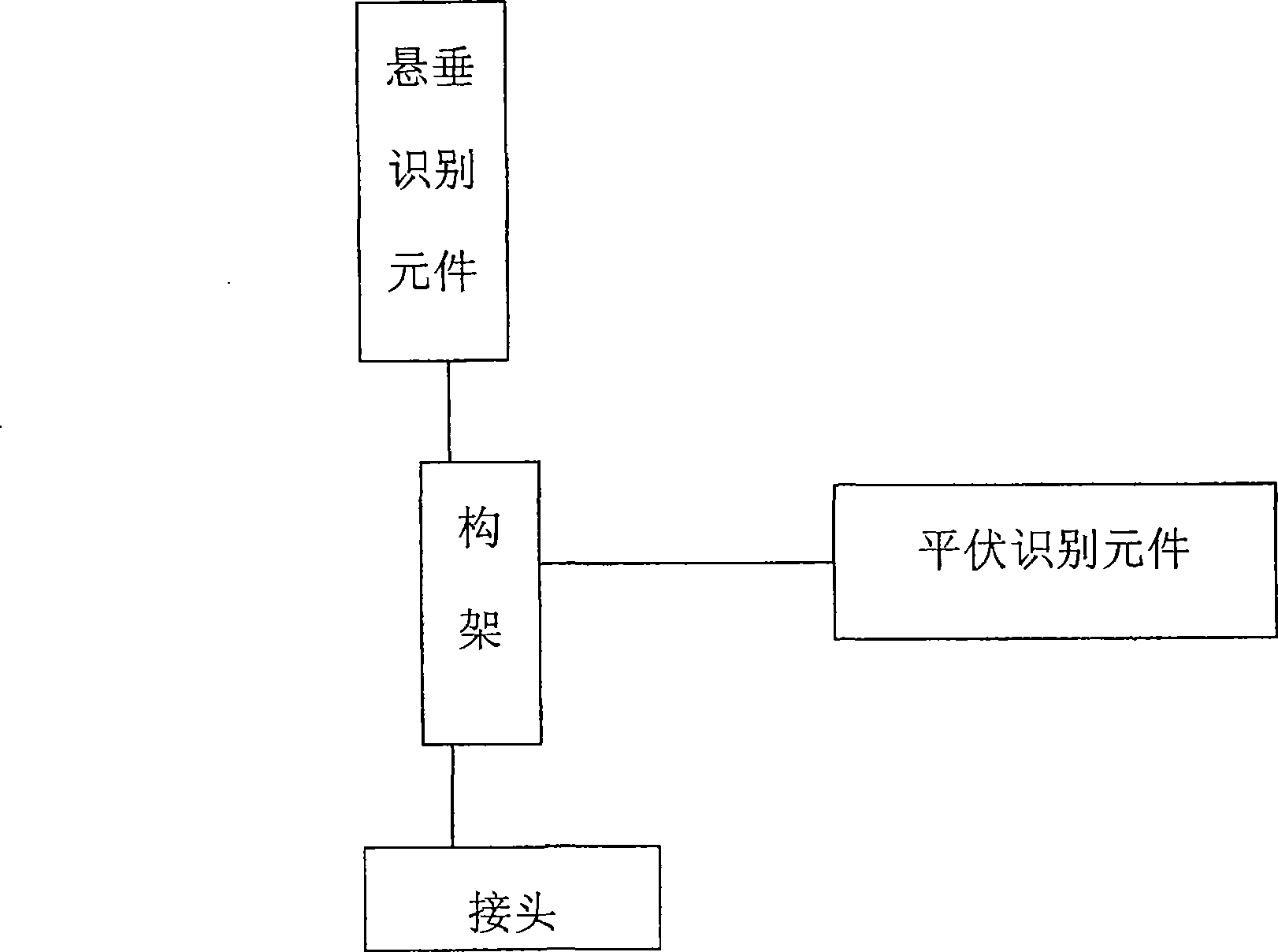
图解3Diagram 3
通过图解4阐明的方法可以制备结构单元,其包括A和/或B识别元件,接头,和氨基酸构架。Building blocks, which include A and/or B recognition elements, linkers, and amino acid frameworks, can be prepared by the method illustrated in
酪氨酸构架 丝氨酸构架Tyrosine Framework Serine Framework

图解4Diagram 4
关于结构单元更多的More about structural units
结构单元可以是不对称的。采用不对称的,不同组合的例如接头和识别元件可以产生可以视为以不同方式占据3D空间的结构单元。因此,这些不同结构单元可以进行相关的然而在别的方面却不同的功能。Structural units may be asymmetric. Employing asymmetric, different combinations of eg linkers and recognition elements can result in structural units that can be viewed as occupying 3D space differently. Thus, these different structural units may perform related yet otherwise distinct functions.
在一个实施方案中,包括两个识别元件,接头和构架的结构单元可以视为具有伸展的悬垂构型的两个识别元件。这种构型的一个实施方案用示意图在图解5中举例说明:In one embodiment, a structural unit comprising two recognition elements, a linker and a framework, can be viewed as two recognition elements having an extended overhang configuration. One embodiment of this configuration is illustrated schematically in Diagram 5:
图解5Diagram 5
这种构型具有相当大二维面积的分子足迹。这种较大的足迹可适合于例如结合较大的配体,该配体优选或要求在较大面积上与受体相互作用,或者优选或要求与识别元件上较大数量的官能团相互作用。这些较大的配体可以包括蛋白质,碳水化合物,细胞,和微生物(例如细菌和病毒)。This configuration has a molecular footprint of considerable two-dimensional area. Such a larger footprint may be suitable, for example, for binding larger ligands that prefer or require interaction with a receptor over a larger area, or that interact with a greater number of functional groups on a recognition element. These larger ligands can include proteins, carbohydrates, cells, and microorganisms (such as bacteria and viruses).
在一个实施方案中,结构单元可以仅具有单个悬垂构型的识别元件和构架末端的悬垂接头。这些结构单元可以是紧密的。这种结构单元可以与包括结合区域的大分子,如蛋白质(例如酶或受体)或其它大分子相互作用。例如,这种结构单元可以用于探测蛋白质上的腔,如结合位点。In one embodiment, a building block may have only a single pendent configuration of the recognition element and pendent linkers at the ends of the framework. These structural units can be compact. Such building blocks can interact with macromolecules, such as proteins (eg, enzymes or receptors), or other macromolecules that include binding domains. For example, such building blocks can be used to probe cavities on proteins, such as binding sites.
结构单元组structural unit group
本发明还涉及结构单元组。结构单元组可以包括分离的结构单元,具有用于与载体偶联的活化接头的结构单元,和/或与载体偶联的结构单元。结构单元组包括多个结构单元。多个结构单元可以是涂层,一个点或多个点(例如形成候选人工受体),或试剂盒的元件。多个结构单元可以包括足量的结构单元和识别元件以探索候选人工受体或确定配体的受体。即,结构单元组可以包括大部分(优选至少6种)选自以下各项的结构性质:正电荷,负电荷,酸,碱,电子受体,电子供体,氢键供体,氢键受体,自由电子对,π电子,电荷极化,亲水性,疏水性。The invention also relates to groups of structural units. A set of building blocks may include isolated building blocks, building blocks with activated linkers for coupling to a support, and/or building blocks coupled to a support. A structural unit group includes a plurality of structural units. A plurality of building blocks can be a coating, a spot or spots (for example forming a candidate artificial receptor), or an element of a kit. A plurality of building blocks can include sufficient numbers of building blocks and recognition elements to explore candidate artificial receptors or receptors for defined ligands. That is, the group of building blocks may include a majority (preferably at least 6) of structural properties selected from the group consisting of: positive charge, negative charge, acid, base, electron acceptor, electron donor, hydrogen bond donor, hydrogen bond acceptor bulk, free electron pairs, π electrons, charge polarization, hydrophilicity, hydrophobicity.
对于结构单元组,优选选择识别元件以便为单独的结构单元组成员提供不同的结构性质。单个结构单元可以包括具有多于一种结构性质的识别元件。结构单元组可以包括具有每种结构性质的识别元件。例如,结构单元组可以包括一个或多个包括带正电荷的识别元件的结构单元,一个或多个包括酸性识别元件的结构单元,一个或多个包括碱性识别元件的结构单元,一个或多个包括供电子识别元件的结构单元,一个或多个包括受电子识别元件的结构单元,一个或多个包括氢键供体识别元件的结构单元,一个或多个包括氢键受体识别元件的结构单元,一个或多个包括极性识别元件的结构单元,一个或多个包括含有自由电子对的识别元件的结构单元,一个或多个包括含有π电子的识别元件的结构单元,一个或多个包括亲水性识别元件的结构单元,一个或多个包括疏水性识别元件的结构单元,一个或多个包括小的识别元件的结构单元,和/或一个或多个包括大体积识别元件的结构单元。For building block groups, the recognition elements are preferably selected so as to provide individual building block group members with different structural properties. A single structural unit may comprise recognition elements with more than one structural property. A structural unit group may include recognition elements having each structural property. For example, a set of building blocks may include one or more building blocks comprising a positively charged recognition element, one or more building blocks comprising an acidic recognition element, one or more building blocks comprising a basic recognition element, one or more One or more structural units comprising an electron-donating recognition element, one or more structural units comprising an electron-accepting recognition element, one or more structural units comprising a hydrogen bond donor recognition element, one or more comprising a hydrogen bond acceptor recognition element Structural units, one or more structural units comprising polar recognition elements, one or more structural units comprising recognition elements containing free electron pairs, one or more structural units comprising recognition elements containing π electrons, one or more One or more building blocks comprising hydrophilic recognition elements, one or more building blocks comprising hydrophobic recognition elements, one or more building blocks comprising small recognition elements, and/or one or more building blocks comprising bulky recognition elements Structural units.
在一个实施方案中,选择识别元件的数量和多样性以便为结构单元组提供易处理数量的成员。易处理数量的结构单元典型地提供小于1000万种组合,优选约200万种组合,每个组合优选包括3,4,5,或6个结构单元。在一个实施方案中,识别元件提供结构单元组,其结合在天然受体的元件中发现的官能团和构型,优选含有最少量的结构单元。In one embodiment, the number and diversity of recognition elements are selected so as to provide a manageable number of members for the set of building blocks. A manageable number of building blocks typically provides less than 10 million combinations, preferably about 2 million combinations, each combination preferably comprising 3, 4, 5, or 6 building blocks. In one embodiment, the recognition element provides a set of building blocks incorporating functional groups and configurations found in elements of native receptors, preferably containing a minimal number of building blocks.
9种A和9种B识别元件可以结合为81(9 x 9)种结构单元的组,每种具有一种A和一种B识别元件。这些结构单元可以例如使用在构架上的组合合成来制备,所述构架如丝氨酸或酪氨酸构架。在4个的组中,该81种结构单元的组提供166万种结构单元组合(表1),每种可以是载体,基底或架上的微阵列中的异质组合。尽管不对本发明限制,认为这些4个的组足以结合在天然受体中发现的官能团和构型,并提供足够的候选人工受体以针对特定配体生产一种或多种人工受体。Nine A and nine B recognition elements can be combined into a set of 81 (9 x 9) building blocks, each with one A and one B recognition element. These building blocks can be prepared, for example, using combinatorial synthesis on frameworks, such as serine or tyrosine frameworks. In a set of 4, this set of 81 building blocks provides 1.66 million building block combinations (Table 1), each of which can be a heterogeneous combination in microarrays on supports, substrates or racks. While not limiting the invention, it is believed that these groups of four are sufficient to incorporate the functional groups and configurations found in natural receptors and provide sufficient candidate artificial receptors to generate one or more artificial receptors for a particular ligand.
表1-候选人工受体组合的数量计算Table 1 - Calculation of the number of candidate artificial receptor combinations
对于从n种的组中取N个化合物,使用下式计算不同组合(CRC标准数学表和公式手册,第30版):For taking N compounds from a group of n species, the different combinations are calculated using the following formula (CRC Standard Mathematical Tables and Formulas Handbook, 30th Edition):
组合的数量=N!/(N-n)!n!Number of combinations = N! /(N-n)! n!
对于N=81For N=81

一结构单元组包括通式2的结构单元,RE1为B1,B2,B3,B4,B5,B6,B7,B8,或B9,RE2为A1,A2,A3,A4,A5,A6,A7,A8,或A9。在该组的一个实施方案中,RE1可以为B2,B4,或B6,RE2可以为A2,A4,或A6。在该组的一个实施方案中,RE1可以为B1,B3,B6,或B8,RE2可以为A2,A4,A5,或A9。在该组的一个实施方案中,RE1可以为B2,B4,B6,或B8,RE2可以为A2,A4,A6,或A8。在该组的一个实施方案中,RE1可以为B1,B2,B4,B6,或B8,RE2可以为A1,A2,A4,A6,或A8。在该组的一个实施方案中,RE1可以为B1,B2,B4,B6,B8,或B9,RE2可以为A1,A2,A4,A6,A8,或A9。在该组的一个实施方案中,RE1可以为B1,B2,B3,B4,B5,B6,B7,B8,或B9,RE2可以为A1,A2,A3,A4,A5,A6,A7,A8,或A9。A structural unit group includes structural units of
在一个实施方案中,结构单元组包括烷基,芳基,和极性识别元件,加上这些结构性质组合的识别元件。包括通式2的那些的结构单元组,其中RE1为B1,B2,B3,B4,B5,B6,B7,B8,或B9,RE2为A1,A2,A3,A4,A5,A6,A7,A8,或A9,是包括烷基,芳基,和极性识别元件的结构单元组。表2举例说明了通式2的81种结构单元的实施方案,其具有跨越烷基,芳基的识别元件和极性识别元件。In one embodiment, the set of structural units includes alkyl, aryl, and polar recognition elements, plus recognition elements for combinations of these structural properties. Groups of structural units comprising those of
图26,27A和27B举例说明了对于包括9种A和9种B识别元件中的每一个的结构单元和由这些结构单元制成的人工受体的体积对logP的图表。这些图表举例说明了具有A和B识别元件的结构单元和由这些结构单元制成的人工受体充满相当大部分的由体积和亲油性/亲水性限定的结合空间。Figures 26, 27A and 27B illustrate plots of volume versus logP for building blocks comprising each of the nine A and nine B recognition elements and artificial receptors made from these building blocks. These diagrams illustrate that building blocks with A and B recognition elements and artificial receptors made from these building blocks fill a substantial portion of the binding space defined by volume and lipophilicity/hydrophilicity.
表2-通式2的81种结构单元的实施方案,其具有跨越烷基,芳基的识别元件和极性识别元件。Table 2 - Embodiments of the 81 structural units of
RERE 11 ,平伏的, leveled

结构单元组的实施方案Embodiments of building block groups
本发明包括结构单元组。结构单元组可以包括2个或多个与载体或支架偶联的结构单元。这种载体或支架可以认为包括异质结构单元。如本文所用,术语“载体”是指典型地为宏观的固体载体。如本文所用,术语支架(scaffold)是指多个结构单元可以共价结合的分子尺度的结构。两个或多个结构单元可以与彼此邻近的不同结构单元以一种分子构型和载体或支架偶联。这种分子构型的多个不同结构单元可以提供候选人工受体。The present invention includes groups of structural units. A structural unit group may include 2 or more structural units coupled to a carrier or a scaffold. Such carriers or scaffolds can be considered to comprise heterogeneous building blocks. As used herein, the term "support" refers to a typically macroscopic solid support. As used herein, the term scaffold refers to a molecular-scale structure in which multiple building blocks can be covalently bound. Two or more building blocks can be coupled to a carrier or scaffold in one molecular configuration with different building blocks adjacent to each other. Multiple distinct building blocks of this molecular configuration can provide candidate artificial receptors.
载体上的结构单元Structural unit on the carrier
本发明包括固定的结构单元组和结构单元组合。在一个实施方案中,本发明包括其表面上具有多个结构单元的固体载体。The invention includes fixed groups of structural units and combinations of structural units. In one embodiment, the invention includes a solid support having a plurality of structural units on its surface.
例如,载体可以是包被多个结构单元的玻璃管或孔。在一个实施方案中,玻璃管或孔(例如96孔平板)的表面包被涂层,其与多个结构单元共价结合。该涂层可以认为包括异质结构单元。表面或涂层可以包括足以提供多于一种结构单元与配体相互作用的结构单元密度。结构单元可以彼此邻近。通过与仅具有结构单元之一的表面相比配体与具有多个结构单元的表面的改变的(例如更紧的或更松的)结合,提供不同结构单元邻近的证据。For example, the support may be a glass tube or well coated with a plurality of structural units. In one embodiment, the surface of a glass tube or well (eg, a 96-well plate) is coated with a coating that covalently binds multiple building blocks. The coating can be considered to comprise heterogeneous structural units. A surface or coating may comprise a density of building blocks sufficient to provide for more than one type of building block to interact with a ligand. Structural units can be adjacent to each other. Evidence for the proximity of different building blocks is provided by altered (eg tighter or looser) binding of ligands to surfaces with multiple building blocks compared to surfaces with only one of the building blocks.
结构单元组可以用于单个管或孔上2个,3个,4个,或更多结构单元的组合。对于该实施方案,每个组合使用大体积的管或孔,易处理的结构单元组优选提供小于数百或数千种结构单元组合。例如,在本文中,3,4,5,或6种结构单元的组提供易处理数量的2,3,或4结构单元组合。Groups of structural units can be used in combinations of 2, 3, 4, or more structural units on a single tube or well. For this embodiment, using bulky tubes or wells per combination, the set of manageable building blocks preferably provides fewer than hundreds or thousands of building block combinations. For example, herein, groups of 3, 4, 5, or 6 building blocks provide a manageable number of 2, 3, or 4 building block combinations.
在一个实施方案中,固定化的结构单元组合可以包括多个管,每管在其表面上固定结构单元的异质组合。结构单元可以通过每个结构单元和载体基质之间的酰胺键固定在管表面。固定的结构单元可以包括2,3,或4结构单元组合。为了限制处理管数的方便,在该实施方案中,一组包括可达5-7个结构单元,优选5个或更少,优选3,4,或5个结构单元。对于各管,适当的结构单元具有通式2,RE1为B1,B2,B3,B4,B5,B6,B7,B8,或B9,RE2为A1,A2,A3,A4,A5,A6,A7,A8,或A9。在各管的一个实施方案中,RE1可以为B1,B3,B6,或B8,RE2可以为A2,A4,A5,或A9。在各管的一个实施方案中,RE1可以为B2,B4,或B6,RE2可以为A2,A4,或A6。在各管的一个实施方案中,RE1可以为B2,B4,B6,或B8,RE2可以为A2,A4,A6,或A8。在各管的一个实施方案中,RE1可以为B1,B2,B4,B6,或B8,RE2可以为A1,A2,A4,A6,或A8。在各管的一个实施方案中,RE1可以为B1,B2,B4,B6,B8,或B9,RE2可以为A1,A2,A4,A6,A8,或A9。多个各自包被结构单元组合的管可以配置为管阵列。In one embodiment, the immobilized combination of building blocks may comprise a plurality of tubes, each tube immobilizing a heterogeneous combination of building blocks on its surface. The structural units can be immobilized on the tube surface via amide bonds between each structural unit and the carrier matrix. Fixed building blocks can consist of 2, 3, or 4 building block combinations. For the convenience of limiting the number of tubes to be processed, in this embodiment, a set includes up to 5-7 building blocks, preferably 5 or less, preferably 3, 4, or 5 building blocks. For each tube, suitable structural units have the
在一个实施方案中,本发明包括固体载体,其表面上具有多个区域或点,每个区域或点包括多个结构单元。例如,载体可以是点有多个点的载玻片,每个点包括多个结构单元。该点或区域可以认为包括异质结构单元。每个区域或点可以包括足以提供多于一个结构单元与配体相互作用的结构单元密度。尽管每个区域或点典型地与区域或点中其它区域或点分离,结构单元可以彼此邻近。通过与仅具有结构单元之一的区域或点相比配体与具有多个结构单元的表面的改变的(例如更紧的或更松的)结合,提供区域或点中不同结构单元邻近的证据。多个结构单元区域或点在本文中称为区域或点阵列。In one embodiment, the invention includes a solid support having a plurality of regions or spots on its surface, each region or spot comprising a plurality of structural units. For example, the support may be a glass slide dotted with a plurality of dots, each dot comprising a plurality of structural units. This point or region can be considered to comprise a heterogeneous structural unit. Each region or spot may comprise a density of building blocks sufficient to provide for more than one building block to interact with the ligand. Although each region or point is typically isolated from other ones of the regions or points, the structural units may be adjacent to each other. Provides evidence of the proximity of different building blocks in a region or spot by altered (eg tighter or looser) binding of a ligand to a surface with multiple building blocks compared to a region or spot with only one of the building blocks . A plurality of structural unit regions or dots is referred to herein as an array of regions or dots.
结构单元组可以用于每个区域或点中2个,3个,4个,或更多结构单元的组合。在该实施方案中,高达100,000个点可以安装在载玻片上。因此,易处理的结构单元组可以提供数百万种结构单元组合。例如,在本文中,81种结构单元的组提供易处理数量(166万种)的4结构单元组合,每种可以是载体,基底或架上的微阵列中的异质组合。尽管不对本发明限制,认为这些166万种组合足以结合在天然受体中发现的官能团和构型,并提供足够的候选人工受体以针对特定配体生产一种或多种人工受体。Groups of structural units can be used in combinations of 2, 3, 4, or more structural units per region or point. In this embodiment, up to 100,000 spots can be mounted on a glass slide. Thus, a tractable set of building blocks can provide millions of building block combinations. For example, in this paper, a panel of 81 building blocks provides a manageable number (1.66 million) of 4 building block combinations, each of which can be a heterogeneous combination in a microarray on a support, substrate, or rack. While not limiting the invention, it is believed that these 1.66 million combinations are sufficient to incorporate the functional groups and configurations found in natural receptors and provide sufficient candidate artificial receptors to generate one or more artificial receptors for a particular ligand.
在一个实施方案中,固定化的结构单元组合可以包括一个或多个载玻片,每个载玻片在其表面上具有多个点,每个点包括固定化的异质结构单元组合。结构单元可以通过每个结构单元与载体基质之间的酰胺键固定在载玻片的表面上。固定化的结构单元可以包括例如2,3,4,5,或6结构单元组。In one embodiment, the immobilized assembly of building blocks may comprise one or more glass slides, each slide having a plurality of spots on its surface, each spot comprising an immobilized heterogeneous assembly of building blocks. The building blocks can be immobilized on the surface of the glass slide via amide bonds between each building block and the carrier matrix. Immobilized building blocks can include, for example, groups of 2, 3, 4, 5, or 6 building blocks.
为了限制处理载玻片数量的方便,在该实施方案中,一组包括可达200个结构单元,优选50-100个,优选约80(例如81)个结构单元。对于载玻片,适当的结构单元具有通式2,RE1为B1,B2,B3,B4,B5,B6,B7,B8,或B9,RE2为A1,A2,A3,A4,A5,A6,A7,A8,或A9。该实施方案可以包括一组具有170万个异质点的载玻片,每个点包括4个结构单元。For convenience in limiting the number of slides handled, in this embodiment a set comprises up to 200 building blocks, preferably 50-100, preferably about 80 (eg 81) building blocks. For glass slides, suitable structural units have the
在一个实施方案中,一个或多个载玻片可以包括结构单元的异质点,所述结构单元由全部结构单元的子集的组合或每个点中结构单元的较小组制成。即,每个点仅包括例如2或3个结构单元,而不是4或5个结构单元。例如,一个或多个载玻片可以包括通过全套结构单元(例如81种的组中的81种)以2个和/或3个的组的组合形成的点数。例如,一个或多个载玻片可以包括通过结构单元子集(例如81种的组中的25种)以4个或5个的组的组合形成的点数。例如,一个或多个载玻片可以包括通过结构单元子集(例如81种的组中的25种)以2个或3个的组的组合形成的点数。如果从子集和/或较小组中鉴定了所关心的候选人工受体,那么可以制备或选择另外的子集和组群,其结合所关心的候选物中的结构单元或结构类似的结构单元。In one embodiment, one or more slides may comprise heterogeneous spots of building blocks made from combinations of subsets of all building blocks or smaller groups of building blocks in each spot. That is, each spot only includes, for example, 2 or 3 structural units instead of 4 or 5 structural units. For example, one or more slides may include spots formed by a full set of building blocks (eg, 81 of a set of 81) in combinations of sets of 2 and/or 3. For example, one or more slides may include spots formed by combinations of a subset of building blocks (eg, 25 out of a set of 81) in groups of 4 or 5. For example, one or more slides may comprise points formed by combinations of a subset of building blocks (eg, 25 out of a set of 81) in groups of 2 or 3. If a candidate artificial receptor of interest is identified from a subset and/or smaller group, additional subsets and groups can be prepared or selected that bind building blocks or structurally similar building blocks in the candidate of interest .
例如,图7举例说明了单块具有3,240 n=2种衍生组合的载玻片,其可以用于从81种结构单元中限定更有限的组。这种限定的例如25种(由n=2的5x5矩阵的结果确定)的组,可以用于产生另外2,300 n=3种衍生的和12,650 n=4种衍生的组合,其可以探测确定最适受体构型。使用最好的偏离1:1的结构单元比率,接着特异性合成鉴定的受体可以进行进一步的优化。For example, Figure 7 illustrates a single slide with 3,240 n=2 derived combinations, which can be used to define a more limited set from 81 building blocks. This limited set of, say, 25 (determined by the results of a 5x5 matrix of n=2) can be used to generate an additional 2,300 n=3 derived and 12,650 n=4 derived combinations which can be probed to determine the most suitable receptor configuration. Further optimization can be performed using the building block ratios that best deviate from 1:1, followed by specific synthesis of the identified receptors.
使用已知方法可以将结构单元与载体偶联,这些方法用于活化用作结构单元类型的化合物和将它们与载体偶联。例如,包括活化酯的结构单元可以与包括胺官能团的载体偶联。可以将结构单元上的羧基衍生化以形成活化的酯。通过另外的实施例,包括胺官能团的结构单元可以与包括羧基的载体偶联。可以用在结构单元和载体上的官能团对包括胺和羧基(或活化的羧基),硫醇和马来酰亚胺等。The building block can be coupled to the support using known methods for activating the compounds used as building block types and coupling them to the support. For example, a structural unit comprising an activated ester can be coupled to a support comprising an amine functionality. The carboxyl groups on the building blocks can be derivatized to form activated esters. By way of further example, structural units comprising amine functional groups may be coupled to supports comprising carboxyl groups. Functional group pairs that can be used on building blocks and supports include amine and carboxyl (or activated carboxyl), thiol and maleimide, and the like.
使用常规微点样技术(例如压电,针,和电磁印刷机),可以将单个或组合的结构单元与点中的载体偶联。该点样产生结构单元异质组合的点微阵列,每个可以是候选人工受体。如本文以上所述,微阵列中的每个点包括统计学显著数量的每种结构单元。Single or combined building blocks can be coupled to the carrier in the dots using conventional microdot-patterning techniques (eg piezoelectric, needle, and electromagnetic printers). This spotting produces a spot microarray of heterogeneous combinations of building blocks, each of which can be a candidate artificial receptor. As described herein above, each spot in the microarray includes a statistically significant number of each structural unit.
结构单元组可以在多种用于组合或合成化学中的已知载体(例如显微镜载玻片,珠粒,树脂,凝胶等)中的任何一种之上。适当的载体包括官能化的玻璃,如官能化的载玻片或管,玻璃显微镜载玻片,玻璃板,玻璃盖玻片,玻璃珠,微孔玻璃珠,硅胶载体等。如上所述,玻璃载体可以包括硅烷化剂的载体基质,其具有适于与结构单元偶联的官能团。关于应用于结构单元组,载体基质官能团可以以1个的组(例如作为胺或另一官能团的平层),或以例如2,3,4,5,6,或7个的组悬垂于载体。多个悬垂于载体的官能团基团可以视为悬垂于载体的支架分子。The building block set can be on any of a variety of known supports used in combinatorial or synthetic chemistry (eg, microscope slides, beads, resins, gels, etc.). Suitable supports include functionalized glass, such as functionalized glass slides or tubes, glass microscope slides, glass plates, glass coverslips, glass beads, microporous glass beads, silica gel supports, and the like. As mentioned above, the glass support may comprise a support matrix of a silylating agent having functional groups suitable for coupling with structural units. With regard to application to groups of building blocks, the support matrix functional groups can be pendent from the support in groups of 1 (e.g. as a flat layer of amines or another functional group), or in groups of e.g. 2, 3, 4, 5, 6, or 7 . Multiple functional groups pendant from the support can be regarded as scaffold molecules pendant from the support.
载体表面可以视为包括底面和结构单元(图3A,3B,和4)。因此,底面可以被认为是候选人工受体的特征。在一个实施方案中,候选人工受体可以包括结构单元和底面的修饰的胺。该候选人工受体具有胺/铵底面。在一个实施方案中,候选人工受体可以包括结构单元和底面的修饰的胺(例如乙酰胺)。The carrier surface can be considered to include the bottom surface and the structural units (FIGS. 3A, 3B, and 4). Therefore, the bottom surface can be considered as a feature of candidate artificial receptors. In one embodiment, a candidate artificial receptor can include a building block and a modified amine on the underside. This candidate artificial acceptor has an amine/ammonium base. In one embodiment, a candidate artificial receptor can include a building block and a modified amine (eg, acetamide) on the underside.
支架组bracket set
在一个实施方案中,本发明包括已经偶联多个结构单元的支架分子。例如,支架可以是多胺,例如在环周围含有多个伯胺基团的环状分子。该支架可以包括多个与胺偶联的结构单元。该支架可以认为包括异质结构单元。支架可以提供结构单元密度,其足以提供多于一个结构单元与配体相互作用。结构单元可以彼此邻近。通过与仅具有结构单元之一的支架相比配体与具有多个结构单元的支架的改变的(例如更紧的或更松的)结合,提供支架上不同结构单元邻近的证据。支架可以包括用于与例如2,3,4,5,6,或7个结构单元偶联的官能团。In one embodiment, the invention includes scaffold molecules to which multiple building blocks have been coupled. For example, the scaffold can be a polyamine, such as a cyclic molecule containing multiple primary amine groups around the ring. The scaffold can include multiple building blocks coupled to amines. The scaffold can be considered to comprise heterogeneous structural units. A scaffold can provide a density of building blocks sufficient to provide more than one building block for interaction with a ligand. Structural units can be adjacent to each other. Evidence of the proximity of different building blocks on a scaffold is provided by altered (eg tighter or looser) binding of a ligand to scaffolds having multiple building blocks compared to scaffolds having only one of the building blocks. Scaffolds may include functional groups for coupling to, for example, 2, 3, 4, 5, 6, or 7 building blocks.
支架可以是人工受体的载体,该人工受体包括3个,4个,或更多相对彼此占据支架上不同位置的结构单元的组合。例如,结构单元1可以与结构单元2,3,或4中任何一个相邻。这可以通过考虑与支架上不同官能团偶联的结构单元来举例说明。例如,图8举例说明了4种不同结构单元在四边形支架顶点上的位置异构体。支架位点异构体人工受体可以例如在具有多个官能团的支架上制备,这些官能团可以通过正交化学保护或脱保护。A scaffold may be a carrier of an artificial receptor comprising a combination of 3, 4, or more structural units occupying different positions on the scaffold relative to each other. For example,
这种支架位置异构体人工受体可以提供先导或工作受体,其效用不同于基于固体载体的受体。例如,可以评估和选择这种支架位置异构体的最佳结合,然后在要求最佳受体时使用。可以例如在光纤上固定化支架人工受体以提供可检测信号,或者用于本文关于工作人工受体所述的其它任何应用。Such scaffold positioner artificial receptors can provide lead or working receptors with utility distinct from solid support-based receptors. For example, the best binding of such scaffold regioisomers can be evaluated and selected, and then used when the best acceptor is required. Scaffold artificial receptors can be immobilized, for example, on optical fibers to provide a detectable signal, or for any of the other applications described herein for working artificial receptors.
未固定化的支架人工受体可以用于以下应用,其中抗体可以作为特异性抗癌剂用于结合和固定化/中和血流成分如胆固醇,可卡因或DDT,结合和中和有害废物,开发游离溶液分析方法,例如荧光偏振免疫测定或基于分子信标的测定。这些游离(未固定化)的支架人工受体还可以用于开发基于结合的药物,例如支架受体阻断蛋白质-蛋白质相互作用的应用,该蛋白质-蛋白质相互作用与以下各项有关:癌症,AIDS进展,结核病和疟疾,由暴露于工业氯化芳烃产生的毒性效应等等。Unimmobilized scaffold artificial receptors can be used in applications where antibodies can be used as specific anticancer agents for binding and immobilizing/neutralizing bloodstream components such as cholesterol, cocaine or DDT, binding and neutralizing hazardous waste, developing Free-solution analytical methods such as fluorescence polarization immunoassays or molecular beacon-based assays. These free (unimmobilized) scaffold artificial receptors can also be used to develop binding-based drugs, such as the application of scaffold receptors to block protein-protein interactions that are associated with: cancer, AIDS progression, tuberculosis and malaria, toxic effects from exposure to industrial chlorinated aromatics, etc.
在一个实施方案中,将支架人工受体通过例如注射,摄食,管饲法,栓剂,吸入等导入受试者(例如小鼠,大鼠,狗,猫,马,猴子,人等)。一旦导入,支架人工受体可以结合所关心的化合物,如可卡因,胆固醇,铅,DDT。支架人工受体结合可以将结合的物质作为检测,破坏,分泌,治疗等的目标。In one embodiment, the scaffold artificial receptor is introduced into a subject (eg, mouse, rat, dog, cat, horse, monkey, human, etc.) by, for example, injection, ingestion, gavage, suppository, inhalation, etc. Once introduced, the scaffold artificial receptors can bind compounds of interest such as cocaine, cholesterol, lead, and DDT. Scaffold artificial receptor binding can target the bound substance for detection, destruction, secretion, therapy, etc.
在一个实施方案中,支架人工受体通过例如混合,喷雾,注射等与环境基质(例如水,土壤,沉积物)接触。在基质中,支架人工受体与所关心的配体结合。对于所关心的配体,其为有害废物成分,有害废物混合物,污染成分,污染混合物等,则与支架人工受体的结合可以将结合的物质作为检测,破坏或固定化的目标。In one embodiment, the scaffold artificial receptor is contacted with the environmental matrix (eg, water, soil, sediment) by, for example, mixing, spraying, injecting, and the like. In the matrix, the scaffold artificial receptor binds the ligand of interest. For the ligands of interest, which are hazardous waste components, hazardous waste mixtures, pollution components, pollution mixtures, etc., the binding to the scaffold artificial receptor can make the bound substance a target for detection, destruction or immobilization.
在一个实施方案中,支架人工受体与偶联的生物效应器结合。这种生物效应器可以是毒素,放射性同位素螯合物等。可以将偶联物导入受试者。在导入后,支架人工受体偶联物可以与所关心的配体相互作用,该配体与例如致病微生物或癌细胞有关。该相互作用将偶联的毒素或放射性同位素螯合物靶向致病微生物或癌细胞以检测,治疗,破坏传染剂或癌细胞。In one embodiment, a scaffold artificial receptor is associated with a coupled bioeffector. Such biological effectors can be toxins, radioisotope chelates, and the like. The conjugate can be introduced into a subject. After introduction, the scaffold artificial receptor conjugate can interact with a ligand of interest associated with, for example, pathogenic microorganisms or cancer cells. This interaction targets the coupled toxin or radioisotope chelate to the pathogenic microorganism or cancer cell for detection, treatment, destruction of the infectious agent or cancer cell.
在一个实施方案中,支架人工受体用于游离溶液分析方法。例如支架人工受体可以包括荧光或分子信标。支架人工受体偶联物与所关心的配体或包含所关心配体的样品的结合于是产生荧光偏振或分子信标重组,其产生与所关心配体存在相关的信号。In one embodiment, scaffolded artificial receptors are used in free solution analytical methods. For example scaffold artificial receptors may include fluorescent or molecular beacons. Binding of the scaffold artificial receptor conjugate to the ligand of interest or a sample containing the ligand of interest then produces fluorescence polarization or molecular beacon recombination that produces a signal correlated with the presence of the ligand of interest.
在一个实施方案中,支架人工受体可以用作药物,其例如用于治疗癌症,传染,疾病,或毒性效应。作为药物,支架人工受体与所关心配体(例如在细胞或微生物之上或内部)的结合可以阻断,例如,DNA复制,基因调节,RNA转录,肽合成。这些阻断可以破坏蛋白质(例如酶)合成或修饰,蛋白质-蛋白质相互作用等。这些合成,修饰,或相互作用可以涉及癌症,HIV/AIDS,结核病,疟疾,或由于暴露于工业氯化芳烃产生的毒性效应等等。因此,支架人工受体可以治疗这些病症。In one embodiment, the stent artificial receptor can be used as a drug, for example, in the treatment of cancer, infection, disease, or toxic effects. As drugs, the binding of scaffold artificial receptors to ligands of interest (eg, on or within a cell or microorganism) can block, eg, DNA replication, gene regulation, RNA transcription, peptide synthesis. These blockades can disrupt protein (eg, enzyme) synthesis or modification, protein-protein interactions, and the like. These syntheses, modifications, or interactions can be related to cancer, HIV/AIDS, tuberculosis, malaria, or toxic effects due to exposure to industrial chlorinated aromatics, among others. Therefore, stent artificial receptors can treat these conditions.
支架分子可以是多种用于组合研究的已知分子支架中的任何一种。适当的支架分子包括在图解6中所阐明的那些。在图解6中阐明的化合物可商购或者可以通过已知方法制备。例如,化合物1,2,4,和5可以商购自Aldrich。化合物3可以通过Pattarawarapan(2000)(Pattarawarapan,M和Burgess,K,″A Linker Scaffold to Present Dimers of PharmacophoresPrepared by Solid-Phase Synthesis″,Angew.Chem.Int.Ed.,39,4299-4301(2000))的方法制备。化合物6可以通过Kimura(2001)(Kimura,M;Shiba,T;Yamazaki,M;Hanabusa,K;Shirai,H和Kobayashi,N,″Construction ofRegulated Nanospace around a Porphyrin Core″,J.Am.Chem.Soc.,123,5636-5642(2001))的方法以o-NH2的形式(显示),或通过Jain(2000)(Jain,RK;Hamilton,AD(2000),″Protein Surface Recognition by SyntheticReceptors Based on a Tetraphenylporphyrin Scaffold″,Org.Lett.2,第1721-1723页)的方法以p-COOH的形式(未显示)制备。化合物7可以通过Hamuro(1997)(Hamuro,Y.等,(Andrew Hamilton),″A Calixarene withfour Peptide Loops:An Antibody Mimic for Recognition of Protein Surfaces″,Angew.Chem.Int.Ed.Engl.,36,第2680-2683页)的方法以-COOH的形式(显示)或以-OH的形式(未显示)制备。化合物8可以以-NH2形式的三个官能团(显示),包括-COOH和-NH2基团的四个官能团(如所示),或作为含有6-NH2的二聚体产物(未显示)使用。这些形式的化合物8各自可以通过Opatz(2001)(Opatz,T;Liskamp,RM(2001),″A SelectivelyDeprotectable Triazacyclophane Scaffold for the Construction of ArtificialReceptors″,Org.Lett.,第3页3499-3502)的方法制备。Scaffold molecules can be any of a variety of known molecular scaffolds for combinatorial studies. Suitable scaffold molecules include those illustrated in

图解6Diagram 6
结构单元组合的分子构型Molecular Configuration of Combinations of Structural Units
图11用示意图举例说明了可以为小分子配体提供结合区域的结构单元的分子构型。图11举例说明了多个相邻结构单元可以形成腔或其它结合位点,其中每个结构单元具有悬垂的和平伏的识别元件。结合位点的大小可以用作例如所关心的小分子配体的受体。结构单元实施方案的空间填充分子模型可以视为符合该示意图。彼此不同的邻近结构单元可以提供结合位点可获得的结合相互作用的多样性。Figure 11 schematically illustrates the molecular configuration of building blocks that can provide binding domains for small molecule ligands. Figure 11 illustrates that multiple adjacent building blocks can form cavities or other binding sites, where each building block has both overhanging and lying recognition elements. The size of the binding site can be used, for example, as a receptor for a small molecule ligand of interest. Space-filling molecular models of building block embodiments can be considered to fit this schematic. Neighboring building blocks that differ from each other can provide the diversity of binding interactions available to a binding site.
图12用示意图举例说明了可以为宽广结合位点提供大的表面积的结构单元的分子构型。图12举例说明了多个相邻结构单元可以形成具有大分子足迹的宽广的结合位点,其中每个结构单元具有两个悬垂的侧面识别元件。宽广结合位点可以用作例如所关心的大分子,细胞或微生物(例如细菌或病毒)的受体。结构单元实施方案的空间填充分子模型可以视为符合该示意图。彼此不同的邻近结构单元可以提供结合位点可获得的结合相互作用的多样性。Figure 12 schematically illustrates the molecular configuration of building blocks that can provide large surface areas for broad binding sites. Figure 12 illustrates that multiple adjacent building blocks can form a broad binding site with a macromolecular footprint, where each building block has two overhanging lateral recognition elements. A broad binding site can be used, for example, as a receptor for a macromolecule of interest, a cell or a microorganism such as a bacterium or virus. Space-filling molecular models of building block embodiments can be considered to fit this schematic. Neighboring building blocks that differ from each other can provide the diversity of binding interactions available to a binding site.
图13用示意图举例说明了排列形成突出结合位点的结构单元的分子构型,其例如可以结合具有腔的试验配体。图13举例说明了多个相邻结构单元可以形成突出的结合位点,其中每个结构单元具有悬垂的突出识别元件。突出的结合位点可以用作例如含有活性或结合位点的大分子的受体。结构单元实施方案的空间填充分子模型可以视为符合该示意图。彼此不同的邻近结构单元可以提供结合位点可获得的结合相互作用的多样性。结合位点可以包括来自2个或多个结构单元的识别元件。Figure 13 schematically illustrates the molecular configuration of structural units arranged to form a protruding binding site, which can, for example, bind a test ligand having a cavity. Figure 13 illustrates that multiple adjacent building blocks can form overhanging binding sites, where each building block has an overhanging overhanging recognition element. Protruding binding sites can be used, for example, as receptors for macromolecules containing active or binding sites. Space-filling molecular models of building block embodiments can be considered to fit this schematic. Neighboring building blocks that differ from each other can provide the diversity of binding interactions available to a binding site. A binding site may comprise recognition elements from 2 or more building blocks.
图8举例说明了结构单元的分子构型可以形成6种位置异构体。这说明了将结构单元放置在正方形的角上,但对于任何四边形的4个顶点也是同样正确的。在支架上可以制备具有不同位置异构体结构的候选或先导人工受体。Figure 8 illustrates that the molecular configuration of the structural unit can form six positional isomers. This says to place the structural elements at the corners of the square, but the same is true for the 4 vertices of any quadrilateral. Candidate or lead artificial receptors with different regioisomeric structures can be prepared on scaffolds.
试剂组的实施方案Embodiment of the reagent set
本发明包括作为试剂的结构单元组。结构单元组试剂可以包括单独的结构单元或结构单元混合物。试剂组可以用于制备固定化的结构单元和结构单元组,并可以为此销售。在一个实施方案中,该组包括具有识别元件的结构单元,该识别元件代表作为结构特性的疏水性烷基,疏水性芳基,氢键受体,碱性,氢键供体,和小尺寸。例如,该组可以包括通式2的结构单元,RE1为B1,B2,B3,B4,B5,B6,B7,B8,或B9,RE2为A1,A2,A3,A4,A5,A6,A7,A8,或A9。在该组的一个实施方案中,RE1可以为B1,B3,B6,或B8,RE2可以为A2,A4,A5,或A9。在该组的一个实施方案中,RE1可以为B2,B4,或B6,RE2可以为A2,A4,A6,或A8。在该组的一个实施方案中,RE1可以为B2,B4,B6,或B8,RE2可以为A2,A4,A6,或A8。在该组的一个实施方案中,RE1可以为B1,B2,B4,B6,或B8,RE2可以为A1,A2,A4,A6,或A8。在试剂盒的一个实施方案中,RE1可以为B1,B2,B3,B4,B5,B6,B7,B8,或B9,RE2可以为A1,A2,A3,A4,A5,A6,A7,A8,或A9。在试剂盒的一个实施方案中,RE1可以为B1,B2,B4,B6,B8,或B9,RE2可以为A1,A2,A4,A6,A8,或A9。结构单元可以包括作为L的(CH2)nCOOH,n=1-16,优选n=2-8,优选n=4-6,优选n=3,或者L的活化形式,例如活化酯。The present invention includes groups of structural units as reagents. A building block reagent can comprise a single building block or a mixture of building blocks. Reagent sets can be used to prepare immobilized building blocks and sets of building blocks and can be sold therefor. In one embodiment, the set includes structural units with recognition elements representing, as structural characteristics, hydrophobic alkyl groups, hydrophobic aryl groups, hydrogen bond acceptors, basicity, hydrogen bond donors, and small size . For example, the group may include structural units of
该组可以是试剂盒的一部分,该试剂盒包括一种结构单元或结构单元混合物的容器,容器可以是在袋中,试剂盒可以包括描述结构单元和提供其使用说明的书面材料。The set may be part of a kit comprising a container of one building block or a mixture of building blocks, which may be in a bag, and the kit may include written material describing the building blocks and providing instructions for their use.
参考下列实施例可以更好地理解本发明。这些实施例意欲代表本发明的具体实施方案,而不意欲限制本发明的范围。The present invention can be better understood with reference to the following examples. These examples are intended to represent specific embodiments of the invention, and are not intended to limit the scope of the invention.
实施例Example
实施例1-结构单元的合成Synthesis of embodiment 1-structural unit
合成选择的、代表烷基-芳族-极性范围的整个表2(上文)结构单元骨架的结构单元,以显示这些结构单元在制备候选人工受体中的效用。在通式2的构架,特别是酪氨酸上制备这些结构单元,并包括识别元件对A2B2,A4B4,和A6B6。沿着表2对角线选择这些识别元件对,包括从烷基至芳族,至极性的足够范围,以代表全集81种这些结构单元之中的相当大程度的相互作用和官能团。Selected building blocks representing the entire Table 2 (above) building block backbone of the alkyl-aromatic-polar range were synthesized to show the utility of these building blocks in preparing candidate artificial receptors. These building blocks are made on the framework of
这些选择的结构单元组(N=3)用于显示合成,候选人工受体阵列制备,和先导人工受体的检测。These selected building block sets (N=3) were used for display synthesis, candidate artificial receptor array preparation, and detection of lead artificial receptors.
合成synthesis
结构单元合成采用图解7所概述的通用方法,其特别地举例说明了通式2的结构单元在具有识别元件对A4B4的酪氨酸构架上的合成。该通用方法用于将酪氨酸构架和识别元件对A2B2,A4B4和A6B6合成通式2的结构单元,其结构在图解8中显示。Building blocks were synthesized using the general approach outlined in

图解8Diagram 8
该通用方法也用于将接头,酪氨酸构架,和识别元件对A4B2和A4B6合成通式2的结构单元,其结构在图解9中显示。这两个结构单元可以分别称为TyrA4B2和TyrA4B6。结构单元TyrA4B2和TyrA4B6容易由4-XBOC中间体通过图解10的方法制备。This general method was also used to synthesize a linker, tyrosine framework, and recognition element pair A4B2 and A4B6 into a building block of
图解9Diagram 9


图解9结束Diagram 9 end
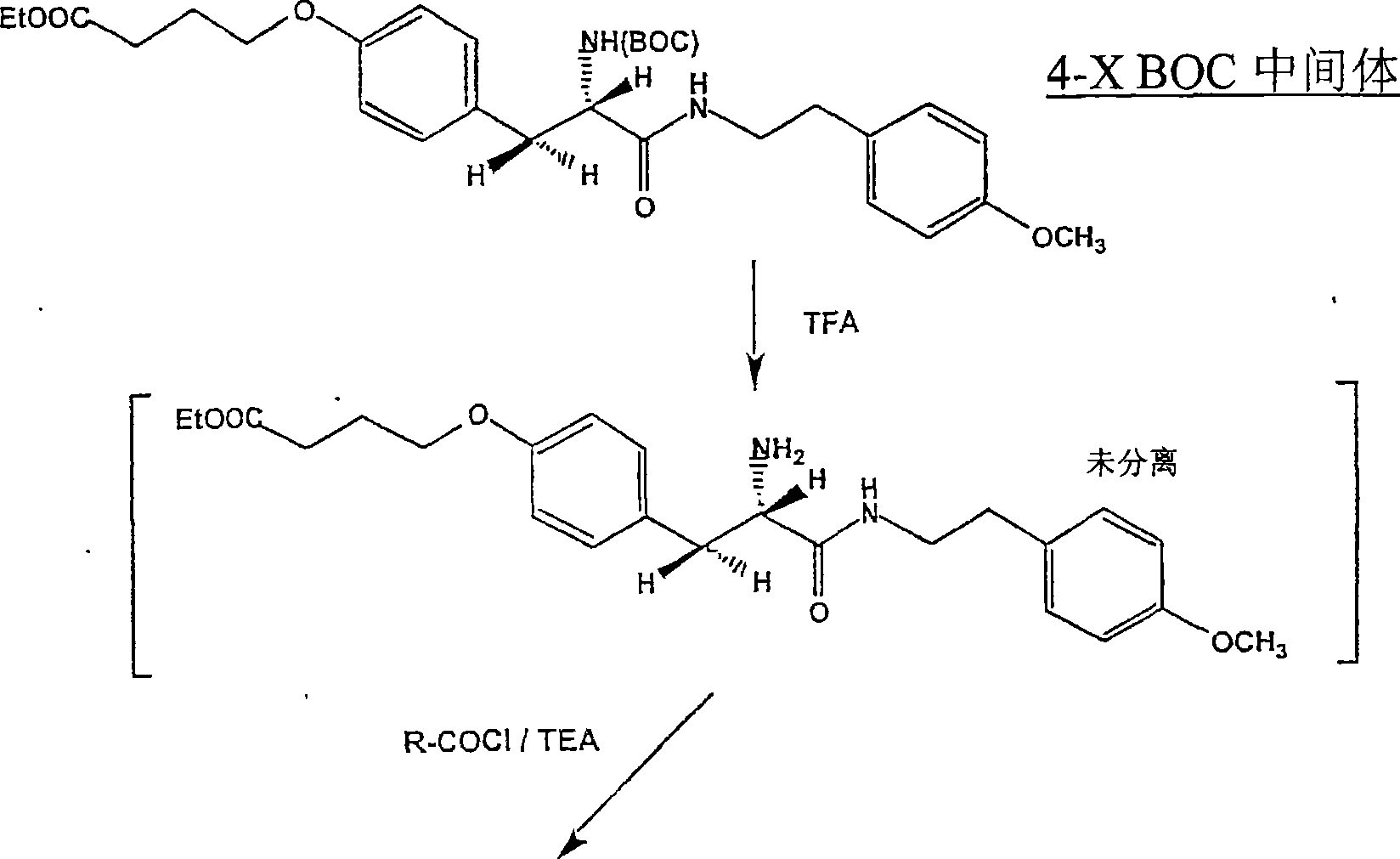
4-R酯中间体4-R ester intermediate
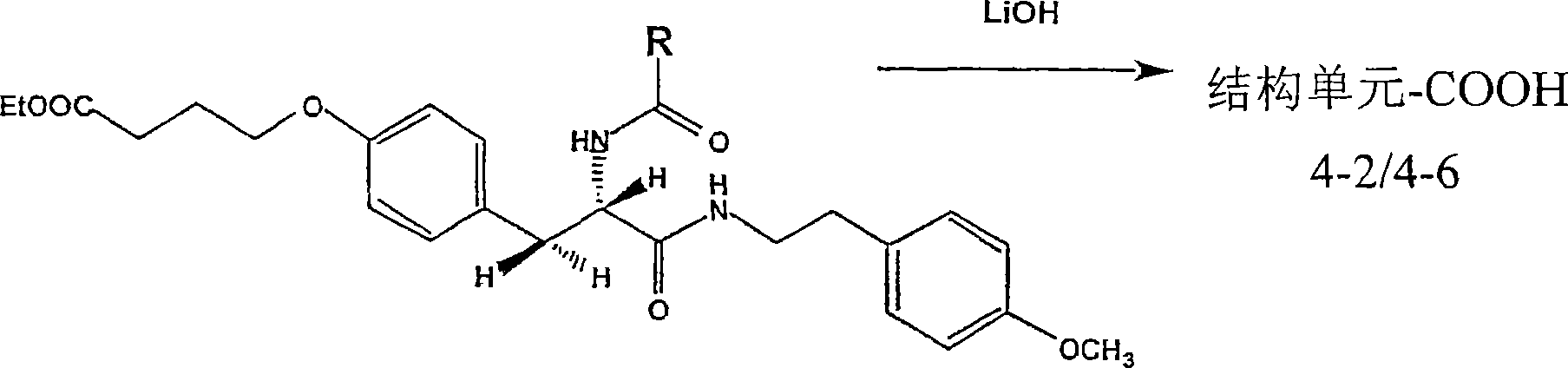
图解10Diagram 10
该通用方法也用于合成通式2的结构单元,具有接头,酪氨酸构架和识别元件对A1B1,A2B4,A2B6,A2B8,A4B8,A6B2,A6B4,A6B8,A8B2,A8B4,和A8B6,其结构在图解9中显示。这些结构单元也可以分别称为rA1B1,TyrA2B4,TyrA2B6,TyrA2B8,TyrA4B8,TyrA6B2,TyrA6B4,TyrA6B8,TyrA8B2,TyrA8B4,TyrA8B6,TyrA8B8,和TyrA9B9。This general method was also used to synthesize structural units of
结果result
所需结构单元的合成证明通常是简单的。这些合成说明,一旦具有对应识别元件(例如A2B2,A4B4,等)的结构单元已经通过它们的X BOC中间体制备,制备具有2个识别元件的结构单元相对简单,这两个识别元件具有不同结构特性或结构(例如A4B2,A6B3等)。Synthetic proofs of the desired building blocks are generally straightforward. These syntheses illustrate that once building blocks with corresponding recognition elements (e.g. A2B2, A4B4, etc.) have been prepared via their X BOC intermediates, it is relatively straightforward to prepare building blocks with 2 recognition elements with different structures Features or structures (eg A4B2, A6B3, etc.).
如图解7所示用识别元件对A4B4在酪氨酸构架上进行通式2的结构单元的合成,产生大量表3所列的中间体和产物。As shown in
表3-结构单元TyrA4B4的合成数据Table 3 - Synthesis data of building block TyrA4B4

两种中间体和结构单元TyrA4B4的结构通过质子NMR证实。The structures of the two intermediates and the building block TyrA4B4 were confirmed by proton NMR.
该图解也用于合成结构单元TyrA2B2,TyrA4B4,TyrA6B6,TyrA4B2,和TyrA4B6,结果在表4中显示:This scheme was also used to synthesize building blocks TyrA2B2, TyrA4B4, TyrA6B6, TyrA4B2, and TyrA4B6, and the results are shown in Table 4:
表4-结构单元TyrA2B2,TyrA4B2,TyrA4B6,和TyrA6B6的合成数据Table 4 - Synthesis data of building blocks TyrA2B2, TyrA4B2, TyrA4B6, and TyrA6B6


该图解也用于合成结构单元TyrA1B1,TyrA2B4,TyTA2B6,TyrA2B8,TyrA4B8,TyrA6B2,TyrA6B4,TyrA6B8,TyrA8B2,TyrA8B4,TyrA8B6,TyrA8B8,和TyrA9B9,产率良好比得上表3和4所列的那些。这些化合物的结构特性证实它们的结构如所计划的。This scheme was also used to synthesize building blocks TyrA1B1, TyrA2B4, TyTA2B6, TyrA2B8, TyrA4B8, TyrA6B2, TyrA6B4, TyrA6B8, TyrA8B2, TyrA8B4, TyrA8B6, TyrA8B8, and TyrA9B9 in yields well comparable to those listed in Tables 3 and 4. Structural characterization of these compounds confirmed that their structures were as planned.
概略的NMR数据Summary NMR data
NMR条件为含氘氯仿/d-甲醇溶剂混合物中300MHz。NMR conditions were 300 MHz in a deuterated chloroform/d-methanol solvent mixture.
TvrA2B2TvrA2B2

2-X t-BOCR1:-异丁基R2:t-BOC R3:接头酯2-X t-BOCR1: -isobutyl R2: t-BOC R3: linker ester
0.82(m,6H,c′,-CH(CH 3)2);1.27(t,3H,e″,-O-CH2-CH 3);1.40(s,9H,t-BOC-C(CH 3)3);1.68(m,1H,b′,-CH(CH3)2);2.09(m,2H,b″,-C(O)-CH2-CH 2-CH2-O-);2.52(t,2H,c″,-C(O)-CH 2-CH2-CH2-O-);2.82-3.06(m,4H,a′和C1,2,ABX);4.00(t,2H,a″,-C(O)-CH2-CH2-CH 2-O-);4.15(q,3H,d″,-O-CH 2-CH3);4.21(m,1H,d,ABX;4.26(br S,1H,R1酰胺);6.82(d,2H,J=8.6Hz,a);7.10(d,2H,J=8.6Hz,b)。0.82 (m, 6H, c', -CH(CH 3 ) 2 ); 1.27 (t , 3H, e", -O-CH 2 -CH 3 ); 1.40 (s, 9H, t-BOC-C ( CH 3 ) 3 ); 1.68 (m , 1H, b', -CH (CH 3 ) 2 ); 2.09 (m, 2H, b", -C(O)-CH 2 -CH 2 -CH 2 -O-); 2.52(t, 2H, c″, -C(O)-CH2 - CH2 - CH2- O-); 2.82-3.06(m, 4H , a' and C1, 2, AB X); 4.00(t, 2H, a", -C(O)-CH2 - CH2 - CH2 - O-); 4.15(q, 3H, d", -OCH2 - CH3 ) ; 4.21 (m, 1H, d, AB X ; 4.26 (br S, 1H, R1 amide); 6.82 (d, 2H, J=8.6Hz, a); 7.10 (d, 2H, J=8.6Hz, b) .

2-2 R3-酯R1:-异丁基R2:-环戊基R3:接头酯2-2 R3-ester R1: -isobutyl R2: -cyclopentyl R3: linker ester
0.82(m,6H,c′,-CH(CH 3)2);1.04-1.09(m,2H,环戊基);1.27(t,3H,e″,-O-CH2-CH 3);1.45-1.75(m,10H,B,环戊基,b′,-CH(CH3)2);2.08(m,2H,b″,-C(O)-CH2-CH 2-CH2-O-);2.18(t,2H,A);2.52(t,2H,c″,-C(O)-CH 2-CH2-CH2-O-);2.79-3.05(m,4H,a′和C1,2,ABX);3.98(t,2H,a″,-C(O)-CH2-CH2-CH 2-O-);4.15(q,3H,d″,-O-CH2-CH 3);4.54(m,1H,d,ABX);4.75(brS,2H,R1和R2酰胺);6.81(d,2H,J=8.6Hz,a);7.12(d,2H,J=8.8Hz,b)。0.82 (m, 6H, c', -CH( CH 3 ) 2 ); 1.04-1.09 (m, 2H, cyclopentyl); 1.27 (t, 3H, e", -O-CH 2 -CH 3 ); 1.45-1.75 (m, 10H, B, cyclopentyl, b', -CH (CH 3 ) 2 ); 2.08 (m, 2H, b", -C(O)-CH 2 -CH 2 -CH 2 -O-); 2.18(t, 2H, A); 2.52(t, 2H, c", -C(O)-CH 2 -CH 2 -CH 2 -O-); 2.79-3.05( m, 4H, a' and C1, 2, AB X); 3.98 (t, 2H, a", -C(O)-CH 2 -CH 2 -CH 2 -O-); 4.15 (q, 3H, d″, -O-CH 2 -CH 3 ); 4.54 (m, 1H, d, AB x ); 4.75 (brS, 2H, R1 and R2 amides); 6.81 (d, 2H, J=8.6Hz, a ); 7.12 (d, 2H, J = 8.8 Hz, b).
[2-2]R3-COOH R1:-异丁基R2;-环戊基R3:接头-COOH[2-2]R3-COOH R1: -isobutyl R2; -cyclopentyl R3: linker-COOH
0.82(m,6H,c′,-CH(CH 3)2);1.03-1.08(m,2H,环戊基);1.46-1.73(m,10H,B,环戊基,b′,-CH(CH3)2);2.08(m,2H,b″,-C(O)-CH2-CH 2-CH2-O-);2.16(t,2H,A);2.51(t,2H,c″,-C(O)-CH 2-CH2-CH2-O-);2.80-3.04(m,4Ha′和C1,2,ABX);3.99(t,2H,a″,-C(O)-CH2-CH2-CH 2-O-);4.54(m,1H,d,ABX);4.68(br S,2H,R1和R2酰胺);6.82(d,2H,J=8.6Hz,a);7.12(d,2H,J=8.6Hz,b)。0.82 (m, 6H, c', -CH( CH 3 ) 2 ); 1.03-1.08 (m, 2H, cyclopentyl); 1.46-1.73 (m, 10H, B, cyclopentyl, b', - CH ( CH3 ) 2 ); 2.08(m, 2H, b" , -C(O)-CH2 -CH2 - CH2 - O-); 2.16(t, 2H, A); 2.51(t , 2H, c″, -C(O) -CH2 - CH2- CH2 -O-); 2.80-3.04 (m, 4Ha' and C1, 2, AB X); 3.99 (t, 2H, a ″, -C(O)-CH2 - CH2- CH2 - O-); 4.54 (m, 1H, d, ABX ); 4.68 (br S, 2H, R1 and R2 amides); 6.82 (d , 2H, J=8.6Hz, a); 7.12 (d, 2H, J=8.6Hz, b).
TyrA4B2TyrA4B2
4-2 R3-酯R1;-甲氧基苯基R2;-环戊基R3:接头酯4-2 R3-ester R1; -methoxyphenyl R2; -cyclopentyl R3: linker ester
1.03-1.08(m,2H,环戊基);1.26(t,3H,e″,-O-CH2-CH 3);1.45-1.73(m,9H,B,环戊基);2.09(m,2H,b″,-C(O)-CH2-CH 2-CH2-O-);2.17(t,2H,A);2.52(t,2H,c″,-C(O)-CH 2-CH2-CH2-O-);2.61-2.68(m,2H,b′,-CH 2-CH2-苯基);2.77-3.02(m,2H,C1,2,ABX);3.26-3.44(m,2H,a′,-CH 2-CH2-苯基);3.78(s,3H,苯基-OCH 3);3.98(t,2H,a″,-C(O)-CH2-CH2-CH 2-O-);4.14(q,3H,d″,-O-CH 2-CH3);4.50(m,1H,d,ABX);4.62(br S,2H,RI和R2酰胺);6.81(d,2H,a);6.82(d.2H,J=8.8Hz,d′);7.04(d,2H,J=8.6Hz,b);7.08(d,2H,J=8.6Hz,c′)。1.03-1.08 (m, 2H, cyclopentyl); 1.26 (t, 3H, e", -O-CH 2 -CH 3 ); 1.45-1.73 (m, 9H, B, cyclopentyl); 2.09 ( m, 2H, b", -C(O) -CH2- CH2 - CH2 -O-); 2.17(t, 2H, A); 2.52(t, 2H, c", -C(O) -CH 2 -CH 2 -CH 2 -O-); 2.61-2.68 (m, 2H, b', -CH 2 -CH 2 -phenyl); 2.77-3.02 (m, 2H, C1, 2, AB X); 3.26-3.44 (m, 2H, a', -CH 2 -CH 2 -phenyl); 3.78 (s, 3H, phenyl- OCH 3 ); 3.98 (t, 2H, a", -C(O)-CH 2 -CH 2 -CH 2 -O-); 4.14 (q, 3H, d", -OC H 2 -CH 3 ); 4.50 (m, 1H, d, AB x ); 4.62 (br S, 2H, RI and R2 amides); 6.81 (d, 2H, a); 6.82 (d.2H, J = 8.8Hz, d'); 7.04 (d, 2H, J = 8.6Hz, b) ; 7.08 (d, 2H, J = 8.6 Hz, c').
[4-2]R3-COOH R1:-甲氧基苯基R2:-环戊基R3:接头-COOH[4-2]R3-COOH R1: -Methoxyphenyl R2: -Cyclopentyl R3: Linker-COOH
1.04-1.08(m,2H,环戊基);1.43-1.73(m,9H,B,环戊基);2.08(m,2H,b″,-C(O)-CH2-CH 2-CH2-O-);2.17(t,2H,A);2.50(t,2H,c″,-C(O)-CH 2-CH2-CH2-O-);2.62-2.68(m,2H,b′,-CH2-CH 2-苯基);2.77-3.02(m,2H,C1,2,ABX);3.24-3.44(m,2H,a′,-CH 2-CH2-苯基);3.78(s,3H,苯基-OCH 3);3.99(t,2H,a″,C(O)-CH2-CH2-CH 2-O-);4.49(m,1H,d,ABX);6.80-6.85(m,4H,a和d′);7.03-7.09(m,4H,b和c′)。1.04-1.08 (m, 2H, cyclopentyl); 1.43-1.73 (m, 9H, B, cyclopentyl); 2.08 (m, 2H, b″, -C(O)-CH 2 -CH 2 - CH2 -O-); 2.17(t, 2H, A); 2.50(t, 2H, c", -C(O)-CH2 - CH2 - CH2- O-); 2.62-2.68(m , 2H, b', -CH 2 -CH 2 -phenyl); 2.77-3.02 (m, 2H, C1, 2, AB X); 3.24-3.44 (m, 2H, a', -CH 2 - CH2 -phenyl); 3.78 (s, 3H, phenyl - OCH3 ); 3.99 (t, 2H, a", C(O)-CH2 - CH2 - CH2 - O-); 4.49 (m, 1H, d, AB x ); 6.80-6.85 (m, 4H, a and d'); 7.03-7.09 (m, 4H, b and c').
TyrA4B4TyrA4B4

4-X t-BOC R1:-甲氧基苯基R2:t-BOC R3:接头酯4-X t-BOC R1: -Methoxyphenyl R2: t-BOC R3: Linker ester
1.26(t,3H,e″,-O-CH2-CH3);1.39(s,9H,t-BOC-C(CH3)3);2.09(m,2H,b″, -C(O)-CH2-CH 2-CH2-O-);2.51(t,2H,c″,-C(O)-CH 2-CH2-CH2-O-);2.63-2.67(m,2H,b′,-CH2-CH 2-苯基);2.86-2.93(m,2H,C1,2,ABX);3.24-3.47(m,2H,a′,-CH 2-CH2-苯基);3.79(s,3H,苯基-OCH 3);3.98(t,2H,a″,-C(O)-CH2-CH2-CH 2-O-);4.15(m,3H,d″,-O-CH 2-CH3和d,ABX;4.26(br S,1H,R1酰胺);6.80-6.83(m,4H,a和d′);7.03(d,2H,J=8.2Hz,b);7.08(d,2H,J=8.6Hz,c′)。1.26(t, 3H, e", -O-CH 2 -CH 3 ); 1.39(s, 9H, t-BOC-C(CH 3 ) 3 ); 2.09(m, 2H, b", -C(O ) -CH2 - CH2 - CH2 -O-); 2.51(t, 2H, c", -C(O)-CH2 - CH2 - CH2- O-); 2.63-2.67(m , 2H, b', -CH 2 -CH 2 -phenyl); 2.86-2.93 (m, 2H, C1, 2, AB X); 3.24-3.47 (m, 2H, a', -CH 2 - CH2 -phenyl); 3.79 (s, 3H, phenyl - OCH3 ); 3.98 (t, 2H, a", -C (O)-CH2- CH2 - CH2- O- ); 4.15 (m, 3H, d″, -OCH2 - CH3 and d, ABX ; 4.26 (brS, 1H, R1 amide); 6.80-6.83 (m, 4H, a and d'); 7.03 (d , 2H, J=8.2Hz, b); 7.08 (d, 2H, J=8.6Hz, c').

4-4 R3-酯R1:-甲氧基苯基R2:-肉桂的R3:接头酯4-4 R3-ester R1: -methoxyphenyl R2: -cinnamon R3: linker ester
1.25(t,3H,e″,-O-CH2-CH 3);2.08(m,2H,b″,-C(O)-CH2-CH 2-CH2-O-);2.51(t,2H,c″,-C(O)-CH 2-CH2-CH2-O-);2.63-2.67(m,2H,b′,-CH2-CH 2-苯基);2.95-3.01(m,2H,C1,2,ABX);3.27-3.46(m,2H,a′,-CH 2-CH2-苯基);3.73(s,3H,苯基-OCH 3);3.97(t,2H,a″,-C(O)-CH2-CH2-CH 2-O-);4.13(q,3H,d″,-O-CH 2-CH3);4.58(br S,2H,R1和R2酰胺);4.62(m,1H,d,ABX);6.55(d,1H,J=15.9Hz,A,-CH=CH-苯基);6.78-6.83(m,4H,a和d′);7.03(d,2H,J=8.6Hz,b);7.12(d,2H,J=8.6Hz,c′);7.37-7.39(m,3H,C,E);7.52-7.57(m,3H,B-CH=CH-苯基和D)。1.25(t,3H,e",-O- CH2 - CH3 ); 2.08(m , 2H,b",-C(O)-CH2 - CH2 - CH2 -O-); (t, 2H, c", -C(O) -CH2 - CH2 - CH2 -O-); 2.63-2.67 (m, 2H, b', -CH2 - CH2 -phenyl) ; 2.95-3.01 (m, 2H, C1, 2, AB X); 3.27-3.46 (m, 2H, a', -CH 2 -CH 2 -phenyl); 3.73 (s, 3H, phenyl-OC H 3 ); 3.97 (t, 2H, a", -C(O)-CH 2 -CH 2 -CH 2 -O-); 4.13 (q, 3H, d", -OCH 2 -CH 3 ) ; 4.58 (br S, 2H, R1 and R2 amides); 4.62 (m, 1H, d, AB X ); 6.55 (d, 1H, J=15.9Hz, A, -CH=CH-phenyl); 6.78- 6.83 (m, 4H, a and d'); 7.03 (d, 2H, J = 8.6Hz, b); 7.12 (d, 2H, J = 8.6Hz, c'); 7.37-7.39 (m, 3H, C , E); 7.52-7.57 (m, 3H, B-CH= CH -phenyl and D).
[4-4]R3-COOH R1:-甲氧基苯基R2:-肉桂的R3:接头-COOH[4-4] R3-COOH R1: -Methoxyphenyl R2: -Cinnamon R3: Linker-COOH
2.09(m,2H,b″,-C(O)-CH2-CH 2-CH2-O-);2.50(t,2H,c″,-C(O)-CH 2-CH2-CH2-O-;2.63-2.67(m,2H,b′,-CH2-CH 2-苯基);2.95-3.01(m,2H,C1,2,ABX);3.32-3.42(m,2H,a′,-CH 2-CH2-苯基);3.74(s,3H,苯基-OCH 3);3.98(t,2H,a″,-C(O)-CH2-CH2-CH 2-O-);4.46(br S,2H,R1和R2酰胺);4.61(m,1H,d,ABX);6.53(d,1H,J=15.9Hz,A,-CH=CH-苯基;6.78-6.83(m,4H,a和d′);7.03(d,2H,J=8.4Hz,b);7.12(d,2H,J=8.4Hz,c′);7.37-7.42(m,3H,C,E);7.51-7.58(m,3H,B-CH=CH-苯基和D)。2.09(m, 2H, b", -C(O) -CH2 -CH2 - CH2 -O-); 2.50(t, 2H , c", -C(O) -CH2 - CH2 -CH 2 -O-; 2.63-2.67 (m, 2H, b', -CH 2 -CH 2 -phenyl); 2.95-3.01 (m, 2H, C1, 2, AB X); 3.32-3.42 ( m, 2H, a', -CH 2 -CH 2 -phenyl); 3.74 (s, 3H, phenyl- OCH 3 ); 3.98 (t, 2H, a", -C(O)-CH 2 -CH 2 -CH 2 -O- ); 4.46 (br S, 2H, R1 and R2 amides); 4.61 (m, 1H, d, AB X ); 6.53 (d, 1H, J=15.9Hz, A, -CH =CH-phenyl; 6.78-6.83 (m, 4H, a and d'); 7.03 (d, 2H, J=8.4Hz, b); 7.12 (d, 2H, J=8.4Hz, c'); 7.37-7.42 (m, 3H, C, E); 7.51-7.58 (m, 3H, B-CH= CH -phenyl and D).
TyrA4B6TyrA4B6

4-6 R3-酯R1:-甲氧基苯基R2:-硫醚R3:接头酯4-6 R3-ester R1: -methoxyphenyl R2: -thioether R3: linker ester
1.26(t,3H,e″,-O-CH2-CH 3);1.97(s,3H,B,-S-CH 3);2.09(m,2H,b″,-C(O)-CH2-CH 2-CH2-O-);2.52(t,2H,c″,-C(O)-CH 2-CH2-CH2-O-);2.63-2.69(m,2H,b′,-CH2-CH 2-苯基);2.83-3.06(m,2H,C1,2,ABX);3.11(d,2H,J=3.7Hz,A,-C(O)-CH 2-S-);3.27-3.48(m,2H,a′,-CH 2-CH2-苯基);3.79(s,3H,苯基-OCH 3);3.98(t,2H,a″,-C(O)-CH2-CH2-CH 2-O-);4.14(q,3H,d″,-O-CH2-CH3);4.51(m,1H,d,ABX);4.55(brS,2H,R1和R2酰胺);6.80-6.84(m,4H,a和d′);7.05(d,2H,J=8.6Hz,b);7.10(d,2H,J=8.6Hz,c′)。1.26 (t, 3H, e", -O-CH 2 -CH 3 ); 1.97 (s, 3H, B, -SC H 3 ); 2.09 (m, 2H, b", -C(O)-CH 2 -CH 2 -CH 2 -O-); 2.52(t, 2H, c", -C(O)-CH 2 -CH 2 -CH 2 -O-); 2.63-2.69(m, 2H, b', -CH 2 -CH 2 -phenyl); 2.83-3.06 (m, 2H, C1, 2, AB X); 3.11 (d, 2H, J=3.7Hz, A, -C(O)- CH2 - S- ); 3.27-3.48(m , 2H, a', -CH2-CH2-phenyl); 3.79(s, 3H, phenyl-OCH3 ) ; 3.98 (t, 2H , a", -C(O)-CH 2 -CH 2 -CH 2 -O-); 4.14 (q, 3H, d", -O-CH 2 -CH 3 ); 4.51 (m, 1H, d , AB X ); 4.55 (brS, 2H, R1 and R2 amides); 6.80-6.84 (m, 4H, a and d'); 7.05 (d, 2H, J=8.6Hz, b); 7.10 (d, 2H , J=8.6Hz, c').
[4-6]R3-COOH R1:-甲氧基苯基R2:-硫醚R3:接头-COOH[4-6]R3-COOH R1: -methoxyphenyl R2: -sulfide R3: linker-COOH
1.96(s,3H,B,-S-CH 3);2.03-2.10(m,2H,b″,-C(O)-CH2-CH 2-CH2-O-);2.50(t,2H,c″,-C(O)-CH 2-CH2-CH2-O-);2.64-2.70(m,2H,b′,-CH2-CH 2-苯基);2.82-3.05(m,2H,C1,2,ABX);3.11(d,2H,J=4.2Hz,A,-C(O)-CH 2-S-);3.30-3.45(m,2H,a′,-CH 2-CH2-苯基);3.79(s,3H,苯基-OCH 3);3.99(t,2H,a″,-C(O)-CH2-CH2-CH 2-O-);4.51(m,1H,d,ABX);6.81-6.84(m,4H,a和d′);7.05-7.11(m,4H,b和c′)。1.96 (s, 3H, B, -SC H 3 ); 2.03-2.10 (m, 2H, b", -C(O)-CH 2 -CH 2 -CH 2 -O-); 2.50 (t, 2H , c", -C(O)-CH 2 -CH 2 -CH 2 -O-); 2.64-2.70 (m, 2H, b', -CH 2 -CH 2 -phenyl); 2.82-3.05 (m, 2H, C1, 2, AB X); 3.11 (d, 2H, J=4.2Hz, A, -C(O)-CH2 - S- ); 3.30-3.45 (m, 2H, a' , -CH 2 -CH 2 -phenyl); 3.79 (s, 3H, phenyl- OCH 3 ); 3.99 (t, 2H, a", -C(O)-CH 2 -CH 2 -CH 2 -O-); 4.51 (m, 1H, d, AB x ); 6.81-6.84 (m, 4H, a and d'); 7.05-7.11 (m, 4H, b and c').
TyrA6B6TyrA6B6

6-X t-BOC R1:-醚R2:t-BOC R3:接头酯6-X t-BOC R1: -ether R2: t-BOC R3: linker ester
1.27(t,3H,e″,-O-CH2-CH 3);1.40(s,9H,t-BOC-C(CH 3)3);2.10(m,2H,b″,C(O)-CH2-CH 2-CH2-O-);2.52(t,2H,c″,-C(O)-CH 2-CH2-CH2-O-);2.85-3.01(m,2H,C1,2,ABX);3.28-3.42(m,4H,a′和b′);3.30(s,3H,c′,-OCH 3);3.98(t,2H,a″,-C(O)-CH2-CH2-CH 2-O-);4.08(br S,1H,R1酰胺);4.15(q,3H,d″,-O-CH 2-CH3);4.22(m,1H,d,ABX);6.82(d,2H,J=8.6Hz,a);7.10(d,2H,J=8.6Hz,b)。1.27 (t, 3H, e " , -O-CH 2 -CH 3 ); 1.40 (s, 9H, t-BOC-C(CH 3 ) 3 ); 2.10 (m, 2H, b", C( O) -CH2 - CH2 - CH2 -O-); 2.52(t, 2H, c", -C(O)-CH2 - CH2 - CH2 -O-); 2.85-3.01( m, 2H, Cl, 2, AB X); 3.28-3.42 (m, 4H, a' and b'); 3.30 (s, 3H, c', -OCH 3 ); 3.98 (t, 2H, a″ , -C(O)-CH 2 -CH 2 -CH 2 -O-); 4.08 (br S, 1H, R1 amide); 4.15 (q, 3H, d″, -OCH 2 -CH 3 ); 4.22 (m, 1H, d, AB x ); 6.82 (d, 2H, J = 8.6 Hz, a); 7.10 (d, 2H, J = 8.6 Hz, b).
6-6 R3-酯R1:-醚R2:-硫醚R3:接头酯6-6 R3-ester R1: -ether R2: -thioether R3: linker ester
1.27(t,3H,e″,-O-CH2-CH 3);1.99(s,3H,B,-S-CH 3);2.09(m,2H,b″,-C(O)-CH2-CH 2-CH2-O-);2.52(t,2H,c″,-C(O)-CH 2-CH2-CH2-O-);2.87-3.10(m,2H,C1,2,ABX);3.13(d,2H,J=4.6Hz,A,-C(O)-CH 2-S-);3.29-3.44(m,4H,a′和b′);3.33(s,3H,c′,-OCH 3);3.99(t,2H,a″,-C(O)-CH2-CH2-CH 2-O-);4.15(q,3H,d″,-O-CH 2-CH3);4.55-4.60(m,1H,d,ABX);4.57(br S,2H,R1和R2酰胺);6.82(d,2H,J=8.6Hz,a);7.13(d,2H,J=8.6Hz,b)。1.27 (t, 3H, e", -O-CH 2 -CH 3 ); 1.99 (s, 3H, B, -SC H 3 ); 2.09 (m, 2H, b", -C(O)-CH 2 -CH 2 -CH 2 -O-); 2.52(t, 2H, c", -C(O)-CH 2 -CH 2 -CH 2 -O-); 2.87-3.10(m, 2H, C1, 2, AB X); 3.13 (d, 2H, J=4.6Hz, A, -C(O) -CH2 - S-); 3.29-3.44 (m, 4H, a' and b'); 3.33(s, 3H, c', -OCH3 ); 3.99(t, 2H, a", -C (O)-CH2 -CH2 - CH2 - O-); 4.15(q, 3H, d″, -OC H 2 -CH 3 ); 4.55-4.60 (m, 1H, d, AB X ); 4.57 (br S, 2H, R1 and R2 amides); 6.82 (d, 2H, J=8.6Hz, a); 7.13 (d, 2H, J = 8.6 Hz, b).
[6-6]R3-COOH R1:-醚R2:-硫醚R3:接头-COOH[6-6] R3-COOH R1: - ether R2: - thioether R3: linker -COOH
1.98(s,3H,B,-S-CH 3);2,08(m,2H,b″,-C(O)-CH2-CH 2-CH2-O-);2.51(t,2H,c″,-C(O)-CH 2-CH2-CH2-O-);2.86-3.10(m,2H,C1,2,ABX);3.13(d,2H,J=4.8Hz,A,-C(O)-CH 2-S-);3.28-3.44(m,4H,a′和b′);3.33(s,3H,c′,-OCH 3);3.99(t,2H,a″,-C(O)-CH2-CH2-CH 2-O-);4.55-4.60(m,1H,d,ABX);6.83(d,2H,J=8.8Hz,a);7.14(d,2H,J=8.4Hz,b)。1.98 (s, 3H, B, -SC H 3 ); 2,08 (m, 2H, b", -C(O)-CH 2 -CH 2 -CH 2 -O-); 2.51 (t, 2H , c", -C(O)-CH 2 -CH 2 -CH 2 -O-); 2.86-3.10 (m, 2H, C1, 2, AB X); 3.13 (d, 2H, J=4.8Hz , A, -C(O) -CH 2 -S-); 3.28-3.44 (m, 4H, a' and b'); 3.33 (s, 3H, c', -OCH 3 ); 3.99 (t , 2H, a", -C(O)-CH 2 -CH 2 -CH 2 -O-); 4.55-4.60 (m, 1H, d, AB x ); 6.83 (d, 2H, J=8.8Hz , a); 7.14 (d, 2H, J = 8.4 Hz, b).
实施例2-候选人工受体的制备Example 2 - Preparation of Candidate Artificial Receptors
在12 x 75硼硅酸盐玻璃试管中制备较少数量的由3个或5个结构单元组合组成的候选人工受体。使用标准玻璃衍生化学修饰管内表面。修饰的管是试验配体结合实验的方便载体。Prepare smaller numbers of candidate artificial receptors consisting of combinations of 3 or 5 building blocks in 12 x 75 borosilicate glass test tubes. Use standard glass derivatization chemistries to modify the inner surface of the tube. Modified tubes are convenient carriers for assay ligand binding experiments.
三种酪氨酸构架结构单元TyrA2B2,TyrA4B4,和TyrA6B6导致结构单元同质的三种受体(A2B2,A4B4,和A6B6),结构单元异质并包含两个结构单元的三种受体(A2B2加A4B4,A2B2加A6B6,和A4B4加A6B6),和一种结构单元异质并包含三个结构单元的受体(A2B2加A4B4加A6B6)。The three tyrosine framework building blocks TyrA2B2, TyrA4B4, and TyrA6B6 lead to three receptors with homogeneous building blocks (A2B2, A4B4, and A6B6), and three receptors with heterogeneous building blocks and two building blocks (A2B2 plus A4B4, A2B2 plus A6B6, and A4B4 plus A6B6), and a receptor heterogeneous with three building blocks (A2B2 plus A4B4 plus A6B6).
氨基-玻璃的制备Amino-glass preparation
管或其它玻璃衍生化方法的第一步是将悬垂官能团共价固定在玻璃表面上。氨基乙基硅烷试剂与玻璃的反应是简单的方法,用于引入悬垂胺,其随后用于受体制备(图5)。通过Schreiber(MacBeath等(1999)J.Am.Chem.Soc.,121,7967-7968)的方案完成胺修饰。The first step in tube or other glass derivatization methods is to covalently immobilize pendant functional groups on the glass surface. Reaction of aminoethylsilane reagents with glass is a simple method for introducing pendant amines, which are subsequently used in acceptor preparation (Figure 5). Amine modification was accomplished by the protocol of Schreiber (MacBeath et al. (1999) J. Am. Chem. Soc., 121 , 7967-7968).
简短地,将管浸渍在水中1-2小时,然后排水30-60分钟。然后用“Piranha”溶液:70/30(v/v)浓度的H2SO4/30%H2O2处理管过夜。每12 x 75接收约0.6mL该溶液,用铝箔松散地覆盖。第二天,滗析溶液并用水漂洗管,排水。然后用氨基硅烷溶液处理管子。将管子充满0.5mL 3%氨基硅烷在95%乙醇中的溶液,用箔覆盖,使静置60分钟。滗析溶液。用乙醇漂洗管子,排水,然后在125℃加热60分钟。用乙醇再次漂洗管子,排水,并使干燥过夜。Briefly, the tubes were soaked in water for 1-2 hours, then drained for 30-60 minutes. The tubes were then treated with " Piranha" solution: 70/30 (v/v) concentration of H2SO4 /30% H2O2 overnight. Receive approximately 0.6 mL of this solution per 12 x 75 and cover loosely with aluminum foil. The next day, decant the solution and rinse the tube with water and drain. The tubes are then treated with an aminosilane solution. The tube was filled with 0.5 mL of a 3% aminosilane solution in 95% ethanol, covered with foil, and allowed to stand for 60 minutes. Decant the solution. The tubes were rinsed with ethanol, drained, and heated at 125°C for 60 minutes. The tubes were rinsed again with ethanol, drained, and allowed to dry overnight.
氨基-玻璃的评估Amino-glass evaluation
通过Schreiber(MacBeath等(1999),上文)改进的Pierce Chemical Co.提供的方法测定玻璃表面上胺的载荷。该方法进一步改进而包括THF/H2O洗涤以去除非共价结合的标记。包括附加步骤的该方法给出恒定的半定量结果。Amine loading on glass surfaces was determined by the method provided by Pierce Chemical Co. modified by Schreiber (MacBeath et al. (1999), supra). The method was further modified to include THF/ H2O washes to remove non-covalently bound labels. This method including additional steps gave constant semi-quantitative results.
简短地,用于这些研究的方法包括向氨基管加入约2ml pH8.5的NaHCO3(每升4.20克NaHCO3),并浸泡5分钟。将碳酸氢钠溶液滗析并将管排水。然后将管与SDTB(Pierce)标记溶液(HPLC级别的DMF和pH8.5的NaHCO3中的SDTB)反应。制备溶液并立即加入管,然后振荡30-45分钟。滗析溶液,然后反复用水和THF然后水洗涤管。在加入1mL30%高氯酸以后,读取498nm的OD。每平方nm 2个胺的载荷为12 x 75mm管提供0.07的OD。Briefly, the method used for these studies consisted of adding approximately 2 ml of NaHCO 3 pH 8.5 (4.20 g NaHCO 3 per liter) to the amino tube and soaking for 5 minutes. The sodium bicarbonate solution was decanted and the tube was drained. The tubes were then reacted with SDTB (Pierce) labeling solution (SDTB in HPLC grade DMF and NaHCO3 pH 8.5). Solutions were prepared and added to tubes immediately, followed by shaking for 30-45 minutes. The solution was decanted, then the tube was washed repeatedly with water and THF and then water. After adding 1 mL of 30% perchloric acid, read OD at 498 nm. A loading of 2 amines per square nm provides an OD of 0.07 for a 12 x 75 mm tube.
在数批管(约1000支管)上,获得约2.3个胺/每平方nm。该胺载荷完全在这些研究所需的密度范围内。On several batches of tubes (about 1000 tubes), about 2.3 amines/nm2 were obtained. This amine loading is well within the density range required for these studies.
候选人工受体的制备Preparation of candidate artificial receptors
通过与活化的羧基衍生物反应形成酰胺完成胺修饰玻璃表面的官能化(参见例如图5)。在结构单元的某些实施方案,例如具有式2的某些实施方案中该反应利用接头羧基。Functionalization of amine-modified glass surfaces is accomplished by reaction with activated carboxyl derivatives to form amides (see, eg, Figure 5). In certain embodiments of the building block, such as those having
在本实施例中,根据确定的将含羧基化合物偶联在载体上的胺的方法(如Schreiber(MacBeath等(1999)上文)所述的Pierce方法(Pierce化学公司)),进行含有接头羧基的结构单元与胺载体基质的偶联。通过在DMF水溶液中在硫代N-羟基琥珀酰亚胺的存在下,将结构单元与碳二亚胺反应活化结构单元接头羧基。在将羧基过夜活化为硫代NHS活化酯以后,结构单元直接与氨基玻璃反应。通过在加入氨基玻璃管之前预混合活化的结构单元,完成结构单元组合与氨基玻璃的偶联。通过相同的常规方法乙酰化未与结构单元反应的载体基质胺。In this example, linker carboxyl-containing compounds were carried out according to established methods for coupling carboxyl-containing compounds to amines on supports, such as the Pierce method (Pierce Chemical Co.) as described by Schreiber (MacBeath et al. (1999) supra). Coupling of building blocks to amine carrier matrices. The building block linker carboxyl group was activated by reacting the building block with carbodiimide in the presence of thioN-hydroxysuccinimide in aqueous DMF. Following overnight activation of the carboxyl group to the thio-NHS activated ester, the building block was reacted directly with the amino glass. Coupling of the building block assembly to the amino glass was accomplished by premixing the activated building block prior to addition to the amino glass tube. Acetylation of carrier matrix amines not reacted with building blocks is carried out by the same conventional method.
简短地,通过加入氨基玻璃管2mL pH8.5的NaHCO3 10分钟,制备结构单元酰胺和其它玻璃载体。滗析管并排水。将活化的结构单元或乙酸酐溶解在DMF/pH8.5的NaHCO3中,并加入氨基-玻璃管中。将这些管振荡60分钟,滗析,并用THF水溶液和/或水洗涤。立即和也在干燥和贮存后使用管。活化的羧基典型地比胺过量多50倍。Briefly, building block amides and other glass supports were prepared by adding 2 mL of NaHCO, pH 8.5, to an
通过该方法制备的衍生化管包括表5所列那些。Derivatized tubes prepared by this method include those listed in Table 5.
表5-制备的酰胺管总结Table 5 - Summary of Amide Tubes Prepared

如上关于评估氨基-玻璃所述测定结构单元结合。该评估显示形成酰胺的反应产生包括相当大量的结构单元候选人工受体,例如30%至80%的胺被结构单元衍生化。如下所示,当30%或更多的胺被结构单元所衍生化时,观察到与候选人工受体的结合。Building block binding was determined as described above for the evaluation of amino-glass. This evaluation shows that amide-forming reactions produce candidate artificial receptors that include a considerable number of building blocks, eg, 30% to 80% of the amines are derivatized with building blocks. As shown below, binding to candidate artificial receptors was observed when 30% or more of the amines were derivatized with the building blocks.
实施例3-对由3个结构单元制成的候选人工受体筛选试验配体Example 3 - Screening Test Ligands for Candidate Artificial Receptors Made from 3 Building Blocks
在本实施例中,测试候选人工受体它们与试验配体结合的能力。试验配体偶联辣根过氧化物酶(HRP)。通过已知方法容易制备试验配体与HRP的偶联物,其在溶液中稳定,并检测皮克量。In this example, candidate artificial receptors are tested for their ability to bind a test ligand. The test ligand was conjugated to horseradish peroxidase (HRP). Conjugates of test ligands and HRP are readily prepared by known methods, are stable in solution, and are detectable in picogram amounts.
材料和方法Materials and methods
标记试验配体的制备Preparation of labeled test ligands
通过首先修饰HRP以结合另外悬垂的胺基,制备HRP和试验配体的偶联物。简短地,将EIA级别的HRP(例如SIGMA P-6782)溶解在水中,并用NaIO4在约4℃黑暗中或在柔和光中氧化。将氧化的HRP进行凝胶过滤层析(例如用100mM pH9.4的硼酸盐缓冲液平衡的SEPHADEXG-25)。将得到的氧化HRP溶液与乙二胺二盐酸在4℃下反应约30分钟。衍生化的HRP然后用NaBH4还原以产生胺衍生化的HRP(氨基-HRP)。然后将氨基-HRP对硼酸盐缓冲液透析约8小时,更换透析液一次。Conjugates of HRP and test ligands were prepared by first modifying HRP to incorporate an additional pendant amine group. Briefly, EIA grade HRP (eg, SIGMA P-6782) was dissolved in water and oxidized with NaIO in the dark at about 4 °C or in soft light. The oxidized HRP is subjected to gel filtration chromatography (eg SEPHADEXG-25 equilibrated with 100 mM borate buffer pH 9.4). The resulting oxidized HRP solution was reacted with ethylenediamine dihydrochloride at 4°C for about 30 minutes. The derivatized HRP is then reduced with NaBH4 to generate amine derivatized HRP (amino-HRP). Amino-HRP was then dialyzed against borate buffer for about 8 hours with one dialysate change.
然后,进一步修饰氨基-HRP以与试验配体形成酰胺键。简短地,使用上述关于结构单元的方法,将含有羧基的试验配体衍生物转化为活化酯。活化的试验配体与氨基-HRP反应过夜,最终加入相对于氨基-HRP上的胺过量10-100倍的活化配体。如上所述通过凝胶过滤层析和/或透析纯化试验配体与HRP的偶联物(HRP-配体偶联物)。这些偶联物4℃保存在PBS溶液中,每升PBS加入20μl吐温-20。通过分析物的UV/Vis吸光度和/或胺损失测定分析物载荷。Amino-HRP was then further modified to form an amide bond with the test ligand. Briefly, test ligand derivatives containing carboxyl groups were converted into activated esters using the methods described above for building blocks. The activated test ligand was reacted with amino-HRP overnight, and finally a 10-100-fold excess of the activated ligand relative to the amine on the amino-HRP was added. Conjugates of test ligands and HRP (HRP-ligand conjugates) were purified by gel filtration chromatography and/or dialysis as described above. These conjugates were stored in PBS solution at 4°C, and 20 μl Tween-20 was added per liter of PBS. Analyte loading was determined by UV/Vis absorbance and/or amine loss of the analyte.
图14举例说明了HRP(式H1),HRP衍生物(式H2和H3),和试验配体与HRP的偶联物(式H4,H5,和H6),其已经制备并用于这些实施例。HRP具有40,000的分子量,并具有其天然形式的2个游离胺基。氧化天然HRP形成胺HRP,其表面上具有约20个氨基。通过将氨基HRP与酸酐或酰基氯反应形成氨基HRP的酰胺衍生物。优选的酰胺HRP包括乙酰胺衍生物。例如通过将胺HRP与试验配体的活化的酯形式反应,形成HRP试验配体偶联物。Figure 14 illustrates HRP (Formula H1), HRP derivatives (Formulas H2 and H3), and conjugates of test ligands and HRP (Formulas H4, H5, and H6), which have been prepared and used in these Examples. HRP has a molecular weight of 40,000 and has 2 free amine groups in its natural form. Oxidation of native HRP forms amine HRP, which has about 20 amino groups on its surface. Amide derivatives of aminoHRP are formed by reacting aminoHRP with acid anhydride or acid chloride. Preferred amide HRPs include acetamide derivatives. The HRP test ligand conjugate is formed, for example, by reacting the amine HRP with the activated ester form of the test ligand.
评估试验配体与候选人工受体的结合Assess binding of assay ligands to candidate artificial receptors
如实施例2所述制备候选人工受体。通过下列方法评估试验配体与候选人工受体的结合。简短地,用PBS漂洗一个或多个管,每管包含候选人工受体,滗析,并排水。将PBS(250μl)加入管,加入HRP-配体偶联物(20μl),将候选人工受体在室温下温育期望时间,例如30分钟或更长。20μl HRP等分试样典型地包括浓度为1.0μg/ml,0.1μg/ml,和/或0.01μg/ml的偶联物。等分试样中的该浓度称为试验浓度,并在图中显示。将管滗析,用PBS漂洗2次,用水漂洗,滗析,并排水。然后用HRP底物,例如HRP色原(来源:BioFX公司)显色。典型地,加入450μl底物,将管温育15分钟。然后,将色原溶液快速转移至干净的试管中,加入600μl终止液(0.1N HCl)。在450nm读取终止管。Candidate artificial receptors were prepared as described in Example 2. Binding of test ligands to candidate artificial receptors was assessed by the following method. Briefly, one or more tubes, each containing a candidate artificial receptor, were rinsed with PBS, decanted, and drained. PBS (250 μl) is added to the tube, HRP-ligand conjugate (20 μl) is added, and the candidate artificial receptor is incubated at room temperature for the desired time, eg, 30 minutes or longer. A 20 μl aliquot of HRP typically contains the conjugate at a concentration of 1.0 μg/ml, 0.1 μg/ml, and/or 0.01 μg/ml. This concentration in an aliquot is called the test concentration and is shown in the graph. The tubes were decanted, rinsed twice with PBS, rinsed with water, decanted, and drained. Then use HRP substrate, such as HRP chromogen (source: BioFX company) to develop color. Typically, 450 μl of substrate was added and the tubes were incubated for 15 minutes. Then, quickly transfer the chromogen solution to a clean test tube, and add 600 μl of stop solution (0.1N HCl). Terminated tubes were read at 450nm.
通过用水和PBS漂洗,接着加入2ml PBS,制备未暴露于强酸终止液的受体管以在随后的实验中重复使用。用缓冲液浸泡管,根据需要漂洗以去除结合的HRP-配体偶联物。Receiver tubes not exposed to strong acid stop solutions were prepared for reuse in subsequent experiments by rinsing with water and PBS followed by the addition of 2 ml PBS. Soak tubes with buffer and rinse as needed to remove bound HRP-ligand conjugates.
结果和讨论Results and discussion
实验1:Experiment 1:
实验1举例说明了至少:
a)特定HRP-配体偶联物的相对结合在一系列管制剂和数周时期内恒定地再现;a) the relative binding of specific HRP-ligand conjugates is constantly reproduced over a series of tube formulations and over a period of several weeks;
b)HRP-配体偶联物对简单的底面/受体表面产生不同的反应;b) HRP-ligand conjugates respond differently to simple substrate/receptor surfaces;
c)底面的性质在结合中起重要作用。c) The nature of the base surface plays an important role in binding.
通过表6所示数据阐明了对简单底面/受体表面的差异反应。在该表最后两行中的数据证明衍生化剩余胺(未与结构单元反应的那些)的基团的性质影响与候选受体的结合。在该实验中,与乙酰胺底面比较,试验配体与在“底面”上具有游离胺的结构单元结合更好。The differential response to simple substrate/receptor surfaces is illustrated by the data shown in Table 6. The data in the last two rows of this table demonstrate that the nature of the group derivatizing the remaining amines (those not reacted with the building block) affects binding to the candidate receptor. In this experiment, the test ligands bound better to building blocks with a free amine on the "bottom" than to the acetamide bottom.
表6-试验配体与固定化结构单元比与底表面结合得更好Table 6 - Test ligands bind better to the immobilized building blocks than to the bottom surface
实验2:Experiment 2:
实验2证明至少:
a)受体结合对HRP衍生物的结构和浓度敏感。a) Receptor binding is sensitive to the structure and concentration of HRP derivatives.
b)在观察到的结合模式中HRP部分不是重要因素。在试验配体结合方面,HRP-NH-Ac对照的结合是最小的。b) The HRP moiety is not a significant factor in the observed binding pattern. In terms of assay ligand binding, binding of the HRP-NH-Ac control was minimal.
c)结合受动力学和热力学因素控制。c) Binding is controlled by kinetic and thermodynamic factors.
d)简单的分配系数驱动的平衡不负责观察到的试验配体与本发明候选人工受体的结合。d) A simple partition coefficient driven equilibrium is not responsible for the observed binding of test ligands to the candidate artificial receptors of the invention.
e)通过其不同的结合模式可以鉴定含有试验配体的未知样品。e) Unknown samples containing test ligands can be identified by their different binding modes.
在实验2中,对4个候选人工受体,3个同质固定化结构单元,乙酰化氨基-玻璃,和氨基-玻璃测试6个试验配体(作为配体-HRP偶联物)。实验2的结果在图15-18中显示。In
图15举例说明了天然HRP,乙酰化-HRP,和氨基-HRP的TCDD衍生物的结合模式比较的柱形图。图15中的值取自表6所列的平均值。该图举例说明了该试验配体和这些对照HRP衍生物与氨基-玻璃,乙酰化氨基-玻璃,同质固定化结构单元TyrA2B2,TyrA4B4和TyrA6B6中的每一个,候选人工受体TyrA2B2加TyrA4B4;TyrA2B2加TyrA6B6;TyrA4B4加TyrA6B6;和TyrA2B2,TyrA4B4,加TyrA6B6的结合。在1μg/ml(20μL仅包括20ng HRP,或皮摩尔量的试验配体)下针对9个对照,结构单元和受体表面的组测试HRP衍生物。在该实验中OD值为线性直达约2.4,然后非线性增加。Figure 15 illustrates a bar graph comparing the binding modes of native HRP, acetylated-HRP, and TCDD derivatives of amino-HRP. The values in Figure 15 are taken from the average values listed in Table 6. The figure illustrates the test ligand and these control HRP derivatives with amino-glass, acetylated amino-glass, each of the homogenously immobilized building blocks TyrA2B2, TyrA4B4 and TyrA6B6, candidate artificial receptors TyrA2B2 plus TyrA4B4; TyrA2B2 plus TyrA6B6; TyrA4B4 plus TyrA6B6; and TyrA2B2, TyrA4B4, plus TyrA6B6 in combination. HRP derivatives were tested against groups of 9 controls, building blocks and receptor surfaces at 1 μg/ml (20 μL consisting of 20 ng HRP only, or picomolar amounts of test ligand). The OD values were linear up to about 2.4 in this experiment and then increased non-linearly.
注意这些数据与实验1的结果一致,将那些最初的结果扩展而证明受体结合对HRP衍生物的结构和浓度敏感。结果在图15中显示,其包括天然HRP的结合模式,也证明在观察到的结合模式中,当与配体-HRP偶联物,例如HRP-NH-34K,HRP-NH-ETU,或HRP-NH-TCDD的结合相比时,HRP部分不是重要的因素。Note that these data are consistent with the results of
用作结合筛选标记的HRP部分与候选受体的结合将导致假阳性。图15举例说明了在用于这些研究的最高HRP浓度下,天然HRP未显示显著的与对照或候选受体管的非特异性结合。Binding of the HRP portion used as a binding screening marker to the candidate receptor will result in false positives. Figure 15 illustrates that at the highest HRP concentration used in these studies, native HRP did not show significant non-specific binding to control or candidate receptor tubes.
图16举例说明了柱形图,其显示氨基-HRP与下列各项的结合模式的再现性:氨基-玻璃,乙酰化氨基-玻璃,同质固定化结构单元TyrA2B2,TyrA4B4和TyrA6B6中的每一个,候选人工受体TyrA2B2加TyrA4B4;TyrA2B2加TyrA6B6;TyrA4B4加TyrA6B6;和TyrA2B2,TyrA4B4,加TyrA6B6。图16举例说明了相对的结合OD和结合模式在HRP-NH2对9个对照,结构单元和受体表面的一式三份的筛选中是一致的。图16中显示的数据显示每个同质固定化结构单元或受体的相对OD值的模式在试验之间是基本上相同的。观察到从最高至最低OD值的下列顺序:1)TyrA4B4;2-4)氨基玻璃TyrA2B2,和TyrA2B2加TyrA4B4;5-6)TyrA4B4加TyrA6B6,和TyrA2B2,TyrA4B4加TyrA6B6;7-9)乙酰化的氨基玻璃,TyrA6B6,和TyrA2B2加TyrA6B6。Figure 16 illustrates a histogram showing the reproducibility of the binding mode of amino-HRP to: amino-glass, acetylated amino-glass, each of the homogeneously immobilized building blocks TyrA2B2, TyrA4B4 and TyrA6B6 , candidate artificial receptors TyrA2B2 plus TyrA4B4; TyrA2B2 plus TyrA6B6; TyrA4B4 plus TyrA6B6; and TyrA2B2, TyrA4B4, plus TyrA6B6. Figure 16 illustrates that the relative binding OD and binding mode were consistent in triplicate screens of HRP- NH2 versus 9 controls, building blocks and receptor surfaces. The data presented in Figure 16 show that the pattern of relative OD values for each homogeneously immobilized building block or receptor was essentially the same between experiments. The following order of OD values from highest to lowest was observed: 1) TyrA4B4; 2-4) aminoglass TyrA2B2, and TyrA2B2 plus TyrA4B4; 5-6) TyrA4B4 plus TyrA6B6, and TyrA2B2, TyrA4B4 plus TyrA6B6; 7-9) acetylation Amino glass, TyrA6B6, and TyrA2B2 plus TyrA6B6.
图17举例说明了天然HRP,氨基-HRP,氨基-HRP的34K衍生物(式H4),氨基-HRP的TCDD衍生物(式H6),和氨基-HRP的ETU衍生物(式H5)的结合模式比较的柱形图。这些在1μg/ml,0.1μg/ml,和0.01μg/ml下测试。该图举例说明了该试验配体和这些对照衍生物与下列各项的结合:氨基-玻璃,乙酰化氨基-玻璃,同质固定化结构单元TyrA2B2,TyrA4B4和TyrA6B6中的每一个,候选人工受体TyrA2B2加TyrA4B4;TyrA2B2加TyrA6B6;TyrA4B4加TyrA6B6;和TyrA2B2,TyrA4B4,加TyrA6B6。图17显示的结果显示观察到的浓度依赖型结合,其反映了受体表面对试验配体的不同结合亲和力和试验配体与与对照,结构单元,和受体表面的不同结合模式。Figure 17 illustrates the binding of native HRP, amino-HRP, the 34K derivative of amino-HRP (formula H4), the TCDD derivative of amino-HRP (formula H6), and the ETU derivative of amino-HRP (formula H5) A histogram of schema comparisons. These were tested at 1 μg/ml, 0.1 μg/ml, and 0.01 μg/ml. The figure illustrates the binding of the test ligand and these control derivatives to: amino-glass, acetylated amino-glass, each of the homogeneously immobilized building blocks TyrA2B2, TyrA4B4 and TyrA6B6, candidate artificial receptors TyrA2B2 plus TyrA4B4; TyrA2B2 plus TyrA6B6; TyrA4B4 plus TyrA6B6; and TyrA2B2, TyrA4B4, plus TyrA6B6. The results shown in Figure 17 show the concentration-dependent binding observed, which reflects the different binding affinities of the receptor surface for the test ligands and the different binding modes of the test ligands to the control, building blocks, and receptor surfaces.
靶筛选是基于HRP标记的试验配体的结合。在HRP-试验配体偶联物的结合方面,HRP-NH-Ac衍生物的结合应当最小,以给出最好的靶结合信号。如HRP-NH-Ac(0.1X浓度)的数据所示,与HRP-NH-34K,ETU,TCDD偶联物(图17)相比,HRP-NH-Ac对照的结合相对于试验配体结合最少。Target screening is based on the binding of HRP-labeled test ligands. In terms of binding of the HRP-assay ligand conjugate, the binding of the HRP-NH-Ac derivative should be minimal to give the best target binding signal. As shown by the data for HRP-NH-Ac (0.1X concentration), the binding of the HRP-NH-Ac control relative to the test ligand binding compared to the HRP-NH-34K, ETU, TCDD conjugate (Figure 17) least.
图18举例说明了氨基-HRP(式H5)的ETU衍生物的结合模式比较的图表,其使用两种不同方案测定结合。在动力学方案中,将0.1μg/ml和0.01μg/ml的HRP偶联物加入管中,温育,然后滗析。漂洗管并在将配体加入受体约30分钟内将HRP色原显色。在热力学方案中,将1μg/ml的HRP偶联物加入管中并在温育后滗析。然后用缓冲液漂洗管,将更多的缓冲液加入管中,将其温育过夜(过夜#1)。对于过夜#2重复该漂洗,加入,和温育。该图举例说明了该试验配体和这些对照衍生物与下列各项的结合:氨基-玻璃,乙酰化氨基-玻璃,同质固定化结构单元TyrA2B2,TyrA4B4和TyrA6B6中的每一个,候选人工受体TyrA2B2加TyrA4B4;TyrA2B2加TyrA6B6;TyrA4B4加TyrA6B6;和TyrA2B2,TyrA4B4,加TyrA6B6。Figure 18 illustrates a graph comparing the binding modes of ETU derivatives of amino-HRP (Formula H5), using two different protocols to determine binding. In the kinetic protocol, 0.1 [mu]g/ml and 0.01 [mu]g/ml of HRP conjugates were added to the tubes, incubated, and then decanted. The tubes were rinsed and the HRP chromogen was developed within about 30 minutes of adding the ligand to the receptor. In the thermodynamic protocol, 1 μg/ml of HRP conjugate was added to the tube and decanted after incubation. The tubes were then rinsed with buffer, more buffer was added to the tubes, and they were incubated overnight (Overnight #1). Repeat this rinse, add, and incubate for
图18显示的结果证明结合受动力学和热力学因素控制。这扩展了上面讨论的结果。动力学测定检测了试验配体快速结合,动力学因素占优的那些候选人工受体。热力学测定检测了试验配体结合更缓慢但更紧密的,热力学因素占优的那些候选人工受体。对于热力学方案(加入HRP和30分钟温育)与9个对照,结构单元,和受体表面的结合模式不同于热力学方案(加入1.0 X HRP和30分钟温育,接着在缓冲液中过夜温育),但在各自系列中模式是一致的。The results shown in Figure 18 demonstrate that binding is controlled by kinetic and thermodynamic factors. This extends the results discussed above. Kinetic assays examine those candidate artificial receptors for which the test ligand binds rapidly and the kinetic factor prevails. Thermodynamic assays examine those candidate artificial receptors for which the test ligand binds more slowly but more tightly, where thermodynamic factors prevail. Binding patterns for the 9 controls, building blocks, and receptor surfaces were different for the thermodynamic protocol (addition of HRP and 30 min incubation) than for the thermodynamic protocol (addition of 1.0 X HRP and 30 min incubation followed by overnight incubation in buffer ), but the pattern is consistent across the respective series.
图19举例说明了对于氨基-HRP的ETU衍生物(式H5)的结合模式比较的图表,其使用类似于在图18的实验中所用那些的方案。在本实验中,在滗析缓冲液之前将管温育不同时间。图19举例说明了结合的程度,其通过OD值测量,和结合的模式都随着HRP温育的时期增加而变化。这些结果反映了在早期时期的动力学反应和然后在较晚时期的热力学平衡。Figure 19 illustrates a graph comparing the binding modes for an ETU derivative of amino-HRP (Formula H5), using a protocol similar to those used in the experiments of Figure 18 . In this experiment, the tubes were incubated for various times before decanting the buffer. Figure 19 illustrates that the extent of binding, as measured by OD values, and the pattern of binding both change with increasing periods of HRP incubation. These results reflect a kinetic reaction at an early stage and then a thermodynamic equilibrium at a later stage.
结合评估:疏水/亲油元件Binding Assessment: Hydrophobic/Oleophilic Elements
疏水/亲油相互作用可以在试验配体与候选受体的结合中发挥潜在的重要作用。然而,有关显示简单的分配系数驱动的平衡不负责观察到的试验配体与本发明候选人工受体的结合。另外,有关确定简单的亲油/疏水分配在本实施例中起作用。实际上,本发明结合的结果不仅为亲油/疏水相互作用的结果。Hydrophobic/lipophilic interactions can play a potentially important role in the binding of test ligands to candidate receptors. However, it was shown that a simple partition coefficient driven equilibrium is not responsible for the observed binding of the test ligands to the candidate artificial receptors of the present invention. In addition, a simple lipophilic/hydrophobic assignment regarding the determination works in this example. In fact, the result of the combination of the present invention is not only the result of lipophilic/hydrophobic interactions.
试验配体LogP对结合Test ligand LogP pair binding
使用ACD/LogD Suite程序(高等化学发展股份有限公司,多伦多,加拿大)计算用于本研究的-NH2,-NH-Ac,-NH-34K,-NH-ETU和-NH-TCDD试验配体的LogP值。获得的值为:The ACD/LogD Suite program (Advanced Chemical Development Inc., Toronto, Canada) was used to calculate the -NH2, -NH-Ac, -NH-34K, -NH-ETU and -NH-TCDD test ligands used in this study. LogP value. The obtained value is:

图20提供3个柱形图(基于图16提供的数据)以及LogP数据。单个结果的成对比较显示简单分配解释不了观察到的结果,例如,HRP-NH-34K,-ETU和-TCDD对同质,单个结构单元TyrA4B4管的结合(OD)值跨越两倍的范围,而LogP跨越几个数量级。Figure 20 provides 3 histograms (based on the data presented in Figure 16) along with LogP data. Pairwise comparisons of individual results showed that simple assignments could not explain the observed results, e.g., the HRP-NH-34K, -ETU, and -TCDD pairs were homogeneous, and the binding (OD) values of the single building block TyrA4B4 tubes spanned a two-fold range, And LogP spans several orders of magnitude.
来自候选受体中3结构单元组合的研究的结合(OD)数据已经在表7和8中整理以包括LogP。图21将0.1μg/ml HRP-试验配体偶联物的OD数据(表8)对LogP作图。图21的上图将n=1,同质结构单元的值作图。下图将候选受体的值作图。Binding (OD) data from studies of 3 building block combinations in candidate receptors have been collated in Tables 7 and 8 to include LogP. Figure 21 plots OD data (Table 8) versus LogP for 0.1 μg/ml HRP-assay ligand conjugates. The upper panel of Figure 21 plots the values for n=1, homogeneous building blocks. The figure below plots the values for the candidate receptors.
在图21的上图中,链烷取代的结构单元TyrA2B2和苯基取代的结构单元TyrA4B4的曲线通常与预测即结合随着如增加的LogP所示的增加的靶亲油性而增加一致。亲水性结构单元TyrA6B6的曲线也通常与预测一致,当与更亲油的34K和TCDD试验配体相比时,更极性/亲水的ETU试验配体的结合最强烈。1.0μg/ml HRP-试验配体的结果通常一致(表7),支持结论即亲油相互作用在对较高LogP靶的靶结合中发挥作用。In the upper panel of Figure 21, the curves for the alkane-substituted building block TyrA2B2 and the phenyl-substituted building block TyrA4B4 are generally consistent with the prediction that binding increases with increasing target lipophilicity as indicated by increasing LogP. The profiles for the hydrophilic building block TyrA6B6 were also generally consistent with predictions, with the more polar/hydrophilic ETU assay ligands binding most strongly when compared to the more lipophilic 34K and TCDD assay ligands. The results for the 1.0 μg/ml HRP-assay ligand were generally consistent (Table 7), supporting the conclusion that lipophilic interactions play a role in target binding to higher LogP targets.

候选受体中2或3结构单元组合获得的曲线对亲油相互作用提供扩展的观点(图21,下图)。这些曲线的的结论是尽管亲水驱动的分配可能起作用,但它不是决定因素。例如,由最亲油的结构单元组合TyrA2B2加上TyrA4B4的组合制成的候选受体的曲线,随LogP值增加高于0.26的ETU值而显著下降。ETU,34K和TCDD与由TyrA4B4加TyrA6B6制成的候选受体结合的OD值是类似的(分别为1.10,0.93和0.87的OD值)。明显地,亲油结合在这些候选受体与试验配体的结合中不是主要因素。The curves obtained for combinations of 2 or 3 building blocks in candidate receptors provide an expanded view of lipophilic interactions (Figure 21, lower panel). The conclusion of these curves is that although hydrophilicity-driven partitioning may play a role, it is not the determining factor. For example, the curves for candidate receptors made from the combination of the most lipophilic building blocks, TyrA2B2 plus TyrA4B4, decreased significantly with increasing LogP values above ETU values of 0.26. The OD values of ETU, 34K and TCDD binding to candidate receptors made of TyrA4B4 plus TyrA6B6 were similar (OD values of 1.10, 0.93 and 0.87, respectively). Clearly, lipophilic binding is not a major factor in the binding of these candidate receptors to the test ligands.
结合评估:试验配体结合模式Binding Assessment: Assay for Ligand Binding Mode
结合模式解释binding mode explained
图22提供来自本实施例的数据,其关于候选受体与2和3结构单元组合对Ac对照靶和三种34K,TCDD和ETU试验配体。从图22中清楚的是试验配体与候选受体以不同结合模式结合。通过其不同的模式可以容易地鉴定包含这四种HRP偶联物之一的未知样品。Figure 22 provides data from this example for candidate receptors in combination with 2 and 3 building blocks against the Ac control target and the three 34K, TCDD and ETU ligands tested. From Figure 22 it is clear that the test ligands bind to the candidate receptors with different binding modes. Unknown samples containing one of these four HRP conjugates can be easily identified by their different patterns.
结合亲和力binding affinity
重要的是注意,即使在测试一组仅4种人工受体和3种结构单元表面之后,观察到的结合亲和力跨越几个数量级(图17)。最好受体(TyrA2B2加TyrA4B4)对ETU偶联物的结合亲和力的估计给出2 x 10⁴至6 x 10⁵L/M的K结合范围。It is important to note that even after testing a panel of only 4 artificial receptors and 3 building block surfaces, the observed binding affinities spanned several orders of magnitude (Figure 17). Estimates of the binding affinity of the best receptors (TyrA2B2 plus TyrA4B4) for the ETU conjugates gave a K binding range of 2 x 10 4 to 6 x 10 5 L/M.
再现性reproducibility
ETU与9个对照,结构单元,和受体表面的组的结合给出OD读数,其来自平行测定的实验,对于不同管在5-20%(CV)的范围内可重复。用于这些实验的某些管在贯穿数月时期内的反复使用中已经产生良好的结果。Binding of ETU to groups of 9 controls, building blocks, and receptor surfaces gave OD readings from replicate experiments that were reproducible in the range of 5-20% (CV) for different tubes. Some of the tubes used in these experiments have produced good results with repeated use over a period of several months.
结论in conclusion
不期望和不大可能从有限的9个对照,结构单元,和受体表面的库中鉴定最佳(特异性,敏感性)的工作人工受体。然而,这两个实验的目的是证明可以装配和测试候选人工受体以提供一种或多种先导人工受体。这已经成功地证明了。另外,鉴定了工作人工受体复合体。It is undesirable and unlikely to identify the best (specificity, sensitivity) working artificial receptor from the limited library of 9 controls, building blocks, and receptor surfaces. However, the purpose of these two experiments was to demonstrate that candidate artificial receptors could be assembled and tested to provide one or more lead artificial receptors. This has been successfully demonstrated. Additionally, a working artificial receptor complex was identified.
实施例4-针对由5种结构单元制成的候选人工受体筛选试验配体Example 4 - Screening test ligands for candidate artificial receptors made from 5 building blocks
在本实施例中,针对更广范围的候选人工受体评估试验配体,所述候选人工受体包括高达4结构单元和由总共5种结构单元制成的组合。In this example, test ligands were evaluated against a broader range of candidate artificial receptors comprising up to 4 building blocks and combinations made from a total of 5 building blocks.
材料和方法Materials and methods
结构单元Structural units
如实施例1所述制备结构单元。The building blocks were prepared as described in Example 1.
候选人工受体candidate artificial receptor
如实施例2所述制备具有修饰氨基的管,同质固定化结构单元,和包括2,3和4结构单元组合的候选人工受体。这导致一组34个对照,结构单元和受体管(表9)。在表9中将具有修饰氨基的管称为底面管。在表9中将具有同质固定化结构单元的管称为n=1(固定在管中的结构单元数量等于1)的管。在表9中将具有候选人工受体的管称为n=2,n=3,和n=4的管。表9列出了结果在图23和24中出现的顺序,这些结果是关于底面管,固定化结构单元,具有2结构单元组合的候选受体,具有3结构单元组合的候选受体,具有4结构单元组合的候选受体。Tubes with modified amino groups, homogeneously immobilized building blocks, and candidate artificial receptors comprising combinations of 2, 3 and 4 building blocks were prepared as described in Example 2. This resulted in a set of 34 control, building block and acceptor tubes (Table 9). Tubes with modified amino groups are referred to in Table 9 as bottom tubes. Tubes with homogeneously immobilized structural units are referred to in Table 9 as tubes with n=1 (the number of structural units immobilized in the tube is equal to 1). Tubes with candidate artificial receptors are referred to in Table 9 as n=2, n=3, and n=4 tubes. Table 9 lists the order in which the results appear in Figures 23 and 24 for bottom tubes, immobilized building blocks, candidate receptors with 2 building block combinations, candidate receptors with 3 building block combinations, with 4 Candidate receptors for building block combinations.
表9-由5种结构单元的组制成的2,3,和4结构单元组合的人工受体的鉴定网格。结果在图23和24中显示。Table 9 - Identification grids for artificial receptors of 2, 3, and 4 building block combinations made from groups of 5 building blocks. The results are shown in Figures 23 and 24.

f1.-NH2 n3.1-22/42/44f1.-NH2 n3.1-22/42/44
f2.-Ac[-NH-C(O)-CH3] n3.2-22/42/46f2.-Ac[-NH-C(O)-CH3] n3.2-22/42/46
f3.-SA[-NH-C(O)-CH2CH2-COOH] n3.3-22/42/66f3.-SA[-NH-C(O)-CH 2 CH 2 -COOH] n3.3-22/42/66
f4.-苯基[-NH-C(O)-苯基] n3.4-22/44/46f4.-Phenyl[-NH-C(O)-phenyl] n3.4-22/44/46

n1.1-22 n3.6-22/46/66n1.1-22 n3.6-22/46/66
n1.2-42 n3.7-42/44/46n1.2-42 n3.7-42/44/46
n1.3-44 n3.8-42/44/66n1.3-44 n3.8-42/44/66
n1.4-46 n3.9-42/46/66n1.4-46 n3.9-42/46/66
n1.5-66 n3.10-44/46/66n1.5-66 n3.10-44/46/66

n2.1-22/42 n4.1-22/42/44/46n2.1-22/42 n4.1-22/42/44/46
n2.2-22/44 n4.2-22/42/44/66n2.2-22/44 n4.2-22/42/44/66
n2.3-22/46 n4.3-22/42/46/66n2.3-22/46 n4.3-22/42/46/66
n2.4-22/66 n4.4-22/44/46/66n2.4-22/66 n4.4-22/44/46/66
n2.5-42/44 n4.5-42/44/46/66n2.5-42/44 n4.5-42/44/46/66
n2.6-42/46n2.6-42/46
n2.7-42/66n2.7-42/66
n2.8-44/46n2.8-44/46
n2.9-44/46n2.9-44/46
n2.10-46/66n2.10-46/66
结果和讨论Results and discussion
实施例4证明至少:Example 4 demonstrates at least:
a)试验配体与较大组的人工受体显示不同的结合。a) Test ligands show differential binding to a larger set of artificial receptors.
b)受体位点内的各种特征协同产生大于单个相互作用总和的试验配体结合。b) Various features within the receptor site cooperate to produce test ligand binding that is greater than the sum of the individual interactions.
对数个配体-HRP偶联物和对照HRP衍生物筛选34管的组。图23和24说明对照HRP衍生物(0.1μg/ml乙酰化的氨基-HRP)显示与该扩展的候选受体组最小的结合,而0.1μg/ml的配体-HRP偶联物34K-HRP显示不同的结合。A panel of 34 tubes was screened against several ligand-HRP conjugates and a control HRP derivative. Figures 23 and 24 illustrate that the control HRP derivative (0.1 μg/ml acetylated amino-HRP) showed minimal binding to this expanded panel of candidate receptors, while 0.1 μg/ml of the ligand-
靶筛选是基于HRP标记的试验配体的结合。实施例3的结果证明HRP-NH-Ac对照在试验配体偶联物结合方面最小。该结论进一步通过比较更全面的来自N=5,34管实验的数据组证实。图23和24显示,当与HRP-NH-34K(0.1X)比较时,HRP-NH-Ac(0.1X)结合最少。例如,对于HRP-NH-Ac仅两管显示大于0.2的OD。考虑对于HRP-NH-Ac显示OD<0.2的32管,平均OD为0.05,标准偏差为0.04。图24中的数据显示5管OD大于0.5。OD<0.5的27管显示平均OD为0.28,标准偏差为0.12。Target screening is based on the binding of HRP-labeled test ligands. The results of Example 3 demonstrated that the HRP-NH-Ac control had minimal binding of the test ligand conjugate. This conclusion was further confirmed by comparing a more comprehensive data set from N=5, 34 tube experiments. Figures 23 and 24 show that HRP-NH-Ac (0.1X) bound the least when compared to HRP-NH-34K (0.1X). For example, only two tubes showed an OD greater than 0.2 for HRP-NH-Ac. Consider 32 tubes showing an OD<0.2 for HRP-NH-Ac with a mean OD of 0.05 and a standard deviation of 0.04. The data in Figure 24 shows a 5 tube OD greater than 0.5. 27 tubes with OD<0.5 showed a mean OD of 0.28 with a standard deviation of 0.12.
结合评估:疏水/亲油元件,疏水/亲油元件,续Binding Assessment: Hydrophobic/Oleophilic Elements, Hydrophobic/Oleophilic Elements, cont'd
与亲油平均值的比较Comparison with lipophilic average
本实施例关于HRP-NH-34K的数据还提供关于亲油相互作用在观察到的结合中的作用的信息(图24)。例如,为了假设,如果假定对于单个结构单元,同质/亲油结构单元管所观察到的结合OD主要是亲油分配的结果(注意芳香族识别元件也可以显示π结合等),那么对于[f-苯基],TyrA2B2,TyrA4B2,和TyrA4B4管(其中每个包括具有类似识别元件的结构单元)的平均结合应当等于‘亲油元件’。这4管的平均值为:平均值0.40OD,标准偏差0.15。明显地,图24中的结合数据研究显示结合的亲油元件不是有助于观察到的结合的唯一因素。例如,由TyrA4B2加上TyrA4B4的组合制成的候选受体产生OD 1.51,由TyrA2B2,TyrA4B2,TyrA4B4,加上TyrA4B6的组合制成的候选受体产生OD 0.82。这些受体包括亲油/亲水识别元件如TyrA4B2和TyrA4B4,但比产生比亲油平均值更大的OD。The data in this example for HRP-NH-34K also provide information on the role of lipophilic interactions in the observed binding (Figure 24). For example, for the sake of hypothesis, if one assumes that for a single building block, the binding OD observed for homogeneous/lipophilic building block tubes is primarily a consequence of lipophilic partitioning (note that aromatic recognition elements can also show π-binding, etc.), then for [ The average binding of f-phenyl], TyrA2B2, TyrA4B2, and TyrA4B4 tubes (each of which includes structural units with similar recognition elements) should be equal to the 'lipophilic element'. The average value of these 4 tubes is: mean value 0.40 OD, standard deviation 0.15. Clearly, studies of the binding data in Figure 24 show that bound lipophilic elements are not the only factor contributing to the observed binding. For example, a candidate receptor made from the combination of TyrA4B2 plus TyrA4B4 produced an OD of 1.51, and a candidate receptor made from the combination of TyrA2B2, TyrA4B2, TyrA4B4, plus TyrA4B6 produced an OD of 0.82. These receptors include lipophilic/hydrophilic recognition elements such as TyrA4B2 and TyrA4B4, but yield larger ODs than the lipophilic average.
结合评估:试验配体结合模式,续Binding Assessment: Assaying Ligand Binding Mode, cont.
识别元件协同结合的证明Demonstration of cooperative association of recognition elements
受体选择性和选择性结合的基本特征是受体位点内的不同结合元件协同产生大于单个相互作用总和的试验配体结合。表10比较了如果结合仅为分开结构单元相互作用产生的平均效应的期望的结合(OD)和观察到的结合(OD)在图24中所示的几个更突出的数值。该比较的前提是,如果简单的分配机理占优势,结合可以仅为分开的结构单元相互作用的平均结果。备选地,结合更可能是单独相互作用的协同总和。表10中的数据证明,当与它们仅包括单个结构单元的同质对应物相比时,包括2,3或4个结构单元组合的异质候选受体的结合显著(2-4倍)增强。数据来自HRP-NH-34K对结构单元组(图24)。从对于适当单个结构单元元件观察到的OD计算元件平均(期望)值,例如对于TyrA2B2加TyrA4B2,期望的元件为TyrA2B2的0.63 OD和TyrA4B2的0.32 OD的平均值,为0.48 OD。An essential feature of receptor selectivity and selective binding is that the different binding elements within the receptor site cooperate to produce binding of the test ligand that is greater than the sum of the individual interactions. Table 10 compares the expected binding (OD) and the observed binding (OD) if the binding is only the average effect produced by the interaction of the separate building blocks. Several more prominent values are shown in Figure 24. The premise of this comparison is that, if a simple partitioning mechanism prevails, binding may simply be the average result of the interaction of separate building blocks. Alternatively, binding is more likely to be the synergistic sum of individual interactions. The data in Table 10 demonstrate that the binding of heterogeneous candidate receptors comprising combinations of 2, 3 or 4 building blocks is significantly (2-4 fold) enhanced when compared to their homogeneous counterparts comprising only a single building block . Data are from the HRP-NH-34K pair building block set (Figure 24). Element mean (expected) values were calculated from the observed ODs for the appropriate individual building block elements, e.g. for TyrA2B2 plus TyrA4B2, the expected element was the mean of 0.63 OD for TyrA2B2 and 0.32 OD for TyrA4B2, which was 0.48 OD.
表10-平均值对观察到的结合的比较Table 10 - Comparison of Mean Versus Observed Binding
具有类似识别元件的结构单元(n=1)Building blocks with similar recognition elements (n=1)

选择的具有不同识别元件的结构单元(n=2,3,4)Selected building blocks with different recognition elements (n=2, 3, 4)
观察的受体/ID 观察到的OD 元件平均值 Observed Receptor/ID Mean Observed OD Elements
期望的 (期望的) expected (desired)
n2.1 0.42 0.48 0.88n2.1 0.42 0.48 0.88
TyrA2B2加TyrA4B2TyrA2B2 plus TyrA4B2
n2.5 1.51 0.37 4.1n2.5 1.51 0.37 4.1
TyrA4B2加TyrA4B4TyrA4B2 plus TyrA4B4
n2.7 0.56 0.19 2.9n2.7 0.56 0.19 2.9
TyrA4B2加TyrA6B6TyrA4B2 plus TyrA6B6
n2.10 0.51 0.23 2.2n2.10 0.51 0.23 2.2
TyrA4B6加TyrA6B6TyrA4B6 plus TyrA6B6
n3.8 0.56 0.27 2.1n3.8 0.56 0.27 2.1
TyrA4B2加TyrA4B4/66TyrA4B2 plus TyrA4B4/66
n4.1 0.82 0.44 1.9n4.1 0.82 0.44 1.9
TyrA2B2,TyrA4B2,TyrA2B2, TyrA4B2,
TyrA4B4,加TyrA4B6TyrA4B4, plus TyrA4B6
异质结合元件:重要Heterogeneous binding elements: important
结构单元具有两个识别元件。具有在结构和性质上类似的识别元件的结构单元,例如结构单元TyrA2B2,TyrA4B4和TyrA6B6被描述为具有类似的识别元件。具有在结构和性质上不同的结构的识别元件的结构单元,例如结构单元TyrA4B2和TyrA4B6被描述为具有不同的识别元件。图24所示的结合模式具有6个峰,显示结合高于数据组的平均值。表11列出了这些候选受体的结构单元组成。A structural unit has two recognition elements. Building blocks with structurally and qualitatively similar recognition elements, such as building blocks TyrA2B2, TyrA4B4 and TyrA6B6, are described as having similar recognition elements. Building blocks with structurally and qualitatively different structural recognition elements, for example the building blocks TyrA4B2 and TyrA4B6 are described as having different recognition elements. The binding pattern shown in Figure 24 has 6 peaks, showing binding above the mean of the data set. Table 11 lists the structural unit compositions of these candidate receptors.
表11-图24的候选受体的结构单元组成The structural unit composition of the candidate receptors of Table 11-Figure 24

明显地,4-2结构单元在HRP-NH-34K试验配体的结合中起重要作用。该观察证实由异质识别元件制备的结构单元在人工受体开发中起关键作用。Clearly, the 4-2 building block plays an important role in the binding of the HRP-NH-34K test ligand. This observation confirms that building blocks made from heterogeneous recognition elements play a key role in artificial receptor development.
结论in conclusion
这些结果证明,当与它们的同质(n=1)对应物相比时,异质(n=2,3,4)候选物受体的结合显著增强。当与结合模式识别和显示的异质识别元件和异质结构单元的重要性结合时,这些结构清楚地显示本发明人工受体完成和如所期望地将完成靶特异性和敏感的人工受体开发目标的实现。These results demonstrate that binding of heterogeneous (n=2, 3, 4) candidate receptors is significantly enhanced when compared to their homogeneous (n=1) counterparts. When combined with binding pattern recognition and the demonstrated importance of heterogeneous recognition elements and heterogeneous building blocks, these structures clearly show that the artificial receptors of the present invention complete and, as expected, will complete target-specific and sensitive artificial receptors Realization of development goals.
实施例5-候选人工受体微阵列的制备Example 5 - Preparation of Candidate Artificial Receptor Microarray
最后,候选人工受体将以微阵列的形式在例如载玻片上提供。微阵列的制备将使用用于评估和优化机器人板制备和微阵列高通量筛选系统的已知方法。微阵列研究将扩展目前的结果而评估由10种结构单元制成的阵列,由18种结构单元制成的阵列,和由81种结构单元制成的阵列。微阵列将由10种结构单元的组制成,该组包括TyrA2B2,TyrA2B4,TyrA4B2,TyrA4B4,TyrA4B6,TyrA6B4,TyrA6B6,TyrA6B8,TyrA8B6,和TyrA8B8。10种结构单元的组将组合而提供10个同质固定化结构单元的点,45个两结构单元的候选人工受体的点,120个三结构单元的候选人工受体的点,和210个四结构单元的候选人工受体的点。微阵列将由18种结构单元的组制成,该组包括TyrA2B2,TyrA2B4,TyrA4B2,TyrA4B4,TyrA4B6,TyrA6B4,TyrA6B6,TyrA6B8,TyrA8B6,和TyrA8B8。18种结构单元的组将组合而提供18个同质固定化结构单元的点,153个两结构单元的候选人工受体的点,816个三结构单元的候选人工受体的点,和3,060个四结构单元的候选人工受体的点。来自10种和18种结构单元的组的大量点足以提供全面的微点样试验以形成候选人工受体和对照点。Finally, the candidate artificial receptors will be provided in the form of a microarray, for example on a glass slide. Microarray preparation will use known methods for evaluating and optimizing robotic plate preparation and microarray high-throughput screening systems. The microarray study will extend the present results to evaluate arrays made of 10 building blocks, arrays made of 18 building blocks, and arrays made of 81 building blocks. The microarray will be made from a set of 10 building blocks including TyrA2B2, TyrA2B4, TyrA4B2, TyrA4B4, TyrA4B6, TyrA6B4, TyrA6B6, TyrA6B8, TyrA8B6, and TyrA8B8. The set of 10 building blocks will combine to provide 10 homogeneous Immobilized building block spots, 45 two building block candidate artificial receptor spots, 120 three building block candidate artificial receptor spots, and 210 four building block candidate artificial receptor spots. The microarray will be made from a set of 18 building blocks including TyrA2B2, TyrA2B4, TyrA4B2, TyrA4B4, TyrA4B6, TyrA6B4, TyrA6B6, TyrA6B8, TyrA8B6, and TyrA8B8. The set of 18 building blocks will combine to provide 18 homogeneous Immobilized building block spots, 153 two building block candidate artificial receptor spots, 816 three building block candidate artificial receptor spots, and 3,060 four building block candidate artificial receptor spots. Large numbers of spots from groups of 10 and 18 building blocks were sufficient to provide comprehensive microspotting experiments to form candidate artificial receptors and control spots.
应当理解,如本说明书和后附权利要求所用,除非内容另外清楚地指出,单数形式“a”,“an”和“the”包括复数对象。因此,例如,对含有“一种组合物”的组合物的引用包括两种或多种化合物的混合物。还应当理解,术语“或者”通常以其包括“和/或”的含义使用,除非内容另外清楚地指出。It should be understood that, as used in this specification and the appended claims, the singular forms "a," "an," and "the" include plural referents unless the content clearly dictates otherwise. Thus, for example, reference to a composition containing "a composition" includes a mixture of two or more compounds. It should also be understood that the term "or" is generally employed in its sense including "and/or" unless the content clearly dictates otherwise.
还应当理解,如本说明书和后附权利要求所用,短语“修改(adapted)和配置”描述系统,装置,或构建或配置以执行特定任务或采用特定构型的其它结构。短语“修改和配制”可以与其它类似短语交换使用,如安排和配置,构建和安排,修改,结构单元制备和安排等。It should also be understood that, as used in this specification and the appended claims, the phrase "adapted and configured" describes a system, apparatus, or other structure constructed or configured to perform particular tasks or adopt particular configurations. The phrases "modify and formulate" are used interchangeably with other similar phrases, such as arrange and configure, construct and arrange, modify, building block preparation and arrangement, and the like.
本说明书中的所有出版物和专利申请显示本发明所属技术领域的普通技术人员的水平。All publications and patent applications in this specification indicate the level of those of ordinary skill in the art to which this invention pertains.
已经参考各种特定的和优选实施方案和技术描述了本发明。然而,应当理解在保持在本发明精神和范围内的同时可以进行许多变化和修改。The invention has been described with reference to various specific and preferred embodiments and techniques. However, it should be understood that many changes and modifications can be made while remaining within the spirit and scope of the invention.
Claims (72)


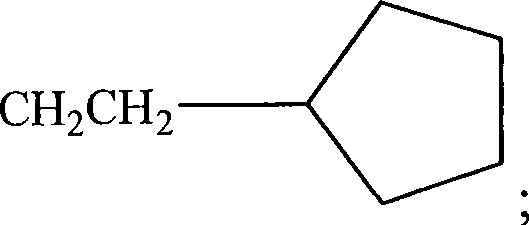
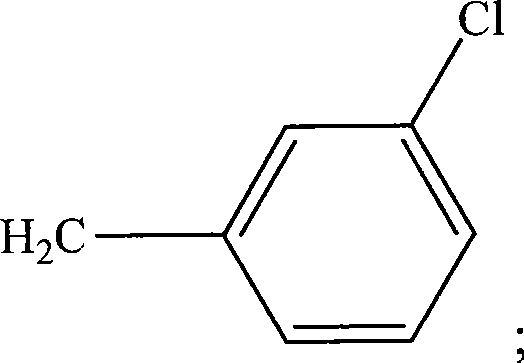


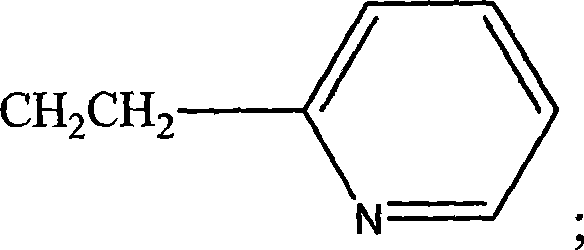
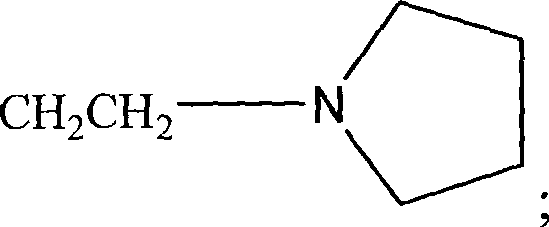


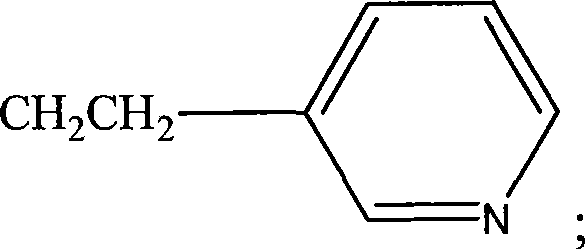

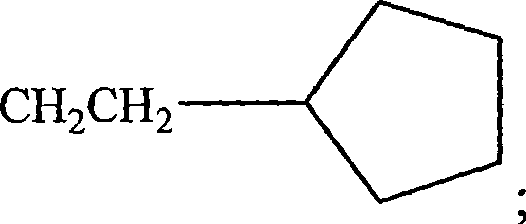


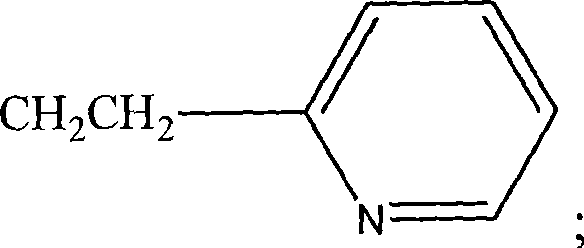
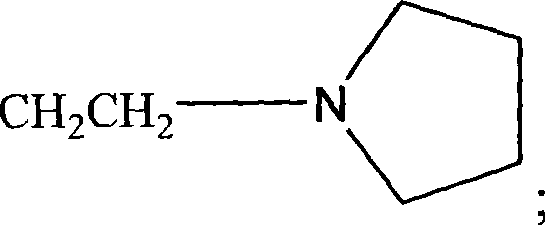
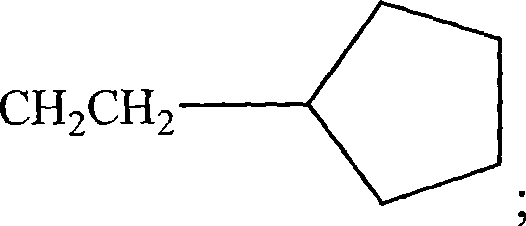


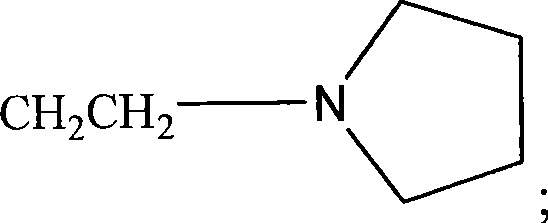


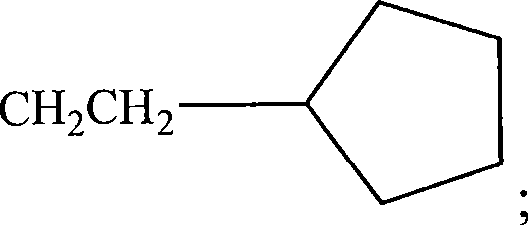

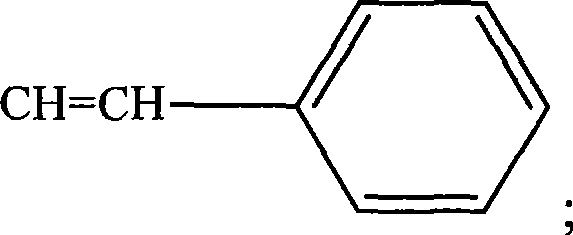
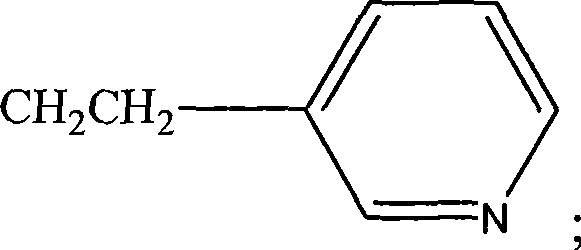


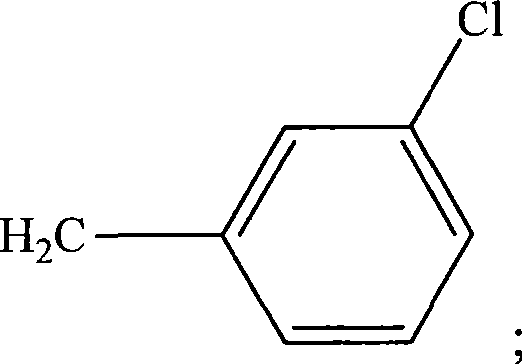


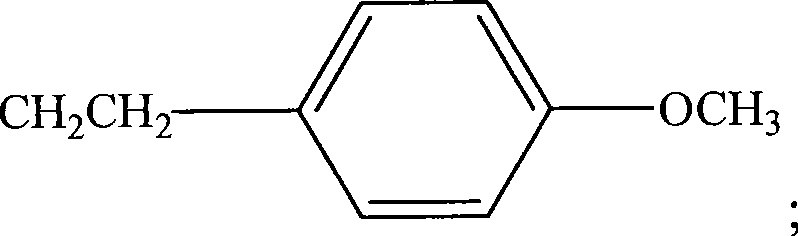
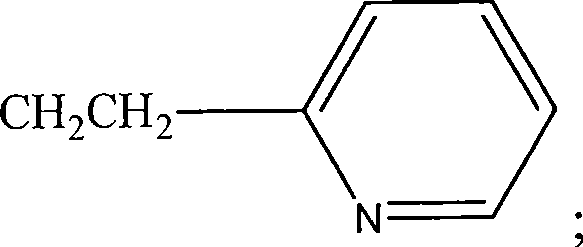


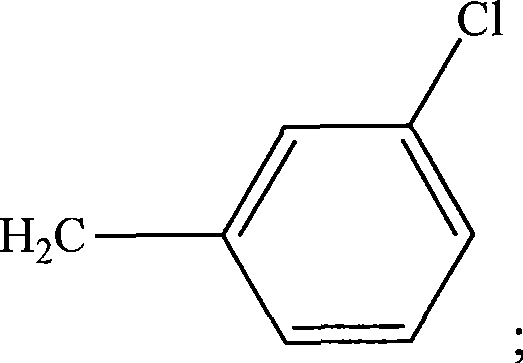
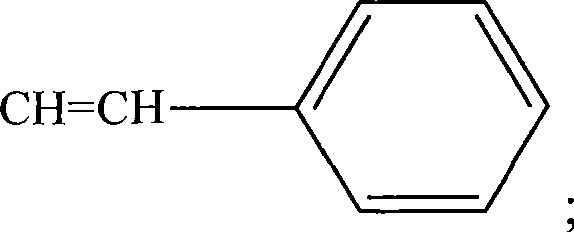


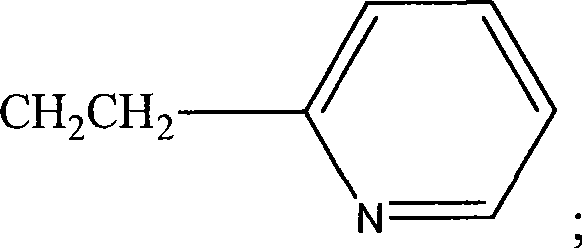
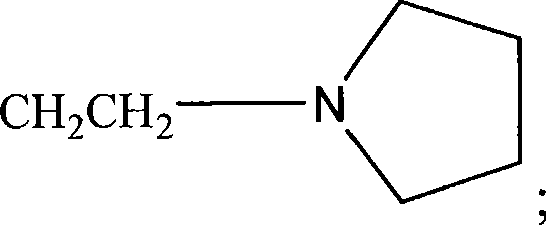
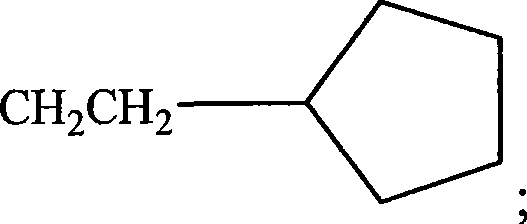


Applications Claiming Priority (10)
| Application Number | Priority Date | Filing Date | Title |
|---|---|---|---|
| US36098002P | 2002-03-01 | 2002-03-01 | |
| US60/360,980 | 2002-03-01 | ||
| US36260002P | 2002-03-08 | 2002-03-08 | |
| US60/362,600 | 2002-03-08 | ||
| US37565502P | 2002-04-26 | 2002-04-26 | |
| US60/375,655 | 2002-04-26 | ||
| US40060502P | 2002-08-02 | 2002-08-02 | |
| US60/400,605 | 2002-08-02 | ||
| US10/244,727 | 2002-09-16 | ||
| US10/244,727 US7504364B2 (en) | 2002-03-01 | 2002-09-16 | Methods of making arrays and artificial receptors |
Publications (2)
| Publication Number | Publication Date |
|---|---|
| CN1650163A CN1650163A (en) | 2005-08-03 |
| CN100533145C true CN100533145C (en) | 2009-08-26 |
Family
ID=29255676
Family Applications (1)
| Application Number | Title | Priority Date | Filing Date |
|---|---|---|---|
| CN03809930.6A Expired - Fee Related CN100533145C (en) | 2002-03-01 | 2003-02-19 | Array and artificial receptor comprising structural units, method for the production thereof, and structural units |
Country Status (11)
| Country | Link |
|---|---|
| US (5) | US7504364B2 (en) |
| EP (1) | EP1483578B1 (en) |
| JP (1) | JP4988147B2 (en) |
| CN (1) | CN100533145C (en) |
| AT (1) | ATE538379T1 (en) |
| AU (2) | AU2003213204B2 (en) |
| CA (1) | CA2477749A1 (en) |
| IL (3) | IL163686A0 (en) |
| MX (1) | MXPA04008467A (en) |
| NZ (1) | NZ535080A (en) |
| WO (1) | WO2003074990A2 (en) |
Families Citing this family (26)
| Publication number | Priority date | Publication date | Assignee | Title |
|---|---|---|---|---|
| US7504364B2 (en) | 2002-03-01 | 2009-03-17 | Receptors Llc | Methods of making arrays and artificial receptors |
| WO2005003326A2 (en) | 2003-03-28 | 2005-01-13 | Receptors Llc. | Artificial receptors including reversibly immobilized building blocks and methods |
| US7469076B2 (en) | 2003-09-03 | 2008-12-23 | Receptors Llc | Sensors employing combinatorial artificial receptors |
| US7736909B2 (en) * | 2003-01-09 | 2010-06-15 | Board Of Regents, The University Of Texas System | Methods and compositions comprising capture agents |
| HRP20050809A2 (en) * | 2003-03-25 | 2006-02-28 | Instraction Gmbh | Method for selectively binding a substrate to sorbents by way of at least bivalent bonds |
| JP4716990B2 (en) * | 2003-09-03 | 2011-07-06 | レセプターズ エルエルシー | How to use combinatorial artificial receptors |
| JP4716991B2 (en) * | 2003-09-03 | 2011-07-06 | レセプターズ エルエルシー | Building blocks for artificial receptors |
| JP4711326B2 (en) * | 2003-12-22 | 2011-06-29 | キヤノン株式会社 | Preparation method of calibration sample and calibration curve |
| WO2006028930A2 (en) | 2004-09-03 | 2006-03-16 | Receptors Llc | Combinatorial artificial receptors including tether building blocks on scaffolds |
| US7985715B2 (en) | 2004-09-11 | 2011-07-26 | Receptors Llc | Combinatorial artificial receptors including peptide building blocks |
| US7879764B2 (en) * | 2004-12-28 | 2011-02-01 | Intel Corporation | Electrically active combinatorial chemical (EACC) chip for biochemical analyte detection |
| EP3285067B1 (en) | 2006-12-14 | 2022-06-22 | Life Technologies Corporation | Apparatus for measuring analytes using fet arrays |
| WO2009073625A1 (en) * | 2007-11-29 | 2009-06-11 | Receptors Llc | Sensors employing combinatorial artificial receptors |
| US20100301398A1 (en) | 2009-05-29 | 2010-12-02 | Ion Torrent Systems Incorporated | Methods and apparatus for measuring analytes |
| US20100137143A1 (en) | 2008-10-22 | 2010-06-03 | Ion Torrent Systems Incorporated | Methods and apparatus for measuring analytes |
| JP5991916B2 (en) * | 2009-05-29 | 2016-09-14 | ザ ボード オブ リージェンツ オブ ザ ユニバーシティー オブ テキサス システム | Peptoid ligand for isolation and processing of autoimmune T cells |
| KR20120122869A (en) * | 2009-06-02 | 2012-11-07 | 보드 오브 리전츠, 더 유니버시티 오브 텍사스 시스템 | Identification of small molecules recognized by antibodies in subjects with neurodegenerative diseases |
| US8759259B2 (en) * | 2009-10-16 | 2014-06-24 | The Board Of Regents Of The University Of Texas System | Compositions and methods for producing cyclic peptoid libraries |
| JP5959516B2 (en) | 2010-08-18 | 2016-08-02 | ライフ テクノロジーズ コーポレーション | Microwell chemical coating method for electrochemical detection devices |
| DE112012001444T5 (en) * | 2011-03-25 | 2014-04-10 | Receptors Llc | Fiber having microbe removal or microbicidal power or ability to cause static growth |
| WO2013058844A1 (en) * | 2011-07-06 | 2013-04-25 | Northwestern University | System and method for generating and/or screening potential metal-organic frameworks |
| US9012368B2 (en) | 2011-07-06 | 2015-04-21 | Northwestern University | System and method for generating and/or screening potential metal-organic frameworks |
| US9194840B2 (en) | 2012-01-19 | 2015-11-24 | Life Technologies Corporation | Sensor arrays and methods for making same |
| WO2014144133A1 (en) * | 2013-03-15 | 2014-09-18 | The Trustees Of The Princeton University | Analyte detection enhancement by targeted immobilization, surface amplification, and pixelated reading and analysis |
| CN111718321A (en) * | 2020-06-18 | 2020-09-29 | 中国农业科学院农业质量标准与检测技术研究所 | A kind of dioxin antibody and its preparation method and application |
| WO2022122035A1 (en) * | 2020-12-11 | 2022-06-16 | 上海领泰生物医药科技有限公司 | Coagulation factor xia inhibitor, preparation method therefor and use thereof |
Citations (2)
| Publication number | Priority date | Publication date | Assignee | Title |
|---|---|---|---|---|
| CN1358867A (en) * | 2001-12-27 | 2002-07-17 | 上海交通大学 | Nucleic acid test method for oligonucleotide microarray by fluorescence resonance energy transferring |
| US6489093B1 (en) * | 1996-09-20 | 2002-12-03 | President And Fellows Of Harvard College | Combinatorial approach for generating novel coordination complexes |
Family Cites Families (116)
| Publication number | Priority date | Publication date | Assignee | Title |
|---|---|---|---|---|
| US4344438A (en) | 1978-08-02 | 1982-08-17 | The United States Of America As Represented By The Department Of Health, Education And Welfare | Optical sensor of plasma constituents |
| US5340474A (en) | 1988-03-24 | 1994-08-23 | Terrapin Technologies, Inc. | Panels of analyte-binding ligands |
| US5225374A (en) | 1988-05-13 | 1993-07-06 | The United States Of America As Represented By The Secretary Of The Navy | Method of fabricating a receptor-based sensor |
| US6346413B1 (en) | 1989-06-07 | 2002-02-12 | Affymetrix, Inc. | Polymer arrays |
| US5143854A (en) | 1989-06-07 | 1992-09-01 | Affymax Technologies N.V. | Large scale photolithographic solid phase synthesis of polypeptides and receptor binding screening thereof |
| WO1991005262A1 (en) | 1989-10-02 | 1991-04-18 | University Of Michigan | Bioanalytical detection system |
| JP3283041B2 (en) | 1990-07-13 | 2002-05-20 | 学校法人藤田学園 | Artificial antibody |
| DE4034565A1 (en) | 1990-10-26 | 1992-04-30 | Inst Halbleiterphysik Gmbh | STEREO-SPECIFIC SENSOR FOR DETERMINING SUGAR |
| JPH06510363A (en) | 1990-10-29 | 1994-11-17 | ディカルブ プラント ジェネティクス | Isolation of biological materials using magnetic particles |
| US5178673A (en) * | 1991-04-12 | 1993-01-12 | Union Carbide Chemicals & Plastics Technology Corporation | Investment casting compositions and processes for the manufacture and use thereof |
| US5159656A (en) | 1991-04-29 | 1992-10-27 | Advanced Technology Consortium, Inc. | Optical fiber scanning/imaging/printing system |
| US5632957A (en) * | 1993-11-01 | 1997-05-27 | Nanogen | Molecular biological diagnostic systems including electrodes |
| US5324633A (en) | 1991-11-22 | 1994-06-28 | Affymax Technologies N.V. | Method and apparatus for measuring binding affinity |
| US5667988A (en) | 1992-01-27 | 1997-09-16 | The Scripps Research Institute | Methods for producing antibody libraries using universal or randomized immunoglobulin light chains |
| WO1993025910A1 (en) * | 1992-06-05 | 1993-12-23 | Pharmacia Biosensor Ab | Assay for multiple analytes with co-immobilized ligands |
| US5512435A (en) | 1993-02-05 | 1996-04-30 | Renschler; Markus F. | Receptor-binding antiproliferative peptides |
| US5677196A (en) | 1993-05-18 | 1997-10-14 | University Of Utah Research Foundation | Apparatus and methods for multi-analyte homogeneous fluoro-immunoassays |
| EP0699051A4 (en) * | 1993-05-20 | 1998-11-25 | Univ California | MACROMOLECULAR CONTRAST AGENT FOR MAGNETIC RESONANCE IMAGING |
| CA2167391A1 (en) | 1993-07-16 | 1995-01-26 | Robert W. Armstrong | Synthesis of combinatorial arrays of organic compounds through the use of multiple component combinatorial array syntheses |
| DE4335729A1 (en) | 1993-10-20 | 1995-04-27 | Boehringer Mannheim Gmbh | Use of nucleosides and nucleoside derivatives provided with enzymatically removable protective groups in the synthesis of oligonucleotides |
| US5942393A (en) | 1993-12-29 | 1999-08-24 | The Regents Of The University Of California | Method for the detection of the presence or absence of methylthioadenosine phosphorylase (MTASE) in a cell sample by detection of the presence or absence of MTASE encoding nucleic acid in the cell sample |
| AU686785B2 (en) | 1994-01-13 | 1998-02-12 | Trustees Of Columbia University In The City Of New York, The | Synthetic receptors, libraries and uses thereof |
| US5453533A (en) | 1994-04-14 | 1995-09-26 | The University Of Alabama At Birmingham | Inhibitors of influenza virus neuraminidase and methods of making and using the same |
| US6030917A (en) * | 1996-07-23 | 2000-02-29 | Symyx Technologies, Inc. | Combinatorial synthesis and analysis of organometallic compounds and catalysts |
| US6419881B1 (en) | 1994-10-18 | 2002-07-16 | Symyx Technologies, Inc. | Combinatorial arrays of organometallic compounds and catalysts |
| US5998594A (en) | 1994-12-30 | 1999-12-07 | University Of Pittsburgh Of The Commonwealth System Of Higher Education | Self-assembling, chromogenic receptors for the recognition of medically important substrates and their method of use |
| US5990163A (en) * | 1995-01-13 | 1999-11-23 | The Salk Institute For Biological Studies | Selective modulation of processes mediated by retinoid X receptors, and compounds useful therefor |
| EP2280268B1 (en) | 1995-03-10 | 2014-09-03 | Meso Scale Technologies, LLC. | Multi-array, multi-specific electrochemiluminescence testing |
| US6207369B1 (en) | 1995-03-10 | 2001-03-27 | Meso Scale Technologies, Llc | Multi-array, multi-specific electrochemiluminescence testing |
| US6673533B1 (en) | 1995-03-10 | 2004-01-06 | Meso Scale Technologies, Llc. | Multi-array multi-specific electrochemiluminescence testing |
| US5690894A (en) | 1995-05-23 | 1997-11-25 | The Regents Of The University Of California | High density array fabrication and readout method for a fiber optic biosensor |
| US6251864B1 (en) | 1995-06-07 | 2001-06-26 | Glaxo Group Limited | Peptides and compounds that bind to a receptor |
| US5925529A (en) | 1995-06-07 | 1999-07-20 | The Regents Of The University Of California | Method for discovery of peptide agonists |
| DE19527155C2 (en) | 1995-07-25 | 1998-12-10 | Deutsches Krebsforsch | Method of sequencing by oligomer hybridization |
| US6168912B1 (en) | 1996-01-23 | 2001-01-02 | Martek Biosciences Corporation | Method and kit for making a multidimensional combinatorial chemical library |
| US5880972A (en) | 1996-02-26 | 1999-03-09 | Pharmacopeia, Inc. | Method and apparatus for generating and representing combinatorial chemistry libraries |
| IT1284025B1 (en) | 1996-06-18 | 1998-05-08 | Italtel Spa | FREQUENCY CONVERTER FOR APPLICATIONS TO MILLIMETRIC RADIO WAVES |
| US6361944B1 (en) | 1996-07-29 | 2002-03-26 | Nanosphere, Inc. | Nanoparticles having oligonucleotides attached thereto and uses therefor |
| US5770380A (en) | 1996-09-13 | 1998-06-23 | University Of Pittsburgh | Synthetic antibody mimics--multiple peptide loops attached to a molecular scaffold |
| US6875620B1 (en) | 1996-10-31 | 2005-04-05 | Agilent Technologies, Inc. | Tiling process for constructing a chemical array |
| US6316268B1 (en) | 1996-11-22 | 2001-11-13 | The Regents Of The University Of California | Chemical microsensors for detection of explosives and chemical warfare agents |
| US6699719B2 (en) | 1996-11-29 | 2004-03-02 | Proteomic Systems, Inc. | Biosensor arrays and methods |
| CA2271717A1 (en) | 1996-12-12 | 1998-06-18 | Prolume, Ltd. | Apparatus and method for detecting and identifying infectious agents |
| EP1007969A4 (en) | 1996-12-17 | 2006-12-13 | Affymetrix Inc | Lithographic mask design and synthesis of diverse probes on a substrate |
| CA2389358C (en) | 1996-12-31 | 2008-07-15 | Genometrix Incorporated | Multiplexed molecular analysis apparatus and method |
| US6310191B1 (en) | 1998-02-02 | 2001-10-30 | Cosmix Molecular Biologicals Gmbh | Generation of diversity in combinatorial libraries |
| US5837860A (en) | 1997-03-05 | 1998-11-17 | Molecular Tool, Inc. | Covalent attachment of nucleic acid molecules onto solid-phases via disulfide bonds |
| US6344272B1 (en) | 1997-03-12 | 2002-02-05 | Wm. Marsh Rice University | Metal nanoshells |
| US7144627B2 (en) | 1997-03-12 | 2006-12-05 | William Marsh Rice University | Multi-layer nanoshells comprising a metallic or conducting shell |
| US6083758A (en) | 1997-04-09 | 2000-07-04 | California Institute Of Technology | Method for screening peptides for metal coordinating properties and fluorescent chemosensors derived therefrom |
| US6660714B1 (en) | 1997-04-16 | 2003-12-09 | Sloan Kettering Institute For Cancer Research | α-O-linked glycoconjugates, methods of preparation and uses thereof |
| US6096511A (en) * | 1997-06-10 | 2000-08-01 | Merck & Co., Inc. | Protein elongation factor 2 as a target for antifungal and antiparasitic agents |
| NZ516848A (en) * | 1997-06-20 | 2004-03-26 | Ciphergen Biosystems Inc | Retentate chromatography apparatus with applications in biology and medicine |
| US5993653C1 (en) * | 1997-08-11 | 2001-11-06 | Phenomenex | Composition and column used in hplc |
| US6410585B1 (en) * | 1997-08-28 | 2002-06-25 | Scott D. Larsen | Inhibitors of protein tyrosine phosphatase |
| WO1999025384A2 (en) | 1997-11-17 | 1999-05-27 | University Of Miami | Multimeric tethered ligands and their use in receptor-ligand interactions |
| US6238869B1 (en) | 1997-12-19 | 2001-05-29 | High Throughput Genomics, Inc. | High throughput assay system |
| FR2774092B1 (en) * | 1998-01-26 | 2000-02-18 | Air Liquide | PROCESS FOR THE PREPARATION OF GRAFT POLYAZACYCLOALCANES ON SILICA GEL AND USE OF THE GRAFT COMPOUNDS |
| US6210910B1 (en) | 1998-03-02 | 2001-04-03 | Trustees Of Tufts College | Optical fiber biosensor array comprising cell populations confined to microcavities |
| US6428811B1 (en) | 1998-03-11 | 2002-08-06 | Wm. Marsh Rice University | Temperature-sensitive polymer/nanoshell composites for photothermally modulated drug delivery |
| US7101575B2 (en) | 1998-03-19 | 2006-09-05 | Max-Planck-Gesellschaft Zur Forderung Der Wissenschaften E.V. | Production of nanocapsules and microcapsules by layer-wise polyelectrolyte self-assembly |
| CA2324616A1 (en) | 1998-03-25 | 1999-09-30 | Sloan-Kettering Institute For Cancer Research | Trimeric antigenic o-linked glycopeptide conjugates, methods of preparation and uses thereof |
| US6316616B1 (en) | 1998-04-02 | 2001-11-13 | President And Fellows Of Harvard College | Parallel combinatorial approach to the discovery and optimization of catalysts and uses thereof |
| US6111123A (en) | 1998-04-20 | 2000-08-29 | The Regents Of The University Of Michigan | Salicylaldimine-crown ether ditopic receptor molecules |
| US6287765B1 (en) | 1998-05-20 | 2001-09-11 | Molecular Machines, Inc. | Methods for detecting and identifying single molecules |
| WO1999067640A1 (en) | 1998-06-22 | 1999-12-29 | The Regents Of The University Of California | Triggered optical biosensor |
| ES2292250T5 (en) | 1998-07-15 | 2010-09-14 | Max-Planck-Gesellschaft Zur Forderung Der Wissenschaften E.V. | ENVELOPES OF POLYELECTROLYTES ON BIOLOGICAL TEMPLATES. |
| US6346189B1 (en) | 1998-08-14 | 2002-02-12 | The Board Of Trustees Of The Leland Stanford Junior University | Carbon nanotube structures made using catalyst islands |
| EP2273270A1 (en) | 1998-08-28 | 2011-01-12 | febit holding GmbH | Method and apparatus for the preparation and/or analysis of biochemical carriers |
| DE19839538A1 (en) | 1998-08-31 | 2000-03-02 | Gluesenkamp Karl Heinz | Manufacture of customized chromatography materials over intelligent surfaces |
| WO2000016733A2 (en) | 1998-09-22 | 2000-03-30 | The Procter & Gamble Company | Personal care compositions containing active proteins tethered to a water insoluble substrate |
| WO2000066790A1 (en) | 1999-05-05 | 2000-11-09 | The Regents Of The University Of California | Method for detecting biological agents |
| GB9915074D0 (en) * | 1999-06-28 | 1999-08-25 | Cortecs Plc | Ligand-binding composition |
| CN100397068C (en) | 1999-07-05 | 2008-06-25 | 诺瓦提斯公司 | Sensor platform, device incorporating same, and method of using same |
| US6346423B1 (en) | 1999-07-16 | 2002-02-12 | Agilent Technologies, Inc. | Methods and compositions for producing biopolymeric arrays |
| HK1048952A1 (en) | 1999-07-29 | 2003-04-25 | 埃匹克斯医学股份有限公司 | Targeting multimeric imaging agents through multilocus binding |
| US7854934B2 (en) | 1999-08-20 | 2010-12-21 | Sloan-Kettering Institute For Cancer Research | Glycoconjugates, glycoamino acids, intermediates thereto, and uses thereof |
| US7824687B2 (en) | 1999-08-20 | 2010-11-02 | Sloan-Kettering Institute For Cancer Research | Clustered multi-antigenic carbohydrate constructs, methods for their preparation, and uses thereof |
| US6543639B1 (en) * | 1999-08-26 | 2003-04-08 | A & A Global Industries, Inc. | Animated candy dispenser and methods |
| DE19943743C2 (en) | 1999-09-03 | 2002-02-07 | Jerini Biotools Gmbh | Procedure for the identification of binding partners with position-specific arrays |
| US6656432B1 (en) | 1999-10-22 | 2003-12-02 | Ngk Insulators, Ltd. | Micropipette and dividedly injectable apparatus |
| US6627396B1 (en) | 1999-10-28 | 2003-09-30 | The Regents Of The University Of California | Influenza sensor |
| US6372907B1 (en) | 1999-11-03 | 2002-04-16 | Apptera Corporation | Water-soluble rhodamine dye peptide conjugates |
| US7195780B2 (en) | 2002-10-21 | 2007-03-27 | University Of Florida | Nanoparticle delivery system |
| US6699677B1 (en) | 1999-12-20 | 2004-03-02 | Chemocentryx, Inc. | Tethered ligands and methods of use |
| DE10001172A1 (en) | 2000-01-13 | 2001-07-26 | Max Planck Gesellschaft | Templating solid particles with polymer multilayers |
| AU2001236757A1 (en) | 2000-02-07 | 2001-08-14 | President And Fellows Of Harvard College | Method for analysis of reaction products |
| EP1385869A2 (en) | 2000-02-08 | 2004-02-04 | The Regents Of The University Of Michigan | Protein mapping |
| WO2001077684A2 (en) | 2000-04-10 | 2001-10-18 | The Scripps Research Institute | Proteomic analysis using activity-based probe libraries |
| US7351376B1 (en) | 2000-06-05 | 2008-04-01 | California Institute Of Technology | Integrated active flux microfluidic devices and methods |
| CN1137999C (en) | 2000-07-04 | 2004-02-11 | 清华大学 | Integrated Microarray Device |
| US6584411B1 (en) * | 2000-07-26 | 2003-06-24 | Smithkline Beecham Corporation | Methods to facilitate the calculation of yields of reaction products |
| ATE273067T1 (en) | 2000-08-02 | 2004-08-15 | Max Planck Gesellschaft | POLYELECTROLYTE CAPSULE PRODUCTION BY SURFACE PRECIPITATION |
| US6977155B2 (en) | 2000-08-10 | 2005-12-20 | Corning Incorporated | Arrays of biological membranes and methods and use thereof |
| DE60110809T2 (en) | 2000-08-28 | 2005-10-06 | MAX-PLANCK-Gesellschaft zur Förderung der Wissenschaften e.V. | Multi-layer controlled and sustained release polyelectrolyte capsules |
| EP1197755A1 (en) | 2000-10-11 | 2002-04-17 | Pepscan Systems B.V. | Identification of protein binding sites |
| JP4179876B2 (en) | 2000-11-27 | 2008-11-12 | インテリジェント メディカル ディバイシーズ エル.エル. シー. | Clinically intelligent diagnostic apparatus and method |
| US6905816B2 (en) | 2000-11-27 | 2005-06-14 | Intelligent Medical Devices, Inc. | Clinically intelligent diagnostic devices and methods |
| JP4248238B2 (en) | 2001-01-08 | 2009-04-02 | プレジデント・アンド・フェローズ・オブ・ハーバード・カレッジ | Valves and pumps for microfluidic systems and methods for making microfluidic systems |
| US6543936B2 (en) | 2001-04-24 | 2003-04-08 | Daniel Uzbelger Feldman | Apparatus for diagnosis and/or treatment in the field of dentistry using fluoroscopic and conventional radiography |
| JP2004534088A (en) | 2001-07-06 | 2004-11-11 | スローン−ケッタリング・インスティテュート・フォア・キャンサー・リサーチ | Multivalent conjugate vaccine for cancer |
| US6698201B1 (en) | 2001-08-16 | 2004-03-02 | Zyvex Corporation | Cascaded bimorph rotary actuator |
| EP1300684A1 (en) | 2001-10-08 | 2003-04-09 | Barts and The London National Health Service Trust | Homogenous ligand binding assay |
| AR036833A1 (en) | 2001-10-18 | 2004-10-06 | Bayer Corp | HUMAN ANTIBODIES THAT JOIN MN AND HAVE NEUTRALIZING ACTIVITY OF CELLULAR ADHESION. |
| US20030156991A1 (en) | 2001-10-23 | 2003-08-21 | William Marsh Rice University | Optomechanically-responsive materials for use as light-activated actuators and valves |
| JP2003149242A (en) | 2001-11-09 | 2003-05-21 | Gifu Univ | Antibody detection method and antigen microarray |
| GB0127989D0 (en) | 2001-11-22 | 2002-01-16 | Glaxo Group Ltd | Medicament dispensing system |
| US7141368B2 (en) | 2002-01-30 | 2006-11-28 | Agilent Technologies, Inc. | Multi-directional deposition in array fabrication |
| US7504364B2 (en) | 2002-03-01 | 2009-03-17 | Receptors Llc | Methods of making arrays and artificial receptors |
| ITRM20020133U1 (en) * | 2002-07-15 | 2004-01-16 | Plast Wood S R L | COMPLEX OF ELEMENTS FOR ASSEMBLING STRUCTURES. |
| US20060051802A1 (en) | 2002-09-16 | 2006-03-09 | Receptors Llc | Artificial receptors, building blocks, and methods |
| US20040137526A1 (en) | 2002-10-15 | 2004-07-15 | The Regents Of The University Of Michigan | Multidimensional protein separation system |
| US7256052B2 (en) | 2002-10-18 | 2007-08-14 | Exxonmobil Chemical Patents Inc. | Chemical reaction and analysis system |
| US20040185473A1 (en) | 2002-12-17 | 2004-09-23 | Affymetrix, Inc. | Releasable polymer arrays |
| WO2006017180A2 (en) | 2004-07-09 | 2006-02-16 | Progenics Pharmaceuticals, Inc. | Glycopeptide dimers and uses thereof |
| GB0426823D0 (en) | 2004-12-07 | 2005-01-12 | Precisense As | Sensor for detection of glucose |
-
2002
- 2002-09-16 US US10/244,727 patent/US7504364B2/en not_active Expired - Fee Related
-
2003
- 2003-02-19 MX MXPA04008467A patent/MXPA04008467A/en active IP Right Grant
- 2003-02-19 EP EP03709250A patent/EP1483578B1/en not_active Expired - Lifetime
- 2003-02-19 AU AU2003213204A patent/AU2003213204B2/en not_active Ceased
- 2003-02-19 IL IL16368603A patent/IL163686A0/en active IP Right Grant
- 2003-02-19 NZ NZ535080A patent/NZ535080A/en not_active IP Right Cessation
- 2003-02-19 AT AT03709250T patent/ATE538379T1/en active
- 2003-02-19 CN CN03809930.6A patent/CN100533145C/en not_active Expired - Fee Related
- 2003-02-19 WO PCT/US2003/005328 patent/WO2003074990A2/en not_active Ceased
- 2003-02-19 CA CA002477749A patent/CA2477749A1/en not_active Abandoned
- 2003-02-19 JP JP2003573401A patent/JP4988147B2/en not_active Expired - Fee Related
- 2003-11-07 US US10/703,779 patent/US7964535B2/en not_active Expired - Fee Related
- 2003-11-07 US US10/703,876 patent/US20040096908A1/en not_active Abandoned
- 2003-11-11 US US10/706,505 patent/US20040110303A1/en not_active Abandoned
- 2003-11-11 US US10/706,573 patent/US20040096976A1/en not_active Abandoned
-
2004
- 2004-08-23 IL IL163686A patent/IL163686A/en not_active IP Right Cessation
-
2009
- 2009-03-04 AU AU2009200852A patent/AU2009200852A1/en not_active Abandoned
- 2009-06-09 IL IL199259A patent/IL199259A0/en unknown
Patent Citations (2)
| Publication number | Priority date | Publication date | Assignee | Title |
|---|---|---|---|---|
| US6489093B1 (en) * | 1996-09-20 | 2002-12-03 | President And Fellows Of Harvard College | Combinatorial approach for generating novel coordination complexes |
| CN1358867A (en) * | 2001-12-27 | 2002-07-17 | 上海交通大学 | Nucleic acid test method for oligonucleotide microarray by fluorescence resonance energy transferring |
Also Published As
| Publication number | Publication date |
|---|---|
| JP2005519124A (en) | 2005-06-30 |
| WO2003074990A9 (en) | 2004-01-22 |
| US20040101446A1 (en) | 2004-05-27 |
| AU2009200852A1 (en) | 2009-03-26 |
| US20040110303A1 (en) | 2004-06-10 |
| EP1483578A2 (en) | 2004-12-08 |
| US7504364B2 (en) | 2009-03-17 |
| EP1483578A4 (en) | 2007-06-06 |
| IL163686A (en) | 2011-01-31 |
| WO2003074990A3 (en) | 2004-07-29 |
| ATE538379T1 (en) | 2012-01-15 |
| AU2003213204A1 (en) | 2003-09-16 |
| NZ535080A (en) | 2007-05-31 |
| WO2003074990A2 (en) | 2003-09-12 |
| CA2477749A1 (en) | 2003-09-12 |
| US20040096908A1 (en) | 2004-05-20 |
| AU2003213204B2 (en) | 2009-01-29 |
| JP4988147B2 (en) | 2012-08-01 |
| CN1650163A (en) | 2005-08-03 |
| IL199259A0 (en) | 2011-07-31 |
| MXPA04008467A (en) | 2005-06-08 |
| US7964535B2 (en) | 2011-06-21 |
| EP1483578B1 (en) | 2011-12-21 |
| US20030203405A1 (en) | 2003-10-30 |
| IL163686A0 (en) | 2005-12-18 |
| US20040096976A1 (en) | 2004-05-20 |
Similar Documents
| Publication | Publication Date | Title |
|---|---|---|
| CN100533145C (en) | Array and artificial receptor comprising structural units, method for the production thereof, and structural units | |
| US20090221439A1 (en) | Combinatorial artificial receptors including tether building blocks | |
| US7960311B2 (en) | Methods employing combinatorial artificial receptors | |
| US20070238091A1 (en) | Artificial receptors, building blocks, and methods | |
| US20040137481A1 (en) | Artificial receptor building blocks, components, and kits | |
| US20050037428A1 (en) | Artificial receptors including reversibly immobilized building blocks, the building blocks, and methods | |
| US7985715B2 (en) | Combinatorial artificial receptors including peptide building blocks | |
| CN1875277B (en) | Approaches Using Combinatorial Artificial Receptors | |
| ZA200406710B (en) | Artificial receptors, building blocks, and methods | |
| JP4716990B2 (en) | How to use combinatorial artificial receptors | |
| US20050037429A1 (en) | Artificial receptors including reversibly immobilized building blocks and methods |
Legal Events
| Date | Code | Title | Description |
|---|---|---|---|
| C06 | Publication | ||
| PB01 | Publication | ||
| C10 | Entry into substantive examination | ||
| SE01 | Entry into force of request for substantive examination | ||
| C14 | Grant of patent or utility model | ||
| GR01 | Patent grant | ||
| C17 | Cessation of patent right | ||
| CF01 | Termination of patent right due to non-payment of annual fee |
Granted publication date: 20090826 Termination date: 20140219 |