CN100415772C - anti-ErbB 2 antibodies - Google Patents
anti-ErbB 2 antibodies Download PDFInfo
- Publication number
- CN100415772C CN100415772C CNB971989478A CN97198947A CN100415772C CN 100415772 C CN100415772 C CN 100415772C CN B971989478 A CNB971989478 A CN B971989478A CN 97198947 A CN97198947 A CN 97198947A CN 100415772 C CN100415772 C CN 100415772C
- Authority
- CN
- China
- Prior art keywords
- antibody
- cell
- erbb2
- cells
- antibodies
- Prior art date
- Legal status (The legal status is an assumption and is not a legal conclusion. Google has not performed a legal analysis and makes no representation as to the accuracy of the status listed.)
- Expired - Lifetime
Links
Images




Classifications
-
- C—CHEMISTRY; METALLURGY
- C07—ORGANIC CHEMISTRY
- C07K—PEPTIDES
- C07K16/00—Immunoglobulins [IGs], e.g. monoclonal or polyclonal antibodies
- C07K16/18—Immunoglobulins [IGs], e.g. monoclonal or polyclonal antibodies against material from animals or humans
- C07K16/32—Immunoglobulins [IGs], e.g. monoclonal or polyclonal antibodies against material from animals or humans against translation products of oncogenes
-
- A—HUMAN NECESSITIES
- A61—MEDICAL OR VETERINARY SCIENCE; HYGIENE
- A61P—SPECIFIC THERAPEUTIC ACTIVITY OF CHEMICAL COMPOUNDS OR MEDICINAL PREPARATIONS
- A61P1/00—Drugs for disorders of the alimentary tract or the digestive system
- A61P1/04—Drugs for disorders of the alimentary tract or the digestive system for ulcers, gastritis or reflux esophagitis, e.g. antacids, inhibitors of acid secretion, mucosal protectants
-
- A—HUMAN NECESSITIES
- A61—MEDICAL OR VETERINARY SCIENCE; HYGIENE
- A61P—SPECIFIC THERAPEUTIC ACTIVITY OF CHEMICAL COMPOUNDS OR MEDICINAL PREPARATIONS
- A61P1/00—Drugs for disorders of the alimentary tract or the digestive system
- A61P1/16—Drugs for disorders of the alimentary tract or the digestive system for liver or gallbladder disorders, e.g. hepatoprotective agents, cholagogues, litholytics
-
- A—HUMAN NECESSITIES
- A61—MEDICAL OR VETERINARY SCIENCE; HYGIENE
- A61P—SPECIFIC THERAPEUTIC ACTIVITY OF CHEMICAL COMPOUNDS OR MEDICINAL PREPARATIONS
- A61P11/00—Drugs for disorders of the respiratory system
-
- A—HUMAN NECESSITIES
- A61—MEDICAL OR VETERINARY SCIENCE; HYGIENE
- A61P—SPECIFIC THERAPEUTIC ACTIVITY OF CHEMICAL COMPOUNDS OR MEDICINAL PREPARATIONS
- A61P13/00—Drugs for disorders of the urinary system
- A61P13/08—Drugs for disorders of the urinary system of the prostate
-
- A—HUMAN NECESSITIES
- A61—MEDICAL OR VETERINARY SCIENCE; HYGIENE
- A61P—SPECIFIC THERAPEUTIC ACTIVITY OF CHEMICAL COMPOUNDS OR MEDICINAL PREPARATIONS
- A61P13/00—Drugs for disorders of the urinary system
- A61P13/10—Drugs for disorders of the urinary system of the bladder
-
- A—HUMAN NECESSITIES
- A61—MEDICAL OR VETERINARY SCIENCE; HYGIENE
- A61P—SPECIFIC THERAPEUTIC ACTIVITY OF CHEMICAL COMPOUNDS OR MEDICINAL PREPARATIONS
- A61P13/00—Drugs for disorders of the urinary system
- A61P13/12—Drugs for disorders of the urinary system of the kidneys
-
- A—HUMAN NECESSITIES
- A61—MEDICAL OR VETERINARY SCIENCE; HYGIENE
- A61P—SPECIFIC THERAPEUTIC ACTIVITY OF CHEMICAL COMPOUNDS OR MEDICINAL PREPARATIONS
- A61P15/00—Drugs for genital or sexual disorders; Contraceptives
-
- A—HUMAN NECESSITIES
- A61—MEDICAL OR VETERINARY SCIENCE; HYGIENE
- A61P—SPECIFIC THERAPEUTIC ACTIVITY OF CHEMICAL COMPOUNDS OR MEDICINAL PREPARATIONS
- A61P17/00—Drugs for dermatological disorders
-
- A—HUMAN NECESSITIES
- A61—MEDICAL OR VETERINARY SCIENCE; HYGIENE
- A61P—SPECIFIC THERAPEUTIC ACTIVITY OF CHEMICAL COMPOUNDS OR MEDICINAL PREPARATIONS
- A61P25/00—Drugs for disorders of the nervous system
-
- A—HUMAN NECESSITIES
- A61—MEDICAL OR VETERINARY SCIENCE; HYGIENE
- A61P—SPECIFIC THERAPEUTIC ACTIVITY OF CHEMICAL COMPOUNDS OR MEDICINAL PREPARATIONS
- A61P29/00—Non-central analgesic, antipyretic or antiinflammatory agents, e.g. antirheumatic agents; Non-steroidal antiinflammatory drugs [NSAID]
-
- A—HUMAN NECESSITIES
- A61—MEDICAL OR VETERINARY SCIENCE; HYGIENE
- A61P—SPECIFIC THERAPEUTIC ACTIVITY OF CHEMICAL COMPOUNDS OR MEDICINAL PREPARATIONS
- A61P35/00—Antineoplastic agents
-
- A—HUMAN NECESSITIES
- A61—MEDICAL OR VETERINARY SCIENCE; HYGIENE
- A61P—SPECIFIC THERAPEUTIC ACTIVITY OF CHEMICAL COMPOUNDS OR MEDICINAL PREPARATIONS
- A61P35/00—Antineoplastic agents
- A61P35/02—Antineoplastic agents specific for leukemia
-
- A—HUMAN NECESSITIES
- A61—MEDICAL OR VETERINARY SCIENCE; HYGIENE
- A61P—SPECIFIC THERAPEUTIC ACTIVITY OF CHEMICAL COMPOUNDS OR MEDICINAL PREPARATIONS
- A61P37/00—Drugs for immunological or allergic disorders
-
- A—HUMAN NECESSITIES
- A61—MEDICAL OR VETERINARY SCIENCE; HYGIENE
- A61P—SPECIFIC THERAPEUTIC ACTIVITY OF CHEMICAL COMPOUNDS OR MEDICINAL PREPARATIONS
- A61P37/00—Drugs for immunological or allergic disorders
- A61P37/02—Immunomodulators
- A61P37/06—Immunosuppressants, e.g. drugs for graft rejection
-
- A—HUMAN NECESSITIES
- A61—MEDICAL OR VETERINARY SCIENCE; HYGIENE
- A61P—SPECIFIC THERAPEUTIC ACTIVITY OF CHEMICAL COMPOUNDS OR MEDICINAL PREPARATIONS
- A61P43/00—Drugs for specific purposes, not provided for in groups A61P1/00-A61P41/00
-
- A—HUMAN NECESSITIES
- A61—MEDICAL OR VETERINARY SCIENCE; HYGIENE
- A61P—SPECIFIC THERAPEUTIC ACTIVITY OF CHEMICAL COMPOUNDS OR MEDICINAL PREPARATIONS
- A61P9/00—Drugs for disorders of the cardiovascular system
- A61P9/14—Vasoprotectives; Antihaemorrhoidals; Drugs for varicose therapy; Capillary stabilisers
-
- A—HUMAN NECESSITIES
- A61—MEDICAL OR VETERINARY SCIENCE; HYGIENE
- A61K—PREPARATIONS FOR MEDICAL, DENTAL OR TOILETRY PURPOSES
- A61K39/00—Medicinal preparations containing antigens or antibodies
- A61K2039/505—Medicinal preparations containing antigens or antibodies comprising antibodies
-
- C—CHEMISTRY; METALLURGY
- C07—ORGANIC CHEMISTRY
- C07K—PEPTIDES
- C07K2317/00—Immunoglobulins specific features
- C07K2317/70—Immunoglobulins specific features characterized by effect upon binding to a cell or to an antigen
- C07K2317/73—Inducing cell death, e.g. apoptosis, necrosis or inhibition of cell proliferation
-
- C—CHEMISTRY; METALLURGY
- C07—ORGANIC CHEMISTRY
- C07K—PEPTIDES
- C07K2317/00—Immunoglobulins specific features
- C07K2317/90—Immunoglobulins specific features characterized by (pharmaco)kinetic aspects or by stability of the immunoglobulin
- C07K2317/92—Affinity (KD), association rate (Ka), dissociation rate (Kd) or EC50 value
Landscapes
- Health & Medical Sciences (AREA)
- Chemical & Material Sciences (AREA)
- Organic Chemistry (AREA)
- Life Sciences & Earth Sciences (AREA)
- Medicinal Chemistry (AREA)
- General Health & Medical Sciences (AREA)
- Pharmacology & Pharmacy (AREA)
- General Chemical & Material Sciences (AREA)
- Animal Behavior & Ethology (AREA)
- Nuclear Medicine, Radiotherapy & Molecular Imaging (AREA)
- Public Health (AREA)
- Veterinary Medicine (AREA)
- Chemical Kinetics & Catalysis (AREA)
- Engineering & Computer Science (AREA)
- Bioinformatics & Cheminformatics (AREA)
- Immunology (AREA)
- Urology & Nephrology (AREA)
- Oncology (AREA)
- Genetics & Genomics (AREA)
- Biochemistry (AREA)
- Proteomics, Peptides & Aminoacids (AREA)
- Molecular Biology (AREA)
- Biophysics (AREA)
- Hematology (AREA)
- Heart & Thoracic Surgery (AREA)
- Neurology (AREA)
- Neurosurgery (AREA)
- Gastroenterology & Hepatology (AREA)
- Transplantation (AREA)
- Endocrinology (AREA)
- Reproductive Health (AREA)
- Rheumatology (AREA)
- Pain & Pain Management (AREA)
- Vascular Medicine (AREA)
- Biomedical Technology (AREA)
- Cardiology (AREA)
- Pulmonology (AREA)
- Dermatology (AREA)
- Peptides Or Proteins (AREA)
- Medicines Containing Antibodies Or Antigens For Use As Internal Diagnostic Agents (AREA)
Abstract
Description
发明背景Background of the invention
发明领域field of invention
本发明总体上涉及与ErbB2受体结合的抗体。更具体地,本发明涉及与ErbB2结构域1中的表位结合并通过细胞程序死亡作用诱导细胞死亡的抗ErbB2抗体。The present invention generally relates to antibodies that bind to the ErbB2 receptor. More specifically, the present invention relates to anti-ErbB2 antibodies that bind to an epitope in
相关技术领域描述Description of related technical fields
调节细胞生长和分化的信号转导部分程度上受各种细胞蛋白磷酸化介导。蛋白酪氨酸激酶是一种涉及该过程的酶。据信,受体蛋白酪氨酸激酶通过配体刺激的胞内底物酪氨酸磷酸化来指导细胞生长。生长因子受体蛋白酪氨酸激酶的I类亚族包括erbB1基因编码的170kDa的表皮生长因子受体(EGFR)。erbB1与人恶性肿瘤有关。尤其是在乳房癌、肺癌、头癌、颈癌和胃癌中,发现该基因表达增加。现已评价了抗EGFR的单克隆抗体作为治疗剂在治疗这类恶性肿瘤中的效果。综述可见Baselga等,Pharmac.Ther.64:127-154(1994)。另外还可参见Masui等,Cancer Research 44:1002-1007(1984)。Signal transduction that regulates cell growth and differentiation is mediated in part by phosphorylation of various cellular proteins. Protein tyrosine kinase is one enzyme involved in this process. Receptor protein tyrosine kinases are believed to direct cell growth through ligand-stimulated tyrosine phosphorylation of intracellular substrates. The class I subfamily of growth factor receptor protein tyrosine kinases includes the 170 kDa epidermal growth factor receptor (EGFR) encoded by the erbB1 gene. erbB1 is associated with human malignancies. In particular, increased expression of the gene was found in breast, lung, head, neck and stomach cancers. Anti-EGFR monoclonal antibodies have been evaluated as therapeutic agents in the treatment of these malignancies. For a review see Baselga et al., Pharmac. Ther. 64:127-154 (1994). See also Masui et al., Cancer Research 44:1002-1007 (1984).
Wu等J.Clin.Invest.95:1897-1905(1995)最近报道了抗EGFR单克隆抗体(mAb)225(竞争性地抑制EGF结合并阻断该受体的激活)能诱导高水平表达EGFR的人结肠癌细胞系DiFi经受G1细胞周期停滞和细胞程序死亡。加入IGF-1或高浓度胰岛素可以延迟单克隆抗体225诱导的细胞程序死亡,而加入IGF-1或胰岛素却不能使G1停滞逆转。Wu et al. J.Clin.Invest.95:1897-1905 (1995) recently reported that anti-EGFR monoclonal antibody (mAb) 225 (competitively inhibits EGF binding and blocks the activation of the receptor) can induce high levels of expression of EGFR The human colon carcinoma cell line DiFi undergoes G1 cell cycle arrest and apoptosis. Addition of IGF-1 or high concentrations of insulin can delay the apoptosis induced by mAb 225, but the addition of IGF-1 or insulin cannot reverse the G1 arrest.
I类亚族的第二个成员p185neu最初从化学治疗的大鼠成神经细胞瘤中鉴定为转化基因的产物。该编码蛋白跨膜区域中的一个点突变(缬胺酸变为谷氨酸)导致了原癌基因neu的活化形式。在乳房和卵巢癌发现neu的人同源物(称为erbB2或HER2)有扩增,并与预后不佳相关(Slamon等,Science,235:177-182(1987);Slamon等,Science,244:707-712(1989))。因此,Slamon等在美国专利4,968,603中描述了测定肿瘤细胞中erbB2基因扩增或表达的各种诊断测试方法。迄今为止,关于人肿瘤还没有类似于neu原癌基因中点突变的报道。在其它癌(包括胃、子宫内膜、唾液腺、肺、肾、结肠、甲状腺、胰和膀胱癌)中也发现了erbB2过度表达(由于扩增而引起的经常性但非均一的表达)。参见其它文献,King等,Science,229:974(1985);Yokota等,Lancet:1:765-767(1986);Fukushigi等,Mol Cell Biol.,6:955-958(1986);Geurin等,Oncogene Res.,3:21-31(1988);Cohen等,Oncogene,4:81-88(1989);Yonemura等,Cancer Res.,51:1034(1991);Borst等,Cynecol.Oncol.,38:364(1990);Weiner等,Cancer Res.,50:421-425(1990);Kern等,Cancer Res.,50:5184(1990);Park等,Cancer Res.,49:6605(1989);Zhau等,Mol.Carcinog.,3:354-357(1990);Aasland等,Br.J.Cancer 57:358-363(1988);Williams等,Pathiobiology 59:46-52(1991);和McCann等,Cancer,65:88-92(1990)。A second member of the class I subfamily, p185neu, was originally identified as the product of a transforming gene from chemotherapy-treated rat neuroblastoma. A point mutation (valine to glutamic acid) in the transmembrane region of the encoded protein results in an activated form of the proto-oncogene neu. The human homologue of neu (termed erbB2 or HER2) is found to be amplified in breast and ovarian cancer and is associated with poor prognosis (Slamon et al., Science, 235:177-182 (1987); Slamon et al., Science, 244 : 707-712 (1989)). Accordingly, Slamon et al. in US Pat. No. 4,968,603 describe various diagnostic tests for measuring the amplification or expression of the erbB2 gene in tumor cells. So far, there are no reports of point mutations similar to neu proto-oncogene in human tumors. erbB2 overexpression (recurrent but non-uniform expression due to amplification) has also been found in other cancers, including gastric, endometrial, salivary gland, lung, kidney, colon, thyroid, pancreatic and bladder cancers. See elsewhere, King et al., Science, 229:974 (1985); Yokota et al., Lancet: 1:765-767 (1986); Fukushigi et al., Mol Cell Biol., 6:955-958 (1986); Geurin et al., Oncogene Res., 3:21-31 (1988); Cohen et al., Oncogene, 4:81-88 (1989); Yonemura et al., Cancer Res., 51:1034 (1991); Borst et al., Cynecol. Oncol., 38 : 364 (1990); Weiner et al., Cancer Res., 50: 421-425 (1990); Kern et al., Cancer Res., 50: 5184 (1990); Park et al., Cancer Res., 49: 6605 (1989); Zhau et al., Mol. Carcinog., 3:354-357 (1990); Aasland et al., Br. J. Cancer 57:358-363 (1988); Williams et al., Pathiobiology 59:46-52 (1991); and McCann et al. , Cancer, 65:88-92 (1990).
抗大鼠neu和人erbB2蛋白产物的抗体已有描述。Drebin等在Cell 41:695-706(1985)中提到了一种抗大鼠neu基因产物的IgG2a单克隆抗体。该抗体称为7.16.4,它使得B104-1-1细胞(用neu原癌基因转染的NIH-3T3细胞)上细胞表面的p185表达下调,并抑制这些细胞形成集落。Drebin等在699页中叙述道,该抗体在软琼脂中对neu转化的细胞有细胞静止作用而没有不可逆的胞毒效应。在Drebin等PNAS(USA)83:9129-9133(1986)中,7.16.4抗体表现出能抑制植入裸鼠中的neu转化的NIH-3T3细胞以及大鼠成神经细胞瘤细胞的致肿瘤生长。Drebin等在Oncogene 2:387-394(1988)中讨论了抗大鼠neu基因产物的一类抗体的生产方法。发现所有这些抗体对悬浮在软琼脂中的neu转化细胞的生长均有细胞静止作用。IgM,IgG2a和IgG2b同种型抗体能在补体存在下明显介导neu转化细胞的体外裂解,但是没有一种抗体能介导neu转化细胞的高水平的依赖于抗体的细胞毒性(ADCC)。Drebin等Oncogene 2:273-277(1988)报道了与p185分子上的两个不同区域反应的抗体混合物对植入裸鼠中的neu转化的NIH-3T3细胞有协同抗肿瘤作用。Myers等在Meth.Enzym.198:277-290(1991)中综述了抗neu抗体的生物效应。另可参见WO94/22478,1994年10月13日公开。Antibodies against rat neu and human erbB2 protein products have been described. Drebin et al. in Cell 41:695-706 (1985) mentioned an IgG2a monoclonal antibody against the rat neu gene product. The antibody, called 7.16.4, down-regulates the expression of p185 on the cell surface on B104-1-1 cells (NIH-3T3 cells transfected with the neu proto-oncogene) and inhibits colony formation by these cells. Drebin et al. describe on page 699 that this antibody has cytostatic effects on neu-transformed cells in soft agar without irreversible cytotoxic effects. In Drebin et al. PNAS (USA) 83:9129-9133 (1986), the 7.16.4 antibody was shown to inhibit the tumorigenic growth of neu-transformed NIH-3T3 cells implanted in nude mice as well as rat neuroblastoma cells . Drebin et al., Oncogene 2:387-394 (1988), discuss the production of a class of antibodies directed against the rat neu gene product. All of these antibodies were found to have cytostatic effects on the growth of neu-transformed cells suspended in soft agar. Antibodies of the IgM, IgG2a and IgG2b isotypes significantly mediated in vitro lysis of neu-transformed cells in the presence of complement, but none of the antibodies mediated high levels of antibody-dependent cellular cytotoxicity (ADCC) of neu-transformed cells. Drebin et al. Oncogene 2:273-277 (1988) reported that a mixture of antibodies reactive with two different regions on the p185 molecule had a synergistic antitumor effect on neu-transformed NIH-3T3 cells implanted in nude mice. The biological effects of anti-neu antibodies are reviewed by Myers et al. in Meth. Enzym. 198:277-290 (1991). See also WO 94/22478, published October 13, 1994.
Hudziak等,Mol.Cell.Biol.9(3):1165-1172(1989)描述了一组抗ErbB2抗体的生产,该抗体用人乳房肿瘤细胞系SKBR3来作性质鉴定。SKBR3细胞在接触抗体后的细胞相对增殖可通过72小时后细胞单层的结晶紫染色来测定。通过该试验,测得抗体4D5有最大的抑制效果,它可抑制56%的细胞增殖。该组中的其它抗体(包括7C2和7F3)在该试验中降低细胞增殖的程度较低。Hudziak等归纳道,4D5抗体对SKBR3细胞的作用是细胞静止作用而非细胞毒性,因为在从培养基中除去抗体后SKBR3细胞恢复成接近正常的生长速度。另发现,抗体4D5使得p 185erbB2过度表达的乳房肿瘤细胞系对于TNF-α胞毒效应敏感。另见WO89/06692,1989年7月27日公开。Hudziak等的文献中所讨论的抗ErbB2抗体在以下各文献中也有所表述:Fendly等,Cancer Research 50:1550-1558(1990);Kotts等,In Vitro 26(3):59A(1990);Sarup等,Growth Regulation 1:72-82(1991);Shepard等,J.Clin.Immunol.11(3):117-127(1991);Kumar等,Mol.Cell.Biol.11(2):979-986(1991);Lewis等,Cancer Immunol.Immunother.37:255-263(1993);Pietras等,Oncogene 9:1829-1838(1994);Vitetta等,Cancer Research 54:5301-5309(1994);Sliwkowski等,J.Biol.Chem.269(20):14661-14665(1994);Scott等,J.Biol.Chem.266:14300-5(1991);和D’souza等,Proc.Natl.Acad.Sci.91:7202-7206(1994)。Hudziak et al., Mol. Cell. Biol. 9(3):1165-1172 (1989) describe the production of a panel of anti-ErbB2 antibodies characterized using the human breast tumor cell line SKBR3. Relative cell proliferation of SKBR3 cells following antibody exposure was determined by crystal violet staining of cell monolayers after 72 hours. Through this test, it was determined that antibody 4D5 had the greatest inhibitory effect, which could inhibit 56% of cell proliferation. Other antibodies in this panel, including 7C2 and 7F3, reduced cell proliferation to a lesser extent in this assay. concluded that the effect of the 4D5 antibody on SKBR3 cells was cytostatic rather than cytotoxic, because SKBR3 cells returned to a near-normal growth rate after the antibody was removed from the culture medium. It was also found that antibody 4D5 sensitized a p185 erbB2 overexpressing breast tumor cell line to the cytotoxic effects of TNF-α. See also WO89/06692, published 27 July 1989. The anti-ErbB2 antibodies discussed in Hudziak et al. are also described in Fendly et al., Cancer Research 50:1550-1558 (1990); Kotts et al., In Vitro 26(3):59A (1990); Sarup et al. et al., Growth Regulation 1: 72-82 (1991); Shepard et al., J. Clin. Immunol. 11(3): 117-127 (1991); Kumar et al., Mol. Cell. Biol. 11(2): 979- 986 (1991); Lewis et al., Cancer Immunol. Immunother. 37:255-263 (1993); Pietras et al., Oncogene 9:1829-1838 (1994); Vitetta et al., Cancer Research 54:5301-5309 (1994); Sliwkowski et al., J.Biol.Chem.269(20):14661-14665 (1994); Scott et al., J.Biol.Chem.266:14300-5 (1991); and D'souza et al., Proc.Natl.Acad. Sci. 91: 7202-7206 (1994).
Tagliabue等,Int.J.Cancer 47:933-937(1991)描述了两种抗体,它们是根据对过度表达ErbB2的肺腺癌细胞系(Calu-3)的反应性选出的。发现其中一种抗体(称为MGR3)可内化、诱导ErbB2磷酸化并在体外抑制肿瘤细胞生长。Tagliabue et al., Int. J. Cancer 47:933-937 (1991) describe two antibodies selected for their reactivity to a lung adenocarcinoma cell line (Calu-3) overexpressing ErbB2. One of these antibodies, called MGR3, was found to internalize, induce ErbB2 phosphorylation and inhibit tumor cell growth in vitro.
McKenzie等Oncogene 4:543-548(1989)制得了一组有不同表位特异性的抗ErbB2抗体,其中包括命名为TA1的抗体。发现该TA1抗体能引起ErbB2胞吞作用的加速(参见Maier等,Cancer Res.51:5361-5369(1991))。Bacus等MolecularCarcinogenesis 3:350-362(1990)报道了TA1抗体诱导乳房癌细胞系AU-565(过度表达erbB2基因的细胞系)和MCF-7(不过度表达erbB2基因的细胞系)成熟。发现这些细胞的生长和获得成熟表型受到抑制,与ErbB2受体细胞表面水平的减少和细胞质中水平暂时升高有关。McKenzie et al. Oncogene 4:543-548 (1989) produced a group of anti-ErbB2 antibodies with different epitope specificities, including the antibody named TA1. The TA1 antibody was found to cause acceleration of ErbB2 endocytosis (see Maier et al., Cancer Res. 51:5361-5369 (1991)). Bacus et al. Molecular Carcinogenesis 3:350-362 (1990) reported that TA1 antibody induced the maturation of breast cancer cell lines AU-565 (a cell line that overexpresses the erbB2 gene) and MCF-7 (a cell line that does not overexpress the erbB2 gene). The inhibition of growth and acquisition of a maturation phenotype in these cells was found to be associated with decreased levels of ErbB2 receptors on the cell surface and transiently elevated levels in the cytoplasm.
Stancovski等PNAS(USA)88:8691-8695(1991)获得了一组抗ErbB2的抗体,将这些抗体腹膜内注射入裸鼠中,并评价其对erbB2基因过度表达所转化的鼠成纤维细胞肿瘤生长的作用。对于四种抗体检测到不同的肿瘤抑制水平,但是一种抗体(N28)却持续地刺激肿瘤生长。单克隆抗体N28明显诱导ErbB2受体磷酸化,而其它四种抗体通常表现出低的或不表现出磷酸化诱导活性。对于抗ErbB2抗体对SKBR3细胞增殖的作用也作了评价。在该SKBR3细胞增殖试验中,与对照相比,有两种抗体(N12和N29)降低了细胞增殖。评价各种抗体通过依赖于补体的细胞毒性(CDC)和依赖于抗体的细胞介导的细胞毒性(ADCC)体外诱导细胞裂解的能力,该篇论文的作者归纳道,抗体的抑制功能并不是由CDC或ADCC所致。Stancovski et al. PNAS (USA) 88: 8691-8695 (1991) obtained a panel of anti-ErbB2 antibodies, injected these antibodies intraperitoneally into nude mice, and evaluated their effect on murine fibroblast tumors transformed by overexpression of the erbB2 gene The role of growth. Different levels of tumor suppression were detected for the four antibodies, but one antibody (N28) consistently stimulated tumor growth. Monoclonal antibody N28 significantly induced ErbB2 receptor phosphorylation, while the other four antibodies generally showed low or no phosphorylation-inducing activity. The effect of anti-ErbB2 antibodies on the proliferation of SKBR3 cells was also evaluated. In this SKBR3 cell proliferation assay, two antibodies (N12 and N29) decreased cell proliferation compared to controls. Evaluating the ability of various antibodies to induce cell lysis in vitro through complement-dependent cytotoxicity (CDC) and antibody-dependent cell-mediated cytotoxicity (ADCC), the authors of the paper concluded that the inhibitory function of the antibodies was not caused by CDC or ADCC.
Bacus等在Cancer Research 52:2580-2589(1992)中进一步对前文Bacus等(1990)和Srancovski等所述的抗体进行了性质鉴定。该鉴定延伸了Stancovski等的腹膜内研究,评价了给携带有过度表达人ErbB2的小鼠成纤维细胞的裸鼠静脉注射这些抗体后的作用。在他们的早期研工作中发现,N28促进肿瘤生长,而N12和N29则明显抑制表达ErbB2的细胞的生长。发现N24抗体也有部分肿瘤抑制作用。Bacus等还测试了抗体促进人乳房癌细胞系AU565和MDA-MB453(过度表达ErbB2)以及MCF-7(含有较少的此受体)中成熟表型的能力。Bacus等发现,肿瘤的体内抑制与细胞分化相关;肿瘤刺激性抗体N28对分化没有作用;N12、N29和N24对肿瘤的抑制作用与它们导的分化程度相关。Bacus et al. in Cancer Research 52:2580-2589 (1992) further characterized the antibodies described above by Bacus et al. (1990) and Srancovski et al. This identification extends the intraperitoneal study by Stancovski et al., evaluating the effect of these antibodies following intravenous administration of these antibodies to nude mice bearing mouse fibroblasts overexpressing human ErbB2. In their earlier work, N28 promoted tumor growth, while N12 and N29 significantly inhibited the growth of ErbB2-expressing cells. It was found that the N24 antibody also had a partial tumor suppressive effect. Bacus et al. also tested the ability of the antibodies to promote a mature phenotype in the human breast cancer cell lines AU565 and MDA-MB453 (overexpressing ErbB2) and MCF-7 (containing less of this receptor). Bacus et al. found that tumor suppression in vivo is related to cell differentiation; tumor stimulating antibody N28 has no effect on differentiation; the inhibitory effects of N12, N29 and N24 on tumors are related to the degree of differentiation they induce.
Xu等Int.J.Cancer 53:401-408(1993)评价了一组抗ErbB2抗体的表位结合特异性,及其抑制不依赖于贴壁和依赖于贴壁的SKBR3细胞生长(通过单个抗体和组合)、介导细胞表面ErbB2、以及抑制配体刺激的不依赖于贴壁生长的能力。Xu et al. Int.J.Cancer 53:401-408 (1993) evaluated the epitope-binding specificity of a panel of anti-ErbB2 antibodies, and their inhibition of anchorage-independent and anchorage-dependent SKBR3 cell growth (by a single antibody and combinations), mediate cell surface ErbB2, and inhibit ligand-stimulated anchorage-independent growth.
另见WO94/00136,1994年1月6日公开,和Kasprzyk等,Cancer Research52:2771-2776(1992)关于抗ErbB2抗体的组合。另外,在Hancock等Cancer Res.51:4575-4580(1991);Shawver等,Cancer Res.54:1367-1373(1994);Arteaga等Cancer Res.54:3758-3765(1994)和Harwerth等J.Biol.Chem.267:15160-15167(1992)中讨论了其它抗ErbB2抗体。See also WO94/00136, published January 6, 1994, and Kasprzyk et al., Cancer Research 52:2771-2776 (1992) on combinations of anti-ErbB2 antibodies. In addition, in Hancock et al. Cancer Res.51:4575-4580 (1991); Shawver et al., Cancer Res.54:1367-1373 (1994); Arteaga et al. Cancer Res.54:3758-3765 (1994) and Harwerth et al. Other anti-ErbB2 antibodies are discussed in Biol. Chem. 267:15160-15167 (1992).
与erbB2相关的另一种基因(称为erbB3或HER3)也已有所描述。例如参见美国专利No.5,183,884和5,480,968。ErbB3是ErbB受体家族独特的成员,因为它只有很少或没有内源性酪氨酸激酶活性。然而,当ErbB3与ErbB2共表达时,形成了一个活性信号复合物,而抗ErbB2抗体能破坏该复合物(Sliwkowski等,J.Biol.Chem.,269(20):14661-14665(1994))。当与ErbB2共表达时,ErbB3对遗传调节蛋白(Heregulin)(HRG)的亲和力将升高。另见Levi等,Journal of Neuroscience15:1329-1340(1995);Morrissey等,Proc.Natl.Acad.Sci.USA 92:1431-1435(1995);和Lewis等,Cancer Res.56:1457-1465(1996)关于ErbB2-ErbB3蛋白复合物部分。Another gene related to erbB2 (called erbB3 or HER3) has also been described. See, eg, US Patent Nos. 5,183,884 and 5,480,968. ErbB3 is a unique member of the ErbB receptor family because it has little or no endogenous tyrosine kinase activity. However, when ErbB3 is co-expressed with ErbB2, an active signaling complex is formed and anti-ErbB2 antibodies can disrupt this complex (Sliwkowski et al., J. Biol. Chem., 269(20):14661-14665 (1994)) . When co-expressed with ErbB2, the affinity of ErbB3 for Heregulin (HRG) will be increased. See also Levi et al., Journal of Neuroscience 15:1329-1340 (1995); Morrissey et al., Proc. Natl. Acad. Sci. USA 92:1431-1435 (1995); and Lewis et al., Cancer Res.56:1457-1465 ( 1996) on the ErbB2-ErbB3 protein complex section.
生长因子受体蛋白酪氨酸激酶I类亚族还包括HER4/p180erbB4。参见欧洲专利申请No.599,274;Plowman等,Proc.Natl.Acad.Sci.USA,90:1746-1750(1993);和Plowman等,Nature,366:473-475(1993).Plowman等发现HER4表达的增加与某些上皮来源的癌(包括乳腺腺癌)有关。该受体与ErbB3一样,和ErbB2形成了活性信号复合物(Carraway和Cantley,Cell 78:5-8(1994))。The class I subfamily of growth factor receptor protein tyrosine kinases also includes HER4/p180 erbB4 . See European Patent Application No. 599,274; Plowman et al., Proc. Natl. Acad. Sci. USA, 90:1746-1750 (1993); and Plowman et al., Nature, 366:473-475 (1993). An increase in is associated with certain carcinomas of epithelial origin, including breast adenocarcinoma. This receptor, like ErbB3, forms an active signaling complex with ErbB2 (Carraway and Cantley, Cell 78:5-8 (1994)).
调查ErbB2激活剂导致发现了遗传调节蛋白多肽家族。这些蛋白看来是通过单个基因另一种方式的剪接而产生的,在文献中它们称为神经调节蛋白(NRG)、Neu分化因子(NDF)、遗传调节蛋白(HRG)、胶质生长因子(GGF)和乙酰胆碱受体诱导活性(ARIA)。综述可见Groenen等,Growth Factors 11:235-257(1994);Lemke,G.Molec.& Cell.Neurosci.7:247-262(1996)和Lee等,Pharm.Rev.47:51-85(1995)。Investigation of ErbB2 activators led to the discovery of a family of genetic regulatory protein polypeptides. These proteins appear to arise through alternative splicing of a single gene and are referred to in the literature as neuregulin (NRG), Neu differentiation factor (NDF), genetic regulator protein (HRG), glial growth factor ( GGF) and acetylcholine receptor-inducible activity (ARIA). For a review see Groenen et al., Growth Factors 11:235-257 (1994); Lemke, G.Molec. & Cell.Neurosci.7:247-262 (1996) and Lee et al., Pharm.Rev.47:51-85 (1995 ).
发明概述Summary of the invention
本发明涉及、至少部分涉及这样一个惊人的发现:即某些抗ErbB2抗体可通过细胞程序死亡作用来诱导过度表达ErbB2细胞(如BT474、SKBR3、SKOV3或Calu 3细胞)的死亡。与Wu等,J.Clin.Invest.95:1897-1905(1995)中所述的细胞程序死亡性抗EGFR抗体相反,本文感兴趣的抗ErbB2抗体不会通过破坏自分泌环来诱导细胞程序死亡。本文中具有这些诱导细胞死亡性能的抗体通常与ErbB2的胞外结构域中的一个区域(如ErbB2结构域1中的表位)结合。较佳的,抗体会与本文所述的7C2和/或7F3抗体结合的ErbB2表位结合。The present invention relates, at least in part, to the surprising discovery that certain anti-ErbB2 antibodies can induce the death of cells overexpressing ErbB2 (such as BT474, SKBR3, SKOV3 or
较佳的抗体是单克隆抗体,如人化抗体。特别感兴趣的抗体是除了具有上述性能外还能以至少约10nM(更佳的至少约为1nM)的亲和力与ErbB2受体结合的那些抗体。Preferred antibodies are monoclonal antibodies, such as humanized antibodies. Antibodies of particular interest are those that, in addition to having the properties described above, bind to the ErbB2 receptor with an affinity of at least about 10 nM, more preferably at least about 1 nM.
在某些例子中,抗体被固定(例如共价连接)在固相中,例如用来亲合纯化受体或用于诊断试验。对于诊断应用,提供标记抗体(如与可检测标记连接的抗体)也许更为有利。In certain instances, antibodies are immobilized (eg, covalently linked) on a solid phase, eg, for affinity purification of receptors or for use in diagnostic assays. For diagnostic applications, it may be advantageous to provide labeled antibodies (eg, antibodies linked to a detectable label).
前述抗体可以组合物形式提供,该组合物包含抗体和药学上可接受的载体或稀释剂。任选地,该组合物还可包含第二抗ErbB2抗体,尤其是与ErbB2受体上的与本文公开的7C2/7F3抗体结合表位不同表位结合的第二抗ErbB2抗体。在一个较佳的实例中,第二抗体是在细胞培养中50-100%地抑制SKBR3细胞生长的抗体(即4D5抗体及其功能等价物)。治疗用组合物应是无菌的,可冻干。The foregoing antibody can be provided in the form of a composition, which comprises the antibody and a pharmaceutically acceptable carrier or diluent. Optionally, the composition may further comprise a second anti-ErbB2 antibody, especially a second anti-ErbB2 antibody that binds to a different epitope on the ErbB2 receptor than the 7C2/7F3 antibody binding epitope disclosed herein. In a preferred example, the second antibody is an antibody that inhibits the growth of SKBR3 cells by 50-100% in cell culture (ie 4D5 antibody and its functional equivalents). Therapeutic compositions should be sterile and may be lyophilized.
本发明还提供了:编码前述抗体的分离的核酸分子,该核酸分子还可包含与其操作性相连的启动子;包含该核酸分子的表达载体,该核酸分子与该载体转化宿主细胞所能识别的控制序列操作性相连;包含该核酸分子的宿主细胞(如杂交瘤细胞系);以及制备该抗体的方法,该方法包括培养包含核酸的细胞以表达抗ErbB2抗体,以及任选地,从宿主细胞培养(较佳的是宿主细胞培养基)中回收抗体。The present invention also provides: an isolated nucleic acid molecule encoding the aforementioned antibody, the nucleic acid molecule may further comprise a promoter operably linked thereto; an expression vector comprising the nucleic acid molecule, the nucleic acid molecule and the host cell transformed with the vector can recognize operably linked control sequences; a host cell (such as a hybridoma cell line) comprising the nucleic acid molecule; and a method of producing the antibody comprising culturing the cell comprising the nucleic acid to express an anti-ErbB2 antibody, and optionally, from the host cell Antibody is recovered in culture (preferably host cell culture medium).
本发明还提供了本文公开的抗ErbB2抗体的用途。例如,本发明提供了诱导细胞死亡的方法,该方法包括使过度表达ErbB2的细胞(如癌细胞)与本文所述的诱导细胞死亡有效量的抗ErbB2抗体接触。细胞可以是细胞培养中的细胞或在哺乳动物体内如患癌症的哺乳动物体内的细胞。本发明还提供了一种诱导过度表达ErbB2的细胞编程性细胞死亡的方法,该方法包括使细胞与本文所述的诱导细胞程序死亡有效量的外源抗ErbB2抗体接触。因此,本发明提供了一种治疗患ErbB2受体过度表达为特征的疾病的哺乳动物的方法,该方法包括将本文公开的药学上有效量的抗ErbB2抗体给予哺乳动物。根据上述任一方法,还可使用另一种抗ErbB2抗体,尤其是其结合的ErbB2表位不同于本文公开的7C2/7F3抗体所结合表位的那些抗体(如不结合结构域1的那些抗体)。在一个实例中,第二抗体可在细胞培养中50-100%地抑制SKBR3细胞生长,并任选地与ErbB2上4D5结合的表位结合。The present invention also provides uses of the anti-ErbB2 antibodies disclosed herein. For example, the invention provides methods of inducing cell death comprising contacting ErbB2 overexpressing cells (eg, cancer cells) with an anti-ErbB2 antibody in an effective cell death inducing amount as described herein. The cells may be cells in cell culture or cells in a mammal such as a mammal with cancer. The present invention also provides a method for inducing apoptosis in cells overexpressing ErbB2, the method comprising contacting the cells with the exogenous anti-ErbB2 antibody described herein in an effective amount for inducing apoptosis. Accordingly, the present invention provides a method of treating a mammal suffering from a disease characterized by ErbB2 receptor overexpression, the method comprising administering to the mammal a pharmaceutically effective amount of an anti-ErbB2 antibody disclosed herein. According to any of the above methods, another anti-ErbB2 antibody can also be used, especially those antibodies that bind an epitope of ErbB2 different from that bound by the 7C2/7F3 antibodies disclosed herein (such as those that do not bind domain 1 ). In one example, the second antibody can inhibit SKBR3 cell growth by 50-100% in cell culture and optionally binds to a 4D5-binding epitope on ErbB2.
在下述实施例2中,发现促细胞程序死亡性(pro-apoptotic)抗体7C2几乎完全消除了全部培养的生长停滞细胞。因此,希望将本文公开的促细胞程序死亡性抗体与生长抑制剂结合用于上述体外和体内方法中。该实例中,通过在给予促细胞程序死亡性抗ErbB2抗体之前先给予生长抑制剂,可获得超高水平的细胞程序死亡。然而,也可考虑采用同时给药或首先给予抗ErbB2抗体。In Example 2 below, it was found that the pro-apoptotic antibody 7C2 almost completely eliminated all cultured growth-arrested cells. Accordingly, it is desirable to use the pro-apoptotic antibodies disclosed herein in combination with growth inhibitory agents in the in vitro and in vivo methods described above. In this example, by administering a growth inhibitory agent prior to administration of a pro-apoptotic anti-ErbB2 antibody, ultra-high levels of apoptosis can be achieved. However, simultaneous administration or first administration of the anti-ErbB2 antibody may also be considered.
本发明还提供了用于上述体内方法的产品,该产品包括盛放该抗ErbB2抗体的容器以及容器上的或附带的说明抗体可用来治疗ErbB2过度表达为特征的疾病(如癌)的标签。The present invention also provides a product for use in the above in vivo method, the product comprising a container containing the anti-ErbB2 antibody and a label on or attached to the container indicating that the antibody can be used to treat diseases (such as cancer) characterized by overexpression of ErbB2.
另一方面,本发明提供了一种在体外或体内检测ErbB2的方法,该方法包括使抗体与怀疑含有ErbB2的细胞结合,并检测是否发生结合。因此,本发明提供了检测以ErbB2扩增表达为特征的肿瘤的测试方法,该方法包括使该细胞与本文公开的抗体接触,然后测定抗体与细胞的结合程度。用于该测试方法的抗体宜加以标记,它可以试剂盒形式提供,并附有该抗体检测ErbB2的使用说明书。本文的测试方法可以是体外测试(如ELISA测试),或是体内测试。对于肿瘤的体内诊断,抗体最好与放射性同位素偶联,将其给予哺乳动物,然后通过外部扫描放射性来观察抗体与哺乳动物体内组织结合的程度。In another aspect, the present invention provides a method for detecting ErbB2 in vitro or in vivo, the method comprising binding an antibody to a cell suspected of containing ErbB2, and detecting whether the binding occurs. Accordingly, the invention provides an assay for detecting tumors characterized by amplified expression of ErbB2 comprising contacting the cell with an antibody disclosed herein and then determining the extent of binding of the antibody to the cell. The antibody used in the test method is preferably labeled, and it can be provided in the form of a kit with instructions for using the antibody to detect ErbB2. The test method herein can be an in vitro test (such as an ELISA test), or an in vivo test. For in vivo diagnosis of tumors, the antibody is preferably conjugated to a radioactive isotope, administered to the mammal, and then externally scanned for radioactivity to see how well the antibody binds to tissues in the mammal.
附图简述Brief description of the drawings
图1A和B分别显示了细胞程序死亡对细胞的效果以及测定该细胞程序死亡作用的方法。图1A显示了经历编程性细胞死亡(细胞程序死亡)的细胞发生的生理变化。图1B显示了磷脂酰丝氨酸(PS)从质膜的内部小叶(leaflet)转运到细胞外部的过程。该PS转运过程是经历细胞程序死亡的细胞所特有的。膜联蛋白V与PS特异性结合,从而提供了检测细胞程序死亡的手段。Figures 1A and B show, respectively, the effect of apoptosis on cells and the method for measuring the effect of apoptosis. Figure 1A shows the physiological changes that occur in cells undergoing programmed cell death (programmed cell death). Figure 1B shows the transport of phosphatidylserine (PS) from the inner leaflet of the plasma membrane to the outside of the cell. This PS translocation process is unique to cells undergoing apoptosis. Annexin V binds specifically to PS, thereby providing a means to detect apoptosis.
图2显示抗ErbB2抗体的表位特异性。MAb用来阻断7C2与BT474细胞的结合。BT474细胞(0.5×10⁶)预先用或不用50μg抗ErbB2抗体处理(冰上15分钟),洗涤两次,重悬在0.1m 1%FBS/PBS中,与偶联了7C2抗体的5μg异硫氰酸荧光素(FITC)一同培育(冰上15分钟)。培育后,用1%FBS/PBS洗涤细胞悬液两次,除去未结合的荧光色素,用1%多聚甲醛/PBS固定,然后用流式细胞仪分析。Figure 2 shows the epitope specificity of anti-ErbB2 antibodies. MAb was used to block the binding of 7C2 to BT474 cells. BT474 cells (0.5×10 6 ) were pre-treated with or without 50 μg anti-ErbB2 antibody (15 minutes on ice), washed twice, resuspended in 0.1
图3A-D示出了抗ErbB2抗体对过度表达ErbB2的人乳房癌细胞的作用。在收获时有正常膜功能的细胞(“活”细胞)排斥DNA染料7AAD,在膜通透化后,该细胞被Hoechst优先染色。分析这些细胞,揭示了细胞周期中G0/G1阶段(主峰)和S-G2-M阶段(用双箭头表示)中的典型的细胞DNA分布图(最右组)。在中间一组中,箭头所指的细胞群表示死亡的细胞,其中一些细胞在收获时有异常的通透性,且其核DNA已降解。使4×104BT474细胞/毫升在含有同种型匹配对照Ig(图3A)、1μg单克隆4D5(图3B)、50μg单克隆7C2(图3C)或1μg4D5抗体+50μg7C2抗体(图3D)的培养液中培育72小时。中间组显示了死亡细胞的百分数(7AAD荧光素对Hoechst荧光素),右侧组中显示了细胞周期的S、G2和M阶段中活细胞的百分数(Hoechst荧光素对细胞计数)。左侧组显示了通过前向和右向光散射仪测得的细胞大小。Figures 3A-D show the effect of anti-ErbB2 antibodies on human breast cancer cells overexpressing ErbB2. Cells with normal membrane function at the time of harvest ("live" cells), which exclude the DNA dye 7AAD, were preferentially stained by Hoechst after membrane permeabilization. Analysis of these cells revealed a typical cellular DNA profile (rightmost panel) in the G 0 /G 1 phase (main peak) and SG 2 -M phase (indicated by double arrows) of the cell cycle. In the middle panel, the cell population indicated by the arrow indicates dead cells, some of which were abnormally permeabilized at harvest and whose nuclear DNA was degraded. 4 x 10⁴ BT474 cells/ml were incubated with isotype-matched control Ig (Figure 3A), 1 μg monoclonal 4D5 (Figure 3B), 50 μg monoclonal 7C2 (Figure 3C), or 1 μg 4D5 antibody + 50 μg 7C2 antibody (Figure 3D). Incubate in culture medium for 72 hours. The middle panel shows the percentage of dead cells (7AAD fluorescein vs. Hoechst fluorescein), and the right panel shows the percentage of viable cells in the S, G2 and M phases of the cell cycle (Hoechst fluorescein vs. cell count). Left panel shows cell size measured by forward and right light scatter.
图4A和B揭示了4D5和7C2抗体对BT474细胞中的DNA合成和存活率的附加效果。显示了两个试验结果平均值±标准误差。在图4A中,用4D5(0.05μg/ml)和/或7C2(50μg/ml)处理8×103细胞/0.2毫升/孔72小时,最后12小时加入1μCi[3H]胸苷进行脉冲(一式三份)。在图4B中,为测定细胞存活率,获得细胞总数,并通过FACS分析来测定存活率。7C2以及7C2加上4D5这两种处理的标准偏差非常小(1×103细胞),图中不能看到。Figures 4A and B reveal the additive effect of 4D5 and 7C2 antibodies on DNA synthesis and survival in BT474 cells. The mean ± standard error of two experimental results is shown. In Figure 4A, 8×10 3 cells/0.2 ml/well were treated with 4D5 (0.05 μg/ml) and/or 7C2 (50 μg/ml) for 72 hours, and pulsed with 1 μCi [ 3 H]thymidine for the last 12 hours ( in triplicate). In Figure 4B, to determine cell viability, total cell counts were obtained and viability was determined by FACS analysis. The standard deviation for both treatments 7C2 and 7C2 plus 4D5 was very small (1 x 10³ cells) and cannot be seen in the graph.
图5A-F显示了抗ErbB2单克隆抗体7C2和4D5在BT474乳房肿瘤细胞中诱导细胞程序死亡的情况。图5A、5C和5E显示了前向散射(FS,细胞大小的一个指标)对log FITC(表示膜联蛋白V结合)的图谱。图5B、D和F是logFITC对log碘化丙锭(propidium iodine,PI)的4象限图,膜联蛋白V-阳性细胞的百分数显示在象限4中,膜联蛋白V/PI阳性细胞的百分数显示在象限2中。未经处理的细胞表现出均匀的大小和荧光信号(画出的圆圈内),并有85%存活(图5A)。除了表现出较低的膜联蛋白V结合性,这些细胞还不吸收PI,这说明膜完整性没有改变。用10μg/ml单克隆抗体7C2处理3天,使得活细胞百分数降低(降低至25.3%,图5E),以及几乎整个细胞群体都变成更小的、FITC阳性细胞群体(图5E)。如图5F所示,单克隆抗体7C2使膜联蛋白V阳性/PI阳性细胞百分数增高7-8倍,这表明有编程性细胞死亡。抗增殖的单克隆抗体4D5诱导了较小程度的细胞程序死亡(比对照高2.5倍,图5C和D)。Figures 5A-F show the induction of apoptosis by anti-ErbB2 monoclonal antibodies 7C2 and 4D5 in BT474 breast tumor cells. Figures 5A, 5C and 5E show plots of forward scatter (FS, an indicator of cell size) versus log FITC (indicating Annexin V binding). Figure 5B, D and F are 4 quadrant plots of logFITC versus log propidium iodine (PI), the percentage of Annexin V-positive cells is shown in
图6显示了单克隆抗体7C2的作用是剂量依赖性的。通过膜联蛋白V阳性和PI阳性细胞数目的增加测定,发现单克隆抗体7C2在0.1μg/ml的浓度下能明显地诱导BT474乳房肿瘤细胞内细胞程序死亡,且该作用在1μg/ml浓度时达到最大。Figure 6 shows that the effect of monoclonal antibody 7C2 is dose dependent. As determined by the increase in the number of Annexin V-positive and PI-positive cells, it was found that monoclonal antibody 7C2 can significantly induce apoptosis in BT474 breast tumor cells at a concentration of 0.1 μg/ml, and the effect is at a concentration of 1 μg/ml to reach maximum.
图7A和B分别是单克隆抗体7C2在BT474和SKBR3乳房肿瘤细胞中诱导细胞程序死亡的时间进程。用10μg/ml单克隆抗体7C2处理BT474细胞(图7A)和SKBR3细胞(图7B),在处理开始后最初15分钟时,活细胞(膜联蛋白阴性和PI阴性的细胞)百分数就已降低,且在24小时内达到最大。BT474细胞系比SKBR3细胞对单克隆抗体7C2的促细胞程序死亡作用更敏感。Figures 7A and B are time courses of apoptosis induced by mAb 7C2 in BT474 and SKBR3 breast tumor cells, respectively. When BT474 cells (Fig. 7A) and SKBR3 cells (Fig. 7B) were treated with 10 μg/ml monoclonal antibody 7C2, the percentage of viable cells (annexin-negative and PI-negative cells) was already reduced in the first 15 minutes after the start of treatment, And reach the maximum within 24 hours. The BT474 cell line was more sensitive to the pro-apoptotic effect of mAb 7C2 than SKBR3 cells.
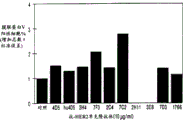
图8A-E显示了不同细胞系对抗ErbB2单克隆抗体的反应。使BT474、SKBR3和MCF7乳房肿瘤细胞系以及正常的人乳房上皮细胞(HMEC)(分别为图8A-D)与抗ErbB2的单克隆抗体4D5、3H4、7F3、7C2、2H11、3E8和7D3、人化的突变型单克隆抗体4D5(hu4D5)或同种匹配不相关对照单克隆抗体1766-起培育。用10μg/ml单克隆抗体浓度处理3天。收集2-9个不同试验的数据,并表示成膜联蛋白V结合细胞相对于对照细胞的平均增长倍数(±标准误差)。BT474乳房肿瘤细胞对单克隆抗体7C2和4D5的反应在图5中已有描述(分别为对照的9倍和2.5倍)。在用单克隆抗体7C2处理后,在SKBR3乳房肿瘤细胞系(ErbB2表达水平与BT474细胞一样高)中,也发生了诱导细胞程序死亡(对于单克隆抗体4D5,程度较低)。此外,单克隆抗体7F3在BT474和SKBR3细胞系中均能诱导细胞程序死亡。而ErbB2表达水平正常的MCF7乳房肿瘤细胞系以及HMEC,在用抗ErbB2单克隆抗体处理后,均显示膜联蛋白V结合没有改变。这些结果表明,ErbB2的过度表达是响应抗ErbB2单克隆抗体所必需的。在图8E中,测试了过度表达ErbB2的非小(non-small)细胞肺癌细胞系Calu3中受抗ErbB2单克隆抗体诱导的细胞程序死亡。用7C2或7F3处理均使得膜联蛋白V的结合增强。Figures 8A-E show the responses of different cell lines to anti-ErbB2 monoclonal antibodies. BT474, SKBR3 and MCF7 breast tumor cell lines as well as normal human breast epithelial cells (HMEC) (Fig. Humanized mutant mAb 4D5 (hu4D5) or an isotype-matched irrelevant control mAb 1766 were incubated together. Treat with 10 μg/ml monoclonal antibody concentration for 3 days. Data from 2-9 different experiments were collected and expressed as the mean fold increase (± standard error) of Annexin V-bound cells relative to control cells. The responses of BT474 breast tumor cells to mAbs 7C2 and 4D5 are depicted in Figure 5 (9-fold and 2.5-fold higher than control, respectively). Induction of apoptosis also occurred (to a lesser extent for mAb 4D5) after treatment with mAb 7C2 in the SKBR3 breast tumor cell line (ErbB2 expression levels were as high as in BT474 cells). In addition, mAb 7F3 induced apoptosis in both BT474 and SKBR3 cell lines. In contrast, the MCF7 breast tumor cell line with normal ErbB2 expression, as well as HMEC, showed no change in Annexin V binding after treatment with anti-ErbB2 mAb. These results suggest that overexpression of ErbB2 is required for response to anti-ErbB2 monoclonal antibodies. In FIG. 8E , apoptosis induced by anti-ErbB2 monoclonal antibodies in the ErbB2-overexpressing non-small lung cancer cell line Calu3 was tested. Treatment with either 7C2 or 7F3 resulted in enhanced binding of Annexin V.
图9A-I显示了单克隆抗体7C2和4D5对细胞周期进程和细胞死亡的作用。未经处理的BT474细胞主要是膜联蛋白阴性和PI阴性的(图9A,象限3),并表现出正常的细胞周期DNA直方图(图9B和C)。用10μg/ml单克隆抗体4D5处理的细胞表现出PI吸收以及膜联蛋白V-FITC结合有一定的增强(图9D,象限2)。在细胞周期进程上有最显著的效果,单克隆抗体4D5几乎完全除去了S阶段的细胞百分数(图9E和F)。单克隆抗体7C2在BT474中诱导出显著量的细胞死亡(通过PI吸收和膜联蛋白V-FITC结合测得)(图9G,象限2)。细胞周期分析表明有近(sub)G0/G1或亚二倍体群体存在(图9I)(这是发生细胞程序死亡的细胞的特征),该细胞表现出高水平的膜联蛋白V结合(图9H,象限1)。Figures 9A-I show the effects of monoclonal antibodies 7C2 and 4D5 on cell cycle progression and cell death. Untreated BT474 cells were predominantly annexin-negative and PI-negative (Fig. 9A, quadrant 3) and exhibited normal cell cycle DNA histograms (Fig. 9B and C). Cells treated with 10 μg/ml mAb 4D5 showed some enhancement of PI uptake as well as Annexin V-FITC binding (Fig. 9D, quadrant 2). With the most pronounced effect on cell cycle progression, mAb 4D5 almost completely removed the percentage of cells in S phase (Fig. 9E and F). Mab 7C2 induced a significant amount of cell death (measured by PI uptake and Annexin V-FITC binding) in BT474 (Fig. 9G, quadrant 2). Cell cycle analysis indicated the presence of a sub-G 0 /G 1 or hypodiploid population (Figure 9I) (characteristic of cells undergoing apoptosis) that exhibited high levels of Annexin V binding (Fig. 9H, quadrant 1).
图10A-F是图9A-I的DNA直方图的曲线拟合分析结果,其表现为,用单克隆抗体7C2处理后S阶段中的细胞百分数(52%)稍有变化(与对照细胞(S阶段的61%细胞)相比),但是对单克隆抗体4D5反应的S阶段的细胞数却大幅度降低(降低至6%)(分别在图10C、A和B中)。分析细胞程序死亡的细胞群体(9A、D和G的象限2中的膜联蛋白V/PI阳性细胞),揭示了S阶段细胞的百分数与总细胞群体之间没有差别(图10D对照=55%;图10E单克隆抗体4D5=7%;图10F单克隆抗体7C2=56%)。而且,G0/G1和G2/M阶段没有变化(比较图10A和D、B和E、C和F),这说明细胞退出细胞周期的所有阶段,且单克隆抗体诱导的编程性细胞死亡对细胞周期没有特异性。Figures 10A-F are the results of curve fitting analysis of the DNA histograms of Figures 9A-I, which show a slight change in the percentage of cells in the S phase (52%) after treatment with monoclonal antibody 7C2 (compared to control cells (S compared to 61% cells at the 1 stage), but the number of cells at the S stage was significantly reduced (down to 6%) in response to mAb 4D5 (Fig. 10C, A and B, respectively). Analysis of the apoptosis cell population (Annexin V/PI positive cells in
图11A和B显示出单克隆抗体7C2诱导的细胞程序死亡通过生长停滞而得以增强。除细胞周期研究数据外,通过时间推移视频记录还发现,经单克隆抗体7C2处理过的部分细胞继续增殖,而其它一些则经历细胞程序死亡。因此,进行试验以确定细胞生长受抑制是否会增强单克隆抗体7C2的促细胞程序死亡活性。使BT474细胞脱离血清培养3天,以诱导生长停滞,然后用10μg/ml单克隆抗体7C2或4D5处理3天,分析存活率(膜联蛋白V-FITC结合和PI吸收)以及细胞周期效应。脱离血清(培养在添加0.1%FBS的培养液中)有效地减少了增殖,这可从S阶段细胞的百分数从33%(在10%FBS中)降低至10%(图11A)来看出。而先前的生长停滞却不再增强单克隆抗体4D5的强抗增殖活性。在单克隆抗体7C2处理的细胞中,脱离和未脱离血清的S阶段细胞的比例与对照相同。图11B表明血清饥饿不会对未经处理细胞的存活率产生不利影响。然而,在脱离血清一段时间后用10μg/ml单克隆抗体4D5处理BT474细胞却会使存活率降低至55%。而且,用10μg/ml单克隆抗体7C2处理生长停滞的细胞能几乎完全消除整个培养,因为膜联蛋白V阴性和PI阴性细胞的百分数降低至10%。Figures 11A and B show that apoptosis induced by mAb 7C2 is enhanced by growth arrest. In addition to the cell cycle study data, time-lapse video recordings revealed that some cells treated with mAb 7C2 continued to proliferate, while others underwent apoptosis. Therefore, experiments were performed to determine whether inhibition of cell growth enhanced the pro-apoptotic activity of mAb 7C2. BT474 cells were cultured without serum for 3 days to induce growth arrest, and then treated with 10 μg/ml monoclonal antibody 7C2 or 4D5 for 3 days to analyze survival (Annexin V-FITC binding and PI uptake) and cell cycle effects. Detachment of serum (cultured in medium supplemented with 0.1% FBS) effectively reduced proliferation as seen by a reduction in the percentage of cells in S phase from 33% (in 10% FBS) to 10% (Fig. 11A). However, previous growth arrest no longer enhanced the strong antiproliferative activity of mAb 4D5. In mAb 7C2-treated cells, the proportion of S-phase cells detached and not detached from serum was the same as in controls. Figure 1 IB demonstrates that serum starvation does not adversely affect the viability of untreated cells. However, treatment of BT474 cells with 10 μg/ml monoclonal antibody 4D5 after a period of serum deprivation reduced the viability to 55%. Furthermore, treatment of growth-arrested cells with 10 μg/ml of mAb 7C2 almost completely eliminated the entire culture, as the percentage of Annexin V negative and PI negative cells decreased to 10%.
图12用下划线示出了ErbB2结构域1的氨基酸序列(SEQ ID NO:1)。粗体氨基酸表示单克隆抗体7C2和7F3识别的表位位置(经缺失图谱测得),即“7C2/7F3表位”(SEQ ID NO:2)。Figure 12 shows the amino acid sequence of ErbB2 domain 1 (SEQ ID NO: 1) underlined. Amino acids in bold indicate the epitope positions recognized by monoclonal antibodies 7C2 and 7F3 (determined by the deletion map), that is, "7C2/7F3 epitope" (SEQ ID NO: 2).
图13显示了ErbB2胞外结构域的表位作图,它通过截短突变体分析和定点诱变(Nakamura等,J.of Virology 67(10):6179-6191(1993年10月);Renz等,J.Cell.biol.125(6):1395-1406(1994年6月))来测得。促细胞程序死亡性单克隆抗体7C2和7F3结合受体N端的表位,而抗增殖的单克隆抗体4D5和3H4却结合在跨膜结构域附近。用聚合酶链反应技术从cDNA制得各种ErbB2-ECD截短或点突变。ErbB2突变体在哺乳动物表达质粒中被表达成gD融合蛋白。该表达质粒采用巨细胞病毒启动子/增强子以及位于插入cDNA下游的SV40终止子和聚腺苷酸化信号。将质粒DNA转染入293S细胞中。转染1天后,使细胞在不含甲硫氨酸和半胱氨酸、含有1%透析过的胎牛血清和25μCi各种35S甲硫氨酸和35S半胱氨酸的低葡萄糖DMEM中通过新陈代谢进行标记过夜。收集上清,在上清液中加入ErbB2单克隆抗体或对照抗体,4℃培育2-4小时。使复合物沉淀,施加到10-20%Tricine SDS梯度凝胶上,在100V下电泳。将凝胶电泳印迹到膜上并通过放射自显影来分析。Figure 13 shows the epitope mapping of the ErbB2 extracellular domain by truncation mutant analysis and site-directed mutagenesis (Nakamura et al., J.of Virology 67(10): 6179-6191 (October 1993); Renz et al., J.Cell.biol.125(6):1395-1406 (June 1994)). Pro-apoptotic mAbs 7C2 and 7F3 bind epitopes at the N-terminus of the receptor, whereas anti-proliferative mAbs 4D5 and 3H4 bind near the transmembrane domain. Various ErbB2-ECD truncations or point mutations were made from cDNA by polymerase chain reaction technique. ErbB2 mutants are expressed as gD fusion proteins in mammalian expression plasmids. This expression plasmid employs a cytomegalovirus promoter/enhancer with an SV40 terminator and polyadenylation signal located downstream of the inserted cDNA. Plasmid DNA was transfected into 293S cells. One day after transfection, cells were incubated in low-glucose DMEM without methionine and cysteine, containing 1% dialyzed fetal calf serum and 25 μCi of various 35S methionine and 35S cysteine. labeling by metabolism overnight. Collect the supernatant, add ErbB2 monoclonal antibody or control antibody to the supernatant, and incubate at 4°C for 2-4 hours. The complex was precipitated, applied to a 10-20% Tricine SDS gradient gel, and electrophoresed at 100V. Gels were electrophoretically blotted onto membranes and analyzed by autoradiography.
图14A-E表示抗ErbB2单克隆抗体的作用对表位有特异性。为了确定抗ErbB2单克隆抗体抗增殖或促细胞程序死亡的效果是否与表位特异性有关,用4种不同的单克隆抗体处理BT474细胞3天,用Hoechst33342染色,进行细胞周期分析。单克隆抗体是:7C2和7F3,它们与ErbB2胞外结构域上的氨基酸22-53(SEQ ID NO:2)结合(分别在图14B和C中);4D5,它与残基529-625(SEQ IDNO:4)结合(图14D);和3H4,它与氨基酸541-599(SEQ ID NO:3)结合(图14E)。7C2和7F3均能诱导出细胞程序死亡(分别为细胞群体的60.5%和53.4%),但是与未经处理的细胞(52.5%;图14A)相比,它们却不会降低S阶段细胞的比例(分别为64.9%和58.7%)。相反,单克隆抗体4D5和3H4结合毗邻ErbB2跨膜区,它们表现出强效的抗增殖活性(%S分别为5.4和10.5,对照的S为52.5%),但是在促进编程性细胞死亡方面却不如7C2或7F3那样有效(细胞程序性死亡%为4D5=41.9,3H4=26.3,对照为15.8%)。Figures 14A-E show that the effects of anti-ErbB2 monoclonal antibodies are epitope specific. To determine whether the anti-proliferative or pro-apoptotic effects of anti-ErbB2 mAbs were related to epitope specificity, BT474 cells were treated with 4 different mAbs for 3 days, stained with Hoechst33342, and cell cycle analysis was performed. The monoclonal antibodies are: 7C2 and 7F3, which bind to amino acids 22-53 (SEQ ID NO: 2) on the ErbB2 extracellular domain (in Figure 14B and C, respectively); 4D5, which bind to residues 529-625 ( SEQ ID NO: 4) binds (FIG. 14D); and 3H4, which binds to amino acids 541-599 (SEQ ID NO: 3) (FIG. 14E). Both 7C2 and 7F3 induced apoptosis (60.5% and 53.4% of the cell population, respectively), but they did not reduce the proportion of S-phase cells compared to untreated cells (52.5%; Fig. 14A) (64.9% and 58.7%, respectively). In contrast, mAbs 4D5 and 3H4 bound adjacent to the ErbB2 transmembrane region, and they exhibited potent antiproliferative activity (%S 5.4 and 10.5, respectively, compared with 52.5% for the control), but were less effective in promoting apoptosis. Not as effective as 7C2 or 7F3 (% apoptosis 4D5 = 41.9, 3H4 = 26.3 vs 15.8% for control).
图15表示如实施例3那样测得的抗HER2单克隆抗体7C2在SKOV3卵巢癌细胞系中诱导细胞程序死亡的情况。Fig. 15 shows the induction of apoptosis by the anti-HER2 monoclonal antibody 7C2 in the SKOV3 ovarian cancer cell line as measured in Example 3.
图16表示,当在抗HER2单克隆抗体4D5之前先给予抗HER2单克隆抗体7C2时,抗HER2单克隆抗体的组合处理结果增强了BT474乳房肿瘤细胞的细胞程序死亡(见实施例3)。Figure 16 shows that combination treatment with anti-HER2 mAb enhanced apoptosis in BT474 breast tumor cells when anti-HER2 mAb 7C2 was given prior to anti-HER2 mAb 4D5 (see Example 3).
图17表示,如实施例4中所述,单独或组合给予抗HER2单克隆抗体对裸鼠中BT474M1异种移植物的平均肿瘤体积(mm3)±标准误差的影响。每周给予抗体2次,从第6天开始。Figure 17 shows the effect of administration of anti-HER2 monoclonal antibodies alone or in combination, as described in Example 4, on the mean tumor volume (mm 3 ) ± standard error of BT474M1 xenografts in nude mice. Antibodies were given 2 times a week, starting on
较佳实施例详述DETAILED DESCRIPTION OF THE PREFERRED EMBODIMENT
I.定义I. Definition
除非另有特指,本文所用术语“ErbB2”指人ErbB2蛋白,“erbB2”指人erbB2基因。人erbB2基因和ErbB2蛋白在例如Semba等PNAS(USA)82:6497-6501(1985)和Yamamoto等Nature319:230-234(1986)(Genebank登录号X03363)中有所描述。ErbB2包含四个结构域(结构域1-4)。“结构域1”在ErbB2胞外间结构域的氨基端,如本文图12所示。另见Plowman等,Proc.Natl.Acad.Sci.USA90:1746-1750(1993)。Unless otherwise specified, the term "ErbB2" as used herein refers to human ErbB2 protein, and "erbB2" refers to human erbB2 gene. The human erbB2 gene and ErbB2 protein are described, for example, in Semba et al. PNAS (USA) 82:6497-6501 (1985) and Yamamoto et al. Nature 319:230-234 (1986) (Genebank Accession No. X03363). ErbB2 comprises four domains (domains 1-4). "
术语“表位7C2/7F3”是ErbB2胞外结构域N端上与7C2和/或7F3抗体(两者均保藏于ATCC,见下文)结合的区域。为了筛选与7C2/7F3表位结合的抗体,可采用如Antibodies,A Laboratory Manual,Cold Spring Harbor Laboratory,EdHarlow和David Lane(1988)所述的常规的交叉封闭试验。或者,可用表位作图(见下文实施例2)来确定抗体是否与ErbB2上的7C2/7F3表位(即ErbB2中大约残基22至53区域(SEQ ID NO:2)中的任何一个或多个残基)结合。The term "epitope 7C2/7F3" is the region on the N-terminus of the ErbB2 extracellular domain that binds the 7C2 and/or 7F3 antibodies (both deposited with the ATCC, see below). To screen for antibodies that bind to the 7C2/7F3 epitope, a conventional cross-blocking assay as described in Antibodies, A Laboratory Manual, Cold Spring Harbor Laboratory, Ed Harlow and David Lane (1988) can be used. Alternatively, epitope mapping (see Example 2 below) can be used to determine whether the antibody binds to any of the 7C2/7F3 epitopes on ErbB2 (i.e., the region of approximately
“表位4D5”是ErbB2胞外结构域中与抗体4D5(ATCC CRL10463)结合的区域。该表位毗邻ErbB2的跨膜区。为筛选与4D5表位结合的抗体,可采用如Antibodies,A Laboratory Manual,Cold Spring Harbor Laboratory,Ed Harlow和David Lane(1988)所述的常规的交叉封闭试验。或者,可作表位作图(见下文实施例2),以确定抗体是否与ErbB2的4D5表位(即大约残基529,如约561至625(SEQID NO:4)残基区域内的任何一个或多个残基)结合。"Epitope 4D5" is the region in the extracellular domain of ErbB2 that binds to antibody 4D5 (ATCC CRL10463). This epitope is adjacent to the transmembrane region of ErbB2. To screen for antibodies that bind to the 4D5 epitope, a conventional cross-blocking assay as described in Antibodies, A Laboratory Manual, Cold Spring Harbor Laboratory, Ed Harlow and David Lane (1988) can be used. Alternatively, epitope mapping (see Example 2 below) can be performed to determine whether the antibody binds to any of the 4D5 epitope of ErbB2 (i.e., about residue 529, such as about 561 to 625 (SEQ ID NO: 4) residue region. or multiple residues) combined.
术语“诱导细胞死亡”指抗体使活细胞变成不能存活的能力。这里的“细胞”是表达ErbB2受体的细胞,尤其是过度表达ErbB2受体的细胞。与同组织类型的非癌细胞相比,过度表达ErbB2的细胞具有明显高出正常的ErbB2水平。较佳的,该细胞是癌细胞,如乳房、卵巢、胃、子宫内膜、唾液腺、肺、肾、结肠、甲状腺、胰或膀胱的癌细胞。在体外,细胞可以是SKBR3、BT474、Calu 3、MDA-MB-453、MDA-MB-361或SKOV3细胞。细胞的体外死亡可在没有补体和免疫效应细胞存在下测得,以区别依赖于抗体的细胞毒性(ADCC)或依赖于补体的细胞毒性(CDC)诱导的细胞死亡。这样,可用热灭活血清(即没有补体)和没有免疫效应细胞存在下,来测试细胞死亡。为了确定抗体是否能诱导细胞死亡,通过碘化丙锭(PI)(见下文实施例2)、台盼蓝(参见,Moore等,Cytotechnology 17:1-11(1995))或7AAD(见下文实施例1)的吸收相对于未经处理细胞来评价膜完整性丧失程度。较佳的诱导细胞死亡的抗体是在“BT474细胞中的PI吸收试验(见下文)”中能诱导PI吸收的那些抗体。The term "inducing cell death" refers to the ability of an antibody to render a living cell nonviable. A "cell" herein is a cell expressing ErbB2 receptors, especially a cell overexpressing ErbB2 receptors. ErbB2-overexpressing cells had significantly higher normal ErbB2 levels than non-cancerous cells of the same tissue type. Preferably, the cells are cancer cells, such as cancer cells of the breast, ovary, stomach, endometrium, salivary gland, lung, kidney, colon, thyroid, pancreas or bladder. In vitro, the cells can be SKBR3, BT474,
术语“诱导细胞程序死亡”指抗体诱导编程性细胞死亡的能力,它通过与膜联蛋白V的结合、DNA片段化、细胞皱缩、内质网膨胀、细胞裂解和/或形成膜泡囊(称为细胞程序死亡体(apoptotic body))来确定。见本文图1A和B。细胞是过度表达ErbB2受体的细胞。“细胞”宜为肿瘤细胞,如乳房、卵巢、胃、子宫内膜、唾液腺、肺、肾、结肠、甲状腺、胰或膀胱的癌细胞。在体外,细胞可以是SKBR3、BT474、Calu3细胞、MDA-MB-453、MDA-MB-361或SKOV3细胞。可以用各种方法来评价与细胞程序死亡相关的细胞活动。例如,可通过膜联蛋白结合来测定磷脂酰丝氨酸(PS)的转运(见下文实施例2);可通过DNA梯来评价DNA片段化,如实施例2所述;通过评价亚二倍体细胞中的任何增长,可以评价胞核/染色质凝聚与DNA片段化。诱导细胞程序死亡的抗体最好是,在“采用BT474细胞的膜联蛋白结合试验中”(见下文),与未经处理细胞相比,能诱导出约2至50倍(较佳的为5至50倍,更佳的约10-50倍)的膜联蛋白结合的抗体。The term "inducing apoptosis" refers to the ability of an antibody to induce apoptosis through binding to annexin V, DNA fragmentation, cell shrinkage, endoplasmic reticulum swelling, cell lysis and/or formation of membrane vesicles ( Known as the apoptosis body (apoptotic body)) to determine. See Figures 1A and B herein. The cells are those that overexpress the ErbB2 receptor. The "cell" is preferably a tumor cell, such as a cancer cell of the breast, ovary, stomach, endometrium, salivary gland, lung, kidney, colon, thyroid, pancreas or bladder. In vitro, the cells may be SKBR3, BT474, Calu3 cells, MDA-MB-453, MDA-MB-361 or SKOV3 cells. Cellular events associated with apoptosis can be assessed in a variety of ways. For example, phosphatidylserine (PS) transport can be assayed by annexin binding (see Example 2 below); DNA fragmentation can be assessed by DNA ladders, as described in Example 2; Any growth in cells can be assessed for nuclei/chromatin condensation and DNA fragmentation. Preferably, the antibody that induces apoptosis is capable of inducing about 2 to 50-fold (preferably 5 to 50-fold, more preferably about 10-50-fold) of the annexin-bound antibody.
有时,促细胞程序死亡性抗体是封闭HRG结合/激活ErbB2/ErbB3复合物的抗体(如7F3抗体)。在其它场合,抗体是不明显封闭HRG激活ErbB2/ErbB3受体复合物的抗体(如7C2)。另外,抗体可以象7C2那样,在诱导细胞程序死亡的同时,不会大大减少S阶段的细胞百分数(如图10中所测定的,只使这些细胞百分数相对于对照减少约0-10%)。Sometimes, pro-apoptotic antibodies are antibodies that block HRG binding/activation of the ErbB2/ErbB3 complex (eg 7F3 antibody). In other cases, the antibody is one that does not significantly block HRG activation of the ErbB2/ErbB3 receptor complex (eg, 7C2). In addition, the antibody could induce apoptosis, like 7C2, without greatly reducing the percentage of cells in S phase (only about 0-10% relative to control, as assayed in Figure 10).
感兴趣的抗体可以象7C2那样,它能与人ErbB2特异性结合,且不会与其它蛋白(如erbB1、erbB3和/或erbB4基因编码的蛋白)发生显著的交叉反应。有时,抗体可能不与大鼠neu蛋白(如Schecter等,Nature 312:513(1984)和Drebin等,Nature 312:545-548(1984)中所述的)发生明显的交叉反应。在该实例中,此抗体与这些蛋白结合(如与内源性受体的细胞表面结合)的程度将低于10%(经荧光素激活细胞分选(FACS)分析或放射免疫沉淀(RIA)测得)。The antibody of interest may be like 7C2, which specifically binds to human ErbB2 and does not significantly cross-react with other proteins (such as proteins encoded by erbB1, erbB3 and/or erbB4 genes). In some cases, antibodies may not significantly cross-react with rat neu protein (as described in Schecter et al., Nature 312:513 (1984) and Drebin et al., Nature 312:545-548 (1984)). In this instance, the antibody will bind to these proteins to an extent less than 10% (as analyzed by fluorescein-activated cell sorting (FACS) or radioimmunoprecipitation (RIA) measured).
本文所用的术语“遗传调节蛋白(HRG)”指激活ErbB2-ErbB3和ErbB2-ErbB4蛋白复合物(即在结合到其上时诱导复合物中酪氨酸残基磷酸化)的多肽。该术语中包括的各种遗传调节蛋白多肽公开在(例如)Holmes等Science,256:1205-1210(1992);WO 92/20798;Wen等,Mol.Cell.Biol.,14(3):1990-1919(1994);和Marchionni等,Nature,362:312-318(1993)。该术语包括有生物活性的片段和/或天然存在的HRG多肽的变体,如其EGF样结构域片段(如HRGβ1177-244)。As used herein, the term "hereditary regulatory protein (HRG)" refers to a polypeptide that activates ErbB2-ErbB3 and ErbB2-ErbB4 protein complexes (ie, induces phosphorylation of tyrosine residues in the complexes when bound thereto). Various genetic regulatory protein polypeptides included in this term are disclosed in, for example, Holmes et al. Science, 256:1205-1210 (1992); WO 92/20798; Wen et al., Mol. Cell. Biol., 14(3):1990 -1919 (1994); and Marchionni et al., Nature, 362:312-318 (1993). The term includes biologically active fragments and/or variants of naturally occurring HRG polypeptides, such as EGF-like domain fragments thereof (eg HRGβ1 177-244 ).
术语“ErbB2-ErbB3蛋白复合物”和“ErbB2-ErbB4蛋白复合物”是ErbB2受体分别与ErbB3受体或ErbB4受体非共价关联的寡聚物。当表达这些受体的细胞接触HRG时形成了该复合物,它可通过免疫沉淀来分离获得,可用SDS-PAGE(如Sliwkowski等,J.Biol Chem.,269(20):14661-14665(1994)所述)来分析。The terms "ErbB2-ErbB3 protein complex" and "ErbB2-ErbB4 protein complex" are oligomers in which ErbB2 receptors are non-covalently associated with ErbB3 receptors or ErbB4 receptors, respectively. This complex, which is formed when cells expressing these receptors are exposed to HRG, can be isolated by immunoprecipitation and can be obtained by SDS-PAGE (such as Sliwkowski et al., J. Biol Chem., 269 (20): 14661-14665 (1994 ) to analyze.
“抗体(Ab)”和“免疫球蛋白(Ig)”是有相同结构特征的糖蛋白。抗体表现出对特异抗原的结合特异性,而免疫球蛋白包括抗体和缺少抗原特异性的抗体样分子。例如,淋巴系统可产生低水平的后一类多肽,而骨髓瘤可产生水平有所提高的多肽。"Antibody (Ab)" and "immunoglobulin (Ig)" are glycoproteins that share the same structural characteristics. Antibodies exhibit binding specificity for a specific antigen, while immunoglobulins include antibodies and antibody-like molecules that lack antigen specificity. For example, the lymphatic system can produce low levels of the latter class of polypeptides, while myeloma can produce increased levels of polypeptides.
“天然抗体”和“天然免疫球蛋白”是约150000道尔顿的异四聚糖蛋白,其由两个相同的轻链(L)和两个相同的重链(H)组成。每条轻链通过一个共价二硫键与重链相连,而不同免疫球蛋白同种型的重链间的二硫键数目不同。每条重链和轻链也有规则间隔的链内二硫键。每条重链的一端有可变区(VH),其后是多个不变区。每条轻链的一端有可变区(VL),另一端有不变区;轻链的不变区与重链的第一个不变区相对,轻链的可变区与重链的可变区相对。据信特殊的氨基酸残基在轻链和重链的可变区之间形成界面。"Native antibodies" and "native immunoglobulins" are heterotetrameric glycoproteins of approximately 150,000 Daltons, composed of two identical light (L) chains and two identical heavy (H) chains. Each light chain is linked to a heavy chain by one covalent disulfide bond, and the number of disulfide bonds varies between heavy chains of different immunoglobulin isotypes. Each heavy and light chain also has regularly spaced intrachain disulfide bridges. Each heavy chain has a variable region ( VH ) at one end followed by constant regions. Each light chain has a variable region (V L ) at one end and a constant region at the other end; the constant region of the light chain is opposite the first constant region of the heavy chain, and the variable region of the light chain is opposite the Relative to the variable regions. Specific amino acid residues are believed to form the interface between the variable domains of the light and heavy chains.
术语“可变”表示抗体中可变区的某些部分在序列上有所不同,它形成了各种特定抗体对其特定抗原的结合和特异性。然而,可变性并不均匀地分布在整个抗体可变区中。它集中于轻链和重链可变区中称为互补决定区(CDR)或超变区中的三个片段中。可变区中较保守的部分称为构架区(FR)。天然重链和轻链的可变区中各自包含四个FR区,它们大致上呈β-折叠构型,由形成连接环的三个CDR相连,在某些情况下可形成部分β折叠结构。每条链中的CDR通过FR区紧密地靠在一起并与另一链的CDR一起形成了抗体的抗原结合部位(参见Kabat等,NIHPubl.No.91-3242,Vol.I,647-669页(1991))。不变区不直接参与抗体与抗原的结合,但是它们表现出不同的效应功能,例如参与抗体的依赖于抗体的细胞毒性。The term "variable" indicates that certain portions of the variable regions among antibodies differ in sequence, which contribute to the binding and specificity of each particular antibody for its particular antigen. However, the variability is not evenly distributed throughout antibody variable domains. It is concentrated in three segments called complementarity determining regions (CDRs) or hypervariable regions in the light and heavy chain variable regions. The more conserved portions of the variable domains are called the framework regions (FR). The variable domains of native heavy and light chains each contain four FR regions that are roughly in a β-sheet configuration connected by three CDRs that form connecting loops, in some cases forming partial β-sheet structures. The CDRs in each chain are in close proximity through the FR regions and together with the CDRs of the other chain form the antigen-binding site of the antibody (see Kabat et al., NIHPubl. No. 91-3242, Vol. 1, pages 647-669 (1991)). The constant regions are not directly involved in the binding of the antibody to the antigen, but they exhibit different effector functions, such as participation in antibody-dependent cytotoxicity of the antibody.
木瓜蛋白酶消化抗体产生了两个相同的抗原结合片段(称为“Fab”片段,每个片段有单个抗原结合位点)以及一个残余的“Fc”片段(该名称反映了其容易结晶的能力)。用胃蛋白酶处理产生了一个F(ab′)2片段,该片段有两个抗原结合位点,并仍能与抗原交联。Papain digestion of antibodies yields two identical antigen-binding fragments (termed the "Fab" fragment, each with a single antigen-binding site) and a residual "Fc" fragment (the name reflects its ability to readily crystallize) . Treatment with pepsin yields an F(ab') 2 fragment that has two antigen-combining sites and is still capable of cross-linking antigen.
“Fv”是最小抗体片段,它含有全部抗原识别和结合位点。该区域由一个重链和一个轻链可变区紧密非共价关联的二聚物组成。在该构型中,各可变区中的三个CDR相互作用,在VH-VL二聚物表面上确定了抗原结合位点。6个CDR共同地赋予抗体抗原结合特异性。然而,即使是单个可变区(或Fv的一半只包含对抗原有特异性的三个CDR)也能识别并结合抗原,只是其亲和力比整个结合位点低。"Fv" is the smallest antibody fragment that contains the entire antigen recognition and binding site. This region consists of a dimer of one heavy chain and one light chain variable region in tight non-covalent association. In this configuration, the three CDRs in each variable domain interact to define an antigen-binding site on the surface of the VH - VL dimer. The six CDRs collectively confer antigen-binding specificity to the antibody. However, even a single variable domain (or half of an Fv comprising only the three CDRs specific for an antigen) can recognize and bind antigen, albeit with a lower affinity than the entire binding site.
Fab片段还含有轻链的不变区和重链的第一个不变区(CH1)。通过在重链CH1区的羧基端加入几个残基(包括来自铰链区的一个或多个半胱氨酸),可使Fab片段之间互不相同。Fab′-SH在这里被命名为Fab′,其中不变区的半胱氨酸残基携带了一个游离的巯基。F(ab′)2抗体片段最初是以Fab′片段对的形式产生的,在其间有铰链半胱氨酸。抗体片段的其它化学偶联方式也是已知的。The Fab fragment also contains the constant region of the light chain and the first constant region (CH1) of the heavy chain. Fab fragments can be made to differ from one another by the addition of several residues at the carboxy-terminus of the CH1 region of the heavy chain, including one or more cysteines from the hinge region. Fab'-SH is designated herein as Fab', in which the cysteine residue of the constant region carries a free sulfhydryl group. F(ab') 2 antibody fragments were originally produced as pairs of Fab' fragments with hinge cysteines between them. Other chemical coupling methods of antibody fragments are also known.
脊椎动物抗体(免疫球蛋白)的“轻链”可根据其不变区的氨基酸序列归为明显不同的两类(称为κ和λ)中的一类。The "light chains" of vertebrate antibodies (immunoglobulins) can be assigned to one of two distinct classes, termed kappa and lambda, based on the amino acid sequence of their constant regions.
根据其重链不变区的氨基酸序列,免疫球蛋白可以分为不同的种类。主要有5类免疫球蛋白:IgA,IgD,IgE,IgG和IgM,其中一些还可进一步分成亚类(同种型),如IgG1,IgG2,IgG3,IgG4,IgA和IgA2。对应于不同类免疫球蛋白的重链不变区分别称为α、δ、ε、γ、和μ。不同类免疫球蛋白的亚单位结构和三维构型是众所周知的。Depending on the amino acid sequence of the constant region of their heavy chains, immunoglobulins can be assigned to different classes. There are five main classes of immunoglobulins: IgA, IgD, IgE, IgG, and IgM, some of which are further divided into subclasses (isotypes), such as IgG1, IgG2, IgG3, IgG4, IgA, and IgA2. The heavy-chain constant regions that correspond to the different classes of immunoglobulins are called α, δ, ε, γ, and μ, respectively. The subunit structures and three-dimensional configurations of different classes of immunoglobulins are well known.
术语“抗体”具有最广泛的含义,其具体包括完整的单克隆抗体、多克隆抗体、由至少两个完整抗体形成的多特异性抗体(如双特异性抗体),以及具有所需生物活性的抗体片段。The term "antibody" has the broadest meaning and specifically includes intact monoclonal antibodies, polyclonal antibodies, multispecific antibodies (such as bispecific antibodies) formed from at least two intact antibodies, and antibodies having the desired biological activity. Antibody fragments.
“抗体片段”包括完整抗体的一部分,较佳的是完整抗体的抗原结合区或可变区。抗体片段的例子包括Fab、Fab′、F(ab′)2、和Fv片段;二抗体(diabody);线性抗体(Zapata等,Protein Eng.8(10):1057-1062(1995));单链抗体分子;和抗体片段形成的多特异性抗体。"Antibody fragment" includes a portion of an intact antibody, preferably the antigen-binding or variable region of an intact antibody. Examples of antibody fragments include Fab, Fab', F(ab') 2 , and Fv fragments; diabodies; linear antibodies (Zapata et al., Protein Eng. 8(10):1057-1062 (1995)); chain antibody molecules; and multispecific antibodies formed from antibody fragments.
本文所用的术语“单克隆抗体”指从一类基本均一抗体获得的抗体,即该群体中包含的单个抗体是相同的,除少数可能存在的天然发生的突变外。单克隆抗体是高特异性的,针对单个抗原位点。而且,与常规(多克隆)抗体制剂(通常是包括针对不同的决定簇(表位)的不同抗体)不同,各单克隆抗体是针对抗原上的单个决定簇。除了它们的特异性外,单克隆抗体的有利之处还在于它们是通过杂交瘤培养来合成的,不会被其它免疫球蛋白污染。修饰语“单克隆”表示了抗体的特性,是从基本均一的抗体群中获得的,这不应被解释成需要用任何特殊方法来生产抗体。例如,用于本发明的单克隆抗体可用杂交瘤方法(由Kohler等,Nature,256:495(1975)首先提出)制得,或可用重组DNA方法(例如参见美国专利No.4,816,567)制得。“单克隆抗体”也可用例如Clackson等,Nature,352:624-628(1991)和Marks等,J.Mol.Biol.,222:581-597(1991)所述的技术从噬菌体抗体文库中分离获得。As used herein, the term "monoclonal antibody" refers to an antibody obtained from a class of substantially homogeneous antibodies, ie, the individual antibodies comprised in the population are identical except for a few naturally occurring mutations that may be present. Monoclonal antibodies are highly specific, directed against a single antigenic site. Furthermore, each monoclonal antibody is directed against a single determinant on the antigen, unlike conventional (polyclonal) antibody preparations, which generally comprise different antibodies directed against different determinants (epitopes). In addition to their specificity, monoclonal antibodies are advantageous in that they are synthesized by hybridoma culture and are not contaminated by other immunoglobulins. The modifier "monoclonal" indicates the identity of the antibody, which is obtained from a substantially homogeneous population of antibodies, and should not be construed as requiring any particular method for producing the antibody. For example, monoclonal antibodies useful in the present invention can be prepared by the hybridoma method (first proposed by Kohler et al., Nature, 256:495 (1975)), or by recombinant DNA methods (see, eg, US Patent No. 4,816,567). "Monoclonal antibodies" can also be isolated from phage antibody libraries using techniques such as those described by Clackson et al., Nature, 352:624-628 (1991) and Marks et al., J. Mol. Biol., 222:581-597 (1991). get.
本文的单克隆抗体具体包括“嵌合”抗体(免疫球蛋白)(其中重链和/或轻链的一部分与该特定动物抗体的对应序列相同或同源,或是属于特定的抗体类或亚类,而链的其余部分则与另一动物抗体对应序列相同或同源、或是属于另一种抗体类或亚类)以及该抗体的片段,只要该片段具有所需的生物活性即可(美国专利No.4,816,567;Morrison等,Proc.Natl.Acad.Sci.USA,81:6851-6855(1984))。Monoclonal antibodies herein specifically include "chimeric" antibodies (immunoglobulins) (wherein a portion of the heavy and/or light chain is identical or homologous to the corresponding sequence of an antibody from that particular animal, or belongs to a particular class or subclass of antibodies). class, while the rest of the chain is identical or homologous to the corresponding sequence of another animal antibody, or belongs to another antibody class or subclass) and fragments of the antibody, as long as the fragment has the desired biological activity ( US Patent No. 4,816,567; Morrison et al., Proc. Natl. Acad. Sci. USA, 81:6851-6855 (1984)).
“人化”形式的非人(如小鼠)抗体是嵌合的免疫球蛋白、免疫球蛋白链或其片段(如Fv,Fab,Fab′,F(ab′)2或抗体的其它抗原结合序列),它们含有非人免疫球蛋白的最小序列。对于大多数情况,人化抗体是人免疫球蛋白(受者抗体)中的受者互补决定区(CDR)残基被非人源(供者抗体)(例如有所需特异性、亲和力和活性的小鼠、大鼠或兔抗体)的CDR残基代替。在一些情况下,人免疫球蛋白的Fv构架区(FR)被对应的非人残基代替。另外,人化的抗体可包括既不存在于受者抗体、又不存在于导入的CDR或构架序列中的残基。作这些修饰能进一步提高和最大化抗体的性能。通常,人化抗体包含了基本上所有的(至少一个、通常两个)可变区,其中所有或基本上所有的CDR区对应于非人免疫球蛋白的CDR区,所有或基本上所有FR区是人免疫球蛋白序列的FR区。人化抗体最好还包括免疫球蛋白不变区(Fc)的至少一部分,通常是人免疫球蛋白的Fc部分。更详细的情况可参见Jones等,Nature,321:522-525(1986);Reichmann等,Nature,332:323-329(1988);和Presta,Curr.Op.Struct.Biol.,2:593-596(1992)。人化抗体包括PRIMATIZEDTM抗体,其中抗体的抗原结合区可从通过感兴趣抗原免疫接种猕猴制得的抗体中衍生获得。"Humanized" forms of non-human (e.g. mouse) antibodies are chimeric immunoglobulins, immunoglobulin chains or fragments thereof (e.g. Fv, Fab, Fab', F(ab') 2 or other antigen-binding combinations of antibodies sequence), which contain the minimal sequence of a non-human immunoglobulin. For the most part, humanized antibodies are human immunoglobulins (recipient antibodies) in which residues from the recipient complementarity-determining regions (CDRs) have been replaced by non-human (donor antibodies) (e.g., with the desired specificity, affinity, and activity). mouse, rat or rabbit antibody) CDR residues are substituted. In some instances, the Fv framework regions (FRs) of the human immunoglobulin are replaced by corresponding non-human residues. Additionally, humanized antibodies may include residues that are found neither in the recipient antibody nor in the imported CDR or framework sequences. These modifications can be made to further enhance and maximize antibody performance. Typically, a humanized antibody comprises substantially all (at least one, usually two) variable regions, wherein all or substantially all of the CDR regions correspond to those of a non-human immunoglobulin, and all or substantially all of the FR regions are the FR regions of human immunoglobulin sequences. The humanized antibody preferably also will comprise at least a portion of an immunoglobulin constant (Fc) region, typically that of a human immunoglobulin. More details can be found in Jones et al., Nature, 321: 522-525 (1986); Reichmann et al., Nature, 332: 323-329 (1988); and Presta, Curr. Op. Struct. Biol., 2: 593- 596 (1992). Humanized antibodies include PRIMATIZED( TM) antibodies in which the antigen-binding region of the antibody is derived from an antibody made by immunizing rhesus monkeys with the antigen of interest.
“单链Fv”或″sFv″抗体片段包括抗体的VH和VL区,其中这些区在多肽单链中。较佳的,Fv多肽还包括VH和VL区间的多肽接头,该接头可使sFv形成结合抗原所需的结构。关于sFv综述可见Pluckthun在The Pharmacology ofMonoclonal antibodies,113卷,Rosenburg和Moore编辑,Springer-Verlag,NewYork,269-315页(1994)。"Single-chain Fv" or "sFv" antibody fragments include the VH and VL regions of the antibody, wherein these regions are in a single polypeptide chain. Preferably, the Fv polypeptide also includes a polypeptide linker in the VH and VL regions, which can make the sFv form the structure required for binding to the antigen. For a review of sFv see Pluckthun in The Pharmacology of Monoclonal antibodies, vol. 113, edited by Rosenburg and Moore, Springer-Verlag, New York, pp. 269-315 (1994).
术语“二抗体”指有两个抗原结合位点的小抗体片段,该片段包括重链可变区(VH)与轻链可变区(VL)连接成相同的多肽链(VH-VL)。采用一个短得无法使同一链上两个区间产生配对的接头,使区域与另一链中的互补区配对,形成了两个抗原结合位点。二抗体在例如EP404,096;WO93/11161;和Hollinger等,Proc.Natl.Acad.Sci.USA,90:6444-6448(1993)中有更详细的描述。The term "secondary antibody" refers to a small antibody fragment with two antigen-binding sites, the fragment comprising a heavy chain variable domain (V H ) linked to a light chain variable domain (V L ) into the same polypeptide chain (V H - V L ). Using a linker that is too short to allow pairing of the two regions on the same chain, the region is paired with a complementary region in the other chain, creating two antigen-binding sites. Diabodies are described in more detail in eg EP404,096; WO93/11161; and Hollinger et al., Proc. Natl. Acad. Sci. USA, 90:6444-6448 (1993).
“分离”的抗体是已被鉴定并从其天然环境组成中分离和/或回收获得的抗体。其天然环境中的污染成分是能干扰抗体诊断或治疗应用的物质,它可包括酶、激素和其它蛋白或非蛋白溶解物。在较佳的实例中,抗体将被纯化成:(1)含有超过95%(重量)的抗体(经Lowery方法测得),最佳的为大于99%(重量);(2)足以获得N端或内部氨基酸序列的至少15个残基(用转杯式测序仪测得);或(3)在还原或非还原的条件下、经SDS-PAGE以考马斯亮蓝或更佳的银染法测得是均一的。分离的抗体包括重组细胞中的原位抗体,因为抗体天然环境中的至少一种成分不存在。然而,分离的抗体通常可用至少一种纯化步骤制得。An "isolated" antibody is one that has been identified and separated and/or recovered from the components of its natural environment. Contaminants in their natural environment are substances that can interfere with diagnostic or therapeutic applications of antibodies, which may include enzymes, hormones, and other protein or non-protein solutes. In a preferred embodiment, the antibody will be purified to: (1) contain more than 95% (by weight) of the antibody (measured by the Lowery method), and optimally greater than 99% (by weight); (2) sufficient to obtain N At least 15 residues of the terminal or internal amino acid sequence (measured with a rotor cup sequencer); or (3) under reducing or non-reducing conditions, by SDS-PAGE with Coomassie brilliant blue or better silver staining Measured to be uniform. Isolated antibody includes the antibody in situ within recombinant cells since at least one component of the antibody's natural environment will not be present. Ordinarily, however, isolated antibody will be obtained by at least one purification step.
本文所用的术语“补救受体结合表位”指IgG分子(如IgG1,IgG2,IgG3或IgG4)Fc区的一种表位,它负责提高IgG分子的体内血清半衰期。The term "salvage receptor binding epitope" as used herein refers to an epitope in the Fc region of an IgG molecule (such as IgG1 , IgG2 , IgG3 or IgG4 ) which is responsible for increasing the serum half-life of the IgG molecule in vivo.
“治疗”指治疗和预防措施。那些需要治疗的对象是已经患有疾病以及有待预防疾病的对象。"Treatment" refers to both treatment and prophylaxis. Those in need of treatment are those already with the disease as well as those in which the disease is to be prevented.
需要治疗的“哺乳动物”指任何分类为哺乳动物的任何动物,包括人家用和农场、动物园、运动场动物,或小动物,如狗、马、猫、奶牛等。较佳的哺乳动物是人。A "mammal" in need of treatment refers to any animal classified as a mammal, including human household and farm, zoo, playground animals, or small animals such as dogs, horses, cats, cows, and the like. A preferred mammal is a human.
“疾病”是受益于抗ErbB2抗体治疗的任何疾病。这包括慢性和急性疾病,包括使哺乳动物易患有问题疾病的那些病理性疾病。本文待治疗的非限制性疾病例子包括良性和恶性肿瘤;白血病和淋巴恶性肿瘤;神经、胶质、星形胶质、下丘脑和其它腺体、巨噬细胞、上皮细胞、基质和囊胚腔疾病和炎症、血管生成和免疫疾病。A "disease" is any disease that would benefit from treatment with an anti-ErbB2 antibody. This includes chronic and acute diseases, including those pathological diseases that predispose mammals to problem diseases. Non-limiting examples of diseases to be treated herein include benign and malignant tumors; leukemia and lymphoid malignancies; nerve, glia, astrocytes, hypothalamus and other glands, macrophages, epithelial cells, stromal and blastocoel Disease and inflammation, angiogenesis and immune disorders.
术语“癌”和“癌的”指哺乳动物中通常以不受调节的细胞生长为特征的生理疾病。癌的例子包括(但不局限于)癌瘤、淋巴瘤、胚细胞瘤、肉瘤和白血病。这些癌的更具体例子包括鳞状细胞癌、小细胞性肺癌、非小细胞性肺癌、肠胃癌、胰癌、成胶质细胞瘤、子宫颈癌、卵巢癌、肝癌、膀胱癌、肝细胞瘤、乳房癌、结肠癌、结肠直肠癌、子宫内膜癌、唾液腺癌、肾癌、肝癌、前列腺癌、外阴癌、甲状腺癌、肝细胞癌和各类头部和颈部癌。The terms "cancer" and "cancerous" refer to a physiological disease in mammals that is usually characterized by unregulated cell growth. Examples of cancer include, but are not limited to, carcinoma, lymphoma, blastoma, sarcoma, and leukemia. More specific examples of these cancers include squamous cell carcinoma, small cell lung cancer, non-small cell lung cancer, gastrointestinal cancer, pancreatic cancer, glioblastoma, cervical cancer, ovarian cancer, liver cancer, bladder cancer, hepatoma , breast cancer, colon cancer, colorectal cancer, endometrial cancer, salivary gland cancer, kidney cancer, liver cancer, prostate cancer, vulvar cancer, thyroid cancer, hepatocellular carcinoma and various head and neck cancers.
本文所用的术语“细胞毒性试剂”指能抑制或防止细胞功能和/或破坏细胞的物质。该术语包括放射性同位素(如I131、I125、Y90和Re186)、化疗剂和毒素,如细菌、真菌、植物或动物的酶活性毒素或其片段。As used herein, the term "cytotoxic agent" refers to a substance that inhibits or prevents cellular function and/or destroys cells. The term includes radioisotopes (such as I131 , I125 , Y90 and Re186 ), chemotherapeutic agents and toxins, such as bacterial, fungal, plant or animal enzymatically active toxins or fragments thereof.
“化疗剂”是用于治疗癌症的化学物质。化疗剂的例子包括阿霉素、5-氟尿嘧啶、阿糖胞苷(Ara-C)、环磷酰胺、硫替哌、白清安、细胞毒素(Cytoxin)、紫衫醇、Toxotere、氨甲碟呤、顺式铂氨、苯丙氨酸氮芥、长春花碱、博来霉素、表鬼臼毒素吡喃葡糖苷、丝裂霉素C、盐酸米托蒽醌(Mitoxantrone)、长春花新碱、Vinorelbine、卡铂(Carboplatin)、表鬼臼毒素噻吩糖苷、道诺霉素、洋红霉素、氨基碟呤、更生霉素、丝裂霉素、埃斯波霉素(见美国专利No.4,675,187)、苯丙氨酸氮芥和其它相关的氮芥子类。本定义中还包括调节或抑制激素作用于肿瘤的激素剂,如三苯氧胺和onapristone。A "chemotherapeutic" is a chemical substance used to treat cancer. Examples of chemotherapeutic agents include doxorubicin, 5-fluorouracil, cytarabine (Ara-C), cyclophosphamide, thiotepa, prothorax, Cytoxin, paclitaxel, Toxotere, methotrexate, Cisplatinum, phenylalanine mustard, vinblastine, bleomycin, epipodophyllotoxin glucopyranoside, mitomycin C, mitoxantrone hydrochloride (Mitoxantrone), vinblastine, Vinorelbine, Carboplatin, Epipodophyllotoxin Thiophenoside, Daunomycin, Carmine, Aminopterin, Dactinomycin, Mitomycin, Espermycin (see U.S. Patent No. 4,675,187), Phenylalanine mustard and other related nitrogen mustard subclasses. Hormonal agents that modulate or inhibit hormone action on tumors, such as tamoxifen and onapristone, are also included in this definition.
本文所用的术语“生长抑制剂”指在体外或体内抑制细胞(尤其是过度表达ErbB2的癌细胞)生长的化合物或组合物。因此生长抑制剂可明显减少S阶段中过度表达ErbB2的细胞百分数。生长抑制剂例子包括阻断细胞周期进展(S阶段以外处)的试剂,如诱导G1停滞和M阶段停滞的试剂。典型的M阶段阻断剂包括长春花碱类(长春花新碱和长春花碱)、紫衫醇和拓扑II型抑制剂如阿霉素、道诺红霉素、表鬼臼毒素吡喃葡糖苷和博来霉素。使G1停滞的那些试剂也将溢出(spillover)到S阶段停滞,例如DNA烷基化试剂如三苯氧胺、强的松、达卡巴嗪(dacarbazine)、氮芥(mechlorethamine)、顺式铂氨、氨甲碟呤、5-氟尿嘧啶和阿糖胞苷。进一步的信息可在The Molecular Basis of Cancer,Mendelsohn和Israel编辑,Chapter 1,名称为“Cell cycle regulation,oncogens,and antineoplastic drugs”,Murakami等,(WB Saunders:Philadelphia,1995),尤其是第13页。4D5抗体(及其功能等价物)也可用于此目的。The term "growth inhibitory agent" as used herein refers to a compound or composition that inhibits the growth of cells, especially ErbB2 overexpressing cancer cells, in vitro or in vivo. Growth inhibitors can therefore significantly reduce the percentage of cells overexpressing ErbB2 in S phase. Examples of growth inhibitory agents include agents that block cell cycle progression (outside of S phase), such as agents that induce Gl arrest and M phase arrest. Typical M-phase blockers include vinblastines (vincristine and vinblastine), paclitaxel, and topotype II inhibitors such as doxorubicin, daunorubicin, epipodophyllotoxin glucopyranoside and bleomycin. Those agents that arrest G1 will also spillover into S-phase arrest, eg DNA alkylating agents such as tamoxifen, prednisone, dacarbazine, mechlorethamine, cisplatinum, carbamate Derine, 5-fluorouracil, and cytarabine. Further information is available in The Molecular Basis of Cancer, edited by Mendelsohn and Israel,
术语“细胞因子”是由一类细胞释放的、作为胞间介体作用于另一细胞的蛋白的遗传术语。这些细胞因子的例子是淋巴因子、单核因子和传统的多肽激素。细胞因子包括生长激素,如人生长激素、N-甲硫酰基人生长激素和牛生长激素;甲状旁腺激素、甲状腺素、胰岛素、胰岛素原、松弛素、松弛素原、糖蛋白激素(如促卵泡激素(FSH)、促甲状腺素(TSH)和促黄体素(LH))、肝细胞生长因子、成纤维细胞生长因子、促乳素、胎盘催乳素、肿瘤坏死因子α和β、米勒抑制物、小鼠促性腺激素相关肽、抑制素、活化素、血管内皮生长因子、整联蛋白、血小板生成素(TPO)、神经生长因子(如NGF-8)、血小板生长因子、转化生长因子(TGF)(如TGF-α和TGF-β)、胰岛素样生长因子I和II、促红细胞生成素(EPO)、骨诱导因子(osteoinductive factor)、干扰素(如干扰素α、β和γ)、集落刺激因子(CSF)(如巨噬细胞-CSF(M-CSF)、粒细胞-巨噬细胞-CSF(GM-CSF)和粒细胞-CSF(G-CSF))、白细胞介素(IL)(如IL-1、IL-1α、IL-2、IL-3、IL-4、IL-5、IL-6、IL-7、IL-8、IL-9、IL-11、IL-12)、肿瘤坏死因子如TNF-α或TNF-β、以及其它多肽因子(包括LIF和盒配体(KL,kit ligand))。本文所用的术语细胞因子包括天然的或来自重组细胞的蛋白以及有天然序列细胞因子的生物活性等价物。The term "cytokine" is the genetic term for a protein released by one cell type to act as an intercellular mediator in another cell. Examples of these cytokines are lymphokines, monokines and traditional polypeptide hormones. Cytokines include growth hormones such as human growth hormone, N-methylsulfionyl human growth hormone, and bovine growth hormone; parathyroid hormone, thyroxine, insulin, proinsulin, relaxin, prorelaxin, glycoprotein hormones (such as follicle-stimulating hormone (FSH), thyroid stimulating hormone (TSH) and luteinizing hormone (LH)), hepatocyte growth factor, fibroblast growth factor, prolactin, placental lactogen, tumor necrosis factor alpha and beta, Miller inhibitor , mouse gonadotropin-related peptide, inhibin, activin, vascular endothelial growth factor, integrin, thrombopoietin (TPO), nerve growth factor (such as NGF-8), platelet growth factor, transforming growth factor (TGF ) (such as TGF-α and TGF-β), insulin-like growth factors I and II, erythropoietin (EPO), osteoinductive factor (osteoinductive factor), interferon (such as interferon α, β, and γ), colony Stimulatory factors (CSF) (such as macrophage-CSF (M-CSF), granulocyte-macrophage-CSF (GM-CSF) and granulocyte-CSF (G-CSF)), interleukin (IL) ( Such as IL-1, IL-1α, IL-2, IL-3, IL-4, IL-5, IL-6, IL-7, IL-8, IL-9, IL-11, IL-12), Tumor necrosis factor such as TNF-α or TNF-β, and other polypeptide factors (including LIF and kit ligand (KL, kit ligand)). The term cytokine as used herein includes proteins native or derived from recombinant cells as well as biologically active equivalents of the cytokine having the native sequence.
本文所用的术语“前体药物”指药学活性物质的前体或衍生物形式,它对肿瘤细胞的毒性比亲代药物低,并能通过酶来激活或转变成更具活性的亲代形式。例如参见,Wilman,″Prodrugs in Cancer Chemotherapy″biochemical SocietyTransactions,14,pp.375-382,615th Meeting Belfast(1986)和Stella等,″Prodrugs:AChemical Approach to Targeted Drug Delivery″,Directed Drug Delivery,Borchardt等,(编辑),pp.247-267,Humana Press(1985)。本发明的前体药物包括(但不局限于)含磷酸酯的前体药物、含硫代磷酸酯的前体药物、含硫酸酯的前体药物、含肽的前体药物、D-氨基酸修饰的前体药物、糖基化的前体药物、含β-内酰胺的前体药物、含有任意取代的苯氧乙酰胺的前体药物或含有任意取代的苯基乙酰胺的前体药物、5-氟胞嘧啶、和能转变成更具胞毒性游离药物的其它5-氟尿嘧啶前体药物。可衍生成用于本发明的前体药物形式的细胞毒性药物例子包括(但不局限于)上述那些化疗剂。The term "prodrug" as used herein refers to a precursor or derivative form of a pharmaceutically active substance which is less toxic to tumor cells than the parent drug and which can be activated or converted to the more active parent form by an enzyme. See, e.g., Wilman, "Prodrugs in Cancer Chemotherapy" biochemical Society Transactions, 14, pp.375-382, 615th Meeting Belfast (1986) and Stella et al., "Prodrugs: A Chemical Approach to Targeted Drug Delivery", Directed Drug Delivery, Borchardt et al. (Ed.), pp. 247-267, Humana Press (1985). Prodrugs of the present invention include, but are not limited to, phosphate-containing prodrugs, phosphorothioate-containing prodrugs, sulfate-containing prodrugs, peptide-containing prodrugs, D-amino acid modified Prodrugs of prodrugs, glycosylated prodrugs, prodrugs containing β-lactams, prodrugs containing optionally substituted phenoxyacetamides or prodrugs containing optionally substituted phenylacetamides, 5 - Fluocytosine, and other 5-fluorouracil prodrugs that can be converted to the more cytotoxic free drug. Examples of cytotoxic drugs that can be derivatized into prodrug forms for use in the present invention include, but are not limited to, those chemotherapeutic agents described above.
本文所用的术语“标记(物)”指一种可检测的化合物或组合物,它与抗体直接或间接偶联,从而产生了“标记的”抗体。标记可通过其本身而被检测(如放射性同位素标记或荧光标记),或当标记是酶标记时,它可以催化底物化合物或组合物发生化学变化,而此种变化可检测到。As used herein, the term "label" refers to a detectable compound or composition that is directly or indirectly conjugated to an antibody, thereby producing a "labeled" antibody. The label can be detected by itself (eg, radioisotope or fluorescent label), or when the label is an enzymatic label, it can catalyze a chemical change in the substrate compound or composition, which change can be detected.
“固相”指本发明抗体可以粘附的非水性基质。本文中固相例子包括部分或全部由玻璃(如孔径控制的玻璃)、多糖(如琼脂糖)、聚丙烯酰胺、聚苯乙烯、聚乙烯醇和硅氧烷制成的那些固相。在某些例子中,根据上下文,固相可包括测试板的孔;在其它的例子中,它可以是纯化柱(如亲和层析柱)。该术语也包括如美国专利No.4,275,149中公开的分散颗粒的不连续固相。"Solid phase" refers to a non-aqueous matrix to which antibodies of the invention can adhere. Examples of solid phases herein include those made partially or entirely of glass (eg, controlled pore glass), polysaccharides (eg, agarose), polyacrylamide, polystyrene, polyvinyl alcohol, and silicone. In some examples, depending on the context, the solid phase may comprise the wells of an assay plate; in other examples, it may be a purification column (eg, an affinity chromatography column). The term also includes a discontinuous solid phase of dispersed particles as disclosed in US Patent No. 4,275,149.
“脂质体”是由各类脂质、磷脂和/或表面活性剂组成的用来将药物(如本文公开的抗ErbB2抗体,以及任选的化疗剂)传递给哺乳动物的小泡。脂质体组分通常以双层形式排列,这与生物膜的脂类排列方式类似。“分离的”核酸分子是已被鉴定的核酸分子,该核酸分子已从至少一种核酸分子污染物(污染物与核酸分子通常存在于抗体核酸的天然来源中)中分离出来。分离的核酸分子的形式与其天然发现的形式不同。因此,可以区分分离的核酸分子与存在于天然细胞中的核酸分子。然而,当核酸分子在不同于天然细胞的染色体位置上时,分离的核酸分子也包括细胞含有的、通常表达抗体的核酸分子。"Liposomes" are vesicles composed of various types of lipids, phospholipids, and/or surfactants used to deliver drugs, such as the anti-ErbB2 antibodies disclosed herein, and optionally chemotherapeutic agents, to mammals. Liposome components are usually arranged in a bilayer, which is similar to the arrangement of lipids in biological membranes. An "isolated" nucleic acid molecule is an identified nucleic acid molecule that has been separated from at least one nucleic acid molecule contaminant with which the nucleic acid molecule is normally present in the natural source of antibody nucleic acid. An isolated nucleic acid molecule is in a form other than that in which it is found in nature. An isolated nucleic acid molecule can thus be distinguished from the nucleic acid molecule as it exists in natural cells. However, isolated nucleic acid molecule also includes nucleic acid molecules contained by cells that ordinarily express antibodies when the nucleic acid molecule is at a chromosomal location different from that of natural cells.
术语“控制序列”指在特定宿主生物体中表达操作性相连的编码序列所必需的DNA序列。例如,适用于原核细胞的控制序列包括启动子、任选的操纵基因序列、以及核糖体结合位点。已知真核细胞可采用启动子、聚腺苷酸化信号和增强子。The term "control sequences" refers to DNA sequences necessary for the expression of an operably linked coding sequence in a particular host organism. For example, control sequences suitable for use in prokaryotic cells include a promoter, an optional operator sequence, and a ribosome binding site. Eukaryotic cells are known to employ promoters, polyadenylation signals and enhancers.
当核酸与另一核酸序列置成功能性相关时,则核酸是“操作性相连的”。例如,如果它被表达成参与多肽分泌的前蛋白原(preprotein)时,则前序列(presequense)或分泌性前导序列的DNA与多肽的DNA操作性相连;如果它影响序列的转录,则启动子或增强子与编码序列操作性相连;或者,如果它的位置能够促进翻译,则核糖体结合位点与编码序列操作性相连。较佳的,“操作性相连”宜指相连的DNA序列是毗邻的,在分泌性前导序列情况下,是毗邻的并在读码状态(reading phase)下。然而,增强子不必毗邻。可通过方便的限制性位点处的连接来实现连接。如果这样的位点不存在,则可按常规实践采用合成性寡核苷酸衔接子或接头。Nucleic acids are "operably linked" when they are placed into a functional relationship with another nucleic acid sequence. For example, the DNA of the presequense or secretory leader sequence is operably linked to the DNA of the polypeptide if it is expressed as a preprotein involved in the secretion of the polypeptide; if it affects the transcription of the sequence, the promoter Either an enhancer is operably linked to the coding sequence; or, if its position facilitates translation, a ribosome binding site is operably linked to the coding sequence. Preferably, "operably linked" should mean that the linked DNA sequences are contiguous, and in the case of a secretory leader, contiguous and in reading phase. However, enhancers do not have to be contiguous. Linking can be accomplished by ligation at convenient restriction sites. If such sites do not exist, synthetic oligonucleotide adapters or linkers may be employed according to routine practice.
本文所用的术语“细胞”、“细胞系”和“细胞培养”可互换使用,所有这些命名均包括子代。因此,术语“转化体”或“转化细胞”包括原代细胞及其衍生的培养(不论传代多少次)。也应理解,由于有意或无意的突变,所有子代也许在DNA内容上不精确相同。其包括了在原始转化细胞中筛选出具有相同功能或生物活性的突变型子代。当采用不同的命名时,可以从上下文中明显看出。As used herein, the terms "cell", "cell line" and "cell culture" are used interchangeably and all such designations include progeny. Thus, the term "transformant" or "transformed cell" includes primary cells and cultures derived therefrom (regardless of the number of passages). It is also understood that all progeny may not be exactly identical in DNA content, due to deliberate or unintentional mutations. It involves screening for mutant progeny with the same function or biological activity in the original transformed cells. When a different name is used, it will be apparent from the context.
II.发明实施方式II. Embodiments of the Invention
A.抗体制备A. Antibody preparation
下面将描述有关生产本发明所要求的抗体的典型技术方案。用来生产抗体的ErbB2抗原可以是,例如,可溶形式的ErbB2胞外结构域;诸如结构域1或其部分(如包含7C2或7F3表位的部分)的肽。或者,可用在细胞表面表达ErbB2的细胞(如被转化以过度表达ErbB2的NIH-3T3细胞,见下文实施例1和2;或癌细胞系,如SKBR3细胞,见Stancovski等,PNAS(USA)88:8691-8695(1991))来生产抗体。可用来生产抗体的其它形式的ErbB2是本领域技术人员明显可知的。A typical technical scheme for producing the desired antibody of the present invention will be described below. The ErbB2 antigen used to produce the antibody may be, for example, a soluble form of the ErbB2 extracellular domain; such as a peptide of
(i)多克隆抗体(i) Polyclonal Antibody
最好是通过多次皮下(sc)或腹膜内(ip)注射相关的抗原和佐剂,在动物体内产生多克隆抗体。利用双功能或衍生化试剂(例如磺基琥珀酰亚胺马来酰亚胺苯甲氧酯(通过半胱氨酸残基来偶联)、N-羟基琥珀酰亚胺(通过赖氨酸残基)、戊二醛、琥珀酸酐、SOCl2、或R1N=C=NR(其中R和R1是不同的烷基)),可以将相关的抗原与在待免疫接种动物中有免疫原性的蛋白(如匙孔
用抗原、免疫原性偶联物或衍生物对动物免疫接种,方法是混合例如100μg或5μg蛋白或偶联物(分别对兔或小鼠)和3体积的Freund完全佐剂,将此溶液皮内注射入多处部位。1个月后,将在Freund完全佐剂中的肽或偶联物以原先量的1/5至1/10加强注射入皮下多处部位。7至14天后,对动物取血,测定血清的抗体滴度。继续加强接种动物直至滴度平稳。动物最好是用相同抗原的、但与不同蛋白和/或通过不同交联剂偶联的偶联物来加强接种。偶联物也可在重组细胞培养中制成融合蛋白。另外,凝聚剂(如明矾)也适用于增强免疫应答。Animals are immunized with antigens, immunogenic conjugates or derivatives by mixing e.g. 100 μg or 5 μg of protein or conjugate (for rabbits or mice, respectively) with 3 volumes of Freund's complete adjuvant, and this solution is subcutaneously Inject into multiple sites. One month later, the peptide or conjugate in Freund's complete adjuvant was boosted into subcutaneous multiple sites at 1/5 to 1/10 of the original amount. After 7 to 14 days, the animals were bled to determine the antibody titer of the serum. Continue to boost the inoculated animals until the titer plateaus. Animals are preferably boosted with a conjugate of the same antigen but conjugated to a different protein and/or via a different cross-linking agent. Conjugates can also be made into fusion proteins in recombinant cell culture. In addition, coagulants such as alum are also suitable for enhancing the immune response.
(ii)单克隆抗体(ii) Monoclonal Antibody
单克隆抗体可从一类基本均一的抗体获得,即群体中包含的各个抗体是相同的,除了可能存在的少量天然发生的突变外。因此,修饰语“单克隆”表示了抗体的特征是它不是无联系抗体的混合物。Monoclonal antibodies are obtained from a substantially homogeneous class of antibodies, ie, a population comprising individual antibodies that are identical except for minor naturally occurring mutations that may be present. Thus, the modifier "monoclonal" characterizes an antibody in that it is not a mixture of unrelated antibodies.
例如,单克隆抗体可用杂交瘤方法(由Kohler等,Nature,256:495(1975)首先提出)制得,或用重组DNA方法(美国专利No.4,816,567)制得。For example, monoclonal antibodies can be prepared by the hybridoma method (first described by Kohler et al., Nature, 256:495 (1975)), or by recombinant DNA methods (US Patent No. 4,816,567).
在杂交瘤方法中,如上所述来免疫接种小鼠或其它合适的宿主动物(如仓鼠),以诱导淋巴细胞,而淋巴细胞发产生或能产生特异性结合免疫接种用蛋白的抗体。或者,淋巴细胞可在体外受免疫。然后用合适的融合剂(如聚乙二醇)来融合淋巴细胞和骨髓瘤细胞,形成杂交瘤细胞(Goding,Monoclonal Antibodies:Principles and Practice,pp.59-103(Academic Press,1986))。In the hybridoma approach, a mouse or other suitable host animal (eg, hamster) is immunized as described above to induce lymphocytes that produce or are capable of producing antibodies that specifically bind the immunizing protein. Alternatively, lymphocytes can be immunized in vitro. Then use a suitable fusion agent (such as polyethylene glycol) to fuse lymphocytes and myeloma cells to form hybridoma cells (Goding, Monoclonal Antibodies: Principles and Practice, pp.59-103 (Academic Press, 1986)).
将这样制得的杂交瘤细胞接种到合适的培养基中,使其生长,该培养基中最好含有一种或多种抑制未融合亲代骨髓瘤细胞生长或存活的物质。例如,如果亲代骨髓瘤细胞缺少次黄嘌呤鸟嘌呤磷酸核糖转移酶(HGPRT或HPRT),则杂交瘤培养基中通常加入了次黄嘌呤、氨基碟呤和胸苷(HAT培养基),这些物质抑制了HGPRT缺陷型细胞的生长。The hybridoma cells thus produced are inoculated and grown in a suitable medium preferably containing one or more substances that inhibit the growth or survival of the unfused parental myeloma cells. For example, if the parental myeloma cells lack hypoxanthine-guanine phosphoribosyltransferase (HGPRT or HPRT), the hybridoma medium is often supplemented with hypoxanthine, aminopterin, and thymidine (HAT medium), which Inhibited the growth of HGPRT-deficient cells.
较佳的骨髓瘤细胞是能有效融合、支持选择的抗体生成细胞稳定而高水平产生抗体、且对诸如HAT培养基之类的培养基敏感的那些细胞。其中较佳的骨髓瘤细胞系是小鼠骨髓瘤细胞系,如从MOPC-21和MPC-11小鼠肿瘤(购自SalkInstitute Cell Distribution Center,San Diego,California USA)衍生的细胞系和SP-2或X63-Ag8-653细胞(购自American Type Culture Collection,Rockville,MarylandUSA)。另外,用来生产人单克隆抗体的人骨髓瘤和小鼠-人杂骨髓瘤细胞系也已有所描述(Kozbor,J.Immunol.,133:3001(1984);Brodeur等,Monoclonal antibodyProduction Techniques and Applications,pp51-63(Marcel Dekker,Inc.,New York,1987))。Preferred myeloma cells are those that fuse efficiently, support stable high-level antibody production by the selected antibody-producing cells, and are sensitive to a medium such as HAT medium. Wherein preferred myeloma cell lines are mouse myeloma cell lines, such as cell lines derived from MOPC-21 and MPC-11 mouse tumors (purchased from Salk Institute Cell Distribution Center, San Diego, California USA) and SP-2 Or X63-Ag8-653 cells (purchased from American Type Culture Collection, Rockville, Maryland USA). In addition, human myeloma and mouse-human heteromyeloma cell lines for the production of human monoclonal antibodies have also been described (Kozbor, J. Immunol., 133:3001 (1984); Brodeur et al., Monoclonal antibody Production Techniques and Applications, pp51-63 (Marcel Dekker, Inc., New York, 1987)).
测定杂交瘤生长的培养液中有无针对抗原的单克隆抗体产生。杂交瘤细胞产生的单克隆抗体的结合特异性宜通过免疫沉淀或体外结合试验(如放射性免疫测定(RIA)或酶联免疫吸附测定(ELISA))来测定。Determine whether there is monoclonal antibody against the antigen produced in the culture medium grown by the hybridoma. The binding specificity of monoclonal antibodies produced by hybridoma cells is conveniently determined by immunoprecipitation or by an in vitro binding assay such as radioimmunoassay (RIA) or enzyme-linked immunosorbent assay (ELISA).
单克隆抗体的结合亲和力例如可用Munson等,Anal.Biochem.,107:220(1980)的Scatchard分析来测定。The binding affinity of monoclonal antibodies can be determined, for example, by the Scatchard analysis of Munson et al., Anal. Biochem., 107:220 (1980).
在鉴定了能产生具有所需特异性、亲和力和/或活性的抗体的杂交瘤细胞后,通过有限稀释步骤来亚克隆该克隆,并用标准方法(Goding,Monoclonal Antibodies:Principles and Practice,pp.59-103(Academic Press,1986))使该亚克隆生长。用于该目的的合适的培养基包括例如D-MEM或RPMI-1640培养基。此外,杂交瘤细胞还可以腹水瘤形式在动物体内生长。After identification of hybridoma cells producing antibodies with the desired specificity, affinity, and/or activity, the clones are subcloned by limiting dilution steps and cloned using standard methods (Goding, Monoclonal Antibodies: Principles and Practice, pp.59 -103 (Academic Press, 1986)) to grow this subclone. Suitable media for this purpose include, for example, D-MEM or RPMI-1640 media. In addition, hybridoma cells can also be grown in animals in the form of ascites tumors.
用常规的免疫球蛋白纯化步骤(如蛋白A-Sepharose,羟基磷灰石层析、凝胶电泳、透析或亲和层析),将亚克隆细胞分泌的单克隆抗体适当地从培养基、腹水体液或血清中分离出来。Monoclonal antibodies secreted by subcloned cells are suitably removed from the culture medium, ascitic fluid, and Separated from body fluids or serum.
很容易分离获得编码单克隆抗体的DNA并用常规步骤对其测序(例如,用能与编码小鼠抗体重链和轻链的基因特异性结合的寡核苷酸探针)。杂交瘤细胞是此类DNA的较佳来源。一旦分离出后,可将DNA放入表达载体中,然后将该载体转染到宿主细胞(如大肠杆菌细胞、猴COS细胞、中国仓鼠卵巢(CHO)细胞或不另外产生免疫球蛋白的骨髓瘤细胞)中,在重组宿主细胞中获得合成的单克隆抗体。关于编码抗体的DNA在细菌中的重组表达的综述文献包括Skerra等,Curr.Opinion in Immunol.,5:256-262(1993)和Pluckthum,Immunol.Res.,130:151-188(1992)。DNA encoding the monoclonal antibodies is readily isolated and sequenced using conventional procedures (eg, using oligonucleotide probes that bind specifically to genes encoding the heavy and light chains of the mouse antibody). Hybridoma cells are a preferred source of such DNA. Once isolated, the DNA can be placed into an expression vector, which is then transfected into host cells such as E. coli cells, monkey COS cells, Chinese hamster ovary (CHO) cells, or myeloma cells that do not otherwise produce immunoglobulins cells), synthetic monoclonal antibodies are obtained in recombinant host cells. Review literature on recombinant expression in bacteria of antibody-encoding DNA includes Skerra et al., Curr. Opinion in Immunol., 5:256-262 (1993) and Pluckthum, Immunol. Res., 130:151-188 (1992).
在另一个实例中,可以从采用McCafferty等,Nature,348:552-554(1990)所述的技术产生的抗体噬菌体文库中分离获得抗体或抗体片段。Clackson等,Nature,352:624-628(1991)和Marks等,J.Mol.Biol.,222:581-597(1991)分别描述了用噬菌体文库来分离小鼠和人抗体。以后的出版物描述了通过链改组(Marks等,Bio/Technology,10:779-783(1992))、以及组合感染和体内重组作为构建非常大的噬菌体文库的策略(Waterhouse等,Nuc.Acids.Res.,21:2265-2266(1993)),来生产高亲和力(nM范围)的人抗体。因此,这些方法是分离单克隆抗体的传统单克隆抗体杂交瘤技术的可行的变化方案。In another example, antibodies or antibody fragments can be isolated from antibody phage libraries generated using the techniques described in McCafferty et al., Nature, 348:552-554 (1990). Clackson et al., Nature, 352:624-628 (1991) and Marks et al., J. Mol. Biol., 222:581-597 (1991) describe the use of phage libraries to isolate mouse and human antibodies, respectively. Later publications described strategies for the construction of very large phage libraries by strand shuffling (Marks et al., Bio/Technology, 10:779-783 (1992)), as well as combinatorial infection and in vivo recombination (Waterhouse et al., Nuc. Acids. Res., 21:2265-2266 (1993)), to produce high affinity (nM range) human antibodies. Thus, these methods are viable alternatives to traditional monoclonal antibody hybridoma techniques for isolating monoclonal antibodies.
也可对DNA进行修饰,例如通过用人重链和轻链不变区的编码序列来代替同源的小鼠序列(美国专利No.4,816,567;Morrison等,Proc.Natl.Acad.Sci.USA,81:6851(1984)),或使非免疫球蛋白多肽的编码序列的部分或全部与免疫球蛋白编码序列共价连接。DNA can also be modified, for example, by replacing the homologous mouse sequences with the coding sequences of the human heavy and light chain constant regions (U.S. Pat. No. 4,816,567; Morrison et al., Proc. Natl. Acad. Sci. USA, 81 : 6851 (1984)), or covalently link part or all of the coding sequence of a non-immunoglobulin polypeptide to an immunoglobulin coding sequence.
通常,这些非免疫球蛋白多肽取代了抗体的不变区,或者它们取代了抗体中一个抗原结合位点的可变区,产生了一个嵌合的二价抗体,该抗体包含了对一个抗原有特异性的抗原结合位点和对不同抗原有特异性的另一个抗原结合位点。Typically, these non-immunoglobulin polypeptides replace the constant region of the antibody, or they replace the variable region of an antigen-binding site in the antibody, resulting in a chimeric bivalent antibody that contains A specific antigen binding site and another antigen binding site specific for a different antigen.
(iii)人化的以及人抗体(iii) Humanized and Human Antibodies
人化非人抗体的方法是本领域中熟知的。人化的抗体中直导入一个或多个非人源氨基酸残基。这些非人氨基酸残基通常被称为“导入”残基,它们通常取自“导入”可变区。人化可基本上根据Winter及其合作者(Jones等,Nature,321:522-525(1986);Riechmann等,Nature,332:323-327(1988);Verhoeyen等,Science,239:1534-1536(1988)所述的方法,用啮齿类CDR或CDR序列来取代人抗体的对应序列。因此,这些“人化”抗体是嵌合抗体(美国专利No.4,816,567),其中基本上不到一个完整的人可变区被非人动物的对应序列取代。在实践中,人化抗体通常是人抗体中一些CDR残基以及可能还有一些FR残基被啮齿类抗体中类似部位的残基取代。Methods of humanizing non-human antibodies are well known in the art. One or more non-human amino acid residues are directly introduced into the humanized antibody. These non-human amino acid residues are often referred to as "import" residues, which are usually taken from an "import" variable region. Humanization can be performed essentially according to Winter and coworkers (Jones et al., Nature, 321:522-525 (1986); Riechmann et al., Nature, 332:323-327 (1988); Verhoeyen et al., Science, 239:1534-1536 (1988), the rodent CDR or CDR sequences are used to replace the corresponding sequences of human antibodies. Therefore, these "humanized" antibodies are chimeric antibodies (US Patent No. 4,816,567), in which substantially less than one complete The human variable regions of the human variable region are replaced by the corresponding sequences of non-human animals. In practice, humanized antibodies are usually some CDR residues and possibly some FR residues of human antibodies replaced by residues from analogous positions in rodent antibodies.
选择人轻链和重链可变区用来制备人化抗体对于降低抗原性来说是非常重要的。根据所谓的“最佳配合”方法,用已知人可变区序列的整个文库来筛选啮齿类抗体的可变区序列。然后,采用最接近啮齿类的人序列作为人化抗体的构架区(FR)(Sims等,J.Immunol.,151:2296(1993);Chothia等,J.Mol.Biol.,196:901(1987))。另一种方法采用得自所有人抗体轻链或重链特定亚组共有序列的特定构架区。同一构架区可用于几个不同的人化抗体(Carter等,Proc.Natl.Acad.Sci.USA,89:4285(1992);Presta等,J.Immnol.,151:2623(1993))。The selection of human light and heavy chain variable regions for making humanized antibodies is very important for reducing antigenicity. According to the so-called "best fit" method, the entire library of known human variable region sequences is used to screen for the variable region sequences of rodent antibodies. Then, the human sequence closest to the rodent was used as the framework region (FR) of the humanized antibody (Sims et al., J. Immunol., 151: 2296 (1993); Chothia et al., J. Mol. Biol., 196: 901 ( 1987)). Another approach employs specific framework regions derived from the consensus sequence of a specific subgroup of all human antibody light or heavy chains. The same framework region can be used in several different humanized antibodies (Carter et al., Proc. Natl. Acad. Sci. USA, 89:4285 (1992); Presta et al., J. Immnol., 151:2623 (1993)).
更重要的是,抗体的人化应保留对抗原的高亲和力以及其它有利的生物性能。为达到这一目的,制备人化抗体的一个较佳的方法是,利用亲代序列和人化序列的三维模型分析亲代序列和各种概念上(conceptual)的人化抗体。免疫球蛋白的三维模型是本领域技术人员通常能获得的和熟知的。可得到能描述和显示所选候选免疫球蛋白序列的可能三维构象结构的计算机程序。观察这些显示结果,就能分析残基在候选免疫球蛋白序列中可能起到的作用,即,分析影响候选免疫球蛋白与其抗原结合能力的残基。这样,就能从供者抗体中选择FR残基并将其组合,再将该序列输入受者中,从而获得所需的抗体特性(如对靶抗原的亲和力提高)。通常,CDR残基直接和基本完全影响到抗原结合。More importantly, the humanization of antibodies should retain high affinity for antigens and other favorable biological properties. For this purpose, a preferred method for preparing humanized antibodies is to analyze the parental sequences and various conceptual humanized antibodies using three-dimensional models of the parental sequences and the humanized sequences. Three-dimensional models of immunoglobulins are commonly available and well known to those skilled in the art. Computer programs are available which describe and display probable three-dimensional conformational structures of selected candidate immunoglobulin sequences. Observation of these displays enables analysis of the likely role of the residues in the candidate immunoglobulin sequence, ie, the analysis of residues that affect the ability of the candidate immunoglobulin to bind its antigen. In this way, FR residues can be selected and combined from the donor antibody, and this sequence can be imported into the recipient so that the desired antibody characteristic (such as increased affinity for the target antigen) is obtained. In general, CDR residues directly and substantially exclusively affect antigen binding.
或者,现在可以制备转基因动物(如小鼠),它能经免疫接种在没有内源性免疫球蛋白产生时产生人抗体的全部组成成份。例如,已经描述了嵌合种系突变型小鼠中抗体重链连接区(JH)基因的纯合缺失会完全抑制内源性抗体产生。将人种系免疫球蛋白基因排列转移到这些种系突变型小鼠中能使其在抗原侵染时产生人抗体。例如参见,Jakobovits等,Proc.Natl.Acad.Sci.USA,90:2551(1993);Jakobovits等,Nature,362:255-258(1993);Bruggermann等,Year in Immuno.,7:33(1993)。人抗体也可从噬菌体展示文库中获得(Hoogenboom等,J.Mol.Biol.,227:381(1991);Marks等,J.Mol.Biol.,222:581-597(1991))。Alternatively, transgenic animals (eg, mice) can now be prepared which, upon immunization, produce the repertoire of human antibodies in the absence of endogenous immunoglobulin production. For example, it has been described that homozygous deletion of the antibody heavy chain joining region ( JH ) gene in chimeric germline mutant mice completely suppresses endogenous antibody production. Transfer of human germline immunoglobulin gene sequences into these germline mutant mice enables the production of human antibodies upon antigen challenge. See, eg, Jakobovits et al., Proc. Natl. Acad. Sci. USA, 90:2551 (1993); Jakobovits et al., Nature, 362:255-258 (1993); ). Human antibodies can also be obtained from phage display libraries (Hoogenboom et al., J. Mol. Biol., 227:381 (1991); Marks et al., J. Mol. Biol., 222:581-597 (1991)).
(iv)抗体片段(iv) Antibody fragments
制备抗体片段的各种技术已经发展起来。在传统上,这些片段是通过完整抗体的蛋白消化来获得的(例如参见,Morimoto等,Journal of Biochemical andBiophysical Methods 24:107-117(1992)和Brennan等,Science,229:81(1985))。然而,现在这些片段可用重组宿主细胞来直接制得。例如,如上所述,抗体片段可从抗体噬菌体文库中分离获得。或者,可从大肠杆菌中直接回收得到Fab′-SH片段,并使其化学交联形成F(ab′)2片(Carter等,Bio/Technology 10:163-167(1992))。根据另一种方法,F(ab′)2片段可直接从重组宿主细胞培养中分离获得。制备抗体片段的其它方法对于本领域技术人员来说是显而易见的。在一个实例中,选择的抗体是单链Fv片段(scFv)。见WO 93/16185。Various techniques have been developed for preparing antibody fragments. Traditionally, these fragments have been obtained by protein digestion of intact antibodies (see, eg, Morimoto et al., Journal of Biochemical and Biophysical Methods 24:107-117 (1992) and Brennan et al., Science, 229:81 (1985)). However, these fragments can now be produced directly by recombinant host cells. For example, antibody fragments can be isolated from antibody phage libraries, as described above. Alternatively, Fab'-SH fragments can be directly recovered from E. coli and chemically cross-linked to form F(ab') 2 sheets (Carter et al., Bio/Technology 10:163-167 (1992)). According to another approach, F(ab') 2 fragments can be isolated directly from recombinant host cell culture. Other methods of preparing antibody fragments will be apparent to those skilled in the art. In one example, the antibody of choice is a single chain Fv fragment (scFv). See WO 93/16185.
(v)双特异性抗体(v) Bispecific antibodies
双特异性抗体是对至少两个不同表位有结合特异性的抗体。典型的双特异性抗体可以与ErbB2蛋白的两个不同的表位结合。例如,一个臂可以与ErbB2结构域1中的表位(如7C2/7F3表位)结合,另一个可以与不同的ErbB2表位(如4D5表位)结合。其它此类抗体可以将ErbB2结合位点与EGFR、ErbB3和/或ErbB4结合位点组合起来。或者,抗ErbB2臂可以与结合白细胞上触发分子(如T细胞受体分子CD2或CD3或IgG(FcγR)的Fc受体(如FcγRI(CD64)、FcγRII(CD32)和FcγRIII(CD16)))的臂组合,以使细胞防御机制集中于表达ErbB2的细胞上。双特异性抗体也可用来使细胞毒性试剂局限于表达ErbB2的细胞。这些抗体具有ErbB2结合臂和细胞毒性试剂(如皂草素、抗干扰素α、长春花生物碱、蓖麻蛋白A链、氨甲碟呤或放射活性同位素半抗原)结合臂。双特异性抗体可制成全长抗体或抗体片段(如F(ab′)2双特异性抗体)。Bispecific antibodies are antibodies that have binding specificities for at least two different epitopes. A typical bispecific antibody can bind to two different epitopes of the ErbB2 protein. For example, one arm can bind to an epitope in
制备双特异性抗体的方法是该领域中已知的。制备全长双特异性抗体的传统方法是根据两个具有不同特异性的免疫球蛋白重链-轻链对共同表达(Millstein等,Nature,305:537-539(1983))。由于免疫球蛋白重链和轻链的随机分配,这些杂交瘤(四杂交物)可能产生10种不同抗体分子的混合物,其中只有一种有正确的双特异性结构。正确分子的纯化通常采用亲和层析方法,这是相当费力的,且产物得率很低。WO93/08829以及Traunecker等,EMBO J.10:3655-3659(1991)公开了类似的方法。Methods of making bispecific antibodies are known in the art. The traditional method for making full-length bispecific antibodies is based on the co-expression of two immunoglobulin heavy chain-light chain pairs with different specificities (Millstein et al., Nature, 305:537-539 (1983)). Due to the random assortment of immunoglobulin heavy and light chains, these hybridomas (quadrhybrids) may produce a mixture of 10 different antibody molecules, only one of which has the correct bispecific structure. Purification of the correct molecule is usually performed using affinity chromatography, which is rather laborious and yields very low product yields. Similar methods are disclosed in WO93/08829 and Traunecker et al., EMBO J. 10:3655-3659 (1991).
根据不同的方法,使具有所需结合特异性的抗体可变区(抗体-抗体结合位点)与免疫球蛋白不变区序列融合。最好与免疫球蛋白重链不变区一起融合,至少包括部分铰链区、CH2和CH3区。最好是至少在一个融合物中有含轻链结合所需位点的第一重链不变区(CH1)。将编码免疫球蛋白重链融合物以及免疫球蛋白轻链(如果需要)的DNA插入分离的表达载体中,并且共同转染入合适的宿主生物体中。在构建时采用不相等比例的三种多肽链来提供最优得率的实例中,这为调节三个多肽片段相互比例提供了更大的灵活性。然而,当至少两个多肽链以相等比率表达导致高产率,或比例无关紧要时,可以将两个或所有三个多肽链的编码序列插入一个表达载体中。According to various approaches, antibody variable regions (antibody-antibody combining sites) with the desired binding specificity are fused to immunoglobulin constant region sequences. Preferably, the fusion is with the constant region of the heavy chain of the immunoglobulin, including at least part of the hinge, CH2 and CH3 regions. It is preferred that at least one of the fusions has the first heavy chain constant region (CH1) containing the site required for light chain binding. DNA encoding the immunoglobulin heavy chain fusion and, if desired, the immunoglobulin light chain is inserted into separate expression vectors and co-transfected into a suitable host organism. This allows greater flexibility in adjusting the relative ratios of the three polypeptide fragments in instances where unequal ratios of the three polypeptide chains are used in construction to provide optimal yield. However, when the expression of at least two polypeptide chains in equal ratios results in high yields, or when the ratios are not critical, the coding sequences for two or all three polypeptide chains may be inserted into one expression vector.
在该方法的一个较佳实例中,双特异性抗体由一个臂中具有第一结合特异性的杂交免疫球蛋白重链和另一臂中的杂交免疫球蛋白重链-轻链对(提供第二结合特异性)组成。发现这种不对称的结构有利于将所需的双特异性抗体从不需要的免疫球蛋白链组合物中分离出来,由于免疫球蛋白轻链只在双特异性分子的一半中,因此很容易分离。该方法公开在WO94/04690中。制备双特异性抗体的更详细的情况例如可参见Suresh等,Methods in Enzymology,121:210(1986)。In a preferred embodiment of this method, the bispecific antibody is composed of a hybrid immunoglobulin heavy chain with a first binding specificity in one arm and a hybrid immunoglobulin heavy chain-light chain pair in the other arm (providing the second Two binding specificity) composition. The discovery of this asymmetric structure facilitates the separation of the desired bispecific antibody from the unwanted immunoglobulin chain composition, which is easy since the immunoglobulin light chain is only in one half of the bispecific molecule separate. This method is disclosed in WO94/04690. More details on the preparation of bispecific antibodies can be found, for example, in Suresh et al., Methods in Enzymology, 121:210 (1986).
根据WO96/27011中描述的另一种方法,一对抗体分子间的界面可被工程改造成使得从重组细胞培养中回收获得的异二聚物达到最大的百分数。较佳的界面至少包含抗体不变区CH3结构域的一部分。在该方法中,第一抗体分子界面上的一个或多个氨基酸小侧链被较大的侧链(如酪氨酸或色氨酸)代替。通过用较小的侧链(如丙氨酸或苏氨酸)来代替大的氨基酸侧链,在第二抗体分子的界面上形成与(第一抗体中的)大侧链大小相同或相似的补偿“空穴”。这样就使得异二聚物的得率高于其它不需要的产物(如均二聚物)。According to another approach described in WO96/27011, the interface between a pair of antibody molecules can be engineered to maximize the percentage of heterodimers recovered from recombinant cell culture. A preferred interface comprises at least a portion of the CH3 domain of an antibody invariant region. In this method, one or more small amino acid side chains on the interface of the first antibody molecule are replaced with larger side chains such as tyrosine or tryptophan. By replacing large amino acid side chains with smaller side chains (such as alanine or threonine), an identical or similar size to the large side chain (in the primary antibody) is formed at the interface of the second antibody molecule. Compensates for "cavitation". This results in higher yields of heterodimers than other unwanted products such as homodimers.
双特异性抗体包括交联的或“异偶联”的抗体。例如,异偶联物中的一个抗体可以与亲和素偶联,另一个可以与生物素偶联。例如,已有建议用这种抗体来使免疫系统细胞靶向不希望的细胞(美国专利No.4,676,980)以及用来治疗HIV感染(WO91/00360、WO92/200373和EP03089)。异偶联抗体可用任何方便的交联方法来制得。合适的交联剂是本领域中已知的,美国专利No.4,676,980中公开了这些交联剂以及许多交联技术。Bispecific antibodies include cross-linked or "heteroconjugated" antibodies. For example, one antibody in the heteroconjugate can be conjugated to avidin and the other to biotin. For example, such antibodies have been suggested to target immune system cells to unwanted cells (US Patent No. 4,676,980) and to treat HIV infection (WO91/00360, WO92/200373 and EP03089). Heteroconjugated antibodies can be prepared by any convenient cross-linking method. Suitable crosslinking agents are known in the art and are disclosed in US Patent No. 4,676,980, along with a number of crosslinking techniques.
从抗体片段来制备双特异性抗体的方法在文献中也已有所描述。例如,可通过化学键来制备双特异性抗体。Brennan等,Science,229:81(1985)描述了这样一种方法,其中将完整的抗体蛋白水解断裂成F(ab′)2片段。在二巯基复合试剂亚砷酸钠存在下还原这些片段,使连位二巯基稳定,从而防止分子间形成二硫键。然后将产生的Fab′片段转变成硫代硝基苯甲酸酯(TNB)衍生物。然后,通过巯基乙胺还原将一个Fab′-TNB衍生物重新转变成Fab′-巯基。再与另一个Fab′-TNB衍生物等分子量混合形成双特异性抗体。制得的双特异性抗体可用作酶选择性固定的试剂。Methods for preparing bispecific antibodies from antibody fragments have also been described in the literature. For example, bispecific antibodies can be prepared by chemical linkage. Brennan et al., Science, 229:81 (1985) describe a method in which intact antibodies are proteolytically cleaved into F(ab') 2 fragments. Reduction of these fragments in the presence of the dithiol complexing reagent sodium arsenite stabilizes the vicinal dithiols, thereby preventing intermolecular disulfide bond formation. The resulting Fab' fragments are then converted to thionitrobenzoate (TNB) derivatives. Then, a Fab'-TNB derivative was reconverted to a Fab'-thiol by reduction with mercaptoethylamine. Then it is mixed with another Fab'-TNB derivative of equal molecular weight to form a bispecific antibody. The prepared bispecific antibody can be used as a reagent for selective enzyme immobilization.
最近的进展实现了从大肠杆菌中直接回收获得可化学交联形成双特异性抗体的Fab′-SH片段。Shalaby等,J.Exp.Med.,175:217-225(1992)描述了人化双特异性抗体F(ab′)2全部分子的制备过程。使各Fab′片段分别从大肠杆菌中分泌出来,然后在体外进行定向化学交联,形成双特异性抗体。这样形成的双特异性抗体能结合过度表达ErbB2受体的细胞和正常的人T细胞,并触发人细胞毒性淋巴细胞对人乳房肿瘤靶的裂解活性。Recent progress has achieved the direct recovery of Fab'-SH fragments from E. coli that can be chemically cross-linked to form bispecific antibodies. Shalaby et al., J. Exp. Med., 175:217-225 (1992) describe the preparation of the repertoire of the humanized bispecific antibody F(ab') 2 . Each Fab' fragment was secreted from Escherichia coli, and then subjected to directional chemical cross-linking in vitro to form a bispecific antibody. The bispecific antibody thus formed was able to bind ErbB2 receptor overexpressing cells and normal human T cells and trigger the lytic activity of human cytotoxic lymphocytes against human breast tumor targets.
关于直接从重组细胞培养制备和分离双特异性抗体片段的各种方法已有描述。例如,利用亮氨酸拉链可制得双特异性抗体。Kostelny等,J.Immunol.,148(5):1547-1553(1992)。通过基因融合,使Fos和Jun蛋白的亮氨酸拉链肽与两个不同抗体的Fab′部分连接。在铰链区还原抗体均二聚物,形成单体,然后重新氧化形成抗体异二聚物。该方法也可用来制备抗体均二聚物。Hollinger等Proc.Natl.Acad.Sci.USA,90:6444-6448(1993)中描述的“二抗体”技术为制备双特异性抗体片段提供了另一种机理。片段包括了通过一个接头将重链可变区(VH)连接到轻链可变区(VL),该接头非常短,使得同一链上的两个功能域之间不能发生配对。因此,一个片段上的VH和VL功能域被迫与另一片段上的互补VL和VH功能域配对,从而形成了两个抗原结合位点。采用单链Fv(scFv)二聚物来制备双特异性抗体片段的另一种策略也已有报道。见Grubber等,J.Immunol.,152:5368(1994)。Various methods have been described for the preparation and isolation of bispecific antibody fragments directly from recombinant cell culture. For example, bispecific antibodies can be made using leucine zippers. Kostelny et al., J. Immunol., 148(5):1547-1553 (1992). The leucine zipper peptides of the Fos and Jun proteins were linked to the Fab' portions of two different antibodies by gene fusion. Antibody homodimers are reduced at the hinge region to form monomers, which are then re-oxidized to form antibody heterodimers. This method can also be used to prepare antibody homodimers. The "secondary antibody" technique described in Hollinger et al. Proc. Natl. Acad. Sci. USA, 90:6444-6448 (1993) provides another mechanism for making bispecific antibody fragments. Fragments consist of the heavy chain variable region ( VH ) joined to the light chain variable region ( VL ) by a linker that is so short that pairing cannot occur between the two domains on the same chain. Thus, the VH and VL domains of one fragment are forced to pair with the complementary VL and VH domains of the other fragment, thereby forming two antigen-binding sites. Another strategy using single-chain Fv (scFv) dimers to generate bispecific antibody fragments has also been reported. See Grubber et al., J. Immunol., 152:5368 (1994).
也可考虑采用有超过两价的抗体。例如,可制得三特异性抗体。Tutt等,J.Immunol.147:60(1991)。Antibodies with more than two valencies are also contemplated. For example, trispecific antibodies can be made. Tutt et al., J. Immunol. 147:60 (1991).
(vi)筛选所需性能的抗体(vi) Screening for antibodies with desired properties
上面描述了制备抗体的方法。现在挑选具有本文所述性能的那些抗体。Methods for preparing antibodies are described above. Those antibodies that have the properties described herein are now selected.
为了选择诱导细胞死亡的抗体,例如以PI、台盼蓝或7AAD吸收所表明的那样,相对于对照对膜完整性的损失进行了评价。较佳的测试方法是“采用BT474细胞的PI吸收试验”。根据该测试方法,将BT474细胞(可从美国典型培养物保藏中心(Rochville,MD)获得)培育在Dulbecco改进的Eagle培养基(添加了10%热灭活FBS(Hyclone)和2mM L谷氨酰胺的Ham F-12(50:50))中。(这样,该试验在没有补体和免疫效应细胞存在下进行)。将BT474细胞以每碟3×10⁶个的密度接种到100×20mm碟中,使其粘附过夜。然后除去培养基,代之以单独的新鲜培养基或含有10μg/ml合适单克隆抗体的培养基。培育细胞3天。在每次处理后,用PBS洗涤单层并通过胰蛋白酶消化来脱附。然后,4℃、1200rpm离心细胞5分钟,将沉淀物重悬在3ml冰冷Ca2+结合缓冲液(10mM Hepes,pH7.4,140mM NaCl,2.5mM CaCl2)中,等分入35mm盖有滤网的12×75试管中(每管1ml,3管为一处理组)以去除细胞凝聚块。然后在试管中加入PI(10μg/ml)。用FACSCANTM流式细胞计数仪和FACSCONVERTTM CellQuest软件(Becton Dickinson)分析样品。选择诱导大量细胞死亡(经PI吸收测得)的那些抗体。For selection of antibodies that induce cell death, eg, as indicated by PI, trypan blue or 7AAD uptake, loss of membrane integrity is assessed relative to controls. A better test method is "PI absorption test using BT474 cells". According to this test method, BT474 cells (available from the American Type Culture Collection (Rochville, MD)) were grown in Dulbecco's modified Eagle's medium supplemented with 10% heat-inactivated FBS (Hyclone) and 2 mM L-glutamine Ham F-12 (50:50)). (Thus, the assay is performed in the absence of complement and immune effector cells). BT474 cells were seeded into 100×20 mm dishes at a density of 3× 10 per dish and allowed to adhere overnight. The medium was then removed and replaced with fresh medium alone or medium containing 10 μg/ml of the appropriate monoclonal antibody. Cells were incubated for 3 days. After each treatment, the monolayer was washed with PBS and detached by trypsinization. Then, centrifuge the cells at 4°C and 1200 rpm for 5 minutes, resuspend the pellet in 3 ml of ice-cold Ca 2+ binding buffer (10 mM Hepes, pH 7.4, 140 mM NaCl, 2.5 mM CaCl 2 ), and aliquot them into 35 mm capped filters. 12×75 test tubes (1 ml per tube, 3 tubes as a treatment group) to remove cell aggregates. Then PI (10 μg/ml) was added to the tube. Samples were analyzed using a FACSCAN( TM) flow cytometer and FACSCONVERT (TM) CellQuest software (Becton Dickinson). Those antibodies were selected that induced substantial cell death (as measured by PI uptake).
为了选择诱导细胞程序死亡的抗体,如下述实施例2所述的,可采用“利用BT474细胞的膜联蛋白结合试验”。如前段中所述的那样,培养BT474细胞并接种到碟中。然后除去培养基,代之以单独的新鲜培养基或含10μg/ml单克隆抗体的培养基。培育3天后,用PBS洗涤单层并通过胰蛋白酶消化来脱附。然后离心细胞,重悬于Ca2+结合缓冲液中,并如上所述等分入试管中进行细胞死亡试验。然后在试管中加入经标记的膜联蛋白(如膜联蛋白V-FTIC)(1μg/ml)。用FACSCANTM流式细胞计数仪和FACSCONVERTTM CellQuest软件(BectonDickinson)分析样品。选择诱导出膜联蛋白结合高水平(与对照相比)的那些抗体作为诱导细胞程序死亡的抗体。In order to select antibodies that induce apoptosis, as described in Example 2 below, "Annexin binding assay using BT474 cells" can be used. BT474 cells were cultured and plated as described in the previous paragraph. The medium was then removed and replaced with fresh medium alone or medium containing 10 μg/ml monoclonal antibody. After 3 days of incubation, the monolayer was washed with PBS and detached by trypsinization. Cells were then centrifuged, resuspended in Ca2 + binding buffer, and aliquoted into tubes for cell death assays as described above. Labeled annexin (such as annexin V-FTIC) (1 μg/ml) is then added to the tube. Samples were analyzed using a FACSCAN( TM) flow cytometer and FACSCONVERT (TM) CellQuest software (Becton Dickinson). Those antibodies that induced high levels of annexin binding (compared to controls) were selected as apoptosis-inducing antibodies.
除了前一段中所述的膜联蛋白结合试验外,还可用“利用BT474细胞的DNA染色试验”。为了进行该试验,将经前两段中所述感兴趣抗体处理的BT474细胞在9μg/ml HOECHST33342TM中37℃培养2小时,然后用MODFIT LTTM软件(Verity Software House)在EPICS ELITETM流式细胞计数仪(Coulter Corporation)上分析。诱导细胞程序死亡的细胞百分数变化(比未处理细胞(高达100%细胞程序死亡)高2倍或更高(较佳的为3倍或更高))的抗体可被选作采用该试验的促细胞程序死亡性抗体。In addition to the annexin binding assay described in the previous paragraph, the "DNA staining assay using BT474 cells" can also be used. To carry out this test, BT474 cells treated with the antibody of interest described in the previous two paragraphs were incubated in 9 μg/ml HOECHST33342 TM at 37°C for 2 hours, and then used MODFIT LT TM software (Verity Software House) in EPICS ELITE TM flow cytometry Analyzed on a cell counter (Coulter Corporation). Antibodies that induce a change in the percentage of cells that induce apoptosis (2-fold or higher (preferably 3-fold or higher) compared to untreated cells (up to 100% apoptosis)) can be selected as promoters for this assay. Antibody to apoptosis.
为了筛选与感兴趣抗体结合的ErbB2表位结合的抗体,可采用如Antibodies,A Laboratory Manual,Cold Spring Harbor Laboratory,Ed Harlow和DavidLane(1988)所述的常规的交叉封闭试验。或者,可用实施例2所述的表位作图。To screen for antibodies that bind to the ErbB2 epitope that the antibody of interest binds to, a conventional cross-blocking assay as described in Antibodies, A Laboratory Manual, Cold Spring Harbor Laboratory, Ed Harlow and David Lane (1988) can be used. Alternatively, the epitopes described in Example 2 can be used for mapping.
为了鉴定在细胞培养中50-100%地抑制SKBR3细胞生长的抗ErbB2抗体,进行WO89/06692中所述的SKBR3试验。根据该试验,使SKBR3细胞在F12和DMEM培养基(添加了10%胎牛血清、谷氨酰胺和青霉素链霉素)的混合物(1∶1)中生长。在35mm细胞培养碟中接种20,000个SKBR3细胞(2ml/35mm碟)。每个碟中加入了2.5μg/ml抗ErbB2抗体。6天后,用COULTERTM电子细胞计数仪来计数细胞数目与未处理细胞比较。选择50-100%地抑制SKBR3细胞生长的那些抗体,并按需与细胞程序死亡性抗体组合使用。To identify anti-ErbB2 antibodies that inhibited the growth of SKBR3 cells by 50-100% in cell culture, the SKBR3 assay described in WO89/06692 was performed. According to this assay, SKBR3 cells were grown in a mixture (1:1) of F12 and DMEM medium supplemented with 10% fetal bovine serum, glutamine and penicillin-streptomycin. 20,000 SKBR3 cells (2ml/35mm dish) were seeded in a 35mm cell culture dish. 2.5 μg/ml anti-ErbB2 antibody was added to each plate. After 6 days, use COULTER TM electronic cell counter to count the number of cells and compare with untreated cells. Those antibodies that inhibited the growth of SKBR3 cells by 50-100% were selected and used in combination with apoptosis antibodies as needed.
(vii)效应物功能的工程改造(vii) Engineering of effector function
在效应物功能方面可能希望改进本发明的抗体,以增强抗体在治疗(例如)癌时的效果。例如,可在Fc区域中引入半胱氨酸残基,从而在该区域中形成链间二硫键。这样制得的均二聚抗体可能有改进的内化能力和/或提高的补体介导细胞杀伤能力和依赖于抗体的细胞毒性(ADCC)。参见Caron等,J.Exp Med.176:1191-1195(1992)和Shopes,B.J.Immunol.148:2918-2922(1992)。也可如Wolff等Cancer Research 53:2560-2565(1993)描述的那样,用异二聚功能性交联剂来制备抗肿瘤活性增强的均二聚抗体。或者,可将抗体工程改造成具有双Fc区,从而可能增强补体裂解和ADCC能力。见Stevenson等,Anti-Cancer Drug Design3:219-230(1989)。It may be desirable to modify the antibodies of the invention with respect to effector function in order to enhance the effectiveness of the antibodies in the treatment of, for example, cancer. For example, cysteine residues can be introduced in the Fc region to form interchain disulfide bonds in this region. The homodimeric antibodies thus produced may have improved internalization capabilities and/or increased complement-mediated cell killing and antibody-dependent cellular cytotoxicity (ADCC). See Caron et al., J. Exp Med. 176: 1191-1195 (1992) and Shopes, B. J. Immunol. 148: 2918-2922 (1992). Homodimeric antibodies with enhanced antitumor activity can also be prepared using heterodimeric functional crosslinkers as described by Wolff et al. Cancer Research 53:2560-2565 (1993). Alternatively, antibodies can be engineered to have dual Fc regions, potentially enhancing complement lysis and ADCC capabilities. See Stevenson et al., Anti-Cancer Drug Design 3: 219-230 (1989).
(viii)免疫偶联物(viii) Immunoconjugates
本发明还涉及包含与细胞毒性试剂偶联的本文所述抗体的免疫偶联物,细胞毒性试剂例如是化疗剂、毒素(如细菌、真菌、植物或动物来源的酶活性毒素,或其片段)、或放射活性同位素(即放射偶联物)。The invention also relates to immunoconjugates comprising an antibody as described herein conjugated to a cytotoxic agent, such as a chemotherapeutic agent, a toxin (such as an enzymatically active toxin of bacterial, fungal, plant or animal origin, or a fragment thereof) , or radioactive isotopes (ie, radioconjugates).
用来制备此类免疫偶联物的化疗剂在上文已有描述。可用的酶活性毒素及其片段包括白喉毒素A链、白喉毒素的非结合活性片段、外毒素A链(来自绿浓杆菌Pseudomonas aeruginosa)、蓖麻毒素A链、相思豆毒素A链、α-八叠球菌、Aleurites fordii蛋白、diathin蛋白、Phytolaca americana蛋白(PAPI、PAPII和PAP-S)、momordica charantia抑制剂、麻枫树毒素、巴豆毒素、sapaonariaofficinalis抑制剂、gelonin、mitogellin、局限曲霉素、酚霉素、伊诺霉素和tricothecenes。各种放射性核素可用来制备放射性偶联的抗ErbB2抗体。例子包括212Bi,131I,131In,90Y和186Re。The chemotherapeutic agents used to prepare such immunoconjugates are described above. Enzymatically active toxins and fragments thereof that may be used include diphtheria toxin A chain, non-binding active fragments of diphtheria toxin, exotoxin A chain (from Pseudomonas aeruginosa), ricin A chain, abrin A chain, Streptococcus, Aleurites fordii protein, diathin protein, Phytolaca americana protein (PAPI, PAPII, and PAP-S), momordica charantia inhibitor, maple toxin, crotonin, sapaonaria officinalis inhibitor, gelonin, mitogellin, limitoxin, phenol Amycin, ionomycin and tricothecenes. A variety of radionuclides are available for the preparation of radioconjugated anti-ErbB2 antibodies. Examples include 212 Bi, 131 I, 131 In, 90 Y and 186 Re.
抗体与细胞毒性试剂的偶联物可用各种双功能蛋白偶联剂制得,偶联剂例如是N-琥珀酰亚胺-3-(2-吡啶基二硫代)-丙酸酯(SPDP)、亚氨基硫烷(iminothiolane,IT)、亚氨酸酯的双功能衍生物(如己二酸二甲酯HCL)、活性酯(如辛二酸琥珀酰亚胺酯)、醛(如戊二醛)、二叠氮化合物(如二(对-叠氮苯甲酰基)己二胺)、二重氮化合物(如二(对-重氮苯甲酰基)-乙二胺)、二异氰酸酯(如甲苯2,6-二异氰酸酯)和双活性氟化合物(如1,5-二氟-2,4-二硝基苯)。例如,可根据Vitetta等Science 238:1098(1987)所述的制备蓖麻毒蛋白的免疫毒素。C14标记的1-异硫氰酸基苯基-3-甲基二亚乙基三胺五乙酸(MX-DTPA)是用来偶联放射性核苷酸与抗体的典型的螯合剂。见WO94/11026。Conjugates of antibodies and cytotoxic agents can be prepared using various bifunctional protein coupling agents, such as N-succinimide-3-(2-pyridyldithio)-propionate (SPDP ), iminothiolane (IT), bifunctional derivatives of imidate (such as dimethyl adipate HCL), active esters (such as succinimidyl suberate), aldehydes (such as amyl Dialdehydes), diazide compounds (such as bis(p-azidobenzoyl) hexamethylenediamine), didiazo compounds (such as bis(p-diazobenzoyl)-ethylenediamine), diisocyanates ( Such as
在另一个实例中,抗体可以与“受体”(如链亲和素)偶联,以用来预先靶向肿瘤,其中将抗体-受体偶联物给予患者,然后用清除剂从循环中除去未结合的偶联物,再给予与细胞毒性试剂(如放射性核苷酸)偶联的“配体”(如亲和素)。In another example, antibodies can be conjugated to "receptors" such as streptavidin for pre-targeting tumors, where the antibody-receptor conjugate is administered to the patient and then removed from the circulation with a clearing agent. Unbound conjugate is removed, followed by administration of a "ligand" (eg, avidin) conjugated to a cytotoxic agent (eg, radionucleotide).
(ix)免疫脂质体(ix) Immunoliposome
本文公开的抗ErbB2抗体也可制成免疫脂质体。含有该抗体的脂质体的制备方法是本领域中已知的,如Epstein等,Proc.Natl.Acad.Sci.USA,82:3688(1985);Hwang等,Proc.Natl.Acad.Sci.USA,77:4030(1980);和美国专利No.4,485,045和4,544,545。美国专利No.5,013,556中公开了循环时间增加的脂质体。The anti-ErbB2 antibodies disclosed herein can also be formulated as immunoliposomes. Preparation methods of liposomes containing the antibody are known in the art, such as Epstein et al., Proc.Natl.Acad.Sci.USA, 82:3688 (1985); Hwang et al. USA, 77:4030 (1980); and US Patent Nos. 4,485,045 and 4,544,545. Liposomes with increased circulation time are disclosed in US Patent No. 5,013,556.
特别有用的脂质体可通过反向蒸发方法从包含卵磷脂、胆固醇和PEG衍生的磷脂酰乙醇胺(PEG-PE)的脂类组合物制得。将脂质体挤压通过限定孔径的滤膜,获得有所需直径的脂质体。本发明的抗体Fab′片段可如Martin等,J.Biol.Chem.257:286-288(1982)中所述的那样通过二硫键互换反应与脂质体偶联。脂质体中可以任选地含有化疗剂(如阿霉素)。见Gabizon等,J.National Cancer Inst.81(19)1484(1989)。Particularly useful liposomes can be prepared by the reverse evaporation method from a lipid composition comprising lecithin, cholesterol and PEG-derivatized phosphatidylethanolamine (PEG-PE). Liposomes are extruded through a filter of defined pore size to obtain liposomes with the desired diameter. Antibody Fab' fragments of the invention can be conjugated to liposomes by disulfide exchange reactions as described in Martin et al., J. Biol. Chem. 257:286-288 (1982). Chemotherapeutic agents (eg, doxorubicin) may optionally be included in the liposomes. See Gabizon et al., J. National Cancer Inst. 81(19) 1484 (1989).
(x)依赖于抗体的酶介导的前体药物治疗(ADEPT)(x) Antibody-Dependent Enzyme-mediated Prodrug Therapy (ADEPT)
通过将抗体与激活前体药物的酶(能将前体药物(如肽基化疗剂,见WO81/01145)转变成有活性的抗癌药)偶联,本发明的抗体还可用于ADEPT。例如参见WO88/07378和美国专利No.4,975,278。Antibodies of the invention may also be used in ADEPT by conjugating the antibody to an enzyme that activates the prodrug (capable of converting the prodrug (eg, a peptide-based chemotherapeutic, see WO 81/01145) into an active anticancer drug). See, eg, WO 88/07378 and US Patent No. 4,975,278.
用于ADEPT的免疫偶联物的酶成分包括可作用于前体药物将其转变成更具活性和细胞毒性形式的酶。The enzyme component of the immunoconjugates used in ADEPT includes enzymes that act on the prodrug to convert it to a more active and cytotoxic form.
用于本发明方法的酶包括(但不局限于):用于将含磷酸酯的前体药物转变成游离药物的碱性磷酸酶;用于将含硫酸酯的前体药物转变成游离药物的芳基硫酸酯酶;用于将无毒性5-氟胞嘧啶转变成抗癌药物(5-氟尿嘧啶)的胞嘧啶脱酰胺酶;用于将含肽前体药物转变成游离药物的蛋白酶,如锯齿(serratia)蛋白酶、嗜热菌蛋白酶、枯草蛋白酶、羧肽酶和组织蛋白酶(如组织蛋白酶B和L);用于转变含D-氨基酸取代基的前体药物的D-丙氨酰羧肽酶;用于将糖基化前体药物转变成游离药物的糖类断裂酶,如β-半乳糖苷酶和神经氨酸酶;用于将β-内酰胺衍生的药物转变成游离药物的β-内酰胺酶;以及用于将经苯氧乙酰基或苯乙酰基衍生的胺基氮分别转变成游离药物的青霉素酰胺酶,如青霉素V酰胺酶或青霉素G酰胺酶。或者,可用具有酶活性的抗体(也称为抗体酶(abzyme))将本发明的前体药物转变成游离的、有活性的药物(例如参见,Massey,Nature 328:457-458(1987))。抗体-抗体酶偶联物可如本文所述的那样来制备,以将抗体酶递送至肿瘤细胞群中。Enzymes useful in the methods of the invention include (but are not limited to): alkaline phosphatase for converting phosphate-containing prodrugs into free drug; alkaline phosphatase for converting sulfate-containing prodrugs into free drug Arylsulfatase; cytosine deamidase used to convert nontoxic 5-fluorocytosine to anticancer drug (5-fluorouracil); protease used to convert peptide-containing prodrugs to free drugs, such as sawtooth (serratia) proteases, thermolysins, subtilisins, carboxypeptidases, and cathepsins (such as cathepsins B and L); D-alanyl carboxypeptidase for conversion of prodrugs containing D-amino acid substituents ; Carbohydrate scission enzymes, such as β-galactosidase and neuraminidase, used to convert glycosylated prodrugs to free drugs; β-lactam-derived drugs to free drugs a lactamase; and a penicillin amidase, such as penicillin V amidase or penicillin G amidase, for converting a phenoxyacetyl or phenylacetyl derivatized amine nitrogen, respectively, into a free drug. Alternatively, the prodrugs of the invention can be converted to free, active drugs with enzymatically active antibodies (also known as abzymes) (see, e.g., Massey, Nature 328:457-458 (1987)) . Antibody-abzyme conjugates can be prepared as described herein to deliver the abzyme to a tumor cell population.
利用本领域已知的技术(如用上述的异双功能交联剂)使本发明的酶与抗ErbB2抗体共价结合。或者,利用本领域中熟知的重组DNA技术(例如参见Neuberger等,Nature,312:604-608(1984)),可以构建出融合蛋白,它包含至少本发明抗体的抗原结合区和与之相连的本发明酶的至少一个功能活性部分。The enzyme of the invention is covalently bound to the anti-ErbB2 antibody using techniques known in the art (eg, using the heterobifunctional cross-linking reagents described above). Alternatively, using recombinant DNA techniques well known in the art (see, for example, Neuberger et al., Nature, 312:604-608 (1984)), a fusion protein comprising at least the antigen-binding domain of an antibody of the invention linked thereto can be constructed. At least one functionally active portion of an enzyme of the invention.
(xi)抗体补救性受体结合表位融合(xi) Antibody Salvage Receptor Binding Epitope Fusion
在本发明的某些实例中,希望采用抗体片段而不是完整的抗体,例如来提高肿瘤穿透(penetration)。在这种情况下,希望对抗体片段进行修饰,以提高其血清半衰期。例如,这可通过在抗体片段中掺入补救受体结合表位(例如,通过抗体片段中合适区域内的突变,或通过在肽尾端中掺入表位,然后依靠DNA或肽合成融合入抗体片段末端或中部)来实现。In certain embodiments of the invention, it may be desirable to employ antibody fragments rather than whole antibodies, eg, to increase tumor penetration. In such cases, it is desirable to modify the antibody fragment to increase its serum half-life. This can be achieved, for example, by incorporating a salvage receptor binding epitope into the antibody fragment (e.g., by mutation within the appropriate region of the antibody fragment, or by incorporating the epitope into the peptide tail, which is then fused in by DNA or peptide synthesis). end or middle of the antibody fragment).
制备体内半衰期提高的这种抗体变体的系统性方法包括以下几步。首先是鉴定IgG分子Fc区的补救受体结合表位的序列和构型。一旦确定了该表位,就可将感兴趣的抗体序列修饰使包括经鉴定的结合表位序列及构型。在序列发生突变后,测试抗体变体,看其半衰期是否比原来的抗体长。如果在测试时抗体变体没有较长的体内半衰期,则再一次将其序列改变使包括经鉴定结合表位的序列和构型。测试变化后的抗体是否有较长的体内半衰期,继续该过程直至获得具有较长的体内半衰期的分子。A systematic approach to making such antibody variants with improved in vivo half-lives involves the following steps. The first is to identify the sequence and configuration of the salvage receptor binding epitope of the Fc region of the IgG molecule. Once the epitope has been determined, the antibody sequence of interest can be modified to include the sequence and configuration of the identified binding epitope. After the sequence is mutated, the antibody variant is tested to see if it has a longer half-life than the original antibody. If the antibody variant does not have a longer half-life in vivo when tested, its sequence is again altered to include the sequence and configuration of the identified binding epitope. The altered antibody is tested for a longer half-life in vivo, and the process is continued until a molecule with a longer half-life in vivo is obtained.
这样掺入感兴趣抗体的补救受体结合表位是上述任何合适的表位,其特征取决于(例如)被修饰的抗体类型。该转移应使感兴趣的抗体仍然具有本文所述的生物活性。The salvage receptor binding epitope thus incorporated into the antibody of interest is any suitable epitope described above, the characteristics of which depend, for example, on the type of antibody being modified. This transfer should be such that the antibody of interest still has the biological activity described herein.
较佳的,表位宜构成一个区域,其中来自Fc区的一个或两个环的任何一个或多个氨基酸残基被转移到抗体片段的类似位置上。更佳的是,Fc区中一个或两个环的三个或多个残基被转移。还要佳的是,表位取自(例如IgG的)Fc区中CH2区,并被转移到抗体CH1、CH3或VH区、或一个以上的此类区域中。或者,表位取自Fc区的CH2区,并被转移到抗体片段的CL区或VL区或这两者中。Preferably, the epitope should constitute a region in which any one or more amino acid residues from one or both loops of the Fc region are transferred to analogous positions in the antibody fragment. More preferably, three or more residues from one or both loops in the Fc region are transferred. Also preferably, the epitope is taken from the CH2 region of the Fc region (eg of IgG) and transferred into the CH1, CH3 or VH region of the antibody, or more than one such region. Alternatively, the epitope is taken from the CH2 region of the Fc region and transferred into the CL or VL region or both of the antibody fragment.
在一个最佳的实例中,补救受体结合表位包含序列(5′到3′):PKNSSMISNTP(SEQ ID NO:5),还任选地包括选自HQSLGTQ(SEQ ID NO:6)、HQNLSDGK(SEQID NO:7)、HQNISDGK(SEQ ID NO:8)或VISSHLGQ(SEQ ID NO:9)的序列,尤其当抗体片段是Fab或(Fab′)2时。在另一个最佳实例中,补救受体结合表位是含有下述序列(5′到3′):HQNLSDGK(SEQ ID NO:7)、HQNISDGK(SEQ ID NO:8)或VISSHLGQ(SEQ ID NO:9)和序列PKNSSMISNTP(SEQ ID NO:5)的多肽。In an optimal example, the salvage receptor binding epitope comprises the sequence (5' to 3'): PKNSSMISNTP (SEQ ID NO: 5), and optionally includes a sequence selected from HQSLGTQ (SEQ ID NO: 6), HQNLSDGK The sequence of (SEQ ID NO:7), HQNISDGK (SEQ ID NO:8) or VISSHLGQ (SEQ ID NO:9), especially when the antibody fragment is Fab or (Fab') 2 . In another preferred embodiment, the salvage receptor binding epitope comprises the following sequence (5' to 3'): HQNLSDGK (SEQ ID NO: 7), HQNISDGK (SEQ ID NO: 8) or VISSHLGQ (SEQ ID NO : 9) and a polypeptide of the sequence PKNSSMISNTP (SEQ ID NO: 5).
B.载体、宿主细胞和重组方法B. Vectors, Host Cells, and Recombination Methods
本发明还提供了编码本文公开的抗体的分离的核酸、包含该核酸的载体和宿主细胞,以及用来制备该抗体的重组方法。例如,根据WO96/07321(1996年3月14日公开)的描述,除了抗体的重组生产外,编码本文所述抗体的核酸可用来抑制细胞表面的ErbB2蛋白表达。例如,抗体可以是表达载体(如病毒或质粒载体)中提供的单链Fv片段,该载体被导入细胞中以在胞内结合ErbB2蛋白,从而诱导细胞死亡。The invention also provides isolated nucleic acids encoding the antibodies disclosed herein, vectors and host cells comprising the nucleic acids, and recombinant methods for making the antibodies. For example, as described in WO96/07321 (published March 14, 1996), in addition to recombinant production of the antibodies, nucleic acids encoding the antibodies described herein can be used to inhibit expression of the ErbB2 protein on the cell surface. For example, the antibody can be a single chain Fv fragment provided in an expression vector (such as a viral or plasmid vector) that is introduced into the cell to bind the ErbB2 protein intracellularly, thereby inducing cell death.
抗体的重组生产方法是,分离获得编码抗体的核酸并插入可复制的载体中以便进一步克隆(DNA扩增)或表达。编码单克隆抗体的DNA很容易用常规步骤(如,利用能特异性结合编码抗体重链和轻链的基因的寡核苷酸探针)来分离和测序。可采用许多种载体。载体组件最好包括(但不局限于)下列中的一种或多种:信号序列、复制起点、一个或多个标记基因、增强子元件、启动子和转录终止序列。Antibodies are produced recombinantly by isolating nucleic acid encoding the antibody and inserting it into a replicable vector for further cloning (DNA amplification) or expression. DNA encoding the monoclonal antibodies is readily isolated and sequenced using conventional procedures (eg, using oligonucleotide probes that bind specifically to genes encoding the antibody's heavy and light chains). A wide variety of vectors can be used. Vector components preferably include, but are not limited to, one or more of the following: a signal sequence, an origin of replication, one or more marker genes, an enhancer element, a promoter, and a transcription termination sequence.
(i)信号序列组件(i) Signal sequence components
本发明的抗ErbB2抗体不仅可以通过重组方法直接制得,还可以从其与异源多肽(最好是信号序列,或成熟蛋白或多肽的N端有特异性断裂位点的其它多肽)的融合多肽来制得。所选的异源信号序列最好是能被宿主细胞识别和加工(如被信号肽酶断裂)的序列。由于原核细胞不能识别和加工天然的抗ErbB2抗体信号序列,所以用例如选自碱性磷酸酶、青霉素酶、1pp或热稳定肠毒素II前导序列的原核生物信号序列来代替信号序列。对于酵母菌分泌,天然的信号序列可以用例如酵母转化酶前导序列、α因子前导序列(包括酵母菌属和克鲁维酵母属α因子前导序列)或酸性磷酸酶前导序列、C.albicans葡糖淀粉酶前导序列或WO90/13646中描述的信号来取代天然的信号序列。在哺乳动物细胞表达时,哺乳动物信号序列以及病毒分泌性前导序列(如单纯疱疹gD信号)是可行的。The anti-ErbB2 antibody of the present invention can not only be directly produced by recombinant methods, but can also be obtained from its fusion with a heterologous polypeptide (preferably a signal sequence, or a mature protein or other polypeptide with a specific cleavage site at the N-terminal of the polypeptide) produced by polypeptides. The selected heterologous signal sequence is preferably a sequence that can be recognized and processed (eg, cleaved by a signal peptidase) by the host cell. Since the native anti-ErbB2 antibody signal sequence is not recognized and processed by prokaryotic cells, the signal sequence is replaced by a prokaryotic signal sequence, for example selected from alkaline phosphatase, penicillinase, 1pp or heat stable enterotoxin II leader sequence. For yeast secretion, native signal sequences can be used, for example, with the yeast invertase leader, alpha factor leader (including Saccharomyces and Kluyveromyces alpha factor leaders) or acid phosphatase leader, C.albicans glucose The native signal sequence was replaced by an amylase leader sequence or the signal described in WO90/13646. For expression in mammalian cells, mammalian signal sequences as well as viral secretory leaders (such as the herpes simplex gD signal) are feasible.
将该前体区域的DNA与读框中编码抗ErbB2抗体的DNA相连。The DNA of the precursor region was ligated in frame with the DNA encoding the anti-ErbB2 antibody.
(ii)复制起点组件(ii) Replication origin component
表达和克隆载体均含有能使该载体在一种或多种所选宿主细胞中复制的核酸序列。较佳的,在克隆载体中,该序列是能使载体不依赖宿主染色体DNA独立复制的序列,它包括复制起点或自主复制序列。这些序列对于各种细菌、酵母和病毒来说是熟知的。质粒pBR322的复制起点适用于大多数革兰氏阴性细菌,2μ质粒(复制)起点适用于酵母,各种病毒(复制)起点(SV40、多瘤病毒、腺病毒、VSV或BPV)可用于哺乳动物细胞中的克隆载体。较佳的,哺乳动物表达载体(通常可用SV40起点,这仅仅是因为它含有早期启动子)不需要复制起点组件。Both expression and cloning vectors contain nucleic acid sequences that enable the vector to replicate in one or more selected host cells. Preferably, in the cloning vector, the sequence is a sequence that enables the vector to replicate independently of the host chromosomal DNA, and it includes an origin of replication or an autonomous replication sequence. These sequences are well known for various bacteria, yeast and viruses. The origin of replication from plasmid pBR322 is suitable for most Gram-negative bacteria, the 2μ plasmid (replication) origin is suitable for yeast, and various viral (replication) origins (SV40, polyoma, adenovirus, VSV, or BPV) are available for mammals Cloning vector in cells. Preferably, mammalian expression vectors (often using the SV40 origin simply because it contains the early promoter) do not require an origin of replication component.
(iii)选择基因组件(iii) Selection of genetic components
表达和克隆载体可以含有选择基因(也称为可选择标记物)。典型的选择基因编码出的蛋白:(a)提供了对抗生素或其它毒素(如氨苄青霉素、新霉素、氨甲碟呤或四环素)的抵抗力;(b)弥补了营养缺陷型;或(c)提供了不能从复合培养基获得的关键的营养物,如编码杆菌所需的D-丙氨酸消旋酶的基因。Expression and cloning vectors can contain a selection gene (also called a selectable marker). Typical selection genes encode proteins that: (a) confer resistance to antibiotics or other toxins (such as ampicillin, neomycin, methotrexate, or tetracycline); (b) compensate for auxotrophy; or ( c) Provides critical nutrients that cannot be obtained from complex media, such as the gene encoding the D-alanine racemase required by the bacilli.
筛选方案的一个例子采用药物来使宿主细胞生长停滞。用异源基因成功转化的那些细胞产生了抵抗药物的蛋白,从而在筛选方案中存活下来。这些结构域选择所采用的药物例子是新霉素、霉酚酸和潮霉素。One example of a screening protocol employs drugs to arrest the growth of host cells. Those cells that were successfully transformed with the heterologous gene produced a drug-resistant protein and thus survived the selection protocol. Examples of drugs used for these domain selections are neomycin, mycophenolic acid and hygromycin.
适用于哺乳动物的可选择标记物的另一个例子是能鉴定感受态细胞吸收抗ErbB2抗体核酸的那些标记物,如DHFR、胸苷激酶、金属硫蛋白I和II(较佳的是灵长类金属硫蛋白基因)、腺苷脱氨酶、鸟氨酸脱羧酶等。Another example of selectable markers suitable for use in mammals are those that identify uptake of anti-ErbB2 antibody nucleic acid by competent cells, such as DHFR, thymidine kinase, metallothionein I and II (preferably primate metallothionein gene), adenosine deaminase, ornithine decarboxylase, etc.
例如,将所有转化体培养在含氨甲碟呤(Mtx,一种DHFR的竞争性佶抗物)的培养基中,可首先鉴定出DHFR选择基因转化的细胞。在采用野生型DHFR时,合适的宿主细胞是DHFR活性缺失的中国仓鼠(CHO)细胞系。For example, cells transformed with a DHFR selection gene can be first identified by growing all transformants in media containing methotrexate (Mtx, a competitive inhibitor of DHFR). When using wild-type DHFR, a suitable host cell is a Chinese hamster (CHO) cell line deficient in DHFR activity.
或者,使细胞在含有针对可选择标记物的选择剂(如氨基糖苷抗生素,如卡那霉素、新霉素或G418)的培养基中生长,可选择出转化或共转化了编码抗ErbB2抗体、野生型DHFR蛋白和其它可选择标记物(如氨基糖苷3′-磷酸转移酶(APH))的DNA序列的宿主细胞(尤其是含有内源DHFR的野生型宿主细胞)。见美国专利No.4,965,199。Alternatively, growth of cells in media containing a selection agent for a selectable marker (e.g., an aminoglycoside antibiotic such as kanamycin, neomycin, or G418) can select for transformed or co-transformed cells encoding anti-ErbB2 antibodies. A host cell (especially a wild-type host cell containing endogenous DHFR) of the DNA sequence of wild-type DHFR protein and other selectable markers such as aminoglycoside 3'-phosphotransferase (APH). See US Patent No. 4,965,199.
用于酵母的合适的选择基因是酵母质粒YRp7中的trp1基因(Stinchcomb等,Nature,282:39(1979))。trp1基因为不能在色氨酸中生长的突变型酵母菌株(例如,ATCC No.44076或PEP4-1)提供了选择标记物。Jones,Genetics,85:12(1977)。酵母宿主细胞基因组中的trp1损毁为在没有色氨酸存在下生长时检测转化提供了有效的环境。同样,Leu2-缺陷型酵母菌株(ATCC 20,622或38,626)可用已知携带Leu2基因的质粒来弥补。A suitable selection gene for use in yeast is the trp1 gene in the yeast plasmid YRp7 (Stinchcomb et al., Nature, 282:39 (1979)). The trp1 gene provides a selectable marker for mutant yeast strains that cannot grow in tryptophan (eg, ATCC No. 44076 or PEP4-1). Jones, Genetics, 85:12 (1977). Trp1 disruption in the yeast host cell genome provides an efficient environment for detecting transformation when grown in the absence of tryptophan Likewise, Leu2-deficient yeast strains (ATCC 20,622 or 38,626) can be complemented with plasmids known to carry the Leu2 gene.
此外,从1.6μm环化质粒pKD1获得的载体可用来转化克鲁维酵母属酵母。另外,已经报道了在K.lactis中大规模制备重组小牛凝乳酶的表达系统(Van denBerg,Bio/Technology,8:135(1990))。利用工业菌株克鲁维酵母属来分泌成熟的重组人血清白蛋白的稳定多拷贝表达载体也已被公开。Fleer等,Bio/Technology,9:968-975(1991)。In addition, the vector obtained from the 1.6 μm circularized plasmid pKD1 can be used to transform Kluyveromyces yeast. In addition, an expression system for the large-scale production of recombinant calf chymosin in K. lactis has been reported (Van den Berg, Bio/Technology, 8:135 (1990)). Stable multi-copy expression vectors using industrial strains of Kluyveromyces to secrete mature recombinant human serum albumin have also been disclosed. Fleer et al., Bio/Technology, 9:968-975 (1991).
(iv)启动子组件(iv) Promoter components
表达和克隆载体通常含有被宿主生物体识别并与抗ErbB2抗体核酸操作性相连的启动子。适用于原核宿主的启动子包括phoA启动子、β-内酰胺酶和乳糖酶启动子系统、碱性磷酸酶、色氨酸(trp)启动子系统和杂交的启动子如tac启动子。然而,其它已知的细菌启动子也是适用的。用于细菌系统的启动子还含有与编码抗ErbB2抗体的DNA操作性相连的Shine-Dalgarno(SD)序列。Expression and cloning vectors generally contain a promoter recognized by the host organism and operably linked to the anti-ErbB2 antibody nucleic acid. Promoters suitable for prokaryotic hosts include the phoA promoter, the beta-lactamase and lactase promoter systems, alkaline phosphatase, the tryptophan (trp) promoter system and hybrid promoters such as the tac promoter. However, other known bacterial promoters are also suitable. Promoters for use in bacterial systems also contain a Shine-Dalgarno (SD) sequence operably linked to the DNA encoding the anti-ErbB2 antibody.
真核细胞的启动子序列也是已知的。基本上所有的真核基因在转录起始位点上游约25-30碱基处有富含AT的区域。在许多基因的转录起始点上游70至80个碱基出发现的另一个序列是CNCAAT区,其中N可以是任何核苷酸。大多数真核基因的3′端是AATAAA序列,它可能是在编码序列的3′端加入polyA尾区的信号。所有这些序列均能适当地插入真核表达载体中。Eukaryotic promoter sequences are also known. Essentially all eukaryotic genes have an AT-rich region about 25-30 bases upstream of the transcription initiation site. Another sequence found 70 to 80 bases upstream from the start of transcription of many genes is the CNCAAT region, where N can be any nucleotide. The 3' end of most eukaryotic genes is an AATAAA sequence, which may be a signal to add a polyA tail region at the 3' end of the coding sequence. All of these sequences can be suitably inserted into eukaryotic expression vectors.
用于酵母宿主细胞的合适的启动子序列例子包括3-磷酸甘油酸激酶或其它糖酵解酶(如烯醇化酶、甘油醛-3-磷酸脱氢酶、己糖激酶、丙酮酸脱羧酶、果糖磷酸激酶、葡糖-6-磷酸异构酶、3-磷酸甘油酸变位酶、丙酮酸激酶、丙糖磷酸异构酶、磷酸葡糖异构酶和葡糖激酶)的启动子。Examples of suitable promoter sequences for use in yeast host cells include 3-phosphoglycerate kinase or other glycolytic enzymes (e.g., enolase, glyceraldehyde-3-phosphate dehydrogenase, hexokinase, pyruvate decarboxylase, Promoters for phosphofructokinase, glucose-6-phosphate isomerase, 3-phosphoglycerate mutase, pyruvate kinase, triose phosphate isomerase, phosphoglucose isomerase, and glucokinase).
其它酵母启动子(是可诱导的启动子,其额外优点是转录受生长条件的控制)是下述酶的启动子区:是醇脱氢酶2、同种细胞色素C、酸性磷酸酶、与氮新陈代谢相关的降解酶、金属硫蛋白、甘油醛-3-磷酸脱氢酶和利用麦芽糖和半乳糖的酶。用于酵母表达的合适的载体和启动子在EP73,657中有进一步的描述。酵母增强子还可与酵母启动子一起使用。Other yeast promoters (which are inducible promoters with the added advantage that transcription is controlled by growth conditions) are the promoter regions for the following enzymes:
通过从病毒基因组获得的启动子(如多瘤病毒、禽痘病毒、腺病毒(如腺病毒2)、牛乳头瘤病毒、禽类肉瘤病毒、巨细胞病毒、逆转录病毒、乙肝病毒和最佳的猴病毒40(SV40))、异源哺乳动物启动子(如肌动蛋白启动子或免疫球蛋白启动子)、热休克启动子,可以控制载体在哺乳动物宿主细胞中转录抗ErbB2抗体,只要这些启动子与宿主细胞系统相容。Through promoters obtained from viral genomes (such as polyoma virus, fowl pox virus, adenovirus (such as adenovirus 2), bovine papilloma virus, avian sarcoma virus, cytomegalovirus, retrovirus, hepatitis B virus and optimally Simian virus 40 (SV40)), heterologous mammalian promoters (such as actin promoter or immunoglobulin promoter), heat shock promoters, can control vectors to transcribe anti-ErbB2 antibodies in mammalian host cells, as long as these The promoter is compatible with the host cell system.
可方便地获得SV40病毒的早期和晚期启动子,作为另含SV40病毒复制起点的SV40限制性片段获得。人巨细胞病毒的立即早期启动子可方便地获得作为HindIII E限制性片段。美国专利No.4,419,446中公开了用牛乳头瘤病毒作为载体在哺乳动物宿主中表达DNA的系统。美国专利No.4,601,978中描述了该系统另一种改进方案。另见Reyes等,Nature,297:598-601(1982)关于人β-干扰素cDNA在小鼠细胞中、单纯疱疹病毒的胸苷激酶启动子控制下的表达。另外,Rous肉瘤病毒的长末端序列可用作启动子。The early and late promoters of the SV40 virus are conveniently obtained as an SV40 restriction fragment that additionally contains the SV40 virus origin of replication. The immediate early promoter of human cytomegalovirus is conveniently obtained as a HindIII E restriction fragment. A system for expressing DNA in a mammalian host using bovine papilloma virus as a vector is disclosed in US Patent No. 4,419,446. Another modification of this system is described in US Patent No. 4,601,978. See also Reyes et al., Nature, 297:598-601 (1982) on the expression of human beta-interferon cDNA in mouse cells under the control of the herpes simplex virus thymidine kinase promoter. Alternatively, the long terminal sequence of Rous sarcoma virus can be used as a promoter.
(v)增强子元件组件(v) Enhancer element components
在载体中插入增强子序列通常能增强编码本发明抗ErbB2抗体的DNA在高级真核细胞的转录。现已从哺乳动物基因(珠蛋白、弹性蛋白酶、白蛋白、甲胎蛋白和胰岛素)知道了许多增强子序列。但是,通常采用的是真核细胞病毒的增强子。例子包括复制起始区(bp100-270)晚期侧(late side)上的SV40增强子、巨细胞病毒早期启动子增强子、复制起始区晚期侧上的多瘤增强子和腺病毒增强子。另见Yaniv,Nature,97:17-18(1982)关于激活真核启动子的增强子元件部分。增强子可剪接入载体中抗ErbB2抗体编码序列的5′或3′位上,但是较佳的是在启动子的5′位。Insertion of an enhancer sequence in the vector generally enhances the transcription of the DNA encoding the anti-ErbB2 antibody of the present invention in higher eukaryotic cells. Many enhancer sequences are known from mammalian genes (globin, elastase, albumin, alpha-fetoprotein, and insulin). Usually, however, eukaryotic virus enhancers are used. Examples include the SV40 enhancer on the late side of the origin of replication (bp100-270), the cytomegalovirus early promoter enhancer, the polyoma enhancer on the late side of the replication origin, and the adenovirus enhancer. See also Yaniv, Nature, 97:17-18 (1982) section on enhancer elements that activate eukaryotic promoters. The enhancer can be spliced into the vector at the 5' or 3' position of the anti-ErbB2 antibody coding sequence, but is preferably at the 5' position of the promoter.
(vi)转录终止组件(vi) Transcription termination component
用于真核宿主细胞(酵母、真菌、昆虫、植物、动物、人或其它多细胞生物的带核细胞)的表达载体还含有转录终止和mRNA稳定化所需的序列。这些序列通常从真核或病毒DNA或cDNA的5′端(有时是3′)非翻译区获得。这些区域含有的核苷酸节段转录成编码抗ErbB2抗体mRNA非翻译部分的聚腺苷酸化片段。一种有用的转录终止组件是牛生长激素聚腺苷酸化区域。见WO94/11026和本文公开的表达载体。Expression vectors for use in eukaryotic host cells (yeast, fungi, insect, plant, animal, human, or nucleated cells of other multicellular organisms) also contain sequences required for transcription termination and mRNA stabilization. These sequences are usually obtained from the 5' (and sometimes 3') untranslated regions of eukaryotic or viral DNAs or cDNAs. These regions contain nucleotide segments transcribed as polyadenylated fragments encoding the untranslated portion of anti-ErbB2 antibody mRNA. One useful transcription termination module is the bovine growth hormone polyadenylation region. See WO94/11026 and the expression vectors disclosed therein.
(vii)宿主细胞的选择及转化(vii) Selection and transformation of host cells
用于克隆或表达本文所述的载体中DNA的合适宿主细胞是上述的原核细胞、酵母或高级真核细胞。用于此目的的合适的原核细胞包括真细菌类,如革兰氏阴性或革兰氏阳性生物体,例如肠杆菌科如埃希氏杆菌属(如,大肠杆菌、肠杆菌、欧文氏菌属、克雷伯氏杆菌属)、沙门氏菌属(如,鼠伤寒沙门氏菌属)、沙雷氏菌属(如,粘质沙雷氏菌属)、志贺氏菌属,和杆菌属(如枯草芽胞杆菌和藓样芽胞杆菌(如DD266,710,1989年4月12日公开的藓样芽胞杆菌41P))、假单胞菌(如绿脓假单胞菌)和链霉菌。一个较佳的大肠杆菌克隆宿主是大肠杆菌294(ATCC31446),但是其它菌株如大肠杆菌B、大肠杆菌X1776(ATCC31537)和大肠杆菌W3110(ATCC27325)也是适用的。这些例子只用于描述,没有限制性。Suitable host cells for cloning or expressing the DNA in the vectors described herein are prokaryotic cells, yeast or higher eukaryotic cells as described above. Suitable prokaryotic cells for this purpose include eubacteria, such as Gram-negative or Gram-positive organisms, such as Enterobacteriaceae such as Escherichia (e.g., Escherichia coli, Enterobacter, Erwinia , Klebsiella), Salmonella (e.g., Salmonella typhimurium), Serratia (e.g., Serratia marcescens), Shigella, and Bacillus (e.g., Bacillus subtilis Bacillus and Bacillus mossii (eg DD266,710, Bacillus mossii 41P published April 12, 1989), Pseudomonas (eg Pseudomonas aeruginosa) and Streptomyces. A preferred E. coli cloning host is E. coli 294 (ATCC 31446), but other strains such as E. coli B, E. coli X1776 (ATCC 31537) and E. coli W3110 (ATCC 27325) are also suitable. These examples are for illustration only, not limitation.
除了原核细胞外,真核微生物如丝状真菌或酵母也是适于用作抗ErbB2抗体编码载体的克隆或表达宿主。酿酒酵母菌(即常见的面包酵母)是低级真核宿主生物中最为常用的。然而,这里通常可得到和采用其它许多种、属和菌株,如Schizosaccharomyces pombe;克鲁维酵母属宿主,如K.lactis,K.fragilis(ATCC12424),K.Bulgaricus(ATCC 16045),K.wickeramii(ATCC 24178),K.waltii(ATCC56500),K.drosophilarum(ATCC 36906),K.thermotolerans和K.marxianus;yarrowia(EP402,226);Pichia pastoris(EP 183,070);念珠菌属;Trichodermareesia(EP 244,234);粗糙链孢霉;Schwanniomyces如Schwanniomycesoccidentalis;和丝状真菌如链孢霉属、青霉菌属、Tolypocladium和曲霉属宿主(如构巢曲霉和黑曲霉)。In addition to prokaryotic cells, eukaryotic microorganisms such as filamentous fungi or yeast are also suitable as cloning or expression hosts for anti-ErbB2 antibody-encoding vectors. Saccharomyces cerevisiae, the common baker's yeast, is the most commonly used of lower eukaryotic host organisms. However, many other species, genera and strains are commonly available and employed here, such as Schizosaccharomyces pombe; Kluyveromyces hosts such as K. lactis, K. fragilis (ATCC 12424), K. Bulgaricus (ATCC 16045), K. wickeramii (ATCC 24178), K. waltii (ATCC 56500), K. drosophilarum (ATCC 36906), K. thermotolerans and K. marxianus; yarrowia (EP402,226); Pichia pastoris (EP 183,070); Candida; Trichodermareesia (EP 244,234 ); Neurospora crassa; Schwanniomyces such as Schwanniomycesoccidentalis; and filamentous fungi such as Neurospora, Penicillium, Tolypocladium and Aspergillus hosts (such as Aspergillus nidulans and Aspergillus niger).
用于表达糖基化抗ErbB2抗体的合适宿主细胞从多细胞生物获得。无脊椎细胞的例子包括植物和昆虫的细胞。各种杆状病毒株和变体和来自宿主如草地夜蛾、埃及伊蚊、白纹伊蚊、黑尾果蝇和家蚕的相应的允许昆虫细胞已被鉴定。用于转染的各种病毒株(例如,苜蓿丫纹夜蛾NPV的L-1变体和家蚕的Bm-5株)可从出版物中获得,这些病毒可用作本发明中所述的病毒,尤其可用于黑尾果蝇细胞的转染。Suitable host cells for expressing glycosylated anti-ErbB2 antibodies are obtained from multicellular organisms. Examples of invertebrate cells include those of plants and insects. Various baculovirus strains and variants and corresponding permissive insect cells from hosts such as Spodoptera frugiperda, Aedes aegypti, Aedes albopictus, Drosophila melanogaster and silkworm have been identified. Various virus strains used for transfection (for example, the L-1 variant of the californica NPV and the Bm-5 strain of the silkworm) are available from publications, and these viruses can be used as described in the present invention. Viruses, especially for transfection of Drosophila melanogaster cells.
也可用棉、玉米、土豆、大豆、矮牵牛、西红柿和烟草的植物细胞培养作为宿主。Plant cell cultures of cotton, corn, potato, soybean, petunia, tomato, and tobacco can also be used as hosts.
然而,最感兴趣的是脊椎动物细胞,且脊椎动物细胞在培养中的繁殖(组织培养)已经成为常规手段。有用的哺乳动物宿主细胞系例子是SV40转化的猴肾细胞CV1系(COS-7,ATCC CRL1651);人胎肾细胞系(293或在悬浮培养中生长的293亚克隆细胞,Graham等,J.Gen.Virol.36:59(1977));幼仓鼠肾细胞(BHK,ATCC CCL10);中国仓鼠卵巢细胞/-DHFR(CHO,Urlaub等,Proc.Natl.Acad.Sci.USA,77:4216(1980));小鼠足细胞(TM4,Mather,Biol.Reprod.,23:243-251(1980));猴肾细胞(CV1 ATCC CCL70);非洲绿猴肾细胞(VERO-76,ATCC CRL-1587);人子宫颈癌细胞(HELA,ATCC CCL2);犬肾细胞(MDCK,ATCC CCL34);水牛大鼠(buffalo rat)肝细胞(BRL 3A,ATCC CRL 1442);人肺细胞(W138,ATCCCCL75);人肝细胞(Hep G2,HB8065);小鼠乳房肿瘤(MMT060562,ATCCCCL51);TRI细胞(Mather等,Annals N.Y.Acad.sci.,383:44-68(1982));MRC5细胞;FS4细胞;和人肝癌细胞系(Hep G2)。However, vertebrate cells are of greatest interest, and propagation of vertebrate cells in culture (tissue culture) has become routine. Examples of useful mammalian host cell lines are the SV40-transformed monkey kidney cell line CV1 (COS-7, ATCC CRL1651); the human fetal kidney cell line (293 or 293 subclone cells grown in suspension culture, Graham et al., J. Gen.Virol.36:59 (1977)); Baby hamster kidney cell (BHK, ATCC CCL10); Chinese hamster ovary cell/-DHFR (CHO, Urlaub etc., Proc.Natl.Acad.Sci.USA, 77:4216 ( 1980)); mouse podocyte (TM4, Mather, Biol.Reprod., 23:243-251 (1980)); monkey kidney cell (CV1 ATCC CCL70); African green monkey kidney cell (VERO-76, ATCC CRL- 1587); human cervical cancer cells (HELA, ATCC CCL2); canine kidney cells (MDCK, ATCC CCL34); buffalo rat (buffalo rat) hepatocytes (BRL 3A, ATCC CRL 1442); human lung cells (W138, ATCCCCL75 ); human hepatocytes (Hep G2, HB8065); mouse mammary tumor (MMT060562, ATCCCCL51); TRI cells (Mather et al., Annals N.Y.Acad.sci., 383:44-68 (1982)); MRC5 cells; FS4 cells ; and a human hepatoma cell line (Hep G2).
用上述表达或克隆载体转化宿主细胞生产抗ErbB2抗体,并将宿主细胞培养在常规的营养培养基中,培养基经适当变化以适合诱导启动子、选择转化体或扩增编码所需序列的基因。Transform host cells with the above-mentioned expression or cloning vectors to produce anti-ErbB2 antibodies, and culture the host cells in a conventional nutrient medium, and the medium is appropriately changed to induce promoters, select transformants or amplify genes encoding desired sequences .
(viii)培养宿主细胞(viii) Culturing host cells
用来生产本发明抗ErbB2抗体的宿主细胞可在各种培养基中培养。商业上可获得的培养基如Ham′s F10(Sigma)、极限必需培养(MEM)(Sigma)、RPMI-1640(Sigma)、和Dulbecco改进的Eagle培养基(DMEM,Sigma)适用于培养宿主细胞。此外,Ham等,Meth.Enz.,58:44(1979),Barnes等,Anal.Biochem.,102:255(1980),美国专利No.4,767,704;4,657,866;4,927,762;4,560,655或5,122,469;WO90/03430;WO87/00195;或美国专利Re.30,985中所述的任一培养基可用作(本发明)宿主细胞的培养基。所有这些培养基中可以按需添加入激素和/或其它生长因子(如胰岛素、运铁蛋白或表皮生长因子)、盐(如氯化钠、钙、镁和磷酸盐)、缓冲剂(如HEPES)、核苷酸(如腺苷和胸苷)、抗生素(如GENTAMYCINTM药)、微量元素(定义为最终浓度通常在微摩尔范围内的无机化合物)以及葡萄糖或等价能源。另外也可加入本领域技术人员已知的合适浓度的任何必需补充物。培养条件,如温度、pH等,与前述选择宿主细胞表达时所用条件一样,这对本领域技术人员来说是明显了解的。The host cells used to produce the anti-ErbB2 antibody of the present invention can be cultured in various media. Commercially available media such as Ham's F10 (Sigma), Minimal Essential Culture (MEM) (Sigma), RPMI-1640 (Sigma), and Dulbecco's Modified Eagle Medium (DMEM, Sigma) are suitable for culturing host cells . In addition, Ham et al., Meth. Enz., 58:44 (1979), Barnes et al., Anal. Biochem., 102:255 (1980), U.S. Patent Nos. 4,767,704; 4,657,866; 4,927,762; 4,560,655 or 5,122,469; WO90/03430; Any medium described in WO87/00195; or US Patent Re. 30,985 can be used as a medium for host cells (of the present invention). All of these media can be supplemented with hormones and/or other growth factors (such as insulin, transferrin or epidermal growth factor), salts (such as sodium chloride, calcium, magnesium and phosphate), buffers (such as HEPES ), nucleotides (such as adenosine and thymidine), antibiotics (such as GENTAMYCIN TM drug), trace elements (defined as inorganic compounds whose final concentration is usually in the micromolar range), and glucose or an equivalent energy source. Any necessary supplements may also be added at appropriate concentrations known to those skilled in the art. The culture conditions, such as temperature, pH, etc., are the same as those used in the aforementioned selection of host cells for expression, which are obvious to those skilled in the art.
(ix)抗ErbB2抗体的纯化(ix) Purification of anti-ErbB2 antibody
当采用重组技术时,抗体可产生在细胞内(周质空间内)或被直接分泌到培养基中。如果抗体产生在细胞内,则第一步是(例如)通过离心或超离心来除去宿主细胞或裂解片段的颗粒碎片。Carter等,Bio/Technology 10:163-167(1992)描述了分泌入大肠杆菌周质空间抗体的分离方法。简言之,在乙酸钠(pH3.5)、EDTA和苯甲基磺酰氟(PMSF)存在下冻融细胞浆状物约30分钟。离心除去细胞碎片。若抗体被分泌到培养基中,则最好首先用商业上购得的蛋白浓缩滤膜(例如Amicon或Millipore Pellicon超滤装置)来浓缩该表达系统的上清液。在前述任何步骤中均可加入抑制蛋白水解的蛋白酶抑制剂(如PMSF),还可加入抗生素来防止外来污染物的生长。When recombinant techniques are used, antibodies can be produced intracellularly (in the periplasmic space) or secreted directly into the culture medium. If the antibody is produced intracellularly, the first step is to remove particulate debris of the host cells or lysed fragments, eg, by centrifugation or ultracentrifugation. Carter et al., Bio/Technology 10:163-167 (1992) describe a method for the isolation of antibodies secreted into the periplasmic space of E. coli. Briefly, cell slurries were freeze-thawed in the presence of sodium acetate (pH 3.5), EDTA and phenylmethylsulfonyl fluoride (PMSF) for approximately 30 minutes. Cell debris was removed by centrifugation. If the antibody is secreted into the culture medium, it is best to first concentrate the supernatant from the expression system with a commercially available protein concentration filter (such as an Amicon or Millipore Pellicon ultrafiltration unit). Protease inhibitors (such as PMSF) to inhibit proteolysis can be added at any of the preceding steps, and antibiotics can also be added to prevent the growth of adventitious contaminants.
例如,可用羟基磷灰石层析、凝胶电泳、透析和亲和层析来纯化从细胞中制得的抗体组合物,其中亲和层析是较佳的纯化方法。蛋白A作为亲和配体的合适程度取决于抗体中任何免疫球蛋白Fc区的动物种类和同种型。蛋白A可用来纯化以人γ1、γ2或γ4重链为基础的抗体(Lindmark等,J.Immunol.Meth.62:1-13(1983))。对于所有小鼠同种型和人γ3,建议采用蛋白G(Guss等,EMBO J.5:15671575(1986))。用作亲和配体附着的基质通常是琼脂糖,但是也可采用其它基质。机械上稳定的基质(如孔径控制的玻璃或聚(苯乙烯二乙烯基)苯)能达到比琼脂糖更快的流速,操作时间更短。当抗体包含CH3区时,Bakerbond ABXTM树脂(J.T.Baker,Phillipsburg,NJ)可用于纯化。根据待回收抗体的不同,还可采用其它蛋白纯化方法,如在离子交换柱上分级、乙醇沉淀、反向HPLC、硅胶色谱、阴离子或阳离子树脂(如聚天冬氨酸柱)上的肝素SEPHAROSETM层析、聚焦层析、SDS-PAGE和硫酸铵沉淀。For example, the antibody composition prepared from cells can be purified by hydroxyapatite chromatography, gel electrophoresis, dialysis and affinity chromatography, among which affinity chromatography is the preferred purification method. The suitability of protein A as an affinity ligand depends on the animal species and isotype of any immunoglobulin Fc region in the antibody. Protein A can be used to purify antibodies based on
在任何初步纯化后,可对包含感兴趣抗体和污染物的混合物进行低pH疏水作用层析,采用pH约2.5-4.5的洗脱缓冲液,最好是在低盐浓度(如约0-0.25M盐)下进行。After any initial purification, the mixture containing the antibody of interest and the contaminant can be subjected to low pH hydrophobic interaction chromatography using an elution buffer at a pH of about 2.5-4.5, preferably at a low salt concentration (e.g., about 0-0.25 M salt).
C.药物制剂C. Pharmaceutical preparations
将有所需纯度的抗体与任选的药学上可接受的载体、赋形剂或稳定剂混合,制成冻干制剂或水性溶液形式的抗体治疗剂并保藏(Remington′s PharmaceuticalSciences,16版,Osol,A.编辑(1980))。可接受的载体、赋形剂或稳定剂在所用剂量和浓度下对于受者没有毒性,并包括:缓冲液,如磷酸、柠檬酸和其它有机酸缓冲液;抗氧化剂,包括抗坏血酸和甲硫氨酸;防腐剂(如十八烷基二甲基苄基氯化铵;氯化六甲季胺、苯扎氯胺、苄索氯胺;苯酚、丁基或苄基醇;对羟苯甲酸烷酯如对羟苯甲酸甲酯或对羟苯甲酸丙酯;邻苯二酚;间苯二酚;环己醇;3-戊醇;和间-甲酚);低分子量(少于约10个残基)多肽;蛋白,如血清白蛋白、明胶、或免疫球蛋白;亲水性聚合物,如聚乙烯吡咯烷酮;氨基酸,如甘氨酸、谷氨酰胺、天冬酰胺、组氨酸、精氨酸或赖氨酸;单糖、二糖和其它糖类,包括葡萄糖、甘露糖或糊精;螯合剂,如EDTA;糖如蔗糖、甘露糖醇、海藻糖或山梨糖醇;成盐平衡离子,如钠;金属配合物(如Zn-蛋白配合物);和/或非离子表面活性剂,如TWEENTM、PLURONICSTM或聚乙二醇(PEG)。The antibody with the desired purity is mixed with optional pharmaceutically acceptable carriers, excipients or stabilizers to make a lyophilized preparation or an antibody therapeutic agent in the form of an aqueous solution and store it (Remington's Pharmaceutical Sciences, 16 edition, Osol, A. ed. (1980)). Acceptable carriers, excipients, or stabilizers are nontoxic to recipients at the dosages and concentrations employed, and include: buffers, such as phosphoric, citric, and other organic acid buffers; antioxidants, including ascorbic acid and methionine Acids; preservatives (such as octadecyldimethylbenzyl ammonium chloride; hexamethylene chloride, benzalkonium chloride, benzethonium chloride; phenol, butyl or benzyl alcohol; alkyl parabens such as methyl or propyl paraben; catechol; resorcinol; cyclohexanol; 3-pentanol; and m-cresol); low molecular weight (less than about 10 residues base) polypeptides; proteins, such as serum albumin, gelatin, or immunoglobulin; hydrophilic polymers, such as polyvinylpyrrolidone; amino acids, such as glycine, glutamine, asparagine, histidine, arginine or Lysine; monosaccharides, disaccharides, and other sugars, including glucose, mannose, or dextrin; chelating agents, such as EDTA; sugars, such as sucrose, mannitol, trehalose, or sorbitol; salt-forming counterions, such as sodium; metal complexes (such as Zn-protein complexes); and/or nonionic surfactants such as TWEEN ™ , PLURONICS ™ or polyethylene glycol (PEG).
本文的制剂还可含有受治疗特定适应征所需的一种或多种活性化合物,尤其是具有补充活性且相互间没有不利影响的那些化合物。例如,在一个制剂中,还希望提供与EGFR、ErbB2(如与ErbB2上不同表位结合的抗体)、ErbB3、ErbB4或血管内皮生长因子(VEGF)结合的抗体。或者,另外此组合物还可包含细胞毒性试剂、细胞因子或生长抑制剂。这些分子能以有效实现目的的剂量组合。The formulations herein may also contain one or more active compounds as desired for the particular indication being treated, especially those compounds with complementary activities that do not adversely affect each other. For example, in one formulation it may also be desirable to provide antibodies that bind to EGFR, ErbB2 (eg, antibodies that bind to a different epitope on ErbB2), ErbB3, ErbB4, or vascular endothelial growth factor (VEGF). Alternatively, the composition may additionally contain cytotoxic agents, cytokines or growth inhibitory agents. These molecules can be combined in dosages effective to achieve the purpose.
活性组分还可包裹在(例如)通过团聚技术或界面聚合制得的微胶囊中,例如分别在羟甲基纤维素或明胶微束和聚(甲基丙烯酸甲酯)微囊中,在胶态药物递送系统(例如,脂质体、白蛋白微珠、微乳剂(microemulsion)、纳颗粒和纳胶囊)或巨乳剂(macroemulsion)中。这些技术公开在Remington′s Pharmaceutical Sciences 16版,Osol,A.Ed(1980)中。The active ingredient can also be encapsulated in microcapsules produced, for example, by agglomeration techniques or interfacial polymerization, for example in hydroxymethylcellulose or gelatin microbessets and poly(methyl methacrylate) microcapsules, respectively, in gelatin drug delivery systems (eg, liposomes, albumin microbeads, microemulsions, nanoparticles, and nanocapsules) or macroemulsions. These techniques are disclosed in Remington's Pharmaceutical Sciences 16th Edition, Osol, A. Ed (1980).
用于体内给药的制剂必须无菌。这很容易通过无菌滤膜过滤来实现。Preparations for in vivo administration must be sterile. This is readily accomplished by filtration through sterile membrane filters.
可以制得缓释制剂。缓释制剂的合适例子包括含有抗体的固体疏水聚合物半渗透基质,其中基质是成形制品,如薄膜或微胶囊。缓释基质的例子包括聚酯、水凝胶(例如,聚(2-羟乙基-甲基丙烯酸)或聚(乙烯醇))、多抗甲素化物(polyactin)(美国专利No.3,773,919)、L-谷氨酸和γ乙基-L-谷氨酸酯的共聚物、不能降解的乙烯-乙酸乙烯酯、可降解的乳酸-羟基乙酸共聚物如LUPRONDEPOTTM(由乳酸-羟基乙酸共聚物和leuprolide乙酸酯组成的可注射的微珠)、和聚-D-(-)-3-羟基丁酸。尽管诸如乙烯-乙酸乙烯酯和乳酸-羟基乙酸的聚合物能持续释放分子100天以上,但是某些水凝胶释放蛋白的时间却较短。当胶囊化的抗体长时间停留在体内时,它们会由于暴露在37℃水分下而变性或凝聚,从而导致生物活性损失,且免疫原性可能会改变。可以根据涉及的机理来设计稳定化的合理策略。例如,如果发现凝聚的机理是通过硫代-二硫键互换而形成了分子间S-S键,则可通过修饰巯基残基、自酸性溶液中冻干、控制湿度程度、采用合适的添加剂和开发特殊的聚合物基质组合物来达到稳定化。Sustained release formulations can be prepared. Suitable examples of sustained release formulations include semipermeable matrices of solid hydrophobic polymers containing the antibody, wherein the matrix is a shaped article such as a film or microcapsules. Examples of sustained release matrices include polyesters, hydrogels (e.g., poly(2-hydroxyethyl-methacrylic acid) or poly(vinyl alcohol)), polyactin (U.S. Patent No. 3,773,919) , L-glutamic acid and γ-ethyl-L-glutamate copolymer, non-degradable ethylene-vinyl acetate, degradable lactic acid-glycolic acid copolymer such as LUPRONDEPOT TM (made from lactic acid-glycolic acid copolymer and leuprolide acetate), and poly-D-(-)-3-hydroxybutyrate. While polymers such as ethylene-vinyl acetate and lactic acid-glycolic acid sustained release of molecules for more than 100 days, certain hydrogels released proteins for a shorter period of time. When encapsulated antibodies stay in the body for a long time, they can denature or aggregate due to exposure to moisture at 37°C, resulting in loss of biological activity and possible changes in immunogenicity. Rational strategies for stabilization can be devised depending on the mechanism involved. For example, if the mechanism of aggregation is found to be the formation of intermolecular SS bonds through thio-disulfide bond exchange, it can be achieved by modifying sulfhydryl residues, lyophilizing from acidic solutions, controlling humidity levels, using suitable additives, and developing Special polymer matrix composition for stabilization.
D.抗体非治疗应用D. Antibody non-therapeutic applications
本发明的抗体可用作亲和纯化试剂。在该方法中,抗体用本领域已知的方法固定在固相(如Sephadex树脂或滤纸)上。使固定的抗体与含待纯化ErbB2蛋白(或其片段)的样品接触,然后用合适的溶剂洗涤载体,除去样品中(除与固定抗体结合的ErbB2蛋白外)基本上所有的物质。最后,用另一合适的溶剂(如甘氨酸缓冲液pH5.0)洗涤,将ErbB2蛋白从抗体上释放下来。Antibodies of the invention are useful as affinity purification reagents. In this method, antibodies are immobilized on a solid phase (such as Sephadex resin or filter paper) by methods known in the art. The immobilized antibody is contacted with a sample containing the ErbB2 protein (or a fragment thereof) to be purified, and then the carrier is washed with a suitable solvent to remove substantially all substances in the sample (except the ErbB2 protein bound to the immobilized antibody). Finally, wash with another suitable solvent (such as glycine buffer pH 5.0) to release the ErbB2 protein from the antibody.
抗ErbB2抗体也可用于检测ErbB2蛋白的诊断试验中,例如检测ErbB2在具体细胞、组织或血清中的表达。因此,抗体可用于人恶性肿瘤的检测(例如参见,美国专利5,183,884)。Anti-ErbB2 antibodies can also be used in diagnostic assays to detect ErbB2 protein, eg, to detect the expression of ErbB2 in specific cells, tissues or serum. Accordingly, antibodies are useful in the detection of human malignancies (see, eg, US Patent 5,183,884).
对于诊断性应用,抗体通常用可检测物质作标记。可采用各种标记,它们宜分成下列几类:For diagnostic applications, antibodies are usually labeled with a detectable substance. Various markings may be used, which should be grouped into the following categories:
(a)放射性同位素,如35S、14C、125I、3H和131I。抗体可根据(例如)CurrentProtocols in Immunology,第1和2卷,Coligen等编辑,Wiley-Interscience,NewYork,Pubs.,(1991)中所述的方法用放射性同位素作标记,放射活性可用闪烁计数来测定。(a) Radioactive isotopes such as 35 S, 14 C, 125 I, 3 H and 131 I. Antibodies can be labeled with radioactive isotopes as described, for example, in Current Protocols in Immunology,
(b)荧光标记,例如可采用稀土螯合剂(铕螯合剂)或荧光素及其衍生物、若丹明及其衍生物、丹磺酰、丽丝胺、藻红蛋白和Texas红。例如可采用Current Protocolsin Immunology(同上)所述的方法来偶联荧光标记和抗体。荧光可用荧光计来定量分析。(b) Fluorescent labeling, for example, rare earth chelating agents (europium chelating agents) or fluorescein and its derivatives, rhodamine and its derivatives, dansyl, lissamine, phycoerythrin and Texas red can be used. Fluorescent labels and antibodies can be coupled, for example, as described in Current Protocols in Immunology (supra). Fluorescence can be quantified using a fluorometer.
(c)可采用各种酶-底物标记,美国专利No.4,275,149综述了其中的一些标记。酶最好能催化显色底物的化学变化可用各种方法来测定。例如,酶可以催化底物,使其发生能用分光光度计来测定的颜色变化。或者,酶可以改变底物的荧光或化学发光。定量测定荧光变化的方法如上所述。化学发光底物通过化学反应被电激发,然后发射可检测(例如通过化学发光计)的光或提供能量给荧光接受器。酶标记的例子包括萤光素酶(如火萤萤光素酶和细菌萤光素酶;美国专利No.4,737,456)、荧光素、2,3-二氢酞嗪二酮、苹果酸脱氢酶、脲酶、过氧化物酶(如辣根过氧化物酶(HRPO))、碱性磷酸每、β-半乳糖苷酶、葡糖淀粉酶、溶菌酶、糖氧化酶(葡糖氧化酶、半乳糖氧化酶和葡萄糖-6-磷酸脱氢酶)、杂环氧化酶(如鸟酸酶和黄嘌呤氧化酶)、乳过氧化物酶、微过氧化物酶等。O′Sullivan等,Methodfor the Preparation of Enzyme-Antibody Conjugates for use in Enzyme Immunoassay,在Methods in Enzym.(J.Langone&H.Van.Vunakis编辑),Academic press,NewYork,73:147-166(1981)中描述了偶联酶和抗体的方法。(c) Various enzyme-substrate labels can be used, some of which are reviewed in US Patent No. 4,275,149. Enzymes, preferably catalyzing chemical changes in chromogenic substrates, can be assayed in a variety of ways. For example, an enzyme can catalyze a substrate causing a color change that can be measured with a spectrophotometer. Alternatively, the enzyme can alter the fluorescence or chemiluminescence of the substrate. The method for quantifying the change in fluorescence is as described above. A chemiluminescent substrate is electrically excited by a chemical reaction and then emits light that is detectable (eg, by a chemiluminescence meter) or provides energy to a fluorescent receptor. Examples of enzymatic labels include luciferase (such as fire luciferase and bacterial luciferase; U.S. Patent No. 4,737,456), luciferin, 2,3-dihydrophthalazinedione, malate dehydrogenase , urease, peroxidase (such as horseradish peroxidase (HRPO)), alkaline phosphate, β-galactosidase, glucoamylase, lysozyme, sugar oxidase (glucose oxidase, half lactose oxidase and glucose-6-phosphate dehydrogenase), heterocyclic oxidases (such as guanidase and xanthine oxidase), lactoperoxidase, microperoxidase, etc. O'Sullivan et al., Method for the Preparation of Enzyme-Antibody Conjugates for use in Enzyme Immunoassay, described in Methods in Enzym. (eds. J. Langone & H. Van. Vunakis), Academic press, New York, 73:147-166 (1981) A method for coupling enzymes and antibodies.
酶-底物组合的例子包括,例如:Examples of enzyme-substrate combinations include, for example:
(i)辣根过氧化物酶(HRPO)和作为底物的过氧化氢酶,其中过氧化氢酶氧化染料前体(如邻苯二胺(OPD)或3,3′,5,5′-四甲基联苯胺盐酸盐(TMB));(i) Horseradish peroxidase (HRPO) and catalase as a substrate, where catalase oxidizes dye precursors such as o-phenylenediamine (OPD) or 3,3′,5,5′ - tetramethylbenzidine hydrochloride (TMB));
(ii)碱性磷酸酶(AP)和作为显色底物的对硝基苯磷酸酯;以及(ii) alkaline phosphatase (AP) and p-nitrophenyl phosphate as a chromogenic substrate; and
(iii)β-D-半乳糖苷酶(β-D-Gal)和显色底物(如p-硝基苯-β-D-半乳糖苷酶)或荧光底物4-甲基伞形基-β-D-半乳糖苷酶。(iii) β-D-galactosidase (β-D-Gal) and a chromogenic substrate (such as p-nitrophenyl-β-D-galactosidase) or a fluorogenic substrate 4-methylumbelliferous Base-β-D-galactosidase.
本领域技术人员还可采用其它各种酶-底物组合。关于这些组合的综述参见美国专利No.4,275,149和4,318,980。Various other enzyme-substrate combinations may also be employed by those skilled in the art. For a review of these combinations see US Patent Nos. 4,275,149 and 4,318,980.
有时,标记可以间接地与抗体偶联。本领域技术人员应该知道实现这一目的的各种方法。例如,抗体可以与生物素偶联,而上述三大类标记则与亲和素偶联,或两者互换。生物素选择性地结合亲和素,从而通过这一间接的方式将标记和抗体偶联起来。另外,为了间接地偶联标记和抗体,可使抗体与小的半抗原(如异羟基洋地黄毒苷原)偶联,而上述不同类型的标记中的一种则与抗半抗原抗体(如抗异羟基洋地黄毒苷原抗体)偶联。这样,就间接地将标记和抗体偶联起来。Sometimes, labels can be coupled to antibodies indirectly. Those skilled in the art will know various ways to accomplish this. For example, antibodies can be conjugated to biotin, while the above three categories of labels can be conjugated to avidin, or the two can be interchanged. Biotin selectively binds avidin, thereby conjugating the label to the antibody in an indirect manner. Alternatively, for indirect conjugation of the label to the antibody, the antibody can be conjugated to a small hapten such as digoxigenin, and one of the different types of labels described above is coupled to an anti-hapten antibody such as anti-digoxigenin antibody) conjugated. In this way, the label and antibody are coupled indirectly.
在本发明的另一个例子中,不必对抗ErbB2抗体作标记,它的存在可通过与ErbB2抗体结合的标记过的抗体来检测。In another example of the present invention, the anti-ErbB2 antibody need not be labeled and its presence can be detected by a labeled antibody that binds to the ErbB2 antibody.
本发明的抗体可用于任何已知的测试方法中,如竞争性结合测试,直接和间接的夹心测试和免疫沉淀测试。Zola,Monoclonal Antibodies:A Manual ofTechniques,pp.147-158(CRC Press,Inc.1987)。Antibodies of the invention can be used in any known assay method, such as competitive binding assays, direct and indirect sandwich assays and immunoprecipitation assays. Zola, Monoclonal Antibodies: A Manual of Techniques, pp. 147-158 (CRC Press, Inc. 1987).
竞争性结合试验取决于标记过的标准品与测试样品分析物竞争结合有限量抗体的能力。试样中ErbB2蛋白的量与结合抗体的标准品的量成反比。为了测定已结合标准品的量,抗体最好在竞争前后为不溶性的,这样就能方便地将已结合抗体的标准品和分析物从未结合的标准品和分析物中分离出来。Competitive binding assays depend on the ability of labeled standards to compete with the test sample analyte for binding of a limited amount of antibody. The amount of ErbB2 protein in the sample is inversely proportional to the amount of the antibody-bound standard. For the determination of the amount of bound standard, the antibody is preferably insoluble before and after the competition, so that the bound antibody standard and analyte can be easily separated from the unbound standard and analyte.
夹心试验包括采用两种抗体,每种抗体能结合待检测蛋白的不同的免疫原性部分或表位。在一个夹心试验中,测试样品分析物与固定在固相载体上的第一抗体结合,然后,第二抗体与分析物结合,从而形成了不溶性的三组分复合物。例如参见美国专利No.4,376,110。第二抗体本身可用可检测物质作为标记(直接夹心试验),或可利用标记了可检测物质的抗免疫球蛋白抗体来测定(间接夹心试验)。例如,一类夹心试验是ELISA试验,在该种情况下,可检测物质是酶。Sandwich assays involve the use of two antibodies, each binding to a different immunogenic portion or epitope of the protein being tested. In a sandwich assay, the test sample analyte binds to a primary antibody immobilized on a solid support, and then a secondary antibody binds to the analyte to form an insoluble three-component complex. See, eg, US Patent No. 4,376,110. The secondary antibody itself can be labeled with a detectable substance (direct sandwich test), or can be detected using an anti-immunoglobulin antibody labeled with a detectable substance (indirect sandwich test). For example, one type of sandwich assay is an ELISA assay, in which case the detectable substance is an enzyme.
对于免疫组织化学,肿瘤样品可以是新鲜的或冷冻的,或可包埋在石蜡中并用防腐剂(例如福尔马林)来固定。For immunohistochemistry, tumor samples can be fresh or frozen, or can be embedded in paraffin and fixed with a preservative such as formalin.
抗体也可用于体内诊断试验。抗体最好用放射性核素(如111In、99Tc、14C、131I、125I、3H、32P或35S)标记,这样通过免疫闪烁显影就可确定肿瘤的位置。Antibodies can also be used in in vivo diagnostic assays. The antibody is preferably labeled with a radionuclide (eg, 111 In, 99 Tc, 14 C, 131 I, 125 I, 3 H, 32 P, or 35 S) so that tumor location can be determined by immunoscintigraphy.
E.诊断用试剂盒E. Diagnostic kits
为方便起见,本发明的抗体可以试剂盒形式提供,即将预定剂量的试剂与进行诊断性试验的说明书组合包装。当抗体用酶作标记时,试剂盒可包括酶所需的底物和辅因子(如提供可检测发色团或荧光团的前体底物)。另外,还可包括其它添加剂,如稳定剂、缓冲液(如封闭缓冲液或裂解缓冲液)等。各种试剂的相对量可以差别很大,溶液中的试剂浓度能基本使试验灵敏度达到最优。特别是,试剂可以是干粉形式(通常是冻干的)提供,包括在溶解时能提供浓度合适的试剂溶液的赋形剂。For convenience, the antibodies of the present invention may be provided in the form of a kit, that is, a predetermined dosage of the reagent is packaged together with instructions for performing the diagnostic test. When the antibody is labeled with an enzyme, the kit may include the substrate and cofactors required for the enzyme (eg, a precursor substrate that provides a detectable chromophore or fluorophore). In addition, other additives such as stabilizers, buffers (such as blocking buffer or lysis buffer) and the like may also be included. The relative amounts of the various reagents can vary widely, and the concentrations of the reagents in solution will substantially optimize the sensitivity of the assay. In particular, the reagents may be provided as dry powders (usually lyophilized), including excipients which, when dissolved, will provide a solution of the reagents at the appropriate concentration.
F.抗体的治疗用途F. Therapeutic Uses of Antibodies
可以考虑采用本发明的抗ErbB2抗体来治疗各种病征,包括以ErbB2受体过度表达和/或激活为特征的那些病征。有待用ErbB2抗体治疗的病征或疾病例子包括良性或恶性肿瘤(如肾、肝、肾、膀胱、乳房、胃、卵巢、结肠、前列腺、胰、肺(ling)、外阴、甲状腺、肝细胞癌;肉瘤;成胶质细胞瘤和各种头部和颈部肿瘤);白血病和淋巴恶性肿瘤;其它疾病,如神经、胶质、星形胶质、下丘脑和其它腺体、巨噬细胞、上皮细胞、基质和囊胚腔疾病;以及炎症、血管生成和免疫疾病。Anti-ErbB2 antibodies of the invention are contemplated for the treatment of a variety of conditions, including those characterized by ErbB2 receptor overexpression and/or activation. Examples of conditions or diseases to be treated with ErbB2 antibodies include benign or malignant tumors (such as kidney, liver, kidney, bladder, breast, stomach, ovary, colon, prostate, pancreas, lung (ling), vulva, thyroid, hepatocellular carcinoma; sarcoma; glioblastoma and various head and neck tumors); leukemia and lymphoid malignancies; other diseases such as nerve, glia, astrocytes, hypothalamus and other glands, macrophages, epithelial Cellular, stromal, and blastocoel disorders; and inflammatory, angiogenic, and immune disorders.
可根据已知的方法将本发明的抗体给予哺乳动物(较佳的是人),这些方法例如作为药团的静脉内给药、或通过肌内、腹腔内、脑脊髓内、皮下、关节内、滑膜腔内、鞘内、口服、局部或吸入途径持续灌输一定时间。静脉给予抗体的方式是较佳的。The antibodies of the present invention can be administered to mammals, preferably humans, according to known methods, such as intravenous administration as a bolus, or by intramuscular, intraperitoneal, intracerebrospinal, subcutaneous, intraarticular , intrasynovial, intrathecal, oral, topical or inhalation route for a certain period of continuous infusion. Intravenous administration of antibodies is preferred.
其它治疗方案可以与本发明的抗ErbB2抗体给药联合。例如,待用本文公开的抗体来治疗的患者还可接受放射治疗。或者,还可将化疗剂给予患者。这些化疗剂的制剂和剂量方案可根据生产商的说明书来使用,或可根据专业医师的实践经验来确定。这些化学治疗的制剂和剂量方案还公开在Chemotherapy Service Ed.,M.C.Perry,Williams & Wilkins,Baltimore,MD(1992)中。化疗剂可在给予抗体前后或同时给予。抗体可以与抗雌激素化合物(如三苯氧胺)或抗黄体酮化合物(如onapristone)(见EP616812)组合,这些分子的剂量是本领域中已知的。Other treatment regimens can be combined with the administration of the anti-ErbB2 antibodies of the invention. For example, a patient to be treated with an antibody disclosed herein may also receive radiation therapy. Alternatively, chemotherapeutic agents may also be administered to the patient. The formulation and dosage regimen of these chemotherapeutic agents can be used according to the manufacturer's instructions, or can be determined according to the practical experience of a professional physician. Formulations and dosage regimens for these chemotherapies are also disclosed in Chemotherapy Service Ed., M.C. Perry, Williams & Wilkins, Baltimore, MD (1992). The chemotherapeutic agent can be administered before, after or simultaneously with the administration of the antibody. Antibodies may be combined with anti-estrogenic compounds such as tamoxifen or anti-progesterone compounds such as onapristone (see EP616812), dosages of these molecules being known in the art.
还希望给予抗其它肿瘤相关抗原的抗体,如与EGFR、ErbB3、ErbB4、或血管内皮生长因子(VEGF)结合的抗体。或者另外,可以将两种或多种抗ErbB2抗体给予患者。有时,还可将一种或多种细胞因子给予患者。在一个较佳的实例中,抗ErbB2抗体与生长抑制剂一同给药。例如,可以首先给予生长抑制剂,然后再给予ErbB2抗体。然而,也可考虑同时给药,或首先给予ErbB2抗体。生长抑制剂的合适剂量是目前采用的那些剂量,而且由于生长抑制剂与抗ErbB2抗体的组合作用(协同作用),该剂量还可降低。It is also desirable to administer antibodies against other tumor-associated antigens, such as antibodies that bind EGFR, ErbB3, ErbB4, or vascular endothelial growth factor (VEGF). Alternatively, two or more anti-ErbB2 antibodies may be administered to the patient. Sometimes, one or more cytokines are also administered to the patient. In a preferred embodiment, the anti-ErbB2 antibody is administered together with a growth inhibitory agent. For example, a growth inhibitory agent can be administered first, followed by an ErbB2 antibody. However, simultaneous administration, or administration of the ErbB2 antibody first, is also contemplated. Appropriate doses of growth inhibitory agents are those currently used, and due to the combined (synergistic) action of the growth inhibitory agent and the anti-ErbB2 antibody, this dose can also be reduced.
为预防或治疗疾病,抗体的合适剂量将取决于上述待治疗疾病的类型、疾病的严重程度和病程(无论抗体用来预防还是治疗)、以前的治疗、患者病史以及对抗体的反应、主治医师的判断。抗体可以适当地一次性或在一系列治疗中给予患者。For the prophylaxis or treatment of disease, the appropriate dosage of the antibody will depend upon the type of disease being treated, the severity and course of the disease (whether the antibody is used for prophylaxis or treatment), previous therapy, the patient's medical history and response to the antibody, the attending physician, and judgment. The antibody may suitably be administered to the patient at one time or over a series of treatments.
根据疾病严重程度和类型,给予患者的初始候选抗体剂量约为1μg/kg至15mg/kg(如0.1-20mg/kg),例如通过一次或多次给药或连续灌输。根据上述因素,典型的每日剂量大约为1μg/kg至100mg/kg或更高。反复给药几天或更长时间的须取决于病征,治疗持续直至病征发生所希望的抑制。然而,也可采用其它剂量方案。该治疗的进展情况很容易通过常规技术和试验来监测。Depending on the severity and type of disease, the initial dose of the candidate antibody administered to the patient is about 1 μg/kg to 15 mg/kg (eg 0.1-20 mg/kg), eg by one or more administrations or continuous infusion. Typical daily dosages will range from about 1 [mu]g/kg to 100 mg/kg or more, depending on the factors mentioned above. The administration is repeated for several days or longer depending on the symptoms, and the treatment is continued until the desired suppression of the symptoms occurs. However, other dosage regimens can also be used. The progress of this treatment is easily monitored by conventional techniques and experiments.
G.生产的产品G. Products produced
在本发明另一个实例中,提供了一种含有用于治疗上述疾病的物质的产品。产品包括一个容器和一个标签。合适的容器包括,例如,瓶、小瓶、注射管和试管。容器可用诸如玻璃或塑料之类的各种物质制成。容器中盛放了可有效治疗病征的组合物,还可以含有一个无菌入口(例如,容器可以是盛静脉用溶液的袋或有可用皮下注射针刺穿的塞子的小瓶)。组合物中的活性剂是抗ErbB2抗体。容器上的或附带的标签说明了该组合物可治疗所列出的病征。产品还可包含第二个容器,该容器中含有药学上可接受的缓冲液,如磷酸缓冲盐溶液、Ringer′s溶液和葡萄糖溶液。它还可包括商业和应用上所需的其它物质,包括其它缓冲液、稀释剂、滤过滤器、针头、注射器和装有使用说明书的包装物。In another embodiment of the present invention, a product containing a substance for treating the above diseases is provided. Products include a container and a label. Suitable containers include, for example, bottles, vials, syringes and test tubes. Containers can be made of various substances such as glass or plastic. The container contains the composition effective to treat the condition and may also contain a sterile inlet (for example, the container may be a bag for intravenous solution or a vial with a stopper pierceable with a hypodermic needle). The active agent in the composition is an anti-ErbB2 antibody. The label on or accompanying the container states that the composition treats the listed conditions. The product may also comprise a second container containing a pharmaceutically acceptable buffer such as phosphate buffered saline, Ringer's solution and dextrose solution. It may also include other commercially and practically desirable materials, including other buffers, diluents, filters, needles, syringes and packages with instructions for use.
H.物质的保藏H. Deposit of Substances
下列杂交瘤细胞系已经保藏在美国典型培养物保藏中心(12301 ParklawnDrive,Rockville,MD,USA(ATCC))中:The following hybridoma cell lines have been deposited with the American Type Culture Collection, 12301 Parklawn Drive, Rockville, MD, USA (ATCC):
抗体命名 ATCC编号 保藏日期Name of Antibody ATCC No. Date of Deposit
7C2 ATCC HB-12215 1996年10月17日7C2 ATCC HB-12215 October 17, 1996
7F3 ATCC HB-12216 1996年10月17日7F3 ATCC HB-12216 October 17, 1996
4D5 ATCC CRL 10463 1990年5月24日4D5 ATCC CRL 10463 May 24, 1990
这些保藏是根据“国际承认用于专利程序的微生物保存布达佩斯条约”及其规定的条款作出的。这确保了培养物自保藏之日起30年内保持存活。该细胞系须根据布达佩斯条约及遵从Genentech,Inc.和ATCC间协议下从ATCC获得,该合同确保了(a)在该专利申请审查期间,授权委员根据37CFR§1.14和35USC§122决定的人员可获得该培养物,且(b)公众获得该保藏培养物的所有限制在授予专利时将最终被取消。These deposits were made in accordance with the Budapest Treaty on the International Recognition of the Deposit of Microorganisms for the Purposes of Patent Procedure and the terms stipulated therein. This ensures that the cultures remain viable for 30 years from the date of deposit. The cell line must be obtained from the ATCC pursuant to the Budapest Treaty and pursuant to an agreement between Genentech, Inc. and the ATCC, which ensures that (a) during the examination of this patent application, persons authorized by the Commissioner under 37 CFR § 1.14 and 35 USC § 122 may access to the culture, and (b) all restrictions on the public's access to the deposited culture will eventually be lifted upon grant of the patent.
本申请的受让人已经同意,如果该保藏的培养物在合适的条件下培养时死亡、丢失或被破坏,他们可立即通知要求用同一培养物的存活样品代替。得到保藏的该细胞系不应被视为获得实施本发明的许可证,那是违反政府当局根据专利法授予本发明的权力的。The assignees of the present application have agreed that if the deposited culture dies, is lost or is destroyed when grown under suitable conditions, they may immediately notify and request to replace it with a viable sample of the same culture. The deposit of the cell line should not be considered a license to practice the invention in violation of the rights granted to the invention by governmental authorities under the patent laws.
相信前述说明足以使本领域技术人员能够实施本发明。本发明不受保藏抗体范围的限制,因为本发明范围包括了任何功能上等价的抗体。本文的保藏物并不等于承认本文的说明不足以实施本发明的所有方面(包括其最佳实施方式),它也应被理解成将权利要求范围限制在其代表的具体描述内。实际上,除了本文所述的以外,根据前面的描述,本领域技术人员显然还可对本发明作各种改动,这些改动也包括在所附权利要求的范围内。It is believed that the preceding description is sufficient to enable any person skilled in the art to practice the invention. The present invention is not limited by the scope of the deposited antibodies, as any functionally equivalent antibodies are included within the scope of the present invention. A deposit herein is not an admission that the description herein is insufficient to practice all aspects of the invention, including its best mode, and it should also be construed to limit the scope of the claims to what they represent to the specific description. Indeed, various modifications of the invention in addition to those described herein will be apparent to those skilled in the art from the foregoing description, and such modifications are intended to be encompassed within the scope of the appended claims.
提供下列实施例只是为了说明,而并不是用来限定。说明书引用的所有文献均特意纳入本文作参考。The following examples are offered by way of illustration only and not limitation. All documents cited in the specification are expressly incorporated herein by reference.
实施例1Example 1
诱导细胞死亡induce cell death
细胞系。已建立的人乳房肿瘤细胞BT474和MDA-MB-231(来自ATCC)培养在基本(Gibco,Grand Island,NY)培养液中,其中加有10%热灭活胎牛血清(FBS)(HyClone,Logan,UT)、丙酮酸钠、L-谷氨酸(2mM)、非必需氨基酸和2x维生素溶液,培养保温于37℃,5%CO2。(Zhang等,Invas.& Metas.11(4):204-215(1991)和Price等,Cancer Res.50(3):717-721(1990))。cell line. Established human breast tumor cells BT474 and MDA-MB-231 (from ATCC) were cultured in minimal (Gibco, Grand Island, NY) medium supplemented with 10% heat-inactivated fetal bovine serum (FBS) (HyClone, Logan, UT), sodium pyruvate, L-glutamic acid (2 mM), non-essential amino acids and 2x vitamin solutions, incubated at 37°C, 5% CO 2 . (Zhang et al., Invas. & Metas. 11(4): 204-215 (1991) and Price et al., Cancer Res. 50(3): 717-721 (1990)).
抗体。按Fendly等Cancer Res.50:1550-1558(1990)和WO89/06692所述,产生针对ErbB2胞外结构域抗ErbB2的IgG1κ小鼠单克隆抗体4D5和7C2。简而言之,如Hudziak等,Proc.Natl.Acad.Sci.(USA)84:7159(1987)所述产生NIH3T3/HER2-3400细胞(表达率约为1×105分子/细胞),用含25mM EDTA的磷酸盐缓冲液(PBS)收获细胞,用于免疫BALB/c小鼠。在第0、2、5、7周给小鼠i.p.注射含107细胞的0.5ml PBS。在第9周和第13周,对其抗血清能免疫沉淀32P标记的ErbB2的小鼠i.p.注射经麦芽凝集素-琼脂糖(WGA)纯化的ErbB2膜提取物。然后,i.v.注射一次0.1ml的ErbB2制剂,取脾细胞与小鼠骨髓瘤细胞系X63-Ag8.653融合。通过ELISA和放射性免疫沉淀法筛选杂交瘤上清液的ErbB2结合作用。MOPC-21(IgG1),(Cappell,Durhan,NC),被用作同种异型匹配对照。Antibody. Anti-ErbB2 IgG1K mouse monoclonal antibodies 4D5 and 7C2 directed against the ErbB2 extracellular domain were raised as described by Fendly et al. Cancer Res. 50:1550-1558 (1990) and WO89/06692. Briefly, NIH3T3/HER2-3 400 cells (expression rate approximately 1 x 10⁵ molecules/cell) were generated as described by Hudziak et al., Proc. Natl. Acad. Sci. (USA) 84:7159 (1987), Cells were harvested in phosphate buffered saline (PBS) containing 25 mM EDTA and used to immunize BALB/c mice. At
细胞周期状况和活性的分析。在FACSTAR PLUSTM(Becton DickinsonImmunocytomety Systems USA,San Jose,CA)上通过流式细胞计数法同时检测细胞的活性和周期状况。用磷酸盐缓冲液(PBS)洗涤细胞单层来收获乳房肿瘤细胞,将细胞培养在0.05%胰蛋白酶和0.53mM DETA(Gibco)中,再将它们重悬在培养基中。细胞用含1%FBS的PBS洗涤两次,细胞沉淀与50μl 400μM 7氨基放线菌素D(7AAD)(一种能使所有透过性细胞被染色的活性染料)(Molecular Pobes,Eugene,OR)冰上孵育30分钟。然后用1.0ml多聚甲醛的0.5%PBS溶液固定细胞,同时,在4℃用含5%吐温20TM的220μl HOECHST33342TM染料(10μg/ml)进行透化处理和染色。Analysis of cell cycle status and activity. Cell viability and cycle status were simultaneously detected by flow cytometry on FACSTAR PLUS ™ (Becton Dickinson Immunocytomety Systems USA, San Jose, CA). Breast tumor cells were harvested by washing the cell monolayer with phosphate buffered saline (PBS), growing the cells in 0.05% trypsin and 0.53 mM DETA (Gibco), and resuspending them in culture medium. The cells were washed twice with PBS containing 1% FBS, and the cell pellet was mixed with 50 μl of 400 μM 7-aminoactinomycin D (7AAD) (a reactive dye that stains all permeable cells) (Molecular Pobes, Eugene, OR ) and incubated on ice for 30 minutes. Cells were then fixed with 1.0 ml of paraformaldehyde in 0.5% PBS, and at the same time, permeabilized and stained with 220 μl of HOECHST33342 TM dye (10 μg/ml) containing 5
用LYSYS IITM软件采集并保存来自1×10⁴个细胞的数据,用PAINT-A-GATETM软件(Becton Dickinson)(Darzynkiewica等,Cytometry 13:795-808(1992)和Picker等,J.Immunol.150(3):1105-1121(1993))进行分析。使用7AAD和Hoechst染色分别测定了的细胞周期各阶段以门控(gated)单细胞计的活性和细胞百分数。(利用Hoechst信号的宽度比面积的脉冲分析排除细胞双联体。)用血细胞计数仪测定细胞数量。Data from 1 x 10⁴ cells were acquired and saved with LYSYS II ™ software, and PAINT-A-GATE ™ software (Becton Dickinson) (Darzynkiewica et al., Cytometry 13:795-808 (1992) and Picker et al., J. Immunol .150(3):1105-1121 (1993)) for analysis. Viability and percentage of cells in gated single cells at each stage of the cell cycle were determined using 7AAD and Hoechst staining, respectively. (Cell doublets were excluded using pulse analysis of width versus area of the Hoechst signal.) Cell numbers were determined with a hemocytometer.
DNA分析。在96孔平底测试板上,接种8×10³细胞/孔,一式三孔,粘附过夜,然后再在有或没有抗ErbB2或对照Ig存在下继续培养不同的时间。在培养的最后12小时内,各孔加入1μCi3H-胸腺嘧啶(Amersham,Arlingto,VA)。DNA analysis.
与ErbB2胞外结构域结合的亲和性。按照Iodogen法(Fracker等,Biochem.Biophys.Res.Comm.80:849-857(1978))制备Hadioiodinated抗ErbB2抗体。用培养在96孔组织培养板(Flacon,Becton Dickenson Labware,Lincoln Park,N.J.)上的BT474细胞单层进行结合试验。细胞经胰蛋白酶消化,在96孔板上以104细胞/孔的密度接种,并粘附过夜。用含0.1%叠氮钠的冷培养液洗涤细胞单层两次,然后一式三份与100μl25I-抗-ErbB2抗体(以含0.1%叠氮钠冷培养基配)的连续稀释液冰上孵育4小时。各样品与过量100倍摩尔的非放射性抗体(100μl总体积)预先培养以估计非特异性结合。用含0.1%叠氮钠冷培养基洗涤两次去除非结合放射性。在每孔用150μl 0.1M NaOH溶解细胞后,在γ测量仪内检测与细胞结合的放射性。利用Scatchard法测定抗ErbB2的结合常数(Kd)。Binding affinity to the ErbB2 extracellular domain. Hadioiodinated anti-ErbB2 antibodies were prepared according to the lodogen method (Fracker et al., Biochem. Biophys. Res. Comm. 80:849-857 (1978)). Binding assays were performed using monolayers of BT474 cells grown in 96-well tissue culture plates (Flacon, Becton Dickenson Labware, Lincoln Park, NJ). Cells were trypsinized, seeded at a density of 104 cells/well in 96-well plates, and allowed to adhere overnight. Cell monolayers were washed twice with cold medium containing 0.1% sodium azide and then serially diluted in triplicate with 100 μl of 25 I-anti-ErbB2 antibody in cold medium containing 0.1% sodium azide on ice Incubate for 4 hours. Each sample was pre-incubated with a 100-fold molar excess of non-radioactive antibody (100 [mu]l total volume) to estimate non-specific binding. Wash twice with cold medium containing 0.1% sodium azide to remove unbound radioactivity. After lysing the cells with 150 [mu]l per well of 0.1 M NaOH, the radioactivity bound to the cells was detected in a gamma meter. The binding constant (K d ) of anti-ErbB2 was determined by Scatchard method.
结果。利用Scatchard法测定抗ErbB2抗体(7C2和4D5)的结合亲和性。结合常数(Kd)为6.5×10⁻⁹M(4D5)和2.9×10⁻⁹M(7C2)。利用非标记抗体,然后用FITC-7C2进行了封闭(blocking)试验。如图2所示,4D5和7C2与不同的表位反应。result. The binding affinities of anti-ErbB2 antibodies (7C2 and 4D5) were determined by the Scatchard method. The binding constants (K d ) were 6.5×10 -9 M (4D5) and 2.9×10 -9 M (7C2). Blocking assays were performed using unlabeled antibodies followed by FITC-7C2. As shown in Figure 2, 4D5 and 7C2 reacted with different epitopes.
研究了上述抗体对过量表达ErbB2的人乳房癌细胞BT474生长的作用。图3显示了与同种异型匹配对照一起孵育的细胞的流式细胞计数分析结果。10-12%细胞死亡,28%的活细胞处于细胞周期的S-G2-M期。当细胞与纯培养基一起培养时也获得了相近的结果。与对照相比,4D5处理导致(正向光散射测定)细胞变小,死细胞比例中度增加(27.0%)和S-G2-M期细胞显著减少(6.3%)伴随以G0/G1期细胞的增加(94%)。细胞数量减少了46.7%。除了从理论上讲之外,4D5似乎主要诱导细胞周期停滞(CCA)于G0/G1期,要么就是大量细胞死亡。图3C显示了BT474细胞与50μg/ml 7C2培养的结果。与对照细胞(未给出数据)相比,在残留活细胞的正向光散射上没有变化,死亡细胞比例大增(72%),细胞数减少70%。所以,活细胞减少了85%。周期中细胞略有减少(21%,相比之下对照的平均值为29%),但是,由于大量细胞死亡,难以区别是CCA还是周期细胞优选损失。因此,7C2与4D5以不同的方式作用于细胞;7C2主要诱导细胞死亡,而4D5则主要诱导CCA。图3D显示了向TB474细胞同时添加50μg/ml 7C2和1μg/ml4D5的结果。与单用7C2处理的细胞(图3C)相比,死亡细胞比例没有增加。但是,残留活细胞数量又减少了50%。此外,同时具有透过性细胞膜和严重降解DNA(<1X)的细胞显著增加。对少量残留活细胞的分析显示,与单用4D5处理的细胞相比,周期中细胞也类似地减少(图3D与图3B相比)。The effect of the above antibodies on the growth of ErbB2-overexpressing human breast cancer cell line BT474 was studied. Figure 3 shows the results of flow cytometric analysis of cells incubated with allotype-matched controls. 10-12% of cells are dead and 28% of live cells are in SG2 - M phase of the cell cycle. Similar results were also obtained when cells were cultured with pure medium. Compared to control, 4D5 treatment resulted in smaller cells (measured by forward light scatter), a moderate increase in the proportion of dead cells (27.0%) and a significant decrease in SG 2 -M phase cells (6.3%) accompanied by G 0 /G 1 phase Increase in cells (94%). The number of cells was reduced by 46.7%. Apart from being theoretical, 4D5 appears to primarily induce cell cycle arrest (CCA) in G 0 /G 1 phase, or else massive cell death. Figure 3C shows the results of BT474 cells cultured with 50 μg/ml 7C2. Compared to control cells (data not shown), there was no change in the forward light scatter of residual viable cells, a large increase (72%) in the proportion of dead cells, and a 70% reduction in cell number. So, there was an 85% reduction in viable cells. There was a slight reduction in cycling cells (21% compared to a control mean of 29%), however, due to the massive cell death it was difficult to distinguish between CCA and cycling preferential loss. Thus, 7C2 and 4D5 act on cells in different ways; 7C2 mainly induces cell death, while 4D5 mainly induces CCA. Figure 3D shows the results of simultaneous addition of 50 μg/ml 7C2 and 1 μg/ml 4D5 to TB474 cells. There was no increase in the proportion of dead cells compared to cells treated with 7C2 alone (Fig. 3C). However, the number of residual viable cells was reduced by another 50%. In addition, there was a significant increase in cells with both permeable cell membranes and severely degraded DNA (<1X). Analysis of the few remaining viable cells revealed a similar reduction in cycling cells compared to cells treated with 4D5 alone (Figure 3D compared to Figure 3B).
作为另一对照,MDA-MB-231乳房癌细胞(以正常水平表达ErbB2)(Lewis等,Cancer Immunol.Immunther.37:255-263(1993))接受4D5和7C2处理。与对照相比,两种抗体都不影响这些细胞的生长(S-G2-M期27-28%活细胞,12-13%死细胞)。As another control, MDA-MB-231 breast cancer cells (expressing ErbB2 at normal levels) (Lewis et al., Cancer Immunol. Immunther. 37:255-263 (1993)) received 4D5 and 7C2 treatment. Neither antibody affected the growth of these cells (27-28% live cells, 12-13% dead cells in SG2 - M phase) compared to controls.
使用亚最适剂量的4D5(0.05μg/ml)时清楚地证明了两种抗体的叠加效果。图4A显示,经4D5或7C2处理的细胞,胸腺嘧啶的掺入分别减少了22.3%和23%,同时用4D5和7C2处理则减少58%。使用20μg 7C2和0.1μg4D5的另一实验也得出类似的结果,即,单用7C2或4D5处理,胸腺嘧啶的掺入分别减少41%和25%,而用7C2加4D5处理则减少72%。在图4B中显示了活细胞数量。测定了总细胞数,并进行了FACS分析来确定活细胞数量。与不处理的对照相比,用7C2、4D5或两者组合处理,活细胞分别减少了64%、29%和84%。An additive effect of the two antibodies was clearly demonstrated when a suboptimal dose of 4D5 (0.05 μg/ml) was used. Figure 4A shows that thymidine incorporation was reduced by 22.3% and 23% in cells treated with 4D5 or 7C2, respectively, and by 58% with both 4D5 and 7C2. Another experiment using 20 μg 7C2 and 0.1 μg 4D5 also yielded similar results, i.e., treatment with 7C2 or 4D5 alone reduced thymine incorporation by 41% and 25%, respectively, while treatment with 7C2 plus 4D5 reduced it by 72%. Viable cell numbers are shown in Figure 4B. Total cell numbers were determined and FACS analysis was performed to determine viable cell numbers. Treatment with 7C2, 4D5, or a combination of the two reduced viable cells by 64%, 29%, and 84%, respectively, compared to untreated controls.
实施例2Example 2
细胞程序死亡的诱导induction of apoptosis
材料和细胞培养。所有的肿瘤细胞系均来自American Type CultureCollection(Rockvill,MD)。细胞培养在Dulbecco’s改进型Eagle培养基(D-MEM):Ham’s F-12(50∶50)中,其中加有10%热灭活的胎牛血清(FBS)(Hyclone)和2mM L-谷氨酰胺。由Clonetics获得人乳腺上皮细胞(HMEC),培养在含有牛垂体提取物的MEGM(乳腺上皮细胞生长培养基,Clonetics)中。使用的生化试剂是:膜联蛋白V-FTIC(BioWhittaker,Inc.),碘化丙锭(PI,Molecular Probes,Inc.)和HOECHST33342TM(Calbiochem)。按Fendly等Cancer Res.50:1550-1558(1990)和WO89/06692所述,生产抗ErbB2单克隆抗体(MAb)(参见实施例1)。被测的抗ErbB2MAb定名为:4D5,7C2,7F3,3H4,2C4,2H11,3E8和7D3。同种异型匹配对照MAb 1766针对单纯性疱疹病毒(HSB-1)的糖蛋白D。Materials and cell culture. All tumor cell lines were from the American Type Culture Collection (Rockvill, MD). Cells were cultured in Dulbecco's Modified Eagle Medium (D-MEM): Ham's F-12 (50:50) supplemented with 10% heat-inactivated fetal bovine serum (FBS) (Hyclone) and 2 mM L-glutamine amides. Human mammary epithelial cells (HMEC) were obtained from Clonetics and cultured in MEGM (mammary epithelial cell growth medium, Clonetics) containing bovine pituitary extract. The biochemical reagents used were: Annexin V-FTIC (BioWhittaker, Inc.), propidium iodide (PI, Molecular Probes, Inc.) and HOECHST33342 ™ (Calbiochem). Anti-ErbB2 monoclonal antibodies (MAbs) were produced as described by Fendly et al. Cancer Res. 50:1550-1558 (1990) and WO 89/06692 (see Example 1). The tested anti-ErbB2 MAbs were named: 4D5, 7C2, 7F3, 3H4, 2C4, 2H11, 3E8 and 7D3. Allotype-matched control MAb 1766 was directed against glycoprotein D of herpes simplex virus (HSB-1).
测定细胞程序死亡诱导作用的流式细胞计数实验。以每碟3×10⁶细胞的密度将细胞接种到100×20mm培养皿上,贴附过夜。然后去除培养基,换以单纯新鲜培养基或含10μg各MAb的培养基。就大多数实验而言,细胞培养3天。为了时间进程的研究,细胞培养0.25、0.5、1、2、24、72和96小时,7或10天。用于剂量反应性实验的MAb浓度为0.01,0.1,1和10μg/ml。在每次处理之后,单独收集各份上清液并保存在冰上,用胰蛋白酶消化来脱落单层细胞,并汇集相应的上清液。然后,细胞4℃1200rpm离心5分钟,沉淀重悬在3ml冰冷的Ca2+结合缓冲液(10mM Hepes,pH7.4,140mM NaCl,2.5mM CaCl2)中,等分入35mm盖有滤网的12×75试管中(每管1ml,3管为一处理组)以去除细胞凝块。然后在各组的3管中加入膜联蛋白V-FTIC(1μg/ml)或PI(10μg/ml)或膜联蛋白V-FTIC加PI。用FACSCANTM流式细胞计数仪和FACSCONVERTTM软件(BectonDickinson)分析样品。为了进行细胞周期分析,细胞与9μg/ml HOECHST33342TM37℃培养2小时,然后用MODFIT LTTM软件(Verity Software House)在EPICSELITETM流式细胞计数仪(Coulter Corporation)上分析。Flow cytometry experiments to measure apoptosis induction. Cells were seeded onto 100×20 mm Petri dishes at a density of 3×10 6 cells per dish and attached overnight. The medium was then removed and replaced with fresh medium alone or medium containing 10 μg of each MAb. For most experiments, cells were cultured for 3 days. For time course studies, cells were cultured for 0.25, 0.5, 1, 2, 24, 72 and 96 hours, 7 or 10 days. MAb concentrations used for dose-response experiments were 0.01, 0.1, 1 and 10 μg/ml. After each treatment, individual supernatants were collected and kept on ice, monolayers were detached by trypsinization, and the corresponding supernatants were pooled. Then, the cells were centrifuged at 1200 rpm at 4°C for 5 minutes, and the pellet was resuspended in 3 ml of ice-cold Ca 2+ binding buffer (10 mM Hepes, pH 7.4, 140 mM NaCl, 2.5 mM CaCl 2 ), and aliquoted into 35 mm filter-covered 12×75 test tubes (1ml per tube, 3 tubes as a treatment group) to remove cell clots. Then Annexin V-FTIC (1 μg/ml) or PI (10 μg/ml) or Annexin V-FTIC plus PI was added to 3 tubes in each group. Samples were analyzed using a FACSCAN( TM) flow cytometer and FACSCONVERT( TM) software (Becton Dickinson). For cell cycle analysis, cells were incubated with 9 μg/ml HOECHST33342 ™ for 2 hours at 37°C and then analyzed on an EPICSELITE ™ flow cytometer (Coulter Corporation) using MODFIT LT ™ software (Verity Software House).
如下进行去除血清实验。BT474乳房癌细胞以每碟5×10⁶的密度接种在100×20mm培养皿中的培养基上。第二天,换以含0.1%FBS的培养基,细胞培养3天。然后,在细胞内加入10μg/ml MAb 7C2或4D5(以含0.1%FBS的新鲜培养液配)。培养3天后,如前所述分析膜联蛋白V的结合、PI的吸收和细胞周期的进程。为了比较无血清细胞与有血清细胞的生长,同时对培养在含10%FBS的培养基中的另外平皿上的BT474细胞进行了平行研究。The serum depletion experiments were performed as follows. BT474 breast cancer cells were seeded on medium in 100×20 mm Petri dishes at a density of 5×10 6 per dish. The next day, the medium was replaced with 0.1% FBS, and the cells were cultured for 3 days. Then, 10 μg/ml MAb 7C2 or 4D5 (prepared in fresh culture solution containing 0.1% FBS) was added to the cells. After 3 days of culture, Annexin V binding, PI uptake and cell cycle progression were analyzed as previously described. In order to compare the growth of serum-free cells with serum-containing cells, parallel studies were performed on BT474 cells cultured on separate plates in medium containing 10% FBS.
检测DNA梯度的形成。为了测定核小体间DNA的片段化,如前所述,接种BT474乳房癌细胞并与10μg/ml MAb 4D5或7C2培养3天。提取DNA,以32P-末端标记,在含5μg/ml溴乙锭的2%琼脂糖凝胶上电泳。然后干燥凝胶,曝光Kodak胶片。经10μg/ml MAb 4D5或7C2处理3天的BT474乳房癌细胞观察到了DNA梯度的形成,这是细胞程序死亡的标志。Detection of DNA gradient formation. To measure fragmentation of internucleosomal DNA, BT474 breast cancer cells were seeded and cultured with 10 μg/ml MAb 4D5 or 7C2 for 3 days as previously described. DNA was extracted, labeled with 32 P-terminus, and electrophoresed on a 2% agarose gel containing 5 μg/ml ethidium bromide. The gel was then dried and exposed to Kodak film. DNA gradient formation, a hallmark of apoptosis, was observed in BT474 breast cancer cells treated with 10 μg/ml MAb 4D5 or 7C2 for 3 days.
电子显微摄影研究。BT474细胞用10μg/ml MAb 7C2处理3天,然后固定在0.1M二甲基胂酸盐缓冲液(含1.25%甲醛/1%戊二醛)中。在二甲基胂酸盐缓冲液中的2%四氧化锇中进行后固定。然后,固定细胞用乙酸双氧铀末端封闭染色,在梯度浓度乙醇中脱水,包埋在Eponet中。用切片机切取切片,在Philips CM12TM电子显微镜下观察。用MAb 7C2处理后观察到致使细胞核和细胞质浓缩的细胞高度皱缩,这是细胞程序死亡的典型表现。最终,程序性死亡的细胞被下层的细胞吞噬。Electron Micrographic Research. BT474 cells were treated with 10 μg/ml MAb 7C2 for 3 days and then fixed in 0.1 M cacodylate buffer (containing 1.25% formaldehyde/1% glutaraldehyde). Postfixation was performed in 2% osmium tetroxide in cacodylate buffer. Then, fixed cells were stained with uranyl acetate end-block, dehydrated in graded concentrations of ethanol, and embedded in Eponet. Sections were cut with a microtome and observed under a Philips CM12 TM electron microscope. Hypershrinkage of cells leading to nuclear and cytoplasmic condensation, typical of apoptosis, was observed after treatment with MAb 7C2. Eventually, the apoptotic cells are engulfed by the underlying cells.
图5至14显示了以上实验的结果。正如电子显微镜观察、膜联蛋白-V结合、细胞周期DNA成分的分析,DNA梯度的形成和延时显微摄影所证明,某些抗ErbB2MAb在过度表达ErbB2的人肿瘤细胞系内诱导细胞程序死亡。识别ErbB2胞外结构域上相同表位的抗ErbB2MAb 7C2和7F3表现出最强的前细胞程序死亡作用。识别另一不同ErbB2表位的抗ErbB2MAb 4D5除了强烈减少增殖以外还诱导少量的细胞程序死亡。7C2或4D5诱导的细胞程序死亡似乎不依赖于细胞周期。经除去血清或4D5处理,再经7C2处理造成的生长抑制导致培养物中的细胞全部死亡。Figures 5 to 14 show the results of the above experiments. Certain anti-ErbB2 MAbs induce apoptosis in ErbB2-overexpressing human tumor cell lines as demonstrated by electron microscopy, annexin-V binding, analysis of cell cycle DNA components, formation of DNA gradients, and time-lapse microscopy . Anti-ErbB2 MAbs 7C2 and 7F3, which recognize the same epitope on the ErbB2 extracellular domain, showed the strongest pro-apoptotic effect. Anti-ErbB2 MAb 4D5, recognizing a different ErbB2 epitope, induced a small amount of apoptosis in addition to strongly reducing proliferation. 7C2 or 4D5-induced apoptosis does not appear to be cell cycle dependent. Growth inhibition by deserum or 4D5 treatment followed by 7C2 treatment resulted in total cell death in culture.
实施例3Example 3
卵巢细胞的程序死亡和组合处理Apoptosis and Combinatorial Treatment of Ovarian Cells
方法.SKOV3卵巢癌细胞以每碟106个细胞的密度接种在20×100mm培养皿上,使粘附2至3天。然后去除培养基,换以单纯新鲜培养基或含相应抗HER2MAb的培养基。为了进行单个MAb处理的研究,细胞与10μg/ml MAb 7C2或4D5一起孵育3天。为了进行抗体组合处理,BT474细胞在最初的24小时内用0.25或0.5μg/ml MAb 7C2处理。此后,加入10μg/ml MAb 4D5,细胞再培养3天。每次处理后,都单独收集上清液并保存在冰上,以胰蛋白酶消化脱落细胞单层并与对应的上清液汇集。然后在4℃以1200rpm离心细胞5分钟,将沉淀重悬在冰冷的Ca2+结合缓冲液中(10mM Hepes,pH7.4,140mM NaCl,2.5mM CaCl2)中,等分入35mm盖有滤网的12×75试管中。然后用膜联蛋白V-FTIC(1μg/ml)和碘化丙锭PI(10μg/ml)染色细胞,用FACSCONVERT CELLQVESTTM软件(BectonDickinson)在FACScanTM流式细胞计数仪上分析样品。Methods. SKOV3 ovarian cancer cells were seeded on 20×100 mm culture dishes at a density of 10 6 cells per dish and allowed to adhere for 2 to 3 days. Then the medium was removed and replaced with pure fresh medium or the medium containing the corresponding anti-HER2 MAb. For single MAb treatment studies, cells were incubated with 10 μg/ml MAb 7C2 or 4D5 for 3 days. For antibody combination treatment, BT474 cells were treated with 0.25 or 0.5 μg/ml MAb 7C2 within the first 24 hours. Thereafter, 10 μg/ml MAb 4D5 was added, and the cells were cultured for another 3 days. After each treatment, the supernatants were collected separately and kept on ice, and the exfoliated cell monolayers were trypsinized and pooled with the corresponding supernatants. Cells were then centrifuged at 1200 rpm for 5 minutes at 4°C, the pellet was resuspended in ice-cold Ca 2+ binding buffer (10 mM Hepes, pH 7.4, 140 mM NaCl, 2.5 mM CaCl 2 ), and aliquoted into 35 mm capped filters. Mesh the 12 x 75 test tubes. Cells were then stained with Annexin V-FTIC (1 μg/ml) and propidium iodide PI (10 μg/ml) and samples were analyzed on a FACScan ™ flow cytometer using FACSCONVERT CELLQVEST ™ software (Becton Dickinson).
诱导卵巢细胞中细胞程序死亡。在SKOV3卵巢癌细胞系中,经MAb 7C2处理3天后的残留活细胞(膜联蛋白V阴性/PI阴性)百分数降低了48%(膜联蛋白V结合增加了3.8倍)(图1)。Induces apoptosis in ovarian cells. In the SKOV3 ovarian cancer cell line, the percentage of residual viable cells (Annexin V-negative/PI-negative) decreased by 48% after 3 days of MAb 7C2 treatment (3.8-fold increase in Annexin V binding) (Fig. 1).
组合处理。与各抗体单独处理相比,按次序加入MAb 7C2和4D5诱导的细胞程序死亡产生了加合效果(图16)。BT474细胞先用0.5μg/ml MAb 7C2处理,后用10μg/mlMAb 4D5处理,使得活细胞(膜联蛋白V阴性/PI阴性)减少至12%,相比之下,单独用MAb 4D5或MAb 7C2处理,活细胞分别为68%或29.1%。用亚最适剂量的MAb 7C2也观察到了加合效果(即用0.25μg/ml 7C2加10μg/ml4D5使活细胞减少至37.5%),相比之下,单独用MAb 4D5或MAb 7C2处理,活细胞分别为68%或77%。同时加入MAb 7C2和4D5或者先加4D5再加7C2似乎不造成细胞死亡的加合效果。所以,除了理论所述之外,按照先MAb 7C2再MAb4D5的次序使用对于加强细胞程序死亡效果是十分重要的。Combination processing. Sequential addition of MAbs 7C2 and 4D5 induced apoptosis as compared to treatment with each antibody alone (Figure 16). Treatment of BT474 cells with 0.5 μg/ml MAb 7C2 followed by 10 μg/ml MAb 4D5 reduced viable cells (Annexin V-negative/PI-negative) to 12%, compared with MAb 4D5 or MAb 7C2 alone treatment, the viable cells were 68% or 29.1%, respectively. Additive effects were also observed with suboptimal doses of MAb 7C2 (i.e. reduction of viable cells to 37.5% with 0.25 μg/ml 7C2 plus 10 μg/ml 4D5), compared to treatment with MAb 4D5 or MAb 7C2 alone, Cells were 68% or 77%, respectively. Simultaneous addition of MAbs 7C2 and 4D5 or 4D5 followed by 7C2 did not appear to have an additive effect on cell death. Therefore, in addition to the theory, it is very important to use the sequence of MAb 7C2 first and then MAb 4D5 to enhance the effect of apoptosis.
实施例4Example 4
抗HER2抗体的体内效果In vivo effects of anti-HER2 antibodies
建立一个过量表达HER2的人乳房癌异种移植模型,用来评价抗HER2MAb相关HER2过量表达肿瘤的作用。此模型使用挑选的在裸鼠体内生长的TB474细胞系,即BT474M1。带肿瘤小鼠每周接受两次单克隆抗体:4D5、7C2或7F3,或者4D5与7C2或7F3相组合处理。每周两次测量肿瘤的大小来评价肿瘤的生长。4D5单克隆抗体对来自BT474M1细胞系的过量表达HER2的异种移植肿瘤具有显著的生长抑制作用。以上结果与现已公开的结果近似。单克隆抗体7C2和7F3本身在所测剂量时具有中度生长抑制作用,并且显著加强4D5的生长抑制作用。这些抗体对动物都不表现出毒性作用。A HER2-overexpressing human breast cancer xenograft model was developed to evaluate the effect of anti-HER2 MAbs on HER2-overexpressing tumors. This model uses a selected TB474 cell line grown in nude mice, namely BT474M1. Tumor-bearing mice received twice weekly monoclonal antibodies: 4D5, 7C2 or 7F3, or 4D5 in combination with 7C2 or 7F3. Tumor growth was assessed by measuring tumor size twice weekly. The 4D5 monoclonal antibody has a significant growth inhibitory effect on HER2-overexpressing xenograft tumors from the BT474M1 cell line. The above results are similar to the published results. Monoclonal antibodies 7C2 and 7F3 were moderately growth inhibitory by themselves at the doses tested and significantly potentiated the growth inhibitory effect of 4D5. None of these antibodies exhibited toxic effects in animals.
动物模型。NCR.nu./nu.小鼠(雌性纯合体,4周龄)皮下植入0.72mg缓释17β雌二醇片来支持肿瘤的生长。在植入雌激素24小时后,动物经皮下接种含5×106BT474M1肿瘤细胞的MATRIGELTM溶液。每日监测动物的健康状况,并每周两次测量肿瘤。汇集后提供出有关肿瘤测量的报告。每周称量动物体重以评价研究期间的毒性作用。对105个动物进行了接种,并且全部在研究中接受了评价。animal models. NCR.nu./nu. mice (homozygous females, 4 weeks old) were subcutaneously implanted with 0.72 mg slow-release 17β-estradiol tablets to support tumor growth. Twenty-four hours after estrogen implantation, animals were subcutaneously inoculated with 5 x 10⁶ BT474M1 tumor cells in MATRIGEL ™ solution. Animal health was monitored daily and tumors were measured twice weekly. A report on tumor measurements is provided after pooling. Animals were weighed weekly to assess toxic effects during the study. 105 animals were vaccinated and all were evaluated in the study.
处理方案。将动物随机地分成7个处理组(15个一组)。处理开始于接种肿瘤6天之后。在处理之前测量了所有动物的肿瘤大小和各处理组的平均肿瘤大小,以确证各组间的一致性。处理组为:Solution. Animals were randomly divided into 7 treatment groups (groups of 15). Treatment started 6 days after tumor inoculation. Tumor size in all animals and the mean tumor size in each treatment group were measured prior to treatment to confirm consistency across groups. The treatment groups are:
(1)载体对照注射-每周两次腹膜内注射(IP)100μl(1) Vehicle Control Injection - Intraperitoneal (IP) 100 μl twice a week
(2)非相关性抗体(αgp120)(匹配的同种异型)-每周两次100μlIP,10mg/kg(2) Unrelated antibody (αgp120) (matched allotype) - 100 μl IP twice a week, 10 mg/kg
(3)MAb 7C2-每周两次IP注射100μl,10mg/kg(3) MAb 7C2 - IP injection 100μl twice a week, 10mg/kg
(4)MAb 7F3-每周两次IP注射100μl,10mg/kg(4) MAb 7F3 - IP injection 100μl twice a week, 10mg/kg
(5)MAb 4D5-每周两次IP注射100μl,10mg/kg(5) MAb 4D5 - IP injection 100μl twice a week, 10mg/kg
(6)MAb 7C2(10mg/kg)+MAb 4D5(10mg/kg)-每周两次IP注射100μl(6) MAb 7C2 (10mg/kg) + MAb 4D5 (10mg/kg) - IP injection 100μl twice a week
(7)MAb 7F3(10mg/kg)+MAb 4D5(10mg/kg)-每周两次IP注射100μl(7) MAb 7F3(10mg/kg)+MAb 4D5(10mg/kg) - 100μl IP injection twice a week
所有处理组均每周处理两次,总共10次腹膜内注射处理。由于肿瘤很大,处理组1-4在此时被杀死。第5、6和7组的处理继续,达总共16次抗体处理。在研究的全过程中,每日监测动物的健康状况,每周两次测量肿瘤,每周测量体重。在得到后即提供了各个动物的数据和处理组的平均数据。All treatment groups were treated twice weekly for a total of 10 ip treatments. Treatment groups 1-4 were killed at this time due to the large size of the tumors. Treatment of
实验的终止。在结束处理后,处理组1-4动物由于肿瘤很大而被处死。肿瘤体积不得超过4g(4,000mm3)。所有动物都没有观察到明显的体重减轻,也从未发现较处理之初体重减轻15%以上的现象。实验结束后,处死所有的动物。Termination of experiment. At the end of treatment, treatment group 1-4 animals were sacrificed due to large tumors. Tumor volume should not exceed 4g (4,000mm 3 ). No significant weight loss was observed in any of the animals, and never was a weight loss greater than 15% from the start of treatment. After the experiment, all animals were sacrificed.
结果。将针对HER2生长因子受体的单克隆抗体4D5、7C2和7F3用于过量表达HER2受体的小鼠异种移植模型。抗体单独使用,或者将生长抑制抗体(4D5)与细胞程序死亡抗体(7C2和7F3)组合使用。在研究早期,细胞程序死亡性抗体(7C2和7F3)具有生长抑制作用,但在以后的时间点处此作用消失(图17)。生长抑制抗体,4D5,正如过去的研究所报道的,在研究的全过程中具有显著的生长抑制作用。将4D5与7C2或7F3组合,显著加强了生长抑制效果,以4D5/7C2为最佳组合。在4D5单独处理组和4D5/7C2处理组中各有一例完全恢复。抗体对照组(抗-gp120MAb)与盐溶液处理对照组相当。在接种肿瘤后的初期,体重增加,然后在研究的剩余过程中保持不变。所有抗体对动物都未表现出毒性作用。result. Monoclonal antibodies 4D5, 7C2 and 7F3 directed against the HER2 growth factor receptor were used in a mouse xenograft model overexpressing the HER2 receptor. Antibodies were used alone, or a growth inhibitory antibody (4D5) was used in combination with apoptosis antibodies (7C2 and 7F3). The apoptosis antibodies (7C2 and 7F3) had a growth inhibitory effect early in the study, but this effect disappeared at later time points (Figure 17). The growth inhibitory antibody, 4D5, was significantly growth inhibitory throughout the study as reported in previous studies. Combining 4D5 with 7C2 or 7F3 significantly enhanced the growth inhibitory effect, and 4D5/7C2 was the best combination. There was one complete recovery in each of the 4D5 alone and 4D5/7C2 treatment groups. The antibody control group (anti-gp120MAb) was comparable to the saline-treated control group. Body weight increased in the initial period after tumor inoculation and then remained constant for the remainder of the study. All antibodies showed no toxic effects on animals.
序列表sequence listing
(1)一般信息:(1) General information:
(i)申请人:Genentech,Inc.(i) Applicant: Genentech, Inc.
Boa rd of Regents.University of Texas SystemBoa rd of Regents.University of Texas System
(ii)发明名称:抗ErbB2抗体(ii) Title of invention: anti-ErbB2 antibody
(iii)序列数目:9(iii) Number of sequences: 9
(iv)通信地址:(iv) Mailing address:
(A)收件人:Genentech,Inc.(A) Recipient: Genentech, Inc.
(B)街道:1DNA Way(B) Street: 1DNA Way
(C)城市:South San Francisco(C) City: South San Francisco
(D)州:加利福尼亚(D) State: California
(E)国家:美国(E) Country: United States
(F)邮编:94080(F) Zip code: 94080
(v)计算机可读形式:(v) in computer readable form:
(A)记录介质类型:3.5英寸,1.44Mb软盘(A) Type of recording medium: 3.5 inches, 1.44Mb floppy disk
(B)计算机:IBM PC兼容型(B) Computer: IBM PC compatible
(C)操作系统:PC-DOS/MS-DOS(C) Operating system: PC-DOS/MS-DOS
(D)软件:WinPatin(Genentech)(D) Software: WinPatin (Genentech)
(vi)本申请资料:(vi) The application materials:
(A)申请号:(A) Application number:
(B)申请日:(B) Filing date:
(C)分类:(C) Classification:
(viii)律师/代理人信息:(viii) Lawyer/Representative Information:
(A)姓名:Lee,Wendy M.(A) Name: Lee, Wendy M.
(B)登记号:40.378(B) Registration number: 40.378
(C)参考/案卷号:P1053R2PCT(C) Reference/Docket No.: P1053R2PCT
(ix)通讯信息:(ix) Communication information:
(A)电话:650/225-1994(A) Tel: 650/225-1994
(B)电传:650/952-9881(B) Telex: 650/952-9881
(2)SEQ ID NO:1的信息:(2) Information on SEQ ID NO: 1:
(i)序列特征:(i) Sequential features:
(A)长度:166氨基酸(A) Length: 166 amino acids
(B)类型:氨基酸(B) Type: amino acid
(D)拓扑结构:线性(D) Topology: Linear
(xi)序列描述:SEQ ID NO:1:(xi) Sequence description: SEQ ID NO: 1:
Cys Thr Gly Thr Asp Met Lys Leu Arg Leu Pro Ala Ser Pro GluCys Thr Gly Thr Asp Met Lys Leu Arg Leu Pro Ala Ser Pro Glu
1 5 10 151 5 10 15
Thr His Leu Asp Met Leu Arg His Leu Tyr Gln Gly Cys Gln ValThr His Leu Asp Met Leu Arg His Leu Tyr Gln Gly Cys Gln Val
20 25 3020 25 30
Val Gln Gly Asn Leu Glu Leu Thr Tyr Leu Pro Thr Asn Ala SerVal Gln Gly Asn Leu Glu Leu Thr Tyr Leu Pro Thr Asn Ala Ser
35 40 4535 40 45
Leu Ser Phe Leu Gln Asp Ile Gln Glu Val Gln Gly Tyr Val LeuLeu Ser Phe Leu Gln Asp Ile Gln Glu Val Gln Gly Tyr Val Leu
50 55 6050 55 60
Ile Ala His Asn Gln Val Arg Gln Val Pro Leu Gln Arg Leu ArgIle Ala His Asn Gln Val Arg Gln Val Pro Leu Gln Arg Leu Arg
65 70 7565 70 75
Ile Val Arg Gly Thr Gln Leu Phe Glu Asp Asn Tyr Ala Leu AlaIle Val Arg Gly Thr Gln Leu Phe Glu Asp Asn Tyr Ala Leu Ala
80 85 9080 85 90
Val Leu Asp Asn Gly Asp Pro Leu Asn Asn Thr Thr Pro Val ThrVal Leu Asp Asn Gly Asp Pro Leu Asn Asn Thr Thr Pro Val Thr
95 100 10595 100 105
Gly Ala Ser Pro Gly Gly Leu Arg Glu Leu Gln Leu Arg Ser LeuGly Ala Ser Pro Gly Gly Leu Arg Glu Leu Gln Leu Arg Ser Leu
110 115 120110 115 120
Thr Glu Ile Leu Lys Gly Gly Val Leu Ile Gln Arg Asn Pro GlnThr Glu Ile Leu Lys Gly Gly Val Leu Ile Gln Arg Asn Pro Gln
125 130 135125 130 135
Leu Cys Tyr Gln Asp Thr Ile Leu Trp Lys Asp Ile Phe His LysLeu Cys Tyr Gln Asp Thr Ile Leu Trp Lys Asp Ile Phe His Lys
140 145 150140 145 150
Asn Asn Gln Leu Ala Leu Thr Leu Ile Asp Thr Asn Arg Ser ArgAsn Asn Gln Leu Ala Leu Thr Leu Ile Asp Thr Asn Arg Ser Arg
155 160 165155 160 165
AlaAla
166166
(2)SEQ ID NO:2的信息:(2) Information on SEQ ID NO: 2:
(i)序列特征:(i) Sequential features:
(A)长度:32氨基酸(A) Length: 32 amino acids
(B)类型:氨基酸(B) Type: amino acid
(D)拓扑结构:线性(D) Topology: linear
(xi)序列描述:SEQ ID NO:2:(xi) Sequence description: SEQ ID NO: 2:
Ser Thr Gln Val Cys Thr Gly Thr Asp Met Lys Leu Arg Leu ProSer Thr Gln Val Cys Thr Gly Thr Asp Met Lys Leu Arg Leu Pro
1 5 10 151 5 10 15
Ala Ser Pro Glu Thr His Leu Asp Met Leu Arg His Leu Tyr GlnAla Ser Pro Glu Thr His Leu Asp Met Leu Arg His Leu Tyr Gln
20 25 3020 25 30
Gly CysGlycys
3232
(2)SEQ ID NO:3的信息:(2) Information on SEQ ID NO: 3:
(i)序列特征:(i) Sequential features:
(A)长度:59氨基酸(A) Length: 59 amino acids
(B)类型:氨基酸(B) Type: amino acid
(D)拓扑结构:线性(D) Topology: Linear
(xi)序列描述:SEQ ID NO:3:(xi) Sequence description: SEQ ID NO: 3:
Val Glu Glu Cys Arg Val Leu Gln Gly Leu Pro Arg Glu Tyr ValVal Glu Glu Cys Arg Val Leu Gln Gly Leu Pro Arg Glu Tyr Val
1 5 10 151 5 10 15
Asn Ala Arg His Cys Leu Pro Cys His Pro Glu Cys Gln Pro GlnAsn Ala Arg His Cys Leu Pro Cys His Pro Glu Cys Gln Pro Gln
20 25 3020 25 30
Asn Gly Ser Val Thr Cys Phe Gly Pro Glu Ala Asp Gln Cys ValAsn Gly Ser Val Thr Cys Phe Gly Pro Glu Ala Asp Gln Cys Val
35 40 4535 40 45
Ala Cys Ala His Tyr Lys Asp Pro Pro Phe Cys Val Ala ArgAla Cys Ala His Tyr Lys Asp Pro Pro Phe Cys Val Ala Arg
50 55 5950 55 59
(2)SEQ ID NO:4的信息:(2) Information on SEQ ID NO: 4:
(i)序列特征:(i) Sequential features:
(A)长度:97氨基酸(A) Length: 97 amino acids
(B)类型:氨基酸(B) Type: amino acid
(D)拓扑结构:线性(D) Topology: linear
(Xi)序列描述:SEQ ID NO:4:(Xi) Sequence description: SEQ ID NO: 4:
Val Asn Cys Ser Gln Phe Leu Arg Gly Gln Glu Cys Val Glu GluVal Asn Cys Ser Gln Phe Leu Arg Gly Gln Glu Cys Val Glu Glu
1 5 10 151 5 10 15
Cys Arg Val Leu Gln Gly Leu Pro Arg Glu Tyr Val Asn Ala ArgCys Arg Val Leu Gln Gly Leu Pro Arg Glu Tyr Val Asn Ala Arg
20 25 3020 25 30
His Cys Leu Pro Cys His Pro Glu Cys Gln Pro Gln Asn Gly SerHis Cys Leu Pro Cys His Pro Glu Cys Gln Pro Gln Asn Gly Ser
35 40 4535 40 45
Val Thr Cys Phe Gly Prc Glu Ala Asp Gln Cys Val Ala Cys AlaVal Thr Cys Phe Gly PRC Glu Ala Asp Gln Cys Val Ala Cys Ala
50 55 6050 55 60
His Tyr Lys Asp Pro Pro Phe Cys Val Ala Arg Cys Pro Ser GlyHis Tyr Lys Asp Pro Pro Phe Cys Val Ala Arg Cys Pro Ser Gly
65 70 7565 70 75
Val Lys Pro Asp Leu Ser Tyr Met Pro Ile Trp Lys Phe Pro AspVal Lys Pro Asp Leu Ser Tyr Met Pro Ile Trp Lys Phe Pro Asp
80 85 9080 85 90
Glu Glu Gly Ala Cys Gln ProGlu Glu Gly Ala Cys Gln Pro
95 9795 97
(2)SEQ ID NO:5的信息:(2) Information on SEQ ID NO: 5:
(i)序列特征:(i) Sequential features:
(A)长度:11氨基酸(A) Length: 11 amino acids
(B)类型:氨基酸(B) Type: amino acid
(D)拓扑结构:线性(D) Topology: Linear
(xi)序列描述:SEQ ID NO:5:(xi) Sequence description: SEQ ID NO: 5:
Pro Lys Asn Ser Ser Met Ile Ser Asn Thr ProPro Lys Asn Ser Ser Met Ile Ser Asn Thr Pro
1 5 10 111 5 5 10 11
(2)SEQ ID NO:6的信息:(2) Information on SEQ ID NO: 6:
(i)序列特征:(i) Sequential features:
(A)长度:7氨基酸(A) Length: 7 amino acids
(B)类型:氨基酸(B) Type: amino acid
(D)拓扑结构:线性(D) Topology: linear
(xi)序列描述:SEQ ID NO:6(xi) Sequence description: SEQ ID NO: 6
His Gln Ser Leu Gly Thr GlnHis Gln Ser Leu Gly Thr Gln
1 5 71 5 7
(2)SEQ ID NO:7的信息:(2) Information on SEQ ID NO: 7:
(i)序列特征:(i) Sequential features:
(A)长度:8氨基酸(A) Length: 8 amino acids
(B)类型:氨基酸(B) Type: amino acid
(D)拓扑结构:线性(D) Topology: Linear
(xi)序列描述:SEQ ID NO:7:(xi) Sequence description: SEQ ID NO: 7:
His Gln Asn Leu Ser Asp Gly LysHis Gln Asn Leu Ser Asp Gly Lys
1 5 81 5 8
(2)SEQ ID N0:8的信息:(2) Information of SEQ ID N0:8:
(i)序列特征:(i) Sequential features:
(A)长度:8氨基酸(A) Length: 8 amino acids
(B)类型:氨基酸(B) Type: amino acid
(D)拓扑结构:线性(D) Topology: linear
(xi)序列描述:SEQ ID NO:8:(xi) Sequence description: SEQ ID NO: 8:
His Gln Asn Ile Ser Asp Gly LysHis Gln Asn Ile Ser Asp Gly Lys
1 5 81 5 8
(2)SEQ ID NO:9的信息:(2) Information on SEQ ID NO: 9:
(i)序列特征:(i) Sequential features:
(A)长度:8氨基酸(A) Length: 8 amino acids
(B)类型:氨基酸(B) Type: amino acid
(D)拓扑结构:线性(D) Topology: linear
(X)序列描述SEQ ID NO:9:(X) Sequence Description SEQ ID NO: 9:
Val Ile Ser Ser His Leu Gly GlnVal Ile Ser Ser His Leu Gly Gln
1 5 81 5 8
Claims (47)
Applications Claiming Priority (2)
| Application Number | Priority Date | Filing Date | Title |
|---|---|---|---|
| US73179496A | 1996-10-18 | 1996-10-18 | |
| US08/731,794 | 1996-10-18 |
Related Child Applications (1)
| Application Number | Title | Priority Date | Filing Date |
|---|---|---|---|
| CNA2008101361389A Division CN101412758A (en) | 1996-10-18 | 1997-10-09 | anti-ErbB2 antibody |
Publications (2)
| Publication Number | Publication Date |
|---|---|
| CN1234072A CN1234072A (en) | 1999-11-03 |
| CN100415772C true CN100415772C (en) | 2008-09-03 |
Family
ID=24940967
Family Applications (2)
| Application Number | Title | Priority Date | Filing Date |
|---|---|---|---|
| CNB971989478A Expired - Lifetime CN100415772C (en) | 1996-10-18 | 1997-10-09 | anti-ErbB 2 antibodies |
| CNA2008101361389A Pending CN101412758A (en) | 1996-10-18 | 1997-10-09 | anti-ErbB2 antibody |
Family Applications After (1)
| Application Number | Title | Priority Date | Filing Date |
|---|---|---|---|
| CNA2008101361389A Pending CN101412758A (en) | 1996-10-18 | 1997-10-09 | anti-ErbB2 antibody |
Country Status (12)
| Country | Link |
|---|---|
| EP (3) | EP1695986B1 (en) |
| JP (6) | JP2001504326A (en) |
| KR (2) | KR20060079258A (en) |
| CN (2) | CN100415772C (en) |
| AU (1) | AU4982097A (en) |
| BR (1) | BR9712410A (en) |
| CA (1) | CA2269204C (en) |
| IL (2) | IL129354A0 (en) |
| NZ (2) | NZ519191A (en) |
| TR (1) | TR199901615T2 (en) |
| WO (1) | WO1998017797A1 (en) |
| ZA (1) | ZA979185B (en) |
Families Citing this family (92)
| Publication number | Priority date | Publication date | Assignee | Title |
|---|---|---|---|---|
| US6267958B1 (en) | 1995-07-27 | 2001-07-31 | Genentech, Inc. | Protein formulation |
| US5783186A (en) | 1995-12-05 | 1998-07-21 | Amgen Inc. | Antibody-induced apoptosis |
| CN100415772C (en) * | 1996-10-18 | 2008-09-03 | 基因技术股份有限公司 | anti-ErbB 2 antibodies |
| ZA9811162B (en) | 1997-12-12 | 2000-06-07 | Genentech Inc | Treatment with anti-ERBB2 antibodies. |
| EP1745799B1 (en) | 1998-03-04 | 2015-09-02 | The Trustees of The University of Pennsylvania | Compositions and methods of treating tumors |
| US6417168B1 (en) | 1998-03-04 | 2002-07-09 | The Trustees Of The University Of Pennsylvania | Compositions and methods of treating tumors |
| EP1363127A3 (en) * | 1998-04-17 | 2004-03-24 | Rigel Pharmaceuticals, Inc. | Multiparameter facs assays to detect alterations in cellular parameters |
| US6620382B1 (en) * | 1998-05-22 | 2003-09-16 | Biopheresis Technologies, Llc. | Method and compositions for treatment of cancers |
| WO2001077137A1 (en) | 2000-04-12 | 2001-10-18 | Human Genome Sciences, Inc. | Albumin fusion proteins |
| AUPQ105799A0 (en) * | 1999-06-18 | 1999-07-08 | Victor Chang Cardiac Research Institute, The | Cell growth inhibition |
| PL204629B1 (en) * | 1999-06-25 | 2010-01-29 | Genentech Inc | Humanized antibodies of anti-ERBB2 and treatment with antibodies of anti-ERBB2 |
| PT2283866E (en) | 1999-06-25 | 2015-07-20 | Genentech Inc | Methods of treatment using anti-erbb antibody-maytansinoid conjugates |
| US7041292B1 (en) | 1999-06-25 | 2006-05-09 | Genentech, Inc. | Treating prostate cancer with anti-ErbB2 antibodies |
| US6949245B1 (en) | 1999-06-25 | 2005-09-27 | Genentech, Inc. | Humanized anti-ErbB2 antibodies and treatment with anti-ErbB2 antibodies |
| EP1189634B1 (en) * | 1999-06-25 | 2007-02-28 | Genentech, Inc. | Treating prostate cancer with anti-erbb2 antibodies |
| AU779612C (en) * | 1999-07-02 | 2005-12-15 | Genentech Inc. | Peptide compounds that bind HER2 |
| EP1246597B1 (en) | 1999-08-03 | 2015-01-14 | The Ohio State University | Polypeptides and polynucleotides for enhancing immune reactivity to her-2 protein |
| SI1210115T1 (en) * | 1999-08-27 | 2009-12-31 | Genentech Inc | DOSAGES FOR TREATMENT WITH ANTI-ErbB2 ANTIBODIES |
| EP1229934B1 (en) | 1999-10-01 | 2014-03-05 | Immunogen, Inc. | Compositions and methods for treating cancer using immunoconjugates and chemotherapeutic agents |
| KR20020073181A (en) | 2000-01-25 | 2002-09-19 | 제넨테크, 인크. | LIV-1 Related Protein, Polynucleotides Encoding the Same and Use Thereof for Treatment of Cancer |
| US7097840B2 (en) | 2000-03-16 | 2006-08-29 | Genentech, Inc. | Methods of treatment using anti-ErbB antibody-maytansinoid conjugates |
| DK2857516T3 (en) | 2000-04-11 | 2017-08-07 | Genentech Inc | Multivalent antibodies and uses thereof |
| EP1282443B1 (en) | 2000-05-19 | 2009-09-02 | Genentech, Inc. | Gene detection assay for improving the likelihood of an effective response to an erbb antagonist cancer therapy |
| ES2394293T3 (en) * | 2001-02-28 | 2013-01-30 | Bio Life Science Forschungs- Und Entwicklungsges.M.B.H. | Vaccine against cancers that are associated with the HER-2 / neu oncogene |
| AU2002257132A1 (en) | 2001-04-06 | 2002-10-21 | The Trustees Of The University Of Pennsylvania | Erbb interface peptidomimetics and methods of use thereof |
| DE10210427A1 (en) | 2002-03-09 | 2003-10-09 | Hans Konrad Mueller-Hermelink | Human monoclonal antibody |
| AU2003218600C1 (en) | 2002-03-26 | 2009-12-17 | Zensun (Shanghai) Science & Technology Co., Ltd. | ERBB3 based methods and compositions for treating neoplasms |
| EP1572939A4 (en) * | 2002-04-11 | 2006-08-30 | Amgen Inc | Her-2 receptor tyrosine kinase molecules and uses thereof |
| WO2003099845A2 (en) | 2002-05-23 | 2003-12-04 | Trustees Of The University Of Pennsylvania | Fas peptide mimetics and uses thereof |
| EP2322559A3 (en) | 2002-07-04 | 2011-08-03 | Patrys Limited | Neoplasm specific antibodies and uses thereof |
| CA2501616C (en) * | 2002-10-08 | 2015-05-12 | Immunomedics, Inc. | Antibody therapy |
| DE10311248A1 (en) | 2003-03-14 | 2004-09-30 | Müller-Hermelink, Hans Konrad, Prof. Dr. | Human monoclonal antibody |
| US8088387B2 (en) | 2003-10-10 | 2012-01-03 | Immunogen Inc. | Method of targeting specific cell populations using cell-binding agent maytansinoid conjugates linked via a non-cleavable linker, said conjugates, and methods of making said conjugates |
| EP1531162A1 (en) | 2003-11-14 | 2005-05-18 | Heinz Vollmers | Adenocarcinoma specific antibody SAM-6, and uses thereof |
| DE10353175A1 (en) | 2003-11-14 | 2005-06-16 | Müller-Hermelink, Hans Konrad, Prof. Dr. | Human monoclonal antibody with fatliquoring effect |
| KR20180091967A (en) | 2004-07-22 | 2018-08-16 | 제넨테크, 인크. | Her2 antibody composition |
| JO3000B1 (en) | 2004-10-20 | 2016-09-05 | Genentech Inc | Antibody Formulations. |
| UA94899C2 (en) | 2005-01-21 | 2011-06-25 | Дженентек, Инк. | Fixed dosing of her antibodies |
| EP1850874B1 (en) | 2005-02-23 | 2013-10-16 | Genentech, Inc. | Extending time to disease progression or survival in ovarian cancer patients using pertuzumab |
| DE102005017712A1 (en) | 2005-04-15 | 2006-12-14 | Abb Patent Gmbh | automation system |
| AU2006261342B2 (en) | 2005-06-15 | 2012-02-02 | The Ohio State University Research Foundation | Her-2 peptides |
| US20070009976A1 (en) | 2005-07-06 | 2007-01-11 | Helmut Lenz | Detection of a target antigen irrespective of the presence or absence of a corresponding therapeutic antibody |
| US7700299B2 (en) | 2005-08-12 | 2010-04-20 | Hoffmann-La Roche Inc. | Method for predicting the response to a treatment |
| KR101434682B1 (en) | 2005-12-02 | 2014-08-27 | 제넨테크, 인크. | Binding polypeptides and uses thereof |
| TW200812615A (en) | 2006-03-22 | 2008-03-16 | Hoffmann La Roche | Tumor therapy with an antibody for vascular endothelial growth factor and an antibody for human epithelial growth factor receptor type 2 |
| DK2511301T3 (en) * | 2006-08-04 | 2018-03-12 | Medimmune Ltd | HUMAN ANTIBODIES AGAINST ERBB 2 |
| MX2009001715A (en) | 2006-08-21 | 2009-02-25 | Hoffmann La Roche | Tumor therapy with an anti-vegf antibody. |
| EP2132573B1 (en) | 2007-03-02 | 2014-04-23 | Genentech, Inc. | Predicting response to a her dimerisation inhbitor based on low her3 expression |
| US9551033B2 (en) | 2007-06-08 | 2017-01-24 | Genentech, Inc. | Gene expression markers of tumor resistance to HER2 inhibitor treatment |
| DK2171090T3 (en) | 2007-06-08 | 2013-06-10 | Genentech Inc | Gene expression markers for tumor resistance to HER2 inhibitor therapy |
| TWI472339B (en) | 2008-01-30 | 2015-02-11 | Genentech Inc | Composition comprising antibody that binds to domain ii of her2 and acidic variants thereof |
| BRPI0812682A2 (en) | 2008-06-16 | 2010-06-22 | Genentech Inc | metastatic breast cancer treatment |
| AU2009308707A1 (en) | 2008-10-31 | 2010-05-06 | Biogen Idec Ma Inc. | LIGHT targeting molecules and uses thereof |
| US20100234283A1 (en) | 2009-02-04 | 2010-09-16 | The Ohio State University Research Foundation | Immunogenic epitopes, peptidomimetics, and anti-peptide antibodies, and methods of their use |
| ES2572728T3 (en) | 2009-03-20 | 2016-06-02 | F. Hoffmann-La Roche Ag | Bispecific anti-HER antibodies |
| CA2761280A1 (en) | 2009-05-29 | 2010-12-02 | F. Hoffmann-La Roche Ag | Modulators for her2 signaling in her2 expressing patients with gastric cancer |
| CN102892779B (en) | 2010-02-18 | 2016-12-21 | 基因泰克公司 | Neuregulin antagonist and the purposes in treatment cancer thereof |
| WO2011146568A1 (en) | 2010-05-19 | 2011-11-24 | Genentech, Inc. | Predicting response to a her inhibitor |
| CA2800769C (en) | 2010-05-27 | 2021-11-02 | Genmab A/S | Monoclonal antibodies against her2 epitope |
| CA2800785C (en) | 2010-05-27 | 2019-09-24 | Genmab A/S | Monoclonal antibodies against her2 |
| WO2012069466A1 (en) | 2010-11-24 | 2012-05-31 | Novartis Ag | Multispecific molecules |
| JP5766296B2 (en) | 2010-12-23 | 2015-08-19 | エフ.ホフマン−ラ ロシュ アーゲーF. Hoffmann−La Roche Aktiengesellschaft | Polypeptide-polynucleotide complexes and their use in targeted delivery of effector components |
| TWI666027B (en) | 2011-02-10 | 2019-07-21 | 羅齊克雷雅公司 | Mutant interleukin-2 polypeptides |
| CA2832389A1 (en) | 2011-04-20 | 2012-10-26 | Genmab A/S | Bispecific antibodies against her2 and cd3 |
| EA201892619A1 (en) | 2011-04-29 | 2019-04-30 | Роше Гликарт Аг | IMMUNOCONJUGATES CONTAINING INTERLEUKIN-2 MUTANT POLYPETIPS |
| MX2014001766A (en) | 2011-08-17 | 2014-05-01 | Genentech Inc | Neuregulin antibodies and uses thereof. |
| WO2013063229A1 (en) | 2011-10-25 | 2013-05-02 | The Regents Of The University Of Michigan | Her2 targeting agent treatment in non-her2-amplified cancers having her2 expressing cancer stem cells |
| CN106987620A (en) | 2011-11-30 | 2017-07-28 | 霍夫曼-拉罗奇有限公司 | Erbb3 mutation in cancer |
| WO2013083810A1 (en) | 2011-12-09 | 2013-06-13 | F. Hoffmann-La Roche Ag | Identification of non-responders to her2 inhibitors |
| JP2015514710A (en) | 2012-03-27 | 2015-05-21 | ジェネンテック, インコーポレイテッド | Diagnosis and treatment of HER3 inhibitors |
| WO2014083178A1 (en) | 2012-11-30 | 2014-06-05 | F. Hoffmann-La Roche Ag | Identification of patients in need of pd-l1 inhibitor cotherapy |
| KR101453462B1 (en) * | 2013-05-16 | 2014-10-23 | 앱클론(주) | Antibodies Capable of Binding Specifically to HER2 |
| US10160812B2 (en) | 2014-04-11 | 2018-12-25 | Medimmune, Llc | Bispecific HER2 antibodies |
| PE20170935A1 (en) * | 2014-09-12 | 2017-07-13 | Genentech Inc | ANTI-HER2 AND IMMUNOCONJUGATED ANTIBODIES |
| BR112017004953A2 (en) | 2014-09-17 | 2017-12-05 | Genentech Inc | immunoconjugate, pharmaceutical formulation, method of treatment and method of inhibiting cell proliferation |
| EP3636660A1 (en) | 2015-05-30 | 2020-04-15 | Molecular Templates, Inc. | De-immunized, shiga toxin a subunit scaffolds and cell-targeting molecules comprising the same |
| JP2018524295A (en) | 2015-06-15 | 2018-08-30 | ジェネンテック, インコーポレイテッド | Antibodies and immune complexes |
| MA43345A (en) * | 2015-10-02 | 2018-08-08 | Hoffmann La Roche | PYRROLOBENZODIAZEPINE ANTIBODY-DRUG CONJUGATES AND METHODS OF USE |
| CN106729743B (en) | 2015-11-23 | 2021-09-21 | 四川科伦博泰生物医药股份有限公司 | anti-ErbB 2 antibody-drug conjugate, and composition, preparation method and application thereof |
| RU2640259C2 (en) * | 2015-12-09 | 2017-12-27 | Федеральное государственное бюджетное учреждение науки Институт теоретической и экспериментальной биофизики Российской академии наук (ИТЭБ РАН) | Mat40 antibody binding with domain i of extracellular part of epidermal her2/cd340 growth factor receptor, and its application for cancer treatment |
| US10914720B2 (en) | 2016-02-10 | 2021-02-09 | Becton Dickinson France | Method to evaluate the stability of a protein-based formulation |
| US20190151346A1 (en) | 2016-05-10 | 2019-05-23 | INSERM (Institute National de la Santé et de la Recherche Médicale) | Combinations therapies for the treatment of cancer |
| MA46952A (en) | 2016-12-01 | 2019-10-09 | Regeneron Pharma | RADIO-MARKED ANTI-PD-L1 ANTIBODIES FOR IMMUNO-PET IMAGING |
| SG10201801219VA (en) * | 2018-02-13 | 2019-09-27 | Agency Science Tech & Res | Anti-HER2 Antibodies |
| GB201814281D0 (en) | 2018-09-03 | 2018-10-17 | Femtogenix Ltd | Cytotoxic agents |
| GB201901197D0 (en) | 2019-01-29 | 2019-03-20 | Femtogenix Ltd | G-A Crosslinking cytotoxic agents |
| AU2020247828A1 (en) | 2019-03-22 | 2021-11-18 | Certis Therapeutics Pty Ltd | Anti-HER2 binding molecules |
| GB2597532A (en) | 2020-07-28 | 2022-02-02 | Femtogenix Ltd | Cytotoxic compounds |
| US20250223376A1 (en) | 2021-09-20 | 2025-07-10 | Voyager Therapeutics, Inc. | Compositions and methods for the treatment of her2 positive cancer |
| AU2023393382A1 (en) | 2022-12-14 | 2025-06-19 | Pheon Therapeutics Ltd | Cytotoxic compounds |
| WO2024138128A2 (en) | 2022-12-23 | 2024-06-27 | Genentech, Inc. | Cereblon degrader conjugates, and uses thereof |
| WO2026006689A2 (en) | 2024-06-28 | 2026-01-02 | Firefly Bio, Inc. | Bcl-xl degrader antibody conjugates and uses thereof |
Family Cites Families (5)
| Publication number | Priority date | Publication date | Assignee | Title |
|---|---|---|---|---|
| WO1989006692A1 (en) * | 1988-01-12 | 1989-07-27 | Genentech, Inc. | Method of treating tumor cells by inhibiting growth factor receptor function |
| CA2063239A1 (en) * | 1991-03-17 | 1992-09-18 | Yosef Yarden | Stimulating factor of the neu receptor |
| US5783404A (en) * | 1995-04-13 | 1998-07-21 | Amgen Inc. | Methods and compositions for determining HER-2/neu expression using monoclonal antibodies |
| US5783186A (en) * | 1995-12-05 | 1998-07-21 | Amgen Inc. | Antibody-induced apoptosis |
| CN100415772C (en) * | 1996-10-18 | 2008-09-03 | 基因技术股份有限公司 | anti-ErbB 2 antibodies |
-
1997
- 1997-10-09 CN CNB971989478A patent/CN100415772C/en not_active Expired - Lifetime
- 1997-10-09 EP EP06007998.5A patent/EP1695986B1/en not_active Expired - Lifetime
- 1997-10-09 TR TR1999/01615T patent/TR199901615T2/en unknown
- 1997-10-09 NZ NZ519191A patent/NZ519191A/en not_active IP Right Cessation
- 1997-10-09 JP JP51943798A patent/JP2001504326A/en not_active Withdrawn
- 1997-10-09 KR KR1020067010438A patent/KR20060079258A/en not_active Ceased
- 1997-10-09 BR BR9712410-9A patent/BR9712410A/en not_active Application Discontinuation
- 1997-10-09 NZ NZ509480A patent/NZ509480A/en not_active IP Right Cessation
- 1997-10-09 CA CA2269204A patent/CA2269204C/en not_active Expired - Lifetime
- 1997-10-09 KR KR1019997003370A patent/KR100628846B1/en not_active Expired - Lifetime
- 1997-10-09 AU AU49820/97A patent/AU4982097A/en not_active Abandoned
- 1997-10-09 IL IL12935497A patent/IL129354A0/en unknown
- 1997-10-09 WO PCT/US1997/018385 patent/WO1998017797A1/en not_active Ceased
- 1997-10-09 CN CNA2008101361389A patent/CN101412758A/en active Pending
- 1997-10-09 EP EP01101031A patent/EP1106183A3/en not_active Withdrawn
- 1997-10-09 EP EP97912708A patent/EP0931147A1/en not_active Withdrawn
- 1997-10-14 ZA ZA979185A patent/ZA979185B/en unknown
-
1999
- 1999-04-06 IL IL129354A patent/IL129354A/en not_active IP Right Cessation
-
2001
- 2001-03-01 JP JP2001057365A patent/JP2001302540A/en not_active Withdrawn
-
2008
- 2008-02-06 JP JP2008026980A patent/JP2008188013A/en not_active Withdrawn
- 2008-09-11 JP JP2008233962A patent/JP2009095339A/en not_active Withdrawn
-
2009
- 2009-05-25 JP JP2009125625A patent/JP2009189371A/en active Pending
-
2010
- 2010-06-16 JP JP2010137503A patent/JP2010222375A/en active Pending
Also Published As
| Publication number | Publication date |
|---|---|
| JP2001302540A (en) | 2001-10-31 |
| EP1695986A3 (en) | 2012-11-07 |
| EP1695986B1 (en) | 2016-12-14 |
| CA2269204A1 (en) | 1998-04-30 |
| BR9712410A (en) | 1999-10-19 |
| JP2010222375A (en) | 2010-10-07 |
| EP1106183A2 (en) | 2001-06-13 |
| TR199901615T2 (en) | 1999-11-22 |
| KR20000049261A (en) | 2000-07-25 |
| CN1234072A (en) | 1999-11-03 |
| NZ519191A (en) | 2005-04-29 |
| JP2009189371A (en) | 2009-08-27 |
| NZ509480A (en) | 2005-05-27 |
| JP2008188013A (en) | 2008-08-21 |
| CA2269204C (en) | 2012-01-24 |
| WO1998017797A1 (en) | 1998-04-30 |
| AU4982097A (en) | 1998-05-15 |
| CN101412758A (en) | 2009-04-22 |
| ZA979185B (en) | 1999-04-14 |
| EP1106183A3 (en) | 2001-09-12 |
| EP1695986A2 (en) | 2006-08-30 |
| JP2009095339A (en) | 2009-05-07 |
| KR100628846B1 (en) | 2006-09-29 |
| JP2001504326A (en) | 2001-04-03 |
| EP0931147A1 (en) | 1999-07-28 |
| IL129354A0 (en) | 2000-02-17 |
| KR20060079258A (en) | 2006-07-05 |
| IL129354A (en) | 2009-06-15 |
Similar Documents
| Publication | Publication Date | Title |
|---|---|---|
| CN100415772C (en) | anti-ErbB 2 antibodies | |
| US7371376B1 (en) | Anti-ErbB2 antibodies | |
| ES2274537T3 (en) | ERBB3 ANTIBODIES. | |
| US7285649B2 (en) | Isolated nucleic acids, vectors and host cells encoding ErbB3 antibodies | |
| CN1281468A (en) | Treatment with anti-ErbB2 antibody | |
| AU2004202600B2 (en) | Anti-ErbB2 antibodies | |
| HK1129408A (en) | Anti-erbb2 antibodies | |
| AU2478901A (en) | anti-ErbB2 antibodies | |
| HK1097857A (en) | Erbb3 antibodies |
Legal Events
| Date | Code | Title | Description |
|---|---|---|---|
| C06 | Publication | ||
| PB01 | Publication | ||
| C10 | Entry into substantive examination | ||
| SE01 | Entry into force of request for substantive examination | ||
| C14 | Grant of patent or utility model | ||
| GR01 | Patent grant | ||
| CX01 | Expiry of patent term |
Granted publication date: 20080903 |
|
| CX01 | Expiry of patent term |