BR112018069412B1 - COMPOUNDS DERIVED FROM OXADIAZOLE MICROBIOCIDES, AGROCHEMICAL COMPOSITION, METHOD OF CONTROL OR PREVENTION OF INFESTATION OF USEFUL PLANTS BY PHYTOPATOGENIC MICROORGANISMS AND USE OF SUCH COMPOUND - Google Patents
COMPOUNDS DERIVED FROM OXADIAZOLE MICROBIOCIDES, AGROCHEMICAL COMPOSITION, METHOD OF CONTROL OR PREVENTION OF INFESTATION OF USEFUL PLANTS BY PHYTOPATOGENIC MICROORGANISMS AND USE OF SUCH COMPOUND Download PDFInfo
- Publication number
- BR112018069412B1 BR112018069412B1 BR112018069412-6A BR112018069412A BR112018069412B1 BR 112018069412 B1 BR112018069412 B1 BR 112018069412B1 BR 112018069412 A BR112018069412 A BR 112018069412A BR 112018069412 B1 BR112018069412 B1 BR 112018069412B1
- Authority
- BR
- Brazil
- Prior art keywords
- 4alkyl
- methyl
- optionally substituted
- formula
- compound
- Prior art date
Links
Classifications
-
- A—HUMAN NECESSITIES
- A01—AGRICULTURE; FORESTRY; ANIMAL HUSBANDRY; HUNTING; TRAPPING; FISHING
- A01N—PRESERVATION OF BODIES OF HUMANS OR ANIMALS OR PLANTS OR PARTS THEREOF; BIOCIDES, e.g. AS DISINFECTANTS, AS PESTICIDES OR AS HERBICIDES; PEST REPELLANTS OR ATTRACTANTS; PLANT GROWTH REGULATORS
- A01N43/00—Biocides, pest repellants or attractants, or plant growth regulators containing heterocyclic compounds
- A01N43/72—Biocides, pest repellants or attractants, or plant growth regulators containing heterocyclic compounds having rings with nitrogen atoms and oxygen or sulfur atoms as ring hetero atoms
- A01N43/82—Biocides, pest repellants or attractants, or plant growth regulators containing heterocyclic compounds having rings with nitrogen atoms and oxygen or sulfur atoms as ring hetero atoms five-membered rings with three ring hetero atoms
-
- A—HUMAN NECESSITIES
- A01—AGRICULTURE; FORESTRY; ANIMAL HUSBANDRY; HUNTING; TRAPPING; FISHING
- A01N—PRESERVATION OF BODIES OF HUMANS OR ANIMALS OR PLANTS OR PARTS THEREOF; BIOCIDES, e.g. AS DISINFECTANTS, AS PESTICIDES OR AS HERBICIDES; PEST REPELLANTS OR ATTRACTANTS; PLANT GROWTH REGULATORS
- A01N25/00—Biocides, pest repellants or attractants, or plant growth regulators, characterised by their forms, or by their non-active ingredients or by their methods of application, e.g. seed treatment or sequential application; Substances for reducing the noxious effect of the active ingredients to organisms other than pests
- A01N25/26—Biocides, pest repellants or attractants, or plant growth regulators, characterised by their forms, or by their non-active ingredients or by their methods of application, e.g. seed treatment or sequential application; Substances for reducing the noxious effect of the active ingredients to organisms other than pests in coated particulate form
- A01N25/28—Microcapsules or nanocapsules
-
- C—CHEMISTRY; METALLURGY
- C07—ORGANIC CHEMISTRY
- C07D—HETEROCYCLIC COMPOUNDS
- C07D413/00—Heterocyclic compounds containing two or more hetero rings, at least one ring having nitrogen and oxygen atoms as the only ring hetero atoms
- C07D413/02—Heterocyclic compounds containing two or more hetero rings, at least one ring having nitrogen and oxygen atoms as the only ring hetero atoms containing two hetero rings
- C07D413/10—Heterocyclic compounds containing two or more hetero rings, at least one ring having nitrogen and oxygen atoms as the only ring hetero atoms containing two hetero rings linked by a carbon chain containing aromatic rings
-
- C—CHEMISTRY; METALLURGY
- C07—ORGANIC CHEMISTRY
- C07D—HETEROCYCLIC COMPOUNDS
- C07D413/00—Heterocyclic compounds containing two or more hetero rings, at least one ring having nitrogen and oxygen atoms as the only ring hetero atoms
- C07D413/14—Heterocyclic compounds containing two or more hetero rings, at least one ring having nitrogen and oxygen atoms as the only ring hetero atoms containing three or more hetero rings
-
- C—CHEMISTRY; METALLURGY
- C07—ORGANIC CHEMISTRY
- C07D—HETEROCYCLIC COMPOUNDS
- C07D417/00—Heterocyclic compounds containing two or more hetero rings, at least one ring having nitrogen and sulfur atoms as the only ring hetero atoms, not provided for by group C07D415/00
- C07D417/02—Heterocyclic compounds containing two or more hetero rings, at least one ring having nitrogen and sulfur atoms as the only ring hetero atoms, not provided for by group C07D415/00 containing two hetero rings
- C07D417/10—Heterocyclic compounds containing two or more hetero rings, at least one ring having nitrogen and sulfur atoms as the only ring hetero atoms, not provided for by group C07D415/00 containing two hetero rings linked by a carbon chain containing aromatic rings
Landscapes
- Organic Chemistry (AREA)
- Chemical & Material Sciences (AREA)
- Life Sciences & Earth Sciences (AREA)
- Health & Medical Sciences (AREA)
- General Health & Medical Sciences (AREA)
- Environmental Sciences (AREA)
- Dentistry (AREA)
- Engineering & Computer Science (AREA)
- Wood Science & Technology (AREA)
- Zoology (AREA)
- Plant Pathology (AREA)
- Pest Control & Pesticides (AREA)
- Agronomy & Crop Science (AREA)
- Toxicology (AREA)
- Agricultural Chemicals And Associated Chemicals (AREA)
- Plural Heterocyclic Compounds (AREA)
- Heterocyclic Carbon Compounds Containing A Hetero Ring Having Nitrogen And Oxygen As The Only Ring Hetero Atoms (AREA)
Abstract
Compostos da fórmula (I) em que os substituintes são como definidos na reivindicação 1, úteis como pesticidas, especialmente como fungicidas.Compounds of formula (I) in which the substituents are as defined in claim 1, useful as pesticides, especially as fungicides.
Description
[0001] A presente invenção se relaciona com derivados de oxadiazol microbiocidas, por exemplo, como ingredientes ativos, que têm atividade microbiocida, em particular, atividade fungicida. A invenção se relaciona também com composições agroquímicas que compreendem, pelo menos, um dos derivados de oxadiazol, com processos de preparação destes compostos e com usos dos derivados ou composições de oxadiazol em agricultura ou horticultura para controle ou prevenção da infestação de plantas, culturas alimentares coletadas, sementes ou materiais não vivos por microrganismos fitopatogênicos, preferencialmente fungos.[0001] The present invention relates to microbiocidal oxadiazole derivatives, for example, as active ingredients, which have microbiocidal activity, in particular fungicidal activity. The invention also relates to agrochemical compositions comprising at least one of the oxadiazole derivatives, to processes for preparing these compounds and to uses of the oxadiazole derivatives or compositions in agriculture or horticulture for controlling or preventing infestation of plants, food crops collected, seeds or non-living materials by phytopathogenic microorganisms, preferably fungi.
[0002] EP 0 276 432 revela derivados de oxadiazol com atividade microbiocida.[0002] EP 0 276 432 discloses oxadiazole derivatives with microbiocidal activity.
[0003] De acordo com a presente invenção é proporcionado um composto da fórmula (I):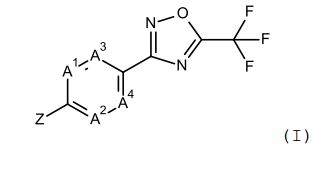
[0004] Surpreendentemente foi descoberto que os novos compostos da fórmula (I) têm, para propósitos práticos, um nível muito vantajoso de atividade biológica para proteção de plantas contra doenças que são causadas por fungos.[0004] Surprisingly it has been found that the new compounds of formula (I) have, for practical purposes, a very advantageous level of biological activity for protecting plants against diseases which are caused by fungi.
[0005] De acordo com um segundo aspecto da invenção é proporcionada uma composição agroquímica compreendendo uma quantidade eficaz em termos fungicidas de um composto da fórmula (I).[0005] According to a second aspect of the invention there is provided an agrochemical composition comprising a fungicidal effective amount of a compound of formula (I).
[0006] De acordo com um terceiro aspecto da invenção é proporcionado um método de controle ou prevenção da infestação de plantas úteis por microrganismos fitopatogênicos, em que uma quantidade eficaz em termos fungicidas de um composto da fórmula (I), ou uma composição compreendendo este composto como ingrediente ativo, é aplicada às plantas, a suas partes ou ao seu lócus.[0006] According to a third aspect of the invention there is provided a method of controlling or preventing the infestation of useful plants by phytopathogenic microorganisms, wherein a fungicidal effective amount of a compound of formula (I), or a composition comprising this compound as an active ingredient, is applied to plants, their parts or their locus.
[0007] De acordo com um quarto aspecto da invenção é proporcionado o uso de um composto da fórmula (I) como um fungicida. De acordo com este aspecto particular da invenção, o uso pode excluir métodos para o tratamento do corpo humano ou animal por cirurgia ou terapia.[0007] According to a fourth aspect of the invention there is provided the use of a compound of formula (I) as a fungicide. In accordance with this particular aspect of the invention, use may exclude methods for treating the human or animal body by surgery or therapy.
[0008] Como aqui usado, o termo “halogênio” ou “halo” refere um flúor, cloro, bromo ou iodo, de preferência, flúor, cloro ou bromo.[0008] As used herein, the term "halogen" or "halo" refers to a fluorine, chlorine, bromine or iodine, preferably fluorine, chlorine or bromine.
[0009] Como usado aqui, ciano significa um grupo -CN.[0009] As used herein, cyan means a -CN group.
[0010] Como usado aqui, hidróxi significa um grupo -OH.[0010] As used herein, hydroxy means an -OH group.
[0011] Como usado aqui, amino significa um grupo -NH2.[0011] As used herein, amino means a -NH2 group.
[0012] Como usado aqui, o termo “C1-6alquila” se refere a um radical de cadeia hidrocarbonada linear ou ramificada consistindo meramente em átomos de carbono e hidrogênio, não contendo nenhuma insaturação, tendo de um a seis átomos de carbono e que está anexado ao resto da molécula por uma ligação simples. Os termos “C1-4alquila” e “C1-2alquila” devem ser interpretados em conformidade. Exemplos de C1-6alquila incluem mas não se limitam a metila, etila, n-propila, 1- metiletila (iso-propila), n-butila, 1-dimetiletila (t- butila) e n-pentila.[0012] As used herein, the term "C1-6alkyl" refers to a straight or branched hydrocarbon chain radical consisting merely of carbon and hydrogen atoms, containing no unsaturation, having from one to six carbon atoms and which is attached to the rest of the molecule by a single bond. The terms “C1-4alkyl” and “C1-2alkyl” shall be interpreted accordingly. Examples of C1-6alkyl include, but are not limited to, methyl, ethyl, n-propyl, 1-methylethyl (iso-propyl), n-butyl, 1-dimethylethyl (t-butyl), and n-pentyl.
[0013] Tal como aqui usado, o termo "C3-6alquenila" se refere a um grupo radical de cadeia hidrocarbonada linear ou ramificada consistindo apenas em átomos de carbono e hidrogênio, contendo pelo menos uma ligação dupla que pode ter a configuração (E) ou (Z), tendo de três a seis átomos de carbono, que está ligado ao restante da molécula por uma ligação simples. O termo “C2-4alquenila” deve ser interpretado conformemente. Exemplos de C3-6alquenila e C2- 4alquenila incluem, mas não estão limitados a, alila, prop- 1-enila, but-1-enila.[0013] As used herein, the term "C3-6alkenyl" refers to a straight or branched hydrocarbon chain radical group consisting only of carbon and hydrogen atoms, containing at least one double bond that may have the (E) configuration or (Z), having three to six carbon atoms, which is connected to the remainder of the molecule by a single bond. The term "C2-4alkenyl" should be interpreted accordingly. Examples of C3-6alkenyl and C2-4alkenyl include, but are not limited to, allyl, prop-1-enyl, but-1-enyl.
[0014] Tal como aqui usado, o termo "C3-6alquinila" se refere a um grupo radical de cadeia hidrocarbonada linear ou ramificada consistindo apenas em átomos de carbono e hidrogênio, contendo pelo menos uma ligação tripla, tendo de três a seis átomos de carbono, e que está ligado ao restante da molécula por uma ligação simples. O termo “C2-4alquinila” deve ser considerado em conformidade. Exemplos de C3- 6alquinila e C2-4alquinila incluem, mas não estão limitados a, etinila, prop-1-inila, but-1-inila.[0014] As used herein, the term "C3-6alkynyl" refers to a straight or branched hydrocarbon chain radical group consisting only of carbon and hydrogen atoms, containing at least one triple bond, having from three to six carbon atoms carbon, and which is connected to the rest of the molecule by a single bond. The term “C2-4alkynyl” should be considered accordingly. Examples of C3-6alkynyl and C2-4alkynyl include, but are not limited to, ethynyl, prop-1-ynyl, but-1-ynyl.
[0015] Como usado aqui, o termo “C3-6cicloalquila” se refere a um radical de anel monocíclico estável que é saturado ou parcialmente insaturado e contém 3 a 6 átomos de carbono. Exemplos de C3-6cicloalquila incluem, mas não estão limitados a, ciclopropila, ciclobutila, ciclopentila e ciclo-hexila.[0015] As used herein, the term "C3-6cycloalkyl" refers to a stable monocyclic ring radical that is saturated or partially unsaturated and contains 3 to 6 carbon atoms. Examples of C3-6cycloalkyl include, but are not limited to, cyclopropyl, cyclobutyl, cyclopentyl and cyclohexyl.
[0016] Como usado aqui, o termo "C1-4alcóxi" se relaciona com um radical da fórmula -ORx, em que Rx é um radical C1-4 alquila como genericamente definido acima. Exemplos de C1- 4alcóxi incluem, mas não estão limitados a, metóxi, etóxi, propóxi, iso-propóxi, butóxi.[0016] As used herein, the term "C1-4alkoxy" relates to a radical of the formula -ORx, where Rx is a C1-4alkyl radical as generically defined above. Examples of C1-4alkoxy include, but are not limited to, methoxy, ethoxy, propoxy, iso-propoxy, butoxy.
[0017] Como usado aqui, o termo “C1-4haloalquila” se refere a um radical C1-4alquila como genericamente definido acima substituído com um ou mais átomos de halogênio iguais ou diferentes. Exemplos de C1-4haloalquila incluem, mas não se limitam a, fluorometila, difluorometila, fluoroetila, trifluorometila, 2,2,2-trifluoroetila.[0017] As used herein, the term "C1-4haloalkyl" refers to a C1-4alkyl radical as generically defined above substituted with one or more identical or different halogen atoms. Examples of C1-4haloalkyl include, but are not limited to, fluoromethyl, difluoromethyl, fluoroethyl, trifluoromethyl, 2,2,2-trifluoroethyl.
[0018] Como usado aqui, o termo “C2-4haloalquenila” se refere a um radical C2-4alquenila como genericamente definido acima substituído com um ou mais átomos de halogênio iguais ou diferentes.[0018] As used herein, the term "C2-4haloalkenyl" refers to a C2-4alkenyl radical as generically defined above substituted with one or more identical or different halogen atoms.
[0019] Como usado aqui, o termo “C1-4haloalcóxi” se refere a um radical C1-4alcóxi como genericamente definido acima substituído com um ou mais átomos de halogênio iguais ou diferentes.[0019] As used herein, the term "C1-4haloalkoxy" refers to a C1-4alkoxy radical as generically defined above substituted with one or more identical or different halogen atoms.
[0020] Como usado aqui, o termo "C3-4alquenóxi" se relaciona com um radical da fórmula -ORx, em que Rx é um radical C3-4 alquenila como genericamente definido acima.[0020] As used herein, the term "C3-4alkenoxy" relates to a radical of the formula -ORx, where Rx is a C3-4alkenyl radical as generically defined above.
[0021] Como usado aqui, o termo "C3-4alquinilóxi" se relaciona com um radical da fórmula -ORx, em que Rx é um radical C3-4alquinila como genericamente definido acima.[0021] As used herein, the term "C3-4alkynyloxy" relates to a radical of the formula -ORx, where Rx is a C3-4alkynyl radical as generically defined above.
[0022] Como usado aqui, o termo “C1-4alquilcarbonila” se refere a um radical da fórmula -C(O)Rx em que Rx é um radical C1-4alquila como genericamente definido acima.[0022] As used herein, the term "C1-4alkylcarbonyl" refers to a radical of the formula -C(O)Rx where Rx is a C1-4alkyl radical as generically defined above.
[0023] Como usado aqui, o termo "C1-4alcoxicarbonila" se relaciona com um radical da fórmula -C(O)ORx, em que Rx é um radical C1-4alquila como genericamente definido acima.[0023] As used herein, the term "C1-4alkoxycarbonyl" relates to a radical of the formula -C(O)ORx, where Rx is a C1-4alkyl radical as generically defined above.
[0024] Como usado aqui, o termo “C1-4alquilcarbonilamino” se refere a um radical da fórmula -NHC(O)Rx em que Rx é um radical C1-4alquila como genericamente definido acima.[0024] As used herein, the term "C1-4alkylcarbonylamino" refers to a radical of the formula -NHC(O)Rx where Rx is a C1-4alkyl radical as generically defined above.
[0025] Como usado aqui, o termo “N-C1-4alquilaminocarbonila” se refere a um radical da fórmula -C(O)NHRx em que Rx é um radical C1-4alquila como genericamente definido acima.[0025] As used herein, the term "N-C1-4alkylaminocarbonyl" refers to a radical of the formula -C(O)NHRx where Rx is a C1-4alkyl radical as generically defined above.
[0026] Como usado aqui, o termo “N,N-diC1- 4alquilaminocarbonila” se refere a um radical da fórmula - C(O)NRx(Rx) em que cada Rx é um radical C1-4alquila como genericamente definido acima.[0026] As used herein, the term "N,N-diC1-4alkylaminocarbonyl" refers to a radical of the formula -C(O)NRx(Rx) wherein each Rx is a C1-4alkyl radical as generically defined above.
[0027] Como usado aqui, o termo “C1-4alcoxiC1-4alquila” se refere a um radical C1-4alquila como genericamente definido acima substituído com um grupo C1-4alcóxi como definido acima. Exemplos de C1-4alcoxiC1-4alquila incluem mas não estão limitados a metoximetila, 2-metoxietila.[0027] As used herein, the term "C1-4alkoxyC1-4alkyl" refers to a C1-4alkyl radical as generically defined above substituted with a C1-4alkoxy group as defined above. Examples of C1-4alkoxyC1-4alkyl include but are not limited to methoxymethyl, 2-methoxyethyl.
[0028] Como usado aqui, o termo “C1-4alquilcarboniloxiC1- 4alquila” se refere a um radical C1-4alquila como genericamente definido acima substituído com um radical da fórmula -OC(O)Rx, em que Rx é um radical C1-4alquila como genericamente definido acima.[0028] As used herein, the term "C1-4alkylcarbonyloxyC1-4alkyl" refers to a C1-4alkyl radical as generically defined above substituted with a radical of the formula -OC(O)Rx, where Rx is a C1-4alkyl radical as generally defined above.
[0029] Como usado aqui, o termo “C1-4alquilsulfinilamino” se refere a um radical representado por -NHS(O)Rx em que Rx é um C1-4alquila como genericamente definido acima.[0029] As used herein, the term "C1-4alkylsulfinylamino" refers to a radical represented by -NHS(O)Rx where Rx is a C1-4alkyl as generically defined above.
[0030] Como usado aqui, o termo “N-C1-4alquilamino” se refere a um radical representado por -NHRx em que Rx é um C1- 4alquila como genericamente definido acima.[0030] As used herein, the term "N-C1-4alkylamino" refers to a radical represented by -NHRx where Rx is a C1-4alkyl as generically defined above.
[0031] Como usado aqui, o termo “N-C1-4alquil-N-C1- 4alcoxiaminocarbonila” se refere a um radical representado por -C(O)NRx(ORx) em que Rx, independentemente entre si, são um C1-4alquila como genericamente definido acima.[0031] As used herein, the term "N-C1-4alkyl-N-C1-4alkoxyaminocarbonyl" refers to a radical represented by -C(O)NRx(ORx) wherein Rx, independently of each other, are a C1- 4alkyl as generically defined above.
[0032] A presença de um ou mais possíveis átomos de carbono assimétricos em um composto da fórmula (I) (por exemplo, no substituinte Z) significa que os compostos podem ocorrer em formas isoméricas quirais, isto é, formas enantioméricas ou diastereoméricas. Podem também ocorrer atropisômeros como resultado de rotação restringida em torno de uma ligação simples. A fórmula (I) se destina a incluir todas essas possíveis formas isoméricas e suas misturas. A presente invenção inclui todas essas possíveis formas isoméricas e suas misturas para um composto de fórmula (I). Do mesmo modo, a fórmula (I) se destina a incluir todos os possíveis tautômeros (incluindo tautomerismo lactama-lactima e tautomerismo ceto-enol), quando presentes. A presente invenção inclui todas as possíveis formas tautoméricas para um composto da fórmula (I).[0032] The presence of one or more possible asymmetric carbon atoms in a compound of formula (I) (eg in the substituent Z) means that the compounds can occur in chiral isomeric forms, ie enantiomeric or diastereomeric forms. Atropisomers can also occur as a result of restricted rotation around a single bond. Formula (I) is intended to include all these possible isomeric forms and mixtures thereof. The present invention includes all these possible isomeric forms and their mixtures for a compound of formula (I). Likewise, formula (I) is intended to include all possible tautomers (including lactam-lactim tautomerism and keto-enol tautomerism), when present. The present invention includes all possible tautomeric forms for a compound of formula (I).
[0033] Em cada caso, os compostos da fórmula (I) de acordo com a invenção estão em forma livre, em forma covalentemente hidratada, em forma oxidada como um N-óxido ou em forma de sal, por exemplo, uma forma de sal agronomicamente usável ou agroquimicamente aceitável.[0033] In each case, the compounds of formula (I) according to the invention are in free form, in covalently hydrated form, in oxidized form as an N-oxide or in salt form, for example a salt form agronomically usable or agrochemically acceptable.
[0034] N-óxidos são formas oxidadas de aminas terciárias ou formas oxidadas de compostos heteroaromáticos contendo nitrogênio. São descritos, por exemplo, no livro “Heterocyclic N-oxides” de A. Albini e S. Pietra, CRC Press, Boca Raton 1991.[0034] N-oxides are oxidized forms of tertiary amines or oxidized forms of nitrogen-containing heteroaromatic compounds. They are described, for example, in the book “Heterocyclic N-oxides” by A. Albini and S. Pietra, CRC Press, Boca Raton 1991.
[0035] A seguinte lista proporciona definições, incluindo definições preferenciais, para os substituintes A1, A2, A3, A4, R1, R2, R3, R4, Z (incluindo Z-1, Z-2, Z-3, Z-4 e Z-5), R5, R6, R7, R8, R9 (incluindo Ra), R10, R11, R12, R13, R14 (incluindo Rb) e R15 com referência aos compostos da fórmula (I). Para qualquer um destes substituintes, qualquer uma das definições dadas abaixo pode ser combinada com qualquer definição de qualquer outro substituinte dada abaixo ou em outro lugar neste documento.[0035] The following list provides definitions, including preferred definitions, for substituents A1, A2, A3, A4, R1, R2, R3, R4, Z (including Z-1, Z-2, Z-3, Z-4 and Z-5), R5, R6, R7, R8, R9 (including Ra), R10, R11, R12, R13, R14 (including Rb) and R15 with reference to the compounds of formula (I). For any of these substituents, any of the definitions given below may be combined with any definition of any other substituent given below or elsewhere in this document.
[0036] A1 representa N ou CR1, em que R1 representa hidrogênio, halogênio, metila, etila, difluorometila, trifluorometila, metóxi, etóxi ou difluorometóxi. Em uma modalidade da invenção, A1 é CR1. Preferencialmente, R1 representa hidrogênio, halogênio ou metila. Mais preferencialmente, R1 representa hidrogênio ou fluoro. Muito preferencialmente, R1 representa hidrogênio. Em outra modalidade da invenção, A1 é N.[0036] A1 represents N or CR1, where R1 represents hydrogen, halogen, methyl, ethyl, difluoromethyl, trifluoromethyl, methoxy, ethoxy or difluoromethoxy. In one embodiment of the invention, A1 is CR1. Preferably, R1 represents hydrogen, halogen or methyl. More preferably, R1 represents hydrogen or fluoro. Most preferably, R1 represents hydrogen. In another embodiment of the invention, A1 is N.
[0037] A2 representa N ou CR2, em que R2 representa hidrogênio, halogênio, metila, etila, difluorometila, trifluorometila, metóxi, etóxi ou difluorometóxi. Em uma modalidade da invenção, A2 é CR2. Preferencialmente, R2 representa hidrogênio, halogênio ou metila. Mais preferencialmente, R2 representa hidrogênio ou fluoro. Muito preferencialmente, R2 representa hidrogênio. Em outra modalidade da invenção, A2 é N.[0037] A2 represents N or CR2, wherein R2 represents hydrogen, halogen, methyl, ethyl, difluoromethyl, trifluoromethyl, methoxy, ethoxy or difluoromethoxy. In one embodiment of the invention, A2 is CR2. Preferably, R2 represents hydrogen, halogen or methyl. More preferably, R2 represents hydrogen or fluoro. Most preferably, R2 represents hydrogen. In another embodiment of the invention, A2 is N.
[0038] A3 representa N ou CR3, em que R3 representa hidrogênio ou halogênio. Em uma modalidade da invenção, A3 representa CR3. Preferencialmente, R3 representa hidrogênio ou flúor. Mais preferencialmente, R3 representa hidrogênio.[0038] A3 represents N or CR3, where R3 represents hydrogen or halogen. In one embodiment of the invention, A3 represents CR3. Preferably, R3 represents hydrogen or fluorine. More preferably, R3 represents hydrogen.
[0039] A4 representa N ou CR4, em que R4 representa hidrogênio ou halogênio. Em uma modalidade da invenção, A4 representa CR4. De preferência, R4 representa hidrogênio.[0039] A4 represents N or CR4, where R4 represents hydrogen or halogen. In one embodiment of the invention, A4 represents CR4. Preferably, R4 represents hydrogen.
[0040] Nos compostos da Fórmula (I) de acordo com a invenção, 0, 1 ou 2 de A1 até A4 são N. Preferencialmente, 0 ou 1 de A1 até A4 são N. Mais preferencialmente, um de A1 até A4 representa C-halogênio e três de A1 até A4 representam CH, ou A1 até A4 representam C-H. Ainda mais preferencialmente, A1 até A4 representam C-H.[0040] In the compounds of Formula (I) according to the invention, 0, 1 or 2 of A1 to A4 are N. Preferably, 0 or 1 of A1 to A4 are N. More preferably, one of A1 to A4 is C -halogen and three from A1 to A4 represent CH, or A1 to A4 represent C-H. Even more preferably, A1 to A4 represent C-H.
[0041] Z é selecionado de Z1, Z2, Z3, Z4 ou Z5.[0041] Z is selected from Z1, Z2, Z3, Z4 or Z5.
[0042] Z1 representa um heterociclo não aromático com 5 ou 6 membros contendo 1 nitrogênio de anel ou grupo NR5, em que, opcionalmente: (i) o anel de heterociclo compreende adicionalmente 1 ou 2 grupos independentemente selecionados de N, NR5, C(O) e S(O)2 ou 1 grupo selecionado de O ou S; (ii) o anel de heterociclo tem 5 membros e compreende adicionalmente 1 grupo selecionado de N, NR5, C(O) e S(O)2 e 1 grupo selecionado de O ou S; (iii) o anel de heterociclo tem 6 membros e compreende adicionalmente 1 ou 2 grupos independentemente selecionados de N, NR5, C(O) e S(O)2 e 1 grupo selecionado de O ou S; ou (iv) o anel de heterociclo compreende adicionalmente 1 grupo que é C(O) e 2 grupos independentemente selecionados de N e NR5; e em que o anel de heterociclo está opcionalmente substituído com 1, 2 ou 3 substituintes, que podem ser iguais ou diferentes, selecionados de R9, ou um único substituinte selecionado de R11, e em que o heterociclo não aromático com 5 ou 6 membros está ligado ao restante da molécula por uma ligação carbono- carbono através de um carbono de anel.[0042] Z1 represents a 5- or 6-membered non-aromatic heterocycle containing 1 ring nitrogen or NR5 group, wherein optionally: (i) the heterocycle ring further comprises 1 or 2 groups independently selected from N, NR5, C( O) and S(O)2 or 1 group selected from O or S; (ii) the heterocycle ring has 5 members and further comprises 1 group selected from N, NR5, C(O) and S(O)2 and 1 group selected from O or S; (iii) the heterocycle ring has 6 members and further comprises 1 or 2 groups selected independently from N, NR5, C(O) and S(O)2 and 1 group selected from O or S; or (iv) the heterocycle ring additionally comprises 1 group which is C(O) and 2 groups independently selected from N and NR5; and wherein the heterocycle ring is optionally substituted with 1, 2 or 3 substituents, which may be the same or different, selected from R9, or a single substituent selected from R11, and wherein the 5- or 6-membered non-aromatic heterocycle is connected to the rest of the molecule by a carbon-carbon bond through a ring carbon.
[0043] Preferencialmente, Z1 é selecionado de:
[0044] Em uma modalidade da invenção, Z1 é um heterociclo de 5 membros contendo 1 nitrogênio de anel, em que o anel de heterociclo compreende adicionalmente um átomo de oxigênio ou enxofre, e em que o anel de heterociclo está opcionalmente substituído com 1, 2 ou 3 substituintes, que podem ser iguais ou diferentes, selecionados de R9, em que R9 representa ciano, halogênio, hidróxi, C1-4alquila, C2-4alquenila, C2- 4alquinila, C1-4haloalquila, C2-4haloalquenila, C1-4alcóxi, C1- 4alcoxiC1-4alquila, C1-4haloalcóxi, C3-4alquenilóxi, C3- 4alquinilóxi, C1-4alquilcarbonila, C1-4alcoxicarbonila, C1- 4alquilsulfinilamino, N-C1-4alquilaminocarbonila, N,N-diC1- 4alquilaminocarbonila, N-C1-4alquil-N-C1- 4alcoxiaminocarbonila, C3-6cicloalquila, piridinila ou fenila opcionalmente substituído com um ou dois grupos independentemente selecionados de fluoro, cloro, metila ou metóxi, ou R9 representa -NHC(O)Ra, em que Ra é selecionado de C1-4alquila, C1-2alcoxiC1-2alquila, N,N-di-C1- 4alquilaminocarbonila, C3-6cicloalquila ou fenila opcionalmente substituído com um ou dois grupos independentemente selecionados de fluoro, cloro, metila ou metóxi. Preferencialmente, R9 é selecionado de ciano, halogênio, hidróxi, C1-4alquila, C2-4alquenila, C2-4alquinila, C1-4haloalquila, C2-4haloalquenila, C1-4alcóxi, C1-4alcoxiC1- 4alquila, C1-4haloalcóxi, C3-4alquenilóxi, C3-4alquinilóxi, C1- 4alquilcarbonila, C1-4alcoxicarbonila, C1- 4alquilcarbonilamino, N-C1-4alquilaminocarbonila, N,N-diC1- 4alquilaminocarbonila ou C3-6cicloalquila, ou R9 representa - NHC(O)Ra, em que Ra é selecionado de C1-4alquila, C1-2alcoxiC1- 2alquila, N,N-di-C1-2alquilaminocarbonila, C3-4cicloalquila ou fenila opcionalmente substituído com um ou dois grupos independentemente selecionados de fluoro, cloro, metila ou metóxi. Mais preferencialmente, R9 é selecionado de halogênio, C1-4alquila, C1-4haloalquila, C1-4alcóxi, C1- 2alcoxiC1-2alquila, C1-4haloalcóxi, C1-4alcoxicarbonila, ou C3- 4cicloalquila, ou R9 é selecionado de -NHC(O)Ra, em que Ra é selecionado de C1-4alquila, C1-2alcoxiC1-2alquila, N,N-di-C1- 2alquilaminocarbonila, C3-4cicloalquila ou fenila opcionalmente substituído com um grupo selecionado de fluoro, cloro, metila ou metóxi.[0044] In one embodiment of the invention, Z1 is a 5-membered heterocycle containing 1 ring nitrogen, wherein the heterocycle ring further comprises an oxygen or sulfur atom, and wherein the heterocycle ring is optionally substituted with 1, 2 or 3 substituents, which may be the same or different, selected from R9, wherein R9 represents cyano, halogen, hydroxy, C1-4alkyl, C2-4alkenyl, C2-4alkynyl, C1-4haloalkyl, C2-4haloalkenyl, C1-4alkoxy, C1-4alkoxyC1-4alkyl, C1-4haloalkoxy, C3-4alkenyloxy, C3-4alkynyloxy, C1-4alkylcarbonyl, C1-4alkoxycarbonyl, C1-4alkylsulfinylamino, N-C1-4alkylaminocarbonyl, N,N-diC1-4alkylaminocarbonyl, N-C1-4alkyl- N-C1-4alkoxyaminocarbonyl, C3-6cycloalkyl, pyridinyl or phenyl optionally substituted with one or two groups independently selected from fluoro, chloro, methyl or methoxy, or R9 represents -NHC(O)Ra, where Ra is selected from C1-4alkyl , C1-2alkoxyC1-2alkyl, N,N-di-C1-4alkylaminocarbonyl , C3-6cycloalkyl or phenyl optionally substituted with one or two groups independently selected from fluoro, chloro, methyl or methoxy. Preferably, R9 is selected from cyano, halogen, hydroxy, C1-4alkyl, C2-4alkenyl, C2-4alkynyl, C1-4haloalkyl, C2-4haloalkenyl, C1-4alkoxy, C1-4alkoxyC1-4alkyl, C1-4haloalkoxy, C3-4alkenyloxy, C3-4alkynyloxy, C1-4alkylcarbonyl, C1-4alkoxycarbonyl, C1-4alkylcarbonylamino, N-C1-4alkylaminocarbonyl, N,N-diC1-4alkylaminocarbonyl or C3-6cycloalkyl, or R9 represents -NHC(O)Ra, wherein Ra is selected from C1-4alkyl, C1-2alkoxyC1-2alkyl, N,N-di-C1-2alkylaminocarbonyl, C3-4cycloalkyl or phenyl optionally substituted with one or two groups independently selected from fluoro, chloro, methyl or methoxy. More preferably, R9 is selected from halogen, C1-4alkyl, C1-4haloalkyl, C1-4alkoxy, C1-2alkoxyC1-2alkyl, C1-4haloalkoxy, C1-4alkoxycarbonyl, or C3-4cycloalkyl, or R9 is selected from -NHC(O) Ra, wherein Ra is selected from C1-4alkyl, C1-2alkoxyC1-2alkyl, N,N-diC1-2alkylaminocarbonyl, C3-4cycloalkyl or phenyl optionally substituted with a group selected from fluoro, chloro, methyl or methoxy.
[0045] Preferencialmente, nesta modalidade, Z1 é:
[0046] Em uma modalidade da invenção, Z1 é um heterociclo de 6 membros contendo 1 nitrogênio de anel, em que o anel de heterociclo compreende adicionalmente um C(O) e um O, e em que o anel de heterociclo está opcionalmente substituído com 1, 2 ou 3 substituintes, que podem ser iguais ou diferentes, selecionados de R9, em que R9 é ciano, halogênio, hidróxi, C1-4alquila, C2-4alquenila, C2-4alquinila, C1-4haloalquila, C2- 4haloalquenila, C1-4alcóxi, C1-4alcoxiC1-4alquila, C1- 4haloalcóxi, C3-4alquenilóxi, C3-4alquinilóxi, C1- 4alquilcarbonila, C1-4alcoxicarbonila, C1- 4alquilcarbonilamino, N-C1-4alquilaminocarbonila, N,N-diC1- 4alquilaminocarbonila ou C3-6cicloalquila.[0046] In one embodiment of the invention, Z1 is a 6-membered heterocycle containing 1 ring nitrogen, wherein the heterocycle ring further comprises a C(O) and an O, and wherein the heterocycle ring is optionally substituted with 1, 2 or 3 substituents, which may be the same or different, selected from R9, wherein R9 is cyano, halogen, hydroxy, C1-4alkyl, C2-4alkenyl, C2-4alkynyl, C1-4haloalkyl, C2-4haloalkenyl, C1- 4alkoxy, C1-4alkoxyC1-4alkyl, C1-4haloalkoxy, C3-4alkenyloxy, C3-4alkynyloxy, C1-4alkylcarbonyl, C1-4alkoxycarbonyl, C1-4alkylcarbonylamino, N-C1-4alkylaminocarbonyl, N,N-diC1-4alkylaminocarbonyl or C3-6cycloalkyl.
[0047] Preferencialmente, nesta modalidade, Z1 é:
[0048] Em algumas modalidades da invenção, Z1 preferencialmente representa um heterociclo não aromático com 5 ou 6 membros contendo 1 nitrogênio de anel, em que, opcionalmente: (i) o anel de heterociclo compreende adicionalmente 1 ou 2 grupos independentemente selecionados de N, NR5 e C(O), ou 1 grupo que é S(O)2, ou 1 grupo selecionado de O ou S; (ii) o anel de heterociclo tem 5 membros e compreende adicionalmente 1 grupo selecionado de N, NR5, C(O) e S(O)2 e 1 grupo selecionado de O ou S; (iii) o anel de heterociclo tem 6 membros e compreende adicionalmente, 1 ou 2 grupos independentemente selecionados de N, NR5 e C(O) ou 1 grupo que é S(O)2, e 1 grupo selecionado de O ou S; ou (iv) o anel de heterociclo compreende adicionalmente 1 grupo que é C(O) e 2 grupos independentemente selecionados de N e NR5; e em que o anel de heterociclo está opcionalmente substituído com 1, 2 ou 3 substituintes, que podem ser iguais ou diferentes, selecionados de R9, ou um único substituinte selecionado de R11, e em que o heterociclo não aromático com 5 ou 6 membros está ligado ao restante da molécula por uma ligação carbono- carbono através de um carbono de anel.[0048] In some embodiments of the invention, Z1 preferably represents a 5- or 6-membered non-aromatic heterocycle containing 1 ring nitrogen, wherein optionally: (i) the heterocycle ring additionally comprises 1 or 2 groups independently selected from N, NR5 and C(O), or 1 group that is S(O)2, or 1 group selected from O or S; (ii) the heterocycle ring has 5 members and further comprises 1 group selected from N, NR5, C(O) and S(O)2 and 1 group selected from O or S; (iii) the heterocycle ring has 6 members and additionally comprises 1 or 2 groups independently selected from N, NR5 and C(O) or 1 group which is S(O)2, and 1 group selected from O or S; or (iv) the heterocycle ring additionally comprises 1 group which is C(O) and 2 groups independently selected from N and NR5; and wherein the heterocycle ring is optionally substituted with 1, 2 or 3 substituents, which may be the same or different, selected from R9, or a single substituent selected from R11, and wherein the 5- or 6-membered non-aromatic heterocycle is connected to the rest of the molecule by a carbon-carbon bond through a ring carbon.
[0049] Z2 representa um heterociclo não aromático com 5 ou 6 membros contendo 1 nitrogênio de anel, em que opcionalmente: (i) o anel de heterociclo compreende adicionalmente 1 ou 2 grupos independentemente selecionados de C(O) e S(O)2 ou 1 grupo selecionado de O ou S; ou (ii) o anel de heterociclo compreende adicionalmente 1 ou 2 grupos independentemente selecionados de C(O) e S(O)2 e 1 grupo selecionado de O ou S; e em que quando o anel de heterociclo tem 5 membros está opcionalmente substituído com 1 ou 2 substituintes, que podem ser iguais ou diferentes, selecionados de R10, ou um único substituinte selecionado de R11, e em que quando o anel de heterociclo tem 6 membros está opcionalmente substituído com 1, 2 ou 3 substituintes, que podem ser iguais ou diferentes, selecionados de R10, ou um único substituinte selecionado de R11, e em que uma posição α relativamente ao nitrogênio de anel não é C(O) nem S(O)2, e o anel de heterociclo está ligado ao restante da molécula por uma ligação nitrogênio-carbono através do nitrogênio de anel.[0049] Z2 represents a 5- or 6-membered non-aromatic heterocycle containing 1 ring nitrogen, wherein optionally: (i) the heterocycle ring further comprises 1 or 2 groups independently selected from C(O) and S(O)2 or 1 group selected from O or S; or (ii) the heterocycle ring further comprises 1 or 2 groups selected independently from C(O) and S(O) 2 and 1 group selected from O or S; and wherein when the heterocycle ring has 5 members it is optionally substituted with 1 or 2 substituents, which may be the same or different, selected from R10, or a single substituent selected from R11, and wherein when the heterocycle ring has 6 members is optionally substituted with 1, 2 or 3 substituents, which may be the same or different, selected from R10, or a single substituent selected from R11, and in which an α position relative to the ring nitrogen is neither C(O) nor S( O)2, and the heterocycle ring is connected to the remainder of the molecule by a nitrogen-carbon bond through the ring nitrogen.
[0050] Em algumas modalidades da invenção, Z2 representa um heterociclo não aromático com 5 ou 6 membros contendo 1 nitrogênio de anel, em que opcionalmente: (i) o anel de heterociclo compreende adicionalmente 1 ou 2 grupos que são C(O) ou 1 grupo que é S(O)2 ou 1 grupo selecionado de O ou S; ou (ii) o anel de heterociclo compreende adicionalmente 1 ou 2 grupos que são C(O) ou 1 grupo que é S(O)2, e 1 grupo selecionado de O ou S; e em que quando o anel de heterociclo tem 5 membros está opcionalmente substituído com 1 ou 2 substituintes, que podem ser iguais ou diferentes, selecionados de R10, ou um único substituinte selecionado de R11, e em que quando o anel de heterociclo tem 6 membros está opcionalmente substituído com 1, 2 ou 3 substituintes, que podem ser iguais ou diferentes, selecionados de R10, ou um único substituinte selecionado de R11, em que uma posição α relativamente ao nitrogênio de anel não é C(O) nem S(O)2, e o anel de heterociclo está ligado ao restante da molécula por uma ligação nitrogênio-carbono através do nitrogênio de anel.[0050] In some embodiments of the invention, Z2 represents a 5- or 6-membered non-aromatic heterocycle containing 1 ring nitrogen, wherein optionally: (i) the heterocycle ring additionally comprises 1 or 2 groups that are C(O) or 1 group that is S(O)2 or 1 group selected from O or S; or (ii) the heterocycle ring additionally comprises 1 or 2 groups which are C(O) or 1 group which is S(O) 2 , and 1 group selected from O or S; and wherein when the heterocycle ring has 5 members it is optionally substituted with 1 or 2 substituents, which may be the same or different, selected from R10, or a single substituent selected from R11, and wherein when the heterocycle ring has 6 members is optionally substituted with 1, 2 or 3 substituents, which may be the same or different, selected from R10, or a single substituent selected from R11, where an α-position relative to the ring nitrogen is neither C(O) nor S(O )2, and the heterocycle ring is connected to the remainder of the molecule by a nitrogen-carbon bond through the ring nitrogen.
[0051] Quando Z é Z2, uma posição α relativamente ao nitrogênio de anel ligada ao restante da molécula (isto é, contígua/adjacente) pode não ser um grupo C(O) ou S(O)2. Esta exclusão pode ser genericamente representada em um composto de Fórmula (I) compreendendo um fragmento Z2, do modo seguinte: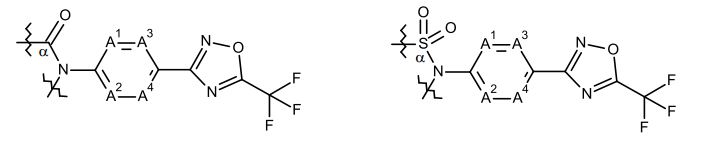
[0052] De acordo com as definições de Z1 e Z2, é preferencial que quando o anel de heterociclo contém um grupo S(O)2, um átomo de anel adjacente não seja enxofre, isto é, um grupo S ou um grupo S(O)2.[0052] According to the definitions of Z1 and Z2, it is preferred that when the heterocycle ring contains an S(O)2 group, an adjacent ring atom is not sulfur, i.e., an S group or an S( O)2.
[0053] Z3 representa um heteroarila de 5 membros contendo 1 nitrogênio de anel ou grupo NR5, em que opcionalmente o anel heteroarila compreende 1 átomo de anel adicional selecionado de O, S ou N, ou 2 átomos de nitrogênio de anel adicionais, e está opcionalmente substituído com 1, 2 ou 3 substituintes, que podem ser iguais ou diferentes, selecionados de R12, ou um único substituinte selecionado de R13, e em que o heteroarila está ligado ao restante da molécula por uma ligação carbono-carbono através de um carbono de anel.[0053] Z3 represents a 5-membered heteroaryl containing 1 ring nitrogen or NR5 group, wherein optionally the heteroaryl ring comprises 1 additional ring atom selected from O, S or N, or 2 additional ring nitrogen atoms, and is optionally substituted with 1, 2 or 3 substituents, which may be the same or different, selected from R12, or a single substituent selected from R13, and wherein the heteroaryl is linked to the remainder of the molecule by a carbon-carbon bond through a carbon ring.
[0054] Em uma modalidade da invenção, Z3 é um heteroarila de 5 membros contendo 1 nitrogênio de anel, em que o anel heteroarila compreende adicionalmente um átomo de oxigênio ou um átomo de enxofre, e em que o anel heteroarila está opcionalmente substituído com 1 ou 2 substituintes, que podem ser iguais ou diferentes, selecionados de R12, em que R12 é ciano, halogênio, hidróxi, C1-4alquila, C2-4alquenila, C2- 4alquinila, C1-4haloalquila, C2-4haloalquenila, metóxi, etóxi, iso-propóxi, n-butóxi, sec-butóxi, iso-butóxi, terc-butóxi, C1-4alcoxiC1-4alquila, C1-4haloalcóxi, C3-4alquenilóxi, C3- 4alquinilóxi, C1-4alquilcarbonila, C1-4alcoxicarbonila, C1- 4alquilcarboniloxiC1-4alquila, C1-4alquilcarbonilamino, N-C1- 4alquilaminocarbonila, N,N-diC1-4alquilaminocarbonila ou C3- 6cicloalquila, ou o anel heteroarila está opcionalmente substituído com 1 substituinte selecionado de R13, em que R13 representa fenila ou piridinila, em que fenila ou piridinila estão opcionalmente substituídas com um ou dois grupos independentemente selecionados de fluoro, cloro, metila, amino ou metóxi.[0054] In one embodiment of the invention, Z3 is a 5-membered heteroaryl containing 1 ring nitrogen, wherein the heteroaryl ring further comprises an oxygen atom or a sulfur atom, and wherein the heteroaryl ring is optionally substituted with 1 or 2 substituents, which may be the same or different, selected from R12, wherein R12 is cyano, halogen, hydroxy, C1-4alkyl, C2-4alkenyl, C2-4alkynyl, C1-4haloalkyl, C2-4haloalkenyl, methoxy, ethoxy, iso -propoxy, n-butoxy, sec-butoxy, iso-butoxy, tert-butoxy, C1-4alkoxyC1-4alkyl, C1-4haloalkoxy, C3-4alkenyloxy, C3-4alkynyloxy, C1-4alkylcarbonyl, C1-4alkoxycarbonyl, C1-4alkylcarbonyloxyC1-4alkyl , C1-4alkylcarbonylamino, N-C1-4alkylaminocarbonyl, N,N-diC1-4alkylaminocarbonyl or C3-6cycloalkyl, or the heteroaryl ring is optionally substituted with 1 substituent selected from R13, wherein R13 represents phenyl or pyridinyl, wherein phenyl or pyridinyl are optionally replaced with one or two independently selected fluoro, chloro, methyl, amino or methoxy groups.
[0055] Preferencialmente, nesta modalidade, em que Z3 é um heteroarila selecionado de:
[0056] Em outra modalidade da invenção, Z3 é um heteroarila de 5 membros que é um grupo pirazolila, em que o grupo pirazolila está opcionalmente substituído com 1 ou 2 substituintes, que podem ser iguais ou diferentes, selecionados de R12, ou preferencialmente, está opcionalmente substituído com 1 ou 2 substituintes, que podem ser iguais ou diferentes, selecionados de R12, em que R12 é metila, etila, n-propila, trifluorometila, metóxi, etóxi, ou difluorometóxi. Preferencialmente, nesta modalidade, R12 é metila, etila, trifluorometila, ou metóxi.[0056] In another embodiment of the invention, Z3 is a 5-membered heteroaryl which is a pyrazolyl group, wherein the pyrazolyl group is optionally substituted with 1 or 2 substituents, which may be the same or different, selected from R12, or preferably, is optionally substituted with 1 or 2 substituents, which may be the same or different, selected from R12, wherein R12 is methyl, ethyl, n-propyl, trifluoromethyl, methoxy, ethoxy, or difluoromethoxy. Preferably, in this embodiment, R12 is methyl, ethyl, trifluoromethyl, or methoxy.
[0057] Em outra modalidade da invenção, Z3 é um heteroarila de 5 membros que é um grupo triazolila, em que o grupo triazolila está opcionalmente substituído com 1 substituinte selecionado de R12, ou preferencialmente, está opcionalmente substituído com 1 substituinte selecionado de R12, em que R12 é metila, etila, n-propila, trifluorometila, metóxi, etóxi, ou difluorometóxi. Preferencialmente, nesta modalidade, R12 é metila, etila, trifluorometila, ou metóxi.[0057] In another embodiment of the invention, Z3 is a 5-membered heteroaryl which is a triazolyl group, wherein the triazolyl group is optionally substituted with 1 substituent selected from R12, or preferably, is optionally substituted with 1 substituent selected from R12, wherein R12 is methyl, ethyl, n-propyl, trifluoromethyl, methoxy, ethoxy, or difluoromethoxy. Preferably, in this embodiment, R12 is methyl, ethyl, trifluoromethyl, or methoxy.
[0058] Z4 representa um heteroarila de 6 membros contendo 1 nitrogênio de anel, em que opcionalmente o anel heteroarila compreende adicionalmente 1 ou 2 átomos de nitrogênio de anel adicionais, e está opcionalmente substituído com 1, 2 ou 3 substituintes, que podem ser iguais ou diferentes, selecionados de R14, ou um único substituinte selecionado de R15, e em que o heteroarila está ligado ao restante da molécula por uma ligação carbono-carbono através de um carbono de anel.[0058] Z4 represents a 6-membered heteroaryl containing 1 ring nitrogen, wherein optionally the heteroaryl ring further comprises 1 or 2 additional ring nitrogen atoms, and is optionally substituted with 1, 2 or 3 substituents, which may be the same or different, selected from R14, or a single substituent selected from R15, and wherein the heteroaryl is linked to the remainder of the molecule by a carbon-carbon bond through a ring carbon.
[0059] Em uma modalidade da invenção, Z4 é um grupo piridin- 2-ila, piridin-3-ila, piridin-4-ila, pirimidin-2-ila, pirimidin-4-ila ou pirimidin-5-ila (e preferencialmente piridin-2-ila, piridin-3-ila ou piridin-4-ila) opcionalmente substituído com 1, 2 ou 3 substituintes, que podem ser iguais ou diferentes, selecionados de R14 ou um único substituinte representado por R15. Em particular, R14 pode ser selecionado de ciano, amino, halogênio, hidróxi, C1-4alquila, C1-4alcóxi, ou -NHC(O)Rb, em que Rb é selecionado de C1-4alquila, C1- 4haloalquila, N-C1-4alquilamino, C3-6cicloalquila, ou - N[C(O)ciclopropila]2. Preferencialmente, R14 pode ser selecionado de ciano, amino, halogênio, hidróxi, C1-4alquila, C1-2alcóxi, ou -NHC(O)Rb, em que Rb é selecionado de C1- 4alquila, C1-2haloalquila, N-C1-2alquilamino, C3-4cicloalquila, ou -N[C(O)ciclopropila]2. Mais preferencialmente, R14 é selecionado de fluoro, cloro, bromo, metila, etila, n- propila, trifluorometila, metóxi e etóxi.[0059] In one embodiment of the invention, Z4 is a pyridin-2-yl, pyridin-3-yl, pyridin-4-yl, pyrimidin-2-yl, pyrimidin-4-yl or pyrimidin-5-yl group (and preferably pyridin-2-yl, pyridin-3-yl or pyridin-4-yl) optionally substituted with 1, 2 or 3 substituents, which may be the same or different, selected from R14 or a single substituent represented by R15. In particular, R14 may be selected from cyano, amino, halogen, hydroxy, C1-4alkyl, C1-4alkoxy, or -NHC(O)Rb, wherein Rb is selected from C1-4alkyl, C1-4haloalkyl, N-C1- 4alkylamino, C3-6cycloalkyl, or -N[C(O)cyclopropyl]2. Preferably, R14 may be selected from cyano, amino, halogen, hydroxy, C1-4alkyl, C1-2alkoxy, or -NHC(O)Rb, wherein Rb is selected from C1-4alkyl, C1-2haloalkyl, N-C1-2alkylamino , C3-4cycloalkyl, or -N[C(O)cyclopropyl]2. More preferably, R14 is selected from fluoro, chloro, bromo, methyl, ethyl, n-propyl, trifluoromethyl, methoxy and ethoxy.
[0060] Z5 representa um heteroarila de 5 membros contendo 1 nitrogênio de anel, em que opcionalmente o anel heteroarila compreende adicionalmente 1 ou 2 átomos de nitrogênio de anel adicionais, e está opcionalmente substituído com 1, 2 ou 3 substituintes, que podem ser iguais ou diferentes, selecionados de R14, e em que o heteroarila está ligado ao restante da molécula por uma ligação nitrogênio-carbono através de um nitrogênio de anel.[0060] Z5 represents a 5-membered heteroaryl containing 1 ring nitrogen, wherein optionally the heteroaryl ring further comprises 1 or 2 additional ring nitrogen atoms, and is optionally substituted with 1, 2 or 3 substituents, which may be the same or different, selected from R14, and wherein the heteroaryl is linked to the remainder of the molecule by a nitrogen-carbon bond through a ring nitrogen.
[0061] Em uma modalidade da invenção, Z5 é um grupo pirazolila, em que o grupo pirazolila está opcionalmente substituído com 1 ou 2 substituintes, que podem ser iguais ou diferentes, selecionados de R14, em que R14 é fluoro, cloro, bromo, metila, etila, n-propila, trifluorometila, metóxi, etóxi, ou difluorometóxi. Preferencialmente, nesta modalidade, R14 é fluoro, cloro, metila, etila, metóxi.[0061] In one embodiment of the invention, Z5 is a pyrazolyl group, wherein the pyrazolyl group is optionally substituted with 1 or 2 substituents, which may be the same or different, selected from R14, wherein R14 is fluoro, chloro, bromo, methyl, ethyl, n-propyl, trifluoromethyl, methoxy, ethoxy, or difluoromethoxy. Preferably, in this embodiment, R14 is fluoro, chloro, methyl, ethyl, methoxy.
[0062] Em outra modalidade da invenção, Z5 é um grupo triazolila, em que o grupo triazolila está opcionalmente substituído com 1 substituinte selecionado de R14, em que R14 é metila, etila, n-propila, trifluorometila, metóxi, etóxi, ou difluorometóxi. Preferencialmente, nesta modalidade, R14 é metila, etila, trifluorometila, ou metóxi.[0062] In another embodiment of the invention, Z5 is a triazolyl group, wherein the triazolyl group is optionally substituted with 1 substituent selected from R14, wherein R14 is methyl, ethyl, n-propyl, trifluoromethyl, methoxy, ethoxy, or difluoromethoxy . Preferably, in this embodiment, R14 is methyl, ethyl, trifluoromethyl, or methoxy.
[0063] R5 representa hidrogênio, C1-6alquila, C3-6alquenila, C3-6alquinila, C3-6cicloalquila, C1-6alcóxi, C(O)R6, S(O)2R6, C(O)OR7, C(O)N(R7)(R8) ou S(O)2N(R7)(R8), em que C1-6alquila, C3-6alquenila, C3-6alquinila, C3-6cicloalquila e C1-6alcóxi estão opcionalmente substituídos com halogênio ou ciano. Preferencialmente, R5 representa hidrogênio, C(O)R6, S(O)2R6, C(O)OR7 ou C(O)N(R7)(R8), em que R6 é selecionado de C1- 4alquila, C1-2alcoxiC1-2alquila, imidazol-1-ila ou C3- 6cicloalquila; R7 é selecionado de hidrogênio ou C1-4alquila; e R8 representa hidrogênio, C1-4alquila ou C1-4alcóxi.[0063] R5 represents hydrogen, C1-6alkyl, C3-6alkenyl, C3-6alkynyl, C3-6cycloalkyl, C1-6alkoxy, C(O)R6, S(O)2R6, C(O)OR7, C(O)N (R7)(R8) or S(O)2N(R7)(R8), wherein C1-6alkyl, C3-6alkenyl, C3-6alkynyl, C3-6cycloalkyl and C1-6alkoxy are optionally substituted with halogen or cyano. Preferably, R5 represents hydrogen, C(O)R6, S(O)2R6, C(O)OR7 or C(O)N(R7)(R8), wherein R6 is selected from C1-4alkyl, C1-2alkoxyC1- 2alkyl, imidazol-1-yl or C3-6cycloalkyl; R7 is selected from hydrogen or C1-4alkyl; and R8 represents hydrogen, C1-4alkyl or C1-4alkoxy.
[0064] R6 representa ciano, halogênio, hidróxi, C1-4alquila, C2-4alquenila, C2-4alquinila, C1-4haloalquila, C2- 4haloalquenila, C1-4alcóxi, C1-2alcoxiC1-2alquila, C1- 4haloalcóxi, C3-4alquenilóxi, C3-4alquinilóxi, C1- 4alquilcarbonila, C1-4alcoxicarbonila, C1- 4alquilcarbonilamino, N-C1-4alquilaminocarbonila, N,N-diC1- 4alquilaminocarbonila, imidazol-1-ila ou C3-6cicloalquila.[0064] R6 represents cyano, halogen, hydroxy, C1-4alkyl, C2-4alkenyl, C2-4alkynyl, C1-4haloalkyl, C2-4haloalkenyl, C1-4alkoxy, C1-2alkoxyC1-2alkyl, C1-4haloalkoxy, C3-4alkenyloxy, C3 -4alkynyloxy, C1-4alkylcarbonyl, C1-4alkoxycarbonyl, C1-4alkylcarbonylamino, N-C1-4alkylaminocarbonyl, N,N-diC1-4alkylaminocarbonyl, imidazol-1-yl or C3-6cycloalkyl.
[0065] R7 representa hidrogênio, C1-6alquila, C3- 6cicloalquila, C3-6cicloalquilC1-2alquila, C1-4alcoxiC1- 4alquila, em que C1-6alquila, C3-6cicloalquila, C3- 6cicloalquilC1-2alquila e C1-4alcoxiC1-4alquila estão opcionalmente substituídos com halogênio ou ciano.[0065] R7 represents hydrogen, C1-6alkyl, C3-6cycloalkyl, C3-6cycloalkylC1-2alkyl, C1-4alkoxyC1-4alkyl, wherein C1-6alkyl, C3-6cycloalkyl, C3-6cycloalkylC1-2alkyl and C1-4alkoxyC1-4alkyl are optionally substituted with halogen or cyan.
[0066] R8 representa hidrogênio, C1-4alquila, C1- 4haloalquila, C1-4alcóxi ou C1-4alcóxiC1-4alquila.[0066] R8 represents hydrogen, C1-4alkyl, C1-4haloalkyl, C1-4alkoxy or C1-4alkoxyC1-4alkyl.
[0067] R9 representa ciano, halogênio, hidróxi, C1-4alquila, C2-4alquenila, C2-4alquinila, C1-4haloalquila, C2- 4haloalquenila, C1-4alcóxi, C1-4alcoxiC1-4alquila, C1- 4haloalcóxi, C3-4alquenilóxi, C3-4alquinilóxi, C1- 4alquilcarbonila, C1-4alcoxicarbonila, C1- 4alquilsulfinilamino, N-C1-4alquilaminocarbonila, N,N-diC1- 4alquilaminocarbonila, N-C1-4alquil-N-C1- 4alcoxiaminocarbonila, C3-6cicloalquila, piridinila ou fenila opcionalmente substituído com um ou dois grupos independentemente selecionados de fluoro, cloro, metila ou metóxi, ou R9 representa -NHC(O)Ra, em que Ra é selecionado de C1-4alquila, C1-2alcoxiC1-2alquila, N,N-di-C1- 4alquilaminocarbonila, C3-6cicloalquila ou fenila opcionalmente substituído com um ou dois grupos independentemente selecionados de fluoro, cloro, metila ou metóxi.[0067] R9 represents cyano, halogen, hydroxy, C1-4alkyl, C2-4alkenyl, C2-4alkynyl, C1-4haloalkyl, C2-4haloalkenyl, C1-4alkoxy, C1-4alkoxyC1-4alkyl, C1-4haloalkoxy, C3-4alkenyloxy, C3 -4alkynyloxy, C1-4alkylcarbonyl, C1-4alkoxycarbonyl, C1-4alkylsulfinylamino, N-C1-4alkylaminocarbonyl, N,N-diC1-4alkylaminocarbonyl, N-C1-4alkyl-N-C1-4alkoxyaminocarbonyl, C3-6cycloalkyl, pyridinyl or optionally substituted phenyl with one or two groups independently selected from fluoro, chloro, methyl or methoxy, or R9 represents -NHC(O)Ra, where Ra is selected from C1-4alkyl, C1-2alkoxyC1-2alkyl, N,N-di-C1- 4alkylaminocarbonyl, C3-6cycloalkyl or phenyl optionally substituted with one or two groups independently selected from fluoro, chloro, methyl or methoxy.
[0068] R10 representa ciano, halogênio, hidróxi, C1-4alquila, C2-4alquenila, C2-4alquinila, C1-4haloalquila, C2- 4haloalquenila, C1-4alcóxi, C1-4alcoxiC1-4alquila, C1- 4haloalcóxi, C3-4alquenilóxi, C3-4alquinilóxi, C1- 4alquilcarbonila, C1-4alcoxicarbonila, C1- 4alquilcarbonilamino, N-C1-4alquilaminocarbonila, N,N-diC1- 4alquilaminocarbonila ou C3-6cicloalquila.[0068] R10 represents cyano, halogen, hydroxy, C1-4alkyl, C2-4alkenyl, C2-4alkynyl, C1-4haloalkyl, C2-4haloalkenyl, C1-4alkoxy, C1-4alkoxyC1-4alkyl, C1-4haloalkoxy, C3-4alkenyloxy, C3 -4alkynyloxy, C1-4alkylcarbonyl, C1-4alkoxycarbonyl, C1-4alkylcarbonylamino, N-C1-4alkylaminocarbonyl, N,N-diC1-4alkylaminocarbonyl or C3-6cycloalkyl.
[0069] R11 representa um carbociclo saturado com três até seis membros que partilha um átomo de carbono do heterociclo como definido por Z1 ou Z2 para formar um espirociclo, e em que opcionalmente o carbociclo saturado compreende adicionalmente um grupo selecionado de O ou S.[0069] R11 represents a three to six membered saturated carbocycle which shares a carbon atom from the heterocycle as defined by Z1 or Z2 to form a spirocycle, and wherein optionally the saturated carbocycle further comprises a group selected from O or S.
[0070] R12 representa ciano, halogênio, hidróxi, C1-4alquila, C2-4alquenila, C2-4alquinila, C1-4haloalquila, C2- 4haloalquenila, metóxi, etóxi, iso-propóxi, n-butóxi, sec- butóxi, iso-butóxi, terc-butóxi, C1-4alcoxiC1-4alquila, C1- 4haloalcóxi, C3-4alquenilóxi, C3-4alquinilóxi, C1- 4alquilcarbonila, C1-4alcoxicarbonila, C1- 4alquilcarboniloxiC1-4alquila, C1-4alquilcarbonilamino, N-C1- 4alquilaminocarbonila, N,N-diC1-4alquilaminocarbonila ou C3- 6cicloalquila.[0070] R12 represents cyano, halogen, hydroxy, C1-4alkyl, C2-4alkenyl, C2-4alkynyl, C1-4haloalkyl, C2-4haloalkenyl, methoxy, ethoxy, iso-propoxy, n-butoxy, sec-butoxy, iso-butoxy , tert-butoxy, C1-4alkoxyC1-4alkyl, C1-4haloalkoxy, C3-4alkenyloxy, C3-4alkynyloxy, C1-4alkylcarbonyl, C1-4alkoxycarbonyl, C1-4alkylcarbonyloxyC1-4alkyl, C1-4alkylcarbonylamino, N-C1-4alkylaminocarbonyl, N,N -diC1-4alkylaminocarbonyl or C3-6cycloalkyl.
[0071] R13 representa fenila ou piridinila, em que fenila ou piridinila estão opcionalmente substituídas com um ou dois grupos independentemente selecionados de fluoro, cloro, metila, amino ou metóxi.[0071] R13 represents phenyl or pyridinyl, wherein phenyl or pyridinyl is optionally substituted with one or two groups independently selected from fluoro, chloro, methyl, amino or methoxy.
[0072] R14 representa ciano, amino, halogênio, hidróxi, C1- 4alquila, C2-4alquenila, C2-4alquinila, C1-4haloalquila, C2- 4haloalquenila, C1-4alcóxi, C1-4alcoxiC1-4alquila, C1- 4haloalcóxi, C3-4alquenilóxi, C3-4alquinilóxi, C1- 4alquilcarbonila, C1-4alcoxicarbonila, C1- 4alquilcarbonilamino, N-C1-4alquilamino, N-ciclopropilamino, N-C1-4alquilaminocarbonila, N,N-diC1-4alquilaminocarbonila ou C3-6cicloalquila, ou R14 representa -NHC(O)Rb, em que Rb é selecionado de C1-4alquila, C1-4haloalquila, N-C1-4alquilamino, C3-6cicloalquila, ou -N[C(O)ciclopropila]2. R15 representa morfolin-4-ila.[0072] R14 represents cyano, amino, halogen, hydroxy, C1-4alkyl, C2-4alkenyl, C2-4alkynyl, C1-4haloalkyl, C2-4haloalkenyl, C1-4alkoxy, C1-4alkoxyC1-4alkyl, C1-4haloalkoxy, C3-4alkenyloxy , C3-4alkynyloxy, C1-4alkylcarbonyl, C1-4alkoxycarbonyl, C1-4alkylcarbonylamino, N-C1-4alkylamino, N-cyclopropylamino, N-C1-4alkylaminocarbonyl, N,N-diC1-4alkylaminocarbonyl or C3-6cycloalkyl, or R14 is -NHC (O)Rb, wherein Rb is selected from C1-4alkyl, C1-4haloalkyl, N-C1-4alkylamino, C3-6cycloalkyl, or -N[C(O)cyclopropyl]2. R15 represents morpholin-4-yl.
[0073] Em modalidades dos compostos de Fórmula (I) de acordo com a invenção:[0073] In embodiments of the compounds of Formula (I) according to the invention:
[0074] Preferencialmente, um de A1 até A4 representa C- halogênio, e três de A1 até A4 representam C-H, ou A1 até A4 representam C-H; Z é Z1, em que Z1 é selecionado de: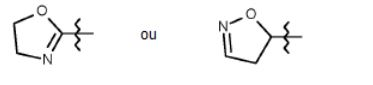
[0075] Mais preferencialmente, A1 até A4 representam C-H;
[0076] Preferencialmente, um de A1 até A4 representa C- halogênio, e três de A1 até A4 representam C-H, ou A1 até A4 representam C-H; Z é Z1, em que Z1 é: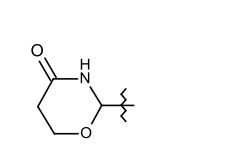
[0077] Preferencialmente, um de A1 até A4 representa C- halogênio, e três de A1 até A4 representam C-H, ou A1 até A4 representam C-H; Z é Z3, em que Z3 é:
[0078] É entendido que, quando em meios aquosos, os compostos da fórmula (I) de acordo com a invenção podem estar presentes em um equilíbrio reversível com as correspondentes formas covalentemente hidratadas (isto é, os compostos da fórmula (I-I) e fórmula (I-II) como mostradas abaixo, que também podem existir em forma tautomérica como os compostos da fórmula (I-Ia) e fórmula (I-IIa)) no motivo CF3-oxadiazol. Este equilíbrio dinâmico pode ser importante para a atividade biológica dos compostos da Fórmula (I). As designações de A1, A2, A3, A4, R1, R2, R3, R4, Z (incluindo Z-1, Z-2, Z-3, Z- 4 e Z-5), R5, R6, R7, R8, R9 (incluindo Ra), R10, R11, R12, R13, R14 (incluindo Rb) e R15, com referência aos compostos de fórmula (I) da presente invenção se aplicam genericamente aos compostos de Fórmulas (I-I) e (I-Ia), e Fórmulas (I-II) e (I-IIa), bem como as revelações específicas de combinações de A1, A2, A3, A4, R1, R2, R3, R4, Z (incluindo Z-1, Z-2, Z-3, Z-4 e Z-5), R5, R6, R7, R8, R9 (incluindo Ra), R10, R11, R12, R13, R14 (incluindo Rb) e R15 para os compostos representados nas Tabelas 2 até 10 (em baixo) ou Tabelas 2a até 7a (em baixo) ou na Tabela A (entradas A-1 até A-51), Tabela B (entrada B-1), Tabela C (entradas C-1 até C-14), Tabela D (entradas D-1 até D-27) e Tabela E (entrada E-1) (em baixo).
[0079] Os compostos da presente invenção podem ser preparados como mostrado nos seguintes esquemas 1 a 17, nos quais, a não ser que de outro modo afirmado, a definição de cada variável é como definida acima para um composto da fórmula (I).[0079] The compounds of the present invention can be prepared as shown in the following schemes 1 to 17, in which, unless otherwise stated, the definition of each variable is as defined above for a compound of formula (I).
[0080] Compostos de fórmula (Ia), em que Rz representa definições adequadas para R9, R11, e R12, e em que Q é S, O, ou NR5, podem ser preparados a partir de compostos de fórmula (Ib) via tratamento com um oxidante (por exemplo, MnO2 ou 2,3-dicloro-5,6-diciano-1,4-benzoquinona (DDQ)) em um solvente adequado (por exemplo, clorofórmio ou diclorometano) a uma temperatura situada entre 25 °C e o refluxo. Quanto a exemplos relacionados, ver Martin, P. K. et al J. Org. Chem. 1968, 33, 3758 e Barrish, J. C. et al J. Org. Chem. 1993, 58, 4494. Esta reação é mostrada no Esquema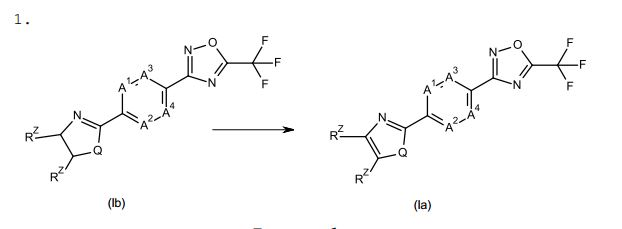
[0081] Compostos de fórmula (Ic), definições adequadas para R9 e R11 transformação de acoplamento de amida com compostos de fórmula (II) e compostos de fórmula (III) por ativação da função ácido carboxílico dos compostos de fórmula (II), um processo que ocorre habitualmente por conversão do -OH do ácido carboxílico em um bom grupo lábil, como um grupo cloreto, por exemplo usando (COCl)2 ou SOCl2, antes do tratamento com os compostos de fórmula (III), preferencialmente em um solvente adequado (por exemplo, dimetilformamida, diclorometano ou tetra-hidrofurano), preferencialmente a uma temperatura situada entre 25 °C e 100 °C, e opcionalmente na presença de uma base como trietilamina ou N,N-di-isopropiletilamina, ou sob condições descritas na literatura para um acoplamento de amida. Quanto a exemplos ver Valeur, E.; Bradley, M. Chem. Soc. Rev. (2009), 38, 606 e Chinchilla, R., Najera, C. Chem. Soc. Rev. (2011), 40, 5084. Tal é seguido da ciclodesidratação de uma espécie hidroxilamida intermediária pela introdução de trifluoreto de dietilaminoenxofre (DAST) ou trifluoreto de bis(2-metoxietil)aminoenxofre (Deoxyfluor). Quanto a exemplos, ver Williams, D. R. et al Org. Lett. 2000, 2, 1165. Os compostos da fórmula (II) podem ser preparados por métodos conhecidos a partir de compostos conhecidos ou que estão comercialmente disponíveis. Quanto a exemplos ver: Liu, K. et al. J. Med. Chem. (2008), 51, 7843 e WO 2013/008162 A1. Compostos de fórmula (III) estão comercialmente disponíveis. Esta reação é mostrada no Esquema 2 em baixo.
[0082] Compostos de fórmula (Id), em que Rz e -CH2RZ' estão dentro das definições de R12, podem ser obtidos por uma transformação de acoplamento de amida com compostos de fórmula (II) e compostos de fórmula (IV) por ativação da função ácido carboxílico dos compostos de fórmula (II), um processo que ocorre habitualmente por conversão do -OH do ácido carboxílico em um bom grupo lábil, como um grupo cloreto, por exemplo usando (COCl)2 ou SOCl2, antes do tratamento com os compostos de fórmula (IV), preferencialmente em um solvente adequado (por exemplo, dimetilformamida, diclorometano ou tetra-hidrofurano), preferencialmente a uma temperatura situada entre 25 °C e 100 °C, e opcionalmente na presença de uma base como trietilamina ou N,N-di-isopropiletilamina, ou sob condições descritas na literatura para um acoplamento de amida. Quanto a exemplos ver Valeur, E.; Bradley, M. Chem. Soc. Rev. (2009), 38, 606 e Chinchilla, R., Najera, C. Chem. Soc. Rev. (2011), 40, 5084. Tal é seguido da cicloisomerização da espécie alquinilamida intermediária pela introdução de um fórmula (IV) estão comercialmente disponíveis. Esta reação é mostrada no Esquema 3 em baixo.
[0083] Compostos de fórmula (Ie), em que Rz está dentro das definições de R12, podem ser obtidos via uma ciclização do tipo Hantzsch usando compostos de fórmula (V) e compostos de fórmula (VI) em que X é cloro ou bromo, um processo que ocorre habitualmente na presença de uma base (por exemplo, Et3N ou K2CO3) em um solvente adequado (por exemplo, metanol ou diclorometano), a uma temperatura situada entre 25 °C e o refluxo. Em alguns casos, um desempenho reacional intensificado pode ser alcançado usando irradiação de microondas. Quanto a exemplos ver Reck, S. et al Heterocycles 1998, 48, 853. Bredenkamp, M. W. et al Synth. Comm. 1990, 20, 2235. Os compostos da fórmula (VI) estão comercialmente disponíveis ou são compostos conhecidos.[0083] Compounds of formula (Ie), where Rz is within the definitions of R12, can be obtained via a Hantzsch-type cyclization using compounds of formula (V) and compounds of formula (VI) where X is chlorine or bromine , a process that usually takes place in the presence of a base (for example, Et3N or K2CO3) in a suitable solvent (for example, methanol or dichloromethane), at a temperature between 25 °C and reflux. In some cases, enhanced reaction performance can be achieved using microwave irradiation. For examples see Reck, S. et al Heterocycles 1998, 48, 853. Bredenkamp, M.W. et al Synth. Comm. 1990, 20, 2235 . The compounds of formula (VI) are commercially available or are known compounds.
[0084] Alternativamente, compostos aromáticos de fórmula (If), em que Rz e -CH2RZ' estão dentro das definições de R12, podem ser obtidos via o mesmo protocolo de transformação e envolve compostos alquino de fórmula (VII) em que X é cloro ou bromo. Quanto a exemplos ver: Castagnolo, D. Synlett 2009, 2093.[0084] Alternatively, aromatic compounds of formula (If), in which Rz and -CH2RZ' are within the definitions of R12, can be obtained via the same transformation protocol and involves alkyne compounds of formula (VII) in which X is chlorine or bromine. For examples see: Castagnolo, D. Synlett 2009, 2093.
[0085] Compostos heterocíclicos não aromáticos de fórmula (Im) podem ser obtidos a partir de compostos da fórmula (V) por reação com um composto (Io), em que LG é um grupo lábil, por exemplo, um tosilato ou um halogênio, como cloro ou bromo. Esta transformação pode ser efetuada entre -20 °C e 150 °C, e preferencialmente à temperatura ambiente. Pode ser efetuada na presença de uma base, como carbonato de potássio, ou bicarbonato de potássio, e na presença de um sal, como um iodeto, preferencialmente iodeto de potássio. Compostos da fórmula (In), em que RZ" é H podem ser preparados a partir de compostos da fórmula (Im) por desproteção, por exemplo com ácido, como ácido clorídrico. Compostos da fórmula (In), em que NH-RZ" está dentro do escopo de R9 podem ser preparados a partir de compostos da fórmula (Im) por desproteção, seguido de acoplamento do composto intermediário da fórmula (In), em que RZ" é H, por exemplo com um ácido carboxílico ou um cloreto de ácido por métodos conhecidos. Estas reações são mostradas no Esquema 4 em baixo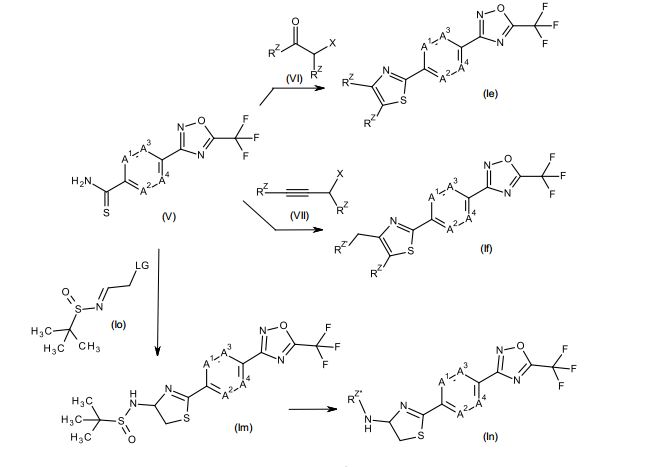
[0086] Compostos de fórmula (V) podem ser preparados a partir de compostos de fórmula (VIII) via tratamento com reagente de Lawesson (2,4-bis(4-metoxifenil)-1,3,2,4- ditiadifosfetano-2,4-ditiona) em um solvente adequado (por exemplo, tolueno) a uma temperatura de 120 °C. Quanto a exemplos, ver: Lawesson, O. L. et al Org. Synth. 1990, 7, 372. Esta reação é mostrada no Esquema 5 em baixo.
[0087] Os compostos de fórmula (Ig), em que Rz representa definições adequadas para R9 e R11, podem ser obtidos por uma cicloadição 1,3-dipolar de óxidos de nitrila gerados in situ a partir de compostos de fórmula (X) e compostos de fórmula (XI) sob condições básicas, preferencialmente em um solvente adequado (por exemplo, metanol ou diclorometano), preferencialmente a uma temperatura de 25 °C. Quanto a exemplos, ver K.-C. Liu et al., J. Org. Chem. 1980, 45, 3916 e Lee, G. Synthesis 1982, 508. Compostos de fórmula (X) são preparados in situ a partir de compostos de fórmula (IX) usando N-clorossuccimida com métodos conhecidos. Quanto a exemplos ver: Himo, F. et al J. Am. Chem. Soc., 2005, 127, 210.[0087] The compounds of formula (Ig), in which Rz represents suitable definitions for R9 and R11, can be obtained by a 1,3-dipolar cycloaddition of nitrile oxides generated in situ from compounds of formula (X) and compounds of formula (XI) under basic conditions, preferably in a suitable solvent (eg methanol or dichloromethane), preferably at a temperature of 25 °C. For examples, see K.-C. Liu et al., J. Org. chem. 1980, 45, 3916 and Lee, G. Synthesis 1982, 508. Compounds of formula (X) are prepared in situ from compounds of formula (IX) using N-chlorosuccimide with known methods. For examples see: Himo, F. et al J. Am. chem. Soc., 2005, 127, 210.
[0088] Alternativamente, compostos aromáticos de fórmula (Ih), em que Rz está dentro da definição de R12, podem ser obtidos via o mesmo protocolo envolvendo compostos alquino de fórmula (XII). Estas reações são mostradas no Esquema 6 em baixo.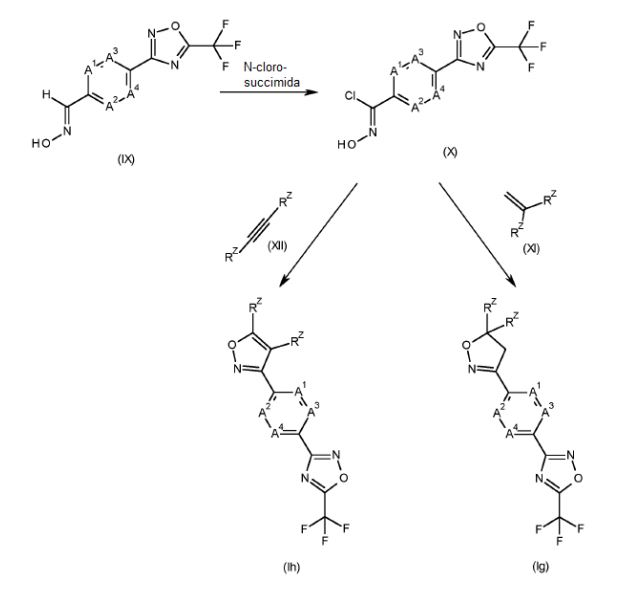
[0089] Compostos de fórmula (IX) podem ser preparados a partir de compostos de fórmula (XIII) via tratamento com cloridrato de hidroxiamina na presença de uma base (por exemplo, Et3N) em um solvente adequado (por exemplo, EtOH) à temperatura de 25 °C. Quanto a exemplos, ver: Ach, D. Eur. J. Org. Chem. 2003, 3398. Esta reação é mostrada no Esquema 7 em baixo.
[0090] Os compostos de fórmula (Ii), em que Rz representa definições adequadas para R9 e R11 cicloadição 1,3-dipolar de sulfetos de nitrila, gerados in situ a partir de compostos de fórmula (XIV), com compostos de fórmula (XI), um processo que ocorre habitualmente via descarboxilação térmica da 1,3,4-oxatiazol-2-ona correspondente de fórmula (XIV), em um solvente adequado (por exemplo, tolueno) a uma temperatura de 120 °C. Quanto a exemplos, ver: Crosby, J. et al ARKIVOC 2000, 1, 720. Compostos de fórmula (XIV) são preparados por métodos conhecidos fazendo reagir ácido carbonocloridotioico (CCl2OS) com compostos benzamida de fórmula (VIII). Quanto a exemplos ver: Pavlik, J. W. et al J. Org. Chem. 2003, 68, 4855.[0090] Compounds of formula (Ii), in which Rz represents suitable definitions for R9 and R11 1,3-dipolar cycloaddition of nitrile sulfides, generated in situ from compounds of formula (XIV), with compounds of formula ( XI), a process that usually takes place via thermal decarboxylation of the corresponding 1,3,4-oxathiazol-2-one of formula (XIV), in a suitable solvent (eg toluene) at a temperature of 120 °C. For examples, see: Crosby, J. et al ARKIVOC 2000, 1, 720. Compounds of formula (XIV) are prepared by known methods by reacting carbonchloridothioic acid (CCl2OS) with benzamide compounds of formula (VIII). For examples see: Pavlik, J. W. et al J. Org. chem. 2003, 68, 4855.
[0091] Alternativamente, compostos aromáticos de fórmula (Ij), em que Rz representa uma definição adequada de R12, podem ser obtidos via o mesmo protocolo envolvendo compostos alquino de fórmula (XII). Esta reação é mostrada no Esquema 8 em baixo.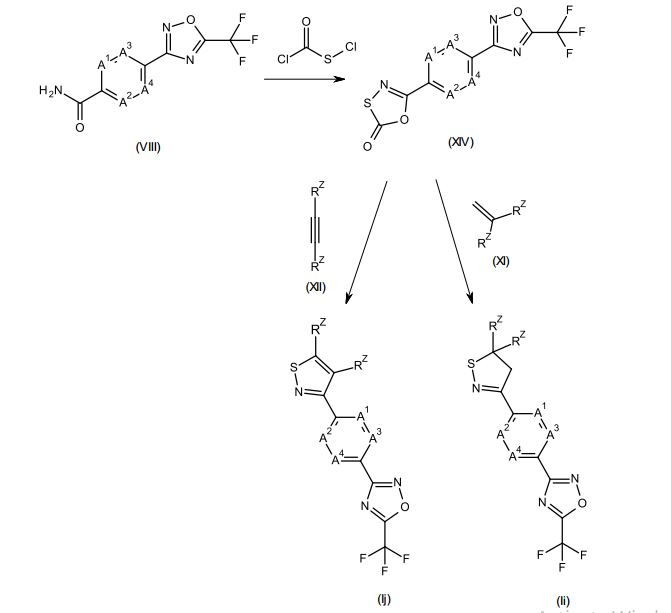
[0092] Os compostos de fórmula (Ik), em que Rz representa definições adequadas para R9 e R11, podem ser obtidos por uma cicloadição 1,3-dipolar de óxidos de nitrila gerados in situ a partir de compostos de fórmula (XV) e compostos de fórmula (XVI) sob condições básicas, em um solvente adequado (por exemplo, metanol ou diclorometano), preferencialmente a uma temperatura de 25 °C. Quanto a exemplos, ver K.-C. Liu et al., J. Org. Chem. 1980, 45, 3916 e Lee, G. Synthesis 1982, 508. Compostos de fórmula (XV) estão comercialmente disponíveis ou são preparados a partir de aldeídos comercialmente disponíveis usando métodos conhecidos. Quanto a exemplos ver: Ach, D. Eur. J. Org. Chem. 2003, 3398. Esta reação é mostrada no Esquema 9 em baixo.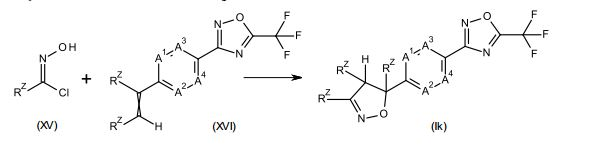
[0093] Compostos de fórmula (XVI), em que RZ representa definições adequadas para R9 e R11, podem ser preparados a partir de compostos de fórmula (XVII) via tratamento com um ileto de fosfônio de fórmula (XVIII) na presença de uma base (por exemplo, nBuLi, NaH, ou terc-butóxido de potássio) em um solvente adequado (por exemplo, tetra-hidrofurano) a uma temperatura situada entre -78 °C e 25 °C. Compostos de fórmula (XVIII) estão comercialmente disponíveis. Esta reação é mostrada no Esquema 10 em baixo.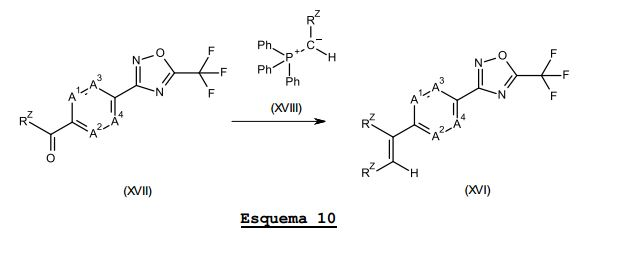
[0094] Compostos de fórmula (XIX), em que T representa Z, CHO, CO2H, C(O)NH2, C(O)N(Me)OMe, C(S)NH2, ou - C(R8)=C(R8')(R8'), podem ser preparados a partir de compostos de fórmula (XX) por tratamento com anidrido trifluoroacético na presença de uma base (por exemplo, piridina ou 4- dimetilaminopiridina) em um solvente adequado, como tetra- hidrofurano ou etanol, a uma temperatura situada entre 25 °C e 75 °C. Quanto a exemplos relacionados, ver: WO 2003/028729 Esta reação é mostrada no Esquema 11 em baixo.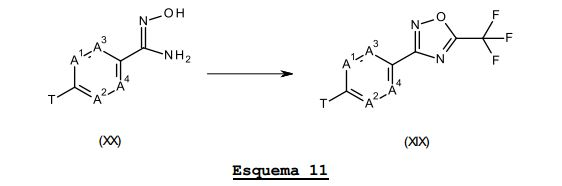
[0095] Compostos de fórmula (XX), em que T representa Z, C(O)R8, CHO, CO2H, C(O)NH2, C(S)NH2, ou -C(R8)=C(R8')(R8'), podem ser preparados a partir de compostos de fórmula (XXI) por tratamento com um sal cloridrato de hidroxilamina na presença de uma base, como trietilamina, em um solvente adequado, como metanol, a uma temperatura situada entre 0 °C e 100 °C. Quanto a exemplos relacionados, ver Kitamura, S. et al Chem. Pharm. Bull. (2001), 49, 268 e WO 2013/066838. Os compostos da fórmula (XX) são preparados por métodos conhecidos ou estão comercialmente disponíveis. Esta reação é mostrada no Esquema 12.
[0096] Compostos de fórmula (XXI) podem ser preparados a partir de compostos de fórmula (XXII), em que X é F, Cl, Br, ou I, via tratamento com compostos de fórmula (XXIII), na presença de uma base adequada (por exemplo, NaH ou carbonato de potássio), em um solvente adequado (por exemplo, dimetilsulfóxido) a uma temperatura situada entre 25 °C e 120 °C. Em alguns casos, pode ser ganho um maior desempenho reacional com irradiação de micro-ondas. Quanto a exemplos relacionados, ver: WO 2015/190506.[0096] Compounds of formula (XXI) can be prepared from compounds of formula (XXII), in which X is F, Cl, Br, or I, via treatment with compounds of formula (XXIII) in the presence of a base (e.g. NaH or potassium carbonate) in a suitable solvent (e.g. dimethylsulfoxide) at a temperature between 25 °C and 120 °C. In some cases, greater reaction performance can be gained with microwave irradiation. For related examples, see: WO 2015/190506.
[0097] Alternativamente, quando X é Cl, Br, ou I, compostos de fórmula (XXI) podem ser preparados via acoplamento cruzado catalisado por Pd usando um complexo monodentado de fosfina e paládio e uma base adequada (por exemplo, terc-butóxido de sódio) em um solvente adequado (por exemplo, tolueno, dimetilformamida, sulfolano, dimetilsulfóxido, ou dioxano). Quanto a exemplos ver, Buchwald, S. L. et al Angew. Chem. Int. Ed. 2006, 45, 6523 e Hartwig, J. Acc. Chem. Res., 2008, 41, 1534. Compostos de fórmula (XXII) e compostos de fórmula (XXIII) estão comercialmente disponíveis. Esta reação é mostrada no Esquema 13.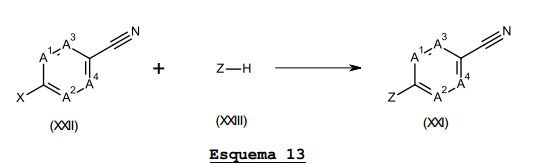
[0098] Alternativamente, compostos de fórmula (XXI) podem ser preparados a partir de compostos de fórmula (XXII), em que X é Cl, Br, ou I e compostos de fórmula (VIII), em que Met é um metaloide [por exemplo, Sn(Bu)3 ou InCl2], através de uma reação de acoplamento cruzado usando um metal (por exemplo, Cu ou Pd) em um solvente adequado (por exemplo, tolueno, dimetilformamida, sulfolano, dimetilsulfóxido, ou dioxano) a uma temperatura situada entre 60 °C e 150 °C. Quanto a exemplos relacionados, ver J. E. Baldwin et al Angew. Chem. Int. Ed., 2004, 43, 1132 e Font-Sanchis, E. et al J. Org. Chem. 2007, 72, 3589. Esta reação é mostrada no Esquema 14.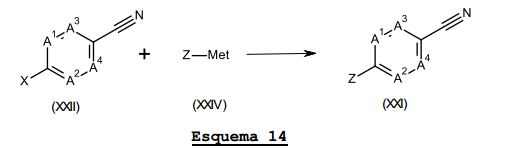
[0099] Adicionalmente, compostos de fórmula (XXI) podem ser preparados a partir de compostos de fórmula (XXV), em que Met é um metal ou um metaloide (por exemplo, ZnCl-LiCl, B(OH)2 ou B(pinacol)), e compostos de fórmula (XXVI) em que via reação de acoplamento cruzado usando Cu ou Pd) na presença de base (por exemplo, KO-t-Bu, K2CO3, ou Cs2CO3) e em um solvente adequado (por exemplo, tolueno, dimetilformamida, sulfolano, dimetilsulfóxido, ou dioxano) a uma temperatura situada entre 60 °C e 150 °C. Quanto a exemplos, ver: P. Knochel, P. et al Angew. Chem., Int. Ed., 2008, 47, 6802. Esta reação é mostrada no Esquema 15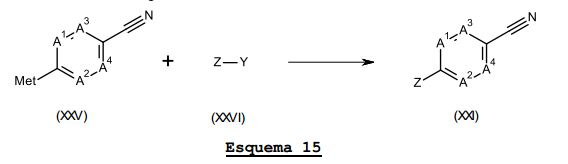
[0100] Compostos de fórmula (XXV), em que Met é um metal [por exemplo, ZnCl-LiCl] ou um metaloide [por exemplo, B(OH)2, BF3K, ou B(pinacol)], são preparados a partir de compostos de fórmula (XXII), em que X é Cl, Br, ou I, via tratamento com um reagente organometálico (por exemplo, n- butil-lítio ou cloreto de isopropilmagnésio^LiCl) em um solvente desgaseificado adequado (por exemplo, tetra- hidrofurano) a uma temperatura situada entre -65 °C e -80 °C com a introdução de ZnCl2 ou um éster borônico adequado (por exemplo, B(OBu)3 de iPrO-B(pinacol)) seguido de hidrólise acídica aquosa com uma fonte de ácido (por exemplo, cloreto de amônio).[0100] Compounds of formula (XXV), in which Met is a metal [for example, ZnCl-LiCl] or a metalloid [for example, B(OH)2, BF3K, or B(pinacol)], are prepared from of compounds of formula (XXII), where X is Cl, Br, or I, via treatment with an organometallic reagent (e.g., n-butyllithium or isopropylmagnesium chloride^LiCl) in a suitable degassed solvent (e.g., tetrahydrofuran) at a temperature between -65 °C and -80 °C with the introduction of ZnCl2 or a suitable boronic ester (for example, B(OBu)3 from iPrO-B(pinacol)) followed by aqueous acidic hydrolysis with an acid source (e.g. ammonium chloride).
[0101] Alternativamente, compostos de fórmula (XXV) podem ser preparados a partir de compostos de fórmula (XXII) via catálise usando uma fonte de metal adequado (por exemplo, paládio) e uma espécie diborano, como bis(pinacolato)diborano, na presença de uma base (por exemplo, K2CO3, AcONa ou AcOK) e em um solvente adequado (por exemplo, dioxano ou dimetilsulfóxido) a uma temperatura situada entre 25 °C e 90 °C. Quanto a exemplos relacionados, ver: Chen, R. et al Chemistry of Materials 2007, 19, 4007; Zhu, W. et al J. Med. Chem. 2014, 57, 7811. Esta reação é mostrada no Esquema 16.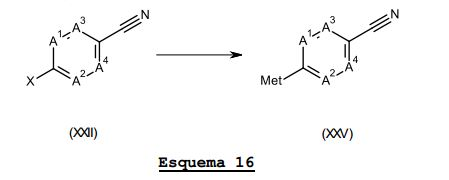
[0102] Além disso, os compostos da fórmula (XXI) podem ser preparados a partir de compostos da fórmula (XXVII), em que X é Br ou I, através de reação promovida por metais com um reagente de cianeto adequado, tal como Pd(0)/Zn(CN)2 ou CuCN, em um solvente adequado (por exemplo, dimetilformamida ou N- metilpirrolidona) a temperatura elevada entre 100 °C e 120 °C. Quanto a exemplos relacionados ver US 2007/0155739 e WO 2009/022746. Esta reação é mostrada no Esquema 17.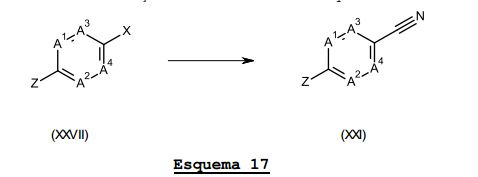
[0103] Como já foi indicado, surpreendentemente foi agora descoberto que os novos compostos da fórmula (I) de acordo com a invenção têm, para propósitos práticos, um nível muito vantajoso de atividade biológica para proteção de plantas contra doenças que são causadas por fungos.[0103] As already indicated, it has surprisingly now been found that the new compounds of formula (I) according to the invention have, for practical purposes, a very advantageous level of biological activity for protecting plants against diseases that are caused by fungi .
[0104] Os compostos da fórmula (I) podem ser usados no setor agrícola e áreas de uso relacionadas, por exemplo, como ingredientes ativos para controle de pragas de plantas ou em materiais não vivos para o controle de microrganismos que causam deterioração ou organismos potencialmente prejudiciais ao homem. Os novos compostos se distinguem pela excelente atividade a taxas de aplicação baixas, por serem bem tolerados por plantas e por serem ambientalmente seguros. Têm propriedades curativas, preventivas e sistêmicas muito úteis e podem ser usados para proteção de numerosas plantas cultivadas. Os compostos da fórmula I podem ser usados para inibir ou destruir as pragas que ocorrem em plantas ou partes de plantas (fruto, flores, folhas, caules, tubérculos, raízes) de diferentes culturas de plantas úteis, enquanto ao mesmo tempo protegem também aquelas partes das plantas que crescem mais tarde, por exemplo, de microrganismos fitopatogênicos.[0104] The compounds of formula (I) can be used in the agricultural sector and related areas of use, for example, as active ingredients for plant pest control or in non-living materials for the control of microorganisms that cause deterioration or potentially harmful organisms. harmful to man. The new compounds are distinguished by their excellent activity at low application rates, because they are well tolerated by plants and because they are environmentally safe. They have very useful curative, preventive and systemic properties and can be used for the protection of numerous cultivated plants. The compounds of formula I can be used to inhibit or destroy pests occurring on plants or plant parts (fruit, flowers, leaves, stems, tubers, roots) of different crops of useful plants, while at the same time also protecting those parts from later growing plants, for example from phytopathogenic microorganisms.
[0105] A presente invenção se relaciona adicionalmente com um método para controle ou prevenção da infestação de plantas ou material de propagação vegetal e/ou culturas alimentares coletadas suscetíveis a ataque microbiano por tratamento de plantas ou material de propagação vegetal e/ou culturas alimentares coletadas, em que uma quantidade eficaz um composto da fórmula (I) é aplicada às plantas, a suas partes ou ao seu lócus.[0105] The present invention further relates to a method for controlling or preventing infestation of plants or plant propagation material and/or collected food cultures susceptible to microbial attack by treatment of plants or plant propagation material and/or collected food cultures , wherein an effective amount of a compound of formula (I) is applied to the plants, parts thereof or locus thereof.
[0106] É também possível usar compostos da fórmula (I) como fungicida. O termo "fungicida", conforme utilizado neste documento, significa um composto que controla, modifica ou impede o crescimento de fungos. O termo “quantidade eficaz em termos fungicidas” significa a quantidade de um tal composto ou combinação de tais compostos que é capaz de produzir um efeito no crescimento de fungos. Os efeitos de controle ou modificação incluem todos os desvios em relação ao desenvolvimento natural, tais como morte, retardamento e semelhantes, e a prevenção inclui barreira ou outra formação defensiva em ou sobre uma planta para prevenir a infecção fúngica.[0106] It is also possible to use compounds of formula (I) as a fungicide. The term "fungicide", as used herein, means a compound that controls, modifies or prevents the growth of fungi. The term "fungicidally effective amount" means the amount of such a compound or combination of such compounds which is capable of producing an effect on the growth of fungi. Controlling or modifying effects include all deviations from natural development, such as killing, retarding, and the like, and prevention includes barrier or other defensive formation in or on a plant to prevent fungal infection.
[0107] Pode ser também possível usar os compostos da fórmula (I) como agentes de tratamento para o tratamento de material de propagação vegetal, p.ex., sementes, tais como frutos, tubérculos ou grãos, ou estacas de plantas, para a proteção contra infecções fúngicas bem como contra fungos fitopatogênicos ocorrendo no solo. O material de propagação pode ser tratado com uma composição compreendendo um composto da fórmula (I) antes do plantio: uma semente, por exemplo, pode ser tratada antes de ser semeada. Os compostos ativos da fórmula (I) podem ser também aplicados a grãos (revestimento), por impregnação das sementes em uma formulação líquida ou por revestimento das mesmas com uma formulação sólida. A composição pode ser também aplicada ao local de plantio quando o material de propagação está sendo plantado, por exemplo, ao sulco da semente durante a semeadura. A invenção se relaciona também com tais métodos de tratamento de material de propagação de plantas e com o material de propagação de plantas assim tratado.[0107] It may also be possible to use the compounds of formula (I) as treatment agents for the treatment of plant propagation material, e.g. seeds, such as fruits, tubers or grains, or plant cuttings, for the protection against fungal infections as well as against phytopathogenic fungi occurring in the soil. Propagation material can be treated with a composition comprising a compound of formula (I) before planting: a seed, for example, can be treated before it is sown. The active compounds of formula (I) can also be applied to grains (coating), by impregnating the seeds in a liquid formulation or by coating them with a solid formulation. The composition can also be applied to the planting site when the propagation material is being planted, for example to the seed furrow during sowing. The invention also relates to such methods of treating plant propagation material and the plant propagation material so treated.
[0108] Além do mais, os compostos da fórmula (I) podem ser usados para controle de fungos em áreas relacionadas, por exemplo, na proteção de materiais técnicos, incluindo madeira e produtos técnicos relacionados com madeira, na armazenagem de alimentos, na gestão da higiene.[0108] Furthermore, the compounds of formula (I) can be used for fungus control in related areas, for example, in the protection of technical materials, including wood and technical products related to wood, in food storage, in the management of hygiene.
[0109] Adicionalmente, a invenção pode ser usada para proteger materiais não vivos de ataque fúngico, por exemplo, madeira de construção, painéis de parede e tinta.[0109] Additionally, the invention can be used to protect non-living materials from fungal attack, for example building wood, wall paneling and paint.
[0110] Os compostos da fórmula (I) são eficazes, por exemplo, contra fungos e vetores fúngicos de doença bem como bactérias e vírus fitopatogênicos. Estes fungos e vetores fúngicos de doença bem como bactérias e vírus fitopatogênicos são, por exemplo: Absidia corymbifera, Alternaria spp, Aphanomyces spp, Ascochyta spp, Aspergillus spp. incluindo A. flavus, A. fumigatus, A. nidulans, A. niger, A. terrus, Aureobasidium spp. incluindo A. pullulans, Blastomyces dermatitidis, Blumeria graminis, Bremia lactucae, Botryosphaeria spp. incluindo B. dothidea, B. obtusa, Botrytis spp. incluindo B. cinerea, Candida spp. incluindo C. albicans, C. glabrata, C. krusei, C. lusitaniae, C. parapsilosis, C. tropicalis, Cephaloascus fragrans, Ceratocystis spp, Cercospora spp. incluindo C. arachidicola, Cercosporidium personatum, Cladosporium spp, Claviceps purpurea, Coccidioides immitis, Cochliobolus spp, Colletotrichum spp. incluindo C. musae, Cryptococcus neoformans, Diaporthe spp, Didymella spp, Drechslera spp, Elsinoe spp,Epidermophyton spp, Erwinia amylovora, Erysiphe spp. incluindo E. cichoracearum, Eutypa lata, Fusarium spp. incluindo F. culmorum, F. graminearum, F. langsethiae, F. moniliforme, F. oxysporum, F. proliferatum, F. subglutinans, F. solani, Gaeumannomyces graminis, Gibberella fujikuroi, Gloeodes pomigena, Gloeosporium musarum, Glomerella cingulate, Guignardia bidwellii, Gymnosporangium juniperi-virginianae, Helminthosporium spp, Hemileia spp, Histoplasma spp. incluindo H. capsulatum, Laetisaria fuciformis, Leptographium lindbergi, Leveillula taurica, Lophodermium seditiosum, Microdochium nivale, Microsporum spp, Monilinia spp, Mucor spp, Mycosphaerella spp. incluindo M. graminicola, M. pomi, Oncobasidium theobromaeon, Ophiostoma piceae, Paracoccidioides spp, Penicillium spp. incluindo P. digitatum, P. italicum, Petriellidium spp, Peronosclerospora spp. incluindo P. maydis, P. philippinensis e P. sorghi, Peronospora spp, Phaeosphaeria nodorum, Phakopsora pachyrhizi, Phellinus igniarus, Phialophora spp, Phoma spp, Phomopsis viticola, Phytophthora spp. incluindo P. infestans, Plasmopara spp. incluindo P. halstedii, P. viticola, Pleospora spp., Podosphaera spp. incluindo P. leucotricha, Polymyxa graminis, Polymyxa betae, Pseudocercosporella herpotrichoides, Pseudomonas spp, Pseudoperonospora spp. incluindo P. cubensis, P. humuli, Pseudopeziza tracheiphila, Puccinia Spp. incluindo P. hordei, P. recondita, P. striiformis, P. triticina, Pyrenopeziza spp, Pyrenophora spp, Pyricularia spp. incluindo P. oryzae, Pythium spp. incluindo P. ultimum, Ramularia spp, Rhizoctonia spp, Rhizomucor pusillus, Rhizopus arrhizus, Rhynchosporium spp, Scedosporium spp. incluindo S. apiospermum e S. prolificans, Schizothyrium pomi, Sclerotinia spp, Sclerotium spp, Septoria spp, incluindo S. nodorum, S. tritici, Sphaerotheca macularis, Sphaerotheca fusca (Sphaerotheca fuliginea), Sporothorix spp, Stagonospora nodorum, Stemphylium spp,. Stereum hirsutum, Thanatephorus cucumeris, Thielaviopsis basicola, Tilletia spp, Trichoderma spp. incluindo T. harzianum, T. pseudokoningii, T. viride, Trichophyton spp, Typhula spp, Uncinula necator, Urocystis spp, Ustilago spp, Venturia spp. incluindo V. inaequalis, Verticillium spp, e Xanthomonas spp.[0110] The compounds of formula (I) are effective, for example, against fungi and fungal disease vectors as well as plant pathogenic bacteria and viruses. These fungi and fungal disease vectors as well as phytopathogenic bacteria and viruses are, for example: Absidia corymbifera, Alternaria spp, Aphanomyces spp, Ascochyta spp, Aspergillus spp. including A. flavus, A. fumigatus, A. nidulans, A. niger, A. terrus, Aureobasidium spp. including A. pullulans, Blastomyces dermatitidis, Blumeria graminis, Bremia lactucae, Botryosphaeria spp. including B. dothidea, B. obtusa, Botrytis spp. including B. cinerea, Candida spp. including C. albicans, C. glabrata, C. krusei, C. lusitaniae, C. parapsilosis, C. tropicalis, Cephaloascus fragrans, Ceratocystis spp, Cercospora spp. including C. arachidicola, Cercosporidium personatum, Cladosporium spp, Claviceps purpurea, Coccidioides immitis, Cochliobolus spp, Colletotrichum spp. including C. musae, Cryptococcus neoformans, Diaporthe spp, Didymella spp, Drechslera spp, Elsinoe spp, Epidermophyton spp, Erwinia amylovora, Erysiphe spp. including E. cichoracearum, Eutypa lata, Fusarium spp. including F. culmorum, F. graminearum, F. langsethiae, F. moniliforme, F. oxysporum, F. proliferatum, F. subglutinans, F. solani, Gaeumannomyces graminis, Gibberella fujikuroi, Gloeodes pomigena, Gloeosporium musarum, Glomerella cingulate, Guignardia bidwellii , Gymnosporangium juniperi-virginianae, Helminthosporium spp, Hemileia spp, Histoplasma spp. including H. capsulatum, Laetisaria fuciformis, Leptographium lindbergi, Leveillula taurica, Lophodermium seditiosum, Microdochium nivale, Microsporum spp, Monilinia spp, Mucor spp, Mycosphaerella spp. including M. graminicola, M. pomi, Oncobasidium theobromaeon, Ophiostoma piceae, Paracoccidioides spp, Penicillium spp. including P. digitatum, P. italicum, Petriellidium spp, Peronosclerospora spp. including P. maydis, P. philippinensis and P. sorghi, Peronospora spp, Phaeosphaeria nodorum, Phakopsora pachyrhizi, Phellinus igniarus, Phialophora spp, Phoma spp, Phomopsis viticola, Phytophthora spp. including P. infestans, Plasmopara spp. including P. halstedii, P. viticola, Pleospora spp., Podosphaera spp. including P. leucotricha, Polymyxa graminis, Polymyxa betae, Pseudocercosporella herpotrichoides, Pseudomonas spp, Pseudoperonospora spp. including P. cubensis, P. humuli, Pseudopeziza tracheiphila, Puccinia Spp. including P. hordei, P. recondita, P. striiformis, P. triticina, Pyrenopeziza spp, Pyrenophora spp, Pyricularia spp. including P. oryzae, Pythium spp. including P. ultimum, Ramularia spp, Rhizoctonia spp, Rhizomucor pusillus, Rhizopus arrhizus, Rhynchosporium spp, Scedosporium spp. including S. apiospermum and S. prolificans, Schizothyrium pomi, Sclerotinia spp, Sclerotium spp, Septoria spp, including S. nodorum, S. tritici, Sphaerotheca macularis, Sphaerotheca fusca (Sphaerotheca fuliginea), Sporothorix spp, Stagonospora nodorum, Stemphylium spp,. Stereum hirsutum, Thanatephorus cucumeris, Thielaviopsis basicola, Tilletia spp, Trichoderma spp. including T. harzianum, T. pseudokoningii, T. viride, Trichophyton spp, Typhula spp, Uncinula necator, Urocystis spp, Ustilago spp, Venturia spp. including V. inaequalis, Verticillium spp, and Xanthomonas spp.
[0111] Os compostos da fórmula (I) podem ser usados, por exemplo, em grama, plantas ornamentais, tais como flores, arbustos, árvores folhosas ou de folha perene, por exemplo, coníferas, bem como para injeção em árvores, gestão de pragas e similares.[0111] The compounds of formula (I) can be used, for example, on grass, ornamental plants, such as flowers, shrubs, deciduous or evergreen trees, for example, conifers, as well as for injection into trees, management of pests and the like.
[0112] Dentro do escopo da presente invenção, as culturas- alvo e/ou plantas úteis a serem protegidas compreendem tipicamente culturas perenes e anuais, tais como bagas, por exemplo, amoras, mirtilos, arandos, framboesas e morangos; cereais, por exemplo, cevada, maís (milho), milho-painço, aveia, arroz, centeio, sorgo, triticale e trigo; plantas de fibra, por exemplo, algodão, linho, cânhamo, juta e sisal; culturas de campo, por exemplo, beterraba-sacarina e forrageira, café, lúpulo, mostarda, colza (canola), papoila, cana-de-açúcar, girassol, chá e tabaco; árvores de fruto, por exemplo, maçã, damasco, abacate, banana, cereja, citrinos, nectarina, pêssego, pera e ameixa; gramas, por exemplo, grama das Bermudas, grama azul, agróstis, grama centípede, festuca, azevém, grama de Santo Agostinho e grama Zoysia; ervas aromáticas, tais como manjericão, borragem, cebolinho, coentro, lavanda, levístico, hortelã, orégano, salsa, alecrim, sálvia e tomilho; leguminosas, por exemplo, feijões, lentilhas, ervilhas e soja; frutos secos, por exemplo, amêndoa, caju, semente de amendoim, avelã, amendoim, noz-pecã, pistache e noz; palmas, por exemplo, óleo de palma; plantas ornamentais, por exemplo, flores, arbustos e árvores; outras árvores, por exemplo, cacau, coco, oliveira e borracha; legumes, por exemplo, aspargo, berinjela, brócolis, repolho, cenoura, pepino, alho, alface, abóbora, melão, quiabo, cebola, pimenta, batata, abóbora- menina, ruibarbo, espinafre e tomate, e videiras, por exemplo, uvas.[0112] Within the scope of the present invention, target crops and/or useful plants to be protected typically comprise perennial and annual crops such as berries, for example blackberries, blueberries, cranberries, raspberries and strawberries; cereals, for example barley, maize (maize), millet, oats, rice, rye, sorghum, triticale and wheat; fiber plants, for example cotton, flax, hemp, jute and sisal; field crops, eg sugar and fodder beet, coffee, hops, mustard, rapeseed (canola), poppy, sugar cane, sunflower, tea and tobacco; fruit trees, for example apple, apricot, avocado, banana, cherry, citrus, nectarine, peach, pear and plum; grasses, for example, Bermuda grass, blue grass, agrostis, centipede grass, fescue, ryegrass, St. Augustine grass and Zoysia grass; aromatic herbs, such as basil, borage, chives, coriander, lavender, lavender, mint, oregano, parsley, rosemary, sage and thyme; legumes, for example beans, lentils, peas and soybeans; nuts, for example almond, cashew, peanut kernel, hazelnut, groundnut, pecan, pistachio and walnut; palms, e.g. palm oil; ornamental plants, eg flowers, shrubs and trees; other trees, for example cocoa, coconut, olive and rubber; vegetables, for example, asparagus, eggplant, broccoli, cabbage, carrots, cucumber, garlic, lettuce, squash, melon, okra, onion, pepper, potato, pumpkin, rhubarb, spinach and tomatoes, and vines, for example, grapes .
[0113] O termo “plantas úteis” deve ser entendido como também incluindo plantas úteis que foram tornadas tolerantes a herbicidas, como bromoxinil, ou classes de herbicidas (tais como, por exemplo, inibidores de HPPD, inibidores de ALS, por exemplo, primissulfuron, prossulfuron e trifloxissulfuron, inibidores de EPSPS (5-enol-pirovil-chiquimato-3-fosfato- sintase), inibidores de GS (glutamina sintetase) ou inibidores de PPO (protoporfirinogênio-oxidase)) como resultado de métodos convencionais de melhoramento ou engenharia genética. Um exemplo de uma cultura que foi tornada tolerante a imidazolinonas, por exemplo, imazamox, por métodos convencionais de melhoramento (mutagênese) é a colza de verão Clearfield® (Canola). Exemplos de culturas que foram tornadas tolerantes a herbicidas ou classes de herbicidas por métodos de engenharia genética incluem variedades de maís resistentes a glifosato e glufosinato comercialmente disponíveis sob as marcas registradas RoundupReady®, Herculex I® e LibertyLink®.[0113] The term "useful plants" should be understood to also include useful plants that have been made tolerant to herbicides, such as bromoxynil, or classes of herbicides (such as, for example, HPPD inhibitors, ALS inhibitors, e.g., primisulfuron , prosulfuron and trifloxysulfuron, EPSPS (5-enol-pyrovil-shikimate-3-phosphate-synthase) inhibitors, GS (glutamine synthase) inhibitors or PPO (protoporphyrinogen oxidase) inhibitors) as a result of conventional breeding or engineering methods genetics. An example of a crop that has been made tolerant to imidazolinones, eg imazamox, by conventional breeding methods (mutagenesis) is Clearfield® summer rapeseed (Canola). Examples of crops that have been made tolerant to herbicides or classes of herbicides by genetic engineering methods include glyphosate and glufosinate resistant maize varieties commercially available under the trademarks RoundupReady®, Herculex I® and LibertyLink®.
[0114] O termo “plantas úteis” deve ser entendido como também incluindo plantas úteis que foram transformadas de tal modo pelo uso de técnicas de DNA recombinante que são capazes de sintetizar uma ou mais toxinas seletivamente atuantes, tais como são conhecidas, por exemplo, de bactérias produtoras de toxinas, especialmente aquelas do gênero Bacillus.[0114] The term "useful plants" should be understood to also include useful plants that have been transformed by the use of recombinant DNA techniques in such a way that they are capable of synthesizing one or more selectively acting toxins, such as are known, for example, of toxin-producing bacteria, especially those of the genus Bacillus.
[0115] Exemplos de tais plantas são: YieldGard® (variedade de maís que expressa uma toxina CryIA(b)); YieldGard Rootworm® (variedade de maís que expressa uma toxina CryIIIB(b1)); YieldGard Plus® (variedade de maís que expressa uma toxina CryIA(b) e uma toxina CryIIIB(b1)); Starlink® (variedade de maís que expressa uma toxina Cry9(c)); Herculex I® (variedade de maís que expressa uma toxina CryIF(a2) e a enzima fosfinotricina N-acetiltransferase (PAT) para alcançar tolerância ao herbicida glufosinato de amônio); NuCOTN 33B® (variedade de algodão que expressa uma toxina CryIA(c)); Bollgard I® (variedade de algodão que expressa uma toxina CryIA(c)); Bollgard II® (variedade de algodão que expressa uma toxina CryIA(c) e uma toxina CryIIA(b)); VIPCOT® (variedade de algodão que expressa uma toxina VIP); NewLeaf® (variedade de batata que expressa uma toxina CryIIIA); NatureGard® Agrisure® GT Advantage (traço de tolerância ao glifosato GA21), Agrisure® CB Advantage (traço da broca do milho (CB) Bt11), Agrisure® RW (traço da lagarta da raiz do milho) e Protecta®.[0115] Examples of such plants are: YieldGard® (maize variety expressing a CryIA(b) toxin); YieldGard Rootworm® (maize variety that expresses a CryIIIB(b1) toxin); YieldGard Plus® (maize variety that expresses a CryIA(b) toxin and a CryIIIB(b1) toxin); Starlink® (maize variety that expresses a Cry9(c) toxin); Herculex I® (maize variety that expresses a CryIF(a2) toxin and the enzyme phosphinothricin N-acetyltransferase (PAT) to achieve tolerance to the herbicide glufosinate ammonium); NuCOTN 33B® (cotton variety expressing a CryIA(c) toxin); Bollgard I® (cotton variety expressing a CryIA(c) toxin); Bollgard II® (cotton variety that expresses a CryIA(c) toxin and a CryIIA(b) toxin); VIPCOT® (cotton variety expressing a VIP toxin); NewLeaf® (potato variety that expresses a CryIIIA toxin); NatureGard® Agrisure® GT Advantage (GA21 glyphosate tolerance trait), Agrisure® CB Advantage (Bt11 corn borer (CB) trait), Agrisure® RW (corn rootworm trait) and Protecta®.
[0116] O termo “culturas” deve ser entendido como incluindo também plantas de cultura que foram transformadas de tal modo pelo uso de técnicas de DNA recombinante que são capazes de sintetizar uma ou mais toxinas seletivamente atuantes, tais como são conhecidas, por exemplo, de bactérias produtoras de toxinas, especialmente aquelas do gênero Bacillus.[0116] The term "cultures" should be understood to also include cultured plants that have been transformed by the use of recombinant DNA techniques in such a way that they are capable of synthesizing one or more selectively acting toxins, such as are known, for example, of toxin-producing bacteria, especially those of the genus Bacillus.
[0117] As toxinas que podem ser expressas por tais plantas transgênicas incluem, por exemplo, proteínas inseticidas de Bacillus cereus ou Bacillus popilliae, ou proteínas inseticidas de Bacillus thuringiensis, tais como δ- endotoxinas, por exemplo, Cry1Ab, Cry1Ac, Cry1F, Cry1Fa2, Cry2Ab, Cry3A, Cry3Bb1 ou Cry9C, ou proteínas inseticidas vegetativas (Vip), por exemplo, Vip1, Vip2, Vip3 ou Vip3A, ou proteínas inseticidas de bactérias colonizadoras de nematódeos, por exemplo, Photorhabdus spp. ou Xenorhabdus spp., tais como Photorhabdus luminescens, Xenorhabdus nematophilus; toxinas produzidas por animais, tais como toxinas de escorpiões, toxinas de aracnídeos, toxinas de vespas e outras neurotoxinas específicas de insetos; toxinas produzidas por fungos, tais como toxinas de Streptomycetes, lectinas de plantas, tais como lectinas de ervilha, lectinas de cevada ou lectinas de campânulas brancas; aglutininas; inibidores de proteinases, tais como inibidores de tripsina, inibidores de serina-proteases, inibidores de patatina, cistatina, papaína; proteínas inativadoras de ribossomo (RIP), tais como ricina, RIP de maís, abrina, lufina, saporina ou briodina; enzimas do metabolismo de esteroides, tais como 3-hidroxiesteroide oxidase, ecdisteroide-UDP- glicosil-transferase, colesterol oxidases, inibidores da ecdisona, HMG-COA-redutase, bloqueadores de canais iônicos, tais como bloqueadores de canais de sódio ou cálcio, hormônio juvenil esterase, receptores de hormônios diuréticos, estilbeno sintase, bibenzil sintase, quitinases e glucanases.[0117] Toxins that may be expressed by such transgenic plants include, for example, insecticidal proteins from Bacillus cereus or Bacillus popilliae, or insecticidal proteins from Bacillus thuringiensis, such as δ-endotoxins, for example, Cry1Ab, Cry1Ac, Cry1F, Cry1Fa2 , Cry2Ab, Cry3A, Cry3Bb1 or Cry9C, or vegetative insecticidal (Vip) proteins, for example Vip1, Vip2, Vip3 or Vip3A, or insecticidal proteins from nematode colonizing bacteria, for example Photorhabdus spp. or Xenorhabdus spp., such as Photorhabdus luminescens, Xenorhabdus nematophilus; animal-produced toxins, such as scorpion toxins, arachnid toxins, wasp toxins, and other insect-specific neurotoxins; toxins produced by fungi, such as Streptomycetes toxins, plant lectins, such as pea lectins, barley lectins or bluebell lectins; agglutinins; proteinase inhibitors, such as trypsin inhibitors, serine protease inhibitors, patatin, cystatin, papain inhibitors; ribosome inactivating proteins (RIP), such as ricin, maize RIP, abrin, lufin, saporin or bryodin; steroid metabolism enzymes such as 3-hydroxysteroid oxidase, ecdysteroid-UDP-glycosyltransferase, cholesterol oxidases, ecdysone inhibitors, HMG-COA reductase, ion channel blockers such as sodium or calcium channel blockers, hormone juvenile esterase, diuretic hormone receptors, stilbene synthase, bibenzyl synthase, chitinases and glucanases.
[0118] Adicionalmente, no contexto da presente invenção, devem ser entendidas como δ-endotoxinas, por exemplo, Cry1Ab, Cry1Ac, Cry1F, Cry1Fa2, Cry2Ab, Cry3A, Cry3Bb1 ou Cry9C, ou proteínas inseticidas vegetativas (Vip), por exemplo, Vip1, Vip2, Vip3 ou Vip3A, expressamente também toxinas híbridas, toxinas truncadas e toxinas modificadas. As toxinas híbridas são recombinantemente produzidas por uma nova combinação de diferentes domínios dessas proteínas (ver, por exemplo, WO 02/15701). Toxinas truncadas, por exemplo, uma Cry1Ab truncada, são conhecidas. No caso de toxinas modificadas, um ou mais aminoácidos da toxina ocorrendo naturalmente estão substituídos. Em tais substituições de aminoácidos, preferencialmente sequências de reconhecimento de proteases não naturalmente presentes são inseridas na toxina, tais como, por exemplo, no caso de Cry3A055, uma sequência de reconhecimento da catepsina G é inserida em uma toxina Cry3A (ver WO 03/018810).[0118] Additionally, in the context of the present invention, they should be understood as δ-endotoxins, for example, Cry1Ab, Cry1Ac, Cry1F, Cry1Fa2, Cry2Ab, Cry3A, Cry3Bb1 or Cry9C, or vegetative insecticidal proteins (Vip), for example, Vip1 , Vip2, Vip3 or Vip3A, expressly also hybrid toxins, truncated toxins and modified toxins. Hybrid toxins are recombinantly produced by a novel combination of different domains of these proteins (see eg WO 02/15701). Truncated toxins, for example a truncated Cry1Ab, are known. In the case of engineered toxins, one or more amino acids of the naturally occurring toxin are replaced. In such amino acid substitutions, preferably recognition sequences for proteases not naturally present are inserted into the toxin, such as, for example, in the case of Cry3A055, a cathepsin G recognition sequence is inserted into a Cry3A toxin (see WO 03/018810 ).
[0119] Exemplos de tais toxinas ou plantas transgênicas capazes de sintetizar tais toxinas são revelados, por exemplo, em EP-A-0 374 753, WO93/07278, WO95/34656, EP-A-0 427 529, EP-A-451 878 e WO 03/052073.[0119] Examples of such toxins or transgenic plants capable of synthesizing such toxins are disclosed, for example, in EP-A-0 374 753, WO93/07278, WO95/34656, EP-A-0 427 529, EP-A- 451 878 and WO 03/052073.
[0120] Os processos para a preparação de tais plantas transgênicas são geralmente conhecidos do perito na técnica e são descritos, por exemplo, nas publicações mencionadas acima. Ácidos desoxirribonucleicos do tipo CryI e a sua preparação são conhecidos, por exemplo, de WO 95/34656, EP- A-0 367 474, EP-A-0 401 979 e WO 90/13651.[0120] Processes for the preparation of such transgenic plants are generally known to the person skilled in the art and are described, for example, in the publications mentioned above. Deoxyribonucleic acids of the Cryl type and their preparation are known, for example, from WO 95/34656, EP-A-0 367 474, EP-A-0 401 979 and WO 90/13651.
[0121] A toxina contida nas plantas transgênicas confere às plantas tolerância a insetos prejudiciais. Tais insetos podem ocorrer em qualquer grupo taxonômico de insetos, mas são especial e comummente encontrados nos besouros (Coleoptera), insetos de duas asas (Diptera) e borboletas (Lepidoptera).[0121] The toxin contained in transgenic plants gives the plants tolerance to harmful insects. Such insects can occur in any taxonomic group of insects, but are especially and commonly found in beetles (Coleoptera), two-winged insects (Diptera) and butterflies (Lepidoptera).
[0122] São conhecidas plantas transgênicas contendo um ou mais genes que codificam uma resistência inseticida e expressam uma ou mais toxinas e algumas delas estão comercialmente disponíveis. Exemplos de tais plantas são: YieldGard® (variedade de maís que expressa uma toxina CrylAb); YieldGard Rootworm® (variedade de maís que expressa uma toxina Cry3Bb1); YieldGard Plus® (variedade de maís que expressa uma toxina Cry1Ab e uma Cry3Bb1); Starlink® (variedade de maís que expressa uma toxina Cry9C); Herculex I® (variedade de maís que expressa uma toxina Cry1Fa2 e a enzima fosfinotricina N-acetiltransferase (PAT) para alcançar tolerância ao herbicida glufosinato de amônio); NuCOTN 33B® (variedade de algodão que expressa uma toxina Cry1Ac); Bollgard I® (variedade de algodão que expressa uma toxina Cry1Ac); Bollgard II® (variedade de algodão que expressa uma toxina CrylAc e uma Cry2Ab); VipCot® (variedade de algodão que expressa uma toxina Vip3A e uma Cry1Ab); NewLeaf® (variedade de batata que expressa uma toxina Cry3A); NatureGard®, Agrisure® GT Advantage (traço tolerante ao glifosato GA21), Agrisure® CB Advantage (traço tolerante à broca do milho (CB) Bt11) e Protecta®.[0122] Transgenic plants containing one or more genes encoding insecticide resistance and expressing one or more toxins are known, and some of them are commercially available. Examples of such plants are: YieldGard® (maize variety expressing a CrylAb toxin); YieldGard Rootworm® (maize variety that expresses a Cry3Bb1 toxin); YieldGard Plus® (maize variety that expresses a Cry1Ab and a Cry3Bb1 toxin); Starlink® (maize variety that expresses a Cry9C toxin); Herculex I® (maize variety that expresses a Cry1Fa2 toxin and the enzyme phosphinothricin N-acetyltransferase (PAT) to achieve tolerance to the herbicide glufosinate ammonium); NuCOTN 33B® (cotton variety expressing a Cry1Ac toxin); Bollgard I® (cotton variety expressing a Cry1Ac toxin); Bollgard II® (cotton variety that expresses a CrylAc toxin and a Cry2Ab toxin); VipCot® (cotton variety that expresses a Vip3A toxin and a Cry1Ab); NewLeaf® (potato variety that expresses a Cry3A toxin); NatureGard®, Agrisure® GT Advantage (GA21 glyphosate tolerant trait), Agrisure® CB Advantage (Bt11 corn borer (CB) tolerant trait) and Protecta®.
[0123] Exemplos adicionais de tais culturas transgênicas são: 1. Milho Bt11 da Syngenta Seeds SAS, Chemin de l'Hobit 27, F-31 790 St. Sauveur, França, número de registro C/FR/96/05/10. Zea mays geneticamente modificado que foi tornado resistente ao ataque pela broca europeia do milho (Ostrinia nubilalis e Sesamia nonagrioides) por expressão transgênica de uma toxina Cry1Ab truncada. O milho Bt11 também expressa transgenicamente a enzima PAT para alcançar tolerância ao herbicida glufosinato de amônio. 2. Milho Bt176 da Syngenta Seeds SAS, Chemin de l'Hobit 27, F-31 790 St. Sauveur, França, número de registro C/FR/96/05/10. Zea mays geneticamente modificado que foi tornado resistente ao ataque pela broca europeia do milho (Ostrinia nubilalis e Sesamia nonagrioides) por expressão transgênica de uma toxina Cry1Ab. O milho Bt176 expressa também transgenicamente a enzima PAT para alcançar tolerância ao herbicida glufosinato de amônio. 3. Milho MIR604 da Syngenta Seeds SAS, Chemin de l'Hobit 27, F-31 790 St. Sauveur, França, número de registro C/FR/96/05/10. Milho que foi tornado resistente a insetos através da expressão transgênica de uma toxina Cry3A modificada. Esta toxina é Cry3A055 modificada por inserção de uma sequência de reconhecimento da catepsina-G-protease. A preparação de tais plantas de milho transgênicas é descrita em WO 03/018810. 4. Milho MON 863 da Monsanto Europe S.A. 270-272 Avenue de Tervuren, B-1150 Bruxelas, Bélgica, número de registro C/DE/02/9. MON 863 expressa uma toxina Cry3Bb1 e tem resistência a certos insetos Coleoptera. 5. Algodão IPC 531 da Monsanto Europe S.A. 270-272 Avenue de Tervuren, B-1150 Bruxelas, Bélgica, número de registro C/ES/96/02. 6. Milho 1507 da Pioneer Overseas Corporation, Avenue Tedesco, 7 B-1160 Bruxelas, Bélgica, número de registro C/NL/00/10. Milho geneticamente modificado para a expressão da proteína Cry1F para alcançar resistência a certos insetos Lepidoptera e da proteína PAT para alcançar tolerância ao herbicida glufosinato de amônio. 7. Milho NK603 x MON 810 da Monsanto Europe S.A. 270-272 Avenue de Tervuren, B-1150 Bruxelas, Bélgica, número de registro C/GB/02/M3/03. Consiste em variedades de milho híbrido convencionalmente melhoradas por cruzamento das variedades geneticamente modificadas NK603 e MON 810. O Milho NK603 x MON 810 expressa transgenicamente a proteína CP4 EPSPS, obtida da estirpe CP4 de Agrobacterium sp., que confere tolerância ao herbicida Roundup® (contém glifosato), e igualmente uma toxina Cry1Ab obtida de Bacillus turingiensis subsp. kurstaki que confere tolerância a certos Lepidoptera, incluindo a broca europeia do milho.[0123] Additional examples of such transgenic crops are: 1. Bt11 maize from Syngenta Seeds SAS, Chemin de l'Hobit 27, F-31 790 St. Sauveur, France, registration number C/FR/96/05/10. Genetically modified Zea mays that has been rendered resistant to attack by the European corn borer (Ostrinia nubilalis and Sesamia nonagrioides) by transgenic expression of a truncated Cry1Ab toxin. Bt11 corn also transgenically expresses the PAT enzyme to achieve tolerance to the ammonium glufosinate herbicide. 2. Bt176 corn from Syngenta Seeds SAS, Chemin de l'Hobit 27, F-31 790 St. Sauveur, France, registration number C/FR/96/05/10. Genetically modified Zea mays that has been rendered resistant to attack by the European corn borer (Ostrinia nubilalis and Sesamia nonagrioides) by transgenic expression of a Cry1Ab toxin. Bt176 corn also transgenically expresses the PAT enzyme to achieve tolerance to the ammonium glufosinate herbicide. 3. MIR604 corn from Syngenta Seeds SAS, Chemin de l'Hobit 27, F-31 790 St. Sauveur, France, registration number C/FR/96/05/10. Maize that has been rendered insect resistant through transgenic expression of a modified Cry3A toxin. This toxin is Cry3A055 modified by insertion of a cathepsin-G-protease recognition sequence. The preparation of such transgenic maize plants is described in WO 03/018810. 4. Corn MON 863 from Monsanto Europe S.A. 270-272 Avenue de Tervuren, B-1150 Brussels, Belgium, registration number C/DE/02/9. MON 863 expresses a Cry3Bb1 toxin and has resistance to certain Coleoptera insects. 5. Monsanto Europe S.A. IPC 531 cotton 270-272 Avenue de Tervuren, B-1150 Brussels, Belgium, registration number C/ES/96/02. 6. Pioneer Overseas Corporation Corn 1507, Avenue Tedesco, 7 B-1160 Brussels, Belgium, registration number C/NL/00/10. Maize genetically modified for the expression of the Cry1F protein to achieve resistance to certain Lepidoptera insects and the PAT protein to achieve tolerance to the herbicide glufosinate ammonium. 7. Corn NK603 x MON 810 from Monsanto Europe S.A. 270-272 Avenue de Tervuren, B-1150 Brussels, Belgium, registration number C/GB/02/M3/03. It consists of hybrid corn varieties conventionally improved by crossing the genetically modified varieties NK603 and MON 810. Corn NK603 x MON 810 transgenically expresses the CP4 EPSPS protein, obtained from the CP4 strain of Agrobacterium sp., which confers tolerance to the herbicide Roundup® (contains glyphosate), and also a Cry1Ab toxin obtained from Bacillus thuringiensis subsp. kurstaki which confers tolerance to certain Lepidoptera, including the European corn borer.
[0124] O termo “lócus” como usado aqui significa campos em ou sobre os quais plantas estão crescendo, ou onde sementes de plantas cultivadas são semeadas, ou onde semente será colocada no solo. Inclui solo, sementes e plântulas, bem como vegetação estabelecida.[0124] The term “locus” as used herein means fields in or over which plants are growing, or where seeds of cultivated plants are sown, or where seed will be placed in the soil. It includes soil, seeds and seedlings, as well as established vegetation.
[0125] O termo “plantas” se refere a todas as partes físicas de uma planta, incluindo sementes, plântulas, plantas jovens, raízes, tubérculos, caules, hastes, folhagem e frutos.[0125] The term “plants” refers to all physical parts of a plant, including seeds, seedlings, young plants, roots, tubers, stems, stems, foliage and fruits.
[0126] O termo “material de propagação vegetal” é entendido como denotando partes generativas da planta, tais como sementes, que podem ser usadas para a multiplicação desta última, e material vegetativo, tal como estacas ou tubérculos, por exemplo batatas. Podem ser mencionados, por exemplo, sementes (no sentido estrito), raízes, frutos, tubérculos, bulbos, rizomas e partes de plantas. Podem ser também mencionadas plantas germinadas e plantas jovens que serão transplantadas após germinação ou após emergência do solo. Estas plantas jovens podem ser protegidas antes da transplantação por um tratamento total ou parcial por imersão. Preferencialmente, “material de propagação vegetal” é entendido como denotando sementes.[0126] The term “plant propagation material” is understood to denote generative parts of the plant, such as seeds, which can be used for the multiplication of the latter, and vegetative material, such as cuttings or tubers, for example potatoes. There may be mentioned, for example, seeds (in the strict sense), roots, fruits, tubers, bulbs, rhizomes and parts of plants. Germinated plants and young plants that will be transplanted after germination or after emergence from the soil can also be mentioned. These young plants can be protected before transplanting by a total or partial immersion treatment. Preferably, "plant propagation material" is understood to denote seeds.
[0127] Os compostos da fórmula I podem ser usados em forma não modificada ou, preferencialmente, em conjunto com os adjuvantes convencionalmente empregues na técnica da formulação. Para esta finalidade podem ser convenientemente formulados de modo conhecido em concentrados emulsificáveis, pastas revestíveis, soluções ou suspensões diretamente pulverizáveis ou diluíveis, emulsões diluídas, pós molháveis, pós solúveis, poeiras, granulados e também encapsulações, por exemplo, em substâncias poliméricas. Tal como com o tipo das composições, os métodos de aplicação, tais como pulverização, atomização, empoeiramento, dispersão, revestimento ou derramamento, são escolhidos de acordo com os objetivos pretendidos e as circunstâncias prevalentes. As composições podem também conter adjuvantes adicionais tais como estabilizantes, antiespumantes, reguladores da viscosidade, aglutinantes ou agentes de aderência bem como fertilizantes, doadores de micronutrientes ou outras formulações para obtenção de efeitos especiais.[0127] The compounds of the formula I can be used in unmodified form or, preferably, together with the adjuvants conventionally employed in the formulation art. For this purpose they can conveniently be formulated in known manner into emulsifiable concentrates, coatable pastes, directly sprayable or dilutable solutions or suspensions, dilute emulsions, wettable powders, soluble powders, dusts, granules and also encapsulations, for example, in polymeric substances. As with the type of compositions, methods of application, such as spraying, atomizing, dusting, dispersing, coating or pouring, are chosen according to the intended purposes and the prevailing circumstances. The compositions may also contain additional adjuvants such as stabilizers, antifoams, viscosity regulators, binders or tackifiers as well as fertilizers, micronutrient donors or other formulations to obtain special effects.
[0128] Os transportadores e adjuvantes adequados, por exemplo, para uso agrícola, podem ser sólidos ou líquidos e são substâncias úteis na tecnologia da formulação, por exemplo, substâncias minerais naturais ou regeneradas, solventes, dispersantes, agentes molhantes, promotores da pegajosidade, espessantes, aglutinantes ou fertilizantes. Tais transportadores são descritos, por exemplo, em WO 97/33890.[0128] Carriers and adjuvants suitable, for example, for agricultural use, can be solid or liquid and are useful substances in formulation technology, for example, natural or regenerated mineral substances, solvents, dispersants, wetting agents, tackifiers, thickeners, binders or fertilizers. Such carriers are described, for example, in WO 97/33890.
[0129] Os concentrados em suspensão são formulações aquosas nas quais partículas sólidas finamente divididas do composto ativo estão suspensas. Tais formulações incluem agentes antissedimentação e agentes dispersantes e podem incluir adicionalmente um agente umectante para aumentar a atividade, assim como um antiespumante e um inibidor do crescimento de cristais. Em uso, estes concentrados são diluídos em água e normalmente aplicados como uma pulverização na área a ser tratada. A quantidade de ingrediente ativo pode variar de 0,5% a 95% do concentrado.[0129] Suspension concentrates are aqueous formulations in which finely divided solid particles of the active compound are suspended. Such formulations include anti-settling agents and dispersing agents and may additionally include a wetting agent to enhance activity, as well as an antifoam and a crystal growth inhibitor. In use, these concentrates are diluted with water and normally applied as a spray to the area to be treated. The amount of active ingredient can vary from 0.5% to 95% of the concentrate.
[0130] Os pós molháveis estão na forma de partículas finamente divididas que se dispersam rapidamente em água ou em outros transportadores líquidos. As partículas contêm o ingrediente ativo retido em uma matriz sólida. As matrizes sólidas típicas incluem terra de Fuller, argilas de caulim, sílicas e outros sólidos orgânicos ou inorgânicos rapidamente umedecidos. Os pós molháveis normalmente contêm 5% a 95% do ingrediente ativo mais uma quantidade pequena de agente molhante, dispersante ou emulsificante.[0130] Wettable powders are in the form of finely divided particles that disperse readily in water or other liquid carriers. The particles contain the active ingredient trapped in a solid matrix. Typical solid matrices include Fuller's earth, kaolin clays, silicas and other rapidly wetting organic or inorganic solids. Wettable powders typically contain 5% to 95% of the active ingredient plus a small amount of wetting, dispersing or emulsifying agent.
[0131] Os concentrados emulsificáveis são composições líquidas homogêneas dispersíveis em água ou outro líquido e podem consistir inteiramente no composto ativo com um agente emulsificante líquido ou sólido, ou podem também conter um transportador líquido, tal como xileno, naftas aromáticas pesadas, isoforona e outros solventes orgânicos não voláteis. Em uso, estes concentrados são dispersos em água ou outro líquido e normalmente aplicados como uma pulverização na área a ser tratada. A quantidade de ingrediente ativo pode variar de 0,5% a 95% do concentrado.[0131] Emulsifiable concentrates are homogeneous liquid compositions dispersible in water or another liquid and may consist entirely of the active compound with a liquid or solid emulsifying agent, or may also contain a liquid carrier, such as xylene, heavy aromatic naphthas, isophorone and others non-volatile organic solvents. In use, these concentrates are dispersed in water or other liquid and normally applied as a spray to the area to be treated. The amount of active ingredient can vary from 0.5% to 95% of the concentrate.
[0132] As formulações granulares incluem tanto extrudados quanto partículas relativamente grossas e são usualmente aplicadas sem diluição à área na qual é requerido tratamento. Os transportadores típicos para formulações granulares incluem areia, terra de Fuller, argila de atapulgita, argilas de bentonita, argila de montmorilonita, vermiculita, perlita, carbonato de cálcio, tijolo, pedra-pomes, pirofilita, caulim, dolomita, gesso, farinha de madeira, sabugos de milho triturados, cascas de amendoim trituradas, açúcares, cloreto de sódio, sulfato de sódio, silicato de sódio, borato de sódio, magnésia, mica, óxido de ferro, óxido de zinco, óxido de titânio, óxido de antimônio, criolita, gipsita, terra diatomácea, sulfato de cálcio e outros materiais orgânicos ou inorgânicos que absorvem ou podem ser revestidos com o composto ativo. As formulações granulares contêm normalmente 5% a 25% de ingredientes ativos que podem incluir agentes tensoativos tais como naftas aromáticas pesadas, querosene e outras frações de petróleo ou óleos vegetais, e/ou aderentes tais como dextrinas, cola ou resinas sintéticas.[0132] Granular formulations include both extrudates and relatively coarse particles and are usually applied without dilution to the area in which treatment is required. Typical carriers for granular formulations include sand, Fuller's earth, attapulgite clay, bentonite clays, montmorillonite clay, vermiculite, perlite, calcium carbonate, brick, pumice, pyrophyllite, kaolin, dolomite, gypsum, wood flour , crushed corn cobs, crushed peanut hulls, sugars, sodium chloride, sodium sulfate, sodium silicate, sodium borate, magnesia, mica, iron oxide, zinc oxide, titanium oxide, antimony oxide, cryolite , gypsum, diatomaceous earth, calcium sulfate and other organic or inorganic materials that absorb or can be coated with the active compound. Granular formulations typically contain 5% to 25% active ingredients which may include surface active agents such as heavy aromatic naphthas, kerosene and other fractions of petroleum or vegetable oils, and/or adherents such as dextrins, glue or synthetic resins.
[0133] As poeiras são misturas de fluxo livre do ingrediente ativo com sólidos finamente divididos tais como talco, argilas, farinhas e outros sólidos orgânicos e inorgânicos que atuam como dispersantes e transportadores.[0133] Dusts are free-flowing mixtures of the active ingredient with finely divided solids such as talc, clays, flours and other organic and inorganic solids that act as dispersants and carriers.
[0134] As microcápsulas são, tipicamente, gotículas ou grânulos do ingrediente ativo encerrados em um invólucro poroso inerte que permite a liberação do material encerrado para as vizinhanças a taxas controladas. As gotículas encapsuladas têm tipicamente 1 a 50 mícrones de diâmetro. O líquido encerrado constitui tipicamente 50 a 95% do peso da cápsula e pode incluir um solvente adicionalmente ao composto ativo. Os grânulos encapsulados são geralmente grânulos porosos com membranas porosas selando as aberturas dos poros dos grânulos, retendo as espécies ativas na forma líquida dentro dos poros dos grânulos. Os grânulos variam tipicamente de 1 milímetro a 1 centímetro e preferencialmente 1 a 2 milímetros de diâmetro. Os grânulos são formados por extrusão, aglomeração ou pelotização ou ocorrem naturalmente. Exemplos de tais materiais são vermiculita, argila sinterizada, caulim, argila de atapulgita, serragem e carvão granular. Os materiais do invólucro ou membrana incluem borrachas naturais e sintéticas, materiais celulósicos, copolímeros de estireno-butadieno, poliacrilonitrilas, poliacrilatos, poliésteres, poliamidas, poliureias, poliuretanos e xantatos de amido.[0134] Microcapsules are typically droplets or granules of the active ingredient enclosed in an inert porous shell that allows release of the enclosed material to the surroundings at controlled rates. Encapsulated droplets are typically 1 to 50 microns in diameter. The enclosed liquid typically constitutes 50 to 95% of the weight of the capsule and may include a solvent in addition to the active compound. Encapsulated granules are generally porous granules with porous membranes sealing the granule pore openings, retaining the active species in liquid form within the granule pores. Granules typically range from 1 millimeter to 1 centimeter and preferably 1 to 2 millimeters in diameter. Granules are formed by extrusion, agglomeration or pelletizing or are naturally occurring. Examples of such materials are vermiculite, sintered clay, kaolin, attapulgite clay, sawdust and granular coal. Casing or membrane materials include natural and synthetic rubbers, cellulosic materials, styrene-butadiene copolymers, polyacrylonitriles, polyacrylates, polyesters, polyamides, polyureas, polyurethanes and starch xanthates.
[0135] Outras formulações úteis para aplicações agroquímicas incluem soluções simples do ingrediente ativo em um solvente no qual é completamente solúvel à concentração desejada, tal como acetona, naftalenos alquilados, xileno e outros solventes orgânicos. Podem também ser usados pulverizadores pressurizados, em que o ingrediente ativo está disperso em forma finamente dividida devido à vaporização de um transportador solvente dispersante com baixo ponto de ebulição.[0135] Other formulations useful for agrochemical applications include simple solutions of the active ingredient in a solvent in which it is completely soluble at the desired concentration, such as acetone, alkylated naphthalenes, xylene and other organic solvents. Pressurized sprays may also be used, in which the active ingredient is dispersed in finely divided form due to the vaporization of a low boiling solvent dispersing carrier.
[0136] Os adjuvantes e transportadores agrícolas adequados que são úteis na formulação das composições da invenção nos tipos de formulações descritos acima são bem conhecidos dos peritos na técnica.[0136] Suitable agricultural adjuvants and carriers that are useful in formulating the compositions of the invention into the types of formulations described above are well known to those skilled in the art.
[0137] Os transportadores líquidos que podem ser empregues incluem, por exemplo, água, tolueno, xileno, nafta de petróleo, óleo vegetal, acetona, metiletilcetona, ciclo- hexanona, anidrido acético, acetonitrila, acetofenona, acetato de amila, 2-butanona, clorobenzeno, ciclo-hexano, ciclo-hexanol, acetatos de alquila, álcool de diacetona, 1,2-dicloropropano, dietanolamina, p-dietilbenzeno, dietilenoglicol, abietato de dietilenoglicol, éter de butila de dietilenoglicol, éter de etila de dietilenoglicol, éter de metila de dietilenoglicol, N,-dimetilformamida, dimetilsulfóxido, 1,4-dioxano, dipropilenoglicol, éter de metila de dipropilenoglicol, dibenzoato de dipropilenoglicol, diproxitol, alquilpirrolidinona, acetato de etila, 2-etil-hexanol, carbonato de etileno, 1,1,1- tricloroetano, 2-heptanona, alfa-pineno, d-limoneno, etilenoglicol, éter de butila de etilenoglicol, éter de metila de etilenoglicol, gama-butirolactona, glicerol, diacetato de glicerol, monoacetato de glicerol, triacetato de glicerol, hexadecano, hexilenoglicol, acetato de isoamila, acetato de isobornila, iso-octano, isoforona, isopropilbenzeno, miristato de isopropila, ácido láctico, laurilamina, óxido de mesitila, metoxi-propanol, metilisoamilcetona, metilisobutilcetona, laurato de metila, octanoato de metila, oleato de metila, cloreto de metileno, m-xileno, n-hexano, n-octilamina, ácido octadecanoico, acetato de octilamina, ácido oleico, oleilamina, o-xileno, fenol, polietilenoglicol (PEG400), ácido propiônico, propilenoglicol, éter de monometila de propilenoglicol, p- xileno, tolueno, fosfato de trietila, trietilenoglicol, ácido xilenossulfônico, parafina, óleo mineral, tricloroetileno, percloroetileno, acetato de etila, acetato de amila, acetato de butila, metanol, etanol, isopropanol e álcoois de peso molecular mais elevado, tais como álcool de amila, álcool de tetra-hidrofurfurila, hexanol, octanol, etc., etilenoglicol, propilenoglicol, glicerina e N-metil- 2-pirrolidinona. A água é, geralmente, o transportador de escolha para a diluição dos concentrados.[0137] Liquid carriers that may be employed include, for example, water, toluene, xylene, petroleum naphtha, vegetable oil, acetone, methyl ethyl ketone, cyclohexanone, acetic anhydride, acetonitrile, acetophenone, amyl acetate, 2-butanone , chlorobenzene, cyclohexane, cyclohexanol, alkyl acetates, diacetone alcohol, 1,2-dichloropropane, diethanolamine, p-diethylbenzene, diethylene glycol, diethylene glycol abietate, diethylene glycol butyl ether, diethylene glycol ethyl ether, ether diethylene glycol methyl ether, N,-dimethylformamide, dimethylsulfoxide, 1,4-dioxane, dipropylene glycol, dipropylene glycol methyl ether, dipropylene glycol dibenzoate, diproxitol, alkylpyrrolidinone, ethyl acetate, 2-ethylhexanol, ethylene carbonate, 1, 1,1-trichloroethane, 2-heptanone, alpha-pinene, d-limonene, ethylene glycol, ethylene glycol butyl ether, ethylene glycol methyl ether, gamma-butyrolactone, glycerol, glycerol diacetate, glycerol monoacetate, triacetate o of glycerol, hexadecane, hexylene glycol, isoamyl acetate, isobornyl acetate, iso-octane, isophorone, isopropylbenzene, isopropyl myristate, lactic acid, laurylamine, mesityl oxide, methoxypropanol, methylisoamylketone, methylisobutylketone, methyl laurate, octanoate methyl oleate, methylene chloride, m-xylene, n-hexane, n-octylamine, octadecanoic acid, octylamine acetate, oleic acid, oleylamine, o-xylene, phenol, polyethylene glycol (PEG400), propionic acid, propylene glycol , propylene glycol monomethyl ether, p-xylene, toluene, triethyl phosphate, triethylene glycol, xylenesulfonic acid, paraffin, mineral oil, trichlorethylene, perchlorethylene, ethyl acetate, amyl acetate, butyl acetate, methanol, ethanol, isopropanol and alcohols of higher molecular weight, such as amyl alcohol, tetrahydrofurfuryl alcohol, hexanol, octanol, etc., ethylene glycol, propylene glycol, glycerin and N-methyl-2-pyrrolidinone. Water is generally the carrier of choice for diluting concentrates.
[0138] Os transportadores sólidos adequados incluem, por exemplo, talco, dióxido de titânio, argila de pirofilita, sílica, argila de atapulgita, diatomito, giz, terra diatomácea, cal, carbonato de cálcio, argila de bentonita, terra de Fuller, cascas de sementes de algodão, farinha de trigo, farinha de soja, pedra-pomes, farinha de madeira, farinha de cascas de nozes e lignina.[0138] Suitable solid carriers include, for example, talc, titanium dioxide, pyrophyllite clay, silica, attapulgite clay, diatomaceous earth, chalk, diatomaceous earth, lime, calcium carbonate, bentonite clay, Fuller's earth, bark cottonseed flour, wheat flour, soy flour, pumice stone, wood flour, nut shell flour and lignin.
[0139] Uma ampla variedade de agentes tensoativos é vantajosamente empregue em ambas as referidas composições líquidas e sólidas, particularmente aquelas projetadas para serem diluídas com o transportador antes da aplicação. Estes agentes, quando usados, compreendem normalmente de 0,1% a 15% em peso da formulação. Podem ter caráter aniônico, catiônico, não iônico ou polimérico e podem ser empregues como agentes emulsificantes, agentes molhantes, agentes de suspensão ou para outros propósitos. Os agentes tensoativos típicos incluem sais de alquilsulfatos, tais como laurilsulfato de dietanolamônio; sais de alquilarilsulfonatos, tais como dodecilbenzenossulfonato de cálcio; produtos de adição de alquilfenol-óxido de alquileno, tais como etoxilato de nonilfenol-C 18; produtos de adição de álcool-óxido de alquileno, tais como etoxilato de álcool de tridecila-C 16; sabões, tais como estearato de sódio; sais de alquilnaftalenossulfonatos, tais como dibutilnaftalenossulfonato de sódio; ésteres de dialquila de sais sulfossuccinato, tais como di(2-etil- hexil)sulfossuccinato de sódio; ésteres de sorbitol, tais como oleato de sorbitol; aminas quaternárias, tais como cloreto de lauriltrimetilamônio; ésteres de polietilenoglicol de ácidos graxos, tais como estearato de polietilenoglicol; copolímeros de bloco de óxido de etileno e óxido de propileno, e sais de ésteres de mono- e dialquilfosfatos.[0139] A wide variety of surfactants are advantageously employed in both said liquid and solid compositions, particularly those designed to be diluted with the carrier prior to application. These agents, when used, normally comprise from 0.1% to 15% by weight of the formulation. They can be anionic, cationic, nonionic or polymeric in character and can be employed as emulsifying agents, wetting agents, suspending agents or for other purposes. Typical surfactants include salts of alkyl sulfates, such as diethanolammonium lauryl sulfate; salts of alkylarylsulfonates, such as calcium dodecylbenzenesulfonate; alkylphenol-alkylene oxide addition products, such as nonylphenol-C 18 ethoxylate; alcohol-alkylene oxide addition products such as tridecyl-C 16 alcohol ethoxylate; soaps, such as sodium stearate; salts of alkylnaphthalenesulfonates, such as sodium dibutylnaphthalenesulfonate; dialkyl esters of sulfosuccinate salts, such as sodium di(2-ethylhexyl)sulfosuccinate; sorbitol esters, such as sorbitol oleate; quaternary amines, such as lauryltrimethylammonium chloride; polyethylene glycol esters of fatty acids, such as polyethylene glycol stearate; ethylene oxide and propylene oxide block copolymers, and salts of mono- and dialkylphosphate esters.
[0140] Outros adjuvantes comumente utilizados em composições agrícolas incluem inibidores da cristalização, modificadores da viscosidade, agentes de suspensão, modificadores das gotículas da pulverização, pigmentos, antioxidantes, agentes espumantes, agentes antiespumantes, agentes bloqueadores da luz, agentes compatibilizadores, agentes antiespumantes, agentes sequestrantes, agentes neutralizantes e tampões, inibidores da corrosão, corantes, aromatizantes, agentes de espalhamento, auxiliares da penetração, micronutrientes, emolientes, lubrificantes e agentes adesivos.[0140] Other adjuvants commonly used in agricultural compositions include crystallization inhibitors, viscosity modifiers, suspending agents, spray droplet modifiers, pigments, antioxidants, foaming agents, antifoaming agents, light blocking agents, compatibilizing agents, antifoaming agents, sequestering agents, neutralizing agents and buffers, corrosion inhibitors, colorants, flavors, spreading agents, penetration aids, micronutrients, emollients, lubricants and adhesive agents.
[0141] Além disso, adicionalmente, outros ingredientes ou composições ativos em termos biocidas podem ser combinados com as composições da invenção e usados nos métodos da invenção e aplicados simultaneamente ou sequencialmente com as composições da invenção. Quando aplicados simultaneamente, estes ingredientes ativos adicionais podem ser formulados em conjunto com as composições da invenção ou misturados, por exemplo, no tanque de pulverização. Estes ingredientes ativos em termos biocidas adicionais podem ser fungicidas, herbicidas, inseticidas, bactericidas, acaricidas, nematicidas e/ou reguladores do crescimento de plantas.[0141] Furthermore, additionally, other biocidal active ingredients or compositions can be combined with the compositions of the invention and used in the methods of the invention and applied simultaneously or sequentially with the compositions of the invention. When applied simultaneously, these additional active ingredients can be formulated together with the compositions of the invention or mixed, for example, in the spray tank. These additional biocidal active ingredients can be fungicides, herbicides, insecticides, bactericides, acaricides, nematicides and/or plant growth regulators.
[0142] Os agentes pesticidas são referidos aqui usando o seu nome comum que é conhecido, por exemplo, de "The Pesticide Manual", 15a Edição, British Crop Protection Council 2009.[0142] Pesticide agents are referred to here using their common name which is known, for example, from "The Pesticide Manual", 15th Edition, British Crop Protection Council 2009.
[0143] Adicionalmente, as composições da invenção podem ser também aplicadas com um ou mais indutores de resistência sistemicamente adquirida (indutor de “SAR”). Os indutores de SAR são conhecidos e descritos, por exemplo, na Patente dos Estados Unidos N° US 6,919,298 e incluem, por exemplo, salicilatos e o indutor de SAR comercial acibenzolar-S- metila.[0143] Additionally, the compositions of the invention can also be applied with one or more inducers of systemically acquired resistance ("SAR" inducer). SAR inducers are known and described, for example, in US Patent No. US 6,919,298 and include, for example, salicylates and the commercial SAR inducer acibenzolar-S-methyl.
[0144] Os compostos da fórmula (I) são normalmente usados na forma de composições agroquímicas e podem ser aplicados à área de cultura ou planta a ser tratada, simultaneamente ou em sucessão com compostos adicionais. Estes compostos adicionais podem ser, por exemplo, fertilizantes ou doadores de micronutrientes ou outras preparações que influenciam o crescimento das plantas. Podem ser também herbicidas seletivos ou herbicidas não seletivos, bem como inseticidas, fungicidas, bactericidas, nematicidas, moluscicidas ou misturas de várias destas preparações, se desejado em conjunto com transportadores, tensoativos ou adjuvantes promotores da aplicação adicionais habitualmente empregues na técnica da formulação.[0144] The compounds of formula (I) are normally used in the form of agrochemical compositions and can be applied to the crop area or plant to be treated, simultaneously or in succession with additional compounds. These additional compounds can be, for example, fertilizers or micronutrient donors or other preparations that influence plant growth. They can also be selective herbicides or non-selective herbicides, as well as insecticides, fungicides, bactericides, nematicides, molluscicides or mixtures of several of these preparations, if desired together with additional carriers, surfactants or application-promoting adjuvants commonly employed in the formulation art.
[0145] Os compostos da fórmula (I) podem ser usados na forma de composições (fungicidas) para controle ou proteção contra microrganismos fitopatogênicos, compreendendo como ingrediente ativo pelo menos um composto da fórmula (I) ou pelo menos um composto individual preferencial como definido aqui, em forma livre ou em forma de sal agroquimicamente usável, e pelo menos um dos adjuvantes acima mencionados.[0145] The compounds of formula (I) can be used in the form of compositions (fungicides) for controlling or protecting against phytopathogenic microorganisms, comprising as active ingredient at least one compound of formula (I) or at least one preferred individual compound as defined herein, in free form or in agrochemically usable salt form, and at least one of the aforementioned adjuvants.
[0146] A invenção proporciona portanto uma composição, preferencialmente uma composição fungicida, compreendendo pelo menos um composto da fórmula (I), um transportador agricolamente aceitável e opcionalmente um adjuvante. Um transportador aceitável agrícola é, por exemplo, um transportador que é adequado para uso agrícola. Os transportadores agrícolas são bem conhecidos na técnica. Preferencialmente, a referida composição pode compreender, pelo menos, um ou mais compostos ativos em termos pesticidas, por exemplo, um ingrediente ativo fungicida adicional para além do composto da fórmula (I).[0146] The invention therefore provides a composition, preferably a fungicidal composition, comprising at least one compound of formula (I), an agriculturally acceptable carrier and optionally an adjuvant. An agriculturally acceptable carrier is, for example, a carrier that is suitable for agricultural use. Agricultural conveyors are well known in the art. Preferably, said composition may comprise at least one or more pesticidally active compounds, for example an additional fungicidal active ingredient in addition to the compound of formula (I).
[0147] O composto da fórmula (I) pode ser o único ingrediente ativo de uma composição ou pode ser misturado com um ou mais ingredientes ativos adicionais tais como um pesticida, fungicida, agente sinérgico, herbicida ou regulador do crescimento de plantas, quando apropriado. Um ingrediente ativo adicional pode, em alguns casos, resultar em atividades sinérgicas inesperadas.[0147] The compound of formula (I) may be the sole active ingredient of a composition or may be mixed with one or more additional active ingredients such as a pesticide, fungicide, synergist, herbicide or plant growth regulator, where appropriate . An additional active ingredient can, in some cases, result in unexpected synergistic activities.
[0148] Exemplos de ingredientes ativos adicionais adequados incluem os seguintes: fungicidas de acicloaminoácidos, fungicidas de nitrogênio alifáticos, fungicidas de amida, fungicidas de anilida, fungicidas de antibióticos, fungicidas aromáticos, fungicidas de arsênio, fungicidas de arilfenilcetona, fungicidas de benzamida, fungicidas de benzanilida, fungicidas de benzimidazol, fungicidas de benzotiazol, fungicidas botânicos, fungicidas de difenila em ponte, fungicidas de carbamato, fungicidas de carbanilato, fungicidas de conazol, fungicidas de cobre, fungicidas de dicarboximida, fungicidas de dinitrofenol, fungicidas de ditiocarbamato, fungicidas de ditiolano, fungicidas de furamida, fungicidas de furanilida, fungicidas de hidrazida, fungicidas de imidazol, fungicidas de mercúrio, fungicidas de morfolina, fungicidas de organofósforo, fungicidas de organoestanho, fungicidas de oxati-ina, fungicidas de oxazol, fungicidas de fenilsulfamida, fungicidas de polissulfeto, fungicidas de pirazol, fungicidas de piridina, fungicidas de pirimidina, fungicidas de pirrol, fungicidas de amônio quaternário, fungicidas de quinolina, fungicidas de quinona, fungicidas de quinoxalina, fungicidas de estrobilurina, fungicidas de sulfonanilida, fungicidas de tiadiazol, fungicidas de tiazol, fungicidas de tiazolidina, fungicidas de tiocarbamato, fungicidas de tiofeno, fungicidas de triazina, fungicidas de triazol, fungicidas de triazolopirimidina, fungicidas de ureia, fungicidas de valinamida e fungicidas de zinco.[0148] Examples of suitable additional active ingredients include the following: acycloamino acid fungicides, aliphatic nitrogen fungicides, amide fungicides, anilide fungicides, antibiotic fungicides, aromatic fungicides, arsenic fungicides, arylphenylketone fungicides, benzamide fungicides, fungicides benzanilide fungicides, benzimidazole fungicides, benzothiazole fungicides, botanical fungicides, diphenyl bridging fungicides, carbamate fungicides, carbanilate fungicides, conazole fungicides, copper fungicides, dicarboximide fungicides, dinitrophenol fungicides, dithiocarbamate fungicides, dithiolane, furamide fungicides, furanilide fungicides, hydrazide fungicides, imidazole fungicides, mercury fungicides, morpholine fungicides, organophosphorus fungicides, organotin fungicides, oxathiin fungicides, oxazole fungicides, phenylsulfamide fungicides, polysulfide, pyre fungicides zol, pyridine fungicides, pyrimidine fungicides, pyrrole fungicides, quaternary ammonium fungicides, quinoline fungicides, quinone fungicides, quinoxaline fungicides, strobilurin fungicides, sulfonanilide fungicides, thiadiazole fungicides, thiazole fungicides, thiazolidine fungicides , thiocarbamate fungicides, thiophene fungicides, triazine fungicides, triazole fungicides, triazolopyrimidine fungicides, urea fungicides, valinamide fungicides and zinc fungicides.
[0149] Exemplos de ingredientes ativos adicionais adequados incluem também os seguintes: (9-diclorometileno-1,2,3,4- tetra-hidro-1,4-metano-naftalen-5-il)-amida do ácido 3- difluorometil-1-metil-1H-pirazol-4-carboxílico, metoxi-[1- metil-2-(2,4,6-triclorofenil)-etil]-amida do ácido 3- difluorometil-1-metil-1H-pirazol-4-carboxílico, (2- diclorometileno-3-etil-1-metil-indan-4-il)-amida do ácido 1-metil-3-difluorometil-1H-pirazol-4-carboxílico (1072957 71-1), (4'-metilsulfanil-bifenil-2-il)-amida do ácido 1- metil-3-difluorometil-1H-pirazol-4-carboxílico, [2-(2,4- dicloro-fenil)-2-metoxi-1-metil-etil]-amida do ácido 1- metil-3-difluorometil-4H-pirazol-4-carboxílico, (5-Cloro- 2,4-dimetil-piridin-3-il)-(2,3,4-trimetoxi-6-metil-fenil)- metanona, (5-Bromo-4-cloro-2-metoxi-piridin-3-il)-(2,3,4- trimetoxi-6-metil-fenil)-metanona, 2-{2-[(E)-3-(2,6- Dicloro-fenil)-1-metil-prop-2-en-(E)-ilidenoamino- oximetil]-fenil}-2-[(Z)-metoxi-imino]-N-metil-acetamida, 3- [5-(4-Cloro-fenil)-2,3-dimetil-isoxazolidin-3-il]-piridina, (E)-N-metil-2-[2-(2,5-dimetilfenoximetil)fenil]-2-metoxi- iminoacetamida, 4-bromo-2-ciano-N,N-dimetil-6- trifluorometilbenzimidazol-1-sulfonamida, a-[N-(3-cloro- 2,6-xilil)-2-metoxiacetamido]-i-butirolactona, 4-cloro-2- ciano-N,-dimetil-5-p-tolilimidazol-1-sulfonamida, N-alil- 4,5-dimetil-2-trimetilsililtiofeno-3-carboxamida, N-(1- ciano-1,2-dimetilpropil)-2-(2,4-diclorofenoxi)propionamida, N-(2-metoxi-5-piridil)-ciclopropanocarboxamida, (.+-.)-cis- 1-(4-clorofenil)-2-(1H-1,2,4-triazol-1-il)-ciclo-heptanol, 2-(1-terc-butil)-1-(2-clorofenil)-3-(1,2,4-triazol-1-il)- propan-2-ol, 2',6'-dibromo-2-metil-4-trifluorometoxi-4'- trifluorometil-1,3-tiazol-5-carboxanilida, 1-imidazolil-1- (4'-clorofenoxi)-3,3-dimetilbutan-2-ona, (E)-2-[2-[6-(2- cianofenoxi)pirimidin-4-iloxi]fenil]-3-metoxiacrilato de metila, (E)-2-[2-[6-(2-tioamidofenoxi)pirimidin-4- iloxi]fenil]-3-metoxiacrilato de metila, (E)-2-[2-[6-(2- fluorofenoxi)pirimidin-4-iloxi]fenil]-3-metoxiacrilato de metila, (E)-2-[2-[6-(2,6-difluorofenoxi)pirimidin-4- iloxi]fenil]-3-metoxiacrilato de metila, (E)-2-[2-[3- (pirimidin-2-iloxi)fenoxi]fenil]-3-metoxiacrilato de metila, (E)-2-[2-[3-(5-metilpirimidin-2-iloxi)- fenoxi]fenil]-3-metoxiacrilato de metila, (E)-2-[2-[3- (fenil-sulfoniloxi)fenoxi]fenil-3-metoxiacrilato de metila, (E)-2-[2-[3-(4-nitrofenoxi)fenoxi]fenil]-3-metoxiacrilato de metila, (E)-2-[2-fenoxifenil]-3-metoxiacrilato de metila, (E)-2-[2-(3,5-dimetil-benzoil)pirrol-1-il]-3-metoxiacrilato de metila, (E)-2-[2-(3-metoxifenoxi)fenil]-3-metoxiacrilato de metila, (E)-2[2-(2-fenileten-1-il)-fenil]-3- metoxiacrilato de metila, (E)-2-[2-(3,5- diclorofenoxi)piridin-3-il]-3-metoxiacrilato de metila, (E)-2-(2-(3-(1,1,2,2-tetrafluoroetoxi)fenoxi)fenil)-3- metoxiacrilato de metila, (E)-2-(2-[3-(alfa- hidroxibenzil)fenoxi]fenil)-3-metoxiacrilato de metila, (E)-2-(2-(4-fenoxipiridin-2-iloxi)fenil)-3-metoxiacrilato de metila, (E)-2-[2-(3-n-propiloxi-fenoxi)fenil]-3- metoxiacrilato de metila, (E)-2-[2-(3- isopropiloxifenoxi)fenil]-3-metoxiacrilato de metila, (E)- 2-[2-[3-(2-fluorofenoxi)fenoxi]fenil]-3-metoxiacrilato de metila, (E)-2-[2-(3-etoxifenoxi)fenil]-3-metoxiacrilato de metila, (E)-2-[2-(4-terc-butil-piridin-2-iloxi)fenil]-3- metoxiacrilato de metila, (E)-2-[2-[3-(3- cianofenoxi)fenoxi]fenil]-3-metoxiacrilato de metila, (E)- 2-[2-[(3-metil-piridin-2-iloximetil)fenil]-3-metoxiacrilato de metila, (E)-2-[2-[6-(2-metil-fenoxi)pirimidin-4- iloxi]fenil]-3-metoxiacrilato de metila, (E)-2-[2-(5-bromo- piridin-2-iloximetil)fenil]-3-metoxiacrilato de metila, (E)-2-[2-(3-(3-iodopiridin-2-iloxi)fenoxi)fenil]-3- metoxiacrilato de metila, (E)-2-[2-[6-(2-cloropiridin-3- iloxi)pirimidin-4-iloxi]fenil]-3-metoxiacrilato de metila, (E),(E)-2-[2-(5,6-dimetilpirazin-2- ilmetiloximinometil)fenil]-3-metoxiacrilato de metila, (E)- 2-{2-[6-(6-metilpiridin-2-iloxi)pirimidin-4-iloxi]fenil}-3- metoxi-acrilato de metila, (E),(E)-2-{2-(3- metoxifenil)metiloximinometil]-fenil}-3-metoxiacrilato de metila, (E)-2-{2-(6-(2-azidofenoxi)-pirimidin-4- iloxi]fenil}-3-metoxiacrilato de metila, (E),(E)-2-{2-[6- fenilpirimidin-4-il)-metiloximinometil]fenil}-3- metoxiacrilato de metila, (E),(E)-2-{2-[(4-clorofenil)- metiloximinometil]-fenil}-3-metoxiacrilato de metila, (E)- 2-{2-[6-(2-n-propilfenoxi)-1,3,5-triazin-4-iloxi]fenil}-3- metoxiacrilato de metila, (E),(E)-2-{2-[(3- nitrofenil)metiloximinometil]fenil}-3-metoxiacrilato de metila, 3-cloro-7-(2-aza-2,7,7-trimetil-oct-3-en-5-ino), 2,6-dicloro-N-(4-trifluorometilbenzil)-benzamida, álcool 3- iodo-2-propinílico, 4-clorofenil-3-iodopropargilformal, etilcarbamato de 3-bromo-2,3-di-iodo-2-propenila, álcool 2,3,3-tri-iodoalílico, álcool 3-bromo-2,3-di-iodo-2- propenílico, n-butilcarbamato de 3-iodo-2-propinila, n- hexilcarbamato de 3-iodo-2-propinila, ciclo-hexil-carbamato de 3-iodo-2-propinila, fenilcarbamato de 3-iodo-2-propinila; derivados de fenol, como tribromofenol, tetraclorofenol, 3- metil-4-clorofenol, 3,5-dimetil-4-clorofenol, fenoxietanol, diclorofeno, o-fenilfenol, m-fenilfenol, p-fenilfenol, 2- benzil-4-clorofenol, 5-hidroxi-2(5H)-furanona; 4,5- dicloroditiazolinona, 4,5-benzoditiazolinona, 4,5- trimetilenoditiazolinona, 4,5-dicloro-(3H)-1,2-ditiol-3- ona, 3,5-dimetil-tetra-hidro-1,3,5-tiadiazino-2-tiona, cloreto de N-(2-p-clorobenzoiletil)-hexamínio, acibenzolar, acipetacs, alanicarbe, albendazol, aldimorfe, alicina, álcool alílico, ametoctradina, amisulbrom, amobame, ampropilfos, anilazina, asomato, aureofungina, azaconazol, azafendina, azitiram, azoxistrobina, polissulfeto de bário, benalaxil, benalaxil-M, benodanil, benomil, benquinox, bentaluron, bentiavalicarbe, bentiazol, cloreto de benzalcônio, benzamacril, benzamorfe, ácido benzo- hidroxâmico, berberina, betoxazina, biloxazol, binapacril, bifenila, bitertanol, bitionol, bixafeno, blasticidina-S, boscalide, bromotalonil, bromuconazol, bupirimato, butiobato, polissulfeto de butilamina e cálcio, captafol, captana, carbamorfe, carbendazim, cloridrato de carbendazim, carboxina, carpropamida, carvona, CGA41396, CGA41397, quinometionato, quitosana, clobentiazona, cloraniformetano, cloranil, clorfenazol, cloronebe, cloropicrina, clorotalonil, clorozolinate, clozolinato, climbazol, clotrimazol, clozilacon, compostos contendo cobre como acetato de cobre, carbonato de cobre, hidróxido de cobre, naftenato de cobre, oleato de cobre, oxicloreto de cobre, oxiquinolato de cobre, silicato de cobre, sulfato de cobre, talato de cobre, cromato de cobre e zinco e mistura Bordeaux, cresol, cufranebe, cuprobam, óxido cuproso, ciazofamida, ciclafuramida, ciclo-heximida, ciflufenamida, cimoxanil, cipendazol, ciproconazol, ciprodinil, dazomete, debacarbe, decafentina, ácido desidroacético, 1,1'-dióxido de dissulfeto de di-2-piridila, diclofluanida, diclomezina, diclona, diclorano, diclorofeno, diclozolina, diclobutrazol, diclocimete, dietofencarbe, difenoconazol, difenzoquat, diflumetorim, tiofosfato de O,O-di-iso-propil-S-benzila, dimefluazol, dimetaclona, dimetconazol, dimetomorfe, dimetirimol, diniconazol, diniconazol-M, dinobuton, dinocape, dinocton, dinopenton, dinossulfon, dinoterbon, difenilamina, dipiritiona, disulfiram, ditalimfos, ditianon, ditioéter, cloreto de dodecildimetilamônio, dodemorfe, dodicina, dodina, doguadina, drazoxolon, edifenfos, enestroburina, epoxiconazol, etaconazol, eteme, etaboxame, etirimol, etoxiquina, etilicina, (Z)-N-benzil- N([metil(metil-tioetilidenoamino-oxicarbonil)amino]tio)-β- alaninato de etila, etridiazol, famoxadona, fenamidona, fenaminossulfe, fenapanil, fenarimol, fenbuconazol, fenfurame, fenexamida, fenitropano, fenoxanil, fenpiclonil, fenpropidina, fenpropimorfe, fenpirazamina, acetato de fentina, hidróxido de fentina, ferbame, ferimzona, fluaziname, fludioxonil, flumetover, flumorfe, flupicolida, fluopirame, fluoroimida, fluotrimazol, fluoxastrobina, fluquinconazol, flusilazol, flussulfamida, flutanil, flutolanil, flutriafol, fluxapiroxade, folpete, formaldeído, fosetil, fuberidazol, furalaxil, furametpir, furcarbanil, furconazol, furfural, furmeciclox, furofanato, gliodina, griseofulvina, guazatina, halacrinato, hexaclorobenzeno, hexaclorobutadieno, hexaclorofeno, hexaconazol, hexiltiofos, hidrargafeno, hidroxi-isoxazol, himexazol, imazalil, sulfato de imazalil, imibenconazol, iminoctadina, triacetato de iminoctadina, inezina, iodocarbe, ipconazol, iprobenfos, iprodiona, iprovalicarbe, butilcarbamato de isopropanila, isoprotiolano, isopirazam, isotianil, isovalediona, izopamfos, casugamicina, cresoxim-metila, LY186054, LY211795, LY248908, mancozebe, mandipropamida, manebe, mebenil, mecarbinzida, mefenoxame, mepanipirim, mepronil, cloreto mercúrico, cloreto mercuroso, meptildinocape, metalaxil, metalaxil-M, metam, metazoxolon, metconazol, metassulfocarbe, metfuroxam, brometo de metila, iodeto de metila, isotiocianato de metila, metirame, metirame-zinco, metominostrobina, metrafenona, metsulfovax, milnebe, moroxidina, miclobutanil, miclozolina, nabame, natamicina, neoasozina, dimetilditiocarbamato de níquel, nitroestireno, nitrotal-iso-propila, nuarimol, octilinona, ofurace, compostos de organomercúrio, orisastrobina, ostol, oxadixil, oxassulfuron, oxina-cobre, ácido oxolínico, oxpoconazol, oxicarboxina, parinol, pefurazoato, penconazol, pencicuron, penflufeno, pentaclorofenol, pentiopirade, fenamacril, óxido de fenazina, fosdifeno, fosetil-Al, ácidos de fósforo, ftalida, picoxistrobina, piperalina, policarbamato, polioxina D, polioxrim, polirame, probenazol, procloraz, procimidona, propamidina, propamocarbe, propiconazol, propinebe, ácido propiônico, proquinazida, protiocarbe, protioconazol, piracarbolida, piraclostrobina, pirametrostrobina, piraoxistrobina, pirazofos, piribencarbe, piridinitril, pirifenox, pirimetanil, piriofenona, piroquilon, piroxiclor, piroxifur, pirrolnitrina, compostos de amônio quaternário, quinacetol, quinazamida, quinconazol, quinometionato, quinoxifeno, quintozeno, rabenzazol, santonina, sedaxano, siltiofame, simeconazol, sipconazol, pentaclorofenato de sódio, solatenol, espiroxamina, estreptomicina, enxofre, sultropeno, tebuconazol, tebfloquina, tecloftalame, tecnazeno, tecorame, tetraconazol, tiabendazol, tiadifluor, ticiofeno, tifluzamida, 2-(tiocianometiltio)benzotiazol, tiofanato-metila, tioquinox, tiram, tiadinil, timibenconazol, tioximida, tolclofos-metila, tolilfluanida, triadimefon, triadimenol, triamifos, triarimol, triazbutil, triazóxido, triciclazol, tridemorfe, trifloxistrobina, triflumazol, triforina, triflumizol, triticonazol, uniconazol, urbacida, validamicina, valifenalato, vapame, vinclozolina, zarilamida, zinebe, ziram, e zoxamida.[0149] Examples of suitable additional active ingredients also include the following: 3-difluoromethyl acid (9-dichloromethylene-1,2,3,4-tetrahydro-1,4-methane-naphthalen-5-yl)-amide 3-Difluoromethyl-1-methyl-1H-pyrazole-1-methyl-1H-pyrazole-4-carboxylic acid methoxy-[1-methyl-2-(2,4,6-trichlorophenyl)-ethyl]-amide 1-Methyl-3-difluoromethyl-1H-pyrazole-4-carboxylic acid 4-carboxylic acid (2-dichloromethylene-3-ethyl-1-methyl-indan-4-yl)-amide (1072957 71-1), ( 1-Methyl-3-difluoromethyl-1H-pyrazole-4-carboxylic acid 4'-methylsulfanyl-biphenyl-2-yl)-amide, [2-(2,4-dichloro-phenyl)-2-methoxy-1- 1-Methyl-3-difluoromethyl-4H-pyrazole-4-carboxylic acid methyl-ethyl]-amide, (5-Chloro-2,4-dimethyl-pyridin-3-yl)-(2,3,4-trimethoxy) -6-methyl-phenyl)-methanone, (5-Bromo-4-chloro-2-methoxy-pyridin-3-yl)-(2,3,4-trimethoxy-6-methyl-phenyl)-methanone, 2- {2-[(E)-3-(2,6-Dichloro-phenyl)-1-methyl-prop-2-en-(E)-ylideneamino-oxymethyl]-phenyl}-2-[(Z)-methoxy -imino]-N-methyl-acetamide, 3-[5-(4-Chloro-phenyl)-2,3-dimethyl-isoxaz olidin-3-yl]-pyridine, (E)-N-methyl-2-[2-(2,5-dimethylphenoxymethyl)phenyl]-2-methoxyiminoacetamide, 4-bromo-2-cyano-N,N- dimethyl-6-trifluoromethylbenzimidazole-1-sulfonamide, α-[N-(3-chloro-2,6-xylyl)-2-methoxyacetamido]-i-butyrolactone, 4-chloro-2-cyano-N,-dimethyl-5 -p-tolylimidazole-1-sulfonamide, N-allyl-4,5-dimethyl-2-trimethylsilylthiophene-3-carboxamide, N-(1-cyano-1,2-dimethylpropyl)-2-(2,4-dichlorophenoxy) propionamide, N-(2-methoxy-5-pyridyl)-cyclopropanecarboxamide, (.+-.)-cis-1-(4-chlorophenyl)-2-(1H-1,2,4-triazol-1-yl) -cycloheptanol, 2-(1-tert-butyl)-1-(2-chlorophenyl)-3-(1,2,4-triazol-1-yl)-propan-2-ol, 2',6' -dibromo-2-methyl-4-trifluoromethoxy-4'-trifluoromethyl-1,3-thiazole-5-carboxanilide, 1-imidazolyl-1-(4'-chlorophenoxy)-3,3-dimethylbutan-2-one, ( E)-methyl 2-[2-[6-(2-cyanophenoxy)pyrimidin-4-yloxy]phenyl]-3-methoxyacrylate, (E)-2-[2-[6-(2-thioamidophenoxy)pyrimidin- Methyl 4-yloxy]phenyl]-3-methoxyacrylate, (E)-methyl 2-[2-[6-(2-fluorophenoxy)pyrimidin-4-yloxy]phenyl]-3-methoxyacrylate, (E methyl)-2-[2-[6-(2,6-difluorophenoxy)pyrimidin-4-yloxy]phenyl]-3-methoxyacrylate, (E)-2-[2-[3-(pyrimidin-2-yloxy) )phenoxy]phenyl]-3-methoxymethylacrylate, (E)-2-[2-[3-(5-methylpyrimidin-2-yloxy)phenoxy]phenyl]-3-methoxymethylacrylate, (E)-2 Methyl-[2-[3-(phenylsulfonyloxy)phenoxy]phenyl-3-methoxyacrylate, (E)-2-[2-[3-(4-nitrophenoxy)phenoxy]phenyl]-3-methoxyacrylate, Methyl (E)-2-[2-phenoxyphenyl]-3-methoxyacrylate, (E)-methyl 2-[2-(3,5-dimethyl-benzoyl)pyrrol-1-yl]-3-methoxyacrylate, ( Methyl E)-2-[2-(3-methoxyphenoxy)phenyl]-3-methoxyacrylate, Methyl (E)-2[2-(2-phenylethen-1-yl)-phenyl]-3-methoxyacrylate, ( Methyl E)-2-[2-(3,5-dichlorophenoxy)pyridin-3-yl]-3-methoxyacrylate, (E)-2-(2-(3-(1,1,2,2-tetrafluoroethoxy) )phenoxy)phenyl)-3-methoxymethylacrylate, (E)-2-(2-[3-(alpha-hydroxybenzyl)phenoxy]phenyl)-3-methoxymethylacrylate, (E)-2-(2-( methyl 4-phenoxypyridin-2-yloxy)phenyl)-3-methoxyacrylate, (E)-methyl 2-[2-(3-n-propyloxy-phenoxy)phenyl]-3-methoxyacrylate, (E)-2- [2-(3 - methyl isopropyloxyphenoxy)phenyl]-3-methoxyacrylate, (E)-methyl 2-[2-[3-(2-fluorophenoxy)phenoxy]phenyl]-3-methoxyacrylate, (E)-2-[2-( Methyl 3-ethoxyphenoxy)phenyl]-3-methoxyacrylate, (E)-2-[2-(4-tert-butyl-pyridin-2-yloxy)phenyl]-3-methoxyacrylate, methyl (E)-2- Methyl [2-[3-(3-cyanophenoxy)phenoxy]phenyl]-3-methoxyacrylate, (E)-2-[2-[(3-methyl-pyridin-2-yloxymethyl)phenyl]-3-methoxyacrylate methyl, (E)-methyl-2-[2-[6-(2-methyl-phenoxy)pyrimidin-4-yloxy]phenyl]-3-methoxy-methylacrylate, (E)-2-[2-(5-bromo- methyl pyridin-2-yloxymethyl)phenyl]-3-methoxyacrylate, (E)-methyl 2-[2-(3-(3-iodopyridin-2-yloxy)phenoxy)phenyl]-3-methoxyacrylate, (E) Methyl-2-[2-[6-(2-chloropyridin-3-yloxy)pyrimidin-4-yloxy]phenyl]-3-methoxyacrylate, (E),(E)-2-[2-(5,6 Methyl-dimethylpyrazin-2-ylmethyloximinomethyl)phenyl]-3-methoxyacrylate, (E)-2-{2-[6-(6-methylpyridin-2-yloxy)pyrimidin-4-yloxy]phenyl}-3-methoxy- methyl acrylate, (E),(E)-2-{2-(3-methoxyphenyl)methyloximinomethyl]-phenyl}-3-methoxymethylacrylate, (E )-methyl 2-{2-(6-(2-azidophenoxy)-pyrimidin-4-yloxy]phenyl}-3-methoxyacrylate, (E),(E)-2-{2-[6-phenylpyrimidin-4 Methyl-yl)-methyloximinomethyl]phenyl}-3-methoxyacrylate, (E),(E)-2-{2-[(4-chlorophenyl)-methyloximinomethyl]-phenyl}-3-methoxyacrylate, (E) - methyl 2-{2-[6-(2-n-propylphenoxy)-1,3,5-triazin-4-yloxy]phenyl}-3-methoxyacrylate, (E),(E)-2-{2 -[(3-nitrophenyl)methyloximinomethyl]phenyl}-3-methoxymethylacrylate, 3-chloro-7-(2-aza-2,7,7-trimethyl-oct-3-en-5-yne), 2, 6-dichloro-N-(4-trifluoromethylbenzyl)-benzamide, 3-iodo-2-propynyl alcohol, 4-chlorophenyl-3-iodopropargylformal, 3-bromo-2,3-diiodo-2-propenyl ethylcarbamate, alcohol 2,3,3-Triiodoallyl, 3-Bromo-2,3-diiodo-2-propenyl alcohol, 3-iodo-2-propynyl n-butylcarbamate, 3-iodo-2-propynyl n-hexylcarbamate , 3-iodo-2-propynyl cyclohexylcarbamate, 3-iodo-2-propynyl phenylcarbamate; phenol derivatives such as tribromophenol, tetrachlorophenol, 3-methyl-4-chlorophenol, 3,5-dimethyl-4-chlorophenol, phenoxyethanol, dichlorophene, o-phenylphenol, m-phenylphenol, p-phenylphenol, 2-benzyl-4-chlorophenol , 5-hydroxy-2(5H)-furanone; 4,5-dichlorothiazolinone, 4,5-benzodithiazolinone, 4,5-trimethylenedithiazolinone, 4,5-dichloro-(3H)-1,2-dithiol-3-one, 3,5-dimethyl-tetrahydro-1, 3,5-thiadiazine-2-thione, N-(2-p-chlorobenzoylethyl)-hexaminium chloride, acibenzolar, acipetacs, alanicarb, albendazole, aldimorph, allicin, allyl alcohol, ametoctradine, amisulbrom, amobam, ampropylphos, anilazine, asomate , aureofungin, azaconazole, azafendin, azitiram, azoxystrobin, barium polysulfide, benalaxyl, benalaxyl-M, benodanil, benomyl, benquinox, bentaluron, benthiavalicarb, benthiazole, benzalkonium chloride, benzamacryl, benzamorph, benzohydroxamic acid, berberine, betoxazine, biloxazole, binapacryl, biphenyl, bitertanol, bithionol, bixaphene, blasticidin-S, boscalid, bromotalonil, bromuconazole, bupirimate, butiobate, calcium butylamine polysulfide, capitafol, captan, carbamorf, carbendazim, carbendazim hydrochloride, carboxin, carpropamide, carvone, CGA41396, CGA41397, chinomethionate, chitosan, clobenthiazone, chloran iformethane, chloranil, chlorphenazole, chloroneb, chloropicrin, chlorothalonil, chlorozolinate, clozolinate, climbazole, clotrimazole, clozilacon, copper-containing compounds such as copper acetate, copper carbonate, copper hydroxide, copper naphthenate, copper oleate, copper oxychloride, copper oxyquinolate, copper silicate, copper sulfate, copper talate, copper zinc chromate and Bordeaux mixture, cresol, cufraneb, cuprobam, cuprous oxide, cyazofamid, cyclafuramide, cycloheximide, cyflufenamide, cymoxanil, cypendazole, cyproconazole, cyprodinil, dazomet, debacarb, decafenthin, dehydroacetic acid, di-2-pyridyl disulfide 1,1'-dioxide, dichlofluanid, diclomezine, diclone, dichloran, dichlorophene, dichlozoline, diclobutrazol, diclocymet, dietofencarb, difenoconazole, difenzoquat, diflumetorim, O,O-diiso-propyl-S-benzyl thiophosphate, dimefluazole, dimethaclone, dimethconazole, dimethomorph, dimetirimol, diniconazole, diniconazole-M, dinobuton, dinocap, dinocton, dinopenton, di nosulfon, dinoterbon, diphenylamine, dipyrithione, disulfiram,ditalymphos, ditianon, dithioether, dodecyldimethylammonium chloride, dodemorph, dodicine, dodine, doguadine, drazoxolon, edifenphos, enestroburine, epoxiconazole, etaconazole, eteme, ethaboxam, ethirimol, ethoxyquin, ethylicin, (Z Ethyl )-N-benzyl-N([methyl(methyl-thioethylideneamino-oxycarbonyl)amino]thio)-β-alaninate, etridiazole, famoxadone, fenamidone, phenaminosulfe, fenapanil, fenarimol, fenbuconazole, fenfuram, fenexamide, fenitropane, fenoxanil, fenpiclonil, fenpropidin, fenpropimorph, fenpyrazamine, fentin acetate, fentin hydroxide, ferbam, ferimzone, fluazinam, fludioxonil, flumetover, flumorph, flupicolide, fluopyram, fluorimide, fluotrimazole, fluoxastrobin, fluquinconazole, flusilazole, flusulfamide, flutanil, flutolanil, flutriafol, fluxapyroxad, folpet, formaldehyde, fosetyl, fuberidazole, furalaxyl, furamethpir, furcarbanil, furconazole, furfural, furmecyclox, furophanate, gliodin, griseofulvin, guazatine, halacrinate, hexachlorobenzene, hexachlorobutadiene, hexachlorophene, hexaconazole, hexylthiophos, hydrargafen, hydroxyisoxazole, himexazole, imazalil, imazalyl sulfate, imibeconazole, iminoctadine, iminoctadine triacetate, inezine, iodocarb, ipconazole, iprobenphos, iprodione, iprovalicarb, butylcarbamate de, isoprothiolane, isopyrazam, isothianil, isovaledione, isopamphos, kasugamycin, kresoxim-methyl, LY186054, LY211795, LY248908, mancozeb, mandipropamide, maneb, mebenil, mecarbinzide, mefenoxam, mepanipyrim, mepronil, mercuric chloride, mercuric chloride, metalaxyldinocap, methylaxyldinocap M, metam, metazoxolon, metconazole, metasulfocarb, metfuroxam, methyl bromide, methyl iodide, methyl isothiocyanate, metyram, metyrame zinc, metominostrobin, metraphenone, metsulfovax, milneb, moroxidine, myclobutanil, myclozolin, nabam, natamycin, neoasozine, nickel dimethyldithiocarbamate, nitrostyrene, isopropyl nitrothal, nuarimol, octylinone, ofurace, compound organomercury, orysastrobin, ostol, oxadixyl, oxasulfuron, oxine-copper, oxolinic acid, oxpoconazole, oxycarboxin, parinol, pefurazoate, penconazole, pencycuron, penflufen, pentachlorophenol, penthiopyrad, fenamacryl, phenazine oxide, phosdiphene, fosetyl-Al, acids phosphorus, phthalide, picoxystrobin, piperalin, polycarbamate, polyoxin D, polyoxyrim, polyramen, probenazole, prochloraz, procymidone, propamidine, propamocarb, propiconazole, propineb, propionic acid, proquinazid, prothiocarb, prothioconazole, pyracarbolide, pyraclostrobin, pyrametrostrobin, pyraoxystrobin, pyrazophos , piribencarb, pyridinitril, pyrifenox, pyrimethanil, pyriophenone, pyroquilon, pyroxychlor, pyroxyfur, pyrrolnitrine, quaternary ammonium compounds, quinacetol, quinazamide, quiconazole, chinomethionate, quinoxyphene, quintazene, rabenzazole, santonin, sedaxane, silthiofam, simeconazole, sipconazole, pentachlorophenate sodium, solatenol, spiroxamine, streptomycin, sulfur, sultropene, tebuconazole, t ebfloquine, teclophthalame, technazene, tecoram, tetraconazole, thiabendazole, thiadifluor, thiophene, tifluzamide, 2-(thiocyanomethylthio)benzothiazole, thiophanate-methyl, thioquinox, thyram, thiadinil, timibeconazole, thioximide, tolclofos-methyl, tolylfluanid, triadimefon, triadimenol, triamiphos , triarimol, triazbutyl, triazoxide, tricyclazole, tridemorph, trifloxystrobin, triflumazole, triforine, triflumazole, triticonazole, uniconazole, urbacide, validamycin, valifenalate, vapame, vinclozoline, zarilamide, zineb, ziram, and zoxamide.
[0150] Os compostos da invenção podem ser também usados em combinação com agentes anti-helmínticos. Tais agentes anti- helmínticos incluem compostos selecionados da classe de compostos de lactonas macrocíclicas tais como derivados de ivermectina, avermectina, abamectina, emamectina, eprinomectina, doramectina, selamectina, moxidectina, nemadectina e milbemicina como descrito em EP-357460, EP-444964 e EP-594291. Agentes anti-helmínticos adicionais incluem derivados de avermectina/milbemicina semissintéticos e biossintéticos tais como aqueles descritos em US-5015630, WO-9415944 e WO-9522552. Agentes anti-helmínticos adicionais incluem os benzimidazóis tais como albendazol, cambendazol, fenbendazol, flubendazol, mebendazol, oxfendazol, oxibendazol, parbendazol e outros membros da classe. Agentes anti-helmínticos adicionais incluem imidazotiazóis e tetra- hidropirimidinas tais como tetramisol, levamisol, pamoato de pirantel, oxantel ou morantel. Agentes anti-helmínticos adicionais incluem fluquicidas, tais como triclabendazol e clorsulon e os cestocidas, tais como praziquantel e epsiprantel.[0150] The compounds of the invention can also be used in combination with anthelmintic agents. Such anthelmintic agents include compounds selected from the class of macrocyclic lactone compounds such as ivermectin, avermectin, abamectin, emamectin, eprinomectin, doramectin, selamectin, moxidectin, nemadectin and milbemycin derivatives as described in EP-357460, EP-444964 and EP-444964 and EP-444964. -594291. Additional anthelmintic agents include semisynthetic and biosynthetic avermectin/milbemycin derivatives such as those described in US-5015630, WO-9415944 and WO-9522552. Additional anthelmintic agents include the benzimidazoles such as albendazole, cambendazole, fenbendazole, flubendazole, mebendazole, oxfendazole, oxybendazole, parbendazole and other members of the class. Additional anthelmintic agents include imidazothiazoles and tetrahydropyrimidines such as tetramisole, levamisole, pyrantel pamoate, oxantel or morantel. Additional anthelmintic agents include fluquicides, such as triclabendazole and clorsulon, and the cestocides, such as praziquantel and epsiprantel.
[0151] Os compostos da invenção podem ser usados em combinação com derivados e análogos da classe de agentes anti-helmínticos para-herquamida/marcfortina, bem como as oxazolinas antiparasitárias tais como aquelas reveladas em US-5478855, US-4639771 e DE-19520936.[0151] The compounds of the invention can be used in combination with derivatives and analogues of the paraherquamide/marcfortine class of anthelmintic agents, as well as the antiparasitic oxazolines such as those disclosed in US-5478855, US-4639771 and DE-19520936 .
[0152] Os compostos da invenção podem ser usados em combinação com derivados e análogos da classe geral de agentes antiparasitários de dioxomorfolina como descrito em WO 96/15121 e também com depsipeptídeos cíclicos ativos anti- helmínticos tais como aqueles descritos em WO 96/11945, WO 93/19053, WO 93/25543, EP 0 626 375, EP 0 382 173, WO 94/19334, EP 0 382 173 e EP 0 503 538.[0152] The compounds of the invention can be used in combination with derivatives and analogues of the general class of dioxomorpholine antiparasitic agents as described in WO 96/15121 and also with anthelmintic active cyclic depsipeptides such as those described in WO 96/11945, WO 93/19053, WO 93/25543, EP 0 626 375, EP 0 382 173, WO 94/19334, EP 0 382 173 and EP 0 503 538.
[0153] Os compostos da invenção podem ser usados em combinação com outros ectoparasiticidas; por exemplo, fipronil; piretroides; organofosfatos; reguladores do crescimento de insetos, como lufenuron; agonistas de ecdisona, como tebufenozida e similares; neonicotinoides, como imidacloprida e similares.[0153] The compounds of the invention can be used in combination with other ectoparasiticides; for example, fipronil; pyrethroids; organophosphates; insect growth regulators such as lufenuron; ecdysone agonists such as tebufenozide and the like; neonicotinoids such as imidacloprid and the like.
[0154] Os compostos da invenção podem ser usados em combinação com alcaloides de terpeno, por exemplo, aqueles descritos nas Publicações de Pedidos de Patentes Internacionais Números WO 95/19363 ou WO 04/72086, particularmente os compostos revelados aí.[0154] The compounds of the invention can be used in combination with terpene alkaloids, for example those described in International Patent Application Publication Numbers WO 95/19363 or WO 04/72086, particularly the compounds disclosed therein.
[0155] Outros exemplos de tais compostos biologicamente ativos com os quais os compostos da invenção podem ser usados em combinação incluem mas não estão restringidos aos seguintes: Organofosfatos: acefato, azametifos, azinfos-etila, azinfos-metila, bromofos, bromofos-etila, cadusafos, cloretoxifos, clorpirifos, clorfenvinfos, clormefos, demeton, demeton-S-metila, demeton-S-metilsulfona, dialifos, diazinon, diclorvos, dicrotofos, dimetoato, dissulfoton, etion, etoprofos, etrimfos, famfur, fenamifos, fenitrotion, fensulfotion, fention, flupirazofos, fonofos, formotion, fostiazato, heptenofos, isazofos, isotioato, isoxation, malation, metacrifos, metamidofos, metidation, metil-paration, mevinfos, monocrotofos, nalede, ometoato, oxidemeton-metila, paraoxon, paration, paration-metila, fentoato, fosalona, fosfolano, fosfocarbe, fosmete, fosfamidon, forato, foxim, pirimifos, pirimifos-metila, profenofos, propafos, proetamfos, protiofos, piraclofos, piridapention, quinalfos, sulprofos, temefos, terbufos, tebupirimfos, tetraclorvinfos, timeton, triazofos, triclorfon, vamidotion.[0155] Other examples of such biologically active compounds with which the compounds of the invention may be used in combination include but are not restricted to the following: Organophosphates: acephate, azamethiphos, azinphos-ethyl, azinphos-methyl, bromophos, bromophos-ethyl, cadusaphos, chloridexyphos, chlorpyrifos, chlorfenvinphos, chlormephos, demeton, demeton-S-methyl, demeton-S-methylsulfone, dialyphos, diazinon, dichlorvos, dicrotophos, dimethoate, disulfoton, ethion, ethoprophos, etrimphos, famfur, fenamiphos, fenitrothion, fensulfothion, fenthion, flupyrazophos, phonophos, formotion, fostiazate, heptenophos, isazofos, isothioate, isoxation, malathion, methacryphos, methamidophos, metidation, methyl-parathion, mevinphos, monocrotophos, naled, omethoate, methyl-oxidemeton, paraoxon, parathion, methyl-parathion, fenthoate, phosalone, phospholane, phosphocarb, phosmet, phosphamidon, phorate, foxim, pirimiphos, pirimiphos-methyl, profenofos, propaphos, proethamphos, prothiophos, piraclophos, pyridapenthion, quinalphos, sulprofos, temefo s, terbufos, tebupyrimphos, tetrachlorvinphos, timeton, triazophos, trichlorfon, vamidothion.
[0156] Carbamatos: alanicarbe, aldicarbe, metilcarbamato de 2-sec-butilfenila, benfuracarbe, carbaril, carbofurano, carbossulfano, cloetocarbe, etiofencarbe, fenoxicarbe, fentiocarbe, furatiocarbe, HCN-801, isoprocarbe, indoxacarbe, metiocarbe, metomil, 5-metil-m- cumenilbutiril(metil)carbamato, oxamil, pirimicarbe, propoxur, tiodicarbe, tiofanox, triazamato, UC-51717.[0156] Carbamates: alanicarb, aldicarb, 2-sec-butylphenyl methylcarbamate, benfuracarb, carbaryl, carbofuran, carbosulfan, cloethocarb, ethiofencarb, fenoxycarb, fenthiocarb, furathiocarb, HCN-801, isoprocarb, indoxacarb, methiocarb, methomyl, 5-methyl -m-cumenylbutyryl(methyl)carbamate, oxamyl, pirimicarb, propoxur, thiodicarb, tiophanox, triazamate, UC-51717.
[0157] Piretroides: acrinatina, aletrina, alfametrina, (E)- (1R)-cis-2,2-dimetil-3-(2-oxotiolan-3- ilidenometil)ciclopropanocarboxilato de 5-benzil-3- furilmetila, bifentrina, beta-ciflutrina, ciflutrina, a- cipermetrina, beta-cipermetrina, bioaletrina, bioaletrina (isômero (S)-ciclopentila), bioresmetrina, bifentrina, NCI- 85193, cicloprotrina, cialotrina, cititrina, cifenotrina, deltametrina, empentrina, esfenvalerato, etofenprox, fenflutrina, fenpropatrina, fenvalerato, flucitrinato, flumetrina, fluvalinato (isômero D), imiprotrina, cialotrina, lambda-cialotrina, permetrina, fenotrina, praletrina, piretrinas (produtos naturais), resmetrina, tetrametrina, transflutrina, teta-cipermetrina, silafluofeno, t-fluvalinato, teflutrina, tralometrina, Zeta- cipermetrina.[0157] Pyrethroids: acrinatine, allethrin, alphamethrin, 5-benzyl-3-furylmethyl (E)-(1R)-cis-2,2-dimethyl-3-(2-oxothiolan-3-ylidenemethyl)cyclopropanecarboxylate, bifenthrin, beta-cyfluthrin, cyfluthrin, a-cypermethrin, beta-cypermethrin, bioallethrin, bioallethrin ((S)-cyclopentyl isomer), bioresmethrin, bifenthrin, NCI-85193, cycloprothrin, cyhalothrin, cytitrine, cyphenothrin, deltamethrin, empentrin, esfenvalerate, etofenprox, fenfluthrin, phenpropathrin, fenvalerate, flucitrinate, flumethrin, fluvalinate (D-isomer), imiprothrin, cyhalothrin, lambda-cyhalothrin, permethrin, phenothrin, pralethrin, pyrethrins (natural products), resmethrin, tetramethrin, transfluthrin, theta-cypermethrin, silafluofen, t- fluvalinate, tefluthrin, tralometrine, Zetacypermethrin.
[0158] Reguladores do crescimento de artrópodes: a) inibidores da síntese de quitina: benzoilureias: clorfluazuron, diflubenzuron, fluazuron, flucicloxuron, flufenoxuron, hexaflumuron, lufenuron, novaluron, teflubenzuron, triflumuron, buprofezina, diofenolano, hexitiazox, etoxazol, clorfentazina; b) antagonistas de ecdisona: halofenozida, metoxifenozida, tebufenozida; c) juvenoides: piriproxifeno, metopreno (incluindo S- metopreno), fenoxicarbe; d) inibidores da biossíntese de lipídeos: espirodiclofeno.[0158] Arthropod growth regulators: a) chitin synthesis inhibitors: benzoylureas: chlorfluazuron, diflubenzuron, fluazuron, flucycloxuron, flufenoxuron, hexaflumuron, lufenuron, novaluron, teflubenzuron, triflumuron, buprofezin, diofenolan, hexythiazox, etoxazole, chlorfentazine; b) ecdysone antagonists: halofenozide, methoxyfenozide, tebufenozide; c) juvenoids: pyriproxyfen, methoprene (including S-methoprene), fenoxycarb; d) lipid biosynthesis inhibitors: spirodiclofen.
[0159] Outros antiparasitários: acequinocil, amitraz, AKD- 1022, ANS-118, azadiractina, Bacillus thuringiensis, bensultape, bifenazato, binapacril, bromopropilato, BTG-504, BTG-505, camfeclor, cartape, clorobenzilato, clordimeforme, clorfenapir, cromafenozida, clotianidina, ciromazina, diaclodeno, diafentiuron, DBI-3204, dinactina, di- hidroximetildi-hidroxipirrolidina, dinobuton, dinocape, endossulfano, etiprol, etofenprox, fenazaquina, flumite, MTI-800, fenpiroximato, fluacripirim, flubenzimina, flubrocitrinato, flufenzina, flufenprox, fluproxifeno, halofenprox, hidrametilnon, IKI-220, canemita, NC-196, Neemgard, nidinorterfurano, nitenpiram, SD-35651, WL-108477, piridaril, propargite, protrifenbute, pimetrozina, piridabeno, pirimidifeno, NC-1111, R-195, RH-0345, RH-2485, RYI-210, S-1283, S-1833, SI-8601, silafluofeno, silomadina, espinosade, tebufenpirade, tetradifon, tetranactina, tiacloprida, tiociclame, tiametoxame, tolfenpirade, triazamato, trietoxispinosina, trinactina, verbutina, vertalec, YI-5301.[0159] Other antiparasitics: acequinocil, amitraz, AKD-1022, ANS-118, azadirachtin, Bacillus thuringiensis, Bensultape, bifenazate, binapacryl, bromopropylate, BTG-504, BTG-505, camfechlor, cartap, chlorobenzilate, chlordimeform, chlorfenapyr, chromafenozide , clothianidin, cyromazine, diaclodene, diafenthiuron, DBI-3204, dynactin, dihydroxymethyldihydroxypyrrolidine, dinobuton, dinocap, endosulfan, ethiprol, etofenprox, phenazaquin, flumite, MTI-800, fenpyroximate, fluacripyrim, flubenzimine, flubrocitrinate, flufenzine, flufenprox , fluproxyfen, halofenprox, hydramethylnon, IKI-220, kanemite, NC-196, Neemgard, nidinorterfuran, nitenpyram, SD-35651, WL-108477, pyridaryl, propargite, protrifenbut, pymetrozine, pyridaben, pyrimidiphene, NC-1111, R-195 , RH-0345, RH-2485, RYI-210, S-1283, S-1833, SI-8601, silafluofen, silomadine, spinosad, tebufenpyrad, tetradiphon, tetranactin, thiacloprid, thiocyclam, thiamethoxam, tolfenpyrad, triazamate, triethoxyspinosine, trinactin , verbuti na, vertalec, YI-5301.
[0160] Agentes biológicos: Bacillus thuringiensis ssp aizawai, kurstaki, delta endotoxina de Bacillus thuringiensis, baculovírus, bactérias entomopatogênicas, vírus e fungos.[0160] Biological agents: Bacillus thuringiensis ssp aizawai, kurstaki, Bacillus thuringiensis delta endotoxin, baculovirus, entomopathogenic bacteria, viruses and fungi.
[0161] Bactericidas: clortetraciclina, oxitetraciclina, estreptomicina.[0161] Bactericides: chlortetracycline, oxytetracycline, streptomycin.
[0162] Outros agentes biológicos: enrofloxacina, febantel, penetamato, moloxicam, cefalexina, canamicina, pimobendano, clenbuterol, omeprazol, tiamulina, benazepril, piriprol, cefquinoma, florfenicol, buserelina, cefovecina, tulatromicina, ceftiour, carprofeno, metaflumizona, praziquarantel, triclabendazol.[0162] Other biological agents: enrofloxacin, febantel, penetamate, moloxicam, cephalexin, kanamycin, pimobendan, clenbuterol, omeprazole, tiamulin, benazepril, pyriprol, cefquinome, florfenicol, buserelin, cefovecin, tulathromycin, ceftiour, carprofen, metaflumizone, praziquarantel, triclabendazole .
[0163] As seguintes misturas dos compostos de fórmula (I) com ingredientes ativos são preferenciais. A abreviatura "TX" significa um composto selecionado do grupo consistindo nos compostos descritos nas Tabelas 2 até 10 (em baixo) ou 2a até 7a (em baixo) ou Tabelas A (entradas A-1 até A-51), B (entrada B-1), C (entradas C-1 até C-14), D (entradas D-1 até D-27) e E (entrada E-1) (em baixo).[0163] The following mixtures of the compounds of formula (I) with active ingredients are preferred. The abbreviation "TX" means a compound selected from the group consisting of the compounds described in Tables 2 through 10 (below) or 2a through 7a (below) or Tables A (entries A-1 through A-51), B (entry B -1), C (entries C-1 through C-14), D (entries D-1 through D-27), and E (entries E-1) (bottom).
[0164] Um adjuvante selecionado do grupo de substâncias consistindo em óleos de petróleo (628) + TX, um acaricida selecionado do grupo de substâncias consistindo em 1,1- bis(4-clorofenil)-2-etoxietanol (nome IUPAC) (910) + TX, benzenossulfonato de 2,4-diclorofenila (nome IUPAC/do Chemical Abstracts) (1059) + TX, 2-fluoro-N-metil-N-1- naftilacetamida (nome IUPAC) (1295) + TX, 4- clorofenilfenilsulfona (nome IUPAC) (981) + TX, abamectina (1) + TX, acequinocil (3) + TX, acetoprol [CCN] + TX, acrinatrina (9) + TX, aldicarbe (16) + TX, aldoxicarbe (863) + TX, alfa-cipermetrina (202) + TX, amidition (870) + TX, amidoflumete [CCN] + TX, amidotioato (872) + TX, amiton (875) + TX, hidrogeno-oxalato de amiton (875) + TX, amitraz (24) + TX, aramita (881) + TX, óxido arsenioso (882) + TX, AVI 382 (código do composto) + TX, AZ 60541 (código do composto) + TX, azinfos-etila (44) + TX, azinfos-metila (45) + TX, azobenzeno (nome IUPAC) (888) + TX, azociclotina (46) + TX, azotoato (889) + TX, benomil (62) + TX, benoxafos [CCN] + TX, benzoximato (71) + TX, benzoato de benzila (nome IUPAC) [CCN] + TX, bifenazato (74) + TX, bifentrina (76) + TX, binapacril (907) + TX, brofenvalerato + TX, bromocicleno (918) + TX, bromofos (920) + TX, bromofos-etila (921) + TX, bromopropilato (94) + TX, buprofezina (99) + TX, butocarboxim (103) + TX, butoxicarboxim (104) + TX, butilpiridabeno + TX, polissulfeto de cálcio (nome IUPAC) (111) + TX, camfeclor (941) + TX, carbanolato (943) + TX, carbaril (115) + TX, carbofurano (118) + TX, carbofenotion (947) + TX, CGA 50'439 (código de desenvolvimento) (125) + TX, quinometionato (126) + TX, clorbensida (959) + TX, clordimeforme (964) + TX, cloridrato de clordimeforme (964) + TX, clorfenapir (130) + TX, clorfenetol (968) + TX, clorfenson (970) + TX, clorofensulfeto (971) + TX, clorfenvinfos (131) + TX, clorobenzilato (975) + TX, cloromebuforme (977) + TX, clorometiuron (978) + TX, cloropropilato (983) + TX, clorpirifos (145) + TX, clorpirifos-metila (146) + TX, clortiofos (994) + TX, cinerina I (696) + TX, cinerina II (696) + TX, cinerinas (696) + TX, clofentezina (158) + TX, closantel [CCN] + TX, coumafos (174) + TX, crotamiton [CCN] + TX, crotoxifos (1010) + TX, cufranebe (1013) + TX, ciantoato (1020) + TX, ciflumetofeno (No. Reg. CAS: 400882-07-7) + TX, cialotrina (196) + TX, ciexatina (199) + TX, cipermetrina (201) + TX, DCPM (1032) + TX, DDT (219) + TX, demefion (1037) + TX, demefion-O (1037) + TX, demefion-S (1037) + TX, demeton (1038) + TX, demeton- metila (224) + TX, demeton-O (1038) + TX, demeton-O- metila (224) + TX, demeton-S (1038) + TX, demeton-S- metila (224) + TX, demeton-S-metilsulfona (1039) + TX, diafentiuron (226) + TX, dialifos (1042) + TX, diazinon (227) + TX, diclofluanida (230) + TX, diclorvos (236) + TX, diclifos + TX, dicofol (242) + TX, dicrotofos (243) + TX, dienoclor (1071) + TX, dimefox (1081) + TX, dimetoato (262) + TX, dinactina (653) + TX, dinex (1089) + TX, dinex-diclexina (1089) + TX, dinobuton (269) + TX, dinocape (270) + TX, dinocape-4 [CCN] + TX, dinocape-6 [CCN] + TX, dinocton (1090) + TX, dinopenton (1092) + TX, dinossulfon (1097) + TX, dinoterbon (1098) + TX, dioxation (1102) + TX, difenilsulfona (nome IUPAC) (1103) + TX, dissulfiram [CCN] + TX, dissulfoton (278) + TX, DNOC (282) + TX, dofenapina (1113) + TX, doramectina [CCN] + TX, endossulfano (294) + TX, endotion (1121) + TX, EPN (297) + TX, eprinomectina [CCN] + TX, etion (309) + TX, etoato-metila (1134) + TX, etoxazol (320) + TX, etrimfos (1142) + TX, fenazaflor (1147) + TX, fenazaquim (328) + TX, óxido de fenbutatina (330) + TX, fenotiocarbe (337) + TX, fenpropatrina (342) + TX, fenpirade + TX, fenpiroximato (345) + TX, fenson (1157) + TX, fentrifanil (1161) + TX, fenvalerato (349) + TX, fipronil (354) + TX, fluacripirim (360) + TX, fluazuron (1166) + TX, flubenzimina (1167) + TX, flucicloxuron (366) + TX, flucitrinato (367) + TX, fluenetil (1169) + TX, flufenoxuron (370) + TX, flumetrina (372) + TX, fluorbenside (1174) + TX, fluvalinato (1184) + TX, FMC 1137 (código de desenvolvimento) (1185) + TX, formetanato (405) + TX, hidrocloreto de formetanato (405) + TX, formotion (1192) + TX, formparanato (1193) + TX, gama- HCH (430) + TX, gliodina (1205) + TX, halfenprox (424) + TX, heptenofos (432) + TX, ciclopropanocarboxilato de hexadecila (nome IUPAC/Chemical Abstracts) (1216) + TX, hexitiazox (441) + TX, iodometano (nome IUPAC) (542) + TX, isocarbofos (473) + TX, O- (metoxiaminotiofosforil)salicilato de isopropila (nome IUPAC) (473) + TX, ivermectina [CCN] + TX, jasmolina I (696) + TX, jasmolina II (696) + TX, jodfenfos (1248) + TX, lindano (430) + TX, lufenuron (490) + TX, malation (492) + TX, malonobeno (1254) + TX, mecarbame (502) + TX, mefosfolano (1261) + TX, messulfeno [CCN] + TX, metacrifos (1266) + TX, metamidofos (527) + TX, metidation (529) + TX, metiocarbe (530) + TX, metomil (531) + TX, brometo de metila (537) + TX, metolcarbe (550) + TX, mevinfos (556) + TX, mexacarbato (1290) + TX, milbemectina (557) + TX, oxima de milbemicina [CCN] + TX, mipafox (1293) + TX, monocrotofos (561) + TX, morfotion (1300) + TX, moxidectina [CCN] + TX, nalede (567) + TX, NC- 184 (código do composto) + TX, NC-512 (código do composto) + TX, nifluridida (1309) + TX, nicomicinas [CCN] + TX, nitrilacarbe (1313) + TX, complexo de nitrilacarbe 1:1 cloreto de zinco (1313) + TX, NNI-0101 (código do composto) + TX, NNI-0250 (código do composto) + TX, ometoato (594) + TX, oxamil (602) + TX, oxideprofos (1324) + TX, oxidissulfoton (1325) + TX, pp'-DDT (219) + TX, paration (615) + TX, permetrina (626) + TX, óleos de petróleo (628) + TX, fencaptona (1330) + TX, fentoato (631) + TX, forato (636) + TX, fosalona (637) + TX, fosfolano (1338) + TX, fosmete (638) + TX, fosfamidon (639) + TX, foxim (642) + TX, pirimifos-metila (652) + TX, policloroterpenos (nome tradicional) (1347) + TX, polinactinas (653) + TX, proclonol (1350) + TX, profenofos (662) + TX, promacil (1354) + TX, propargite (671) + TX, propetamfos (673) + TX, propoxur (678) + TX, protidation (1360) + TX, protoato (1362) + TX, piretrina I (696) + TX, piretrina II (696) + TX, piretrinas (696) + TX, piridabeno (699) + TX, piridafention (701) + TX, pirimidifeno (706) + TX, pirimitato (1370) + TX, quinalfos (711) + TX, quintiofos (1381) + TX, R-1492 (código de desenvolvimento) (1382) + TX, RA-17 (código de desenvolvimento) (1383) + TX, rotenona (722) + TX, escradano (1389) + TX, sebufos + TX, selamectina [CCN] + TX, SI-0009 (código do composto) + TX, sofamida (1402) + TX, espirodiclofeno (738) + TX, espiromesifeno (739) + TX, SSI-121 (código de desenvolvimento) (1404) + TX, sulfiram [CCN] + TX, sulfluramida (750) + TX, sulfotepe (753) + TX, enxofre (754) + TX, SZI-121 (código de desenvolvimento) (757) + TX, tau-fluvalinato (398) + TX, tebufenpirade (763) + TX, TEPP (1417) + TX, terbam + TX, tetraclorvinfos (777) + TX, tetradifon (786) + TX, tetranactina (653) + TX, tetrasul (1425) + TX, tiafenox + TX, tiocarboxima (1431) + TX, tiofanox (800) + TX, tiometon (801) + TX, tioquinox (1436) + TX, thuringiensina [CCN] + TX, triamifos (1441) + TX, triarateno (1443) + TX, triazofos (820) + TX, triazuron + TX, triclorfon (824) + TX, trifenofos (1455) + TX, trinactina (653) + TX, vamidotion (847) + TX, vaniliprol [CCN] e YI-5302 (código do composto) + TX, um algicida selecionado do grupo de substâncias consistindo em betoxazina [CCN] + TX, dioctanoato de cobre (nome IUPAC) (170) + TX, sulfato de cobre (172) + TX, cibutrina [CCN] + TX, diclona (1052) + TX, diclorofeno (232) + TX, endotal (295) + TX, fentina (347) + TX, cal hidratada [CCN] + TX, nabame (566) + TX, quinoclamina (714) + TX, quinonamida (1379) + TX, simazina (730) + TX, acetato de trifenilestanho (nome IUPAC) (347) e hidróxido de trifenilestanho (nome IUPAC) (347) + TX, um anti-helmíntico selecionado do grupo de substâncias consistindo em abamectina (1) + TX, crufomato (1011) + TX, doramectina [CCN] + TX, emamectina (291) + TX, benzoato de emamectina (291) + TX, eprinomectina [CCN] + TX, ivermectina [CCN] + TX, oxima de milbemicina [CCN] + TX, moxidectina [CCN] + TX, piperazina [CCN] + TX, selamectina [CCN] + TX, espinosade (737) e tiofanato (1435) + TX, um avicida selecionado do grupo de substâncias consistindo em cloralose (127) + TX, endrina (1122) + TX, fention (346) + TX, piridin-4-amina (nome IUPAC) (23) e estricnina (745) + TX, um bactericida selecionado do grupo de substâncias consistindo em 1-hidroxi-1H-piridino-2-tiona (nome IUPAC) (1222) + TX, 4-(quinoxalin-2-ilamino)benzenossulfonamida (nome IUPAC) (748) + TX, sulfato de 8-hidroxiquinolina (446) + TX, bronopol (97) + TX, dioctanoato de cobre (nome IUPAC) (170) + TX, hidróxido de cobre (nome IUPAC) (169) + TX, cresol [CCN] + TX, diclorofeno (232) + TX, dipiritiona (1105) + TX, dodicina (1112) + TX, fenaminossulfe (1144) + TX, formaldeído (404) + TX, hidrargafeno [CCN] + TX, casugamicina (483) + TX, hidrocloreto de casugamicina hidratado (483) + TX, bis(dimetilditiocarbamato) de níquel (nome IUPAC) (1308) + TX, nitrapirina (580) + TX, octilinona (590) + TX, ácido oxolínico (606) + TX, oxitetraciclina (611) + TX, hidroxiquinolinossulfato de potássio (446) + TX, probenazol (658) + TX, estreptomicina (744) + TX, sesquissulfato de estreptomicina (744) + TX, tecloftalam (766) + TX, e tiomersal [CCN] + TX, um agente biológico selecionado do grupo de substâncias consistindo em Adoxophyes orana GV (12) + TX, Agrobacterium radiobacter (13) + TX, Amblyseius spp. (19) + TX, Anagrapha falcifera NPV (28) + TX, Anagrus atomus (29) + TX, Aphelinus abdominalis (33) + TX, Aphidius colemani (34) + TX, Aphidoletes aphidimyza (35) + TX, Autographa californica NPV (38) + TX, Bacillus firmus (48) + TX, Bacillus sphaericus Neide (nome científico) (49) + TX, Bacillus thuringiensis Berliner (nome científico) (51) + TX, Bacillus thuringiensis subsp. aizawai (nome científico) (51) + TX, Bacillus thuringiensis subsp. israelensis (nome científico) (51) + TX, Bacillus thuringiensis subsp. japonensis (nome científico) (51) + TX, Bacillus thuringiensis subsp. kurstaki (nome científico) (51) + TX, Bacillus thuringiensis subsp. tenebrionis (nome científico) (51) + TX, Beauveria bassiana (53) + TX, Beauveria brongniartii (54) + TX, Chrysoperla carnea (151) + TX, Cryptolaemus montrouzieri (178) + TX, Cydia pomonella GV (191) + TX, Dacnusa sibirica (212) + TX, Diglyphus isaea (254) + TX, Encarsia formosa (nome científico) (293) + TX, Eretmocerus eremicus (300) + TX, Helicoverpa zea NPV (431) + TX, Heterorhabditis bacteriophora e H. megidis (433) + TX, Hippodamia convergens (442) + TX, Leptomastix dactylopii (488) + TX, Macrolophus caliginosus (491) + TX, Mamestra brassicae NPV (494) + TX, Metaphycus helvolus (522) + TX, Metarhizium anisopliae var. acridum (nome científico) (523) + TX, Metarhizium anisopliae var. anisopliae (nome científico) (523) + TX, Neodiprion sertifer NPV e N. lecontei NPV (575) + TX, Orius spp. (596) + TX, Paecilomyces fumosoroseus (613) + TX, Phytoseiulus persimilis (644) + TX, vírus da poliedrose nuclear multicapsídeo de Spodoptera exigua (nome científico) (741) + TX, Steinernema bibionis (742) + TX, Steinernema carpocapsae (742) + TX, Steinernema feltiae (742) + TX, Steinernema glaseri (742) + TX, Steinernema riobrave (742) + TX, Steinernema riobravis (742) + TX, Steinernema scapterisci (742) + TX, Steinernema spp. (742) + TX, Trichogramma spp. (826) + TX, Typhlodromus occidentalis (844) e Verticillium lecanii (848) + TX, um esterilizante do solo selecionado do grupo de substâncias consistindo em iodometano (nome IUPAC) (542) e brometo de metila (537) + TX, um quimioesterilizante selecionado do grupo de substâncias consistindo em afolato [CCN] + TX, bisazir [CCN] + TX, bussulfano [CCN] + TX, diflubenzuron (250) + TX, dimatife [CCN] + TX, hemel [CCN] + TX, hempa [CCN] + TX, metepa [CCN] + TX, metiotepa [CCN] + TX, afolato de metila [CCN] + TX, morzide [CCN] + TX, penfluron [CCN] + TX, tepa [CCN] + TX, tiohempa [CCN] + TX, tiotepa [CCN] + TX, tretamina [CCN] e uredepa [CCN] + TX, um feromônio de insetos selecionado do grupo de substâncias consistindo em acetato de (E)-dec-5-en-1-ila com (E)-dec-5-en-1-ol (nome IUPAC) (222) + TX, acetato de (E)- tridec-4-en-1-ila (nome IUPAC) (829) + TX, (E)-6-metil- hept-2-en-4-ol (nome IUPAC) (541) + TX, acetato de (E,Z)- tetradeca-4,10-dien-1-ila (nome IUPAC) (779) + TX, acetato de (Z)-dodec-7-en-1-ila (nome IUPAC) (285) + TX, (Z)- hexadec-11-enal (nome IUPAC) (436) + TX, acetato de (Z)- hexadec-11-en-1-ila (nome IUPAC) (437) + TX, acetato de (Z)-hexadec-13-en-11-in-1-ila (nome IUPAC) (438) + TX, (Z)- icos-13-en-10-ona (nome IUPAC) (448) + TX, (Z)-tetradec- 7-en-1-al (nome IUPAC) (782) + TX, (Z)-tetradec-9-en-1-ol (nome IUPAC) (783) + TX, acetato de (Z)-tetradec-9-en-1- ila (nome IUPAC) (784) + TX, acetato de (7E,9Z)-dodeca-7,9- dien-1-ila (nome IUPAC) (283) + TX, acetato de (9Z,11E)- tetradeca-9,11-dien-1-ila (nome IUPAC) (780) + TX, acetato de (9Z,12E)-tetradeca-9,12-dien-1-ila (nome IUPAC) (781) + TX, 14-metiloctadec-1-eno (nome IUPAC) (545) + TX, 4- metilnonan-5-ol com 4-metilnonan-5-ona (nome IUPAC) (544) + TX, alfa-multistriatina [CCN] + TX, brevicomina [CCN] + TX, codlelure [CCN] + TX, codlemona (167) + TX, cuelure (179) + TX, disparlure (277) + TX, acetato de dodec-8- en-1-ila (nome IUPAC) (286) + TX, acetato de dodec-9-en- 1-ila (nome IUPAC) (287) + TX, dodeca-8 + TX, acetato de 10-dien-1-ila (nome IUPAC) (284) + TX, dominicalure [CCN] + TX, 4-metiloctanoato de etila (nome IUPAC) (317) + TX, eugenol [CCN] + TX, frontalina [CCN] + TX, gossiplure (420) + TX, grandlure (421) + TX, grandlure I (421) + TX, grandlure II (421) + TX, grandlure III (421) + TX, grandlure IV (421) + TX, hexalure [CCN] + TX, ipsdienol [CCN] + TX, ipsenol [CCN] + TX, japonilure (481) + TX, lineatina [CCN] + TX, litlure [CCN] + TX, looplure [CCN] + TX, medlure [CCN] + TX, ácido megatomoico [CCN] + TX, metileugenol (540) + TX, muscalure (563) + TX, acetato de octadeca-2,13-dien-1-ila (nome IUPAC) (588) + TX, acetato de octadeca-3,13-dien-1-ila (nome IUPAC) (589) + TX, orfralure [CCN] + TX, orictalure (317) + TX, ostramona [CCN] + TX, siglure [CCN] + TX, sordidina (736) + TX, sulcatol [CCN] + TX, acetato de tetradec-11-en-1-ila (nome IUPAC) (785) + TX, trimedlure (839) + TX, trimedlure A (839) + TX, trimedlure B1 (839) + TX, trimedlure B2 (839) + TX, trimedlure C (839) e trunc-call [CCN] + TX, um repelente de insetos selecionado do grupo de substâncias consistindo em 2-(octiltio)etanol (nome IUPAC) (591) + TX, butopironoxil (933) + TX, butoxi(polipropilenoglicol) (936) + TX, adipato de dibutila (nome IUPAC) (1046) + TX, ftalato de dibutila (1047) + TX, succinato de dibutila (nome IUPAC) (1048) + TX, dietiltoluamida [CCN] + TX, carbato de dimetila [CCN] + TX, ftalato de dimetila [CCN] + TX, etil-hexanodiol (1137) + TX, hexamida [CCN] + TX, metoquin-butila (1276) + TX, metilneodecanamida [CCN] + TX, oxamato [CCN] e picaridina [CCN] + TX, um inseticida selecionado do grupo de substâncias consistindo em 1-dicloro-1-nitroetano (nome IUPAC/do Chemical Abstracts) (1058) + TX, 1,1-dicloro-2,2-bis(4- etilfenil)etano (nome IUPAC) (1056), + TX, 1,2- dicloropropano (nome IUPAC/Chemical Abstracts) (1062) + TX, 1,2-dicloropropano com 1,3-dicloropropeno (nome IUPAC) (1063) + TX, 1-bromo-2-cloroetano (nome IUPAC/Chemical Abstracts) (916) + TX, acetato de 2,2,2-tricloro-1-(3,4- diclorofenil)etila (nome IUPAC) (1451) + TX, metilfosfato de 2,2-diclorovinil-2-etilsulfiniletila (nome IUPAC) (1066) + TX, dimetilcarbamato de 2-(1,3-ditiolan-2-il)fenila (nome IUPAC/Chemical Abstracts) (1109) + TX, tiocianato de 2- (2-butoxietoxi)etila (nome IUPAC/do Chemical Abstracts) (935) + TX, metilcarbamato de 2-(4,5-dimetil-1,3-dioxolan- 2-il)fenila (nome IUPAC/Chemical Abstracts) (1084) + TX, 2- (4-cloro-3,5-xililoxi)etanol (nome IUPAC) (986) + TX, dietilfosfato de 2-clorovinila (nome IUPAC) (984) + TX, 2- imidazolidona (nome IUPAC) (1225) + TX, 2-isovalerilindan- 1,3-diona (nome IUPAC) (1246) + TX, metilcarbamato de 2- metil(prop-2-inil)aminofenila (nome IUPAC) (1284) + TX, laurato de 2-tiocianatoetila (nome IUPAC) (1433) + TX, 3- bromo-1-cloroprop-1-eno (nome IUPAC) (917) + TX, dimetilcarbamato de 3-metil-1-fenilpirazol-5-ila (nome IUPAC) (1283) + TX, metilcarbamato de 4-metil(prop-2- inil)amino-3,5-xilila (nome IUPAC) (1285) + TX, dimetilcarbamato de 5,5-dimetil-3-oxociclo-hex-1-enila (nome IUPAC) (1085) + TX, abamectina (1) + TX, acefato (2) + TX, acetamiprida (4) + TX, acetion [CCN] + TX, acetoprol [CCN] + TX, acrinatrina (9) + TX, acrilonitrila (nome IUPAC) (861) + TX, alanicarbe (15) + TX, aldicarbe (16) + TX, aldoxicarbe (863) + TX, aldrina (864) + TX, aletrina (17) + TX, alosamidina [CCN] + TX, alixicarbe (866) + TX, alfa-cipermetrina (202) + TX, alfa-ecdisona [CCN] + TX, fosfeto de alumínio (640) + TX, amidition (870) + TX, amidotioato (872) + TX, aminocarbe (873) + TX, amiton (875) + TX, hidrogeno-oxalato de amiton (875) + TX, amitraz (24) + TX, anabasina (877) + TX, atidation (883) + TX, AVI 382 (código do composto) + TX, AZ 60541 (código do composto) + TX, azadiractina (41) + TX, azametifos (42) + TX, azinfos-etila (44) + TX, azinfos- metila (45) + TX, azotoato (889) + TX, delta-endotoxinas de Bacillus thuringiensis (52) + TX, hexafluorossilicato de bário [CCN] + TX, polissulfeto de bário (nome IUPAC/Chemical Abstracts) (892) + TX, bartrina [CCN] + TX, Bayer 22/190 (código de desenvolvimento) (893) + TX, Bayer 22408 (código de desenvolvimento) (894) + TX, bendiocarbe (58) + TX, benfuracarbe (60) + TX, bensultape (66) + TX, beta-ciflutrina (194) + TX, beta-cipermetrina (203) + TX, bifentrina (76) + TX, bioaletrina (78) + TX, isômero de S-ciclopentenila de bioaletrina (79) + TX, bioetanometrina [CCN] + TX, biopermetrina (908) + TX, bioresmetrina (80) + TX, éter de bis(2-cloroetila) (nome IUPAC) (909) + TX, bistrifluron (83) + TX, bórax (86) + TX, brofenvalerato + TX, bromfenvinfos (914) + TX, bromocicleno (918) + TX, bromo-DDT [CCN] + TX, bromofos (920) + TX, bromofos- etila (921) + TX, bufencarbe (924) + TX, buprofezina (99) + TX, butacarbe (926) + TX, butatiofos (927) + TX, butocarboxim (103) + TX, butonato (932) + TX, butoxicarboxim (104) + TX, butilpiridabeno + TX, cadusafos (109) + TX, arsenato de cálcio [CCN] + TX, cianeto de cálcio (444) + TX, polissulfeto de cálcio (nome IUPAC) (111) + TX, camfeclor (941) + TX, carbanolato (943) + TX, carbaril (115) + TX, carbofurano (118) + TX, dissulfeto de carbono (nome IUPAC/Chemical Abstracts) (945) + TX, tetracloreto de carbono (nome IUPAC) (946) + TX, carbofenotion (947) + TX, carbossulfano (119) + TX, cartape (123) + TX, cloridrato de cartape (123) + TX, cevadina (725) + TX, clorbicicleno (960) + TX, clordano (128) + TX, clordecona (963) + TX, clordimeforme (964) + TX, cloridrato de clordimeforme (964) + TX, cloretoxifos (129) + TX, clorfenapir (130) + TX, clorfenvinfos (131) + TX, clorfluazuron (132) + TX, clormefos (136) + TX, clorofórmio [CCN] + TX, cloropicrina (141) + TX, clorfoxim (989) + TX, clorprazofos (990) + TX, clorpirifos (145) + TX, clorpirifos-metila (146) + TX, clortiofos (994) + TX, cromafenozida (150) + TX, cinerina I (696) + TX, cinerina II (696) + TX, cinerinas (696) + TX, cis- resmetrina + TX, cismetrina (80) + TX, clocitrina + TX, cloetocarbe (999) + TX, closantel [CCN] + TX, clotianidina (990) + TX, acetoarsenito de cobre [CCN] + TX, arsenato de cobre [CCN] + TX, oleato de cobre [CCN] + TX, coumafos (174) + TX, coumitoato (1006) + TX, crotamiton [CCN] + TX, crotoxifos (1010) + TX, crufomato (1011) + TX, criolita (177) + TX, CS 708 (código de desenvolvimento) (1012) + TX, cianofenfos (1019) + TX, cianofos (184) + TX, ciantoato (1020) + TX, cicletrina [CCN] + TX, cicloprotrina (188) + TX, ciflutrina (193) + TX, cialotrina (196) + TX, cipermetrina (201) + TX, cifenotrina (206) + TX, ciromazina (209) + TX, citioato [CCN] + TX, d-limoneno [CCN] + TX, d-tetrametrina (788) + TX, DAEP (1031) + TX, dazomete (216) + TX, DDT (219) + TX, decarbofurano (1034) + TX, deltametrina (223) + TX, demefion (1037) + TX, demefion-O (1037) + TX, demefion-S (1037) + TX, demeton (1038) + TX, demeton- metila (224) + TX, demeton-O (1038) + TX, demeton-O- metila (224) + TX, demeton-S (1038) + TX, demeton-S- metila (224) + TX, demeton-S-metilsulfona (1039) + TX, diafentiuron (226) + TX, dialifos (1042) + TX, diamidafos (1044) + TX, diazinon (227) + TX, dicapton (1050) + TX, diclofention (1051) + TX, diclorvos (236) + TX, diclifos + TX, dicresil [CCN] + TX, dicrotofos (243) + TX, diciclanil (244) + TX, dieldrina (1070) + TX, fosfato de dietil-5-metilpirazol-3-ila (nome IUPAC) (1076) + TX, diflubenzuron (250) + TX, dilor [CCN] + TX, dimeflutrina [CCN] + TX, dimefox (1081) + TX, dimetano (1085) + TX, dimetoato (262) + TX, dimetrina (1083) + TX, dimetilvinfos (265) + TX, dimetilano (1086) + TX, dinex (1089) + TX, dinex-diclexina (1089) + TX, dinoprope (1093) + TX, dinosame (1094) + TX, dinosebe (1095) + TX, dinotefurano (271) + TX, diofenolano (1099) + TX, dioxabenzofos (1100) + TX, dioxacarbe (1101) + TX, dioxation (1102) + TX, dissulfoton (278) + TX, diticrofos (1108) + TX, DNOC (282) + TX, doramectina [CCN] + TX, DSP (1115) + TX, ecdisterona [CCN] + TX, EI 1642 (código de desenvolvimento) (1118) + TX, emamectina (291) + TX, benzoato de emamectina (291) + TX, EMPC (1120) + TX, empentrina (292) + TX, endossulfano (294) + TX, endotion (1121) + TX, endrina (1122) + TX, EPBP (1123) + TX, EPN (297) + TX, epofenonano (1124) + TX, eprinomectina [CCN] + TX, esfenvalerato (302) + TX, etafos [CCN] + TX, etiofencarbe (308) + TX, etion (309) + TX, etiprol (310) + TX, etoato-metila (1134) + TX, etoprofos (312) + TX, formato de etila (nome IUPAC) [CCN] + TX, etil-DDD (1056) + TX, dibrometo de etileno (316) + TX, dicloreto de etileno (nome químico) (1136) + TX, óxido de etileno [CCN] + TX, etofenprox (319) + TX, etrimfos (1142) + TX, EXD (1143) + TX, famfur (323) + TX, fenamifos (326) + TX, fenazaflor (1147) + TX, fenclorfos (1148) + TX, fenetacarbe (1149) + TX, fenflutrina (1150) + TX, fenitrotion (335) + TX, fenobucarbe (336) + TX, fenoxacrim (1153) + TX, fenoxicarbe (340) + TX, fenpiritrina (1155) + TX, fenpropatrina (342) + TX, fenpirade + TX, fensulfotion (1158) + TX, fention (346) + TX, fention-etila [CCN] + TX, fenvalerato (349) + TX, fipronil (354) + TX, flonicamida (358) + TX, flubendiamida (No. (Reg. CAS.: 272451-65-7) + TX, flucofuron (1168) + TX, flucicloxuron (366) + TX, flucitrinato (367) + TX, fluenetil (1169) + TX, flufenorim [CCN] + TX, flufenoxuron (370) + TX, flufenprox (1171) + TX, flumetrina (372) + TX, fluvalinato (1184) + TX, FMC 1137 (código de desenvolvimento) (1185) + TX, fonofos (1191) + TX, formetanato (405) + TX, hidrocloreto de formetanato (405) + TX, formotion (1192) + TX, formparanato (1193) + TX, fosmetilano (1194) + TX, fospirato (1195) + TX, fostiazato (408) + TX, fostietano (1196) + TX, furatiocarbe (412) + TX, furetrina (1200) + TX, gama-cialotrina (197) + TX, gama-HCH (430) + TX, guazatina (422) + TX, acetatos de guazatina (422) + TX, GY-81 (código de desenvolvimento) (423) + TX, halfenprox (424) + TX, halofenozida (425) + TX, HCH (430) + TX, HEOD (1070) + TX, heptaclor (1211) + TX, heptenofos (432) + TX, heterofos [CCN] + TX, hexaflumuron (439) + TX, HHDN (864) + TX, hidrametilnon (443) + TX, cianeto de hidrogênio (444) + TX, hidropreno (445) + TX, hiquincarbe (1223) + TX, imidacloprida (458) + TX, imiprotrina (460) + TX, indoxacarbe (465) + TX, iodometano (nome IUPAC) (542) + TX, IPSP (1229) + TX, isazofos (1231) + TX, isobenzano (1232) + TX, isocarbofos (473) + TX, isodrina (1235) + TX, isofenfos (1236) + TX, isolano (1237) + TX, isoprocarbe (472) + TX, O- (metoxiaminotiofosforil)salicilato de isopropila (nome IUPAC) (473) + TX, isoprotiolano (474) + TX, isotioato (1244) + TX, isoxation (480) + TX, ivermectina [CCN] + TX, jasmolina I (696) + TX, jasmolina II (696) + TX, jodfenfos (1248) + TX, hormônio juvenil I [CCN] + TX, hormônio juvenil II [CCN] + TX, hormônio juvenil III [CCN] + TX, quelevano (1249) + TX, quinopreno (484) + TX, lambda-cialotrina (198) + TX, arsenato de chumbo [CCN] + TX, lepimectina (CCN) + TX, leptofos (1250) + TX, lindano (430) + TX, lirimfos (1251) + TX, lufenuron (490) + TX, litidation (1253) + TX, metilcarbamato de m- cumenila (nome IUPAC) (1014) + TX, fosfeto de magnésio (nome IUPAC) (640) + TX, malation (492) + TX, malonobeno (1254) + TX, mazidox (1255) + TX, mecarbame (502) + TX, mecarfon (1258) + TX, menazon (1260) + TX, mefosfolano (1261) + TX, cloreto mercuroso (513) + TX, mesulfenfos (1263) + TX, metaflumizona (CCN) + TX, metame (519) + TX, metame-potássio (519) + TX, metame-sódio (519) + TX, metacrifos (1266) + TX, metamidofos (527) + TX, fluoreto de metanossulfonila (nome IUPAC/Chemical Abstracts) (1268) + TX, metidation (529) + TX, metiocarbe (530) + TX, metocrotofos (1273) + TX, metomil (531) + TX, metopreno (532) + TX, metoquin-butila (1276) + TX, metotrina (533) + TX, metoxiclor (534) + TX, metoxifenozida (535) + TX, brometo de metila (537) + TX, isotiocianato de metila (543) + TX, metilclorofórmio [CCN] + TX, cloreto de metileno [CCN] + TX, metoflutrina [CCN] + TX, metolcarbe (550) + TX, metoxadiazona (1288) + TX, mevinfos (556) + TX, mexacarbato (1290) + TX, milbemectina (557) + TX, oxima de milbemicina [CCN] + TX, mipafox (1293) + TX, mirex (1294) + TX, monocrotofos (561) + TX, morfotion (1300) + TX, moxidectina [CCN] + TX, naftalofos [CCN] + TX, nalede (567) + TX, naftaleno (nome IUPAC/Chemical Abstracts) (1303) + TX, NC-170 (código de desenvolvimento) (1306) + TX, NC-184 (código do composto) + TX, nicotina (578) + TX, sulfato de nicotina (578) + TX, nifluridida (1309) + TX, nitenpiram (579) + TX, nitiazina (1311) + TX, nitrilacarbe (1313) + TX, complexo de nitrilacarbe 1:1 cloreto de zinco (1313) + TX, NNI-0101 (código do composto) + TX, NNI-0250 (código do composto) + TX, nornicotina (nome tradicional) (1319) + TX, novaluron (585) + TX, noviflumuron (586) + TX, etilfosfonotioato de O- 5-dicloro-4-iodofenila e O-etila (nome IUPAC) (1057) + TX, fosforotioato de O,O-dietila e O-4-metil-2-oxo-2H-cromen-7- ila (nome IUPAC) (1074) + TX, fosforotioato de O,O-dietila e O-6-metil-2-propilpirimidin-4-ila (nome IUPAC) (1075) + TX, ditiopirofosfato de O,O,O', O'-tetrapropila (nome IUPAC) (1424) + TX, ácido oleico (nome IUPAC) (593) + TX, ometoato (594) + TX, oxamil (602) + TX, oxidemeton-metila (609) + TX, oxideprofos (1324) + TX, oxidissulfoton (1325) + TX, pp'-DDT (219) + TX, para-diclorobenzeno [CCN] + TX, paration (615) + TX, paration-metila (616) + TX, penfluron [CCN] + TX, pentaclorofenol (623) + TX, laurato de pentaclorofenila (nome IUPAC) (623) + TX, permetrina (626) + TX, óleos de petróleo (628) + TX, PH 60-38 (código de desenvolvimento) (1328) + TX, fencaptona (1330) + TX, fenotrina (630) + TX, fentoato (631) + TX, forato (636) + TX, fosalona (637) + TX, fosfolano (1338) + TX, fosmete (638) + TX, fosniclor (1339) + TX, fosfamidon (639) + TX, fosfina (nome IUPAC) (640) + TX, foxim (642) + TX, foxim-metila (1340) + TX, pirimetafos (1344) + TX, pirimicarbe (651) + TX, pirimifos-etila (1345) + TX, pirimifos-metila (652) + TX, isômeros de policlorodiciclopentadieno (nome IUPAC) (1346) + TX, policloroterpenos (nome tradicional) (1347) + TX, arsenito de potássio [CCN] + TX, tiocianato de potássio [CCN] + TX, praletrina (655) + TX, precoceno I [CCN] + TX, precoceno II [CCN] + TX, precoceno III [CCN] + TX, primidofos (1349) + TX, profenofos (662) + TX, proflutrina [CCN] + TX, promacil (1354) + TX, promecarbe (1355) + TX, propafos (1356) + TX, propetamfos (673) + TX, propoxur (678) + TX, protidation (1360) + TX, protiofos (686) + TX, protoato (1362) + TX, protrifenbute [CCN] + TX, pimetrozina (688) + TX, piraclofos (689) + TX, pirazofos (693) + TX, piresmetrina (1367) + TX, piretrina I (696) + TX, piretrina II (696) + TX, piretrinas (696) + TX, piridabeno (699) + TX, piridalil (700) + TX, piridafention (701) + TX, pirimidifeno (706) + TX, pirimitato (1370) + TX, piriproxifeno (708) + TX, quassia [CCN] + TX, quinalfos (711) + TX, quinalfos-metila (1376) + TX, quinotion (1380) + TX, quintiofos (1381) + TX, R-1492 (código de desenvolvimento) (1382) + TX, rafoxanida [CCN] + TX, resmetrina (719) + TX, rotenona (722) + TX, RU 15525 (código de desenvolvimento) (723) + TX, RU 25475 (código de desenvolvimento) (1386) + TX, riania (1387) + TX, rianodina (nome tradicional) (1387) + TX, sabadila (725) + TX, escradano (1389) + TX, sebufos + TX, selamectina [CCN] + TX, SI-0009 (código do composto) + TX, SI-0205 (código do composto) + TX, SI-0404 (código do composto) + TX, SI-0405 (código do composto) + TX, silafluofeno (728) + TX, SN 72129 (código de desenvolvimento) (1397) + TX, arsenito de sódio [CCN] + TX, cianeto de sódio (444) + TX, fluoreto de sódio (nome IUPAC/Chemical Abstracts) (1399) + TX, hexafluorossilicato de sódio (1400) + TX, pentaclorofenóxido de sódio (623) + TX, selenato de sódio (nome IUPAC) (1401) + TX, tiocianato de sódio [CCN] + TX, sofamida (1402) + TX, espinosade (737) + TX, espiromesifeno (739) + TX, espirotetramate [CCN] + TX, sulcofuron (746) + TX, sulcofuron-sódio (746) + TX, sulfluramida (750) + TX, sulfotepe (753) + TX, fluoreto de sulfurila (756) + TX, sulprofos (1408) + TX, óleos de alcatrão (758) + TX, tau-fluvalinato (398) + TX, tazimcarbe (1412) + TX, TDE (1414) + TX, tebufenozida (762) + TX, tebufenpirade (763) + TX, tebupirimfos (764) + TX, teflubenzuron (768) + TX, teflutrina (769) + TX, temefos (770) + TX, TEPP (1417) + TX, teraletrina (1418) + TX, terbam + TX, terbufos (773) + TX, tetracloroetano [CCN] + TX, tetraclorvinfos (777) + TX, tetrametrina (787) + TX, teta-cipermetrina (204) + TX, tiacloprida (791) + TX, tiafenox + TX, tiametoxam (792) + TX, ticrofos (1428) + TX, tiocarboxima (1431) + TX, tiociclam (798) + TX, hidrogenoxalato de tiociclam (798) + TX, tiodicarbe (799) + TX, tiofanox (800) + TX, tiometon (801) + TX, tionazina (1434) + TX, tiosultape (803) + TX, tiosultape-sódio (803) + TX, thuringiensina [CCN] + TX, tolfenpirade (809) + TX, tralometrina (812) + TX, transflutrina (813) + TX, transpermetrina (1440) + TX, triamifos (1441) + TX, triazamato (818) + TX, triazofos (820) + TX, triazuron + TX, triclorfon (824) + TX, triclormetafos-3 [CCN] + TX, tricloronate (1452) + TX, trifenofos (1455) + TX, triflumuron (835) + TX, trimetacarbe (840) + TX, tripreno (1459) + TX, vamidotion (847) + TX, vaniliprol [CCN] + TX, veratridina (725) + TX, veratrina (725) + TX, XMC (853) + TX, xililcarbe (854) + TX, YI-5302 (código do composto) + TX, zeta- cipermetrina (205) + TX, zetametrina + TX, fosfeto de zinco (640) + TX, zolaprofos (1469) e ZXI 8901 (código de desenvolvimento) (858) + TX, ciantraniliprol [736994-63-19] + TX, clorantraniliprol [500008-45-7] + TX, cienopirafeno [560121-52-0] + TX, ciflumetofeno [400882-07-7] + TX, pirifluquinazona [337458-27-2] + TX, espinetoram [187166-401 + 187166-15-0] + TX, espirotetramate [203313-25-1] + TX, sulfoxaflor [946578-00-3] + TX, flufiprol [704886-18-0] + TX, meperflutrina [915288-13-0] + TX, tetrametilflutrina [84937-88-2] + TX, triflumezopirim (revelado em WO 2012/092115) + TX, fluxametamida (WO 2007/026965) + TX, épsilon-metoflutrina [240494-71-7] + TX, épsilon- momfluorotrina [1065124-65-3] + TX, fluazaindolizina [1254304-22-7] + TX, cloropraletrina [399572-87-3] + TX, fluxametamida [928783-29-3] + TX, cialodiamida [1262605-537] + TX, tioxazafeno [330459-31-9] + TX, broflanilida [1207727-04-5] + TX, flufiprol [704886-18-0] + TX, ciclaniliprol [1031756-98-5] + TX, tetraniliprol [1229654-66-3] + TX, guadipir (descrito em WO2010/060231) + TX, cicloxaprida (descrita em WO2005/077934) + TX, um moluscicida selecionado do grupo de substâncias consistindo em óxido de bis(tributilestanho) (nome IUPAC) (913) + TX, bromoacetamida [CCN] + TX, arsenato de cálcio [CCN] + TX, cloetocarbe (999) + TX, acetoarsenito de cobre [CCN] + TX, sulfato de cobre (172) + TX, fentina (347) + TX, fosfato férrico (nome IUPAC) (352) + TX, metaldeído (518) + TX, metiocarbe (530) + TX, niclosamida (576) + TX, niclosamida-olamina (576) + TX, pentaclorofenol (623) + TX, pentaclorofenóxido de sódio (623) + TX, tazimcarbe (1412) + TX, tiodicarbe (799) + TX, óxido de tributilestanho (913) + TX, trifenmorfe (1454) + TX, trimetacarbe (840) + TX, acetato de trifenilestanho (nome IUPAC) (347) e hidróxido de trifenilestanho (nome IUPAC) (347) + TX, piriprol [39473071-3] + TX, um nematicida selecionado do grupo de substâncias consistindo em AKD-3088 (código do composto) + TX, 1,2- dibromo-3-cloropropano (nome IUPAC/Chemical Abstracts) (1045) + TX, 1,2-dicloropropano (nome IUPAC/Chemical Abstracts) (1062) + TX, 1,2-dicloropropano com 1,3- dicloropropeno (nome IUPAC) (1063) + TX, 1,3-dicloropropeno (233) + TX, 1,1-dióxido de 3,4-diclorotetra-hidrotiofeno (nome IUPAC/Chemical Abstracts) (1065) + TX, 3-(4- clorofenil)-5-metilrodanina (nome IUPAC) (980) + TX, ácido 5-metil-6-tioxo-1,3,5-tiadiazinan-3-ilacético (nome IUPAC) (1286) + TX, 6-isopentenilaminopurina (210) + TX, abamectina (1) + TX, acetoprol [CCN] + TX, alanicarbe (15) + TX, aldicarbe (16) + TX, aldoxicarbe (863) + TX, AZ 60541 (código do composto) + TX, benclotiaz [CCN] + TX, benomil (62) + TX, butilpiridabeno + TX, cadusafos (109) + TX, carbofurano (118) + TX, dissulfeto de carbono (945) + TX, carbossulfano (119) + TX, cloropicrina (141) + TX, clorpirifos (145) + TX, cloetocarbe (999) + TX, citoquininas (210) + TX, dazomete (216) + TX, DBCP (1045) + TX, DCIP (218) + TX, diamidafos (1044) + TX, diclofention (1051) + TX, diclifos + TX, dimetoato (262) + TX, doramectina [CCN] + TX, emamectina (291) + TX, benzoato de emamectina (291) + TX, eprinomectina [CCN] + TX, etoprofos (312) + TX, dibrometo de etileno (316) + TX, fenamifos (326) + TX, fenpirade + TX, fensulfotion (1158) + TX, fostiazato (408) + TX, fostietano (1196) + TX, furfural [CCN] + TX, GY-81 (código de desenvolvimento) (423) + TX, heterofos [CCN] + TX, iodometano (nome IUPAC) (542) + TX, isamidofos (1230) + TX, isazofos (1231) + TX, ivermectina [CCN] + TX, quinetina (210) + TX, mecarfon (1258) + TX, metame (519) + TX, metame-potássio (519) + TX, metame-sódio (519) + TX, brometo de metila (537) + TX, isotiocianato de metila (543) + TX, oxima de milbemicina [CCN] + TX, moxidectina [CCN] + TX, composição de Myrothecium verrucaria (565) + TX, NC-184 (código do composto) + TX, oxamil (602) + TX, forato (636) + TX, fosfamidon (639) + TX, fosfocarbe [CCN] + TX, sebufos + TX, selamectina [CCN] + TX, espinosade (737) + TX, terbam + TX, terbufos (773) + TX, tetraclorotiofeno (nome IUPAC/Chemical Abstracts) (1422) + TX, tiafenox + TX, tionazina (1434) + TX, triazofos (820) + TX, triazuron + TX, xilenóis [CCN] + TX, YI-5302 (código do composto) e zeatina (210) + TX, fluensulfona [318290-98-1] + TX, um inibidor de nitrificação selecionado do grupo de substâncias consistindo em etilxantato de potássio [CCN] e nitrapirina (580) + TX, um ativador de plantas selecionado do grupo de substâncias consistindo em acibenzolar (6) + TX, acibenzolar-S-metila (6) + TX, probenazol (658) e extrato de Reynoutria sachalinensis (720) + TX, um rodenticida selecionado do grupo de substâncias consistindo em 2-isovalerilindan-1,3-diona (nome IUPAC) (1246) + TX, 4-(quinoxalin-2-ilamino)benzenossulfonamida (nome IUPAC) (748) + TX, alfa-cloroidrina [CCN] + TX, fosfeto de alumínio (640) + TX, antu (880) + TX, óxido arsenioso (882) + TX, carbonato de bário (891) + TX, bistiosemi (912) + TX, brodifacoum (89) + TX, bromadiolona (91) + TX, brometalina (92) + TX, cianeto de cálcio (444) + TX, cloralose (127) + TX, clorofacinona (140) + TX, colecalciferol (850) + TX, coumaclor (1004) + TX, coumafuril (1005) + TX, coumatetralil (175) + TX, crimidina (1009) + TX, difenacoum (246) + TX, difetialona (249) + TX, difacinona (273) + TX, ergocalciferol (301) + TX, flocoumafeno (357) + TX, fluoroacetamida (379) + TX, flupropadina (1183) + TX, hidrocloreto de flupropadina (1183) + TX, gama-HCH (430) + TX, HCH (430) + TX, cianeto de hidrogênio (444) + TX, iodometano (nome IUPAC) (542) + TX, lindano (430) + TX, fosfeto de magnésio (nome IUPAC) (640) + TX, brometo de metila (537) + TX, norbormida (1318) + TX, fosacetim (1336) + TX, fosfina (nome IUPAC) (640) + TX, fósforo [CCN] + TX, pindona (1341) + TX, arsenito de potássio [CCN] + TX, pirinuron (1371) + TX, escilirosida (1390) + TX, arsenito de sódio [CCN] + TX, cianeto de sódio (444) + TX, fluoroacetato de sódio (735) + TX, estricnina (745) + TX, sulfato de tálio [CCN] + TX, varfarina (851) e fosfeto de zinco (640) + TX, um agente sinérgico selecionado do grupo de substâncias consistindo em piperonilato de 2-(2-butoxietoxi)etila (nome IUPAC) (934) + TX, 5-(1,3-benzodioxol-5-il)-3-hexilciclo- hex-2-enona (nome IUPAC) (903) + TX, farnesol com nerolidol (324) + TX, MB-599 (código de desenvolvimento) (498) + TX, MGK 264 (código de desenvolvimento) (296) + TX, butóxido de piperonila (649) + TX, piprotal (1343) + TX, isômero de propila (1358) + TX, S421 (código de desenvolvimento) (724) + TX, sesamex (1393) + TX, sesasmolina (1394) e sulfóxido (1406) + TX, um repelente de animais selecionado do grupo de substâncias consistindo em antraquinona (32) + TX, cloralose (127) + TX, naftenato de cobre [CCN] + TX, oxicloreto de cobre (171) + TX, diazinon (227) + TX, diciclopentadieno (nome químico) (1069) + TX, guazatina (422) + TX, acetatos de guazatina (422) + TX, metiocarbe (530) + TX, piridin-4-amina (nome IUPAC) (23) + TX, tiram (804) + TX, trimetacarbe (840) + TX, naftenato de zinco [CCN] e ziram (856) + TX, um virucida selecionado do grupo de substâncias consistindo em imanina [CCN] e ribavirina [CCN] + TX, um protetor de feridas selecionado do grupo de substâncias consistindo em óxido mercúrico (512) + TX, octilinona (590) e tiofanato-metila (802) + TX, e compostos biologicamente ativos selecionados do grupo consistindo em azaconazol [60207-31-0] + TX, benzovindiflupir [1072957-71-1] + TX, bitertanol [70585-363] + TX, bromuconazol [116255-48-2] + TX, ciproconazol [94361-06-5] + TX, difenoconazol [119446-68-3] + TX, diniconazol [83657-24-3] + TX, epoxiconazol [106325-08-0] + TX, fenbuconazol [114369-43-6] + TX, fluquinconazol [136426-54-5] + TX, flusilazol [85509-19-9] + TX, flutriafol [76674-21-0] + TX, hexaconazol [79983-71-4] + TX, imazalil [35554-44-0] + TX, imibenconazol [86598-927] + TX, ipconazol [125225-28-7] + TX, metconazol [125116- 23-6] + TX, miclobutanil [88671-89-0] + TX, pefurazoato [101903-30-4] + TX, penconazol [66246-88-6] + TX, protioconazol [178928-70-6] + TX, pirifenox [88283-41-4] + TX, procloraz [67747-09-5] + TX, propiconazol [6020790-1] + TX, simeconazol [149508-90-7] + TX, tebuconazol [107534-96-3] + TX, tetraconazol [112281-77-3] + TX, triadimefon [43121-43-3] + TX, triadimenol [55219-65-3] + TX, triflumizol [99387-89-0] + TX, triticonazol [131983-72-7] + TX, ancimidol [12771-68-5] + TX, fenarimol [60168-88-9] + TX, nuarimol [63284-71-9] + TX, bupirimato [41483-43-6] + TX, dimetirimol [5221-53-4] + TX, etirimol [23947-60-6] + TX, dodemorfe [1593-77-7] + TX, fenpropidina [67306-00-7] + TX, fenpropimorfe [67564-91-4] + TX, espiroxamina [118134-30-8] + TX, tridemorfe [81412-43-3] + TX, ciprodinil [121552-61-2] + TX, mepanipirim [110235-47-7] + TX, pirimetanil [53112-28-0] + TX, fenpiclonil [74738-17-3] + TX, fludioxonil [131341-86-1] + TX, benalaxil [71626-11-4] + TX, furalaxil [57646-30-7] + TX, metalaxil [57837-19-1] + TX, R- metalaxil [70630-17-0] + TX, ofurace [58810-48-3] + TX, oxadixil [77732-09-3] + TX, benomil [17804-35-2] + TX, carbendazim [10605-21-7] + TX, debacarbe [62732-91-6] + TX, fuberidazol [3878-19-1] + TX, tiabendazol [148-798] + TX, clozolinato [84332-86-5] + TX, diclozolina [24201-58-9] + TX, iprodiona [36734-19-7] + TX, miclozolina [54864-61-8] + TX, procimidona [32809-16-8] + TX, vinclozolina [50471-44-8] + TX, boscalide [18842585-6] + TX, carboxina [5234-68-4] + TX, fenfuram [24691- 80-3] + TX, fenpicoxamida [517875-34-2] + TX, flutolanil [66332-96-5] + TX, mepronil [55814-41-0] + TX, oxicarboxina [5259-88-1] + TX, pentiopirade [183675-82-3] + TX, tifluzamida [130000-40-7] + TX, guazatina [108173-90-6] + TX, dodina [2439-10-3] [112-65-2] (base livre) + TX, iminoctadina [13516-27-3] + TX, azoxistrobina [131860-33-8] + TX, dimoxistrobina [149961-52-4] + TX, enestroburina {Proc. BCPC, Int. Congr., Glasgow, 2003, 1, 93} + TX, fluoxastrobina [361377-29-9] + TX, cresoxim- metila [143390-89-0] + TX, metominostrobina [133408-50-1] + TX, trifloxistrobina [141517-21-7] + TX, orisastrobina [248593-16-0] + TX, picoxistrobina [117428-22-5] + TX, piraclostrobina [175013-18-0] + TX, ferbame [14484-64-1] + TX, mancozebe [8018-01-7] + TX, manebe [12427-38-2] + TX, metiram [9006-42-2] + TX, propinebe [12071-83-9] + TX, tiram [137-26-8] + TX, zinebe [12122-67-7] + TX, ziram [137-30-4] + TX, captafol [2425-06-1] + TX, captana [133-06-2] + TX, diclofluanida [1085-98-9] + TX, fluoroimida [41205-21-4] + TX, folpete [133-07-3] + TX, tolilfluanida [731-27-1] + TX, mistura Bordeaux [8011-630] + TX, hidróxido de cobre [20427-59-2] + TX, oxicloreto de cobre [1332-40-7] + TX, sulfato de cobre [7758-98-7] + TX, óxido de cobre [1317-39-1] + TX, mancobre [53988-935] + TX, oxina-cobre [10380-28-6] + TX, dinocape [131-72-6] + TX, nitrotal-isopropila [10552-74-6] + TX, edifenfos [17109-49-8] + TX, iprobenfos [26087-47-8] + TX, isoprotiolano [50512-35-1] + TX, fosdifeno [36519-00-3] + TX, pirazofos [13457-18-6] + TX, tolclofos-metila [57018- 04-9] + TX, acibenzolar-S-metila [135158-54-2] + TX, anilazina [101-05-3] + TX, bentiavalicarbe [413615-35-7] + TX, blasticidina-S [2079-00-7] + TX, quinometionato [2439-01-2] + TX, cloronebe [2675-77-6] + TX, clorotalonil [1897-45-6] + TX, ciflufenamida [180409-603] + TX, cimoxanil [57966-95-7] + TX, diclona [117-80-6] + TX, diclocimete [139920-32-4] + TX, diclomezina [62865-36-5] + TX, dicloran [99-30-9] + TX, dietofencarbe [87130-20-9] + TX, dimetomorfe [110488-70-5] + TX, SYP- LI90 (Flumorf) [211867-47-9] + TX, ditianon [3347-22-6] + TX, etaboxam [162650-77-3] + TX, etridiazol [2593-15-9] + TX, famoxadona [131807-57-3] + TX, fenamidona [161326-34-7] + TX, fenoxanil [115852-48-7] + TX, fentina [66834-8] + TX, ferimzona [89269-64-7] + TX, fluazinam [79622-59-6] + TX, fluopicolida [239110-15-7] + TX, flussulfamida [106917-52-6] + TX, fen-hexamida [126833-178] + TX, fosetil-alumínio [39148-24-8] + TX, himexazol [10004-44-1] + TX, iprovalicarbe [140923-17-7] + TX, IKF- 916 (Ciazofamida) [120116-88-3] + TX, casugamicina [698018-3] + TX, metassulfocarbe [66952-49-6] + TX, metrafenona [220899-03-6] + TX, oxatiapiprolina [1003318-67-9] + TX, pencicuron [66063-05-6] + TX, ftalida [2735522-2] + TX, polioxinas [11113-80-7] + TX, probenazol [27605-76-1] + TX, propamocarbe [25606-41-1] + TX, proquinazida [189278-12-4] + TX, piroquilon [57369-32-1] + TX, quinoxifeno [124495-18-7] + TX, quintozeno [82-688] + TX, enxofre [7704-34-9] + TX, tiadinil [223580-51-6] + TX, triazóxido [72459-58-6] + TX, triciclazol [41814-78-2] + TX, triforina [26644-46-2] + TX, validamicina [37248-47-8] + TX, zoxamida (RH7281) [15605268-5] + TX, mandipropamida [374726-62-2] + TX, isopirazam [881685-58-1] + TX, sedaxano [874967-67-6] + TX, (9- diclorometileno-1,2,3,4-tetra-hidro-1,4-metano-naftalen-5- il)-amida do ácido 3-difluorometil-1-metil-1H-pirazol-4- carboxílico (revelada em WO 2007/048556) + TX, (3',4',5'- trifluoro-bifenil-2-il)-amida do ácido 3-difluorometil-1- metil-1H-pirazol-4-carboxílico (revelada em WO 2006/087343) + TX, [((3S,4R,4aR,6S,6aS,12R,12aS,12bS)-3- [(ciclopropilcarbonil)oxi]-1,3,4,4a,5,6,6a,12,12a,12b-deca- hidro-6,12-di-hidroxi-4,6a,12b-trimetil-11-oxo-9-(3- piridinil)-2H,11H-nafto[2,1-b]pirano[3,4-e]piran-4- il]metil-ciclopropanocarboxilato [915972-17-7] + TX e 1,3,5- trimetil-N-(2-metil-1-oxopropil)-N-[3-(2-metilpropil)-4- [2,2,2-trifluoro-1-metoxi-1-(trifluorometil)etil]fenil]-1H- pirazol-4-carboxamida [926914-55-8] + TX; lancotriona [1486617-21-3] + TX, florpirauxifeno [943832-81-3] + TX, trifluconazol [1417782-08-1] + TX, mefentrifluconazol [1417782-03-6] + TX, quinofumelina [861647-84-9] + TX, cloropraletrina [399572-87-3] + TX, ci-halodiamida [1262605-53-7] + TX, fluazaindolizina [1254304-22-7] + TX, fluxametamida [928783-29-3] + TX, épsilon-metoflutrina [240494-71-7] + TX, épsilon-momfluorotrina [1065124-65-3] + TX, pidiflumetofeno [1228284-64-7] + TX, kappa-bifentrina [439680-76-9] + TX, broflanilida [1207727-04-5] + TX, dicloromezotiaz [1263629-39-5] + TX, dipimetitrona [16114- 35-5] + TX, piraziflumida [942515-63-1] e kappa-teflutrina [391634-71-2] + TX, e microbianos incluindo: Acinetobacter lwoffii + TX, Acremonium alternatum + TX + TX, Acremonium cephalosporium + TX + TX, Acremonium diospyri + TX, Acremonium obclavatum + TX, Adoxophyes orana granulovirus (AdoxGV) (Capex®) + TX, estirpe de Agrobacterium radiobacter K84 (Galltrol-A®) + TX, Alternaria alternate + TX, Alternaria cassia + TX, Alternaria destruens (Smolder®) + TX, Ampelomyces quisqualis (AQ10®) + TX, Aspergillus flavus AF36 (AF36®) + TX, Aspergillus flavus NRRL 21882 (Aflaguard®) + TX, Aspergillus spp. + TX, Aureobasidium pullulans + TX, Azospirillum + TX, (MicroAZ® + TX, TAZO B®) + TX, Azotobacter + TX, Azotobacter chroocuccum (Azotomeal®) + TX, cistos de Azotobacter (Bionatural Blooming Blossoms®) + TX, Bacillus amyloliquefaciens + TX, Bacillus cereus + TX, estirpe de Bacillus chitinosporus CM-1 + TX, estirpe de Bacillus chitinosporus AQ746 + TX, estirpe de Bacillus licheniformis HB-2 (Biostart™ Rhizoboost®) + TX, estirpe de Bacillus licheniformis 3086 (EcoGuard® + TX, Green Releaf®) + TX, Bacillus circulans + TX, Bacillus firmus (BioSafe® + TX, BioNem-WP® + TX, VOTiVO®) + TX, estirpe de Bacillus firmus I-1582 + TX, Bacillus macerans + TX, Bacillus marismortui + TX, Bacillus megaterium + TX, estirpe de Bacillus mycoides AQ726 + TX, Bacillus papillae (Milky Spore Powder®) + TX, Bacillus pumilus spp. + TX, estirpe de Bacillus pumilus GB34 (Yield Shield®) + TX, estirpe de Bacillus pumilus AQ717 + TX, estirpe de Bacillus pumilus QST 2808 (Sonata® + TX, Ballad Plus®) + TX, Bacillus spahericus (VectoLex®) + TX, Bacillus spp. + TX, estirpe de Bacillus spp. AQ175 + TX, estirpe de Bacillus spp. AQ177 + TX, estirpe de Bacillus spp. AQ178 + TX, estirpe de Bacillus subtilis QST 713 (CEASE® + TX, Serenade® + TX, Rhapsody®) + TX, estirpe de Bacillus subtilis QST 714 (JAZZ®) + TX, estirpe de Bacillus subtilis AQ153 + TX, estirpe de Bacillus subtilis AQ743 + TX, estirpe de Bacillus subtilis QST3002 + TX, estirpe de Bacillus subtilis QST3004 + TX, estirpe de Bacillus subtilis var. amyloliquefaciens FZB24 (Taegro® + TX, Rhizopro®) + TX, Bacillus thuringiensis Cry 2Ae + TX, Bacillus thuringiensis Cry1Ab + TX, Bacillus thuringiensis aizawai GC 91 (Agree®) + TX, Bacillus thuringiensis israelensis (BMP123® + TX, Aquabac® + TX, VectoBac®) + TX, Bacillus thuringiensis kurstaki (Javelin® + TX, Deliver® + TX, CryMax® + TX, Bonide® + TX, Scutella WP® + TX, Turilav WP® + TX, Astuto® + TX, Dipel WP® + TX, Biobit® + TX, Foray®) + TX, Bacillus thuringiensis kurstaki BMP 123 (Baritone®) + TX, Bacillus thuringiensis kurstaki HD-1 (Bioprotec-CAF/3P®) + TX, estirpe de Bacillus thuringiensis BD#32 + TX, estirpe de Bacillus thuringiensis AQ52 + TX, Bacillus thuringiensis var. aizawai (XenTari® + TX, DiPel®) + TX, bacteria spp. (GROWMEND® + TX, GROWSWEET® + TX, Shootup®) + TX, bacteriófago de Clavipacter michiganensis (AgriPhage®) + TX, Bakflor® + TX, Beauveria bassiana (Beaugenic® + TX, Brocaril WP®) + TX, Beauveria bassiana GHA (Mycotrol ES® + TX, Mycotrol O® + TX, BotaniGuard®) + TX, Beauveria brongniartii (Engerlingspilz® + TX, Schweizer Beauveria® + TX, Melocont®) + TX, Beauveria spp. + TX, Botrytis cineria + TX, Bradyrhizobium japonicum (TerraMax®) + TX, Brevibacillus brevis + TX, Bacillus thuringiensis tenebrionis (Novodor®) + TX, BtBooster + TX, Burkholderia cepacia (Deny® + TX, Intercept® + TX, Blue Circle®) + TX, Burkholderia gladii + TX, Burkholderia gladioli + TX, Burkholderia spp. + TX, Fungo de cardo canadense (CBH Canadian Bioherbicide®) + TX, Candida butyri + TX, Candida famata + TX, Candida fructus + TX, Candida glabrata + TX, Candida guilliermondii + TX, Candida melibiosica + TX, estirpe de Candida oleophila O + TX, Candida parapsilosis + TX, Candida pelliculosa + TX, Candida pulcherrima + TX, Candida reukaufii + TX, Candida saitoana (Bio-Coat® + TX, Biocure®) + TX, Candida sake + TX, Candida spp. + TX, Candida tenius + TX, Cedecea dravisae + TX, Cellulomonas flavigena + TX, Chaetomium cochliodes (Nova- Cide®) + TX, Chaetomium globosum (Nova-Cide®) + TX, estirpe de Chromobacterium subtsugae PRAA4-1T (Grandevo®) + TX, Cladosporium cladosporioides + TX, Cladosporium oxysporum + TX, Cladosporium chlorocephalum + TX, Cladosporium spp. + TX, Cladosporium tenuissimum + TX, Clonostachys rosea (EndoFine®) + TX, Colletotrichum acutatum + TX, Coniothyrium minitans (Cotans WG®) + TX, Coniothyrium spp. + TX, Cryptococcus albidus (YIELDPLUS®) + TX, Cryptococcus humicola + TX, Cryptococcus infirmo-miniatus + TX, Cryptococcus laurentii + TX, Cryptophlebia leucotreta granulovirus (Cryptex®) + TX, Cupriavidus campinensis + TX, Cydia pomonella granulovirus (CYD-X®) + TX, Cydia pomonella granulovirus (Madex® + TX, Madex Plus® + TX, Madex Max/Carpovirusine®) + TX, Cylindrobasidium laeve (Stumpout®) + TX, Cylindrocladium + TX, Debaryomyces hansenii + TX, Drechslera hawaiinensis + TX, Enterobacter cloacae + TX, Enterobacteriaceae + TX, Entomophtora virulenta (Vektor®) + TX, Epicoccum nigrum + TX, Epicoccum purpurascens + TX, Epicoccum spp. + TX, Filobasidium floriforme + TX, Fusarium acuminatum + TX, Fusarium chlamydosporum + TX, Fusarium oxysporum (Fusaclean®/Biofox C®) + TX, Fusarium proliferatum + TX, Fusarium spp. + TX, Galactomyces geotrichum + TX, Gliocladium catenulatum (Primastop® + TX, Prestop®) + TX, Gliocladium roseum + TX, Gliocladium spp. (SoilGard®) + TX, Gliocladium virens (Soilgard®) + TX, Granulovirus (Granupom®) + TX, Halobacillus halophilus + TX, Halobacillus litoralis + TX, Halobacillus trueperi + TX, Halomonas spp. + TX, Halomonas subglaciescola + TX, Halovibrio variabilis + TX, Hanseniaspora uvarum + TX, Nucleopoliedrovírus de Helicoverpa armigera (Helicovex®) + TX, Vírus da poliedrose nuclear de Helicoverpa zea (Gemstar®) + TX, Isoflavona - formononetina (Myconate®) + TX, Kloeckera apiculata + TX, Kloeckera spp. + TX, Lagenidium giganteum (Laginex®) + TX, Lecanicillium longisporum (Vertiblast®) + TX, Lecanicillium muscarium (Vertikil®) + TX, vírus da nucleopoliedrose de Lymantria Dispar (Disparvirus®) + TX, Marinococcus halophilus + TX, Meira geulakonigii + TX, Metarhizium anisopliae (Met52®) + TX, Metarhizium anisopliae (Destruxin WP®) + TX, Metschnikowia fruticola (Shemer®) + TX, Metschnikowia pulcherrima + TX, Microdochium dimerum (Antibot®) + TX, Micromonospora coerulea + TX, Microsphaeropsis ochracea + TX, Muscodor albus 620 (Muscudor®) + TX, estirpe de Muscodor roseus A3-5 + TX, Mycorrhizae spp. (AMykor® + TX, Root Maximizer®) + TX, estirpe de Myrothecium verrucaria AARC-0255 (DiTera®) + TX, BROS PLUS® + TX, estirpe de Ophiostoma piliferum D97 (Sylvanex®) + TX, Paecilomyces farinosus + TX, Paecilomyces fumosoroseus (PFR-97® + TX, PreFeRal®) + TX, Paecilomyces linacinus (Biostat WP®) + TX, estirpe de Paecilomyces lilacinus 251 (MeloCon WG®) + TX, Paenibacillus polymyxa + TX, Pantoea agglomerans (BlightBan C9-1®) + TX, Pantoea spp. + TX, Pasteuria spp. (Econem®) + TX, Pasteuria nishizawae + TX, Penicillium aurantiogriseum + TX, Penicillium billai (Jumpstart® + TX, TagTeam®) + TX, Penicillium brevicompactum + TX, Penicillium frequentans + TX, Penicillium griseofulvum + TX, Penicillium purpurogenum + TX, Penicillium spp. + TX, Penicillium viridicatum + TX, Phlebiopsis gigantean (Rotstop®) + TX, bactérias solubilizadoras de fosfato (Phosphomeal®) + TX, Phytophthora cryptogea + TX, Phytophthora palmivora (Devine®) + TX, Pichia anomala + TX, Pichia guilermondii + TX, Pichia membranaefaciens + TX, Pichia onychis + TX, Pichia stipites + TX, Pseudomonas aeruginosa + TX, Pseudomonas aureofasciens (Spot-Less Biofungicide®) + TX, Pseudomonas cepacia + TX, Pseudomonas clororaphis (AtEze®) + TX, Pseudomonas corrugate + TX, estirpe de Pseudomonas fluorescens A506 (BlightBan A506®) + TX, Pseudomonas putida + TX, Pseudomonas reactans + TX, Pseudomonas spp. + TX, Pseudomonas syringae (Bio-Save®) + TX, Pseudomonas viridiflava + TX, Pseudomons fluorescens (Zequanox®) + TX, estirpe de Pseudozyma flocculosa PF-A22 UL (Sporodex L®) + TX, Puccinia canaliculata + TX, Puccinia thlaspeos (Wood Warrior®) + TX, Pythium paroecandrum + TX, Pythium oligandrum (Polygandron® + TX, Polyversum®) + TX, Pythium periplocum + TX, Rhanella aquatilis + TX, Rhanella spp. + TX, Rhizobia (Dormal® + TX, Vault®) + TX, Rhizoctonia + TX, estirpe de Rhodococcus globerulus AQ719 + TX, Rhodosporidium diobovatum + TX, Rhodosporidium toruloides + TX, Rhodotorula spp. + TX, Rhodotorula glutinis + TX, Rhodotorula graminis + TX, Rhodotorula mucilagnosa + TX, Rhodotorula rubra + TX, Saccharomyces cerevisiae + TX, Salinococcus roseus + TX, Sclerotinia minor + TX, Sclerotinia minor (SARRITOR®) + TX, Scytalidium spp. + TX, Scytalidium uredinicola + TX, Vírus da poliedrose nuclear de Spodoptera exigua (Spod-X® + TX, Spexit®) + TX, Serratia marcescens + TX, Serratia plymuthica + TX, Serratia spp. + TX, Sordaria fimicola + TX, Nucleopoliedrovírus de Spodoptera littoralis (Littovir®) + TX, Sporobolomyces roseus + TX, Stenotrophomonas maltophilia + TX, Streptomyces ahygroscopicus + TX, Streptomyces albaduncus + TX, Streptomyces exfoliates + TX, Streptomyces galbus + TX, Streptomyces griseoplanus + TX, Streptomyces griseoviridis (Mycostop®) + TX, Streptomyces lydicus (Actinovate®) + TX, Streptomyces lydicus WYEC-108 (ActinoGrow®) + TX, Streptomyces violaceus + TX, Tilletiopsis minor + TX, Tilletiopsis spp. + TX, Trichoderma asperellum (T34 Biocontrol®) + TX, Trichoderma gamsii (Tenet®) + TX, Trichoderma atroviride (Plantmate®) + TX, Trichoderma hamatum TH 382 + TX, Trichoderma harzianum rifai (Mycostar®) + TX, Trichoderma harzianum T-22 (Trianum-P® + TX, PlantShield HC® + TX, RootShield® + TX, Trianum-G®) + TX, Trichoderma harzianum T-39 (Trichodex®) + TX, Trichoderma inhamatum + TX, Trichoderma koningii + TX, Trichoderma spp. LC 52 (Sentinel®) + TX, Trichoderma lignorum + TX, Trichoderma longibrachiatum + TX, Trichoderma polysporum (Binab T®) + TX, Trichoderma taxi + TX, Trichoderma virens + TX, Trichoderma virens (anteriormente Gliocladium virens GL- 21) (SoilGuard®) + TX, Trichoderma viride + TX, estirpe de Trichoderma viride ICC 080 (Remedier®) + TX, Trichosporon pullulans + TX, Trichosporon spp. + TX, Trichothecium spp. + TX, Trichothecium roseum + TX, estirpe de Typhula phacorrhiza 94670 + TX, estirpe de Typhula phacorrhiza 94671 + TX, Ulocladium atrum + TX, Ulocladium oudemansii (Botry- Zen®) + TX, Ustilago maydis + TX, várias bactérias e micronutrientes suplementares (Natural II®) + TX, vários fungos (Millennium Microbes®) + TX, Verticillium chlamydosporium + TX, Verticillium lecanii (Mycotal® + TX, Vertalec®) + TX, Vip3Aa20 (VIPtera®) + TX, Virgibaclillus marismortui + TX, Xanthomonas campestris pv. Poae (Camperico®) + TX, Xenorhabdus bovienii + TX, Xenorhabdus nematophilus; e Extratos vegetais incluindo: óleo de pinheiro (Retenol®) + TX, azadiractina (Plasma Neem Oil® + TX, AzaGuard® + TX, MeemAzal® + TX, Molt-X® + TX, IGR botânico (Neemazad® + TX, Neemix®) + TX, óleo de canola (Lilly Miller Vegol®) + TX, Chenopodium ambrosioides near ambrosioides (Requiem®) + TX, extrato de Chrysanthemum (Crisant®) + TX, extrato de óleo de amargoseira (Trilogy®) + TX, óleos essenciais de Labiatae (Botania®) + TX, extratos de óleo de cravo, alecrim, hortelã-pimenta e tomilho (Garden insect killer®) + TX, Glicinabetaína (Greenstim®) + TX, alho + TX, óleo de capim-limão (GreenMatch®) + TX, óleo de amargoseira + TX, Nepeta cataria (Óleo de nepenta) + TX, Nepeta catarina + TX, nicotina + TX, óleo de orégano (MossBuster®) + TX, óleo de Pedaliaceae (Nematon®) + TX, piretro + TX, Quillaja saponaria (NemaQ®) + TX, Reynoutria sachalinensis (Regalia® + TX, Sakalia®) + TX, rotenona (Eco Roten®) + TX, extrato vegetal de Rutaceae (Soleo®) + TX, óleo de soja (Ortho ecosense®) + TX, óleo da árvore do chá (Timorex Gold®) + TX, óleo de tomilho + TX, AGNIQUE® MMF + TX, BugOil® + TX, mistura de extratos de alecrim, gergelim, hortelã-pimenta, tomilho e canela (EF 300®) + TX, mistura de extrato de cravo, alecrim e hortelã-pimenta (EF 400®) + TX, mistura de óleo de cravo, hortelã-pimenta e alho e hortelã (Soil Shot®) + TX, caulim (Screen®) + TX, glucama de armazenagem de algas marrons (Laminarin®); e feromônios incluindo: feromônio do verme do fogo de cabeça negra (3M Sprayable Blackheaded Fireworm Pheromone®) + TX, Feromônio da Lagarta das Frutas (doseador Paramount- (CM)/ Isomate C-Plus®) + TX, Feromônio da traça das bagas da uva (3M MEC-GBM Sprayable Pheromone®) + TX, Feromônio de enrolador de folhas (3M MEC - LR Sprayable Pheromone®) + TX, Muscamona (Snip7 Fly Bait® + TX, Starbar Premium Fly Bait®) + TX, Feromônio da traça oriental da fruta (3M oriental fruit moth sprayable pheromone®) + TX, Feromônio da broca do pessegueiro (Isomate-P®) + TX, Feromônio do verme do tomate (3M Sprayable pheromone®) + TX, Pó de entostat (extrato da palmeira) (Exosex CM®) + TX, (E + TX,Z + TX,Z)-3 + TX,8 + TX, Acetato de 11-tetradecatrienila + TX, (Z + TX,Z + TX,E)- 7 + TX,11 + TX, 13-Hexadecatrienal + TX, (E + TX,Z)-7 + TX, Acetato de 9-dodecadien-1-ila + TX, 2-Metil-1-butanol + TX, Acetato de cálcio + TX, Scenturion® + TX, Biolure® + TX, Check-Mate® + TX, Senecioato de lavandulila; e Macrobianos incluindo: Aphelinus abdominalis + TX, Aphidius ervi (Aphelinus-System®) + TX, Acerophagus papaya + TX, Adalia bipunctata (Adalia-System®) + TX, Adalia bipunctata (Adaline®) + TX, Adalia bipunctata (Aphidalia®) + TX, Ageniaspis citricola + TX, Ageniaspis fuscicollis + TX, Amblyseius andersoni (Anderline® + TX, Andersoni-System®) + TX, Amblyseius californicus (Amblyline® + TX, Spical®) + TX, Amblyseius cucumeris (Thripex® + TX, Bugline cucumeris®) + TX, Amblyseius fallacis (Fallacis®) + TX, Amblyseius swirskii (Bugline swirskii® + TX, Swirskii-Mite®) + TX, Amblyseius womersleyi (WomerMite®) + TX, Amitus hesperidum + TX, Anagrus atomus + TX, Anagyrus fusciventris + TX, Anagyrus kamali + TX, Anagyrus loecki + TX, Anagyrus pseudococci (Citripar®) + TX, Anicetus benefices + TX, Anisopteromalus calandrae + TX, Anthocoris nemoralis (Anthocoris-System®) + TX, Aphelinus abdominalis (Apheline® + TX, Aphiline®) + TX, Aphelinus asychis + TX, Aphidius colemani (Aphipar®) + TX, Aphidius ervi (Ervipar®) + TX, Aphidius gifuensis + TX, Aphidius matricariae (Aphipar-M®) + TX, Aphidoletes aphidimyza (Aphidend®) + TX, Aphidoletes aphidimyza (Aphidoline®) + TX, Aphytis lingnanensis + TX, Aphytis melinus + TX, Aprostocetus hagenowii + TX, Atheta coriaria (Staphyline®) + TX, Bombus spp. + TX, Bombus terrestris (Natupol Beehive®) + TX, Bombus terrestris (Beeline® + TX, Tripol®) + TX, Cephalonomia stephanoderis + TX, Chilocorus nigritus + TX, Chrysoperla carnea (Chrysoline®) + TX, Chrysoperla carnea (Chrysopa®) + TX, Chrysoperla rufilabris + TX, Cirrospilus ingenuus + TX, Cirrospilus quadristriatus + TX, Citrostichus phyllocnistoides + TX, Closterocerus chamaeleon + TX, Closterocerus spp. + TX, Coccidoxenoides perminutus (Planopar®) + TX, Coccophagus cowperi + TX, Coccophagus lycimnia + TX, Cotesia flavipes + TX, Cotesia plutellae + TX, Cryptolaemus montrouzieri (Cryptobug® + TX, Cryptoline®) + TX, Cybocephalus nipponicus + TX, Dacnusa sibirica + TX, Dacnusa sibirica (Minusa®) + TX, Diglyphus isaea (Diminex®) + TX, Delphastus catalinae (Delphastus®) + TX, Delphastus pusillus + TX, Diachasmimorpha krausii + TX, Diachasmimorpha longicaudata + TX, Diaparsis jucunda + TX, Diaphorencyrtus aligarhensis + TX, Diglyphus isaea + TX, Diglyphus isaea (Miglyphus® + TX, Digline®) + TX, Dacnusa sibirica (DacDigline® + TX, Minex®) + TX, Diversinervus spp. + TX, Encarsia citrina + TX, Encarsia formosa (Encarsia max® + TX, Encarline® + TX, En-Strip®) + TX, Eretmocerus eremicus (Enermix®) + TX, Encarsia guadeloupae + TX, Encarsia haitiensis + TX, Episyrphus balteatus (Syrphidend®) + TX, Eretmoceris siphonini + TX, Eretmocerus californicus + TX, Eretmocerus eremicus (Ercal® + TX, Eretline e®) + TX, Eretmocerus eremicus (Bemimix®) + TX, Eretmocerus hayati + TX, Eretmocerus mundus (Bemipar® + TX, Eretline m®) + TX, Eretmocerus siphonini + TX, Exochomus quadripustulatus + TX, Feltiella acarisuga (Spidend®) + TX, Feltiella acarisuga (Feltiline®) + TX, Fopius arisanus + TX, Fopius ceratitivorus + TX, Formononetina (Wirless Beehome®) + TX, Franklinothrips vespiformis (Vespop®) + TX, Galendromus occidentalis + TX, Goniozus legneri + TX, Habrobracon hebetor + TX, Harmonia axyridis (HarmoBeetle®) + TX, Heterorhabditis spp. (Lawn Patrol®) + TX, Heterorhabditis bacteriophora (NemaShield HB® + TX, Nemaseek® + TX, Terranem-Nam® + TX, Terranem® + TX, Larvanem® + TX, B-Green® + TX, NemAttack® + TX, Nematop®) + TX, Heterorhabditis megidis (Nemasys H® + TX, BioNem H® + TX, Exhibitline hm® + TX, Larvanem-M®) + TX, Hippodamia convergens + TX, Hypoaspis aculeifer (Aculeifer- System® + TX, Entomite-A®) + TX, Hypoaspis miles (Hypoline m® + TX, Entomite-M®) + TX, Lbalia leucospoides + TX, Lecanoideus floccissimus + TX, Lemophagus errabundus + TX, Leptomastidea abnormis + TX, Leptomastix dactylopii (Leptopar®) + TX, Leptomastix epona + TX, Lindorus lophanthae + TX, Lipolexis oregmae + TX, Lucilia caesar (Natufly®) + TX, Lysiphlebus testaceipes + TX, Macrolophus caliginosus (Mirical-N® + TX, Macroline c® + TX, Mirical®) + TX, Mesoseiulus longipes + TX, Metaphycus flavus + TX, Metaphycus lounsburyi + TX, Micromus angulatus (Milacewing®) + TX, Microterys flavus + TX, Muscidifurax raptorellus e Spalangia cameroni (Biopar®) + TX, Neodryinus typhlocybae + TX, Neoseiulus californicus + TX, Neoseiulus cucumeris (THRYPEX®) + TX, Neoseiulus fallacis + TX, Nesideocoris tenuis (NesidioBug® + TX, Nesibug®) + TX, Ophyra aenescens (Biofly®) + TX, Orius insidiosus (Thripor-I® + TX, Oriline i®) + TX, Orius laevigatus (Thripor-L® + TX, Oriline l®) + TX, Orius majusculus (Oriline m®) + TX, Orius strigicollis (Thripor-S®) + TX, Pauesia juniperorum + TX, Pediobius foveolatus + TX, Phasmarhabditis hermaphrodita (Nemaslug®) + TX, Phymastichus coffea + TX, Phytoseiulus macropilus + TX, Phytoseiulus persimilis (Spidex® + TX, Phytoline p®) + TX, Podisus maculiventris (Podisus®) + TX, Pseudacteon curvatus + TX, Pseudacteon obtusus + TX, Pseudacteon tricuspis + TX, Pseudaphycus maculipennis + TX, Pseudleptomastix mexicana + TX, Psyllaephagus pilosus + TX, Psyttalia concolor (complexo) + TX, Quadrastichus spp. + TX, Rhyzobius lophanthae + TX, Rodolia cardinalis + TX, Rumina decollate + TX, Semielacher petiolatus + TX, Sitobion avenae (Ervibank®) + TX, Steinernema carpocapsae (Nematac C® + TX, Millenium® + TX, BioNem C® + TX, NemAttack® + TX, Nemastar® + TX, Capsanem®) + TX, Steinernema feltiae (NemaShield® + TX, Nemasys F® + TX, BioNem F® + TX, Steinernema-System® + TX, NemAttack® + TX, Nemaplus® + TX, Exhibitline sf® + TX, Scia-rid® + TX, Entonem®) + TX, Steinernema kraussei (Nemasys L® + TX, BioNem L® + TX, Exhibitline srb®) + TX, Steinernema riobrave (BioVector® + TX, BioVektor®) + TX, Steinernema scapterisci (Nematac S®) + TX, Steinernema spp. + TX, Steinernematid spp. (Guardian Nematodes®) + TX, Stethorus punctillum (Stethorus®) + TX, Tamarixia radiate + TX, Tetrastichus setifer + TX, Thripobius semiluteus + TX, Torymus sinensis + TX, Trichogramma brassicae (Tricholine b®) + TX, Trichogramma brassicae (Tricho-Strip®) + TX, Trichogramma evanescens + TX, Trichogramma minutum + TX, Trichogramma ostriniae + TX, Trichogramma platneri + TX, Trichogramma pretiosum + TX, Xanthopimpla stemmator; e outros agentes biológicos incluindo: ácido abscísico + TX, bioSea® + TX, Chondrostereum purpureum (Chontrol Paste®) + TX, Colletotrichum gloeosporioides (Collego®) + TX, Octanoato de Cobre (Cueva®) + TX, Armadilhas Delta (Trapline d®) + TX, Erwinia amylovora (Harpin) (ProAct® + TX, Ni-HIBIT Gold CST®) + TX, Ferri-fosfato (Ferramol®) + TX, Armadilhas de funil (Trapline y®) + TX, Gallex® + TX, Grower’s Secret® + TX, Homo-brassonolida + TX, Fosfato de Ferro (Lilly Miller Worry Free Ferramol Slug & Snail Bait®) + TX, Armadilha de granizo MCP (Trapline f®) + TX, Microctonus hyperodae + TX, Mycoleptodiscus terrestris (Des-X®) + TX, BioGain® + TX, Aminomite® + TX, Zenox® + TX, Armadilha com feromônios (Thripline ams®) + TX, bicarbonato de potássio (MilStop®) + TX, sais de potássio de ácidos graxos (Sanova®) + TX, solução de silicato de potássio (Sil-Matrix®) + TX, iodeto de potássio + tiocianato de potássio (Enzicur®) + TX, SuffOil- X® + TX, Veneno de aranha + TX, Nosema locustae (Semaspore Organic Grasshopper Control®) + TX, Armadilhas pegajosas (Trapline YF® + TX, Rebell Amarillo®) + TX e Armadilhas (Takitrapline y + b®) + TX. [0164] An adjuvant selected from the group of substances consisting of petroleum oils (628) + TX, an acaricide selected from the group of substances consisting of 1,1-bis(4-chlorophenyl)-2-ethoxyethanol (IUPAC name) (910 ) + TX, 2,4-dichlorophenyl benzenesulfonate (IUPAC/Chemical Abstracts name) (1059) + TX, 2-fluoro-N-methyl-N-1-naphthylacetamide (IUPAC name) (1295) + TX, 4- chlorophenylphenylsulfone (IUPAC name) (981) + TX, abamectin (1) + TX, acequinocyl (3) + TX, acetoprole [CCN] + TX, acrinathrin (9) + TX, aldicarb (16) + TX, aldoxycarb (863) + TX, alpha-cypermethrin (202) + TX, amidition (870) + TX, amidoflumet [CCN] + TX, amidothioate (872) + TX, amiton (875) + TX, amiton hydrogen oxalate (875) + TX , amitraz (24) + TX, aramite (881) + TX, arsenious oxide (882) + TX, AVI 382 (compound code) + TX, AZ 60541 (compound code) + TX, azinphos-ethyl (44) + TX, azinphos-methyl (45) + TX, azobenzene (IUPAC name) (888) + TX, azocyclotin (46) + TX, azotoate (889) + TX, benomyl ( 62) + TX, benoxaphos [CCN] + TX, benzoximate (71) + TX, benzyl benzoate (IUPAC name) [CCN] + TX, bifenazate (74) + TX, bifenthrin (76) + TX, binapacryl (907) + TX, brofenvalerate + TX, bromocyclene (918) + TX, bromophos (920) + TX, bromofos-ethyl (921) + TX, bromopropylate (94) + TX, buprofezin (99) + TX, butocarboxym (103) + TX , butoxycarboxym (104) + TX, butylpyridaben + TX, calcium polysulfide (IUPAC name) (111) + TX, camfechlor (941) + TX, carbanolate (943) + TX, carbaryl (115) + TX, carbofuran (118) + TX, carbofenothion (947) + TX, CGA 50'439 (development code) (125) + TX, chinomethionate (126) + TX, chlorbenside (959) + TX, chlordimeform (964) + TX, chlordimeform hydrochloride ( 964) + TX, chlorfenapyr (130) + TX, chlorphenetol (968) + TX, chlorfenson (970) + TX, chlorofensulfide (971) + TX, chlorfenvinphos (131) + TX, chlorobenzylate (975) + TX, chloromebuform (977) ) + TX, chloromethiuron (978) + TX, chloropropylate (983) + TX, chlorpyrifos (145) + TX, chlorpyrifos-methyl (146) + TX, chlorthiophos (994) + TX, cinerin I (696) + TX, cinerin II (696) + TX, cinerins (696) + TX, clofentezine (158) + TX, closantel [CCN] + TX, coumaphos (174) + TX, crotamiton [CCN] + TX, crotoxyphos (1010) + TX, cufraneb (1013) + TX, cyanoate (1020) + TX, cyflumethophene (No. Reg. CAS: 400882-07-7) + TX, cyhalothrin (196) + TX, cyhexatin (199) + TX, cypermethrin (201) + TX, DCPM (1032) + TX, DDT (219) + TX, demefion (1037) + TX, demeton-O (1037) + TX, demeton-S (1037) + TX, demeton (1038) + TX, demeton-methyl (224) + TX, demeton-O (1038) + TX, demeton-O- methyl (224) + TX, demeton-S (1038) + TX, demeton-S-methyl (224) + TX, demeton-S-methylsulfone (1039) + TX, diafenthiuron (226) + TX, dialyphos (1042) + TX, diazinon (227) + TX, dichlofluanid (230) + TX, dichlorvos (236) + TX, dicliphos + TX, dicofol (242) + TX, dicrotophos (243) + TX, dienochlor (1071) + TX, dimefox ( 1081) + TX, dimethoate (262) + TX, dynactin (653) + TX, dinex (1089) + TX, dinex-diclexin (1089) + TX, dinobuton (269) + TX, dinocap (270) + TX, dinocap -4 [CCN] + TX, dinocap-6 [CCN] + TX, dinocton (1090) + TX, dinopenton (1092) + TX, dinosulfon (1097) + TX, dinoterbon (1098) + TX, dioxation (1102) + TX, diphenylsulfone (IUPAC name) (1103) + TX, disulfiram [CCN] + TX, disulfoton (278) + TX, DNOC (282) + TX, dofenapine (1113) + TX, doramectin [CCN] + TX, endosulfan (294) + TX, endothion (1121) + TX, EPN (297) + TX, eprinomectin [CCN] + TX, ethion ( 309) + TX, methyl ethoate (1134) + TX, ethoxazole (320) + TX, etriphos (1142) + TX, fenazaflor (1147) + TX, phenazaquin (328) + TX, fenbutatin oxide (330) + TX , phenothiocarb (337) + TX, fenpropathrin (342) + TX, fenpyrad + TX, fenpyroximate (345) + TX, fenson (1157) + TX, fentrifanil (1161) + TX, fenvalerate (349) + TX, fipronil (354) ) + TX, fluacripyrim (360) + TX, fluazuron (1166) + TX, flubenzimine (1167) + TX, flucicloxuron (366) + TX, flucitrinate (367) + TX, fluenetil (1169) + TX, flufenoxuron (370) + TX, flumethrin (372) + TX, fluorbenside (1174) + TX, fluvalinate (1184) + TX, FMC 1137 (development code) (1185) + TX, formetanate (405) + TX, formetanate hydrochloride (405) + TX, formotion (1192) + TX, formparanate (1193) + TX, gamma-HCH (430) + TX, gliodin (1205) + TX, halfenprox (424) + TX, heptenophos (432) + TX, hexadecyl cyclopropanecarboxylate (IUPAC/Chemical Abstracts name) (1216) + TX, hexythiazox (441) + TX, iodomethane (IUPAC name) (542) + TX, isocarbophos (473) + TX, isopropyl O-(methoxyaminothiophosphoryl)salicylate ( IUPAC name) (473) + TX, ivermectin [CCN] + TX, jasmoline I (696) + TX, jasmoline II (696) + TX, jodfenfos (1248) + TX, lindane (430) + TX, lufenuron (490) + TX, malathion (492) + TX, malonobene (1254) + TX, mecarbam (502) + TX, mephospholane (1261) + TX, mesulfene [CCN] + TX, methacryphs (1266) + TX, methamidophos (527) + TX, metidation (529) + TX, methiocarb (530) + TX, methomyl (531) + TX, methyl bromide (537) + TX, metholcarb (550) + TX, mevinphos (556) + TX, mexacarbate (1290) + TX, milbemectin (557) + TX, milbemycin oxime [CCN] + TX, mipafox (1293) + TX, monocrotophos (561) + TX, morphothion (1300) + TX, moxidectin [CCN] + TX, naled (567) ) + TX, NC-184 (compound code) + TX, NC-512 (compound code) + TX, nifluridid (1309) + TX, nicomycins [CCN] + TX, nit rilacarb (1313) + TX, nitrilacarb complex 1:1 zinc chloride (1313) + TX, NNI-0101 (compound code) + TX, NNI-0250 (compound code) + TX, omethoate (594) + TX , oxamyl (602) + TX, oxideprofos (1324) + TX, oxydisulfoton (1325) + TX, pp'-DDT (219) + TX, parathion (615) + TX, permethrin (626) + TX, petroleum oils ( 628) + TX, fencaptone (1330) + TX, fenthoate (631) + TX, phorate (636) + TX, phosalone (637) + TX, phospholane (1338) + TX, phosmet (638) + TX, phosphamidon (639) ) + TX, foxim (642) + TX, pirimiphos-methyl (652) + TX, polychloroterpenes (traditional name) (1347) + TX, polynactins (653) + TX, proclonol (1350) + TX, profenofos (662) + TX, promacil (1354) + TX, propargite (671) + TX, propetamphos (673) + TX, propoxur (678) + TX, protidation (1360) + TX, protoate (1362) + TX, pyrethrin I (696) + TX, pyrethrin II (696) + TX, pyrethrins (696) + TX, pyridaben (699) + TX, pyridafenthion (701) + TX, pyrimidiphene (706) + TX, pyrimitate (1370) + TX, quinalphos (711) + TX, Quintiophos (1381) + TX, R-1492 (development code) (1382) + TX, RA-17 (development code) (1383) + TX, rotenone (722) + TX, escradan (1389) + TX, sebufos + TX, selamectin [CCN] + TX, SI-0009 (compound code) + TX, sophamide (1402) + TX, spirodiclofen (738) + TX, spiromesifen (739) + TX, SSI-121 (development code) ( 1404) + TX, sulfiram [CCN] + TX, sulfluramid (750) + TX, sulhotep (753) + TX, sulfur (754) + TX, SZI-121 (development code) (757) + TX, tau-fluvalinate (398) + TX, tebufenpyrad (763) + TX, TEPP (1417) + TX, terbam + TX, tetrachlorvinphos (777) + TX, tetradiphon (786) + TX, tetranactin (653) + TX, tetrasul (1425) + TX, thiafenox + TX, thiocarboxyme (1431) + TX, thiophanox (800) + TX, thiometon (801) + TX, thioquinox (1436) + TX, thuringiensin [CCN] + TX, triamiphos (1441) + TX, triaratene ( 1443) + TX, triazophos (820) + TX, triazuron + TX, trichlorfon (824) + TX, trifenophos (1455) + TX, trinactin (653) + TX, vamidothion (847) + TX, vaniliprol [CCN] and YI-5302 (compound code) + TX, an algaecide selected from the group of substances consisting of betoxazine [CCN] + TX, copper dioctanoate (IUPAC name) (170) + TX, copper sulfate (172) + TX, cybutrin [CCN] + TX, dyclone (1052) + TX, dichlorophene (232) + TX, endothall (295) + TX, fentin (347) + TX, hydrated lime [CCN] + TX, nabam (566) + TX, quinoclamine (714) + TX, quinonamide (1379) + TX, simazine (730) + TX, triphenyltin acetate (IUPAC name) (347) and triphenyltin hydroxide (IUPAC name) (347) + TX, an anthelmintic selected from the group of substances consisting of abamectin (1) + TX, crufomate (1011) + TX, doramectin [CCN] + TX, emamectin (291) + TX, emamectin benzoate (291) + TX, eprinomectin [CCN] + TX, ivermectin [CCN] + TX, milbemycin oxime [CCN] + TX, moxidectin [CCN] + TX, piperazine [CCN] + TX, selamectin [CCN] + TX, spinosad (737) and thiophanate (1435) + TX, an avicide selected from the group of substances consisting of chloralose (127) + TX, end rin (1122) + TX, fenthion (346) + TX, pyridin-4-amine (IUPAC name) (23) and strychnine (745) + TX, a bactericide selected from the group of substances consisting of 1-hydroxy-1H-pyridino -2-thione (IUPAC name) (1222) + TX, 4-(quinoxalin-2-ylamino)benzenesulfonamide (IUPAC name) (748) + TX, 8-hydroxyquinoline sulfate (446) + TX, bronopol (97) + TX, copper dioctanoate (IUPAC name) (170) + TX, copper hydroxide (IUPAC name) (169) + TX, cresol [CCN] + TX, dichlorophene (232) + TX, dipyrithione (1105) + TX, dodicin (1112) + TX, phenaminosulfe (1144) + TX, formaldehyde (404) + TX, hydrargafen [CCN] + TX, kasugamycin (483) + TX, kasugamycin hydrochloride hydrate (483) + TX, nickel bis(dimethyldithiocarbamate) (IUPAC name) (1308) + TX, nitrapyrin (580) + TX, octylinone (590) + TX, oxolinic acid (606) + TX, oxytetracycline (611) + TX, potassium hydroxyquinoline sulfate (446) + TX, probenazole ( 658) + TX, streptomycin (744) + TX, streptomycin sesquisulfate (744) + TX, tecloft alam (766) + TX, and thiomersal [CCN] + TX, a biological agent selected from the group of substances consisting of Adoxophyes orana GV (12) + TX, Agrobacterium radiobacter (13) + TX, Amblyseius spp. (19) + TX, Anagrapha falcifera NPV (28) + TX, Anagrus atomus (29) + TX, Aphelinus abdominalis (33) + TX, Aphidius colemani (34) + TX, Aphidoletes aphidimyza (35) + TX, Autographa californica NPV (38) + TX, Bacillus firmus (48) + TX, Bacillus sphaericus Neide (scientific name) (49) + TX, Bacillus thuringiensis Berliner (scientific name) (51) + TX, Bacillus thuringiensis subsp. aizawai (scientific name) (51) + TX, Bacillus thuringiensis subsp. israelensis (scientific name) (51) + TX, Bacillus thuringiensis subsp. japonensis (scientific name) (51) + TX, Bacillus thuringiensis subsp. kurstaki (scientific name) (51) + TX, Bacillus thuringiensis subsp. tenebrionis (scientific name) (51) + TX, Beauveria bassiana (53) + TX, Beauveria brongniartii (54) + TX, Chrysoperla carnea (151) + TX, Cryptolaemus montrouzieri (178) + TX, Cydia pomonella GV (191) + TX, Dacnusa sibirica (212) + TX, Diglyphus isaea (254) + TX, Encarsia formosa (scientific name) (293) + TX, Eretmocerus eremicus (300) + TX, Helicoverpa zea NPV (431) + TX, Heterorhabditis bacteriophora and H. megidis (433) + TX, Hippodamia convergens (442) + TX, Leptomastix dactylopii (488) + TX, Macrolophus caliginosus (491) + TX, Mamestra brassicae NPV (494) + TX, Metaphycus helvolus (522) + TX, Metarhizium anisopliae var. acridum (scientific name) (523) + TX, Metarhizium anisopliae var. anisopliae (scientific name) (523) + TX, Neodiprion sertifer NPV and N. lecontei NPV (575) + TX, Orius spp. (596) + TX, Paecilomyces fumosoroseus (613) + TX, Phytoseiulus persimilis (644) + TX, Spodoptera exigua multicapsid nuclear polyhedrosis virus (scientific name) (741) + TX, Steinernema bibionis (742) + TX, Steinernema carpocapsae (742) + TX, Steinernema feltiae (742) + TX, Steinernema glaseri (742) + TX, Steinernema riobrave (742) + TX, Steinernema riobravis (742) + TX, Steinernema scapterisci (742) + TX, Steinernema spp. (742) + TX, Trichogramma spp. (826) + TX, Typhlodromus occidentalis (844) and Verticillium lecanii (848) + TX, a soil sterilant selected from the group of substances consisting of iodomethane (IUPAC name) (542) and methyl bromide (537) + TX, a chemosterilant selected from the group of substances consisting of afolate [CCN] + TX, bisazir [CCN] + TX, busulfan [CCN] + TX, diflubenzuron (250) + TX, dimatife [CCN] + TX, hemel [CCN] + TX, hempa [CCN] + TX, metepa [CCN] + TX, methiotepa [CCN] + TX, methyl afolate [CCN] + TX, morzide [CCN] + TX, penfluron [CCN] + TX, tepa [CCN] + TX , thiohempa [CCN] + TX, thiotepa [CCN] + TX, tretamine [CCN] and uredepa [CCN] + TX, an insect pheromone selected from the group of substances consisting of (E)-dec-5-en- acetate 1-yl with (E)-dec-5-en-1-ol (IUPAC name) (222) + TX, (E)-tridec-4-en-1-yl acetate (IUPAC name) (829) + TX, (E)-6-methyl-hept-2-en-4-ol (IUPAC name) (541) + TX, (E,Z)-tetradeca-4,10-dien-1-yl acetate ( IUPAC) (779) + TX, (Z)-dodec-acetate 7-en-1-yl (IUPAC name) (285) + TX, (Z)-hexadec-11-enal (IUPAC name) (436) + TX, (Z)-hexadec-11-en-1- acetate yl (IUPAC name) (437) + TX, (Z)-hexadec-13-en-11-yn-1-yl acetate (IUPAC name) (438) + TX, (Z)-icos-13-en- 10-one (IUPAC name) (448) + TX, (Z)-tetradec-7-en-1-al (IUPAC name) (782) + TX, (Z)-tetradec-9-en-1-ol ( IUPAC name) (783) + TX, (Z)-tetradec-9-en-1-yl acetate (IUPAC name) (784) + TX, (7E,9Z)-dodeca-7,9-dien- 1-yl (IUPAC name) (283) + TX, (9Z,11E)-tetradeca-9,11-dien-1-yl acetate (IUPAC name) (780) + TX, (9Z,12E)-acetate tetradeca-9,12-dien-1-yl (IUPAC name) (781) + TX, 14-methyloctadec-1-ene (IUPAC name) (545) + TX, 4-methylnonan-5-ol with 4-methylnonan- 5-one (IUPAC name) (544) + TX, multistriatin alpha [CCN] + TX, brevicomin [CCN] + TX, codlelure [CCN] + TX, codlemone (167) + TX, cuelure (179) + TX, disparlure (277) + TX, dodec-8-en-1-yl acetate (IUPAC name) (286) + TX, dodec-9-en-1-yl acetate (IUPAC name) (287) + TX, dodeca -8+ TX, 10-dien-1-yl acetate (IUPAC name) (284) + TX, dominicalure [CCN] + TX, ethyl 4-methyloctanoate (IUPAC name) (317) + TX, eugenol [CCN] + TX, frontalin [CCN] + TX, gossiplure (420) + TX, grandlure (421) + TX, grandlure I (421) + TX, grandlure II (421) + TX, grandlure III (421) + TX, grandlure IV (421) + TX, hexalure [CCN] + TX, ipsdienol [CCN] + TX, ipsenol [CCN] + TX, japonilure (481) + TX, lineatin [CCN] + TX, litlure [CCN] + TX, looplure [CCN] + TX, medlure [CCN] + TX, megadomoic acid [CCN] + TX, methyleugenol (540) + TX, muscalure (563) + TX, octadeca-2,13-dien-1-yl acetate (IUPAC name) (588 ) + TX, octadeca-3,13-dien-1-yl acetate (IUPAC name) (589) + TX, orfralure [CCN] + TX, orictalure (317) + TX, ostramone [CCN] + TX, siglure [ CCN] + TX, sordidine (736) + TX, sulcatol [CCN] + TX, tetradec-11-en-1-yl acetate (IUPAC name) (785) + TX, trimedlure (839) + TX, trimedlure A ( 839) + TX, trimedlure B1 (839) + TX, trimedlure B2 (839) + TX, trimedlure C (839) and trunc -call [CCN] + TX, an insect repellent selected from the group of substances consisting of 2-(octylthio)ethanol (IUPAC name) (591) + TX, butopyronoxyl (933) + TX, butoxy(polypropylene glycol) (936) + TX, dibutyl adipate (IUPAC name) (1046) + TX, dibutyl phthalate (1047) + TX, dibutyl succinate (IUPAC name) (1048) + TX, diethyltoluamide [CCN] + TX, dimethyl carbate [CCN] + TX, dimethyl phthalate [CCN] + TX, ethylhexanediol (1137) + TX, hexamide [CCN] + TX, methoquin-butyl (1276) + TX, methylneodecanamide [CCN] + TX, oxamate [CCN] and picaridin [CCN] + TX, an insecticide selected from the group of substances consisting of 1-dichloro-1-nitroethane (IUPAC/Chemical Abstracts name) (1058) + TX, 1,1-dichloro-2,2-bis(4- ethylphenyl)ethane (IUPAC name) (1056), + TX, 1,2-dichloropropane (IUPAC/Chemical Abstracts name) (1062) + TX, 1,2-dichloropropane with 1,3-dichloropropene (IUPAC name) (1063) + TX, 1-bromo-2-chloroethane (IUPAC/Chemical Abstracts name) (916) + TX, 2,2,2-trichloro-1-( 3,4-dichlorophenyl)ethyl (IUPAC name) (1451) + TX, 2,2-dichlorovinyl-2-ethylsulfinylethyl methylphosphate (IUPAC name) (1066) + TX, 2-(1,3-dithiolan-2 dimethylcarbamate) -yl)phenyl (IUPAC/Chemical Abstracts name) (1109) + TX, 2-(2-butoxyethoxy)ethyl thiocyanate (IUPAC/Chemical Abstracts name) (935) + TX, 2-(4,5-) methylcarbamate dimethyl-1,3-dioxolan-2-yl)phenyl (IUPAC/Chemical Abstracts name) (1084) + TX, 2-(4-chloro-3,5-xylyloxy)ethanol (IUPAC name) (986) + TX, 2-chlorovinyl diethylphosphate (IUPAC name) (984) + TX, 2-imidazolidone (IUPAC name) (1225) + TX, 2-isovalerylindan-1,3-dione (IUPAC name) (1246) + TX, 2-methylcarbamate - methyl(prop-2-ynyl)aminophenyl (IUPAC name) (1284) + TX, 2-thiocyanatoethyl laurate (IUPAC name) (1433) + TX, 3-bromo-1-chloroprop-1-ene (IUPAC name) (917) + TX, 3-methyl-1-phenylpyrazol-5-yl dimethylcarbamate (IUPAC name) (1283) + TX, 4-methyl(prop-2-ynyl)amino-3,5-xylyl methylcarbamate (name IUPAC) (1285) + TX, 5,5-dimethyl-3-oxo dimethylcarbamate cyclohex-1-enyl (IUPAC name) (1085) + TX, abamectin (1) + TX, acephate (2) + TX, acetamiprid (4) + TX, acetion [CCN] + TX, acetoprol [CCN] + TX, acrinathrin (9) + TX, acrylonitrile (IUPAC name) (861) + TX, alanicarb (15) + TX, aldicarb (16) + TX, aldoxycarb (863) + TX, aldrin (864) + TX, allethrin ( 17) + TX, allosamidine [CCN] + TX, alixicarb (866) + TX, alpha-cypermethrin (202) + TX, alpha-ecdysone [CCN] + TX, aluminum phosphide (640) + TX, amidition (870) + TX, amidothioate (872) + TX, aminocarb (873) + TX, amiton (875) + TX, amiton hydrogen oxalate (875) + TX, amitraz (24) + TX, anabasin (877) + TX, atidation (883) + TX, AVI 382 (compound code) + TX, AZ 60541 (compound code) + TX, azadirachtin (41) + TX, azamethiphos (42) + TX, azinphos-ethyl (44) + TX, azinphos - methyl (45) + TX, nitrogenate (889) + TX, Bacillus thuringiensis delta-endotoxins (52) + TX, barium hexafluorosilicate [CCN] + TX, barium polysulfide (IUPAC/Chemical Abstracts name) (892) + TX, bartri na [CCN] + TX, Bayer 22/190 (development code) (893) + TX, Bayer 22408 (development code) (894) + TX, bendiocarb (58) + TX, benfuracarb (60) + TX, Bensultape (66) + TX, beta-cyfluthrin (194) + TX, beta-cypermethrin (203) + TX, bifenthrin (76) + TX, bioallethrin (78) + TX, S-cyclopentenyl isomer of bioallethrin (79) + TX , bioethanemethrin [CCN] + TX, biopermethrin (908) + TX, bioresmethrin (80) + TX, bis(2-chloroethyl) ether (IUPAC name) (909) + TX, bistrifluron (83) + TX, borax (86) ) + TX, brofenvalerate + TX, bromfenvinphos (914) + TX, bromocyclene (918) + TX, bromo-DDT [CCN] + TX, bromophos (920) + TX, bromophos-ethyl (921) + TX, bufencarb (924) ) + TX, buprofezin (99) + TX, butacarb (926) + TX, butathiophos (927) + TX, butocarboxym (103) + TX, butonate (932) + TX, butoxycarboxym (104) + TX, butylpyridaben + TX, cadusafos (109) + TX, calcium arsenate [CCN] + TX, calcium cyanide (444) + TX, calcium polysulfide (IUPAC name) (111) + TX, camfechlor (941) + TX, c arbanolate (943) + TX, carbaryl (115) + TX, carbofuran (118) + TX, carbon disulfide (IUPAC/Chemical Abstracts name) (945) + TX, carbon tetrachloride (IUPAC name) (946) + TX, carbofenothion (947) + TX, carbosulfan (119) + TX, cartap (123) + TX, cartap hydrochloride (123) + TX, cevadine (725) + TX, chlorbicyclene (960) + TX, chlordane (128) + TX , chlordecone (963) + TX, chlordimeform (964) + TX, chlordimeform hydrochloride (964) + TX, chloridexyphos (129) + TX, chlorfenapyr (130) + TX, chlorfenvinphos (131) + TX, chlorfluazuron (132) + TX, chlormephos (136) + TX, chloroform [CCN] + TX, chloropicrin (141) + TX, chlorfoxim (989) + TX, chlorprazophos (990) + TX, chlorpyrifos (145) + TX, chlorpyrifos-methyl (146) + TX, chlorthiophos (994) + TX, chromafenozide (150) + TX, cinerin I (696) + TX, cinerin II (696) + TX, cinerins (696) + TX, cis-resmethrin + TX, cismethrin (80) + TX, clocithrin + TX, cloethocarb (999) + TX, closantel [CCN] + TX, clothianidin (990) + TX, copper acetoarsenite [CCN] + TX, copper arsenate [CCN] + TX, copper oleate [CCN] + TX, coumaphos (174) + TX, coumitoate (1006) + TX, crotamiton [CCN] + TX, crotoxyphos (1010) + TX, crufomate ( 1011) + TX, cryolite (177) + TX, CS 708 (development code) (1012) + TX, cyanophos (1019) + TX, cyanophos (184) + TX, cyanolate (1020) + TX, cyclothrin [CCN] + TX, cycloprothrin (188) + TX, cyfluthrin (193) + TX, cyhalothrin (196) + TX, cypermethrin (201) + TX, cyphenothrin (206) + TX, cyromazine (209) + TX, cythioate [CCN] + TX, d-limonene [CCN] + TX, d-tetramethrin (788) + TX, DAEP (1031) + TX, dazomet (216) + TX, DDT (219) + TX, decarbofuran (1034) + TX, deltamethrin ( 223) + TX, demefion (1037) + TX, demeton-O (1037) + TX, demefion-S (1037) + TX, demeton (1038) + TX, demeton-methyl (224) + TX, demeton-O ( 1038) + TX, demeton-O-methyl (224) + TX, demeton-S (1038) + TX, demeton-S-methyl (224) + TX, demeton-S-methylsulfone (1039) + TX, diafenthiuron (226) ) + TX, dialyphos (1042) + TX, diamidaphos (1044) + TX, diazine n (227) + TX, dicapton (1050) + TX, diclofenthion (1051) + TX, dichlorvos (236) + TX, diclyphos + TX, dicresyl [CCN] + TX, dicrotophos (243) + TX, dicyclanil (244) + TX, dieldrin (1070) + TX, diethyl-5-methylpyrazol-3-yl phosphate (IUPAC name) (1076) + TX, diflubenzuron (250) + TX, dilor [CCN] + TX, dimefluthrin [CCN] + TX, dimefox (1081) + TX, dimethane (1085) + TX, dimethoate (262) + TX, dimethrin (1083) + TX, dimethylvinphos (265) + TX, dimethylane (1086) + TX, dinex (1089) + TX , dinex-diclexin (1089) + TX, dinoprop (1093) + TX, dinosam (1094) + TX, dinoseb (1095) + TX, dinotefuran (271) + TX, diophenolan (1099) + TX, dioxabenzophos (1100) + TX, dioxacarb (1101) + TX, dioxation (1102) + TX, disulfoton (278) + TX, dithychrophos (1108) + TX, DNOC (282) + TX, doramectin [CCN] + TX, DSP (1115) + TX , ecdysterone [CCN] + TX, EI 1642 (developmental code) (1118) + TX, emamectin (291) + TX, emamectin benzoate (291) + TX, EMPC (1120) + TX, empentrin (292) + TX , endosulfan (294) + T X, endothion (1121) + TX, endrin (1122) + TX, EPBP (1123) + TX, EPN (297) + TX, epofenonane (1124) + TX, eprinomectin [CCN] + TX, esfenvalerate (302) + TX , ethiofencarb [CCN] + TX, ethiofencarb (308) + TX, ethion (309) + TX, ethiprol (310) + TX, methyl ethoate (1134) + TX, ethoprophos (312) + TX, ethyl formate (name IUPAC) [CCN] + TX, ethyl-DDD (1056) + TX, ethylene dibromide (316) + TX, ethylene dichloride (chemical name) (1136) + TX, ethylene oxide [CCN] + TX, ethofenprox ( 319) + TX, etrimphos (1142) + TX, EXD (1143) + TX, famfur (323) + TX, fenamiphos (326) + TX, fenazaflor (1147) + TX, fenchlorphos (1148) + TX, fenetacarb (1149) ) + TX, fenfluthrin (1150) + TX, fenitrothion (335) + TX, fenobucarb (336) + TX, fenoxacrim (1153) + TX, fenoxycarb (340) + TX, fenpyritrine (1155) + TX, fenpropathrin (342) + TX, fenpyrad + TX, fensulfothion (1158) + TX, fenthion (346) + TX, fenthion-ethyl [CCN] + TX, fenvalerate (349) + TX, fipronil (354) + TX, flonicamid (358) + TX , flubendiamide (No. (Reg. CAS.: 272451-65-7) + TX, flucofuron (1168) + TX, flucicloxuron (366) + TX, flucitrinate (367) + TX, fluenetil (1169) + TX, flufenorim [CCN] + TX, flufenoxuron (370) ) + TX, flufenprox (1171) + TX, flumethrin (372) + TX, fluvalinate (1184) + TX, FMC 1137 (development code) (1185) + TX, phonofos (1191) + TX, formetanate (405) + TX, formetanate hydrochloride (405) + TX, formotion (1192) + TX, formparanate (1193) + TX, fosmethylane (1194) + TX, fospirate (1195) + TX, fosthiazate (408) + TX, fosthiethane (1196) + TX, furathiocarb (412) + TX, furethrin (1200) + TX, gamma-cyhalothrin (197) + TX, gamma-HCH (430) + TX, guazathine (422) + TX, guazatine acetates (422) + TX , GY-81 (development code) (423) + TX, halfenprox (424) + TX, halofenozide (425) + TX, HCH (430) + TX, HEOD (1070) + TX, heptachlor (1211) + TX, heptenophos (432) + TX, heterofos [CCN] + TX, hexaflumuron (439) + TX, HHDN (864) + TX, hydramethylnon (443) + TX, hydrogen cyanide (444) + TX, hydroprene (445) + TX , hiqu incarb (1223) + TX, imidacloprid (458) + TX, imiprothrin (460) + TX, indoxacarb (465) + TX, iodomethane (IUPAC name) (542) + TX, IPSP (1229) + TX, isazophos (1231) + TX, isobenzane (1232) + TX, isocarbophos (473) + TX, isodrine (1235) + TX, isofenphos (1236) + TX, isolane (1237) + TX, isoprocarb (472) + TX, O- (methoxyaminothiophosphoryl) isopropyl salicylate (IUPAC name) (473) + TX, isoprothiolane (474) + TX, isothioate (1244) + TX, isoxation (480) + TX, ivermectin [CCN] + TX, jasmoline I (696) + TX, jasmoline II (696) + TX, jodfenfos (1248) + TX, juvenile hormone I [CCN] + TX, juvenile hormone II [CCN] + TX, juvenile hormone III [CCN] + TX, chelevane (1249) + TX, quinoprene ( 484) + TX, lambda-cyhalothrin (198) + TX, lead arsenate [CCN] + TX, lepimectin (CCN) + TX, leptophos (1250) + TX, lindane (430) + TX, lyrimphos (1251) + TX , lufenuron (490) + TX, litidation (1253) + TX, m-cumenyl methylcarbamate (IUPAC name) (1014) + TX, magnesium phosphide (IUPAC name) (640) + TX, malathion (492) + TX, malonobene (1254) + TX, mazidox (1255) + TX, mecarbam (502) + TX, mecarfon (1258) + TX, menazon (1260) + TX, mephospholane (1261) + TX, mercurous chloride (513) + TX, mesulfenphos (1263) + TX, metaflumizone (CCN) + TX, metam (519) + TX, metam-potassium (519) + TX, metam-sodium (519) + TX, methacryphs (1266) + TX, methamidophos (527) + TX, methanesulfonyl fluoride (IUPAC/Chemical Abstracts name) (1268) + TX, metidation (529) + TX, methiocarb (530) + TX, methocrotophos (1273) + TX, methomyl (531) + TX, methoprene (532) + TX, methoxyphenozide (1276) + TX, methotrin (533) + TX, methoxychlor (534) + TX, methoxyfenozide (535) + TX, methyl bromide (537) + TX, isothiocyanate methyl (543) + TX, methylchloroform [CCN] + TX, methylene chloride [CCN] + TX, metofluthrin [CCN] + TX, metolcarb (550) + TX, methoxadiazone (1288) + TX, mevinphos (556) + TX, mexacarbate (1290) + TX, milbemectin (557) + TX, milbemycin oxime [CCN] + TX, mipafox (1293) + TX, mirex (1294) + TX, monocrotophos (561) ) + TX, morphothion (1300) + TX, moxidectin [CCN] + TX, naphthalophos [CCN] + TX, naled (567) + TX, naphthalene (IUPAC/Chemical Abstracts name) (1303) + TX, NC-170 ( development code) (1306) + TX, NC-184 (compound code) + TX, nicotine (578) + TX, nicotine sulfate (578) + TX, nifluridid (1309) + TX, nitenpyram (579) + TX , nithiazine (1311) + TX, nitrilacarb (1313) + TX, nitrilacarb complex 1:1 zinc chloride (1313) + TX, NNI-0101 (compound code) + TX, NNI-0250 (compound code) + TX, nornicotine (traditional name) (1319) + TX, novaluron (585) + TX, noviflumuron (586) + TX, O-5-dichloro-4-iodophenyl-O-ethyl ethylphosphonothioate (IUPAC name) (1057) + TX, O,O-diethyl O-4-methyl-2-oxo-2H-chromen-7-yl phosphorothioate (IUPAC name) (1074) + TX, O,O-diethyl O-6-methyl phosphorothioate -2-propylpyrimidin-4-yl (IUPAC name) (1075) + TX, O,O,O', O'-tetrapropyl dithiopyrophosphate (IUPAC name) (1424) + TX, oleic acid (IUPAC name) (593) + TX, omethoate (594) + TX, the xamyl (602) + TX, oxydemeton-methyl (609) + TX, oxydeprofos (1324) + TX, oxydisulfoton (1325) + TX, pp'-DDT (219) + TX, para-dichlorobenzene [CCN] + TX, parathion (615) + TX, parathion-methyl (616) + TX, penfluron [CCN] + TX, pentachlorophenol (623) + TX, pentachlorophenyl laurate (IUPAC name) (623) + TX, permethrin (626) + TX, oils oil (628) + TX, PH 60-38 (development code) (1328) + TX, fencaptone (1330) + TX, phenothrin (630) + TX, fenthoate (631) + TX, phorate (636) + TX , phosalone (637) + TX, phospholane (1338) + TX, phosmet (638) + TX, phosniclor (1339) + TX, phosphamidon (639) + TX, phosphine (IUPAC name) (640) + TX, foxim (642) ) + TX, pyrimiphos-methyl (1340) + TX, pyrimethaphos (1344) + TX, pirimicarb (651) + TX, pirimiphos-ethyl (1345) + TX, pirimiphos-methyl (652) + TX, polychlorodicyclopentadiene isomers (name IUPAC) (1346) + TX, polychloroterpenes (traditional name) (1347) + TX, potassium arsenite [CCN] + TX, potassium thiocyanate [CCN] + TX, pralethrin (655) + TX, precoc ene I [CCN] + TX, precocious II [CCN] + TX, precocious III [CCN] + TX, primidone (1349) + TX, profenofos (662) + TX, profluthrin [CCN] + TX, promacil (1354) + TX, promecarb (1355) + TX, propaphos (1356) + TX, propetaphos (673) + TX, propoxur (678) + TX, protidation (1360) + TX, prothiophos (686) + TX, protoate (1362) + TX , protrifenbut [CCN] + TX, pymetrozine (688) + TX, pyraclophos (689) + TX, pyrazophos (693) + TX, pyrethrin (1367) + TX, pyrethrin I (696) + TX, pyrethrin II (696) + TX, pyrethrins (696) + TX, pyridaben (699) + TX, pyridalyl (700) + TX, pyridafenthion (701) + TX, pyrimidifen (706) + TX, pyrimitate (1370) + TX, pyriproxyfen (708) + TX , quassia [CCN] + TX, quinalphos (711) + TX, quinalphos-methyl (1376) + TX, quinothion (1380) + TX, quintiophos (1381) + TX, R-1492 (development code) (1382) + TX, rafoxanide [CCN] + TX, resmethrin (719) + TX, rotenone (722) + TX, RU 15525 (development code) (723) + TX, RU 25475 (development code) (1386) + TX, riania (1387) + TX, ryanodine (traditional name) (1387) + TX, sabadila (725) + TX, escradan (1389) + TX, sebufos + TX, selamectin [CCN] + TX, SI-0009 (compound code) + TX, SI-0205 (compound code) + TX, SI-0404 (compound code) + TX, SI-0405 (compound code) + TX, silafluofen (728) + TX, SN 72129 (development code) (1397) + TX, sodium arsenite [CCN] + TX, sodium cyanide (444) + TX, sodium fluoride (IUPAC/Chemical Abstracts name) (1399) + TX, sodium hexafluorosilicate (1400) + TX, pentachlorophenoxide Sodium (623) + TX, Sodium Selenate (IUPAC name) (1401) + TX, Sodium Thiocyanate [CCN] + TX, Sophamide (1402) + TX, Spinosad (737) + TX, Spiromesifen (739) + TX , spirotetramate [CCN] + TX, sulcofuron (746) + TX, sulcofuron-sodium (746) + TX, sulfluramid (750) + TX, sulfotep (753) + TX, sulfuryl fluoride (756) + TX, sulprofos (1408) ) + TX, tar oils (758) + TX, tau-fluvalinate (398) + TX, tazimcarb (1412) + TX, TDE (1414) + TX, tebufenozide (762) + TX, tebufenpyrad (763) + TX, tebupyrimphos (764) + TX, teflubenzuron (768) + TX, tefluthrin (769) + TX, temefos (770) + TX, TEPP (1417) + TX, teralethrin ( 1418) + TX, terbam + TX, terbufos (773) + TX, tetrachloroethane [CCN] + TX, tetrachlorvinphos (777) + TX, tetramethrin (787) + TX, theta-cypermethrin (204) + TX, thiacloprid (791) + TX, thiafenox + TX, thiamethoxam (792) + TX, ticrophos (1428) + TX, thiocarboxyme (1431) + TX, thiocyclam (798) + TX, thiocyclam hydrogenoxalate (798) + TX, thiodicarb (799) + TX , thiophanox (800) + TX, thiometon (801) + TX, thionazine (1434) + TX, thiosultape (803) + TX, thiosultape-sodium (803) + TX, thuringiensin [CCN] + TX, tolfenpyrad (809) + TX, tralomethrin (812) + TX, transfluthrin (813) + TX, transpermethrin (1440) + TX, triamiphos (1441) + TX, triazamate (818) + TX, triazophos (820) + TX, triazuron + TX, trichlorfon ( 824) + TX, trichlormetaphos-3 [CCN] + TX, trichloronate (1452) + TX, trifenophos (1455) + TX, triflumuron (835) + TX, trimetacarb (840) + TX, triprene (1459) + TX, vamidothion (847) + TX, vaniliprol [CCN] + TX, veratridine (725) + TX, veratrine (725) + TX, XMC (853) + TX, xylylcarb (854) + TX, YI -5302 (compound code) + TX, zetacypermethrin (205) + TX, zetamethrin + TX, zinc phosphide (640) + TX, zolaprofos (1469) and ZXI 8901 (development code) (858) + TX, cyantraniliprole [736994-63-19] + TX, chlorantraniliprole [500008-45-7] + TX, cyenopyraphene [560121-52-0] + TX, cyflumethophene [400882-07-7] + TX, pyrifluquinazone [337458-27- 2] + TX, spinetoram [187166-401 + 187166-15-0] + TX, spirotetramate [203313-25-1] + TX, sulfoxaflor [946578-00-3] + TX, flufiprol [704886-18-0] + TX, meperfluthrin [915288-13-0] + TX, tetramethylfluthrin [84937-88-2] + TX, triflumezopyrim (disclosed in WO 2012/092115) + TX, fluxametamide (WO 2007/026965) + TX, epsilon-metofluthrin [240494-71-7] + TX, epsilon-momfluorothrin [1065124-65-3] + TX, fluazaindolizine [1254304-22-7] + TX, chloropralethrin [399572-87-3] + TX, fluxametamide [928783 -29-3] + TX, cyhalodiamide [1262605-537] + TX, thioxazaphene [330459-31-9] + TX, broflanilide [1207727-04-5] + TX, flufiprol [704886-18-0] + TX, cyclaniliprol [1031756-98-5] + TX, tetraniliprol [1229654-66-3] + TX, guadipyr (described in WO2010/060231) + TX, cycloxapride (described in WO2005/077934) + TX, a molluscicide selected from the group of substances consisting of bis(tributyltin) oxide (IUPAC name) (913) + TX, bromoacetamide [CCN] + TX, calcium arsenate [CCN] + TX, cloethocarb (999) + TX, copper acetoarsenite [CCN] + TX , copper sulfate (172) + TX, fentin (347) + TX, ferric phosphate (IUPAC name) (352) + TX, metaldehyde (518) + TX, methiocarb (530) + TX, niclosamide (576) + TX, Niclosamide-olamine (576) + TX, pentachlorophenol (623) + TX, sodium pentachlorophenoxide (623) + TX, tazimcarb (1412) + TX, thiodicarb (799) + TX, tributyltin oxide (913) + TX, triphenmorph ( 1454) + TX, trimetacarb (840) + TX, triphenyltin acetate (IUPAC name) (347) and trife hydroxide nilestin (IUPAC name) (347) + TX, pyriprol [39473071-3] + TX, a nematicide selected from the group of substances consisting of AKD-3088 (compound code) + TX, 1,2-dibromo-3-chloropropane ( IUPAC/Chemical Abstracts name) (1045) + TX, 1,2-dichloropropane (IUPAC/Chemical Abstracts name) (1062) + TX, 1,2-dichloropropane with 1,3-dichloropropene (IUPAC name) (1063) + TX , 1,3-dichloropropene (233) + TX, 3,4-dichlorotetrahydrothiophene 1,1-dioxide (IUPAC/Chemical Abstracts name) (1065) + TX, 3-(4-chlorophenyl)-5-methylrhodanine ( IUPAC name) (980) + TX, 5-methyl-6-thioxo-1,3,5-thiadiazinan-3-ylacetic acid (IUPAC name) (1286) + TX, 6-isopentenylaminopurine (210) + TX, abamectin ( 1) + TX, acetoprol [CCN] + TX, alanicarb (15) + TX, aldicarb (16) + TX, aldoxycarb (863) + TX, AZ 60541 (compound code) + TX, benclothiaz [CCN] + TX, benomyl (62) + TX, butylpyridaben + TX, cadusaphos (109) + TX, carbofuran (118) + TX, carbon disulfide (945) + TX, carbosulfan (119) + TX, chloropicrin (141) + TX, chlorpyrifos (145) + TX, cloethocarb (999) + TX, cytokinins (210) + TX, dazomet (216) + TX, DBCP (1045) + TX, DCIP (218) + TX, diamidaphos (1044) + TX, diclofenthion (1051) + TX, dicliphos + TX, dimethoate (262) + TX, doramectin [CCN] + TX, emamectin (291) + TX, emamectin benzoate (291) + TX, eprinomectin [CCN] + TX, etoprofos (312) + TX, ethylene dibromide (316) + TX, fenamiphos (326) + TX, fenpyrad + TX, fensulfothion (1158) + TX, phostiazate (408) + TX, phosthiethane (1196) + TX, furfural [ CCN] + TX, GY-81 (development code) (423) + TX, heterophos [CCN] + TX, iodomethane (IUPAC name) (542) + TX, isamidophos (1230) + TX, isazophos (1231) + TX , ivermectin [CCN] + TX, kinetin (210) + TX, mecarfon (1258) + TX, metam (519) + TX, metam potassium (519) + TX, metam sodium (519) + TX, methyl bromide (537) + TX, methyl isothiocyanate (543) + TX, milbemycin oxime [CCN] + TX, moxidectin [CCN] + TX, Myrothecium verrucaria composition (565) + TX, NC-184 (coding code mposto) + TX, oxamyl (602) + TX, phorate (636) + TX, phosphamidon (639) + TX, phosphocarb [CCN] + TX, sebufos + TX, selamectin [CCN] + TX, spinosad (737) + TX [ CCN] + TX, YI-5302 (compound code) and zeatin (210) + TX, fluensulfone [318290-98-1] + TX, a nitrification inhibitor selected from the group of substances consisting of potassium ethylxanthate [CCN] and nitrapyrin (580) + TX, a plant activator selected from the group of substances consisting of acibenzolar (6) + TX, acibenzolar-S-methyl (6) + TX, probenazole (658) and Reynoutria sachalinensis extract (720) + TX , a rodenticide selected from the group of substances consisting of 2-isovalerylindan-1,3-dione (IUPAC name) (1246) + TX, 4-(quinoxalin-2-ylamino)benzenesulfonamide (IUPAC name) (748) + TX, alpha -chlorohydrin [CCN] + TX, aluminum phosphide niio (640) + TX, antu (880) + TX, arsenious oxide (882) + TX, barium carbonate (891) + TX, bistiosemi (912) + TX, brodifacoum (89) + TX, bromadiolone (91) + TX, bromethalin (92) + TX, calcium cyanide (444) + TX, chloralose (127) + TX, chlorophacinone (140) + TX, cholecalciferol (850) + TX, coumachlor (1004) + TX, coumafuril (1005) + TX, coumatetralyl (175) + TX, crimidine (1009) + TX, difenacoum (246) + TX, difethalone (249) + TX, diphacinone (273) + TX, ergocalciferol (301) + TX, flocoumafen (357) + TX, fluoroacetamide (379) + TX, flupropadin (1183) + TX, flupropadin hydrochloride (1183) + TX, gamma-HCH (430) + TX, HCH (430) + TX, hydrogen cyanide (444) + TX, iodomethane (IUPAC name) (542) + TX, lindane (430) + TX, magnesium phosphide (IUPAC name) (640) + TX, methyl bromide (537) + TX, norbormide (1318) + TX, fosacetim (1336) ) + TX, phosphine (IUPAC name) (640) + TX, phosphorus [CCN] + TX, pindone (1341) + TX, potassium arsenite [CCN] + TX, pyrinuron (1371) + TX, scilliroside (139) 0) + TX, sodium arsenite [CCN] + TX, sodium cyanide (444) + TX, sodium fluoroacetate (735) + TX, strychnine (745) + TX, thallium sulfate [CCN] + TX, warfarin ( 851) and zinc phosphide (640) + TX, a synergist selected from the group of substances consisting of 2-(2-butoxyethoxy)ethyl piperonylate (IUPAC name) (934) + TX, 5-(1,3-benzodioxol -5-yl)-3-hexylcyclohex-2-enone (IUPAC name) (903) + TX, farnesol with nerolidol (324) + TX, MB-599 (development code) (498) + TX, MGK 264 (development code) (296) + TX, piperonyl butoxide (649) + TX, piprothal (1343) + TX, propyl isomer (1358) + TX, S421 (development code) (724) + TX, sesamex ( 1393) + TX, sesasmoline (1394) and sulfoxide (1406) + TX, an animal repellent selected from the group of substances consisting of anthraquinone (32) + TX, chloralose (127) + TX, copper naphthenate [CCN] + TX , copper oxychloride (171) + TX, diazinon (227) + TX, dicyclopentadiene (chemical name) (1069) + TX, guazathi na (422) + TX, guazatine acetates (422) + TX, methiocarb (530) + TX, pyridin-4-amine (IUPAC name) (23) + TX, tyram (804) + TX, trimetacarb (840) + TX, zinc naphthenate [CCN] and ziram (856) + TX, a virucide selected from the group of substances consisting of imanine [CCN] and ribavirin [CCN] + TX, a wound protectant selected from the group of substances consisting of mercuric oxide (512) + TX, octylinone (590) and thiophanate-methyl (802) + TX, and biologically active compounds selected from the group consisting of azaconazole [60207-31-0] + TX, benzovindiflupyr [1072957-71-1] + TX , bitertanol [70585-363] + TX, bromuconazole [116255-48-2] + TX, cyproconazole [94361-06-5] + TX, difenoconazole [119446-68-3] + TX, diniconazole [83657-24-3 ] + TX, epoxiconazole [106325-08-0] + TX, fenbuconazole [114369-43-6] + TX, fluquinconazole [136426-54-5] + TX, flusilazole [85509-19-9] + TX, flutriafol [ 76674-21-0] + TX, hexaconazole [79983-71-4] + TX, imazalil [35554-44-0] + TX, imibeconazole [86598-927] + TX , ipconazole [125225-28-7] + TX, metconazole [125116-23-6] + TX, myclobutanil [88671-89-0] + TX, pefurazoate [101903-30-4] + TX, penconazole [66246-88 -6] + TX, prothioconazole [178928-70-6] + TX, pyrifenox [88283-41-4] + TX, prochloraz [67747-09-5] + TX, propiconazole [6020790-1] + TX, simeconazole [ 149508-90-7] + TX, tebuconazole [107534-96-3] + TX, tetraconazole [112281-77-3] + TX, triadimefon [43121-43-3] + TX, triadimenol [55219-65-3] + TX, triflumizol [99387-89-0] + TX, triticonazole [131983-72-7] + TX, ancimidol [12771-68-5] + TX, fenarimol [60168-88-9] + TX, nuarimol [63284] -71-9] + TX, bupirimate [41483-43-6] + TX, dimetirimol [5221-53-4] + TX, ethirimol [23947-60-6] + TX, dodemorph [1593-77-7] + TX, fenpropidin [67306-00-7] + TX, fenpropimorph [67564-91-4] + TX, spiroxamine [118134-30-8] + TX, tridemorph [81412-43-3] + TX, cyprodinil [121552- 61-2] + TX, mepanipyrim [110235-47-7] + TX, pyrimethanil [53112-28-0] + TX, fenpiclonil [74738-17-3] + TX, fludioxonil [131341-86-1] + TX , benalaxyl [71626-11-4] + TX, furalaxyl [57646-30-7] + TX, metalaxyl [57837-19-1] + TX, R-metalaxyl [70630-17-0] + TX, ofurace [58810-48] -3] + TX, oxadixyl [77732-09-3] + TX, benomyl [17804-35-2] + TX, carbendazim [10605-21-7] + TX, debacarb [62732-91-6] + TX, fuberidazole [3878-19-1] + TX, thiabendazole [148-798] + TX, clozolinate [84332-86-5] + TX, dichlozoline [24201-58-9] + TX, iprodione [36734-19-7] + TX, myclozoline [54864-61-8] + TX, procymidone [32809-16-8] + TX, vinclozoline [50471-44-8] + TX, boscalid [18842585-6] + TX, carboxin [5234-68] -4] + TX, fenfuram [24691-80-3] + TX, fenpicoxamide [517875-34-2] + TX, flutolanil [66332-96-5] + TX, mepronil [55814-41-0] + TX, oxycarboxin [5259-88-1] + TX, pentiopyrad [183675-82-3] + TX, tifluzamide [130000-40-7] + TX, guazatine [108173-90-6] + TX, dodine [2439-10- 3] [112-65-2] (free base) + TX, iminoctadine [13516-27-3] + TX, azoxystrobin [131860-33-8] + TX, dimoxystrobin [149961-52-4] + TX, estroburin {Proc. BCPC, Int. Congr., Glasgow, 2003, 1, 93} + TX, fluoxastrobin [361377-29-9] + TX, kresoxym-methyl [143390-89-0] + TX, metominostrobin [133408-50-1] + TX, trifloxystrobin [141517-21-7] + TX, orysastrobin [248593-16-0] + TX, picoxystrobin [117428-22-5] + TX, pyraclostrobin [175013-18-0] + TX, ferbam [14484-64-1 ] + TX, mancozeb [8018-01-7] + TX, maneb [12427-38-2] + TX, get [9006-42-2] + TX, propineb [12071-83-9] + TX, get [ 137-26-8] + TX, zineb [12122-67-7] + TX, ziram [137-30-4] + TX, capitafol [2425-06-1] + TX, capitan [133-06-2] + TX, dichlofluanid [1085-98-9] + TX, fluoroimide [41205-21-4] + TX, folpet [133-07-3] + TX, tolylfluanid [731-27-1] + TX, Bordeaux mixture [ 8011-630] + TX, copper hydroxide [20427-59-2] + TX, copper oxychloride [1332-40-7] + TX, copper sulfate [7758-98-7] + TX, copper oxide [ 1317-39-1] + TX, mancopper [53988-935] + TX, oxine-copper [10380-28-6] + TX, dinocap [131-72-6] + TX, nitrothal-isopropyl [10552-74- 6] + TX, edifenfos [17109-49-8] + TX, ipro benfos [26087-47-8] + TX, isoprothiolane [50512-35-1] + TX, phosdiphene [36519-00-3] + TX, pyrazophos [13457-18-6] + TX, tolclofos-methyl [57018- 04-9] + TX, acibenzolar-S-methyl [135158-54-2] + TX, anilazine [101-05-3] + TX, benthiavalicarb [413615-35-7] + TX, blasticidin-S [2079- 00-7] + TX, chinomethionate [2439-01-2] + TX, chloroneb [2675-77-6] + TX, chlorothalonil [1897-45-6] + TX, cyflufenamide [180409-603] + TX, cymoxanil [57966-95-7] + TX, diclone [117-80-6] + TX, diclocymet [139920-32-4] + TX, diclomezine [62865-36-5] + TX, dichloran [99-30-9 ] + TX, diethofencarb [87130-20-9] + TX, dimethomorph [110488-70-5] + TX, SYP-LI90 (Flumorf) [211867-47-9] + TX, ditianon [3347-22-6] + TX, ethaboxam [162650-77-3] + TX, etridiazole [2593-15-9] + TX, famoxadone [131807-57-3] + TX, fenamidone [161326-34-7] + TX, fenoxanil [115852 -48-7] + TX, fentin [66834-8] + TX, ferimzone [89269-64-7] + TX, fluazinam [79622-59-6] + TX, fluopicolide [239110-15-7] + TX, flusulfamide [106917-52-6] + TX, fenhexamid a [126833-178] + TX, fosetyl aluminum [39148-24-8] + TX, himexazole [10004-44-1] + TX, iprovalicarb [140923-17-7] + TX, IKF-916 (Ciazofamid) [120116-88-3] + TX, kasugamycin [698018-3] + TX, metasulfocarb [66952-49-6] + TX, metrafenone [220899-03-6] + TX, oxathiapiproline [1003318-67-9] + TX, pencycuron [66063-05-6] + TX, phthalide [2735522-2] + TX, polyoxins [11113-80-7] + TX, probenazole [27605-76-1] + TX, propamocarb [25606-41- 1] + TX, proquinazide [189278-12-4] + TX, pyroquilon [57369-32-1] + TX, quinoxyfen [124495-18-7] + TX, quintazene [82-688] + TX, sulfur [7704] -34-9] + TX, tiadinil [223580-51-6] + TX, triazoxide [72459-58-6] + TX, tricyclazole [41814-78-2] + TX, triforine [26644-46-2] + TX, validamycin [37248-47-8] + TX, zoxamide (RH7281) [15605268-5] + TX, mandipropamide [374726-62-2] + TX, isopyrazam [881685-58-1] + TX, sedaxane [874967 -67-6] + TX, 3-difluoromethyl-1-methyl-1H acid (9-dichloromethylene-1,2,3,4-tetrahydro-1,4-methane-naphthalen-5-yl)-amide -pyrazole-4-carbo xylic acid (disclosed in WO 2007/048556) + TX, 3-difluoromethyl-1-methyl-1H-pyrazole-4-carboxylic acid (3',4',5'-trifluoro-biphenyl-2-yl)-amide ( disclosed in WO 2006/087343) + TX, [((3S,4R,4aR,6S,6aS,12R,12aS,12bS)-3-[(cyclopropylcarbonyl)oxy]-1,3,4,4a,5,6 ,6a,12,12a,12b-decahydro-6,12-dihydroxy-4,6a,12b-trimethyl-11-oxo-9-(3-pyridinyl)-2H,11H-naphtho[2,1 -b]pyrano[3,4-e]pyran-4-yl]methyl-cyclopropanecarboxylate [915972-17-7] + TX and 1,3,5-trimethyl-N-(2-methyl-1-oxopropyl)- N-[3-(2-methylpropyl)-4-[2,2,2-trifluoro-1-methoxy-1-(trifluoromethyl)ethyl]phenyl]-1H-pyrazole-4-carboxamide [926914-55-8] + TX; Lancotrione [1486617-21-3] + TX, florpyrauxfen [943832-81-3] + TX, trifluconazole [1417782-08-1] + TX, mefentrifluconazole [1417782-03-6] + TX, quinofumelin [861647-84- 9] + TX, chloropralethrin [399572-87-3] + TX, cyhalodiamide [1262605-53-7] + TX, fluazaindolizine [1254304-22-7] + TX, fluxametamide [928783-29-3] + TX , epsilon-metofluthrin [240494-71-7] + TX, epsilon-momfluorothrin [1065124-65-3] + TX, pidiflumethophene [1228284-64-7] + TX, kappa-bifenthrin [439680-76-9] + TX , broflanilide [1207727-04-5] + TX, dichloromezothiaz [1263629-39-5] + TX, dipimetitron [16114-35-5] + TX, pyraziflumide [942515-63-1] and kappa-tefluthrin [391634-71 -2] + TX, and microbials including: Acinetobacter lwoffii + TX, Acremonium alternatum + TX + TX, Acremonium cephalosporium + TX + TX, Acremonium diospyri + TX, Acremonium obclavatum + TX, Adoxophyes orana granulovirus (AdoxGV) (Capex®) + TX, Agrobacterium radiobacter K84 strain (Galltrol-A®) + TX, Alternaria alternate + TX, Alternaria cassia + TX, Alte rnaria destruens (Smolder®) + TX, Ampelomyces quisqualis (AQ10®) + TX, Aspergillus flavus AF36 (AF36®) + TX, Aspergillus flavus NRRL 21882 (Aflaguard®) + TX, Aspergillus spp. + TX, Aureobasidium pullulans + TX, Azospirillum + TX, (MicroAZ® + TX, TAZO B®) + TX, Azotobacter + TX, Azotobacter chroocuccum (Azotomeal®) + TX, Azotobacter cysts (Bionatural Blooming Blossoms®) + TX, Bacillus amyloliquefaciens + TX, Bacillus cereus + TX, Bacillus chitinosporus strain CM-1 + TX, Bacillus chitinosporus strain AQ746 + TX, Bacillus licheniformis strain HB-2 (Biostart™ Rhizoboost®) + TX, Bacillus licheniformis strain 3086 ( EcoGuard® + TX, Green Releaf®) + TX, Bacillus circulans + TX, Bacillus firmus (BioSafe® + TX, BioNem-WP® + TX, VOTiVO®) + TX, Bacillus firmus strain I-1582 + TX, Bacillus macerans + TX, Bacillus marismortui + TX, Bacillus megaterium + TX, Bacillus mycoides strain AQ726 + TX, Bacillus papillae (Milky Spore Powder®) + TX, Bacillus pumilus spp. + TX, Bacillus pumilus strain GB34 (Yield Shield®) + TX, Bacillus pumilus strain AQ717 + TX, Bacillus pumilus strain QST 2808 (Sonata® + TX, Ballad Plus®) + TX, Bacillus spahericus (VectoLex®) + TX, Bacillus spp. + TX, strain of Bacillus spp. AQ175 + TX, strain of Bacillus spp. AQ177 + TX, strain of Bacillus spp. AQ178 + TX, Bacillus subtilis strain QST 713 (CEASE® + TX, Serenade® + TX, Rhapsody®) + TX, Bacillus subtilis strain QST 714 (JAZZ®) + TX, Bacillus subtilis strain AQ153 + TX, Bacillus subtilis strain Bacillus subtilis strain AQ743 + TX, Bacillus subtilis strain QST3002 + TX, Bacillus subtilis strain QST3004 + TX, Bacillus subtilis strain var. amyloliquefaciens FZB24 (Taegro® + TX, Rhizopro®) + TX, Bacillus thuringiensis Cry 2Ae + TX, Bacillus thuringiensis Cry1Ab + TX, Bacillus thuringiensis aizawai GC 91 (Agree®) + TX, Bacillus thuringiensis israelensis (BMP123® + TX, Aquabac® + TX, VectoBac®) + TX, Bacillus thuringiensis kurstaki (Javelin® + TX, Deliver® + TX, CryMax® + TX, Bonide® + TX, Scutella WP® + TX, Turilav WP® + TX, Astuto® + TX, Dipel WP® + TX, Biobit® + TX, Foray®) + TX, Bacillus thuringiensis kurstaki BMP 123 (Baritone®) + TX, Bacillus thuringiensis kurstaki HD-1 (Bioprotec-CAF/3P®) + TX, Bacillus thuringiensis strain BD#32 + TX, Bacillus thuringiensis strain AQ52 + TX, Bacillus thuringiensis var. aizawai (XenTari® + TX, DiPel®) + TX, bacteria spp. (GROWMEND® + TX, GROWSWEET® + TX, Shootup®) + TX, Clavipacter michiganensis bacteriophage (AgriPhage®) + TX, Bakflor® + TX, Beauveria bassiana (Beaugenic® + TX, Brocaril WP®) + TX, Beauveria bassiana GHA (Mycotrol ES® + TX, Mycotrol O® + TX, BotaniGuard®) + TX, Beauveria brongniartii (Engerlingspilz® + TX, Schweizer Beauveria® + TX, Melocont®) + TX, Beauveria spp. + TX, Botrytis cineria + TX, Bradyrhizobium japonicum (TerraMax®) + TX, Brevibacillus brevis + TX, Bacillus thuringiensis tenebrionis (Novodor®) + TX, BtBooster + TX, Burkholderia cepacia (Deny® + TX, Intercept® + TX, Blue Circle®) + TX, Burkholderia gladii + TX, Burkholderia gladioli + TX, Burkholderia spp. + TX, Canadian thistle fungus (CBH Canadian Bioherbicide®) + TX, Candida butyri + TX, Candida Famata + TX, Candida fructus + TX, Candida glabrata + TX, Candida guilliermondii + TX, Candida melibiosica + TX, Candida oleophila strain O + TX, Candida parapsilosis + TX, Candida pelliculosa + TX, Candida pulcherrima + TX, Candida reukaufii + TX, Candida saitoana (Bio-Coat® + TX, Biocure®) + TX, Candida sake + TX, Candida spp. + TX, Candida tenius + TX, Cedecea dravisae + TX, Cellulomonas flavigena + TX, Chaetomium cochliodes (Nova-Cide®) + TX, Chaetomium globosum (Nova-Cide®) + TX, Chromobacterium subtsugae strain PRAA4-1T (Grandevo® ) + TX, Cladosporium cladosporioides + TX, Cladosporium oxysporum + TX, Cladosporium chlorocephalum + TX, Cladosporium spp. + TX, Cladosporium tenuissimum + TX, Clonostachys rosea (EndoFine®) + TX, Colletotrichum acutatum + TX, Coniothyrium minitans (Cotans WG®) + TX, Coniothyrium spp. + TX, Cryptococcus albidus (YIELDPLUS®) + TX, Cryptococcus humicola + TX, Cryptococcus infirmo-miniatus + TX, Cryptococcus laurentii + TX, Cryptophlebia leucotreta granulovirus (Cryptex®) + TX, Cupriavidus campinensis + TX, Cydia pomonella granulovirus (CYD- X®) + TX, Cydia pomonella granulovirus (Madex® + TX, Madex Plus® + TX, Madex Max/Carpovirusine®) + TX, Cylindrobasidium laeve (Stumpout®) + TX, Cylindrocladium + TX, Debaryomyces hansenii + TX, Drechslera hawaiinensis + TX, Enterobacter cloacae + TX, Enterobacteriaceae + TX, Entomophthora virulent (Vektor®) + TX, Epicoccum nigrum + TX, Epicoccum purpurascens + TX, Epicoccum spp. + TX, Filobasidium floriforme + TX, Fusarium acuminatum + TX, Fusarium chlamydosporum + TX, Fusarium oxysporum (Fusaclean®/Biofox C®) + TX, Fusarium proliferatum + TX, Fusarium spp. + TX, Galactomyces geotrichum + TX, Gliocladium catenulatum (Primastop® + TX, Prestop®) + TX, Gliocladium roseum + TX, Gliocladium spp. (SoilGard®) + TX, Gliocladium virens (Soilgard®) + TX, Granulovirus (Granupom®) + TX, Halobacillus halophilus + TX, Halobacillus littoris + TX, Halobacillus trueperi + TX, Halomonas spp. + TX, Halomonas subglaciescola + TX, Halovibrio variabilis + TX, Hanseniaspora uvarum + TX, Helicoverpa armigera Nucleopolyedrovirus (Helicovex®) + TX, Helicoverpa zea nuclear polyhedrosis virus (Gemstar®) + TX, Isoflavone - formononetin (Myconate®) + TX, Kloeckera apiculata + TX, Kloeckera spp. + TX, Lagenidium giganteum (Laginex®) + TX, Lecanicillium longisporum (Vertiblast®) + TX, Lecanicillium muscarium (Vertikil®) + TX, Lymantria Dispar nucleopolyhedrosis virus (Disparvirus®) + TX, Marinococcus halophilus + TX, Meira geulakonigii + TX, Metarhizium anisopliae (Met52®) + TX, Metarhizium anisopliae (Destruxin WP®) + TX, Metschnikowia fruticola (Shemer®) + TX, Metschnikowia pulcherrima + TX, Microdochium dimerum (Antibot®) + TX, Micromonospora coerulea + TX, Microsphaeropsis ochracea + TX, Muscodor albus 620 (Muscudor®) + TX, Muscodor roseus strain A3-5 + TX, Mycorrhizae spp. (AMykor® + TX, Root Maximizer®) + TX, Myrothecium verrucaria strain AARC-0255 (DiTera®) + TX, BROS PLUS® + TX, Ophiostoma piliferum strain D97 (Sylvanex®) + TX, Paecilomyces farinosus + TX, Paecilomyces fumosoroseus (PFR-97® + TX, PreFeRal®) + TX, Paecilomyces linacinus (Biostat WP®) + TX, Paecilomyces lilacinus strain 251 (MeloCon WG®) + TX, Paenibacillus polymyxa + TX, Pantoea agglomerans (BlightBan C9- 1®) + TX, Pantoea spp. + TX, Pasteuria spp. (Econem®) + TX, Pasteuria nishizawae + TX, Penicillium aurantiogriseum + TX, Penicillium billai (Jumpstart® + TX, TagTeam®) + TX, Penicillium brevicompactum + TX, Penicillium frequentans + TX, Penicillium griseofulvum + TX, Penicillium purpurogenum + TX , Penicillium spp. + TX, Penicillium viridicatum + TX, Phlebiopsis gigantean (Rotstop®) + TX, phosphate solubilizing bacteria (Phosphomeal®) + TX, Phytophthora cryptogea + TX, Phytophthora palmivora (Devine®) + TX, Pichia anomala + TX, Pichia guilermondii + TX, Pichia membranaefaciens + TX, Pichia onychis + TX, Pichia stipites + TX, Pseudomonas aeruginosa + TX, Pseudomonas aureofasciens (Spot-Less Biofungicide®) + TX, Pseudomonas cepacia + TX, Pseudomonas chlororaphis (AtEze®) + TX, Pseudomonas corrugate + TX, Pseudomonas fluorescens strain A506 (BlightBan A506®) + TX, Pseudomonas putida + TX, Pseudomonas reactans + TX, Pseudomonas spp. + TX, Pseudomonas syringae (Bio-Save®) + TX, Pseudomonas viridiflava + TX, Pseudomons fluorescens (Zequanox®) + TX, Pseudozyma flocculosa strain PF-A22 UL (Sporodex L®) + TX, Puccinia canaliculata + TX, Puccinia thlaspeos (Wood Warrior®) + TX, Pythium paroecandrum + TX, Pythium oligandrum (Polygandron® + TX, Polyversum®) + TX, Pythium periplocum + TX, Rhanella aquatilis + TX, Rhanella spp. + TX, Rhizobia (Dormal® + TX, Vault®) + TX, Rhizoctonia + TX, Rhodococcus globerulus strain AQ719 + TX, Rhodosporidium diobovatum + TX, Rhodosporidium toruloides + TX, Rhodotorula spp. + TX, Rhodotorula glutinis + TX, Rhodotorula graminis + TX, Rhodotorula mucilagnosa + TX, Rhodotorula rubra + TX, Saccharomyces cerevisiae + TX, Salinococcus roseus + TX, Sclerotinia minor + TX, Sclerotinia minor (SARRITOR®) + TX, Scytalidium spp. + TX, Scytalidium uredinicola + TX, Spodoptera exigua nuclear polyhedrosis virus (Spod-X® + TX, Spexit®) + TX, Serratia marcescens + TX, Serratia plymuthica + TX, Serratia spp. + TX, Sordaria Fimicola + TX, Spodoptera littoralis Nucleopolyedrovirus (Littovir®) + TX, Sporobolomyces roseus + TX, Stenotrophomonas maltophilia + TX, Streptomyces ahygroscopicus + TX, Streptomyces albaduncus + TX, Streptomyces exfoliates + TX, Streptomyces galbus + TX, Streptomyces griseoplanus + TX, Streptomyces griseoviridis (Mycostop®) + TX, Streptomyces lydicus (Actinovate®) + TX, Streptomyces lydicus WYEC-108 (ActinoGrow®) + TX, Streptomyces violaceus + TX, Tilletiopsis minor + TX, Tilletiopsis spp. + TX, Trichoderma asperellum (T34 Biocontrol®) + TX, Trichoderma gamsii (Tenet®) + TX, Trichoderma atroviride (Plantmate®) + TX, Trichoderma hamatum TH 382 + TX, Trichoderma harzianum rifai (Mycostar®) + TX, Trichoderma harzianum T-22 (Trianum-P® + TX, PlantShield HC® + TX, RootShield® + TX, Trianum-G®) + TX, Trichoderma harzianum T-39 (Trichodex®) + TX, Trichoderma inhamatum + TX, Trichoderma koningii + TX, Trichoderma spp. LC 52 (Sentinel®) + TX, Trichoderma lignorum + TX, Trichoderma longibrachiatum + TX, Trichoderma polysporum (Binab T®) + TX, Trichoderma taxi + TX, Trichoderma virens + TX, Trichoderma virens (formerly Gliocladium virens GL-21) ( SoilGuard®) + TX, Trichoderma viride + TX, Trichoderma viride strain ICC 080 (Remedier®) + TX, Trichosporon pullulans + TX, Trichosporon spp. + TX, Trichothecium spp. + TX, Trichothecium roseum + TX, Typhula phacorrhiza strain 94670 + TX, Typhula phacorrhiza strain 94671 + TX, Ulocladium atrum + TX, Ulocladium oudemansii (Botry-Zen®) + TX, Ustilago maydis + TX, various bacteria and supplemental micronutrients (Natural II®) + TX, various fungi (Millennium Microbes®) + TX, Verticillium chlamydosporium + TX, Verticillium lecanii (Mycotal® + TX, Vertalec®) + TX, Vip3Aa20 (VIPtera®) + TX, Virgibaclillus marismortui + TX, Xanthomonas campestris pv. Poae (Camperico®) + TX, Xenorhabdus bovienii + TX, Xenorhabdus nematophilus; and Plant Extracts including: Pine Oil (Retenol®) + TX, Azadirachtin (Plasma Neem Oil® + TX, AzaGuard® + TX, MeemAzal® + TX, Molt-X® + TX, Botanical IGR (Neemazad® + TX, Neemix ®) + TX, canola oil (Lilly Miller Vegol®) + TX, Chenopodium ambrosioides near ambrosioides (Requiem®) + TX, Chrysanthemum extract (Crisant®) + TX, neem oil extract (Trilogy®) + TX, essential oils of Labiatae (Botania®) + TX, oil extracts of clove, rosemary, peppermint and thyme (Garden insect killer®) + TX, Glycinabetaine (Greenstim®) + TX, garlic + TX, lemongrass oil (GreenMatch®) + TX, Nepeta cataria oil + TX, Nepeta cataria (Cat cat oil) + TX, Nepeta catarina + TX, Nicotine + TX, Oil of oregano (MossBuster®) + TX, Pedaliaceae oil (Nematon®) + TX, pyrethrum + TX, Quillaja saponaria (NemaQ®) + TX, Reynoutria sachalinensis (Regalia® + TX, Sakalia®) + TX, rotenone (Eco Roten®) + TX, plant extract of Rutaceae (Soleo®) + TX, oil soybean (Ortho ecosense®) + TX, oil tea tree oil (Timorex Gold®) + TX, thyme oil + TX, AGNIQUE® MMF + TX, BugOil® + TX, blend of rosemary, sesame, peppermint, thyme and cinnamon extracts (EF 300®) + TX, Clove, Rosemary, and Peppermint Extract Blend (EF 400®) + TX, Clove, Peppermint, Garlic, and Spearmint Oil Blend (Soil Shot®) + TX, Kaolin (Screen®) + TX , brown algae storage glucama (Laminarin®); and pheromones including: Blackheaded Fireworm Pheromone (3M Sprayable Blackheaded Fireworm Pheromone®) + TX, Fruitworm Pheromone (dropper Paramount-(CM)/ Isomate C-Plus®) + TX, Berry Moth Pheromone (3M MEC-GBM Sprayable Pheromone®) + TX, Leaf Roller Pheromone (3M MEC - LR Sprayable Pheromone®) + TX, Muscamone (Snip7 Fly Bait® + TX, Starbar Premium Fly Bait®) + TX, Pheromone Oriental fruit moth sprayable pheromone® + TX, Peach borer pheromone (Isomate-P®) + TX, Tomato worm pheromone (3M Sprayable pheromone®) + TX, Entostat powder (extract palm) (Exosex CM®) + TX, (E + TX,Z + TX,Z)-3 + TX,8 + TX, 11-Tetradecatrienyl acetate + TX, (Z + TX,Z + TX,E) - 7 + TX,11 + TX, 13-Hexadecatrienal + TX, (E + TX,Z)-7 + TX, 9-dodecadien-1-yl acetate + TX, 2-Methyl-1-butanol + TX, Acetate calcium + TX, Scenturion® + TX, Biolure® + TX, Check-Mate® + TX, Lavandulyl Senecioate; and Macrobians including: Aphelinus abdominalis + TX, Aphidius ervi (Aphelinus-System®) + TX, Acerophagus papaya + TX, Adalia bipunctata (Adalia-System®) + TX, Adalia bipunctata (Adaline®) + TX, Adalia bipunctata (Aphidalia® ) + TX, Ageniaspis citricola + TX, Ageniaspis fuscicollis + TX, Amblyseius andersoni (Anderline® + TX, Andersoni-System®) + TX, Amblyseius californicus (Amblyline® + TX, Spical®) + TX, Amblyseius cucumeris (Thripex® + TX, Bugline cucumeris®) + TX, Amblyseius fallacis (Fallacis®) + TX, Amblyseius swirskii (Bugline swirskii® + TX, Swirskii-Mite®) + TX, Amblyseius womersleyi (WomerMite®) + TX, Amitus hesperidum + TX, Anagrus atomus + TX, Anagyrus fusciventris + TX, Anagyrus kamali + TX, Anagyrus loecki + TX, Anagyrus pseudococci (Citripar®) + TX, Anicetus benefices + TX, Anisopteromalus calandrae + TX, Anthocoris nemoralis (Anthocoris-System®) + TX, Aphelinus abdominalis (Apheline® + TX, Aphiline®) + TX, Aphelinus asychis + TX, Aphidius colemani (Aphipar®) + TX, Aphidiu s ervi (Ervipar®) + TX, Aphidius gifuensis + TX, Aphidius matricariae (Aphipar-M®) + TX, Aphidoletes aphidimyza (Aphidend®) + TX, Aphidoletes aphidimyza (Aphidoline®) + TX, Aphytis lingnanensis + TX, Aphytis melinus + TX, Aprostocetus hagenowii + TX, Atheta coriaria (Staphyline®) + TX, Bombus spp. + TX, Bombus terrestris (Natupol Beehive®) + TX, Bombus terrestris (Beeline® + TX, Tripol®) + TX, Cephalonomia stephanoderis + TX, Chilocorus nigritus + TX, Chrysoperla carnea (Chrysoline®) + TX, Chrysoperla carnea (Chrysopa ®) + TX, Chrysoperla rufilabris + TX, Cirrospilus ingenuus + TX, Cirrospilus quadristriatus + TX, Citrostichus phyllocnistoides + TX, Closterocerus chamaeleon + TX, Closterocerus spp. + TX, Coccidoxenoides perminutus (Planopar®) + TX, Coccophagus cowperi + TX, Coccophagus lycimnia + TX, Cotesia flavipes + TX, Cotesia plutellae + TX, Cryptolaemus montrouzieri (Cryptobug® + TX, Cryptoline®) + TX, Cybocephalus nipponicus + TX , Dacnusa sibirica + TX, Dacnusa sibirica (Minusa®) + TX, Diglyphus isaea (Diminex®) + TX, Delphastus catalinae (Delphastus®) + TX, Delphastus pusillus + TX, Diachasmimorpha krausii + TX, Diachasmimorpha longicaudata + TX, Diaparsis jucunda + TX, Diaphorencyrtus aligarhensis + TX, Diglyphus isaea + TX, Diglyphus isaea (Miglyphus® + TX, Digline®) + TX, Dacnusa sibirica (DacDigline® + TX, Minex®) + TX, Diversinervus spp. + TX, Encarsia citrina + TX, Encarsia formosa (Encarsia max® + TX, Encarline® + TX, En-Strip®) + TX, Eretmocerus eremicus (Enermix®) + TX, Encarsia guadeloupae + TX, Encarsia haitiensis + TX, Episyrphus ( Bemipar® + TX, Eretline m®) + TX, Eretmocerus siphonini + TX, Exochomus quadripustulatus + TX, Feltiella acarisuga (Spidend®) + TX, Feltiella acarisuga (Feltiline®) + TX, Fopius arisanus + TX, Fopius ceratitivorus + TX, Formononetin (Wirless Beehome®) + TX, Franklinothrips vespiformis (Vespop®) + TX, Galendromus occidentalis + TX, Goniozus legneri + TX, Habrobracon hebetor + TX, Harmonia axyridis (HarmoBeetle®) + TX, Heterorhabditis spp. (Lawn Patrol®) + TX, Heterorhabditis bacteriophora (NemaShield HB® + TX, Nemaseek® + TX, Terranem-Nam® + TX, Terranem® + TX, Larvanem® + TX, B-Green® + TX, NemAttack® + TX , Nematop®) + TX, Heterorhabditis megidis (Nemasys H® + TX, BioNem H® + TX, Exhibitline hm® + TX, Larvanem-M®) + TX, Hippodamia convergens + TX, Hypoaspis aculeifer (Aculeifer-System® + TX , Entomite-A®) + TX, Hypoaspis miles (Hypoline m® + TX, Entomite-M®) + TX, Lbalia leucospoides + TX, Lecanoideus floccissimus + TX, Lemophagus errabundus + TX, Leptomastidea abnormis + TX, Leptomastix dactylopii (Leptopar ®) + TX, Leptomastix epona + TX, Lindorus lophanthae + TX, Lipolexis oregmae + TX, Lucilia caesar (Natufly®) + TX, Lysiphlebus testaceipes + TX, Macrolophus caliginosus (Mirical-N® + TX, Macroline c® + TX, Mirical®) + TX, Mesoseiulus longipes + TX, Metaphycus flavus + TX, Metaphycus lounsburyi + TX, Micromus angulatus (Milacewing®) + TX, Microterys flavus + TX, Muscidifurax raptorellus and Spalangia cameroni (Biopar®) + TX, Neodryinus typhlocybae + TX, Neoseiulus californicus + TX, Neoseiulus cucumeris (THRYPEX®) + TX, Neoseiulus fallacis + TX, Nesideocoris tenuis (NesidioBug® + TX, Nesibug®) + TX, Ophyra aenescens (Biofly®) + TX, Orius insidiosus (Thripor-I® + TX, Oriline i®) + TX, Orius laevigatus (Thripor-L® + TX, Oriline l®) + TX, Orius majusculus (Oriline m®) + TX, Orius strigicollis (Thripor-S ®) + TX, Pauesia juniperorum + TX, Pediobius foveolatus + TX, Phasmarhabditis hermaphrodita (Nemaslug®) + TX, Phymastichus coffea + TX, Phytoseiulus macropilus + TX, Phytoseiulus persimilis (Spidex® + TX, Phytoline p®) + TX, Podisus maculiventris (Podisus®) + TX, Pseudacteon curvatus + TX, Pseudacteon obtusus + TX, Pseudacteon tricuspis + TX, Pseudaphycus maculipennis + TX, Pseudleptomastix mexicana + TX, Psyllaephagus pilosus + TX, Psyttalia concolor (complex) + TX, Quadrastichus spp. + TX, Rhyzobius lophanthae + TX, Rodolia cardinalis + TX, Rumina decollate + TX, Semielacher petiolatus + TX, Sitobion avenae (Ervibank®) + TX, Steinernema carpocapsae (Nematac C® + TX, Millenium® + TX, BioNem C® + TX, NemAttack® + TX, Nemastar® + TX, Capsanem®) + TX, Steinernema feltiae (NemaShield® + TX, Nemasys F® + TX, BioNem F® + TX, Steinernema-System® + TX, NemAttack® + TX, Nemaplus® + TX, Exhibitline sf® + TX, Scia-rid® + TX, Entonem®) + TX, Steinernema kraussei (Nemasys L® + TX, BioNem L® + TX, Exhibitline srb®) + TX, Steinernema riobrave (BioVector ® + TX, BioVektor®) + TX, Steinernema scapterisci (Nematac S®) + TX, Steinernema spp. + TX, Steinernematid spp.(Guardian Nematodes®) + TX, Stethorus punctillum (Stethorus®) + TX, Tamarixia radiate + TX, Tetrastichus setifer + TX, Thripobius semiluteus + TX, Torymus sinensis + TX, Trichogramma brassicae (Tricholine b®) + TX, Trichogramma brassicae (Tricho-Strip®) + TX, Trichogramma evanescens + TX, Trichogramma minutum + TX, Trichogramma ostriniae + TX, Trichogramma platneri + TX, Trichogramma pretiosum + TX, Xanthopimpla stemmator; and other biological agents including: abscisic acid + TX, bioSea® + TX, Chondrostereum purpureum (Chontrol Paste®) + TX, Colletotrichum gloeosporioides (Collego®) + TX, Copper Octanoate (Cueva®) + TX, Delta Traps (Trapline d ®) + TX, Erwinia amylovora (Harpin) (ProAct® + TX, Ni-HIBIT Gold CST®) + TX, Ferriphosphate (Ferramol®) + TX, Funnel Traps (Trapline y®) + TX, Gallex® + TX, Grower's Secret® + TX, Homo-brassonolide + TX, Iron Phosphate (Lilly Miller Worry Free Ferramol Slug & Snail Bait®) + TX, MCP Hail Trap (Trapline f®) + TX, Microctonus hyperodae + TX, Mycoleptodiscus terrestris (Des-X®) + TX, BioGain® + TX, Aminomite® + TX, Zenox® + TX, Pheromone trap (Thripline ams®) + TX, potassium bicarbonate (MilStop®) + TX, potassium salts of fatty acids (Sanova®) + TX, potassium silicate solution (Sil-Matrix®) + TX, potassium iodide + potassium thiocyanate (Enzicur®) + TX, SuffOil-X® + TX, Spider venom + TX, Nosema locustae (Semaspore Organic Grasshopper Control®) + TX, Sticky Traps (Trapline YF® + TX, Rebell Amarillo®) + TX and Traps (Takitrapline y + b®) + TX.
[0165] As referências entre parênteses retos após os ingredientes ativos, por exemplo, [3878-19-1], se referem ao Número de Registro do Chemical Abstracts. Os parceiros de mistura acima descritos são conhecidos. Quando os ingredientes ativos estão incluídos no “The Pesticide Manual” [The Pesticide Manual - A World Compendium; Décima Terceira Edição; Editor: C. D. S. TomLin; The British Crop Protection Council], são descritos aí sob o número de entrada dado entre parênteses aqui acima para o composto particular; por exemplo, o composto "abamectina" é descrito sob o número de entrada (1). Quando "[CCN]" é aqui adicionado acima ao composto particular, o composto em questão está incluído no "Compendium of Pesticide Common Names", que é acessado pela internet [A. Wood; ""Compendium of Pesticide Common Names", Copyright © 1995-2004]; por exemplo, o composto "acetoprol" está descrito no endereço da internet http://www.alanwood.net/pesticides/acetoprole.html.[0165] References in square brackets after active ingredients, eg [3878-19-1], refer to the Chemical Abstracts Registration Number. The mixing partners described above are known. When active ingredients are included in “The Pesticide Manual” [The Pesticide Manual - A World Compendium; Thirteenth Edition; Editor: C.D.S. TomLin; The British Crop Protection Council], are described there under the entry number given in parentheses hereinabove for the particular compound; for example, the compound "abamectin" is described under entry number (1). When "[CCN]" is here added above to the particular compound, the compound in question is included in the "Compendium of Pesticide Common Names", which is accessed via the internet [A. Wood; ""Compendium of Pesticide Common Names", Copyright © 1995-2004]; for example, the compound "acetoprol" is described at http://www.alanwood.net/pesticides/acetoprole.html.
[0166] A maioria dos ingredientes ativos descritos acima é referida anteriormente por um chamado “nome comum”, sendo o “nome comum ISO” relevante ou outro “nome comum” usado em casos individuais. Se a designação não for um “nome comum”, a natureza da designação usada ao invés é dada entre parênteses para o composto particular; nesse caso é usado o nome IUPAC, o nome IUPAC/Chemical Abstracts, um “nome químico”, um “nome tradicional”, um “nome do composto” ou um “código de desenvolvimento” ou, se não for usada nenhuma dessas designações nem um “nome comum”, é empregue um “nome alternativo”. "No. Reg. CAS" designa o Número de Registro do Chemical Abstracts.[0166] Most of the active ingredients described above are referred to above by a so-called “common name”, the relevant “ISO common name” or other “common name” being used in individual cases. If the designation is not a "common name", the nature of the designation used instead is given in parentheses for the particular compound; in this case the IUPAC name, the IUPAC/Chemical Abstracts name, a “chemical name”, a “traditional name”, a “compound name” or a “development code” is used or, if neither of these designations nor a “common name”, an “alternative name” is employed. "CAS Reg. No" means the Chemical Abstracts Registration Number.
[0167] A mistura de ingredientes ativos dos compostos de fórmula (I) selecionados de um composto descrito em uma das Tabelas 2 a 10 (em baixo) ou 2a a 7a (em baixo) ou Tabelas A (entradas A-1 a A-51), B (entrada B-1), C (entradas C-1 a C-14), D (entradas D-1 a D-27) e E (entrada E-1) (em baixo), e um ingrediente ativo como descrito acima está preferencialmente em uma razão de mistura de 100:1 a 1:6000, especialmente de 50:1 a 1:50, mais especialmente em uma razão de 20:1 a 1:20, ainda mais especialmente de 10:1 a 1:10, muito especialmente de 5:1 a 1:5, sendo dada especial preferência a uma razão de 2:1 a 1:2, e sendo do mesmo modo preferencial uma razão de 4:1 a 2:1, acima de tudo em uma razão de 1:1 ou 5:1 ou 5:2 ou 5:3 ou 5:4 ou 4:1 ou 4:2 ou 4:3 ou 3:1 ou 3:2 ou 2:1 ou 1:5 ou 2:5 ou 3:5 ou 4:5 ou 1:4 ou 2:4 ou 3:4 ou 1:3 ou 2:3 ou 1:2 ou 1:600 ou 1:300 ou 1:150 ou 1:35 ou 2:35 ou 4:35 ou 1:75 ou 2:75 ou 4:75 ou 1:6000 ou 1:3000 ou 1:1500 ou 1:350 ou 2:350 ou 4:350 ou 1:750 ou 2:750 ou 4:750. Aquelas razões de mistura são em peso.[0167] The mixture of active ingredients of the compounds of formula (I) selected from a compound described in one of Tables 2 to 10 (below) or 2a to 7a (below) or Tables A (entries A-1 to A- 51), B (entry B-1), C (entries C-1 to C-14), D (entries D-1 to D-27), and E (entry E-1) (bottom), and an ingredient active as described above is preferably in a mixing ratio from 100:1 to 1:6000, especially from 50:1 to 1:50, more especially in a ratio from 20:1 to 1:20, even more especially from 10: 1 to 1:10, most especially from 5:1 to 1:5, with special preference being given to a ratio of 2:1 to 1:2, and a ratio of 4:1 to 2:1 being likewise preferred, above all in a ratio of 1:1 or 5:1 or 5:2 or 5:3 or 5:4 or 4:1 or 4:2 or 4:3 or 3:1 or 3:2 or 2:1 or 1:5 or 2:5 or 3:5 or 4:5 or 1:4 or 2:4 or 3:4 or 1:3 or 2:3 or 1:2 or 1:600 or 1:300 or 1 :150 or 1:35 or 2:35 or 4:35 or 1:75 or 2:75 or 4:75 or 1:6000 or 1:3000 or 1:1500 or 1:350 or 2:350 or 4:350 or 1:750 or 2:750 or 4:750. Those mixing ratios are by weight.
[0168] As misturas como descritas acima podem ser usadas em um método para controle de pragas, que compreende aplicação de uma composição compreendendo uma mistura como descrita acima às pragas ou seu ambiente, com a exceção de um método para tratamento do corpo humano ou animal por cirurgia ou terapia e métodos de diagnóstico praticados no corpo humano ou animal.[0168] The mixtures as described above can be used in a method for controlling pests, which comprises applying a composition comprising a mixture as described above to pests or their environment, with the exception of a method for treating the human or animal body by surgery or therapy and diagnostic methods practiced on the human or animal body.
[0169] As misturas compreendendo um composto da fórmula (I) selecionado de uma das 2 a 10 (em baixo) ou 2a a 7a (em baixo) ou Tabelas A (entradas A-1 a A-51), B (entrada B-1), C (entradas C-1 a C-14), D (entradas D-1 a D-27) e E (entrada E-1) (em baixo), e um ou mais ingredientes ativos como descrito acima podem ser aplicadas, por exemplo, em uma forma simples de “mistura-pronta”, em uma mistura de pulverização combinada composta por formulações separadas dos componentes dos ingredientes ativos isolados, tal como uma “mistura de tanque”, e em um uso combinado dos ingredientes ativos individuais quando aplicados de modo sequencial, isto é, um após o outro com um período de tempo razoavelmente curto, tal como algumas horas ou dias. A ordem de aplicação dos compostos da fórmula (I) selecionados das Tabelas 1.1 a 1.19 (em baixo) ou Tabela T1 (em baixo) e do(s) ingrediente(s) ativo(s) como descritos acima não é essencial para a prática da presente invenção.[0169] Mixtures comprising a compound of formula (I) selected from one of 2 to 10 (below) or 2a to 7a (below) or Tables A (entries A-1 to A-51), B (entry B -1), C (entries C-1 through C-14), D (entries D-1 through D-27), and E (entries E-1) (below), and one or more active ingredients as described above may be applied, for example, in a simple “ready-mix” form, in a combined spray mixture composed of separate formulations of the isolated active ingredient components, such as a “tank mix”, and in a combined use of the ingredients individual assets when applied sequentially, i.e. one after the other within a reasonably short period of time, such as a few hours or days. The order of application of the compounds of formula (I) selected from Tables 1.1 to 1.19 (below) or Table T1 (below) and the active ingredient(s) as described above is not essential for the practice of the present invention.
[0170] As composições, de acordo com a invenção, podem também compreender auxiliares sólidos ou líquidos adicionais, tais como estabilizantes, por exemplo óleos vegetais não epoxidados ou epoxidados (por exemplo óleo de coco, óleo de colza ou óleo de soja epoxidado), antiespumantes, por exemplo óleo de silicone, conservantes, reguladores da viscosidade, ligantes e/ou agentes de aderência, fertilizantes ou outros ingredientes ativos para se alcançarem efeitos específicos, por exemplo bactericidas, fungicidas, nematocidas, ativadores das plantas, moluscicidas ou herbicidas.[0170] The compositions according to the invention may also comprise additional solid or liquid auxiliaries, such as stabilizers, for example non-epoxidized or epoxidized vegetable oils (for example coconut oil, rapeseed oil or epoxidized soybean oil), antifoams, for example silicone oil, preservatives, viscosity regulators, binders and/or tackifiers, fertilizers or other active ingredients to achieve specific effects, for example bactericides, fungicides, nematocides, plant activators, molluscicides or herbicides.
[0171] As composições, de acordo com a invenção, são preparadas de um modo conhecido per se, na ausência de auxiliares por exemplo por trituração, crivagem e/ou compressão de um ingrediente ativo sólido e na presença de pelo menos um auxiliar, por exemplo por mistura íntima e/ou trituração do ingrediente ativo com o auxiliar (auxiliares). Estes processos para a preparação das composições e o uso dos compostos (I) para a preparação destas composições são também um assunto da invenção.[0171] The compositions according to the invention are prepared in a manner known per se, in the absence of auxiliaries for example by grinding, screening and/or compressing a solid active ingredient and in the presence of at least one auxiliary, for example for example by intimate mixing and/or grinding of the active ingredient with the auxiliary (auxiliaries). These processes for the preparation of the compositions and the use of the compounds (I) for the preparation of these compositions are also a subject of the invention.
[0172] Outro aspecto da invenção está relacionado com o uso de um composto da fórmula (I) ou de um composto individual preferencial como definido aqui, de uma composição compreendendo, pelo menos, um composto da fórmula (I) ou, pelo menos, um composto individual preferencial como acima definido, ou de uma mistura fungicida ou inseticida compreendendo, pelo menos, um composto da fórmula (I) ou, pelo menos, um composto individual preferencial como acima definido, em mistura com outros fungicidas ou inseticidas como descrito acima, para controle ou prevenção da infestação de plantas, p.ex., plantas úteis tais como plantas de cultivo, seu material de propagação, p.ex., sementes, culturas coletadas, p.ex., culturas alimentares coletadas ou materiais não vivos por insetos ou por microrganismos fitopatogênicos, preferencialmente organismos fúngicos.[0172] Another aspect of the invention relates to the use of a compound of formula (I) or a preferred individual compound as defined herein, a composition comprising at least one compound of formula (I) or at least one a preferred single compound as defined above, or a fungicidal or insecticidal mixture comprising at least one compound of formula (I) or at least one preferred single compound as defined above, in admixture with other fungicides or insecticides as described above , for controlling or preventing infestation of plants, eg useful plants such as crop plants, their propagation material, eg seeds, collected crops, eg collected food crops or non-living materials by insects or phytopathogenic microorganisms, preferably fungal organisms.
[0173] Um aspecto adicional da invenção está relacionado com um método de controle ou prevenção de uma infestação de plantas, por exemplo, plantas úteis tais como plantas de cultura, seu material de propagação, por exemplo, sementes, culturas coletadas, por exemplo, culturas alimentares coletadas, ou de materiais não vivos por insetos ou por microrganismos fitopatogênicos ou que causam deterioração ou organismos potencialmente prejudiciais ao homem, especialmente organismos fúngicos, que compreende a aplicação de um composto da fórmula (I) ou de um composto individual preferencial como acima definido como ingrediente ativo às plantas, a partes das plantas ou ao seu lócus, ao seu material de propagação ou a qualquer parte dos materiais não vivos.[0173] A further aspect of the invention relates to a method of controlling or preventing an infestation of plants, for example, useful plants such as crop plants, their propagation material, for example, seeds, collected cultures, for example, collected food cultures, or from materials not living by insects or by microorganisms phytopathogenic or causing spoilage or organisms potentially harmful to man, especially fungal organisms, which comprises the application of a compound of formula (I) or a preferred individual compound as above defined as an active ingredient to plants, parts of plants or their locus, their propagation material or any part of non-living material.
[0174] Controle ou prevenção significa redução da infestação por microrganismos fitopatogênicos ou que causam deterioração ou organismos potencialmente prejudiciais ao homem, especialmente organismos fúngicos, a um nível tal que seja demonstrada uma melhoria.[0174] Control or prevention means reducing infestation by phytopathogenic or spoilage-causing microorganisms or organisms potentially harmful to humans, especially fungal organisms, to a level such that an improvement is demonstrated.
[0175] Um método preferencial de controle ou prevenção de infestação de plantas de cultura por microrganismos fitopatogênicos, especialmente organismos fúngicos, ou insetos, que compreende a aplicação de um composto da fórmula (I), ou de uma composição agroquímica que contém pelo menos um dos referidos compostos, é a aplicação foliar. A frequência da aplicação e a taxa da aplicação dependerão do risco de infestação pelo correspondente patógeno ou inseto. No entanto, os compostos de fórmula (I) podem também penetrar na planta através das raízes via o solo (ação sistêmica), por encharcamento do lócus da planta com uma formulação líquida ou por aplicação dos compostos em forma sólida no solo, por exemplo, em forma granular (aplicação no solo). Em culturas de arroz irrigado, tais granulados podem ser aplicados ao campo de arroz irrigado. Os compostos da fórmula I podem ser também aplicados a sementes (revestimento) por impregnação das sementes ou tubérculos com uma formulação líquida do fungicida ou revestimento dos mesmos com uma formulação sólida.[0175] A preferred method of controlling or preventing infestation of crop plants by phytopathogenic microorganisms, especially fungal organisms, or insects, which comprises the application of a compound of formula (I), or an agrochemical composition containing at least one of said compounds, is foliar application. Application frequency and application rate will depend on the risk of infestation by the corresponding pathogen or insect. However, the compounds of formula (I) can also penetrate the plant through the roots via the soil (systemic action), by drenching the plant locus with a liquid formulation or by applying the compounds in solid form to the soil, for example, in granular form (soil application). In irrigated rice crops, such pellets can be applied to the irrigated rice field. The compounds of formula I can also be applied to seeds (coating) by impregnating the seeds or tubers with a liquid formulation of the fungicide or coating them with a solid formulation.
[0176] Uma formulação, por exemplo, uma composição contendo o composto da fórmula (I) e, se desejado, um adjuvante sólido ou líquido ou monômeros para encapsulação do composto da fórmula (I) pode ser preparada de um modo conhecido, tipicamente por mistura íntima e/ou trituração do composto com diluentes, por exemplo, solventes, transportadores sólidos e, opcionalmente, compostos com atividade de superfície (tensoativos).[0176] A formulation, for example a composition containing the compound of formula (I) and, if desired, a solid or liquid adjuvant or monomers for encapsulating the compound of formula (I) can be prepared in a known manner, typically by intimately mixing and/or grinding the compound with diluents, eg solvents, solid carriers and optionally surface active compounds (surfactants).
[0177] Taxas de aplicação vantajosas são normalmente de 5 g a 2 kg de ingrediente ativo (i.a.) por hectare (ha), preferencialmente de 10 g a 1 kg de i.a./ha, o mais preferencialmente de 20 g a 600 g de i.a./ha. Quando usadas como agente de encharcamento de sementes, as dosagens convenientes são de 10 mg a 1 g de substância ativa por kg de sementes.[0177] Advantageous application rates are normally from 5 g to 2 kg of active ingredient (a.i.) per hectare (ha), preferably from 10 g to 1 kg a.i./ha, most preferably from 20 g to 600 g a.i./ha. When used as a seed drenching agent, convenient dosages are 10 mg to 1 g of active substance per kg of seed.
[0178] Quando as combinações da presente invenção são usadas para o tratamento de sementes, taxas de 0,001 a 50 g de um composto da fórmula I por kg de sementes, preferencialmente de 0,01 a 10 g por kg de sementes, são geralmente suficientes.[0178] When the combinations of the present invention are used for seed treatment, rates of 0.001 to 50 g of a compound of formula I per kg of seeds, preferably 0.01 to 10 g per kg of seeds, are generally sufficient .
[0179] Adequadamente, uma composição compreendendo um composto da fórmula (I), de acordo com a presente invenção, é aplicada preventivamente, significando antes do desenvolvimento de doença, ou curativamente, significando após desenvolvimento de doença.[0179] Suitably, a composition comprising a compound of formula (I) according to the present invention is applied preventively, meaning before the development of disease, or curatively, meaning after development of disease.
[0180] As composições da invenção podem ser empregues em qualquer forma convencional, por exemplo, na forma de uma embalagem dupla, um pó para tratamento de sementes a seco (DS), uma emulsão para tratamento de sementes (ES), um concentrado apto a fluir para tratamento de sementes (FS), uma solução para tratamento de sementes (LS), um pó dispersível em água para tratamento de sementes (WS), uma suspensão para cápsulas para tratamento de sementes (CF), um gel para tratamento de sementes (GF), um concentrado em emulsão (EC), um concentrado em suspensão (SC), uma suspoemulsão (SE), uma suspensão para cápsulas (CS), um grânulo dispersível em água (WG), um grânulo emulsificável (EG), uma emulsão, água em óleo (EO), uma emulsão, óleo em água (EW), uma microemulsão (ME), uma dispersão em óleo (OD), um fluido miscível em óleo (OF), um líquido miscível em óleo (OL), um concentrado solúvel (SL), uma suspensão de volume ultrabaixo (SU), um líquido de volume ultrabaixo (UL), um concentrado técnico (TK), um concentrado dispersível (DC), um pó molhável (WP) ou qualquer formulação tecnicamente exequível em combinação com adjuvantes agricolamente aceitáveis.[0180] The compositions of the invention may be employed in any conventional form, for example in the form of a double pack, a dry seed treatment (DS) powder, a seed treatment (ES) emulsion, a suitable concentrate flowing seed treatment (FS), a seed treatment solution (LS), a water dispersible seed treatment powder (WS), a seed treatment capsule suspension (CF), a seed treatment gel seeds (GF), an emulsion concentrate (EC), a suspension concentrate (SC), a suspoemulsion (SE), a capsule suspension (CS), a water dispersible granule (WG), an emulsifiable granule (EG) , an emulsion, water in oil (EO), an emulsion, oil in water (EW), a microemulsion (ME), an oil dispersion (OD), an oil miscible fluid (OF), an oil miscible liquid ( OL), a soluble concentrate (SL), an ultra low volume (SU) suspension, an ultra low volume (UL) liquid, a technical concentrate (TK), a dispersible concentrate (DC), a wettable powder (WP) or any technically feasible formulation in combination with agriculturally acceptable adjuvants.
[0181] Tais composições podem ser produzidas de modo convencional, por exemplo, por mistura dos ingredientes ativos com inertes de formulação apropriados (diluentes, solventes, agentes de enchimento e, opcionalmente, outros ingredientes de formulação tais como tensoativos, biocidas, anticongelantes, aderentes, espessantes e compostos que proporcionam efeitos adjuvantes). Podem ser também empregues formulações de liberação lenta convencionais quando é pretendida eficácia duradoura. Particularmente, formulações a serem aplicadas em formas para pulverização, tais como concentrados dispersíveis em água (por exemplo, EC, SC, DC, OD, SE, EW, EO e similares), pós molháveis e grânulos, podem conter surfactantes tais como agentes de umedecimento e dispersantes e outros compostos que proporcionam efeitos adjuvantes, por exemplo, o produto de condensação de formaldeído com naftalenossulfonato, um alquilarilsulfonato, um sulfonato de lignina, um sulfato de alquila graxa e alquilfenol etoxilado e um álcool graxo etoxilado.[0181] Such compositions can be produced in a conventional manner, for example, by mixing the active ingredients with appropriate formulation inerts (diluents, solvents, fillers and, optionally, other formulation ingredients such as surfactants, biocides, antifreezes, adherents , thickeners and compounds that provide adjuvant effects). Conventional slow release formulations may also be employed when long-lasting efficacy is desired. Particularly, formulations to be applied in spray forms, such as water dispersible concentrates (e.g. EC, SC, DC, OD, SE, EW, EO and the like), wettable powders and granules, may contain surfactants such as wetting and dispersing agents and other compounds which provide adjuvant effects, for example, the condensation product of formaldehyde with naphthalenesulfonate, an alkylarylsulfonate, a lignin sulfonate, an ethoxylated fatty alkyl phenol sulfate and an ethoxylated fatty alcohol.
[0182] Uma formulação para tratamento de sementes é aplicada de um modo conhecido per se às sementes empregando a combinação da invenção e um diluente em forma de formulação adequada para tratamento de sementes, por exemplo, como uma suspensão aquosa ou em uma forma de pó seco tendo boa aderência às sementes. Tais formulações para tratamento de sementes são conhecidas na técnica. As formulações para tratamento de sementes podem conter os ingredientes ativos isolados ou a combinação de ingredientes ativos em forma encapsulada, por exemplo, como cápsulas ou microcápsulas de liberação lenta.[0182] A seed treatment formulation is applied in a manner known per se to the seeds employing the combination of the invention and a diluent in form of a suitable seed treatment formulation, for example as an aqueous suspension or in a powder form dry with good adherence to the seeds. Such seed treatment formulations are known in the art. Seed treatment formulations may contain the active ingredients alone or a combination of active ingredients in encapsulated form, for example as slow-release capsules or microcapsules.
[0183] Em geral, as formulações incluem de 0,01 a 90% em peso de agente ativo, de 0 a 20% de tensoativo agricolamente aceitável e 10 a 99,99% de agentes inertes de formulação sólidos ou líquidos e adjuvante(s), consistindo o agente ativo pelo menos no composto da fórmula (I) opcionalmente em conjunto com outros agentes ativos, particularmente microbiocidas ou conservantes ou similares. As formas concentradas das composições contêm, geralmente, entre cerca de 2 e 80%, preferencialmente entre cerca de 5 e 70% em peso de agente ativo. As formas de aplicação da formulação podem conter, por exemplo, de 0,01 a 20% em peso, preferencialmente de 0,01 a 5% em peso de agente ativo. Embora os produtos comerciais sejam preferencialmente formulados como concentrados, o usuário final empregará normalmente formulações diluídas.[0183] In general, the formulations include from 0.01 to 90% by weight of active agent, from 0 to 20% of agriculturally acceptable surfactant and 10 to 99.99% of solid or liquid formulation inert agents and adjuvant(s) ), the active agent consisting at least of the compound of formula (I) optionally together with other active agents, particularly microbiocides or preservatives or the like. Concentrated forms of the compositions generally contain between about 2 and 80%, preferably between about 5 and 70%, by weight of active agent. Application forms of the formulation may contain, for example, from 0.01 to 20% by weight, preferably from 0.01 to 5% by weight of active agent. Although commercial products are preferably formulated as concentrates, the end user will normally employ dilute formulations.
[0184] Embora seja preferencial formular produtos comerciais como concentrados, o usuário final irá normalmente usar formulações diluídas.[0184] While it is preferred to formulate commercial products as concentrates, the end user will typically use dilute formulations.
[0185] A Tabela 1 (abaixo) revela 80 combinações (compostos 1.001 a 1.080) de substituintes A1, A2, A3, A4 e R9, de acordo com compostos como definidos para a Fórmula (T-1). A Fórmula (T-1) corresponde à Fórmula (I), como definida para a presente invenção.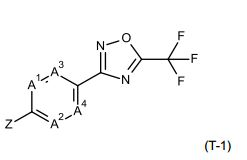
[0186] Cada uma das Tabelas 2 a 10 (que se seguem à Tabela 1) disponibiliza 80 compostos individuais adicionais da fórmula (T-1) em que Z é como especificamente definido nas Tabelas 2 a 10 (Fórmulas T-1.2 a T-1.10), que se referem à Tabela 1 em que A1, A2, A3, A4 e R9 são especificamente definidos.
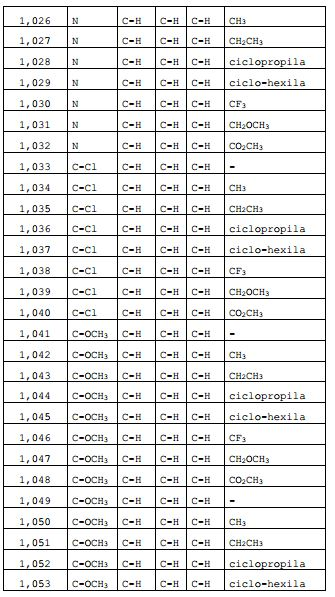

[0187] Tabela 2: Esta tabela revela compostos 2.001 a 2.080 da fórmula (T-1.2), que é um composto da fórmula (I), em que A1, A2, A3, A4,e R9 têm os significados específicos dados na Tabela 1.
[0188] Tabela 3: Esta tabela revela compostos 3.001 a 3.080 da fórmula (T-1.3), que é um composto da fórmula (I), em que A1, A2, A3, A4,e R9 têm os significados específicos dados na Tabela 1.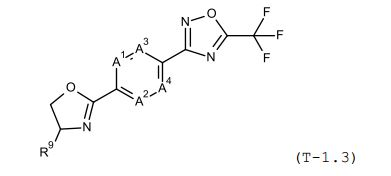
[0189] Tabela 4: Esta tabela revela compostos 4.001 a 4.080 da fórmula (T-1.4), que é um composto da fórmula (I), em que A1, A2, A3, A4, e R9 têm os significados específicos dados na Tabela 1.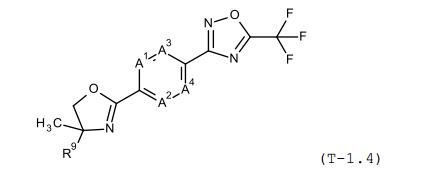
[0190] Tabela 5: Esta tabela revela compostos 5.001 a 5.080 que é um composto da fórmula (I), em que A4, e R9 têm os significados específicos dados na Tabela 1.
[0191] Tabela 6: Esta tabela revela compostos 6.001 a 6.080 que é um composto da fórmula (I), em que A4, e R9 têm os significados específicos dados na Tabela 1.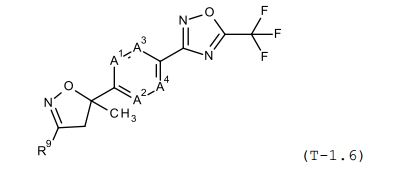
[0192] Tabela 7: Esta tabela revela compostos 7.001 a 7.080 da fórmula (T-1.7), que é um composto da fórmula (I), em que A1, A2, A3, A4, e R9 têm os significados específicos dados na Tabela 1.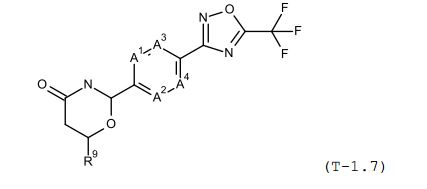
[0193] Tabela 8: Esta tabela revela compostos 8.001 a 8.080 da fórmula (T-1.8), que é um composto da fórmula (I), em que A1, A2, A3, A4, e R9 têm os significados específicos dados na Tabela 1.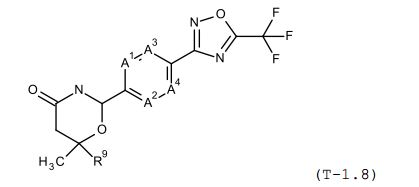
[0194] Tabela 9: Esta tabela revela compostos 9.001 a 9.080 da fórmula (T-1.9), que é um composto da fórmula (I), em que A1, A2, A3, A4, e R9 têm os significados específicos dados na Tabela 1.
[0195] Tabela 10: Esta tabela revela compostos 10.001 a 10.080 da fórmula (T-1.10), que é um composto da fórmula (I) em que A1, A2, A3, A4, e R9 têm os dados na Tabela 1.
[0196] A Tabela 1a (abaixo) (compostos 1a.001 a 1a.080) de subs R12 ou R14,de acordo com compostos como definidos para a Fórmula (T-1). A Fórmula (T-1) corresponde à Fórmula (I) como definida para a presente invenção.
[0197] Cada uma das Tabelas 2d a 7a (que se seguem à Tabela 1a) disponibilizam 80 compostos individuais adicionais da fórmula (T-1) em que Z é como especificamente definido nas Tabelas 2a a 7a (Fórmulas T-1.2a a T-1.7a), que se referem à Tabela 1a em que A1, A2, A3, A4 e R12 ou R14 são especificamente definidos. Tabela 1a: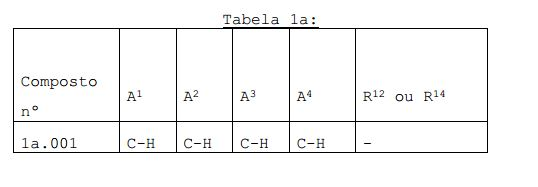
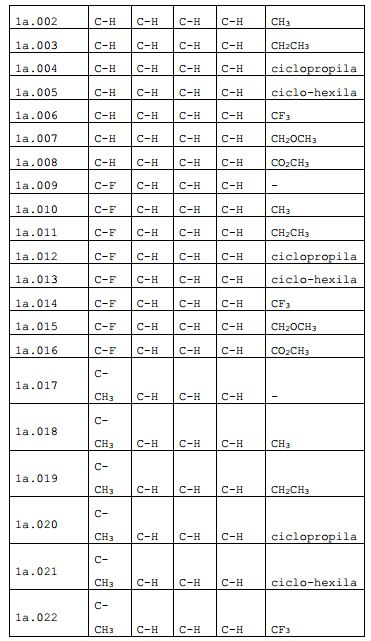


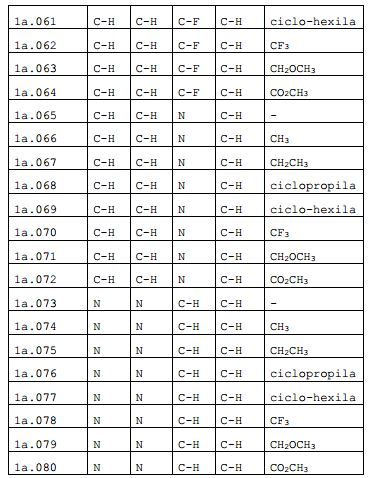
[0198] Tabela 2a: Esta tabela revela compostos 2a.001 a 2a.080 da fórmula (T-1.2a), que é um composto da fórmula (I), em que A1, A2, A3, A4, e R12 têm os significados específicos dados na Tabela 1a.
[0199] Tabela 3a: Esta tabela revela compostos 3a.001 a específicos dados na Tabela 1a.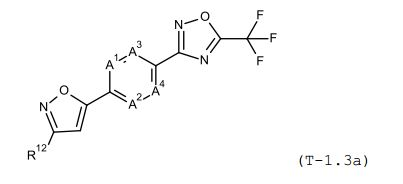
[0200] Tabela 4a: Esta tabela revela compostos 4a.001 a 4a.080 da fórmula (T-1.4a), que é um composto da fórmula (I), em que A1, A2, A3, A4, e R12 têm os significados específicos dados na Tabela 1a.
[0201] Tabela 5a: Esta tabela revela compostos 5a.001 a 5a.080 da fórmula (T-1.5a), que é um composto da fórmula (I), em que A1, A2, A3, A4, e R12 têm os significados específicos dados na Tabela 1.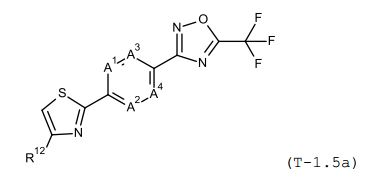
[0202] Tabela 6a: Esta tabela revela compostos 6a.001 a (I), em que A1, A2, A3, A4, e R14 têm os significados específicos dados na Tabela 1a.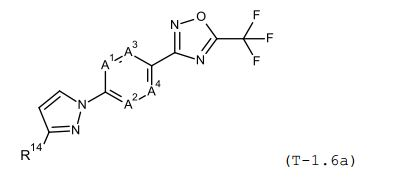
[0203] Tabela 7a: Esta tabela revela compostos 7a.001 a 7a.080 da fórmula (T-1.7a), que é um composto da fórmula (I), em que A1, A2, A3, A4, e R14 têm os significados específicos dados na Tabela 1a.
[0204] Os Exemplos que se seguem servem para ilustrar a invenção. Os compostos da invenção podem ser distinguidos de compostos conhecidos em virtude da maior eficácia a taxas de aplicação baixas, o que pode ser verificado pelo perito na técnica usando os procedimentos experimentais delineados nos Exemplos, usando taxas de aplicação mais baixas, se necessário, por exemplo, 50 ppm, 12,5 ppm, 6 ppm, 3 ppm, 1,5 ppm, 0,8 ppm ou 0,2 ppm.[0204] The Examples that follow serve to illustrate the invention. The compounds of the invention can be distinguished from known compounds by virtue of greater effectiveness at low application rates, which can be verified by the person skilled in the art using the experimental procedures outlined in the Examples, using lower application rates if necessary, e.g. , 50 ppm, 12.5 ppm, 6 ppm, 3 ppm, 1.5 ppm, 0.8 ppm or 0.2 ppm.
[0205] Os compostos da Fórmula (I) podem possuir qualquer número de benefícios incluindo, inter alia, níveis vantajosos de atividade biológica para proteção de plantas contra doenças que são causadas por fungos ou propriedades superiores para uso como ingredientes ativos agroquímicos (por exemplo, maior atividade biológica, um espectro de atividade vantajoso, um perfil de segurança aumentado (incluindo tolerância melhorada das culturas), propriedades físico-químicas melhoradas ou biodegradabilidade aumentada).[0205] The compounds of Formula (I) may possess any number of benefits including, inter alia, advantageous levels of biological activity for protecting plants against diseases that are caused by fungi or superior properties for use as agrochemical active ingredients (e.g., increased biological activity, an advantageous spectrum of activity, an increased safety profile (including improved crop tolerance), improved physicochemical properties or increased biodegradability).
[0206] Ao longo desta descrição, as temperaturas são apresentadas em graus Celsius (°C) e “p.f.” significa ponto de fusão. LC/MS significa Cromatografia Líquida acoplada a Espectrometria de Massa, e a descrição do aparelho e do método é a seguinte: O aparelho de LC/MS e método é: Método A:[0206] Throughout this description, temperatures are presented in degrees Celsius (°C) and “p.f.” means melting point. LC/MS stands for Liquid Chromatography Coupled to Mass Spectrometry, and the description of the apparatus and method is as follows: The LC/MS apparatus and method is: Method A:
[0207] Os espectros foram registrados em um Espectrômetro de Massa da Waters (Espectrômetro de massa de quadripolo simples SQD, SQDII) equipado com uma fonte de eletropulverização (Polaridade: íons positivos e negativos), Capilar: 3,00 kV, Gama do cone: 30 V, Extrator: 2,00 V, Temperatura da Fonte: 150 °C, Temperatura de Dessolvatação: 350 °C, Fluxo de Gás no Cone: 50 L/h, Fluxo de Gás de Dessolvatação: 650 L/h, Gama de massas: 100 a 900 Da) e um UPLC Acquity da Waters: Bomba binária, compartimento da coluna aquecido, detector de arranjo de díodos e detector ELSD. Coluna: UPLC HSS T3 da Waters, 1,8 μm, 30 x 2,1 mm, Temp: 60 °C, Gama de comprimentos de onda do DAD (nm): 210 a 500, Gradiente de Solventes: A = água + MeOH a 5% + HCOOH a 0,05%, B= Acetonitrila + HCOOH a 0,05%; gradiente: B a 10100% em 1,2 min; Fluxo (mL/min) 0,85. Método B:[0207] The spectra were recorded on a Waters Mass Spectrometer (Single quadripole mass spectrometer SQD, SQDII) equipped with an electrospray source (Polarity: positive and negative ions), Capillary: 3.00 kV, Cone range : 30 V, Extractor: 2.00 V, Source Temperature: 150 °C, Desolvation Temperature: 350 °C, Cone Gas Flow: 50 L/h, Desolvation Gas Flow: 650 L/h, Range mass mass: 100 to 900 Da) and a Waters Acquity UPLC: Binary pump, heated column compartment, diode array detector and ELSD detector. Column: Waters UPLC HSS T3, 1.8 µm, 30 x 2.1 mm, Temp: 60 °C, DAD wavelength range (nm): 210 to 500, Solvent Gradient: A = water + MeOH 5% + 0.05% HCOOH, B= Acetonitrile + 0.05% HCOOH; gradient: B to 10100% in 1.2 min; Flow (mL/min) 0.85. Method B:
[0208] Os espectros foram registrados em um Espectrômetro de Massa da Waters (Espectrômetro de massa de quadripolo simples SQD, SQDII) equipado com uma fonte de eletropulverização (Polaridade: íons positivos e negativos), Capilar: 3,00 kV, Gama do cone: 30 V, Extrator: 2,00 V, Temperatura da Fonte: 150 °C, Temperatura de Dessolvatação: 350 °C, Fluxo de Gás no Cone: 50 L/h, Fluxo de Gás de Dessolvatação: 650 L/h, Gama de massas: 100 a 900 Da) e um UPLC Acquity da Waters: Bomba binária, compartimento da coluna aquecido, detector de arranjo de díodos e detector ELSD. Coluna: UPLC HSS T3 da Waters, 1,8 μm, 30 x 2,1 mm, Temp: 60 °C, Gama de comprimentos de onda do DAD (nm): 210 a 500, Gradiente de Solventes: A = água + MeOH a 5% + HCOOH a 0,05%, B= Acetonitrila + HCOOH a 0,05%; gradiente: B a 10100% em 2,7 min; Fluxo (mL/min) 0,85.[0208] The spectra were recorded on a Waters Mass Spectrometer (Single quadripole mass spectrometer SQD, SQDII) equipped with an electrospray source (Polarity: positive and negative ions), Capillary: 3.00 kV, Cone range : 30 V, Extractor: 2.00 V, Source Temperature: 150 °C, Desolvation Temperature: 350 °C, Cone Gas Flow: 50 L/h, Desolvation Gas Flow: 650 L/h, Range mass mass: 100 to 900 Da) and a Waters Acquity UPLC: Binary pump, heated column compartment, diode array detector and ELSD detector. Column: Waters UPLC HSS T3, 1.8 µm, 30 x 2.1 mm, Temp: 60 °C, DAD wavelength range (nm): 210 to 500, Solvent Gradient: A = water + MeOH 5% + 0.05% HCOOH, B= Acetonitrile + 0.05% HCOOH; gradient: B to 10100% in 2.7 min; Flow (mL/min) 0.85.
[0209] Quando necessário, os compostos finais enantiomericamente puros podem ser obtidos de materiais racêmicos consoante o apropriado através de técnicas de separação física padrão, tais como cromatografia quiral de fase reversa, ou através de técnicas sintéticas por exemplo, por uso de materiais de partida quirais. Exemplos de Formulação Pós molháveis a) b) c) ingrediente ativo [composto da 25 % 50 % 75 % fórmula (I)] lignossulfonato de sódio 5 % 5 % - laurilsulfato de sódio 3 % - 5 % di-isobutilnaftalenossulfonato de sódio éter de fenol e polietilenoglicol - 2 % - (7-8 mol de óxido de etileno) ácido silícico altamente disperso 5 % 10 % 10 % Caulim 62 % 27 % -[0209] When necessary, enantiomerically pure final compounds can be obtained from racemic materials as appropriate through standard physical separation techniques, such as chiral reversed-phase chromatography, or through synthetic techniques, for example, by using starting materials chiral. Formulation Examples Wettable Powders a) b) c) active ingredient [compound of formula (I) 25 % 50 % 75 %] sodium lignosulfonate 5 % - sodium lauryl sulfate 3 % - 5 % sodium diisobutylnaphthalenesulfonate sodium ether phenol and polyethylene glycol - 2 % - (7-8 mol of ethylene oxide) highly dispersed silicic acid 5 % 10 % 10 % Kaolin 62 % 27 % -
[0210] O ingrediente ativo é completamente misturado com os adjuvantes e a mistura é completamente triturada em um moinho adequado, originando pós molháveis que podem ser diluídos com água para dar suspensões da concentração desejada. Pós para tratamento de sementes a a) b) c) seco ingrediente ativo [composto da 25 % 50 % 75 % fórmula (I)] óleo mineral leve 5 % 5 % 5 % ácido silícico altamente disperso 5 % 5 % - Caulim 65 % 40 % - Talco - 20 %[0210] The active ingredient is thoroughly mixed with the adjuvants and the mixture is thoroughly ground in a suitable mill, yielding wettable powders which can be diluted with water to give suspensions of the desired concentration. Powders for seed treatment a) b) c) dry active ingredient [composed of 25 % 50 % 75 % formula (I)] light mineral oil 5 % 5 % 5 % highly dispersed silicic acid 5 % 5 % - Kaolin 65 % 40 % - Talc - 20%
[0211] O ingrediente ativo é completamente misturado com os adjuvantes e a mistura é completamente triturada em um moinho adequado, originando pós que podem ser usados diretamente para tratamento de sementes. Concentrado emulsificável ingrediente ativo [composto da fórmula 10 % (I)] éter de octilfenol e polietilenoglicol 3 % (4-5 mol de óxido de etileno) dodecilbenzenossulfonato de cálcio 3 % éter de poliglicol de óleo de rícino (35 4 % mol de óxido de etileno) Ciclo-hexanona 30 % mistura de xilenos 50 %[0211] The active ingredient is completely mixed with the adjuvants and the mixture is completely ground in a suitable mill, resulting in powders that can be used directly for seed treatment. Emulsifiable concentrate active ingredient [compound of formula 10% (I)] 3% octylphenol polyethylene glycol ether (4-5 mol ethylene oxide) calcium dodecylbenzenesulfonate 3% castor oil polyglycol ether (35 4 mol % castor oxide of ethylene) Cyclohexanone 30% mixture of xylenes 50%
[0212] Emulsões de qualquer diluição requerida, que podem ser usadas na proteção de plantas, podem ser obtidas a partir deste concentrado por diluição com água. Poeiras a) b) c) Ingrediente ativo [composto de fórmula (I)] 5 % 6 % 4 % Talco 95 % - - Caulim - 94 % - enchimento mineral - - 96 %[0212] Emulsions of any required dilution, which can be used in plant protection, can be obtained from this concentrate by dilution with water. Dust a) b) c) Active ingredient [compound of formula (I)] 5 % 6 % 4 % Talc 95 % - - Kaolin - 94 % - mineral filler - - 96 %
[0213] Poeiras prontas-a-usar são obtidas por mistura do ingrediente ativo com o transportador e trituração da mistura em um moinho adequado. Esses pós podem ser também usados para desinfecções a seco para semente. Grânulos de extrusora Ingrediente ativo [composto de 15 % fórmula (I)] lignossulfonato de sódio 2 % Carboximetilcelulose 1 % Caulim 82 %[0213] Ready-to-use powders are obtained by mixing the active ingredient with the carrier and grinding the mixture in a suitable mill. These powders can also be used for dry disinfections for seed. Extruder Granules Active Ingredient [Compound 15% Formula (I)] Sodium Lignosulfonate 2% Carboxymethyl Cellulose 1% Kaolin 82%
[0214] O ingrediente ativo é misturado e triturado com os adjuvantes e a mistura é umedecida com água. A mistura é extrudada e depois seca em uma corrente de ar. Grânulos revestidos Ingrediente ativo [composto de 8 % fórmula (I)] polietilenoglicol (p. mol. 3 % 200) Caulim 89 %[0214] The active ingredient is mixed and ground with the adjuvants and the mixture is moistened with water. The mixture is extruded and then dried in a stream of air. Coated Granules Active Ingredient [Compound 8 % formula (I)] Polyethylene glycol (mol p. 3 % 200) Kaolin 89 %
[0215] O ingrediente ativo finamente triturado é uniformemente aplicado, em um misturador, ao caulim umedecido com polietilenoglicol. São obtidos deste modo grânulos revestidos não empoeirados. Concentrado em suspensão ingrediente ativo [composto da fórmula (I)] 40 % propilenoglicol 10 % éter de polietilenoglicol de nonilfenol (15 6 % mol de óxido de etileno) Lignossulfonato de sódio 10 % Carboximetilcelulose 1 % óleo de silicone (na forma de uma emulsão a 1 % 75% em água) Água 32 %[0215] The finely ground active ingredient is evenly applied, in a mixer, to the kaolin moistened with polyethylene glycol. Non-dusty coated granules are obtained in this way. Active ingredient suspension concentrate [compound of formula (I)] 40 % propylene glycol 10 % nonylphenol polyethylene glycol ether (15 6 mol % ethylene oxide) Sodium lignosulphonate 10 % Carboxymethylcellulose 1 % silicone oil (in the form of an emulsion at 1% 75% in water) Water 32%
[0216] O ingrediente ativo finamente triturado é intimamente misturado com os adjuvantes, originando um concentrado em suspensão do qual podem ser obtidas suspensões de qualquer diluição desejada por diluição com água. Usando essas diluições, plantas vivas bem como material de propagação de plantas podem ser tratados e protegidos contra infestação por microrganismos, por pulverização, derramamento ou imersão. Concentrado apto a fluir para tratamento de sementes ingrediente ativo [composto da fórmula (I)] 40 % propilenoglicol 5 % copolímero de butanol PO/EO 2 % triestirenofenol com 10-20 moles de EO 2 % 1,2-benzisotiazolin-3-ona (na forma de uma 0,5 % solução a 20% em água) sal de cálcio de pigmento monoazo 5 % Óleo de silicone (na forma de uma emulsão a 0,2 % 75% em água) Água 45,3 %[0216] The finely ground active ingredient is intimately mixed with the adjuvants, yielding a suspension concentrate from which suspensions of any desired dilution can be obtained by dilution with water. Using these dilutions, live plants as well as plant propagation material can be treated and protected against infestation by microorganisms by spraying, pouring or dipping. Flowable Seed Treatment Concentrate Active Ingredient [Compound of Formula (I)] 40% Propylene Glycol 5% PO/EO Butanol Copolymer 2% Tristyrenephenol with 10-20 Moles of EO 2% 1,2-Benzisothiazolin-3-one (as a 0.5% 20% solution in water) monoazo pigment calcium salt 5% Silicone oil (as a 0.2% 75% emulsion in water) Water 45.3%
[0217] O ingrediente ativo finamente triturado é intimamente misturado com os adjuvantes, originando um concentrado em suspensão do qual podem ser obtidas suspensões de qualquer diluição desejada por diluição com água. Usando essas diluições, plantas vivas bem como material de propagação de plantas podem ser tratados e protegidos contra infestação por microrganismos, por pulverização, derramamento ou imersão. Suspensão para Cápsulas de Liberação Lenta[0217] The finely ground active ingredient is intimately mixed with the adjuvants, yielding a suspension concentrate from which suspensions of any desired dilution can be obtained by dilution with water. Using these dilutions, live plants as well as plant propagation material can be treated and protected against infestation by microorganisms by spraying, pouring or dipping. Suspension for Slow Release Capsules
[0218] 28 partes de uma combinação do composto da fórmula I são misturadas com 2 partes de um solvente aromático e 7 partes de mistura de di-isocianato de tolueno/polimetileno- polifenilisocianato (8:1). Esta mistura é emulsificada em uma mistura de 1,2 partes de álcool de polivinila, 0,05 partes de um antiespumante e 51,6 partes de água até ser alcançado o tamanho de partículas desejado. A esta emulsão é adicionada uma mistura de 2,8 partes de 1,6-diamino-hexano em 5,3 partes de água. A mistura é agitada até a reação de polimerização estar completa. A suspensão para cápsulas obtida é estabilizada por adição de 0,25 partes de um espessante e 3 partes de um agente dispersante. A formulação de suspensão para cápsulas contém 28% dos ingredientes ativos. O diâmetro médio das cápsulas é 8-15 mícrones.[0218] 28 parts of a combination compound of formula I are mixed with 2 parts of an aromatic solvent and 7 parts of toluene diisocyanate/polymethylenepolyphenylisocyanate mixture (8:1). This mixture is emulsified in a mixture of 1.2 parts of polyvinyl alcohol, 0.05 parts of a defoamer and 51.6 parts of water until the desired particle size is achieved. To this emulsion is added a mixture of 2.8 parts of 1,6-diaminohexane in 5.3 parts of water. The mixture is stirred until the polymerization reaction is complete. The obtained capsule suspension is stabilized by adding 0.25 parts of a thickener and 3 parts of a dispersing agent. The suspension formulation for capsules contains 28% of the active ingredients. The average capsule diameter is 8-15 microns.
[0219] A formulação resultante é aplicada às sementes como uma suspensão aquosa em um dispositivo adequado para esse propósito. Lista de Abreviaturas: AIBN = azobisisobutironitrila DMF = dimetilformamida DIPEA = N,N-di-isopropiletilamina EtOAc = acetato de etila KHMDS = bis(trimetilsilil)amida de potássio HCl = ácido clorídrico p.f. = ponto de fusão °C = graus Celsius MeOH = álcool de metila NaOH = hidróxido de sódio NBS = N-bromossuccinimida min = minutos t.a. = temperatura ambiente TFAA = anidrido do ácido trifluoroacético THF = tetra-hidrofurano tR = tempo de retenção LC/MS = Cromatografia Líquida acoplada a Espectrometria de Massa (a descrição do aparelho e dos métodos usados para a análise LC/MS está apresentada acima) Exemplos de Preparação Exemplo 1: Este exemplo ilustra a preparação de 3-[4- (5-metiloxazol-2-il)fenil]-5-(trifluorometil)-1,2,4- oxadiazol (Composto C-2 da Tabela C).
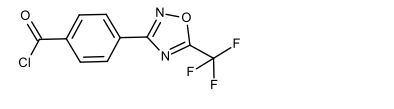
[0220] A uma solução de ácido 4-[5-(trifluorometil)-1,2,4- oxadiazol-3-il]benzoico (5,0 g, 19 mmol) em uma mistura de diclorometano (190 mL) e dimetilformamida (0,15 mL) foi lentamente adicionado cloreto de tionila (2,8 mL, 39 mmol). A suspensão resultante foi então aquecida sob refluxo durante 4 horas, e então evaporada até à secura sob vácuo, dando origem a cloreto de 4-[5-(trifluorometil)-1,2,4-oxadiazol- 3-il]benzoíla na forma de um sólido bege. O produto foi usado para o passo seguinte sem purificação adicional. Passo 2:Preparação de N-prop-2-inil-4- [5- (trifluorometil)-1,2,4-oxadiazol-3-il]benzamida
[0221] A uma solução de prop-2-in-1-amina (0,7 mL, 11 mmol) e trietilamina (3,1 mL, 22 mmol) em diclorometano (54 mL) foi adicionado cloreto de 4-[5-(trifluorometil)-1,2,4- oxadiazol-3-il]benzoíla (3 g, 11 mmol) em uma porção. A mistura resultante foi agitada durante 6 horas à temperatura ambiente. A mistura reacional foi então diluída com diclorometano e água. A camada orgânica foi lavada com HCl 1 N, NaOH 1 N e salmoura, foi seca em Na2SO4 e concentrada sob pressão reduzida. O resíduo bruto foi purificado por cromatografia Flash, dando origem a N-prop-2-inil-4-[5- (trifluorometil)-1,2,4-oxadiazol-3-il]benzamida na forma de um sólido branco. 1H RMN (400 Mhz, CDCl3) δ ppm: 2,32 (t, J=2,6 Hz, 1H) 4,30 (dd, J=5,1, 2,6 Hz, 2H) 6,38 (s l, 1H) 7,89 - 7,99 (m, 2H) 8,16 - 8,27 (m, 2H). LC/MS (Método A) tempo de retenção = 0,93 min; 296 [M+H+]. mp: 168-170°C. Passo 3: Síntese de 3-[4-(5-metiloxazol-2-il)fenil]-5- (trifluorometil)-1,2,4-oxadiazol[0221] To a solution of prop-2-yn-1-amine (0.7 mL, 11 mmol) and triethylamine (3.1 mL, 22 mmol) in dichloromethane (54 mL) was added 4-[5 chloride -(trifluoromethyl)-1,2,4-oxadiazol-3-yl]benzoyl (3 g, 11 mmol) in one serving. The resulting mixture was stirred for 6 hours at room temperature. The reaction mixture was then diluted with dichloromethane and water. The organic layer was washed with 1N HCl, 1N NaOH and brine, dried over Na 2 SO 4 and concentrated under reduced pressure. The crude residue was purified by Flash chromatography to give N-prop-2-ynyl-4-[5-(trifluoromethyl)-1,2,4-oxadiazol-3-yl]benzamide as a white solid. 1H NMR (400 MHz, CDCl3) δ ppm: 2.32 (t, J=2.6 Hz, 1H) 4.30 (dd, J=5.1, 2.6 Hz, 2H) 6.38 (s l , 1H) 7.89 - 7.99 (m, 2H) 8.16 - 8.27 (m, 2H). LC/MS (Method A) retention time = 0.93 min; 296 [M+H+]. mp: 168-170°C. Step 3: Synthesis of 3-[4-(5-methyloxazol-2-yl)phenyl]-5-(trifluoromethyl)-1,2,4-oxadiazole
[0222] A uma suspensão de N-prop-2-inil-4-[5- (trifluorometil)-1,2,4-oxadiazol-3-il]benzamida (295 mg, 1 mmol) em dicloroetano (5 mL) foi adicionado tricloreto de ferro (81 mg, 0,5 mmol). A mistura resultante foi aquecida até 80 °C e agitada durante 4 horas. A mistura reacional foi então esfriada e diluída com água. A camada aquosa foi extraída 3 vezes com diclorometano, e as camadas orgânicas combinadas foram lavadas com água e salmoura, secas em Na2SO4 e concentradas sob pressão reduzida. O produto bruto foi purificado por cromatografia Flash, dando origem a 3-[4-(5- metiloxazol-2-il)fenil]-5-(trifluorometil)-1,2,4-oxadiazol. 1H RMN (400 Mhz, CDCl3) δ ppm: 2,43 (d, J=1,1 Hz, 3H) 6,90 (d, J=1,1 Hz, 1H) 8,08 - 8,22 (m, 4H). LC/MS (Método A) tempo de retenção = 1,18 min; 296 [M+H+]. mp: 109-111°C. Exemplo 2: Este exemplo ilustra a preparação de 3-[4- (4-metiltiazol-2-il)fenil]-5-(trifluorometil)-1,2,4- oxadiazol (Composto C-8 da Tabela C)
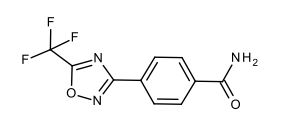
[0223] Uma solução de cloreto de 4-[5-(trifluorometil)- 1,2,4-oxadiazol-3-il]benzoíla (26,8 g, 96,9 mmol) em diclorometano (25 mL) foi adicionada gota a gota, ao longo de um período de 60 min, a uma mistura de diclorometano (100 mL) e solução de amônia 25% (30 mL) a 0 °C. Após a adição, a mistura reacional foi adicionalmente diluída com diclorometano (40 mL). A suspensão foi agitada durante 2 horas a 0 °C e então aquecida para a temperatura ambiente. A suspensão foi filtrada e lavada com água até o filtrado ter alcançado um pH de 7. Os cristais obtidos foram sucessivamente lavados com ciclo-hexano (100 mL) e éter (2 x 100 mL), secos sob vácuo a 60 °C, dando origem a 4-[5- (trifluorometil)-1,2,4-oxadiazol-3-il]benzamida na forma de um sólido bege. 1H RMN (400 Mhz, CD3OD) δ ppm: 8,03 - 8,08 (m, 2H) 8,19 - 8,25 (m, 2H). LC/MS (Método B) tempo de retenção = 1,19 min; 258 [M+H+]. mp: 235-237°C. Passo 2: Preparação de 4-[5-(trifluorometil)-1,2,4- oxadiazol-3-il]benzenocarbotioamida
[0224] A uma mistura de 4-[5-(trifluorometil)-1,2,4- oxadiazol-3-il]benzamida (2,57 g, 9,99 mmol) em tolueno (100 mL) foi adicionado reagente de Lawesson (3,03 g, 7,50 mmol). A mistura reacional resultante foi aquecida para 90-100 °C durante 10 min e então esfriada antes de ser derramada em uma mistura de NaHCO3 aq (250 mL) e acetato de etila (250 mL). A fase orgânica foi separada, seca em MgSO4 e concentrada. O produto bruto foi purificado por cromatografia Flash em sílica gel, dando origem a 4-[5- (trifluorometil)-1,2,4-oxadiazol-3-il]benzenocarbotioamida na forma de um cristal amarelo. LC/MS (Método B) tempo de retenção = 1,42 min; 274 [M+H+]. mp: 192-194°C. Passo 3: Síntese de 3-[4-(4-metiltiazol-2-il)fenil]-5- (trifluorometil)-1,2,4-oxadiazol
[0225] A uma solução de 4-[5-(trifluorometil)-1,2,4- oxadiazol-3-il]benzenocarbotioamida (0,2 g, 0,731 mmol) em etanol seco (5 mL) foi adicionado 1-cloropropan-2-ona (0,059 mL, 0,731 mmol). A solução resultante foi aquecida para 70 °C e agitada durante 24 horas. A mistura reacional esfriada foi então derramada em uma mistura de água e acetato de etila. A camada orgânica foi separada, lavada com NaHCO3 e salmoura, seca em MgSO4 e evaporada. O resíduo bruto foi purificado em sílica gel, dando origem a 3-[4-(4- metiltiazol-2-il)fenil]-5-(trifluorometil)-1,2,4-oxadiazol na forma de cristais brancos. 1H RMN (400 Mhz, CDCl3) δ ppm: 2,54 (d, J=0,7 Hz, 3H) 6,97 (d, J=1,1 Hz, 1H) 8,07 - 8,12 (m, 2H) 8,16 - 8,22 (m, 2H). LC/MS (Método B) tempo de retenção = 2,04 min; 312 [M+H+]. mp: 89-90°C. Exemplo 3: Este exemplo ilustra a preparação de 3-[4- (3-metil-4,5-di-hidroisoxazol-5-il)fenil]-5- (trifluorometil)-1,2,4-oxadiazol (Composto A-4 da Tabela A).

[0226] Uma solução de cloreto de 4-[5-(trifluorometil)- 1,2,4-oxadiazol-3-il]benzoíla (4,15 g, 14,6 mmol) em diclorometano (20 mL) foi adicionada gota a gota, à temperatura ambiente, a uma solução agitada de N- metoximetanamina (1,10 g, 17,5 mmol) e trietilamina (3,10 mL, 21,8 mmol) em diclorometano (80 mL). A mistura foi agitada à temperatura ambiente durante 18 horas. A mistura reacional foi derramada em água e extraída duas vezes com diclorometano. As camadas orgânicas combinadas foram lavadas com salmoura, secas em sulfato de sódio e filtradas. O solvente foi removido sob pressão reduzida e o resíduo bruto resultante foi sujeito a cromatografia Flash em sílica gel (gradiente de eluentes heptano:EtOAc 9:1 a 65:35), originando 4,12 g de N-metoxi-N-metil-4-[5-(trifluorometil)- 1,2,4-oxadiazol-3-il]benzamida como um sólido. 1H RMN (400 Mhz, CDCl3) δ ppm: 8,18 (d, 2H), 7,84 (d, 2H), 3,56 (s,3H), 3,40 (s,3H). LC/MS (Método A) tempo de retenção = 0,97 min; 302 [M+H]+. Passo 2: Preparação de 4-[5-(trifluorometil)-1,2,4- oxadiazol-3-il]benzaldeído
[0227] Em um balão de múltiplas tubuladuras de 75 mL equipado com agitador, termômetro a -78 °C sob argônio, DIBAL-H, 1,0 M em tolueno (16 mL, 16,0 mmol) foi adicionado gota a gota a uma solução de N-metoxi-N-metil-4-[5- (trifluorometil)-1,2,4-oxadiazol-3-il]benzamida (4,10 g, 13,3 mmol) em 2-metiltetra-hidrofurano (90 mL). A mistura foi agitada durante duas horas a -78 °C e, durante uma hora, a temperatura foi deixada aumentar para 0 °C. A mistura foi extinta por adição gota a gota de uma solução sat. de cloreto de amônio. Ocorreu precipitação de um sólido branco. HCl a 4 M foi adicionado até à solubilização total. A mistura foi extraída três vezes com acetato de etila. As camadas orgânicas combinadas foram secas em sulfato de magnésio e evaporadas, dando origem a um resíduo bruto na forma de um sólido bege. O resíduo bruto foi sujeito a cromatografia Flash em sílica gel (gradiente de eluentes heptano: EtOAc 99:1 até 90:10), 4-[5-(trifluorometil)-1,2,4-oxadiazol-3- il]benzaldeído na forma de um sólido branco. 1H RMN (400 Mhz, CDCl3) δ ppm: 10,12 (s, 1H), 8,31 (d, 2H), 8,05 (d, 2H). 19F RMN (400 Mhz, CDCl3) δ ppm: -65,29 (s). mp: 40-50°C. Passo 3: Preparação de 5-(trifluorometil)-3-(4- vinilfenil)-1,2,4-oxadiazol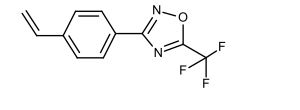
[0228] A uma suspensão branca de bromidrato de metil(trifenil)fosfônio (7,10 g, 19,8 mmol) em THF (42 mL) à t.a. foi adicionado t-BuOK em THF (1 M, 18,6 mL, 18,6 mmol), a solução amarela resultante foi agitada à t.a. durante 1 hora. A mistura reacional foi então esfriada para -78 °C e uma solução de 4-[5-(trifluorometil)-1,2,4- oxadiazol-3-il]benzaldeído (3,00 g, 12,4 mmol) em THF (20 mL) foi adicionada gota a gota. A mistura reacional foi então aquecida de -78 °C para -30 °C, ao longo de um período de 100 min, e então aquecida para a t.a. e agitada durante mais 90 min. O pH da mistura foi ajustado para neutro pela adição de HCl 1 M e a fase aquosa foi extraída com AcOEt. As camadas orgânicas combinadas foram lavadas com salmoura, secas em Na2SO4, filtradas, concentradas e purificadas por Isco Combiflash Rf usando ciclo-hexano/AcOEt, dando origem a 5- (trifluorometil)-3-(4-vinilfenil)-1,2,4-oxadiazol na forma de um sólido branco. 1H RMN (400 Mhz, CDCl3) δ ppm: 5,34 (d, J=10,6 Hz, 1H) 5,82 (d, J=17,6 Hz, 1H) 6,70 (dd, J=17,6, 10,6 Hz, 1H) 7,48 (d, J=8,0 Hz, 2H) 8,01 (d, J=7,8 Hz, 2H). LC/MS (Método A) tempo de retenção = 1,19 min; 259 [M+H]+. Passo 4:Preparação de 3- [4- (3-metil-4,5-di- hidroisoxazol-5-il)fenil]-5-(trifluorometil)-1,2,4- oxadiazol:[0228] To a white suspension of methyl(triphenyl)phosphonium hydrobromide (7.10 g, 19.8 mmol) in THF (42 mL) at r.t. t-BuOK in THF (1M, 18.6 mL, 18.6 mmol) was added, the resulting yellow solution was stirred at r.t. for 1 hour. The reaction mixture was then cooled to -78 °C and a solution of 4-[5-(trifluoromethyl)-1,2,4-oxadiazol-3-yl]benzaldehyde (3.00 g, 12.4 mmol) in THF (20 ml) was added dropwise. The reaction mixture was then warmed from -78 °C to -30 °C over a period of 100 min and then warmed to r.t. and stirred for an additional 90 min. The pH of the mixture was adjusted to neutral by adding 1M HCl and the aqueous phase was extracted with AcOEt. The combined organic layers were washed with brine, dried over Na 2 SO 4 , filtered, concentrated and purified by Isco Combiflash Rf using cyclohexane/AcOEt to give 5-(trifluoromethyl)-3-(4-vinylphenyl)-1,2, 4-oxadiazole as a white solid. 1H NMR (400 MHz, CDCl3) δ ppm: 5.34 (d, J=10.6 Hz, 1H) 5.82 (d, J=17.6 Hz, 1H) 6.70 (dd, J=17 .6, 10.6 Hz, 1H) 7.48 (d, J=8.0 Hz, 2H) 8.01 (d, J=7.8 Hz, 2H). LC/MS (Method A) retention time = 1.19 min; 259 [M+H]+. Step 4: Preparation of 3-[4-(3-methyl-4,5-dihydroisoxazol-5-yl)phenyl]-5-(trifluoromethyl)-1,2,4-oxadiazole:
[0229] A uma solução de 5-(trifluorometil)-3-(4- vinilfenil)-1,2,4-oxadiazol (0,050 g, 0,21 mmol) em metanol (2,1 mL) foi adicionado acetaldoxima (0,014 g, 0,014 mL, 0,23 mmol) seguido de (diacetoxi-iodo)benzeno (0,074 g, 0,23 mmol) . A mistura reacional foi agitada durante a noite à t.a. Uma vez que a reação não prosseguiu até ao estado completado, um equivalente adicional de (diacetoxi- iodo)benzeno foi adicionado e a mistura reacional foi agitada durante mais 1 h 40 mins à t.a. antes de todos os solventes terem sido evaporados. O óleo resultante foi então purificado por Isco Combiflash Rf usando ciclo-hexano/AcOEt como eluente, dando origem a 3-[4-(3-metil-4,5-di-hidroisoxazol- 5-il)fenil]-5-(trifluorometil)-1,2,4-oxadiazol na forma de um sólido branco. 1H RMN (400 Mhz, CDCl3) δ ppm: 1,98 (s, 3H) 2,85 (ddd, J=17,1, 7,7, 0,9 Hz, 1H) 3,38 (ddd, J=17,1, 11,0, 0,9 Hz, 1H) 5,57 (dd, J=11,0, 7,7 Hz, 1H) 7,43 (d, J=8,1 Hz, 2H) 8,05 (d, J=8,1 Hz, 2H). LC/MS (Método A) tempo de retenção = 1,03min; 298 [M+H]+. mp: 89-92°C. Exemplo 4: Este exemplo ilustra a preparação de 3-[4- (3-metilisoxazol-5-il)fenil]-5-(trifluorometil)-1,2,4- oxadiazol (Composto C-11 da Tabela C).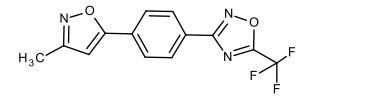
[0230] A uma solução de 3-[4-(3-metil-4,5-di-hidroisoxazol- 5-il)fenil]-5-(trifluorometil)-1,2,4-oxadiazol (0,040 g, 0,13 mmol) em tolueno (0,45 mL) foi adicionado óxido de manganês(IV) ativado (0,200 g, 2,30 mmol). A mistura reacional foi agitada a 100 °C durante 70 min. A mistura reacional foi então esfriada, filtrada em Celite e lavada com tolueno. O filtrado foi concentrado, dando origem a 3- [4-(3-metilisoxazol-5-il)fenil]-5-(trifluorometil)-1,2,4- oxadiazol na forma de um sólido branco. 1H RMN (400 Mhz, CDCl3) δ ppm: 2,32 (s, 3H) 6,43 (s, 1H) 7,81 - 7,89 (m, 2H) 8,12 - 8,18 (m, 2H). LC/MS (Método A) tempo de retenção = 1,12 min; 296 [M+H]+. Exemplo 5: Este exemplo ilustra a preparação de 3-[4- (3,5-dimetilpirazol-1-il)fenil]-5-(trifluorometil)-1,2,4- oxadiazol (Composto E-1 da Tabela E).
[0231] Em um balão de três tubuladuras de 100 mL, equipado com um agitador, um condensador e um borbulhador, foi dissolvido 4-(3,5-dimetilpirazol-1-il)benzonitrila (500 mg, 2,53 mmol) em etanol (44 mL). Trietilamina (0,72, 5,07 mmol) foi adicionado, seguido da adição de cloridrato de hidroxilamina (356 mg, 5,07 mmol) em pequenas porções. A mistura reacional foi agitada sob refluxo durante 3,5 horas e então evaporada até à secura, dando origem a 4-(3,5- dimetilpirazol-1-il)-N'-hidroxi-benzamidina. Em um balão de fundo redondo de três tubuladuras de 100 mL, a 4-(3,5- dimetilpirazol-1-il)-N'-hidroxi-benzamidina bruta foi suspensa em tetra-hidrofurano (22 mL) e piridina (0,83 mL, 10,14 mmol). A mistura resultante foi esfriada para 5 °C e então anidrido trifluoroacético foi adicionado gota a gota (1,07 mL, 7,6 mmol). A suspensão branca foi deixada aquecer para a temperatura ambiente e foi agitada durante a noite. A mistura reacional foi evaporada sob vácuo e o óleo amarelo obtido foi misturado com água e extraído com acetato de etila. A fase orgânica foi lavada duas vezes com água e uma vez com salmoura, foi seca em sulfato de sódio, filtrada e evaporada sob pressão reduzida. O produto bruto foi purificado por cromatografia Flash em sílica gel e então o óleo obtido foi dissolvido em acetato de etila, lavado com NaOH 1 N e salmoura, seco em sulfato de sódio, filtrado e evaporado sob pressão reduzida, dando origem a 3-[4-(3,5- dimetilpirazol-1-il)fenil]-5-(trifluorometil)-1,2,4- oxadiazol na forma de um óleo amarelo. 1H RMN (400 Mhz, CDCl3) δ ppm: 2,32 (s, 3H), 2,40 (s, 3H), 6,05 (s, 1H), 7,64 (d, J=8,4 Hz, 2H), 8,21 (d, J=8,4 Hz, 2H). LC/MS (Método A) tempo de retenção = 1,12 min; 309 [M+H]+. mp: 109-111°C. Exemplo 6: Este exemplo ilustra a preparação de 3-[4- [5-(trifluorometil)-1,2,4-oxadiazol-3-il]fenil]-4,5-di- hidroisoxazol-5-carboxilato de metila (Composto A-8 da Tabela A)

[0232] 4-[5-(trifluorometil)-1,2,4-oxadiazol-3- il]benzaldeído (10 g, 37,167 mmol) foi dissolvido em uma mistura de etanol (100 mL) e trietilamina (8,90 mL, 63,184 mmol). Cloridrato de hidroxilamina (3,87 g, 55,751 mmol) foi então adicionado e a mistura resultante foi agitada durante a noite à temperatura ambiente. A mistura reacional foi evaporada e o resíduo bruto obtido foi purificado em sílica gel, dando origem a oxima de 4-[5-(trifluorometil)-1,2,4- oxadiazol-3-il]benzaldeído. LC/MS (Método B) tempo de retenção = 1,46 min; 258 [M+H]+. Passo 2: Síntese de 3-[4-[5-(trifluorometil)-1,2,4- oxadiazol-3-il]fenil]-4,5-di-hidroisoxazol-5-carboxilato de metila[0232] 4-[5-(trifluoromethyl)-1,2,4-oxadiazol-3-yl]benzaldehyde (10 g, 37.167 mmol) was dissolved in a mixture of ethanol (100 mL) and triethylamine (8.90 mL , 63.184 mmol). Hydroxylamine hydrochloride (3.87 g, 55.751 mmol) was then added and the resulting mixture was stirred overnight at room temperature. The reaction mixture was evaporated and the obtained crude residue was purified on silica gel, yielding 4-[5-(trifluoromethyl)-1,2,4-oxadiazol-3-yl]benzaldehyde oxime. LC/MS (Method B) retention time = 1.46 min; 258 [M+H]+. Step 2: Synthesis of methyl 3-[4-[5-(trifluoromethyl)-1,2,4-oxadiazol-3-yl]phenyl]-4,5-dihydroisoxazole-5-carboxylate
[0233] A uma solução de oxima de 4-[5-(trifluorometil)- 1,2,4-oxadiazol-3-il]benzaldeído (175 mg, 0,68 mmol) e acrilato de metila (0,074 mL, 0,816 mmol) em metanol (3 mL) foi adicionado TFA (0,005 mL, 0,06 mmol), seguido de adição de (diacetoxi-iodo)benzeno (263 mg, 0,816 mmol) em 3 porções, ao longo de um período de 30 min à temperatura ambiente. A suspensão foi agitada durante 1 hora à temperatura ambiente e então concentrada sob pressão reduzida. O resíduo bruto foi purificado por cromatografia Flash, dando origem a 3-[4- [5-(trifluorometil)-1,2,4-oxadiazol-3-il]fenil]-4,5-di- hidroisoxazol-5-carboxilato de metila na forma de cristais amarelos. LC/MS (Método B) tempo de retenção = 1,63 min; 342 [M+H]+. Exemplo 7: Este exemplo ilustra a preparação de 3-[4- [5-(etoximetil)isoxazol-3-il]fenil]-5-(trifluorometil)- 1,2,4-oxadiazol (Composto C-5 da Tabela C).
[0234] A uma solução de oxima de 4-[5-(trifluorometil)- 1,2,4-oxadiazol-3-il]benzaldeído (175 mg, 0,680 mmol) e 3- etoxiprop-1-ino (0,083 mL, 0,82 mmol) em metanol (3 mL) à t.a. foi adicionado TFA (0,005 mL, 0,06 mmol), seguido de adição de (diacetoxi-iodo)benzeno (263 mg, 0,197 mmol) em 3 porções, ao longo de um período de 30 min. A suspensão foi agitada durante 1 hora à temperatura ambiente. A suspensão branca foi concentrada e seca sob vácuo. O resíduo bruto foi purificado por cromatografia Flash, dando origem a 3-[4-[5- (etoximetil)isoxazol-3-il]fenil]-5-(trifluorometil)-1,2,4- oxadiazol. 1H RMN (400 Mhz, CLOROFÓRMIO-d) δ ppm 1,25 - 1,32 (t, 3 H) 3,66 (qd, J=6,97, 1,10 Hz, 2 H) 4,67 (d, J=2,57 Hz, 2 H) 6,66 (d, J=7,70 Hz, 1 H) 7,98 (d, J=8,44 Hz, 1 H) 8,03 (d, J=8,44 Hz, 1 H) 8,22 (d, J=8,44 Hz, 1 H) 8,29 (d, J=8,44 Hz, 1 H). LC/MS (Método B) tempo de retenção = 1,92 min; 340 [M+H]+. Exemplo 8: Este exemplo ilustra a preparação de 3-[4- (5-ciclopropilisoxazol-3-il)fenil]-5-(trifluorometil)- 1,2,4-oxadiazol (Composto C-7 da Tabela C).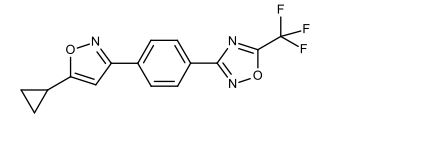
[0235] A uma solução de oxima de [5-(trifluorometil)-1,2,4- oxadiazol-3-il]benzaldeído (175 mg, 0,680 mmol) e ciclopropilacetileno (0,069 mL, 0,816 mmol) em metanol (3 mL) à t.a. foi adicionado TFA (0,005 mL, 0,06 mmol), seguido de adição de (diacetoxi-iodo)benzeno (263 mg, 0,197 mmol) em 3 porções, ao longo de um período de 30 min. A suspensão foi agitada durante 1 hora à temperatura ambiente. A suspensão branca foi concentrada e seca sob vácuo. O produto bruto foi purificado com cromatografia Flash, dando origem a 3-[4-(5- ciclopropilisoxazol-3-il)fenil]-5-(trifluorometil)-1,2,4- oxadiazol na forma de um sólido amarelo claro. 1H RMN (400 Mhz, CDCl3) δ ppm: 1,01 - 1,09 (m, 2H) 1,10 - 1,17 (m, 2H) 2,07 - 2,17 (m, 1H) 6,30 (s, 1H) 7,99 (d, J=8,4 Hz, 2H) 8,27 (d, J=8,4 Hz, 2H). LC/MS (Método B) tempo de retenção = 1,98 min; 322 [M+H]+. Exemplo 9: Este exemplo ilustra a preparação 5,5- dimetil-2-[4-[5-(trifluorometil)-1,2,4-oxadiazol-3- il]fenil]-1,3-oxazinan-4-ona (Composto A-10 da Tabela A).
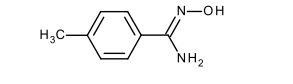
[0236] A uma suspensão agitada de 4-metilbenzonitrila (35 g, 0,29 mol) em etanol (220 mL) e água (440 mL) à t.a. foi adicionado cloridrato de hidroxilamina (41,1 g, 0,58 mol), carbonato de potássio (65,4 g, 0,47 mol) e 8-hidroxiquinolina (0,22 g, 1,5 mmol). A mistura reacional foi aquecida a 80 °C durante 4 horas. A mistura foi resfriada até à t.a. e diluída com HCl a 2 N até pH 8. O etanol foi evaporado sob pressão reduzida. A mistura foi filtrada, lavada com água e seca sob vácuo, dando origem ao composto do título. LC/MS (Método A) tempo de retenção = 0,23 minutos, 151,0 (M+H). Passo 2: Preparação de 3-(p-tolil)-5-(trifluorometil)- 1,2,4-oxadiazol
[0237] A uma solução agitada de N’-hidroxi-4-metil- benzamidina (38,7 g, 0,25 mol) em 2-metiltetra-hidrofurano (750 mL) foi adicionado TFAA a 0 °C. A mistura reacional foi agitada a 15 °C durante duas horas e depois diluída em água. A camada orgânica foi separada, lavada sucessivamente com solução de bicarbonato de sódio, solução de cloreto de amônio e água, seca em sulfato de sódio, filtrada e evaporada até à secura. O produto bruto foi purificado por cromatografia Flash em sílica gel (coluna pré-empacotada com 750 g) com heptano/EtOAc 99:1 até 90:10, dando origem ao composto do título na forma de um óleo límpido, que solidificou após armazenagem. 1H RMN (400 Mhz, CDCl3) δ ppm: 8,00 (d, 2H), 7,32 (d, 2H), 2,45 (s,3H). 19F RMN (400 Mhz, CDCl3) δ ppm: -65,41 (s). LC/MS (Método A) tempo de retenção = 1,15 minutos, massa não detectada. Passo 3a: Preparação de 3-[4-(bromometil)fenil]-5- (trifluorometil)-1,2,4-oxadiazol
[0238] Uma mistura agitada de 3-(p-tolil)-5- (trifluorometil)-1,2,4-oxadiazol (56,0 g, 0,24 mol) e NBS (45,4 g, 0,25 mol) em tetraclorometano (480 mL) sob argônio foi aquecida até 70 °C. AIBN (4,03 g, 24 mmol) foi adicionada e a mistura reacional foi agitada a 65 °C durante 18 horas. A mistura foi esfriada para a t.a. e diluída com diclorometano e água. As camadas foram separadas. A camada orgânica foi lavada com uma solução de bicarbonato de sódio, seca em sulfato de sódio, filtrada e evaporada até à secura. O resíduo bruto foi purificado por cromatografia Flash em sílica gel (coluna pré-empacotada de 750 g) com ciclo- hexano/EtOAc 100:0 até 95:5, dando origem a 3-[4- (bromometil)fenil]-5-(trifluorometil)-1,2,4-oxadiazol na forma de um sólido branco p.f.: 58-63 °C. 1H RMN (400 Mhz, CDCl3) δ ppm: 8,11 (d, 2H), 7,55 (d, 2H), 4,53 (s,2H). 19F RMN (400 Mhz, CDCl3) δ ppm: -65,32 (s).[0238] A stirred mixture of 3-(p-tolyl)-5-(trifluoromethyl)-1,2,4-oxadiazole (56.0 g, 0.24 mol) and NBS (45.4 g, 0.25 mol) in tetrachloromethane (480 mL) under argon was heated to 70 °C. AIBN (4.03 g, 24 mmol) was added and the reaction mixture was stirred at 65°C for 18 hours. The mixture was cooled to r.t. and diluted with dichloromethane and water. The layers have been separated. The organic layer was washed with sodium bicarbonate solution, dried over sodium sulfate, filtered and evaporated to dryness. The crude residue was purified by flash chromatography on silica gel (750g prepacked column) with cyclohexane/EtOAc 100:0 to 95:5 to give 3-[4-(bromomethyl)phenyl]-5- (trifluoromethyl)-1,2,4-oxadiazole as a white solid m.p.: 58-63 °C. 1H NMR (400 MHz, CDCl3) δ ppm: 8.11 (d, 2H), 7.55 (d, 2H), 4.53 (s,2H). 19F NMR (400 MHz, CDCl3) δ ppm: -65.32 (s).
[0239] O produto secundário 3-[4-(dibromometil)fenil]-5- (trifluorometil)-1,2,4-oxadiazol também foi isolado da mistura reacional e obtido na forma de um sólido branco p.f.: 61-66 °C. 1H RMN (400 Mhz, CDCl3) δ ppm: 8,15 (d, 2H), 7,73 (d, 2H), 6,68 (s,1H). 19F RMN (400 Mhz, CDCl3) δ ppm: -65,34 (s). Passo 3b: Preparação de 3-[4-(bromometil)fenil]-5- (trifluorometil)-1,2,4-oxadiazol a partir de 3-[4- (dibromometil)fenil]-5-(trifluorometil)-1,2,4-oxadiazol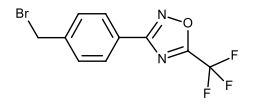
[0240] A uma mistura agitada de razão 1:9 de 3-[4- (bromometil)fenil]-5-(trifluorometil)-1,2,4-oxadiazol e 3- [4-(dibromometil)fenil]-5-(trifluorometil)-1,2,4-oxadiazol (10,2 g) em acetonitrila (95 mL), água (1,9 mL) e DIPEA (6,20 mL, 35,7 mmol) foi adicionado fosfito de dietila (4,7 mL, 35,7 mmol) a 5 °C. A mistura foi agitada a 5-10 °C durante duas horas, água e HCl 1 M foram adicionados e acetonitrila foi evaporado sob pressão reduzida. A pasta aquosa branca foi extraída três vezes com diclorometano. As camadas orgânicas combinadas foram secas em sulfato de sódio, e filtradas. O solvente foi removido sob pressão reduzida e o resíduo bruto resultante foi sujeito a cromatografia Flash em sílica gel (coluna pré-empacotada de 40 g) com ciclo- hexano/EtOAc 99:1 até 9:1, originando 3-[4- (bromometil)fenil]-5-(trifluorometil)-1,2,4-oxadiazol. 1H RMN (400 Mhz, CDCl3) δ ppm: 8,11 (d, 2H), 7,55 (d, 2H), 4,53 (s,2H). 19F RMN (400 Mhz, CDCl3) δ ppm: -65,32 (s). Passo 4:Preparação de 5,5-dimetil-2- [4-[5- (trifluorometil)-1,2,4-oxadiazol-3-il]fenil]-1,3-oxazinan- 4-ona.[0240] To a stirred mixture of 1:9 ratio of 3-[4-(bromomethyl)phenyl]-5-(trifluoromethyl)-1,2,4-oxadiazole and 3-[4-(dibromomethyl)phenyl]-5 -(trifluoromethyl)-1,2,4-oxadiazole (10.2 g) in acetonitrile (95 mL), water (1.9 mL) and DIPEA (6.20 mL, 35.7 mmol) was added diethyl phosphite (4.7 mL, 35.7 mmol) at 5 °C. The mixture was stirred at 5-10°C for two hours, water and 1M HCl were added and acetonitrile was evaporated under reduced pressure. The white aqueous slurry was extracted three times with dichloromethane. The combined organic layers were dried over sodium sulfate, and filtered. The solvent was removed under reduced pressure and the resulting crude residue was flash chromatographed on silica gel (40g prepacked column) with cyclohexane/EtOAc 99:1 to 9:1, yielding 3-[4-( bromomethyl)phenyl]-5-(trifluoromethyl)-1,2,4-oxadiazole. 1H NMR (400 MHz, CDCl3) δ ppm: 8.11 (d, 2H), 7.55 (d, 2H), 4.53 (s,2H). 19F NMR (400 MHz, CDCl3) δ ppm: -65.32 (s). Step 4: Preparation of 5,5-dimethyl-2-[4-[5-(trifluoromethyl)-1,2,4-oxadiazol-3-yl]phenyl]-1,3-oxazinan-4-one.
[0241] Uma suspensão branca de 3-[4-(bromometil)fenil]-5- (trifluorometil)-1,2,4-oxadiazol (100 mg, 0,31 mmol), 4,4- dimetilisoxazolidin-3-ona (1,5 equiv., 0,46 mmol) e carbonato de potássio (2 equiv., 0,62 mmol) em acetonitrila (3,0 mL) foi aquecida em um forno de micro-ondas durante 30 minutos a 120 °C. Os sólidos foram removidos por filtração e lavados com acetato de etila. Os solventes foram removidos sob pressão reduzida e o resíduo resultante foi sujeito a cromatografia Flash em sílica gel com (gradiente de eluentes EtOAc:ciclo-hexano 0:1 até 2:8), dando origem a 5,5-dimetil- 2-[4-[5-(trifluorometil)-1,2,4-oxadiazol-3-il]fenil]-1,3- oxazinan-4-ona na forma de um sólido amarelo. 1H RMN (600 Mhz, CDCl3) δ ppm: 1,21 (s, 3H) 1,42 (s, 3H) 3,81 (d, J=11,6 Hz, 1H) 3,86 (d, J=11,6 Hz, 1H) 5,88 (s, 1H) 6,31 (s l, 1H) 7,64 (d, J=8,4 Hz, 2H) 8,19 (d, J=8,4 Hz, 2H). 13C RMN (151 Mhz, CDCl3) δ ppm: 21,1 (s, 1 C) 25,6 (s, 1 C) 39,2 (s, 1 C) 75,3 (s, 1 C) 85,9 (s, 1 C) 115,9 (q, J=274 Hz, 1 C) 126,3 (s, 1 C) 127,5 (s, 1 C) 128,3 (s, 1 C) 142,0 (s, 1 C) 166,0 (q, J=44 Hz, 1 C) 168,6 (s, 1 C) 175,5 (s, 1 C). LC/MS (Método A) tempo de retenção = 0,99 min; 342 [M+H]+. mp: 187-187,3 °C. Exemplo 10: Este exemplo ilustra a preparação de N-[2- [3-fluoro-4-[5-(trifluorometil)-1,2,4-oxadiazol-3- il]fenil]-4,5-di-hidrotiazol-4-il]ciclopropanocarboxamida (Composto A-22 da Tabela A).

[0242] Este composto foi preparado a partir de ácido 3- fluoro-4-[5-(trifluorometil)-1,2,4-oxadiazol-3-il]benzoico (CAS 2036333-66-9) por métodos conhecidos per se. Assim, uma suspensão de 3-fluoro-4-[5-(trifluorometil)-1,2,4- oxadiazol-3-il]benzamida (822 mg) em tolueno (30 mL) foi purgada com argônio e 2,4-bis(4-metoxifenil)-1,3,2,4- ditiadifosfetano-2,4-dissulfeto (reagente de Lawesson, 906 mg) foi adicionado. A mistura reacional resultante foi aquecida para 100 °C durante 10 min, resultando em uma solução amarelo escuro. A mistura foi então deixada esfriar para a temperatura ambiente e foi extraída com bicarbonato de sódio aquoso saturado (10 mL) e acetato de etila (10 mL). A fase orgânica foi seca em sulfato de magnésio anidro e o solvente foi evaporado. O resíduo foi purificado por cromatografia em sílica gel usando um gradiente de diclorometano/metanol, dando origem a 3-fluoro-4-[5- (trifluorometil)-1,2,4-oxadiazol-3-il]benzenocarbotioamida (540 mg, 62%) na forma de um sólido amarelo. 1H RMN (400 Mhz, CDCl3) δ ppm: 7,20 (s, largo, 1H), 7,70 (s, largo, 1H), 7,73 (dd, 1H), 7,80 (dd, 1H), 8,15 (t, 1H). LC/MS (Método A) tempo de retenção = 0,97 min; 292 [M+H]+. Mp: 139 - 142 °C. Passo 1a: Preparação de 4-metilbenzenossulfonato de (2- terc-butilsulfiniliminoetila)
[0243] Este composto foi preparado a partir de 4- metilbenzenossulfonato de 2-oxoetila (CAS 172328-35-7) por métodos conhecidos per se. Assim, a uma suspensão de 2- metilpropano-2-sulfinamida (4,17 g) e sulfate de cobre (II) anidro (16,1 g) em diclorometano (250 mL) foi adicionada gota a gota uma solução de 4-metilbenzenossulfonato de 2- oxoetila (7,15 g). A mistura foi agitada durante 18 horas à temperatura ambiente. Então, a mistura foi filtrada em Celite e o filtrado foi evaporado. O resíduo foi purificado por cromatografia em sílica gel usando um gradiente de ciclo- hexano/acetato de etila (0% até 40%), dando origem a 4- metilbenzenossulfonato de (2-terc-butilsulfiniliminoetila) (6,13 g, 58% de rendimento) na forma de um sólido branco. 1H RMN (400 Mhz, CDCl3) δ ppm: 1,17 (s, 9H), 2,46 (s, 3H), 4,88 (d, 2H), 7,37 (d, 2H), 7,82 (d, 2H), 7,95 (t, 1H). LC/MS (Método A) tempo de retenção = 0,95 min; 318 [M+H]+. Passo 2:Preparação de N- [2- [3-fluoro-4- [5- (trifluorometil)-1,2,4-oxadiazol-3-il]fenil]-4,5-di-hidro- tiazol-4-il]-2-metil-propano-2-sulfinamida (Composto A-26 da Tabela A)
[0244] A uma solução de 4-metilbenzenossulfonato de (2- terc-butilsulfiniliminoetila) (1,07 g) em acetonitrila (15,1 mL) foi adicionado 3-fluoro-4-[5-(trifluorometil)-1,2,4- oxadiazol-3-il]benzeno-carbotioamida (0,992 g), iodeto de potássio (0,560 g) e bicarbonato de potássio (0,675 g). A mistura foi agitada à temperatura ambiente durante 1 h. Então água foi adicionada à mistura, que foi extraída com acetato de etila e a fase orgânica foi seca em sulfato de sódio anidro. O solvente foi evaporado e o resíduo foi purificado por cromatografia em sílica gel usando um gradiente de ciclo- hexano/acetato de etila, dando origem a N-[2-[3-fluoro-4-[5- (trifluorometil)-1,2,4-oxadiazol-3-il]fenil]-4,5-di-hidro- tiazol-4-il]-2-metil-propano-2-sulfinamida (0,66 g, 45% de rendimento) na forma de uma goma amarela. 1H RMN (400 Mhz, CDCl3) δ ppm: 1,26 (s, 9H), 3,42 (dd, 1H), 3,77 (dd, 1H), 4,00 (d, 1H), 6,05 (q, 1H), 7,82 (m, 2H), 8,15 (t, 1H). LC/MS (Método A) tempo de retenção = 1,09 min; 437 [M+H]+. Passo 3:Preparação de 2- [3-fluoro-4- [5- (trifluorometil)-1,2,4-oxadiazol-3-il]fenil]-4,5-di- hidrotiazol-4-amina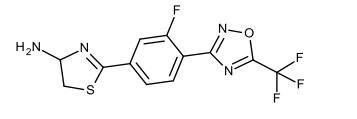
[0245] A uma solução de N-[2-[3-fluoro-4-[5- (trifluorometil)-1,2,4-oxadiazol-3-il]fenil]-4,5-di-hidro- tiazol-4-il]-2-metil-propano-2-sulfinamida (662 mg) em metanol (40,0 mL) foi adicionado gota a gota cloreto de hidrogênio (4 M em dioxano, 8,65 mL) a 0 °C. A mistura foi agitada a 0 °C durante 4 horas. Então, bicarbonato de sódio aquoso saturado (10 mL) foi adicionado e a fase aquosa foi extraída três vezes com diclorometano. A fase orgânica combinada foi lavada com salmoura, foi seca em sulfato de sódio anidro e evaporada. O resíduo foi purificado por cromatografia em sílica gel usando um gradiente de diclorometano/metanol, dando origem a 2-[3-fluoro-4-[5- (trifluorometil)-1,2,4-oxadiazol-3-il]fenil]-4,5-di- hidrotiazol-4-amina (0,43 mg, 85% de rendimento) na forma de um óleo marrom. 1H RMN (400 Mhz, CDCl3) δ ppm: 2,06 (s, largo, 2H), 3,25 (dd, 1H), 3,73 (dd, 1H), 5,61 (t, 1H), 7,77 (m, 2H), 8,15 (t, 1H). LC/MS (Método A) tempo de retenção = 0,76 min; 333 [M+H]+. Passo 4:Preparação de N- [2- [3-fluoro-4- [5- (trifluorometil)-1,2,4-oxadiazol-3-il]fenil]-4,5-di-hidro- tiazol-4-il]ciclopropanocarboxamida (Composto A-22 da Tabela A)[0245] To a solution of N-[2-[3-fluoro-4-[5-(trifluoromethyl)-1,2,4-oxadiazol-3-yl]phenyl]-4,5-dihydro-thiazole -4-yl]-2-methyl-propane-2-sulfinamide (662 mg) in methanol (40.0 mL) was added dropwise hydrogen chloride (4M in dioxane, 8.65 mL) at 0 °C . The mixture was stirred at 0°C for 4 hours. Then, saturated aqueous sodium bicarbonate (10 mL) was added and the aqueous phase was extracted three times with dichloromethane. The combined organic phase was washed with brine, dried over anhydrous sodium sulfate and evaporated. The residue was purified by silica gel chromatography using a dichloromethane/methanol gradient to give 2-[3-fluoro-4-[5-(trifluoromethyl)-1,2,4-oxadiazol-3-yl]phenyl] -4,5-dihydrothiazol-4-amine (0.43 mg, 85% yield) as a brown oil. 1H NMR (400 MHz, CDCl3) δ ppm: 2.06 (s, broad, 2H), 3.25 (dd, 1H), 3.73 (dd, 1H), 5.61 (t, 1H), 7 .77 (m, 2H), 8.15 (t, 1H). LC/MS (Method A) retention time = 0.76 min; 333 [M+H]+. Step 4: Preparation of N-[2-[3-fluoro-4-[5-(trifluoromethyl)-1,2,4-oxadiazol-3-yl]phenyl]-4,5-dihydro-thiazol-4 -yl]cyclopropanecarboxamide (Compound A-22 of Table A)
[0246] A uma solução de 2-[3-fluoro-4-[5-(trifluorometil)- 1,2,4-oxadiazol-3-il]fenil]-4,5-di-hidro-tiazol-4-amina (70 mg) em diclorometano (0,6 mL) foi adicionado cloreto de ciclopropanocarbonila (22 mg) seguido de trietilamina (64 mg). A mistura reacional foi agitada durante 18 horas à temperatura ambiente. Então a mistura foi concentrada e o resíduo foi purificado por cromatografia em sílica gel usando um gradiente de ciclo-hexano/acetato de etila, dando origem a N-[2-[3-fluoro-4-[5-(trifluorometil)-1,2,4-oxadiazol-3- il]fenil]-4,5-di-hidro-tiazol-4-il]ciclopropanocarboxamida (72,3 mg, 86% de rendimento) na forma de um sólido branco. 1H RMN (400 Mhz, CDCl3) δ ppm: 0,80 (m, 2H), 1,03 (m, 2H), 1,38 (m, 1H), 3,33 (dd, 1H), 3,83 (dd, 1H), 6,25 (d, 1H), 6,55 (q, 1H), 7,80 (m, 2H), 8,17 (t, 1H). LC/MS (Método A) tempo de retenção = 1,04 min; 401 [M+H]+. Mp: 197 - 205 °C.[0246] To a solution of 2-[3-fluoro-4-[5-(trifluoromethyl)-1,2,4-oxadiazol-3-yl]phenyl]-4,5-dihydro-thiazol-4- amine (70mg) in dichloromethane (0.6ml) was added cyclopropanecarbonyl chloride (22mg) followed by triethylamine (64mg). The reaction mixture was stirred for 18 hours at room temperature. Then the mixture was concentrated and the residue was purified by silica gel chromatography using a cyclohexane/ethyl acetate gradient, yielding N-[2-[3-fluoro-4-[5-(trifluoromethyl)-1 ,2,4-oxadiazol-3-yl]phenyl]-4,5-dihydro-thiazol-4-yl]cyclopropanecarboxamide (72.3 mg, 86% yield) as a white solid. 1H NMR (400 MHz, CDCl3) δ ppm: 0.80 (m, 2H), 1.03 (m, 2H), 1.38 (m, 1H), 3.33 (dd, 1H), 3.83 (dd, 1H), 6.25 (d, 1H), 6.55 (q, 1H), 7.80 (m, 2H), 8.17 (t, 1H). LC/MS (Method A) retention time = 1.04 min; 401 [M+H]+. Mp: 197 - 205 °C.
[0247] Quando necessário, os compostos finais enantiomericamente puros podem ser obtidos a partir de materiais racêmicos consoante o apropriado através de técnicas de separação física padrão, tais como cromatografia quiral de fase reversa, ou através de técnicas sintéticas estereosseletivas (por exemplo, por uso de materiais de partida quirais). Tabela A: Dados de pontos de fusão (p.f.) e/ou LC/MS para compostos c e Fórmula (I):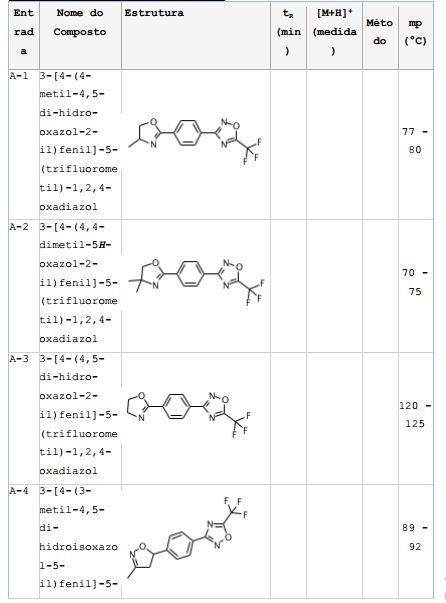
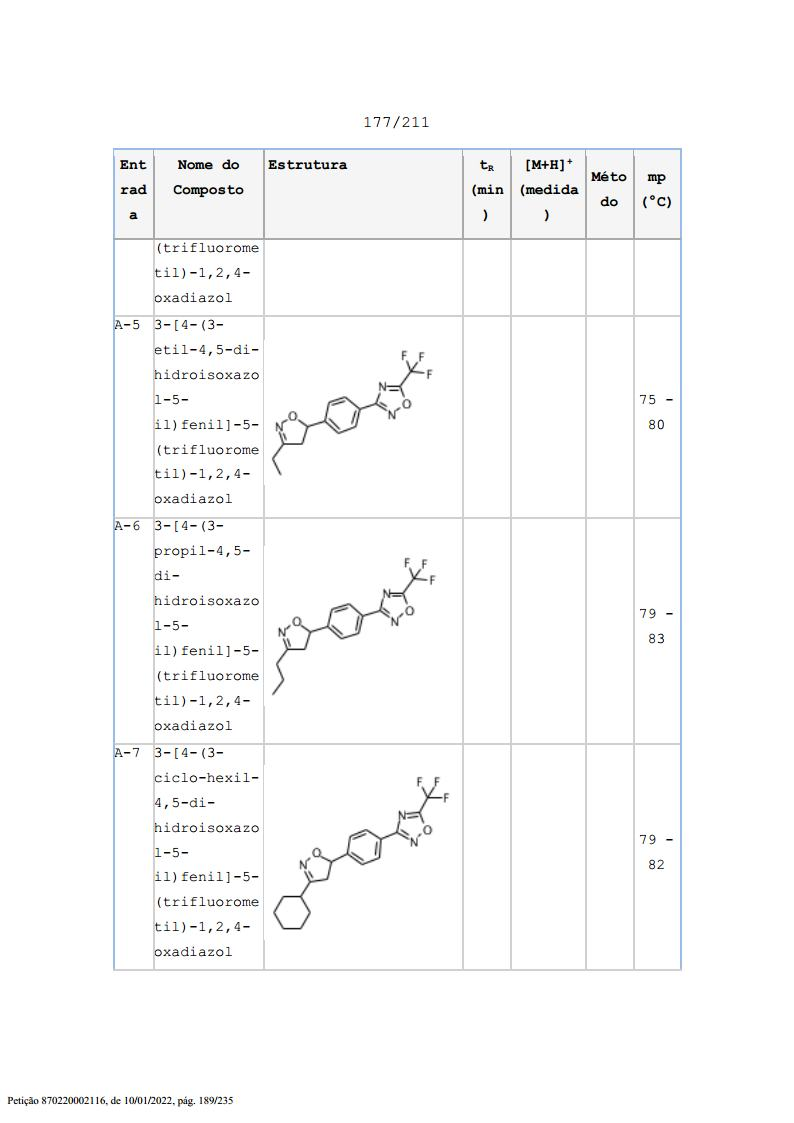

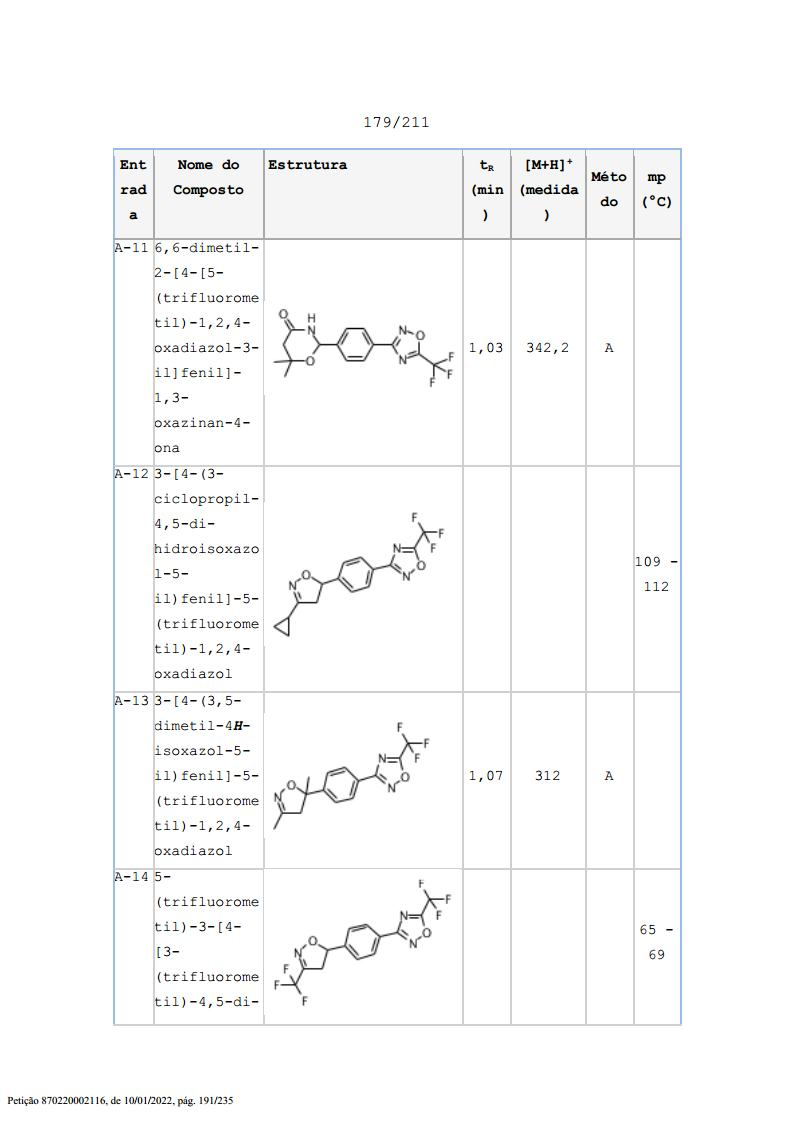

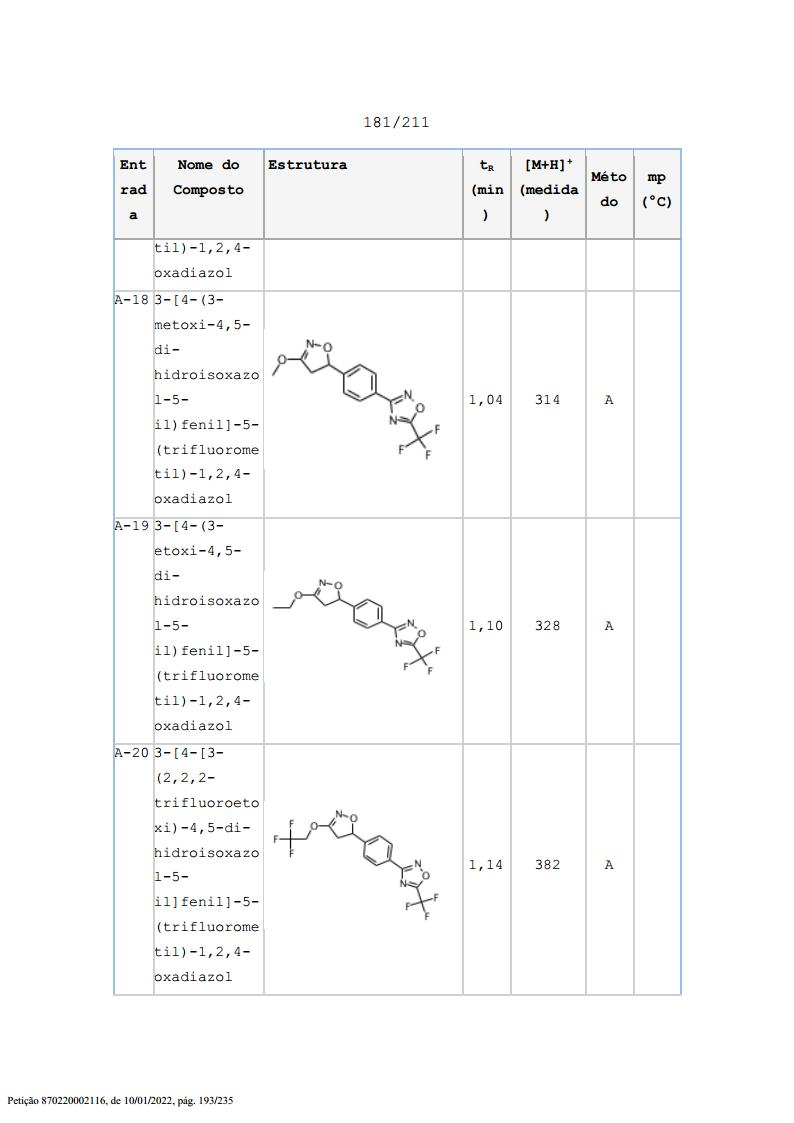

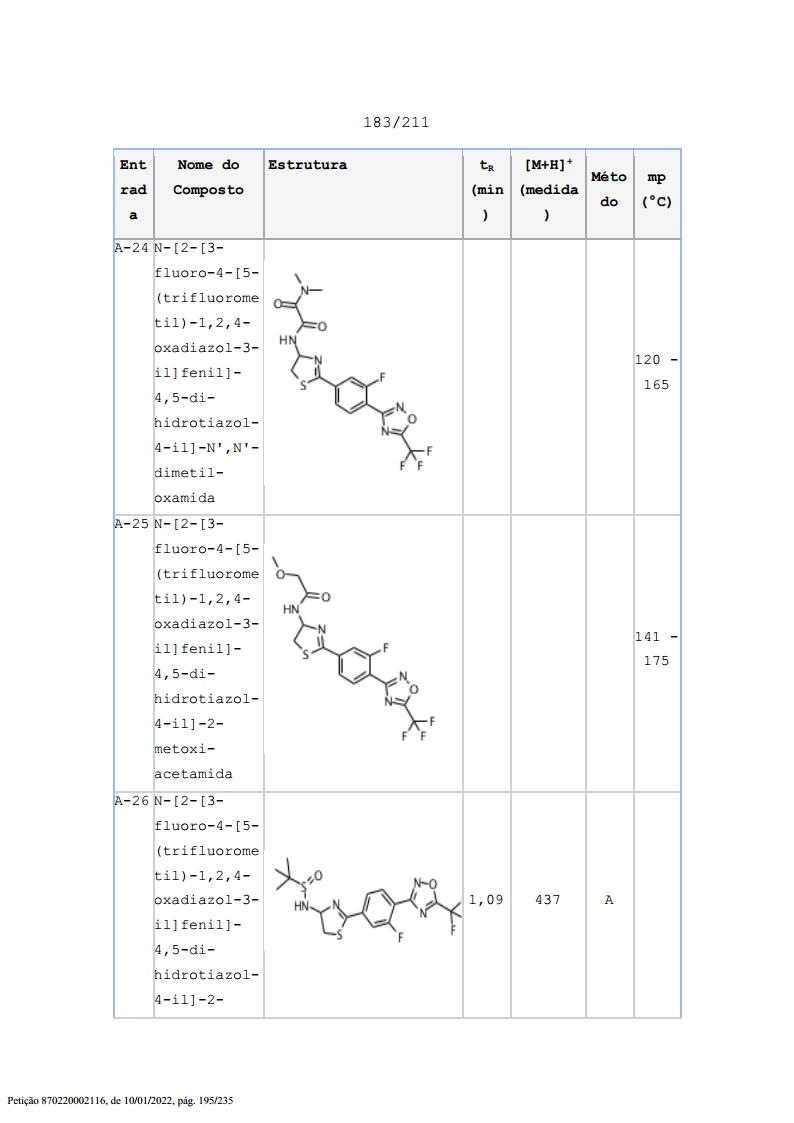
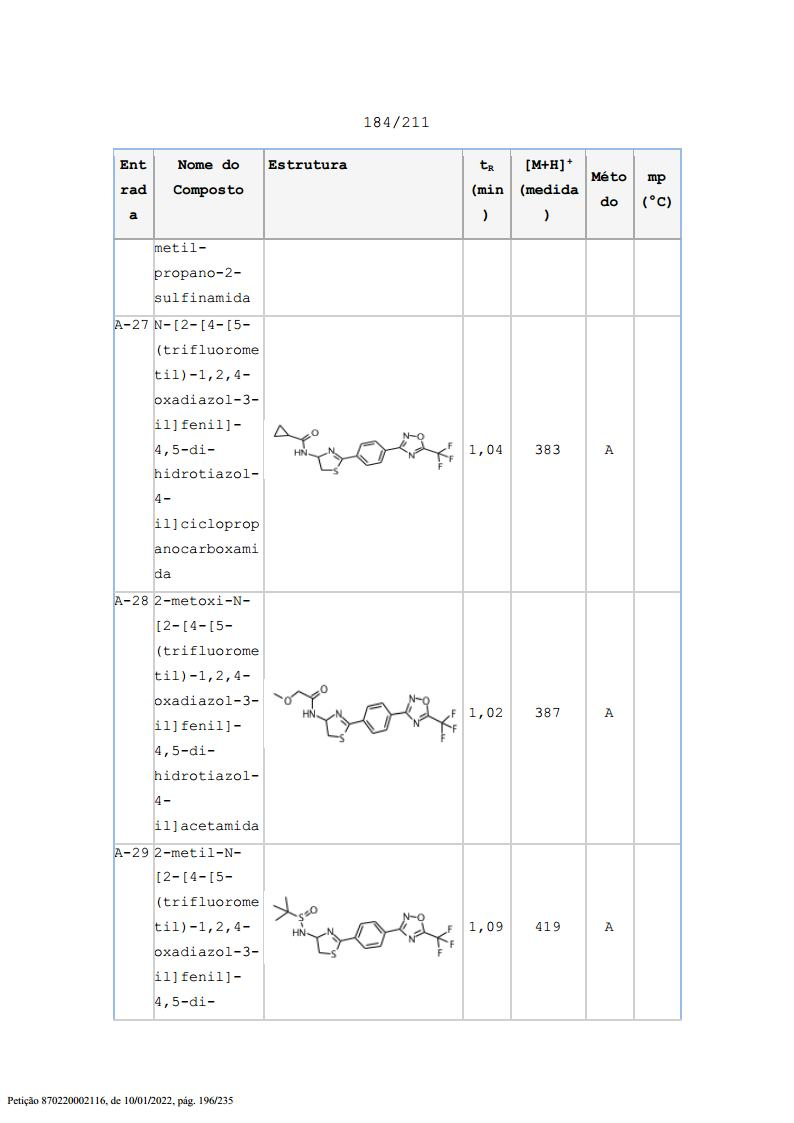


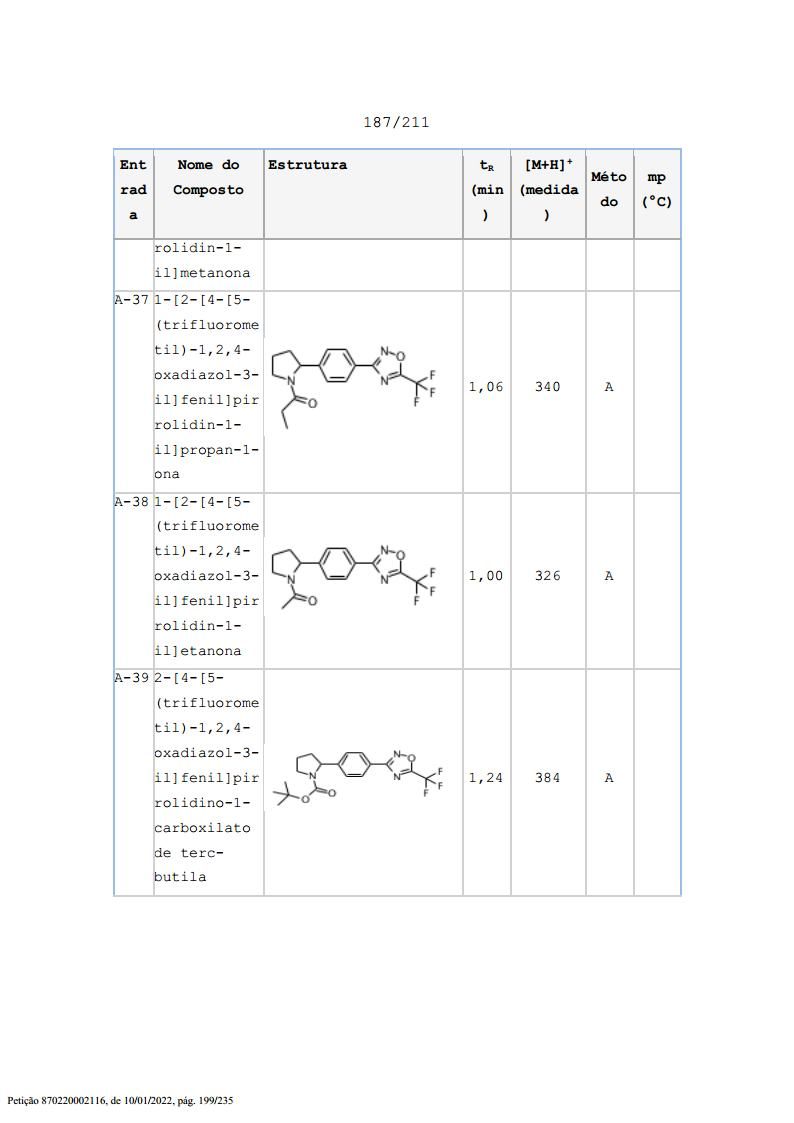


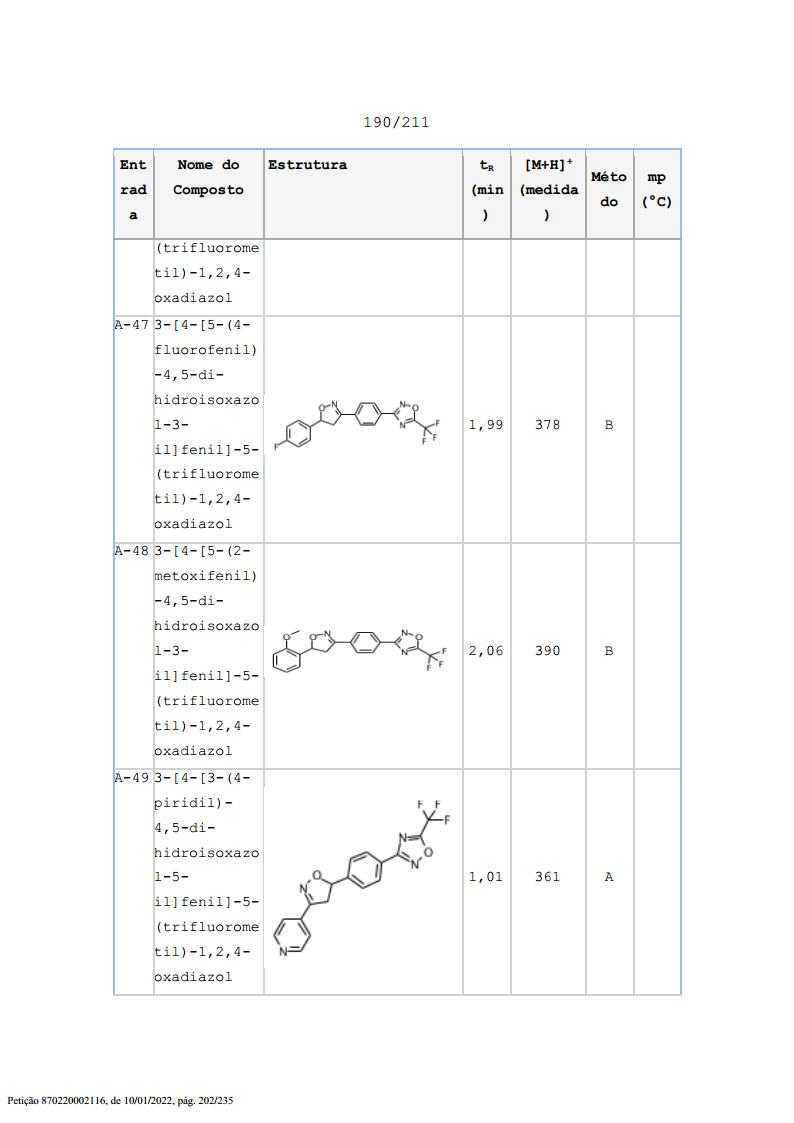


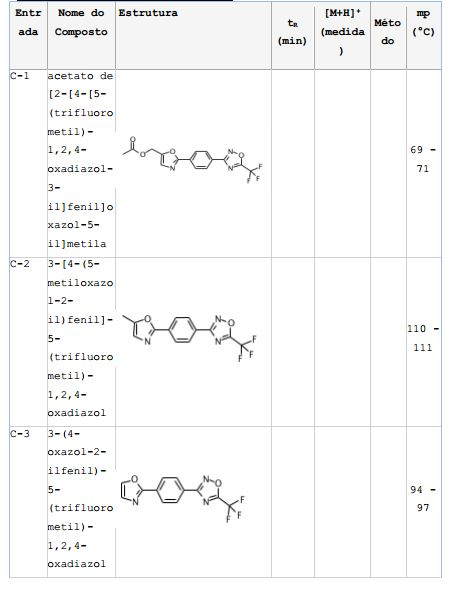
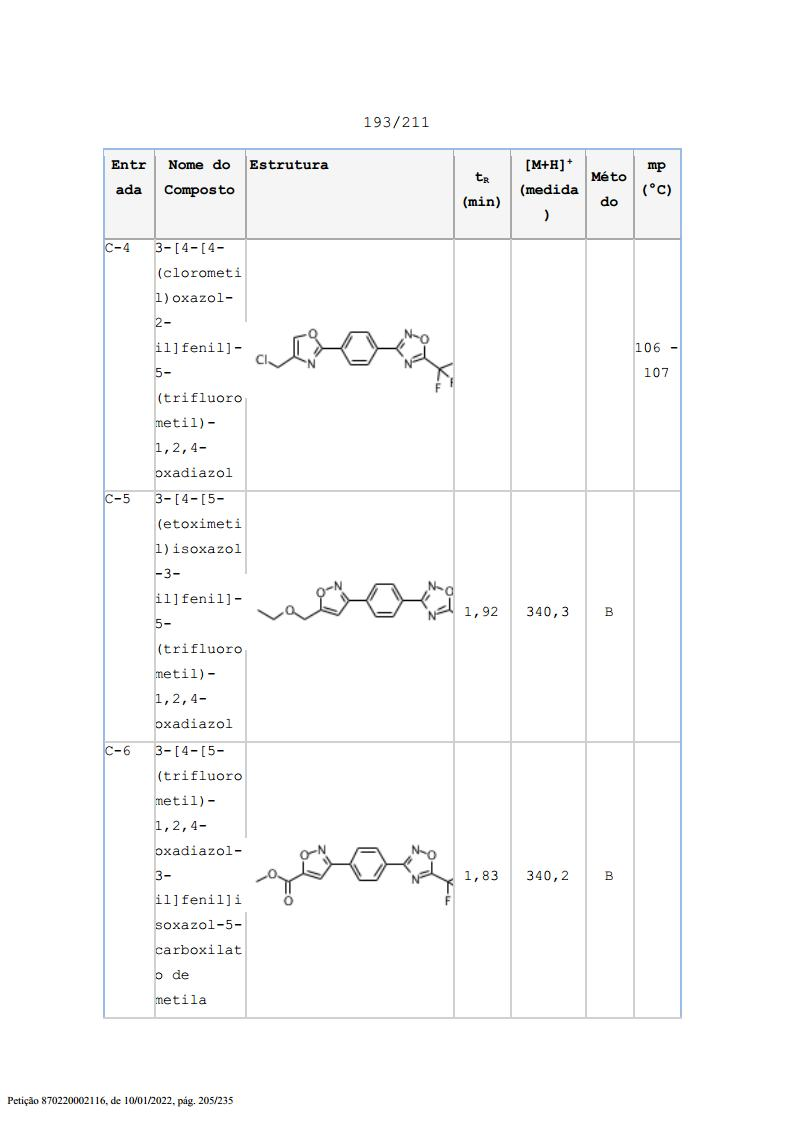


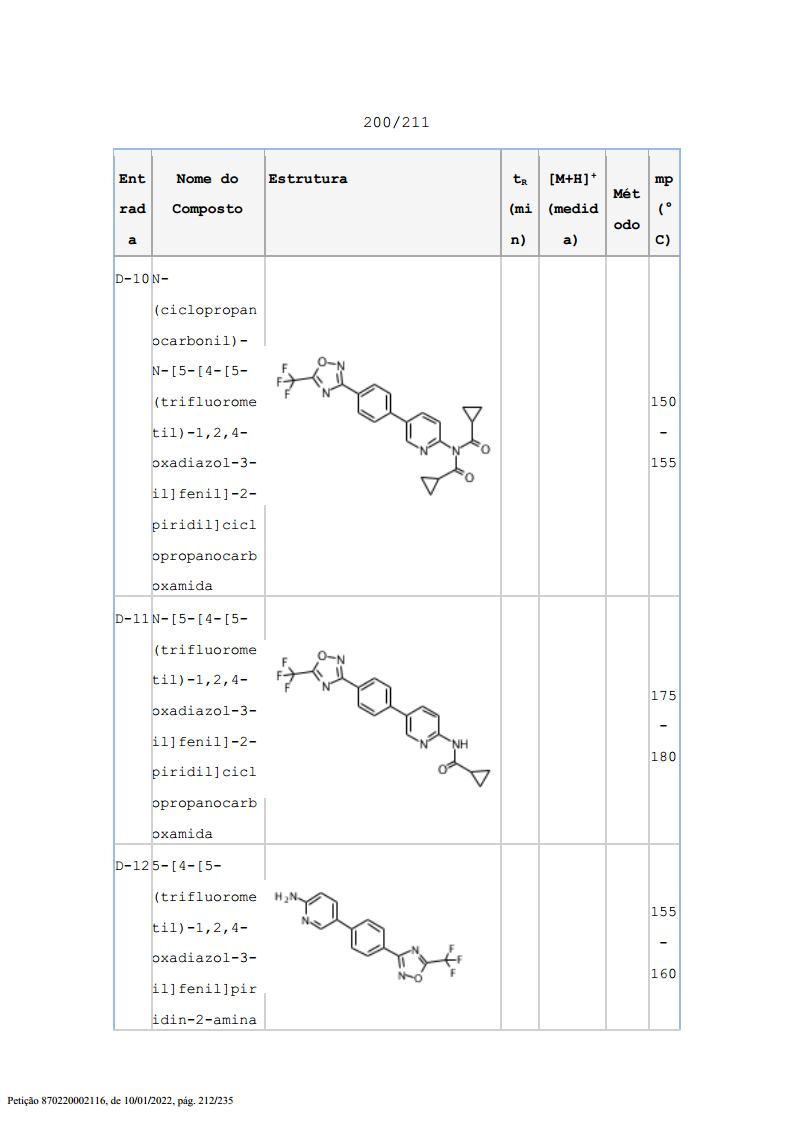


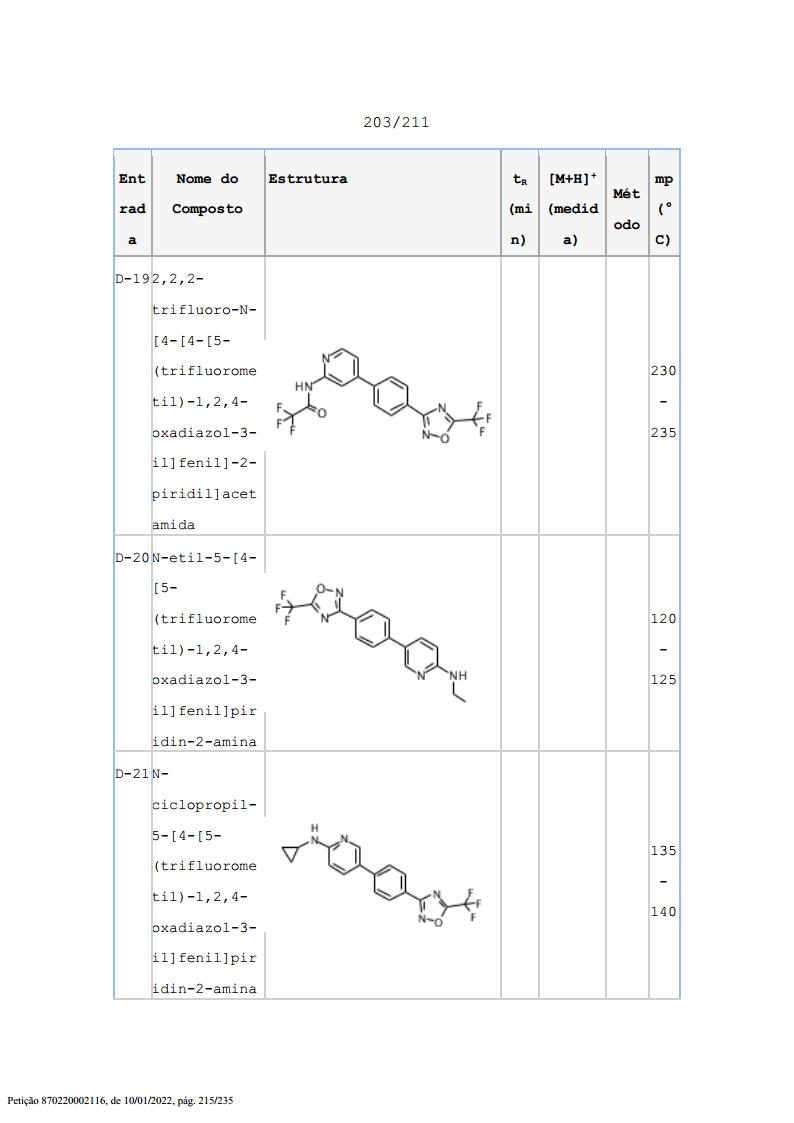


[0248] Discos foliares ou segmentos foliares de várias espécies de plantas são cortados de plantas cultivadas em uma estufa. Os discos ou segmentos foliares cortados são colocados em placas multipoços (formato de 24 poços) em ágar preparado com água. Os discos foliares são pulverizados com uma solução de teste antes (preventiva) ou após (curativa) a inoculação. Os compostos a serem testados são preparados como soluções em DMSO (máx. 10 mg/mL) que são diluídas até à concentração apropriada com Tween20 a 0,025% imediatamente antes da pulverização. Os discos ou segmentos foliares inoculados são incubados sob condições definidas (temperatura, umidade relativa, luz, etc.) de acordo com o respectivo sistema de teste. Uma única avaliação do nível de doença é levada a cabo 3 a 14 dias após a inoculação, dependendo do patossistema. A percentagem de controle de doença em relação aos discos ou segmentos foliares de verificação não tratados é depois calculada.[0248] Leaf discs or leaf segments of various plant species are cut from plants grown in a greenhouse. Cut leaf discs or segments are placed in multiwell plates (24-well format) in prepared water agar. Leaf discs are sprayed with a test solution before (preventive) or after (curative) inoculation. Compounds to be tested are prepared as solutions in DMSO (max. 10 mg/mL) which are diluted to the appropriate concentration with 0.025% Tween20 just prior to spraying. Inoculated discs or leaf segments are incubated under defined conditions (temperature, relative humidity, light, etc.) according to the respective test system. A single disease level assessment is carried out 3 to 14 days after inoculation, depending on the pathosystem. The percentage of disease control relative to untreated check leaf discs or segments is then calculated.
[0249] Fragmentos de micélios ou suspensões de conídios de um fungo preparados de fresco a partir de culturas líquidas do fungo ou a partir de armazenagem criogênica são diretamente misturados em caldo de nutrientes. Soluções em DMSO do composto de teste (máx. 10 mg/mL) são diluídas com Tween20 a 0,025% por um fator 50 e 10 μL desta solução são pipetados para uma placa de microtitulação (formato de 96 poços). O caldo de nutrientes contendo os esporos/fragmentos de micélios fúngicos é depois adicionado para originar uma concentração final do composto testado. As placas de teste são incubadas no escuro a 24 °C e umidade relativa de 96%. A inibição do crescimento fúngico é determinada fotometricamente após 2 a 7 dias, dependendo do patossistema, e a percentagem de atividade antifúngica em relação à verificação não tratada é calculada.[0249] Fragments of mycelia or suspensions of conidia of a fungus prepared freshly from liquid cultures of the fungus or from cryogenic storage are directly mixed into nutrient broth. DMSO solutions of the test compound (max. 10 mg/mL) are diluted with 0.025% Tween20 by a factor of 50 and 10 μL of this solution is pipetted into a microtiter plate (96-well format). The nutrient broth containing the fungal mycelia spores/fragments is then added to give a final concentration of the test compound. Test plates are incubated in the dark at 24°C and 96% relative humidity. Inhibition of fungal growth is determined photometrically after 2 to 7 days, depending on the pathosystem, and the percentage of antifungal activity relative to the untreated check is calculated.
[0250] Conídios do fungo de armazenagem criogênica são diretamente misturados em caldo nutriente (caldo de batata e dextrose PDB). Após colocação de uma solução (DMSO) do composto de teste em uma placa de microtitulação (formato de 96 poços), o caldo de nutrientes contendo os esporos fúngicos é adicionado. As placas de teste são incubadas a 24 °C e a inibição do crescimento é medida fotometricamente 3-4 dias após aplicação. Os seguintes compostos originaram pelo menos 80% de controle de Glomerella lagenarium a 20 ppm em comparação com controles não tratados nas mesmas condições, que exibiram desenvolvimento extenso da doença: A-1, A-2, A-4, A-5, A-6, A-7, A-8, A-9, A-10, A-11, A- 12, A-13, A-14, A-21, A-22, A-23, A-24, A-25, A-26, A-28, A-29, A-30, A-31, A-32, A-33, A-35, A-36, A-37, A-38, A-41, A-48, A-49, A-51, C-4, C-8, C-9, D-4, D-5, D-6, D-7, D-8, D-12, D-13, D-15, D-19, D-25, D-26, E-1.[0250] Conidia of the fungus from cryogenic storage are directly mixed into nutrient broth (potato broth and PDB dextrose). After placing a (DMSO) solution of the test compound in a microtiter plate (96-well format), the nutrient broth containing the fungal spores is added. Test plates are incubated at 24°C and growth inhibition is measured photometrically 3-4 days after application. The following compounds gave at least 80% control of Glomerella lagenarium at 20 ppm compared to untreated controls under the same conditions that exhibited extensive disease development: A-1, A-2, A-4, A-5, A -6, A-7, A-8, A-9, A-10, A-11, A-12, A-13, A-14, A-21, A-22, A-23, A-24 , A-25, A-26, A-28, A-29, A-30, A-31, A-32, A-33, A-35, A-36, A-37, A-38, A -41, A-48, A-49, A-51, C-4, C-8, C-9, D-4, D-5, D-6, D-7, D-8, D-12 , D-13, D-15, D-19, D-25, D-26, E-1.
[0251] Discos foliares de soja são colocados em ágar preparado com água em placas de múltiplos poços (formato de 24 poços) e pulverizados com o composto de teste formulado diluído em água. Um dia após a aplicação, os discos foliares são inoculados por pulverização de uma suspensão de esporos na superfície foliar inferior. Após um período de incubação em uma câmara climatizada de 24-36 horas no escuro a 20 °C e umidade relativa de 75%, os discos foliares são mantidos a 20 °C com 12 h de luz/dia e umidade relativa de 75%. A atividade de um composto é avaliada como percentagem de controle da doença em comparação com ausência de tratamento quando um nível apropriado de lesões causadas pela doença aparece em discos foliares de verificação não tratados (12 a 14 dias após a aplicação).[0251] Soybean leaf discs are placed on water-prepared agar in multi-well plates (24-well format) and sprayed with the formulated test compound diluted in water. One day after application, leaf discs are inoculated by spraying a spore suspension onto the lower leaf surface. After an incubation period in a climate chamber of 24-36 hours in the dark at 20 °C and 75% relative humidity, the leaf discs are kept at 20 °C with 12 h of light/day and 75% relative humidity. The activity of a compound is evaluated as percent disease control compared to no treatment when an appropriate level of disease-caused lesions appears on untreated check leaf discs (12 to 14 days after application).
[0252] Os seguintes compostos originaram pelo menos 80% de controle de Phakopsora pachyrhizi a 200 ppm em comparação com controles não tratados nas mesmas condições, que exibiram desenvolvimento extenso da doença: A-1, A-3, A-4, A-5, A-6, A-9, A-10, A-12, A-21, A-28, A-29, A-36, C-1, C-2, C-4, C-5, D-12, D-26.[0252] The following compounds gave at least 80% control of Phakopsora pachyrhizi at 200 ppm compared to untreated controls under the same conditions that exhibited extensive disease development: A-1, A-3, A-4, A- 5, A-6, A-9, A-10, A-12, A-21, A-28, A-29, A-36, C-1, C-2, C-4, C-5, D-12, D-26.
[0253] Segmentos foliares de trigo cv. Kanzler são colocados em ágar em placas multipoços (formato de 24 poços). Os segmentos foliares são inoculados com uma suspensão de esporos do fungo. As placas são armazenadas na escuridão a 19 °C e umidade relativa de 75%. O composto de teste formulado diluído em água é aplicado 1 dia após inoculação. Os segmentos foliares são incubados a 19 °C e umidade relativa de 75% sob um regime de luz de 12 h de luz/12 h de escuridão em uma câmara climatizada e a atividade de um composto é avaliada como percentagem de controle da doença em comparação com a ausência de tratamento quando um nível apropriado de lesões causadas pela doença aparece em segmentos foliares de controle não tratados (6 a 8 dias após aplicação). Os seguintes compostos originaram pelo menos 80% de controle de Puccinia recondita f. sp. Tritici a 200 ppm em comparação com discos controles não tratados nas mesmas condições, que exibiram desenvolvimento extenso da doença: A-1, A-2, A-3, A-4, A-5, A-6, A-9, A-11, A-13, A-21, A-22, A-24, A-26, A-28, A-29, A-30, A-31, A-32, A-33, A-35, A-36, A-37, A-38, A-51, C-1, C-2, C-3, C-8, C-11, D-6, D-7, D-26, E-1.[0253] Leaf segments of wheat cv. Kanzler are placed on agar in multiwell plates (24-well format). Leaf segments are inoculated with a spore suspension of the fungus. Plates are stored in the dark at 19°C and 75% relative humidity. The formulated test compound diluted in water is applied 1 day after inoculation. Leaf segments are incubated at 19 °C and 75% relative humidity under a light regime of 12 h light/12 h dark in a climate chamber and the activity of a compound is evaluated as percent disease control compared to with no treatment when an appropriate level of disease lesions appear on untreated control leaf segments (6 to 8 days after application). The following compounds gave at least 80% control of Puccinia recondita f. sp. Tritici at 200 ppm compared to untreated control discs under the same conditions, which exhibited extensive disease development: A-1, A-2, A-3, A-4, A-5, A-6, A-9, A-11, A-13, A-21, A-22, A-24, A-26, A-28, A-29, A-30, A-31, A-32, A-33, A- 35, A-36, A-37, A-38, A-51, C-1, C-2, C-3, C-8, C-11, D-6, D-7, D-26, E-1.
[0254] Segmentos foliares de trigo cv. Kanzler são colocados em ágar em placas multipoços (formato de 24 poços) e pulverizados com o composto de teste formulado diluído em água. Os discos foliares são inoculados com uma suspensão de esporos do fungo 1 dia após aplicação. Os segmentos foliares inoculados são incubados a 19 °C e umidade relativa de 75% sob um regime de luz de 12 h de luz/12 h de escuridão em uma câmara climatizada e a atividade de um composto é avaliada como percentagem de controle da doença em comparação com a ausência de tratamento quando um nível apropriado de lesões causadas pela doença aparece em segmentos foliares de controle não tratados (7 a 9 dias após aplicação).[0254] Leaf segments of wheat cv. Kanzler are placed on agar in multiwell plates (24-well format) and sprayed with the formulated test compound diluted in water. Leaf discs are inoculated with a spore suspension of the fungus 1 day after application. Inoculated leaf segments are incubated at 19 °C and 75% relative humidity under a light regime of 12 h light/12 h dark in a climate chamber and the activity of a compound is evaluated as a percentage of disease control in compared to no treatment when an appropriate level of disease lesions appear on untreated control leaf segments (7 to 9 days after application).
[0255] Os seguintes compostos originaram pelo menos 80% de controle de Puccinia recondita f. sp. tritici a 200 ppm em comparação com controles não tratados nas mesmas condições, que exibiram desenvolvimento extenso da doença: A-1, A-2, A-3, A-4, A-5, A-6, A-8, A-9, A-10, A-11, A- 12, A-13, A-21, A-23, A-24, A-25, A-26, A-28, A-29, A-30, A- 31, A-33, A-34, A-35, A-38, A-51, C-1, C-2, C-3, C-9, C-11, D-6, D-7, D-12, D-15, D-19, D-26, E-1.[0255] The following compounds originated at least 80% control of Puccinia recondita f. sp. tritici at 200 ppm compared to untreated controls under the same conditions, who exhibited extensive disease development: A-1, A-2, A-3, A-4, A-5, A-6, A-8, A -9, A-10, A-11, A-12, A-13, A-21, A-23, A-24, A-25, A-26, A-28, A-29, A-30 , A-31, A-33, A-34, A-35, A-38, A-51, C-1, C-2, C-3, C-9, C-11, D-6, D -7, D-12, D-15, D-19, D-26, E-1.
Claims (14)


Applications Claiming Priority (4)
| Application Number | Priority Date | Filing Date | Title |
|---|---|---|---|
| EPEP16162395.4 | 2016-03-24 | ||
| EP16162395.4 | 2016-03-24 | ||
| EP16162395 | 2016-03-24 | ||
| PCT/EP2017/057109 WO2017162868A1 (en) | 2016-03-24 | 2017-03-24 | Microbiocidal oxadiazole derivatives |
Publications (2)
| Publication Number | Publication Date |
|---|---|
| BR112018069412A2 BR112018069412A2 (en) | 2019-04-09 |
| BR112018069412B1 true BR112018069412B1 (en) | 2022-09-20 |
Family
ID=55628949
Family Applications (1)
| Application Number | Title | Priority Date | Filing Date |
|---|---|---|---|
| BR112018069412-6A BR112018069412B1 (en) | 2016-03-24 | 2017-03-24 | COMPOUNDS DERIVED FROM OXADIAZOLE MICROBIOCIDES, AGROCHEMICAL COMPOSITION, METHOD OF CONTROL OR PREVENTION OF INFESTATION OF USEFUL PLANTS BY PHYTOPATOGENIC MICROORGANISMS AND USE OF SUCH COMPOUND |
Country Status (6)
| Country | Link |
|---|---|
| US (1) | US11083196B2 (en) |
| EP (1) | EP3433252B1 (en) |
| JP (1) | JP2019514851A (en) |
| CN (1) | CN109071520B (en) |
| BR (1) | BR112018069412B1 (en) |
| WO (1) | WO2017162868A1 (en) |
Families Citing this family (14)
| Publication number | Priority date | Publication date | Assignee | Title |
|---|---|---|---|---|
| UY37062A (en) | 2016-01-08 | 2017-08-31 | Syngenta Participations Ag | DERIVATIVES OF ARYL OXADIAZOL FUNGICIDAS |
| RU2018146743A (en) | 2016-06-09 | 2020-07-09 | Басф Се | SUBSTITUTED OXADIAZOZOLES FOR FIGHTING PHYTOPATHOGENIC MUSHROOMS |
| WO2017222951A1 (en) * | 2016-06-23 | 2017-12-28 | Merck Sharp & Dohme Corp. | 3-aryl and heteroaryl substituted 5-trifluoromethyl oxadiazoles as histone deacetylase 6 (hdac6) inhibitors |
| PL3558984T3 (en) | 2016-12-20 | 2024-01-15 | Fmc Corporation | Fungicidal oxadiazoles |
| KR101997108B1 (en) * | 2017-10-12 | 2019-07-05 | 한국화학연구원 | Antiviral compound, preparation method thereof, and pharmaceutical composition for use in preventing or treating viral diseases containing the same as an active ingredient |
| US11147275B2 (en) | 2017-11-23 | 2021-10-19 | Basf Se | Substituted trifluoromethyloxadiazoles for combating phytopathogenic fungi |
| CA3090133A1 (en) | 2018-01-30 | 2019-08-08 | Pi Industries Ltd. | Oxadiazoles for use in controlling phytopathogenic fungi |
| EP3762367A1 (en) | 2018-03-09 | 2021-01-13 | PI Industries Ltd. | Heterocyclic compounds as fungicides |
| KR20210098949A (en) | 2018-10-01 | 2021-08-11 | 피아이 인더스트리스 엘티디. | new oxadiazole |
| KR20210098946A (en) | 2018-10-01 | 2021-08-11 | 피아이 인더스트리스 엘티디. | Oxadiazole as a fungicide |
| AR119774A1 (en) | 2019-08-19 | 2022-01-12 | Pi Industries Ltd | OXADIAZOLE COMPOUNDS CONTAINING A 5-MEMBER HETEROAROMATIC RING TO CONTROL OR PREVENT PHYTOPATHOGENIC FUNGI |
| CN110937844A (en) * | 2019-12-02 | 2020-03-31 | 浙江工业大学 | Beer waste yeast microcapsule and application thereof in preparation of self-repairing cement-based material |
| WO2021156175A1 (en) * | 2020-02-05 | 2021-08-12 | Basf Se | Preparation of substituted 3-aryl-5-trifluoromethyl-1,2,4-oxadiazoles |
| UY39854A (en) * | 2021-07-15 | 2022-11-30 | Kumiai Chemical Industry Co | FORMAMIDE DERIVATIVE AND HORTICULTURAL AND AGRICULTURAL CONTROL AGENT FOR THE CONTROL OF DISEASES OF THE |
Family Cites Families (96)
| Publication number | Priority date | Publication date | Assignee | Title |
|---|---|---|---|---|
| JPS61107392A (en) | 1984-10-31 | 1986-05-26 | 株式会社東芝 | Image processing system |
| BR8600161A (en) | 1985-01-18 | 1986-09-23 | Plant Genetic Systems Nv | CHEMICAL GENE, HYBRID, INTERMEDIATE PLASMIDIO VECTORS, PROCESS TO CONTROL INSECTS IN AGRICULTURE OR HORTICULTURE, INSECTICIDE COMPOSITION, PROCESS TO TRANSFORM PLANT CELLS TO EXPRESS A PLANTINIDE TOXIN, PRODUCED BY CULTURES, UNITED BY BACILLA |
| US4871753A (en) | 1986-12-12 | 1989-10-03 | Ciba-Geigy Corporation | 3-Phenyl-5-trifluoromethyl-1,2,4-oxadiazole compounds which are useful pesticides |
| AU613521B2 (en) | 1988-09-02 | 1991-08-01 | Sankyo Company Limited | 13-substituted milbemycin derivatives, their preparation and use |
| US5169629A (en) | 1988-11-01 | 1992-12-08 | Mycogen Corporation | Process of controlling lepidopteran pests, using bacillus thuringiensis isolate denoted b.t ps81gg |
| EP0374753A3 (en) | 1988-12-19 | 1991-05-29 | American Cyanamid Company | Insecticidal toxines, genes coding therefor, antibodies binding them, transgenic plant cells and plants expressing these toxines |
| US5015630A (en) | 1989-01-19 | 1991-05-14 | Merck & Co., Inc. | 5-oxime avermectin derivatives |
| NO176766C (en) | 1989-02-07 | 1995-05-24 | Meiji Seika Kaisha | Process for the preparation of a compound having anthelmintic activity |
| GB8910624D0 (en) | 1989-05-09 | 1989-06-21 | Ici Plc | Bacterial strains |
| CA2015951A1 (en) | 1989-05-18 | 1990-11-18 | Mycogen Corporation | Novel bacillus thuringiensis isolates active against lepidopteran pests, and genes encoding novel lepidopteran-active toxins |
| ES2074547T3 (en) | 1989-11-07 | 1995-09-16 | Pioneer Hi Bred Int | LARVICID LECTINES, AND INDUCED RESISTANCE OF PLANTS TO INSECTS. |
| JPH085894B2 (en) | 1990-03-01 | 1996-01-24 | 三共株式会社 | Milbemycin ether derivative |
| JPH0570366A (en) | 1991-03-08 | 1993-03-23 | Meiji Seika Kaisha Ltd | Composition for medicine |
| UA48104C2 (en) | 1991-10-04 | 2002-08-15 | Новартіс Аг | Dna fragment including sequence that codes an insecticide protein with optimization for corn, dna fragment providing directed preferable for the stem core expression of the structural gene of the plant related to it, dna fragment providing specific for the pollen expression of related to it structural gene in the plant, recombinant dna molecule, method for obtaining a coding sequence of the insecticide protein optimized for corn, method of corn plants protection at least against one pest insect |
| ATE211466T1 (en) | 1992-03-17 | 2002-01-15 | Fujisawa Pharmaceutical Co | DEPSIPEPTIDES, PRODUCTION AND USE |
| UA39936C2 (en) | 1992-04-28 | 2001-07-16 | Йашима Кемікал Індастрі Ко., Лтд | 2-(2,6-difluorophenyl)-4-(2-ethoxy-4-tert-butylphenyl)-2-oxazoline, method of miticide treatment and miticide composition |
| DE4317458A1 (en) | 1992-06-11 | 1993-12-16 | Bayer Ag | Use of cyclic depsipeptides with 18 ring atoms for the control of endoparasites, new cyclic depsipeptides with 18 ring atoms and process for their preparation |
| AU666750B2 (en) | 1992-09-01 | 1996-02-22 | Novartis Animal Health K.K. | Novel processes for the production of 13-ether derivatives of milbemycins, and novel intermediates therefor |
| GB9300883D0 (en) | 1993-01-18 | 1993-03-10 | Pfizer Ltd | Antiparasitic agents |
| KR100309091B1 (en) | 1993-02-19 | 2001-12-28 | 이치로 키타사토 | Derivatives of cyclic Defsipeptide PF 1022 |
| DE4317457A1 (en) | 1993-05-26 | 1994-12-01 | Bayer Ag | Octacyclodepsipeptides with endoparasiticidal activity |
| JP2767161B2 (en) | 1994-01-14 | 1998-06-18 | ファイザー製薬株式会社 | Antiparasitic pyrrolobenzoxazine compounds |
| GB9402916D0 (en) | 1994-02-16 | 1994-04-06 | Pfizer Ltd | Antiparasitic agents |
| US5530195A (en) | 1994-06-10 | 1996-06-25 | Ciba-Geigy Corporation | Bacillus thuringiensis gene encoding a toxin active against insects |
| DE4437198A1 (en) | 1994-10-18 | 1996-04-25 | Bayer Ag | Process for sulfonylation, sulfenylation and phosphorylation of cyclic depsipeptides |
| DE4440193A1 (en) | 1994-11-10 | 1996-05-15 | Bayer Ag | Use of dioxomorpholines to control endoparasites, new dioxomorpholines and processes for their production |
| DE19520936A1 (en) | 1995-06-08 | 1996-12-12 | Bayer Ag | Ectoparasiticides means |
| ES2176697T3 (en) | 1996-03-11 | 2002-12-01 | Syngenta Participations Ag | PIRIMIDIN-4-ONA DERIVATIVES AS PESTICIDES. |
| CN100353846C (en) | 2000-08-25 | 2007-12-12 | 辛根塔参与股份公司 | New insecticidal toxins from Bacillus thuringiensis insecticidal crystal proteins |
| US7230167B2 (en) | 2001-08-31 | 2007-06-12 | Syngenta Participations Ag | Modified Cry3A toxins and nucleic acid sequences coding therefor |
| EP1482940A2 (en) | 2001-10-03 | 2004-12-08 | Pharmacia Corporation | Prodrugs of substituted polycyclic compounds useful for selective inhibition of the coagulation cascade |
| WO2003052073A2 (en) | 2001-12-17 | 2003-06-26 | Syngenta Participations Ag | Novel corn event |
| US6919298B2 (en) | 2002-04-04 | 2005-07-19 | Valent Biosciences Corporation | Enhanced herbicide composition |
| GB0303439D0 (en) | 2003-02-14 | 2003-03-19 | Pfizer Ltd | Antiparasitic terpene alkaloids |
| SI1717237T1 (en) | 2004-02-18 | 2011-03-31 | Ishihara Sangyo Kaisha | Anthranilamides, process for the production thereof, and pest controllers containing the same |
| US7514434B2 (en) * | 2004-02-23 | 2009-04-07 | Rigel Pharmaceuticals, Inc. | Heterocyclic compounds having an oxadiazole moiety and hydro isomers thereof |
| DE102005007160A1 (en) | 2005-02-16 | 2006-08-24 | Basf Ag | Pyrazolecarboxylic acid anilides, process for their preparation and compositions containing them for controlling harmful fungi |
| AU2006285613B2 (en) | 2005-09-02 | 2011-11-17 | Nissan Chemical Corporation | Isoxazoline-substituted benzamide compound and harmful organism-controlling agent |
| CN100556905C (en) | 2005-09-08 | 2009-11-04 | 国家南方农药创制中心江苏基地 | Pyrazole amide compounds and their intermediates and pest control agents with such compounds as active ingredients |
| CA2626312C (en) | 2005-10-25 | 2014-10-07 | Hans Tobler | Heterocyclic amide derivatives useful as microbiocides |
| AU2006332694A1 (en) | 2005-12-30 | 2007-07-12 | Alantos Pharmaceuticals, Holding, Inc. | Substituted bis-amide metalloprotease inhibitors |
| CL2007002787A1 (en) | 2006-09-29 | 2008-05-30 | Bayer Cropscience Sa | COMPOUNDS DERIVED FROM N-CICLOALQUIL-CARBOXAMIDA, N-CICLOALQUIL-TIOCARBOXAMIDA AND N-CICLOALQUIL-CARBOXAMIDAMIDA N-SUBSTITUTED; FUNGICIDE COMPOSITION THAT INCLUDES SUCH COMPOUNDS; AND METHOD TO COMBAT FITOPATOGEN CULTURE FUNGIANS THAT YOU UNDERSTAND |
| EP2186804B1 (en) | 2007-08-10 | 2015-06-17 | Nippon Soda Co., Ltd. | Nitrogen-containing heterocyclic compound and pest control agent |
| WO2009133861A1 (en) * | 2008-04-28 | 2009-11-05 | 武田薬品工業株式会社 | Cyclic amine compound |
| CA2741029A1 (en) | 2008-10-17 | 2010-04-22 | Xenon Pharmaceuticals Inc. | Spiro-oxindole compounds and their use as therapeutic agents |
| US20110306639A1 (en) | 2008-11-25 | 2011-12-15 | Qin Zhaohai | Hydrocarbylidene nitrohydrozinecarboximidamides and a method for making the same, as well as their uses as an insecticide |
| BRPI0918305A2 (en) | 2008-12-23 | 2015-08-11 | Basf Se | Substituted amidine compounds of formula (I), substituted amidine compound of formula (I-5), 4-hydroxyiminomethyl substituted amidine compound of general formula (ii-a), 4-hydroxyiminomethyl substituted amidine compound of general formula (ii-b), agricultural composition, veterinary composition, use of a compound, method for controlling invertebrate pests, method for protecting crops or plants from attack or invertebrate pest infestation, method for protecting plant propagation material and / or plants, plant propagation material, method of treating or protecting an animal from infestation or infection by invertebrate pests and use of a compound of formula I |
| JP2013517281A (en) | 2010-01-13 | 2013-05-16 | テンペロ、ファーマシューティカルズ、インコーポレイテッド | Compounds and methods |
| EP2533783B8 (en) | 2010-01-13 | 2015-12-16 | Tempero Pharmaceuticals, Inc. | COMPOUNDS AND METHODS for the inhibition of HDAC |
| JP2013541554A (en) | 2010-10-21 | 2013-11-14 | バイエル・インテレクチユアル・プロパテイー・ゲー・エム・ベー・ハー | N-benzyl heterocyclic carboxamides |
| TWI528899B (en) | 2010-12-29 | 2016-04-11 | 杜邦股份有限公司 | Mesoionic pesticides |
| WO2013006408A1 (en) | 2011-07-01 | 2013-01-10 | Tempero Pharmaceuticals, Inc. | Compounds and methods |
| MX2014000341A (en) | 2011-07-08 | 2014-05-01 | Novartis Ag | Novel trifluoromethyl-oxadiazole derivatives and their use in the treatment of disease. |
| WO2013009810A1 (en) | 2011-07-13 | 2013-01-17 | Tempero Pharmaceuticals, Inc. | Methods of treatment |
| WO2013009830A1 (en) | 2011-07-13 | 2013-01-17 | Tempero Pharmaceuticals, Inc. | Methods of treatment |
| WO2013009827A1 (en) | 2011-07-13 | 2013-01-17 | Tempero Pharmaceuticals, Inc. | Methods of treatment |
| WO2013066838A1 (en) | 2011-10-31 | 2013-05-10 | Glaxosmithkline Llc | Compounds and methods |
| WO2013066835A2 (en) | 2011-10-31 | 2013-05-10 | Glaxosmithkline Llc | Compounds and methods |
| WO2013066839A2 (en) | 2011-10-31 | 2013-05-10 | Glaxosmithkline Llc | Compounds and methods |
| WO2013066831A1 (en) * | 2011-10-31 | 2013-05-10 | Glaxosmithkline Llc | Compounds and methods |
| CN103081916B (en) | 2011-11-02 | 2014-08-06 | 中国中化股份有限公司 | Application of pyrazole amide compound as agricultural bactericide |
| JP5966014B2 (en) | 2011-11-28 | 2016-08-10 | ノバルティス アーゲー | Novel trifluoromethyl-oxadiazole derivatives and their use in the treatment of diseases |
| JP2016534997A (en) | 2013-10-16 | 2016-11-10 | バイエル・クロップサイエンス・アクチェンゲゼルシャフト | N-cycloalkyl-N- (biheterocyclylmethylene)-(thio) carboxamide derivatives |
| BR122021017872B1 (en) | 2014-06-06 | 2021-11-23 | Basf Se | USE OF COMPOUNDS, AGROCHEMICAL COMPOSITION AND METHOD TO COMBAT PHYTOPATHOGENIC FUNGI |
| CA2951790C (en) | 2014-06-10 | 2022-05-31 | Ube Industries, Ltd. | Method for producing heteroaromatic sulfonamide compound |
| US10081624B2 (en) | 2014-08-26 | 2018-09-25 | Takeda Pharmaceutical Company Limited | Heterocyclic compound |
| US10406146B2 (en) | 2015-08-25 | 2019-09-10 | Takeda Pharmaceutical Company Limited | Heterocyclic compound |
| EP3371177A1 (en) | 2015-11-02 | 2018-09-12 | Basf Se | Substituted oxadiazoles for combating phytopathogenic fungi |
| US20180317488A1 (en) | 2015-11-03 | 2018-11-08 | Basf Se | Use of Substituted Oxadiazoles for Combating Phytopathogenic Fungi |
| EP3165094A1 (en) | 2015-11-03 | 2017-05-10 | Basf Se | Substituted oxadiazoles for combating phytopathogenic fungi |
| US20180317489A1 (en) | 2015-11-04 | 2018-11-08 | Basf Se | Substituted Oxadiazoles for Combating Phytopathogenic Fungi |
| US20180317490A1 (en) * | 2015-11-04 | 2018-11-08 | Basf Se | Substituted oxadiazoles for combating phytopathogenic fungi |
| EP3165093A1 (en) | 2015-11-05 | 2017-05-10 | Basf Se | Substituted oxadiazoles for combating phytopathogenic fungi |
| MX2018005388A (en) | 2015-11-05 | 2018-08-16 | Basf Se | Substituted oxadiazoles for combating phytopathogenic fungi. |
| AR106679A1 (en) | 2015-11-13 | 2018-02-07 | Basf Se | OXADIAZOLS REPLACED TO FIGHT FITOPATHOGEN FUNGI |
| WO2017081310A1 (en) | 2015-11-13 | 2017-05-18 | Basf Se | Substituted oxadiazoles for combating phytopathogenic fungi |
| BR112018009579A2 (en) | 2015-11-13 | 2018-11-06 | Basf Se | compound of formula i, mixture, agrochemical composition, compound use and fungal control method |
| WO2017081309A1 (en) | 2015-11-13 | 2017-05-18 | Basf Se | Substituted oxadiazoles for combating phytopathogenic fungi |
| CR20180332A (en) | 2015-11-19 | 2018-10-18 | Basf Se | OXADIAZOLS REPLACED TO FIGHT FITOPATHOGEN FUNGI |
| MX2018006244A (en) | 2015-11-19 | 2018-11-09 | Basf Se | Substituted oxadiazoles for combating phytopathogenic fungi. |
| CN108366564A (en) | 2015-12-03 | 2018-08-03 | 巴斯夫欧洲公司 | Substituted oxadiazoles for controlling phytopathogenic fungi |
| JP6841234B2 (en) | 2015-12-25 | 2021-03-10 | 住友化学株式会社 | Oxadiazole compounds and their uses |
| WO2017110861A1 (en) | 2015-12-25 | 2017-06-29 | 住友化学株式会社 | Plant disease control agent containing oxadiazole compound |
| WO2017110862A1 (en) | 2015-12-25 | 2017-06-29 | 住友化学株式会社 | Oxadiazole compound and use thereof |
| WO2017111152A1 (en) | 2015-12-25 | 2017-06-29 | 住友化学株式会社 | Oxadiazole compounds and use thereof |
| WO2017110864A1 (en) | 2015-12-25 | 2017-06-29 | 住友化学株式会社 | Plant disease control composition and application for same |
| WO2017169893A1 (en) | 2016-03-31 | 2017-10-05 | 住友化学株式会社 | Oxadiazole compound and use thereof |
| US10986839B2 (en) | 2016-04-11 | 2021-04-27 | Basf Se | Substituted oxadiazoles for combating phytopathogenic fungi |
| JP2017190296A (en) | 2016-04-13 | 2017-10-19 | 住友化学株式会社 | Pest control composition and use therefor |
| RU2018146743A (en) | 2016-06-09 | 2020-07-09 | Басф Се | SUBSTITUTED OXADIAZOZOLES FOR FIGHTING PHYTOPATHOGENIC MUSHROOMS |
| BR112018074559A2 (en) | 2016-06-09 | 2019-03-12 | Basf Se | compounds, agrochemical composition, use of compounds and method to combat phytopathogenic harmful fungi |
| EP3468959A1 (en) | 2016-06-09 | 2019-04-17 | Basf Se | Substituted oxadiazoles for combating phytopathogenic fungi |
| WO2017213252A1 (en) | 2016-06-10 | 2017-12-14 | Sumitomo Chemical Company, Limited | Oxadiazole compound and use as pesticide |
| WO2017222951A1 (en) | 2016-06-23 | 2017-12-28 | Merck Sharp & Dohme Corp. | 3-aryl and heteroaryl substituted 5-trifluoromethyl oxadiazoles as histone deacetylase 6 (hdac6) inhibitors |
| AR109304A1 (en) | 2016-08-10 | 2018-11-21 | Sumitomo Chemical Co | OXADIAZOL COMPOUND AND ITS USE |
| PL3558984T3 (en) * | 2016-12-20 | 2024-01-15 | Fmc Corporation | Fungicidal oxadiazoles |
-
2017
- 2017-03-24 BR BR112018069412-6A patent/BR112018069412B1/en active IP Right Grant
- 2017-03-24 EP EP17712516.8A patent/EP3433252B1/en active Active
- 2017-03-24 US US16/087,448 patent/US11083196B2/en not_active Expired - Fee Related
- 2017-03-24 WO PCT/EP2017/057109 patent/WO2017162868A1/en not_active Ceased
- 2017-03-24 CN CN201780018696.2A patent/CN109071520B/en not_active Expired - Fee Related
- 2017-03-24 JP JP2018549932A patent/JP2019514851A/en active Pending
Also Published As
| Publication number | Publication date |
|---|---|
| JP2019514851A (en) | 2019-06-06 |
| US20190387740A1 (en) | 2019-12-26 |
| WO2017162868A1 (en) | 2017-09-28 |
| US11083196B2 (en) | 2021-08-10 |
| CN109071520A (en) | 2018-12-21 |
| EP3433252A1 (en) | 2019-01-30 |
| EP3433252B1 (en) | 2021-10-27 |
| BR112018069412A2 (en) | 2019-04-09 |
| CN109071520B (en) | 2022-06-14 |
Similar Documents
| Publication | Publication Date | Title |
|---|---|---|
| ES2862453T3 (en) | Microbiocide oxadiazole derivatives | |
| EP3433252B1 (en) | Microbicidal oxadiazole derivatives | |
| BR112018076784B1 (en) | COMPOUND DERIVED FROM OXADIAZOLE MICROBIOCIDAL, AGROCHEMICAL COMPOSITION, METHOD TO CONTROL OR PREVENT THE INFESTATION OF USEFUL PLANTS BY PHYTOPATOGENIC MICROORGANISMS AND USE OF SUCH COMPOUND | |
| BR112018012390B1 (en) | OXADIAZOLE DERIVATIVES MICROBIOCIDES | |
| BR112018070568B1 (en) | COMPOUNDS DERIVED FROM OXADIAZOLE MICROBIOCIDES, AGROCHEMICAL COMPOSITION, METHOD OF CONTROL OR PREVENTION OF INFESTATION OF USEFUL PLANTS BY PHYTOPATOGENIC MICROORGANISMS AND USE OF SUCH COMPOUND | |
| BR112018012378B1 (en) | COMPOUND OF FORMULA (I) AND ITS USE, AGROCHEMICAL COMPOSITION AND METHOD OF CONTROL OR PREVENTION OF INFESTATION OF USEFUL PLANTS BY PHYTOPATHOGENIC MICRO-ORGANISMS | |
| CN108347936A (en) | Kill microorganism oxadiazole derivatives | |
| BR112018070785B1 (en) | MICROBIOCIDENT OXADIAZOLE DERIVATIVE COMPOUNDS, AGROCHEMICAL COMPOSITION, METHOD OF CONTROL OR PREVENTION OF INFESTATION OF USEFUL PLANTS BY PHYTOPATHOGENIC MICRO-ORGANISMS AND USE OF THE SAID COMPOUNDS | |
| US20190292174A1 (en) | Microbiocidal oxadiazole derivatives | |
| US20180370927A1 (en) | Microbiocidal oxadiazole derivatives | |
| BR112019000942B1 (en) | COMPOUND COMPRISING OXADIAZOLE DERIVATIVES AND THEIR USE, AGROCHEMICAL COMPOSITION AND METHOD FOR CONTROLLING OR PREVENTING INFESTATION OF USEFUL PLANTS BY PHYTOPATHOGENIC MICRO-ORGANISMS | |
| BR112019001226B1 (en) | MICROBIOCIDAL OXADIAZOLE DERIVATIVES, AGROCHEMICAL COMPOSITIONS INCLUDING SAID COMPOUNDS, THEIR USES AND METHOD FOR CONTROLLING OR PREVENTING PLANT INFESTATION BY PHYTOPATHOGENIC MICRO-ORGANISMS | |
| WO2018206419A1 (en) | Microbiocidal heterobicyclic derivatives | |
| BR112019020756B1 (en) | COMPOUNDS DERIVED FROM OXADIAZOLE MICROBICIDES, AGROCHEMICAL COMPOSITION COMPRISING THE SAME, METHOD FOR CONTROLLING OR PREVENTING INFESTATION OF USEFUL PLANTS BY PHYTOPATHOGENIC MICROORGANISMS AND USE OF THESE COMPOUNDS | |
| BR112019020735B1 (en) | COMPOUNDS DERIVED FROM OXADIAZOLE MICROBIOCIDES AND THEIR USE, AGROCHEMICAL COMPOSITION AND METHOD TO CONTROL OR PREVENT INFESTATION OF USEFUL PLANTS BY PHYTOPATHOGENIC MICROORGANISMS | |
| US10357035B2 (en) | Microbiocidal anilide derivatives | |
| BR112019020819B1 (en) | COMPOUND OF FORMULA (I), AGROCHEMICAL COMPOSITION, METHOD FOR CONTROLLING OR PREVENTING INFESTATION OF USEFUL PLANTS BY PHYTOPATHOGENIC MICROORGANISMS AND USE OF A COMPOUND OF FORMULA (I) | |
| BR112019020734B1 (en) | Compounds derived from oxadiazole, agrochemical composition, method for controlling or preventing infestation of useful plants by phytopathogenic microorganisms and use of said compounds | |
| BR112019021019B1 (en) | Microbiocidal oxadiazole-derived compounds, agricultural composition, method for controlling or preventing infestation of useful plants by phytopathogenic microorganisms and use of an oxadiazole-derived compound | |
| BR112020021645A2 (en) | microbicidal oxadiazole derivatives | |
| BR112020027003A2 (en) | DERIVATIVES OF 3- (2-THENYLEN) -5- (TRIFLUOROMETHIL) -1,2,4-OXADIAZOL AS AGROCHEMICAL FUNGICIDES | |
| BR112020021645B1 (en) | OXADIAZOLE DERIVATIVE COMPOUNDS MICROBICIDES, USE OF THEM, AGROCHEMICAL COMPOSITION INCLUDING THEM AND RELATED CONTROL OR PREVENTION METHOD |
Legal Events
| Date | Code | Title | Description |
|---|---|---|---|
| B350 | Update of information on the portal [chapter 15.35 patent gazette] | ||
| B06W | Patent application suspended after preliminary examination (for patents with searches from other patent authorities) chapter 6.23 patent gazette] | ||
| B09A | Decision: intention to grant [chapter 9.1 patent gazette] | ||
| B16A | Patent or certificate of addition of invention granted [chapter 16.1 patent gazette] |
Free format text: PRAZO DE VALIDADE: 20 (VINTE) ANOS CONTADOS A PARTIR DE 24/03/2017, OBSERVADAS AS CONDICOES LEGAIS |