AU2016347345A1 - Condensed bicyclic heterocycle derivatives as pest control agents - Google Patents
Condensed bicyclic heterocycle derivatives as pest control agents Download PDFInfo
- Publication number
- AU2016347345A1 AU2016347345A1 AU2016347345A AU2016347345A AU2016347345A1 AU 2016347345 A1 AU2016347345 A1 AU 2016347345A1 AU 2016347345 A AU2016347345 A AU 2016347345A AU 2016347345 A AU2016347345 A AU 2016347345A AU 2016347345 A1 AU2016347345 A1 AU 2016347345A1
- Authority
- AU
- Australia
- Prior art keywords
- alkyl
- spp
- cycloalkyl
- alkoxy
- configuration
- Prior art date
- Legal status (The legal status is an assumption and is not a legal conclusion. Google has not performed a legal analysis and makes no representation as to the accuracy of the status listed.)
- Granted
Links
- 0 C*N([C@@]1N=CC(C)(C)C=CS)C(*)=N[C@]1C=*C Chemical compound C*N([C@@]1N=CC(C)(C)C=CS)C(*)=N[C@]1C=*C 0.000 description 6
- VKXAJSDHYLYUCG-UHFFFAOYSA-N CC(C)(C)OC(N(C)c(c([N+]([O-])=O)c1)ncc1OC(F)(F)F)=O Chemical compound CC(C)(C)OC(N(C)c(c([N+]([O-])=O)c1)ncc1OC(F)(F)F)=O VKXAJSDHYLYUCG-UHFFFAOYSA-N 0.000 description 1
- JUFQKKBEZUOAIX-UHFFFAOYSA-N CC(C)(C)OC(N(C)c(nc1)ccc1OC(F)(F)F)=O Chemical compound CC(C)(C)OC(N(C)c(nc1)ccc1OC(F)(F)F)=O JUFQKKBEZUOAIX-UHFFFAOYSA-N 0.000 description 1
- FFKZZFYNPRVOMB-UHFFFAOYSA-N CC(Cc(c([N+]([O-])=O)c1)ccc1Cl)=O Chemical compound CC(Cc(c([N+]([O-])=O)c1)ccc1Cl)=O FFKZZFYNPRVOMB-UHFFFAOYSA-N 0.000 description 1
- KQNNMIONIDHWIS-UHFFFAOYSA-N Nc1cc(OC(F)(F)F)cnc1N Chemical compound Nc1cc(OC(F)(F)F)cnc1N KQNNMIONIDHWIS-UHFFFAOYSA-N 0.000 description 1
Classifications
-
- A—HUMAN NECESSITIES
- A01—AGRICULTURE; FORESTRY; ANIMAL HUSBANDRY; HUNTING; TRAPPING; FISHING
- A01N—PRESERVATION OF BODIES OF HUMANS OR ANIMALS OR PLANTS OR PARTS THEREOF; BIOCIDES, e.g. AS DISINFECTANTS, AS PESTICIDES OR AS HERBICIDES; PEST REPELLANTS OR ATTRACTANTS; PLANT GROWTH REGULATORS
- A01N43/00—Biocides, pest repellants or attractants, or plant growth regulators containing heterocyclic compounds
- A01N43/48—Biocides, pest repellants or attractants, or plant growth regulators containing heterocyclic compounds having rings with two nitrogen atoms as the only ring hetero atoms
- A01N43/50—1,3-Diazoles; Hydrogenated 1,3-diazoles
- A01N43/52—1,3-Diazoles; Hydrogenated 1,3-diazoles condensed with carbocyclic rings, e.g. benzimidazoles
-
- A—HUMAN NECESSITIES
- A01—AGRICULTURE; FORESTRY; ANIMAL HUSBANDRY; HUNTING; TRAPPING; FISHING
- A01N—PRESERVATION OF BODIES OF HUMANS OR ANIMALS OR PLANTS OR PARTS THEREOF; BIOCIDES, e.g. AS DISINFECTANTS, AS PESTICIDES OR AS HERBICIDES; PEST REPELLANTS OR ATTRACTANTS; PLANT GROWTH REGULATORS
- A01N43/00—Biocides, pest repellants or attractants, or plant growth regulators containing heterocyclic compounds
- A01N43/72—Biocides, pest repellants or attractants, or plant growth regulators containing heterocyclic compounds having rings with nitrogen atoms and oxygen or sulfur atoms as ring hetero atoms
- A01N43/74—Biocides, pest repellants or attractants, or plant growth regulators containing heterocyclic compounds having rings with nitrogen atoms and oxygen or sulfur atoms as ring hetero atoms five-membered rings with one nitrogen atom and either one oxygen atom or one sulfur atom in positions 1,3
- A01N43/76—1,3-Oxazoles; Hydrogenated 1,3-oxazoles
-
- A—HUMAN NECESSITIES
- A01—AGRICULTURE; FORESTRY; ANIMAL HUSBANDRY; HUNTING; TRAPPING; FISHING
- A01N—PRESERVATION OF BODIES OF HUMANS OR ANIMALS OR PLANTS OR PARTS THEREOF; BIOCIDES, e.g. AS DISINFECTANTS, AS PESTICIDES OR AS HERBICIDES; PEST REPELLANTS OR ATTRACTANTS; PLANT GROWTH REGULATORS
- A01N43/00—Biocides, pest repellants or attractants, or plant growth regulators containing heterocyclic compounds
- A01N43/90—Biocides, pest repellants or attractants, or plant growth regulators containing heterocyclic compounds having two or more relevant hetero rings, condensed among themselves or with a common carbocyclic ring system
-
- A—HUMAN NECESSITIES
- A61—MEDICAL OR VETERINARY SCIENCE; HYGIENE
- A61P—SPECIFIC THERAPEUTIC ACTIVITY OF CHEMICAL COMPOUNDS OR MEDICINAL PREPARATIONS
- A61P33/00—Antiparasitic agents
-
- C—CHEMISTRY; METALLURGY
- C07—ORGANIC CHEMISTRY
- C07D—HETEROCYCLIC COMPOUNDS
- C07D213/00—Heterocyclic compounds containing six-membered rings, not condensed with other rings, with one nitrogen atom as the only ring hetero atom and three or more double bonds between ring members or between ring members and non-ring members
- C07D213/02—Heterocyclic compounds containing six-membered rings, not condensed with other rings, with one nitrogen atom as the only ring hetero atom and three or more double bonds between ring members or between ring members and non-ring members having three double bonds between ring members or between ring members and non-ring members
- C07D213/04—Heterocyclic compounds containing six-membered rings, not condensed with other rings, with one nitrogen atom as the only ring hetero atom and three or more double bonds between ring members or between ring members and non-ring members having three double bonds between ring members or between ring members and non-ring members having no bond between the ring nitrogen atom and a non-ring member or having only hydrogen or carbon atoms directly attached to the ring nitrogen atom
- C07D213/60—Heterocyclic compounds containing six-membered rings, not condensed with other rings, with one nitrogen atom as the only ring hetero atom and three or more double bonds between ring members or between ring members and non-ring members having three double bonds between ring members or between ring members and non-ring members having no bond between the ring nitrogen atom and a non-ring member or having only hydrogen or carbon atoms directly attached to the ring nitrogen atom with hetero atoms or with carbon atoms having three bonds to hetero atoms with at the most one bond to halogen, e.g. ester or nitrile radicals, directly attached to ring carbon atoms
- C07D213/72—Nitrogen atoms
- C07D213/74—Amino or imino radicals substituted by hydrocarbon or substituted hydrocarbon radicals
-
- C—CHEMISTRY; METALLURGY
- C07—ORGANIC CHEMISTRY
- C07D—HETEROCYCLIC COMPOUNDS
- C07D215/00—Heterocyclic compounds containing quinoline or hydrogenated quinoline ring systems
- C07D215/02—Heterocyclic compounds containing quinoline or hydrogenated quinoline ring systems having no bond between the ring nitrogen atom and a non-ring member or having only hydrogen atoms or carbon atoms directly attached to the ring nitrogen atom
- C07D215/16—Heterocyclic compounds containing quinoline or hydrogenated quinoline ring systems having no bond between the ring nitrogen atom and a non-ring member or having only hydrogen atoms or carbon atoms directly attached to the ring nitrogen atom with hetero atoms or with carbon atoms having three bonds to hetero atoms with at the most one bond to halogen, e.g. ester or nitrile radicals, directly attached to ring carbon atoms
- C07D215/48—Carbon atoms having three bonds to hetero atoms with at the most one bond to halogen
-
- C—CHEMISTRY; METALLURGY
- C07—ORGANIC CHEMISTRY
- C07D—HETEROCYCLIC COMPOUNDS
- C07D401/00—Heterocyclic compounds containing two or more hetero rings, having nitrogen atoms as the only ring hetero atoms, at least one ring being a six-membered ring with only one nitrogen atom
- C07D401/02—Heterocyclic compounds containing two or more hetero rings, having nitrogen atoms as the only ring hetero atoms, at least one ring being a six-membered ring with only one nitrogen atom containing two hetero rings
- C07D401/04—Heterocyclic compounds containing two or more hetero rings, having nitrogen atoms as the only ring hetero atoms, at least one ring being a six-membered ring with only one nitrogen atom containing two hetero rings directly linked by a ring-member-to-ring-member bond
-
- C—CHEMISTRY; METALLURGY
- C07—ORGANIC CHEMISTRY
- C07D—HETEROCYCLIC COMPOUNDS
- C07D413/00—Heterocyclic compounds containing two or more hetero rings, at least one ring having nitrogen and oxygen atoms as the only ring hetero atoms
- C07D413/02—Heterocyclic compounds containing two or more hetero rings, at least one ring having nitrogen and oxygen atoms as the only ring hetero atoms containing two hetero rings
- C07D413/04—Heterocyclic compounds containing two or more hetero rings, at least one ring having nitrogen and oxygen atoms as the only ring hetero atoms containing two hetero rings directly linked by a ring-member-to-ring-member bond
-
- C—CHEMISTRY; METALLURGY
- C07—ORGANIC CHEMISTRY
- C07D—HETEROCYCLIC COMPOUNDS
- C07D471/00—Heterocyclic compounds containing nitrogen atoms as the only ring hetero atoms in the condensed system, at least one ring being a six-membered ring with one nitrogen atom, not provided for by groups C07D451/00 - C07D463/00
- C07D471/02—Heterocyclic compounds containing nitrogen atoms as the only ring hetero atoms in the condensed system, at least one ring being a six-membered ring with one nitrogen atom, not provided for by groups C07D451/00 - C07D463/00 in which the condensed system contains two hetero rings
- C07D471/04—Ortho-condensed systems
-
- C—CHEMISTRY; METALLURGY
- C07—ORGANIC CHEMISTRY
- C07D—HETEROCYCLIC COMPOUNDS
- C07D487/00—Heterocyclic compounds containing nitrogen atoms as the only ring hetero atoms in the condensed system, not provided for by groups C07D451/00 - C07D477/00
- C07D487/02—Heterocyclic compounds containing nitrogen atoms as the only ring hetero atoms in the condensed system, not provided for by groups C07D451/00 - C07D477/00 in which the condensed system contains two hetero rings
- C07D487/04—Ortho-condensed systems
-
- C—CHEMISTRY; METALLURGY
- C07—ORGANIC CHEMISTRY
- C07D—HETEROCYCLIC COMPOUNDS
- C07D491/00—Heterocyclic compounds containing in the condensed ring system both one or more rings having oxygen atoms as the only ring hetero atoms and one or more rings having nitrogen atoms as the only ring hetero atoms, not provided for by groups C07D451/00 - C07D459/00, C07D463/00, C07D477/00 or C07D489/00
- C07D491/02—Heterocyclic compounds containing in the condensed ring system both one or more rings having oxygen atoms as the only ring hetero atoms and one or more rings having nitrogen atoms as the only ring hetero atoms, not provided for by groups C07D451/00 - C07D459/00, C07D463/00, C07D477/00 or C07D489/00 in which the condensed system contains two hetero rings
- C07D491/04—Ortho-condensed systems
- C07D491/056—Ortho-condensed systems with two or more oxygen atoms as ring hetero atoms in the oxygen-containing ring
-
- C—CHEMISTRY; METALLURGY
- C07—ORGANIC CHEMISTRY
- C07D—HETEROCYCLIC COMPOUNDS
- C07D498/00—Heterocyclic compounds containing in the condensed system at least one hetero ring having nitrogen and oxygen atoms as the only ring hetero atoms
- C07D498/02—Heterocyclic compounds containing in the condensed system at least one hetero ring having nitrogen and oxygen atoms as the only ring hetero atoms in which the condensed system contains two hetero rings
- C07D498/04—Ortho-condensed systems
-
- C—CHEMISTRY; METALLURGY
- C07—ORGANIC CHEMISTRY
- C07D—HETEROCYCLIC COMPOUNDS
- C07D519/00—Heterocyclic compounds containing more than one system of two or more relevant hetero rings condensed among themselves or condensed with a common carbocyclic ring system not provided for in groups C07D453/00 or C07D455/00
-
- A—HUMAN NECESSITIES
- A01—AGRICULTURE; FORESTRY; ANIMAL HUSBANDRY; HUNTING; TRAPPING; FISHING
- A01N—PRESERVATION OF BODIES OF HUMANS OR ANIMALS OR PLANTS OR PARTS THEREOF; BIOCIDES, e.g. AS DISINFECTANTS, AS PESTICIDES OR AS HERBICIDES; PEST REPELLANTS OR ATTRACTANTS; PLANT GROWTH REGULATORS
- A01N2300/00—Combinations or mixtures of active ingredients covered by classes A01N27/00 - A01N65/48 with other active or formulation relevant ingredients, e.g. specific carrier materials or surfactants, covered by classes A01N25/00 - A01N65/48
Landscapes
- Organic Chemistry (AREA)
- Chemical & Material Sciences (AREA)
- Life Sciences & Earth Sciences (AREA)
- Health & Medical Sciences (AREA)
- General Health & Medical Sciences (AREA)
- Environmental Sciences (AREA)
- Agronomy & Crop Science (AREA)
- Zoology (AREA)
- Wood Science & Technology (AREA)
- Dentistry (AREA)
- Engineering & Computer Science (AREA)
- Plant Pathology (AREA)
- Pest Control & Pesticides (AREA)
- Veterinary Medicine (AREA)
- Nuclear Medicine, Radiotherapy & Molecular Imaging (AREA)
- Medicinal Chemistry (AREA)
- Animal Behavior & Ethology (AREA)
- Chemical Kinetics & Catalysis (AREA)
- Pharmacology & Pharmacy (AREA)
- General Chemical & Material Sciences (AREA)
- Tropical Medicine & Parasitology (AREA)
- Public Health (AREA)
- Nitrogen Condensed Heterocyclic Rings (AREA)
- Pharmaceuticals Containing Other Organic And Inorganic Compounds (AREA)
- Plural Heterocyclic Compounds (AREA)
- Nitrogen And Oxygen Or Sulfur-Condensed Heterocyclic Ring Systems (AREA)
- Agricultural Chemicals And Associated Chemicals (AREA)
- Quinoline Compounds (AREA)
- Pyridine Compounds (AREA)
- Medicines That Contain Protein Lipid Enzymes And Other Medicines (AREA)
- Organic Low-Molecular-Weight Compounds And Preparation Thereof (AREA)
Abstract
The invention relates to novel compounds of formulae (I) or (Γ) (formula I, II) wherein R
Description
The invention relates to novel compounds of formulae (I) or (Γ) (formula I, II) wherein R* 1, R2, R3, Aa, Ab, Ac, Ad, Ae, Q and n have the meanings indicated in the description, to the use thereof as acaricides and/or insecticides for controlling animal pests, and to methods and intermediate products for the production thereof.
(57) Zusammenfassung: Die Erfmdung betrifft neue Verbindungen der Formeln (I) oder (Γ) (Formula I, II) in welchen R1, R2, R3, Aa, Ab, Ac, Ad, Ae, Q und n die oben genannten Bedeutungen haben, deren Anwendung als Akarizide und/oder Insektizide zur Bekampfung tierischer Schadlinge und Verfahren und Zwischenprodukte zu ihrer Herstellung.
wo 2017/072039 Al llllll 1111II11 llllllllllIIIIIIIIIIIIIIIIIIIIIIIIIIIIIIIIIIIIIIIIIH
Erklarungen gemaB Regel 4.17: Veroffentlicht:
— hinsichtlich der Berechtigung des Anmelders, ein Patent — mit internationalem Recherchenbericht (Artikel 21 Absatz zu beantragen und zu erhalten (Regel 4.17 Ziffer ii) 3)
WO 2017/072039
PCT/EP2016/075365
-1Condensed bicvclic heterocvcle derivatives as pest control agents
The present invention relates to novel fused bicyclic heterocycle derivatives of the formula (I) or of the formula (Γ), to the use thereof as acaricides and/or insecticides for controlling animal pests, particularly arthropods and especially insects and arachnids, and to processes and intermediates for the preparation thereof.
Fused bicyclic het era cycle derivatives with insecticidal properties are already described in the literature, for example in WO 2010/125985. WO 2012/074135, WO 2012/086848, WO 2013/018928, WO 2013/191113, WO 2014/142292, WO 2014/148451, WO 2015/000715, EP 15153943.4, EP 15153948.3 and WO 2015/121136.
Fused bicyclic heterocycle derivatives with insecticidal properties have also already been described in the literature, for example in WO2016/091731, WO2016/039444, WO2015/198859, WO 2015/133603, WO 2015/198859, WO 2015/002211, WO 2015/071180, WO 2015/091945, WO 2016/005263, WO 2015/198817, WO 2016/041819, WO 2016/039441, WO 2016/026848, WO 2016/023954, WO 2016/020286 and WO 2016/046071.
However, the active ingredients already known according to the documents cited above have disadvantages on application to some degree, whether because they have only a narrow scope of application or because they do not have satisfactory insecticidal or acaricidal action.
Novel fused bicyclic heterocycle derivatives have now been found, these have advantages over the compounds already known, examples of which include better biological or environmental properties, a widei- range of application methods, better insecticidal or acaricidal action, and good compatibility with crop plants. The fused bicyclic heterocycle derivatives can be used in combination with further agents for improving efficacy, especially against insects that are difficult to control.
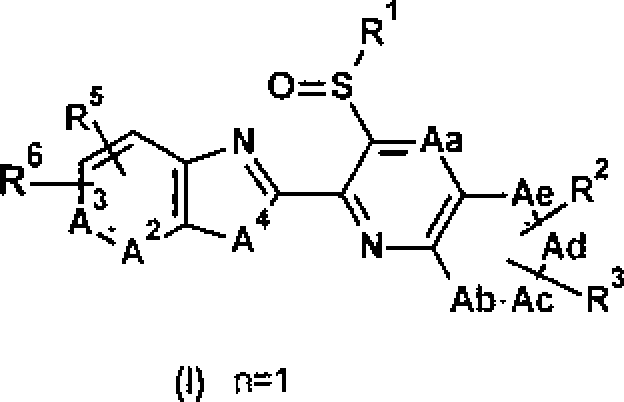
The present invention therefore provides novel compounds of the formula (I) or(l’)

Ab=Ac R

(I) U') in which (configuration 1)
Aa is nitrogen or=C(R7)-,
WO 2017/072039
PCT/EP2016/075365
-2Ab is nitrogen or=C(H)-,
Ac is nitrogen or =C(H)-,
Ad is nitrogen or =C(H)-,
Ae is nitrogen or=C(H)-, where Ab, Ac, Ad and Ae cannot all be nitrogen,
R1 is (Ci-Cft)alkyl, (Ct-Co)haloalky], (Ci-Cftlcyanoalkyl, (Ct-C<,)hydroxyalkyl, (Ci-Cft)aikoxy-(CtCbjalkyl, (Ci-C6)haloalkoxy-(C|-C[,)alkyl, (C;-Cf,)alkenyl, (C:-C6)alkenyloxy-(C|-C6)alkyl, (CiCft)ha!oalkenyloxy-(Ci-Ciflalkyl, (C^-C^jhaloalkeiiyl, (C:-C(,)cyanoaikenyi, (Ci-Ce)alkynyl, (CiC&)alkynyloxy-(Ci-C(,)alkyI, (Ci-C6}haloalkyny]oxy-(C|-Ct,)alky], (CS-C^) haloalkynyl, (CrC(,)cyanoalkynyl, (Ci-Cs)cycloalkyl, (CvCs)cycloalkyl-(Ci-Ca)cycloaikyl, (Ci-Cf,)alkyt-(CiCslcycloalkyi, halo(C.i-Cs)cycloalkyt, amino, (Ci-Chalky lamino, di-(Ci-Cfi)aikylamino, (CjCs)cycloalky!atnino, (Ci-G)alkylcarbonylamino, (Ci-Cft)alkylthio-(C i-C<i)alky], (CiC6)lia]oalkylthio-(C[-Ci,)-alkyl, (Ci-C7)alky]sulphiny!-(Ci-Cs)-a]kyI, (Ci-C(,)haloalkylsulphinyl(Ci-Ch)alkyl, (Ci-C(,)alkylsulphonyl-(Ci-Cft)alkyl, (Ci-C«)haloalkylsulphonyl-(Ci-Chalky], (CiC6)alkoxy-(C i -C6)alky 1th io-(Ci -C6)a] kyl, (C i -Oja 1 koxy-(C i -Ch)alky lsulphi ny S-(C ] -Cf,) a 1 ky I, (Ci-Cft)alkoxy-(Ci-C(,)aIkyJsuIphonyl-(Ci-C6)-alkyl, (Ci-Cft)alkylcarbony!-(CrC6)alkyl, (CiCtlhaloal kyl carbonyl-(C i-Cftjalkyl, (CrCtlalkoxycarbonyl-fCi-Cslalkyl, (CiCf,)haloalkoxycarbonyl-(C|-Cf,)alkyl, (Cj-Cf,)alkylsulphonylamino, aminpsulphonyl-(CiCtlalkyl, (Ci-Cf,)alkylanimosulphonyl-(C]-Cf,)aikyl, di-(Ci-C6)aIkylaminosulphonyl-(C|Cfrjalkyl, or (Ci-Cft)alkyl, (Ci-C/jalkoxy, (C:-C6)alkenyl, (Ci-Cfjalkynyl, (Cj-Cs)cycloalkyl, each optionally mono- or polysubstituted identically or differently by aryl, hetaryl or heterocyclyl, where aryl, hetaryl or heterocyclyl may each optionally be mono- or polysubstituted identically or differently by halogen, cyano, nitro, hydroxyl, amino, carboxyl, carbamoyl, aminosulphonyl, (Ci-C\)aikyl. (CiGJcycloalkyl, (Ci-Cr,)alkoxy, (Ci-Cf,)haloalkyl, (Ci-Cfi)haloalkoxy, (Ci-C(,)alkylthio, (CtCfjalkylsulphinyl. (Cj-C{,)alkylsulphonyl, (Ci-C(,)alkylsulphimino, (Ci-C(,)alkylsulpbtinino-(CiCi)alkyl, (Ci-Cft)alkylsulphimino-(C2-Cft)aikylcarbonyI, (Ci-C<,)alkylsulphoximino, (Cr Cb}alkylsulphoximino-(C|-C(,)alky). (C|-C(,)alkylsnlphoximino-(C;-C6)alkylcarbonyl, (C iGlalkoxycarbonyl, (Ci-Chalkylcarbonyl, (Cj-Ci>)trialkylstlyl or benzyl, or
Rl is aryl, hetaryl or heterocyclyl, each mono- or polysubstituted identically or differently by halogen, cyano, nitro, hydroxyl, amino, carboxyl, carbamoyl, (Ct-Cslaikyl, (Ci-Cs)cycloalkyk (Ci-Ch)-alkoxy, (Ci-C(,)ha!oalkyl, (Ci-Celhaloalkoxy, (Ci-Ci, Jalkylthio, (CrCs)alkylsulphinyL (Ci-Cs}alkylsulphonyl, (Ct-Cftlalkylsulphmiino, (Ci-C[,)alkylsulphimino-{Ci-C6)alkyl, (CiC(,)alkylsulphimino-(C:-Cft)aikylearbonyl, (Ci-C[,)alkyisulphoximino, (Ci-C6)alkylsulphoximinoWO 2017/072039
PCT/EP2016/075365
-3(C|-C6)aikyl, (C|-Cfi)alkylsulphoximino-(C2-C6)alkylcarbonyl, (Ci-Cilalkoxycarbonyl, (CjCftjalkylcarbonyl, (Ci-Cs)trialkylsilyl, (=0) (in the case of heterocyclyl only) and (=O)-> (in the case of heterocyclyl only),
R-, RJ are independently hydrogen, cyano, lialogen, nitro, acetyl, hydroxyl, amino, SCN, tri(CiCftjalkylsilyl, (Ci-Cs)cycloalkyl. (C3-Cs)cycloalkyl-(Cs-Cs)cyc]oalky], (Ci-C6)alkyl-(CjCs)cycloalkyl, halo(C3-Cs)cycloalkyl, (Ci-Cslalkyl, (CrGOlialoalkyl, (Ci-Cb)cyanoalkyi, (CiC6)hydroxyalkyl, hydroxycarbonyl-tCi-Col-alkoxy, (Ct-C6)alkoxycarbonyl-(CrC„)alkyL (CtCft)alkoxy-(Ci-C(,)alkyl, (Cz-Cftjalkenyl, (Cj-Qlhaloalkenyl, (C:-Cfj)cyanoalkenyl, (C2C<>)alkynyl, (C;-Cs)haloalkynyl, (C2-C6)cyanoalkyuyl, (Ct-Cft)alkoxy, (Ci-Csjhaloalkoxy, (C|Cb)cyanoalkoxy, (Ci-Ci,)alkoxyearbonyl-(C|-Cf>)alkoxy, (Ci-C6)alkoxy-(Ci-Cf,)alkoxy, (Cr C<,)a S ky 1 hy d roxy i niino, (C i - Ctla lkoxy imino, (C t -C f,)a 1 ky 1 -(C, -C ,,)alko xy i m in o, (C i -C<,) ha 1 oa 1 ky 1 (Ci-Ce)alkoxyimino, (Ci-Chalky Ithio, (Ci-Cfjhaloalkylthio, (C]-C6)alkoxy-(C|-Cs)alkylthio, (C,Cc,)aikylthio-(Ci-Cr,)alkyl, (C!-Cs)atkylsulphinyl, (Ci-Crihaloalkylsulphinyl, (Ci-C6)alkoxy-(C|Cfi)alkylsulphinyl, (Ci-Ch)alkylsulphinyl-(CrCfi)alkyl, (Cr-C(,)alkylsulphonyl, (CiC(,)haloalkylsulphonyl, (C]-Cfi)alkoxy-(Ci-C<,)alky] sulphonyl, (Ci-C*)alkylsulphonyl-(Cr C«)alkyl, (Ci-Cs)al kylsulphony loxy, (Ci-Cs)alkylcarbonyl, (Ci-Cfi)alkylthiocarbonyl, (CiCjJhaloalky I carbonyl, (Ci-C^alkylcarbonyloxy, (C i-Csjalkoxycarbony 1, (CjC f,)ha loa 1 koxy carbony 1. amino carbo nyl, (C i -Cf,) a 1 ky la m itioc a rbony 1, {C i Cf,)alkylaminothiocarbonyl, di-(Ci-Ch)alkylaininoearbonyl, di~(Ci-Cft)aikylaminothiocarbonyl, (Ci-C h)a 1 ken y 1 a in i noc a rb ony 1, d Ϊ-(C; - CL)-a 1 keny 1 a mi nocarbony 1, (C3~
C s) cy c 1 oa Iky 1 am i nocarbony 1, (C i -Cf,) a 1 kylsulphony I am i no, (C i -Cs )a 1 ky lam i no, d i ~(C r
Chjalkylanuno, aminosulphonyl, (Ci-C^alkylaminosulphonyl, di-(Ci-C<9alkyIaminosulphony], (Ci-Cidaikylsulplioxiinino, aminothiocarbonyl, (Ci-Chalkylaminothiocarbonyl. dt-(Ci-C\)alky 1aniinothiocarbonyl, (Ci-Cxlcycloalkylamino or NHCO-(Ci-C<,)alkyl ((CiC\,)a 1 ky I ca rbony 1 a m ino),
RT is hydrogen, cyano, halogen, acetyl, hydroxyl, amino, (Cj-Cs)eycloalkyl, halo(Cj-Cx)cycloa!kyl, (Ci-Q)alkyl, (Ci-C(,)haloalkyl, (Ci-Ctt)cyanoalkyl, (C;-C6)alkenyl, (Ci-CeJhaloalkenyl, (C2C(,)alkynyl, (C;-Co)haloalkynyl, (Ci-Ci,)alkoxy, (Ci-Cftjhaloalkoxy, (Ct-C#,)aJkylthio. (Cr C<,)haloa!kylthio, (C rC<,)alkylsulphiiiyl, (Ci-C6)haloalkylsul pinny 1, (Ci-Ce)al kylsulphony 1 or (Ci-Cblhaloalkylsulphonyl,
Q is a partly saturated or saturated heterocyclic or heteroaromatic 8-, 9-, 10-, 11- or 12-membered fused bicyclic or tricyclic ring system, where at least one carbonyl group may optionally be present and/or where the ring system is optionally mono- or polysubstituted identically or differently, and where the substituents may independently be selected from hydrogen, cyano, halogen, nitro, acetyl, hydroxyl, amino, SCN, tri(Ci-C(,)alkylsi!yl, (Cj-Cs)cycloalkyl, (Ci-Cs)cycloalkyl-(C3Cs)cycloalkyl, (Ci-ColalkylqCj-Cslcycloalkyl, ha!o(C.i-Cs)cycloalkyl, (Ci-Cfjalkyl. (Cr
WO 2017/072039
PCT/EP2016/075365
-4Cfjhaloalkyl, (Ci-Cft)cyanoalkyi, (Ci-Cs)hydroxyalkyl, hydroxycarbonyl-(Ci-C6)-a]koxy, (C|Cs)alkoxycarbonyl-(C|-Chalky 1, (Ci-Q)alkoxy-(C|-Cfl)a]kyl, (C2-Ct,)alkenyl. (CiC^haloalkenyl, (G-C'Ucyanoalkenyl, (C?-C6)alkyuyl, (C?-C6)alkynyloxy-(C|-C4)alkyS, (C?Ci)baloalkynyl, (C-G)cyanoa)kyny), (Cj-Ci)alkoxy, (Ci-Cft)haloalkoxy, (Ci-C(,)haloalkoxy-(C|GJalkyl, (C2-C6)alkeny]oxy~(Ci-Cb)alkyl, (C?-C6)haloalkenyloxy-(Ci-C<,)alkyI, (GCs)cyanoalkoxy, (Ci-CQaikoxycarbonyl-fCi-Gfalkoxy, (Ci-C(,)alkoxy-(Ct-Cf,)alkoxy, (Cr Csjalkylhydroxyimino, (C]-C6)alkoxyimmo, (Ci-Ctdalkyl-fCi-Csjalkoxyimino, (Cj-C<,)haioalkyl(Ci-Ci)alkoxyimino, (Ci-Ct,)alkylthio, (Ci-Cf,)ha!oalky!thio, (Ci-Cft)alkoxy-(C!-Cb)alkytthio, (Cr Cs)alky]tbio-(C|-Cfi)alkyl. (Ci-Cft)alkylsuiphinyk (Ci-Cs)haloalkylsulphinyl, (CrC6)alkoxy-(CiC{,)aiky!sulphiny], (Ci-C6)alkylsu!phinyl-(C]-Cf,)alkyl, (Ci-Csfalkylsulphonyl, (Cr Cf,)haloaiky isulpbony 1, (Ci -Ch)alkoxy-(C i -Ch)alky 1 su lphonyl, (C i -Chalky S sulphonyl -(C t C&)aikyl, (Ci-G)alkylsulphonyloxy, (C i-GJalkylcarbonyl, (Ci-Cftalkylcarbonyl-iC-Glalkyl, (Ci-Cfjalkylthiocarbonyl, (G-Ohaloalkylcarbonyl, (G-Chalky Icarbonyloxy, (Cr
Oalkoxycarbonyl, (Ci-Ct,)haloalkoxycarbonyl, aininocarbonyl, (Ci-CTlalkylaminocarbonyl, (C i -C<,)a Iky la m inothioc arbo nyl, d i -(C t -C<j )a Iky laminocarbo ny!, di-(Cr
C <,) a 1 ky 1 am i not h i ocarbony 1, (C ? -C &)a lkeny laminocarbony 1, d i-(C i-C&)-a Ikeny 1 am i noca rb o ny 1, (Ci-Cx)cycloalkylaminocarbonyl, (Ci-Glalkylsulphonylamino, (Ci-G,)alky!amino, di-(CiC&)alkyl amino, aminosulphonyl, (Ci-C(,)alkylaniinosulphonyl, di-(C rCfjalkylamiriosulphonyl, (Ci-Ch)alkylsulphoximino, aminothiocarbonyl, (G~G>)alkylaminothiocarbonyl, di-(CiC(,)alkyl aminothiocarbonyl, (Ci-C'j)cycloalkylamino, NHCO-(Ci-Chalky] ((CiCfc) a 1 ky I carbony 1 a m i no), or where the substituents may independently be selected from phenyl or a 5- or 6-membered heteroaromatic ring, where phenyl or the ring may optionally be mono- or polysubstituted identically or differently by Cj-Ct-alkyl, G-C.-alkenyl, C?-C<,-alkynyl, Cy-G-cycloalkyl, Ci-G-haloalkyl, C?Cyhaloalkenyl, C;-C(,-ha!oalkynyl, CrCh-halocycloalkyl, halogen, CN. NO?, Ci-Cyalkoxy, C'rCjbaloalkoxy, n is 0, 1 or 2, where, in the case of the structural unit A4, Q is none of the following ring systems:
R', where X and Y, which may be the same or different, are carbon or nitrogen, R1 is hydrogen, aldehyde, oxime or—C(O)O-Ra, with the proviso that X is carbon, where R,, is Ci-C^-alkyl, R' and R, which may be the same or different, are hydrogen, halogen, cyano, nitro, CrCh-alkyl or Ci-G,-alkoxy.
WO 2017/072039
PCT/EP2016/075365
-5and, in addition, when Aa is =C(H)-, in the case of the compounds of the formula (I). 0 is not 01, 02,
Q3, Q4, Q5, Q6, Q7, Q8, Q9, Q10, Q15, Q17,
Il has additionally been found that the compounds of the formula (1) or (Γ) have very good efficacy as pesticides, preferably as insecticides and/or acaricides, and additionally generally have very good plant compatibility, especially with respect to crop plants.
The compounds according to the invention are defined in general terms by the formula (I) or (Γ). Preferred substituents or ranges for the radicals listed in the formulae mentioned above and below are illustrated hereinafter:
Configuration 2
Aa is preferably nitrogen or =C(R7)-,
Ab is preferably nitrogen or =C( H)-,
Ac is preferably nitrogen or =C(H)-,
Ad i s preferably nitrogen or =C(H)-,
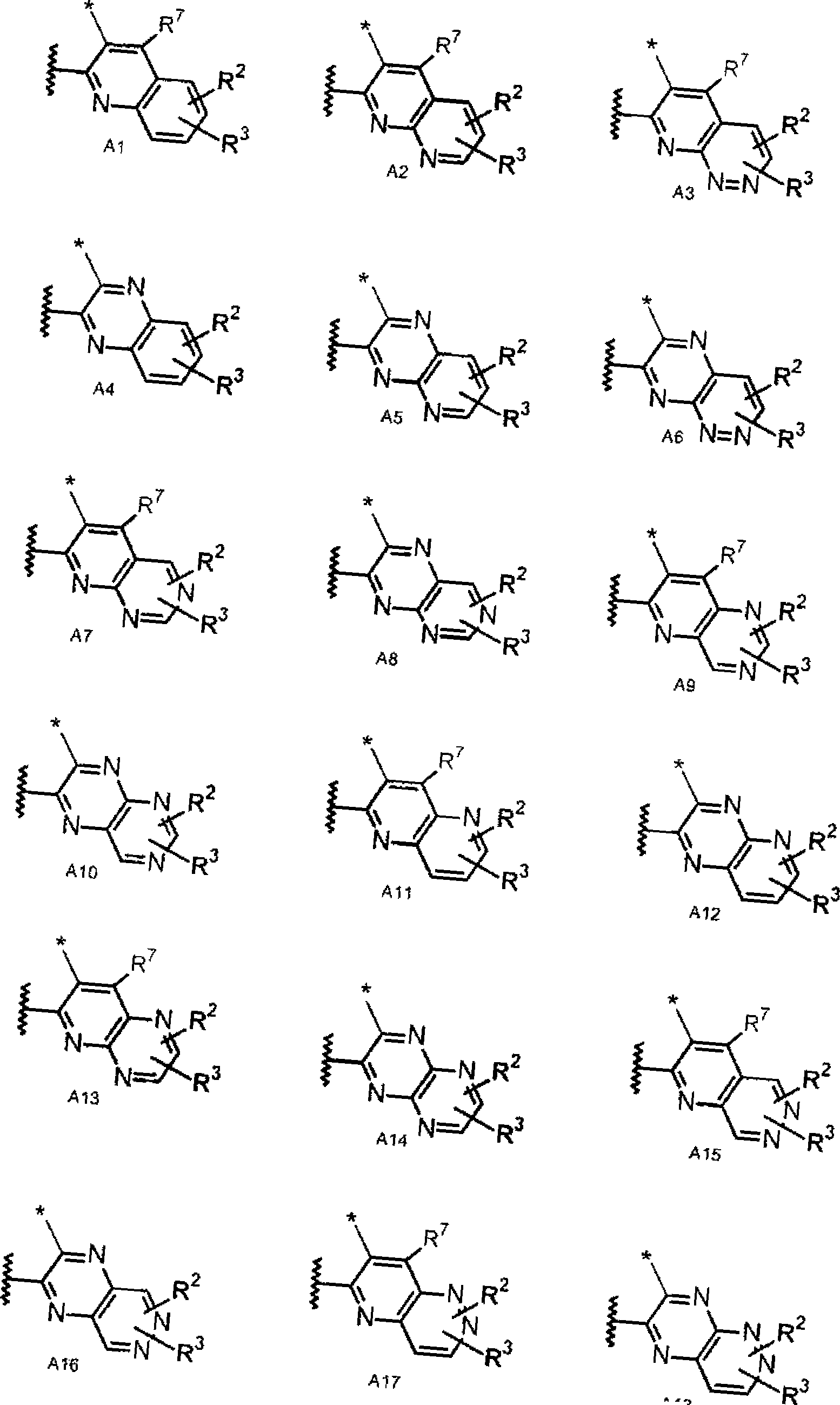
Ae is preferably nitrogen or =C(H)-, where Ab, Ac, Ad and Ae cannot all be nitrogen, preferably resulting in the following structural units Al to A44:
wo 2017/072039 pCT/EP2016/075365
ATS
WO 2017/072039
PCT/EP2016/075365


WO 2017/072039
-8PCT/EP2016/075365

A38

A39

A40
WO 2017/072039
PCT/EP2016/075365

where the bond to the substituent Q is identified by a wavy line and the bond to the sulphur atom by an asterisk *,
R1 is preferably (Ci-C^)alkyl, (Ci-Cfihydroxyalkyt, (Ci-Cfrhaloalkyl, (Ci-C4)cyanoalkyl, (CtC.i)alkoxy-(C]-C-i)alkyl, (Ci-C4)haloalkoxy-(C|-Cj)alkyl, (C:-C4)alkenyl. (C;>-C.i)aIkenyloxy-(CjCffalkyl, (C2-C4)haloalkenyloxy-(C|-C4)alkyl, (Ci-C4)haloaikenyl, (C2-C4)cyanoalkenyl, (C;Cj)alkynyl, (C2-C4)a!kynyloxy-(CrC4)alkyl, (C2-C4)haIoalkynyloxy-(Ci-C4)alkyl, (CiCflhaloalkynyl, (Ci-CjJcyaiioatkynyl, (Cj-ChJcycloalkyl, (Cj-CidcycloaikylfCi-CftJcycloalkyl, (Ci-C4)alkyl-(Cj-Co)cycloalkyl, halo(Cj-Ci,)cycloalkyl, (Ci-C4)alkylamino, di-(CjC4)alkylamino, (C.i-Cf,)cyc ioalkyl amino, (Ci-C4)a]kylcarbonylamino, (CrC4)alkylthio-(CtC4)alkyl, (Ci-C4)haloalkylthio-(C|-C4)alkyi. (Ci-C4)alkylsulphinyl-(C!-C4)alkyl, (CjC4)haloaIkylsu]phinyl-(CrC4)alky], (C]-C4)alkyisulphonyl-(Ci-C4)alkyI, (Ci-Cfralkylcarbonyl(Ci-C4)alkyl, (Ci-C4)haloalkylcarbonyl-(Ci-C.i)aJkyl, (Ci-C4)alkylsu)phonylammo, or is (Cj-C4)alkyl, (Ci-Cfoalkoxy, (C2-C4)alkenyl. (Ci-Cfialkynyi, (Cj-Ctjcyeloalkyl, each optionally mono- or di substituted identically or differently by aryl, het ary] and heterocyclyl, where aryl, hetaryl and heterocyclyl may each optionally be mono- or disubstituted identically or differently by halogen, cyano, carbamoyl, aminosulphony 1, (Ci-C4)-aikyl, (C.i-C4)cycloalkyl, (CiC4)alkoxy, (Ci-C4)haloalkyl, (Ci-C4)haloalkoxy, (Ci-C4)alkyltliio, (Ct-C4)alkylsulphinyl, (Cr Cfialky I sulphonyl, (Ci-Cffalkytsulphimino, or
R' is preferably aryl, hetaryl or heterocyclyl, each optionally mono- or disubstituted identically or differently by halogen, cyano, carbamoyl, (CrC4)alky I, (Ci-Cricycloalkyl. (Ci-C4)-aIkoxy, (CiGOhaloalkyl, (Ci-C4)haloalkoxy, (Ci-Cfialkylthio, (Ci-Cflalkylsulplimyl, (Ci-C4)alky I sulphonyl, (Ci-C4)alkylsu]phimino, (Ci-C4)alkylsulphoximino, (Ci-Cjjalkylcarbonyl, (C?-C4)trialkylsilyl, (=0) (in the case of heterocyclyl only) or (=0)2 (in the case of heterocyclyl only),
R', RJ are preferably independently hydrogen, cyano, halogen, nitro, acetyl, hydroxyl, amino, SCN, tri(Ct-C4)alkylS!lyl, (Cj-CiOcycloalkyl, (Cj-CHcyc ioalky l-(Ci-C<,)cycloalky], (CrC4)alkyl-(C3WO 2017/072039
PCT/EP2016/075365
-10Gfcycloalkyl, halo(C.4-C6)cycloalkyl, (Ci-C4)alkyl, (CrC4)haloalkyl, (Ct-Cflcyanoalkyl, (CiC4)hydroxyalkyl, (Ci-C4)alkoxy-{Ci-C4)alkyl, (Ci-Cftalkenyl, (G-Cflhaloalkenyl, (C3C4)cyanoalkenyl, (G-Cflalkynyl, (Ch-Cflhaloalkynyl, (Ci-Cflcyanoalkynyl, (Ci-Cflalkoxy, (CiC4)haloalkoxy, (Ci-C4)cyanoalkoxy, (Ct-C4)alkoxy-(C|-C4)alkoxy, (Cj-C4)alkyihydroxy imino, (Ci-C4)alkoxyimino, (Ci-C4)alkyl-(C|-C4)alkoxyimino, (Ci-C4)haloalkyl-(C|-C4)alkoxyimino, (Ci-C4)alkyhhio, (Ci-C4)haloalkylthio, (Ci-C^)alkylthio-(Ci-C4)alkyl, (C]-C4)a[kylsulphinyl, (CiC4)haloalkylsulphinyl, {Ci-C4)alkylsulphinyl-(C]-C4)alkyl, (Ci-C4)alkylsulphonyl, (Cr C4)haloaikylsulphonyl. (C|-C4)alkylsulphonyl-(Ci-C4)alkyl, (Ci-C4)alkylsulphonyloxy, (CjC4)alkylcarbonyl, (Ci-C4)haloalkylcarbonyl, aminocarbonyt, aminothiocarbonyl, (CiC4)alkylaminocarbonyl, di-{Ci-C4)aIkylaminocarbonyl, (Ci-C4)a)kylsulplionylamino, (CiC4)alkylamino, di-(Ci-C4)alkylaniino, aminosulphony], (Ci-C4)alkylamtnosulphonyl, di-(CjC4)alkylaminosulphonyl, aminothiocarbonyl or NHCO-(Ci-C4)alkyl ((CiC4)alkylcarbonylamino),
R7 is preferably hydrogen, cyano, halogen, acetyl, hydroxyl, amino, (Ci-C^/cycloalkyL halo(CjCfticycloalkyl, (C i-C4)alkyl, (Cj-C4)haloalkyl, (Ci-C4)cyanoalkyl, (C2-C4)alkenyl, (CiC4)haloalkenyl, (Ci-C4)a!kynyl, (C2-C4)haloalkynyi, (Ci-C4)alkoxy, (C|-C4)haloalkoxy, (CiC4)alkylthio, (Ci-C4)haloalkylthio, (Ci-Cj)alkylsulphinyl, (C]-C4)haloalkylsulphinyl, (CiC4)alky I sulphonyl or (CrC4)haloalkylsulphonyl,
Q is preferably a heteroaromatic 8-, 9-, 10-, 11- or 12-membered fused bicyclic or tricyclic ring system, where the ring system is optionally mono- or polysubstituted identically or differently, and where the substituents may independently he selected from hydrogen, cyano, halogen, nitro, acetyl, hydroxyl, amino, SCN, tri-(Ci-C(,)alkylsilyl, (Ci-Cs)cycloalkyl, (Ci-Cs)cycloalkyl-(CiCflcycloalkyl, (Ci-Cf,)alkyl-(Ci-C8)cycioalkyl, halo(Ci-Cs)cycloalkyl, (CrCfclalkyL (CiCidhaloalkyl. (Ci-Cft)cyanoalkyl, (Ci-C<,)hydroxyalkyl, (CrCtdalkoxy-fCrChfalkyl. (C?C6)alkenyl, (Ci-Gdhaloalkenyl, (Ch-Gficyanoalkenyl, fCrGflalkynyl, (Ci-C<,)alkynyloxy-(CiC4)alkyl. (Cz-Cajlialoalkynyl, (Ci-Ctfalkoxy, (Cj-Ct,)haloalkoxy, (Ci-C6)haloalkoxy-(CiC(,)alkyl. (C2-Ci,)alkenyloxy-(C|-C<>)alkyl. (C2-Ct,)haloalkenyloxy-(C|-Chalky I, (CiCfi)cya noal koxy, (C i -Co)a 1 kox y-( C t -C<,)a Iko x y, (C i -C h) a 1 k y 1 h yd roxyim ino, (C i -C<, )a 1 koxy i m i no, (Ci-Cidalkyl-fCi-Crialkoxyimino, (Ci-C6)alkylthio, (Ci-C(,)lialoalkyllhio, (.CrCt)a!koxy-(Cr Cfdalkylthio, (CrC»)alkylthio-(Ci-C6)alkyl, (Cj-C(,)a!kylsulphinyl, (Ci-Ct,)haloalkylstilphinyl, (C ] -C(,)alkoxy-(C i -Cft)al kyl su Iphi nyl, (C i -Cf,)a 1 ky Isulph i ny 1-(C t-Cf,)a Iky 1, (C tCJalkylsulphonyi, (Ct-C6)haloalkylsulphonyl, (Ci-G)aikoxy-(C|-C(,)a Iky I sulphonyl, (CiCfda!kylsulphonyl-(C|-C<,)alkyl, (Ci -Chalky lsul phony loxy, (Ci-C(,)alkylcarbonyl, (C]Cft)alkylcarbonyl-(Ci-C6)alkyi, (Ci-Chalky! thiocarbonyl, (Ci-C<,)haloalkylcarbonyl, (CiChjalkylcarbonyloxy, (Ci-Ce,)alkoxycarbonyl, (Ci-Gdhaloalkoxycarbonyl. aminocarbonyl, (CiCidalkylaminocarbonyl, (CrGOalkylanunolhioearbonyl. di-/Ci-G,)alkylamtnocarbonyl, di-(CiCh)alkylaminothiocarbonyl, (CrC.dcycloalkyl aminocarbonyl, (Ci-C<,)alky)sulphonylamino. (C iWO 2017/072039
PCT/EP2016/075365
-11Ctialkylamino, di-(Ci-Ct,)alkylamino, aminosulphonyl, (Ci-Cslalkylaminosulphonyl, di-(CiCsjalkylamiiiosulphonyl, (Ci-Cft)alkylsulphoximlno, auiinothiocarbonyl, (CjCft)alkylaminothiocarbonyl, di-iCt-CijJalkylaminotliiocarbonyl, (Cj-CfJcycloalkylaniino, NHCO(Ci-Cft)alkyl ((Ci-C(,)alkylcarhonylamino), or where the substituents may independently be selected from phenyl or a 5- or 6-membered heteroaromatic ring, where phenyl or the ring may optionally be mono- or polysubstituted identically or differently by Cj-C(,-alkyl, C2-Cf,-alkenyl, Cz-Cs-alkynyl, Ci-C6-cycloalkyl, Cj-C<,-haloalkyl, CiCfr-haloalkenyl, Ci-Q-haloalkynyl, Q-Co-halocycloalkyL halogen, CN, Cj-C^-alkoxy, C1-C4haloalkoxy, n is preferably 0, 1 or 2, where, in the case of the structural unit A4, Q is none of the following ring systems:
where X and Y, which may be the same or different, are carbon or nitrogen, R’ is hydrogen, aldehyde, oxime or-C(O)O-R;i, with the proviso that X is carbon, where K, is Ci-Cs-alkyl, R' and R, which may be the same or different, are hydrogen, halogen, cyano, nitro. Ci-Chalky 1 or Ci-Cs-alkoxy, and, in addition, when Aa is =C(H)-, in the case of the compounds of the formula (1), Q is not Ql, Q2, Q3, Q4, Q5, Q6, Q7, Q8. Q9, Q10, Q15, Q17,
Configuration 3-1
Aa is more preferably nitrogen or =C(R7)-,
Ab is more preferably nitrogen or =C(H)-,
Ac is more preferably nitrogen or =C(H)-,
Ad is more preferably nitrogen or =C(H}-,
Ae is more preferably nitrogen or =C(H)-, where Ab, Ac, Ad and Ae cannot all be nitrogen.
more preferably resulting in the following structural units: Al, A2, A3, A4, A5, A7, A8, A9, A10, Al 1,

WO 2017/072039
PCT/EP2016/075365
-12R1 is more preferably (Ci-Cfialkyl, (C i-Cflhydroxyalkyl, (C i-C-jhaloalkyl, (C’-Cfialkenyl, (C3Cfihaloalkenyl, (C^-Cflalkynyi, (Ca-Crihaloalkynyl, (C?-C(,)cycloalkyl, (Ci-C4)alkylthio-(Cr Cfialkyl, (C i-Cflalkylsulpliinyl-iCi-Cflalky! or (Ci-CLialkylsulphonyl-iCi-C^Jalkyl,
R;, R3 are more preferably independently hydrogen, cyano, halogen, nitro, hydroxyl, amino, SCN, tri(Ci-Cqjalkylsilyl, (C.vCft)cycloalkyl, (Ci-C6)cycloalkyl-(Cj-Ct,)cycloalkyl, (Ci-Cfialkyl-fCiC(,)cycloalkyl, ha!o(Ci-C(,)cycloalkyl, (Ci-Cfialkyl, (Ci-Cflhaloalkyl, (Ci-Cficyanoalkyl, (CiCfialkoxyTCi-Ctialky!, (C;-Ci)alkenyl, (C2-C4)haloaikenyl, (Ci-CQcyanoalkenyl, (CiC4)alkynyi, (C2-C4)haloalkynyl, (CS-Cficyanoalkynyl, (C]-C4)atkoxy, (Ci-C4)ha)oalkoxy, (CiC4)cyanoaikoxy, (Ci-C4)alkylhydroxy imino, (Ci-C4)alkoxyimino, fCj-Cj)alkyl-(C >C4)alkoxyimino, (Ci-C4)alkykhio, (Ci-C4)haloalkylthio, (C i-Chalky Isulphinyl, (Cr
C4)haloalkyJsulplnny], (C i-Chalky Isulphony I, (Ci-C4)haloalkylsulphonyl, (Cr
Cfialkylsulphonyloxy, (Ci-Cflalkylcarbonyl, (Ci-Cjjhaloalkylcarbonyl, aminocarbonyl, (CjC4)alkylaminocarbonyl, di-(Ci-C4)alkylaminocarbony!, (Ci-C4)alkylsulphonylamino, (CiCflalkylamino, di-(Ci-C4)alkylamino, a mi no sulphonyl, {Cj-Cflalkylaminosulphonyl, di~(CiC4)alkyLaminosulphonyJ or NHCO-(Ci-C4)alkyl ((Ci-C4)alkylcarbonylamino),
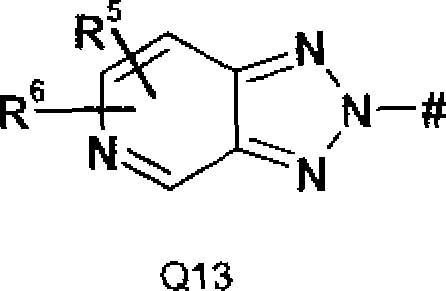
R7 is more preferably hydrogen, halogen, cyano, (Ci-Cflalkyl or (Ci-C4)haloalkyl, is more preferably a heleroaromatic 9-membered or 12-membered fused bicyclic or tricyclic ring system from the group of Q1 to Q20,
WO 2017/072039
-13PCT/EP2016/075365




Q18
WO 2017/072039
PCT/EP2016/075365

R
I
R ,5

N —#
Q19
R4 is more preferably (CrC4)a!kyl. (Ci-Cfihaloalkyl, (Ci-C-i)cyanoalkyL (CrCfihydroxyalkyl, (CiC4)a)koxy-(Ci-C4)alkyl, (Ci-C4)haloalkoxy-(CrC4)alkyl, (CL-Cjlalkenyl, (C2-C4)alkenyloxy-(CiC4)alkyl, (Ci-Cfibaloalkenyloxy-fCi-CAalkyl, (C2-C4)haloalkenyl, (C2-C4)cyanoalkenyl, (CSC4)alkynyl, (Cz-Cfialkynyloxy-tCi-Cfialkyl, (Cz-Cfihaloalkynyl, (Cj-CUcycLoalkyl, (C?Cfi)cycloalky]-(C3-Ce,)cycloalkyl, (Ci-C4)alkyl-(C.pC6)cycloalkyl, halo(Ci-Cft)cycloaIkyI, (CiC4)alkyIthio-(Ci-C4)alkyl, (Ci-C4)alkylsuiphinyl-(C|-C4)alkyi, (Ci-C4)alkylsulphonyl-(CiC4)alkyl or (Ci-C4)alkylcarbonyl-(Ci-C4)alkyk
R5, Rft are more preferably independently hydrogen, cyano, halogen, (Ci-C4)alkyl, (Cj-C4)haloalkyl, (CiC4)alkenyl, {C:-C4)haioalkenyl, (Cz-Cfialkynyl, (C2-C4)haloalkynyl. (Cj-Ctlcycloalkyl, (C?CL) eye loalkyl-(C?-Cf,) cycloalkyl, (Ci-C4)alkyl-(Cj-C6)cycloatkyl, (Ci-C4)alkoxy, (Cr
C4)haloalkoxy, (Cr-C4)alkoxyimino, (Ci-C4)alkylthio, (Ci-C4)haloalkylthio, (Cj~ C4)alkylsulphinyl, (Ci-C4)haloalkylsulphinyl, (Ci-C4)alky(sulphonyl, (Ci-C4)haloaIky 1 sulphonyl, tCi-C4)a!kylsulphonytoxy, (Ci-C4)alkylcarbonyl, (CrC4)ha!oalkylcarboiiyl, aminocarbonyl, (CiCjJalkyLaniinocarbonyl, di-(Ci-C4)alkyla]ninocarbonyl, (Ct-C4)alky1sulphonylamino, (Cp C4)alkyianiino, di-(CpC4)alkylamino, aminosulphonyl, (CpC4)alkylaminosuIphonyl or di-(Cp C,i)alky!aminosuLphonyl.
n is more preferably 0, 1 or 2.
Configuration 3-2
Aa, Ab. Ac, Ad, Ae, R1. R\ R\ R7, Q, R\ Rft and n have the definitions given in configuration 3-1 and
R4 is more preferably hydrogen, (CrC4)alkyl, (CpC4)haloalkyl, (Ci-C4)eyanoalkyl, (Cp C4)hydroxyalkyl, (CpC4)alkoxy-(CpCfialkyl, (CpC4)baloa)koxy-(Ci-C4)alkyl, (C2-C4)alkenyl, (C2-C4)al kenyloxy-(C i -C4)al kyI, (C2-C4)ha loal kenyloxy-(C 1 -C4)a Iky 1, (C2-C4 lhaloa Ikeny 1, (C2C4)eyanoalkenyl, (C2-C4)alkynyl, (C2-C4)alkynyloxy-(CpC4)alkyl, (C2-C4)haloalkynyl, (CiCOcycloalkyl, (CpCOeyeloaikyl-iCi-COcycloalkyl, (CpC4)alkyl-(CpC(,)cycloalkyl, halo(Cp C(,)cycloa!kyl, (Ci-C4)alky!thio-{Ct-C4)alkyL (CrC4)alkylsulphinyl-(Ci-C4)alkyl, (Cp C4)alkylsulphonyl-(Ci-C4)alky! or (CpC4)atkylearbonyl-(CpC4)alky1, where, when Aa is =C(H)-, in the case of the compounds of the formula (I), Q is not Ql, Q2, Q3, Q4, Q5, Q6. Q7, QS, 09, O10, 015, OH.
WO 2017/072039
PCT/EP2016/075365
-15Configuration 4-1
Aa is even more preferably nitrogen or =C(R7)-,
Ab is even more preferably nitrogen or =C(H)-,
Ac is even more preferably nitrogen or =C(H )-,
Ad is even more preferably nitrogen or =C(H)-,
Ae is even more preferably nitrogen or =C(H)-, where Ab, Ac, Ad and Ae cannot all be nitrogen, even more preferably resulting in the following structural units: Al, A2, A4, A5, A7, A9, All, A] 2, A13, A19, A20, A21, A22, A23, A24, A26, A27, A29, A31, A33, A34, A35, A41, A42, A43, A44,
R1 is even more preferably (C i -C4)-a 1 kv 1, (CI -Cj)ha 1 oalky 1 or (C i-Cft )cycloa 1 ky 1,
R2, R3 are even more preferably independently hydrogen, cyano, halogen, (Ci-Cj)alkyl. (CjCfihaloalkyl, (Ct-Cflhaloalkoxy, {Ci-C4)alkylthio, (Ci-C4)alkylsu!phinyl, (Ci-C4)alky I sulphonyl, (Ci-C4)haloalkylthio, (Ci-C4)haloalkylsulphinyl, (Ci-Cfihaloalkylsulphonyl or NHCO-(CiCfialkyl ((Ci-Cfialkylcarbonylainino),
R7 is even more preferably hydrogen, halogen, cyano or (Ct-C-Oalkyl,
Q is even more preferably a heteroaromatic 9-inembered or 12-membered fused bicyclic or tricyclic ring system from the group of Q2, Q3, Q5, Q6, Q8, Q9, Q10, Q11, Q12. Q13, Q!5, Q16, Q17, Q18, Q19 orQ20,
WO 2017/072039 PCT/EP2O16/075365

Q17 Q18 Q19

is even more preferably (Ci-C4)-alkyl or tCrCri-alkoxy-fCj-Cfi-alkyl.
Rs is even more preferably hydrogen, cyano, halogen, (CrC4)alkyl, (Ci-C4)haloa1kyl. (C\C(,)cycloalkyl, (Cj-C6)cycloalkyl-(Ci-C6)cycloalkyl. (CrC4)alkyl-(C.i-C(,)eyeloa!kyl. (CiCAalkoxy, (C,-C4)haloalkoxy, (Cj-Cfialkoxyimino, (CrC4)alkylthio, (Ct-C4)haloalkyllhio, (CiWO 2017/072039
PCT/EP2016/075365
-17C4)alkyisulphinyl, (C i -C4)haloalky Isulphinyl, (C i -C4)alkylsulphony 1, (C i -Cfllia loalkylsuiphonyi, (Ci-C4)alkylcarbonyl, (Ci-C4)haloalkyicarbonyl, (Ci-C4)alkylaminocarbonyl. di-(Cr
C4)alkylaminocarbonyl, (Ci-Cfralkylsulphonylamino, (Ci-C4)alkylaminosulphonyl or di-(Cr
C4)a!kylaminosulphonyl,
R° is even more preferably hydrogen, n is even more preferably 0, 1 or 2.
Configuration 4-2
Aa, Ab, Ac, Ad, Ae, R1, R5, R(l and n have the definitions given in configuration 4-1 and
R-, R3 are independently even more preferably hydrogen, cyano, halogen, (Ci-Cj)alkyi, (C|-C4)alkoxy, (Ci-Cfihaloalky], (Ct-Cfihaloalkoxy, (Ci-C4)alkylthio, (Ci-C4)alky Isulphinyl, (CiC4)alkylsulphonyl, (Ci-C4)haloalkyhhio, (Ci-Cflhaloalkyisulphinyl, (Ci-CfihaSoalkylsulphonyl or NHCO-(Ci-C4)alkyl ((C]-C4)alkyl carbonyl amino),
R7 is even more preferably hydrogen, halogen, cyano, (Ci-C4)alkyl or (Ci-C4)baloalkyl, is even more preferably a heteioaromatic 9-membered or 12-membered fused bicyclic or tricyclic ring system from the group of Ql, Q2, Q3, Q5, Q6, Q8, Q9. Q10, 011, 012, Q13, QI5, Q16, Q17, Q18, Q19 or Q20,
R4 is even more preferably hydrogen, (Ct-C4)alkyl or (Ci-C4)-alkoxy-(Ci-C4)alkyl, where, when Aa is =C(H)-, in the case of the compounds of the formula (I), 0 is not Ql, Q2, Q3, Q5,
06, Q8, Q9,Q1O,Q15,Q17,
Configuration 5-1
Aa is specifically nitrogen or =C(R7)-,
Ab is specifically nitrogen or =C(H)-,
Ac is specifically nitrogen or =0(11)-,
Ad is specifically nitrogen or =C(H)-,
Ae is specifically nitrogen or =C(H)-, where Ab. Ac, Ad and Ae cannot all be nitrogen, specifically resulting in the following structural units: Al, A2. A4, Al 1, At 3, A19, A20, A23, A24, A26, A33, A35, A41, A42,
WO 2017/072039
PCT/EP2O16/075365
-18R1 is specifically methyl, ethyl, n-propyl, isopropyl, cyclopropyl, n-butyl, isobutyl, tert-butyl, cyclobutyl, fluoromethyl, difluoromethyl, trifluoromethyl, fluoroethyl, difluoroethyl, irifluoroethyl, tetrafluoroethyl or pentafluoroethyl,
R2, R-1 are independently specifically hydrogen, fluorine, chlorine, bromine, iodine, cyano, methyl, ethyl, methoxy, trifluoromethyl, trifluoromethoxy or trifiuoromethylthio,
R7 is specifically hydrogen, fluorine, chlorine, bromine, cyano, methyl, ethyl or trifluoromethyl,
Q is specifically a heteroaromatic 9-membered fused bicyclic ring system from the group of Q2, Q3, Q10, Q15 and Q17
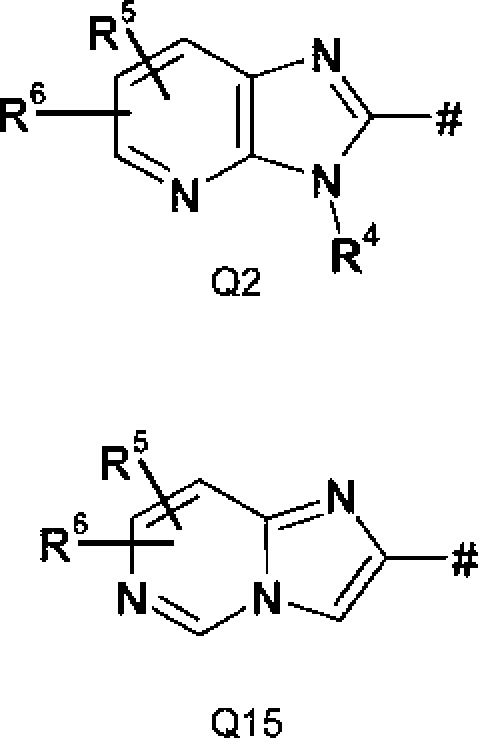


R4 is specifically methyl, ethyl, isopropyl, methoxymethyl or methoxyethyl,
EU is specifically fluorine, chlorine, bromine, fluoromethyl, difluoromethyl, trifluoromethyl, fluoroethyl (CH2CFH2, CHFCHj), difluoroethyl (CF2CH1, CH2CHF2. CHFCFHft, tri fluoroethyl, (CH2CFj, CHFCHFi, CF2CFH2), tetrafluoroethyl (CHFCFj, CF2CHF2), pentafluoroethyl, trifluoromethoxy, difluorochlorometboxy, dichlorofluoroniethoxy or trifiuoromethylthio,
R6 is specifically hydrogen, is specifically 0, 1 or 2.
Configuration 5-2
Aa is specifically nitrogen or=C(R7)-,
Ab is specifically =C{H)-,
WO 2017/072039
PCT/EP2016/075365
-19Ac is specifically =C(H)-,
Ad is specifically =C(H}-,
Ae is specifically nitrogen or =C(H)-, specifically resulting in the following structural units: Al, A4, A23, A26, A33,
R1 is specifically methyl, ethyl, n-propyl, isopropyl, cyclopropyl, n-butyl, isobutyl, tert-butyl, cyclobutyl, fluoronietliy], difluoromethyl, trifluoromethyl, fluoroethyl, difiuoroethyl, tri fluoroethyl, tetra fluoroethyl or pentafluciroethyl,
R2, R’ are independently specifically hydrogen, fluorine, chlorine, bromine, iodine, cyano, methyl, ethyl, methoxy, trifluoromethyl, trifiuoromethoxy or trifluoromethyl thio,
R7 is specifically hydrogen, fluorine, chlorine, bromine, cyano, methyl, ethyl or trifluoromethyl.
is specifically a heteroaromatic 9-membered or 12-membered fused bicyclic ring system from the group of Ql, Q2,03, Q16.Q17 or Q20,
R-1 is specifically hydrogen, methyl, ethyl, isopropyl, methoxymethyl or methoxyethyl,
R5 is specifically fluorine, chlorine, bromine, fluoromethyl, difiuoromethyl, trifluoromelhyl, fluoroethyl (CH2CFH2. CHFCHfi, difiuoroethyl tCF:CH3, CFFCHFj, CHFCFHj). tri fluoroethyl. (CH^CFj, CHFCHFi, CF2CFH2), tetrafluoroethyl (CHFCFj, CF2CHF2), pentafiuoroethyl, trifiuoromethoxy, difluorochloromethoxy, dichlorofiuoromethoxy, trifluoromethyllhio, trifiuoromethylsulphmyl or trifiuorometliylsulphaiiyl,
R6 is specifically hydrogen, n is specifically 0, 1 or 2, where, when Aa is =C(H)-, in the case of the compounds of the formula (I), Q is not Ql, Q2, Q3, Q17,
Configuration 6-1
Aa is especially nitrogen or =C(R7)-,
Ab is especially =C(H)-,
Ac is especially =C(H)-,
Ad is especially =C(H)-,
Ae is especially =C(H)-,
WO 2017/072039
PCT/EP2016/075365
-20especially resulting in the following structural units: Al or A4,
R1 is especially ethyl,
R2, R-1 are especially hydrogen,
R7 is especially hydrogen,
O is especially a heteroaromatic 9-membered fused bicyclic ring system from the group of 03

RJ is especially methyl,
R5 is especially trifluoromethyl,
R6 is especially hydrogen, n is especially 0 or 2,
Configuration 6-2
Aa is especially nitrogen or =C(R7)-,
Ab is especially =C(H)-,
Ac is especially =C(H)-,
Ad is especially =C(H)-,
Ae is especially nitrogen or =C(H)-, especially resulting in the following structural units: Al, A4, A23, A26, A33
R1 is especially methyl or ethyl,
R2 is especially hydrogen, chlorine, methoxy or trifluoromethyl,
R' is especially hydrogen,
R7 is especially hydrogen,
WO 2017/072039
PCT/EP2016/075365
-210 is especially a heteroaromatic 9-membered or 12-membered fused bicyclic ring system from the group of OU Q2, Q3, Q16, Q17, Q20,
R4 is especially hydrogen or methyl.
Rs is especially trifluoromethyl or pentafluoroethyl,
R(’ is especially hydrogen, n is especially 0. 1 or 2, where, when Aa is =C(H)-, in the case of the compounds of the formula (I), Q is not Ql, Q2, Q3, Q17,
Configuration 6-3
Aa is especially nitrogen or =C(R7)-,
Ab is especially =C(H)-,
Ac is especially =C(H)-,
Ad is especially =C(H)-,
Ae is especially nitrogen or =C(H)-, preferably resulting especially in the following structural units: A23, A26, A33,
R1 is especially methyl or ethyl,
R2 is especially hydrogen or trifluoromethyl,
R’ is especially hydrogen,
R7 is especially hydrogen,
Q is especially a ring system from the group of QI, Q2. Q3, Q17,
R4 is especially methyl,
R5 is especially trifluoromethyl or pentafluoroethyl,
R6 is especially hydrogen, n is especially 0, 1 or 2, where, when Aa is =C(H)-, in the case of the compounds of the formula (I). Q is not Ql, Q2, Q3, QI7.
WO 2017/072039
PCT/EP2016/075365
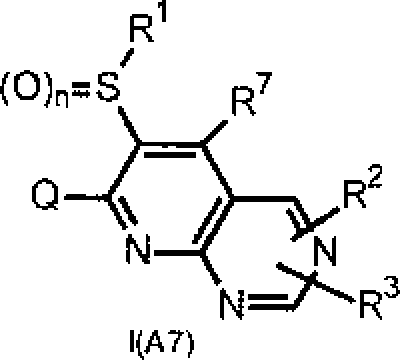
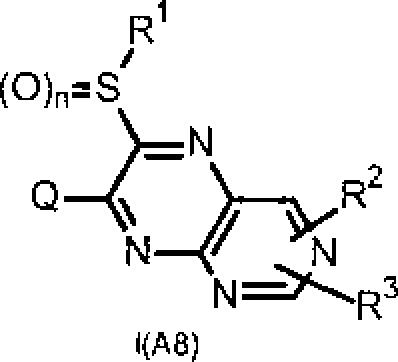
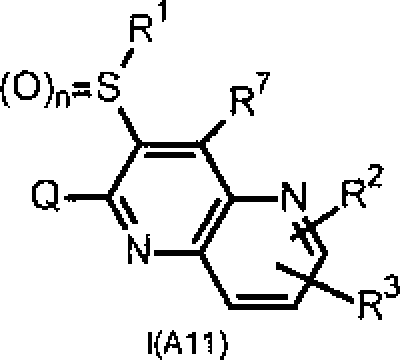
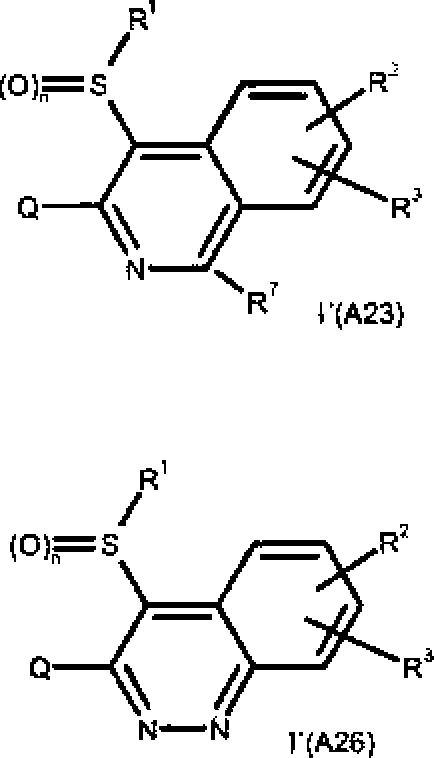
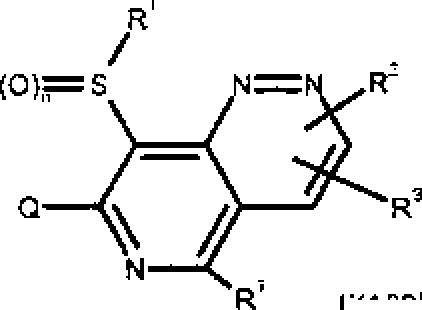
-22With inclusion of structural units A1 to A44, this results in the following principal structures of the formula (I) or formula (Ij:

<O)n=S R 7

KA2) (O)n=S R?
Of .,. N=N^F
R1 /
Q

l(A4) (O)n=S
Q 1=S (O)n=S \=N \=N var; qhC
l(A5) N—7^“R3

t(A6)N=h>F

\=^A-r3 l(A12)
R1 <o)n=s' >=N
N—(/ AN \=γΛ· l(A16)

l(A17)


WO 2017/072039
PCT/EP2016/075365

I(A22}
WO 2017/072039
PCT/EP2016/075365


I(A32)

Γ(Α38>


Ι'(Α39)

Ι(Α40>
WO 2017/072039
PCT/EP2016/075365
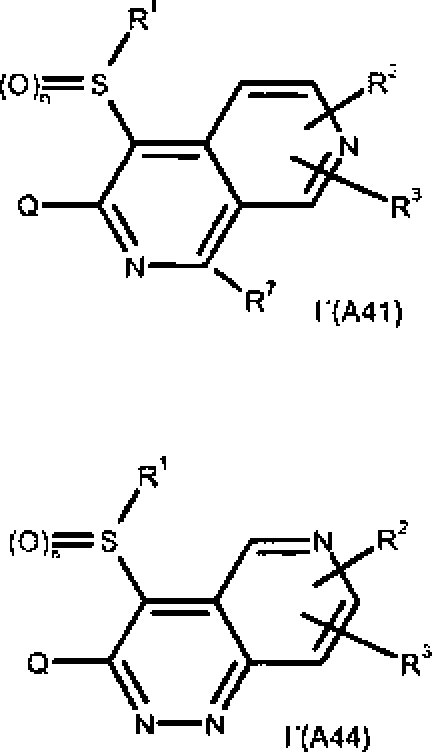


where R1, R2, R\ R7, Q and n have the definitions given above.
In a preferred embodiment, the invention relates to compounds of the formula (I) where RJ, R2, R\ R7, Q, Aa, Ab, Ae, Ad, Ae and n have the definitions given in configuration (1) or configuration (2).
In a preferred embodiment, the invention relates to compounds of the formula (I) where R1, R2, R\ R4, R5, R6, R7, Q, Aa, Ab, Ac, Ad, Ae and n have the definitions given in configuration ¢3-1) or configuration (3-2) or configuration (4-1) or configuration (4-2) or configuration (5-1) or configuration (5-2) or configuration (6-1) or configuration (6-2) or configuration (6-3).
In a preferred embodiment, the invention relates to compounds of the formula (Ij where R1, R2, R3, R7, Q, Aa, Ab, Ac, Ad, Ae and n have the definitions given in configuration (1) or configuration (2),
In a preferred embodiment, the invention relates to compounds of the formula (Ij where R', R2, RJ, R4, R\ R6, R7, Q, Aa, Ab, Ae, Ad, Ae and n have the definitions given in configuration (3-1) or configuration (3-2) or configuration (4-1) or configuration (4-2) or configuration (5-1) or configuration (5-2) or configuration (6-1) or configuration (6-2) or configuration (6-3),
In a preferred embodiment, the invention relates to compounds of the formula (I) where Q is Qt and R1, R2, R3, R4, R5, R, R7, Aa, Ab, Ac, Ad, Ae and n have the definitions given in configuration (3-1) or configuration (3-2) or configuration (4-1) or configuration (4-2) or configuration (5-1) or configuration (5-2) or configuration (6-1) or configuration (6-2) or configuration (6-3),
In a preferred embodiment, the invention relates to compounds of the formula (I) where Q is Q2 and Rl, R2, R\ R4, R5, Rft, R7, Aa, Ab, Ac, Ad, Ae and n have the definitions given in configuration (3-1) or configuration (3-2) or configuration (4-1) or configuration (4-2) or configuration (5-1) or configuration (5-2) or configuration (6-1) or configuration (6-2) or configuration (6-3),
In a preferred embodiment, the invention relates to compounds of the formula (I) where Q is Q3 and R1, R2, R\ R4, Rs, R\ R7, Aa, Ah, Ac, Ad, Ae and n have the definitions given in configuration (3-1) or
WO 2017/072039
PCT/EP2016/075365
-26configuration (3-2) or configuration (4-1) or configuration (4-2) or configuration (5-1) or configuration (5-2) or configuration (6-1) or configuration (6-2) or configuration (6-3).
In a preferred embodiment, the invention relates to compounds of the formula (I) where Q is Q4 and R1, R2, R3, R’, R6, RT, Aa, Ab, Ac, Ad, Ae and n have the definitions given in configuration (3-1) or configuration (3-2) or configuration (4-1) or configuration (4-2) or configuration (5-1) or configuration (5-2) or configuration (6-1) or configuration (6-2) or configuration (6-3).
In a preferred embodiment, the invention relates to compounds of the formula (I) where Q is Q5 and R1, R2, R?, R5, R6, R7, Aa, Ab, Ac, Ad, Ae and n have the definitions given in configuration (3-1) or configuration (3-2) or configuration (4-1) or configuration (4-2) or configuration (5-1) or configuration (5-2) or configuration (6-1) or configuration (6-2) or configuration (6-3),
In a preferred embodiment, the invention relates to compounds of the formula (1) where 0 is Q6 and R1, R2, R’, R5. R6, R7, Aa, Ab, Ac, Ad, Ae and n have the definitions given in configuration (3-1) or configuration (3-2) or configuration (4-1) or configuration (4-2) or configuration (5-1) or configuration (5-2) or configuration (6-1) or configuration (6-2) or configuration (6-3).
In a preferred embodiment, the invention relates to compounds of the formula (I) where Q is Q7 and R1, R2, R-\ R\ R, R7, Aa, Ab, Ac, Ad, Ae and n have the definitions given in configuration (3-1) or configuration (3-2) or configuration (4-1) or configuration (4-2) or configuration (5-1) or configuration (5-2) or configuration (6-1) or configuration (6-2) or configuration (6-3).
In a preferred embodiment, the invention relates to compounds of the formula (I) where Q is Q8 and R1, R2, R-\ Rs, Rs, R7, Aa, Ab, Ac, Ad, Ae and n have the definitions given in configuration (3-1) or configuration (3-2) or configuration (4-1) or configuration (4-2) or configuration (5-1) or configuration (5-2) or configuration (6-1) or configuration (6-2) or configuration (6-3).
In a preferred embodiment, the invention relates to compounds of the formula (I) where Q is Q9 and Rl, R2, R3, R\ R”, R7, Aa, Ab, Ac, Ad, Ae and n have the definitions given in configuration (3-1) or configuration (3-2) or configuration (4-1) or configuration (4-2) or configuration (5-1) or configuration (5-2) or configuration (6-1) or configuration (6-2) or configuration (6-3).
In a preferred embodiment, the invention relates to compounds of the formula (I) where Q is Q10 and R1, R2, R\ R\ R6, R7, Aa. Ab, Ac, Ad, Ae and n have the definitions given in configuration (3-1) or configuration (3-2) or configuration (4-1) or configuration (4-2) or configuration (5-1) or configuration (5-2) or configuration (6-1) or configuration (6-2) or configuration (6-3).
hi a preferred embodiment, the invention relates to compounds of the formula (I) where Q is Q11 and R1, R2, R\ R5, R6, R7, Aa, Ab, Ac, Ad, Ae and n have the definitions given in configuration (3-1) or configuration (3-2) or configuration (4-1) or configuration (4-2) or configuration (5-1) or configuration
WO 2017/072039
PCT/EP2016/075365
-27(5-2) or configuration (6-!) or configuration (6-2) or configuration (6-3).
In a preferred embodiment, the invention relates to compounds of the formula (I) where Q is Q12 and R1, R3, R3, R?, Rh, R7, Aa, Ab, Ac, Ad, Ae and π have the definitions given in configuration (3-1) or configuration (3-2) or configuration (4-1) or configuration (4-2) or configuration (5-1) or configuration (5-2) or configuration (6-1) or configuration (6-2) or configuration (6-3).
In a preferred embodiment, the invention relates to compounds of the formula (I) where Q is Q13 and R1, R3, R3, Rs, R\ R7, Aa, Ab, Ac, Ad, Ae and n have the definitions given in configuration (3-1) or configuration (3-2) or configuration (4-1) or configuration (4-2) or configuration (5-1) or configuration (5-2) or configuration (6-1) or configuration (6-2) or configuration (6-3),
In a preferred embodiment, the invention relates to compounds of the formula (I) where Q is Q14 and R1, R3, R3, R4, R', Rft, R7, Aa. Ab, Ac, Ad, Ae and n have the definitions given in configuration (3-1) or configuration (3-2) or configuration (4-1) or configuration (4-2) or configuration (5-1) or configuration (5-2) or configuration (6-1) or configuration (6-2) or configuration (6-3).
In a preferred embodiment, the invention relates to compounds of the formula (I) where Q is Q15 and R1, R3, R-\ R5, R'1, R7, Aa. Ab, Ac, Ad, Ae and n have the definitions given in configuration (3-1) or configuration (3-2) or configuration (4-1) or configuration (4-2) or configuration (5-1) or configuration (5-2) or configuration (6-1) or configuration (6-2) or configuration (6-3),
In a preferred embodiment, the invention relates to compounds of the formula (I) where Q is Q16 and R1, R3, R3, R5, R61, R7, Aa. Ab, Ac, Ad. Ae and n have the definitions given in configuration (3-1) or configuration (3-2) or configuration (4-1) or configuration (4-2) or configuration (5-1) or configuration (5-2) or configuration (6-1) or configuration (6-2) or configuration (6-3).
In a preferred embodiment, the invention relates to compounds of the formula (I) where Q is Q17 and R1, R3. R3, R4, R’, R6, R7, Aa, Ab, Ac, Ad, Ae and n have the definitions given in configuration (3-1) or configuration (3-2) or configuration (4-1) or configuration (4-2) or configuration (5-1) or configuration (5-2) or configuration (6-1) or configuration (6-2) or configuration (6-3).
In a preferred embodiment, the invention relates to compounds of the formula (1) where Q is Q18 and R1, R1, R\ Rs, R\ R7, Aa, Ab, Ac, Ad, Ae and n have the definitions given in configuration (3-1) or configuration (3-2) or configuration (4-1) or configuration (4-2) or configuration (5-1) or configuration (5-2) or configuration (6-1) or configuration (6-2) or configuration (6-3).
In a preferred embodiment, the invention relates to compounds of the formula (I) where Q is Q) 9 and R’, R3, R3, R5, R!>, R7, Aa, Ab, Ac, Ad, Ae and n have the definitions given in configuration (3-1) or configuration (3-2) or configuration (4-1) or configuration (4-2) or configuration (5-1) or configuration (5-2) or configuration (6-1) or configuration (6-2) or configuration (6-3).
WO 2017/072039
PCT/EP2016/075365
-28In a preferred embodiment, the invention relates to compounds of the formula (I) where Q is Q20 and R1, R2, R-’, R4, R'\ R7, Aa, Ab, Ac, Ad, Ae and n have the definitions given in configuration (3-1) or configuration (3-2) or configuration (4-1) or configuration (4-2) or configuration (5-1) or configuration (5-2) or configuration (6-1) or configuration (6-2) or configuration (6-3),
In a prefen'ed embodiment, the invention relates to compounds of the formula (Γ) where Q is Ql and R1, R2, RJ, R4, R5, R6, R7, Aa, Ab, Ac, Ad, Ae and n have the definitions given in configuration (3-1) or configuration (3-2) or configuration (4-1) or configuration (4-2) or configuration (5-1) or configuration (5-2) or configuration (6-1) or configuration (6-2) or configuration (6-3),
In a preferred embodiment, the invention relates to compounds of the formula (Γ) where Q is Q2 and R1, R2, R-, R4, Rs, R6, R7, Aa, Ab, Ac, Ad, Ae and n have the definitions given in configuration (3-1) or configuration (3-2) or configuration (4-1) or configuration (4-2) or configuration (5-1) or configuration (5-2) or configuration (6-1) or configuration (6-2) or configuration (6-3),
In a preferred embodiment, the invention relates to compounds of the formula (Γ) where Q is Q3 and R1, R2, R-\ R4, R5, Rfi, R7, Aa, Ab, Ac, Ad, Ae and n have the definitions given in configuration (3-1) or configuration (3-2) or configuration (4-1) or configuration (4-2) or configuration (5-1) or configuration (5-2) or configuration (6-1) or configuration (6-2) or configuration (6-3),
In a preferred embodiment, the invention relates to compounds of the formula ([') where Q is Q4 and Rl, R2, R\ R5, Rft, R7, Aa, Ab, Ac, Ad, Ae and n have the definitions given in configuration (3-1) or configuration (3-2) or configuration (4-1) or configuration (4-2) or configuration (5-1) or configuration (5-2) or configuration (6-1) or configuration (6-2) or configuration (6-3).
In a preferred embodiment, the invention relates to compounds of the formula (Γ) where Q is Q5 and R1, R2, R\ Rs, R6, R7, Aa, Ab, Ac, Ad, Ae and n have the definitions given in configuration (3-1) or configuration (3-2) or configuration (4-1) or configuration (4-2) or configuration (5-1) or configuration (5-2) or configuration (6-1) or configuration (6-2) or configuration (6-3).
In a prefen'ed embodiment, the invention relates to compounds of the formula (Γ) where Q is Q6 and R1, R2, R\ R\ Rh, R7, Aa, Ab, Ac, Ad. Ae and n have the definitions given in configuration (3-1) or configuration (3-2) or configuration (4-1) or configuration (4-2) or configuration (5-1) or configuration (5-2) or configuration (6-1) or configuration (6-2) or configuration (6-3).
In a prefened embodiment, the invention relates to compounds of the formula (Γ) where Q is Q7 and R1, R2, R\ R5, R6, R7, Aa, Ab, Ac, Ad, Ae and n have the definitions given in configuration (3-1) or configuration (3-2) or configuration (4-1) or configuration (4-2) or configuration (5-1) or configuration (5-2) or configuration (6-1) or configuration (6-2) or configuration (6-3),
In a preferred embodiment, the invention relates to compounds of the formula (Γ) where Q is Q8 and R1,
WO 2017/072039
PCT/EP2016/075365
-29R3, R\ R5, R\ R7, Aa, Ab, Ac, Ad, Ae and n have the definitions given in configuration (3-1) or configuration (3-2) or configuration (4-1) or configuration (4-2) or configuration (5-1) or configuration (5-2) or configuration (6-1) or configuration (6-2) or configuration (6-3).
In a preferred embodiment, the invention relates to compounds of the formula (Γ) where Q is Q9 and R!, R3, R\ Rs, R\ R7, Aa, Ab, Ac, Ad, Ae and n have the definitions given in configuration (3-1) or configuration (3-2) or configuration (4-1) or configuration (4-2) or configuration (5-1) or configuration (5-2) or configuration (6-1) or configuration (6-2) or configuration (6-3).
In a preferred embodiment, the invention relates to compounds of the formula (Γ) where Q is Q10 and R1, R2, R1, Rs, Rf\ R7, Aa, Ab, Ac. Ad, Ae and n have the definitions given in configuration (3-1) or configuration (3-2) or configuration (4-1) or configuration (4-2) or configuration (5-1) or configuration (5-2) or configuration (6-1) or configuration (6-2) or configuration (6-3).
In a preferred embodiment, the invention relates to compounds of the formula (Ij where Q is Q11 and R1, R*, RJ, Rs, R6, R7, Aa, Ab, Ac, Ad, Ae and n have the definitions given in configuration (3-1) or configuration (3-2) or configuration (4-1) or configuration (4-2) or configuration (5-1) or configuration (5-2) or configuration (6-1) or configuration (6-2) or configuration (6-3).
In a preferred embodiment, the invention relates to compounds of the formula (I1) where Q is Q12 and R1, R, R\ R5, R\ R7, Aa, Ab, Ac, Ad, Ae and n have the definitions given in configuration (3-1) or configuration (3-2) or configuration (4-1) or configuration (4-2) or configuration (5-1) or configuration (5-2) or configuration (6-1) or configuration (6-2) or configuration (6-3).
In a preferred embodiment, the invention relates to compounds of the formula (Ij where Q is Q13 and R1, R3, RJ, R5, R6, R7, Aa. Ab, Ac, Ad, Ae and n have the definitions given in configuration (3-1) or configuration (3-2) or configuration (4-1) or configuration (4-2) or configuration (5-1) or configuration (5-2) or configuration (6-1) or configuration (6-2) or configuration (6-3).
In a preferred embodiment, the invention relates to compounds of the formula (Γ) where Q is Q14 and Rl, R3, R\ Rj R5, R\ R7, Aa, Ab, Ac, Ad, Ae and n have ihe definitions given in configuration (3-1) or configuration (3-2) or configuration (4-1) or configuration (4-2) or configuration (5-1) or configuration (5-2) or configuration (6-1) or configuration (6-2) or configuration (6-3),
In a preferred embodiment, the invention relates to compounds of the formula (Ij where Q is Q15 and R1, R3, R\ R\ R\ R7, Aa, Ab, Ac, Ad, Ae and n have the definitions given in configuration (3-1) or configuration (3-2) or configuration (4-1) or configuration (4-2) or configuration (5-1) or configuration (5-2) or configuration (6-1) or configuration (6-2) or configuration (6-3).
In a preferred embodiment, the invention relates to compounds of the formula (Ij where Q is Q16 and R1, R3, R\ R5, R‘\ R7, Aa, Ab, Ac, Ad, Ae and n have the definitions given in configuration (3-1) or
WO 2017/072039
PCT/EP2016/075365
-30configuration (3-2) or configuration (4-1) or configuration (4-2) or configuration (5-1) or configuration (5-2) or configuration (6-1) or configuration (6-2) or configuration (6-3).
in a preferred embodiment, the invention relates to compounds of the formula (Γ) where Q is Q17 and R1, R2, R3, R4, R\ R”, R7, Aa, Ab, Ac, Ad, Ae and n have the definitions given in configuration (3-1) or configuration (3-2) or configuration (4-1) or configuration (4-2) or configuration (5-1) or configuration (5-2) or configuration (6-1) or configuration (6-2) or configuration (6-3).
In a preferred embodiment, the invention relates to compounds of the formula (Γ) where Q is Q18 and R1, R2, R3, R\ R6, R7, Aa, Ab, Ac, Ad, Ae and π have the definitions given in configuration (3-1) or configuration (3-2) or configuration (4-1) or configuration (4-2) or configuration (5-1) or configuration (5-2) or configuration (6-1) or configuration (6-2) or configuration (6-3).
In a preferred embodiment, the invention relates to compounds of the formula (Γ) where Q is Q19 and R', R2, R3, R\ R6, R7, Aa, Ab. Ac, Ad, Ae and n have the definitions given in configuration (3-1) or configuration (3-2) or configuration (4-1) or configuration (4-2) or configuration (5-1) or configuration (5-2) or configuration (6-1) or configuration (6-2) or configuration (6-3).
In a preferred embodiment, the invention relates to compounds of the formula (Γ) where Q is Q20 and R1, R2, R\ R4, R£\ R7, Aa, Ab, Ac, Ad, Ae and n have the definitions given in configuration (3-1) or configuration (3-2) or configuration (4-1) or configuration (4-2) or configuration (5-1) or configuration (5-2) or configuration (6-1) or configuration (6-2) or configuration (6-3).
In a preferred embodiment, the invention relates to compounds of the formula (1) with the structural unit Al and where Q is Q16 or Q20 and R.1, R2, RJ, R4, R3, Rft, R7 and n have the definitions given in configuration (3-1) or configuration (3-2) or configuration (4-1) or configuration (4-2) or configuration (5-1) or configuration (5-2) or configuration (6-1) or configuration (6-2) or configuration (6-3).
In a preferred embodiment, the invention relates to compounds of the formula (I) with the structural unit A4 and where Q, R1, R2, R3, R4, R\ Rh and n have the definitions given in configuration (3-1) or configuration (3-2) or configuration (4-1) or configuration (4-2) or configuration (5-1) or configuration (5-2) or configuration (6-1) or configuration (6-2) or configuration (6-3).
hi a preferred embodiment, the invention relates to compounds of the formula (I) with the structural unit A23 and where Q, R1, R2, R\ R4, R3, R6, R7 and n have the definitions given in configuration (3-1) or configuration (3-2) or configuration (4-1) or configuration (4-2) or configuration (5-1} or configuration (5-2) or configuration (6-1) or configuration (6-2) or configuration (6-3).
In a preferred embodiment, the invention relates to compounds of the formula (1) with the structural unit A26 and where Q, R1. R2, R\ R4, R5, R6 and n have the definitions given in configuration (3-1) or configuration (3-2) or configuration (4-1) or configuration (4-2) or configuration (5-1) or configuration
WO 2017/072039
PCT/EP2016/075365
-31(5-2) or configuration (6-1} or configuration (6-2) or configuration (6-3).
In a preferred embodiment, the invention relates to compounds of the formula (I) with the structural unit A33 and where Q, R1, R2, R1, R4, R3, R, R7 and n have the definitions given in configuration (3-1) or configuration (3-2) or configuration (4-1) or configuration (4-2) or configuration (5-1) or configuration (5-2) or configuration (6-1) or configuration (6-2) or configuration (6-3).
In a preferred embodiment, the invention relates to compounds of the formula (I j where
Aa is nitrogen or =C(R7)-,
Ab is =C(H)-,
Ac is =C(H)-,
Ad is =C(H)-,
Ae is nitrogen or =C(H)-, preferably resulting in the following structural units: A23, A26, A33,
R1 is methyl or ethyl,
R2 is hydrogen ortrifiuoromethyl.
R3 is hydrogen,
R7 is hydrogen,
Q is a ring system from the group of Q1, Q2, Q3, Q17,
R4 is methyl,
R’ is trifluoromethyl or pentafiuoroethyi.
R6 is hydrogen, n is 0, 1 or 2.
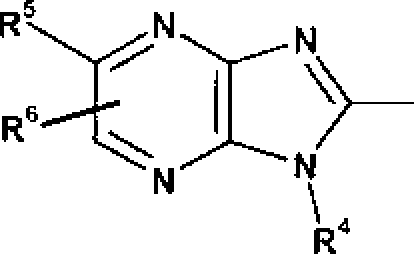
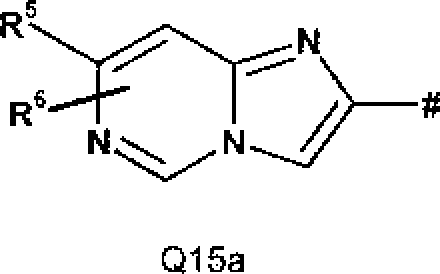
In a prefeired embodiment, the invention relates to compounds of formula (I) or (lj where Q is the following ring systems:
WO 2017/072039
PCT/EP2016/075365

Q10a Q11a Q12a

CM 3a
CM 4a

WO 2017/072039
PCT/EP2016/075365
-33R
N
N—# o
o

\ #
R
Q20a
Q19a where R6 is hydrogen and R!, R:, R?, R4, R5, R7, Aa. Ab, Ac, Ad, Ae and n iiave the definitions given in configuration (3-1} or configuration ¢3-2) or configuration (4-]) or configuration (4-2) or configuration (5-1) or configuration (5-2) or configuration (6-1) or configuration (6-2) or configuration (6-3).
In the preferred definitions, unless stated otherwise, halogen is selected from the group of fluorine, chlorine, bromine and iodine, preferably in turn from the group of fluorine, chlorine and bromine,
In the particularly prefeiTed definitions, unless stated otherwise, halogen is selected from the group of fluorine, chlorine, bromine and iodine, preferably in turn from the group of fluorine, chlorine and bromine,
In the context of the present invention, unless defined differently elsewhere, the term alkyl, either on its own or else in combination with further terms, for example haloalkyl, is understood to mean a radical of a saturated aliphatic hydrocarbon group which has 1 to 12 carbon atoms and may be branched or unbranched. Examples of Ci-C|2-alkyl radicals are methyl, ethyl, n-propy!, isopropyl, n-butyl, isobutyl, sec-butyl, tert-butyl, n-pentyl, isopentyl, neopentyl, tert-pentyl, 1-methylbutyl, 2-methylbutyl, 1ethylpropyl, 1,2-dimethylpropyl. hexyl, n-heptyl. n-octyl, n-nonyl, n-decyl, n-undecyl and n-dodecyl. Among these alkyl radicals, particular preference is given to Ci-C<,-alkyl radicals. Special preference is given to CrC^-alkyl radicals.
According to the invention, unless defined differently elsewhere, the term alkenyl, either on its own or else in combination with further terms, is understood to mean a straight-chain or branched C2-Ci2-alkeuyl radical which has al least one double bond, for example vinyl, allyl, 1-propenyl. isopropenyl, 1-butenyl, 2-butenyl, 3-bufenyl, 1,3-butadieny], 1-pentenyl. 2-pentenyl, 3-pentenyl, 4-pentenyl, 1,3-pentadienyl, 1hexenyl, 2-liexenyl, 3-hexenyl, 4-hexenyl, 5-hexenyl and 1,4-hexadienyl. Among these, preference is given to C2-C6-alkeny! radicals and particular preference to C2~C.|-aJkenyl radicals.
According to the invention, unless defined differently elsewhere, the term alkynyl. either on its own or else in combination with further terms, is understood to mean a straight-chain or branched Cz-C^-aikynyl radical which has at least one triple bond, for example ethynyl, 1-propynyl and propargyl. Among these, preference is given to Cj-Ci,-alkynyl radicals and particular preference to Cj-CT-alkynyl radicals. The alkynyl radical may also contain at least one double bond.
WO 2017/072039
PCT/EP2016/075365
-34According to the invention, unless defined differently elsewhere, the term cycloalkyl, either on its own or else in combination with further terms, is understood to mean a Ci-Cs-cycloalkyl radical, for example cyclopropyl, cyclobutyl, cyclopentyl, cyclohexyl, cycloheptyl and cyclooctyl. Among these, preference is given to Ci-Cc,-cycloalkyl radicals.
The term alkoxy, either on its Own or else in combination with further terms, for example haloalkoxy, is understood to mean an O-alkyl radical, where the term alkyl is as defined above.
Halogen-substituted radicals, for example haloalkyl, are mono- or polyhalogenated, up to the maximum number of possible substituents. In the case of polyhalogenation, the halogen atoms may be identical or different. In this case, halogen is fluorine, chlorine, bromine or iodine, especially fluorine, chlorine or bromine.
Unless stated otherwise, optionally substituted radicals may be mono- or poly substituted, where the substituents in the case of polysubstitutions may be the same or different.
The radical definitions or elucidations given above in general tenns or within areas of preference apply to the end products and correspondingly to the starting materials and intermediates. These radical definitions can be combined with one another as desired, i.e. including combinations between the respective ranges of preference.
Preference is given in accordance with the invention to using compounds of the formula (1) or (!') in which a combination of the definitions listed above as being preferred is present.
Particular preference is given in accordance with the invention to using compounds of the formula (I) or (Γ) in which a combination of the definitions listed above as being more preferred is present.
Very particular preference is given in accordance with the invention to using compounds of the formula (1) or (I1) in which a combination of the definitions listed above as being even more preferred is present.
Specific preference is given in accordance with the invention to using compounds of the formula (I) or O') in which a combination of the definitions listed above as being specifically preferred is present.
Especial preference is given in accordance with the invention to using compounds of the formula (I) or (I'} in which a combination of the definitions listed above as being especially preferred is present.
Depending on the nature of the substituents, the compounds of the formula (I) or (Γ) may be in the form of geometric and/or optically active isomers or corresponding isomer mixtures in different compositions. These stereoisomers are, for example, enantiomers, diastereomers, atropisomers or geometric isomers. The invention therefore encompasses pure stereoisomers and any desired mixtures of these isomers.
WO 2017/072039
PCT/EP2016/075365
-35The compounds of the formula (I) or (I') according to the invention can be obtained by the processes shown in the following schemes:
Process A-l
The compounds of the formula (1) in which Q is Ql to Q9 or Q20 can be prepared by known methods, for example analogously to the processes described in WO2009/131237, WO2010/125985, WO2011/043404, WO2011/040629, WO2012/086848, WO2013/018928, WO2015/000715, WO20.15/198859, WQ2016/039444, WQ2016/039441, WQ2016/116338 and WO2015/121136.


(IV)


The radicals R1, R2, R1, R4, Rs, R6, Aa, Ab, Ac, Ad, Ae and n have the definitions described above, A2 and A2 are CH or N (where A2 and A2 may not both be N). A4 is O-H. S-H or N(H)R4, A4 may also be chlorine, and X1 is halogen.
Step a)
The compounds of the formula (IV) can be prepared in analogy to the process described in US5576335 by the reaction of compounds of the fonnula (11) with carboxylic acids of the formula (111) in the presence
WO 2017/072039
PCT/EP2016/075365
-36of a condensing agent or a base.
Compounds of the formula (II) are either commercially available or can be prepared by known methods, for example analogously to the processes described in US2OO3/69257, W02006/65703, W02009/131237, WO2010/125985, WO2011/043404, WO2011/040629, WO2012/086848, W02013/01S92S or
W02015/000715.
Carboxylic acids of the formula (III) are either commercially available or can be prepared by known methods. Possible preparation routes are described in process F.
The reaction ofthe compounds of the formula (II) with carboxylic acids of the formula (III) can be effected neat or in a solvent, preference being given to conducting the reaction in a solvent selected from customary solvents that are inert under the prevailing reaction conditions. Preference is given to ethers, for example diisopropyl ether, dioxane, tetrahydrofuran, 1,2-dimethoxyethane; halogenated hydrocarbons, for example dichloromethane, chloroform, carbon tetrachloride, 1,2-dichloroethane or chlorobenzene; nitriles, for example acetonitrile or propionitrile; aromatic hydrocarbons, for example toluene or xylene; aprotic polar solvents, for example Ν,Ν-dimethylfonnamide or N-methylpyiTolidone, or nitrogencontaining compounds, for example pyridine.
Suitable condensing agents are, for example, carbodiimtdes such as 1-(3-dimethylaminopropyl)-3ethylcarbodiimide hydrochloride (EDCI)or 1,3-dicyclohexylcarbodi imide.
Suitable bases are inorganic bases which are typically used in such reactions. Preference is given to using bases selected by way of example from the group consisting of acetates, phosphates, carbonates and hydrogencarbonates of alkali metals or alkaline earth metals. Particular preference is given here to sodium acetate, sodium phosphate, potassium phosphate, caesium carbonate, sodium carbonate, potassium carbonate, sodium hydrogencarbonate, potassium hydrogencarbonate.
The reaction can be effected under reduced pressure, at standard pressure or under elevated pressure and at temperatures of 0°C to 180°C; with preference, the reaction is earned out at standard pressure and temperatures of 20 to 14O°C.
Step b)
The compounds of the formula (V) can be prepared by condensing the compounds of the formula (IV), for example analogously to the processes described in WO2009/131237, WO2010/125985, WO2011/043404, WO2011/040629, WO2012/086848, WO2013/018928, W02015/0007I5 and WO2015/121136.
The conversion to compounds of the formula (V) can be effected neat or in a solvent, preference being given to conducting the reaction in a solvent selected from customary solvents that are inert under the prevailing reaction conditions. Preference is given to ethers, for example diisopropyl ether, dioxane.
WO 2017/072039
PCT/EP2016/075365
-37tetrahydroftiran, 1,2-dimethoxyethane, tert-butyl methyl ether; halogenated hydrocarbons, for example dichloromethane, chloroform, carbon tetrachloride, 1,2-dichloroethane or chlorobenzene; nitriles, for example acetonitrile or prapionitrile; aromatic hydrocarbons, for example toluene or xylene; aprotic polar solvents, for example Ν,Ν-dimethylfcrmamtde or N-methylpyrrolidone, or nitrogen compounds, for example pyridine.
Tire reaction can be conducted in the presence of a condensing agent, an acid, a base or a chlorinating agent.
Examples of suitable condensing agents are carbodiimides such as l~(3-dimethylaminopropyl)-3ethylcarbodiimide hydrochloride (EDCI) or 1,3-dicyclohexylcarbodiimide; anhydrides such as acetic anhydride, trifluoroacetic anhydride; a mixture of triphenylphosphine, a base and carbon tetrachloride, or a mixture of triphenylphosphine and an azo diester, for example diethylazodicarboxylic acid.
Examples of suitable acids which can be used in the reaction described are sulphonic acids such as paratoluenesulphonic acid; carboxylic acids such as acetic acid, or polyphosphoric acids.
Examples of suitable bases are nitrogen heterocycles such as pyridine, picoline, 2,6-lutidine, 1,8diazabicyclo[5.4.0]-7-undecene (DBU); tertiary amines such as triethylamine and N,Ndiisopropylethylamine; inorganic bases such as potassium phosphate, potassium carbonate and sodium hydride.
An example of a suitable chlorinating agent is phosphorus oxychloride.
The reaction can be conducted under reduced pressure, at standard pressure or under elevated pressure, and at temperatures of 0°C to 200°C.
Step c)
The compounds of the formula (I) where n represents 0 can be prepared by reacting the compounds of the formula (V) with the compounds of the formula (Via) in the presence of a base.
Mercaptan derivatives of the formula (Via), for example methyl mercaptan, ethyl mercaptan or isopropyl mercaptan, are either commercially available or can be prepared by known methods, for example analogously to the processes described in US2006/25633, US2006/111591, US2820062. Chemical Communications, 13 (2000), 1163-1164 or Journal of the American Chemical Society, 44 (1922), p. 1329,
The conversion to compounds of the formula (1) where n is 0 can be effected neat or in a solvent, preference being given to conducting the reaction in a solvent selected front customary solvents that are inert under the prevailing reaction conditions. Preference is given to ethers, for example diisopropyl ether, dioxane, tetrahydroforan, 1,2-dimethoxyethane, tert-butyl methyl ether; nitriles, for example acetonitrile or propionitrile; aromatic hydrocarbons, for example toluene or xylene; aprotic polar solvents, for example
WO 2017/072039
PCT/EP2016/075365
-38Ν,Ν-dimethylfonnamLde, N-methyl pyrroli done or dimethyl sulphoxide.
Examples of suitable bases are inorganic bases from the group consisting of acetates, phosphates and carbonates of alkali metals or alkaline earth metals. Preference is given here to caesium carbonate, sodium carbonate and potassium carbonate. Further suitable bases are alkali metal hydrides, for example sodium hydride.
Alternatively, it is possible to directly use the salts of the mercaptan derivatives, for example sodium ethanethiolate, sodium methanethiolate or sodium isopropanethiolate, without addition of further base. Tire reaction can be conducted under reduced pressure, at standard pressure or under elevated pressure, and at temperatures of 0°C to 200°C.
In the reaction described, X1 is preferably a fluorine or chlorine atom.
If R? or R1 is likewise halogen (for example chlorine or fluorine), for example with use of methyl mercaptan, ethyl mercaptan or isopropyl mercaptan, it is also possible for multiple exchange with the alkyl mercaptan to take place as well as the single substitution Of X1.
Step d)
The compounds of the formula (I) where n is 1 can be prepared by oxidizing the compounds of the formula (1) where n is 0. The oxidation is generally conducted in a solvent selected from customary solvents which are inert under the prevailing reaction conditions. Preference is given to halogenated hydrocarbons, for example dichloromethane, chloroform, carbon tetrachloride, 1,2-dichloroethane or chlorobenzene; alcohols such as methanol or ethanol; formic acid, acetic acid, propionic acid or water.
Examples of suitable oxidizing agents are hydrogen peroxide, meta-chloroperbenzoic acid or sodium periodate.
The reaction can be conducted under reduced pressure, at standard pressure or under elevated pressure, and at temperatures of -20°C to 120DC.
Step e)
The compounds of the formula (1) where n is 2 can be prepared by oxidizing the compounds of the formula (I) where n is 1. The oxidation is generally conducted in a solvent. Preference is given to halogenated hydrocarbons, for example dichloromethane, chloroform. carbon tetrachloride, 1,2-dichloraethane or chlorobenzene; alcohols such as methanol or ethanol; formic acid, acetic acid, propionic acid or water.
Examples of suitable oxidizing agents are hydrogen peroxide and mela-chloroperbenzoic acid.
The reaction can be conducted under reduced pressure, at standard pressure or under elevated pressure, and at temperatures of -20°C to 120°C.
WO 2017/072039
PCT/EP2016/075365
-39Step f)
The compounds of the formula (I) where n is 2 can also be prepared in a one-step process by oxidizing the compounds of the formula (I) where n is 0. The oxidation is generally conducted in a solvent. Preference is given to halogenated hydrocarbons, for example dichloromethane, chloroform, carbon tetrachloride, 1,2-dichlorocthane or chlorobenzene; alcohols such as methanol or ethanol; formic acid, acetic acid, propionic acid or water.
Examples of suitable oxidizing agents are hydrogen peroxide and meta-chloroperbenzoic acid.
The reaction can be conducted under reduced pressure, at standard pressure or under elevated pressure, and at temperatures of -20°C to 120°C.
The compounds of the formula (Ij in which Q is Q1 to Q9 or Q20 can likewise be prepared analogously to process A-l, proceeding from the corresponding carboxylic acids of the formulae (ΙΙΓΑ) or (ΙΙΓβ), the possible preparation routes for which are described in processes G and H.
If R or R3 is likewise alkylsulphanyl, it is possible with use of a suitable oxidizing agent, for example hydrogen peroxide and meta-chloroperbenzoic acid, as well as the oxidation of the sulphur atom alongside R1 to the sulphone, for oxidation of the alkylsulphanyl substituent to alkylsulphonyl to take place in addition.
WO 2017/072039
PCT/EP2016/075365
-40Process A-2 1 Ac R R-SH
I \Ac r οοο^-ιτ^αΕΚ R (XXXI)
R
I R2
SfOJn^Aa /Ad
a)
XX' ./A·,/®, \ Ac
HOOC- N^ -Ab\ 3 R (XXXII) n = 0 s%AyAyd ,Χ, X,AC
ROOC^N^ABN 3 (XXXIII)
C)
R
S(O)n Aa A./ h, f ir^d — \ Ac r ooc-^rr^AtK 3
R
R
I n2
S(O)n Aa A&R r r^d /¾ JX \Ac
R OOC rr Afo^
c) (XXXIII) n = 0
b)
b) (XXXIIIa) rt = 2
c)
R δ(θ)π Aa A/' ijA
HOOC'^br ^AtAR3 (XXXIV) n = 0,1 or 2 5(θ1η Aa A^R
T ir td /-¾ JX \AC
R OOCT ^N^Alo\R3 (XXXNIb) n= 1

(0 n = 0,1 or 2
The radicals Aa, Ab, Ac, Ad, Ae, it1, R-', R\ Rs, Rh and n have the definitions described above, A2 and A3 are CH or N, X1 is halogen. A4 is O-H, S-H or N(H)R4, A4 may also be chlorine, and RR is (Ci-Cu)alkyl.
Step a)
WO 2017/072039
PCT/EP2016/075365
-41The compounds of the formulae (XXXII) and (XXXIII) can be prepared by reacting the compounds of the formula (XXXI) with the compounds of the formula (Via) in the presence of a base.
The compounds of the fonnula (XXXI) are either commercially available or can be prepared by known methods, for example from 2-aminopyridine derivatives analogously to the processes described in WO2011/41713 or in analogy to processes F-l and F-2.
Mercaptan derivatives of the fonnula (Via), for example methyl mercaptan, ethyl mercaptan or isopropyl mercaptan, are either commercially available or can be prepared by known methods, for example analogously to the processes described in US2006/25633, US2006/111591, US2820062, Chemical Communications, 13 (2000), 1163-1164 or Journal of the American Chemical Society, 44 (1922), p. 1329.
The conversion to compounds of the fonnulae (ΧΧΧΠ) and (XXXI 11) can be effected neat or in a solvent; preferably, the reaction is conducted in a solvent selected from customary solvents that are inert under the prevailing reaction conditions. Preference is given to ethers, for example diisopropyl ether, dioxane, tetra hydrofuran, 1,2-dimethoxyethane, tert-butyl methyl ether; nitriles, for example acetonitrile or propion itriie; aromatic hydrocarbons, for example toluene or xylene; aprotic polar solvents, for example N,N-di methyl form amide, N-methylpyrrolidone or dimethyl sulphoxide.
Examples of suitable bases are inorganic bases from the group consisting of acetates, phosphates and carbonates of alkal i metals or alkaline earth metals. Preference is given here to caesium carbonate, sodium carbonate and potassium carbonate. Further suitable bases are alkali metal hydrides, For example sodium hydride.
Alternatively, it is possible to directly use the salts of the mercaptan derivatives, for example sodium ethanethioJate, sodium methanetbiolate or sodium isopropanethiolate, without addition of further base.
The reaction can be conducted under reduced pressure, at standard pressure or under elevated pressure, and at temperatures of0°C to 200°C.
Step b)
The compounds of the fonnula (XXXII lb) can be prepared by oxidizing the compounds of the fonnula (XXX11I). The oxidation is generally conducted in a solvent. Preference is given to halogenaled hydrocarbons, for example dichloromethane, chloroform, carbon tetrachloride, 1,2-dichloroethane or chlorobenzene; alcohols such as methanol or ethanol; formic acid, acetic acid, propionic acid or water.
Examples of suitable oxidizing agents are hydrogen peroxide and meta-chloroperbenzoic acid.
The reaction can be conducted under reduced pressure, at standard pressure or under elevated pressure, and at temperatures of-20°C to 120°C.
WO 2017/072039
PCT/EP2016/075365
-42The compounds of the formula (XXXllla) can be prepared analogously by oxidizing the compounds of the formula (XXXIII).
The compounds of the fonnula (XXXllla) can be prepared analogously by oxidizing the compounds of the formula (XXXllIb),
Step c)
The compounds of the formula (XXXIV) where 11 is 2 can be prepared by hydrolysing the compounds of the fonnula (XXXllla) in the presence of a base. The hydrolysis is generally conducted in a solvent. Preference is given to alcohols such as methanol or ethanol; water; ethers, for example diisopropyi ether, dioxane, tetrahydrofuran, 1,2-dimethoxyethane, tert-butyl methyl ether; nitriles, for example acetonitrile or propionitrile; aromatic hydrocarbons, for example toluene or xylene; aprotic polar solvents, for example N,N-dimethyl formamide, N-methylpyrrolidone or dimethyl sulphoxide; or mixtures of the solvents mentioned.
Examples of suitable bases are inorganic bases from the group consisting of acetates, phosphates and carbonates of alkali metals or alkaline earth metals. Preference is given here to caesium carbonate, sodium carbonate and potassium carbonate.
The reaction can be conducted under reduced pressure, at standard pressure or under elevated pressure, and al temperatures of -20°C to 200°C.
The compounds of the fonnula (XXXIV) where n is 0 can analogously be prepared by hydrolysing the compounds of the formula (XXXII1).
The compounds of the fonnula (XXXIV) where n is 1 can analogously be prepared by hydrolysing the compounds of the fonnula (XXXIIIb).
The further conversion of compounds of the fonnula (XXXIV) to compounds of the fonnula (I) is carried out analogously to process A-L
Step (1)
The compounds of the formula (XXXV) can be prepared by the reaction of compounds of the fonnula (II) with carboxylic acids of the fonnula (XXXIV) in the presence of a condensing agent or a base.
The compounds of the fonnula (II) are either commercially available or can be prepared by known methods, for example analogously lo the processes described in US2003/069257, US2012/0319050, WO2011 /107998 or WO2010/91310.
The reaction of the compounds of the fonnula (II) with carboxylic acids of the fonnula (XXXIV) where ii is 0, I or 2 can be effected neat or in a solvent, preference being given to conducting the reaction in a
WO 2017/072039
PCT/EP2016/075365
-43solvent selected from customary solvents that are inert under the prevailing reaction conditions. Preference is given to ethers, for example diisopropyl ether, dioxane, tetrahydrofuran, 1,2-dimethoxyethane; halogenated hydrocarbons, for example dichioromethane, chloroform, carbon tetrachloride, 1,2dichloroethane or chlorobenzene; nitriles, for example acetonitrile or propionitrile; aromatic hydrocarbons, for example toluene or xylene; aprotic polar solvents, for example N,N-dimethylformanride or N-methylpyrrolidone, or nitrogen-containing compounds, for example pyridine.
Suitable condensing agents are, for example, carbodiinrides such as l-(3-dimelbylaminopropyl)-3ethylcarbodiimide hydrochloride (EDCI), l ,3-dicyclohexylcarbodi imide, tIrionyl chloride or oxalyl chloride.
Suitable bases are inorganic bases which are typically used in such reactions. Preference is given to using bases selected by way of example from the group consisting of acetates, phosphates, carbonates and hydrogencarbonates of alkali metals or alkaline earth metals. Particular preference is given here to sodium acetate, sodium phosphate, potassium phosphate, caesium carbonate, sodium carbonate, potassium carbonate, sodium hydrogencarbonate, potassium hydrogencarbonate. Further suitable bases are alkali metal hydrides, for example sodium hydride.
The reaction can be effected under reduced pressure, at standard pressure or under elevated pressure and at temperatures of 0DC lo 1SO°C; with preference, the reaction is carried out al standard pressure and temperatures of 20 to 14O°C.
Step e)
The compounds of the formula (I) where n is 0, 1 or 2 can be prepared by condensing the compounds of the formula (XXXV) in the presence of a base.
The conversion to compounds of the formula (I) where n is 0, 1 or 2 can be effected neat or in a solvent, preference being given to conducting the reaction in a solvent selected from customary solvents that are inert under the prevailing reaction conditions. Preference is given to ethers, for example diisopropyl ether, dioxane, teirahydrofuran, 1,2-dimethoxyethane, tert-butyl methyl ether; halogenated hydrocarbons, for example dichioromethane, chloroform, carbon tetrachloride. 1,2-dichloroelhane or chlorobenzene; nitriles, for example acetonitrile or propionitrile; aromatic hydrocarbons, for example toluene or xylene; aprotic polar solvents, for example N.N-dimethylfonnanride or N-tnethylpyrrolidone, or nitrogen compounds, for example pyridine.
Suitable bases are inorganic bases which are typically used in such reactions. Preference is given to using bases selected by way of example front the group consisting of acetates, phosphates, carbonates and hydrogencarbonates of alkali metals or alkaline earth metals. Particular preference is given here to sodium acetate, sodium phosphate, potassium phosphate, caesium carbonate, sodium carbonate, potassium carbonate, sodium hydrogencarbonate, potassium hydrogencarbonate.
WO 2017/072039
PCT/EP2016/075365
-44The reaction can be conducted under reduced pressure, at standard pressure or under elevated pressure, and at temperatures of 0°C to 200°C.
The compounds of the formula (Γ) in which Q is Q1 to Q9 or Q20 can likewise be prepared analogously to process A-2,
Process B
The compounds of the formula (I) in which Q represents Q10, Q11, Q15 or Q16 can be prepared by known methods, for example analogously to the processes described in US2009/203705, US2012/258951, WO2013/3298, W02016/071214or J. Med. Chem. 31, (1988) 1590-1595.

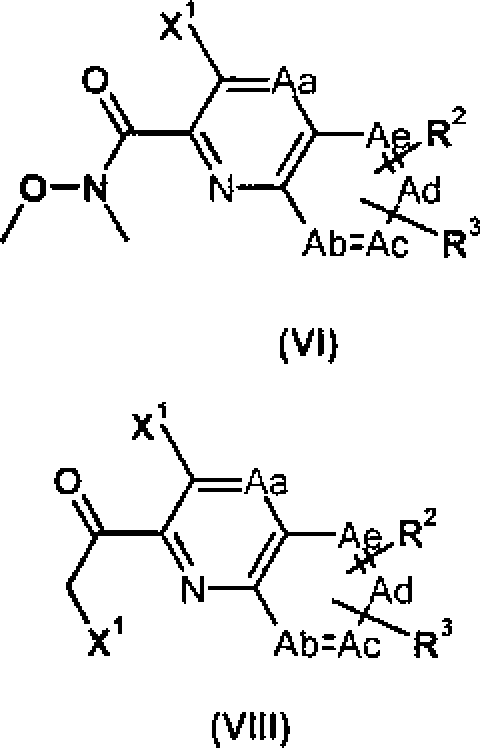
b)

nh2 (IX)
d)
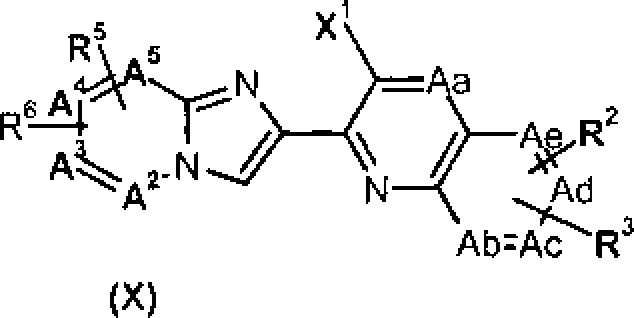


The radicals R1, R2, R\ R’, R(', Aa, Ab, Ae, Ad, Ae and n have the definitions described above. A2, A3, A4 and A5 are CH or N (where A2, A’, A4 and AJ are not all N) and X1 is halogen.
WO 2017/072039
PCT/EP2016/075365
-45Step a)
Carboxylic acids of the formula (III) are converted in analogy to the process described in WO2011/75643 or EP2671582 in the presence of Ο,Ν-dimethylhydroxylamine hydrochloride to Weinreb amides of the formula (VI),
Carboxylic acids of the formula (III) are either commercially available or can be prepared by known methods. Possible preparation routes are described in process F.
Step b, c)
Compounds of the formula (VI) can then be converted by known methods, for example in analogy to the process described in WO2011/75643, with a Grignard reagent, for example methyl magnesium bromide, to ketones of the formula (VII). Compounds of the formula (VIII) are obtainable by subsequent halogenation analogously, for example, to the known method described in US2012/302573.
Step d)
The compounds of the formula (X) can be prepared by cyclizing the compounds of the formula (VIII) with amines of the formula (IX). The cyclization is effected, for example, in ethanol, acetonitrile or N,Ndimethyl forma mide by known methods in analogy, for example, to the processes described in WO2005/66177. WO2012/88411, WO2013/329S, US2009/203705, US2012/25S951, WO20I2/168733, WO2014/187762 or J. Med. Chem. 31 (1988) 1590-1595.
The compounds of the formula (IX) are commercially available.
Step e)
The compounds of the formula (1) where n is 0 can be prepared by reacting the compounds of the formula (X) with the compounds of the formula (Via) in the presence of a base. Mercaptan derivatives of the formula (Via), for example methyl mercaptan, ethyl mercaptan or isopropyl mercaptan, are either commercially available or can be prepared by known methods, for example analogously to the processes described in US2006/25633, US2006/111591, US2820062, Chemical Communications, 13 (2000), 11631164 or Journal of the American Chemical Society, 44 (1922), p. 1329.
Alternatively, it is possible to directly use the salts of the mercaptan derivatives, for example sodium ethanetluolate, sodium methanethiolate or sodium isopropanethioiate, without addition of further base.
Step f, g)
The compounds of the formula (I) where n is 1 can be prepared by oxidizing the compounds of the formula (1) where n is 0. The oxidation is effected by known methods using a suitable oxidizing agent, for example hydrogen peroxide, meta-cbloroperben zoic acid or sodium periodate.
WO 2017/072039
PCT/EP2016/075365
-46The compounds of the formula (I) where n is 2 can be prepared by oxidizing the compounds of the fonnula (I) where n is I.
The oxidation is generally conducted in a solvent. Preference is given to halogenated hydrocarbons, for example dichloromethane, chloroform, carbon tetrachloride, 1,2-dichloroethane or chlorobenzene; alcohols such as methanol or ethanol; formic acid, acetic acid, propionic acid or water. Examples of suitable oxidizing agents are hydrogen peroxide and meta-chloroperbenzoic acid.
Step h)
The compounds of the fonnula (I) where n is 2 can also be prepared in a one-step process by oxidizing the compounds of the formula (I) where n is 0. The oxidation is generally conducted in a solvent. Preference is given to halogenated hydrocarbons, for example dichloromethane, chloroform, carbon tetrachloride, 1,2-dichloroethane or chlorobenzene; alcohols such as methanol or ethanol; formic acid, acetic acid, propionic acid or water. Examples of suitable oxidizing agents are hydrogen peroxide and meta-chloroperbenzoic acid.
The compounds of the fonnula (Ij in which Q is Q10, Q11, Q15 and Q16 can likewise be prepared analogously to process B.
Process C
The compounds of the fonnula (I) in which Q represents Q17 can be prepared by known methods, for example analogously to the processes described in WO2014/142292.
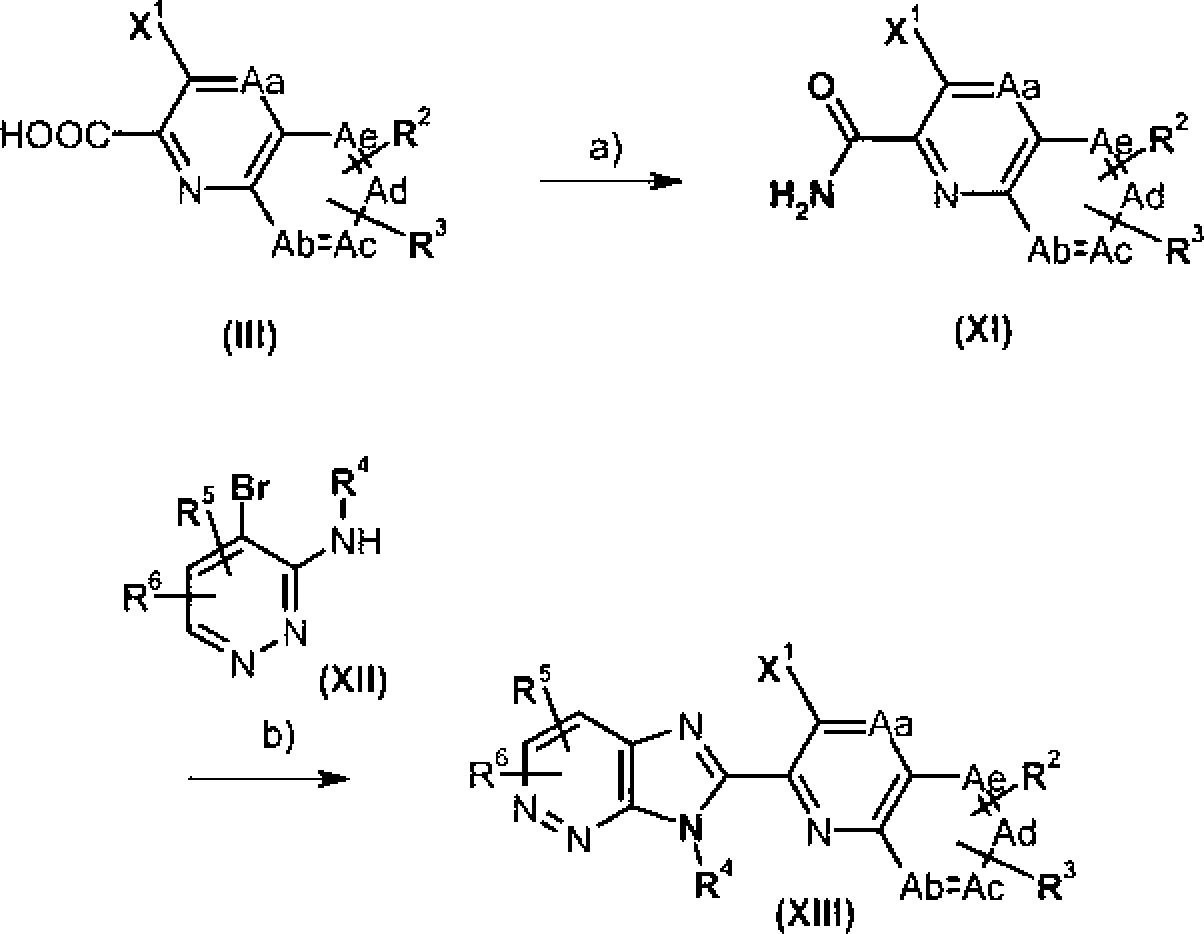
The radicals R2 R\ Rj, R\ Rft Aa, Ab, Ac, Ad and Ae have the definitions described above. X1 is halogen.
Step a)
WO 2017/072039
PCT/EP2016/075365
-47The compounds of the formula (XI) can be prepared in analogy to the process described in US5374646 or Bioorganic and Medicinal Chemistry Letters 2003, 13, 1093-1096 by reacting compounds of the formula (III) with an ammonia source in the presence of a condensing agent.
Carboxylic acids of the formula (III) are either commercially available or can be prepared by known methods. Possible preparation routes are described in process F.
The reaction of the compounds of the formula (III) with the ammonia source is preferably conducted in a solvent selected from customary solvents which are inert under the prevailing reaction conditions. Preference is given to ethers, for example dioxane or tetrahydro furan.
A suitable condensing agent is, for example, carbonyldiimidazole.
The reaction can be carried out under reduced pressure, at atmospheric pressure or under elevated pressure. Preferably, the reaction is carried out at atmospheric pressure and temperatures from 20 to 70°C.
Step b)
The compounds of the formula (XIII) can be prepared in analogy to the process described in WO2014/142292 by reacting compounds of the formula (XI) with compounds of the formula (XII) in the presence of a palladium catalyst in basic media.
Compounds of the formula (XII) can be prepared, for example, analogously to the processes described in WO2014/142292. A palladium catalyst used may, for example, be [Ι,Γ-bis(dipheiiylphosphino)ferrocene]dichloropa]ladjum(U). Frequently, the bases used are inorganic bases such as potassium tert-butoxide.
The reaction is effected in a solvent. Frequently, toluene is used.
The reaction can be conducted under reduced pressure, at standard pressure or under elevated pressure. Preferably, the reaction is earned out at atmospheric pressure and temperatures from 20 to 110°C.
The further conversion of compounds of the formula (XIII) to compounds of the formula (I) is carried out analogously to process A.
The compounds of the formula (Γ) in which Q is Q17 can likewise be prepared analogously to process C.
Process D
The compounds of the formula (1) in which Q is Q14 can be prepared by known methods, for example analogously to the processes described in WO2011/073149.
WO 2017/072039
PCT/EP2016/075365
-48R
I5
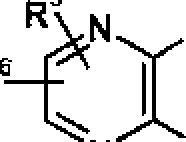
N NH R4
NH2 (XIV)
R' .2

H
H (I) (XV)
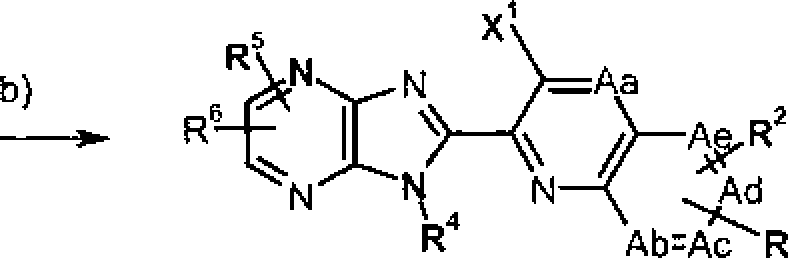
(XVI)
The radicals R2, R\ R4, R\ R6, Aa, Ab, Ac, Ad and Ae have ihe definitions described above. X1 is halogen.
Step a)
The compounds of the formula (XV) can be prepared in analogy to the process described in WO2011/073149 or US5576335 by the reaction of compounds of the formula (XIV) with a carboxylic acid of the formula (III) in the presence of a condensing agent or a base.
Compounds of the formula (XIV) are either commercially available or can be prepared by known methods, for example analogously to the processes described in WO2008/51493 or in Bioorganic and Medicinal Chemistry 2014, 22, 13, 3515 - 3526.
Carboxylic acids of the fonnula (III) are either commercially available or can be prepared by known methods. Possible preparation routes are described in process F,
The reaction of the compounds of the formula (XIV) with carboxylic acids of the formula (HE) can be effected neat or in a solvent, preference being given to conducting the reaction in a solvent selected from customary solvents that are inert under the prevailing reaction conditions. Preference is given to ethers, for example diisopropyl ether, dioxane, tetrahydro furan, 1,2-dimethoxyethane; halogenated hydrocarbons, for example dichloromethane, chloroform, carbon tetrachloride, 1,2-dichloroethane or chlorobenzene; nitriles, for example acetonitrile or propionitrile; aromatic hydrocarbons, for example toluene or xylene; aprotic polar solvents, for example Ν,Ν-dimethyl formamide or N-methylpyrrolidone, or nitrogen-containing compounds, for example pyridine.
Suitable condensing agents are, for example, carbodiimides such as 1-(3-dimethylaminopropyl)-3ethylcarbodi imide hydrochloride (EDC!) or 1,3-dicyclohexylearbodiimide.
WO 2017/072039
PCT/EP2016/075365
-49Suitable bases are inorganic bases which are typically used in such reactions. Preference is given to using bases selected by way of example from the group consisting of acetates, phosphates, carbonates and hydrogen carbonates of alkali metals or alkaline earth metals. Particular preference is given here to sodium acetate, sodium phosphate, potassium phosphate, caesium carbonate, sodium carbonate, potassium carbonate, sodium hydrogencarbonate, potassium hydrogencarbonate.
The reaction can be effected under reduced pressure, at standard pressure or under elevated pressure and at temperatures of 0°C to 180°C; with preference, the reaction is carried out at standard pressure and temperatures of20 to 140°C.
Step b)
The compounds of the formula (XVI) can be prepared by condensing the compounds of the fonnula (XV), for example analogously to the processes described in WO2009/131237, WO2010/125985, WO2011/043404, WO2011/040629, WO2012/086848, WO2013/018928 or WO2015/000715.
The conversion to compounds of the fonnula (XVI) can be effected neat or in a solvent, preference being given to conducting the reaction in a solvent selected from customary solvents that are inert under the prevailing reaction conditions. Preference is given to ethers, for example diisopropyi ether, dioxane, tetrahydrofuran, 1,2-dimethoxyethane, tert-butyl methyl ether; halogenated hydrocarbons, for example dichloromethane, chloroform, carbon tetrachloride, 1,2-dichloroelhane or chlorobenzene; nitriles, for example acetonitrile or propionitrile; aromatic hydrocarbons, for example toluene or xylene; aprotic polar solvents, for example N,N-dimethyl formamide or N-melhylpyrrolidone, or nitrogen compounds, for example pyridine.
The reaction can be conducted in the presence of a condensing agent, an acid, a base or a chlorinating agent.
Examples of suitable condensing agents are carbodiimides such as 1-(3-dimethyiami nopropyl )-3ethvlcarbodiimide hydrochloride (EDCI) or 1,3-dicyc!ohexylcarbodiimide; anhydrides such as acetic anhydride, trifluoroacetic anhydride; a mixture of iriphenytphosphine, a base and carbon tetrachloride, or a mixture of triphenyl phosphine and an azo diester, for example diethylazodicarboxylic acid.
Examples of suitable acids which can be used in the reaction described are sulphonic acids such as paraloluenesulphonic acid; carboxylic acids such as acetic acid, or polyphosphoric acids.
Examples of suitable bases are nitrogen heterocycles such as pyridine, picoline, 2,6-1 utidine, 1,8diazabicyclo[5,4.0]-7-undecene (DBU); tertiary amines such as triethylamine and N.Ndiisopropylethylamine; inorganic bases such as potassium phosphate, potassium carbonate and sodium hydride.
An example of a suitable chlorinating agent is phosphorus oxychloride.
WO 2017/072039
PCT/EP2016/075365
-50The reaction can be conducted under reduced pressure, at standard pressure or under elevated pressure, and at temperatures of 0°C to 200°C.
The further conversion of compounds of the formula (XVI) to compounds of the formula (I) is earned out analogously to process A,
The compounds of the formula (Γ) in which Q is Q14 can likewise be prepared analogously to process D.
Process E
The compounds of the formula (1) in which Q represents Q12, Q13, Q18 orQ19 can be prepared by known methods, for example analogously to the processes described in W02010/091310, WO 2012/66061 or WO2013/099041.
R—3 NH (XVII)

a)
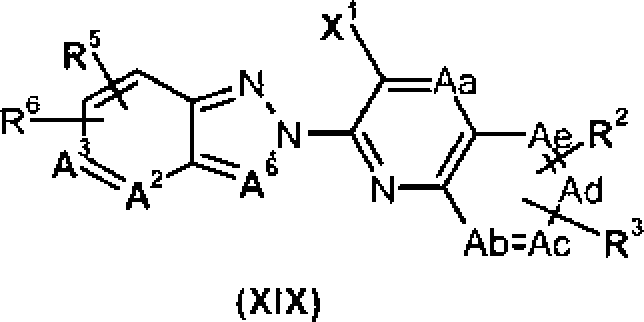
The radicals R2, R\ R3, R6, Aa, Ab, Ac, Ad and Ae have the definitions described above. A2, A3 and A6 are CH or N (where A? and A3 cannot both be N). X1 and X2 are halogen.
Step a)
The compounds of the formula (XIX) can be prepared by reacting compounds of the formula (XVII) with compounds of the formula (XV11I) under basic conditions, for example analogously to the processes described in W02010/091310, WO 2012/66061, WO2013/099041 or Tetrahedron 1993, 49, 1099711008,
Compounds of the formula (XVII) are either commercially available or can be prepared by known methods, for example analogously to the processes described in W02005/100353, WO 2012/66061 or in European Journal of Medicinal Chemistry 2010,45, 2214 - 2222.
Compounds of the formula (XVIII) are either commercially available or can be prepared by known methods, for example analogously to the processes described in WO2013/43518, EP2168965 or in Journal ofMedicinal Chemistry 2003,46, 1449- 1455.
The bases used are usually inorganic bases such as sodium hydride, potassium carbonate or caesium carbonate.
The conversion to compounds of the formula (XIX) is usually effected tn a solvent, preferably in a nitrile.
-51WO 2017/072030
PCT/EP2016/075365 for example acetonitrile or propionitrile, or in an aprotic polar solvent, for example N,Ndimelhylformamide or N-methylpyrrolidone.
The reaction can be conducted under reduced pressure, at standard pressure or under elevated pressure, and at temperatures of 0°C to 200°C.
Alternatively, the reaction of compounds of the formula (XVII) with compounds of the formula (XVIII) to give compounds of the formula (XIX) can also be effected by palladium-catalysed V-arylation, e.g, analogously to the processes described in Angewandte Cheinie hit. Ed. 2011,50, 8944-8947,
The further conversion of compounds of the formula (XIX) to compounds of the formula (I) is effected analogously to process A.
The compounds of the formula (Γ) in which 0 is 012, QI3, Ql S and Q19 can likewise be prepared analogously to process E.
Process F-l

Carboxylic acids of the formula (III) are either commercially available or can be prepared by known methods, for example from aminoaryl, diaminoary!, aminohetaryl or diaminohefaryl derivatives in analogy to the methods described in Journal of the American Chemical Society, 137 (2015), 6168-6171; Journal of the American Chemical Society, 137 (2015), 2996-3003; Synlett, 3 (2006), 379-3S2; Organic Letters, 14, (2012), 836-839; Indian Journal of Chemistry, Section 13: Organic Chemistry Including Medicinal Chemistry, 22B (1983), 178-179; Journal of Organic Chemistry, 55 (1990), 2838-2842; Tetrahedron Letters, 41 (2000), 8053-S057; US2013/0225552; Organic Reactions (Hoboken, NJ, United States), 28. 1982; WO2011/150156; JP2009/173589; Synthetic Communications 41 (2011), 1843-1851; Journal of the Chemical Society, (1954), 1879-1882; Heterocycles, 60 (2003), 953-957; Organic & Biomoiecular Chemistry, 5 (2007), 61-64; Chemical Communications, 2 (2002), ISO-181; Tetrahedron Letters, 48 (2007). 5371-5374; Chemistry - A European Journal. 20 (2014), 5569-5572; CN103420927, Medicinal Chemistry Research, 22 (2013), 1660-1673; Medicinal Chemistry Letters, 6 (2015), 282-286 and W02015/071178.
WO 2017/072039
PCT/EP2016/(175365
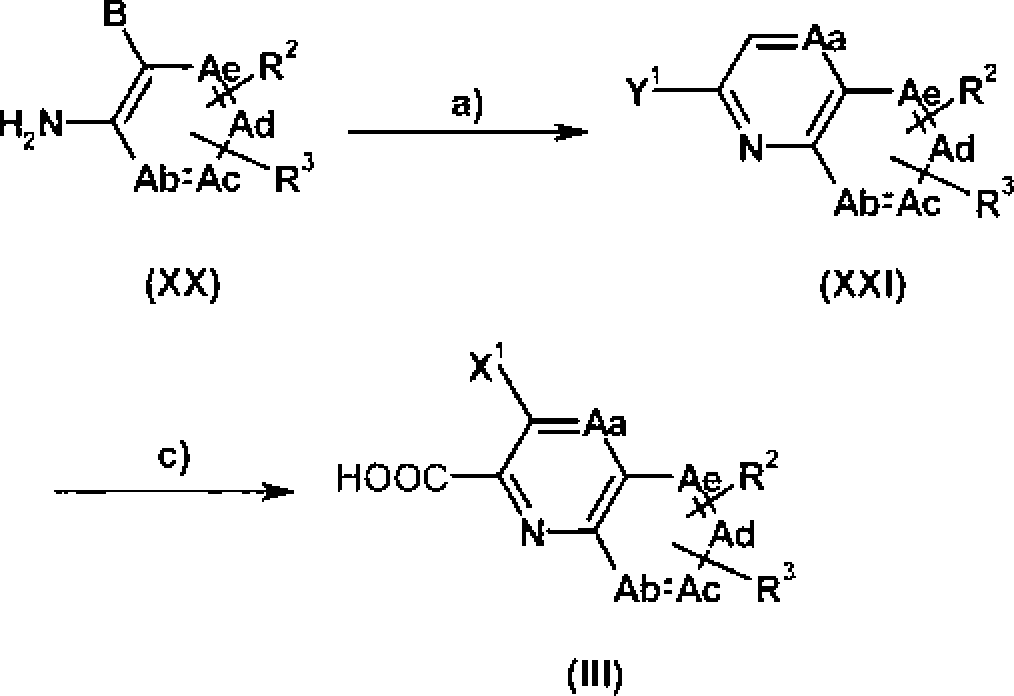

The radicals R2, R-\ Aa, Ab, Ac, Ad and Ae have the definitions described above. B is hydrogen, halogen. NH3 or CHO. X1 is halogen and Yl is halogen, methyl, C(O)ORS or cyano. R” is hydrogen or Ci -Co-alkyl.
Step a)
The compounds of the formula (XXI) in which Aa is N can be prepared in analogy to the processes described in Tetrahedron Letters, 48 (2007), 5371-5374; Chemistry - A European Journal, 20 (2014), 5569-5572; CN103420927; Medicinal Chemistry Research, 22 (2013), 1660-1673; Medicinal Chemistry Letters, 6 (2015), 282-286, by the reaction of compounds of the formula (XX) in which B is NHj with a carbonyl compound under basic, acidic or thermal conditions.
The compounds of the formula (XXI) in which Aa is CR7 can be prepared in analogy to the processes described in Journal of the American Chemical Society, 137 (2015), 6168-6171; Journal of the American Chemical Society, 137 (2015), 2996-3003; Synlett, 3 (2006), 379-382; Organic Letters, 14, (2012), 836839; Tetrahedron Letters, 41 (2000), 8053-8057; US2013/0225552; Organic Reactions (Hoboken, NJ, United States), 28, 1982; WO2011/150156; Synthetic Communications 41 (2011). 1843-1851; Journal of the Chemical Society, (1954), 1879-1882; Organic & Biomolecular Chemistry, 5 (2007), 61-64, by a condensation and subsequent cyclization of compounds of the formula (XX) in which B is hydrogen, halogen or CHO with a suitable carbonyl compound or a carboxylic acid derivative under basic, acidic or thermal conditions. The further functionalization in the 4 position for introduction of radicals of the R7 type (/ hydrogen) can be achieved, for example as described in WO2013/066736 via a halogenation; as described in Practical Methods for Biocatalysis and Biotransfonnations 2, (2012), 153-157 via a hydroxy lation; as described in Organometallics, 9 (1990), 177S-1784 via an alkylation; as described in Journal of Heterocyclic Chemistry, 22 (1985), 353-355 via an amination, or as described in W02010/02098I via a nitration.
The compounds of the formula (XX) are either commercially available or can be prepared by known methods, for example in analogy to the methods described in Chemical Reviews. 12 (1933), 43-179; Chemical Reviews, 57 (1957), 525-581; Journal of Organic Chemistry, 15 (1950), 1224-1232; Reeueil
WO 2017/072039
PCT/EP2016/075365
-53Travaux Chimiques des Pays-Bas et de la Belgique, 69 (1950), 468-673; Journal of Chemical Technology and Biotechnology, 37 (1987), 195-202; WO2012/117000; Chemistry-A European Journal, 18 (2012), 16358-16368; Journal of Organic Chemistry, 48 (1983), 1064-1069; Organic Synthesis, 44 (1964), 34-39; Journal of Heterocyclic Chemistry, 23 (1986), 669-672: Bioorganic & Medicinal Chemistry Letters, 18 (2008), 5023-5026; Journal of Organic Chemistry, 48 (1983), 3401-3408; Journal of Heterocyclic Chemistry, 48 (2011), 1383-1387; W02003/051366; Helvetica Chimica Acta, 18 (1935), 1229-1239; Synthesis, 1 (1978), 23-24; Organic Synthesis, 19 (1939), 70-72: Canadian Journal of Chemistry, 38 (1960), 2363-2366; Journal of Organic Chemistry, 42 (1977), 3491-3496.
Step b)
Compounds of the formula (XXII) can be prepared by known methods, for example via a hydrolysis of compounds of the formula (XXI) (if Y1 - C(O)ORK or cyano) under acidic, basic or thermal conditions.
Compounds of the formula (XXII) can be prepared in analogy lo the processes described in Synlett, 3 (2006), 379-382; Indian Journal of Chemistry, Section B: Organic Chemistry Including Medicinal Chemistry, 22B (1983), 178-179; Journal of Organic Chemistry, 55 (1990), 2838-2842; Heterocycles, 60 (2003), 953-957; Chemical Communications, 2 (2002), 180-181 and WO2015/071178, via a benzylic oxidation from compounds of the formula (XXI) (if Y1 = methyl).
Compounds of the formula (XXII) can be prepared in analogy to the processes described in Journal of the American Chemical Society, 135 (2013), 2891-2894; Synlett, 11 (2006), 1663-1666; Helvetica Chimica Acta, 55 (1972), 2295-2300; WO2013/149997 and European Journal of Organic Chemistry, 29 (2014), 6418-6430 via a carbonylation (Rs = alkyl) or a carboxylation (R8 = hydrogen) from compounds of the formula (XXI) (if Y! - halogen).
Step c)
Compounds of the formula (III) can be prepared by known methods from compounds of the formula (ΧΧΠ) via a halogenation. This can be effected, for example, via a directed ortho-litliiation, followed by capture ofthe carbanion with a suitable electrophilic halogenaling reagent or alternatively via a carboxylic acid derivative-di reefed halogenation in analogy to the processes described in Bioorganic & Medicinal Chemistry Letters, 24 (2014), 4236-4238; Tetrahedron, 58 (2002), 6723-6728 and W02003/010146.
if Rs is Ci-Cd-alkyl, the corresponding carboxylic esters ofthe formula (XXII), after the halogenation, can be hydrolysed under acidic or basic conditions in a polar protic solvent, such as ethanol or methanol, or a polar aprotic solvent, such as tetra hydro furan, using, for example, dilute hydrochloric acid or alkali metal hydroxides, to the carboxylic acids of the formula (III).
Process F-2
WO 2017/072039
PCT/EP2016/075365

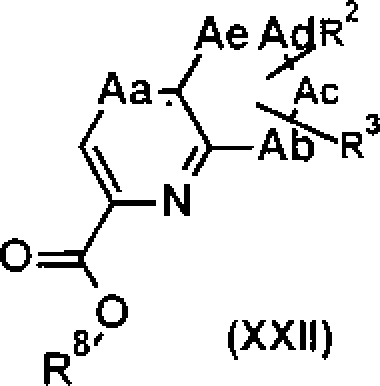

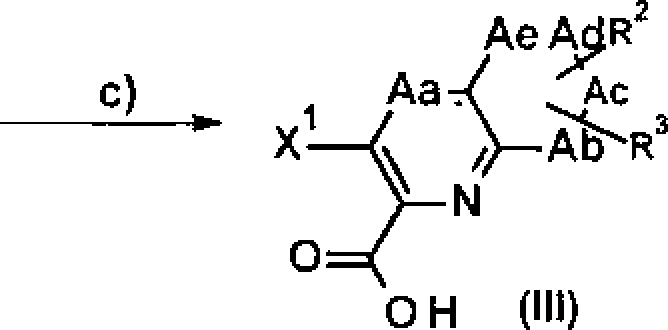
The radicals R1, R\ Aa, Ab, Ac, Ad and Ae have the definitions described above. X1 is halogen. Rs is CiChalky 1,
Step a)
Compounds of the formula (XXII) are either commercially available or can be obtained in analogy to the processes described in ChemSusChem 2015, 8, 1916-1925, Chemical Engineering Journal 20)5, 271, 269-275, Catalysis Communications 2015,59,122-126, Synthetic Communications 2014,44,23S6-2392, Synthetic Communications 2014, 44, 836-846, Journal of Organic Chemistry 2013, 78, 11606-11611, Organic Letters 2011,13, 320-323 and Journal of the American Chemical Society 1948, 70, 3135-3136 from the conesponding carboxylic acids of the formula (XXX) via an esterification or alkylation under acidic or neutral conditions.
The compounds of the formula (XXX) are commercially available or can be prepared via a hydrolysis from compounds of the formula (XXII),
The reaction can be effected under reduced pressure, at standard pressure or under elevated pressure and at temperatures of 0°C to 180°C; with preference, the reaction is carried out at standard pressure and temperatures of 20 to 14O°C.
Step b)
Compounds of the formula (XXXI) can be prepared by known methods from compounds of the formula (XXII) via a halogenation. This can be effected, for example, via a directed ortho-fithiation, followed by capture of the carbanion with a suitable electrophilic halogenating reagent or alternatively via a carboxylic acid derivative-directed halogenation in analogy to the processes described in Bioorgauic & Medicinal Chemistry Letters, 24 (2014), 4236-4238; Tetrahedron, 58 (2002), 6723-6728 and W02003/QI0146.
Step c)
WO 2017/072039
PCT/EP2016/075365
-55The compounds of the fonnula (III) are either commercially available or can be synthesized in analogy to the processes described in Synthesis 1987, 6, 586-587, Tetrahedron Letters 2006, 47, 565-567 or CheinMedChem 2010, 5, 65-78 via a hydrolysis from the compounds of the fonnula (XXXI).
Alternatively, quinoline derivatives of the fonnula (III) can also be prepared analogously to the processes described m Organic Reactions (Hoboken, NJ, United States), 28,1982 and Journal of Organic Chemistry 2016, 81,57-65 via a ring expansion of the con'esponding indole derivatives.
Examples of suitable bases are, for example, lithium hydroxide or sodium hydroxide. Solvents used may be polar aprotic and protic solvents and mixtures of these, for example ethanol, tetrahydrofuran or water.
The reaction can be conducted under reduced pressure, at standard pressure or under elevated pressure, and at temperatures of -20°C to 120°C,
Process G-l
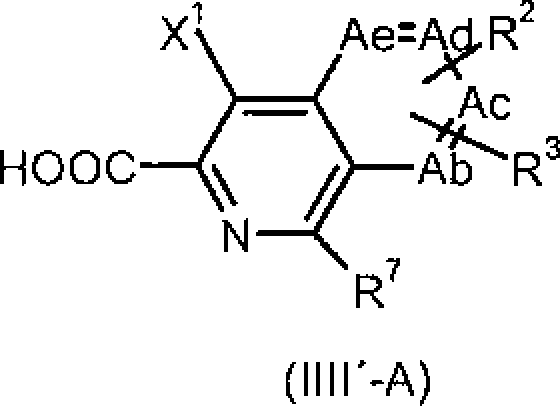
Carboxylic acids of the fonnula (III'-A) are either commercially available or can be prepared by known methods, for example from benzylamines or betarylmethanamines in analogy to the processes described in Tetrahedron, 40 (1984), 311-314, Monatshefte fur Chemie, 139 (2008), 673-684, Synlett, 3 (2006), 379-382; Indian Journal of Chemistry, Section B: Organic Chemistry Including Medicinal Chemistry, 22B (1983), 178-179; Journal ofOrganic Chemistry, 55 (1990), 2838-2842; Heterocycles, 60 (2003), 953-957; Chemical Communications, 2 (2002), 180-181, WO2015/071178, Bioorganic & Medicinal Chemistry Letters, 24 (2014), 4236-4238; Tetrahedron, 58 (2002). 6723-6728 and W02003/010146.

(Ill'-*)
HO
WO 2017/072039
PCT/EP2016/075365
-56The radicals R2, R\ R7, Aa, Ab, Ac, Ad and Ae have the definitions described above. E is hydrogen or halogen and X1 is halogen, Y2 is methyl, C(O)ORS or cyano. Rs is hydrogen or Ci-Cft-alkyl.
Step a)
The compounds of the formula (XXIV) can be synthesized in analogy to the processes described in Tetrahedron, 40 (1984), 311-314 or Monatshefte fur Cheinie, 139 (2008), 673-684 via a condensation of benzylamines or hetarylmethanaraines of the formula (XXIII) with the corresponding carbonyl compounds under acidic or basic conditions.
The compounds of the formula (XXIII) are either commercially available or can be prepared by known methods, for example in analogy to the methods described in WO 1997/41846; US2011 /0105753; Journal of Medicinal Chemistry, 46 (2003), 461-473; WO2010/024430; W02005/111003; Journal of Heterocyclic Chemistry, 23 (1986), 989-990,
Step b)
Compounds of the formula (XXV) can be prepared by known methods, for example via a hydrolysis of compounds of the formula (XXIV) (if Y2 = C(O)OR* or cyano) under acidic, basic or thermal conditions.
Compounds of the formula (XXV) can be prepared in analogy to the processes described in Synlett, 3 (2006), 379-382; Indian Journal of Chemistry, Section B: Organic Chemistry Including Medicinal Chemistry, 22B (1983), 178-179; Journal of Organic Chemistry, 55 (1990), 2838-2842; Heterocycles, 60 (2003), 953-957; Chemical Communications, 2 (2002), 180-181 and WO2015/071178, via a benzylie oxidation from compounds of the formula (XXIV) (if Y2 = methyl).
Step c)
Compounds of the formula (ΙΙΓ-Α) can be prepared by known methods from compounds of the formula (XXV) via a halogenation. This can be effected, for example, via a directed ortho-lithiation. followed by capture of the carbanion with a suitable electrophilic halogenating reagent or alternatively via a carboxy tie acid derivative-directed halogenation in analogy to (he processes described in Bioorganic & Medicinal Chemistry Letters, 24 (2014), 4236-4238; Tetrahedron, 58 (2002), 6723-6728 and W02003/010146 (cf. Process F, step c).
Process G-2
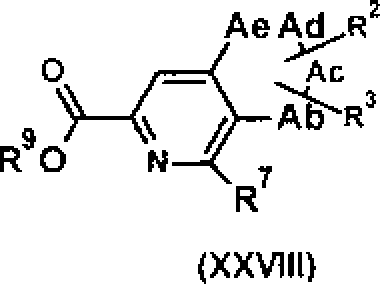


WO 2017/072039
PCT/EP2016/075365
-57Step a)
Compounds of the formula (XXIX) can be prepared by known methods from compounds of the formula (XXVIII) via a halogenation. Tins can be effected, for example, via a directed ortho-]ithiation, followed by capture of the carbanion with a suitable electrophilic halogenating reagent or alternatively via an electrophilic aromatic halogenation in analogy to the processes described in Bioorganic & Medicinal Chemistry Letters, 24 (2014), 4236-4238; Tetrahedron, 58 (2002), 6723-6728 and W02003/010146 (cf. Process F-l, step c), Compounds of the formula (XXVIII) are commercially available or can be synthesized via an esterification from compounds of the formula (XXV).
Step b)
The compounds of the formula (III1 Λ) can be synthesized in analogy to the processes described in Synthesis 1987, 6,586-587, Tetrahedron Letters 2006,47,565-567 or ChemMedChem 2010,5, 65-78 via a hydrolysis from the compounds of the formula (XXIX),
Examples of suitable bases are, for example, lithium hydroxide or sodium hydroxide. Solvents used may be polar aprotic and protic solvents and mixtures of these, for example ethanol, tetraitydrofuran or water.
The reaction can be conducted under reduced pressure, at standard pressure or under elevated pressure, and at temperatures of -20°C to 120°C.
Process H

(llll'-B)
Carboxylic acids of the formula (III'-B) are either commercially available or can be prepared by known methods, for example from ha loaiyl carboxy lie acids or the corresponding halolieteroarylcarboxylic acids in analogy to the processes described in Science of Synthesis, 16 (2004), 1109-1153 and Journal of Medicinal Chemistry, 58 (2015), 480-5) I.

(Ill18) (XXVf) (XXVII)
WO 2017/072039
PCT/EP20I6/075365
-58The radicals R?, R3, Ab, Ac, Ad and Ae have the definitions described above, X1 is halogen. R9 is Ci-C<,alkyl.
Step a)
The compounds of the formula (XXVII) can be synthesized in analogy to the processes described in W02004/039802 oder Science of Synthesis, 16 (2004), 1109-1153 via an acetylation of an alkyl 2diazoacetate with a compound of the formula (XXVI), followed by an N-arylation which leads to the fused bicyctic system.
The compounds of the formula (XXVI) are either commercially available or can be prepared by known methods, for example in analogy to the processes described in Synthesis, 47 (2015), 1861-1868; Justus Liebigs Annalen der Chemie, (1893), 54-57; Journal of the American Chemical Society, 65 (1943), 476477; Bioorganic & Medicinal Chemistry Letters, 24 (2014), 4236-4238; Organic Letters, 10 (2008), 27012704; Journal de Pliannacie de Belgique. 22 (1967), 257-263; Journal of Organic Chemistry, 60 (1995), 292-296; Bioorganic & Medicinal Chemistry Letters, 23 (2013), 1846-1852; JP2012/092060; EU 1983/92117; Tetrahedron, 71 (2015), 252-258.
Step b)
Compounds of the formula (111 B) can be prepared by known methods, for example via chlorination with phosphorus oxychloride of compounds of the formula (XXVII), as described in Journal of Medicinal Chemistry, 58 (2015), 480-511,
Methods and uses
The invention also relates to methods for controlling animal pests, in which compounds of the formula (I) or the formula (Γ) are allowed to act on animal pests and/or their habitat. The control of the animal pests is preferably conducted in agriculture and forestry, and in material protection. This preferably excludes methods for surgical or therapeutic treatment of the human or animal body and diagnostic methods earned out on the human or animal body.
The invention further relates to the use of the compounds of the formula (1) or the formula (I1) as pesticides, especially crop protection agents.
In the context of the present application, the lenn pesticide in each case also always encompasses the term crap protection agent.
The compounds of the formula (1) or the formula (Γ), given good plant tolerance, favourable homeotherm toxicity and good environmental compatibility, are suitable for protecting plants and plant organs against biotic and abiotic stress factors, for increasing harvest yields, for improving tile quality of the harvested material and for controlling animal pests, especially insects, arachnids, helminths, especially nematodes
WO 2017/072039
PCT/EP2016/075365
-59and molluscs, which are encountered in agriculture, in horticulture, in animal husbandry, in aquatic cultures, in forests, in gardens and leisure facilities, in the protection of stored products and of materials, and in the hygiene sector.
In the context of the present patent application, the tenn hygiene should be understood to mean any and all measures, provisions and procedures which have the aim of preventing diseases, especially infection diseases, and which serve to protect the health of humans and animals and/or protect the environment and/or maintain cleanliness. According to the invention, this especially includes measures for cleaning, disinfection and sterilization, for example of textiles or hard surfaces, especially surfaces made of glass, wood, cement, porcelain, ceramic, plastic or else metal(s), in order to ensure that these are free of hygiene pests and/or their secretions. The scope of protection of the invention in this regard preferably excludes surgical or therapeutic treatment procedures to be applied to the human body or the bodies of animals, and diagnostic procedures which are conducted on the human body or the bodies of animals.
The term hygiene sector covers all areas, technical fields and industrial applications in which these hygiene measures, provisions and procedures are important, for example with regard to hygiene in kitchens, bakeries, airports, bathrooms, swimming pools, department stores, hotels, hospitals, stalls, animal keeping, etc.
The tenn hygiene pest should therefore be understood to mean one or more animal pests whose presence in the hygiene sector is problematic, especially for reasons of health. A main aim is therefore that of avoiding, or limiting to a minimum degree, the presence of hygiene pests and/or the exposure to these in the hygiene sector. This can especially be achieved through the use of a pesticide which can be used both for prevention of infestation and for prevention of an existing infestation. It is also possible to use formulations which prevent or reduce exposure to pests. Hygiene pests include, for example, the organisms mentioned below.
The term hygiene protection thus covers all acts by which these hygiene measures, provisions and procedures are maintained and/or improved.
The compounds of the formula (1) or the formula (Γ) can preferably be used as pesticides. They are active against normally sensitive and resistant species and also against all or some stages of development. The abovementioned pests include:
pests from the phylum of the Arthropoda, especially from the class of the Arachnida, for example Acarus spp., e.g. Acarus siro, Aceria kuko, Aceria slieldoni. Aculops spp., Aculus spp,, e.g. Aculus fockeui. Aculus schleehtendali, Amblyomma spp., Amphitetranychus viennensis, Argas spp., Boophilus spp., Brevipalpus spp., e.g. Brevipalpus phocnicis. Bryobia graminum, Bryobia praetiosa, Centmroides spp., Chorioptes spp., Dermanyssus gallinae. Dermatophagoides pteronys sinus, Dermatophagoides farinae. Denuacentor spp., Eotetranychus spp., e.g. Eotetranychus hicoriae, Epitrimems pyri, Eutetranychus spp..
WO 2017/072039
PCT/EP2016/075365
-60e.g. Eutetranychus banks!, Eriophyes spp., e.g. Eriophyes pyri, Glycyphagus domesticus, Halotydeus destructor, Hemitarsonemus spp., e.g. Hemitarsonemus latus (^Polyphagotarsonemus latus), Hyalomma spp., Ixodes spp., Latrodectus spp., Loxosceles spp., Neutrdmbicula autuinnalis, Nuphersa spp., Oligonychus spp., e.g. Otigonychus coffeae, Oligonychus coniferarum, Oligonychus ilicis, Oligonychus indicus, Oligonychus mangiferus, Oiigonyclius pratensis, Oligonychus punicae, Oligonychus yothersi, Omithodorus spp., Omithonyssus spp., Panonychus spp., e.g. Panonychus citri (=Metatetranychus ci tri), Panonychus ulnii (=M eta tetranychus ulmi), Phyllocoptruta oleivora, Platytetranyehus multidigituli, Polyphagotarsonemus latus, Psoroptes spp., Rhipicephalus spp., Rhizoglyphus spp., Sarcoptes spp., Scorpio maurus, Steneotarsonemus spp., Steneotarsonemus spinki, Tarsonemus spp., e.g, Tarsonemus confusus, Tarsonemus pallidus, Tetranychus spp,, e.g. Tetranychus canadensis, Tetranychus cinnabarinus, Tetranychus turkestani, Tetranychus urticae, Trombicula alfreddugesi, Vaejovis spp., Vasates lycopersici;
from the class of the Chilopoda, e.g. Geophilus spp., Scutigera spp,;
from the order or the class of the Collembola, e.g. Onychiurus armatus; Sminthurus viridis;
from the class of the Dtplopoda. e.g. Blaniulus guttulatus:
from the class of the Insecta, for example from the order of the Blatlodea, e.g, Blatta orientalis, Blattella asahinai, Blattella germanica, Leucophaea maderae, Loboptera decipiens, Neostylopyga rhombifolia. Panchlora spp., Parcoblatta spp,, Periplaneta spp,, e,g, Periplaneta americana, Periplaneta australasiae, Pycnoscelus surina men sis, Supella longipalpa;
from the order of the Coleoptera for example Acalymma viltatum, Aeanthoscelides obtectus, Adoretus spp., Aethina tumida, Agelastica alni, Agriotes spp., e.g. Agriotes linneatus, Agriotes mancus, Alphitobius diaperinus, Amphimallon solstitialis, Anobium punctatum, Anoplophora spp,, Anthonomus spp., e.g. Anthonomus grandis, Anthrenus spp., Apion spp., Apogonia spp., Atomaria spp., e.g. Atomaria linearis, Allagenus spp., Baris caerulescens, Bruchidius obtectus, Bruchus spp., e.g. Bruchus pisorum. Bruchus rutimanus, Cassida spp., Cerotoma trifurcata. Ceutorrhynchus spp., e.g. Ceutorrhynchus assimilis, Ceutorrhynchus quadridens. Ceutorrhynchus rapae, Chaetocnema spp., e.g. Chaetocnema confinis, Chaetocnema denliculata, Chaetocnema ectypa, Cleonus mendicus, Conoderus spp., Cosmopolites spp., e.g. Cosmopolites sordidus, Costelytra zealandica, Ctenicera spp., Curculio spp., e.g. Curculio caryae, Cureulio caryatrypes,Curculio obtusus, Curculio sayi, Cryptolestes ferrugineus. Cryptolestes pusilhis, Cryptorhynchus lapathi, Cryptorhynchus mangiferae, Cylindrocoptunis spp., Cylindroeopturus adspersus, Cytindrocoplurus lumissi. Dennestes spp., Diabrotica spp.. e.g. Diabrotica balleata, Diabrotica barberi, Diabrotica undecimpunctata howardi, Diabrotica undecimpunctata undecimpunctata, Diabrotica virgifera virgifera, Diabrotica virgifera zeae, Dichocrocis spp., Dieladispa arraigera, Diloboderus spp., Epieaerus spp., Epilachna spp., e.g. Epilachna borealis, Epilachna varivestis, Epitrix spp., e.g, Epitrix cucumeris, Epilrix fuscula. Epitrix hirtipennis, Epitrix subcriniia, Epitrix (uberis, Faustinus spp., Gibbium psylloides. Gnathocerus comulus, Hellula undalis, Heieronychus arator, Heteronyx spp., Hylamoipba elegans,
WO 2017/072039
PCT/EP2016/075365
-61Hylotnipes bajulus, Hypera postica, Hypomeces squamosus, Hypothenemus spp., e.g. Hypotlienemus hamper, Hypotlienemus obscurus. Hypothenemus pubescens, Lachnostema consanguinea, Lasiodenna sevricome, Latheticus oryzae, Lathridius spp., Lerna spp., Leptinotarsa decemlineata, Leucoptera spp,, e.g, Leucoptera eof'feella, Lissoihoptrus oiyzophilus, Listronotus (= Hyperodes) spp., Lixus spp., Luperodes spp., Luperoinorpha xanthodera, Lyctus spp., Megascelis spp., Melanolus spp., e.g, Melanotus longulus oregonensis, Meligethes aeneus, Melolontha spp., e.g. Melolontha melolontha, Migdolus spp., Monochamus spp., Naupactus xanlhographus, Necrobia spp., Neogalerucella spp., Niptus hololeucus. Oryctes rhinoceros, Oryzaephilus surinamensis, Oryzaphagus oryzae, Otiorhynchus spp., e.g. Otiorhynchus cribricollis, Otiorhynchus ligustici, Otiorhynchus ovatus, Otiorhynchus rugosostriarus, Otiorhynchus sulcatus, Oulenia spp., e.g. Oulema melanopus, Oulema oryzae, Oxycetonia jucunda, Phaedon cochleariae, Phyllophaga spp., Phyllophaga helleri, Phyliotreta spp., e.g. Phyllotreta annoraciae, Phyllotreta pusilla, Phyllotreta ramosa, Phyllotreta striolata, Popillia japonica, Prenmotrypes spp., Prostephanus truncatus, Psylliodes spp,, e.g. Psylliodes affiiris, Psylliodes chrysocephala, Psylliodes punctulata. Ptinus spp., Rhizobius ventralis, Rhizopertha dominica, Rhynchophoius spp.. Rhynchophorus ferruginous, Rhynchophorus palmarum, Sinoxylon perforans, Sitophilus spp., e.g. Sitophilus granarius, Sitophilus linearis, Sitophilus oryzae, Sitophilus zeaniais, Sphenophorus spp., Stegobium paniceum. Stemechus spp., e.g. Stemechus paludatus, Symphyletes spp., Tanymecus spp,, e.g. Tanymecus di la deoil is, Tanymecus indicus, Tanymecus palliatus, Tenebrio molitor, Tenebrioides mau retan icus, Tribolium spp., e.g. Tribolium audax, Tribolium castaneum, Tribolium confusum, Trogoderma spp., Tychius spp., Xylotrechus spp,, Zabrus spp., e.g. Zabrus tenebrioides;
from the order of the Dennaptera, for example Anisolabis maritime, Forficula auricularia. Labidura riparia;
from the order of the Diptera, for example Aedes spp., e.g, Aedes aegypti, Aedes albopictus, Aedes sticticus, Aedes vexans, Agromyza spp,, e.g. Agrotnyza frontella, Agromyza paivicornis, Anastrepha spp., Anopheles spp., e.g. Anopheles quadrimaculatus. Anopheles gambiae, Asphondylia spp.. Bactroeera spp., e.g. Bactroeera cucurbitae, Bactroeera dorsalis, Bactroeera oleae. Bibio hortulanus, Calliphora erythrocephaia, Calliphora vicina, Ceratitis capitata. Cliironomus spp., Chrysomya spp., Chrysops spp., Chrysozona pluvialts, CochSiomya spp,, Contarinia spp., e.g. Contarinia johnsoni, Contarinia nasturtii. Contarinia pyrivora, Contarinia schulzi, Contarinia sorghicola, Contarinia tritici.Cordylobia anthropophaga. Crieotopus sylvestris, Culex spp., e.g. Culex pipiens, Culex quinquefasciatus, Culicoides spp.. Culiseta spp., Cuterebra spp., Dacus oleae, Dasineura spp., e.g, Dasineura brassicae, Delia spp., e.g. Delia antiqua, Delia coarctata, Delia floritega, Delia plalura. Delia radicum, Dennatobia hominis. Drosophila spp., e.g. Drosphila me la nogas ter. Drosophila suzukit, Felt i hoc nemus spp., Euleia heraclei, Fannia spp,, Gasterophilus spp., Glossina spp,, Ifaematopota spp., Hydrellia spp., Hydrellia griseola, Hylemya spp,, Hippobosca spp., Hypodenua spp., Liriomyza spp., e.g. Liriomyza brassicae, Liriomyza huidobrensis, Liriomyza sativae, Luctlia spp., e.g. Lucilia cuprina, Lutzomyia spp., Mansoniaspp., Musca spp., e.g. Musca domestica, Musca domes!ica vicina. Oestrus spp., Oscinella frit, Paratanytarsus spp.,
WO 2017/072039
PCT/EP2016/075365
-62Paraiauterbomiella subcincta, Pegoinya oder Pegomyia spp,, e.g, Pegomya betae, Pegomya hyoscyanii, Pegomya rubivora, Phlebotomus spp,, Phorbia spp,, Phonnia spp., Piophila casei, Platyparea poeciloptera. Prodiplosis spp., Psila rosae, Rhagoletis spp., e.g, Rhagoletis cingulata, Rhagoletis completa, Rhagoietis fausta, Rhagoletis indifferens, Rhagoletis mendax, Rhagoletis pomonella, Sarcophaga spp., Simuliuin spp., e.g. Simuliuin meridionale, Stomoxys spp., Tabanus spp., Tetanops spp., Tipula spp., e.g. Tipula paludosa, Tipula simplex, Toxotrypana curvicauda;
from the order of the Hemiptera, for example Acizzia acaciaebaileyanae, Acizzia dodouaeae, Acizzia uncatoides, Acrida turrita, Acyrthosipon spp., e.g. Acyrthosiphon pisum, Acrogonia spp., Aeneolamia spp., Agonoscena spp., Aleurocanthus spp., Aleyrodes proletella, Aleurolobus barodensis, Aleurothrixus floccosus, Allocaridara malayensis, Amrasca spp., e.g. Amrasca bigutulla, Amrasca devastans, Anuraphis cardui, Aonidiella spp., e.g. Aonidiella aurantii, Aonidiella citrina, Aonidiella inomala, Aphanostigma pin, Aphis spp., e.g. Aphis citricola. Aphis craccivora. Aphis fabae, Aphis forbesi, Aphis glycines. Aphis gossypii, Aphis hederae, Aphis illinoisensis, Aphis middletoni, Aphis uasturtii, Aphis nerii, Aphis pomi, Aphis spiraecola, Aphis vibumiphila, Arboridia apicalis, Arytainilla spp., Aspidielia spp., Aspidiotus spp., e.g. Aspidiotus nerii, Atanus spp., Aulacorthum solani, Bemisia tabaci, BlastopsvlJa occidentalis, Boreioglycaspis melaleucae, Brachycaudus helichrysi, Brachycolus spp., Brevicoryne brassicae, Cacopsylla spp., e.g. Cacopsylla pyricola, Calligypona marginata, Capulinia spp., Cameocephala fulgida, Ceratovacuna lanigera, Cercopidae, Ceroplastes spp,, Chaetosiphon fragaefolii, Cbionaspis tegalensis, Chlorita onukii, Chondracris rosea, Chromaphis jugiandicola, Chrysomphalus aonidum, Chrysomphalus ficus, Cicadulina mbila, Coccomytilus ha Hi, Coccus spp., e.g. Coccus hesperidum. Coccus longulus, Coccus pseudomagnoliarum, Coccus viridis, Cryptomyzus ribis, Cryptoneossa spp., Ctenarytaina spp., Dalbulus spp., Dialeurodes chittendeni, Dialeurodes citri, Diaphorina citri, Diaspis spp., Diuraphis spp,, Doralis spp., Drosicha spp., Dysaphis spp., e.g. Dysapliis apiifolia, Dysaphis plantaginea, Dysaphis tulipae, Dysmicoccus spp., Empoasca spp., e.g. Empoasca abrupta, Empoasca fabae, Empoasca maligna, Empoasca solana, Empoasca stevensi, Eriosoma spp., e.g. Eriosoma americanum. Eriosoma lanigerum, Eriosoma pyricola, Erythroneura spp., Euealyptolyma spp., Euphyllura spp., Euscelis bilobatus, Ferrisia spp., Fiorinia spp., Furcaspis oceanica, Geococeus eoffeae, Glycaspis spp., Heteropsylla cubana. Heteropsylla spinulosa, Homalodisca coagulata, Hyalopterus arundinis, Hyalopterus pnini. lcerya spp,, e.g. lcerya purchasi. Idiocerus spp., idioscopus spp., Laodelphax striatellus, Leeauium spp., e.g. Lecanium comi (=Partlienolecanium comi), Lepidosaphes spp., e.g. Lepidosaphes ulmi, Lipaphis erysimi, Lopholeueaspis japonica, Lyconna delicatula. Macrosiphum spp., e.g. Macrosiphum euphorbiae. Macrosiphum lilii, Macrosiphum rosae. Macrosteles facifrons, Mahanarva spp.. Melanaphis sacchari. Metcalficlla spp., Metcalfa pniinosa, Metopolophium dirhodum, Monel lia costal is, Monelliopsis pecanis, Myzus spp., e.g. Myzus ascalonicus, Myzus cerasi. Myzus liguslri, Myzus omatus, Myzus persicae, Myzus nieotianae, Nasonovia ribisnigrt, Neomaskellia spp.. Nephotettix spp,, e.g. Nephotettix cincticeps, Nephotettix nigropictus, Nettigoniclla spectra, Nilaparvata lugens, Oncometopia spp., Orthezia praelonga. Oxya chinensis, Paehypsylla spp., Parabemisia myrtcae, Paratrioza spp., e.g. Paratrioza cockerelli. Parlatoria spp.. Pemphigus spp., e.g. Pemphigus bursarius, Pemphigus populivenae, Peregrinus maidis.
WO 2017/072039
PCT/EP2016/075365
-63Perkinsiella spp., Phenacoccus spp., e.g. Phenacoccus madeirensis, Phloeomyzus passerinii, Pliorodon humuii, Phylloxera spp., e.g. Phylloxera devastatrix, Phylloxera notabilis, Pinnaspis aspidistrae, Planococcus spp., e.g. Planococeus citri, Prosopidopsylla flava, Protopulvinaria pyrifonnis, Pseudaulacaspis pentagona. Pseudococcus spp., e.g. Pseudococcus calceolariae, Pseudococcus comstocki, Pseudococcus longispinus, Pseudococcus maritimus, Pseudococcus vibunii, Psyllopsis spp., Psylla spp., e.g. Psylla buxi, Psylla mali, Psylla pyri, Pteroinalus spp.. Pulvinaria spp., Pyrilla spp., Quadraspidiotus spp., e.g. Quadraspidiotus juglansregiae, Quadraspidiotus ostreaefonnis, Quadraspidiotus pemieiosus, Quesada gigas, Rastrococcus spp., Rhopalosiphum spp., e.g. Rhopalosiphum maidis, Rhopalosiphum oxyacanthae, Rhopalosiphum padi. Rhopalosiphum rufiabdominale, Saissetia spp., e.g. Saissetia coffeae, Saissetia miranda, Saissetia negiecta, Saissetia oleae, Scaphoideus titanus, Schizaphis graminum, Selenaspidus articulates, Sipha flava, Sitobion avenae, Sogata spp., Sogatella furcifera, Sogatodes spp., Stictocephaia festina, Siphoninus phillyreae, Tenalapliara malayensis, Tetragonocephela spp., Tinocallis caryaefoliae, Tomaspis spp,, Toxoptera spp., e.g. Toxoptera aurantii, Toxoptera citricidus, Trialeurodes vaporariorum, Trioza spp., e.g. Trioza diospyri, Typhlocyba spp., Unaspis spp., Viteus vitifolii, Zygina spp.;
from the suborder ofthe Heteroptera, for example Aelia spp., Anasa tristis, Antestiopsis spp., Bo i sea spp., Blissus spp., Calocoris spp., Campylomma livida, Cavelerius spp., Cimex spp., e.g, Cimex adjunctus, Cimex hemipterus, Cimex lectularius, Cimex pilosellus, CoIIaria spp,, Creontiades dtlutus, Dasynus piperis, Dichelops furcatus, Diconocoris hewetti, Dysdercus spp., Euschistus spp., e.g, Euschistus heros, Euschistus servus, Euschistus tristigmus, Euschistus variolarius, Eurydema spp., Eurygaster spp,, Halyomorpha halys, Heliopeltis spp., Horcias nobilellus, Leptocorisa spp,, Leptocorisa varieomis, Leptoglossus occidental is, Leptoglossus phyllopus, Lygocoris spp., e.g. Lygocoris pabulums, Lygus spp., e.g. Lygus elisus, Lygus Hesperus, Lygus lineoiaris. Macropes excavatus, Megacopta cribraria, Miridae, Monalonion atratum, Nezara spp,, e.g, Nezara viridula, Nysius spp., Oebalus spp., Pentomidae, Piesma quadrata, Piezodorus spp., e.g. Piezodorus guildinii, Psallus spp., Pseudacysta persea, Rhodnius spp., Sahlbergella singular]s, Scaptocoris Castanea, Scotinophora spp., Slephanilis nashi, Tibraca spp., Triatoma spp.;
from the order ofthe Hymen optera, for example Acromynnex spp., Athalia spp., e,g, Athalia rosae, Atta spp., Camponotus spp., Dolichovespula spp., Diprion spp., e.g. Diprion stmilis, Hoplocampa spp., e.g. Hoplocampa cookei, Hoplocampa testudinea, Lasius spp,, Linepithema (Iridiomyrmex) humile. Monomorium pharaonis. Paratrechina spp., Paravespula spp., Plagiolepis spp., Sirex spp., Solenopsis invicta, Tapinoma spp., Technomynnex albipes, Urocerus spp., Vespa spp., e.g. Vespa crabro, Wastnannia auropunctata, Xeris spp.;
from the order of the Isopoda, for example Armadillidium vulgare, Oniscus asellus, Poicellio seaber;
WO 2017/072039
PCT/EP2016/075365
-64from the order of the Isoptera, for example Coptotermes spp., e.g. Coptotermes formosanus, Comitermes cumulans, Cryptotermes spp., Incisitermes spp., Kalotermes spp., Mierotennes obesi. Nasutitermes spp., Odontotemies spp., Porotemies spp., Reticuiitermes spp., e.g. Reticulitennes flavipes, Reticuiitermes liesperus;
from the order of the Lepidoptera, for example Achroia grisella, Acronicta major, Adoxophyes spp.. e.g, Adoxophyes orana, Aedia leueomelas. Agrotis spp., e.g, Agrotis segetum, Agrotis ipsilon, Alabama spp., e.g. Alabama argillacea, Amyelois transitella. Anarsia spp., Anticarsia spp., e.g. Anticarsia gemmatalis. Argyroploce spp., Autographa spp., Barathra brassicae, Blastodacna atra, Borbo cinnara, Bucculatrix thurberiella. Bupalus pimarius, Busseola spp., Cacoecta spp,, Caloptilia theivora, Capua reticulana, Carpocapsa pomonella, Carposma niponensis, Cheimatobia bruniata, Chilo spp., e.g. Chilo plejadellus, Chilo suppressalis, Choreutis pariana, Choristoneura spp., Chrysodeixis chalcites, Clysia ambiguella, Cnaphalocerus spp., Cnapbalocrocis medinalis. Cnephasia spp., Conopomorpha spp., Conotrachelus spp., Copitarsia spp., Cydia spp., e.g. Cydia nigricana, Cydia pomonella, Dalaca noctuides, Diaphania spp., Diparopsis spp., Diatraea saccharalis. Earias spp., Ecdytolopha aurantium, Elasmopalpus lignosellus. Eldana saccharina, Ephestia spp., e.g. Ephestia elutella, Ephestia kuelmiella, Epinotia spp., Epiphyas postvittana. Erannis spp., Erschoviella musculana, Etiella spp,, Eudocima spp., Eulia spp., Eupoecilia ambiguella, Euproctis spp., e.g. Euproctis chrysorrhoea. Euxoa spp.. Feltia spp., Galleria mellonella, Gracillaria spp., Grapholitha spp., e.g. Grapholila molesta, Grapholita prunivora, Hedylepta spp., Helicoverpa spp., e.g. Helieoverpa armigera, Helicoverpa zea, Heliotbis spp., e.g. Heliothis vireseens Hofmannophila pseudospretella, Homoeosoma spp,. Homona spp,. Hyponomeuta padella, Kakivoria flavofasciata, Lampides spp,, Lapbygma spp., Laspeyresia molesta, Leucinodes orbonalis. Leucoptera spp., e.g. Leucoptera eoffeella, Lithocolletis spp., e.g. Lithocolletis blancardella, Lithophane antennata, Lobesia spp., e.g. Lobesia botrana, Loxagrotis albicosta, Lymantria spp., e.g. Lymantria dispar, Lyonetia spp., e.g. Lyonetia clerkella. Maiacosoma neuslria, Maruca testulalis, Mamestra brassicae, Melanitis leda. Mocis spp., Monopis obviella, Mythimna separata, Nemapogon cloacellus, Nymphula spp., Oiketicus spp,, Omphisa spp., Operophtera spp., Oria spp., Ortbaga spp., Ostrinia spp., e.g. Ostrinia nubilalis, Panolis flammea, Pamara spp., Pectinopbora spp., e.g. Pectinophora gossypiella, Perileucoptera spp., Phthorimaea spp., e.g. Phthorimaea operculella, Phyllocnistis eitrella, Phyl lonorycter spp., e.g. Phyllonorycter blancardella, Pliyl lonorycter crataegella, Pieris spp,, e^g. Pieris rapae, Platynota slultana, Plodia interpunctella, Plusia spp., Plutella xylostella (=Plutella maculipennis), Prays spp., Prodenia spp., Protoparce spp., Pseudaletia spp., e.g. Pseudaletia unipuncta, Pseudoplusia includens, Pyrausta nubilalis, Rachiplusia nu, Schoenobius spp., e.g. Schoenobius bipunctifer, Scirpophaga spp., e.g. Scirpophaga imiotata, Scotia segetum, Sesamia spp., e.g. Sesamia infereiis, Sparganothis spp,, Spodoptera spp,, e.g. Spodoptera eradtana, Spodoptera exigua, Spodoptera frugiperda. Spodoptera praefica, Stathmopoda spp., Stenoma spp,, Stoniopteryx subsecivella, Synanthedon spp., Tecia solanivora, Thaumetopoea spp.. Thennesia gemmatalis. Tinea cloacella. Tinea pellionella, Tineola bisselliella. Tortrix spp., Trichopbaga tapelzella, Trichoplusia spp,, e.g. Tricboplusia ni, Tryporyza inccrtulas, Tuta absoluta, Viracbola spp.;
WO 2017/072039
PCT/EP2016/075365
-65from the order of the Orthoptera or Saltatoria, for example Acheta domesticus, Dichroplus spp., Gryllotalpa spp., e.g. Gryllotalpa gryllotalpa, Hieroglyphus spp., Locusta spp., e.g. Locusta migratoria, Melanopius spp., e.g. Melanoplus devastator, Paratlanticus ussuriensis, Schistocerca gregaria;
from the order of the Phthiraptera, for example Damalinia spp., Haematopinus spp., Linognathus spp., Pediculus spp., Phylloxera vastatrix, Phthirus pubis, Trichodectes spp.;
from the order of the Psocoptera, for example Lepinotus spp,, Liposcelis spp.;
from the order of the Siphonaptera, for example Ceratophylhis spp., Ctenocephalides spp., e.g. Ctenocephalides canis, Ctenocephalides felis, Pulex irritans. Tunga penetrans, Xenopsylla cheopis;
from the order of the Thysanoptera, for example Anaphothrips obscurus, Baliothrips bifonnis, Chaetanaphotlirips leeuweni, Drepanothrips reuteri, Enneothrips flavens, Frankliniella spp,, e.g, Frankliniella fusca, Frankliniella occidentalis, Frankliniella schultzei, Frankliniella tritici, Frankliniella vaccinii, Frankliniella williamsi. Haplolhrips spp., Heliothrips spp., Hercinothrips femoraiis, Kakothrips spp,, Rltipiphorothrips eruentatus, Scirtothrips spp., Taeniothrips cardamomi, Thrips spp., e.g. Thrips palmi, Thrips tabaci;
from tiie order of the Zygentoma (= Thysanura), for example Ctenolepisma spp., Lepisma saccharina, Lepismodes inquilinus, Thennobia domestica;
from the class of the Symphyla, for example Scutigerella spp,, e.g. Scutigerella immaculata;
pests from the phylum of the Mollusca, for example from the class of the Bivalvia, e.g, Dreissena spp.;
and also from the class of the Gastropoda, for example Arion spp., e.g. Arion ater rufus, Biomphalaria spp., Bulinus spp., Deroceras spp., e.g. Deroceras laeve, Galba spp., Lymnaea spp., Oncomelania spp,, Pomacea spp., Succinea spp.:
plant pests from the phylum of the Nematoda, i.e. plant-parasitic nematodes, in particular Aglenchus spp., e.g. Aglenchus agricola, Anguina spp., e.g, Anguina tritici, Apheienchoides spp., e.g. Aphelenchoides arachidis, Aphelenchoides fragariae, Belonolaimus spp., e.g. Belonolaimus gracilis, Belonolaimus longicaudalus, Belonolaimus nortoni, Bursaphelenchus spp., e.g. Bursaphelenchus cocophilus. Bursaphelenchus eremus, Bursaphelenchus xylophilus, Cacopaurus spp,, e.g. Cacopaurus pestis, Criconemella spp., e.g. Criconemella curvala, Criconemella onoensis. Criconemella omata, Criconemella rusium, Criconemella xenoplax (= Mesocriconema xenoplax), Criconemoides spp., e.g. Criconemoides femiae, Criconemoides onoense, Criconemoides omatum, Ditylenchus spp., e.g. Ditylenchus dipsaci, Dolichodorus spp., Globodera spp., e.g. Giobodera palhda, Globodera rostochiensis, Helicotylenchus spp., e.g. Helicotylenchus dihystera, Hemicriconemoides spp., Hemlcycliophora spp., Heterodera spp.. e.g. Heterodera a venae. Heterodera glycines, Heterodera schachtii, Hirschmaniella spp.. Hoploiaimus
WO 2017/072039
PCT/EP2016/075365
-66spp., Longidorus spp., e.g. Longidorus africanus, Meloidogyne spp., e.g. Meloidogyne chitwoodi, Meloidogyne fallax, Meloidogyne hapla, Meloidogyne incognita, Meloinema spp., Nacobbus spp., Neotylenchus spp,, Paralongidorus spp., Paraphelenchus spp., Paratrichodorus spp., e.g, Paratrichodorus minor, Paratylenchus spp., Praiylenchus spp., e.g. Pratylenchus penetrans, Pseudohalenchus spp., Psilenchus spp., Punctodera spp., Quinisulcius spp., Radopholus spp,, e,g, Radopholus citrophilus, Radopholus similis, Rotylenchulus spp., Rotylenchus spp,, Scutellonema spp., Subanguina spp., Trichodorus spp., e.g. Trichodorus obtusus, Trichodorus primitivus, Tyleitchorhynchus spp., e.g. Tylenchorhynclius annulatus, Tylenchulus spp,, e.g. Tylenchulus semipenetrans, Xiphinema spp., e.g. Xiphinema index.
The compounds of the formula (I) or the formula (Γ) can, as the case may be, at certain concentrations or application rates, also be used as herbicides, safeners, growth regulators or agents to improve plant properties, as microbicides or gametocides, for example as fungicides, antimycotics, bactericides, virucides (including agents against viroids) or as agents against MLO (mycoplasma-like organisms) and RLO (rickettsia-like organisms). They can, as the case maybe, also be used as intermediates or precursors for the synthesis of other active ingredients.
Form illations
The present invention further relates to form illations and use forms prepared therefrom as pesticides, for example drench, drip and spray liquors, comprising at least one compound of the formula (I) or the formula (I1). Optionally, the use forms comprise further pesticides and/or adjuvants which improve action, such as penetrants, e.g. vegetable oils, for example rapeseed oil, sunflower oil, mineral otLs, for example paraffin oils, alkyl esters of vegetable fatty acids, for example rapeseed oil methyl ester or soya oil methyl ester, or alkanol alkoxylates and/or spreaders, for example alkyl silo xanes and/or salts, for example organic or inorganic ammonium or phosphonium salts, for example ammonium sulphate or diammonium hydrogen phosphate and/or retention promoters, for example dioctyl sulpho succinate or hydroxypropylguar polymers and/or humectants, for example glycerol and/or fertilizers, for example ammonium-, potassium- or phosphorus-containing fertilizers.
Customary formulations are, for example, water-soluble liquids (SL), emulsion concentrates (EC), emulsions in water (EW), suspension concentrates (SC, SE, FS, OD), water-dispersible granules (WG), granules (GR) and capsule concentrates (CS); these and further fonnuiation types are described, for example, by Crop Life International and in Pesticide Specifications. Manual on development and use of FAO and WHO specifications for pesticides, FAO Plant Production and Protection Papers - 173, prepared by the FAO/WHO Joint Meeting on Pesticide Specifications, 2004, ISBN: 9251048576, The formulations, in addition to one or more compounds of the fonnula (1) or the formula (Γ), optionally comprise further active agrochemical ingredients.
WO 2017/072039
PCT/EP2016/075365
-67Preference is given to formulations or use forms comprising auxiliaries, for example extenders, solvents, spontaneity promoters, carriers, emulsifiers, dispersants, frost protection agents, biocides, thickeners and/or further auxiliaries, for example adjuvants. An adjuvant in this context is a component which enhances the biological effect of the formulation, without the component itself having any biological effect. Examples of adjuvants are agents which promote retention, spreading, attachment to the leaf surface or penetration.
These formulations are prepared in a known way, for example by mixing the compounds of the formula (I) or the formula (Γ) with auxiliaries, for example extenders, solvents and/or solid carriers and/or other auxiliaries, for example surfactants. The formulations are produced either in suitable facilities or else before or during application.
The auxiliaries used may be substances suitable for imparting special properties, such as certain physical, technical and/or biological properties, to the formulation of the compounds of the formula (I) or the formula (Γ), or to the use forms prepared from these formulations (for example ready-to-use pesticides such as spray liquors or seed dressing products).
Suitable extenders are, for example, water, polar and nonpolar organic chemical liquids, for example from the classes of the aromatic and non-aromatic hydrocarbons (such as paraffins, alkyl benzenes, alkyl naphthalenes, chlorobenzenes), the alcohols and polyols (which, if appropriate, may also be substituted, etherified and/or esterified), the ketones (such as acetone, cyclohexanone), esters (including fats and oils) and (poly)ethers, the simple and substituted amines, amides, lactams (such as Nalkylpyrroiidones) and lactones, the sulphones and sulphoxides (such as dimethyl sulphoxide).
If the extender utilized is water, it is also possible to use, for example, organic solvents as auxiliary solvents. Useful liquid solvents are essentially; aromatics such as xylene, toluene or a Iky [naphthalenes, chlorinated aromatics or chlorinated aliphatic hydrocarbons such as chlorobenzenes, chloroethylenes or methylene chloride, aliphatic hydrocarbons such as cyclohexane or paraffins, for example mineral oil fractions, mineral and vegetable oils, alcohols such as butanol or glycol and their ethers and esters, ketones such as acetone, methyl ethyl ketone, methyl isobutyl ketone or cyclohexanone, strongly polar solvents such as dimethyl formamide and dimethyl sulphoxide. and also water.
In principle, it is possible to use all suitable solvents. Examples of suitable solvents are aromatic hydrocarbons, for example xylene, toluene or alkylnaphthalenes, chlorinated aromatic or aliphatic hydrocarbons, for example chlorobenzene, chloroethylene or methylene chloride, aliphatic hydrocarbons, for example cyclohexane, paraffins, petroleum fractions, mineral and vegetable oils, alcohols, for example methanol, ethanol, isopropanol, butanol or glycol and their ethers and esters, ketones, for example acetone, methyl ethyl ketone, methyl isobutyl ketone or cyclohexanone, strongly polar solvents, for example dimethyl sulphoxide, and water.
WO 2017/072039
PCT/EP2016/075365
-68In principle, it is possible to use all suitable carriers. Useful carriers especially include, for example, ammonium salts and natural, finely ground rocks, such as kaolins, aluminas, talc, chalk, quartz, attapulgite, montmorillonite or diatomaceous earth, and synthetic, finely ground rocks, such as highly disperse silica, aluminium oxide and natural or synthetic silicates, resins, waxes and/or solid fertilizers. It is likewise possible to use mixtures of such carriers. Useful carriers for granules include: for example crushed and fractionated natural rocks such as calcite, marble, pumice, sepiolite, dolomite, and synthetic granules of inorganic and organic Hours, and also granules of organic material such as sawdust, paper, coconut shells, maize cobs and tobacco stalks.
It is also possible to use liquefied gaseous extenders or solvents. Especially suitable extenders or carriers are those which are gaseous at standard temperature and under atmospheric pressure, for example aerosol propellants such as halogenated hydrocarbons, and also butane, propane, nitrogen and carbon dioxide.
Examples of emulsifiers and/or foam formers, dispersants or wetting agents having ionic or nonionic properties or mixtures of these surface-active substances are salts of polyacrylic acid, salts of lignosulpbonic acid, salts of phenolsulphonic acid or naphthalenesulphonic acid, polycondensates of ethylene oxide with fatty alcohols or with fatty acids or with fatty amines, with substituted phenols (preferably alkylphenols or arylphenols), salts of sulphosuccinic esters, taurine derivatives (preferably alkyl taurates), phosphoric esters of polyethoxylated alcohols or phenols, fatty acid esters of polyols, and derivatives of the compounds containing sulphates, sulphonates and phosphates, for example alkylaryl polyglycol ethers, alkylsulphonates, alkyl sulphates, ary [sulphonates, protein hydrolysates, lignosulphite waste liquors and methyl cellulose. The presence of a surfactant is advantageous if one of the compounds of the formula (I) or the formula (Γ) and/or one of the inert carriers is insoluble in water and when the application is effected in water.
Further auxiliaries which may be present in the formulations and the use forms derived therefrom include dyes such as inorganic pigments, for example iron oxide, titanium oxide and Prussian Blue, and organic dyes such as alizarin dyes, azo dyes and metal phtlialocyanine dyes, and nutrients and trace nutrients such as salts of iron, manganese, boron, copper, cobalt, molybdenum and zinc.
Additional components which may be present are stabilizers, such as cold stabilizers, preservatives, antioxidants, light stabilizers, or other agents which improve chemical and/or physical stability. Foam genera tors or antifoams may also be present.
In addition, the formulations and the use forms derived therefrom may also comprise, as additional auxiliaries, stickers such as carboxymeihyleellulose and natural and synthetic polymers in the form of powders, granules or latices, such as gum arabic, polyvinyl alcohol and polyvinyl acetate, or else natural phospholipids such as cephalins and lecithins and synthetic phospholipids. Further auxiliaries may be mineral and vegetable oils.
WO 2017/072039
PCT/EP2016/075365
-69It is possible if appropriate for still further auxiliaries to be present in the formulations and the use forms derived therefrom. Examples of such additives are fragrances, protective colloids, binders, adhesives, thickeners, thixotropic agents, penetrants, retention promoters, stabilizers, sequestrants, complexing agents, humectants, spreaders. In general, the compounds of the formula (I) or the formula (lj can be combined with any solid or liquid additive commonly used for formulation purposes.
Useful retention promoters include all those substances which reduce dynamic surface tension, for example dioctyl suiphosuccinate, or increase viscoelasticity, for example hydroxypropyiguar polymers.
Suitable penetrants in the present context are all those substances which are usually used for improving the penetration of active agrochemical ingredients into plants. Penetrants are defined in this context by their ability to penetrate from the (generally aqueous) application liquor and/or from the spray coating into the cuticle of the plant and hence increase the mobility of the active ingredients in the cuticle. The method described in the literature (Baur et al., 1997, Pesticide Science 51, 131-152) can be used for determining this property. Examples include alcohol alkoxylates such as coconut fatty ethoxylate (10) or isotridecyl ethoxylate (12), fatty acid esters, for example rapeseed oil methyl ester or soya oil methyl ester, fatty amine alkoxylates, for example tallowamine ethoxylate (15), or ammonium and/or phosphonium salts, for example ammonium sulphate or diammonium hydrogenphosphate.
The formulations preferably comprise between 0,00000001 % and 98% by weight of the compound of the fonnula (I) or the fonnula (Ij, more preferably between 0.01% and 95% by weight of the compound of the fonnula (I) or the fonnula (I j, most preferably between 0.5% and 90% by weight of the compound of the fonnula (I) or the fonnula (Ij. based on the weight of the fonnulation.
The content of the compound of the fonnula (I) or the fonnula (Ij in the use fonns prepared from the fonnulations (in particular pesticides) may vary within wide ranges. The concentration of the compound of the formula (I) or the fonnula (Γ) in the use fonns may typically be between 0.00000001% and 95% by weight of the compound of the formula (1) or the fonnula (I j, preferably between 0,00001% and 1% by weight, based on the weight of the use form. Application is accomplished in a customary manner appropriate for the use fonns.
Mixtures
The compounds of the fonnula (I) or the fonnula (Ij can also be used in a mixture with one or more suitable fungicides, bactericides, acaritides, inolluscicides, nemaficides, insecticides, microbiological agents, beneficial organisms, herbicides, fertilizers, bird repellents, phytotonics, sterilants. safeners, semiochemicals and/or plant growth regulators, in order thus, for example, to broaden the spectrum of action, prolong the period of action, enhance the rate of action, prevent repellency or prevent evolution of resistance. In addition, active ingredient combinations of this kind can improve plant growth and/or tolerance to abiotic factors, for example high or low temperatures, to drought or to elevated water content
WO 2017/072039
PCT/EP2O16/075365
-70or soil salinity. It is also possible to improve flowering and fruiting performance, optimize germination capacity and root development, facilitate harvesting and improve yields, influence maturation, improve the quality and/or the nutritional value of the harvested products, prolong storage life and/or improve the processability of the harvested products.
In addition, the compounds of the formula (I) or the formula (Γ) may be present in a mixture with other active ingredients or semiochemicals such as attractants and/or bird repellents and/or plant activators and/or growth regulators and/or fertilizers. Likewise, the compounds of the formula (I) or the formula (Γ) can be used to improve plant properties, for example growth, yield and quality of the harvested materia!.
In a particular embodiment according to the invention, the compounds of the formula (I) or the formula (Γ) are present in formulations or in the use forms prepared from these formulations in a mixture with further compounds, preferably those as described below.
If one of the compounds mentioned below can occur in different tautomeric forms, these forms are also included even if not explicitly mentioned in each case. All the mixing components mentioned, as the case may be, may also form salts with suitable bases or acids if they are capable of doing so on the basis of their functional groups.
I ns ecticl d es/a c a ri c i d es/nem a tic id es
The active ingredients specified here with their common names are known and are described for example in The Pesticide Manual, 16th ed,, British Crop Protection Council 2012, or can be searched for on the Internet (e.g. http://www.alanwood.net/pesticides). The classification is based on the IRAC Mode of Action Classification Scheme applicable at the time of filing of this patent application.
(1) Acetylcholinesterase (AChE) inhibitors, for example carbamates, e,g. alanycafb, aldicarb, bendiocarb, lienfuracarb, butocarboxtm, butoxycarboxim. carbaryl, carbofuran, carbosulfan, ethiofencarb, fenobucarb, fomietanate, furathiocarb, isoprocarb, methiocarb, methomyl, metolcarb, oxamyl, pirimicarb, propoxur, ill iodicarb, thiofanox, triazamate, trimethacarb, XMC and xylylcarb; or organophosphates, e.g. acephate, azamethiphos, azinphos-ethyl, azinphos-methyl, cadusafos, eh I ore!boxy fos, chlorfenvinphos, chlorrnephos, chlorpyrifos-inethyl, coumaphos, cyanophos, demeton-S-methyl, diazinon, dichlorvos/DDVP, dicrotophos, dimethoate, dimethylvinphos, disitlfoton, EPN, ethion, ethoprophos, famphur, fenamiphos, fenitrothion, fenthion, foslhiazate, heptenophos, imicyafos, isofenphos, isopropyl O-(methoxyaminothiophosphoryl) salicylate, tsoxathioii, malathion, mecarbam, inethanridophos, methidalhion, mevinphos, monocrotophos, naled, omethoate, oxydemeton-methyl. parathion-methyi, phenthoate, phorale, phosalone, phosmet, phosphamidon, phoxim, pirimiphos-methyl, profenofos, propetamphos, prothiofos, pyraclofos, pyridaphenthion, quinalphos, sulfotep, tebupirimfos, temepbos, Lerbufos, tetrachlorvinphos, thiometon, triazopbos, triclorfon and vamidolhion.
WO 2017/072039
PCT/EP2016/075365
-71(2) GABA-gated chloride channel blockers, for example cyclodiene-organochlorines, e.g. chlordane and endosulfan or phenylpyrazoles (fiproles), e.g. ethiprole and fipronil.
(3) Sodium channel modulators, for example pyrethroids, e.g. acrinathrin, allethrin, d-cis-trans allethrin, d-trans allethrin, bifenthrin, bioallethnn, bioallethriii S-cyclopentenyl isomer, bioresmethrin, cycloprothrin, cyfluthrin, beta-cyfluthrin, cyhalothrin, lambda-cvhalothrin, gamma-cyhalothrin, cypennethrin, alpha-cypennetlirin, beta-cypermethrin, theta-cypennethrin, zeta-cy perm ethrin, cyphenothrin [(IR)-trans isomer], deltamethrin. empenthrin [(EZ)-(IR) isomer], esfenvalerate, etofenprox, fenpropalltrtn, fenvaierate, flucythrinate, flumethrin, tau-fluvalinaie, halfenprox, tmiprothrin, kadethrin, momfluorothrin, permethrin, phenothrin [(IR)-trans isomer], prallethrin, pyrethrins (pyrethrum), resmethrin, silafluofen, tefluthrin, tetramethrin, tetramethrin [(IR) isomer)], tralomethrin and transflulhrin or DDT or methoxychlor.
(4) Nicotinergic acetylcholine receptor (nAChR) competitive modulators, for example neonicotinoids, e.g. acetamiprid, clothianidin. dinotefuran, imidacloprid, nitenpyram, thiacloprid and thiametlioxam or nicotine or sulfoxafior or flupyradifurone.
(5) Nicotinergic acetylcholine receptor (nAChR) allosteric modulators, for example spinosyns, e.g. spinetoram and spinosad, (6) Glutamate-gated chloride channel (GluCl) allosteric modulators, for example avennectlns/milbemyciiis, e.g. abamectin, emamectin benzoate, lepimectin and milbemectin.
(7) Juvenile hormone mimetics, for example, juvenile hormone analogues, e.g. hydroprene, kinoprene and methoprene or fenoxycarb or pyriproxyfen.
(8) Miscellaneous non-specific (multisite) inhibitors, for example alkyl halides, e.g. methyl bromide and other alkyl halides; or ehloropicrin or sulphury! fluoride or borax or tartar emetic or methyl isocyanate generator, e.g. diazomei and metam.
(9) Chordolonal organ modulators, e.g, pymelrozine or flonicamide.
(10) Mite growth inhibitors, for example clofentezine, hexythiazox and diflovidazin or etoxazole.
(11) Microbial disruptors of the insect inidgut membrane, for example Bacillus thuriugiensis subspecies israelensis, Bacillus sphaericus, Bacillus thuriugiensis subspecies aizawai, Bacillus thuriugiensis subspecies kitrstaki, Bacillus thuriugiensis subspecies fenebrianis and B.t. plant proteins: Cry I Ab, Cry 1 Ac, Cry] Fa, Cryl A. 105, Cry2Ab, V1P3A, mCiy3A, Cry3Ab, Cry3Bb, Cry34Abl/35Abl.
(12) Inhibitors of mitochondrial ATP synthase, such as ATP disniptors, for example diafenthiuron or organotin compounds, e,g. azocyclotin, cyhexatin and fenbutatin oxide or propargite or tetradlfon.
WO 2017/072039
PCT/EP2016/075365
-72(13) Uncouplers of oxidative phosphorylation via disruption of the proton gradient, for example chlorfenapyr, DNOC and sulfluramtd.
(14) Nicotinergic acetylcholine receptor channel blockers, for example bensultap, cartap hydrochloride, thiocyclam, and thiosultap-sodium.
(15) Inhibitors of chitin biosynthesis, type 0, for example bistrifiuron, chlorfluazuron, diflubenzuron, flucycloxuron, flufenoxuron, hexaflumuron, lufenuron, novaluron, noviflunutron, teflubenzuron and triflumuron.
(16) Inhibitors of chitin biosynthesis, type 1, for example buprofezin.
(17) Moulting disrupiors (especially in the case of Diptera), for example cyromazine.
(18) Ecdysone receptor agonists, for example chromafenozide, halofenozide, methoxyfenozide and tebufenozide.
(19) Octopamine receptor agonists, for example amitraz.
(20) Mitochondria! complex III electron transport inhibitors, for example hydrametliylnon or acequinocyl or fluacrypyrim.
(21) Mitochondrial complex 1 electron transport inhibitors, for example Μ ETI acaricides. e.g. fenazaqutn, fenpyroximate, pyrimidifen, pyridaben, tebufenpyrad and tolfenpyrad or rotenone (Derris), (22) Voltage-dependent sodium channel blockers, for example indoxacarb or metaflumizone.
(23) Inhibitors of acetyl CoA carboxylase, for example tetronic and tetramic acid derivatives, e.g. spirodiclofen, spiromesifen and spirotetramat.
(24) Mitochondrial complex IV electron transport inhibitors, for example phosphines, e.g, aluminium phosphide, calcium phosphide, phosphine and zinc phosphide, or cyanides, calcium cyanide, potassium cyanide and sodium cyanide.
(25) Mitochondrial complex II electron transport inhibitors, for example beta-keto nitrile derivatives, e.g. cyenopyrafen and cyfiumetofen and carboxanilide, for example pyfiubuinide.
(28) Ryanodine receptor modulators, for example diamides. e,g. chlorantraniliprole. cyantraniliprole and fiubendiamide.
further active ingredients, for example afidopyropen, afoxolaner, azadirachtin, benclothiaz, benzoximate, bifenazate, broflanilide, bromopropyl ate, chinomcthionat. chforoprallethrin, cryolite, cyclaniliprole.
WO 2017/072039
PCT/EP2016/075365
-73cycloxaprid, cyhalodiamide, dieloromezotiaz, dicofol, epsilon inetofluthrin, epsilon momfluthrin, flometoquin, fluazaindoiizine, fluensulfone. flufenerim, flufenoxystrobin, tlufiprole, fluhexafon, fluopyram, fluralaner, tluxametamide, fufenozide, guadipyr, lieptafluthrin. imidaclothiz. iprodione, kappa bifenthrin, kappa tefluthrin, lotilaner, meperflutlirin, paichoiigding, pyridalyl, pyrifluquinazon, pyriminost robin, spiro bud ic io fen, tetra methyl flu thrin. tetraniliprole, tetrachlorantraniliprole, tioxazafen, thiofluoximate, triflumezopyrim and iodomethane; additionally preparations based on Bacillus firmus (I1582, BioNeetn, Votivo), and the following compounds: l-i2-iluoro-4-methyl-5-[(2,2,2trifluoroethyl)sulphinyl]phenyl )-3-( tri fluoromethyl )-1 H-l ,2,4-triazole-5-amine (known from
W02006/043635) (CAS 885026-50-6), {1 ,-[(2E)-3-(4-chlorophenyl)prop-2-en-l -yl]-5fluorospiro[indole-3,4'-piperidine]-l(2H)-yl}(2-chloropyridiii-4-yl)methanone (known from
W02003/106457) (CAS 637360-23-7), 2-ch!oro-N-[2-{1-[(2E)-3-(4-chlorophenyl)prop-2-en-]yl]pipendm-4-yl}-4-(trif]uoromethy!)phenyl]isonicotinamide (known from WO2006/003494) (CAS 872999-66-1), 3-(4-chloro-2,6-dimethy!phenyl)-4-hydiOxy-8-methoxy-l,8-diazaspiro[4,5]dec-3-en-2one (known from WO 2010052161) (CAS 1225292-17-0), 3-(4-ehloro-2,6-dimetliylphenyl)-8-methoxy2-oxo-l,8-diazaspiro[4.5]dec-3-en-4-yl ethylcarbonate (known from EP 2647626) (CAS-1440516-42-6),
4- (but-2-yn-l-yloxy)-6-(3,5-dimethylpiperidin-1 -yl)-5-fiuoropyrimidine (known from WO2004/099160) (CAS 792914-58-0), PF1364 (known from JP2010/018586) (CAS Reg.No. 1204776-60-2), N-[(2E)-1[(6-ebloropyridin-3-y])metliyl]pyridin-2(l H)-ylidene]-2,2,2-trifluoroacefamide (known from WO2012/029672) (CAS 1363400-41-2), (3E)-3-[l-[(6-chloro-3-pyridyl)melhyl]-2-pyridy 1 idene]-1,1,1 tnfluoropropan-2-one (known from WO2013/144213) (CAS 1461743-15-6), N-[3-(benzy1carbamoyl)-4chloropheny]]-l-methyl-3-(penlafluoroelhy])-4-(trifluoromethy1)-lH-pyrazole-5-carboxaimde (known from WO2010/051926) (CAS 1226889-14-0), 5-bromo-4-chloro-N-[4-chloro-2-methyl-6(methylcarbanioyl)phenyl]-2-(3-cliioro-2-pyridyl)pyrazole-3-earboxamide (known from CN 103232431) (CAS 1449220-44-3), 4-[5-(3,5-diehlorophenyl)-4,5-dihydro-5-(trifluoiOmethyl)-3-isoxazoly]]-2methyl-N-(cis-l-o\ido-3-thietanyl)benzamide, 4-[5-(3,5-dichlorophenyl)-4,5-diliydro-5(lrifluoroniethyl)-3-isoxazolyl]-2-methyl-N-(trans-l-oxido-3-thietanyl)benzamide and 4-[(5S)-5-(3,5dich!orophenyl)-4,5-dihydro-5-(trifliioro!nethyl)-3-isoxazotyl]-2-methyl-N-(cis-l-oxido-3ihietanyDbenzamide (known from WO 2013/050317 Al) (CAS 1332628-83-7), N-[3-chloro-l-(3pyridinyi)-] H-pyrazoi-4-yl]-N-etbyl-3-[(3,3,3-trifluoropropyl)sulpliinyl]piOpanamide, (+)-N-[3-ehloro1-(3-py rid iny 1)-1 H-pyrazol-4-yl]-N-ethyl-3-[(3,3,3-lrifiuoropropyl)sulphinyl]propanamide and (-)-N-[3chloro-]-(3-pyridinyl)-]H-pyrazol-4-yl]-N-ethyl-3-[(3,3,3-trifluoropropyl)sulphinyl]propanamide (known from WO 2013/162715 A2, WO 2013/162716 A2, US 2014/0213448 Al) (CAS 1477923-37-7),
5- [[(2E)-3-cliloiO-2-propen-]-yI]aniiiio]-l-[2,6-diehloiO-4-(trifluoromethyl)p!ieiiyl]-4[(trifluoromethyl)sulphinyl]-l H-pyrazole-3-carbon it rile (known from CN 101337937 A) (CAS 110567277-2), 3-bromo-N-[4-chloro-2-metbyl-6-[(methylamino)lliioxoniethyl]phenyl]-l-(3-chlorci-2-pyridmyI)1 H-pyrazole-5-carboxamide, (Liudaibenjiaxuanan, known from CN 103109816 A) (CAS 1232543-85-9); N-[4-chloro-2-[[(l,l-dimethyletliyl)amino]carbonyl]-6-methylphenyl]-l-(3-chloiO-2-pyridinyl)-3(fluoromethoxy)-]H-pyrazoIe-5-carboxamide (known from WO 2012/034403 Al) (CAS 1268277-22-0),
WO 2017/072039
PCT/EP2016/075365
-74N - [2 -(5 -a m ino-1,3,4-thiad i azo 1-2 -y 1) -4-c h loro-6 -met hy! plieny I] -3 -b romo -1 -(3 -ch! oro-2 -p y ri di ny 1) -1Η pyrazole-5-carboxamide (known from WO 2011/085575 Al) (CAS 1233882-22-8), 4-[3-(2,6-dichIoro-4[(3,3-dichloro-2-propen-l-yl)oxy]phenoxy]propoxy]-2-inethoxy-6-(lrifluoromelhyl)pyrimtdine (known from CN 101337940 A) (CAS 1108184-52-6); (2E)- and 2(Z)-2-[2-(4-cyanophenyl)-l-[3(trifluoromethyl)phenyl]ethylidene]-N-[4-(difiuoromethoxy)pheiiyl]hydraZmecarboxamide (known from CN 101715774 A) (CAS 1232543-85-9); cyclopropanecarboxylic acid 3-(2,2-dichloroetheny 1)-2,2dimethyl-4-(lH-benzimidazol-2-yl)phenyl ester (known from CN 103524422 A) (CAS 1542271-46-4); (4aS)-7-chloro-2,5-dihydro-2-[[(methoxycarbonyl)[4[(trifluoromethyl)tlno]phenyl]amino]carbonyl]indeno[l ,2-e] [1,3,4]oxadiazine-4a(3H)-carboxy!ic acid methyl ester (known from CN 102391261 A) (CAS 137035S-69-2): 6-deoxy-3-0-ethyl-2,4-di-0-methyl1 ~[N-[4-[ 1 -[4-( 1,1,2,2,2-pentafluoroethoxy)phenyl]-1 H-l ,2,4-trtazol-3-yl]phenyl]carbamate]-a-Lmannopyranose (known from US 2014/0275503 Al) (CAS 1181213-14-8); 8-(2-cyclopropylmethoxy-4tnf]uoiOiuethylphenoxy)-3-(6-trifliioromethylpyridazin-3-yl)-3-azabicyclo[3.2.1]octane (CAS 125385056-4), {8 -a nt i) -8 -(2 -eye I opropy hnethoxy-4 -tri fl u o romethy 1 p h enox y )-3 -(6-t ri fl uorom ethy Ipy rid a z i n-3 yl)-3-azabicyclo[3.2.1]octane (CAS 933798-27-7), (8-syn)-8-(2-cyclopropylmethoxy-4trifIuoromethylphenoxy)-3-(6-trifiuoiOmethyipyridazm-3-yl)-3-azabicyclo(3.2.]]octane (known from WO 2007040280 Al, WO 2007040282 Al) (CAS 934001-66-8.) and N-[3-chloro-1-(3-pyridinyl)-lHpyrazol-4-y!]-N-elhyl-3-[(3,3,3-trifluoropTOpyi)thio]propananiide (known from WO 2015/058021 Al, WO 2015/058028 Al) (CAS 1477919-27-9),
Fungicides
The active ingredients specified here by their common names are known and are described, for example, in the Pesticide Manual (16th ed., British Crop Protection Council) or can be searched for on the Internet (for example: http://www.alanwood.net/p estici des).
All the mixing components mentioned in classes (1) to (15), as the case may be, may form salts with suitable bases or acids if they are capable of doing so on the basis of their functional groups. All the fungicidal mixing components of classes (1) to (15) mentioned, as the case may be, may include tautomeric forms.
1) Ergosterol biosynthesis inhibitors, for example (1.001) cyproconazole, (1.002) difenoconazole, (! .003) epoxiconazole, ( 1.004) fenhexamid, (1.005) fenpropidin, (1.006) fenpropimorph, (1,007) fenpyrazamine, (1,008) fluqutnconazole, (1,009) flulriafol, (! .010) imazali), (1.011) imazalil sulfate, (1.012) ipconazole, (1,013) metconazole, (1.014) myclobutanil, (1.015) paclobutrazol, (1.016) prochloraz, (1.017) prop icon azole, (1.018) prothioconazole, (1.019) pyrisoxazole, (1.020) spiroxamine, (1.021) tebuconazole, (1.022) tetraconazole, (1.023) triadimenol, (1.024) tridemorph. (1.025) iriticonazole, (1,026) (1R,2S,5S)5-(4'Chlorobenzyl)-2-(cliloroinethyl)-2-melhyl-l -(lH-l,2,4-triazol-l-ylmethyl)eyclopentanol, (1.027) (! S,2R,5R)-5-(4-ehloiObenzyl)-2-(chloromel!iyl)-2-methyH-( 1 H-l,2,4-triazol-l ylmethyficyclopentanol, (1.028) (2R)-2-(I-chlorocyclopropy 1)-4-(( 1 R)-2,2-dichlorocyclopropyl]-l-(1HWO 2017/072039
PCT/EP2016/075365
-751.2.4- triazol-l -yl)butan-2-ol (1,029) (2R)-2-(l-chlorocyclopropyl)-4-[(lS)-2,2-dichlorocyclopropyl]-l(lH-l,2,4-triazol-l-yl)butan-2-ol, (1.030) (2R)-2-[4-(4-chlorophenoxy)-2-(trifluorometl]yl)phenyl]-l(lH-l,2,4-triazol-l-yl)propaii-2-oi, (1.031) (2S)-2-(l-chlorocyclopropyl)-4-[(l R)-2,2dichlorocyclopropyl]-! -(1 Η-1,2,4-triazol-l-yl)butan-2-ol, (1.032) (2S)-2-( 1 -chiorocycIopropyl)~4-[( 1S)2,2-dichlorocyclopiopyl]-l-(lH-l,2,4-triazol-I-yl)butan-2-ol, (1.033) (2S)-2-[4-(4-chlotophenoxy)-2(trifluoromethyl)phenyl]-l-(! H-l,2,4-lriazol-l-yl)propan-2-ol, (1.034) (R)-[3-(4-chloro-2-fiuorophenyl)5-(2,4~difltiorophenyl)-l,2-oxazoI-4-y)](pyridin-3~yl)inethanoI, (1.035) (S)-[3-(4-chtoro-2fiuorophenyl )-5-(2,4-difluorophenyl)-l,2-oxazol-4-yl](pyridin-3-yl)methano], (1.036) [3-(4-chloro-2fluoropheiiyl)-5-(2,4-difluorop}ieiiyl)-l,2-oxazol-4-y]](pyridin-3-yl)inethanol, (1.037) l-(f(2R,4S}-2-[2chloro-4-(4-clilorophenoxy)pheiiyl]-4-methyl-l,3-dioxo!an-2-yl}methyl)-] H-l,2,4-triazole, (1.038) 1({(2S,4S)-2-[2-chloro-4-(4-chlorophenoxy)phenyl]-4-metliyl-l13-dioxolan-2-yl} methyl)-III-1,2,4triazole, (1,039) l-{[3-(2-chlorophenyl)-2-(2,4-difluorophenyl)oxiran-2-yl]methyl}-lH-l,2,44riazol-5-yl thiocyanate, (1,040) l-{[rel(2R,3R)-3-(2-chlorophenyl)-2-(2,4-difluoiOphenyl)oxiran-2-yl]methyl}-lH1.2.4- triazol-5-yl thiocyanate, (1.041) 1 - {[re!(2R,3S)-3-(2-chlorophenyl )-2-(2,4-difluorophenyl)oxiran2-yl]methyl}-lH-],2,4-triazol-5-yl thiocyanate, (1.042) 2-[(2R14R,5R)-l-(2,4-dichlorophenyl)-5hydroxy-2,6,6-trimethylheptan-4-yl]-2,4-dihydro-3H-l,2,4-triazole-3-thione, (1.043) 2-[(2R,4R,5S)-l(2,4-dichlorophenyl)-5-hydiOxy-2,6,6-tr!inethylheptan^l-yl]-2,4-diiiydro-3H-l,2,4-trtazole-3-thlone, (1.044) 2-[(2R,4S,5R)-l-(2,4-dichiorophenyl)-5-hydroxy-2,0,6-trimethylheptan-4-yl]-2,4-dihydro-3H1.2.4- triazole-3-thione, (1.045) 2-[(2R,4S,55)-1 -(2,4-dichlorophenyl)-54iydroxy-2,6,6-trimelhyllieptan4-yl]-2,4-dihydro-3H-l ,2.4-1 riazole-3-thione, (1.046) 2-[(2S,4R.5R)-l -(2,4-dich]orophenyl)-5-hydroxy2,6,6-trimethylheptan-4-yl]-2,4-dihydro-3H-l,2,4-triazoIe-3-thione, (1.047) 2-[(2S,4R,5S)-l-(2,4dichlorophenyl)-5-hydroxy-2,6,6-triniethylhepian-4-yl]-2,4-dihydro-3H-l,2.4-triazole-3-thione, (1.048) 2-[(2S,4S,5R)-1-(2,4-dlchloroplieiiyi)-5-hydiOxy-2,6,6-tiimetiiylheptan-4-yl]-2,4-dihydro-3H-l ,2,4triazole-3-lhione, (1.049) 2-[(2S,4S,5S)-l -(2,4-dichlorophenyl)-5-hydroxy-2,616-triinethylheptan-4-yl]2.4- diiiydro-3H-l,2,4-triazole-3-thione, (1.050) 2-[I -(2,4-dichlorophenyl)-5-hydroxy-2,6,6trimelhylheptan-4-yl]-2,4-dihydro-3H-l,2,4-triazole-3-thione, (1,051) 2-[2-chloro-4-(2,4diehlorophenoxy)p!]enyl]-I-(l H-l,2,4-lriazol-l-yl)propan-2-ol. (1.052) 2-[2-cltloro-4-(4chlorophenoxy)phenyl]-1-(1 H-1,2,4-triazol-l-yl)butan-2-oi, (1.053) 2-[4-(4-chlorophenoxy}-2(trifluoroinelhyDphenyl]-] -(1 H-1,2,4-triazol-l -yl)butan-2-ol, (1.054) (trifluoiOmelhyl)phenyl]-l -(1 H-l,2,4-triazol-l-yl)pentan-2-ol, (1.055) (trifltioromelhyl)phe]iy]]-l-(lH-l,2,4-lriazoJ-l-yl)propaii-2-ol, (1.056) 2-{[3-(2-ch!orophenyl)-2-(2,4difluorophe]iyl)0xiran-2-y)]methyl!-2,4-dihydro-3IM,2,4-triazole~3~thione, (1.057) 2-j[rel(2R,3R)-3(2-chloi'0phenyl)-2-(2,4-difluorophenyl)oxirai)-2-yl]methy!)-2,4-dihydro-3H-l,2,4-triaz0le-3-thione. (1.058) 2-![iel(2R,3S)-3-(2-chlorophcnyl)-2-(2,4-difiuorophenyl)oxira]i-2-yl]inethyl}-214-dihydro-3H1.2.4- triazole-3-thione. (1.059) 5-(4-chlorobeiizyl)-2-(chlo!-O]nethyn-2-inethyI-1 -(1 M-l .2,4-triazol-1 ylmethyl)cyclopentanol, (1.060) 5-(allylsiilphanyl)-l-j[3-(2-chlorophenyl)-2-(2,4difluorophenyl)oxiran-2-yl]methyl}-l H-1.2,4-1 rlazole, (1.061) 5-(al]ylsiilphanyl)-l-J[rel(2R.3R)-3-(2chioropheny[)-2-(2,4-difiuoiophenyI)oxiran-2-yl]melhyl} -111-1,2,4-lriazole, (1.062) 5-(allylsulphanyl)2-[4-(4-chlorophenoxy)-22-[4-{4-chlorophenoxy)-2WO 2017/072039
PCT/EP2016/075365
-76l-([reI(2R,3S)-3'(2-clilorophenyl)-2-(2,4-difluorophenyl)oxiran-2-yl]methyl}-lH-l,2,4-triazole, (1.063) N'-(2,5-dimethyl-4-{[3-(l,l,2,2-tetrafluoroethoxy)phenyl]sulphanyl}plienyI)-N-ethyl-Nnielhylimidofonnamide, (1.064) N'-(2.5-dimethyl-4-{[3-(2,2,2trif)uoroethoxy)phenyl]sulphanyl}phenyl)-N-ethyl-N-inethylimidoformamide, (1,065) N'-(2,5-dimethyl4-{[3-(2,2,3,3-tetrafluorapropoxy)phenyl]sulphanyl}p!ienyl)-N-ethyi-N-methy!iniidoformamide, (1.066) N' -(2,5 -dimet hy 1 -4 - {[3 -(penta flu oroetho xy) pheny I ] su 1 ph a ny 1} ph eny I )-N -et hy t -N methylimidoformamide, (1.067) N'-(2,5-dimethyl-4-{3-[( 1,1,2,2tetrafluoroethyi)sulphanyi]phenoxy} phenyl )-N-ethyl-N-methy!imidofonnamide, (1.068) N'-(2,5diinethyl~4~{ 3 ~[(2,2,2-trifluoroethyl)su]phanyl]pheiioxy} phenyl )-N-ethyl-N-metkylimidofcrmamide, (1,069) N'-(2,5-dimethy]-4-f3-[{2,2,3,3-tetrafluoropropy])sulphanyl]phenoxy)pheny])-N-ethyl-Nmethyl imidoformamide, (1.070) N'-(2,5-dimethyl-4-{3-[(pentafluoroethyl)sulphanyl]phenoxy}pIienyl)N -ethyl -N - met hy 1 im i dofonna mide, (1.071) N'-(2,5-dimethyl-4-phenoxyphenyl)-N-ethyl-Nmethylimidoformainide, (1.072) N’-(4-{[3-(difluoromethoxy)phenyl]SLilphanyl[-2,5-dimethylphenyl)-Nethyl-N-methyl imidoformamide, (1.073) N'-(4-[3-[(difluoromethyl )sulphany I Jphenoxv}-2,5dimethylp!ienyl)-N-ethyl-N-methylimidofomiainide, (1.074) N'-[5-biOino-6-(2,3-dihydro-l H-inden-2yloxy)-2-melhylpyridin-3-yl]-N-ethyl-N-methyiimidoformamide, (1.075) N'-{4-[(4,5-dichloro-l ,3thiazol-2-yl)oxy]-2,5-dimethyIphenyl}-N-ethyl-N-methylimidotbrmamide, (1,076) N'-{5-bromo-6[(lR)-l-(3,5-difluoropheny 1 )et ho xy ] -2 - met hy 1 py ri d i n - 3 -y 1} -N -et h y 1 -N -met hy 1 i m idoform a m i d e, (1.077) N'-{5-bromo-6-[(iS)-]-(315-difluorophenyl)ethoxy]-2-methylpyridin-3-yl}-N-ethyl-Nmethyliinidolbrmamide. (1-078) N'-{5-broino-6-[(eis-4-isopropyleyclohexyl)oxy]-2-inethyipyridin-3yl [-N-ethyl-N-methylimidofonnamide, (1.079) N'-{5-bromo-6-[(trans-4-isopropylcyciohexyl)oxy]-2inethylpyridin-3-y)} -N-ethyl-N-methylimidofonnamide, (1.080) Ν'-{5-bromo-6-[l -(3,5difluorophenyl)ethoxy]-2-niethylpyridin-3-yl}-N-ethyl-N-metliyIimidoformainide.
2) Inhibitors of the respiratory chain in complex 1 or II, for example (2.001) benzovindiflupyr, (2.002) bixafen, (2.003) boscalid, (2.004) carboxin, (2,005) fluopyram, (2.006) flutolanil, (2.007) tluxapyroxad. (2.008) furametpyr, (2.009) isofetaroid, (2.010) isopyrazam (anti-epimeric enantiomer 1R,4S,9S). (2,011) isopyrazam (anti-epimeric enantiomer 1 S.4R.9R), (2.012) isopyrazam (anti-epimeric racemate 1RS,4SR,9SR), (2.013) isopyrazam (mixture of the syn-epimeric racemate 1RS.4SR.9RS and the antiepimeric racemate 1RS.4SR.9SR), (2.014) isopyrazam (syn-epimeric enantiomer 1R,4S,9R), (2.015) isopyrazam (syn-epimeric enantiomer 1S.4R.9S), (2.016) isopyrazam (syn-epimeric racemate 1 RS,4SR,9RS), (2.017) penflufen, (2,018) penthiopyrad, (2.019) pydiflumetofen, (2.020) pyraziHumid, (2,021) sedaxane. (2.022) 1,3-dimethy 1-N-(1,1,3-tri methy 1-2.3-d ihydro-1t-l-itiden-4-yl)-lH-pyrazole-4earboxamide, (2.023) l,3-dimethyl-N-[(3R)-l,l,3-trimelhyl-2,3-dihydro-lH-mden-4-yl]-lH-pyrazole-4carboxamide, (2.024) iA-diniethyl-N-fUSi-lJJ-trinielhyl^.J-dihydro-lI-l-mdenA-ylj-lH-pyrazoleAcarboxamide, (2.025) 1 -met hy 1 - 3 -(t ri tl u o romet h y 1) -N - [2’-(l ri fl uoromelh y I) b i pheny 1 -2- y 1] -1H - p y razo 1 e4-carboxamide, (2.026) 2-fluoro-6-(trifluoromethyl)-N-(! ,1,3-tri methyl-2,3-d ihydro-11 l-inden-4yl)benzainide, (2,027) 3-(diiluoromethyl)'l~inelhyl-N-(l,l,3-irimethyl-2,3-dihydiO-l H-inden-4-y!)-U-lpyrazole-4-carboxamide, (2.028) 3-(dj fluoromethyl)-1 -methyl-N-[(3R)-l ,1,3-lrimethy]-2.3-dihydro-l HWO 2017/(172039
PCT/EP2016/075365
-77inden-4-ylJ-1H-pyrazole-4-carboxamide, (2.029) 3-(difluoromethyl)-l-methyl-N-[(3S)-l,l,3-tiimethyl2,3-dihydiO-lH-inden-4-yl]-lH-pyrazole-4-carboxamide, (2.030) 3-(dtfluororaethyl)-N-(7-tluoro-l,l,3trimelhyl-2,3-dihydra-lH-inden-4-yl)-l-methyl-1 H-pyrazole-4-carboxamide, (2.031) 3(difhioromethy!)-N-[{3R)-7-fluoro-l,l,3-trimethy1-2,3-diliydro-l H-inden-4-yl]-l -methyl-lH-pyrazoie4-carboxainide, (2.032) 3-(difluoromethyi)-N-[(3S)-7-fiuoro-l ,1,3-trimethyl-2,3-dihydro-lH-inden-4yl]-l-methyl-1 H-pyrazole-4-carboxamide, (2.033) 5,8-difluoro-N-[2-(2-fluoro-4J[4(trifluoromethyl)pyridin-2-y]]oxy}pheny])ethyl]quinazoliii-4-ainine, (2.034) N-(2-cyc)opentyl-5fluoro benzyl )-N -cyclopropyl-3-(difluoromethyl)-5-fluoro-1 -mefhyl-lH-pyrazole-4-carboxamide, (2.035) N-(2-tert-butyl-5-nielhylbenzyl)-N-cycIopropyl-3-(difluoronielhyl)-5-fluoro-l -methyl-1 Hpyrazole-4-carboxamide. (2.036) N-(2-tert-butylbenzyl)-N-cyclopropyl-3-(difluoromethyl)-5-fluoro-lmethyl-1 H-pyrazole-4-carboxamide, (2.037) N-(5-chloro-2-ethylbenzyl)-N-cyclopropyl-3(difluoromethyl)-5-fluoro-l -methyl-1 H-pyrazole-4-carboxamide, (2.038) N-(5-chloro-2isopropylbenzyl)-N-cyclopropyl-3-(difluoromethyi )-5-11 uoro-1 -methyl-1 H-pyrazole-4-carboxamide, (2.039) N-[(lR,4S)-9-(dichloroinethylene)-l,2,3,4-tetrahydro-],4-methanonaphthalen-5-y1]-3(difiuoromethyl)-l -methyl-1 H-pyrazole-4-carboxamide, (2.040) N-[(lS,4R)-9-(dichloromethylene)1,2,3,4-tetrahydro-l ,4-niethanonaphthalen-5-yl]-3-(difluorontethyl)-l-methyl-I H-pyrazole-4carboxamide. (2,041) N-[l -(2,4-dichlorophenyl)-l -methoxypropan-2-yl]-3-(difhiorometliyl)-l -methyl1 H-pyrazole-4-carboxamide, (2.042) N-[2-clilO!O-6-(trifluoromethyl)benzyl]-N-cyclopropyl-3(difiuoronietliyl)-5-fhioro-l -methyl-1 H-pyrazole-4-carboxamide, (2.043) N-[3-chloro-2-fluoro-6(lnfluoromethyl)be]izyl]-N-cyclopiOpyl-3-(difluorometl]yl)-5-fluoiO-l-metliyl-l H-pyrazole-4carboxamide, (2.044) N-[5-chloro-2-(trifluoiOinethyl)beiizy]]-N-cyclopropyl-3-(difluoiOniethyl)-5fl uoro-1 -methy I -1H -py ra zo le-4 -ca rbo x am i d e, (2,045) N-cyclopropyl-3-(ditluoroniethyl)-5-iluoro-lm et hy I -N - [ 5 - m et hy 1 -2 - (l ri fl uo romethy 1) benzy 1 ] -1H -p y ra zo I e-4-carbo xant ide, (2.046) N-cyclopropyl-3(difluoromethyl)-5-fluoro-N-(2-fluoiO-6-isop!Opylbenzyl)-l -methyl-1 H-pyrazole-4-carboxamide, (2,047) N-cyc)opropy 1-3-( di fiuoFomethyl)-5-fluoro-N-(2-isopropyl-5-methylbenzyl)-l -methyl-1 Hpyrazole-4-carboxamide, (2.048) N -cy c 1 o p ropy I -3 -(d i fl u oroi neth y I )-5 -fl u o ro - N -(2 - i s opropy 1 benzy 1) -1 methyl-lH-pyra2ole-4-carbothioamide, (2.049) N -c yc 1 oprop y 1 - 3 -(d i flu oro m et b y 1) -5 - fl η o ro-N -( 2 isopropylbe!izyl)-l-melhyl-lH-pyrazole-4-carboxamide, (2.050) N-cyclopropyl-3-(difluoromethyl)-5~ fluoro-N-(5-fluoro-2-lsopropylbe]izyl)-l-metliyl-lH-pyrazole-4-carboxamide, (2.051) N-cyclopropyl-3(difhtoromethy 1 )-N-(2-ethy 1-4,5-di ntelhylbenzy 1)-5 - llti oro-1-met by 1-1 H-pyrazole-4-carboxam ide. (2.052) N-cyelopropyl-3-(difluoromelhyl)-N-(2-ethy]-5-fluoiObeiizyl)-5-fluoro-l-methyl-1 H-pyrazole-4carboxamide, (2.053) N-cyclopiOpyl-3-(difiuoromethyl)-N-(2-etbyl-5-methylbe[]zyl)-5-fluoro-1 -methyllH-pyrazole-4-carboxamide, (2.054) N-cyclopropyl-N-(2-cyclopropyl-5'Huorobenzyl)-3(d i fl u o ro methy I) -5 -fl u o ro -1 - m et hy I -1H -p y razo 1 e-4 -ca rboxa m id e, (2,055) N-cyclopropyl-N-(2eyclopropyl-5-methylbes]zy1)-3-(difltioromethyI)-5-fluoro-i-methyl-lH-pyrazole-4-carboxamide, (2.056) N~eye!opropyl-N-(2-eyelopropylbenzyl)-3-(dif!uoroinethy])-5-fluoiO-l-inethyl-l H-pyrazole-4carboxamide.
WO 2017/072039
PCT/EP2016/075365
-783) Inhibitors of the respiratory chain in complex III, for example (3.001) ametoctradin, (3.002) amisulbrom, (3.003) azoxystrobin, (3.004) coumethoxystrobin, (3.005) coumoxystrobin, (3.006) cyazofamid, (3,007) dtmoxystrobin, (3.008) enoxastrobin, (3.009) famoxadon, (3.010) fenamidon, (3,011) flufenoxystrobin, (3.012) fluoxastrobin, (3.013) kresoxim-methyl, (3,014) metominostrobin, (3.015) orysastrobin, (3.016) picoxystrobin, (3.017) pyrae lost robin, (3.018) pyrametost robin, (3.019) pyraoxystrobin, (3.020) triiloxystrobin (3.021) (2E)-2-{2-[({[(lE)-l-(3-{[(E)-l-fluoro-2phenylvinyl]oxy}phenyl)ethylide!]e]amino}oxy)methyl]phenyl}-2-(methoxyimino)-N-meihylacetamide, (3,022) (2E,3Z)-5--[[l-(4-chlorophenyl)-lH-pyrazol-3-yl]oxy}-2-(methoxyimino)-N,3-dimethylpent-3enamide, (3.023) (2R)-2-{2-[(2,5-dimethylphenoxy)methy]]phenyl}-2-methoxy-N-methylacetamide, (3.024) (2S)-2-{2-[(2,5-dimethylphenoxy)methyl]phenyl}-2-methoxy-N-niethyiacetamide. (3.025) (3S,6S,7R,8R)-8-benzyl-3-[({3-[(isobutyryloxy)inethoxy]-4-methoxypyridin-2-yl}carbonyl)amino]-6m et by 1 -4,9 -d i o xo -1,5 -d io x onan -7 -y I 2 - methy 1 p ropa noate, dimethylphenoxy)methyl]phenylt-2-methoxy-N-inethylacetamide, trimethylcyclohexyl)-3-forniamido-2-hydroxybenzamide, (3.028) (3.026) 2-(2-((2,5(3.027) N-(3-ethyl-3,5,5(2E,3Z)-5-{[l-(4-chioro-2fluorophenyl)-IH-pyrazol-3-yl]oxy}-2-(methoxyimino)-N,3-dimethylpent-3-enamide.
4) Mitosis and cell division inhibitors, for example (4,001) carbendazim, (4.002) diethofencarb, (4.003) ethaboxam, (4,004) fluopieolid, (4,005) pencycuron, (4,006) thiabendazole, (4.007) tliiophanate-methyl, (4.00S) zoxamide. (4.009) 3-chloro-4-(2,6-difluorophenyl)-6-methyl-5-phenylpyridazine, (4,010) 3eh loro-5-(4-chlorophenyl )-4-(2,6-difiuorophenyl)-6-melhylpyridazine, (4.011) 3-ehloro-5-{6chioropyridin-3-yl)-6-methyl-4-(2,4,6-1 rifluoropheny I )pyridazine. (4.012) 4-(2-brotno-4-fluorophenyI)N-{2,6-difluoiOphenyl)-1,3-dimethyl-lH-pyrazol-5-amine, (4.013) 4-(2-bromo-4-fluorophenyl)-N-(2bromo-6-fiuorophenyl)-l ,3-dimelhyI-l H-pyrazol-5-amine, (4.014) 4-(2-bromo-4-fhiorophenyl)-N-(2bromopheny 1)-1,3 -dimet by 1-1H -pyrazol-5 -ami ne, (4.015) 4-(2-bromo-4-fluorophenyI )-N -(2 -chloro-6(4.016) fluoropheny 1)-1,3-d i methy I-lH-pyfazol-5-amine, chlorophenyl )-1 ,3-dimelhyl-l I-f-pyrazol-5-amine, (4.017) Dnorophenyl)-),3-dimethyl-l H-pyrazol-5-amine, (4.018)
4-(2-bromo-4-fiuoiOphenyl)-N-(24-(2-bromo-4-fluorophenyl)-N-(24-(2-chloroA-fluorophenyl)-N-(2,6difiuorophenyl)-l,3-dimethyl-l H-pyrazol-5-amine. (4.019) 4-(2-ch[otO-4-fluorophenyl)-N-(2-chloro-6fluorophenyl)-l,3-dimethyI-lH-pyrazol-5-amine, chlorophenyl)-! ,3-dimelhyl-l H-pyrazol-5-a mine.
(4.020) 4-(2-chloro-4-fluorophenyl)-N-(2(4.021) 4-(2-chloro~4-fluorophenyl)-N-(2nuorophenyl)-] ,3-dimethyl-1 H-pyrazol-5-amine, (4,022) 4-(4-chIorophenyl)-5-(2,6-difluoiOphe[iyl)-3,6dimethylpyridazine, (4.023) N-(2-bromo-6-fluorophenyl)-4-(2-chloro-4-fluorophenyl)-l,3-dimethyl-! Hpyrazol-5-amine, (4.024) N-(2-b]Omopbenyl)-4-(2-chloro-4-fluorophenyl)-l,3-dimethyl-lH-pyrazol-5amine, (4.025) N-(4-ehloro-2,6-dinuorophenyl)-4-(2-chloro-4-fluorciphenyl)-l ,3-dimethyl-1 H-pyrazol5-a mine.
5) Compounds having capacity for multisite activity, for example (5.001) Bordeaux mixture, (5.002) captafol. (5.003) captan, (5.004) chlorthalonil, (5.005) copper hydroxid,e (5.006) copper naphlhenate, (5.007) copper oxide, (5.008) copper oxychloride, (5.009) copper(2+) sulphate, (5.010) dithianon, (5.011)
WO 2017/072039
PCT/EP2016/07536S
-79dodin, (5.012) folpet, ¢5.013) mancozeb, (5.014) maneb, (5.015) metiram, (5.016) zinc metiram. (5,017) copper oxine, (5.018) propineb, (5,019) sulphur and sulphur preparations including calcium polysulphide, (5.020) tliiram, (5,021) zineb, (5.022) ziram,
6) Compounds capable of triggering host defence, for example (6.001) acibenzolar-S-methyl, (6.002) isotiani 1. (6.003) probenazole, (6.004) tiadinil,
7) Amino acid and/or protein biosynthesis inhibitors, for example (7.001) cyprodinil, (7.002) kasugamyciu, (7.003) kasugamyciu hydrochloride hydrate, (7,004) oxytetracycline, (7.005) pyriinethanil, (7.006) 3-(5-fluoro-3,3,4,4-tetrametliyl-3,4-dihydroisoqumolin-l-yl)quinoline.
(8) ATP production inhibitors, for example (8.001) silthiofam.
9) Cell wall synthesis inhibitors, for example (9.001) benthiavalicarb, (9.002) dimethomorph, (9.003) flumorph, (9.004) iprovalicarb, (9.005) mandipropamid, (9.006) pyrimorph, (9.007) valifenalate, (9,008) (2E)-3-(4-lert-butyiphenyl)-3-(2-chloropyridm-4-yl)-l -(morpholin-4-yi) prop-2-en-1 -one, (9,009) (2Z)-3(4-tert-butylphenyl)-3-(2-chloropyridm-4-yl)-l-(morpholin-4-yl)prop-2-en-l -one.
10) Lipid and membrane synthesis inhibitors, for example (10.001) propamocarb, (10,002) propamocarb hydrochloride, (10.003) tolclofos-methyl.
11) Melanin biosynthesis inhibitors, tor example (11.001) tricyclazole, (11.002) 2,2,2-trifluoiOethyl (3methyl-1 -[(4-methylbenzoy!)amino]butan-2~yi [carbamate.
12) Nucleic acid synthesis inhibitors, for example (12.001) benalaxyl, (12,002) benalaxyl-M (kiralaxyl), (12,003) metalaxyl, (12,004) melalaxyl-M (mefenoxam),
13) Signal transduction inhibitors, for example (13.001) fludioxonil, (13,002) iprodione, (13,003) procymidone, (13.004) proquinazid, (13.005) quinoxyfen, (13,006) vinclozolin.
14) Compounds that can act as decouplers, for example (14.001) fluazinam, (14.002) meptyldinocap.
15) Further compounds, for example ¢15.001) abscisie acid, (15.002) benthiazole, (15.003) bethoxazin, (15.004) capsimycin, (15.005) carvone. (15.006) chinomethionat, (15.007) cufraneb, (15.008) cyfiufenamid. (15.009) cymoxanil. (15.010) cyprosulfamide, (15.011) flutiaml, (15.012) fosetylaluminium, (15.013) fosetyl-calcium, (15.014) fosetyl-sodium. (15.015) methyl isothiocyanate, (15.016) metrafenon, (15.017) mildiomycin, (15.018) natainycin, (15.019) nickel dimethyldithiocarbamate. (15.020) nitrothal-isopropyl, (15.021) oxamocarb, (15.022) oxathiapiprol in, (15.023) oxyfenthiin. (15.024) pentachloiophenol and salts, (15.025) phosphonic acid and salts thereof, (15.026) propamocarbfosetylate, (15.027) pyriofenone (chlazafenone) (15.028) tebufloquin. (15.029) tecloflalam, (15.030) tolnifanide, (15.031) 1-(4-j4-[(5R)-5-(2,6-dif!uorophenyl)-4,5-dihydro-l,2-oxazol-3-yl]-1.3-thtazol-2ynpiperidin-i-yI)-2-[5-methyl-3-(trifluoromethyl)-lH-pyrazol-l-yl]ethanone, (15,032) l-(4-(4-[(5S)-5WO 2017/072039
PCT/EP20I6/075365
-80(2,6-dif]uorophenyl)-4,5-dihydro-l,2-oxazol-3-yl]-l,3-thiazol-2-yl}piperidin-l-yl)-2-[5-methyl-3(trifluoromethyl)-lH-pyrazol-l-yl]ethanone, (15.033) 2-(6-benzylpyridin-2-yl)quinazoline, (15.034) 2,6diinethyl-lH,5H-[l,4]ditiiiino[2,3-c:5,6-c']dipyiTo!e-l,3.5,7(2H,6H)-tetrone. (15.035) 2-(3,5bis(difluoromethyl)-l H-pyrazol-1 -yl]-l -(4-(4-{5-[2-{prop-2-yn-1 -y]oxy)phenyl]-4,5-dihydro-l,2oxazol-3-yl) -1,3-thsazol-2-yl)piperidin-l -yljethanone, (15.036) 2-[3,5-bis(difluoromethyl)-lH-pyrazoI1- yl] - l-[4-(4-{5-[2-chloro-6-(piOp-2-yn-l-yloxy)phenyl]-4,5-dihydro-l,2-oxazol-3-yl )-1,3-thiazoi-2yl)piperidin-l-yljethanone, (15.037) 2-[3,5-bis(difluoromethyI)-l H-pyrazol-1 -yl]-l -[4-(4-{5-[2-fluoro-6(prop-2-yn-l-yloxy)phenyl]-4,5-dihydro-l,2-oxazol-3-yli-l,3-thiazol-2-y!)piperidin-l-yl]ethanone, (15.038) 2-(6-( 3-fluoro-4-methoxyphenyl)-5-niethylpyridin-2-yl]quinazoliiie, (15.039) 2-{(5R)-3-[2-(l([3,5-bis(diflLioromethyl)-l H-pyrazol-1 -yl]acetyl}piperidni-4-yl)-l,3-thiazol-4-yl]-4,5-dihydro-l, 2oxazol-5-yl}-3-chlorophenyl methanesulphonate, (15,040) 2-{(5S)-3-[2-(l-{[3,5-bis(difluoromethyl)1 H-pyrazol-1-yl]acetyi}piperidin-4-yl)-l,3-thiazo]-4-yi]-4.5-dihydro-l,2-oxazo!-5-yi| -3-chlorophenyl methanesulphonate, (15.041) 2-{2-((7,8-difluoro-2-methyiquinolin-3-yl)oxy]-6-fluorophenyl}propan-2ol, (15.042) 2-{2-fluoro-6-[(S-fluoro-2-methylquinolin-3-yl)oxy]phenyl|propan-2-ol, (15.043) 2-{3-[2(l-{[3,5-bis(difluoromethyl)-l H-pyrazol-1-yl]acetyl}plperidin-4-yl)-l,3-thiazol-4-yl]-4,5-dihydro-1,2oxazol-5-yl}-3-chlorophenyl methanesulphonate, (15.044) 2-{3-[2-(l-{[3,5-bis(difluoromethyl)-lHpyrazol-l-yl]aeelyl }piperidin-4-yl)-],3-thiazol-4-yl]-4,5-dihydro-l,2-oxazol-5-yli phenyl methanesulphonate, (15.045) 2-phenyIphenol and salts thereof, (15.046) 3-(4,4,5-trifluoro-3,3-diniethyl3,4-dihydroisoquino!in-l-yl)quinoline, (15.047) 3-(4,4-difhioro-3,3-dimeihyl-3,4'dihydraisoqumolin-lyl)quinoline, (15.048) 4-amiiio-5-fluoiOpyrimidin-2-ol (tautomeric form: 4-amino-5-fluoropyrunidin2(1 H)-one). (15,049) 4~oxo~4-[(2-phenylethyI)animo]butyrie acid, (15.050) 5-aniino-l,3,4-thiadiazo]e-2Ihiol, (15.051) 5-chloro-N’-phenyl-N'-(prop-2-yn-l -yl)thiophene 2-sulphonohydrazide, (15.052) 5-fluoro2- [{4-fiuorobenzyl)oxy]pyrimidin-4-amine, (15.053) 5-fluoro~2-[(4-inethylbenzyl)oxy]pyrimidin-4amine, (15.054) 9-fluoro-2,2-dimethy]-5-(quinolin-3-y!)-2,3-dihydro-] ,4-benzoxazepine, (15,055) but-3yn-l-yl {6-[({[(Z)-(l-methyl-1 H-tetrazoi-5-yl)(phenyl)methylene]amino}oxy)methyl]pyridin-2yljcarbamale, (15,056) ethyl (2Z)-3-amino-2-cyano-3-phenylacrylate, (15.057) phenazine-l-carboxylic acid. (15.058) propyl 3,4,5-trihydroxybenzoate, (15.059) quinolin-8-ol. (15.060) quinolin-8-ol sulphate (2:1), (15.061) tert-butyl {6-[({[(l-methyl-lH-telrazol-5yl)(pheny!)melhy]ene]ainino]oxy)methyl]pyridin-2-yl{ carbamate.
Biological pesticides as mixing components
The compounds of the formula (1) or the formula (Γ) can be combined with biological pesticides.
Biological pesticides especially include bacteria, fungi, yeasts, plant extracts and products formed by microorganisms, including proteins and secondary metabolites.
Biological pesticides include bacteria such as spore-forming bacteria, root-colonizing bacteria and bacteria which act as biological insecticides, fungicides or nematicides.
WO 2017/072039
PCT/EP2016/075365
-81Examples of such bacteria which are used or can be used as biological pesticides are:
Bacillus atnyloliquefaciens, strain FZB42 (DSM 231179), or Bacillus cereus, especially B. cereus strain CNCM [-1562 or BacillusJinmis, strain 1-1582 (Accession number CNCM 1-1582) or Bacillus pumthis, especially strain GB34 (Accession No. ATCC 700814) and strain QST2808 (Accession No. NRRL B30087), or Bacillus subtilis, especially strain GB03 (Accession No. ATCC SD-1397), or Bacillus sublilis strain QST713 (Accession No. NRRL B-21661) or Bacillus subtilis strain OST 30002 (Accession No. NRRL B-50421) Bacillus thuringiensis, especially B. thuringiensis subspecies israelensis (serotype H14), strain AM65-52 (Accession No. ATCC 1276), or B. thuringiensis subsp. aizamti, especially strain ABTS-1857 (SD-1372), or B. thuringiensis subsp. kurstaki strain HD-L or B. thuringiensis subsp. tenebrionis strain NB 176 (SD-5428), Pasteuria penetrans, Pasteuria spp. (Rotylenchulus renifonnis nematode )-PR3 (Accession Number ATCC SD-5S34), Streplomyces nucroflavus strain AQ6121 (= QRD 31.013, NRRL B-50550), Streplomyces galbus strain AQ 6047 (Accession Number NRRL 30232),
Examples of fungi and yeasts which are used or can be used as biological pesticides are:
Beuuveria bassiana, especially strain ATCC 74040, Coniothyrium minitans, especially strain CON/M/91 8 (Accession No. DSM-9660), Lecanicillium spp., especially strain HRO LEC 12, Lecanicillium lecanii, (formerly known as VenicilHum lecanii), especially strain KV01, Metarhizium anisopliae, especially strain F52 (DSM3S84/ ATCC 90448), Metsehnikowia fruclicaia, especially strain NRRL Y-30752, Paecilomycesftunosaraseiis (now: Isaria fumosorosea), especially strain IFPC 200613, or strain Apopka 97 (Accesion No. ATCC 20874), Paecilontyces lilacinus, especially P. lilacinus strain 251 {AGAL 89/030550), Taiaramyces flavtts, especially strain VI 17b. Trichodenna atroviride. especially strain SCI (Accession Number CBS 122089), Trichoderma harzianum, especially T. harzianumrifai 739 (Accession Number CNCM 1-952).
Examples of viruses which are used or can be used as biological pesticides are:
Adoxophyes orana (summer fruit tortrix) granulosis virus (GV), Cydia pomonella (codling moth) granulosis virus (GV), Helicoverpa urniigera (cotton liotlwomi) nuclear polyhedrosis virus (NPV), Spodoptera exigua (beet army worm) inNPV, Spodoptera frugiperda (fall annyworm) mNPV, Spodoptera liltondix (African cotton leafwonn) NPV.
Also included are bacteria and fungi which are added as 'inoculant' to plants or plant parts or plant organs and which, by virtue of their particular properties, promote plant growth and plant health. Examples include:
Agmbactcrium spp., Azorhizohiutn catdinadans, Azospirilltun spp,, Azotobacter spp., Bradyrhizobittm spp., Burkholderia spp., especially Burkhofderia cepacia (formerly known as Pseudomonas cepacia), Gigaspora spp., or Gigaspora monosporuni, Glomus spp., Laccaria spp.. Lactobacillus Intcbtteri, Paraglomus spp., Pisolithus tinc/orus, Pseudomonas spp,, Bhizobium spp., especially Rhizobittm trifolii.
WO 2017/072039
PCT/EP2016/075365
-82Rhizopogon χρρ., Scleroderma spp., Suillits spp., Streptomyces spp.
Examples of plant extracts and products formed by microorganisms, including proteins and secondary metabolites, which are used or can be used as biological pesticides are:
Allium sativum, Artemisia absinthium, azadirachtin, Biokeeper WP, Cassia nigricans, Celastrus angulatus, Chenopodium anthelminticum. chi tin, Armour-Zen, Dryopteris filix-mas, Equisetum arvense, Fortune Aza, Fungastop, Heads Up (Chenopodium quinoa saponin extract), pyrethrum/pyrethrins, Quassia amara, Quercus. Quillaja. Regalia. Requiem ™ Insecticide, rotenone, ryania/ryanodine. Symphytum officinale, Tanacetum vulgare, thymol, Triad 70, TriCon, Tropaeulum majus, Urtica dioica, Veratrin, Viscum album, Brassicaceae extract, especially oilseed rape powder or mustard powder.
Safeners as mixing components
The compounds of the formula (1) or the formula (Γ) can be combined with safeners, for example benoxacor, cloquintocet (-mexyl), cyometrinil, cyprosulfamide, dichlonnid, fenchlorazote (-ethyl), fenclorim, flurazole, fluxofenim, furilazole, isoxadifen (-ethyl), mefenpyr (-diethyl), naphthaiic anhydride, oxabetrinil, 2-methoxy-N-({4-[(methylcarbamoyl)aiuino]phenyl}sulphonyl)benzamide (CAS 129531-12-0), 4-(dich!oroacetyl)-1-oxa-4-azaspiro[4.5]decane (CAS 71526-07-3). 2,2,5-trimethyl-3(diehloroacetyl)-l,3-oxazolidine (CAS 52836-31-4).
Plants and plant parts
All plants and plant parts can be treated in accordance with the invention. Plants are understood here to mean all plants and populations of plants, such as desirable and undesirable wild plants or crop plants (including naturally occumng crop plants), for example cereals (wheat, rice, triticale, barley, rye, oats), maize, soyabean, potato, sugar beet, sugarcane, tomatoes, bell peppers, cucumbers, melons, carrots, water melons, onions, lettuce, spinach, leeks, beans, Brassica oleracea (e.g. cabbage) and other vegetable species, cotton, tobacco, oilseed rape, and also fruit plants (the fruits being apples, pears, citrus fruits and grapes). Crop plants may be plants which can be obtained by conventional breeding and optimization methods or by biotechnological and genetic engineering methods or combinations of these methods, including the transgenic plants and including the plant cultivars which are protectable or non-prolectable by plant breeders' rights. Plants shall be understood to mean all development stages such as seed, seedlings, young (immature) plants, up to and including mature plants. Plant parts shall be understood to mean all parts and organs of the plants above and below ground, such as shoot, leaf, flower and root, examples given being leaves, needles, stalks, stems, Rowers, fruit bodies, fruits and seeds, and also roots, tubers and rhizomes. Plant parts also include harvested plants or harvested plant pails and vegetative and generative propagation material, for example cuttings, tubers, rhizomes, slips and seeds.
The inventive treatment of the plants and parts of plants with the compounds of the formula (I) or the formula (Γ) is effected directly or by allowing the compounds to act on the surroundings, the habitat or the storage space thereof by the customary treatment methods, for example by dipping, spraying,
WO 2017/072039
PCT/EP2016/075365
-83evaporating, fogging, scattering, painting on, injecting, and. in the case of propagation material, especially in the case of seeds, also by applying one or more coats.
As already mentioned above, it is possible to treat all plants and their parts in accordance with the invention. In a preferred embodiment, wild plant species and plant cultivars, or those obtained by conventional biological breeding methods, such as crossing or protoplast fusion, and parts thereof, are treated. In a further preferred embodiment, transgenic plants and plant cultivars obtained by genetic engineering methods, if appropriate in combination with conventional methods (genetically modified organisms), and parts thereof are treated. The term parts or parts of plants or '‘plant parts” lias been explained above. Particular preference is given in accordance with the invention to treating plants of the respective commercially customary plant cultivars or those that are in use. Plant cultivars are understood to mean plants having new properties (‘'traits) and which have been obtained by conventional breeding, by mutagenesis or by recombinant DNA techniques. They may be cultivars, varieties, biotypes or genotypes.
Transgenic plants, seed treatment and integration events
The preferred transgenic plants or plant cultivars (those obtained by genetic engineering) which are to be treated in accordance with the invention include all plants which, through the genetic modification, received genetic material which imparts particular advantageous useful properties (traits) to these plants. Examples of such properties are better plant growth, increased tolerance to high or low temperatures, increased tolerance to drought or to levels of water or soil salinity, enhanced flowering performance, easier harvesting, accelerated ripening, higher harvest yields, higher quality and/or higher nutritional value of the harvested products, better storage life and/or processability of the harvested products. Further and particularly emphasized examples of such properties are increased resistance of the plants against animal and microbial pests, such as insects, arachnids, nematodes, mites, siugs and snails, owing, for example, to toxins formed in the plants, in particular those formed in the plants by the genetic material from Bacillus thuringiensis (for example by the genes CrylA(a), CrylA(b), CrylA(c), CryllA, CrylllA, CryIIIB2, Cry9c, Cry2Ab, Cry3Bb and CrylF and also combinations thereof), and also increased resistance of the plants against phytopat ho genic fungi, bacteria and/or viruses caused, for example, by systemic acquired resistance (SAR), systemin, phytoalexins, eiicitors and resistance genes and correspondingly expressed proteins and toxins, and also increased tolerance of the plants to certain herbicidally active ingredients, for example i in idazoli nones. sulphonylureas, glyphosates or phosphinothricin (for example the PAT gene). The genes which impart the desired properties (‘'traits) in question may also be present in combinations with one another in the transgenic plants. Examples of transgenic plants mentioned include the important crop plants, such as cereals (wheat, rice, triticale, barley, rye. oats), maize, soybeans, potatoes, sugar beet, sugar cane, tomatoes, peas and other types of vegetable, cotton, tobacco, oilseed rape and also fruit plants (the fruits being apples, pears, citrus fruits and grapevines), particular emphasis being given to maize, soybeans, wheat, rice, potatoes, cotton, sugar cane, tobacco and oilseed rape. Properties
WO 2017/072039
PCT/EP2O16/075365
-84(traits”) which are particularly emphasized are the increased resistance of the plants to insects, arachnids, nematodes and slugs and snails.
Crop protection - types of treatment
The plants and plant parts are treated with the compounds of the formula (1) or the formula (Γ) directly or by action on their surroundings, habitat or storage space using customary treatment methods, for example by dipping, spraying, atomizing, irrigating, evaporating, dusting, fogging, broadcasting, foaming, painting, spreading-on, injecting, watering (drenching), drip irrigating and, in the case of propagation material, in particular in the case of seed, additionally by dry seed treatment, liquid seed treatment, slutty treatment, by incrusting, by coating with one or more coats, etc. it is furthermore possible to apply the compounds of the formula (I) or the formula (Γ) by the ultra-low volume method or to inject the application form or the compound of the formula (1) or the formula (Γ) itself into Ike soil.
A preferred direct treatment of the plants is foliar application, i.e. compounds of the formula (I) or the formula (Γ) are applied to the foliage, in which case treatment frequency and the application rate should be adjusted according to the level of infestation with the pest in question.
In the case of systemically active ingredients, the compounds of the formula (I) or the formula (Γ) also gain access to the plants via the root system. In that case, the plants are treated by the action of the compounds of the formula (1) or the formula (1') on the habitat of the plant. This can be accomplished, for example, by drenching, or by mixing into the soil or the nutrient solution, meaning that the locus of the plant (e.g. soil or hydroponic systems) is impregnated with a liquid form of the compounds of the formula (I) or the formula (Γ), or by soil application, meaning that the inventive compounds of the formula (I) or the formula (Γ) are introduced in solid form (e.g. in the form of granules) into the locus of the plants. In the case of paddy rice crops, this can also be accomplished by metering the compound of the formula (I) or the formula (Γ) in a solid application form (for example as granules) into a flooded paddy field.
Seed treatment
The control of animal pests by the treatment of the seed of plants has long been known and is the subject of constant improvements. However, the treatment of seed entails a series of problems which cannot always be solved in a satisfactory manner. Thus, it ts desirable to develop methods for protecting the seed and the germinating plant which dispense with, or at least reduce considerably, the additional application of pesticides during storage, after sowing or after emergence of the plants. It is additionally desirable to optimize the amount of active ingredient used so as to provide optimum protection for the seed and the germinating plant from attack by animal pests, but without damage to the plant itself by the active ingredient used. In particular, methods for the treatment of seed should also take account of the intrinsic insecticidal or nematicidal properties of pest-resistant or -tolerant transgenic plants in order to achieve optimal protection of the seed and also the germinating plant with a minimum expenditure on pesticides.
WO 2017/072039
ΡΟ7ΕΡ2Θ16/075365
-85The present invention therefore in particular also relates to a method for the protection of seed and germinating plants from attack by pests, by treating the seed with one of the compounds of the formula (I) or the fonnula (I j. The method according to the invention for protecting seed and germinating plants against attack by pests further comprises a method in which the seed is treated simultaneously in one operation or sequentially with a compound of the fonnula (I) or the fonnula (Ij and a mixing component. It further also comprises a method where the seed is treated at different times with a compound of the fonnula (I) or the fonnula (Ij and a mixing component.
The invention likewise relates to the use of the compounds of the fonnula (I) or the fonnula (lj for the treatment of seed for protecting the seed and the resulting plant from animal pests.
The invention further relates to seed which has been treated with an inventive compound of the fonnula {Ij or the fonnula (I j for protection from animal pests. The invention also retates to seed which has been treated simultaneously with a compound of the fonnula (I) or the fonnula (Ij and a mixing component. The invention further relates to seed which has been treated al different times with a compound of the fonnula (I) or the fonnula (Ij and a mixing component. In the case of seed which has been treated at different times with a compound of the formula (I) or the fonnula (Ij and a mixing component, the individual substances may be present on the seed in different layers. In this case, the layers comprising a compound of the fonnula (I) or the fonnula (I j and mixing components may optionally be separated by an intennediate layer. The invention aiso relates to seed in which a compound of the fonnula (I) or the fonnula (Ij and a mixing component have been applied as part of a coating or as a further layer or further layers in addition to a coating.
The invention further relates to seed which, after the treatment with a compound of the fonnula (I) or the fonnula (lj, is subjected to a film-coating process to prevent dust abrasion on the seed.
One of the advantages that occur when one of the compounds of the fonnula (I) or the fonnula (lj acts systemically is that the treatment of the seed protects not only the seed itself but also the plants resulting therefrom, after emergence, from animal pests. In this way, the immediate treatment of the crop at the time of sowing or shortly thereafter can be dispensed with.
A further advantage is that the treatment of the seed with a compound of the fonnula (I) or the fonnula (I j can enhance gennination and emergence of the treated seed.
ll is likewise considered to be advantageous that compounds of the fonnula (I) or the fonnula (lj can especially also be used for transgenic seed.
Compounds of the fonnula (1) or the formula (lj can also be used in combination with signalling technology compositions, which results, for example, in better colonization by symbionts, for example rhizobia, mycorrhizae and/or endophytic bacteria or fungi, and/or in optimized nitrogen fixation.
WO 2017/072039
PCT/EP2016/075365
-86The compounds of the fonnula (I) or the fonnula (Γ) are suitable for protection of seed of any plant variety which is used in agriculture, in greenhouses, in forests or in horticulture. More particularly, this is (he seed of cereals (for example wheat, barley, rye, millet and oats), maize, cotton, soya beans, rice, potatoes, sunflowers, coffee, tobacco, canola, oilseed rape, beets (for example sugar beets and fodder beets), peanuts, vegetables (for example tomatoes, cucumbers, beans, cruciferous vegetables, onions and lettuce), fruit plants, lawns and ornamental plants. Of particular significance is the treatment of the seed of cereals (such as wheat, barley, rye and oats), maize, soya beans, cotton, canola, oilseed rape, vegetables and rice.
As already mentioned above, the treatment of transgenic seed with a compound of the formula (1) or the formula (lj is also of particular importance. This involves the seed of plants which generally contain at least one heterologous gene which controls the expression of a polypeptide having insecticidal and/or nematicidal properties in particular. The heterologous genes in transgenic seed may originate from microorganisms such as Bacillus, Rhizobium, Pseudomonas, Serratia, Trichodenna, Clavibacter, Glomus or Gliocladium. The present invention ts particularly suitable for treatment of transgenic seed which comprises at least one heterologous gene originating from Bacillus sp. The heterologous gene is more preferably derived from Bacillus thuringiensis.
in the context of the present invention, the compound of the fonnula (I) or the fonnula (Γ) is applied to the seed. The seed is preferably treated in a state in which it is sufficiently stable for no damage to occur in the course of treatment. In general, the seed can be treated at any time between harvest and sowing, it is customary to use seed which has been separated from the plant and freed from cobs, shells, stalks, coats, hairs or the flesh of the fruits. For example, it is possible to use seed which has been harvested, cleaned and dried down to a moisture content which allows storage. Alternatively, it is also possible to use seed which, after drying, has been treated with, for example, water and then dried again, for example priming. In the case of rice seed, it is also possible to use seed which has been soaked, for example in water, until it reaches a certain stage of the rice embryo (pigeon breast stage) which results in stimulation of germination and more uniform emergence.
In general, in the treatment of the seed, it has to be ensured that the amount of the compound of the formula (I) and/or the fonnula (Γ) and/or further additives applied to the seed is chosen such that the germination of the seed is not impaired and the plant which arises therefrom is not damaged. This has to be ensured particularly in the case of active ingredients which can exhibit phytotoxic effects al certain application rales.
The compounds of the fonnula (1) or the fonnula (lj are generally applied to the seed in a suitable formulation. Suitable fonnulations and processes for seed treatment are known to the person skilled in the art.
WO 2017/072039
PCT/EP2O16/075365
-87The compounds of the formula (I) or the formula (Γ) can be converted to the customary seed-dressing formulations, such as solutions, emulsions, suspensions, powders, foams, slurries or other coating compositions for seed, and also ULV formulations.
These formulations are prepared in a known manner, by mixing the compounds of the formula (i) or the formula (Γ) with customary additives, for example customary extenders and solvents or diluents, dyes, wetting agents, dispersants, emulsifiers, antifoams, preservatives, secondary thickeners, adhesives, gibberellins, and also water.
Dyes which may be present in the seed-dressing formulations usable in accordance with the invention are all dyes which are customary for such purposes. It is possible to use either pigments, which are sparingly soluble in water, or dyes, which are soluble in water. Examples include the dyes known by the names Rhodamine B, C.l. Pigment Red 112 and C.I. Solvent Red 1.
Useful wetting agents which may be present in the seed-dressing formulations usable in accordance with the invention are all substances which promote wetting and which are customary for the formulation of active agrochemical ingredients. Usable with preference are alkyl naphthalenesul pho nates, such as diisopropyl or diisobutyl naplithalenesulplionates.
Suitable dispersants and/or emulsifiers which may be present in the seed-dressing formulations usable in accordance with the invention are all nonionic, anionic and cationic dispersants customary for the formulation of active agrochemical ingredients. Nonionic or anionic dispersants or mixtures of non ionic or anionic dispersants can be used with preference. Suitable nonionic dispersants especially include ethylene oxide/propylene oxide block polymers, alkylphenol polyglycol ethers and tristyrylphenol polyglycol ethers, and the phosphated or sulphated derivatives thereof. Suitable anionic dispersants are especially lignosulphonates. polyacrylic acid salts and aryisulphonate-formaldehyde condensates.
Anttfoams which may be present in the seed-dressing formulations usable in accordance with the invention are all foam-inhibiting substances customary for the formulation of active agrochemical ingredients. Silicone antifoams and magnesium stearate can be used with preference.
Preservatives which may be present in the seed-dressing formulations usable in accordance with the invention are all substances usable for such purposes in agrochemical compositions. Examples include dichiorophene and benzyl alcohol hemiformal.
Secondary thickeners which may be present in the seed-dressing formulations usable in accordance with the invention are all substances which can be used for such purposes in agrochemical compositions. Preferred examples include cellulose derivatives, acrylic acid derivatives, xanthan, modified clays and finely divided silica.
WO 2017/072039
PCT/EP2O16/075365
-88Useful stickers which may be present in the seed-dressing formulations usable in accordance with the invention are all customary binders usable in seed-dressing products. Preferred examples include polyvinylpyrrolidone, polyvinyl acetate, polyvinyl alcohol and tylose.
Gibberellins which may be present in the seed-dressing formulations usable in accordance with the invention are preferably the gibberellins Al, A3 (= gibberellic acid), A4 and A7; particular preference is given to using gibberellic acid. The gibberellins are known (cf. R. Wegler Chemie der Pflanzenschutzand Schadlingsbekampfungsmittel [Chemistry of Crop Protection Compositions and Pesticides], vol. 2, Springer Verlag, 1970, p. 401-412).
The seed-dressing formulations usable in accordance with the iiwention can be used to treat a wide variety of different kinds of seed, either directly or after prior dilution with water. For instance, the concentrates or the preparations obtainable therefrom by dilution with water can be used to dress the seed of cereals, such as wheat, barley, rye, oats, and iriticale, and also the seed of maize, rice, oilseed rape, peas, beans, cotton, sunflowers, soya beans and beets, or else a wide variety of different vegetable seed. The seeddressing formulations usable in accordance with the invention, or the dilute use forms thereof, can also be used to dress seed oftransgenic plants.
For the treatment of seed with the seed-dressing formulations usable in accordance with the invention, or the use forms prepared therefrom, all mixing units usable customarily for the seed dressing are useful. Specifically, the procedure in seed dressing is to place the seed into a mixer in batchwise or continuous operation, io add the particular desired amount of seed-dressing formulations, either as such or after prior dilution with water, and to mix until the formulation is distributed homogeneously on the seed. If appropriate, this is followed by a drying operation.
The application rate of the seed dressing formulations usable in accordance with the invention can be varied within a relatively wide range. It is guided by the particular content of the compounds of the formula (I) or the formula (Ij in the formulations and by the seed. The application rates of the compound of the fonnula (1) or the fonnula (Ij are generally between 0.001 and 50 g per kilogram of seed, preferably between 0.01 and 15 g per kilogram of seed.
Animal health
In the animal health field, i.e. the field of veterinary medicine, the compounds of the formula (1) or the fonnula (Ij are active against animal parasites, in particular ectoparasites or endoparasites. The tenn endoparasite includes especially helminths and protozoa, such as coccidia. Ectoparasites are typically and preferably arthropods, especially insects or acarids.
In the field of veterinary medicine, the compounds of the fonnula (I) or the fonnula (Ij having favourable homeotherm toxicity are suitable tor controlling parasites which occur in animal breeding and animal
WO 2017/072039
PCT/EP2016/075365
-89husbandry in livestock, breeding animals, zoo animals, laboratory animals, experimental animals and domestic animals. They are active against all or specific stages of development of the parasites.
Agricultural livestock include, for example, mammals, such as sheep, goats, horses, donkeys, camels, buffalo, rabbits, reindeer, fallow deer and especially cattle and pigs; or poultry such as turkeys, ducks, geese and especially chickens; or fish or crustaceans, for example tn aquaculture; or, as the case may be, insects such as bees.
Domestic animals include, for example, mammals, such as hamsters, guinea pigs, rats, mice, chinchillas, ferrets, and particularly dogs, eats, caged birds, reptiles, amphibians or aquarium fish.
In a particular embodiment, the compounds of the formula (I) or the formula (Γ) are administered to mammals.
In another particular embodiment, the compounds of the fonmula (I) or the formula (Γ) are administered to birds, namely caged birds and particularly poultry.
Use of the compounds of the formula (I) or the formula (Γ) for the control of animal parasites is intended to reduce or prevent illness, cases of deaths and reductions in performance (in the case of meat, milk, wool, hides, eggs, honey and the like), such that more economical and simpler animal keeping is enabled and better animal well-being is achievable.
In relation to the field of animal health, the term control or controlling in the present context means that the compounds of the formula (I) or the formula (Γ) are effective in reducing the incidence of the particular parasite in an animal infected with such parasites to an innocuous degree. More specifically, controlling” in the present context means that the compounds of the formula (1) or the formula (Γ) kill the respective parasite, inhibit its growth, or inhibit its proliferation.
The arthropods include, but are not limited to, from the order of Anoplurida, for example, I-Iaematopinus spp., Linognalbus spp., Pediculus spp., Phtinis spp. and Solenopotes spp.;
from the order of Mallophagida and the suborders Amblycerina and Ischnocerina, for example, Bovicola spp,, Damalina spp., Felieola spp,; Lepikentron spp., Menopon spp., Trichodectes spp., Triinenopon spp.. Trinoton spp., Wemeckiella spp;
from the order of Diptera and the suborders Nemalocerina and Brachycerina, for example, Aedes spp,. Anopheles spp., Atylotus spp., Braula spp., Calltphora spp., Chrysomyia spp., Chrysops spp., Culex spp,, Culieoides spp., Eusitnuliuin spp., Fannia spp., Gasterophilus spp., Glosstna spp., Haematobia spp., Haematopota spp., Hippobosca spp., Hybomitra spp., Hydrotaea spp., Hypodenna spp., Lipoptena spp..
WO 2017/072039
PCT/EP2O16/075365
-90Lucilia spp., Lutzomyia spp., Melophagus spp., Morellia spp., Musca spp., Odagmia spp., Oestrus spp., Philipomyia spp., Phlebotomus spp., Rliinoestrus spp., Sarcophaga spp,, Sirnulium spp., Stomoxys spp., Tabanus spp., Tipula spp., Wilheknia spp., Wohlfahrtia spp,;
from the order of Siphonapterida, for example, Ceratopbyllus spp., Ctenoceplialides spp., Pulex spp., Tunga spp., Xenopsylla spp.;
from the order of Heteropterida, for example Cimex spp., Panstrongylus spp., Rhodnius spp., Triatoma spp,; and also nuisance and hygiene pests from the order Blattarida.
In addition, in the case of the arthropods, mention should be made, without limitation, of the following Acari:
from the subclass of Acari (Acarina) and the order of Metastigmata, for example from the family of Argasidae such as Argas spp., Omithodorus spp., Otobius spp., from the family of Ixodidae such as Amblyomma spp., Dermacentor spp., Haemaphysalis spp., Hyalomma spp., Ixodes spp., Rhipicephalus (Boophilus) spp., Rhipicephalus spp, (the original genus of multi-host ticks); from the order of Mesostigmala such as Dermanyssus spp., Omithonyssus spp., Pneumonyssus spp., Raillietia spp,, Stemostoma spp., Tropilaelaps spp., Varroa spp.; from the order of the Actinedida (Prostigmata), for example, Acarapis spp., Cheyletiella spp., Demodexspp., Listrophorus spp,, Myobia spp., Neotrombicula spp., Omilhocheyletia spp., Psorergates spp., Trombicula spp.; and from the order of the Acaridida (Astigmata), for example, Acarus spp., Caloglyphus spp., Chorioptes spp., Cytodites spp., Hypodectes spp., Knemidocoptes spp., Laminosioptes spp., Notoedres spp., Otodectes spp., Psoropies spp., Pterolichus spp., Sarcoptes spp., Trtxacarus spp., Tyrophagus spp.
Examples of parasitic protozoa include, but are not limited to;
Mastigopbora (Flagellata), such as:
Metamonada: from the order of Diplomonadida, for example Giardia spp., Spironucleus spp,
Parabasala: from the order of Trichomonadida, tor example Histomonas spp., Pentatrichomonas spp.,
Tet rat richomo nas spp., Trichomonas spp., Tritriehomonas spp.
Euglenozoa: from the order of Trypanosoinatida, for example Leishmania spp., Trypanosoma spp,
Sarcomastigophora (Rhizopoda) such as Entamoebidae, tor example Entamoeba spp., Centramoebidae, for example Acanthamoeba sp.. Euamoebidae, e.g, Hartmanella sp.
Alveolata such as Apicotnplexa (Sporozoa): e.g. Cryptosporidium spp.; from the order of Eimeritda, for example, Besnoitia spp., Cystoisospora spp., Eimeria spp., Hammondia spp,, Isospora spp., Neospora spp..
WO 2017/072039
PCT/EP2016/075365
-91Sarcocystis spp.. Toxoplasma spp.; from the order of Adeleida, for example, Hepatozoon spp,, Klossiella spp.; from the order of Haemosporida, for example, Leucocytozoon spp,, Plasmodium spp.; from the order of Piroplasmida. for example, Babesia spp,, Ciliophora spp., Echinozoon spp., Theileria spp.; from the order of Vesibuliferida, for example, Balantidium spp,, Buxtonella spp.
Microspora such as Encephalitozoon spp., Enterocytozoon spp., Globidium spp., Nosema spp., and also, for example, Myxozoa spp.
The helminths that are pathogenic to humans or animals include, for example. Acanthocephala, Nematoden, Pentastoma and Platyhelminthes (e.g. Monogenea, cestodes and trematodes).
Illustrative helminths include, but are not limited to,
Monogenea: for example: Dactylogyrus spp., Gyrodactylus spp., Microbothrium spp., Polystoma spp,, Troglecephalus spp.;
Cestodes: from the order of Pseudophyilidea, for example: Bothridium spp., Dipkyllobothrium spp,, Dipiogonoporus spp. Ichthyobolhrium spp., Ligula spp., Schistocephalus spp., Spirometra spp.
From the order of Cyclophy Hida, for example: Andyra spp., Anoplocephala spp., Avitellina spp., Beitiella spp., Cittotaenia spp., Davainea spp., Diorchis spp., Diplopylidium spp.. Dipylidium spp., Echinococcus spp., Echinocotyle spp., Echinolepis spp., Hydatigera spp., Hymenoiepis spp., .toyeuxiella spp,, Mesocestoides spp., Montezia spp., Paranoploeephala spp,, Railiietina spp., Stilesia spp.. Taenia spp., Thysaniezia spp., Thysanosoma spp.
Trematodes: from the class of Digenea, for example: Austrobilharzia spp,, Bracfiylaima spp., Calicopboron spp., Catatropis spp,, Clonorehis spp. Collyriclum spp., Colylophoron spp., Cyclocoelum spp., Dicrocoelium spp., Diplostomum spp., Echinoehasmus spp., Echinoparyphium spp., Echinostoma spp., Eurytrema spp., Fasciola spp., Fasciolides spp., Fasciolopsis spp., Fischoederius spp., Gastrothylacus spp., Gigantobilharzia spp,. Giganlocotyle spp,, Heterophyes spp., Hypoderaeum spp., Leueochloridium spp,, Meiagonimus spp., Metorehis spp., Nanopbyetus spp., Notocotylus spp,, Opislhorchts spp., Ornithobilharzia spp., Paragonimus spp., Paramphisternum spp., Plagiorchis spp., Postliodiplostomum spp., Prosthogonimus spp.. Schistosoma spp., Triehobilharzia spp., Troglotrema spp,, Typhlocoelum spp.
Nematodes: from the order of Trichinellida, lor example: Capillariaspp„Trichinella spp., Trichomoso ides spp., Triehuris spp.
From the order of Tylenchida, for example: Micronema spp., Parastrangyloides spp., Strongyloides spp.
From the order of Rhabdilida, for example: Aelurostrongylusspp., Amidostomumspp., Aneylostoma spp., Angiostrongylus spp., Bronchonema spp., Bunostomum spp., Chabertia spp., Cooperia spp., Cooperioides
WO 2017/072039
PCT/EP2016/075365
-92spp,, Crenosoma spp., Cyathostomum spp., Cycloeocercus spp,, Cyclodontostoinum spp., Cylicocyclus spp., Cylicoslephanus spp., Cylindropharynx spp,, Cystocaulus spp., Dictyocaulus spp., Elaphostrongyius spp., Filaroides spp., Globocephalus spp., Graphidium spp., Gyalocephalus spp., Haemonchus spp., Heligmosomoides spp., Hyostrongylus spp., Marshallagia spp., Metastrongylus spp., Muellerius spp., Necator spp., Nematodirus spp., Neostrongylus spp., Nippostrongyius spp., Obeliscoides spp., Oesophagodontus spp,, Oesophagostomuni spp., Ollulanus spp.; Omithostrongylus spp., Oslerus spp., Ostertagia spp., Paracooperia spp., Paracrenosoma spp., Para filaroides spp,, Parelaphostrongylus spp., Pneumocaulus spp., Pneumostrongylus spp,, Poteriostomuin spp., Prolostrongylus spp., Spicocaulus spp., Stephanurus spp., Strongylus spp., Syngamus spp,, Teladorsagia spp., Trichonema spp., Trichostrongyius spp., Triodontophorus spp., Troglostrongvlus spp., Uncinaria spp.
From the order of Spirurida, for example: Acanthocheilonema spp., Anisakis spp,, Ascaridia spp.; Ascaris spp,, Ascarops spp., Aspiculuris spp., Bayiisascaris spp., Brugia spp., Cercopithifilaria spp., Crassicauda spp,, Dipetalonema spp., Dirofilaria spp., Dracunculus spp.; Draschia spp., Enterobius spp., Filaria spp., Gnathostoma spp., Gongylonema spp., Habronema spp., Heterakis spp.; Litomosoides spp., Loa spp., Onchocerca spp., Oxyuris spp., Parabronema spp., Parafilaria spp., Parascans spp., Passalurus spp., Physaloptera spp., Probstmayria spp., Pseudofilaria spp., Setaria spp., Skjrabinema spp,, Spirocerca spp,, Stephanofilaria spp., Strongyluris spp., Syphacia spp., Thelazia spp., Toxascaris spp., Toxocara spp., Wuchereria spp.
Acaiithocephala: from the order of Oligacanthorhynclitda, for example: Macracanthorhyuehus spp., Prosthenorchis spp.; from the order of Moniliformida, for example: Moniliformis spp.
From the order of Polymorphida, for example: Filicollis spp.; from the order of Echinorhynchida, for example Acanthocephalus spp., Echinorhynclius spp,, Leptorhynchoides spp.
Pentastoma: from the order of Porocephalida, for example, Linguatula spp.
In the veterinary field and in animal husbandry, the compounds of the fonnula (I) or the formula (Γ) are administered by methods generally known in the ail, such as via the enteral, parenteral, dermal or nasal route in the form of suitable preparations. Administration may be prophylactic, metapliylactic or therapeutic.
Thus, one embodiment of the present invention refers to the compounds of the fonnula (1) or the formula (Γ) for use as a medicament.
A further aspect relates to the compounds of the formula (I) or the fonnula (I1) for use as an antiendoparasilic agent.
WO 2017/072039
PCT/EP2016/075365
-93A further specific aspect of the invention relates to the compounds of the formula (I) or the formula (I') for use as an antithelminthic agent, especially for use as a neraaticide, platyhelminthicide, acanthocephalizide or pentastomicide.
A further specific aspect relates to the compounds of the formula (I) or the formula (Γ) for use as an antiprotozoic agent.
A further aspect relates to the compounds of the formula (I) or the formula (Γ) for use as an autiectoparasitic agent, especially an arthropodicide. very particularly an insecticide or an acaricide.
Further aspects of the invention are veterinary medicine formulations comprising an effective amount of at least one compound of the formula (I) or the formula (Γ) and at least one of the following: a pharmaceutically compatible excipient (e.g. solid or liquid diluent), a pharmaceutically compatible auxiliary (e,g, surfactants), especially a pharmaceutically compatible excipient used conventionally in veterinary medicine formulations and/or a pharmaceutically compatible auxiliary conventionally used in veterinary medicine formulations.
A related aspect of the invention is a method for production of a veterinary medicine formulation as described here, which comprises the step of mixing at least one compound of the formula (1) or the formula (Γ) with pharmaceutically compatible excipients and auxiliaries, especially with pharmaceutically compatible excipients used conventionally in veterinary medicine formulations and/or auxiliaries used conventionally in veterinary medicine formulations.
Another specific aspect of the invention is veterinary medicine formulations selected from the group of ectoparasiticidal and endoparasiticidal formulations, especially selected from the group of anthelmintic, antiprotozoic and arthropodicidal formulations, very particularly selected from the group of nematicidal, platyhelminthicidal. acanthocephalidicidal, pentastomicidal, insecticidal and acaricidal formulations, according to the above aspects, and methods for production thereof.
Another aspect relates to a method for treatment of a parasitic infection, especially an infection caused by a parasite selected from die group of the ectoparasites and endoparasites mentioned here, by use of an effective amount of a compound of the formula (I) or the formula (Γ) in an animal, especially a nonhuman animal, having a need therefor.
Another aspect relates to a method for treatment of a parasitic infection, especially an infection caused by a parasite selected from the group of the ectoparasites and endoparasites mentioned here, by use of a veterinary medicine formulation as defined here in an animal, especially a nonhutnan animal, having a need therefor.
Another aspect relates to the use of the compounds of the formula (I) or the formula (Γ) in the treatment of a parasite infection, especially an infection caused by a parasite selected from the group of ectoparasites and endoparasites mentioned here, in an animal, especially a nonhutnan animal.
WO 2017/072039
PCT/EP2016/075365
-94In the present context of animal health or veterinary medicine, the term ’’treatment’’ refers to prophylactic, metaphylactic and therapeutic treatment.
In a particular embodiment, in this way, mixtures of at least one compound of the formula (I) or the formula (Γ) with active ingredients, especially with endo- and ectoparasiticides, are provided for the field of veterinary medicine.
In the field of animal health, ’’mixture means not just that two (or more) different active ingredients are formulated in a common formulation and and correspondingly employed together, but also relates to products comprising formulations separated for each active ingredient. Accordingly, when more than two active ingredients are to be employed, all active ingredients can be formulated in a common formulation or all active ingredients can be formulated in separate formulations; likewise conceivable are mixed forms in which some of the active ingredients are formulated together and some of the active ingredients are formulated separately. Separate formulations allow the separate or successive application of the active ingredients in question.
The active ingredients specified here by their common names are known and are described, for example, in the Pesticide Manual (see above) or can be searched for on the Internet (e.g.; http://www.alanwood.net/pesticides).
Illustrative active ingredients from the group of the ectoparasiticides as mixing components, without any intention that this should constitute a restriction, include the insecticides and acaricides listed in detail above. Further usable active ingredients are listed below in accordance with the abovementioned classification based on the current IRAC Mode of Action Classification Scheme: (1) acetylcholinesterase (AChE) inhibitors; (2) GABA-gated chloride channel blockers; (3) sodium channel modulators; (4) nicotinic acetylcholine receptor (nAChR) competitive modulators; (5) nicotinic acetylcholine receptor (nAChR) allosteric modulators; (6) glutamate-gated chloride channel (GluCl) allosteric modulators; (7) juvenile hormone mtmetics; (8) miscellaneous non-specific (multi-site) inhibitors; (9) chordotonal organ modulators; (10) mite growth inhibitors; (12) inhibitors of mitochondrial ATP synthase, such as ATP disruptors; (13) uncoupiers of oxidative phosphorylation via disruption of the proton gradient; (14) nicotinic acetylcholine receptor channel blockers; (15) inhibitors of chilin biosynthesis, type 0; (16) inhibitors of chitin biosynthesis, type 1; (17) moulting disruptors (especially in Diptera); (18) ecdysone receptor agonists; (19) octopamine receptor agonists; (21) mitochondrial complex 1 electron transport inhibitors; (25) mitochondrial complex II electron transport inhibitors; (20) mitochondrial complex III electron transport inhibitors; (22) voltage-dependent sodium channel blockers; (23) inhibitors of acetyl CoA carboxylase; (28) ryanodine receptor modulators:
active ingredients having unknown or non-specific mechanisms of action, e.g. fentrifanil. fenoxacrim, cycloprene, chlorobenzilate. chlordimeform. flubeiizimin. dicyclanil, amidoflumet, quinonrethionat, triaratliene, clothiazoben, tetrasul. potassium oleate, petroleum, inetoxadiazone, gossyplur, fiutenzine, brompropylate, cryolite;
WO 2017/072039
PCT/EP2016/075365
-95compounds from other classes, for example butacarb, dimetilan, cloethocarb, phosphocarb, pirimiphosfethyl), parathion(-ethyl), methacrifos, isopropyl o-salicylate, trichlorfon, sulprofos, propaphos, sebufos, pyridathion, prothoate, dichlofenihion, demeton-S-methyl sulfone, isazofos, cyanofenphos, dialifos, carbophenothion, autathiofos, arom fen vinfos(-methyl), azinphos(-ethyl), chlorpyrifos(-ethyl), fosinethilan, iodofenphos, dioxabenzofos, formothion, fonofos, flupyrazofos, fensulfothion, etri infos;
organochlorine compounds, for example camphechlor, lindane, heptacblor; or phenylpyrazoles, e.g. acetoprole, pyrafluprole, pyriprole, vaniliprole, sisapronil; or isoxazolines, e.g. sarolaner, afoxolaner, lotilaner, fluralaner;
pyrethroids, e.g. (cis-, trans-)metofluthrin, profluthrin, flufenprox, flubrocythrinate, fubfenprox, fenfluthrin, protrifenbut, pyresmethrin, RU 15525, terallethrin, cis-resmethrin, heptafluthrin, bioethanomethrin, biopennethrin. fenpyrithrin, cis-cypennethrin, cis-permethrin, clocytlrrin, cyhalothrin (lambda-), chlovaporthrin, or halogenated hydrocarbon compounds (HCHs), neonicotinoids. e.g. nithiazine dicloromezotiaz, trifiumezopyrim macrocyciic lactones, e.g. nemadectin, ivermectin, latidectin, moxidectin, selamectin, eprinomectin, doramectin, emamectin benzoate; milbemycin oxime
Iriprene, epofenonane, diofenolan;
biologicals. hormones or pheromones, for example natural products, e.g. thuringiensin, cod I emo ne or neem components dinitrophenols, e.g. dinocap. dinobuton, binapacryl;
benzoyl ureas, e.g. fluazuron, peniluron, amidine derivatives, e.g. chlorine bu form. cytniazole, demiditraz beehive varroa acaricides, for example organic acids, e.g. formic acid, oxalic acid.
Illustrative active ingredients from the group of the endoparasiticides, as mixing components, include but are not limited to active anthelmintic ingredients and active antiprotozoic ingredients.
The active anthelmintic ingredients include but arc not limited to the following active nematicidal, trematicidal and/or cestocida! ingredients:
WO 2017/072039
PCT/EP2016/075365
-96from the class of the macrocyclic lactones, for example: eprinomectin, abamectin, nemadectin, moxidectin, doramectin, selamectin, lepimectin, latidectin, milbemectin, ivermectin, emamectin, milbemycin;
from the class of the benzimidazoles and probenzimidazoles, for example: oxibendazole, mebendazole, triclabendazole, thiophanate, parbendazole, oxfendazole, netobimin, fenbendazole, febantel, thiabendazole, cyclobendazole, cambendazole, albendazole sulfoxide, albendazole, flubendazole;
from the class of the depsipeptides, preferably cyclic depsipeptides, especially 24-membered cyclic depsipeptides, for example: emodepside, PF1022A;
from the class of the tetrahydropyrimidines, for example: morantel, pyrantel, oxanlel;
from the class of the imidazothiazoles, for example: butamisole, levamisole, tetramisole;
from the class of the aniinophenylamidines, for example: ami dan tel, deacyl ated a mid ante I (dAMD), tribendimidine;
from the class of the aminoacetonitriles, for example; nionepanlel:
from the class of the paraherquamides, for example: paraherquamide, derquantel;
from the class of the saiieylanilides, for example: tribromsalan, bramoxaiiide, brotianide, clioxanide, closantel, niclosamide, oxyclozanide, rafoxanide;
from the class of the substituted phenols, for example: nitroxynil, bithionol, disophenol, hexaehlorophen, niclofolan, meniclopholan;
from the class of the organophosphates, for example: trichlorfon, naphtha lotos, dlchlorvos/DDVP, crufomate, coumaphos, haloxon;
from the class of the piperazinones/quinclines, for example: praziquantel, epsiprantel;
from the class of the piperazines, for example: piperazine, hydroxyzine:
from the class of the tetracyclines, for example: tetracycline, chlorotetracycline, doxycycline, oxytetracycline,rolitetracycline;
from various other classes, for example: bunamidine, niridazole, resorantel, omphalotin, oltipraz, nitroscanate, nitroxynil, oxamniquin, mirasan. mtracil, lucanthon, hycanthon, hetolin, emetin, diethylcarbamazine, dichlorophen. diamfenetide, clonazepam, bephenium, amoscanate, clorsulon.
WO 2017/072039
PCT/EP2016/075365
-97Active antiprotozoic ingredients include but are not limited to the following active ingredients:
from the class of the triazines, for example: dtclazuril, ponazuril, letrazuril, toltrazuril;
from the class of polyether ionophores, for example: monensin, salinomycin, maduramicin, narasin;
from the class of the macrocyclic lactones, for example: milbemycin, erythromycin;
from the class of the quinolones, for example: enrofloxacin, pradofioxacin;
from the class of the quinines, for example: chloroquin;
from the class of the pyrimidines, for example: pyrimethamine;
from the class of the sulphonamides, for example; sulfaquinoxaline, trimethoprim, sulfaclozin;
from the class of the thiamines, for example: amprolium:
from the class of the lincosamides, for example: clindamycin;
from the class of the carbanilides, for example: imidocarb;
from the class of the nitrofurans, for example: nifurtimox:
from the class of the quinazolinone alkaloids, for example: halofuginone;
from various other classes, for example: oxamniquin, paromomycin:
from the class of the vaccines or antigens from microorganisms, for example: Babesia canis rossi, Eimeria tenella, Eimeria praeeox, Eimeria necatrix, Eimeria mitis, Eimeria maxima, Eimeria bninetti, Eimeria acervulina, Babesia canis vogeii, Leishmania infantum, Babesia canis canis, Dictyoeaulus vivipams.
Al! the mixing components mentioned, as the case may be, may also form salts with suitable bases or acids if' they are capable of doing so on the basis of their functional groups.
Vector control
The compounds of the formula (I) or the formula (Γ) can also be used in vector control. In the context of the present invention, a vector is an arthropod, especially an insect or arachnid, capable of transmitting pathogens, for example viruses, worms, single-cell organisms and bacteria, from a reservoir (plant, animal, human, etc.) to a host. The pathogens can be transmitted into a host either mechanically (for example trachoma by non-stinging flies) to a host or after injection (for example malaria parasites by mosquitoes).
WO 2017/072039
PCT/EP2016/075365
-98Examples of vectors and tlie diseases or pathogens they transmit are:
1) mosquitoes
- Anopheles: malaria, filariasis;
- Culex: Japanese encephalitis, filariasis, other viral diseases, transmission of other worms:
- Aedes: yellow fever, dengue fever, further viral disorders, filariasis;
- Simuliidae: transmission of worms, especially Onchocerca volvulus;
- Psychodidae: transmission of leishmaniasis
2) Lice: skin infections, epidemic typhus;
3) Fleas: plague, endemic typhus, tapeworms;
4) Flies: sleeping sickness (trypanosomiasis); cholera, other bacterial diseases;
5) Mites: acariosis, epidemic typhus, rickettsialpox, tularaemia. Saint Louis encephalitis, tick-borne encephalitis (TBE), Crimean-Congo haemorrhagic fever, borreliosis;
6) Ticks; borellioses such as Bonelia bungdorferi sensu lato., Borrelia duttoni, lick-borne encephalitis, Q fever (Coxiella burnetii), babesioses (Babesia canis cants), ehrlichiosis.
Examples of vectors in the context of the present invention are insects, for example aphids, flies, leaflioppers or thrips, which can transmit plant viruses to plants. Other vectors capable of transmitting plant viruses are spider mites, [ice, beetles and nematodes.
Further examples of vectors in the context of the present invention are insects and arachnids such as mosquitoes, especially of the genera Aedes, Anopheles, for example A, gambiae, A. arabiensis, A. funestus, A. dims (malaria) and Culex, Psychodidae such as Phlebotomus, Lutzomyia, lice, fleas, flies, mites and ticks, which can transmit pathogens to animals and/or humans.
Vector control is also possible if the compounds of the formula (1) or the formula (Γ) are resistancebreaking.
Compounds of the formula (1) or the formula (Γ) are suitable for use in the prevention of' diseases and/or pathogens transmitted by vectors. Thus, a further aspect of the present invention is the use of compounds of the formula (I) or the formula (I1) for vector control, for example in agriculture, in horticulture, in forests, in gardens and in leisure facilities, and also in the protection of materials and stored products.
WO 2017/072039
PCT/EP2016/075365
-99Protection of industrial materials
The compounds of the formula (I) or the fonnula (lj are suitable for protecting industrial materials against attack or destruction by insects, for example from the orders of Coleoptera, Hymenoptera, Isoptera, Lepidoptera, Psocoptera and Zygentoma.
Industrial materials in the present context are understood to mean inanimate materials, such as preferably plastics, adhesives, sizes, papers and cards, leather, wood, processed wood products and coating compositions. The use of the invention for protection of wood is particularly preferred.
In a further embodiment, the compounds of the fonnuia (I) or the formula (lj are used together with at least one further insecticide and/or at least one fungicide.
In a further embodiment, tire compounds of the fonnula (1) or the fonnula (I j take the form of a ready-touse pesticide, meaning that they can be applied to the material in question without further modifications. Useful further insecticides or fungicides especially include those mentioned above.
It has also been found that, surprisingly, the compounds of the formula (I) or the fonnula (Γ) can be used to protect objects which come into contact with saltwater or brackish water, especially hulls, screens, nets, buildings, moorings and signalling systems, against fouling. It is equally possible to use the compounds of the fonnula (I) or the fonnula (lj, alone or in combinations with other active ingredients, as antifouling agents.
Control of animal pests in the hygiene sector
The compounds of the fonnula (I) or the fonnula (Γ) are suitable for controlling animal pests in the hygiene sector. More particularly, the invention can be used in the domestic protection sector, in the hygiene protection sector and in the protection of stored products, particularly for control of insects, arachnids, licks and mites encountered in enclosed spaces, for exampie dwellings, factory halls, offices, vehicle cabins, animal breeding facilities. For control of animal pests, the compounds of the fonnula (I) or the fonnula (Γ) are used alone or in combination with other active ingredients and/or auxiliaries. They are preferably used in domestic insecticide products. The compounds of the formula (I) or the formula (.!’) are effective against sensitive and resistant species, and against all developmental stages.
These pests include, for example, pests from the class Arachnida, from the orders Scorpiones, Araneae and Opiliones, from the classes Chilopoda and Diplopoda, from the class Insecta the order Blattodea. from the orders Coleoptera, Denuaptera, Diptera. Heteroptera, Hymenoptera, Isoptera. Lepidoptera. Phthiraptera, Psocoptera, Sallaloria or Orthoptera. Siphonaptera and Zygentoma and from tlie class Malacostraca the order tsopoda.
WO 2017/072039
PCT/EP2016/075365
-100Application is effected, for example, in aerosols, unpressurized spray products, for example pump and atomizer sprays, automatic fogging systems, foggers, foams, gels, evaporator products with evaporator tablets made of celluLose or plastic, liquid evaporators, gel and membrane evaporators, propeller-driven evaporators, energy-free, or passive, evaporation systems, moth papers, moth bags and moth gels, as granules or dusts, in baits for spreading or bait stations.
WO 2017/072039
PCT/EP2016/075365
-101Preparation examples:
3-EtliylsulphonyI-2-[3-methyi-6-(trifliiorometliyl)iniidazo[4,5-c]pyridin-2-yl|quinoline (I-t)

800 mg (2.06 mmol) of 3-ethylsulphanyl-2-[3-methyl-6-(lrifluoromethyl )imtdazo[4,5-c]pyridin-2yl]quinoline were dissolved in 200 ml of dichloromethane, 948 mg (20.5 mmol) of formic acid and 2.00 g (20,5 mmol) of hydrogen peroxide were added at room temperature, and then the mixture was stirred at room temperature for 5 h. The mixture was diluted with water, sodium bisulphite solution was added, the mixture was stirred for 1 h, and then 10% sodium hydrogencarbonate solution was added. The organic phase was separated off, the aqueous phase was extracted twice with dicliloromethane and the combined organic phases were then freed of the solvent under reduced pressure. The residue was purified by column chromatography purification by means of preparative HPLC with a water/acetonitrile gradient as eluent.
(logP (neutral): 2.75; MH*: 421; 'H-NMR (400 MHz, D,-DMSO) δ ppm: 1.23 (t, 3H), 3.83 (q, 2H), 3.93 (s, 3H), 7.97 (t, 1H), 8.15(t, 1H), 8.29 (d, 1H), 8.33 (s, 1H), 8.51 (d, 1H), 9.32 (s, 1H), 9.34 (s, 1H).
3-EthylsuIphanyl-2-j3-methyl-6-(trifluoromethyl)imidazo|4,5-cjpYiidin-2-yl] quinoline (1-2)
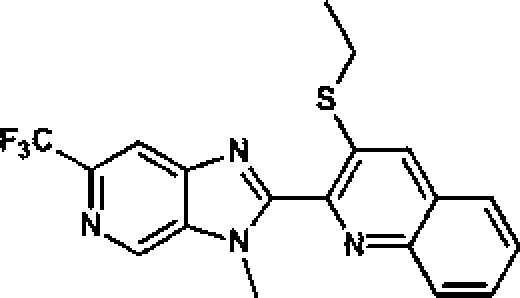
800 mg (2,20 mmol) of 3-chloro-2-[3-methyl-6-(trifluoromethyi)imidazo[4,5-cJpyridin-2-y!]quinoline and 557 mg (6.61 mmol) of sodium ethanethiolate were stirred in DMF at room temperature under argon for 4 h. Water was added and the mixture was extracted twice with ethyl acetate. The combined organic phases were washed with a sodium chloride solution, removed, dried over sodium sulphate and freed of the solvent under reduced pressure.
(logP (neutral): 3.30; MH : 389; 'H-NMR (400 MHz, Dh-DMSO) 5 ppm: 1.27 (t, 3H), 3.12 (q, 2H), 4.03 (s, 3H), 7.74-7.84 (m, 2H), 8.08-8.11 (m, 2H), 8.32 (s, 1H), 8.58 (s, lH),9.29(s, 1H).
3-C1i1oio-2-13-in ctliyl-6-(trifluoronietliyl)iniidazoj4,5-c]pyridin-2-y I [quinoline (V-l)
WO 2017/072039
PCT/EP2016/075365
-102ci

450 mg (2,35 mmol) of N3-metliyl-6-(trifluoromethyl)pyridine-3,4-diamine, 489 g (2.35 mmol) of 3chloroquinoline-2-carboxy lie acid and 451 mg (2.35 mmol) of l-(3-dimethylaminopropyl)-3ethylcarbodiimide hydrochloride (EDCI) were stirred in 6 ml of pyridine at 120°C for 9 h. The reaction mixture was freed of the solvent under reduced pressure, then water was added and the mixture was extracted three times with ethyl acetate. The combined organic phases were dried over sodium sulphate and concentrated again.
The residue was dissolved in 15 ml of toluene, 582 mg (3,06 mmol) of para-toluenesulphonic acid were added, and the mixture was stirred at S0°C for 1 h and 120°C for 3 h. Subsequently, the reaction mixture was admixed with saturated sodium hydrogencarbonate solution and extracted twice with ethyl acetate. The combined organic phases were dried over sodium sulphate and freed of the solvent under reduced pressure.
(logP (neutral): 2.89; MH : 363: Ή-NMR (400 MHz, Dr,-DMSO) 5 ppm: 4.03 (s, 3H), 7.83-7.87 (m, 1H), 7.93-7.97 (m. 1H), 8.15-8.19 (m, 1H), 8.33 (s, 1H), 8.95 (s, 1H), 9.31 (s, 1H).
2-Ethylsulplioiiyl-3-[3-incthyl-6-(trifIiioiOinethyl)iiiiidazo[4,5-c|pj ridiii-2-yl]qiiinoxaline (1-3)

160.7 mg (0.41 mmol) of 3-ethylsulphany 1-2-[3-methy 1-6-(1 rifluoromethy])imidazo[4,5-c]pyridin-2yl]quinoxaline were dissolved in 10 ml of dichloromethane, 195.1 mg (0.82 mmol) of metacbloroperbenzoic acid were added at 0°C, and the mixture was stirred at 0°C for 5 min and at room temperature for 2 h. The mixture was admixed with sodium bisulphite solution, stirred for 1 h, diluted with 20 ml of water and adjusted to pH 9-10 with 45% sodium hydroxide solution. Then the mixture was extracted three times with dichloromethane and then the combined organic phases were freed of the solvent under reduced pressure.
(logP (neutral): 2.45; MI L: 422; 'H-NMR(400 MHz. D&-DMSO) δ ppm: 1.28 (t, 3H), 3.82 (q, 2H). 4.00 (s, 3H), 8.22-8.26 (m. 2H). 8.33 (s, IH), 8.38-8.40 (m. 1H), 8.45-8.47 (m. 1H), 9,32 (s, 1H),
WO 2017/072039
PCT/EP2016/075365
-1032-EthyIsulphanyl-3-|3-niethy!-6-(trifluoromethyl)imi(lazo|4,S-c]pyridin-2-yl|quino\aline (1-4)

280 mg (0,66 mmol) of 2-chloro-3-[3-melhyl-6-(trifluoromet1iyi)iinidazo[4,5-c]pyridin-2-yl]qiiinoxa]jne and 111,4 mg (1,32 mmol) of sodium ethanetliiolate were slimed in 8 ml of DMF at room temperature under argon for 30 min. Water was added and the mixture was extracted twice with ethyl acetate. The combined organic phases were washed with a sodium chloride solution, removed, dried over sodium sulphate and freed of the solvent under reduced pressure. The residue was purified by column chromatography purification with a cyclo hex ane/ethyl acetate gradient as eluent.
(logP (neutral): 4.10; MH'; 390; 'H-NMR (400 MHz, Dn-DMSO) δ ppm: 1.37 (t, 3H), 3.31 (q, 2H), 4.18 (s, 3H), 7.85 (t, IH), 7.96 (t, 1H), 8.0S (d. 1H), 8.16 (d. 1H), 8.37 (s, 1H). 9.33 (s, 1H).
2-Cliloro-3-j3-metliyl-6-(ti ifliioromethyl)iniidazo|4,5-c]pyndin-2-yi]qiiinoxaline (V-2)
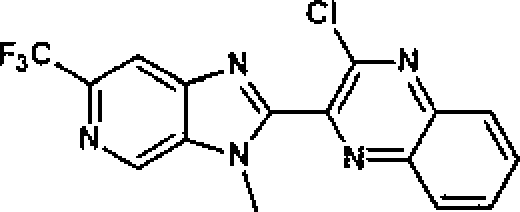
3S5 mg (2.01 mmol) of N’-met1iyl-6-(trifluoromethyl)pyridine-3,4-diamine, 504 mg (2.41 mmol) of 3chloroquinoxa!ine-2-carboxyltc acid and 386 mg (2.01 mmol) of l-{3-diinethylaminopropyl)-3ethy I carbodiimide hydrochloride (EDCI) were stirred in 10 ml of pyridine at room temperature for IS h. The reaction mixture was freed of the solvent under reduced pressure, then water was added and the mixture was extracted three times with ethyl acetate. The combined organic phases were dried over sodium sulphate and concentrated again.
The residue was dissolved in 5 ml of toluene, 181.3 mg (0.95 mmol) of para-toluenesulphonic acid were added, and the mixture was stirred at 120°C for 2 h. Subsequently, the reaction mixture was admixed with saturated sodium hydrogencarbonate solution and extracted twice with ethyl acetate. The combined organic phases were dried over sodium sulphate and freed of the solvent under reduced pressure.
(logP (neutral): 2.84; MH ; 364; 'll-NMR (400 MHz, Dh-DMSO) δ ppm; 4,12 (s, 3H), 8.03-8.13 (m, 2H), 8.22-8.3! (m, 2H), 8.37 (s. 1H), 9.33 (s, 1H).
6-(3-Ethylsulpliony)-2-quinolyl)-2,2-dif1uoi'o-7-methyl-[1,3|(!ioxolo|4,5-f[bcnzimidazoie
WO 2017/072039
PCT/EP2016/075365
-104-

mg (0.03 mmol) of 6-(3-ethylsulp!ioiiy]-2-quinolyl)-2,2-difluo!O-5H-[1.3]dioxolo[4,5fjbenzimidazole, 4,9 mg (0.03 mmol) of methyl iodide and 8.6 mg (0.06 mmol) of potassium carbonate were dissolved in 3 ml of acetone and stirred under reflux for 3 h. The reaction mixture was filtered off, the mother liquor was freed of the solvent, the residue was taken up in dichloromethane, washed with water, dried over sodium sulphate and then the solvent was distilled off under reduced pressure.
(logP (neutral): 3.39; MIT: 432; 'H-NMR(400 MHz, D„-DMSO) δ ppm: 1,23 (t, 3H), 3,76 (s, 3H), 3.90 (q, 2H), 7,80 (s, IH), 7.91 (s, 1H),7.93 (t, 1H), 8.12 (t, 1H). 8.25 (d, IH), S.47 (d, lH),9.28(s, 1H).
6-(3-EthylsulphonyI-2-quinolvl)-2,2-difliioro-5H-| 1,3] dioxolol4,5-f] benzimidazole
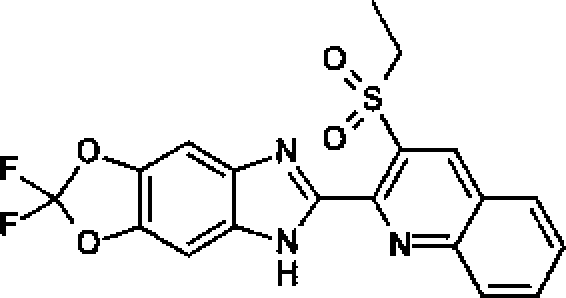
mg (0.06 mmol) of 6-(3'ethylsu!phany!-2-quinolyl)-2,2-difluoro-5H-[1,3]dioxolo[4,5-f]benzimidazole were dissolved in 3 ml of dichlonnethane, 9,2 mg (0.20 mmol) of formic acid and 45.4 mg (0.46 mmol) of 35% hydrogen peroxide were added at room temperature, and then the mixture was stirred at room temperature for 4 h. Subsequently, 3 further equivalents of formic acid and 7 equivalents of 35% hydrogen peroxide were added and the mixture was stirred at room temperature for a further 2 h. The reaction mixture was diluted with water and admixed with sodium bisulphite solution, stirred for 30 min, and then admixed with saturated sodium hydrogencarbonate solution. The organic phase was separated off, the aqueous phase was extracted twice with dichloromethane, and the combined organic phases were then freed of the solvent under reduced pressure. The residue was purified by column chromatography purification with a cyclohexane/ethyl acetate gradient (70:30 lo 30:70) as eluent.
(logP (neutral): 3.37; ΜΗ’:418; 'H-NMR(400 MHz, D„-DMSO) 5 ppm: 1.30 (t, 3H), 4.3t (q, 2H), 7.63 (br. s, IH), 7.80 (br. s, 1H). 7.89 (t. IH). 8.10 (t, IH), 8.24 (d, IH). 8.43 (d. IH). 9.27 (s, 1H), 13.54 (s, IH).
6-(3-Ethy]sulphaiivl-2-quiiiolyl)-2,2-difluoro-5H-ll,3[clio\olo[4,5-f|benziniidazole
WO 2017/072039
PCT/EP2016/075365
-1055
X s
F,
Fo o
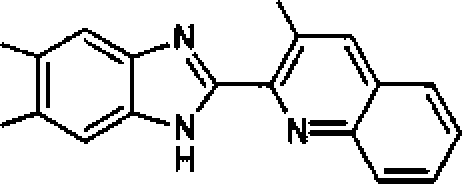
590 mg (2.97 mmol) of 2,2-difluoro-l,3-benzodioxole-5,6-diamine, 926.7 mg (3.57 mmol) of 3etliylsulphanylquinoline-2-carhoxylic acid, 576.9 mg (2.97 mmol) of l-(3-dimethylaminopropyl)-3ethylcarbodi imide hydrochloride (EDCl) and 4.4 mg of molecular sieve (4 A) were stirred in 30 ml of pyridine under argon at 120°C for 8 h. The reaction mixture was freed of solvent under reduced pressure, and the residue was taken up in ethyl acetate and washed with water. The aqueous phase was extracted twice with ethyl acetate, the organic phases were combined and dried over sodium sulphate, and then the solvent was distilled off under reduced pressure. The residue was stirred at reflux in 30 ml of phosphoryl chloride for 4 h and then the solvent was removed again under reduced pressure. The residue was taken up in dichloromethane, washed with water and dried over sodium sulphate, and then the solvent was distilled off under reduced pressure. The residue was purified by column chromatography purification with a cyclohexane/ethyl acetate gradient (70:30 to 0; 100) as eluent.
(logP (neutral): 4.26; Mff: 386; 'H-NMR(400 MHz. D„-DMSO) 5 ppm: 1.39 (t,3H), 3.14 (q, 2H), 7.56 (br. s, 1H), 7.66 (t, 1H), 7.76 (t. IH), 7.84 (br. s, IH), 8.02 (d, 1H), 8.07 (d, IH), 8.37 (s, IH), 13.31 (s, 1H).
2-(3-Ethy[siiIpliony]-2-qtiinolyl)-5-(trinuoiOinethylsulphonyl)-l,3-benzoxazole
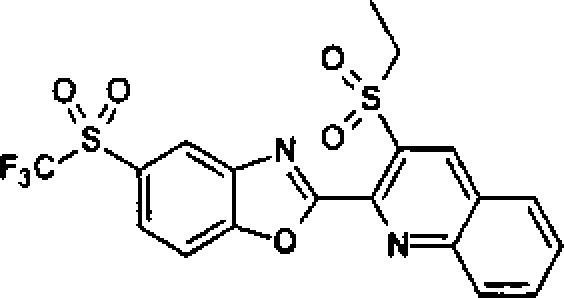
103 mg (0.06 mmol) of 2-(3-ethylsuIphonyl-2-quinolyI)-5-(trifluoromelhylsulpha:iyl)-l,3-benzoxazole were dissolved in 12 ml of dichlonnethane, 182 mg (3.93 mmol) of formic acid and 1.81 g (18.59 mmol) of 35% hydrogen peroxide were added at room temperature, and then the mixture was stirred at 40°C for 72 h. The reaction mixture was diluted with water and admixed with sodium bisulphite solution, stirred for 30 min. and then admixed with saturated sodium hydrogencarbonate solution. The organic phase was separated off, the aqueous phase was extracted twice with dicliloromethane and the combined organic phases were then freed of the solvent under reduced pressure. The residue was purified by column chromatography with a dichloromelhane/ethyl acetate gradient (0:100 to 40:60) as eluent.
(logP (neutral): 3.62; Mi l : 471; 'H-NMR(400 MHz, D^-DMSO) δ ppm: 1.33 (t, 3H), 4.00 (q, 2H). 8.00 (t, IH). 8.18((, IH), 8.32-8.37 (m. 2H). 8.45 (d. 1H), 8.5J (d, 1H), 8.87 (s. IH), 9.40 (s, 1H).
WO 2017/072039
PCT/EP2016/075365
-1062-(3“Ethylsulphonyl-2-quinoIyl)-5-(tiifluoroniethylsuIphinyl)-l,3-benzoxazole

The same method as described for the synthesis of 2-(3-ethyisulphonyl-2-qumoly])-5(trifluoromethylsulphonyl)-l,3-benzoxazole was also used to obtain the corresponding trifluoromethvlsulphoxide derivative 2-(3-ethylsulp]iony]-2-quinolyl)-5-(trifluoromethylsulphiuyl)-l,3benzoxazole.
(logP (neutral): 3.05; MH': 455; 'H-NMR(400 MHz, D„-DMSO) 5 ppm: 1.32 (t, 3H), 3.99 (q, 2H), 7.99 (t, 1H), 8.11-8.18 (m, 2H), 8.32-8.34 (m, 2H), 8.50 (d, 1H), 8.55 (s, 1H), 9.38 (s, 1H).
2-(3-Ethylsulphonyl-2-quiiiolyl)-5-(tnfIuorometliylsulphanyl)-l,3-benzoxazole

244 mg (0.57 mmol) of 2-(3-ethylsulplianyl-2-quinolyl)-5-(trifluoromethylsulphanyl)-l,3-benzoxazole were dissolved in 16 ml of dichloromethane, 157.5 mg (3.42 mmol) of formic acid and 554,0 mg (5.7 mmol) of 35% hydrogen peroxide were added at room temperature, and then the mixture was stirred at room temperature for 6 h. The reaction mixture was diluted with water and admixed with sodium bisulphite solution, stirred for 30 min, and then admixed with saturated sodium hydrogencarbonate solution. The organic phase was separated off, the aqueous phase was extracted twice with dichloromethane and the combined organic phases were then freed of the solvent under reduced pressure. The residue was purified by column chromatography purification with a cyclohexane/ethyl acetate gradient (70:30 to 0:100) as eluent.
(logP (neutral): 4.17; MH’:439; lH-NMR(400 MHz, Df,-DMSO) 8 ppm: 1.32 (t, 3H),3.98 (q, 2H). 7.938.00 (111.2H), 8.13-8.18 (m, 2H), 8.31 (d, 1H), 8.40 (s, 1H), 8,50 (d, 1H), 9.37 (s, 1H).
2-(3-Eihytsulphanyl-2-quinolyI)-5-(trifluoiOmeiliylsulpliaiiyl)-l,3-beiizoxazo!e
WO 2017/072039
PCT/EP2016/075365
-107-

446 mg (2.02 mmol) of 2-amino-4-(trifluoromethylsulphanyl)phenol, 708.8 mg (2.43 mmol) of3ethylsuiphanylqui noline-2-carboxy lie acid and 465.9 mg (2.97 mmol) of l-(3-dimethylaminopropyl)-3ethylcarbodfimide hydrochloride (EDCI) were stirred in 20 ml of pyridine under argon at 80°C for 4 h. The reaction mixture was freed of the solvent under reduced pressure and the residue was purified by column chromatography purification with cyclohexane/ethyl acetate as eluent,
540 mg (1.17 mmol) of the 3-ethylsnlphanyl-N-[2-hydroxy-5(t ri tl uororn et hy 1 su I ph a nyl)phenyl]quinoIine-2-carboxamide intermediate prepared in this way were stirred in 30 ml of letrahydrofuran in the presence of 409 mg (1.68 mmol) of di-2-inelhoxyetliyl azodicarboxylate (DMEAD) and 434 mg of Iriphenylphospine at room temperature for I h and at 50°C for 1 h. Subsequently, the reaction mixture was freed of the solvent under reduced pressure and the residue was purified by column chromatography purification with a cyclohexane/ethyl acetate gradient (80:20 to 40:60) as eluent.
(logP (neutral): 5.43; MIT: 407; 'H-NMR(400 MHz. D«,-DMSO) 5 ppm: 1.38 (t, 3H),3.21 (q, 2H), 7.737.82 (m, 2H), 7.90 (d, 1H), 8.07-8.15 (m, 3H), 8.41 (s, 1H), 8.54 (s, 1H).
3-Ethylsulphonyl-2-|l-methyl-5-(trifluoroiiiethyIsiiIphonyl)benzimidazol-2-ylJquiiioliiic

mg (0.15 mmol) of 3-etliylsulphonyl-2-[I-niethyl-5-(trifluoiOinethylsulphiiiyl)benzimidazol-2yl]quinoline were dissolved in 6 ml of acetonitrile, 10.0 mg (0.02 mmol) of sodium tungstate(VI) dihydrate and 738.0 mg (7.58 mmol) of 35% hydrogen peroxide were added at room temperature, and then the mixture was stirred at reflux for 24 h. The reaction mixture was diluted with water and admixed with sodium bisulphite solution, stirred for 30 min, and then admixed with saturated sodium hydrogencarbonate solution. The organic phase was separated off, ihe aqueous phase was extracted twice with dichioromethane and the combined organic phases were then freed of the solvent under reduced pressure. The residue was purified by column chromatography purification with a dichloromethane/ethyl acetate gradient (70:30 to 0:100) as eluent.
WO 2017/072039
PCT/EP2016/075365
-108(logP (neutral): 3.42; MH: 484; 'H-NMR(400 MHz, D6-DMSO) δ ppm: 1.24 (t, 3H), 3.87 (q, 2H), 3.89 (s, 3H), 7.97 (t, IH), 8.10-8.28 (m,4H), 8.50 (d, IH), 8.56 (s, lH),9.34(s, 1H).
3-Ethylsulphonyl-2-(i-niethyl-5-(trifliioiOmethylsulphinyl)benzimidazol-2-yl|quinolii]e

262 mg (0.62 mmol) of 3-ethylsulphauyL-2-[I-methyl-5-(trifluoromethylsulphanyl)benzimidazol-2yl]quinoline were dissolved in 6 ml of dichloro methane, 143.7 mg (3.12 mmol) of formic acid and 424.9 mg (4.37 mmol) of 35% hydrogen peroxide were added at room temperature, and then the mixture was stirred at room temperature for 4 h. The reaction mixture was diluted with water and admixed with sodium bisulphite solution, stirred for 30 min, and then admixed with saturated sodium hydrogencarbonate solution. The organic phase was separated off, the aqueous phase was extracted twice with di chloro methane and the combined organic phases were then freed of the solvent under reduced pressure. The residue was purified by column chromatography purification with a cyclohexane/ethyl acetate gradient (80:20 to 0:100) as eluent, (logP (neutral): 2.79; MH*: 468; 'H-NMR(400 MHz, D„-DMSO) δ ppm: 1.24 (t, 3H), 3.85 (s, IH), 3.90 (q, 2H), 7.91-7.97 (in, 2H), 8.10-8.15 (m, 2H), 8.26 (d, IH), 8.34(s, IH), 8.50(d, !H), 9.32 (s, IH).
3-Etliy[sulphonyl-2-|i-niethyl-5-(trifluoiOniethylsulphanyl)beiiziniidazol-2-yl|quinoline

The same method as described for the synthesis of 3-ethylsuJphonyl-2-[l-methyl-5(trifluoromethylsnIphinyl)benzimidazol-2-yl]quinoline was also used to obtain the corresponding trifluoroinethylsulphide derivative 3-ethylsulphonyl-2-[l-methyl-5(trifluoroinethylsuiphanyl)benzimidazol-2-yl]qui noline.
(logP (neutral): 3.96: MH*; 452; 'H-NMR(400 MHz. D„-DMSO) δ ppm: 1.23 (l, 3H), 3.80 (s, 1If), 3.90 (q, 2H), 7.71 (d, IH), 7.90-7.97 (m. 2H). 8.11-8.15 (m. 2H), 8.26(d, IH), 8.49(d, 1H),9.31 (s, IH).
3-Ethy]sulphaiiyl-2-[l-inctliyI-5-(triftuoromethylsulphanyl)bciizii]ii[lazo]-2-yl[qtiiiiolinc
WO 2017/072039
PCT/EP2016/075365
-109-

806 mg (3.37 mmol) of NI-methyl-4-(trifluoromethyisulphanyl)phenylene-1,2-diamine, 966,5 mg (4.04 mmol) of 3-ethylsulpbanylquinoline-2-carboxylic acid, 673.0 mg (3.37 mmol) of 1-(3dimethylaminopropyl)-3-ethylcarbodiimide hydrochloride (EDCI) and 4 mg of molecular sieve (4 A) were stirred in 30 ml of pyridine under argon at 120°C for 8 h. The reaction mixture was freed of solvent under reduced pressure, and the residue was taken up in ethyl acetate and washed once witli water. The aqueous phase was extracted twice with ethyl acetate, the combined organic phases were dried over sodium sulphate and the solvent was then distilled off under reduced pressure. The residue was purified by column chromatography purification with a water/acetonitrile gradient plus 0.1 ml/l formic acid as eluent.
(IogP (neutral): 4.63; MH :420; 'H-NMR(400 MHz, D6-DMSO) δ ppm: 1.27 (t, 3H), 3.11 (q, 2H), 3.91 (s, 114), 7.69-7.80 (m, 4H), 7,89 (d, 1H), 8.07 (d, 1H), 8.16 (s, 1H), 8.53 (s, 1H).
2-(3-EtliyIsul|)hoiiyl-2-quiiiolyl)-6-niethyloxazolo[5(4-b[pyridine

mg (0.21 mmol) of2-(3-ethylsulphanyl-2-quinolyl)-6-methyloxazolo[5,4-b]pyridine were dissolved in 6 ml of dichlomiethane, 49.6 mg (1.07 mmol) of formic acid and 188.4 mg (1.93 mmol) of 35% hydrogen peroxide were added al room temperature, and then the mixture was stirred at room temperature for 7 h. The reaction mixture was diluted with water and admixed with sodium bisulphite solution, stirred for 30 min, and then admixed with saturated sodium hydrogencarbonate solution. The organic phase was separated off, the aqueous phase was extracted twice with diehloromethane and the combined organic phases were then freed of the solvent under reduced pressure. The residue was purified by column chromatography purification with a cyclohexane/ethyl acetate gradient (80:20 to 0:100) as eluent.
(IogP (neutral): 3.27; MH : 408; 'H-NMR(400 MHz. Dh-DMSO) S ppm: 1.32 (t, 3H), 3.93 (q, 2H). 8.00 (t, 1H), 8.18 (t, 1H), S.35 (d, 1H). 8.51 (d, IH), 9.03 (s, 1H), 9.04 (s, 1H), 9.40 (s. 1H).
2-(3-Ethylsulphinyl-2-qiiiiwlyl)-6-methyl0xazolol5,4-b] pyridine
WO 2017/072039
PCT/EP2016/075365
-110-

The same method as described for the synthesis of 2-(3-ethyl sulphonyl-2-quinolyl)-6-methyloxazolo[5,4b]pyridine was also used to obtain the corresponding sulpboxide derivative 2-(3-ethylsulphinyl-2q u i noly 1 )-6-methy 1 oxazo 1 o [5,4-b] pyr i d ine.
(logP (neutral): 2.98; MH :492; 'H-NMR(400 MHz. Ds-DMSO) δ ppm: 1.25 (1, 3H), 2.93-3.02 (m,
1H), 3.47-3.56 (m, 1H>, 7.90 (1, 1H), 8.05 (t, 1H), 8.37-8.41 (m, 2H), 8.99 (s, 1H),9.O3 (s, IH), 9.10 (s, 1H).
2-(3-Ethy Is ulphanyl-2-quinolyl)-6-methyloxazolo) 5,4-b] pyridine

172 mg (0.36 mmol) of N-(2-chloro-5-methy I-3-pyridy) )-3-ethylsulpbanylquinoline-2-carboxamide were dissolved in 6 ml of diinethylformanride, 38.9 mg (0.36 mmol) of sodium carbonate were added and the mixture was stirred at 145°C for 4 h. The mixture was added to ice-water and extracted twice with ethyl acetate, the combined organic phases were washed with water and dried over sodium sulphate, and the solvent was distilled off under reduced pressure. The residue was purified by column chromatography purification with a cyclohexane/ethyl acetate gradient as eluent.
(logP (neutral): 4.36; MH': 376; 'H-NMR(400 MHz, Ds-DMSO) δ ppm: 1.38 (t, 3H). 3.22 (q, 2H). 7.757.85 (m, 2H). 8.09 (d, IH), 8.17 (d, IH), 8.55 (s, 1IT), 8.97 (s, IH), 9.01 (s, 1H).
N-(2-Chloro-5-niethyl-3-pyridyl)-3-ethylsulphany (quinoline-2-carboxaniide (IV-l)

240 mg (1.19 mmol) of 2-chloiO-5-(trifhioroniethyl)pyridin-3-amiiie and 357 mg (1.31 mmol) of3et by I sulphanylquinoline-2-carboxylic acid were dissolved together with 0.39 ml (4,78 mmol) of pyridine
WO 2017/072039
PCT/EP20I6/075365
-111in 20 ml of dioxane, 367 mg (2,39 mmol) of phosphoryl chloride were added, and the mixture was stirred at reflux for 90 min. The mixture was concentrated, the residue was taken up in ethyl acetate and washed with water, and the aqueous phase was extracted twice with ethyl acetate. The combined organic phases were dried over sodium sulphate and the solvent was distilled off under reduced pressure. The residue was purified by column chromatography purification with a cyclohexane/ethyl acetate gradient (80:20 to 40:60) as eluent.
(logP (neutral): 5.71; MH : 412; 'H-NMR(400 MHz, D<,-DMSO) δ ppm: 1,37 (t, 3H), 3.12 (q, 2H), 7.747.84 (m, 2H), 8.07-8.14 (in, 2H), 8.49 (s, 1H), 8.70 (s, 1H), 9.02 (s, 1H), 11.12 (s, HI).
3-(E thv Isulphony 1)-2-|7-(trifluoromethyl)iniidazo|l,2-c|pyrimidin-2-yl| quinoline

3-(Ethylsulphany])-2~[7-(trifluoronielbyl)imidazo[l,2-c]pyrimidin-2-yl]quinoline (24 mg, 0.06 mmol) was dissolved in 2 ml of dichloromethane. Hydrogen peroxide (35% aqueous solution, 43 mg, 0.44 mmol) and formic acid (15 mg, 0.32 mmol) were added and the reaction mixture was stirred for 12 h. While cooling with ice, 1 ml of 40% sodium bisulphite solution was added dropwise and the mixture was stirred for 1 h. The phases were separated, and the organic phase was washed with sodium hydrogenearbonate solution, dried over sodium sulphate and concentrated on a rotary evaporator. The residue was purified by chromatography (eluent: cyclohexane, ethyl acetate).
logP (neutral): 2.63; MH’: 407; Ή-NMR (400MHz. D6-DMSO) 5 ppm: 9.70 (s, 1H). 9.23 (s, 1H). S.74 (s, 1H), 8.41-8.39 (m, 2H). 8-21 -8.19(m, 1H), 8.08- 8.04 (m, 1H). 7.87-7.83 (m, IH), 4.17-4.12 (m, 2H), 1.30-1.27 (m, 3H).
3-(Ethy!sulphanyI)-2-|7-(trifhioromethyl)inHcliizoll,2-c|pjrinii<iin-2-yl|quinoline

2-Bronio-]-[3-(ethylsulp!iany!)quino]in-2-y1]ethanoiie (453 mg, 0.92 mmol) and 6(trifhioiOinethyl)pyriiuidiii-4-aniine (150 mg, 0.92 mmol) were dissolved in 5 ml of tert-butanol, and sodium hydrogenearbonate (386 mg, 4.59 mmol) was added. The reaction mixture was stirred at 80°C for 5 h. After the solvent had been removed on a rotary evaporator, the residue was purified by chromatography.
WO 2017/072039
PCT/EP2016/075365
-112logP (neutral): 3.24; MH': 375; Ή-NMR (400MHz, D6-DMSO) 5 ppm: 9.68 (s, 1H). 8.80 (s, 1H), 8.37 (s,2H), 8.02-7.99 (m, 2H), 7.75-7.70 (m, 1H), 7.66 - 7.62 (m, 1H). 3.16-3.10 (m, 2H), 1.34-1.30 (m, 3H).
2-Bioino-l-[3-(ethylsulphanyl)quinolin-2-yl|ethanone

Pyridine hydrobromide perbromide (PyBn. 100 mg, 0,43 mmol) was dissolved in 4 ml of glacial acetic acid. HBr(32% in glacial acetic acid, 0.15 ml) was added and the mixture was stirred at room temperature for 30 min. Then 1 -[3-(ethylsulphanyl)quinolin-2-yI]ethanone (100 mg, 0,43 mmol) dissolved in 1 ml of glacial acetic acid was added dropwise. The reaction mixture was stirred at room temperature for 12 h and then concentrated. The residue was taken up with ethyl acetate and washed with saturated sodium hydrogencarbonate solution and saturated sodium chloride solution. After the organic phase had been dried over sodium sulphate, the solvent was removed on a rotary evaporator. The residue was converted in the subsequent reaction without further purification.
logP (acidic): 3.95; MH’: 312
-[3-(Ethylsulphanyl)qiiinoliii-2-yl] ethauone

Under an argon atmosphere, 3-(ethylsulphanyl)-N-methoxy-N-methylqLiinoline-2-carboxamide (2.8 g, 8,1 mmol) was dissolved in 155 ml of dry THF and cooled to 0°C. Melhylmagnesium bromide (3M in diethyl ether, 8,1 ml, 24.3 mmol) was slowly added dropwise, then the mixture was stirred for 2 h at 0°C. hi order to end Ihe reaction, 5 ml of ammonium chloride solution were added gradually while cooling. The organic phase was separated off and washed with saturated sodium ehloride solution. The solvent was removed on a rotaiy evaporator and the cnide product was used in the subsequent reaction without further purification.
logP (neutral): 3.31; MH’: 232; Ή-NMR (400MHz. D6-DMSO) 6 ppm: 8.38 (s, III), 8.08-8.00 (m, 2H), 7.79-7.70(111, 2H), 3.10-3.04 (m. 2H), 2.75 (s, 3H), 1.35-1.31 (m, 3H).
3-( Ethylsulphaiiyl)-N-nicthoxy-N-metliylquinoline-2-carboxamiife
WO 2017/072039
PCT/EP2016/075365
-113-

3-(Ethylsulphany])quinoline-2-carboxylic acid (240 mg, 1,02 mmol) and N.O-dimethyliiydroxylamine hydrochloride (100 mg, 1.02 mmol) were dissolved in 3 ml of dichloromethane and cooled lo 0°C. 4Dimethyl ami nopyridine (DMAP, 150 mg, 1.23 mmol) and N-(dtmethylaininopropyl)-N'ethylcarbodi imide hydrochloride (EDCI, 217 mg, 1.13 mmol) were added and the reaction mixture was stirred for 2 b at 0°C, then for 12 h at room temperature. The solution was washed once with saturated sodium hydrogencarbonate solution and once with sodium chloride solution, dried over sodium sulphate and concentrated. The erode product was used in the subsequent reaction without further purification.
logP (neutral): 2.17; MIT: 277; Ή-NMR (400MHz, D6-DMSO) δ ppm: 8.46 (s, 1H), 8.02-7.98 (m, 2H). 7.78 - 7.75 (in, 1H), 7.70-7.64 (m, 1H), 3.51 (s, 3H), 3.32 (s, 3H), 3.12-3.05 (m, 2H). 1.28 - 1.24 (m, 3H).
3-(Ethylsulplianyl)quinoline-2-carboxylic acid
OH
Under an argon atmosphere, 2,2,6,6-tetramethylpiperidine (5.34 g, 38 mmol) was dissolved in 50 ml of dry THF and cooled to -25°C. n-Butyllithium (2,5 M in hexane, 2.44 g, 38.1 mmol, 15.2 ml) was added dropwise and the mixture was stirred at -25°C for 20 min. Then quinoline-2-carboxylie acid (3.00 g, 17.3 mmol) dissolved in 20 ml of THF was added dropwise and the mixture was stirred at -25°C for a further 30 min. Diethyl disulphide (5.29 g, 43.3 mmol) was added dropwise and, after stirring at -25°C for 30 min, the mixture was wanned gradually to room temperature. The reaction mixture was concentrated on a rotary evaporator and the residue was taken up in 100 ml of cyclohexane/diethyl ether (3:7). The remaining solids were isolated by filtration. Water was added, and 2.5 M HCI solution was added until a pH of 4 was obtained. The aqueous solution was extracted three times with dichloromethane. The combined organic extracts were dried over sodium sulphate and the solvent was removed on a rotary evaporator. The crude product was used in the subsequent reaction without further purification.
logP (neutral): 0.48; MH': 234; lH-NMR (400MHz, D6-DMSO) 8 ppm: 8.43 (s, 1H), 8.03-8.00 (in. 2H), 7.78 - 7.74 (in. 1H), 7.70 - 7.67 (in, IH), 3.13 - 3.07 (in, 2H). 1.32 - 1.28 (m, 3H).
WO 2017/072039
PCT/EP2016/075365
-1143,6-Bis(ethyIsiilphonyl)-2-[3-niethyl-6-(trifliioromethyl)-3H-iniidazo[4,5-e]pyridin-2-yl]-l,8naphthyridine
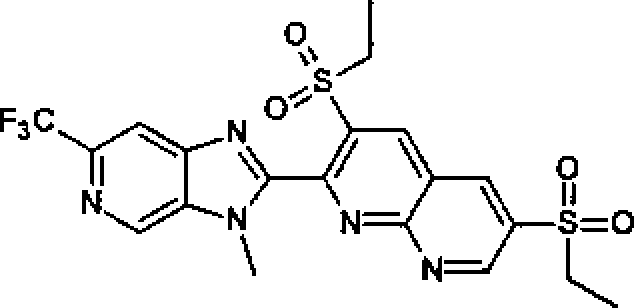
mg (0.0 7 8 mmol) o f 3,6-b i s(ethy 1 su Iph a ny 1) -2 - [ 3 - met h y 1-6 - (trifluoromethyl)hnidazo[4,5-c]pyridin-2yl]-l,8-naphthyridine were dissolved in 3.5 ml of dichloromethane, 18 mg (0.39 mmol) of formic acid and 53 mg (0.545 mmol) of hydrogen peroxide were added at room temperature, and then the mixture was stirred at room temperature for 18 h. The mixture was freed of the solvent under reduced pressure. The residue was purified by column chromatography purification with a cyclohexane/ethyl acetate gradient as eluent.
logP (neutral): 2.21; MH’: 514; 'H-NMR (400 MHz, CDjCN) δ ppm: 1.29 (t, 3H), 1.33 (t, 3H),3.41 (q, 2H), 3.92 (q, 2H), 4.00 (s, 3H), 8.22 (s, IH), 9.155 (s, IH), 9.26 (d, 1H),9.43 (s, IH), 9.65 (d, IH).
3,6-Bis(ethylsuIphanyl)-2-|3-metliYl-6-(trifliioronietiiyl)-3H-iiiiiiIazo|4,5-c]pyridin-2-yI|-i,8naphthyridine
F,C

255 mg (0.493 mmol) of 3,6-dichloiO-2-[3-methyl-6-(trifiuoroinethyl)-3H-imidazo[4,5-e]pyridin-2-yl]1,8-naphthyridine and 156 mg (1.48 mmol) of sodium ethanethiolate were stirred in 14.2 ml of DMF at room temperature under argon for 2 h. Water was added and the mixture was extracted twice with ethyl acetate. The combined organic phases were dried over sodium sulphate and freed of the solvent under reduced pressure. The residue was purified by column chromatography purification with a cyclohexane/ethyl acetate gradient as eluent.
logP (neutral): 3.23; MH': 450; ‘H-NMR (400 MHz, CD,CN) δ ppm: 1.34 (t, 3H), 1.42 (t. 3H), 3.10 (q, 2H),3.19(q, 2H), 4.06(s,3H), 8.15 (d, IH), 8.18(s, IH), 8.29 (s, IH), S.92 (d, 1H), 9.10 (s, IH).
3,6-Didiloro-2-[3-inethy1-6-(trifliio!Onicthyl)-3H-iniidazo[4,5-c|pyridin-2-yl|-l,8-naplitliyridiuc (V-3)
WO 2017/072039
PCT/EP2016/075365
-115f3c
Cl

Cl
310 mg (1.62 mmol) of N’1-methyl-6-(trif]uoromethyl)pyridine-3,4-diamine. 512 mg (2.11 mmol) of3,6dichioiO-i,8-iiaphtliyridine-2-carboxylic acid and 622 mg (3.24 mmol) of l-(3-dimethylaminopropyl)-3efhylcarbodiimide hydrochloride (EDCI) were stirred in 18 ml of pyridine at 120°C for 18 h. 140 mg (0.811 mmol) of para-toluenesulphonic acid were added and the reaction mixture was stirred at 120°C for 18 h. The mixture was diluted with acetonitrile, filtered and freed of the solvent under reduced pressure. The residue was purified by column chromatography purification with a dichloromethane/methanoi gradient as eluent.
logP (neutral): 2.44: ΜΗΊ 398; Ή-NMR (400 MHz. CDjCN) δ ppm: 4.03 (s, 3H), 8.22 (s, IH), 8.48 (d, IH), 8.65 (s, IH), 9.13 (s, 2H).
3,6-Dichloro-l,8-naphthyndine-2-eaiboxylic acid (HI-1)

Cl
990 mg (3.85 mmol) of methyl 3,6-dichloro-l,8-naphthyridine-2-carboxylate and 184 mg (7.70 mmol) of lithium hydroxide were stirred in 6.9 ml of letmhydrofuran and 2.3 ml of water at room temperature for IS h. An aqueous 1 N chloric acid solution was added, and the mixture was freed of the solvent under reduced pressure. Toluene was twice added to the residue and the mixture was freed of the solvent under reduced pressure.
logP (acidic): 0.70; MH‘: 243; Ή-NMR (400 MHz, CD_iCN) δ ppm: 8,39 (m, IH), 8.49 (s, 1H), 9.07 (in. IH).
Methyl 3,6-dichIoi o-1,8-naphtliyridine-l-carboxylate (XXXI-1)
Cl

Cl
2.37 g (12.6 mmol) of methyl ],8-naphlhyridine-2-carboxylate and 1.93 g (14,5 mmol) of Nchforosuccinimide were stirred in 118 ml of acetonitrile at 60°C for 18 h. The mixture was freed of !he solvent under reduced pressure. The residue was purified by column chromatography purification with an ethyl acetate/methanol gradient as eluent.
WO 2017/072039
PCT/EP2016/075365
-116logP (neutral): 1.93; MH’: 257; 'H-NMR (400 MHz, CDjCN) δ ppm: 4.01 (s, 3H), 8.71 (d, IH), 8.845 (s, IH), 9.20 (d, IH).
Methyl I,8-naphthyiidine-2-carboxylate (XX1I-1)
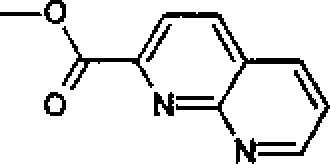
600 mg (3,44 mmol) of 1,8-uaphthyridine-2-carboxylic acid and 0.754 ml (10.3 mmol) of thionyl chloride were stirred in 15 ml of methanol at 60°C for 6 h. The mixture was freed of the solvent under reduced pressure. Methyl tert-butyl ether was added to the residue and the mixture was freed of the solvent under reduced pressure.
logP (neutral): 0.77; MH~: 189; 'H-NMR (400 MHz, CD,CN) δ ppm: 4.00 (s, 3H), 7.84 (dd, IH), 8.27 (d, IH), 8.70 (dd, IH), 8.76 (d, IH), 9.28 (m, IH).
l,8-Naphthyridine-2-carboxylic acid (XXX-1)

3.00 g (24.6 mmol) of 2-aminomcotinaldehyde and 4.44 ml (49.1 mmol) of methyl pyruvate were stirred in 30 ml of ethanol and 5.0 ml of water at 0°C. 30 ml (90.0 mmol) of an aqueous 3 N sodium hydroxide solution were added and the reaction mixture was stirred at RT for 18 h. The mixture was adjusted to pH - 1 at 0°C with about 50 ml of an aqueous 1 N chloric acid solution, freed of ethanol under reduced pressure and filtered.
logP (acidic): -0.12; MH': 175; ‘H-NMR (400 MHz, CDjCN) δ ppm: 7.72 (dd, IH), 8.30 (d, IH). 8.495 (dd. IH), 8.62 (d, IH), 9.22 (m, IH).
Methyl 3,6-dichloro-l,5-naplithyridine-2-carboxylate (XXXI-2)

Ci
1.07 g (5.69 mmol) of methyl l,5-naphthyridine-2-earboxylate and 873 mg (6.54 mmol) of Nchlorosuccintmide were stirred in 100 ml of acetonitrile at 60°C for 18 h. The mixture was freed of the solvent under reduced pressure. The residue was purified by column chromatography purification with an ethyl acetate/metHanoi gradient as eluent.
WO 2017/072039
PCT/EP2016/075365
-117logP (neutral); 2.46; MH : 257; 'H-NMR (400 MHz, CD?CN) δ ppin: 4.02 (s. 3H), 8.49 (m. 1H), 8.61 (s, IH), 9.01 (d. 1H).
Methyl 1,5-naphthyridine-2-carboxyiatc (XXI1-2)
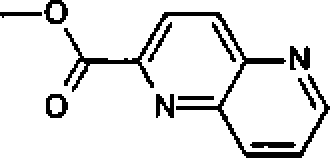
1.00 g (5.74 nunol) of l,5-naphthyriduie-2-carboxylic acid and 1.26 ml (17.2 mmol) ofthionyl chloride were stirred in 15 ml of methanol at 60°C for 6 h. The mixture was freed of the solvent under reduced pressure. Methyl tert-butyl ether was added to the residue and the mixture was freed of the solvent under reduced pressure.
logP (neutral): 0.92: MH : 189; 'H-NMR (400 MHz, CDjCN) δ ppm: 4.04 (s, 3H). 8.19 (dd, 1H), 8.57 (d, 1H). 9.06 (dd, 1H), 9.15-9.19 (m, 2H).
7-Chioro-3-ethy Isulphony 1-2-13-methyl-6-(trifl nor ome thy l)imidazo 14,5-c ] py ridin-2-y I ] q u i noli n e

6-Chloro-3-ethy!sLiiphanyl-2-[3-inet!iyl-6-(lrifluoroinethyl)i]nidazo[4,5-c]pyridm-2-yl]quinoline (250 mg, 0,59 mmol, mixture with bissuipliide) was dissolved in dichloromethane (20 ml), and then formic acid (136 mg, 2,95 mmol) and HO- (402 nig, 4.13 mmol) were added. The mixture was stirred at RT for 14 h and washed with sodium thiosulphate solution. The organic phase was removed, dried over NaiSCb and concentrated. The solids were triturated with MeCN, filtered off and dried under reduced pressure, giving the title compound as a clean product.
(logP (neutral): 2.63; MH': 455; 'H-NMR (400 MHz. CDC1,); δ 9.05 (s. 1H). 8.79 (s, IH), 8.57 (s, IH), 8.23 (dd, lH),8.14(d, IH), S.12 (d, 1H), 4.11 (s, 3H), 3.26 (q, 2H), 1.34(1,3H).
3,6-Bis(etiivIsulphoiiyl)-2-[3-n]etliyl-6-(trifluoromethyl)iniidazo[4,5-c]pyi,itliii-2-yl|quiiioline
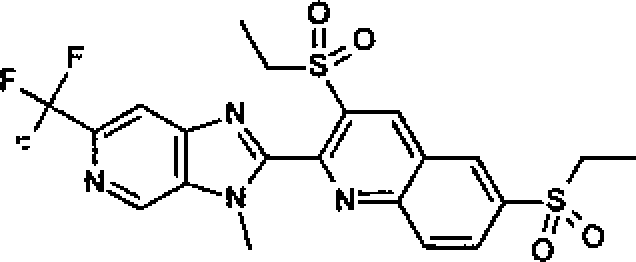
F
WO 2017/072039
PCT/EP2016/075365
-1183.6- Bis(ethylsulphany!)-2-[3-melhyl-6-(trifluoromethyI)imidazo[4,5-c]pyridin-2-yl]quinoline (25 mg, 0,05 mmol) was dissolved in dichloromethane (5 ml), and then formic acid (13 mg, 0.27 mmol) and H2O2 (38 mg, 0.39 mmol) were added. The mixture was stirred at RT for 14 h and washed with sodium thiosulphate solution. The organic phase was removed, dried over NaiSCL and concentrated, giving the title compound as a clean product.
(logP(neutral); 2.58; MH : 513; 1 H-NMR (400 MHz, CDCb): δ 9.25 (s, 1H), 9.05 (s, IH), 8,79 (d. IH), 8.44 (m, IH), 8.42 (m, IH), 8.15 (s, IH). 4.00 (s, 3H), 3.91 (q, 2H), 3.29 (q, 2H), 1.42 (t, 3H), 1.38 (t,3H).
6-Chloro-3-ethyisulphany 1-2-[3-niethyl-6-(trifluoromethyl)imidazo[4,5-c]pyridin-2-yl]quinoline &
3.6- bi s( ethy Is u I p h a ny 1 )-2-13-m et it y 1-6-(1 r ifl uor 0 m ethyl) i m i da zo [ 4,5-c | py rid i n-2-y 11 q u i η ο 1 ine
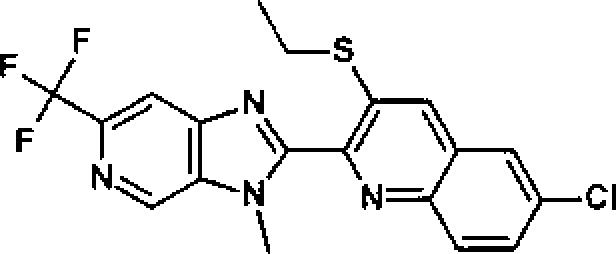

3,6-Dichloro-2-[3-melhyl-6-(trifiuoromethyl)imidazo[4.5-c]pyridin-2-yl]quino!iue (0.20 g, 0.50 mmol) was dissolved in DMF (5 ml), and sodium ethylinereaptan (0.169 g, 2.01 mmol) was added. The reaction mixture was stirred at RT for 14 h, diluted with cyciohexane/ethyl acetate and filtered. The filtrate was concentrated. The column chromatography purification of the raw material via preparative HPLC with an MeCN/water gradient as eluent gave the two title compounds as a mixture, which was converted further without further purification.
(logP (neutral); 3.99; MH : 423.
(logP (neutral): 4.35; MH : 423.
3,6-Dichloro-2-13-methy l-6-(trifluorom ethy l)imidazo [4,5-c{pyridiii-2-y 11 quinoline (V-4)

3,6-Dichloroqtiinoline-2-carboxylie acid (1.00 g. 4.13 mmol). N3-methyl-6-(trifluoroniethyl)pyridine3,4-diamine (0.61 g, 3.17 mmol) and EDCI*HCl (0,61 g, 3.17 mmol) were dissolved in pyridine (20 ml), p-toluenesulphonic acid (0.60 g, 3.17 mmol) was added and then the mixture was stirred at 120°C for 9 h. After cooling to RI', acetonitrile was added and the suspension obtained was filtered. The filtrate was concentrated and the residue was freed of salts by column chromatography purification with a CH2Cb/MeOH gradient as eluent. The crude product obtained was convened further without further
WO 2017/072039
PCT/EP2016/075365
-119purification, (logP (neutral): 3.53; ΜΗ : 397; Ή-NMR (400 MHz, DMSO-d6): δ 9.31 (s, 1H), 8,91 (s, 1H), 8.34 (s, 1H), 8.29 (d, 1H), 8.20 (d, IH), 7.95 (dd, 1H), 4.03 (s, 3H).
3,6-DichioiOquinoline-2-carboxylic acid (111-2)

A solution of NaOCT (6.02 g, 66.7 mmol) and NaHiPCb (8.00 g, 66.7 mmol) in water (25 ml) was added at 0°C to a solution of 3,6-dichloroquinoKne-2-carbaldeiiyde (3,00 g, 13.33 mmol) in t-BuOH (30 ml). The mixture was wanned up gradually to RT and stirred at this temperature for 3 h. After adding water, the product was extracted with dichloromethane. The combined organic phases were washed with saturated aqueous NaHSCh solution and saturated aqueous NaCl solution, dried over NaNOj and concentrated. The crude product was converted further without further purification.
MH : 240; ’H-NMR (400 MHz, DMSO-dtt): δ 7.86-7.89 (dd, 7=2.4 & 9.04 Hz, 1H), 8.09-8.] 1 (d,7 = 9.08 Hz, IH), 8.17 (d, 7 = 2.36 Hz, IH), 8,71 (s, 1H), 14.26 (brs, 1H).
3,6-Dicli loroq u inoline-2-carba Idehyde
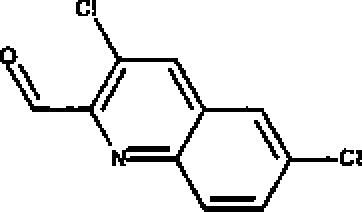
To a solution of 3,6-dich!oro-2-methylqumoline (3.00 g, 14.2 mmol) in 1,4-dioxane (30 ml) was added SeO; (4,73 g, 42,7 mmol). The mixture obtained was refluxed for 3 li and then concentrated to dryness. The crude product was taken up with water. The while solid that precipitated out was filtered off, washed with hexane and dried under reduced pressure.
MIT: 226; ‘H-NMR (400 MHz, CDClj): δ 7.72-7.75 (dd,7 = 2.28 & 9.0 Hz, IH), 7.80-7,81 (d,7= 2.2 Hz. IH), 8.17-8.19 (d.7= 9.24 Hz. IH), 8.2 (s, IH). 10.37 (s, IH).
3,6-l)iclilo]O-2-niethyl(|umoline
WO 2017/072039
PCT/EP2016/0753 65
-120-

To a solution of 5-cbloro-2-methyl-lH-indole (5.00 g, 30.3 mmol) and TEBAC (0.60 g, 0.300 mmol) in CHCli (150 ml) was added, at 0°C, NaOH in water. The mixture was stirred at 0°C for 3 h and then at RT for 14 h. The reaction mixture was then added gradually to ice-water and extracted with chloroform. The organic phase was washed with water, dried over Na^SOi and concentrated on a rotary evaporator. The residue was purified by column chromatography purification with a hexane/ethyl acetate gradient as eluent.
MH: 212; ‘H-NMR (400 MHz, CDCh): δ 2.78 (s, 3H), 7.58-7.61 (dd,/= 2.32 & 9.0 Hz, 1H), 7.68-7,69 (d,/= 2.28 Hz. 1H), 7.91-7.94 (d./=9.0Hz, 1H), 8.01 (s, 1H).
3,7-DicliloiOquinoline-2-carboxylic acid (II1-3)

A solution of NaCIOz (6.02 g. 66,7 mmol) and NaH;PCf (8.00 g. 66.7 mmol) in water (25 ml) was added at 0°C to a solution of 3,7-dichloroquinoline-2-carbaldeliyde (3.00 g, 13.33 mmol) in t-BuOH (30 ml). The mixture was wanned up gradually to RT and stirred at this temperature for 3 h. After adding water, the product was extracted with diehloromethane. The combined organic phases were washed with saturated aqueous NaHCOi solution and saturated aqueous NaCl solution, dried over Na^SO-i and concentrated. The crude product was converted further without further purification.
MIT: 241; ‘H-NMR (400 MHz, D„-DMSO) δ ppm: 14.29 (br, 1H), 8.81 (s, 1H). 8.18 (d, 1H), 8.08 (d, 1H). 7.79 (dd. 1H).
3,7-Diehloroquinoline-2-carbaldeliyde

To a solution of 3.7-diehIoro-2-methylquinoline (3.00 g. 14,2 mmol) in 1,4-dioxane (30 ml) was added SeCh (4.73 g, 42.7 mmol). The mixture obtained was refluxed for 3 h and then concentrated to dryness.
WO 2017/072039
PCT/EP2016/075365
-121The crude product was taken up with water. The white solid that precipitated out was filtered off, washed with hexane and dried under reduced pressure.
MH+: 226; 'H-NMR(400 MHz, CDCb): δ 7.64-7.67 (dd, 7= 1.96 & 8.76 Hz, 1H), 7.76-7.78 (d, J= 8.84 Hz, 1H), 8.24-8.25 (d,7 = 1.92 Hz, 1H), 8.26 (s, 1H), 10.36 (s, 1H).
3,7-Dichloro-2-methylq uinoli ne

To a solution of 6-chloro-2-methyl-lH-indole (5.00 g, 30.3 mmol) and TEBAC (0.60 g, 0,300 mmol) in CHCh (150 ml) was added, at 0°C, NaOH in water. The mixture was stirred at 0°C for 3 h and then at RT for 14 h. The reaction mixture was then added gradually to ice-water and extracted with chloroform. The organic phase was washed with water, dried over Na2SO4 and concentrated on a rotaiy evaporator. The residue was purified by column chromatography purification with a hexane/ethyl acetate gradient as eluent.
MH+; 214; 'H-NMR (400 MHz, CDCh): δ 2.79 (s, 3H), 7.44-7.47 (dd, ./=2,08 & 8.72 Hz, 1H), 7.637.65 (d. J= 8.72 Hz, 1H), 7.99-8.00 (d, 7= 1.92 Hz, 1H), 8.07 (s, 1H).
6-Chlo!O-2-niethyl-I H-indole

Cl
To a solution of l-(4-chloiO-2-nitrophenyl)propan-2-one (10.0 g, 46.9 mmol) in EtOH/H2O (1:1, 50 ml) were added, at 0°C, glacial acetic acid (50 ml) and iron powder (12.4 g, 234.7 mmol). The reaction mixture obtained was then stirred at 100°C for 4 h. The mixture was concentrated, and the residue was diluted with water and extracted with ethyl acetate. The organic phase was washed with water, dried over Na2SO4 and then concentrated. The residue was purified by column chromatography purification with a hexane/ethyl acetate gradient as eluent.
MH+: 166; 'H-NMR (400 MHz, CDCh): δ 2.42 (s, 3H), 7.00-7,02 (dd, J= 1.84 & 8.36 Hz. 1H), 7.25 (s, 1H), 7.37-7.39 (d.7=8.36 Hz, IH), 7.S4 (bs. 1H).
1-(4-ChloiO-2-nitrophenyl)propaii-2-onc
WO 2017/072039
PCT/EP2016/075365
-122-
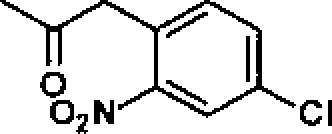
Ethyl 2-(2-nit ro-4-chlorophenyl )-3-oxobutyrate (28.0 g, 9S.2 mmol) was added at 0DC to a solution of glacial acetic acid (60 ml) and sulphuric acid (40 ml). The reaction mixture was then stirred at 100°C for 8 h. After cooling to RT, the mixture was added gradually to ice-water and extracted with ethyl acetate. The combined organic phases were washed with water, dried over Na^SO^ and freed of the solvent. The crude product was purified by column chromatography purification with a hexane/ethyl acetate gradient as eluent.
MH+: 212; ‘H-NMR (400 MHz, CDCh): δ 2.32 (s, 3H), 4.09 (s, 2H), 7.19-7.21 (d, 7= 9.0 Hz, 1H), 7.547.57 (dd, J =2.2 & 8.2 Hz. IH), 8.11 (d, 7= 2.16 Hz, 1H).
Ethyl 2-(2-uitro-4-chlorophenyl)-3-oxobutyrate

Cl
Ethyl acetoacetate (8.16 g, 62.8 mmol) was added at 0°C to a suspension of Cs:COi (51.2 g, 157.1 mmol) in DMF (150 ml). After wanning to RT, 1,4-dichloro-2-methylbenzene (10.0 g. 52.4 mmol) was slowly added dropwise. The reaction mixture obtained was then heated to 80°C for 4 h. For quenching, the mixture was added to ice-water and extracted with ethyl acetate. The combined organic phases were washed with water, dried over Na^SO-i and concentrated. The residue was converted further without further purification.
MIT: 286.
In analogy to the examples and according to the above-described preparation processes, the following compounds of the fonnula (1) can be obtained:
WO 2017/072039
PCT/EP2016/075365
-123-
| Example | Structure |
| 1-1 | F F / 0=5 F ΤΧνΜΖγλ |
| I-2 | ,, / «JvVQ |
| I-3 | o—s*° \=N n-^^n N— |
| l-4 | s F3c\^^-N \=N U'.'i-q |
| I-5 | F F O=S=O ^Y^r-Λ f ji ηΓ ’N_(/ A_ N v3 |
| I-6 | . 0 _ \ ll„O F / V_ S F J |T _V r— \ Λ=/ο |
| I-7 | F \ °° F / '—S F T |f N>_(/ A__ n<^n ν=ϋ2^^01 |
WO 2017/072039
PCT/EP2016/075365
-124-
| 1-8 | x 0 F / V^° F \ jf _(/ A__ ν·αΛ^I Ν=θ Cl |
| 1-9 | oJ^O ''S'2 F3C\./'.>. ...-N \=\ F |
| [-10 | F 5 o—s=o ρΎΧρΣ^ |
| 1-11 | F F S=0 |
| 1-12 | p 5 F F O-S=O N |
| 1-13 | F y o-s-o N— |
| 1-14 | 'Z O=S-O \=v |
WO 2017/072039
PCT/EP2016/075365
-125-
| 1-15 | O-S=O XXIV-Fh |
| 1-16 | 5 0=5=0 F 0^¾¾ /0-09=¾ |
| 1-17 | F y o=s=o |
| 1-18 | o=s=o f 01 J, M. ,¾ |
| 1-19 | o=s=o f ΎΧ^ X |
| I-20 | F 5 °= n N\ N XX |
| 1-21 | o=s=o f f |
WO 2017/072039
PCT/EP2016/075365
-126-
| 1-22 | 5 F V O-S=o nL -J-V /=\ N \ NW |
| 1-23 | 5 os=o λ=ν F F |
| 1-24 | o > 0=5=0 FVW-\ )=\ F f 0 LI FA /ΛΛ h \RN N—X A |
| 1-25 | V V f |f η V-C >_ |
| 1-26 | p F / °”S n \Z) |
| 1-27 | > |
| 1-28 | F | °-S |
WO 2017/072039
PCT/EP20I6/075365
-127-
| 1-29 | F | 5 s | |||
| o | V 0 | a N=/ | A> | ||
| 0 | 5 —S | ||||
| 1-30 | Ti 1 | ^-N | /=\ | ||
| F | 0 | AA | A | ||
| 5 s | |||||
| 1-31 | Fx° | n | N y_ | x_ | Λ |
| F 0 | N | N=/ | |||
| H | |||||
| F | 5 s | ||||
| I-32 | F T | ''UG-- | -N V- | /=\ | |
| L | 0 | A | Λ | ||
| F fj | 0- | ;S | |||
| I-33 | F r | -N | |||
| I | '0 | N \ | A | ||
| s | |||||
| I-34 | >rs' | γΑ | ...N | ||
| F | A | A \ | nA | A | |
| F FI F | s | ||||
| I-35 | fA | ΊίΆ | _..N 'K. | /^x | |
| nA | ~~N | v / N_(, | |||
| \ | A | y |
WO 2017/072039
PCT/EP2016/075365
-128-
| 1-36 | X F Ο | 0—s | |||
| a | N 'N H | nH | A | ||
| F Fto F | s | ||||
| 1-37 | F>>L to | i T | ..-N 'N | v to Hl | |
| -to | ~~N \ | ||||
| 5 s | |||||
| 1-38 | F>r°x F | rto | -N 'N '-N \ | V to ΝΛ | y |
| 1-39 | F / F li | 'H | N V- | s V /= H. | |
| N \ | / | ||||
| ( s | |||||
| s | / | ||||
| 1-40 | —/ | =N | |||
| N | |||||
| / | N- | ||||
| Y^N- F | Ϊ | ||||
| ( /sto° | |||||
| /=/ 0 | |||||
| ,S- | Γ | v? | |||
| 1-41 | 0 | N | |||
| N= | |||||
| Λ | zN^ | ||||
| F |
WO 2017/072039
PCT/EP2016/075365
-129-
| Γ-42 | F Z /=X |
| Γ-43 | . 0 F F V^° NiU^NZ N=N? \ |
| ['-44 | . 0 F 7 v^° fVtQv N'<XN n=/ \ |
| Γ-45 | °'X3 'o NUXN--- |
| 1-46 | F J —S F ] Γ \_// A__ |
| l'-47 | ) F y o=s=o ,=. F>hWX>X N=/ |
| Γ-48 | F I F M | O=s=0 /=x F N=/ |
WO 2017/072039
PCT/EP2016/075365
-130-
| r-49 | F4 I 0=5=0 /= n=/ |
| Γ-50 | F4 f 0=5^ /= \Fn' \=/ |
| Γ-51 | F F /—\ F \\ ° #—Hf N=>/ F |
| I-52 | X° FXXF0J |
| I'-53 | Fv X° N„ JL„' Ύ |
| r-54 | f7 F° F T F V-ΖΎ 1 %F-N m^F-F |
| i-55 | \ P F 0S-° Z/>F-^F n<</:::;n n=/ y_ci |
| I-56 | ) F F 0=S=0 n^x--’n n=Z A C! |
| I-57 | \ F Q=S^° T>zJ--N N=/ A |
WO 2017/072039
PCT/EP2016/075365
-131-
| r-58 | F y o=s=o F rfVlV |
| 1-59 | F F O=S=O 0— |
Preparation of N 2-nietliyI-5-(trifl uoro in ethoxy) pyr id ine-2,3-dianiine ¢11-1)

Step a) g (120 mmol) of 2-chloro-5-(trifluoromethoxy)pyridine, 19.1 g ¢150 mmol) of tert-butyl Nmethyl carbarn ate and 17.5 g ¢180 mmol) of sodium tert-butoxide were dissolved in 400 ml of toluene, 2,8 g (3 mmol) of tris(dibenzylideneaeetone)dipa!ladium(0) and ! .73 g (3 mmol) of Xantphos were added under argon, and the mixture was stirred at 100-105°C for 12 h. Subsequently, the mixture was filtered through Celite and the solvent was distilled off under reduced pressure.
Step h)
WO 2017/072039
PCT/EP2016/075365
-132To 100 ini of a sulphuric acid solution cooled to 0°C were added 30 g (103 mmol) of tert-butyl N-methylN-[5-(trifl uoromethoxy )-2-pyr idyl] carbamate and then 10.4 ml (166 mmol) of concentrated nitric acid. The mixture was stirred at 5-10°C for 2 h and admixed with ice-water. The solution was neutralized with sodium hydroxide and extracted with ethyl acetate. The organic phase was dried over magnesium sulphate and the solvent was distilled off under reduced pressure. The residue was purified by column chromatography purification with a cliloroform/hexane mixture (1:2) as eluent.
Step c)
A mixture of 10.0 g (42,2 mmol) of tert-butyl N-methyl-N-[3-niiro-5-(trifluoroiiiethoxy)-2pyridyl J carbamate and 0.7 g of palladium/charcoal (10%) was stirred in 250 ml of methanol under a hydrogen atmosphere at room temperature for 2 h. Subsequently, the mixture was filtered through Celite and the solvent was distilled off under reduced pressure. The further purification of the product was effected by vacuum distillation at 88-90°C and 0.1 mbar, ‘H NMR(400 MHz, CDClj, ppm)·. S 7.70 (d. .1 = 0.8 Hz, 1 H). 6.75 (d. J = 0.8 Hz. 1 H), 4,20 (br. s„ 1 H), 3.32 (br. s., 2 H), 3.00 (s, 3 H). This measurement of the NMR spectrum was effected on a Bruker Avance 3300 equipped with a 5 mm broadband liquid probe.
The logP values are measured according to EEC Directive 79/831 Annex V.A8 by HPLC (highperformance liquid chromatography) on a re versed-phase column (C 18). Temperature: 55°C.
The LC-MS determination in the acidic range is effected at pH 2.7 using 0.1% aqueous formic acid and acetonitrile (contains 0.1% formic acid) as eluents; linear gradient from 10% acetonitrile to 95% acetonitrile. Called logP (HCOOH) in the table.
LC-MS determination in the neutral range is effected at pH 7.8 with 0,001 molar aqueous ammonium hydrogencarbonate solution and acetonitrile as eluents; linear gradient from 10% acetonitrile to 95% acetonitrile. Called logP (neutral) in the table.
Calibration is carried out using unbranched alkan-2-ones (having 3 to 16 carbon atoms) with known logP values (logP values determined on the basis of the retention times by linear interpolation between two successive alkanones).
The NMR data of selected examples are listed either in conventional form (δ values, multiple! splitting, number of hydrogen atoms) or as NMR peak lists.
in each case, the solvent in which the NMR spectrum was recorded is stated.
NMR peak list method
The Ή NMR data of selected examples are slated in the form of'H NMR peak lists. For each signal peak, first the δ value in ppm and then the signal intensity in round brackets are listed. The pairs of δ value—
WO 2017/072039
PCT/EP2016/075365
-133signal intensity numbers for different signal peaks are listed with separation from one another by semicolons.
The peak list for one example therefore has the form:
δι (intensityi1; 5? (intensityi):........; δ; (intensity?;......: δπ (intensity,,)
The intensity of sharp signals correlates with the height ofthe signals in a primed example of an NMR spectrum in cm and shows the true ratios of the signal intensities. In the case of broad signals, several peaks or the middle of the signal and the relative intensity thereof may be shown in comparison to the most intense signal in the spectrum.
Calibration of the chemical shift of Ή NMR spectra is accomplished using tetramethylsilane and/or the chemical shift of the solvent, particularly in the case of spectra which are measured in DMSO. Therefore, the tetramethylsilane peak may but need not occur in NMR peak lists.
The lists of the Ή NMR peaks are similar to the conventional 'H-NMR printouts and thus usually contain all peaks listed in a conventional NMR interpretation.
In addition, like conventional Ή NMR printouts, they may show solvent signals, signals of stereoisomers ofthe target compounds which are likewise provided by the invention, and/or peaks of impurities.
In the reporting of compound signals within the delta range of solvents and/or water, our lists of 'H NMR peaks show the standard solvent peaks, for example peaks of DMSO in DMSO-Dt, and the peak of water, which usually have a high intensity on average.
The peaks of stereoisomers of the target compounds and/or peaks of impurities usually have a lower intensity on average than the peaks of the target compounds (for example with a purity of> 90%).
Such stereoisomers and/or impurities may be typical ofthe particular preparation process. Their peaks can thus help in identifying reproduction of our preparation process with reference to by-product fingerprints.
An expert calculating the peaks ofthe target compounds by known methods (MestreC, ACD simulation, but also with empirically evaluated expected values) can, tf required, isolate the peaks of the target compounds, optionally using additional intensity filters. This isolation would be similar to the peak picking in question in conventional Ή NMR interpretation.
Further details of Ή NMR peak lists can be found in the Research Disclosure Database Number 564025.
Example 14:
>H-NMR(400.0 MHz. ds-DMSO): «=
9,338(4.4):9.320(3.8):8.518(1,5):8.498(1.6);8.328(4.0);8.300(1.5);Β.278(2.0}:8.172(0.9);8.188(0.9);8.154(1.2):8.151(1.6):8.133(0.8):8.130(0.8;
WO 2017/072039
PCT/EP2016/075365
-134-
| )7.993(1.0):7.991 (1.0):7.973(1,7):7.955(0.8):7,953(0, 8) :3.927(16,0) :3.864(1.0) :3.846(3,4) :3.827(3.4):3.809(1.0) :3.321(49.5) :2.672(0.4) :2.525 (0 9);2,512(22.4);2.507(46.3);2.503(61.4);2.498(44,5);2.494(21.5);2.330(0.4);2.074(1.7);1.252(3.6):1.234(8.1):1.215(3.5):0.000(1.7) |
| Example I-2: ’H-NMR(400.0 MHz, ds-DMSO): 6= 9.289(4.1);8.816(0.4);8.584(4.4);8.317(4.4):8.290(0.7):8.135(0.5);8.107(3.4);8.085(3.9):7.953(0.4):7.838(0.8):7.823(1,4)7,820[1.7);7.799(1.3 )7.776(1.3):7.774(1.3):7.756(1,6)77 36(0.7)7.572(0.3) :6.839¢0.4):4.029(16.0):3.385(0.8} :3.333(91.2) :3.324(82.2); 3,151(1.2):3.133(3.8):3.11 5(3.9):3.096(1.3):2.891(2.9):2.879(0.8):2,811(0.6):2,799{0.6):2.732[2.0);2.671(07);2.667(0.6):2.507(91.1):2.502(120.9):2.498(95.2):2.329(0. 7);1,316(0.5):1,310(0,3):1.298(0.9):1.285(4.1):1,267(8.5):1.249(4.0):1.169(0.3):0.000(1.3) |
| Example I-3: 'H-NMR(4Q0.0 MHz, ds-DMSO): 6= 9.382(0.4):9.321(4.0):8,471(1.3):8.466(0.9):8.458(1,4):8.454(1.0):8.447(1.5):8.439(0.3):8,401(1,2):8.395(1.0):8.390(1,8):8.382(1.3):8.377(1.8 ):8.370(0.6):8.333(4.2):8.265(0.6):8.252(2.6):8.248(1.9):8.240(2.2):8.233(1.6):8.228(2.3):8.216(0.4):5.754(0 7):4.390(17):3.993(16.0):3.847( 1.2):3.829(4.0):3,810(4.0):3792(1.2) :3,317(37.4):2.676(0.4):2.671 (0.5):2.667[0.4):2.506(58.3):2.502(77.1):2.497(58.9):2.333(0.4):2,329(0.5); 2.324(0.4); 1.425(0.4); 1.406(0.9):1,388(0.4):1,289(4.1):1.270(8.8):1.252(4.0):0.000(2.9) |
| Example I4; 1H-NMR(400.0 MHz, ds-DMSO): 6= 9.331 (3.4):8.368(3.5):8.366(3.6):8.184(1.3):8.181 (1.4):8.163(1.6):8.161 (1.6):8,086(1.2):8.084(1,3):8.065(1.7):8.063( 1.7)7.980(0.9)7.976( 1,0 )7.963( 1.2)7.959(1.6) :7.956(0.8):7.942(0.9)7.938(0,9) :7.872(1.1 ):7.868(1.1 ):7.854(0,9) ;7.851 (1.6):7,848(1.1 )7.834(0.7)7.830(0.7):4.178(1 6.0):3.327(2.2):3.317(49.6):3.309(4.9):3.290(4 0):3,272(1.3):2.671 (0.4):2.511(24.5):2.507(48.6):2.502(65,4):2.498(49.8);2.493(25.2);2.472(0. 5):2.329(0.4):1.398(0,4):1,384(4-1):1.366(8.9):1,347(4,0):0.146(0.3) :0.008(37):0.000(82.5):-0.008(3.5):-0.150(0.4) |
| Example I-5: 1H-NMR(400.0 MHz, ds-DMSO): 6= 9.342(4.1):8,924(2.2):8.921 (2,2):8.712(2,2):8.708(2.2):8,518(1.4):8,498(1.5):8.304(1.3):8.283(1,8);8.172(0.9):8.168(0.9):8.154(1.1);8.151 (1.5 );8.147(0.8):8.133(0.9):8,129(0.8):7.992(1.0):7.989(1.0);7.971(1.6);7.969(1.1);7.954(0.8):7.951(0.8):5.756(0,9):3,903(0.9):3.884(3.2):3.866(3. 2):3.847(1.0):3.833(16.0):3.323(80.9):2.676(0.3):2.672(0.4):2.667(0,3):2,525(1.0):2.511(25.5):2.507(54,0):2.502(75.3);2.498(55.4);2.493(25. 9):2.329(0.5):1.265(3,3):1.246(7,6);1.228(3.3):0,008(0.5):0.000(17,4):-0.009(0.6) |
| Example I-6: 1H-NMR(400.0 MHz, CDCIj): 6= 9,245(4,5) :9.045(3.7);8,795(2,5) ;B791 (2,5) :8.464(1.0):8.442(3.3) :8.426(2.5) ;8.421(2.3) :8.403(0.8):8.399(0.8) :8.148(3.9);7,265(14,1):5.301(0. 7):3.996(16.0),3.939(1.0):3.921 (3.5);3.902{3.6);3.884(1.1):3.319( 1.1);3.300(3.6);3.281 (3.7};3.263(1,2):1.624(11,0); 1,440(3,6); 1,421 (7,7):1.40 2(6.1):1.382(8.0):1.364(3.6):1.255(0.9):0.000(0.5) |
| Example 1-7: 1H-NMR(601.6 MHz, COCIs): 6= 9.014(3.6):8.996(4.2):8.211(2.0):8 197(2.3):8.128(6,8):7.970(2.0)7 966(1.5)7-955(1.8):7.952(1.3)7.265(1.8)7.261(4.8):5.302(0.6):5.298(1.5 ):3.950(16.0):3.872(1.2):3.859(3.8):3.847(3.8):3.835(1.2):1.565(3.0):1.401(3.9):1.388(8.0):1.376(37):1,257(0,4):0.004(1.9):0.000(5.0) |
| Example I-8: 1H-NMR(601,6MHz, CDCb): 8= 9O53(3,3);8.793(2,3);8,792(2.5);8.790(2,4);8.565(37);8 227(34):8 226(3.4):8.153(1.0):8,150(1.1):8.138(2.0):8.136(2.1):8.108(2.8):8.094(1.6 )7.265(6.5):5.299(1.2} ;4,114(16,0);4.011(0,4);3.938(0.4);3.279(1,1):3.267(3.6):3.254(3.6):3.242(1.2);1.612(2.0):1.370(3.7):1.357(7.9):1.345( 37):1.322(0.5):1.256(0.4):0.000(47) |
| Example I-9: ’H-NMR(400,0 MHz, ds-DMSO): 6= 9,340(4.1 ):8.840(2.5):8,685(17):8.663(2.1 ):8.490(1.7):8.485( 1,6):8.468( 1.3):8.463(1.4):8.357(4.4):8.315(0.5):4.096(0.4);4.025(16.0):3.896(1. 1):3,877(3.9):3,859(3.9):3.840( 1.2):3.320(70.9):2.676(1,0):2.671(1.4);2,666(1,0):2.524(3,5):2.510(79.2):2.506(167.8):2.502(236.0):2.497(178 ,5):2.333(1.0):2.328(1.4):2.324(1.0):1.305(4.1):1.287(8.9):1.268(4,0):1.235(0.9):0.146(07):0.008(5.0):0.000(1627):-0.008(6.4);-0,150(07) |
| Example 1-10; ’H-NMR(400.0 MHz, ds-DMSO): 6= 9,344(8.5):8.520(1.5):8.501(1.6):8,360(4.4):8.358(4-3):8.297(1.5):8.276(2.0):8.173(0.9):8.170(0.9):8.156(1.2):8.152(1.6):8,135(0.9):8.131(0.9 )7-996(1.1):7.993(1.1)7-975(17):7-958(0.8):7.955(0.8):3,929(16.0):3.873(1 ;0};3.854(3.4):3.836(3.5):3,817(1.0):3,319(42.6);2.675(0.9); 2.671 (1.2):2.666(0.9):2.524(2.9):2,519(4,5):2.511(74,4):2.506(154.2):2.502(204,0):2.497(145.1):2.493(69.5):2.333(0.9):2.328(1.2):2.324(0.9):1.39 8(8.1 );1.251 (3.6):1.232(8.1 );1.214(3.5) ;0.146(0.3):0.008(2.3):0.000(74.8):-0.008(27):-0.150(0.3) |
| Example 1-11: ’H-NMR(400.0 MHz, ds-DMSO): <> 9.701(6.1):9.234(8.6):8.736(9.1):8.412(3.2):8.395(8.0):8.206(2.9):8.184(4 0):8.084(1.9):8,081(1.9):8.067(2.4):8.064(3.2):8.046(1.7):8.043(1.6 )7.871(2.1)7.869(2.1);7-851(3.4)7.833[1.7)7.831[1.6);5758(0.9);4.174(1.9):4.156(6.5);4.137(6.5),4.119(2.0);4.099(0.5);4.085(0.4);3.322(5 1,5):3.176(2.4):3.163(2,3):2.676(0.6):2.672(0.8):2,667(0.6):2.525(2.1):2.507(108.3):2.503(142.1):2.498(103.3):2.334(0.6):2.329(0.8):2,325(0. 6);1.305(7.2):1.286(16.0):1.268(7.1):1.259(1.4):1.241(1.0):1.233(1.0):0.880(0.6);0.008(0.9):0.000(29.2) :-0.009(1.2) |
| Example 1-12: 'H-NMR(400,0 MHz. ds-DMSO): 6= 9.308(4.8):8.502(1.7):8.482(1.6):8.282(1.6):8.261 (2.2):8.151 (4.0):8.134(1.7):8.116(0.8):8.113(0.9):7,984(1.9):7.970( 1.4):7.963(2.4):7.952(1.8 );7.932(0.9):7.753( 1,7);7.732(1.4):3.926(1.0):3.908(3,5):3.889(3.5):3.871(1.1):3.817(16.0):3.320(31.9):2,670(1,3):2.666(1.1):2.523(2.9):2.506 (167.3):2.501(228.6):2.497(175,1):2.332(1.0):2.328(1,3):2.324(1.1):1.397(2.8):1.253(3.6):1.235(8.0):1.217(3,6):0.146(0.4);0.008(2.2);0,000(7 4.0):-0.150(0.4) |
| Example 1-13: 'H-NMR(400.0 MHz. ds-DMSO); 6= 9.396(8.7):9.044(6.3):9,032(5,5):8.522(3.1):8.502(3.3):8.360(3.1):8.339(4.0):8.203(1,8):8.200(1.8):8,185(2.4):8.182(3.2):8.164(1.8):8.161(1.7 ):8,025(2,1):8.023(2.1):8.005(3.4):7.987( 1,7):3.962(2.1):3,943(7,0):3.925(7,1):3.906(2,2):3.321 (41.5):3.151 (0.8),2.676(0.8):2.672( 1.1 ):2.667( |
WO 2017/072039
PCT/EP2016/0753 65
-135-
| 0.8):2.525(2.7):2.507(143.3):2.503(183.1):2498(133.7);2.334(0,8);2.329(1.1);2.325(0.8):1.990(0.7):1.397(7.6):1.340(74);1.322(160):1.303( 7.1):1.175(0.4):0,000(2.0) |
| Example 1-14: 'H-NMR(400.0 MHz, ds-DMSO): 6= 9.366(8.0):0.510(3.2):8.490(3.4):8.406(5.6):8,403(5.7):8,323(3.1):8.308(4,1):8.183( 1.9):8.180(1,9):8,165(2.6):8.162(3.6):8,157(5,8):8.144(2.1 |;8.141 (2.1 );8.135(8.2) :8.004(2.2) :7.984(3.5):7.966( 1.8):7.950(3.3):7.946(3.2):7,929(2.7):7.925(2.7):4,013(2.0):3.995(6.9):3.976(7.0):3.953(2. 1):3.322(22.1):2.677(0.5):2,673(0.6):2,508(83.7):2,504( 107,7):2.499(78,2):2.330(0.6):2.326(0.5): 1.990(0.5):1.397(15.1):1.336(7.3):1.317(16. 0):1.299(7,1):0,146(0.4);0.008(3,0):0,000(78.2) :-0.008(3.8) :-0.149(0.4) |
| Example 1-15: 'H-NMR(400.0 MHz, de-DMSO); 6= 13.544(4.7):9.270(10.1 ):8.445(4.0):8424(4.2):8.256(3.8):8.235(5.0):8.121 (2.3):8.103(3.7):8.082(2.0):7.907(2.6):7,888(4.0):7.869(2.2):7.800( 1.0):7,632(1.0):4.342(2.2):4.324(7.0):4.305(7.1):4.287(2,3):3.319(42.7):2.671 (2.2):2.502(366.5):2.329(2.1 ):1.397(2.2):1.322(7.5):1.304(16.0); 1.286(7.5):1.233(0.5):0.000(53.2) |
| Example 1-16: 'H-NMR(40QO MHz, de-DMSO): 3= 9.280(4.8):8483(1,6):8 462(1.8):8.265(1.6):8,244(2.2):8.139(1.0):8.137(1.0):8.119(1.8):8.101(1.0):8.098(0.9):7.952(1.2):7,933(1.8):7.913(1,2 );7.906(5,8):7.804(6.0):4.548(0.7):3.935(1.0):3.917(3.4):3,898(3.5):3.880( 1.1 ):3,763(16.0):3.320(48.0):2.675(0,7):2.671[0.9);2.506(120.5):2.5 02(157.3):2.497(116.2):2.333(0.7):2.328(0.9):2.324(0.7):2.117(2.2):1.304(04):1.244(4.1):1.226(8.4):1.207(3.7):1.140[4.9);0.008(0.8);0.000(1 6.0) |
| Example 1-17: 'H-NMR(400O MHz, de-DMSO): 8= 9,370(8.8):8.513(3.1):8,493(3.3):8,435(5.2):8.339(3,1):8,318(4.0):8.216(3.6):8,194(4.5);8.186(2.1):8,183(2.0);8.169(24):8.165(3,2):8.148(1,8 ):8.144(1.7):8.007(2,1);8.005(2.2);7.987(6.2):7.967(4.0):4.013(2.0):3.995(6.9);3.976(7.0):3.958(2,2):3.323(27.9) :2.677(0.5) :2.672(0.6) :2.668( D.5);2.508(85.4);2.503(111.3):2.499(81.1):2.334(0.5):2.330(0.6):1.990(0.6):1.397(4.8):1.338(7.3):1.320(16.0):1,301 (7.2):1.175(0.3) :0.000(2.1 ) |
| Example 1-18: 'H-NMR(400.0 MHz, ds-DMSO); 6= 9,396(8.7):8,872(5.2):8.868(54):8,524(3.1 );8.504(34);846Q(4.0);8.438(6,5);8,371{3.4);8.367(3,4);8,345(5.2);8.323(4,1 ):8.198(1.8):8,195(1.8 );8.177(3.2):8.159(1.8):8.156(1,9);8.022(2.2);8,002(3,4};7.984(1.8);4.038(0.7);4.021(2.7);4.003(7.1):3.984(6,9):3.965(2.1):3.319( 112.3):2.675 (1.5);2.671(2.1):2.667(1.6):2.507(270,1):2.502(351.4):2.498(258.1):2.333(1.5):2,329(2.0):1.989(2.5):1.344(7.3):1,325(16,0):1.307(7,2):1.241( 1.7):1.193(0.7);1.175(1.4):1.157(0.7);0.146(1.6):0.008(18.0):0.000(369.9):-0.008(19.6):-0.150(1.7) |
| Example 1-19: 'H-NMR(400.0 MHz, dc-DMSO); 6= 9.377(9.2):8,555(6.3):8,517(3.5):8,496(3,7):8.344(5,2) ;8.336(3.8):8.323(6,5):8,315(5.1):8.189(2.0):8,187(2.0):8.169(3.5):8.151 (1.9):8.148(1,9 );8.126(3.5):8.105(2.9):8.009(24):7.991 (3.7):7.973( 1.9):4.038(0.8):4.019(2.7):4.001 (7.2);3.982[7.2):3.964(2,3):3.320(127.4):2,671 (1.9):2.502 (328.7):2498(252.0):2.329(2.0):1.989(2,9):1.341(7,4):1.322(16.0):1.304(7.3):1.193(0.8):1,175(1.6):1,158(0.9):0.146(1.5):0.000(314.0):0.150(1.5) |
| Example I-20: 1 H-NMR(400.0 MHz, dc-DMSO): 6= 9.347(4.5):8.856(2.4):8.851(2.5):8.671(2.5):8.667(2.4):8.520(1.5):8.501(1.6):8.299(1.5):8.278(2.0):8.172(0,9):8.168(0.9):8,154(1.2):8.151(1.6 );8.133(0.9);8.130(0.8);7.990(1.1 );7.972(1.7);7.955(0.9);4.418(04);3.912(0.9);3.894(34);3.876(3.5);3.857[1.2);3,844(16.0);3.320(26.1 ):2.676 (0.6):2.671 (0.7):2.667(0.6):2.525(1,9):2.511(47.8):2.507(97,0):2.502(127.6):2498(91.3):2.494(44.2) :2.333(0.5) :2.329(0.8); 1.264(3.5):1.246(8 .1);1.235(2.1);1.227[3.8);0.146(0.6);0008(4.6);0.000[125.9);-0.008(5.3);-0.150(0.6) |
| Example 1-21: 'H-NMR(400.0 MHz, dc-DMSO): 6= 9.306(4,5):8,500(1.6):8.480(1.7):8.270(1.5):8.249(2.1);8.153(3.5);8.131(1.7);8,113(0.9):8.110(0,8):7,969(1,1):7.967(1.1):7.949(1.7):7,927(2.7 ):7.906(2.8):7.735(1.6):7.732(1.6);7.714(1.4):7.710(1.4):3.930(0.9) :3.911 (3.2) :3.893(3.3) :3.875(1O);3,803(150):3.325(91.4):2.671(0.5):2.667 (04):2.507(72.7):2.502(93.6):2.498(68.1):2.329(0.5):1,398(16,0):1,253(3.4):1,234(7.8):1.216(3.4):0.146(0.4):0.008(3.7):0,000(79,4):0008(3.7):-0.150(04) |
| Example I-22: 'H-WMR(400.0 MHz. ds-DMSO): 5= 9.389(4.7);8.807(6.3);8.542{2.0);8.523(1.9);8.329(1.7):8.308(2.3):8.197(1.2):8.177(1.9) :8.159(10);8023(14) :8.003(2.0):7,983(1.0):5.756(0.5 )4.007(160):3.833(1.2):3,814(3.6):3.796(3.6):3.778(1.1):3,539(04);3.321(145.9);3.256(0.6);2.671(1.6);2.506(238.8);2.502(294.2);2497(210 .6):2.329(1.6):1.264(4.1):1.246(8.7):1.227(4.4):1.207(0.7):1.189(10):1.182(0.4);!.173(0.9):1.155(0.5):0.854(0.3):0.146(0,5)0000(1014):0.149(0.5) |
| Example I-23: ’H-NMR(400.0 MHz, dc-DMSO): 6= 9.320(5.2):8.508(1.9):8.488(2.1):8,338(3.8):8.276(1.8):8.254(2.5):8.157(1.1):8.138(1.9):8.117(34):8096(3.1):7.976(1.3):7.957[20):7,938(1,1 ):7.921(2.0):7.900(1.7):3.927(1,1):3.908(3.5):3,890(3.6):3.871(1.3):3.844(160):3.321(40.5):2.672(0.6):2.502(109.7):2.329(0.6):1.397(4.1):1,2 57(3.8):1.238(8.3):1.220(3.8):0.000(480) |
| Example I-24; 'H-NMR(400.0 MHz. dc-DMSO): 8= 9.340(4.6):8.561(3.1):8.518(1.7):8497(1.8):8.285(1.6):8.263(2.2):8.225(2.1):8.203(3,1):8.165(10);8,147(1.7):8.124(2.2):8.102(1.2):8.098(1.2 ):7.987(1.1):7.969(1.8):7.951(0.9):4.056(04)4 039(1.1)4021(1.1)4.003(04):3.908(1.1):3.884(160):3.871(3.8):3.853(1.1):3.322(25.6):2.672 (0.5):2.507(61.5):2.503(79.8):2498(59,6):2,329(0,4) :1.989(4.6):1.397(2.1):1,260(3.5),1.242(7.7):1.224(3.5):1,193( 1.3):1.175(2.4); 1.158(1.2); 0.000(29 1) |
| Example I-25: |
WO 2017/072039
PCT/EP2016/075365
-136-
| <H-NMR(4G0.0 MHz, de- DM SO): 8= 8.896(2.3):8,893(2.3):8.700(2.5):8.697(2.3):8,569(4.0):8.111(1.6):8.096(1.6):8.091(1.8):8.080(1.6):7.835(07)7.832(0,7)7.818(1.2):7.814(1.5 ):7.797(1.1):7,793(1,0):7.769(1.2);7.766{1.2);7.749(1.5);7.732(0.7);3,982(16.0);3.319(54.7);3.159(1.1);3.140(3.5);3.122(3.5);3.1Ο4(1.1):2.672 (0.5):2.507(51.6):2.503(69.7):2.498(51.9):2.330(0.4):1.397(2,4):1.299(3.8):1.280(8.0):1.262(3.7):0.008( 1.8):0.000(40.5):-0.008(1.7) |
| Example !-26: 1H-NMR{400.0 MHz, ds-DMSO): 8= 9.080(4,2):8.356(1.5):8.337(1,6):8.305(1.5):8.284(1.3):8.203(2.6):8.028(1,9):8.005(3.0):7.987(0,9):7.964(0.9);7.860(1.0)7.857(1.0)7.840(1.7 )7-822(0.8)7,820(0.8)7768(1.4)7765(1.4);7,746(1.2):7 743(1.2):4.383(16.0):3.643(0.9):3.624(1.0):3.610(1.1):3.591(1.0):3.320(13.3):3.031 (1.0):3,013(1.1):2.998(1,0):2.980(1.0):2.676(0,4):2.671(0.6):2.667(0.4):2.524(1,4):2.511(34.4):2.507(70.4):2.502(92.9):2.498(67.2):2.494(32. 9):2.333(0.4):2.329(0.5):2.325(0.4):1.989(0,4):1.313(3.7):1.295(8.0),1.276(3.6):1.231(0.4):0.146(0.5):0.008(3.3):0.000(96.4):-0.008(4.1):0.150(0.5) |
| Example I-27: 'H-NMR{400,0 MHz, ds-DMSO): 8= 9.013(3.9):9.008(5.0):8,972(4.4):8.968(3.8):8.555(7.2):8.185(2,9):8.164(3.2):8,100(2.5):8.081(2.8):8.079(2.8)7.850(1,2),7-846(1.4)7.832(2.2 )7.829(2,9)7,825(1.5)7.812(2.1)7.808(2.0);7785(2.1);7.782(2.5)7.765(2.9);7,762(2.4):7748(1.2):7745(1.3):3.321(34.2):3.248(1.9):3.230( 6.5):3,212(6.6):3.193(2.1):3.078(1.1):2.677(0.5):2.672(0.8):2.668(0.6):2.525(1.7);2.521(2.6);2.512(43.1);2.508(92.6);2.503[125.7);2.499(91,2 );2.494(44.3);2.334(0.5);2.330(0.7):2.325(0.5);1.402(7.3):1.384(16.0):1.365(7.1 );1.350(0.4) :0.008(0.3):0.000(11,2):-0.008(0.4) |
| Example I-28: ' H-NMR(400.0 MHz, ds-DMSO): 6= 9.097(9,4):9.036(4,7);9.032(5.7):8,994(5.2):8.411(3.4):8.388(5.7):8.365(4.1):8.073( 1.8);8.054(3.2);8.036(1.9)7.922(2.4)7-903(3.4)7 884( 1.8 ):3.555(0.5):3.536(1.8);3.518(2.1);3.502(2.3):3.484(2.1);3,465(0.6);3.319(76.6);3,020[0.6);3,001(2.1);2.983(2.3);2.968(2.2);2.949(1.9):2.931( 0,6);2;671(2.4);2.506(320,5):2,502(411,7):2,498(298.4):2.328(2.4):1,989(0,5):1.397(0,8):1,263(7.5):1.245(16,0):1.226(7.3):1,175(0,4):0,000( 4.5) |
| Example I-29: 'H-NMR(400.0 MHz, ds-DMSO): fi= 8.537(7.6):8.408(4.8):8.405(4.9):8.154(3.2):8.142(5.2):8.133(3.7):8.120(6.0):8,092(2.8):8.073(3.1 )7.915(3.1 )7911(3,1)7 894(2.6)7.890(2.6 )7.834(1.3)7.830(1.5)7817(2-5)7-813(3.0)7.796(2,2)7-792(2,0):7769(2,3)7767(2.4)7 749(3.1)7 732(1.3)7 729(1.3):3.321(49.4):3.236( 2.0):3.218(6.7):3.199(6.8):3,181 (2,2):2.676( 1,0);2.672(1.3):2.667(1.0):2.525(2.9):2.507(128.8):2.503( 169.0):2.498(122,4):2.334(1.0):2,329(1. 3):2.325(1.0):1.393(7.8):1.375(16.0):1.357(7.2):0.000(4.8) |
| Example I-30: 'H-NMR(400.0 MHz, ds-DMSO): fi= 9.068(8.7):8.425(5.6):8.421 (57):8.393(3.1):8.374(3.3):8.345(3.4):8,324(3.8):8.185(5.1):8.164(6.0):8.053(1.8):8.032(3.2):8.014(1.8):8.011(1.9 )7.936(3.3)7-932(3.0)7,915(27)7-911(2.6)7-900(2,2)7.880(3,3)7 862(1 8):3.578(0.5):3.559(1.9):3.540(2.1):3.525(2.3):3.506(2.0):3.487(0, 7):3,318(145,3);3.027(0.7);3,008(2,2):2,990(2.3);2,975(2,3):2.956( 1.9);2.938(0.6);2.675(3.6);2.670(4.9):2.666(3.6):2.608(0.5):2.524( 13.1 );2.5 06(637.5):2.502(820.8):2.497(582.4):2.333(3.4):2.328(4.6):2.324(3.5):1.988(0.4):1.398(3.3):1.266(7.4):1.248(16.0):1.229(7.3):1.167(0.3):0.1 46(2.5):0.008(207):0.000(548.6) :-0.008(20.5):-0,149(2.3) |
| Example 1-31: 'H-NMR(400.0 MHz, ds-DMSO): S= 13.309(3.9):8.373(8.3):8.084(3.5):8.063(4.0):8.032(3.2):8.012(3.5)7.844(2.7):7784(17)7781 (1,8)7.764(3.3)7747(2.1 ):7743(2.0):7.680(2. 4)7.661(3.4)7.643(1.6)7,558(2.7):3.321(90.4):3.172(2,1):3.153(6.8):3.135(7.0):3.117(2,2):2.675(1.5):2.671(2.0):2.666(1.5):2.524(4.7):2.506 (259.4):2.502(340.0):2.498(245.8):2.333(1.5):2.329(2.0):2.324(1,5};1.404(7,5);!.336(16,0):1,368(7.2):1.312(0.3):0.146(07):0.008(5.3):0.000( 154 9),-0.008(6.2):-0.150(0.7) |
| Example 1-32: 'H-NMR(400.0 MHz. ds-DMSO): 6= 8.541 (8.1):8.431 (5.4):8.196(3.8):8.174(4.6):8,158(3.4);8,137(3.7):8.094(3.0):8.075(3,3)7-946(3.0)7.943(3.0)7.925(2,6)7.921 (2;6);7-836(1.4 )7,833(1.5)7-819(2.6)7.816(3,1)7798(2-3)7.795(2.1)7.771 [2.4):7-769(2.5)7 751 (3,3):7734( 1,4):3.322(44.3):3.237(2.1 );3.218(7.0):3.200( 7.1):3.182(2.3):2.677(0.8):2.672(1,0):2.668(0,8):2.508(124.2):2.503(160,8):2,499(118.4):2.330(0.9):2.325(0.7):1.393(7.7):1.374(16.0):1.356( 7.3):0.000(17,4) |
| Example I-33: 'H-NMR(400.0 MHz, ds-DMSO): S= 9.073(6.9):8.444(4.4):8.394(2.6):8.374(2.8):8.345(27):8.323(3.1):8.238(2.9):8,216(3.4):8.051(1.4):8.033(2.4):8.013(1.5)7,964(2.4)7.942(2.1 )7.900(1.8)7-881(2-6):7.862(1,4):3.575(0,4):3,557(1.3):3,538(1.6):3.523(1.6):3.504(1.5) :3.486(0.5] :3.321 (52.8):3.021(0,4):3.003(1.5) :2.984( 1.8):2,969(1,6):2.951(1.4):2,933(0.4):2.671(1,0):2,502(172.9):2,329(1.0):1.397(16,0):1.276(5,4):1.258(11.4):1.240(5.3):0.000(2,6) |
| Example I-34: ’H-NMR(400.0 MHz, ds-DMSO): 6= 8.526(4.4):8.316(0.4):8.159(3.3):8.081(2.7):8.060(3.1)7.900(2.4)7.878(2.9)7.815(0.8)7.796(1.6)7,778(1.2)7750(1.4):7.729(1.8)7713(2.5 )7.693(1.5):3.906(16.0):3.322(207.8):3.143(1.2):3.125(3.8):3,107(3.9):3.088(1.3):2.671(1.8):2.506(247.9):2.502(313.4):2.498(227.1):2.328(1 7):2.074(0.6):1 292(4.1):1.274(8.7):1.255(3.9):0.146(1.2):0.008(12.9):0.000(260.3):-0.149(1.2) |
| Example I-35: 'H-NMR(400.0 MHz, ds-DMSO): 8= 9.317(3.9):8.590(4.2):8.348(4.0):8.346(4.1):8.109(3.0):8.086(37)7.642(07)7.839(07)7.825(1,3)7.822(1.4)7.804(1,0)7,801(1.1):7779(1.2 )7-776(1.2)7 758(1.4)7.741 (0.6);7.739(0.7);4.032( 16.0):3.157(1.1):3.138(3.7):3.120(3.8):3.102( 1.2):2.513(14.0):2.509(28.3) :2.504(37.2):2,5 00(27.4);1.396(8.0);1.288(4.1);1.269(8.7);1.251(4.0);1.197(0.4);0.000[3.6) |
| Example I-36: 'H-NMR(600 1 MHz, CD3CN): 0= 11,745(0.5):8.966(6.6):8.206(2.5):8.192(2.7):8.191(2.7):8,163(2.3):8.161(2.3):8,149(2.4):8.148(2.5)7.936(1.6)7.934(1.5)7.925(1.9)7.922(2. 9)7.920(1.5):7.911(1.6)7.908(1.5):7.755(1.7):7753(17):7743(1.8)7-741(3.0)7,739(1.8)7730(1.5)7728(1.4)7.579{1.4);7483(1.4);3.575( |
WO 2017/072039
PCT/EP2016/075365
-137-
| 0.6):3,562(1,8):3,552(0.8):3,550(2,0):3.540(2.1 ):3.538(0,8) :3.528(2.0) :3.515(0.6) :2.984(0.6) :2.971 (2.0):2.959(2.2) :2.949(2.0):2.947(0.9):2,93 7(1.9):2.925(0.6};2.130(50.4);2.058{0.4);2.054(0.6};2.Q50(0,9);2.046(0.6);1.964(3.8):1,956(6.9):1.951 (8.6); 1.948(62.4):1.943(113.2); 1.939(16 4.6):1.935(112.0):1.931(56.5);1.922(1.1);1.833(0.4):1.828(0.7):1.824(0.9):1.820(0.6);1.816(0.3):1.451(0.4);1.340(0.7);1,320(7.8);1,308(16.0); 1,296(7.6):1.285(1,1):1.268(1,8):0.881(0.4):0,005(0,5):0,000(16,1):-0.006(0.6) |
| Example I-37: 1H-NMR(400.0 MHz. ds-DMSO): 8= 8.829(2.3):8.824(2.4):8,659(2.4):8.655(2.3):8,574(4,0):8.110(1,6):8.102(1.4):8.089(1.8):8.082(1.6):7.836(0.7):7.833(0.7):7.819(1.2);7.815(1.5 ):7.798(1.0):7.794(1.0):7.772(1.1):7.768(1.2):7.751(1.5);7.734(0.7):7.731(0.6):3.989(16.0):3.328(1.2):3.164(1.1):3.146(3.6):3.127(3.7):3.109( 1.2):2.673(0.4):2.526(0.9):2.512(23.0):2.508(47.2):2.504(62.5):2.499(44,6):2.495(21.3):2.330(0.3);1.301(3.9):1,283(8.3):1.265(3,8):1.232(1.7 ):0.008(0.4):0.000(12.0):-0.009(0.4) |
| Example I-38: 1H-NMR(400.0 MHz, ds-DMSO); 0= 8.618(2.6):8.553(4,3);8,428(2.5):8.100(2.0):8.090(1.9):8.079(2.3):8.074(2,1);7.825(0.9):7.807(1.6):7.790(1.2);7.786(1.1);7.760(1.3):7.742(1,7 ):7.724[0.8);3.951(16.0):3.814(0.5);3.323(100.5);3.156(1.2):3.137(3.7):3.119(3.8):3.100(1.3):2.671(1.3):2.506(182.8):2.502(229.6):2.498(173 ,1):2.329(1.2):1.299(4.0):1.281(8.3):1.263(4.1):1.235(3.3):0.854(0.3):0.146(0.8):0.000(148.6):-0.149(0.7) |
| Example 1-39: 'H-NMR(400.0 MHz, ds-DMSO): 6= 8.532(4.8):8.427(0.4):8.150(3.6):8.089(4.0):8.068(4.4):7.958(2.1 );7.936(2.5);7.819(0.9):7.802( 1.9):7.782(1.4):7.753(1,6);7.733(4.3};7.713(2.5 ):3,923(16,0):3.325(15,4):3.140(1,2):3,122(3.9):3,104(4,0):3,085( 1.4):2,805(0.6):2.794(0,6):2.671 (0.5):2.502(80,3):2.329(0.5):1.397(1.5):1.34 7(0.4):1.329(0.7); 1.311 (0.4):1,288(4,2):1.269(8.6); 1.251 (4.0):0.000(9.9) |
| Example 1-40: 'H-NMR(400.0 MHz, CD3CN); 6= 9.101 (3.4):8.922(2.5):8.916(2.5):8.287(4.5):8.180(3.7):8.153(2.5):8.147(2.4):4.062(16.0):3.219(1.2):3.201(3.7):3.183(3.8):3.164(1.3):3.131(1, 1):3.112(3.5):3.094(3.5):3.076(1,2):2.131(29.4):2.129(37.1):2.113(0.7):2.107(0.7):2.100(0,5);1.971(1.0);1,963(2.8):1,952(40.0):1.945(73.2):1. 939(97.8):1,933(67.1):1.927(34.0):1,774(0.4):1.768(0.6):1.762(0.4):1,438(4.0):1,420(8.0):1,401(3.9):1.361(3.9):1,342(7.9);1.324(3.7);1.204(0 ,4):0.000(1.5) |
| Example 1-41: ’H-NMR(400.0 MHz, CD3CN): 6= 9.656(2.7);9,649(2.7);9.429(5.4);9.267(2.9);9.261 (2.6) :9.155(3.5);8.217(3.8) :4.068(0.4):4.050(0.4):4.000(16.0) :3.944(1.2):3.926(3.8):3.907(3. 8):3.889(1.2):3.440(1.1):3.422(3.6):3.403(3.7):3.385(1.2):2.463(0.6);2.249(0.4);2.230(0.4);2.144(556.5):2.119(2,0):2.113(2.2);2.107(2.5);2.10 1(1.7):2.095(0.9):1.971(2.3):1.964(9.6):1,952(134.3):1.946(247.3):1,940(334.2):1,933(228.1):1.927(116.0):1.780(0.7):1.774(1.4):1.768(1.8):1 .762(1,3):1.756(0.6):1.351(3.8):1.333(7.7):1.313(5.9):1.293(7.9);1.286(1.6):1.275(5.1):1,222(0.4);1.203(0.7):1.186(0.4):0.908(0.5):0.881(0.4): 0.000(25.0} |
| Example Γ-42: ’H-NMR(400.0 MHz, ds-DMSO): 6= 9.531(4.5):9.255(3.9):8.638(1.7):8.616(1.8):8.391(1.6):8.371(1.8):8.285(4.2):8,104(0.8):8.102(0.9):8.084(1.6):8.066(1.0):8.063(1.0):7.960(1,2 );7.942(1.7):7,922(0.9) :3.860[16.0):3.386(0,9) :3.319(36,4):2.854(1.3):2.835(4.1):2.817(4.2) :2.798( 1.4):2.672(0.4) :2.525(0.8) :2.512( 19,0):2.50 7(40.4):2.503(57,2):2.498(44.0);2.494(22.1);2.330(0.3);1.236(0.4);1.001(4.4):0.983(9.2):0.964(4.3):0.008(1,7):0.000(51.1):-0.008(2.1) |
| Example Γ-43: <H-NMR(400.0 MHz, CDCb): 6= 9.131(1.1):9.111(1,2):9.108(1.1):9,064(2,8};9,052(0.4):9.013(0,6):8.871(1.0):8.868(1,2};8,850(1.1):8.848(1.1):8.184(0.4):8.180(0.5):8.166(1.1 );8,163(1.1):8.146(1.2):8,137(4.0):8,124(0.6):8.120(1,1):8.116(1.1):8,103(0.6):8,099(0.4):7,264(22,4):5.301(3.3):4,373(0.4);4.339(0.5);4.008( 13.2):3.989(2.7):3,913(0.4):3.900(0.7):3.882(2.3):3,863(2.3):3,844(0.8):3.778(0.4):3.760(0.4):3.416(0.4):1.619( 16.0); 1.501 (3.0):1.492(0.8):1. 482(6.3):1.473(1.5):1.463(3,0):1.454(0.7):1.256(0.9):0.070(1.9):0.000(3.1) |
| Example I-44: 1H-NMR(400.0 MHz. ds-DMSO): B= 9,805(5.2):9,277(4,7):8.954(2 1):8.933(2,2):8.518(1.9):8,498(2.1):8.248(5.0):8.194(0.9):8,176(1.7):8.156(1.1);8.060(1.5);8.041(2.0);8.022(1,1 ):5.755(0.6):3.886(16.0):3.785(1.4):3.766(1.4):3.320(25.3):2,672(0.4);2.507(44,1):2.503(58.0);2.500(45.6);2.330(0.4);1.280(4.0);1.261(8.3):1. 243(3.8):0.001(13.6):0.000(14.1) |
| Example I'-45: 1 H-NMR(300.1 MHz. ds-DMSO): 8= 9.864(6.3):9.464(1,7):9.458(1.8):9.450(1,8):9.444(1,7):8.955(1.5):8.949(1.6):8.927(1,7):8,921(1.6):8.858(2.4):8,854(2.4):8.606(2.5):8.601(2.4 ):8.083(1.7);8,069(1.6):8,055(1.6):8,041(1,6):7.906(0.4):7.899(0.4):7.546(0.4):5.756(0.9):3,977(1.0):3.952(3.2):3.927(3.3):3.902(1.0):3.745(1 6.0):3.316(7.7):2.514(4.6):2.509(B.9);2.503(11.6):2.497(8.0): 1.235(0.8):1.182(3.7):1.158(8.1):1.133(3.5):0.000(5.7} |
| Example I-46: 'H-NMR(400.0 MHz, ds-DMSO); 8= 10.312(1.0):9.681(6,0):8.972(0.9):8.800(9.0):8.368(11.7);8.164(0.4):8.143(0.4);8.075(0,5);8.055(0.5);8.019(3.2) ;8.003(3,3);7,999(3,8};7.987( 3.3):7.811(0.3):7.793(0.5):7,748(1.6):7,745(1.6):7.731 [2.4):7 728(3.0);7.710(2.0):7.707[1.8):7.655(2.3):7.652(2.2);7.835(3.2);7.617(1.7);7.08 4(1.3):5.758(1.2):3.322(39.8) :3.157(2.1):3.139(6.9) :3.120(7.0):3.102(2.3):2.676(0,7) :2.672(1.0):2.668(0.8);2.525(2.2);2.507(132.8) :2.503(172 .9):2.498(123.6):2.334(0.8):2.329(1.0):2.325(0.8):1.990(0.9):1.398(1.7):1.360(0.5):1.352(0.8):1.340(7.8):1.321(16.0):1,303(7.5):1.274(0.3):1. 259(1.2):1,250(0.7):1.232(1.8):1.193(0.5):1.175(0.9):1.158(0.5):0.853(0.5):0.842(0.3):0.835(0.4):0.147(0.4):0,008(2,7):0,000(87.3);0.007(3,3):-0.008(3.3):-0.149(0.4) |
| Example I'-47: >H-NMR(400.0 MHz, ds-DMSO): 6= 9.806(4.4):8.956( 1.8):8.934( 1.9):8.873(2.7):8.611 (2.7):8.515(1.7):8,495(1.8):8.192(0.9):8.174(1.5):8.155(1.0):8.153( 1.1 ):8.057(1.3):8.038(1.8 );8.019(0.9):4.038(0.3):3.828(0.7):3.808(1.9):3.783( 16.0):3.752(0.5):3.701(0,9);3.645(0.4);3.626(0.4);3.323(184.7):2.671(1.2):2,506(162.5):2. |
WO 2017/072039
PCT/EP2016/0753 65
-138-
| 502(211.5):2.498(167.4):2.329(1.2);1.988(1.4);1.398(0,6); 1.339(0,4); 1.321(0.9):1,292(4.0);1,273(8.1);1.255(4.0} :1.235(1,6); 1.220(0.9); 1.207( 0.4):1.201 (0.5):1.192(0.5); 1.175(0.8); 1.157(0.4):0.981 (0.4):0.146(0.9):-0.001 (1805):-0.150(0.9) |
| Example l'-48: 'H-NMR(40Q,0 MHz, ds-DMSO): 8= 9,809(4.1):9.654(0,3):8.956(1.7):8.934(1.8):8.808(25):8.804(2.5):8.571(2.6);8.567(2.5);8.517(1.6):8.497(1.7):8.195(0,8):8,177(1.4):8.158(1.0 ):8.061(1.2):8.041(1.8):8.023(0.9):4045(1-1):3.825(0.7):3.806(1.9):3.788(16-0):3.369(11.9):2.671(1-1):2.506(157.0):2.502(197.3):2.498(147. 4):2.329(1.2):1.989(0.4):1,453(0,6);1.398(1.1):1.290(3.5):1.271(7,5):1.253(3,6);1.236(2,1);0,146(0.5):0.008(6,4):0.000(105.6):-0.149(0.5) |
| Example I'-49: 'H-NMR(400.0 MHz, ds-DMSO): 6= 9.806(4.7):9.299(4.4):8.951 (1.9):8.929(2.1 ):8.517(1.7)(8.498(1,9);8.272(4,6);8.196(0.9):8.178( 1,6);8.157(1.1 ):8.062(1.4):8.043(1.9):8.024(1.0 ):4,038(0.4):4.020(0.4):3.884(16.0):3.782(1.3):3.764(1,3);3.335(11.1):2.671(0.9};2.506(123.8);2.502(160.6);2.498(121.6):2.329(0.9):1.989(1. 6):1.277(4.1):1.259(8.7):1.240[45);1.193(0.4);1.175(0.8);1.157(04);0.146(04};0.008(4.6);0.000(90.8);-0.150(0.4) |
| Example Γ-50: 'H-NMR(400.Q MHz, ds-DMSO): 6= 9.654(5.0);9.326(4.5);9.234(1.5);9.213(1.5):8.453(1.7):8.433(1,8);8,323(4,9):8.066(0.9):8.048(1.7):8.031(1.3):8.027(1.3):7.996(1.5):7.978(1.8 ):7.959(0.8):4.105( 16.0):4.038(0.4):3.884(0,3):3.767(0.7):3,749(0.9):3.735(1.4):3.717(1.3);3.698(0.4);3.684(0.4);3.666(1.3);3.647(1.4):3.634( 0,8):3,628(0.5):3.615(0.7);3.323( 114,7):2.675( 1,0):2.671 (1.4):2.666(1.0):2.506(178.7);2.502(236.7);2.497(177,5);2.333{1.0):2.329( 1.3);2.324 {1,0);1,989(1.5};1.435(3.9):1.416(8.3);1.398(3.9);1.259(0,7);1.234(0.7);1.193(0.4);1.175(0.8);1,157(0.4);0.146(0.6);0,008(6.3);0.000(145.6);0.008(7.2):-0.150(0.6) |
| Example 1-51: 'H-NMR{400.1 MHz, ds-DMSO): 8= 9.990(4.2):9.839(0.4):9.166(1.5):9.144(1.7);9.048(2.3);8.896(2.4):8.893(2.4);8,644(2,5):8.640(2.5):8.450(1.4):8.445(1.3):8.427(1.3):8.422(1.3 );4.086(1.3);3.886(0.6);3.867(1.8):3.849(1.8);3,830(0,7);3.803(16.0);3,325(50.7);3.301(0,6);2.511(16.3):2.507(32 4):2.502(42.6):2.498(30.2): 1.989(0.3):1.505(0.6):1.310(3.7):1.292(8.1):1.273(3.7):1.234(2.0):0.940(0.3):0.008(1.1):0.000(27.8):-0.008(1.1) |
| Example l'-52: 1H-NMR(400.0 MHz, ds-DMSO); 8= 9.796(4,4):9,286(4.0):8.949(1.7):8.928(1.9);8.518(1.6):8.497(1.7);8.245(4.3);8.202{0.8);8.199(0.9):8.185(1,1):8.181(1.5);8.163(1.0):8.160(1,0 ):8.061(1.2):8.043(1.8):8.024(0.9):5.757(7.5):4,122(0.7):4,039(0.3):4.021(0.3):3.924(16.0):3.643(15.0):3,430(0.7):3.327(44.1):2.512(14.8):2.5 08(29.0):2.503(38.1 ):2.499(28.3): 1.990(1.5); 1.193(0.4); 1.175(0.8); 1.158(0.4):0.008(2.2):0.000(434):-0.008(1.8) |
| Example Γ-53: ' H-NMR(400,0 MHz, ds-DMSO): 6= 9.839(4.4):8.941(1.7):8.920(1.9):8.714(6.3):8.549(1.6),8.529(1.7):8.232(0.8):8.229(0.8):8.214(1.1):8.211(1.6):8.193(1.0):8.189(1.0):8.095(1.2 );8.075[1.8);8.057(0.9);4.039(05);4.021(0.6);4,003(04):3,990(16.0):3.639(14.8):3.321(26,3):2,525(0.9):2511(17,4):2.507(35.5):2503(48.7): 2,498(37.1):1.389(2.2):1.193(0.6):1.175(1.2):1,158(0.6):0.008(2.0):0.000(524):-0.008(2.1) |
| Example Γ-54: !H-NMR(400.0 MHz, ds-DMSO): 6= 9,847(4.7):8,937(1.8):8.916(2.0):8.717(6.4):8549(1.7):3529(1,8):8.226(0,8):8.223(0.9):8.208(1,2):8.205(1.6):8.186(1.0):8.183(1.0):8.091(1,3 );8 073(1.9):8.054(0.9):3.952(16.0):3.781 (0.7):3.762( 1,9):3.744(1.9):3.726(0.7):3,320(595),2.675(05):2.671 (0,6);2.667(0.5);2.506(72.1):250 2(98.9):2.498(76.0):2.333(0.4):2.329(0.6):2.325(0,5):1.989(1.0):1.398(0.9); 1,277(3.8); 1.259(8,2): 1.240(3.8); 1.175(05):0.146(04):0.008(3.6): 0.000(90,1):-0.008(4.1):-0.150(0.4) |
| Example I-55: 'H-NMR(600.1 MHz. ds-DMSO): 6= 0449(64):9,348(6.1 ):9.249(34):8,769(10,1 ):8577(5.6):8.573(5.7):8.217(4.2):8,202(5.2):8.074(3.6):8.070(3.6):8.059(3.0):8.055(3.0};4.175(2. 1);4.163(7.0):4.150(7.0):4,138(2.2):4,025(0.3};3,327(87.0);2,617(0,4);2526(0.8);2523(1.0);2520[1,2):2508(46,7):2505(63,1):2502(48,2);2, 389(04):1.991(1.4):1.397(15):1.307(7.4):1.295(16,0):1.282(7.3):1.188(04):1.176(0.7):1.165(0.4):0.005(05):0.000(11.7) |
| Example I-56: 1H-NMR(400.0 MHz. ds-DMSO); 6= 3 467(6.2):9,350(6.1):9.302(9.1):8.754(10.4):8.480(5.2):8.458(5.7):8.337(0.7):8.315(0.7):8.280(4.9):8.275(5.1):7.918(3.6);7.913(35);7.896(3. 4) :7.891(34):7.720(0.3):7,699(0.4] :7,355(04):7.350(0.4):7,299(0.5):7.283(0.7):7.272(04):7.262(0.7):4,180(1.9):4.161 (6.7):4,143(6.8):4.124( 2.0):4.038(0.4):4.020(0.5):3.318(243.1):2.689(04):2.675(2,1);2 671 (2.9):2.666(2.2):2524(95):2510(168.3):2506(345.7):2502(476.8):2,497 (3605):2.493(179.4):2.333(2.0):2.328(2.8):2.324(2.0):1.389(2.0):1,649(0.8):1.398(0.7):1,315(7.2);1.296(16.0):1.278(7.0):1.236(0.7):1.193(0. 5) ;1.175(1,0);1.157(0.5):1.105(0.3):0.146(1.9):0.008(15.6):0.000(415.4 ):-0.008(16.8):-0.150(1.8) |
| Example I-57: 'H-NMR(400.0 MHz, ds-DMSO): 6= 9.449(6.0);9.345(5.9);9.246{9.0);8.767(10.0);8.418(3.1);8,399{3.2);8.212(3.0);8.190(4.0);8.088(1.9);8.084(2.0);8,071(24);8.067(3.3);8,063(1, 8):8.049(1.7);8.046(1.7);7.877(2.0):7.874(2,2):7.857(35);7.839(1.7):7,837(1.7):4.177(2.0):4,159(6.7):4.140(6,8):4,122(2.0):3.321(825):2.676 (0,6);2.672(0,8);2.667(0.6);2.525{2.6);2.512(45.0);2.507(93.8);2503(130,7);2.498(100.0);2.494(50.3);2.334(0.6);2,330(0.8):2.325(0.6):2.075( 34):1.316(7.1); 1,297(16.0):1.279(7.0); 1.233(0.5):0.146(0.6):0.008(5.0):0.000( 132.8):4).008(5.6):-0.150(0.6) |
| Example I'-58: >H-NMR(601.6 MHz, ds-DMSO): 6= 9.774(4.2):8.964(1.7):8,950(1.8):8.488(1.6):8.475(1,6):8.165(0.8):8.163(0.8):8.153(1.1):8.151(1.6):8,149(1.0):8.139(1.0);8,137(0,9):8.068(2.6 ):8.027(1.1):8.015(1.8):8.003(0.9):7.937(1.8):7.923(2.0):7.712(1.5):7.710(1.5):7.698(1.3):7.696(1.3):4.036(0.4):4.024(04):3.819(0.8):3.780(1 6.0):3.307(52,0):2,615(0.6):2.612(0.8):2.609(0.6):2521(1.6):2.518(2.1):2.515(24):2506(49.3):2503(98.4):2.500(132.6):2.497(99.9):2.495(5 0.3):2.387(0.6):2.384(0,8):2.381(0.6):1.988(1.7):1.907(1.0):1.287(3.8):1.274(8,1):1.262(3.8):1,235(05):1.187(0,5):1.175(0.9):1.163(05):0.00 5(14):0.000(334):-0.006(15) |
| Example I-59: |
-139WO 2017/072039
PCT/EP2016/075365 'H-NMR(601.6 MHz, de-DMSO): 6=
9,313(3.6);8,347(3.0);8.331(3.3);8.324(3.9);7,870(1,7):7,865(1.8);?,854(1,6);7,850(1.7):7.741(2,9);7,737(2.7) ;4,060(15,2);3.968(16.0):3,776( 1.1):3.763(3.8):3.751(3,9):3.739(1.2):3.309(240.8):3.281(0.4):2,615(0.8):2.612(1.1):2,609(0.8):2.521(2.2):2,518(2.7):2.515(2,9):2.506(56,9):2 .503(136.7):2.500(184.0):2.497(137.4):2.495(66.9):2.388(0.8):2.385(1.1):2.382(0.8):2.072(0.9):1.255(4.1):1.243(8.8):1.230(4.0);0.005(1.4);0. 000(37.9):4),006(1.5)
WO 2017/072039
PCT/EP2016/075365
-140Application examples
Ctenocephalides felis - in vitro contact tests with adult cat fleas
For the coating of the test tubes, 9 mg of active ingredient are first dissolved in 1 ml of acetone p,a. and then diluted to the desired concentration with acetone p.a. 250 pi of the solution are distributed homogeneously on the inner walls and the base of a 25 ml test tube by turning and rocking on an orbital shaker (rocking rotation at 30 rpm for 2 h). With 900 ppm active ingredient solution and internal surface area 44.7 cm2, given homogeneous distribution, an area-based dose of 5 pg/cm2 is achieved.
After the solvent has evaporated olT, the tubes are populated with 5-10 adult cat fleas (Ctenocephalides felis), sealed with a perforated plastic lid and incubated in a horizontal position at room temperature and ambient humidity. After 48 h, efficacy is determined. To this end, the test tubes are stood upright and the fleas are knocked to the base of the tube. Fleas which remain motionless at the base or move in an uncoordinated manner are considered to be dead or moribund.
A substance shows good efficacy against Ctenocephalides felis if at least 80% efficacy was achieved in this test at an application rate of 5 pg/cm2. 100% efficacy means that all the fleas were dead or moribund. 0% efficacy means that no fleas were harmed.
In this test, for example, the following compounds from the preparation examples show an efficacy of 100% at an application rate of 5 pg/cm2 (= 500 g/ha): 1-1
Ctenocephalides felis - oral test
Solvent: dimethyl sulphoxide
For the purpose of production of a suitable active ingredient preparation. 10 mg of active ingredient are mixed with 0,5 ml of dimethyl sulphoxide. Dilution with citrated cattle blood gives the desired concentration.
About 20 unfed adult cal fleas (Ctenocephalidesfelis) are placed into a chamber which is closed at the top and bottom with gauze. A metal cylinder whose bottom end is closed with parafilm is placed onto the chamber. The cylinder contains the blood/active ingredient preparation, which can be imbibed by the fleas through the parafilm membrane.
After 2 days, the kill in % is determined. 100% means that all of the fleas have been killed; 0% means that none of the fleas have been killed.
In this test, for example, the following compounds from the preparation examples show an efficacy of 100% at an application rate of 100 ppm: 1-1
WO 2017/072039
PCT/EP2016/075365
-141Lucilia cupiina test
Solvent: dimethyl sulphoxide
To produce a suitable active ingredient preparation, 10 mg of active ingredient are mixed with 0.5 ml of dimethyl sulphoxide, and the concentrate is diluted with water to the desired concentration.
About 20 LI larvae of the Australian sheep blowfly (Lucilia cuptina) are transferred into a test vessel containing minced horsemeat and the active ingredient preparation of the desired concentration.
After 2 days, the kill in % is determined. 100% means that all the larvae have been killed; 0% means that no larvae have been killed.
In this test, for example, the following compounds from the preparation examples show an efficacy of 100% at an application rate of 100 ppm: 1-1
Musca domestica test
Solvent: dimethyl sulphoxide
To produce a suitable active ingredient preparation, 10 mg of active ingredient are mixed with 0.5 ml of dimethyl sulphoxide, and the concentrate is diluted with water to the desired concentration.
Vessels containing a sponge treated with sugar solution and the active ingredient preparation of the desired concentration are populated with 10 adult houseflies (Musca domestica).
After? days, the kill in % is determined. 100% means that all of the flies have been killed; 0% means that none of the flies have been killed.
In this test, for example, the following compounds from the preparation examples show an efficacy of 75% at an application rate of 4 ppm: 1-1
Meloidogvne incognita test
Solvent: 125.0 parts by weight of acetone
To produce a suitable preparation of active ingredient, 1 part by weight of active ingredient is mixed with the stated amount of solvent and the concentrate is diluted with water to the desired concentration.
Vessels are filled with sand, active ingredient solution, an cgg/larvae suspension of the southern rootknot nematode (Mcloitlogytie incognita) and lettuce seeds. The lettuce seeds germinate and the plants develop. The galls develop on the roots.
-142WO 2(117/072039
PCT/EP2016/075365
After 14 days, the nematicidal efficacy in % is determined by the formation of galls, 100% means that no galls were found; 0% means that the number of galls on the treated plants corresponds to the untreated control.
In this test, for example, the following compounds from the preparation examples show an efficacy of 100% at an application rate of 20 ppm: 1-32
In this test, for example, the following compounds from the preparation examples show an efficacy of 90% at an application rate of 20 ppm: 1-40
In this test, for example, the following compounds from the preparation examples show an efficacy of 70% at an application rate of 20 ppm: 1-1
Myzus persicae - spray test
Solvent: 78 parts by weight of acetone
1.5 parts by weight of di m ethyl form amide
Emulsifier: alkylaryl polyglyeol ether
To produce a suitable active ingredient preparation, 1 part by weight of active ingredient is dissolved with the stated parts by weight of solvent and made up with water containing an emulsifier concentration of 1000 ppm until the desired concentration is attained. To produce further test concentrations, the preparation is diluted with emulsifier-containing water.
Discs of Chinese cabbage leaves (Brassica pekinensis) infested by all stages of the green peach aphid (Myzus persicae) are sprayed with an active ingredient preparation of the desired concentration.
Alter 5-6 days, the efficacy in % is determined. 100% means that all the aphids have been killed: 0% means thal no aphids have been killed.
In this lest, for example, the following compounds from the preparation examples show an efficacy of 100% at an application rate of 500 g/ha: 1-13 hi this test, for example, the following compounds from the preparation examples show an efficacy of 90% at an application rate of 500 g/lia: 1-6,1-7, 1-S, 140,142, 1-14, H6.1-17,1-41,1-42.Γ-44
In this test, for example, the following compounds from the preparation examples show an efficacy of 70% at an application rate of 500 g/ha: 1-5,1-11,1-30
WO 2017/072039
PCT/EP2016/075365
-143In this test, for example, the following compounds from the preparation examples show an efficacy of 100% at an application rate of 100 g/ha: 1-2,1-18,1-20,1-21,1-22, 1-23
In this test, for example, the following compounds from the preparation examples show an efficacy of 90% at an application rate of 100 g/ha: 1-1, 1-19
Phaedon cochleariae - spray test
Solvent: 78.0 parts by weight of acetone
1.5 parts by weight of dimethylformamide
Emulsifier: alkylaryl polyglycol ether
To produce a suitable active ingredient preparation, 1 part by weight of active ingredient is dissolved with the stated parts by weight of solvent and made up with water containing an emulsifier concentration of 1000 ppm until the desired concentration is attained. To produce further test concentrations, the preparation is diluted with emulsifier-containing water.
Discs of Chinese cabbage leaves (Brassica pekiiienxis) are sprayed with an active ingredient preparation of the desired concentration and, after drying, populated with larvae of the mustard beetle (Phaedon cochleariae).
After 7 days, the efficacy in % is determined. 100% means that all the beetle larvae have been killed;
0% means that no beetle larvae have been killed.
lit this test, for example, the following compounds from the preparation examples show an efficacy of 100% at an application rate of 500 g/ha: I-l, 1-5,1-7.1-8,1-10,1-11, 1-12, 1-14. 1-15,1-16,1-17,1-25
In this test, for example, the following compounds from the preparation examples show an efficacy of 83% at an application rate of 500 g/ha: 1-6,1-30,1-35, Γ-44
In this test, for example, the following compounds from the preparation examples show an efficacy of 100% at an application rate of 100 g/ha: 1-13,1-18,1-19,1-20,1-21.1-23
Spodoptera frugiperda - spray test
Solvent: 78,0 parts by weight of acetone
1.5 pails by weight of dimethyl formamide
Emulsifier: alkylaryl polyglycol ether
WO 2017/072039
PCT/EP2016/075365
-144To produce a suitable active ingredient preparation, 1 part by weight of active ingredient is dissolved with the stated parts by weight of solvent and made up with water containing an emulsifier concentration of 1000 ppm until the desired concentration is attained. To produce further test concentrations, the preparation is diluted with emulsifier-containing water.
Leaf discs of maize (Zea mays) are sprayed with an active ingredient preparation of the desired concentration and, after drying, populated with caterpillars of the annyworm (Spadoptera fntgiperda).
After 7 days, the efficacy in % is determined. 100% means that all the caterpillars have been killed; 0% means that no caterpillar has been killed.
In this test, for example, the following compounds from the preparation examples show an efficacy of 100% at an application rate of 500 g/ha: 1-1, [-2,1-5,1-6,1-7,1-8, MO, 1-11,1-12,1-14,145,1-16,1-17, 1-25,1-30,1-35,1'-44
In this test, for example, the following compounds from the preparation examples show an efficacy of 83% at an application rate of 500 g/ha: 1-13
In this test, for example, the following compounds from the preparation examples show an efficacy of 100% at an application rate of 100 g/ha: i-19,1-18,1-20,1-21, 1-22, 1-23
Tetranvchus uiticae - spray test, OP-resistant
Solvent: 78.0 parts by weight of acetone
1.5 pans by weight of dimethylfonuamide
Emulsifier: alkylaryl polyglycol ether
To produce a suitable active ingredient preparation, I part by weight of active ingredient is dissolved with the stated parts by weight of solvent and made up with water containing an emulsifier concentration of 1000 ppm until the desired concentration is attained. To produce further test concentrations, the preparation is diluted with emulsifier-containing water.
Discs of bean leaves (Phaseofus vulgaris) infested with all stages of the greenhouse red spider mite (Tetranychits urticae) are sprayed with an active ingredient preparation of the desired concent ration.
After 6 days, the efficacy in % is determined. 100% means that all the spider mites have been killed: 0% means that no spider mites have been killed.
In this test, for example, the following compounds from the preparation examples show an efficacy of 70% at an application rate of 500 g/ha: I ’-42
WO 2017/072039
PCT/EP2016/075365
-145In this test, for example, the following compounds from the preparation examples shows an efficacy of 100% at an application rate of 100 g/ha: 1-34
In this test, for example, the following compounds from the preparation examples shows an efficacy of 90% at an application rate of 100 g/ha: 1-22, 1-36,1-37
In this test, for example, the following compounds from the preparation examples shows an efficacy of 70% at an application rate of 100 g/ha: 1-4,1-1S, 1-29
In this test, for example, the following compounds from the preparation examples shows an efficacy of 100% at an application rate of 20 g/ha: 1-23
In this test, for example, the following compounds from the preparation examples shows an efficacy of 70% at an application rate of 20 g/ha: 1-21,1-40
WO 2017/072039
PCT/EP2016/075365
146-
Claims (14)
- Claims1. Compounds of the formula (I) or (Γ)R /,2Ab=Ac R3R /N—Aa (I) (Γ) in whichAa is nitrogen or =C(R7)-,Ab is nitrogen or =C(H)-,Ac is nitrogen or =C(H)-,Ad is nitrogen or =C(H)-,Ae is nitrogen or =C(H)-, where Ab, Ac, Ad and Ae cannot all be nitrogen,R1 is (Ci-C6)alkyl, (Ci-Cejhaloalkyl, (Ci-Cejcyanoalkyl, (Ci-Cejhydroxyalkyl, (CiCb)alkoxy-(Ci -C6)alkyl, (C,-C6)haloalkoxy-(C i -Cijalkyl, (CaANjalkenyl, (C2-C6)alkenyloxy-(C i C&)alkyl, (C2-C6)haloalkenyloxy-(Ci-C6)alkyl, (C2-C6)haloalkenyl, (C2-C6)cyanoalkenyl, (C2C&)alkynyl, (C2-C6)alkynyloxy-(Ci-C6)alkyl, (C2-C6)haloalkynyloxy-(Ci-C6)alkyl, (C2Cffihaloalkynyl, (C2-C6)cyanoalkynyl, (Cj-Csjcycloalkyl, (C3-Ca)cycloalkyl-(C3-C8)cycloalkyl, (C|-C6)alkyl-(C3-Cg)cycloalkyl, halo(C3-Cg)cycloalkyl, amino, (Ci-Cejalkylamino, di-(CiC6)alkylamino, (C3-Cs)cycloalkylamino, (C1 -C6)alkylcarbonylamino, (C1 -C(,)alkylthio-(C 1 C&)alkyl, (Ci-C6)haloalkylthio-(C|-C(,)-alkyl, (Ci-C6)alkylsulphinyl-(Ci-C6)-alkyl, (CiC6)haloalkylsulphinyl-(Ci-Cs)alkyl, (Ci-C6)alkylsulphonyl-(Ci-C6)alkyl, (CiC6)haloalkylsulphonyl-(Ci-C6)alkyl, (Ci-C6)alkoxy-(Ci-C6)alkylthio-(Ci-C6)alkyl, (CiC6)alkoxy-(Ci-C6)alkylsulphinyl-(C|-C6)alkyl, (C|-C6)alkoxy-(Ci-C6)alkylsulphonyl-(Ci-C6)alkyl, (Ci-C6)alkylcarbonyl-(Ci-C6)alkyl, (Ci-C6)haloalkylcarbonyl-(Ci-C6)alkyl, (CiCe,)alkoxycarbonyl-(C 1 -Csjalkyl, (C1 -C6)haloalkoxycarbonyl-(C 1 Aralkyl, (C1Cftjalkylsulphonylamino, aminosulphonyl-(Ci Aralkyl, (Ci-C6)alkylaminosulphonyl-(CiC(,)alkyl, di-(Ci-C6)alkylaminosulphonyl-(Ci-C(,)aIkyl,WO 2017/072039PCT/EP2016/075365-147or (Ci-C6)alkyl, (Ci-Ce)alkoxy, (C2-C6)alkenyl, (C2-C6)alkynyl, (Cx-Cgjcycloalkyl, each optionally mono- or polysubstituted identically or differently by aryl, hetaryl or heterocyclyl, where aryl, hetaryl or heterocyclyl may each optionally be mono- or polysubstituted identically or differently by halogen, cyano, nitro, hydroxyl, amino, carboxyl, carbamoyl, aminosulphonyl, (Ci-C&)alkyl, (C3-C6)cycloalkyl, (Ci-Cejalkoxy, (Ci-Cejhaloalkyl, (Ci-C6)haloalkoxy, (CiC6)alkylthio, (Ci-C6)alkylsulphinyl, (Ci-C6)alkylsulphonyl, (Ci-Cejalkylsulphimino, (CiC6)alkylsulphimino-(Ci-C(,)alkyl, (Ci-C6)alkylsulphimino-(C2-C6)alkylcarbonyl, (CiC6)alkylsulphoximino, (Ci-C6)alkylsulphoximino-(Ci-C6)alkyl, (Ci-C6)alkylsulphoximino-(C2C6)alkylcarbonyl, (Ci-Cejalkoxycarbonyl, (Ci-C6)alkylcarbonyl, (Cj-Csjtrialkylsilyl or benzyl, orR1 is aryl, hetaryl or heterocyclyl, each mono- or polysubstituted identically or differently by halogen, cyano, nitro, hydroxyl, amino, carboxyl, carbamoyl, (Ci-Cejalkyl, (C3-Cs)cycloalkyl, (C]-Ce)-alkoxy, (Ci-C6)haloalkyl, (Ci-C6)haloalkoxy, (Ci-C6)alkylthio, (Ci-C6)alkylsulphinyl, (Ci-Cejalkylsulphonyl, (Ci-C6)alkylsulphimino, (Ci-C6)alkylsulphimino-(C|-C6)alkyl, (CiC6)alkylsulphimino-(C2-C6)alkylcarbonyl, (Ci-C6)alkylsulphoximino, (Ci-Cejalkylsulphoximino(Ci-C&)alkyl, (Ci-C6)alkylsulphoximino-(C2-C6)alkylcarbonyl, (Ci-C6)alkoxycarbonyl, (CiCejalkylcarbonyl, (C3-C6)trialkylsilyl, (=O) (in the case of heterocyclyl only) and (=0)2 (in the case of heterocyclyl only),R2, R3 are independently hydrogen, cyano, halogen, nitro, acetyl, hydroxyl, amino, SCN, tri(CiC(,)alkylsilyl, (C3-Cs)cycloalkyl, (C3-Cs)cycloalkyl-(C3-C8)cycloalkyl, (Ci-C6)alkyl-(C3Csjcycloalkyl, halo(C3-Cs)cycloalkyl, (Ci-C6)alkyl, (Ci-Cfi)haloalkyl, (Ci-C6)cyanoalkyl, (CiCo)hydroxyalkyl, hydroxycarbonyl-(Ci-C6)-alkoxy, (C1 -C&)alkoxycarbonyl-(C 1 -Ctfialkyl, (CiC6)alkoxy-(Ci-C6)alkyl, (Ci-Cijalkenyl, (C2-C6)haloalkenyl, (C2-C6)cyanoalkenyl, (C2C6)alkynyl, (C2-C6)haloalkynyl, (C2-C6)cyanoalkynyl, (Ci-C6)alkoxy, (Ci-C6)haloalkoxy, (CiCgjcyanoalkoxy, (Ci-C6)alkoxycarbonyl-(Ci-C6)alkoxy, (Ci-C6)alkoxy-(Ci-Cb)alkoxy, (CiCejalkylhydroxyimino, (Ci-C6)alkoxyimino, (Ci-C6)alkyl-(Ci-C6)alkoxyimino, (Ci-Cejhaloalkyl(Ci-Cijalkoxyimino, (Ci-C6)alkylthio, (Ci-C6)haloalkylthio, (Ci-C6)alkoxy-(Ci-C6)alkylthio, (CiC6)alkylthio-(Ci-C6)alkyl, (Ci-C6)alkylsulphinyl, (C|-C6)haloalkylsulphinyl, (Ci-C6)alkoxy-(CiC6)alkylsulphinyl, (Ci-C6)alkylsulphinyl-(Ci-C6)alkyl, (Ci-Ce,)alkylsulphonyl, (C,C6)haloalkylsulphonyl, (Ci-C6)alkoxy-(Ci-C6)alkylsulphonyl, (Ci-C6)alkylsulphonyl-(CiCftjalkyl, (Ci-Cfijalkylsulphonyloxy, (Ci-C6)alkylcarbonyl, (Ci-Ccfialkylthiocarbonyl, (CiC6)haloalkylcarbonyl, (Ci-C6)alkylcarbonyloxy, (Ci-Cb)alkoxycarbonyl, (CiC6)haloalkoxycarbonyl, aminocarbonyl, (Ci-C6)alkylaminocarbonyl, (CiC6)alkylaminothiocarbonyl, di-(Ci-C6)alkylaminocarbonyl, di-(Ci-C6)alkylaminothiocarbonyl, (Ci-Celalkenylaminocarbonyl, di-(C2-C6)-alkenylaminocarbonyl, (C3C8)cycloalkylaminocarbonyl, (Ci-Ccfialkylsulphonylamino, (Ci-C&)alkylamino, di-(C ,C6)alkylamino, aminosulphonyl, (Ci-C6)alkylaminosulphonyl, di-(Ci-C6)alkylaminosulphonyl, (Ci-C6)alkylsulphoximino, aminothiocarbonyl, (Ci-C6)alkylaminothiocarbonyl, di-(Ci-Cb)alkylWO 2017/072039PCT/EP2016/075365-148aminothiocarbonyl, (Cj-Csjcycloalkylamino or NHCO-(C,-C6)alkyl ((CiCfOalkylcarbonylamino),R7 is hydrogen, cyano, halogen, acetyl, hydroxyl, amino, (C3-Cs)cycloalkyl, halo(C3Cg)cycloalkyl, (Ci-Cfi)alkyl, (Ci-C6)haloalkyl, (Ci-C6)cyanoalkyl, (Ci-Cejalkenyl, (C?C6)haloalkenyl, (C2-C6)alkynyl, (C2-C6)haloalkynyl, (Ci-Cft)alkoxy, (Ci-Cejhaloalkoxy, (CiCejalkylthio, (Ci-C6)haloalkylthio, (Ci-C6)alkylsulphinyl, (Ci-C6)haloalkylsulphinyl, (CiC6)alkylsulphonyl or (Ci-C6)haloalkylsulphonyl,Q is a partly saturated or saturated heterocyclic or heteroaromatic 8-, 9-, 10-, 11- or 12membered fused bicyclic or tricyclic ring system, where at least one carbonyl group may optionally be present and/or where the ring system is optionally mono- or polysubstituted identically or differently, and where the substituents may independently be selected from hydrogen, cyano, halogen, nitro, acetyl, hydroxyl, amino, SCN, tri(Ci -Cgjalkylsilyl, (C3Cs)cycloalkyl, (C3-C8)cycloalkyl-(C3-C8)cycloalkyl, (Ci-C6)alkyl-(C3-C8)cycloalkyl, halo(C3Cs)cycloalkyl, (Ci-Ce)alkyl, (Ci-Cejhaloalkyl, (Ci-C6)cyanoalkyl, (Ci-C6)hydroxyalkyl, hydroxycarbonyl-(C i -Ce)alkoxy, (C i -C6)alkoxycarbonyl-(C i -C6)alkyl, (C i -C6)alkoxy-(C i C6)alkyl, (C2-C6)alkenyl, (C2-C6)haloalkenyl, (C2-C6)cyanoalkenyl, (C2-C6)alkynyl, (C2Cf,)alkynyloxy-(Ci-C4)alkyl, (C2-C6)haloalkynyl, (C2-C6)cyanoalkynyl, (Ci-Cejalkoxy, (CiCejhaloalkoxy, (Ci-C6)haloalkoxy-(Ci-C6)alkyl, (C2-C6)alkenyloxy-(C|-C6)alkyl, (C2C6)haloalkenyloxy-(Ci-C6)alkyl, (Cj-C6)cyanoalkoxy, (Cj-C6)alkoxycarbonyl-(Cj-C6)alkoxy, (Ci-C6)alkoxy-(Ci-C6)alkoxy, (Ci-C6)alkylhydroxyimino, (Ci-C6)alkoxyimino, (Ci-C6)alkyl-(CiCejalkoxyimino, (Ci-C6)haloalkyl-(Ci-C6)alkoxyimino, (Ci-Ct,)alkylthio, (Ci-C6)haloalkylthio, (C i -C6)alkoxy-(C i -C6)alkylthio, (C i -Cejalky lthio-(C i -Cc)alky 1, (C i -C6)alkylsulphinyl, (C iC6)haloalkylsulphinyl, (Ci-C6)alkoxy-(Cj-C6)alkylsulphinyl, (Ci-C6)alkylsulphinyl-(Ci-C6)alkyl, (Ci-Cejalkylsulphonyl, (Ci-C6)haloalkylsulphonyl, (Ci-C6)alkoxy-(Ci-C6)alkylsulphonyl, (CiC6)alkylsulphonyl-(Ci-C6)alkyl, (Ci-Csjalkylsulphonyloxy, (Ci-C6)alkylcarbonyl, (CiC6)alkylcarbonyl-(Ci-C6)alkyl, (Ci-Cc,)alkylthiocarbonyl, (Ci-C6)haloalkylcarbonyl, (CiC6)alkylcarbonyloxy, (Ci-Cbjalkoxycarbonyl, (Cj-C6)haloalkoxycarbonyl, aminocarbonyl, (CjCftjalkylaminocarbonyl, (Ci-Cojalkylaminothiocarbonyl, di-(Ci-C6)alkylaminocarbonyl, di-(CiC6)alkylaminothiocarbonyl, (C2-C6)alkenylaminocarbonyl, di-(C2-C6)-alkenylaminocarbonyl, (C3-Cs)cycloalkylaminocarbonyl, (Ci-Cejalkylsulphonylamino, (Ci-C(,)alkylamino, di-(CiCejalkylamino, aminosulphonyl, (Ci-C6)alkylaminosulphonyl, di-(Ci-C(,)alkylaminosulphonyl, (Ci-C6)alkylsulphoximino, aminothiocarbonyl, (Ci-Cfflalkylaminothiocarbonyl, di-(CiC<j)alkylaminothiocarbonyl, (C3-Cs)cycloalkylamino, NHCO-(Ci-C6)alkyl ((CiC6)alkylcarbonylamino), or where the substituents may independently be selected from phenyl or a 5- or 6-membered heteroaromatic ring, where phenyl or the ring may optionally be mono- or polysubstitutedWO 2017/072039PCT/EP2016/075365-149identically or differently by Ci-C6-alkyl, C2-C6-alkenyl, C2-C6-alkynyl, C3-C6-cycloalkyl, C1-C6haloalkyl, C2-C6-haloalkenyl, C2-C6-haloalkynyl, C3-C6-halocycloalkyl, halogen, CN, NO?, CiC4-alkoxy, Ci-C4-haloalkoxy, n is 0, 1 or 2, where, in the case of the structural unit A4, Q is none of the following ring systems:R' where X and Y, which may be the same or different, are carbon or nitrogen, R’ is hydrogen, aldehyde, oxime or -C(O)O-Ra, with the proviso that X is carbon, where Ra is Ci-Ce-alkyl, R' and R, which may be the same or different, are hydrogen, halogen, cyano, nitro, C,-C6-alkyl or C]-C6-alkoxy, and, in addition, when Aa is =C(H)-, in the case of the compounds of the formula (I), Q is not Ql, Q2, Q3, Q4, Q5, Q6, Q7, Q8, Q9, Q10, Q15, Q17.
- 2. Compounds of the fonnula (I) or (Ij according to Claim 1, in whichAa is nitrogen or =C(R7)-,Ab is nitrogen or =C(H)-,Ac is nitrogen or =C(H)-,Ad is nitrogen or =C(H)-,Ae is nitrogen or =C(H)-, where Ab, Ac, Ad and Ae cannot all be nitrogen, preferably resulting in the following structural units Al to A44:WO 2017/072039PCT/EP2016/075365-150-A16A17A18WO 2017/072039PCT/EP2016/075365-151-WO 2017/072039 PCT/EP2016/075365-152-WO 2017/072039 PCT/EP2016/075365 where the bond to the substituent Q is identified by a wavy line and the bond to the sulphur atom by an asterisk *,R1 is (Ci-Cflalkyl, (Ci-C4)hydroxyalkyl, (Ci-C4)haloalkyl, (Ci-C4)cyanoalkyl, (CiC4)alkoxy-(C, -C4)alkyl, (C1 -C4)haloalkoxy-(C i -C4)alky 1, (C2-C4)alkenyl, (C2-C4)alkenyloxy-(C 1 C4)alkyl, (C2-C4)haloalkenyloxy-(Ci-C4)alkyl, (C2-C4)haloalkenyl, (C2-C4)cyanoalkenyl, (C2C4)alkynyl, (C2-C4)alkynyloxy-(Ci-C4)alkyl, (C2-C4)haloalkynyloxy-(Ci-C4)alkyl, (C2C4)haloalkynyl, (C2-C4)cyanoalkynyl, (C3-C6)cycloalkyl, (C3-C6)cycloalkyl(C3-C6)cycloalkyl, (Ci-C4)alkyl-(C3-C6)cycloalkyl, halo(C3-C6)cycloalkyl, (Ci-C4)alkylamino, di-(CiC4)alkylamino, (C3-C6)cycloalkylamino, (Ci-C4)alkylcarbonylamino, (Ci-C4)alkylthio-(CiC4)alkyl, (Ci-C4)haloalkylthio-(Ci-C4)alkyl, (Ci-C4)alkylsulphinyl-(Ci-C4)alkyl, (CiC4)haloalkylsulphinyl-(Ci-C4)alkyl, (Ci-C4)alkylsulphonyl-(Ci-C4)alkyl, (Ci-C4)alkylcarbonyl(Ci-C4)alkyl, (Ci-C4)haloalkylcarbonyl-(Ci-C4)alkyl, (Ci-C4)alkylsulphonylamino, or is (Ci-C4)alkyl, (Ci-C4)alkoxy, (C2-C4)alkenyl, (C2-C4)alkynyl, (C3-C6)cycloalkyl, each optionally mono- or disubstituted identically or differently by aryl, hetaryl and heterocyclyl, where aryl, hetaryl and heterocyclyl may each optionally be mono- or disubstituted identically or differently by halogen, cyano, carbamoyl, aminosulphonyl, (Ci-C4)-alkyl, (C3-C4)cycloalkyl, (C,C4)alkoxy, (Ci-C4)haloalkyl, (C,-C4)haloalkoxy, (Ci-C4)alkylthio, (Ci-C4)alkylsulphinyl, (CiC4)alkylsulphonyl, (Ci-C4)alkylsulphimino, orR1 is preferably aryl, hetaryl or heterocyclyl, each optionally mono- or disubstituted identically or differently by halogen, cyano, carbamoyl, (Ci-C4)alkyl, (C3-C6)cycloalkyl, (Ci-C4)alkoxy, (Ci-C4)haloalkyl, (C,-C4)haloalkoxy, (Ci-C4)alkylthio, (Ci-C4)alkylsulphinyl, (CiC4)alkylsulphonyl, (Ci-C4)alkylsulphimino, (Ci-C4)alkylsulphoximino, (Ci-C4)alkylcarbonyl, (C3-C4)trialkylsilyl, (=0) (in the case of heterocyclyl only) or (=O)2 (in the case of heterocyclyl only),WO 2017/072039PCT/EP2016/075365-154R2, R3 are independently hydrogen, cyano, halogen, nitro, acetyl, hydroxyl, amino, SCN, tri(CiCflalkylsilyl, (Cj-Cajcycloalkyl, (Cj-Cejcycloalkyl-CCj-Cejcycloalkyl, (Ci-C4)alkyl-(CjC6)cycloalkyl, halo(C3-C6)cycloalkyl, (Ci-Cftalkyl, (Ci-Cfthaloalkyl, (Ci-Cftcyanoalkyl, (CiC4)hydroxyalkyl, (C,-C4)alkoxy-(Ci-C4)alkyl, (C2-C4)alkenyl, (C2-C4)haloalkenyl, (C2C4)cyanoalkenyl, (C2-C4)alkynyl, (C2-C4)haloalkynyl, (C2-C4)cyanoalkynyl, (Ci-Cjjalkoxy, (CiC4)haloalkoxy, (Ci-C4)cyanoalkoxy, (Ci-C4)alkoxy-(Ci-C4)alkoxy, (Ci-C4)alkylhydroxyinrino, (Ci-C4)alkoxyimino, (Ci-C4)alkyl-(Ci-C4)alkoxyimino, (Ci-C4)haloalkyl-(Ci-C4)alkoxyimino, (Ci-C4)alkylthio, (Ci-C4)haloalkylthio, (Ci-C4)alkylthio-(Ci-C4)alkyl, (Ci-C4)alkylsulphinyl, (CiC4)haloalkylsulphinyl, (Ci-C4)alkylsulphinyl-(C]-C4)alkyl, (CidZjjalkylsulphonyl, (CiC4)haloalkylsulphonyl, (Ci-C4)alkylsulphonyl-(Ci-C4)alkyl, (Ci-C4)alkylsulphonyloxy, (CiC4)alkylcarbonyl, (Ci-C4)haloalkylcarbonyl, aminocarbonyl, aminothiocarbonyl, (CjC4)alkylaminocarbonyl, di-(Ci-C4)alkylaminocarbonyl, (Ci-C4)alkylsulphonylamino, (CiC4)alkylamino, di-(Ci-C4)alkylamino, aminosulphonyl, (Ci-C4)alkylaminosulphonyl, di-(CiC4)alkylaminosulphonyl, aminothiocarbonyl or NHCO-(Ci-C4)alkyl ((CTC4)alkylcarbonylamino),R7 is hydrogen, cyano, halogen, acetyl, hydroxyl, amino, (CvCfjcycloalkyl, halo(CjC6)cycloalkyl, (Ci-C4)alkyl, (Cj-C4)haloalkyl, (Ci-C4)cyanoalkyl, (C2-C4)alkenyl, (C2C4)haloalkenyl, (C2-C4)alkynyl, (C2-C4)haloalkynyl, (CidZLjalkoxy, (Ci-C4)haloalkoxy, (CiC4)alkylthio, (CjdLjhaloalkylthio, (Ci-C4)alkylsulphinyl, (Ci-C4)haloalkylsulphinyl, (CiC4)alkylsulphonyl or (CidLjhaloalkylsulphonyl,Q is a heteroaromatic 8-, 9-, 10-, 11 - or 12-membered fused bicyclic or tricyclic ring system, where the ring system is optionally mono- or polysubstituted identically or differently, and where the substituents may independently be selected from hydrogen, cyano, halogen, nitro, acetyl, hydroxyl, amino, SCN, tri-(Ci-C6)alkylsilyl, (Cj-Cgjcycloalkyl, (C3-Cs)cycloalkyl-(C3Cs)cycloalkyl, (Ci-C6)alkyl-(C3-Cs)cycloalkyl, halo(C3-Cii)cycloalkyl, (Ci-C6)alkyl, (CiC6)haloalkyl, (Ci-C<,)cyanoalkyl, (Ci-Cbjhydroxyalkyl, (Ci-C6)alkoxy-(Ci-C6)alkyl, (C2C6)alkenyl, (C2-Cf,)haloalkenyl, (C2-C6)cyanoalkenyl, (C2-C6)alkynyl, (C2-C6)alkynyloxy-(CiC4)alkyl, (Cz-Cejhaloalkynyl, (Ci-C6)alkoxy, (Ci-C&)haloalkoxy, (Ci-C6)haloalkoxy-(CiC6)alkyl, (C2-C6)alkenyloxy-(Ci-C6)alkyl, (C2-C6)haloalkenyloxy-(C,-C6)alkyl, (CiCbjcyanoalkoxy, (C i -C6)alkoxy-(C i -C6)alkoxy, (C i -C6)alkylhydroxyimino, (C i -C6)alkoxyimino, (Ci-C6)alkyl-(C|-C6)alkoxyimino, (Ci-Ccjalkylthio, (Ci-C6)haloalkylthio, (Ci-C6)alkoxy-(CiC6)alkylthio, (Ci-Cejalkylthio-CCi-Ctjalkyl, (Ci-Cejalkylsulphinyl, (Ci-Cbjhaloalkylsulphinyl, (Ci -C6)alkoxy-(C i -C6)alkylsulphinyl, (C i-C6)alkylsulphinyl-(C i -Cejalkyl, (CiC6)alkyl sulphonyl, (Ci-C6)haloalkylsulphonyl, (Ci-C6)alkoxy-(Ci-C6)alkylsulphonyl, (CiC6)alkylsulphonyl-(Ci-C6)alkyl, (Ci-C6)alkylsulphonyloxy, (Ci-Cftjalkylcarbonyl, (CiC6)alkylcarbonyl-(Ci-Cft)alkyl, (Ci-C(,)alkylthiocarbonyl, (Ci-C(,)haloalkylcarbonyl, (C,C(,)alkylcarbonyloxy, (Ci-C6)alkoxycarbonyl, (Ci-Ccjhaloalkoxyearbonyl, aminocarbonyl, (CiWO 2017/072039PCT/EP2016/075365-155Cejalkylaminocarbonyl, (Ci-C6)alkylaminothiocarbonyl, di-(Ci-C6)alkylammocarbonyl, di-(CiC6)alkylaminothiocarbonyl, (C3-C8)cycloalkylaminocarbonyl, (Ci-Cejalkylsulphonylamino, (CiC6)alkylamino, di-(Ci-C6)alkylamino, aminosulphonyl, (Ci-C6)alkylaminosulphonyl, di-(CiCe/alkylaminosulphonyl, (Ci-C(,)alkylsulphoximino, aminothiocarbonyl, (CiC6)alkylaminothiocarbonyl, di-(Ci-C6)alkylaminothiocarbonyl, (CvCQcycloalkylamino, NHCO(C,-C6)alkyl ((Ci-C6)alkylcarbonylamino), or where the substituents may independently be selected from phenyl or a 5- or 6-membered heteroaromatic ring, where phenyl or the ring may optionally be mono- or polysubstituted identically or differently by Ci-Ce-alkyl, C2-C6-alkenyl, C2-C6-alkynyl, C3-C6-cycloalkyl, Ci-C6-haloalkyl, C2C6-haloalkenyl, C2-C6-haloalkynyl, C3-C6-halocycloalkyl, halogen, CN, Ci-C-t-alkoxy, C1-C4haloalkoxy, n is 0, 1 or 2, where, in the case of the structural unit A4, Q is none of the following ring systems:R'.where X and Y, which may be the same or different, are carbon or nitrogen, R1 is hydrogen, aldehyde, oxime or -C(O)O-Ra, with the proviso that X is carbon, where Ra is Ci-C6-alkyl, R' and R, which may be the same or different, are hydrogen, halogen, cyano, nitro, Ci-C6-alkyl or Ci-C6-alkoxy, and, in addition, when Aa is =C(H)-, in the case of the compounds of the formula (I), Q is not Ql, Q2, Q3, Q4, Q5, Q6, Q7, Q8, Q9, Q10, Q15, Q17.
- 3. Compounds of the formula (I) or (Γ) according to Claim 1, in whichAa is nitrogen or =C(R7)-,Ab is nitrogen or =C(H)-,Ac is nitrogen or =C(H)-,Ad is nitrogen or =C(H)-,Ae is nitrogen or =C(H)-, where Ab, Ac, Ad and Ae cannot all be nitrogen, more preferably resulting in the following structural units: Al, A2, A3, A4, A5, A7, A8, A9, A10,WO 2017/072039PCT/EP2016/075365-156Al 1, A12, A13, A14, A15, A17, A19, A20, A21, A22, A23, A24, A25, A26, A27, A29, A30, A31, A32, A33, A34, A35, A36, A37, A39, A41, A42, A43, A44,R1 is (Ci-C4)-alkyl, (Ci-C4)hydroxyalkyl, (Cj-C4)haloalkyl, (C2-C4)alkenyl, (C2C4)haloalkenyl, (C2-C4)alkynyl, (C2-C4)haloalkynyl, (Ci-C6)cycloalkyl, (Ci-C4)alkylthio-(CiC4)alkyl, (Ci-C4)alkylsulphinyl-(Ci-C4)alkyl or (Ci-C4)alkylsulphonyl-(Ci-C4)alkyl,R2, R3 are independently hydrogen, cyano, halogen, nitro, hydroxyl, amino, SCN, tri-(CiC4)alkylsilyl, (Cj-Cejcycloalkyl, (Ch-Cejcycloalkyl-fCj-Cejcycloalkyl, (Ci-C4)alkyl-(C3C6)cycloalkyl, balo(C3-C6)cycloalkyl, (Ci-C4)alkyl, (Ci-C4)haloalkyl, (Ci-C4)cyanoalkyl, (CiC4)alkoxy-(Ci-C4)alkyl, (C2-C4)alkenyl, (C2-C4)haloalkenyl, (C2-C4)cyanoalkenyl, (C2C4)alkynyl, (C2-C4)haloalkynyl, (C2-C4)cyanoalkynyl, (Ci-C4)alkoxy, (Ci-C4)haloalkoxy, (CiC4)cyanoalkoxy, (Ci-C4)alkylhydroxyirnino, (Ci-C4)alkoxyimino, (Ci-C4)alkyl-(CiC4)alkoxyimino, (Ci-C4)alkylthio, (Ci-C4)haloalkylthio, (Ci-C4)alkylsulphinyl, (CiC4)haloalkylsulphinyl, (Ci-C4)alkylsulphonyl, (Ci-C4)haloalkylsulphonyl, (CiC4)alkylsulphonyloxy, (Ci-C4)alkylcarbonyl, (Ci-C4)haloalkylcarbonyl, aminocarbonyl, (CiC4)alkylaminocarbonyl, di-(Ci-C4)alkylaminocarbonyl, (C]-C4)alkylsulphonylamino, (CiC4)alkylamino, di-(Ci-C4)alkylamino, aminosulphonyl, (Ci-C4)alkylaminosulphonyl, di-(CiC4)alkylaminosulphonyl or NHCO-(Ci-C4)alkyl ((Ci-C4)alkylcarbonylamino),R7 is hydrogen, halogen, cyano, (Ci-C4)alkyl or (Ci-C4)haloalkyl,Q is a heteroaromatic 9-membered or 12-membered fused bicyclic or tricyclic ring system from the group of Q1 to Q20WO 2017/072039PCT/EP2016/075365-157-WO 2017/072039 PCT/EP2016/075365Q19 Q20R4 is hydrogen, (Ci-C4)alkyl, (Ci-C4)haloalkyl, (Ci-C4)cyanoalkyl, (Ci-C4)hydroxyalkyl, (Ci-C4)alkoxy-(Ci-C4)alkyl, (Ci-C4)haIoalkoxy-(Ci-C4)alkyl, (C2-C4)alkenyl, (C2-C4)alkenyloxy(Ci-C4)alkyl, (C2-C4)haloalkenyloxy-(Ci-C4)alkyl, (C2-C4)haloalkenyl, (C2-C4)cyanoalkenyl, (C2-C4)alkynyl, (C2-C4)alkynyloxy-(Ci-C4)alkyl, (C2-C4)haloalkynyl, (Cj-Cejcycloalkyl, (C3C6)cycloalkyl-(C3-C6)cycloalkyl, (Ci-C4)alkyl-(C3-C6)cycloalkyl, halo(C3-C6)cycloalkyl, (CiC4)alkylthio-(Ci-C4)alkyl, (Ci-C4)alkylsulphinyl-(Ci-C4)alkyl, (Ci-C4)alkylsulphonyl-(CiC4)alkyl or (Ci-C4)alkylcarbonyl-(Ci-C4)alkyl,R5, R6 are independently hydrogen, cyano, halogen, (Ci-C4)alkyl, (Ci-C4)haloalkyl, (C2C4)alkenyl, (C2-C4)haloalkenyl, (C2-C4)alkynyl, (C2-C4)haloalkynyl, (C3-C6)cycloalkyl, (C3C6)cycloalkyl-(C3-C6)cycloalkyl, (Ci-C4)alkyl-(C3-C6)cycloalkyl, (C,-C4)alkoxy, (CiC4)haloalkoxy, (Ci-C4)alkoxy imino, (Ci-C4)alkylthio, (C,-C4)haloalkylthio, (CiC4)alkylsulphmyl, (Ci-C4)haloalkylsulphinyl, (Ci-C4)alkylsulphonyl, (Ci-C4)haloalkylsulphonyl, (Ci-C4)alkylsulphonyloxy, (Ci-C4)alkylcarbonyl, (Ci-C4)haloalkylcarbonyl, aminocarbonyl, (CiC4)alkylaminocarbonyl, di-(Ci-C4)alkylaminocarbonyl, (Ci-C4)alkylsulphonylamino, (CiC4)alkylammo, di-(Ci-C4)alkylamino, aminosulphonyl, (Ci-C4)alkylaminosulphonyl or di-(CiC4)alkylaminosulphonyl, n is 0, 1 or 2, where, when Aa is =C(H)-, in the case of the compounds of the formula (I), Q is not Q1, Q2,Q3, Q4, Q5, Q6, Q7, Q8, Q9, Q10, Q15, Q17.
- 4. Compounds of the formula (I) or (Γ) according to Claim 1, in whichAa is nitrogen or =C(R7)-,Ab is nitrogen or =C(H)-,Ac is nitrogen or =C(H)-,Ad is nitrogen or =C(H)-,Ae is nitrogen or =C(H)-, where Ab, Ac, Ad and Ae cannot all be nitrogen,WO 2017/072039PCT/EP2016/075365-159even more preferably resulting in the following structural units: Al, A2, A4, A5, A7, A9, Al 1,A43, A44,R1 is (Cj-Cft-alkyl, (Ci-Cfr-haloalkyl or (C3-C6)-cycloalkyl,R2, R3 are independently hydrogen, cyano, halogen, (Ci-Cfr-alkyl, (Cj-Cft-alkoxy, (C1-C4)haloalkyl, (C,-C4)-haloalkoxy, (Ci-C4)-alkylthio, (Ci-C4)-alkylsulphinyl, (Ci-C4)-alkylsulphonyl, (Ci-C4)-haloalkylthio, (Ci-C4)-haloalkylsulphinyl, (Ci-C4)-haloalkylsulphonyl or NHCO-(C|C4)-alkyl ((Ci-C4)-alkylcarbonylamino),R7 is hydrogen, halogen, cyano, (Ci-C4)alkyl or (Ci-C4)haloalkyl,Q is a heteroaromatic 9-membered or 12-membered fused bicyclic or tricyclic ring system from the group of Ql, Q2, Q3, Q5, Q6, Q8, Q9, Q10, Ql 1, Q12, Q13, Q15, Q16, Q17, Q18, Q19 or Q20,R4 is hydrogen, (Ci-C4)alkyl or (Ci-C4)-alkoxy-(Ci-C4)alkyl,R5 is hydrogen, cyano, halogen, (Ci-C4)alkyl, (Ci-C4)haloalkyl, (C3-C6)cycloalkyl, (C3C6)cycloalkyl-(C3-C6)cycloalkyl, (Ci-C4)alkyl-(C3-C6)cycloalkyl, (Ci-C4)alkoxy, (CiC4)haloalkoxy, (Cj-C4)alkoxyimino, (C,-C4)alkylthio, (C,-C4)haloalkylthio, (CiC4)alkylsulphinyl, (Ci-C4)haloalkylsulphinyl, (Cj-C4)alkylsulphonyl, (Ci-C4)haloalkylsulphonyl, (Ci-C4)alkylcarbonyl, (Ci-C4)haloalkylcarbonyl, (Ci-C4)alkylaminocarbonyl, di-(CiC4)alkylaminocarbonyl, (Ci-C4)alkylsulphonylamino, (Ci-C4)alkylaminosulphonyl or di-(CiC4)alkylaminosulphonyl,R6 is hydrogen, n is 0, 1 or 2, where, when Aa is =C(H)-, in the case of the compounds of the fonnula (I), Q is not Ql, Q2, Q3, Q5, Q6, Q8, Q9, Q10, Q15, Q17.
- 5. Compounds of the fonnula (I) or (Ij according to Claim 1, in whichAa is nitrogen or =C(R7)-,Ab is =C(H)-,Ac is =C(H)-,Ad is =C(H)-,WO 2017/072039PCT/EP2016/075365-160Ae is nitrogen or =C(H)-, specifically resulting in the following structural units: Al, A4, A23, A26, A33,R1 is methyl, ethyl, n-propyl, isopropyl, cyclopropyl, n-butyl, isobutyl, tert-butyl, cyclobutyl, fluoromethyl, difluoromethyl, trifluoromethyl, fluoroethyl, difluoroethyl, trifluoroethyl, tetrafluoroethyl or pentafluoroethyl,R2, R3 are independently hydrogen, fluorine, chlorine, bromine, iodine, cyano, methyl, ethyl, methoxy, trifluoromethyl, trifluoromethoxy or trifluoromethylthio,R7 is hydrogen, fluorine, chlorine, bromine, cyano, methyl, ethyl or trifluoromethyl,Q is a heteroaromatic 9-membered fused bicyclic ring system from the group of Q1, Q2, Q3, Q16, Q17 or Q20,R4 is hydrogen, methyl, ethyl, isopropyl, methoxymethyl or methoxyethyl,R5 is fluorine, chlorine, bromine, fluoromethyl, difluoromethyl, trifluoromethyl, fluoroethyl (CH2CFH2, CHFCH0, difluoroethyl (CF2CH3, CH2CHF2, CHFCFH2), trifluoroethyl, (CH2CF3, CHFCHF2, CF2CFH2), tetrafluoroethyl (CHFCF?, CF2CHF2), pentafluoroethyl, trifluoromethoxy, difluorochloromethoxy, dichlorofluoromethoxy, trifluoromethylthio, trifluoromethylsulphinyl or trifluoromethylsulphanyl,R6 is hydrogen, n is 0, 1 or 2, where, when Aa is =C(H)-, in the case of the compounds of the formula (I), Q is not Q1, Q2, Q3, Q17.
- 6. Compounds of the formula (1) or (Γ) according to Claim 1, in whichAa is nitrogen or =C(R7)-,Ab is =C(H)-,Ac is =C(H)-,Ad is =C(H)-,Ae is nitrogen or =C(H)-, resulting in the following structural units: Al, A4, A23, A26, A33WO 2017/072039PCT/EP2016/075365-161R1 is methyl or ethyl,R2 is hydrogen, chlorine, methoxy or trifluoromethyl,R3 is hydrogen,R7 is hydrogen,Q is a heteroaromatic 9-membered or 12-membered fused bicyclic ring system from the group of Ql, Q2, Q3, Q16, Q17, Q20,R4 is hydrogen or methyl,R5 is trifluoromethyl or pentafluoroethyl,R6 is hydrogen, n is 0, 1 or 2, where, when Aa is =C(H)-, in the case of the compounds of the fonnula (I), Q is not Ql, Q2,Q3,Q17.
- 7. Compounds of the fonnula (Γ) according to Claim 1, where R1, R2, R3, R4, R5, R6, R7, Q, Aa,Ab, Ac, Ad, Ae and n have the definitions given above.
- 8. Compounds of the fonnula (I) or (Γ) according to Claim 1, having the structures according to Examples 1-3,1-4,1-6,1-7,1-8,1-9,1-10,1-13,1-14,1-15,1-16,1-17,1-18,1-19,1-20,1-21,1-23,124,1-27,1-28,1-29,1-30,1-31,1-32,1-33,1-34,1-35,1-36,1-37,1-38,1-40,1-41, Γ-42,1'-43, Γ-44, Γ-45, Γ-47, Γ-48, Γ-49, 1-50, Γ-51,I'-52, Γ-53,1'-54,1-55,1-56,1-57,Γ-58,1-59.
- 9. Agrochemical fonnuiation comprising compounds of the fonnula (I) or the fonnula (Γ) according to Claim 1 and also extenders and/or surfactants.
- 10. Agrochemical fonnuiation according to Claim 9, additionally comprising a further active agrochemical ingredient.
- 11. Method for controlling animal pests, characterized in that a compound of the fonnula (I) or the fonnula (Γ) according to Claim 1 or an agrochemical fonnuiation according to Claim 9 or 10 is allowed to act on the animal pests and/or their habitat.
- 12. Use of compounds of the formula (I) or the fonnula (Γ) according to Claim 1 or of agrochemical fonnulations according to Claim 9 or 10 for controlling animal pests.
- 13. Compound of the fonnula (II-1)WO 2017/072039PCT/EP2016/075365-162CF^NH xH
- 14. Compounds of the formulae (III-l), (III-2), (III-3)
Applications Claiming Priority (3)
| Application Number | Priority Date | Filing Date | Title |
|---|---|---|---|
| EP15191440.5 | 2015-10-26 | ||
| EP15191440 | 2015-10-26 | ||
| PCT/EP2016/075365 WO2017072039A1 (en) | 2015-10-26 | 2016-10-21 | Condensed bicyclic heterocycle derivatives as pest control agents |
Publications (2)
| Publication Number | Publication Date |
|---|---|
| AU2016347345A1 true AU2016347345A1 (en) | 2018-05-10 |
| AU2016347345B2 AU2016347345B2 (en) | 2020-06-25 |
Family
ID=54360232
Family Applications (1)
| Application Number | Title | Priority Date | Filing Date |
|---|---|---|---|
| AU2016347345A Active AU2016347345B2 (en) | 2015-10-26 | 2016-10-21 | Condensed bicyclic heterocycle derivatives as pest control agents |
Country Status (21)
| Country | Link |
|---|---|
| US (1) | US10550116B2 (en) |
| EP (1) | EP3368521B1 (en) |
| JP (1) | JP6916175B2 (en) |
| KR (1) | KR102666624B1 (en) |
| CN (1) | CN108430986B (en) |
| AR (1) | AR106473A1 (en) |
| AU (1) | AU2016347345B2 (en) |
| BR (1) | BR112018008440B1 (en) |
| CA (1) | CA3002888A1 (en) |
| CL (1) | CL2018001077A1 (en) |
| CO (1) | CO2018004344A2 (en) |
| ES (1) | ES2894301T3 (en) |
| IL (1) | IL258623B (en) |
| MX (1) | MX392191B (en) |
| PE (1) | PE20181198A1 (en) |
| PH (1) | PH12018500877B1 (en) |
| RU (1) | RU2018119344A (en) |
| TW (1) | TWI720040B (en) |
| UY (1) | UY36966A (en) |
| WO (1) | WO2017072039A1 (en) |
| ZA (1) | ZA201803475B (en) |
Families Citing this family (32)
| Publication number | Priority date | Publication date | Assignee | Title |
|---|---|---|---|---|
| CN108349970B (en) | 2015-11-05 | 2021-03-05 | 住友化学株式会社 | Fused heterocyclic compound |
| MX2018010872A (en) | 2016-03-10 | 2019-02-07 | Nissan Chemical Corp | Condensed heterocyclic compound and pest control agent. |
| CN109689662B (en) * | 2016-07-19 | 2022-03-15 | 拜耳作物科学股份公司 | Fused bicyclic heterocyclic derivatives as pest control agents |
| BR112019003158B1 (en) | 2016-08-15 | 2022-10-25 | Bayer Cropscience Aktiengesellschaft | DERIVATIVES OF CONDENSED BICYCLIC HETEROCYCLE, THEIR USE, AGROCHEMICAL FORMULATION, AND METHOD TO CONTROL ANIMAL PESTS |
| US10765116B2 (en) | 2016-11-23 | 2020-09-08 | Bayer Cropscience Aktiengesellschaft | 2-[3-(alkylsulfonyl)-2H-indazol-2-yl]-3H-imidazo[4,5-B]pyridine derivatives and similar compounds as pesticides |
| WO2018138050A1 (en) | 2017-01-26 | 2018-08-02 | Bayer Aktiengesellschaft | Condensed bicyclic heterocyclene derivatives as pest control agents |
| USRE50663E1 (en) | 2017-10-04 | 2025-11-18 | Bayer Aktiengesellschaft | Heterocycle derivatives as pesticides |
| EP3305786A3 (en) * | 2018-01-22 | 2018-07-25 | Bayer CropScience Aktiengesellschaft | Condensed bicyclic heterocycle derivatives as pesticides |
| JP2021514949A (en) * | 2018-02-21 | 2021-06-17 | バイエル・アクチエンゲゼルシヤフト | Condensed bicyclic heterocyclic derivative as a pest control agent |
| AU2019254499A1 (en) * | 2018-04-20 | 2020-12-03 | Bayer Aktiengesellschaft | Heterocyclene derivatives as pest control agents |
| ES3001099T3 (en) * | 2018-07-10 | 2025-03-04 | Nihon Nohyaku Co Ltd | Benzimidazole compound having an alkylenedioxyl group which may be halogenated or a salt thereof, agricultural and horticultural pesticide containing said compound, and method of use thereof |
| BR112021003665A2 (en) * | 2018-09-13 | 2021-05-18 | Bayer Aktiengesellschaft | heterocyclene derivatives as pest control agents |
| EP3931192B1 (en) | 2019-02-26 | 2024-03-20 | Bayer Aktiengesellschaft | Condensed bicyclic heterocycle derivatives as pesticides |
| KR20210133240A (en) | 2019-02-26 | 2021-11-05 | 바이엘 악티엔게젤샤프트 | Fused Bicyclic Heterocycle Derivatives as Pesticides |
| CN112824402B (en) * | 2019-11-21 | 2023-02-28 | 浙江省化工研究院有限公司 | A class of benzimidazole derivatives, its preparation method and application |
| WO2021257857A1 (en) | 2020-06-19 | 2021-12-23 | Incyte Corporation | Naphthyridinone compounds as jak2 v617f inhibitors |
| US11753413B2 (en) | 2020-06-19 | 2023-09-12 | Incyte Corporation | Substituted pyrrolo[2,1-f][1,2,4]triazine compounds as JAK2 V617F inhibitors |
| US10994999B1 (en) | 2020-06-30 | 2021-05-04 | Donald Richard Wilshe | Agricultural composition for facilitating treatment of a plant |
| CA3188639A1 (en) | 2020-07-02 | 2022-01-06 | Incyte Corporation | Tricyclic urea compounds as jak2 v617f inhibitors |
| WO2022006456A1 (en) | 2020-07-02 | 2022-01-06 | Incyte Corporation | Tricyclic pyridone compounds as jak2 v617f inhibitors |
| WO2022046989A1 (en) | 2020-08-27 | 2022-03-03 | Incyte Corporation | Tricyclic urea compounds as jak2 v617f inhibitors |
| US11919908B2 (en) | 2020-12-21 | 2024-03-05 | Incyte Corporation | Substituted pyrrolo[2,3-d]pyrimidine compounds as JAK2 V617F inhibitors |
| EP4298099A1 (en) | 2021-02-25 | 2024-01-03 | Incyte Corporation | Spirocyclic lactams as jak2 v617f inhibitors |
| JP7644217B2 (en) * | 2021-03-01 | 2025-03-11 | 日本農薬株式会社 | Fused heterocyclic compound having a sulfonamide group or its salt, agricultural and horticultural insecticide or animal external or internal parasite control agent containing said compound or its salt, and method of using them |
| JP2024177597A (en) * | 2021-11-04 | 2024-12-20 | 日産化学株式会社 | Method for producing indole compounds |
| UY40138A (en) * | 2022-02-07 | 2023-08-31 | Syngenta Crop Protection Ag | PYRAZOLO[3,4-C]PYRIDIN-5-YL]-2-QUINOXALINE OR 2-QUINOLINE DERIVATIVES ACTIVE AS PESTICIDES WITH THEIR |
| JP2025509672A (en) | 2022-03-17 | 2025-04-11 | インサイト・コーポレイション | Tricyclic urea compounds as JAK2 V617F inhibitors |
| CN120225519A (en) * | 2022-10-13 | 2025-06-27 | 住友化学株式会社 | Sulfonamide compound and harmful arthropod control composition containing same |
| EP4603492A1 (en) * | 2022-10-14 | 2025-08-20 | Sumitomo Chemical Company, Limited | Sulfonamide compound and harmful-arthropod-controlling composition containing same |
| JPWO2024080355A1 (en) * | 2022-10-14 | 2024-04-18 | ||
| CN120882309A (en) | 2023-03-14 | 2025-10-31 | 先正达农作物保护股份公司 | Resistance to insecticides control of pests in (a) a plant |
| CN117069611A (en) * | 2023-07-12 | 2023-11-17 | 浙江工业大学 | Preparation method of 1- (2, 4, 6-trichlorophenyl) propan-2-one O-methyl oxime |
Family Cites Families (107)
| Publication number | Priority date | Publication date | Assignee | Title |
|---|---|---|---|---|
| US2820062A (en) | 1954-08-11 | 1958-01-14 | Pure Oil Co | Preparation of organic thiols |
| JP2582406B2 (en) | 1988-04-11 | 1997-02-19 | 日清製粉株式会社 | Novel quinoxaline derivative and anti-ulcer agent containing the same |
| US5374646A (en) | 1989-12-01 | 1994-12-20 | Glaxo Group Limited | Benzofuran derivatives |
| US5576335A (en) | 1994-02-01 | 1996-11-19 | Nisshin Flour Milling Co., Ltd. | Urea derivatives and their use as ACAT inhibitors |
| CA2253502A1 (en) | 1996-05-06 | 1997-11-13 | Stephen Warren Kaldor | Anti-viral compounds |
| PA8535601A1 (en) | 2000-12-21 | 2002-11-28 | Pfizer | BENZIMIDAZOL AND PIRIDILIMIDAZOL DERIVATIVES AS LIGANDOS FOR GABAA |
| FR2827599A1 (en) | 2001-07-20 | 2003-01-24 | Neuro3D | Treating central nervous system disorders, e.g. anxiety, depression, schizophrenia or pain, using new or known 2-substituted quinoline or quinoxaline derivatives having xanthenuric acid modulating action |
| US20030187026A1 (en) | 2001-12-13 | 2003-10-02 | Qun Li | Kinase inhibitors |
| GB0213715D0 (en) | 2002-06-14 | 2002-07-24 | Syngenta Ltd | Chemical compounds |
| FR2844726B1 (en) | 2002-09-25 | 2004-12-03 | Atofina | CATALYTIC PROCESS FOR THE MANUFACTURE OF MERCAPTANS FROM THIOETHERS |
| FR2844794B1 (en) | 2002-09-25 | 2004-12-03 | Atofina | CATALYTIC PROCESS FOR THE MANUFACTURE OF ALKYLMERCAPTANS BY ADDITION OF HYDROGEN |
| GB0225501D0 (en) | 2002-11-01 | 2002-12-11 | Merck Sharp & Dohme | Therapeutic agents |
| TWI312272B (en) | 2003-05-12 | 2009-07-21 | Sumitomo Chemical Co | Pyrimidine compound and pests controlling composition containing the same |
| JP4758909B2 (en) | 2003-12-31 | 2011-08-31 | シェーリング−プラウ・リミテッド | Control of parasites in animals by using imidazo [1,2-b] pyridazine derivatives |
| ES2241496B1 (en) | 2004-04-15 | 2006-12-01 | Almirall Prodesfarma, S.A. | NEW DERIVATIVES OF PIRIDINA. |
| JP2007535553A (en) | 2004-04-29 | 2007-12-06 | アボット・ラボラトリーズ | Amino-tetrazole analogs and methods of use |
| GB0414438D0 (en) | 2004-06-28 | 2004-07-28 | Syngenta Participations Ag | Chemical compounds |
| CA2581725C (en) | 2004-10-20 | 2013-01-08 | Kumiai Chemical Industry Co., Ltd. | 3-triazolylphenyl sulfide derivative, and insecticide, miticide and nematicide containing it as an active ingredient |
| EP1828186A1 (en) | 2004-12-13 | 2007-09-05 | Sunesis Pharmaceuticals, Inc. | Pyrido pyrimidinones, dihydro pyrimido pyrimidinones and pteridinones useful as raf kinase inhibitors |
| CN102936221B (en) | 2005-10-06 | 2014-09-10 | 日本曹达株式会社 | Bridged cyclic amine compound and pest control agent |
| RU2478635C2 (en) | 2006-10-19 | 2013-04-10 | СИГНАЛ ФАРМАСЬЮТИКАЛЗ, ЭлЭлСи | Heteroaryl compounds, compositions containing them and methods of treating with use of such compounds |
| JP2009173589A (en) | 2008-01-25 | 2009-08-06 | Sumitomo Chemical Co Ltd | Amide compounds and their use for controlling plant diseases |
| TW200944520A (en) | 2008-01-29 | 2009-11-01 | Glaxo Group Ltd | Spiro compounds as NPY Y5 receptor antagonists |
| JP5369854B2 (en) | 2008-04-21 | 2013-12-18 | 住友化学株式会社 | Harmful arthropod control composition and condensed heterocyclic compound |
| JP5268461B2 (en) | 2008-07-14 | 2013-08-21 | Meiji Seikaファルマ株式会社 | PF1364 substance, its production method, production strain, and agricultural and horticultural insecticide containing the same as an active ingredient |
| CN101337937B (en) | 2008-08-12 | 2010-12-22 | 国家农药创制工程技术研究中心 | N-benz-3-substituted amino pyrazoles compounds with insecticidal activity |
| CN101337940B (en) | 2008-08-12 | 2012-05-02 | 国家农药创制工程技术研究中心 | Nitrogen heterocyclic ring dichloro allyl ether compound with insecticidal activity |
| JP2012500255A (en) | 2008-08-19 | 2012-01-05 | ユニバーシテイト ライデン | A3 adenosine receptor allosteric modulator |
| WO2010024430A1 (en) | 2008-09-01 | 2010-03-04 | アステラス製薬株式会社 | 2,4-diaminopyrimidine compound |
| EP2168965A1 (en) | 2008-09-25 | 2010-03-31 | Santhera Pharmaceuticals (Schweiz) AG | Substituted imidazopyridine, imidazopyrazine, imidazopyridazine and imidazopyrimidine derivatives as melanocortin-4 receptor antagonists |
| CN101715774A (en) | 2008-10-09 | 2010-06-02 | 浙江化工科技集团有限公司 | Preparation and use of compound having insecticidal activity |
| EP2184273A1 (en) | 2008-11-05 | 2010-05-12 | Bayer CropScience AG | Halogen substituted compounds as pesticides |
| GB0820344D0 (en) | 2008-11-06 | 2008-12-17 | Syngenta Ltd | Herbicidal compositions |
| US8450363B2 (en) | 2009-02-06 | 2013-05-28 | Elan Pharmaceuticals, Inc. | Inhibitors of Jun N-terminal kinase |
| EP2424856B1 (en) | 2009-04-28 | 2014-12-31 | Sumitomo Chemical Company, Limited | Fused heterocyclic compound and use thereof |
| BR112012007237A2 (en) | 2009-09-30 | 2019-09-24 | Sumitomo Chemical Co | composition and method for controlling arthropod pests |
| WO2011041713A2 (en) | 2009-10-02 | 2011-04-07 | Glaxosmithkline Llc | Piperazinyl antiviral agents |
| JP5540640B2 (en) | 2009-10-07 | 2014-07-02 | 住友化学株式会社 | Heterocyclic compounds and their use for controlling harmful arthropods |
| US8541580B2 (en) | 2009-11-03 | 2013-09-24 | Diakron Pharmaceuticals, Inc. | Process for the preparation of pyrazinone thrombin inhibitor and its intermediates |
| WO2011073149A1 (en) | 2009-12-14 | 2011-06-23 | Basf Se | Metal complexes comprising diazabenzimidazol carbene-ligands and the use thereof in oleds |
| EP2518066B1 (en) | 2009-12-18 | 2016-05-18 | Mitsubishi Tanabe Pharma Corporation | Novel anti-platelet agent |
| WO2011075643A1 (en) | 2009-12-18 | 2011-06-23 | Incyte Corporation | Substituted heteroaryl fused derivatives as pi3k inhibitors |
| WO2011085575A1 (en) | 2010-01-15 | 2011-07-21 | 江苏省农药研究所股份有限公司 | Ortho-heterocyclyl formanilide compounds, their synthesis methods and use |
| AU2010100462A4 (en) | 2010-03-03 | 2010-06-17 | Keki Hormusji Gharda | A process for the synthesis of Fipronil |
| WO2011122815A2 (en) | 2010-03-29 | 2011-10-06 | Dong-A Pharm.Co.,Ltd. | Novel quinoxaline derivatives |
| NZ603789A (en) | 2010-05-26 | 2015-03-27 | Sunovion Pharmaceuticals Inc | Heteroaryl compounds and methods of use thereof |
| WO2012029672A1 (en) | 2010-08-31 | 2012-03-08 | Meiji Seikaファルマ株式会社 | Noxious organism control agent |
| CN101967139B (en) | 2010-09-14 | 2013-06-05 | 中化蓝天集团有限公司 | Fluoro methoxylpyrazole-containing o-formylaminobenzamide compound, synthesis method and application thereof |
| JP2012092060A (en) | 2010-10-27 | 2012-05-17 | Sumitomo Chemical Co Ltd | Harmful animal control composition and method for controlling harmful animal |
| JP2013542966A (en) | 2010-11-19 | 2013-11-28 | エフ.ホフマン−ラ ロシュ アーゲー | Pyrazolopyridines and their use as TYK2 inhibitors and their use |
| JP5790440B2 (en) | 2010-12-01 | 2015-10-07 | 住友化学株式会社 | Pyrimidine compounds and their use for pest control |
| TWI617559B (en) | 2010-12-22 | 2018-03-11 | 江蘇恆瑞醫藥股份有限公司 | 2-arylimidazo[1,2-b]pyridazine, 2-phenylimidazo[1,2-a]pyridine, and 2-phenylimidazo[1,2-a]pyrazine derivatives |
| MX2013006847A (en) * | 2010-12-24 | 2013-07-29 | Sumitomo Chemical Co | FUSIONED HETEROCICLIC COMPOUND AND ITS USE FOR PEST CONTROL. |
| WO2012105594A1 (en) | 2011-02-01 | 2012-08-09 | 協和発酵キリン株式会社 | Ring-fused heterocyclic derivative |
| US8987307B2 (en) | 2011-03-03 | 2015-03-24 | Hoffmann-La Roche Inc. | 3-amino-pyridines as GPBAR1 agonists |
| WO2012162468A1 (en) | 2011-05-25 | 2012-11-29 | Janssen Pharmaceutica Nv | Thiazol derivatives as pro -matrix metalloproteinase inhibitors |
| GB201109763D0 (en) | 2011-06-10 | 2011-07-27 | Ucl Business Plc | Compounds |
| US9315724B2 (en) | 2011-06-14 | 2016-04-19 | Basf Se | Metal complexes comprising azabenzimidazole carbene ligands and the use thereof in OLEDs |
| US8975276B2 (en) | 2011-06-29 | 2015-03-10 | Bristol-Myers Squibb Company | Inhibitors of PDE10 |
| TWI589570B (en) | 2011-08-04 | 2017-07-01 | 住友化學股份有限公司 | Fused heterocyclic compounds and their use in pest control |
| EP2757882B1 (en) | 2011-09-22 | 2020-11-04 | Merck Sharp & Dohme Corp. | Imidazopyridyl compounds as aldosterone synthase inhibitors |
| WO2013050317A1 (en) | 2011-10-03 | 2013-04-11 | Syngenta Limited | Polymorphs of an isoxazoline derivative |
| CN102391261A (en) | 2011-10-14 | 2012-03-28 | 上海交通大学 | N-substituted dioxazine compound as well as preparation method and application thereof |
| CN104010504B (en) | 2011-11-03 | 2016-04-06 | 默沙东公司 | Derivatives, compositions, and uses of quinoline carboxamides and quinoline carbonitriles as mGluR2 negative allosteric modulators |
| KR101744607B1 (en) | 2011-12-28 | 2017-06-08 | 후지필름 가부시키가이샤 | Novel nicotinamide derivative or salt thereof |
| TW201348231A (en) | 2012-02-29 | 2013-12-01 | Amgen Inc | Heterobicyclic compounds |
| US9334238B2 (en) | 2012-03-30 | 2016-05-10 | Basf Se | N-substituted pyridinylidenes for combating animal pests |
| EP2647628A1 (en) | 2012-04-02 | 2013-10-09 | Almirall, S.A. | Substituted tricyclic compounds with activity towards ep1 receptors |
| EP2647626A1 (en) | 2012-04-03 | 2013-10-09 | Syngenta Participations AG. | 1-Aza-spiro[4.5]dec-3-ene and 1,8-diaza-spiro[4.5]dec-3-ene derivatives as pesticides |
| US9282739B2 (en) | 2012-04-27 | 2016-03-15 | Dow Agrosciences Llc | Pesticidal compositions and processes related thereto |
| US8901153B2 (en) | 2012-04-27 | 2014-12-02 | Dow Agrosciences, Llc. | Pesticidal compositions and processes related thereto |
| WO2013191113A1 (en) | 2012-06-18 | 2013-12-27 | 住友化学株式会社 | Fused heterocyclic compound |
| CN103232431B (en) | 2013-01-25 | 2014-11-05 | 青岛科技大学 | Dihalogenated pyrazole amide compound and its use |
| CN103109816B (en) | 2013-01-25 | 2014-09-10 | 青岛科技大学 | Thiobenzamide compounds and application thereof |
| US20140275503A1 (en) | 2013-03-13 | 2014-09-18 | Dow Agrosciences Llc | Process for the preparation of certain triaryl rhamnose carbamates |
| UY35421A (en) | 2013-03-15 | 2014-10-31 | Nihon Nohyaku Co Ltd | CONDENSED HETEROCYCLIC COMPOUND OR ITS SALT, AGRICULTURAL OR HERITAGE INSECTICIDE THAT INCLUDES THE COMPOSITE AND METHOD OF USE OF THE INSECTICIDE |
| WO2014148451A1 (en) | 2013-03-19 | 2014-09-25 | 日本農薬株式会社 | Fused heterocyclic compound or salt thereof, pesticide for agricultural and horticultural use containing said compound, and usage method therefor |
| CA2907605A1 (en) | 2013-05-23 | 2014-11-27 | F. Hoffmann-La Roche Ag | 2-phenylimidazo[1,2-a]pyrimidines as imaging agents |
| CN103420927A (en) | 2013-06-07 | 2013-12-04 | 华中农业大学 | Synthetic method of quinoxaline-2-carboxylic acid |
| JP6350528B2 (en) | 2013-07-01 | 2018-07-04 | 住友化学株式会社 | Fused heterocyclic compounds and their use for pest control |
| WO2015000715A1 (en) * | 2013-07-02 | 2015-01-08 | Syngenta Participations Ag | Pesticidally active bi- or tricyclic heterocycles with sulfur containing substituents |
| CN103524422B (en) | 2013-10-11 | 2015-05-27 | 中国农业科学院植物保护研究所 | Benzimidazole derivative, and preparation method and purpose thereof |
| WO2015058021A1 (en) | 2013-10-17 | 2015-04-23 | Dow Agrosciences Llc | Processes for the preparation of pesticidal compounds |
| CA2925595A1 (en) | 2013-10-17 | 2015-04-23 | Dow Agrosciences Llc | Processes for the preparation of pesticidal compounds |
| PE20160692A1 (en) | 2013-11-12 | 2016-07-28 | Hoffmann La Roche | PIRIDO [4,3-B] PIRAZIN-2-CARBOXAMIDES AS NEUROGENIC AGENTS FOR THE TREATMENT OF NEURODEGENERATIVE DISORDERS |
| EP2873668A1 (en) | 2013-11-13 | 2015-05-20 | Syngenta Participations AG. | Pesticidally active bicyclic heterocycles with sulphur containing substituents |
| WO2015091945A1 (en) | 2013-12-20 | 2015-06-25 | Syngenta Participations Ag | Pesticidally active substituted 5,5-bicyclic heterocycles with sulphur containing substituents |
| AR099287A1 (en) | 2014-02-17 | 2016-07-13 | Bayer Cropscience Ag | DERIVATIVES OF CONDENSED BICYCLIC HETEROCICLES SUBSTITUTED WITH 2- (HET) ARILO AS AGENTS TO COMBAT PARASITES |
| AR099677A1 (en) | 2014-03-07 | 2016-08-10 | Sumitomo Chemical Co | FUSION HETEROCYCLIC COMPOUND AND ITS USE FOR PEST CONTROL |
| WO2015198859A1 (en) | 2014-06-26 | 2015-12-30 | 住友化学株式会社 | Condensed heterocyclic compound |
| CN106458901B (en) | 2014-06-26 | 2019-01-18 | 住友化学株式会社 | Process for the preparation of fused heterocyclic compounds |
| CA2954238A1 (en) | 2014-07-08 | 2016-01-14 | Syngenta Participations Ag | Pesticidally active heterocyclic derivatives with sulphur containing substituents |
| WO2016020286A1 (en) | 2014-08-07 | 2016-02-11 | Syngenta Participations Ag | Pesticidally active heterocyclic derivatives with sulphur containing substituents |
| JP6689821B2 (en) | 2014-08-12 | 2020-04-28 | シンジェンタ パーティシペーションズ アーゲー | Pesticidally Active Heterocyclic Derivatives Bearing Sulfur-Containing Substituents |
| BR112017003168B1 (en) | 2014-08-21 | 2021-03-02 | Syngenta Participations Ag | compounds derived from heterocyclics, pesticide composition, method for pest control and method for the protection of plant propagating material from attack by pests |
| TW201625522A (en) | 2014-09-12 | 2016-07-16 | Nihon Nohyaku Co Ltd | Imidazopyridazine compound or salts thereof and agricultural and horticultural insecticide containing said compound and method of using same |
| WO2016039444A1 (en) | 2014-09-12 | 2016-03-17 | 日本農薬株式会社 | Imidazopyridazine compound or salts thereof, agricultural and horticultural insecticide containing said compound, and use of same |
| BR112017005122A2 (en) | 2014-09-16 | 2018-07-31 | Syngenta Participations Ag | pesticide-active tetracyclic derivatives with sulfur-containing substituents. |
| WO2016046071A1 (en) | 2014-09-25 | 2016-03-31 | Syngenta Participations Ag | Pesticidally active heterocyclic derivatives with sulphur containing substituents |
| RU2738359C2 (en) | 2014-11-07 | 2020-12-11 | Зингента Партисипейшнс Аг | Pesticidally active polycyclic derivatives with sulfur-containing substitutes |
| WO2016091731A1 (en) | 2014-12-11 | 2016-06-16 | Syngenta Participations Ag | Pesticidally active tetracyclic derivatives with sulfur containing substituents |
| WO2016107742A1 (en) * | 2014-12-29 | 2016-07-07 | Syngenta Participations Ag | Pesticidally active tetracyclic derivatives with sulfur containing substituents |
| BR112017015514B1 (en) | 2015-01-19 | 2022-08-30 | Syngenta Participations Ag | POLYCYCLIC ACTIVE DERIVATIVES WITH SUBSTITUENTS CONTAINING ACTIVE SULFUR IN TERMS PESTICIDES, PESTICIDE COMPOSITION AND METHODS FOR PEST CONTROL AND SEED PROTECTION FROM PEST ATTACK |
| UY36547A (en) | 2015-02-05 | 2016-06-01 | Bayer Cropscience Ag | BICYCLIC CONDENSED HETEROCYCLIC DERIVATIVES REPLACED BY 2- (HET) ARILO AS PESTICIDES |
| UY36548A (en) | 2015-02-05 | 2016-06-01 | Bayer Cropscience Ag | BICYCLIC CONDENSED HETEROCYCLIC DERIVATIVES REPLACED BY 2- (HET) ARILO AS PESTICIDES |
| US9976765B2 (en) * | 2015-03-06 | 2018-05-22 | Mitsubishi Electric Research Laboratories, Inc. | System and method for controlling operations of air-conditioning system |
| EP3268365B8 (en) * | 2015-03-12 | 2019-04-03 | Syngenta Participations AG | Pesticidally active tetracyclic derivatives with sulfur containing substituents |
-
2016
- 2016-10-21 RU RU2018119344A patent/RU2018119344A/en not_active Application Discontinuation
- 2016-10-21 AU AU2016347345A patent/AU2016347345B2/en active Active
- 2016-10-21 ES ES16784525T patent/ES2894301T3/en active Active
- 2016-10-21 CA CA3002888A patent/CA3002888A1/en not_active Abandoned
- 2016-10-21 MX MX2018005115A patent/MX392191B/en unknown
- 2016-10-21 PH PH1/2018/500877A patent/PH12018500877B1/en unknown
- 2016-10-21 CN CN201680076134.9A patent/CN108430986B/en active Active
- 2016-10-21 US US15/770,738 patent/US10550116B2/en active Active
- 2016-10-21 EP EP16784525.4A patent/EP3368521B1/en active Active
- 2016-10-21 KR KR1020187013005A patent/KR102666624B1/en active Active
- 2016-10-21 PE PE2018000596A patent/PE20181198A1/en unknown
- 2016-10-21 BR BR112018008440-9A patent/BR112018008440B1/en active IP Right Grant
- 2016-10-21 JP JP2018519914A patent/JP6916175B2/en active Active
- 2016-10-21 WO PCT/EP2016/075365 patent/WO2017072039A1/en not_active Ceased
- 2016-10-24 TW TW105134227A patent/TWI720040B/en active
- 2016-10-25 AR ARP160103257A patent/AR106473A1/en active IP Right Grant
- 2016-10-26 UY UY0001036966A patent/UY36966A/en not_active Application Discontinuation
-
2018
- 2018-04-11 IL IL258623A patent/IL258623B/en active IP Right Grant
- 2018-04-24 CL CL2018001077A patent/CL2018001077A1/en unknown
- 2018-04-25 CO CONC2018/0004344A patent/CO2018004344A2/en unknown
- 2018-05-25 ZA ZA2018/03475A patent/ZA201803475B/en unknown
Also Published As
| Publication number | Publication date |
|---|---|
| ES2894301T3 (en) | 2022-02-14 |
| WO2017072039A1 (en) | 2017-05-04 |
| JP2018536639A (en) | 2018-12-13 |
| BR112018008440B1 (en) | 2021-12-21 |
| US10550116B2 (en) | 2020-02-04 |
| IL258623A (en) | 2018-06-28 |
| AR106473A1 (en) | 2018-01-17 |
| AU2016347345B2 (en) | 2020-06-25 |
| MX2018005115A (en) | 2018-05-28 |
| EP3368521B1 (en) | 2021-09-01 |
| US20180305353A1 (en) | 2018-10-25 |
| MX392191B (en) | 2025-03-21 |
| CL2018001077A1 (en) | 2018-12-14 |
| TWI720040B (en) | 2021-03-01 |
| KR20180069005A (en) | 2018-06-22 |
| UY36966A (en) | 2017-05-31 |
| CN108430986B (en) | 2021-08-31 |
| PH12018500877A1 (en) | 2018-10-29 |
| EP3368521A1 (en) | 2018-09-05 |
| CA3002888A1 (en) | 2017-05-04 |
| PH12018500877B1 (en) | 2023-09-20 |
| TW201726621A (en) | 2017-08-01 |
| ZA201803475B (en) | 2023-10-25 |
| KR102666624B1 (en) | 2024-05-16 |
| JP6916175B2 (en) | 2021-08-11 |
| CN108430986A (en) | 2018-08-21 |
| PE20181198A1 (en) | 2018-07-23 |
| BR112018008440A2 (en) | 2018-11-06 |
| RU2018119344A (en) | 2019-11-28 |
| IL258623B (en) | 2020-09-30 |
| CO2018004344A2 (en) | 2018-07-19 |
Similar Documents
| Publication | Publication Date | Title |
|---|---|---|
| US10550116B2 (en) | Fused bicyclic heterocycle derivatives as pesticides | |
| ES2866911T3 (en) | 2- (het) aryl substituted fused heterocyclic derivatives as pesticides | |
| US10765116B2 (en) | 2-[3-(alkylsulfonyl)-2H-indazol-2-yl]-3H-imidazo[4,5-B]pyridine derivatives and similar compounds as pesticides | |
| CN112135819A (en) | Heteroaryl-triazole and heteroaryl-tetrazole compounds as pesticides | |
| USRE50663E1 (en) | Heterocycle derivatives as pesticides | |
| AU2017314083B2 (en) | Condensed bicyclic heterocycle derivatives as pest control agents | |
| US10375962B2 (en) | Heterocycle derivatives as pesticides | |
| KR102600330B1 (en) | Heterocyclene derivatives as pest control agents | |
| US11083199B2 (en) | Heterocycle derivatives as pesticides | |
| AU2017328614A1 (en) | Pyrazolo [1,5-a]pyridine derivatives and their use as pesticides | |
| US20180282323A1 (en) | Mesoionic imidazole derivatives as insecticides | |
| JP7535532B2 (en) | Fused bicyclic heterocyclic derivatives as pest control agents. | |
| US10501441B2 (en) | Substituted imidazolylcarboxamides as pesticides | |
| CN111741958A (en) | Fused Bicyclic Heterocyclic Derivatives as Pest Control Agents | |
| US20220033418A1 (en) | Heterocyclene derivatives as pest control agents | |
| BR112021010430A2 (en) | Fused bicyclic heterocycle derivatives as pesticides | |
| IL264204A (en) | Condensed bicyclic heterocycle derivatives as pest control agents | |
| AU2017309725A1 (en) | Substituted 2-heterocyclyl imidazolyl-carboxamides as pest control agents | |
| CN111886238A (en) | Fused bicyclic heterocyclic derivatives as pest control agents | |
| US11089783B2 (en) | 2-(het)aryl-substituted fused heterocycle derivatives as pesticides | |
| KR20190141194A (en) | Mesoionic imidazopyridine as insecticide | |
| CN111601802A (en) | Heterocyclic compounds as pesticides | |
| KR102477315B1 (en) | 2-(het)aryl-substituted fused bicyclic heterocycle derivatives as pest control agents |
Legal Events
| Date | Code | Title | Description |
|---|---|---|---|
| FGA | Letters patent sealed or granted (standard patent) |