WO2024229176A1 - Rhizavidin variants - Google Patents
Rhizavidin variants Download PDFInfo
- Publication number
- WO2024229176A1 WO2024229176A1 PCT/US2024/027331 US2024027331W WO2024229176A1 WO 2024229176 A1 WO2024229176 A1 WO 2024229176A1 US 2024027331 W US2024027331 W US 2024027331W WO 2024229176 A1 WO2024229176 A1 WO 2024229176A1
- Authority
- WO
- WIPO (PCT)
- Prior art keywords
- polypeptide
- rhizavidin
- variant
- amino acid
- seq
- Prior art date
- Legal status (The legal status is an assumption and is not a legal conclusion. Google has not performed a legal analysis and makes no representation as to the accuracy of the status listed.)
- Pending
Links
Classifications
-
- C—CHEMISTRY; METALLURGY
- C07—ORGANIC CHEMISTRY
- C07K—PEPTIDES
- C07K14/00—Peptides having more than 20 amino acids; Gastrins; Somatostatins; Melanotropins; Derivatives thereof
- C07K14/195—Peptides having more than 20 amino acids; Gastrins; Somatostatins; Melanotropins; Derivatives thereof from bacteria
-
- A—HUMAN NECESSITIES
- A61—MEDICAL OR VETERINARY SCIENCE; HYGIENE
- A61K—PREPARATIONS FOR MEDICAL, DENTAL OR TOILETRY PURPOSES
- A61K38/00—Medicinal preparations containing peptides
-
- C—CHEMISTRY; METALLURGY
- C07—ORGANIC CHEMISTRY
- C07K—PEPTIDES
- C07K2319/00—Fusion polypeptide
-
- C—CHEMISTRY; METALLURGY
- C12—BIOCHEMISTRY; BEER; SPIRITS; WINE; VINEGAR; MICROBIOLOGY; ENZYMOLOGY; MUTATION OR GENETIC ENGINEERING
- C12R—INDEXING SCHEME ASSOCIATED WITH SUBCLASSES C12C - C12Q, RELATING TO MICROORGANISMS
- C12R2001/00—Microorganisms ; Processes using microorganisms
- C12R2001/01—Bacteria or Actinomycetales ; using bacteria or Actinomycetales
- C12R2001/41—Rhizobium
Definitions
- Rhizavidin a naturally occurring dimeric protein in the avidin protein family, was first discovered in Rhizobium etli, a symbiotic bacterium of the common bean. Rhizavidin is a biotin-binding protein, which forms a noncovalent homodimer, rather than a homotetramer as formed by many avidins such as avidin, streptavidin, or bradavidin. Rhizavidin binds non- covalently to biotin with high affinity (dissociation constant [KD] ⁇ 10' 15 M).
- engineered rhizavidin variants described herein are useful as biotin-binding proteins for various applications, e.g., in some embodiments, to couple two molecular entities (e.g., small molecules, proteins, lipids, polysaccharides, etc.) via non-covalent biotin-rhizavidin interaction.
- two molecular entities e.g., small molecules, proteins, lipids, polysaccharides, etc.
- rhizavidin is a bacterial protein, which has been commonly recombinantly expressed in bacteria, such as E. coli, it may be desirable to express rhizavidin using a eukaryotic (e.g., mammalian, yeast, or insect) expression system in certain circumstances or applications.
- a eukaryotic e.g., mammalian, yeast, or insect
- such certain circumstances or applications include, e.g., production of a fusion protein comprising a rhizavidin polypeptide and a polypeptide of interest present in a eukaryotic cell (e.g., a mammalian cell), virus, fungus, parasite, or in some instances present in a bacterial cell, where post-translation modification and/or processing of the polypeptide of interest in eukaryotic cells are useful.
- a eukaryotic cell e.g., a mammalian cell
- virus fungus
- parasite or in some instances present in a bacterial cell
- polypeptides of interest that may benefit from post- translational modification and/or processing in eukaryotic cells may include polypeptides that contain multiple disulfide bonds, polypeptides that are hydrophobic, and/or polypeptides that require additional chaperones present in eukaryotic cells to facilitate their proper expression and folding.
- such a polypeptide of interest is or comprises a polypeptide antigen present in a eukaryotic cell (e.g., a mammalian cell).
- a polypeptide antigen present in a eukaryotic cell e.g., a mammalian cell
- such a polypeptide antigen present in a eukaryotic cell may be or comprise a tumor antigen.
- such fusion proteins may be useful in a variety of applications, e.g., in some embodiments, therapeutic applications including, e g., but not limited to immunogenic compositions based on MAPS platform as described in International Patent Application Nos. PCT7US2012/037412, PCT/US2019/050907, PCT/US2022/042964, and PCT/US2022/043156.
- the present disclosure identifies the source of problems with expressing wild-type rhizavidin or a fragment thereof in eukaryotic cells (e.g., mammalian, yeast, or insect cells).
- eukaryotic cells e.g., mammalian, yeast, or insect cells.
- the present disclosure recognizes that rhizavidin has 4-5 N- linked glycosylation sites as bioinformatically predicted, which are likely not glycosylated in bacteria from which it is derived or when recombinantly expressed in E. coli, but are variably glycosylated when expressed in eukaryotic (e.g., mammalian, yeast, or insect) expression systems.
- the present disclosure provides technologies (including compositions, methods, kits, etc.) that solve such problems, among other things, by engineering rhizavidin variants to remove glycosylation activity, while retaining desirable characteristics of a wild-type rhizavidin, including, e.g., but not limited to biotin-binding activity, dimerization activity, etc.
- the present disclosure provides insights that certain amino acid positions and/or mutations within glycosylation motifs can adversely impact dimerization activity and/or expression of rhizavidin.
- a mutation at a position corresponding to the amino acid residue N106 within a glycosylation motif of rhizavidin (as set forth in SEQ ID NO: 1) reduced expression of rhizavidin in eukaryotic cells (e.g., mammalian, yeast, or insect cells), as compared to a mutation at a position corresponding to the amino acid residue T108 within the same glycosylation motif (e.g., in some embodiments, T108A).
- a mutation at a position corresponding to the amino acid residue SI 19 (e.g., in some embodiments, SI 19A) within a secondary glycosylation motif of rhizavidin (as set forth in SEQ ID NO: 1) reduced glycosylation and promoted expression of rhizavidin in eukaryotic cells (e.g., mammalian, yeast, or insect cells).
- eukaryotic cells e.g., mammalian, yeast, or insect cells.
- the present disclosure provides engineered rhizavidin variants comprising certain combinations of amino acid mutations (e.g., as described herein) that are particularly useful for expression in eukaryotic cells (e.g., mammalian, yeast, or insect cells).
- eukaryotic cells e.g., mammalian, yeast, or insect cells.
- One aspect of the present disclosure provides a variant rhizavidin polypeptide.
- the variant rhizavidin polypeptide comprises a mutation at one or more N-linked glycosylation sites of a wild-type rhizavidin polypeptide. In some embodiments, the variant rhizavidin polypeptide comprises a mutation at each of four or more N-linked glycosylation sites of a wild-type rhizavidin polypeptide. In some embodiments, the variant rhizavidin polypeptide comprises a mutation at each of five or more N-linked glycosylation sites of a wild-type rhizavidin polypeptide. In some embodiments, at least one of the N-linked glycosylation sites comprises a consensus sequence of NXaaS or NXaaT, wherein Xaa is any amino acid residue except proline (P).
- each of the N-linked glycosylation sites comprises a consensus sequence of NXaaS or NXaaT, wherein Xaa is any amino acid residue except proline (P).
- the wild-type rhizavidin polypeptide comprises the amino acid sequence as set forth below: FDASNFKDFSSIASASSSWQNQSGSTMIIQVDSFGNVSGQYVNRAQGTGCQNSPYPLTGR VNGTFIAFSVGWNNSTENCNSATGWTGYAQVNGNNTEIVTSWNLAYEGGSGPAIEQGQ DTFQYVPTTENKSLL (SEQ ID NO: 2), wherein the amino acid sequence of SEQ ID NO: 2 corresponds to amino acid residues 45-179 of the wild-type rhizavidin polypeptide.
- the wild-type rhizavidin polypeptide comprises the amino acid sequence as set forth below:
- SEQ ID NO: 1 corresponds to amino acid residues 1-179 of the wild-type rhizavidin polypeptide.
- at least one of the N-linked glycosylation sites does not comprise amino acid residues 65-67 or 173-175 of a wild-type rhizavidin polypeptide.
- At least one of the N-linked glycosylation sites comprises amino acid residues selected from the group consisting of amino acid residues 80-82, 106-108, 117-119, 118-120, and 138-140 of the wild-type rhizavidin polypeptide.
- each of the N-linked glycosylation sites comprises amino acid residues selected from the group consisting of amino acid residues 80-82, 106-108, 117-119, 118-120, and 138-140 of the wild-type rhizavidin polypeptide.
- the one or more N-linked glycosylation sites are each of amino acid residues 80-82, 106-108,
- each of the N-linked glycosylation sites comprises amino acid residues selected from the group consisting of amino acid residues 80-82, 106-108,
- the one or more N-linked glycosylation sites are each of amino acid residues 80-82, 106-108, 118-120, and 138-140 of the wild-type rhizavidin polypeptide.
- At least one of the mutations is at a position selected from the group consisting of amino acid residues 80, 106, 108, 118, 119, and 138 of the wildtype rhizavidin polypeptide. In some embodiments, each of the mutations is at a position independently selected from the group consisting of amino acid residues 80, 106, 108, 118, 119, and 138 of the wild-type rhizavidin polypeptide.
- each of the mutations is at a position independently selected from the group consisting of amino acid residues 80, 108, 118, 119, and 138 of the wildtype rhizavidin polypeptide.
- a variant rhizavidin polypeptide comprises mutations at each of amino acid residues 80, 108, 118, 119, and 138 of the wild-type rhizavidin polypeptide.
- each of the mutations is at a position independently selected from the group consisting of amino acid residues 80, 106, 118, 119, and 138 of the wildtype rhizavidin polypeptide.
- a variant rhizavidin polypeptide comprises mutations at each of amino acid residues 80, 106, 1 18, 119, and 138 of the wild-type rhizavidin polypeptide.
- each of the mutations is at a position independently selected from the group consisting of amino acid residues 80, 106, 118, and 138 of the wild-type rhizavidin polypeptide.
- a variant rhizavidin polypeptide comprises mutations at each of amino acid residues 80, 106, 118, and 138 of the wild-type rhizavidin polypeptide.
- At least one of the mutations is selected from the group consisting of: (i) residue 80 N to A/Q, (ii) residue 106 N to A/Q, (iii) residue 108 T to A/Q, (iv) residue 118 N to A/Q, (v) residue 119 S to A/Q, and (vi) residue 138 N to A/Q.
- each of the mutations is independently selected from the group consisting of: (i) residue 80 N to A/Q, (ii) residue 106 N to A/Q, (iii) residue 108 T to A/Q, (iv) residue 118 N to A/Q, (v) residue 119 S to A/Q, and (vi) residue 138 N to A/Q.
- each of the mutations is independently selected from the group consisting of: (i) residue 80 N to A, (ii) residue 108 T to A, (iii) residue 118 N to A, (iv) residue 119 S to A, and (v) residue 138 N to A.
- a variant rhizavidin polypeptide comprises mutations at each of: (i) residue 80 N to A, (ii) residue 108 T to A, (iii) residue 118 N to A, (iv) residue 119 S to A, and (v) residue 138 N to A.
- each of the mutations is independently selected from the group consisting of: (i) residue 80 N to A, (ii) residue 106 N to A, (iii) residue 118 N to A, (iv) residue 119 S to A, and (v) residue 138 N to A.
- a variant rhizavidin polypeptide comprises mutations at each of: (i) residue 80 N to A, (ii) residue 106 N to A, (iii) residue 118 N to A, (iv) residue 119 S to A, and (v) residue 138 N to A.
- each of the mutations is independently selected from the group consisting of: (i) residue 80 N to A, (ii) residue 106 N to A, (iii) residue 118 N to A, and (iv) residue 138 N to A.
- a variant rhizavidin polypeptide comprises mutations at each of: (i) residue 80 N to A, (ii) residue 106 N to A, (iii) residue 118 N to A, and (iv) residue 138 N to A.
- each of the mutations is independently selected from the group consisting of: (i) residue 80 N to Q, (ii) residue 106 N to Q, (iii) residue 118 N to Q, and (iv) residue 138 N to Q.
- a variant rhizavidin polypeptide comprises mutations at each of: (i) residue 80 N to Q, (ii) residue 106 N to Q, (iii) residue 118 N to Q, and (iv) residue 138 N to Q.
- a variant rhizavidin polypeptide described herein does not comprise amino acid residues 1-44 of wild-type rhizavidin.
- a variant rhizavidin polypeptide described herein is or comprises an amino acid sequence having at least 80%, at least 85%, at least 90%, at least 95%, at least 96%, at least 97%, at least 98%, or at least 99% identity to the amino acid sequence of any one of SEQ ID NOs: 4-15.
- the variant rhizavidin polypeptide is or comprises an amino acid sequence that is identical to the amino acid sequence of any one of SEQ ID NOs: 4-15.
- a variant rhizavidin polypeptide described herein is characterized in that it binds to biotin or a derivative or mimic molecule thereof, at an affinity that is at least 50%, at least 60%, at least 70%, at least 80%, or at least 90% of a wild-type rhizavidin polypeptide.
- the variant rhizavidin polypeptide is characterized in that it binds to a biotin derivative, lipoic acid, HABA (hydroxyazobenzene-benzoic acid), dimethyl-HABA, or an amine-PEG3 -biotin ((+)-biotinylation-3-6,9-trixaundecanediamine), at an affinity that is at least 50%, at least 60%, at least 70%, at least 80%, or at least 90% of a wildtype rhizavidin polypeptide.
- HABA hydroxyazobenzene-benzoic acid
- dimethyl-HABA dimethyl-HABA
- an amine-PEG3 -biotin ((+)-biotinylation-3-6,9-trixaundecanediamine
- a variant rhizavidin polypeptide described herein is characterized in that it is substantially non-glycosylated when expressed in a mammalian cell.
- the variant rhizavidin polypeptide is characterized in that its degree of glycosylation when expressed in a mammalian cell is reduced by at least 70%, at least 80%, or at least 90% as compared to a wild-type rhizavidin polypeptide.
- the variant rhizavidin polypeptide is characterized in that when a population of the variant rhizavidin polypeptide is expressed in mammalian cells the population of variant rhizavidin polypeptides have an average monomeric molecular weight between 17 kDa and 19 kDa. In some embodiments, the variant rhizavidin polypeptide is characterized in that when a population of the variant rhizavidin polypeptide is expressed in mammalian cells the population of variant rhizavidin polypeptides have an average dimeric molecular weight between 26 kDa and 28 kDa.
- a fusion protein comprising a variant rhizavidin polypeptide disclosed herein and at least one additional polypeptide.
- the at least one additional polypeptide is or comprises one or more polypeptide antigens.
- at least one of the polypeptide antigens is or comprises an antigen selected from the group consisting of: bacterial polypeptide antigens, fungal polypeptide antigens, parasitic polypeptide antigens, viral polypeptide antigens, and mammalian polypeptide antigens (e.g., tumor antigens).
- At least one of the polypeptide antigens is or comprises an antigen selected from the group consisting of: streptococcal antigens (e.g., S. pneumoniae, group A, group B, and viridans antigens), tuberculosis antigens, tetanus antigens, anthrax antigens, pertussis antigens, staphylococcal antigens (e.g., .
- streptococcal antigens e.g., S. pneumoniae, group A, group B, and viridans antigens
- tuberculosis antigens e.g., tetanus antigens
- anthrax antigens e.g., anthrax antigens
- pertussis antigens e.g., staphylococcal antigens
- aureus Haemophilus antigens, Enterobacter , antigens, Acinetobacter antigens, Citrobacter antigens, Serratia antigens, Clostridia antigens, Campylobacter antigens, Vibriocholera antigens, Pseudomonas antigens, meningococcal antigens, Neisseria gonorrhoeae antigens, Chlamydia trachomatis antigens, Klebsiella antigens, Shigella antigens, Salmonella antigens, E.
- coli antigens coli antigens, malaria antigens, HIV antigens, HPV antigens, influenza (e.g., seasonal or epidemic) antigens, coronavirus antigens (e.g., SARS-CoV-2 antigens), herpes (e.g., HSV) antigens, tumor antigens, and combinations thereof.
- influenza e.g., seasonal or epidemic
- coronavirus antigens e.g., SARS-CoV-2 antigens
- herpes e.g., HSV
- At least one of the polypeptide antigens is or comprises a pneumococcal polypeptide antigen.
- at least one polypeptide antigen is or comprises a polypeptide antigen selected from the group consisting of: a pneumolysin polypeptide antigen, a SP1500 polypeptide antigen, a SP0785 polypeptide antigen, and a SP0435 polypeptide antigen.
- the fusion protein comprises: (i) an SP1500 polypeptide antigen or fragment thereof, and (ii) an SP0785 polypeptide antigen or fragment thereof.
- the fusion protein comprises: (i) a pneumolysin polypeptide antigen or fragment thereof, and (ii) an SP0435 polypeptide antigen or fragment thereof.
- a fusion protein described herein further comprises a peptide linker positioned between the variant rhizavidin polypeptide and the at least one additional polypeptide.
- a fusion protein described herein further comprises a bacterial signal sequence at the N-terminus.
- a fusion protein described herein further comprises a purification tag at the C-terminus.
- the purification tag is a histidine tag, a c-myc tag, a Halo tag, a FLAG tag, or a combination thereof.
- a fusion protein described herein has an amino acid sequence that is or comprises the amino acid sequence of any one of SEQ ID NOs: 801-868.
- nucleic acid comprising a nucleotide sequence encoding a variant rhizavidin polypeptide described herein or a fusion protein described herein.
- a nucleic acid described herein further comprises one or more regulatory sequences that directs expression of the variant rhizavidin polypeptide or the fusion protein.
- the one or more regulatory sequences comprise one or more of the following: a promoter, an intron, an enhancer, a polyadenylation signal, a terminator, a silencer, a TATA box, or a Woodchuck Hepatitis Virus (WHP) Posttranscriptional Regulatory Element (WPRE).
- WP Woodchuck Hepatitis Virus
- Another aspect of the present disclosure provides a vector comprising a nucleic acid described herein.
- Another aspect of the present disclosure provides a method of producing the variant rhizavidin polypeptide described herein or a fusion protein described herein.
- such a method comprises using a nucleic acid described herein or a vector described herein to express the variant rhizavidin polypeptide or fusion protein in a host cell.
- the host cell is a bacterial cell, a yeast cell, an insect cell, or a mammalian cell.
- compositions comprising a variant rhizavidin polypeptide described herein or a fusion protein described herein.
- a composition further comprises a biotinylated polymer comprising biotin and a polymer, wherein the biotinylated polymer is non-covalently associated with the variant rhizavidin polypeptide.
- the polymer is or comprises a polysaccharide antigen.
- the polysaccharide antigen is or comprises a polysaccharide selected from the group consisting of: a bacterial polysaccharide antigen, a fungal polysaccharide antigen, a parasitic polysaccharide antigen, a viral polysaccharide antigen, a mammalian polysaccharide antigen (e.g., a tumor polysaccharide antigen).
- the polysaccharide antigen is or comprises a polysaccharide selected from the group consisting of: Salmonella polysaccharide, pneumococcal polysaccharides, Haemophili polysaccharides, meningococcal polysaccharides, staphylococcal polysaccharides, Bacillus anthracis polysaccharide, Streptococcus polysaccharide, Pseudomonas polysaccharide, Klebisella polysaccharide, Cryptococcus polysaccharide, other bacterial capsular or cell wall polysaccharides, viral polysaccharides (e.g., viral glycoproteins), or combinations thereof.
- a polysaccharide selected from the group consisting of: Salmonella polysaccharide, pneumococcal polysaccharides, Haemophili polysaccharides, meningococcal polysaccharides, staphylococcal polysaccharides, Bacillus anthracis polysacc
- a pharmaceutical composition comprising a composition described herein, and a pharmaceutically acceptable carrier.
- a pharmaceutical composition further comprises one or more adjuvants.
- such the one or more adjuvants are or comprise a costimulation factor.
- such the one or more adjuvants are selected from the group consisting of: aluminum phosphate, aluminum hydroxide, and phosphate aluminum hydroxide.
- such the one or more adjuvants are or comprise aluminum phosphate.
- such the pharmaceutical composition is formulated for injection.
- a pharmaceutical composition described herein upon administration to a subject, induces an immune response.
- a composition described herein or a pharmaceutical composition described herein is for use in administration to a subject to immunize the subject.
- Another aspect of the present disclosure provides a use of a composition described herein or a pharmaceutical composition described herein, in the manufacture of a medicament for administration to a subject to immunize the subject.
- a subject is a human.
- a subject is an agricultural or non-domestic animal.
- a subject is a domestic animal.
- administration of a composition described herein or a pharmaceutical composition described herein is by subcutaneous, intranasal, intradermal, or intramuscular injection.
- a composition described herein or a pharmaceutical composition described herein induces an immune response.
- the immune response comprises an antibody or B cell response.
- the immune response comprises a CD4+ T cell response ( .g., THI, TH2, or TH17 response), a CD8+ T cell response, a CD4+ and CD8+ T cell response, or a CD4-/CD8- T cell response.
- the immune response comprises (i) an antibody or B cell response, and (ii) a T cell response.
- the immune response comprises (i) an antibody or B cell response, and (ii) a CD4+ T cell response (e.g., THI, TH2, or TH17 response), a CD8+ T cell response, a CD4+ and CD8+ T cell response, or a CD4-/CD8- T cell response.
- a CD4+ T cell response e.g., THI, TH2, or TH17 response
- CD8+ T cell response e.g., THI, TH2, or TH17 response
- CD4+ T cell response e.g., THI, TH2, or TH17 response
- Figure 1 shows the predicted N-linked glycosylation positions of wild-type rhizavidin [amino acids 45-179]
- Figure 1 A Graphic display of N-linked glycosylation potential of glycosylation motifs present within wild-type rhizavidin mapped against sequence position.
- Figure IB Glycosylation motifs with glycosylation potential values and N-Glyc predicted glycosylation status.
- Figure 2 shows sequence alignment of rhizavidin [amino acids 45-179] and engineered rhizavidin A4, Q4, A5, and A5T variants.
- Protein sequence alignment of rhizavidin (Rhizobium etli CFN 42) with and without substitutions was generated and analyzed using ClustalW2 [Larkin et al, 2007] and ESPript 3.x.
- Figure 2A Sequence alignment of rhizavidin [amino acids 45-179] and rhizavidin A5T variant. The secondary structure of rhizavidin is displayed above the alignment (PDB: 3EW2). Beta-sheets are rendered as arrows and strict betaturns as TT letters.
- Predicted glycosylation positions are shown in black boxes, glycosylation sites having NXT/S motifs are outlined in black, and residues involved in biotin binding are shown in dark gray boxes. A5T substitutions are in underlined black lettering.
- Figure 2B Sequence alignment of rhizavidin [amino acids 45-179] against rhizavidin A4, Q4, A5, and A5T variants. Consensus amino acids are highlighted in gray.
- Figure 3 shows a model of rhizavidin A5T variant dimer and monomer.
- the model is based on native rhizavidin structure (PBD: 3EW2) [Meir et al., 2009] and created in PyMol (Schrodinger, LLC, New York, NY, USA). Beta-sheets are rendered as flat arrows. Bound biotin molecules are shown as a stick structure, residues involved in biotin binding as black boxes, and (A5T) substitutions in spheres (dark gray for N substitutions, light gray for S/T). The N and C termini are labeled with black N and C, respectively.
- Figure 3A Rhizavidin A5T variant dimer.
- Figure 3B Rhizavidin A5T variant monomer.
- Figure 3C Rotated and expanded rhizavidin A5T variant monomer, displaying amino acid residues 116-119 and 106- 108.
- Figure 4 compares biotin-binding activity and presence of dimers in mammalian- expressed rhizavidin A4, Q4, A5, and A5T variants.
- Figure 4A Samples of purified mammalian- expressed rhizavidin A4, Q4, A5, and A5T variants and reference bacterially-expressed rhizavidin were combined with biotin-4-fluorescein (B4F) and separated by SDS-PAGE.
- B4F biotin-4-fluorescein
- Fluorescein imaging produced a single ⁇ 27 kDa band in reference rhizavidin, and in A5 and A5T variant samples, consistent with elimination of N-linked glycosylation sites in the A5 and A5T variant constructs and presence of rhizavidin dimers able to bind biotin.
- Figure 4B Coomassie staining showed equivalent amounts of protein in each of the rhizavidin A4, Q4, A5, and A5T variant lanes.
- Figure 4C Western blot with an anti -histidine monoclonal antibody detected a band at ⁇ 27 kDa in reference rhizavidin, and A5 and A5T variant samples, consistent with the presence of rhizavidin dimers.
- Figure 4C the lower molecular weight band in reference rhizavidin, and A5 and A5T variant samples is likely monomeric rhizavidin at ⁇ 18 kDa.
- the smeared bands in A4 and Q4 variant samples may represent glycosylated dimers and monomers.
- Figure 5 compares glycosylation, biotin-binding activity, and presence of dimers in bacterially-expressed (B) and mammalian-expressed (M) reference rhizavidin to bacterially- and mammalian-expressed rhizavidin A5T variant.
- PNGase F an amidase, which cleaves the innermost GlcNAc and asparagine residues in oligosaccharides, was used to cleave all N-linked glycans from purified reference rhizavidin and rhizavidin A5T variant under heat denaturing conditions.
- the cleavage products were run on SDS-PAGE with biotin-4-fluorescein (B4F); gels were imaged on fluorescein and then stained with Coomassie.
- FIGS 5 A and 5B Samples of purified bacterially-expressed (B) and mammalian-expressed (M) reference rhizavidin and rhizavidin A5T variant were incubated in the presence or absence of PNGase F, as indicated, then combined with B4F and separated by SDS-PAGE. In the absence of PNGase F cleavage, bacterially-expressed reference rhizavidin, bacterially-expressed rhizavidin A5T variant, and mammalian-expressed rhizavidin A5T variant produced a band at ⁇ 27 kDa by Coomassie staining ( Figure 5 A, left) and fluorescein imaging (Figure 5B, left).
- FIG. 5C Samples of purified bacterially-expressed (B) and mammalian-expressed (M) reference rhizavidin and rhizavidin A5T variant were heated at 100°C for 10 minutes with a reducing agent, separated by SDS-PAGE, and Coomassie stained.
- Bacterially-expressed reference rhizavidin, bacterially- expressed rhizavidin A5T variant, and mammalian-expressed rhizavidin A5T variant collapsed completely into a band at ⁇ 18 kDa, the expected size of rhizavidin monomers.
- the smeared higher molecular weight bands seen with mammalian-expressed reference rhizavidin are consistent with glycosylation.
- Figure 6 illustrates protein purity based on densitometry results for select samples of Figures 5A-5C.
- Figure 6A summarizes densitometry results and purity of PNGase F-cleaved proteins of Figure 5 A.
- Figure 6B summarizes densitometry results and purity of heated rhizavidin proteins of Figure 5C.
- Figure 7 shows microscale thermophoresis (MST) biotin-binding kinetics of rhizavidin A5T variant compared to reference rhizavidin, obtained by maintaining constant Biotin Flamma concentration while titrating protein.
- Figure 7A Binding curves with dose response. Bacterially-expressed reference rhizavidin is shown as dots, bacterially-expressed rhizavidin A5T variant as squares, and mammalian-expressed rhizavidin A5T variant as triangles.
- Figure 7B Normalized Kd and confidence intervals calculated in MO. Control software were normalized by dividing them by Kd for bacterially-expressed reference rhizavidin.
- Figure 7C Calculated equilibrium constants of rhizavidin proteins to biotin-Flamma 648 with confidence intervals.
- Figure 8 is a schematic diagram showing MAPS technology according to certain embodiments described herein.
- Figure 9 shows normalized mass fraction distribution determined by HPLC-SEC- MALS of mammalian-expressed ancestral and variant S-RBD-rhizavidin A5T fusion proteins, MAPS complexes comprising ancestral and variant S-RBD-rhizavidin A5T fusion proteins, and pneumococcal capsular polysaccharide, together with correlation by SDS-PAGE.
- Figure 9A Peaks for fusion proteins (Proteins), polysaccharide, and MAPS complexes (MAPS) are labeled.
- the molecular weight distribution curve for all three fusion proteins displayed a single peak corresponding to their calculated molecular weight (39.5 kDa).
- the polysaccharide profile shows a highly polydisperse molecular weight distribution, similarly observed for the three MAPS complexes.
- the profile of MAPS complexes is shifted to the right due to the association of polysaccharide and fusion protein; different MAPS complexes showed increased average molecular weight.
- Figure 9B Molecular weights and poly dispersity of each sample determined by HPLC-SEC-MALS in tabular form.
- FIG. 9C Coomassie stained SDS-PAGE loaded with 3 pg of pneumococcal capsular polysaccharide (PS), E5 pg of the indicated mammalian-expressed S-RBD-rhizavidin A5T fusion proteins, 1.5 pg of the indicated MAPS complexes (by protein) combined with IX reducing Laemmli buffer. Samples to the left of each set were not heated; samples to the right of each set were heated for 10 minutes at 100°C. Bands at ⁇ 80 kDa corresponding to S-RBD-rhizavidin A5T fusion protein dimers are noted.
- PS pneumococcal capsular polysaccharide
- E5 pg of the indicated mammalian-expressed S-RBD-rhizavidin A5T fusion proteins 1.5 pg of the indicated MAPS complexes (by protein) combined with IX reducing Laemmli buffer. Samples to the left of each set were not heated; samples to the
- Figure 10 illustrates purity based on densitometry results for fusion proteins and MAPS complexes of Figure 9B.
- Figure 10A Raw Coomassie stained SDS-PAGE.
- Figure 10B Summary of densitometry results and purity.
- Figure 11 shows immunogenicity results for exemplary S-RBD monovariant and multivariant MAPS vaccines.
- Anti-S-RBD IgG titers of mice that were immunized with any of the MAPS vaccines increased significantly compared to the saline control group. Immunization with any of the three S-RBD MAPS vaccines produced similar anti-S-RBD IgG titers. There was no significant difference between IgG titers against any of the strains of SARS-CoV2 S-RBD when animals were immunized with the multivariant MAPS vaccine compared to monovariant S-RBD MAPS vaccines.
- Figure 11 A Schematic of the study
- Figure 1 IB IgG levels directed to ancestral S-RBD.
- Figure 11C IgG levels directed to delta S-RBD.
- Figure 1 ID IgG levels directed to gamma S-RBD.
- Figure 12 shows the ability of rhizavidin A5T variant to form a fusion protein with a further protein TRP2 and retain biotin binding activity.
- Samples of 3 pg Nickel purified mammalian expressed His-tagged proteins were combined with 50ng of biotin-4-fluorescein (B4F) and SDS sample buffer and were loaded unheated and separated on a 4-12% Bis-Tris SDS-PAGE.
- Panel A shows the results of fluorescein imaging and Panel B shows the Coomassie stained gel.
- the term “a” may be understood to mean “at least one”; (ii) the term “or” may be understood to mean “and/or”; (iii) the terms “comprising” and “including” may be understood to encompass itemized components or steps whether presented by themselves or together with one or more additional components or steps; and (iv) the terms “about” and “approximately” may be understood to permit standard variation as would be understood by those of ordinary skill in the art; and (v) where ranges are provided, endpoints are included.
- Administration typically refers to the administration of a composition to a subject or system to achieve delivery of an agent that is, or is included in, the composition.
- a composition typically refers to the administration of a composition to a subject or system to achieve delivery of an agent that is, or is included in, the composition.
- routes may, in appropriate circumstances, be utilized for administration to a subject, for example a human.
- administration may be ocular, oral, parenteral, topical, etc.
- administration may be bronchial (e.g., by bronchial instillation), buccal, dermal (which may be or comprise, for example, one or more of topical to the dermis, intradermal, interdermal, transdermal, etc.), enteral, intra-arterial, intradermal, intragastrical, intramedullary, intramuscular, intranasal, intraperitoneal, intrathecal, intravenous, intraventricular, within a specific organ (e.g., intrahepatic), mucosal, nasal, oral, rectal, subcutaneous, sublingual, topical, tracheal (e.g., by intratracheal instillation), vaginal, vitreal, etc.
- bronchial e.g., by bronchial instillation
- buccal which may be or comprise, for example, one or more of topical to the dermis, intradermal, interdermal, transdermal, etc.
- enteral intra-arterial, intradermal, in
- administration may involve only a single dose. In some embodiments, administration may involve application of a fixed number of doses. In some embodiments, administration may involve dosing that is intermittent (e.g, a plurality of doses separated in time) and/or periodic (e.g., individual doses separated by a common period of time) dosing. In some embodiments, administration may involve continuous dosing (e.g., perfusion) for at least a selected period of time.
- affinity is a measure of the tightness with which two or more binding partners associate with one another. Those skilled in the art are aware of a variety of assays that can be used to assess affinity, and will furthermore be aware of appropriate controls for such assays. In some embodiments, affinity is assessed in a quantitative assay.
- affinity of binding of a rhizavidin variant polypeptide described herein and to biotin can be quantitatively determined using a microscale therm ophoresis (MST) assay; see e.g., [Jerabek-Willemsen et al., 2014],
- MST microscale therm ophoresis
- affinity is assessed over a plurality of concentrations (e.g., of one binding partner at a time).
- affinity is assessed in the presence of one or more potential competitor entities (e.g., that might be present in a relevant - e.g., physiological - setting).
- affinity is assessed relative to a reference (e.g., that has a known affinity above a particular threshold [a “positive control” reference] or that has a known affinity below a particular threshold [a “negative control” reference”].
- affinity may be assessed relative to a contemporaneous reference; in some embodiments, affinity may be assessed relative to a historical reference. Typically, when affinity is assessed relative to a reference, it is assessed under comparable conditions.
- agent in general, the term “agent”, as used herein, may be used to refer to a compound or entity of any chemical class including, for example, a polypeptide, nucleic acid, saccharide, lipid, small molecule, metal, or combination or complex thereof.
- the term may be utilized to refer to an entity that is or comprises a cell or organism, or a fraction, extract, or component thereof.
- the term may be used to refer to a natural product in that it is found in and/or is obtained from nature.
- the term may be used to refer to one or more entities that is manmade in that it is designed, engineered, and/or produced through action of the hand of man and/or is not found in nature.
- an agent may be utilized in isolated or pure form; in some embodiments, an agent may be utilized in crude form.
- potential agents may be provided as collections or libraries, for example that may be screened to identify or characterize active agents within them.
- the term “agent” may refer to a compound or entity that is or comprises a polymer; in some cases, the term may refer to a compound or entity that comprises one or more polymeric moieties.
- the term “agent” may refer to a compound or entity that is not a polymer and/or is substantially free of any polymer and/or of one or more particular polymeric moieties. In some embodiments, the term may refer to a compound or entity that lacks or is substantially free of any polymeric moiety.
- amino acid refers to any compound and/or substance that can be incorporated into a polypeptide chain, e.g., through formation of one or more peptide bonds.
- an amino acid has the general structure H2N-C(H)(R)-COOH.
- an amino acid is a naturally-occurring amino acid.
- an amino acid is a non-natural amino acid; in some embodiments, an amino acid is a D-amino acid; in some embodiments, an amino acid is an L-amino acid.
- Standard amino acid refers to any of the twenty standard L-amino acids commonly found in naturally occurring peptides.
- Non-standard amino acid refers to any amino acid, other than the standard amino acids, regardless of whether it is prepared synthetically or obtained from a natural source.
- an amino acid, including a carboxy- and/or amino-terminal amino acid in a polypeptide can contain a structural modification as compared with the general structure above.
- an amino acid may be modified by methylation, amidation, acetylation, pegylation, glycosylation, phosphorylation, and/or substitution (e.g., of the amino group, the carboxylic acid group, one or more protons, and/or the hydroxyl group) as compared with the general structure.
- such modification may, for example, alter the circulating half-life of a polypeptide containing the modified amino acid as compared with one containing an otherwise identical unmodified amino acid.
- such modification does not significantly alter a relevant activity of a polypeptide containing the modified amino acid, as compared with one containing an otherwise identical unmodified amino acid.
- the term “amino acid” may be used to refer to a free amino acid; in some embodiments, the term “amino acid” may be used to refer to an amino acid residue of a polypeptide.
- Antigen refers to (i) an agent that induces an immune response; and/or (ii) an agent that binds to a T cell receptor (e.g., when presented by an MHC molecule) or to an antibody.
- an antigen induces a humoral response e.g., including production of antigen-specific antibodies); in some embodiments, an antigen induces a cellular response (e.g., involving T cells whose receptors specifically interact with the antigen).
- an antigen induces a humoral response and a cellular response.
- an antigen binds to an antibody and may or may not induce a particular physiological response in an organism.
- an antigen may be or include any chemical entity such as, for example, a small molecule, a nucleic acid, a polypeptide, a carbohydrate, a lipid, a polymer (in some embodiments, other than a biologic polymer (e.g., other than a nucleic acid or amino acid polymer)), etc.
- an antigen is or comprises a polypeptide.
- an antigen is or comprises a polysaccharide.
- an antigen may be provided in isolated or pure form, or alternatively may be provided in crude form (e.g., together with other materials, for example in an extract such as a cellular extract or other relatively crude preparation of an antigen-containing source).
- an antigen is provided in a crude form.
- an antigen is a recombinant antigen.
- an antigen is a polypeptide or a polysaccharide that, upon administration to a subject, induces a specific and/or clinically relevant immune response to such polypeptide or polysaccharide.
- an antigen is selected to induce a specific and/or clinically relevant immune response to such an antigen.
- Two entities are “associated” with one another, as that term is used herein, if the presence, level and/or form of one is correlated with that of the other.
- two or more entities are physically “associated” with one another if they interact, directly or indirectly, so that they are and/or remain in physical proximity with one another.
- two or more entities that are physically associated with one another are covalently linked to one another.
- two or more entities that are physically associated with one another are not covalently linked to one another but are non-covalently associated, for example by means of affinity interactions, electrostatic interactions, hydrogen bonds, van der Waals interaction, hydrophobic interactions, magnetism, and combinations thereof.
- Binding typically refers to a non-covalent association between or among two or more entities. “Direct” binding involves physical contact between entities or moieties; “indirect” binding involves physical interaction by way of physical contact with one or more intermediate entities. Binding between two or more entities can typically be assessed in any of a variety of contexts - including where interacting entities or moieties are studied in isolation or in the context of more complex systems (e.g, while covalently or otherwise associated with a carrier entity and/or in a biological system or cell).
- Biotin-binding moiety refers to a biotin-binding protein, a biotin-binding fragment thereof, or a biotin-binding domain thereof.
- Carrier protein refers to a protein or peptide that is coupled, or complexed, or otherwise associated with a hapten (e.g, a small peptide or lipid) or less immunogenic antigen (e.g., a polysaccharide) and that induces or improves an immune response to such a coupled, or complexed, or otherwise associated hapten (e.g, a small peptide or lipid) or less immunogenic antigen (e.g, a polysaccharide).
- a hapten e.g, a small peptide or lipid
- immunogenic antigen e.g., a polysaccharide
- such an immune response is or comprises a response to a hapten or less immunogenic antigen that is coupled, or complexed, or otherwise associated with such a carrier protein.
- such an immune response is or comprises a response to both a carrier protein and a hapten or less immunogenic antigen that is coupled, or complexed, or otherwise associated with such a carrier protein.
- a carrier protein may act as an adjuvant.
- immune response to a carrier protein may be detected; in some embodiments, immune response to such a carrier protein is strong.
- a carrier protein is coupled, or complexed, or otherwise associated with one or more other molecules.
- colonization generally refers to the ability of a microbe to grow at a target site or surface.
- colonization refers to the ability of a microbe (e.g., a bacterium) to grow at an anatomical site (c.g, a mucosal membrane, gastrointestinal tract, injury site, organ, etc.) of a host.
- anatomical site c.g, a mucosal membrane, gastrointestinal tract, injury site, organ, etc.
- Combination therapy refers to those situations in which a subject is exposed to two or more therapeutic regimens (e.g., two or more therapeutic agents).
- the two or more regimens may be administered simultaneously; in some embodiments, such regimens may be administered sequentially (e.g., all “doses” of a first regimen are administered prior to administration of any doses of a second regimen); in some embodiments, such agents are administered in overlapping dosing regimens.
- “administration” of combination therapy may involve administration of one or more agent(s) or modality (ies) to a subject receiving the other agent(s) or modality(ies) in the combination.
- combination therapy does not require that individual agents be administered together in a single composition (or even necessarily at the same time), although in some embodiments, two or more agents, or active moieties thereof, may be administered together in a combination composition, or even in a combination compound (e.g., as part of a single chemical complex or covalent entity).
- Derivative refers to a structural analogue of a reference substance. That is, a “derivative” is a substance that shows significant structural similarity with the reference substance, for example sharing a core or consensus structure, but also differs in certain discrete ways. Such a substance would be said to be “derived from” said reference substance.
- a derivative is a substance that can be generated from the reference substance by chemical manipulation.
- a derivative is a substance that can be generated through performance of a synthetic process substantially similar to (e.g., sharing a plurality of steps with) one that generates the reference substance.
- Domain refers to a section or portion of an entity.
- a “domain” is associated with a particular structural and/or functional feature of the entity so that, when the domain is physically separated from the rest of its parent entity, it substantially or entirely retains the particular structural and/or functional feature.
- a domain may be or include a portion of an entity that, when separated from that (parent) entity and linked with a different (recipient) entity, substantially retains and/or imparts on the recipient entity one or more structural and/or functional features that characterized it in the parent entity.
- a domain is a section or portion of a molecule (e.g., a small molecule, carbohydrate, lipid, nucleic acid, or polypeptide).
- a domain is a section of a polypeptide; in some such embodiments, a domain is characterized by a particular structural element (e.g., a particular amino acid sequence or sequence motif, a-helix character, P-sheet character, coiled-coil character, random coil character, etc.), and/or by a particular functional feature (e.g., binding activity, enzymatic activity, folding activity, signaling activity, etc.).
- Dosage form or unit dosage form may be used to refer to a physically discrete unit of an active agent (e.g., a therapeutic or diagnostic agent) for administration to a subject.
- each such unit contains a predetermined quantity of active agent.
- such quantity is a unit dosage amount (or a whole fraction thereof) appropriate for administration in accordance with a dosing regimen that has been determined to correlate with a desired or beneficial outcome when administered to a relevant population (i.e., with a therapeutic dosing regimen).
- the total amount of a therapeutic composition or agent administered to a particular subject is determined by one or more attending physicians and may involve administration of multiple dosage forms.
- Dosing regimen may be used to refer to a set of unit doses (typically more than one) that are administered individually to a subject, typically separated by periods of time.
- a given therapeutic agent has a recommended dosing regimen, which may involve one or more doses.
- a dosing regimen comprises a plurality of doses each of which is separated in time from other doses.
- individual doses are separated from one another by a time period of the same length; in some embodiments, a dosing regimen comprises a plurality of doses and at least two different time periods separating individual doses.
- all doses within a dosing regimen are of the same unit dose amount. In some embodiments, different doses within a dosing regimen are of different amounts. In some embodiments, a dosing regimen comprises a first dose in a first dose amount, followed by one or more additional doses in a second dose amount different from the first dose amount. In some embodiments, a dosing regimen comprises a first dose in a first dose amount, followed by one or more additional doses in a second dose amount same as the first dose amount. In some embodiments, a dosing regimen is correlated with a desired or beneficial outcome when administered across a relevant population (i.e., is a therapeutic dosing regimen).
- Engineered refers to the aspect of having been manipulated by the hand of man.
- a polynucleotide is considered to be “engineered” when two or more sequences that are not linked together in that order in nature are manipulated by the hand of man to be directly linked to one another in the engineered polynucleotide and/or when a particular residue in a polynucleotide is non-naturally occurring and/or is caused through action of the hand of man to be linked with an entity or moiety with which it is not linked in nature.
- an engineered polynucleotide comprises a regulatory sequence that is found in nature in operative association with a first coding sequence but not in operative association with a second coding sequence, is linked by the hand of man so that it is operatively associated with the second coding sequence.
- a polypeptide may be considered to be “engineered” if encoded by or expressed from an engineered polynucleotide, and/or if produced other than natural expression in a cell.
- a polypeptide is considered to be “engineered” if one or more amino acid mutations are selectively introduced into the polypeptide for a particular purpose, characteristic, or property.
- a cell or organism is considered to be “engineered” if it has been subjected to a manipulation, so that its genetic, epigenetic, and/or phenotypic identity is altered relative to an appropriate reference cell such as otherwise identical cell that has not been so manipulated.
- the manipulation is or comprises a genetic manipulation, so that its genetic information is altered (e.g., new genetic material not previously present has been introduced, for example by transformation, mating, somatic hybridization, transfection, transduction, or other mechanism, or previously present genetic material is altered or removed, for example by substitution or deletion mutation, or by mating protocols).
- an engineered cell is one that has been manipulated so that it contains and/or expresses a particular agent of interest (e.g., a protein, a nucleic acid, and/or a particular form thereof) in an altered amount and/or according to altered timing relative to such an appropriate reference cell.
- a particular agent of interest e.g., a protein, a nucleic acid, and/or a particular form thereof
- progeny of an engineered polynucleotide or cell are typically still referred to as “engineered” even though the actual manipulation was performed on a prior entity.
- Fragment A “fragment” of a material or entity as described herein has a structure that includes a discrete portion of the whole, but lacks one or more moieties found in the whole. In some embodiments, a fragment consists of such a discrete portion. In some embodiments, a fragment includes a discrete portion of the whole which discrete portion shares one or more functional characteristics found in the whole. In some embodiments, a fragment consists of such a discrete portion. In some embodiments, a fragment consists of or comprises a characteristic structural element or moiety found in the whole.
- a fragment of a polymer e.g., a polypeptide or a polysaccharide, comprises or consists of at least 3, 4, 5, 6, 7, 8, 9, 10, 11, 12, 13, 14, 15, 16, 17, 18, 19, 20, 25, 30, 35, 40, 45, 50, 55, 60, 65, 70, 75, 80, 85, 90, 95, 100, 110, 120, 130, 140, 150, 160, 170, 180, 190, 200, 210, 220, 230, 240, 250, 275, 300, 325, 350, 375, 400, 425, 450, 475, 500 or more contiguous monomeric units (e.g., residues) as found in the whole polymer.
- contiguous monomeric units e.g., residues
- a polymer fragment comprises or consists of at least about 5%, 10%, 15%, 20%, 25%, 30%, 25%, 40%, 45%, 50%, 55%, 60%, 65%, 70%, 75%, 80%, 85%, 90%, 95%, 96%, 97%, 98%, 99% or more of the monomeric units (e.g., residues) found in the whole polymer.
- such a polymer fragment may comprise or consist of at least 3, 4, 5, 6, 7, 8, 9, 10, 11, 12, 13, 14, 15, 16, 17, 18, 19, 20, 25, 30, 35, 40, 45, 50, 55, 60, 65, 70, 75, 80, 85, 90, 95, 100, 110, 120, 130, 140, 150, 160, 170, 180, 190, 200, 210, 220, 230, 240, 250, 275, 300, 325, 350, 375, 400, 425, 450, 475, 500 or more contiguous monomeric units e.g., residues) as found in the whole polymer.
- the whole material or entity may, in some embodiments, be referred to as the “parent” of the whole.
- glycosylation site refers to an amino acid sequence within a polypeptide sequence that matches an amino acid sequence motif determined to be recognized by a glycosylation-associated enzyme. As will be understood by those skill in the art, while the presence of a glycosylation site may be necessary, it alone is not a sufficient criterion for glycosylation. In some instance, a glycosylation site may not found to be glycosylated.
- glycosylation site(s) that are particularly useful in accordance with the present disclosure are or comprise N-linked glycosylation site(s).
- N-linked glycosylation is typically associated with the amino acid sequence motifs: NXaaT and NXaaS, and in some cases NXaaC, where Xaa represents any amino acid residue except proline (P).
- an N-linked glycosylation site refers to an amino acid sequence within a polypeptide sequence that matches one of the amino acid sequence motifs: NXaaT, NXaaS, and NXaaC, where Xaa represents any amino acid residue except proline (P).
- an N-linked glycosylation site refers to an amino acid sequence within a polypeptide sequence that matches one of the amino acid sequence motifs: NXaaT and NXaaS, where Xaa represents any amino acid residue except proline (P).
- an amino acid residue within a glycosylation site that is predicted to be glycosylated is referred to as a glycosylation position.
- a glycosylation position within an N-linked glycosylation site comprising the amino acid sequence of NXaaT or NXaaS is the amino acid residue N.
- a glycosylation position within a glycosylation site is determined to be glycosylated.
- a glycosylation position within a glycosylation site is determined to be not glycosylated.
- homology refers to the overall relatedness between polymeric molecules, e.g., between nucleic acid molecules (e.g., DNA molecules and/or RNA molecules) and/or between polypeptide molecules.
- polymeric molecules are considered to be “homologous” to one another if their sequences are at least 25%, at least 30%, at least 35%, at least 40%, at least 45%, at least 50%, at least 55%, at least 60%, at least 65%, at least 70%, at least 75%, at least 80%, at least 85%, at least 90%, at least 95%, at least 96%, at least 97%, at least 98%, or at least 99% identical.
- polymeric molecules are considered to be “homologous” to one another if their sequences are at least 25%, at least 30%, at least 35%, at least 40%, at least 45%, at least 50%, at least 55%, at least 60%, at least 65%, at least 70%, at least 75%, at least 80%, at least 85%, at least 90%, at least 95%, at least 96%, at least 97%, at least 98%, or at least 99% similar (e.g., containing residues with related chemical properties at corresponding positions).
- identity refers to the overall relatedness between polymeric molecules, e.g., between nucleic acid molecules (e.g., DNA molecules and/or RNA molecules) and/or between polypeptide molecules.
- polymeric molecules are considered to be “substantially identical” to one another if their sequences are at least 25%, at least 30%, at least 35%, at least 40%, at least 45%, at least 50%, at least 55%, at least 60%, at least 65%, at least 70%, at least 75%, at least 80%, at least 85%, at least 90%, at least 95%, at least 96%, at least 97%, at least 98%, or at least 99% identical.
- Calculation of the percent identity of two nucleic acid or polypeptide sequences can be performed by aligning the two sequences for optimal comparison purposes e.g., gaps can be introduced in one or both of a first and a second sequence for optimal alignment and non-identical sequences can be disregarded for comparison purposes).
- the length of a sequence aligned for comparison purposes is at least 30%, at least 40%, at least 50%, at least 60%, at least 70%, at least 75%, at least 80%, at least 85%, at least 90%, at least 95%, at least 96%, at least 97%, at least 98%, at least 99%, or substantially 100% of the length of a reference sequence.
- the nucleotides at corresponding positions are then compared.
- the percent identity between the two sequences is a function of the number of identical positions shared by the sequences, taking into account the number of gaps, and the length of each gap, which needs to be introduced for optimal alignment of the two sequences.
- the comparison of sequences and determination of percent identity between two sequences can be accomplished using a mathematical algorithm. For example, the percent identity between two nucleotide sequences can be determined using the algorithm of Meyers and Miller, 1989, which has been incorporated into the ALIGN program (version 2.0).
- nucleic acid sequence comparisons made with the ALIGN program use a PAM120 weight residue table, a gap length penalty of 12 and a gap penalty of 4.
- the percent identity between two nucleotide sequences can, alternatively, be determined using the GAP program in the GCG software package using an NWSgapdna.CMP matrix.
- an appropriate reference measurement may be or comprise a measurement in a particular system (e.g, in a single subject) under otherwise comparable conditions absent presence of (e.g., prior to and/or after) a particular agent or treatment, or in presence of an appropriate comparable reference agent.
- an appropriate reference measurement may be or comprise a measurement in comparable system known or expected to respond in a particular way, in presence of the relevant agent or treatment.
- Immunologically effective amount or immunologically effective dose refers to an amount of an antigenic or immunogenic substance, e.g, an antigen, immunogen, immunogenic complex, immunogenic composition, vaccine, or pharmaceutical composition, which when administered to a subject, either in a single dose or as part of a series of doses, that is sufficient to enhance a subject’s own immune response against a subsequent exposure to an antigen.
- antigens include antigens from tumors, pathogens, etc.
- An immunologically effective amount may vary based on the subject to be treated, the species of the subject, the degree of immune response desired to induce, etc.
- an immunologically effective amount is sufficient for treatment or protection of a subject having or at risk of having disease.
- an immunologically effective amount refers to a non-toxic but sufficient amount that can be an amount to treat, attenuate, or prevent infection and/or disease (e.g., infection, cancer, a symptom or complication associated with cancer or infection) in any subject.
- an immunologically effective amount is sufficient to induce an immunoprotective response upon administration to a subject.
- Immunoprotective response or protective response refers to an immune response that mediates antigen or immunogen-induced immunological memory.
- an immunoprotective response is induced by the administration of a substance, e.g., an antigen, immunogen, immunogenic complex, immunogenic composition, vaccine, or pharmaceutical composition to a subject.
- immunoprotection involves one or more of active immune surveillance, a more rapid and effective response upon immune activation as compared to a response observed in a naive subject, efficient clearance of the activating agent or pathogen, followed by rapid resolution of inflammation.
- an immunoprotective response is an adaptive immune response.
- an immunoprotective response is sufficient to protect an immunized subject from productive infection by a particular pathogen or pathogens to which a vaccine is directed. In some embodiments, an immunoprotective response is sufficient to protect an immunized subject from cancer associated with a particular tumor antigen to which a vaccine is directed.
- Immunization refers to a process of inducing an immune response to an antigen (e.g., an antigen from tumor or an infectious organism or agent) in a subject (“active immunization”), or alternatively, providing immune system components against an antigen (e.g., an antigen from a tumor or an infectious organism or agent) to a subject (“passive immunization”).
- immunization involves the administration of one or more antigens, immunogens, immunogenic complexes, vaccines, immune molecules such as antibodies, immune sera, immune cells such as T cells or B cells, or pharmaceutical compositions to a subject.
- immunization is performed by administering an immunologically effective amount of a substance, e.g., an antigen, immunogen, immunogenic complex, immunogenic composition, vaccine, immune molecule such as an antibody, immune serum, immune cell such as a T cell or B cell, or pharmaceutical composition to a subject.
- immunization results in an immunoprotective response in the subject.
- active immunization is performed by administering to a subject an antigenic or immunogenic substance, e.g., an antigen, immunogen, immunogenic complex, vaccine, or pharmaceutical composition.
- passive immunization is performed by administering to a subject an immune system component, e.g., an immune molecule such as an antibody, immune serum, or immune cell such as a T cell or B cell.
- Isolated refers to a substance and/or entity that has been (1) separated from at least some of the components with which it was associated when initially produced (whether in nature and/or in an experimental setting), and/or (2) designed, produced, prepared, and/or manufactured by the hand of man. Isolated substances and/or entities may be separated from about 10%, about 20%, about 30%, about 40%, about 50%, about 60%, about 70%, about 80%, about 90%, about 91%, about 92%, about 93%, about 94%, about 95%, about 96%, about 97%, about 98%, about 99%, or more than about 99% of the other components with which they were initially associated.
- isolated agents are about 80%, about 85%, about 90%, about 91%, about 92%, about 93%, about 94%, about 95%, about 96%, about 97%, about 98%, about 99%, or more than about 99% pure.
- a substance is "pure” if it is substantially free of other components.
- a substance may still be considered “isolated” or even “pure”, after having been combined with certain other components such as, for example, one or more carriers or excipients (e.g., buffer, solvent, water, etc.) in such embodiments, percent isolation or purity of the substance is calculated without including such carriers or excipients.
- a biological polymer such as a polypeptide or polysaccharide that occurs in nature is considered to be "isolated” when, a) by virtue of its origin or source of derivation is not associated with some or all of the components that accompany it in its native state in nature; b) it is substantially free of other polypeptides or nucleic acids of the same species from the species that produces it in nature; c) is expressed by or is otherwise in association with components from a cell or other expression system that is not of the species that produces it in nature.
- a polypeptide or polysaccharide that is chemically synthesized or is synthesized in a cellular system different from that which produces it in nature is considered to be an "isolated” polypeptide or polysaccharide.
- a polypeptide or polysaccharide that has been subjected to one or more purification techniques may be considered to be an "isolated" polypeptide or polysaccharide to the extent that it has been separated from other components a) with which it is associated in nature; and/or b) with which it was associated when initially produced.
- Linker As used herein, the term “linker” is used to refer to an entity that connects two or more elements to form a multi-element agent. For example, those of ordinary skill in the art appreciate that, in some embodiments, a polypeptide whose structure includes two or more functional or organizational domains often includes a stretch of amino acids between such domains that links them to one another. In some embodiments, a polypeptide comprising a linker element has an overall structure of the general form S1-L-S2, wherein SI and S2 may be the same or different and represent two domains associated with one another by the linker (L).
- a polypeptide linker is at least 2, 3, 4, 5, 6, 7, 8, 9, 10, 11, 12, 13, 14, 15, 16, 17, 18, 19, 20, 21, 22, 23, 24, 25, 26, 27, 28, 29, 30, 35, 40, 45, 50, 55, 60, 65, 70, 75, 80, 85, 90, 95, 100 or more amino acids in length.
- a linker is characterized in that it tends not to adopt a rigid three-dimensional structure, but rather provides flexibility to the polypeptide.
- linker elements that can appropriately be used when engineering polypeptides (e.g., fusion polypeptides) are known in the art (Holliger et al, 1993; Poljak, 1994).
- Mutation is used to refer to a difference in the sequence of a nucleic acid or polypeptide as compared to a reference sequence.
- Exemplary types of mutations include, but are not limited to, insertions, deletions, and substitutions.
- mutation is understood by those of skill in the art to include a difference as compared to a reference, and does not necessarily refer to or imply a change having occurred within any particular sequence of interest.
- composition refers to a composition in which an active agent is formulated together with one or more pharmaceutically acceptable carriers.
- the active agent is present in unit dose amount appropriate for administration in a therapeutic regimen that shows a statistically significant probability of achieving a predetermined therapeutic effect when administered to a relevant population.
- a pharmaceutical composition may be specially formulated for administration in solid or liquid form, including those adapted for the following: oral administration, for example, drenches (aqueous or non-aqueous solutions or suspensions), tablets, e.g., those targeted for buccal, sublingual, and systemic absorption, boluses, powders, granules, pastes for application to the tongue; parenteral administration, for example, by subcutaneous, intramuscular, intravenous or epidural injection as, for example, a sterile solution or suspension, or sustained-release formulation; topical application, for example, as a cream, ointment, or a controlled-release patch or spray applied to the skin, lungs, or oral cavity; intravaginally or intrarectally, for example, as a pessary, cream, or foam; sublingually; ocularly; transdermally; or nasally, pulmonary, and to other mucosal surfaces.
- oral administration for example, drenches (aqueous or non-aqueous solutions
- composition as disclosed herein, the term "pharmaceutically acceptable" applied to the carrier, diluent, or excipient used to formulate a composition as disclosed herein means that the carrier, diluent, or excipient must be compatible with the other ingredients of the composition and not deleterious to the recipient thereof.
- Polysaccharide refers to a polymeric carbohydrate molecule composed of long chains of monosaccharide units bound together by glycosidic, phosphodi ester, or other linkages and on hydrolysis give the constituent monosaccharides or oligosaccharides. Polysaccharides range in structure from linear to highly branched.
- Examples include storage polysaccharides such as starch and glycogen, structural polysaccharides such as cellulose and chitin and microbial polysaccharides, and antigenic polysaccharides found in microorganisms including, but not limited to, capsular polysaccharides (CPS), O polysaccharides (OPS), core O polysaccharides (COPS), and lipopolysaccharides (LPS).
- CPS capsular polysaccharides
- OPS O polysaccharides
- COPS core O polysaccharides
- LPS lipopolysaccharides
- Polypeptide generally has its art- recognized meaning of a polymer of at least three amino acids, e.g., linked to each other by peptide bonds.
- polypeptide is intended to be sufficiently general as to encompass not only polypeptides having a complete sequence recited herein, but also to encompass polypeptides that represent functional fragments (z.e., fragments retaining at least one activity) of such complete polypeptides.
- protein sequences generally tolerate some substitution without destroying activity.
- Polypeptides may contain L- amino acids, D-amino acids, or both and may contain any of a variety of amino acid modifications or analogs known in the art. Useful modifications include, e.g., terminal acetylation, amidation, methylation, etc.
- proteins may comprise natural amino acids, non-natural amino acids, synthetic amino acids, and combinations thereof.
- prevention refers to reducing the risk of developing the disease, disorder and/or condition, and/or a delay of onset, and/or reduction in frequency and/or severity of one or more characteristics or symptoms of a particular disease, disorder or condition.
- prevention is assessed on a population basis such that an agent is considered to “prevent” a particular disease, disorder or condition if a statistically significant decrease in the development, frequency, and/or intensity of one or more symptoms of the disease, disorder or condition is observed in a population susceptible to the disease, disorder, or condition.
- prevention may be considered complete when onset of a disease, disorder or condition has been delayed for a pre-defined period of time.
- Protein encompasses a polypeptide. Proteins may include moi eties other than amino acids (e.g., may be glycoproteins, proteoglycans, etc.) and/or may be otherwise processed or modified. Those of ordinary skill in the art will appreciate that a “protein” can be a complete polypeptide chain as produced by a cell (with or without a signal sequence), or can be a characteristic portion thereof. Those of ordinary skill will appreciate that a protein can sometimes include more than one polypeptide chain, for example linked by one or more disulfide bonds or associated by other means.
- Polypeptides may contain 1- amino acids, d-amino acids, or both and may contain any of a variety of amino acid modifications or analogs known in the art. Useful modifications include, e.g., terminal acetylation, amidation, methylation, etc.
- proteins may comprise natural amino acids, non-natural amino acids, synthetic amino acids, and combinations thereof.
- the term “peptide” is generally used to refer to a polypeptide having a length of less than about 100 amino acids, less than about 50 amino acids, less than 20 amino acids, or less than 10 amino acids.
- proteins are antibodies, antibody fragments, biologically active portions thereof, and/or characteristic portions thereof.
- Recombinant is intended to refer to polypeptides that are designed, engineered, prepared, expressed, created, manufactured, and/or isolated by recombinant means, such as polypeptides expressed using a recombinant expression vector transfected into a host cell; polypeptides isolated from a recombinant, combinatorial human polypeptide library; polypeptides isolated from an animal (e.g., a mouse, rabbit, sheep, fish, etc.) that is transgenic for or otherwise has been manipulated to express a gene or genes, or gene components that encode and/or direct expression of the polypeptide or one or more component(s), portion(s), element(s), or domain(s) thereof; and/or polypeptides prepared, expressed, created or isolated by any other means that involves splicing or ligating selected nucleic acid sequence elements to one another, chemically synthesizing selected sequence elements, and/or otherwise generating a nucleic acid that encodes
- one or more of such selected sequence elements is found in nature. In some embodiments, one or more of such selected sequence elements is designed in silico. In some embodiments, one or more such selected sequence elements results from mutagenesis (e.g., in vivo or in vitro) of a known sequence element, e.g., from a natural or synthetic source such as, for example, in the germline of a source organism of interest (e.g., of a human, a mouse, etc.).
- mutagenesis e.g., in vivo or in vitro
- a known sequence element e.g., from a natural or synthetic source such as, for example, in the germline of a source organism of interest (e.g., of a human, a mouse, etc.).
- an agent, animal, subject, population, sample, sequence or value of interest is compared with a reference or control agent, animal, subject, population, sample, sequence or value.
- a reference or control is tested and/or determined substantially simultaneously with the testing or determination of interest.
- a reference or control is a historical reference or control, optionally embodied in a tangible medium.
- a reference or control is determined or characterized under comparable conditions or circumstances to those under assessment.
- a “response” to treatment may refer to any beneficial alteration in a subject’s condition that occurs as a result of or correlates with treatment. Such alteration may include stabilization of the condition (e.g., prevention of deterioration that would have taken place in the absence of the treatment), amelioration of symptoms of the condition, and/or improvement in the prospects for cure of the condition, etc.
- a subject’s response may be measured according to a wide variety of criteria, including clinical criteria and objective criteria.
- Techniques for assessing response include, but are not limited to, clinical examination, positron emission tomography, chest X-ray CT scan, MRI, ultrasound, endoscopy, laparoscopy, presence or level of biomarkers in a sample obtained from a subject, cytology, and/or histology.
- the exact response criteria can be selected in any appropriate manner, provided that when comparing groups of subjects, the groups to be compared are assessed based on the same or comparable criteria for determining response rate.
- One of ordinary skill in the art will be able to select appropriate criteria.
- risk of a disease, disorder, and/or condition refers to a likelihood that a particular subject will develop the disease, disorder, and/or condition. In some embodiments, risk is expressed as a percentage. In some embodiments, risk is from 0%, 1%, 2%, 3%, 4%, 5%, 6%, 7%, 8%, 9%, 10%, 20%, 30%, 40%, 50%, 60%, 70%, 80%, 90% up to 100%. In some embodiments, risk is expressed as a risk relative to a risk associated with a reference sample or group of reference samples. In some embodiments, a reference sample or group of reference samples have a known risk of a disease, disorder, condition and/or event. In some embodiments, a reference sample or group of reference samples are from subjects comparable to a particular subject. In some embodiments, relative risk is 0, 1, 2, 3, 4, 5, 6, 7, 8, 9, 10, or more.
- Serotype As used herein, the term “serotype”, also referred to as a serovar, refers to a distinct variation within a species of bacteria or virus or among immune cells of different subjects. These microorganisms, viruses, or cells are classified together based on their cell surface antigens, allowing the epidemiologic classification of organisms to the sub-species level. A group of serovars with common antigens may be referred to as a serogroup or sometimes serocomplex.
- Species refers to a distinct immunogenic complex comprising (i) a biotinylated polymer (e.g., polysaccharide antigen) and (ii) a fusion protein comprising a biotin-binding moiety and one or more polypeptides (e.g., polypeptide antigens).
- a distinct species can differ in one or more of (i) a biotinylated polymer (e.g., polysaccharide antigen) and (ii) a fusion protein comprising a biotin-binding moiety and one or more polypeptides (e.g., polypeptide antigens).
- Subject refers an organism, typically a mammal e.g., a human, in some embodiments including prenatal human forms).
- a subject is suffering from a relevant disease, disorder or condition.
- a subject is susceptible to a disease, disorder, or condition.
- a subject displays one or more symptoms or characteristics of a disease, disorder or condition.
- a subject does not display any symptom or characteristic of a disease, disorder, or condition.
- a subject is someone with one or more features characteristic of susceptibility to or risk of a disease, disorder, or condition.
- a subject is a patient.
- a subject is a subject to whom diagnosis and/or therapy is and/or has been administered.
- a subject who is “susceptible to” a disease, disorder, or condition is at risk for developing the disease, disorder, or condition.
- a subject who is susceptible to a disease, disorder, or condition does not display any symptoms of the disease, disorder, or condition.
- a subject who is susceptible to a disease, disorder, or condition has not been diagnosed with the disease, disorder, and/or condition.
- a subject who is susceptible to a disease, disorder, or condition is a subject who has been exposed to conditions associated with development of the disease, disorder, or condition.
- a risk of developing a disease, disorder, and/or condition is a population-based risk (e.g, family members of subjects suffering from the disease, disorder, or condition).
- Symptoms are reduced: As used herein, “symptoms are reduced” when one or more symptoms of a particular disease, disorder or condition is reduced in magnitude (e.g, intensity, severity, etc.) and/or frequency, e.g., to a statistically and/or clinically significant or relevant level. For purposes of clarity, a delay in the onset of a particular symptom is considered one form of reducing the frequency of that symptom.
- treatment refers to any administration of a therapy that partially or completely alleviates, ameliorates, relieves, inhibits, delays onset of, reduces severity of, and/or reduces incidence of one or more symptoms, features, and/or causes of a particular disease, disorder, and/or condition.
- such treatment may be of a subject who does not exhibit signs of the relevant disease, disorder and/or condition and/or of a subject who exhibits only early signs of the disease, disorder, and/or condition.
- such treatment may be of a subject who exhibits one or more established signs of the relevant disease, disorder and/or condition.
- treatment may be of a subject who has been diagnosed as suffering from the relevant disease, disorder, and/or condition. In some embodiments, treatment may be of a subject known to have one or more susceptibility factors that are statistically correlated with increased risk of development of the relevant disease, disorder, and/or condition.
- Vaccination refers to the administration of a composition intended to generate an immune response, for example to a disease-causing agent.
- vaccination can be administered before, during, and/or after exposure to a disease-causing agent, and in certain embodiments, before, during, and/or shortly after exposure to the agent.
- vaccination includes multiple administrations, appropriately spaced in time, of a vaccinating composition.
- vaccination initiates immunization.
- Variant As used herein in the context of molecules, e.g., nucleic acids, proteins, or small molecules, the term “variant” refers to a molecule that shows significant structural identity with a reference molecule but differs structurally from the reference molecule, e.g., in the presence or absence or in the level of one or more chemical moi eties as compared to the reference entity. In some embodiments, a variant also differs functionally from its reference molecule. In general, whether a particular molecule is properly considered to be a “variant” of a reference molecule is based on its degree of structural identity with the reference molecule. As will be appreciated by those skilled in the art, any biological or chemical reference molecule has certain characteristic structural elements.
- a variant by definition, is a distinct molecule that shares one or more such characteristic structural elements but differs in at least one aspect from the reference molecule.
- a variant polypeptide or nucleic acid may differ from a reference polypeptide or nucleic acid as a result of one or more differences in amino acid or nucleotide sequence and/or one or more differences in chemical moi eties (e.g., carbohydrates, lipids, phosphate groups) that are covalently components of the polypeptide or nucleic acid (e.g., that are attached to the polypeptide or nucleic acid backbone).
- moi eties e.g., carbohydrates, lipids, phosphate groups
- a variant polypeptide or nucleic acid shows an overall sequence identity with a reference polypeptide or nucleic acid that is at least 85%, 86%, 87%, 88%, 89%, 90%, 91%, 92%, 93%, 94%, 95%, 96%, 97%, or 99%.
- a variant polypeptide or nucleic acid does not share at least one characteristic sequence element with a reference polypeptide or nucleic acid.
- a reference polypeptide or nucleic acid has one or more biological activities.
- a variant polypeptide or nucleic acid shares one or more of the biological activities of the reference polypeptide or nucleic acid.
- a variant polypeptide or nucleic acid lacks one or more of the biological activities of the reference polypeptide or nucleic acid. In some embodiments, a variant polypeptide or nucleic acid shows a reduced level of one or more biological activities as compared to the reference polypeptide or nucleic acid. In some embodiments, a polypeptide or nucleic acid of interest is considered to be a “variant” of a reference polypeptide or nucleic acid if it has an amino acid or nucleotide sequence that is identical to that of the reference but for a small number of sequence alterations at particular positions.
- a variant polypeptide or nucleic acid comprises about 10, about 9, about 8, about 7, about 6, about 5, about 4, about 3, about 2, or about 1 substituted residues as compared to a reference.
- a variant polypeptide or nucleic acid comprises a very small number (e.
- a variant polypeptide or nucleic acid comprises not more than about 5, about 4, about 3, about 2, or about 1 addition or deletion, and, in some embodiments, comprises no additions or deletions, as compared to the reference. In some embodiments, a variant polypeptide or nucleic acid comprises fewer than about 25, about 20, about 19, about 18, about 17, about 16, about 15, about 14, about 13, about 10, about 9, about 8, about 7, about 6, and commonly fewer than about 5, about 4, about 3, or about 2 additions or deletions as compared to the reference.
- a variant polypeptide or nucleic acid comprises fewer than about 25, about 20, about 19, about 18, about 17, about 16, about 15, about 14, about 13, about 10, about 9, about 8, about 7, about 6, and commonly fewer than about 5, about 4, about 3, or about 2 modifications (e.g., substitutions, additions or deletions) at the N- terminus portion, as compared to the reference.
- a variant polypeptide or nucleic acid comprises fewer than about 25, about 20, about 19, about 18, about 17, about 16, about 15, about 14, about 13, about 10, about 9, about 8, about 7, about 6, and commonly fewer than about 5, about 4, about 3, or about 2 modifications (e.g., substitutions, additions or deletions) at the C-terminus portion, as compared to the reference.
- a reference polypeptide or nucleic acid is one found in nature.
- the present disclosure relates, generally to compositions, systems, kits, and methods that include rhizavidin variants.
- Engineered rhizavidin variants described herein are useful as biotin-binding proteins for various applications, e.g., in some embodiments, to couple two molecular entities (e.g., small molecules, proteins, lipids, polysaccharides, etc.) via non- covalent biotin-rhizavidin interaction.
- Rhizavidin variants can be used e.g., for production of fusion proteins containing the rhizavidin variant in eukaryotic (e.g., mammalian, yeast, or insect) expression systems.
- eukaryotic e.g., mammalian, yeast, or insect
- rhizavidin is a bacterial protein, which has been commonly recombinantly expressed in bacteria, such as E. coli, it may be desirable to express rhizavidin using a eukaryotic (e.g., mammalian, yeast, or insect) expression system in certain circumstances or applications.
- a eukaryotic e.g., mammalian, yeast, or insect
- such certain circumstances or applications include, e.g., production of a fusion protein comprising a rhizavidin polypeptide and a polypeptide of interest present in a eukaryotic cell (e.g., a mammalian cell), virus, fungus, parasite, or in some instances present in a bacterial cell, where post-translation modification and/or processing of the polypeptide of interest in eukaryotic cells are useful.
- a eukaryotic cell e.g., a mammalian cell
- virus fungus
- parasite or in some instances present in a bacterial cell
- polypeptides of interest that may benefit from post- translational modification and/or processing in eukaryotic cells may include polypeptides that contain multiple disulfide bonds, polypeptides that are hydrophobic, and/or polypeptides that require additional chaperones present in eukaryotic cells to facilitate their proper expression and folding.
- such a polypeptide of interest is or comprises a polypeptide antigen present in a eukaryotic cell (e.g., a mammalian cell).
- a polypeptide antigen present in a eukaryotic cell e.g., a mammalian cell
- such a polypeptide antigen present in a eukaryotic cell may be or comprise a tumor antigen.
- such fusion proteins may be useful in a variety of applications, e.g., in some embodiments, therapeutic applications including, e.g., but not limited to immunogenic compositions based on MAPS platform as described in International Patent Application Nos. PCT/US2012/037412, PCT/US2019/050907, PCT/US2022/042964, and PCT/US2022/043156.
- the present disclosure identifies the source of problems with expressing wild-type rhizavidin or a fragment thereof in eukaryotic cells (e.g., mammalian, yeast, or insect cells).
- eukaryotic cells e.g., mammalian, yeast, or insect cells.
- the present disclosure recognizes that rhizavidin has 4-5 N- linked glycosylation sites as bioinformatically predicted, which are likely not glycosylated in bacteria from which it is derived or when recombinantly expressed in E. coli, but are variably glycosylated when expressed in eukaryotic (e.g., mammalian, yeast or insect) expression systems.
- the present disclosure provides technologies (including compositions, methods, kits, etc.) that solve such problems, among other things, by engineering rhizavidin variants to remove glycosylation activity, while retaining desirable characteristics of a wild-type rhizavidin, including, e.g., but not limited to biotin-binding activity, dimerization activity, etc.
- the present disclosure provides insights that certain amino acid positions and/or mutations within glycosylation motifs can adversely impact dimerization activity and/or expression of rhizavidin.
- a mutation at a position corresponding to the amino acid residue N106 e.g., in some embodiments, N106A
- a glycosylation motif of rhizavidin as set forth in SEQ ID NO: 1
- eukaryotic cells e.g., mammalian, yeast, or insect cells
- a mutation at a position corresponding to the amino acid residue SI 19 (e.g., in some embodiments, SI 19A) within a secondary glycosylation motif of rhizavidin (as set forth in SEQ ID NO: 1) reduced glycosylation and promoted expression of rhizavidin in eukaryotic cells (e.g., mammalian, yeast, or insect cells).
- eukaryotic cells e.g., mammalian, yeast, or insect cells.
- the present disclosure provides engineered rhizavidin variants comprising certain combinations of amino acid mutations (e.g., as described herein) that are particularly useful for expression in eukaryotic cells (e.g., mammalian, yeast, or insect cells).
- Rhizavidin a naturally occurring dimeric protein in the avidin protein family, was first discovered in Rhizobium etli, a symbiotic bacterium of the common bean. Rhizavidin binds non-covalently to biotin with high affinity (dissociation constant [KD] « IO' 15 M). Rhizavidin has only a 22% amino acid identity with chicken avidin, a protein commonly found in eggs, but with high conservation of amino acid residues involved in biotin binding. Rhizavidin has no significant homology with human proteins. No cross-reactivity to rhizavidin is observed in human serum samples obtained from subjects exposed to avidin [Helppolainen et al, 2007], suggesting that rhizavidin antibodies may not cross-react with chicken avidin.
- a rhizavidin polypeptide is a wild-type rhizavidin polypeptide.
- a wild-type rhizavidin polypeptide can be used as a reference for comparison to another rhizavidin polypeptide (e.g., a variant rhizavidin polypeptide described herein).
- a wild-type rhizavidin polypeptide comprises a wildtype rhizavidin or a biotin-binding domain or biotin-binding fragment thereof, e.g., as further described in WO 2012/155053, the contents of which are herein incorporated by reference in their entirety for the purposes described herein.
- wild-type rhizavidin is accorded the usual definition associated with such phrase, e.g., in some embodiments, a naturally occurring rhizavidin (e.g., a rhizavidin that is produced by a capable bacterial source).
- a wild-type rhizavidin polypeptide comprises a polypeptide of SEQ ID NO: 1 or a biotin-binding domain or biotin-binding fragment thereof.
- a rhizavidin polypeptide that is useful in accordance with the present disclosure comprises a polypeptide of SEQ ID NO: 2 or SEQ ID NO: 3, or a biotin-binding domain or biotin-binding fragment thereof.
- a wild-type rhizavidin polypeptide includes a portion of a wild-type rhizavidin (e.g., a portion of a rhizavidin polypeptide of SEQ ID NO: 1), which portion includes at least 7, 8, 9, 10, 11, 12, 13, 14, 15, 16, 17, 18, 19, 20, 25, 30, 35, 40, 45, 50, 55, 60, 65, 70, 75, 80, 85, 90, 95, 100, 110, 120, 130, 140, 150, 160, 170 or more contiguous amino acids of the wild-type rhizavidin.
- a wild-type rhizavidin polypeptide corresponds to a polypeptide having amino acids 45-179 of the amino acid sequence set forth in SEQ ID NO: 1.
- rhizavidin is a bacterial protein, which can present challenges for production of rhizavidin or a biotin-binding domain or biotin-binding fragment thereof, or a polypeptide comprising the same (e.g., fusion constructs), using a eukaryotic expression system.
- the present disclosure recognizes that rhizavidin has 4-5 N-linked glycosylation sites as bioinformatically predicted, which are likely not glycosylated in bacteria from which it is derived or when recombinantly expressed in E. coli, but are variably glycosylated when expressed in eukaryotic (e.g., mammalian, yeast, or insect) expression systems.
- one aspect of the present disclosure encompasses rhizavidin polypeptides that are engineered to improve their expression in eukaryotic systems (e.g., mammalian cells, yeast cells, insect cells, etc.) while retaining certain characteristics (including, e.g., but not limited to biotin-binding activity) of a wild-type rhizavidin polypeptide, as well as technologies involving the same (e.g., fusion constructs, compositions, and methods).
- a variant rhizavidin polypeptide is substantially non-glycosylated (e.g., when expressed in eukaryotic cells (e.g., insect, yeast, or mammalian cells)).
- the phrase “substantially non-glycosylated” means that the degree of glycosylation in a provided variant rhizavidin polypeptide is reduced by at least 70%, at least 75%, at least 80%, at least 85%, at least 90%, at least 91%, at least 92%, at least 93%, at least 94%, at least 95%, at least 96%, at least 97%, at least 98%, at least 99%, at least 99.5%, or up to 100%, as compared to that a reference rhizavidin polypeptide (e.g., a wild-type rhizavidin polypeptide).
- a reference rhizavidin polypeptide e.g., a wild-type rhizavidin polypeptide
- an engineered variant rhizavidin polypeptide as described herein is characterized in that it is not glycosylated and/or has no detectable glycosylation (e.g., when expressed in eukaryotic cells (e.g., insect, yeast, or mammalian cells)).
- eukaryotic cells e.g., insect, yeast, or mammalian cells
- staining e.g., staining based on the periodic acid-Schiff (PAS) reaction, chromogenic staining with acid fuchsin, fluorescent staining using periodate oxidation to attach a fluorescent hydride, and staining with al cian blue or Stains-All
- affinity-based methods e.g., using saccharide-binding proteins (such as lectins)
- enzyme-based methods e.g., using P-l,4-galactosyltransferase enzyme to add to GlcNAc an azidogalactose which can be conjugated to a detectable label using Click chemistry
- antibodies e.g., CTD 110.1 and RL2
- an engineered variant rhizavidin polypeptide as described herein is characterized in that when a population of the variant rhizavidin is expressed in eukaryotic cells (e.g., insect, yeast, or mammalian cells), the population of variant rhizavidin polypeptides has less variability in molecular weights compared expression of a reference rhizavidin polypeptide (e.g., a wild-type rhizavidin polypeptide).
- eukaryotic cells e.g., insect, yeast, or mammalian cells
- an engineered variant rhizavidin polypeptide as described herein is characterized in that when a population of the variant rhizavidin is expressed in eukaryotic cells (e.g., insect, yeast, or mammalian cells), the population of variant rhizavidin polypeptides has an average dimeric molecular weight between 26 kDa to 28 kDa.
- eukaryotic cells e.g., insect, yeast, or mammalian cells
- an engineered variant rhizavidin polypeptide as described herein is characterized in that when a population of the variant rhizavidin is expressed in eukaryotic cells (e.g., insect, yeast, or mammalian cells), the population of variant rhizavidin polypeptides has an average monomeric molecular weight between 17 kDa to 19 kDa.
- eukaryotic cells e.g., insect, yeast, or mammalian cells
- a variant rhizavidin polypeptide is characterized in that when expressed in a eukaryotic expression system, its expression is increased relative to a reference rhizavidin polypeptide (e.g., a wild-type rhizavidin as set forth in SEQ ID NO: 1).
- a reference rhizavidin polypeptide e.g., a wild-type rhizavidin as set forth in SEQ ID NO: 1
- such an increase in the expression of a provided variant rhizavidin polypeptide is at least 5%, at least 10%, at least 15%, at least 20%, at least 20%, at least 30%, at least 30%, at least 35%, least 40 %, at least 45%, at least 50%, at least 60%, at least 70%, at least 80%, at least 90%, at least 95%, at least 98%, at least 99%, or more relative to a reference rhizavidin polypeptide (e.g., a wild-type rhizavidin as set forth in SEQ ID NO: 1).
- a reference rhizavidin polypeptide e.g., a wild-type rhizavidin as set forth in SEQ ID NO: 1.
- such an increase in the expression of a provided variant rhizavidin polypeptide is at least 1.1-fold, at least 1.2-fold, at least 1.3-fold, at least 1.4-fold, at least 1.5-fold, at least 2- fold, at least 2.5-fold, at least 3-fold, at least 3.5-fold, at least 4-fold, at least 4.5-fold, at least 5- fold, at least 6-fold, at least 7-fold, at least 8-fold, at least 9-fold, at least 10-fold, or more relative to a reference rhizavidin polypeptide (e.g., a wild-type rhizavidin as set forth in SEQ ID NO: 1)
- a reference rhizavidin polypeptide e.g., a wild-type rhizavidin as set forth in SEQ ID NO: 1
- a variant rhizavidin polypeptide is characterized in that it retains the ability of forming dimers. In some embodiments, a variant rhizavidin polypeptide is characterized in that it does not form dimers.
- a variant rhizavidin polypeptide comprises one or more amino acid alterations (e.g., deletion, substitution, and/or insertion) from a naturally-occurring wild-type rhizavidin polypeptide sequence.
- a variant rhizavidin polypeptide may contain an amino acid sequence that is at least 60% or more (e.g., at least 65%, 70%, 75%, 80%, 85%, 90%, 95%, or 98%) identical to SEQ ID NO: 1 or a portion thereof (e.g., at least 7, 8, 9, 10, 11, 12, 13, 14, 15, 16, 17, 18, 19, 20, 25, 30, 35, 45, 50, 55, 60, 65, 70, 75, 80, 85, 90, 95, 100, 110, 120, 130, 140, 150, 160, 170 or more consecutive amino acids of the sequence shown in SEQ ID NO: 1).
- a variant rhizavidin polypeptide may contain a portion (e.g., at least 7, 8, 9, 10, 11, 12, 13, 14, 15, 16, 17, 18, 19, 20, 25, 30, 35, 45, 50, 55, 60, 65, 70, 75, 80, 85, 90, 95, 100, 110, 120, 130, 140, 150, 160, 170 or more consecutive amino acids) of a sequence that is at least 60% or more (e.g., at least 65%, 70%, 75%, 80%, 85%, 90%, 95%, or 98%) identical to SEQ ID NO: 1.
- a variant rhizavidin polypeptide is or comprises a polypeptide having at least 80%, at least 85%, at least 90%, at least 95%, at least 96%, at least 97%, at least 98%, at least 99%, or 100% identity to wild-type rhizavidin, or a biotin-binding domain or biotin-binding fragment thereof.
- a variant rhizavidin polypeptide is or comprises a polypeptide having at least 80%, at least 85%, at least 90%, at least 95%, at least 96%, at least 97%, at least 98%, at least 99% to the sequence of any of SEQ ID NOs: 1, 2, or 3, or a biotin-binding domain or biotin-binding fragment thereof.
- a variant rhizavidin polypeptide comprises a reference rhizavidin polypeptide (e.g., as described herein), with at least one mutation at one or more N- linked glycosylation sites present in the reference rhizavidin polypeptide.
- glycosylation occurs at the amino acid residue N within N-linked glycosylation sites, which can be predicted based on the amino acid sequence motifs: NXaaT and NXaaS, where Xaa represents any amino acid residue except proline (P).
- the amino acid position corresponding to the amino acid residue N within an N-linked glycosylation motifs can be referred to as a glycosylation position.
- an N-linked glycosylation site can be predicted using a bioinformatic prediction tool (e.g., NetNGlyc [Gupta et al., 2002]).
- a reference rhizavidin polypeptide comprises N-linked glycosylation sites at amino acid positions: 65-67, 80-82, 106-108, 117-119, 118-120, 138-140, and 173-175 of wildtype rhizavidin (e.g., a wild-type rhizavidin as set forth in SEQ ID NO: 1).
- mutation of any one or more of the residues of an N-linked glycosylation site in a rhizavidin polypeptide can prevent glycosylation at the glycosylation position of the mutated N-linked glycosylation site when the variant rhizavidin polypeptide is expressed in eukaryotic cells (e.g., a mammalian, yeast, or insect cells).
- eukaryotic cells e.g., a mammalian, yeast, or insect cells.
- a reference rhizavidin polypeptide is a polypeptide comprising an amino acid sequence that is at least 80%, at least 85%, at least 90%, at least 95%, at least 96%, at least 97%, at least 98%, at least 99%, or more identical to the amino acid sequence of any of SEQ ID NOs: 1-3, or a biotinbinding domain or biotin-binding fragment thereof.
- a variant rhizavidin polypeptide comprises a reference rhizavidin polypeptide (e.g., as described herein), with at least one mutation at 1, 2, 3, 4, 5, 6, or 7 N-linked glycosylation sites present in the reference polypeptide.
- an N- linked glycosylation site that is mutated in a variant rhizavidin polypeptide described herein does not have an amino acid sequence motif of NXaaT or NXaaS, where Xaa represents any amino acid residue except proline (P).
- such a mutated N-linked glycosylation site is not substantially glycosylated (e.g., at its glycosylation position) when expressed in a eukaryotic expression system.
- a variant rhizavidin polypeptide comprising at least one mutation at one or more N-linked glycosylation sites is not substantially glycosylated (e.g., at its glycosylation position) when expressed in a eukaryotic expression system.
- N is mutated to any amino acid that is not N. In some embodiments where a variant rhizavidin polypeptide comprises an N-linked glycosylation site having a motif of NXaaT, N is mutated to A. In some embodiments where a variant rhizavidin polypeptide comprises an N-linked glycosylation site having a motif of NXaaT, N is mutated to an amino acid that is a conservative substitution of A. An exemplary conservative substitution of A is G. In some embodiments, a conservative substitution of A is not C or S.
- N is mutated to Q.
- T is mutated to any amino acid that is not S or T.
- T is mutated to A.
- a variant rhizavidin polypeptide comprises an N- linked glycosylation site having a motif of NXaaT
- T is mutated to an amino acid that is a conservative substitution of A.
- An exemplary conservative substitution of A is G.
- a conservative substitution of A is not C or S.
- T is mutated to Q.
- Xaa is mutated to P.
- a variant rhizavidin polypeptide comprises an N- linked glycosylation site having a motif of NXaaS
- N is mutated to any amino acid that is not N.
- N is mutated to A.
- N is mutated to an amino acid that is a conservative substitution of A.
- An exemplary conservative substitution of A is G.
- a conservative substitution of A is not C or S.
- a variant rhizavidin polypeptide comprises an N-linked glycosylation site having a motif of NXaaS
- N is mutated to Q.
- S is mutated to any amino acid that is not S or T.
- S is mutated to A.
- a variant rhizavidin polypeptide comprises an N- linked glycosylation site having a motif of NXaaS
- S is mutated to an amino acid that is a conservative substitution of A.
- An exemplary conservative substitution of A is G.
- a conservative substitution of A is not C or S.
- S is mutated to Q.
- Xaa is mutated to P.
- a variant rhizavidin polypeptide comprises an N- linked glycosylation site having a motif of NXaaT
- N is mutated to any amino acid that is not N or Q.
- T is mutated to any amino acid that is not Q, S, or T.
- such a variant rhizavidin polypeptide retains its ability to form a dimer.
- a variant rhizavidin polypeptide comprises an N- linked glycosylation site having a motif of NXaaS
- N is mutated to any amino acid that is not N or Q.
- S is mutated to any amino acid that is not Q, S, or T.
- such a variant rhizavidin polypeptide retains its ability to form a dimer.
- a variant rhizavidin polypeptide comprises a mutation at one or more glycosylation sites corresponding to amino acid residues: 65-67, 80-82, 106-108, 117-119, 118-120, 138-140, and 173-175 of a wild-type rhizavidin (e.g., a wild-type rhizavidin as set forth in SEQ ID NO: 1).
- a variant rhizavidin polypeptide comprises a mutation at 1, 2, 3, 4, 5, 6, or 7 glycosylation sites corresponding to amino acid residues: 65- 67, 80-82, 106-108, 117-119, 118-120, 138-140, and 173-175 of a wild-type rhizavidin (e.g, a wild-type rhizavidin as set forth in SEQ ID NO: 1).
- a variant rhizavidin polypeptide comprises a mutation at a glycosylation site corresponding to amino acid residues 65-67 of a wild-type rhizavidin.
- a variant rhizavidin polypeptide comprises a mutation at a glycosylation site corresponding to amino acid residues 80-82 of a wild-type rhizavidin. In some embodiments, a variant rhizavidin polypeptide comprises a mutation at a glycosylation site corresponding to amino acid residues 106-108 of awild-type rhizavidin. In some embodiments, a variant rhizavidin polypeptide comprises a mutation at a glycosylation site corresponding to amino acid residues 117-119 of a wild-type rhizavidin.
- a variant rhizavidin polypeptide comprises a mutation at a glycosylation site corresponding to amino acid residues 118-120 of a wild-type rhizavidin. In some embodiments, a variant rhizavidin polypeptide comprises a mutation at a glycosylation site corresponding to amino acid residues 138-140 of a wild-type rhizavidin. In some embodiments, a variant rhizavidin polypeptide comprises a mutation at a glycosylation site corresponding to amino acid residues 173-175 of a wild-type rhizavidin.
- a variant rhizavidin polypeptide comprises a mutation at one or more glycosylation sites corresponding to amino acid residues: 80-82, 106-108, 117-119, 118-120, and 138-140 of a wild-type rhizavidin (e.g., a wild-type rhizavidin as set forth in SEQ ID NO: 1).
- a variant rhizavidin polypeptide comprises a mutation at 1, 2, 3, 4, or 5 glycosylation sites corresponding to amino acid residues: 80-82, 106-108, 117-119, 118-120, and 138-140 of a wild-type rhizavidin (e.g., a wild-type rhizavidin as set forth in SEQ ID NO: 1).
- a variant rhizavidin polypeptide comprises a mutation at 3 or more glycosylation sites corresponding to amino acid residues: 80-82, 106-108, 117-119, 118- 120, and 138-140 of a wild-type rhizavidin e.g., a wild-type rhizavidin as set forth in SEQ ID NO: 1).
- a variant rhizavidin polypeptide comprises a mutation at 4 or more of glycosylation sites corresponding to amino acid residues: 80-82, 106-108, 117-119, 118- 120, and 138-140 of a wild-type rhizavidin (e.g., a wild-type rhizavidin as set forth in SEQ ID NO: 1).
- a variant rhizavidin polypeptide comprises a mutation at all of glycosylation sites corresponding to amino acid residues: 80-82, 106-108, 117-119, 118-120, and 138-140 of a wild-type rhizavidin (e.g., a wild-type rhizavidin as set forth in SEQ ID NO: 1).
- a variant rhizavidin polypeptide does not comprise a mutation at a glycosylation site corresponding to amino acid residues 65-67 of a wild-type rhizavidin.
- a variant rhizavidin polypeptide does not comprises a mutation at a glycosylation site corresponding to amino acid residues 173-175 of a wild-type rhizavidin.
- a variant rhizavidin polypeptide comprises a mutation at position(s) corresponding to one or more of amino acid residues: 80, 106, 108, 118, 119, and 138 of a wild-type rhizavidin (e.g., a wild-type rhizavidin as set forth in SEQ ID NO: 1).
- a variant rhizavidin polypeptide comprises a mutation at position(s) corresponding to 1, 2, 3, 4, 5, or 6 of amino acid residues: 80, 106, 108, 118, 119, and 138 of a wild-type rhizavidin (e.g., a wild-type rhizavidin as set forth in SEQ ID NO: 1).
- a variant rhizavidin polypeptide comprises a mutation at position(s) corresponding to 4 or more of amino acid residues: 80, 106, 108, 118, 119, and 138 of a wild-type rhizavidin (e.g., a wild-type rhizavidin as set forth in SEQ ID NO: 1).
- a variant rhizavidin polypeptide comprises a mutation at position(s) corresponding to 5 of amino acid residues: 80, 106, 108, 118, 119, and 138 of a wild-type rhizavidin (e.g., a wild-type rhizavidin as set forth in SEQ ID NO: 1).
- a variant rhizavidin polypeptide comprises a mutation at position(s) corresponding to all of amino acid residues: 80, 108, 118, 119, and 138 of a wild-type rhizavidin (e.g., a wild-type rhizavidin as set forth in SEQ ID NO: 1).
- a variant rhizavidin polypeptide comprises a mutation at a position corresponding to amino acid residue 80 of a wild-type rhizavidin.
- a variant rhizavidin polypeptide comprises a mutation at a position corresponding to amino acid residue 106 of a wild-type rhizavidin.
- a variant rhizavidin polypeptide comprises a mutation at a position corresponding to amino acid residue 108 of a wild-type rhizavidin. In some embodiments, a variant rhizavidin polypeptide comprises a mutation at a position corresponding to amino acid residue 118 of a wild-type rhizavidin. In some embodiments, a variant rhizavidin polypeptide comprises a mutation at a position corresponding to amino acid residue 119 of a wild-type rhizavidin. In some embodiments, a variant rhizavidin polypeptide comprises a mutation at a position corresponding to amino acid residue 138 of a wild-type rhizavidin.
- a mutation at the aforementioned amino acid residues is an amino acid substitution by A. In some embodiments, a mutation at the aforementioned amino acid residues is an amino acid substitution by an amino acid that is a conservative substitution of A. An exemplary conservative substitution of A is G. In some embodiments, a conservative substitution of A is not C or S. In some embodiments, a mutation at the aforementioned amino acid residues is an amino acid substitution by Q.
- a variant rhizavidin polypeptide comprises one or more mutations at position(s) corresponding to one or more of the following mutations present in a wild-type rhizavidin (e.g., a wild-type rhizavidin as set forth in SEQ ID NO: 1): N80A/Q, N106A/Q, T108A, N118A/Q, SI 19A, N138A/Q.
- a wild-type rhizavidin e.g., a wild-type rhizavidin as set forth in SEQ ID NO: 1: N80A/Q, N106A/Q, T108A, N118A/Q, SI 19A, N138A/Q.
- a variant rhizavidin polypeptide comprises 1, 2, 3, 4, 5, or 6 of the following mutations in a wild-type rhizavidin (e.g., a wild-type rhizavidin as set forth in SEQ ID NO: 1): N80A/Q, N106A/Q, T108A, N118A/Q, S119A, and N138A/Q.
- a wild-type rhizavidin e.g., a wild-type rhizavidin as set forth in SEQ ID NO: 1: N80A/Q, N106A/Q, T108A, N118A/Q, S119A, and N138A/Q.
- a variant rhizavidin polypeptide comprises 4 or more mutations at positions corresponding to four or more of the following mutations present in a wild-type rhizavidin (e.g., a wild-type rhizavidin as set forth in SEQ ID NO: 1): N80A/Q, N106A/Q, T108A, N118A/Q, S119A, N138A/Q.
- a wild-type rhizavidin e.g., a wild-type rhizavidin as set forth in SEQ ID NO: 1: N80A/Q, N106A/Q, T108A, N118A/Q, S119A, N138A/Q.
- a variant rhizavidin polypeptide comprises 5 or more mutations at positions corresponding to five or more of the following mutations present in a wild-type rhizavidin (e.g., a wild-type rhizavidin as set forth in SEQ ID NO: 1): N80A/Q, N106A/Q, T108A, N118A/Q, S119A, N138A/Q.
- a wild-type rhizavidin e.g., a wild-type rhizavidin as set forth in SEQ ID NO: 1: N80A/Q, N106A/Q, T108A, N118A/Q, S119A, N138A/Q.
- a variant rhizavidin polypeptide comprises mutations at positions corresponding to all of the following mutations present in a wild-type rhizavidin (e.g., a wildtype rhizavidin as set forth in SEQ ID NO: 1): N80A/Q, T108A, N118A/Q, SI 19A, N138A/Q.
- a variant rhizavidin polypeptide comprises a mutation at a position corresponding to an N80A mutation in a wild-type rhizavidin.
- a variant rhizavidin polypeptide comprises a mutation at a position corresponding to an N80Q mutation in a wild-type rhizavidin.
- a variant rhizavidin polypeptide comprises a mutation at a position corresponding to an N106A mutation in a wild-type rhizavidin. In some embodiments, a variant rhizavidin polypeptide comprises a mutation at a position corresponding to an N106Q mutation in a wild-type rhizavidin. In some embodiments, a variant rhizavidin polypeptide comprises a mutation at a position corresponding to a T108A mutation in a wildtype rhizavidin. In some embodiments, a variant rhizavidin polypeptide comprises a mutation at a position corresponding to an N118A mutation in a wild-type rhizavidin.
- a variant rhizavidin polypeptide comprises a mutation at a position corresponding to an N118Q mutation in a wild-type rhizavidin. In some embodiments, a variant rhizavidin polypeptide comprises a mutation at a position corresponding to a SI 19A mutation in a wild-type rhizavidin. In some embodiments, a variant rhizavidin polypeptide comprises a mutation at a position corresponding to an N138A mutation in a wild-type rhizavidin. In some embodiments, a variant rhizavidin polypeptide comprises a mutation at a position corresponding to an N138Q mutation in a wild-type rhizavidin.
- a variant rhizavidin polypeptide comprises a mutation at positions corresponding to each of amino acid residues: 80-82, 106-108, 118-120, and 138-140 of wild-type rhizavidin (e.g., a wild-type rhizavidin as set forth in SEQ ID NO: 1).
- a variant rhizavidin polypeptide comprises a mutation at positions corresponding to each of amino acid residues: 80, 106, 118, and 138 of wild-type rhizavidin (e.g., a wild-type rhizavidin as set forth in SEQ ID NO: 1).
- a variant rhizavidin polypeptide comprises mutations at positions corresponding to each of the following mutations in a wild-type rhizavidin (e.g., a wild-type rhizavidin as set forth in SEQ ID NO: 1): N80A, N106A, N118A, and N138A (referred to as “A4 variant”).
- a variant rhizavidin polypeptide is or comprises the amino acid sequence of SEQ ID NO: 4.
- a variant rhizavidin polypeptide is or comprises the amino acid sequence of SEQ ID NO: 5 or SEQ ID NO: 6.
- a variant rhizavidin polypeptide comprises a mutation at positions corresponding to each of amino acid residues: 80-82, 106-108, 118-120, and 138-140 of wild-type rhizavidin (e.g., a wild-type rhizavidin as set forth in SEQ ID NO: 1).
- a variant rhizavidin polypeptide comprises a mutation at positions corresponding to each of amino acid residues: 80, 106, 118, and 138 of wild-type rhizavidin (e.g., a wild-type rhizavidin as set forth in SEQ ID NO: 1).
- a variant rhizavidin polypeptide comprises mutations at positions corresponding to each of the following mutations in a wild-type rhizavidin e.g., a wild-type rhizavidin as set forth in SEQ ID NO: 1): N80Q, N106Q, N118Q, and N138Q (referred to as “Q4 variant”).
- a variant rhizavidin polypeptide is or comprises the amino acid sequence of SEQ ID NO: 7.
- a variant rhizavidin polypeptide is or comprises the amino acid sequence of SEQ ID NO: 8 or SEQ ID NO: 9.
- rhizavidin Q4 variant does not form dimers.
- a variant rhizavidin polypeptide comprises a mutation at positions corresponding to each of amino acid residues: 80-82, 106-108, 117-119, 118-120, and 138-140 of wild-type rhizavidin (e.g., a wild-type rhizavidin as set forth in SEQ ID NO: 1).
- a variant rhizavidin polypeptide comprises a mutation at positions corresponding to each of amino acid residues: 80, 106, 118, 119, and 138 of wild-type rhizavidin (e.g., a wild-type rhizavidin as set forth in SEQ ID NO: 1).
- a variant rhizavidin polypeptide comprises mutations at positions corresponding to each of the following mutations in a wild-type rhizavidin (e.g., a wild-type rhizavidin as set forth in SEQ ID NO: 1): N80A, N106A, N118A, SI 19A, and N138A (referred to as “A5 variant”).
- a variant rhizavidin polypeptide is or comprises the amino acid sequence of SEQ ID NO: 10.
- a variant rhizavidin polypeptide is or comprises the amino acid sequence of SEQ ID NO: 11 or SEQ ID NO: 12.
- a variant rhizavidin polypeptide comprises a mutation at positions corresponding to each of amino acid residues: 80-82, 106-108, 117-119, 118-120, and 138-140 of wild-type rhizavidin (e.g., a wild-type rhizavidin as set forth in SEQ ID NO: 1).
- a variant rhizavidin polypeptide comprises a mutation at positions corresponding to each of amino acid residues: 80, 108, 118, 119, and 138 of wild-type rhizavidin (e.g., a wild-type rhizavidin as set forth in SEQ ID NO: 1).
- a variant rhizavidin polypeptide comprises mutations at positions corresponding to each of the following mutations in a wild-type rhizavidin (e.g., a wild-type rhizavidin as set forth in SEQ ID NO: 1): N80A, T108A, N118A, SI 19A, and N138A (referred to as “A5T variant”).
- a variant rhizavidin polypeptide is or comprises the amino acid sequence of SEQ ID NO: 13.
- a variant rhizavidin polypeptide is or comprises the amino acid sequence of SEQ ID NO: 14 or SEQ ID NO: 15.
- a variant rhizavidin polypeptide is a portion of a variant rhizavidin polypeptide (e.g., a portion of any of the amino acid sequences set forth in any one of SEQ ID NOs: 4-15), which portion includes at least 7, 8, 9, 10, 11, 12, 13, 14, 15, 16, 17, 18, 19, 20, 25, 30, 35, 40, 45, 50, 55, 60, 65, 70, 75, 80, 85, 90, 95, 100, 110, 120, 130, 140, 150, 160, 170 or more contiguous amino acids of any one of SEQ ID NOs: 4-15.
- a variant rhizavidin polypeptide contains one or more amino acid alterations (e.g., deletions, substitution, and/or insertion) from a variant rhizavidin polypeptide comprising the amino acid sequence of any one of SEQ ID NOs: 4-15.
- a variant rhizavidin polypeptide may comprise an amino acid sequence that is at least 60% or more (e.g., at least 65%, at least 70%, at least 75%, at least 80%, at least 85%, at least 90%, at least 95%, at least 96%, at least 97%, at least 98%, at least 99%, or more) identical to any one of SEQ ID NOs: 4-15, wherein the variant rhizavidin polypeptide comprises a mutation corresponding to one of the following mutations relative to SEQ ID NO: 1 : N80A/Q, N106A/Q, T108A, N118A/Q, S119A, and/or N138A/Q.
- a variant rhizavidin polypeptide may comprise a portion of the amino acid sequence as set forth in any one of SEQ ID NOs: 4-15 (e.g., at least 7, 8, 9, 10, 11, 12, 13, 14, 15, 16, 17, 18, 19, 20, 25, 30, 35, 45, 50, 55, 60, 65, 70, 75, 80, 85, 90, 95, 100, 1100, 110, 120, 130, 140, 150, 160, 170 or more consecutive amino acids of the sequence shown in any one of SEQ ID NOs: 4-15), wherein the variant rhizavidin polypeptide comprises a mutation corresponding to one of the following mutations relative to SEQ ID NO: 1 : N80A/Q, N106A/Q, T108A, N118A/Q, SI 19A, and/or N138A/Q.
- SEQ ID NOs: 4-15 e.g., at least 7, 8, 9, 10, 11, 12, 13, 14, 15, 16, 17, 18, 19, 20, 25, 30, 35, 45, 50, 55, 60, 65, 70, 75, 80, 85, 90, 95
- a variant rhizavidin polypeptide may contain a portion (e.g, at least 7, 8, 9, 10, 11, 12, 13, 14, 15, 16, 17, 18, 19, 20, 25, 30, 35, 45, 50, 55, 60, 65, 70, 75, 80, 85, 90, 95, 100, 100, 110, 120, 130, 140, 150, 160, 170 or more consecutive amino acids) of a sequence that is at least 60% or more (e.g., at least 65%, at least 70%, at least 75%, at least 80%, at least 85%, at least 90%, at least 95%, at least 96%, at least 97%, at least 98%, at least 99%, or more) identical to any one of SEQ ID NOs: 4-15, wherein the variant rhizavidin polypeptide comprises a mutation corresponding to one of the following mutations relative to SEQ ID NO: 1 : N80A/Q, N106A/Q, T108A, N118A/Q, S119A, and/or N138A/Q.
- a portion e.
- a variant rhizavidin described herein e.g., a portion of the amino acid sequence as set forth in SEQ ID NOs: 4-15, contains at least a portion corresponding to residues 60-167 of a wild-type rhizavidin polypeptide (e.g., as set forth in SEQ ID NO: 1).
- a variant rhizavidin described herein e.g., a portion of the amino acid sequence as set forth in SEQ ID NOs: 4-15, includes the amino acid residue C at a position corresponding to residue 94 and/or residue 123 of a wild-type rhizavidin polypeptide (e g., as set forth in SEQ ID NO: 1).
- a variant rhizavidin polypeptide may comprises no more than 25 (including, e.g., no more than 20, no more than 15, no more than 10, no more than 9, no more than 8, no more than 7, no more than 6, no more than 5, no more than 4, no more than 3, no more than 2) amino acid modifications (e.g., deletion, substitution, and/or insertion) within the sequence of any one of SEQ ID NOs: 4-15 or a portion thereof as described herein, wherein the variant rhizavidin polypeptide comprises a mutation corresponding to one of the following mutations relative to SEQ ID NO: 1 : N80A/Q, N106A/Q, T108A, N118A/Q, S119A, and/or N138A/Q.
- such amino acid modifications may be present in the N-terminal portion and/or C- terminal portion.
- a variant rhizavidin polypeptide is characterized in that is binds to biotin or a derivative or mimic molecule thereof. In some embodiments, a variant rhizavidin polypeptide is characterized in that is binds to biotin or a derivative or mimic molecule thereof, at an affinity that is at least 50%, at least 60%, at least 70%, at least 80%, at least 85%, at least 90%, at least 95%, at least 96%, at least 97%, at least 98%, at least 99%, or more of a reference rhizavidin polypeptide (e.g., a wild-type rhizavidin polypeptide).
- a reference rhizavidin polypeptide e.g., a wild-type rhizavidin polypeptide
- a variant rhizavidin polypeptide is characterized in that is binds to a biotin derivative, lipoic acid, HABA (hydroxyazobenzene-benzoic acid), dimethyl- HABA, or an amine-PEG3 -biotin ((+)-biotinylation-3-6,9-trixaundecanediamine).
- a variant rhizavidin polypeptide is characterized in that is binds to a biotin
- -SO- derivative lipoic acid, HABA (hydroxyazobenzene-benzoic acid), dimethyl-HABA, or an amine-PEG3 -biotin ((+)-biotinylation-3-6,9-trixaundecanediamine), at an affinity that is at least 50%, at least 60%, at least 70%, at least 80%, at least 85%, at least 90%, at least 95%, at least 96%, at least 97%, at least 98%, at least 99%, or more of a reference rhizavidin polypeptide (e.g., a wild-type rhizavidin polypeptide).
- a reference rhizavidin polypeptide e.g., a wild-type rhizavidin polypeptide.
- a nucleic acid comprising a nucleotide sequence encoding a variant rhizavidin polypeptide described herein is also within the scope of the present disclosure.
- such a nucleic acid comprises one or more regulatory sequences that directs expression of the variant rhizavidin polypeptide.
- exemplary regulatory sequences include, but are not limited to a promoter, an intron, an enhancer, a polyadenylation signal, a terminator, a silencer, a TATA box, or a Woodchuck Hepatitis Virus (WHP) Posttranscriptional Regulatory Element (WPRE).
- compositions Comprising Rhizavidin Variants Described Herein
- Variant rhizavidin polypeptides described herein can be useful as biotin-binding proteins for various applications, e.g., in some embodiments, to couple two molecular entities (e.g., small molecules, proteins, lipids, polysaccharides, etc.) via non-covalent biotin-rhizavidin interaction.
- variant rhizavidin polypeptides described herein can be useful in compositions, systems, or methodologies involving an avidin-biotin system.
- an avidin-biotin system can be used for numerous laboratory methods, such as bioconjugation; target molecule detection; target molecule isolation, purification, or enrichment from a sample; protein detection; nucleic acid detection; protein isolation, purification, or enrichment; nucleic acid isolation; purification, or enrichment; ELISA, flow cytometry; and the like.
- compositions comprising variant rhizavidin polypeptides described herein, can be used for, but are not limited to, bioconjugation; target molecule detection; target molecule isolation, purification, or enrichment from a sample; protein detection; nucleic acid detection; protein isolation, purification, or enrichment; nucleic acid isolation; purification, or enrichment; ELISA, flow cytometry; and the like.
- a composition comprises a variant rhizavidin polypeptide and a molecule of interest.
- a molecule of interest is a polypeptide, poly saccharide, nucleic acid, lipid, or small molecule.
- such a molecule of interest is a polypeptide (e.g., in some embodiments an antigenic polypeptide described herein).
- such a molecule of interest is an antigen.
- a variant rhizavidin polypeptide in a composition is associated with a molecule of interest.
- a variant rhizavidin polypeptide is non-covalently associated with a molecule of interest.
- a variant rhizavidin polypeptide is covalently linked with a molecule of interest.
- a composition comprising a variant rhizavidin polypeptide and a molecular interest is a fusion protein comprising rhizavidin polypeptide and a molecule of interest.
- the molecule of interest is a polypeptide.
- a composition described herein comprises one or more polypeptide antigens.
- a composition described herein comprises a rhizavidin polypeptide (e.g., a variant rhizavidin polypeptide disclosed herein) and one or more polypeptide antigens.
- a polypeptide antigen is or comprises a bacterial polypeptide antigen, a fungal polypeptide antigen, a parasitic polypeptide antigen, a viral polypeptide antigen, and/or a mammalian polypeptide antigen.
- An exemplary mammalian polypeptide antigen is or comprises a tumor antigen.
- one or more polypeptide antigens included in a composition described herein comprise two or more polypeptide antigens from the same source, e.g., in some embodiments, associated with the same pathogen (including, e.g., a bacterium, a fungus, a parasite, a virus) or associated with the same cancer or tumor.
- one or more polypeptide antigens included in a composition described herein comprise polypeptide antigens associated with different pathogens (including, e.g., bacteria, fungi, parasites, viruses) or associated with a different cancer or tumors.
- one or more polypeptide antigens included in a composition described herein comprises (i) a polypeptide antigen associated with a first bacterium, fungus, parasite, virus, or cancer or tumor, and (ii) a polypeptide antigen associated with a second bacterium, fungus, parasite, virus, or cancer or tumor.
- a polypeptide antigen is or comprises a bacterial polypeptide antigen.
- a bacterial polypeptide antigen is a polypeptide antigen of, or derived from, a Gram-negative or a Gram-positive bacterium.
- a bacterial polypeptide antigen is or comprises a pneumococcal (e.g., group A, group B, and viridans) antigen, a tuberculosis antigen, an anthrax antigen, a pertussis antigen, a staphylococcal e.g., S. aureus) antigen, a meningococcal antigen, a haemophilus antigen, a Shigella antigen, a Salmonella antigen, a Pseudomonas antigen, a Klebsiella antigen, an E. coli antigen, or combinations thereof.
- a bacterial polypeptide antigen is a polypeptide antigen of, or derived from, S. pneumoniae.
- a polypeptide antigen is or comprises a viral polypeptide antigen.
- a viral polypeptide antigen is or comprises a coronavirus antigen, an HIV antigen, an HSV e.g., HSV-1 or HSV-2) antigen, an HPV antigen, an influenza (e.g., seasonal or epidemic) antigen, or combinations thereof.
- a viral polypeptide antigen is a polypeptide antigen of, or derived from, a coronavirus.
- a viral polypeptide antigen is a polypeptide antigen of, or derived from, SARS- CoV-2.
- a polypeptide antigen is or comprises a fungal polypeptide antigen.
- a fungal polypeptide antigen is or comprises an apergillosis antigen, a blastomycosis antigen, a candidiasis antigen, a chromoblastomycosis antigen, a coccidioidomycosis antigen, a emergomycosis antigen, a fungal eye infection antigen, a fungal nail infection antigen, a fusariosis antigen, a histoplasmosis antigen, a mucormycosis antigen, a mycetoma antigen, a paracoccidioidomycosis antigen, .
- a polypeptide antigen is, or is derived from, an Aspergilus antigen, . Blastomyces antigen, a Candida (e.g., C. auris) antigen, a Coccidioides antigen, a Cryptococcus antigen (e.g. , C. neoformans and C.
- a polypeptide antigen is or comprises a parasitic protozoan polypeptide antigen.
- a parasitic protozoan polypeptide antigen is or comprises an amoebiasis antigen, a baesiosis antigen, a blastocystis antigen, a Chagas disease antigen, cryptosporidiosis, a giardiasis antigen, a lambliasis antigen, a malaria antigen, a toxoplasmosis antigen, trichomoniasis antigen, or combinations thereof.
- a polypeptide antigen is, or is derived from, a Babesia (e.g., B.
- a polypeptide antigen is or comprises a tumor antigen.
- a tumor antigen is, or is derived from, carcinoembryonic antigen (CEA), cancer/testis antigens (e.g., New York esophageal squamous cell carcinoma 1 (NY-ESO1), mucin-1 (MUC1), and Sialyl Tn (STn)), gangliosides (e.g., GM3 and GD2), p53, HER2/neu, EGFR (e.g., EGFRvIII), melanocyte/melanoma differentiation antigens (e.g., tyrosinase, MARTI, gplOO, melanoma antigen (MAGE) family proteins, prostate-specific antigen (PSA), leukemia-associated antigens (LAAs) (e.g., BCR-ABL, Wilms’ tumor protein and proteinase 3, idiotype (Id) antibodies, or combinations thereof.
- CEA carcinoembryonic antigen
- a tumor antigen is or comprises a tumor antigen from a solid tumor.
- a tumor antigen is or comprises a tumor antigen from a hematologic tumor.
- a tumor antigen is or comprises a tumor antigen associated with a cancer.
- cancers known in the art include, for example, hematopoietic cancers including leukemias, lymphomas (Hodgkin’s and non-Hodgkin’s), myelomas and myeloproliferative disorders; sarcomas, melanomas, adenomas, carcinomas of solid tissue, squamous cell carcinomas of the mouth, throat, larynx, and lung, liver cancer, genitourinary cancers such as prostate, cervical, bladder, uterine, ovarian and endometrial cancer and renal cell carcinomas, bone cancer, pancreatic cancer, skin cancer, cutaneous or intraocular melanoma, cancer of the endocrine system, cancer of the thyroid gland, cancer of the parathyroid gland, head and neck cancers, breast cancer, gastro-intestinal cancers and nervous system cancers, benign lesions such as papillomas, and the like.
- a composition described herein includes one or more of the following antigenic polypeptid
- an antigenic polypeptide described herein is or comprises a coronavirus polypeptide antigen.
- Coronavirus genomes encode non-structural polyprotein and structural proteins, including the Spike (S), Envelope (E), Membrane (M) and Nucleocapsid (N) proteins.
- a polypeptide antigen is a Spike (S) protein or antigenic fragment thereof, an Envelope (E) protein or antigenic fragment thereof, a Membrane (M) protein or antigenic fragment thereof; and/or a Nucleocapsid (N) protein or antigenic fragment thereof.
- S glycoprotein-induced specific immune responses play important parts in the natural response to coronavirus infection (Saif LJ, Vet Microbiol. 1993 Nov;37(3-4):285-97).
- the S glycoprotein has key roles in the viral cycle, as it is involved in receptor recognition, virus attachment and entry, and is thus a crucial determinant of host tropism and transmission capacity.
- S is cleaved in two subunits (SI, which contains the receptor binding domain (RBD), and S2) by proteases.
- SEQ ID NO: 16 is the amino acid sequence of the Spike (S) glycoprotein of the 2019 novel coronavirus initially named 2019-nCov and renamed SARS-CoV-2 (Severe acute respiratory syndrome coronavirus 2).
- the S glycoprotein comprises a signal peptide (SP) from position 1 to 18 which is cleaved in the mature S glycoprotein.
- the S glycoprotein is cleaved by proteases into two subunits, SI, which contains the receptor binding domain (RBD), and S2.
- SI is from positions 19 to 661 of SEQ ID NO: 16 and S2 is from positions 662 to 1270 of SEQ ID NO: 16.
- the receptor binding domain (RBD) is from positions 331 to 524 in SEQ ID NO: 16.
- S-RBD is believed to mediate entry of the lineage B SARS coronavirus to respiratory epithelial cells by binding to the cell surface receptor angiotensin-converting enzyme 2 (ACE2).
- ACE2 cell surface receptor angiotensin-converting enzyme 2
- RBM receptor binding motif
- a coronavirus polypeptide antigen has or comprises an amino acid sequence that is at least 90%, at least 91%, at least 92%, at least 93%, at least 94%, at least 95%, at least 96%, at least 97%, at least 98%, at least 99%, or at least 99.5%, or 100% identical to the amino acid sequence of SEQ ID NOs: 16-18, or a portion thereof (e.g., lacking 1, 2, 3, 4, 5, or more amino acids of SEQ ID NOs: 16-18).
- SARS-CoV-2 variants There have been a number of emerging SARS-CoV-2 variants. Some SARS- CoV-2 variants contain an N439K mutation, which has enhanced binding affinity to the human ACE2 receptor (Thomson, E. C., et al., The circulating SARS-CoV-2 Spike variant N439K maintains fitness while evading antibody-mediated immunity. bioRxiv, 2020).
- SARS- CoV-2 variants contain an N501Y mutation, which is associated with increased transmissibility, including the lineages B.1.1.7 (also known as20V501Y.Vl and VOC 202012/01; (del69-70, dell44, N501Y, A570D, D614G, P681H, T716I, S982A, and DI 118H mutations)) and B.1.351 (also known as 20H/501Y.V2; L18F, D80A, D215G, R246I, K417N, E484K, N501Y, D614G, and A701V mutations), which were discovered in the United Kingdom and South Africa, respectively (Tegally, H., et al., Emergence and rapid spread of a new severe acute respiratory syndrome-related coronavirus 2 (SARS-CoV-2) lineage with multiple Spike mutations in South Africa.
- SARS-CoV-2 severe acute respiratory syndrome-related coronavirus 2
- B.1.351 also include two other mutations in the RBD domain of SARS-CoV-2 Spike protein, K417N and E484K (Tegally, H., et al., Emergence and rapid spread of a new severe acute respiratory syndrome-related coronavirus 2 (SARS-CoV-2) lineage with multiple Spike mutations in South Africa.
- SARS-CoV-2 severe acute respiratory syndrome-related coronavirus 2
- SARS-CoV-2 variants include the Lineage B.1.1.28, which was first reported in Brazil; the Variant P. l, lineage B.1.1.28 (also known as20J/501Y.V3), which was first reported in Japan; Variant L452R, which was first reported in California in the United States (Pan American Health Organization, Epidemiological update: Occurrence of variants of SARS-CoV-2 in the Americas, Jan. 20, 2021, available at iris. paho.org/bitstream/handle/10665.2/53219/EpiUpdate20January2021 eng. pdf).
- SARS-CoV-2 variants include a SARS-CoV-2 of clade 19A; SARS-CoV-2 of clade 19B; a SARS-CoV- 2 of clade 20A; a SARS-CoV-2 of clade 20B; a SARS-CoV-2 of clade 20C; a SARS-CoV-2 of clade 20D; a SARS-CoV-2 of clade 20E (EU1); a SARS-CoV-2 of clade 20F; a SARS-CoV-2 of clade 20G; and SARS-CoV-2 B.1.1.207; and other SARS-CoV-2 lineages described in Rambaut, A., et al., A dynamic nomenclature proposal for SARS-CoV-2 lineages to assist genomic epidemiology.
- SARS-CoV-2 variants and the amino acid and nucleotide sequences thereof, are incorporated herein by reference.
- Those skilled in the art are aware of various SARS-CoV-2 variants and their mutations, for example, relative to a Wuhan strain sequence.
- such variants of SARS-CoV-2 may be identified based on publicly available data (e.g., data provided in the GISAID Initiative database: https://www.gisaid.org, and/or data provided by the World Health Organization WHO e.g., as provided at https://www.who.int/activities/tracking-SARS-CoV-2-variants).
- a coronavirus polypeptide antigen is or comprises a SARS- CoV-2 glycoprotein.
- a coronavirus polypeptide antigen is or comprises a SARS-CoV-2 glycoprotein S RBD listed in Table 1 (or an antigenic fragment thereof), or comprises a SARS-CoV-2 glycoprotein S RBD (or an antigenic fragment thereof) that includes one or more mutations listed in Table 1 :
- an antigenic polypeptide described herein is or comprises a pneumococcal polypeptide antigen.
- a pneumococcal polypeptide antigen is or comprises pneumolysin polypeptide antigen.
- Pneumolysin (Ply) is a S. pneumoniae protein toxin.
- Ply is a cholesterol-dependent toxin of the thiol -activated cytolysin family.
- a Ply polypeptide antigen is or comprises a full-length Ply polypeptide.
- a full-length Ply polypeptide has 470 amino acids (53 kDa) and is represented by the amino acid sequence as set forth in SEQ ID NO: 34.
- a Ply polypeptide antigen includes a portion of a Ply polypeptide (e.g., a portion of a Ply polypeptide of SEQ ID NO: 34, which portion includes at least 7, 8, 9, 10, 1 1, 12, 13, 14, 15, 16, 17, 18, 19, 20, 25, 30, 35, 40, 45, 50, 55, 60, 65, 70, 75, 80, 85, 90, 95, 100, 150, 200, 250, 300, 350, 400, 450 or more contiguous amino acids of SEQ ID NO: 34).
- a portion of a Ply polypeptide corresponds to a protein having amino acids 2-470 of the amino acid sequence set forth in SEQ ID NO: 34.
- a Ply polypeptide antigen contains one or more amino acid alterations (e.g., deletion, substitution, and/or insertion) from a naturally- occurring wild-type Ply polypeptide sequence.
- a Ply polypeptide antigen may contain an amino acid sequence that is at least 60% or more e.g., at least 65%, 70%, 75%, 80%, 85%, 90%, 95%, or 98%) identical to SEQ ID NO: 34 or a portion thereof (e.g., at least 7, 8, 9, 10, 11, 12, 13, 14, 15, 16, 17, 18, 19, 20, 25, 30, 35, 45, 50, 55, 60, 65, 70, 75, 80, 85, 90, 95, 100, 150, 200, 250, 300, 350, 400, 450 or more consecutive amino acids of the sequence shown in SEQ ID NO: 34).
- a Ply polypeptide antigen may contain a portion (e.g., at least 7, 8, 9, 10, 11, 12, 13, 14, 15, 16, 17, 18, 19, 20, 25, 30, 35, 45, 50, 55, 60, 65, 70, 75, 80, 85, 90, 95, 100, 150, 200, 250, 300, 350, 400, 450 or more consecutive amino acids) of a sequence that is at least 60% or more (e.g., at least 65%, 70%, 75%, 80%, 85%, 90%, 95%, or 98%) identical to SEQ ID NO: 34.
- a nucleotide sequence encoding a Ply polypeptide is provided herein as SEQ ID NO: 44.
- Pneumolysins are exotoxins produced by bacteria that can cause hemolytic activity and complement activation. While highly immunogenic, their use in vaccines can be limited because they cause lysis of red blood cells. Accordingly, in some embodiments, a Ply polypeptide antigen is or comprises a Ply variant (also designated herein as a mutant Ply or “mPly”) that is substantially non-hemolytic.
- substantially nonhemolytic means the ability of lysing red blood cells being reduced by at least 70%, at least 75%, at least 80%, at least 85%, at least 90%, at least 91%, at least 92%, at least 93%, at least 94%, at least 95%, at least 96%, at least 97%, at least 98%, at least 99%, at least 99.5%, or up to 100%, as compared to that of an equivalent concentration of a reference Ply (e.g., a wild-type Ply).
- a reference Ply e.g., a wild-type Ply
- hemolytic activity of substantially non-hemolytic Ply is at least 5%, at least 10%, at least 15%, at least 20%, at least 20%, at least 30%, at least 30%, at least 35%, least 40 %, at least 45%, at least 50%, at least 55%, at least 60%, at least 65%, at least 70%, at least 75%, at least 80%, at least 85%, at least 90%, at least 95% lower than an equivalent concentration of a reference Ply (e.g., a wild-type Ply).
- the substantially non-hemolytic Ply has no detectable hemolytic activity.
- wild-type Ply is accorded the usual definition associated with such phrase, e.g., in some embodiments, a naturally occurring Ply e.g., a Ply that is naturally secreted by a capable bacterial source).
- a wild-type Ply protein is represented by the amino acid sequence as set forth in SEQ ID NO: 34.
- a mutant Ply e.g., non-hemolytic Ply
- a mutant Ply (e.g., non-hemolytic Ply) comprises a wild-type Ply amino acid sequence (e.g., an amino acid sequence as set forth in SEQ ID NO: 34) or an antigenic fragment thereof, with one or more of the following amino acid substitutions: residue D385 substituted with N; residue C428 substituted with G, and residue W433 substituted with F.
- residue D385 substituted with N residue C428 substituted with G
- residue W433 substituted with F residue D385 substituted with F.
- a mutant Ply (e.g., non-hemolytic Ply) carrying the amino acid substitutions D385N, C428G, and W433F is referred to as PdT.
- a PdT is or comprises the amino acid sequence as set forth in SEQ ID NO: 35.
- a mutant Ply (e.g., non-hemolytic Ply) comprises a wildtype Ply amino acid sequence (e.g., an amino acid sequence as set forth in SEQ ID NO: 34) or an antigenic fragment thereof, with G294 substituted with P (See, e.g., Oloo et al., “Structure- guided antigen engineering yields pneumolysin mutants suitable for vaccination against pneumococcal disease”. J Biol Chem. 2011 286(14): 12133-12140).
- a mutant Ply (e.g., non-hemolytic Ply) comprises a wild-type Ply amino acid sequence (e.g., an amino acid sequence as set forth in SEQ ID NO: 34) or an antigenic fragment thereof, with all of the following amino acid substitutions: residue D385 substituted with N; residue C428 substituted with G; residue W433 substituted with F; and G294 substituted with P.
- a mutant Ply (e.g., non-hemolytic Ply) carrying the amino acid substitutions G294P, D385N, C428G, and W433F is referred to as PdT(G294P).
- a PdT(G294P) is or comprises the amino acid sequence as set forth in SEQ ID NO: 36.
- a mutant Ply is a portion of a PdT(G294P) polypeptide (e.g., a portion of the PdT(G294P) polypeptide of SEQ ID NO: 36, which portion includes at least 7, 8, 9, 10, 11, 12, 13, 14, 15, 16, 17, 18, 19, 20, 25, 30, 35, 40, 45, 50, 55, 60, 65, 70, 75, 80, 85, 90, 95, 100, 150, 200, 250, 300, 350, 400, 450 or more contiguous amino acids of SEQ ID NO: 36.
- such a portion of PdT(G294P) polypeptide include the four amino acid substitutions described herein.
- a portion of a PdT(G294P) polypeptide corresponds to a protein having amino acids 2-470 of the amino acid sequence set forth in SEQ ID NO: 36.
- a mutant Ply e.g., non-hemolytic Ply
- contains one or more amino acid alterations e.g., deletion, substitution, and/or insertion from the PdT(G294P) polypeptide sequence of SEQ ID NO: 36.
- a mutant Ply may contain an amino acid sequence that is at least 60% or more (e.g., at least 65%, 70%, 75%, 80%, 85%, 90%, 95%, or 98%) identical to SEQ ID NO: 36 or a portion thereof (e. ., at least 7, 8, 9, 10, 11, 12, 13, 14, 15, 16, 17, 18, 19, 20, 25, 30, 35, 45, 50, 55, 60, 65, 70, 75, 80, 85, 90, 95, 100, 150, 200, 250, 300, 350, 400, 450 or more consecutive amino acids of the sequence shown in SEQ ID NO: 36).
- a mutant Ply may contain a portion (e.g., at least 7, 8, 9, 10, 11, 12, 13, 14, 15, 16, 17, 18, 19, 20, 25, 30, 35, 45, 50, 55, 60, 65, 70, 75, 80, 85, 90, 95, 100, 150, 200, 250, 300, 350, 400, 450 or more consecutive amino acids) of a sequence that is at least 60% or more (e.g., at least 65%, 70%, 75%, 80%, 85%, 90%, 95%, or 98%) identical to SEQ ID NO: 36.
- a mutant Ply (e.g., non-hemolytic Ply) may comprises no more than 25 (including, e.g., no more than 20, no more than 15, no more than 10, no more than 9, no more than 8, no more than 7, no more than 6, no more than 5, no more than 4, no more than 3, no more than 2) amino acid modifications (e.g., deletion, substitution, and/or insertion) within the sequence of SEQ ID NO: 36 or a portion thereof as described herein. In some embodiments, such amino acid modifications may be present in the N-terminal portion and/or C-terminal portion.
- amino acid modifications e.g., deletion, substitution, and/or insertion
- an antigenic polypeptide described herein is or comprises a pneumococcal polypeptide antigen.
- a pneumococcal polypeptide antigen is or comprises a SP0435 polypeptide.
- SP0435 is a S. pneumoniae protein.
- an SP0435 polypeptide is an elongation factor P.
- an SP0435 polypeptide is or comprises a full-length SP0435 polypeptide.
- a full-length SP0435 polypeptide has 186 amino acids (20 kDa) and is represented by the amino acid sequence as set forth in SEQ ID NO: 38.
- amino acids 1-61 of SEQ ID NO: 38 are predicted to be a dimerization domain of an SP0435 polypeptide (amino acids 1-61 of the full-length protein). Accordingly, in some embodiments, a SP0435 polypeptide may exclude such a dimerization domain, for example in some embodiments, to minimize or avoid the possibility of crosslinking or interference with a rhizavidin moiety.
- an SP0435 polypeptide includes a portion of an SP0435 polypeptide (e.g., a portion of the SP0435 polypeptide of SEQ ID NO: 38, which portion includes at least 7, 8, 9, 10, 11, 12, 13, 14, 15, 16, 17, 18, 19, 20, 25, 30, 35, 40, 45, 50, 55, 60, 65, 70, 75, 80, 85, 90, 95, 100, 150, or more contiguous amino acids of SEQ ID NO: 38).
- a portion of an SP0435 polypeptide corresponds to a protein having amino acids 62-185 of the amino acid sequence set forth in SEQ ID NO: 38.
- an SP0435 polypeptide contains one or more amino acid alterations (e.g., deletion, substitution, and/or insertion) from a naturally-occurring wild-type SP0435 polypeptide sequence.
- an SP0435 polypeptide may contain an amino acid sequence that is at least 60% or more e.g., at least 65%, 70%, 75%, 80%, 85%, 90%, 95%, or 98%) identical to SEQ ID NO: 38 or a portion thereof (e.g., at least 7, 8, 9, 10, 11, 12, 13, 14, 15, 16, 17, 18, 19, 20, 25, 30, 35, 45, 50, 60, 65, 70, 75, 80, 85, 90, 95, 100, 150, or more consecutive amino acids of the sequence shown in SEQ ID NO: 38).
- an SP0435 polypeptide may contain a portion (e.g., at least 7, 8, 9, 10, 11, 12, 13, 14, 15, 16, 17, 18, 19, 20, 25, 30, 35, 45, 50, 60, 65, 70, 75, 80, 85, 90, 95, 100, 150, or more consecutive amino acids) of a sequence that is at least 60% or more (e.g., at least 65%, 70%, 75%, 80%, 85%, 90%, 95%, or 98%) identical to SEQ ID NO: 38.
- a nucleotide sequence encoding an SP0435 polypeptide is provided herein as SEQ ID NO: 45.
- an SP0434 polypeptide may comprises no more than 25 (including, e.g., no more than 20, no more than 15, no more than 10, no more than 9, no more than 8, no more than 7, no more than 6, no more than 5, no more than 4, no more than 3, no more than 2) amino acid modifications (e.g., deletion, substitution, and/or insertion) within the sequence of SEQ ID NO: 38 or a portion thereof as described herein. In some embodiments, such amino acid modifications may be present in the N-terminal portion and/or C-terminal portion.
- an SPN0435 polypeptide is one described in WO 2011/112906, the entire content of which is incorporated herein by reference for the purposes described herein.
- Exemplary Pneumococcal Polypeptide Antigens SP0785 Polypeptides
- an antigenic polypeptide described herein is or comprises a pneumococcal polypeptide antigen.
- a pneumococcal polypeptide antigen is or comprises a SP0785 polypeptide.
- SP0785 is a conserved hypothetical S. pneumoniae protein, for example, in some embodiments as described in WO 2014/124228, the entire content of which is incorporated herein by reference for the purposes described herein.
- an SP0785 polypeptide is an efflux transporter protein conserved across S. pneumoniae strains.
- an SP0785 polypeptide is or comprises a full-length SP0785 polypeptide.
- a full-length SP0785 polypeptide has 399 amino acids (38 kDa) and is represented by the amino acid sequence as set forth in SEQ ID NO: 40.
- amino acids 1-32 of SEQ ID NO: 40 are predicted to be a signal sequence and transmembrane domain of an SP0785 polypeptide (amino acids 1-32 of the full-length protein). Accordingly, in some embodiments, an SP0785 polypeptide may exclude such a signal sequence and transmembrane domain.
- an SP0785 polypeptide includes a portion of an SP0785 polypeptide (e.g, a portion of the SP0785 polypeptide of SEQ ID NO: 40, which portion includes at least 7, 8, 9, 10, 11, 12, 13, 14, 15, 16, 17, 18, 19, 20, 25, 30, 35, 40, 45, 50, 55, 60, 65, 70, 75, 80, 85, 90, 95, 100, 150, 200, 250, 300, 350, or more contiguous amino acids of SEQ ID NO: 40).
- a portion of an SP0785 polypeptide corresponds to a protein having amino acids 33-399 of the amino acid sequence set forth in SEQ ID NO: 40.
- an SP0785 polypeptide contains one or more amino acid alterations (e.g., deletion, substitution, and/or insertion) from a naturally-occurring wild-type SP0785 polypeptide sequence.
- an SP0785 polypeptide may contain an amino acid sequence that is at least 60% or more (e.g., at least 65%, 70%, 75%, 80%, 85%, 90%, 95%, or 98%) identical to SEQ ID NO: 40 or a portion thereof (e.g, at least 7, 8, 9, 10, 11, 12, 13, 14, 15, 16, 17, 18, 19, 20, 25, 30, 35, 45, 50, 60, 65, 70, 75, 80, 85, 90, 95, 100, 150, 200, 250, 300, 350, or more consecutive amino acids of the sequence shown in SEQ ID NO: 40).
- an SP0785 polypeptide may contain a portion (e.g, at least 7, 8, 9, 10, 11, 12, 13, 14, 15, 16, 17, 18, 19, 20, 25, 30, 35, 45, 50, 60, 65, 70, 75, 80, 85, 90, 95, 100, 150, 200, 250, 300, 350, or 400 consecutive amino acids) of a sequence that is at least 60% or more (e.g., at least 65%, 70%, 75%, 80%, 85%, 90%, 95%, or 98%) identical to SEQ ID NO: 40.
- a nucleotide sequence encoding an SP0785 polypeptide is provided herein as SEQ ID NO: 46.
- an SP0785 polypeptide may comprises no more than 25 (including, e.g., no more than 20, no more than 15, no more than 10, no more than 9, no more than 8, no more than 7, no more than 6, no more than 5, no more than 4, no more than 3, no more than 2) amino acid modifications e.g., deletion, substitution, and/or insertion) within the sequence of SEQ ID NO: 40 or a portion thereof as described herein. In some embodiments, such amino acid modifications may be present in the N- terminal portion and/or C-terminal portion.
- an antigenic polypeptide described herein is or comprises a pneumococcal polypeptide antigen.
- a pneumococcal polypeptide antigen is or comprises a SP1500 polypeptide.
- SP1500 is a S. pneumoniae protein, for example, in some embodiments as described in WO 2014/124228, the entire content of which is incorporated herein by reference for the purposes described herein.
- an SP1500 polypeptide is an Amino Acid ABC Transporter, amino acid-binding polypeptide conserved across S. pneumoniae strains.
- an SP1500 polypeptide is or comprises a full-length SP1500 polypeptide.
- a full-length SP1500 polypeptide has 278 amino acids (28 kDa) and is represented by the amino acid sequence as set forth in SEQ ID NO: 42.
- amino acids 1-26 of SEQ ID NO: 42 are predicted to be a signal sequence of an SP1500 polypeptide (amino acids 1-26 of the full-length protein). Accordingly, in some embodiments, a SP1500 polypeptide may exclude such a signal sequence.
- an SP1500 polypeptide includes a portion of an SP1500 polypeptide (e.g., a portion of the SP1500 polypeptide of SEQ ID NO: 42, which portion includes at least 7, 8, 9, 10, 11, 12, 13, 14, 15, 16, 17, 18, 19, 20, 25, 30, 35, 40, 45, 50, 55, 60, 65, 70, 75, 80, 85, 90, 95, 100, 150, 200, 250, or more contiguous amino acids of SEQ ID NO: 42).
- a portion of an SP1500 polypeptide corresponds to a protein having amino acids 27-278 of the amino acid sequence set forth in SEQ ID NO: 42.
- an SP1500 polypeptide contains one or more amino acid alterations (e.g., deletion, substitution, and/or insertion) from a naturally-occurring wild-type SP1500 polypeptide sequence.
- an SP1500 polypeptide may contain an amino acid sequence that is at least 60% or more (e.g., at least 65%, at least 70%, at least 75%, at least 80%, at least 85%, at least 90%, at least 95%, or at least 98%) identical to SEQ ID NO: 42 or a portion thereof (e.g, at least 7, 8, 9, 10, 11, 12, 13, 14, 15, 16, 17, 18, 19, 20, 25, 30, 35, 45, 50, 60, 65, 70, 75, 80, 85, 90, 95, 100, 150, 200, 250, or more consecutive amino acids of the sequence shown in SEQ ID NO: 42).
- an SP1500 polypeptide may contain a portion (e.g., at least 7, 8, 9, 10, 11, 12, 13, 14, 15, 16, 17, 18, 19, 20, 25, 30, 35, 45, 50, 60, 65, 70, 75, 80, 85, 90, 95, 100, 150, 200, 250, or more consecutive amino acids) of a sequence that is at least 60% or more (e.g, at least 65%, at least 70%, at least 75%, at least 80%, at least 85%, at least 90%, at least 95%, or at least 98%) identical to SEQ ID NO: 42.
- a nucleotide sequence encoding an SP1500 polypeptide is provided herein as SEQ ID NO: 47.
- an SP1500 polypeptide may comprises no more than 25 (including, e.g., no more than 20, no more than 15, no more than 10, no more than 9, no more than 8, no more than 7, no more than 6, no more than 5, no more than 4, no more than 3, no more than 2) amino acid modifications (e.g, deletion, substitution, and/or insertion) within the sequence of SEQ ID NO: 42 or a portion thereof as described herein. In some embodiments, such amino acid modifications may be present in the N- terminal portion and/or C-terminal portion.
- nucleic acid sequences encoding a pneumolysin polypeptide (SEQ ID NO: 34), an SP0435 polypeptide (SEQ ID NO: 38), SP0785 polypeptide (SEQ ID NO: 40), and an SP1500 polypeptide (SEQ ID NO: 42) are provided as SEQ ID NO: 44, SEQ ID NO: 45, SEQ ID NO: 46, and SEQ ID NO: 47, respectively. Due to degeneracy in the genetic code, those of ordinary skill in the art would understand that other DNA sequences (including codon-optimized sequences) could encode these polypeptides, as well as the others disclosed herein.
- the present disclosure includes nucleic acid sequences encoding any of the amino acids described herein. Due to degeneracy in the genetic code, those of ordinary skill in the art would understand that other DNA sequences (including codon- optimized sequences) could encode these polypeptides, as well as the others disclosed herein.
- a rhizavidin polypeptide described herein is coupled to one or more entities of interest (e.g., small molecules, polypeptides, polynucleotides, lipids, polysaccharides, etc.) with one or more linkers.
- entities of interest e.g., small molecules, polypeptides, polynucleotides, lipids, polysaccharides, etc.
- a composition comprising a rhizavidin polypeptide comprises one or more linkers.
- a fusion protein comprising a rhizavidin polypeptide and a polypeptide of interest comprises one or more linkers between the rhizavidin polypeptide and the polypeptide of interest.
- a linker is or comprises one or more amino acids.
- a linker interposes a structure between two protein moieties.
- the structure is or comprises an a-helix.
- the structure is or comprises a P-strand.
- the structure is or comprises a coil/bend.
- the structure is or comprises a turn.
- a linker decreases steric hindrance between two protein moieties joined by the linker.
- a linker decreases unfavorable interactions between two protein moieties joined by the linker.
- a linker comprises a mixture of glycine and serine residues.
- the linker may additionally comprise threonine, proline, and/or alanine residues.
- a linker is hydrophilic.
- a linker is hydrophobic.
- a linker increases the stability of a fusion protein containing the linker.
- a linker does not interfere with the folding or activity of a polypeptide of interest (e.g., in some embodiments, an antigenic polypeptide) to which it is joined. In some embodiments, a linker does not interfere with the antigenicity of an antigenic polypeptide to which it is joined. In some embodiments, a linker does not reduce the antigenicity of an antigenic polypeptide to which it is joined. In some embodiments, a linker does not eliminate the antigenicity of an antigenic polypeptide to which it is joined. In some embodiments, the effect of the linker is determined by comparing the polypeptide with the polypeptide joined to the linker.
- a linker does not interfere with the folding of a biotinbinding moiety (including, e.g., a rhizavidin polypeptide (including, e.g., a variant rhizavidin polypeptide)) to which it is joined. In some embodiments, a linker does not interfere with the biotin-binding ability of a biotin-binding moiety to which it is joined. In some embodiments, a linker does not reduce the biotin-binding ability of a biotin-binding moiety to which it is joined. In some embodiments, a linker does not eliminate the biotin-binding ability of a biotin-binding moiety to which it is joined.
- the effect of the linker is determined by comparing the biotin-binding moiety with the biotin-binding moiety joined to the linker.
- a linker is not antigenic.
- a linker does not elicit a T cell response.
- a linker does not elicit a B cell response.
- a linker does not induce a T cell or a B cell response.
- a linker comprises two or more amino acids.
- a linker may be 3-100, 5-100, 10-100, 20-100 30-100, 40-100, 50-100, 60-100, 70-100, 80-100, 90-100, 5-55, 10-50, 10-45, 10-40, 10-35, 10-30, 10-25, 10-20, 10-15, 3-10, 3-9, 3-8, 3-7, 3-6, 3-5, 3-4, or 2-3 amino acids in length.
- a linker comprises between 10-100, 10-90, 10-80, 10-70, 10-60, 10-50, 10-40, 10-30, 10-20, or 10-15 amino acids.
- the linker comprises at least 10, 15, 20, 25, 30, 35, 40, 45, 50, 55, 60, 65, 70, 75, 80, 85, 90, or 95 amino acids.
- a linker is or comprises a peptidyl linker comprising 2, 3, 4, 5, 6, 7, 8, 9, 10, 15, 20, 25, 30, 35, 40, 45, 50, 55, 60, 65, 70, 75, 80, 85, 90, 95, or 100 amino acids.
- a linker is a flexible linker.
- Flexible linkers may be useful for joining domains that require a certain degree of movement or interaction and may include small, non-polar (e.g., Gly) or polar (e.g., Ser or Thr) amino acids. Incorporation of Ser or Thr can also maintain the stability of the linker in aqueous solutions by forming hydrogen bonds with water molecules, and therefore reduce unfavorable interactions between the linker and the protein moieties.
- a linker comprises small non-polar (e.g. Gly) or polar (e.g. Ser or Thr) amino acids.
- a linker is a Gly-Ser linker.
- a linker is or comprises an amino acid sequence of GGGGSSS (SEQ ID NO: 48).
- a linker is or comprises a sequence of (GGGGS)n (SEQ ID NO: 49), where n represents the number of repeating GGGGS (SEQ ID NO: 50) units and is 1, 2, 3, 4, 5, 6, 7, 8, 9, 10, 11, 12, 13, 14, 15, 16, 17, 18, 19, 20, 25, 30 or more.
- a polypeptide linker may have an amino acid sequence that is or comprises GGGGS GGGGS GGGGS (SEQ ID NO: 51) (i.e., (GGGGS) 3 ) or GGGGSGGGGSGGGGSGGGGSGGGGSGGGGS (SEQ ID NO: 52) (i.e., (GGGGS) 6 ).
- a linker comprises one or more of Gly, Ser, Thr, Ala, Lys, and Glu.
- a linker is or comprises KESGSVSSEQLAQFRSLD (SEQ ID NO: 53).
- a linker is or comprises EGKSSGSGSESKST (SEQ ID NO: 54).
- a linker is or comprises (Gly) n (SEQ ID NO: 55) where n represents the number of repeating Gly residues and is 1, 2, 3, 4, 5, 6, 7, 8, 9, 10, 11 , 12, 13, 14, 15, 16, 17, 18, 19, 20, 25, 30 or more.
- a linker is or comprises GGG.
- a linker is or comprises (Gly)e (SEQ ID NO: 56).
- a linker is or comprises (Gly)s (SEQ ID NO: 57).
- a linker is or comprises GSAGSAAGSGEF (SEQ ID NO: 58).
- a linker is or comprises an amino acid sequence AAA. In some embodiments, such a linker may be synthesized, or derived from amino acid residues from a restriction site (e.g., a Not I restriction site).
- a linker is a rigid linker. Rigid linkers are useful to keep a fixed distance between domains and to maintain their independent functions. Rigid linkers may also be useful when a spatial separation of the domains is critical to preserve the stability or bioactivity of one or more components in the fusion.
- a linker is or comprises (EAAAK) n (SEQ ID NO: 59) where n represents the number of repeating EAAAK (SEQ ID NO: 60) units and is 1, 2, 3, 4, 5, 6, 7, 8, 9, 10, 11, 12, 13, 14, 15, 16, 17, 18, 19, 20, 25, 30 or more.
- a linker is or comprises A(EAAAK) n A, (SEQ ID NO: 61) where n represents the number of repeating EAAAK (SEQ ID NO: 60) units and is 1, 2, 3, 4, 5, 6, 7, 8, 9, 10, 11, 12, 13, 14, 15, 16, 17, 18, 19, 20, 25, 30 or more.
- a linker is or comprises A(EAAAK) n A (SEQ ID NO: 62), where n represents the number of repeating EAAAK (SEQ ID NO: 60) units and is 2, 3, 4, or 5.
- a linker is or comprises A(EAAAK)4ALEA(EAAAK)4A (SEQ ID NO: 63).
- a linker is or comprises [A(EAAAK) n A]m, (SEQ ID NO: 64) wherein n is 2, 3, or 4 and m is 1 or 2.
- a linker is or comprises AEAAAKEAAAKA (SEQ ID NO: 65).
- a linker is or comprises (X-Pro) n (SEQ ID NO:66), with X designating any amino acid, where n represents the number of repeating X-Pro units and is 1, 2, 3, 4, 5, 6, 7, 8, 9, 10, 11, 12, 13, 14, 15, 16, 17, 18, 19, 20, 25, 30 or more.
- a linker is or comprises (Ala-Pro) n (SEQ ID NO: 67), where n represents the number of repeating Ala-Pro units and is 1, 2, 3, 4, 5, 6, 7, 8, 9, 10, 11, 12, 13, 14, 15, 16, 17, 18, 19, 20, 25, 30 or more.
- a linker is or comprises (Ala-Pro) n (SEQ ID NO: 68), where n represents the number of repeating Ala-Pro units and is 5, 6, 7, 8, 9, 10, 11, 12, 13, 14, 15, 16, or 17.
- a linker is or comprises (Lys-Pro) n (SEQ ID NO: 69), where n represents the number of repeating Lys-Pro units and is 1, 2, 3, 4, 5, 6, 7, 8, 9, 10, 11, 12, 13, 14, 15, 16, 17, 18, 19, 20, 25, 30 or more.
- a linker is or comprises (Glu-Pro)n (SEQ ID NO: 70), where n represents the number of repeating Glu-Pro units and is 1, 2, 3, 4, 5, 6, 7, 8, 9, 10, 11, 12, 13, 14, 15, 16, 17, 18, 19, 20, 25, 30 or more.
- a linker is or comprises (Ala-Pro)? (SEQ ID NO: 71).
- a linker is or comprises GAPGGGGGAAAAAGGGGGGAP (GAG linker, SEQ ID NO: 72). In some embodiments, a linker is or comprises GAPGGGGGAAAAAGGGGGGAPGGGGGAAAAAGGGGGGAP (GAG2 linker, SEQ ID NO: 73). In some embodiments, a linker is or comprises GAPGGGGGAAAAAGGGGGGAPGGGGGAAAAAGGGGGGAPGGGGGAAAAAAAGGGGG GAP (GAG3 linker, SEQ ID NO: 74).
- a linker is or comprises VSDP (SEQ ID NO: 75). [0177] In some embodiments, a linker is or comprises AAAA (SEQ ID NO: 76). [0178] In some embodiments, a linker is or comprises GGGG (SEQ ID NO: 77).
- Suitable linkers or spacers also include those having an amino acid sequence at least 50%, at least 55%, at least 60%, at least 65%, at least 70%, at least 75%, at least 80%, at least 85%, at least 90%, at least 91%, at least 92%, at least 93%, at least 94%, at least 95%, at least 96%, at least 97%, at least 98%, at least 99% or more homologous or identical to the above exemplary linkers.
- the linker comprises a polypeptide comprising an amino acid sequence having at least 80%, at least 85%, at least 90%, at least 95%, at least 96%, at least 97%, at least 98%, at least 99%, or 100% identity to the sequence of GGGGSSS (SEQ ID NO: 48).
- a polypeptide described herein may comprise one or more tags.
- a fusion protein comprising a rhizavidin polypeptide (including, e.g., a variant rhizavidin polypeptide) comprises one or more tags.
- a tag may be present at the N- terminal or C-terminal of a polypeptide.
- tags may be added to a polypeptide (e.g., via additions or modifications on the encoding DNA sequence) to facilitate purification, detection, solubility, or confer other desirable characteristics on the polypeptide.
- a tag may be a peptide, oligopeptide, or polypeptide that may be used in affinity purification.
- a tag is, comprises, or is derived from one or more of polyhistidine (His), Glutathione S-transferase (GST), tandem affinity purification (TAP), FLAG, myc, human influenza hemagglutinin (HA), maltose binding protein (MBP), vesicular Stomatitis viral glycoprotein (VSV-G), thioredoxin, V5, avidin, streptavidin, biotin carboxyl carrier protein (BCCP), calmodulin, Nus, S tags, lipoprotein D, and galactosidase.
- His polyhistidine
- GST Glutathione S-transferase
- TAP tandem affinity purification
- FLAG myc
- human influenza hemagglutinin hemagglutinin
- MBP maltose binding protein
- VSV-G vesi
- a His tag is or comprises an amino acid sequence of H n , wherein n is an integer between 2 and 10 (SEQ ID NO: 78).
- Exemplary His tags include HHHHHH (SEQ ID NO: 79) and MSYYHHHHHH (SEQ ID NO: 80).
- a polypeptide described herein is free of tags such as protein purification tags, and is purified by a method not relying on affinity for a purification tag.
- a fusion protein described herein comprises (i) a polypeptide of amino acid sequence of any of SEQ ID NOs: 16-43 or fusion protein of amino acid sequence of any of SEQ ID NOs: 95-162, and (ii) a tag having no more than 1, 2, 3, 4, 5, 10, or 20 amino acids on one or both termini of the polypeptide or fusion protein of (i).
- a polypeptide described herein may contain a membrane translocating sequence (MTS), for example, in some embodiments, to facilitate introduction of the fusion protein into a mammalian cell and subsequent stimulation of the cell-mediated immune response.
- MTS membrane translocating sequence
- Exemplary membrane translocating sequences include, but are not limited to the hydrophobic region in the signal sequence of Kaposi fibroblast growth factor, the MTS of a synuclein, the third helix of the Antennapedia homeodomain, SN50, integrin 3 h-region, HIV Tat, pAntp, PR-39, abaecin, apidaecin, Bac5, Bac7, P. berghei CS protein, and those MTSs described in U.S. Patent Nos. 6,248,558; 6,432,680; and 6,248,558.
- a polypeptide described herein e.g., in some embodiments, a composition comprising a rhizavidin polypeptide comprises a signal peptide.
- a fusion protein comprising a rhizavidin polypeptide (including, e.g., a variant rhizavidin polypeptide) comprises a signal peptide.
- Signal peptides which may also be called leader peptides, function in translocation of polypeptides through a cellular membrane (e.g., the plasma membrane, endoplasmic reticulum, etc. .
- a polypeptide comprises a signal peptide at or near its N-terminus.
- the signal sequence may or may not be cleaved off (e.g., by a signal peptidase) after translocation through a membrane.
- a polypeptide comprises a signal sequence and a rhizavidin polypeptide (including, e.g., a variant rhizavidin polypeptide).
- the signal sequence can be directly linked (e.g., by a peptide bond) or indirectly linked (e.g., by a linker) to the rhizavidin polypeptide.
- the signal sequence can be linked to the rhizavidin polypeptide by a peptide linker disclosed herein.
- a signal peptide may be a bacterial signal peptide, a viral signal peptide, or eukaryotic signal peptide.
- a eukaryotic signal peptide is a mammalian signal peptide (e.g., a signal peptide from, or derived from, a human protein).
- a signal peptide may be a bacterial signal peptide. Bacterial signal peptides may be used to promote translocation of a polypeptide into periplasmic space of bacteria.
- the signal peptide is cleaved off from the polypeptide after translocation into the periplasmic space of a bacterium (e.g., E. coli).
- a bacterium e.g., E. coli
- Signal peptides that direct secretion of proteins from bacterial cells are well known in the art, for example as disclosed in International application WO 2005/071088.
- a signal peptide is or comprises the amino acid sequence: MKKIWLALAGLVLAFSASA (SEQ ID NO: 81), MAPFEPLASGILLLLWLIAPSRA (SEQ ID NO: 82), MKKVAAFVALSLLMAGC (SEQ ID NO: 83), MKKIMLVITLILVSPIAQQTEAKD (SEQ ID NO: 84), MKKKIISAILMSTVILSAAAPLSGVYADT (SEQ ID NO: 85), MI ⁇ I ⁇ RI ⁇ VLIPLMALSTILVSSTGNLEVIQAEV (SEQ ID NO: 86), MNMKKATIAATAGIAVTAFAAPTIASAST (SEQ ID NO: 87), MQKTRKERILEALQEEKKNKKSKKFKTGATIAGVTAIATSITVPGIEVIVSADE (SEQ ID NO: 88), MKKLKMASCALVAGLMFSGLTPNAFAED (SEQ ID NO: 84), MKKLKMASCALVAGLMFSGLTPNAFAED (SEQ ID NO: 88), M
- a signal peptide is or comprises the amino acid sequence of a human Ig heavy chain V-III region VH26 signal peptide or a derivative or functional portion thereof. In some embodiments, a signal peptide is or comprises the amino acid sequence MEFGLSWLFLVAILKGVQC (SEQ ID NO: 93) or a derivative or functional portion thereof. In some embodiments, a signal peptide is or comprises the amino acid sequence of human IgG2 heavy chain signal peptide or a derivative or functional portion thereof. In some embodiments, a signal peptide is or comprises the amino acid sequence MGWSCIILFLVATATGVHS (SEQ ID NO: 94) or a derivative or functional portion thereof. [0188] Other examples of signal peptides can be found at Signal Peptide Website, a signal peptide database, which is found at www.signalpeptide.de.
- a polypeptide described herein lacks a signal peptide.
- a rhizavidin polypeptide provided herein is a lipidated rhizavidin polypeptide, e.g., in some embodiments as further described in WO 2012/155053, the contents of which are herein incorporated by reference in their entirety for the purposes described herein.
- lipidated rhizavidin polypeptide refers to a rhizavidin polypeptide that is covalently conjugated with a lipid.
- the lipid moieties could be a diacyl or triacyl lipid.
- the present disclosure encompasses fusion proteins comprising a member of an affinity molecule pair and one or more polypeptides.
- an affinity molecule pair is or comprises a biotin/biotin-binding molecule pair.
- a member of an affinity molecule pair is a rhizavidin polypeptide (including, e.g., a variant rhizavidin polypeptide described herein).
- such fusion proteins comprises a rhizavidin polypeptide (including, e.g., a variant rhizavidin polypeptide described herein) and one or more polypeptides.
- the one or more polypeptides are antigenic polypeptides.
- a fusion protein described herein comprises one antigenic polypeptide described herein. In some embodiments, a fusion protein comprises two antigenic polypeptides described herein. In some embodiments, a fusion protein comprises three antigenic polypeptides described herein. In some embodiments, a fusion protein comprises four antigenic polypeptides described herein. In some embodiments, a fusion protein comprises five antigenic polypeptides described herein. In some embodiments, a fusion protein comprises 6-10 antigenic polypeptides described herein. In some embodiments, a fusion protein comprises 11-15 antigenic polypeptides described herein. In some embodiments, a fusion protein comprises 15-20 antigenic polypeptides described herein.
- a fusion protein has carrier properties. In some embodiments, a fusion protein has antigenic properties. In some embodiments, a fusion protein has carrier properties and antigenic properties.
- a fusion protein comprises at least one antigenic polypeptide of, or derived from, a bacteria, a fungus, a parasite, a virus, or a cancer or tumor.
- a fusion protein comprises an antigenic polypeptide that is or comprises a coronavirus polypeptide antigen (e.g., in some embodiments, a SARS-CoV-2 polypeptide antigen (e.g., in some embodiments, Spike (S) RBD)).
- a fusion protein comprises an antigenic polypeptide that is or comprises a S.
- pneumoniae polypeptide antigen e.g., in some embodiments, a pneumolysin polypeptide antigen, a SP0435 polypeptide antigen, a SP0785 polypeptide antigen, or a SP1500 polypeptide antigen.
- a fusion protein comprises at least one antigenic polypeptide having an amino acid sequence that is least 80%, at least 85%, at least 90%, at least 95%, at least 96%, at least 97%, at least 98%, at least 99% identical to any of SEQ ID NOs: 16- 43, or antigenic fragments thereof. In some embodiments, a fusion protein comprises at least one antigenic polypeptide having the amino acid sequence of any of SEQ ID NOs: 16-43.
- a fusion protein comprises one antigenic polypeptide having an amino acid sequence that is least 80%, at least 85%, at least 90%, at least 95%, at least 96%, at least 97%, at least 98%, at least 99% identical to any of SEQ ID NOs: 16-43, or an antigenic fragment thereof. In some embodiments, a fusion protein comprises one antigenic polypeptide having the amino acid sequence of any of SEQ ID NOs: 16-43, or an antigenic fragment thereof.
- a fusion protein as described herein further comprises a rhizavidin polypeptide, for example, in some embodiments, a rhizavidin polypeptide having an amino acid sequence that is least 80%, at least 85%, at least 90%, at least 95%, at least 96%, at least 97%, at least 98%, at least 99% identical to any of SEQ ID NOs: 1-15, or biotin-binding fragments thereof.
- a fusion protein as described herein further comprises a rhizavidin polypeptide, for example, in some embodiments, a rhizavidin polypeptide having the amino acid sequence of any of SEQ ID NOs: 1-15, or biotin-binding fragments thereof.
- a fusion protein comprises at least two antigenic polypeptides, at least one (including, e g., at least two) of which has an amino acid sequence that is least 80%, at least 85%, at least 90%, at least 95%, at least 96%, at least 97%, at least 98%, at least 99% identical to any of SEQ ID NOs: 16-43, or antigenic fragments thereof.
- a fusion protein comprises at least two antigenic polypeptides, at least one (including, e.g., at least two) of which has the amino acid sequence of any of SEQ ID NOs: 16- 43, or antigenic fragments thereof.
- a fusion protein as described herein further comprises a rhizavidin polypeptide, for example, in some embodiments, a rhizavidin polypeptide having an amino acid sequence that is least 80%, at least 85%, at least 90%, at least 95%, at least 96%, at least 97%, at least 98%, at least 99% identical to any of SEQ ID NOs: 1- 15, or biotin-binding fragments thereof.
- a fusion protein as described herein further comprises a rhizavidin polypeptide, for example, in some embodiments, a rhizavidin polypeptide having the amino acid sequence of any of SEQ ID NOs: 1-15, or biotinbinding fragments thereof.
- a fusion protein comprises an S-RBD polypeptide as described herein.
- a fusion protein comprises a polypeptide comprising an amino acid sequence having at least 80%, at least 85%, at least 90%, at least 95%, at least 96%, at least 97%, at least 98%, at least 99%, at least 99.5%, or 100% identity to the sequence of any one of SEQ ID NOs: 16-33, or an antigenic fragment thereof.
- an S-RBD polypeptide described herein may be truncated from its N-terminal portion and/or C-terminal portion.
- a fusion protein as described herein further comprises a rhizavidin polypeptide, for example, in some embodiments, a rhizavidin polypeptide having the amino acid sequence of any of SEQ ID NOs: 1-15, or biotin-binding fragments thereof.
- a fusion protein comprises a pneumolysin polypeptide as described herein.
- a fusion protein comprises a polypeptide comprising an amino acid sequence having at least 80%, at least 85%, at least 90%, at least 95%, at least 96%, at least 97%, at least 98%, at least 99%, at least 99.5%, or 100% identity to the sequence of any one of SEQ ID NOs: 34-37, or an antigenic fragment thereof.
- a pneumolysin polypeptide described herein may be truncated from its N-terminal portion and/or C-terminal portion.
- a fusion protein as described herein further comprises a rhizavidin polypeptide, for example, in some embodiments, a rhizavidin polypeptide having the amino acid sequence of any of SEQ ID NOs: 1-15, or biotin-binding fragments thereof.
- a fusion protein comprises an SP0435 polypeptide as described herein.
- a fusion protein comprises a polypeptide comprising an amino acid sequence having at least 80%, at least 85%, at least 90%, at least 95%, at least 96%, at least 97%, at least 98%, at least 99%, at least 99.5%, or 100% identity to the sequence of SEQ ID NO: 38 or SEQ ID NO: 39, or an antigenic fragment thereof.
- an SP0435 polypeptide described herein may be truncated from its N-terminal portion and/or C-terminal portion.
- a fusion protein as described herein further comprises a rhizavidin polypeptide, for example, in some embodiments, a rhizavidin polypeptide having the amino acid sequence of any of SEQ ID NOs: 1-15, or biotin-binding fragments thereof.
- a fusion protein comprises an SP0785 polypeptide as described herein.
- a fusion protein comprises a polypeptide comprising an amino acid sequence having at least 80%, at least 85%, at least 90%, at least 95%, at least 96%, at least 97%, at least 98%, at least 99%, at least 99.5%, or 100% identity to the sequence of SEQ ID NO: 40 or SEQ ID NO: 41, or an antigenic fragment thereof.
- an SP0785 polypeptide described herein may be truncated from its N-terminal portion and/or C-terminal portion.
- a fusion protein as described herein further comprises a rhizavidin polypeptide, for example, in some embodiments, a rhizavidin polypeptide having the amino acid sequence of any of SEQ ID NOs: 1-15, or biotin-binding fragments thereof.
- a fusion protein comprises an SP1500 polypeptide as described herein.
- a fusion protein comprises a polypeptide comprising an amino acid sequence having at least 80%, at least 85%, at least 90%, at least 95%, at least 96%, at least 97%, at least 98%, at least 99%, at least 99.5%, or 100% identity to the sequence of SEQ ID NO: 42 or SEQ ID NO: 43, or an antigenic fragment thereof.
- an SP1500 polypeptide described herein may be truncated from its N-terminal portion and/or C-terminal portion.
- a fusion protein as described herein further comprises a rhizavidin polypeptide, for example, in some embodiments, a rhizavidin polypeptide having the amino acid sequence of any of SEQ ID NOs: 1-15, or biotin-binding fragments thereof.
- a fusion protein comprises one or more polypeptides homologous to antigenic polypeptides described herein (e.g., an antigenic polypeptide isolated from different serotypes, strains, or species).
- antigenic polypeptides described herein e.g., an antigenic polypeptide isolated from different serotypes, strains, or species.
- Individual serotypes, strains, or species can contain numerous mutations relative to each other, and some of these can result in different protein sequences between the different serotypes, strains, or species.
- an antigenic polypeptide has at least 80%, at least 85%, at least 90%, at least 95%, at least 96%, at least 97%, at least 98%, at least 99%, or at least 99.5% identity to a polypeptide of any of SEQ ID NOs: 16-43, or antigenic fragments thereof.
- Serotype, strain, or species variation may be used to design such variants of the antigenic polypeptides described herein.
- a fusion protein described herein comprises one or more fragments of one or more polypeptides described herein, e.g, a biotin-binding fragment of a rhizavidin polypeptide or antigenic fragments of an antigenic polypeptide.
- a fusion protein described herein comprises a truncated version of a polypeptide described herein, which truncated version is close in size to a polypeptide having the amino acid sequences of any of SEQ ID NOs: 16-43.
- such a truncated polypeptide may lack at most one, two, three, four, five, ten, or twenty amino acids from one or both termini from its parent polypeptide.
- the same number of residues is removed from the N-terminus and the C-terminus, while in other embodiments, a different number of residues is removed from the N-terminus compared to the C-terminus.
- a truncated polypeptide has an amino acid sequence that is least 80%, at least
- a truncated polypeptide has the amino acid sequence of any of SEQ ID NOs: 16-43 lacking 1-5, 1-10, or 1-20 amino acid residues from the N- terminus, C-terminus, or both.
- a truncated polypeptide has an amino acid sequence that is least 80%, at least 85%, at least 90%, at least 95%, at least 96%, at least 97%, at least 98%, at least 99% identical to any of SEQ ID NOs: 16-43 lacking 1-10 acid residues from the N-terminus, C-terminus, or both. In some embodiments, a truncated polypeptide has the amino acid sequence of any of SEQ ID NOs: 16-43 lacking 1-10 amino acid residues from the N-terminus, C-terminus, or both.
- a truncated polypeptide may lack 10 amino acid residues at both the N-terminus and C-terminus of any one of SEQ ID NOs: 16-43, resulting in a protein lacking 20 amino acid residues.
- Internal deletions e.g., of 1-10, 11-20, 21-30, or 31-40 amino acids, are also contemplated.
- a fusion protein comprises an N-terminal polypeptide and a C-terminal polypeptide.
- one or both of the N-terminal polypeptide and the C-terminal polypeptide is an antigenic polypeptide described herein, or an antigenic fragment or variant thereof.
- one or both of the N-terminal polypeptide and the C- terminal polypeptide is a biotin-binding moiety (e.g., in some embodiments, a rhizavidin polypeptide disclosed herein).
- one of the N-terminal polypeptide or the C-terminal polypeptide is a biotin-binding moiety (e.g., a rhizavidin polypeptide disclosed herein), and the other terminal polypeptide is an antigenic polypeptide described herein.
- one of the N-terminal polypeptide or the C-terminal polypeptide is a rhizavidin polypeptide comprising an amino acid sequence that is at least 80%, at least 85%, at least 90%, at least 95%, at least 96%, at least 97%, at least 98%, or at least 99% identical to any one of SEQ ID NOs: 1-15), and the other terminal polypeptide is an antigenic polypeptide described herein.
- an N-terminal polypeptide and a C-terminal polypeptide present in a fusion protein are directly bound to each other.
- an N-terminal polypeptide and a C-terminal polypeptide present in a fusion protein are linked via a linker peptide (e.g., a linker disclosed herein).
- the length and/or amino acids of a linker when present, can be adjusted to obtain a more flexible, semi-rigid, or rigid linker.
- a linker can be a GS-enriched linker.
- a linker can be an A-enriched linker.
- a linker can generally be from 1-40, such as 3-10 or 10-30 and specifically 3, 4, 5, 6, 7, 8, 9, 10, 11, 12, 13, 14, 15, 16, 17, 18, 19 or 20 amino acids in length.
- Exemplary flexible peptide linkers are shown as SEQ ID NOs: 48-52 and 55-57.
- a fusion protein comprises one or more linkers described herein. In some embodiments, a fusion protein comprises at least one linker. In some embodiments, a fusion protein comprises at least two linkers. In some embodiments, a linker comprises a polypeptide comprising an amino acid sequence of GGGGSSS (SEQ ID NO: 48). In some embodiments, a linker comprises a polypeptide comprising an amino acid sequence of AAA. In some embodiments, a linker comprises a polypeptide comprising an amino acid sequence of AAAA (SEQ ID NO: 76). In some embodiments, a linker comprises a polypeptide comprising an amino acid sequence of GGGGSGGGGSGGGGS (SEQ ID NO: 51).
- a fusion protein comprises a first linker having the amino acid sequence of GGGGSSS (SEQ ID NO: 48) and a second linker having the amino acid sequence of AAA.
- a linker sequence may be a residual amino acid sequence from a restriction site.
- a fusion protein comprises an amino acid sequence AAA residual from a Not I restriction site.
- a fusion protein comprises a linker of GGGGSSS (SEQ ID NO: 48) and an amino acid sequence AAA residual from a Not I restriction site.
- the one or more linkers are selected from GGGGSSS (SEQ ID NO: 48) and AAAA (SEQ ID NO: 76).
- a fusion protein comprises a linker of GGGGSSS (SEQ ID NO: 48) and AAAA (SEQ ID NO: 76).
- a fusion protein comprises a linker described herein (e.g., a GS-enriched linker or an A-enriched linker) between a rhizavidin polypeptide comprising an amino acid sequence that is at least 80%, at least 85%, at least 90%, at least 95%, at least 96%, at least 97%, at least 98%, at least 99%, at least 99.5%, or 100% identical to any one of SEQ ID NOs: 1-15), and a polypeptide of interest (e.g., in some embodiments, an antigenic polypeptide described herein).
- a fusion protein described herein comprises a biotinbinding moiety (e.g., a rhizavidin polypeptide described herein).
- a fusion protein comprises a biotin-binding moiety (e.g., a rhizavidin polypeptide described herein), and one or more polypeptide antigens.
- a fusion protein comprises a biotinbinding moiety (e.g., a rhizavidin polypeptide) and two or more polypeptide antigens.
- the biotin-binding moiety of a fusion protein comprises a rhizavidin polypeptide or a biotin-binding fragment thereof, which is in some embodiments as described in WO 2012/155053, the contents of which are herein incorporated by reference in their entirety for the purposes described herein.
- the biotin-binding moiety of a fusion protein is or comprises a rhizavidin variant described herein or a biotin-binding fragment thereof.
- a fusion protein comprises a biotin-binding moiety (e.g., a rhizavidin polypeptide) that is or comprises a polypeptide having an amino acid sequence that is at least 80%, at least 85%, at least 90%, at least 95%, at least 96%, at least 97%, at least 98%, at least 99%, at least 99.5%, or 100% identity to the sequence of SEQ ID NO: 1, or biotin-binding fragment thereof.
- a biotin-binding moiety e.g., a rhizavidin polypeptide
- a fusion protein comprises a biotin-binding moiety (e.g., a rhizavidin polypeptide) that is or comprises a polypeptide having an amino acid sequence at least 80%, 85%, 90%, 95%, 96%, 97%, 98%, 99%, or 100% identity to the sequence of SEQ ID NO: 2 or SEQ ID NO: 3, or biotin-binding fragment thereof.
- a biotin-binding moiety e.g., a rhizavidin polypeptide
- a fusion protein comprises a biotin-binding moiety (e.g., a rhizavidin polypeptide) that is or comprises a polypeptide having an amino acid sequence at least 80%, at least 85%, at least 90%, at least 95%, at least 96%, at least 97%, at least 98%, at least 99%, at least 99.5%, or 100% identity to the sequence of SEQ ID NO: 4, or biotin-binding fragment thereof.
- a biotin-binding moiety e.g., a rhizavidin polypeptide
- a fusion protein comprises a biotin-binding moiety (e.g., a rhizavidin polypeptide) that is or comprises a polypeptide having an amino acid sequence at least 80%, 85%, 90%, 95%, 96%, 97%, 98%, 99%, or 100% identity to the sequence of SEQ ID NO: 5 or SEQ ID NO: 6, or biotin-binding fragment thereof.
- a biotin-binding moiety e.g., a rhizavidin polypeptide
- a fusion protein comprises a biotin-binding moiety (e.g., a rhizavidin polypeptide) that is or comprises a polypeptide having an amino acid sequence at least 80%, at least 85%, at least 90%, at least 95%, at least 96%, at least 97%, at least 98%, at least 99%, at least 99.5%, or 100% identity to the sequence of SEQ ID NO: 7, or biotin-binding fragment thereof.
- a biotin-binding moiety e.g., a rhizavidin polypeptide
- a fusion protein comprises a biotin-binding moiety (e.g., a rhizavidin polypeptide) that is or comprises a polypeptide having an amino acid sequence at least 80%, 85%, 90%, 95%, 96%, 97%, 98%, 99%, or 100% identity to the sequence of SEQ ID NO: 8 or SEQ ID NO: 9, or biotin-binding fragment thereof.
- a biotin-binding moiety e.g., a rhizavidin polypeptide
- a fusion protein comprises a biotin-binding moiety (e.g., a rhizavidin polypeptide) that is or comprises a polypeptide having an amino acid sequence at least 80%, at least 85%, at least 90%, at least 95%, at least 96%, at least 97%, at least 98%, at least 99%, at least 99.5%, or 100% identity to the sequence of SEQ ID NO: 10, or biotin-binding fragment thereof.
- a biotin-binding moiety e.g., a rhizavidin polypeptide
- a fusion protein comprises a biotin-binding moiety (e.g., a rhizavidin polypeptide) that is or comprises a polypeptide having an amino acid sequence at least 80%, 85%, 90%, 95%, 96%, 97%, 98%, 99%, or 100% identity to the sequence of SEQ ID NO: 11 or SEQ ID NO: 12, or biotin-binding fragment thereof.
- a biotin-binding moiety e.g., a rhizavidin polypeptide
- a fusion protein comprises a biotin-binding moiety (e.g., a rhizavidin polypeptide) that is or comprises a polypeptide having an amino acid sequence at least 80%, at least 85%, at least 90%, at least 95%, at least 96%, at least 97%, at least 98%, at least 99%, at least 99.5%, or 100% identity to the sequence of SEQ ID NO: 13, or biotin-binding fragment thereof.
- a biotin-binding moiety e.g., a rhizavidin polypeptide
- a fusion protein comprises a biotin-binding moiety (e.g., a rhizavidin polypeptide) that is or comprises a polypeptide having an amino acid sequence at least 80%, 85%, 90%, 95%, 96%, 97%, 98%, 99%, or 100% identity to the sequence of SEQ ID NO: 14 or SEQ ID NO: 15, or biotin-binding fragment thereof.
- a biotin-binding moiety e.g., a rhizavidin polypeptide
- a fusion protein described herein comprises each of: (a) a biotin-binding moiety (e.g., a rhizavidin polypeptide) that is or comprises (i) a polypeptide having at least 80%, at least 85%, at least 90%, at least 95%, at least 96%, at least 97%, at least 98%, at least 99%, at least 99.5%, or 100% identity to the sequence of any one of SEQ ID NOs: 1-3, or biotin-binding fragment thereof, or (ii) a polypeptide having at least 80%, at least 85%, at least 90%, at least 95%, at least 96%, at least 97%, at least 98%, at least 99%, at least 99.5%, or 100% identity to the sequence of any one of SEQ ID NOs: 4-15, wherein the polypeptide retains one or more, or all, of the mutations present in the sequence of the one of SEQ ID NOs: 4-15 relative to a wild-
- such a polypeptide antigen from a coronavirus is or comprises a polypeptide antigen from SARS-CoV-2.
- such a polypeptide antigen from a coronavirus is or comprises an amino acid sequence having at least 80%, at least 85%, at least 90%, at least 95%, at least 96%, at least 97%, at least 98%, at least 99%, at least 99.5%, or 100% identity to the sequence of any one of SEQ ID NOs: 16-33, or an antigenic fragment thereof.
- the fusion protein further comprises one or more linkers.
- such one or more linkers are independently selected from the group consisting of: AAA and the amino acid sequence of any one of SEQ ID NOs: 48-77. In some embodiments, such a linker is or comprises the amino acid sequence of GGGGSSS (SEQ ID NO: 48).
- a fusion protein described herein comprises each of: (a) a biotin-binding moiety (e.g., a rhizavidin polypeptide) that is or comprises (i) a polypeptide having at least 80%, at least 85%, at least 90%, at least 95%, at least 96%, at least 97%, at least 98%, at least 99%, at least 99.5%, or 100% identity to the sequence of any one of SEQ ID NOs: 1-3, or biotin-binding fragment thereof, or (ii) a polypeptide having at least 80%, at least 85%, at least 90%, at least 95%, at least 96%, at least 97%, at least 98%, at least 99%, at least 99.5%, or 100% identity to the sequence of any one of SEQ ID NOs: 4-15, wherein the polypeptide retains one or more, or all, of the mutations present in the sequence of the one of SEQ ID NOs: 4-15 relative to a wild-
- such a polypeptide antigen from a bacteria is or comprises a polypeptide antigen from S. pneumoniae.
- such a polypeptide antigen from a bacteria is or comprises an amino acid sequence having at least 80%, at least 85%, at least 90%, at least 95%, at least 96%, at least 97%, at least 98%, at least 99%, at least 99.5%, or 100% identity to the sequence of any one of SEQ ID NOs: 34-37, or an antigenic fragment thereof, and (c) a polypeptide antigen from a bacteria.
- such a polypeptide antigen from a bacteria is or comprises a polypeptide antigen from S. pneumoniae .
- such a polypeptide antigen from a bacteria is or comprises an amino acid sequence having at least 80%, at least 85%, at least 90%, at least 95%, at least 96%, at least 97%, at least 98%, at least 99%, at least 99.5%, or 100% identity to the sequence of SEQ ID NO: 38 or SEQ ID NO: 39, or an antigenic fragment thereof.
- the fusion protein further comprises one or more linkers.
- such one or more linkers are independently selected from the group consisting of: AAA and the amino acid sequence of any one of SEQ ID NOs: 48-77.
- such one or more linkers are GGGGSSS (SEQ ID NO: 48) and AAA.
- a fusion protein described herein comprises each of: (a) a biotin-binding moiety (e.g., a rhizavidin polypeptide) that is or comprises (i) a polypeptide having at least 80%, at least 85%, at least 90%, at least 95%, at least 96%, at least 97%, at least 98%, at least 99%, at least 99.5%, or 100% identity to the sequence of any one of SEQ ID NOs: 1-3, or biotin-binding fragment thereof, or (ii) a polypeptide having at least 80%, at least 85%, at least 90%, at least 95%, at least 96%, at least 97%, at least 98%, at least 99%, at least 99.5%, or 100% identity to the sequence of any one of SEQ ID NOs: 4-15, wherein the polypeptide retains one or more, or all, of the mutations present in the sequence of the one of SEQ ID NOs: 4-15 relative to a wild-
- such a polypeptide antigen from a bacteria is or comprises a polypeptide antigen from S. pneumoniae.
- such a polypeptide antigen from a bacteria is or comprises an amino acid sequence having at least 80%, at least 85%, at least 90%, at least 95%, at least 96%, at least 97%, at least 98%, at least 99%, at least 99.5%, or 100% identity to the sequence of SEQ ID NO: 42 or SEQ ID NO: 43, or an antigenic fragment thereof, and (c) a polypeptide antigen from a bacteria.
- such a polypeptide antigen from a bacteria is or comprises a polypeptide antigen from S. pneumoniae .
- such a polypeptide antigen from a bacteria is or comprises an amino acid sequence having at least 80%, at least 85%, at least 90%, at least 95%, at least 96%, at least 97%, at least 98%, at least 99%, at least 99.5%, or 100% identity to the sequence of SEQ ID NO: 40 or SEQ ID NO: 41, or an antigenic fragment thereof
- the fusion protein further comprises one or more linkers.
- such one or more linkers are independently selected from the group consisting of: AAA and the amino acid sequence of any one of SEQ ID NOs: 48-77.
- such one or more linkers are GGGGSSS (SEQ ID NO: 48) and AAA.
- the present disclosure provides fusion proteins with at least 80%, at least 85%, at least 90%, at least 95%, at least 96%, at least 97%, at least 98%, at least 99%, at least 99.5%, or 100% sequence identity to a fusion protein having an amino acid sequence of any one of SEQ ID NOs: 95-162.
- a fusion protein described herein includes a variant or fragment of a polypeptide having an amino acid sequence of SEQ ID NOs: 1-15 and 16-43.
- a fusion protein described herein includes a polypeptide encoded by a variant or fragment of a gene having a nucleic acid sequence of SEQ ID NOs: 44-47.
- a fragment included in a fusion protein described herein is close in size to a full- length polypeptide or a polypeptide having an amino acid sequence of SEQ ID NOs: 1-15 and 16-43. For example, they may lack at most one, two, three, four, five, ten, twenty, or thirty amino acids from one or both termini.
- the fragment is 25-50 amino acids in length, or 50-100, or 100-1 0, or 150-200, or 200-250, or 250-300, or 300-350 amino acids in length.
- the fragments result from processing, or partial processing, of signal sequences by an expression host, e.g. E. coll, an insect cell line (e. ., the baculovirus expression system), a yeast (e.g., S. cerevisiae or S. pombe) cell line, or a mammalian e.g., human or Chinese Hamster Ovary) cell line.
- an expression host e.g. E. coll, an insect cell line (e. ., the baculovirus expression system), a yeast (e.g., S. cerevisiae or S. pombe) cell line, or a mammalian e.g., human or Chinese Hamster Ovary) cell line.
- fragments described above or sub-fragments thereof e.g., fragments of 8-50, 8-30, or 8-20 amino acid residues
- fusion proteins described herein can be useful in immunogenic complexes described herein.
- the present disclosure encompasses immunogenic complexes that include one or more polypeptides and one or more polymers.
- immunogenic complexes are, or are based on, Multiple Antigen Presenting System (MAPS) complexes.
- MAPS Multiple Antigen Presenting System
- an immunogenic complex includes one or more polypeptides (e.g., but not limited to, antigenic polypeptides) described herein non-covalently complexed with one or more polymers (e.g., but not limited to, polysaccharides) described herein.
- one or more polypeptides e.g., but not limited to, antigenic polypeptides
- immunogenic complexes of the disclosure include one or more polypeptides (e.g., but not limited to, antigenic polypeptides) non-covalently complexed with one or more polymers (e.g., but not limited to antigenic polysaccharides) using one or more affinity molecule pairs each comprising a first affinity molecule and a second affinity molecule complementary to the first affinity molecule (“complementary affinity molecule”).
- affinity molecule pairs each comprising a first affinity molecule and a second affinity molecule complementary to the first affinity molecule
- the one or more polypeptides are non-covalently complexed to the one or more polymers (e.g., antigenic polysaccharides).
- an immunogenic complex includes (i) one or more polymers (e.g., antigenic polysaccharides) associated with (e.g., in some embodiments, by chemical conjugation) a first affinity molecule described herein, and (ii) a fusion protein that comprises a complementary affinity molecule described herein and one or more polypeptides e.g., antigenic polypeptides).
- polymers e.g., antigenic polysaccharides
- a fusion protein that comprises a complementary affinity molecule described herein and one or more polypeptides e.g., antigenic polypeptides.
- an immunogenic complex includes (i) one or more polymers (e.g., antigenic polysaccharides) associated with (e.g., in some embodiments, by chemical conjugation) a plurality of a first affinity molecule described herein, and (ii) a fusion protein that comprises a complementary affinity molecule described herein and one or more polypeptides (e.g., antigenic polypeptides).
- polymers e.g., antigenic polysaccharides
- a fusion protein that comprises a complementary affinity molecule described herein and one or more polypeptides (e.g., antigenic polypeptides).
- one or more polypeptides are complexed via affinity interaction with one polymer (e.g., an antigenic polysaccharide).
- immunogenic complexes of the disclosure include one or more polypeptides (e.g., antigenic polypeptides) non-covalently complexed with one polymer (e.g., an antigenic polysaccharide) using one affinity molecule/complementary affinity molecule pair.
- immunogenic complexes of the disclosure include one or more polypeptides (e.g., antigenic polypeptides) non-covalently complexed with one polymer (e.g., an antigenic polysaccharide) using one or more affinity molecule/complementary affinity molecule pairs.
- one polymer e.g., an antigenic polysaccharide
- affinity molecule/complementary affinity molecule pairs e.g., biotin/biotin-binding moiety pairs.
- an immunogenic complex includes (i) one polymer (e.g., an antigenic polysaccharide) associated with (e.g., in some embodiments, by chemical conjugation) a first affinity molecule described herein, and (ii) a fusion protein that comprises a complementary affinity molecule described herein and one or more polypeptides (e.g., antigenic polypeptides).
- one polymer e.g., an antigenic polysaccharide
- a fusion protein that comprises a complementary affinity molecule described herein and one or more polypeptides (e.g., antigenic polypeptides).
- an immunogenic complex includes (i) one polymer (e.g., an antigenic polysaccharide) associated with (e.g., in some embodiments, by chemical conjugation) a plurality of first affinity molecule described herein, and (ii) a fusion protein that comprises a complementary affinity molecule described herein and one or more polypeptides (e.g., antigenic polypeptides).
- one polymer e.g., an antigenic polysaccharide
- a fusion protein that comprises a complementary affinity molecule described herein and one or more polypeptides (e.g., antigenic polypeptides).
- an immunogenic complex of the present disclosure is an immunogenic complex as described in WO 2018/237221, WO 2020/056202, PCT/US2022/043156, or PCT/US2022/042964, wherein at least one of the biotin-binding moieties is a variant rhizavidin polypeptide disclosed herein.
- the contents of each of the aforementioned references are incorporated by reference in their entirety for their purposes described herein.
- immunogenic complexes of the present disclosure include complementary affinity molecule pairs comprising an affinity molecule i.e., a first affinity molecule) and a complementary affinity molecule (i.e., a second affinity molecule that is complementary to the first affinity molecule).
- the affinity molecule/complementary affinity molecule pair is selected from one or more of biotin/biotin- binding moiety, antib ody/antigen, enzyme/substrate, receptor/ligand, metal/metal-binding protein, carbohydrate/carbohydrate binding protein, lipid/lipid-binding protein, and His tag/His tag-binding molecule.
- a first affinity molecule is associated with a polymer (e.g., but not limited to a polysaccharide).
- a second affinity molecule is associated with a polypeptide of interest (e g., but not limited to a polypeptide antigen).
- the first affinity molecule is biotin (or a derivative or fragment thereof), and the complementary affinity molecule is a biotin-binding moiety, e.g., a biotin-binding protein or polypeptide, or a biotin-binding domain or biotin-binding fragment thereof.
- the biotin-binding moiety is a biotin-binding moiety that can form a dimer.
- the biotin-binding moiety is a biotin-binding moiety that can form a tetramer.
- the biotin-binding moiety is or comprises rhizavidin, avidin, streptavidin, bradavidin, tamavidin, lentiavidin, zebavidin, NeutrAvidin, CaptAvidinTM, or a biotin-binding domain or biotin-binding fragment thereof, or a combination thereof.
- the biotin-binding moiety is a rhizavidin polypeptide disclosed herein, or a biotinbinding domain or biotin-binding fragment thereof.
- the biotin-binding moiety is or comprises a polypeptide of any of SEQ ID NOs: 1-15, or a biotin-binding domain or biotin-binding fragment thereof.
- a biotin-binding moiety is or comprises a variant rhizavidin as described herein.
- a fusion protein of an immunogenic complex comprises a biotin-binding moiety (e.g., a rhizavidin polypeptide), and one or more polypeptides (e.g., polypeptide antigens).
- a fusion protein of an immunogenic complex comprises a biotin-binding moiety (e.g., a rhizavidin polypeptide) and two or more polypeptides (e.g., polypeptide antigens).
- an immunogenic complex described herein (e. ., a MAPS complex) comprises a polymer.
- a component of MAPS is or comprises a polymer.
- the polymer may be antigenic or non-antigenic.
- the polymer can be made of a wide variety on substances.
- the polymer is a synthetic polymer.
- the polymer is a naturally occurring polymer.
- the polymer is a polysaccharide.
- the polysaccharide is an antigenic polysaccharide (e.g., an antigenic polysaccharide described herein).
- the polysaccharide is or is derived from bacterial cells, eukaryotic cells (e.g., fungi, insect, or plant cells).
- the polymer is or is derived from mammalian cells (e.g., virus-infected cells or cancer cells). In general, such polymers are well known in the art and are encompassed for use in the methods and compositions as disclosed herein.
- a polymer is a chimeric polymer comprising more than one type of polymer.
- a polymer of an immunogenic complex as disclosed herein can comprise a first portion that is or is derived from a first polymer, and a second portion that is or is derived from a second polymer.
- a polymer is a single chain polymer.
- a polymer is a branched polymer comprising a chain polymer and one or more branch polymers. The chain polymer can be or be derived from a first polymer.
- the branch polymers can be or be derived from at least 1, at least 2, at least 3 or more different polymers.
- a polymer is a polysaccharide.
- the polysaccharide comprises at least 10, at least 20, at least 30, at least 40, at least 50, at least 75, at least 100, at least 150, at least 200, at least 250, at least 300, at least 350, at least 400, at least 450, or at least 500 carbohydrate repeating units.
- the polysaccharide has a molecular mass of less than 500 kDa or greater than 500 kDa. In some embodiments, the polysaccharide has a molecular mass of less than 70 kDa.
- a polymer is a large molecular weight polymer, e.g., a polymer can be of an average molecular weight of between about 425 to about 500 kDa, for example, at least 300 kDa, at least 350 kDa, at least 400 kDa, at least 425 kDa, at least 450 kDa, at least 500 kDa, or greater than 500 kDa, but typically less than 500 kDa.
- a polymer is a small molecular weight polymer, e. , a polymer can be of an average molecular weight of between about 60 kDa to about 90 kDa, for example, at least 50 kDa, at least 60 kDa, at least 70 kDa, at least 80 kDa, at least 90 kDa, at least 100 kDa, or greater than 100 kDa, but generally less than about 120 kDa.
- a polymer e.g., a polysaccharide
- a polymer is harvested and/or purified from a natural source; and in other embodiments, the polymer is synthetic.
- Methods to produce synthetic polymers, including synthetic polysaccharides, are known to persons of ordinary skill and are encompassed in the compositions and methods as disclosed herein.
- a polymer that can be used in an immunogenic complex e.g., a MAPS complex) described herein includes: dextran, polyethylene glycol-based polymers, poly(ortho ester) polymers, polyacryl carriers, PLGA, polyethylenimine (PEI), polyamidoamine (PAMAM) dendrimers, P-amino ester polymers, polyphophoester (PPE), liposomes, polymerosomes, nucleic acids, polyphosphorothioated oligonucleotides, chitosan, silk, polymeric micelles, protein polymers, virus particles, virus-like particles (VLPs), or other microparticles.
- Biocompatible polymers developed for nucleic acid delivery may be adapted for use as a polymer herein. See, e.g., Biocompatible Pol. Nucl. Acid. Deliv. (Domb et al., eds., John Wiley & Sons, Inc. Hoboken, NJ, 2011).
- VLPs resemble viruses, but are non-infectious because they do not contain any viral genetic materials.
- the expression, including recombinant expression, of viral structural proteins, such as envelope or capsid components, can result in the self-assembly of VLPs.
- VLPs have been produced from components of a wide variety of virus families including Parvoviridae (e.g., adeno-associated virus), Retroviridae (e.g., HIV), and Flaviviridae (e.g., Hepatitis B or C viruses).
- Parvoviridae e.g., adeno-associated virus
- Retroviridae e.g., HIV
- Flaviviridae e.g., Hepatitis B or C viruses.
- VLPs can be produced in a variety of cell culture systems, including mammalian cell lines, insect cell lines, yeast, and plant cells. Recombinant VLPs are particular advantageous because the viral component can be fused to
- a polymer used in an immunogenic complex is or comprises an antigenic polysaccharide.
- an antigenic polysaccharide is derived from an organism selected from the group consisting of bacteria, archaea, viruses, or eukaryotic cells like fungi, insect, plant, or chimeras thereof.
- an antigenic polysaccharide is a polysaccharide that is found present in or on surfaces of mammalian cells, e.g., in some embodiments cancerous cells.
- an antigenic polysaccharide is derived from a pathogenic bacterium or virus.
- an antigenic polysaccharide is or is derived from a glycoprotein.
- the antigenic polysaccharide is a pneumococcal capsular polysaccharide, a pneumococcal cell-wall polysaccharide, a meningococcal polysaccharide, a Haemophilus influenze type b polysaccharide, a Streptococcus agalactiae polysaccharide, a Salmonella typhi Vi polysaccharide, a Klebsiella polysaccharide, a Pseudomonas polysaccharide, a Escherichia col polysaccharide, or a Staphylococcus aureus polysaccharide.
- an antigenic polysaccharide is derived from a tumor.
- an antigenic polysaccharide is, or is derived from Gramnegative bacteria and/or Gram-positive bacteria. In some embodiments, an antigenic polysaccharide is, or is derived from one or more glycoproteins. In some embodiments, one or more such glycoproteins are, or are derived from one or more viruses. In some embodiments, an antigenic polysaccharide is, or is derived from S. pneumoniae. In some embodiments, antigenic polysaccharides included in an immunogenic composition described herein are, or are derived from one or more pathogens.
- one or more antigenic polysaccharides are, or are derived from 1, 2, 3, 4, 5, 6, 7, 8, 9, 10, 11, 12, 13, 14, 15, 16, 17, 18, 19, 20, 21, 22, 23, 24, or 25 serotypes or strains (variants) of a pathogen. In some embodiments, one or more antigenic polysaccharides are, or are derived from more than 25 serotypes or strains (variants) of a pathogen, e.g., 26, 27, 28, 29, 30, 35, 40, 45, or 50 serotypes or strains. In some embodiments, one or more antigenic polysaccharides are, or are derived from more than 60, 70, 80, 90, or 100 serotypes or strains (variants) of a pathogen.
- an antigenic polysaccharide is a branched polysaccharide, or alternatively, can be a straight chain polysaccharide.
- an antigenic polysaccharide is a Vi antigen (Salmonella typhi capsular polysaccharide), pneumococcal capsular polysaccharides, pneumococcal cell wall polysaccharide, Hib (Haemophilus influenza type B) capsular polysaccharide, meningococcal capsular polysaccharides, the polysaccharide of Bacillus anthracis (the causative agent of anthrax), and other bacterial capsular or cell wall polysaccharides, or any combinations thereof.
- an antigenic polysaccharide consists of or comprises a sugar moiety.
- a polysaccharide is a Vi polysaccharide of Salmonella typhi.
- the Vi capsular polysaccharide has been developed against bacterial enteric infections, such as typhoid fever. Robbins et al., 150 J. Infect. Dis. 436 (1984); Levine et al., 7 Baillieres Clin. Gastroenterol. 501 (1993).
- Vi is a polymer of a-1— >4-galacturonic acid with an N acetyl at position C-2 and variable O-acetylation at C-3. The virulence of S. typhi correlates with the expression of this molecule. Sharma et al., 101 PNAS 17492 (2004).
- Vi polysaccharide vaccine of Salmonella typhi has several advantages: side effects are infrequent and mild, a single dose yields consistent immunogenicity and efficacy. Vi polysaccharide may be reliably standardized by physicochemical methods verified for other polysaccharide vaccines, Vi is stable at room temperature and it may be administered simultaneously with other vaccines without affecting immunogenicity and tolerability. Azze et al., 21 Vaccine 2758 (2003).
- an antigenic polysaccharide can be derived from Neisseria meningitidis, e.g., capsular polysaccharides from at least one, two, three or four of the serogroups A, C, W, W135, or Y.
- the polysaccharide comprises Type 5, Type 8, or any of the polysaccharides or oligosaccharides of Staphylococcus aureus.
- an antigenic polysaccharide can be derived from Klebsiella pneumoniae, e.g., lipopolysaccharide (LPS)-derived polysaccharides or capsular polysaccharides.
- LPS-derived polysaccharides are O polysaccharides (OPS).
- LPS-derived polysaccharides are core O polysaccharides (COPS).
- the polysaccharide is from, or derived from, an OPS from Klebsiella pneumoniae serotypes 01, 02, 02ac, 03, 04, 05, 07, 08, or 012.
- the polysaccharide is from, or derived from, a CPS from Klebsiella pneumoniae KI, K2, K10, K16, or K19.
- an antigenic polysaccharide is from, or derived from, Pseudomonas aeruginosa, e.g., OPS, LPS, or exopolysaccharides.
- an antigenic polysaccharide is from, or derived from, an OPS from a Pseudomonas aeruginosa serotype selected from 01, 02, 03, 04, 05, 06, 07, 08, 09, 010, Oi l, 012, 013, 014, 015, 016, 017, 018, 019, and 020.
- an antigenic polysaccharide is, or is derived from, a capsular or capsular-like polysaccharide from Pseudomonas aeruginosa alginate, PsL, or Pel. In some embodiments, an antigenic polysaccharide is, or is derived from, an exopolysaccharide from Pseudomonas aeruginosa PsL.
- an antigenic polysaccharide is from, or derived from, a S. pneumoniae polysaccharides.
- an antigenic polysaccharide present in an immunogenic complex described herein includes one S. pneumoniae polysaccharide. Capsular polysaccharides are used to distinguish serotypes of S. pneumoniae. There are at least 97 distinct serotypes of S. pneumoniae polysaccharides, each having a different chemical structure.
- Figure 13 depicts exemplary structures and chemical information for certain S. pneumoniae capsular polysaccharides. All structures are from European Pharmacopoeia 9.0.
- Serotype designations as used herein are designations according to Danish nomenclature (Kauffmann et al, Inti. Bull. Bact. Nomenclature and Taxonomy 10:31-41 (1960); Geno et al, Clin Microbiol Rev 28(3):871- 899 (2015)).
- an antigenic polysaccharide present in an immunogenic complex includes one or more S. pneumoniae capsular polysaccharides from, or derived from, one or more S. pneumoniae serotypes selected from 1, 2, 3, 4, 5, 6A, 6B, 6C, 6D, 6E, 6F, 6G, 6H, 7A, 7B, 7C, 7F, 8, 9A, 9L, 9N, 9V, 10A, 10B, IOC, 10F, HA, 11B, 11C, HD, HE, 1 IF, 12A, 12B, 12F, 13, 14, 15A, 15B, 15C, 15F, 16A, 16F, 17A, 17F, 18A, 18B, 18C, 18F, 19A, 19B, 19C, 19F, 20A, 20B, 21, 22A, 22F, 23 A, 23B, 23F, 24A, 24B, 24F, 25 A, 25F, 27, 28A, 28F, 29, 31, 32A, 32F, 33A
- an antigenic polysaccharide present in an immunogenic complex includes one or more S. pneumoniae capsular polysaccharides from, or derived from, one or more S. pneumoniae serotypes selected from 1, 9N, and 19A.
- an antigenic polysaccharide present in an immunogenic complex includes one 5. pneumoniae capsular polysaccharide from, or derived from, one S. pneumoniae serotype. In some embodiments, an antigenic polysaccharide present in an immunogenic complex includes one S. pneumoniae capsular polysaccharide from, or derived from, one S. pneumoniae serotype selected from 1, 9N, and 19A.
- an antigenic polysaccharide present in an immunogenic complex described herein includes one or more polysaccharide from a tumor.
- the disclosure provides methods of purifying one or more polysaccharides described herein from one or more cellular components of bacteria.
- methods comprise purifying capsular polysaccharides from one or more cellular components of bacteria.
- the bacteria are Gram-negative. In some embodiments, the bacteria are Gram-positive. In some embodiments, the bacteria are S. pneumoniae.
- the cellular components include protein.
- the cellular proteins include nucleic acid.
- the cellular components include lipids.
- the cellular components include polysaccharides.
- the cellular components are part of a lysate.
- the polysaccharide purification processes incorporate a series of ethanol precipitations, washes of crude polysaccharide preparations with ethanol, diethyl ether, and/or acetone, and drying under vacuum to furnish purified products.
- a phenol extraction step is incorporated for polysaccharide purifications.
- the purification process employs a CTAB (cetyltrimethyl ammonium bromide) precipitation step in addition to using ethanol and phenol precipitation steps.
- the disclosure provides methods of biotinylating one or more polysaccharides described herein.
- the method comprises reacting purified polysaccharides with l-cyano-4-dimethylaminopyridinium tetrafluoroborate (CDAP) for activation of hydroxyl groups in the polysaccharides followed by the addition of amine PEG biotin under conditions that result in covalent linkage of biotin to the polysaccharides.
- CDAP l-cyano-4-dimethylaminopyridinium tetrafluoroborate
- the desired level of biotinylation is achieved by varying the ratio of CDAP to polysaccharide.
- the biotinylated polysaccharides are purified by filtration to remove process residuals such as unreacted biotin, dimethylaminopyridine, acetonitrile, cyanide and unreacted glycine.
- the level of polysaccharide biotinylation described herein is optimized to reduce the amount of accessible biotin following MAPS complexation.
- immunogenic complexes described herein comprising a provided variant rhizavidin polypeptide can induce an immune response against a polypeptide and/or a polysaccharide at a higher level (e.g., by at least 30% or more, including, at least 40%, at least 50%, at least 60%, at least 70%, at least 80%, at least 90%, at least 100%, or more) than that is observed with an immunogenic conjugate comprising the same polypeptide and polysaccharide.
- immunogenic conjugates include (i) one or more polypeptides (e.g., antigenic polypeptides) described herein conjugated to (ii) one or more polymers (e.g., antigenic polysaccharides) described herein.
- the one or more polypeptides (e.g., antigenic polypeptides) described herein are covalently associated with the one or more polysaccharides described herein.
- one or more conjugated polysaccharides comprise a capsular polysaccharide of S. pneumoniae .
- one or more polypeptides of an immunogenic conjugate comprise an antigenic polypeptide of S. pneumoniae.
- one or more polypeptides of an immunogenic conjugate comprise an antigenic polypeptide of SARS-CoV-2.
- an antigenic polypeptide of an immunogenic conjugate is or comprises a fusion protein.
- the present disclosure includes methods for manufacturing immunogenic complexes described herein.
- a method of manufacturing an immunogenic complex comprises complexing at least one biotinylated polymer (e.g., a biotinylated polysaccharide (e.g., a biotinylated polysaccharide described herein)) with at least one biotinbinding fusion protein described herein.
- the present disclosure includes methods for manufacturing immunogenic conjugates described herein.
- a method of manufacturing an immunogenic conjugate comprises conjugating at least one polymer (e.g., a polysaccharide (e.g., an antigenic polysaccharide)) described herein with at least one polypeptide (e.g., an antigenic polypeptide) described herein.
- a polymer e.g., a polysaccharide (e.g., an antigenic polysaccharide)
- at least one polypeptide e.g., an antigenic polypeptide
- the average (e.g., the mean) protein (e.g, antigenic protein) to polymer (e.g, polysaccharide) ratio of a plurality of immunogenic complexes or immunogenic conjugates is approximately 1: 1, 1.5: 1, 2: 1, 2.5: 1, 3: 1, 3.5: 1, 4: 1, 4.5: 1, 5:1, 5.5: 1, 6: 1, 6.5: 1, 7: 1,7.5: 1, 8: 1, 8.5: 1, 9: 1, 9.5: 1, or 10: 1 (weight/weight [w/w]).
- the average protein to polymer (e.g., polysaccharide) ratio of a plurality of immunogenic complexes or immunogenic conjugates is approximately 1 :1 (w/w).
- the average protein to polymer (e.g, polysaccharide) ratio of a plurality of immunogenic complexes or immunogenic conjugates is approximately 2:1 (w/w). In some embodiments, the average protein to polymer (e.g, polysaccharide) ratio of a plurality of immunogenic complexes or immunogenic conjugates is approximately 3: 1 (w/w). In some embodiments, the average protein to polymer (e.g., polysaccharide) ratio of a plurality of immunogenic complexes or immunogenic conjugates is approximately 4: 1 (w/w).
- the average protein to polymer (e.g., polysaccharide) ratio of a plurality of immunogenic complexes or immunogenic conjugates is approximately 5: 1 (w/w). In some embodiments, the average protein to polymer (e.g., polysaccharide) ratio of a plurality of immunogenic complexes or immunogenic conjugates is approximately 6:1 (w/w). In some embodiments, the average protein to polymer (e.g., polysaccharide) ratio of a plurality of immunogenic complexes or immunogenic conjugates is approximately 7: 1 (w/w).
- the average protein to polymer (e.g., polysaccharide) ratio of a plurality of immunogenic complexes or immunogenic conjugates is approximately 8: 1 (w/w). In some embodiments, the average protein to polymer (e.g., polysaccharide) ratio of a plurality of immunogenic complexes or immunogenic conjugates is approximately 9:1 (w/w). In some embodiments, the average protein to polymer (e.g., polysaccharide) ratio of a plurality of immunogenic complexes or immunogenic conjugates is approximately 10: 1 (w/w).
- Immunogenic compositions and vaccines of the present disclosure may comprise mixtures of immunogenic complexes or immunogenic conjugates with different average protein to polymer e.g., polysaccharide) ratios.
- the average ratio of protein to polymer in the plurality of immunogenic complexes is chosen to enhance the polymer immunogenicity potential (carrier or presentation function) and/or to elicit protection against, or to inhibit, a pathogen or a tumor through a protein-specific immune response.
- Immunogenic compositions (e.g., vaccines) of the present disclosure may comprise mixtures of immunogenic complexes with different average protein to polymer ratios.
- an immunogenic composition (e.g., a vaccine) comprises a plurality of immunogenic complexes comprising a fusion protein described herein and a capsular polysaccharide.
- the average ratio of fusion protein to capsular polysaccharide in the plurality of immunogenic complexes is approximately 1 : 1, 1.5:1, 2: 1, 2.5: 1, 3:1, 3.5: 1, 4: 1, 4.5: 1, 5:1, 5.5: 1, 6:1, 6.5: 1, 7: 1, 7.5:1, 8: 1, 8.5:1, 9: 1, 9.5: 1, or 10: 1 (weight/weight [w/w]).
- the average ratio of fusion protein to capsular polysaccharide in the plurality of immunogenic complexes is approximately 1 : 1 (w/w). In some embodiments, the average ratio of fusion protein to capsular polysaccharide in the plurality of immunogenic complexes is approximately 2: 1 (w/w). In some embodiments, the average ratio of fusion protein to capsular polysaccharide in the plurality of immunogenic complexes is approximately 3 : 1 (w/w). In some embodiments, the average ratio of fusion protein to capsular polysaccharide in the plurality of immunogenic complexes is approximately 4: 1 (w/w).
- the average ratio of fusion protein to capsular polysaccharide in the plurality of immunogenic complexes is approximately 5: 1 (w/w). In some embodiments, the average ratio of fusion protein to capsular polysaccharide in the plurality of immunogenic complexes is approximately 6:1 (w/w). In some embodiments, the average ratio of fusion protein to capsular polysaccharide in the plurality of immunogenic complexes is approximately 7: 1 (w/w). In some embodiments, the average ratio of fusion protein to capsular polysaccharide in the plurality of immunogenic complexes is approximately 8: 1 (w/w).
- the average ratio of fusion protein to capsular polysaccharide in the plurality of immunogenic complexes is approximately 9:1 (w/w). In some embodiments, the average ratio of fusion protein to capsular poly saccharide in the plurality of immunogenic complexes is approximately 10: 1 (w/w). In some embodiments, the average ratio of fusion protein to capsular polysaccharide in the plurality of immunogenic complexes is chosen to enhance the polysaccharide immunogenicity potential (carrier or presentation function) and/or to elicit protection against, or to inhibit, pneumococcal colonization by any pneumococcus (independent of polysaccharide serotype) through a proteinspecific immune response.
- Immunogenic compositions (e.g., vaccines) of the present disclosure may comprise mixtures of immunogenic complexes with different average fusion protein to capsular polysaccharide ratios.
- compositions that include one or more immunogenic complexes described herein.
- an immunogenic composition e.g., vaccine composition
- such compositions can include a plurality of one type of immunogenic complex described herein.
- a composition can include a population of one type of immunogenic complex, where all of the immunogenic complexes include the same polypeptide (e.g, antigenic polypeptide) and the same polymer (e.g, antigenic polysaccharide).
- such compositions can include a plurality of more than one type of immunogenic complex described herein.
- a composition can include populations of different types of immunogenic complexes.
- a composition can include a population of a first type of immunogenic complex and a population of a second type of immunogenic complex, where the first type and the second type of the immunogenic complex have different polypeptide (e.g., antigenic polypeptides) and/or different polymers (e.g., antigenic polysaccharides).
- a composition can include a population of a first type of immunogenic complex and a population of a second type of immunogenic complex, where the first type and the second type of the immunogenic complex include the same polypeptide (e.g., antigenic polypeptide) and different polymers (e.g., antigenic polysaccharides (e.g, polysaccharides of different serotypes)).
- an immunogenic composition is a monovalent immunogenic composition. In some embodiments, an immunogenic composition is a polyvalent or multivalent immunogenic composition. In some embodiments, an immunogenic composition is a monovariant immunogenic composition, comprising one or more antigens from one strain or variant of a pathogen. In some embodiments, an immunogenic composition is a multivariant immunogenic composition, comprising one or more antigens from more than one strain or variant of a pathogen. In some embodiments, the valency of an immunogenic composition refers to the number of species of immunogenic complexes present in the immunogenic composition.
- an immunogenic composition comprises between 1-60 species of immunogenic complexes. In some embodiments, an immunogenic composition comprises between 1-50 species of immunogenic complexes. In some embodiments, an immunogenic composition comprises between 1-45 species of immunogenic complexes. In some embodiments, an immunogenic composition comprises between 1-40 species of immunogenic complexes. In some embodiments, an immunogenic composition comprises between 1-35 species of immunogenic complexes. In some embodiments, an immunogenic composition comprises between 1-34 species of immunogenic complexes.
- an immunogenic composition comprises between 1-33 species of immunogenic complexes. In some embodiments, an immunogenic composition comprises between 1-32, 1-31, or 1-30 species of immunogenic complexes. In some embodiments, an immunogenic composition comprises between 1-30 species of immunogenic complexes. In some embodiments, an immunogenic composition comprises between 1-30 species of immunogenic complexes. In some embodiments, an immunogenic composition comprises between 1-24 species of immunogenic complexes. In some embodiments, an immunogenic composition comprises between 1-15 species of immunogenic complexes. In some embodiments, an immunogenic composition comprises between 1-9 species of immunogenic complexes. In some embodiments, an immunogenic composition comprises between 1-5 species of immunogenic complexes. In some embodiments, an immunogenic composition is a polyvalent composition.
- an immunogenic composition comprises at least 10, at least 15, at least 20, at least 21, at least 22, at least 23, at least 24, at least 25, at least 26, at least 27, at least 28, at least 29, at least 30, at least 31, at least 32, at least 33, or at least 34 species of immunogenic complexes. In some embodiments, an immunogenic composition comprises at least 25, at least 26, at least 27, at least 28, at least 29, at least 30, at least 31 , at least 32, at least
- an immunogenic composition comprises at least 30 (including, e.g., at least 31, at least 32, at least 33, at least 34) species of immunogenic complexes described herein. In some embodiments, an immunogenic composition comprises 30-40 species of immunogenic complexes described herein. In some embodiments, an immunogenic composition comprises 30-35 species of immunogenic complexes described herein. In some embodiments, an immunogenic composition comprises 25- 50 or 25-40 species of immunogenic complexes described herein. In some embodiments, an immunogenic composition comprises no more than 60 species of immunogenic complexes described herein. In some embodiments, an immunogenic composition comprises no more than 50 species of immunogenic complexes described herein.
- an immunogenic composition comprises no more than 45 species of immunogenic complexes described herein. In some embodiments, an immunogenic composition comprises no more than 40 species of immunogenic complexes described herein. In some embodiments, an immunogenic composition comprises no more than 35 species of immunogenic complexes described herein.
- an immunogenic composition comprises 1, 2, 3, 4, 5, 6, 7, 8, 9, 10, 11, 12, 13, 14, 15, 16, 17, 18, 19, 20, 21, 22, 23, 24, 25, 26, 27, 28, 29, 30, 31, 32, 33,
- an immunogenic composition comprises two or more species of immunogenic complexes in amounts such that the weight of polymers (e.g., polysaccharides) in the immunogenic composition from each immunogenic complex is about the same, e.g., present in a w/w ratio of about 1 :1.
- polymers e.g., polysaccharides
- the weight of polymers (e.g., polysaccharides) in the immunogenic composition contributed by each immunogenic complex is about 0.20 pg, about 0.25 pg, about 0.5 pg, about 1 pg, about 1.5 pg, about 2 pg, about 2.5 pg, about 3 pg, about 3.5 pg, about 4 pg, about 4.5 pg, about 5 pg, about 5.5 pg, about 6 pg, about 7 pg, about 8 pg, about 9 pg, about 10 pg, about 11 pg, or about 12 pg.
- polymers e.g., polysaccharides
- the weight of polymers (e.g., polysaccharides) in the immunogenic composition contributed by each immunogenic complex is more than 12 pg, e.g., 13 pg, 14 pg, 15 pg, 16 pg, 17 pg, 18 pg, 19 pg, 20 pg, 21 pg, 22 pg, 23 pg, 24 pg, 25 pg, or more.
- an immunogenic composition comprises two or more species of immunogenic complexes in amounts such that the weight of polymers (e.g., polysaccharides) in the immunogenic composition contributed by each immunogenic complex is different, e.g., present in a w/w ratio that is not about 1 : 1.
- an immunogenic composition comprises two or more species of immunogenic complexes in amounts such that the weight of polymers (e.g., polysaccharides) in the immunogenic composition contributed by a first immunogenic complex and a second immunogenic complex is 1 :2, 1 :3, 1 :4, 1 :5, 1 :6, 1 :7, 1:8, 1 :9, or 1 : 10.
- the immunogenic composition comprises a mixture of immunogenic complexes, such that the weight of polymers (e.g., polysaccharides) in an immunogenic composition contributed by an immunogenic complex ranges from about 0.20 pg to about 6 pg. In some embodiments, the immunogenic composition comprises a mixture of immunogenic complexes, such that the weight of polymers (e.g., polysaccharides) in an immunogenic composition contributed by an immunogenic complex ranges from about 0.20 pg to about 12 pg.
- the immunogenic composition comprises a mixture of immunogenic complexes, such that the weight of polymers (e.g., polysaccharides) in the immunogenic composition contributed by each immunogenic complex ranges from about 0.20 pg to about 20 pg. In some embodiments, the immunogenic composition comprises a mixture of immunogenic complexes, such that the weight of polymers (e.g., polysaccharides) in the immunogenic composition contributed by each immunogenic complex ranges from about 0.20 pg to about 40 pg.
- an immunogenic composition comprises two or more species of immunogenic complexes in amounts such that the combined weight of polymers (e.g., polysaccharides) and polypeptides in the immunogenic composition contributed by each immunogenic complex is about the same, e.g., present in a w/w protein:PS ratio of about 1 : 1.
- polymers e.g., polysaccharides
- polypeptides in the immunogenic composition contributed by each immunogenic complex is about the same, e.g., present in a w/w protein:PS ratio of about 1 : 1.
- an immunogenic composition comprises two or more species of immunogenic complexes in amounts such that the combined weight of polymers (e.g., polysaccharides) and polypeptides in the immunogenic composition contributed by each immunogenic complex is present in a w/w protein:PS ratio of about 2: 1, about 3: 1, about 4: 1, about 5: 1, about 6:1, about 7: 1, about 8: 1, about 9: 1, or about 10: 1.
- polymers e.g., polysaccharides
- polypeptides in the immunogenic composition contributed by each immunogenic complex is present in a w/w protein:PS ratio of about 2: 1, about 3: 1, about 4: 1, about 5: 1, about 6:1, about 7: 1, about 8: 1, about 9: 1, or about 10: 1.
- the combined weight of polymers (e.g., polysaccharides) and polypeptides in an immunogenic composition contributed by each immunogenic complex is about 0.20 pg, about 0.40 pg, about 1 pg, about 2 pg, about 3 pg, about 4 ig, about 5 ig, about 6 pig, about 7 pig, about 8 pig, about 9 pig, about 10 pig, about 11 pig, about 12 pig, about 14 pig, about 16 pig, about 18 pig, about 20 pig, about 21 pig, about 22 pig, about 23 pig, about 24 pig, about 25 pig, about 30 pig, about 40 pig, about 50 pig, about 60 pig, about 70 pig, about 80 pig, about 90 pig, about 100 pig, or about 110 pig.
- polymers e.g., polysaccharides
- polypeptides in an immunogenic composition contributed by each immunogenic complex is about 0.20 pg, about 0.40 pg, about 1
- an immunogenic composition comprises two or more species of immunogenic complexes (e.g., in immunogenic compositions) in amounts such that the combined weight of polymers (e.g., polysaccharides) and polypeptides in the immunogenic composition contributed by each immunogenic complex is different, e.g., present in a w/w proteimPS ratio that is not about 1 :1, e.g., a protein:PS ratio that is 2: 1, 3:1, 4: 1. 5:1. 6: 1, 7:1, 8: 1, 9: 1, or 10: 1.
- polymers e.g., polysaccharides
- polypeptides in the immunogenic composition contributed by each immunogenic complex is different, e.g., present in a w/w proteimPS ratio that is not about 1 :1, e.g., a protein:PS ratio that is 2: 1, 3:1, 4: 1. 5:1. 6: 1, 7:1, 8: 1, 9: 1, or 10: 1.
- the immunogenic composition comprises a mixture of immunogenic complexes, such that the combined weight of polymers (e.g., polysaccharides) and polypeptides in the immunogenic composition contributed by each immunogenic complex ranges from about 0.4 pg to about 110 pg.
- polymers e.g., polysaccharides
- polypeptides in the immunogenic composition contributed by each immunogenic complex ranges from about 0.4 pg to about 110 pg.
- an immunogenic composition described herein comprises an adjuvant.
- an immunogenic composition described herein is a vaccine composition.
- an immunogenic composition is an immunogenic composition described in WO 2020/056202, the contents of which are hereby incorporated by reference in their entirety for purposes described herein.
- an immunogenic composition is an immunogenic composition described in International application PCT/US2022/043156, the contents of which are hereby incorporated by reference in their entirety for purposes described herein.
- a composition described herein is formulated into a pharmaceutical composition.
- a pharmaceutical composition comprises a pharmaceutically acceptable carrier.
- a pharmaceutical composition comprises an adjuvant.
- Optimal amounts of components for a particular pharmaceutical composition can be ascertained by standard studies involving observation of appropriate immune responses in subjects. Following an initial immunization, subjects can receive one or several booster immunizations adequately spaced in time.
- the immunogenic complexes described herein, and/or preparations thereof, may be formulated in a unit dosage form for ease of administration and uniformity of dosage.
- the specific therapeutically effective dose level for any particular subject or organism may depend upon a variety of factors including the severity or degree of risk of infection; the activity of the specific pharmaceutical composition employed; other characteristics of the specific pharmaceutical composition employed; the age, body weight, general health, sex of the subject, diet of the subject, pharmacokinetic condition of the subject, the time of administration (e.g., with regard to other activities of the subject such as eating, sleeping, receiving other medicines including other pharmaceutical composition doses, etc.), route of administration, rate of excretion of the specific pharmaceutical composition employed; pharmaceutical compositions used in combination or coincidental with the pharmaceutical composition employed; and like factors well known in the medical arts.
- Immunogenic complexes for use in accordance with the present disclosure may be formulated into compositions (e.g., pharmaceutical compositions) according to known techniques.
- a pharmaceutical composition comprises a vaccine composition
- vaccine preparation is generally described in Vaccine Design (Powell and Newman, 1995).
- an immunologically effective amount of a vaccine composition can be formulated together with one or more organic or inorganic, liquid or solid, pharmaceutically suitable carrier materials.
- pharmaceutically acceptable carrier(s) include solvents, dispersion media, and the like, which are compatible with pharmaceutical administration.
- materials that can serve as pharmaceutically acceptable carriers include, but are not limited to sugars such as lactose, glucose, dextrose, and sucrose; starches such as corn starch and potato starch; cellulose and its derivatives such as sodium carboxymethyl cellulose, ethyl cellulose and cellulose acetate; powdered tragacanth; malt; gelatin; talc; excipients such as cocoa butter and suppository waxes; oils such as peanut oil, cottonseed oil, safflower oil, sesame oil, olive oil, com oil and soybean oil; polyols such as glycerol, propylene glycol, and liquid polyethylene glycol; esters such as ethyl oleate and ethyl laurate; agar; buffering agents such as magnesium hydroxide; alginic acid; pyrogen
- compositions may be formulated by combining one or more of the immunogenic complexes disclosed herein with carriers and/or other optional components by any available means including, for example, conventional mixing, granulating, dissolving, lyophilizing, or similar processes.
- compositions useful in the provided methods may be lyophilized up until they are about to be used, at which point they are extemporaneously reconstituted with diluent.
- pharmaceutical compositions or components thereof are lyophilized in the presence of one or more other components (e.g., adjuvants), and are extemporaneously reconstituted with saline solution.
- individual components, or sets of components may be separately lyophilized and/or stored (e.g, in a vaccination kit), the components being reconstituted and either mixed prior to use or administered separately to the subject.
- Lyophilization can produce a more stable composition (e.g., by preventing or reducing breakdown of polysaccharide antigens). Lyophilizing of pharmaceutical compositions or components thereof is well known in the art. Typically, a liquid pharmaceutical composition or component thereof is freeze dried, often in the presence of an anti -caking agent (such as, for example, sugars such as sucrose or lactose). In some embodiments, the anti-caking agent is present, for example, at an initial concentration of 10-200 mg/ml.
- an anti -caking agent such as, for example, sugars such as sucrose or lactose.
- the anti-caking agent is present, for example, at an initial concentration of 10-200 mg/ml.
- Lyophilization typically occurs over a series of steps, for instance a cycle starting at -69° C, gradually adjusting to -24°C over 3 h, then retaining this temperature for 18 h, then gradually adjusting to -16°C over 1 h, then retaining this temperature for 6 h, then gradually adjusting to +34°C over 3 h, and finally retaining this temperature over 9 h.
- a pharmaceutical composition is a liquid.
- the liquid is a reconstituted lyophylate.
- a pharmaceutical composition has a pH of about 5, about 6, about 7, or about 8.
- a pharmaceutical composition has a pH between about 5 and about 7.5.
- a pharmaceutical composition has a pH between 5 and 7.5.
- a pharmaceutical composition has a pH between about 5.3 and about 6.3.
- a pharmaceutical composition has a pH between 5.3 and 6.3.
- a pharmaceutical composition has a pH of about 5.0, about 5.1, about 5.2, about 5.3, about 5.4, about 5.5, about 5.6, about 5.7, about 5.8, about 5.9, about 6.0, about 6.1, about 6.2, about 6.3, about 6.4, about 6.5, about 6.6, about 6.7, about 6.8, about 6.9, about 7.0, about 7.1, about 7.2, about 7.3, about 7.4, or about 7.5.
- compositions or components thereof for use in accordance with the present disclosure may be incorporated into liposomes, cochleates, biodegradable polymers such as poly-lactide, poly-glycolide and poly-lactide-co-glycolides, or immune-stimulating complexes (ISCOMs).
- biodegradable polymers such as poly-lactide, poly-glycolide and poly-lactide-co-glycolides, or immune-stimulating complexes (ISCOMs).
- a pharmaceutical composition for use in accordance with the present disclosure may be desirable to prolong the effect of a pharmaceutical composition for use in accordance with the present disclosure, for example by slowing the absorption of one or more pharmaceutical composition components.
- delay of absorption may be accomplished, for example, by the use of a liquid suspension of crystalline or amorphous material with poor water solubility.
- the rate of absorption of the product then depends upon its rate of dissolution, which in turn, may depend upon size and form.
- delayed absorption may be accomplished by dissolving or suspending one or more pharmaceutical composition components in an oil vehicle.
- injectable depot forms can also be employed to delay absorption.
- Such depot forms can be prepared by forming microcapsule matrices of one or more pharmaceutical composition components a biodegradable polymers network. Depending upon the ratio of polymer to pharmaceutical composition component, and the nature of the particular polymer(s) employed, the rate of release can be controlled.
- biodegradable polymers examples include, for example, poly(orthoesters) and poly(anhydrides).
- One particular exemplary polymer is polylactide-polyglycolide.
- Depot injectable formulations may also be prepared by entrapping the product in liposomes or microemulsions, which are compatible with body tissues.
- Polymeric delivery systems can also be employed in non-depot formulations including, for example, oral formulations.
- biodegradable, biocompatible polymers such as ethylene vinyl acetate, polyanhydrides, polyglycolic acid, collagen, polyorthoesters, and polylactic acid, etc.
- Polysaccharide antigens or conjugates may be formulated with such polymers, for example to prepare particles, microparticles, extrudates, solid dispersions, admixtures, or other combinations in order to facilitate preparation of useful formulations (e.g., oral).
- compositions for use in accordance with the present disclosure include immunogenic compositions, and may additionally include one or more additional active agents (i.e., agents that exert a biological effect - not inert ingredients).
- additional active agents i.e., agents that exert a biological effect - not inert ingredients
- additional agents may be formulated together with one or more other pharmaceutical composition components, or may be maintained separately and combined at or near the time of administration.
- such additional components may be administered separately from some or all of the other pharmaceutical composition components, within an appropriate time window for the relevant effect to be achieved.
- the immunogenic compositions may include an adjuvant.
- Adjuvants generally, are agents that enhance the immune response to an antigen. Adjuvants can be broadly separated into two classes, based on their principal mechanisms of action: vaccine delivery systems and immunostimulatory adjuvants (see, e.g., Singh et al., 2003). In most immunogenic composition or pharmaceutical composition formulations, the adjuvant provides a signal to the immune system so that it generates a response to the antigen, and the antigen is required for driving the specificity of the response to the pathogen.
- Vaccine delivery systems are often particulate formulations, e.g., emulsions, microparticles, immune-stimulating complexes (ISCOMs), nanoparticles, which may be, for example, particles and/or matrices, and liposomes.
- immunostimulatory adjuvants are sometimes from or derived from pathogens and can represent pathogen associated molecular patterns (PAMP), e.g., lipopolysaccharides (LPS), monophosphoryl lipid A (MPL), or CpG-containing DNA, which activate cells of the innate immune system.
- PAMP pathogen associated molecular patterns
- LPS lipopolysaccharides
- MPL monophosphoryl lipid A
- CpG-containing DNA which activate cells of the innate immune system.
- adjuvants may be classified as organic and inorganic.
- Inorganic adjuvants include aluminum-based adjuvants (e.g., alum salts) such as aluminum phosphate, amorphous aluminum hydroxyphosphate sulfate, and aluminum hydroxide, which are commonly used in human immunogenic compositions and pharmaceutical compositions.
- Organic adjuvants comprise organic molecules including macromolecules.
- Non-limiting examples of organic adjuvants include cholera toxin/toxoids, other enterotoxins/toxoids or labile toxins/toxoids of Gram-negative bacteria, interleukins (e.
- Adjuvants may also be classified by the response they induce.
- an adjuvant induces generation, proliferation, or activation of Tnl cells or TH2 cells.
- an adjuvant induces generation, proliferation, or activation of B cells.
- an adjuvant induces activation of antigen-presenting cells. These categories are not mutually exclusive; in some cases, an adjuvant activates more than one type of cell.
- the adjuvant induces the generation, proliferation, or activation of TH17 cells.
- the adjuvant may promote the CD4+ or CD8+ T cells to secrete IL-17.
- an adjuvant that induces the generation, proliferation, or activation of TH17 cells is one that produces at least a 2-fold, and in some cases a 10-fold, experimental sample to control ratio in the following assay. In the assay, an experimenter compares the IL-17 levels secreted by two populations of cells: (1) cells from animals immunized with the adjuvant and a polypeptide known to induce TH17 generation, proliferation, or activation, and (2) cells from animals treated with the adjuvant and an irrelevant (control) polypeptide.
- an adjuvant that induces the generation, proliferation, or activation of TH17 cells may cause the cells of population (1) to produce more than 2-fold, or more than 10-fold more IL-17 than the cells of population (2).
- IL-17 may be measured, for example, by ELISA or ELISPOT.
- Certain toxins, such as cholera toxin and labile toxin (produced by enterotoxigenic E. coll, or ETEC) activate a Tnl 7 response.
- the adjuvant is a toxin or toxoid. Mutant derivates of labile toxin (toxoids) that are active as adjuvants but significantly less toxic can be used as well.
- Exemplary detoxified mutant derivatives of labile toxin include mutants lacking ADP- ribosyltransferase activity.
- Particular detoxified mutant derivatives of labile toxin include LTK7 (Douce et al., 1995) and LTK63 (Williams et al., 2004), LT-G192 (Douce et al., 1999), and LTR72 (Giuliani et al., 1998).
- the adjuvant comprises a VLP (virus-like particle).
- Alphavirus replicons induces the activation of TH 17 cells using alphavirus and is produced by Alphavax.
- alphavirus may be engineered to express an antigen of interest, a cytokine of interest (for example, IL-17 or a cytokine that stimulates IL-17 production), or both, and may be produced in a helper cell line. More detailed information may be found in U.S. Patent Nos. 5,643,576 and 6,783,939.
- an immunogenic composition e.g., vaccine
- a subject in combination with a nucleic acid encoding a cytokine.
- TLRs toll-like receptors
- LPS lipopolysaccharide
- TLR agonists in particular, TLR-4 agonists
- TLR-4 agonists are disclosed in Evans et al., 2003.
- TLR-4 agonists activate the innate immune system via TLR.
- TLR agonist is a synthetic phospholipid dimer, for example E6020 (Ishizaka et al., 2007).
- TLR agonists include TLR-4 agonists
- TLR-4 agonists have been produced and/or sold by, for example, the Infectious Disease Research Institute (IRDI), Corixa, Esai, Avanti Polar Lipids, Inc., and Sigma Aldrich.
- Another exemplary adjuvant that activates TLRs comprises a mixture of MPL, Trehalose Dicoynomycolate (TDM), and dioctadecyldimethylammonium bromide (DDA).
- TDM Trehalose Dicoynomycolate
- DDA dioctadecyldimethylammonium bromide
- R848 resiquimod
- the adjuvant is or comprises a saponin.
- the saponin is a triterpene glycoside, such as those isolated from the bark of the Quillaja saponaria tree.
- a saponin extract from a biological source can be further fractionated (e.g., by chromatography) to isolate the portions of the extract with the best adjuvant activity and with acceptable toxicity.
- Typical fractions of extract from Quillaja saponaria tree used as adjuvants are known as fractions A and C.
- combinations of adjuvants are used.
- Three exemplary combinations of adjuvants are MPL and alum, E6020 and alum, and MPL and an ISCOM.
- Adjuvants may be covalently or non-covalently bound to antigens.
- the adjuvant may comprise a protein which induces inflammatory responses through activation of antigen-presenting cells (APCs).
- APCs antigen-presenting cells
- one or more of these proteins can be recombinantly fused with an antigen of choice, such that the resultant fusion molecule promotes dendritic cell maturation, activates dendritic cells to produce cytokines and chemokines, and ultimately, enhances presentation of the antigen to T cells and initiation of T cell responses (e. ., see Wu etal., 2005).
- immunogenic complexes described herein are formulated and/or administered in combination with an adjuvant.
- an adjuvant is or comprises an aluminum-based adjuvant (e.g., an aluminum salt); see e.g., Danielsson and Eriksson, “Aluminum adjuvants in vaccines - a way to modulate the immune response”, Semin Cell Dev Biol, 115:3-9 (2021) and HogenEsch et al., “Optimizing the utilization of aluminum adjuvants in vaccines: you might just get what you want”, NPJ Vaccines, 3:51 (2016), the contents of which are incorporated herein by reference in their entirety for purposes described herein.
- an aluminum-based adjuvant e.g., an aluminum salt
- an aluminum-based adjuvant examples include, but are not limited to, aluminum phosphate, aluminum hydroxide, potassium aluminum sulfate (alum), aluminum hydroxide phosphate, aluminum hydroxyphosphate sulfate, and combinations thereof.
- an aluminum-based adjuvant comprises aluminum phosphate.
- an aluminum-based adjuvant is aluminum phosphate.
- the same adjuvant or mixture of adjuvants is present in each dose of an immunogenic composition or pharmaceutical composition.
- an adjuvant may be administered with the first dose of an immunogenic composition or pharmaceutical composition and not with subsequent doses (i.e., booster shots).
- a strong adjuvant may be administered with the first dose of an immunogenic composition or pharmaceutical composition and a weaker adjuvant or lower dose of the strong adjuvant may be administered with subsequent doses.
- the adjuvant can be administered before the administration of the antigen, concurrent with the administration of the antigen or after the administration of the antigen to a subject (sometimes within 1, 2, 6, or 12 hours, and sometimes within 1, 2, or 5 days). Certain adjuvants are appropriate for human subjects, non-human animals, or both.
- Immunogenic compositions and pharmaceutical compositions for use in accordance with the present disclosure may include, or be administered concurrently with, other antimicrobial, antiviral, or anti-inflammatory therapies.
- immunogenic compositions and pharmaceutical compositions may include or be administered with one or more agents that kills or retards growth of a pathogen.
- Such agents include, for example, remdesivir, lopinavir and/or ritonavir (e.g., Kaletra), oseltamivir (Tamiflu), favipiravir, umifenovir, galidesivir, dexamethasone, colchicine, convalescent plasma, monoclonal antibodies (e.g., one or more of bamlanivimab, LY-C0VOI6, etesevimab, casirivimab, indevimab, sarilumab, tocilizumab), IL-6 inhibitors, kinase inhibitors, interferons, penicillin, vancomycin, erythromycin, azithromycin, and clarithromycin, cefotaxime, ceftriaxone, levoflaxin, gatifloxacin.
- remdesivir lopinavir and/or ritonavir
- oseltamivir Teleflu
- immunogenic compositions and pharmaceutical compositions for use in accordance with the present disclosure may include, or be administered with, one or more other immunogenic compositions, pharmaceutical compositions, or therapies.
- an immunogenic composition e.g., a vaccine composition
- pharmaceutical composition may include one or more additional components.
- the immunogenic composition or pharmaceutical composition may include one or more stabilizers such as sugars (such as sucrose, glucose, or fructose), phosphate (such as sodium phosphate dibasic, potassium phosphate monobasic, dibasic potassium phosphate, or monosodium phosphate), glutamate (such as monosodium L- glutamate), gelatin (such as processed gelatin, hydrolyzed gelatin, or porcine gelatin), amino acids (such as arginine, asparagine, histidine, L-histidine, alanine, valine, leucine, isoleucine, serine, threonine, lysine, phenylalanine, tyrosine, and the alkyl esters thereof), inosine, or sodium borate.
- stabilizers such as sugars (such as sucrose, glucose, or fructose), phosphate (such as sodium phosphate dibasic, potassium phosphate monobasic, dibasic potassium phosphate, or mono
- the immunogenic composition or pharmaceutical composition includes one or more buffers such as histidine, glycine, succinate, Tris, or a mixture of sodium bicarbonate and ascorbic acid.
- the vaccine formulation may be administered in saline, such as phosphate buffered saline (PBS), or distilled water.
- PBS phosphate buffered saline
- the immunogenic composition or pharmaceutical composition includes one or more surfactants, for example, but not limited to, polysorbate 80 (TWEEN 80), polysorbate 20 (TWEEN 20), Polyethylene glycol p-(l, 1,3,3- tetramethylbutyl)-phenyl ether (TRITON X-100), and 4-(l,l,3,3-Tetramethylbutyl)phenol polymer with formaldehyde and oxirane (TYLOXAPOL).
- a surfactant can be ionic or non-ionic.
- the immunogenic composition or pharmaceutical composition includes one or more salts such as sodium chloride, ammonium chloride, calcium chloride, or potassium chloride.
- a preservative is included in the immunogenic composition or pharmaceutical composition. In other embodiments, no preservative is used.
- a preservative is most often used in multi-dose immunogenic composition (e.g., vaccine) or pharmaceutical composition vials, and is less often needed in single-dose immunogenic composition (e.g., vaccine) or pharmaceutical composition vials.
- the preservative is 2-phenoxyethanol, thimerosal, methyl and propyl parabens, benzyl alcohol, and/or sorbic acid.
- an immunogenic composition e.g., vaccine or pharmaceutical composition described herein that includes one or more antigenic polysaccharides is characterized in that one or more of the opsonization potential, or immune response to one or more antigenic polysaccharides is increased relative to a predetermined level, as measured by ELISA and or by a functional antibody assay.
- one or more of the opsonization potential, immune response to the one or more antigenic polysaccharides is increased at least 1-fold, 2-fold, 3-fold, 4-fold, or 5-fold relative to a predetermined level, as measured by ELISA and or by a functional antibody assay.
- the predetermined level is a pre-immune level.
- one or more polypeptides e.g., antigenic polypeptides
- an immunogenic composition or pharmaceutical composition described herein upon administration to a subject, induces an immune response against one or more tumors or pathogens in the subject at a level greater than a composition comprising an antigenic polysaccharide alone.
- an immunogenic composition (e.g., vaccine) or pharmaceutical composition described herein upon administration to a subject, induces an immune response against one or more tumors or pathogens in the subject at a level greater than a composition comprising an antigenic polypeptide alone.
- an immunogenic composition (e.g., vaccine) or pharmaceutical composition described herein upon administration to a subject, induces a protective immune response.
- an immunogenic composition e.g., vaccine
- pharmaceutical composition described herein upon administration to a subject, induces an immune response against one or more strains (or variants, or serotypes) of a pathogen.
- a pathogen is a bacterial, fungal, parasitic, and/or viral pathogen.
- a viral pathogen is coronavirus (e.g., in some embodiments, SARS-CoV-2).
- a bacterial pathogen is S. pneumoniae .
- an immunogenic composition e.g., vaccine
- pharmaceutical composition described herein comprising a tumor antigen polypeptide (e.g., as described herein)
- upon administration to a subject induces an immune response against one or more tumors characterized by expression of such a tumor or cancer antigen.
- the immune response is an antibody or B cell response. In some embodiments, the antibody or B cell response is a memory B cell response. In some embodiments, the immune response is a T cell response. In some embodiments, the T cell response is a memory T cell response. In some embodiments, the immune response is an innate immune response. In some embodiments, the immune response is a CD4+ T cell response, including Tul, Tu2, or TH17 response, or a CD8+ T cell response, or a CD4+ and CD8+ T cell response, or a CD4-/CD8- T cell response. In some embodiments, the immune response is an antibody or B cell response, and a T cell response.
- the immune response is an antibody or B cell response, a T cell response, and an innate immune response. In some embodiments, the immune response is a protective immune response. In some embodiments, the immune response comprises neutralizing antibodies. In some embodiments, the immune response is a memory response.
- an immunogenic composition e.g., vaccine or pharmaceutical composition described herein, upon administration to a subject, induces antibody production against one or more tumors or pathogens in the subject at a level greater than a composition comprising an antigenic polysaccharide alone.
- an immunogenic composition e.g., vaccine or pharmaceutical composition described herein, upon administration to a subject, induces antibody production against one or more tumors or pathogens in the subject at level greater than a composition comprising a polypeptide antigen alone.
- an immunogenic composition e g., vaccine or pharmaceutical composition described herein, upon administration to a subject, induces an immune response against one or more tumors or pathogens in the subject at a level greater than a composition comprising an antigenic polysaccharide alone.
- an immunogenic composition e.g., vaccine or pharmaceutical composition described herein, upon administration to a subject, induces an immune response against one or more tumors or pathogens in the subject at a level greater than a composition comprising a polypeptide antigen alone.
- an immunogenic composition e.g., vaccine or pharmaceutical composition described herein, upon administration to a subject, induces a protective immune response.
- immunogenic compositions e.g., vaccines
- pharmaceutical compositions described herein may be used for therapy.
- immunogenic compositions (e.g., vaccines) and pharmaceutical compositions described herein may be used for prophylactic and/or therapeutic treatment of cancer or pathogen infection and/or disease.
- the present disclosure provides a method for immunizing a subject suffering from or susceptible to cancer or pathogen infection, comprising administering an immunologically effective amount of any of the immunogenic compositions (e.g., vaccines) or pharmaceutical compositions described herein.
- the present disclosure provides a use of an immunologically effective amount of any of the immunogenic compositions (e.g., vaccines) or pharmaceutical compositions described herein in the manufacture of a medicament for administration to a subject to immunize the subject against cancer or pathogen infection.
- the present disclosure provides a use of an immunologically effective amount of any of the immunogenic compositions (e.g., vaccines) or pharmaceutical compositions described herein for administration to a subject to immunize the subject against cancer or pathogen infection.
- the subject receiving the immunization may be a male or a female, and may be an infant, child, adolescent, or adult.
- the subject being treated is a human.
- the subject is a non-human animal.
- such a non-human animal is an agriculture or non-domestic animal.
- such a non-human animal is a domestic animal.
- an immunogenic composition (e.g., vaccine) or pharmaceutical composition described herein upon administration to a subject, induces a protective immune response against cancer or pathogen infection and/or disease.
- the present disclosure provides an immunogenic composition (e.g., vaccine) or pharmaceutical composition described herein for use in the treatment of cancer or pathogen infection and/or disease.
- the present disclosure provides a use of an immunogenic composition (e.g., vaccine) or pharmaceutical composition described herein in the manufacture of a medicament for the treatment of cancer or pathogen infection and/or disease.
- the present disclosure provides a method of immunizing a subject by administering to the subject an immunogenic composition (e.g., vaccine) or pharmaceutical composition described herein.
- the present disclosure provides an immunogenic composition (e.g., vaccine) or pharmaceutical composition described herein for use in administration to a subject to immunize the subject.
- the present disclosure provides a use of an immunogenic composition (e.g., vaccine) or pharmaceutical composition described herein in the manufacture of a medicament for administration to a subject to immunize the subject.
- the characteristics of methods of treatment or prevention disclosed herein are equally applicable to an immunogenic composition (e.g., vaccine) or pharmaceutical composition for use, or a use of an immunogenic composition (e.g., vaccines) or pharmaceutical composition in the manufacture of a medicament.
- an immunogenic composition e.g., vaccine
- pharmaceutical composition described herein is administered to a subject to induce an immune response that can help protect against the establishment of one or more strains (variants) of a pathogen, for example by protecting against asymptomatic infection.
- the method inhibits infection by a pathogen in an uninfected subject.
- the method may reduce transmission, replication, and/or pathogen load of one or more strains (variants) of a pathogen in a subject who is already infected.
- an immunogenic composition e.g., vaccine
- pharmaceutical composition described herein comprising a tumor antigen polypeptide (e.g., as described herein) is administered to a subject to induce an immune response that can help protect against the establishment of one or more tumors characterized by expression of such a tumor or cancer antigen, for example by protecting against asymptomatic cancer.
- the method inhibits cancer by a tumor in an unaffected subject.
- the method may reduce metastasis, replication, and/or tumor load of one or more tumors in a subject who is already affected.
- the immunogenic composition e.g., vaccine
- pharmaceutical composition may be administered to a subject suffering from cancer or a pathogen infection, in an amount sufficient to treat the subject. Treating the subject, in this case, refers to reducing cancer or pathogen symptoms and/or tumor or pathogen load and/or sequelae in an subject. In some embodiments, treating the subject refers to reducing the duration of symptoms or sequelae, or reducing the intensity of symptoms or sequelae. In some embodiments, the immunogenic composition (e g., vaccine) or pharmaceutical composition reduces transmissibility of one or more strains (variants) of a pathogen from the immunized subject to another subject.
- the immunogenic composition e.g., vaccine
- the pharmaceutical composition reduces metastasis of one or more tumors in the immunized subject.
- the reductions described above are at least 25%, 30%, 40%, 50%, 60%, 70%, 80%, or 90%, e.g., relative to a control, e.g., a control subject.
- the immunogenic composition (e.g., vaccine) or pharmaceutical composition is administered to a subject post-tumor development or postpathogen infection.
- the immunogenic composition (e.g., vaccine) or pharmaceutical composition may be administered shortly after tumor development or pathogen infection, e.g. before symptoms or sequelae manifest, or may be administered during or after manifestation of symptoms or sequelae.
- the immunogenic compositions (e g., vaccines) or pharmaceutical compositions described herein confer protective immunity, allowing an immunized subject to exhibit delayed onset of symptoms or sequelae, or reduced severity of symptoms or sequelae, as the result of his or her exposure to the immunogenic composition (e.g., vaccine) or pharmaceutical composition.
- the reduction in severity of symptoms or sequelae is at least 25%, 40%, 50%, 60%, 70%, 80%, or 90%, e.g., relative to a control.
- immunized subjects may display no symptoms or sequelae upon development of a tumor or infection with a pathogen (asymptomatic cancer or infection), or do not develop a tumor or become infected by a pathogen.
- Protective immunity is typically achieved by one or more of the following mechanisms: mucosal, humoral, or cellular immunity. Mucosal immunity is primarily the result of secretory IgA (sIGA) antibodies on mucosal surfaces of the respiratory, gastrointestinal, and genitourinary tracts.
- sIGA secretory IgA
- the sIGA antibodies are generated after a series of events mediated by antigen-processing cells, B and T lymphocytes, that result in sIGA production by B lymphocytes on mucosa-lined tissues of the body.
- Humoral immunity is typically the result of IgG antibodies and IgM antibodies in serum.
- Cellular immunity can be achieved through cytotoxic T lymphocytes or through delayed-type hypersensitivity that involves macrophages and T lymphocytes, as well as other mechanisms involving T cells without a requirement for antibodies.
- cellular immunity may be mediated by THI or TH1 cells.
- an immunogenic composition e.g., vaccine
- pharmaceutical composition described herein upon administration to a subject, induces an immune response against one or more strains (variants) of a pathogen.
- an immunogenic composition e.g., vaccine
- pharmaceutical composition described herein comprising a tumor antigen polypeptide (e.g., as described herein)
- upon administration to a subject induces an immune response against one or more tumors characterized by expression of such a tumor or cancer antigen.
- the immune response is an antibody or B cell response. In some embodiments, the antibody or B cell response is a memory B cell response. In some embodiments, the immune response is a T cell response. In some embodiments, the T cell response is a memory T cell response. In some embodiments, the immune response is an innate immune response. In some embodiments, the immune response is a CD4+ T cell response, including THI, TH2, or TH17 response, or a CD8+ T cell response, or a CD4+ and CD8+ T cell response, or CD4-/CD8- T cell response. In some embodiments, the immune response is an antibody or B cell response, and a T cell response.
- the immune response is an antibody or B cell response, a T cell response, and an innate immune response. In some embodiments, the immune response is a protective immune response. In some embodiments, the immune response comprises neutralizing antibodies. In some embodiments, the immune response is a memory response.
- an immunogenic composition e.g., vaccine or pharmaceutical composition described herein, upon administration to a subject, induces an antibody or B cell response against one or more tumors or pathogens in the subject at a level greater than a composition comprising an antigenic polysaccharide alone.
- an immunogenic composition e.g., vaccine or pharmaceutical composition described herein, upon administration to a subject, induces an antibody or B cell response against one or more tumors or pathogens in the subject at level greater than a composition comprising a polypeptide antigen alone.
- the immune response is a protective immune response.
- the immune response comprises neutralizing antibodies.
- an immunogenic composition e.g., vaccine or pharmaceutical composition described herein, upon administration to a subject, induces a T cell response against one or more tumors or pathogens in the subject at a level greater than a composition comprising an antigenic polysaccharide alone.
- an immunogenic composition e.g., vaccine or pharmaceutical composition described herein, upon administration to a subject, induces a T cell response against one or more tumors or pathogens in the subject at level greater than a composition comprising a polypeptide antigen alone.
- the immune response is a protective immune response.
- the immune response comprises neutralizing antibodies.
- an immunogenic composition e.g., vaccine or pharmaceutical composition described herein treats or prevents infection by one or more strains (variants) of a pathogen.
- an immunogenic composition e.g., vaccine or pharmaceutical composition described herein treats or prevents disease due to infection by one or more strains (variants) of a pathogen.
- an immunogenic composition e.g., vaccine or pharmaceutical composition described herein treats or prevents one or more symptoms due to infection by one or more strains (variants) of a pathogen.
- the one or more symptoms include pneumonia, organ damage, upper respiratory symptoms, gastro-intestinal symptoms, neurological symptoms, myocarditis, inflammation, fever, chills, fatigue, headache, nausea, muscle or body ache, shortness of breath or difficulty breathing, loss of sense of smell (hyposmia, anosmia), loss of sense of taste (hypogeusia, ageusia), and/or multi-inflammatory syndrome of children or adults (MIS-C, MIS- A).
- an immunogenic composition e.g., vaccine
- pharmaceutical composition described herein inhibits or reduces the rate of occurrence or recurrence of infection by one or more strains (variants) of a pathogen.
- an immunogenic composition e.g., vaccine
- pharmaceutical composition described herein inhibits or reduces the rate of occurrence or recurrence of disease due to infection by one or more strains (variants) of a pathogen.
- an immunogenic composition e.g., vaccine
- pharmaceutical composition described herein inhibits or reduces the rate of occurrence or recurrence of one or more symptoms due to infection by one or more strains (variants) of a pathogen.
- the one or more symptoms include pneumonia, organ damage, upper respiratory symptoms, gastro-intestinal symptoms, neurological symptoms, myocarditis, inflammation, fever, chills, fatigue, headache, nausea, muscle or body ache, shortness of breath or difficulty breathing, loss of sense of smell (hyposmia, anosmia), loss of sense of taste (hypogeusia, ageusia), and/or multi-inflammatory syndrome of children or adults (MIS-C, MIS-A).
- an immunogenic composition e.g., vaccine or pharmaceutical composition described herein reduces the severity of infection by one or more strains (variants) of a pathogen.
- an immunogenic composition e.g., vaccine or pharmaceutical composition described herein reduces the severity of disease due to infection by one or more strains (variants) of a pathogen.
- an immunogenic composition e.g., vaccine or pharmaceutical composition described herein reduces the severity of one or more symptoms due to infection by one or more strains (variants) of a pathogen.
- the one or more symptoms include pneumonia, organ damage, upper respiratory symptoms, gastro-intestinal symptoms, neurological symptoms, myocarditis, inflammation, fever, chills, fatigue, headache, nausea, muscle or body ache, shortness of breath or difficulty breathing, loss of sense of smell (hyposmia, anosmia), loss of sense of taste (hypogeusia, ageusia), and/or multi-inflammatory syndrome of children or adults (MIS-C, MIS-A).
- an immunogenic composition e.g., vaccine
- pharmaceutical composition described herein comprising a tumor antigen polypeptide (e.g., as described herein) treats or prevents cancer by one or more tumors characterized by expression of such a tumor or cancer antigen.
- an immunogenic composition e.g., vaccine
- pharmaceutical composition described herein comprising a tumor antigen polypeptide (e.g., as described herein) treats or prevents cancer by one or more tumors characterized by expression of such a tumor or cancer antigen.
- an immunogenic composition e.g., vaccine
- pharmaceutical composition described herein comprising a tumor antigen polypeptide reduces the severity of disease due to cancer by one or more tumors characterized by expression of such a tumor or cancer antigen.
- an immunogenic composition e.g., vaccine
- pharmaceutical composition described herein comprising a tumor antigen polypeptide reduces the severity of one or more symptoms due to cancer by one or more tumors characterized by expression of such a tumor or cancer antigen.
- a tumor or cancer antigen polypeptide present in an immunogenic composition (e g., vaccine) or pharmaceutical composition described herein to be administered to a cancer subject is identified to be present in the subject’s tumor or cancer cells.
- an immunogenic composition e.g., vaccine
- pharmaceutical composition described herein comprising a tumor antigen polypeptide (e.g., as described herein) inhibits or reduces the rate of occurrence or recurrence of cancer by one or more tumors characterized by expression of such a tumor or cancer antigen.
- an immunogenic composition e.g., vaccine
- pharmaceutical composition described herein comprising a tumor antigen polypeptide (e.g., as described herein) inhibits or reduces the rate of occurrence or recurrence of disease due to cancer by one or more tumors characterized by expression of such a tumor or cancer antigen.
- an immunogenic composition e.g., vaccine
- pharmaceutical composition described herein comprising a tumor antigen polypeptide (e.g., as described herein) inhibits or reduces the rate of occurrence or recurrence of one or more symptoms due to cancer by one or more tumors characterized by expression of such a tumor or cancer antigen.
- an immunogenic composition e.g., vaccine
- pharmaceutical composition described herein is useful to slow down the progression of cancer or growth of a tumor.
- an immunogenic composition e.g., vaccine
- pharmaceutical composition described herein comprising a tumor antigen polypeptide (e.g., as described herein) reduces the severity of cancer by one or more tumors characterized by expression of such a tumor or cancer antigen.
- an immunogenic composition e.g., vaccine
- pharmaceutical composition described herein comprising a tumor antigen polypeptide reduces the severity of disease due to cancer by one or more tumors characterized by expression of such a tumor or cancer antigen.
- an immunogenic composition e.g., vaccine
- pharmaceutical composition described herein comprising a tumor antigen polypeptide reduces the severity of one or more symptoms due to cancer by one or more tumors characterized by expression of such a tumor or cancer antigen.
- an immunogenic composition e.g., vaccine or pharmaceutical composition described herein inhibits transmission of one or more strains (variants) of a pathogen from the subject to another subject.
- an immunogenic composition e.g., vaccine
- an immunogenic composition e.g., vaccine
- an immunogenic composition inhibits asymptomatic infection by one or more strains (variants) of a pathogen in the subject.
- an immunogenic composition e.g., vaccine or pharmaceutical composition described herein inhibits replication and/or reduces pathogen load of one or more strains (variants) of a pathogen in the subject.
- an immunogenic composition e.g., vaccine
- pharmaceutical composition described herein comprising a tumor antigen polypeptide (e.g., as described herein) inhibits metastasis of one or more tumors characterized by expression of such a tumor or cancer.
- an immunogenic composition e.g., vaccine
- pharmaceutical composition described herein comprising a tumor antigen polypeptide (e.g., as described herein) inhibits asymptomatic cancer by one or more tumors characterized by expression of such a tumor or cancer antigen in the subject.
- an immunogenic composition e.g., vaccine
- pharmaceutical composition described herein comprising a tumor antigen polypeptide (e.g., as described herein) inhibits replication and/or reduces tumor load of one or more tumors characterized by expression of such a tumor or cancer antigen in the subject.
- an immunogenic composition e.g., vaccine or pharmaceutical composition described herein, upon administration to a subject, induces an immune response against one or more tumors or pathogens in the subject at a level greater than a control composition.
- an immunogenic composition e.g., vaccine or pharmaceutical composition described herein, upon administration to a subject, induces a protective immune response against one or more tumors or pathogens in the subject at a level greater than a control composition.
- the level greater is about 1%, about 2%, about 3%, about 4%, about 5%, about 6%, about 7%, about 8%, about 9%, about 10%, about 11%, about 12%, about 13%, about 14%, about 15%, about 16%, about 17%, about 18%, about 19%, about 20%, about 21%, about 22%, about 23%, about 24%, about 25%, about 30%, about 35%, about 40%, about 45%, about 50%, about 55%, about 60%, about 65%, about 70%, about 75%, about 80%, about 85%, about 90%, or about 95% of the control composition.
- the subject is a human.
- the human is between about 2 weeks of age and about 6 weeks of age. In some embodiments, the human is between about 6 weeks of age and about 6 years of age. In some embodiments, the human is between about 6 years of age and about 18 years of age. In some embodiments, the human is between about 18 years of age and about 50 years of age. In some embodiments, the human is about 50 years of age and about 75 years of age. In some embodiments, the human is about 75 years of age or older.
- an immunogenic composition e.g., vaccine or pharmaceutical composition described herein
- upon administration to a subject induces an immune response against one or more strains (variants) of a pathogen at a level greater than a control composition.
- an immunogenic composition e.g., vaccine
- pharmaceutical composition described herein comprising a tumor antigen polypeptide (e.g., as described herein)
- upon administration to a subject induces an immune response against one or more tumors characterized by expression of such a tumor or cancer antigen at a level greater than a control composition.
- the immune response is an antibody or B cell response.
- the immune response is a T cell response.
- the immune response is an innate immune response.
- the immune response is a CD4+ T cell response, including Tul, TH2, or TH17 response, or a CD8+ T cell response, or a CD4+ and CD8+ T cell response, or CD4-/CD8- T cell response.
- the immune response is an antibody or B cell response, and a T cell response.
- the immune response is an antibody or B cell response, a T cell response, and an innate immune response.
- the immune response is a protective immune response.
- the level greater is about 1%, about 2%, about 3%, about 4%, about 5%, about 6%, about 7%, about 8%, about 9%, about 10%, about 11%, about 12%, about 13%, about 14%, about 15%, about 16%, about 17%, about 18%, about 19%, about
- control composition 80%, about 85%, about 90%, or about 95% of the control composition.
- an immunogenic composition e.g., vaccine
- a pharmaceutical composition described herein upon administration to a subject, induces an antibody or B cell response against one or more tumors or pathogens in the subject at a level greater than a control composition.
- the level greater is about 1%, about 2%, about 3%, about 4%, about 5%, about 6%, about 7%, about 8%, about 9%, about 10%, about 11%, about 12%, about 13%, about 14%, about 15%, about 16%, about 17%, about 18%, about 19%, about 20%, about 21%, about 22%, about 23%, about 24%, about 25%, about 30%, about 35%, about 40%, about 45%, about 50%, about 55%, about 60%, about 65%, about 70%, about 75%, about 80%, about 85%, about 90%, or about 95% of the control composition.
- an immunogenic composition e.g., vaccine
- a pharmaceutical composition described herein upon administration to a subject, induces an antibody or B cell response against one or more tumors or pathogens in the subject at level greater than a control composition.
- the level greater is about 1%, about 2%, about 3%, about 4%, about 5%, about 6%, about 7%, about 8%, about 9%, about 10%, about 11%, about 12%, about 13%, about 14%, about 15%, about 16%, about 17%, about 18%, about 19%, about 20%, about 21%, about 22%, about 23%, about 24%, about 25%, about 30%, about 35%, about 40%, about 45%, about 50%, about 55%, about 60%, about 65%, about 70%, about 75%, about 80%, about 85%, about 90%, or about 95% of the control composition.
- an immunogenic composition e.g., vaccine or pharmaceutical composition described herein, upon administration to a subject, induces a T cell response against one or more tumors or pathogens in the subject at a level greater than a control composition.
- an immunogenic composition e.g., vaccine or pharmaceutical composition described herein, upon administration to a subject, induces a T cell response against one or more tumors or pathogens in the subject at level greater than a control composition.
- the level greater is about 1%, about 2%, about 3%, about 4%, about 5%, about 6%, about 7%, about 8%, about 9%, about 10%, about 11%, about 12%, about 13%, about 14%, about 15%, about 16%, about 17%, about 18%, about 19%, about 20%, about 21%, about 22%, about 23%, about 24%, about 25%, about 30%, about 35%, about 40%, about 45%, about 50%, about 55%, about 60%, about 65%, about 70%, about 75%, about 80%, about 85%, about 90%, or about 95% of the control composition.
- an immunogenic composition e.g., vaccine
- pharmaceutical composition described herein treats or prevents infection by one or more strains (variants) of a pathogen in the subject at a level greater than a control composition.
- an immunogenic composition e.g., vaccine
- an immunogenic composition treats or prevents disease due to infection by one or more strains (variants) of a pathogen in the subject at a level greater than a control composition.
- an immunogenic composition e.g., vaccine
- pharmaceutical composition described herein treats or prevents one or more symptoms due to infection by one or more strains (variants) of a pathogen in the subject at a level greater than a control composition.
- the one or more symptoms include pneumonia, organ damage, upper respiratory symptoms, gastrointestinal symptoms, neurological symptoms, myocarditis, inflammation, fever, chills, fatigue, headache, nausea, muscle or body ache, shortness of breath or difficulty breathing, loss of sense of smell (hyposmia, anosmia), loss of sense of taste (hypogeusia, ageusia), and/or multi- inflammatory syndrome of children or adults (MIS-C, MIS-A).
- the level greater is about 1%, about 2%, about 3%, about 4%, about 5%, about 6%, about 7%, about 8%, about 9%, about 10%, about 11%, about 12%, about 13%, about 14%, about 15%, about 16%, about 17%, about 18%, about 19%, about 20%, about 21%, about 22%, about 23%, about 24%, about 25%, about 30%, about 35%, about 40%, about 45%, about 50%, about 55%, about 60%, about 65%, about 70%, about 75%, about 80%, about 85%, about 90%, or about 95% of the control composition.
- an immunogenic composition e.g., vaccine
- pharmaceutical composition described herein inhibits or reduces the rate of occurrence or recurrence of infection by one or more strains (variants) of a pathogen in the subject at a level greater than a control composition.
- an immunogenic composition e.g., vaccine
- pharmaceutical composition described herein inhibits or reduces the rate of occurrence or recurrence of disease due to infection by one or more strains (variants) of a pathogen in the subject at a level greater than a control composition.
- an immunogenic composition e.g., vaccine
- pharmaceutical composition described herein inhibits or reduces the rate of occurrence or recurrence of one or more symptoms due to infection by one or more strains (variants) of a pathogen in the subject at a level greater than a control composition.
- the one or more symptoms include pneumonia, organ damage, upper respiratory symptoms, gastro-intestinal symptoms, neurological symptoms, myocarditis, inflammation, fever, chills, fatigue, headache, nausea, muscle or body ache, shortness of breath or difficulty breathing, loss of sense of smell (hyposmia, anosmia), loss of sense of taste (hypogeusia, ageusia), and/or multi-inflammatory syndrome of children or adults (MIS-C, MIS-A).
- the level greater is about 1%, about 2%, about 3%, about 4%, about 5%, about 6%, about 7%, about 8%, about 9%, about 10%, about 11%, about 12%, about 13%, about 14%, about 15%, about 16%, about 17%, about 18%, about 19%, about
- control composition 80%, about 85%, about 90%, or about 95% of the control composition.
- an immunogenic composition e.g., vaccine
- pharmaceutical composition described herein upon administration to a subject, reduces the severity of infection by one or more strains (variants) of a pathogen in the subject at a level greater than a control composition.
- an immunogenic composition e.g., vaccine
- pharmaceutical composition described herein upon administration to a subject, reduces the severity of disease due to infection by one or more strains (variants) of a pathogen in the subject at a level greater than a control composition.
- an immunogenic composition e.g., vaccine
- pharmaceutical composition described herein reduces the severity of one or more symptoms due to infection by one or more strains (variants) of a pathogen in the subject at a level greater than a control composition.
- the one or more symptoms include pneumonia, organ damage, upper respiratory symptoms, gastro-intestinal symptoms, neurological symptoms, myocarditis, inflammation, fever, chills, fatigue, headache, nausea, muscle or body ache, shortness of breath or difficulty breathing, loss of sense of smell (hyposmia, anosmia), loss of sense of taste (hypogeusia, ageusia), and/or multi- inflammatory syndrome of children or adults (MIS-C, MIS-A).
- the level greater is about 1%, about 2%, about 3%, about 4%, about 5%, about 6%, about 7%, about 8%, about 9%, about 10%, about 11%, about 12%, about 13%, about 14%, about 15%, about 16%, about 17%, about 18%, about 19%, about 20%, about 21%, about 22%, about 23%, about 24%, about 25%, about 30%, about 35%, about 40%, about 45%, about 50%, about 55%, about 60%, about 65%, about 70%, about 75%, about 80%, about 85%, about 90%, or about 95% of the control composition.
- an immunogenic composition e.g., vaccine
- pharmaceutical composition described herein comprising a tumor antigen polypeptide (e.g., as described herein) treats or prevents cancer by one or more tumors characterized by expression of such a tumor or cancer antigen in the subject at a level greater than a control composition.
- an immunogenic composition e.g., vaccine
- pharmaceutical composition described herein comprising a tumor antigen polypeptide treats or prevents disease due to cancer by one or more tumors characterized by expression of such a tumor or cancer antigen in the subject at a level greater than a control composition.
- an immunogenic composition e.g., vaccine
- pharmaceutical composition described herein comprising a tumor antigen polypeptide (e.g., as described herein) treats or prevents one or more symptoms due to cancer by one or more tumors characterized by expression of such a tumor or cancer antigen in the subject at a level greater than a control composition.
- the level greater is about 1%, about 2%, about 3%, about 4%, about 5%, about 6%, about 7%, about 8%, about 9%, about 10%, about 11%, about 12%, about 13%, about 14%, about 15%, about 16%, about 17%, about 18%, about 19%, about 20%, about 21%, about 22%, about 23%, about 24%, about 25%, about 30%, about 35%, about 40%, about 45%, about 50%, about 55%, about 60%, about 65%, about 70%, about 75%, about 80%, about 85%, about 90%, or about 95% of the control composition.
- an immunogenic composition e.g., vaccine
- pharmaceutical composition described herein comprising a tumor antigen polypeptide (e.g., as described herein) inhibits or reduces the rate of occurrence or recurrence of cancer by one or more tumors characterized by expression of such a tumor or cancer antigen in the subject at a level greater than a control composition.
- an immunogenic composition e.g., vaccine
- pharmaceutical composition described herein comprising a tumor antigen polypeptide (e.g., as described herein) inhibits or reduces the rate of occurrence or recurrence of disease due to cancer by one or more tumors characterized by expression of such a tumor or cancer antigen in the subject at a level greater than a control composition.
- an immunogenic composition e g., vaccine
- pharmaceutical composition described herein comprising a tumor antigen polypeptide (e.g., as described herein) inhibits or reduces the rate of occurrence or recurrence of one or more symptoms due to cancer by one or more tumors characterized by expression of such a tumor or cancer antigen in the subject at a level greater than a control composition.
- the level greater is about 1%, about 2%, about 3%, about 4%, about 5%, about 6%, about 7%, about 8%, about 9%, about 10%, about 11%, about 12%, about 13%, about 14%, about 15%, about 16%, about 17%, about 18%, about 19%, about 20%, about 21%, about 22%, about 23%, about 24%, about 25%, about 30%, about 35%, about 40%, about 45%, about 50%, about 55%, about 60%, about 65%, about 70%, about 75%, about 80%, about 85%, about 90%, or about 95% of the control composition.
- an immunogenic composition e.g., vaccine
- pharmaceutical composition described herein comprising a tumor antigen polypeptide reduces the severity of cancer by one or more tumors characterized by expression of such a tumor or cancer antigen in the subject at a level greater than a control composition.
- an immunogenic composition e.g., vaccine
- pharmaceutical composition described herein comprising a tumor antigen polypeptide reduces the severity of disease due to cancer by one or more tumors characterized by expression of such a tumor or cancer antigen in the subject at a level greater than a control composition.
- an immunogenic composition e.g., vaccine
- pharmaceutical composition described herein comprising a tumor antigen polypeptide (e.g., as described herein) reduces the severity of one or more symptoms due to cancer by one or more tumors characterized by expression of such a tumor or cancer antigen in the subject at a level greater than a control composition.
- the level greater is about 1%, about 2%, about 3%, about 4%, about 5%, about 6%, about 7%, about 8%, about 9%, about 10%, about 11%, about 12%, about 13%, about 14%, about 15%, about 16%, about 17%, about 18%, about 19%, about 20%, about 21%, about 22%, about 23%, about 24%, about 25%, about 30%, about 35%, about 40%, about 45%, about 50%, about 55%, about 60%, about 65%, about 70%, about 75%, about 80%, about 85%, about 90%, or about 95% of the control composition.
- an immunogenic composition e.g., vaccine
- pharmaceutical composition described herein inhibits transmission of one or more strains (variants) of a pathogen from the subject to another subject at a level greater than a control composition.
- an immunogenic composition e.g., vaccine
- an immunogenic composition inhibits asymptomatic infection by one or more strains (variants) of a pathogen in the subject at a level greater than a control composition.
- an immunogenic composition e.g., vaccine
- pharmaceutical composition described herein inhibits replication and/or reduces pathogen load of one or more strains (variants) of a pathogen in the subject at a level greater than a control composition.
- the level greater is about 1%, about 2%, about 3%, about 4%, about 5%, about 6%, about 7%, about 8%, about 9%, about 10%, about 11%, about 12%, about 13%, about 14%, about 15%, about 16%, about 17%, about 18%, about 19%, about 20%, about 21%, about 22%, about 23%, about 24%, about 25%, about 30%, about 35%, about 40%, about 45%, about 50%, about 55%, about 60%, about 65%, about 70%, about 75%, about 80%, about 85%, about 90%, or about 95% of the control composition.
- an immunogenic composition e.g., vaccine
- pharmaceutical composition described herein comprising a tumor antigen polypeptide (e.g., as described herein) inhibits metastasis of one or more tumors characterized by expression of such a tumor or cancer antigen at a level greater than a control composition.
- an immunogenic composition e.g., vaccine
- pharmaceutical composition described herein comprising a tumor antigen polypeptide (e.g., as described herein) inhibits asymptomatic cancer by one or more tumors characterized by expression of such a tumor or cancer antigen in the subject at a level greater than a control composition.
- an immunogenic composition e.g., vaccine
- pharmaceutical composition described herein comprising a tumor antigen polypeptide (e.g., as described herein) inhibits replication and/or reduces tumor load of one or more tumors characterized by expression of such a tumor or cancer antigen in the subject at a level greater than a control composition.
- the level greater is about 1%, about 2%, about 3%, about 4%, about 5%, about 6%, about 7%, about 8%, about 9%, about 10%, about 11%, about 12%, about 13%, about 14%, about 15%, about 16%, about 17%, about 18%, about 19%, about 20%, about 21%, about 22%, about 23%, about 24%, about 25%, about 30%, about 35%, about 40%, about 45%, about 50%, about 55%, about 60%, about 65%, about 70%, about 75%, about 80%, about 85%, about 90%, or about 95% of the control composition.
- an immunogenic composition e.g., vaccine
- pharmaceutical composition described herein is administered to a subject between about 6 weeks and about 5 years (e.g., prior to the 6 th birthday) for active immunization for the prevention of disease caused by one or more strains (variants) of a pathogen.
- an immunogenic composition e.g., vaccine
- pharmaceutical composition described herein comprising a tumor antigen polypeptide e.g., as described herein
- an immunogenic composition e.g., vaccine
- pharmaceutical composition described herein is administered to a subject between about 6 years and about 17 years (e.g., prior to the 18 th birthday) for active immunization for the prevention of disease caused by one or more strains (variants) of a pathogen.
- an immunogenic composition e.g., vaccine
- pharmaceutical composition described herein comprising a tumor antigen polypeptide e.g., as described herein
- an immunogenic composition e.g., vaccine
- pharmaceutical composition described herein is administered to a subject 18 years or older for active immunization for the prevention of disease caused by one or more strains (variants) of a pathogen.
- an immunogenic composition e.g., vaccine
- pharmaceutical composition described herein comprising a tumor antigen polypeptide e.g., as described herein
- an antibody composition comprising antibodies raised in a mammal immunized with an immunogenic complex or immunogenic composition of the present disclosure.
- an antibody comprises at least one antibody selected from the group consisting of mAbs and anti-idiotype antibodies.
- an antibody composition comprises neutralizing antibodies.
- an antibody composition comprises an isolated gamma globulin fraction.
- an antibody composition comprises polyclonal antibodies.
- the antibody composition is administered to a subject. In some embodiments, the antibody composition administered to a subject confers passive immunization.
- immunogenic compositions e.g., vaccine
- pharmaceutical compositions described herein may be utilized such as, for example, oral, nasal, enteral, parenteral, intramuscular or intravenous, subcutaneous, transdermal, intradermal, rectal, vaginal, topical, ocular, pulmonary, or by contact application.
- immunogenic compositions e.g., vaccines
- pharmaceutical compositions may be injected (e.g., via intramuscular, intraperitoneal, intradermal and/or subcutaneous routes); or delivered via the mucosa (e.g., to the oral/alimentary, respiratory, and/or genitourinary tracts).
- an immunogenic composition e.g., vaccine
- pharmaceutical composition disclosed herein is administered intramuscularly.
- an immunogenic composition e.g., vaccine or pharmaceutical composition disclosed herein is administered subcutaneously.
- immunogenic compositions e.g., vaccines
- pharmaceutical compositions are administered intradermally.
- Conventional technique of intradermal injection, the "Mantoux procedure" comprises steps of cleaning the skin, and then stretching with one hand, and with the bevel of a narrow gauge needle (26-31 gauge) facing upwards the needle is inserted at an angle of between 10-15°. Once the bevel of the needle is inserted, the barrel of the needle is lowered and further advanced while providing a slight pressure to elevate it under the skin. The liquid is then injected very slowly thereby forming a bleb or bump on the skin surface, followed by slow withdrawal of the needle.
- immunogenic compositions e.g., vaccines
- pharmaceutical compositions may be administered as a single dose or as multiple doses. It will be appreciated that an administration is a single “dose” so long as all relevant components are administered to a subject within a window of time; it is not necessary that every component be present in a single composition. For example, administration of two different immunogenic compositions (e.g., vaccines) or pharmaceutical compositions, within a period of less than 24 h, is considered a single dose. To give but one example, immunogenic compositions (e.g., vaccines) or pharmaceutical compositions having different antigenic components may be administered in separate compositions, but as part of a single dose.
- immunogenic compositions may be administered via different routes or via the same route.
- immunogenic compositions may be administered via one route, and an additional active agent may be administered by the same route or by a different route.
- an immunogenic composition e.g., vaccines
- pharmaceutical compositions are administered in such amounts and for such time as is necessary to achieve a desired result.
- an immunogenic composition e.g., vaccine
- pharmaceutical composition comprises an immunologically effective amount of at least immunogenic composition.
- the exact amount required to achieve an immunologically effective amount may vary, depending on the immunogenic composition, and from subject to subject, depending on the species, age, and general condition of the subject, the stage of the disease, the particular pharmaceutical mixture, its mode of administration, and the like.
- polypeptide(s) e.g., antigenic polypeptide(s)
- polymer(s) e.g., antigenic polysaccharide(s)
- conjugate(s) in each immunogenic composition (e.g., vaccine) or pharmaceutical composition dose is selected to allow the composition, when administered as described herein, to induce an appropriate immune-protective response without significant, adverse side effects.
- administration of an immunogenic composition (e.g., vaccine) or pharmaceutical composition described herein may involve the delivery of a single dose.
- administration may involve an initial dose followed by one or several additional immunization doses, adequately spaced.
- An immunization schedule or regimen is a program for the administration of one or more specified doses of one or more specified immunogenic compositions (e.g., vaccines) or pharmaceutical compositions, by one or more specified routes of administration, at one or more specified ages of a subject.
- Immunization schedules of the present disclosure are provided to induce an immune response (e.g., an immunoprotective response) in a subject sufficient to reduce at least one measure selected from the group consisting of incidence, prevalence, frequency, and/or severity of at least one infection, disease, or disorder, and/or at least one surrogate marker of the infection, disease, or disorder, in a population and/or subpopulation of the subject(s).
- an immune response e.g., an immunoprotective response
- a supplemental immunization schedule is one which has this effect relative to the standard schedule which it supplements.
- a supplemental schedule may call for additional administrations and/or supra-immunogenic doses of the immunogenic compositions (e.g., vaccines) or pharmaceutical compositions disclosed herein, found in the standard schedule, or for the administration of immunogenic compositions (e.g., vaccines) or pharmaceutical compositions not part of the standard schedule.
- a full immunization schedule of the present disclosure may comprise both a standard schedule and a supplemental schedule. Exemplary sample immunization schedules are provided for illustrative purposes. Detailed descriptions of methods to assess immunogenic response discussed herein allow one to develop alterations to the sample immunization schedules without undue experimentation.
- a first administration of an immunogenic composition (e.g., vaccine) or pharmaceutical composition occurs when a subject is more than about 2 weeks old, more than about 5 weeks old, more than about 1 year old, more than about 2 years old, more than about 15 years old, or more than about 18 years old.
- a first administration of an immunogenic composition (e.g., vaccine) or pharmaceutical composition occurs when a subject is about two months old.
- a second administration of an immunogenic composition (e.g., vaccine) or pharmaceutical composition occurs when a subject is about four months old.
- a third administration of an immunogenic composition (e.g., vaccine) or pharmaceutical composition occurs when a subject is about six months old.
- a fourth administration of an immunogenic composition (e.g., vaccine) or pharmaceutical composition occurs when a subject is between about twelve months old and about fifteen months old.
- a first administration of an immunogenic composition (e.g., vaccine) or pharmaceutical composition occurs when a subject is more than about 18 years old, more than about 50 years old, more than about 55 years old, more than about 60 years old, more than about 65 years old, or more than about 70 years old.
- a single administration of an immunogenic composition e.g., vaccine or pharmaceutical composition is employed. It is possible that the purposes of the present disclosure can be served with a single administration, especially when one or more utilized polypeptide(s) (e.g., antigenic polypeptide(s)), polymers (e.g., polysaccharide(s)), and/or immunogenic complex(es) or combinations thereof is/are strong, and in such a situation a single dose schedule is sufficient to induce a lasting immune-protective response.
- polypeptide(s) e.g., antigenic polypeptide(s)
- polymers e.g., polysaccharide(s)
- immunogenic complex(es) or combinations thereof is/are strong, and in such a situation a single dose schedule is sufficient to induce a lasting immune-protective response.
- a number of doses is at least two, at least three or more doses. There is no set maximum number of doses, however it is good clinical practice not to immunize more often than necessary to achieve the desired effect.
- a first dose of an immunogenic composition (e.g., vaccine) or pharmaceutical composition administered according to the disclosure may be considered a “priming” dose.
- more than one dose is included in an immunization schedule.
- a subsequent dose may be considered a “boosting” dose.
- a priming dose may be administered to a naive subject (a subject who has never previously received an immunogenic composition (e.g., vaccine) or pharmaceutical composition).
- a priming dose may be administered to a subject who has previously received an immunogenic composition (e.g., vaccine) or pharmaceutical composition at least five or more years previous to administration of an initial immunogenic composition (e.g., vaccine) or pharmaceutical composition dose according to the present disclosure.
- a priming dose may be administered to a subject who has previously received an immunogenic composition (e.g., vaccine) or pharmaceutical composition at least twenty or more years previous to administration of a priming immunogenic composition (e.g., vaccine) or pharmaceutical composition according to the disclosure.
- an immunization schedule calls for two or more separate doses
- the interval between doses is considered.
- the interval between two successive doses may be the same throughout an immunization schedule, or it may change as the subject ages.
- a first immunogenic composition e.g., vaccine
- a first interval is generally at least about 2 weeks, 1 month, 6 weeks, 2 months, 3 months, 6 months, 9 months, 12 months, or longer.
- second (or higher) intervals may be provided between such subsequent doses.
- all intervals between subsequent doses are of the same length; in other embodiments, second intervals may vary in length.
- the interval between subsequent doses may be at least about 12 months, at least about 15 months, at least about 18 months, at least about 21 months or at least about 2 years.
- the interval between doses may be up to 3 years, up to about 4 years, or up to about 5 years or 10 years or more. In certain embodiments, intervals between subsequent doses may decrease as the subject ages.
- a method of assessing the immunogenicity of an immunogenic composition described herein comprises evaluating, measuring, and/or comparing an immune response using one or more in vitro bioassays, including B cell and T cell responses such as antibody levels by ELISA, multiplex ELISA, MSD, Luminex, flow cytometry, TH1/TH17 cell response, cytokine level measurement and functional antibody levels as measured by opsonophagocytic killing (OPK, OP A), plaque reduction neutralization test (PRNT), serum bactericidal killing (SB A), agglutination, motility, cytotoxicity, or adherence; and in vivo assays in animal models of disease.
- B cell and T cell responses such as antibody levels by ELISA, multiplex ELISA, MSD, Luminex, flow cytometry, TH1/TH17 cell response, cytokine level measurement and functional antibody levels as measured by opsonophagocytic killing (OPK, OP A), plaque reduction neutralization test (PRNT),
- parameters of in vivo assays include viral clearance, reduction of mortality, and passive and active protection following challenge with one or more strains (variants) of a virus that are the targets of the immunogenic composition.
- parameters of in vivo assays include bacterial clearance from mucosal surfaces or bloodstream, reduction or prevention of bacteremia, meningitis, sepsis, or otitis media, reduction or prevention of colonization of the nasopharynx, inhibition or reduction of asymptomatic infection, reduction of mortality, and passive and active protection following challenge with one or more strains (variants) of bacteria that are the targets of the immunogenic composition.
- parameters of in vivo assays include reduction in tumor size and/or number, reduction or prevention of tumor metastasis, inhibition or reduction of asymptomatic cancer, reduction in mortality, and passive and active protection following challenge with one or more tumors characterized by expression of one or more tumor or cancer antigens that are the targets of the immunogenic composition.
- the immune response is compared to a control composition.
- a control composition may comprise a polymer (e.g., an antigenic polysaccharide) present in the immunogenic composition and not comprise a polypeptide (e.g., an antigenic polypeptide) present in the immunogenic composition.
- a control composition may comprise a polypeptide (e.g., an antigenic polypeptide) present in the immunogenic composition and not comprise a polymer (e.g., an antigenic polysaccharide) present in the immunogenic composition.
- a control composition may comprise an adjuvant present in the immunogenic composition, and not comprise a polymer (e.g., an antigenic polysaccharide) and/or a polypeptide (e.g., an antigenic polypeptide) present in the immunogenic composition.
- a method of assessing the potency of an immunogenic composition described herein comprises evaluating, measuring, and/or comparing an immune response using one or more in vitro bioassays, including B cell and T cell responses such as antibody levels by ELISA, multiplex ELISA, MSD, Luminex, flow cytometry, TH1/TH17 cell response, cytokine level measurement and functional antibody levels as measured by OPK (OP A), plaque reduction neutralization test (PRNT), serum bactericidal killing (SBA), internalization, activity neutralization, agglutination, motility, cytotoxicity, or adherence; and in vivo assays in animal models of disease.
- B cell and T cell responses such as antibody levels by ELISA, multiplex ELISA, MSD, Luminex, flow cytometry, TH1/TH17 cell response, cytokine level measurement and functional antibody levels as measured by OPK (OP A), plaque reduction neutralization test (PRNT), serum bactericidal killing (SBA), internalization, activity neutralization,
- parameters of in vivo assays include viral clearance, reduction of mortality, and passive and active protection following challenge with one or more strains (variants) of a virus that are the targets of the immunogenic composition.
- parameters of in vivo assays include bacterial clearance or reduction from mucosal surfaces or bloodstream, reduction or prevention of bacteremia, meningitis, sepsis, or otitis media, reduction or prevention of colonization of the nasopharynx, inhibition or reduction of asymptomatic infection, reduction of mortality, and passive and active protection following challenge with one or more strains (variants) of bacteria that are the targets of the immunogenic composition.
- parameters of in vivo assays include reduction in tumor size and/or number, reduction or prevention of tumor metastasis, inhibition or reduction of asymptomatic cancer, reduction in mortality, and passive and active protection following challenge with one or more tumors characterized by expression of one or more tumor or cancer antigens that are the targets of the immunogenic composition.
- the immune response is compared to a control composition.
- a control composition may comprise a polymer (e.g., an antigenic polysaccharide) present in the immunogenic composition and not comprise a polypeptide (e.g., an antigenic polypeptide) present in the immunogenic composition.
- a control composition may comprise a polypeptide (e.g., an antigenic polypeptide) present in the immunogenic composition and not comprise a polymer (e.g., an antigenic polysaccharide) present in the immunogenic composition.
- a control composition may comprise an adjuvant present in the immunogenic composition, and not comprise a polymer e.g., an antigenic polysaccharide) and/or a polypeptide (e.g., an antigenic polypeptide) present in the immunogenic composition.
- a method of assessing the immunogenicity of an vaccine composition described herein comprises evaluating, measuring, and/or comparing an immune response using one or more in vitro bioassays, including B cell and T cell responses such as antibody levels by ELISA, multiplex ELISA, MSD, Luminex, flow cytometry, TH1/TH17 cell response, cytokine level measurement and functional antibody levels as measured by opsonophagocytic killing (OPK, OP A), plaque reduction neutralization test (PRNT), serum bactericidal killing (SB A), agglutination, motility, cytotoxicity, or adherence; and in vivo assays in animal models of disease.
- B cell and T cell responses such as antibody levels by ELISA, multiplex ELISA, MSD, Luminex, flow cytometry, TH1/TH17 cell response, cytokine level measurement and functional antibody levels as measured by opsonophagocytic killing (OPK, OP A), plaque reduction neutralization test (PRNT), serum
- parameters of in vivo assays include viral clearance, reduction of mortality, and passive and active protection following challenge with one or more strains (variants) of a virus that are the targets of the vaccine composition.
- parameters of in vivo assays include bacterial clearance from mucosal surfaces or bloodstream, reduction or prevention of bacteremia, meningitis, sepsis, or otitis media, reduction or prevention of colonization of the nasopharynx, inhibition or reduction of asymptomatic infection, reduction of mortality, and passive and active protection following challenge with one or more strains (variants) of bacteria that are the targets of the vaccine composition.
- parameters of in vivo assays include reduction in tumor size and/or number, reduction or prevention of tumor metastasis, inhibition or reduction of asymptomatic cancer, reduction in mortality, and passive and active protection following challenge with one or more tumors characterized by expression of one or more tumor or cancer antigens that are the targets of the immunogenic composition.
- the immune response is compared to a control composition.
- a control composition may comprise a polymer (e.g, an antigenic polysaccharide) present in the vaccine composition and not comprise a polypeptide (e.g., an antigenic polypeptide) present in the vaccine composition.
- a control composition may comprise a polypeptide (e.g, an antigenic polypeptide) present in the vaccine composition and not comprise a polymer (e.g., an antigenic polysaccharide) present in the vaccine composition.
- a control composition may comprise an adjuvant present in the vaccine composition, and not comprise a polymer (e.g., an antigenic polysaccharide) and/or a polypeptide (e.g, an antigenic polypeptide) present in the vaccine composition.
- a method of assessing the potency of an vaccine composition described herein comprises evaluating, measuring, and/or comparing an immune response using one or more in vitro bioassays, including B cell and T cell responses such as antibody levels by ELISA, multiplex ELISA, MSD, Luminex, flow cytometry, TH1/TH17 cell response, cytokine level measurement and functional antibody levels as measured by OPK (OP A), plaque reduction neutralization test (PRNT), serum bactericidal killing (SB A), internalization, activity neutralization, agglutination, motility, cytotoxicity, or adherence; and in vivo assays in animal models of disease.
- B cell and T cell responses such as antibody levels by ELISA, multiplex ELISA, MSD, Luminex, flow cytometry, TH1/TH17 cell response, cytokine level measurement and functional antibody levels as measured by OPK (OP A), plaque reduction neutralization test (PRNT), serum bactericidal killing (SB A), internalization, activity neutralization,
- parameters of in vivo assays include viral clearance, reduction of mortality, and passive and active protection following challenge with one or more strains (variants) of a virus that are the targets of the vaccine composition.
- parameters of in vivo assays include bacterial clearance or reduction from mucosal surfaces or bloodstream, reduction or prevention of bacteremia, meningitis, sepsis, or otitis media, reduction or prevention of colonization of the nasopharynx, inhibition or reduction of asymptomatic infection, reduction of mortality, and passive and active protection following challenge with one or more strains (variants) of bacteria that are the targets of the vaccine composition.
- parameters of in vivo assays include reduction in tumor size and/or number, reduction or prevention of tumor metastasis, inhibition or reduction of asymptomatic cancer, reduction in mortality, and passive and active protection following challenge with one or more tumors characterized by expression of one or more tumor or cancer antigens that are the targets of the immunogenic composition.
- the immune response is compared to a control composition.
- a control composition may comprise a polymer (e.g, an antigenic polysaccharide) present in the vaccine composition and not comprise a polypeptide (e.g., an antigenic polypeptide) present in the vaccine composition.
- a control composition may comprise a polypeptide (e.g., an antigenic polypeptide) present in the vaccine composition and not comprise a polymer (e.g., an antigenic polysaccharide) present in the vaccine composition.
- a control composition may comprise an adjuvant present in the vaccine composition, and not comprise a polymer (e.g., an antigenic polysaccharide) and/or a polypeptide (e.g., an antigenic polypeptide) present in the vaccine composition.
- a method of assessing the immunogenicity of an pharmaceutical composition described herein comprises evaluating, measuring, and/or comparing an immune response using one or more in vitro bioassays, including B cell and T cell responses such as antibody levels by ELISA, multiplex ELISA, MSD, Luminex, flow cytometry, TH1/TH17 cell response, cytokine level measurement and functional antibody levels as measured by opsonophagocytic killing (OPK, OP A), plaque reduction neutralization test (PRNT), serum bactericidal killing (SB A), agglutination, motility, cytotoxicity, or adherence; and in vivo assays in animal models of disease.
- B cell and T cell responses such as antibody levels by ELISA, multiplex ELISA, MSD, Luminex, flow cytometry, TH1/TH17 cell response, cytokine level measurement and functional antibody levels as measured by opsonophagocytic killing (OPK, OP A), plaque reduction neutralization test (PRNT), serum
- parameters of in vivo assays include viral clearance, reduction of mortality, and passive and active protection following challenge with one or more strains (variants) of a virus that are the targets of the pharmaceutical composition.
- parameters of in vivo assays include bacterial clearance from mucosal surfaces or bloodstream, reduction or prevention of bacteremia, meningitis, sepsis, or otitis media, reduction or prevention of colonization of the nasopharynx, inhibition or reduction of asymptomatic infection, reduction of mortality, and passive and active protection following challenge with one or more strains (variants) of bacteria that are the targets of the pharmaceutical composition.
- parameters of in vivo assays include reduction in tumor size and/or number, reduction or prevention of tumor metastasis, inhibition or reduction of asymptomatic cancer, reduction in mortality, and passive and active protection following challenge with one or more tumors characterized by expression of one or more tumor or cancer antigens that are the targets of the immunogenic composition.
- the immune response is compared to a control composition.
- a control composition may comprise a polymer (e.g., an antigenic polysaccharide) present in the pharmaceutical composition and not comprise a polypeptide (e.g., an antigenic polypeptide) present in the pharmaceutical composition.
- a control composition may comprise a polypeptide (e.g., an antigenic polypeptide) present in the pharmaceutical composition and not comprise a polymer (e.g., an antigenic polysaccharide) present in the pharmaceutical composition.
- a control composition may comprise an adjuvant present in the pharmaceutical composition, and not comprise a polymer (e.g., an antigenic polysaccharide) and/or a polypeptide (e.g., an antigenic polypeptide) present in the pharmaceutical composition.
- a method of assessing the potency of an pharmaceutical composition described herein comprises evaluating, measuring, and/or comparing an immune response using one or more in vitro bioassays, including B cell and T cell responses such as antibody levels by ELISA, multiplex ELISA, MSD, Luminex, flow cytometry, TH1/TH17 cell response, cytokine level measurement and functional antibody levels as measured by OPK (OP A), plaque reduction neutralization test (PRNT), serum bactericidal killing (SB A), internalization, activity neutralization, agglutination, motility, cytotoxicity, or adherence; and in vivo assays in animal models of disease.
- B cell and T cell responses such as antibody levels by ELISA, multiplex ELISA, MSD, Luminex, flow cytometry, TH1/TH17 cell response, cytokine level measurement and functional antibody levels as measured by OPK (OP A), plaque reduction neutralization test (PRNT), serum bactericidal killing (SB A), internalization, activity neutralization,
- parameters of in vivo assays include viral clearance, reduction of mortality, and passive and active protection following challenge with one or more strains (variants) of a virus that are the targets of the pharmaceutical composition.
- parameters of in vivo assays include bacterial clearance or reduction from mucosal surfaces or bloodstream, reduction or prevention of bacteremia, meningitis, sepsis, or otitis media, reduction or prevention of colonization of the nasopharynx, inhibition or reduction of asymptomatic infection, reduction of mortality, and passive and active protection following challenge with one or more strains (variants) of bacteria that are the targets of the pharmaceutical composition.
- parameters of in vivo assays include reduction in tumor size and/or number, reduction or prevention of tumor metastasis, inhibition or reduction of asymptomatic cancer, reduction in mortality, and passive and active protection following challenge with one or more tumors characterized by expression of one or more tumor or cancer antigens that are the targets of the immunogenic composition.
- the immune response is compared to a control composition.
- a control composition may comprise a polymer (e.g., an antigenic polysaccharide) present in the pharmaceutical composition and not comprise a polypeptide (e.g., an antigenic polypeptide) present in the pharmaceutical composition.
- a control composition may comprise a polypeptide (e.g., an antigenic polypeptide) present in the pharmaceutical composition and not comprise a polymer (e.g., an antigenic polysaccharide) present in the pharmaceutical composition.
- a control composition may comprise an adjuvant present in the pharmaceutical composition, and not comprise a polymer e.g., an antigenic polysaccharide) and/or a polypeptide (e.g., an antigenic polypeptide) present in the pharmaceutical composition.
- a method of assessing the immunogenicity and/or potency of an immunogenic complex comprises evaluating an immune response to immunogenic or vaccine compositions comprising one or more immunogenic complexes.
- the method of assessing the immunogenicity and/or potency of an immunogenic complex described herein comprises evaluating, measuring, and/or comparing an immune response using one or more in vitro bioassays, including B cell and T cell responses such as antibody levels by ELISA, multiplex ELISA, MSD, Luminex, flow cytometry, TH1/TH17 cell response, cytokine level measurement and functional antibody levels as measured by OPK, plaque reduction neutralization test (PRNT), serum bactericidal killing (SBA), agglutination, motility, cytotoxicity, or adherence; and in vivo assays in animal models of disease.
- B cell and T cell responses such as antibody levels by ELISA, multiplex ELISA, MSD, Luminex, flow cytometry, TH1/TH17 cell response, cytokine level measurement
- parameters of in vivo assays include viral clearance, reduction of mortality, and passive and active protection following challenge with one or more strains (variants) of a virus that are the targets of the immunogenic composition.
- parameters of in vivo assays include bacterial clearance or reduction from mucosal surfaces or bloodstream, reduction or prevention of bacteremia, meningitis, sepsis, or otitis media, reduction or prevention of colonization of the nasopharynx, inhibition or reduction of asymptomatic infection, reduction of mortality, and passive and active protection following challenge with one or more strains (variants) of bacteria that are the targets of the immunogenic composition.
- parameters of in vivo assays include reduction in tumor size and/or number, reduction or prevention of tumor metastasis, inhibition or reduction of asymptomatic cancer, reduction in mortality, and passive and active protection following challenge with one or more tumors characterized by expression of one or more tumor or cancer antigens that are the targets of the immunogenic composition.
- total IgG, IgGl, IgG2, IgM, IgA, etc.) to specific pathogen polysaccharides or polypeptides may be determined, for example before and/or after administration of an initial or a boosting dose of vaccine (and/or as compared with antibody levels in the absence of antigenic stimulation).
- Cellular responses may be assessed by monitoring reactions such as delayed type hypersensitivity responses, etc. to the carrier protein.
- Cellular responses can also be measured directly by evaluating the response of peripheral blood mononuclear cells (PBMCs) monocytes to stimulation with the antigens of interest.
- PBMCs peripheral blood mononuclear cells
- Precursor and memory B cell populations may be assessed in enzyme linked immunospot (ELISpot) assays directed against specific pathogen polysaccharides or polypeptides.
- PBMCs peripheral blood mononuclear cells
- any of a variety of assays may be employed to detect levels and/or activity of antibodies in subject sera.
- Suitable assays include, for example, ligand binding assays, such as radioimmunoassay (RIAs), ELISAs, and multiplex assays (Luminex, Bioplex, MSD); functional assays, such as opsonophagocytic assays or internalization assays; and in vivo assays in animal models of disease.
- ligand binding assays such as radioimmunoassay (RIAs), ELISAs, and multiplex assays (Luminex, Bioplex, MSD)
- functional assays such as opsonophagocytic assays or internalization assays
- in vivo assays in animal models of disease.
- parameters of in vivo assays include viral clearance, reduction of mortality, and passive and active protection following challenge with one or more strains (variants) of a virus that are the targets of the immunogenic composition
- parameters of in vivo assays include bacterial clearance or reduction from mucosal surfaces or bloodstream, reduction or prevention of bacteremia, meningitis, sepsis, or otitis media, reduction or prevention of colonization of the nasopharynx, inhibition or reduction of asymptomatic infection, reduction of mortality, and passive and active protection following challenge with one or more strains (variants) of bacteria that are the targets of the immunogenic composition.
- parameters of in vivo assays include reduction in tumor size and/or number, reduction or prevention of tumor metastasis, inhibition or reduction of asymptomatic cancer, reduction in mortality, and passive and active protection following challenge with one or more tumors characterized by expression of one or more tumor or cancer antigens that are the targets of the immunogenic composition.
- the RTA method detects specific antibodies through incubation of sera with radio- labeled polysaccharides or polypeptides in suspension (e.g., Schiffiman et al, 1980). The antigenantibody complexes are then precipitated with ammonium sulfate and the radiolabeled pellets assayed for counts per minute (cpm).
- ELISA detection method specific antibodies from the sera of vaccinated subjects are quantitated by incubation with polysaccharides or polypeptides (either serotypespecific or conserved across two or more serotypes) which have been adsorbed to a solid support (e.g., Koskela and Leinonen, 1981; Kojima et al., 1990; Concepcion and Frasch, 2001).
- the bound antibody is detected using enzyme-conjugated secondary detection antibodies.
- the ELISA also allows isotyping and subclassing of the immune response (i.e., IgM vs. IgG or IgGl vs.
- IgG2 isotype- or subclass-specific secondary antibodies and can be adapted to evaluate the avidity of the antibodies (Anttila et al, 1998; Romero- Steiner et al, 2005).
- Multiplex assays e.g., Luminex
- Capsular polysaccharide(s) or polypeptides are conjugated to spectrally distinct microspheres that are mixed and incubated with serum.
- the antibodies bound to the polysaccharides or polypeptides on the coated microspheres are detected using a secondary antibody (e.g., R-Phycoerythrin- conjugated goat anti-human IgG).
- An approach for assessing functional antibody in serum is an opsonophagocytic assay (OP A) or a concentrated opsonophagocytic assay (COP A), which quantitates only the antibodies that can opsonize the bacteria, leading to ingestion and killing of the bacteria.
- the standard assay utilizes a human phagocytic effector cell, a source of complement, bacteria, and diluted sera.
- the assay readout is the serum endpoint titer at which there is >50% killing compared to bacteria incubated with complement and human cells alone (Romero-Steiner et al., 1997).
- This killing OPA can also be multiplexed by utilizing target strains of pathogen that carry different antibiotic resistance markers (Kim et al., 2003).
- Another type of multiplex opsonic assay is a nonkilling assay in which the uptake by phagocytic effector cells of fluorescent stained encapsulated pathogen or fluorescent microspheres conjugated with antigenic polysaccharides or polypeptides from a target pathogen in the presence of diluted sera plus a complement source is evaluated by flow cytometry (Martinez et al., 1999).
- Opsonic activity of serum antibody plus complement can also be evaluated by measuring the oxidative response of phagocytic human effector cells to ingested pathogen (Munro et al., 1985; Ojo-Amaize et al., 1995).
- Certain in vivo model systems can be used to evaluate the protection afforded by serum antibodies induced by vaccines of the present disclosure. In such passive protection systems, mice or rats are challenged with the pathogen plus diluted sera, and the endpoint titer of the sera which provides protection against pneumonia, bacteremia, colonization of organs or tissues, or mortality is determined (Stack et al., 1998; Saeland et al., 2000).
- efficacy of immunization may be determined by assaying one or more cytokine levels by stimulating T cells from a subject after immunization.
- the one or more cytokine levels may be compared to the one or more cytokine levels in the same subject before immunization.
- Increased levels of the one or more cytokine such as a 1.5 fold, 2-fold, 5- fold, 10-fold, 20-fold, 50-fold or 100-fold or more increase over pre-immunization cytokine levels, would indicate an increased response to the immunogenic composition (e.g., vaccine) or pharmaceutical composition.
- the one or more cytokines are selected from GM-CSP; IL-la; IL-10; IL-2; IL-3; IL-4; IL-5; IL-6; IL-7; IL-8; IL-10; IL-12; IL-17A, IL-17F or other members of the IL-17 family; IL-22; IL-23; IFN-a; ZFN-0; IFN-y; MIP-la; MIP-1P; TGF-0; TNFa, or TNF-0.
- efficacy of immunization may be determined by assaying IL-17 levels (particularly IL-17A) by stimulating T cells from a subject after immunization.
- the IL-17 levels may be compared to IL-17 levels in the same subject before immunization.
- Increased IL-17 (e.g., IL-17A) levels such as a 1.5 fold, 2-fold, 5-fold, 10-fold, 20-fold, 50-fold or 100-fold or more increase, would indicate an increased response to the immunogenic composition (e.g., vaccine) or pharmaceutical composition.
- pathogen e.g., viral or bacterial
- Increased pathogen (e.g., viral or bacterial) or tumor killing such as a 1.5 fold, 2-fold, 5-fold, 10-fold, 20- fold, 50-fold or 100-fold or more increase, would indicate an increased response to the immunogenic composition (e.g., vaccine) or pharmaceutical composition.
- Tnl7 cell activation where increased Tnl7 cell activation, such as a 1.5 fold, 2-fold, 5- fold, 10-fold, 20-fold, 50-fold or 100-fold or more increase, correlates with an increased response to the immunogenic composition (e.g., vaccine) or pharmaceutical composition.
- THI cell activation where increased THI cell activation, such as a 1.5 fold, 2-fold, 5-fold, 10-fold, 20-fold, 50-fold or 100-fold or more increase, correlates with an increased response to the immunogenic composition (e.g., vaccine) or pharmaceutical composition.
- increased levels of the specific antibody such as a 1.5 fold, 2-fold, 5-fold, 10- fold, 20-fold, 50-fold or 100-fold or more increase
- immunogenic composition e.g., vaccine
- two or more of these assays are used.
- epidemiological markers such as incidence of, severity of, or duration of pathogen (e.g., viral or bacterial) infection or tumor development in vaccinated individuals compared to unvaccinated individuals.
- pathogen e.g., viral or bacterial
- Immunogenic composition e.g., vaccine
- pharmaceutical composition efficacy may also be assayed in various model systems such as the mouse challenge model. For instance, BALB/c or C57BL/6 strains of mice may be used. After administering the test immunogenic composition (e.g., vaccine) or pharmaceutical composition to a subject (as a single dose or multiple doses), the experimenter administers a challenge dose of pathogen or tumor.
- a challenge dose administered intranasally or intratracheally is sufficient to cause pathogen infection and/or a high rate of lethality in unvaccinated animals.
- a challenge dose administered intranasally is sufficient to cause pathogen colonization (especially nasal colonization) in an unvaccinated animal, and in some cases a challenge dose administered via aspiration is sufficient to cause sepsis and a high rate of lethality in unvaccinated animals.
- a challenge dose administered via intraperitoneal injection is sufficient to cause sepsis and a high rate of lethality in unvaccinated animals.
- a challenge dose administered via intravenous injection is sufficient to cause sepsis and a high rate of lethality in unvaccinated animals. In some cases, a challenge dose administered via intraperitoneal injection is sufficient to cause tumor development and a high rate of lethality in unvaccinated animals. In some cases, a challenge dose administered via intravenous injection is sufficient to cause tumor development and a high rate of lethality in unvaccinated animals.
- Certain in vivo model systems can be used to evaluate the protection afforded by serum antibodies induced by immunogenic compositions (e.g., vaccines) or pharmaceutical compositions of the present disclosure.
- immunogenic compositions e.g., vaccines
- passive protection systems mice or rats are challenged with the pathogen or the tumor plus diluted sera, and the endpoint titer of the sera which provides protection against bacteremia, colonization of organs or tissues, tumor development, or mortality is determined (see, e.g., Stack et al. 1998; Saeland et al. 2000).
- nucleic Acids Encoding Provided Polypeptides e.g., Variant Rhizavidin Polypeptides
- the present disclosure provides nucleic acids encoding polypeptides (e.g., a variant rhizavidin polypeptide) described herein.
- Such nucleic acids may be present in a vector.
- Such nucleic acids may be present in the genome of a cell, e.g. a mammalian cell for production of a polypeptide provided herein (e.g., a variant rhizavidin polypeptide).
- Nucleic acids encoding polypeptides provided herein may be modified to include codons that are optimized for expression in a particular cell type or organism.
- Codon optimized sequences are synthetic sequences, and preferably encode an identical polypeptide (or biologically active fragment of a full-length polypeptide which has substantially the same activity as the full-length polypeptide) encoded by a non-codon optimized reference polynucleotide.
- a coding region of a nucleic acid encoding a polypeptide (e.g., a variant rhizavidin polypeptide) described herein, in whole or in part, may include an altered sequence to optimize codon usage for a particular cell type (e.g., a eukaryotic or prokaryotic cell).
- a coding sequence described herein may be optimized for expression in bacterial cells.
- the coding sequence may be optimized for expression in a mammalian cell (e.g., a CHO cell), or for expression in a yeast or insect cell. Such a sequence may be described as a codon-optimized sequence.
- Nucleic acid constructs of the present disclosure may be inserted into an expression vector or viral vector by methods known to the art, and nucleic acids may be operably linked to an expression control sequence.
- a vector comprising any nucleic acids or fragments thereof described herein is further provided by the present disclosure. Any nucleic acids or fragments thereof described herein can be cloned into any suitable vector and can be used to transform or transfect any suitable host. Selection of vectors and methods to construct them are commonly known to persons of ordinary skill in the art (see, e.g., “Recombinant DNA Part D,” Methods in Enzymology, Vol. 153, Wu and Grossman, eds., Academic Press (1987)).
- a vector may include regulatory sequences, such as transcription and/or translation initiation and/or termination codons, which are specific to the type of host (e.g., bacterium, fungus, plant, or animal) into which a vector is to be introduced, as appropriate and taking into consideration whether a vector is DNA or RNA.
- a vector comprises regulatory sequences that are specific to a genus of a host cell.
- a vector comprises regulatory sequences that are specific to a species of a host.
- a nucleic acid construct can include one or more marker genes, which allow for selection of transformed or transfected hosts.
- marker genes include, e.g., biocide resistance (e.g., resistance to antibiotics or heavy metals) or complementation in an auxotrophic host to provide prototrophy.
- An expression vector can comprise a native or nonnative promoter operably linked to an isolated or purified nucleic acid as described above. Selection of promoters, e.g., strong, weak, inducible, tissue-specific, and/or developmental-specific, is within the skill of one in the art. Similarly, combining a nucleic acid as described above with a promoter is also within the skill of one in the art.
- Suitable vectors include those designed for propagation and expansion and/or for expression.
- a cloning vector may be selected from the pUC series, the pBluescript series (Stratagene, LaJolla, Calif.), the pET series (Novagen, Madison, Wis.), the pGEX series (Pharmacia Biotech, Uppsala, Sweden), the pcDNA3 series (Invitrogen) or the pEX series (Clontech, Palo Alto, Calif.).
- Bacteriophage vectors such as 2iGT10, LGT11, ZapII (Stratagene), EMBL4, and XNM1149, may be used.
- plant expression vectors examples include pBIHO, pBI101.2, pBI101.3, pBI121, or pBIN19 (Clontech).
- animal expression vectors examples include pEUK-Cl, pMAM, or pMAMneo (Clontech).
- the TOPO cloning system (Invitrogen, Carlsbad, CA) also can be used in accordance with the manufacturer's recommendations.
- Additional sequences can be added to such cloning and/or expression sequences to optimize their function in cloning and/or expression, to aid in isolation of a nucleic acid encoding a polypeptide (e.g., a variant rhizavidin polypeptide) described herein, or to improve introduction of a nucleic acid into a cell.
- Use of cloning vectors, expression vectors, adapters, and linkers is well known in the art (see, e.g., Sambrook et al., Molecular Cloning, a Laboratory Manual, 2d edition, Cold Spring Harbor Press, Cold Spring Harbor, N.Y.
- nucleic acids and vectors of the present disclosure are isolated and/or purified.
- the present disclosure also provides a composition comprising an isolated or purified nucleic acid, optionally in the form of a vector. Isolated nucleic acids and vectors may be prepared using standard techniques known in the art including, for example, alkali/SDS treatment, CsCl binding, column chromatography, agarose gel electrophoresis, and/or other techniques well known in the art.
- the composition can comprise other components as described further herein.
- Any method known to one skilled in the art for the insertion of nucleic acids into a vector may be used to construct expression vectors encoding polypeptides (e.g., a variant rhizavidin polypeptide) described herein under control of transcriptional and/or translational control signals. These methods may include in vitro recombinant DNA and synthetic techniques and in vivo recombination (see, e.g., Ausubel, supra; or Sambrook, supra).
- kits for producing an immunogenic complex as disclosed herein which is useful for an investigator to tailor an immunogenic complex with their preferred polymer (e.g., an antigenic polysaccharide) and polypeptide (e.g., an antigenic polypeptide), e.g., for research purposes to assess the effect of an antigen, or a combination of antigens on immune response.
- kits can be prepared from readily available materials and reagents.
- kits can comprise any one or more of the following materials: a container comprising a polymer (e.g., an antigenic polysaccharide) cross-linked with a plurality of first affinity molecules; a container comprising a complementary affinity molecule which associates with the first affinity molecule, wherein the complementary affinity molecule associates with a polypeptide (e.g., an antigenic polypeptide or a carrier protein); a container comprising an antigenic polypeptide; a container comprising a carrier protein; a container comprising a variant rhizavidin variant polypeptide; a container comprising a fusion protein (e.g., a fusion protein comprising a variant rhizavidin polypeptide); a container comprising an antigenic polypeptide associated with a complementary affinity molecule; a container comprising a fusion protein associated with a complementary affinity molecule.
- a container comprising a fusion protein associated with a complementary affinity molecule e.g., an antigenic polysaccharide
- the kit comprises a container comprising a polymer (e.g., a polysaccharide); a container comprising a plurality of first affinity molecules; and a container comprising a cross-linking reagent for cross-linking the first affinity molecules to the polysaccharide, for example, but not limited to, CDAP (l-cyano-4- dimethylaminopyridinium tetrafluoroborate), and EDC (l-Ethyl-3-[3-dimethylaminopropyl] carbodiimide hydrochloride).
- a polymer e.g., a polysaccharide
- a container comprising a plurality of first affinity molecules
- a cross-linking reagent for cross-linking the first affinity molecules to the polysaccharide
- CDAP l-cyano-4- dimethylaminopyridinium tetrafluoroborate
- EDC l-Ethyl-3-[3-dimethylaminoprop
- the kit comprises a container comprising a polypeptide (e.g., an antigenic polypeptide or carrier protein), and a container comprising a complementary affinity molecule, which associates with a first affinity molecule.
- the kit further comprises a means to attach the complementary affinity molecule to the polypeptide (e.g., the antigenic polypeptide or carrier protein), where the means can be by a cross-linking reagent or by some intermediary protein.
- the kit can comprise at least one co- stimulation factor, which can be added to the polymer (e.g., a polysaccharide) or another polymer.
- the kit comprises a cross-linking reagent, for example, but not limited to, CDAP (l-cyano-4- dimethylaminopyridinium tetrafluoroborate); EDC (l-Ethyl-3 -[3- dimethylaminopropyl] carbodiimide hydrochloride); sodium cyanoborohydride; cyanogen bromide; and ammonium bicarbonate/iodoacetic acid, for linking the co-factor to the polymer (e.g., a polysaccharide) or to another polymer.
- CDAP l-cyano-4- dimethylaminopyridinium tetrafluoroborate
- EDC l-Ethyl-3 -[3- dimethylaminopropyl] carbodiimide hydrochloride
- kits and components can be prepared for use in the methods described herein, depending upon the intended use of the kit, the particular target polymer (e.g., antigenic polysaccharide) and polypeptide (e.g., antigenic polypeptide) and the needs of the user.
- a kit further includes informational material.
- the informational material can be descriptive, instructional, marketing, or other material that relates to the methods described herein and/or the use of compositions (e.g., composition comprising a variant rhizavidin polypeptide) described herein.
- the informational material of a kit is not limited in its form.
- the informational material can include information about production of a variant rhizavidin polypeptide, amino acid of a variant rhizavidin polypeptide, nucleic acid encoding a variant rhizavidin polypeptide, molecular weight of a variant rhizavidin polypeptide, concentration, date of expiration, batch or production site information, and so forth.
- the informational material e.g., instructions
- the informational material is provided in printed matter, e.g., a printed text, drawing, and/or photograph, e.g., a label or printed sheet.
- the informational material can also be provided in other formats, such as Braille, computer readable material, video recording, or audio recording.
- the informational material of the kit is contact information, e.g., a physical address, email address, website, or telephone number, where a user of the kit can obtain substantive information about an antibody therein and/or their use in the methods described herein.
- the informational material can also be provided in any combination of formats.
- kits can include other ingredients, such as a solvent or buffer, a stabilizer, or a preservative.
- a kit can also include other agents, e.g., a second or third agent.
- the components can be provided in any form, e.g., liquid, dried or lyophilized form.
- the components can be substantially pure (although they can be combined together or delivered separate from one another) and/or sterile.
- the liquid solution can be an aqueous solution, such as a sterile aqueous solution.
- reconstitution generally is by the addition of a suitable solvent.
- the solvent e.g., sterile water or buffer, can optionally be provided in the kit.
- a variant rhizavidin polypeptide comprising a mutation at one or more N-linked glycosylation sites of a wild-type rhizavidin polypeptide.
- variant rhizavidin polypeptide of embodiment 1 wherein the variant rhizavidin polypeptide comprises a mutation at each of four or more N-linked glycosylation sites of a wildtype rhizavidin polypeptide.
- variant rhizavidin polypeptide of embodiment 1 or 2 wherein the variant rhizavidin polypeptide comprises a mutation at each of five or more N-linked glycosylation sites of a wildtype rhizavidin polypeptide.
- variant rhizavidin polypeptide any one of embodiments 1-3, wherein at least one of the N-linked glycosylation sites comprises a consensus sequence ofNXaaS or NXaaT, wherein Xaa is any amino acid residue except proline (P).
- each of the N-linked glycosylation sites comprises a consensus sequence ofNXaaS or NXaaT, wherein Xaa is any amino acid residue except proline (P).
- each of the N-linked glycosylation sites comprises amino acid residues selected from the group consisting of amino acid residues 80-82, 106-108, 117-119, 118-120, and 138-140 of the wild-type rhizavidin polypeptide.
- each of the N-linked glycosylation sites comprises amino acid residues selected from the group consisting of amino acid residues 80-82, 106-108, 118-120, and 138-140 of the wild-type rhizavidin polypeptide.
- the one or more N-linked glycosylation sites are each of amino acid residues 80-82, 106-108, 118-120, and 138-140 of the wild-type rhizavidin polypeptide.
- each of the mutations is at a position independently selected from the group consisting of amino acid residues 80, 106, 108, 118, 119, and 138 of the wild-type rhizavidin polypeptide.
- variant rhizavidin polypeptide of embodiment 16 comprising mutations at each of amino acid residues 80, 108, 118, 119, and 138 of the wild-type rhizavidin polypeptide.
- each of the mutations is at a position independently selected from the group consisting of amino acid residues 80, 106, 118, 119, and 138 of the wild-type rhizavidin polypeptide.
- variant rhizavidin polypeptide of embodiment 18, comprising mutations at each of amino acid residues 80, 106, 118, 119, and 138 of the wild-type rhizavidin polypeptide.
- variant rhizavidin polypeptide of embodiment 20 comprising mutations at each of amino acid residues 80, 106, 118, and 138 of the wild-type rhizavidin polypeptide.
- variant rhizavidin polypeptide of any one of embodiments 1-21 wherein at least one of the mutations is selected from the group consisting of: (i) residue 80 N to A/Q, (ii) residue 106 N to A/Q, (iii) residue 108 T to A/Q, (iv) residue 118 N to A/Q, (v) residue 119 S to A/Q, and (vi) residue 138 N to A/Q.
- variant rhizavidin polypeptide of any one of embodiments 1-22 wherein each of the mutations is independently selected from the group consisting of: (i) residue 80 N to A/Q, (ii) residue 106 N to A/Q, (iii) residue 108 T to A/Q, (iv) residue 118 N to A/Q, (v) residue 119 S to A/Q, and (vi) residue 138 N to A/Q.
- each of the mutations is independently selected from the group consisting of: (i) residue 80 N to A, (ii) residue 108 T to A, (iii) residue 118 N to A, (iv) residue 119 S to A, and (v) residue 138 N to A.
- variant rhizavidin polypeptide of embodiment 24, comprising mutations at each of: (i) residue 80 N to A, (ii) residue 108 T to A, (iii) residue 118 N to A, (iv) residue 119 S to A, and (v) residue 138 N to A.
- each of the mutations is independently selected from the group consisting of: (i) residue 80 N to A, (ii) residue 106 N to A, (iii) residue 118 N to A, (iv) residue 119 S to A, and (v) residue 138 N to A.
- the variant rhizavidin polypeptide of embodiment 26 comprising mutations at each of: (i) residue 80 N to A, (ii) residue 106 N to A, (iii) residue 118 N to A, (iv) residue 119 S to A, and (v) residue 138 N to A.
- variant rhizavidin polypeptide of embodiment 28 comprising mutations at each of: (i) residue 80 N to A, (ii) residue 106 N to A, (iii) residue 118 N to A, and (iv) residue 138 N to A.
- variant rhizavidin polypeptide of embodiment 30 comprising mutations at each of: (i) residue 80 N to Q, (ii) residue 106 N to Q, (iii) residue 118 N to Q, and (iv) residue 138 N to Q
- variant rhizavidin polypeptide of any one of embodiments 1-35 wherein the variant rhizavidin polypeptide is characterized in that it binds to a biotin derivative, lipoic acid, HABA (hydroxyazobenzene-benzoic acid), dimethyl -HABA, or an amine-PEG3 -biotin ((+)- biotinylation-3-6, 9-trixaundecanediamine), at an affinity that is at least 50%, at least 60%, at least 70%, at least 80%, or at least 90% of a wild-type rhizavidin polypeptide.
- HABA hydroxyazobenzene-benzoic acid
- dimethyl -HABA dimethyl -HABA
- amine-PEG3 -biotin ((+)- biotinylation-3-6, 9-trixaundecanediamine
- variant rhizavidin polypeptide of any one of embodiments 1-37 wherein the variant rhizavidin polypeptide is characterized in that its degree of glycosylation when expressed in a mammalian cell is reduced by at least 70%, at least 80%, or at least 90% as compared to a wildtype rhizavidin polypeptide.
- variant rhizavidin polypeptide of any one of embodiments 1-38 wherein the variant rhizavidin polypeptide is characterized in that when a population of the variant rhizavidin polypeptide is expressed in mammalian cells the population of variant rhizavidin polypeptides have an average monomeric molecular weight between 17 kDa and 19 kDa.
- variant rhizavidin polypeptide of any one of embodiments 1-39 wherein the variant rhizavidin polypeptide is characterized in that when a population of the variant rhizavidin polypeptide is expressed in mammalian cells the population of variant rhizavidin polypeptides have an average dimeric molecular weight between 26 kDa and 28 kDa.
- a fusion protein comprising the variant rhizavidin polypeptide of any one of embodiments 1-40 and at least one additional polypeptide. 42. The fusion protein of embodiment 41, wherein the at least one additional polypeptide is or comprises one or more polypeptide antigens.
- polypeptide antigens are or comprises an antigen selected from the group consisting of: bacterial polypeptide antigens, fungal polypeptide antigens, parasitic polypeptide antigens, viral polypeptide antigens, and mammalian polypeptide antigens (e.g., tumor antigens).
- polypeptide antigens are or comprises an antigen selected from the group consisting of: streptococcal antigens (e.g., S. pneumoniae, group A, group B, and viridans antigens), tuberculosis antigens, tetanus antigens, anthrax antigens, pertussis antigens, staphylococcal antigens (e.g., S.
- aureus Haemophilus antigens, Enterobacter , antigens, Acinetobacter antigens, Citrobacter antigens, Serratia antigens, Clostridia antigens, Campylobacter antigens, Vibriocholera antigens, Pseudomonas antigens, meningococcal antigens, Neisseria gonorrhoeae antigens, Chlamydia trachomatis antigens, Klebsiella antigens, Shigella antigens, Salmonella antigens, E.
- coli antigens coli antigens, malaria antigens, HIV antigens, HPV antigens, influenza (e.g., seasonal or epidemic) antigens, coronavirus antigens (e.g., SARS-CoV-2 antigens), herpes (e.g., HSV) antigens, tumor antigens, and combinations thereof.
- influenza e.g., seasonal or epidemic
- coronavirus antigens e.g., SARS-CoV-2 antigens
- herpes e.g., HSV
- polypeptide antigen is or comprises a polypeptide antigen selected from the group consisting of: a pneumolysin polypeptide antigen, a SP1500 polypeptide antigen, a SP0785 polypeptide antigen, and a SP0435 polypeptide antigen.
- the fusion protein of embodiment 45 or embodiment 46, wherein the fusion protein comprises: (i) an SP1500 polypeptide antigen or fragment thereof, and (ii) an SP0785 polypeptide antigen or fragment thereof.
- the fusion protein comprises: (i) a pneumolysin polypeptide antigen or fragment thereof, and (ii) an SP0435 polypeptide antigen or fragment thereof.
- polypeptide antigens has an amino acid sequence that is or comprises the amino acid sequence of any one of SEQ ID NOs: 619-628.
- fusion protein of any one of embodiments 41-49 further comprising a peptide linker positioned between the variant rhizavidin polypeptide and the at least one additional polypeptide.
- fusion protein of any one of embodiments 41-50 further comprising a bacterial signal sequence at the N-terminus.
- fusion protein of any one of embodiments 42-52 wherein the fusion protein comprises an N terminal polypeptide and a C terminal polypeptide and the variant rhizavidin polypeptide is the C terminal polypeptide and the one or more polypeptide antigen is the N terminal polypeptide .
- fusion protein of any one of embodiments 41-53, wherein the fusion protein has an amino acid sequence that is or comprises the amino acid sequence of any one of SEQ ID NOs: 801-868.
- a nucleic acid comprising a nucleotide sequence encoding the variant rhizavidin polypeptide of any one of embodiments 1-40 or the fusion protein of any one of embodiment 41- 54.
- the nucleic acid of embodiment 55 further comprising one or more regulatory sequences that directs expression of the variant rhizavidin polypeptide or the fusion protein.
- nucleic acid of embodiment 55 or 56 wherein the one or more regulatory sequences comprise one or more of the following: a promoter, an intron, an enhancer, a polyadenylation signal, a terminator, a silencer, a TATA box, or a Woodchuck Hepatitis Virus (WHP) Posttranscriptional Regulatory Element (WPRE).
- WP Woodchuck Hepatitis Virus
- a vector comprising the nucleic acid of any one of embodiments 55-57.
- the host cell is a bacterial cell, a yeast cell, an insect cell, or a mammalian cell.
- composition comprising the variant rhizavidin polypeptide of any one of embodiments 1-40 or the fusion protein of any one of embodiment 41-54.
- composition of embodiment 61 further comprising a biotinylated polymer comprising biotin and a polymer, wherein the biotinylated polymer is non-covalently associated with the variant rhizavidin polypeptide.
- composition of embodiment 63, wherein the polysaccharide antigen is or comprises a polysaccharide selected from the group consisting of: a bacterial polysaccharide antigen, a fungal poly saccharide antigen, a parasitic polysaccharide antigen, a viral polysaccharide antigen, a mammalian polysaccharide antigen (e.g., a tumor polysaccharide antigen).
- composition of embodiment 63 or embodiment 64, wherein the polysaccharide antigen is or comprises a polysaccharide selected from the group consisting of: Salmonella polysaccharide, pneumococcal polysaccharides, Haemophili polysaccharides, meningococcal polysaccharides, staphylococcal polysaccharides, Bacillus anthracis polysaccharide, Streptococcus polysaccharide, Pseudomonas polysaccharide, Klebisella polysaccharide, Cryptococcus polysaccharide, other bacterial capsular or cell wall polysaccharides, viral polysaccharides (e.g., viral glycoproteins), or combinations thereof.
- a polysaccharide selected from the group consisting of: Salmonella polysaccharide, pneumococcal polysaccharides, Haemophili polysaccharides, meningococcal polysaccharides, staphylococcal polysaccharides
- a pharmaceutical composition comprising the composition of any one of embodiments 61-65, and a pharmaceutically acceptable carrier.
- composition of embodiment 66 further comprising one or more adjuvants.
- composition of embodiment 67 or 68, wherein the one or more adjuvants are selected from the group consisting of: aluminum phosphate, aluminum hydroxide, and phosphate aluminum hydroxide.
- composition of any one of embodiments 61-65 or the pharmaceutical composition of any one of embodiments 67-72 in the manufacture of a medicament for administration to a subject to immunize the subject.
- a method of immunizing a subject comprising administering to the subject a composition of any one of embodiments 61-65 or the pharmaceutical composition of any one of embodiments 66-72.
- composition or pharmaceutical composition for use, use, or method of any one of embodiments 73-75, wherein the subject is a human.
- composition or pharmaceutical composition for use, use, or method of any one of embodiments 73-75, wherein the subject is a domestic animal.
- the immune response comprises an antibody or B cell response.
- composition or pharmaceutical composition for use, use, or method of embodiment 81, wherein the immune response comprises a CD4+ T cell response (e.g., THI, TH2, or TH17 response), a CD8+ T cell response, a CD4+ and CD8+ T cell response, or a CD4-/CD8- T cell response.
- a CD4+ T cell response e.g., THI, TH2, or TH17 response
- CD8+ T cell response e.g., THI, TH2, or TH17 response
- CD8+ T cell response e.g., CD4+ and CD8+ T cell response
- CD4-/CD8- T cell response e.g., CD4-/CD8- T cell response
- composition or pharmaceutical composition for use, use, or method of embodiment 80, wherein the immune response comprises (i) an antibody or B cell response, and (ii) a T cell response.
- composition or pharmaceutical composition for use, use, or method of embodiment 80 wherein the immune response comprises (i) an antibody or B cell response, and (ii) a CD4+ T cell response (e.g., THI , TH2, or THI 7 response), a CD8+ T cell response, a CD4+ and CD8+ T cell response, or a CD4-/CD8- T cell response.
- a CD4+ T cell response e.g., THI , TH2, or THI 7 response
- CD8+ T cell response e.g., THI , TH2, or THI 7 response
- CD8+ T cell response e.g., CD8+ T cell response
- CD4+ and CD8+ T cell response e.g., CD4+ and CD8+ T cell response
- CD4-/CD8- T cell response e.g., CD4-/CD8- T cell response
- the present disclosure recognizes that expression of rhizavidin in mammalian cells resulted in glycosylation of the protein in a variable manner, generating multiple protein species with a gradient of molecular weights and low expression levels.
- the present Example demonstrates design of rhizavidin variants that provide improved expression of such proteins or fusion proteins comprising the same in mammalian expression systems.
- such rhizavidin variants are engineered to reduce or abolish its glycosylation activity.
- Potential for N-linked glycosylation to occur at glycosylation motifs e.g., NXT or NXS
- NetNGlyc - 1.0 [Gupta et al., 2002]
- Four N-linked glycosylation sites having glycosylation positions corresponding to amino acid residues N80, N106, N118, and N138 of a full-length wild-type rhizavidin (e.g., as set forth in SEQ ID NO: 1), were predicted with high confidence (predicted by 9 of 9 neural networks).
- Figure 1A shows the N-linked glycosylation potential of glycosylation positions present within rhizavidin [amino acids 45- 179]
- Figure IB shows the glycosylation motifs with glycosylation potential values and N-Glyc predicted glycosylation status.
- Predicted N-linked glycosylation sites were then mapped to the structure of rhizavidin (PDB: 3EW2) [Meir et al., 2009] to determine which residue substitutions in the N- linked glycosylation motif (NXT or NXS) would be the least disruptive to folding and biotin binding.
- Analysis of the rhizavidin amino acid sequence and structure revealed proximity of the predicted glycosylation sites to residues involved in biotin binding. Residues N80, N106, N118, and N138 are located in flexible loops.
- rhizavidin Q4 variant A version with glutamine substitutions rather than alanine, referred to as the rhizavidin Q4 variant, was also made based on side chain similarities between glutamine and asparagine. Biotin capture ELISA indicated that the rhizavidin Q4 variant expressed better than the A4 variant per liter of expression culture (see Example 2, Table 2, below). However, a Western blot surprisingly revealed that the majority of Q4 variant protein with the more conservative substitution was expressed in monomer form, while rhizavidin A4 variant with the less conservative substitution maintained the expected dimeric form of rhizavidin (Figure 4C).
- Imaging of rhizavidin variants bound with biotin-4-fluorescein (B4F) revealed multiple bands for rhizavidin A4 and Q4 variants, indicating that the A4 and Q4 variants unexpectedly retained at least one glycosylation site.
- Rhizavidin A4 variant was further analyzed using NetNGlyc - 1.0, revealing a secondary N-linked glycosylation site having a glycosylation position at residue N117. Residue N117 is located next to the biotinbinding residue W116.
- residue SI 19 in the N-linked motif was selected for substitution with alanine in lieu of N117.
- the resulting rhizavidin variant comprising substitutions N80A, N106A, N118A, SI 19A, and N138A, is referred to in this Example as rhizavidin A5 variant.
- residue N106 is in close proximity to N80, in a strict beta-turn joining beta-sheet four (p4) and beta-sheet five (
- residue N106 was retained, and residue T108 in the NGT motif was instead substituted with alanine.
- the resulting construct comprising substitutions N80A, T108A, N118A, SI 19A, and N138A, is referred to in this Example as rhizavidin A5T variant.
- Figure 2 shows sequence alignment of rhizavidin [amino acids 45-179] and engineered rhizavidin A4, Q5, A5, and A5T variants.
- Protein sequence alignment of rhizavidin (Rhizobium etli CFN 42) with and without substitutions was generated and analyzed using ClustalW2 [Larkin et al., 2007] and ESPript 3.x [Robert et al., 2014]
- Figure 2A Sequence alignment of rhizavidin [amino acids 45-179] and rhizavidin A5T variant.
- rhizavidin The secondary structure of rhizavidin is displayed above the alignment (PDB: 3EW2) [Meir et al., 2009], Betasheets are rendered as arrows and strict beta-turns as TT letters. Predicted glycosylation positions are shown in black boxes, NXT/S motifs are outlined in black, and residues involved in biotin binding are shown in dark gray boxes. A5T substitutions are in underlined black lettering.
- Figure 2B Sequence alignment of rhizavidin [amino acids 45-179] against rhizavidin A4, Q4, A5, and A5T variants. Consensus amino acids are highlighted in gray.
- Figure 3 shows a model of rhizavidin A5T variant dimer and monomer.
- the model is based on native rhizavidin structure (PBD: 3EW2) [Meir et al., 2009] and created in PyMol (Schrodinger, LLC, New York, NY, USA). Beta-sheets are rendered as flat arrows. Bound biotin molecules are shown as stick structures, residues involved in biotin binding as black boxes, and A5T substitutions in spheres (dark gray for N substitutions, light gray for S/T). The N and C termini are labeled with black N and C, respectively.
- Figure 3 A Rhizavidin A5T variant dimer.
- Figure 3B Rhizavidin A5T variant monomer.
- Figure 3C Rotated and expanded rhizavidin A5T variant monomer, displaying amino acid residues 116-119 and 106-108.
- Rhizavidin and the engineered rhizavidin A4, Q4, A5, and A5T variants were synthesized with a C-terminal portion comprising a GGGGSSS (SEQ ID NO: 48) linker and 6xHis (SEQ ID NO: 79) tag at the C-terminal end, and without the native rhizavidin signal sequence [amino acids 1-44], A start codon was added, leading to addition of an N-terminal methionine.
- the synthesized genes were cloned into the bacterial expression vector, pET21b, or the mammalian expression vector, pCLNeo, with an H6 signal peptide, using Xhol and Sall restriction enzymes. Plasmids were sequence-confirmed. Codons were optimized for each expression system.
- the present Example demonstrates expression and characterization of exemplary rhizavidin variants as described herein. Specifically, rhizavidin and engineered rhizavidin A4, Q4, A5, and A5T variants were expressed in A. coli and HEK-293 cells to compare expression profiles. Expressed proteins were purified and characterized by biotin capture ELISA, SDS- PAGE, fluorescein imaging to detect biotin-binding activity against biotin-4-fluorescein (B4F), Coomassie staining, and Western blot ( Figures 4A-4D). [0411] Levels of biotin-binding protein, z.e., dimerized rhizavidin, were evaluated and are summarized in Table 2.
- the rhizavidin A4, Q4, and A5 variant constructs expressed relatively low levels of biotin-binding protein compared to rhizavidin A5T variant.
- the rhizavidin A5T variant construct expressed biotin-binding protein at a 4.6-fold greater level than rhizavidin A5 variant.
- Figure 4 compares biotin-binding activity and presence of dimers in mammalian- expressed rhizavidin A4, Q4, A5, and A5T variants.
- Figure 4A show that samples of purified mammalian-expressed rhizavidin A4, Q4, A5, and A5T variants and reference bacterially- expressed rhizavidin were combined with biotin-4-fluorescein (B4F) and separated by SDS- PAGE.
- B4F biotin-4-fluorescein
- Fluorescein imaging produced a single ⁇ 27 kDa band in reference rhizavidin, and in A5 and A5T variant samples, consistent with elimination of N-linked glycosylation sites in the A5 and A5T variant constructs and presence of rhizavidin dimers able to bind biotin.
- the broad fuzzy band at the bottom of the gel is unbound B4F.
- the smeared higher molecular weight bands in A4 and QI variant samples are consistent with glycosylation and show minimal biotin-binding activity.
- Coomassie staining in Figure 4B showed equivalent amounts of protein in each of the rhizavidin A4, Q4, A5, and A5T variant lanes, indicating that the lack of biotin-binding activity in the A4 and Q4 variant samples was not due to differences in loading of the SDS-PAGE gel.
- Figure 4C shows that a Western blot with an anti-histidine monoclonal antibody detected a band at ⁇ 27 kDa in reference rhizavidin, and A5 and A5T variant samples, consistent with the presence of rhizavidin dimers.
- Figure 4C the lower molecular weight band in reference rhizavidin, and A5 and A5T variant samples is likely monomeric rhizavidin at ⁇ 18 kDa.
- the smeared bands in A4 and Q4 variant samples may represent glycosylated dimers and monomers.
- Figure 5 compares glycosylation, biotin-binding activity, and presence of dimers in bacterially-expressed (B) and mammalian-expressed (M) reference rhizavidin to bacterially- and mammalian-expressed rhizavidin A5T variant.
- PNGase F an amidase that cleaves the innermost GlcNAc and asparagine residues in oligosaccharides, was used to cleave all N-linked glycans from purified reference rhizavidin and rhizavidin A5T variant under heat denaturing conditions.
- the cleavage products were run on SDS-PAGE with biotin-4-fluorescein (B4F); gels were imaged on fluorescein and then stained with Coomassie.
- FIG. 5A and 5B Samples of purified bacterially-expressed (B) and mammalian-expressed (M) reference rhizavidin and rhizavidin A5T variant were incubated in the presence or absence of PNGase F, as indicated, then combined with B4F and separated by SDS-PAGE.
- bacterially-expressed reference rhizavidin In the absence of PNGase F cleavage, bacterially-expressed reference rhizavidin, bacterially-expressed rhizavidin A5T variant, and mammalian-expressed rhizavidin A5T variant produced a band at ⁇ 27 kDa by Coomassie staining (Figure 5A, left) and fluorescein imaging ( Figure 5B, left). This shows the presence of rhizavidin dimers capable of binding biotin. The smeared higher molecular weight bands seen with mammalian-expressed reference rhizavidin are consistent with glycosylation and show minimal biotin-binding activity.
- Figure 5C shows samples of purified bacterially-expressed (B) and mammalian- expressed (M) reference rhizavidin and rhizavidin A5T variant heated at 100°C for 10 minutes with a reducing agent, separated by SDS-PAGE, and Coomassie stained.
- Bacterially-expressed reference rhizavidin, bacterially-expressed rhizavidin A5T variant, and mammalian-expressed rhizavidin A5T variant collapsed completely into a band at ⁇ 18 kDa, the expected size of rhizavidin monomers.
- the smeared higher molecular weight bands seen with mammalian-expressed reference rhizavidin are consistent with glycosylation.
- Figure 6 illustrates protein purity based on densitometry results for select samples of Figures 5A-5C.
- Figure 6A summarizes densitometry results and purity of PNGase F-cleaved proteins of Figure 5A.
- Figure 6B summarizes densitometry results and purity of heated rhizavidin proteins of Figure 5C. These results show that when expressed in mammalian cells, rhizavidin A5T variant shows higher purity than reference rhizavidin.
- rhizavidin [amino acids 45-179] resulted in heterogeneous high molecular weight species consistent with glycosylation that did not form dimers and that did not have significant biotin-binding activity.
- rhizavidin A5T variant construct with desirable attributes was engineered.
- rhizavidin A5T variant can be expressed in mammalian cells at significantly higher levels than reference rhizavidin or rhizavidin A4, Q4, and A5 variants, while retaining dimer-forming ability and biotin-binding activity.
- His-tagged protein present in the supernatant was purified via nickel affinity chromatography using cOmplete His-Tag Purification Columns (Roche, Basel, Switzerland).
- the eluents of the Ni-NTA column underwent additional anion exchange chromatography using a HiTrap Q HP column (Cytiva, Marlborough, MA, USA) and/or were further purified by size exclusion chromatography (SEC) on a Superdex 200 column (Cytiva, Marlborough, MA, USA). Peak fractions containing the proteins were collected, evaluated by SDS-PAGE, and flash-frozen in liquid nitrogen and stored at -80 °C until use. Concentration was determined using a bicinchoninic acid (BCA) protein assay kit (Bio-Rad, Hercules, CA, USA).
- BCA bicinchoninic acid
- the membrane was then incubated with anti-6X His tag antibody (Abeam, abl8184, diluted 1 :5000) followed by peroxidase secondary antibody (Jackson ImmunoResearch, 115- 035-071, diluted 1 : 1000) in an iBind Western device.
- Chemiluminescence was captured by adding Radiance Q (Azure, AC2101) imaging the membranes with a chemiluminescent setting. All imaging was done using a ChemiDoc MP Imaging System.
- Rhizavidin and rhizavidin A5T variant proteins were cleaved following the PNGase F protocol (Cat# P0704s, New England Biolabs, Ipswich, MA, USA) for denaturing reaction conditions.
- the denaturing protocol used a 10-minute incubation at 100°C combined with glycoprotein denaturing buffer to initially denature the protein and make the glycans more accessible. This was followed with an hour-long incubation with PNGase F at 37°C. 10 pg of protein was used in each incubation reaction for a final concentration of 4 pg/pl.
- Example 3 Characterization of Biotin-Binding Affinity of Rhizavidin A5T Variant
- Kd equilibrium constants
- Figure 7 shows MST biotin-binding kinetics of rhizavidin A5T variant compared to reference rhizavidin, obtained by maintaining constant Biotin, Flamma 648 concentration while titrating protein.
- Figure 7A Binding curves with dose response. Bacterially-expressed reference rhizavidin is shown as dots, bacterially-expressed rhizavidin A5T variant as squares, and mammalian-expressed rhizavidin A5T variant as triangles.
- Figure 7B Normalized Kd and confidence intervals calculated in MO. Control software were normalized by dividing them by Kd for bacterially-expressed reference rhizavidin.
- rhizavidin A5T variant expressed by a mammalian expression system is characterized by a higher biotin-binding affinity, for example, at least about 2-5 fold higher, as compared to that of a bacterially- expressed reference rhizavidin or a bacterially-expressed rhizavidin A5T variant.
- Monolith NT.115Pico (Nanotemper, Cambridge, MA, USA).
- Biotin, Flamma 648 (Cat# RFP0611 , BioActs Co., Incheon, Korea) was resuspended in deionized water to 3.6 M and diluted to 18 nM with lx DPBS-T (Boston Bioproducts, Milford, MA, USA). Protein samples were also diluted in lx DPBS-T to starting concentrations of approximately 20 pM and serially diluted with lx DPBS-T. Samples were then mixed with an equal volume of 18 nM Biotin, Flamma 648 and loaded in Monolith NT.115 capillaries. Using MO. Control 2.0 software, MST detector was set to Pico RED, LED power was set to 5%, and MST strength was set to high. Data was analyzed in MO. Affinity Analysis 3.0 software.
- the Multiple Antigen Presenting System utilizes the biotin-binding function of rhizavidin to couple proteins to polysaccharides via non-covalent interaction [Zhang et al., 2013],
- exemplary rhizavidin variants as described herein were genetically fused to polypeptides of interest (e.g., antigenic polypeptides), allowing their non- covalent attachment to biotinylated polymers of interest (e.g., polysaccharides) and generating a macromolecular complex.
- the MAPS platform has clear applications for bacterial vaccines and has been shown to produce protective immune responses against bacterial pathogens such as Streptococcus pneumoniae and Staphylococcus aureus, generating robust T-cell and B-cell responses [Zhang et al., 2013; Zhang et al., 2018],
- Applicant recently demonstrated the versatility of the MAPS platform by coupling viral protein antigens (e.g., particularly from SARS-CoV-2) to a bacterial polysaccharide, which displayed protective efficacy in a pre-clinical SARS-CoV-2 non-human primates challenge model [Cieslewicz et al., 2022],
- recombinant fusion proteins comprising rhizavidin A5T and the receptor binding domain of SARS-CoV-2 spike protein (S-RBD) (amino acids 324-521) were generated.
- S-RBD SARS-CoV-2 spike protein
- Three versions of recombinant fusion proteins were made, each containing a different S-RBD sequence from the original SARS-CoV-2 viral strain (D614G; referred to as ancestral), or two variant strains (delta and gamma).
- Figure 9 shows normalized mass fraction distribution determined by HPLC-SEC- MALS of mammalian-expressed ancestral and variant S-RBD-rhizavidin A5T fusion proteins, MAPS complexes comprising ancestral and variant S-RBD-rhizavidin A5T fusion proteins, and pneumococcal capsular polysaccharide, together with correlation by SDS-PAGE.
- Figure 9A Peaks for fusion proteins (Proteins), polysaccharide, and MAPS complexes (MAPS) are labeled. The molecular weight distribution curve for all three fusion proteins displayed a single peak corresponding to their calculated molecular weight (39.5 kDa).
- the polysaccharide profile shows a highly polydisperse molecular weight distribution, similarly observed for the three MAPS complexes.
- the profile of MAPS complexes is shifted to the right due to the association of polysaccharide and fusion protein; different MAPS complexes showed increased average molecular weight.
- Figure 9B Molecular weights and poly dispersity of each sample determined by HPLC-SEC-MALS in tabular form.
- Figure 9C Coomassie stained SDS-PAGE loaded with 3 pg of pneumococcal capsular polysaccharide (PS), 1.5 pg of the indicated mammalian-expressed S-RBD-rhizavidin A5T fusion proteins, 1.5 pg of the indicated MAPS complexes (by protein) combined with IX reducing Laemmli buffer. Samples to the left of each set were not heated; samples to the right of each set were heated for 10 minutes at 100°C. Bands at ⁇ 80 kDa corresponding to S-RBD-rhizavidin A5T fusion protein dimers are noted.
- PS pneumococcal capsular polysaccharide
- MAPS complexes by protein
- Figure 10 illustrates purity based on densitometry results for fusion proteins and MAPS complexes of Figure 9B.
- Figure 10A Raw Coomassie stained SDS-PAGE.
- Figure 10B Summary of densitometry results and purity.
- S-RBD-rhizavidin A5T Constructs The ancestral S-RBD-rhizavidin A5T fusion protein was synthesized with S-RBD sequences (amino acids 331-524) fused to the rhizavidin A5T fragment with an C-terminal GS-His-tag, as generally described [Gorman et al., 2021], The synthesized insert was then cloned into the pcDNA3.4 vector with a human IgGH signal peptide. The gamma (K417N, E484K, N501Y) and delta (L452R, E484Q) variants of S-RBD were made by site-directed mutagenesis from the ancestral construct.
- MAPS complexes comprising biotinylated polysaccharide PSI and each of the three variants of SARS-CoV-2 S-RBD fused to rhizavidin A5T were assembled and isolated via SEC as previously described [Cieslewicz et al., 2022], The concentration of polysaccharide in MAPS complexes was measured using a uronic acid assay as previously described [Cieslewicz et al., 2022], while concentration of protein was measured using a bicinchoninic acid (BCA) protein assay kit (Pierce, Waltham, MA, USA).
- BCA bicinchoninic acid
- MAPS complexes were analyzed via SDS-PAGE and HPLC-SEC-MALS as previously described [Cieslewicz et al., 2022], Briefly, 1.5 pg of samples combined with reducing Laemmli buffer and loaded or heated to 100°C for ten minutes and loaded on a 4-12% Bis-Tris Protein gel (Invitrogen, Waltham, MA, USA) for 50 minutes at 180 volts. Poly dispersity was determined by a ratio of the weight average molecular weight and number average molecular weight.
- Example 5 Immunogenicity of MAPS Vaccines Comprising Fusion Proteins that Include Exemplary Rhizavidin Variants Described Herein
- the present Example demonstrates the immunogenicity of MAPS vaccines using exemplary rhizavidin variants described herein in lieu of reference rhizavidin without such amino acid substitutions.
- the MAPS complexes were formulated as vaccines with an adjuvant (e g., alum). IgG levels were measured using ELISA coating with the S-RBD from each strain.
- Figure 11 shows immunogenicity results for exemplary S-RBD monovariant and multivariant MAPS vaccines.
- Anti-S-RBD IgG titers of mice that were immunized with any of the MAPS vaccines increased significantly compared to the saline control group. Immunization with any of the three S-RBD MAPS vaccines produced similar anti-S-RBD IgG titers. There was no significant difference between IgG titers against any of the strains of SARS-CoV2 S-RBD when animals were immunized with the multivariant MAPS vaccine compared to monovariant S-RBD MAPS vaccines.
- Figure HA Schematic of the study, Figure 1 IB: IgG levels directed to ancestral S-RBD.
- Figure 11C IgG levels directed to delta S-RBD.
- Figure 1 ID IgG levels directed to gamma S-RBD.
- SARS-CoV-2 S-RBD IgG ELISA Zollinger sandwich ELISA was performed to quantify serum IgG levels.
- MaxiSorp 96-well plates (Nunc, Rochester, NY, USA) were coated with 100 pl of 4 pg/ml of his-tagged SARS-CoV-2 S-RBD (Acrobio systems, Newark, DE, USA) and incubated overnight at 4°C.
- AffiniPure Goat anti-mouse F(ab’)2 was coated for standards.
- Rhizavidin A5T can form a biotin-binding fusion protein with the mammalian cancer antigen TRP2
- a series of constructs were made to assess whether rhizavidin A5T could form a fusion protein with the cancer antigen TRP2 which could retain biotin binding function following expression in a eukaryotic expression system.
- the constructs included TRP2 with a His-tag at the C-terminus, TRP2-Rhizavidin(A5T) with a Histag at the C-terminus, H6 leader sequence-His-tag-TEV- TRP2 and H6-His-tag-TEV-Rhizavidin (A5T)-TRP2.
- the constructs were expressed in Expi293F cells and purified as described in paragraph [0418] and were analyzed by SDS-PAGE and to assess biotin binding as described in paragraph [0419], The results shown in Figure 12 demonstrate that the TRP2-Rhizavidin(A5T)-H construct retained the ability to bind biotin.
- This construct is a further fusion protein that is capable to forming MAPS complexes with biotinylated molecules. Such MAPS complexes are interesting candidates for a vaccine for eliciting immune responses against cancer.
- SEQ ID NO: 3 truncated rhizavidin protein [aa 45-179], denoted Rhavi, includes leading methionine:
- N106A, N118A, and N138A denoted A4 variant:
- N106A, N118A, and N138A denoted A4 variant:
- A4 variant includes leading methionine:
- Q4 variant includes leading methionine:
- N80A, N106A, N118A, SI 19A, and N138A denoted A5 variant:
- SWQNQSGSTMIIQVDSFGAVSGQYVNRAQGTGCQNSPYPLTGRVAGTFIAFSVGWNAA TENCNSATGWTGYAQVNGANTEIVTSWNLAYEGGSGPAIEQGQDTFQYVPTTENKSLL KD [0449] SEQ ID NO: 11, truncated rhizavidin protein [aa 45-179] with mutations
- N80A, N106A, N118A, SI 19A, and N138A denoted A5 variant:
- A5 variant includes leading methionine:
- N80A, T108A, Ni l 8 A, S119A, and N138A denoted A5T variant:
- N80A, T108A, N118A, S119A, and N138A denoted A5T variant:
- A5T variant includes leading methionine:
- SEQ ID NO: 17 surface glycoprotein RBD [Ancestral Wuhan seafood market pneumonia virus]
- SEQ ID NO: 18 Receptor Binding Motif (RBM) in surface glycoprotein RBD
- SEQ ID NO: 19 SARS-CoV-2 Spike glycoprotein RBD (Ancestral Wuhan
- SEQ ID NO: 20 SARS-CoV-2 Spike glycoprotein RBD (Alpha, B.1.1.7, UK)
- SEQ ID NO: 21 SARS-CoV-2 Spike glycoprotein RBD (Beta, B.1.351, South
- SEQ ID NO: 22 SARS-CoV-2 Spike glycoprotein RBD (Delta, B.1.617.2,
- SEQ ID NO: 23 SARS-CoV-2 Spike glycoprotein RBD (Delta plus, AY.1,
- SEQ ID NO: 24 SARS-CoV-2 Spike glycoprotein RBD (Gamma, P.1,
- SEQ ID NO: 26 SARS-CoV-2 Spike glycoprotein RBD (Eta, B.1.525,
- SEQ ID NO: 27 SARS-CoV-2 Spike glycoprotein RBD (Iota, B.1.526,
- SEQ ID NO: 28 SARS-CoV-2 Spike glycoprotein RBD (Kappa, B.l.617.1,
- SEQ ID NO : 29 SARS-CoV-2 Spike glycoprotein RBD (Omicron, B .1.1.529,
Landscapes
- Chemical & Material Sciences (AREA)
- Organic Chemistry (AREA)
- Health & Medical Sciences (AREA)
- General Health & Medical Sciences (AREA)
- Biochemistry (AREA)
- Biophysics (AREA)
- Life Sciences & Earth Sciences (AREA)
- Genetics & Genomics (AREA)
- Medicinal Chemistry (AREA)
- Molecular Biology (AREA)
- Proteomics, Peptides & Aminoacids (AREA)
- Gastroenterology & Hepatology (AREA)
- Peptides Or Proteins (AREA)
Abstract
Description

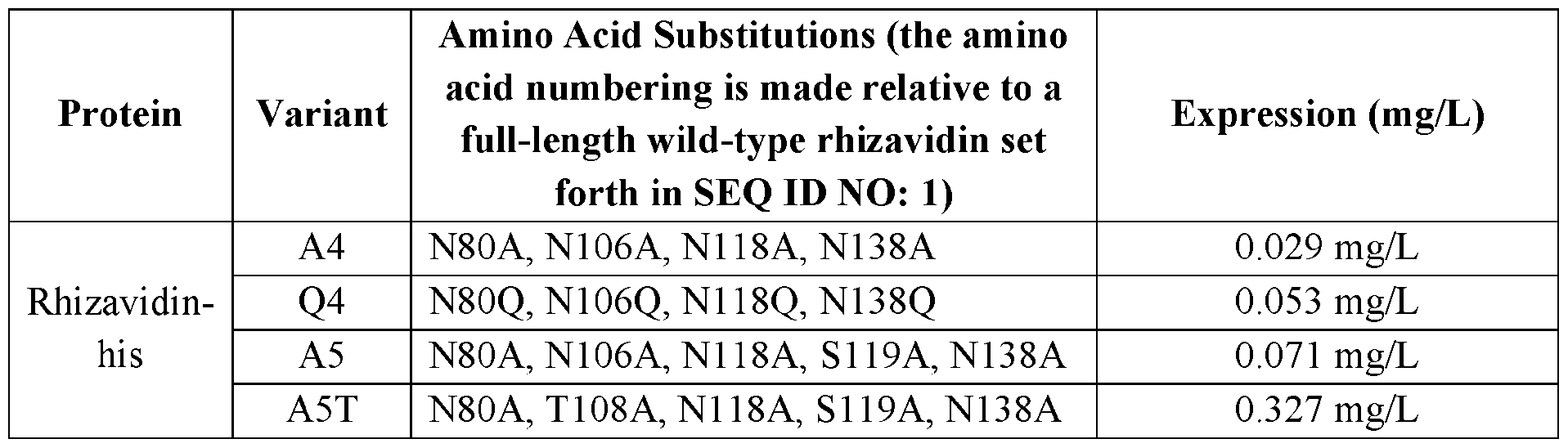


Claims
Applications Claiming Priority (2)
| Application Number | Priority Date | Filing Date | Title |
|---|---|---|---|
| US202363464129P | 2023-05-04 | 2023-05-04 | |
| US63/464,129 | 2023-05-04 |
Publications (1)
| Publication Number | Publication Date |
|---|---|
| WO2024229176A1 true WO2024229176A1 (en) | 2024-11-07 |
Family
ID=91580796
Family Applications (1)
| Application Number | Title | Priority Date | Filing Date |
|---|---|---|---|
| PCT/US2024/027331 Pending WO2024229176A1 (en) | 2023-05-04 | 2024-05-02 | Rhizavidin variants |
Country Status (1)
| Country | Link |
|---|---|
| WO (1) | WO2024229176A1 (en) |
Citations (37)
| Publication number | Priority date | Publication date | Assignee | Title |
|---|---|---|---|---|
| US4596556A (en) | 1985-03-25 | 1986-06-24 | Bioject, Inc. | Hypodermic injection apparatus |
| US4790824A (en) | 1987-06-19 | 1988-12-13 | Bioject, Inc. | Non-invasive hypodermic injection device |
| US4940460A (en) | 1987-06-19 | 1990-07-10 | Bioject, Inc. | Patient-fillable and non-invasive hypodermic injection device assembly |
| US4941880A (en) | 1987-06-19 | 1990-07-17 | Bioject, Inc. | Pre-filled ampule and non-invasive hypodermic injection device assembly |
| US5064413A (en) | 1989-11-09 | 1991-11-12 | Bioject, Inc. | Needleless hypodermic injection device |
| US5312335A (en) | 1989-11-09 | 1994-05-17 | Bioject Inc. | Needleless hypodermic injection device |
| US5334144A (en) | 1992-10-30 | 1994-08-02 | Becton, Dickinson And Company | Single use disposable needleless injector |
| US5339163A (en) | 1988-03-16 | 1994-08-16 | Canon Kabushiki Kaisha | Automatic exposure control device using plural image plane detection areas |
| US5383851A (en) | 1992-07-24 | 1995-01-24 | Bioject Inc. | Needleless hypodermic injection device |
| US5466220A (en) | 1994-03-08 | 1995-11-14 | Bioject, Inc. | Drug vial mixing and transfer device |
| US5480381A (en) | 1991-08-23 | 1996-01-02 | Weston Medical Limited | Needle-less injector |
| US5569189A (en) | 1992-09-28 | 1996-10-29 | Equidyne Systems, Inc. | hypodermic jet injector |
| US5599302A (en) | 1995-01-09 | 1997-02-04 | Medi-Ject Corporation | Medical injection system and method, gas spring thereof and launching device using gas spring |
| WO1997013537A1 (en) | 1995-10-10 | 1997-04-17 | Visionary Medical Products Corporation | Gas pressured needle-less injection device |
| US5643576A (en) | 1994-05-27 | 1997-07-01 | The University Of North Carolina At Chapel Hill | Method of inducing an immune response with a live Venezuelan Equine Encephalitis virus expressing a heterologous immunogen |
| US5649912A (en) | 1994-03-07 | 1997-07-22 | Bioject, Inc. | Ampule filling device |
| WO1997037705A1 (en) | 1996-04-11 | 1997-10-16 | Weston Medical Limited | Spring-powered dispensing device for medical purposes |
| WO1997048440A1 (en) | 1996-06-18 | 1997-12-24 | Alza Corporation | Device for enhancing transdermal agent delivery or sampling |
| WO1998020734A1 (en) | 1996-11-14 | 1998-05-22 | The Government Of The United States Of America, As Represented By The Secretary Of The Army | Adjuvant for transcutaneous immunization |
| WO1998028037A1 (en) | 1996-12-20 | 1998-07-02 | Alza Corporation | Device and method for enhancing transdermal agent flux |
| US5893397A (en) | 1996-01-12 | 1999-04-13 | Bioject Inc. | Medication vial/syringe liquid-transfer apparatus |
| WO1999027961A1 (en) | 1997-12-02 | 1999-06-10 | Powderject Vaccines, Inc. | Transdermal delivery of particulate vaccine compositions |
| WO1999034850A1 (en) | 1998-01-08 | 1999-07-15 | Fiderm S.R.L. | Device for controlling the penetration depth of a needle, for application to an injection syringe |
| US5993412A (en) | 1997-05-19 | 1999-11-30 | Bioject, Inc. | Injection apparatus |
| WO2001013977A1 (en) | 1999-08-20 | 2001-03-01 | Bioject, Inc. | Intradermal injection system for injecting dna-based injectables into humans |
| EP1092444A1 (en) | 1999-10-14 | 2001-04-18 | Becton Dickinson and Company | Intradermal delivery device including a needle assembly |
| US6248558B1 (en) | 1998-03-31 | 2001-06-19 | Vanderbilt University | Sequence and method for genetic engineering of proteins with cell membrane translocating activity |
| US6783939B2 (en) | 2000-07-07 | 2004-08-31 | Alphavax, Inc. | Alphavirus vectors and virosomes with modified HIV genes for use in vaccines |
| WO2005071088A2 (en) | 2003-12-24 | 2005-08-04 | Cerus Corporation | Recombinant nucleic acid molecules encoding fusion proteins comprising antigens and bacterial secretory signal polypeptides, expression cassettes, and bacteria, and methods of use thereof |
| WO2011112906A2 (en) | 2010-03-12 | 2011-09-15 | Children's Medical Center Corporation | Novel immunogens and methods for discovery and screening thereof |
| US20120232021A1 (en) | 2011-03-04 | 2012-09-13 | Paolo Martini | Peptide linkers for polypeptide compositions and methods for using same |
| WO2012155007A1 (en) | 2011-05-11 | 2012-11-15 | Children's Medical Center Corporation | Multiple antigen presenting immunogenic composition, and methods and uses thereof |
| WO2014124228A1 (en) | 2013-02-07 | 2014-08-14 | Children's Medical Center Corporation | Protein antigens that provide protection against pneumococcal colonization and/or disease |
| CN106977590A (en) * | 2017-04-19 | 2017-07-25 | 西安亚博生物技术有限公司 | The rhizobium phaseoli affinity prime of mutation and its application |
| WO2018237221A1 (en) | 2017-06-23 | 2018-12-27 | Nosocomial Vaccine Corporation | IMMUNOGENIC COMPOSITIONS |
| WO2020056202A1 (en) | 2018-09-12 | 2020-03-19 | Affinivax, Inc. | Multivalent pneumococcal vaccines |
| WO2023172741A2 (en) * | 2022-03-11 | 2023-09-14 | The Children's Medical Center Corporation | A multiple antigen presenting system (maps)-based staphylococcus aureus vaccine comprising b- and t-cell antigens, immunogenic composition, and uses thereof |
-
2024
- 2024-05-02 WO PCT/US2024/027331 patent/WO2024229176A1/en active Pending
Patent Citations (42)
| Publication number | Priority date | Publication date | Assignee | Title |
|---|---|---|---|---|
| US4596556A (en) | 1985-03-25 | 1986-06-24 | Bioject, Inc. | Hypodermic injection apparatus |
| US4790824A (en) | 1987-06-19 | 1988-12-13 | Bioject, Inc. | Non-invasive hypodermic injection device |
| US4940460A (en) | 1987-06-19 | 1990-07-10 | Bioject, Inc. | Patient-fillable and non-invasive hypodermic injection device assembly |
| US4941880A (en) | 1987-06-19 | 1990-07-17 | Bioject, Inc. | Pre-filled ampule and non-invasive hypodermic injection device assembly |
| US5339163A (en) | 1988-03-16 | 1994-08-16 | Canon Kabushiki Kaisha | Automatic exposure control device using plural image plane detection areas |
| US5503627A (en) | 1989-11-09 | 1996-04-02 | Bioject, Inc. | Ampule for needleless injection |
| US5064413A (en) | 1989-11-09 | 1991-11-12 | Bioject, Inc. | Needleless hypodermic injection device |
| US5312335A (en) | 1989-11-09 | 1994-05-17 | Bioject Inc. | Needleless hypodermic injection device |
| US5480381A (en) | 1991-08-23 | 1996-01-02 | Weston Medical Limited | Needle-less injector |
| US5383851A (en) | 1992-07-24 | 1995-01-24 | Bioject Inc. | Needleless hypodermic injection device |
| US5520639A (en) | 1992-07-24 | 1996-05-28 | Bioject, Inc. | Needleless hypodermic injection methods and device |
| US5704911A (en) | 1992-09-28 | 1998-01-06 | Equidyne Systems, Inc. | Needleless hypodermic jet injector |
| US5569189A (en) | 1992-09-28 | 1996-10-29 | Equidyne Systems, Inc. | hypodermic jet injector |
| US5334144A (en) | 1992-10-30 | 1994-08-02 | Becton, Dickinson And Company | Single use disposable needleless injector |
| US5649912A (en) | 1994-03-07 | 1997-07-22 | Bioject, Inc. | Ampule filling device |
| US5466220A (en) | 1994-03-08 | 1995-11-14 | Bioject, Inc. | Drug vial mixing and transfer device |
| US5643576A (en) | 1994-05-27 | 1997-07-01 | The University Of North Carolina At Chapel Hill | Method of inducing an immune response with a live Venezuelan Equine Encephalitis virus expressing a heterologous immunogen |
| US5599302A (en) | 1995-01-09 | 1997-02-04 | Medi-Ject Corporation | Medical injection system and method, gas spring thereof and launching device using gas spring |
| WO1997013537A1 (en) | 1995-10-10 | 1997-04-17 | Visionary Medical Products Corporation | Gas pressured needle-less injection device |
| US5893397A (en) | 1996-01-12 | 1999-04-13 | Bioject Inc. | Medication vial/syringe liquid-transfer apparatus |
| WO1997037705A1 (en) | 1996-04-11 | 1997-10-16 | Weston Medical Limited | Spring-powered dispensing device for medical purposes |
| WO1997048440A1 (en) | 1996-06-18 | 1997-12-24 | Alza Corporation | Device for enhancing transdermal agent delivery or sampling |
| WO1998020734A1 (en) | 1996-11-14 | 1998-05-22 | The Government Of The United States Of America, As Represented By The Secretary Of The Army | Adjuvant for transcutaneous immunization |
| WO1998028037A1 (en) | 1996-12-20 | 1998-07-02 | Alza Corporation | Device and method for enhancing transdermal agent flux |
| US5993412A (en) | 1997-05-19 | 1999-11-30 | Bioject, Inc. | Injection apparatus |
| WO1999027961A1 (en) | 1997-12-02 | 1999-06-10 | Powderject Vaccines, Inc. | Transdermal delivery of particulate vaccine compositions |
| WO1999034850A1 (en) | 1998-01-08 | 1999-07-15 | Fiderm S.R.L. | Device for controlling the penetration depth of a needle, for application to an injection syringe |
| US6248558B1 (en) | 1998-03-31 | 2001-06-19 | Vanderbilt University | Sequence and method for genetic engineering of proteins with cell membrane translocating activity |
| US6432680B1 (en) | 1998-03-31 | 2002-08-13 | Vanderbilt University | Sequence and method for genetic engineering of proteins with cell membrane translocating activity |
| WO2001013977A1 (en) | 1999-08-20 | 2001-03-01 | Bioject, Inc. | Intradermal injection system for injecting dna-based injectables into humans |
| EP1092444A1 (en) | 1999-10-14 | 2001-04-18 | Becton Dickinson and Company | Intradermal delivery device including a needle assembly |
| US6783939B2 (en) | 2000-07-07 | 2004-08-31 | Alphavax, Inc. | Alphavirus vectors and virosomes with modified HIV genes for use in vaccines |
| WO2005071088A2 (en) | 2003-12-24 | 2005-08-04 | Cerus Corporation | Recombinant nucleic acid molecules encoding fusion proteins comprising antigens and bacterial secretory signal polypeptides, expression cassettes, and bacteria, and methods of use thereof |
| WO2011112906A2 (en) | 2010-03-12 | 2011-09-15 | Children's Medical Center Corporation | Novel immunogens and methods for discovery and screening thereof |
| US20120232021A1 (en) | 2011-03-04 | 2012-09-13 | Paolo Martini | Peptide linkers for polypeptide compositions and methods for using same |
| WO2012155007A1 (en) | 2011-05-11 | 2012-11-15 | Children's Medical Center Corporation | Multiple antigen presenting immunogenic composition, and methods and uses thereof |
| WO2012155053A1 (en) | 2011-05-11 | 2012-11-15 | Children's Medical Center Corporation | Modified biotin-binding protein, fusion proteins thereof and applications |
| WO2014124228A1 (en) | 2013-02-07 | 2014-08-14 | Children's Medical Center Corporation | Protein antigens that provide protection against pneumococcal colonization and/or disease |
| CN106977590A (en) * | 2017-04-19 | 2017-07-25 | 西安亚博生物技术有限公司 | The rhizobium phaseoli affinity prime of mutation and its application |
| WO2018237221A1 (en) | 2017-06-23 | 2018-12-27 | Nosocomial Vaccine Corporation | IMMUNOGENIC COMPOSITIONS |
| WO2020056202A1 (en) | 2018-09-12 | 2020-03-19 | Affinivax, Inc. | Multivalent pneumococcal vaccines |
| WO2023172741A2 (en) * | 2022-03-11 | 2023-09-14 | The Children's Medical Center Corporation | A multiple antigen presenting system (maps)-based staphylococcus aureus vaccine comprising b- and t-cell antigens, immunogenic composition, and uses thereof |
Non-Patent Citations (89)
| Title |
|---|
| "Pan American Health Organization", EPIDEMIOLOGICAL UPDATE: OCCURRENCE OF VARIANTS OF SARS-COV-2 IN THE AMERICAS, 2021 |
| "Remington's Pharmaceutical Sciences", 1975, MACK PUBLISHING COMPANY |
| AN ET AL., CURR. OPIN. CHEM. BIOL., vol. 13, no. 4, pages 421 - 426 |
| ANTTILA MESKOLA JAHMAN HKAYHTY H: "Avidity of IgG for Streptococcus pneumoniae type 6B and 23F polysaccharides in infants primed with pneumococcal conjugates and boosted with polysaccharide or conjugate vaccines", J INFECT DIS, vol. 177, no. 6, 1998, pages 1614 - 21 |
| AVERY LB ET AL.: "Establishing in vitro in vivo correlations to screen monoclonal antibodies for physiochemical properties related to favorable human pharmacokinetics", MABS, vol. 10, no. 2, 2018, pages 244 - 55 |
| AZZE ET AL., 21 VACCINE, 2003, pages 2758 |
| AZZE RFORODRIGUEZ JCMINIESTA MGMARCHENA XRFALFONSO VMRPADRON FTS: "Immunogenicity of a new Salmonella Typhi Vi polysaccharide vaccine-vax-TyVi-in Cuban school children and teenagers", VACCINES, vol. 21, no. 21-22, 2003, pages 2758 - 60, XP004429672, DOI: 10.1016/S0264-410X(03)00177-4 |
| BERRY AMALEXANDER JEMITCHEL TJANDREW PWHANSMAN DPATON JC: "Effect of defined point mutations in the pneumolysin gene on the virulence of Streptococcus pneumoniae", INFECT IMMUN, vol. 63, no. 5, 1995, pages 1969 - 74, XP055465839 |
| BERRY ET AL.: "Effect of defined point mutations in the pneumolysin gene on the virulence of Streptococcus pneumoniae", INFECT IMMUNE, vol. 63, no. 5, 1995, pages 1969 - 1974, XP055465839 |
| BOERNER PLAFOND RLU WZBRAMS PROYSTON I: "Production of antigen-specific human monoclonal antibodies from in vitro-primed human splenocytes", J IMMUNOL., vol. 147, no. 1, 1991, pages 86 - 95 |
| CHEN XZARO JSHEN WC: "Fusion protein linkers: property, design and functionality", ADV. DRUG DELIV. REV, vol. 65, no. 10, 2013, pages 1357 - 69, XP028737352, DOI: 10.1016/j.addr.2012.09.039 |
| CIESLEWICZ, BMAKRINOS, DBURKE, HBREE, DHARIDAS, RTONKISS, IBARTSCH, YALTER, GMALLEY, RBESIN, G: "Preclinical Immunogenicity and Efficacy of a Multiple Antigen-Presenting System (MAPS) SARS-CoV-2 Vaccine", VACCINES, vol. 10, 2022, pages 1069 |
| CONCEPCION NFFRASCH CE: "Pneumococcal type 22f polysaccharide absorption improves the specificity of a pneumococcal-polysaccharide enzyme-linked immunosorbent assay", CLIN DIAGN LAB IMMUNOL, vol. 8, no. 2, 2001, pages 266 - 72 |
| DANIELSSONERIKSSON: "Aluminum adjuvants in vaccines - a way to modulate the immune response", SEMIN CELL DEV BIOL, vol. 115, 2021, pages 3 - 9, XP086662907, DOI: 10.1016/j.semcdb.2020.12.008 |
| DAO TSCHEINBERG DA: "Peptide vaccines for myeloid leukaemias", BEST PRACT RES CLIN HAEMATOL, vol. 21, no. 3, 2008, pages 391 - 404, XP025404481, DOI: 10.1016/j.beha.2008.05.001 |
| DOMBS AJKUMAR N: "Biodegradable Polymers in Clinical Use and Clinical Development", 2011, JOHN WILEY & SONS, INC, article "Biocompatible Polymers for Nucleic Acid Delivery" |
| DOUCE ET AL.: "Genetically detoxified mutants of heat-labile toxin from Escherichia coli are able to act as oral adjuvants", INFECT IMMUN, vol. 67, no. 9, 1999, pages 4400 - 6 |
| DOUCE ET AL.: "Mutants of Escherichia coli heat-labile toxin lacking ADP-ribosyltransferase activity act as non-toxic, mucosal adjuvants", PNAS, vol. 92, 1995, pages 1644 - 1648 |
| EICHLER, CURR. BIOL, vol. 29, no. 7, 2019, pages R229 - R231 |
| EL-SAYED ET AL.: "Smart Polymer Carriers for Enhanced Intracellular Delivery of Therapeutic Molecules", 5 EXP. OP. BIOL. THERAPY, vol. 23, 2005 |
| EL-SAYED MEHHOFFMAN ASSTAYTON PS: "Smart Polymer Carriers for Enhanced Intracellular Delivery of Therapeutic Molecules", EXPERT. OPIN. BIOL. THER, vol. 5, no. 1, 2005, pages 23 - 32 |
| EVANS JT ET AL.: "Enhancement of antigen-specific immunity via the TLR-4 ligands MPL adjuvant and Ribi.529", EXPERT REV. VACCINES, vol. 2, no. 2, 2003, pages 219 - 29 |
| GENO KAGILBERT GLSONG JYSKOVSTED ICKLUGMAN KPJONES C ET AL.: "Pneumococcal Capsules and their types: past, present, and future", CLIN MICROBIOL REV, vol. 28, no. 3, 2015, pages 871 - 899, XP055781906, DOI: 10.1128/CMR.00024-15 |
| GIULIANI MM ET AL.: "Mucosal adjuvanticity and immunogenicity of LTR72, a novel mutant of Escherichia coli heat-labile enterotoxin with partial knockout of ADP-ribosyltransferase activity", J EXP MED., vol. 187, no. 7, 1998, pages 1123 - 32, XP002928610, DOI: 10.1084/jem.187.7.1123 |
| GUPTA RBRUNAK S: "Prediction of glycosylation across the human proteome and the correlation to protein function", PAC. SYMP. BIOCOMPT, 2002, pages 310 - 22 |
| HELPPOLAINEN SHNURMINEN KPMÄÄTTÄ JAHALLING KKSLOTTE JPHUHTALA T ET AL.: "Rhizavidin from Rhizobium etli: the first natural dimer in the avidin protein family", BIOCHEM J., vol. 405, 2007, pages 397 - 405 |
| HOGENESCH ET AL.: "Optimizing the utilization of aluminum adjuvants in vaccines: you might just get what you want", NPJ VACCINES, vol. 3, 2018, pages 51 |
| HOLLIGER PPROSPERO TWINTER G: "Diabodies'': small bivalent and bispecific antibody fragments", PROC NATL ACAD SCI U S A., vol. 90, no. 14, 1993, pages 6444 - 8, XP002713413, DOI: 10.1073/pnas.90.14.6444 |
| ISHIZAKA ST ET AL.: "E6020: a synthetic Toll-like receptor 4 agonist as a vaccine adjuvant", EXPERT REV. VACCINES, vol. 6, no. 5, 2007, pages 773 - 84, XP008101056, DOI: 10.1586/14760584.6.5.773 |
| JERABEK-WILLEMSEN, MANDRE, TWANNER, RROTH, H.MDUHR, SBAASKE, PBREITSPRECHER, D: "MicroScale Thermophoresis: Interaction Analysis and Beyond", J. MOL. STRUCT, vol. 1077, 2014, pages 101 - 113, XP029049783, DOI: 10.1016/j.molstruc.2014.03.009 |
| JONES PTDEAR PHFOOTE JNEUBERGER MSWINTER G: "Replacing the complementarity-determining regions in a human antibody with those from a mouse", NATURE, vol. 321, no. 6069, 1986, pages 522 - 5, XP002949266, DOI: 10.1038/321522a0 |
| KAUFFMANN ET AL., INTL. BULL. BACT. NOMENCLATURE AND TAXONOMY, vol. 10, 1960, pages 31 - 41 |
| KAUFMANN FLUND EEDDY B: "Proposal for a change in the nomenclature of Diplococcus pneumoniae and a comparison of the Danish and American type designations", INTL BULLETIN OF BACTERIAL NOMENCLATURE AND TAXONOMY, vol. 10, no. 1, 1960, pages 31 - 40 |
| KIM KHYU JNAHM MH: "Efficiency of a pneumococcal opsonophagocytic killing assay improved by multiplexing and by coloring colonies", CLIN DIAGN LAB IMMUNOL, vol. 10, no. 4, 2003, pages 616 - 21, XP003009516, DOI: 10.1128/CDLI.10.4.616-621.2003 |
| KOJIMA KISHIZAKA AOSHIKA ETAGUCHI YTOMIZAWA K ET AL.: "Quantitation of IgG subclass antibodies to pneumococcal capsular polysaccharides by ELISA, using Pneumovax-specific antibodies as a reference", TOHOKU J EXP MED., vol. 161, no. 3, 1990, pages 209 - 15 |
| KOSKELA MLEINONEN M: "Comparison of ELISA and RIA for measurement of pneumococcal antibodies before and after vaccination with 14-valent pneumococcal capsular polysaccharide vaccine", J CLIN PATHOL, vol. 34, no. 1, 1981, pages 93 - 8 |
| LARKIN, M.ABLACKSHIELDS, GBROWN, N.PCHENNA, RMCGETTIGAN, P.AMCWILLIAM, HVALENTIN, FWALLACE, I.MWILM, ALOPEZ, R ET AL.: "Clustal W and Clustal X Version 2.0", BIOINFORMA. OXF. ENGL, vol. 23, 2007, pages 2947 - 2948 |
| LEE JEONG MIN: "Supporting Information", 1 January 2016 (2016-01-01), XP093205314, Retrieved from the Internet <URL:https://onlinelibrary.wiley.com/action/downloadSupplement?doi=10.1002%2Fanie.201510885&file=anie201510885-sup-0001-misc_information.pdf> * |
| LEUNG, K ET AL.: "Early empirical assessment of the N501Y mutant strains of SARS-CoV-2 in the United Kingdom", MEDRXIV, vol. 2020, 20 December 2020 (2020-12-20) |
| LEUNG, K ET AL.: "Early empirical assessment of the N501Y mutant strains of SARS-CoV-2 in the United Kingdom", MEDRXIV, vol. 2020, no. 12, November 2020 (2020-11-01), pages 20 |
| LEVINE ET AL., 7 BAILLIERES CLIN. GASTROENTEROL, 1993, pages 501 |
| LEVINE MMNORIEGA F: "Vaccines to prevent enteric infections, Baillieres Clin", GASTROENTEROL, vol. 7, no. 2, 1993, pages 501 - 17 |
| LIU Y ET AL.: "High-throughput screening for developability during early-stage antibody discovery using self-interaction nanoparticle spectroscopy", MABS, vol. 6, no. 2, 2014, pages 483 - 92, XP055546137, DOI: 10.4161/mabs.27431 |
| MAKOWSKI EK ET AL.: "Highly sensitive detection of antibody non-specific interactions using flow cytometry", MABS, vol. 13, no. 1, 2021, pages 1951426 |
| MARTINEZ JEROMERO-STEINER SPILISHVILI TBARNARD SSCHINSKY J ET AL.: "A flow cytometric opsonophagocytic assay for measurement of functional antibodies elicited after vaccination with the 23-valent pneumococcal polysaccharide vaccine", CLIN DIAGN LAB IMMUNOL, vol. 6, no. 4, 1999, pages 581 - 6, XP002191304 |
| MARTTILA A T ET AL: "Recombinant NeutraLite Avidin: a non-glycosylated, acidic mutant of chicken avidin that exhibits high affinity for biotin and low non-specific binding properties", FEBS LETTERS, ELSEVIER, AMSTERDAM, NL, vol. 467, no. 1, 4 February 2000 (2000-02-04), pages 31 - 36, XP027292020, ISSN: 0014-5793, [retrieved on 20000204] * |
| MEIR AHELPPOLAINEN SHPODOLY ENORDLUND HRHYTONEN VPMÄÄTTÄ JAWILCHEK MBAYER EAKULOMAA MSLIVNAH O: "Crystal Structure of Rhizavidin: Insights into the Enigmatic High-Affinity Interaction of an Innate Biotin-Binding Protein Dimer", J. MOL. BIOL, vol. 386, 2009, pages 379 - 390, XP026587710, DOI: 10.1016/j.jmb.2008.11.061 |
| MEYERS EWMILLER W: "Optimal alignments in linear space", COMPUT. APPL. BIOSCI, vol. 4, no. 1, 1998, pages 11 - 7, XP009076513, DOI: 10.1093/bioinformatics/4.1.11 |
| MIN JEONG ET AL: "Rhizavidin Monomer with Nearly Multimeric Avidin-Like Binding Stability Against Biotin Conjugates", PROTEIN ENGINEERING, vol. 55, 1 January 2016 (2016-01-01), pages 3393 - 3397, XP055700433 * |
| MITCHELL MS: "Cancer vaccines, a critical review-Part II", CURR OPIN INVESTIG DRUGS, vol. 3, no. 1, 2002, pages 150 - 8, XP009018348, DOI: 10.1586/14737140.6.5.775 |
| MUNRO CSSTANLEY PJCOLE PJ: "Assessment of biological activity of immunoglobulin preparations by using opsonized micro-organisms to stimulate neutrophil chemiluminescence", CLIN EXP IMMUNOL, vol. 61, no. 1, 1985, pages 183 - 8 |
| OJO-AMAIZE EACHURCH JABARKA NEAGOPIAN MSPETER JB: "A rapid and sensitive chemiluminescence assay for evaluation of functional opsonic activity of Haemophilus influenzae type b-specific antibodies", CLIN DIAGN LAB IMMUNOL, vol. 2, no. 3, 1995, pages 286 - 90 |
| OLOO EOYETHON JAOCHS MMCARPICK BOOMEN R: "Structure-guided antigen engineering yields pneumolysin mutants suitable for vaccination against pneumococcal disease", J BIOL CHEM, vol. 286, no. 14, 2011, pages 12133 - 40, XP055396198, DOI: 10.1074/jbc.M110.191148 |
| OLOO ET AL.: "Structure-guided antigen engineering yields pneumolysin mutants suitable for vaccination against pneumococcal disease", J BIOL CHEM., vol. 286, no. 14, 2011, pages 12133 - 12140, XP055396198, DOI: 10.1074/jbc.M110.191148 |
| ORLANDI RGUSSOW DHJONES PTWINTER G: "Cloning immunoglobulin variable domains for expression by the polymerase chain reaction", PROC. NATL. ACAD. SCI. USA., vol. 86, no. 1, 1989, pages 3833 - 7, XP000026475, DOI: 10.1073/pnas.86.10.3833 |
| POLJAK RJ: "Production and structure of diabodies", STRUCTURE, vol. 2, no. 12, 1994, pages 1121 - 3, XP024248027, DOI: 10.1016/S0969-2126(94)00113-8 |
| QUEEN CSCHNEIDER WPSELICK HEPAYNE PWLANDOLFI NFDUNCAN JFAVDALOVIC NMLEVITT MJUNGHANS RPWALDMANN TA: "A humanized antibody that binds to the interleukin 2 receptor", PROC. NATL. ACAD. SCI. USA., vol. 86, no. 24, 1989, pages 10029 - 33, XP000310534, DOI: 10.1073/pnas.86.24.10029 |
| RAMBAUT AHOLMES ECO'TOOLE AHILL VMCCRONE JTRUIS CDU PLESSIS LPYBUS OG: "A dynamic nomenclature proposal for SARS-CoV-2 lineages to assist genomic epidemiology", NAT. MICROBIOL, vol. 5, no. 11, 2020, pages 1403 - 1407, XP037277086, DOI: 10.1038/s41564-020-0770-5 |
| RAMBAUT, A ET AL.: "A dynamic nomenclature proposal for SARS-CoV-2 lineages to assist genomic epidemiology", NAT MICROBIOL, vol. 5, 2020, pages 1403 - 1407, XP037277086, DOI: 10.1038/s41564-020-0770-5 |
| REILY ET AL., NAT. REV. NEPHROL, vol. 15, no. 6, 2019, pages 346 - 366 |
| RIECHMANN LCLARK MWALDMANN HWINTER G: "Reshaping human antibodies for therapy", NATURE, vol. 332, no. 6162, 1988, pages 323 - 7, XP002007067, DOI: 10.1038/332323a0 |
| ROBBINS ET AL., 150 J. INFECT. DIS, 1984, pages 436 |
| ROBBINS JDROBBINS JB: "Reexamination of the protective role of the capsular polysaccharide (Vi antigen) of Salmonella typhi", J. INFECT. DIS, vol. 150, no. 3, 1984, pages 436 - 49 |
| ROBERT XGOUET P: "Deciphering Key Features in Protein Structures with the New ENDscript Server", NUCLEIC ACIDS RES., vol. 42, 2014, pages W320 - 324 |
| ROMERO-STEINER SHOLDER PFGOMEZ DE LEON PSPEAR WHENNESSY TW ET AL.: "Avidity determinations for Haemophilus influenzae Type b anti-polyribosylribitol phosphate antibodies", CLIN DIAGN LAB IMMUNOL, vol. 12, no. 9, September 2005 (2005-09-01), pages 1029 - 35 |
| ROMERO-STEINER SLIBUTTI DPAIS LBDYKES JANDERSON P ET AL.: "Standardization of an opsonophagocytic assay for the measurement of functional antibody activity against Streptococcus pneumoniae using differentiated HL-60 cells", CLIN DIAGN LAB IMMUNOL, vol. 4, no. 4, July 1997 (1997-07-01), pages 415 - 22, XP055522662 |
| ROTH ZYEHEZKEL GKHALAILA I: "Identification and Quantification of Protein Glycosylation", INTL. J. CARB. CHEM, vol. 2012, 2012, pages 640923, XP002749472, DOI: 10.1155/2012/640923 |
| SAELAND EVIDARSSON GJONSDOTTIR I: "Pneumococcal pneumonia and bacteremia model in mice for the analysis of protective antibodies", MICROB PATHOG, vol. 29, no. 2, 2000, pages 81 - 91 |
| SAIF LJ, VET MICROBIOL, vol. 37, no. 3-4, November 1993 (1993-11-01), pages 285 - 97 |
| SAIF LJ: "Coronavirus immunogens", VET. MICROBIOL, vol. 37, no. 3-4, 1993, pages 285 - 97, XP023914319, DOI: 10.1016/0378-1135(93)90030-B |
| SAMBROOK JFRITSCH ERMANIATIS T: "Molecular Cloning, a Laboratory Manual", 1989, COLD SPRING HARBOR PRESS |
| SAUNDERS KO: "Conceptual Approaches to Modulating Antibody Effector Functions and Circulation Half-Life", FRONT. IMMUNOL, vol. 10, 2019, pages 1296, XP055654839, DOI: 10.3389/fimmu.2019.01296 |
| SCHIFFMAN GDOUGLAS RMBONNER MJROBBINS MAUSTRIAN R: "Method for the radioimmunoassay of anticapsular antibodies and comparison with other techniques", J. IMMUNOL., vol. 33, no. 2, 1980, pages 133 - 44, XP023799328, DOI: 10.1016/S0022-1759(80)80004-4 |
| SHARMA AQADRI A: "Vi polysaccharide of Salmonella typhi targets the prohibitin family of molecules in intestinal epithelial cells and suppresses early inflammatory responses", PROC. NATL. ACAD. SCI. USA., vol. 101, no. 50, 2004, pages 17492 - 7, XP002397599, DOI: 10.1073/pnas.0407536101 |
| SHARMA ET AL., 101 PNAS, 2004, pages 17492 |
| SINGH MINDRESH S: "Advances in vaccine adjuvants for infectious diseases", CURRENT HIV RESEARCH, vol. 1, no. 3, 2003, pages 309 - 320, XP002976977, DOI: 10.2174/1570162033485195 |
| SJÖLANDER SURBANICZKY C: "Integrated fluid handling system for biomolecular interaction analysis", ANAL. CHEM., vol. 63, no. 20, 1991, pages 2338 - 45, XP000275479, DOI: 10.1021/ac00020a025 |
| STACK AMMALLEY RTHOMPSON CMKOBZIK LSIBER GR ET AL.: "Minimum protective serum concentrations of pneumococcal anti-capsular antibodies in infant rats", J INFECT DIS, vol. 177, no. 4, April 1998 (1998-04-01), pages 986 - 90, XP055731100, DOI: 10.1086/515259 |
| SZABO ASTOLZ LGRANZOW R: "Surface plasmon resonance and its use in biomolecular interaction analysis (BIA", CURR. OPIN. STRUCT. BIOL, vol. 5, no. 5, 1995, pages 699 - 705 |
| TEGALLY H ET AL.: "Emergence and rapid spread of a new severe acute respiratory syndrome-related coronavirus 2 (SARS-CoV-2) lineage with multiple Spike mutations in South Africa", MEDRXIV, 21 December 2020 (2020-12-21) |
| TEGALLY, H. ET AL.: "Emergence and rapid spread of a new severe acute respiratory syndrome-related coronavirus 2 (SARS-CoV-2) lineage with multiple Spike mutations in South Africa", MEDRXIV, 2020, pages 2020 |
| THOMSON EC ET AL.: "The circulating SARS-CoV-2 Spike variant N439K maintains fitness while evading antibody-mediated immunity", BIORXIV, vol. 355842, 4 November 2020 (2020-11-04), pages 2020 |
| VERHOEYEN MMILSTEIN CWINTER G: "Rehaping human antibodies: grating an antilysozyme activity", SCIENCE, vol. 239, no. 4847, 1988, pages 1534 - 6 |
| WILLIAMS ET AL.: "Innate imprinting by the modified heat-labile toxin of Escherichia coli (LTK63) provides generic protection against lung infectious disease", THE JOURNAL OF IMMUNOLOGY, vol. 173, 2004, pages 7435 - 7443, XP002426599 |
| WU RGROSSMAN L: "Methods in Enzymology", vol. 153, 1987, ACADEMIC PRESS, article "Recombinant DNA Part D" |
| WU YWAN TZHOU XWANG BYANG FLI NCHEN GDAI SLIU SZHANG M: "HSP70-like protein 1 fusion protein enhances induction of carcinoembryonic antigen-specific CD8+ CTL response by dendritic cell", CANCER RES., vol. 65, no. 11, 2005, pages 4947 - 54 |
| XU YROACH WSUN TJAIN TPRINZ BYU T-YTORREY JTHOMAS JBOBROWICZ PVASQUEZ M: "Addressing polyspecificity of antibodies selected from an in vitro yeast presentation system: a FACS-based, high-throughput selection and analytical tool", PROTEIN ENG. DES. SEL, vol. 26, no. 10, 2013, pages 663 - 70, XP055233064, DOI: 10.1093/protein/gzt047 |
| ZHANG FLEDUE OJUN MGOULART CMALLEY RLU YJ: "Protection against Staphylococcus Aureus Colonization and Infection by B- and T-Cell-Mediated Mechanisms", MBIO, vol. 9, 2018, pages 01949 - 18 |
| ZHANG FLU YJMALLEY R: "Multiple antigen-presenting system (MAPS) to induce comprehensive B- and T-cell immunity", PROC NATL ACAD SCI U S A., vol. 110, 2013, pages 13564 - 9, XP055148770, DOI: 10.1073/pnas.1307228110 |
Similar Documents
| Publication | Publication Date | Title |
|---|---|---|
| EP3849587A1 (en) | Multivalent pneumococcal vaccines | |
| US12129283B2 (en) | Pneumococcal fusion protein vaccines | |
| US12377140B2 (en) | Multivalent pneumococcal vaccines | |
| EP3641828B1 (en) | Immunogenic compositions | |
| US20250064910A1 (en) | A maps vaccine targeting salmonella enterica serovars | |
| WO2024229176A1 (en) | Rhizavidin variants | |
| WO2023039108A1 (en) | Coronavirus vaccine | |
| EP4680273A1 (en) | Immunogenic compositions | |
| WO2025193903A1 (en) | Pneumococcal polysaccharide compositions and uses thereof | |
| WO2024259229A2 (en) | Fusion proteins generating protective antibodies and protective th17 responses for pseudomonas aeruginosa | |
| WO2024081871A1 (en) | Shigella multiple antigen presenting immunogenic composition and fusion proteins thereof | |
| RU2791256C2 (en) | Immunogenic compositions | |
| WO2024081906A1 (en) | A maps vaccine targeting group b streptococcus (gbs) | |
| HK40106055A (en) | Immunogenic compositions | |
| CN118201634A (en) | Multivalent pneumococcal vaccine | |
| HK40021266B (en) | Immunogenic compositions | |
| HK40021266A (en) | Immunogenic compositions |
Legal Events
| Date | Code | Title | Description |
|---|---|---|---|
| 121 | Ep: the epo has been informed by wipo that ep was designated in this application |
Ref document number: 24733358 Country of ref document: EP Kind code of ref document: A1 |
|
| DPE2 | Request for preliminary examination filed before expiration of 19th month from priority date (pct application filed from 20040101) | ||
| WWE | Wipo information: entry into national phase |
Ref document number: 2024733358 Country of ref document: EP |
|
| NENP | Non-entry into the national phase |
Ref country code: DE |
|
| ENP | Entry into the national phase |
Ref document number: 2024733358 Country of ref document: EP Effective date: 20251204 |
|
| ENP | Entry into the national phase |
Ref document number: 2024733358 Country of ref document: EP Effective date: 20251204 |