WO2024224253A1 - Polymerization process, hdpe polyethylene composition and rotomolded article - Google Patents
Polymerization process, hdpe polyethylene composition and rotomolded article Download PDFInfo
- Publication number
- WO2024224253A1 WO2024224253A1 PCT/IB2024/053844 IB2024053844W WO2024224253A1 WO 2024224253 A1 WO2024224253 A1 WO 2024224253A1 IB 2024053844 W IB2024053844 W IB 2024053844W WO 2024224253 A1 WO2024224253 A1 WO 2024224253A1
- Authority
- WO
- WIPO (PCT)
- Prior art keywords
- polyethylene composition
- ethylene copolymer
- disclosure
- lomin
- molecular weight
- Prior art date
- Legal status (The legal status is an assumption and is not a legal conclusion. Google has not performed a legal analysis and makes no representation as to the accuracy of the status listed.)
- Pending
Links
Classifications
-
- C—CHEMISTRY; METALLURGY
- C08—ORGANIC MACROMOLECULAR COMPOUNDS; THEIR PREPARATION OR CHEMICAL WORKING-UP; COMPOSITIONS BASED THEREON
- C08F—MACROMOLECULAR COMPOUNDS OBTAINED BY REACTIONS ONLY INVOLVING CARBON-TO-CARBON UNSATURATED BONDS
- C08F210/00—Copolymers of unsaturated aliphatic hydrocarbons having only one carbon-to-carbon double bond
- C08F210/16—Copolymers of ethene with alpha-alkenes, e.g. EP rubbers
-
- C—CHEMISTRY; METALLURGY
- C08—ORGANIC MACROMOLECULAR COMPOUNDS; THEIR PREPARATION OR CHEMICAL WORKING-UP; COMPOSITIONS BASED THEREON
- C08F—MACROMOLECULAR COMPOUNDS OBTAINED BY REACTIONS ONLY INVOLVING CARBON-TO-CARBON UNSATURATED BONDS
- C08F4/00—Polymerisation catalysts
- C08F4/42—Metals; Metal hydrides; Metallo-organic compounds; Use thereof as catalyst precursors
- C08F4/44—Metals; Metal hydrides; Metallo-organic compounds; Use thereof as catalyst precursors selected from light metals, zinc, cadmium, mercury, copper, silver, gold, boron, gallium, indium, thallium, rare earths or actinides
- C08F4/60—Metals; Metal hydrides; Metallo-organic compounds; Use thereof as catalyst precursors selected from light metals, zinc, cadmium, mercury, copper, silver, gold, boron, gallium, indium, thallium, rare earths or actinides together with refractory metals, iron group metals, platinum group metals, manganese, rhenium technetium or compounds thereof
- C08F4/62—Refractory metals or compounds thereof
- C08F4/64—Titanium, zirconium, hafnium or compounds thereof
- C08F4/659—Component covered by group C08F4/64 containing a transition metal-carbon bond
- C08F4/65908—Component covered by group C08F4/64 containing a transition metal-carbon bond in combination with an ionising compound other than alumoxane, e.g. (C6F5)4B-X+
-
- C—CHEMISTRY; METALLURGY
- C08—ORGANIC MACROMOLECULAR COMPOUNDS; THEIR PREPARATION OR CHEMICAL WORKING-UP; COMPOSITIONS BASED THEREON
- C08F—MACROMOLECULAR COMPOUNDS OBTAINED BY REACTIONS ONLY INVOLVING CARBON-TO-CARBON UNSATURATED BONDS
- C08F4/00—Polymerisation catalysts
- C08F4/42—Metals; Metal hydrides; Metallo-organic compounds; Use thereof as catalyst precursors
- C08F4/44—Metals; Metal hydrides; Metallo-organic compounds; Use thereof as catalyst precursors selected from light metals, zinc, cadmium, mercury, copper, silver, gold, boron, gallium, indium, thallium, rare earths or actinides
- C08F4/60—Metals; Metal hydrides; Metallo-organic compounds; Use thereof as catalyst precursors selected from light metals, zinc, cadmium, mercury, copper, silver, gold, boron, gallium, indium, thallium, rare earths or actinides together with refractory metals, iron group metals, platinum group metals, manganese, rhenium technetium or compounds thereof
- C08F4/62—Refractory metals or compounds thereof
- C08F4/64—Titanium, zirconium, hafnium or compounds thereof
- C08F4/659—Component covered by group C08F4/64 containing a transition metal-carbon bond
- C08F4/65912—Component covered by group C08F4/64 containing a transition metal-carbon bond in combination with an organoaluminium compound
Definitions
- the present disclosure is directed to a solution phase polymerization process and the resulting high density polyethylene compositions which flow well, have a density in the range of > 0.942 g/cm 3 and have good environmental stress crack resistance (ESCR performance) and a high IZOD Impact strength.
- the high density polyethylene compositions made have attributes which make them attractive for use in the formation of rotomolded articles.
- thermoplastic resin suitable for use in preparing a molded article such as a rotomolded article some of the main considerations include: the time required to mold the part (which includes for example, the flow rate of the molten resin within a mold, and the rates for resin sintering and cooling); the impact resistance; and the resistance to environmental stresses overtime (such as for example, the environmental stress crack resistance).
- polyethylene compositions having good flow properties, relatively high density and stiffness, as well as good environmental stress crack resistance and impact properties.
- the polyethylene compositions may be useful in the manufacture of molded articles, such as for example rotomolded articles.
- the polyethylene composition has a density of > 0.942 g/cm 3 ; a melt index, h > 5.0 g/lOmin, a melt flow ratio, I21/I2 of ⁇ 50, and a long chain branching factor, LCBF > 0.0010.
- a polyethylene composition has a LCBF of from 0.0010 to 0.0090.
- a polyethylene composition has a has a LCBF of greater than or equal to 0.0010 but less than 0.0060.
- a polyethylene composition or a plaque made thereof has an environmental stress crack resistance, ESCR as determined by ASTM DI 693 in 100% IGEPAL® CO-630 under condition B of greater than 500 hours.
- a polyethylene composition or a plaque made thereof has environmental stress crack resistance, ESCR as determined by ASTM DI 693 in 100% IGEPAL CO-630 under condition B of greater than 1000 hours.
- a polyethylene composition or a plaque made thereof has an environmental stress crack resistance, ESCR as determined by ASTM DI 693 in 10% IGEPAL CO-630 under condition B of greater than 500 hours.
- a polyethylene composition or a plaque made thereof has an environmental stress crack resistance, ESCR as determined by ASTM DI 693 in 10% IGEPAL CO-630 under condition B of greater than 1000 hours.
- a polyethylene composition or a plaque made thereof has an IZOD impact value of > 9.0 foot.pound/inch.
- a polyethylene composition or a plaque made thereof has an IZOD impact value of at least 10.0 foot.pound/inch.
- a polyethylene composition has an elastic ratio, G7G" at 0.5 rad/s of less than 0.17.
- a polyethylene composition has a flexural secant modulus at 1% of > 900 MPa.
- a polyethylene composition contains an additive package comprising: a hindered monophosphite; a diphosphite; a hindered amine light stabilizer; and at least one additional additive selected from the group consisting of a hindered phenol and a hydroxylamine.
- An embodiment of the disclosure is a solution phase polymerization process to make a polyethylene composition; wherein the solution phase polymerization process comprises: polymerizing ethylene and an alpha-olefin in a first reactor with a metallocene catalyst; and polymerizing ethylene and an alpha-olefin in a second reactor with a Zielger-Natta catalyst; wherein the first and second reactor are configured in series with one another; wherein the polyethylene composition comprises:
- Figure 1 shows the gel permeation chromatograph with refractive index detection (GPC-RI) obtained for polyethylene compositions made according to the present disclosure as well as for a comparative resin.
- Figure 2 shows the gel permeation chromatograph with Fourier transform infra-red (GPC-FTIR) detection obtained for polyethylene compositions made according to the present disclosure as well as for a comparative resin.
- the comonomer content shown as the number of short chain branches per 1000 backbone carbons (y-axis), is given relative to the copolymer molecular weight (x-axis).
- the relatively upwardly sloping line (from left to right) is the short chain branching (in short chain branches per 1000 carbon atoms) determined by FTIR.
- the number of short chain branches is increasing with molecular weight, and hence the comonomer incorporation is said to be “reversed”.
- Figure 3 shows the temperature rising elution fractionation (the so called “CTREF- SLOW”) profile for polyethylene compositions made according to the present disclosure.
- Figure 4A shows the viscosity profiles from DMA frequency sweep experiments (viscosity, 77* in Pa.s vs. the frequency, a> in radians/s) carried out at 190°C for polyethylene compositions made according to the present disclosure.
- Figure 4B shows the viscosity profiles from DMA frequency sweep experiments (viscosity, 77* in Pa.s vs. the frequency, a> in radians/s) carried out at 190°C for various comparative resins.
- Figure 5 shows the powder densification attributes for polyethylene compositions of the present disclosure as well as for various comparative resins, when made into a rotomolded part.
- Figure 5 provides the delta density (defined as the plaque density minus the “density-as-is”) versus oven time (ARM impact tests were carried out at -40°C on ! ” rotomolded specimens made at 560°F oven temperature).
- Figure 6 shows the ARM impact performance properties of polyethylene compositions of the present disclosure as well as of various comparative resins, when made into a rotomolded part.
- Figure 6 provides the mean failure energy (ARM impact resistance) versus oven time (ARM impact tests were carried out at -40°C on ! ” rotomolded specimens made at 560°F oven temperature).
- Figure 7A shows the ductility performance properties of polyethylene compositions of the present disclosure, when made into a rotomolded part.
- Figure 7A provides the ductility percentage versus oven time (ARM impact tests were carried out at -40°C on ! ” rotomolded specimens made at 560°F oven temperature).
- Figure 7B shows the ductility performance properties of various comparative resins, when made into a rotomolded part.
- Figure 7B provides the ductility percentage versus oven time (ARM impact tests were carried out at -40°C on ! ” rotomolded specimens made at 560°F oven temperature).
- FIG 8A shows a Van Gurp Palmen (VGP) plot for polyethylene compositions of the present disclosure.
- VGP Van Gurp Palmen
- FIG. 8B shows a Van Gurp Palmen (VGP) plot for various comparative resins.
- VGP plots are from DMA frequency sweep experiments carried out at 190°C.
- any numerical range recited herein is intended to include all sub-ranges subsumed therein.
- a range of “1 to 10” is intended to include all sub-ranges between and including the recited minimum value of 1 and the recited maximum value of 10; that is, having a minimum value equal to or greater than 1 and a maximum value of equal to or less than 10. Because the disclosed numerical ranges are continuous, they include every value between the minimum and maximum values.
- the term “monomer” refers to a small molecule that may chemically react and become chemically bonded with itself or other monomers to form a polymer.
- a -olefin is used to describe a monomer having a linear hydrocarbon chain containing from 3 to 20 carbon atoms having a double bond at one end of the chain; an equivalent term is “linear a-olefm”.
- ethylene homopolymer or “polyethylene homopolymer”
- polymer being referred to is the product of a polymerization process, in which only ethylene was deliberately added or deliberately present as a polymerizable monomer.
- ethylene copolymer or “polyethylene copolymer”, it is meant that the polymer being referred to is the product of a polymerization process, in which ethylene and one or more than one a-olefm were deliberately added or were deliberately present as a polymerizable monomer.
- long chain branch or “long chain branching” is distinguished from short chain branching, as it is macromolecular in nature, and may for example be of similar length to the polymer main chain (to which the long chain branch is attached).
- unsubstituted means that hydrogen radicals are bonded to the molecular group that follows the term unsubstituted.
- substituted means that the group following this term possesses one or more moieties (non-hydrogen radicals) that have replaced one or more hydrogen radicals in any position within the group.
- the present disclosure provides a polyethylene composition comprising two components: (i) a first ethylene copolymer; and (ii) a second ethylene copolymer which is different from the first ethylene copolymer.
- the polyethylene composition is useful in the manufacture of molded articles.
- the polyethylene composition is useful in the manufacture of a rotomolded article.
- the polyethylene composition is useful in the manufacture of compression molded or injection molded articles.
- the first ethylene copolymer comprises both polymerized ethylene and at least one polymerized a-olefm comonomer, with polymerized ethylene being the majority species.
- a-olefins which may be copolymerized with ethylene to make the first ethylene copolymer may be selected from the group comprising 1 -propene, 1 -butene, 1 -pentene, 1 -hexene and 1 -octene and mixtures thereof.
- the first ethylene copolymer is made with a single site catalyst, non-limiting examples of which include phosphinimine catalysts, metallocene catalysts, and constrained geometry catalysts, all of which are well known in the art.
- the first ethylene copolymer is made using a single site polymerization catalyst in a solution phase polymerization process.
- the first ethylene copolymer is made with a single site catalyst, having hafnium, Hf as the active metal center.
- the first ethylene copolymer is an ethylene/1- octene copolymer.
- the first ethylene copolymer is made with a metallocene catalyst.
- the first ethylene copolymer is made with a bridged metallocene catalyst.
- the first ethylene copolymer is made with a bridged metallocene catalyst having the formula I:
- M is a group 4 metal selected from titanium, zirconium or hafnium; G is a group 14 element selected from carbon, silicon, germanium, tin or lead; Ri is a hydrogen atom, a C1-20 hydrocarbyl radical, a C1-20 alkoxy radical or a Ce-io aryl oxide radical; R2 and Ra are independently selected from a hydrogen atom, a C1-20 hydrocarbyl radical, a C1-20 alkoxy radical or a Ce-io aryl oxide radical; R4 and Rs are independently selected from a hydrogen atom, an unsubstituted C1-20 hydrocarbyl radical, a substituted C1-20 hydrocarbyl radical, a C1-20 alkoxy radical or a Ce-io aryl oxide radical; and Q is independently an activatable leaving group ligand.
- G is carbon
- R4 and Rs are independently an aryl group.
- R4 and Rs are independently a phenyl group or a substituted phenyl group.
- R4 and Rs are a phenyl group.
- R4 and Rs are independently a substituted phenyl group. In an embodiment, R4 and Rs are a substituted phenyl group, wherein the phenyl group is substituted with a substituted silyl group.
- R4 and Rs are a substituted phenyl group, wherein the phenyl group is substituted with a trialkyl silyl group.
- R4 and Rs are a substituted phenyl group, wherein the phenyl group is substituted at the para position with a trialkylsilyl group. In an embodiment, R4 and Rs are a substituted phenyl group, wherein the phenyl group is substituted at the para position with a trimethylsilyl group. In an embodiment, R4 and Rs are a substituted phenyl group, wherein the phenyl group is substituted at the para position with a triethylsilyl group.
- R4 and Rs are independently an alkyl group.
- R4 and Rs are independently an alkenyl group.
- Ri is hydrogen
- Ri is an alkyl group.
- Ri is an aryl group.
- Ri is an alkenyl group.
- R2 and Rs are independently a hydrocarbyl group having from 1 to 30 carbon atoms.
- R2 and Rs are independently an aryl group.
- R2 and Rs are independently an alkyl group.
- R2 and Rs are independently an alkyl group having from 1 to 20 carbon atoms.
- Rs and Rs are independently a phenyl group or a substituted phenyl group.
- Rs and Rs are a tert-butyl group.
- Rs and Rs are hydrogen.
- M is hafnium, Hf.
- the first ethylene copolymer is made with a bridged metallocene catalyst having the formula I:
- G is a group 14 element selected from carbon, silicon, germanium, tin or lead;
- Ri is a hydrogen atom, a C1-20 hydrocarbyl radical, a C1-20 alkoxy radical or a Ce-io aryl oxide radical;
- R2 and R are independently selected from a hydrogen atom, a C1-20 hydrocarbyl radical, a C1-20 alkoxy radical or a Ce-io aryl oxide radical;
- R4 and Rs are independently selected from a hydrogen atom, an unsubstituted C1-20 hydrocarbyl radical, a substituted C1-20 hydrocarbyl radical, a C1-20 alkoxy radical or a Ce-io aryl oxide radical;
- Q is independently an activatable leaving group ligand.
- the term “activatable”, means that the ligand Q may be cleaved from the metal center M via a protonolysis reaction or abstracted from the metal center M by suitable acidic or electrophilic catalyst activator compounds (also known as “co-catalysf ’ compounds) respectively, examples of which are described below.
- the activatable ligand Q may also be transformed into another ligand which is cleaved or abstracted from the metal center M (e.g. a halide may be converted to an alkyl group).
- protonolysis or abstraction reactions generate an active “cationic” metal center which can polymerize olefins.
- the activatable ligand, Q is independently selected from the group consisting of a hydrogen atom; a halogen atom; a C1-20 hydrocarbyl radical, a C1-20 alkoxy radical, and a Ce-io aryl or aryloxy radical, where each of the hydrocarbyl, alkoxy, aryl, or aryl oxide radicals may be un-substituted or further substituted by one or more halogen or other group; a C1-8 alkyl; a C1-8 alkoxy; a Ce-io aryl or aryloxy; an amido or a phosphide radical, but where Q is not a cyclopentadienyl.
- Two Q ligands may also be joined to one another and form for example, a substituted or unsubstituted diene ligand (e.g. 1,3-butadiene); or a delocalized heteroatom containing group such as an acetate or acetamidinate group.
- each Q is independently selected from the group consisting of a halide atom, a C1-4 alkyl radical and a benzyl radical.
- Particularly suitable activatable ligands Q are monoanionic such as a halide (e.g. chloride) or a hydrocarbyl (e.g. methyl, benzyl).
- the single site catalyst used to make the first ethylene copolymer is diphenylmethylene(cyclopentadienyl)(2,7-di-t- butylfluorenyl)hafnium dichloride having the molecular formula: [(2,7-tBu2Flu)Ph 2 C(Cp)HfC12] .
- the single site catalyst used to make the first ethylene copolymer is diphenylmethylene(cyclopentadienyl)(2,7-di-t- butylfluorenyl)hafnium dimethyl having the molecular formula: [(2,7-tBu2Flu)Ph 2 C(Cp)HfMe2] .
- an active single site catalyst system may further comprise one or more of the following: an alkylaluminoxane co-catalyst and an ionic activator.
- the single site catalyst system may also optionally comprise a hindered phenol.
- alkylaluminoxane is an oligomeric species that contain repeating units of the general formula:
- R groups may be the same or different linear, branched or cyclic hydrocarbyl radicals containing 1 to 20 carbon atoms and n is from 0 to about 50.
- a non-limiting example of an alkylaluminoxane is methylaluminoxane (or MAO) wherein each R group is a methyl radical.
- Rof the alkylaluminoxane is a methyl radical and m is from 10 to 40.
- the co-catalyst is modified methylaluminoxane (MMAO).
- alkylaluminoxane can serve dual roles as both an alkylator and an activator.
- an alkylaluminoxane co-catalyst is often used in combination with activatable ligands such as halogens.
- ionic activators are comprised of a cation and a bulky anion; wherein the latter is substantially non-coordinating.
- ionic activators are boron ionic activators that are four coordinate with four ligands bonded to the boron atom.
- boron ionic activators include the following formulas shown below:
- R 5 is an aromatic hydrocarbyl (e.g. triphenyl methyl cation) and each R 7 is independently selected from phenyl radicals which are unsubstituted or substituted with from 3 to 5 substituents selected from fluorine atoms, Ci-4 alkyl or alkoxy radicals which are unsubstituted or substituted by fluorine atoms; and a silyl radical of formula -Si(R 9 )3, where each R 9 is independently selected from hydrogen atoms and Ci-4 alkyl radicals, and
- R 8 is selected from Ci-8 alkyl radicals, phenyl radicals which are unsubstituted or substituted by up to three Ci-4 alkyl radicals, or one R 8 taken together with the nitrogen atom may form an anilinium radical and R 7 is as defined above.
- R 7 is a pentafluorophenyl radical.
- boron ionic activators may be described as salts of tetra(perfluorophenyl) boron; non-limiting examples include anilinium, carbonium, oxonium, phosphonium and sulfonium salts of tetra(perfluorophenyl)boron with anilinium and trityl (or triphenylmethylium).
- ionic activators include: triethylammonium tetra(phenyl)boron, tripropylammonium tetra(phenyl)boron, tri(n- butyl)ammonium tetra(phenyl)boron, trimethylammonium tetra(p-tolyl)boron, trimethylammonium tetra(o-tolyl)boron, tributylammonium tetra(pentafluorophenyl)boron, tripropylammonium tetra(o,p-dimethylphenyl)boron, tributylammonium tetra(m,m- dimethylphenyl)boron, tributylammonium tetra(p-trifluoromethylphenyl)boron, tributylammonium tetra(pentafluorophenyl)boron, tri(n-butyl)ammonium
- Non-limiting example of hindered phenols include butylated phenolic antioxidants, butylated hydroxytoluene, 2,6-di-tertiarybutyl-4-ethyl phenol, 4,4'-methylenebis (2,6-di- tertiary-butylphenol), 1,3, 5-trimethyl-2,4,6-tris (3,5-di-tert-butyl-4-hydroxybenzyl) benzene and octadecyl-3-(3',5'-di-tert-butyl-4'-hydroxyphenyl) propionate.
- the quantity and mole ratios of the three or four components: the metallocene single site catalyst, the alkylaluminoxane, the ionic activator, and the optional hindered phenol are optimized.
- the single site catalyst used to make the first ethylene copolymer produces long chain branches, and the first ethylene copolymer will contain long chain branches, hereinafter ‘LCB’.
- LCB is a well-known structural phenomenon in ethylene copolymers and well known to those of ordinary skill in the art.
- NMR nuclear magnetic resonance spectroscopy
- a viscometer equipped with a DRI, a viscometer and a low-angle laser light scattering detector
- rheology for example see W.W. Graessley, Acc. Chem. Res. 1977, 10, 332-339.
- a long chain branch is macromolecular in nature, i.e. long enough to be seen in an NMR spectra, triple detector SEC experiments or rheological experiments.
- the first ethylene copolymer contains long chain branching characterized by the long chain branching factor, LCBF disclosed herein.
- the upper limit on the LCBF of the first ethylene copolymer may be 0.5000, or 0.4000, or 0.3000 (dimensionless).
- the lower limit on the LCBF of the first ethylene copolymer may be 0.0010, or 0.0015, or 0.0020, or 0.0050, or 0.0070, or 0.0100, or 0.0500, or 0.1000 (dimensionless).
- the LCBF of the first ethylene copolymer is at least 0.0010, or at least 0.0020, or at least 0.0050, or at least 0.0070, or at least 0.0100.
- the first ethylene copolymer may contain catalyst residues that reflect the chemical composition of the catalyst formulation used to make it. Those skilled in the art will understand that catalyst residues are typically quantified by the parts per million of metal, in for example the first ethylene copolymer (or the polyethylene composition; see below), where the metal present originates from the metal in the catalyst formulation used to make it.
- Non-limiting examples of the metal residue which may be present include Group 4 metals, titanium, zirconium and hafnium.
- the upper limit on the ppm of metal in the first ethylene copolymer may be about 3.0 ppm, in other cases about 2.0 ppm and in still other cases about 1.5 ppm.
- the lower limit on the ppm of metal in the first ethylene copolymer may be about 0.03 ppm, in other cases about 0.09 ppm and in still other cases about 0.15 ppm.
- the first ethylene copolymer has from 1 to 100 short chain branches per thousand carbon atoms (SCB 1). In further embodiments, the first ethylene copolymer has from 3 to 100 short chain branches per thousand carbon atoms (SCB 1), or from 5 to 100 short chain branches per thousand carbon atoms (SCB 1), or from 5 to 75 short chain branches per thousand carbon atoms (SCB1), or from 10 to 75 short chain branches per thousand carbon atoms (SCB 1), or from 5 to 50 short chain branches per thousand carbon atoms (SCB1), or from 5 to 30 short chain branches per thousand carbon atoms, or from 10 to 50 short chain branches per thousand carbon atoms (SCB1), or from 15 to 75 short chain branches per thousand carbon atoms (SCB 1), or from 3 to 50 short chain branches per thousand carbon atoms (SCB1), or from 7.5 to 50 short chain branches per thousand carbon atoms (SCB1), or from or from 5 to 40 short chain branches per thousand carbon atoms (SCB1),
- the short chain branching (i.e. the short chain branching per thousand backbone carbon atoms, SCB1) is the branching due to the presence of an a-olefin comonomer in the ethylene copolymer and will for example have two carbon atoms for a 1 -butene comonomer, or four carbon atoms for a 1 -hexene comonomer, or six carbon atoms for a 1 -octene comonomer, etc.
- the number of short chain branches per thousand carbon atoms in the first ethylene copolymer (SCB1) is greater than the number of short chain branches per thousand carbon atoms in the second ethylene copolymer (SCB2).
- the density of the first copolymer is less than the density of the second ethylene copolymer.
- the first ethylene copolymer has a density of from 0.865 to 0.930 g/cm 3 , including any narrower ranges within this range and any values encompassed by these ranges.
- the first ethylene copolymer has a density of from 0.880 to 0.930 g/cm 3 , or from 0.880 to 0.928 g/cm 3 , or from 0.880 to 0.926 g/cm 3 , or from 0.890 to 0.928 g/cm 3 , or from 0.890 to 0.926 g/cm 3 , or from 0.890 to 0.925 g/cm 3 , or from 0.890 to 0.922 g/cm 3 , or from 0.890 to 0.920 g/cm 3 , or from 0.880 to 0.919 g/cm 3 , or from 0.880 to 0.918 g/cm 3 , or from 0.880 to 0.916
- the first ethylene copolymer has a density of from 0.880 to less than 0.920 g/cm 3 .
- the first ethylene copolymer has a density of from 0.880 to less than 0.918 g/cm 3 , or from 0.880 to less than 0.910 g/cm 3 .
- the first ethylene copolymer has a density of less than 0.918 g/cm 3 , or less than 0.910 g/cm 3 .
- the melt index, h of the first ethylene copolymer is less than the melt index, h of second ethylene copolymer.
- the first ethylene copolymer has a melt index, h of, ⁇ 10 g/lOmin, or ⁇ 5.0 g/lOmin, or ⁇ 2.5 g/lOmin, or ⁇ 1.0 g/lOmin, or ⁇ 1.0 g/lOmin.
- the first ethylene copolymer has a melt index, h of from 0.001 to 10.0 g/lOmin, including any narrower ranges within this range and any values encompassed by these ranges.
- the melt index, hof the first ethylene copolymer may be from 0.001 to 7.5 g/lOmin, or from 0.001 to 5.0 g/lOmin, or from 0.001 to 2.5 g/lOmin, or 0.001 to 1.0 g/lOmin, or from 0.01 to 10.0 g/lOmin, or from 0.01 to 7.5 g/lOmin, or from 0.01 to 5.0 g/lOmin, or from 0.01 to 2.5 g/lOmin, or from 0.01 to 1.0 g/lOmin, or from 0.1 to 10.0 g/lOmin, or from 0.1 to 7.5 g/lOmin, or from 0.1 to 5.0 g/lOmin, or from 0.1 to 2.5 g/lOmin, or from 0.1 to 1.0 g/lOmin, or from 0. 1 to less than 1.0 g/lOmin.
- the first ethylene copolymer has a weight average molecular weight, M w of from 75,000 to 300,000 g/mol, including any narrower ranges within this range and any values encompassed by these ranges.
- the first ethylene copolymer has a weight average molecular weight, M w of from, 75,000 to 250,000 g/mol, or from 100,000 to 250,000 g/mol, or from 100,000 to 225,000 g/mol, or from 100,000 to 200,000 g/mol, or from 125,000 to 200,000 g/mol, or from 125,000 to 180,000 g/mol.
- the first ethylene copolymer has a melt flow ratio, I21/I2 of less than 25, or less than 23, or less than 20.
- the upper limit on the molecular weight distribution, M w /M n of the first ethylene copolymer may be about 2.7, or about 2.5, or about
- the lower limit on the molecular weight distribution, M w /M n of the first ethylene copolymer may be about 1.6, or about 1.7, or about 1.8, or about 1.9.
- the first ethylene copolymer has a molecular weight distribution, M w /M n of ⁇ 3.0, or ⁇ 3.0, or ⁇ 2.7, or ⁇ 2.7, or ⁇ 2.5, or ⁇ 2.5, or ⁇ 2.3, or ⁇ 2.3, or ⁇ 2.1, or ⁇ 2.1, or about 2.
- the first ethylene copolymer has a molecular weight distribution, Mw/Mn of from 1.7 to 3.0, including any narrower ranges within this range and any values encompassed by these ranges.
- the first ethylene copolymer has a molecular weight distribution, M w /M n of from 1.7 to 2.7, or from 1.8 to 2.7, or from 1.8 to
- the upper limit on the CDBI50 of the first ethylene copolymer may be about 98 weight%, in other cases about 95 wt% and in still other cases about 90 wt%.
- the lower limit on the CDBI50 of the first ethylene copolymer may be about 70 weight%, in other cases about 75 wt% and in still other cases about 80 wt%.
- a single site catalyst which gives an ethylene copolymer having a CDBI50 of at least 65% by weight, or at least 70%, or at least 75%, or at least 80%, or at least 85%, during solution phase polymerization in a single reactor, is used in the preparation of the first ethylene copolymer.
- the first ethylene copolymer is ethylene copolymer which has a CDBho of greater than about 60% by weight, or greater than about 65%, or greater than about 70%, or greater than about 75%, or greater than about 80%, or greater than about 85%.
- the weight percent (wt%) of the first ethylene copolymer in the polyethylene composition may be from about 5 wt% to about 75 wt%, including any narrower ranges within this range and any values encompassed by these ranges.
- the weight percent (wt%) of the first ethylene copolymer in the polyethylene copolymer composition may be from about 5 wt% to about 65 wt%, or from about 10 wt% to about 60 wt%, or from about 10 wt% to about 50 wt%, or from about 10 wt% to about 45 wt%, or from about 10 wt% to about 40 wt% or from about 15 wt% to about 50 wt%, or from about 15 wt% to about 40 wt%, or from about 20 to 40 wt%, or from about 20 to 35 wt%.
- the second ethylene copolymer is made with a multi-site catalyst system, non-limiting examples of which include Ziegler-Natta catalysts and chromium catalysts, both of which are well known in the art.
- alpha-olefins which may be copolymerized with ethylene to make the second ethylene copolymer may be selected from the group comprising 1-propene, 1-butene, 1-pentene, 1-hexene and 1-octene and mixtures thereof.
- the second ethylene copolymer is a heterogeneously branched ethylene copolymer.
- the second ethylene copolymer is an ethylene/ 1- octene copolymer.
- the second ethylene copolymer is made with a Ziegler-Natta catalyst system.
- Ziegler-Natta catalyst systems are well known to those skilled in the art.
- a Ziegler- Natta catalyst may be an in-line Ziegler-Natta catalyst system or a batch Ziegler-Natta catalyst system.
- the term “in-line Ziegler-Natta catalyst system” refers to the continuous synthesis of a small quantity of an active Ziegler-Natta catalyst system and immediately injecting this catalyst into at least one continuously operating reactor, wherein the catalyst polymerizes ethylene and one or more optional a -olefins to form an ethylene polymer.
- batch Ziegler-Natta catalyst system or “batch Ziegler-Natta procatalyst” refer to the synthesis of a much larger quantity of catalyst or procatalyst in one or more mixing vessels that are external to, or isolated from, the continuously operating solution polymerization process. Once prepared, the batch Ziegler-Natta catalyst system, or batch Ziegler-Natta procatalyst, is transferred to a catalyst storage tank.
- procatalyst refers to an inactive catalyst system (inactive with respect to ethylene polymerization); the procatalyst is converted into an active catalyst by adding an alkyl aluminum co-catalyst.
- the procatalyst is pumped from the storage tank to at least one continuously operating reactor, wherein an active catalyst polymerizes ethylene and one or more optional a-olefms to form an ethylene copolymer.
- the procatalyst may be converted into an active catalyst in the reactor or external to the reactor, or on route to the reactor.
- a wide variety of compounds can be used to synthesize an active Ziegler-Natta catalyst system.
- the following describes various compounds that may be combined to produce an active Ziegler-Natta catalyst system.
- Those skilled in the art will understand that the embodiments in this disclosure are not limited to the specific compounds disclosed.
- An active Ziegler-Natta catalyst system may be formed from: a magnesium compound, a chloride compound, a metal compound, an alkyl aluminum co-catalyst and an aluminum alkyl.
- Ziegler-Natta catalyst systems may contain additional components; a non-limiting example of an additional component is an electron donor, e.g. amines or ethers.
- a non-limiting example of an active in-line (or batch) Ziegler-Natta catalyst system can be prepared as follows.
- a solution of a magnesium compound is reacted with a solution of a chloride compound to form a magnesium chloride support suspended in solution.
- magnesium compounds include Mg(R 3 )2; wherein the R 1 groups may be the same or different, linear, branched or cyclic hydrocarbyl radicals containing 1 to 10 carbon atoms.
- Non-limiting examples of chloride compounds include R 2 C1; wherein R 2 represents a hydrogen atom, or a linear, branched or cyclic hydrocarbyl radical containing 1 to 10 carbon atoms.
- the solution of magnesium compound may also contain an aluminum alkyl.
- aluminum alkyl include Al(R 3 )s, wherein the R 3 groups may be the same or different, linear, branched or cyclic hydrocarbyl radicals containing from 1 to 10 carbon atoms.
- a solution of the metal compound is added to the solution of magnesium chloride and the metal compound is supported on the magnesium chloride.
- Non-limiting examples of suitable metal compounds include M(X) n or MO(X) n ; where M represents a metal selected from Group 4 through Group 8 of the Periodic Table, or mixtures of metals selected from Group 4 through Group 8; O represents oxygen; and X represents chloride or bromide; n is an integer from 3 to 6 that satisfies the oxidation state of the metal.
- Additional non-limiting examples of suitable metal compounds include Group 4 to Group 8 metal alkyls, metal alkoxides (which may be prepared by reacting a metal alkyl with an alcohol) and mixed- ligand metal compounds that contain a mixture of halide, alkyl and alkoxide ligands.
- a solution of an alkyl aluminum co-catalyst is added to the metal compound supported on the magnesium chloride.
- alkyl aluminum co-catalysts are suitable, as expressed by formula:
- Nonlimiting examples of commonly used alkyl aluminum co-catalysts include trimethyl aluminum, triethyl aluminum, tributyl aluminum, dimethyl aluminum methoxide, diethyl aluminum ethoxide, dibutyl aluminum butoxide, dimethyl aluminum chloride or bromide, diethyl aluminum chloride or bromide, dibutyl aluminum chloride or bromide and ethyl aluminum dichloride or dibromide.
- the short chain branching in the second ethylene copolymer can be from about 0. 10 to about 10.0 short chain branches per thousand carbon atoms (SCB2/1000Cs). In further embodiments of the disclosure, the short chain branching in the second ethylene copolymer can be from 0.10 to 7.5, or from 0.10 to 5.0, or from 0.10 to 3.0, or from 0. 10 to 1.5 branches per thousand carbon atoms (SCB2/1000Cs).
- the short chain branching (i.e. the short chain branching per thousand backbone carbon atoms, SCB2) is the branching due to the presence of an a-olefin comonomer in the ethylene copolymer and will for example have two carbon atoms for a 1 -butene comonomer, or four carbon atoms for a 1 -hexene comonomer, or six carbon atoms for a 1 -octene comonomer, etc.
- the number of short chain branches per thousand carbon atoms in the second ethylene copolymer (SCB2) is fewer than the number of short chain branches per thousand carbon atoms in the first ethylene copolymer (SCB1).
- the density of the second copolymer is greater than the density of the first ethylene copolymer.
- the second ethylene copolymer has a density of from 0.945 to 0.975 g/cm 3 , including any narrower ranges within this range and any values encompassed by these ranges.
- the second ethylene copolymer has a density of from 0.945 to 0.970 g/cm 3 , or from 0.945 to 0.965 g/cm 3 , or from 0.945 to 0.963 g/cm 3 , or from 0.945 to 0.962 g/cm 3 , or from 0.950 to 0.970 g/cm 3 , or from 0.950 to 0.965 g/cm 3 , or from 0.950 to 0.963 g/cm 3 , or from 0.950 to 0.962 g/cm 3 , or from 0.952 to 0.970 g/cm 3 , or from 0.952 to 0.965 g/cm 3 , or from 0.952 to 0.963 g/cm 3 , or from 0.952 to 0.9
- the melt index, h of the second ethylene copolymer is greater than the melt index, h of first ethylene copolymer.
- the second ethylene copolymer has a melt index, I2 of > 20.0 g/lOmin.
- the second ethylene copolymer has a melt index, I2 of > 50.0 g/lOmin.
- the second ethylene copolymer has a melt index, I2 of from 10 to 5,000 including any narrower ranges within this range and any values encompassed by these ranges.
- the melt index, I2 of the second ethylene copolymer is from 10 to 2,500 g/lOmin, or from 15 to 2,500 g/lOmin, or from 20 to 5,000 g/lOmin, or from 20 to 2,500 g/lOmin, or from 50 to 5,000 g/lOmin, or from 50 to 2,500 g/lOmin, or from 20 to 1,000 g/lOmin, or from 50 to 1,000 g/lOmin, or from 50 to 1,000 g/lOmin, or from 50 to 1,000 g/lOmin, or from 20 to 500 g/lOmin, or from 50 to 500 g/lOmin, or from 20 to 250 g/lOmin, or from 50 to 250 g/lOmin.
- the melt index, I2 of the second ethylene copolymer is from 10 to 150 g/lOmin, or from 15 to 150 g/lOmin, or from 20 to 150 g/lOmin, or from 20 to 100 g/lOmin, or from 20 to 75 g/lOmin.
- the second ethylene copolymer has a weight average molecular weight, M w of ⁇ 75,000 g/mol, or ⁇ 60,000 g/mol, or ⁇ 50,000 g/mol, or ⁇ 45,000 g/mol, or ⁇ 40,000 g/mol, or ⁇ 35,000 g/mol, or ⁇ 30,000 g/mol.
- the second ethylene copolymer has a weight average molecular weight, M w of from 5,000 to 75,000 g/mol, including any narrower ranges within this range and any values encompassed by these ranges.
- the second ethylene copolymer has a weight average molecular weight, M w of from 10,000 to 75,000 g/mol, or from 15,000 to 75,000 g/mol, or from 15,000 to 65,000 g/mol, or from 15,000 to 60,000 g/mol, or from 15,000 to 50,000 g/mol, or from 20,000 to 60,000 g/mol, or from 20,000 to 55,000 g/mol, or from 20,000 to 50,000 g/mol, or from 20,000 to 45,000 g/mol or from 20,000 to 40,000 g/mol.
- the weight average molecular weight, M w of the second ethylene copolymer is lower than the weight average molecular weight, M w of the first ethylene copolymer.
- the second ethylene copolymer has a molecular weight distribution, M w /M n of > 2.1, or > 2.1, or > 2.2, or > 2.2, or > 2.3, or > 2.3, or > 2.5, or > 2.5, or > 2.7, or > 2.7, or > 2.9, or > 2.9, or > 3.0, or 3.0.
- the second ethylene copolymer has a molecular weight distribution, M w /M n of from 2.3 to 6.0, or from 2.3 to 5.5, or from 2.3 to 5.0, or from 2.3 to 4.5, or from 2.3 to 4.0, or from 2.3 to 3.5, or from 2.3 to 3.0, or from 2.5 to 5.0, or from 2.5 to 4.5, or from 2.5 to 4.0, or from 2.5 to 3.5, or from 2.7 to 5.0, or from 2.7 to 4.5, or from 2.7 to 4.0, or from 2.7 to 3.5, or from 2.1 to 3.5, or from 2.2 to 3.5.
- M w /M n molecular weight distribution, M w /M n of from 2.3 to 6.0, or from 2.3 to 5.5, or from 2.3 to 5.0, or from 2.3 to 4.5, or from 2.3 to 4.0, or from 2.3 to 3.5, or from 2.3 to 3.0, or from 2.5 to 5.0, or from 2.5 to 4.5, or from 2.5
- a multi-site catalyst which gives an ethylene copolymer having a CDBIso of less than 60% by weight, or less than 50 wt%, during solution phase polymerization in a single reactor, is used in the preparation of the second ethylene copolymer.
- the weight percent (wt%) of the second ethylene copolymer in the polyethylene composition may be from about 95 wt% to about 25 wt%, including any narrower ranges within this range and any values encompassed by these ranges.
- the weight percent (wt%) of the second ethylene copolymer in the polyethylene copolymer composition may be from about 95 wt% to about 35 wt%, or from about 90 wt% to about 40 wt%, or from about 90 wt% to about 50 wt%, or from about 90 wt% to about 55 wt%, or from about 90 wt% to about 60 wt% or from about 85 wt% to about 50 wt%, or from about 85 wt% to about 60 wt%, or from about 80 to 60 wt%, or from about 80 to 65 wt%.
- the polyethylene composition will comprise a first ethylene copolymer and a second ethylene copolymer (each as defined above).
- polyethylene compositions disclosed herein can be made using any well-known techniques in the art, including but not limited to melt blending, solution blending, or inreactor blending to bring together a first ethylene copolymer and a second ethylene copolymer.
- the polyethylene composition of the present disclosure is made using a single site catalyst in a first reactor to give a first ethylene copolymer, and a multisite catalyst in a second reactor to give a second ethylene copolymer.
- the polyethylene composition of the present disclosure is made by forming a first ethylene copolymer in a first reactor by polymerizing ethylene and an a- olefin with a single site catalyst; and forming a second ethylene copolymer in a second reactor by polymerizing ethylene and an a-olefin with a multi-site catalyst.
- the polyethylene composition of the present disclosure is made by forming a first ethylene copolymer in a first solution phase polymerization reactor by polymerizing ethylene and an a-olefin with a single site catalyst; and forming a second ethylene copolymer in a second solution phase polymerization reactor by polymerizing ethylene and an a-olefin with a multi-site catalyst.
- the polyethylene composition of the present disclosure is made by forming a first ethylene copolymer in a first solution phase polymerization reactor by polymerizing ethylene and a-olefin with a single site catalyst; and forming a second ethylene copolymer in a second solution phase polymerization reactor by polymerizing ethylene and an a-olefin with a multi-site catalyst, where the first and second solution phase polymerization reactors are configured in series with one another.
- the polyethylene composition of the present disclosure is made by forming a first ethylene copolymer in a first solution phase polymerization reactor by polymerizing ethylene and a-olefin with a single site catalyst; and forming a second ethylene copolymer in a second solution phase polymerization reactor by polymerizing ethylene and an a -olefin with a multi-site catalyst, where the first and second solution phase polymerization reactors are configured in parallel to one another.
- the solution phase polymerization reactor used as a first solution phase reactor is a continuously stirred tank reactor or a tubular reactor.
- the solution phase polymerization reactor used as a second solution phase reactor is a continuously stirred tank reactor or a tubular reactor.
- the monomers are dissolved/dispersed in the solvent either prior to being fed to the reactor (or for gaseous monomers the monomer may be fed to the reactor so that it will dissolve in the reaction mixture).
- the solvent and monomers Prior to mixing, are generally purified to remove potential catalyst poisons such as water, oxygen or metal impurities.
- the feedstock purification follows standard practices in the art, e.g. molecular sieves, alumina beds and oxygen removal catalysts are used for the purification of monomers.
- the solvent itself as well e.g. methyl pentane, cyclohexane, hexane or toluene is preferably treated in a similar manner.
- the feedstock may be heated or cooled prior to feeding to the reactor.
- the catalyst components may be premixed in the solvent for the reaction or fed as separate streams to the reactor.
- catalyst components premixing may be desirable to provide a reaction time for the catalyst components prior to entering the polymerization reaction zone.
- in line mixing is well known to persons skilled in the art.
- Solution polymerization processes for the polymerization or copolymerization of ethylene are well known in the art (see for example, U.S. Pat. Nos. 6,372,864 and 6,777,509). These processes are conducted in the presence of an inert hydrocarbon solvent.
- a variety of solvents may be used as the process solvent; non-limiting examples include linear, branched or cyclic Cs to C12 alkanes.
- Suitable catalyst component solvents include aliphatic and aromatic hydrocarbons.
- Non-limiting examples of aliphatic catalyst component solvents include linear, branched or cyclic C5-12 aliphatic hydrocarbons, e.g.
- pentane methyl pentane, hexane, heptane, octane, cyclohexane, cyclopentane, methylcyclohexane, hydrogenated naphtha or combinations thereof.
- Nonlimiting examples of aromatic catalyst component solvents include benzene, toluene (methylbenzene), ethylbenzene, o-xylene (1,2-dimethylbenzene), m-xylene (1,3- dimethylbenzene), p-xylene (1,4-dimethylbenzene), mixtures of xylene isomers, hemellitene (1,2,3-trimethylbenzene), pseudocumene (1,2,4-trimethylbenzene), mesitylene (1,3,5- trimethylbenzene), mixtures of trimethylbenzene isomers, prehenitene (1, 2,3,4- tetramethylbenzene), durene (1,2,3,5-tetramethylbenzene), mixtures of tetramethylbenzene isomers, pentamethylbenzene, hexamethylbenzene and combinations thereof.
- the polymerization temperature in a conventional solution process may be from about 80°C to about 300°C. In an embodiment of the disclosure the polymerization temperature in a solution process is from about 120°C to about 250°C.
- the polymerization pressure in a solution process may be a “medium pressure process”, meaning that the pressure in the reactor is less than about 6,000 psi (about 42,000 kiloPascals or kPa). In an embodiment of the disclosure, the polymerization pressure in a solution process may be from about 10,000 to about 40,000 kPa, or from about 14,000 to about 22,000 kPa (i.e. from about 2,000 psi to about 3,000 psi).
- Suitable comonomers for copolymerization with ethylene in a solution phase polymerization process include C3-20 mono- and di-olefins.
- comonomers which may be copolymerized with ethylene include C3-12 a-olefms which are unsubstituted or substituted by up to two C1-6 alkyl radicals, Cs-12 vinyl aromatic monomers which are unsubstituted or substituted by up to two substituents selected from the group consisting of C1-4 alkyl radicals, C4-12 straight chained or cyclic diolefms which are unsubstituted or substituted by a C1-4 alkyl radical.
- a-olefms which may be copolymerized with ethylene are one or more of propylene, 1 -butene, 1 -pentene, 1 -hexene, 1 -octene and 1 -decene, styrene, alpha methyl styrene, and the constrained-ring cyclic olefins such as cyclobutene, cyclopentene, dicyclopentadiene norbomene, alkyl-substituted norbomenes, alkenylsubstituted norbomenes and the like (e.g. 5-methylene-2-norbomene and 5-ethylidene-2- norbomene, bicyclo-(2,2, 1 )-hepta-2,5 -diene) .
- the polyethylene composition comprises ethylene and one or more than one alpha olefin selected from the group comprising 1- butene, 1 -hexene, 1 -octene and mixtures thereof.
- the polyethylene composition comprises ethylene and one or more than one alpha olefin selected from the group comprising 1- hexene, 1 -octene and mixtures thereof.
- the polyethylene composition comprises ethylene and 1 -octene. In an embodiment of the disclosure, the polyethylene composition has from 0. 1 to 7.5 mole percent of one or more than one a-olefm, including any narrower ranges within this range and any values encompassed by these ranges. For example, in embodiments of the disclosure, the polyethylene composition has from 0.
- the polyethylene composition has from 0. 1 to 5.0 mole percent of 1-octene, or from 0.1 to 3.0 mole percent of 1-octene, or from 0.5 to 5.0 mole percent of 1-octene, or from 0.5 to 3 mole percent of 1-octene, or from 0.1 to 2.5 mole percent of 1-octene, or from 0. 1 to 2.0 mole percent of 1-octene, or from 0.5 to 2.0 mole percent of 1-octene.
- the polyethylene composition that comprises a first ethylene copolymer and a second ethylene copolymer will have a ratio (SCB1/SCB2) of the number of short chain branches per thousand carbon atoms in the first ethylene copolymer (i.e., SCB 1) to the number of short chain branches per thousand carbon atoms in the second ethylene copolymer (i.e., SCB2) of at least 5.0 (i.e., SCB1 / SCB2 > 5.0).
- the ratio of the short chain branching in the first ethylene copolymer (SCB1) to the short chain branching in the second ethylene copolymer (SCB2) is at least 7.5 or greater than 7.5. In still further embodiments of the disclosure, the ratio of the short chain branching in the first ethylene copolymer (SCB1) to the short chain branching in the second ethylene copolymer (SCB2) is at least 10.0 or greater than 10.0.
- the polyethylene composition that comprises a first ethylene copolymer and a second ethylene copolymer will have a ratio (SCB1/SCB2) of the number of short chain branches per thousand carbon atoms in the first ethylene copolymer (i.e., SCB 1) to the number of short chain branches per thousand carbon atoms in the second ethylene copolymer (i.e., SCB2) of from 5.0 to 100, or from 5.0 to 75.0 or from 5.0 to 50.0, or from 7.5 to 75.0, or from 7.5 to 50.0, or from 10.0 to 50.0, or from 10.0 to 75.0.
- the polyethylene composition is characterized by a short chain branching frequency at Mz (SCB-Mz), a short chain branching frequency at Mw (SCB-Mw), and a short chain branching frequency at Mn (SCB-Mn), where the short chain branching frequency is the number of short chain branches per thousand polymer main chain backbone carbons, at Mz, Mw and Mn in a GPC-FTIR analysis respectively.
- SCB-Mz short chain branching frequency at Mz
- SCB-Mw short chain branching frequency at Mw
- SCB-Mn short chain branching frequency at Mn
- the polyethylene composition has a short chain branching content which satisfies the following: SCB-Mz > SCB-Mw > SCB-Mn.
- the polyethylene composition has a SCB-Mz of more than 9.0 short chain branches per thousand polymer main chain backbone carbons.
- the polyethylene composition has a SCB-Mw of from 5.0 to 9.0 short chain branches per thousand polymer main chain backbone carbons.
- the polyethylene composition has a SCB-Mn of fewer than 5.0 short chain branches per thousand polymer main chain backbone carbons, or fewer than 4.0 short chain branches per thousand polymer main chain backbone carbons fewer than 3.0 short chain branches per thousand polymer main chain backbone carbons.
- the polyethylene composition has a density of > 0.942 g/cm 3 , or > 0.942 g/cm 3 , > 0.943 g/cm 3 , or > 0.9443g/cm 3 .
- the polyethylene composition has a density of from 0.942 to 0.965 g/cm 3 , including any narrower ranges within this range and any values encompassed by these ranges.
- the polyethylene composition has a density of from 0.942 to 0.960 g/cm 3 , or from 0.943 to 0.965 g/cm 3 , or from 0.943 to 0.960 g/cm 3 , or from 0.942 to 0.955 g/cm 3 , or from 0.942 to
- the polyethylene composition has a density of from greaterthan 0.941 g/cm 3 to 0.949 g/cm 3 .
- the polyethylene composition has a density of from greaterthan 0.941 g/cm 3 to 0.948 g/cm 3 .
- the polyethylene composition has a weight average molecular weight, M w of ⁇ 100,000 g/mol, or ⁇ 80,000 g/mol, or ⁇ 75,000 g/mol, or ⁇ 70,000 g/mol, or ⁇ 100,000 g/mol, or ⁇ 80,000 g/mol, or ⁇ 75,000 g/mol, or ⁇ 70,000 g/mol.
- the polyethylene composition has a weight average molecular weight, M w of from 30,000 to 150,000 g/mol, including any narrower ranges within this range and any values encompassed by these ranges.
- the polyethylene composition has a weight average molecular weight, M w of from 30,000 to 125,000 g/mol, or from 35,000 to 100,000 g/mol, or from 40,000 to 80,000 g/mol, or from 45,000 to 80,000 g/mol, or from 50,000 to 75,000 g/mol, or from or from 55,000 to 70,000 g/mol.
- the polyethylene composition has a number average molecular weight, M n of ⁇ 60,000 g/mol, or ⁇ 50,000 g/mol, or ⁇ 50,000 g/mol, or
- the polyethylene composition has a number average molecular weight, Mn of from 5,000 to 60,000 g/mol, including any narrower ranges within this range and any values encompassed by these ranges.
- Mn number average molecular weight
- the polyethylene composition has a number average molecular weight, M n of from 10,000 to 55,000 g/mol, or from 10,000 to 50,000 g/mol, or from 15,000 to 50,000 g/mol, or from 15,000 to 45,000 g/mol, or from 15,000 to 40,000 g/mol, or from 15,000 to 35,000 g/mol, or from 15,000 to 30,000 g/mol, or from 15,000 to 25,000 g/mol, or from 1-10,000 to 45,000 g/mol, or from 10,000 to 40,000 g/mol, or from 10,000 to 35,000 g/mol.
- the polyethylene composition has a Z-average molecular weight, Mz, of ⁇ 250,000 g/mol, or ⁇ 225,000 g/mol, or ⁇ 200,000 g/mol, or
- the polyethylene composition has a Z- average molecular weight, M z of from 125,000 to 300,000 g/mol, including any narrower ranges within this range and any values encompassed by these ranges.
- the polyethylene composition has a Z-average molecular weight, Mz of from 125,000 to 275,000 g/mol, or from 125,000 to 250,000 g/mol, or from 125,000 to 225,000 g/mol, or from 125,000 g/mol to 200,000 g/mol, or from 125,000 to 190,000 g/mol, or from 150,000 g/mol to 200,000 g/mol, or from 175,000 g/mol to 200,000 g/mol, or from 150,000 g/mol to 225,000 g/mol, or from 110,000 g/mol to 175,000 g/mol, or from 110,000 g/mol to 150,000 g/mol.
- the polyethylene composition has a bimodal profde (i.e.
- the polyethylene copolymer composition has a bimodal profde in a gel permeation chromatograph generated according to the method of ASTM D6474-99.
- the polyethylene composition has a unimodal profde (i.e. a bimodal molecular weight distribution) in a gel permeation chromatography (GPC) analysis.
- a unimodal profde i.e. a bimodal molecular weight distribution
- GPC gel permeation chromatography
- the polyethylene copolymer composition has a unimodal profde in a gel permeation chromatograph generated according to the method of ASTM D6474-99.
- unimodal is herein defined to mean there will be only one significant peak or maximum evident in the GPC-curve.
- the use of the term “bimodal” is meant to convey that in addition to a first peak, there will be a secondary peak or shoulder which represents a higher or lower molecular weight component (i.e. the molecular weight distribution, can be said to have two maxima in a molecular weight distribution curve).
- the term “bimodal” connotes the presence of two maxima in a molecular weight distribution curve generated according to the method of ASTM D6474-99.
- multi-modal denotes the presence of two or more, typically more than two, maxima in a molecular weight distribution curve generated according to the method of ASTM D6474- 99.
- the polyethylene composition has a molecular weight distribution, M w /M n of ⁇ 6.0, or ⁇ 6.0, or 5.5, or ⁇ 5.5, or ⁇ 5.0, or ⁇ 5.0, or ⁇ 4.5, or ⁇ 4.5, or ⁇ 4.0, or ⁇ 4.0, or ⁇ 3.5, or ⁇ 3.5, or ⁇ 3.0, or ⁇ 3.0.
- the polyethylene composition has a molecular weight distribution, M w /M n of from 2.0 to 6.5, including any narrower ranges within this range and any values encompassed by these ranges.
- the polyethylene composition has a molecular weight distribution, Mw/Mn of from 2.0 to 6.0, or from 2.0 to 5.5, or from 2.0 to 5.0, or from 2.0 to 4.5, or from 2.0 to 4.0, or from 2.0 to 3.5, or from 2.0 to 3.0, or from 2.0 to less than 3.0.
- the polyethylene composition has a melt index, h of at least 4.0 g/lOmin (> 4.0 g/lOmin), or least 4.5 g/lOmin (> 4.5 g/lOmin), or least 5.0 g/lOmin (> 5.0 g/lOmin), or at least 5.5 g/lOmin (> 5.5 g/lOmin), or at least 6.0 g/lOmin (> 6.0 g/lOmin), or greater than 4.0 g/lOmin (> 4.0 g/lOmin), or greater than 4.5 g/lOmin (> 4.5 g/lOmin), or greater than 5.0 g/lOmin (> 5.0 g/lOmin), or greater than 5.5 g/lOmin (> 5.5 g/lOmin), or greater than 6.0 g/lOmin (> 6.0 g/lOmin).
- the polyethylene composition has a melt index, h of from 4.0 to 15.0 g/lOmin, including any narrower ranges within this range and any values encompassed by these ranges.
- the melt index, h of the polyethylene composition may be from 4.0 to 12.0 g/min, or from 4.5 to 12.0 g/lOmin, or from 5.0 to 12.0 g/lOmin, or from 4.0 to 10.0 g/lOmin, or from 4.5 to 10.0 g/lOmin, or from 5.0 to lO.O g/lOmin, or from 5.5 to 12.0 g/10min, or from 6.0 to 12.0 g/10min, or from 5.5 to 10.0 g/lOmin, or from 6.0 to 10.0 g/lOmin, or from 5.5 to 7.5 g/lOmin.
- the polyethylene composition has a high load melt index, I21 of at least 125 g/lOmin (> 125 g/lOmin), or greater than 125 g/lOmin (>125 g/lOmin), or at least 150 g/lOmin (> 150 g/lOmin), or greater than 150 g/lOmin (>150 g/lOmin), or at least 200 g/lOmin (> 200 g/lOmin), or greater than 200 g/lOmin (> 200 g/lOmin), or at least 250 g/lOmin (> 250 g/lOmin), or greater than 250 g/lOmin (> 250 g/lOmin).
- I21 of at least 125 g/lOmin (> 125 g/lOmin), or greater than 125 g/lOmin (>125 g/lOmin), or at least 150 g/lOmin (> 150 g/lOmin), or greater than 150 g/lOmin
- the polyethylene composition has a high load melt index, I21 of from 125 to 1,000 g/lOmin, including any narrower ranges within this range and any values encompassed by these ranges.
- the high load melt index, I21 of the polyethylene composition may be from 125 to 750 g/lOmin, or from 125 to 500 g/lOmin, or from 150 to 400 g/lOmin, or from 125 to 400 g/lOmin, or from 125 to 350 g/lOmin, or from 125 to 300 g/lOmin, or from 125 to 250 g/lOmin, or from 150 to 250 g/lOmin, or from 150 to 225 g/lOmin, or from 200 to 350 g/lOmin, or from 225 to 350 g/lOmin.
- the polyethylene composition has a melt flow ratio, I21/I2 of ⁇ 50, or ⁇ 50, or ⁇ 45, or ⁇ 45. In further embodiments of the disclosure the polyethylene composition has a melt flow ratio, I21/I2 of from 25 to 50, including any narrower ranges within this range and any values encompassed by these ranges.
- the polyethylene composition has a melt flow ratio, I21/I2 of from 25 to 45, or from 30 to 45, or from 35 to 45, or from 25 to 50, or from 30 to 50, or from 35 to 50, or from 32 to 50, or from 32 to 45, or from greater than 25 to 50, or from greater than 30 to 50, or from greater than 32 to 50, or from greater than 32 to less than 50, or from greater than 32 to less than or equal to 50.
- the polyethylene composition has a melt flow ratio, I21/I2 of ⁇ 40, or ⁇ 40, or ⁇ 35, or ⁇ 35, or ⁇ 32 or ⁇ 32.
- the polyethylene composition has a melt flow ratio, I21/I2 of from 15 to 40, including any narrower ranges within this range and any values encompassed by these ranges.
- the polyethylene composition has a melt flow ratio, I21/I2 of from 15 to 35, or from 15 to 32, or from 18 to 40, or from 18 to 35, or from 18 to 32.
- the polyethylene composition will have a reverse or partially reverse comonomer distribution profile as measured using GPC-FTIR. If the comonomer incorporation decreases with molecular weight, as measured using GPC- FTIR, the distribution is described as “normal”. If the comonomer incorporation is approximately constant with molecular weight, as measured using GPC-FTIR, the comonomer distribution is described as “flat” or “uniform”.
- reverse comonomer distribution and “partially reverse comonomer distribution” mean that in the GPC-FTIR data obtained for a copolymer, there is one or more higher molecular weight components having a higher comonomer incorporation than in one or more lower molecular weight components.
- reverse(d) comonomer distribution is used herein to mean, that across the molecular weight range of an ethylene copolymer, comonomer contents for the various polymer fractions are not substantially uniform and the higher molecular weight fractions thereof have proportionally higher comonomer contents (i.e. if the comonomer incorporation rises with molecular weight, the distribution is described as “reverse” or “reversed”).
- the polyethylene composition has a reversed comonomer distribution profile as measured using GPC-FTIR.
- the polyethylene composition has a partially reversed comonomer distribution profile as measured using GPC-FTIR.
- the polyethylene composition has a CDBI50 of from about 30 to 75 weight%, or from about 30 to 65 wt%, or from about 30 to about 60 wt%, or from about 35 to about 60 wt%.
- the upper limit on the parts per million (ppm) of hafnium in the polyethylene composition may be about 3.0 ppm, or about 2.5 ppm, or about 2.4 ppm, or about 2.0 ppm, or about 1.5 ppm, or about 1.0 ppm, or about 0.75 ppm, or about 0.5 ppm.
- the lower limit on the parts per million (ppm) of hafoium in the polyethylene composition may be about 0.0015 ppm, or about 0.0050 ppm, or about 0.0075 ppm, or about 0.010 ppm, or about 0.015 ppm, or about 0.030 ppm, or about 0.050 ppm, or about 0.075 ppm, or about 0.100 ppm, or about 0.150 ppm, or about 0.175 ppm, or about 0.200 ppm.
- the polyethylene composition has from 0.0015 to 2.4 ppm of hafnium, or from 0.0050 to 2.4 ppm of hafnium, or from 0.0075 to 2.4 ppm of hafnium, or from 0.010 to 2.4 ppm of hafnium, or from 0.015 to 2.4 ppm of hafnium, or from 0.050 to 3.0 ppm of hafnium, or from 0.050 to 2.4 ppm, or from 0.075 to 2.4 ppm of hafnium, or from 0.075 to 2.0 ppm of hafnium, or from 0.075 to 1.5 ppm of hafnium, or from 0.075 to 1.0 ppm of hafnium, or from 0.075 to 0.75 ppm of hafnium, or from 0.100 to 2.0 ppm of hafnium, or from 0.
- hafnium 100 to 1.5 ppm of hafnium, or from 0.100 to 1.0 ppm of hafnium, or from 0.100 to 0.75 ppm of hafnium, or from 0.20 to 2.0 ppm of hafnium, or from 0.20 to 1.5 ppm of hafnium, or from 0.20 to 1.0 ppm of hafnium, or from 0.20 to 0.75 ppm of hafnium, or from 0.35 to 2.0 ppm of hafnium, or from 0.35 to 1.5 ppm of hafnium, or from 0.35 to 1.0 ppm of hafnium, or from 0.35 to 0.75 ppm of hafnium.
- the polyethylene composition has at least 0.0015 ppm of hafnium, or at least 0.005 ppm of hafnium, or at least 0.0075 ppm of hafnium, or at least 0.015 ppm of hafnium, or at least 0.030 ppm of hafnium, or at least 0.050 ppm of hafnium, or at least 0.075 ppm of hafnium, or at least 0.100 ppm of hafnium, or at least 0.125 ppm of hafnium, or at least 0.150 ppm of hafnium, or at least 0.175 ppm of hafnium, or at least 0.200 ppm of hafnium, or at least 0.300 ppm of hafnium, or at least 0.350 ppm of hafnium.
- the polyethylene composition contains long chain branching characterized by the long chain branching factor, LCBF disclosed herein.
- the upper limit on the LCBF of the polyethylene composition copolymer may be 0.3000 (dimensionless).
- the lower limit on the LCBF of the polyethylene composition may be 0.0010, or 0.0020, or 0.0030 (dimensionless).
- the LCBF of the polyethylene composition is at least 0.0010, or at least 0.0020, or at least 0.0030, or at least 0.0040, or at least 0.0050, or at least 0.0060. In embodiments of the disclosure, the LCBF of the polyethylene composition is > 0.0010, or > 0.0020, or > 0.0030, or > 0.0040, or > 0.0050, or > 0.060.
- the LCBF of the polyethylene composition is from 0.0010 to 0.0090, or from 0.0010 to 0.0080 or from 0.0010 to 0.0070, or from 0.0010 to 0.0060, or from 0.0010 to 0.0050, or from 0.0010 to 0.0040, or from 0.0010 to 0.0030, or from 0.0010 to less than 0.0060, or from 0.0060 to 0.0095, or from 0.0060 to 0.0090, or from 0.0060 to 0.0085, or from 0.0060 to 0.0080, or from 0.0060 to 0.0075.
- the LCBF of the polyethylene composition is less than 0.0060, or less than 0.0050, or less than 0.0040, or less than 0.0030. In embodiments of the disclosure, the LCBF of the polyethylene composition is ⁇ 0.0060, or ⁇ 0.0050, or ⁇ 0.0040, or ⁇ 0.0030. In embodiments of the disclosure, the LCBF of the polyethylene composition is ⁇ 0.0060 but at least 0.0010, or ⁇ 0.0050 but at least 0.0010, or ⁇ 0.0040 but at least 0.0010, or ⁇ 0.0030 but at least 0.0010.
- the LCBF of the polyethylene composition is ⁇ 0.0060 but at least 0.0010, or ⁇ 0.0050 but at least 0.0010, or ⁇ 0.0040 but at least 0.0010, or ⁇ 0.0030 but at least 0.0010.
- the polyethylene composition or a plaque made from the polyethylene composition has an environmental stress crack resistance, ESCR at condition A in 100% IGEPAL CO-630 of greater than 500 hours, or greater than 600 hours, or greater than 700 hours, or greater than 800 hours, or greater than 900 hours, or greater than 1000 hours.
- the polyethylene composition or a plaque made from the polyethylene composition has an environmental stress crack resistance, ESCR at condition B in 100% IGEPAL CO-630 of greater than 500 hours, or greater than 600 hours, or greater than 700 hours, or greater than 800 hours, or greater than 900 hours, or greater than 1000 hours.
- the polyethylene composition or a plaque made from the polyethylene composition has an environmental stress crack resistance, ESCR determined at both condition A and at condition B, in 100% IGEPAL CO-630, of greater than 500 hours, or greater than 600 hours, or greater than 700 hours, or greater than 800 hours, or greater than 900 hours, or greater than 1000 hours.
- the polyethylene composition or a plaque made from the polyethylene composition has an environmental stress crack resistance, ESCR determined at either condition A or at condition B, in 100% IGEPAL CO-630, of greater than 500 hours, or greater than 600 hours, or greater than 700 hours, or greater than 800 hours, or greater than 900 hours, or greater than 1000 hours.
- the polyethylene composition or a plaque made from the polyethylene composition has an environmental stress crack resistance, ESCR at condition B in 10% IGEPAL CO-630 of greater than 500 hours, or greater than 600 hours, or greater than 700 hours, or greater than 800 hours, or greater than 900 hours, or greater than 1000 hours.
- the polyethylene composition has a zero shear viscosity, r
- the polyethylene composition has a zero shear viscosity, iqo at 190°C of from about 1000 Pa.s to about 4500 Pa.s, or from about 1000 Pa.s to about 4000 Pa.s, or from about 1000 Pa.s to about 3500 Pa.s, or from about 1000 Pa.s to about 3000 Pa.s, or from about 1500 Pa.s to about 3500 Pa.s, or from about 1500 Pa.s to about 3000 Pa.s, or from about 1750 Pa.s to about 2750 Pa.s, or from about 1750 Pa.s to about 2500 Pa.s, or from about 2000 Pa.s to about 2500 Pa.s.
- the polyethylene composition has relative elasticity, G '/G" at 0.05 rad/s of less than 0.055, or less than 0.052, or ⁇ 0.052, or less than 0.050, or ⁇ 0.050.
- the polyethylene composition has relative elasticity, G '/G" at 0.5 rad/s of less than 0.17, or less than 0.16, or ⁇ 0.15.
- the polyethylene composition has a melt strength of at least 0.75 cN, or at least 0.80 cN, or at least 0.85 cN, or at least 0.90 cN, or at least 0.95 cN, or at least 1.00 cN.
- the polyethylene composition has a melt strength stretch ratio of greater than 1100, or greater than 1200, or greater than 1250, or at least 1100, or at least 1200, or at least 1250.
- the polyethylene composition or a plaque made from the polyethylene composition has a flexural secant modulus at 1%, of at least 750 MPa, or greater than 750 MPa, or at least 800 MPa, or greater than 800 MPa, or at least 850 MPa, or greater than 850 MPa, or at least 900 MPa, or greater than 900 MPa, or at least 950 MPa, or greater than 950 MPa.
- the polyethylene composition or a plaque made from the polyethylene composition has a flexural secant modulus at 1% of from 750 to 1200 MPa, including any narrower ranges within this range and any values encompassed by these ranges.
- the polyethylene composition or a plaque made from the polyethylene composition has a flexural secant modulus at 1% of from 800 to 1100 MPa, or from 850 to 1050 MPa, or from 850 to 1000 MPa, or from 900 to 1100 MPa, or from 900 to 1050 MPa, or from 900 to 1000 MPa.
- the polyethylene composition or a plaque made from the polyethylene composition has a tensile secant modulus at 1%, of at least 750 MPa, or greater than 750 MPa, or at least 800 MPa, or greater than 800 MPa, or at least 850 MPa, or greater than 850 MPa, or at least 900 MPa, or greater than 900 MPa, or at least 950 MPa.
- the polyethylene composition or a plaque made from the polyethylene composition has a tensile secant modulus at 1% of from 750 to 1200 MPa, including any narrower ranges within this range and any values encompassed by these ranges.
- the polyethylene composition or a plaque made from the polyethylene composition has a tensile secant modulus at 1% of from 800 to 1100 MPa, or from 850 to 1050 MPa, or from 850 to 1000 MPa, or from 900 to 1100 MPa, or from 900 to 1050 MPa, or from 900 to 1000 MPa.
- the polyethylene composition or a plaque made from the polyethylene composition has an IZOD Impact strength of > 7.0 foot.pound/inch, or > 7.0 foot.pound/inch, or > 8.0 foot.pound/inch, or > 8.0 foot.pound/inch, or > 9.0 foot.pound/inch, or > 9.0 foot.pound/inch. or > 10.0 foot.pound/inch, or > 10.0 foot.pound/inch.
- the polyethylene composition or a plaque made from the polyethylene composition has an IZOD impact strength of from 7.0 to 15.0 foot.pound/inch, including any narrower ranges within this range and any values encompassed by these ranges.
- the polyethylene composition or a plaque made from the polyethylene composition has an IZOD impact strength of from 8.0 to 15.0 foot.pound/inch, or from 9.0 to 15.0 foot.pound/inch, or from 10.0 to 15.0 foot.pound/inch.
- the polyethylene composition or a plaque made from the polyethylene composition has an Tensile Impact strength of > 140 foot.pound/inch 2 , or > 160 foot.pound/inch 2 , or > 180 foot.pound/inch 2 , or > 200 foot.pound/inch 2 .
- the polyethylene composition or a plaque made from the polyethylene composition has an Tensile Impact strength of from 140 to 450 foot.pound/inch 2 , or from 160 to 400 foot.pound/inch 2 , or from 180 to 250 foot.pound/inch 2 , or from 160 to 240 foot.pound/inch 2 , or from 160 to 375 foot.pound/inch 2 .
- additives can be added to the polyethylene composition.
- Additives can be added to the polyethylene composition during an extrusion or compounding step, but other suitable known methods will be apparent to a person skilled in the art.
- the additives can be added as is or as part of a separate polymer component (i.e., not the first or second ethylene polymers described above) added during an extrusion or compounding step.
- Suitable additives include but are not-limited to antioxidants, phosphites and phosphonites, nitrones, antacids, UV light stabilizers, UV absorbers, metal deactivators, dyes, fillers and reinforcing agents, nano-scale organic or inorganic materials, antistatic agents, lubricating agents such as calcium stearates, slip additives such as erucamide, and nucleating agents (including nucleators, pigments or any other chemicals which may provide a nucleating effect to the polyethylene composition).
- the additives that can be optionally added are typically added in amount of up to 20 weight percent (wt%).
- One or more nucleating agent(s) may be introduced into the polyethylene composition by kneading a mixture of the polymer, usually in powder or pellet form, with the nucleating agent, which may be utilized alone or in the form of a concentrate containing further additives such as stabilizers, pigments, antistatics, UV stabilizers and fdlers. It should be a material which is wetted or absorbed by the polymer, which is insoluble in the polymer and of melting point higher than that of the polymer, and it should be homogeneously dispersible in the polymer melt in as fine a form as possible (1 to 10 pm).
- nucleating capacity for polyolefins include salts of aliphatic monobasic or dibasic acids or arylalkyl acids, such as sodium succinate or aluminum phenylacetate; and alkali metal or aluminum salts of aromatic or alicyclic carboxylic acids such as sodium P-naphthoate.
- Another compound known to have nucleating capacity is sodium benzoate. The effectiveness of nucleation may be monitored microscopically by observation of the degree of reduction in size of the spherulites into which the crystallites are aggregated.
- nucleating agents which may added to the polyethylene composition include the cyclic organic structures disclosed in U.S. Patent No. 5,981,636 (and salts thereof, such as disodium bicyclo [2.2.1] heptene dicarboxylate); the saturated versions of the structures disclosed in U.S. Patent No. 5,981,636 (as disclosed in U.S. Patent No.
- HHPA hexahydrophthalic acid structure
- phosphate esters such as those disclosed in U.S. Patent No. 5,342,868 and those sold under the trade names NA-11 and NA-21 by Asahi Denka Kogyo
- cyclic dicarboxylates and the salts thereof such as the divalent metal or metalloid salts, (particularly, calcium salts) of the HHPA structures disclosed in U.S. Patent No. 6,599,971.
- the HHPA structure generally comprises a ring structure with six carbon atoms in the ring and two carboxylic acid groups which are substituents on adjacent atoms of the ring structure.
- the other four carbon atoms in the ring may be substituted, as disclosed in U.S. Patent No. 6,599,971.
- An example is 1,2-cyclohexanedicarboxylicacid, calcium salt (CAS registry number 491589- 22-1).
- nucleating agents which may added to the polyethylene composition include those disclosed in WO 2015042561, WO 2015042563, WO 2015042562 and WO 2011050042.
- nucleating agents may be difficult to mix with the polyethylene composition that is being nucleated and it is known to use dispersion aids, such as for example, zinc stearate, to mitigate this problem.
- the nucleating agents are well dispersed in the polyethylene composition.
- the amount of nucleating agent used is comparatively small (from 5 to 3,000 parts by million per weight (based on the weight of the polyethylene composition)) so it will be appreciated by those skilled in the art that some care must be taken to ensure that the nucleating agent is well dispersed.
- the nucleating agent is added in finely divided form (less than 50 microns, especially less than 10 microns) to the polyethylene composition to facilitate mixing.
- This type of “physical blend” i.e., a mixture of the nucleating agent and the resin in solid form
- a “masterbatch” of the nucleator where the term “masterbatch” refers to the practice of first melt mixing the additive— the nucleator, in this case— with a small amount of the polyethylene composition resin— then melt mixing the “masterbatch” with the remaining bulk of the polyethylene composition resin).
- an additive such as nucleating agent may be added to the polyethylene composition by way of a “masterbatch”, where the term “masterbatch” refers to the practice of first melt mixing the additive (e.g., a nucleator) with a small amount of the polyethylene composition, followed by melt mixing the “masterbatch” with the remaining bulk of the polyethylene composition.
- masterbatch refers to the practice of first melt mixing the additive (e.g., a nucleator) with a small amount of the polyethylene composition, followed by melt mixing the “masterbatch” with the remaining bulk of the polyethylene composition.
- the polymer composition further comprises a nucleating agent or a mixture of nucleating agents.
- the polyethylene composition is used in the formation of molded articles.
- articles formed by rotomolding, continuous compression molding and injection molding are contemplated. Such articles include, for example, tanks from rotomolding, and caps, screw caps, and closures for bottles from compression or injection molding.
- compositions described above may also be used for other applications such as, but not limited to, fdm, injection blow molding, blow molding, and sheet extrusion applications.
- the polyethylene composition disclosed herein may be converted into molded articles.
- the polyethylene composition disclosed herein may used to manufacture articles by a rotomolding process.
- the polyethylene composition disclosed herein may be converted into rotomolded articles.
- the polyethylene composition of the present disclosure may be used to manufacture articles by extrusion molding processes, compression molding processes, or injection molding processes.
- the polyethylene composition can be manufactured in powder or pellet form.
- the rotational molding process may additionally comprise process steps for manufacturing the polyethylene composition.
- powders are preferably used and may have a particle size smaller than or equal to 35 US mesh. The grinding may be done cryogenically, if necessary.
- a polymer powder is placed inside a hollow mold and then heated within the mold as the mold is rotated.
- a mold is usually rotated biaxially, i.e., rotated about two perpendicular axes simultaneously.
- a mold is typically heated externally (generally with a forced air circulating oven).
- rotomolding process steps include: tumbling, heating and melting of a polymer powder, followed by coalescence, fusion or sintering and cooling to remove the molded article.
- the polyethylene composition of the present disclosure may in certain embodiments of the disclosure, be processed in commercial rotational molding machines.
- the time and temperatures used will depend upon factors including the thickness of the part being rotomolded, and one skilled in the art can readily determine suitable processing conditions.
- the oven temperature range during the heating step may be from 400°F to 800°F, or from about 500°F to about 700°F, or from about 575°F to about 650°F.
- the mold After the heating step the mold is cooled.
- the part must be cooled enough to be easily removed from the mold and to retain its shape.
- the mold may be removed from the oven while continuing to rotate. Cool air is first blown on the mold.
- the air may be at ambient temperature.
- a water spray may be used.
- the water cools the mold more rapidly.
- the water used may be at cold tap water temperature, for example it may be from about 4°C (40°F) to about 16°C (60°F).
- another air cooling step may be used. This may be a short step during which the equipment dries with heat removal during the evaporation of the water.
- the heating and cooling cycle times will depend on the equipment used and the article being molded. Specific factors include the part thickness in the mold material.
- conditions for an Vs inch thick part in a steel mold may be, to heat the mold in the oven with air at about 316°C (600°F) for about 15 minutes; the part may then be cooled in ambient temperature forced air for about 8 minutes and then a tap water spray at about 10°C (50°F) for about 5 minutes; optionally, the part may be cooled in ambient temperature forced air for an additional 2 minutes.
- the mold containing the molded article is preferably continually rotated. Typically this is done along two perpendicular axes. The rate of rotation of the mold about each axis is limited by machine capability and the shape of the article being molded. A typical, non-limiting range of operations which may be used with the present disclosure is to have the ratio of rotation of the major axis to the minor axis of about 1:8 to 10: 1 or from about 1:2 to 8: 1.
- Non-limiting examples of articles which can be made using a rotomolding process include custom tanks, water tanks, carts, transportation cases and containers, coolers, as well as sports and recreation equipment (e.g. boats, kayaks), toys, and playground equipment.
- rotomolded articles depend on the application of interest.
- desired properties include: flexural modulus (1% and 2% secant modulus); environmental stress crack resistance (ESCR); shore hardness; heat deflection temperature (HDT); VICAT softening point; IZOD impact strength; ARM impact resistance; and color (whiteness and/or yellowness index).
- a polyethylene composition having a melt index (h) of more than about 6 g/10 min is used to prepare rotomolded articles having an interior volume of below about 100 liters.
- a polyethylene composition having a melt index (I2) of from about 6 to 12 g/lOmin is used to prepare rotomolded articles having an interior volume of below about 50 liters.
- a process for making a rotomolded article comprises the following steps: (i) charging the polyethylene composition into a mold; (ii) heating the mold in an oven to a temperature of more than 280°C; (iii) rotating the mold around at least 2 axes; (iv) cooling the mold while the mold is rotating; and (v) opening the mold to release the rotomolded article.
- the polyethylene compositions and the manufactured rotomolded articles described may optionally include, depending on its intended use, additives and adjuvants.
- Additives can be added to the polyethylene composition during an extrusion or compounding step, but other suitable known methods will be apparent to a person skilled in the art.
- the additives can be added as is or as part of a separate polymer component added during an extrusion or compounding step.
- Non-limiting examples of additives and adjuvants include, anti-blocking agents, antioxidants, heat stabilizers, slip agents, processing aids, anti-static additives, colorants, dyes, fdler materials, light stabilizers, heat stabilizers, light absorbers, lubricants, pigments, plasticizers, nucleating agents and combinations thereof.
- Non-limiting examples of suitable primary antioxidants include IRGANOX® 1010 [CAS Reg. No. 6683-19-8] and IRGANOX 1076 [CAS Reg. No. 2082-79-3]; both available from BASF Corporation, Florham Park, NJ, U.S.A.
- suitable secondary antioxidants include IRGAFOS® 168 [CAS Reg. No. 31570-04-4], available from BASF Corporation, Florham Park, NJ, U.S.A.; Weston 705 [CAS Reg. No. 939402-02-5], available from Addivant, Danbury CT, U.S.A, and; DOVERPHOS® IGP-11 [CAS Reg. No. 1227937-46-3] available from Dover Chemical Corporation, Dover OH, U.S.A.
- the additives that can be optionally added are typically added in amount of up to 20 weight percent (wt%).
- One or more nucleating agent(s) may be introduced into the polyethylene composition by kneading a mixture of the polymer, usually in powder or pellet form, with the nucleating agent, which may be utilized alone or in the form of a concentrate containing further additives such as stabilizers, pigments, antistatics, UV stabilizers and fdlers. It should be a material which is wetted or absorbed by the polymer, which is insoluble in the polymer and of melting point higher than that of the polymer, and it should be homogeneously dispersible in the polymer melt in as fine a form as possible (1 to 10 pm).
- nucleating capacity for polyolefins include salts of aliphatic monobasic or dibasic acids or arylalkyl acids, such as sodium succinate or aluminum phenylacetate; and alkali metal or aluminum salts of aromatic or alicyclic carboxylic acids such as sodium P-naphthoate.
- Another compound known to have nucleating capacity is sodium benzoate. The effectiveness of nucleation may be monitored microscopically by observation of the degree of reduction in size of the spherulites into which the crystallites are aggregated.
- the polyethylene composition and the manufactured rotomolded articles described may include additives selected from the group comprising antioxidants, phosphites and phosphonites, nitrones, antacids, UV light stabilizers, UV absorbers, metal deactivators, dyes, fillers and reinforcing agents, nano-scale organic or inorganic materials, antistatic agents, release agents such as zinc stearates, and nucleating agents (including nucleators, pigments or any other chemicals which may provide a nucleating effect to the polyethylene composition).
- additives selected from the group comprising antioxidants, phosphites and phosphonites, nitrones, antacids, UV light stabilizers, UV absorbers, metal deactivators, dyes, fillers and reinforcing agents, nano-scale organic or inorganic materials, antistatic agents, release agents such as zinc stearates, and nucleating agents (including nucleators, pigments or any other chemicals which may provide a nucleating effect to the polyethylene composition).
- the additives that can be added are added in an amount of up to 20 weight percent (wt%).
- Additives can be added to the polyethylene composition during an extrusion or compounding step, but other suitable known methods will be apparent to a person skilled in the art.
- the additives can be added as is or as part of a separate polymer component added during an extrusion or compounding step.
- Phosphites e.g. Aryl Monophosphite
- aryl monophosphite refers to a phosphite stabilizer which contains: (1) only one phosphorus atom per molecule; and (2) at least one aryloxide (which may also be referred to as phenoxide) radical which is bonded to the phosphorus.
- aryl monophosphites contain three aryloxide radicals - for example, tris phenyl phosphite is the simplest member of this preferred group of aryl monophosphites.
- aryl monophosphites contain Ci to Cio alkyl substituents on at least one of the aryloxide groups. These substituents may be linear (as in the case of nonyl substituents) or branched (such as isopropyl or tertiary butyl substituents).
- Non-limiting examples of aryl monophosphites which may be used in embodiments of the disclosure, include those selected from triphenyl phosphite; diphenyl alkyl phosphites; phenyl dialkyl phosphites; tris(nonylphenyl) phosphite [WESTON 399, available from GE Specialty Chemicals]; tris(2,4-di-tert-butylphenyl) phosphite [IRGAFOS 168, available from Ciba Specialty Chemicals Corp.]; and bis(2,4-di-tert-butyl-6- methylphenyl) ethyl phosphite [IRGAFOS 38, available from Ciba Specialty Chemicals Corp.]; and 2,2',2"-nitrilo[triethyltris(3,3'5,5'-tetra-tert-butyl-l,r-biphenyl-2,2
- the amount of aryl monophosphite added to the polyethylene composition is added in from 200 to 2,000 ppm (based on the weight of the polymer), or from 300 to 1,500 ppm, or from 400 to 1,000 ppm.
- Phosphites Phosphonites (e.g. Diphosphite. Diphosphonite)
- diphosphite refers to a phosphite stabilizer which contains at least two phosphorus atoms per phosphite molecule (and, similarly, the term diphosphonite refers to a phosphonite stabilizer which contains at least two phosphorus atoms per phosphonite molecule).
- diphosphites and diphosphonites which may be used in embodiments of the disclosure include those selected from distearyl pentaerythritol diphosphite, diisodecyl pentaerythritol diphosphite, bis(2,4 di-tert-butylphenyl) pentaerythritol diphosphite [ULTRANOX® 626, available from GE Specialty Chemicals]; bis(2,6-di-tert-butyl-4-methylpenyl) pentaerythritol diphosphite; bisisodecyloxy- pentaerythritol diphosphite, bis(2,4-di-tert-butyl-6-methylphenyl) pentaerythritol diphosphite, bis(2,4,6-tri-tert-butylphenyl) pentaerythritol diphosphite, tetrakis(
- the diphosphite and/or diphosphonite added to the polyethylene composition is added in from 200 ppm to 2,000 ppm (based on the weight of the polymer), or from 300 to 1,500 ppm, or from 400 to 1,000 ppm. In an embodiment of the disclosure, the use of diphosphites is preferred over the use of diphosphonites.
- diphosphites are those available under the trademarks DOVERPHOS S9228-CT and ULTRANOX 626.
- the hindered phenolic antioxidant may be any of the molecules that are conventionally used as primary antioxidants for the stabilization of polyolefins. Suitable examples include 2,6-di-tert-butyl-4-methylphenol; 2-tert-butyl-4,6-dimethylphenol; 2,6-di- tert-butyl-4-ethylphenol; 2,6-di-tert-butyl-4-n-butylphenol; 2,6-di-tert-butyl- 4isobutylphenol; 2,6-dicyclopentyl-4-methylphenol; 2-(.alpha.-methylcyclohexyl)-4,6 dimethylphenol; 2,6-di-octadecyl-4-methylphenol; 2,4,6,-tricyclohexyphenol; and 2,6-di- tert-butyl-4-methoxymethylphenol .
- IRGANOX 1010 CAS Registry number 6683-19-8
- IRGANOX 1076 CAS Registry number 2082-79-3
- the amount of hindered phenolic antioxidant added to the polyethylene composition is added in from 100 to 2,000 ppm, or from 400 to 1,000 ppm (based on the weight of the polymer).
- Plastic parts which are intended for long term use can in embodiments of the present disclosure, contain at least one Hindered Amine Light Stabilizer (HALS).
- HALS are well known to those skilled in the art.
- the HALS may in an embodiment of the disclosure be a commercially available material and may be used in a conventional manner and in a conventional amount.
- HALS which may be used in embodiments of the disclosure include those sold under the trademarks CHIMASSORB® 119; CHIMASSORB 944; CHIMASSORB 2020; TINUVIN® 622 and TINUVIN 770 from Ciba Specialty Chemicals Corporation, and CYASORB® UV 3346, CYASORB UV 3529, CYASORB UV 4801, and CYASORB UV 4802 from Cytec Industries.
- TINUVIN 622 is preferred.
- the use of mixtures of more than one HALS are also contemplated.
- suitable HALS include those selected from bis(2,2,6,6-tetramethylpiperidyl)-sebacate; bis-5(l,2,2,6,6-pentamethylpiperidyl)-sebacate; n-butyl-3,5-di-tert-butyl-4-hydroxybenzyl malonic acid bis( 1,2, 2,6,6, - pentamethylpiperidyl)ester; condensation product of 1 -hydroxyethyl -2,2,6, 6-tetramethyl -4- hydroxy-piperidine and succinic acid; condensation product of N,N'-(2, 2,6,6- tetramethylpiperidyl)-hexamethylendiamine and 4-tert-octylamino-2,6-dichloro- 1,3,5 -s- triazine; tris-(2,2,6,6-tetramethylpiperidyl)-nitrilotriacetate, tetrakis-(2,2,6,6-tetrakis-(2,2,
- hydroxylamines and derivatives thereof including amine oxides
- the hydroxylamines and derivatives disclosed in this patent may also be suitable for use.
- a useful hydroxylamine for inclusion in the polyethylene composition can be selected from N,N-dialkylhydroxylamines, a commercially available example of which is the N,N-di(alkyl) hydroxylamine sold as IRGASTAB FS 042 (by BASF) and which is reported to be prepared by the direct oxidation of N,N - di (hydrogenated) tallow amine.
- the amount of hydroxylamine added to the polyethylene composition is added in from 100 to 2,000 ppm, or from 400 to 1,000 ppm (based on the weight of the polymer). In embodiments of the disclosure, the amount of hydroxylamine added to the polyethylene composition is at least about 400 ppm, or at least about 500 ppm, or at least about 600 ppm, or at least about 700 ppm, or at least about 750 ppm, or at least about 800 ppm from 400 to 1,000 ppm (based on the weight of the polymer).
- the polyethylene composition contains an additive package comprising: a hindered monophosphite; a diphosphite; a hindered amine light stabilizer, and at least one additional additive selected from the group consisting of a hindered phenol and a hydroxylamine.
- each specimen was conditioned for at least 24 hours at 23 ⁇ 2°C and 50 ⁇ 10% relative humidity and subsequent testing was conducted at 23 ⁇ 2°C and 50 ⁇ 10% relative humidity, unless otherwise specified.
- ASTM conditions refers to a laboratory that is maintained at 23 ⁇ 2°C and 50 ⁇ 10% relative humidity; and specimens to be tested were conditioned for at least 24 hours in this laboratory prior to testing.
- ASTM refers to the American Society for Testing and Materials. Density
- the polyethylene composition melt index was determined using ASTM D1238 (August 1, 2013). Melt indexes, h, le, Iio and hi were measured at 190°C, using weights of 2.16 kg, 6.48 kg, 10 kg and a 21.6 kg respectively.
- stress exponent or its acronym “S.Ex.”, is defined by the following relationship:
- melt index was expressed using the units of g/10 minutes or g/10 min or dg/minutes or dg/min; these units are equivalent.
- Polyethylene composition molecular weights, M n , M w and M z , as well the as the polydispersity (M w /M n ), were determined using ASTM D6474-12 (Dec. 15, 2012).
- Polymer sample solutions (1 to 2 mg/mL) were prepared by heating the polymer in 1,2,4- trichlorobenzene (TCB) and rotating on a wheel for 4 hours at 150°C in an oven.
- the antioxidant 2,6-di-tert-butyl-4-methylphenol (BHT) was added to the mixture in order to stabilize the polymer against oxidative degradation.
- the BHT concentration was 250 ppm.
- Sample solutions were chromatographed at 140°C on a PL 220 high-temperature chromatography unit equipped with four SHODEX® columns (HT803, HT804, HT805 and HT806) using TCB as the mobile phase with a flow rate of 1.0 mL/minute, with a differential refractive index (DRI) as the concentration detector.
- BHT was added to the mobile phase at a concentration of 250 ppm to protect GPC columns from oxidative degradation.
- the sample injection volume was 200 pL.
- the GPC raw data were processed with the CIRRUS® GPC software.
- the GPC columns were calibrated with narrow distribution polystyrene standards.
- the polystyrene molecular weights were converted to polyethylene molecular weights using the Mark-Houwink equation, as described in ASTM D6474-12 (Dec. 15, 2012).
- Polyethylene composition samples (polymer) solutions (1 to 3 mg/mL) were prepared by heating the polymer in 1,2,4-trichlorobenzene (TCB) and rotating on a wheel for 4 hours at 150°C in an oven.
- An antioxidant (2,6-di-tert-butyl-4-methylphenol (BHT)) was added to the mixture in order to stabilize the polymer against oxidative degradation.
- the BHT concentration was 250 ppm.
- Sample solutions were chromatographed at 140°C on a PL 220 high-temperature chromatography unit equipped with a differential refractive index (DRI) detector, a dual -angle light scattering detector (15 and 90 degree) and a differential viscometer.
- DRI differential refractive index
- DAI differential refractive index
- the SEC columns used were either four SHODEX columns (HT803, HT804, HT805 and HT806), or four PL Mixed ALS or BLS columns.
- TCB was the mobile phase with a flow rate of 1.0 mL/minute, BHT was added to the mobile phase at a concentration of 250 ppm to protect SEC columns from oxidative degradation.
- the sample injection volume was 200 pL.
- the SEC raw data were processed with the CIRRUS GPC software, to produce absolute molar masses and intrinsic viscosity (
- the term “absolute” molar mass was used to distinguish 3D-SEC determined absolute molar masses from the molar masses determined by conventional SEC.
- the viscosity average molar mass (M v ) determined by 3D-SEC was used in the calculations to determine the Long Chain Branching Factor (LCBF).
- LCBF Long Chain Branching Factor
- Polyethylene composition (polymer) solutions (2 to 4 mg/mL) were prepared by heating the polymer in 1,2,4-trichlorobenzene (TCB) and rotating on a wheel for 4 hours at 150°C in an oven.
- the antioxidant 2, 6-di -tert-butyl -4-methylphenol (BHT) was added to the mixture in order to stabilize the polymer against oxidative degradation.
- the BHT concentration was 250 ppm.
- Sample solutions were chromatographed at 140°C on a Waters GPC 150C chromatography unit equipped with four SHODEX columns (HT803, HT804, HT805 and HT806) using TCB as the mobile phase with a flow rate of 1.0 mL/minute, with a FTIR spectrometer and a heated FTIR flow through cell coupled with the chromatography unit through a heated transfer line as the detection system.
- BHT was added to the mobile phase at a concentration of 250 ppm to protect SEC columns from oxidative degradation.
- the sample injection volume was 300 pL.
- the raw FTIR spectra were processed with OPUS FTIR software and the polymer concentration and methyl content were calculated in real time with the Chemometric Software (PLS technique) associated with the OPUS. Then the polymer concentration and methyl content were acquired and baseline-corrected with the CIRRUS GPC software. The SEC columns were calibrated with narrow distribution polystyrene standards. The polystyrene molecular weights were converted to polyethylene molecular weights using the Mark-Houwink equation, as described in the ASTM standard test method D6474. The comonomer content was calculated based on the polymer concentration and methyl content predicted by the PUS technique as described in Paul J. DesEauriers, Polymer 43, pages 159-170 (2002); herein incorporated by reference.
- PUS technique Chemometric Software
- the GPC-FTIR method measures total methyl content, which includes the methyl groups located at the ends of each macromolecular chain, i.e. methyl end groups.
- the raw GPC-FTIR data must be corrected by subtracting the contribution from methyl end groups.
- the raw GPC-FTIR data overestimates the amount of short chain branching (SCB) and this overestimation increases as molecular weight (M) decreases.
- SLB short chain branching
- M molecular weight
- the quantity of unsaturated groups, i.e., double bonds, in polyethylene composition was determined according to ASTM D3124-98 (vinylidene unsaturation, published March 2011) and ASTM D6248-98 (vinyl and trans unsaturation, published July 2012).
- a polymer sample was: a) first subjected to a carbon disulfide extraction to remove additives that may interfere with the analysis; b) the sample (pellet, film or granular form) was pressed into a plaque of uniform thickness (0.5 mm), and; c) the plaque was analyzed by FTIR.
- Comonomer Content Fourier Transform Infrared (FTIR) Spectroscopy
- the quantity of comonomer in a polyethylene composition was determined by FTIR and reported as the Short Chain Branching (SCB) content having dimensions of CH3#/1000C (number of methyl branches per 1000 carbon atoms). This test was completed according to ASTM D6645-01 (2001), employing a compression molded polymer plaque and a Thermo-Nicolet 750 Magna-IR Spectrophotometer.
- the polymer plaque was prepared using a compression molding device (Wabash-Genesis Series press) according to ASTM D4703-16 (April 2016).
- composition Distribution Branching Index or “CDBI” of the disclosed Examples and Comparative Examples were determined using a crystal-TREF unit (a “CTREF” unit) commercially available form Polymer Char (Valencia, Spain).
- a sample of polyethylene composition 80 to 100 mg was placed in the reactor of the Polymer Char crystal-TREF unit, the reactor was filled with 35 ml of 1,2,4-trichlorobenzene (TCB), heated to 150°C and held at this temperature for 2 hours to dissolve the sample.
- TBCB 1,2,4-trichlorobenzene
- a TREF distribution curve was generated as the polyethylene composition was eluted from the TREF column, i.e., a TREF distribution curve is a plot of the quantity (or intensity) of polymeric material eluting from the column as a function of TREF elution temperature.
- a CDBEo was calculated from the TREF distribution curve for each polyethylene composition analyzed.
- the “CDBEo” is defined as the percent of polymer whose composition is within 50% of the median comonomer composition (25% on each side of the median comonomer composition); it is calculated from the TREF composition distribution curve and the normalized cumulative integral of the TREF composition distribution curve.
- a calibration curve is required to convert a TREF elution temperature to comonomer content, i.e., the amount of comonomer in the polyethylene composition fraction that elutes at a specific temperature.
- the generation of such calibration curves are described in the prior art, e.g., Wild, et al., J. Polym. Sci., Part B, Polym. Phys., Vol. 20 (3), pages 441-455.
- Hexane extractables was determined according to the Code of Federal Registration 21 CFR ⁇ 177.1520 Para (c) 3.1 and 3.2; wherein the quantity of hexane extractable material in a sample is determined gravimetrically.
- NAA Neutron Activation Analysis
- NAA Neutron Activation Analysis
- samples were withdrawn from the reactor and aged, allowing the radioactivity to decay; short half-life elements were aged for 300 seconds or long half-life elements were aged for several days.
- the gamma-ray spectrum of the sample was recorded using a germanium semiconductor gamma-ray detector (Ortec model GEM55185, Advanced Measurement Technology Inc., Oak Ridge, Tenn., USA) and a multichannel analyzer (Ortec model DSPEC Pro). The amount of each element in the sample was calculated from the gamma-ray spectrum and recorded in parts per million relative to the total weight of the polymer sample.
- the N.A.A. system was calibrated with Specpure standards (1,000 ppm solutions of the desired element (greater than 99% pure)).
- Storage modulus G'(co), also known as “elastic modulus”, which is a function of the applied oscillating frequency, co, is defined as the stress in phase with the strain in a sinusoidal deformation divided by the strain; while the term “Viscous modulus”, G"(co), also known as “loss modulus”, which is also a function of the applied oscillating frequency, co, is defined as the stress 90 degrees out of phase with the strain divided by the strain.
- Both these moduli, and the others linear viscoelastic, dynamic rheological parameters are well known within the skill in the art, for example, as discussed by G. Marin in “Oscillatory Rheometry”, Chapter 10 of the book on Rheological Measurement, edited by A. A. Collyer and D. W. Clegg, Elsevier, 1988.
- the shear thinning index, SHI(i,ioo) was calculated as the ratio of the complex viscosities estimated at shear stress of 1 kPa over that estimated at a shear stress of 100 kPa.
- the shear thinning index, SHI(i,ioo) provides information on the shear thinning behavior of the polymer melt. A high value indicates a strong dependence of viscosity with changes in deformation rate (shear or frequency).
- the evaluation of relative elasticity is based on measurements carried out at low frequencies, which are most relevant for conditions associated with powder sintering and densification in rotomolding.
- the relative elasticity is evaluated based on the ratio of G' over G" at a frequency of 0.05 rad/s (or 0.5 rad/s) from DMA frequency sweep measurements carried out at 190°C.
- Data reported in the literature show that resin compositions with a high relative elasticity tend to exhibit processing difficulties in terms of slow powder densification.
- Wang and Kontopoulou (2004) reported adequate rotomoldability for blend compositions that were characterized with a relative elasticity as high as 0.125. In that study, the effect of plastomer content on the rotomoldability of polypropylene was investigated (W.Q.
- the melt strength stretch ratio is defined as the ratio of the velocity at pulley over the velocity at the exit of the die.
- the LCBF (dimensionless) was determined for the polyethylene composition using the method described in U.S. Pat. No. 10,442,921 which is incorporated herein by reference.
- the long chain branching factor (LCBF”) calculation requires the polydispersity corrected Zero Shear Viscosity (ZSVc) and the short chain branching (the “SCB”) corrected Intrinsic Viscosity (IVc) as fully described in the following paragraphs.
- ZSVc Zero Shear Viscosity
- SCB short chain branching
- Linear ethylene copolymers which do not contain LCB or contain undetectable levels of LCB, fall on the Reference Line defined by Eq. (3):
- ZSVc and IVc have dimensions of poise and dL/g, respectively.
- the Horizontal-Shift (Sh) was a shift in ZSVc at constant Intrinsic Viscosity (IVc), if one removes the Log function its physical meaning is apparent, i.e. a ratio of two Zero Shear Viscosities, the ZSVc of the sample under test relative to the ZSVc of a linear ethylene copolymer (or a linear ethylene homopolymer) having the same IVc.
- IVc Intrinsic Viscosity
- the Horizontal- Shift (Sh) was dimensionless.
- the Vertical-Shift (Sv) was a shift in IVc at constant Zero Shear Viscosity (ZSVc), if one removes the Log function its physical meaning is apparent, i.e. a ratio of two Intrinsic Viscosities, the IVc of a linear ethylene copolymer (or a linear ethylene homopolymer) having the same ZSVc relative to the IVc of the sample under test.
- ZSVc Zero Shear Viscosity
- LCBF Long Chain Branching Factor
- ethylene polymers e.g. polyethylene compositions
- LCB ethylene polymers having LCB
- LCBF ethylene polymers having no LCB (or undetectable LCB)
- LCBF LCBF of less than 0.0010
- IZOD impact performance was determined according to ASTM D256. IZOD impact specimens were notched to promote a stress concentration point to induce a brittle, rather than ductile, break. Tensile impact performance was determined according to ASTM D1822. Tensile Properties
- Plaques molded from the polyethylene compositions were tested according to the following ASTM methods: Bent Strip Environmental Stress Crack Resistance (ESCR), ASTM DI 693; ESCR test under the “B” conditions of ASTM DI 693 (at a temperature of 50°C) were conducted using a 100% solution of IGEPAL CO-630 (nonylphenoxy poly(ethyleneoxy)ethanol, branched; having the formula: 4-(branched-C9Hi9)-phenyl- [OCH 2 CH2] n -OH, wherein subscript n is 9-10 ) and using a 10% solution of IGEPAL CO- 630. It will be recognized by skilled persons that the test using the 10% solution (“Bio”) is more severe than the test using the 100% solution (“Bioo”); i.e. that Bio values are typically lower than Bioo values.
- ESCR Bent Strip Environmental Stress Crack Resistance
- ASTM DI 693 ESCR test under the “B” conditions of ASTM DI 693 (at a temperature of 50°C) were conducted using a 100% solution of I
- Plaques molded from the polyethylene compositions were tested according to the following ASTM methods: Bent Strip Environmental Stress Crack Resistance (ESCR), ASTM D1693; ESCR test under the “A” conditions of ASTM D1693 (at a temperature of 50°C) were conducted using a 100% solution of IGEPAL CO-630 (nonylphenoxy poly(ethyleneoxy)ethanol, branched having the formula: 4-(branched-C9Hi9)-phenyl- [OCH 2 CH2] n -OH, wherein subscript n is 9-10) and using a 10% solution of IGEPAL CO- 630. It will be recognized by skilled persons that the test using the 10% solution (“Aio”) is more severe than the test using the 100% solution (“Aioo”); i.e. that Bio values are typically lower than Aioo values.
- ESCR Bent Strip Environmental Stress Crack Resistance
- Polyethylene compositions were made using a mixed dual catalyst system in an “inseries” dual reactor solution polymerization process.
- polyethylene compositions comprised a first ethylene copolymer made with a single site catalyst and a second ethylene copolymer made with a multi-site catalyst.
- An “in series” dual reactor, solution phase polymerization process, including one employing a mixed dual catalyst has been described in U.S. Pat. Appl. Pub. No. 2018/0305531.
- the exit stream from a first polymerization reactor (Rl) flows directly into a second polymerization reactor (R2).
- the R1 pressure was from about 14 MPa to about 18 MPa; while R2 was operated at a lower pressure to facilitate continuous flow from R1 to R2.
- Both R1 and R2 were continuously stirred reactors (CSTR’s) and were agitated to give conditions in which the reactor contents were well mixed.
- the process was operated continuously by feeding fresh process solvent, ethylene, 1-octene and hydrogen to the reactors and in the removal of product. Note that in the inventive examples, fresh 1-octene is fed to both the first and second reactors, R1 and R2 (indeed, for Inv. Examples 1-3 more 1-octene is fed to the second reactor than to the first reactor). Methylpentane was used as the process solvent (a commercial blend of methylpentane isomers).
- the volume of the first CSTR reactor (Rl) was 3.2 gallons (12 L), and the volume of the second CSTR reactor (R2) was 5.8 gallons (22 L).
- Monomer (ethylene) and comonomer (1-octene) were purified prior to addition to the reactor using conventional feed preparation systems (such as contact with various absorption media to remove impurities such as water, oxygen and polar contaminants).
- the reactor feeds were pumped to the reactors at the ratios shown in Table 1. Average residence times for the reactors are calculated by dividing average flow rates by reactor volume and is primarily influenced by the amount of solvent flowing through each reactor and the total amount of solvent flowing through the solution process.
- the following single site catalyst components were used to prepare the first ethylene copolymer: diphenylmethylene(cyclopentadienyl)(2,7-di-t- butylfluorenyl)hafhium dimethide [(2,7-tBu2Flu)Ph2C(Cp)HfMe2]; methylaluminoxane (MMAO-07); trityl tetrakis(pentafluoro-phenyl)borate (trityl borate), and 2,6-di-tert-butyl- 4-ethylphenol (BHEB).
- diphenylmethylene(cyclopentadienyl)(2,7-di-t- butylfluorenyl)hafhium dimethide [(2,7-tBu2Flu)Ph2C(Cp)HfMe2]
- MMAO-07 methylaluminoxane
- Methylaluminoxane (MMAO-07) and 2, 6-di -tert-butyl -4- ethylphenol are premixed in-line and then combined with diphenylmethylene(cyclopentadienyl)(2,7-di-t-butylfluorenyl)hafhium dimethide and trityl tetrakis(pentafluoro-phenyl)borate just before entering the polymerization reactor (Rl).
- Rl polymerization reactor
- ZN Ziegler-Natta
- catalyst components were used to prepare the second ethylene copolymer in the second reactor, R2: butyl ethyl magnesium; tertiary butyl chloride; titanium tetrachloride; diethyl aluminum ethoxide; and triethyl aluminum.
- Methylpentane was used as the catalyst component solvent and the in-line Ziegler-Natta catalyst formulation was prepared using the following steps and then injected into the second reactor (R2).
- step two a solution of titanium tetrachloride was added to the mixture formed in step one and allowed to react for about 14 seconds prior to injection into second reactor (R2).
- the in-line Ziegler-Natta catalyst was activated in the reactor by injecting a solution of diethyl aluminum ethoxide into R2.
- the quantity of titanium tetrachloride added to the reactor is shown in Table 1.
- the efficiency of the in-line Ziegler-Natta catalyst formulation was optimized by adjusting the mole ratios of the catalyst components.
- the catalyst deactivator used was octanoic acid (caprylic acid), commercially available from P&G Chemicals, Cincinnati, OH, U.S.A.
- a two-stage devolatilization process was employed to recover the ethylene interpolymer product from the process solvent, i.e. two vapor/liquid separators were used and the second bottom stream (from the second V/L separator) was passed through a gear pump/pelletizer combination.
- DHT-4V® hydrotalcite
- a slurry of DHT-4V in process solvent was added prior to the first V/L separator.
- the polyethylene composition Prior to pelletization the polyethylene composition was stabilized by adding about 500 ppm of IRGANOX 1076 (a primary antioxidant) and about 500 ppm of IRGAFOS 168 (a secondary antioxidant), based on weight of the polyethylene composition. Antioxidants were dissolved in process solvent and added between the first and second V/L separators.
- Table 1 shows the reactor conditions used to make the inventive polyethylene compositions, Examples 1, 2, 3, 4, 5, and 6.
- Table 1 includes process parameters, such as the ethylene and 1 -octene splits between the reactors (R1 and R2), the reactor temperatures, the ethylene conversions, etc.
- Table 1 also shows the reactor conditions used to make comparative polyethylene compositions.
- the comparative compositions, Comp. Example 7, 8, 9, 10, 11 and 12 were also made in a dual reactor process, but different polymerization catalysts were used in the first and second reactors (see Table 1).
- Example 7 a mixed single site catalyst system was employed in a dual reactor process: a bridged metallocene single site catalyst, [(2,7- tBu2Flu)Ph2C(Cp)HfMe2 which is known to produce long chain branching, was us was used in the first reactor, and a phosphinimine single site catalyst, Cp[(t-Bu)3PN]TiCh, which is known not to produce long chain branching, was used in the second reactor.
- a bridged metallocene single site catalyst [(2,7- tBu2Flu)Ph2C(Cp)HfMe2 which is known to produce long chain branching, was us was used in the first reactor
- a phosphinimine single site catalyst, Cp[(t-Bu)3PN]TiCh which is known not to produce long chain branching
- Comp. Examples 8, 10 and 11 were made substantially accordingly to WO2021/214584.
- a mixed catalyst system was employed in a dual reactor process: a phosphinimine single site catalyst, Cp[(t-Bu)3PN]TiCh, which is known not to produce long chain branching, was used in the first reactor and a Ziegler-Natta catalyst, which also is known not to produce long chain branching was used in the second reactor.
- Comp. Example 9 was made substantially according to U.S. Pat. No. 10,023,706.
- a mixed catalyst system was employed in a dual reactor process: a phosphinimine single site catalyst, Cp[(t-Bu)3PN]TiCh, which is known not to produce long chain branching, was used in the first reactor and a Ziegler-Natta catalyst, which also is known not to produce long chain branching was used in the second reactor.
- Example 12 was made substantially according to WO 2020/240401.
- a phosphinimine single site catalyst, Cp[(t-Bu)3PN]TiCh which is known not to produce long chain branching, was used in each of the first reactor and second reactors of a dual reactor process.
- Example 2 The properties of polyethylene compositions produced according to the present disclosure and made as described above, Examples 1-6 are provided in Table 2. Table 2 also includes data for several comparative polyethylene compositions made as described above, Examples 7-12, as well as Examples 13, and 14.
- Example 13 is ROTOTUF® RT748 and is commercially available from Ingenia Polymers.
- Example 14 is NOVAPOL® TR-0740-U, an ethylene copolymer which is made in the gas phase and is commercially available from NOVA Chemicals Corporation. TABLE 2
- Figure 1 shows that the polyethylene compositions of the present disclosure (Inv. Examples 1-6) have a unimodal GPC profde, while the Comp. Example 7 has a bimodal GPC profde.
- Figure 2 shows that the polyethylene compositions of the present disclosure (Inv.
- Example 1-6 have a unimodal GPC-FTIR profde and an increasing amount of comonomer as the molecular weight increases (as indicated by the short chain branching content, SCB/1000 backbone carbons atoms).
- the comonomer distribution of Examples 1-6 can be said to be reversed, and indeed as shown in Figure 2, are highly reversed (the curve of the line indication the SCB/1000 carbons is steeply increasing with an increase in molecular weight).
- the amount of short chain branching at M z i.e. the SCB/1000 at Mz
- the amount of short chain branching at Mn i.e. the SCB/1000C at Mn
- Figure 3 presents the temperature rising elution fractionation (CTREF-SLOW) profile for polyethylene compositions made according to the present disclosure (Inv. Examples 1-6).
- Figures 4A and 4B present the viscosity profiles from DMA frequency sweep experiments carried out at 190°C for the polyethylene compositions of the present disclosure as well as for several comparative examples.
- the shape of the viscosity profile in particular the reduction in viscosity with the increasing rate of deformation will have a strong influence on the flow distribution and melt pressure requirements during extrusion and molding applications.
- Figure 4A clearly demonstrates that Examples 1, 3, 4 and 6, which are inventive show good shear thinning behavior, because their viscosity decreases rapidly as the shear rate increases. This good shear thinning behavior is also evident from the higher shear thinning index, SHI(i.ioo) observed for Inv. Examples 1, 3, 4 and 6.
- the good shear thinning behavior is thought to be due to the presence of long chain branches in Inv. Examples 1, 3, 4 and 6.
- Good shear thinning behavior can be advantageous in applications that are extrusion-rate limited, as well as in mold-filling applications that usually require a resin with high flow characteristics.
- a lower viscosity at higher deformation rates means the resin will be easier to process, requiring lower temperature and extruder torque to achieve high throughput through a die.
- resins with good shear thinning behavior will require lower melt pressures and temperatures to fill a mold cavity.
- the shear-thinning behavior of Inv. Examples 1 and 3 of the present disclosure is more pronounced when compared to that of Inv. Example 2.
- the enhanced shear thinning behavior is likely related to increased long chain branching in Inv. Examples 1 and 3, relative to Inv. Example 2.
- higher amounts of shear-thinning generally improves the throughput and/or lowers required injection pressure/clamp force in a molding process such as injection molding.
- the polyethylene compositions of the present disclosure have significant amounts of long chain branching (a LCBF of greater than 0.0010) and have a good combination of high stiffness (e.g. flexural secant modulus 1% > 900 MPa), very high impact resistance (e.g. IZOD impact > 9.0 ft-lb/in) and high environmental resistance (e.g. ESCR Cond. B at 100% of > 500 hours), while also having good flow characteristics by virtue of their relatively high melt index value (e.g. melt index, h is > 5 g/lOmin).
- a LCBF long chain branching
- the high flow rates, good stiffness, as well as good impact and environmental stress resistance properties make the polyethylene compositions of the present disclosure useful in for example: extrusion molding applications, injection molding applications, and in the manufacture of rotomolded parts using rotomolding processes, including those molding processes involving a complex mold design (e.g. with sharp comers, fdl threads, and the like) and/or inserts.
- a complex mold design e.g. with sharp comers, fdl threads, and the like
- Example 7 which is made using a mixed single site catalyst platform, some of the polyethylene compositions of the present disclosure, have a reduced amount of long chain branching, as indicated by a reduced value of the LCBF, a lower relative elasticity (when defined at the elasticity ratio, G7G"@ 0.05 rad/s), a lower zero shear viscosity and a lower melt flow ratio, I21/I2.
- long chain branching is thought to be helpful for some polymer performance metrics, too much long chain branching can also diminish some polymer performance attributes and rheological properties.
- long chain branching may lead to poorer sintering and powder densification, and so reduced amounts of long chain branching may be beneficial.
- Table 4 suggests that this is indeed the case, and that the reduced amounts of long chain branching present in the polyethylene compositions of the present disclosure may be beneficial to rotomolding processing.
- Compounded polyethylene compositions of Examples 1, 2 and 3 were prepared by melt compounding additives, in the form of a masterbatch using a Leistritz LSM 30.34 twin screw extruder.
- a compounded polyethylene composition of Example 4 was prepared by melt compounding additives, in the form of a masterbatch using a single screw three-inch EGAN.
- a compounded polyethylene composition of Example 6 was prepared by melt compounding additives, in the form of a masterbatch using a twin-screw compounding line (Coperion ZSK26).
- a polyethylene composition (96.5 wt%) was tumble blended with a polyethylene composition masterbatch (3.5 wt%).
- a polyethylene composition (97.7 wt%) was tumble blended with a polyethylene composition masterbatch (2.3 wt%).
- Compounded comparative resins, Examples 7, 10, and 11 were prepared similarly, while comparative resins, Examples 13 and 14 were used as received.
- the final polyethylene compositions contained Hindered phenol (IRGANOX 1076), Phosphite (IRGAFOS 168), Zinc Oxide, HALS TINUVIN 622, HALS CHIMASSORB 944, Diphosphite DOVERPHOS 9228, and Hydroxylamine IRGASTAB FS042.
- the powdered polyethylene compositions of were converted into rotomolded parts employing a rotational molding machine; specifically, a ROTOSPEED RS 160 available from Ferry Industries Inc. (Stow, Ohio, USA).
- the ROTOSPEED has two arms which rotate about a central axis within an enclosed oven. The arms are fitted with plates which rotate on an axis that is roughly perpendicular to the axis of rotation of the arm. Each arm is fitted with six cast aluminum molds that produce a hollow rotomolded part of cubical shape, i.e.: 12.5 inches (31.8 cm)x l2.5 inches> ⁇ 12.5 inches.
- the arm rotation was set to about 8 revolutions per minute (rpm) and the plate rotation was set to about 2 rpm.
- Rotomolded parts having a nominal thickness of about 0.250 inches (0.64 cm) were produced employing a standard charge of about 3.7 kg of a polyethylene composition in powder form; where the powder has a 35 US mesh size (mesh opening of 0.0197 inch (500 pm)).
- the temperature within the enclosed oven was maintained at a temperature of 560°F (293°C).
- the molds and their contents were heated in the oven for 16, 18, 20, and 22 minutes to ensure that full powder densification was achieved.
- the molds were subsequently cooled using air fans for about 30 minutes prior to removing the part from the mold.
- the parts were kept as is at room temperature for at least 24 hours prior to being cut in order to collect specimens for subsequent testing.
- Specimens were collected from the molded parts for assessment of density, as well as to perform ARM Impact testing and the results are reported in Table 4, as well as in Figures 5, 6, 7A and 7B.
- ARM Impact Testing were collected from the molded parts for assessment of density, as well as to perform ARM Impact
- the ARM impact test was performed in accordance with ASTM D5628, at a test temperature of -40°C. This test was adapted from the Association of Rotational Molders International, Low Temperature Impact Test, Version 4.0 dated July 2003. The purpose of this test was to determine the impact properties of a rotomolded part. ARM Impact test specimens, 5 inchx5 inch (12.7 cmx 12.7 cm) were cut from a side wall of the cubical rotomolded part. Test specimens were thermally equilibrated in a refrigerated testing laboratory maintained at -40°F. ⁇ 3.5°F (-40°C ⁇ 2°C) for at least 24 hours prior to impact testing. The testing technique employed is commonly called the Bruceton Staircase Method or the Up-and-Down Method.
- impact darts available consisted of 10 lb (4.54 kg), 15 lb (6.80 kg), 20 lb (9.07 kg) or 30 lb (13.6 kg) darts. All impact darts had a rounded dart tip having a diameter of 1 ,0 ⁇ 0.005 inch (2.54 cm), the dart tip transitioned into a lower cylindrical shaft (1.0 inch diameter), the length of the lower cylindrical shaft (to dart tip) was 4.5 inch (11.4 cm).
- the impact dart included an upper cylindrical shaft having a diameter of 2.0 inch (5.08 cm), the length of the upper cylinder shaft varied depending on the desired weight of the dart, e.g.
- a dart weight is selected such that the drop height is between 2.5 ft and 7.5 ft (0.8 m to 2.3 m).
- Test specimens were oriented in the impact tester such that the falling dart impacted the surface of the part that was in contact with the mold (when molded). If the sample did not fail at a given height and weight, either the height or weight was increased incrementally until part failure occurred. Once failure occurred, the height or weight is decreased by the same increment and the process is repeated.
- the “ARM Mean Failure Energy (ft- lbs)” was calculated by multiplying the drop height (ft) by the nominal dart weight (lbs). After impact, both the upper and lower surface of the specimen were inspected for failure. For the polyethylene compositions disclosed herein, a ductile failure was the desired failure mode.
- Figures 5, 6, 7A and 7B show the rotomolding performance of the polyethylene compositions of the present disclosure (Examples 1, 2, 3, 4 and 6) as well as that for some comparative Examples (Examples 10, 11, 13 and 14).
- a polymeric resin can achieve high mean failure energy values along with high ductility over a broad range of rotomolding processing conditions, such as a wide range of oven times for a given oven temperature. It is also desirable for a polymeric resin to show good powder densification properties, which basically means that the resin can be rotomolded without forming too many void space inclusions, which may negatively impact the rotomolded part impact properties.
- a metric for assessing power densification which compares the density of the virgin polymer against the density of a piece of a rotomolded part: a large drop in the density for a piece of the rotomolded part vs.
- the Density Delta in Figure 5 is defined as the difference between the plaque density determined from ASTM D792, and the density of a rotomolded specimen, which we sometimes refer to as ‘density-as-is’. Density-as-is, is determined on a rotomolded specimen as is, at 23 °C by use of a density gradient column and is compliant with ASTM D 1505-18.
- a convenient method for assessing the melt rheology of a polyethylene composition may be based on a small amplitude frequency sweep test.
- the resulting rheology results are expressed as the phase angle ⁇ (in degrees) as a function of complex modulus G* (in Pascals) and are referred to as van Gurp-Palmen plots (as described in M. Van Gurp, J. Palmen, Rheol. Bull. (1998) 67(1): 5-8; and Dealy J, Plazek D. Rheol. Bull. (2009) 78(2): 16-31) as known to persons skilled in the art.
- the phase angle ⁇ increases toward its upper bound of 90° with G* becoming sufficiently low.
- a typical VGP plot is shown in Figure 4 of U.S.
- the VGP plots are a signature of resin architecture.
- the rise of ⁇ toward 90° is monotonic for an ideally linear, monodisperse polyethylene.
- the ⁇ (6*) for a branched polyethylene or a blend containing a branched polyethylene may show an inflection point that reflects the topology of the branched polyethylene (see S. Trinkle, P. Walter, C. Friedrich, Rheo. Acta (2002) 41: 103-113).
- the deviation of the phase angle S from the monotonic rise may indicate a deviation from the ideal linear polyethylene either due to presence of long chain branching or a blend containing at least two ethylene copolymers having dissimilar branching structure.
- VGP Van Gurp Palmen
- Mathematical deconvolutions were performed to determine the relative amounts of each of the first and second ethylene copolymers present in a polyethylene composition, as well as the molecular weights (Mw, Mn, Mz), and comonomer content (the SCB frequency per 1000 polymer backbone carbon atoms) of each of the first and second ethylene copolymers made in the first and second reactors (Rl, and R2).
- Mn l/ (wi/(Mn)i)
- Mw ( Wi x (Mw)i)
- Mz (wi x (Mz)i 2 / (wi x (Mzi) where i represents the i-th component and wi represents the relative weight fraction of the i-th component in the composition.
- Mn, Mw, Mz, and SCB/1000C are the deconvoluted values of the individual ethylene polymer components, as obtained from the results of the deconvolution described above, while p is the density of the overall polyethylene composition and is determined experimentally. Equations (1) and (2) were used to estimate pl and p2, the density of the first and second ethylene copolymers, respectively.
- Equation (3) was used to estimate the melt index, L of the first and second ethylene copolymers, respectively. See for example, Alfred Rudin, in The Elements of Polymer Science and Engineering, 2nd edition, Academic Press, 1999 and U.S. Pat. No. 8,022,143. The deconvolution results are provided in Table 5.
- Embodiment A A polyethylene composition comprising:
- Embodiment B The polyethylene composition of Embodiment A wherein the polyethylene composition has a LCBF of from 0.0010 to 0.0090.
- Embodiment C The polyethylene composition of Embodiment A wherein the polyethylene composition has a LCBF of less than 0.0060.
- Embodiment D The polyethylene composition of Embodiment A, B or C wherein the polyethylene composition has a melt flow ratio, I21/I2 of greater than 32.
- Embodiment E The polyethylene composition of Embodiment A, B or C wherein the polyethylene composition has a melt flow ratio, I21/I2 of from 15 to 32.
- Embodiment F The polyethylene composition of Embodiment A, B, C, D or E wherein the polyethylene composition has a molecular weight distribution, M w /M n of from 2.0 to 4.5.
- Embodiment G The polyethylene composition of Embodiment A, B, C, D or E wherein the polyethylene composition has a molecular weight distribution, M w /M n of less than 3.0.
- Embodiment H The polyethylene composition of Embodiment A, B, C, D, E, F, or G wherein the polyethylene composition has a unimodal profile in a GPC analysis.
- Embodiment I The polyethylene composition of Embodiment A, B, C, D, E, F, G, or H wherein the density of the first ethylene copolymer is from 0.890 to 0.920 g/cm 3 .
- Embodiment J The polyethylene composition of Embodiment A, B, C, D, E, F, G, or H wherein the density of the first ethylene copolymer is less than 0.918 g/cm 3 .
- Embodiment K The polyethylene composition of Embodiment A, B, C, D, E, F, G, H, I, or J wherein the melt index, I2 of the first ethylene copolymer is less than 1.0 g/lOmin.
- Embodiment L The polyethylene composition of Embodiment A, B, C, D, E, F, G, H, I, J, or K wherein the melt index, I2 of the second ethylene copolymer is > 20.0 g/lOmin.
- Embodiment M The polyethylene composition of Embodiment A, B, C, D, E, F, G, H, I, J, K, or L wherein the polyethylene composition has a density of from 0.942 to 0.950 g/cm 3 .
- Embodiment N The polyethylene composition of Embodiment A, B, C, D, E, F, G, H, I, J, K, or L wherein the polyethylene composition has a density of from 0.943 to 0.950 g/cm 3 .
- Embodiment O The polyethylene composition of Embodiment A, B, C, D, E, F, G, H, I, J, K, L, M, or N wherein the polyethylene composition has a melt index, h of > 5.5 g/lOmin.
- Embodiment P The polyethylene composition of Embodiment A, B, C, D, E, F, G, H, I, J, K, L, M, or N wherein the polyethylene composition has a melt index, h of from 5.5 to 12.0 g/10min.
- Embodiment Q The polyethylene composition of Embodiment A, B, C, D, E, F, G, H, I, J, K, L, M, or N wherein the polyethylene composition has a melt index, I2 of from 5.5 to lO.O g/lOmin.
- Embodiment R The polyethylene composition of Embodiment A, B, C, D, E, F, G, H, I, J, K, L, M, N, O, P, or Q wherein the polyethylene composition has a high load melt index, I21 of greater than 150 g/lOmin.
- Embodiment S The polyethylene composition of Embodiment A, B, C, D, E, F, G, H, I, J, K, L, M, N, O, P, or Q wherein the polyethylene composition has a high load melt index, I21 of from 150 to 400 g/lOmin.
- Embodiment T The polyethylene composition of Embodiment A, B, C, D, E, F, G, H, I, J, K, L, M, N, O, P, or Q wherein the polyethylene composition has a high load melt index, I21 of from 150 to 225 g/lOmin.
- Embodiment U The polyethylene composition of Embodiment A, B, C, D, E, F, G, H, I, J, K, L, M, N, O, P, Q, R, S, or T wherein the polyethylene composition has a weight average molecular weight, Mw of from 45,000 to 80,000 g/mol.
- Embodiment V The polyethylene composition of Embodiment A, B, C, D, E, F, G, H, I, J, K, L, M, N, O, P, Q, R, S, T, or U wherein the polyethylene composition has a number average molecular weight, Mn of from 10,000 to 35,000 g/mol.
- Embodiment W The polyethylene composition of Embodiment A, B, C, D, E, F, G, H, I, J, K, L, M, N, O, P, Q, R, S, T, U, or V wherein the polyethylene composition has from 0.0015 to 2.4 ppm of hafnium.
- Embodiment X The polyethylene composition of Embodiment A, B, C, D, E, F, G, H, I, J, K, L, M, N, O, P, Q, R, S, T, U, V, or W wherein the first ethylene copolymer has from 5 to 30 short chain branches per thousand carbon atoms, SCBl/lOOOCs.
- Embodiment Y The polyethylene composition of Embodiment A, B, C, D, E, F, G, H, I, J, K, L, M, N, O, P, Q, R, S, T, U, V, W, or X wherein the second ethylene copolymer has from 0.1 to 3 short chain branches per thousand carbon atoms, SCB2/1000Cs.
- Embodiment Z The polyethylene composition of Embodiment A, B, C, D, E, F, G, H, I, J, K, L, M, N, O, P, Q, R, S, T, U, V, W, or X wherein the second ethylene copolymer has from 0.1 to 3 short chain branches per thousand carbon atoms, SCB2/1000Cs.
- Embodiment A, B, C, D, E, F, G, H, I, J, K, L, M, N, O, P, Q, R, S, T, U, V, W, X, or Y wherein the ratio of the number of short chain branches per thousand carbon atoms in the first ethylene copolymer to the number of short chain branches per thousand carbon atoms in the second ethylene copolymer, SCB1/SCB2 is at least 10.
- Embodiment AA The polyethylene composition of Embodiment A, B, C, D, E, F, G, H, I, J, K, L, M, N, O, P, Q, R, S, T, U, V, W, X, Y, or Z having an environmental stress crack resistance, ESCR as determined by ASTM DI 693 in 100% IGEPAL CO-630 under condition B of greater than 500 hours.
- Embodiment BB The polyethylene composition of Embodiment A, B, C, D, E, F, G, H, I, J, K, L, M, N, O, P, Q, R, S, T, U, V, W, X, Y, Z, or AA having an environmental stress crack resistance, ESCR as determined by ASTM D1693 in 100% IGEPAL CO-630 under condition B of greater than 1000 hours.
- Embodiment CC The polyethylene composition of Embodiment A, B, C, D, E, F, G, H, I, J, K, L, M, N, O, P, Q, R, S, T, U, V, W, X, Y, Z, AA, or BB having an environmental stress crack resistance, ESCR as determined by ASTM DI 693 in 10% IGEPAL CO-630 under condition B of greater than 500 hours.
- Embodiment DD The polyethylene composition of Embodiment A, B, C, D, E, F,
- Embodiment EE The polyethylene composition of Embodiment A, B, C, D, E, F, G,
- Embodiment FF The polyethylene composition of Embodiment A, B, C, D, E, F, G, H, I, J, K, L, M, N, O, P, Q, R, S, T, U, V, W, X, Y, Z, AA, BB, CC, or DD having an IZOD impact value of at least 10.0 foot.pound/inch.
- Embodiment GG The polyethylene composition of Embodiment A, B, C, D, E, F, G, H, I, J, K, L, M, N, O, P, Q, R, S, T, U, V, W, X, Y, Z, AA, BB, CC, DD, EE, or FF having an elastic ratio, G7G" at 0.5 rad/s of less than 0.17.
- Embodiment HH The polyethylene composition of Embodiment A, B, C, D, E, F, G, H, I, J, K, L, M, N, O, P, Q, R, S, T, U, V, W, X, Y, Z, AA, BB, CC, DD, EE, FF, or GG having a flexural secant modulus at 1% of > 900 MPa.
- Embodiment II Embodiment II.
- a solution phase polymerization process to make a polyethylene composition comprising: polymerizing ethylene and an alpha-olefin in a first reactor with a metallocene catalyst; and polymerizing ethylene and an alpha-olefin in a second reactor with a Zielger- Natta catalyst; wherein the first and second reactor are configured in series with one another; wherein the polyethylene composition comprises:
- Embodiment JJ A rotomolded article prepared from a polyethylene composition, the polyethylene composition comprising:
- Embodiment KK The rotomolded article of Embodiment JJ wherein the polyethylene composition contains an additive package comprising: a hindered monophosphite; a diphosphite; a hindered amine light stabilizer; and at least one additional additive selected from the group consisting of a hindered phenol and a hydroxylamine.
- an additive package comprising: a hindered monophosphite; a diphosphite; a hindered amine light stabilizer; and at least one additional additive selected from the group consisting of a hindered phenol and a hydroxylamine.
- the present disclosure is directed to a solution phase polymerization process and polyethylene compositions which flow well and have a density in the range of > 0.942 g/cm 3 .
- the polyethylene compositions have attributes, such as good environmental stress crack resistance and high IZOD Impact strengths, which make them attractive for use in the formation of rotomolded articles.
Landscapes
- Chemical & Material Sciences (AREA)
- Health & Medical Sciences (AREA)
- Chemical Kinetics & Catalysis (AREA)
- Medicinal Chemistry (AREA)
- Polymers & Plastics (AREA)
- Organic Chemistry (AREA)
- Addition Polymer Or Copolymer, Post-Treatments, Or Chemical Modifications (AREA)
- Engineering & Computer Science (AREA)
- Materials Engineering (AREA)
- Crystallography & Structural Chemistry (AREA)
- Transition And Organic Metals Composition Catalysts For Addition Polymerization (AREA)
Abstract
Description





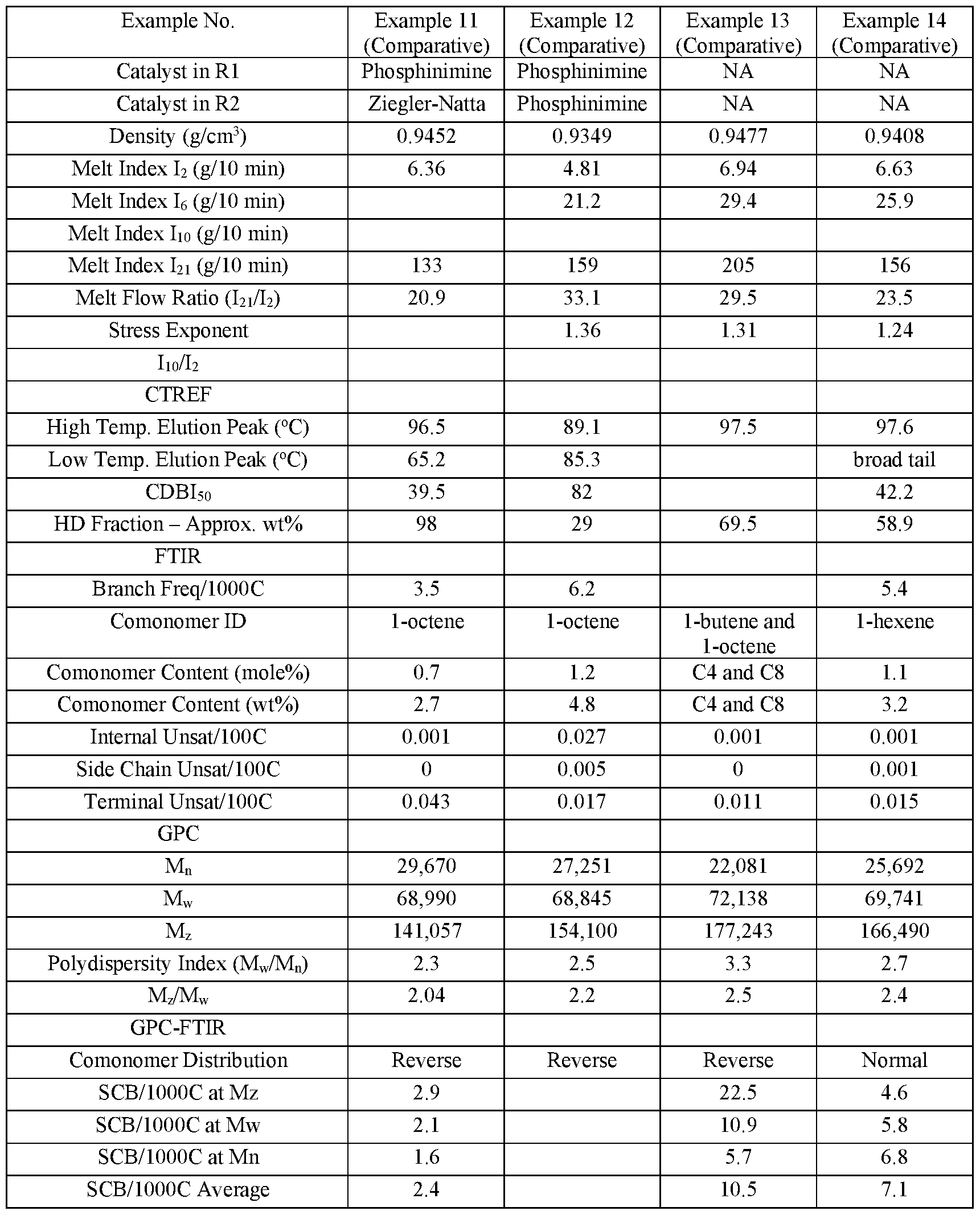
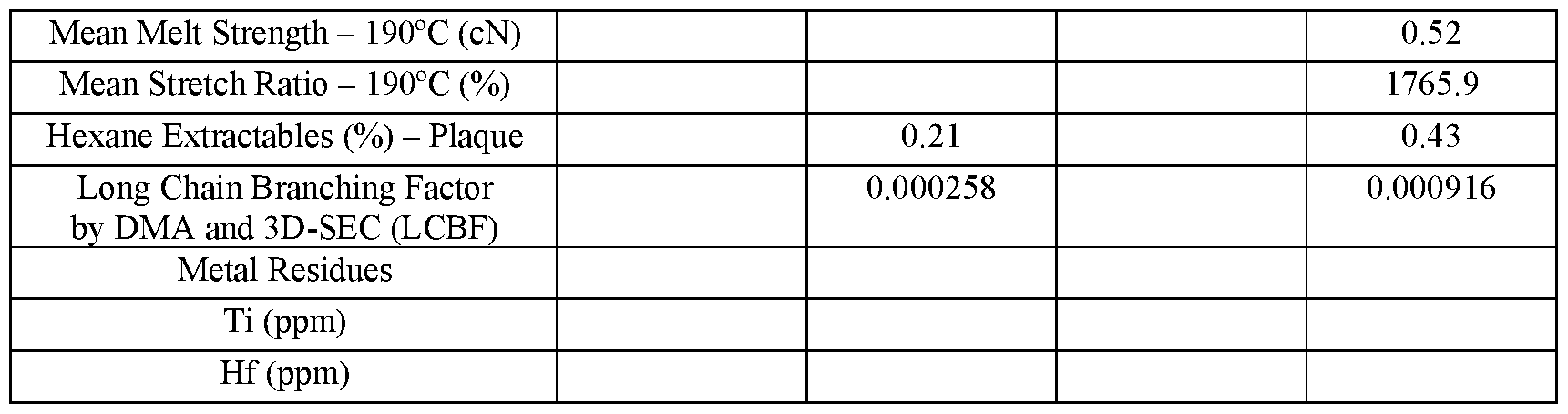


Claims
Priority Applications (3)
| Application Number | Priority Date | Filing Date | Title |
|---|---|---|---|
| KR1020257034946A KR20260003678A (en) | 2023-04-24 | 2024-04-19 | Polymerization processes, HDPE polyethylene compositions and rotational moldings |
| CN202480027420.0A CN121002077A (en) | 2023-04-24 | 2024-04-19 | Polymerization methods, HDPE polyethylene compositions and rotational molding products |
| MX2025012355A MX2025012355A (en) | 2023-04-24 | 2025-10-16 | Polymerization process, hdpe polyethylene composition and rotomolded article |
Applications Claiming Priority (2)
| Application Number | Priority Date | Filing Date | Title |
|---|---|---|---|
| US202363497883P | 2023-04-24 | 2023-04-24 | |
| US63/497,883 | 2023-04-24 |
Publications (1)
| Publication Number | Publication Date |
|---|---|
| WO2024224253A1 true WO2024224253A1 (en) | 2024-10-31 |
Family
ID=90924163
Family Applications (1)
| Application Number | Title | Priority Date | Filing Date |
|---|---|---|---|
| PCT/IB2024/053844 Pending WO2024224253A1 (en) | 2023-04-24 | 2024-04-19 | Polymerization process, hdpe polyethylene composition and rotomolded article |
Country Status (4)
| Country | Link |
|---|---|
| KR (1) | KR20260003678A (en) |
| CN (1) | CN121002077A (en) |
| MX (1) | MX2025012355A (en) |
| WO (1) | WO2024224253A1 (en) |
Citations (27)
| Publication number | Priority date | Publication date | Assignee | Title |
|---|---|---|---|---|
| US5342868A (en) | 1991-12-05 | 1994-08-30 | Asahi Denka Kogyo Kabushiki Kaisha | Crystalline synthetic resin composition |
| US5981636A (en) | 1996-12-27 | 1999-11-09 | 3M Innovative Properties Company | Modifying agents for polyolefins |
| US6372864B1 (en) | 1998-08-19 | 2002-04-16 | Nova Chemicals (International) S.A. | Dual reactor polyethylene process using a phosphinimine catalyst |
| US6444733B1 (en) | 1999-03-01 | 2002-09-03 | Ciba Specialty Chemicals Corporation | Stabilizer combination for the rotomolding process |
| US6465551B1 (en) | 2001-03-24 | 2002-10-15 | Milliken & Company | Bicyclo[2.2.1]heptane dicarboxylate salts as polyolefin nucleators |
| US6599971B2 (en) | 2001-03-29 | 2003-07-29 | Milliken & Company | Metals salts of hexahydrophthalic acid as nucleating additives for crystalline thermoplastics |
| US6777509B2 (en) | 2001-05-11 | 2004-08-17 | Nova Chemicals (International) S.A | Solution polymerization process |
| WO2011050042A1 (en) | 2009-10-21 | 2011-04-28 | Milliken & Company | Thermoplastic polymer composition |
| US8022143B2 (en) | 2008-04-21 | 2011-09-20 | Nova Chemicals (International) S.A | Closures for bottles |
| US8962755B2 (en) | 2011-09-19 | 2015-02-24 | Nova Chemicals (International) S.A. | Polyethylene compositions and closures for bottles |
| WO2015042562A1 (en) | 2013-09-23 | 2015-03-26 | Milliken & Company | Thermoplastic polymer composition |
| WO2015042561A1 (en) | 2013-09-23 | 2015-03-26 | Milliken & Company | Thermoplastic polymer composition |
| WO2015042563A1 (en) | 2013-09-23 | 2015-03-26 | Milliken & Company | Thermoplastic polymer composition |
| US9074082B2 (en) | 2012-12-14 | 2015-07-07 | Nova Chemicals (International) S.A. | Polyethylene compositions having high dimensional stability and excellent processability for caps and closures |
| US9181422B2 (en) | 2013-11-18 | 2015-11-10 | Nova Chemicals (International) S.A. | Enhanced ESCR bimodal rotomolding resin |
| US20160229964A1 (en) | 2014-10-21 | 2016-08-11 | Nova Chemicals (International) S.A. | Rotomolded articles |
| US9475927B2 (en) | 2012-12-14 | 2016-10-25 | Nova Chemicals (International) S.A. | Polyethylene compositions having high dimensional stability and excellent processability for caps and closures |
| US9637628B2 (en) | 2011-09-19 | 2017-05-02 | NOVA Chemicals (International S.A. | Polyethylene compositions and closures made from them |
| US9758653B2 (en) | 2015-08-19 | 2017-09-12 | Nova Chemicals (International) S.A. | Polyethylene compositions, process and closures |
| US20170267822A1 (en) | 2014-10-21 | 2017-09-21 | Nova Chemicals (International) S.A. | Rotomolded articles |
| US20180305531A1 (en) | 2017-04-19 | 2018-10-25 | Nova Chemicals (International) S.A. | Means For Increasing the Molecular Weight and Decreasing the Density of Ethylene Interpolymers Employing Homogeneous and Heterogeneous Catalyst Formulations |
| US10329412B2 (en) | 2017-02-16 | 2019-06-25 | Nova Chemicals (International) S.A. | Caps and closures |
| US10442921B2 (en) | 2017-04-19 | 2019-10-15 | Nova Chemicals (International) S.A. | Means for increasing the molecular weight and decreasing the density employing mixed homogeneous catalyst formulations |
| WO2020240401A1 (en) | 2019-05-31 | 2020-12-03 | Nova Chemicals (International) S.A. | Enhanced escr and ductility bimodal rotomolding resin |
| WO2021014244A1 (en) * | 2019-07-25 | 2021-01-28 | Nova Chemicals (International) S.A. | Rotomolded parts prepared from bimodal polyethylene |
| WO2021214584A1 (en) | 2020-04-20 | 2021-10-28 | Nova Chemicals (International) S.A. | Rotomolding compositions with low relative elasticity |
| WO2022180457A1 (en) * | 2021-02-24 | 2022-09-01 | Nova Chemicals (International) S.A. | Bimodal polyethylene composition |
-
2024
- 2024-04-19 WO PCT/IB2024/053844 patent/WO2024224253A1/en active Pending
- 2024-04-19 KR KR1020257034946A patent/KR20260003678A/en active Pending
- 2024-04-19 CN CN202480027420.0A patent/CN121002077A/en active Pending
-
2025
- 2025-10-16 MX MX2025012355A patent/MX2025012355A/en unknown
Patent Citations (34)
| Publication number | Priority date | Publication date | Assignee | Title |
|---|---|---|---|---|
| US5342868A (en) | 1991-12-05 | 1994-08-30 | Asahi Denka Kogyo Kabushiki Kaisha | Crystalline synthetic resin composition |
| US5981636A (en) | 1996-12-27 | 1999-11-09 | 3M Innovative Properties Company | Modifying agents for polyolefins |
| US6372864B1 (en) | 1998-08-19 | 2002-04-16 | Nova Chemicals (International) S.A. | Dual reactor polyethylene process using a phosphinimine catalyst |
| US6444733B1 (en) | 1999-03-01 | 2002-09-03 | Ciba Specialty Chemicals Corporation | Stabilizer combination for the rotomolding process |
| US6465551B1 (en) | 2001-03-24 | 2002-10-15 | Milliken & Company | Bicyclo[2.2.1]heptane dicarboxylate salts as polyolefin nucleators |
| US6599971B2 (en) | 2001-03-29 | 2003-07-29 | Milliken & Company | Metals salts of hexahydrophthalic acid as nucleating additives for crystalline thermoplastics |
| US6777509B2 (en) | 2001-05-11 | 2004-08-17 | Nova Chemicals (International) S.A | Solution polymerization process |
| US8022143B2 (en) | 2008-04-21 | 2011-09-20 | Nova Chemicals (International) S.A | Closures for bottles |
| WO2011050042A1 (en) | 2009-10-21 | 2011-04-28 | Milliken & Company | Thermoplastic polymer composition |
| US9221966B2 (en) | 2011-09-19 | 2015-12-29 | Nova Chemicals (International) S.A. | Polyethylene compositions and closures for bottles |
| US10519304B2 (en) | 2011-09-19 | 2019-12-31 | Nova Chemicals (International) S.A. | Polyethylene compositions and closures made from them |
| US8962755B2 (en) | 2011-09-19 | 2015-02-24 | Nova Chemicals (International) S.A. | Polyethylene compositions and closures for bottles |
| US9637628B2 (en) | 2011-09-19 | 2017-05-02 | NOVA Chemicals (International S.A. | Polyethylene compositions and closures made from them |
| US9074082B2 (en) | 2012-12-14 | 2015-07-07 | Nova Chemicals (International) S.A. | Polyethylene compositions having high dimensional stability and excellent processability for caps and closures |
| US9475927B2 (en) | 2012-12-14 | 2016-10-25 | Nova Chemicals (International) S.A. | Polyethylene compositions having high dimensional stability and excellent processability for caps and closures |
| WO2015042562A1 (en) | 2013-09-23 | 2015-03-26 | Milliken & Company | Thermoplastic polymer composition |
| WO2015042561A1 (en) | 2013-09-23 | 2015-03-26 | Milliken & Company | Thermoplastic polymer composition |
| WO2015042563A1 (en) | 2013-09-23 | 2015-03-26 | Milliken & Company | Thermoplastic polymer composition |
| US9181422B2 (en) | 2013-11-18 | 2015-11-10 | Nova Chemicals (International) S.A. | Enhanced ESCR bimodal rotomolding resin |
| US9540505B2 (en) | 2013-11-18 | 2017-01-10 | Nova Chemicals (International) S.A. | Enhanced ESCR bimodal rotomolding resin |
| US20160229964A1 (en) | 2014-10-21 | 2016-08-11 | Nova Chemicals (International) S.A. | Rotomolded articles |
| US20170267822A1 (en) | 2014-10-21 | 2017-09-21 | Nova Chemicals (International) S.A. | Rotomolded articles |
| US10023706B2 (en) | 2014-10-21 | 2018-07-17 | Nova Chemicals (International) S.A. | Rotomolded articles |
| US10053564B2 (en) | 2014-10-21 | 2018-08-21 | Nova Chemicals (International) S.A. | Caps and closures |
| US20180298170A1 (en) | 2014-10-21 | 2018-10-18 | Nova Chemicals (International) S.A. | Dilution index |
| US9695309B2 (en) | 2014-10-21 | 2017-07-04 | Nova Chemicals (International) S.A. | Rotomolded articles |
| US9758653B2 (en) | 2015-08-19 | 2017-09-12 | Nova Chemicals (International) S.A. | Polyethylene compositions, process and closures |
| US10329412B2 (en) | 2017-02-16 | 2019-06-25 | Nova Chemicals (International) S.A. | Caps and closures |
| US10442921B2 (en) | 2017-04-19 | 2019-10-15 | Nova Chemicals (International) S.A. | Means for increasing the molecular weight and decreasing the density employing mixed homogeneous catalyst formulations |
| US20180305531A1 (en) | 2017-04-19 | 2018-10-25 | Nova Chemicals (International) S.A. | Means For Increasing the Molecular Weight and Decreasing the Density of Ethylene Interpolymers Employing Homogeneous and Heterogeneous Catalyst Formulations |
| WO2020240401A1 (en) | 2019-05-31 | 2020-12-03 | Nova Chemicals (International) S.A. | Enhanced escr and ductility bimodal rotomolding resin |
| WO2021014244A1 (en) * | 2019-07-25 | 2021-01-28 | Nova Chemicals (International) S.A. | Rotomolded parts prepared from bimodal polyethylene |
| WO2021214584A1 (en) | 2020-04-20 | 2021-10-28 | Nova Chemicals (International) S.A. | Rotomolding compositions with low relative elasticity |
| WO2022180457A1 (en) * | 2021-02-24 | 2022-09-01 | Nova Chemicals (International) S.A. | Bimodal polyethylene composition |
Non-Patent Citations (13)
| Title |
|---|
| ALFRED RUDIN: "The Elements of Polymer Science and Engineering", 1999, ACADEMIC PRESS |
| DEALY JPLAZEK D, RHEOL. BULL., vol. 78, no. 2, 2009, pages 16 - 31 |
| G. MARIN: "Rheological Measurement", 1988, ELSEVIER, article "Oscillatory Rheometry" |
| J.C. RANDALL, J MACROMOL. SCI., REV. MACROMOL. CHEM. PHYS., vol. 29, 1989, pages 201 |
| K. YASUDA: "PhD Thesis", 1979 |
| M. VAN GURPJ. PALMEN, RHEOL. BULL., vol. 67, no. 1, 1998, pages 5 - 8 |
| PAUL J. DESLAURIERS, POLYMER, vol. 43, no. 119345-01-06, 2002, pages 159 - 170 |
| R.B. BIRD ET AL.: "Dynamics of Polymer Liquids", vol. 1, 1987, WILEY-INTERSCIENCE PUBLICATIONS, article "Fluid Mechanics", pages: 228 |
| S. TRINKLEP. WALTERC. FRIEDRICH, RHEO. ACTA, vol. 41, 2002, pages 103 - 113 |
| W.Q. WANGM. KONTOPOULOU, POLYMER ENGINEERING AND SCIENCE, vol. 44, no. 9, 2004, pages 1662 - 1669 |
| W.W. GRAESSLEY, ACC. CHEM. RES., vol. 10, 1977, pages 332 - 339 |
| W.W. YAUD.R. HILL, INT. J. POLYM. ANAL. CHARACT., vol. ;, 1996, pages 151 |
| WILD ET AL., J. POLYM. SCI., PART B, POLYM. PHYS., vol. 20, no. 3, pages 441 - 455 |
Also Published As
| Publication number | Publication date |
|---|---|
| MX2025012355A (en) | 2025-11-03 |
| KR20260003678A (en) | 2026-01-07 |
| CN121002077A (en) | 2025-11-21 |
Similar Documents
| Publication | Publication Date | Title |
|---|---|---|
| US9695309B2 (en) | Rotomolded articles | |
| US12351704B2 (en) | Use of recycled polyethylene in closures for bottles | |
| US10023706B2 (en) | Rotomolded articles | |
| US20220289953A1 (en) | Rotomolded parts prepared from bimodal polyethylene | |
| US20240174778A1 (en) | High density polyethylene composition | |
| US20220282074A1 (en) | Single site catalysed multimodal polyethylene composition | |
| KR20230159408A (en) | Polyethylene composition for biaxial orientation | |
| US11286379B2 (en) | Flexible rotationally molded article | |
| US20240301182A1 (en) | Bimodal polyethylene composition | |
| CA3057934A1 (en) | Flexible rotationally molded article | |
| CA3158392A1 (en) | Linear high-density polyethylene with high toughness and high escr | |
| EP3647645A1 (en) | Polyethylene composition for high pressure resistant pipes | |
| WO2024224253A1 (en) | Polymerization process, hdpe polyethylene composition and rotomolded article | |
| WO2025114887A1 (en) | Composition for use in a rotomolding process | |
| WO2024224252A1 (en) | Linear high-density polyethylene composition suitable for intermediate bulk container applications | |
| KR20260003679A (en) | Linear high-density polyethylene compositions and rotational molded products | |
| WO2025114884A1 (en) | Composition for use in a rotomolding process | |
| BR112022006650B1 (en) | ROTOMOLDED ARTICLE AND PROCESS FOR FORMING A ROTOMOLDED ARTICLE |
Legal Events
| Date | Code | Title | Description |
|---|---|---|---|
| 121 | Ep: the epo has been informed by wipo that ep was designated in this application |
Ref document number: 24722752 Country of ref document: EP Kind code of ref document: A1 |
|
| WWE | Wipo information: entry into national phase |
Ref document number: MX/A/2025/012355 Country of ref document: MX |
|
| WWE | Wipo information: entry into national phase |
Ref document number: KR1020257034946 Country of ref document: KR |
|
| WWP | Wipo information: published in national office |
Ref document number: MX/A/2025/012355 Country of ref document: MX |
|
| REG | Reference to national code |
Ref country code: BR Ref legal event code: B01A Ref document number: 112025022837 Country of ref document: BR |
|
| ENP | Entry into the national phase |
Ref document number: 2024722752 Country of ref document: EP Effective date: 20251124 |
|
| WWE | Wipo information: entry into national phase |
Ref document number: 2024722752 Country of ref document: EP |
|
| NENP | Non-entry into the national phase |
Ref country code: DE |
|
| ENP | Entry into the national phase |
Ref document number: 2024722752 Country of ref document: EP Effective date: 20251124 |
|
| ENP | Entry into the national phase |
Ref document number: 2024722752 Country of ref document: EP Effective date: 20251124 |
|
| ENP | Entry into the national phase |
Ref document number: 2024722752 Country of ref document: EP Effective date: 20251124 |