WO2024206229A1 - Pesticidal enzymes for use on nematodes, insects, and mollusks - Google Patents
Pesticidal enzymes for use on nematodes, insects, and mollusks Download PDFInfo
- Publication number
- WO2024206229A1 WO2024206229A1 PCT/US2024/021327 US2024021327W WO2024206229A1 WO 2024206229 A1 WO2024206229 A1 WO 2024206229A1 US 2024021327 W US2024021327 W US 2024021327W WO 2024206229 A1 WO2024206229 A1 WO 2024206229A1
- Authority
- WO
- WIPO (PCT)
- Prior art keywords
- plant
- enzyme
- sequence
- seq
- spp
- Prior art date
- Legal status (The legal status is an assumption and is not a legal conclusion. Google has not performed a legal analysis and makes no representation as to the accuracy of the status listed.)
- Ceased
Links
Classifications
-
- A—HUMAN NECESSITIES
- A01—AGRICULTURE; FORESTRY; ANIMAL HUSBANDRY; HUNTING; TRAPPING; FISHING
- A01N—PRESERVATION OF BODIES OF HUMANS OR ANIMALS OR PLANTS OR PARTS THEREOF; BIOCIDES, e.g. AS DISINFECTANTS, AS PESTICIDES OR AS HERBICIDES; PEST REPELLANTS OR ATTRACTANTS; PLANT GROWTH REGULATORS
- A01N63/00—Biocides, pest repellants or attractants, or plant growth regulators containing microorganisms, viruses, microbial fungi, animals or substances produced by, or obtained from, microorganisms, viruses, microbial fungi or animals, e.g. enzymes or fermentates
- A01N63/20—Bacteria; Substances produced thereby or obtained therefrom
- A01N63/22—Bacillus
-
- C—CHEMISTRY; METALLURGY
- C12—BIOCHEMISTRY; BEER; SPIRITS; WINE; VINEGAR; MICROBIOLOGY; ENZYMOLOGY; MUTATION OR GENETIC ENGINEERING
- C12N—MICROORGANISMS OR ENZYMES; COMPOSITIONS THEREOF; PROPAGATING, PRESERVING, OR MAINTAINING MICROORGANISMS; MUTATION OR GENETIC ENGINEERING; CULTURE MEDIA
- C12N9/00—Enzymes; Proenzymes; Compositions thereof; Processes for preparing, activating, inhibiting, separating or purifying enzymes
- C12N9/14—Hydrolases (3)
- C12N9/48—Hydrolases (3) acting on peptide bonds (3.4)
- C12N9/50—Proteinases, e.g. Endopeptidases (3.4.21-3.4.25)
-
- A—HUMAN NECESSITIES
- A01—AGRICULTURE; FORESTRY; ANIMAL HUSBANDRY; HUNTING; TRAPPING; FISHING
- A01N—PRESERVATION OF BODIES OF HUMANS OR ANIMALS OR PLANTS OR PARTS THEREOF; BIOCIDES, e.g. AS DISINFECTANTS, AS PESTICIDES OR AS HERBICIDES; PEST REPELLANTS OR ATTRACTANTS; PLANT GROWTH REGULATORS
- A01N63/00—Biocides, pest repellants or attractants, or plant growth regulators containing microorganisms, viruses, microbial fungi, animals or substances produced by, or obtained from, microorganisms, viruses, microbial fungi or animals, e.g. enzymes or fermentates
- A01N63/50—Isolated enzymes; Isolated proteins
-
- A—HUMAN NECESSITIES
- A01—AGRICULTURE; FORESTRY; ANIMAL HUSBANDRY; HUNTING; TRAPPING; FISHING
- A01P—BIOCIDAL, PEST REPELLANT, PEST ATTRACTANT OR PLANT GROWTH REGULATORY ACTIVITY OF CHEMICAL COMPOUNDS OR PREPARATIONS
- A01P21/00—Plant growth regulators
-
- A—HUMAN NECESSITIES
- A01—AGRICULTURE; FORESTRY; ANIMAL HUSBANDRY; HUNTING; TRAPPING; FISHING
- A01P—BIOCIDAL, PEST REPELLANT, PEST ATTRACTANT OR PLANT GROWTH REGULATORY ACTIVITY OF CHEMICAL COMPOUNDS OR PREPARATIONS
- A01P5/00—Nematocides
-
- A—HUMAN NECESSITIES
- A01—AGRICULTURE; FORESTRY; ANIMAL HUSBANDRY; HUNTING; TRAPPING; FISHING
- A01P—BIOCIDAL, PEST REPELLANT, PEST ATTRACTANT OR PLANT GROWTH REGULATORY ACTIVITY OF CHEMICAL COMPOUNDS OR PREPARATIONS
- A01P7/00—Arthropodicides
- A01P7/04—Insecticides
-
- A—HUMAN NECESSITIES
- A01—AGRICULTURE; FORESTRY; ANIMAL HUSBANDRY; HUNTING; TRAPPING; FISHING
- A01P—BIOCIDAL, PEST REPELLANT, PEST ATTRACTANT OR PLANT GROWTH REGULATORY ACTIVITY OF CHEMICAL COMPOUNDS OR PREPARATIONS
- A01P9/00—Molluscicides
-
- C—CHEMISTRY; METALLURGY
- C12—BIOCHEMISTRY; BEER; SPIRITS; WINE; VINEGAR; MICROBIOLOGY; ENZYMOLOGY; MUTATION OR GENETIC ENGINEERING
- C12N—MICROORGANISMS OR ENZYMES; COMPOSITIONS THEREOF; PROPAGATING, PRESERVING, OR MAINTAINING MICROORGANISMS; MUTATION OR GENETIC ENGINEERING; CULTURE MEDIA
- C12N1/00—Microorganisms, e.g. protozoa; Compositions thereof; Processes of propagating, maintaining or preserving microorganisms or compositions thereof; Processes of preparing or isolating a composition containing a microorganism; Culture media therefor
-
- C—CHEMISTRY; METALLURGY
- C12—BIOCHEMISTRY; BEER; SPIRITS; WINE; VINEGAR; MICROBIOLOGY; ENZYMOLOGY; MUTATION OR GENETIC ENGINEERING
- C12N—MICROORGANISMS OR ENZYMES; COMPOSITIONS THEREOF; PROPAGATING, PRESERVING, OR MAINTAINING MICROORGANISMS; MUTATION OR GENETIC ENGINEERING; CULTURE MEDIA
- C12N9/00—Enzymes; Proenzymes; Compositions thereof; Processes for preparing, activating, inhibiting, separating or purifying enzymes
- C12N9/14—Hydrolases (3)
- C12N9/16—Hydrolases (3) acting on ester bonds (3.1)
- C12N9/18—Carboxylic ester hydrolases (3.1.1)
-
- C—CHEMISTRY; METALLURGY
- C12—BIOCHEMISTRY; BEER; SPIRITS; WINE; VINEGAR; MICROBIOLOGY; ENZYMOLOGY; MUTATION OR GENETIC ENGINEERING
- C12N—MICROORGANISMS OR ENZYMES; COMPOSITIONS THEREOF; PROPAGATING, PRESERVING, OR MAINTAINING MICROORGANISMS; MUTATION OR GENETIC ENGINEERING; CULTURE MEDIA
- C12N9/00—Enzymes; Proenzymes; Compositions thereof; Processes for preparing, activating, inhibiting, separating or purifying enzymes
- C12N9/14—Hydrolases (3)
- C12N9/16—Hydrolases (3) acting on ester bonds (3.1)
- C12N9/18—Carboxylic ester hydrolases (3.1.1)
- C12N9/20—Triglyceride splitting, e.g. by means of lipase
-
- C—CHEMISTRY; METALLURGY
- C12—BIOCHEMISTRY; BEER; SPIRITS; WINE; VINEGAR; MICROBIOLOGY; ENZYMOLOGY; MUTATION OR GENETIC ENGINEERING
- C12N—MICROORGANISMS OR ENZYMES; COMPOSITIONS THEREOF; PROPAGATING, PRESERVING, OR MAINTAINING MICROORGANISMS; MUTATION OR GENETIC ENGINEERING; CULTURE MEDIA
- C12N9/00—Enzymes; Proenzymes; Compositions thereof; Processes for preparing, activating, inhibiting, separating or purifying enzymes
- C12N9/14—Hydrolases (3)
- C12N9/24—Hydrolases (3) acting on glycosyl compounds (3.2)
- C12N9/2402—Hydrolases (3) acting on glycosyl compounds (3.2) hydrolysing O- and S- glycosyl compounds (3.2.1)
- C12N9/2405—Glucanases
- C12N9/2434—Glucanases acting on beta-1,4-glucosidic bonds
- C12N9/2442—Chitinase (3.2.1.14)
Definitions
- the present invention relates to isolated enzymes as well as recombinant microorganisms comprising enzymes exhibiting insecticidal, nematicidal, or pesticidal activity. Methods of using the isolated enzymes and recombinant microorganisms to improve plant health or growth are further provided.
- the invention generally relates to protecting plants from plant pathogens and pests as well as the prevention and management of plant disease caused by plant pathogens and pests.
- Novel compositions and methods are disclosed exhibiting insecticidal, nematicidal, and pesticidal activity against agriculturally relevant pests of plants and seeds.
- enzymes as well as recombinant microorganisms expressing enzymes for protecting a plant from a plant pathogen or pest.
- Plant parasites and pathogens including insects, mollusks, arachnids, and nematodes, cause major economic losses annually and affect most agricultural crops worldwide.
- the provided herein is an isolated enzyme selected from an esterase, a chitinase, a protease, a lipase, a polyurethanase, a collagenase, and combinations of any thereof; wherein the chitinase comprises a sequence having at least 85% sequence identity to a sequence selected from SEQ ID NOs: 179-205, and 249, the protease comprises a sequence having at least 85% sequence identity to a sequence selected from SEQ ID NOs: 122-178, 247, and 310-327, the lipase comprises a sequence having at least 85% sequence identity to a sequence selected from SEQ ID NOs: 1-82, 250, 251, 256-260, and 290-307, the polyurethanase comprises a sequence having at least 85% sequence identity to a sequence selected from SEQ ID NOs:101-121, 308, and 309, or the collagenase comprises a sequence having at least 85% sequence identity to
- the esterase comprises a sequence having at least 85% sequence identity to a sequence selected from SEQ ID NOs:83- 100, 248, 252-255, and 287-289.
- a composition for protecting a plant from a pest or pathogen comprising at least one isolated enzyme is provided, wherein the composition exhibits insecticidal, nematicidal, or pesticidal activity.
- the pest or pathogen is defined as an insect, a mollusk, an arachnid, or a nematode.
- a plant seed coated with the composition is provided.
- the composition further comprises at least one agriculturally acceptable carrier; or agrochemical.
- the agrochemical is an insecticide, or the agriculturally acceptable carrier is a surfactant.
- the agrochemical is a nematicide.
- the nematicide is fluopyram or pydiflumetofen.
- a method for protecting a plant from a pest or pathogen comprising applying at least one isolated enzyme to a plant growth medium, a plant, a plant seed, or an area surrounding a plant, or a plant seed, wherein the enzyme is selected from an esterase, a chitinase, a protease, a lipase, a polyurethanase, a collagenase, and combinations of any thereof; wherein the chitinase comprises a sequence having at least 85% sequence identity to a sequence selected from SEQ ID NOs: 179-205, and 249, the protease comprises a sequence having at least 85% sequence identity to a sequence selected from SEQ ID NOs: 122-178, 247, and 310-327, the lipase comprises a sequence having at least 85% sequence identity to a sequence selected from SEQ ID NOs: 1-82, 250, 251, 256-260, and 290-307, the polyurethan
- the esterase comprises a sequence having at least 85% sequence identity to a sequence selected from SEQ ID N0s:83-100, 248, 252-255, and 287-289.
- the method further comprises applying at least one agrochemical or agriculturally acceptable carrier.
- the agriculturally acceptable carrier comprises a surfactant or a preservative.
- the method comprises a foliar application to the plant; or applying the enzyme to the area surrounding the plant or plant seed.
- the enzyme is applied to soil surrounding the plant or plant seed.
- the method comprises (a) applying the enzyme to the plant or plant area; (b) applying the enzyme to the plant seed at the time of planting; or (c) coating the plant seed with the enzyme.
- a recombinant microorganism that expresses an enzyme, wherein expression of the enzyme is increased as compared to the expression level of the enzyme in a wild-type microorganism of the same kind under the same conditions; and the enzyme is selected from an esterase, a chitinase, a protease, a lipase, a polyurethanase, a collagenase, and combinations of any thereof; wherein the chitinase comprises a sequence having at least 85% sequence identity to a sequence selected from SEQ ID NOs: 179-205, and 249, the protease comprises a sequence having at least 85% sequence identity to a sequence selected from SEQ ID NOs: 122- 178, 247, and 310-327, the lipase comprises a sequence having at least 85% sequence identity to a sequence selected from SEQ ID NOs:l-82, 250, 251, 256-260, and 290-307, the polyurethana
- the esterase comprises a sequence having at least 85% sequence identity to a sequence selected from SEQ ID N0s:83-100, 248, 252-255, and 287-289.
- a composition for protecting a plant from a pest or pathogen comprising the recombinant microorganism is provided.
- the pest or pathogen is defined as an insect, a mollusk, an arachnid, or a nematode.
- a plant seed coated with the composition is provided.
- the composition further comprises at least one agriculturally acceptable carrier; or agrochemical.
- the agriculturally acceptable carrier comprises a surfactant or a preservative.
- a fermentation product of the recombinant microorganism is also provided.
- a formulation comprising the fermentation product and at least one agriculturally acceptable carrier is provided.
- a formulation for protecting a plant from a pest or pathogen comprising an esterase.
- the formulation comprises a fertilizer and an esterase.
- a formulation for promoting plant growth or plant nutrient uptake comprising an esterase.
- the formulation comprises an agrochemical.
- a plant seed coated with the formulation is provided.
- the formulation comprises a fertilizer or a nitrogen stabilizer.
- the fertilizer comprises monoammonium phosphate, di-ammonium phosphate, urea, or a combination of any thereof.
- the nitrogen stabilizer comprises N-(n-butyl) thiophosphoric triamide (NBPT).
- provided herein is method for promoting plant growth or plant nutrient uptake comprising applying at least one isolated esterase to a plant growth medium, a plant, a plant seed, or an area surrounding a plant or a plant seed.
- a method for promoting plant growth or plant nutrient uptake comprising treating a fertilizer with at least one isolated esterase, and applying the treated fertilizer to a plant, a plant seed, or an area surrounding a plant or a plant seed.
- the fertilizer comprises monoammonium phosphate, di-ammonium phosphate, urea, or a combination of any thereof.
- the fertilizer is further treated with a nitrogen stabilizer.
- the esterase comprises a sequence having at least 80% sequence identity to SEQ ID NO:254; or the nitrogen stabilizer comprises N-(n-butyl) thiophosphoric triamide.
- a formulation for protecting a plant from a pest or pathogen comprising a fertilizer and a recombinant microorganism that expresses an esterase, wherein expression of the esterase is increased as compared to the expression level of the enzyme in a wild-type microorganism of the same kind under the same conditions.
- a plant seed coated with the formulation is provided.
- a formulation for promoting plant growth or plant nutrient uptake comprising a fertilizer and a recombinant microorganism that expresses an esterase, wherein expression of the esterase is increased as compared to the expression level of the enzyme in a wild-type microorganism of the same kind under the same conditions.
- said formulation protects against a plant from a pest or pathogen and promotes plant growth or plant nutrient uptake.
- a method for protecting a plant from a pest or pathogen comprising applying at least one recombinant microorganism that expresses an enzyme to a plant growth medium, a plant, a plant seed, or an area surrounding a plant or a plant seed, wherein expression of the enzyme is increased as compared to the expression level of the enzyme in a wild-type microorganism of the same kind under the same conditions; wherein the enzyme is selected from an esterase, a chitinase, a protease, a lipase, a polyurethanase, a collagenase, and combinations of any thereof; wherein the chitinase comprises a sequence having at least 85% sequence identity to a sequence selected from SEQ ID NOs: 179-205, and 249, the protease comprises a sequence having at least 85% sequence identity to a sequence selected from SEQ ID NOs: 122- 178, 247, and 310-327, the lip
- the esterase comprises a sequence having at least 80% sequence identity to a sequence selected from SEQ ID N0s:83-100, 248, 252-255, and 287-289.
- the method comprises a foliar application to the plant.
- the method comprises applying the recombinant microorganism to the area surrounding the plant or plant seed.
- the recombinant microorganism is applied to soil surrounding the plant or plant seed.
- the method comprises (a) applying the recombinant microorganism to the plant or plant area; (b) applying the recombinant microorganism to the plant seed at the time of planting; or (c) coating the plant seed with the recombinant microorganism.
- compositions, methods, or formulations provided herein may comprise an esterase comprising a sequence having at least 80% sequence identity to a sequence selected from SEQ ID N0s:83-100, 248, 252-255, and 287-289.
- the compositions, methods, or formulations provided herein may further comprise a glucanase.
- the compositions, methods, or formulations provided herein may comprise at least two isolated enzymes. In certain embodiments, at least two enzymes are present in synergistically effective amounts.
- a formulation for protecting a plant from a pest or pathogen comprising a fertilizer and a recombinant microorganism that expresses an esterase, wherein expression of the esterase is increased as compared to the expression level of the enzyme in a wild-type microorganism of the same kind under the same conditions.
- a formulation for promoting plant growth or plant nutrient uptake comprising a fertilizer and a recombinant microorganism that expresses an esterase, wherein expression of the esterase is increased as compared to the expression level of the enzyme in a wild-type microorganism of the same kind under the same conditions.
- the formulation comprises an agrochemical.
- the formulation comprises a fertilizer or a nitrogen stabilizer.
- the fertilizer comprises monoammonium phosphate, di-ammonium phosphate, urea, or a combination of any thereof.
- the nitrogen stabilizer comprises N-(n- butyl) thiophosphoric triamide (NBPT).
- a method for promoting plant growth or plant nutrient uptake comprising treating a fertilizer with at least one recombinant microorganism that expresses an esterase, wherein expression of the esterase is increased as compared to the expression level of the enzyme in a wild-type microorganism of the same kind under the same conditions, and applying the treated fertilizer to a plant, a plant seed, or an area surrounding a plant or a plant seed.
- the fertilizer comprises monoammonium phosphate, di-ammonium phosphate, urea, or a combination of any thereof.
- the fertilizer is further treated with a nitrogen stabilizer.
- the esterase comprises a sequence having at least 80% sequence identity to SEQ ID NO:254 and the nitrogen stabilizer comprises N-(n-butyl) thiophosphoric triamide.
- a method of producing a formulation for protecting a plant from a pest or pathogen comprising mixing a recombinant microorganism disclosed herein with at least one agrochemical or agriculturally acceptable carrier.
- the method comprises mixing the recombinant microorganism with an agrochemical and an agriculturally acceptable carrier.
- Also provided herein is a method of producing a formulation for protecting a plant from a pest or pathogen, comprising mixing a recombinant microorganism described herein with at least one agrochemical or agriculturally acceptable carrier.
- the method comprises mixing the recombinant microorganism with an agrochemical and an agriculturally acceptable carrier.
- a method of producing a composition for protecting a plant from a pest or pathogen comprising obtaining a recombinant microorganism that expresses an enzyme; wherein the enzyme is selected from an esterase, a chitinase, a protease, a lipase, a polyurethanase, a collagenase, and combinations of any thereof; wherein the esterase comprises a sequence having at least 80% sequence identity to a sequence selected from SEQ ID N0s:83-100, 248, 252-255, and 287-289, the chitinase comprises a sequence having at least 85% sequence identity to a sequence selected from SEQ ID NOs: 179-205, and 249, the protease comprises a sequence having at least 85% sequence identity to a sequence selected from SEQ ID NOs:122-178, 247, and 310-327, the lipase comprises a sequence having at least 85% sequence identity
- purifying the enzyme may comprises centrifugation, filtration, concentration, or removal of cell material and debris, or a combination any thereof. In other embodiments, purifying the enzyme comprises lyophilizing, spray drying, or freeze drying the enzyme. In other embodiments, wherein the purified enzyme is combined with a liquid agrochemical.
- a method of producing a composition for protecting a plant from a pest or pathogen comprising obtaining a recombinant microorganism that expresses an enzyme, wherein expression of the enzyme is increased as compared to the expression level of the enzyme in a wild- type microorganism of the same kind under the same conditions; and the enzyme is selected from an esterase, a chitinase, a protease, a lipase, a polyurethanase, a collagenase, and combinations of any thereof; wherein the esterase comprises a sequence having at least 80% sequence identity to a sequence selected from SEQ ID NOs:83- 100, 248, 252-255, and 287-289, the chitinase comprises a sequence having at least 85% sequence identity to a sequence selected from SEQ ID NOs: 179-205, and 249, the protease comprises a sequence having at least 85% sequence identity to a sequence selected
- purifying the recombinant microorganism may comprises centrifugation, filtration, concentration, or a combination any thereof. In some embodiments, purifying the recombinant microorganism comprises lyophilizing, spray drying, or freeze drying the enzyme. In other embodiments, wherein the purified recombinant microorganism is combined with a liquid agrochemical.
- a method for controlling a plant pest or plant pest infestation comprising contacting the pest with an effective amount of an isolated enzyme selected from an esterase, a chitinase, a protease, a lipase, a polyurethanase, a collagenase, and combinations of any thereof; wherein the chitinase comprises a sequence having at least 85% sequence identity to a sequence selected from SEQ ID NOs: 179-205, and 249, the protease comprises a sequence having at least 85% sequence identity to a sequence selected from SEQ ID NOs: 122- 178, 247, and 310-327, the lipase comprises a sequence having at least 85% sequence identity to a sequence selected from SEQ ID NOs: 1-82, 250, 251, 256- 260, and 290-307, the polyurethanase comprises a sequence having at least 85% sequence identity to a sequence selected from SEQ ID NOs:101
- the esterase comprises a sequence having at least 80% sequence identity to a sequence selected from SEQ ID N0s:83-100, 248, 252-255, and 287-289.
- the plant pest comprises Black armyworm (Spodoptera cosmioides), Black cutworm (Agrotis ipsilon), Corn earworm (Helicoverpa zed), Cotton leaf worm (Alabama argillacea). Diamondback moth (Plulella xyloslella), European corn borer (Oslrinia nubilalis).
- Fall armyworm (Spodoptera frugiperda), CrylFal resistant Fall armyworm (Spodoptera frugiperda), Old World bollworm (OWB, Helicoverpa annigera), Southern armyworm (Spodoptera eridania), Soybean looper (Chrysodeixis includens), Spotted bollworm (Earias villella).
- the plant pest comprises a nematode species from the genera Heterodera and Meloidogynes.
- the plant pest comprises a nematode species selected from the group consisting of: Aglenchus spp., Anguina spp., Aphelenchoides spp., Belonolaimus spp., Bursaphelenchus spp., Cacopaurus spp., Criconemella spp., Criconemoides spp., Ditylenchus spp., Dolichodorus spp., Globodera spp., Helicotylenchus spp., Hemicriconemoides spp., Hemicycliophora spp., Heterodera spp., Hoplolaimus spp., Longidorus spp., Lygus spp., Meloidogyne spp., Meloinema spp., Nacobbus spp., Neotylenchus spp., Paralongidorus spppp., Para
- SEQ ID NOs: 1-82, 250, 251, 256-260, and 290-307 are lipase polypeptide sequences.
- SEQ ID NOs: 83-100, 248, 252-255, and 287-289 are esterase polypeptide sequences.
- SEQ ID Nos: 101-121, 308, and 309 are polyurethanase polypeptide sequences.
- SEQ ID Nos: 122-178, 247, and 310-327 are protease polypeptide sequences.
- SEQ ID NOs: 179-205, and 249 are chitinase polypeptide sequences.
- SEQ ID NOs: 206-208, and 328 are collagenase polypeptide sequences.
- SEQ ID NOs: 209-246, and 267-286 are amino acid sequences of signal peptides.
- SEQ ID Nos: 261-266 are chaperone polypeptide sequences.
- Plant pathogens and pests including fungi, fungal-like organisms, bacteria, phytoplasmas, viruses, viroids, insects, and nematodes, can cause significant damage to crop plants, leading to substantial economic loss.
- Such plant pathogens and pests may infect all types of plant tissue and may be transmitted from plant to plant by a vector or through direct exposure to the pathogen.
- a number of strategies are currently available and have been employed to control and limit damage caused by plant pathogens and pests. For example, organophosphorus and carbamate nematicides, endophytic fungi, and transgenic plants producing Cry-proteins are currently available to protect against damage caused by nematodes.
- the present disclosure overcomes the limitations of the prior art by providing enzymes and recombinant microorganisms expressing said enzymes as well as compositions and methods using the same. These enzymes exhibit insecticidal, nematicidal, or pesticidal activity; and yield significantly increased protection against plant pathogens and pests.
- a susceptible host plant In order for a plant pathogen or pest to cause plant damage and disease, a susceptible host plant, a virulent pathogen or pest, and a suitable environment are all required. Accordingly, provided herein are methods and compositions for altering one or more of these requirements to protect a plant from a pathogen or pest.
- the ability to produce these desirable effects using the enzymes described herein offers unique benefits not otherwise available in the art.
- the present disclosure provides, in certain embodiments, methods and compositions for protecting a plant from a pathogen or pest comprising the enzymes described herein.
- these enzymes may act directly on the plant pathogen or pest, e.g., contacting the pest or being provided in the diet of the target pest; or indirectly, e.g., by acting on the environment of the plant pathogen or pest.
- a polypeptide such as an enzyme disclosed herein
- polypeptides are intended to include the result of providing an effective amount of a polypeptide to a pathogen or pest where the exposure of the pathogen or pest to the enzyme results in inhibiting, suppressing, controlling, or killing. These terms also include repulsion of the pathogen or pest from the plant, a tissue of the plant, a plant part, seed, plant cells, or from the particular geographic location where the plant may be growing, as a result of providing an effective amount of the polypeptide on the plant.
- the polypeptide can be applied to the plant or to the environment within the location where the plant is located.
- bioactivity”, “effective”, “efficacious” or variations thereof are also terms interchangeably utilized in this application to describe the effects of polypeptides of the present invention on plant pathogens and pests.
- such terms describe, for example, a decrease in the growth of a nematode plant pest, a decrease in the ability of the nematode to survive, grow, move, feed, and/or reproduce, a decrease in the infectivity of a nematode plant pest, a decrease in the infestation of a plant by a nematode plant pest, and/or a decrease in nematode cyst development by a nematode plant pest on roots of a plant as compared to an appropriate control.
- such terms describe, for example, a decrease in the growth of a snail pest, a decrease in the ability of the snail to survive, gain weight, grow, move, feed, and/or reproduce.
- An effective amount of a polypeptide provided herein when provided in the vicinity of a target pest or in the diet of a target pest, or when in contact with a target pest, exhibits pesticidal activity when the polypeptide contacts the pest.
- a polypeptide can be an enzyme.
- Pesticidal or insecticidal chemical agents can be used alone or in combinations with one or more polypeptides of the present disclosure. Chemical agents include but are not limited to dsRNA molecules targeting specific genes for suppression in a target pest, organochlorides, organophosphates, carbamates, pyrethroids, nconicotinoids, and ryanoids.
- the phrases “present together” and “co-located” arc intended to include any instance of which a target pest has been contacted by the polypeptide as well as any other agent also present in an effective amount relative to the target pest.
- Contacted is intended to refer to being present in the vicinity of the target pest, or the delivery of a pesticidally effective amount of the polypeptide and/or agent to the target pest through exterior contact with the pest or through ingestion by the pest.
- reference to a pest means pests of a crop or ornamental plant, including Lepidoptera, Coleopteran, Hemipteran and Homopteran insect pests of plants, as well as nematodes, snails, and pathogenic fungi of plants.
- the insect pests of the order Lepidoptera include, but are not limited to, army worms, cutworms, loopers, and heliothines in the family Noctuidae, e.g., Fall army worm (Spodoptera frugiperda), Beet armyworm (Spodoptera exigua), Black armyworm (Spodoptera cosmioides), Southern armyworm (Spodoptera eridania), bertha armyworm (Mamestra con/iguraia).
- Fall army worm Spodoptera frugiperda
- Beet armyworm Spodoptera exigua
- Black armyworm Spodoptera cosmioides
- Southern armyworm Spodoptera eridania
- bertha armyworm Milestra con/iguraia
- sunflower moth (Homoeosoma electellum), lesser cornstalk borer (Elasmopalpus lignosellus)', leafrollers, budworms, seed worms, and fruit worms in the Family Tortricidae, e.g., codling moth (Cydia pomonella), grape berry moth (Endopiza viteana), oriental fruit moth (Grapholita molesta), sunflower bud moth (Suleima helianthana)', and many other economically important Lepidoptera, e.g., diamondback moth (Plutella xylostella), pink bollworm (Pectinophora gossypiella), and gypsy moth (Lymantria dispar).
- insect pests of order Lepidoptera include, e.g., cotton leaf worm (Alabama argillacea), fruit tree leaf roller (Archips argyrospila), European leafroller (Archips rosana) and other Archips species, (Chilo suppressalis, Asiatic rice borer, or rice stem borer), rice leaf roller (Cnaphalocrocis medinalis), corn root webworm (Crambus caliginosellus), bluegrass webworm (Crambus teterrellus), soiled corn borer (Diatraea grandiosella), surgarcane borer (Diatraea saccharalis), spiny bollworm (Earias insulana), spotted bollworm (Earias vittella), American bollworm (Helicoverpa armigera), com earworm (Helicoverpa zea, also known as soybean pod worm and cotton bollworm), tobacco budworm (Heliothis virescens), sod webworm (Her
- the pests may also include phytoparasitic pests from the phylum Nematoda, for example, Aglenchus spp., Anguina spp., Aphelenchoides spp., Belonolaimus spp., Bursaphelenchus spp., Cacopaurus spp., Criconemella spp., Criconemoides spp., Ditylenchus spp., Dolichodorus spp., Globodera spp., Helicotylenchus spp., Hemicriconemoides spp., Hemicycliophora spp., Pleterodera spp., Hoplolaimus spp., Longidorus spp., Lygus spp., Meloidogyne spp., Meloinema spp., Nacobbus spp., N eotylenchus spp.,
- an “isolated enzyme”, or an equivalent term or phrase is intended to mean that the enzyme is one that is present alone or in combination with other compositions, but not within its natural environment.
- a polypeptide or enzyme would be “isolated” within the scope of this disclosure so long as it is produced in a space in which it is not normally found to be produced in nature, i.e., in a transgenic or recombinant cell, in a transgenic or recombinant bacterium or microorganism, or in a DNA vacant cell or minicell produced from a transgenic or recombinant bacterium or microorganism.
- Polypeptides and polynucleotide sequences/coding sequences can be isolated from the organism in which these are produced, i.e., any number of means known in the art, such as filtration, precipitation, capture (using various molecules which exhibit affinity specifically to the protein or nucleic acid structure), and the like, further “isolating” the molecules from constituents that create an impurity and the like.
- a recombinant cell e.g. recombinant microorganism
- plant or bacterium by its very nature is not naturally occurring, is isolated, and so is not a product of nature, and so is patentable in every territory in the world on this basis.
- the term “free enzyme” as used herein refers to an enzyme preparation that is substantially free of intact cells.
- the term “free enzyme” includes, but is not limited to, crude cell extracts containing an enzyme, partially purified, substantially purified, or purified enzyme.
- partially purified as used herein in reference to the enzymes means that a crude preparation of the enzyme (e.g., a cell lysate) has been subjected to procedures that remove at least some non-enzyme components (e.g., waste proteins, dead cell material, excess water, and/or unwanted cell debris).
- the enzyme preferably comprises at least 1% of the total protein content in the preparation, more preferably at least 3% of the total protein content in the preparation, and even more preferably greater than 5% of the total protein content in the preparation.
- substantially purified as used herein in reference to the enzymes means that the enzyme preparation has been subjected to procedures that remove a substantial amount of non-enzyme components (e.g., waste proteins, dead cell material, excess water, and/or unwanted cell debris).
- the enzyme preferably comprises greater than 30% of the total protein content in the preparation, more preferably greater than about 40% of the total protein content in the preparation, and even more preferably greater than 50% of the total protein content in the preparation.
- the term “synergistically effective amount” as used herein refers an amount of a first substance (e.g., a first enzyme) that when used in combination with a second substance (e.g., a second enzyme) that produces a biological effect that is greater than the sum of the biological effects of each of the respective first and second substances when used alone.
- a first substance e.g., a first enzyme
- a second substance e.g., a second enzyme
- segment or “fragment” is used in this application to describe consecutive amino acid or nucleic acid sequences that are shorter than the complete amino acid or nucleic acid sequence describing the enzyme or an enzyme variant or the respective nucleotide sequences encoding such amino acid sequences.
- a segment or fragment exhibiting activity is also disclosed in this application if alignment of such segment or fragment, with the corresponding section of the polypeptide disclosed herein, results in amino acid sequence identity of any fraction percentage from about 85 to about 100 percent between the segment or fragment and the corresponding segment of amino acids within disclosed polypeptide.
- a fragment as described herein may comprise at least 50, at least 100, at least 250, at least 400, or at least 500, contiguous amino acid residues of a polypeptide sequence disclosed herein.
- Embodiments disclosed herein further include any segment or fragment of a sequence having at least 85% sequence identity to a sequence selected from SEQ ID NOs: 1-208, 247-260, and 287- 328 having the described activity, e.g. a segment or fragment comprising a catalytic domain of an enzyme provided herein.
- nitrogen stabilizer can comprising a nitrification inhibitor, a urease inhibitor, or a nitrogen leaching preventative agent.
- the nitrogen stabilizer can further comprise N(n-butyl) thiophosphoric acid triamide (NBPT), N(n-propyl) thiophosphoric acid triamide (NPPT), nitropyrin, dicyandiamide (DCD), ammonium thiosulfate (ATS), calcium heteropolysaccharide, or poly coated ureas.
- the present disclosure includes methods comprising applying isolated enzymes or recombinant microorganisms that express and/or overexpress enzymes to a plant growth medium, a plant, a plant seed, or an area surrounding a plant seed.
- the present invention is also directed to seeds treated or coated with isolated enzymes or recombinant microorganism that ovcrcxprcss enzymes.
- the present invention is also directed to compositions and formulations comprising at least one isolated enzyme or recombinant microorganism that overexpress an enzyme.
- isolated enzymes or recombinant microorganism that overexpress enzymes allows for bursts of insecticidal, nematicidal, or pesticidal activity, yielded by the enzymes disclosed herein.
- an isolated enzyme is the active ingredient of composition prepared by culturing recombinant Bacillus or any other recombinant microorganism transformed to express the enzyme under conditions suitable to express active enzyme.
- a composition can be prepared by desiccation, lyophilization, homogenization, extraction, filtration, centrifugation, sedimentation, or concentration of a culture of such recombinant cells expressing/producing said recombinant polypeptide.
- Such a process can result in a Bacillus or other recombinant microorganism cell extract, cell suspension, cell homogenate, cell lysate, cell supernatant, cell filtrate, or cell pellet.
- compositions that includes the recombinant polypeptides can be formulated for various uses, including as agricultural pest inhibitory spray products, as pest inhibitory seed coatings or as pest inhibitory formulations in diet bioassays.
- esterase polypeptides are a broad class of enzymes that catalyze the hydrolysis of an ester bond resulting in the production of an acid and an alcohol, e.g., a carboxylic acid and a primary alcohol.
- esterases within the broader enzyme family include, but are not limited to carboxylic ester hydrolases (EC 3.1.1; e.g.
- esterase enzymes show the characteristic a/B-hydrolase fold — a definite order of a- helices and B-sheets. See, e.g. Bomscheuer, FEMS Microbiology Reviews 26 (2002) 73-81.
- the catalytic triad is composed of Ser-Asp-His or Ser-Glu-His and a consensus sequence (Gly-x-Ser- x-Gly) is typically found around the active site serine.
- Esterases may exhibit broad substrate specificity or may be specific to a single substrate or set of substrates. These enzymes have known applications in the food industry, the paper industry, in the degradation of plastics and pesticides, and in the synthesis of optically pure compounds. However, esterases having insecticidal, nematicidal, or pesticidal activity are not believed to be known in the art. Therefore, the present disclosure provides for the first-time methods and compositions for protecting a plant from a pathogen or pest comprising an esterase.
- the esterase may comprise a sequence having at least 85% sequence identity to a sequence identifier (SEQ ID NO) provided in the Table 1 below.
- esterase can comprise an amino acid sequence having at least 70%, 75%, 80%, 90%, 95%, 96%, 97% 98%, or 99% sequence identity to any one of SEQ ID N0s:83-100, 248, 252-255, and 287- 289 and exhibiting insecticidal, nematicidal, or pesticidal activity.
- Chitinases (E.C 3.2.2.14) are enzymes that can hydrolytically cleave p-l,4-glycosidic bonds between individual N- acetylglucosamine moieties in the backbone of chitin molecules.
- Chitin is an unbranched structural polysaccharide consisting of P-l,4-glycosidic linked N-acetylglucosamine moieties.
- Chitin is the second most abundant polysaccharide in nature after cellulose, is found in the exoskeleton of insects, fungi, yeast, and algae, and in the internal structures of other vertebrates.
- Chitinases are a diverse group of enzymes that show differences in their molecular structure, substrate specificity, and catalytic mechanism. Chitinases may be divided into two main groups designated as endochitinases (E.C 3.2.1.14) and exo-chitinases. The endochitinases randomly split chitin at internal sites, thereby forming the dimer di-acetylchitobiose and soluble low molecular mass multimers of GlcNAc such as chitotriose, and chitotetraose. The exo- chitinases may be further divided into two subcategories designated as chitobiosidases (E.C.
- Chitinases may also be classified in two glycoside hydrolase families, GH18 and GH19, with different structures and catalytic mechanisms.
- Family GH18 includes the chitinases from viruses, bacteria, fungi and animals as well as classes III and V from plants; and GH19 chitinases are identified mostly in plants (classes I, II and IV), nematodes, and some bacteria.
- Chil9F SEQ ID NO: 182
- ChiC (SEQ ID NO: 249) is comprises a GH18 chitinase domain (amino acid residues 9-418) and a carbohydrate binding domain (amino acid residues 547-630).
- Chitinases have wide-ranging applications including the preparation of pharmaceutically important chitooligosaccharides and N-acetyl D glucosamine, preparation of single-cell protein, isolation of protoplasts from fungi and yeast, treatment of chitinous waste, mosquito control and morphogenesis.
- the present disclosure provides chitinases having insecticidal, nematicidal, or pesticidal activity.
- the present disclosure provides methods and compositions for protecting a plant from a pathogen or pest comprising a chitinase described herein.
- the chitinase may comprise a sequence having at least 85% sequence identity to a sequence identifier (SEQ ID NO) provided in the Table 2 below.
- the chitinase can comprise an amino acid sequence having at least 70%, 75%, 80%, 90%, 95%, 96%, 97% 98%, or 99% sequence identity to any one of SEQ ID NOs:179-205, and 249 and exhibiting insecticidal, nematicidal, or pesticidal activity.
- protease polypeptides also known as proteinases or proteolytic enzymes, are a large group of enzymes that catalyze the hydrolysis of peptide bonds in proteins and polypeptides. Proteases differ with respect to substrate specificity, active site and catalytic mechanism, pH and temperature optima, and stability profile. In general, proteases can be broadly divided into seven classifications including, serine proteases, cysteine proteases, threonine proteases, aspartic proteases, glutamic proteases, metalloproteases, and asparagine peptide lyases.
- the present disclosure provides proteases having insecticidal, nematicidal, or pesticidal activity.
- the present disclosure provides methods and compositions for protecting a plant from a pathogen or pest comprising a protease described herein.
- the protease may comprise a sequence having at least 85% sequence identity to a sequence identifier (SEQ ID NO) provided in the Table 3 below.
- the protease can comprise an amino acid sequence having at least 70%, 75%, 80%, 90%, 95%, 96%, 97% 98%, or 99% sequence identity to any one of SEQ ID NOs: 122-178, 247, and 310-327 and exhibiting insecticidal, nematicidal, or pesticidal activity.
- the present disclosure also provides collagenase polypeptides.
- Collagenases are a specific class of proteases that catalyze the hydrolysis of the peptide bonds in collagen. Specifically, collagenases possess the unique ability to degrade native collagen which is otherwise resistant to breakdown by other known proteases.
- the present disclosure provides collagenases having insecticidal, nematicidal, or pesticidal activity.
- the present disclosure provides methods and compositions for protecting a plant from a pathogen or pest comprising a collagenase described herein.
- the collagenase may comprise a sequence having at least 85% sequence identity to a sequence identifier (SEQ ID NO) provided in the Table 4 below.
- the collagenase can comprise an amino acid sequence having at least 70%, 75%, 80%, 90%, 95%, 96%, 97% 98%, or 99% sequence identity to any one of SEQ ID N0s:206-208, and 328 and exhibiting insecticidal, nematicidal, or pesticidal activity.
- the present disclosure provides lipase polypeptides.
- Lipase polypeptides catalyze the hydrolysis of fats.
- Some lipases display broad substrate scope including esters of cholesterol, phospholipids, and of lipid-soluble vitamins and sphingomyelinases. Unlike esterases, which function in water, lipases are usually activated only when adsorbed to an oil-water interface. Lipases perform essential roles in digestion, transport and processing of dietary lipids in most, if not all, organisms.
- the lipases exhibit insecticidal, nematicidal, or pesticidal activity.
- the present disclosure provides methods and compositions for protecting a plant from a pathogen or pest comprising a lipase described herein.
- the lipase may comprise a sequence having at least 85% sequence identity to a sequence identifier (SEQ ID NO) provided in the Table 5 below.
- the lipase can comprise an amino acid sequence having at least 70%, 75%, 80%, 90%, 95%, 96%, 97% 98%, or 99% sequence identity to any one of SEQ ID NOs:l-82, 250, 251, 256-260, and 290-307 and exhibiting insecticidal, nematicidal, or pesticidal activity. Similar to esterases, the three-dimensional structure of lipase enzymes show the characteristic a/B-hydrolase fold. See, e.g.
- the catalytic triad is composed of Ser-Asp-His or Ser-Glu-His and a consensus sequence (Gly-x-Ser-x-Gly) is typically found around the active site serine. Table 5.
- polyurethanases polypeptides are enzymes that degrade polyurethanes and may include urethan bond hydrolysis. In specific embodiments, a lipase may be further described as having polyurethane activity.
- Current research studies regarding polyurethanases are primarily focused on their use in bioremediation and recycling of polyurethanes to reduce environmental pollution caused by these materials.
- Polyurethanases exhibiting insecticidal, nematicidal, or pesticidal activity are not believed to be known in the art.
- the present disclosure provides for the first-time methods and compositions for protecting a plant from a pathogen or pest comprising a polyurethanase described herein.
- the polyurethanase may comprise a sequence having at least 85% sequence identity to a sequence identifier (SEQ ID NO) provided in the Table 6 below.
- the polyurethanase can comprise an amino acid sequence having at least 70%, 75%, 80%, 90%, 95%, 96%, 97% 98%, or 99% sequence identity to any one of SEQ ID NOs:101-121, 308, and 309 and exhibiting insecticidal, nematicidal, or pesticidal activity.
- the present disclosure provides novel recombinant microorganisms, e.g. a recombinant microorganism expressing an enzyme, wherein the enzyme comprises a sequence having at least 85% sequence identity to a sequence selected from SEQ ID NOs: 1-208, 247-260, and 287-328 described herein.
- the enzyme is expressed during vegetative growth of the recombinant microorganism; further comprises a signal peptide that results in secretion of the enzyme; or is not otherwise bound to the recombinant microorganism or fragment thereof.
- the enzyme may be expressed under the control of a heterologous promoter.
- the promoter can be a constitutive promoter or an inducible promoter.
- the recombinant microorganism can comprise a bacterium of the genus Bacillus, a bacterium of the genus Paenibacillus, a bacterium of the genus Lysinibacillus, a fungus of the genus Penicillium, a bacterium of the genus Glomus, a bacterium of the genus Pseudomonas, a bacterium of the genus Arthrobacter, a bacterium of the genus Paracoccus, a bacterium of the genus Rhizobium, a bacterium of the genus Bradyrhizobium, a bacterium of the genus Azosprillium, a bacterium of the genus Enterobacter, a bacterium of the genus Escherich
- the recombinant microorganism comprises a recombinant spore-forming microorganism
- the recombinant spore-forming microorganism can comprise a bacterium of the genus Bacillus, a bacterium of the genus Paenibacillus, a bacterium of the genus Eysinibacillus, a fungus of the genus Penicillium, a fungus of the genus Glomus, or a combination of any thereof.
- the recombinant microorganism can comprise Bacillus mycoides, Bacillus pseudomycoides, Bacillus cereus, Bacillus thuringiensis, Bacillus megaterium, Bacillus subtilis, Bacillus aryabbattai, Bacillus amyloliquefaciens, Bacillus circulans, Bacillus flexus, Bacillus nealsonii, Bacillus pumulis, Lysinibacillus macroides, Lysinibacillus sphericus, Lysinibacillus fusiformis, or a combination of any thereof.
- the recombinant microorganism described herein may further express a chaperone protein, e.g. a chaperon protein can comprise a sequence having at least 85% sequence identity to a sequence selected from SEQ ID NOs:261-266 described herein.
- a chaperon protein can comprise a sequence having at least 85% sequence identity to a sequence selected from SEQ ID NOs:261-266 described herein.
- Protein chaperones also known as molecular chaperone, modulator, activator, helper protein
- Chaperones function by preventing off-pathway reactions, such as aggregation, and aid newly synthesized proteins to fold correctly.
- the present disclosure provides polypeptides that function as lipase chaperone proteins that assist in folding the lipase into an active conformation as well as secreting the lipase.
- the present disclosure thus provides recombinant microorganisms expressing a lipase amino acid sequence disclosed herein; and expressing a chaperone protein.
- a chaperon protein comprising a sequence having at least at least 85%, at least 90%, at least 95%, at least 98%, at least 99%, or 100% sequence identity to a sequence selected from SEQ ID NOs:261-266.
- amino acid sequences for illustrative chaperone proteins that can be expressed to facilitate proper folding and secretion of the lipase enzyme from a recombinant microorganism in which the lipase is expressed are provided below in Table 7. Additionally, these sequences can also be useful for secretion of esterases, e.g.
- the present disclosure therefore provides a recombinant microorganism that expresses an enzyme and a chaperone protein, wherein expression of the enzyme and/or chaperone protein is increased as compared to the expression level of the enzyme and/or chaperone protein in a wild-type microorganism of the same kind under the same conditions.
- the recombinant microorganism may comprise a plant-growth promoting strain of bacteria, an endophytic strain of bacteria, or a strain of bacteria that is both plant-growth promoting and endophytic.
- An endophytic microorganism can be used for expression of the enzymes. While many microorganisms of the rhizosphere have a symbiotic relationship with the plant, only a small subset of these microorganisms are capable of being internalized into the plant and growing endophy tically.
- Bacillus cereus family member strains and several non-Bacillus cereus family member bacterial strains have been isolated from com seedlings and found to have the ability to grow endophytically in plants.
- Other endophytic microorganisms would also be useful including, but not limited to, bacterial endophytes from genera: Cellulomonas, Clavibacter, Curtobacterium, Pseudomonas, Paenibacilllus, Enterobacter, Bacillus, Klebsiella, Arthrobacter, Lysinibacillus, Pantoea, Actinomyces, Streptomyces, Alcaligenes, and Microbacterium.
- Fungal endophytes can also be used, including fungal endophytes from the genera: Neotyphodium, Gliocadium, Acremonium lolii, Clavicipitaceae, Ascomycetes, Idriella, Xylariaceous, Ascomycotina, Deuteromycotina, Aspergillus, Phomopsis, Wardomyces. Fusarium, Dreschrella, Pestalotia, Curvularia, Humicola, Nodulisporium. and Penicillium.
- microorganisms can colonize, live next to, live on, or become endophytic to a plant. These microorganisms would provide a useful delivery mechanism of target enzymes to the plant, the seed, the vicinity of the plant, or the plant growth medium. Microorganisms selected that can colonize the roots or become endophytic can be screened, recombinantly modified to express or overexpress an enzyme, and produced commercially and applied on the seed, to the plant, or the vicinity around the plant in order to have the strain produce the target enzymes in situ (at or near the plant). These microorganisms can also be enhanced through point mutations or through genetic engineering to express higher or target enzymes to benefit the plants.
- Point mutations can be screened by mutating the host microorganism and selecting for mutants with higher enzyme expression levels through enzyme assays or using selective media that identifies high enzyme expressing strains.
- Common strains that are beneficial producers of enzymes as well as colonizers/endophytic species include: Bacillus argri, Bacillus aizawai, Bacillus albolactis, Bacillus amyloliquefaciens, Bacillus cereus, Bacillus coagulans, Bacillus endoparasiticus, Bacillus endorhythmos , Bacillus kurstaki, Bacillus lacticola, Bacillus lactimorbus, Bacillus firmus, Bacillus lactis, Bacillus laterosporus, Bacillus lentimorbus, Bacillus licheniformis, Bacillus megaterium, Bacillus medusa, Bacillus metiens, Bacillus natto, Bacillus nigrificans, Bacillus papillae, Bac
- strains could include, but are not limited to: Cellulomonas, Clavibacter, Curtobacterium, Pseudomonas, Paenibacilllus, Enterobacter, Bacillus, Klebsiella, Arthrobacter, Lysinibacillus , Pantoea, Actinomyces, Sacchromyces, Rhizobium, Bradyrhizobium, Candida, Streptomyces, Alcaligenes, Chromatiales, Rhizobium, Bradyrhizobium, Rhodospiralles, Rhizobiales, Rhizobacteracae, and Microbacterium.
- the recombinant microorganisms described herein may be inactivated. Inactivation results in microorganisms that are unable to reproduce. Inactivation of microorganisms can be advantageous, for example because it allows for delivery of the microorganism to a plant or a plant growth medium while reducing or eliminating any detrimental effects that the live microorganism may have on a plant or on the environment.
- the recombinant microorganism can be inactivated by any physical or chemical means, e.g., by heat treatment, gamma irradiation, x-ray irradiation, UV-A irradiation, UV-B irradiation, or treatment with a solvent such as gluteraldehyde, formaldehyde, hydrogen peroxide, acetic acid, bleach, chloroform, or phenol, or combination of any thereof.
- a solvent such as gluteraldehyde, formaldehyde, hydrogen peroxide, acetic acid, bleach, chloroform, or phenol, or combination of any thereof.
- the recombinant microorganisms of the present disclosure capable of expressing at least one polypeptide described herein, may be produced using standard molecular biology methods known in the art.
- a gene encoding an enzyme can be amplified by polymerase chain reaction (PCR).
- PCR polymerase chain reaction
- the gene coding for the enzyme can be ligated in an operable manner to DNA coding for the signal sequence.
- the gene can then be cloned into any suitable vector, for example a plasmid vector.
- the vector suitably comprises a multiple cloning site into which the DNA molecule encoding the polypeptide can be easily inserted.
- the vector also suitably contains a selectable marker, such as an antibiotic resistance gene, such that bacteria transformed, transfected, or mated with the vector can be readily identified and isolated.
- a selectable marker such as an antibiotic resistance gene
- the vector is a plasmid
- the plasmid suitably also comprises an origin of replication.
- DNA coding for the enzyme can be integrated into the chromosomal DNA of the microorganism host.
- Any signal peptide can be used to modify any of the polypeptides described herein such that the enzyme will be secreted from a host microorganism in which it is expressed.
- the type of signal peptide used will depend primarily on the identity of the host microorganism, since the secretion machinery of different microorganisms will vary in their ability to recognize specific signal peptides. Illustrative signal peptide sequences are provided below in Table 8, together with the bacterial species in which the signal peptides are found in nature. The signal peptides will result in secretion of a protein to which they are linked in the genus of bacteria in which they are found as well as closely related genera.
- a signal sequence from Bacillus thuringiensis will cause secretion of a protein in bacteria of the genus Bacillus, as well as bacteria of the genera Paenibacillus and Lysinibacillus.
- descriptions of amino acid sequences for illustrative signal peptides that can be added to any of the polypeptides described herein to facilitate secretion of the polypeptide from a microorganism in which it is expressed are provided below in Table 8. Any of the signal peptides listed in Table 8 below can be added or operably linked at the amino or carboxy terminus of any of the polypeptides described herein to cause secretion of the polypeptide.
- polypeptide sequence or recombinant polypeptide sequence comprising a signal peptide sequence (e.g. SEQ ID NO:209) operably linked to an esterase (e.g. SEQ ID NO:83), a chitinase (e.g. SEQ ID NO: 179), a protease (e.g. SEQ ID NO: 122), a lipase (e.g. SEQ ID NO:82), a polyurethanase (e.g. SEQ ID NO: 101), a collagenase sequence (e.g. SEQ ID NO:328), or a variant thereof.
- a signal peptide sequence e.g. SEQ ID NO:209
- an esterase e.g. SEQ ID NO:83
- a chitinase e.g. SEQ ID NO: 179
- protease e.g. SEQ ID NO: 122
- lipase e.g. SEQ ID NO:82
- the signal peptide may also comprise an amino acid sequence having at least 70%, at least 75%, at least 80%, at least 85%, at least 90%, at least 95%, at least 98%, at least 99%, or 100% sequence identity with any one of SEQ ID NOs:209-246, and 267-286.
- the microorganism in which the enzyme is expressed can suitably comprises a bacterium of the genus Bacillus, a bacterium of the genus Paenibacillus, a bacterium of the genus Lysinibacillus, a bacterium of the genus Pseudomonas, or a combination of any thereof.
- the microorganism can comprise Bacillus mycoides, Bacillus pseudomycoides, Bacillus cereus, Bacillus firmus, Bacillus thuringiensis, Bacillus megaterium, Bacillus subtilis, Bacillus aryabbattai, Bacillus amyloliquefaciens, Bacillus circulans, Bacillus flexus, Bacillus nealsonii, Bacillus pumulis, Bacillus licheniformis , Lysinibacillus macroides, Lysinibacillus sphericus, Lysinibacillus fusiformis, or a combination of any thereof.
- the microorganism preferably comprises Bacillus thuringiensis, Bacillus cereus, Bacillus pseudomycoides, Bacillus mycoides, Lysinibacillus macroides, Lysinibacillus fusiformis, Lysinibacillus sphericus, or a combination of any thereof.
- an enzyme provided herein having insecticidal, nematicidal, or pesticidal activity can comprise an amino acid sequence having at least one amino acid substitution or deletion relative to the sequence of a wild-type enzyme from the host species, wherein the amino acid substitution or deletion retains the catalytic residues of the wildtype enzyme and results in the same or increased enzymatic activity as compared to the activity of the wild-type enzyme under the same conditions.
- Enzyme variants of the present disclosure may comprise one or more conservative mutations compared with a base sequence from which they are derived.
- amino acids may be classified according to the structure, size, electric charge, and influence on the solubility of amino acids in water into five groups: nonpolar aliphatic (glycine, alanine, valine, leucine, isoleucine, and proline), aromatic (phenylalanine, tyrosine, tryptophan), polar uncharged (serine, threonine, cysteine, methionine, asparagine, glutamine), negatively charged (aspartate, glutamate), and positively charged (lysine, arginine, histidine).
- Enzyme variants of the present invention may therefore comprise conservative mutations compared with any of SEQ ID NOs:l- 208, 247-260, and 287-328 in which a nonpolar aliphatic residue is replaced with a different nonpolar aliphatic residue, an aromatic residue is replaced with a different aromatic residue, a polar uncharged residue is replaced with a different polar uncharged residue, a negatively charged residue is replaced with a different negatively charged residue, or a positively charged residue is replaced with a different positively charged residue.
- Enzyme variants of the present invention may also comprise conservative mutations compared with any of SEQ ID NOs: 1-208, 247-260, and 287-328 in which an amino acid residue is replaced with a different amino acid residue having a similar R-group, for example serine/threonine, aspartate/glutamate, asparagine/glutamine, or leucine/isoleucine. Enzyme variants comprising conservative mutations may exhibit the same, greater, or less enzymatic activity than the base sequence from which they are derived.
- Enzymes provided herein may be further defined by one or more conserved residues, regions, or domains associated with lipase, esterase, polyurenthanase, protease, chitinase, or collegenase activity, or a conservative substitution thereof.
- esterases may comprise a serine residue at the position corresponding to residue 114 of SEQ ID NO: 248.
- Esterase sequences and esterase variants may comprise an aspartic acid or glutamic acid residue at the position corresponding to residue 168 of SEQ ID NO: 248.
- esterase sequences and esterase variants may comprise a histidine residue at the position corresponding to residue 199 of SEQ ID NO: 248.
- an esterase may comprise a serine residue at the position corresponding to residue 106 of SEQ ID NO:88.
- Esterase sequences and esterase variants may comprise an aspartic acid or glutamic acid residue at the position corresponding to residue 162 of SEQ ID NO:88.
- esterase sequences and esterase variants may comprise a histidine residue at the position corresponding to residue 185 of SEQ ID NO:88.
- Serl06, Aspl62, and Hisl85 are involved in the catalytic esterase activity provided by SEQ ID NO:88.
- an esterase may comprise a serine residue at the position corresponding to residue 78 of SEQ ID NO:89.
- Esterase sequences and esterase variants may comprise an aspartic acid or glutamic acid residue at the position corresponding to residue 134 of SEQ ID NO:89.
- esterase variants may comprise a histidine residue at the position corresponding to residue 157 of SEQ ID NO: 89. Ser78, Aspl34, and Hisl57 are involved in the catalytic esterase activity provided by SEQ ID NO: 89.
- lipases may comprise a serine residue at the position corresponding to residue 131 of SEQ ID NO:32.
- Lipase sequences and lipase variants may comprise an aspartic acid or glutamic acid residue at the position corresponding to residue 308 of SEQ ID NO:32.
- lipase sequences and lipase variants may comprise a histidine residue at the position corresponding to residue 330 of SEQ ID NO:32.
- Serl31, Asp3O8, and His330 are involved in the catalytic lipase activity provided by SEQ ID NO:32.
- polyurethanases may comprise a serine residue at the position corresponding to residue 207 of SEQ ID NO: 105.
- Polyurethanases sequences and polyurethanases variants may comprise an aspartic acid or glutamic acid residue at the position corresponding to residue 256 of SEQ ID NO: 105.
- polyurethanases sequences and polyurethanases variants may comprise a histidine residue at the position corresponding to residue 314 of SEQ ID NO:105.
- Ser207, Asp256, and His314 are involved in the catalytic polyurethanases activity provided by SEQ ID NO: 105.
- a protease may comprise a histidine residue at the position corresponding to residue 337 of SEQ ID NO: 127.
- Protease sequences and protease variants may comprise a glutamic acid residue at the position corresponding to residue 338 of SEQ ID NO: 127.
- protease sequences and protease variants may comprise a histidine residue at the position corresponding to residue 422 of SEQ ID NO: 127. His337, Glu338, and His422 are involved in the catalytic protease activity provided by SEQ ID NO: 127.
- serine proteases may comprise an aspartic or histidine acid residue at the position corresponding to residue 142 of SEQ ID NO: 158.
- Serine protease sequences and serine protease variants may comprise a histidine or aspartic acid residue at the position corresponding to residue 172 of SEQ ID NO: 158.
- serine protease sequences and serine protease variants may comprise a serine residue at the position corresponding to residue 326 of SEQ ID NO: 158. Aspl42, His 172, and Ser326 are involved in the catalytic protease activity provided by SEQ ID NO: 158.
- metalloproteases may comprise a histidine acid residue at the position corresponding to residue 364 of SEQ ID NO: 130.
- Metalloproteases sequences and metalloprotease variants may comprise a histidine acid residue at the position corresponding to residue 368 of SEQ ID NO: 130.
- metalloprotease sequences and metalloprotease variants may comprise a glutamic residue at the position corresponding to residue 388 of SEQ ID NO: 130. His364, His368, and Glu388 are involved in the catalytic protease activity provided by SEQ ID NO: 130.
- other enzyme classes disclosed herein comprise conserved catalytic residues, conserved motifs, domain structures, or a combination thereof. For ease of reference, descriptions of the exemplary catalytic motifs are provided below in Table 9.
- Enzyme variants may be synthetically produced or manipulated polypeptides or may be produced through the fusion of two or more heterologous polypeptides. Methods of producing modified enzyme variants or DNA sequences encoding enzyme variants are well known in the ail. Because of the degeneracy of the genetic code, a variety of different polynucleotide sequences can encode the polypeptides disclosed herein. All possible triplet codons (and where U also replaces T) and the amino acid encoded by each codon is well-known in the ail. In addition, it is well within the capability of one of skill in the art to create alternative polynucleotide sequences encoding the same, or essentially the same, mutant polypeptides of the subject disclosure.
- the invention further provides recombinant DNA molecules encoding the enzymes disclosed herein or enzyme variants thereof.
- Said recombinant DNA molecules can be operably linked with a promoter or other regulatory element.
- the promoter may be heterologous with respect to the recombinant DNA molecule.
- heterologous refers to the combination of two or more DNA molecules when such a combination is not normally found in nature.
- the two DNA molecules may be derived from different species and/or the two DNA molecules may be derived from different genes, e.g., different genes from the same species or the same genes from different species.
- a regulatory element is thus heterologous with respect to an operably linked transcribable DNA molecule if such a combination is not normally found in nature, i.e., the recombinant DNA molecule does not naturally occur operably linked to the promoter.
- a “recombinant polypeptide” is a polypeptide comprising a combination of polypeptides that would not naturally occur together without human intervention.
- a recombinant polypeptide may be a polypeptide that is comprised of at least two polypeptides heterologous with respect to each other, a polypeptide that comprises a polypeptide sequence that deviates from polypeptide sequences that exist in nature, a polypeptide that comprises a synthetic polypeptide sequence or a polypeptide expressed by a recombinant DNA sequence that has been incorporated into a host cell’s DNA by genetic transformation or gene editing.
- operably linked refers to a first molecule joined to a second molecule, wherein the molecules are so arranged that the first molecule affects the function of the second molecule.
- a signal peptide first molecule
- second molecule an enzyme
- the signal peptide causes secretion of the enzyme when expressed in a recombinant microorganism.
- a recombinant polypeptide may comprise a signal peptide sequence operably linked to an enzyme sequence disclosed herein.
- a recombinant microorganism that expresses a signal peptide sequence operably linked to an enzyme sequence disclosed herein, wherein expression of the signal peptide operably linked to the enzyme results in secretion of the enzyme from the recombinant microorganism.
- sequence identity or “percent sequence identity” or “% sequence identity” is determined by aligning the entire length of the sequences in such a way as to obtain optimal matching so that the minimal number of edit operations (e.g., inserts, deletions and substitutions) are needed in order to transform the one sequence into an exact copy of the other sequence being aligned.
- the EMBOSS Needle Pairwise Sequence Alignment which is an algorithm that is available through the European Bioinformatics Institute (EMBL- EBI) website, is one example of such analysis.
- one embodiment of the invention is a polypeptide sequence that when optimally aligned to a reference sequence, provided herein as SEQ ID NOs: 1-208, 247-260, and 287-328, has at least about 85 percent identity, at least about 90 percent identity, at least about 95 percent identity, at least about 96 percent identity, at least about 97 percent identity, at least about 98 percent identity, or at least about 99 percent identity to the reference sequence.
- sequences may be defined as having insecticidal, nematicidal, and pesticidal activity.
- a polypeptide sequence that when optimally aligned to a reference sequence may comprise conserved catalytic residues and otherwise have at least about 80 percent identity, at least about 85 percent identity, at least about 90 percent identity, at least about 95 percent identity, at least about 98 percent identity, or at least about 99 percent identity to the reference sequence.
- an esterase comprising a serine residue at the position corresponding to residue 114 of SEQ ID NO: 248, an aspartic acid residue at the position corresponding to residue 168 of SEQ ID NO: 248, and a histidine residue at the position corresponding to residue 199 of SEQ ID NO: 248 and otherwise having at least about 8% sequence identity to SEQ ID NO:248.
- formulation and “composition” are used interchangeably herein to refer to a mixture of two or more chemical or biological substances (for example, e.g., a mixture of an enzyme and an agriculturally acceptable carrier or a mixture of a recombinant microorganism and an agriculturally acceptable carrier).
- Formulations and compositions are further provided comprising at least one polypeptide provided herein or a recombinant microorganism expressing said polypeptide.
- a formulation or composition provided herein may further comprise an agriculturally acceptable carrier, or an agrochemical.
- Enzymes of the present disclosure can be formulated in many ways. Common goals for formulation enzyme products include enhancing shelf life, preserving the product from microorganisms, and enhancing enzyme activity.
- Enzyme products can be lyophilized to extend the shelf life of most enzymes by freeze drying, spray drying, or otherwise removing the liquid aspect of the enzyme product. Liquid and lyophilized products are often bulked out with additives, such as buffers, stabilizers, antimicrobial agents, and volume additives. Enzymes can often be encapsulated or granulated to make the final product safer and easier to use. Granulated products can have enhanced shelf life and have little enzyme activity exposed to the outside surface of the granules. Enzymes may also be attached to organic or inorganic platforms, such as plastic beads, dolomite, clays, charcoals, biochar, nanoparticles, alginates, silica beads help bind them and keep them in an easy-to-use form.
- matrices include carbon, nanocarbons, agarose, alginates, cellulose and cellulosic material, silica, plastic, stainless steel, glass, polystyrene, and ceramics.
- compositions of the enzymes can be used to prolong enzymatic activity or shelf life of the products. These include but are not limited to preservatives, biocides, stabilizers, color enhancers, odor reduction, surfactants, detergents, buffers, cofactors, ions, and other modification to the formulation to enhance the performance of the enzymes.
- a formulation or composition comprising a polypeptide provided herein can further comprise at least one additional polypeptide that exhibits insecticidal, nematicidal, or pesticidal activity against the same pest species, but which is different from the first polypeptide exhibiting exhibit insecticidal, nematicidal, or pesticidal activity.
- topically applied pesticidal chemistries that are designed for controlling pests that are also controlled by the polypeptides disclosed herein to be used with polypeptides in seed treatments
- spray on, drip on, or wipe on formulations can be applied directly to the soil (a soil drench), applied to growing plants expressing the proteins disclosed herein, or formulated to be applied to seed.
- Such formulations for use in seed treatments can be applied with various stickers and tackifiers known in the art.
- Such formulations can contain pesticides that are synergistic in mode of action with the polypeptides disclosed, so that the formulation pesticides act through a different mode of action to control the same or similar pests that can be controlled by the polypeptides disclosed, or that such pesticides act to control pests within a broader host range or plant pest species that are not effectively controlled by the polypeptides provided herein.
- compositions/formulations can further comprise an agriculturally acceptable carrier, such as a bait, a powder, dust, pellet, granule, spray, emulsion, a colloidal suspension, an aqueous solution, a gel, an aerogel, a hydrogel, a Bacillus spore/crystal preparation, a seed treatment, or bacterium transformed to express one or more of the polypeptides.
- an agriculturally acceptable carrier such as a bait, a powder, dust, pellet, granule, spray, emulsion, a colloidal suspension, an aqueous solution, a gel, an aerogel, a hydrogel, a Bacillus spore/crystal preparation, a seed treatment, or bacterium transformed to express one or more of the polypeptides.
- compositions/formulations can include various by weight amounts of the recombinant polypeptide, e.g., from 0.0001% to 0.001% to 0.01% to 1% to 99% by weight of the recombinant polypeptide.
- Treated plant seeds are further provided.
- the plant seed may be treated with an isolated enzyme or a recombinant microorganism expressing any of the polypeptides provided herein, such as an enzyme exhibiting insecticidal, nematicidal, or pesticidal activity.
- Treated plant seeds are further provided which may be treated with any of the compositions described herein. Plant seeds treated with any of the formulations described herein are further provided.
- the plant seed may be coated with an isolated enzyme or recombinant microorganism expressing an enzyme provided herein.
- the isolated enzymes, recombinant microorganisms, or formulations thereof may be used as seed treatments, e.g., seed coatings or dressings.
- Seed coating or dressing formulations may be in the form of a liquid carrier formulation, a slurry formulation, or a powder formulation.
- coating the seed with the isolated enzyme recombinant microorganism, or formulation thereof can be expressed as a use rate or application rate.
- a plant seed can be coated with the isolated enzyme or recombinant microorganism, or formulation thereof at a rate of at least about 0.01 fl. oz. per unit of seed, at least about 0.05 fl. oz. per unit of seed, at least about 0.1 fl. oz. per unit of seed, at least about 0.25 fl. oz. per unit of seed, at least about 0.5 fl. oz. per unit of seed, at least about 1 fl. oz. per unit of seed, at least about 1.25 fl. oz. per unit of seed, at least about 1.5 fl. oz. per unit of seed, at least about 1.75 fl. oz.
- use or application rates can be expressed in units, including but not limited to, mL/kg seed, fl. oz./lb., fl. oz/cwt, or fl. oz/kemel.
- Seed coating or dressing formulations may be applied with conventional additives that are provided to make the seed treatment have sticky qualities to stick to and coat the seeds.
- Suitable additives comprise: talcs, graphites, gums, stabilizing polymers, coating polymers, finishing polymers, slip agents for seed flow and planting ability, cosmetic agents, and cellulosic materials such as carboxymethyl cellulose and the like.
- the seed coating or dressing formulation may comprise polyvinyl alcohol (PVA) or polyvinylpyrrolidone (PVP). PVP/PVA may provide a favorable environment for the enzyme or recombinant microorganism because of its high water-binding capacity.
- the seed treatment formulations may further comprise colorant agents, other additives, and/or a seed finisher.
- a “seed finisher” refers to a powder or dry seed coating applied to seed for one or more of the following purposes: absorbing excess liquid adhering to the seed surface after treatment, improving seed lubrication, improving seed flowability, or improving seed appearance.
- the seed treatment formulations(s) may be applied to seeds in a suitable carrier such as water or a powder.
- a suitable carrier such as water or a powder.
- the seeds can then be allowed to dry and planted in conventional fashion.
- the isolated enzyme, recombinant microorganism, or formulation thereof can be applied directly to the seed as a solution or in combination with other commercially available additives.
- the isolated enzyme, recombinant microorganisms, or formulation thereof can be applied in combination with seedling-acceptable carrier(s) (e.g., a liquid carrier or a solid carrier).
- applying the isolated enzyme, recombinant microorganisms, or formulation thereof to the plant seed comprises: (a) applying the isolated enzyme, recombinant microorganisms, or formulation thereof to the plant seed at the time of planting; or (b) coating the plant seed with the isolated enzyme, recombinant microorganisms, or formulation thereof.
- the seed treatment formulation comprises a polyvinylpyrrolidone (PVP) film or pulverized film (powder) allowing extended release of an enzyme from a seed coat.
- PVP polyvinylpyrrolidone
- pulverized film pulverized film
- Solutions containing the isolated enzyme, recombinant microorganism, or formulation thereof can be sprayed or otherwise applied to the seed (e.g., in a seed slurry or a seed soak).
- Solid or dry materials containing isolated enzymes, recombinant microorganisms, or formulations thereof are also useful to promote effective seedling germination, growth, and protection during early seedling establishment.
- the isolated enzyme, recombinant microorganism, or formulation thereof can be used with a solubilizing carrier such as water, a buffer (e.g., citrate or phosphate buffer), other treating agents (e.g., alcohol or another solvent), and/or any soluble agent.
- drying agent enhancers such as lower alcohols, etc.
- Surfactants, emulsifiers, and preservatives can also be added at relatively low (e.g., about 0.5% w/v or less) levels to enhance the stability of the seed coating product.
- Seeds can be treated using a variety of methods including, but not limited to, pouring, pumping, drizzling, or spraying an aqueous solution containing the isolated enzyme, recombinant microorganism, or formulation thereof on or over a seed; or spraying or applying the isolated enzyme, recombinant microorganism, or formulation thereof onto a layer of seeds either with or without the use of a conveyor system.
- Mixing devices useful for seed treatment include but are not limited to tumblers, mixing basins, mixing drums, and fluid application devices that include basins or drums used to contain the seed while coating.
- seed treatment After seed treatment, the seed may be air-dried, or a stream of dry air may be optionally used to aid in the drying of the seed coatings.
- Seed treatments containing the isolated enzyme, recombinant microorganism, or formulation thereof can be applied using any commercially available seed treatment machinery or can also be applied using any acceptable non-commercial method(s) such as the use of syringes or any other seed treatment device.
- Methods for protecting a plant from a pathogen or pest comprise applying at least one isolated enzyme to a plant growth medium, a plant, a plant seed, or an area surrounding a plant or a plant seed, wherein the enzyme is selected from an esterase, a chitinase, a protease, a lipase, and combinations of any thereof.
- the esterase comprises a sequence having at least 80% sequence identity to a sequence selected from SEQ ID N0:83-100, 248, 252-255, and 287-289;
- the chitinase comprises a sequence having at least 85% sequence identity to a sequence selected from SEQ ID NO: 179-205, and 249;
- the protease comprises a sequence having at least 85% sequence identity to a sequence selected from SEQ ID NO: 122- 178, 247, and 310-327;
- the lipase comprises a sequence having at least 85% sequence identity to a sequence selected from SEQ ID NO: 1-82, 250, 251, 256-260, and 290-307, wherein the enzyme exhibits insecticidal, nematicidal, or pesticidal activity.
- the methods comprise applying a recombinant microorganism to a plant growth medium, a plant, a plant seed, or an area surrounding a plant or a plant seed.
- the recombinant microorganism expresses an enzyme disclosed herein, wherein expression of the enzyme is increased as compared to the expression level of the enzyme in a wild-type microorganism of the same kind under the same conditions.
- the enzyme is expressed during vegetative growth of the recombinant microorganism.
- the enzyme may further comprise a signal peptide that results in secretion of the enzyme from the recombinant microorganism.
- Yet another method for protecting a plant from a pathogen or pest comprises applying a formulation provided herein to a plant growth medium, a plant, a plant seed, or an area surrounding a plant or a plant seed.
- the formulation can comprise any of the formulations described herein.
- the enzyme or recombinant microorganism can be applied infurrow or can be included in a soil amendment.
- the enzyme or recombinant microorganism can be impregnated onto a dry particle, a vermiculite or other matrix, a plastic polymer, a peat moss or potting mix, prior to application to the plant growth medium.
- the enzyme or recombinant microorganism can also be applied to the plant growth medium via a water source, a drip irrigation line, a broadcast liquid application to the soil, or a broadcast dry application to the soil.
- the method can comprise applying the enzyme or the recombinant microorganism to the plant, the roots of the plant, the plant seed, the soil surrounding the plant or plant seed, or a foliar application.
- the method can further comprise inactivating the recombinant microorganism prior to applying the recombinant microorganism to the plant growth medium, the plant, the plant seed, or the area surrounding the plant or the plant seed.
- the method can comprise applying the isolated enzyme or recombinant microorganism, or formulation thereof to the plant growth medium.
- the plant growth medium can comprise soil, water, an aqueous solution, sand, gravel, a polysaccharide, mulch, compost, peat moss, straw, logs, clay, soybean meal, yeast extract, or a combination thereof.
- the method can comprise applying the isolated enzyme or recombinant microorganism, or formulation thereof to the plant.
- the method can comprise applying the isolated enzyme, recombinant microorganism, or formulation thereof to roots of the plant or the soil surrounding the plant.
- the method can comprise applying the isolated enzyme, recombinant microorganism, or formulation thereof as a foliar application.
- applying the isolated enzyme or recombinant microorganism, or formulation thereof can be expressed as a use rate or application rate.
- the isolated enzyme, recombinant microorganism, or formulation thereof can be applied at a rate of at least about 0.05 fl oz/A, at least about 0.1 fl oz/A, at least about 0.2 fl oz/A, at least about 0.5 fl oz/A, at least about 0.75 fl oz/A, at least about 1 11 oz/A, at least about 1 fl oz/A, at least about 2.5 fl oz/A, at least about 5 fl oz/A, at least about 7.5 fl oz/A, at least about 10 fl oz/A, at least about 12 fl oz/A, at least about 15 fl oz/A, at least about 20 fl oz/A, at least about 25 fl oz/A, or at least about 30 fl oz/A.
- the isolated enzyme, recombinant microorganism, or formulation thereof can be applied at a rate of at least about 0.01 mL/plant, at least about 0.05 mL/plant, at least about 0.1 mL/plant, at least about 0.25 mL/plant, at least about 0.5 mL/plant, at least about 1 mL/plant, at least about 2.5 mL/plant, at least about 5 mL/plant, or at least about 10 mL/plant.
- use or application rates can be expressed in units, including but not limited to, mL/kg seed, fl. oz./lb, fl. oz/cwt, or fl. oz/A furrow.
- the method can comprise applying the isolated enzyme, recombinant microorganism, or formulation thereof to the plant seed.
- applying the isolated enzyme, recombinant microorganism, or formulation thereof to the plant seed can comprise:(a) applying isolated enzyme, recombinant microorganism, or formulations thereof to the plant seed at the time of planting; or (b) coating the plant seed with the isolated enzyme, recombinant microorganism, or formulations thereof.
- the plant pests may include phytoparasitic pests from the phylum Nematoda, for example, Achylsiella spp., Aglenchus spp., Anguina spp., Aphelenchoid.es spp., Belonolaimus spp., Bursaphelenchus spp., Cacopaurus spp., Criconemella spp., Criconemoides spp., Ditylenchus spp., Dolichodorus spp., Globodera spp., Helicotylenchus spp., Hemicriconemoides spp., Hemicycliophora spp., Heterodera spp., Hoplolaimus spp., Longidorus spp., Lygus spp., Meloidogyne spp., Meloinema spp.
- plants grown in the presence of the isolated enzyme, microorganism, or formulation thereof can exhibit decreased susceptibility to a pest, such as nematodes, as compared to plants grown in the absence of the enzyme or the microorganism, under the same conditions.
- plants grown in the presence of the isolated enzyme, microorganism, or formulation thereof can exhibit decreased nematode damage, including reduced galling, swelling, lesions or stunting, reduced cysts, and/or reduced nematodes, as compared to plants grown in the absence of the enzyme or the microorganism, under the same conditions.
- reduced nematodes may be measured by nematodes per weight of root tissue, nematodes per plant, nematodes per volume of soil, or nematodes per weight of foliar leaf tissue.
- plants or the locus in which the plant is grown, such as soil, to which the isolated enzyme, microorganism, or formulation thereof has been applied can exhibit reduced nematode eggs and/or reduced nematodes per volume of soil, as compared to plants grown in the absence of the enzyme or the microorganism, under the same conditions.
- an isolated enzyme, a recombinant microorganism, or a formulation applied to nematodes, nematode eggs, or cysts can result in direct killing, degradation, behavioral modification, or prevention of egg hatch.
- the isolated enzyme, recombinant microorganism, composition, or formulation of the present invention decreases damage caused by a plant pathogen or pest by at least about 0.5%, or by at least about 1%, or by at least about 2%, or by at least about 3%, or by at least about 5%, or by at least about 6%, or by at least about 7%, or by at least about 8%, or by at least about 9%, or by at least about 10%, or by at least about 11%, or by at least about 12%, or by at least about 20%, or by at least about 25%, or by at least about 30%, or by at least about 40%, or by at least about 50% when compared to plants produced under the same conditions but without treatment.
- plants grown in the presence of the isolated enzyme, recombinant microorganism, or formulation thereof can exhibit decreased susceptibility to a pathogen or pest as compared to plants grown in the absence of the enzyme or the microorganism, under the same conditions.
- Methods for stimulating plant growth and/or promoting plant health comprise applying an isolated esterase or recombinant microorganism expressing an esterase provided herein to a plant growth medium, a plant, a plant seed, or an area surrounding a plant or a plant seed.
- the method comprises applying a formulation comprising an isolated esterase or recombinant microorganism expressing esterase to a plant growth medium, a plant, a plant seed, or an area surrounding a plant or a plant seed.
- the method can comprise applying an isolated esterase or recombinant microorganism expressing an esterase provided herein to the plant growth medium.
- the plant growth medium can comprise soil, water, an aqueous solution, sand, gravel, a polysaccharide, mulch, compost, peat moss, straw, logs, clay, soybean meal, yeast extract, or a combination thereof.
- the plant growth medium can comprise a fertilizer.
- the method can comprise applying an isolated esterase or recombinant microorganism expressing an esterase, or formulation thereof to the plant.
- the method can comprise applying the isolated esterase or recombinant microorganism expressing esterase, or formulation thereof to roots of the plant.
- the method can comprise applying the isolated esterase or recombinant microorganism expressing an esterase, or formulation as a foliar application.
- the method can comprise applying an isolated esterase or recombinant microorganism expressing esterase, or formulation thereof to the plant seed or the soil surrounding a plant or plant seed.
- plants grown in the presence of the isolated enzyme, recombinant microorganism, or formulation thereof can exhibit increased growth as compared to plants grown in the absence of the enzyme or the microorganism under the same conditions.
- seeds to which the isolated enzyme, recombinant microorganism, or formulation thereof have been applied can exhibit increased germination rates as compared to seeds to which the enzyme or microorganism has not been applied, under the same conditions.
- plants grown in the presence of the isolated enzyme, recombinant microorganism, or formulation thereof can exhibit increased nutrient uptake as compared to plants grown in the absence of the enzyme or the microorganism, under the same conditions.
- plants grown in the presence of the isolated enzyme, recombinant microorganism, or formulation thereof can exhibit decreased susceptibility to an environmental stress (e.g., drought, flood, heat, freezing, salt, heavy metals, low pH, high pH, or a combination of any thereof) as compared to plants grown in the absence of the enzyme or the microorganism, under the same conditions.
- an environmental stress e.g., drought, flood, heat, freezing, salt, heavy metals, low pH, high pH, or a combination of any thereof
- plants grown in the presence of the isolated enzyme, recombinant microorganism, or formulation thereof can exhibit increased root nodulation as compared to plants grown in the absence of the enzyme or the microorganism, under the same conditions.
- plants grown in the presence of the isolated enzyme, recombinant microorganism, or formulation thereof can exhibit greater crop yield as compared to plants grown in the absence of the enzyme, or the microorganism, under the same conditions.
- the isolated enzyme, recombinant microorganism, or formulation of the present invention increases yield or total plant weight by at least about 0.5%, or by at least about 1%, or by at least about 2%, or by at least about 3%, or by at least about 5%, or by at least about 6%, or by at least about 7%, or by at least about 8%, or by at least about 9%, or by at least about 10%, or by at least about 11%, or by at least about 12%, or by at least about 20%, or by at least about 25%, or by at least about 30%, or by at least about 40%, or by at least about 50% when compared to plants produced under the same conditions but without treatment.
- the isolated enzyme, recombinant microorganism, or formulation of the present invention improves some aspect of plant vigor, such as germination, by at least about 0.5%, or by at least about 1%, or by at least about 2%, or by at least about 3%, or by at least about 5%, or by at least about 6%, or by at least about 7%, or by at least about 8%, or by at least about 9%, or by at least about 10%, or by at least about 1 1 %, or by at least about 12%, or by at least about 20%, or by at least about 25%, or by at least about 30%, or by at least about 40%, or by at least about 50% when compared to plants produced under the same conditions but without treatment.
- plant vigor such as germination
- plants grown in the presence of the isolated enzyme, recombinant microorganism, or formulation thereof can exhibit altered leaf senescence as compared to plants grown in the absence of the enzyme or the microorganism, under the same conditions.
- formulations described herein comprise an agriculturally acceptable carrier.
- the agriculturally acceptable carrier can comprise a dispersant, a surfactant (e.g.. a heavy petroleum oil, a heavy petroleum distillate, a polyol fatty acid ester, a polyethoxylated fatty acid ester, an aryl alkyl polyoxyethylene glycol, an alkyl amine acetate, an alkyl aryl sulfonate, a polyhydric alcohol, an alkyl phosphate, or a combination of any thereof), an additive (e.g., an oil, a gum, a resin, a clay, a polyoxyethylene glycol, a terpene, a viscid organic, a fatty acid ester, a sulfated alcohol, an alkyl sulfonate, a petroleum sulfonate, an alcohol sulfate, a sodium alkyl butane diamate, a polyester of sodium thiobutane dioate, a benzene acetonit
- the agriculturally acceptable carrier comprises a surfactant
- the surfactant can comprise a non-ionic surfactant.
- the agriculturally acceptable carrier comprises an additive and the additive comprises a proteinaceous material
- the proteinaceous material can comprise a milk product, wheat flour, soybean meal, soybean powder, soybean flour, blood, albumin, gelatin, alfalfa meal, yeast extract, or a combination of any thereof.
- the agriculturally acceptable carrier comprises an anti-caking agent and the anti-caking agent comprises a sodium salt
- the sodium salt can comprise a sodium salt of monomethyl naphthalene sulfonate, a sodium salt of dimethyl naphthalene sulfonate, a sodium sulfite, a sodium sulfate, or a combination of any thereof.
- the agriculturally acceptable carrier can comprise vermiculite, charcoal, sugar factory carbonation press mud, rice husk, carboxymethyl cellulose, peat, perlite, fine sand, calcium carbonate, flour, alum, a starch, talc, graphite, wax esters, polyvinyl pyrrolidone, polyvinyl alcohol, or a combination of any thereof.
- any of the formulations described herein can comprise a seed coating formulation (e.g., an aqueous or oil-based solution for application to seeds or a powder or granular formulation for application to seeds), a liquid formulation for application to plants or to a plant growth medium (e.g., a concentrated formulation or a ready-to-use formulation), or a solid formulation for application to plants or to a plant growth medium (e.g., a granular formulation or a powder agent).
- a seed coating formulation e.g., an aqueous or oil-based solution for application to seeds or a powder or granular formulation for application to seeds
- a liquid formulation for application to plants or to a plant growth medium e.g., a concentrated formulation or a ready-to-use formulation
- a solid formulation for application to plants or to a plant growth medium e.g., a granular formulation or a powder agent
- the agriculturally acceptable carrier may comprise a formulation ingredient.
- the formulation ingredient may be a wetting agent, extender, solvent, spontaneity promoter, emulsifier, dispersant, frost protectant, thickener, and/or an adjuvant.
- the formulation ingredient is a wetting agent.
- compositions of the present invention may include formulation ingredients added to compositions of the present invention to improve recovery, efficacy, or physical properties and/or to aid in processing, packaging and administration.
- formulation ingredients may be added individually or in combination.
- the formulation ingredients may be added to compositions comprising isolated enzymes or recombinant microorganisms to improve efficacy, stability, and physical properties, usability and/or to facilitate processing, packaging and end-use application.
- Such formulation ingredients may include inerts, stabilization agents, preservatives, nutrients, or physical property modifying agents, which may be added individually or in combination.
- the carriers may include liquid materials such as water, oil, and other organic or inorganic solvents and solid materials such as minerals, polymers, or polymer complexes derived biologically or by chemical synthesis.
- the formulation ingredient is a binder, adjuvant, or adhesive that facilitates adherence of the composition to a plant part, such as leaves, seeds, or roots.
- the stabilization agents may include anti-caking agents, anti-oxidation agents, anti-settling agents, antifoaming agents, desiccants, protectants or preservatives.
- the nutrients may include carbon, nitrogen, and phosphorus sources such as sugars, polysaccharides, oil, proteins, amino acids, fatty acids, and phosphates.
- the physical property modifiers may include bulking agents, wetting agents, thickeners, pH modifiers, rheology modifiers, dispersants, adjuvants, surfactants, film-formers, hydrotropes, builders, antifreeze agents or colorants.
- the composition comprising cells, cell-free preparation and/or fragments thereof may be used directly with or without water as the diluent without any other formulation preparation.
- a wetting agent, or a dispersant is added to a dried concentrate of the whole broth resulting from the fermentation, such as a freeze-dried or spray-dried powder.
- a wetting agent increases the spreading and penetrating properties, or a dispersant increases the dispersibility and solubility of the active ingredient (once diluted) when it is applied to surfaces.
- exemplary wetting agents include sulfosuccinates and derivatives, such as MULTIWETTM MO-70R (Croda Inc., Edison, NJ); siloxanes such as BREAK-THRU® (Evonik, Germany); nonionic compounds, such as ATLOXTM 4894 (Croda Inc., Edison, NJ); alkyl polyglucosides, such as TERWET® 3001 (Huntsman International LLC, The Woodlands, Texas); C12-C14 alcohol ethoxylate, such as TERGITOL® 15-S-15 (The Dow Chemical Company, Midland, Michigan); phosphate esters, such as RHODAFAC® BG-510 (Rhodia, Inc.); and alkyl ether carboxylates, such as EMULSOGENTM LS
- any of the formulations described herein can comprise an agrochemical.
- the agrochemical can comprise a fertilizer, a micronutrient fertilizer material, a nitrogen stabilizer, an insecticide, a nematicide, an herbicide, a plant growth amendment, a fungicide, an insecticide, a molluscicide, an algicide, a bacterial inoculant, a fungal inoculant, a plant hormone, or a combination of any thereof.
- the agrochemical comprises an insecticide, the insecticide comprising an organophosphate, a carbamate, a pyrethroid, an acaricide, an alkyl phthalate, boric acid, a borate, a fluoride, sulfur, a haloaromatic substituted urea, a hydrocarbon ester, a biologically-based insecticide, or a combination of any thereof.
- the agrochemical may comprise a fungicide.
- the fungicide may comprise a substituted benzene, a thiocarbamate, an ethylene bis dithiocarbamate, a thiophthalidamide, a copper compound, an organomercury compound, an organotin compound, a cadmium compound, anilazine, benomyl, cyclohexamide, dodine, etridiazole, iprodione, metalaxyl, thiamimefon, triforine, cyproconazole, picoxystrobin, pyraclostrobin, prothioconazole, fluopyram, metalaxyl, mefenoxam, thiamethoxam, azoxystrobin, tritconazole, thiram, trifloxystrobin, fludioxinil, tebuconazole, flupyram, pydiflumetofen, Burkholderia spp., thiabendazole, flutriafo
- the agrochemical may comprise an insecticide
- the insecticide may include without limitation, comprising a clothianidin, imidacloprid, cyantraniliprole, spinetoram, chlorantraniliprole, malathion, dimethoate, sevin, baythroid, danitol, lannate, admire, assail, pencycuron, etacyflutrhin, fipronil, fludioxinil, thiamethoxam, carbofuran, carbosulfan, an organophosphate, a carbamate, a pyrethroid, an neonicotinoid or a combination of any thereof.
- the agrochemical may comprise a nematicide, which include without limitation fluopyram, pydiflumetofen, aldicarb, acephate, aldoxycarb, acibenzolar-S- methyl, azadirachtin, carbosulfan, carbofuran, chlorfenapyr, oxamyl, benfuracarb, thiodicarb, fanamiphos, fenamiphos, fensulfothion, thoprofos, cadusafos, terbufos, fosthiazate, phorate, imicyafos, abamectin, cyclobutrifluram, spirotetramat, fufural, fluensulfone, fluazaindolizine, iprodione, carbon disulfide, dimethyl disulfide, sodium tetrathiocarbonate, methyl bromide, methyl iod
- the agrochemical may comprise a nitrogen stabilizer, the nitrogen stabilizer comprising a nitrification inhibitor, a urease inhibitor, or a nitrogen leaching preventative agent.
- the nitrogen stabilizer can further comprise N(n-butyl) thiophosphoric acid triamide (NBPT), N(n-propyl) thiophosphoric acid triamide (NPPT), nitropyrin, dicyandiamide (DCD), ammonium thiosulfate (ATS), calcium heteropolysaccharide, or poly coated ureas.
- NBPT N(n-butyl) thiophosphoric acid triamide
- NPPT N(n-propyl) thiophosphoric acid triamide
- DCD dicyandiamide
- ATS ammonium thiosulfate
- calcium heteropolysaccharide or poly coated ureas.
- the plant can be a dicotyledon, a monocotyledon, a gymnosperm, or an angiosperm.
- the seed can be a seed of a dicotyledon, a monocotyledon, a gymnosperm, or an angiosperm.
- the dicotyledon can be selected from the group consisting of bean, pea, tomato, pepper, squash, alfalfa, almond, aniseseed, apple, apricot, arracha, artichoke, avocado, bambara groundnut, beet, bergamot, black pepper, black wattle, blackberry, blueberry, bitter orange, bok-choi, Brazil nut, breadfruit, broccoli, broad bean, Brussels sprouts, buckwheat, cabbage, camelina, Chinese cabbage, cacao, cantaloupe, caraway seeds, cardoon, carob, carrot, cashew nuts, cassava, castor bean, cauliflower, celeriac, celery, cherry, chestnut, chickpea, chicory, chili pepper, chrysanthemum, cinnamon, citron, citrus, clementine, clove, clover, coffee, cola nut, colza,
- the monocotyledon can be selected from the group consisting of com, wheat, oat, rice, barley, millet, banana, onion, garlic, asparagus, ryegrass, millet, fonio, raishan, nipa grass, turmeric, saffron, galangal, chive, cardamom, date palm, pineapple, shallot, leek, scallion, water chestnut, ramp, Job’s tears, bamboo, ragi, spotless watermeal, arrowleaf elephant ear, Tahitian spinach, abaca, areca, bajra, betel nut, broom millet, broom sorghum, citronella, coconut, cocoyam, maize, dasheen, durra, durum wheat, edo, fique, formio, ginger, orchard grass, e
- the gymnosperm can be from a family selected from the group consisting of Araucariaceae, Boweniaceae, Brassicaceae, Cephalotaxaceae, Cupressaceae, Cycadaceae, Ephedraceae, Ginkgoaceae, Gnetaceae, Pinaceae, Podocarpaceae, Taxaceae, Taxodiaceae, Welwitschiaceae, and Zamiaceae.
- the plants and plant seeds described herein may include transgenic plants or plant seeds, such as transgenic cereals (wheat, rice), maize, soybean, potato, cotton, tobacco, oilseed rape and fruit plants (fruit of apples, pears, citrus fruits and grapes, including wine grapes).
- transgenic plants include corn, soybeans, potatoes, cotton, tobacco, sugar beet, sugarcane, and oilseed rape.
- Plant seeds as described herein can be genetically modified (e.g., any seed that results in a genetically modified plant or plant part that expresses herbicide tolerance, tolerance to environmental factors such as water stress, drought, viruses, and nitrogen production, or resistance to bacterial, fungi or insect toxins).
- Suitable genetically modified seeds include those of core crops, vegetables, fruits, trees, fiber crops, oil crops, tuber crops, coffee, flowers, legume, cereals, as well as other plants of the monocotyledonous and dicotyledonous species.
- the genetically modified seeds include peanut, tobacco, grasses, wheat, barley, rye, sorghum, rice, rapeseed, sugarbeet, sunflower, tomato, pepper, bean, lettuce, potato, and carrot.
- the genetically modified seeds include cotton, soybean, and com (sweet, field, seed, or popcorn).
- transgenic plants which may be treated according to the invention are plants containing transformation events, or a combination of transformation events, which are listed for example in the databases from various national or regional regulatory agencies (see for example www.gmoinfo.jrc.it/gmp_browse.aspx and www.agbios.com/dbase.php).
- Seed treatment of soybean with a protease reduces presence of multiple independent genera of plant parasitic nematodes in the surrounding soil
- the nematicidal enzyme neutral protease (SEQ ID NO: 127) was produced by fermentation in Bacillus subtilis. The enzyme was cloned into a Bacillus expression plasmid pl797 with isopropyl [3-d- 1 -thiogalactopyranoside (IPTG)-inducible expression. The plasmid was transformed into B. subtilis, and the gene sequence was confirmed. The strain was grown in rich media until an optical density (OD) of 0.2-0.5 was reached. Enzyme expression was then induced by addition of 1 mM IPTG. Following the culture harvest, cells were removed by filtration through a 0.22 p M filter. The culture filtrate containing the secreted enzyme was then collected and used for further applications.
- IPTG isopropyl [3-d- 1 -thiogalactopyranoside
- the catalytic domain of the nematicidal enzyme serine protease 2 (SEQ ID NO: 247) was produced by fermentation in Bacillus thuringiensis .
- the enzyme was cloned into plasmid pl 864 which was introduced into Bacillus thuringiensis by electroporation. Single transformed colonies were isolated by plating on nutrient broth plates containing tetracycline (10 pg/mL). Individual positive colonies were used to inoculate brain heart infusion broth containing tetracycline (10 pg/mL) and incubated overnight at 30°C, 300 rpm.
- Verified colonies were grown overnight in brain heart infusion broth with 10 pg/mL tetracycline and induced to sporulate through incubation in a spore-induction medium at 30°C for 48 hours. Following the culture harvest, cells were removed by filtration through a 0.22 pM filter. The culture filtrate containing the free enzyme was collected and used for further applications.
- Seed treatment was performed in a Wintersteiger Hege 11 liquid seed treater by applying 3800 seeds per batch.
- Nematicidal enzymes Serine protease 2 catalytic domain SEQ ID NO: 247; Neutral protease SEQ ID NO: 127) were applied at a final use rate of 2 fl. oz. per unit of seed. Seeds were planted in native soil at three independent trial locations in Missouri, Illinois, and Indiana between 31 May 2022 and 1 June 2022. For each trial location, four replicates per treatment were arranged in a randomized complete block design. Seeds were planted in two 5.3 m rows at 76 cm apart, at a depth of 2.6 cm.
- soil samples were collected at the following time points: A) 27 to 36 days post- planting and B) 34 to 41 days post planting. Soil sampling was conducted by collecting core samples from the top 8 inches of soil between rows. For each plot, 6 subsamples were collected following a zig-zag pattern between the plant rows. These subsamples were combined into one composite sample per plot to determine the number of nematodes per 100 cc of soil. To quantify nematodes per 100 cc of soil, samples were mixed thoroughly then nematodes were extracted by semi-automatic elutriation and centrifugal flotation.
- AUPC progress curve
- nematicidal enzyme seed treatment compositions 1 & 2 reduced nematode presence in the soil surrounding treated plants as compared to the base seed treatment control.
- Nematicidal enzyme compositions 1 & 2 reduced accretion of nematodes from the genera Heterodera and Meloidogyne. Furthermore, these results demonstrate that nematicidal enzymes can reduce soil presence of nematodes in combination with agrochemicals present in the base seed treatment.
- Enzymes were produced by fermentation in Bacillus subtilis. Each enzyme was cloned into Bacillus expression plasmid pl797 with isopropyl -d-l -thiogalactopyranoside (IPTG)-inducible expression. The plasmids were transformed into B. subtilis, and the strains were grown in rich media until an optical density (OD) of 0.2-0.5 was reached. Then, enzyme expression was induced by addition of 1 mM IPTG. Following the culture harvest, for treatments in which cell-free filtrates were used, the cells were removed by filtration through a 0.22 pM filter. Culture whole cell broth or filtrate containing secreted enzymes was then used for further applications.
- IPTG isopropyl -d-l -thiogalactopyranoside
- soybean cyst nematode SCN, Heterodera glycines
- treatments were applied to soybean seed (variety P18A98X) with PI88788 resistance to SCN.
- Enzyme treatments were added at a rate of 2 fl. Oz. per unit of seed, mixed in a slurry with a colorant and Pcridiam® 1006 and applied to seeds while vortcxing in a tube.
- a base seed treatment control was included that contained only colorant and Peridiam® 1006.
- enzyme treatments were compared to seed treated with the commercialized nematicidal product I1EVO® (49.02% fluopyram) applied at a rate of 0.15 mg active ingredient per seed. Seeds were then planted in soil in cone-tainers.
- eggs were obtained from SCN HG type 1.2.5.7, race 2. This population can reproduce on soybean plants with PI88788 resistance. Eggs were sterilized with 0.4% bleach and rinsed 3 times with sterile water. Eggs were divided evenly into the wells of a 6-well plate and resuspended into 5 mL of 3 rnM Z11SO4. The plate was sealed with parafilm, covered with aluminum foil, and placed in a plant growth chamber at 25 °C and 80-90% relative humidity.
- cysts on each plant were counted. Plants and soil were removed from the containers. Soil was washed away from each root system and rinsed through nested sieves (#20 on top, #100 on the bottom) to collect particles between 150 pM and 850 pM along with cysts. The washed root systems were collected and dried in a 40°C incubator for 5-6 days until tissue was dry. The soil particles containing cysts were mixed with an equal volume of a sucrose solution (454 g/L). Cysts float in this solution, so after soil particles settle to the bottom of the container, the liquid was poured off into a beaker. Particles were allowed to settle to the bottom a second time.
- cysts floating to the top of the liquid were counted and recorded. Once a dry root mass was obtained for each plant, a final value of cysts per gram of root tissue was determined. To avoid the opportunity for any bias toward specific treatments during cyst counting, seed coating was performed by independent researchers and the treatment identities were blinded to the researchers who quantified the cysts.
- Example 2 A similar experimental protocol as described in Example 2 was performed with the exception that soybean seed (variety P18A98X) was treated with whole cell broth of enzyme produced via fermentation in Bacillus subtilis as described. Data for average cysts per gram of root tissue and comparison to control can be found in Table 14.
- Whole cell broth comprising neutral protease (SEQ ID NO: 127) showed a statistically significant reduction of average cysts per gram of root tissue relative to the base control treatment.
- Whole cell broth comprising esterase B (SEQ ID NO: 89) was similarly tested, and a reduction of average cysts per gram of root tissue was observed relative to control treatment (Table 15).
- the strain was grown in rich media until an optical density (OD) 0.2-0.5 was reached. Enzyme expression was then induced by addition of 1 M IPTG. Following the culture harvest, cells were removed by filtration through a 0.22 p M filter. The culture filtrate containing the secreted enzyme was then collected and used for further applications.
- OD optical density
- SCN eggs were obtained from SCN HG type 1.2.5.7, race 2. Eggs were rinsed 4 times with sterile water. Eggs were transferred to a 6-well plate and resuspended in 5 mL of 3 mM ZnSCE. The plate was sealed with parafilm, covered with aluminum foil to prevent light from entering the plate, and placed in a plate growth chamber at 25°C and 80% relative humidity. After 6-7 days of incubation, an estimate of hatched SCN juveniles was obtained from the well to determine the overall number of juveniles per 10 pL. The concentration of the hatchery solution was adjusted until it consisted of 20-30 juveniles per 10 pL.
- the Bacillus thuringiensis collagenase A (SEQ ID NO: 122) was produced by fermentation in Bacillus subtilis.
- the enzyme was cloned into a Bacillus expression plasmid pl797 with isopropyl B-d-l-thiogalactopyranoside (IPTG) inducible expression.
- IPTG isopropyl B-d-l-thiogalactopyranoside
- the plasmid was transformed into B. subtilis, and the gene sequence was confirmed.
- the strain was grown in rich media until an optical density (OD) 0.2-0.5 was reached.
- Enzyme expression was then induced by addition of 1 M IPTG.
- cells were removed by filtration through a 0.22 pM filter. The culture filtrate containing the secreted enzyme was then collected and used for further applications.
- SCN eggs were obtained from HG type 1.2.5.7, race 2. Eggs were rinsed four times with sterile water. Eggs were transferred to a 6-well plate and resuspended in 5 mL of 3 mM Z11SO4. The plate was sealed with parafilm, covered with aluminum foil to prevent light from entering the plate, and placed in a plate growth chamber at 25 °C and 80-90% relative humidity. After 6-7 days of incubation, an estimate of hatched SCN juveniles was obtained from each well to determine the overall number of juveniles per 10 pL. The concentration of the hatchery solution was adjusted until it consisted of 20-30 juveniles per 10 pL.
- a NemAttackTM package containing approximately 5 million S. feltiae juveniles was purchased from ARBICO Organics. The nematodes arrived already hatched and dispersed within a powder. To prepare the nematodes for use, an aliquot of the dry nematode mixture was rehydrated in water. The liquid nematode mixture was adjusted to a concentration of 20-30 nematode juveniles per 10 pL. The free enzymes Esterase B (SEQ ID NO: 89) and Chitinase 19F (SEQ ID NO: 182) were produced as described in Example 2.
- Esterase B SEQ ID NO: 89
- Chitinase 19F SEQ ID NO: 182
- Esterase B SEQ ID NO: 89
- Chitinase 19F SEQ ID NO: 182
- esterase and chitinase enzymes can decrease viability of an additional nematode species, apart from SCN as shown in previous examples.
- a dried formulation of esterase B (SEQ ID NO: 89) was created by combining the enzyme produced in Bacillus subtilis fermentation media as in Example 2 with 5.66% v/v polyvinylpyrrolidone. The mixture was air-dried at room temperature, and the film produced was ground into small particles with a mortar and pestle. These particles were mixed directly into a soybean seed treatment slurry containing colorant and Peridiam® 1006 (saxagliptin hydrochloride/dapagliflozin propanediol). The dried formulation was tested at 0.04 units of enzyme activity per seed, while the liquid fermentation media with enzyme was added in a separate treatment at 2 fl oz per unit of seed.
- Example 2 The effects of seed treatments against SCN infection were investigated as described in Example 2, except that soybean variety 3230E3 was used and no bleach sterilization was performed for the SCN hatchery.
- the results for average cysts per gram of root tissue were analyzed in Example 2 and can be found in Table 25.
- Both the liquid and dry formulations of esterase B (SEQ ID NO: 89) decreased cysts relative to the base control.
- a dry formulation of an esterase enzyme can provide efficacy in controlling a pathogenic nematode.
- Protease seed treatment reduces the root gall index of soybeans inoculated with Meloidogyne incognita plant parasitic nematodes
- Nematicidal neutral protease (SEQ ID NO: 127) was produced by fermentation in Bacillus subtilis. The enzyme was cloned into Bacillus expression plasmid pl797 with isopropyl P-d-1 -thiogalactopyranoside (IPTG)-inducible expression. The plasmid was transformed into B. subtilis, and this strain was grown in rich media until an optical density (OD) of 0.2-0.5 was reached. Then, enzyme expression was induced by addition of 1 mM IPTG. Following the culture harvest, cells were removed by filtration through a 0.22 M filter. Culture filtrate containing secreted protease was then used for seed treatment.
- IPTG isopropyl P-d-1 -thiogalactopyranoside
- Bacillus subtilis fermentation filtrate expressing neutral protease was mixed directly into a seed treatment slurry containing colorant and Peridiam® 1006 (saxagliptin hydrochloride/dapagliflozin propanediol) at a rate of 2 11 oz per unit of seed and coated onto Bossier variety soybean seed.
- Peridiam® 1006 saxagliptin hydrochloride/dapagliflozin propanediol
- the Esterase B (SEQ ID NO: 89) was produced by fermentation in Bacillus subtilis.
- the enzyme was cloned into a Bacillus expression plasmid pl797 with isopropyl B-d-1- thiogalactopyranoside (IPTG) inducible expression.
- IPTG isopropyl B-d-1- thiogalactopyranoside
- the plasmid was transformed into B. subtilis, and the gene sequence was confirmed.
- the strain was grown in rich media until an optical density (OD) 0.5- 1.0 was reached. Enzyme expression was then induced by addition Of 1 M IPTG. Following the culture harvest, cells were removed by filtration through a 0.22 pM filter. The culture filtrate containing the secreted enzyme was then collected and used for further applications.
- IPTG isopropyl B-d-1- thiogalactopyranoside
- SCN eggs were obtained from SCN HG type 1.2.5.7, race 2. Eggs were rinsed 4 times with sterile water. Eggs were transferred to a 6-well plate and resuspended in 5 mL of 3 mM ZnSO4. The plate was sealed with parafilm, covered with aluminum foil to prevent light from entering the plate, and placed in a plate growth chamber at 25 °C and 80-90% relative humidity. After6-7 days of incubation, an estimate of hatched SCN juveniles was obtained from the well to determine the overall number of juveniles per 10 pL. The concentration of the hatchery solution was adjusted until it consisted of 20-30 juveniles per 10 pL.
- Nematicidal neutral protease was produced by fermentation in Bacillus subtilis.
- the enzyme was cloned into Bacillus expression plasmid pl797 with isopropyl ]3-d-l- thiogalactopyranoside (IPTG)-inducible expression.
- IPTG isopropyl ]3-d-l- thiogalactopyranoside
- the plasmid was transformed into B. subtilis, and this strain was grown in rich media until an optical density (OD) of 0.2-0.5 was reached. Then, enzyme expression was induced by addition of 1 mM IPTG. Following the culture harvest, cells were removed by fdtration through a 0.22 pM filter.
- a dried formulation of neutral protease H184 (SEQ ID NO: 127) was created by combining the above filtrate with 5.66% v/v polyvinylpyrrolidone (PVP). This mixture was poured into a thin film, air-dried at room temperature, then the film was broken into small particles with a mortar and pestle. The resulting dried particles comprised of fermented protease filtrate + PVP were mixed directly into a soybean seed treatment slurry containing colorant and Peridiam® 1006 (saxagliptin hydrochloride/dapagliflozin propanediol) and coated onto soybean seed of the P31T64E variety.
- PVP polyvinylpyrrolidone
- SCN females were dislodged from roots using a high-pressure spray nozzle and collected on a 250-um sieve under an 850-um sieve. SCN females per experimental unit were counted using a dissecting microscope. Aboveground and root system systems were weighed fresh and dried (24 hours at 120 °F). Twelve plants were evaluated per treatment and their average females/cysts per gram of root tissue was recorded.
- Seed treatment of a nematicidal enzyme in combination with a commercial nematicidal agrochemical seed treatment (Saltro®; 41.7% pydiflumetofen) provided increased plant protection against SCN infection over the base seed treatment; females per gram of root tissue were reduced by 18%.
- Nematicidal neutral protease (SEQ ID NO: 127) was produced by fermentation in Bacillus subtilis. The enzyme was cloned into Bacillus expression plasmid pl797 with isopropyl -d-l -thiogalactopyranoside (IPTG)-inducible expression. The plasmid was transformed into B. subtilis, and this strain was grown in rich media until an optical density (OD) of 0.2-0.5 was reached. Then, enzyme expression was induced by addition of 1 mM IPTG. Following the culture harvest, cells were removed by filtration through a 0.22 M filter.
- IPTG isopropyl -d-l -thiogalactopyranoside
- a dried formulation of neutral protease (SEQ ID NO: 127) was created by combining the above filtrate with 5.66% v/v polyvinylpyrrolidone (PVP). This mixture was poured into a thin film, air-dried at room temperature, then the film was broken into small particles with a mortal- and pestle. The resulting dried particles comprised of fermented protease filtrate + PVP were mixed directly into a soybean seed treatment slurry containing colorant and Peridiam® 1006 (saxagliptin hydrochloride/dapagliflozin propanediol) and coated onto soybean seed of the Becks variety 2830E3.
- PVP polyvinylpyrrolidone
- a nematicidal enzyme (dried neutral protease) in combination with a commercial nematicidal agrochemical seed treatment (ILEVO®; 48.4% fluopyram) provided increased plant protection against SCN infection over the base seed treatment; cysts per gram of root tissue were reduced by 85%. The observed 85% reduction in cysts per gram of root tissue for the combination exceeded the reductions for each composition alone, -10% and -80% for dried protease formulation and ILEVO® (48.4% fluopyram), respectively, demonstrating increased benefit for combination of the nematicidal enzyme (dried neutral protease) with a nematicidal agrochemical seed treatment as shown in Table 31. Table 31. Increased Efficacy Observed for a Dried Nematicidal Enzyme in Combination with a Commercial Chemical Nematicide, ILEVO® (48.4% fluopyram)
- the strains were grown in rich media until an optical density (OD) 0.2-0.5 was reached. Enzyme expression was then induced by addition 0 of 1 mM IPTG. Following the culture harvest, cells were removed by filtration through a 0.22 pM filter. Each of the culture filtrates containing the secreted enzymes were then collected and used for further applications.
- OD optical density
- SCN eggs were obtained from SCN HG type 1.2.5.7, race 2. Eggs were rinsed 4 times with sterile water. Eggs were transferred to a 6-well plate and resuspended in 5 mL of 3 mM Z11SO4. The plate was sealed with parafilm, covered with aluminum foil to prevent light from entering the plate, and placed in a plate growth chamber at 25 °C and 80-90% relative humidity. At 6-7 days later, an estimate of hatched SCN juveniles was obtained from the well to determine the overall number of juveniles per 10 pL. The concentration of the hatchery solution was adjusted until it consisted of 20-30 juveniles per 10 pL.
- Example 2 hatched SCN juveniles were applied to the soil around each plant as described in Example 2, and three weeks later, cysts per gram of root tissue was determined as described in Example 2.
- the data was analyzed as in Example 2 and appears in Tables 33 and 34. The results indicate that treatment of neutral protease (SEQ ID NO: 127), esterase B (SEQ ID NO: 89), and chitinase 19F (SEQ ID NO: 182) free enzymes on soil surrounding a plant leads to reduced SCN reproduction.
- Nematicidal enzymes were produced by fermentation in Bacillus subtilis. Each enzyme was cloned into Bacillus expression plasmid pl797 with isopropyl P-d-1- thiogalactopyranoside (IPTG)-inducible expression. The plasmids were transformed into B. subtilis, and the strains were grown in rich media until an optical density (OD) of 0.2-0.5 was reached. Then, enzyme expression was induced by addition of 1 mM TPTG. Following the culture harvest, culture whole cell broth containing secreted enzymes was then used for further applications.
- IPTG isopropyl P-d-1- thiogalactopyranoside
- Nematicidal enzymes were produced by fermentation in Bacillus subtilis. Each enzyme was cloned into Bacillus expression plasmid pl797 with isopropyl 0-d-l- thiogalactopyranoside (IPTG)-inducible expression. The plasmids were transformed into B. subtilis, and the strains were grown in rich media until an optical density (OD) of 0.2-0.5 was reached. Then, enzyme expression was induced by addition of 1 mM IPTG. Following the culture harvest, culture whole cell broth containing secreted enzymes was then used for further applications.
- IPTG isopropyl 0-d-l- thiogalactopyranoside
- Esterase B recombinant strain (SEQ ID NO: 89) displayed a 55% reduction of average cysts per gram of root tissue relative to the control treatment at three weeks after inoculation with the plant parasitic nematode SCN indicating that esterase recombinant strain seed treatment reduces SCN reproduction on treated plants.
- a dried formulation of neutral protease (SEQ ID NO: 127) was created by combining the enzyme produced in Bacillus subtilis fermentation media (see Example 2) with 5.66% v/v polyvinylpyrrolidone. The mixture was air-dried at room temperature, and the film produced was broken into small particles with a mortar and pestle. These particles were mixed directly into a soybean seed treatment slurry containing colorant and Peridiam® 1006 (saxagliptin hydrochloridc/dapagliflozin propanediol).
- This formulation was tested at 2 rates (0.32 mg/sccd and 0.64 mg/seed), and the liquid formulation consisting of the enzyme in fermentation media was also used for a seed treatment at 2 fl oz. per unit of seed.
- ILEVO® 48.4% fluopyram
- the effects of the seed treatments against SCN infection were investigated as described in Example 2, except that soybean variety 2830E3 was used and no bleach sterilization was used for the SCN hatchery. Data for the average cysts per gram of root tissue was analyzed as in Example 2 and can be found in Table 38.
- the liquid formulation shows a statistically significant reduction relative to the control, and both rates of the dried formulation show a further significant reduction below that of the liquid formulation.
- the dried formulation at both rates performed in a manner that was statistically similar to ILEVO® (48.4% fluopyram). These data indicate that a dried enzyme can reduce SCN reproduction on host plants.
- An esterase-expressing recombinant strain exhibits efficacy in reducing soybean cyst nematode reproduction in combination with a fertilizer
- esterase B recombinant strain SEQ ID NO: 89
- liquid 10-34-0 fertilizer The recombinant strain was produced as in Example 3, and the unfiltered whole cell broth was applied to seeds as in Example 2. Fertilizer was applied to seeds at 3% of slurry volume in the seed treatment. A combination treatment was performed in which both fertilizer and the recombinant strain were applied to the same seeds. The plants were inoculated as in Example 2, except that soybean variety 3230E3 was used and no bleach sterilization was used for the SCN hatchery.
- a nematicidal enzyme can cause nematode death when sprayed as a foliar treatment.
- the free enzyme was produced as described in Example 2.
- a SCN hatchery was set up as described in Example 2, except that no bleach sterilization step was performed.
- Six days later, the concentration of hatched nematodes was determined.
- Leaves from Quinault strawberry plants (Fragaria x ananas sa) were cut into square sections and placed in the wells of a 24- well plate with the abaxial side up. Twenty-four wells were set up for each treatment.
- Spray solutions were created with water alone and water plus fermentation broth with chitinase 19F (SEQ ID NO: 182).
- chitinase 19F SEQ ID NO: 182
- 0.094 mL of fermentation broth was added to 15 mL of water (0.6% solution) to model a field spray application of 8 11 oz. per acre.
- Treatments were added to a small spray bottle and each leaf segment was sprayed approximately 3 times. After the leaves had dried, approximately 100 nematodes were added to each leaf segment.
- 500 p L of sterile water was added to 4 wells of each treatment, and the leaf segment was washed and removed.
- Diet-surface overlay bioassays are conducted with artificial diet mixes without antibiotics in 1.5 cm 2 cell bioassay trays (s). Artificial diets are commercially available from Southland Products Inc. Diets were prepared by dispersing 0.5 mL of molten diet to each 1.5cm 2 cell. After solidification, 0.1 mL enzyme treatments were dispersed on top of diet in each cell and the tray was gently rocked in an orbital shaker to spread the liquid uniformly over the diet surface. Trays were placed under clean airflow until the surface of each cell was uniformly dried. One or two 16-cell sections were used per treatment (the number in larvae treated was 16 or 32).
- Diamondback moth Plutella xylostellay. Dead Larva (lack of movement), Larva Stage I ( ⁇ 50% relative size), Larva Stage II (100% relative size, full size), Early Pupa (light green color), Late Pupa (light-dark brown color), and Adult.
- Fall army worm (Spodoptera frugiperda): Dead Larva (lack of movement), Larva Stage I ( ⁇ 25% relative size), Larva Stage II (50% relative size), Larva Stage III (75% relative size), and Larva Stage IV (100% relative size, full size).
- Negative/untreated controls were treated with filtered water and positive controls were treated with lethal doses of Bacillus thuringiensis subsp. Kurstaki (Btk) spores at 1000 ppm.
- Acid Protease, alkaline Protease, aminopeptidase, neutral protease, and keratinase were resuspended in water at 0.25 g/mL.
- Recombinant protease neutral protease from Bacillus sp. (SEQ ID NO: 127) were produced as indicated in Example 9.
- Culture of D505 untransformed strain use for production of recombinant proteases was included as negative control.
- the U of enzyme activity was determined as the amount of enzyme required to breakdown 1 pmol of substrate per minute. Treatments and scoring followed the DSO bioassay as described above. Results are shown below in Table 41. The present results demonstrate that the proteases tested delay larva-pupa development and result in a low number of individuals reaching adulthood, if any.
- Keratinase was also tested on Fall armyworm. Treatments and scoring followed the DSO bioassay as described above. Results are shown below in Table 43. As can be seen, Keratinase was lethal to Fall army worm larva.
- Lipases on Fall army worm Spodoptera frugiperda
- the effect of free lipases were tested on Fall armyworm. Lipases from Burkholderia cepacia (Be), Pseudomonas fluorescens (Pf), porcine pancreas Type II (PpII), Rhizomucor miehei (Rm), and lipase were tested. Results are shown below in Table 46. Pf lipase showed a lethal effect, and all other tested lipases strongly delayed larva development as most larvae were stunted and dead.
- estB (SEQ ID NO: 89) delayed larva-pupa development of 67% of individuals. An effect was also observed using Pf Esterase, with delay of development of 40% individuals and a 25% of larva mortality. An additional effect was observed for Ro Esterase.
- Esterase A from Bacillus subtilis (SEQ ID NO:254) was produced via fermentation of a recombinantly produced enzyme in Bacillus subtilis. 1 fl oz of fermentation product was applied onto 15 lb P/A (phosphate equivalent per acre) monoammonium phosphate (MAP) fertilizer in a concrete mixer and allowed to mix for 1 minute. A MAP control treatment without fermentation media was also created. MAP, alone or with fermentation media was distributed across 4 small replicated plots prior to planting of winter wheat with 5 replicates of 300 ft 2 each at each site. Upon harvesting the four sites, the data was compiled and averaged and the results are shown in Table 51 below.
- EstA fermentation increased the yield in the trial above the MAP control alone. Seedling Vigor Rating describes the health of the seedling. The addition of the EstA fermentation also increased the vigor of the young wheat seedlings in the trial.
- Esterase A from Bacillus subtilis (SEQ ID NO:254) was produced via fermentation of a recombinantly produced enzyme in Bacillus subtilis. 2 fl oz of fermentation product was applied onto either 72 lb P/A (phosphate equivalent per acre) monoammonium phosphate (MAP) fertilizer or diammonium phosphate (DAP) fertilizer in a concrete mixer, and allowed to mix for 1 minute. A MAP/DAP control treatment without fermentation media was also created.
- MAP phosphate equivalent per acre
- DAP diammonium phosphate
- MAP or DAP alone or with fermentation media was distributed across 4 small replicated plots each prior to planting of com with 5 replicates of 400 ft2 each at each site (4 site with MAP, 4 sites with DAP, combined in data in Table 52 below). Upon harvesting the eight sites, the data was compiled and averaged and the results are shown in Table 52 below.
- Esterase A from Bacillus subtilis (SEQ ID NO:254) was produced via fermentation of a recombinantly produced enzyme in Bacillus subtilis. 1 fl oz or 2 fl oz of fermentation product was applied onto 15 lb N/A (nitrogen equivalent per acre) urea fertilizer in a concrete mixer and allowed to mix for 1 minute. A urea control treatment without fermentation media was also created, urea, alone or with fermentation media was distributed across 4 small replicated plots prior to planting of winter wheat with 5 replicates of 300 ft 2 each at each site. Upon harvesting the four sites, the data was compiled and averaged and the results are shown in Table 53 below.
- Esterase A from Bacillus subtilis (SEQ ID NO:254) was produced via fermentation of a recombinantly produced enzyme in Bacillus subtilis. 1, 2, or 3 fl oz of fermentation product was applied onto 67.5 lb P/A (phosphate equivalent per acre) diammonium phosphate (DAP) fertilizer in a concrete mixer, and allowed to mix for 1 minute. A DAP control treatment without fermentation media was also created. DAP, alone or with fermentation media was distributed across 4 small replicated plots each prior to planting of com with 4 replicates of 400 ft 2 each at each site. Upon harvesting the four sites, the data was compiled and averaged and the results are shown in Table 54 below.
- DAP diammonium phosphate
- Esterase A (EstA) from Bacillus subtilis (SEQ ID NO:254) was produced via fermentation of a recombinantly produced enzyme in Bacillus subtilis. 1, 2, or 3 fl oz of fermentation product was applied onto 135 lb N/A (nitrogen equivalent per acre) urea fertilizer in a concrete mixer, and allowed to mix for 1 minute. A urea control treatment without fermentation media was also created. An addition treatment that contained 64 fl oz/ton N- Butyl-- thiophosphoric triarnide (NBPT) nitrogen stabilizer or 64 fl oz/ton NBPT nitrogen stabilizer with 3 fl oz/A EstA fermentation product was also included in the trial.
- NBPT N- Butyl-- thiophosphoric triarnide
- the seed treated with esterase and control seed was planted in replicated trials distributed across 6 replicated plots with 4 replicates of 60 ft2 each at each site. Upon harvesting the 6 sites, the data was compiled and averaged and the results are shown in Table 58 below.
- Rhizopus oryzae Esterase (carboxylesterase, SEQ ID NO:253) was coated onto 6049 V2 hybrid corn seeds. A water only control treatment without esterase enzyme was also created. The seed treated with esterase and control seed was planted in replicated greenhouse trials on promix soil with a fluctuating day/night temperature of 78°F/75°F, and 13 hours of light daily. 3 replicates of each experiment were performed and the averages shown in the Table 60 below. Plant heights were measured on day 10 for each plant emerged from the soil.
- Rhizopus oryzae Esterase increase the growth rate of corn in this assay.
- Filter-sterilized recombinant enzymes including proteases and lipases were prepared as indicated in Example 25. Corresponding controls (e.g., buffer, fermentation of nonrecombinant strain, water) were be prepared accordingly. Enzymes were dried by mixing them with Polyvinylpyrrolidone K30 (Thermo Sci Chem, Cat # 227545000) at a ratio of 60 mg PVP per mL of enzymes, dispersed on a petri dish and allowed to dry in a bio-safety hood for 24-48 hours.
- Polyvinylpyrrolidone K30 Thermo Sci Chem, Cat # 227545000
- the treatments were prepared by mixing 0.4 g of dry enzyme and 1 gram of artificial diet mix.
- the artificial diet mix consisted of flour supplemented with 30 mg sucrose per gram of flour.
- Control diet contained 0.4 g of PVP and 1 g of artificial diet mix.
- Acid protease, alkaline protease, aminopeptidase, neutral protease, and keratinase were prepared as indicated above and their antifeedant and molluscicidal effects were tested. Untreated diet was included as negative control. The units (U) of enzyme activity was determined as the amount of enzyme required to breakdown 1 uM of substrate per minute. Treatments and scoring followed the bioassay as described above. Results are shown in Table 61. Acid protease, alkaline protease, and aminopeptidase treatment resulted in lower diet consumption. Alkaline protease treatment resulted in 58% snail mortality and decrease in diet consumption.
Landscapes
- Life Sciences & Earth Sciences (AREA)
- Chemical & Material Sciences (AREA)
- Engineering & Computer Science (AREA)
- Health & Medical Sciences (AREA)
- Zoology (AREA)
- Wood Science & Technology (AREA)
- Genetics & Genomics (AREA)
- Bioinformatics & Cheminformatics (AREA)
- Organic Chemistry (AREA)
- General Health & Medical Sciences (AREA)
- Biotechnology (AREA)
- Microbiology (AREA)
- Plant Pathology (AREA)
- Environmental Sciences (AREA)
- Pest Control & Pesticides (AREA)
- Biomedical Technology (AREA)
- General Engineering & Computer Science (AREA)
- Medicinal Chemistry (AREA)
- Biochemistry (AREA)
- General Chemical & Material Sciences (AREA)
- Chemical Kinetics & Catalysis (AREA)
- Molecular Biology (AREA)
- Virology (AREA)
- Agronomy & Crop Science (AREA)
- Dentistry (AREA)
- Insects & Arthropods (AREA)
- Tropical Medicine & Parasitology (AREA)
- Proteomics, Peptides & Aminoacids (AREA)
- Botany (AREA)
- Agricultural Chemicals And Associated Chemicals (AREA)
- Micro-Organisms Or Cultivation Processes Thereof (AREA)
Abstract
Description


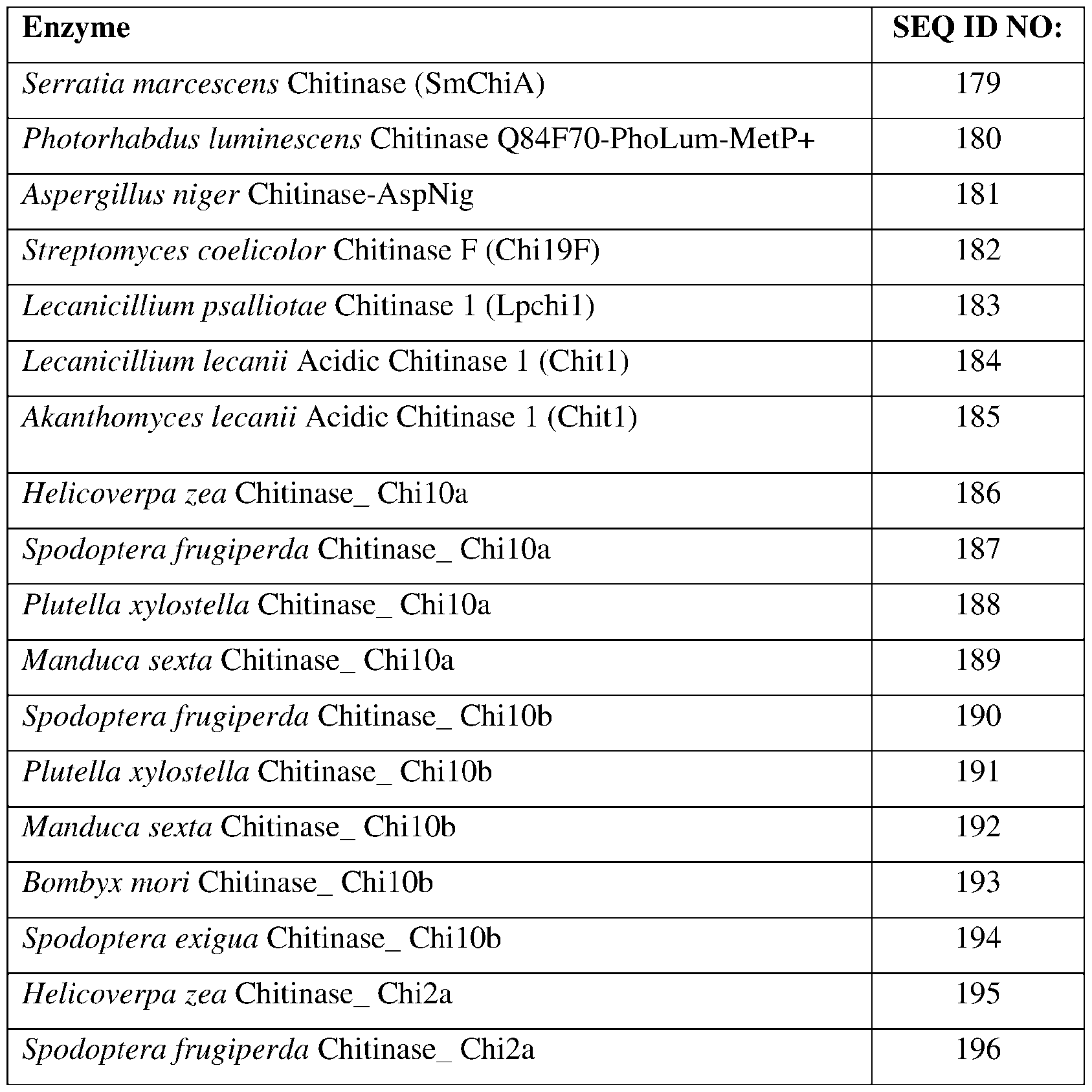
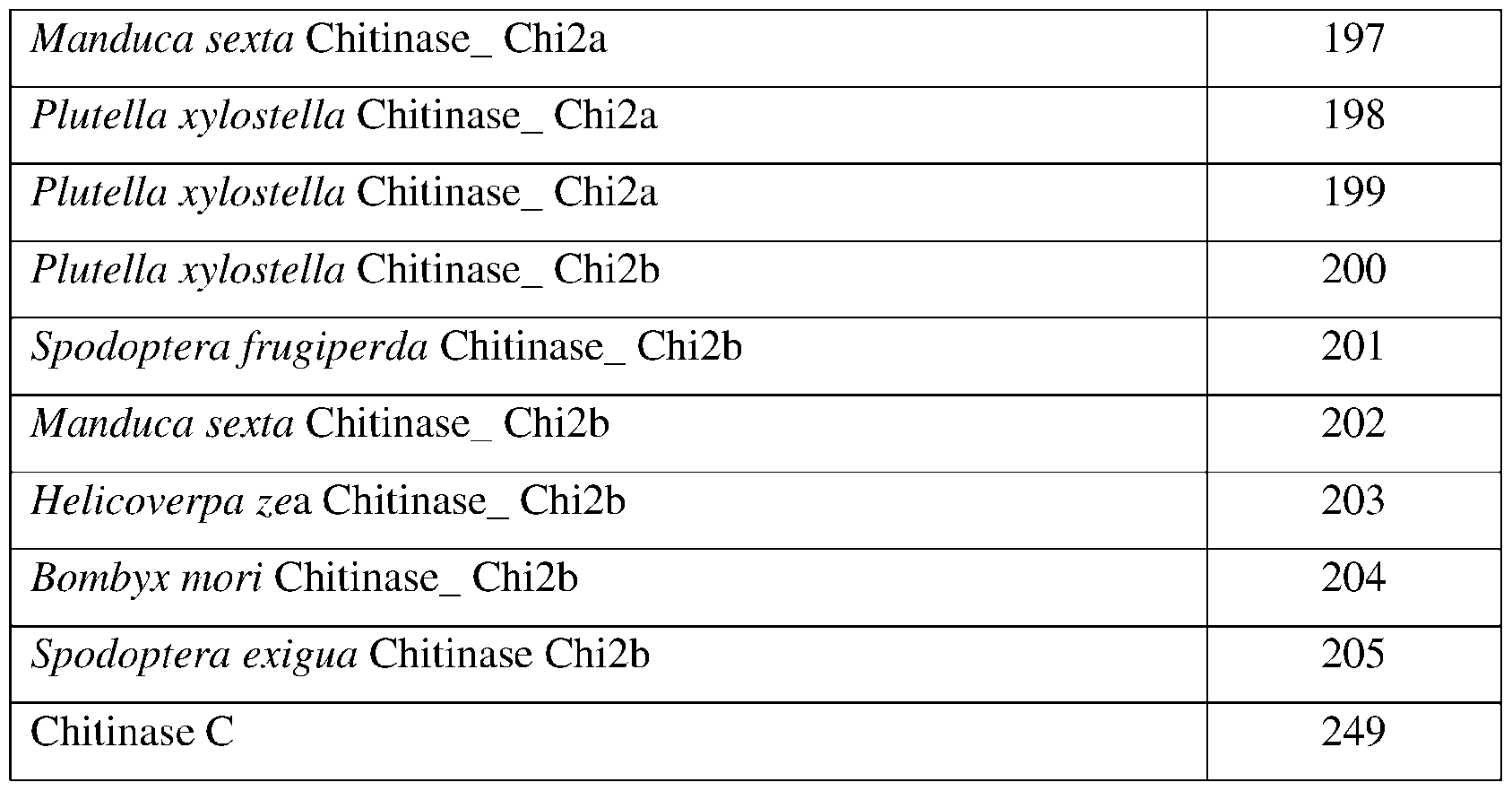


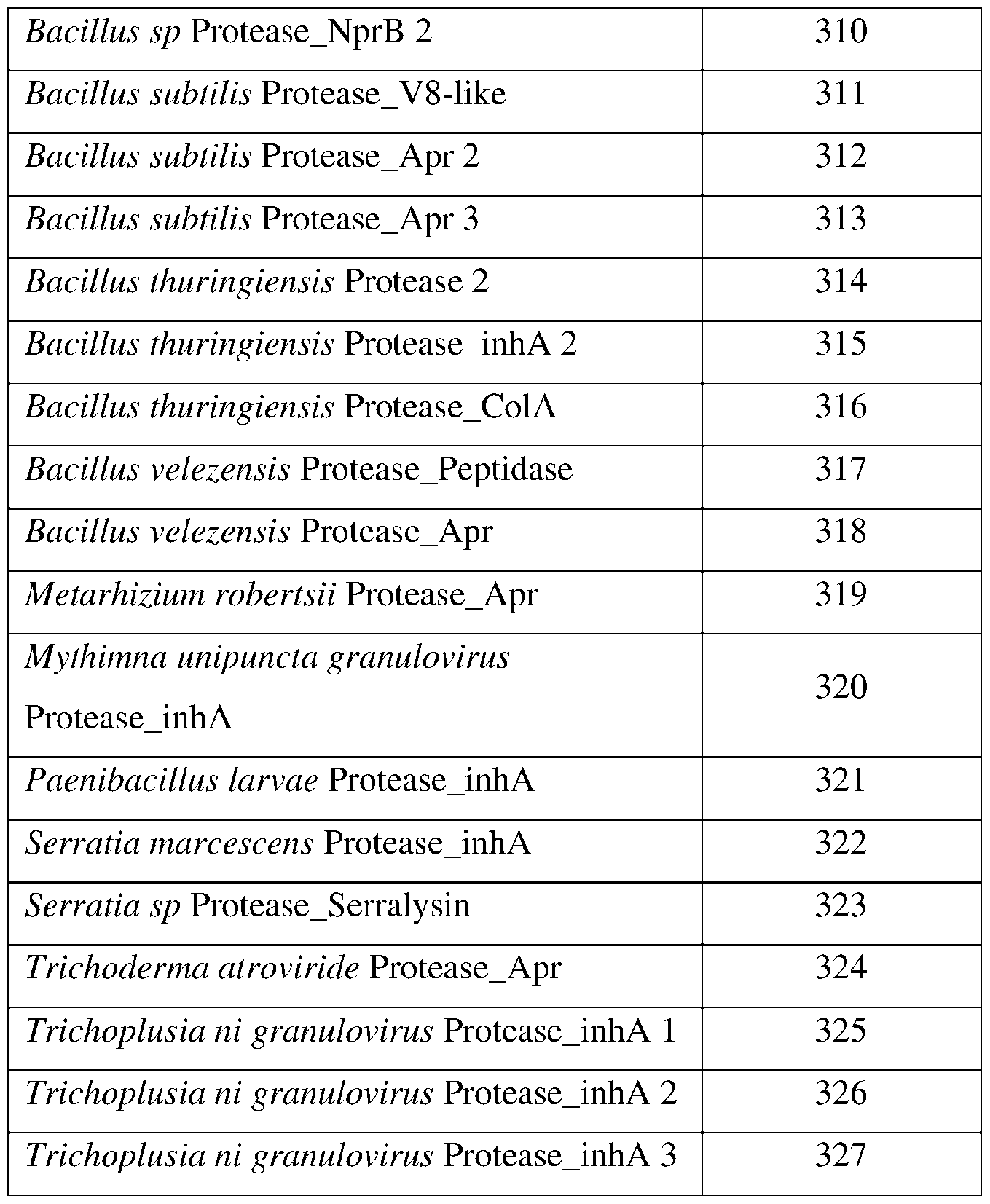
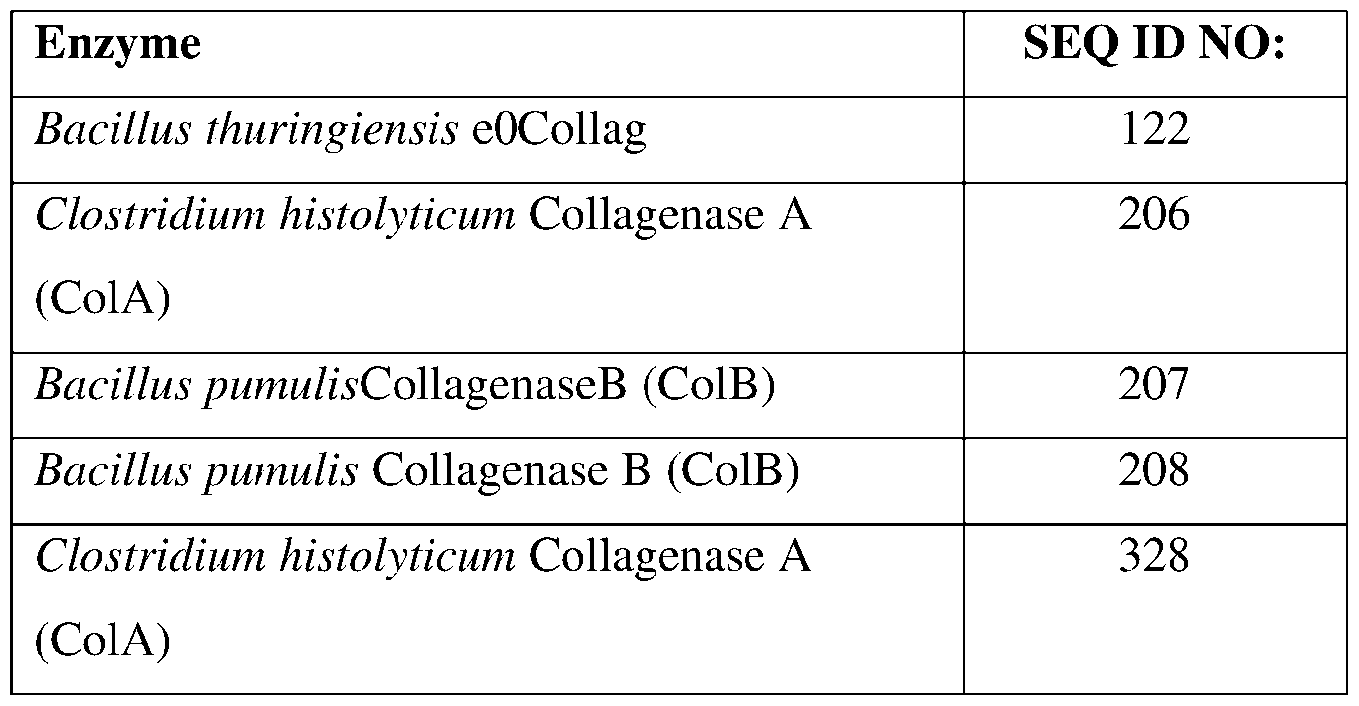
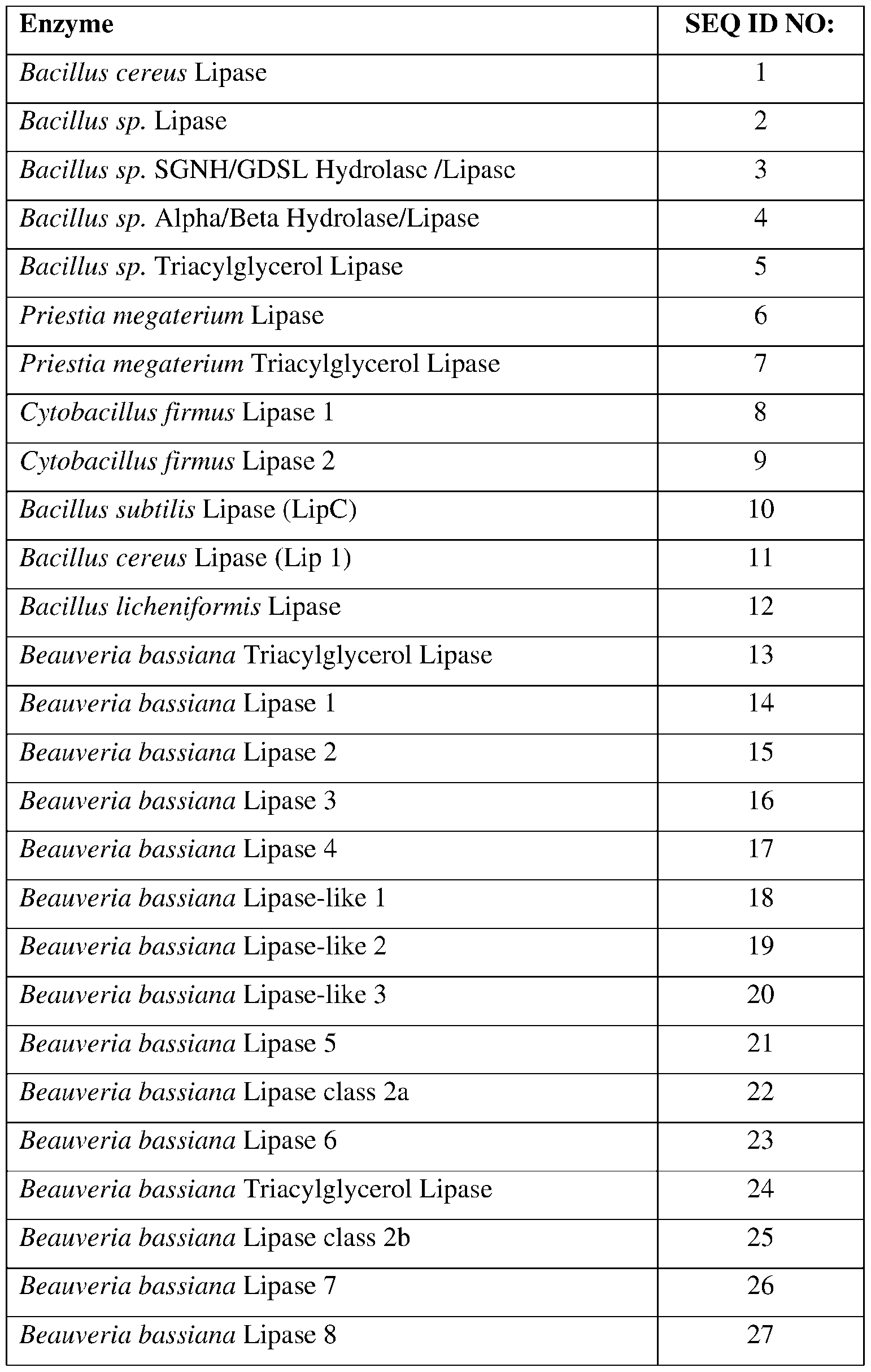
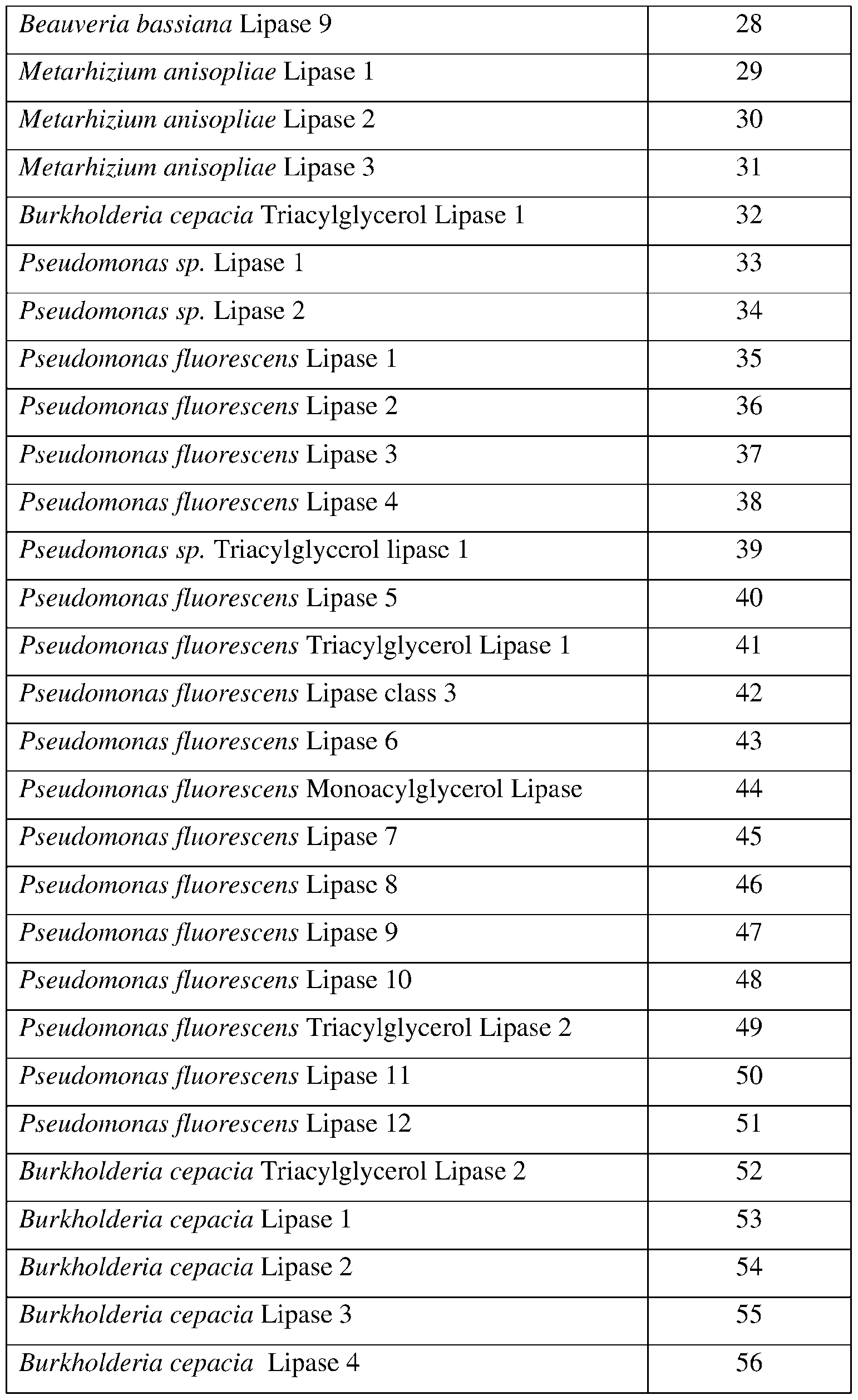
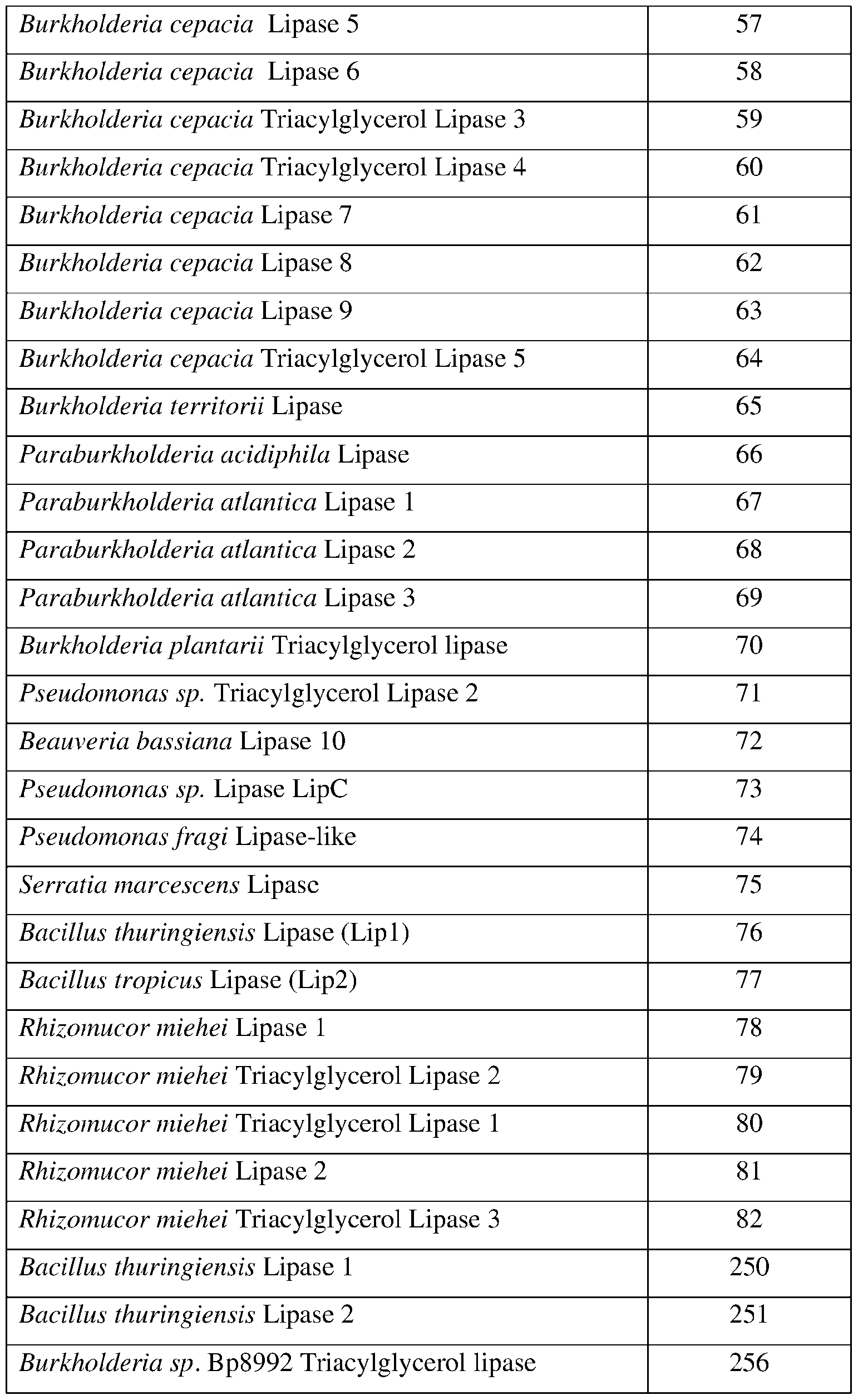
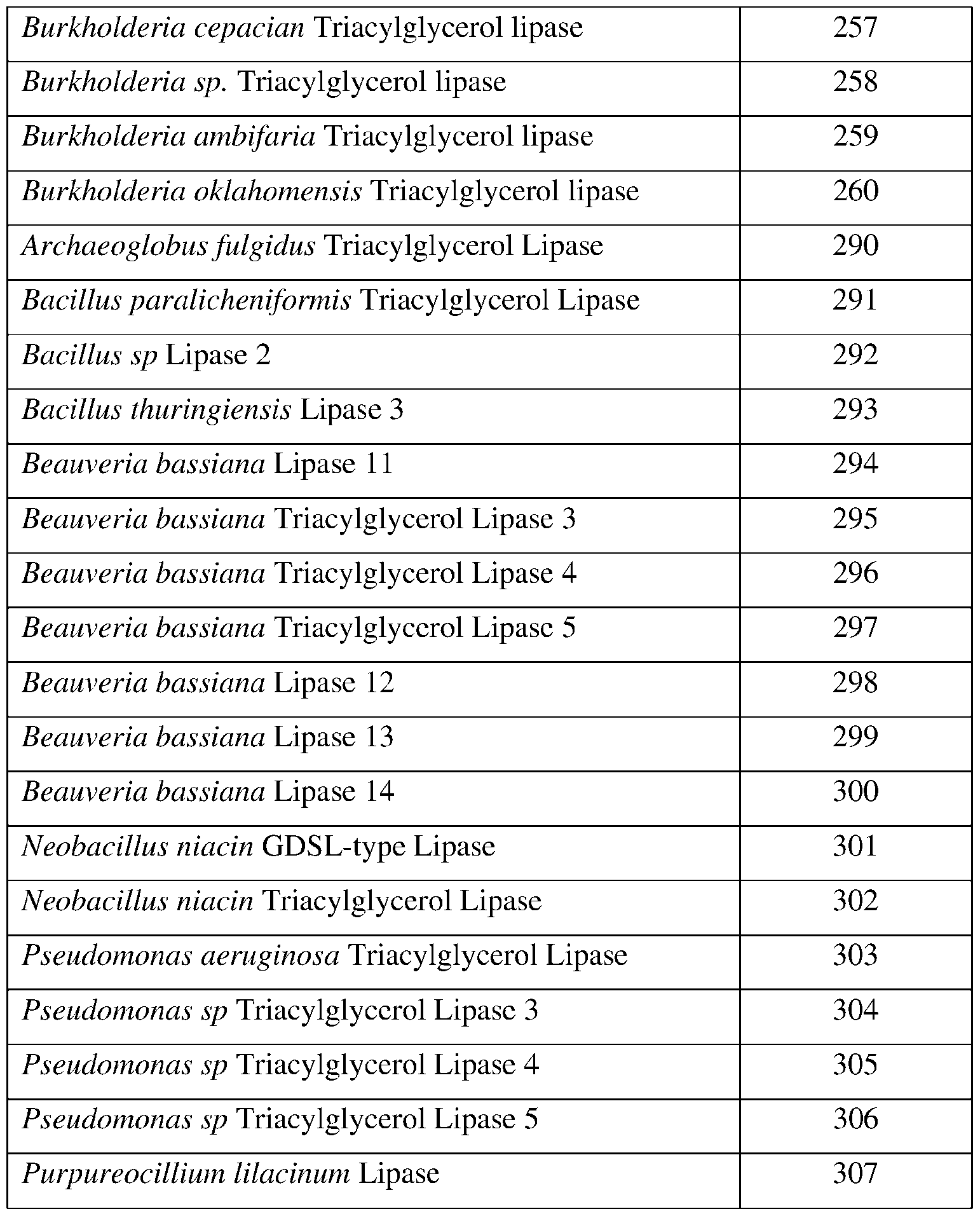
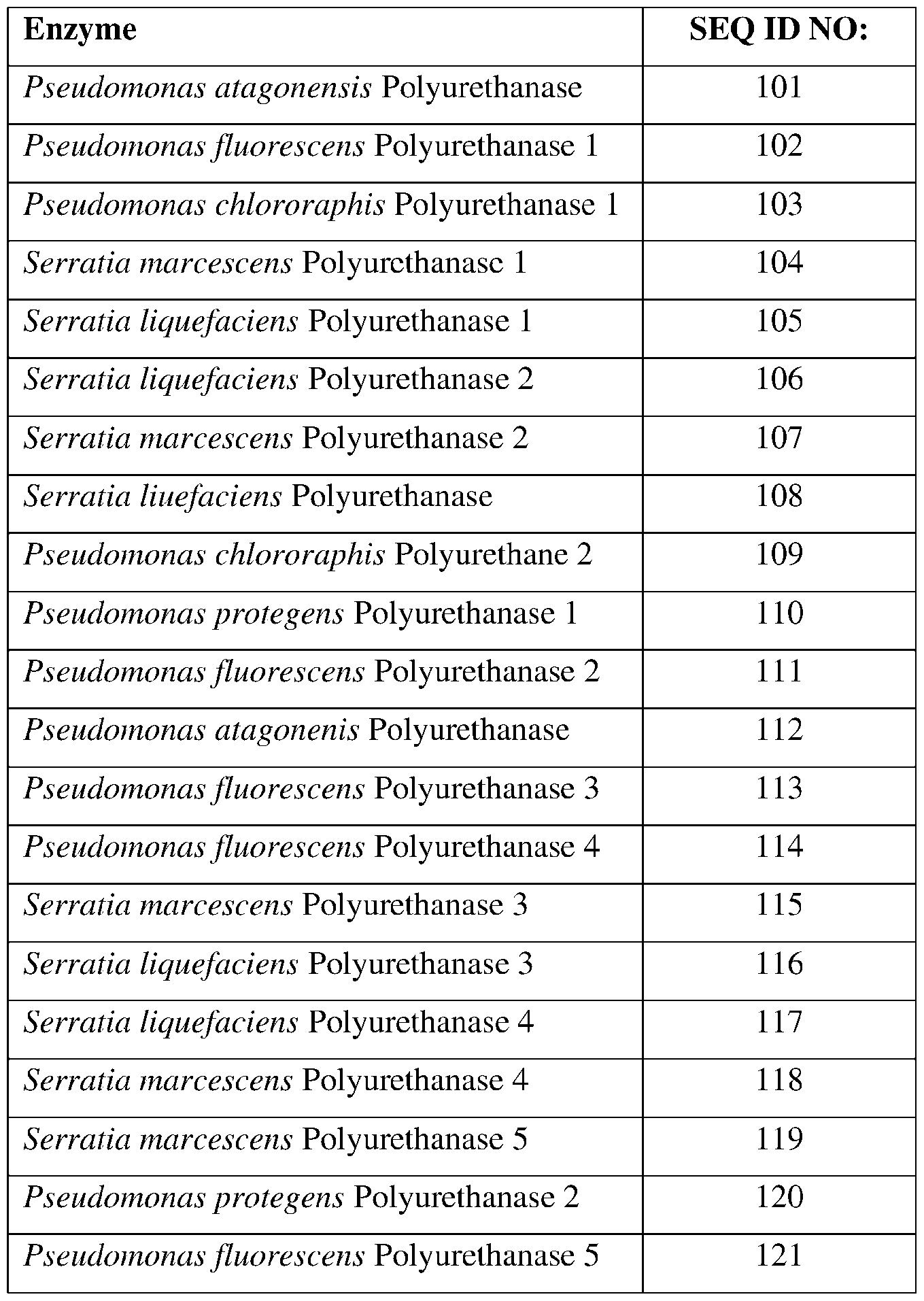



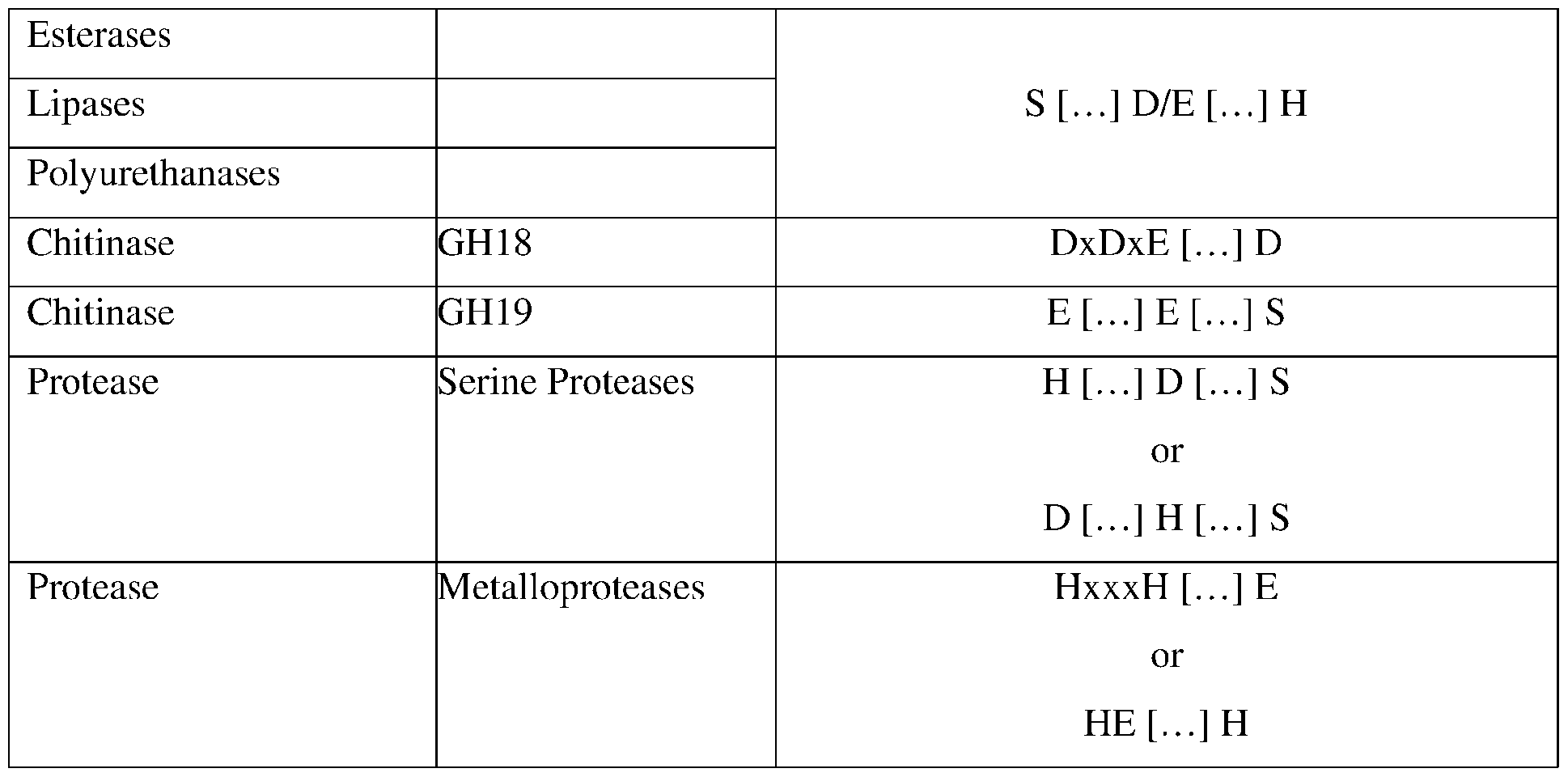

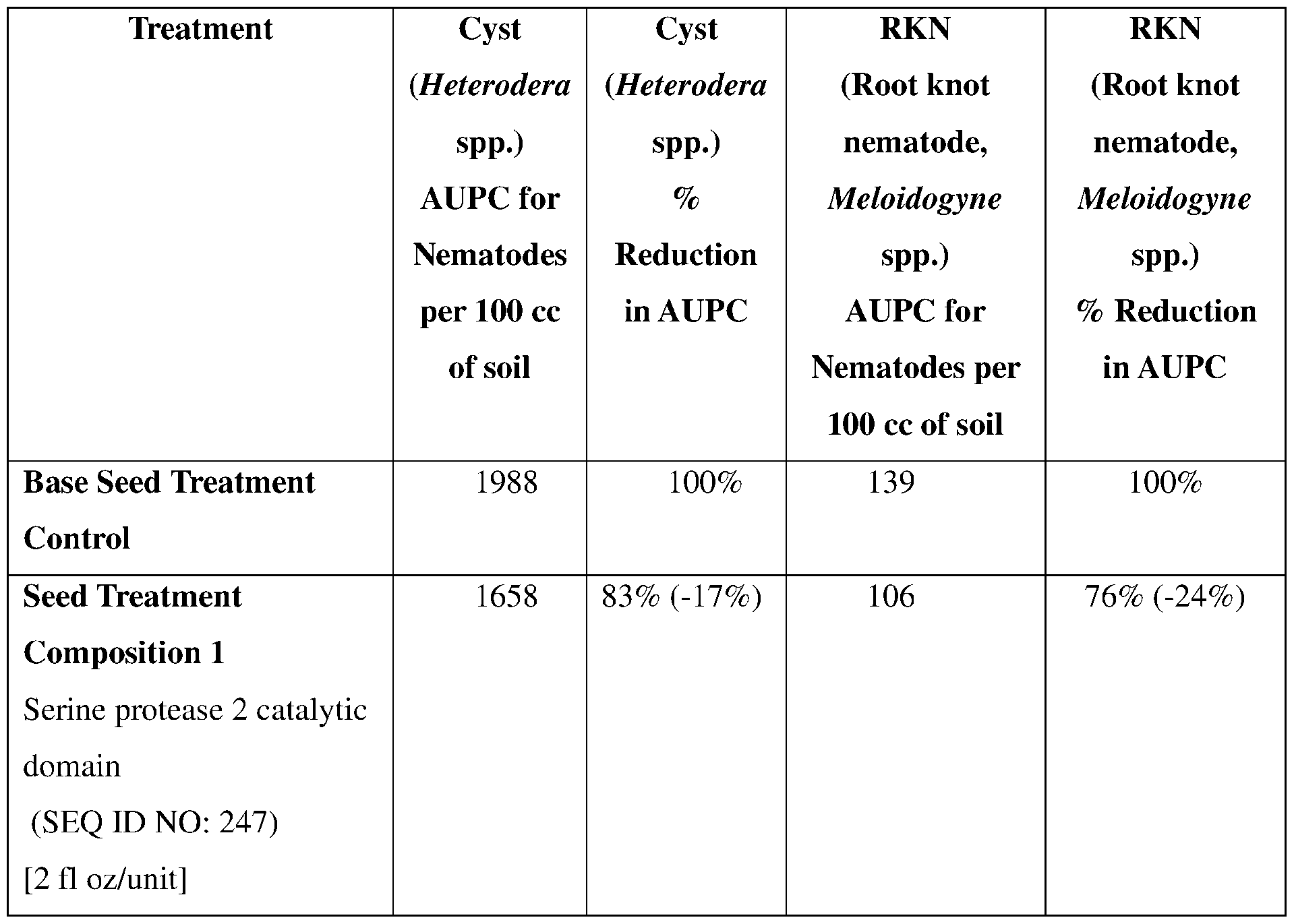
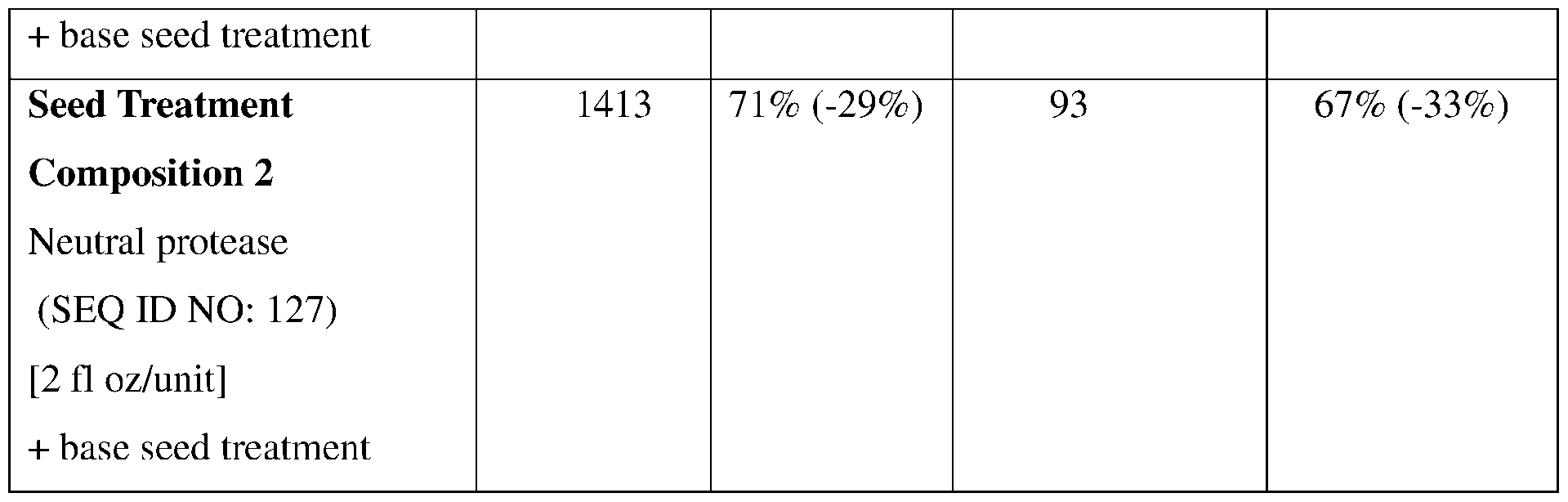
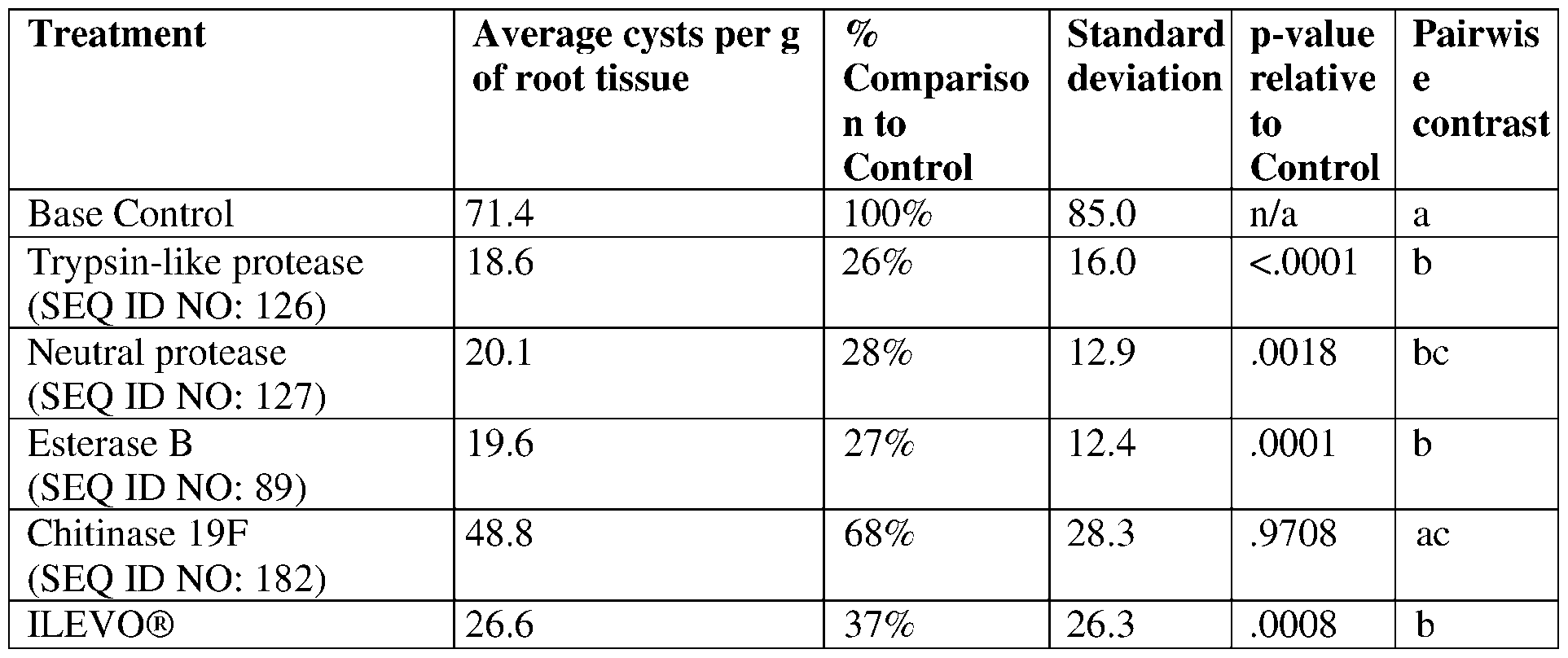
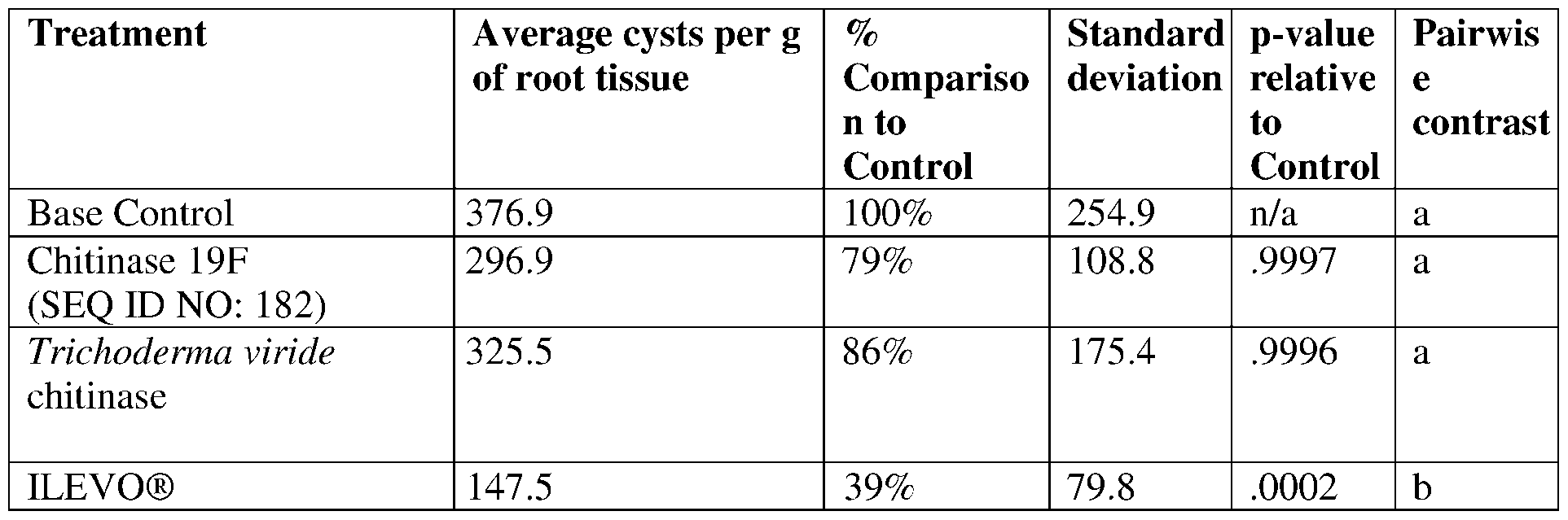

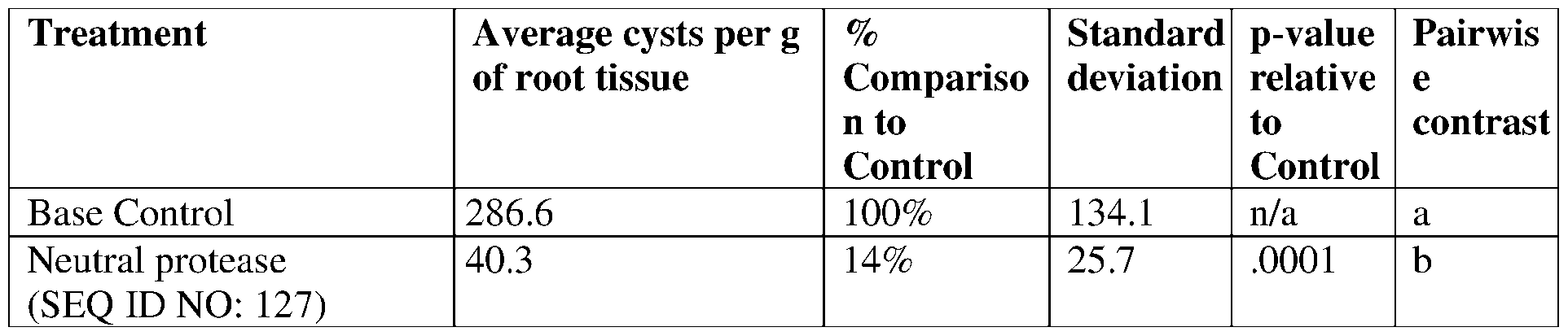

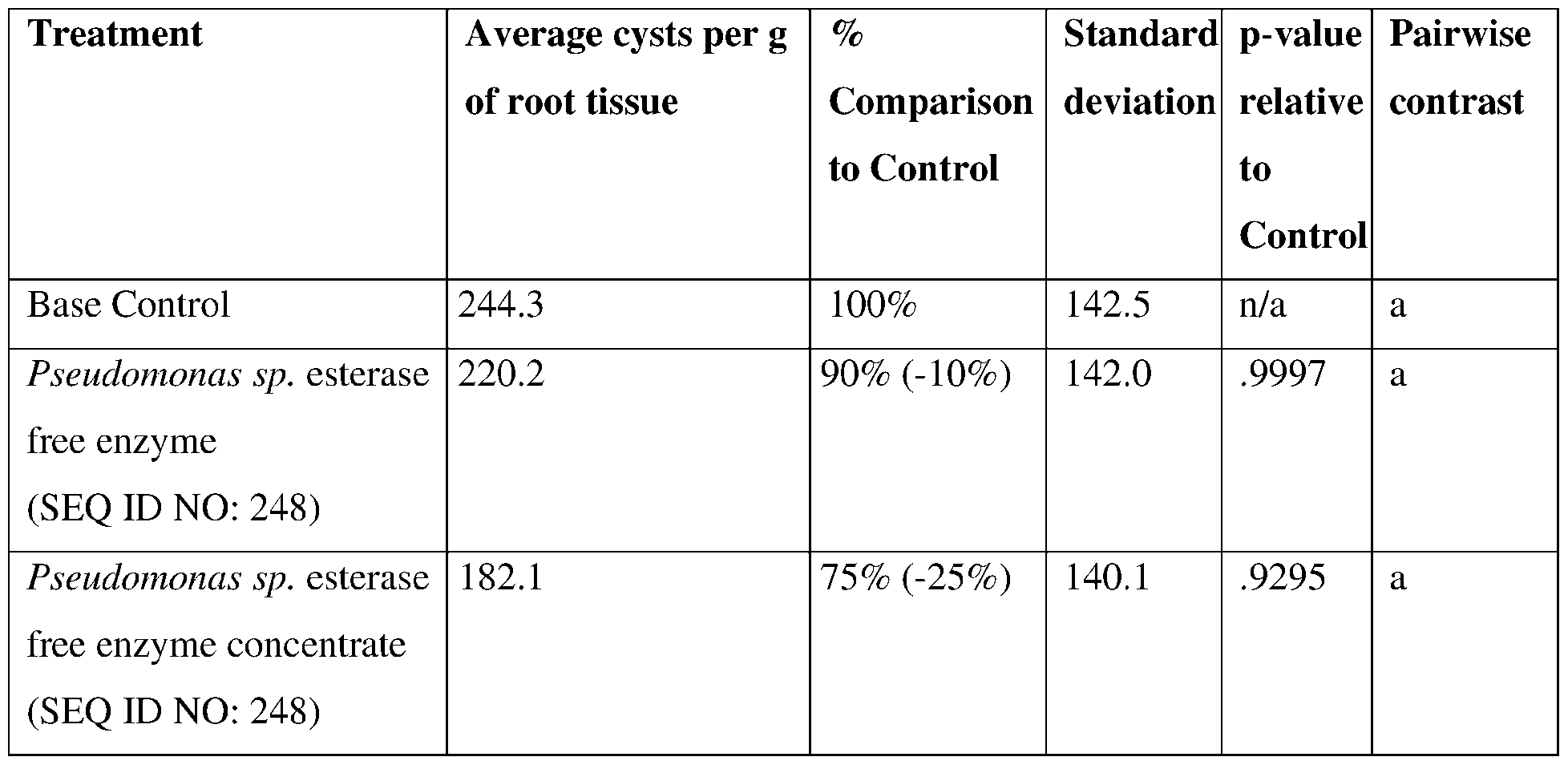


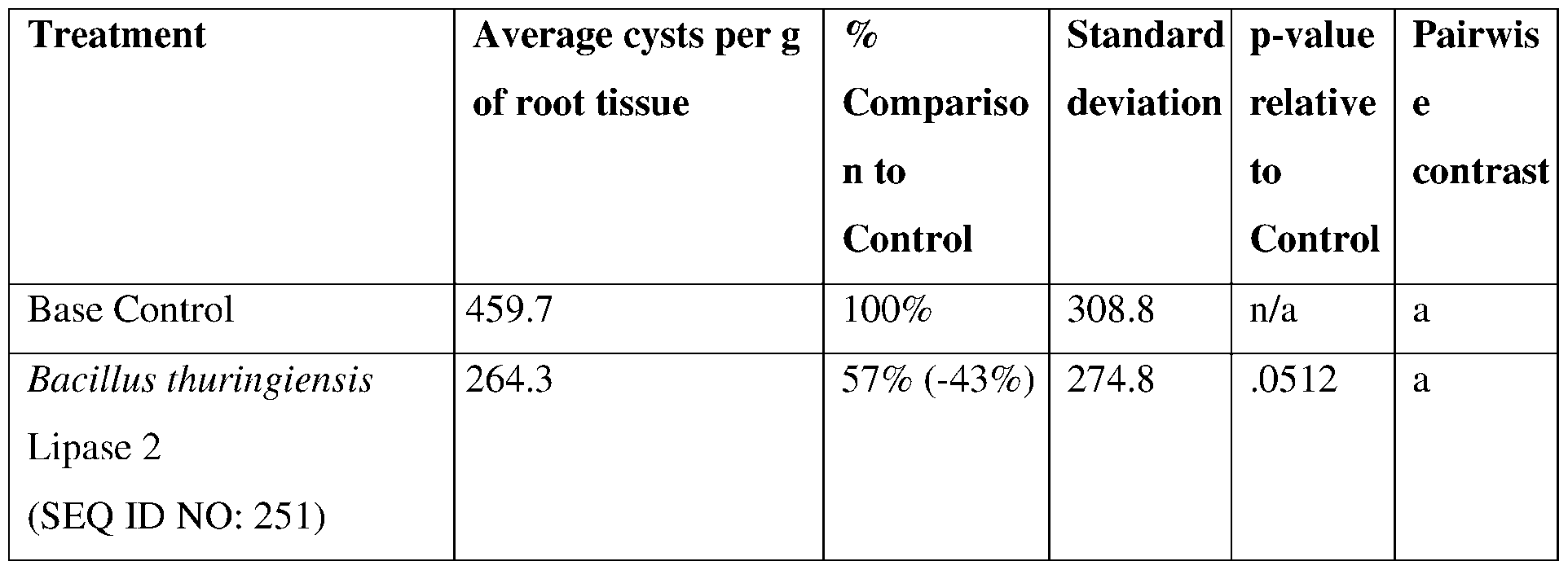
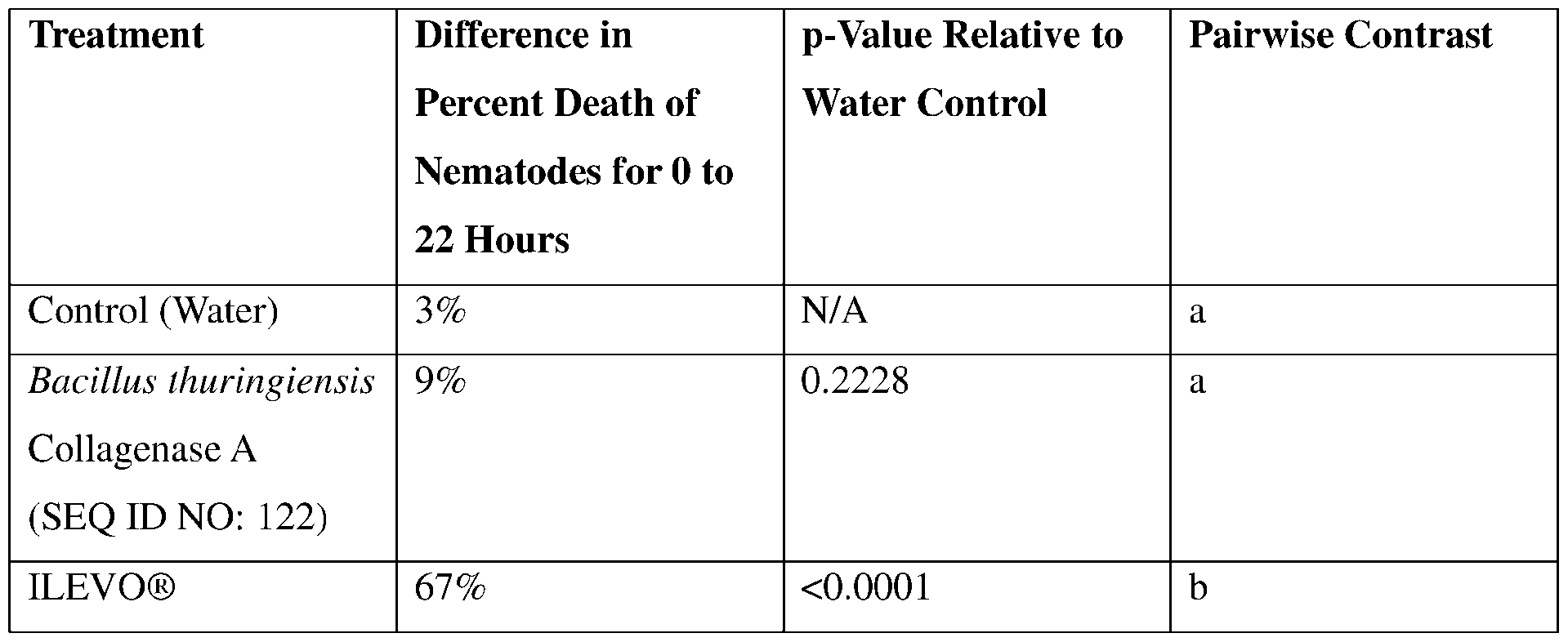
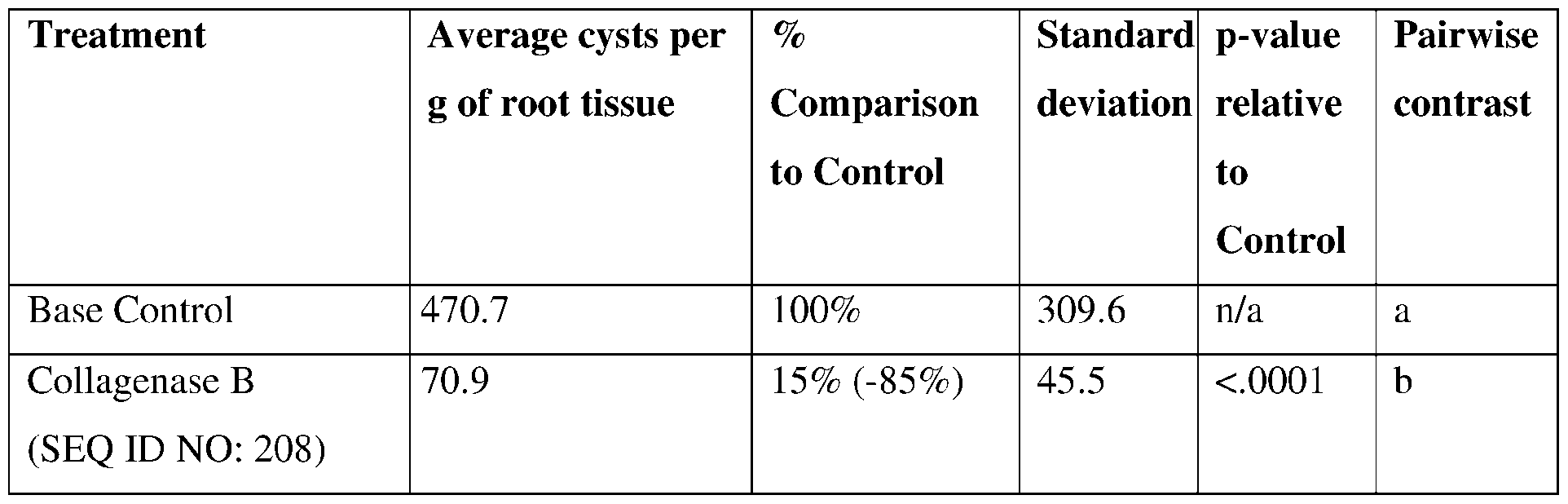
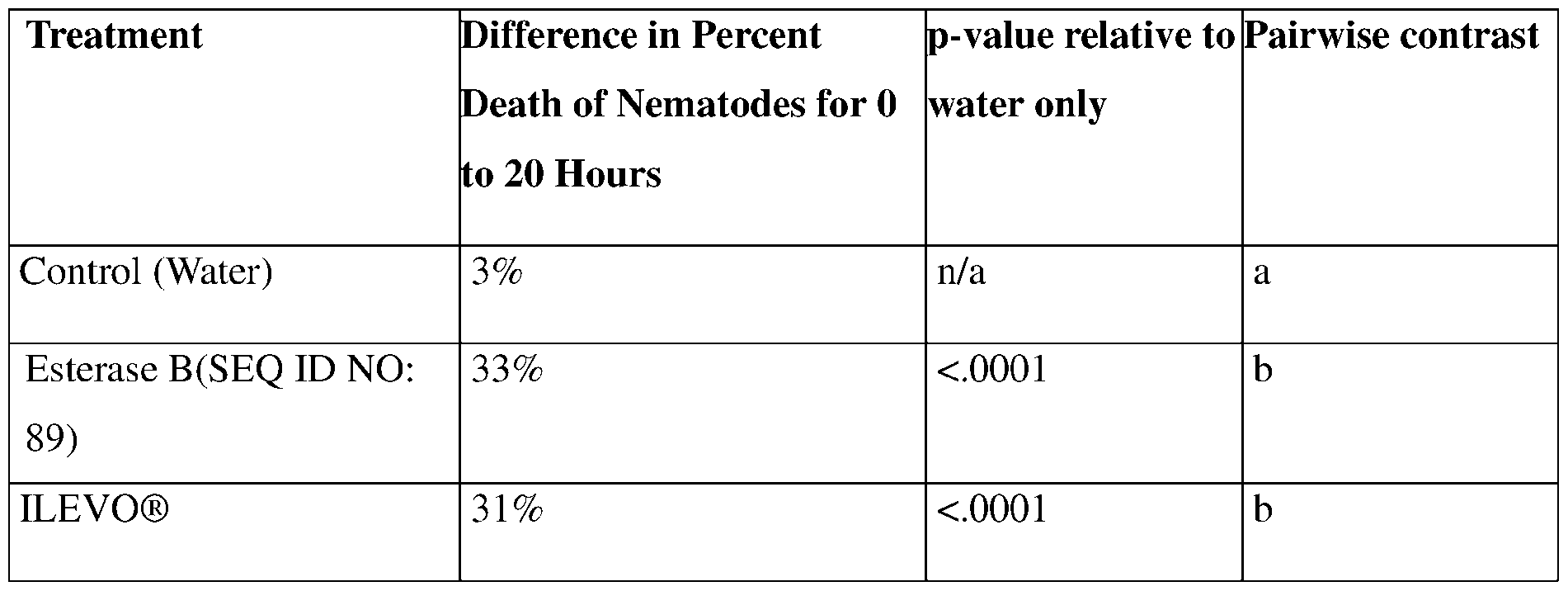
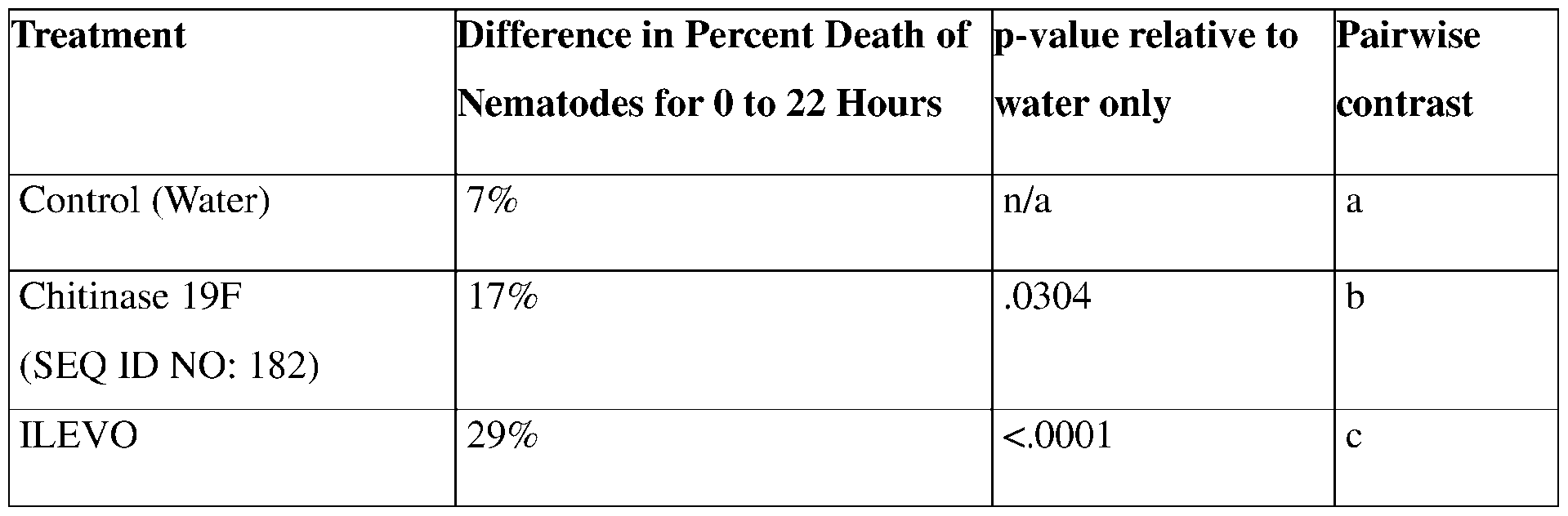

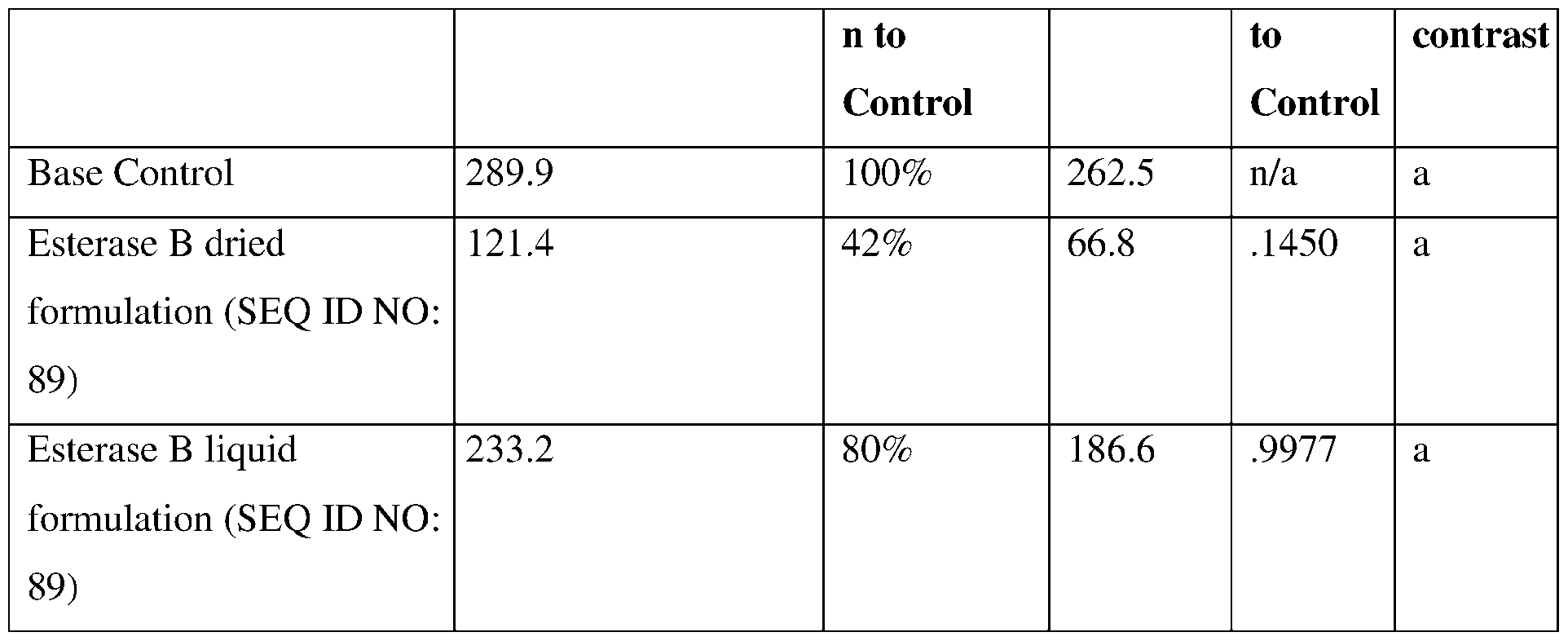
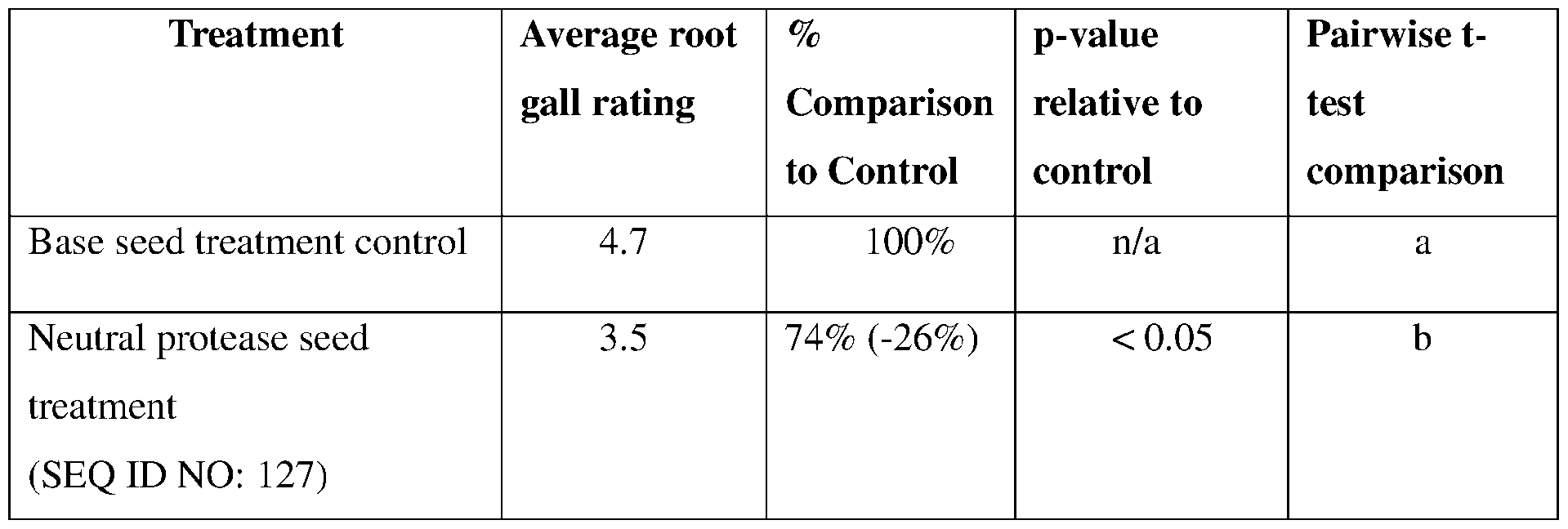
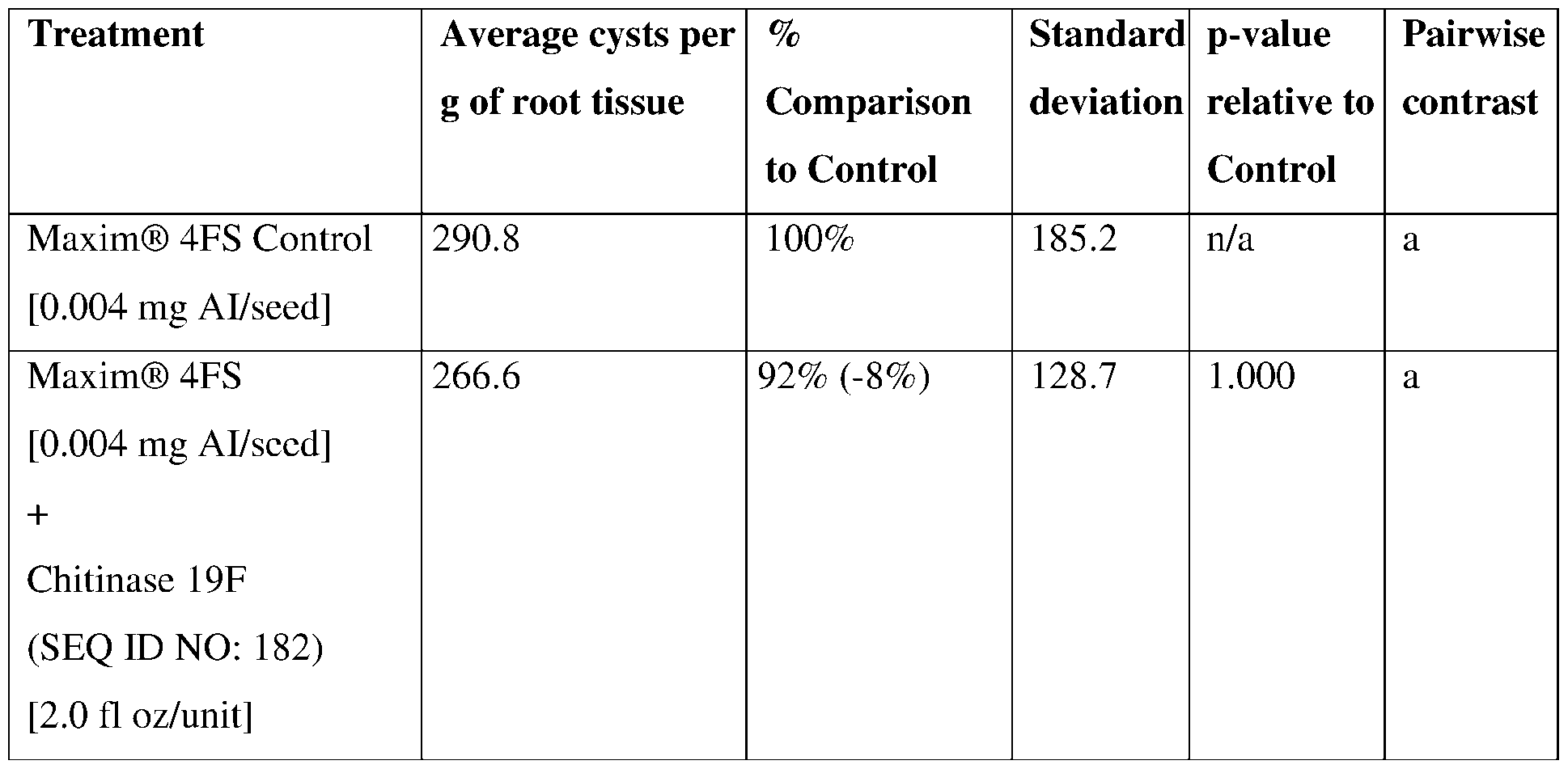
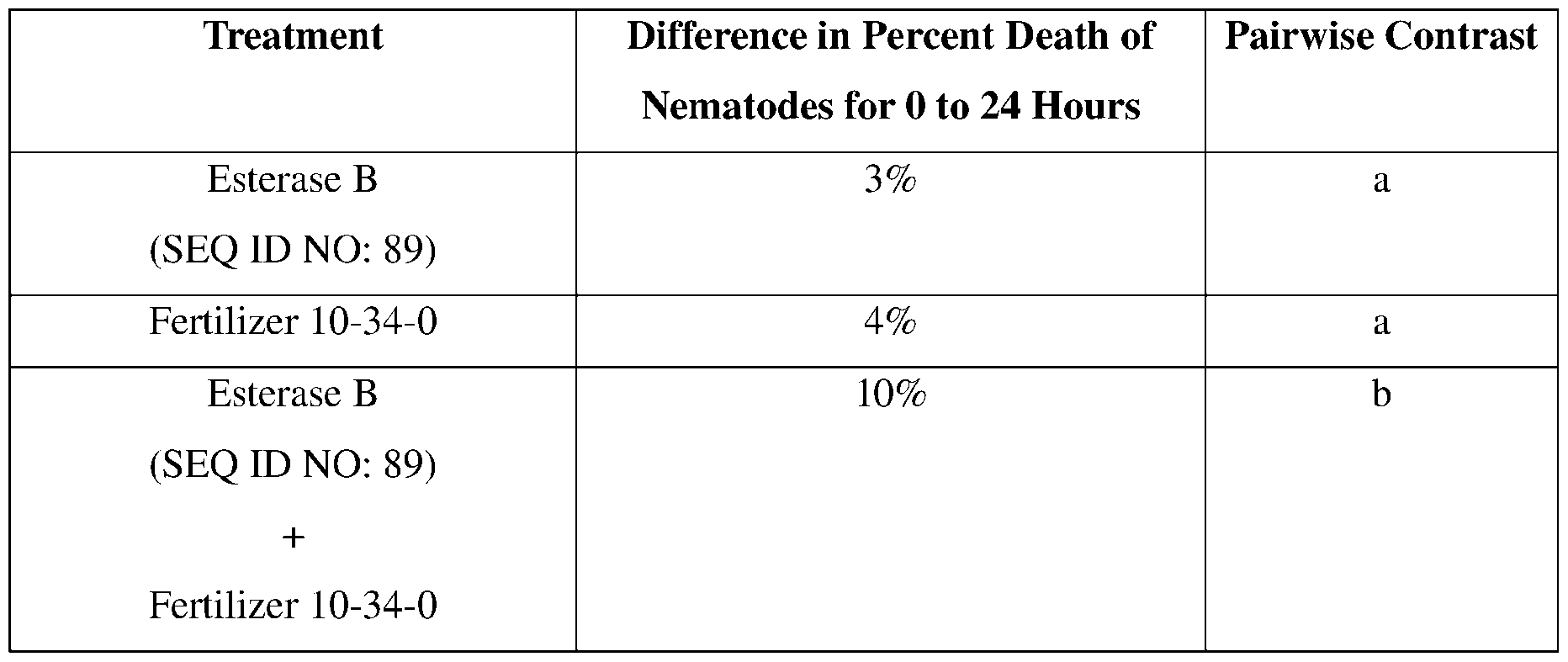
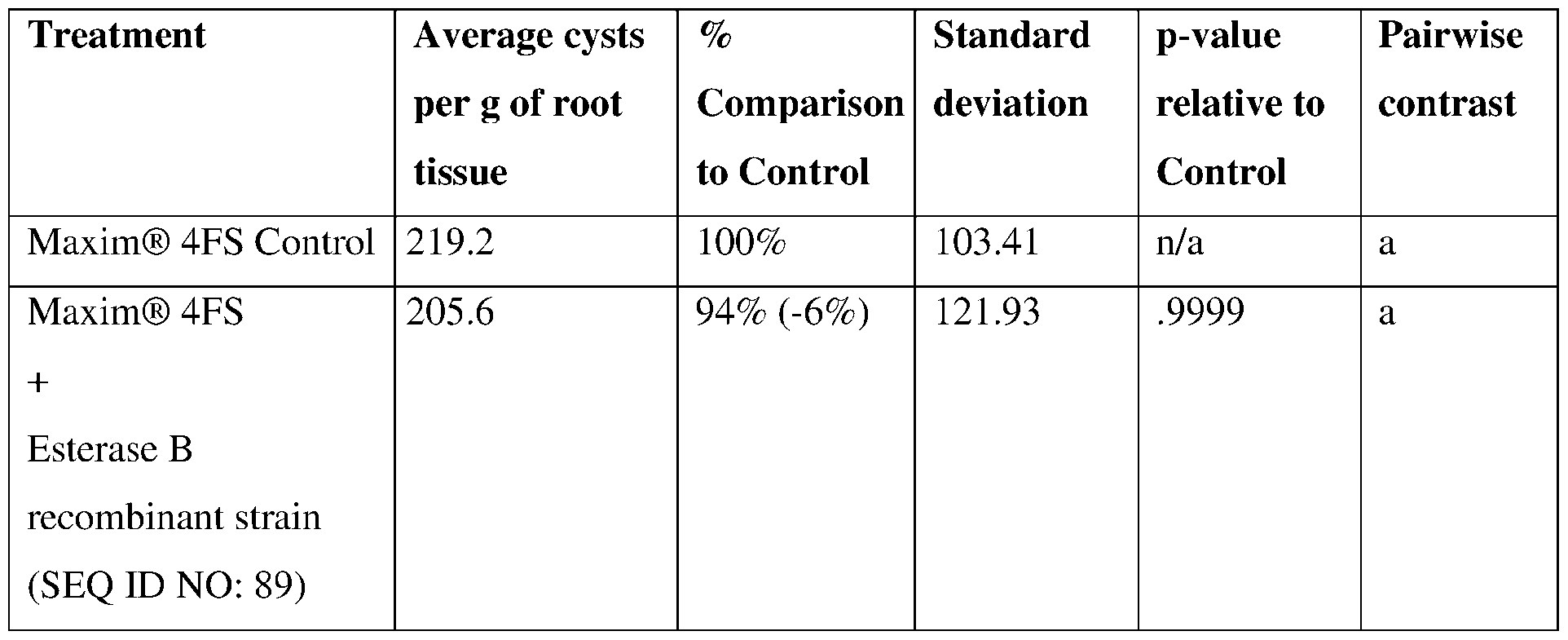


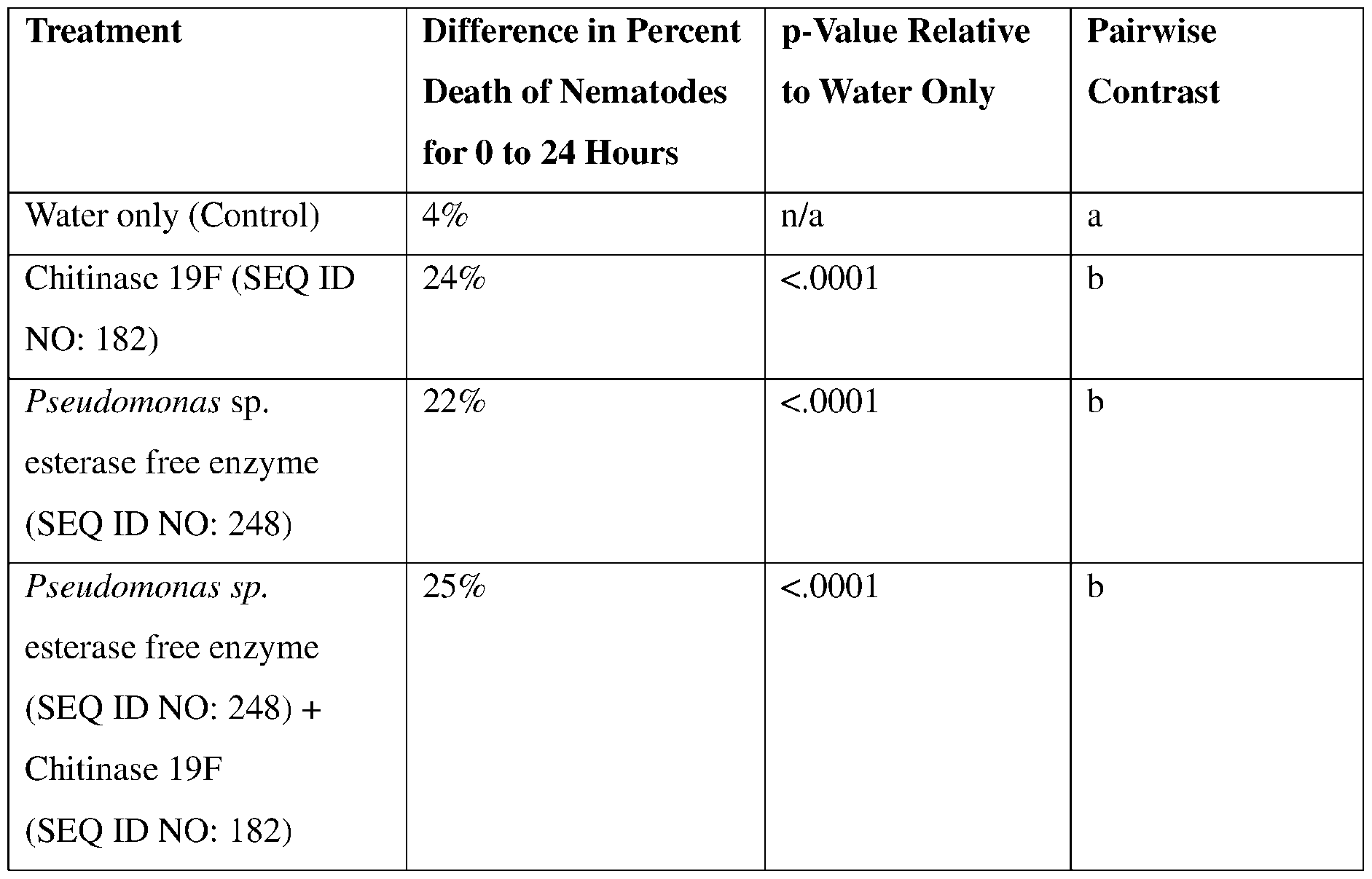
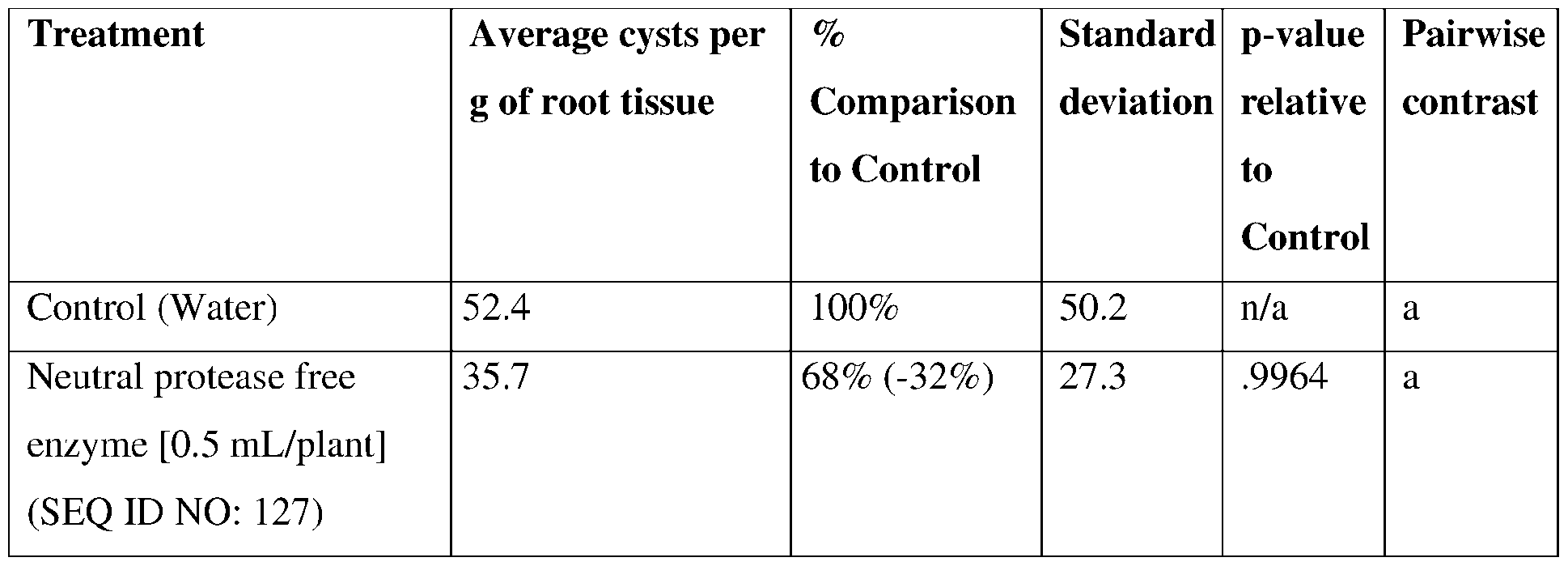

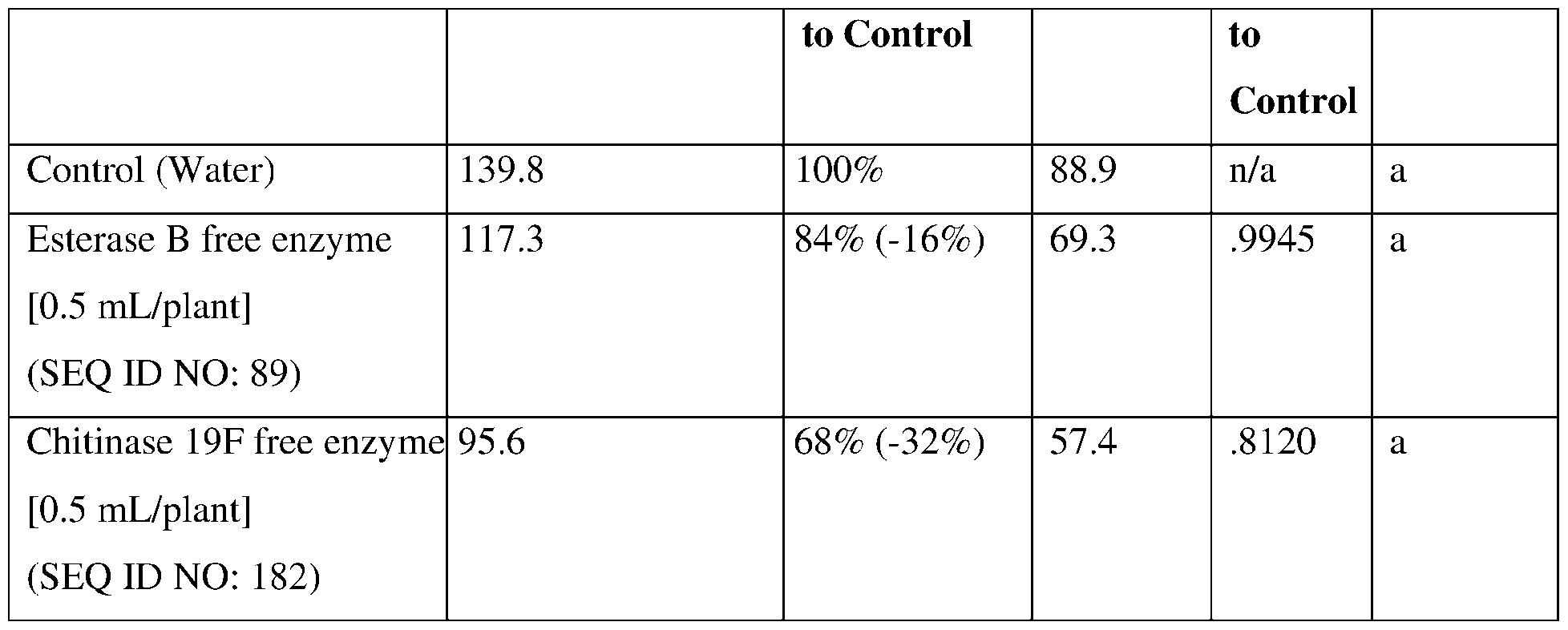
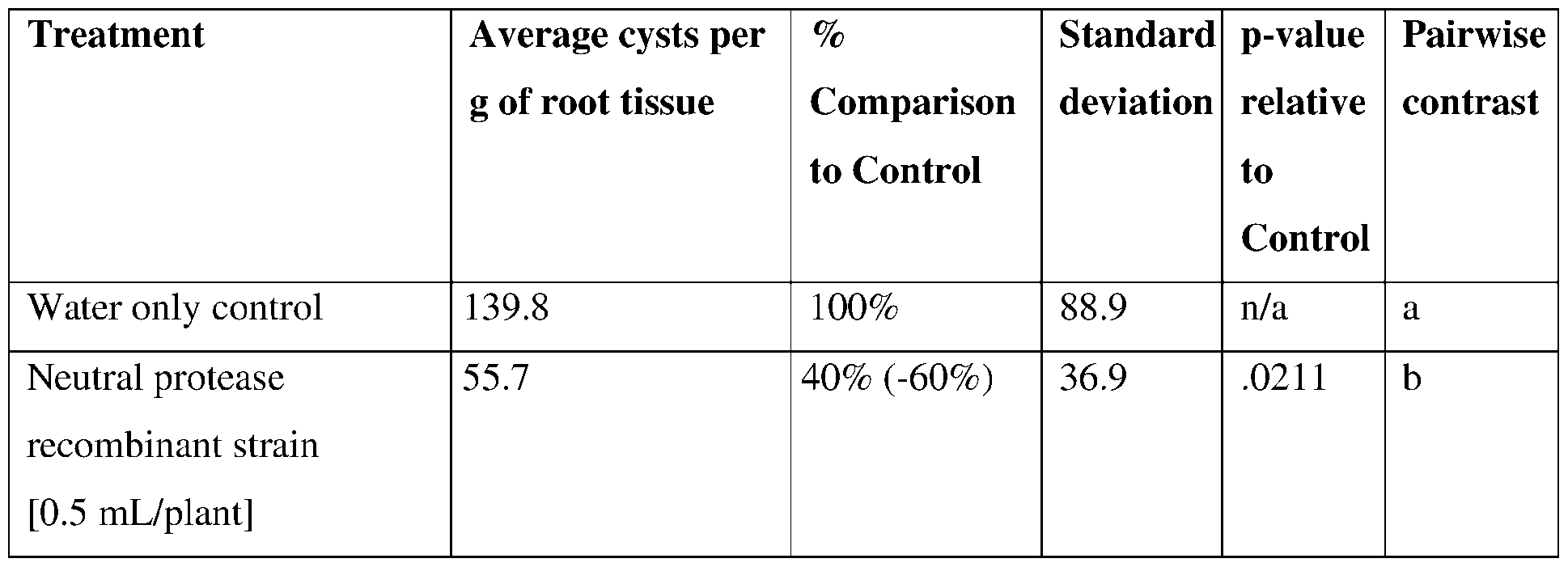

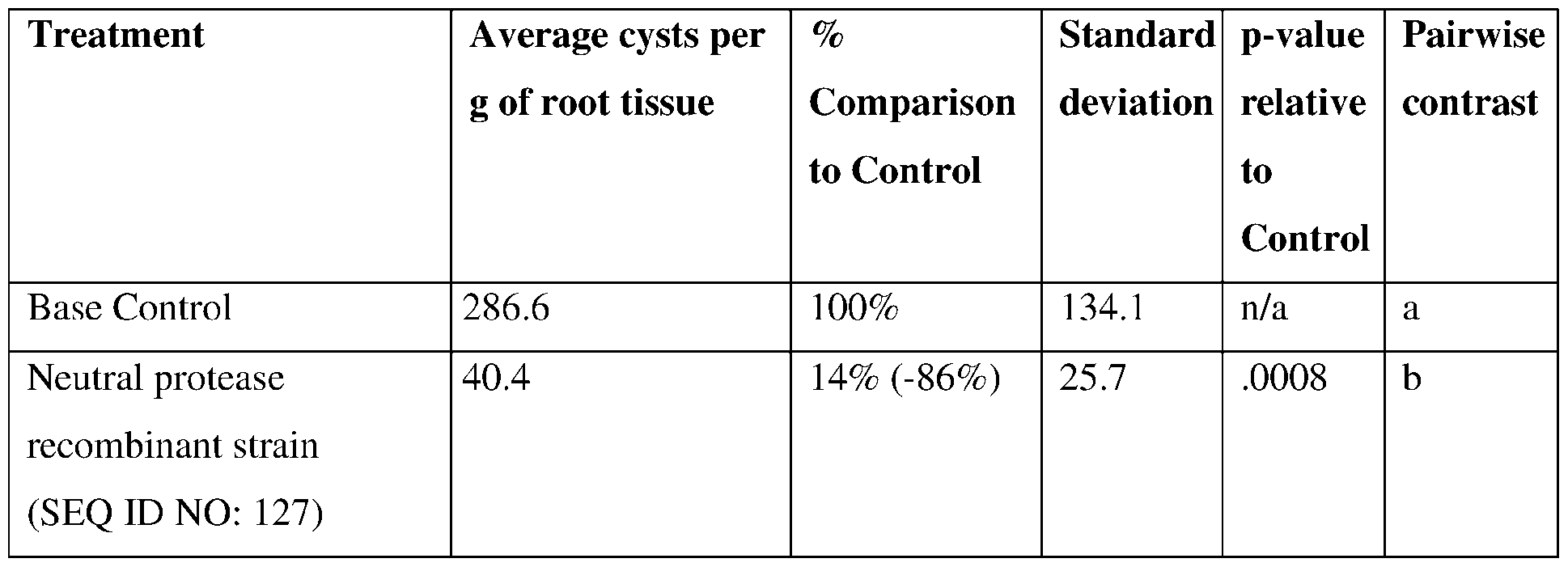
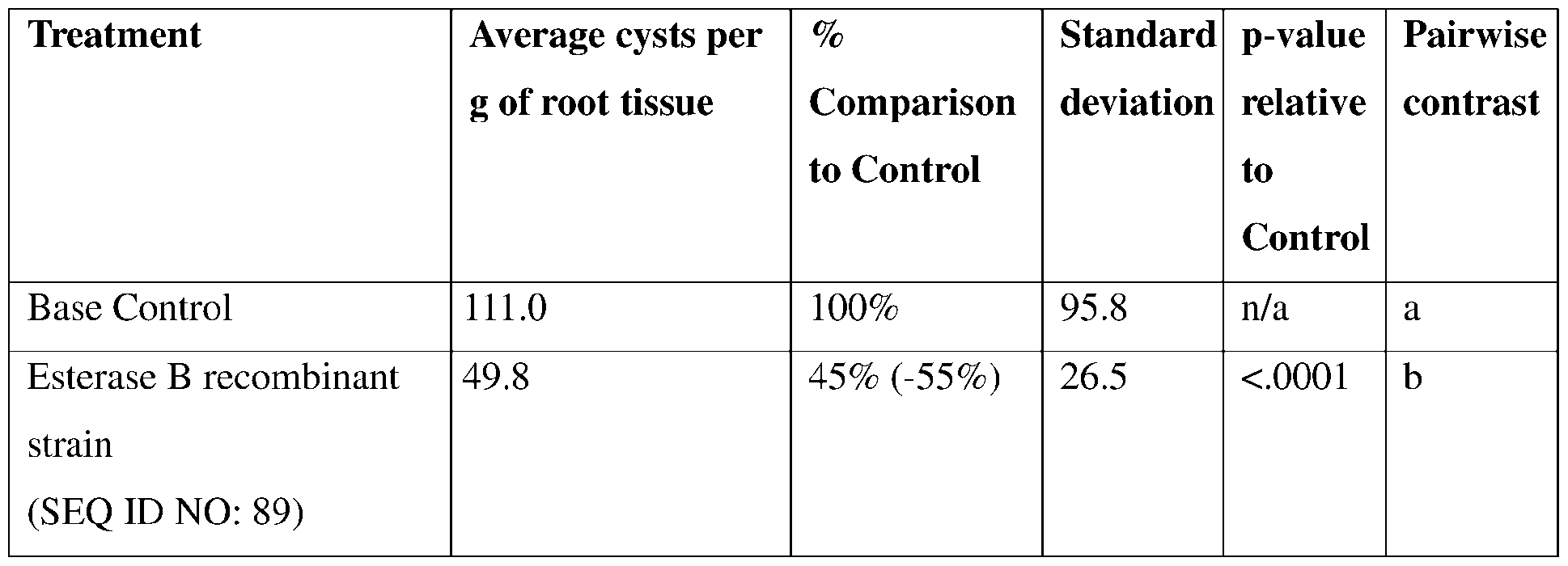

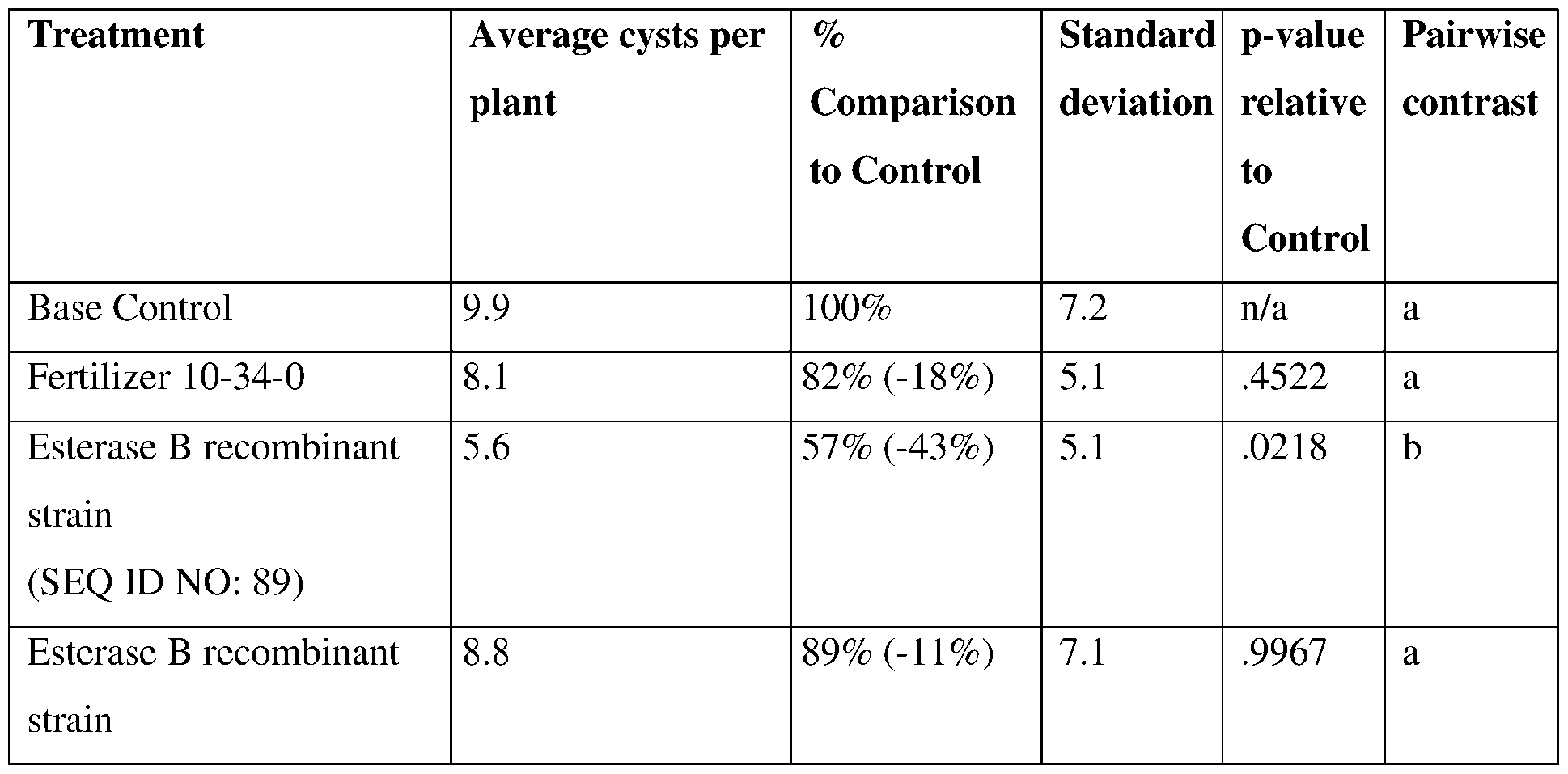


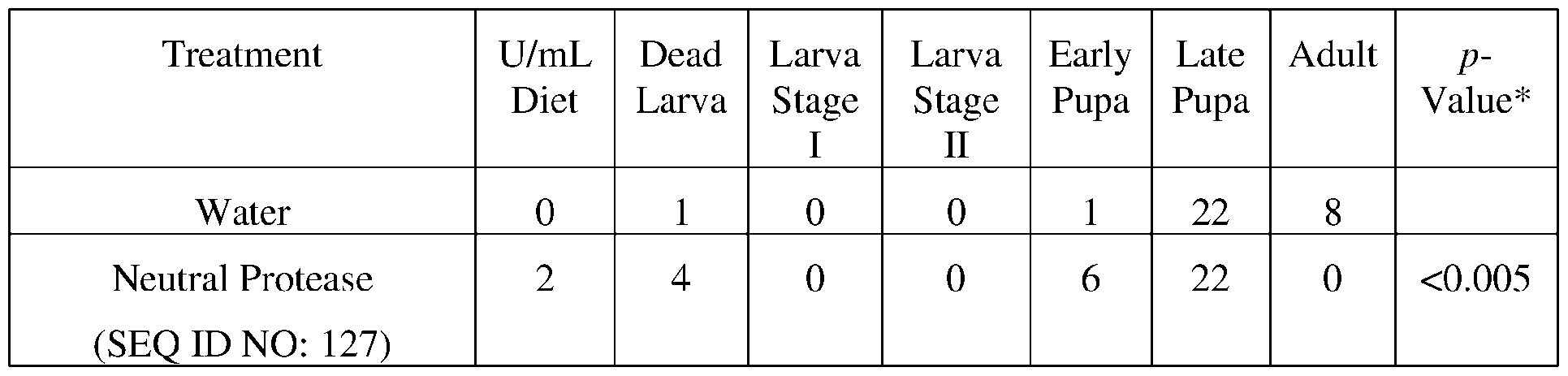

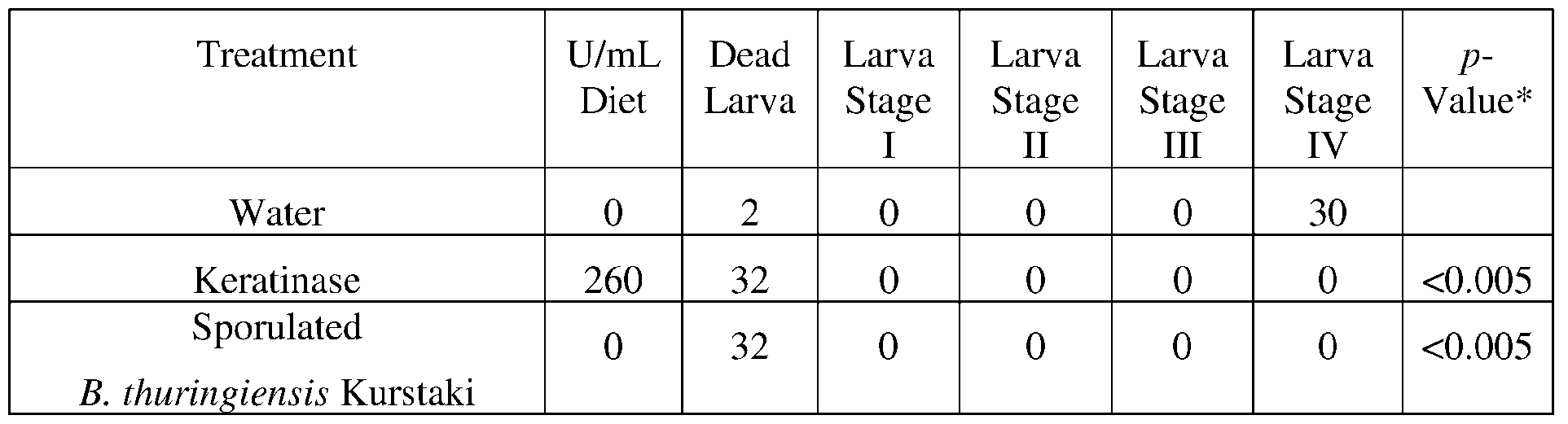
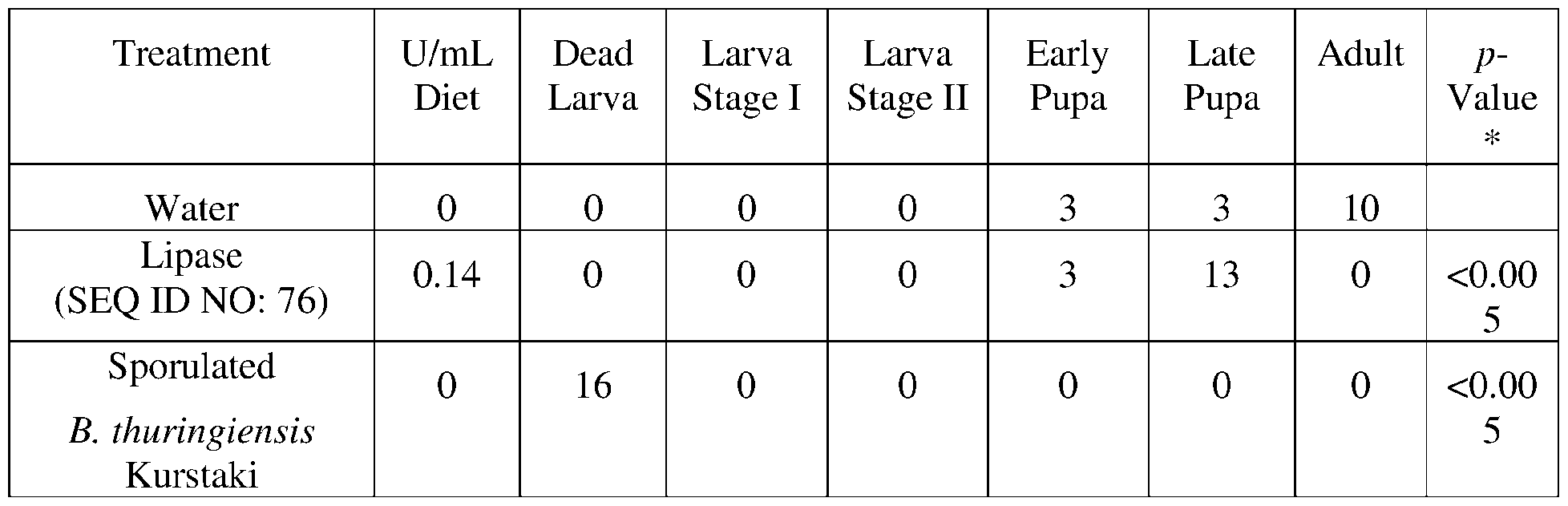


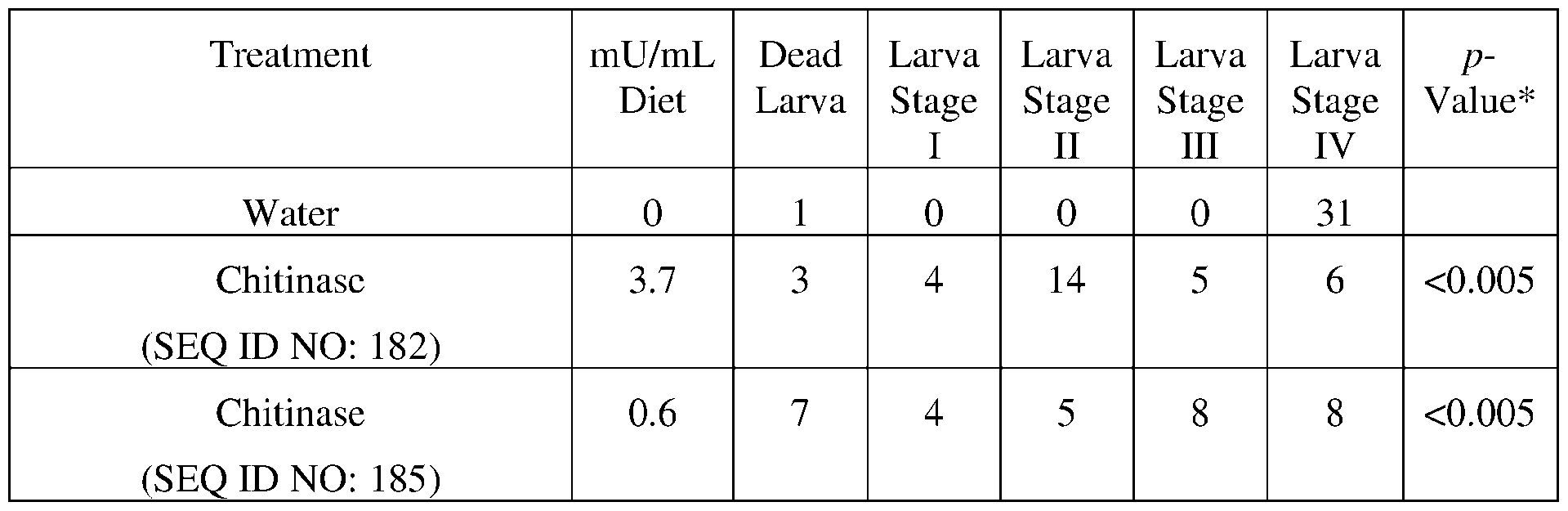

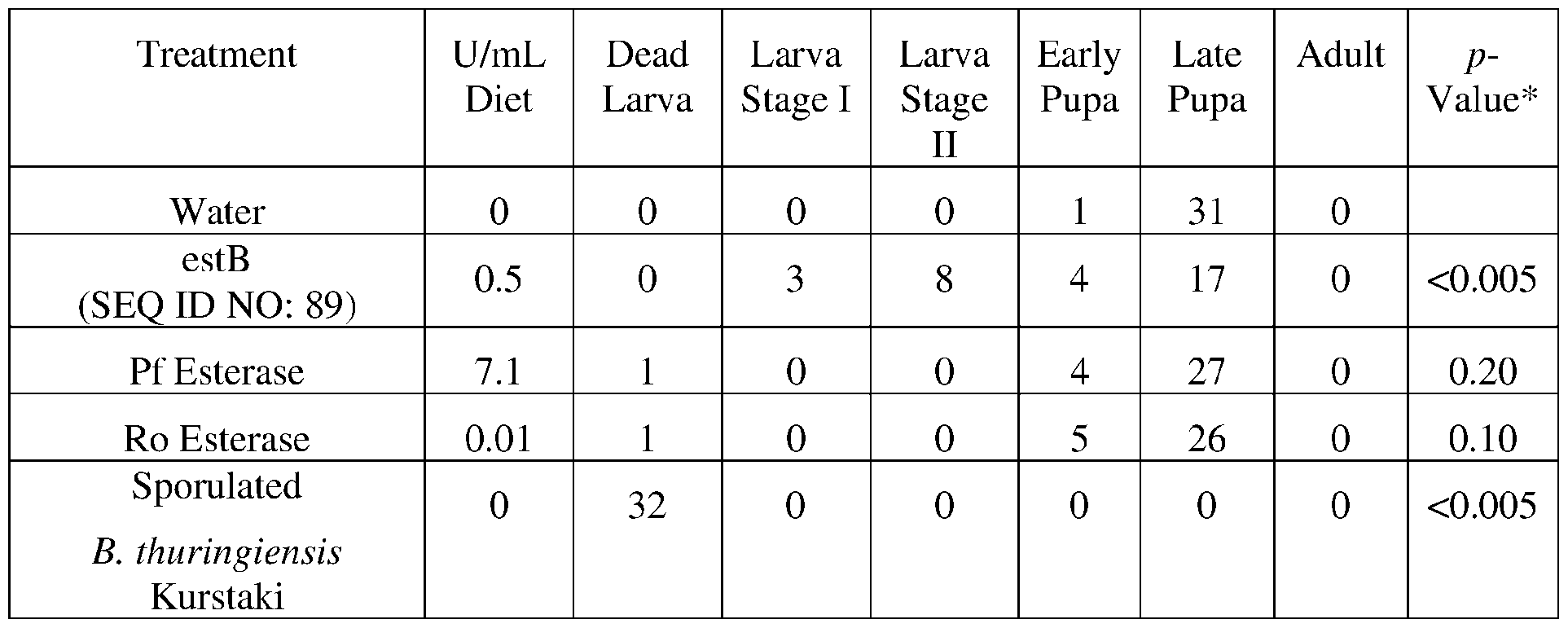




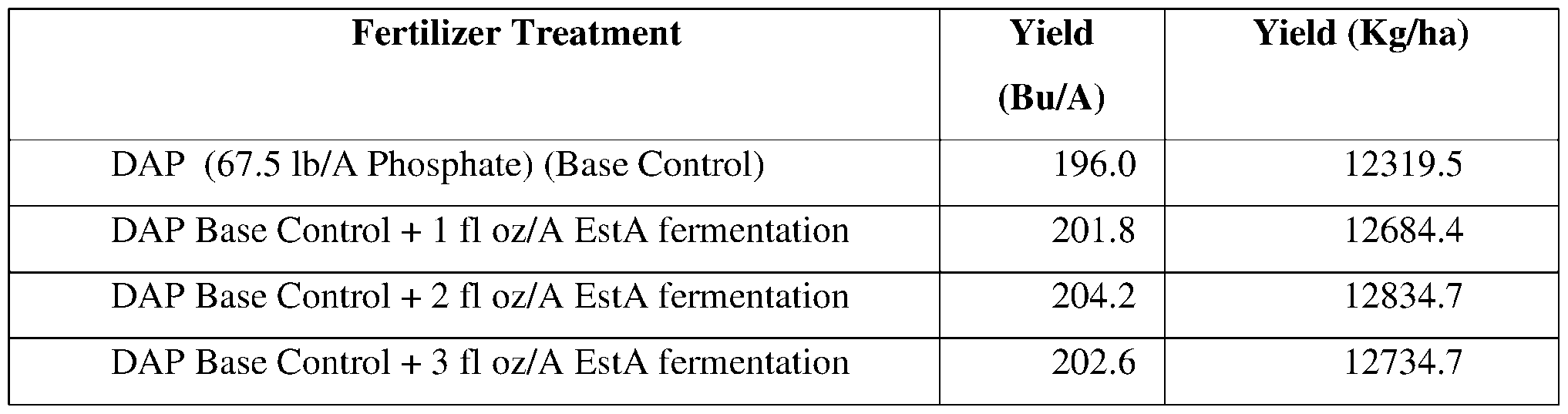
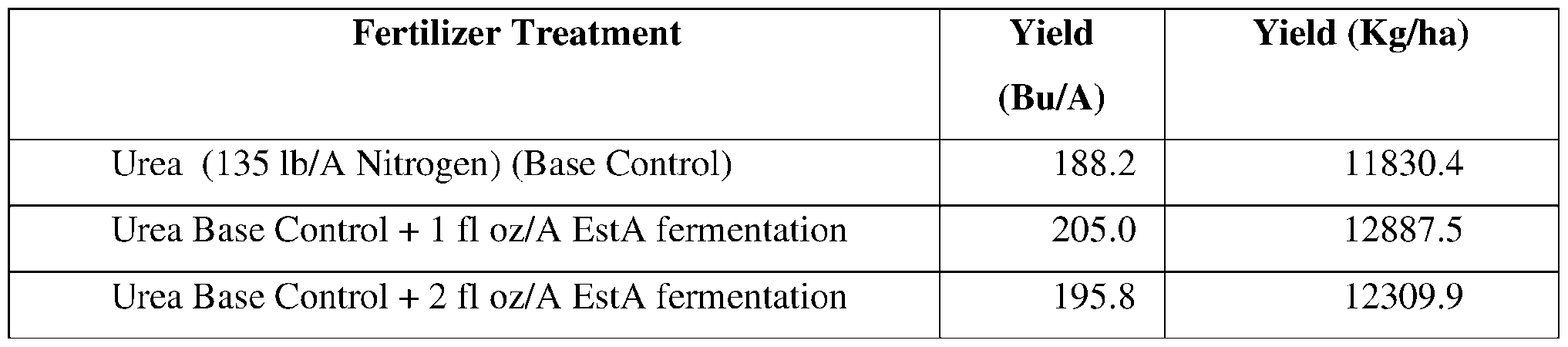






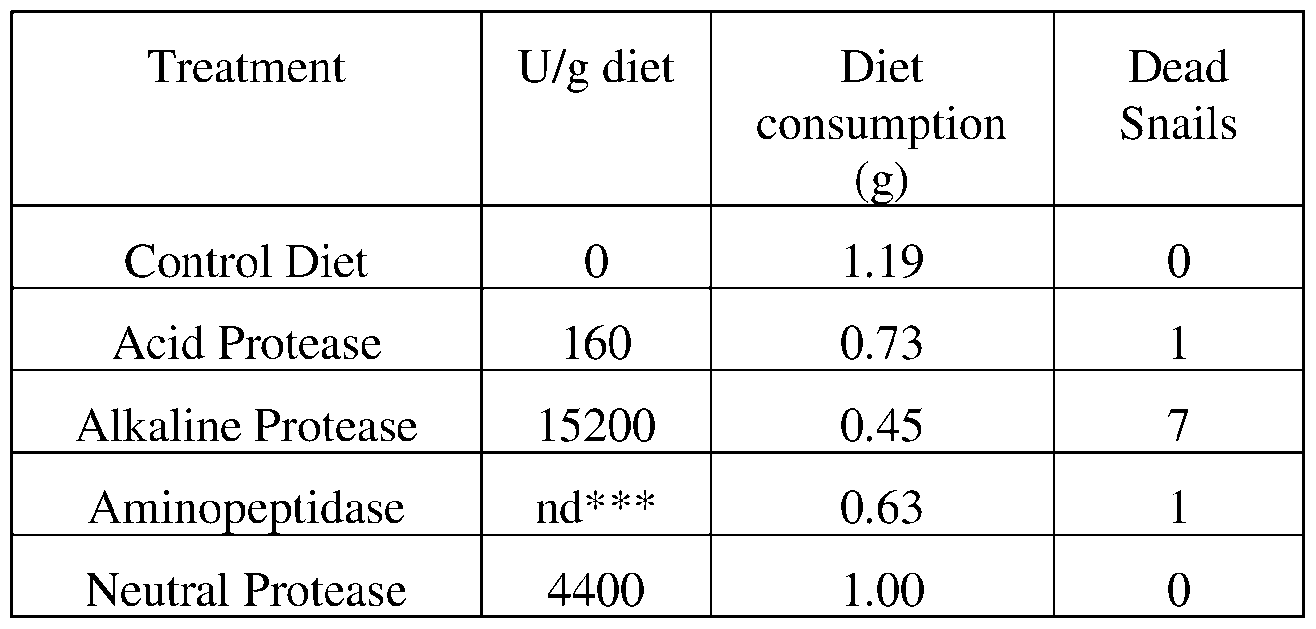
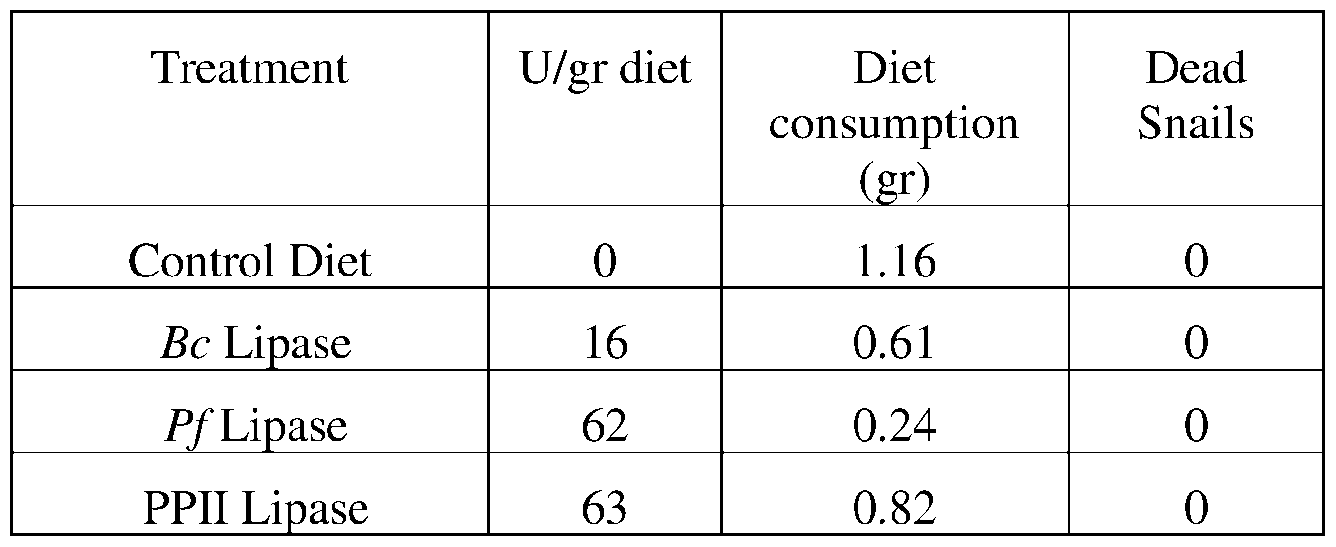
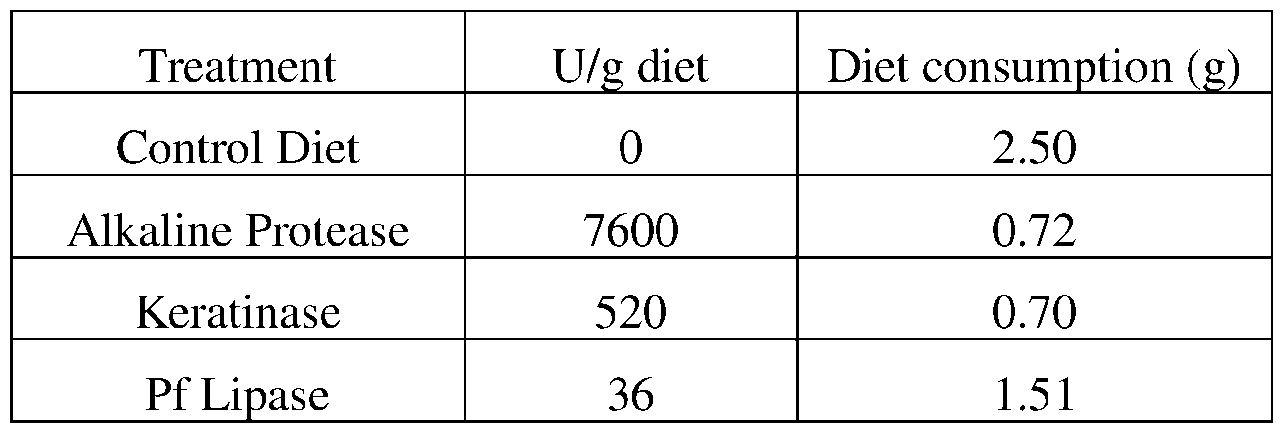
Claims
Priority Applications (3)
| Application Number | Priority Date | Filing Date | Title |
|---|---|---|---|
| AU2024249083A AU2024249083A1 (en) | 2023-03-28 | 2024-03-25 | Pesticidal enzymes for use on nematodes, insects, and mollusks |
| EP24781687.9A EP4689094A1 (en) | 2023-03-28 | 2024-03-25 | Pesticidal enzymes for use on nematodes, insects, and mollusks |
| MX2025011515A MX2025011515A (en) | 2023-03-28 | 2025-09-26 | Pesticidal enzymes for use on nematodes, insects, and mollusks |
Applications Claiming Priority (2)
| Application Number | Priority Date | Filing Date | Title |
|---|---|---|---|
| US202363492672P | 2023-03-28 | 2023-03-28 | |
| US63/492,672 | 2023-03-28 |
Publications (1)
| Publication Number | Publication Date |
|---|---|
| WO2024206229A1 true WO2024206229A1 (en) | 2024-10-03 |
Family
ID=92899391
Family Applications (1)
| Application Number | Title | Priority Date | Filing Date |
|---|---|---|---|
| PCT/US2024/021327 Ceased WO2024206229A1 (en) | 2023-03-28 | 2024-03-25 | Pesticidal enzymes for use on nematodes, insects, and mollusks |
Country Status (6)
| Country | Link |
|---|---|
| US (1) | US20240324599A1 (en) |
| EP (1) | EP4689094A1 (en) |
| AR (1) | AR132218A1 (en) |
| AU (1) | AU2024249083A1 (en) |
| MX (1) | MX2025011515A (en) |
| WO (1) | WO2024206229A1 (en) |
Families Citing this family (1)
| Publication number | Priority date | Publication date | Assignee | Title |
|---|---|---|---|---|
| US11124460B2 (en) | 2016-03-16 | 2021-09-21 | Spogen Biotech Inc. | Methods for promoting plant health using free enzymes and microorganisms that overexpress enzymes |
Citations (4)
| Publication number | Priority date | Publication date | Assignee | Title |
|---|---|---|---|---|
| US20160201044A1 (en) * | 2011-12-28 | 2016-07-14 | Council Of Scientific & Industrial Research | Novel insecticidal chitinase protein its encoding nucleotide and application thereof |
| CN106399335A (en) * | 2016-10-19 | 2017-02-15 | 大连理工大学 | Preparation method and application of efficient chitinase mutant |
| US20210251238A1 (en) * | 2018-06-05 | 2021-08-19 | Novozymes Bioag A/S | Methods of protecting a plant from insect pests |
| US20220135492A1 (en) * | 2016-03-16 | 2022-05-05 | Spogen Biotech Inc. | Methods for promoting plant health using free enzymes and microorganisms that overexpress enzymes |
-
2024
- 2024-03-25 WO PCT/US2024/021327 patent/WO2024206229A1/en not_active Ceased
- 2024-03-25 US US18/615,771 patent/US20240324599A1/en active Pending
- 2024-03-25 EP EP24781687.9A patent/EP4689094A1/en active Pending
- 2024-03-25 AU AU2024249083A patent/AU2024249083A1/en active Pending
- 2024-03-26 AR ARP240100727A patent/AR132218A1/en unknown
-
2025
- 2025-09-26 MX MX2025011515A patent/MX2025011515A/en unknown
Patent Citations (4)
| Publication number | Priority date | Publication date | Assignee | Title |
|---|---|---|---|---|
| US20160201044A1 (en) * | 2011-12-28 | 2016-07-14 | Council Of Scientific & Industrial Research | Novel insecticidal chitinase protein its encoding nucleotide and application thereof |
| US20220135492A1 (en) * | 2016-03-16 | 2022-05-05 | Spogen Biotech Inc. | Methods for promoting plant health using free enzymes and microorganisms that overexpress enzymes |
| CN106399335A (en) * | 2016-10-19 | 2017-02-15 | 大连理工大学 | Preparation method and application of efficient chitinase mutant |
| US20210251238A1 (en) * | 2018-06-05 | 2021-08-19 | Novozymes Bioag A/S | Methods of protecting a plant from insect pests |
Also Published As
| Publication number | Publication date |
|---|---|
| EP4689094A1 (en) | 2026-02-11 |
| US20240324599A1 (en) | 2024-10-03 |
| AR132218A1 (en) | 2025-06-04 |
| AU2024249083A1 (en) | 2025-09-25 |
| MX2025011515A (en) | 2025-11-03 |
Similar Documents
| Publication | Publication Date | Title |
|---|---|---|
| Verma et al. | Plant growth-promoting rhizobacteria (PGPR) and fungi (PGPF): potential biological control agents of diseases and pests | |
| David et al. | Pseudomonas fluorescens: a plant-growth-promoting rhizobacterium (PGPR) with potential role in biocontrol of pests of crops | |
| KR102179224B1 (en) | Compositions comprising recombinant bacillus cells and another biological control agent | |
| Bhusal et al. | Biological control of Phytophthora blight and growth promotion in sweet pepper by Bacillus species | |
| Cawoy et al. | Bacillus-based biological control of plant diseases | |
| US20240240139A1 (en) | Methods and agricultural compositions for preventing or controlling plant diseases | |
| Bacon et al. | Abiotic and biotic plant stress-tolerant and beneficial secondary metabolites produced by endophytic Bacillus species | |
| Jambhulkar et al. | Delivery systems for introduction of microbial inoculants in the field | |
| CA3221950A1 (en) | Methods for promoting plant health using free enzymes and microorganisms that overexpress enzymes | |
| CN105263965A (en) | Fusion proteins and methods for stimulating plant growth, protecting plants, and immobilizing bacillus spores on plants | |
| KR20200083590A (en) | Paenibacillus based endogenous spore display platform, products and methods | |
| US11793196B2 (en) | Fusion proteins, recombinant bacteria, and exosporium fragments for pest control and plant health | |
| KR20230120135A (en) | Spore compositions, their production and use | |
| KR20210091261A (en) | Endospore display platform, product and method | |
| EP4689094A1 (en) | Pesticidal enzymes for use on nematodes, insects, and mollusks | |
| KR20160123030A (en) | Composition for controlling insecticide prepared by adding tannic acid into effective amount of Bacillus thuringiensis subsp. kurstaki KB100 strain and uses thereof | |
| US20240373859A1 (en) | Composition comprising bacillus siamensis strain for promoting plant growth | |
| Perez-Garcia et al. | Successful and unexpected potential of entomopathogen Bacillus thuringiensis as plant growth promoting rhizobacterium Exitoso e inesperado potencial del entomopatógeno Bacillus thuringiensis como rizobacteria promotora del crecimiento de las plantas | |
| SINGH et al. | Use of Microbes: A Sustainable Approach in Management of Horticultural Crops | |
| HEMAVATHI | MASTER OF SCIENCE (Agriculture) | |
| NZ731011A (en) | Fusion proteins, recombinant bacteria, and methods for using recombinant bacteria |
Legal Events
| Date | Code | Title | Description |
|---|---|---|---|
| 121 | Ep: the epo has been informed by wipo that ep was designated in this application |
Ref document number: 24781687 Country of ref document: EP Kind code of ref document: A1 |
|
| WWE | Wipo information: entry into national phase |
Ref document number: AU2024249083 Country of ref document: AU |
|
| ENP | Entry into the national phase |
Ref document number: 2024249083 Country of ref document: AU Date of ref document: 20240325 Kind code of ref document: A |
|
| WWE | Wipo information: entry into national phase |
Ref document number: MX/A/2025/011515 Country of ref document: MX |
|
| WWE | Wipo information: entry into national phase |
Ref document number: 202517093967 Country of ref document: IN |
|
| REG | Reference to national code |
Ref country code: BR Ref legal event code: B01A Ref document number: 112025020398 Country of ref document: BR |
|
| WWE | Wipo information: entry into national phase |
Ref document number: 2024781687 Country of ref document: EP |
|
| NENP | Non-entry into the national phase |
Ref country code: DE |
|
| WWP | Wipo information: published in national office |
Ref document number: 202517093967 Country of ref document: IN |
|
| WWP | Wipo information: published in national office |
Ref document number: MX/A/2025/011515 Country of ref document: MX |
|
| ENP | Entry into the national phase |
Ref document number: 2024781687 Country of ref document: EP Effective date: 20251028 |
|
| ENP | Entry into the national phase |
Ref document number: 2024781687 Country of ref document: EP Effective date: 20251028 |
|
| ENP | Entry into the national phase |
Ref document number: 2024781687 Country of ref document: EP Effective date: 20251028 |
|
| ENP | Entry into the national phase |
Ref document number: 2024781687 Country of ref document: EP Effective date: 20251028 |
|
| ENP | Entry into the national phase |
Ref document number: 2024781687 Country of ref document: EP Effective date: 20251028 |