WO2024200722A1 - Solid oral dosage form comprising antibodies for sustained release in the lower gastrointestinal tract - Google Patents
Solid oral dosage form comprising antibodies for sustained release in the lower gastrointestinal tract Download PDFInfo
- Publication number
- WO2024200722A1 WO2024200722A1 PCT/EP2024/058606 EP2024058606W WO2024200722A1 WO 2024200722 A1 WO2024200722 A1 WO 2024200722A1 EP 2024058606 W EP2024058606 W EP 2024058606W WO 2024200722 A1 WO2024200722 A1 WO 2024200722A1
- Authority
- WO
- WIPO (PCT)
- Prior art keywords
- dosage form
- oral dosage
- solid oral
- antibody
- release layer
- Prior art date
- Legal status (The legal status is an assumption and is not a legal conclusion. Google has not performed a legal analysis and makes no representation as to the accuracy of the status listed.)
- Ceased
Links
Classifications
-
- A—HUMAN NECESSITIES
- A61—MEDICAL OR VETERINARY SCIENCE; HYGIENE
- A61K—PREPARATIONS FOR MEDICAL, DENTAL OR TOILETRY PURPOSES
- A61K9/00—Medicinal preparations characterised by special physical form
- A61K9/14—Particulate form, e.g. powders, Processes for size reducing of pure drugs or the resulting products, Pure drug nanoparticles
- A61K9/16—Agglomerates; Granulates; Microbeadlets ; Microspheres; Pellets; Solid products obtained by spray drying, spray freeze drying, spray congealing,(multiple) emulsion solvent evaporation or extraction
- A61K9/167—Agglomerates; Granulates; Microbeadlets ; Microspheres; Pellets; Solid products obtained by spray drying, spray freeze drying, spray congealing,(multiple) emulsion solvent evaporation or extraction with an outer layer or coating comprising drug; with chemically bound drugs or non-active substances on their surface
- A61K9/1676—Agglomerates; Granulates; Microbeadlets ; Microspheres; Pellets; Solid products obtained by spray drying, spray freeze drying, spray congealing,(multiple) emulsion solvent evaporation or extraction with an outer layer or coating comprising drug; with chemically bound drugs or non-active substances on their surface having a drug-free core with discrete complete coating layer containing drug
-
- A—HUMAN NECESSITIES
- A61—MEDICAL OR VETERINARY SCIENCE; HYGIENE
- A61K—PREPARATIONS FOR MEDICAL, DENTAL OR TOILETRY PURPOSES
- A61K39/00—Medicinal preparations containing antigens or antibodies
- A61K39/395—Antibodies; Immunoglobulins; Immune serum, e.g. antilymphocytic serum
- A61K39/39591—Stabilisation, fragmentation
-
- A—HUMAN NECESSITIES
- A61—MEDICAL OR VETERINARY SCIENCE; HYGIENE
- A61K—PREPARATIONS FOR MEDICAL, DENTAL OR TOILETRY PURPOSES
- A61K47/00—Medicinal preparations characterised by the non-active ingredients used, e.g. carriers or inert additives; Targeting or modifying agents chemically bound to the active ingredient
- A61K47/06—Organic compounds, e.g. natural or synthetic hydrocarbons, polyolefins, mineral oil, petrolatum or ozokerite
- A61K47/26—Carbohydrates, e.g. sugar alcohols, amino sugars, nucleic acids, mono-, di- or oligo-saccharides; Derivatives thereof, e.g. polysorbates, sorbitan fatty acid esters or glycyrrhizin
-
- A—HUMAN NECESSITIES
- A61—MEDICAL OR VETERINARY SCIENCE; HYGIENE
- A61K—PREPARATIONS FOR MEDICAL, DENTAL OR TOILETRY PURPOSES
- A61K9/00—Medicinal preparations characterised by special physical form
- A61K9/14—Particulate form, e.g. powders, Processes for size reducing of pure drugs or the resulting products, Pure drug nanoparticles
- A61K9/16—Agglomerates; Granulates; Microbeadlets ; Microspheres; Pellets; Solid products obtained by spray drying, spray freeze drying, spray congealing,(multiple) emulsion solvent evaporation or extraction
- A61K9/1605—Excipients; Inactive ingredients
- A61K9/1611—Inorganic compounds
-
- A—HUMAN NECESSITIES
- A61—MEDICAL OR VETERINARY SCIENCE; HYGIENE
- A61K—PREPARATIONS FOR MEDICAL, DENTAL OR TOILETRY PURPOSES
- A61K9/00—Medicinal preparations characterised by special physical form
- A61K9/14—Particulate form, e.g. powders, Processes for size reducing of pure drugs or the resulting products, Pure drug nanoparticles
- A61K9/16—Agglomerates; Granulates; Microbeadlets ; Microspheres; Pellets; Solid products obtained by spray drying, spray freeze drying, spray congealing,(multiple) emulsion solvent evaporation or extraction
- A61K9/1605—Excipients; Inactive ingredients
- A61K9/1617—Organic compounds, e.g. phospholipids, fats
- A61K9/1623—Sugars or sugar alcohols, e.g. lactose; Derivatives thereof; Homeopathic globules
-
- A—HUMAN NECESSITIES
- A61—MEDICAL OR VETERINARY SCIENCE; HYGIENE
- A61K—PREPARATIONS FOR MEDICAL, DENTAL OR TOILETRY PURPOSES
- A61K9/00—Medicinal preparations characterised by special physical form
- A61K9/14—Particulate form, e.g. powders, Processes for size reducing of pure drugs or the resulting products, Pure drug nanoparticles
- A61K9/16—Agglomerates; Granulates; Microbeadlets ; Microspheres; Pellets; Solid products obtained by spray drying, spray freeze drying, spray congealing,(multiple) emulsion solvent evaporation or extraction
- A61K9/1605—Excipients; Inactive ingredients
- A61K9/1629—Organic macromolecular compounds
- A61K9/1635—Organic macromolecular compounds obtained by reactions only involving carbon-to-carbon unsaturated bonds, e.g. polyvinyl pyrrolidone, poly(meth)acrylates
-
- A—HUMAN NECESSITIES
- A61—MEDICAL OR VETERINARY SCIENCE; HYGIENE
- A61K—PREPARATIONS FOR MEDICAL, DENTAL OR TOILETRY PURPOSES
- A61K9/00—Medicinal preparations characterised by special physical form
- A61K9/14—Particulate form, e.g. powders, Processes for size reducing of pure drugs or the resulting products, Pure drug nanoparticles
- A61K9/16—Agglomerates; Granulates; Microbeadlets ; Microspheres; Pellets; Solid products obtained by spray drying, spray freeze drying, spray congealing,(multiple) emulsion solvent evaporation or extraction
- A61K9/1605—Excipients; Inactive ingredients
- A61K9/1629—Organic macromolecular compounds
- A61K9/1652—Polysaccharides, e.g. alginate, cellulose derivatives; Cyclodextrin
-
- A—HUMAN NECESSITIES
- A61—MEDICAL OR VETERINARY SCIENCE; HYGIENE
- A61K—PREPARATIONS FOR MEDICAL, DENTAL OR TOILETRY PURPOSES
- A61K9/00—Medicinal preparations characterised by special physical form
- A61K9/48—Preparations in capsules, e.g. of gelatin, of chocolate
- A61K9/50—Microcapsules having a gas, liquid or semi-solid filling; Solid microparticles or pellets surrounded by a distinct coating layer, e.g. coated microspheres, coated drug crystals
- A61K9/5005—Wall or coating material
- A61K9/5021—Organic macromolecular compounds
- A61K9/5026—Organic macromolecular compounds obtained by reactions only involving carbon-to-carbon unsaturated bonds, e.g. polyvinyl pyrrolidone, poly(meth)acrylates
-
- A—HUMAN NECESSITIES
- A61—MEDICAL OR VETERINARY SCIENCE; HYGIENE
- A61K—PREPARATIONS FOR MEDICAL, DENTAL OR TOILETRY PURPOSES
- A61K9/00—Medicinal preparations characterised by special physical form
- A61K9/48—Preparations in capsules, e.g. of gelatin, of chocolate
- A61K9/50—Microcapsules having a gas, liquid or semi-solid filling; Solid microparticles or pellets surrounded by a distinct coating layer, e.g. coated microspheres, coated drug crystals
- A61K9/5005—Wall or coating material
- A61K9/5021—Organic macromolecular compounds
- A61K9/5031—Organic macromolecular compounds obtained otherwise than by reactions only involving carbon-to-carbon unsaturated bonds, e.g. polyethylene glycol, poly(lactide-co-glycolide)
-
- A—HUMAN NECESSITIES
- A61—MEDICAL OR VETERINARY SCIENCE; HYGIENE
- A61P—SPECIFIC THERAPEUTIC ACTIVITY OF CHEMICAL COMPOUNDS OR MEDICINAL PREPARATIONS
- A61P1/00—Drugs for disorders of the alimentary tract or the digestive system
-
- C—CHEMISTRY; METALLURGY
- C07—ORGANIC CHEMISTRY
- C07K—PEPTIDES
- C07K16/00—Immunoglobulins [IGs], e.g. monoclonal or polyclonal antibodies
- C07K16/18—Immunoglobulins [IGs], e.g. monoclonal or polyclonal antibodies against material from animals or humans
- C07K16/24—Immunoglobulins [IGs], e.g. monoclonal or polyclonal antibodies against material from animals or humans against cytokines, lymphokines or interferons
- C07K16/241—Tumor Necrosis Factors
Definitions
- Solid oral dosage form comprising antibodies for sustained release in the lower gastrointestinal tract
- the present invention relates to a solid oral dosage form for sustained release in the lower gastrointestinal tract, comprising antibodies or functional fragments thereof specific to tumor necrosis factor alpha (TNFa) in a depot layer (2) covering an inert core unit (1 ), a sustained release layer (3) covering the depot layer, and a delayed release layer (4) covering the sustained release layer, preferably prepared by drug layering; an oral multiparticulate drug delivery system comprising a plurality of the solid oral dosage forms; and the use of the solid oral dosage form in the targeted local treatment in the lower gastrointestinal tract of a patient.
- TNFa tumor necrosis factor alpha
- Solid dosage forms such as pellets, mini-tablets, tablets, granules, capsules or tablets and the like are widely used in pharmaceutical industry. They typically comprise at least one active ingredient, and one or more carriers and other excipients. Advantages of such solid dosage forms include less storage space, ease of handling, and improved stability. Moreover, tablets or capsules provide the most widely used dosage unit for applying drugs to a patient in a non-invasive manner. For small molecule drugs there exists a long-established practice of preparing solid dosage forms. For antibodies and functional fragments thereof on the other hand, although they are finding an ever- increasing use as active ingredients in therapeutic or diagnostic applications, the formulation into solid dosage forms is more challenging.
- solid dosage forms intended for oral administration and targeting parts of the gastrointestinal (Gl) tract has many potential advantages and therefore has become an interesting alternative in recent years, since it allows for the targeted local treatment of symptoms of diseases in parts of the Gl tract, as for example immune checkpoint inhibitor (ICPI) induced colitis, ICPI induced enterocolitis, ICPI induced diarrhoea, inflammatory bowel disease (IBD), colorectal cancer, diarrhea or microbial infections.
- ICPI immune checkpoint inhibitor
- IBD inflammatory bowel disease
- colorectal cancer colorectal cancer
- diarrhea or microbial infections colorectal cancer
- the use of antibodies and functional fragments of antibodies in solid dosage forms for such targeted local treatment in the Gl tract faces various challenges.
- Colitis is as a disorder characterized by inflammation of the large intestine/colon.
- Enteritis is defined as a disorder characterized by inflammation of the small intestine.
- Enterocolitis is as a disorder characterized by inflammation of both the small intestine and the large intestine/colon, i.e. a combination of enteritis and colitis.
- Symptoms characterizing ICP inhibitor-induced colitis include diarrhoea, abdominal pain, nausea, cramping, blood or mucus in stool or changes in bowel habits, fever, abdominal distention, obstipation and constipation (Brahmer et al., Management of Immune- Related Adverse Events in Patients Treated With Immune Checkpoint Inhibitor Therapy: American Society of Clinical Oncology (ASCO) Practice Guideline, J Clin Oncol. (2016) 10;36(17):1714-1768). Symptoms characterizing ICP inhibitor-induced enterocolitis include the symptoms listed above for ICP inhibitor-induced colitis.
- ICPI induced colitis With respect to ICPI induced colitis, ICPI induced enterocolitis and ICPI induced diarrhoea, it is important that patients can be treated for ICPI induced colitis, ICPI induced enterocolitis or ICPI induced diarrhoea with an antibody or functional antibody fragment while still undergoing cancer treatment with ICPI via intravenous route.
- a problem associated with solid oral dosage forms comprising antibodies and functional fragments of antibodies is the size of the antibodies and antibody fragments compared to small drug molecules, which, when combined with functional coatings like sustained release coatings and/or delayed release coatings, can greatly affect the release behaviour.
- the targeted release of therapeutic antibodies or functional fragments thereof from a solid dosage form in a specific part of the Gl tract over a defined window of time is particularly desirable for diseases of the lower Gl tract and in particular ICPI induced colitis, ICPI induced enterocolitis, ICPI induced diarrhoea and IBD.
- ICPI induced colitis ICPI induced enterocolitis
- ICPI induced diarrhoea and IBD ICPI induced colitis
- ICPI induced diarrhoea ICPI induced diarrhoea
- IBD ICPI induced diarrhoea
- a targeted release of antibodies or functional fragments thereof from a solid dosage form in a specific part of the Gl tract over a defined window of time can also be very challenging.
- a solid oral dosage form comprising therapeutic antibodies, preferably specific to tumor necrosis factor alpha (TNFa), or functional fragments thereof, for release in a defined part of the Gl tract and in particular the lower Gl tract, that ensures targeted release over a defined window of time.
- TNFa tumor necrosis factor alpha
- the solid oral dosage form of the present invention comprises an inert core unit (1 ), a depot layer (2) comprising the antibody or functional fragment thereof, a sustained release layer (3), and a delayed release layer (4).
- the ingredients and composition of the depot layer, sustained release layer and delayed release layer are carefully selected to ensure the desired release profile of the antibody or functional fragment thereof after oral administration.
- the present inventors unexpectedly found that the sustained release layer on its own, did not provide for consistent results regarding sustained antibody release from the depot layer. Surprisingly, only in combination with the final outer delayed release layer, a consistent and sufficiently high release rate (e.g. about 80 % antibody released within 26 hours in a release test) was achieved. This is surprising, since the delayed release layer is supposed to only prevent drug release until the pH trigger. Thus, the final solid oral dosage form found by the present inventors works due to the combinatorial effect of the layers and of the carefully selected and calibrated components in the different layers, enabling the targeted release of the antibody or functional fragment thereof in a desired manner.
- the delayed release layer comprises an anionic polymer and the sustained release layer comprises a cationic polymer.
- the formulation of the present invention was shown to be stable for 12 months. Unexpectedly, the antibody activity was stable even after storage at 25°C/60% RH for one year.
- the solid oral dosage form of the present invention prevents release of the antibody or functional fragment thereof before a target site in the gastrointestinal (Gl) tract of a patient.
- the solid oral dosage form advantageously ensures a controlled and sustained release from the solid oral dosage form in the lower part of the Gl tract, particularly starting preferably in the terminal ileum or the ileocolonic region, and over a clearly defined period of time, e.g. over the course of a day, ensuring the release of the majority of the antibody or functional fragment thereof from the solid oral dosage form in the target region of the Gl tract and before it is expelled via the anus.
- the solid oral dosage form ensures that an optimal amount of the antibody or functional fragment thereof in active form can be released from the solid oral dosage form in a controlled manner.
- the solid oral dosage form is preferably prepared by drug layering, using carefully chosen combinations of excipients that ensure a fast and straight forward preparation of the solid oral dosage form, while preserving stability and activity of the antibodies or functional fragments thereof.
- the present invention provides a novel solid oral dosage form, comprising as an active agent an antibody or functional fragment thereof, preferably specific to TNFa, in a depot layer (2) covering an inert core unit (1 ), a sustained release layer (3) covering the depot layer and a delayed release layer (4) covering the sustained release layer, thereby ensuring carefully calibrated delayed and sustained release from the solid oral dosage form starting at a defined location in the lower Gl tract.
- a solid oral dosage form comprising i) an inert core unit (1 ); ii) a depot layer (2) covering the inert core unit (1 ) and comprising an antibody or a functional fragment thereof, as an active agent; and optionally a stabilizer, a buffer and/or a polymeric binder; iii) a sustained release layer (3), covering the depot layer (2) and comprising at least one cationic polymer; and optionally a plasticizer and/or an anti-tacking agent; and iv) a delayed release layer (4) covering the sustained release layer (3) and comprising at least one anionic polymer and optionally a plasticizer.
- a solid oral dosage form comprising i) an inert core unit (1 ); ii) a depot layer (2) covering the inert core unit (1 ) and comprising an antibody or a functional fragment thereof as an active agent; a stabilizer; a buffer; and a polymeric binder; iii) a sustained release layer (3), covering the depot layer (2) and comprising at least one cationic polymer; a plasticizer; and an anti-tacking agent; and iv) a delayed release layer (4) covering the sustained release layer (3) and comprising at least one anionic polymer and a plasticizer.
- the at least one anionic polymer is selected from the group consisting of polymers comprising carboxylic acid groups; poly(methacrylic acid, methyl methacrylate) 1 :1 ; poly(methacrylic acid, ethyl acrylate) 1 :1 ; poly(methacrylic acid, methyl methacrylate) 1 :2; poly(methyl acrylate, methyl methacrylate, methacrylic acid) 7:3:1
- the at least one cationic polymer is selected from the group consisting of chitosan; cellulose; ammonio methacrylate copolymers; poly(ethyl acrylate, methyl methacrylate, trimethylammonioethyl methacrylate chloride) 1 2 0.1 ; poly(2-N,N- dimethylaminoethylmethacrylate); poly-L-lysine; polyethylenimine; Poly(amidoamine
- a solid oral dosage form comprising i) an inert core unit (1 ); ii) a depot layer (2) covering the inert core unit (1 ) and comprising an antibody or a functional fragment thereof, preferably specific to tumor necrosis factor alpha (TNFa), as an active agent; a stabilizer, preferably sucrose; a buffer; and a polymeric binder, preferably hypromellose (HPMC); iii) a sustained release layer (3), covering the depot layer (2) and comprising an ammonio methacrylate copolymer, preferably poly(ethyl acrylate, methyl methacrylate, trimethylammonioethyl methacrylate chloride) 1 : 2 : 0.1 ; a plasticizer; and an anti-tacking agent; and iv) a delayed release layer (4) covering the sustained release layer (3) and comprising poly(methacrylic acid, methyl methacrylate) 1 :2, poly(methyl acrylate, methyl methacrylate, meth
- solid oral dosage form according to any one of the preceding items, wherein the solid oral dosage form is a pellet, granule, bead, sphere, mini-sphere, tablet or mini-tablet, preferably a pellet.
- the inert core unit (1 ) is an inert pellet, mini-tablet, tablet, granule, core, bead, mini-sphere or sphere, preferably a pellet.
- the inert core unit (1 ) comprises a monosaccharide, disaccharide, oligosaccharide, polysaccharide, silica, tartaric acid, calcium carbonate, or a combination thereof as a main component.
- the inert core unit (1 ) consists of a monosaccharide, disaccharide, oligosaccharide, polysaccharide, silica, tartaric acid, calcium carbonate, or a combination thereof.
- the inert core unit (1 ) is a pellet, preferably comprising, or consisting of, a sphere; consists of a water insoluble or water swellable material; and/or is of uniform composition.
- the inert core unit (1 ) comprises, or consists of, a pellet, e.g. a sphere, and optionally a seal coating covering the sphere, the seal coating preferably consisting of a water-insoluble material.
- the inert core unit (1 ) comprises a monosaccharide, disaccharide, oligosaccharide, polysaccharide, silica, tartaric acid or a combination thereof as main or only component(s).
- the inert core unit (1 ) preferably is a pellet and, comprises, or consists of, microcrystalline cellulose, sucrose, starch, mannitol, calcium carbonate, silica, tartaric acid, lactose, carboxymethylcellulose, crosslinked sodium carboxymethylcellulose, or a combination thereof.
- the inert core unit (1 ) comprises, or consists of, microcrystalline cellulose.
- the inert core unit (1 ) is a pellet with a sphericity degree of at least 0.6, preferably at least 0.7, more preferably at least 0.8, even more preferably at least 0.9, even more preferably at least 0.95.
- the inert core unit (1 ) is a pellet with a median particle size of 50-5000 pm, preferably 100- 3000 pm, more preferably 200-2000 pm, even more preferably 300-1500 pm, even more preferably 400-1400, even more preferably 700-1400, even more preferably 500- 1000, most preferably 500-700, 600-800, or 700-1000 pm.
- the inert core unit (1 ) is a pellet with a particle size distribution such that at least 85 % of the pellets have a particle size of 50-3000 pm, preferably 100-1500 pm, more preferably 350-1400 pm, even more preferably 500-1400 pm, even more preferably 700-1400, even more preferably 500-1000 pm, e.g. 500-700 pm or 700-1000 pm.
- the inert core unit (1 ) is a pellet with a particle size distribution such that at least 85 % of the pellets have a particle size of 700-1400 pm, preferably of 700-1000 pm.
- the stabilizer in the depot layer (2) is selected from sucrose, maltose, lactose, trehalose, glycerol, maltitol, isomalt, mannitol, sorbitol, xylitol and combinations thereof, preferably sucrose, maltose, lactose, glycerol, maltitol, isomalt, and combinations thereof, more preferably sucrose.
- the buffer i.e.
- buffer salt or salts and/or free base) in the depot layer (2) is selected from the group consisting of L-histidine buffer, citrate buffer, hydroxymethylaminomethane (TRIS) buffer, succinate buffer, phosphate buffer, acetate buffer, or salts thereof, and combinations thereof; preferably L-histidine buffer, citrate buffer, TRIS buffer, and combinations thereof; more preferably L-histidine buffer, citrate-TRIS buffer, and a combination thereof.
- the buffer i.e. buffer salt and/or free base
- the buffer in the depot layer (2) comprises, or consists of, L-histidine, preferably L-histidine monohydrochloride and/or free base.
- the polymeric binder in the depot layer (2) is selected from hypromellose (HPMC); methylcellulose (MC); polyvinylpirrolidone (PVP); polyvinylalcohol (PVA); hydroxypropyl cellulose (HPC); macrogol poly(vinylalcohol) grafted copolymer (e.g. Kollidon® IR); and combinations thereof; preferably HPMC or MC; more preferably HPMC.
- HPMC hypromellose
- MC methylcellulose
- PVP polyvinylpirrolidone
- PVA polyvinylalcohol
- HPPC hydroxypropyl cellulose
- macrogol poly(vinylalcohol) grafted copolymer e.g. Kollidon® IR
- combinations thereof preferably HPMC or MC; more preferably HPMC.
- HPMC hypromellose
- the solid oral dosage form according to item 32, wherein the anti-tacking agent is selected from mesoporous silica, colloidal silica dioxide, stearic acid, magnesium stearate, glycerol monostearate (GMS) and talc, preferably mesoporous silica.
- the depot layer (2) comprises a surfactant, preferably a nonionic surfactant.
- the surfactant is selected from the group consisting of polysorbate 20, polysorbate 28, polysorbate 40, polysorbate 60, polysorbate 65, polysorbate 80, polysorbate 81 , polysorbate 85, poloxamer 124, poloxamer 181 , poloxamer 188, poloxamer 237, poloxamer 331 , poloxamer 338 and poloxamer 407, and combinations thereof.
- the depot layer (2) comprises or consists of antibody or functional fragment thereof preferably specific to TN Fa as an active agent, sucrose, L-histidine (salt and/or free base), preferably L-histidine monohydrochloride and/or free base, hypromellose (HPMC), preferably hypromellose 2910 2.6-3.6 mPas, mesoporous silica, polysorbate 80, and residual water.
- the depot layer (2) comprises or consists of antibody or functional fragment thereof preferably specific to TN Fa as an active agent, sucrose, L-histidine (salt and/or free base), preferably L-histidine monohydrochloride and/or free base, hypromellose (HPMC), preferably hypromellose 2910 2.6-3.6 mPas, mesoporous silica, polysorbate 80, and residual water.
- the solid oral dosage form comprises 0.05-30 wt.-%, preferably 0.1 -25 wt.-%, more preferably 0.1 -20 wt.-%, even more preferably, 0.2-20 wt.-%, even more preferably, 0.2-15 wt.-%, even more preferably 0.5-12 wt.-%, even more preferably 0.5-10 wt.-%, even more preferably 0.8-12 wt.-%, even more preferably 8-12 wt.-%, even more preferably 8-10 wt.-%, e.g. about 9.5 wt.-%, of the antibody or functional fragment thereof preferably specific to TN Fa.
- the depot layer (2) comprises 0.2-75 wt.-% antibody or functional fragment thereof, 0.5-65 wt.-% binder, 2-80 wt.-% sucrose, 0.1 -10 wt.-% L-histidine (salt and/or free base) and optionally 0.05-10 wt.-% other buffers, 0.2-15 wt.-% anti-tacking agent, 0.01 -1 wt.-% surfactant, and/or up to 10 wt.-% water, relative to the total weight of the depot layer; preferably 1 -45 wt.-% antibody or functional fragment thereof, 2-35 wt.-% binder, IQ- 70 wt.-% sucrose, 0.2-5 wt.-% L-histidine and optionally 0.1 -4 wt.-% other buffers, 1 -5 wt.-% anti-tacking agent, 0.05-0.5 wt.
- the solid oral dosage form according to any of the preceding items, wherein the solid oral dosage form, comprises, or consists of, a) in the inert core unit (1 ), microcrystalline cellulose; and/or b) in the depot layer (2), antibody or functional fragment thereof preferably specific to TN Fa, sucrose, L-histidine, preferably L-histidine monohydrochloride and/or free base, hypromellose (HPMC), preferably hypromellose 2910 2.6-3.6 mPas, mesoporous silica, and/or polysorbate 80; and/or c) in the sustained release layer (3), poly(ethyl acrylate, methyl methacrylate, trimethylammonioethyl methacrylate chloride) 1 : 2 : 0.1 (e.g.
- Eudragit® RS 30D triethyl citrate (TEC) and/or mesoporous silica; and/or d) in the delayed release layer (4), poly(methacrylic acid, methyl methacrylate) 1 :2, TEC, polysorbate 80, and/or glycerol monostearate (GMS); and/or e) residual water in the inert core unit and/or any of the layers.
- TEC triethyl citrate
- GMS glycerol monostearate
- the inert core unit (1 ) is a pellet with a particle size distribution such that at least 85 % of the pellets have a particle size of 700-1400 pm, preferably 700-1000 pm.
- the depot layer (2) comprises, relative to the total weight of the solid oral dosage form, 0.05-30 wt.-% antibody or functional fragment thereof, 0.03-30 wt.-% binder, 0.1 -40 wt.-% sucrose, 0.005-5 wt.-% L-histidine (salt and/or free base) and optionally 0.001-5 wt.-% other buffers, 0.005-8 wt.-% anti-tacking agent, and/or 0.0005-2 wt.-% surfactant; preferably 0.1 -20 wt.-% antibody or functional fragment thereof, 0.1 -25 wt.-% binder, 0.5-35 wt.-% sucrose, 0.01 -3 wt.-% L-histidine and optionally 0.01 -3 wt.-% other buffers, 0.01 -5 wt.-% anti-tacking agent, and/or 0.001 -1 wt.-
- the sustained release layer (3) comprises, relative to the total weight of the solid oral dosage form, 1-10 wt.-% ammonio methacrylate copolymer, 0.1 -5 wt.-% plasticizer, and/or 0.05-7 wt.-% anti-tacking agent; preferably 3-6 wt.-% ammonio methacrylate copolymer, 0.2- 2 wt.-% plasticizer, and/or 0.1-3 wt.-% anti-tacking agent; more preferably 3.3-4.5 wt.- % ammonio methacrylate copolymer, 0.5-1.5 wt.-% plasticizer, and/or 0.2-1 wt.-% antitacking agent; even more preferably 3.6-4.2 wt.-% poly(ethyl acrylate, methyl methacrylate, trimethylammonioethyl methacrylate chloride) 1 : 2 : 0.1 (e
- the solid oral dosage form of any of the preceding items comprising up to 7 wt.-%, preferably up 6 wt.-%, more preferably up to 5 wt.-%, e.g. 5 wt.-%, water in the inert core unit and/or any of the layers, relative to the total weight of the solid oral dosage form.
- the solid oral dosage form according to any of items 1 to 41 , wherein the solid oral dosage form (relative to the total weight of the solid oral dosage form) comprises, or consists of, a) in the inert core unit (1 ), 5-75 wt.-%, preferably 15-65 wt.-%, more preferably 20- 60 wt.-%, even more preferably 25-30 wt.-%, microcrystalline cellulose; and/or b) in the depot layer (2), 0.05-30 wt.-% antibody or functional fragment thereof, 0.03- 30 wt.-% binder, 0.1-40 wt.-% sucrose, 0.005-5 wt.-% L-histidine (salt and/or free base) and optionally 0.001 -5 wt.-% other buffers, 0.005-8 wt.-% anti-tacking agent, and/or 0.0005-2 wt.-% surfactant; preferably 0.1 -20 wt.-% antibody or functional fragment thereof
- Eudragit® RS 30D 0.6-1 wt.-% triethyl citrate (TEC) and/or 0.3-0.5 wt.-% mesoporous silica; and/or d) in the delayed release layer (4), 10-40 wt.-% poly(methacrylic acid, methyl methacrylate) 1 :2, 0.5-10 wt.-% plasticizer, 0.1 -3.5 wt.-% surfactant, and/or 0.5-10 wt.-% anti-tacking agent (preferably glycerol monostearate (GMS)); preferably 15- 35 wt.-% poly(methacrylic acid, methyl methacrylate) 1 :2, 1 -5 wt.-% plasticizer, 0.2-2 wt.-% surfactant, and/or 1 -5 wt.-% anti-tacking agent (preferably glycerol monostearate (GMS)); more preferably 18-30 wt.-% poly(me
- sustained release layer (3) comprises, apart from ammonio methacrylate copolymer, no other sustained release polymer; preferably poly(ethyl acrylate, methyl methacrylate, trimethylammonioethyl methacrylate chloride) 1 : 2 : 0.1 ; poly(ethyl acrylate, methyl methacrylate, trimethylammonioethyl methacrylate chloride) 1 : 2 : 0.2 (e.g. Eudragit® RL 30D); or a combination thereof, and preferably no other sustained release polymer.
- sustained release layer (3) comprises, apart from ammonio methacrylate copolymer, no other sustained release polymer; preferably poly(ethyl acrylate, methyl methacrylate, trimethylammonioethyl methacrylate chloride) 1 : 2 : 0.1 ; poly(ethyl acrylate, methyl methacrylate, trimethylammonioethyl methacrylate chloride) 1 : 2
- sustained release layer (3) comprises poly(ethyl acrylate, methyl methacrylate, trimethylammonioethyl methacrylate chloride) 1 : 2 : 0.1 and preferably no other sustained release polymer.
- TEC triethyl citrate
- TEC triethyl citrate
- TEC triethyl citrate
- polyethylene glycol acetyl triethyl citrate
- acetyl triethyl citrate acetyl triethyl citrate
- butyl citrate polysorbate
- polypropylene glycol dibutyl sebacate
- DBS dibutyl sebacate
- TEC triethyl citrate
- the anti-tacking agent in the sustained release layer (3) is mesoporous silica, colloidal silica dioxide, stearic acid, magnesium stearate, glycerol monostearate (GMS), or talc, preferably mesoporous silica.
- solid oral dosage form according to any of the preceding items, wherein the solid oral dosage form comprises 0.5-15 wt.-%, preferably 1-10 wt.-%, more preferably 3-5 wt.-%, even more preferably 3.5-4.5 wt.-%, even more preferably 3.8-4.1 wt.-%, e.g. 4 wt.-%, ammonio methacrylate copolymer, preferably poly(ethyl acrylate, methyl methacrylate, trimethylammonioethyl methacrylate chloride) 1 : 2 : 0.1.
- the sustained release layer (3) comprises 60-90 wt.-%, preferably 65-85 wt.-%, more preferably 70-80 wt.-%, even more preferably 72-78 wt.-%, ammonio methacrylate copolymer, preferably poly(ethyl acrylate, methyl methacrylate, trimethylammonioethyl methacrylate chloride) 1 : 2 : 0.1 , relative to the total weight of the solids (i.e. not including water) in the sustained release layer (3).
- the sustained release layer (3) comprises 2-40 wt.-%, preferably 5-30 wt.-%, more preferably 15-25 wt.-%, even more preferably 17-23 wt.-%, even more preferably 20 wt.-%, plasticizer, relative to the total weight of the ammonio methacrylate copolymers in the sustained release layer (3).
- the sustained release layer (3) comprises 1 -30 wt.-%, preferably 2-25 wt.-%, more preferably 5-15 wt.-%, even more preferably 8-12 wt.-%, even more preferably 10 wt.- %, anti-tacking agent, relative to the total weight of the ammonio methacrylate copolymers in the sustained release layer (3).
- the sustained release coating comprises 5-25 wt.-%, preferably 10-20 wt.-%, more preferably 12-18 wt.-%, even more preferably 13-17 wt.-%, even more preferably 14- 15 wt.-%, plasticizer, relative to the total weight of the solids (i.e. not including water) in the sustained release layer (3).
- the sustained release coating comprises 5-12 wt.-%, preferably 6-9 wt.-%, more preferably 6-8.5 wt.-%, even more preferably 6.5-8.0 wt.-%, even more preferably 6.9-7.8 wt.-%, even more preferably 7.0-7.5 wt.-%, anti-tacking agent, relative to the total weight of the solids (i.e. not including water) in the sustained release layer (3).
- the solid oral dosage form according to item 63, wherein the weight gain of the solid oral dosage form after sustained release coating and drying, but before applying any further layer, is 4-8 wt.-%, preferably 5-7 wt.-%, more preferably about 6 wt.-%.
- the delayed release layer (4) comprises, apart from poly(methacrylic acid, methyl methacrylate) 1 :2, poly(methyl acrylate, methyl methacrylate, methacrylic acid) 7:3:1 , poly(methacrylic acid, methyl methacrylate) 1 :1 , or a combination thereof, no other delayed release polymers.
- the delayed release layer (4) comprises poly(methacrylic acid, methyl methacrylate) 1 :2, and preferably no other delayed release polymer.
- the plasticizer in the delayed release layer (4) is triethyl citrate (TEC), polyethylene glycol, acetyl triethyl citrate, butyl citrate, polypropylene glycol, dibutyl sebacate (DBS), or a combination thereof, preferably triethyl citrate (TEC).
- the anti-tacking agent in the delayed release layer (4) is mesoporous silica, colloidal silica dioxide, stearic acid, magnesium stearate, glycerol monostearate (GMS), or talc, preferably glycerol monostearate (GMS).
- the delayed release layer (4) comprises a surfactant, preferably a nonionic surfactant.
- the solid oral dosage form according to item 66 wherein the surfactant is selected from the group consisting of polysorbate 20, polysorbate 28, polysorbate 40, polysorbate 60, polysorbate 65, polysorbate 80, polysorbate 81 , polysorbate 85, poloxamer 124, poloxamer 181 , poloxamer 188, poloxamer 237, poloxamer 331 , poloxamer 338 and poloxamer 407, and combinations thereof.
- the surfactant is selected from the group consisting of polysorbate 20, polysorbate 28, polysorbate 40, polysorbate 60, polysorbate 65, polysorbate 80, polysorbate 81 , polysorbate 85, poloxamer 124, poloxamer 181 , poloxamer 188, poloxamer 237, poloxamer 331 , poloxamer 338 and poloxamer 407, and combinations thereof.
- solid oral dosage form according to any of the preceding items, wherein the solid oral dosage form comprises 5-40 wt.-%, preferably 10-40 wt.-%, more preferably 10-35 wt.-%, even more preferably 15-35 wt.-%, even more preferably 15-30 wt.-%, even more preferably 18-30 wt.-%, even more preferably 20-30 wt.-%, e.g.
- poly(methacrylic acid, methyl methacrylate) 1 :2 poly(methyl acrylate, methyl methacrylate, methacrylic acid) 7:3:1 , poly(methacrylic acid, methyl methacrylate) 1 :1 , or a combination thereof (preferably poly(methacrylic acid, methyl methacrylate) 1 :2).
- the delayed release layer (4) comprises 65-95 wt.-%, preferably 70-90 wt.-%, more preferably 75-85 wt.-%, e.g about 80 wt.-%, poly(methacrylic acid, methyl methacrylate) 1 :2, poly(methyl acrylate, methyl methacrylate, methacrylic acid) 7:3:1 , poly(methacrylic acid, methyl methacrylate) 1 :1 , or a combination thereof (preferably poly(methacrylic acid, methyl methacrylate) 1 :2), relative to the total weight of the solids (i.e.
- the delayed release layer (4) comprises 1 -30 wt.-%, preferably 2-25 wt.-%, more preferably 5-15 wt.-%, even more preferably 8-12 wt.-%, even more preferably 10 wt.-%, plasticizer, relative to the total weight of the delayed release polymers in the delayed release layer (4).
- the delayed release layer (4) comprises 1 -30 wt.-%, preferably 2-25 wt.-%, more preferably 5-15 wt.-%, even more preferably 8-12 wt.-%, even more preferably 10 wt.-%, antitacking agent, relative to the total weight of the delayed release polymers in the delayed release layer (4).
- the delayed release layer (4) comprises 0.1 -15 wt.-%, preferably 0.5-10 wt.-%, more preferably 1 -6 wt.-%, even more preferably 2-5 wt.-%, even more preferably 3-4.5 wt.- %, even more preferably 3.5-4 wt.-%, surfactant, relative to the total weight of the delayed release polymers in the delayed release layer (4).
- the delayed release layer (4) comprises 1 -25 wt.-%, preferably 4-15 wt.-%, more preferably 5-12 wt.-%, even more preferably 6-10 wt.-%, even more preferably 7-9 wt.-%, even more preferably about 8 wt.-%, plasticizer, relative to the total weight of the solids (i.e. not including solvents) in the delayed release layer (4).
- the delayed release layer (4) comprises 1 -25 wt.-%, preferably 4-15 wt.-%, more preferably 5-12 wt.-%, even more preferably 6-10 wt.-%, even more preferably 7-9 wt.-%, even more preferably about 8 wt.-%, even more preferably about 7.5 wt.-%, anti-tacking agent, relative to the total weight of the solids (i.e. not including solvents) in the delayed release layer (4).
- the delayed release layer (4) comprises 0.1 -15 wt.-%, preferably 0.5-10 wt.-%, more preferably 1 -5 wt.-%, even more preferably 2-4 wt.-%, even more preferably 2.5-3.5 wt.-%, even more preferably 3-3.5 wt.-%, even more preferably about 3-3.2 wt.-%, surfactant, relative to the total weight of the solids (i.e. not including solvents) in the delayed release layer (4).
- solid oral dosage form according to any of the preceding items, wherein the solid oral dosage form comprises an amount of the antibody or functional fragment thereof that allows the administration of a therapeutically effective dose of the antibody or functional fragment thereof as a single unit dose.
- the solid oral dosage form according to any of the preceding items, wherein the solid oral dosage form (relative to the total weight of the solid oral dosage form) comprises, or consists of, a) in the inert core unit (1 ), 57.5-58.2 wt.-% microcrystalline cellulose; preferably 57.65-58.05 wt.-% microcrystalline cellulose (e.g. cellets 700); b) in the depot layer (2), 0.65-0.95 wt.-% antibody or functional fragment thereof, 0.44-74 wt.-% hypromellose (HPMC) (e.g.
- HPMC hypromellose
- Pharmacoat 603 1.24-1.60 wt.-% sucrose, 0.06-0.10 wt.-% L-histidine (e.g. L-Histidine and/or L-H istidine HCL buffer salts solid), 0.04-0.08 wt.-% mesoporous silica (e.g. having average particle size of 3.4-3.6 pm and/or an average pore volume of 1.58-1.62 cm 3 /g, e.g. Syloid 244FP), and 0.006-0.014 wt.-% polysorbate 80; preferably 0.75-0.85 wt.-% antibody or functional fragment thereof, 0.54-64 wt.-% hypromellose (HPMC) (e.g.
- HPMC hypromellose
- Pharmacoat 603 1.34-1.50 wt.-% sucrose, 0.07-0.09 wt.-% L-histidine (e.g. L- Histidine and/or L-Histidine HCL buffer salts solid), 0.05-0.07 wt.-% mesoporous silica (e.g. having average particle size of 3.4-3.6 pm and/or an average pore volume of 1 .58-1 .62 cm 3 /g, e.g.
- L-histidine e.g. L- Histidine and/or L-Histidine HCL buffer salts solid
- mesoporous silica e.g. having average particle size of 3.4-3.6 pm and/or an average pore volume of 1 .58-1 .62 cm 3 /g, e.g.
- Syloid 244FP and 0.008-0.012 wt.-% polysorbate 80; c) in the sustained release layer (3), 3.8-4.2 wt.-% poly(ethyl acrylate, methyl methacrylate, trimethylammonioethyl methacrylate chloride) 1 : 2 : 0.1 (e.g. Eudragit® RS solids), 0.65-0.95 wt.-% triethyl citrate (TEC) and 0.30-0.50 wt.-% mesoporous silica (e.g. having average particle size of 3.4-3.6 pm and/or an average pore volume of 1.58-1.62 cm 3 /g, e.g.
- silica e.g. having average particle size of 3.4-3.6 pm and/or an average pore volume of 1.58-1.62 cm 3 /g, e.g.
- Syloid 244FP preferably 3.9-4.1 wt.-% poly(ethyl acrylate, methyl methacrylate, trimethylammonioethyl methacrylate chloride) 1 : 2 : 0.1 (e.g. Eudragit® RS solids), 0.75-0.85 wt.-% triethyl citrate (TEC) and 0.35-0.45 wt.-% mesoporous silica (e.g. having average particle size of 3.4-3.6 pm and/or an average pore volume of 1 .58-1 .62 cm 3 /g, e.g.
- Syloid 244FP d) in the delayed release layer (4), 23.1 -23.7 wt.-% poly(methacrylic acid, methyl methacrylate) 1 :2 (e.g. Eudragit® S100 solids), 2.19-2.49 wt.-% triethyl citrate (TEC), 0.79-1.09 wt.-% polysorbate 80, and 2.19-2.49 wt.-% glycerol monostearate (GMS); preferably 23.25-23.55 wt.-% poly(methacrylic acid, methyl methacrylate) 1 :2 (e.g.
- Eudragit® S100 solids 2.29-2.39 wt.-% triethyl citrate (TEC), 0.89-0.99 wt.-% polysorbate 80, and 2.29-2.39 wt.-% glycerol monostearate (GMS); and/or e) 4.7 wt.-% to 5.3 wt.-% water; preferably 4.9 wt.-% to 5.1 wt.-% water in the inert core unit and/or any of the layers.
- TEC triethyl citrate
- GMS glycerol monostearate
- the solid oral dosage form according to any of items 1 -84, wherein the solid oral dosage form (relative to the total weight of the solid oral dosage form) comprises, or consists of, a) in the inert core unit (1 ), 26.85-27.45 wt.-% microcrystalline cellulose; preferably 27.0-27.3 wt.-% microcrystalline cellulose (e.g. cellets 700); b) in the depot layer (2), 9.23-9.73 wt.-% antibody or functional fragment thereof, 6.7- 7.1 wt.-% hypromellose (HPMC) (e.g.
- HPMC hypromellose
- Syloid 244FP and 0.07-0.09 wt.-% polysorbate 80; c) in the sustained release layer (3), 3.74-4.14 wt.-% poly(ethyl acrylate, methyl methacrylate, trimethylammonioethyl methacrylate chloride) 1 : 2 : 0.1 (e.g. Eudragit® RS solids), 0.64-0.94 wt.-% triethyl citrate (TEC) and 0.29-0.49 wt.-% mesoporous silica (e.g. having average particle size of 3.4-3.6 pm and/or an average pore volume of 1.58-1.62 cm 3 /g, e.g.
- silica e.g. having average particle size of 3.4-3.6 pm and/or an average pore volume of 1.58-1.62 cm 3 /g, e.g.
- Syloid 244FP preferably 3.84-4.04 wt.-% poly(ethyl acrylate, methyl methacrylate, trimethylammonioethyl methacrylate chloride) 1 : 2 : 0.1 (e.g. Eudragit® RS solids), 0.74-0.84 wt.-% triethyl citrate (TEC) and 0.34-0.44 wt.-% mesoporous silica (e.g. having average particle size of 3.4-3.6 pm and/or an average pore volume of 1 .58-1 .62 cm 3 /g, e.g.
- Syloid 244FP d) in the delayed release layer (4), 22.63-23.23 wt.-% poly(methacrylic acid, methyl methacrylate) 1 :2 (e.g. Eudragit® S100 solids), 2.14-2.44 wt.-% triethyl citrate (TEC), 0.77-0.107 wt.-% polysorbate 80, and 2.14-2.44 wt.-% glycerol monostearate (GMS); preferably 22.78-23.08 wt.-% poly(methacrylic acid, methyl methacrylate) 1 :2 (e.g.
- Eudragit® S100 solids 2.24-2.34 wt.-% triethyl citrate (TEC), 0.87-0.97 wt.-% polysorbate 80, and 2.24-2.34 wt.-% glycerol monostearate (GMS); and/or e) 4.03 wt.-% to 4.63 wt.-% water; preferably 4.23 wt.-% to 4.43 wt.-% water in the inert core unit and/or any of the layers.
- TEC triethyl citrate
- GMS glycerol monostearate
- the solid oral dosage form according to any of items 1 -84, wherein the solid oral dosage form (relative to the total weight of the solid oral dosage form) comprises, or consists of, a) in the inert core unit (1 ), 24.92-25.52 wt.-% microcrystalline cellulose, preferably 25.07-25.37 wt.-% microcrystalline cellulose (e.g. cellets 700); b) in the depot layer (2), 9.0-9.5 wt.-% antibody or functional fragment thereof, 6.54- 6.94 wt.-% hypromellose (HPMC) (e.g.
- HPMC hypromellose
- Syloid 244FP and 0.07-0.09 wt.-% polysorbate 80; c) in the sustained release layer (3), 3.6-4.0 wt.-% poly(ethyl acrylate, methyl methacrylate, trimethylammonioethyl methacrylate chloride) 1 : 2 : 0.1 (e.g. Eudragit® RS solids), 0.61-0.91 wt.-% triethyl citrate (TEC) and 0.28-0.48 wt.-% mesoporous silica (e.g. having average particle size of 3.4-3.6 pm and/or an average pore volume of 1.58-1.62 cm 3 /g, e.g.
- silica e.g. having average particle size of 3.4-3.6 pm and/or an average pore volume of 1.58-1.62 cm 3 /g, e.g.
- Syloid 244FP preferably 3.7-3.9 wt.-% poly(ethyl acrylate, methyl methacrylate, trimethylammonioethyl methacrylate chloride) 1 : 2 : 0.1 (e.g. Eudragit® RS solids), 0.71 -0.81 wt.-% triethyl citrate (TEC) and 0.33-0.43 wt.-% mesoporous silica (e.g. having average particle size of 3.4-3.6 pm and/or an average pore volume of 1 .58-1 .62 cm 3 /g, e.g.
- Syloid 244FP in the delayed release layer (4), 24.5-25.1 wt.-% poly(methacrylic acid, methyl methacrylate) 1 :2 (e.g. Eudragit® S100 solids), 2.33-2.63 wt.-% triethyl citrate (TEC), 0.85-1.15 wt.-% polysorbate 80, and 2.33-2.63 wt.-% glycerol monostearate (GMS); 24.65-24.95 wt.-% poly(methacrylic acid, methyl methacrylate) 1 :2 (e.g.
- Eudragit® S100 solids 2.43-2.53 wt.-% triethyl citrate (TEC), 0.94-1.04 wt.-% polysorbate 80, and 2.43-2.53 wt.-% glycerol monostearate (GMS); and/or e) 4.65 wt.-% to 5.25 wt.-% water; preferably 4.85 wt.-% to 5.05 wt.-% water in the inert core unit and/or any of the layers.
- TEC triethyl citrate
- GMS glycerol monostearate
- the solid oral dosage form according to any of items 1 -84, wherein the solid oral dosage form (relative to the total weight of the solid oral dosage form) comprises, or consists of, a) in the inert core unit (1 ), 25.06-25.66 wt.-% microcrystalline cellulose, preferably 25.21 -25.51 wt.-% microcrystalline cellulose (e.g. cellets 700); b) in the depot layer (2), 8.76-9.26 wt.-% antibody or functional fragment thereof, 6.38-6.78 wt.-% hypromellose (HPMC) (e.g.
- HPMC hypromellose
- Syloid 244FP and 0.07-0.09 wt.-% polysorbate 80; c) in the sustained release layer (3), 3.48-3.88 wt.-% poly(ethyl acrylate, methyl methacrylate, trimethylammonioethyl methacrylate chloride) 1 : 2 : 0.1 (e.g. Eudragit® RS solids), 0.59-0.89 wt.-% triethyl citrate (TEC) and 0.27-0.47 wt.-% mesoporous silica (e.g. having average particle size of 3.4-3.6 pm and/or an average pore volume of 1.58-1.62 cm 3 /g, e.g.
- silica e.g. having average particle size of 3.4-3.6 pm and/or an average pore volume of 1.58-1.62 cm 3 /g, e.g.
- Syloid 244FP preferably 3.58-3.78 wt.-% poly(ethyl acrylate, methyl methacrylate, trimethylammonioethyl methacrylate chloride) 1 : 2 : 0.1 (e.g. Eudragit® RS solids), 0.69-0.79 wt.-% triethyl citrate (TEC) and 0.32-0.42 wt.-% mesoporous silica (e.g. having average particle size of 3.4-3.6 pm and/or an average pore volume of 1 .58-1 .62 cm 3 /g, e.g.
- Syloid 244FP in the delayed release layer (4), 25.41 -26.01 wt.-% poly(methacrylic acid, methyl methacrylate) 1 :2 (e.g. Eudragit® S100 solids), 2.42-2.72 wt.-% triethyl citrate (TEC), 0.88-1.18 wt.-% polysorbate 80, and 2.42-2.72 wt.-% glycerol monostearate (GMS); 25.56-25.86 wt.-% poly(methacrylic acid, methyl methacrylate) 1 :2 (e.g.
- Eudragit® S100 solids 2.52-2.62 wt.-% triethyl citrate (TEC), 0.98-1.08 wt.-% polysorbate 80, and 2.52-2.62 wt.-% glycerol monostearate (GMS); and/or e) 4.60 wt.-% to 5.2 wt.-% water; preferably 4.80 wt.-% to 5.00 wt.-% water in the inert core unit and/or any of the layers
- the solid oral dosage form according to any of the preceding items, wherein the functional antibody fragment is a Fab fragment, a F(ab')2 fragment, a Fab’ fragment, an scFv, a dsFv, a VHH, a diabody, a triabody, a tetrabody, an Fc fusion protein or a minibody.
- the functional antibody fragment is a Fab fragment, a F(ab')2 fragment, a Fab’ fragment, an scFv, a dsFv, a VHH, a diabody, a triabody, a tetrabody, an Fc fusion protein or a minibody.
- the antibody or functional fragment thereof is selected from antibodies specific to tumor necrosis factor alpha (TNFa) and functional fragments thereof, antibodies specific to a4[37 integrin and functional fragments thereof, antibodies specific to CD3, CD4 or CD20 and functional fragments thereof, antibodies specific to interleukin 6 (IL-6), interleukin 12 (IL-12), interleukin 13 (IL-13), interleukin 23 (IL-23) or to their receptors and functional fragments thereof, antibodies specific to CXCL10/IP-10 and functional fragments thereof, and antibodies specific to p40 protein subunit and functional fragments thereof.
- TNFa tumor necrosis factor alpha
- IL-6 interleukin 6
- IL-12 interleukin 12
- IL-13 interleukin 13
- IL-23 interleukin 23
- ICPI immune checkpoint inhibitor
- IBD inflammatory bowel disease
- solid oral dosage form according to any of the preceding items, wherein the antibody or functional fragment thereof is an antibody specific to tumor necrosis factor alpha (TNFa) or functional fragment thereof.
- TNFa tumor necrosis factor alpha
- the solid oral dosage form according to any of the preceding items, wherein the antibody or functional fragment thereof is an anti-TNFa antibody or functional fragment thereof with a TNFa binding domain comprising (i) a VL domain comprising a CDR1 region having an amino acid sequence as shown in SEQ ID NO:1 , a CDR2 region having an amino acid sequence as shown in SEQ ID NO:2, and a CDR3 region having an amino acid sequence as shown in SEQ ID NO:3, and/or (ii) a VH domain comprising a CDR1 region having an amino acid sequence as shown in SEQ ID NO:4, a CDR2 region having an amino acid sequence as shown in SEQ ID NO:5, and a CDR3 region having the amino acid sequence as shown in SEQ ID NO:6.
- a VL domain comprising a CDR1 region having an amino acid sequence as shown in SEQ ID NO:1 , a CDR2 region having an amino acid sequence as shown in SEQ ID NO:2, and a CDR3 region having an amino
- the solid oral dosage form according to any of the preceding items, wherein the antibody or functional fragment thereof is an anti-TNFa antibody or functional fragment thereof with a TNFa binding domain comprising, or consisting of, (i) a VL domain having an amino acid sequence in accordance with the amino acid sequence as shown in SEQ ID NO:8, and/or (ii) a VH domain having an amino acid sequence in accordance with the amino acid sequence as shown in SEQ ID NO:7.
- the solid oral dosage form according to any of items 1-93, wherein the antibody or functional fragment thereof is an anti-TNFa antibody or functional fragment thereof with a TNFa binding domain comprising (i) a VL domain comprising a CDR1 region having an amino acid sequence as shown in SEQ ID NO:9, a CDR2 region having an amino acid sequence as shown in SEQ ID NO: 10, and a CDR3 region having an amino acid sequence as shown in SEQ ID NO: 11 , and/or (ii) a VH domain comprising a CDR1 region having an amino acid sequence as shown in SEQ ID NO:12, a CDR2 region having an amino acid sequence as shown in SEQ ID NO: 13, and a CDR3 region having the amino acid sequence as shown in SEQ ID NO:14.
- the solid oral dosage form according to any of items 1-93, wherein the antibody or functional fragment thereof is an anti-TNFa antibody or functional fragment thereof with a TNFa binding domain comprising, or consisting of, (i) a VL domain having an amino acid sequence in accordance with the amino acid sequence as shown in SEQ ID NO: 16 or in SEQ ID NO: 17, and/or (ii) a VH domain having an amino acid sequence in accordance with the amino acid sequence as shown in SEQ ID NO: 15.
- an anti-TNFa antibody comprising, or consisting of (i) a light chain having, or consisting of, an amino acid sequence in accordance with the amino acid sequence as shown in SEQ ID NO:23, and (ii) a heavy chain having, or consisting of, an amino acid sequence in accordance with the amino acid sequence as shown in SEQ ID NO:28, in SEQ ID NO:29, or in SEQ ID NQ:30.
- an anti-TNFa antibody comprising, or consisting of (i) a light chain having, or consisting of, an amino acid sequence in accordance with the amino acid sequence as shown in SEQ ID NO:24 or in SEQ ID NO:25, and (ii) a heavy chain having, or consisting of, an amino acid sequence in accordance with the amino acid sequence as shown in SEQ ID NO:31 , in SEQ ID NO:32, or in SEQ ID NO:33.
- the solid oral dosage form according to any of items 1-91 , wherein the antibody or functional fragment thereof is selected from infliximab, adalimumab, etanercept, certolizumab pegol, golimumab, visilizumab, eldelumab, abrilumab, canakinumab, tocilizumab, ustekinumab, natalizumab, etrolizumab, priliximab, vedolizumab and functional fragments thereof.
- the antibody or functional fragment thereof is selected from infliximab, adalimumab, etanercept, certolizumab pegol, golimumab, visilizumab, eldelumab, abrilumab, canakinumab, tocilizumab, ustekinumab, natalizumab, etrolizumab, priliximab, vedolizumab and functional fragments thereof.
- the solid oral dosage form according to any of the preceding items, allowing a sustained release of the antibody or functional fragment thereof over a time period of at least 5 h, preferably at least 10 h, more preferably at least 12 h, even more preferably at least 15 h, even more preferably at least 20 h, most preferably at least 24 h, upon continuously immersing the solid oral dosage form in an aqueous solution under continuous agitation at a pH of 6.5-7.5, preferably about 6.8.
- water content in the solid oral dosage form is less than 10 wt.-%, preferably less than 8 wt.-%, more preferably less than 5 wt.-%, or less than 3 wt.-%, less than 1.5 wt.-% or less than 1 wt.-%, relative to the total weight of the solid oral dosage.
- the depot layer (2) has an average thickness of 1-300 pm, preferably 2-200 pm, more preferably 5-200 pm, even more preferably 10-200 pm, e.g. 100-200, or 150 pm.
- sustained release layer (3) has an average thickness of 5-50 pm, preferably 10-45 pm, more preferably 15-35 pm, even more preferably 18-30 pm, even more preferably 20- 30 pm, e.g. 24 or 25 pm.
- the sustained release layer (3) has a fixed average thickness of 5-50 pm, preferably 10-45 pm, more preferably 15-35 pm, even more preferably 18-30 pm, even more preferably 20-30 pm, e.g. 24 or 25 pm; preferably irrespective of the thickness the depot layer (2) and/or amount of antibody or functional fragment thereof in the depot layer (2).
- the delayed release layer (4) has an average thickness of 10-300 pm, preferably 50-180 pm, more preferably 60-160 pm, even more preferably 80-150 pm, even more preferably 90-130 pm, even more preferably 95-120 pm, e.g. 105 or 120 pm.
- Solid oral dosage form according to any of items 1 to 116 for use in the targeted local treatment of a gastrointestinal disease, preferably immune checkpoint inhibitor (ICPI) induced colitis, ICPI induced enterocolitis, ICPI induced diarrhoea, an IBD, colorectal cancer, small intestine cancer, celiac disease, a gastrointestinal infections (e.g. Clostridium difficile infection), more preferably ICPI induced colitis, ICPI induced enterocolitis, ICPI induced diarrhoea, or an IBD.
- ICPI immune checkpoint inhibitor
- Solid oral dosage form for use according to item 117, wherein the gastrointestinal disease is IBD, preferably Crohn's disease or ulcerative colitis.
- An oral multiparticulate drug delivery system comprising a plurality of solid oral dosage forms of any one of items 1 to 116, preferably wherein the oral multiparticulate drug delivery system is a sachet/stick pack, a straw device (XStraw®), capsule, or tablet/mini-tablet, more preferably a capsule; preferably wherein the oral multiparticulate drug delivery system comprises a total amount of the antibody or functional fragment thereof suitable for oral administration to a human patient.
- An oral multiparticulate drug delivery system comprising a plurality of solid oral dosage forms of any of items 1 to 116, wherein each solid oral dosage form unit preferably has a predetermined axis and a predetermined cross-sectional profile, wherein at least 80 % by number of those solid oral dosage forms, preferably 90 %, more preferably 95 %, have a median aspect ratio between 0.7 and 1.7, the aspect ratio being defined as solid oral dosage form length along the predetermined axis divided by the smallest cross-sectional dimension.
- the oral multiparticulate drug delivery system according to any of items 121 to 125, wherein the oral multiparticulate drug delivery system is prepared from a plurality of solid oral dosage form by compression or encapsulation, preferably encapsulation.
- a method for targeted local treatment of a gastrointestinal disease comprising administering to a patient in need thereof a pharmaceutically effective amount of the solid oral dosage form of any of items 1 -116 or the oral multiparticulate drug delivery system of any of items 121-126.
- ICPI immune checkpoint inhibitor
- IBD inflammatory bowel disease
- gastrointestinal disease is IBD, preferably Crohn's disease or ulcerative colitis.
- FIG. 1 Multi-layered solid oral dosage form of the present invention, comprising an inert core unit (1 ); a depot layer (2) comprising the antibody or functional fragment thereof; the sustained release layer (3); and the delayed release layer (4).
- Figure 2 Illustration showing the oral multiparticulate drug delivery system comprising the multi-layer solid oral dosage form; a description of the different layers in a single solid oral dosage form; and a scanning electron microscope (SEM) image of a final single solid oral dosage form.
- Figure 3 (A) Drug loading confirmation (Bradford determination) for Example 1 drug coated intermediate (comprising inert core and depot layer) after 1 h incubation in pH 6.8 phosphate buffer. (B) Dissolution kinetics (Bradford determination) for Example 1 Eudragit® RS intermediate (comprising inert core unit, depot layer and sustained release layer) in pH 6.8 phosphate buffer. (C) Dissolution kinetics for Example 1 Eudragit® S coated final formulation [that is, Example 1 intermediate of (B) coated with delayed release layer] assessed using the dissolution assay.
- Figure 4 Dissolution kinetics for Example 2 and Example 3 assessed using the dissolution assay.
- Figure 5 Scanning electron microscope (SEM) image of cross-section of Eudragit® RS intermediate formulation (comprising inert core unit, depot layer and sustained release layer) with lower drug load.
- Figure 6 Scanning electron microscope (SEM) image of cross-section of Eudragit® RS intermediate formulation (comprising inert core unit, depot layer and sustained release layer) with higher drug load.
- the present invention relates to a novel solid oral dosage form comprising i) an inert core unit (1 ); ii) a depot layer (2) covering the inert core unit (1 ) and comprising an antibody or a functional fragment thereof, preferably specific to tumor necrosis factor alpha (TNFa), as an active agent; a stabilizer, preferably sucrose; a buffer; and a polymeric binder, preferably hypromellose (HPMC); iii) a sustained release layer (3), covering the depot layer (2) and comprising an ammonio methacrylate copolymer, preferably poly(ethyl acrylate, methyl methacrylate, trimethylammonioethyl methacrylate chloride) 1 : 2 : 0.1 ; a plasticizer; and an anti-tacking agent; and iv) a delayed release layer (4) covering the sustained release layer (3) and comprising poly(methacrylic acid, methyl methacrylate) 1 :2, poly(methyl acrylate, methyl me
- solid oral dosage form as used herein may be understood to be equivalent to "solid oral pharmaceutical dosage form” or "pharmaceutical composition formulated into a solid oral dosage form", is suitable for oral administration and includes for example a pellet, bead, sphere, mini-sphere, tablet, mini-tablet and the like.
- the solid oral dosage form is a pellet, sphere, mini-sphere, bead, granule, tablet or mini-tablet.
- the solid oral dosage form is a pellet.
- the size of the solid oral dosage form is not particularly limited and may be characterized by a maximal diameter of between 100-4000 pm, preferably 300-3000 pm, more preferably 500-2500 pm, even more preferably 700-2000 pm, e.g. about 1200-1600 pm.
- oral multiparticulate drug delivery system also known as “oral multiparticulate dosage form”.
- the oral multiparticulate drug delivery system may be for example in the form of a hard gelatin capsule, tablet, sachet, caplet, or pill.
- inert core unit as used herein is known to the skilled person.
- inert core unit as used herein may be understood to mean inert pellet, mini-tablet, tablet, granule, core, bead, mini-sphere or sphere, which consists of one or more of soluble or insoluble inert materials and the like, which are all pharmacologically inactive and do not interact with the active ingredient in the solid oral dosage form, that is, the antibody or functional fragment thereof.
- the inert core unit may be optionally seal coated, for example to increase the strength of the core to withstand the mechanical pressures during processing.
- inert as used herein preferably means that the inert core unit (1 ), that is including all its ingredients, is pharmacologically inactive and does not interact with the antibody or functional fragment thereof in the depot layer (2). This preferably means that the inert core unit (1 ) does not contain any active ingredients and does not reduce stability and activity of the antibody or functional fragment thereof in the depot layer (2) during preparation of the solid oral dosage form, its storage and later administration and dissolution.
- wt.-% refers to the weight percent of a substance relative to the total weight of the solid oral dosage form. In some cases where indicated, “wt.-%” may refer to the weight percent of a substance relative to the weight of a specific layer of the solid oral dosage form.
- the inert core unit (1 ) may be an inert pellet, mini-tablet, tablet, granule, core, bead, mini-sphere or sphere e.g. prepared from one or a mixture of excipients for example by compression or extrusion-spheronization.
- the inert core unit (1 ) is a pellet.
- the pellet for example, may comprise, or consist of, a water insoluble or water swellable material and/or may be of uniform composition.
- the inert core unit (1 ) comprises a monosaccharide, disaccharide, oligosaccharide, polysaccharide, silica, tartaric acid, calcium carbonate, or a combination thereof as a main component.
- the inert core unit (1 ) consists of a monosaccharide, disaccharide, oligosaccharide, polysaccharide, silica, tartaric acid, calcium carbonate, or a combination thereof.
- the inert core unit (1 ), e.g. a pellet comprises, or consists of, microcrystalline cellulose, sucrose, starch, mannitol, calcium carbonate, silica, tartaric acid, lactose, or a combination thereof, preferably microcrystalline cellulose.
- the inert core unit (1 ), e.g. a pellet comprises microcrystalline cellulose, sucrose, starch, mannitol, calcium carbonate, silica, tartaric acid, lactose, or a combination thereof, preferably microcrystalline cellulose as a main component.
- Main component in this context refers to an inert core unit (1 ) comprising at least 50 wt.-%, preferably at least 70 wt.-%, more preferably at least 90 wt.-%, even more preferably at least 95 wt.-%, of said component.
- wt.-% refers to the weight percent of a substance relative to the weight of the inert core unit (1 ).
- the inert core unit (1 ) is a pellet.
- the pellet may have a median particle size of 50-5000 pm, preferably 100-3000 pm, more preferably 200-2000 pm, even more preferably 300-1500 pm, even more preferably 400-1400, even more preferably 700-1400, even more preferably 500-1000, most preferably 500-700, SOO- SOO, or 700-1000 pm.
- the inert core unit (1 ) is a pellet with a particle size distribution such that at least 85 % of the pellets have a particle size of 50-3000 pm, preferably 100-1500 pm, more preferably 350-1400 pm, even more preferably 500-1400 pm, even more preferably 700-1400, even more preferably 500- 1000 pm, e.g.
- the inert core unit (1 ) is a pellet with a particle size distribution such that at least 85 % of the pellets have a particle size of 700-1400 pm, preferably 700-1000 pm.
- the shape of the inert core unit (1 ), preferably a pellet, is not particularly limited.
- the inert core unit (1 ) is a pellet with a sphericity degree of at least 0.6, preferably at least 0.7, more preferably at least 0.8, even more preferably at least 0.9, even more preferably at least 0.95.
- the inert core unit (1 ) is a pellet comprising, or consisting of, a sphere.
- the term "sphere” as used herein preferably refers to a particle with a sphericity degree of at least 0.8.
- the pellet for example, may comprise, or consist of, a sphere, which preferably consists of a water insoluble or water swellable material and/or is of uniform composition.
- the pellet or the sphere may be coated with a coating deposited on the sphere, e.g a seal coated, the seal coating preferably consisting of a water-insoluble material.
- the inert core unit (1 ) comprises, or consists of, a pellet e.g. a sphere, and optionally a seal coating covering the sphere, the seal coating consisting of a water-insoluble material.
- the pellet may consist of microcrystalline cellulose, sucrose, starch, mannitol, calcium carbonate, silica, tartaric acid, lactose or a combination thereof.
- the inert core unit (1 ) is a pellet, e.g. a sphere, and consists of microcrystalline cellulose, sucrose, starch, mannitol, calcium carbonate, silica, tartaric acid, lactose or a combination thereof.
- the inert core unit (1 ) is a pellet, preferably in the form of a sphere, and consists of microcrystalline cellulose. Examples of commercially available inert core units include CELLETS® (Pharmatrans-Sanaq AG) and SUGLETS® sugar spheres (Colorcon® Ldt).
- the solid oral dosage form comprises a depot layer (2) covering the inert core unit (1 ) and comprising an antibody or a functional fragment thereof as an active agent; a stabilizer; a buffer; and a polymeric binder.
- depot layer refers to a coating or coat, which comprises at least one active agent in the form of an antibody or functional fragment thereof, and which covers the inert core unit.
- a layer of the solid oral dosage form of the present invention continuously covers the inert core unit or the layer being covered, such that there are no gaps in the covering layer. This may be particularly relevant for the sustained release layer and the delayed release layer, since otherwise the integrity of these layers may be compromised.
- the depot layer (2) is positioned on top of the inert core unit (1 ), such that there is no other layer in between (i.e. between the depot layer and the inert core unit).
- the depot layer (2) of the solid oral dosage form of the present invention continuously covers the inert core unit (1 ), such that there are no gaps in the depot layer.
- a specific layer can be separated from the inert core unit, or further layers of the solid oral dosage form that have been applied separately, by its distinct physicochemical properties. Consequently, the depot layer (2), the sustained release layer (3), and/or the delayed release layer (4) can be separated from the inert core unit and the further layers that have been applied separately after applying the depot layer, by its distinct physicochemical properties.
- the depot layer (2) of the solid oral dosage form of the invention has an average thickness of 1 -300 pm, preferably 2- 200 pm, more preferably 5-200 pm, even more preferably 10-200 pm, e.g. 100-200, or 150 pm.
- the sustained release layer (3) has an average thickness of 5-50 pm, preferably 10-45 pm, more preferably 15-35 pm, even more preferably 18-30 pm, even more preferably 20-30 pm, e.g. about 24 or 25 pm.
- the thickness of the sustained release layer (3) is constant and not dependent on the amount of active agent and/or thickness of the depot layer (2).
- the sustained release layer (3) has a fixed average thickness of 5-50 pm, preferably 10-45 pm, more preferably 15-35 pm, even more preferably 18-30 pm, even more preferably 20-30 pm, e.g. 24 or 25 pm; preferably irrespective of the thickness the depot layer (2) and/or amount of antibody or functional fragment thereof in the depot layer (2).
- the delayed release layer (4) has an average thickness of 10-300 pm, preferably 50-180 pm, more preferably 60-160 pm, even more preferably 80-150 pm, even more preferably 90-130 pm, even more preferably 95-120 pm, e.g. 105 or 120 pm.
- the solid oral dosage form according to any of the of embodiments described above the average thickness of the sustained release layer (3) is constant, irrespective of the amount of antibody or functional fragment thereof in the solid oral dosage form and/or the thickness of the depot layer.
- the thickness of a layer may be determined using scanning electron microscopy (SEM), based on e.g. 10, or 15, or 20, or 30, or 50 different measurement points in the layer.
- SEM scanning electron microscopy
- the antibody or functional fragment thereof used for the present invention is an active agent, i.e. the antibody or functional fragment thereof is incorporated into the solid oral dosage form due to the pharmacological activity of the antibody or functional fragment thereof in a patient.
- a “functional fragment” of an antibody/immunoglobulin is defined as antigen-binding fragment or other derivative of a parental antibody that essentially maintains the properties of such a parental antibody.
- An “antigen-binding fragment” of an antibody/immunoglobulin is defined as a fragment (e.g., a variable region of an IgG) that retains the antigen-binding region.
- An ’’antigen-binding region” of an antibody typically is found in one or more hypervariable region(s) of an antibody, i.e., the CDR-1 , -2, and/or -3 regions.
- Antigenbinding fragments include the domain of a F(ab')2 fragment and a Fab fragment.
- “Functional fragments” of the invention include Fab fragment, F(ab')2 fragment, Fab’ fragment, scFv, dsFv, VHH, diabody, triabody, tetrabody, Fc fusion protein and minibody.
- the F(ab')2 or Fab domain may be engineered to minimize or completely remove the intermolecular disulphide interactions that occur between the CH1 and CL domains.
- the antibodies or functional fragments thereof used for the present invention may be part of bi- or multifunctional constructs.
- Fab fragments can be obtained as the purified digestion products after digestion of an antibody with a cysteine proteinase like papain (EC 3.4.22.2).
- F(ab')2 fragments can be obtained as the purified digestion products after digestion of an antibody with pepsin (EC 3.4.23.1 ) or IdeS (Immunoglobulin degrading enzyme from Streptococcus pyogenes; EC 3.4.22).
- Fab’ fragments can be obtained from F(ab')2 fragments in mild reducing conditions, whereby each F(ab')2 molecule gives rise to two Fab’ fragments.
- An scFv is a single chain Fv fragment in which the variable light (“VL”) and variable heavy (“VH”) domains are linked by a peptide bridge.
- a “diabody” is a dimer consisting of two fragments, each having variable regions joined together via a linker or the like (hereinafter referred to as diabody-forming fragments), and typically contain two VLs and two VHs.
- Diabody-forming fragments include those consisting of VL and VH, VL and VL, VH and VH, etc., preferably VH and VL.
- the linker joining variable regions is not specifically limited, but preferably short enough to avoid noncovalent bonds between variable regions in the same fragment. The length of such a linker can be determined as appropriate by those skilled in the art, but typically 2-14 amino acids, preferably 3-9 amino acids, especially 4-6 amino acids are used.
- the VL and VH encoded on the same fragment are joined via a linker short enough to avoid noncovalent bonds between the VL and VH on the same chain and to avoid the formation of single-chain variable region fragments so that dimers with another fragment can be formed.
- the dimers can be formed via either covalent or noncovalent bonds or both between diabody-forming fragments.
- diabody-forming fragments can be joined via a linker or the like to form single-chain diabodies (sc(Fv)2).
- sc(Fv)2 single-chain diabodies
- polymerized antibodies such as trimers or tetramers can also be prepared by joining three or more diabody-forming fragments.
- the functional fragment in the solid oral dosage form of the invention is a Fab fragment, a F(ab')2 fragment, a Fab’ fragment, an scFv, a dsFv, a VHH, a diabody, a triabody, a tetrabody, an Fc fusion protein or a minibody.
- Preferred functional fragments used in the present invention are Fab fragments, F(ab')2 fragments, Fab’ fragments, scFv and diabodies.
- the antibody or functional fragment thereof used in the solid oral dosage form of the present invention is not particularly limited.
- the antibody or functional fragment thereof is an antibody.
- the antibody or functional fragment thereof is functional fragment as defined above.
- the antibody or functional fragment thereof may further comprise one or more modifications, e.g. in the form of added or substituted residues, that improve stability, specificity or targeting. These may include any such modifications that are known in the art.
- the antigen against which the antibody or functional fragment is directed i.e. the immunogen, peptide, protein, or other molecular structure to which the antibody or functional fragment thereof can specifically bind, is not limited.
- the terms “specific to”, “specifically bind” or “specific binding” in this context are known to the skilled person.
- “specific to” or “specific binding” refers to the ability of the antibody or functional fragment thereof to discriminate between the target of interest and an unrelated biomolecule (e.g. for antibodies specific to human TNFa to discriminate between human TNFa and an unrelated biomolecule), as determined, for example, in accordance with specificity assay methods known in the art. Such methods comprise, but are not limited to, Western blots and enzyme-linked immunosorbent assay (ELISA) tests. For example, a standard ELISA assay can be carried out. Typically, determination of binding specificity is performed by using not a single reference biomolecule, but a set of about three to five unrelated biomolecules, such as milk powder, BSA, transferrin or the like.
- the antibody or functional fragment thereof is suitable for use in the treatment of an inflammatory condition in the Gl tract such as immune checkpoint inhibitor (ICPI) induced colitis, ICPI induced enterocolitis, ICPI induced diarrhoea, or inflammatory bowel disease (IBD, e.g. Crohn’s disease or ulcerative colitis).
- ICPI immune checkpoint inhibitor
- IBD inflammatory bowel disease
- the antibody or functional fragment thereof is suitable for use in the local treatment in the (terminal) ileum and/or large intestine of the gastrointestinal tract of a patient, in particular at the mucosa.
- the antibody or functional fragment thereof is selected from antibodies specific to tumor necrosis factor alpha (TNFa) and functional fragments thereof, antibodies specific to a4[37 integrin and functional fragments thereof, antibodies specific to CD3, CD4 or CD20 and functional fragments thereof, antibodies specific to interleukin 6 (IL-6), interleukin 12 (IL-12), interleukin 13 (IL-13), interleukin 23 (IL-23) or to their receptors and functional fragments thereof, antibodies specific to CXCL10/IP-10 and functional fragments thereof, and antibodies specific to p40 protein subunit and functional fragments thereof.
- TNFa tumor necrosis factor alpha
- IL-6 interleukin 6
- IL-12 interleukin 12
- IL-13 interleukin 13
- IL-23 interleukin 23
- the antibody or functional fragment thereof is selected from infliximab, adalimumab, etanercept, certolizumab pegol, golimumab, visilizumab, eldelumab, abrilumab, canakinumab, tocilizumab, ustekinumab, natalizumab, etrolizumab, priliximab, vedolizumab and functional fragments thereof.
- the antibody or functional fragment thereof is an antibody specific to tumor necrosis factor alpha (TNFa) or a functional fragment thereof (that is, an anti-TNFa antibody or functional fragment thereof).
- TNFa tumor necrosis factor alpha
- the antibody specific to TNFa or functional fragment thereof is not particularly limited. In one embodiment, the antibody specific to TNFa or functional fragment thereof is an antibody. In another embodiment, the antibody specific to TNFa or functional fragment thereof is functional fragment as defined above.
- the antibody specific to TNFa or functional fragment thereof may further comprise one or more modifications, e.g. in the form of added or substituted residues, that improve stability, specificity or targeting. These may include any such modifications that are known in the art.
- anti-TNFa antibody refers to the ability of the antibody to specifically bind to TNFa, more preferably human TNFa (e.g. identifiable by the uniport identifier P01375).
- TNFa tumor necrosis factor
- human TNFa e.g. identifiable by the uniport identifier P01375.
- specific to refers to the ability of the antibody to specifically bind to TNFa, more preferably human TNFa (e.g. identifiable by the uniport identifier P01375).
- specific to refers inter alia to the ability of the antibody or fragment to discriminate between human TNFa and human TNF[3.
- the anti-TNFa antibody or functional fragment thereof is suitable for use in the treatment of immune checkpoint inhibitor (ICPI) induced colitis, ICPI induced enterocolitis, ICPI induced diarrhoea, and/or an inflammatory bowel disease (IBD), e.g. Crohn's disease or ulcerative colitis.
- ICPI immune checkpoint inhibitor
- IBD inflammatory bowel disease
- the antibody or functional fragment thereof is suitable for use in the local treatment in the ileum (preferably in the terminal ileum) or large intestine of the gastrointestinal tract of a patient, in particular at the mucosa.
- the anti-TNFa antibody or functional fragment thereof is an afucosylated antibody, meaning it is devoid of the core fucose.
- TNFa afucosylated antibody
- Meager et al. (Hybridoma, 6, 305-311 , 1987) describe murine monoclonal antibodies against recombinant TNFa.
- Fendly et al. (Hybridoma, 6, 359- 370, 1987) describe the use of murine monoclonal antibodies against recombinant TNFa in defining neutralizing epitopes on TNF.
- recombinant antibodies including CDR-grafted antibodies, specific for TNFa are disclosed.
- U.S. Pat No. 5,919,452 discloses anti-TNFa chimeric antibodies and their use in treating pathologies associated with the presence of TNFa. Further anti-TNFa antibodies are disclosed in Stephens et al. (Immunology, 85, 668- 674, 1995), GB-A-2 246 570, GB-A-2 297 145, US 8,673,310, US 2014/0193400, EP 2 390 267 B1 , US 8,293,235, US 8,697,074, WO 2009/155723 A2 and WO 2006/131013 A2.
- infliximab a chimeric IgG antihuman monoclonal antibody (Remicade®); (ii) etanercept, a TNFR2 dimeric fusion protein, with an lgG1 Fc (Enbrel®); (iii) adalimumab, a fully human monoclonal antibody (mAb) (Humira®), (iv) certolizumab, a PEGylated Fab fragment (Cimzia®) and (v) golimumab, a human IgGIK monoclonal antibody (Simponi®). Moreover, various biosimilars are in development.
- the anti-TNFa antibody or functional fragment thereof is selected from infliximab, adalimumab, etanercept, certolizumab pegol and golimumab or a functional fragment thereof.
- the antibody or functional fragment thereof is an anti-TNFa antibody or functional fragment thereof with a TNFa binding domain comprising (i) a VL domain comprising a CDR1 region having an amino acid sequence as shown in SEQ ID NO:1 , a CDR2 region having an amino acid sequence as shown in SEQ ID NO:2, and a CDR3 region having an amino acid sequence as shown in SEQ ID NO:3, and/or (ii) a VH domain comprising a CDR1 region having an amino acid sequence as shown in SEQ ID NO:4, a CDR2 region having an amino acid sequence as shown in SEQ ID NO:5, and a CDR3 region having the amino acid sequence as shown in SEQ ID NO:6.
- the antibody or functional fragment thereof is an anti-TNFa antibody or functional fragment thereof with a TNFa binding domain comprising, or consisting of, (i) a VL domain having, or consisting of, an amino acid sequence in accordance with the amino acid sequence as shown in SEQ ID NO:8, and/or (ii) a VH domain having, or consisting of, an amino acid sequence in accordance with the amino acid sequence as shown in SEQ ID NO:7.
- the antibody or functional fragment thereof is an anti-TNFa antibody or functional fragment thereof with a TNFa binding domain comprising (i) a VL domain comprising a CDR1 region having an amino acid sequence as shown in SEQ ID NO:9, a CDR2 region having an amino acid sequence as shown in SEQ ID NO: 10, and a CDR3 region having an amino acid sequence as shown in SEQ ID NO:11 , and/or (ii) a VH domain comprising a CDR1 region having an amino acid sequence as shown in SEQ ID NO:12, a CDR2 region having an amino acid sequence as shown in SEQ ID NO: 13, and a CDR3 region having the amino acid sequence as shown in SEQ ID NO:14.
- the antibody or functional fragment thereof is an anti-TNFa antibody or functional fragment thereof with a TNFa binding domain comprising, or consisting of, (i) a VL domain having, or consisting of, an amino acid sequence in accordance with the amino acid sequence as shown in SEQ ID NO:16 or in SEQ ID NO:17, and/or (ii) a VH domain having, or consisting of, an amino acid sequence in accordance with the amino acid sequence as shown in SEQ ID NO: 15.
- the antibody or functional fragment thereof is an anti-TNFa antibody comprising a Fc region having, or consisting of, an amino acid sequence in accordance with the amino acid sequence as shown in SEQ ID NO:18, in SEQ ID NO:19, in SEQ ID NQ:20, in SEQ ID NO:21 , or in SEQ ID NO:22, preferably in SEQ ID NO: 18.
- the antibody or functional fragment thereof is an anti-TNFa antibody comprising, or consisting of, (i) a light chain having, or consisting of, an amino acid sequence in accordance with the amino acid sequence as shown in SEQ ID NO:23, and (ii) a heavy chain having, or consisting of, an amino acid sequence in accordance with the amino acid sequence as shown in SEQ ID NO:26.
- the antibody or functional fragment thereof is an anti-TNFa antibody comprising, or consisting of (i) a light chain having, or consisting of, an amino acid sequence in accordance with the amino acid sequence as shown in SEQ ID NO:24 or in SEQ ID NO:25, and (ii) a heavy chain having, or consisting of, an amino acid sequence in accordance with the amino acid sequence as shown in SEQ ID NO:27.
- the antibody or functional fragment thereof is an anti-TNFa antibody comprising, or consisting of, (i) a light chain having, or consisting of, an amino acid sequence in accordance with the amino acid sequence as shown in SEQ ID NO:23, and (ii) a heavy chain having, or consisting of, an amino acid sequence in accordance with the amino acid sequence as shown in SEQ ID NO:28, in SEQ ID NO:29, or in SEQ ID NQ:30.
- the antibody or functional fragment thereof is an anti-TNFa antibody comprising, or consisting of, (i) a light chain having, or consisting of, an amino acid sequence in accordance with the amino acid sequence as shown in SEQ ID NO:24 or in SEQ ID NO:25, and (ii) a heavy chain having, or consisting of, an amino acid sequence in accordance with the amino acid sequence as shown in SEQ ID NO:31 , in SEQ ID NO:32, or in SEQ ID NO:33.
- the antibody or functional fragment thereof is an anti-TNFa antibody comprising, or consisting of, (i) a light chain having, or consisting of, an amino acid sequence in accordance with the amino acid sequence as shown in SEQ ID NO:23, and (ii) a heavy chain having, or consisting of, an amino acid sequence in accordance with the amino acid sequence as shown in SEQ ID NO:34.
- the antibody or functional fragment thereof is an anti-TNFa antibody comprising, or consisting of, (i) a light chain having, or consisting of, an amino acid sequence in accordance with the amino acid sequence as shown in SEQ ID NO:24 or in SEQ ID NO:25, and (ii) a heavy chain having, or consisting of, an amino acid sequence in accordance with the amino acid sequence as shown in SEQ ID NO:35.
- the amount of the antibody or functional fragment thereof is not particularly limited.
- the depot layer (2) comprises an amount of the antibody or functional fragment thereof that allows the administration of a therapeutically effective dose of the antibody or functional fragment thereof as a single unit dose (e.g. in the form of a multiparticulate drug delivery system comprising a plurality of the solid oral dosage forms of the present invention.
- the depot layer (2) comprises 0.2- 75 wt.-%, preferably 1 -45 wt.-%, more preferably 10-35 wt.-%, even more preferably 20-35 wt.-%, even more preferably 25-35 wt.-% antibody or functional fragment thereof preferably specific to TNFa, relative to the total weight of the solids (i.e.
- the solid oral dosage form of the present invention comprises 0.05-30 wt.-%, preferably 0.1 -25 wt.-%, more preferably 0.1 -20 wt.-%, even more preferably 0.2-20 wt.-%, even more preferably 0.2-15 wt.-%, even more preferably 0.5-12 wt.-%, even more preferably 0.5-10 wt.-%, even more preferably 0.8-12 wt.-%, even more preferably 8-12 wt.-%, even more preferably 8-10 wt.-%, e.g. about 9 wt.-%, or about 9.25 wt.-%, or about 9.5 wt.-%, of the antibody or functional fragment thereof preferably specific to TNFa.
- the solid oral dosage form of the present invention comprises an amount of the antibody or functional fragment thereof that allows the oral administration of a therapeutically effective dose of the antibody or functional fragment thereof as a single unit dose, for example in the form of a tablet or preferably a capsule comprising multiple solid oral dosage forms (e.g. in the form of multiple pellets).
- a "therapeutically effective dose” is the amount of the at least one antibody or functional fragment thereof required to provide the desired therapeutic effect. The exact amount may vary for different antibodies or functional fragments thereof and/or for individual patients, but can be determined by one skilled in the art.
- the depot layer (2) comprises a stabilizer.
- the nature of the stabilizer is not particularly limited and includes all stabilizers ensuring stability and activity of antibodies and functional fragments thereof, e.g.
- the stabilizer is selected from sucrose, maltose, lactose, trehalose, glycerol, maltitol, isomalt, mannitol, sorbitol, xylitol and combinations thereof, preferably sucrose, maltose, lactose, glycerol, maltitol, isomalt, and combinations thereof.
- the stabilizer in the depot layer (2) is sucrose.
- the amount of stabilizer in the depot layer (2) is not particularly limited as long as it ensures stability of low and high concentration of antibody or functional fragment thereof, while not compromising the integrity of the depot layer.
- the depot layer (2) comprises 2-80 wt.-%, preferably 10-75 wt.-%, more preferably 20-70 wt.-%, even more preferably 30-60 wt.- %, even more preferably 35-60 wt.-%, even more preferably about 40-55 wt.-%, stabilizer (preferably sucrose), relative to the total weight of the solids (i.e. not including solvents, preferably water) in the depot layer (2).
- the weight ratio of antibody or functional fragment thereof to stabilizer e.g. sucrose
- the weight ratio of antibody or functional fragment thereof to stabilizer is 1 : 2 to 1 : 1.5, preferably 1 : 9 to 1 : 1.7, e.g. about 1 : 1.77.
- the depot layer (2) comprises a buffer.
- the nature of the buffer is not particularly limited and includes all buffers that ensure stability and activity of antibodies and functional fragments thereof, while not compromising the integrity of the depot layer (2).
- the buffer (i.e. buffer salt or salts and/or free base) in the depot layer (2) is selected from the group consisting of L- histidine buffer, citrate buffer, hydroxymethylaminomethane (TRIS) buffer, succinate buffer, phosphate buffer, acetate buffer, or salts thereof, and combinations thereof; preferably L-histidine buffer, citrate buffer, TRIS buffer, and combinations thereof; more preferably L-histidine buffer, citrate-TRIS buffer, and a combination thereof.
- the buffer (i.e. buffer salt and/or free base) in the depot layer (2) comprises, or consists of, L-histidine, preferably L-histidine monohydrochloride and/or free base.
- the buffer may be present in the depot layer (2) in any amount that ensures stability and activity of antibodies and functional fragments thereof during and after preparation of the solid oral dosage form, while not compromising the integrity of the depot layer (2).
- the depot layer (2) comprises 0.1 -10 wt.-%, preferably 0.2-6 wt.-%, more preferably, 0.3-5 wt.-%, more preferably 0.5-4.5 wt.-%, even more preferably 1-4 wt.-%, more preferably about 2-3.5 wt.-%, buffer, relative to the total weight of the solids (i.e. not including solvents, preferably water) in the depot layer (2).
- the depot layer (2) comprises 0.1 -10 wt.-%, preferably 0.2-5 wt.-%, more preferably 0.3-4 wt.-%, even more preferably 0.35-3.5 wt.-%, more preferably about 0.4-3 wt.-%, L-histidine salt and/or free base, and optionally 0.3-6 wt.-%, preferably 0.5-4 wt.-%, more preferably 1-3.5 wt.-%, even more preferably 1.5-3 wt.-%, more preferably about 1.5-3.5 wt.-%, other buffer salts, relative to the total weight of the solids (i.e. not including solvents, preferably water) in the depot layer (2).
- the weight ratio of antibody or functional fragment thereof to buffer is 100 : 1 to 1 : 1 , preferably 50 : 1 to 3 : 1 , more preferably 30 : 1 to 5 : 1 ; even more preferably 15 : 1 to 7 : 1 ; e.g. about 10 : 1 .
- the weight ratio of antibody or functional fragment thereof to L-histidine buffer is 100 : 1 to 20 : 1 , preferably 80 : 1 to 40 : 1 , more preferably 60 : 1 to 50 : 1 , and optionally the weight ratio of antibody or functional fragment thereof to other buffers is 25 : 1 to 5 : 1 , preferably 16 : 1 to 10 : 1 , more preferably 14 : 1 to 12 : 1.
- the polymeric binder in the depot layer (2) of the solid oral dosage form is hypromellose.
- Hypromellose is also known as hydroxypropyl methylcellulose (HPMC) and is available in different at different degrees of substitution (DS), molar substitution (MS) and viscosities.
- the polymeric binder in the depot layer (2) is hypromellose 2910, preferably hypromellose 2910 2.6-3.6 mPas, more preferably hypromellose 2910 3 mPas.
- the amount of polymeric binder in the depot layer (2) is not particularly limited as long as a stable depot layer can be easily formed.
- the depot layer (2) comprises 0.5-65 wt.-%, preferably 2-35 wt.-%, more preferably 10-30 wt.-%, even more preferably 15-25 wt.-%, e.g. about 20 wt.-%, polymeric binder (preferably hypromellose), relative to the total weight of the solids (i.e. not including solvents, preferably water) in the depot layer (2).
- the weight ratio of antibody or functional fragment thereof to polymeric binder (e.g. hypromellose) is 1.2 : 1 to 1 : 1.5, preferably 1 .3 : 1 to 1 : 1 .4, e.g. about 1.35 : 1.
- the polymeric binder in the depot layer (2) is suitable for an immediate release drug coating.
- the depot layer (2) without any additional layer (that is the sustained and delayed release layers) gives rise to an immediate release of the antibody or functional fragment thereof from the dosage form.
- immediate release is meant to describe a depot layer in which more than 60 %, preferably more than 70 %, more preferably more than 80 %, even more preferably more than 90 %, most preferably 95 %, of the antibody or functional fragment thereof is released from the depot layer (2) after 2 h, preferably after 1 h, even more preferably after 0.5 h, of exposure to an aqueous environment.
- an "aqueous environment" as used in the context of the present invention may refer to a solution or suspension of which a large part is water. This includes intestinal fluid.
- the depot layer (drug layer) deposited on an inert core can be immersed in a defined volume of aqueous solution (preferably buffered) for a defined period of the time under continuous agitation of the aqueous (preferably buffered) solution and the resulting concentration of the at least one antibody or functional fragment thereof in the aqueous solution can be determined and compared to the initial amount applied during the layering process, considering the process efficiency and weight gain.
- the release from a solid dosage form with additional coatings deposited onto the depot layer (2) e.g. a sustained release coating and/or a delayed release coating, can be determined.
- the depot layer (2) of the solid oral dosage form of the present invention comprises an anti-tacking agent.
- the antitacking agent that may be used in the depot layer (2) is not particularly limited.
- the anti-tacking agent in the depot layer (2) is selected from colloidal silica dioxide, mesoporous silica, glycerolmonostearate (GMS), stearic acid, magnesium stearate and talc, preferably mesoporous silica or GMS, more preferably mesoporous silica.
- the amount of anti-tacking agent in the depot layer (2) is not particularly limited.
- the depot layer (2) comprises 0.2-15 wt.-%, preferably 0.5-10 wt.-%, more preferably 1 -5 wt.-%, even more preferably 1.5-3 wt.-%, even more preferably 1.5-2.5 wt.-%, e.g. about 2 wt.-%, anti-tacking agent, relative to the total weight of the solids (i.e. not including solvents, preferably water) in the depot layer (2).
- the weight ratio of antitacking agent to polymeric binder (e.g. hypromellose) in the depot layer (2) is 1 : 15 to 1 : 5, preferably 1 : 12 to 1 : 8, e.g. about 1 : 10.
- the anti-tacking agent in the depot layer (2) is mesoporous silica, preferably mesoporous silica with an average particle size of 1 -10 pm, preferably of 2-5 pm, more preferably 3-4 pm, even more preferably about 3.5 pm and/or an average pore volume of 1.50-1.70 cm 3 /g, preferably 1.55-1.65 cm 3 /g, more preferably 1.58-1.62 cm 3 /g, even more preferably about 1.60 cm 3 /g.
- the depot layer (2) of the solid oral dosage form of the invention does not comprise a plasticizer.
- the depot layer (2) of the solid oral dosage form of the invention comprises a coalescence enhancer, e.g. propylene glycol monolaurate (e.g. LauroglycolTM 90).
- the depot layer (2) of the solid oral dosage form of the invention comprises a surfactant.
- the surfactant in the depot layer (2) is not particularly limited, however preferably it is a nonionic surfactant.
- the surfactant in the depot layer (2) is selected from the group consisting of polysorbate 20, polysorbate 28, polysorbate 40, polysorbate 60, polysorbate 65, polysorbate 80, polysorbate 81 , polysorbate 85, poloxamer 124, poloxamer 181 , poloxamer 188, poloxamer 237, poloxamer 331 , poloxamer 338 and poloxamer 407, and combinations thereof.
- the surfactant in the depot layer (2) is polysorbate 20, 28, 40, 60, 65, 80, 81 and 85.
- the surfactant in the depot layer (2) is polysorbate 80.
- the depot layer (2) comprises 0.01 -2 wt.-%, preferably 0.02-1 wt.-%, more preferably 0.03-0.8 wt.-%, even more preferably 0.05- 0.5 wt.-%, even more preferably 0.1 -0.3 wt.-%, even more preferably 0.2-0.3 wt.-%, surfactant, relative to the total weight of the solids (i.e. not including solvents, preferably water) in the depot layer (2).
- the depot layer (2) may optionally comprise at least one further excipient.
- excipient refers to a non-therapeutic agent added to the formulation to provide for example a desired consistency, viscosity, or stabilizing effect.
- the at least one further excipient is selected from pharmaceutically acceptable excipients like antioxidants, humectants, protective colloids, dyes, protease inhibitors, and combinations thereof.
- the depot layer (2) does not comprise any further excipients.
- the depot layer (2) of the solid oral dosage form of the invention comprises, or consists of, antibody or functional fragment thereof e.g. specific to TNFa, as an active agent; stabilizers, preferably sucrose; buffer, preferably L-histidine, more preferably L-histidine monohydrochloride and/or free base; polymeric binder, preferably hypromellose (HPMC), more preferably hypromellose 2910 2.6-3.6 mPas; anti-tacking agent, preferably mesoporous silica; surfactant, preferably polysorbate 80; optionally further buffers like citrate-TRIS; and optionally residual solvent (preferably water).
- stabilizers preferably sucrose
- buffer preferably L-histidine, more preferably L-histidine monohydrochloride and/or free base
- polymeric binder preferably hypromellose (HPMC), more preferably hypromellose 2910 2.6-3.6 mPas
- anti-tacking agent preferably mesop
- the depot layer (2) of the solid oral dosage form of the invention comprises, or consists of, antibody or functional fragment thereof e.g. specific to specific to TNFa, as an active agent; sucrose; L- histidine, preferably L-histidine monohydrochloride, and/or L-histidine free base; Hypromellose (HPMC), preferably hypromellose 2910 2.6-3.6 mPas; mesoporous silica; polysorbate 80; and optionally residual water.
- HPMC Hypromellose
- the depot layer (2) of the solid oral dosage form of the invention comprises, or consists, of 0.2-75 wt.- % antibody or functional fragment thereof, 0.5-65 wt.-% binder, 2-80 wt.-% sucrose, 0.1 -5 wt.-% L-histidine (salt and/or free base), 0.1 -10 wt.-% other buffer s, 0.2-15 wt.- % anti-tacking agent, 0.01 -1 wt.-% surfactant, and/or up to 10 wt.-% water, relative to the total weight of the depot layer; preferably 1-45 wt.-% antibody or functional fragment thereof, 2-35 wt.-% binder, 10-70 wt.-% sucrose, 0.2-2 wt.-% L-histidine, 0.5- 4 wt.-% other buffers, 1 -5 wt.-% anti-tacking agent, 0.05-0.5 wt.
- the depot layer (2) can be deposited on the inert core unit (1 ) by drug layering, preferably using spray coating, more preferably fluidized-bed spray coating.
- Drug layering using solution/suspension layering allows the preparation of solid dosage forms with uniform size distribution and smooth surface morphology.
- Solution/suspension layering involves depositing a substance dissolved or dispersed in a solvent on the surface of a substrate.
- An example of spray coating is fluidized-bed spray coating I air-suspension coating.
- fluidized-bed spray coating one or more substances are dissolved or dispersed in a liquid carrier in the form of a solvent. This solution or dispersion is then sprayed onto a substrate, e.g.
- an inert core (sucrose or microcrystalline cellulose spheres, etc.) suspended in a fluidized bed of a fluidized-bed spray coater.
- Method for drug layering of a layer containing an antibody or functional fragment as an active ingredient onto an inert core are known in the art. Such a method can be found for example in WO 2019/057562.
- Methods for applying a functional coating e.g. by fluidized-bed spray coating are disclosed for example in WO 2004/062577, EP 1 684 729, WO 2005/046561 or W02005/115340.
- the inert core unit may be covered with the depot layer (2) using spray coating.
- a fluidized-bed spray coater or a pan coater can be used.
- a fluidized-bed spray coater is used.
- the use of a fluidized-bed spray coater for spray coating an inert core unit is known in the art. It is beneficial for the at least one antibody or functional fragment thereof in the solid oral dosage form prepared by the inventive method, if parameters and conditions used during spray coating are carefully controlled.
- the fluidized-bed spray coater that may be used is not particularly limited. Fluidized-bed spray coater are known in the art and include for example fluidized-bed equipment developed and commercialized by GEA Group, Glatt GmbH, Freund-Vector Corporation and Inora Pharmaceutical Machinery Co.
- the depot layer coating liquid comprising the antibody or functional fragment thereof may be sprayed onto the inert core unit using a bottom-spray fluidized-bed spray coater. Alternatively, the depot layer coating liquid may be sprayed onto the inert core unit using a top-spray fluidized-bed spray coater.
- aqueous buffer solution aqueous buffer solution
- the buffer volume used for dissolution testing can be adapted for instance using mini-vessels in the apparatus I or II to allow reduction of volume required and to be more bio-relevant. Release of antibodies or functional fragments thereof during dissolution can be quantified offline by an ELISA method.
- the solid oral dosage form of the present invention comprises a sustained release layer (3), covering the depot layer (2) and comprising an ammonio methacrylate copolymer, preferably poly(ethyl acrylate, methyl methacrylate, trimethylammonioethyl methacrylate chloride) 1 : 2 : 0.1 ; a plasticizer; and an anti-tacking agent.
- an ammonio methacrylate copolymer preferably poly(ethyl acrylate, methyl methacrylate, trimethylammonioethyl methacrylate chloride) 1 : 2 : 0.1 ; a plasticizer; and an anti-tacking agent.
- the term "sustained release” is known in the art. As used herein, the term “sustained release” may be used to describe a continuous release of the antibody or functional fragment thereof from the solid oral dosage form over several hours, e.g. at a constant or nearly constant release rate, e.g. when immersed in an aqueous
- the term "sustained release” is used to describe a continuous release of the antibody or functional fragment thereof from the solid oral dosage form, preferably at a nearly constant release rate, over several hours in a suitable aqueous environment.
- the term “sustained release” is used to describe a release of the antibody or functional fragment thereof from the solid oral dosage form, such that a substantial fraction of antibody or functional fragment thereof is release from the solid oral dosage form upon exposure to an aqueous environment over a prolonged time period, e.g. over at least 6 h, preferably at least 10 h, more preferably at least 14 h, even more preferably at least 18 h, e.g. at least 24 h.
- the sustained release layer (3) is positioned on top of the depot layer (2) being covered, such that there is no other layer in between (i.e. between the sustained release layer and the depot layer).
- the sustained release layer of the solid oral dosage form of the present invention continuously covers the depot layer, such that there are no gaps in the sustained release layer (3).
- ammonio methacrylate copolymer is known in the art.
- the term “ammonio methacrylate copolymer” may refer to poly(ethyl acrylate, methyl methacrylate, trimethylammonioethyl methacrylate chloride) (also known as poly(ethyl acrylate-co-methyl methacrylate-co-trimethylammonioethyl methacrylate chloride)).
- ammonio methacrylate copolymer is selected from poly(ethyl acrylate, methyl methacrylate, trimethylammonioethyl methacrylate chloride) 1 : 2 : 0.1 (also known as ammonio methacrylate copolymer type B, or as poly(ethyl acrylate-co-methyl methacrylate-co-trimethylammonioethyl methacrylate chloride) 1 : 2 : 0.1 , or as poly[ethyl propenoate-co-methyl 2-methylprop-2-enoate-co- N,N,N-trimethyl-2-[(2-methylprop-2-enoyl)oxy]ethan-1 -aminium chloride] 1 : 2 : 0.1 , or as Eudragit® RS, e.g.
- Eudragit® RS 30D poly(ethyl acrylate, methyl methacrylate, trimethylammonioethyl methacrylate chloride) 1 : 2 : 0.2 (also known as ammonio methacrylate copolymer type A, or as poly(ethyl acrylate-co- methyl methacrylate-co-trimethylammonioethyl methacrylate chloride) 1 : 2 : 0.2, or as poly[ethyl propenoate-co-methyl 2-methylprop-2-enoate-co-N,N,N-trimethyl-2-[(2- methylprop-2-enoyl)oxy]ethan-1 -aminium chloride] 1 : 2 : 0.2, or as Eudragit® RL, e.g. commercially available as Eudragit® RL 30D); or a combination thereof.
- Eudragit® RL e.g. commercially available as Eudragit® RL 30D
- the solid oral dosage form of the present invention comprises apart from ammonio methacrylate copolymer, no other sustained release polymer.
- the solid oral dosage form of the present invention comprises poly(ethyl acrylate, methyl methacrylate, trimethylammonioethyl methacrylate chloride) 1 : 2 : 0.1 ; poly(ethyl acrylate, methyl methacrylate, trimethylammonioethyl methacrylate chloride) 1 : 2 : 0.2; or a combination thereof, and preferably no other sustained release polymer.
- the sustained release layer (3) comprises, apart from poly(ethyl acrylate, methyl methacrylate, trimethylammonioethyl methacrylate chloride) 1 : 2 : 0.1 ; poly(ethyl acrylate, methyl methacrylate, trimethylammonioethyl methacrylate chloride) 1 : 2 : 0.2 (e.g. Eudragit® RL 30D); or a combination thereof, no other sustained release polymer (preferably no other polymer).
- the sustained release layer (3) comprises poly(ethyl acrylate, methyl methacrylate, trimethylammonioethyl methacrylate chloride) 1 : 2 : 0.1 and preferably no other sustained release polymers.
- the sustained release layer (3) comprises poly(ethyl acrylate, methyl methacrylate, trimethylammonioethyl methacrylate chloride) 1 : 2 : 0.1 and preferably no other polymers.
- the plasticizer in the sustained release layer (3) is not particularly limited.
- the plasticizer in the sustained release layer (3) may be selected for example from triethyl citrate (TEC), polyethylene glycol, acetyl triethyl citrate, butyl citrate, polysorbate, polypropylene glycol, dibutyl sebacate (DBS), and combinations thereof.
- TEC triethyl citrate
- the plasticizer in the sustained release layer (3) of the oral dosage form of the present invention is triethyl citrate (TEC).
- TEC triethyl citrate
- the anti-tacking agent in the sustained release layer (3) is not particularly limited.
- the anti-tacking agent in the sustained release layer (3) may be selected for example from mesoporous silica, colloidal silica dioxide, stearic acid, magnesium stearate glycerol monostearate (GMS), and talc.
- the anti-tacking agent in the sustained release layer (3) of the oral dosage form of the present invention is mesoporous silica
- the mesoporous silica has an average particle size of 1-10 pm, preferably of 2-5 pm, more preferably about 3-4 pm, even more preferably 3.5 pm and/or an average pore volume of 1.50-1.70 cm 3 /g, preferably 1.55-1.65 cm 3 /g, more preferably 1 .58-1 .62 cm 3 /g, even more preferably about 1 .60 cm 3 /g.
- the amount of ammonio methacrylate copolymer in the sustained release layer (3) is not particularly limited.
- the solid oral dosage form of the present invention comprises 0.2-25 wt.-%, preferably 0.5-15 wt.-%, more preferably 1- 10 wt.-%, even more preferably 3-5 wt.-%, even more preferably 3.5-4.5 wt.-%, even more preferably 3.8-4.1 wt.-%, e.g. 4 wt.-%, ammonio methacrylate copolymer (preferably poly(ethyl acrylate, methyl methacrylate, trimethylammonioethyl methacrylate chloride) 1 : 2 : 0.1 ).
- the sustained release layer (3) comprises 60-90 wt.-%, preferably 65-85 wt.- %, more preferably 70-80 wt.-%, even more preferably 72-78 wt.-%, ammonio methacrylate copolymer (preferably poly(ethyl acrylate, methyl methacrylate, trimethylammonioethyl methacrylate chloride) 1 : 2 : 0.1 ), relative to the total weight of the solids (i.e. not including solvents, preferably water) in the sustained release layer (3).
- ammonio methacrylate copolymer preferably poly(ethyl acrylate, methyl methacrylate, trimethylammonioethyl methacrylate chloride
- the sustained release layer (3) comprises 2-40 wt.-%, preferably 5-30 wt.-%, more preferably 15-25 wt.-%, even more preferably 17-23 wt.-%, even more preferably 20 wt.-%, plasticizer, relative to the total weight of the ammonio methacrylate copolymers in the sustained release layer (3).
- the sustained release coating comprises 2-30 wt.-%, preferably 5-25 wt.-%, more preferably 10-20 wt.-%, even more preferably 12-18 wt.-%, even more preferably 13-17 wt.-%, even more preferably 14-16 wt.-%, or 15-16 wt.-% plasticizer, relative to the total weight of the solids (i.e. not including solvents, preferably water) in the sustained release layer (3).
- the amount of anti-tacking agent in the sustained release layer (3) is not particularly limited.
- the sustained release layer (3) comprises 1 -30, wt.-%, preferably 2-25 wt.-%, more preferably 5-15 wt.-%, even more preferably 8-12 wt.-%, even more preferably 10 wt.-%, anti-tacking agent, relative to the total weight of the ammonio methacrylate copolymers in the sustained release layer (3).
- the sustained release coating comprises 2-15 wt.-%, preferably 5-12 wt.-%, more preferably 6-9 wt.-%, even more preferably 6-9 wt.-%, even preferably 6.5-8.5 wt.-%, even more preferably 7-8 wt.-%, even more preferably about 7.5 wt.-% anti-tacking agent, relative to the total weight of the solids (i.e. not including solvents, preferably water) in the sustained release layer (3).
- the sustained release layer (3) may or may not comprise a coalescence enhancer. According to a preferred embodiment of the present invention, the sustained release layer (3) comprises no coalescence enhancer. According to another embodiment of the present invention, the sustained release layer (3) comprises a coalescence enhancer, e.g. propylene glycol monolaurate (e.g. LauroglycolTM 90).
- a coalescence enhancer e.g. propylene glycol monolaurate (e.g. LauroglycolTM 90).
- the sustained release layer (3) consists of ammonio methacrylate copolymer (preferably poly(ethyl acrylate, methyl methacrylate, trimethylammonioethyl methacrylate chloride) 1 : 2 : 0.1 ), plasticizer (preferably TEC) and anti-tacking agent (preferably mesoporous silica), and optionally residual solvent (preferably water).
- ammonio methacrylate copolymer preferably poly(ethyl acrylate, methyl methacrylate, trimethylammonioethyl methacrylate chloride) 1 : 2 : 0.1
- plasticizer preferably TEC
- anti-tacking agent preferably mesoporous silica
- optionally residual solvent preferably water
- the weight of the sustained release layer (3) relative to combined weight of the inert core unit (1 ) and the depot layer (2), is 4-8 wt.- %, preferably 5-7 wt.-% more preferably about 6 wt.-%.
- the sustained release layer (3) may be applied to the inert core unit (1 ) covered (coated) with the depot layer (2) using drug layering.
- the sustained release layer (3) of the solid oral dosage form of the present invention can be deposited on the depot layer (2) by drug layering, preferably using spray coating, more preferably fluidized-bed spray coating.
- Method for drug layering of a sustained layer onto a depot layer containing an antibody or functional fragment as an active ingredient and covering an inert core are known in the art. Such a method can be found for example in WO 2019/057562.
- the weight gain of the solid oral dosage form after sustained release coating by drug layering and subsequent drying, but before applying any further layer is 4-8 wt.-%, preferably 5-7 wt.-%, more preferably about 6 wt.-%.
- the solid oral dosage form of the present invention comprises a delayed release layer (4) covering the sustained release layer (3) and comprising poly(methacrylic acid, methyl methacrylate) 1 :2, poly(methyl acrylate, methyl methacrylate, methacrylic acid) 7:3:1 , poly(methacrylic acid, methyl methacrylate) 1 :1 , or a combination thereof, preferably poly(methacrylic acid, methyl methacrylate) 1 :2; an anti-tacking agent, preferably glycerol monostearate (GMS); a plasticizer, preferably triethyl citrate (TEC), and preferably a surfactant.
- GMS glycerol monostearate
- TEC triethyl citrate
- a delayed release layer within the meaning of the present invention is a layer/coating that prevents the release of the antibody or functional fragment thereof from the solid oral dosage form, until a specific event, preferably in the form of a pH trigger in solution, occurs.
- a delayed release layer can be designed to focus the delivery of the antibody or functional fragment thereof entirely in the large intestine, beginning at the cecum, and continuing through the ascending, transverse, and descending colon, and ending in the sigmoid colon.
- a delayed release coating can be designed to begin the delivery of the antibody or functional fragment thereof in the ileum and end the release in the sigmoid colon.
- the delayed release layer (4) is positioned on top of the sustained release layer (3) being covered, such that there is no other layer in between (i.e. between the delayed release layer and the delayed release layer).
- the delayed release layer of the solid oral dosage form of the present invention continuously covers the sustained release layer, such that there are no gaps in the delayed release layer.
- the solid oral dosage form of the present invention is for oral administration, and comprises as an outer layer (is coated/coated with) a delayed release layer that prevents the release of the composition preferably before the terminal ileum, or before the ileocolonic region, alternatively before the ascending colon or before the transverse colon, of the gastrointestinal tract.
- the ileocolonic region is the region of the gastrointestinal tract where the small intestine merges with the large intestine.
- the large intestine is the penultimate section of the gastrointestinal tract and can be further subdivided into cecum, colon and rectum.
- the colon is further subdivided into ascending, transverse, descending colon and the sigmoid colon.
- the terminal ileum is the penultimate section of the small intestine and is directly adjacent to the cecum.
- the approach for applying the delayed release layer is not particularly limited as long as it does not affect the stability and activity of the at least one antibody or functional fragment thereof in the depot layer coating.
- Methods for applying delayed release coatings are known in the art.
- the delayed release coating is applied by spray coating, preferably fluidized-bed spray coating, e.g as described above.
- the delayed release polymer in the delayed release layer (4) is selected from poly(methacrylic acid, methyl methacrylate) 1 :2, poly(methyl acrylate, methyl methacrylate, methacrylic acid) 7:3:1 , poly(methacrylic acid, methyl methacrylate) 1 :1 , or a combination thereof.
- Poly(methacrylic acid, methyl methacrylate) 1 :2 is also known as methacrylic acid-methyl methacrylate copolymer (1 :2), or as poly(methacrylic acid-co-methyl methacrylate) 1 :2, or as Eudragit® S.
- Poly(methyl acrylate, methyl methacrylate, methacrylic acid) 7:3:1 is also known as poly(methyl acrylate-co-methyl methacrylate-co-methacrylic acid) 7:3:1 , or as Eudragit® FS.
- Poly(methacrylic acid, methyl methacrylate) 1 :1 is also known as methacrylic acid- methyl methacrylate copolymer (1 :1 ), or as poly(methacrylic acid-co-methyl methacrylate) 1 :1 , or as Eudragit® L.
- the delayed release layer (4) comprises no polymers that are not enteric polymers.
- the delayed release layer (4) comprises, apart from poly(methacrylic acid, methyl methacrylate) 1 :2, poly(methyl acrylate, methyl methacrylate, methacrylic acid) 7:3:1 , poly(methacrylic acid, methyl methacrylate) 1 :1 , or a combination thereof, no other delayed release polymers.
- the delayed release layer (4) comprises, poly(methacrylic acid, methyl methacrylate) 1 :2, and preferably no other delayed release polymer.
- the solid oral dosage form comprises 5-40 wt.-%, preferably 10-40 wt.-%, more preferably 10-35 wt.-%, even more preferably 15-35 wt.-%, even more preferably 15-30 wt.-%, even more preferably 18-30 wt.-%, even more preferably 20-30 wt.-%, even more preferably 21 -26 wt.-%, e.g.
- the delayed release layer (4) comprises 50-97 wt.-%, preferably 65-95 wt.-%, more preferably 70-90 wt.-%, even more preferably 75-85 wt.-%, e.g.
- poly(methacrylic acid, methyl methacrylate) 1 :2 poly(methyl acrylate, methyl methacrylate, methacrylic acid) 7:3:1 , poly(methacrylic acid, methyl methacrylate) 1 :1 , or a combination thereof (preferably poly(methacrylic acid, methyl methacrylate) 1 :2), relative to the total weight of the solids (i.e. not including residual solvent, e.g. ethanol and/or water) in the delayed release layer (4).
- residual solvent e.g. ethanol and/or water
- the solid dosage form (in the delayed release layer) comprises 7-12 mg/cm 2 , preferably 8-11 mg/cm 2 , more preferably 9-10 mg/cm 2 , even more preferably about 9.5 mg/cm 2 , poly(methacrylic acid, methyl methacrylate) 1 :2, poly(methyl acrylate, methyl methacrylate, methacrylic acid) 7:3:1 , poly(methacrylic acid, methyl methacrylate) 1 :1 , or a combination thereof (preferably poly(methacrylic acid, methyl methacrylate) 1 :2).
- the plasticizer in the delayed release layer (4) is not particularly limited.
- the plasticizer in the delayed release layer (4) may be selected for example from triethyl citrate (TEC), polyethylene glycol, acetyl triethyl citrate, butyl citrate, polysorbate, polypropylene glycol, dibutyl sebacate (DBS), or a combination thereof.
- TEC triethyl citrate
- TEC triethyl citrate
- the delayed release layer (4) comprises 1-30 wt.-%, preferably 2-25 wt.-%, more preferably 5-15 wt.-%, even more preferably 8-12 wt.-%, even more preferably about 10 wt.-%, plasticizer, relative to the total weight of the delayed release polymers in the delayed release layer (4).
- the delayed release layer (4) comprises 1 -25 wt.-%, preferably 4-15 wt.-%, more preferably 5-12 wt.-%, even more preferably 6-10 wt.-%, even more preferably 7-9 wt.-%, even more preferably about 8 wt.-%, plasticizer, relative to the total weight of the solids (i.e. not including residual solvents, e.g. ethanol and/or water) in the delayed release layer (4).
- plasticizer relative to the total weight of the solids (i.e. not including residual solvents, e.g. ethanol and/or water) in the delayed release layer (4).
- the anti-tacking agent in the delayed release layer (4) is not particularly limited.
- the anti-tacking agent in the delayed release layer (4) may be selected for example from mesoporous silica, colloidal silica dioxide, stearic acid, magnesium stearate, glycerol monostearate (GMS), or talc.
- the anti-tacking agent in the delayed release layer (4) is glycerol monostearate (GMS).
- the delayed release layer (4) comprises 1 -30 wt.-%, preferably 2-25 wt.-%, more preferably 5-15 wt.-%, even more preferably 8-12 wt.-%, even more preferably about 10 wt.-%, anti-tacking agent, relative to the total weight of the delayed release polymers in the delayed release layer (4).
- the delayed release layer (4) comprises 1 -20 wt.-%, preferably 4-15 wt.-%, more preferably 5-12 wt.-%, even more preferably 6-10 wt.-%, even more preferably 7-9 wt.-%, even more preferably about 8 wt.-%, anti-tacking agent, relative to the total weight of the solids (i.e. not including residual solvents, e.g. ethanol and/or water) in the delayed release layer (4).
- residual solvents e.g. ethanol and/or water
- the delayed release layer (4) of the solid oral dosage form of the present invention optionally may further comprise a surfactant.
- the surfactant in the delayed release layer (4) is not particularly limited, however preferably it is a nonionic surfactant.
- the solid oral dosage form in the delayed release layer (4) may comprise a surfactant selected from the group consisting of polysorbate 20, polysorbate 28, polysorbate 40, polysorbate 60, polysorbate 65, polysorbate 80, polysorbate 81 , polysorbate 85, poloxamer 124, poloxamer 181 , poloxamer 188, poloxamer 237, poloxamer 331 , poloxamer 338 and poloxamer 407, and combinations thereof.
- the surfactant in the delayed release layer (4) is polysorbate 20, 28, 40, 60, 65, 80, 81 and 85; preferably polysorbate 80.
- the delayed release layer (4) comprises 0.1 -15 wt.-%, preferably 0.5-10 wt.-%, more preferably 1 - 6 wt.-%, even more preferably 2-5 wt.-%, even more preferably 3-4.5 wt.-%, even more preferably 3.5-4 wt.-%, even more preferably about 4 %, surfactant, relative to the total weight of the delayed release polymers in the delayed release layer (4).
- the delayed release layer (4) comprises 0.1 -15 wt.-%, preferably 0.5-10 wt.-%, more preferably 1 -5 wt.-%, even more preferably 2-4 wt.-%, even more preferably 2.5-3.5 wt.-%, even more preferably 3-3.5 wt.-%, even more preferably about 3-3.2 wt.-%, surfactant, relative to the total weight of the solids (i.e. not including solvent) in the delayed release layer (4).
- the delayed release layer (4) consists of poly(methacrylic acid, methyl methacrylate) 1 :2, poly(methyl acrylate, methyl methacrylate, methacrylic acid) 7:3:1 , poly(methacrylic acid, methyl methacrylate) 1 :1 , or a combination thereof (preferably poly(methacrylic acid, methyl methacrylate) 1 :2); anti-tacking agent (preferably glycerol monostearate (GMS)); plasticizer (preferably triethyl citrate (TEC)); surfactant (preferably polysorbate 80), and optionally residual solvent (e.g. ethanol and/or water).
- anti-tacking agent preferably glycerol monostearate (GMS)
- plasticizer preferably triethyl citrate (TEC)
- surfactant preferably polysorbate 80
- optionally residual solvent e.g. ethanol and/or water.
- the residual solvent content of the solid oral dosage form (e.g. residual solvent, preferably water, content after preparation of the solid oral dosage form), relative to the total weight of the solid oral dosage form, is less than 15 wt.-%, preferably less than 10 wt.-%, more preferably less than 8 wt.-%, even more preferably less than 7 %, even more preferably less than 6 %, even more preferably no more than 5 %, e.g. about 5 %, or alternatively no more than about 4 wt.- % or no more than about 3 wt.-%.
- the residual water content of the solid oral dosage form, relative to the total weight of the solid oral dosage form is less than 15 wt.-%, preferably less than 10 wt.-%, more preferably less than 8 wt.-%, even more preferably less than 7 %, even more preferably no more than 5 %, e.g. about 5 %, or alternatively no more than about 4 wt.-%, or no more than about 3 wt.-%, or no more than about 2 wt.-%.
- the solid oral dosage form comprises, or consists of, a) in the inert core unit, microcrystalline cellulose; and/or b) in the depot layer, antibody or functional fragment thereof e.g. specific to TNFa, sucrose, L-histidine preferably L-histidine monohydrochloride and/or free base, hypromellose (HPMC), preferably hypromellose 2910 2.6-3.6 mPas, mesoporous silica, and/or polysorbate 80; and/or c) in the sustained release layer, poly(ethyl acrylate, methyl methacrylate, trimethylammonioethyl methacrylate chloride) 1 : 2 : 0.1 , triethyl citrate (TEC) and/or mesoporous silica; and/or d) in the delayed release layer, poly(methacrylic acid, methyl methacrylate) 1 :2, TEC, polysorbate 80, and/or
- the inert core unit comprises 5-75 wt.-%, preferably 15-65 wt.-%, more preferably 15-60 wt.-%, even more preferably 20-60 wt.-%, even more preferably 25-30 wt.-%, microcrystalline cellulose, relative to the total weight of the solid oral dosage form.
- the depot layer (2) comprises, relative to the total weight of the solid oral dosage form, 0.05-30 wt.-% antibody or functional fragment thereof, 0.03-30 wt.-% binder, 0.1 -40 wt.-% sucrose, 0.005-5 wt.-% L-histidine (salt and/or free base) and optionally 0.001 - 5 wt.-% other buffers, 0.005-8 wt.-% anti-tacking agent, and/or 0.0005-2 wt.-% surfactant; preferably 0.1 -20 wt.-% antibody or functional fragment thereof, 0.1 -25 wt.- % binder, 0.5-35 wt.-% sucrose, 0.01 -3 wt.-% L-histidine and optionally 0.01 -3 wt.-% other buffers, 0.01 -5 wt.-% anti-tacking agent, and/or 0.001 -1 wt.-
- the sustained release layer (3) comprises, relative to the total weight of the solid oral dosage form, 1 -10 wt.-% ammonio methacrylate copolymer, 0.1 -5 wt.-% plasticizer, and/or 0.05-7 wt.-% anti-tacking agent; preferably 3-6 wt.-% ammonio methacrylate copolymer, 0.2-2 wt.-% plasticizer, and/or 0.1-3 wt.-% anti-tacking agent; more preferably 3.3-4.5 wt.-% ammonio methacrylate copolymer, 0.5-1.5 wt.-% plasticizer, and/or 0.2-1 wt.-% anti-tacking agent; even more preferably 3.6-4.2 wt.-% poly(ethyl acrylate, methyl methacrylate, trimethylammonioethyl methacrylate chloride) 1 : 2 : 0.1 (e.g. Eu
- the delayed release layer (4) comprises, relative to the total weight of the solid oral dosage form, 10-40 wt.-% poly(methacrylic acid, methyl methacrylate) 1 :2, 0.5-10 wt.- % plasticizer, 0.1 -3.5 wt.-% surfactant, and/or 0.5-10 wt.-% anti-tacking agent (preferably glycerol monostearate (GMS)); preferably 15-35 wt.-% poly(methacrylic acid, methyl methacrylate) 1 :2, 1 -5 wt.-% plasticizer, 0.2-2 wt.-% surfactant, and/or 1 - 5 wt.-% anti-tacking agent (preferably glycerol monostearate (GMS)); more preferably 18-30 wt.-% poly(methacrylic acid, methyl methacrylate) 1 :2, 1.5-3 wt.-% plasticizer,
- the solid oral dosage form comprises up to 8 wt.-%, up to 7 wt.-%, or up to 6 wt.-%, or up to 5.5 wt.-%, preferably up to 5 wt.-%, e.g. about 5, or 4.5, or 4, or 3 wt.-%, water in the inert core unit and/or any of the layers, relative to the total weight of the solid oral dosage form.
- the solid oral dosage form relative to the total weight of the solid oral dosage form, comprises, or consists of, a) in the inert core unit, 5-75 wt.-%, preferably 15-65 wt.-%, more preferably 20-60 wt.-%, even more preferably 25-30 wt.-%, microcrystalline cellulose; and/or b) in the depot layer, 0.05-30 wt.-% antibody or functional fragment thereof, 0.03-30 wt.-% binder, 0.1-40 wt.-% sucrose, 0.005-5 wt.-% L-histidine (salt and/or free base) and optionally 0.001 -5 wt.-% other buffers, 0.005-10 wt.-% anti-tacking agent, and/or 0.0005-2 wt.-% surfactant; preferably 0.1-20 wt.-% antibody or functional fragment thereof, 0.1 -25 wt.-% binder, 0.5-35
- polysorbate 80 and/or 2.0-2.6 wt.-% glycerol monostearate (GMS); and/or e) up to 5.5 wt.-%, or up to 5 wt.-%, e.g. 5 wt.-%, water in the inert core unit and/or any of the layers.
- GMS glycerol monostearate
- the activity and stability of the antibody or functional fragment thereof, e.g. the anti- TNFa antibody or functional fragment thereof, in the solid oral dosage form of the present invention is high.
- the stability and activity of an antibody or fragment thereof can be estimated for example by determining the fraction of an antibody or functional fragment thereof present as dimers and other aggregates.
- the fraction of total content of antibody or functional fragment thereof present in the solid oral dosage form as dimers and other aggregates does not exceed more than 15 %, preferably 12 %, more preferably 10 %, even more preferably 8 %, even more preferably 7 %, even more preferably 5 %, e.g. 3 %.
- fraction of a polypeptide present as dimers and other aggregates are known in the art, and include for example Size Exclusion Chromatography (SEC).
- SEC Size Exclusion Chromatography
- the fraction of total content of antibody or functional fragment thereof present in the solid oral dosage form as fragments of the full-length antibody or functional fragment thereof does not exceed 15 %, preferably 12 %, more preferably 10 %, even more preferably 8 %, even more preferably 7 %, even more preferably 5 %, e.g. 3 %.
- the solid oral dosage form of the present invention preferably is gastric resistant.
- the solid oral dosage form of the present invention is for targeted release of the antibody or functional fragment thereof starting in the terminal ileum, the ileocolonic region, the ascending colon or transverse colon, preferably in the terminal ileum, the ileocolonic region or the ascending colon, more preferably in the terminal ileum or the ileocolonic region.
- the solid oral dosage form of the present invention is for targeted release of the antibody or functional fragment thereof in the terminal ileum, the ileocolonic region, the ascending colon, the transverse colon, descending colon and/or the sigmoid colon.
- the solid oral dosage form of the present invention is for targeted sustained release of the antibody or functional fragment thereof starting in the terminal ileum and continuing at least through the descending colon, preferably the sigmoid colon.
- the solid oral dosage form of the present invention is suitable for targeted sustained release in the lower Gl tract.
- the solid oral dosage form of the present invention upon immersion in an aqueous solution at a pH 6.0 under continuous agitation (e.g. for 2 h), does not release any relevant amount of antibody or functional fragment thereof (e.g. releases less than 1 wt.-%, or less than 0.5 wt.-%, or less than 0.1 wt.-% of the total antibody or functional fragment thereof load).
- the solid oral dosage form allows a sustained release of the antibody or functional fragment thereof over a time period of at least 5 h, preferably at least 10 h, more preferably at least 12 h, even more preferably at least 15 h, even more preferably at least 20 h, most preferably at least 24 h, upon continuously immersing the solid oral dosage form in an aqueous solution under continuous agitation at a pH of 6.5-7.5, preferably a pH of about 6.8.
- a sustained release preferably with a substantially constant release rate, of at least 80 %, preferably at least 90 %, 95%, or 98 %, of the antibody or fragment thereof in the solid oral dosage form over 4-30h, preferably 8-28h, more preferably 16-26 h, even more preferably 24 h, is achieved.
- the present invention is directed to the solid oral dosage form as defined in any of the embodiments above for use in the treatment of a disease in the gastrointestinal tract, preferably in the ileum (preferably the terminal ileum), the ileocolonic region, the ascending colon, transverse colon, the descending colon and/or the sigmoid colon of a patient, preferably a human patient.
- diseases include e.g. immune checkpoint inhibitor (ICPI) induced colitis, ICPI induced enterocolitis, ICPI induced diarrhoea, IBD, cancer (such as colorectal cancer or small intestine cancer), celiac disease, infections (such as Clostridium difficile infection) of the small intestine and the colon, and diarrhea.
- ICPI immune checkpoint inhibitor
- the solid oral dosage form of the present invention is for use in the treatment of ICPI induced colitis, ICPI induced enterocolitis, or ICPI induced diarrhoea, preferably ICPI induced colitis.
- the solid oral dosage form of the present invention is for use in the treatment of an IBD, e.g. Crohn's disease or ulcerative colitis.
- the present invention is directed to an oral multiparticulate drug delivery system, comprising a plurality of solid oral dosage forms of any of the embodiments described above, preferably wherein the oral multiparticulate drug delivery system is a sachet/stick pack, a straw device (xStraw®), capsule, or tablet/mini-tablet, more preferably a capsule; preferably wherein the oral multiparticulate drug delivery system comprises a total amount of the antibody or functional fragment thereof suitable for oral administration to a human patient.
- the oral multiparticulate drug delivery system comprises a total amount of the antibody or functional fragment thereof suitable for oral administration to a human patient.
- the oral multiparticulate drug delivery system of the invention comprises a plurality of solid oral dosage forms of any of the embodiments described above, wherein each solid oral dosage form preferably has a predetermined axis and a predetermined cross-sectional profile, wherein at least 80 % by number of those solid oral dosage forms, preferably 90 %, more preferably 95 %, have a median aspect ratio between 0.7 and 1.7, the aspect ratio being defined as solid oral dosage form length along the predetermined axis divided by the smallest cross-sectional dimension.
- the median aspect ratio is above 0.8, preferably above 0.9, and below 1.6, preferably below 1.5, more preferably 1 .4, even more preferably below 1 .3, even more preferably below 1 .2, most preferably about 1.
- aspect ratio, predetermined axis, predetermined cross-sectional profile and span it is referred to the disclosure of EP 2 512 453. It is to be understood that the above definitions and embodiments regarding aspect ratio and span of the solid oral dosage form equally apply to the inventive solid oral dosage forms according to any one of the embodiments above.
- the oral multiparticulate drug delivery system of the invention allows the recovery of at least 60 %, preferably at least 80 %, more preferably at least 85 %, even more preferably at least 93 %, even more preferably at least 95 %, even more preferably at least 97 %, even more preferably at least 98 %, of the antibody or functional fragment thereof from the solid oral dosage forms.
- the oral multiparticulate drug delivery system of the invention allows the recovery of at least 60 %, preferably at least 80 %, more preferably at least 85 %, even more preferably at least 93 %, even more preferably at least 95 %, even more preferably at least 97 %, even more preferably at least 98 %, of the antibody or functional fragment thereof from the solid oral dosage forms, within 4 h, or 6 h, or 8 h, or 10 h, or 12 h, or 14 h, or 16 h, or 18 h, or 20 h, or 22 h, or 24 h, or 26 h, or 28 h, or 30 h, of continuously immersing the solid oral dosage form in an aqueous solution under continuous agitation (sustained release), at a pH of 6.5 to 7, preferably at a pH of about 6.8.
- the oral multiparticulate drug delivery system of the invention is prepared from a plurality of solid oral dosage forms by compression or encapsulation, preferably encapsulation.
- the present invention is directed to the use of the solid oral dosage form as described in any of the embodiments above in the preparation of a medicament for the treatment of a gastrointestinal disease.
- the medicament may comprise the oral multiparticulate drug delivery system as described in any of the embodiments above.
- the gastrointestinal disease is immune checkpoint inhibitor (ICPI) induced colitis, ICPI induced enterocolitis, ICPI induced diarrhoea, or IBD (e.g. Crohn's disease or ulcerative colitis).
- ICPI immune checkpoint inhibitor
- the present invention is directed to a method for targeted local treatment of a gastrointestinal disease, comprising administering to a patient in need thereof a pharmaceutically effective amount of the solid oral dosage form of any of the embodiments described above or the oral multiparticulate drug delivery system of any of the embodiments described above.
- the patient preferably is a human patient.
- the method is for the treatment of the Gl disease in the ileum (preferably the terminal ileum), the ileocolonic region, the ascending colon, transverse colon, the descending colon and/or the sigmoid colon of the patient.
- the gastrointestinal disease is an inflammatory bowel disease (IBD), e.g. Crohn's disease or ulcerative colitis.
- the gastrointestinal disease is immune checkpoint inhibitor (ICPI) induced colitis, ICPI induced enterocolitis, or ICPI induced diarrhoea, preferably ICPI induced colitis.
- ICPI immune checkpoint inhibitor
- Drug loaded multiparticulate pellets were prepared by layering (depositing) a depot layer solution containing the anti-TNFa antibody onto starting cellet seeds in a MiniGlatt fluidized bed (Glatt GmbH, Binzen, Germany) equipped with a Wurster column (bottom spray assessment).
- hydroxypropyl methylcellulose (HPMC) was slowly added to a histidine buffer solution (pH 5.5) under paddle stirring homogenization until full dissolution of the HPMC solids into the buffered media. Thereafter, Syloid 244 FP was slowly added and dispersed in the HPMC-pH 5.5 histidine buffer media by paddle stirring.
- the resulting HPMC coating dispersion was then blended with the required mass of the anti-TNF antibody drug substance (DS), which was available as a buffered solution in pH 5.5 histidine buffer, further comprising sucrose as stabilizer and polysorbate 80 as surfactant.
- DS anti-TNF antibody drug substance
- the anti TNF-a antibody coating formulation was layered on inert pellets (cellets®) to achieve the desired loading at an inlet air temperature of 38-44 °C and a product temperature of 31-35 °C.
- the antibody layered pellets were dried for 20 - 24 h in a drying oven with air circulation at 40 °C.
- a Eudragit RS30D ready to use aqueous dispersion comprising 30% Eudragit® RS solids was used for the sustained release coating onto the antibody layered pellets.
- the 30% polymer dispersion was homogenized and transferred to a beaker glass through a sieve to prevent particle agglomeration. Purified water was added followed by Triethyl citrate (plasticizer) and homogenized by magnetic stirring for 15 minutes. Thereafter, Syloid 244 FP (antitacking agent) was added and the final Eudragit RS dispersion was set to target concentration of 20 % total solids.
- the final aqueous coating dispersion of Eudragit RS was sprayed onto the anti TNF-a antibody drug layered pellets (cellets) using the Micro-kit of the Glatt fluidized bed by bottom spray at 29-31 °C inlet air temperature and 26-28 °C product temperature.
- a Syloid 244 FP aqueous suspension was sprayed in order to decrease stickiness of the pellets.
- a post-coating thermal treatment in process curing was performed in the fluidized bed equipment for 30 minutes at 52- 55 °C inlet air temperature to a target product temperature of 45-46 °C, while spraying water to create a moist environment.
- Anti TNF-a antibody sustained release pellets (coated with Eudragit RS) were further coated with Eudragit S as delayed release polymer.
- the Eudragit S coating formulation was produced by fully dissolving the Eudragit® S polymer in 96 % ethanol under magnetic stirring at room temperature. Triethyl citrate was added to the organic (ethanolic) solution and homogenised by magnetic stirring.
- GMS Glycerol monostearate
- aqueous emulsion used as anti-tacking agent
- the mixture was then heated up to 75 °C under continuous magnetic stirring and kept at this temperature for 15 minutes to achieve a homogenous emulsion. Thereafter, the GMS emulsion was cooled down to room temperature under continuous magnetic stirring. The GMS emulsion was slowly added to the Eudragit S organic solution resulting in the final Eudragit S coating formulation.
- the coating process was conducted by bottom spray using the Micro-kit of the Glatt fluidized bed at an inlet air temperature of 27-32 °C and 26.0-29 °C product temperature. After spraying the target amount of the Eudragit S polymer, a post-coating pre-drying step was carried out in process in the fluidized bed equipment for 30 minutes at 40 °C. The drying process was continued for 2 - 4 h in a drying oven with air circulation at 40 °C.
- Dissolution of anti-TNFa antibody layered pellets, and sustained release coated pellets was performed by rotational mixing in phosphate buffer pH 6.8. Briefly, pellets were weighed in 5 mL cryotubes to which 4 mL phosphate buffer pH 6.8 was added. The tubes were then rotated at 15 rpm in a bench-top rotating device. The amount of coated pellets used per tube was calculated in order to yield a theoretical 0.8 mg/mL antibody drug substance (DS) concentration in the buffer at 100% release, considering the theoretical antibody loading. At defined time points (15min; 30min; 1 h; 2h; 4h; 6h and 24h), 100 pL supernatant were sampled. The samples were then centrifuged for 5 min at 3000 rpm and the supernatant was used for further analysis. The volume of sample taken was not replaced with fresh buffer during the course of the experiments.
- DS antibody drug substance
- a drug product comprising an anti-TNFa antibody as a multiparticulate formulation with a multilayer coating concept using cellets® as inert core units, which are coated with a depot layer formulation comprising the anti-TNFa antibody as active ingredient (full antibody moiety), sucrose (stabilizer), Histidine/Histidine HCI (buffer agent) and Pharmacoat 603 (hypromellose) as film forming polymer (polymeric binder).
- the anti-TNFa antibody layered cellets® were further coated with an inner layer comprising Eudragit® RS (sustained release polymer) and an outer layer of Eudragit® S (delayed release polymer). The different layers were applied by drug layering using fluidized-bed spray coating.
- - anti-TNFa antibody depot layer Hypromellose as film forming polymer; aqueous
- Figures 1 and 2 The resulting multi-layer solid oral dosage form is shown in Figures 1 and 2.
- Figure 5 shows a SEM image of a cross-section of the final drug product.
- the final drug product had the following ingredients in the individual layers as shown in Table 2 below.
- the solid dosage form was formulated with different loads of anti-TNFa-antibody in the depot layer and different functional coatings in solid oral dosage form were explored.
- One approach for producing multiparticulates with different antibody loads is to use for the solid oral dosage forms in the multiparticulates the same depot layer formulation for differently loaded drug product (e.g. same concentration of anti-TNFa antibody and excipient in the depot layer coating formula), and adjusting during coating the amount required for the envisaged anti-TNFa antibody loading.
- Such an approach results in a thinner depot layer for a lower load in comparison to a thicker layer for a higher drug load.
- the other functional coating layers comprising Eudragit® RS (inner coating) and Eudragit® S (outer coating) were both kept unchanged independently of the target level of anti-TNFa antibody loading intended after drug layering.
- Anti-TNFa antibody loaded cellets® were produced by applying the depot layer coating formulation until the target loading (of the anti-TNFa antibody) was achieved. 100 % recovery of anti-TNFa antibody could be confirmed (assay via Bradford) from the anti- TNFa antibody loaded pellets comprising the depot layer, but no sustained or delayed release layer (see e.g. Figure 3A for Example 1 drug layered intermediate).
- the Eudragit® RS-based sustained coating was applied on top of the depot layer by spray coating.
- the quality and homogeneity of coating of the Eudragit® RS layer was confirmed by the SEM analysis of the Eudragit® RS intermediate, shown in Figure 5 for lower drug loading, and in Figure 6 for a higher drug loading.
- the Eudragit® S-based delayed release layer was applied on top of the sustained release layer by spray coating.
- the amount of drug released consistently increased to levels interesting for commercial use of expensive drug product in the release test and with a consistent and sufficiently high release rate (about 80 % antibody released within 26 hours in the release test, see Figures 3C and 4). This was surprising since the delayed release layer is supposed to only prevent drug release until the pH trigger.
- compositions of the final solid oral dosage form having the layer structure as shown in Figure 1 , is shown in Tables 3/4 and 5/6 below.
- the release after 2 hours at pH 6.0 was 0 %.
- the final (multi-layer) combination of the anti-TNFa antibody depot layer and the functional polymeric layers as proposed by the inventors and as shown in Figure 2 prevented the early (and undesired) drug release in media simulating the acidic environment of the stomach (2 hours in 0.1 N HCI), as well as the release during the passage through the upper small intestine (no release during two hours in buffer pH 6.0) and allowed a sustained release of the antibody in media with pH 6.8 or higher, simulating the pH conditions of the ileum where drug release is envisaged to start and to continue in a sustained manner along the gut.
- Table 3 Composition of Example 1 (values in percentage are weight percentages of constituents, relative to the total weight of the final composition of Example 1 )
- Table 4 Composition of Example 1 (values in percentage are weight percentages of constituents in individual layers, relative to the total weight of the final composition of Example 1 )
- Table 5 Composition of Examples 2, 3 and 4 (values in percentage are weight percentages of constituents, relative to the total weight of the final composition of Example 2, 3 and 4, resp.)
- Table 6 Composition of Examples 2, 3 and 4 (values in percentage are weight percentages of constituents in individual layers, relative to the total weight of the final composition of Example 2, 3 and 4, resp.) Stability tests
- Formulations in accordance with Example 4 were stored at either 2-8°C or at 25°C/60%RH for 12 months. At various time points the potency of the antibody in the formulation was tested by determining the relative potency (against nominal antibody content) of the anti-TNFalpha antibody, using a cell-based assay adapted for the antibody.
- A549 cells are seeded prior to the assay.
- a dilution series of the analyte is incubated with a constant dose of TNFalpha.
- the A549 cells are subsequently stimulated with the mixture and the stimulation abrogated by fixing the cells with Paraformaldehyde.
- the phosphorylated NF-KB S536 is labeled by consecutive staining of the cells with a phosphor-specific NF-KB S536 antibody and a HRP-labeled detection antibody.
- the amount of HRP is detected by the conversion of a chemiluminescent substrate by HRP and the generation of a luminescent signal which can be captured on specialized instruments.
- the antibody retains its activity over a period of at least 12 months at both 2-8°C and 25°C/60% RH.
- the stability at 25°C is very remarkable and surprising for an antibody drug.
Landscapes
- Health & Medical Sciences (AREA)
- Engineering & Computer Science (AREA)
- Chemical & Material Sciences (AREA)
- Bioinformatics & Cheminformatics (AREA)
- Life Sciences & Earth Sciences (AREA)
- Medicinal Chemistry (AREA)
- General Health & Medical Sciences (AREA)
- Veterinary Medicine (AREA)
- Pharmacology & Pharmacy (AREA)
- Public Health (AREA)
- Animal Behavior & Ethology (AREA)
- Epidemiology (AREA)
- Molecular Biology (AREA)
- Organic Chemistry (AREA)
- Biophysics (AREA)
- Biochemistry (AREA)
- General Chemical & Material Sciences (AREA)
- Chemical Kinetics & Catalysis (AREA)
- Immunology (AREA)
- Oil, Petroleum & Natural Gas (AREA)
- Proteomics, Peptides & Aminoacids (AREA)
- Genetics & Genomics (AREA)
- Inorganic Chemistry (AREA)
- Nuclear Medicine, Radiotherapy & Molecular Imaging (AREA)
- Microbiology (AREA)
- Mycology (AREA)
- Medicinal Preparation (AREA)
- Medicines That Contain Protein Lipid Enzymes And Other Medicines (AREA)
Abstract
Description


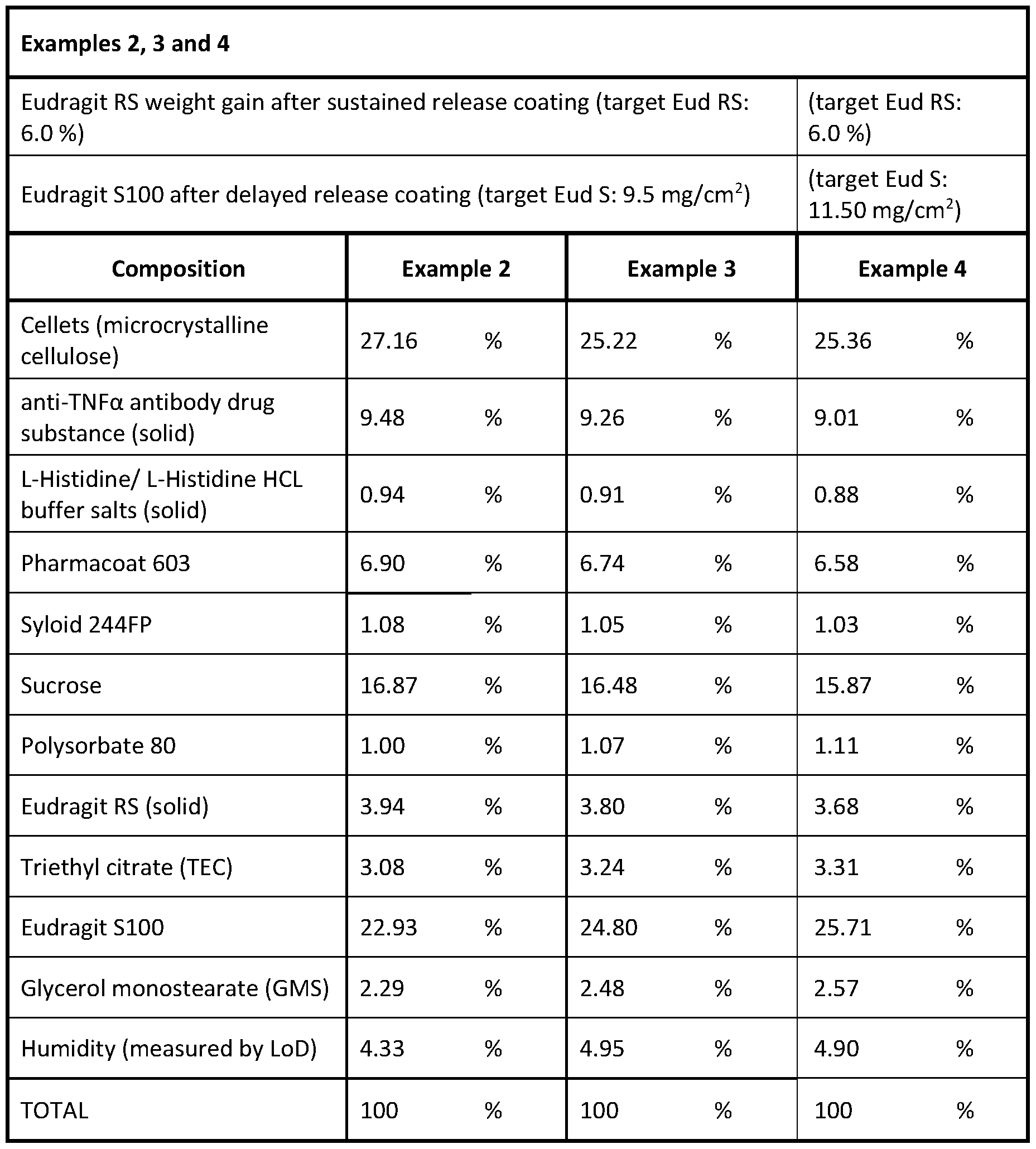

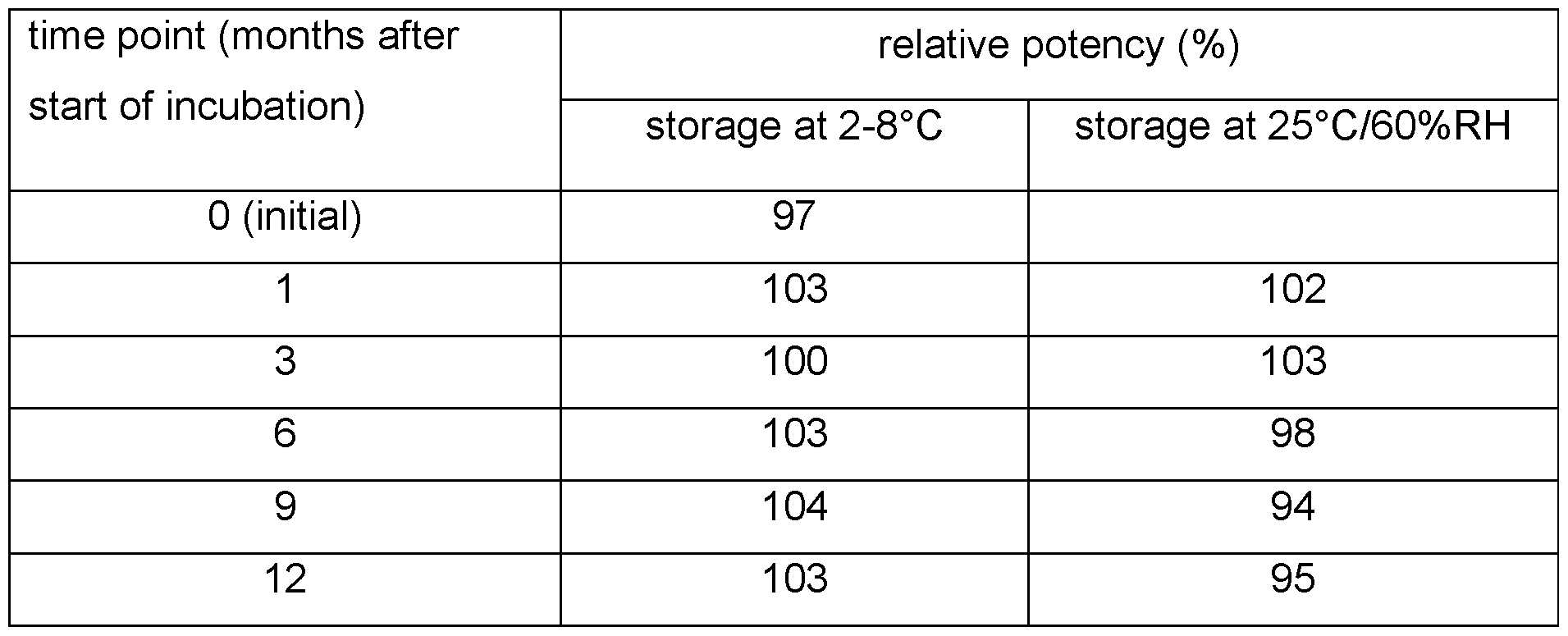
Claims
Priority Applications (7)
| Application Number | Priority Date | Filing Date | Title |
|---|---|---|---|
| AU2024241638A AU2024241638A1 (en) | 2023-03-28 | 2024-03-28 | Solid oral dosage form comprising antibodies for sustained release in the lower gastrointestinal tract |
| EP24718712.3A EP4687851A1 (en) | 2023-03-28 | 2024-03-28 | Solid oral dosage form comprising antibodies for sustained release in the lower gastrointestinal tract |
| CN202480026614.9A CN120981225A (en) | 2023-03-28 | 2024-03-28 | Solid oral dosage form containing antibodies for sustained release in the lower gastrointestinal tract. |
| US18/904,399 US20250127722A1 (en) | 2023-03-28 | 2024-10-02 | Solid oral dosage form comprising antibodies for sustained release in the lower gastrointestinal tract |
| MX2025011081A MX2025011081A (en) | 2023-03-28 | 2025-09-19 | Solid oral dosage form comprising antibodies for sustained release in the lower gastrointestinal tract |
| IL323612A IL323612A (en) | 2023-03-28 | 2025-09-28 | Solid oral dosage form comprising antibodies for sustained release in the lower gastrointestinal tract |
| CONC2025/0014565A CO2025014565A2 (en) | 2023-03-28 | 2025-10-21 | Oral solid dosage form comprising antibodies for sustained release in the lower gastrointestinal tract |
Applications Claiming Priority (2)
| Application Number | Priority Date | Filing Date | Title |
|---|---|---|---|
| US202363492513P | 2023-03-28 | 2023-03-28 | |
| US63/492,513 | 2023-03-28 |
Related Child Applications (1)
| Application Number | Title | Priority Date | Filing Date |
|---|---|---|---|
| US18/904,399 Continuation-In-Part US20250127722A1 (en) | 2023-03-28 | 2024-10-02 | Solid oral dosage form comprising antibodies for sustained release in the lower gastrointestinal tract |
Publications (1)
| Publication Number | Publication Date |
|---|---|
| WO2024200722A1 true WO2024200722A1 (en) | 2024-10-03 |
Family
ID=90730134
Family Applications (1)
| Application Number | Title | Priority Date | Filing Date |
|---|---|---|---|
| PCT/EP2024/058606 Ceased WO2024200722A1 (en) | 2023-03-28 | 2024-03-28 | Solid oral dosage form comprising antibodies for sustained release in the lower gastrointestinal tract |
Country Status (9)
| Country | Link |
|---|---|
| US (1) | US20250127722A1 (en) |
| EP (1) | EP4687851A1 (en) |
| CN (1) | CN120981225A (en) |
| AU (1) | AU2024241638A1 (en) |
| CL (1) | CL2025002857A1 (en) |
| CO (1) | CO2025014565A2 (en) |
| IL (1) | IL323612A (en) |
| MX (1) | MX2025011081A (en) |
| WO (1) | WO2024200722A1 (en) |
Citations (17)
| Publication number | Priority date | Publication date | Assignee | Title |
|---|---|---|---|---|
| GB2246570A (en) | 1989-12-21 | 1992-02-05 | Celltech Ltd | Humanised antibodies |
| WO1992011383A1 (en) | 1990-12-21 | 1992-07-09 | Celltech Limited | RECOMBINANT ANTIBODIES SPECIFIC FOR TNF$g(a) |
| GB2297145A (en) | 1995-01-23 | 1996-07-24 | Western Atlas Int Inc | EBW perforating gun system |
| US5919452A (en) | 1991-03-18 | 1999-07-06 | New York University | Methods of treating TNFα-mediated disease using chimeric anti-TNF antibodies |
| WO2004062577A2 (en) | 2003-01-03 | 2004-07-29 | Shire Laboratories Inc. | Two or more enteric materials to regulate drug release |
| WO2005046561A2 (en) | 2003-11-13 | 2005-05-26 | Röhm GmbH & Co. KG | Multilayer dosage form comprising a matrix that influences release of a modulatory substance |
| WO2005115340A1 (en) | 2004-05-19 | 2005-12-08 | Glatt Air Techniques, Inc. | Micropellet containing pellets and method of preparing such pellets |
| EP1684729A2 (en) | 2003-11-13 | 2006-08-02 | Röhm GmbH & Co. KG | Multilayer pharmaceutical dosage form containing a substance that acts in a modulatory manner with regard to the release of active substances |
| WO2006131013A2 (en) | 2005-06-07 | 2006-12-14 | Esbatech Ag | STABLE AND SOLUBLE ANTIBODIES INHIBITING TNFα |
| AU2007287639A1 (en) * | 2006-08-25 | 2008-02-28 | Boehringer Ingelheim International Gmbh | Controlled release system and method for manufacturing the same |
| WO2009155723A2 (en) | 2008-06-25 | 2009-12-30 | Esbatech, An Alcon Biomedical Research Unit Llc | STABLE AND SOLUBLE ANTIBODIES INHIBITING TNFα |
| US8293235B2 (en) | 2008-06-25 | 2012-10-23 | ESBATech, an Alcon Biomedical Research Unit, LLC | Humanization of rabbit antibodies using a universal antibody framework |
| EP2512453A2 (en) | 2009-12-18 | 2012-10-24 | Ferring B.V. | Granules for pharmaceutical preparations, methods and apparatus for their production |
| US8697074B2 (en) | 2008-07-10 | 2014-04-15 | Esbatech, An Alcon Biomedical Research Unit Llc | Methods and compositions for enhanced delivery of macromolecules |
| RU2542461C2 (en) * | 2008-10-28 | 2015-02-20 | ТиДаблЮАй БАЙОТЕКНОЛОДЖИ, ИНК. | Pharmaceutical compositions containing diacerein |
| WO2019057562A1 (en) | 2017-09-20 | 2019-03-28 | Tillotts Pharma Ag | Preparation of solid dosage forms comprising antibodies by solution/suspension layering |
| US20190336449A1 (en) * | 2016-06-14 | 2019-11-07 | Tillotts Pharma Ag | Multiple unit dosage form comprising a core with individual core units covered by a mucoadhesive material and an enteric core coating |
-
2024
- 2024-03-28 WO PCT/EP2024/058606 patent/WO2024200722A1/en not_active Ceased
- 2024-03-28 CN CN202480026614.9A patent/CN120981225A/en active Pending
- 2024-03-28 AU AU2024241638A patent/AU2024241638A1/en active Pending
- 2024-03-28 EP EP24718712.3A patent/EP4687851A1/en active Pending
- 2024-10-02 US US18/904,399 patent/US20250127722A1/en active Pending
-
2025
- 2025-09-19 MX MX2025011081A patent/MX2025011081A/en unknown
- 2025-09-23 CL CL2025002857A patent/CL2025002857A1/en unknown
- 2025-09-28 IL IL323612A patent/IL323612A/en unknown
- 2025-10-21 CO CONC2025/0014565A patent/CO2025014565A2/en unknown
Patent Citations (20)
| Publication number | Priority date | Publication date | Assignee | Title |
|---|---|---|---|---|
| GB2246570A (en) | 1989-12-21 | 1992-02-05 | Celltech Ltd | Humanised antibodies |
| WO1992011383A1 (en) | 1990-12-21 | 1992-07-09 | Celltech Limited | RECOMBINANT ANTIBODIES SPECIFIC FOR TNF$g(a) |
| US5919452A (en) | 1991-03-18 | 1999-07-06 | New York University | Methods of treating TNFα-mediated disease using chimeric anti-TNF antibodies |
| GB2297145A (en) | 1995-01-23 | 1996-07-24 | Western Atlas Int Inc | EBW perforating gun system |
| WO2004062577A2 (en) | 2003-01-03 | 2004-07-29 | Shire Laboratories Inc. | Two or more enteric materials to regulate drug release |
| WO2005046561A2 (en) | 2003-11-13 | 2005-05-26 | Röhm GmbH & Co. KG | Multilayer dosage form comprising a matrix that influences release of a modulatory substance |
| EP1684729A2 (en) | 2003-11-13 | 2006-08-02 | Röhm GmbH & Co. KG | Multilayer pharmaceutical dosage form containing a substance that acts in a modulatory manner with regard to the release of active substances |
| WO2005115340A1 (en) | 2004-05-19 | 2005-12-08 | Glatt Air Techniques, Inc. | Micropellet containing pellets and method of preparing such pellets |
| EP2390267B1 (en) | 2005-06-07 | 2013-06-05 | ESBATech - a Novartis Company LLC | Stable and soluble antibodies inhibiting TNF(alpha) |
| WO2006131013A2 (en) | 2005-06-07 | 2006-12-14 | Esbatech Ag | STABLE AND SOLUBLE ANTIBODIES INHIBITING TNFα |
| AU2007287639A1 (en) * | 2006-08-25 | 2008-02-28 | Boehringer Ingelheim International Gmbh | Controlled release system and method for manufacturing the same |
| WO2009155723A2 (en) | 2008-06-25 | 2009-12-30 | Esbatech, An Alcon Biomedical Research Unit Llc | STABLE AND SOLUBLE ANTIBODIES INHIBITING TNFα |
| US8293235B2 (en) | 2008-06-25 | 2012-10-23 | ESBATech, an Alcon Biomedical Research Unit, LLC | Humanization of rabbit antibodies using a universal antibody framework |
| US8673310B2 (en) | 2008-06-25 | 2014-03-18 | ESBA Tech, an Alcon Biomedical Research Unit LLC | Stable and soluble antibodies inhibiting TNFα |
| US20140193400A1 (en) | 2008-06-25 | 2014-07-10 | ESBA Tech, an Alcon Biomedical Research Unit LLC | Stable and soluble antibodies inhibiting tnf alpha |
| US8697074B2 (en) | 2008-07-10 | 2014-04-15 | Esbatech, An Alcon Biomedical Research Unit Llc | Methods and compositions for enhanced delivery of macromolecules |
| RU2542461C2 (en) * | 2008-10-28 | 2015-02-20 | ТиДаблЮАй БАЙОТЕКНОЛОДЖИ, ИНК. | Pharmaceutical compositions containing diacerein |
| EP2512453A2 (en) | 2009-12-18 | 2012-10-24 | Ferring B.V. | Granules for pharmaceutical preparations, methods and apparatus for their production |
| US20190336449A1 (en) * | 2016-06-14 | 2019-11-07 | Tillotts Pharma Ag | Multiple unit dosage form comprising a core with individual core units covered by a mucoadhesive material and an enteric core coating |
| WO2019057562A1 (en) | 2017-09-20 | 2019-03-28 | Tillotts Pharma Ag | Preparation of solid dosage forms comprising antibodies by solution/suspension layering |
Non-Patent Citations (4)
| Title |
|---|
| BRAHMER ET AL.: "Management of Immune-Related Adverse Events in Patients Treated With Immune Checkpoint Inhibitor Therapy: American Society of Clinical Oncology (ASCO) Practice Guideline", J CLIN ONCOL., vol. 36, no. 17, 2018, pages 1714 - 1768 |
| FENDLY ET AL., HYBRIDOMA, vol. 6, 1987, pages 359 - 370 |
| H.M. FADDAA.W. BASIT, J. DRUG DEL. SCI. TECH., vol. 15, no. 4, 2005, pages 273 - 280 |
| STEPHENS ET AL., IMMUNOLOGY, vol. 85, 1995, pages 668 - 674 |
Also Published As
| Publication number | Publication date |
|---|---|
| IL323612A (en) | 2025-11-01 |
| CO2025014565A2 (en) | 2025-10-30 |
| CN120981225A (en) | 2025-11-18 |
| CL2025002857A1 (en) | 2025-11-14 |
| EP4687851A1 (en) | 2026-02-11 |
| MX2025011081A (en) | 2025-12-01 |
| US20250127722A1 (en) | 2025-04-24 |
| AU2024241638A1 (en) | 2025-10-09 |
Similar Documents
| Publication | Publication Date | Title |
|---|---|---|
| JP7496906B2 (en) | Composition | |
| US20240099980A1 (en) | Preparation of solid dosage forms comprising antibodies by solutions/suspension layering | |
| US20240000714A1 (en) | Topical treatment of inflammatory bowel disease using antibodies and fragments thereof | |
| JP7316268B2 (en) | Methods of preparing solid dosage forms containing antibodies by wet granulation, extrusion and spheronization | |
| EP4687851A1 (en) | Solid oral dosage form comprising antibodies for sustained release in the lower gastrointestinal tract | |
| KR20260016908A (en) | Solid oral dosage form containing an antibody for sustained release in the lower gastrointestinal tract | |
| Nielsen et al. | Spesolimab. Anti-IL-36R monoclonal antibody, treatment of generalized pustular psoriasis, treatment of immune-mediated inflammatory diseases | |
| EA044207B1 (en) | OBTAINING SOLID DOSAGE FORMS CONTAINING ANTIBODIES BY LAYERING A SUSPENSION SOLUTION | |
| HK40005745B (en) | Preparation of solid dosage forms comprising antibodies by solution/suspension layering | |
| HK40005745A (en) | Preparation of solid dosage forms comprising antibodies by solution/suspension layering | |
| HK40024511A (en) | Preparation of solid dosage forms comprising antibodies by solution/suspension layering | |
| HK1262364A1 (en) | Topical treatment of inflammatory bowel disease using anti-tnf-alpha antibodies and fragments thereof |
Legal Events
| Date | Code | Title | Description |
|---|---|---|---|
| 121 | Ep: the epo has been informed by wipo that ep was designated in this application |
Ref document number: 24718712 Country of ref document: EP Kind code of ref document: A1 |
|
| WWE | Wipo information: entry into national phase |
Ref document number: MX/A/2025/011081 Country of ref document: MX |
|
| WWE | Wipo information: entry into national phase |
Ref document number: 2501006303 Country of ref document: TH Ref document number: P2025-02990 Country of ref document: AE Ref document number: 2025555698 Country of ref document: JP |
|
| WWE | Wipo information: entry into national phase |
Ref document number: 825498 Country of ref document: NZ Ref document number: AU2024241638 Country of ref document: AU |
|
| WWE | Wipo information: entry into national phase |
Ref document number: 202517092277 Country of ref document: IN |
|
| WWP | Wipo information: published in national office |
Ref document number: 825498 Country of ref document: NZ |
|
| WWE | Wipo information: entry into national phase |
Ref document number: 323612 Country of ref document: IL |
|
| REG | Reference to national code |
Ref country code: BR Ref legal event code: B01A Ref document number: 112025020321 Country of ref document: BR |
|
| ENP | Entry into the national phase |
Ref document number: 2024241638 Country of ref document: AU Date of ref document: 20240328 Kind code of ref document: A |
|
| ENP | Entry into the national phase |
Ref document number: 16852 Country of ref document: GE |
|
| WWE | Wipo information: entry into national phase |
Ref document number: 202592767 Country of ref document: EA |
|
| WWE | Wipo information: entry into national phase |
Ref document number: KR1020257035552 Country of ref document: KR |
|
| WWE | Wipo information: entry into national phase |
Ref document number: 2024718712 Country of ref document: EP |
|
| NENP | Non-entry into the national phase |
Ref country code: DE |
|
| WWE | Wipo information: entry into national phase |
Ref document number: 11202506374T Country of ref document: SG |
|
| WWP | Wipo information: published in national office |
Ref document number: 11202506374T Country of ref document: SG |
|
| ENP | Entry into the national phase |
Ref document number: 2024718712 Country of ref document: EP Effective date: 20251028 |
|
| ENP | Entry into the national phase |
Ref document number: 2024718712 Country of ref document: EP Effective date: 20251028 |
|
| WWP | Wipo information: published in national office |
Ref document number: 202517092277 Country of ref document: IN |
|
| ENP | Entry into the national phase |
Ref document number: 2024718712 Country of ref document: EP Effective date: 20251028 |
|
| WWP | Wipo information: published in national office |
Ref document number: MX/A/2025/011081 Country of ref document: MX |
|
| ENP | Entry into the national phase |
Ref document number: 2024718712 Country of ref document: EP Effective date: 20251028 |
|
| ENP | Entry into the national phase |
Ref document number: 2024718712 Country of ref document: EP Effective date: 20251028 |